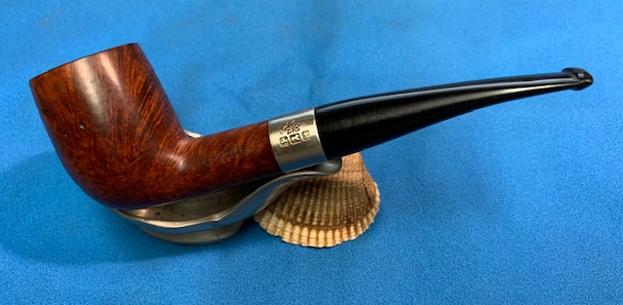
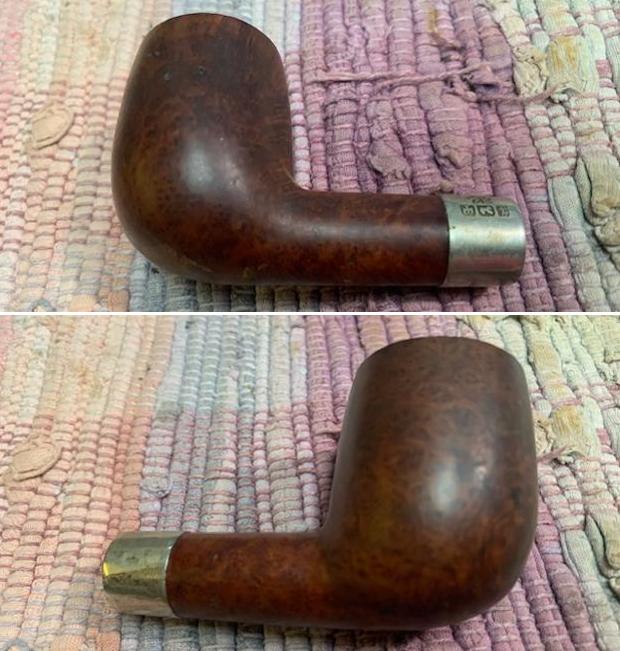
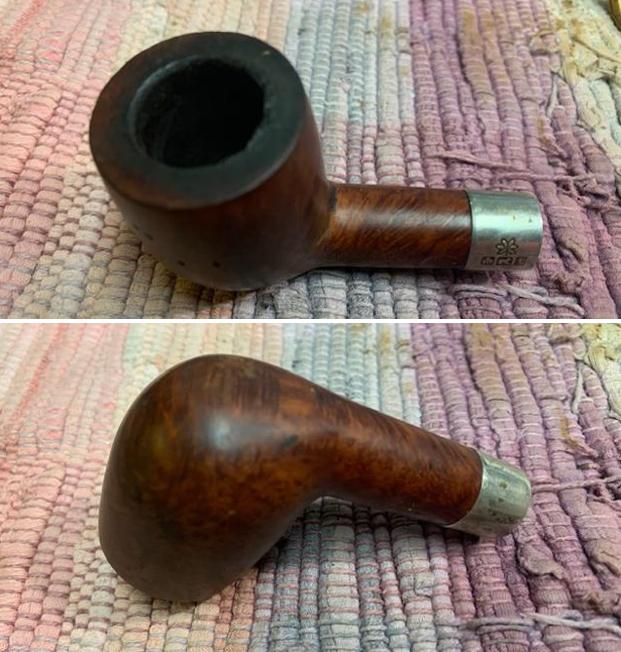
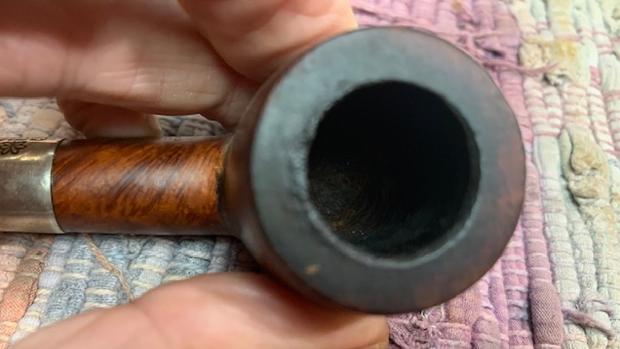
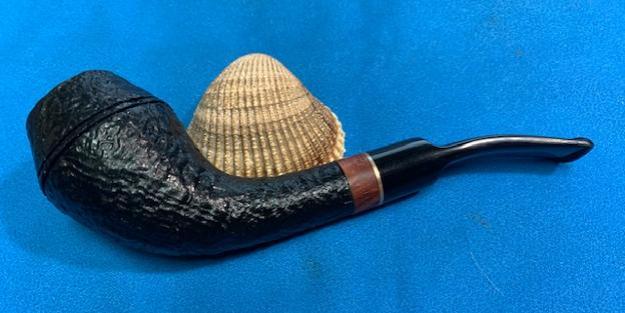
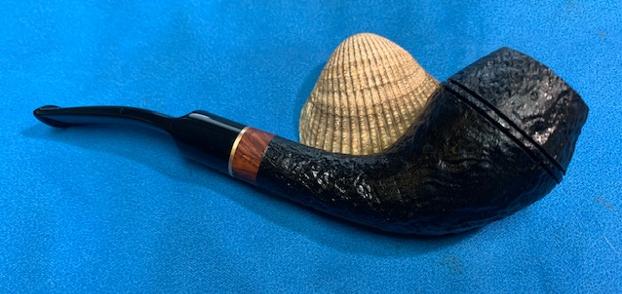
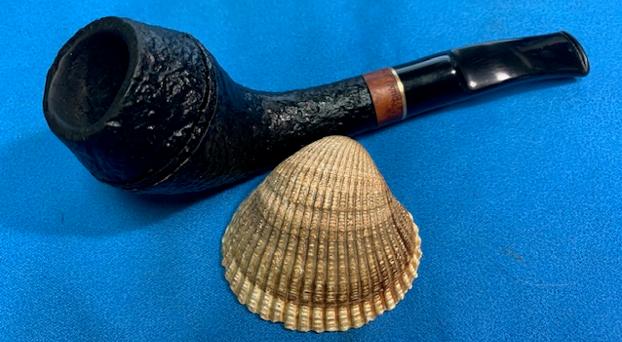
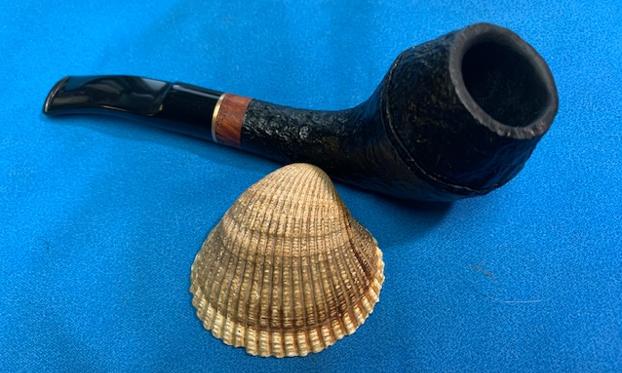
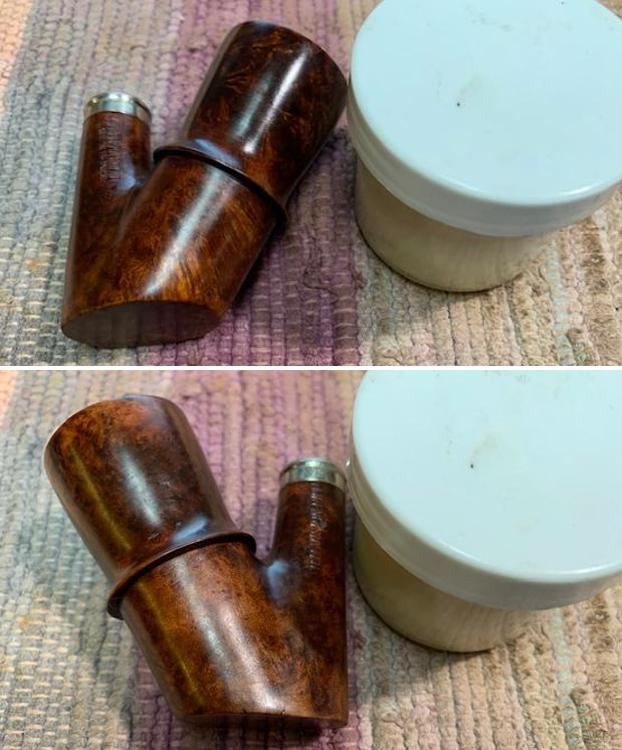
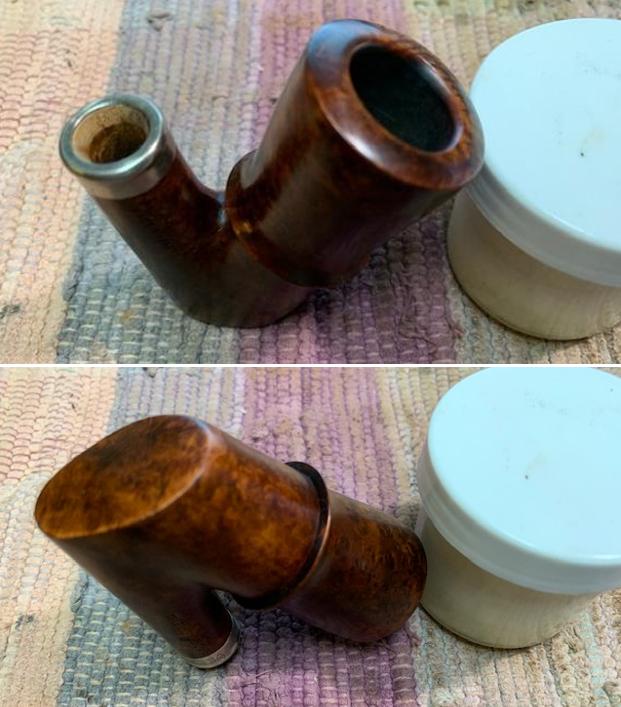
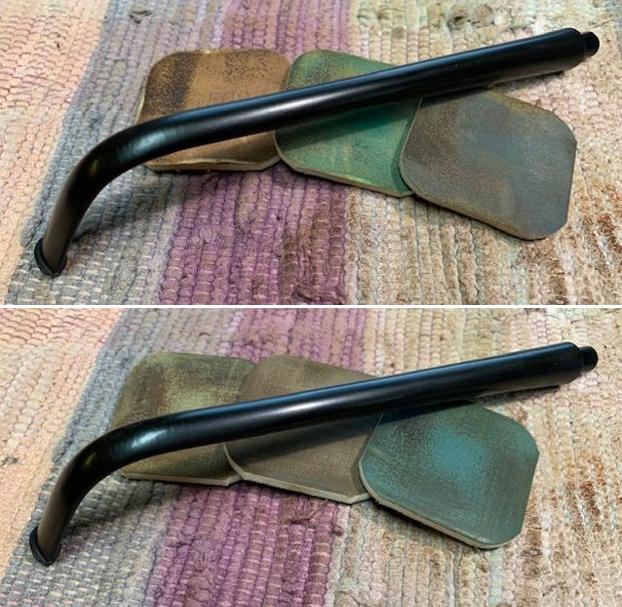
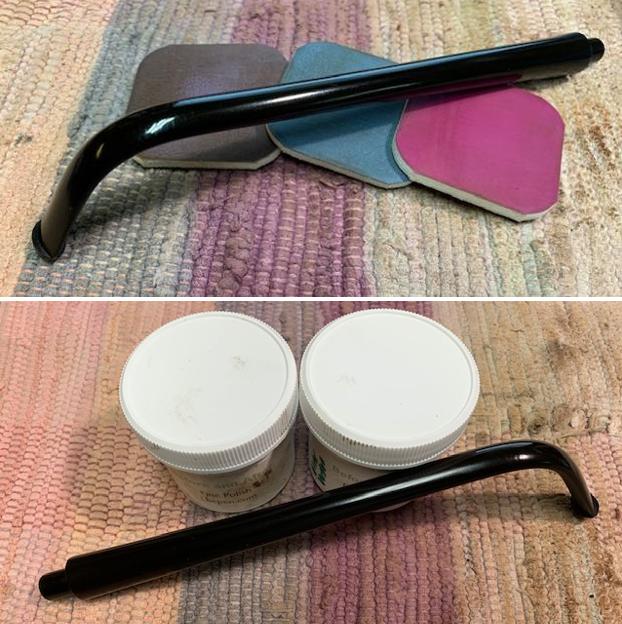
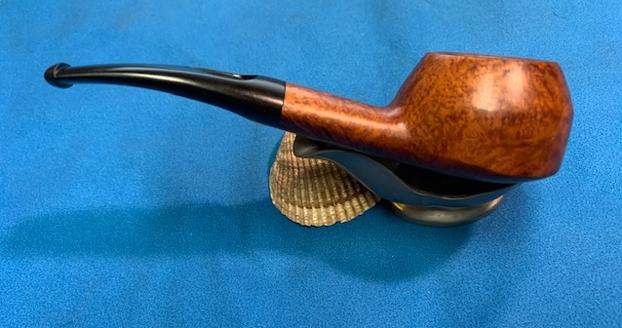
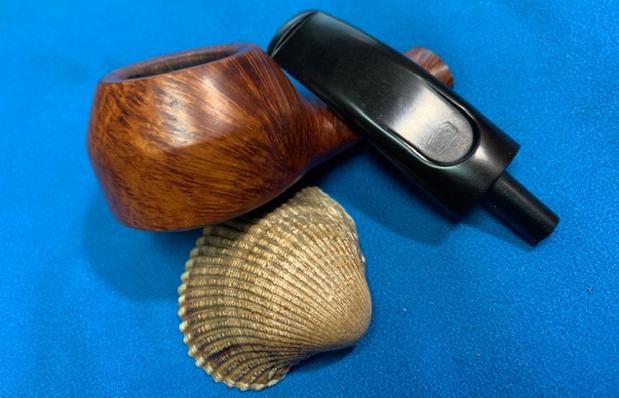
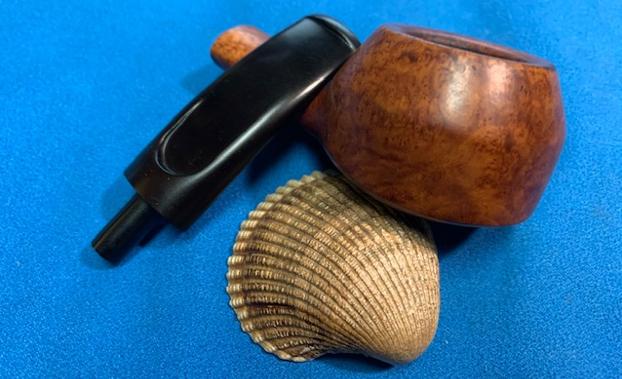
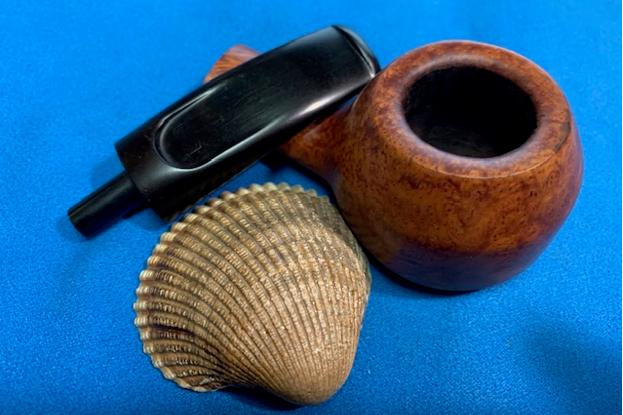
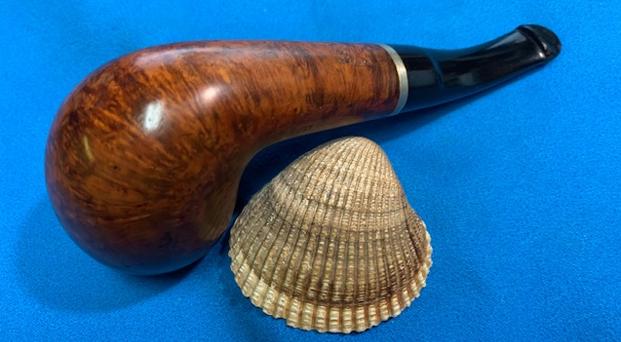
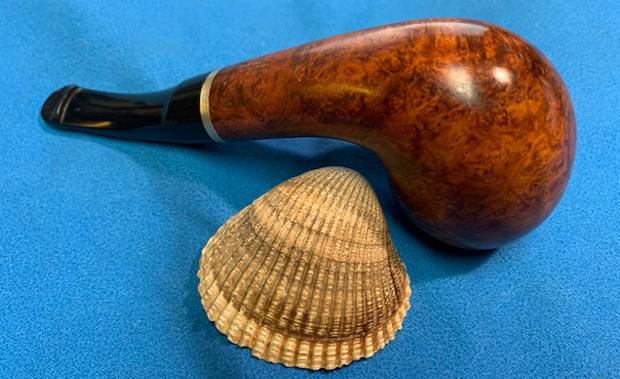
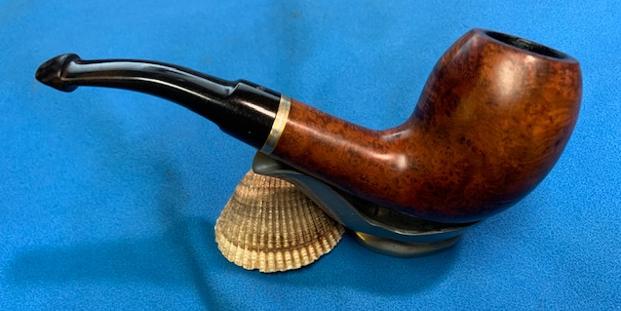
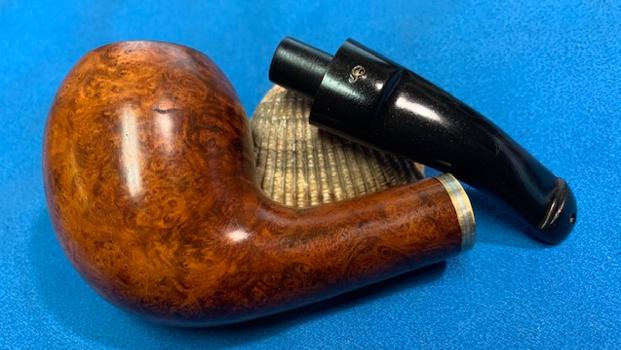
Tag Archives: waxing

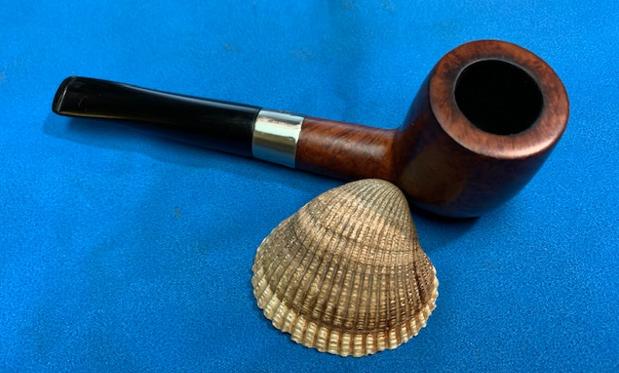
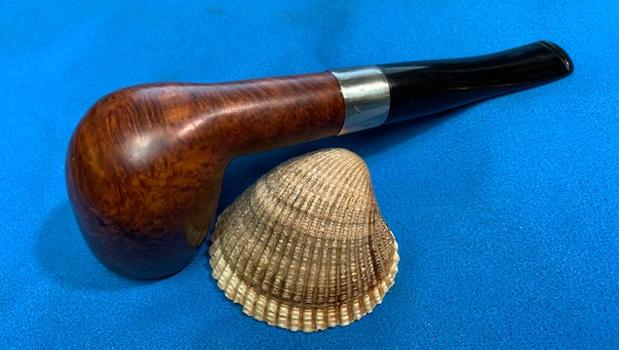
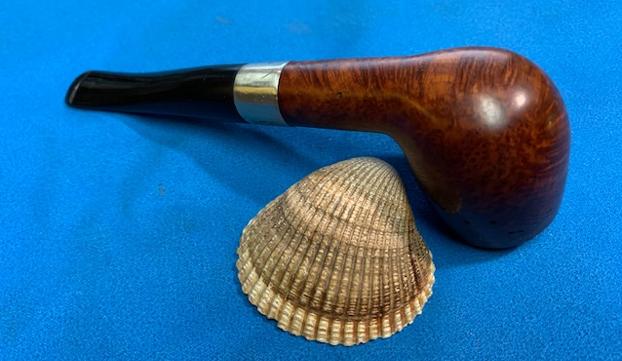
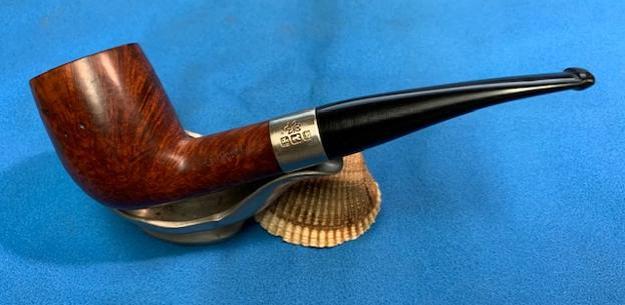
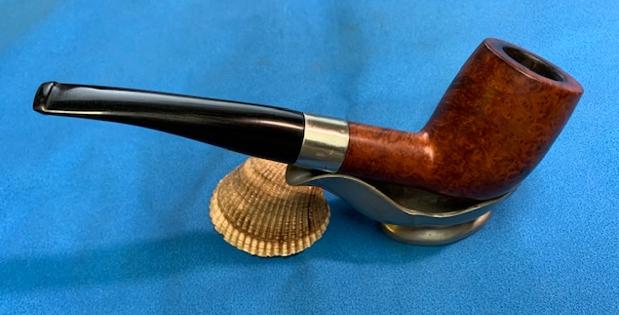
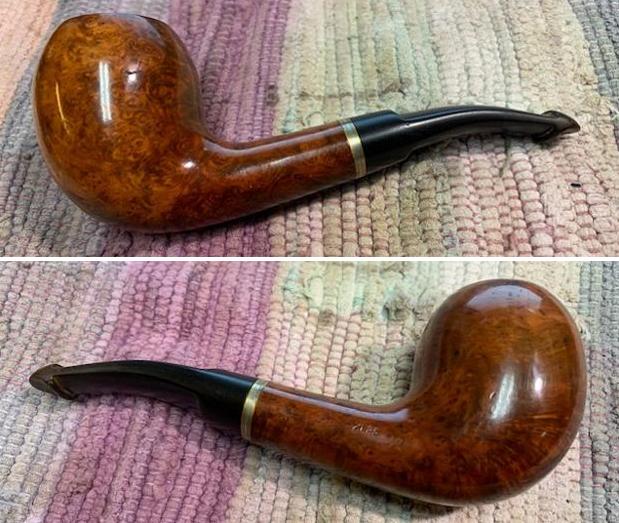
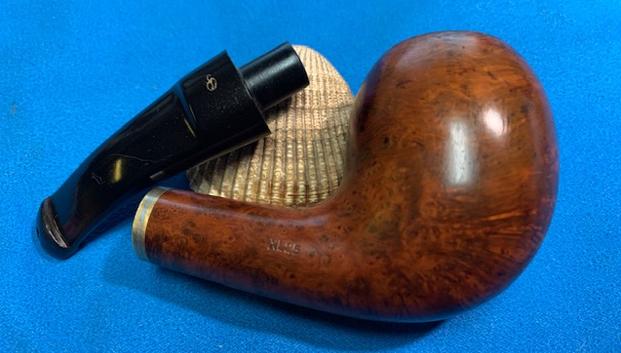
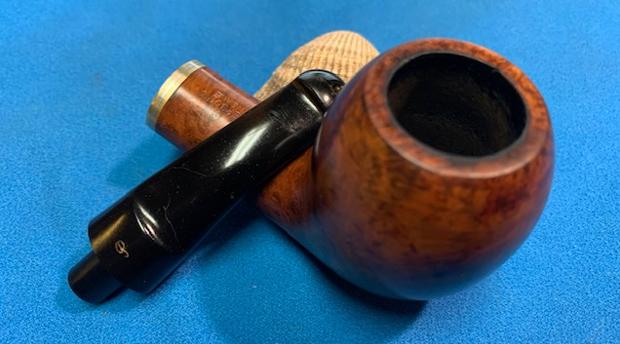
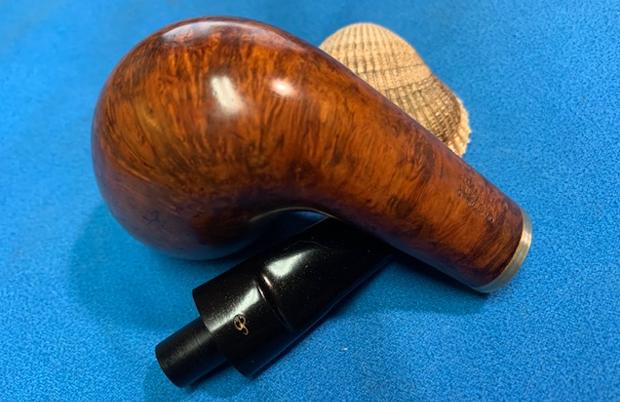
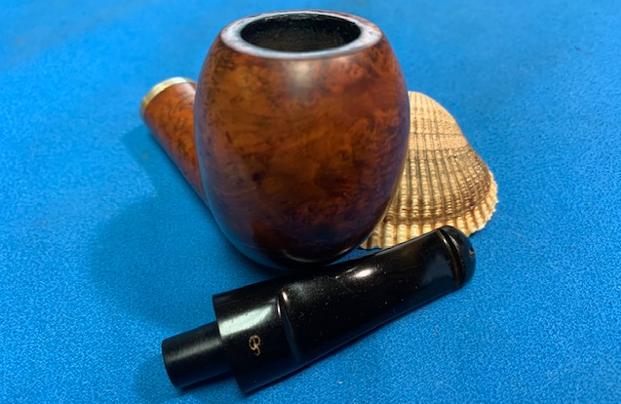
Restemming & Restoring a Peterson’s Product – a Made in Ireland  Shamrock X105 Billiard


Blog by Steve Laug

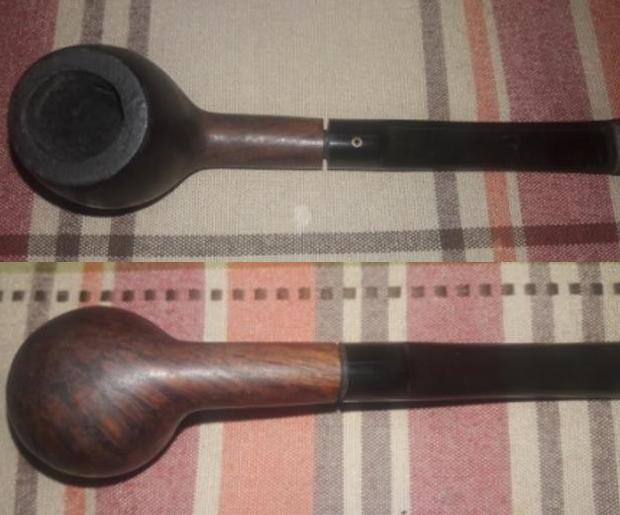
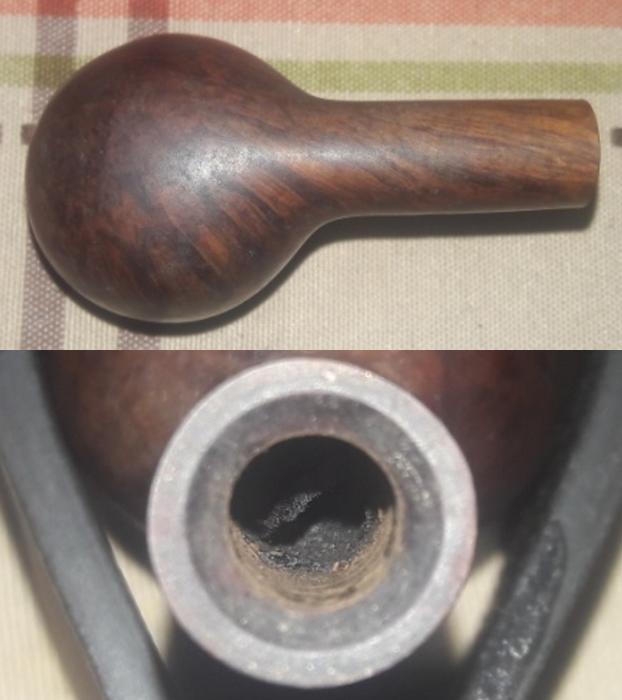
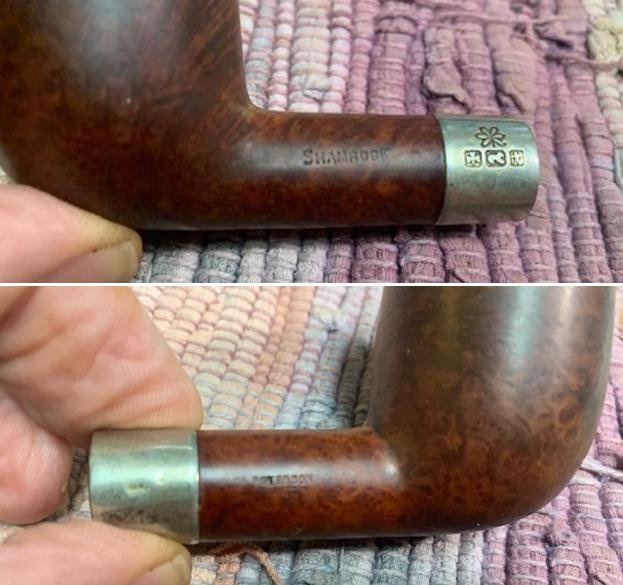
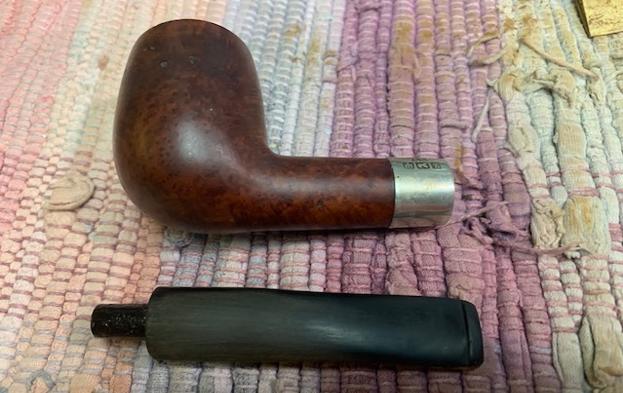
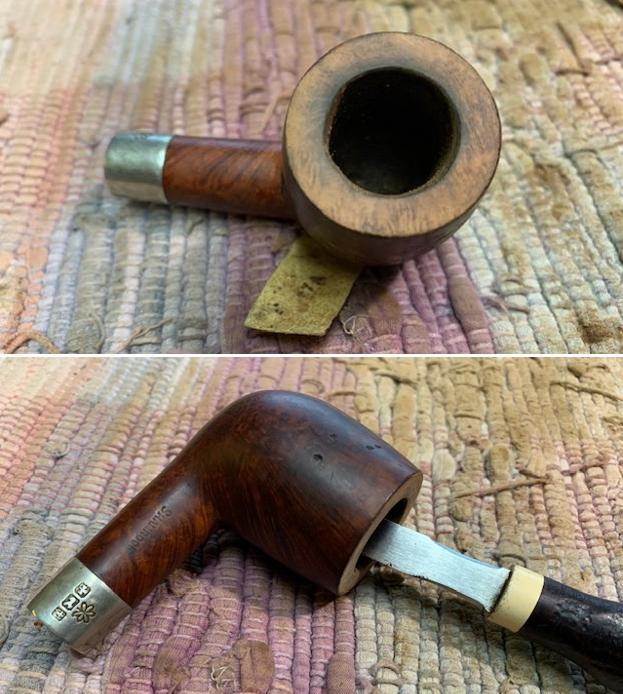
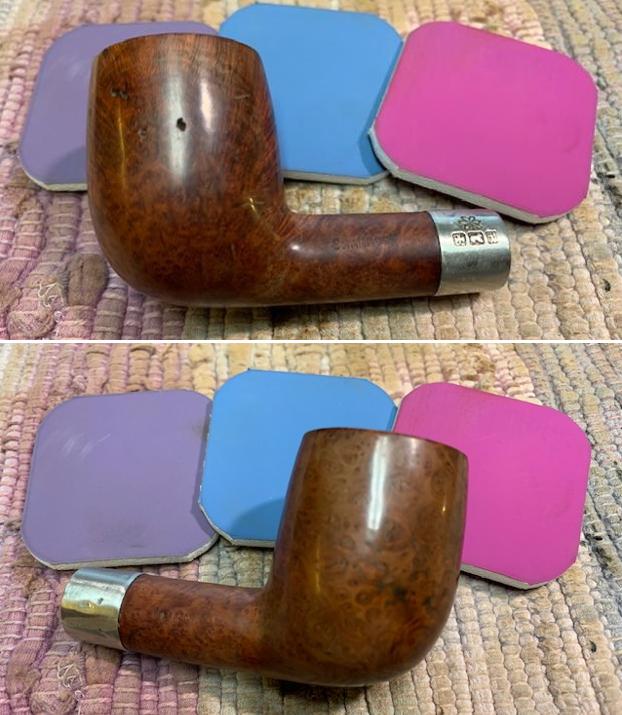
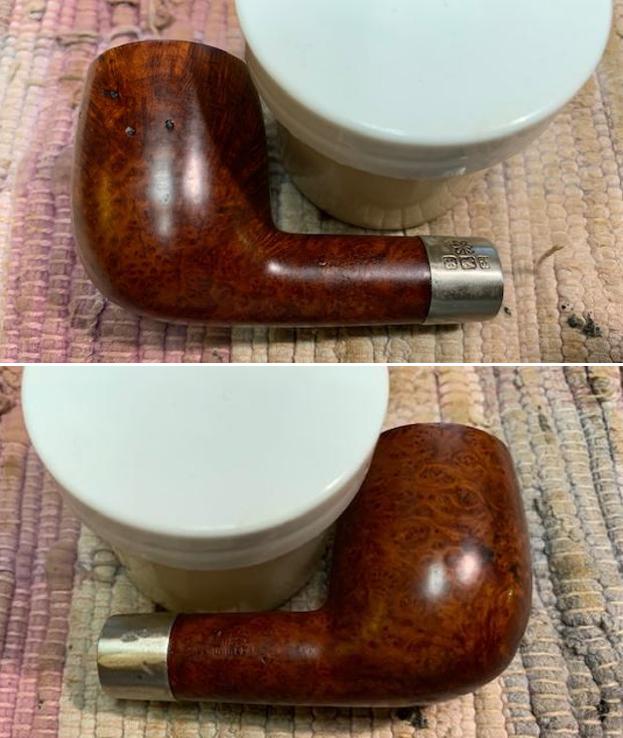
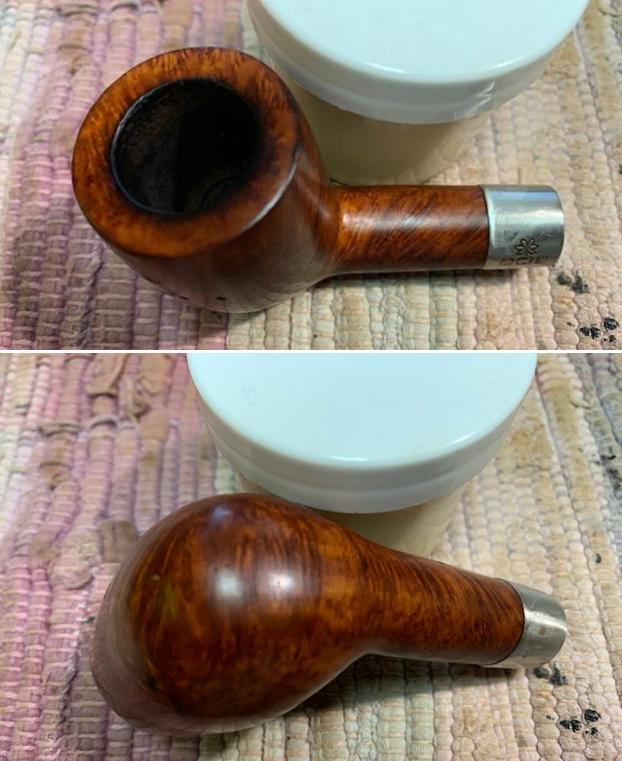
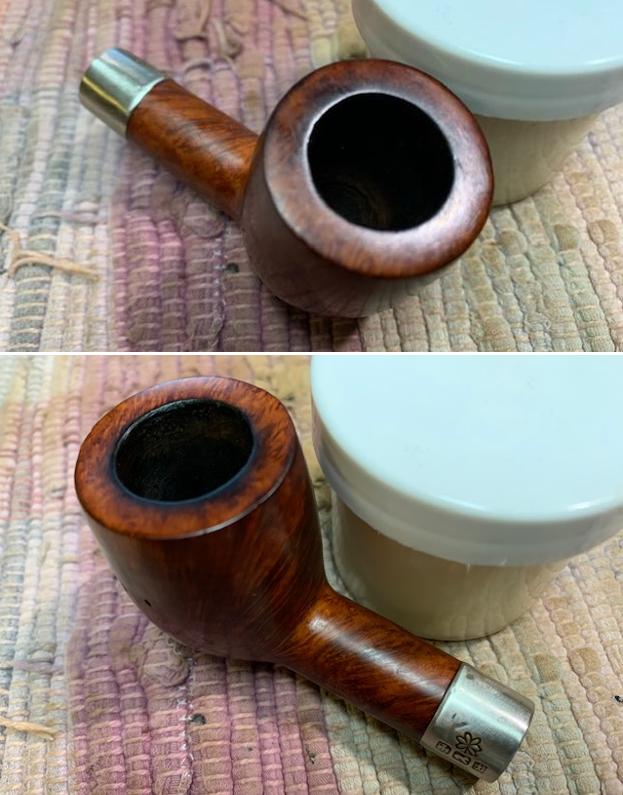
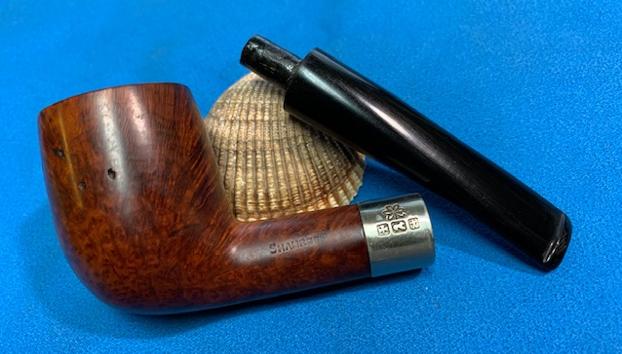
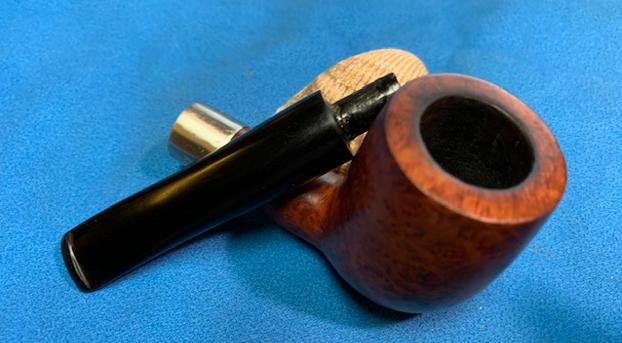
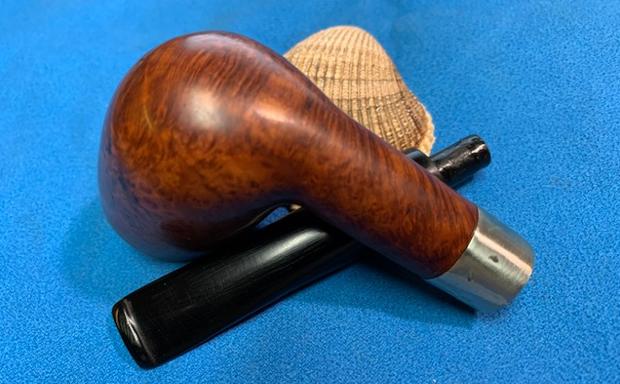
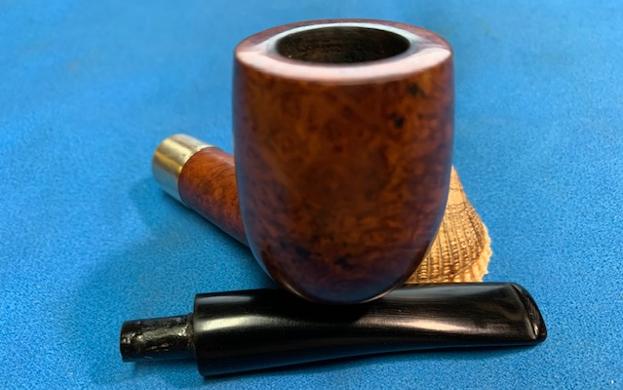
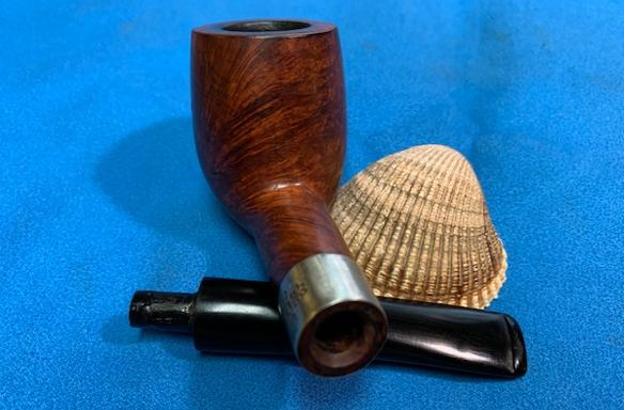
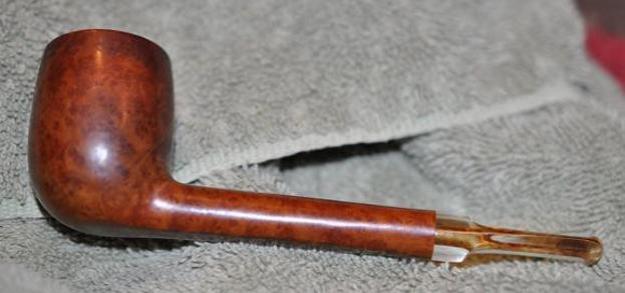
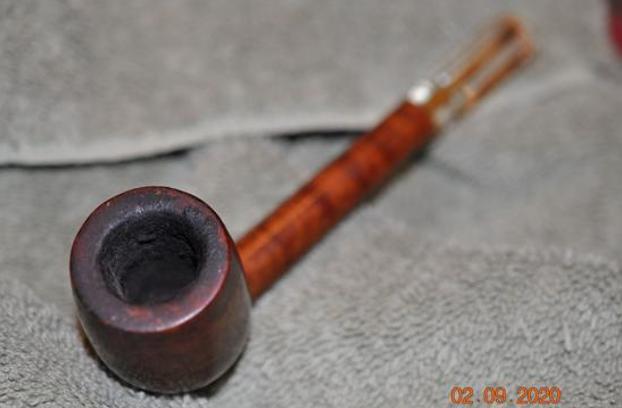
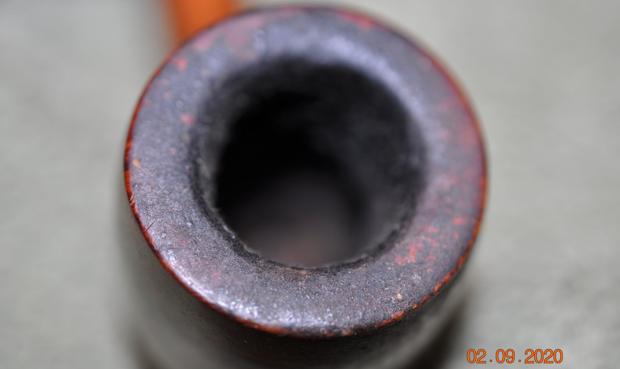
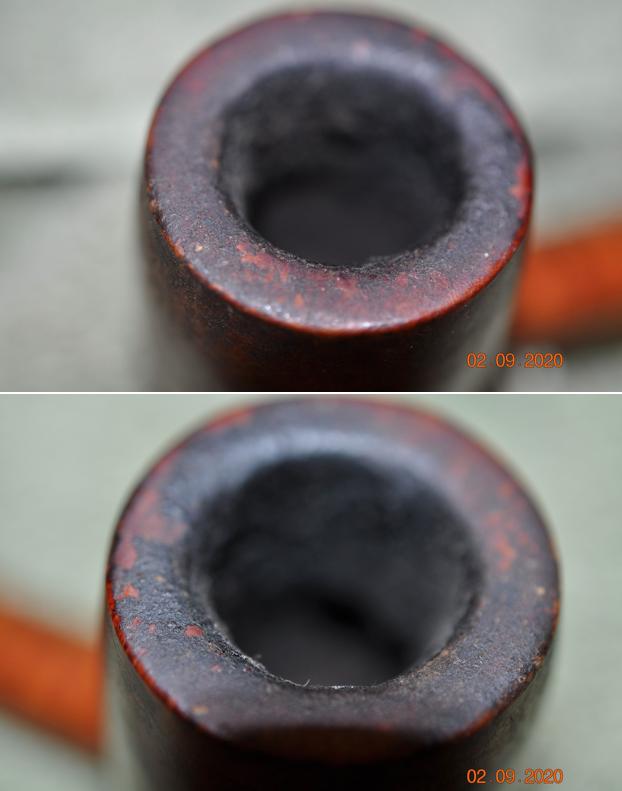
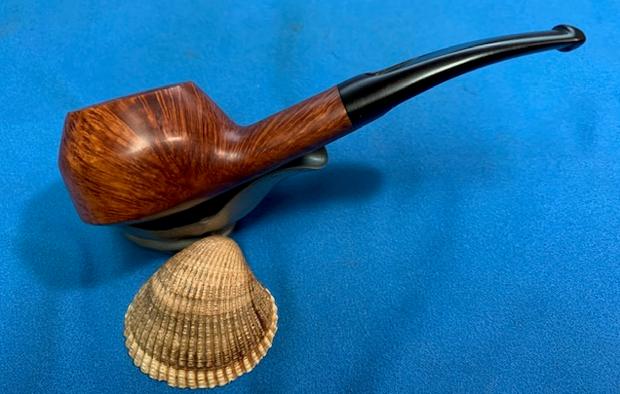
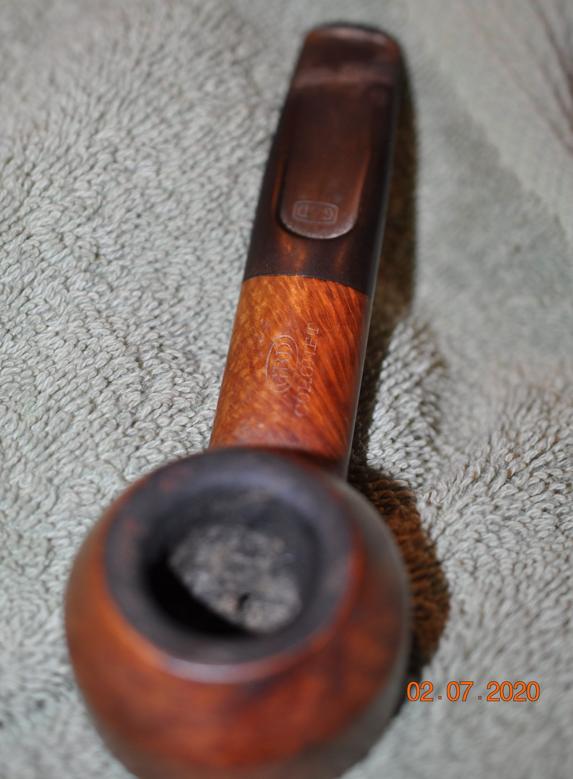
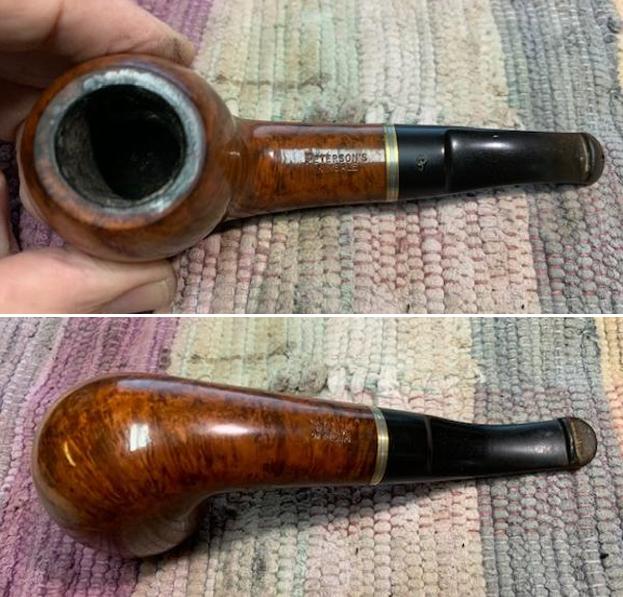
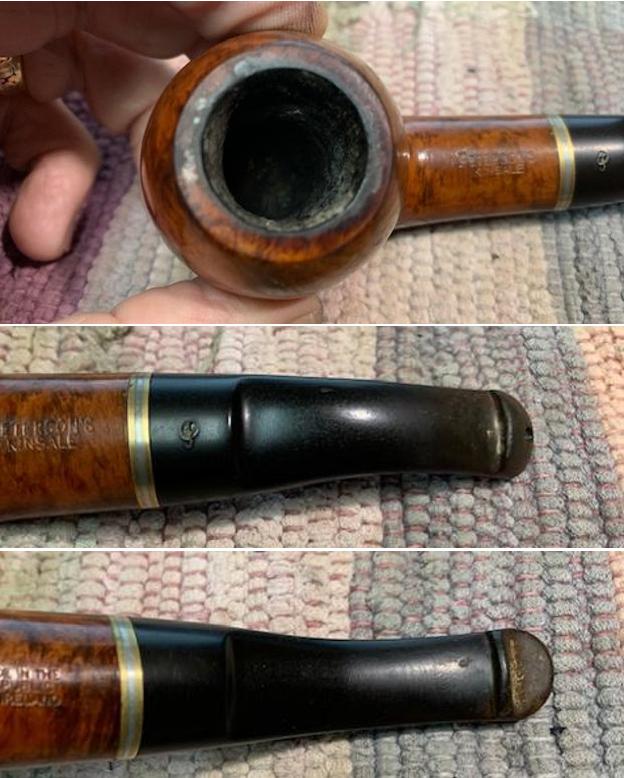
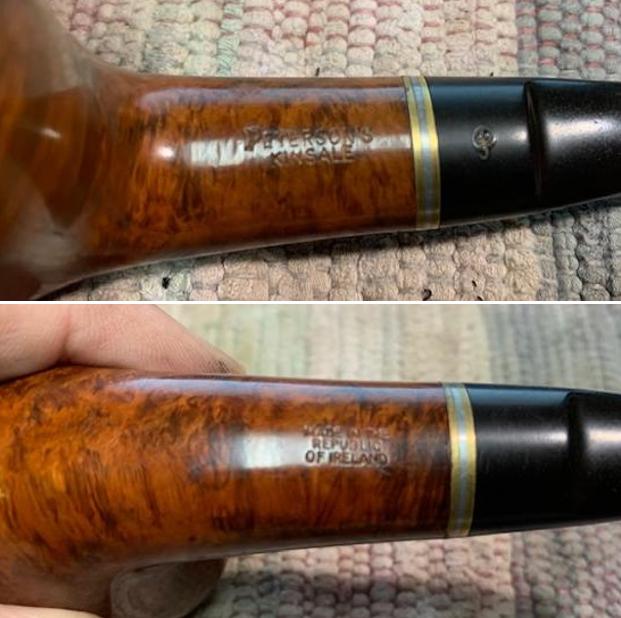
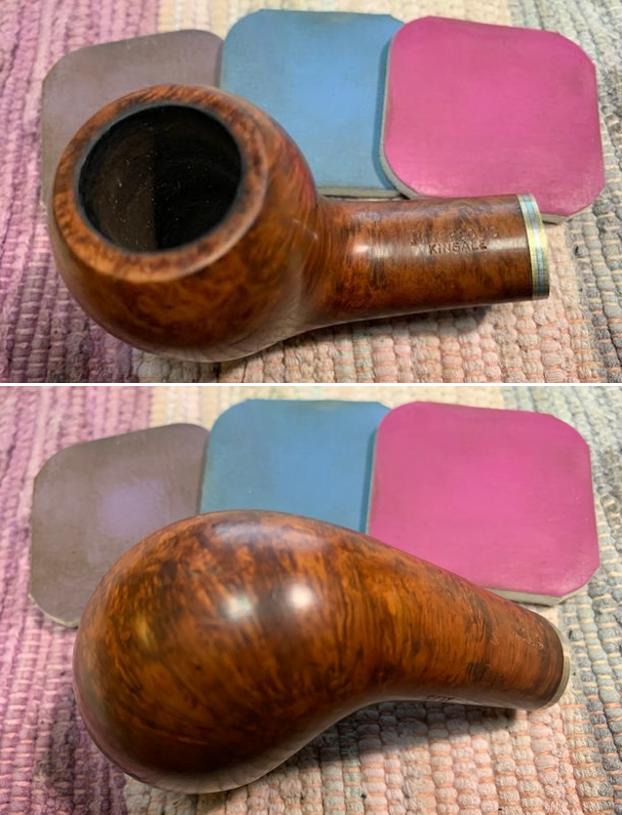
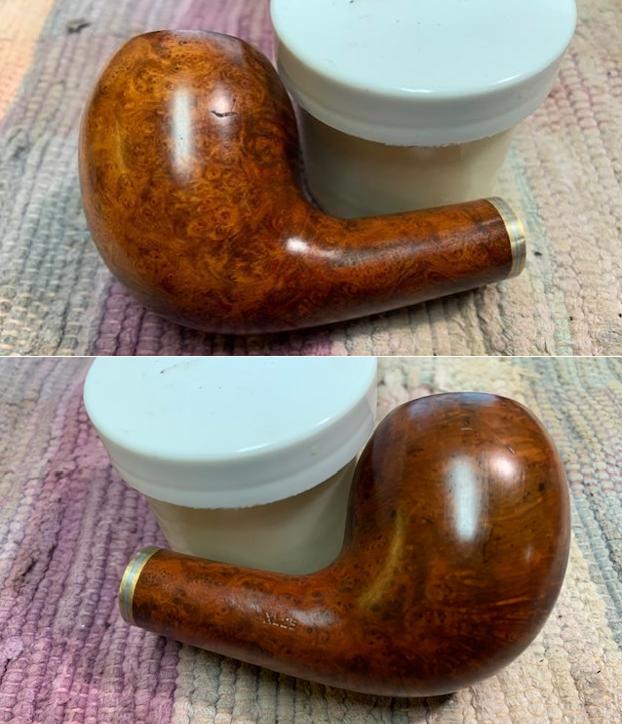
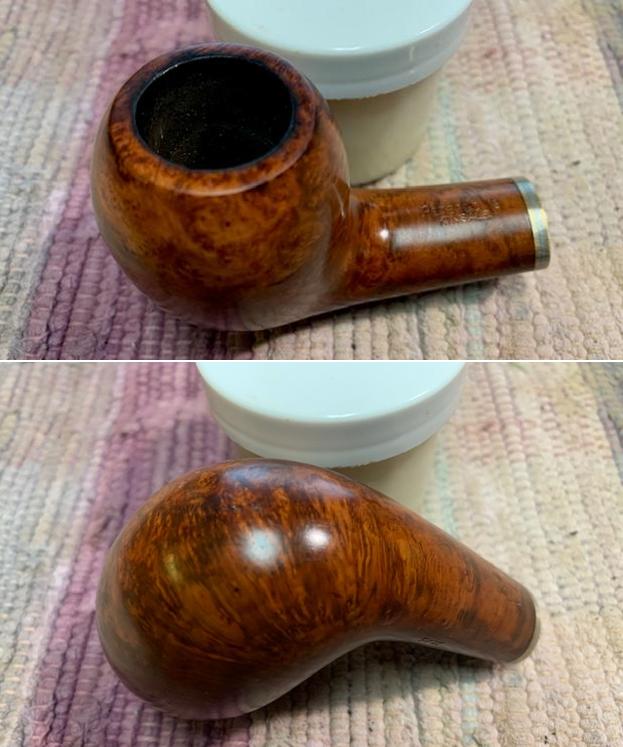
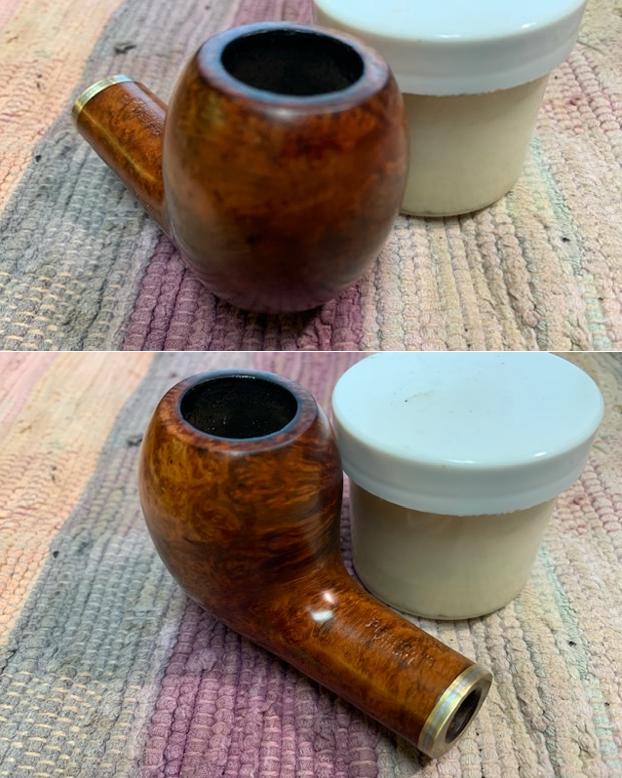
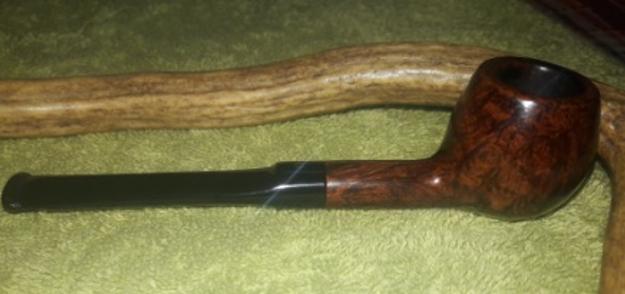
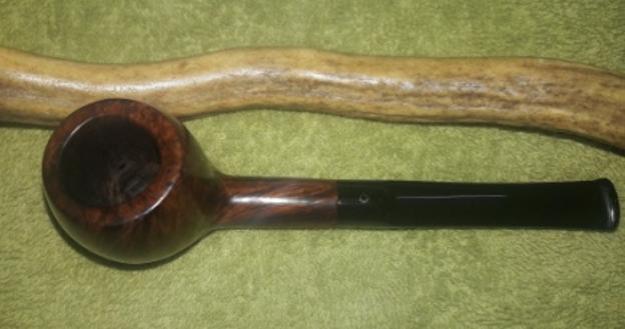
The next pipe I have chosen to work on came to me as a referral from a local pipe shop here in Vancouver. While I am not taking on work via mail I am still doing the repairs for this pipe shop. This one was a smooth finished Peterson’s Billiard bowl. It needed to have a stem fit to the shank so the fellow could smoke it again. It had not had a stem since the 70s. He decided it was time to get it back in order. He says he is a bit older than me and in our conversation it turns out that we are pretty close to the same age. He does not drive, no computer and no cell phone. We chatted a bit on his land line and decided a regular slotted stem would work for the pipe as I did not have any straight (or bent for that matter) Peterson’s stems. It had originally been offered with a choice of stems anyway. The finish is was dirty. I can see sand pits on the left side of the bowl but other than that it was in decent condition. It was stamped on the  left side of the shank and read SHAMROCK. It was stamped to the right of the shank and reads “A PETERSON’S [over] PRODUCT” over MADE IN IRELAND (3 lines) with the shape number X105 next to the bowl. The bowl had been reamed recently and the inner edge was nicked in several spots. The rim top was covered with a lava coat. I took a few photos of the pipe when I removed it from the shipping envelope.    I took a close up photo of the rim top and bowl to show the general condition of the pipe. The bowl looks to have been reamed recently but the rim top and edges have some lava overflow. I took photos of the sides of the shank to show the stamping. The stamping is readable in the photos below and is as noted above. I am including the link to the Pipedia’s article on Peterson pipes. It is a great read in terms of the history of the brand (https://pipedia.org/wiki/Peterson).

I turned to “The Peterson Pipe” by Mark Irwin and Gary Malmberg to get some background on the Peterson’s Shamrock Pipe. On page 312 it had the following information. 

Shamrock (c1941-2009) Originally stamped SHAMROCK with no brand name, an inexpensive line first described in George Yale (New York) mail order booklet in 1941, imported by Rogers Import. The line was actively promoted beginning in ’45, aggressively promoted in US by Rogers from early ‘50s when they registered the Shamrock logo with US Patent Office, claiming propriety since ’38. Over the years offered with P-lip or fishtail mouthpiece, with or without nickel band, with or without shamrock logo on the band, with or without S stamped in white or later in gold on mouthpiece. Appearing in 2008 as unstained smooth and rustic, fishtail mouthpiece with gold impressed P on the stem. COMS of MADE IN over IRELAND (C1945-1965), MADE IN IRELAND forming a circle (c1945-1965), “A PETERSON’S PRODUCT” over MADE IN IRELAND (c1945-1965), MADE IN THE over REPUBLIC over OF IRELAND9c1948-1998). Model is always difficult or impossible to date. 

Judging from the description above, the pipe I am working on is stamped with the stamp noted in red above. It reads “A Peterson’s Product” over Made in Ireland which narrows the date to between approximately 1945-1965. It is just stamped SHAMROCK with no brand name and no stem.  

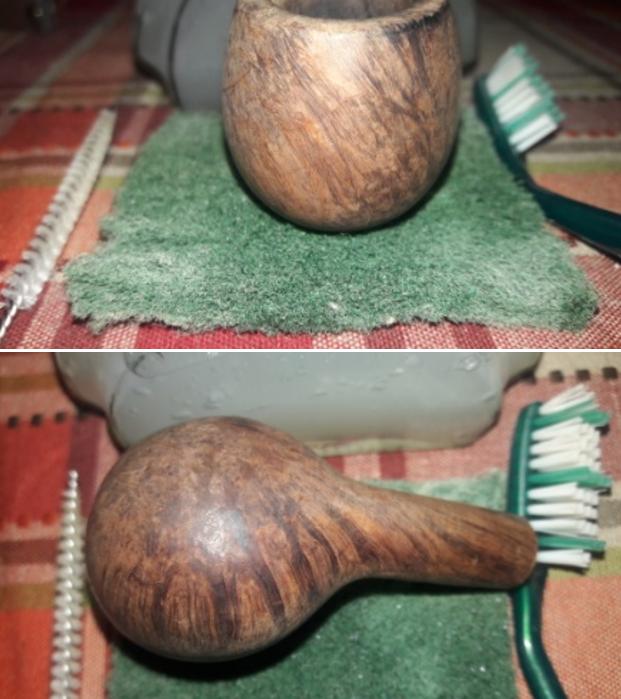
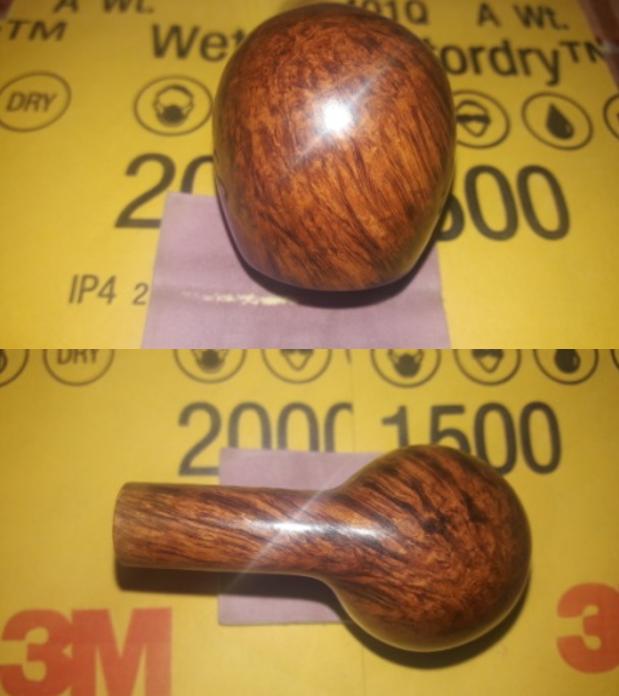
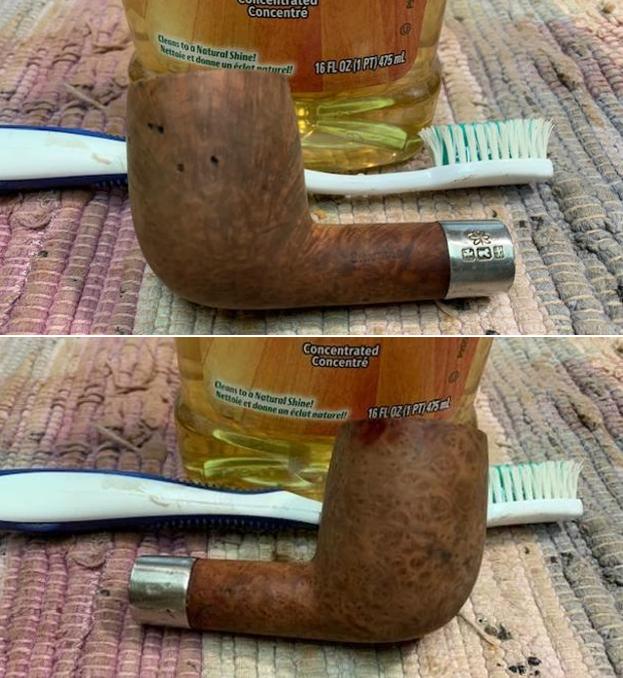
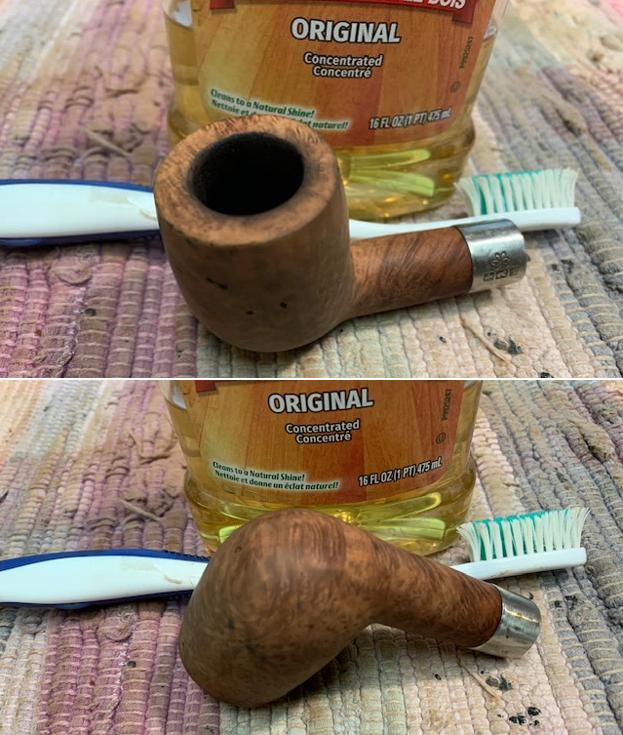
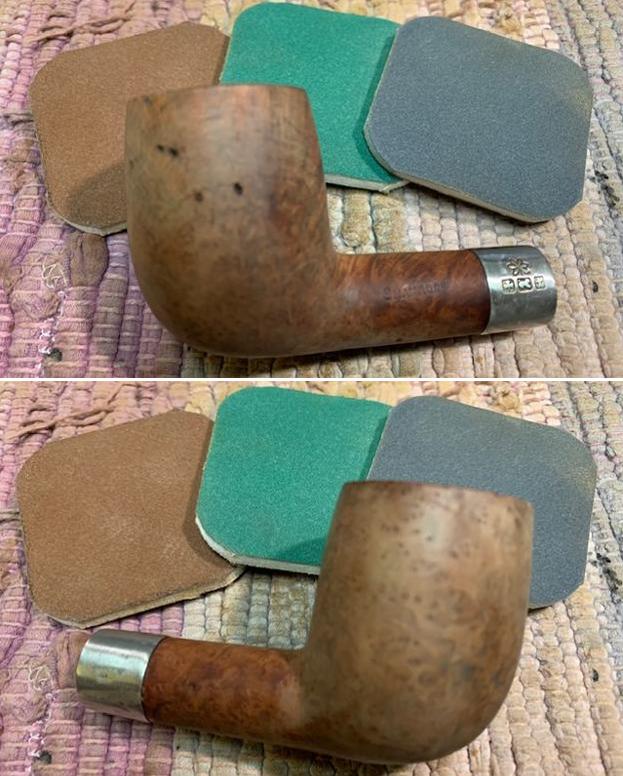
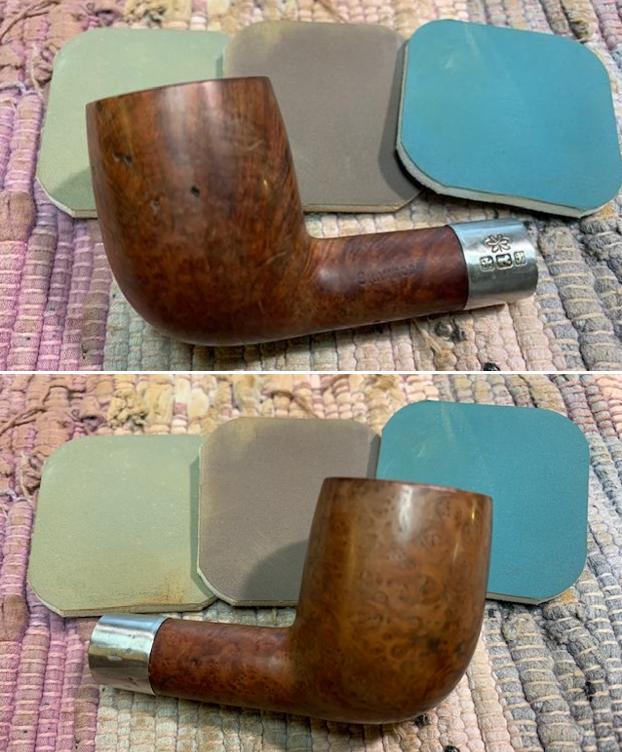
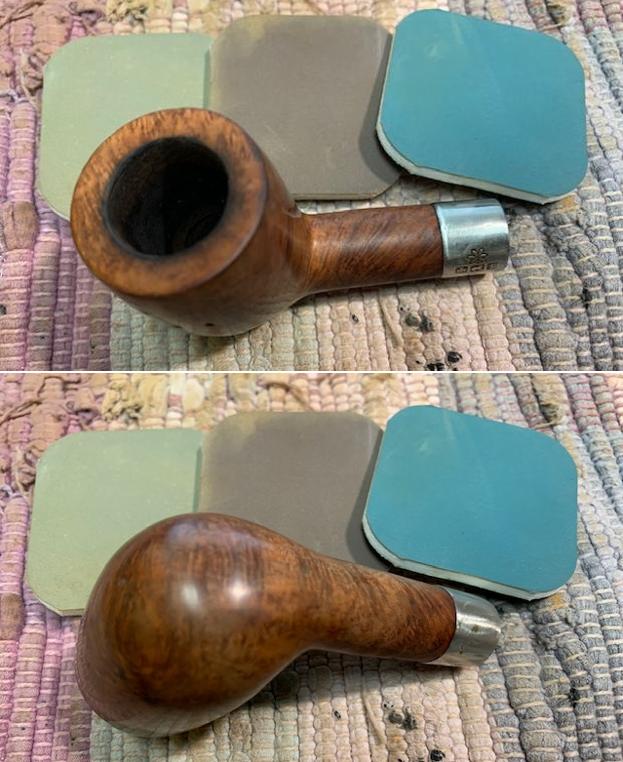
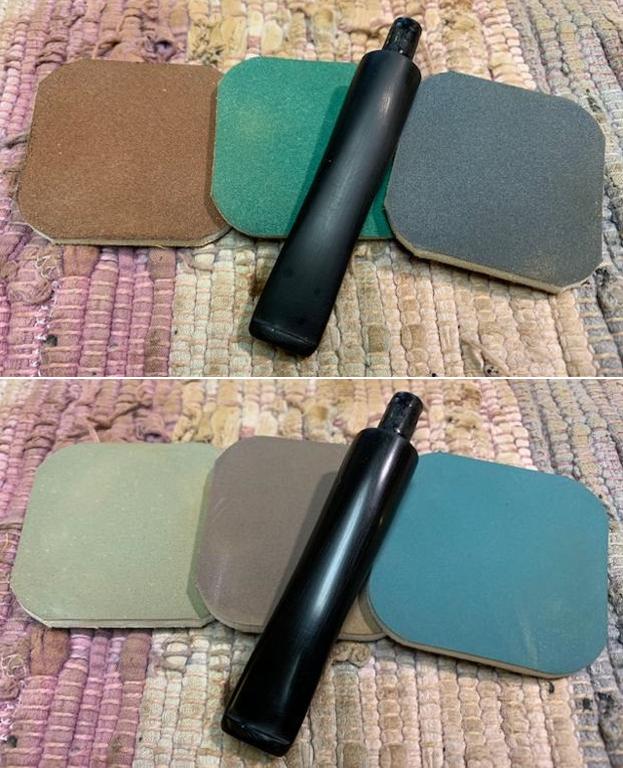
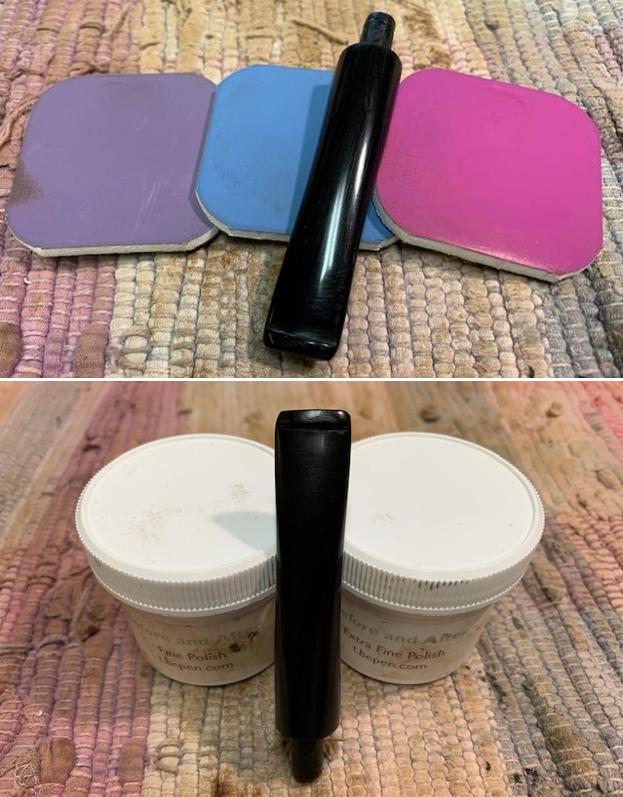
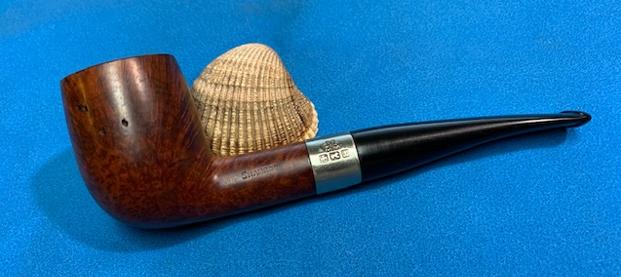
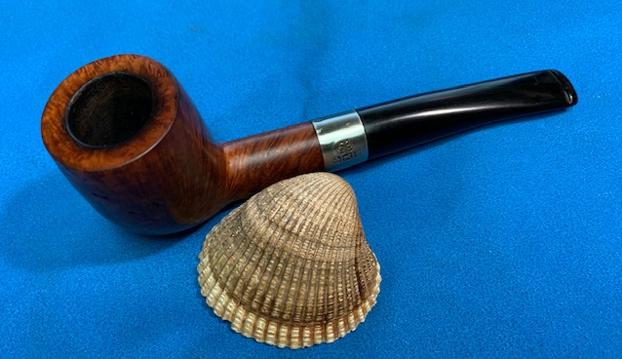
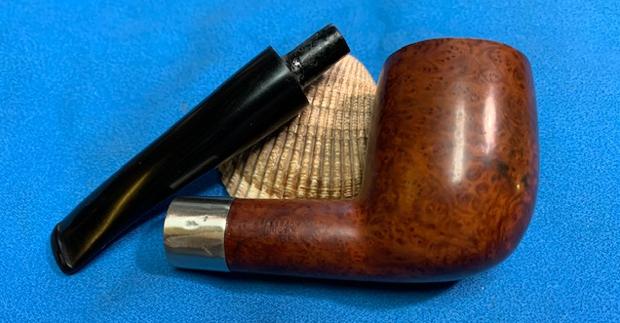
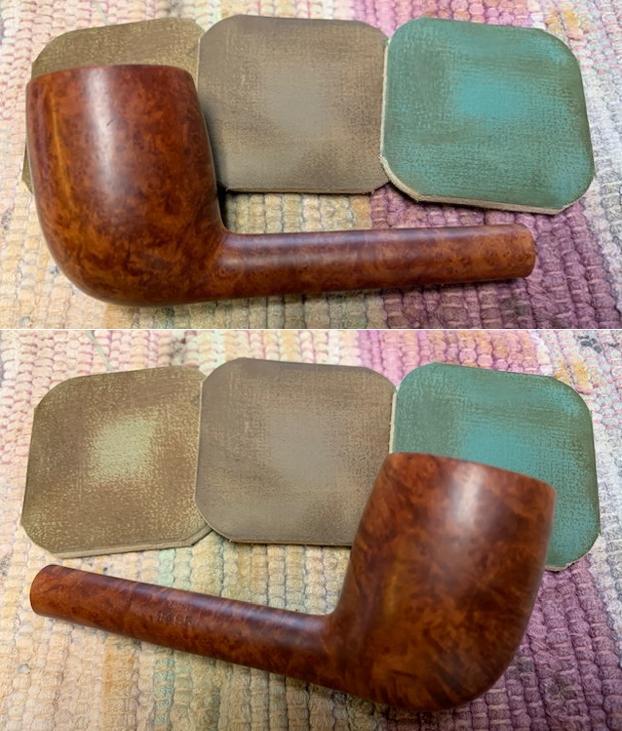
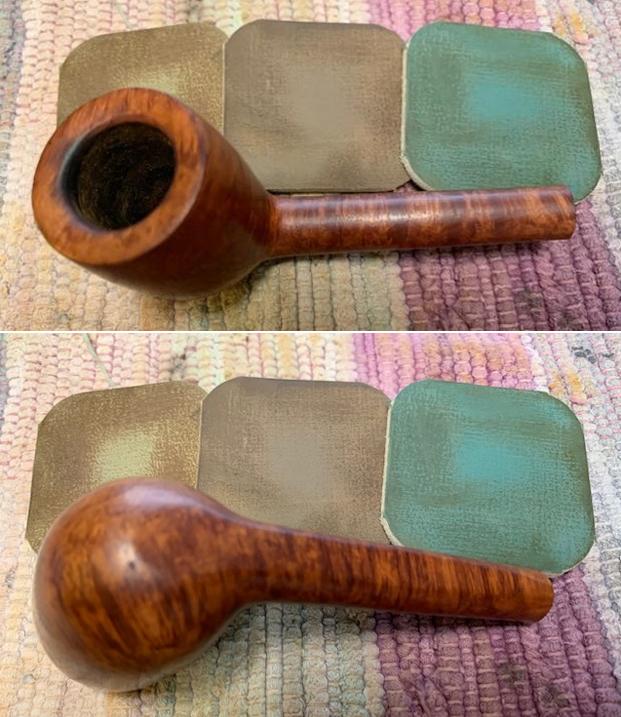
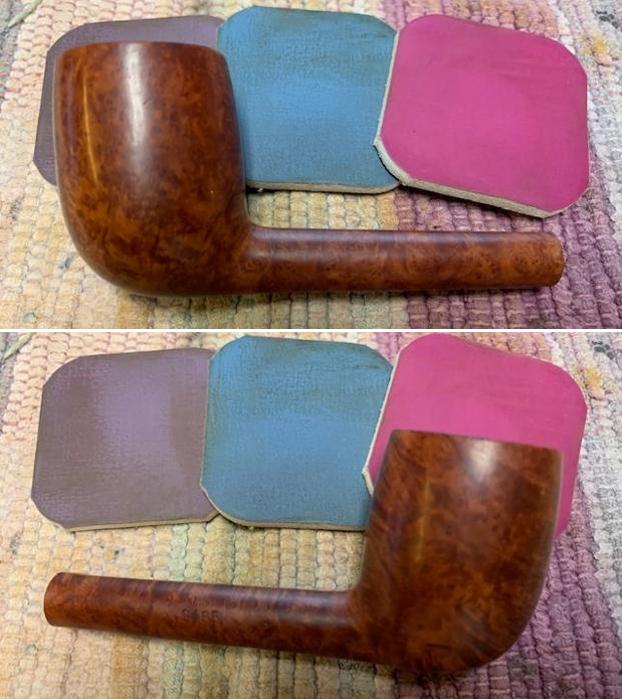
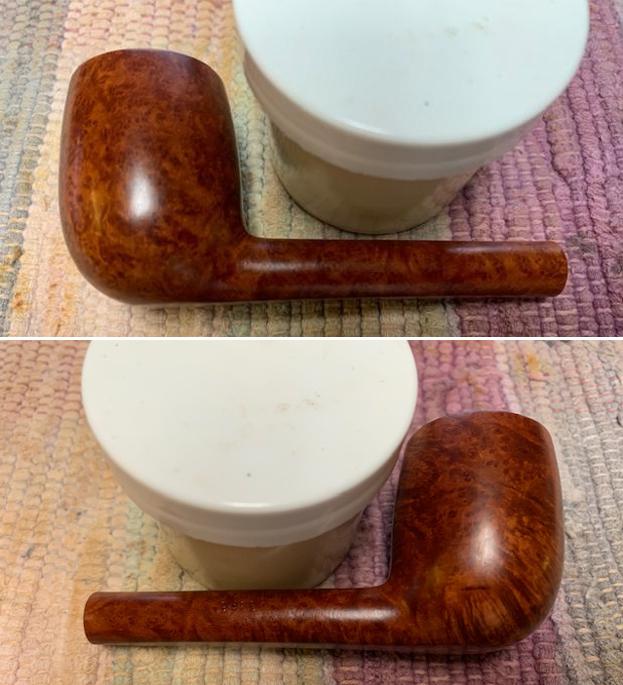
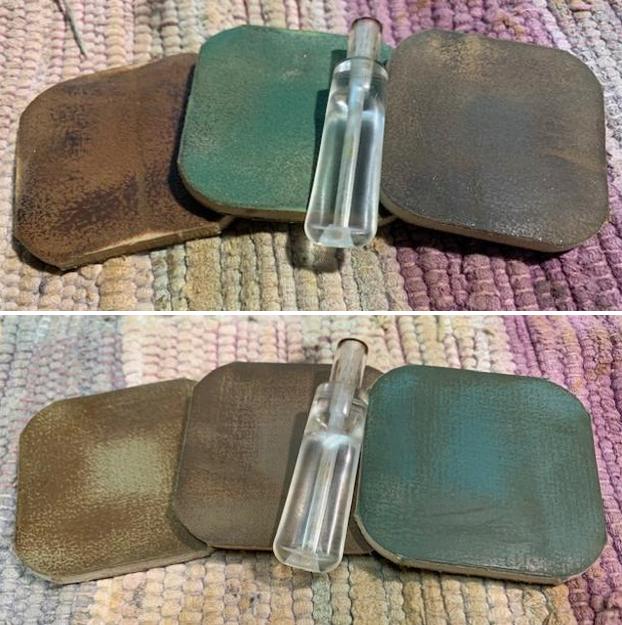
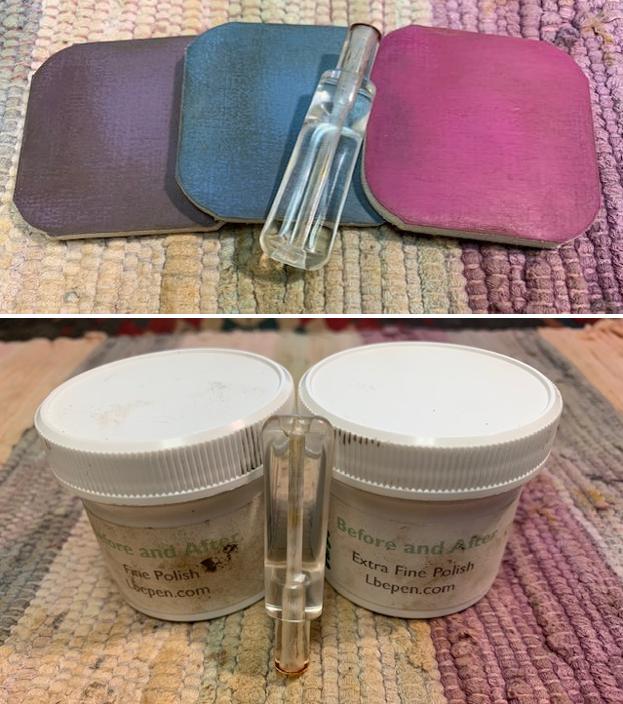
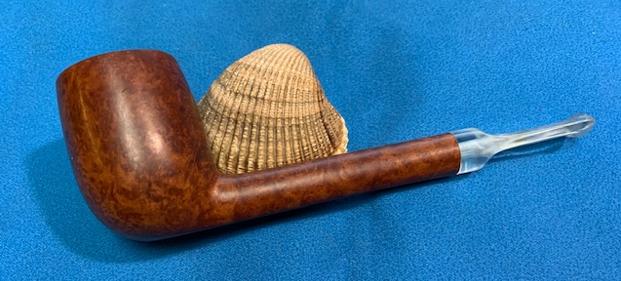
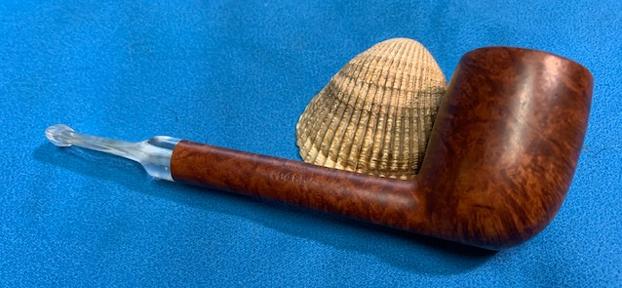
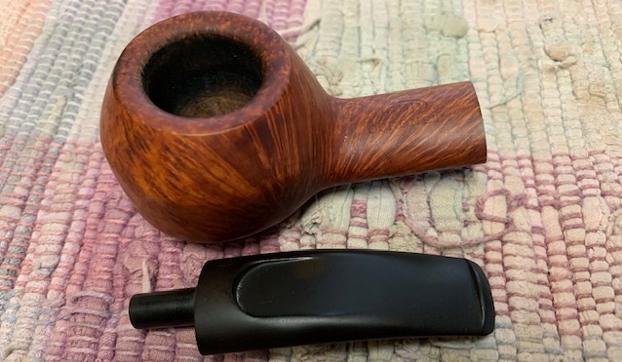
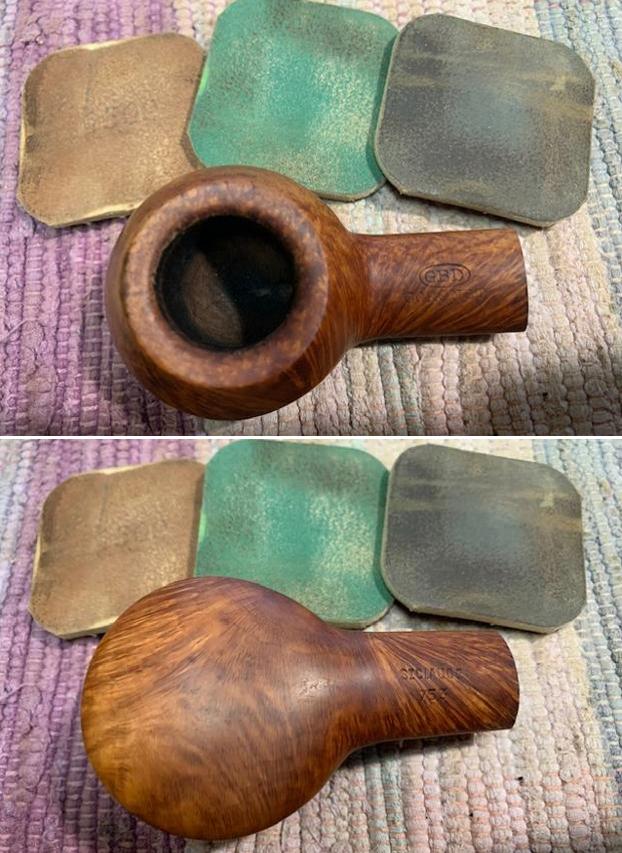
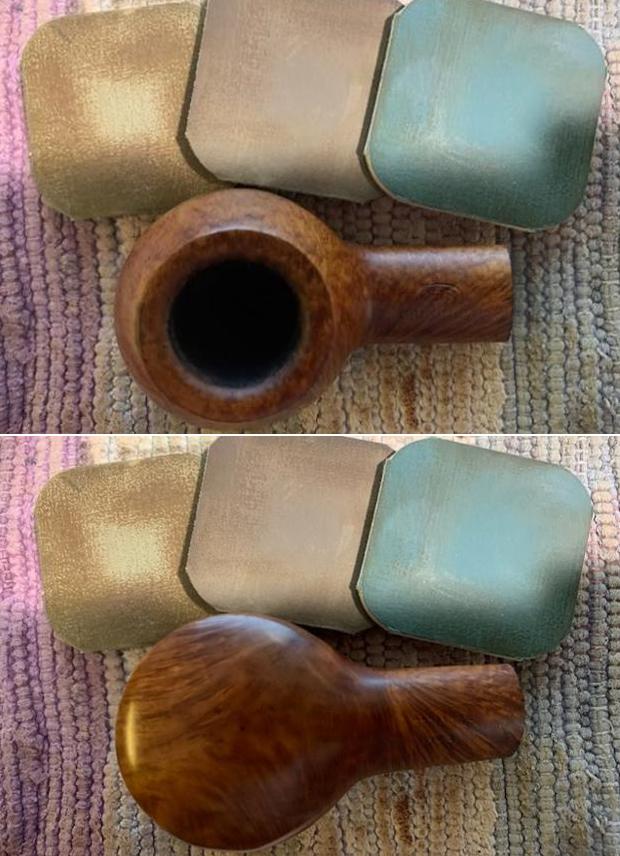
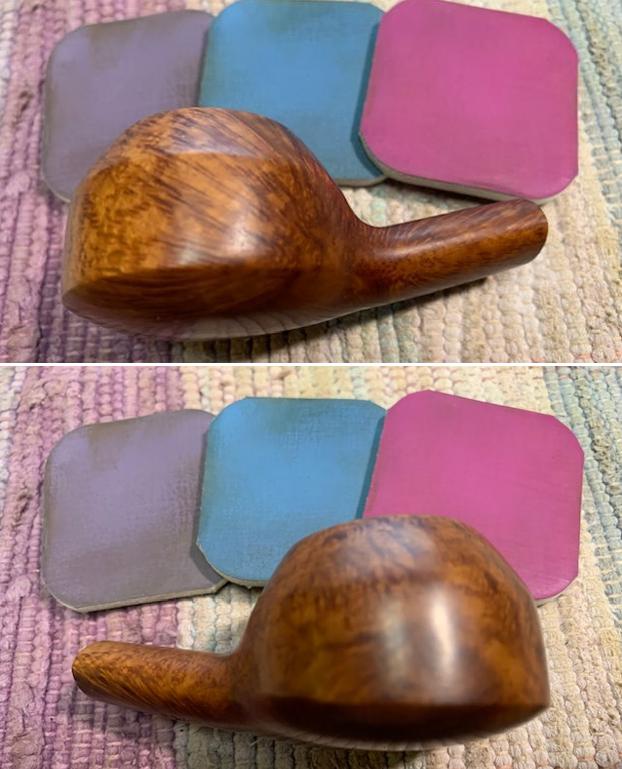
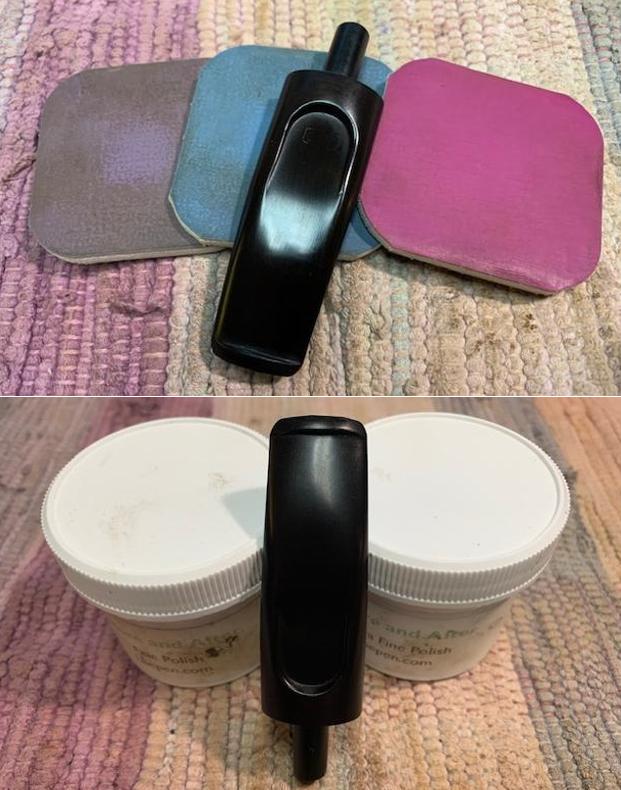
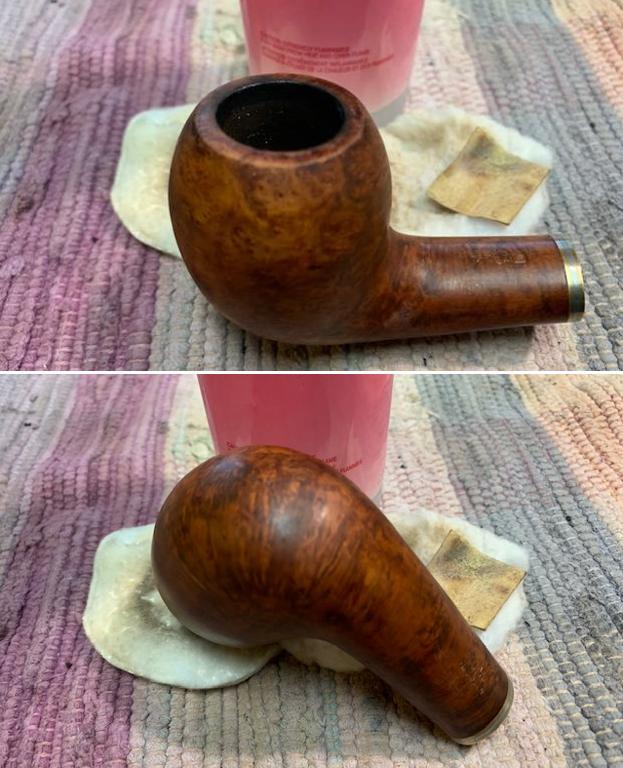
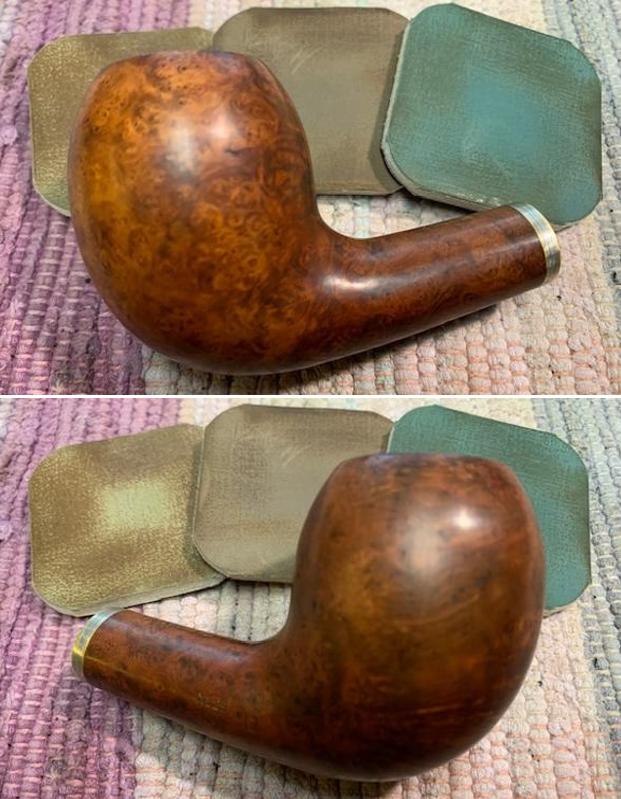
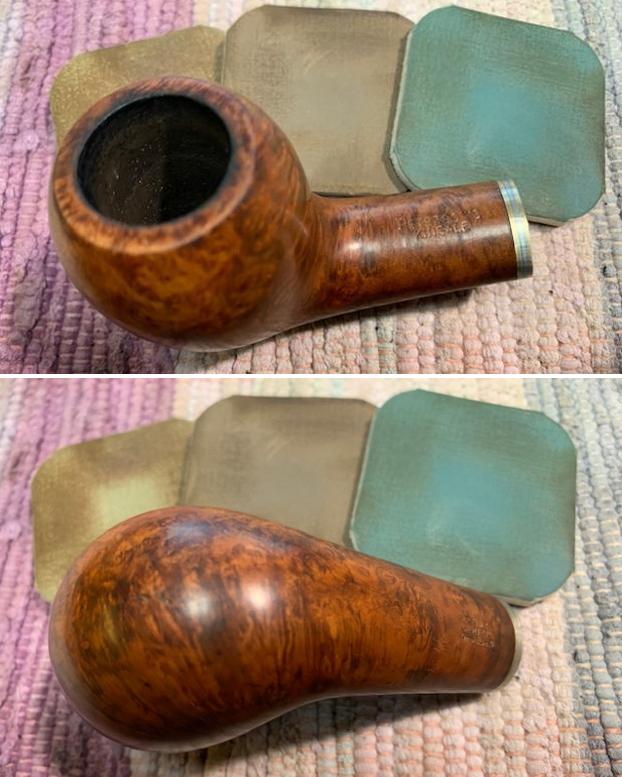
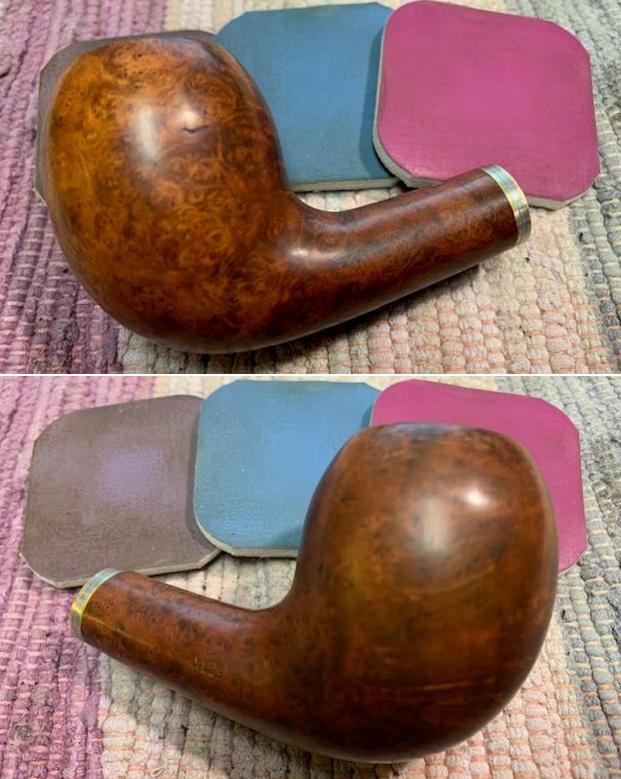
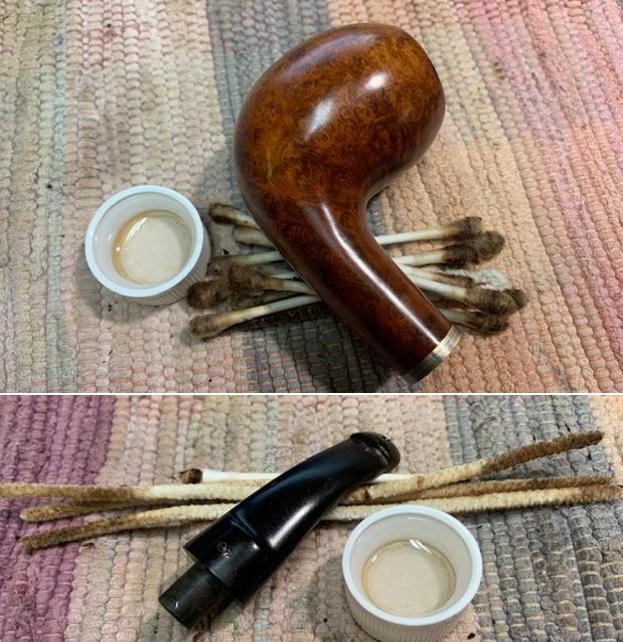
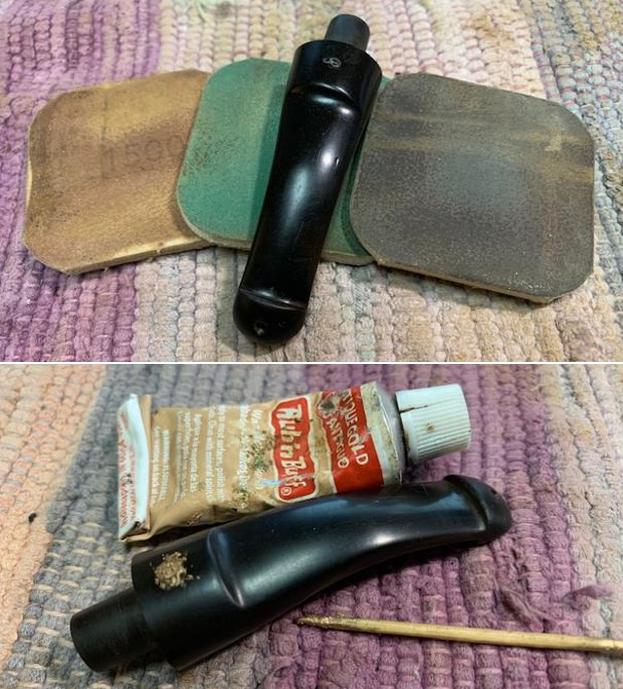
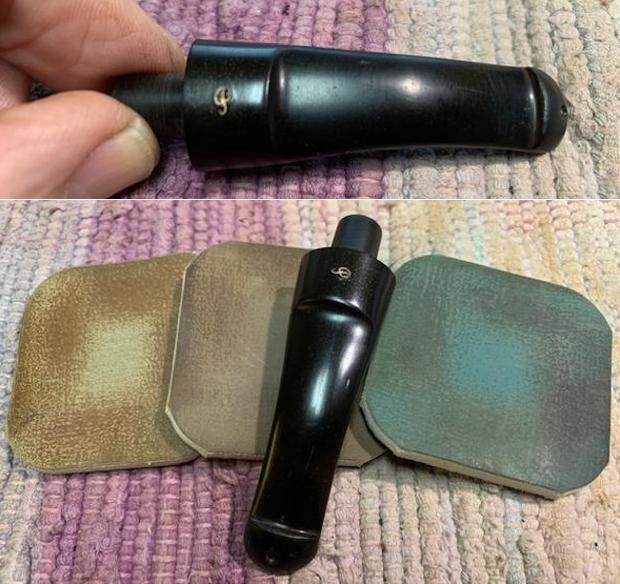
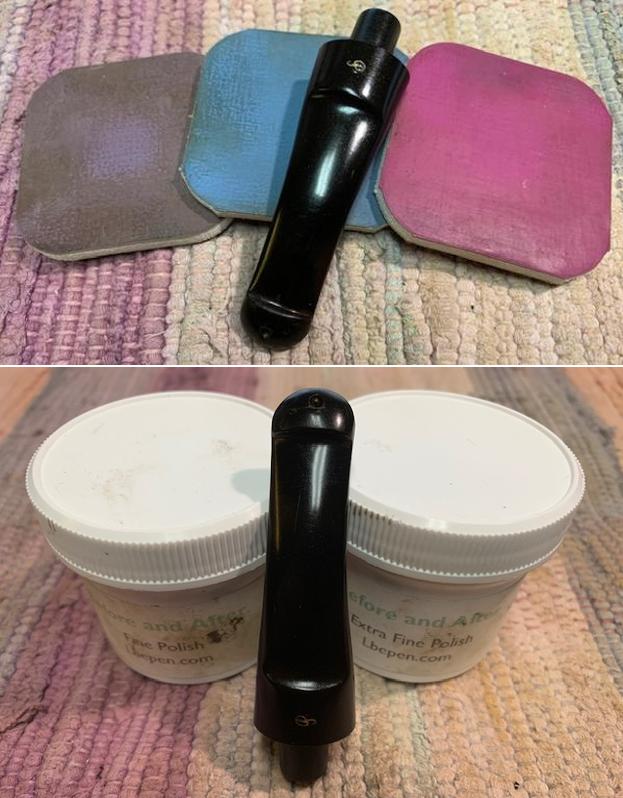
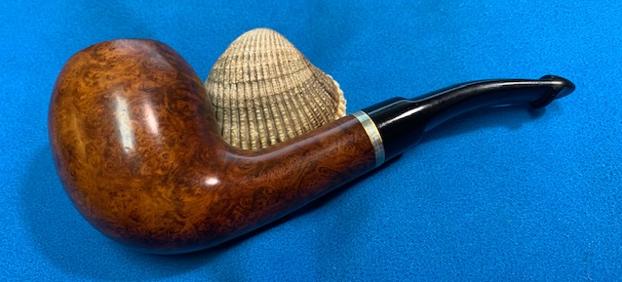
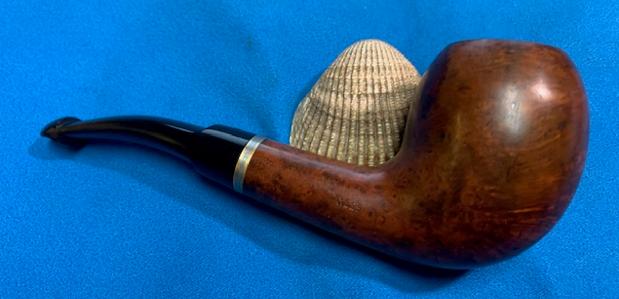
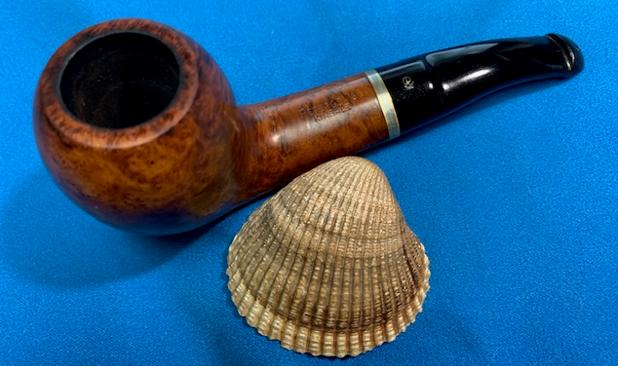
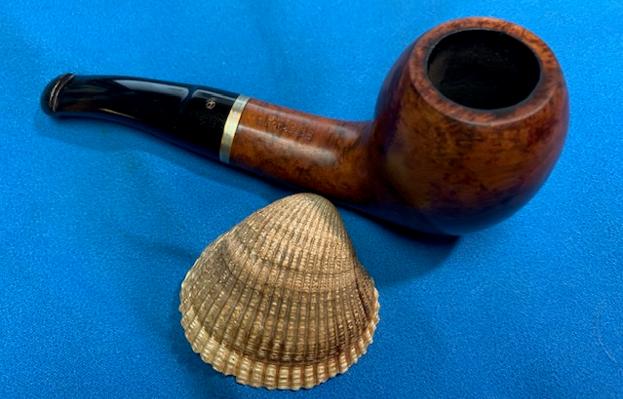
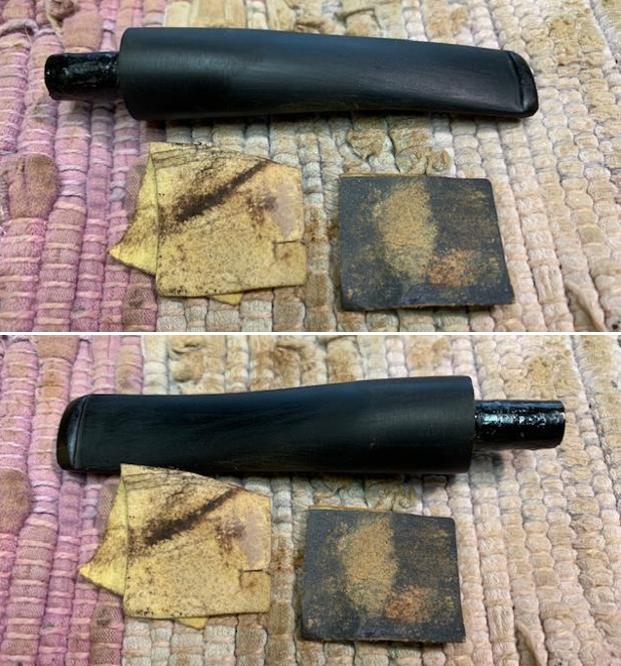
Now it was time to work on the pipe. I went through my can of stems and found a fishtail stem that would work with a little adjustment to the diameter at the band. The stem was in very good condition. I laid aside the stem and turned my attention to the bowl. I worked on the thickly lava coated rim top and edges with a folded piece of 220 grit sandpaper. I was able to remove the lava and I worked over the inner edge with the sandpaper. Once finished I reamed the bowl with a Savinelli Fitsall Pipe knife to remove the remnants of cake in the bowl. I scrubbed the externals of the bowl and rim with undiluted Murphy’s Oil Soap and a tooth brush. I rinsed the bowl with warm running water to remove the soap and the grime. The scrubbing left the surface very clean. I decided to leave the sandpits on the bowl side and filling them seemed unnecessary to me. I polished the briar with micromesh sanding pads – dry sanding with 1500-12000 grit sanding pads. I wiped the bowl down with a damp cloth after each sanding pad. I worked some Before & After Restoration Balm into the surface of the briar with my fingertips to clean, enliven and protect the briar. I let the balm sit for 15 minutes and then buffed with a cotton cloth to raise the shine. The photos show the bowl at this point in the restoration process. I sanded the diameter of the stem at the shank end with 220 grit sandpaper to take down the left side so that it matched the side of the band on the shank. I worked it over until the flow between the nickel band and the stem was smooth. I started the polishing with 400 grit wet dry sandpaper.I set the bowl aside and polished the stem with micromesh sanding pads – wet sanding with 1500-12000 grit sanding pads. I wiped it down after each sanding pad with Obsidian Oil. I polished it with Before & After Pipe Stem Polish – both Fine and Extra Fine.    I am excited to finish this Nickel Banded Older Peterson’s Shamrock X105 Straight Billiard. I put the pipe back together and buffed it with Blue Diamond on the buffing wheel. I gave the bowl and the stem multiple coats of carnauba wax. I hand buffed the pipe with a clean buffing pad to raise the shine. It is fun to see what the polished bowl looks like with beautiful flame grain all around it. Added to that the polished Sterling Silver band and the black vulcanite stem was beautiful. This smooth Classic Shamrock X105 Billiard is great looking and the pipe feels great in my hand. It is light and well balanced. Have a look at it with the photos below. The dimensions are Length: 5 ¾ inches, Height: 1 ¾ inches, Outside diameter of the bowl: 1 ¼ inches, Chamber diameter: ¾ of an inch. The weight of the pipe is 46 grams/1.62 oz. It turned out to be a beautiful pipe. I will be packing it up on the weekend and getting it ready to go back to the pipeman who sent it to me to be restemmed. Thanks for your time and as Paresh says each time – Stay Safe.

Reconditioning a Stunning Rungsted Mariner Freehand by Preben Holm


Blog by Steve Laug

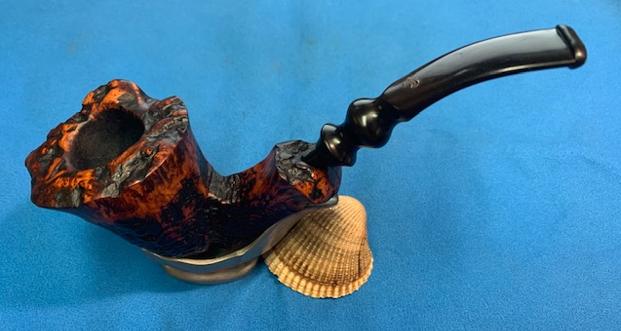
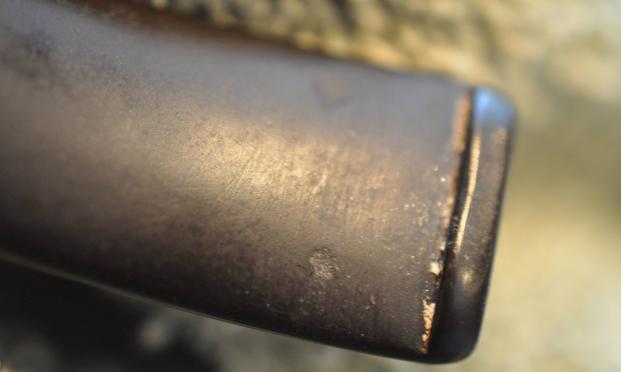
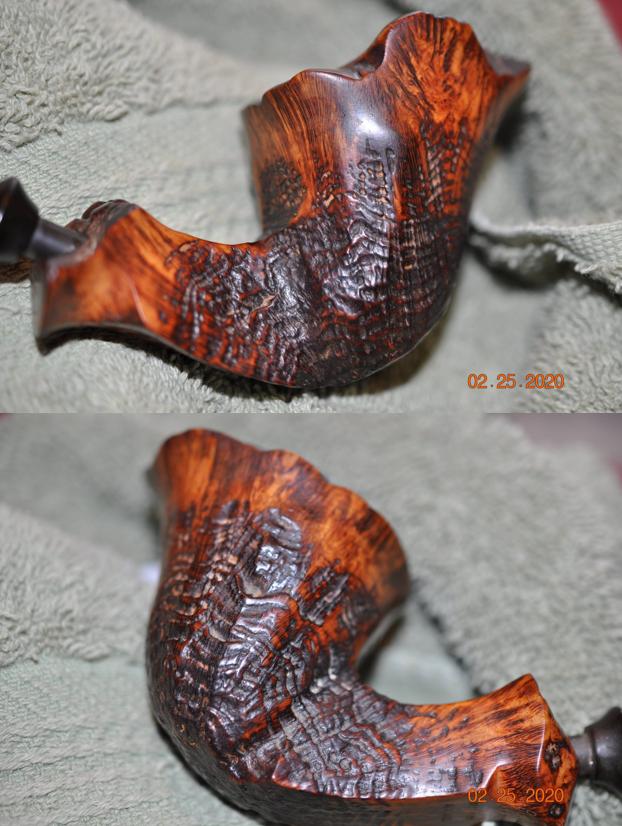
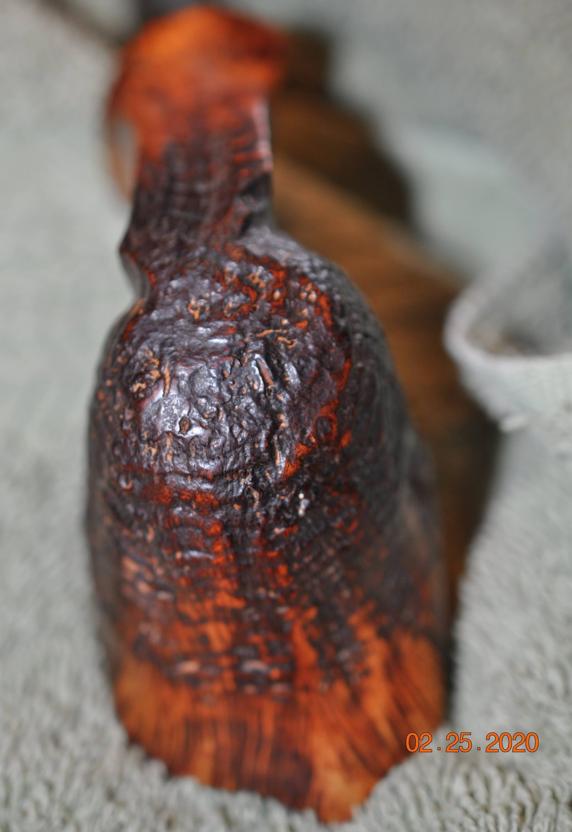
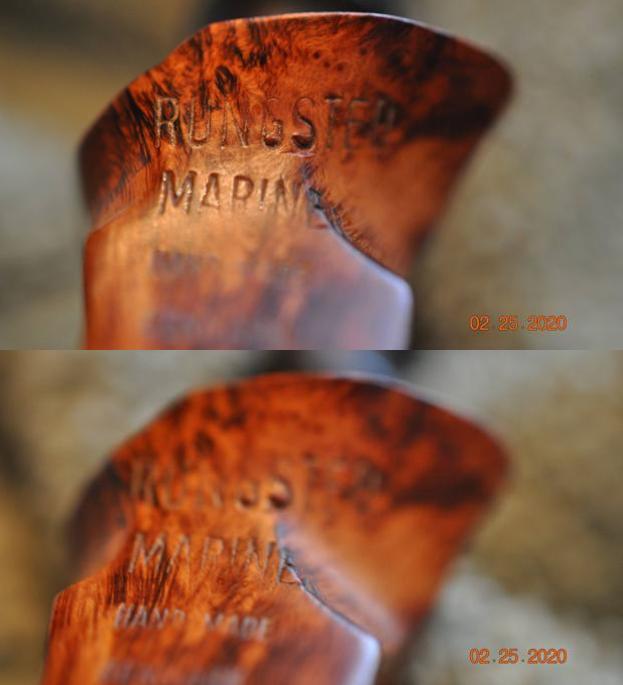
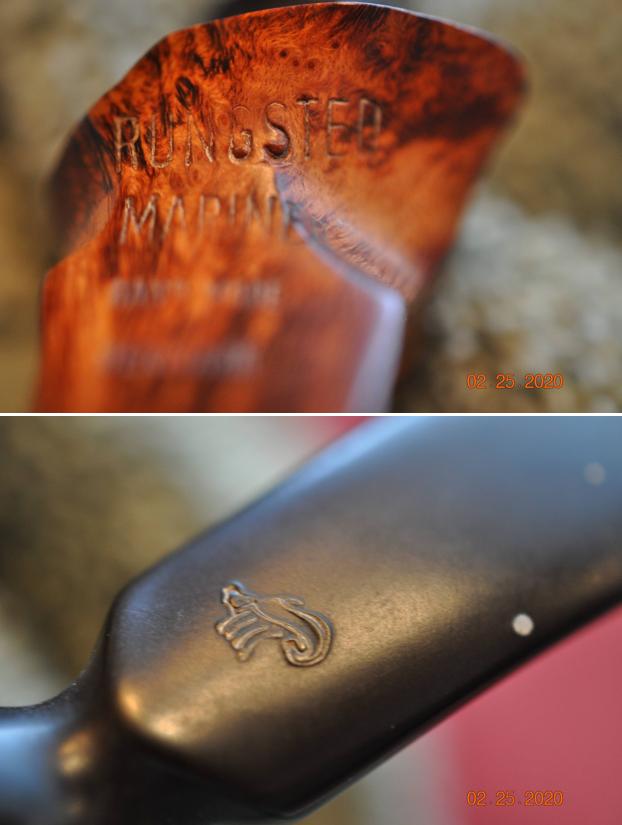
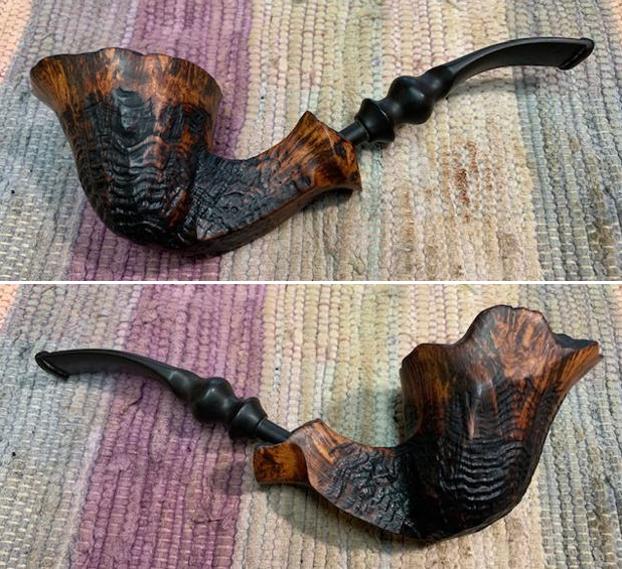
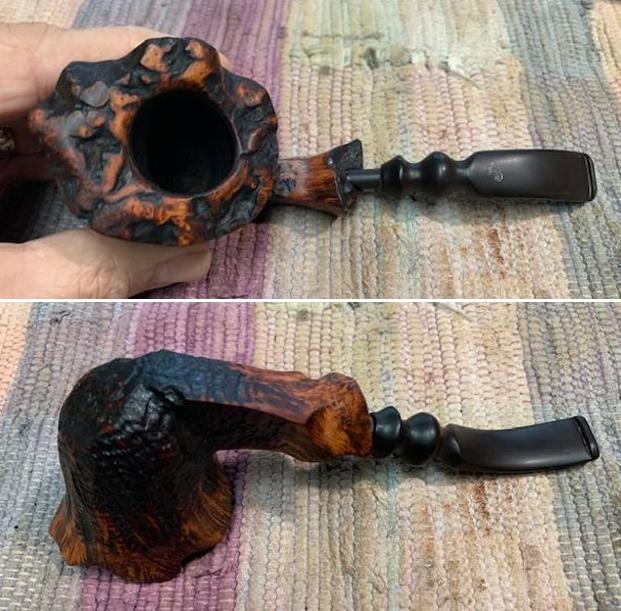
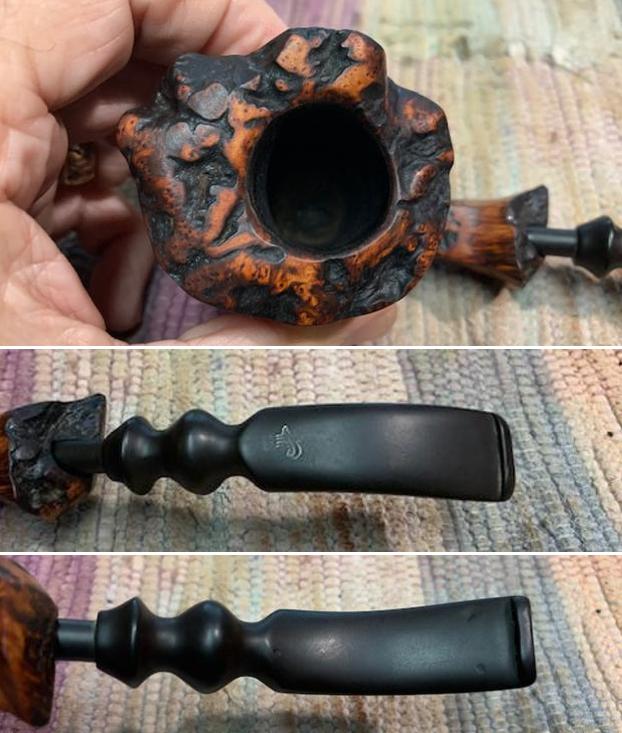
This particular Freehand pipe came in a lot that Jeff and I purchased on early in 2020 from a woman in Australia who had contacted us about selling her late husband’s collection. He had some beautiful pipes in his estate and this was one of them. It is stamped on the underside of the shank and reads Rungsted [over] Mariner [over] Hand Made [over] In [over] Denmark. It is a mixed finish pipe with the majority of the lower 2/3 of the bowl sandblasted with a deep and rugged blast. The top third of the bowl and shank are smooth finished while the rim top and shank end are plateau finished. The pipe had a moderate cake in the bowl and there was dust and debris in the plateau valleys and in the valleys of the sandblast. The original stem had the Rungsted logo on the top of the blade of the fancy turned vulcanite saddle. It was lightly oxidized and had tooth marks and chatter on both sides near the button. There was also some calcification around the sharp edge of the button that would need to be cleaned out. The pipe was dirty but still a beauty. Jeff took photos of the pipe before he started his work on it. Jeff took photos of the rim top and the stem to show the condition of the pipe when we received it. You can see the cake in the bowl and the sandblast of the bowl sides and the plateau of on the rim top and shank end. The rim edges appear to be very clean. The stem is vulcanite and is oxidized, calcified and has chatter and a few deep tooth marks on both sides near the button. He took photos of the sides of the bowl and the heel to give an idea of the shape and the condition of the briar around the bowl. It really is a nicely shaped pipe that has the classic look of a Freehand carved by Preben Holm. The next photos Jeff took show the stamping around the smooth briar on the underside of the shank. It is clear and readable as noted above. It took several photos to capture the stamping but it is clear. The last photo shows the stem logo. In a previous blog I had researched the brand quite a bit. I have included it in full below for information on this pipe (https://rebornpipes.com/2017/10/15/restemming-and-reconditioning-a-rungsted-mariner-by-preben-holm/). I quote:

I don’t know when I learned that the Rungsted line of pipes was another line that Preben Holm carved. But I learned that he made several lines outside the Ben Wade contract pipes he was producing for Snug Harbor/Lane. This was confirmed when I looked online and found a thread on PipesMagazine.com. The discussion covered a brand called Britta Bech and one of the members there happened to mention and confirm what I already knew about the Rungsted line. From my memory and the speaker’s the pipes were mostly carved in the mid to late 70’s or early 80’s during the height of the Danish Freehand pipe craze in the US. The speaker there said that though some refer to these as seconds he did not think that was accurate and that really it was a totally separate line from Preben Holm. I would agree with his assessment on this. I am pretty certain looking at the various Rungsted pipes that I have worked on that there are no flaws. They all combine both smooth and sandblast finishes and present a really interesting finished pipe. (mlaug on pipesmagazine.com http://pipesmagazine.com/forums/topic/preben-holm-info-needed).

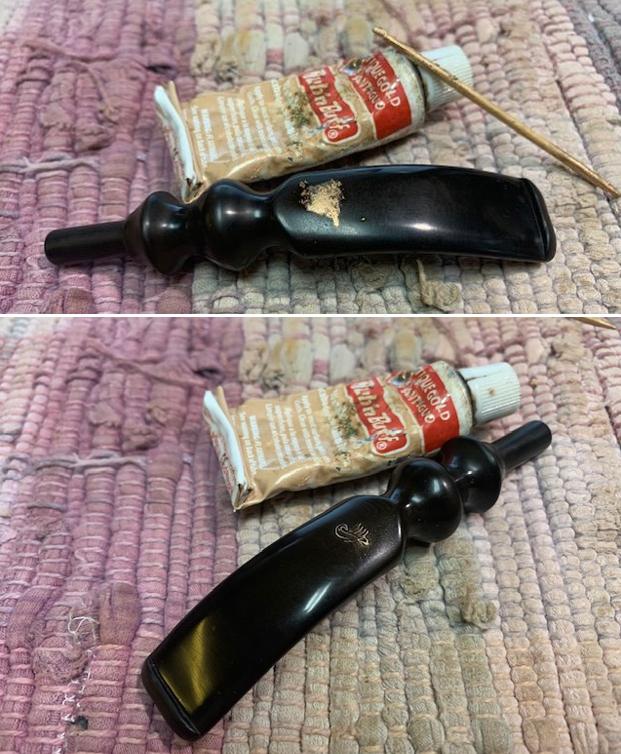
Now it was time to move on to this particular Rungsted Mariner pipe. Jeff did a great job cleaning off the debris and grime on this old. He reamed it with a PipNet reamer and smoothed the walls of the bowl with a Savinelli Fitsall pipe knife. He scrubbed out the mortise and the airway in the shank and the stem with alcohol, cotton swabs and pipe cleaners. He scrubbed the exterior of the bowl, rim and shank with a tooth brush and Murphy’s Oil Soap to the oils and tars on the bowl, rim and shank. He rinsed it under running water. He dried it off with a soft cloth. Once the grime was removed the finish underneath was in stellar condition. The rich patina of the older briar was a variegated finish of smooth and sandblast looked great. He scrubbed the exterior of the stem with Soft Scrub then soaked it in a bath of Briarville’s Pipe Stem Deoxidizer. He rinsed off the deoxidizer with warm water and wiped the bowl and stem down with a light coat of olive oil to rehydrate both. The pipe really was quite stunning. I took photos of the pipe to show its condition before I started my work on it. I took close up photos of the stem and the rim top to show both how clean they were and what needed to be addresses with both. The rim top and bowl were in great condition with no major issues. The stem looked better but the deep tooth marks and chatter were still present. I would need to remove those to bring the stem back.I took a photo of the stamping on the underside of the shank. You can see from the photo that it is readable. It is clearer on the top half of the stamp than the lower but it is still readable.I removed the stem from the bowl and took a photo of the parts to give a sense of the beauty of the pipe. Because the bowl was in such good shape after Jeff’s clean up I moved directly to working some Before & After Restoration Balm into the surface of the briar with my finger tips and a horse hair shoe brush to get into the crevices of the sandblast and plateau. The product is incredible and the way it brings the grain to the fore is unique. It works to clean, protect and invigorate the wood. I set the bowl aside and turned my attention to the stem. I “painted” the surface of the stem with the flame of a Bic lighter to lift the tooth marks. I was able to lift them quite a bit. I filled in the remaining tooth marks on the surface of both sides with clear CA glue. Once it cured, I sanded them smooth with 220 grit sandpaper to blend them into the surface of the briar. I started the polishing of the stem with 400 grit wet dry sandpaper. I polished the stem with micromesh sanding pads – wet sanding it 1500-12000 pads. I wiped it down with Obsidian Oil after each pad to protect it and preserve it. I polished it with Before  After Pipe Polish – both Fine and Extra Fine. I finished the polishing with a final coat of Obsidian Oil. I touched up the stamp on the top of the stem with Rub’n Buff Antique Gold. I rubbed it into the stamp with a tooth pick and buffed it off with a cloth. It looked much better.I am really happy with the way that this Preben Holm made Rungsted Mariner Freehand turned out. It really is a beautiful looking pipe with a great shape and smooth, plateau and sandblast finishes. The fancy original vulcanite saddle stem is really nice. The briar really came alive with the buffing. The rich brown and black stains of the finish gave the pipe a sense of depth with the polishing and waxing. I put the stem back on the bowl and carefully buffed the pipe with Blue Diamond on the buffing wheel using a light touch on the briar. I gave the bowl multiple coats of Conservator’s Wax and the stem multiple coats of carnauba wax on the buffing wheel. I buffed the pipe with a clean buffing pad to raise the shine. I hand buffed the pipe with a microfiber cloth to deepen the shine. The finished Rungsted Mariner really is a beauty and feels great in the hand and looks very good. Give the finished pipe a look in the photos below. The dimensions of the pipe are Length: 7 inches, Height: 2 ¼ inches, Outside diameter of the bowl: 2 ½ inches long x 2 inches wide, Chamber diameter: 1 inch. The weight of the pipe is 83 grams/2.93 oz. The pipe will be going on the rebornpipes store soon. It will be in the section on Danish Pipe Makers if you would like to add it to your collection. Thanks for reading this blog and my reflections on the pipe while I worked on it. It was a fun one to work on!

Bringing Back To Life an “Orlik De Luxe # LD 33”


Blog by Paresh Deshpande

Re-Cap…
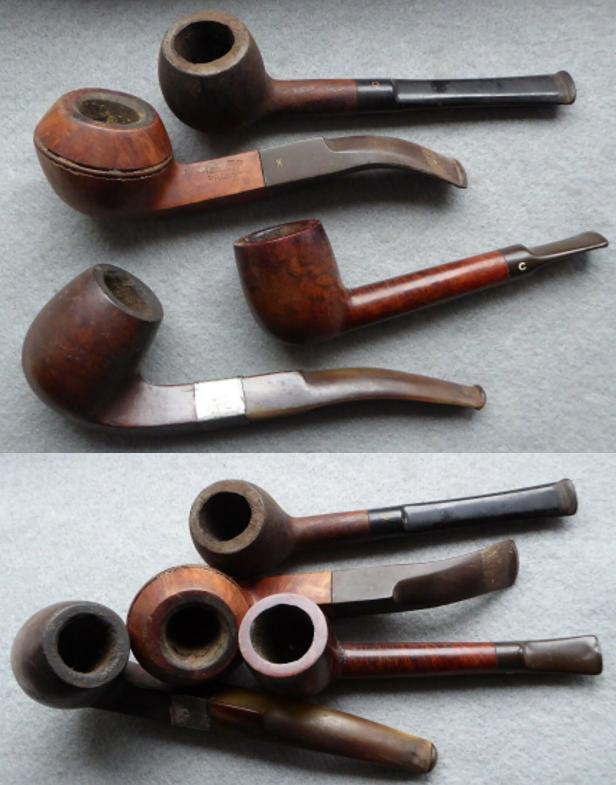
While surfing eBay for estate pipe lots, I came across a job lot that contained four estate pipes. The seller had not included any description for the item other than a simple statement that read “The lot is being sold as is. Pictures are part of description” or words to that effect. The worst part was that there were only two pictures that were posted by the seller!! Here are the pictures. I could make out one Orlik with dental stem, a Hardcastle Bulldog, one Comoy’s Lovat, and the last one was unidentifiable but appeared to be fitted with a horn stem. The pipes appeared to be in a decent condition and included some nice brand names. Soon the pipes reached Abha at my home town.
I have restored two pipes from this lot; the first one was the pipe with the horn stem and it turned out to be a gem from an old and reputable maker “Salmon (Barnett) & Gluckstein” from the period 1894 (guesstimated) and the other pipe I refurbished was the Hardcastle “DRAWEL”. Here are the links to both the write ups that were posted on rebornpipes.

Refurbishing an 1894 (?) Hallmarked “S & G” Square Shank Bent Billiard With a Horn Stem | rebornpipes

Refurbishing A Hardcastle’s “Drawal” # 27 | rebornpipes

Returning To The Present…
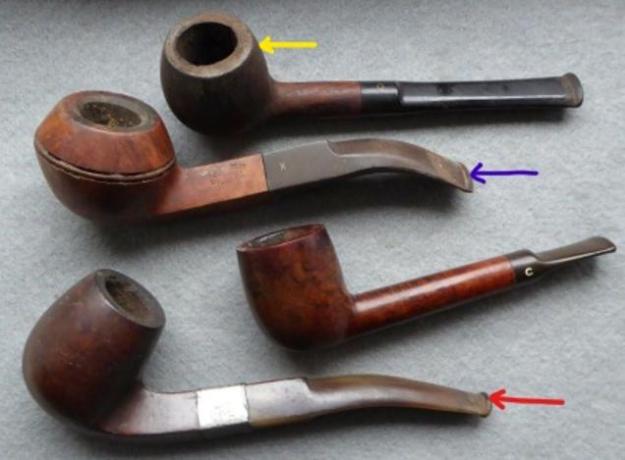
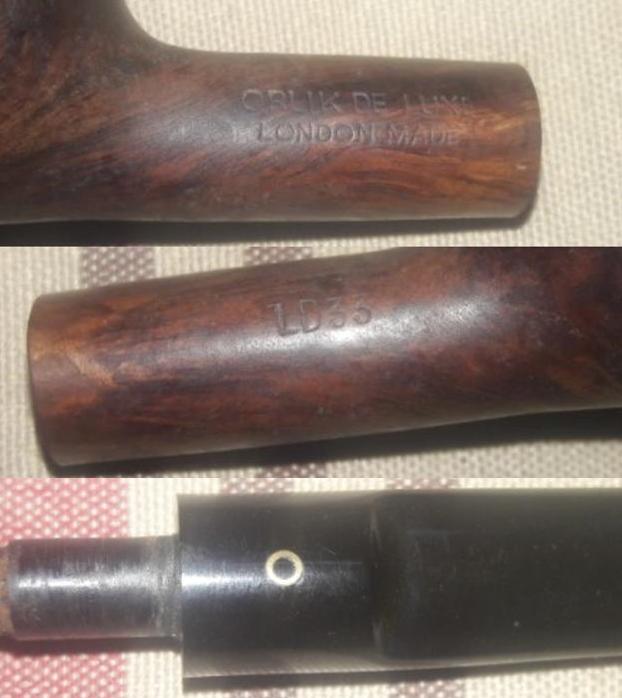
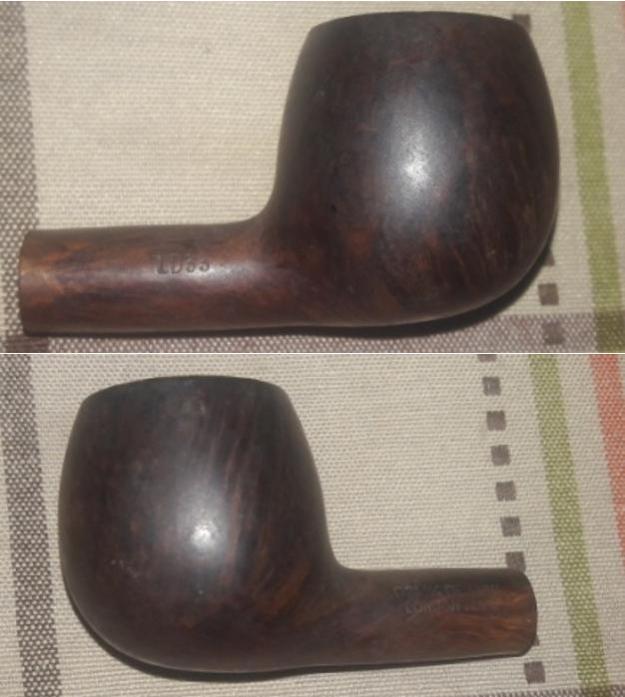
The 3rd pipe that I selected to work on from this lot is the Orlik Deluxe and is indicated with yellow arrow.The pipe is a classic straight Apple with a saddle vulcanite dental stem and a push-fit tenon. It is a medium sized pipe that oozes good quality and one that is light weight. The pipe has some fantastic mix of flame grains and bird’s eye to boast around the stummel surface and is without a single fill. The briar used to carve this pipe is of decent quality and the construction and finish of the stummel and mouthpiece feels top notch too. It is stamped on the left side of the shank as “ORLIK DE LUXE” in a straight line in capital letters over “LONDON MADE” also in capital letters. The right shank panel bears the shape code # LD 33 in the centre. The high quality saddle stem bears the trademark logo “O” atop the saddle as a brass inlay. The stampings are crisp and easily readable and shown below. I had repaired the broken meerschaum lining (my first) on an Orlik, Meerschaum lined bent billiards and had read about the marquee. I remembered the brand to be British that was taken over by Cadogan group in the 1980s. To refresh my memory, I visited pipedia.org. I have reproduced the snippets of relevant information for easy referencing of the esteemed readers.
Orlik – Pipedia

In 1899, a pipe manufacturer was founded in London, Bond Street, by Louis Orlik. L. Orlik Ltd. started to produce high quality pipes for a relatively low price but high service and soon became quite popular. By 1907 they used the name L & A Orlik, which apparently added Louis’s brother, Alfred to the company name. In the first quarter of 1900 they also established in Birmingham. This can be verified by silver hallmarks. In 1980 the company was acquired by Cadogan. Like many of London’s other pipe manufacturers they moved to a new built factory in Southend-on-Sea. As all current brands in the Cadogan group, Orlik was being produced in those factories.

Orlik used the slogan “Smoked by all shrewd judges” “(who are also loved by his hard judge)” with a portrait of a judge wearing a wig. The picture is still used in Denmark for manufacturing of Orlik cigarettes.

An onsite link leads to a detailed and well researched article on Dating Orlik pipes by Michael Lankton and excerpts from the article Talk:Orlik – Pipedia. Give it a read for the details.

  • De Luxe(L)(LX) – molded stems inferior blocks brown finish, lesser grain, some have hand cut stems and some have molded stems, could perhaps depend on date of manufacture with earlier pipes having hand cut stems

The Orlik series proper will be stamped in all caps in a sans serif font on the port side of the shank one of two ways

ORLIK SERIES_NAME
MADE IN ENGLAND

or

ORLIK SERIES_NAME
LONDON MADE

The starboard side of the shank is stamped simply with the series letter and shape number, except on pipes stamped London Made on the port side, in which case in addition to the series letter and shape number Made in England is stamped in a straight line.

Orlik Pipes Shapes Catalog courtesy Yuriy Novikov (link provided below), is a neat catalog that describes the shape 33 as “MEDIUM APPLE”

Orlik_Pipe_Shapes.pdf (pipedia.org)

Thus from the above information and observing the pipe in my hand, it can be safely concluded that this Orlik De luxe # LD 33 is a lower placed series pipe with a molded stem. It is from the pre Cadogan period, that is 1950s to 1970s and that makes it a fairly collectible piece. It is my educated guess that the “D” in LD stands for Dental stem that is seen on this pipe.

Personally speaking, I am in complete agreement with Mr. Michael Lankton when he says that the early Orlik pipes were similar in quality to Dunhill, Loewe, Barling and Comoy’s based on the quality of the pipe that is currently on my work table. Even though this pipe is from the De Luxe series of Orlik, it is anything but of lesser quality!! The briar has some great straight grains on the sides of the stummel and is sans any fills. The pipe feels solid in the hand and the craftsmanship is perfect.

Armed with the information about the provenance of the pipe on my worktable, it was time for me to start the refurbishing of this pipe.

Initial Visual Inspection
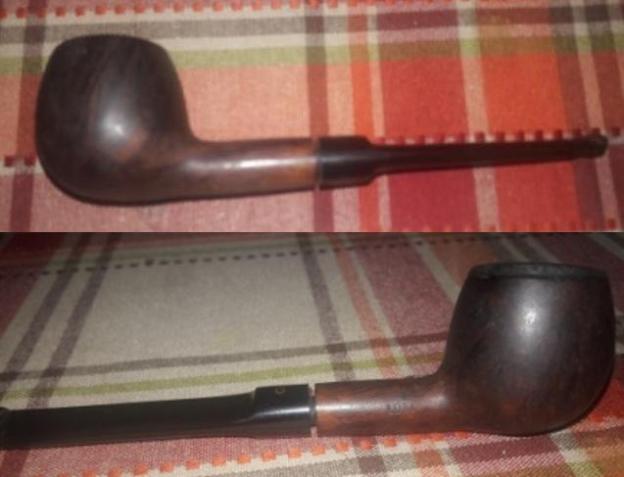
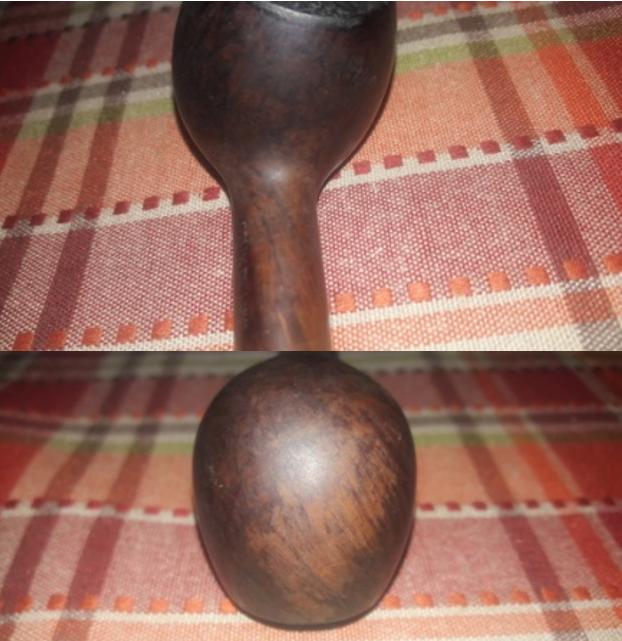
This pipe has the classic straight Apple shape with a medium sized bowl. The stummel boasts of some beautiful flame grains on the left side and swirls on the right. The shank is adorned with beautiful straight grains traversing from the shank end towards the bowl. The stummel surface is covered in dirt and grime of the overflowed lava, hiding the fantastic grain patterns over the stummel surface. There is not a single fill in the briar which speaks of high quality selection of the briar. There is a thick layer of cake in the chamber. The saddle vulcanite dental stem is oxidized with tooth chatter and calcium depositions on either surface in the bite zone. The stem does not seat flush with the shank face. The set of pictures below show the condition of the pipe when it had reached us. Detailed Inspection Of The Pipe And Observations
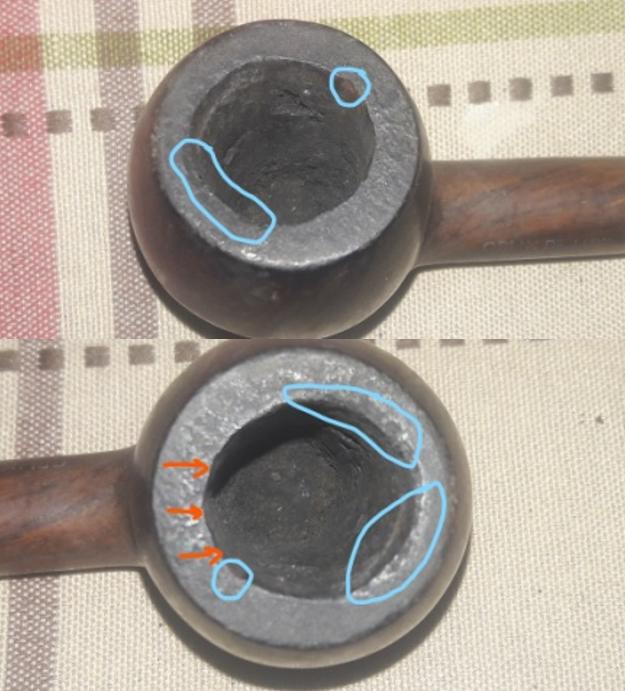
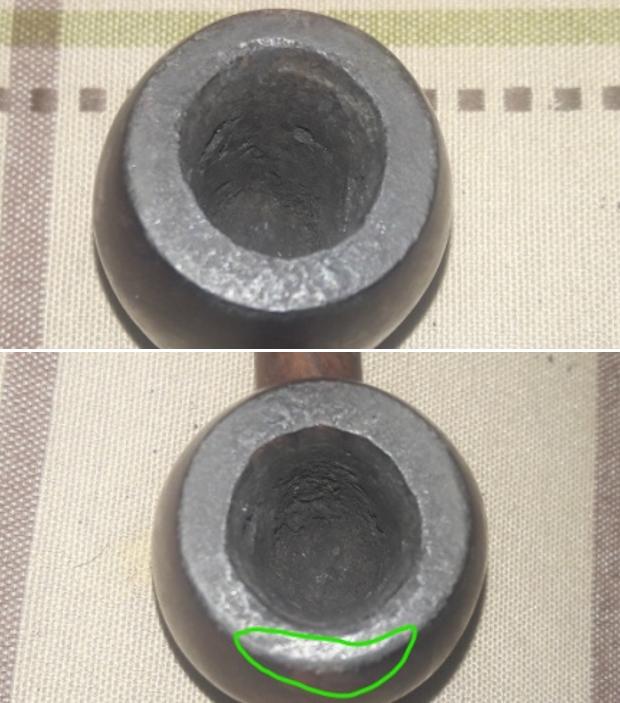
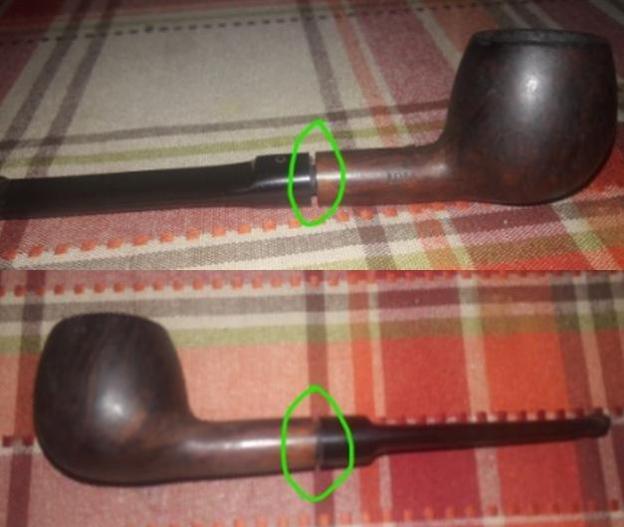
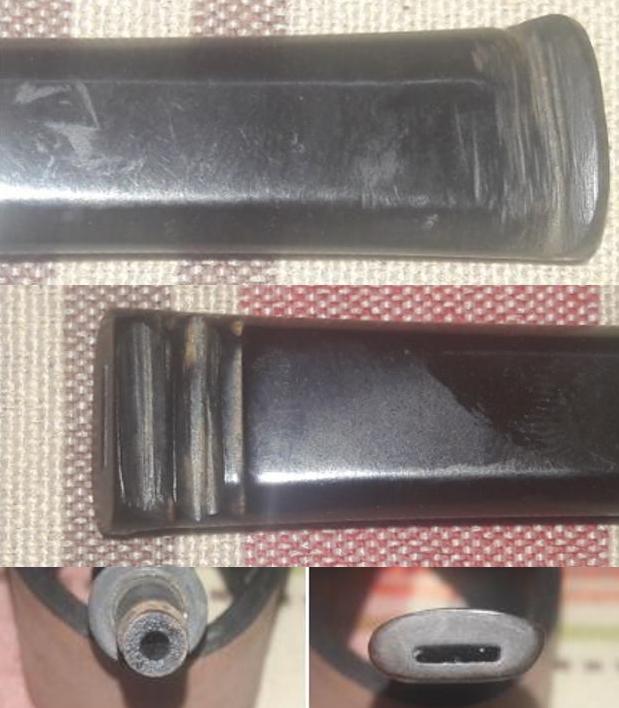
The chamber has an even layer of thick hard cake. The smooth rim top surface is covered in lava overflow, dirt and grime from previous usage. The outer rim edge has suffered a few blows on a hard surface resulting in a few chipped edged surfaces in 12 o’clock direction (encircled in green). The inner edge appears to be charred in 11 o’clock direction with a chipped surface in 5 o’ clock direction (both encircled in pastel blue). The inner rim also shows a few dings and dents (indicated with red arrows), the cumulative effect of which is an out of round appearance to the chamber. The condition of the inner walls of the chamber can be commented upon after the cake has been taken down to the bare briar. The chamber exudes a very strong odor of old tobacco. The draught hole is dead center at the bottom of the chamber and that makes me believe that it should be a great smoke and the thick cake in the chamber lends credence to this observation. The stummel appears solid to the touch all around and hence I do not foresee any serious damage to the walls in the form of a burnout/ deep heat fissures/ lines or pits. Topping the rim surface should address the dents and dings over the rim edges to a great extent, while the remaining damage will be addressed by creating a slight bevel over the rim edge. The reaming and subsequent cleaning of the chamber and mortise should reduce the ghost smells from the chamber. The smooth stummel surface is covered in lava overflow that has attracted a lot of dust and dirt. The dark brown hued briar has taken on a layer of aged patina through which one can make out the beautiful flame and swirl grains that adorn most of the stummel surface and the shank. There are a few very minute dents and dings over the bowl surface probably due to falls and or rough, uncared for handling of the pipe. The briar looks lifeless and bone dry and has taken on dull dark hues. The mortise shows a heavy accumulation of oils, tars and gunk due to which the air flow is not full and smooth. Thorough cleaning of the stummel surface and rinsing it under warm water should highlight the grain patterns. This cleaning will further reveal any other damage to the stummel surface. The dents and dings to the stummel will be addressed to an extent once it is sanded and polished using micromesh pads. The seating of the stem tenon into the mortise is not flush. The most probable reason for this could be the accumulated gunk in the mortise. Thorough cleaning of the mortise should address this issue.The vulcanite saddle dental stem is relatively less oxidized. The bite zone has filing marks on either surface, but more pronounced on the upper extended button. The tenon is smeared in oils and tars and grime and so is the horizontal slot. The molded saddle dental stem bears the trademark inlaid brass logo “O” on the top face of the saddle and would need to be polished. Overall, the stem is in a decent condition and the vulcanite should take on a nice shine readily.The Process
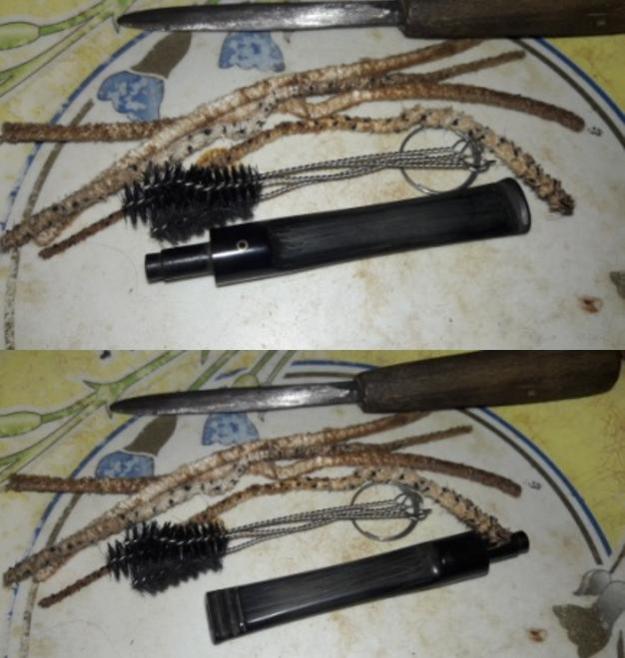
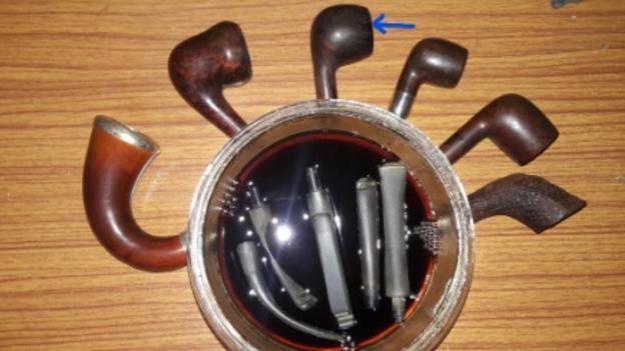
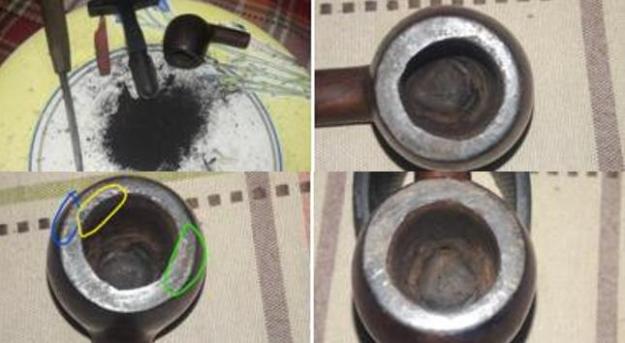
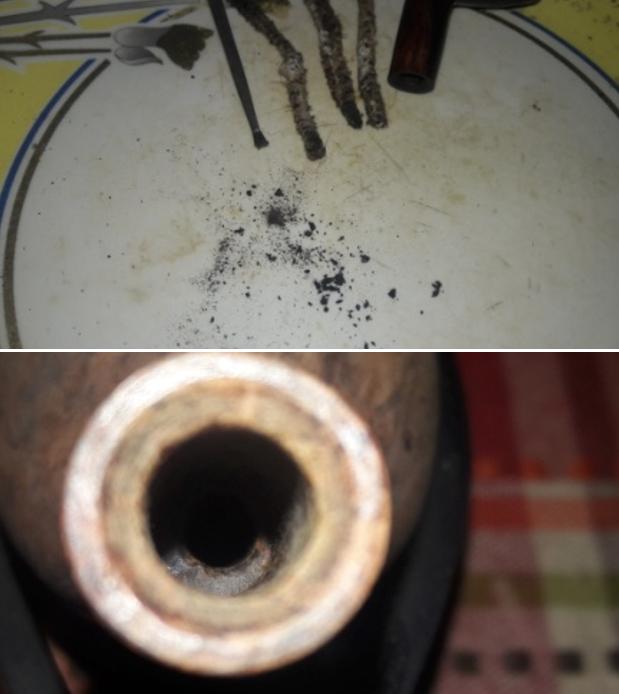
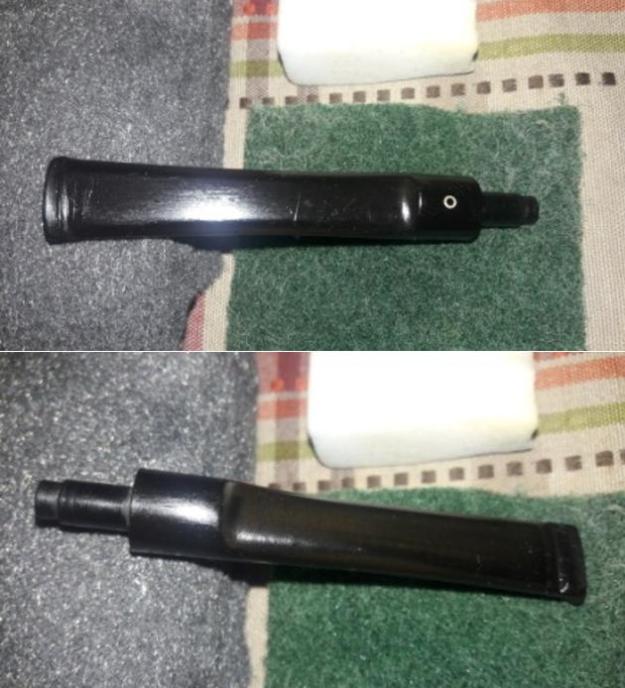
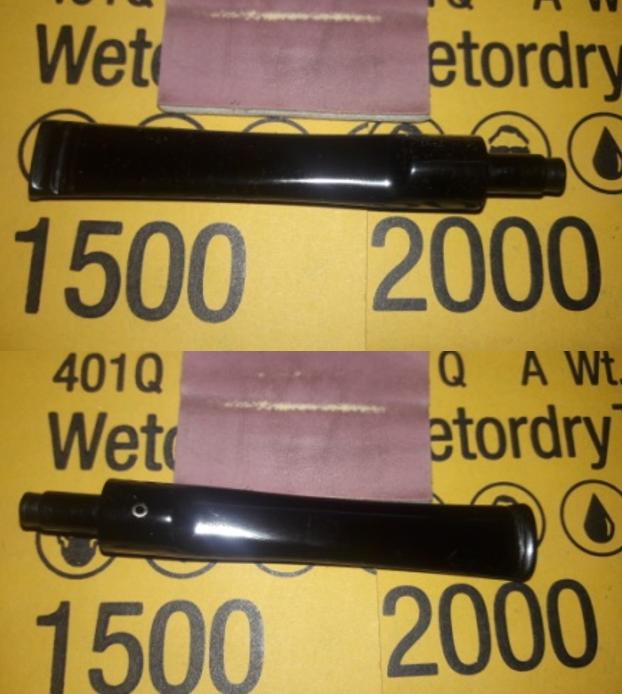
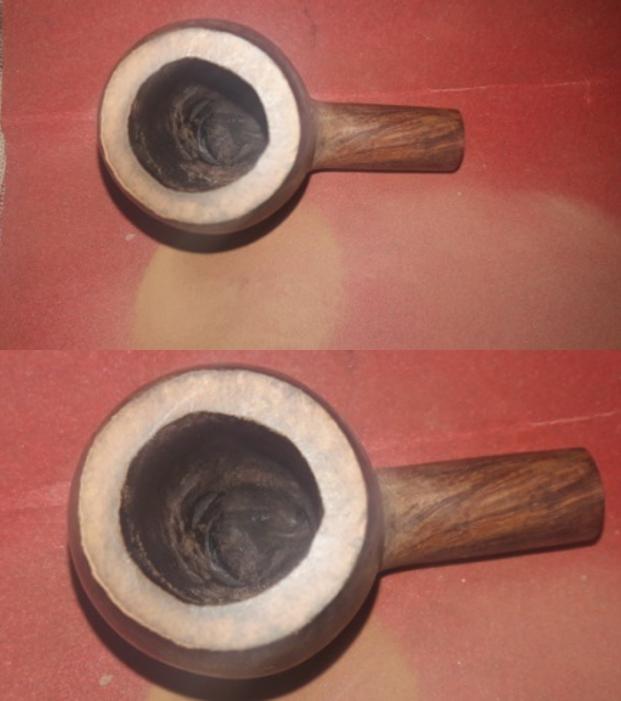
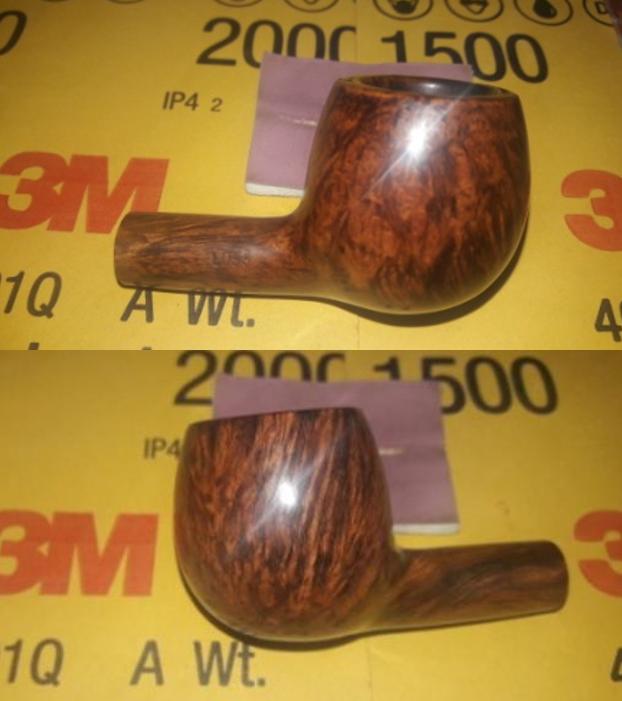
I started the restoration of this pipe by first cleaning the stem. I cleaned the internals of the stem with bristled pipe cleaners and 99.9% pure isopropyl alcohol. With my fabricated knife, I gently scraped out the dried gunk from the tenon end and the horizontal slot.  I further cleaned out the stem internals with a shank brush and dish washing liquid soap. Once the stem internals were cleaned, I sanded the entire stem surface with a 220 grit sand paper in preparation for dunking the stem into the Before and After Deoxidizer solution.I thereafter, dropped the stem into “Before and After Deoxidizer” solution developed by my friend Mark Hoover. The solution helps to draw out heavy oxidation to the surface, making it’s further removal a breeze, while the minor oxidation is eliminated to a very great extent. The initial sanding helps to draw out the complete oxidation as the sanding opens up the stem surface that has been initially covered with oxidation. I usually dunk stems of the pipes that are in-line for restoration and this pipe is indicated with a blue arrow. I generally allow the stems to soak overnight for the solution to do its work.While the stem was soaking in the deoxidizer solution, I reamed the chamber with size 2 head of the Castleford reamer. With my fabricated knife, I further scraped the chamber walls to remove the remaining carbon deposits and also scraped out the lava overflow from the rim top surface. Once the cake was reamed back to the bare briar, I used a 220 grit sand paper to remove all the traces of remaining cake and also to smoothen out the inner walls of the chamber surface. Finally, to remove the residual carbon dust, I wiped the chamber with a cotton pad wetted with 99.9% pure isopropyl alcohol. The chamber walls are in pristine condition with no signs of heat lines/ fissures. The inner rim edge resembles a visual nightmare after the cleaning. The inner edge has suffered extensive damage in 11 o’clock direction, the result of hitting against a hard surface to remove dottle (encircled in yellow). Similar damage is seen over the outer rim edge too and is encircled in blue. This damage to the outer rim edge as well as the inner edge will be addressed to an extent by topping the rim top. The rim top surface itself is peppered with dents/ dings and deep scratches (encircled in green) which will be smoothened by topping. The ghost smells are still very strong and may further reduce after the shank/ mortise are thoroughly cleaned.This was followed by cleaning the mortise with cue tips, pipe cleaners and a shank brush dipped in isopropyl alcohol. I scraped the walls of the mortise with my fabricated knife to remove the dried oils and tars. The mortise was a bear to clean and the cleaning will continue when I clean the external surface of the stummel. The old smells of the tobacco are still strong and would need more invasive methods to get rid of these odors.With the bowl internals clean, I moved to clean the exterior of the stummel. I used a hard bristled tooth brush and Briar Cleaner, a product that has been developed by Mark Hoover, to scrub the stummel and the rim top. I set the stummel aside for 10 minutes for the product to draw out all the grime from the briar surface. After 10 minutes, I washed the stummel under running warm water with anti oil dish washing detergent till the stummel surface was clean and dried it using paper towels and a soft cotton cloth. I simultaneously cleaned the shank internals with  detergent and a hard bristled shank brush and set the stummel aside to dry out naturally. I diligently cleaned the grooves between the bowl rings that separated the bowl cap from rest of the stummel surface. The stummel surface, including the rim top has cleaned up nicely with the beautiful grain patterns on full display. This cleaning also helped in gauging the extent of topping that would be required to address the damage to the rim edges and rim top surface. I shall subject the chamber to cotton and alcohol treatment to eliminate the ghost smells completely as the smell is still very strong. I continued the cleaning of the chamber and shank internals with a salt and alcohol bath. I used cotton balls which is an at par substitute as I have realized over the years. I drew out a wick from the cotton and along with a folded regular pipe cleaner; inserted it into the mortise and through the draught hole into the chamber. Thereafter, I packed the chamber with cotton balls to about quarter of an inch below the inner rim edge and soaked the cotton balls with isopropyl alcohol up to the brim. About half an hour later, the level of alcohol had gone down, having being absorbed by the cotton. I topped it up once again and set it aside overnight. By the next morning, the cotton and alcohol had drawn out all the remaining oils and tars from the chamber and mortise, fulfilling its intended task. I removed the cotton balls and ran pipe cleaners through the mortise to clean out all the loosened tars and gunk and further cleaned it with alcohol and q-tips. The chamber now smells clean and fresh. I set the stummel aside to dry out naturally. The next morning, after I had cleaned the chamber and shank, I removed the stem that had been soaking in the deoxidizer solution overnight. I cleaned the stem and the stem airway under running warm water and scrubbed the raised oxidation from the stem surface using a Magic Eraser pad followed by Scotch Brite pad and the airway with a thin shank brush. I further removed the oxidation by scrubbing the stem with 0000 grade steel wool and applied a little EVO to rehydrate the stem. The stem is in pristine condition. The filing marks appear more like denture marks and not file marks per se. These should be easily eliminated when I sand the stem with sand papers and polish with micromesh pads. I sanded the entire stem surface with a folded piece of 220 grit sand paper till the complete oxidation was eliminated from the stem and saddle portion in particular. I sanded out the scratches in the bite zone using the same grit sand paper. I rubbed a small quantity of EVO into the stem surface to hydrate it. To bring a deep shine to the stem, I went through the complete set of micromesh pads, wet sanding with 1500 to 2000 wet & dry sand paper and further with 3200 to 12000 grit micromesh pads. I wiped the stem with moist cloth after each pad and rubbed it down with Extra Virgin Olive oil to rejuvenate the vulcanite. The finished stem is shown below.I turned my attention to address the damage to the stummel. I next decided to smooth the rim top surface dents/ dings and the charred surface in 11 o’clock direction to the inner rim edge. I topped the rim top surface on a piece of 220 grit sand paper, checking frequently for the progress being made as I hate to loose briar estate any more than absolutely necessary. The darkened inner rim edge can still be seen, though much greatly reduced. With a folded piece of a 220 grit sand paper pinched between my thumb and forefinger, I cleaned the inner edge of the rim top surface to minimize the darkening. This helps to mask and address the minor dents and dings that had remained on the rim edges after topping. I am careful so as not to alter the profile of the stummel by excessive topping or creation of the bevels. I am pretty pleased with the appearance of the rim top and edges at this stage. The following pictures show the progress being made and improvements to the inner and outer rim edges. I followed it by wet sanding the stummel with 1500 to 2000 wet & dry sand paper and further with 3200 to 12000 grit micromesh pads, wiping frequently with a moist cloth to check the progress. The minor outer rim damage was repaired to a very large extent and so was the darkening during this process. I really like the look of the stummel at this point in the restoration. The grains and the clean classic lines of this pipe are worthy of appreciation. Next, I rubbed a small quantity of “Before and After Restoration Balm” deep in to the briar with my finger tips and let it rest for a few minutes. The balm almost immediately works it’s magic and the briar now has a nice vibrant appearance with the beautiful grain patterns displayed in their complete splendor. I further buffed it with a horse hair brush. The contrast of the dark browns of the Angle hair and swirl grains with the natural patina of the rest of the stummel adds an interesting dimension to the appearance of the stummel. To complete the restoration, I mounted a cotton cloth buffing wheel onto my hand held rotary tool and polished the stummel and stem with Blue Diamond compound. This compound helps to remove the minor scratch marks that remain from the sanding. I mounted another cotton buffing wheel that I have earmarked for carnauba wax and applied several coats of the wax. I finished the restoration by giving the entire pipe a rigorous hand buffing using a microfiber cloth to raise the shine further. The finished pipe looks amazingly beautiful in person and is ready to provide years of smoking pleasures to the piper who desires this beauty. If this pipe calls out your name, please feel free to contact me at deshpandeparesh@yahoo.co.in
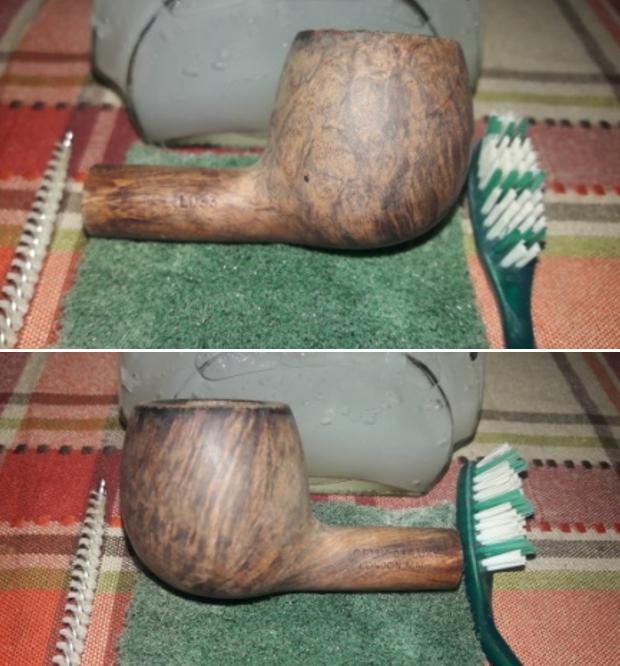
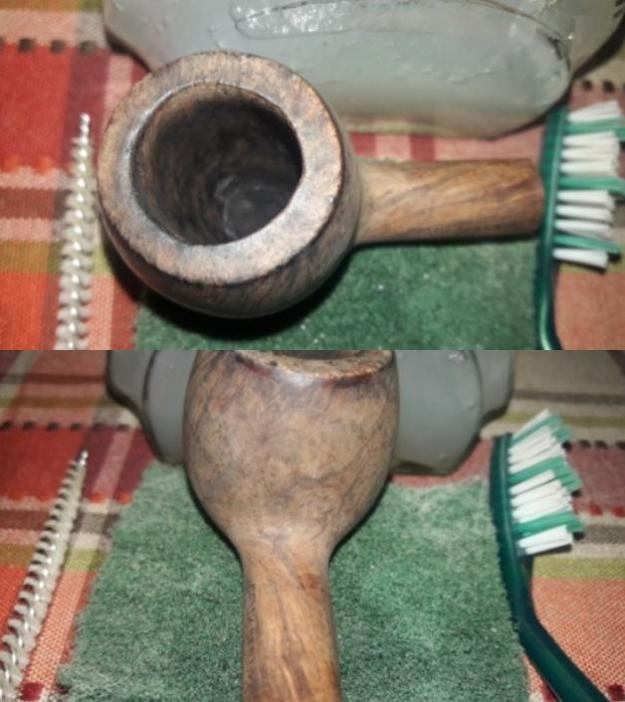
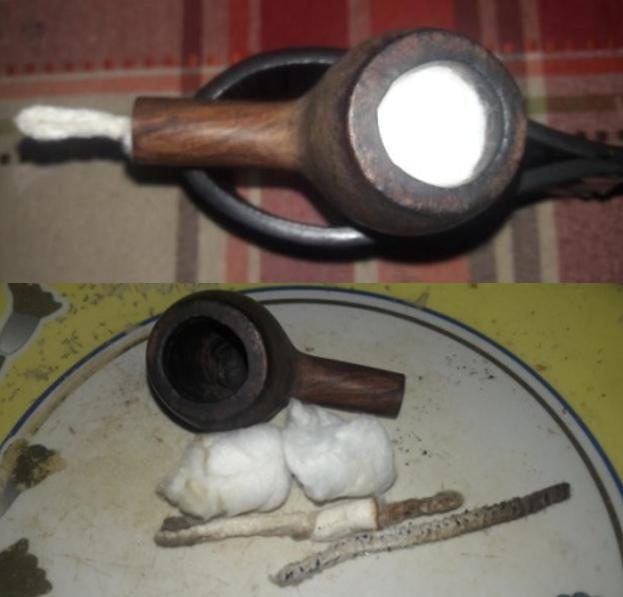
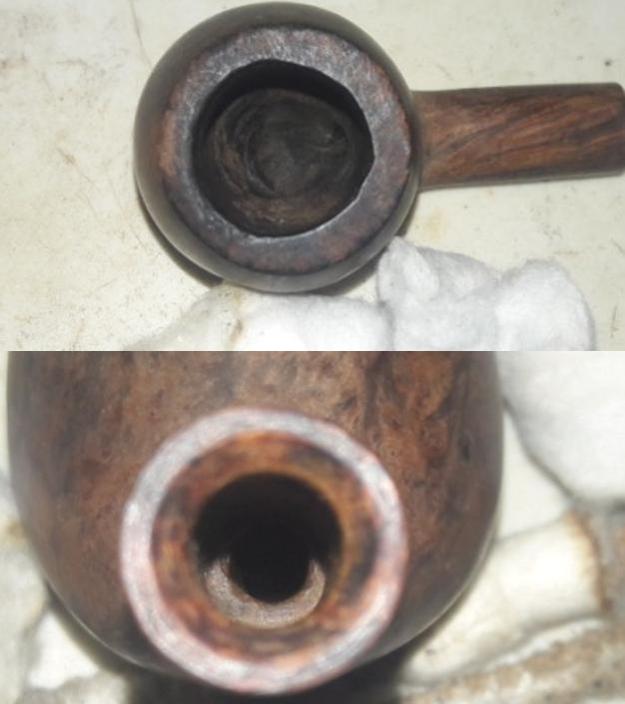
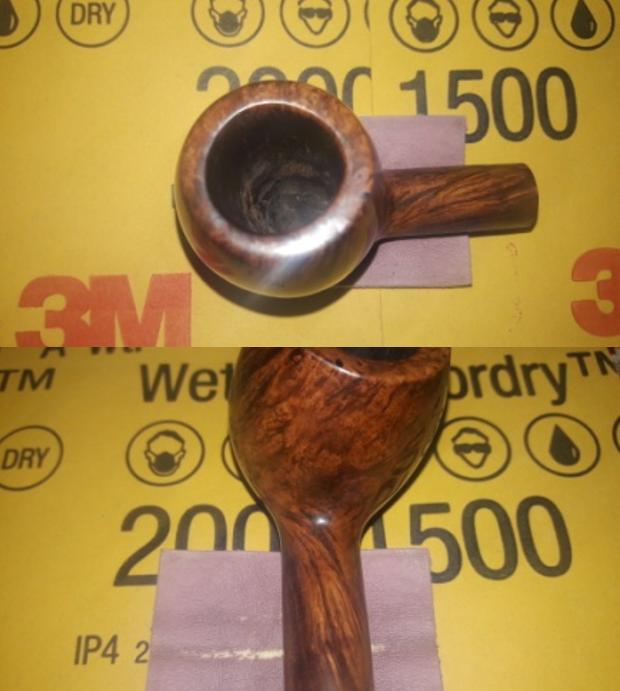
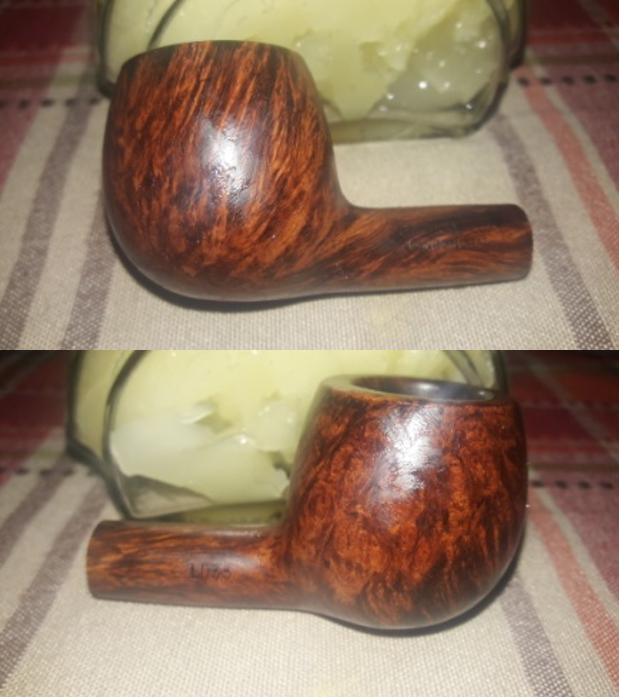
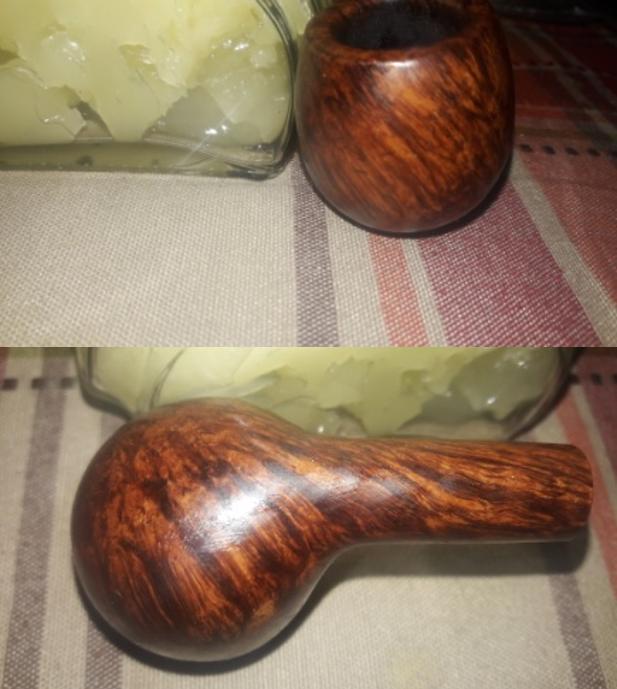
Big thank you to all the readers who have joined me on this path by reading this write up as I restored and completed this project.
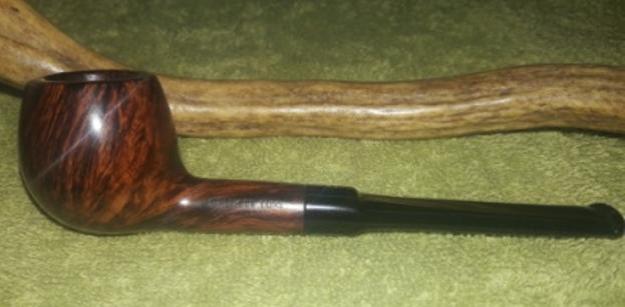
What an interesting Sandblast Butz-Choquin 2nd Generation A Metz Origine


Blog by Steve Laug

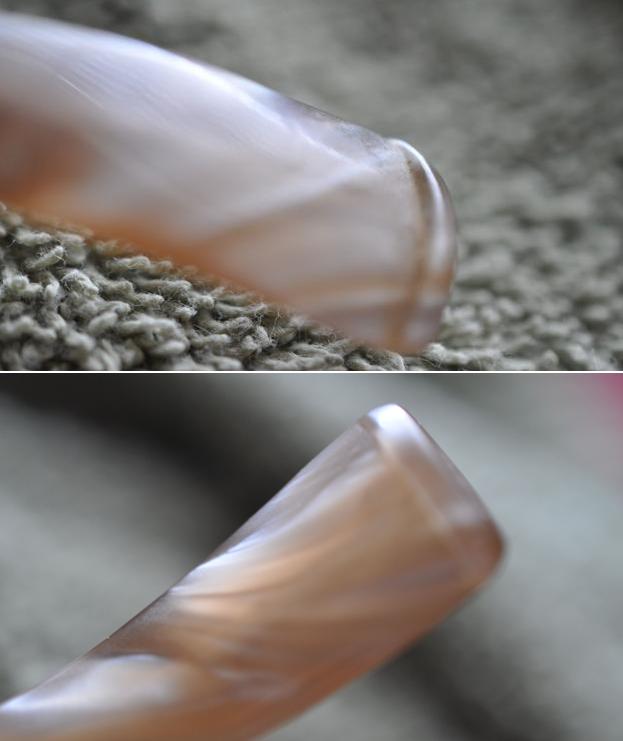
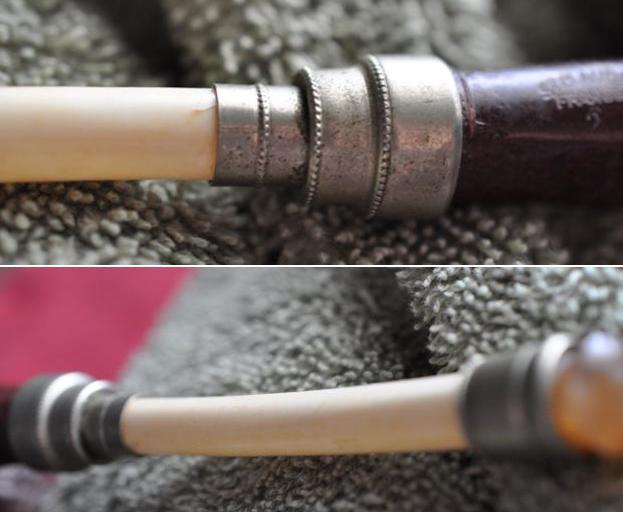
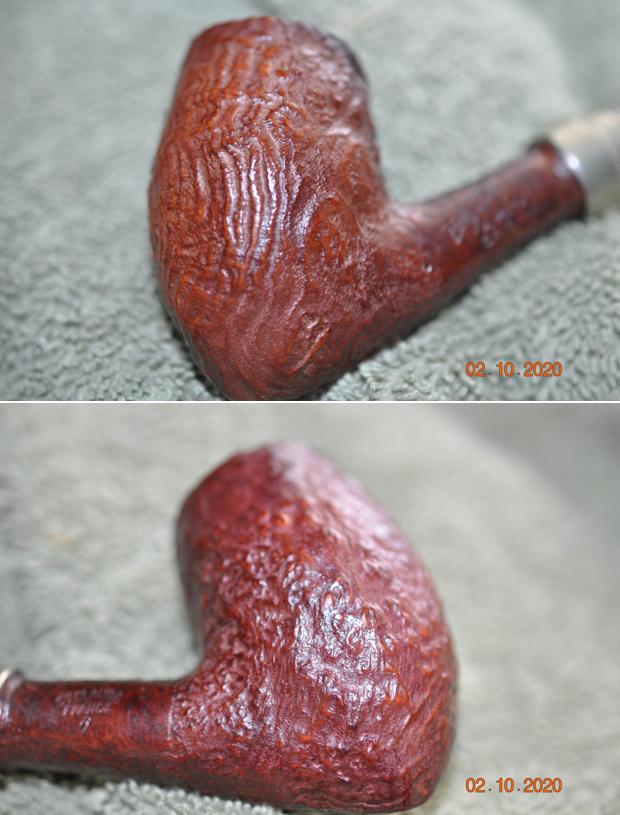
So when this Butz-Choquin A Metz Origine sandblast showed up in an auction Jeff was watching we went for it and picked it up. It was purchased late in 2020 from an online auction in Bloomingdale, New York, USA. I have worked on the older Origine and also one of these newer ones. While the 1858 Origine had an albatross wing bone for the shank extension the new one had a shorter acrylic look alike. The other one I had worked on was a smooth finished pipe while this one is sandblasted. The shape of the bowl is the same but the 1858 version’s horn stem was replaced by an acrylic stem that was nowhere near as elegant as the first. The pipe was in overall good condition. It is stamped on the left side of the shank and reads Butz-Choquin at an angle over A Metz over Origine. On the right side of the shank it is stamped St. Claude France over the number 2. The sandblast  finish was dull and lifeless and a little dirty from sitting around. There was a thin cake in the bowl and a light overflow of lava on the rim top toward the back. There also appears to be some burn/charring damage on the inner edge in the same area. The acrylic shank extension had come loose from the metal end cap that fit in the shank. The silver (polished nickel) that caps the shank and the faux “bone” extension was tarnished but in good condition. The stem was amazingly clean with just some tooth chatter on both sides near the stem. Jeff took the previous and the following photos before he started his cleanup work on the pipe. Jeff took close-up photos of the bowl and rim top from various angles to capture the condition of the bowl and rim top edges. You can see the darkening around the inner edge of the rim and the top at the back of the bowl. The next photos of the stem show the general condition of the stem and angle of the stem. It is very similar to the shape of the original 1858 horn stem. The next photos show the metal end caps on the shank extension. The end that fits in the end of the shank is stuck in the shank and the acrylic extension was loose. The other end is fitted with the stem that was not able to be removed.He took photos of the sides and heel of the sandblast bowl to show condition of the briar. You can see the swirls of grain in the blast on the sides of the bowl.The stamping is very clear on both sides of the pipe. The next two photos confirm what I wrote about the stamping above.I had written a previous blog on a restoration of a second generation Butz-Choquini A Metz Origine (https://rebornpipes.com/2020/04/13/new-life-for-a-second-generation-butz-choquin-a-metz-origine/). It was a smooth briar pipe but the information that I included was helpful and applicable. I am including some of that below.

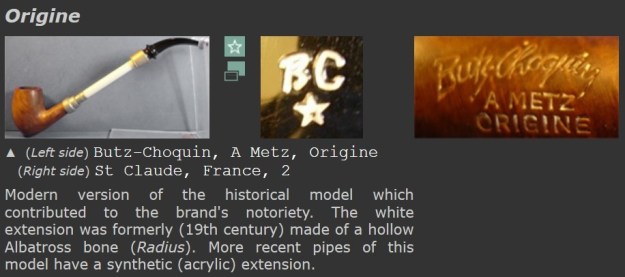
I turned to Pipephil (www.pipephil.eu/logos/en/logo-butzchoquin.html) to get a bit of background on the second or the modern version of the Origine pipe. I have included a screen capture of the pertinent section below.Now it was time to look at it up close and personal. Jeff had great job in cleaning up this Origine. He had reamed the bowl with a PipNet Pipe Reamer and cleaned up the remnants with a Savinelli Fitsall Pipe Knife. He took the cake back to bare briar so we could check the walls for damage and also see the extent of the burn damage on the back of the inner edge of the rim. He scrubbed the exterior of the bowl with Murphy’s Oil Soap and a tooth brush to remove the grime on the bowl and rim and was able to remove much of the grime and dirt. He cleaned out the interior of the bowl and shank with pipe cleaners, cotton swabs and alcohol until they came out clean. The rim top looked much better when you compare it with where it started. The damaged area is very clear now and the extent of the damage was clear. He cleaned the stem with Soft Scrub to remove the grime on the exterior and cleaned out the airway with alcohol, cotton swabs and pipe cleaners. I took some photos of the pipe as I saw it. To show how clean the rim top and stem really was I took a close-up photo of the rim and stem. The bowl was clean and cake free. The rim top is quite clean and the damage to the back rim top and inner edge of the bowl is clear. The tan/bone coloured acrylic stem looks very good. The surface and the button edge look really good. There are no issues that are there to address. The tarnished silver ends on the shank ends have a rich shine to it now as well.I removed the stem from the bowl and took photos of the parts. The shank extension came apart at the shank end but not at the stem. The metal end on the acrylic shank extension came loose from the extension and was stuck in the shank. The stem was glued to the shank end and unmovable. The pipe looks pretty amazing – kind of a shorter version of the 1858 Origine.I decided to address the shank endcap that was stuck in the shank. I heated it with a Bic lighter and wiggled the end cap. I repeated the process until it finally came loose. Once it was loose I cleaned the inside of the cap and shank extension end so that I could reglue it.I coated the end of the shank extension with all purpose white glue using a dental spatula. I spread it around with my fingers and pressed the cap on the shank extension. I wiped off the excess of the glue and let it cure and harden. I took photos of the repaired shank extension and have included them below. I cleaned out the shank end with alcohol and cotton swabs to remove the tars and oils that had hardened in the metal end cap locking in the shank cap. I sanded the shank cap with 180 and 220 grit sandpaper to reduce the external diameter of the cap. I needed to reduce it so that it fit in the shank end but did not lock it in place.I checked the fit in the shank and it was smooth and snug. I polished the shank cap with micromesh sanding pads – wet sanding it with 1500-12000 grit sanding pads. I wiped it down after each sanding pad with a damp cloth. At the same time I also polished the acrylic stem to remove the tooth chatter and marks with the micromesh pads. I set the stem and shank extension aside and turned my attention to the damage rim top. I used a set of burrs to replicate the blast pattern on the burn damaged part of the bowl. It took all three burrs to replicate the pattern. Once it was finished I stained the top of the bowl with a Mahogany Stain Pen to match the rest of the bowl.I worked some Before & After Restoration Balm into the surface of the briar of the bowl with my finger tips and a horse hair shoe brush to work it into the grooves of the sandblast. The product is incredible and the way it brings the grain to the fore is unique. It works to clean, protect and invigorate the wood.I am really happy with the way that this Butz-Choquin A. Metz Origine 2 turned out. It really is a great looking pipe with character. The long acrylic shank extension is a unique feature of this pipe and I was able to repair the loose end cap. The blast really came alive with the buffing. The rich brown and mahogany stains gave the grain a sense of depth with the polishing and waxing. The grain really popped. I put the stem back on the bowl and carefully buffed the pipe with Blue Diamond on the buffing wheel using a light touch. I gave the bowl and the stem multiple coats of carnauba wax on the buffing wheel. I buffed the pipe with a clean buffing pad to raise the shine. I hand buffed the pipe with a microfiber cloth to deepen the shine. The finished Butz-Choquin A Metz Origine really is a beauty and feels great in the hand and looks very good. Give the finished pipe a look in the photos below. The dimensions of the pipe are Length: 8 ½ inches, Height: 2 inches, Outside diameter of the bowl: 1 1/8 inches, Chamber diameter: ¾ of an inch. The weight of the pipe is 45 grams/1.59 oz. The pipe will be going on the rebornpipes store soon. It will be in the section on French Pipe Makers if you would like to add it to your collection.Thanks for reading this blog and my reflections on the pipe while I worked on it. It was a fun one to work on!

There is something about this French Made 9465 Liverpool that just grabs me


Blog by Steve Laug

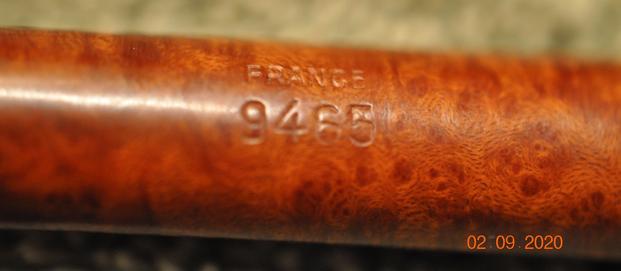
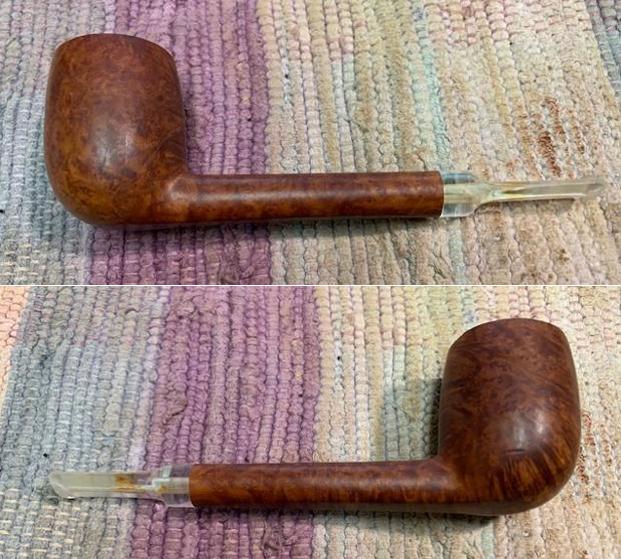
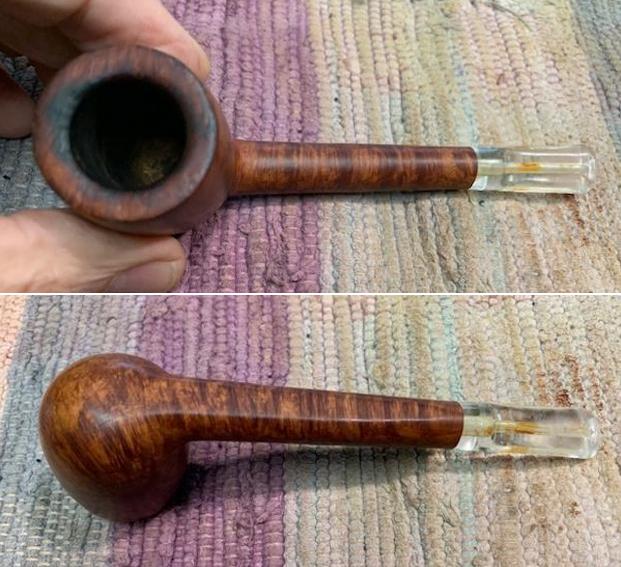
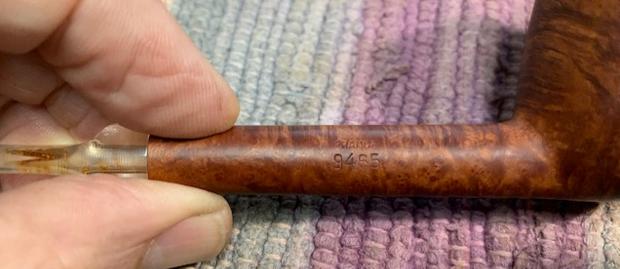
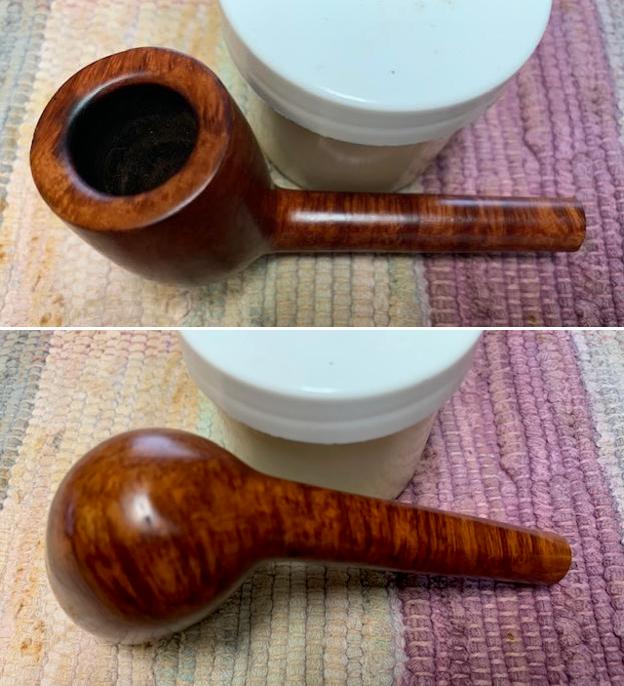
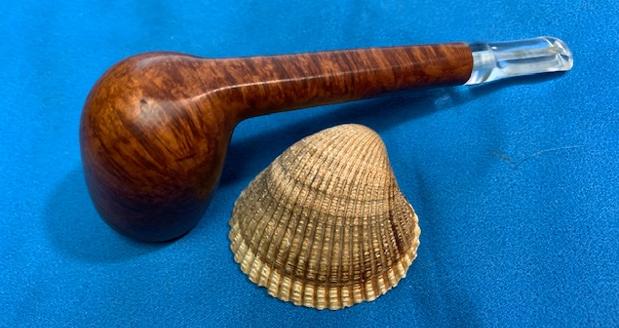
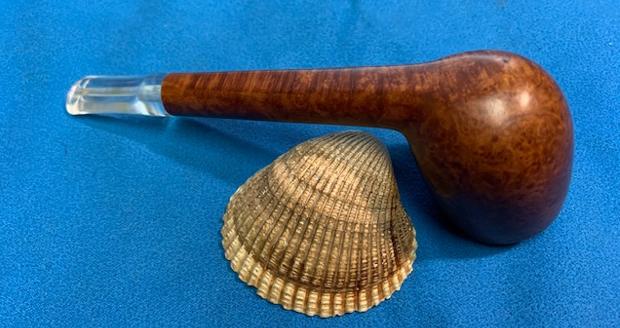
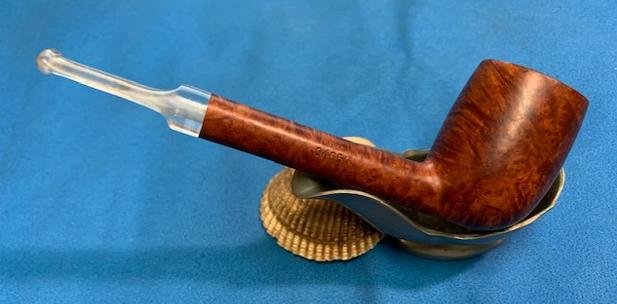
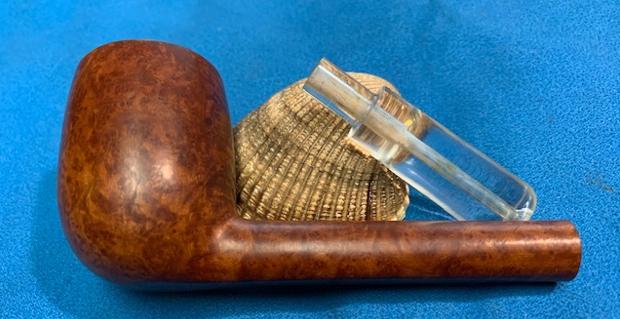
Sometimes when you are pipe hunting there is one that just grabs you. That was the case with this pipe as well as several of the previous pipes. It is a classic Liverpool shaped pipe with a clear Perspex stem. We have picked up a lot of pipes over the years, whether GBD or others that have had either the clear Perspex stem or a clear acrylic stem we obviously are attracted to the unique look of them. We picked this little pipe up from a fellow in Brazil, Indiana, USA early in 2020 and are finally getting around to working on it. The pipe was stamped on the right side of the shank and reads France [over] the shape number 9465. The shape number points to a French Made GBD pipe as does the stem but there is no GBD logo on either the stem of the shank of the pipe. It was in filthy condition. The bowl was thickly caked and there was a thick lava overflow in the rim top. It was easy to assume there was some darkening and burn damage under the grime but the cleaning would reveal the full story. The briar was very dirty with grit and grime ground into the surface. The clear Perspex stem was dirty and had darkening from tobacco stains in the airway from the tenon to the button. There were light deep tooth marks and chatter on the top and the underside of the stem near the button. Jeff took photos of the pipe before he did his clean up on it. Jeff took photos of the rim top and the stem to show the condition of the pipe when we received it. You can see the cake in the bowl and the lava on the rim top. It is hard to know the condition of the rim edges with certainty until the pipe is clean. The stem is Perspex and has staining from the tobacco in the airway in the tenon and stem. There is chatter and light tooth marks on both sides near the button. He took photos of the sides of the bowl and the heel to give an idea of the shape and the condition of the briar around the bowl. It really is a nicely shaped pipe that has classic charm and elegance.The pipe is stamped solely on the right hand side of the shank and does not appear to have any buffed out or partial stamping anywhere else on the pipe. It clearly reads France [over] 9465 as noted above. I am still thinking it is a French GBD but the research that follows will tell.I turned first to Pipedia to read about the time frame when GBD moved from Paris/St. Claude France to England (https://pipedia.org/wiki/GBD). That would help to narrow down the date the pipe was made. I quote the pertinent information from the article below.

There is a very simple explanation for GBD’s program to turn more “British”: GBD became a British company soon after the turn of the century! In 1902 Marechal and Ruchon sold GBD to A. Oppenheimer & Co. in London. Charles Oppenheimer had founded this successful trade business in 1860 as an import-/export house. His brothers David and Adolphe and brother-in-law Louis Adler soon joined him. Adolphe took over when Charles went to Germany as British ambassador. Briar pipes were among the first products traded. The business relation to GBD in Paris began as early as 1870. Being the most important customer in the English speaking world, Oppenheimer & Co. were designated as sole distributor for Great Britain, the USA and Canada in 1897. Especially Adolphe Oppenheimer had a burning interest in the pipe business, and Louis’ son James Adler shared that. He should play the most important role in the amicable merger of GBD. A. Marechal, Ruchon and Cie. in Paris was now Marechal, Ruchon & Co. Ltd. (see Marechal Ruchon & Cie. page) – a British firm with four directors: Adolphe Oppenheimer and James Adler had their seat in the head office in London while Auguste Marechal and Ferdinand Ruchon went on leading the GBD factory in the Rue des Balkan in Paris, which was considerably extended and modernised. Ruchon acted as CEO.

At the same time when the negotiatios with GBD started Oppenheimer also acquired two pipe factories in Saint-Claude: Sina & Cie. and C.J. Verguet Freres. Merging them a huge plant came into being that was thoroughly reconstructed and reorganized. The management was headed by Lucien Verguet. This new Saint-Claude factory was ready to operate in 1906. Beside it’s very own commercial activities in pipe production it’s main task was to supply prefabricated bowls.

Simultaneously Oppenheimer started to build a pipe factory in London. It was opened in 1903, but the forecasts had been over-optimistic for it’s capacity could not be utilized to the full until World War I. Things changed as the French pipe factories lacked more and more workers who were called to the front. In 1916 the ledgers registered that 18,000 of 27,000 dozens bowls manufactured in Saint-Claude were determined via GBD Paris for GBD London. Wherewith London had become the more important location.

After the war, GBD continued production both in London and in Paris. London GBDs mainly went into the national trade and as well into the British Empire and the USA. Paris on the other hand served the French and the other European markets. The location of the factories influenced the GBD history furthermore in the future although later on the products of both countries occasionally were marketed side to side to match special market requests.

Now I knew that it probably came post WWI when the French side of the company served the European Markets. There is no indication of the pipe being made in St. Claude so my thinking it is a French made pipe that at least entered the market through Paris.

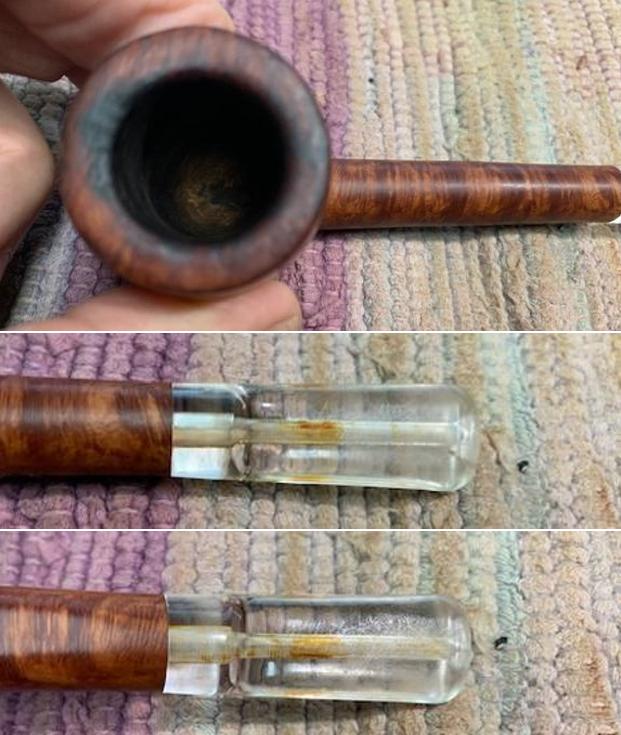
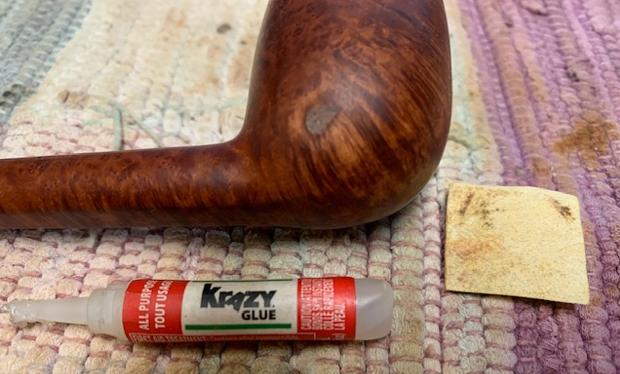
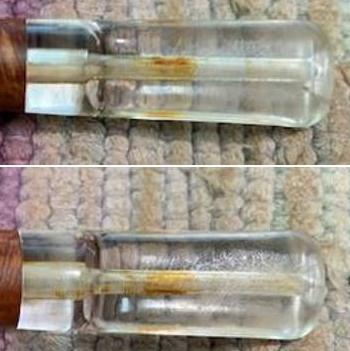
I followed the links on the article to the GBD shape numbers article to link the shape stamp to GBD (https://pipedia.org/wiki/GBD_Shapes/Numbers). Sure enough the 9465 was a GBD shape number and it matches the pipe I am working on. I have included a screen capture of the section on the shape chart below.I have to say that once again I was looking forward to what Jeff had done to this French Made GBD Liverpool pipe when I took it out of the box. It had shown such beauty through the grime so I was quite sure it would be stunning. He reamed the bowl with a PipNet pipe reamer and cleaned the remnants of cake back with a Savinelli Fitsall Pipe Knife.  He scrubbed the bowl with Murphy’s Oil Soap and a tooth brush to remove the grime and oils. He cleaned the internals of the shank with pipe cleaners, cotton swabs and alcohol to remove all of the tars and oils there. He scrubbed the interior and the exterior of the stem with Soft Scrub. He was able to remove much of the tobacco darkening on the inside of the stem. There is still some on the tenon and the middle of the airway that I will need to work on. He rinsed off the cleaner with warm water and wiped the bowl and stem down with a light coat of olive oil to rehydrate both. The pipe really was quite stunning. You can see the burn mark/charring on the front top and inner edge of the bowl but it does not lessen the beauty of the pipe. I took close up photos of the stem and the rim top to show both how clean they were and what needed to be addressed with both. The bowl had some burn damage on the front top and inner edge. The stem looked better but the tobacco staining in the airway and tenon were bothersome to me. The tooth chatter on both sides was still present. I would need to work on those issues with the stem to bring it back.I took another photo of the stamping on the shank side. You can see how clear and readable it is.I decided to addressing the burn damage to the front inner edge and rim top. I used a folded piece of 180 grit sandpaper to smooth out the damage and work on the inner edge bevel to minimize the burn damage.There was a deep gouge on the right side of the bowl. I filled it in with some clear CA glue and when the repair cured I sanded it smooth with 220 grit sandpaper to blend it into the surface. I polished the repair and the rest of the briar with micromesh sanding pads – wet sanding with 1500-12000 grit pads. I wiped the briar down after each pad. The grain began to really come alive through the polishing. I worked some Before & After Restoration Balm into the surface of the briar of the bowl with my finger tips. The product is incredible and the way it brings the grain to the fore is unique. It works to clean, protect and invigorate the wood. I set the bowl aside and turned my attention to the stem. The stem had quite a bit of residual stain in the airway and on the tenon interior. The picture to the left shows the remainder in the airway. I forgot to take a photo of the tenon before I started working on it.
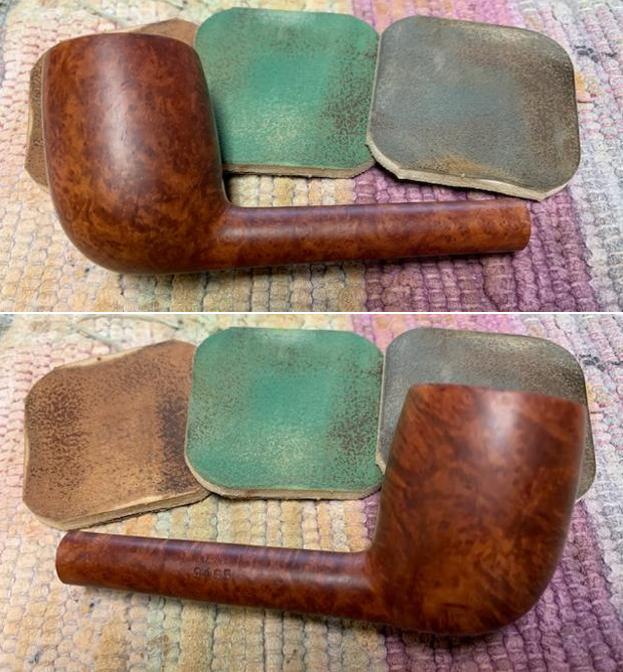
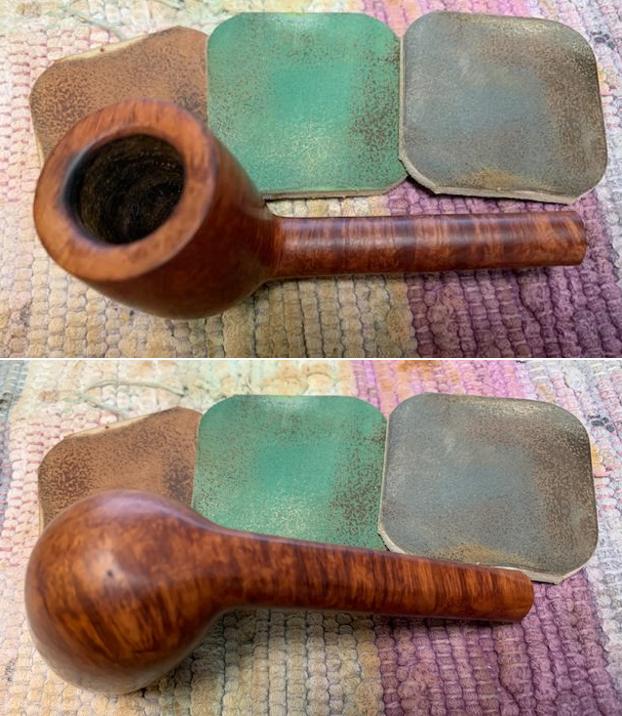
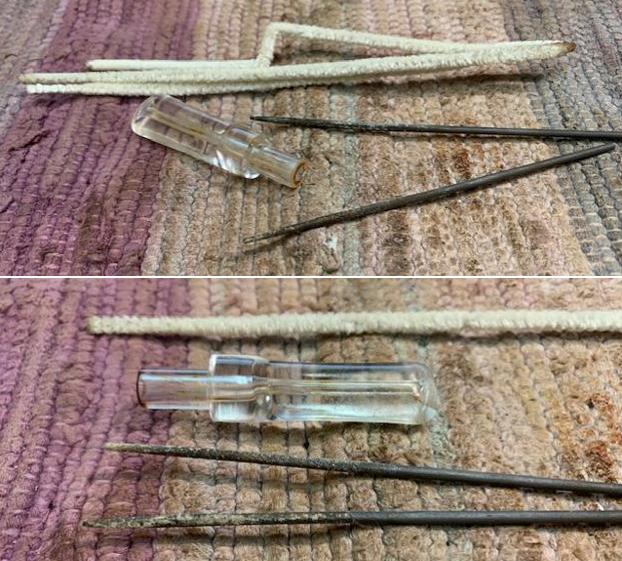
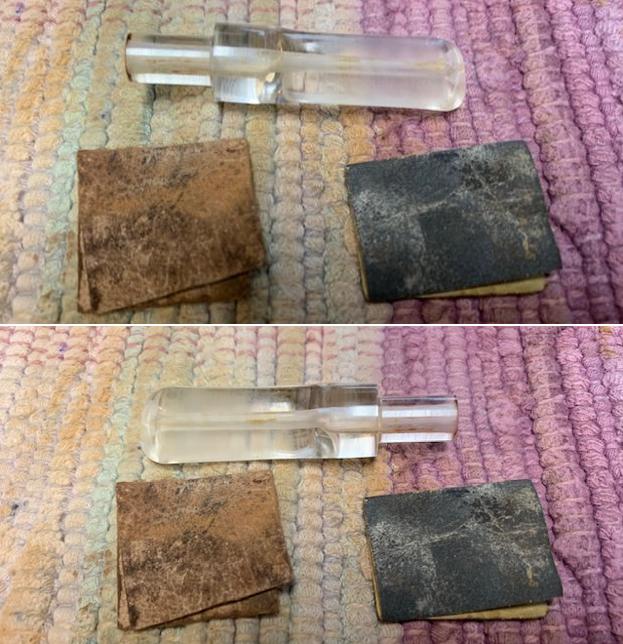
I used small round and oval needle files to work over the inside of the airway. I entered from the tenon end and worked the back and forth and around to remove the remnant and smooth out the walls of the airway. I have found that often the drilling on the stem is rough on the inside and it collects this debris and even if it looks clean there is tar trapped in the valleys of the drilling. The files smoothed it out very well. I followed that with pipe cleaners and warm water to remove the dust from the filing. The photos below show the files and the stem as I worked on it.I sanded out the tooth marks and chatter on the stem surface with 220 grit sandpaper and started the polishing with 400 grit wet dry sandpaper.As I sanded the stem I found a tooth mark mid stem on the underside. I filled it in with clear CA glue and when it cured sanded it smooth with 220 and 400 grit sandpaper. Once it was polished it would blend in perfectly.I polished the stem with micromesh sanding pads – wet sanding it 1500-12000 pads. I wiped it down with Obsidian Oil after each pad to protect it and preserve it. I polished it with Before After Pipe Polish – both Fine and Extra Fine. I finished the polishing with a final coat of Obsidian Oil. I am really happy with the way that this GBD French Made Liverpool 9465 turned out. It really is a great looking pipe with character. The Perspex mouthpiece is a unique feature of this pipe and I was able to remove much of the staining on the inside of the airway. The grain really came alive with the buffing. The rich brown stains of the finish gave the grain a sense of depth with the polishing and waxing. The grain really popped. I put the stem back on the bowl and carefully buffed the pipe with Blue Diamond on the buffing wheel using a light touch. I gave the bowl and the stem multiple coats of carnauba wax on the buffing wheel. I buffed the pipe with a clean buffing pad to raise the shine. I hand buffed the pipe with a microfiber cloth to deepen the shine. The finished GBD Made Liverpool really is a beauty and feels great in the hand and looks very good. Give the finished pipe a look in the photos below. The dimensions of the pipe are Length: 5 ¼ inches, Height: 1 ¾ inches, Outside diameter of the bowl: 1 ¼ inches, Chamber diameter: ¾ of an inch. The weight of the pipe is 33 grams/1.16 oz. The pipe will be going on the rebornpipes store soon. It will be in the section on French Pipe Makers if you would like to add it to your collection.Thanks for reading this blog and my reflections on the pipe while I worked on it. It was a fun one to work on!
This Beautiful Shaped Sandblast Rhodo-Horn 66 by W.O. Larsen Really is Stunning


Blog by Steve Laug

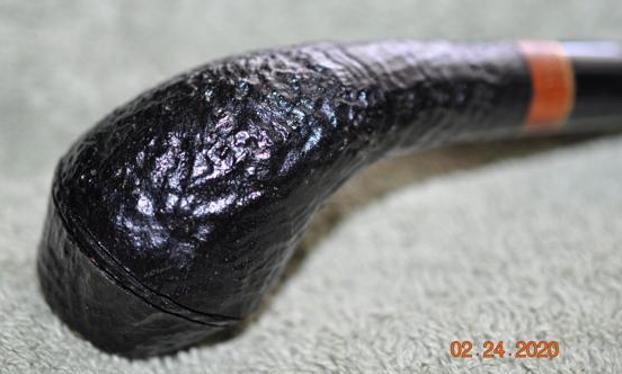
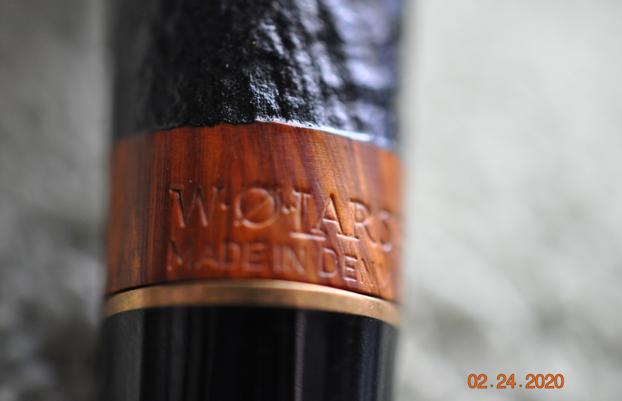
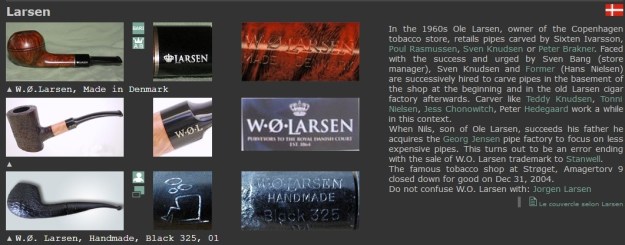
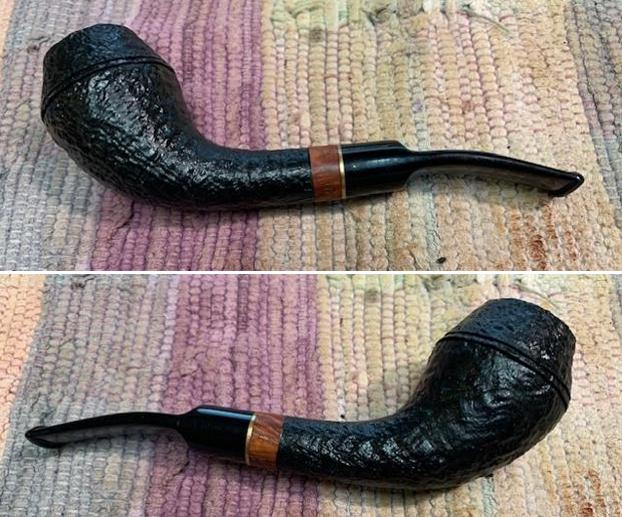
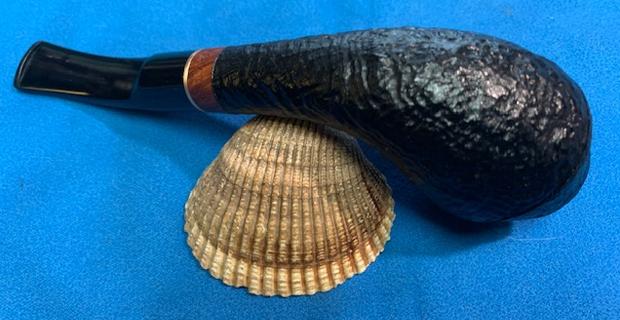
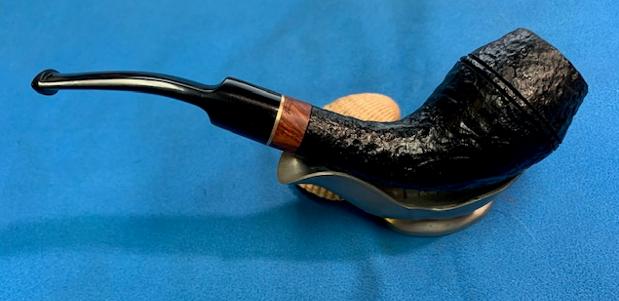
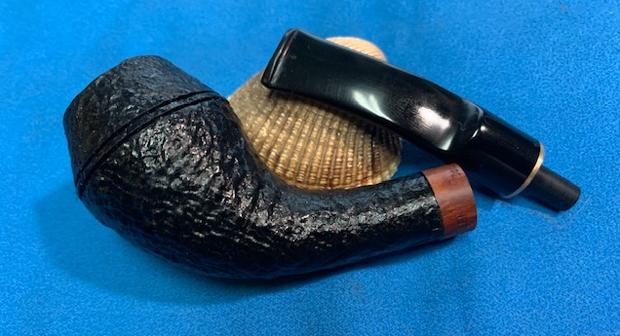
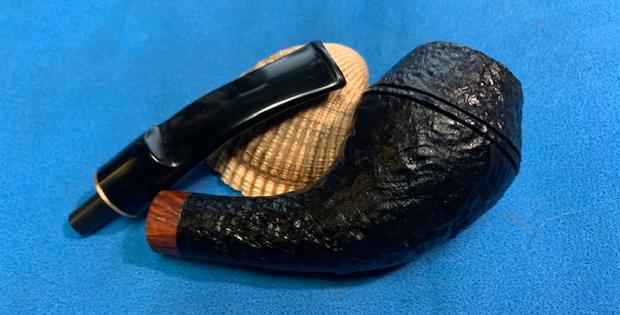
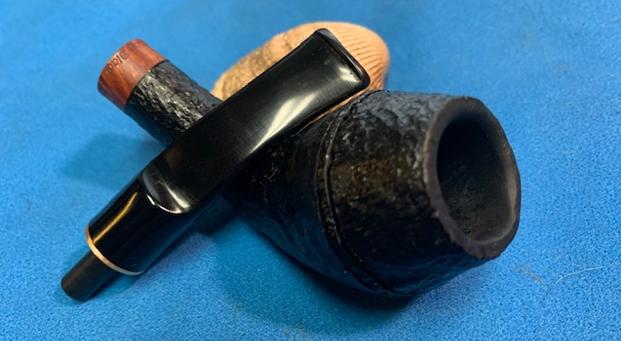
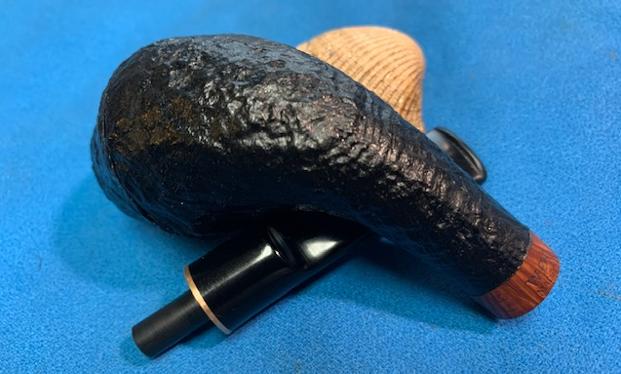
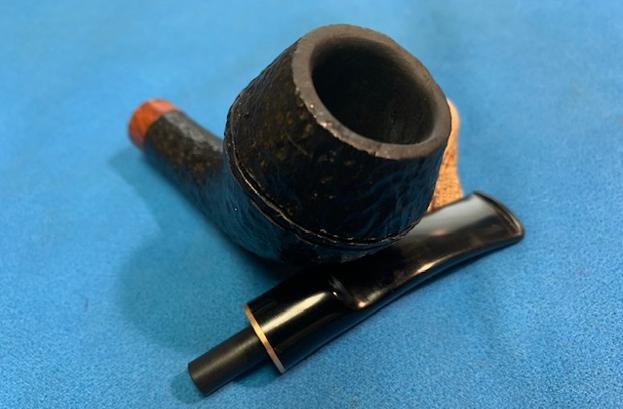
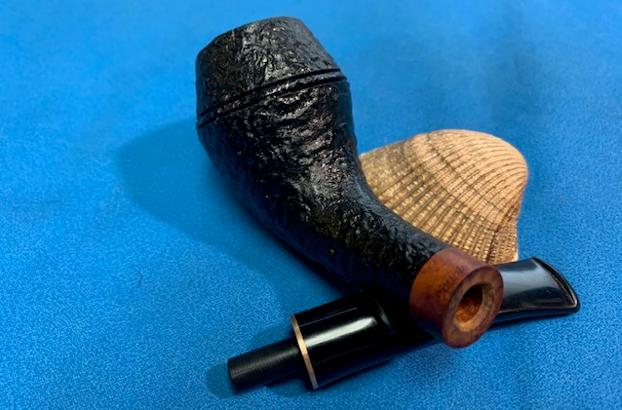
Sometimes when you are pipe hunting there is one that just grabs you. That was the case with this interestingly shaped W.O. Larsen Sandblast. It is kind of a cross between a Rhodesian with the twin rings around the rim cap and the flow and shape of a horn. Neither Jeff nor I had seen a Larsen like this one before. We picked it up from an auction early in 2020 in Huntington Station, New York, USA. The pipe was stamped on the around the smooth end of the shank and read W.O. Larsen [over] Made in Denmark followed by Double Black followed by the shape number 66. The pipe itself was in filthy condition. The bowl was thickly caked and there was a thick lava overflow in the sandblasted rim top. The briar was very dirty with grit and grime ground into the surface. The acrylic stem was dirty had deep tooth marks on the top of the stem and chatter on the underside. There was not a logo or mark on the stem. Jeff took photos of the pipe before he did his clean up on it. Jeff took photos of the rim top and the stem to show the condition of the pipe when we received it. You can see the cake in the bowl and the lava in the sandblast on the rim top. It is hard to know the condition of the rim edges with certainty until the pipe is clean. The stem is acrylic and has a lot of chatter and a few deep tooth marks on both sides near the button.He took photos of the sides of the bowl and the heel to give an idea of the shape and the condition of the briar around the bowl. It really is a nicely shaped pipe that has charm and elegance. The next photos Jeff took show the stamping around the smooth briar on the shank end. It is clear and readable as noted above. I refreshed my memory about the pipes coming out of Ole Larsen’s Copenhagen tobacco shop. I knew that many famous Danish Carvers started their careers carving for the shop. I turned first to the Pipephil website to get and over view of the brand (http://www.pipephil.eu/logos/en/logo-l2.html). I did a screen capture of the section on the site showing a summary of the brand and the typical stamping. I then turned to Pipedia to do a bit more reading about the brand and the various lines making it up. Here is the link (https://pipedia.org/wiki/W.%C3%98._Larsen). The link took me to some pages on the finepipes.com website. Here is the link to the summary of the history of the brand. I quote it in full. I have marked the pertinent section with bold font to mark out the section on the SELECT series (https://www.finepipes.com/pipes/danish/w-o-larsen?sort=20a&page=2&zenid=562ff4b9d62f4f612d0f6ee60cab1224).

W.O. Larsen was one of the most famous tobacco shops in Copenhagen, with a beautiful store located on Copenhagen’s famous “Walking Street.” During the flowering of the Danish pipe in the ’60’s, they first began retailing pipes by such carvers as Sixten Ivarsson, Sven Knudsen, Poul Rasmussen, and Brakner. Urged on by his store manager Sven Bang, the owner, Ole Larsen, decided to begin making pipes in the basement of the shop. He first hired Sven Knudsen as the pipe maker, who soon passed the job to his protégé Hans “Former” Nielsen. Larsen’s fortunes rose along with the rest of the Danish pipe business, and Former was soon managing a group of carvers in the old Larsen cigar factory. Among these were Teddy Knudsen, Tonni Nielsen, Jess Chonowitch, Peter Hedegaard and others, who were responsible for the Select and Straight Grain series before they branched out on their own. After Former left to start Bentley pipes in Switzerland, his duties were taken over by Soren Refbjerg Rasmussen, while the straight grains were made by Teddy’s student Benni Jorgenson. As Ole’s health began to fail, the reins were taken over by his son Nils. Nils became convinced that the way for Larsen to prosper was by entering the low-end market, and acquired the Georg Jensen pipe factory to make an array of less expensive pipes. This turned out to be a fatal error, and Larsen was recently sold to Stanwell, who continue to produce so-called “Larsen” pipes in their huge factory. Thus ended an important part of Danish pipe history.

From all of that information I had learned that the pipe was a Danish Made pipe from the Ole Larsen workshop during the 1960s. It was made with a finish they called the Double Black. It is hard to know who actually carved the pipe when you see the list of carvers noted in the above information but it is a well shaped pipe. Now it was time to work on the pipe.

I have to say I was really looking forward to seeing what Jeff had done to this Danish Made W.O. Larsen Double Black pipe when I took it out of the box. It had shown such beauty through the grime so I was quite sure it would be stunning. He reamed the bowl with a PipNet pipe reamer and cleaned the remnants of cake back with a Savinelli Fitsall Pipe Knife.  He scrubbed the bowl with Murphy’s Oil Soap and a tooth brush to remove the grime and oils. He cleaned the internals of the shank and stem with pipe cleaners, cotton swabs and alcohol to remove all of the tars and oils there. He scrubbed the exterior of the stem with Soft Scrub. He rinsed off the cleaner with warm water and wiped the bowl and stem down with a light coat of olive oil to rehydrate both. The pipe really was quite stunning. You can see the light burn on the front inner edge of the bowl but it does not lessen the beauty of the pipe. I took close up photos of the stem and the rim top to show both how clean they were and what needed to be addresses with both. The bowl had some burn damage on the front inner edge. The stem looked better but the deep tooth marks and chatter were still present. I would need to remove those to bring the stem back.I removed the stem from the bowl and took a photo of the parts to give a sense of the beauty of the pipe. I decided to work on the damage from the burn on the inner edge of the bowl first. I used a folded piece of 220 grit sandpaper to smooth out the damage and give the edge a light bevel to blend it into the rest of the edge.I worked some Before & After Restoration Balm into the surface of the briar with my finger tips and a horse hair shoe brush to get into the crevices of the sandblast. The product is incredible and the way it brings the grain to the fore is unique. It works to clean, protect and invigorate the wood. I set the bowl aside and turned my attention to the stem. I filled in the deep tooth marks on the surface of both sides with clear CA glue. Once it cured I flattened the repairs with a small file. I sanded them smooth with 220 grit sandpaper to blend them into the surface of the briar. I started the polishing of the stem with 400 grit wet dry sandpaper. I polished the stem with micromesh sanding pads – wet sanding it 1500-12000 pads. I wiped it down with Obsidian Oil after each pad to protect it and preserve it. I polished it with Before After Pipe Polish – both Fine and Extra Fine. I finished the polishing with a final coat of Obsidian Oil.
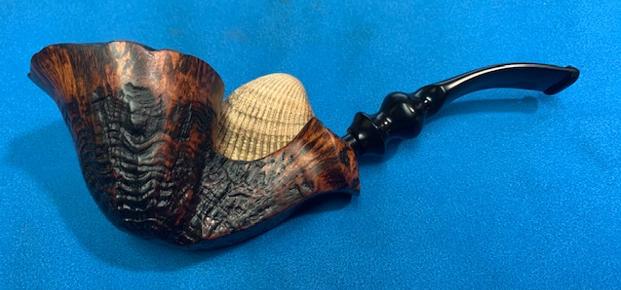
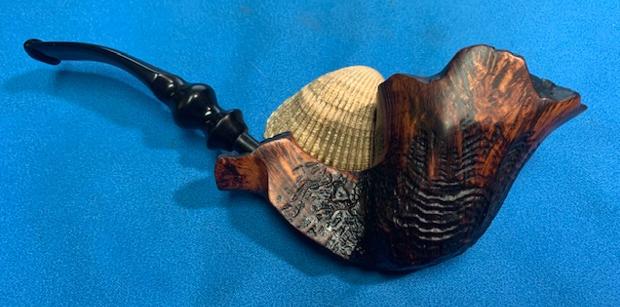
I am really happy with the way that this W.O. Larsen Double Black 66 Horn turned out. It really is a beautiful looking pipe with a great shape and sandblast. The acrylic saddle stem is really nice and the brass ring on the tenon end is a great feature. The blast really came alive with the buffing. The rich brown and black stains of the finish gave the pipe a sense of depth with the polishing and waxing. I put the acrylic stem back on the bowl and carefully buffed the pipe with Blue Diamond on the buffing wheel using a light touch on the briar. I gave the bowl multiple coats of Conservator’s Wax and the stem multiple coats of carnauba wax on the buffing wheel. I buffed the pipe with a clean buffing pad to raise the shine. I hand buffed the pipe with a microfiber cloth to deepen the shine. The finished W.O. Larsen Horn really is a beauty and feels great in the hand and looks very good. Give the finished pipe a look in the photos below. The dimensions of the pipe are Length: 5 ½ inches, Height: 2 inches, Outside diameter of the bowl: 1 ¼ inches, Chamber diameter: ¾ of an inch. The weight of the pipe is 40 grams/1.41 oz. The pipe will be going on the rebornpipes store soon. It will be in the section on Danish Pipe Makers if you would like to add it to your collection.Thanks for reading this blog and my reflections on the pipe while I worked on it. It was a fun one to work on!

A Strangely Unique Standing Churchwarden called a Television Pipe


Blog by Steve Laug

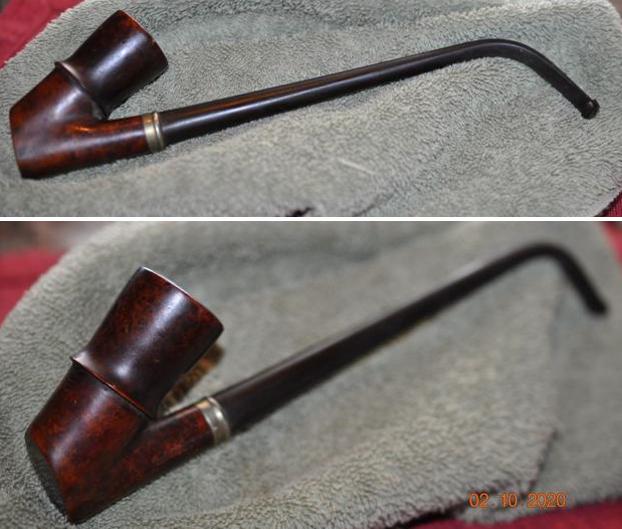
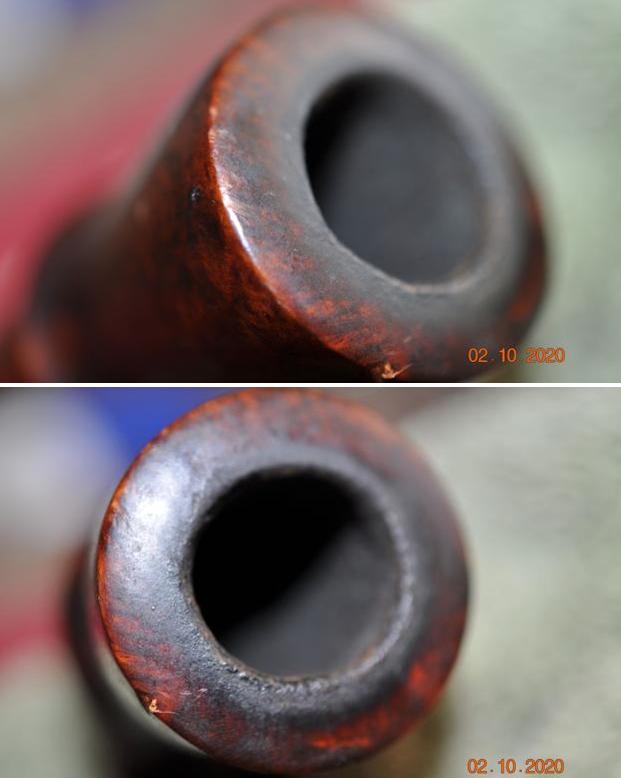
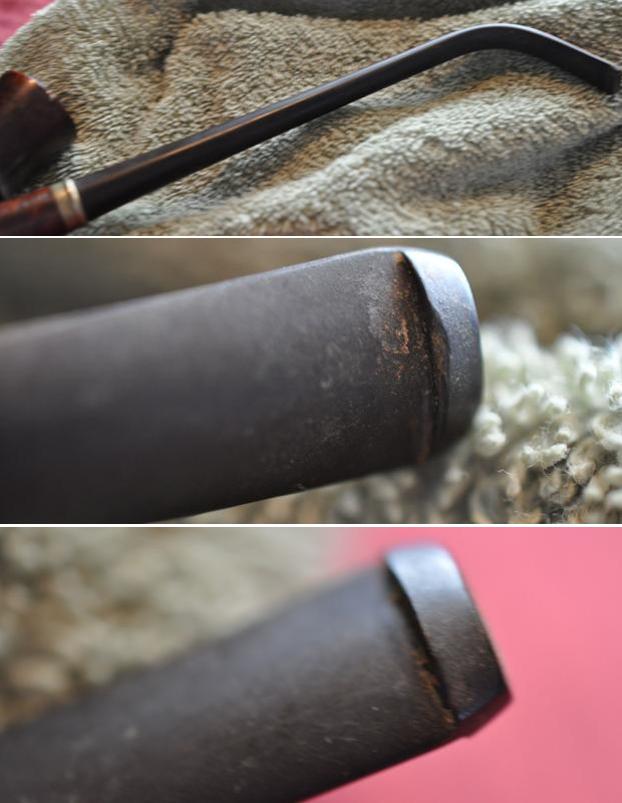
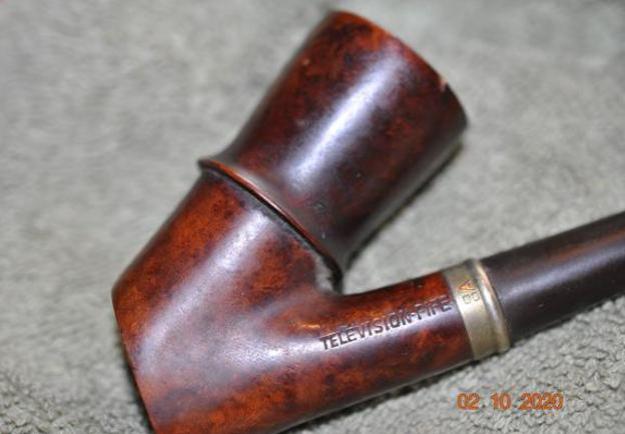
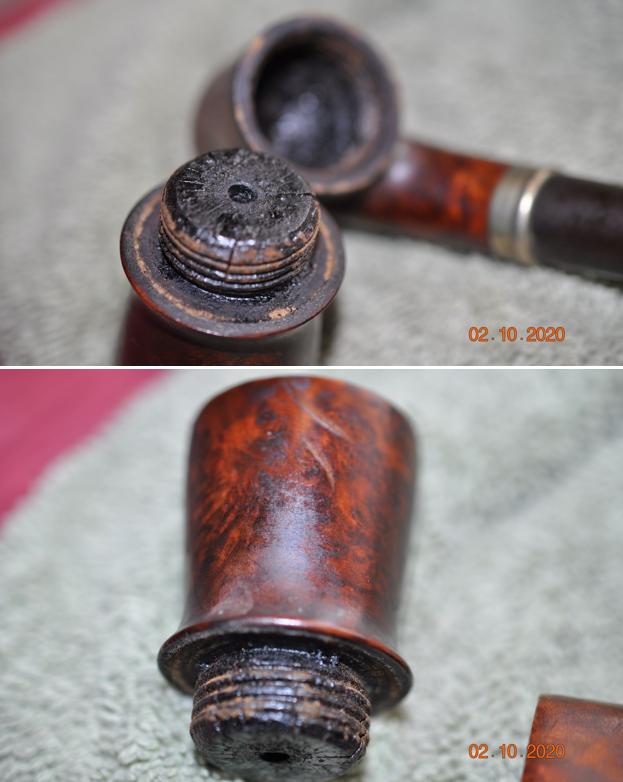
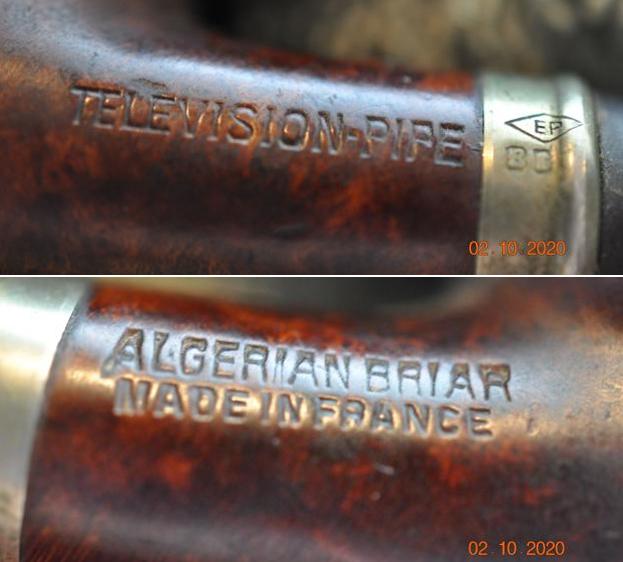
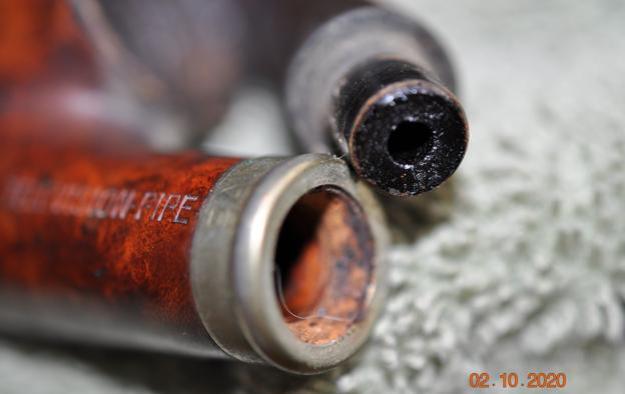
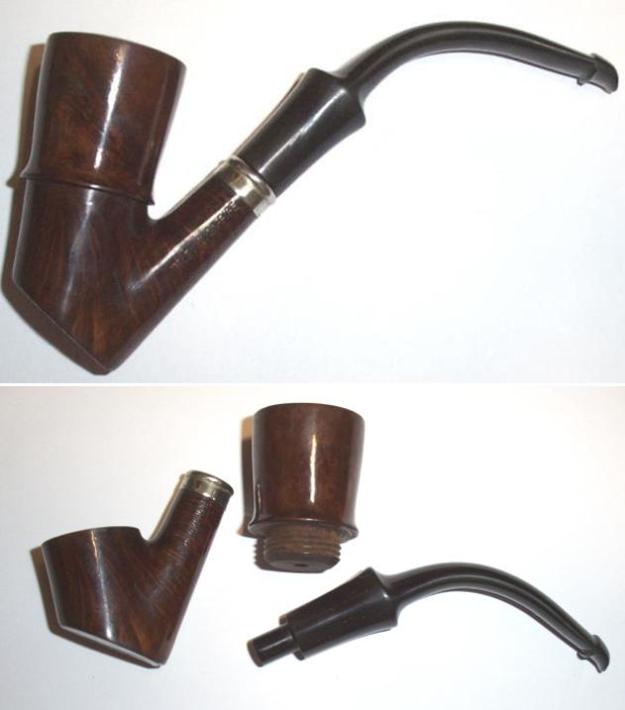
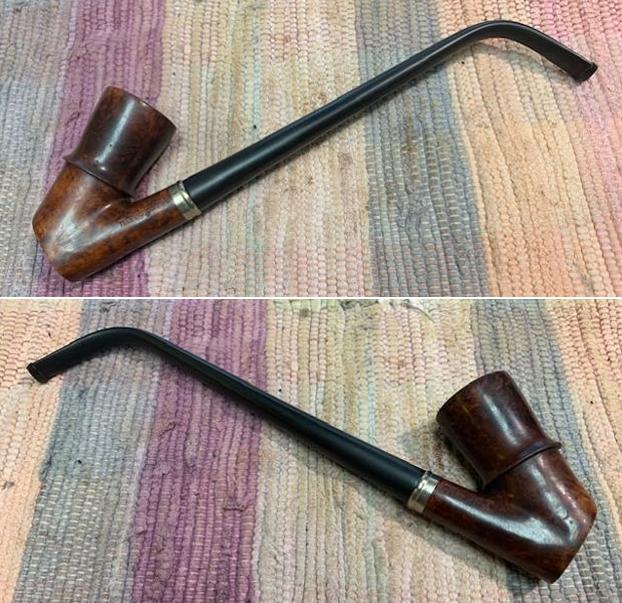
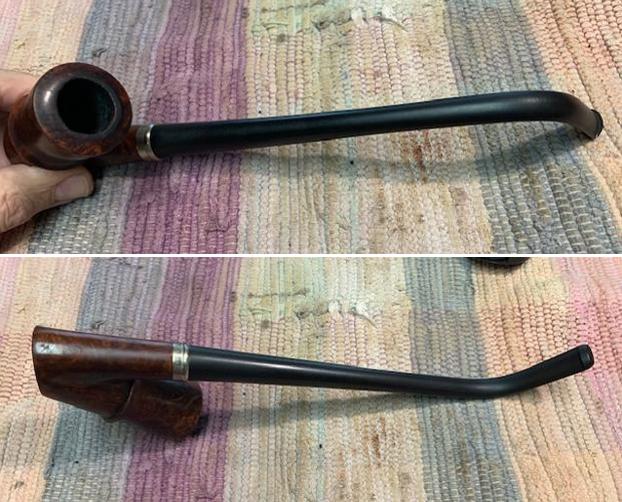
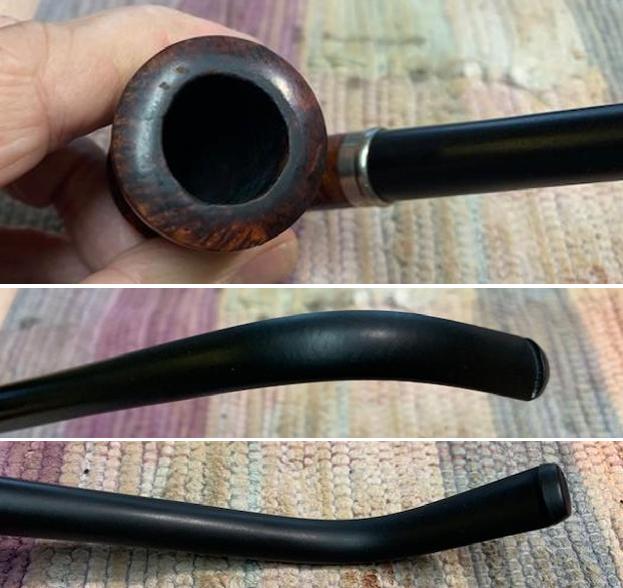
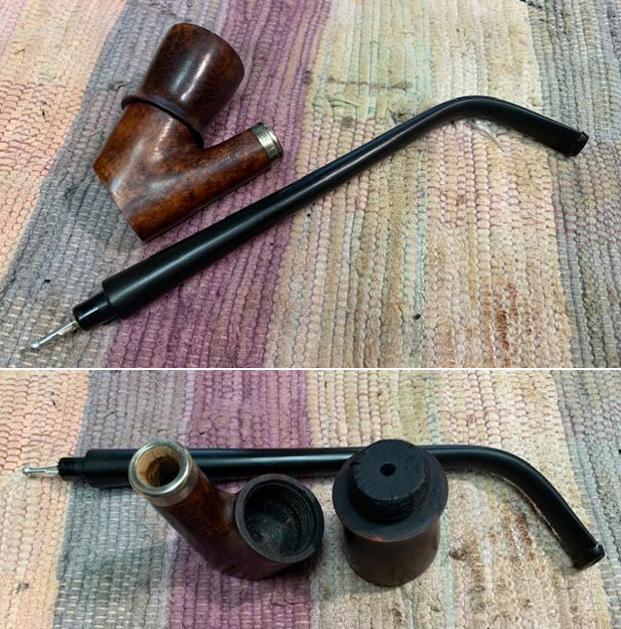
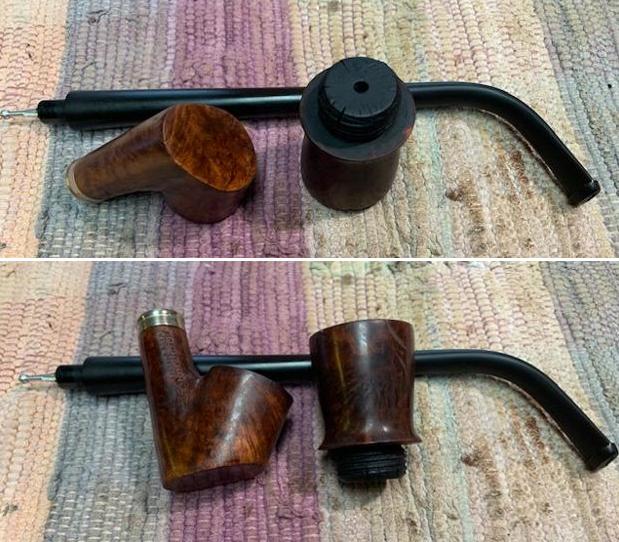
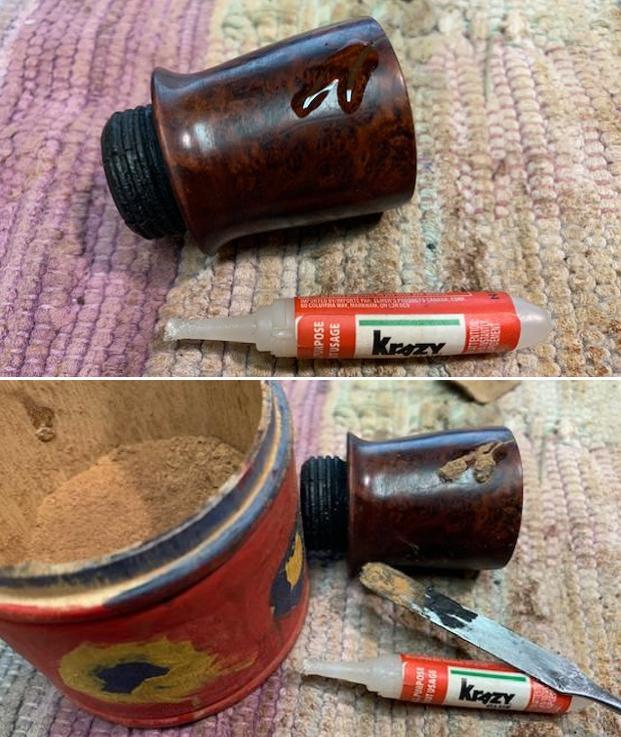
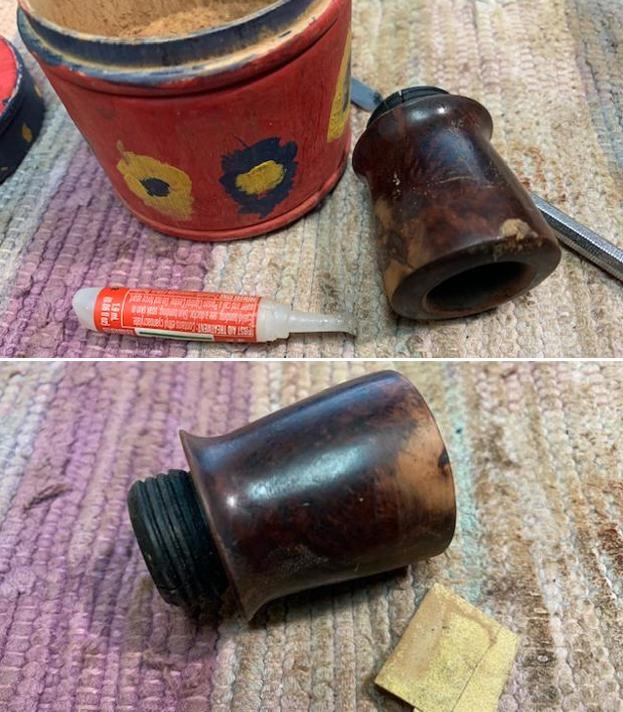
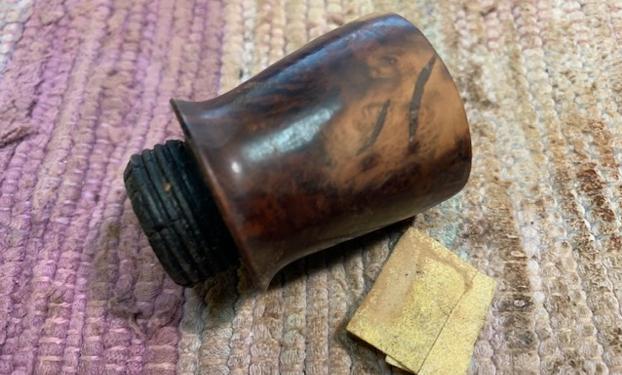
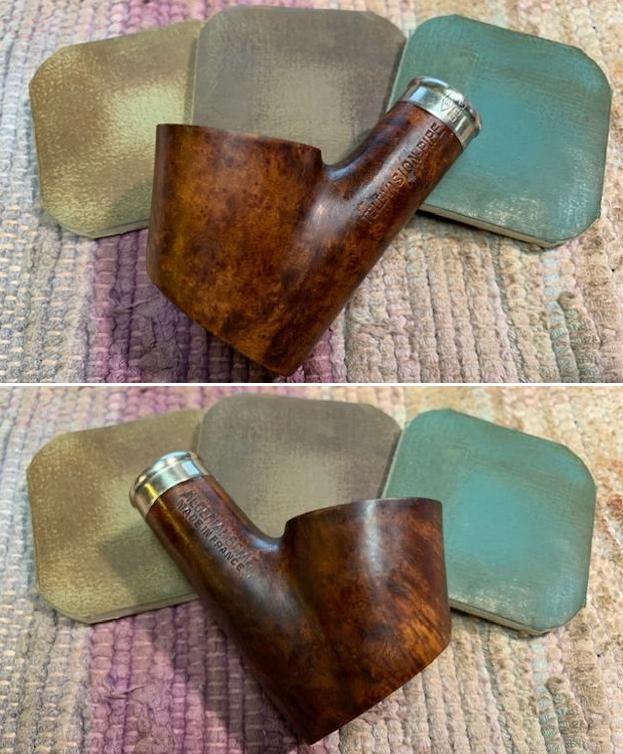
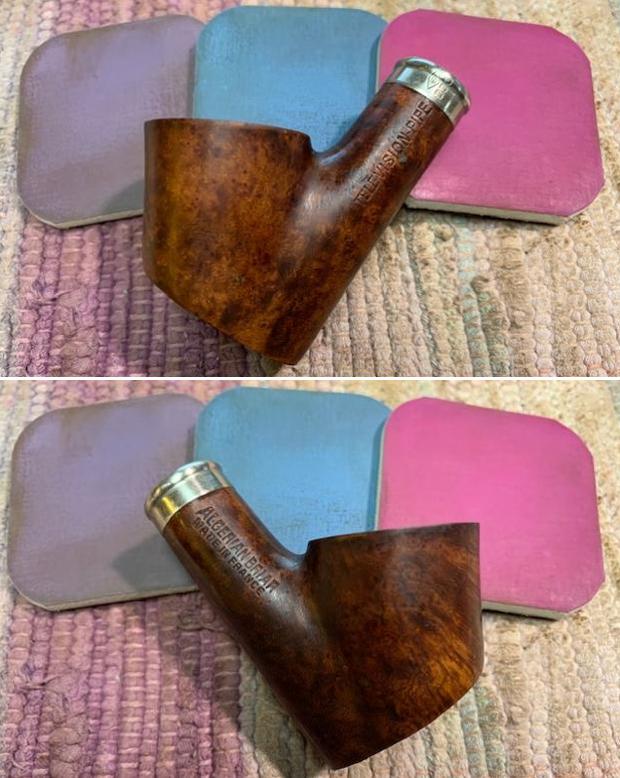
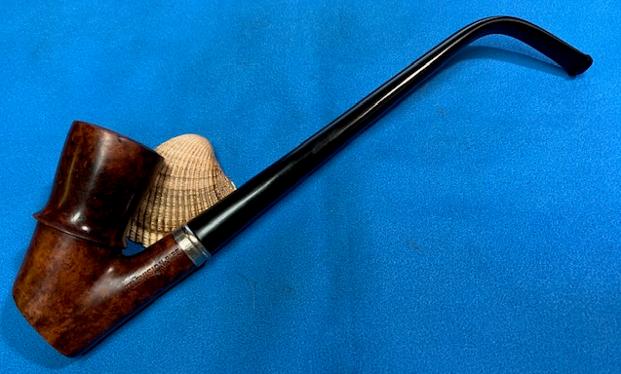
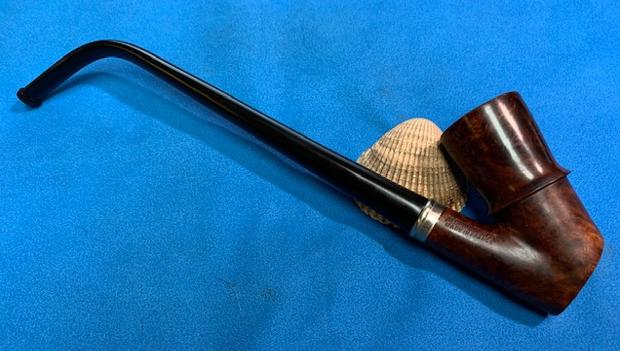
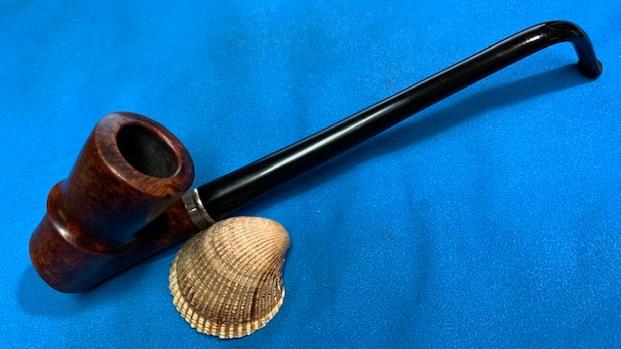
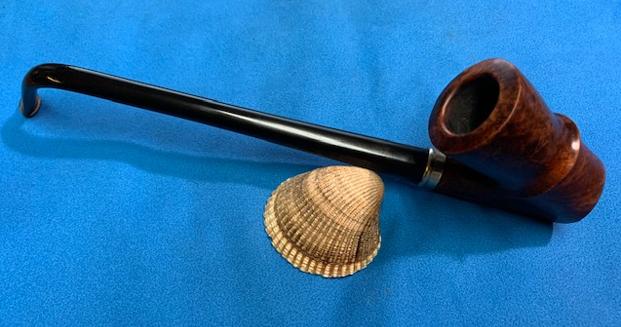
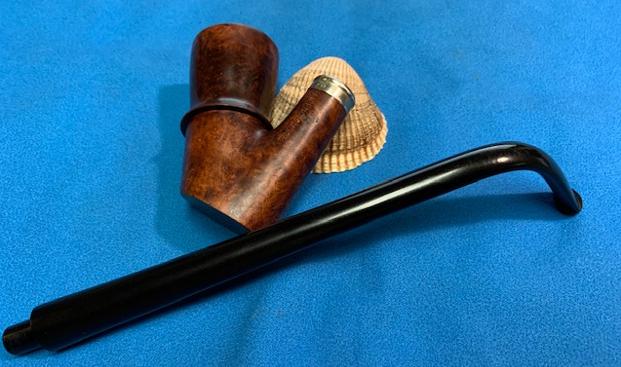
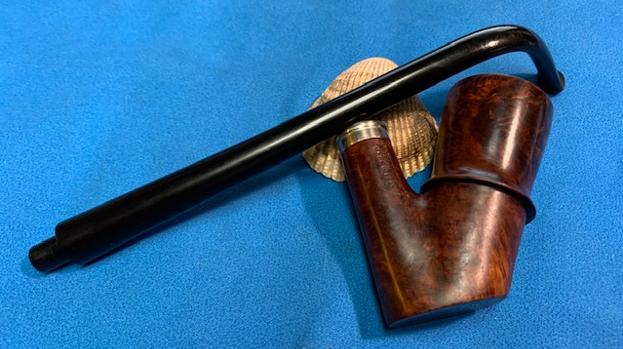
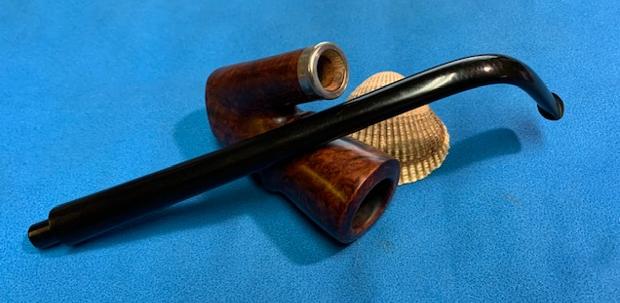
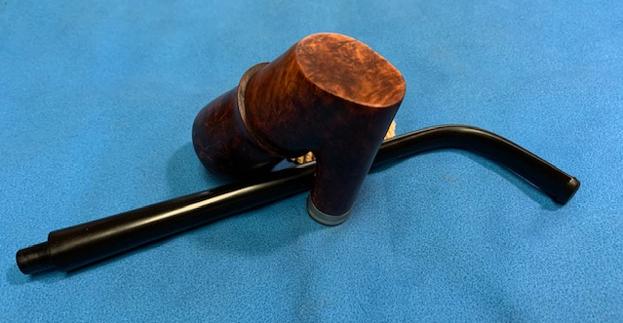
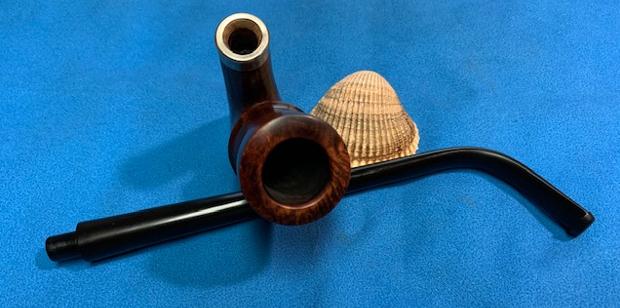
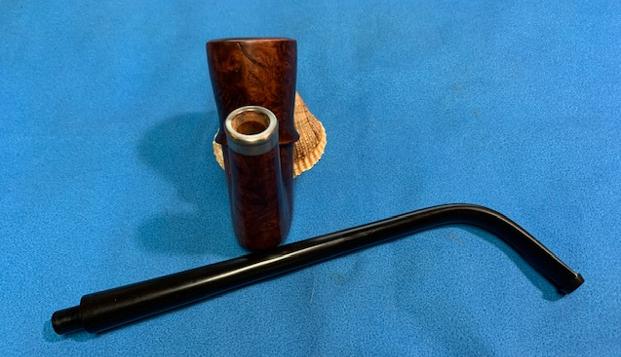
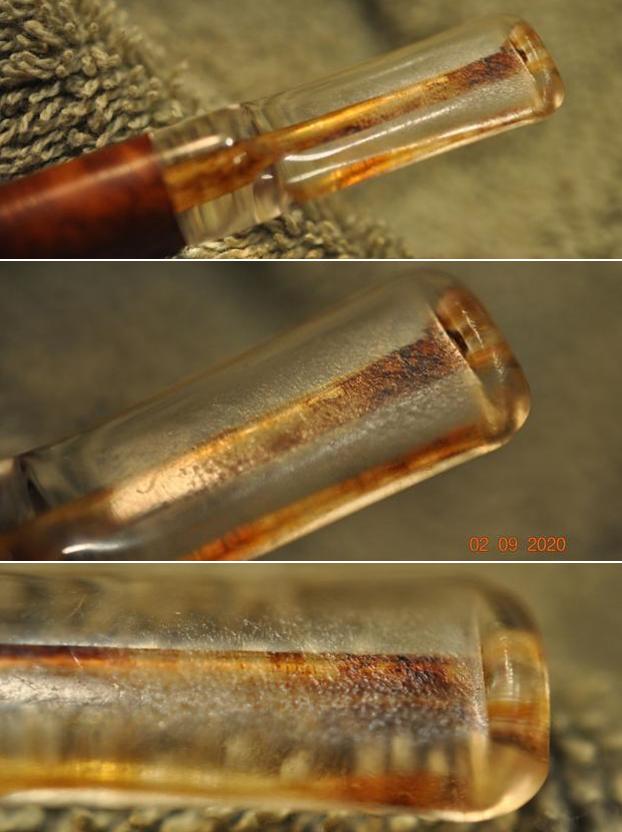
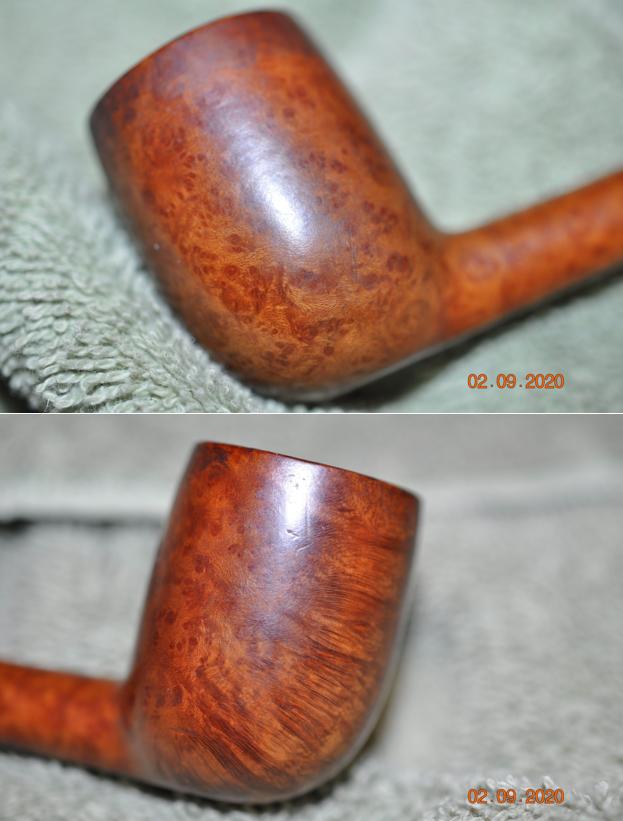
The next pipe on the table is an interesting pipe that caught my attention this morning when I was going through the boxes of pipes I have here awaiting restoration. This pipe was purchased from an online auction early in 2020 from St. Albans, West Virginia, USA. It has the length of a churchwarden and is a two part bowl and base with a tall bent stem. The pipe is a standing pipe that is well balanced and still stands when it is put together. The pipe is stamped on the left side of the shank and read TELEVISION PIPE and on the right side it read Algerian Briar [over] Made in France. There is a metal band/ferrule on the shank that is stamped EP in a diamond which means Electroplated and below that it has some very worn hallmarks. It was extremely dirty with grime and grit ground into the bowl sides. The bowl was heavily caked and there was a thick lava coat on the rim top and edges. The bowl unscrewed from the base which was also thickly caked with tars and oils. The band/ferrule was oxidized as was the vulcanite stem. There were light tooth marks on both sides of the stem ahead of the button. There was a small aluminum stinger in the tenon that was removable. Jeff took photos of the pipe before he started his work on it.He took some photos of the bowl and rim top to show their condition. The cake is thick and there is debris on the walls of the bowl. The rim top has a thick coat of lava and between that and the cake it is hard to know the condition of the rim edges. Clean up will reveal the condition. There are chips and nicks in the outer edge of the bowl. The stem looks pretty good with light tooth marks on both sides. The stem is oxidized and calcified. He took photos of the bowl and base together to show the overall appearance of the pipe. There is a lot of grime around the junction of the bowl and base that can be seen in the photos below. He unscrewed the bowl from the base and took a series of photos to show the condition of the bowl and the base. You can see the thick oils and tars in the threads, on the bottom of the bowl and in the base of the pipe. It is really a mess and will be a major work to clean up. Jeff took photos of the stamping on the sides of the shank and on the electro-plated band/ferrule on the shank.He remove the stem from the base and took a photo of the tenon end and shank to see the built up tars on the tenon and in the inside of the shank. You can also see the tarnish on the band.I looked on both Pipephil’s site and Pipedia to see what I could find out about the brand. There was nothing listed on either site regarding that brand. I turned a site that has been helpful in identifying pipes called Smoking Metal (http://www.smokingmetal.co.uk/pipe.php?page=277). The site shows a short version of this pipe – with a P-lip style stem on the shank rather than a Churchwarden stem. Other than the stem it is the same pipe. Since the information was quite limited on the brand it was time to turn to work on the pipe itself. I have to say that this was another pipe that I was really looking forward to seeing what Jeff had done to it. It is a French Made Algerian Briar Television Pipe that had shown such beauty through the grime that I was quite sure it would be stunning he cleaned it. He reamed the bowl with a PipNet pipe reamer and cleaned the remnants of cake back with a Savinelli Fitsall Pipe Knife.  He scrubbed the bowl and base with Murphy’s Oil Soap and a tooth brush to remove the grime and oils. He cleaned the internals of the base, shank and stem with pipe cleaners, cotton swabs and alcohol to remove all of the tars and oils there. He scrubbed the exterior of the stem with Soft Scrub to remove the oxidation and calcification. He wiped the bowl and stem down with a light coat of olive oil to rehydrate both. The pipe really was quite stunning. You can see the nicks around the bowl and base but they do not lessen the beauty of the pipe.  I took close up photos of the stem and the rim top to show both how clean they were and what needed to be addresses with both. The rim top had some nicks in the top and the inner edge of the bowl was out of round. The stem looked better but the light tooth marks and chatter were still present.I took photos of the cleaned up stamping on sides of the shank. It is very clear and readable.I removed the stem from the shank and took photos to show the overall look of this beautiful pipe. I then unscrewed the bowl from the base and took photos of all of the parts of the pipe. I started my work on this pipe by dealing with the shrunken fills on the bowl sides. I filled them in with clear CA glue and briar dust. Once the repairs cured I sanded them smooth to blend them into the surrounding briar. I polished the briar with micromesh sanding pads – wet sanding with 1500-4000 grit pads. I wiped the briar down after each pad. The grain began to really come alive through the polishing. I took a  break from the polishing process and I stained the sanded areas of the bowl with a Walnut Stain pen to blend them into the surrounding briar.I buffed bowl with Blue Diamond polish and then went back to polishing the bowl with 6000-12000 grit micromesh sanding pads. I repeated the process of polish the base with micromesh sanding pads – wet sanding with 1500-12000 grit pads. I wiped the briar down after each pad. The grain began to really come alive through the polishing. I worked some Before & After Restoration Balm into the surface of the briar of both the bowl and the base with my finger tips. The product is incredible and the way it brings the grain to the fore is unique. It works to clean, protect and invigorate the wood. I put the bowl and base back together again and rubbed them down with the Balm. I buffed the bowl and base with Blue Diamond on the wheel. The finished bowl looked a lot better. I set the bowl aside and turned my attention to the stem. I polished the stem with micromesh sanding pads – wet sanding it 1500-12000 pads. I wiped it down with Obsidian Oil after each pad to protect it and preserve it. I polished it with Before  After Pipe Polish – both Fine and Extra Fine. I finished the polishing with a final coat of Obsidian Oil. I am really happy with the way that this Tall Television Pipe Churchwarden Sitter turned out. It really is a unique looking pipe with character. The long mouthpiece is a unique feature of this pipe and sets it apart. The removable bowl and base work well and the pipe is a beauty. To me it is a great pipe with unique details. The grain really came alive with the buffing. The rich brown and black stains of the finish gave the grain a sense of depth with the polishing and waxing. The grain really popped. I put the vulcanite stem back on the bowl and carefully buffed the pipe with Blue Diamond on the buffing wheel using a light touch on the briar. I gave the bowl and the stem multiple coats of carnauba wax on the buffing wheel. I buffed the pipe with a clean buffing pad to raise the shine. I hand buffed the pipe with a microfiber cloth to deepen the shine. The finished Television Pipe Sitter really is a beauty and feels great in the hand and looks very good. Give the finished pipe a look in the photos below. The dimensions of the pipe are Length: 10 inches, Height: 3 inches, Outside diameter of the bowl: 1 ¼ inches, Chamber diameter: ¾ of an inch. The weight of the pipe is 57 grams/2.01 oz. The pipe will be going on the rebornpipes store soon. It will be in the section on French Pipe Makers if you would like to add it to your collection.Thanks for reading this blog and my reflections on the pipe while I worked on it. It was a fun one to work on!
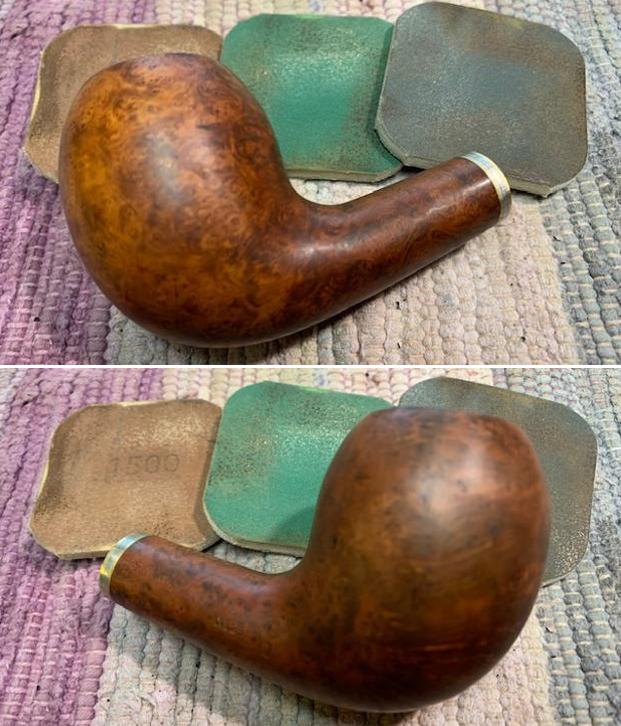
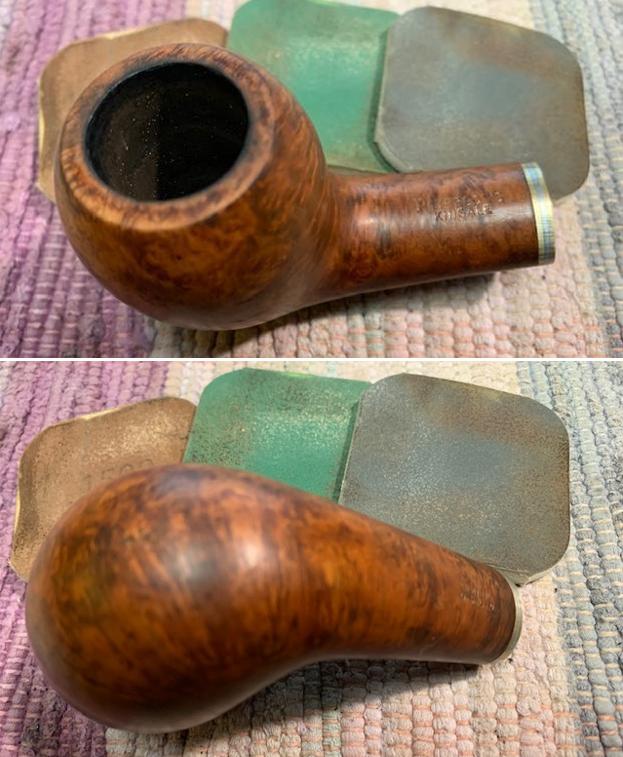
Not sure what to call this strange St. Claude, France GBD Coronet 753


Blog by Steve Laug

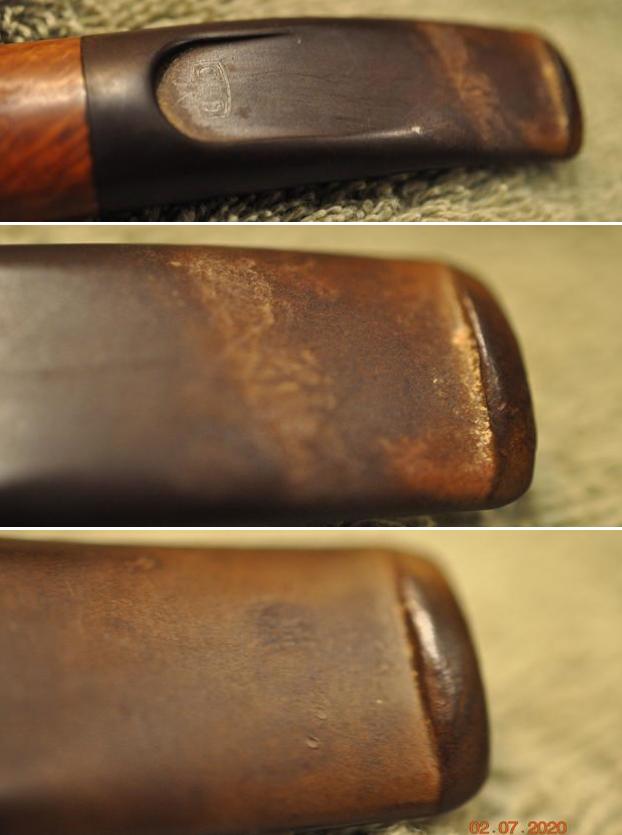
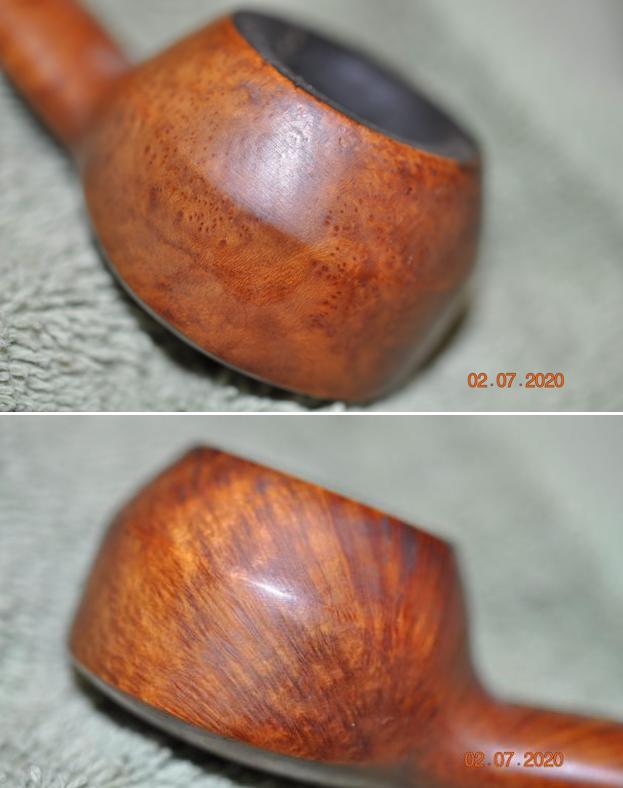
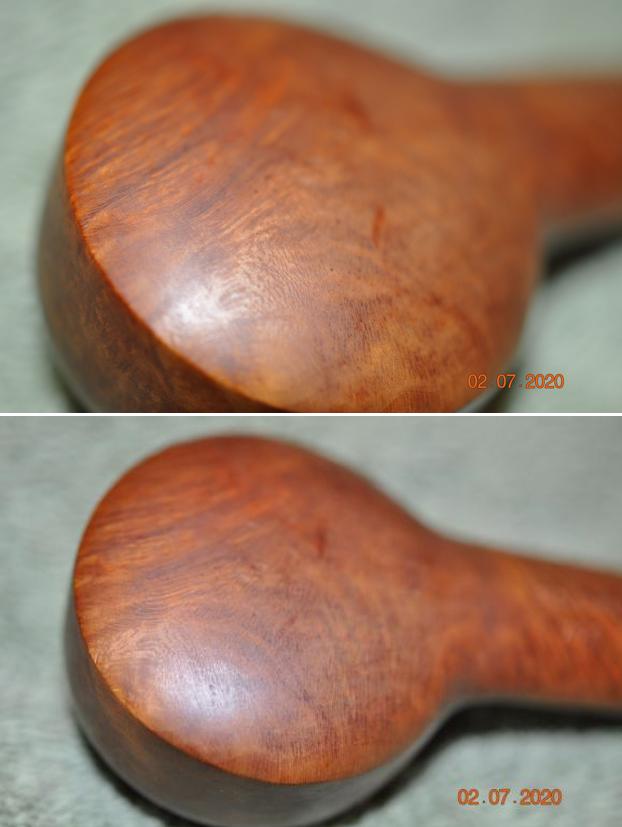
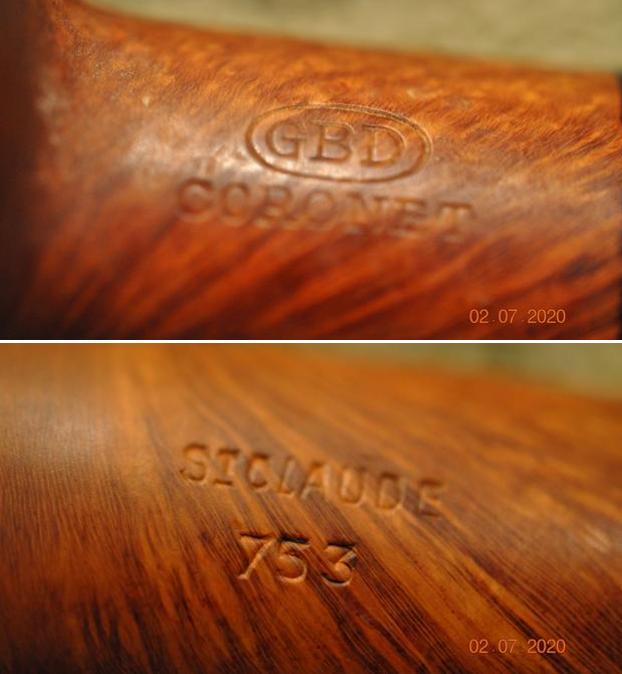
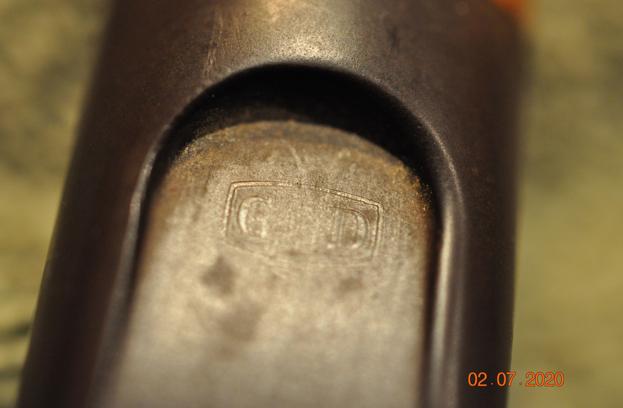
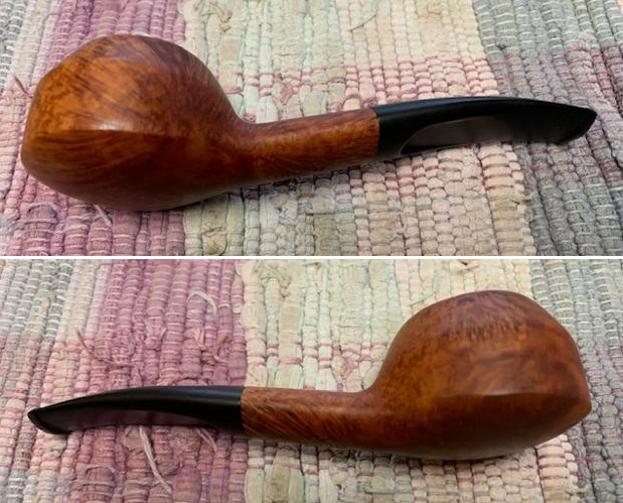
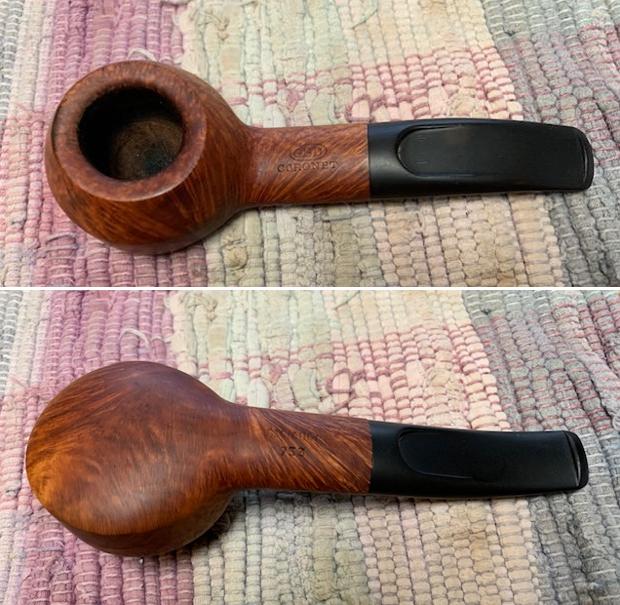
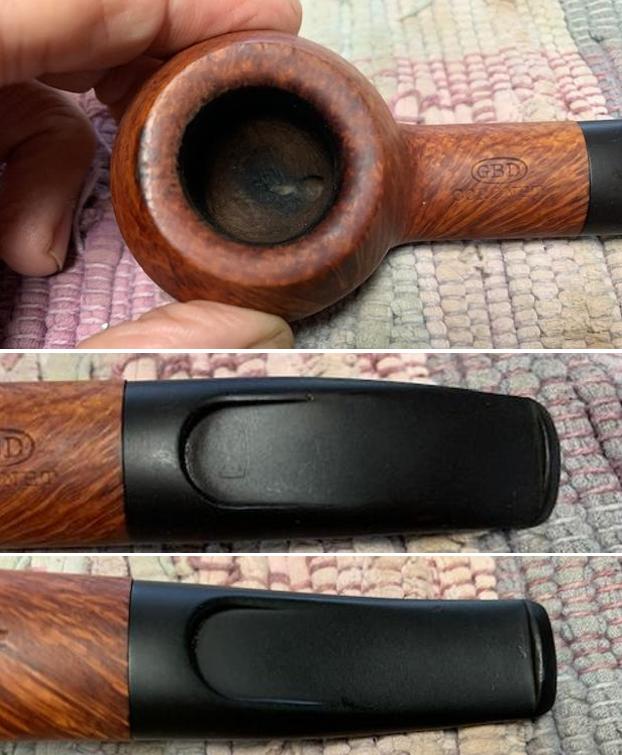
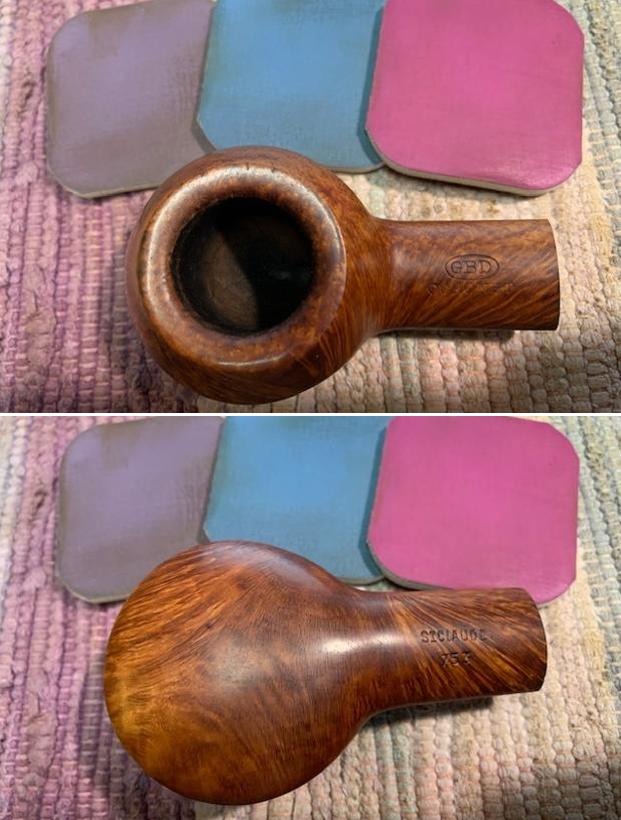
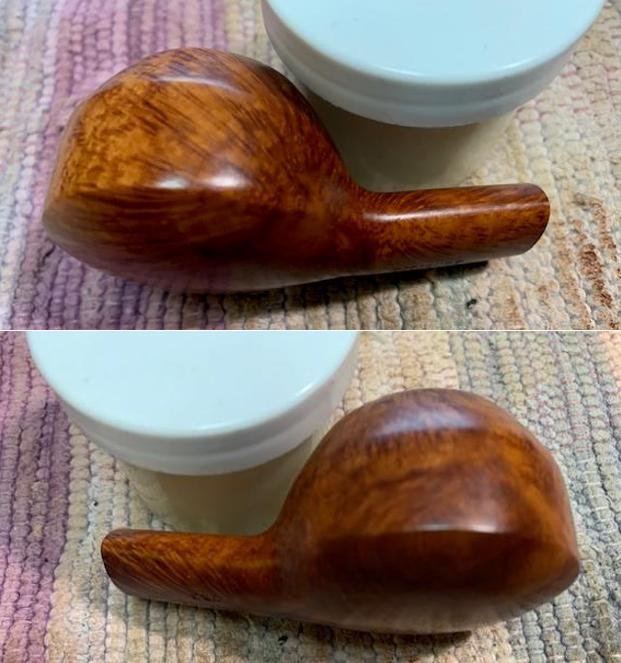
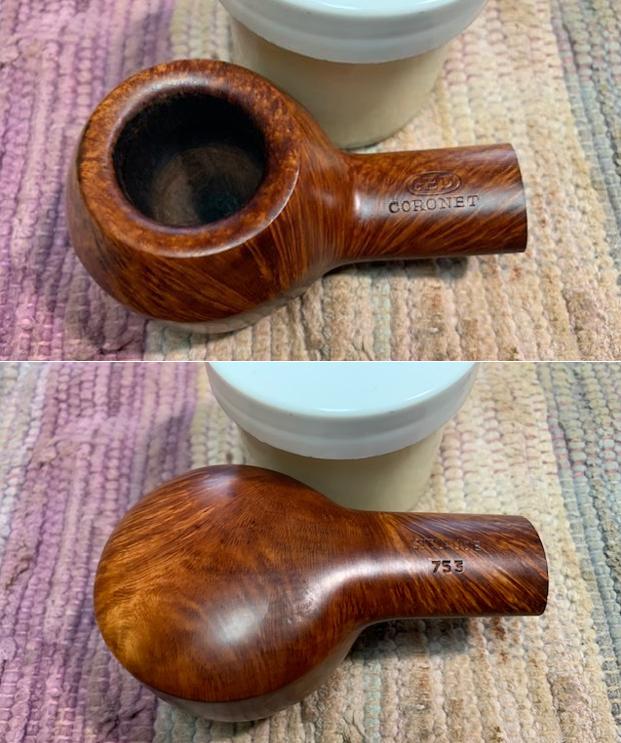
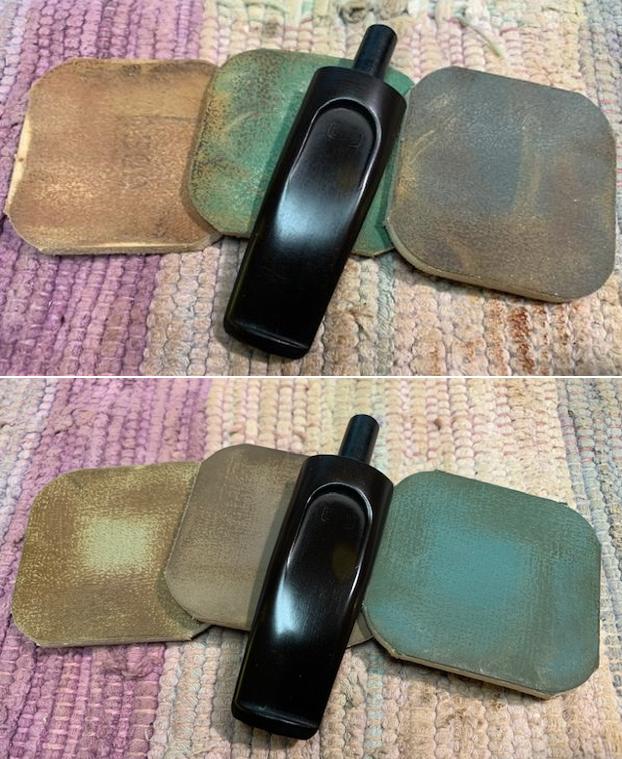
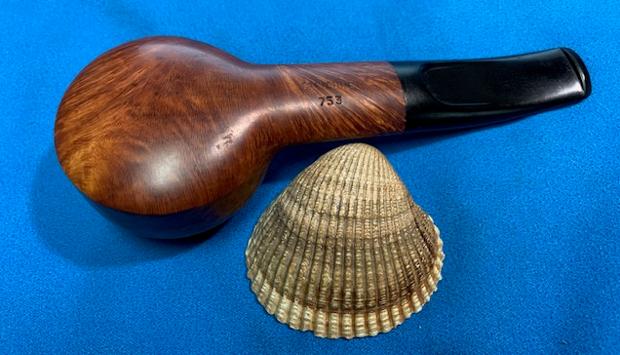
Sometimes when you are pipe hunting there is one that just grabs you. That was the case with this interestingly shaped GBD. Neither Jeff nor I had seen a GBD 753 shape before and never one with this style stem. The stamping on the bowl and the logo on the stem all seem to point to a later date for this one but the St. Claude stamp bring questions to that assumption. It is a bit of a mystery and was just one of those that spoke to us. We picked it up from an auction early in 2020 in Noberly, Maryland, USA. The pipe was stamped on the top of the shank and read GBD in an oval [over] Coronet. On the underside it read St. Claude [over] the shape number 753. The pipe itself was in filthy condition. The bowl was thickly caked and there was a thick lava overflow on the beveled rim top. The briar was very dirty with grit and grime ground into the surface. The stem was dirty and oxidized with calcification on the stem end. There were light tooth marks and chatter on both sides. There was a faintly stamped GBD logo in a rectangle that was very worn. Jeff took photos of the pipe before he did his clean up on it. He took some photos of the bowl and rim top to show their condition. The cake is thick and there is debris on the walls of the bowl. The rim top has a thick coat of lava and between that and the cake it is hard to know the condition of the rim edges. Clean up will reveal the condition. The stem looks pretty good with light tooth marks on both sides. The oxidation and calcification is present and clear. The logo stamp on the top of the stem is worn and light. It may not survive clean up. Jeff took photos of the sides of the bowl and the heel to give as sense of the shape and condition of the briar. It is a beautifully shaped pipe with some nice grain. He took photos of the stamping on the top and underside of the shank. The stamping is clear and readable as noted above. He also captured the logo on the stem top. You can see how faintly it is stamped and how it is fading. The line as new to me though I have worked on a lot of GBD pipes over the years. I turned to Pipephil’s site (http://pipephil.eu/logos/en/logo-gbd.html) to see what I could find. Sadly there was not any information on the Coronet line from France.

I turned then to Pipedia to first check the section on the history of the brand and see what I could find there (https://pipedia.org/wiki/GBD). I found some interesting information that helped to date the pipe to the time period between 1952-1981. I quote as follows from the section.

The Paris factory moved to Saint-Claude in 1952. Since 1981 the majority of GBD pipes come from the English factory. At about that same time GBD merged with Comoys, since then all production for both GBD and Comoy comes from a single factory.

The premium lines of GBD offered very good values, and are considered amongst the most affordable high end pipe of the 1960’s and earlier and a rival in quality, design, and price to Dunhill. Smokers’ Haven was the main retail supplier for GBD’s in the US until the early 1980’s.

GBD produced consistently well made pipes, almost entirely of Algerian or Grecian briar. In the late 1960’s to late 1970’s, they introduced the “Collector” and “Unique” lines, made primarily by Horry Jamieson, who had carved for Barling for many years, and was skilled in freehand design. Older GBD pieces are excellent smokers and unique in design. They did an excellent executions of classic pipe shapes, as well as some beautiful freehands in the “Unique” line.

I then followed the links to the list of models and information that was on each of the models/ lines of the brand (https://pipedia.org/wiki/GBD_Model_Information). I found the listing for the Coronet there. The quote further defined the time line of the pipe. It appears that it was made between 1951 and 1976 when it appeared in a catalogue. I quote as follows below:

Coronet — France, unknown if also made in England: Lower priced GBD, “take off” brown/black stained matt finish with “recessed platform” mouthpieces. – catalog (1976). These low cost pipes were possibly not always produced in normal GBD shapes.

I followed the links to another section of the brand that listed the shape numbers for me and I was able to find the shape I was looking for (https://pipedia.org/wiki/GBD_Shapes/Numbers). I quote the section below.

753 author one-eighth round

From all of that information I had learned that the pipe was a French Made GBD Coronet made in St. Claude France between 1951-1976. It was made with a matte finish and a recessed platform style stem. I also learned that it was an AUTHOR shape with a 1/8th bend to the stem. Now it was time to work on the pipe.

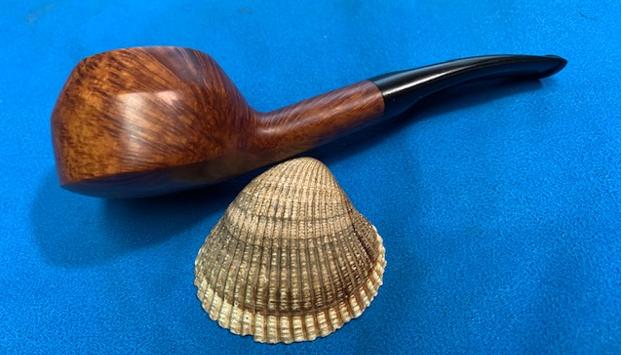
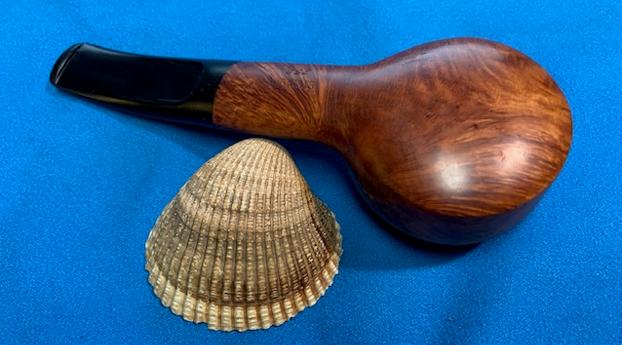
I have to say I was really looking forward to seeing what Jeff had done to this French Made St. Claude GBD Coronet pipe when I took it out of the box. It had shown such beauty through the grime so I was quite sure it would be stunning. He reamed the bowl with a PipNet pipe reamer and cleaned the remnants of cake back with a Savinelli Fitsall Pipe Knife.  He scrubbed the bowl with Murphy’s Oil Soap and a tooth brush to remove the grime and oils. He cleaned the internals of the shank and stem with pipe cleaners, cotton swabs and alcohol to remove all of the tars and oils there. He scrubbed the exterior of the stem with Soft Scrub and then soaked it in a bath of Briarville’s Pipe Stem Deoxidizer. He rinsed off the deoxidizer with warm water and wiped the bowl and stem down with a light coat of olive oil to rehydrate both. The pipe really was quite stunning. You can see the nicks on the heel of the bowl but they do not lessen the beauty of the pipe. I took close up photos of the stem and the rim top to show both how clean they were and what needed to be addresses with both. The rim top had some darkening around the outer edge at the front that would need to be addressed. The stem looked better but the light tooth marks and chatter were still present. I would need to remove those to bring the stem back.I took photos of the cleaned up stamping on the top and underside of the shank. It is very clear and readable.I removed the stem from the shank and took photos to show the overall look of this beautiful pipe.I decided to work on the nicks in the underside of the bowl with clear CA glue. Once it cured I sanded them with 220 grit sandpaper blending them into the rest of the bowl.   I polished the briar with micromesh sanding pads – wet sanding with 1500-12000 grit pads. I wiped the briar down after each pad. The grain began to really come alive through the polishing. I worked some Before & After Restoration Balm into the surface of the briar with my finger tips. The product is incredible and the way it brings the grain to the fore is unique. It works to clean, protect and invigorate the wood. I polished the stem with micromesh sanding pads – wet sanding it 1500-12000 pads. I wiped it down with Obsidian Oil after each pad to protect it and preserve it. I polished it with Before  After Pipe Polish – both Fine and Extra Fine. I finished the polishing with a final coat of Obsidian Oil. I am really happy with the way that this GBD Coronet 753 St. Claude Made Author turned out. It really is a beautiful looking pipe with great grain. The “recessed platform” mouthpiece is a unique feature of this pipe and sets it apart. I am not sure why this is a GBD Lower end model. To me it is a top grade pipe with great unique details. The grain really came alive with the buffing. The rich brown and black stains of the matte finish gave the grain a sense of depth with the polishing and waxing. The grain really popped. I put the vulcanite stem back on the bowl and carefully buffed the pipe with Blue Diamond on the buffing wheel using a light touch on the briar. I gave the bowl and the stem multiple coats of carnauba wax on the buffing wheel. I buffed the pipe with a clean buffing pad to raise the shine. I hand buffed the pipe with a microfiber cloth to deepen the shine. The finished GBD Coronet Author really is a beauty and feels great in the hand and looks very good. Give the finished pipe a look in the photos below. The dimensions of the pipe are Length: 5 ¾ inches, Height: 1 ¼ inches, Outside diameter of the bowl: 1 ½ inches, Chamber diameter: 1 inch. The weight of the pipe is 49 grams/1.73 oz. The pipe will be going on the rebornpipes store soon. It will be in the section on French Pipe Makers if you would like to add it to your collection.Thanks for reading this blog and my reflections on the pipe while I worked on it. It was a fun one to work on!

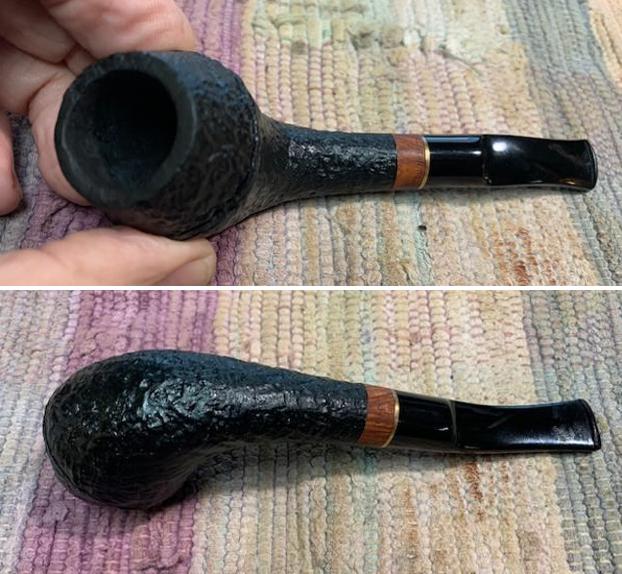
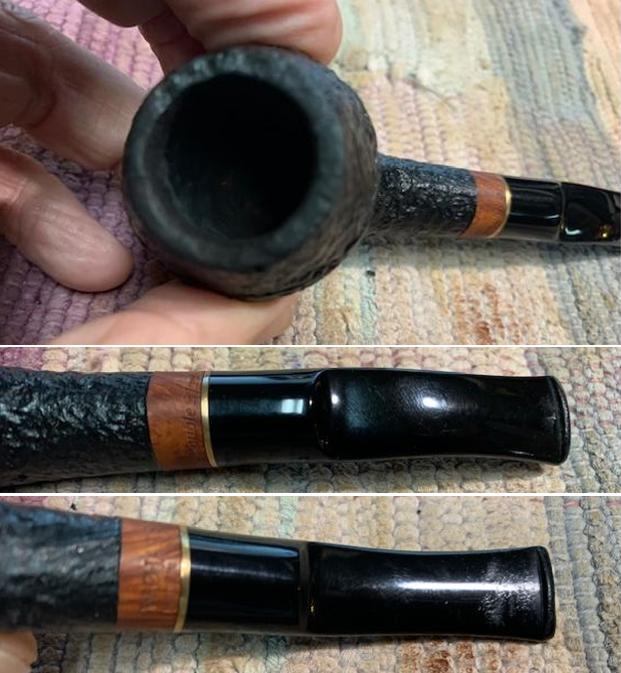
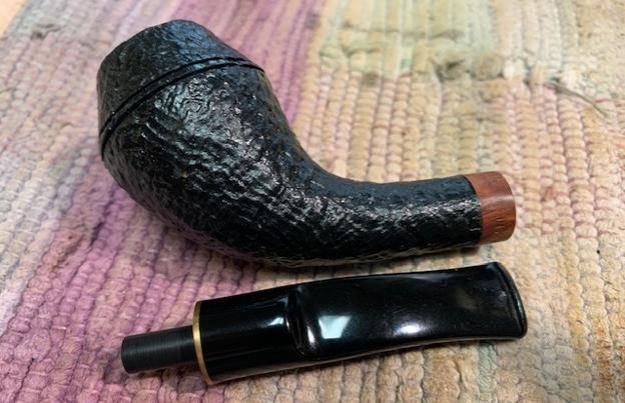
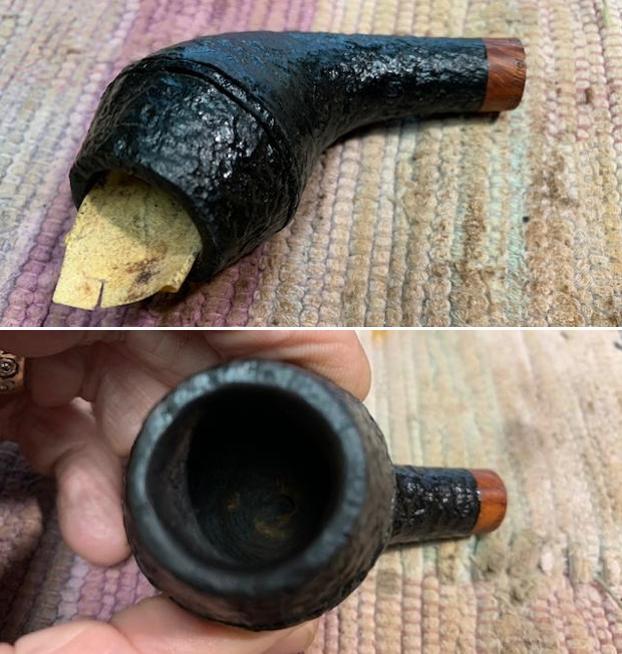
I do not understand why Peterson coats some of their pipes with a thick varnish coat


Blog by Steve Laug

Yesterday afternoon Dallas (a long time pipe friend) stopped by to pick up a pipe I had repaired for him and to sit on the front porch and enjoy a bowl and some fellowship with each other. Due to COVID-19 we have only had virtual visits for over a year now so it was really good to see him and posit our solutions to the world’s problems. We covered a lot of topics that come naturally to men of a certain age! In the course of our discussion he brought out a very shiny Peterson’s Kinsale XL25 Made in the Republic of Ireland. The pipe was very glossy and it was one that he had in his collection for a long time. It should have been showing wear on the finish but this “plastic” coated looking finish was impervious to time and use it appeared. There was a slight bit of peeling on the rim top but other than that it looked like new. He handed it to me and told me his woes with this pipe. He said that the pipe became extremely hot when he smoked it. He had tried everything to change that but nothing mattered. Dallas has been smoking  a pipe for almost 60 years now so it is not a technique issue. I am certain it  is the fault of the thick “plastic” looking finish on the pipe. I have stripped other Peterson’s that had the same issue for him and the work always improves the dispersal of the heat. He wanted me to do the same with this pipe. I took a close up photo of the rim top to show the thickness of the cake and the peeling varnish on the rim top. The edges look very good and other than the bubbles in the varnish coat the top looks good. The stem is also shown to show the light oxidation of time on the vulcanite and the tooth marks and chatter that come from use.I took photos of the stamping on the shank to show the brand and the age of the pipe. It reads Peterson’s Kinsale on the top of the shank and Made in the Republic of Ireland on the underside. On the right side of the shank was the shape number XL25. The varnish had filled in the numbers showing that it had been varnished after stamping.I removed the stem from the shank and took a photo of the left side of the bowl to try to capture the shape and the grain. It really is a beauty.I like working on clean pipes so I reamed the bowl with a PipNet pipe reamer to take the cake back to bare briar. I cleaned up the reaming with a Savinelli Fitsall Pipe Knife. I sanded the bowl with 220 grit sandpaper wrapped around a piece of dowel. Once finished the bowl was clean and smooth. Now it was time to tackle the obnoxious varnish coat. I tried to remove it with straight acetone and came up with nothing. The seal on the finish was solid and seemingly impervious to my work at this point. I lightly sanded the finish on the bowl with a folded piece of 220 sandpaper to break through the surface. Once I had done that the acetone worked well to remove the finish from the briar. I repeated the process until the shiny coat was gone and I could feel the briar in my hand and see the grain without the top coat over it. I polished the briar with micromesh sanding pads – wet sanding with 1500-12000 grit pads. I wiped the briar down after each pad. The grain began to really come alive through the polishing. I worked some Before & After Restoration Balm into the surface of the briar with my finger tips. The product is incredible and the way it brings the grain to the fore is unique. It works to clean, protect and invigorate the wood. There is a rich shine in the briar but it is not that previous plastic-like shine. I cleaned the shank, mortise and airway in the stem with pipe cleaners, cotton swabs and isopropyl alcohol to remove the tars. Dallas had mentioned the stem was very tight but once I cleaned it the fit was just the way it should have been.I started polishing the stem with 1500-2400 micromesh sanding pads. I wiped it down after each pad with Obsidian Oil. I paused my polishing to touch up the P stamp on the top of the saddle with some Rub’n Buff Antique Gold. I worked it into the stamp with a tooth pick and buffed it off with a soft towel. I went back to the micromesh and polished the stem with 3200-12000 grit pads, again wiping it down after each pad with Obsidian Oil. I finished the polishing with Before & After Pipe Stem Polish, both Fine and Extra Fine. I gave it a final coat of Obsidian Oil before putting it back on the shank. Once the varnish was stripped off this is a nice looking Peterson’s Kinsale XL25 Pipe with an oval shank and a vulcanite saddle stem is a great looking pipe now that it has been restored. The briar is clean and the grain really came alive. The rich brown and black stains gave the grain a sense of depth with the polishing and waxing. The grain really popped. I put the vulcanite stem back on the bowl and carefully buffed the pipe with Blue Diamond on the buffing wheel using a light touch on the briar. I gave the bowl and the stem multiple coats of carnauba wax on the buffing wheel. I buffed the pipe with a clean buffing pad to raise the shine. I hand buffed the pipe with a microfiber cloth to deepen the shine. The finished Peterson’s Kinsale XL25 really is a beauty and feels great in the hand and looks very good. I think that Dallas will be very happy with it once he picks it up. Give the finished pipe a look in the photos below. The dimensions of the pipe are Length: 5 ½ inches, Height: 2 ¼ inches, Outside diameter of the bowl: 1 ¼ inches, Chamber diameter: ¾ of an inch. The weight of the pipe is 65 grams/2.29 oz. The pipe looks very good and I look forward to what Dallas thinks of it. Thanks for reading this blog and my reflections on the pipe while I worked on it. It was a fun one to work on!

I don’t like Painted Pipes – This Jeantet Meerlined Brummer 944 Billiard gives me pause


Blog by Steve Laug

This white Billiard with a Tortoise Shell acrylic stem came to us from an online auction early in 2020 from Columbus, Michigan, US. From the title of the blog you know that I am not a fan of painted pipes. That is probably because I have come to understand that the briar under the paint is quite often horrible and filled with putty and flaws. Paint covers a multitude of “sins” and I am sure this is no exception. Added to that the pipe is also meerschaum lined. What made me pause was the great looking tortoise shell stem and the gold shank band that give the pipe a touch of class. The painted surface was in good condition with no nicks of scrapes. The rim top had a bit of darkening on the meer lining and a little on the paint but even that was not too bad. The bowl did not have a cake which was also a bonus that helped. It is stamped on the left side of the shank and reads Jeantet [over] Brummer and has the shape number 944 stamped on the underside of the shank. The stem has the Jeantet logo on the left side – a J in an oval. On the right side it is stamped Hand Cut and on the underside it is stamped FRANCE. The Tortoise Shell stem is quite pretty but upon examination there is a round bite through on the top side just ahead of the button. Jeff and I had picked up several pipes that the previous owner had customized by filling in the slot with putty and drilling a hole in the top. It was obviously the owner’s attempt at making a “P-lip” style smoker. We are pretty sure this was one of them. In any case it would need to be reworked – opening the slot and filling in the hole on the top side. Jeff took some photos of the pipe before he worked on it. Jeff took photos of the bowl and rim top to show the meer lining and the condition of the rim and bowl. It has some darkening and light lava on the back side but otherwise looked good. He also took photos of the stem to show the hole in the top side. You cannot see it but there is a plug in the slot on the stem end that will need to be removed. Other than that the stem was in excellent condition.Jeff removed the stem from the shank to show the stepped down Delrin tenon and the gold band on the shank end. It is a pretty looking pipe and the shank is surprisingly clean looking.He took photos of the bowl and heel to show the condition of the painted surface. It is quite remarkable that it is in such great condition and appears to have been very well cared for by the previous pipeman or woman. Jeff took photos of the stamping on the shank and the logo on the stem. They read as noted above and were in excellent condition. I turned to Pipephil’s site to see what I could learn about the Brummer line of Jeantet pipes (http://pipephil.eu/logos/en/logo-jeantet.html). There was nothing specific about that line though was a brief summary of the history. I quote from the top bar below:

The company joined the Cuty-Fort Entreprises group (Chacom, Ropp, Vuillard, Jean Lacroix…) in 1992. In 2010 it dropped out and the brand isn’t part of the group any more. The label is owned by the Jeantet family (Dominique Jeantet) again. The pipe production is discontinued. Dominique Jeantet retired in 2000. See also: Antidote, Duke of Kent, Grand Duke, Hermes, Sir Bruce, Sir Duke

I turned to Pipedia to get a more detailed history of the brand (https://pipedia.org/wiki/Jeantet). There as a brief history there that I have reproduced below.

The firm of the Jeantet family in Saint-Claude is first mentioned as early as 1775. By 1807 the Jeantets operated a turnery producing in particular wooden shanks for porcelain pipes and wild cherry wood pipes. The firm was named Jeantet-David in 1816, and in 1837 the enterprise was transformed into a corporation as collective name for numerous workshops scattered all over the city.

The manufacturing of briar pipes and began in 1858. 51 persons were employed by 1890. Desirous to concentrate the workers at a single site, the corporation began to construct a factory edifying integrated buildings about 1891 at Rue de Bonneville 12 – 14. This took several years. In 1898 Maurice Jeantet restructured the business. He is also presumed to enlarge Jeantet factory purchasing a workshop adjoining southerly. It belonged to the family Genoud, who were specialized in rough shaping of stummels and polishing finished pipes. (In these times it was a most common procedure to carry goods from here to there and back again often for certain steps of the production executed by dependent family based subcontractors. Manpower was cheap.)

Jeantet was transformed to a corporation with limited liability in 1938. By that time a branch workshop was operated in Montréal-la-Cluse (Ain), where mainly the less expensive pipes were finished. 107 employees – 26 of them working from their homes – were counted in Saint-Claude in 1948 and 18 in the Ain facility.

The Saint-Claude factory was considerably modernized by ca. 1950 installing (e.g.) freight elevators. In 1952 the southern workshop was elevated. 80 workers were employed in 1958. The factory covered an area of 2831 m²; 1447 m² of the surface were buildings.

The climax of the pipe production was reached around 1969, when thirty to thirty five thousand dozens of pipes were made by 72 workers (1969). But then the production continuously dwindled to only six or seven thousand dozens in 1987 and only 22 workers were still there. Even though, around 1979 a very modern steam powered facility for drying the briar had been installed in the factory’s roofed yard.

Yves Grenard, formerly Jeantet’s chief designer and a great cousin of Pierre Comoy, had taken over the management of Chapuis-Comoy in 1971. Now, to preserve the brand, the Jeantet family went into negotiations with him, and resulting from that Jeantet was merged in the Cuty Fort Group (est. 1987 and headed by Chacom) in 1988 along with the pipe brands of John Lacroix and Emile Vuillard. Chacom closed the Jeantet plant, and the City of Saint-Claude purchased it in 1989. After alternative plans failed, the buildings were devoted to wrecking. The southerly workshop was wrecked before 1992.

Today Jeantet pipes were produced as a sub-brand by Chapuis-Comoy who’s mainstay is Chacom of course.

Jeff carefully cleaned up this Jeantet Brummer Painted Billiard with a Tortoise Shell stem with Murphy’s Oil Soap and a tooth brush to remove the grime on the rim top and bowl sides. He cleaned up the inside of the bowl with a Savinelli Fitsall Pipe Knife, scraping away the light cake on the bowl walls. He scrubbed the internals of the shank and stem with pipe cleaners, cotton swabs and alcohol until the airways were clean and the pipe smelled fresh. The pipe looked much better once the bowl and stem were clean. The plug in the slot of the stem was removed and the hole in the top was cleaned up as well. It was ready to repair when it arrived in Vancouver. I took photos of the pipe before I started my work on it. I took close up photos of the meer lined bowl and the rim top to show the condition. I also took photos of both sides of the stem to give a sense of the damage to the top side and the good condition of the underside.I took photos of the stamping on the left side of the shank and stem and the right side of the stem. It reads as noted above and is very clear and readable.I took the stem off the shank and took photos of the pipe to give a sense of its beauty and proportions.The bowl of the pipe was in excellent condition and did not need any work. The only major issue on the pipe was the hole in the top of the stem. I greased a pipe cleaner with Vaseline and slid it into the slot under the hole in the stem top. I filled in the hole with clear super glue. Once the glue cured it was a white spot that needed more work to blend into the stem surface. Once the repair cured I sanded the repair with 220 grit and polished it with 400 grit wet dry sandpaper. I polished out the tooth chatter on the underside of the stem with the same sandpaper and started polishing it.I used a dark brown and black stain pen to approximate the feathery wisps of the tortoise shell finish of the acrylic. I gave the repair a top coat of clear CA glue and let it cure. I sanded the spot smooth.I polished the stem surface with micromesh sanding pads. I wet sanded it with 1500-12000 grit sanding pads. I wiped the stem down after each pad with Obsidian Oil. I polished it with Before & After Stem Polish both Fine and Extra Fine polish. I gave it a final rub down with Obsidian Oil. I lightly buffed the bowl and stem with Blue Diamond on the buffing wheel and gave it a coat of Conservator’s Wax to seal and protect it. The pipe took on a deep shine in the painted briar and in the tortoise shell acrylic stem. The twin ring gold band also looked very good. It was an interesting looking pipe. The dimensions of the pipe are Length: 6 inches, Height: 2 inches, Outer Diameter of the bowl: 1 ¼ inches, Diameter of the chamber: ¾ of an inch. The weight of the pipe is 60 grams/2.12 oz. The photos below show the finished pipe. It is a surprisingly nice looking pipe. If you would like to add it to your collection I will be adding it to the French Pipe Makers section of the rebornpipes store. Send me a message or an email. Thanks for reading the blog. It was an interesting restoration.