Category Archives: Book Reviews

I have quite a few books on Pipes and tobaccos. In this section of the blog I will review the books i have read and reread on this topic. If you have some that you have read and wish to share them this is the place ot put them.

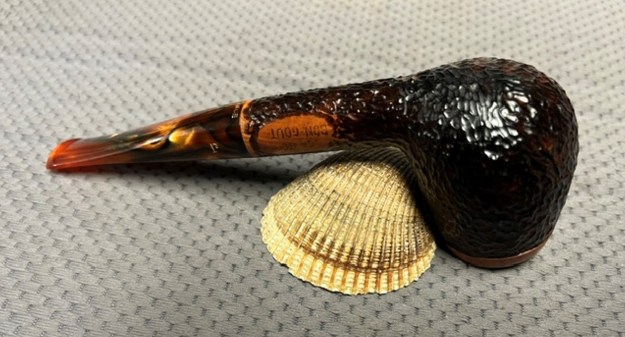
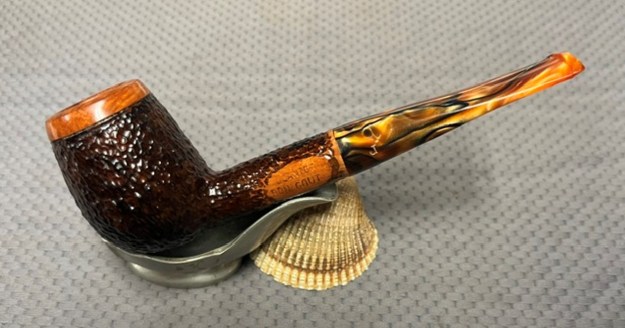
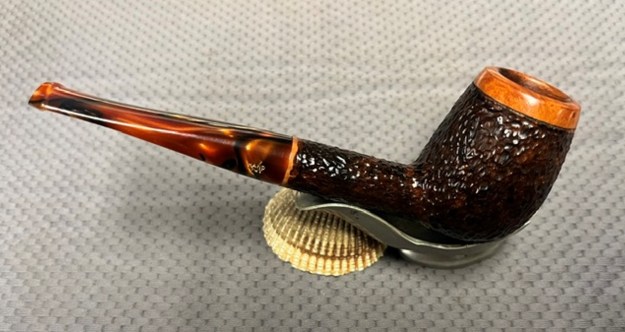
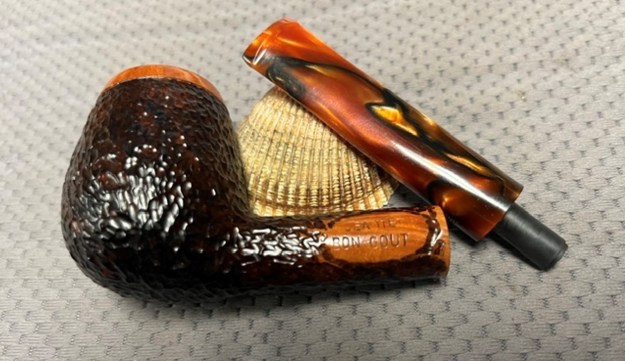
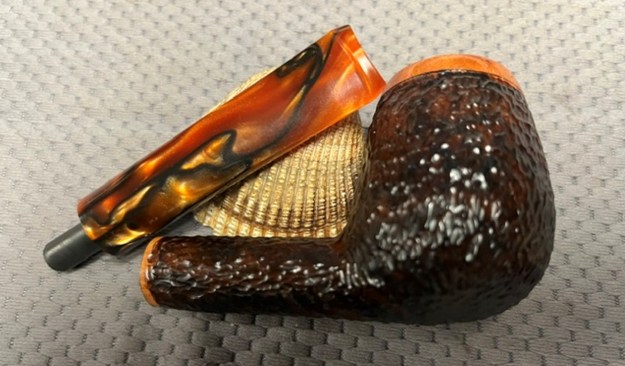
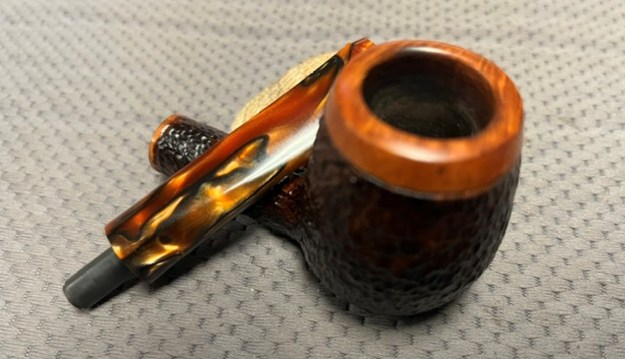
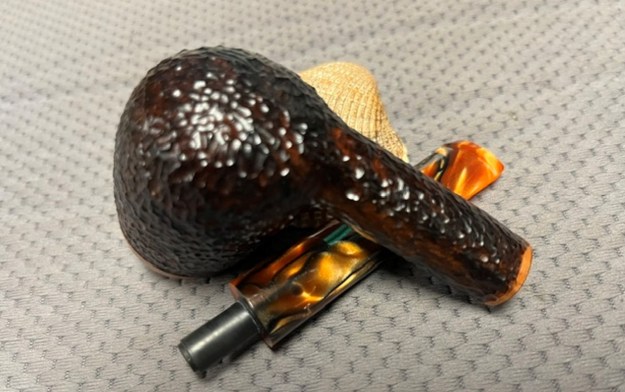
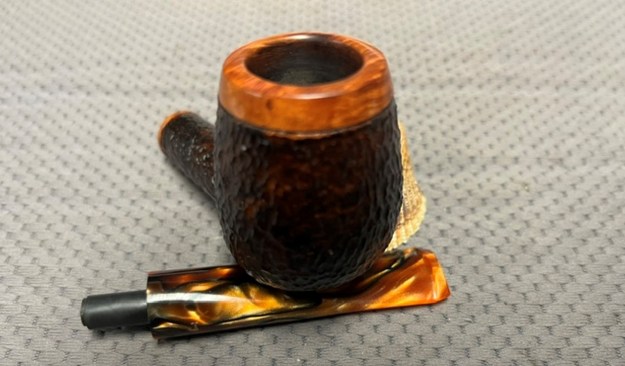
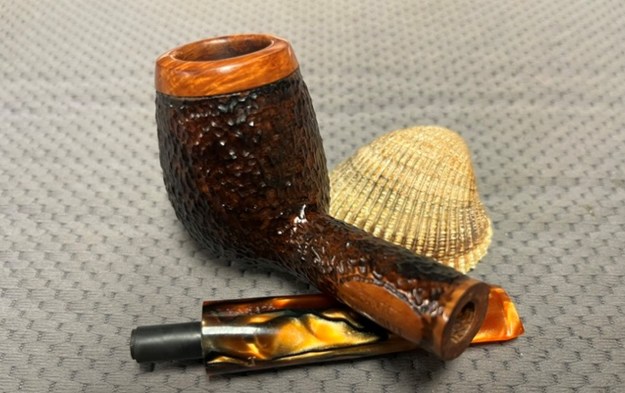
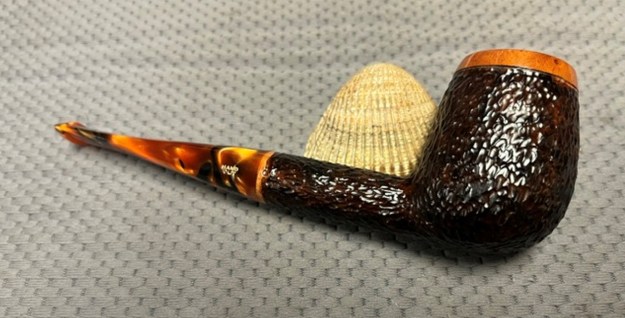
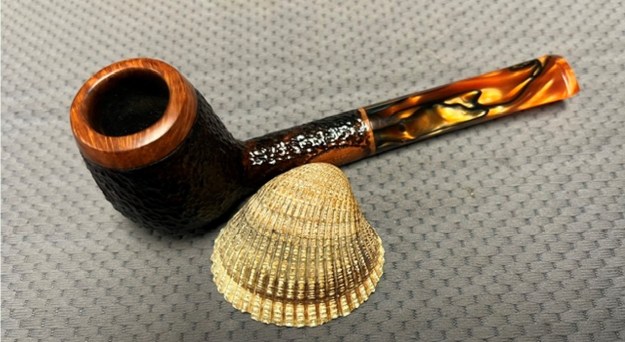
Restoring a Jeantet Bon-Cout Billiard with an acrylic taper stem


by Steve Laug

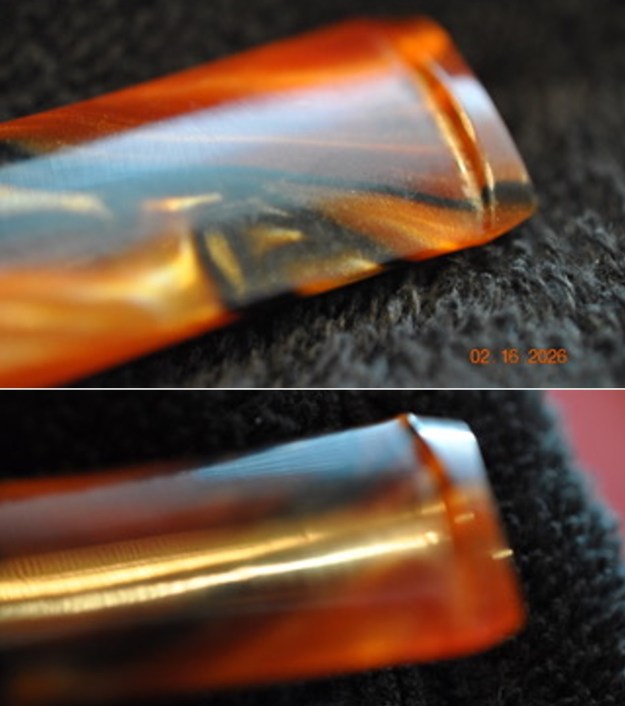
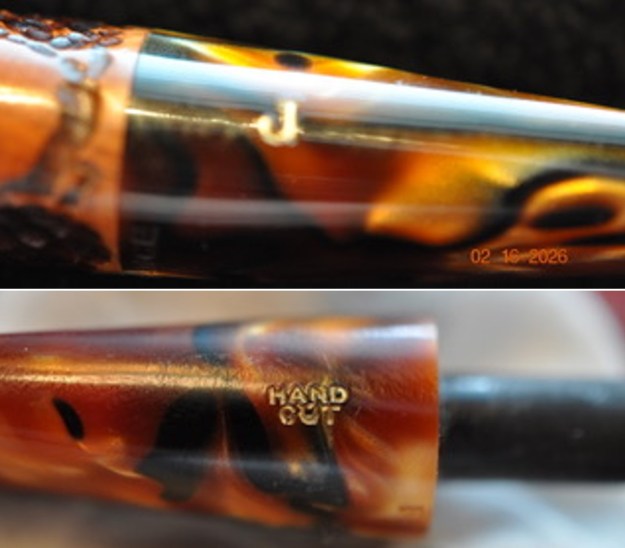
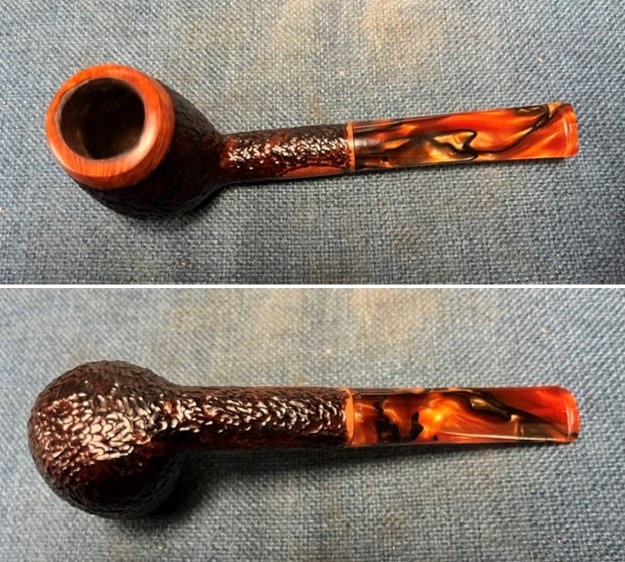
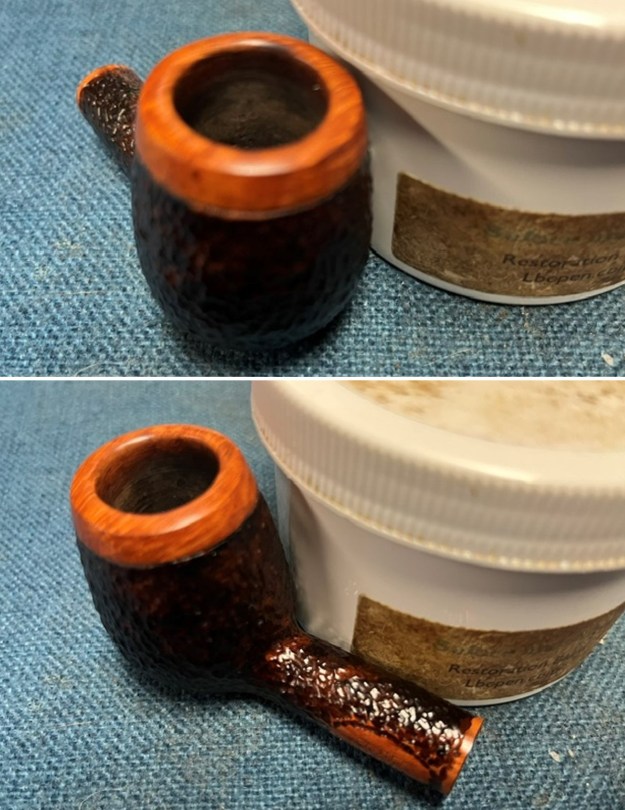
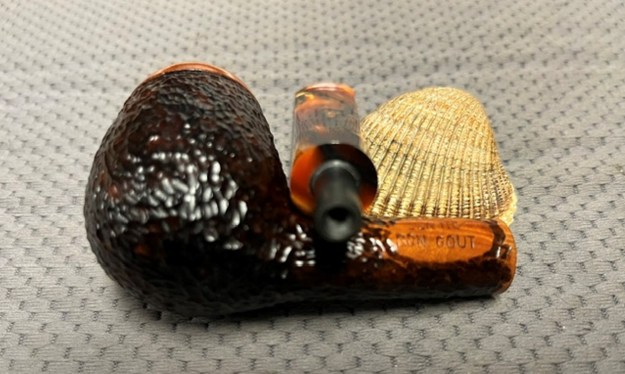
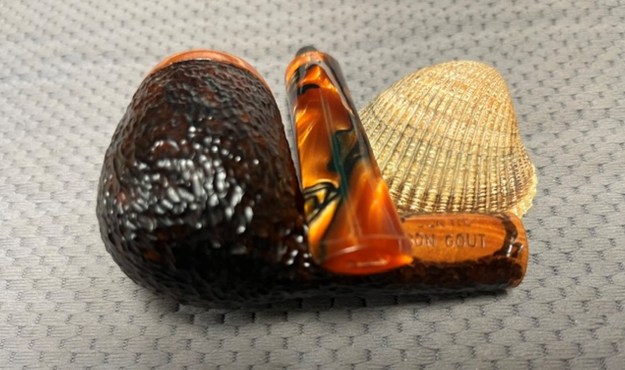
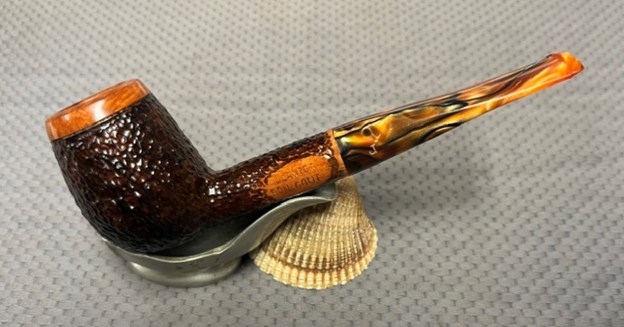
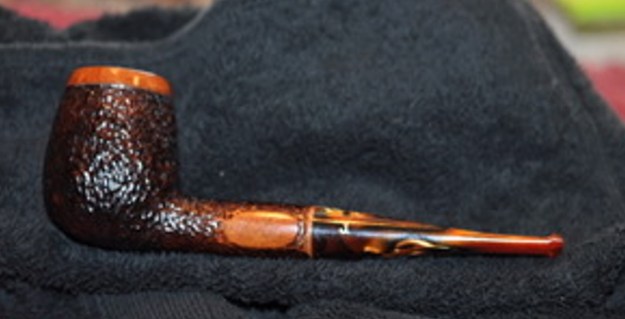
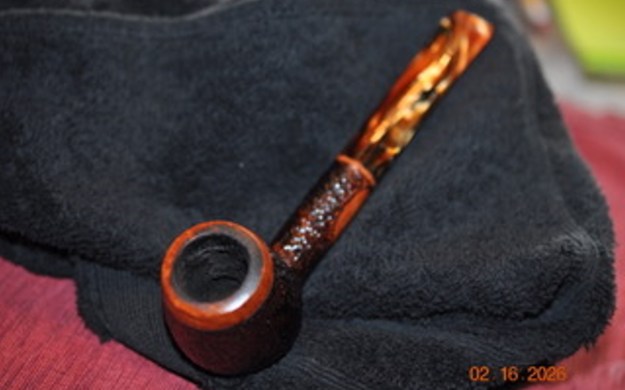
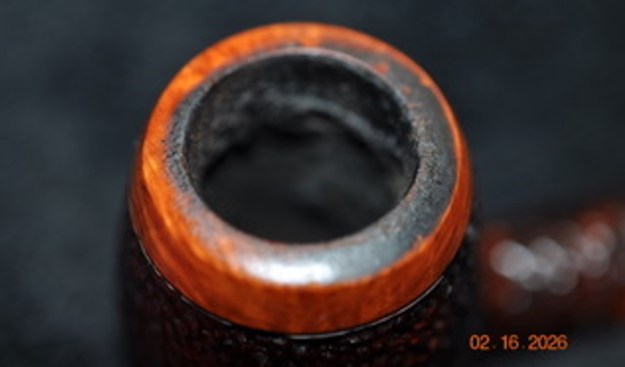
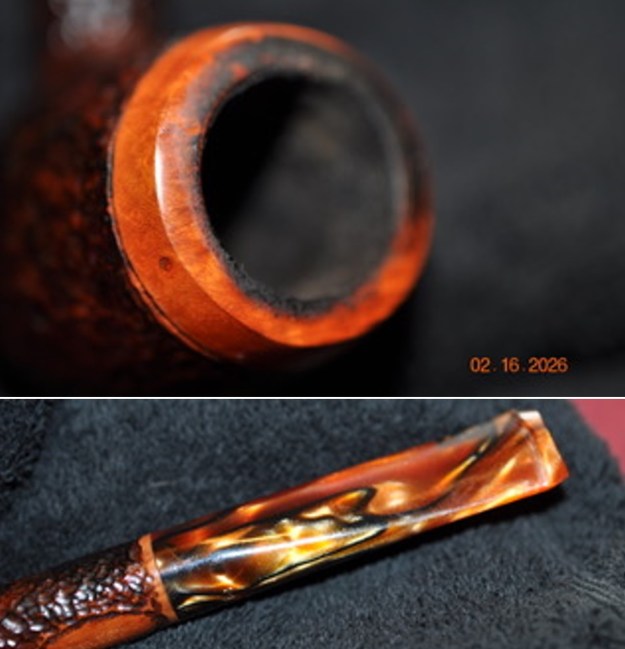
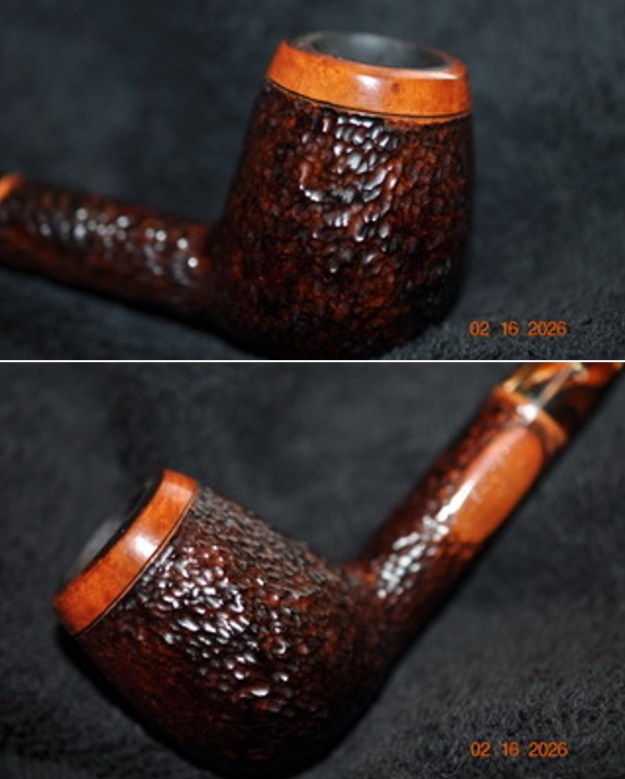
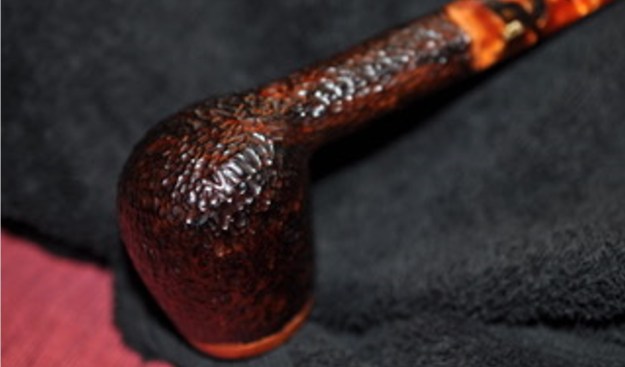
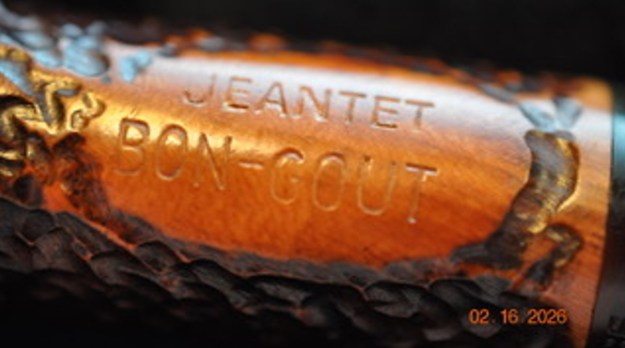
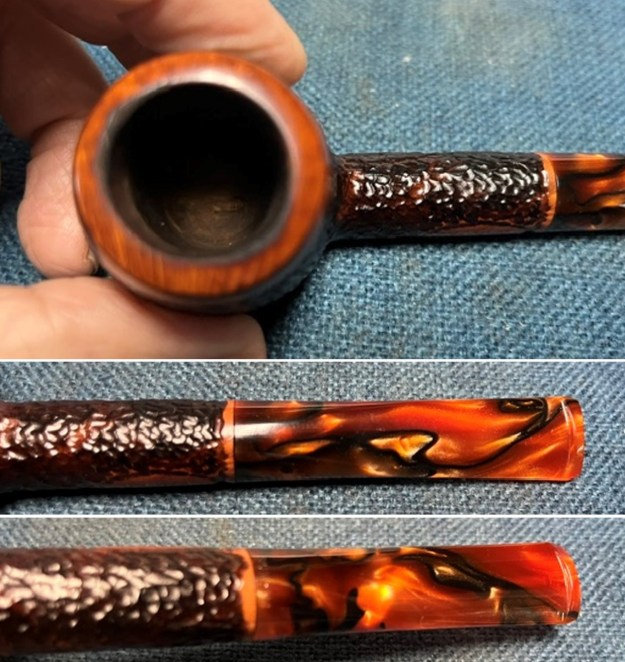
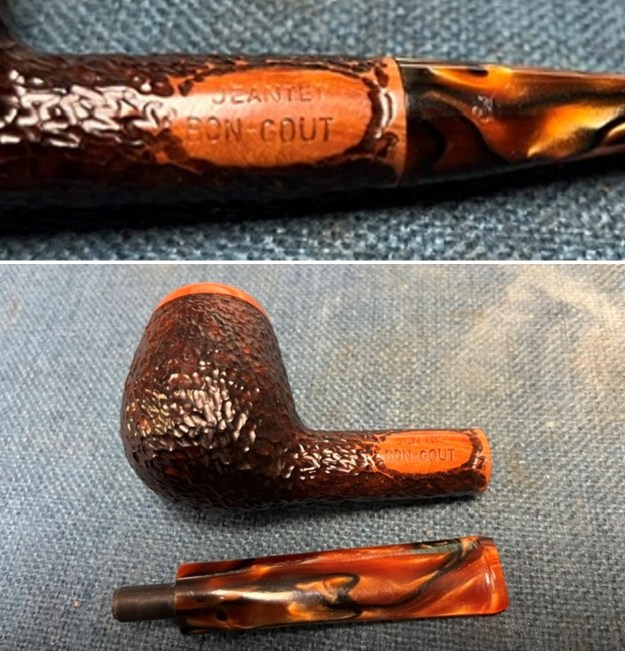
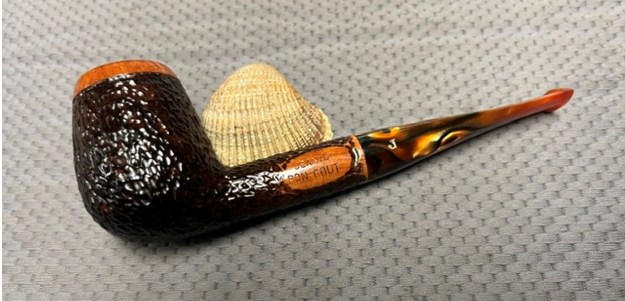
The next pipe on the table is a great looking rusticated Billiard with a smooth rim topo and band on the top and shank end. It was one purchased on 01/20/2026 from a Facebook seller in Quaker Town, Pennsylvania, USA. The bowl and the shank are tightly rusticated. The top of the bowl and the end of the shank band are smooth. It is a great looking pipe. It is stamped on the left side of the shank and reads Jeantet [over] Bon-Cout. The finish was dirty and had a lot of grime and grit ground into the rustication and the smooth portions. The rim top and inner edge of the bowl is dirty with a light lava flow on the edge and the top that was heavier toward the back of the bowl. There is a thick cake in the bowl. The stem is dirty and has light tooth marks and chatter on the surface. It had the Jeantet J logo on the left side, Hand [over] Cut on the right side, and France on the underside. Jeff took photos of the pipe before he started his clean up work. It showed a lot of promise. Jeff took photos of the bowl and rim top to show the cake in the bowl and the lava on the inner edge of the top. The lava is quite thick on the inner edge. He also took photos of the stem to show the tooth marks and chatter on the oxidized stem. He took photos of the bowl and heel to show the condition of the finish. The combination of rustication – tight pattern – and smooth portions look very good and are a great contrast to the marble, almost tortoise stem. Jeff took photos of the stamping on the shank and the logo on the stem. They read as noted above and were in excellent condition. I turned to Pipephil’s site to see what I could learn about the Bon-Cout line of Jeantet pipes (http://pipephil.eu/logos/en/logo-jeantet.html). There was nothing specific about that line though was a brief summary of the history. I quote from the top bar below:
The company joined the Cuty-Fort Entreprises group (Chacom, Ropp, Vuillard, Jean Lacroix…) in 1992. In 2010 it dropped out and the brand isn’t part of the group any more. The label is owned by the Jeantet family (Dominique Jeantet) again. The pipe production is discontinued. Dominique Jeantet retired in 2000. See also: Antidote, Duke of Kent, Grand Duke, Hermes, Sir Bruce, Sir Duke

I turned to Pipedia to get a more detailed history of the brand (https://pipedia.org/wiki/Jeantet). There as a short history there that I have reproduced below.

The firm of the Jeantet family in Saint-Claude is first mentioned as early as 1775. By 1807 the Jeantets operated a turnery producing in particular wooden shanks for porcelain pipes and wild cherry wood pipes. The firm was named Jeantet-David in 1816, and in 1837 the enterprise was transformed into a corporation as collective name for numerous workshops scattered all over the city.

The manufacturing of briar pipes and began in 1858. 51 persons were employed by 1890. Desirous to concentrate the workers at a single site, the corporation began to construct a factory edifying integrated buildings about 1891 at Rue de Bonneville 12 – 14. This took several years. In 1898 Maurice Jeantet restructured the business. He is also presumed to enlarge Jeantet factory purchasing a workshop adjoining southerly. It belonged to the family Genoud, who were specialized in rough shaping of stummels and polishing finished pipes. (In these times it was a most common procedure to carry goods from here to there and back again often for certain steps of the production executed by dependant family based subcontractors. Manpower was cheap.)

Jeantet was transformed to a corporation with limited liability in 1938. By that time a branch workshop was operated in Montréal-la-Cluse (Ain), where mainly the less expensive pipes were finished. 107 employees – 26 of them working from their homes – were counted in Saint-Claude in 1948 and 18 in the Ain facility.

The Saint-Claude factory was considerably modernized by ca. 1950 installing (e.g.) freight elevators. In 1952 the southern workshop was elevated. 80 workers were employed in 1958. The factory covered an area of 2831 m²; 1447 m² of the surface were buildings.

The climax of the pipe production was reached around 1969, when thirty to thirty five thousand dozens of pipes were made by 72 workers (1969). But then the production continuously dwindled to only six or seven thousand dozens in 1987 and only 22 workers were still there. Even though, around 1979 a very modern steam powered facility for drying the briar had been installed in the factory’s roofed yard.

Yves Grenard, formerly Jeantet’s chief designer and a great cousin of Pierre Comoy, had taken over the management of Chapuis-Comoy in 1971. Now, to preserve the brand, the Jeantet family went into negotiations with him, and resulting from that Jeantet was merged in the Cuty Fort Group (est. 1987 and headed by Chacom) in 1988 along with the pipe brands of John Lacroix and Emile Vuillard. Chacom closed the Jeantet plant, and the City of Saint-Claude purchased it in 1989. After alternative plans failed, the buildings were devoted to wrecking. The southerly workshop was wrecked before 1992.

Today Jeantet pipes were produced as a sub-brand by Chapuis-Comoy who’s mainstay is Chacom of course.

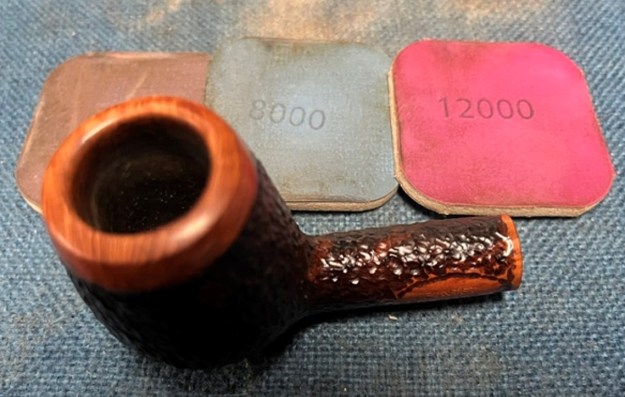
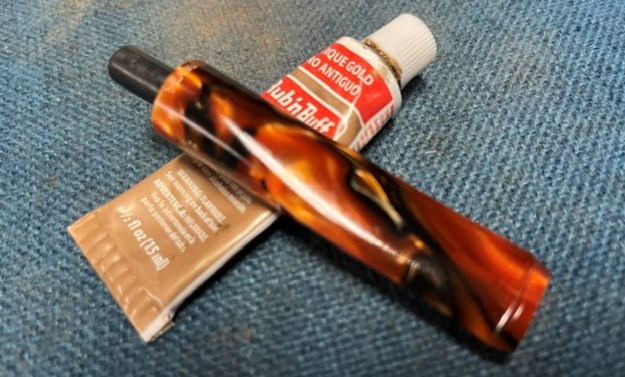
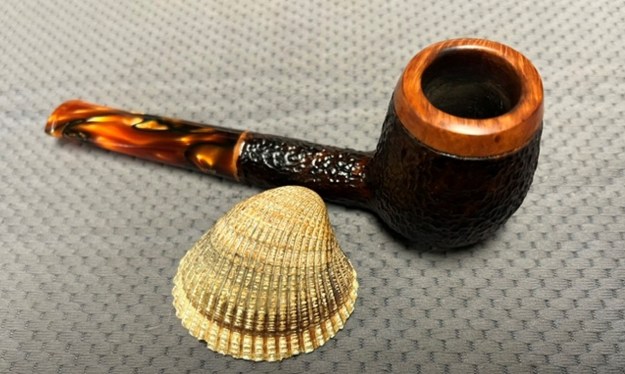
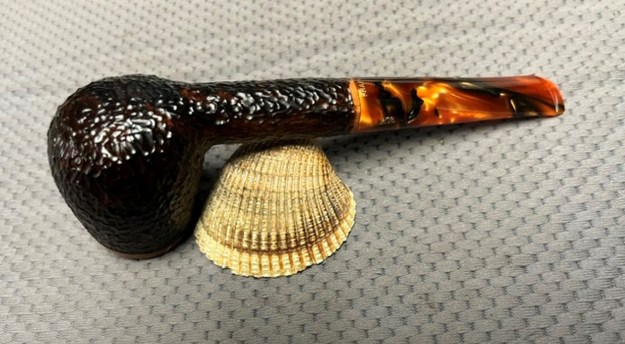
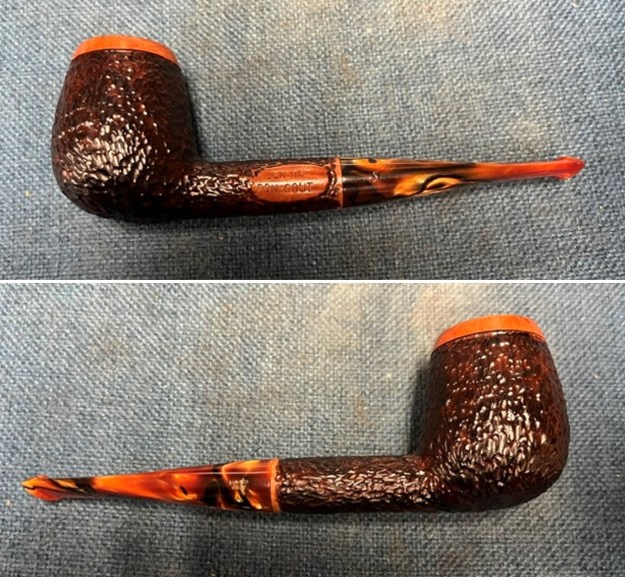
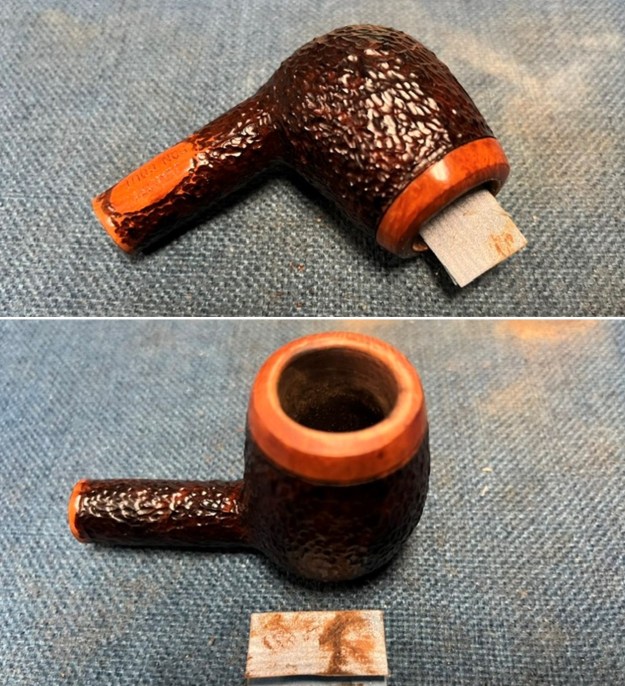
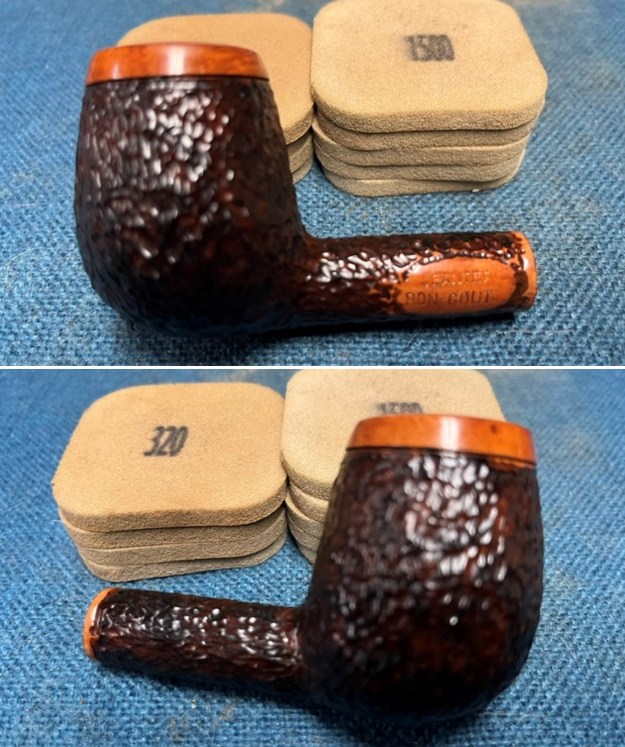
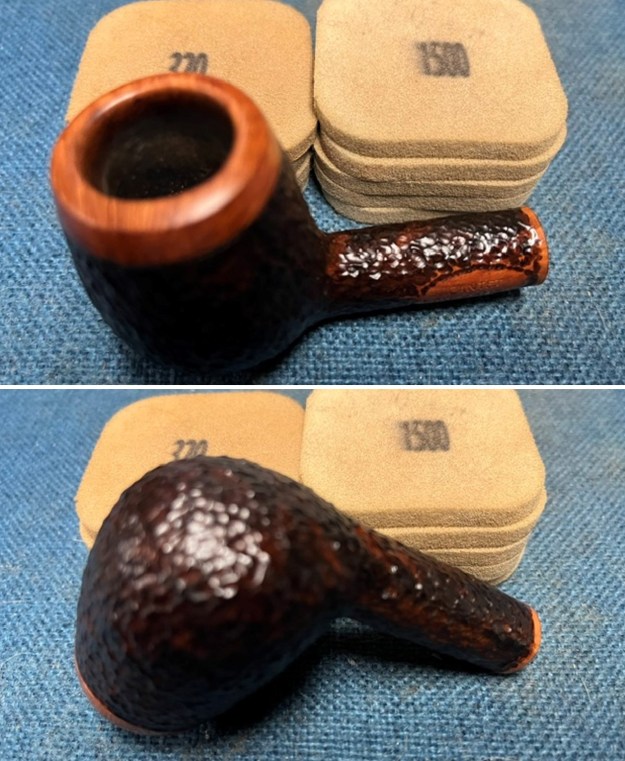
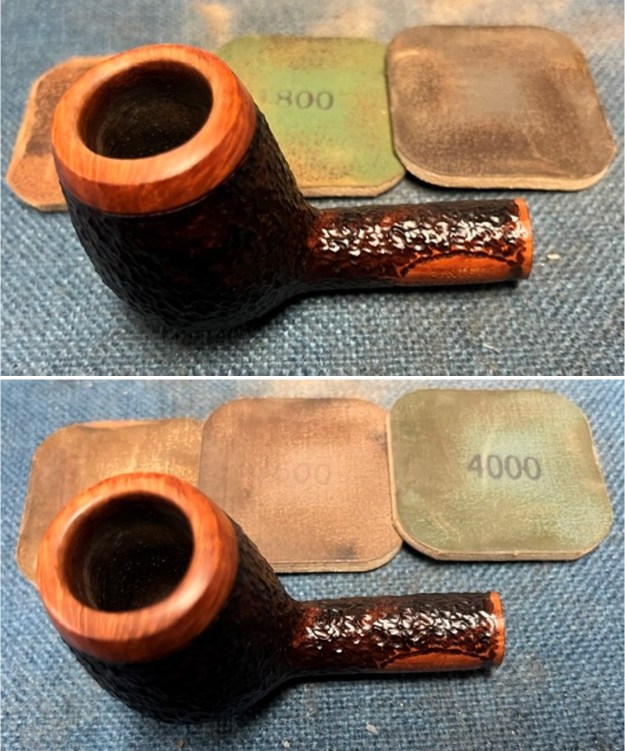
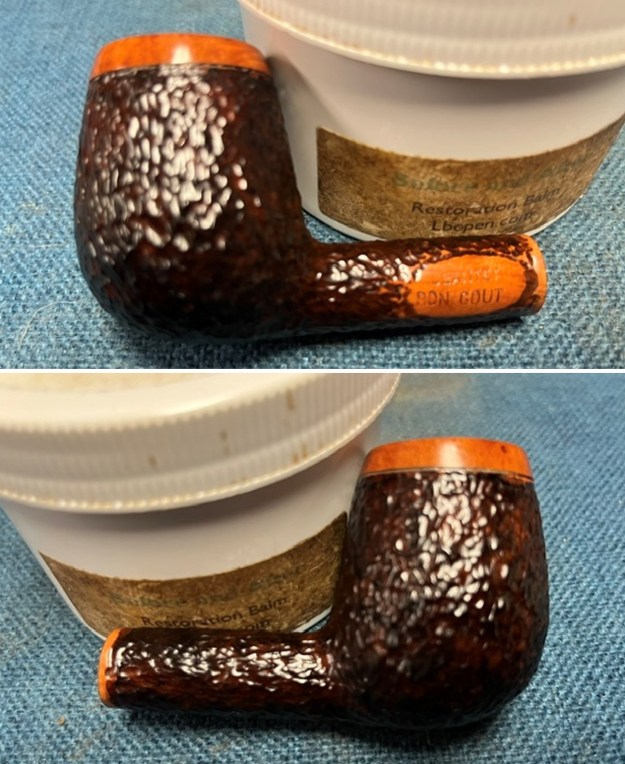
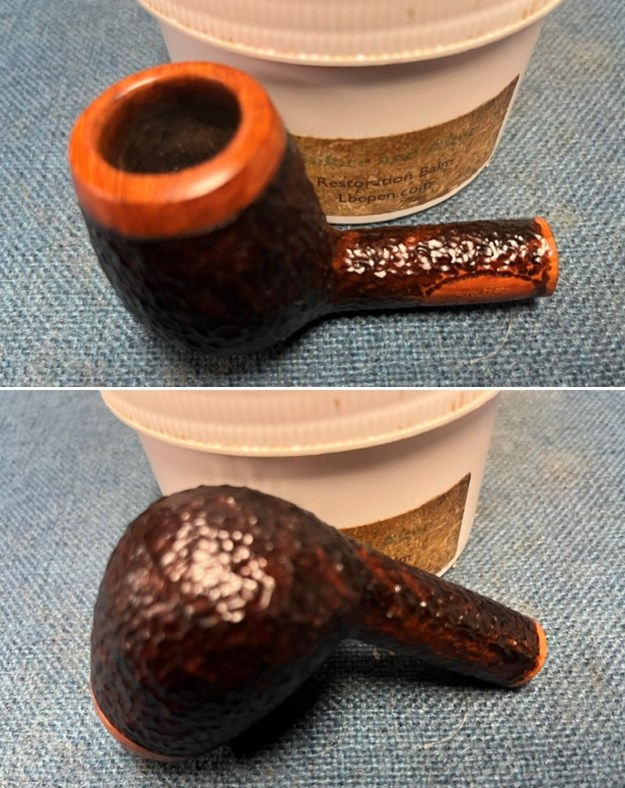
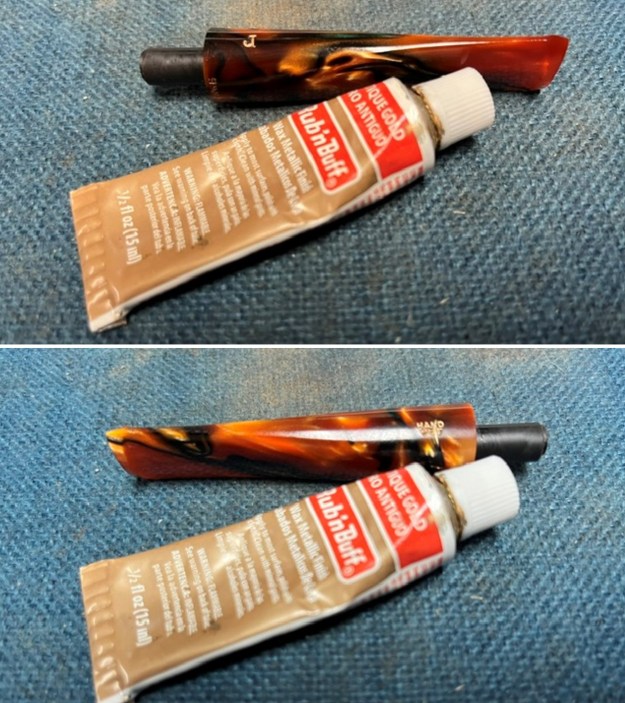
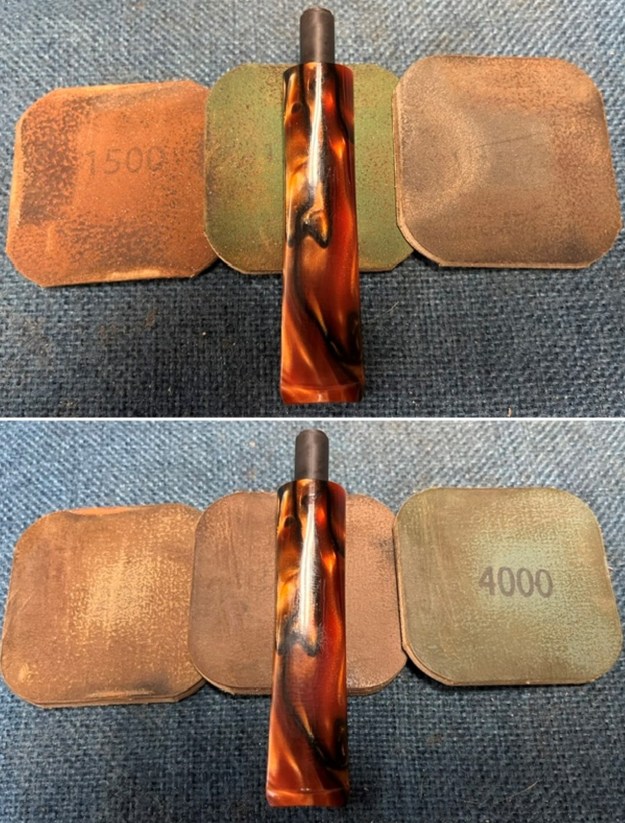
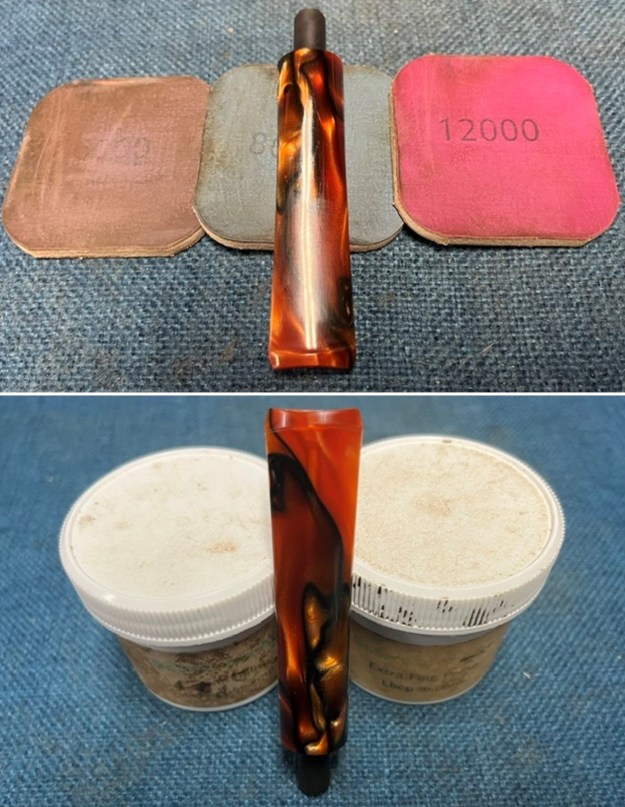
Jeff carefully cleaned up this Jeantet Bon-Cout Billiard with a variegated brown/orange acrylic taper stem with Murphy’s Oil Soap and a tooth brush to remove the grime on the rim top and bowl sides. He reamed the bowl with a PipNet pipe reamer and then cleaned up the inside of the bowl with a Savinelli Fitsall Pipe Knife. He scrubbed the internals of the shank and stem with pipe cleaners, cotton swabs and alcohol until the airways were clean and the pipe smelled fresh. The pipe looked much better once the bowl and stem were clean. He scrubbed the stem with Soft Scrub to remove the debris on the surface. He rinsed it with warm water when he took out of the soak. Before I started my part of the work I took photos of the pipe. It is a pretty looking pipe. I took close up photos of the bowl and the rim top to show the condition. It looked better but there was burn damage on the inner edge on the front and the back side of the bowl. I also took photos of both sides of the stem to give a sense of the condition of both sides at the button.I took a photo of the stamping on the left side of the shank and stem. It reads as noted above and is very clear and readable. The stamping on the shank is faint but readable. I took the stem off the shank and took photos of the pipe to give a sense of its beauty and proportions. I worked on the damage from burning on the inner edge of the bowl on the front and the back side. It was damaged but not too deeply burned. I used a folded piece of 220 grit sandpaper to clean up and reshape the edge. It looked significantly better.I worked over the rim top and edges with 320-3500 grit 2×2 inch sanding pads. I wiped the rim top down with a damp cloth after each pad to remove the sanding debris. It looked significantly better. I polished the rim top with micromesh sanding pads – dry sanding with 1500-12000 grit pads and wiped down the bowl after each sanding pad. I rubbed the bowl and shank down with Before & After Restoration Balm. I worked it into the surface of the bowl sides and shank with my fingertips to clean, enliven and protect the briar. I let the balm sit for a little while and then buffed with a cotton cloth to raise the shine. The Balm did its magic and the grain stood out. I set the bowl aside and turned my attention to the stem. Because it was quite clean I decided to touch up the Jeantet J stamp on the left side of the saddle. I filled in the stamp with Antique Gold Rub’n Buff. I did the same with the Hand Cut stamp on the right and France on the underside of the stem. I buffed off the excess material and the markings looked very good. The stem was in good condition and the light marks and chatter should polish out easily. I polished the stem with micromesh sanding pads – 1500-12000 grit pads. I wiped it down with Obsidian Oil after each sanding pad. I used Before & After Pipe Polish – both Fine and Extra Fine to further polish the stem. I gave it a final coat of Obsidian Oil and set it aside to dry. I put the parts of the Jeantet Bon-Cout Billiard back together and I lightly buffed the bowl and stem with Blue Diamond on the buffing wheel and gave several coats of Carnauba Wax to seal and protect it. I polished it with a clean buffing pad to raise the shine and then with a microfiber cloth to deepen the shine. The briar really looked good with the wax highlighting the grain around the panels on the bowl. The thin shank and saddle stem gave additional beauty to the petite looking pipe. It was an interesting looking pipe. The dimensions of the pipe are Length: 5 ½ inches, Height: 2 inches, Outer Diameter of the bowl: 1 ¼ inches x 1 ¼ inches, Diameter of the chamber: ¾ of an inch. The weight of the pipe is is 53 grams/1.87 ounces. The photos below show the finished pipe. If you would like to add it to your collection I will be adding it to the French Pipe Makers section of the rebornpipes store. Send me a message or an email. Thanks for reading the blog. It was an interesting restoration.
Book Review: The Wide World of Wood Tobacco Pipes


by Kenneth Lieblich

I have been wanting to write this blog post for some time now. Today, I am offering a review of The Wide World of Wood Tobacco Pipes: Two Centuries of Craftsmanship and Creativity by Ben Rapaport. As I mentioned in a different book review a few weeks ago, I’ve read several pipe-related books in the last few months – some very good, some very bad, and some in between. This book is at the top of that heap and I encourage you to read on. This book is one of the ‘very good’ ones – and just what I want a pipe book to be: well-written, informative, and engaging. Even though the book is quite substantial, I will try to keep my review brief – I want you to read the book, more than my review. This book is heavy (by weight), extensively illustrated, and expertly written. It is also not inexpensive, but I recommend this book with pleasure.

For those unfamiliar with him, Ben Rapaport is the doyen of scholarly pipe books. This is Ben’s tenth book and, supposedly, his last – but he said that last time too! His write-up in Pipedia states the following:

For the past 50 years, Ben Rapaport has been known internationally as an antique pipe collector, and tobacco bibliophile. He is a popular lecturer at pipe clubs, his articles on pipe and tobacco history appeared regularly in Pipes & Tobaccos magazine until Spring 2019, when it ceased publication, and his articles occasionally appeared in CIGAR magazine until Spring 2011 when it ceased to be published. Achievements and affiliations: member, Pipe Smoker’s Hall of Fame (1973); l’Académie Internationale de la Pipe (Founding Member, 1985); Confrère, Confrérie des Mâitres-Pipiers, Saint-Claude, France (1989), and Doctor of Pipes (2004). He is a consultant at the Center for the Study of Tobacco and Society, University of Alabama (since 2001). As a certified personal property appraiser, he has conducted formal valuations of pipe collections for several museums and for private collectors. Ben has created what is likely the most comprehensive list of pipe and tobacco books in English. Its scope includes the earliest publications to the newest titles organized by topic or theme. Ben updates the list as new works are published.

I own several of his books, but not all ten – yet. Each one is enjoyable and worth owning. I have had the pleasure of communicating with Ben, through email, over the past few years. Even though he is several decades my senior, he has been generous to me with his time. His knowledge of pipe history is immense and he has been very helpful in his advice in my own pipe research. It is fair to say that, when I purchased this from him, I was expecting a quality book – and I was not disappointed. The book has an extensive set of notes and a thorough bibliography. This is the sort of detail I especially value. Too often, pipe books are lacking in references, notes, indexes, bibliographies, etc. – but not in this book. Thank goodness!

As the title suggests, this book deals with the history of tobacco pipes, and specifically the ones made of wood – not clay, meerschaum, porcelain, etc. This does not mean that the book restricts itself to briar. In fact, Rapaport records dozens of different woods that have been used in the past couple of centuries.

Listing the chapter titles below will be helpful in providing you with a sense of the scope of the book.

  • Assorted Woods Used in Pipe-Making
  • Eighteenth- and Nineteenth-Century European Pipes
  • Helena Sophia Isberg: Sweden’s Extraordinary Pipe Carver
  • The Ulmer: A Unique German Pipe
  • The Alice Charlotte de Rothschild Collection
  • Ethnographic Pipes of Africa
  • Ethnographic Pipes of the Americas
  • American Civil War Pipes
  • Anglo-Boer War Pipes
  • Pipe Collections in Museums and on the Web
  • The João Pavão Martins Collection
  • A British Collection
  • The Holgar Haettich Collection
  • Curiosities, Oddities, Folk Art, and Novelties

As you can see, he covers a lot of ground in this book and I won’t attempt to summarize each individual chapter, or else you’ll be reading this review all day long. Perhaps the greatest feature of this book is the incredible array of photos that Ben includes. It is both the diversity and quality of the photos that really adds value (and physical weight) to this tome.

In fact, the writing takes up a surprisingly small amount of real estate in this book. But the writing that is there is fascinating in somewhat untangling the murky history of wood as a material for pipe-making. Rapaport writes, ‘Wood … is light, durable, and a bad conductor of heat, and thus has three essential qualities of good pipe material…’. It is fascinating to learn how wood (of many tree species) came to be used as a pipe-smoking medium. In fact, it seems to be a silly material for containing fire – and so it is, but, as we ultimately know, when you find the right stuff, it is also the perfect material. How we moved from the absurd to the sublime in pipe woods is a fine story, and one that Rapaport tells well. But extolling wood’s virtues is not, essentially, the point of the book. In fact, it is the paucity of material in the written history of wood pipes that motivates Rapaport.

The origins of the wood pipe (not the wooden pipe, as he says) are disparate and obscure. It is fair to say that Rapaport cannot possibly reveal all of this history – most of which is, sadly, lost in the mists of time – but he has made an important contribution to the advancement of our knowledge. I, for one, am grateful for this because I cannot count the number of times I have yearned to know the history of some pipe or pipe-maker, and have been stymied by the absence of historical records or the loss of historical records or both. Even though I (as reader) have not been given the name/place/date for every wood pipe, I am not disappointed because such a wide variety of pipes has been documented, collated, and – I daresay – remembered!

Another valuable aspect of this book is the collection of collections! There are chapters which describe the private and institutional collections of pipes which exist throughout the world. Many are available for public viewing and Rapaport entices us with dreams of being able to behold these stunning wood pipes in person. I found this to be quite endearing and thought-provoking, as it made me aware of individuals about whom I previously knew little. To demonstrate my point, Alice Charlotte de Rothchild’s immense pipe collection is as remarkable for its whimsy as it is for its beauty.

The breadth and depth of photos in this book is impressive. More than simply adding volume to this publication, the photos create their own historical record, simply by their juxtaposition to one another. To take one example among many, the photo collection of Boer War pipes provides an extraordinary testimony of the pipe carvings and the men who carved them in the South African War. This isn’t simply an indiscriminate collection of photographs: this is actually a narrative told in photographs.

I am going to end the review here, because I am tempted to go on ad nauseum. Suffice it to say, this is an excellent book. It is worth reading and it is worth buying. I have had a similar reaction to Rapaport’s past books, so I hope this isn’t his last. If the distant history of tobacco pipes is of interest to you, I happily recommend this book.

I hope you enjoyed reading my review of The Wide World of Wood Tobacco Pipes by Ben Rapaport. If you are interested in more of my work, please follow me here on Steve’s website or send me an email at kenneth@knightsofthepipe.com. Thank you very much for reading and, as always, I welcome and encourage your comments.


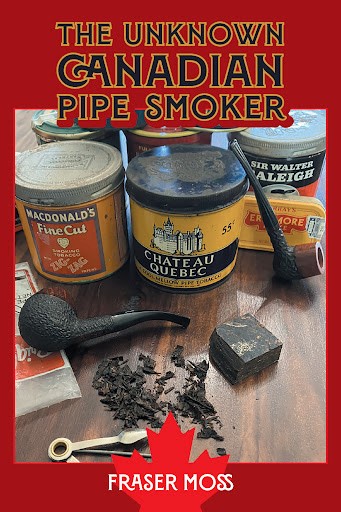
A Book Review: The Unknown Canadian Pipe Smoker


by Kenneth Lieblich

I’ve been meaning to do some book reviews for a little while now. I’ve read a few pipe-related books in the last few months – some very good, some very bad, and some in between. Today, I am offering a brief review of The Unknown Canadian Pipe Smoker by Fraser Moss. This book is one which leans more towards the good. It is a book that discusses the interesting and significant role that Canadians have played in pipe-making and the pipe-smoking lifestyle. Mr Moss has written some very useful, informative, and enjoyable words, which are somewhat subverted by design choices, spelling errors, and some omissions to the Canadian pipe-smoking world. Despite this, the book is pleasing and worthwhile – and I recommend it.

First, let’s talk about the good – and there is much to like here. In the introduction, Mr Moss begins with his own history in pipe smoking and, in chapter 1, provides an overview of pipes and pipe smoking in general. Chapter 2 focuses more particularly on briar and what goes into actually making a pipe. From that point on, the majority of the book consists of discussions about and/or with major Canadian pipe makers: Briar, Sweat, and Tears Pipes (in chapter 3), Julius Vesz Pipes (in chapter 4), Brigham Pipes (in chapter 5), Blatter & Blatter (in chapter 6), and MacQueen Pipes (in chapter 7). He writes about the history of each company, their methods of pipe making, their trials and tribulations, the quality of their work, and their prospects for the future. These chapters are a fine insight into these important pipe companies, and I commend Mr Moss for providing some fascinating details – including many pieces of information I had never read before. I particularly enjoyed the chapter on Julius Vesz. There is also an appendix which exhibits several pipe shops across Canada. This was helpful, as these shops are becoming a dying breed. The price of the book is worth it for these chapters. Mr Moss’ writing is clear, concise, and entertaining.

However, there are some significant omissions from this book. I realize that not every pipe maker in Canadian history can be included (a point that Mr Moss acknowledges in the book, saying, ‘I do not get paid to write’), but there are a few who, in my opinion, should not have been overlooked. In particular, there is no information provided on such notable names as John Calich, Leonard Payne, or the Paradis Brothers – among others. I would also include Michael Parks on this list, but at least Mr Moss briefly explained why he didn’t include him. Not including these pipe makers is problematic, in my opinion. Even a concise write-up on these men would have been a worthy contribution. In fact, one of the appendices is entitled, ‘Canadian Pipe Makers, Past and Present’ and it provides a short and simple list of such makers – and it is surprisingly incomplete.

There are some niggling details of design that detract slightly from the book, but I will skip over these, as I may be viewed as overly pedantic. However, there are some points that cannot be overlooked. Specifically, there is no table of contents, there is no index, and there are no running heads. It is very simple to add these things to books, and they greatly improve the enjoyment of reading.

There is one issue in this book which I find to be quite ridiculous: the misspelling. I realize that anyone (including myself) can make a typo, but when writing a book – for goodness’ sake – get it properly proofread! I am not even referring to simple, run-of-the-mill words – I am talking about proper names. Misspelling someone’s name, in this context, is unforgiveable. This book includes the following:

  • Jim Cook (instead of Jim Cooke)
  • Russ Oulette (instead of Russ Ouellette)
  • Stephanie Downie (instead of Stephen Downie – oh dear)
  • Marky Tinsky (instead of Mark Tinsky)
  • Rattary’s (instead of Rattray’s)
  • Bronfmen (instead of Bronfman)
  • William Shanter (instead of William Shatner)

I will not end this review on a negative, because this is a good book. It is worth reading, so go and buy it. The stories of the pipe makers are compelling and you will learn a great deal – while being entertained. I read it while smoking my pipe and it was most fitting. The book has some difficulties, but they do not overcome the fine interview material that Fraser Moss has provided. I look forward to future books from Mr Moss – or perhaps a second edition of this book.

I hope you enjoyed reading my review of The Unknown Canadian Pipe Smoker by Fraser Moss. If you are interested in more of my work, please follow me here on Steve’s website or send me an email at kenneth@knightsofthepipe.com. Thank you very much for reading and, as always, I welcome and encourage your comments.


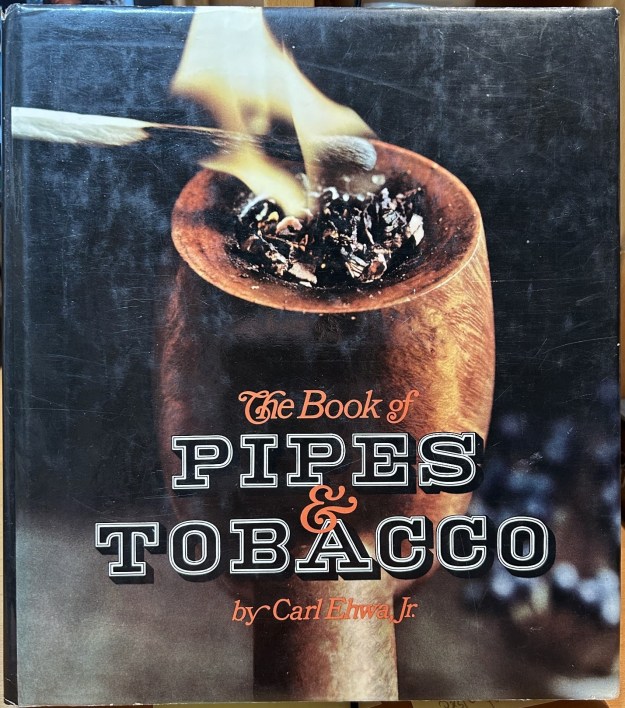
A Book Review – The Book of Pipes & Tobacco by Carl Ehwa, Jr.


Blog by Kenneth Lieblich
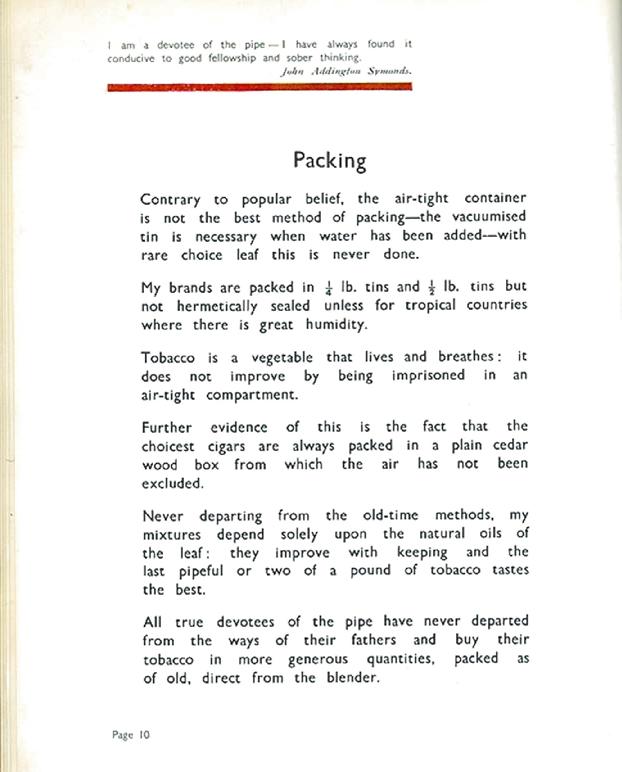
It has now been fifty years since the publication of The Book of Pipes & Tobacco by master tobacco blender, Carl Ehwa, Jr. In that time, there have been few – if any – books that are as enjoyable on the subject as this one. This book only ever had one printing and, nowadays, it is a challenge to find it at a reasonable price. Today, I am offering a feeble (and brief) review on the book – and a copy of the book for sale. My intent is not to provide a lengthy or comprehensive review of Ehwa’s book. Instead, I hope to draw your attention to an important resource and fine reference, which ought to have a place in your personal library.

Carl Ehwa was the master blender of the Fred Diebel Tobacco Company and, in 1977, he and his wife, Mary, founded the famous (and now defunct) McClelland Tobacco Company. He was apparently an interesting character and had a great deal of knowledge of pipes, pipe smoking, tobacco production, et cetera. In 1974, Carl and Mary managed to convince Random House to publish a book on pipes – this was no small feat, as Random House did not normally publish such books.

First and foremost, it is worth mentioning that this winsome book is full of beautiful photographs and other images. The photographs are well-taken, illustrative, and copious. However, this is not merely a picture book for the coffee table. It is an excellent and quite thorough study of pipes and tobacco, in which the writing is perfectly complemented by the numerous, fine photos and illustrations. Ehwa divides his book into four parts, each of which is further subdivided into relevant topics.

Part One – The Remarkable Evolution of Smoking. In essence, this is a history of smoking from ancient times to the present (circa 1974) day. I am a lover and student of history, but I’ve often felt that many books with chapters on smoking history are quite humdrum and make no attempt to draw the reader in. Fortunately, Ehwa entertains and challenges the reader in this section and (pleasingly) makes no attempt to be exhaustive. Instead, his writing is relevant and makes one feel prepared for the information to come.

Part Two – The Amiable Pipe. This section addresses the pipe as a cultural item, as an objet d’art, and as a source of pleasure. Ehwa gives thorough descriptions of pipes of clay, porcelain, various softwoods, hookahs, meerschaum, calabash, and, of course, briar. He provides the fascinating histories behind each of these styles of pipe and allows us to sense the differences and delights of the various materials. Many amusing stories are found here and they are well worth reading. It is, by far, the longest chapter in the book and I learned so much from this section – no surprise.

Part Three – Tobacco: “The Special Herb”. As you might guess, this section describes (in considerable detail) the growing, curing, processing, and blending of tobacco. The entire manufacturing process from planting to smoking is covered in an engaging manor. Of course, it also discusses the different types of tobacco and their numerous cuts. Helpfully, Ehwa also offers suggestions to the reader on the selection and storage of tobacco. This is another terrific read, with particularly useful photographs — I especially like the photos (contemporaneous with the book) of the tobacco auctions in the southern USA.

Part Four – Pleasure of the Pipe. This section is well described by its subtitle: “The art of getting the most from tobacco and pipe”. Ehwa provides advice (1) for the new pipe smoker; (2) on filling and lighting a pipe; (3) on caring for a pipe; and (4) on solving some common pipe-smoking problems. He offers as good advice as you’ll find anywhere, but he is in no way preaching. I found it interesting to compare his advice with other pieces of advice I’ve picked from other books or mentors (like Steve). It is a fine way to close out a fine book.

As you can tell, I highly recommend this book. It is one of the best pipe books ever written in the English language. The book is thorough without being tedious, informative without being condescending, and entertaining without being frivolous. I have seen some comments online suggesting books from Richard Carleton Hacker over this one. Although I enjoyed Hacker’s books, I find his writing to be a bit turgid (and his accuracy to be a bit amiss), and I unhesitatingly recommend Carl Ehwa’s book over the others.

I am pleased to announce that this book is for sale! If you are interested in acquiring it, please have a look in the ‘Pipe Accessories’ section of the store here on Steve’s website. You can also email me directly at kenneth@knightsofthepipe.com. I hope you enjoyed reading my review of The Book of Pipes and Tobacco by Carl Ehwa, Jr. If you are interested in more of my work, please follow me here on Steve’s website or send me an email. Thank you very much for reading and, as always, I welcome and encourage your comments.

A Book Review – Tobacco Leaves by Bewlay (Second Edition – 1892)


Review by Steve Laug

I don’t remember where I picked this book up but it is an old timer with the Second Edition coming out in 1892. It is called Tobacco Leaves by Bewlay. Under that it is stamped Entd at Stationers Hall. The title on the cover of the book is stamped in gold around a pair of tobacco leaves. The book was printed and distributed by Bewlay and Company – makers of fine tobacco pipes and accessories.

From the Preface I dray the following paragraphs:

“The universal use of Tobacco in some form or other all the world over, and the interest which devotees of the weed take in everything related to it, have suggested the literary whiffs now offered from the entertainments of our numerous supporters and the public generally.

The smoker is a contemplative man, and we venture to hope that he may find food for reflection in the Tobacco Leaves which are here unrolled for his perusal.

Among smokers, a sort of Freemasonry exists; and not only does their harmless indulgence constitute a fraternal bond between them  which levels social distinctions, but it has educed a mystic symbolism that has found expression in very many effusions of which the following is an example:-

 “Of lordly men, how humbling is the type,

A fleeting shadow, a tobacco pipe!

His mind the fire, his frame the tube of clay,

His breath the smoke so idly puffed away,

His food the herb that fills the hollow bowl,

Death is the stopper, ashes end the whole.”

While in the following pages an endeavor is made to the principal sources of supply whence the best growths of tobacco are obtained, we would specially direct attention to what is said respecting the importation by us of Indian and Burmah Cheroots and Cigars. Our agents write, that “the natives take great pains in their manufacture (especially in Burmah), to turn out a well-made Cigard and Cheroot, very different in appearance to the rough-looking Lunkah formerly sent.” The excellence of these Cigars and Cheroots has resulted in a large and growing demand since we first introduced them. – Bewlay & Co. 49. Strand.

Because of the breadth of material in the small, less than 100 page book I decided to divided it by the chapters that Bewlay divided it into and make comments in each section by Chapter division.

The book begins immediately after the Preface with a chapter on smoking and whether or not is beneficial of harmful. The chapter is entitled: Chapter 1 – Pages 7-18 Is Smoking Beneficial or Pernicious? In the chapter various historical arguments are made for both sides of the argument – yea or nay. Of course it moves forward to a strong defense of the beneficial nature of the moderate use of tobacco. It is sprinkles with quotes in defense of the use of tobacco and the serious benefits to those who use it! From there the book turns to exactly what I would expect in the second chapter.

This chapter marshals famous devotees of tobacco and what they say about their use of the “weed”. Chapter 2 – Pages 19-28  is entitled:  Eminent Devotees of the Weed. It cites various proponents from all over the continent on their use of tobacco and what they have found that it does for them. There are some poems and odes to the beauty of tobacco that are also included in this chapter. These figures include political, scientific, medical and literary figures. It is a great read and pretty normal for this kind of booklet from this time period.

From there the book turns to talk about Tobacco itself instead of defending it. Chapter 3 – Pages 29-31 Tobacco as a Prophylactic covers some interesting information. I quote the opening paragraph as it captures the focus of the chapter.

Tobacco smoking has long been regarded as a warder off or prophylactic of catching disease, and is strongly believed in both by soldiers and sailors, and many other classes. Army surgeons consider smoking gives confidence to many soldiers, and this confidence they regard as a very important factor on the outbreak of an epidemic such as cholera – pg 29.

From there the chapter turns to it use in gardening for killing blight in a greenhouse and as a germicide. Its use is also noted by doctors who have seen its value in the medical and dental professions. It is a short chapter but fascinating in its old time medical information.

Chapter 4 – Pages 32-41 Some Facts About Tobacco moves to giving a general overview of the history of tobacco and the nature and use of tobaccos of various regions and countries. It also overviews the various tobaccos from the United States which are by far the greater proportion of the unmanufactured tobaccos imported into the United Kingdom – Shag, Returns, Bird’s Eye, Maryland, Canaster or K’naster. The chapter ends with a witty poem about tobaccos.

Chapter 5 – Pages 42-47 The Adulteration of Tobacco and Cigars. This chapter is not what I expected from the title. It is actually about flavoring or topping tobacco and snuff with such things as molasses, sugar, aloes, liquorice, gum, catechu, oil and lampblack, alum, tannic acitd and iron, logwood, and such leaves as rhubarb, chicory, cabbage, burdock and coltsfoot. It is an interesting read about this in all forms of tobacco products including cigarettes and cigars. It makes me wonder what they would have written about in our day!

Chapter 6 – Pages 48-57 On Pipes gives a short overview of the history and types of pipes that have been and are available. It covers clay, meerschaum and briar pipes quite well and has some great quotable lines such as: “The best kind of pipe to use is a perfectly clean pipe, composed of an absorbing material, like briar, clay or meerschaum, with a long stem, which can suck up the oily matter before it reaches the mouth….”  The chapter ends with some great older poems about the pipe.

Chapter 7 – Pages 58-66 Remarks on Havannah, Indian, Burmah, Flor de Dindigul and Flor de Java Cigars and Cheroots covers by region cigars and cheroots that are sold by Bewlay and Company. Great historical read by region.

Chapter 8 – Pages 67-77 Cigarettes, like the previous chapter covers this method of using tobacco. There is a great quote that heads the chapter that I cite below:

“The man who smokes thinks like a sage and acts like a Samaritan.” – Bulwer Lytton

Chapter 9 – Pages 78-93 a Catalogue of Bewlay & Co. Limited. As the title suggests these large section of the book is a catalogue of products. Each product has a description and there are often etchings of the product itself – such as pipes.

This is a great little book well worth the read. It is a journey into the past with a great sense of what the world was like at this time in the history of England. If like me you enjoy Bewlay pipes in your collection it is all the more reason to keep an eye for this book.


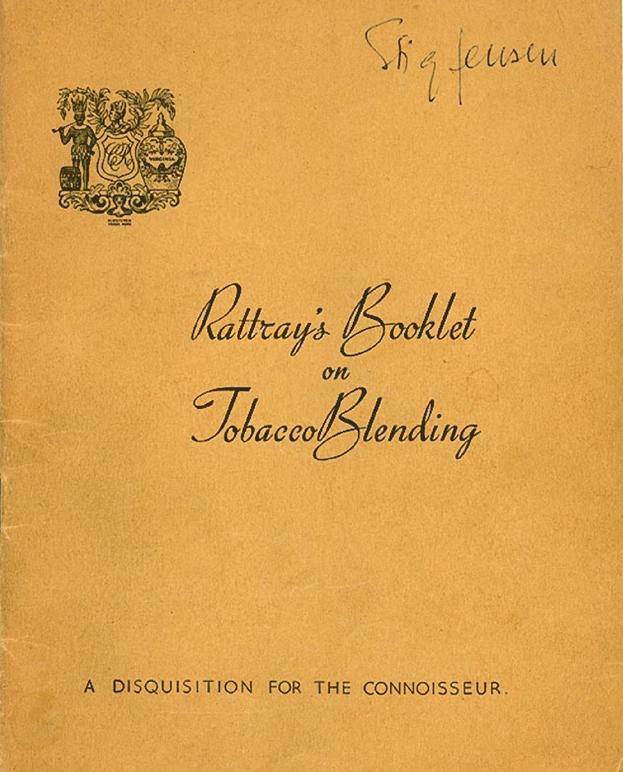
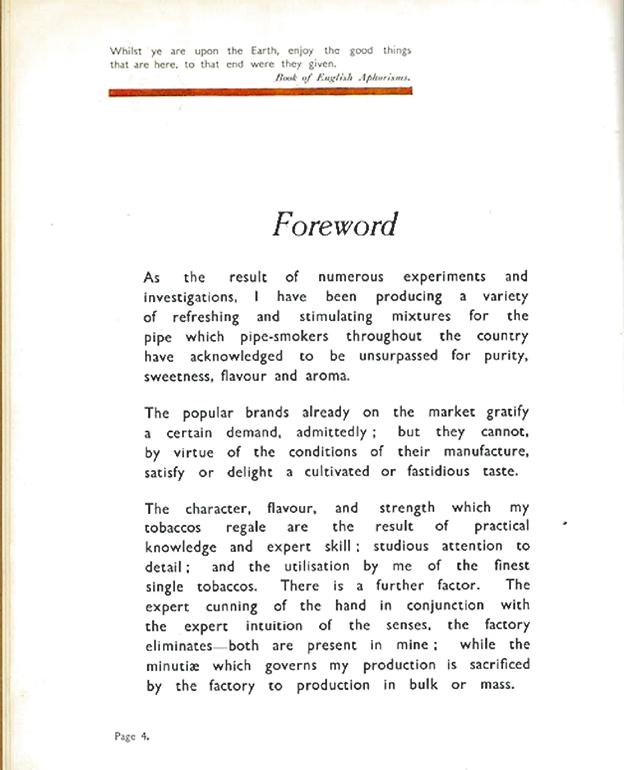
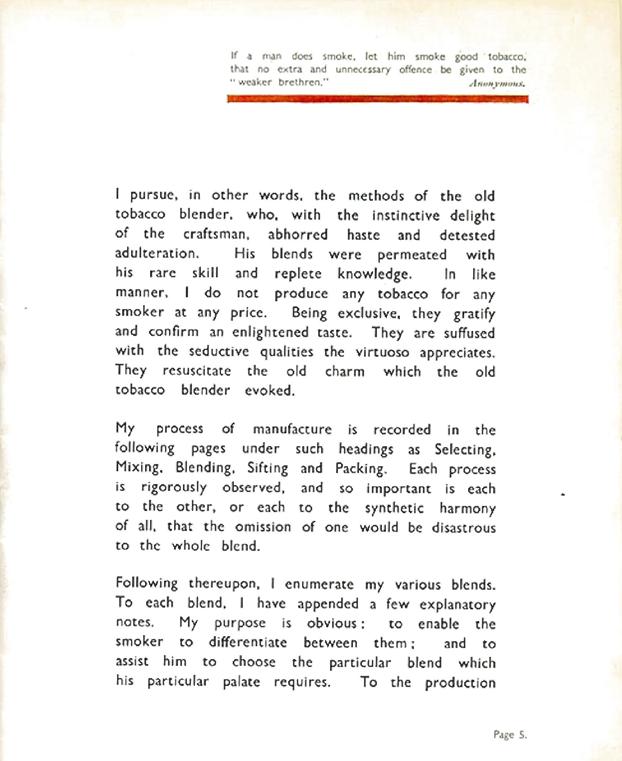
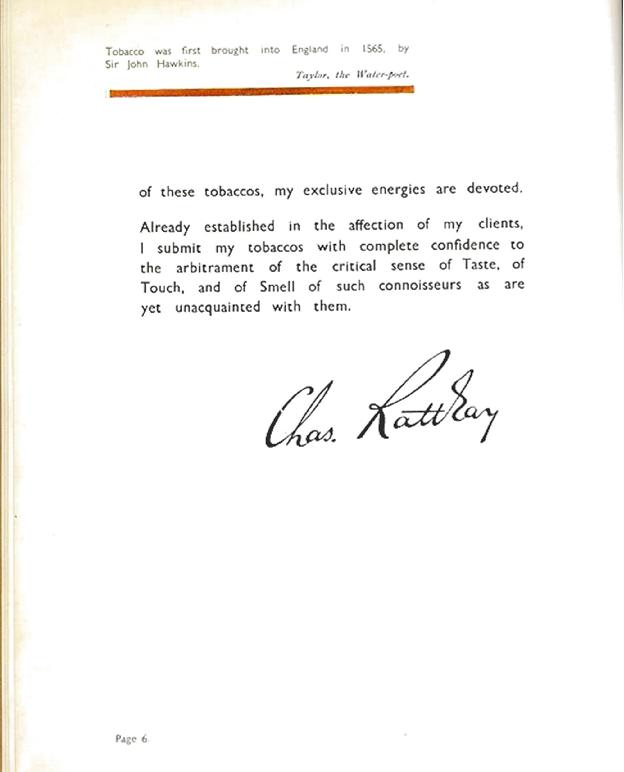
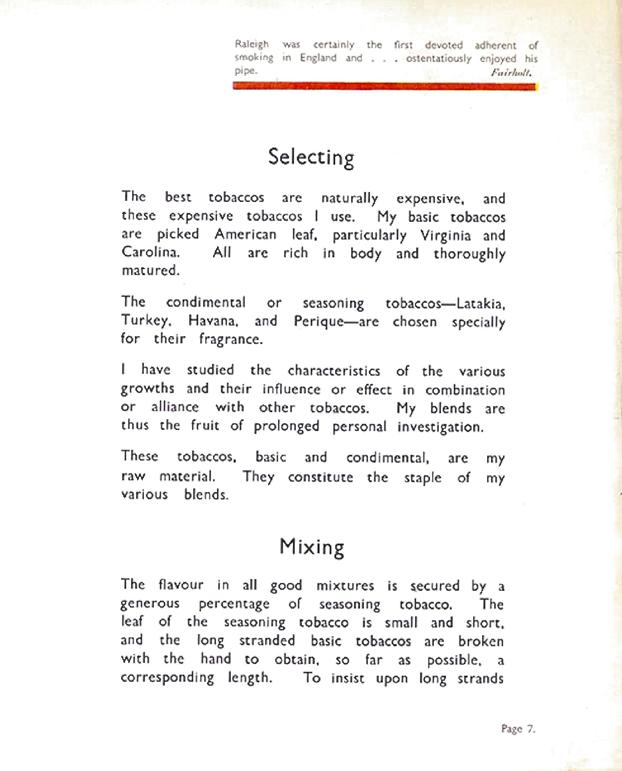
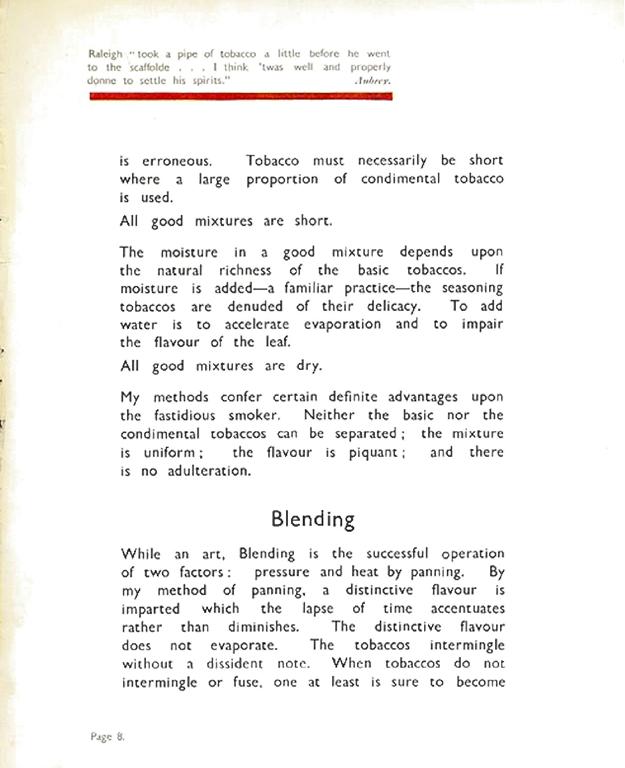
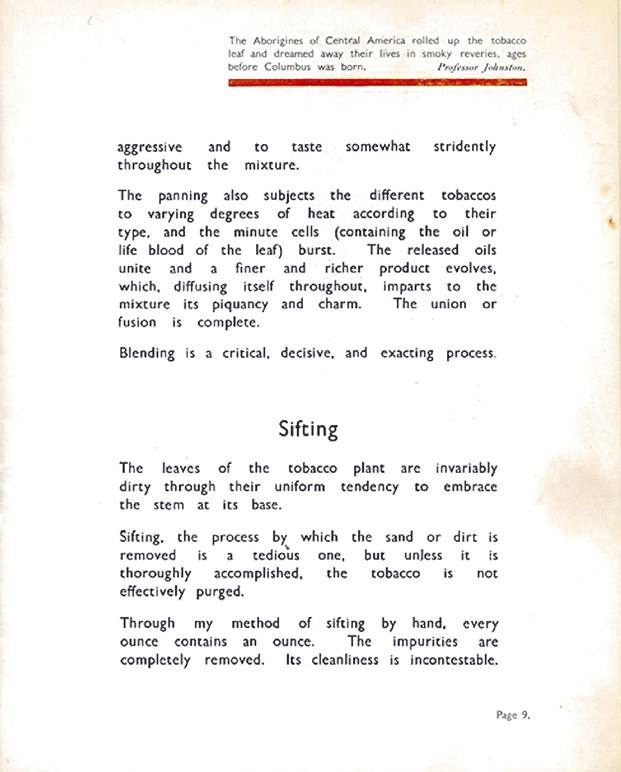
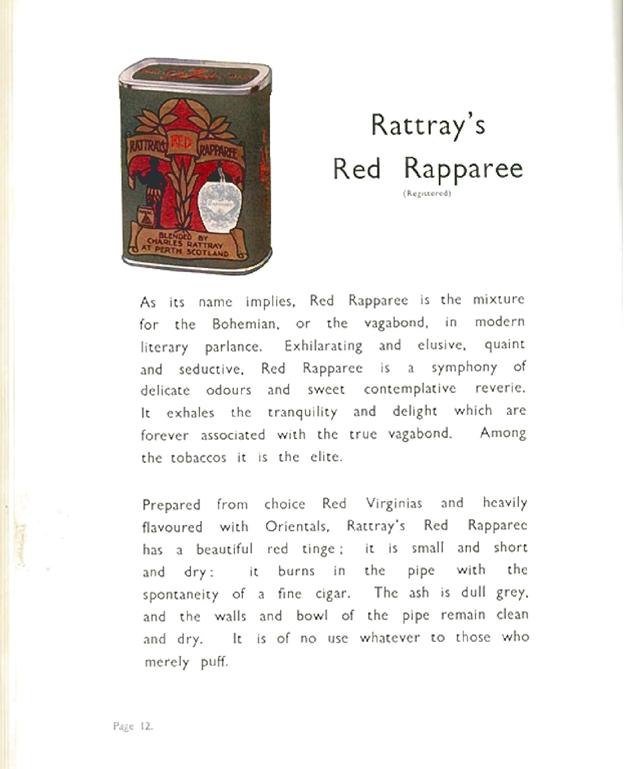
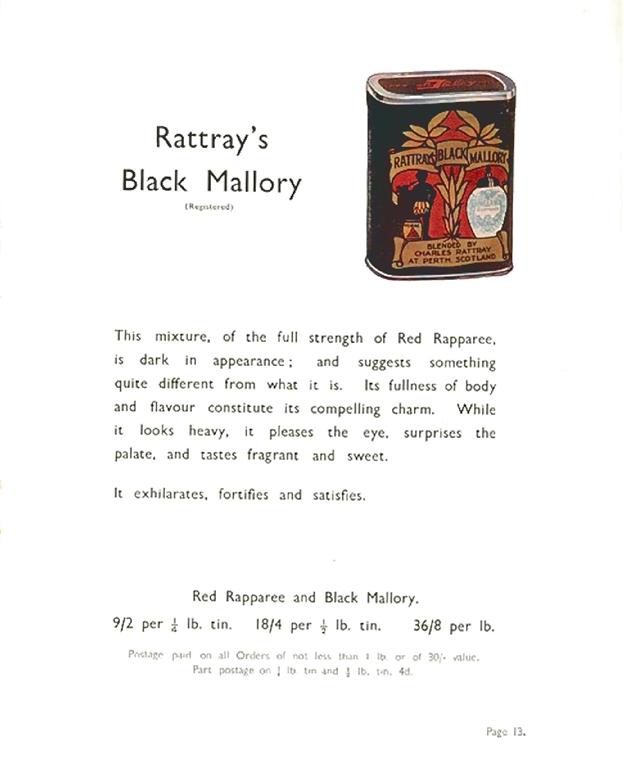
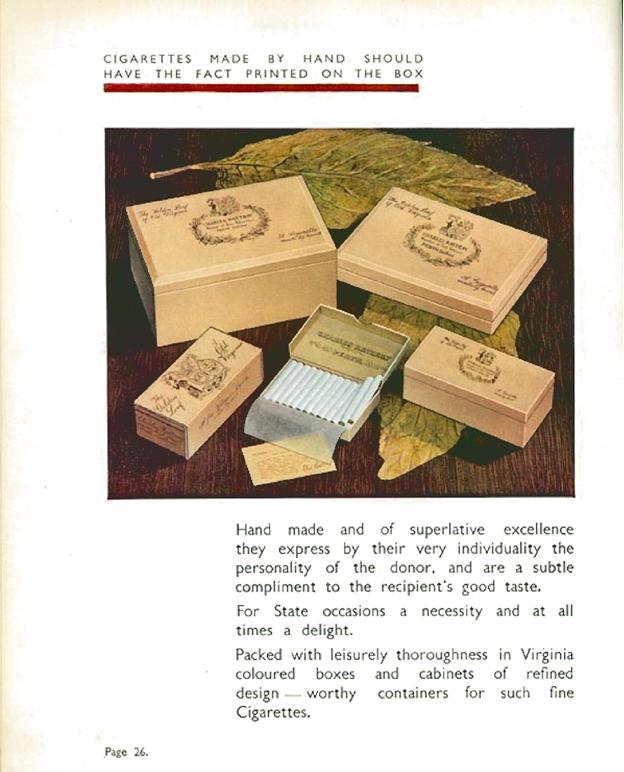
A Review of “Rattray’s Booklet on Tobacco Blending: A Disquisition for the Connoisseur,” and the Original Text


Review by Robert M. Boughton

Member, International Society of Codgers
Member, North American Society of Pipe Collectors
Member, Facebook Gentlemen’s Pipe Smoking Society
http://www.roadrunnerpipes.com COMING SOON!
http://wordpress.com/roadrunnerpipes/  Blog
http://about.me/boughtonrobert
Photos © the Author except as noted

“Look at almost any painting.  Three-quarters of the can vas is covered by the background.  Tradition is the background of our life.  Take away the background, and you have spoilt the painting.”
— Charles Rattray (1880-1964), quoted in “Up in Smoke,” article by Russell Kirk, Chicago Sunday Tribune, December 9, 1956A FOREWORD FOR MODERN TOBACCO CONNOISSEURS

Charles Rattray

Had I not chanced upon one of Gregory L. Pease’s always informative and entertaining essays in a browser search for better information about Charles Rattray, the late great Scottish tobacco blender, than the scads of teasing, contradictory bits and pieces that clutter the so-called Information Superhighway, I might never have learned about the “Disquisition.”  I was working on a review of Rattray’s Jocks Mixture, determined to dig up some real dirt about the blend and the methods of the man whose name was on the tall orange tin.  Just when I thought I had wasted almost an hour making frequent refinements to the search terms, up popped Mr. Pease’s listing at the top of the page, with the wholly irrelevant seeming title “Those Pesky Non-Polar Molecules.”  Doubtful but intrigued, I scanned the URL’s blurb that ended with the incomplete sentence, “In fact, Charles Rattray, in his ‘Disquisition….”  Stifling some very ugly words even though I would have been the only human to hear them, but with the presence of mind to consider the sensibilities of my cat, Tiger Lily, I jabbed the blue link.

Speed reading the piece, the gist of which was fine and dandy but all about the different ways to preserve tobacco and maybe even improve its taste, blah-blah-blah, I came across the sentence I was gasping to find.  As I read, I stopped breathing altogether.  Here are the only words in the entire essay, which I saved to my Favorites because I gathered enough to know I would enjoy the real subject more at a later date (as I did), that began my quest anew: “In fact, Charles Rattray, in his ‘Disquisition for the Pipe Smoker,’ wrote that the last bowl from his tins would be the best.”

And so, typing the given title for another search, I saw there were 1,950 entries, the top three being other links to the same article by Mr. Pease, followed by everything from pipe smoking in Middle Earth to a disquisition on the evils of using tobacco.  Well, I can tell you, I had just about had it.  But being relentless, I added “rattray” before the same title, and although the possibilities were a touch fewer at 1,139, well down the first page I felt a glimmer of hope in the description of a site called “Welcome to the Pipe Tobacco Aging, Storage, and Cellaring FAQ!”  Maybe the exclamation point stopped me enough to spy, among various sentence fragments separated by more damned ellipsis marks, one with Rattray’s in bold and another being “Disquisition for the Connoisseur.”  Clicking on this link to verify that Mr. Rattray was indeed the author of said Disquisition, I had to exercise a level of patience that is atypical to my normal threshold, and forced myself to venture 47 pages – or halfway down my scroll bar – into the bowels of the collection of documents, on the subject with the exclamatory heading noted above, before I came across yet another Mr. Pease quote, this one referring to Rattray’s “Disquisition for the Connoisseur.”  Why, in the name of all that’s holy, I beseeched myself, had I not just Googled that whole term in the first place?  At any rate, there is a purpose to all of this verbiage.

Mindful of not being the only tobacco pipe aficionado to have read the famous and extraordinary discourse by Mr. Rattray, founder of the famed House of Rattray, I am certain of the high probability that still many more like-minded pipe folks out there remain oblivious to its existence.   The sole reasons for such a detailed description of the blocks I encountered while hunting for a bona fide version of the work are to demonstrate the sometimes arduous task of locating the exact document one knows exists somewhere, even with search terms one would have every right to believe are sufficient, and to make the fruit of this personal crusade available with fewer trials to others who also seek accurate details of Mr. Rattray’s lifework, including his own published wisdom.  The Disquisition that follows my foreword is essential reading toward that end.  The clear opinions in this opening commentary are my own.

Steve Laug is, as am I, an acknowledged enthusiast of the habitual conditions called Pipe Acquisition Disorder (P.A.D.), Tobacco Acquisition Disorder (T.A.D.) and Pipe Tobacciana Acquisition Disorder (PTAD) – which I propose henceforth be referenced in combined form as Pipe, Tobacco and Tobacciana Acquisition Disorder, or PTTAD for those of us who are self-diagnosed or in denial.  As such (with an emphasis on PTAD, under which category I suppose the Disquisition falls), Steve published the same copy in 2012, calling the booklet a catalog and adding only a brief opening comment recommending it to readers.  The full name of the 30-page tract is somewhat misleading given the use of the prepositional phrase “on Tobacco Blending” followed by the subtitle “A Disquisition for the Connoisseur.”  The two parts combined suggest far more particulars of the contents of the Rattray’s mixtures, meaning the nine available when the Disquisition was written, than the blender’s seminal publication reveals.  Even so, the work remains a fascinating insight into the personality and philosophy of its author as much from its disclosures as its omissions.  Some of these show apparent deliberation while others tend perhaps toward the subconscious.  By the way, as of today, more than 40 Rattray’s blends have been released.

My frustration locating an online copy of the great work, even after the attempts already described and one more that pulled up a boggling number of references in tobacco discussions, articles and commentaries, turned out to be the result of my own failure, which I concede in advance was a bit stupid, to add the single word “online” after the second part of the Disquisition’s name.  In frustration, and with my tail between my legs, I dispatched a message to Mr. Pease, an eminent blender of fine pipe tobaccos in his own right, soliciting his aid.   His quick and thoughtful response led to the copy included here in its entirety, and by example to links of many others.  A quick but excited first reading set my mind abuzz with perceptions garnered from the primary source of this review that for the most part I did not find echoed anywhere else in my research.

Unlike some facsimiles, the PDF to which I was guided includes curious handwritten notes on the title page and one other.  Having exhausted every means of deciphering the words, which I considered might or might not be in English, and even consulting online Scottish alphabet and cursive handwriting sources, I made an unconditional surrender as to the words on the title page.  Regarding those on page 22, I ventured a guess that I thought was grasping.  In the end of this particular pursuit, I reached out for Steve’s almost encyclopedic opinion.  Two mornings ago, just in time to begin the final revisions to this review (or so I thought), I was rewarded with his agreement, in the latter of two responses via email, that the second note seems to be “write re shipping.”  But Steve’s initial response, appearing in my inbox below the other and concerning the title page, astounded me.  He interpreted it as a name, “Sh q. Jensen.”  Smiling and nodding in silence, almost laughing out loud, I revisited the title page and could only concur – with one suggested amendment: building upon Steve’s astute conclusion, the notion that Sh might be an abbreviation taken from some book owners’ proprietary need to write or in other more OCD examples stamp words to the effect of “From the library of (insert name),” I reasoned that Sh could be an abbreviation for “shelf,” as in “From the shelf of Q. Jensen.”  With a final search for words and acronyms involving the two letters in question, I confirmed the wild guess at the fifth Web link in my list of sources.

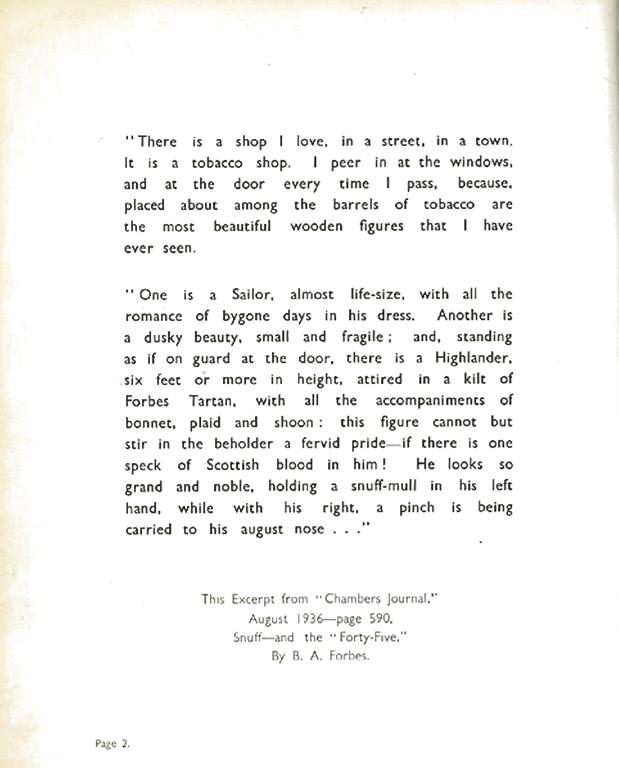
Nevertheless, the original year of the Disquisition’s distribution remains a mystery, but be assured I will not give up trying to find a definitive determination.  For now, I can report with certainty that the booklet was issued much later than I had believed, considering the extended quote on page 2, replete with the type of romantic nostalgia popular to many Scots of great and lesser renown, and most often encountered in the bawdy singing heard in pubs of that proud and sentimental country that forms roughly the northern half of Great Britain.  Attributed to a certain gentleman whose prose leaves no doubt he was a Scotsman with literary aspirations, by the name of B.A. Forbes, the essay, titled “Snuff – and the ‘Forty-Five’,” appeared in Chambers’s Journal of Popular Literature, Science, and Arts in August 1936.  For the edification of anyone familiar with or interested in this magazine, it was published under that name in London from 1854-1956 as the continuation of its predecessor, Chambers’s Edinburgh Journal (1832-1853, published in Edinburgh).

For a glimpse at Rattray’s nationalistic pride and his personality in general, and tobacco blending philosophy in particular, the primary source of which I have already hinted, of course, is Rattray’s Booklet on Tobacco Blending: A Disquisition for the Connoisseur.  Again, there are frequent mentions of “Rattray’s Disquisition” or just “the Disquisition,” the latter reminiscent of rare classical music masterpieces, for example Johan Pachelbel’s Canon in D Major for strings, with its alternating melancholy and somewhat more upbeat parts, being referred to as “the Canon”; J.S. Bach’s Toccata and Fugue in D Minor for organ, called “the Fugue,” and Tomaso Albinoni’s Adagio in G Minor for strings and organ, a work of a profound  sense of impending doom that builds into an almost harrowing conclusion, known as “the Adagio.”

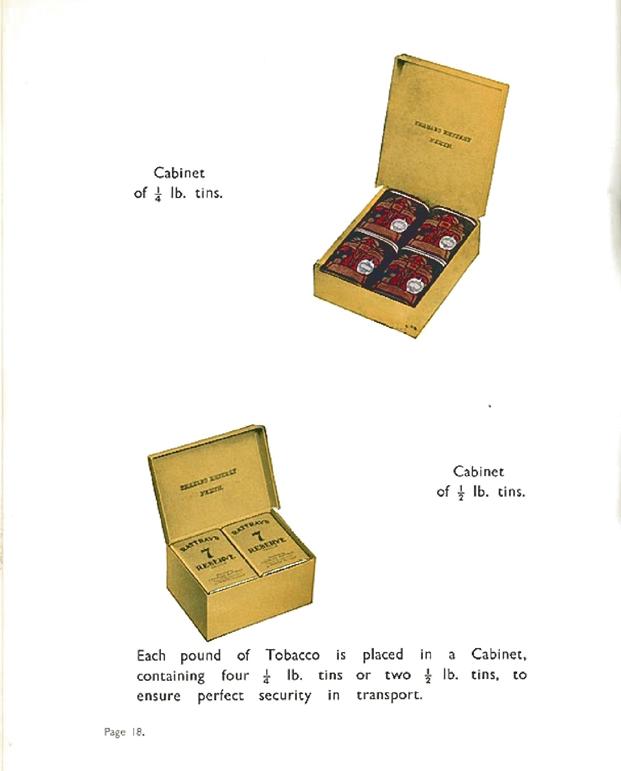
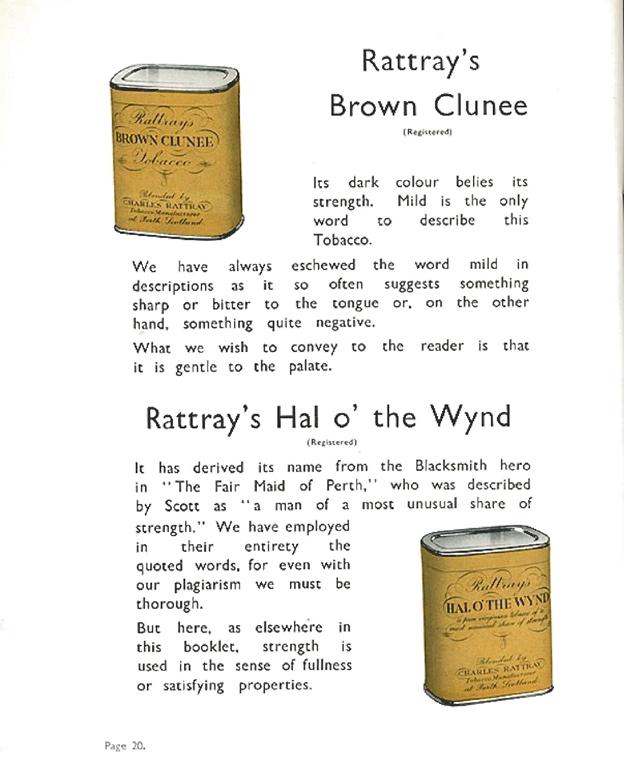
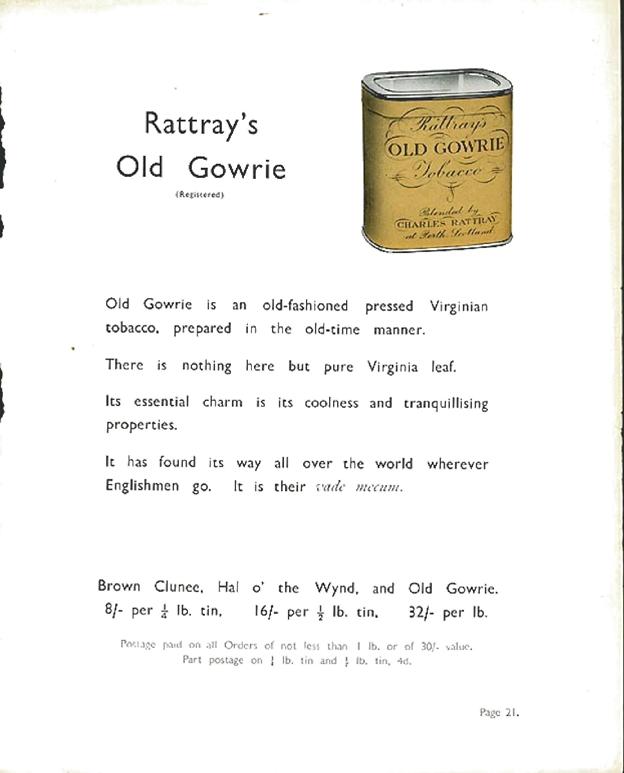
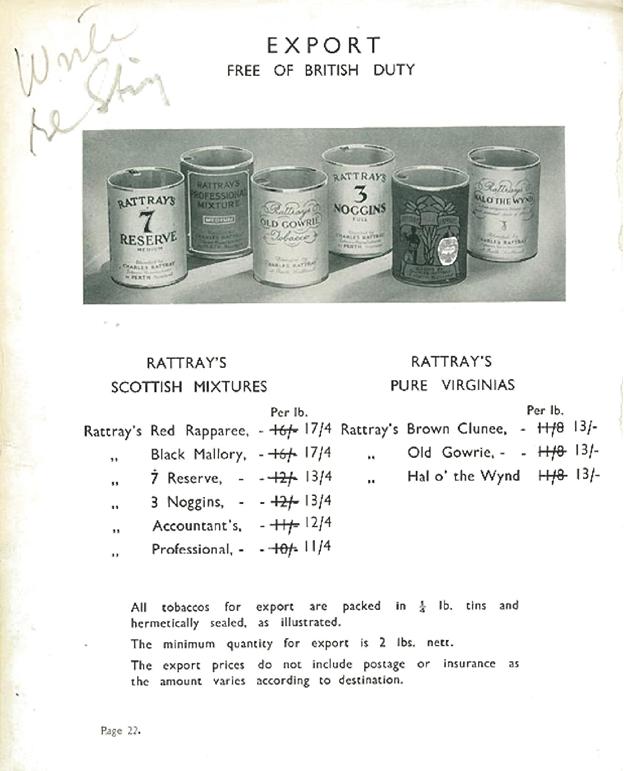
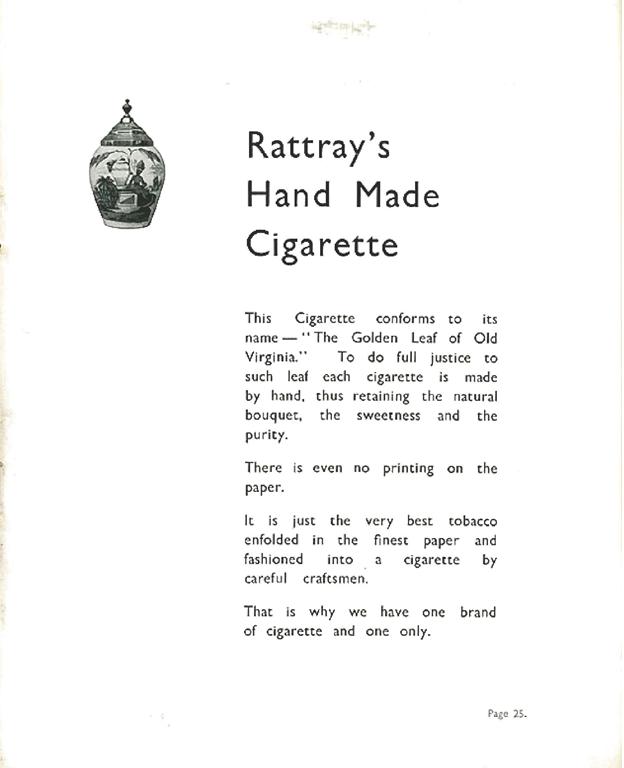
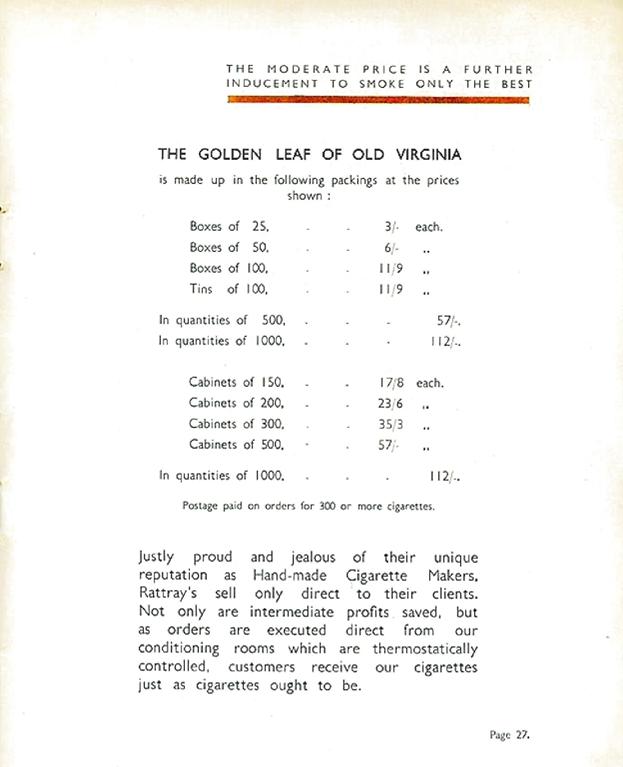
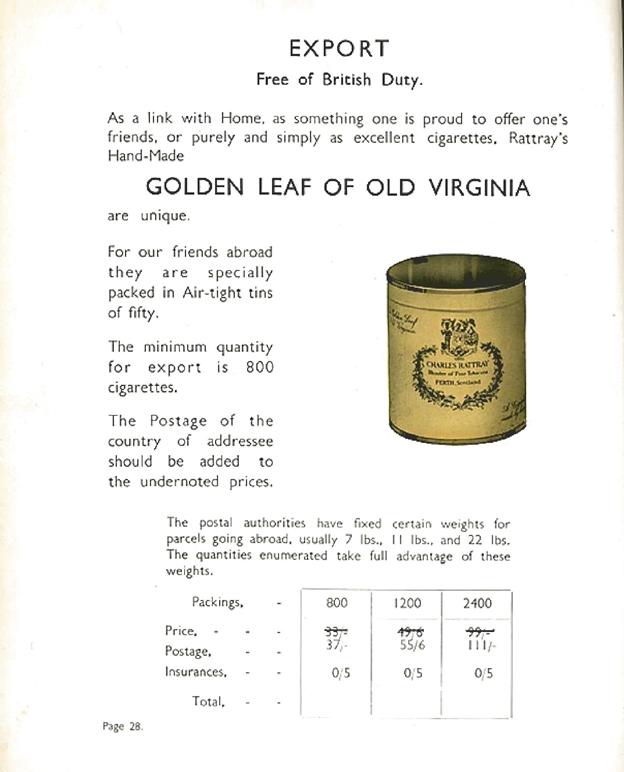
The Disquisition is divided into eight parts: an informal preface; the foreword proper; a synopsis of the five elements of creating what the master blender and author called the House of Rattray’s “adherence to the true unhurried craftsmanship, the secret of our success;” six blends specifically identified as Scottish Mixtures, showing their domestic prices; “Cabinet,” or sampler pack choices with their prices; three All-Virginian Mixtures giving the same pricing; Export Prices for the pipe tobaccos, and, described last but with effusive pomp, Rattray’s Hand Made Cigarette (the Golden Leaf of Old Virginia), the reason “why we have one cigarette and one only,” again with domestic and Export Prices depending on the quantity ordered.  All prices are stated in shillings and pence.  For example, the lowest domestic price per ¼ lb. tin of Red Rapparee and Black Mallory is shown as 9/2, or nine shillings two pence.

Every pipester, as Mr. Pease sometimes calls us, whether he coined the term or not, should give the Disquisition thorough consideration.  If the reader is as inquisitive as I am, he (and I use the pronoun in the formal writing sense, not to exclude the many women among us) will find himself more and more engrossed, compelled to keep turning the pages, as it were.  In fact, I, for one, hope someday to own a genuine, ink and paper original printed edition of the prideful, almost swaggering presentation.  Moving forward from the weathered but elegant title page, take in every detail and nuance that combine to create a portrait of Charles Rattray, the man, the Scot and the tobacco blender.

Read every word of the text, as all of them were chosen by the author with the skill of a master craftsman, the cunning and wile of a politician avoiding the real answers to questions, the reluctance of the true chef to reveal too many secrets of his recipes – and, last but above all else, the fierce pride of the Scotsman who created the invaluable legacy of the now almost forgotten traditions of quality tobacco blending.

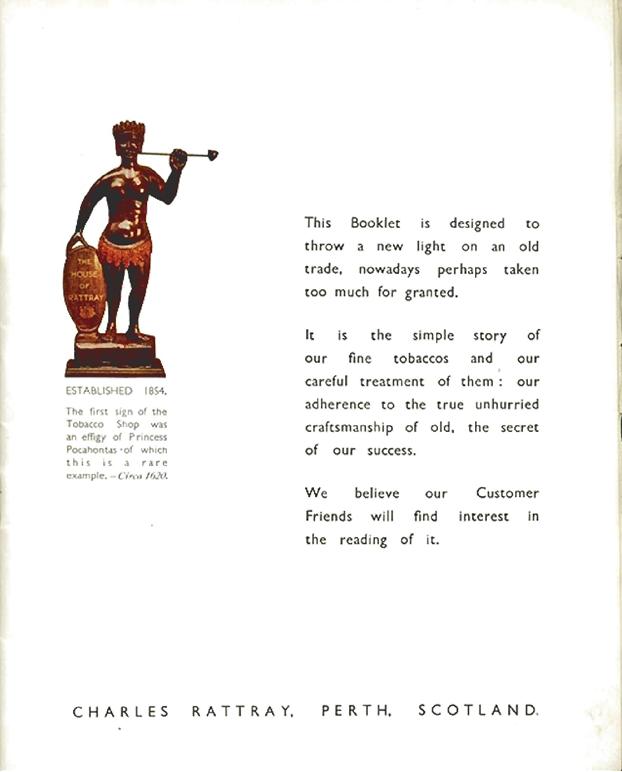
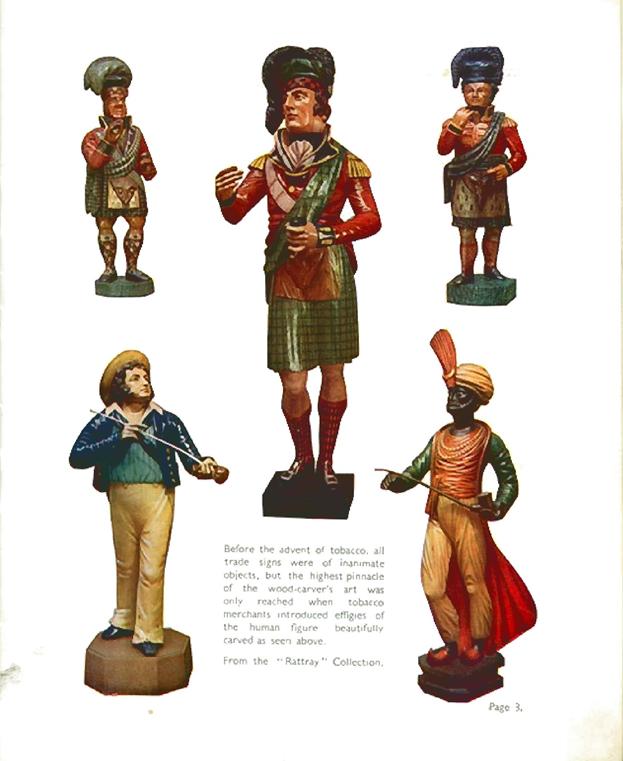
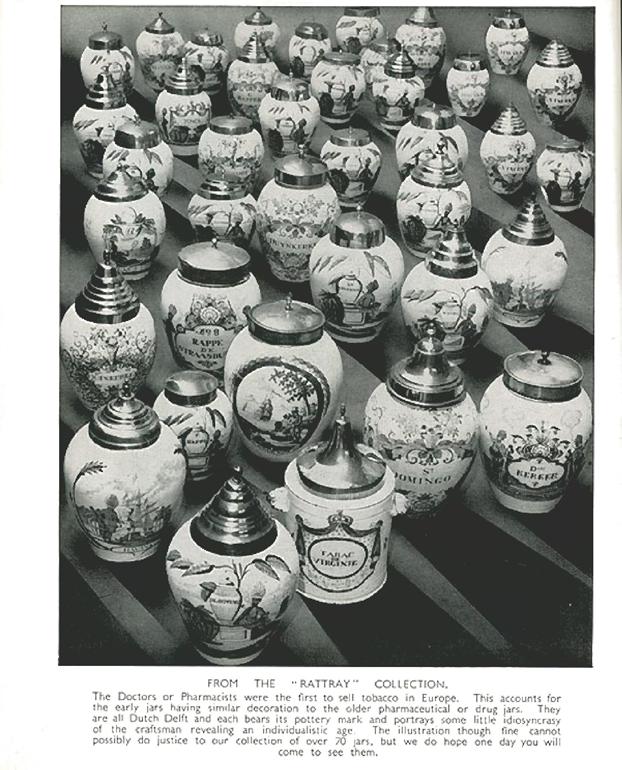
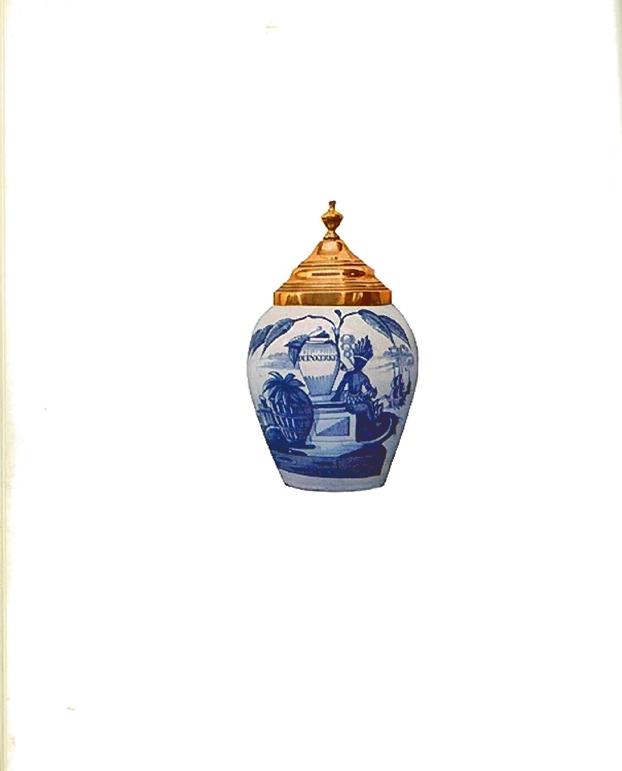
Study every image of antique statuettes and jars, each of them a special illustration of the centuries old history, traditions and values of the tobacconist’s trade, and singled out by the hands of the founder of the House of Rattray from his family’s vast, treasured collection.

Don’t miss a single quote related to the enjoyment of pipes and tobaccos, selected by Mr. Rattray with the same attention to history and tradition that is the theme of his Disquisition, which further illustrate the purpose behind his vocation and business, and when combined with the images of priceless tobacciana are especially telling of his sentiments.    Beginning with the longest from B.A. Forbes found at the end of the preface, the quotes, all derived from sources subject to the British Crown, continue in small bars heading each page of the following Foreword and the synopsis of the four fundamental preparatory acts, with the fifth being the final choices of which leafs and their quantities to choose for a given blend, and provide an enhanced understanding of the Rattray story.

That story and a large part of Mr. Rattray’s pride began with the Clan Rattray.  According to legend, the Clan dates to the early11th century, when Malcolm II, born c. 954, King of Scots from 1005 until his death in 1034,  granted one of the first men of the Rattray surname –which at the time was an ancient variation –the position of Laird of Rattray.  The royal appointment as laird, or landed proprietor, gave the early Rattray immediate authority over the occupants of Perthshire, now the County of Perth, and also made him accountable to the king for payment of certain incomes in that period’s equivalent of taxes.  It was true then as it is now: every promotion comes with a price.  For more details of the legend of Clan Rattray’s origin, based on the accounts passed down through the family for more or less a millennium, there is as always a link in my sources.

When Mr. Rattray died in 1964, his son, Charles Rattray, Jr., inherited the Scottish tobacco throne.  At some unclear point in the 1970s (or, in the alternative provided by less reliable sources, the 1960s), Robert McConnell Tobaccos of London assumed responsibility for some of the Rattray’s blends.  Which specific blends is unclear, depending on the source consulted.  Some say all of the Rattray’s English blends were assigned to McConnell; others posit the vague notion that “blends intended for export to the U.S.,” which category begs interpretation as either specific blend names made for sale in the U.S. alone, or those that were available here.  Either way, the latter idea seems, perhaps only to me, laughable considering the lack of any handy evidence supporting a theory that any product made by Rattray’s was excluded for sale in the rest of the world or not available to U.S. importers.  The tenuous claims I have mentioned are intended for the reader’s own conclusion or, I hope, to inspire debate, and in no way alter the fact that both McConnell and Kohlhase Kopp became involved in the evolution of the House of Rattray after the founder’s death, with the latter at whatever date assuming current ownership.  I always desire and appreciate input readers may have concerning these or any other statements I make in my various contributions to this forum.

The complete transition of Rattray’s ownership is also subject to debate.  Kohlhasse Kopp & Co. of Germany was formed in 1979, not long before the universal dating of the House of Rattray’s closure in 1980.  The question remains, however, whether McConnell ever had complete control of Rattray’s production until 1990, when the best sources I can find assert Kohlhasse Kopp’s acquisition.  There is no doubt, at least, that Rattray’s pipe tobaccos are now manufactured in Denmark.

I will leave the final point of contention in the worldwide community of tobacco pipe smokers, relative to the overall quality of Rattray’s products after Mr. Rattray’s death, to the many members of that clan.

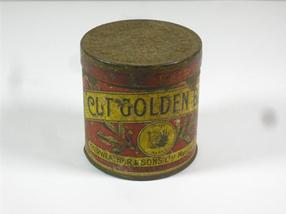
Antique Fairweather & Sons tobacco tin, courtesy of the Internet

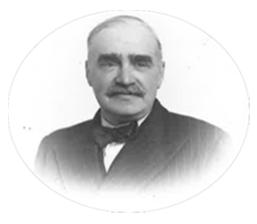
If there is such a thing as predestination, Charles Rattray is the perfect example.  The man who can reasonably be credited with perfecting if not creating a style of tobacco known today as the Scottish mixture was born in Dundee – where he began learning the skills and knowledge that led to his long reign as the premier blender in Scotland – at Fairweather & Sons.  Some of his early blends while in the employ of Fairweather were deemed suitable for sale at that establishment.

House of Rattray, found on Pipedia

The details of Rattray’s ascension to the throne vary in the sources cited at the end, but my account of his rise is based on the most reliable of these.  He remained in Dundee until 1903, when, at only 23, he set out for the capitol city of Perth and worked at the Brown Tobacco Shop on High Street 158, which he purchased eight years later and renamed as the House of Rattray. The rest, as the saying goes, is history.

SOURCES

http://archives.chicagotribune.com/1956/12/09/page/24/article/up-in-smoke#text
http://glpease.com/BriarAndLeaf/?p=28
https://rebornpipes.com/tag/rattrays-tobacco/
http://www.glpease.com/about.html
https://www.allacronyms.com/SH/Construction
https://pipedia.org/wiki/Rattray’s
https://www.lincolnwatchclinic.co.uk/rattray-s-tobacco
http://atthebackofthehill.blogspot.com/2008/11/astleys-no-99-full-latakia-mixture.html
http://www.loringpage.com/attpipes/tobdatepaper.html
http://www.tobaccopipes.com/blog/rattrays-past-present-and-future/
http://kohlhase-kopp.com/ceemes/tabak/rattray-s/?ref_pfeifentabak
http://www.clanrattray.com/about-the-clan.aspx
http://de.kompass.com/et/c/kohlhase-kopp-co-gmbh-co-kg-tabakwaren-import-und-grosshandel/de187782/
http://www.fumeursdepipe.net/telecha/rattraysbooklet.pdf

A Book Review – Back From the Ashes: Uncovering the Lost History of G.L. Hunt and the Falcon Pipe by K.A. Worth


Blog by Steve Laug
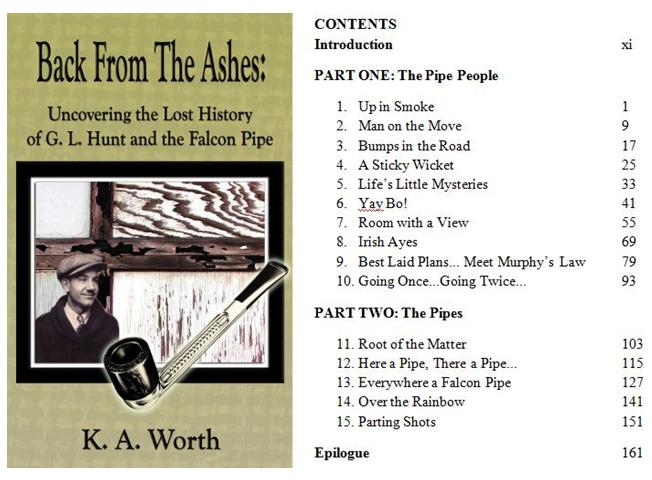
51Ja9LXHtyL I first picked this book up at a Chicago Pipe Show at a table where G.L. Hunt’s daughter, K.A. Worth was selling her new book on her father and the Falcon Pipe. I remember sitting and talking with her about the book and the pipe and being fascinated with both the history of the pipe and the man. It is a memory that runs through my mind each time I pick up this book or one of the Falcons that I have in my pipe cupboard. She autographed my copy which only enhances the memory of that day in Chicago.

Her book is divided into two parts. The first section she calls The Pipe People and it covers a little over 100 pages. The second section she calls The Pipes and it covers about 60 pages. I have included a screen shot of the Table of Contents to show how the book is laid out. Prior to the first part she has an Introduction and following the second part is an Epilogue.

The Introduction sets the stage for the book. It starts with the following quote: “It all began in the imagination of an American engineer. Prolific inventor Kenly Bugg of Ft. Wayne, Indiana, put pencil to paper and soon a revolutionary new smoker’s pipe emerged… Bugg patented his Falcon design on August 21, 1945… Enter the genius of G.L. Hunt and his company, Diversey Machine Works – an oft quoted statistic has George Hunt selling some six million Falcons by 1954 in the United States alone.”

The author goes on with a brief survey and concludes the Intro with this quote: “In this volume we will chronicle the development of the Falcon pipe and the Falcon companies, along the way paying tribute to those who ushered the pipe to worldwide renown. Here we will provide what will surely prove the most comprehensive Falcon history to date… Come now… let’s step inside…”

The quote gives the reader the author’s purpose for the book and invites them into the pages of her book. Let’s look at the parts and evaluate whether she fulfilled her purpose.

PART ONE: The Pipe People

“…The Falcon Pipe is the most unique in all the pipe world. I know you are familiar with the tremendous success of the Falcon Pipe here in the States and the success it has enjoyed throughout the Sterling Countries – those people and companies that are associated with Falcon Pipe do become known as “The Pipe People”… George L. Hunt – May 1963.”

This quote is on the header page of the first part of the book. With it the author introduces the man and the process of development of the Falcon. She tells it through her interactions with her grandfather and the archives of material that she read through in preparation for this book. It is a fascinating way to tell the story and is immensely readable and it the method that she uses throughout the book. It is the largest part of the book, Chapters 1-10, and really gives the most clear, readable and concise history of the brand that is available.

In this review, rather than go chapter by chapter and summarize the contents, I will summarize each part of the book and give a more global picture of the book. I am not as concerned to give a view per page as to give the potential purchaser a feel for what is included in the book itself. They can read the details themselves.

PART ONE is the overall history of the brand from when author’s grandfather bought the patents to when the pipe came to be one of the most well-known brands of throughout history. She looks at the pipe from its inception and the connection between the inventor and her grandfather through to its expansion into the British market with a view of the struggles and strains that went with that expansion. Thus she takes the reader on the journey from patent of the Falcon to its manufacture and marketing. She does not skip over all of the glitches and struggles along the way but describes them in a humorous style that makes the reader a part of the discovery process she is on in writing the book. There is also background information given on each of the key individuals in the mix – Kenly Bugg, G.L. Hunt, David E. Morris, Howard Hodgkins and Michael Jim Dixon. Many others are listed and covered as well but these seem to be key players who interact with and cause change in the life and direction of the Falcon brand. The first part ends with a picture of an advertisement for a Falcon Universal Pipe Companion and a brief paragraph bringing the history of the brand to an end.

PART TWO: The Pipe

This part of the book gives the reader an in-depth look at the pipe itself. The author includes quite a few photos of different bowls and stems as well as a variety of advertizing brochures and pamphlets issued by Falcon. Even flipping through the photos gives the reader a good idea of the variety and scope of the Falcon pipe and its enthusiasts. It is an amazing collection of photos and pamphlets/brochures.
The Part begins with a brief description of the harvesting and curing of briar for the Falcon bowls. There are also production drawings and outcomes of the number of bowls that were turned in a given year. There is even a photo of a meerschaum lined briar bowl (that is one that I have never seen anywhere). The next section covers the manufacture of the base and stem for the pipe. It is a fascinating read and the pictures of the bases and the stamping is helpful in making sense of the various bases that I have. There are many different examples of Falcon bowls and bases throughout the section.

There is a section on the variations on the British scene in terms of Falcon shapes and sizes. Again the author includes many advertisements and photos. Also there is information on the Alco line and the Brentford line. I had heard about Falcon making the Alco pipes but I was unfamiliar with the Brentfords. There is information on the development of the coloured bowls and bases and the Shillelagh line coming out of Ireland. Several other Falcon lines that I was unfamiliar with end Part Two. Falcon produced a pipe with a pyrolitic graphite lined bowl, a filter version of the pipe and finally a line of pipe related products for the pipe smoker. These included finger pipe tampers (look like thimbles), dry rings for wet smokers, Falcon pipe spray pipe cleaner, matches, mix and match bowls, tobacco blends and much more.

Part Two is by far my favourite part of the book because it takes a lot of the various Falcon pipes that I have had in the shop and gives the background and rationale of the variations. The pictures and drawings as well as flyers etc. give a clear picture of the brand at its height.

The book ends with an Epilogue that pulls together all of the final pieces of the history of the company and the pipe.

It is a well written easy to read book. I would unhesitatingly recommend it to anyone wanting to know about the history and the variety of Falcon pipes and also those who may want a quick introduction before purchasing and enjoying a pipe. Well worth a read and many rereads. I refer to my copy whenever I am working on a Falcon to get a better idea of where it fits into the chronology of the brand. Buy it! You will not regret this great addition to pipe history.

A Book Review – The Pipe by Georges Herment


Blog by Steve Laug

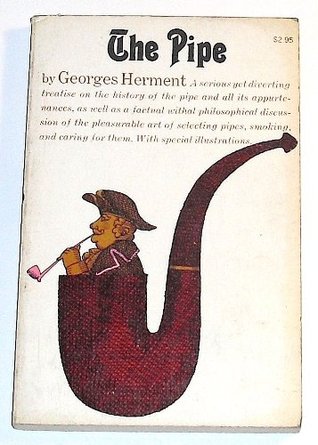
1433852Beyond its simple cover, this book has a subtitle that is very 19th century— “a serious yet diverting treatise on the history of the pipe and all its appurtenances, as well as a factual withal philosophical discussion of the pleasure art of selecting pipes, smoking, and caring for them.”

I picked this older copy of Herment’s book up in a thrift shop in the US on a trip to visit family and friends in the late 1990’s. It was one of the first pipe books that I found and started me on the hunt for other books to add to my tobacciana collection of books. This one was printed by Simon and Schuster in 1972. It was a reprint of the original print in 1954, 1955. It was originally sold for $2.95 and when I bought it used it cost me $4.95

Herment’s Introduction, originally written in 1954 gives a sense of what he wished to achieve in his writing of this book. It also gives a sense of the spirit in which it is to be read. I quote his Introduction in full:

“At the risk of disappointing the reader on the very threshold of this book, we feel it our duty to warn him that it has been written in the manner of a poem, by a flash of happy inspiration.” p.xi.

“As may well be the case with a poem, twenty years of meditation and brooding have scarcely been sufficient incubation to produce these few pages. In the light of these observations it will be easier to grasp what follows:” p.xi.

“Treated in a purely technical style, a subject such as ours could not have failed to rebuff the simple amateur. On the other hand the veteran or professional smoker would have considered it too superficial to satisfy his requirements, not full enough to fulfill his desires.” p.xi.TOC1

“Thanks to a complete and exhaustive knowledge of the subject, after year of experience and research, we have been able to conceive this work in its fullest scope and present it to the reader just as the spirit came to us – current calamo. Such has been our aim. Have we attained it? The reader, be he veteran or amateur, must be the judge. – G.H.” p.xi.

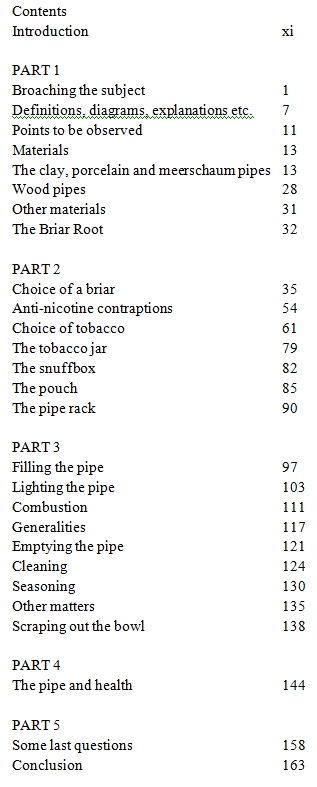
As I have done in previous reviews I have included a copy of the Table of Contents to the left. I always read that when I am beginning a book to understand the logic of the book. In this case Herment has given us a good view of the way he treats the topic of the pipe. He divides his book into 5 parts with each pipe covering a different aspect of the pipe. The book is also illustrated with line drawings throughout.

PART 1 starts where most of the pipe books that I have read start – with the history and manufacture of the pipe. The difference is that it does not begin with the discovery and bringing of tobacco back to Europe. It does not go into the growing or manufacture of pipe tobacco. It merely looks at the pipe itself. He includes 8 short chapters that cover the topic at hand.

Herment begins with a chapter on definitions and diagrams and explanations before going into the rest of the section. The diagrams and definitions set the playing field for a common discussion of the author with the readers. He points out key points that he will unpack in the rest of the book.

From there he works through the various materials used in making pipes. He discusses clay, porcelain, meerschaum, wood (rosewood, cherrywood), other materials such as bone and Moorish copper tubing with wooden bowls before finally discussing briar. He singles out briar for special attention because of it being the focus of the book he is writing. The author’s style of writing is refreshingly crisp and quick. He moves rapidly, yet thoroughly through the topics he has chosen to discuss.

Each short chapter in PART 1 gives not only a description of the pipe but details on how the materials are fashioned and worked to become the object that we now call a pipe. It is a concise description that gives details of construction, shaping and manufacture of pipes.

PART 2 is dedicated to the pipe and all of the necessary and tangential accessories that have been manufactured for the pipe smoker. He presents the material in seven chapters that detail the topic at hand. He looks at the briar itself and describes the different pipe shapes that have been manufactured. He includes a shape chart and names for each shape. He also looks at the drilling and shape of the bowls, the materials used for the stems and how those stems were inserted in the shank of the pipe. He gives a really well written description on the parts and function of the pipe.

The second chapter in this part is dedicated to anti-nicotine contraptions. This chapter is by far one of the most interesting as it spells out some of the creative means that were developed to minimize the nicotine from the tobacco.

The remainder of the chapters, other than the one on snuffboxes, explores the various accoutrements of pipesmoking beginning with the tobacco that is smoked in the pipe and ending with the rack to hold the pipe.

PART 3 is all about smoking and caring for a pipe. This part is composed of nine chapters that take the reader from the proper packing of a pipe, lighting it, smoking it, emptying it out, cleaning the bowl and stem (each smoke, thorough cleaning and disassembling the pipe and cleaning), seasoning the pipe and finally reaming it. Herment has some really interesting concepts in each of these sections. Some of them have long since ceased to be used but are fascinating to read about. For instance in the chapter on lighting the pipe he uses a method that I had not seen until I read it here. A piece of paper is put on top of the bowl and filled with tobacco and pressed into the bowl. The paper is twisted at the top forming a fuse and that is lit. As the paper burns the tobacco is evenly lit – or at least it is according to Herment.

Part 4 covers the issues of the Pipe and Health. In this chapter the author shows that the opinions on tobacco are evenly divided between those who see it as a health risk and those who see moderate use as inconsequential or giving stress relief. It is an interesting read to see how far our culture has departed from this kind of even presentation of the facts. He also gives anecdotal accounts of how tobacco was used for relieving constipation (enema) and to act as a vermifuge. It is a fascinating read.

Part 5 is the final part and includes some final questions and a conclusion. The final questions were not what I expected when I turned to this chapter. What the chapter covers is the longevity of the pipe – will it be with us forever. Herment says that yes. Here is the direct quote at the conclusion of his discussion:

“We have said that the pipe is eternal. Its outward shape may change, may evolve, may possibly modernize, but the principle of the bowl-mouthpiece remains forever immutable.” p.162

And another quote

“But while virgin, the pipe remains a Sleeping Beauty. It is not until the first whiff of smoke has risen from the bowl that its true life begins. So let us awaken it – and when awake may it prove to be the true Pipe of Peace, reminding us that we are all brothers.” p.162.

To me that would have been a great end to the book but the author adds a Conclusion. To me the final sentences are typical of the style that is found throughout the book. I quote it here to close this review.

“One would think less of drowning a dog than of throwing a pipe in the dustbin – but then a dead dog cannot be awakened, but there will always be found men everywhere who will awaken the pipe.” p.164.

I heartily recommend this book. I have read it many times over the years since I bought. It is amusing, entertaining and thoroughly enjoyable. I learn, laugh and reflect on the turns of phrase that Herment seems to have captured. He knows the pipe and when I have read his book I feel like I know him.

Amazon.com lists copies of the book for sale as does Google books. Purchase one and I don’t think you will be disappointed.

A Book Review – The Pipe Companion: A Connoisseur’s Guide by David Wright


Blog by Steve Laug

494194Several things about this book caught my attention when I first saw it. The first of course was the magnificent photography that graces the pages. It is literally packed with more than 125 full colour plates of pipes. The age of some of the pipes made me read the fly-leaf of the cover to know more about the author. That is when the second thing caught my attention, The Pipe Companion was written by David Wright who is the Curator of the Museum of Tobacco Art & History in Nashville, Tennessee, USA. What was interesting about that was the wealth of tobacciana that was available to the author at his work place. I was already hooked before I even read any of the text.

When I did read the fly-leaf on the cover it only solidified my commitment to purchase the book. I quote from there:

“Smoking a pipe is a refined, relaxing ritual. More than a tool for reflection, a well-crafted pipe is a work of art to be admired and appreciated. Whether made of clay, briar, or meerschaum, every pipe’s personality and history is evident I the beauty of its bowl and the style of its stem.”
“Profiling more than 50 master carvers from around the world and their elegant, yet functional creations, The Pipe Companion is the essential guide to the world of pipes. Within these pages you’ll explore the exquisite artistry of pipe making and enjoy a behind-the-scenes tour of carving styles and manufacturing techniques. You’ll also learn about the history of the pipe – from its North American origins to its spread throughout Europe and the Middle East to the wide variety of classical and freehand styles popular today (2000). Finally you’ll discover modern pipe-smoking customs and practices, as well as learn how to select, smoke, and care for your pipes.”

“Perfect for both pipe enthusiasts and anyone with a penchant for the occasional puff, The Pipe Companion provides practical advice along with a wealth of information. So lean back, fire up your pipe, and enjoy.”

As with previous reviews I have written I include the table of contents to give an idea of how the author proceeds to do what is promised in the quotations from the preface or in this case the fly-leaf of the book’s cover. It is arranged in three parts with subsections underneath each part. It concludes with a glossary, a suggested reading list, pipe makers contact information and then ends with notes.TOC PART 1: A Brief History of the Pipe – this first section of the book uniquely presents the standard pipe history that has been repeated in a variety of descriptive ways since Alfred Dunhill’s Pipe Book. However, what makes this presentation unique among the others is the beautiful photographs of the pipes from the early periods of history. He looks at the origins of the pipe from Native American pipes to those developed later in Europe when tobacco was brought there.

After giving a very brief description of the origins with photos the author turns to the different types of material that have been used for making pipes. Again this section is graced with beautiful photographs illustrating the pipes made of each material. There are paragraphs on Clay Pipes, Wood Pipes, Porcelain Pipes, Meerschaum Pipes, and Briar Pipes. This section ends with an inserted article on Pipe Production. The interest in artisans who made these pipes sets the stage for the later PART THREE which looks at Pipe Makers.

The author’s style is engaging and enjoyable to read. You are carried forward through the chapter as he unfolds the history, interjecting stories and incidents among the photos of the pipes that illustrate his points. It is well written and flowing in style.

PART 2: The Art of Pipe Making – the second section covers pipe making from the perspective of one person shops to medium-sized factories. Again this PART 2 sets the stage for PART 3 on Pipe Makers. It does this with reference to the fact that before looking at the variety of pipe makers that it is important to understand how block meerschaum and briar are carved from their natural state into functional and artistic pipes.

The first chapter is on the materials that pipes are made from. The first section in this chapter is on meerschaum. It looks at the history of meerschaum and how it is mined and then refined and carved into pipes. There are pictures in the section that show raw meerschaum and ornate figural and design pipes carved from meer.

This is followed by a section on briar. There again the author looks at the agriculture of briar and where it grows and how it is harvested. Then the section looks at the seasoning/curing of the briar and finally how the blocks are cut and then carved into pipes.

The next section covers carving in all of its aspects. There are beautiful photos of figural pipes, carving and then finally of bending the stems that were used. Even machine-made pipes are discussed. It is interesting to note that the author says that even machine-made pipes involve a lot of hand work – sanding, shaping, finishing etc. are all done by hand.

The second chapter describes how to select a pipe. The author likens buying a pipe to buying a car. He discusses the materials that go into making a pipe, the finish and compares machine-made to handmade pipes and closes the chapter by discussing the features of a pipe. He states that the most important feature is free air passage from the bowl to your mouth – mechanics.

The third chapter discusses the how to of smoking a pipe. Truly this section should be called breaking in a new pipe and interestingly the author gives a sub-title part way through the text where he gives it that title. He discusses bowl coatings, various methods of loading a pipe including the Frank method with a brief segue into choice of tobacco. Then he moves to talking about lighting the pipe, tamping the tobacco and concludes with after smoking care and cleaning of the pipe.

PART 2 is a well written concise exposition of the pipe – materials, selection and smoking. It is written in an engaging way but always with the awareness of what is ahead in PART 3 of the book. There is a building excitement in the chapters about the various pipe makers that will be discussed ahead.

PART 3: The Pipe Makers Directory – The remainder, and by far the largest part of the book is the present one. The author has arranged his list of hand-picked pipe makers by country for ease of reference. Quoting from Wright’s introduction to this part of the book:

“As you examine the different carvers around the world and their unique interpretations, you’ll notice similarities and schools of art. The oldest briar school, for example, is centered in Saint-Claude, France. Italy has two distinct schools of carving, while the other Scandinavian countries have a look all their own. Then, there are the United States and Japan. The variety of styles and techniques in the United States reflect America as the proverbial melting pot. In Japan, styling can by very Japanese or exhibit a combination of Japanese and Danish features.” Page 57

“Modern briar and meerschaum pipe styles can be divided into two broad categories: classic and freehand. The classic style has its origins in early French and English pipes. The proportions of the bowl and the stem: length, height, and diameter are standardized in these pipes. Many of the names of classic pipe shapes and styles were chosen many generations ago and reflect the shape or appearance of the pipe… Freehand was a term coined for the “wild” or “organic” designs of Danish pipes that first appeared in the late 1950s. Freehand implies that the pipe carved at the whim of the carver. A truer definition is that the pipe design is governed by the grain of the wood. No two freehand pipes are carved alike, nor do they conform to any one style.” Page 58

Following the short introduction, from which the two quotes above are taken, the author proceeds to move through the various countries he has chosen. In each country he has chosen pipe makers to highlight and includes photographs of their work. This catalogue of pipe makers is the highlight of the book to me and a section I turn to repeatedly. I will list each country as the author has organized them and then give a list of the pipe makers he covers in each one. I don’t know what your thoughts will be but I was surprised by the listings and found there were several I had not heard of previously.

Canada: J. Calich (p.59-61), Julius Vesz (p.62-63).
Corsica: L.J. Georges (p.64-66).

Denmark: Bang’s Pibemageri (p.68-69), Jess Chonowitsch (p.70-72), Lars Ivarsson (p.72-74), Jorn (p.74-75), Anne Julie (p.75-77), W.O. Larsen (p.77-79), Nording (p.79-80), Stanwell (p.81).

France: Butz-Choquin (p.82-83).

Germany: Holger Frickert (p.84-86), Karl-Heinz Joura (p.86-88), Manuel Shaabi (p.88-90).

Great Britain: Ashton (p.91-94), Castleford (p.94-95), Dunhill (p.95-98), Ferndown (p. 98-99).

Ireland: Peterson (p.100-101).

Italy: Ardor (p.103-104), Paolo Becker and Becker & Musico (p.104-106), Brebbia (p.106-108), Castello (p.108-110), Il Ceppo (p.110-111), Mastro de Paja (p.111-113), Radice (p.113-115), Savinelli (p.115-118), Ser Jacopo (p.118-119).

Japan: Shizuo Arita (p. 120-121), Jun’ichiro Higuchi (p.121-122), Tsuge Pipe Company (p.123-124).

Spain: Joan Saladich y Garriga (p.123-127).
Sweden: Bo Nordh (p.128-130).

Turkey: Ismet Bekler (p.132), Yunas Ege (p.133), Sevket Gezer (p.134), Huseyin and Mustafa Sekircioglu (p.133-134), Salim Sener (p.134), Sadik Yanik (p.135).

United States: E. Andrew, Briars (p.136-138), Alfred Baier (p.138-140), Boswell’s Pipe & Tobacco (p.140-142), J.T. & D. Cooke (p.142-144), Cristom (p.144-147), Jody Davis Princeton Pipes (p.147-149), Dr. Grabow (p.149-151), Fairchild Pipes (p.151-153), David Jones Briar Pipes (p.153-155), Kaywoodie (p.155-157), Kirsten Pipe Company, Inc. (p.157-159), Sam Learned (p.159-161), Lucille Ledone (p.161-162), Andrew Marks (p.163-165), Mr. Groum Pipes (p.165-167), Clarence Mickles (p.167-168), Elliott Nachwalter Pipestudio (p.168-170), Denny Souers (p.170-172), Trever Talbert (p.173-174), Mark Tinsky American Smoking Pipe Company (p.175-176) Von Erck’s Pipes & Repairs (p.176-178), Roy Roger Webb (p.178-180), Steve Weiner (p.181-182), Tim West (p.182-186), Randy Wiley (p.186-187)

From the above information it is obvious that the largest portion of the pipe makers included is from the United States. I am assuming that this is because of the author’s location. However, within each section there is a concise biographical note on the pipe maker and a description of the style and where they fit within the classic/freehand division that introduced PART 3. The photos in this section are absolutely stunning and give a good idea of the style, quality and craftsmanship of the makers. I will continue to use this book as a reference to the works of the makers covered and as a wish book of pipes I want to add to the collection.
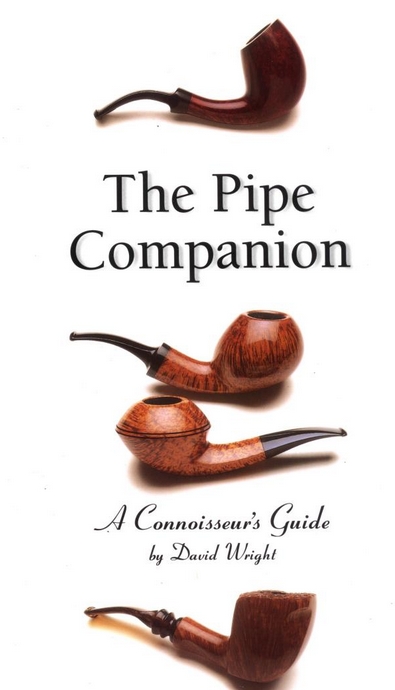
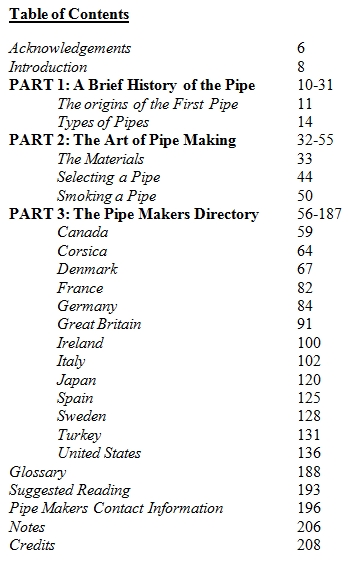
The book ends with some sections that could easily be skipped to the detriment of the reader. The Glossary gives excellent definitions of the terminology of pipe making. These definitions are concise and helpful. The Suggested Reading bibliography is a great resource and one that I use as a checklist of published materials on pipes and tobaccos – both books and periodicals. The Pipe Makers Contact Information is worth a look as well if you want to contact any of the above makers for a commission or just write them a thank you note for a great pipe you are smoking. The book ends with Notes that really are endnotes for the chapters in the book giving bibliographical notes for information used from other references.

I can heartily recommend The Pipe Companion – a Connoisseur’s Guide by David Wright to every pipe collector and collector of books and information on pipes. It is a resource that is well written, well illustrated and unusually thorough in the kind of information that is resourced in the book. It is an ongoing pleasure to read repeatedly or to just thumb through and enjoy the pipe photography that graces the pages from the beginning to the end. If you have not picked this one up you really owe it to yourself to get a copy before it too goes out of print.

A Book Review – Pipes & Tobacco. A Bright and Interesting Discourse on Smokers by J. W. Cundall


Pipes and Tobacco CoverWhat attracted me to this book when I saw it on Briar Books Press was the press release that Gary Schrier posted on his website. It is a rather long opening to this review but I find that it is a great piece of writing and a simple summary of the book itself. There he wrote the following:

“What they were saying in 1901 about “Pipes and Tobacco. A Bright and Interesting Discourse on Smokers” by J. W. Cundall.Long 8vo. Cloth, 6d.”

“To-day. – Mr. J. W. Cundall has written a little volume which all lovers of the fragrant weed will read with interest and amusement. In addition to an account of the history of tobacco, and the science of it growing and blending, many entertaining anecdotes are related of famous smokers, and a large amount of odd information of use to smokers imparted. For a modest outlay of sixpence, at which price it is published, no devotee of ‘My Lady Nicotine’ need lack this latest appreciation of his goddess.”

“My how times have changed! That’s inflation for you. No longer sixpence, but then who other than Briar Books Press discovers such unusual, worthwhile, and most importantly, such entertaining literature for the pipe-smoking man. Hidden for over a century, this delightful gem is a look into our collective past for all the reasons smoking is such good medicine for the soul. Historical yet in many ways contemporary, Pipes and Tobacco is the smoking man’s guide to everything which is important to him. Author Cundall spins an entertaining read for the Englishman on so many of the topics of interest to him at the turn of the last century. From tobacco as a luxury and aid to meditation, to social smoking and as a medicinal aid, to soldiers and smoking, to poetry, to juvenile and royal smokers and smoking in parliament, to Smokiana and the Brotherhood of Smokedom, Cundall covers the subject concisely yet comprehensively. Peppered with quaint tobacco and briar-pipe advertisements, Pipes and Tobacco includes a never-before-divulged statement attesting to the origin of J. M. Barrie’s secret Arcadia mixture as written in his 1890’s novel My Lady Nicotine. A delightful and informative read that will leave you wanting for more.”

Who could resist that press bite and all for only $20USD. I ordered my copy and when it arrived sat down and read the short 103 pages with great interest.
As I often do with these reproductions of older books I turned through the pages to enjoy the layout and design before giving it a read. In this case the book is filled with lots of period advertisements for books and all assortments of items from that time. It also has great illustrations that are well worth the price of purchase in my mind. I am including a copy of the Table of Contents as I also read through that before proceeding with a general read of the book. I have grouped the topics of the chapters into related sections even though the author did not. Even before reading through a book in total I try to organize the flow of the book with a quick scan of the chapters. I look for the logic of the book and then section of the book to get an idea of the author’s direction and intent for his book. Below is a chart showing my grouping of chapters.Chapters The style of this book is very readable and timeless. Cundall’s use of language is clean and forthright and simple to read. It has some of the marks of its age such as punctuation and long sentences but the content flows very well. The design as a pocket-book full of advertisements from the time it was written give it a flavour of nostalgia that for me is refreshing and speaks to a time when things moved more slowly. I can easily see this book carried in a pipeman’s pocket and read on the train or in the evening over a pipe and drink in front of the fire. Schrier has done a great job in reprinting this old classic of pipedom.

I thought it would be helpful to a potential reader to give a quick summary of the sections that I noted above. I don’t do this to spoil the read as much as to give an idea of what you can look forward to when you pick up the book and read it for yourself.

FIRST SECTION (noted in red in the chart)

The author starts as many pipe books before and after him have started. He gives a quick overview of the history, cultivation and how the harvested tobacco is processed and delivered to smokers for use. There is nothing truly new or unique to this section but the style of writing makes it a quick overview or refresher for those who want to jog their memories of the early years and development of tobacco.

SECTION TWO (noted in green in the chart)

Cundall takes a slightly different tack than other writers on the subject have done. He acknowledges that tobacco is a luxury but one that is well worth spending your hard-earned money to procure. It provides enjoyment and community in a way that is out of proportion to its expense. To load a bowl of tobacco and enjoy a smoke enables one to be meditative and contemplative on the one hand but also invites the smoker into a society of smokers that is convivial and erudite. I include two quotes below that give an idea of his style of writing.

“All tobacco is good, only be careful to have only the best.” Page 44

“The pipe draws wisdom from the lips of the philosopher and shuts up the mouth of the foolish. It generates a style of conversation – contemplative, thoughtful, benevolent and unaffected.” Page 53

SECTION THREE (noted in black in the chart)

Cundall begins with the fact that there will always be opponents to pipes and tobacco. While it is vocal and comes from a broad spectrum of society it is contrary to the facts. While abuse and overuse of tobacco can cause physical ailments the facts are there that moderate tobacco use is beneficial. I find that this chapter sets the stage for the further sections of his book. It provides the justification of the remaining sections where he explores the use of tobacco within many settings by many different kinds of people. The quotes from medical and scientific authorities provides the rational base for his advocacy of moderate enjoyment of the pipe.

SECTION FOUR (noted in blue in the chart)

This section explores the spectrum of pipe smoking in the world of Cundall’s day. It could easily be developed by someone to include the use of the pipe in the world of our day. It covers the use of tobacco among the military, authors and poets, the politicians and royalty of his day. One of the charming features is his inclusion of a description of the Smoking Room in the House of Commons in Britain. He includes a chapter which advocates for withholding tobacco from youth until they come of age (when that is does not appear clear to me). However, it is an interesting read nonetheless. The section closes with a collection of quote regarding smoking from clergy, academics, doctors, scientists, politicians and writers that is intriguing. Each quote is singularly worth reading and reflecting on. He entitles it Smokiana – a phrase that he seems to have coined for his use.

CONCLUSION (noted in brown in the chart)

The chapter is entitled “The Brotherhood of Smokedom” and to me serves as the conclusion of the entire book. It is a concise statement of the pipe as an equalizer. Regardless of status or strata of society the pipe takes the smoker to the same place of enjoyment and satisfaction. It provides uncensored enjoyment to all who lift the bowl and sip the smoke. The quote below captures the focus of the chapter.

“When contented are not all men equal, and who can be other than contented with his pipe between his teeth and the tobacco glowing redly in the, whither it be Bird’s-eye or Returns, Shag of the mixture of Arcady.” Page 97

If you enjoy reading about your pipe and tobacco and the relaxation and pleasure that it gives then this is a book you should purchase. It is not a long book but it is one that can be best savoured with a pipe in hand, a favourite drink at your side. Sip the pipe and drink and savour the well written prose of this little book in the quiet of the zone that the pipe opens to you. I recommend that you contact Briar Books Press and order a copy for your own reading as soon as you are able. Who knows when it will once again be out of print.