Tag Archives: Book Review by Kenneth Lieblich

Two Pipe Books for Sale


by Kenneth Lieblich

No restoration story today – just a couple of books from my collection on offer for you! ‘Why on earth are you ridding yourself of these books?’, you may reasonably ask. Well, simply because I have duplicate copies of each. They are both good books, and it is time to send them out into the world.

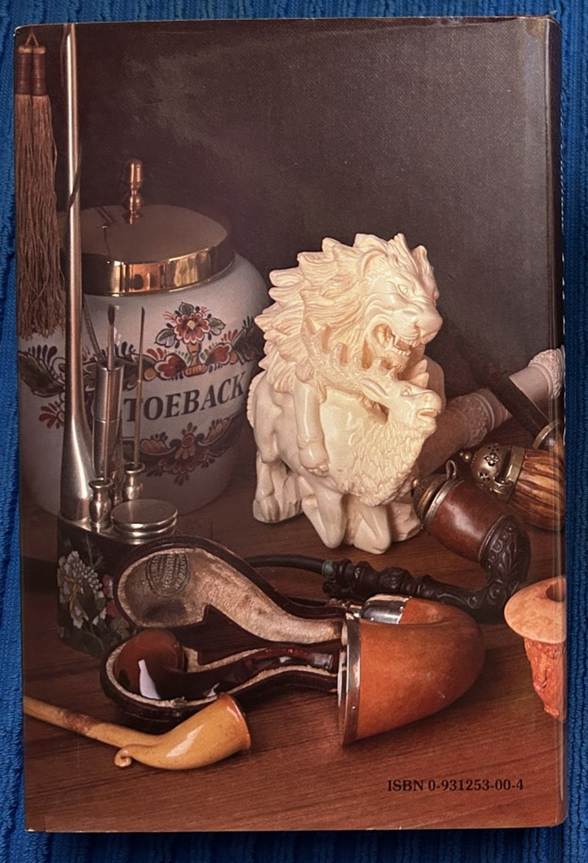
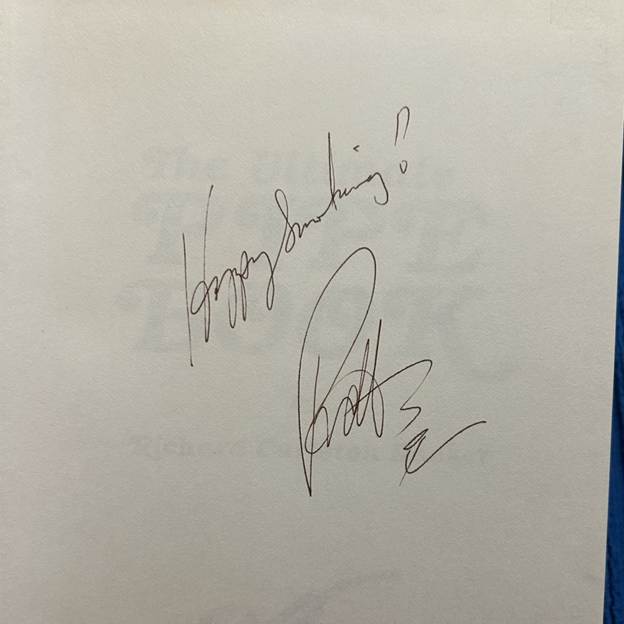
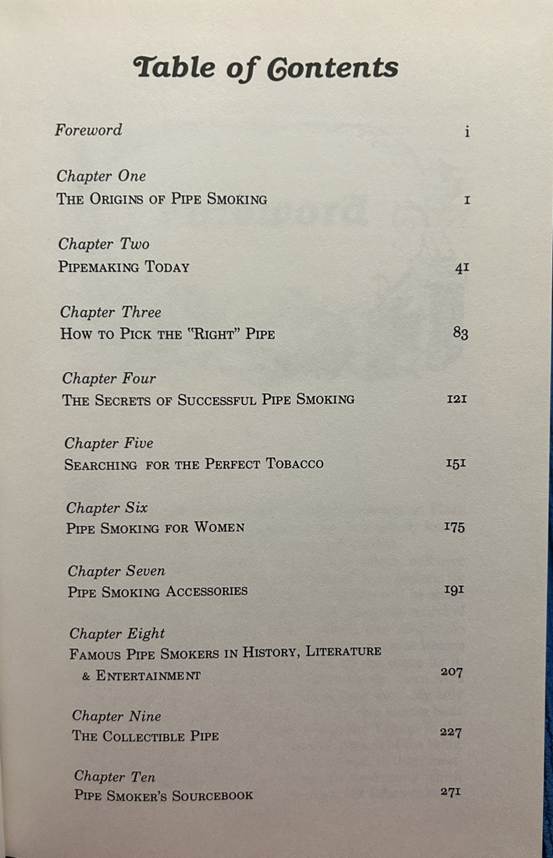
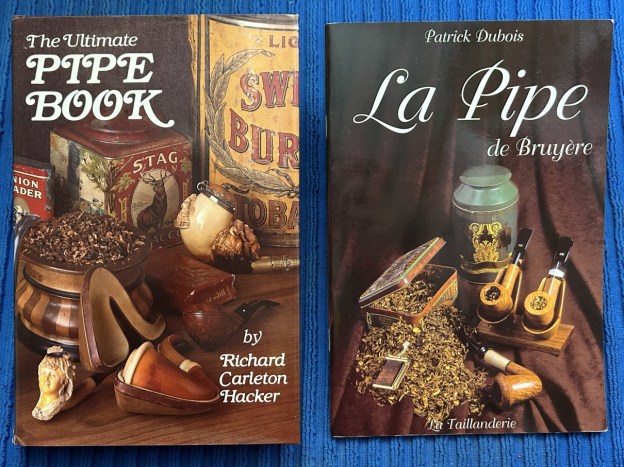
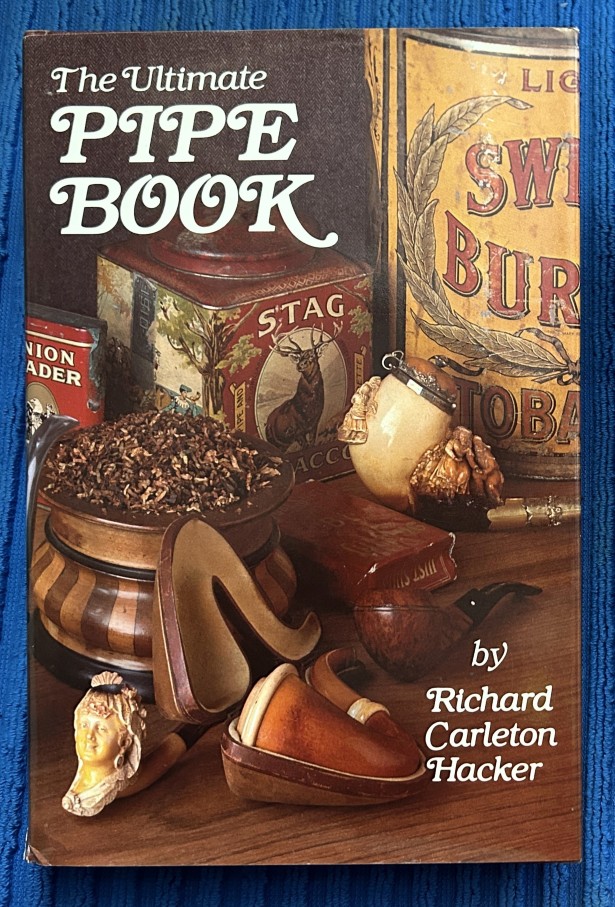
First is The Ultimate Pipe Book by Richard Carleton Hacker. This is a well-known piece of pipe literature and read by many. It was one of the first pipe books I read and I enjoyed it. This particular copy is special because it has been signed by the author! The book is hardcover and in very good condition, with some minor wear to the dustjacket. I have snapped a photo of the contents, so you get a fair idea of what is included.

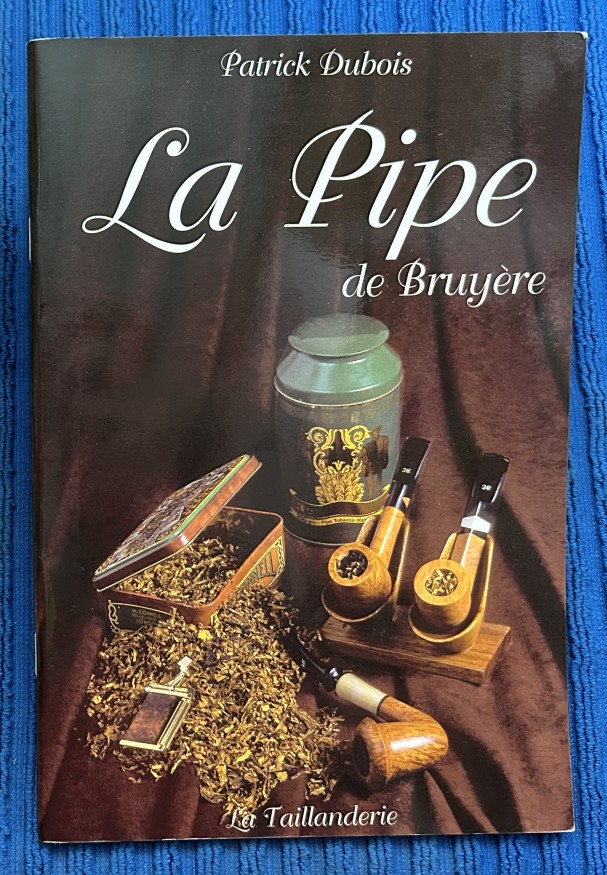
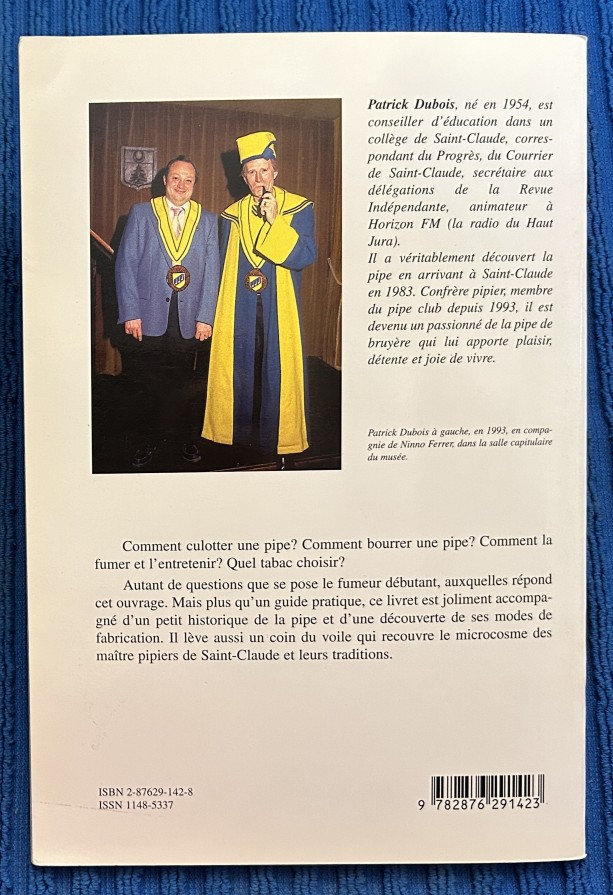
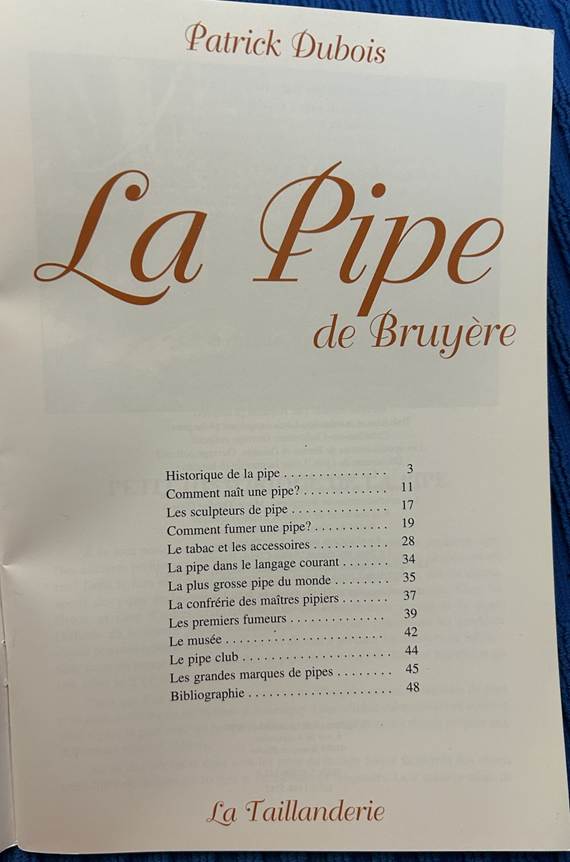
Second is La Pipe de Bruyère by Patrick Dubois. As the title reveals, the book is in French. It is a concise, but excellent book about many different aspects of the pipe world. If you speak French or have a friend who does, I happily recommend this book. The book is softcover and also in very good condition.

Here is a photo of the contents and I will provide a translation below for you:

History of the pipe

How is a pipe made?

The pipe carvers

How to smoke a pipe?

Tobacco and accessories

The pipe in everyday language

The biggest pipe in the world

The Brotherhood of Master Pipemakers (this shouldn’t really be translated because it’s a title)

The first smokers (essentially Pipeman of the Year)

The museum

The pipe club

Famous pipe brands (French)

Bibliography

I am pleased to announce that The Ultimate Pipe Book and La Pipe de Bruyère are for sale! If you are interested in acquiring either or both for your collection, please have a look in the ‘Pipe Accessories’ section of the store here on Steve’s website. You can also email me directly at kenneth@knightsofthepipe.com. If you are interested in more of my work, please follow me here on Steve’s website or send me an email. Thank you very much for reading and, as always, I welcome and encourage your comments.

Book Review: The Wide World of Wood Tobacco Pipes


by Kenneth Lieblich

I have been wanting to write this blog post for some time now. Today, I am offering a review of The Wide World of Wood Tobacco Pipes: Two Centuries of Craftsmanship and Creativity by Ben Rapaport. As I mentioned in a different book review a few weeks ago, I’ve read several pipe-related books in the last few months – some very good, some very bad, and some in between. This book is at the top of that heap and I encourage you to read on. This book is one of the ‘very good’ ones – and just what I want a pipe book to be: well-written, informative, and engaging. Even though the book is quite substantial, I will try to keep my review brief – I want you to read the book, more than my review. This book is heavy (by weight), extensively illustrated, and expertly written. It is also not inexpensive, but I recommend this book with pleasure.

For those unfamiliar with him, Ben Rapaport is the doyen of scholarly pipe books. This is Ben’s tenth book and, supposedly, his last – but he said that last time too! His write-up in Pipedia states the following:

For the past 50 years, Ben Rapaport has been known internationally as an antique pipe collector, and tobacco bibliophile. He is a popular lecturer at pipe clubs, his articles on pipe and tobacco history appeared regularly in Pipes & Tobaccos magazine until Spring 2019, when it ceased publication, and his articles occasionally appeared in CIGAR magazine until Spring 2011 when it ceased to be published. Achievements and affiliations: member, Pipe Smoker’s Hall of Fame (1973); l’Académie Internationale de la Pipe (Founding Member, 1985); Confrère, Confrérie des Mâitres-Pipiers, Saint-Claude, France (1989), and Doctor of Pipes (2004). He is a consultant at the Center for the Study of Tobacco and Society, University of Alabama (since 2001). As a certified personal property appraiser, he has conducted formal valuations of pipe collections for several museums and for private collectors. Ben has created what is likely the most comprehensive list of pipe and tobacco books in English. Its scope includes the earliest publications to the newest titles organized by topic or theme. Ben updates the list as new works are published.

I own several of his books, but not all ten – yet. Each one is enjoyable and worth owning. I have had the pleasure of communicating with Ben, through email, over the past few years. Even though he is several decades my senior, he has been generous to me with his time. His knowledge of pipe history is immense and he has been very helpful in his advice in my own pipe research. It is fair to say that, when I purchased this from him, I was expecting a quality book – and I was not disappointed. The book has an extensive set of notes and a thorough bibliography. This is the sort of detail I especially value. Too often, pipe books are lacking in references, notes, indexes, bibliographies, etc. – but not in this book. Thank goodness!

As the title suggests, this book deals with the history of tobacco pipes, and specifically the ones made of wood – not clay, meerschaum, porcelain, etc. This does not mean that the book restricts itself to briar. In fact, Rapaport records dozens of different woods that have been used in the past couple of centuries.

Listing the chapter titles below will be helpful in providing you with a sense of the scope of the book.

  • Assorted Woods Used in Pipe-Making
  • Eighteenth- and Nineteenth-Century European Pipes
  • Helena Sophia Isberg: Sweden’s Extraordinary Pipe Carver
  • The Ulmer: A Unique German Pipe
  • The Alice Charlotte de Rothschild Collection
  • Ethnographic Pipes of Africa
  • Ethnographic Pipes of the Americas
  • American Civil War Pipes
  • Anglo-Boer War Pipes
  • Pipe Collections in Museums and on the Web
  • The João Pavão Martins Collection
  • A British Collection
  • The Holgar Haettich Collection
  • Curiosities, Oddities, Folk Art, and Novelties

As you can see, he covers a lot of ground in this book and I won’t attempt to summarize each individual chapter, or else you’ll be reading this review all day long. Perhaps the greatest feature of this book is the incredible array of photos that Ben includes. It is both the diversity and quality of the photos that really adds value (and physical weight) to this tome.

In fact, the writing takes up a surprisingly small amount of real estate in this book. But the writing that is there is fascinating in somewhat untangling the murky history of wood as a material for pipe-making. Rapaport writes, ‘Wood … is light, durable, and a bad conductor of heat, and thus has three essential qualities of good pipe material…’. It is fascinating to learn how wood (of many tree species) came to be used as a pipe-smoking medium. In fact, it seems to be a silly material for containing fire – and so it is, but, as we ultimately know, when you find the right stuff, it is also the perfect material. How we moved from the absurd to the sublime in pipe woods is a fine story, and one that Rapaport tells well. But extolling wood’s virtues is not, essentially, the point of the book. In fact, it is the paucity of material in the written history of wood pipes that motivates Rapaport.

The origins of the wood pipe (not the wooden pipe, as he says) are disparate and obscure. It is fair to say that Rapaport cannot possibly reveal all of this history – most of which is, sadly, lost in the mists of time – but he has made an important contribution to the advancement of our knowledge. I, for one, am grateful for this because I cannot count the number of times I have yearned to know the history of some pipe or pipe-maker, and have been stymied by the absence of historical records or the loss of historical records or both. Even though I (as reader) have not been given the name/place/date for every wood pipe, I am not disappointed because such a wide variety of pipes has been documented, collated, and – I daresay – remembered!

Another valuable aspect of this book is the collection of collections! There are chapters which describe the private and institutional collections of pipes which exist throughout the world. Many are available for public viewing and Rapaport entices us with dreams of being able to behold these stunning wood pipes in person. I found this to be quite endearing and thought-provoking, as it made me aware of individuals about whom I previously knew little. To demonstrate my point, Alice Charlotte de Rothchild’s immense pipe collection is as remarkable for its whimsy as it is for its beauty.

The breadth and depth of photos in this book is impressive. More than simply adding volume to this publication, the photos create their own historical record, simply by their juxtaposition to one another. To take one example among many, the photo collection of Boer War pipes provides an extraordinary testimony of the pipe carvings and the men who carved them in the South African War. This isn’t simply an indiscriminate collection of photographs: this is actually a narrative told in photographs.

I am going to end the review here, because I am tempted to go on ad nauseum. Suffice it to say, this is an excellent book. It is worth reading and it is worth buying. I have had a similar reaction to Rapaport’s past books, so I hope this isn’t his last. If the distant history of tobacco pipes is of interest to you, I happily recommend this book.

I hope you enjoyed reading my review of The Wide World of Wood Tobacco Pipes by Ben Rapaport. If you are interested in more of my work, please follow me here on Steve’s website or send me an email at kenneth@knightsofthepipe.com. Thank you very much for reading and, as always, I welcome and encourage your comments.

 

A Book Review: The Unknown Canadian Pipe Smoker


by Kenneth Lieblich

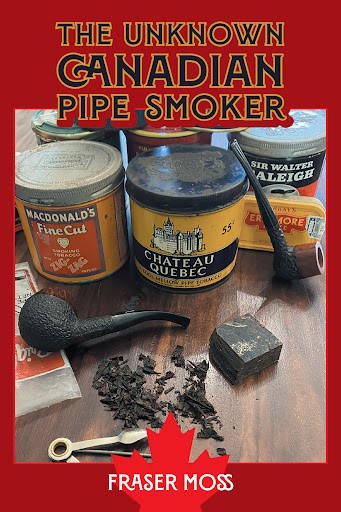
I’ve been meaning to do some book reviews for a little while now. I’ve read a few pipe-related books in the last few months – some very good, some very bad, and some in between. Today, I am offering a brief review of The Unknown Canadian Pipe Smoker by Fraser Moss. This book is one which leans more towards the good. It is a book that discusses the interesting and significant role that Canadians have played in pipe-making and the pipe-smoking lifestyle. Mr Moss has written some very useful, informative, and enjoyable words, which are somewhat subverted by design choices, spelling errors, and some omissions to the Canadian pipe-smoking world. Despite this, the book is pleasing and worthwhile – and I recommend it.

First, let’s talk about the good – and there is much to like here. In the introduction, Mr Moss begins with his own history in pipe smoking and, in chapter 1, provides an overview of pipes and pipe smoking in general. Chapter 2 focuses more particularly on briar and what goes into actually making a pipe. From that point on, the majority of the book consists of discussions about and/or with major Canadian pipe makers: Briar, Sweat, and Tears Pipes (in chapter 3), Julius Vesz Pipes (in chapter 4), Brigham Pipes (in chapter 5), Blatter & Blatter (in chapter 6), and MacQueen Pipes (in chapter 7). He writes about the history of each company, their methods of pipe making, their trials and tribulations, the quality of their work, and their prospects for the future. These chapters are a fine insight into these important pipe companies, and I commend Mr Moss for providing some fascinating details – including many pieces of information I had never read before. I particularly enjoyed the chapter on Julius Vesz. There is also an appendix which exhibits several pipe shops across Canada. This was helpful, as these shops are becoming a dying breed. The price of the book is worth it for these chapters. Mr Moss’ writing is clear, concise, and entertaining.

However, there are some significant omissions from this book. I realize that not every pipe maker in Canadian history can be included (a point that Mr Moss acknowledges in the book, saying, ‘I do not get paid to write’), but there are a few who, in my opinion, should not have been overlooked. In particular, there is no information provided on such notable names as John Calich, Leonard Payne, or the Paradis Brothers – among others. I would also include Michael Parks on this list, but at least Mr Moss briefly explained why he didn’t include him. Not including these pipe makers is problematic, in my opinion. Even a concise write-up on these men would have been a worthy contribution. In fact, one of the appendices is entitled, ‘Canadian Pipe Makers, Past and Present’ and it provides a short and simple list of such makers – and it is surprisingly incomplete.

There are some niggling details of design that detract slightly from the book, but I will skip over these, as I may be viewed as overly pedantic. However, there are some points that cannot be overlooked. Specifically, there is no table of contents, there is no index, and there are no running heads. It is very simple to add these things to books, and they greatly improve the enjoyment of reading.

There is one issue in this book which I find to be quite ridiculous: the misspelling. I realize that anyone (including myself) can make a typo, but when writing a book – for goodness’ sake – get it properly proofread! I am not even referring to simple, run-of-the-mill words – I am talking about proper names. Misspelling someone’s name, in this context, is unforgiveable. This book includes the following:

  • Jim Cook (instead of Jim Cooke)
  • Russ Oulette (instead of Russ Ouellette)
  • Stephanie Downie (instead of Stephen Downie – oh dear)
  • Marky Tinsky (instead of Mark Tinsky)
  • Rattary’s (instead of Rattray’s)
  • Bronfmen (instead of Bronfman)
  • William Shanter (instead of William Shatner)

I will not end this review on a negative, because this is a good book. It is worth reading, so go and buy it. The stories of the pipe makers are compelling and you will learn a great deal – while being entertained. I read it while smoking my pipe and it was most fitting. The book has some difficulties, but they do not overcome the fine interview material that Fraser Moss has provided. I look forward to future books from Mr Moss – or perhaps a second edition of this book.

I hope you enjoyed reading my review of The Unknown Canadian Pipe Smoker by Fraser Moss. If you are interested in more of my work, please follow me here on Steve’s website or send me an email at kenneth@knightsofthepipe.com. Thank you very much for reading and, as always, I welcome and encourage your comments.
 

A Book Review – The Book of Pipes & Tobacco by Carl Ehwa, Jr.


Blog by Kenneth Lieblich

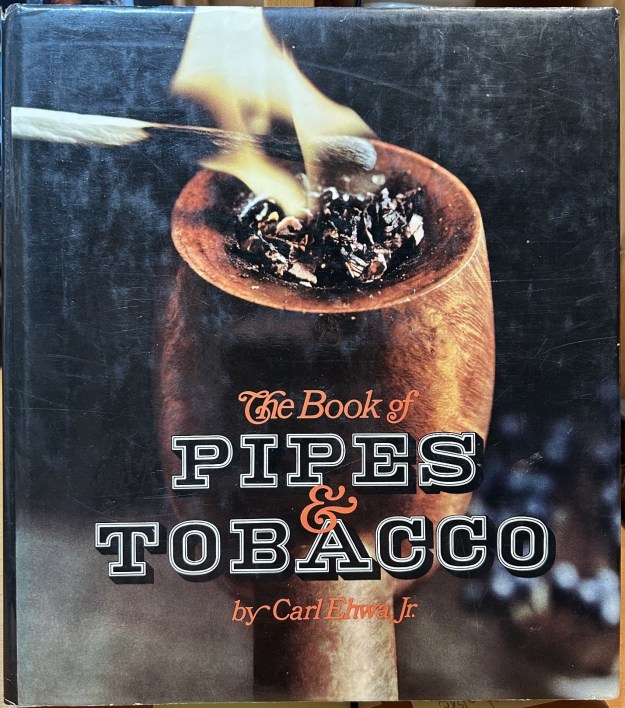
It has now been fifty years since the publication of The Book of Pipes & Tobacco by master tobacco blender, Carl Ehwa, Jr. In that time, there have been few – if any – books that are as enjoyable on the subject as this one. This book only ever had one printing and, nowadays, it is a challenge to find it at a reasonable price. Today, I am offering a feeble (and brief) review on the book – and a copy of the book for sale. My intent is not to provide a lengthy or comprehensive review of Ehwa’s book. Instead, I hope to draw your attention to an important resource and fine reference, which ought to have a place in your personal library.

Carl Ehwa was the master blender of the Fred Diebel Tobacco Company and, in 1977, he and his wife, Mary, founded the famous (and now defunct) McClelland Tobacco Company. He was apparently an interesting character and had a great deal of knowledge of pipes, pipe smoking, tobacco production, et cetera. In 1974, Carl and Mary managed to convince Random House to publish a book on pipes – this was no small feat, as Random House did not normally publish such books.

First and foremost, it is worth mentioning that this winsome book is full of beautiful photographs and other images. The photographs are well-taken, illustrative, and copious. However, this is not merely a picture book for the coffee table. It is an excellent and quite thorough study of pipes and tobacco, in which the writing is perfectly complemented by the numerous, fine photos and illustrations. Ehwa divides his book into four parts, each of which is further subdivided into relevant topics.

Part One – The Remarkable Evolution of Smoking. In essence, this is a history of smoking from ancient times to the present (circa 1974) day. I am a lover and student of history, but I’ve often felt that many books with chapters on smoking history are quite humdrum and make no attempt to draw the reader in. Fortunately, Ehwa entertains and challenges the reader in this section and (pleasingly) makes no attempt to be exhaustive. Instead, his writing is relevant and makes one feel prepared for the information to come.

Part Two – The Amiable Pipe. This section addresses the pipe as a cultural item, as an objet d’art, and as a source of pleasure. Ehwa gives thorough descriptions of pipes of clay, porcelain, various softwoods, hookahs, meerschaum, calabash, and, of course, briar. He provides the fascinating histories behind each of these styles of pipe and allows us to sense the differences and delights of the various materials. Many amusing stories are found here and they are well worth reading. It is, by far, the longest chapter in the book and I learned so much from this section – no surprise.

Part Three – Tobacco: “The Special Herb”. As you might guess, this section describes (in considerable detail) the growing, curing, processing, and blending of tobacco. The entire manufacturing process from planting to smoking is covered in an engaging manor. Of course, it also discusses the different types of tobacco and their numerous cuts. Helpfully, Ehwa also offers suggestions to the reader on the selection and storage of tobacco. This is another terrific read, with particularly useful photographs — I especially like the photos (contemporaneous with the book) of the tobacco auctions in the southern USA.

Part Four – Pleasure of the Pipe. This section is well described by its subtitle: “The art of getting the most from tobacco and pipe”. Ehwa provides advice (1) for the new pipe smoker; (2) on filling and lighting a pipe; (3) on caring for a pipe; and (4) on solving some common pipe-smoking problems. He offers as good advice as you’ll find anywhere, but he is in no way preaching. I found it interesting to compare his advice with other pieces of advice I’ve picked from other books or mentors (like Steve). It is a fine way to close out a fine book.

As you can tell, I highly recommend this book. It is one of the best pipe books ever written in the English language. The book is thorough without being tedious, informative without being condescending, and entertaining without being frivolous. I have seen some comments online suggesting books from Richard Carleton Hacker over this one. Although I enjoyed Hacker’s books, I find his writing to be a bit turgid (and his accuracy to be a bit amiss), and I unhesitatingly recommend Carl Ehwa’s book over the others.

I am pleased to announce that this book is for sale! If you are interested in acquiring it, please have a look in the ‘Pipe Accessories’ section of the store here on Steve’s website. You can also email me directly at kenneth@knightsofthepipe.com. I hope you enjoyed reading my review of The Book of Pipes and Tobacco by Carl Ehwa, Jr. If you are interested in more of my work, please follow me here on Steve’s website or send me an email. Thank you very much for reading and, as always, I welcome and encourage your comments.