Category Archives: Pipe and Tobacco Historical Documents

An Enigmatic Iron Smoking Pipe


by Kenneth Lieblich

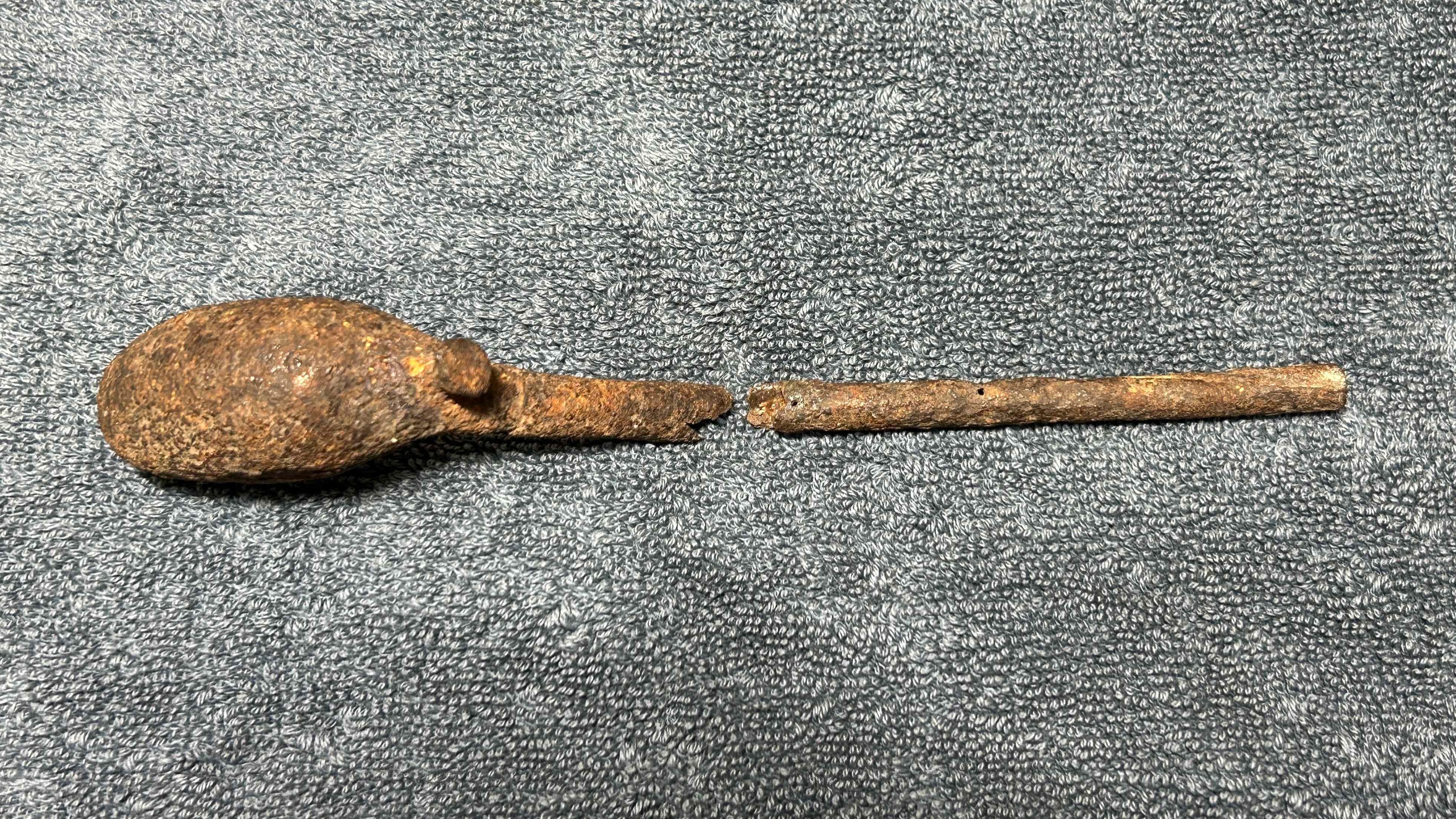
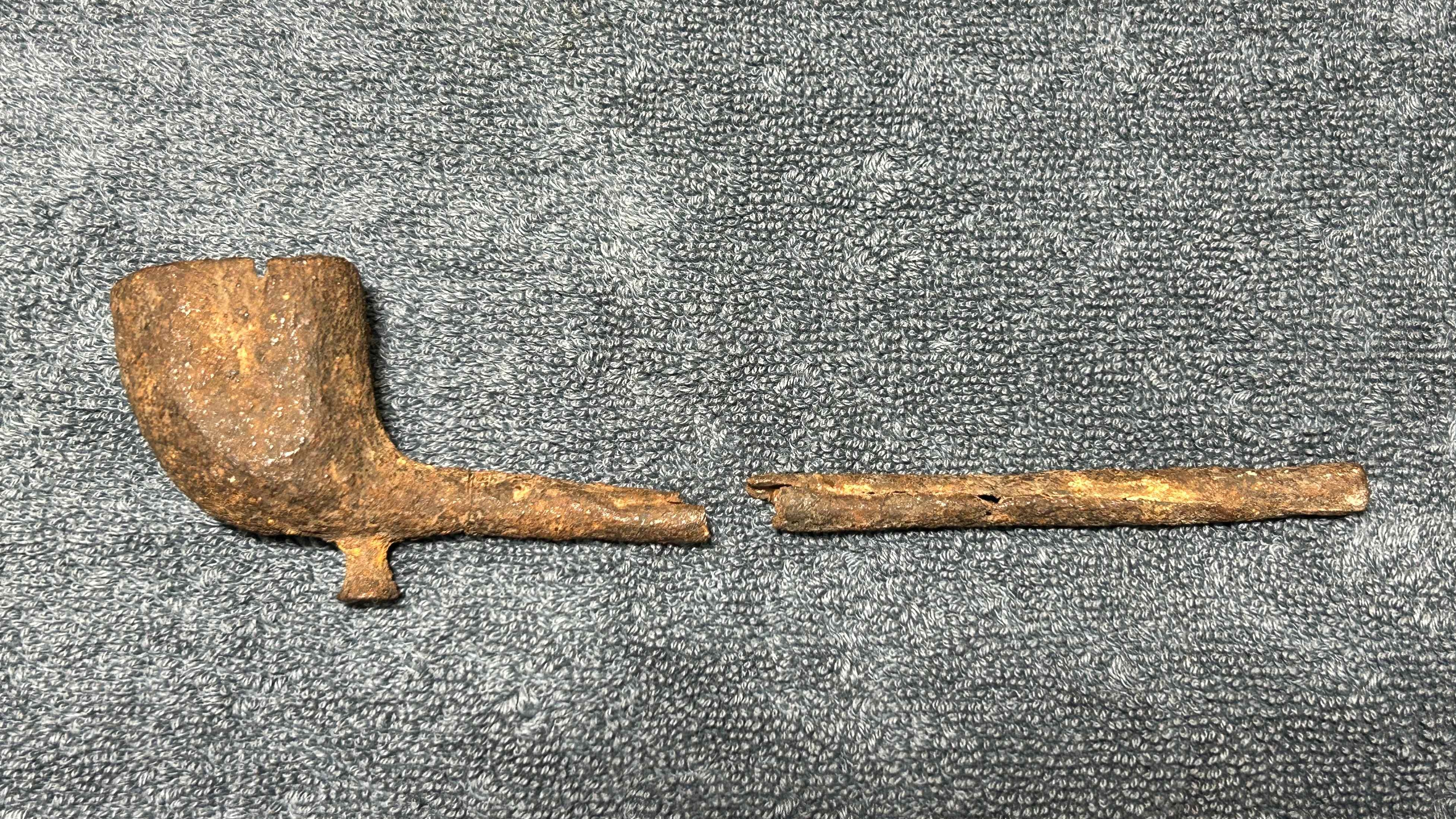
I need your help! I’m reaching out to the collective, worldwide pipe community to seek information on an old and mysterious pipe. This pipe came into my possession in a lot of other pipes – and this one wasn’t even the focus of the lot. I found it at the bottom of the bag of pipes, looking quite sorry and forlorn. As the photos show, it is old, worn, rusted, and broken in two.
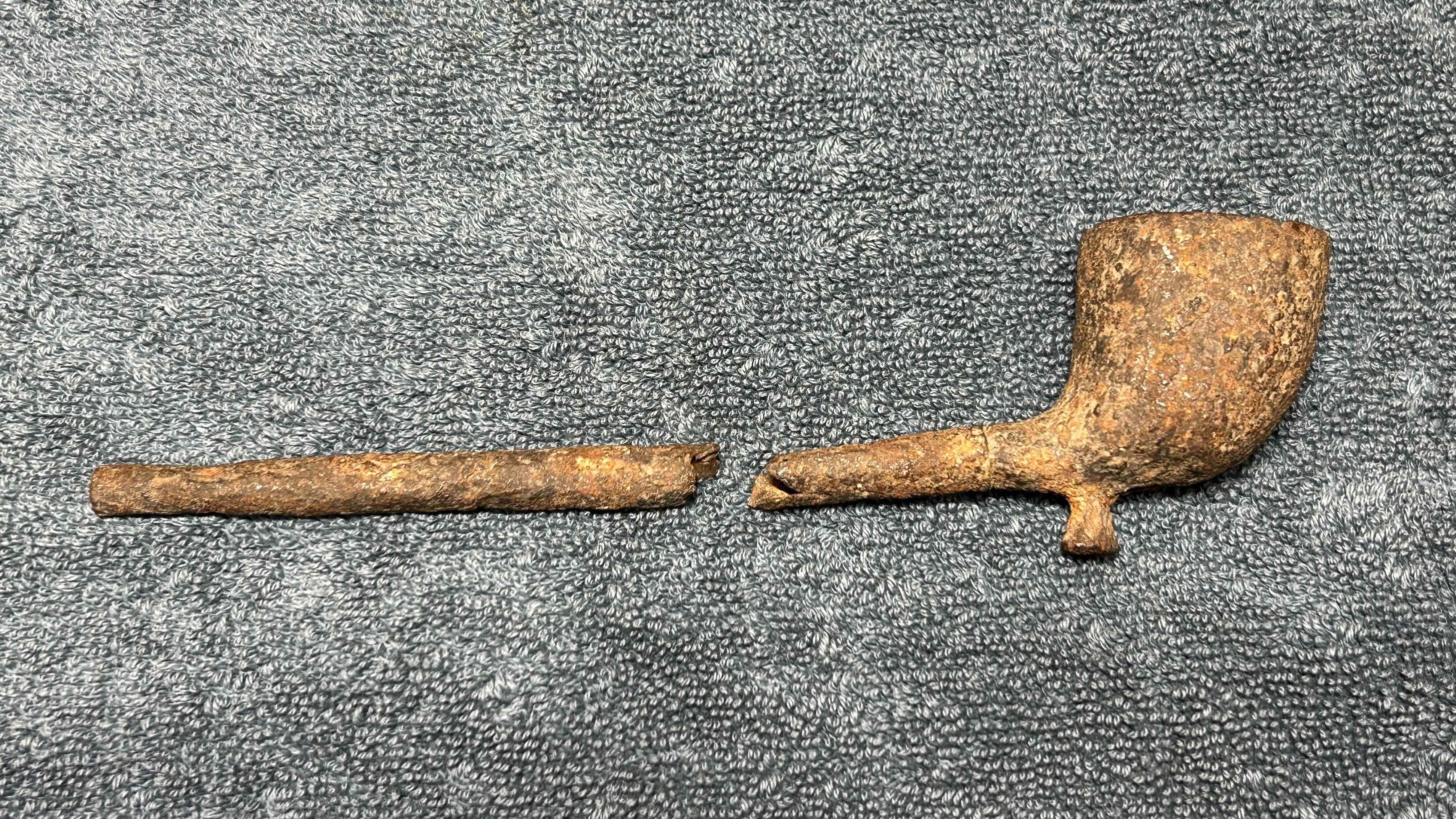
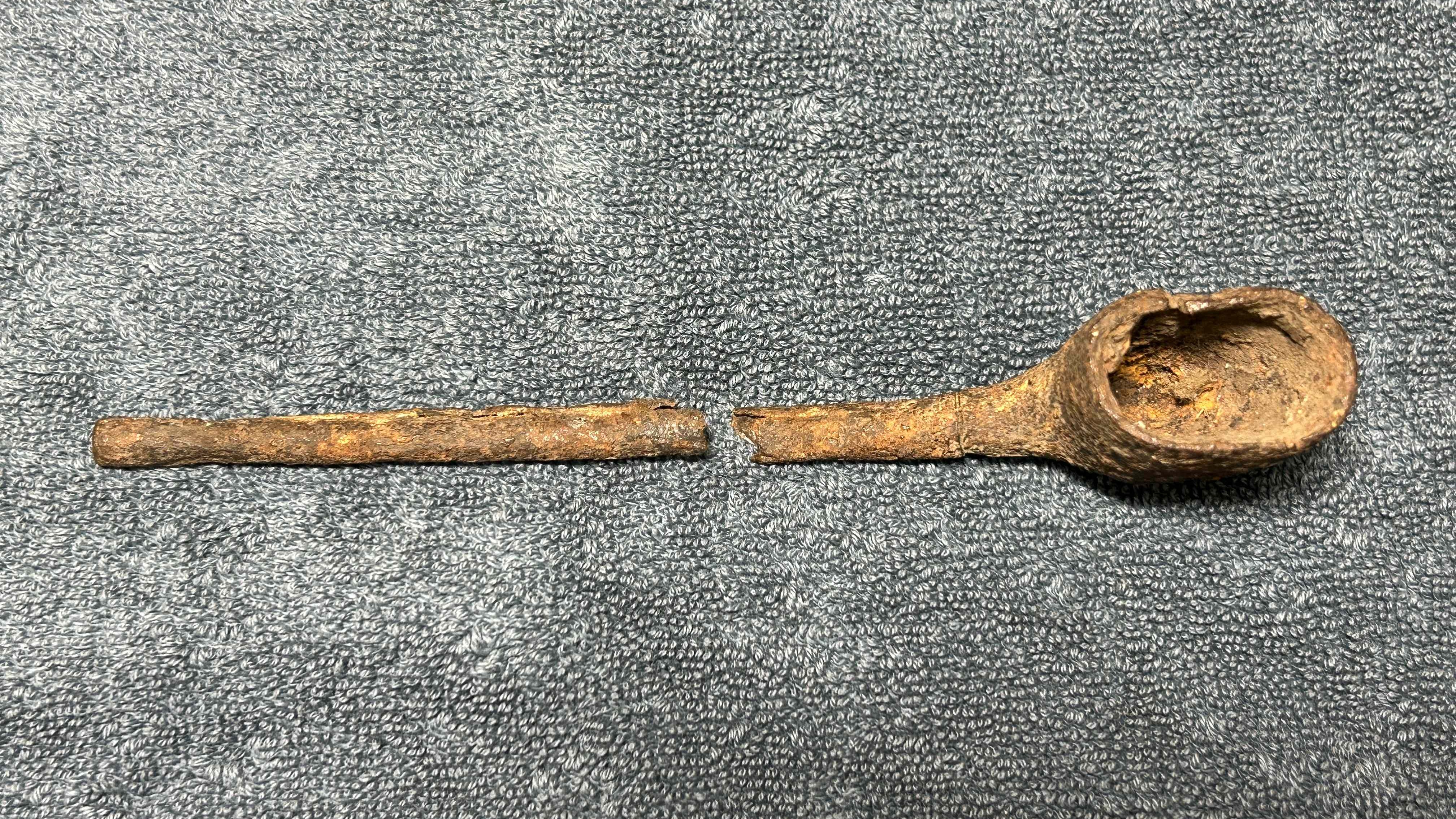
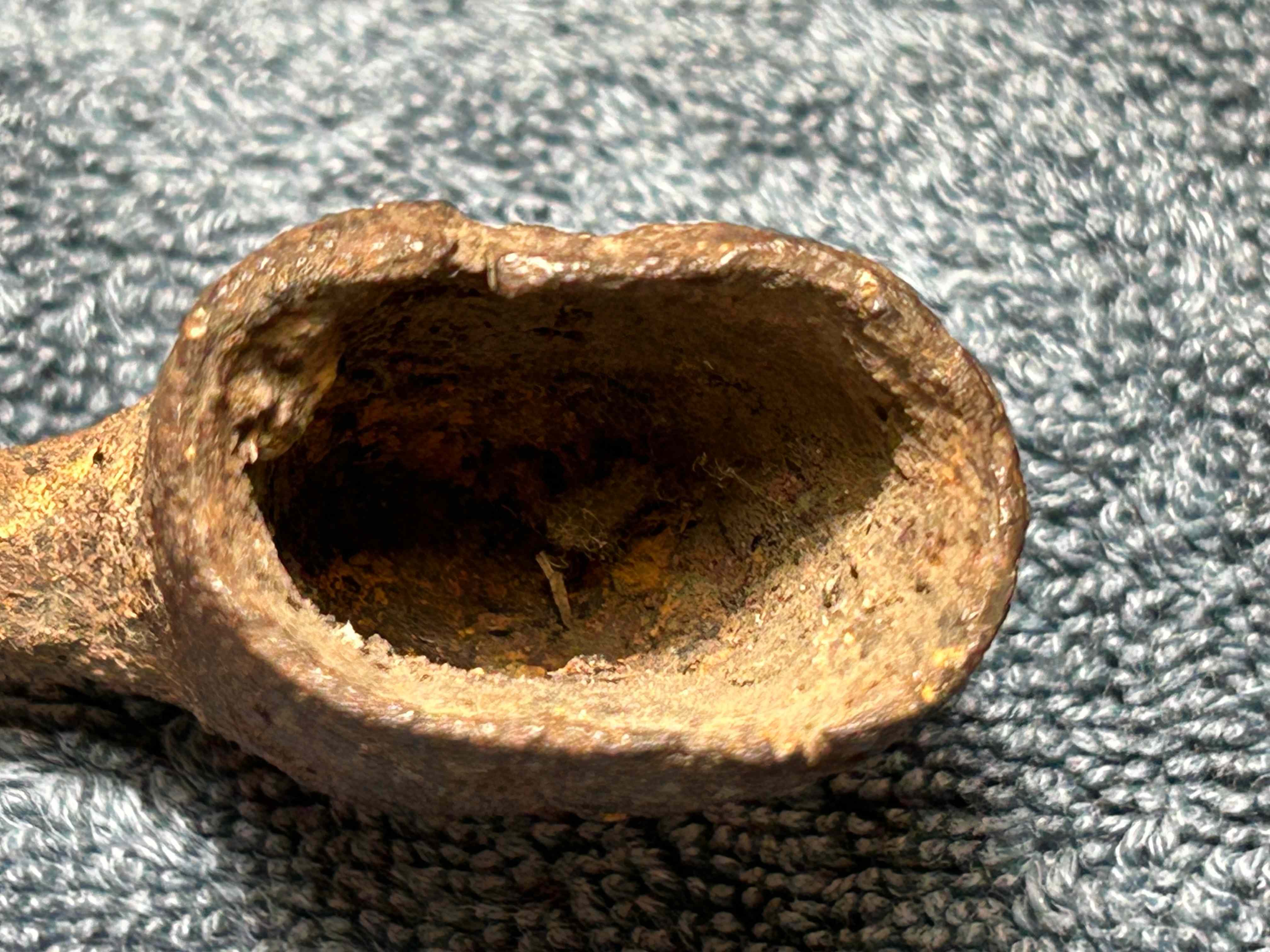
So, let me tell you what little I know about it. This pipe is a cutty shape, as you can see. As described in Pipedia, the cutty has a ‘canted tulip shaped bowl’. It also has an ‘ornamental spur, a small bit of material extending from beneath the bowl’. The pipe is definitely made of iron – probably cast iron or wrought iron, though I am certainly not a ferrous expert. I can tell that it is iron because it is very heavy, strongly magnetic, and obviously rusted. In fact, there is a considerable accretion of rust. I’m not at all sure what other accoutrements this pipe might have had. Did it have some sort of mouthpiece? Did it have a bowl insert? Someone asked me if this might have been some sort of mould for making clay pipes or something similar, but I don’t see that as being likely. Perhaps you know better.
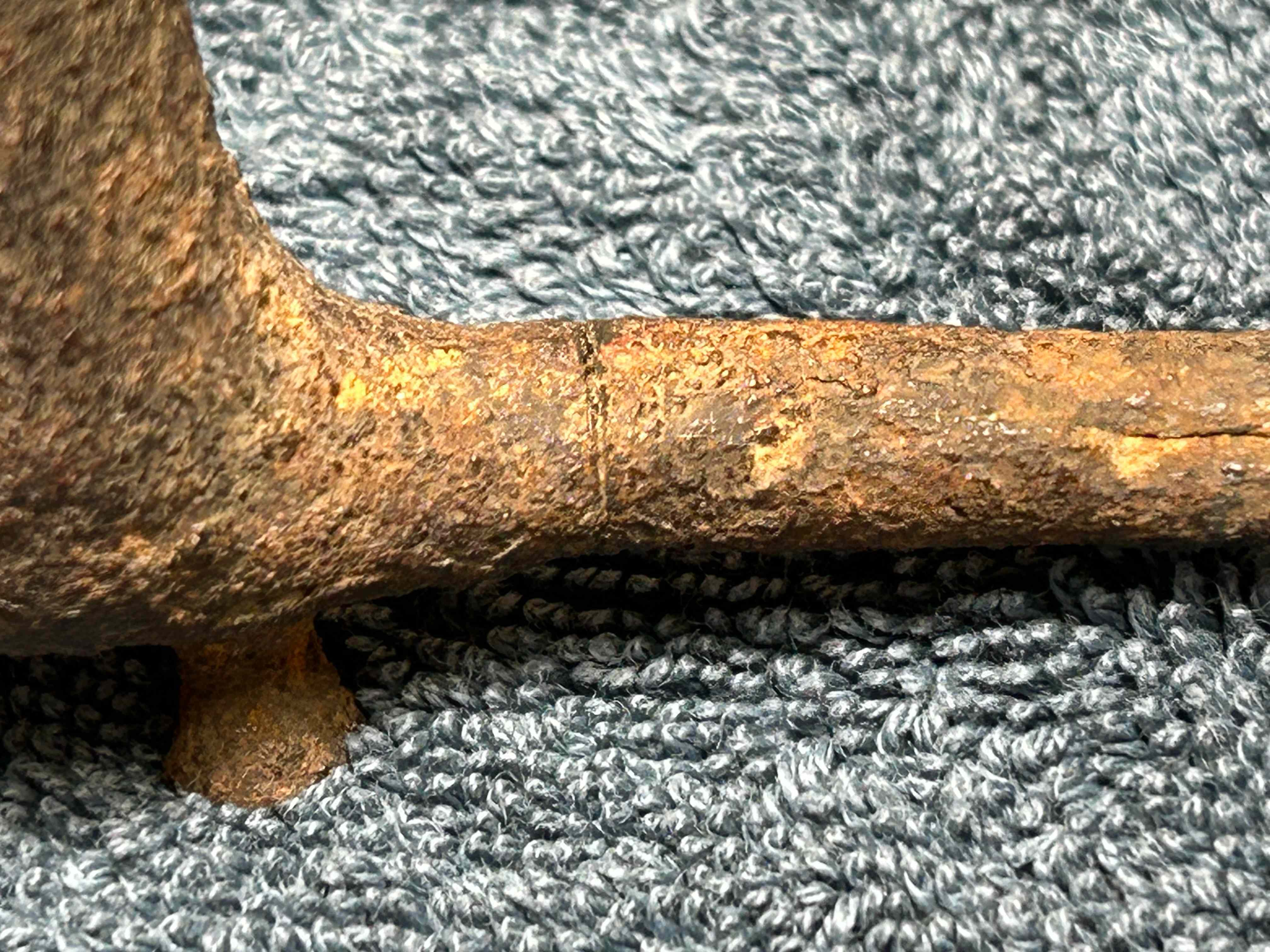
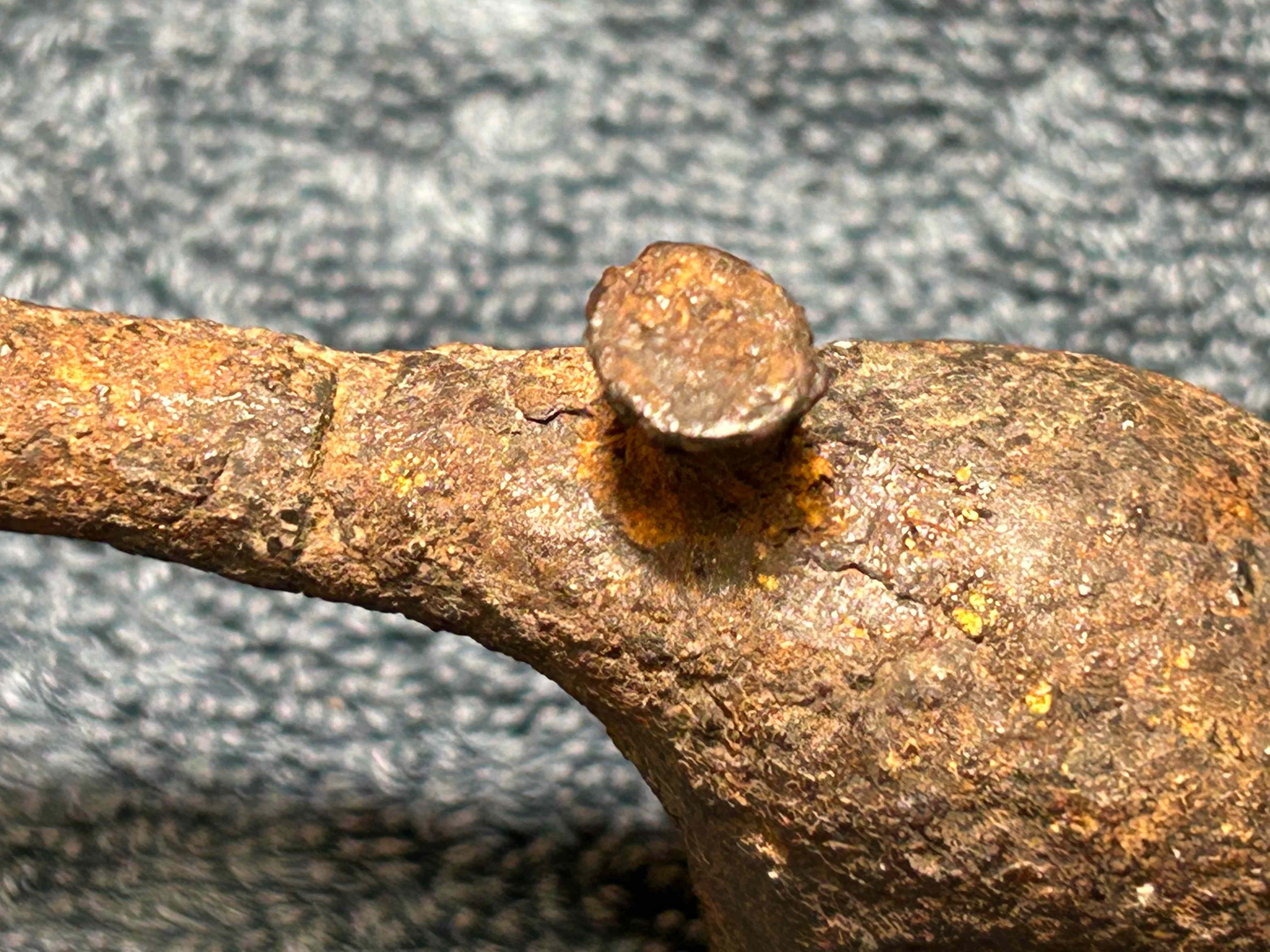
The approximate dimensions of the pipe are as follows: length 6 in. (153 mm); height 1⅔ in. (43 mm); bowl length 1¼ in. (31 mm); bowl width ⅞ in. (21 mm); shank diameter ¼ in. (7 mm). The weight of the pipe is 2¾ oz. (78 g). That’s a remarkable weight for such a slender pipe.
I have done a lot of searching, in books and online, and I can’t find anything substantial about this sort of pipe. I have found mention of old metal tobacco pipes – including ones from hundreds of years ago – but only minor references to iron tobacco pipes and very little that would correlate with this pipe specifically. The one pipe I found that was vaguely similar to mine is in the photo below. It came from a 2019 auction of American furniture and decorative arts in Massachusetts and the description read,

Wrought Iron Tobacco Pipe, 18th century, with straight tapering stem and curved bowl, lg. 10 in. The property of Bill McKeever. Estimate $300-500.

Another clue comes from a 1914 book entitled, The Social History of Smoking, by Scottish scholar, George Apperson. In it, Apperson recalls a scene from Sir Walter Scott’s novel, The Heart of Midlothian, in which Duncan of Knockdunder was smoking his ‘short tobacco-pipe made of iron’. Apperson relates,

Knockdunder’s pipe, according to Scott, was made of iron. This was an infrequent material for tobacco-pipes, but there are a few examples in museums. In the Belfast Museum there is a cast iron tobacco-pipe about eighteen inches long. With it are shown another, very short, also of cast iron, the bowl of a brass pipe, and a pipe, about six inches in length, made of sheet iron.
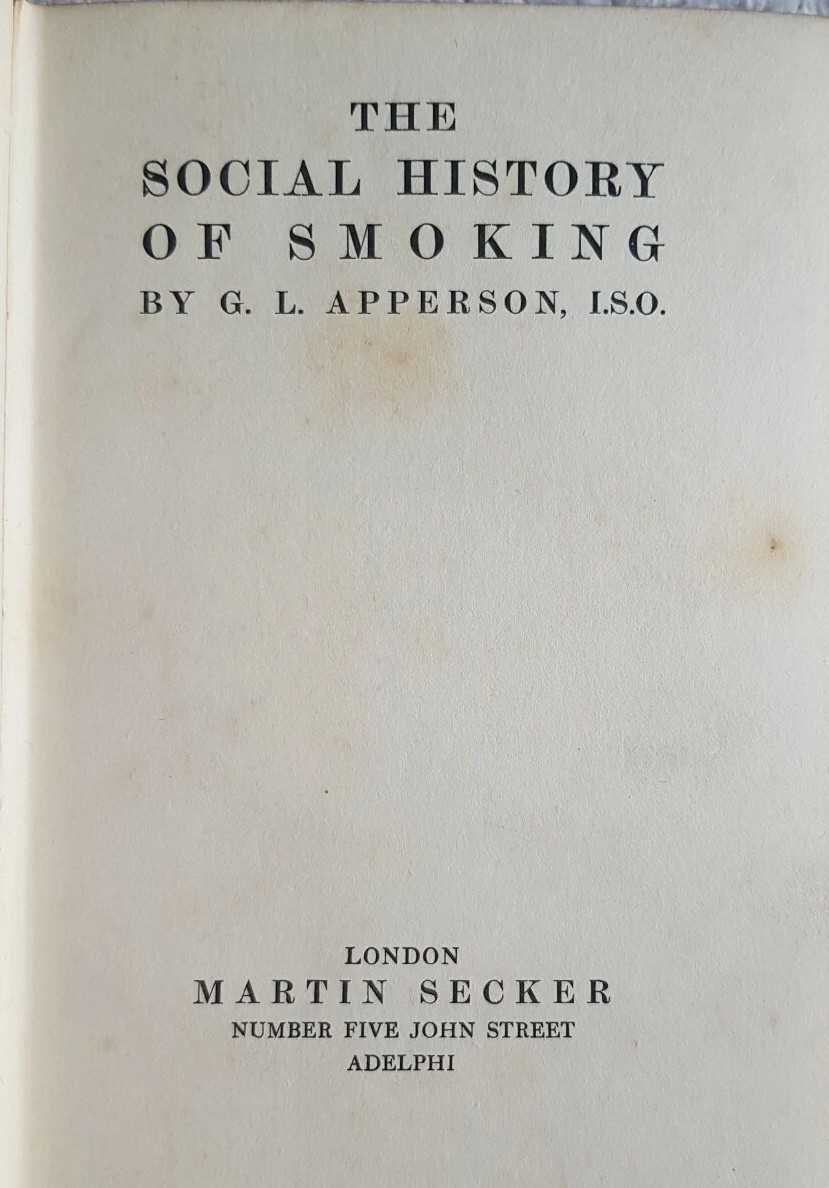
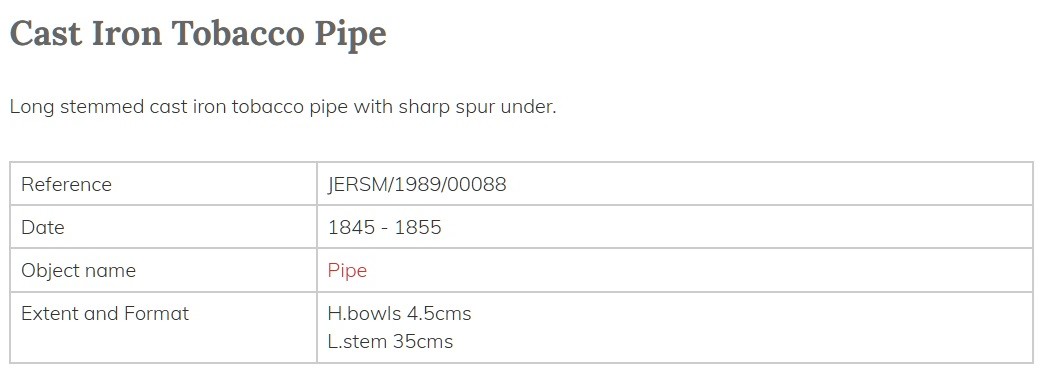
Sadly, the book came with no photos of said pipe. Furthermore, I could find no examples online of iron pipes in any museum of British-occupied Ireland. Finally, I found another reference to a cast iron pipe at a museum in the Bailiwick of Jersey, one of the Channel Islands. Of course – just my luck – there was a brief description, but no photo! Here is that description:
I asked both Steve and Ben Rapaport if they knew anything about my pipe. They didn’t, but Ben recommended that I contact the Amsterdam Pipe Museum. I did – and I have received precisely zero response. Crickets and tumbleweeds. I mention this only in the remote hope that someone draws the museum’s attention to this and that they respond to my query.

So, with all of that in mind, do you know anything about this pipe? Or about iron smoking pipes in general? Have you seen something like this before? Is this a maritime artefact? Are you aware of any resources that could provide more information? Please send me an email or drop a comment below.

I hope you enjoyed learning what scant information I have on this iron cutty and I hope you can help me learn more. If you are interested in more of my work, please follow me here on Steve’s website or send me an email at kenneth@knightsofthepipe.com. Thank you very much for reading and, as always, I welcome and encourage your comments.
Pipes from the 1902 Sears, Roebuck & Co. Catalogue


by Kenneth Lieblich

I was recently in a thrift store and came across a modern reproduction of the Sears, Roebuck & Co. catalogue from 1902. My eldest daughter is interested in all things from the Victorian and Edwardian eras, so I bought it for her. As she and I were browsing through it, we came across three pages of pipes and thought you all might enjoy seeing the offerings from 124 years ago.

The prices range from 2¢ to $5.48. If you’d like to get a sense of how much those prices are in 2026 dollars, simply multiply by 38. So, for example, that $5.48 pipe (the most expensive) would be a little over $200 today. The lettering in the photos is a bit small to read in the photos below, so be sure to click on each photo in order to see them at full size.

Leonard Payne Pipes Ltd Brochure


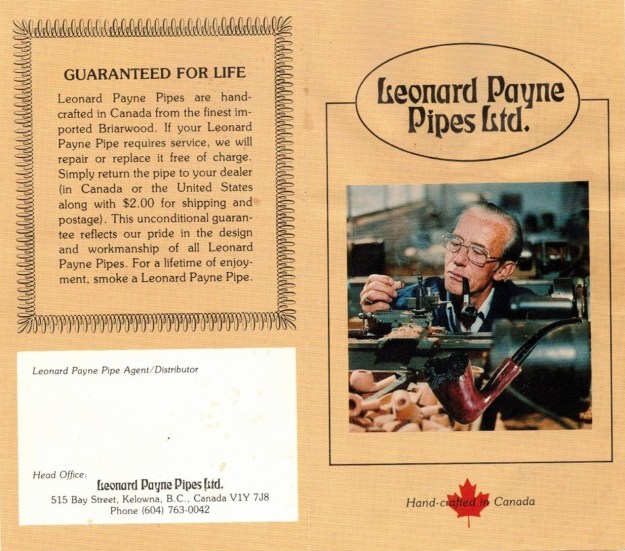
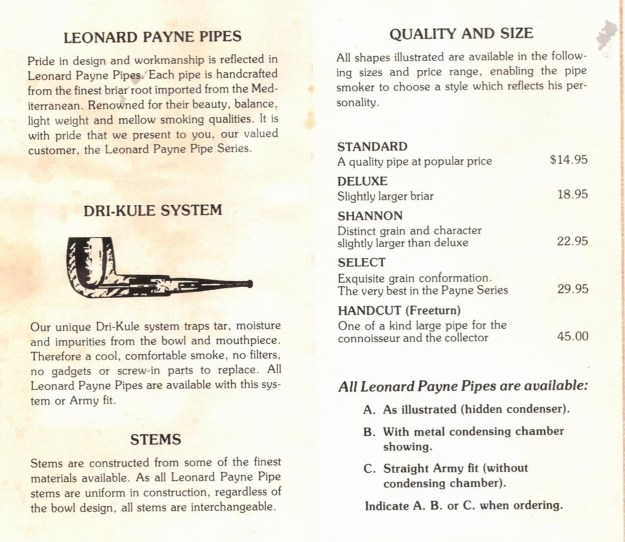
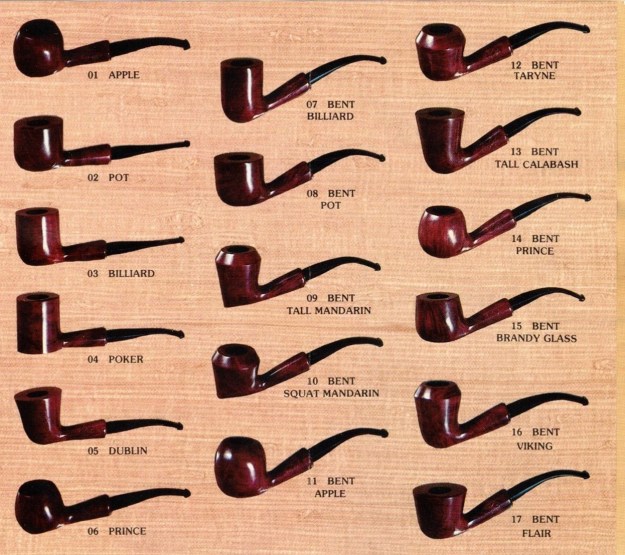
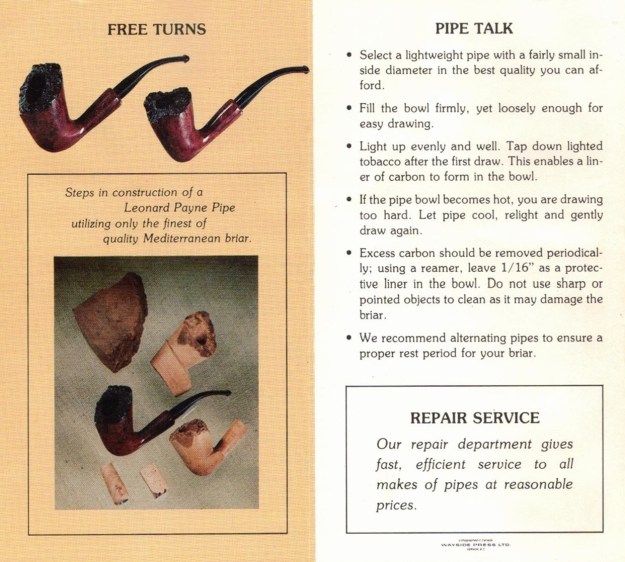
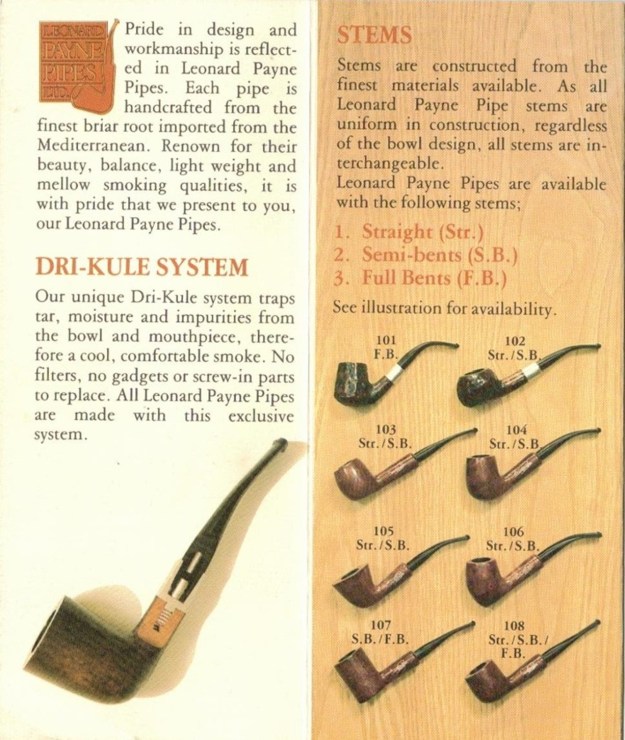
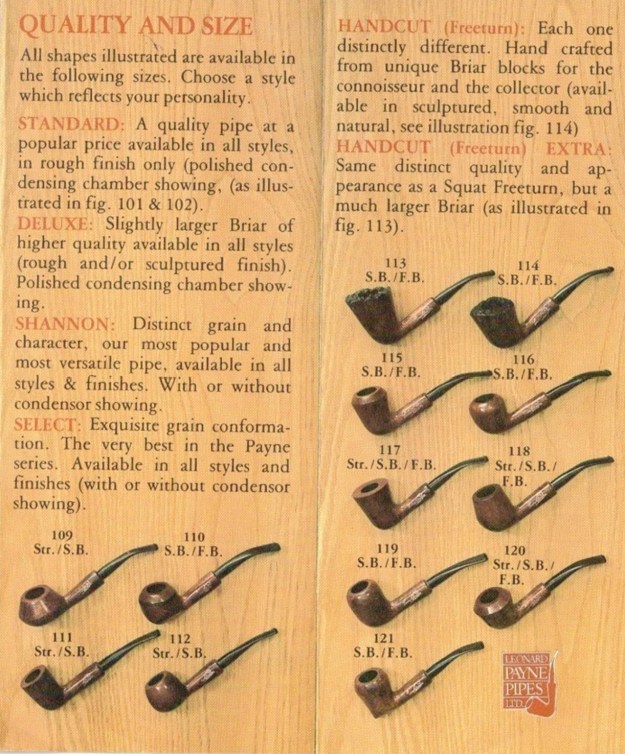
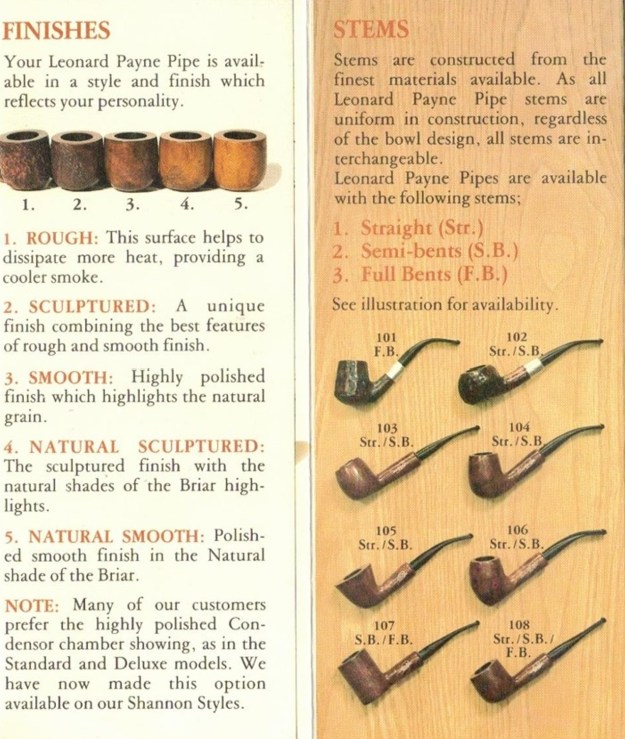
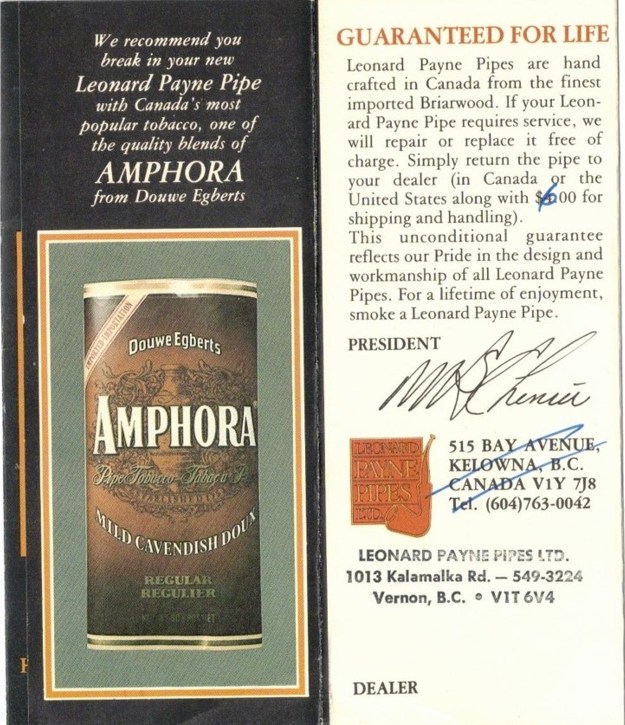
Kenneth picked up another Leonard Payne pipe and in the box was this interesting brochure. It is different than the other brochure we scanned earlier. This one has detail on the shapes and the various lines of Payne pipes. Have fun reading through the brochure and take time to read through the material. There is a real dearth of material on Leonard Payne and his pipes so we add whatever we find to the blog to gather information regarding this interesting Canadian Pipemaker and his pipes.
Rogers Rarity Brochure


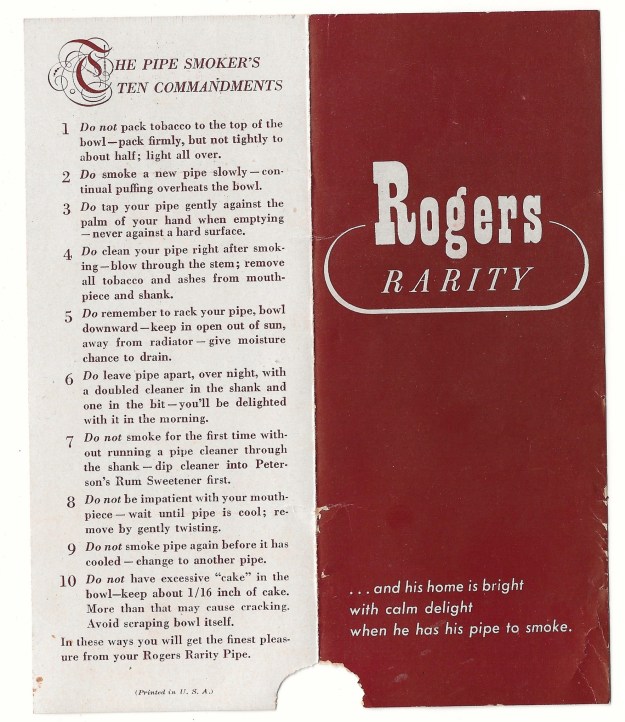
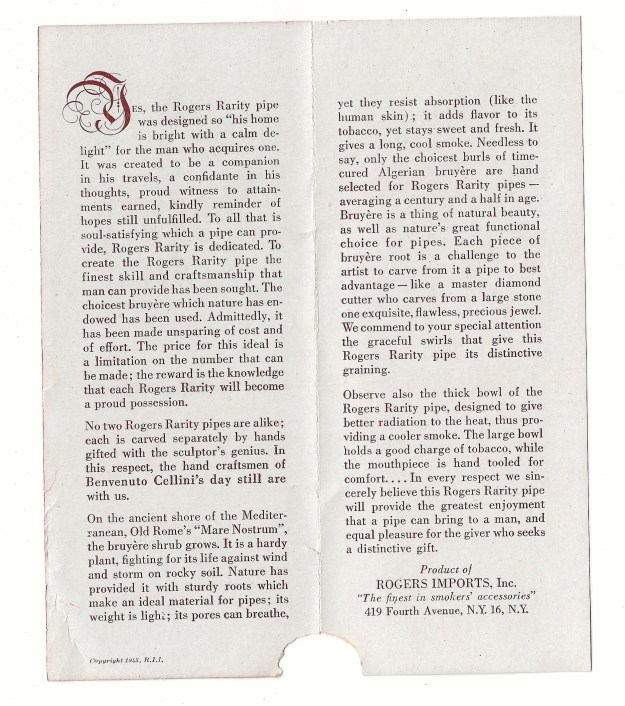
A friend, Josh on Facebook purchased a Rogers Rarity that came with this interesting brochure. I asked him for a scan of the brochure that I could post here. I have included it below. Have a look. Make sure to read the details of the document as it is very interesting.
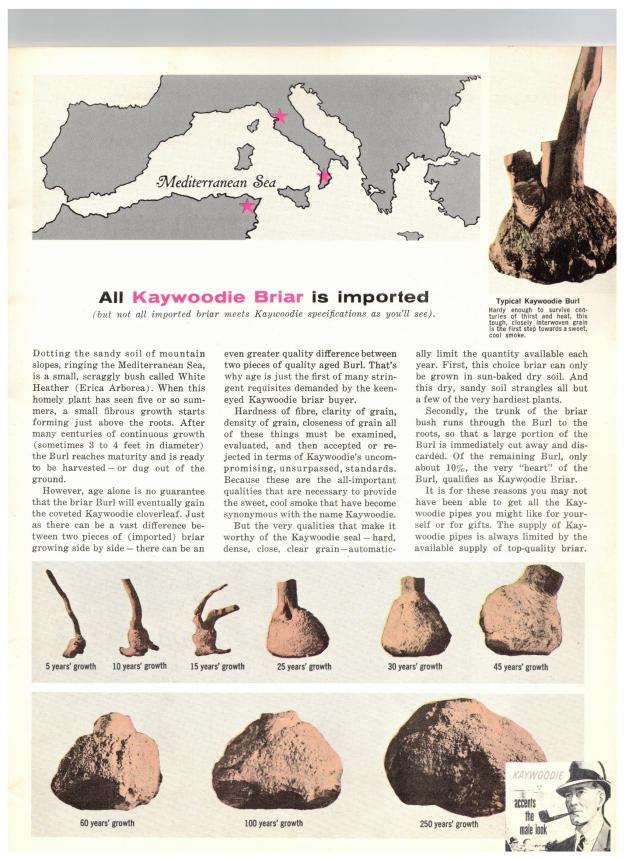
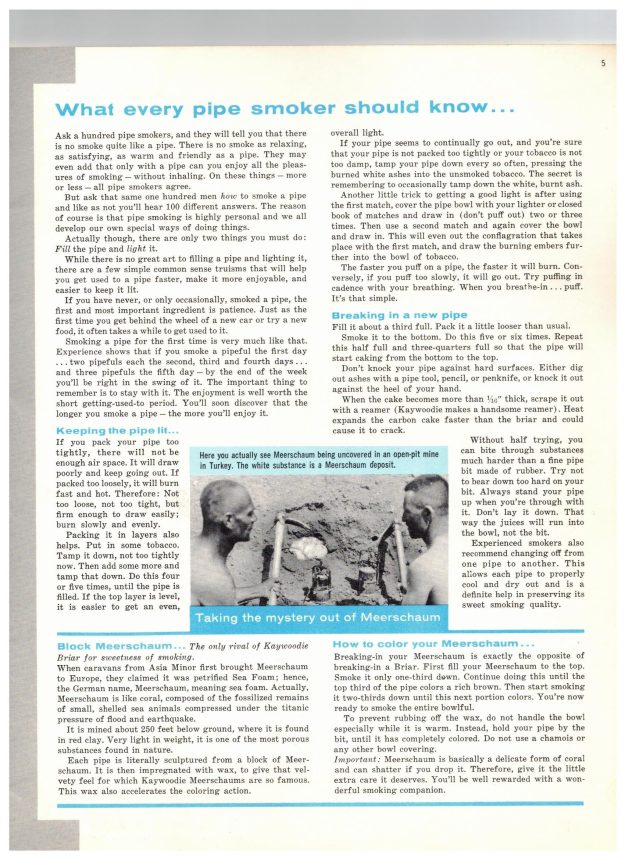
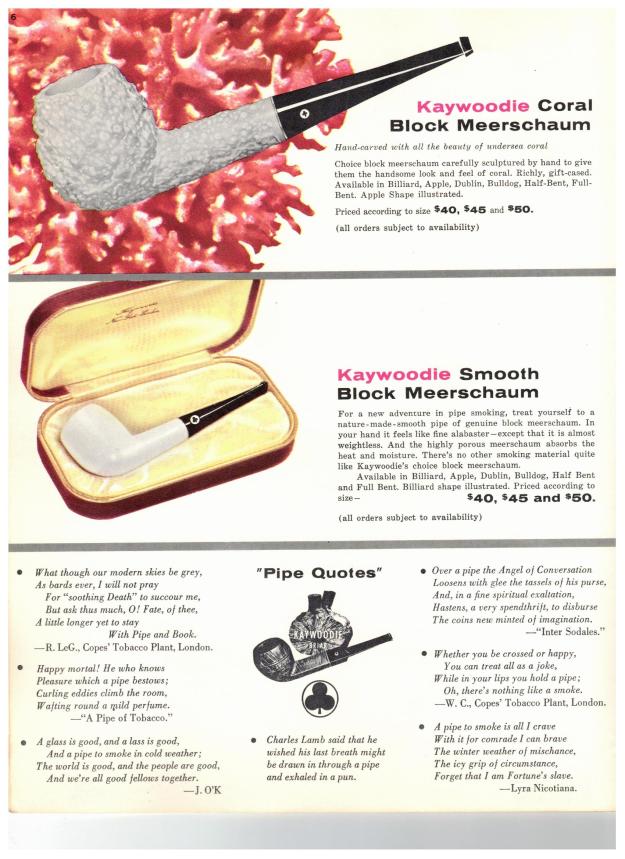
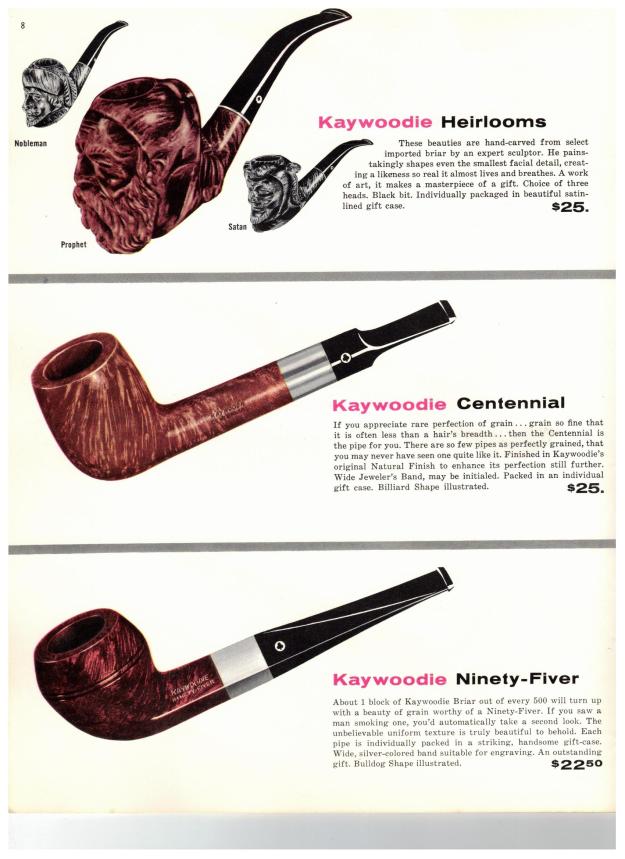
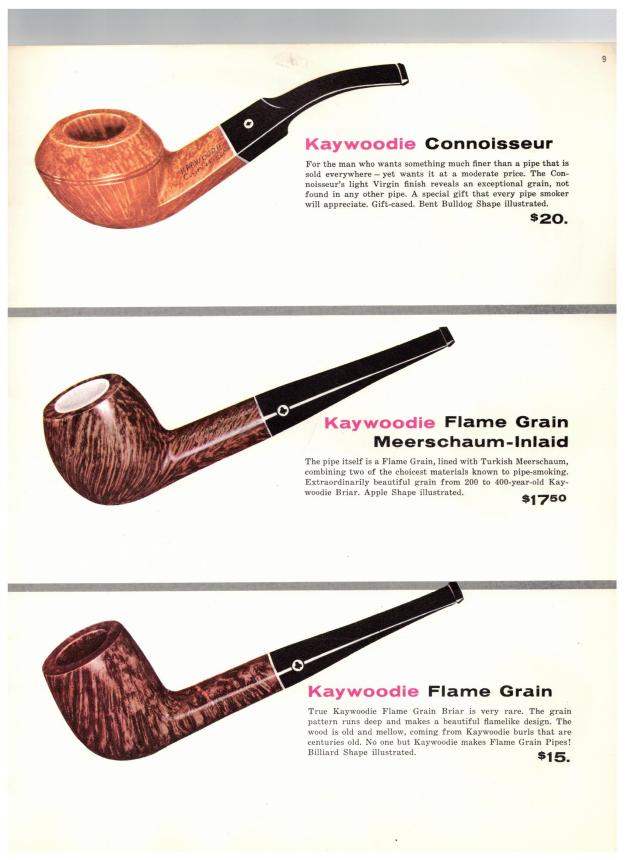
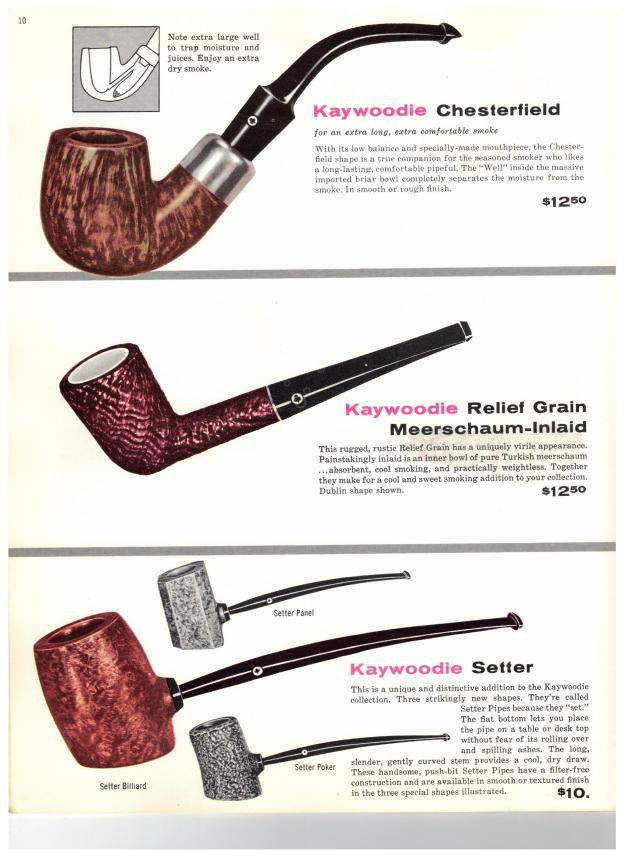
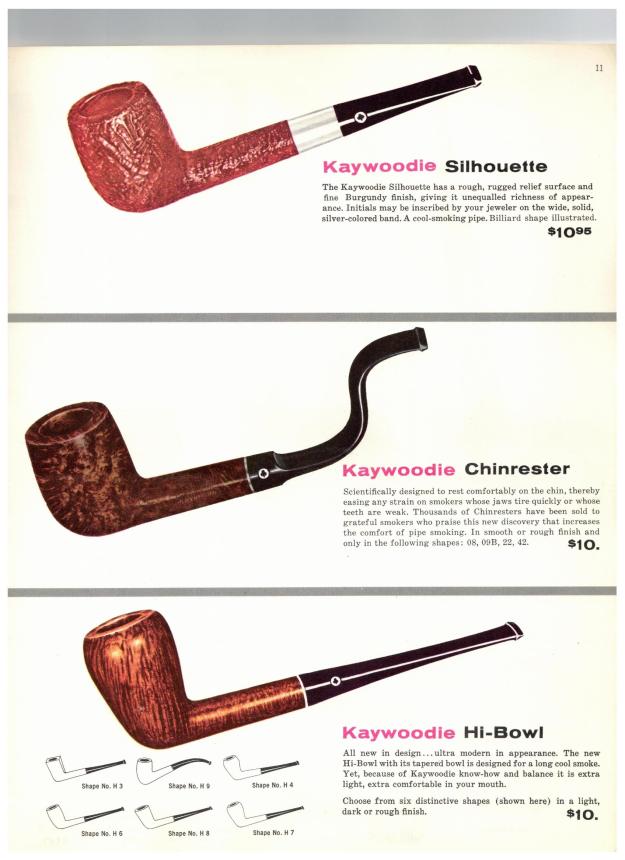
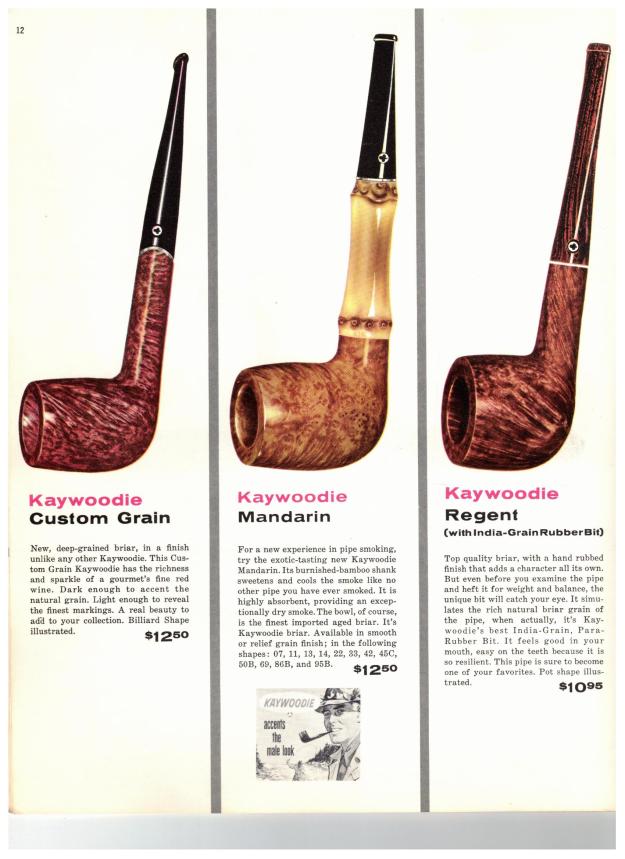
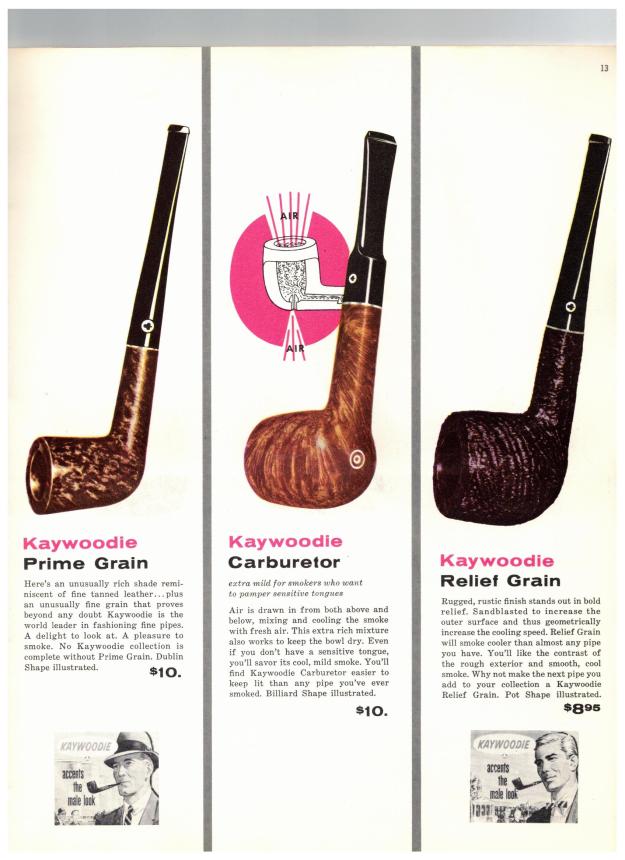
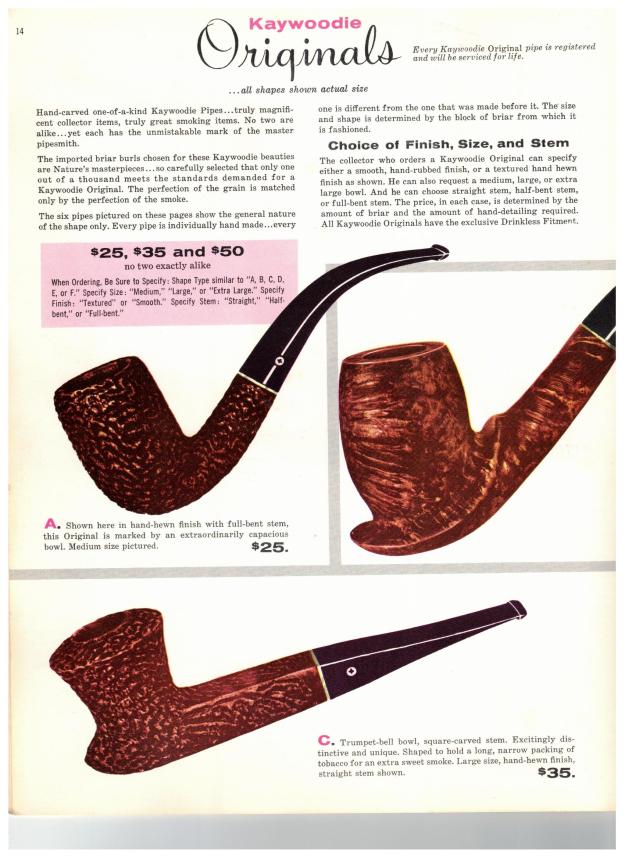
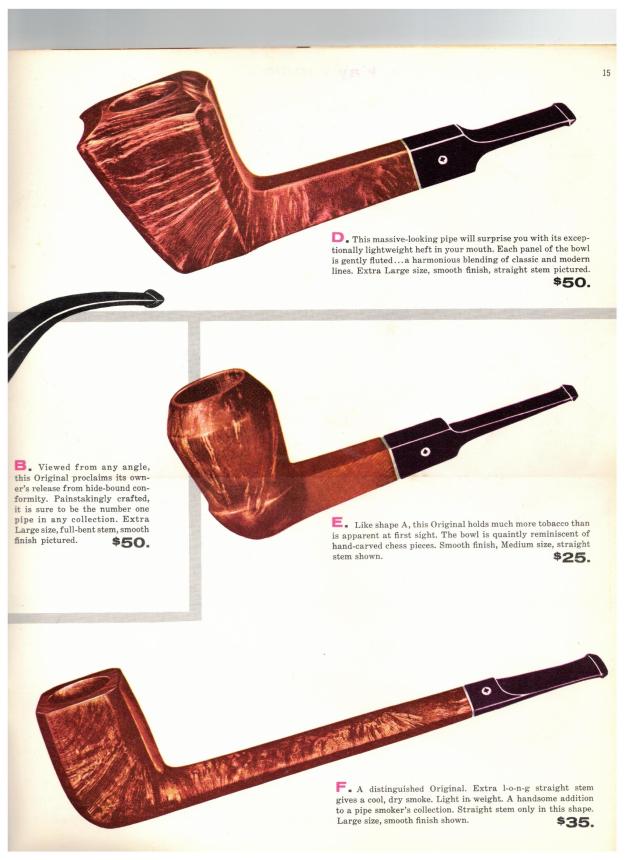
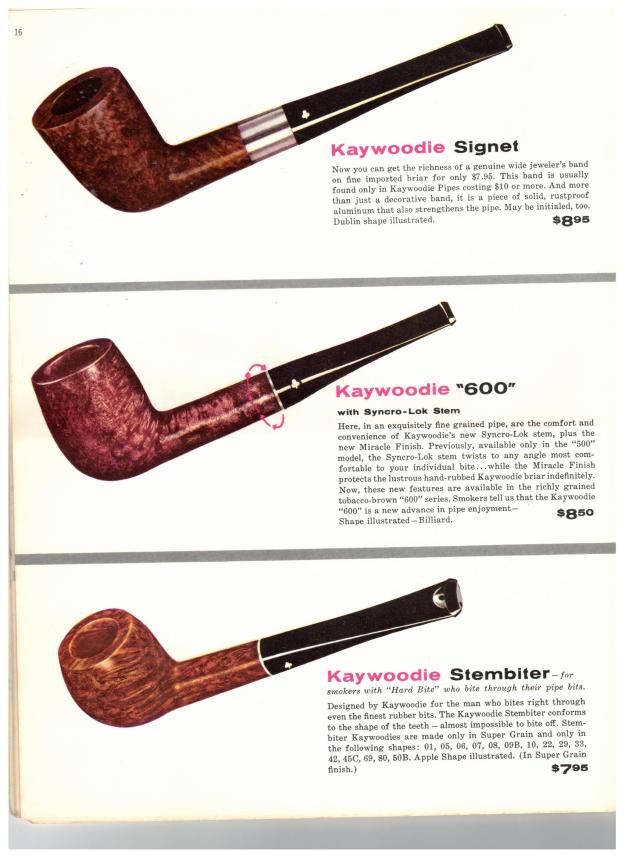
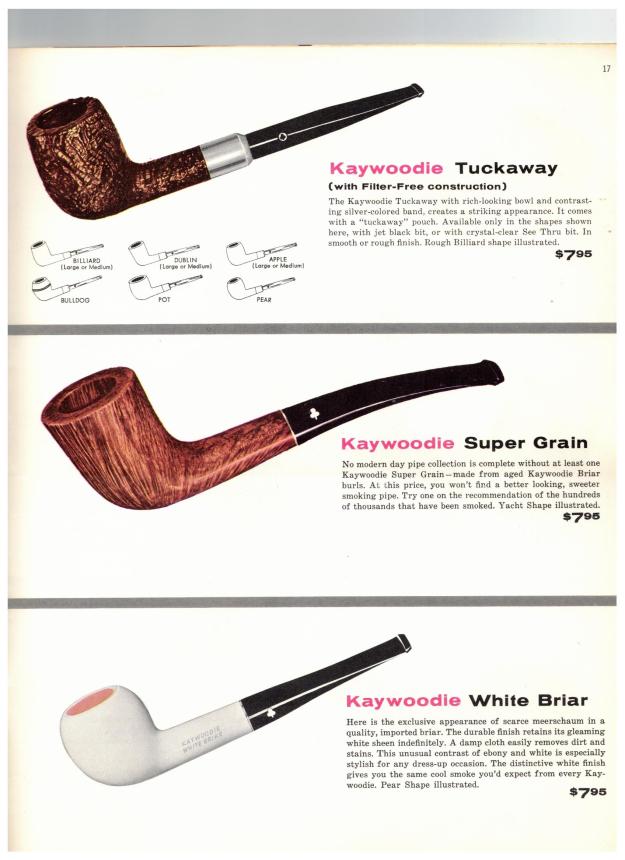
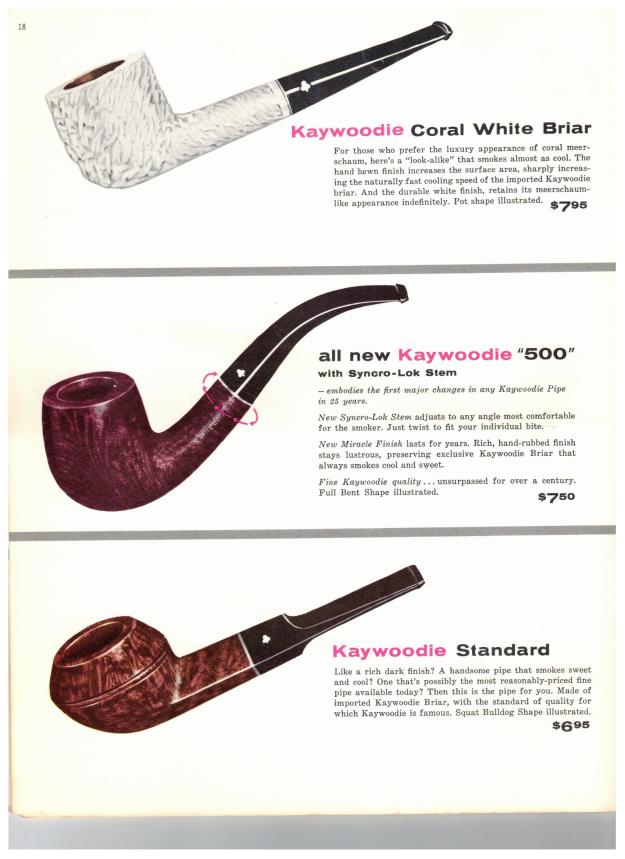
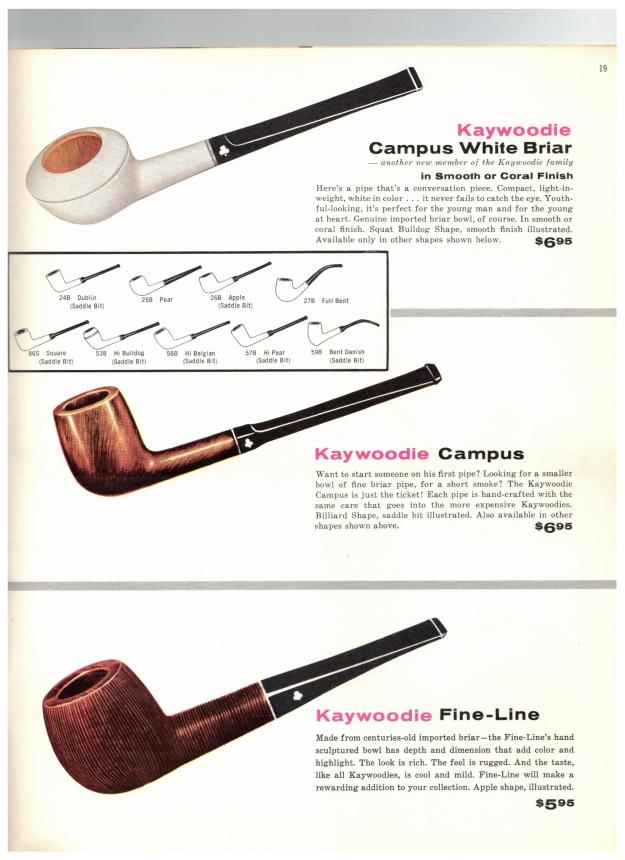
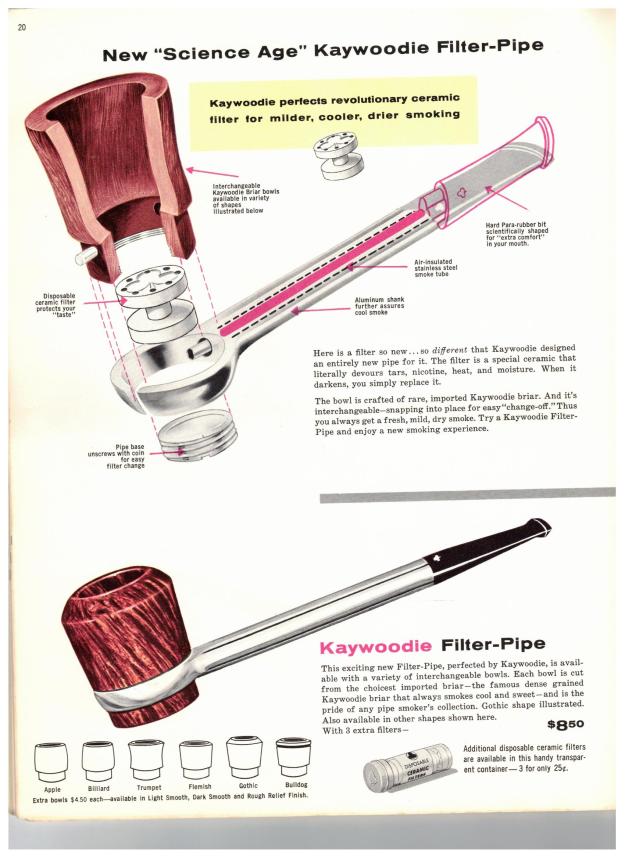
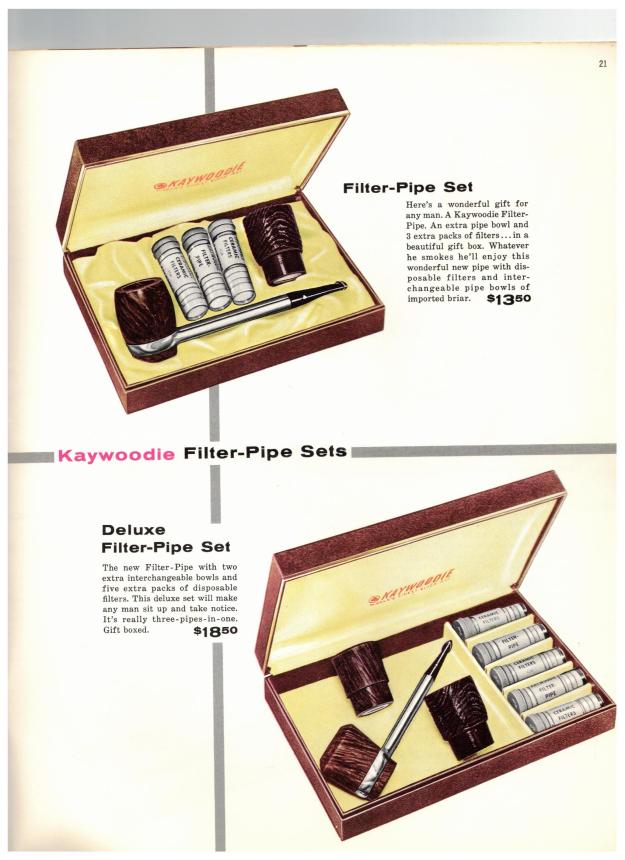
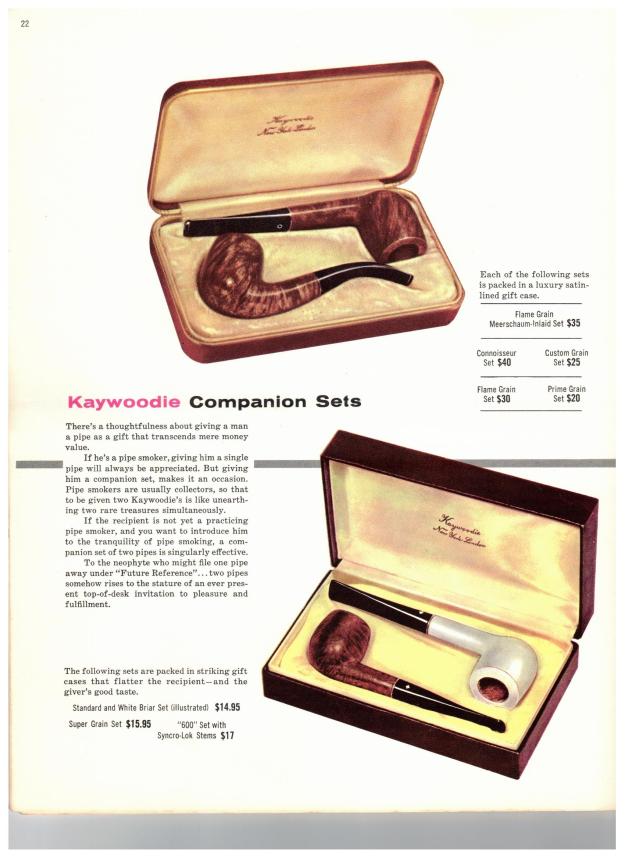
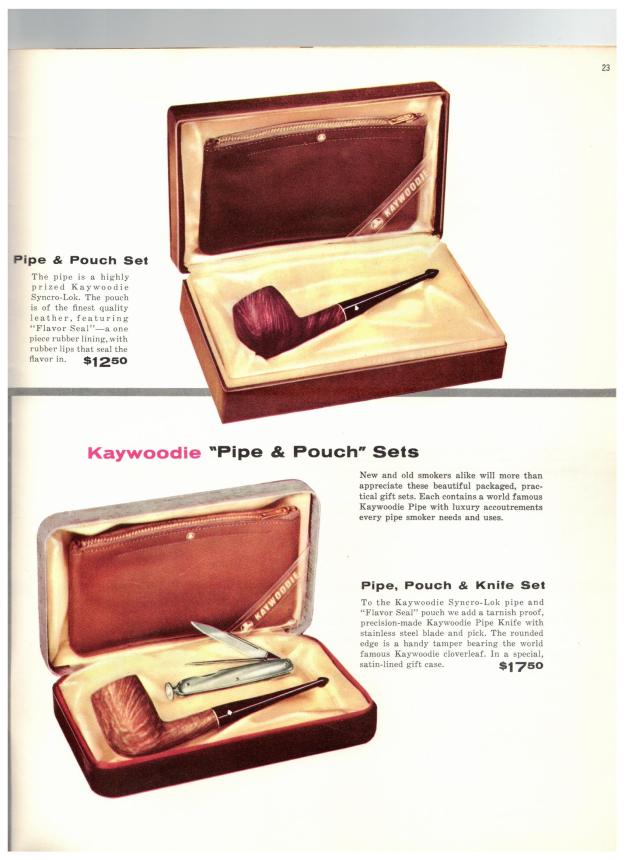
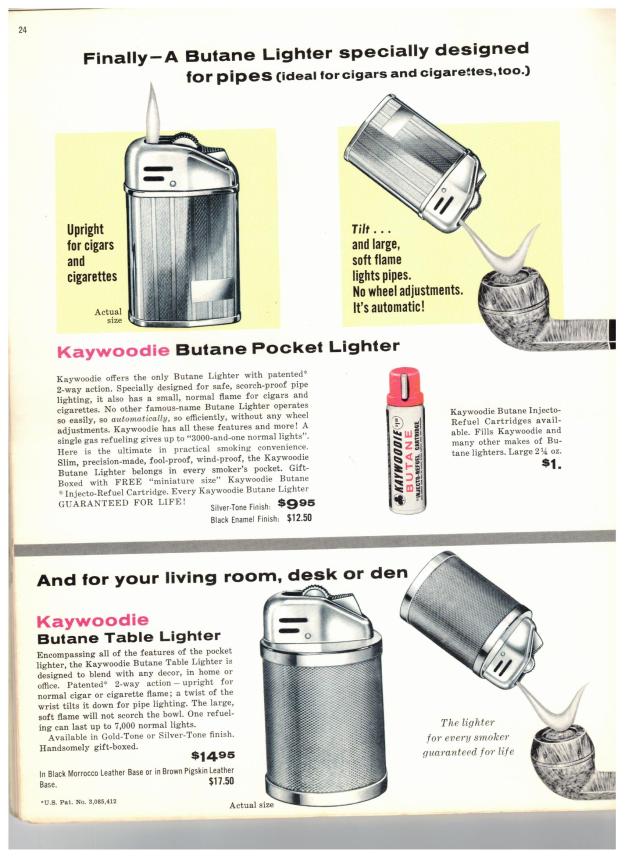
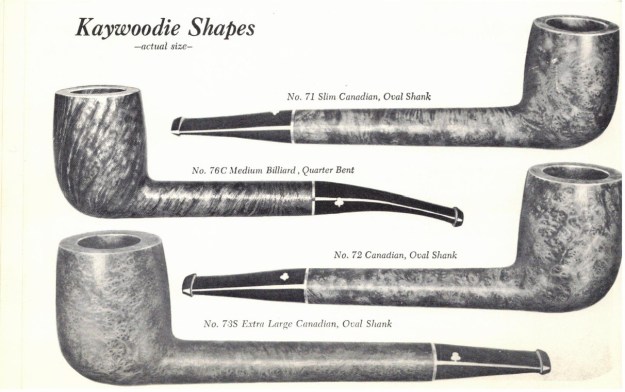
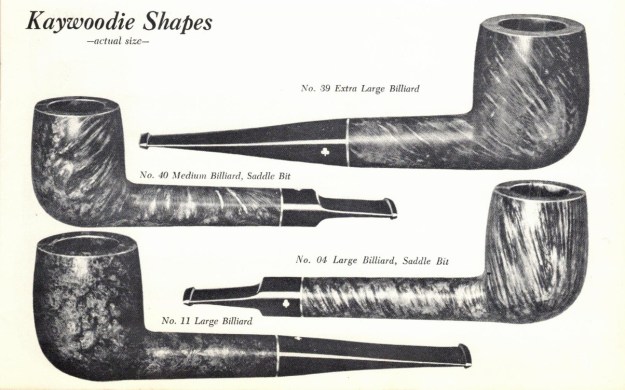
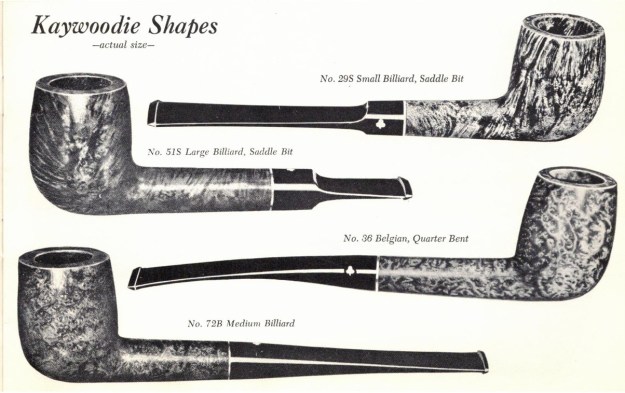
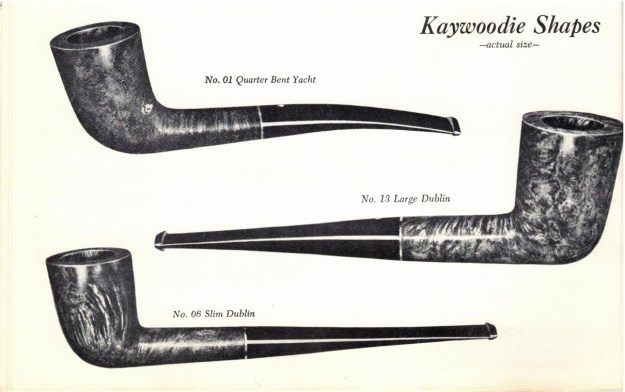
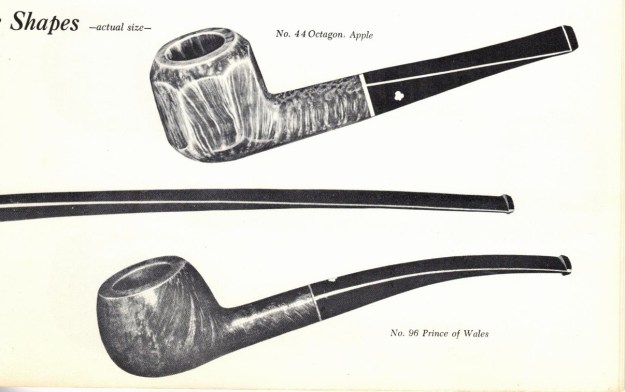
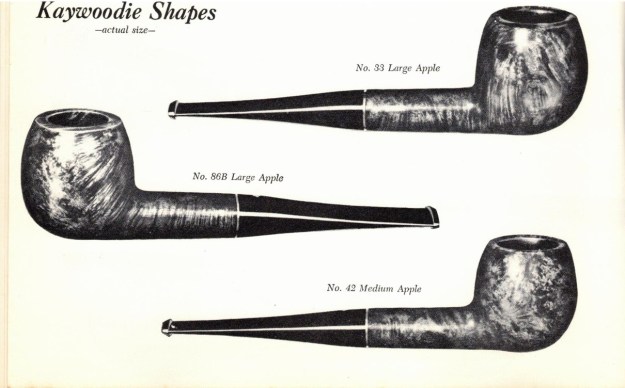
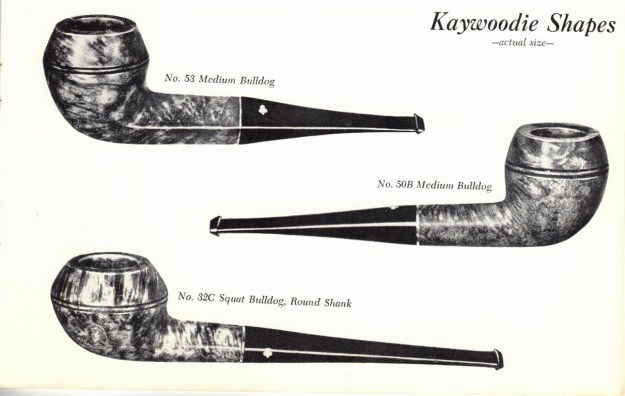
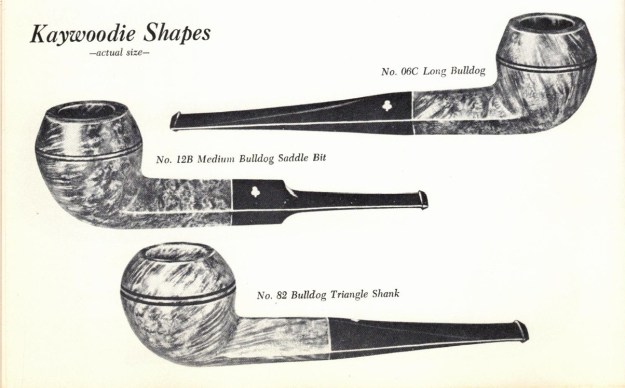
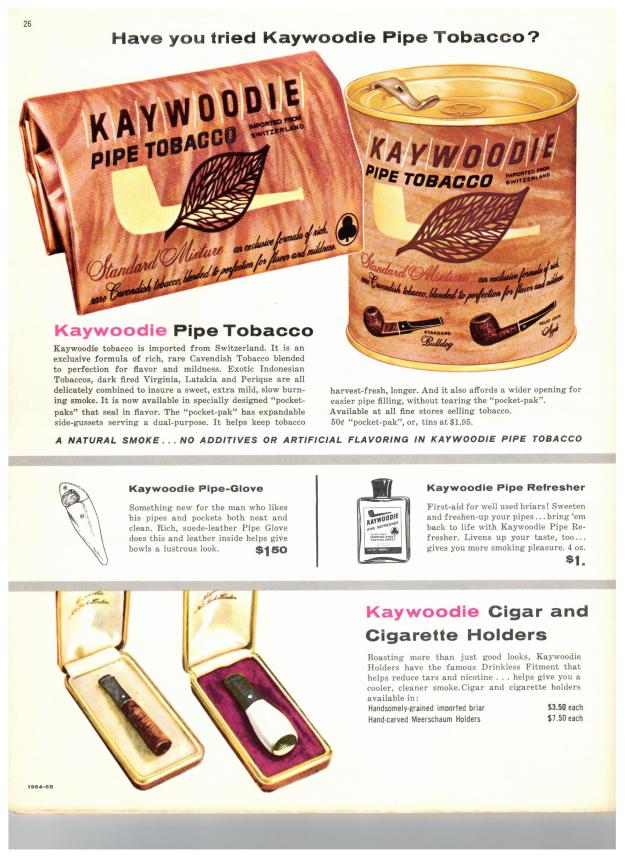
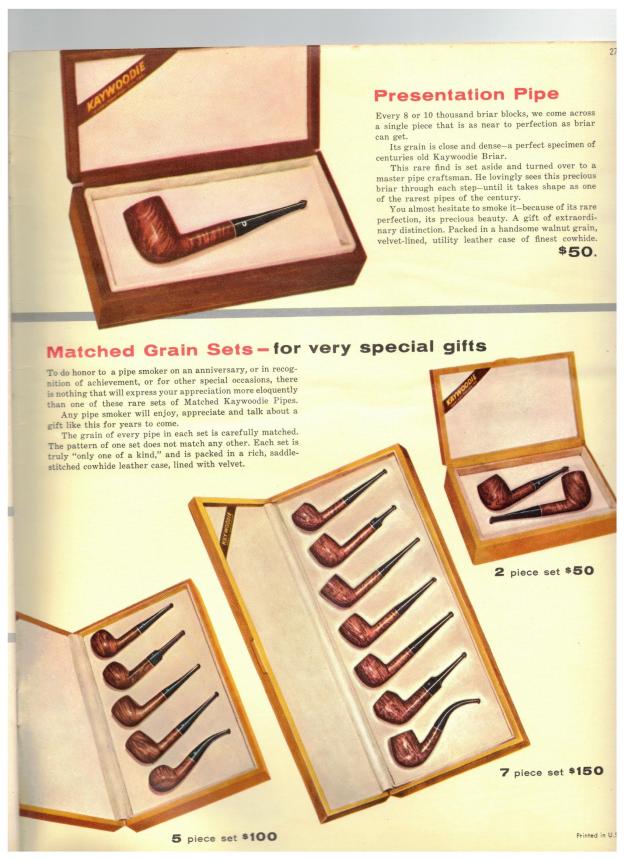
Kaywoodie Catalog – World’s Finest Since 1853


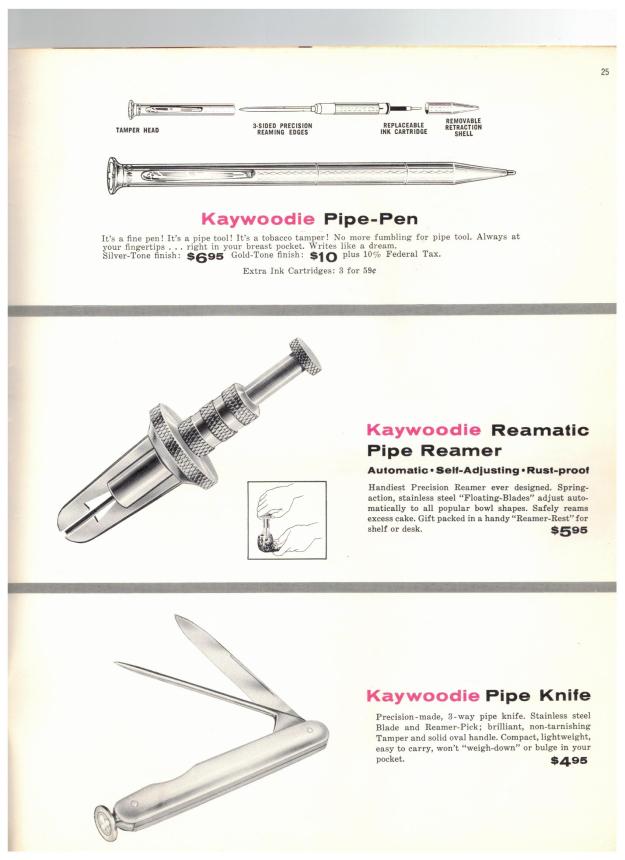
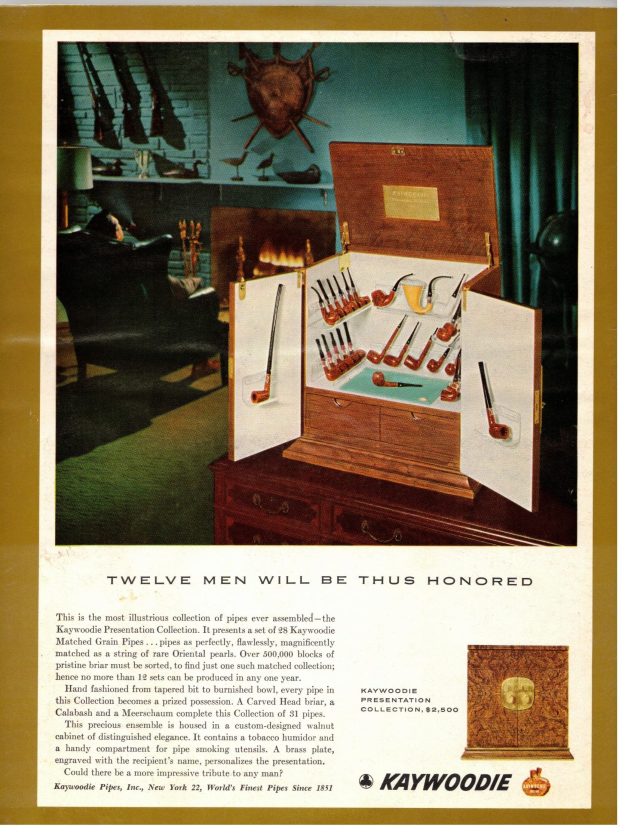
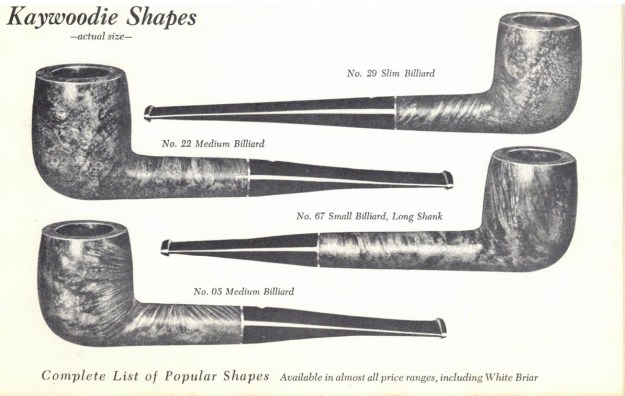
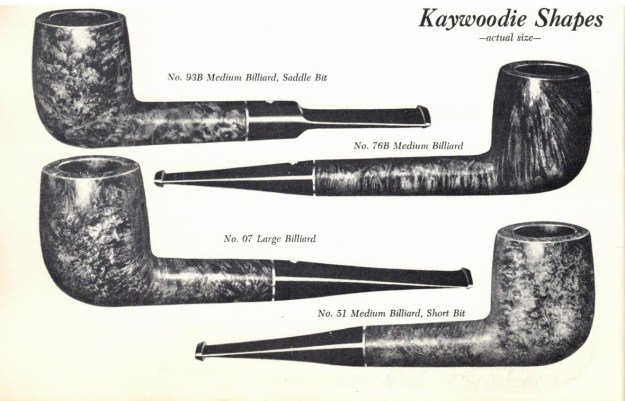
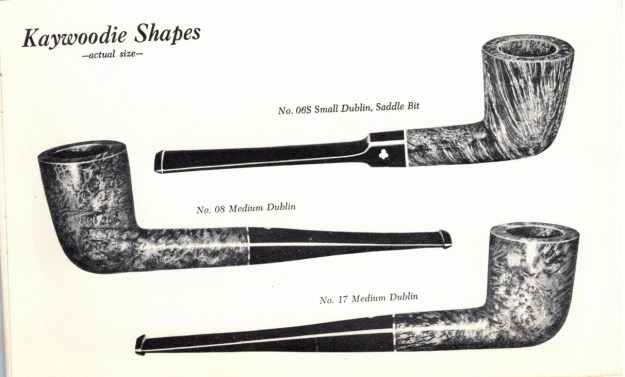
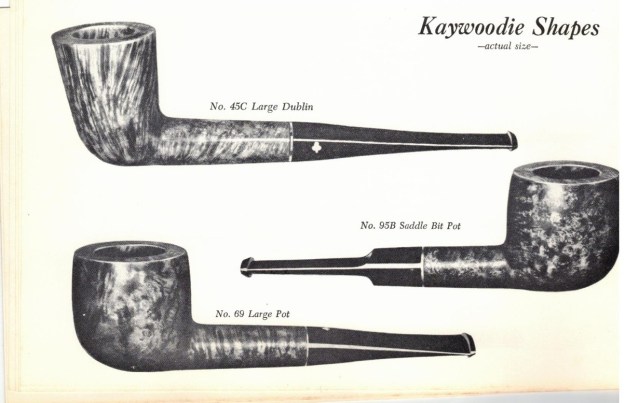
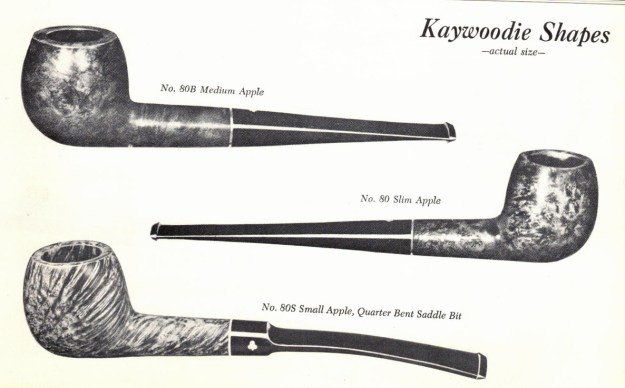
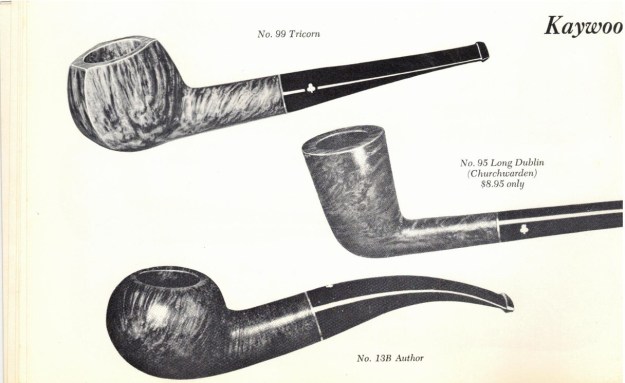
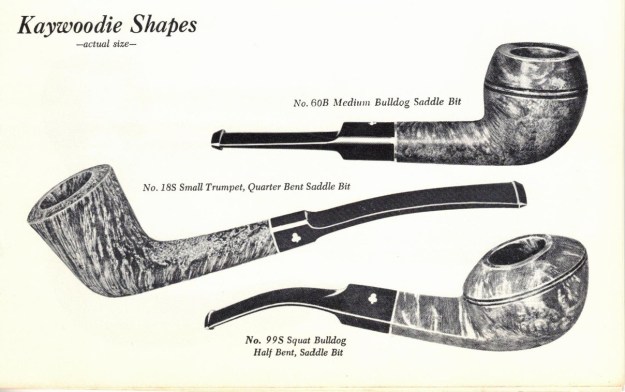
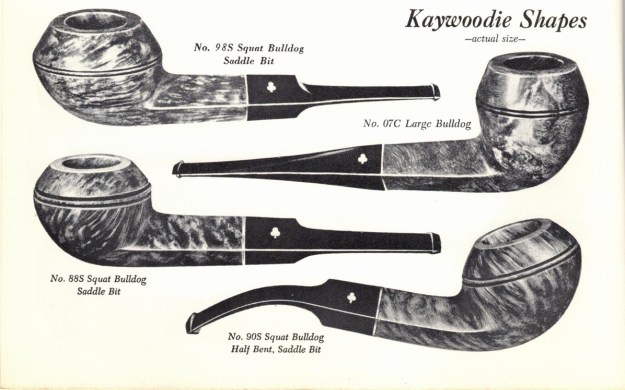
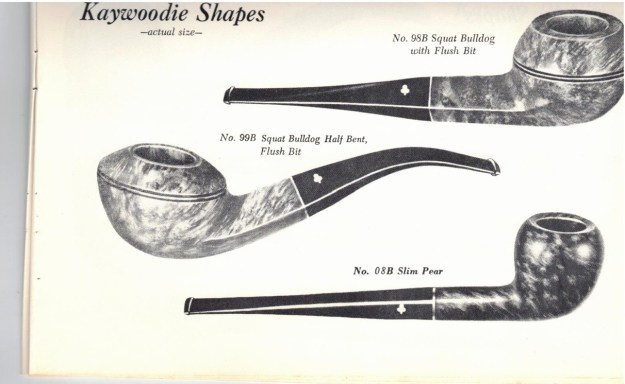
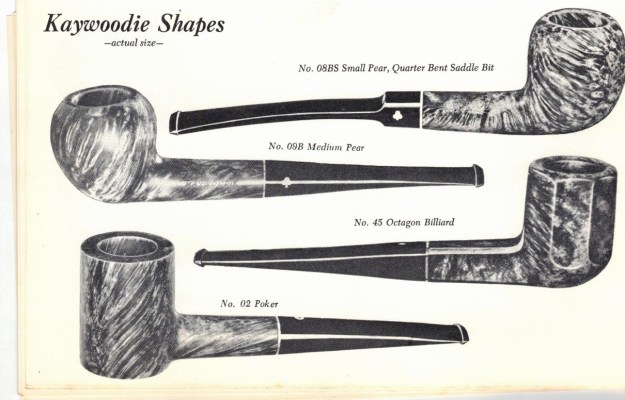
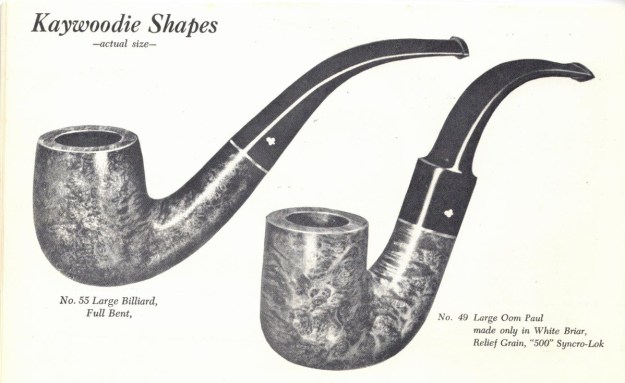
Kenneth picked up this Kaywoodie Catalog which includes Kaywoodie Pipes and Smoker’s Accessories… a pleasure to give… a treasure to own. It is a great read and full of fascinating information from a time gone by. Take time to read the material as you look over the photos.

Leonard Payne Pipes Ltd. British Columbia, Canada Brochure


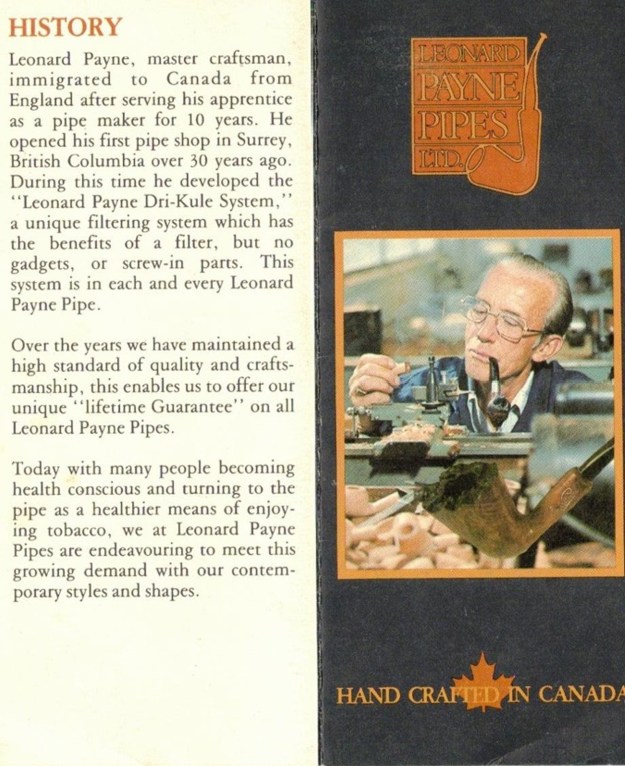
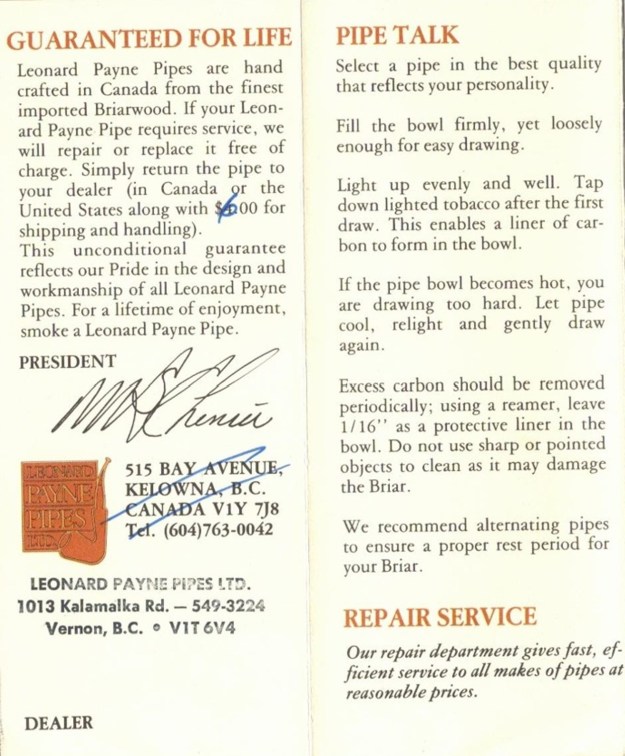
I am always on the hunt for historical documents on various pipe makers and brands. I have a good collection of them on the rebornpipes site currently that is easily accessed. This Leonard Payne Material came to me through Kenneth Lieblich. He purchased a boxed Leonard Payne Hand Made pipe that came with a box, the signature package of Amphora that Payne gave with his pipes and the brochure that I have scanned below. Give the document a read. It is fascinating to see what drove this pipe maker and the unique things he did in his craft. Thanks Kenneth.

A Pair of Tiny and Uniquely Carved Miniature Gutta-percha Bent Pipes


Blog by Steve Laug

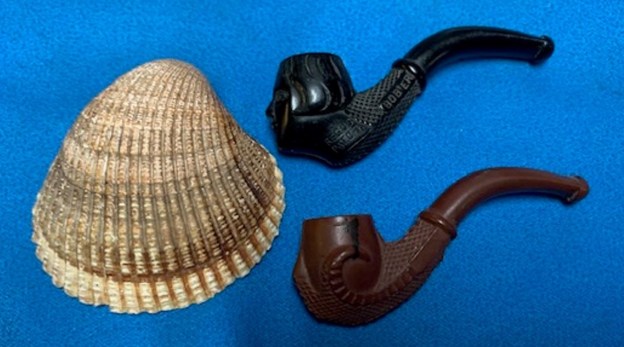
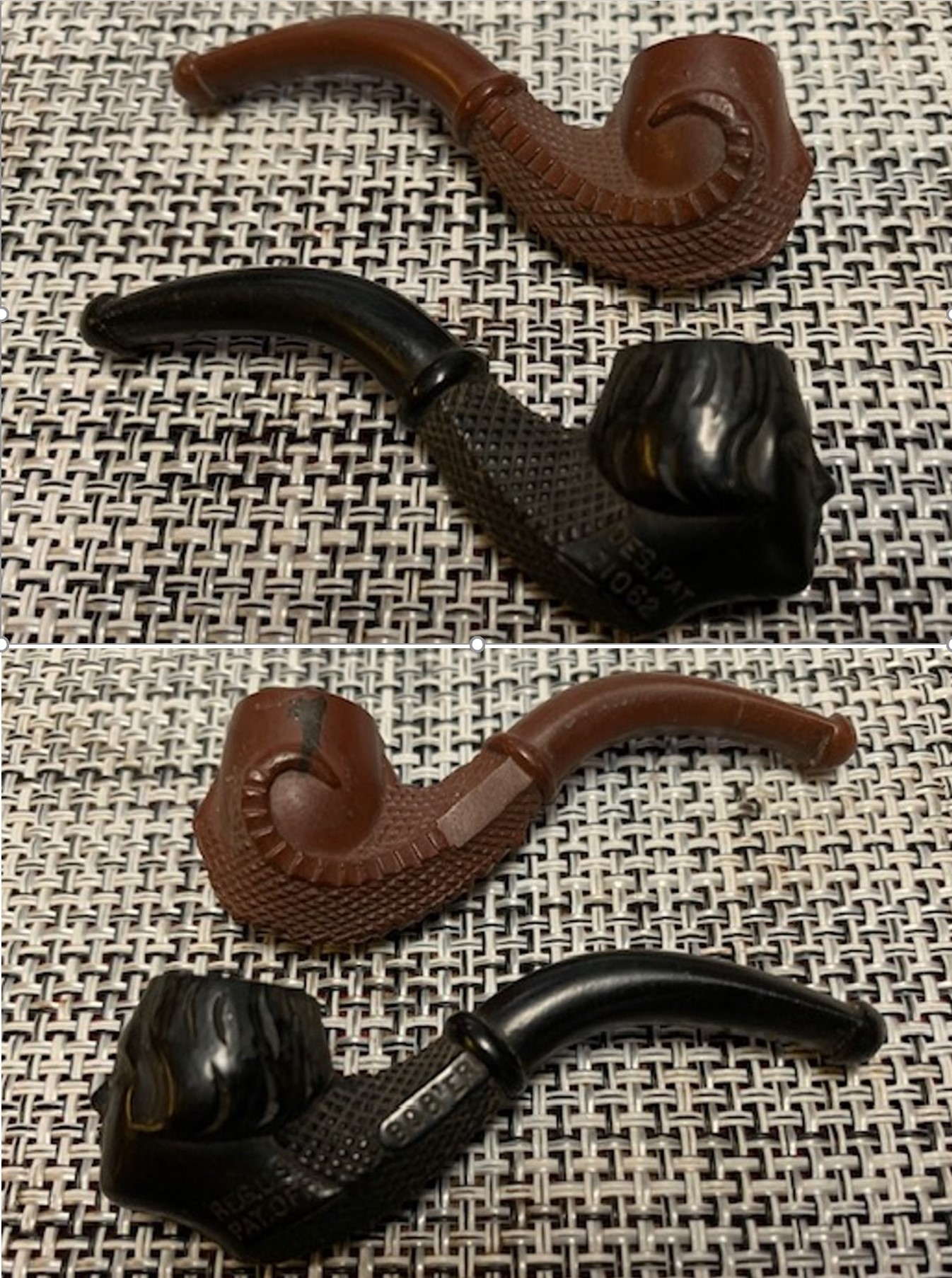
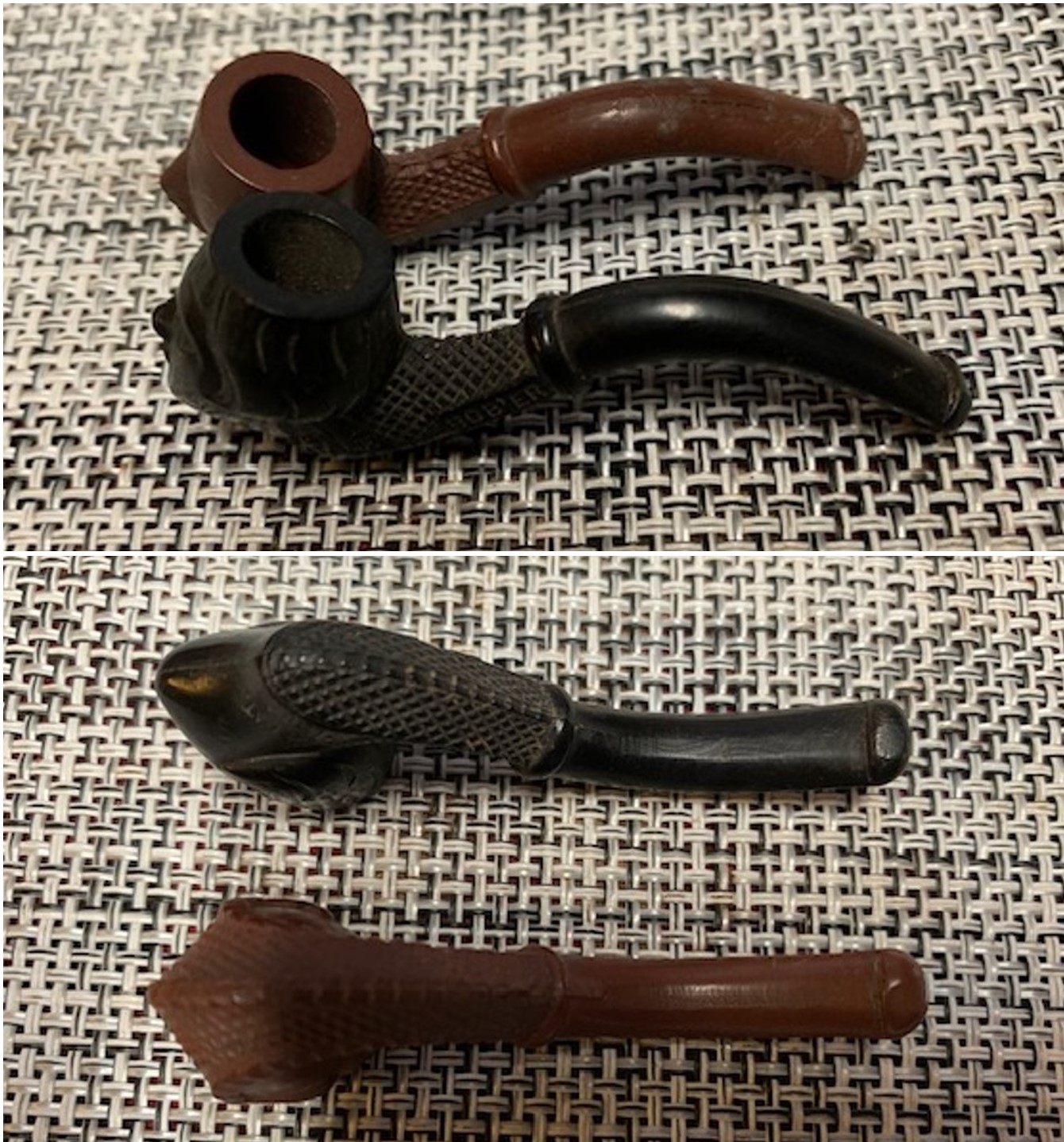
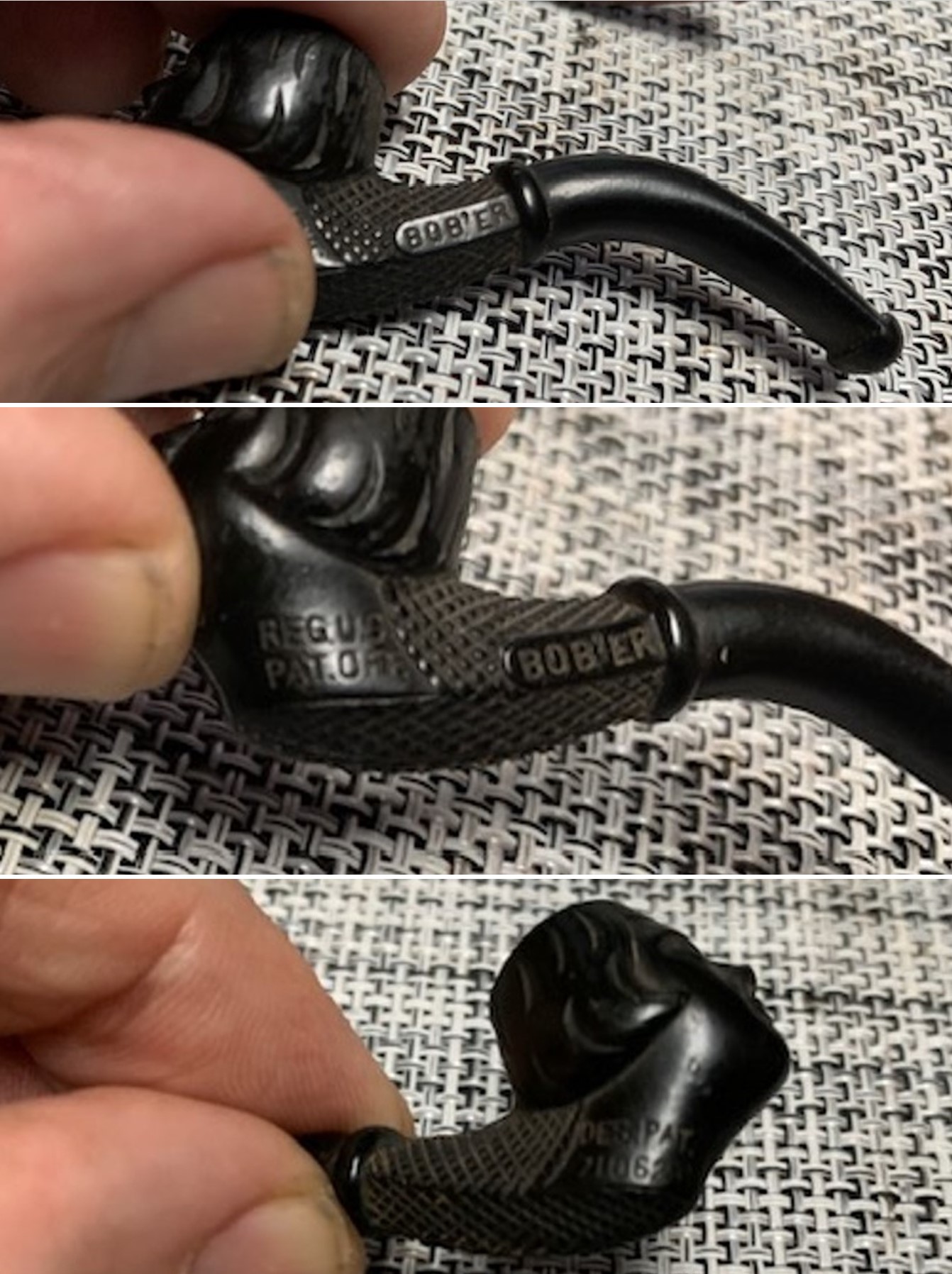
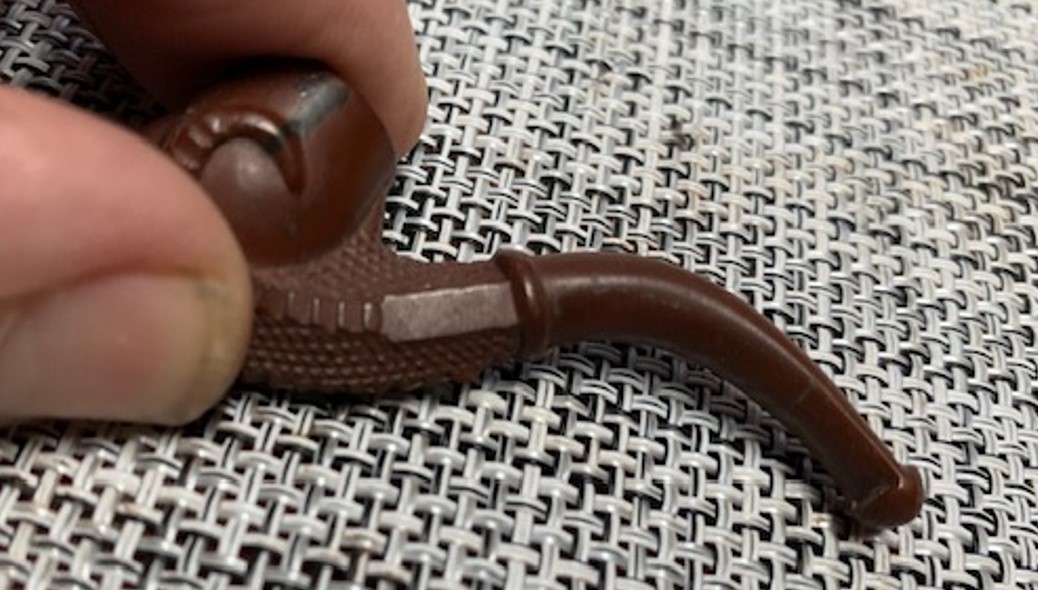
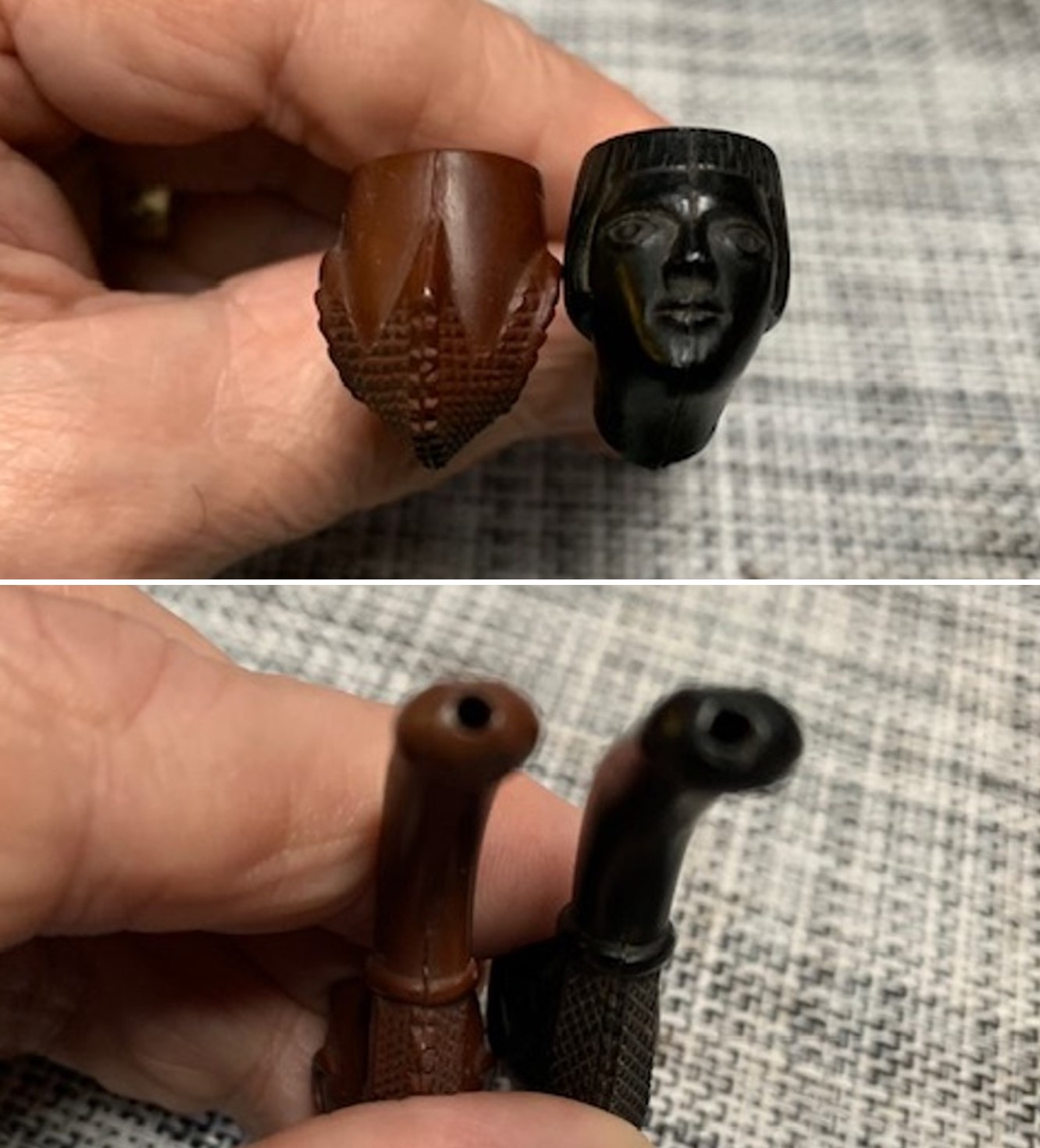
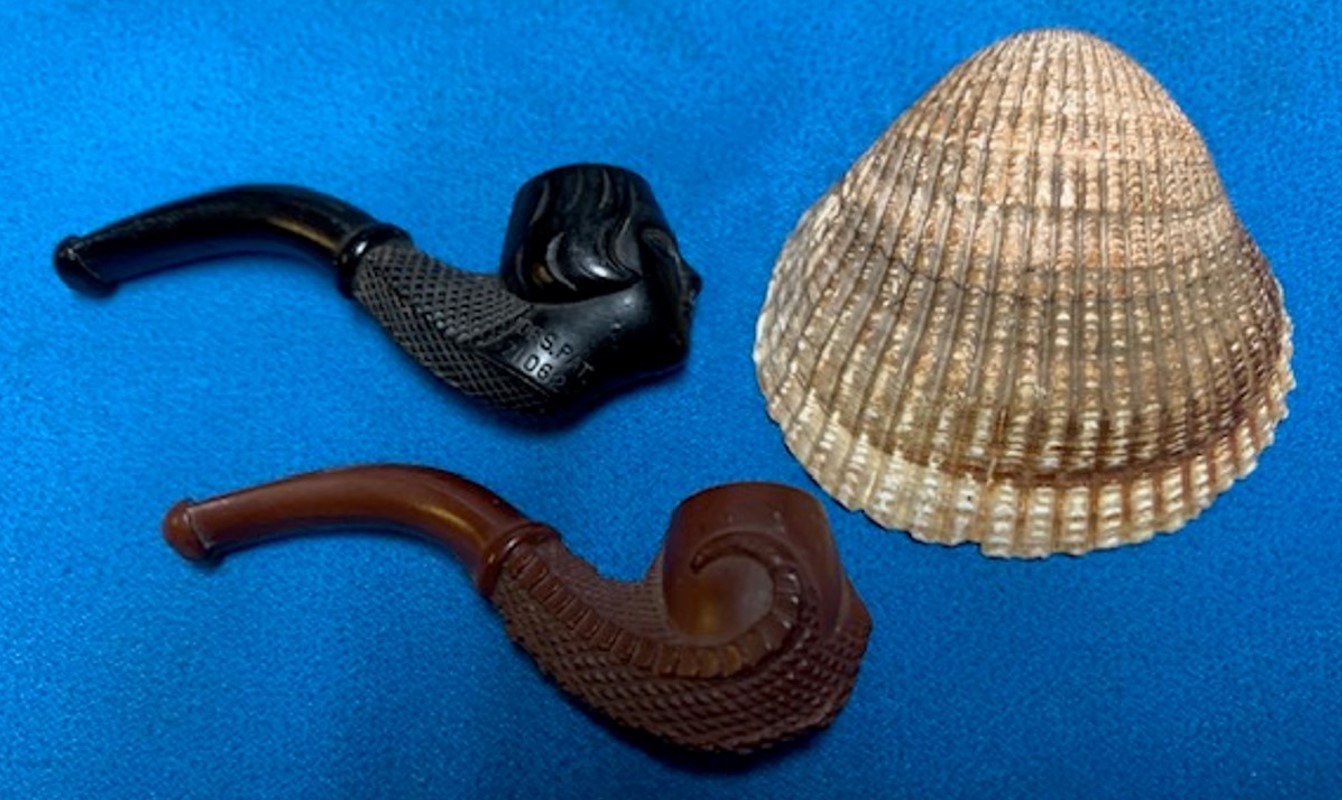
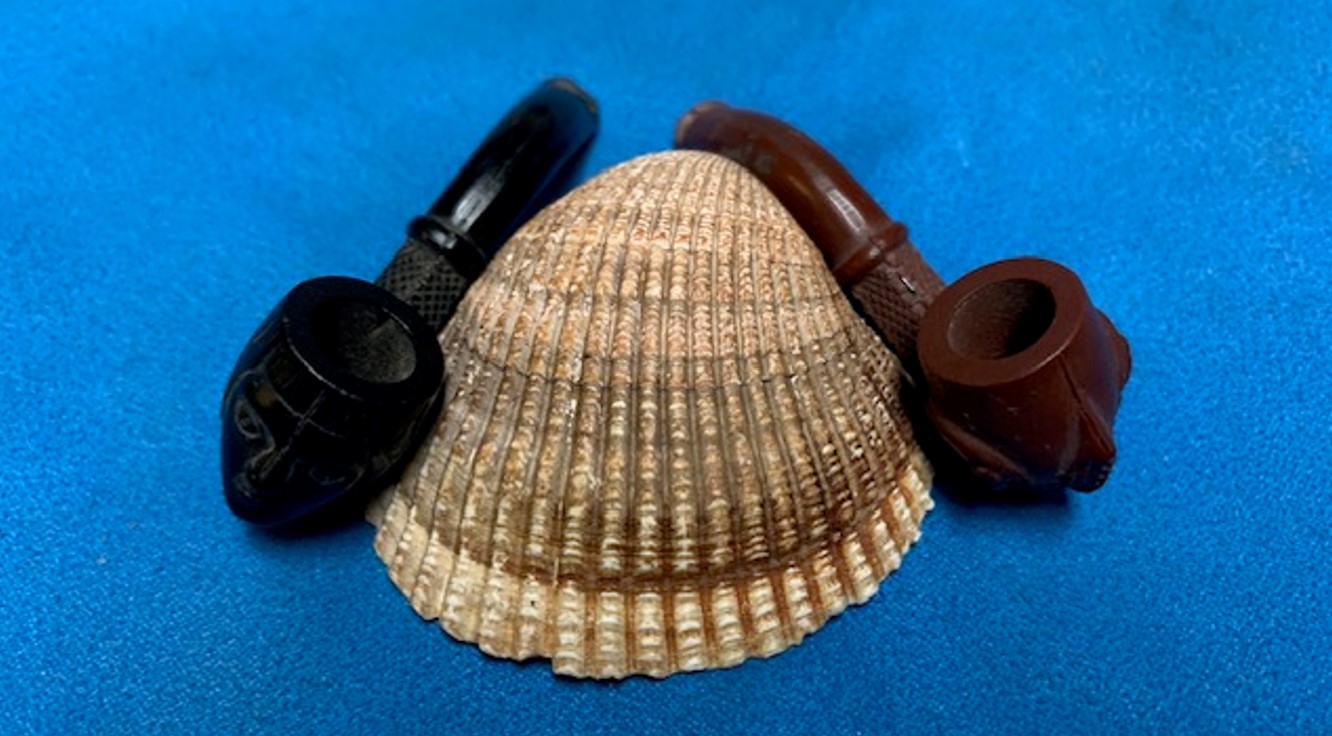
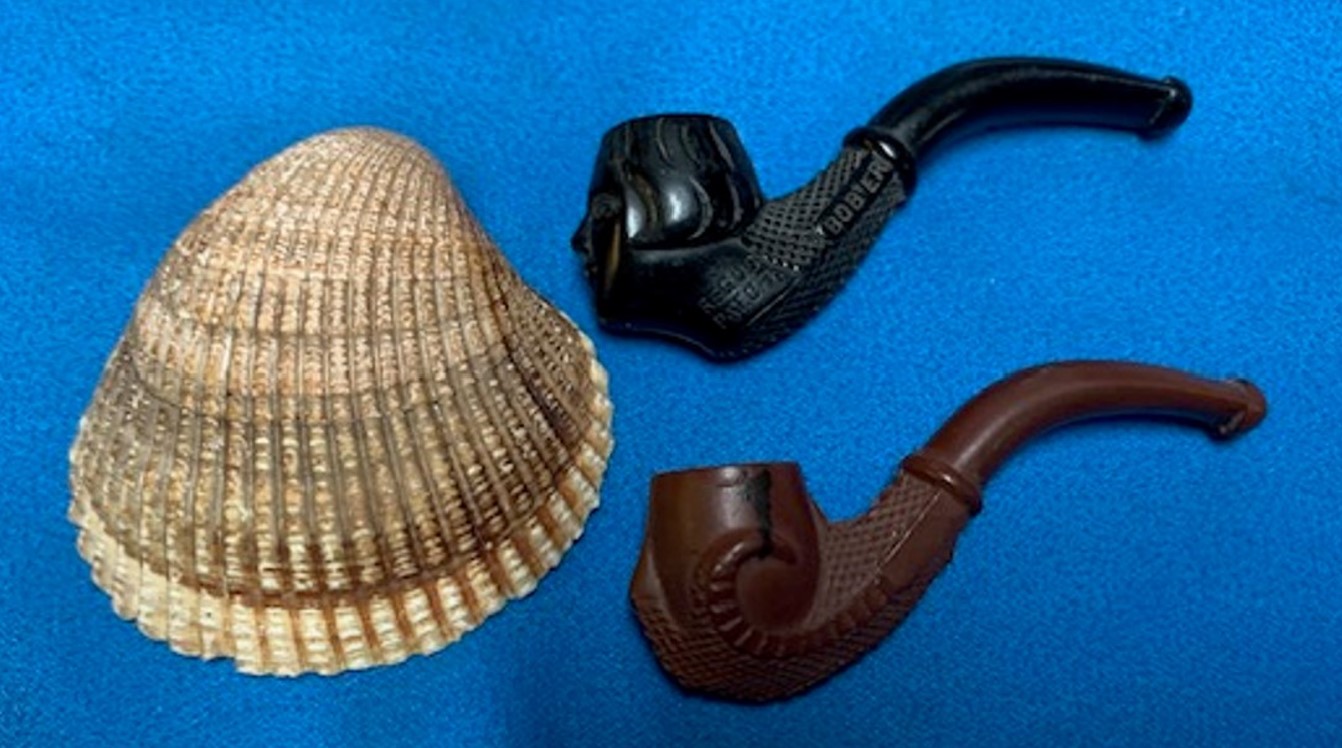
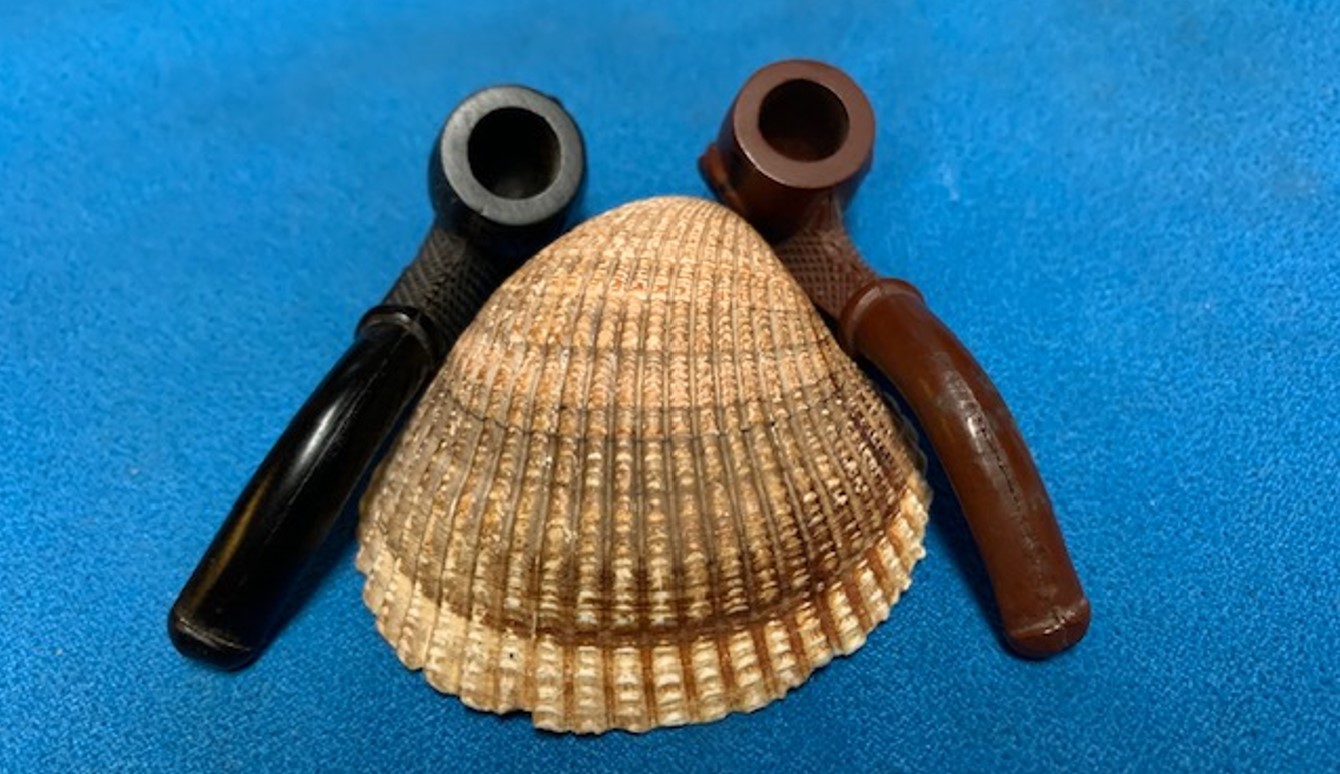
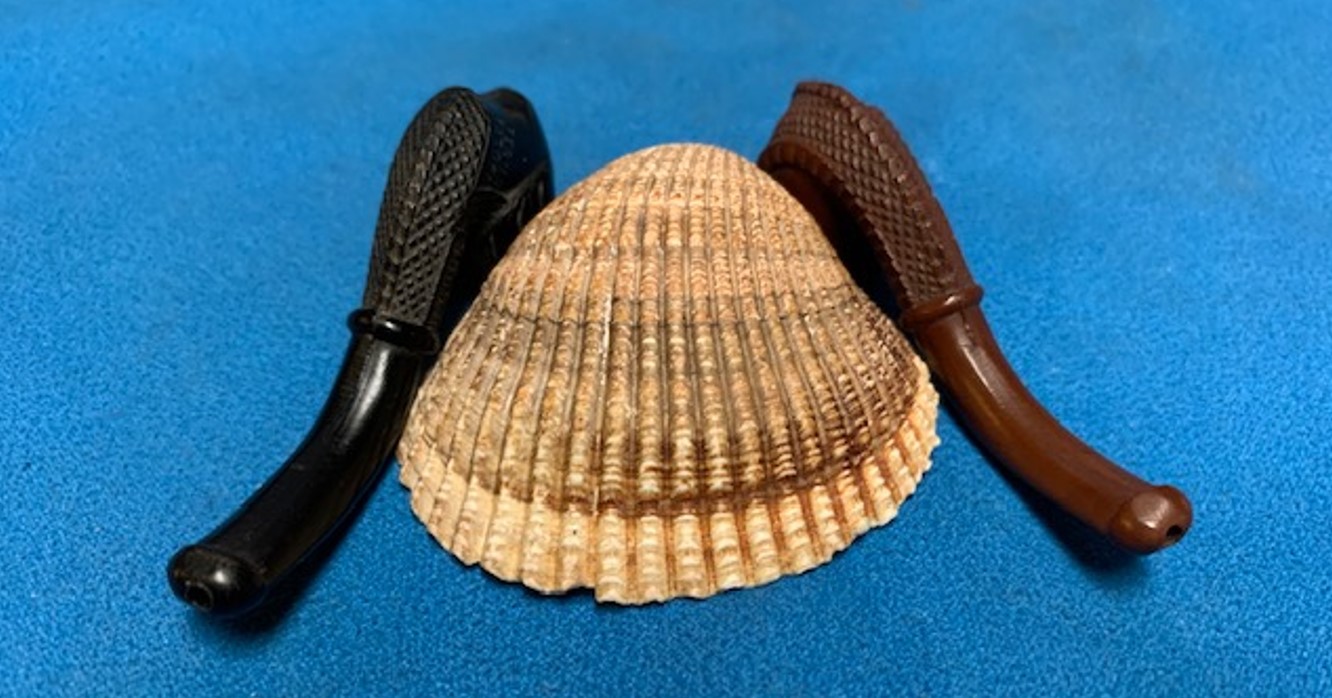
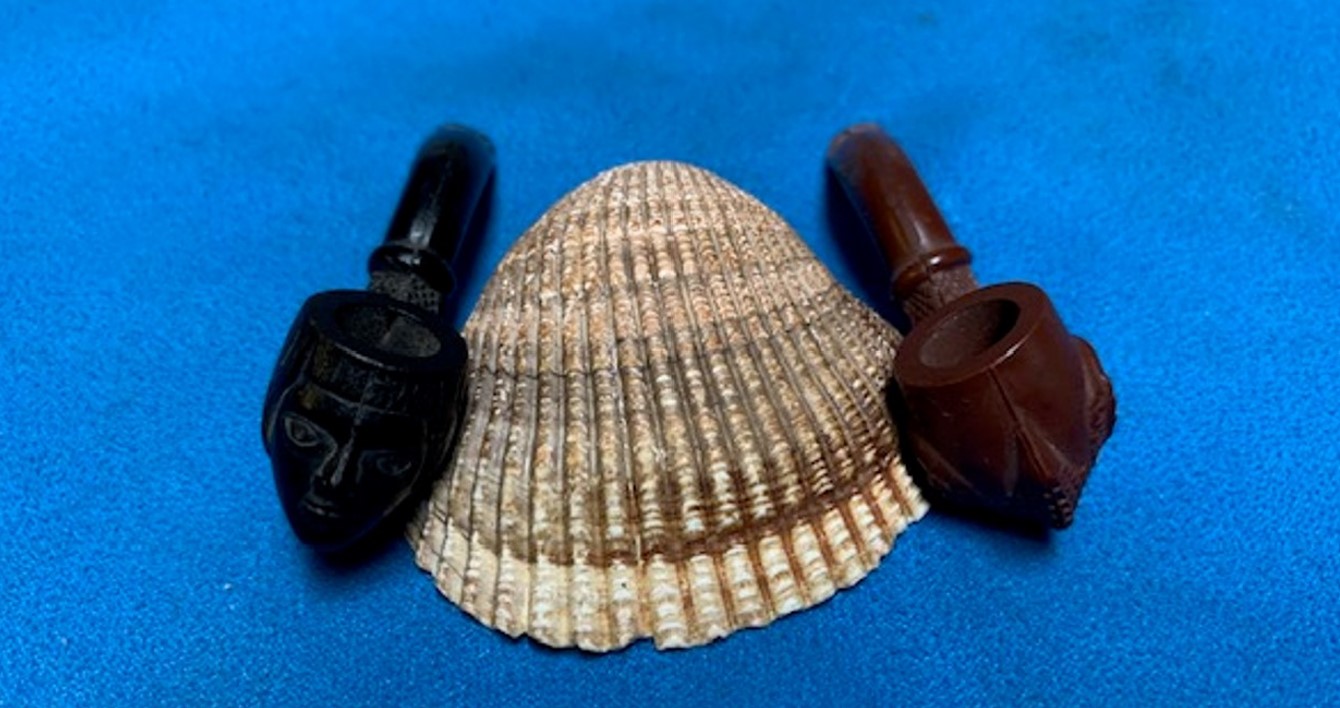
Over the past several years Jeff and I picked up two very tiny pipes that are drilled and useable but so tiny it is hard to imagine smoking them. The darker one I have had here for quite a few years now. The brown one Jeff sent more recently in the past year. It came in a small box. I have put a Dunhill Shell Briar Group 4 Lovat in the photo to give a sense of the size of the box and of the pipes inside. The Lovat is 5 inches long, 2 inches tall, outer diameter of the bowl is 1 ¼ inches and the chamber is ¾ of an inch in diameter. In other words it is an average sized pipe.I took a photo of the pipes in the box. You can see the pair there. They are both carved or cast from gutta-percha. The stem and the bowl are one unit in both pipes. The bowl on the black one is a carved head and on the brown one is a egg and claw. Both are clean and unsmoked but both have a clear draw from the bowl to the button. I took them out of the box and put them side by side under the Lovat to give a sense of perspective.Both pipes are 2 ¼ inches long, ¾ of an inch tall, outside diameter of the bowl is ½ inch, the chamber diameter is ¼ of an inch. The photos show a difference, in actuality the pipes are both the same size. Both have a cross hatched finish on the shank and both have a cast ting around the shank/stem. The Egg and Claw are very nicely cast and the details are well done. The figural head is also well done with good details. There is no stamping on the brown pipe but the black one is stamped on the left side and reads BOB’ER. On the heel of the bowl on the black one on the left side it is stamped REG. U.S. [over] PAT. OFF. On the right side of the heel it is stamped DES. PAT. [over] 71062. I have looked on the US Patent site and was not able to find any information on the pipe. I took a photo of the bowl front to show the detail of the carving on the bowl face. Gutta-percha was cast so a mold was made for the pipe. The detail is quite remarkable on both of the pipes. Look at the carving on them both. The second photo below shows the orific opening in the end of the button. This gives a sense of age to the pipe.This pair of older Gutta-percha figurals – a carved head and an egg and claw are beautiful and so detailed for their tiny size. They will remain in my collection here as testimony to the art of pipe carving or in this case pipe casting. Thanks for reading this blog.

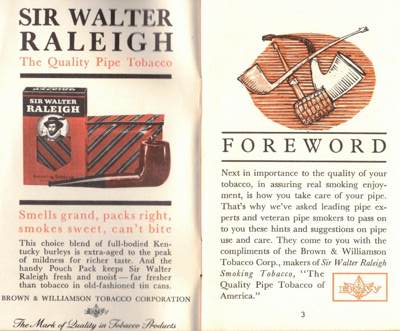
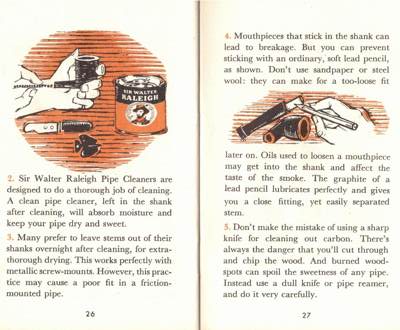
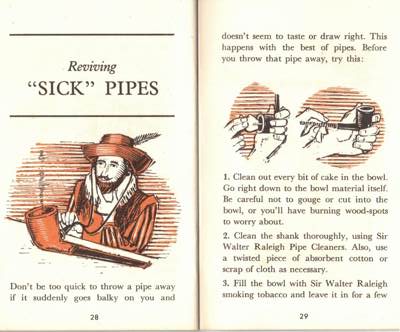
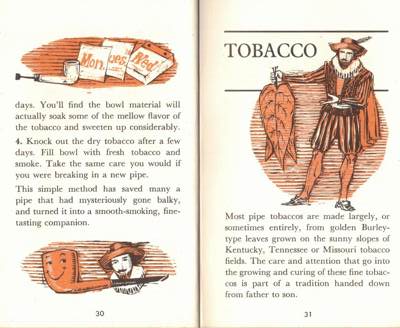
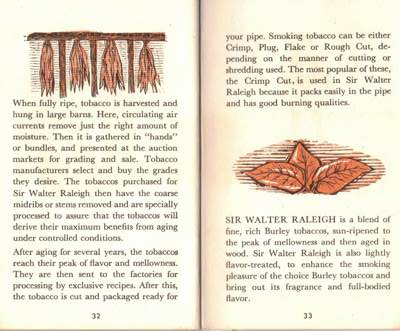
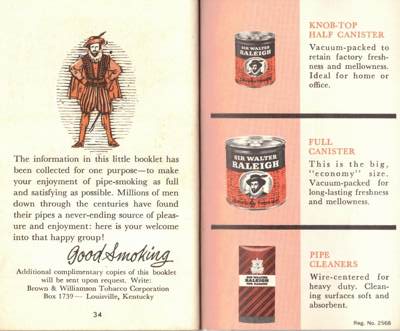
A Pipe Smokers’ Guide To Pleasure – Sir Walter Raleigh


Blog by Steve Laug

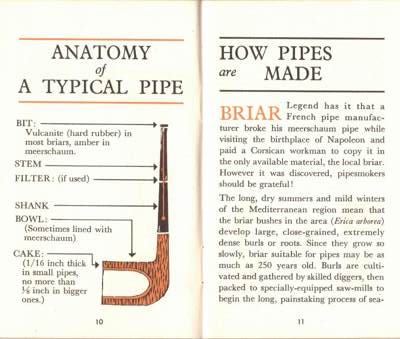
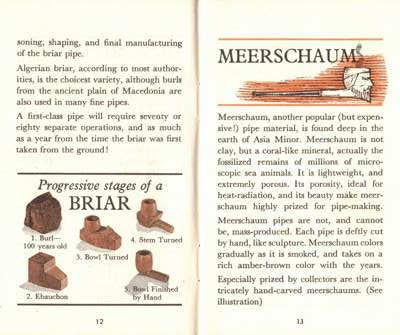
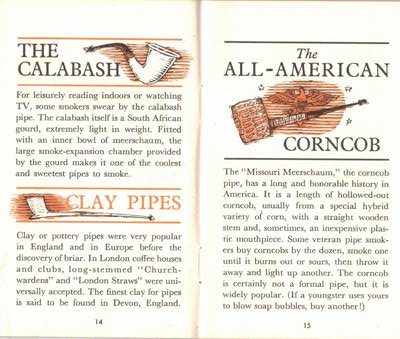
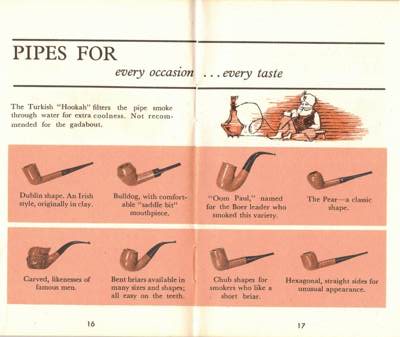
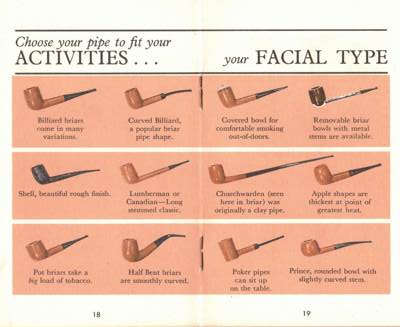
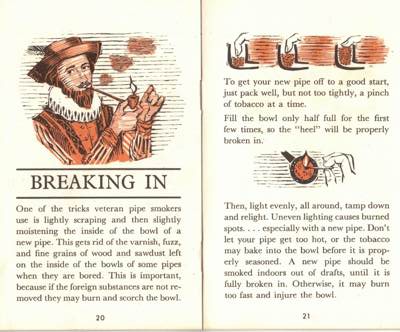
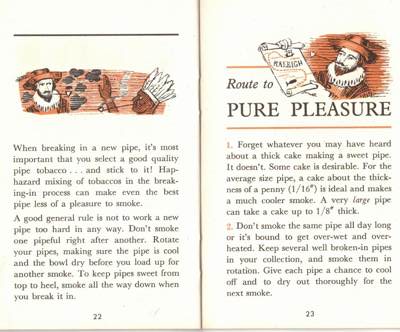
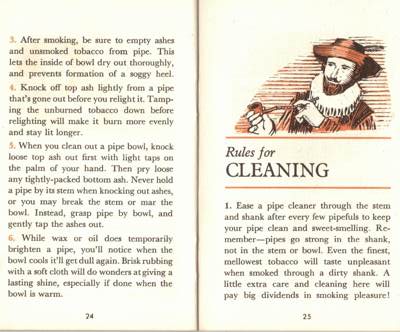
I received this booklet in a box of pipe parts and tobacciana that I brought home with me while on my visit with Jeff and Sherry in Oregon. It is a neat little piece of tobacco history in the form of a guide to pipe smoking that came with boxed Sir Walter Raleigh Pipe Tobacco. It is a great read and a great piece of pipe history. Give the text a read as is a delightfully worded piece of Pipe Advertising. Thanks.

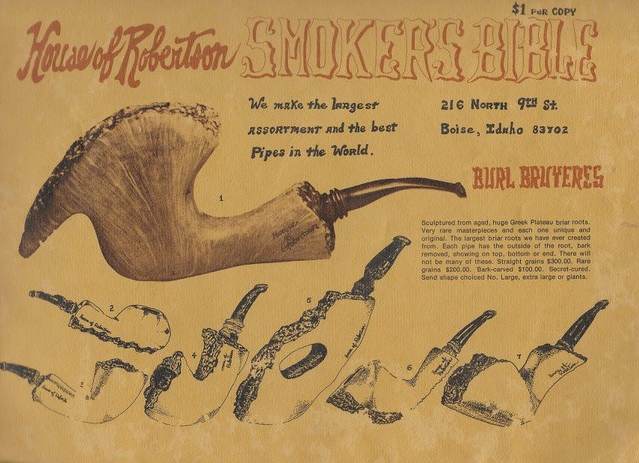
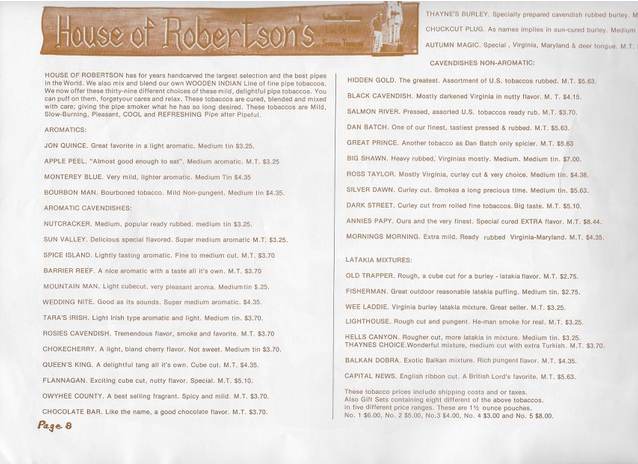
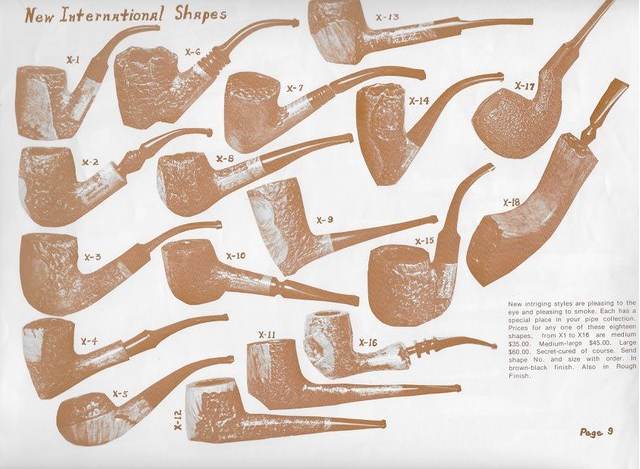
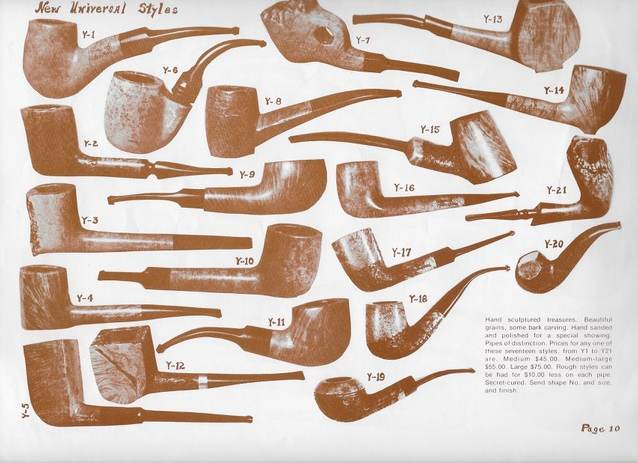
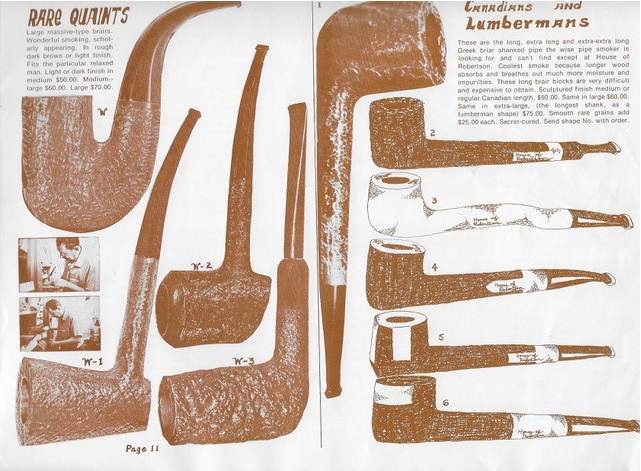
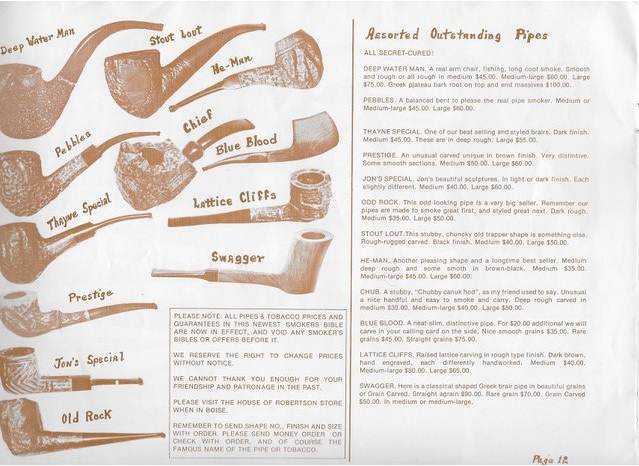
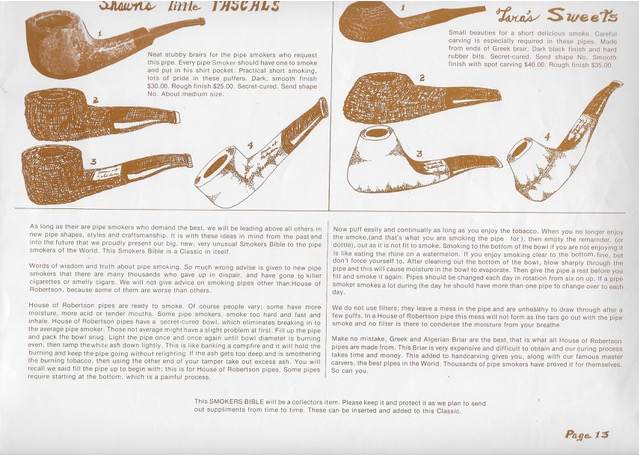
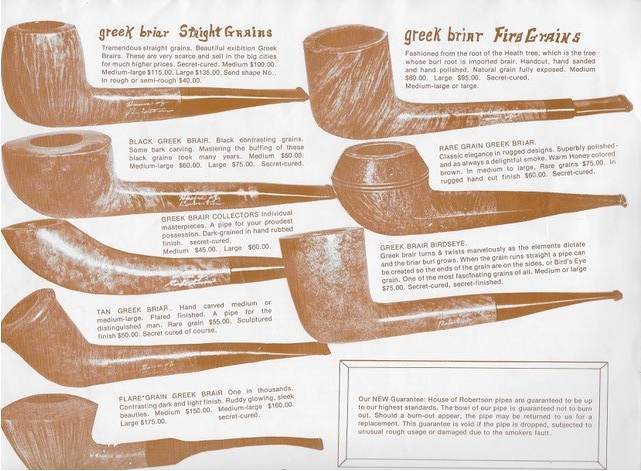
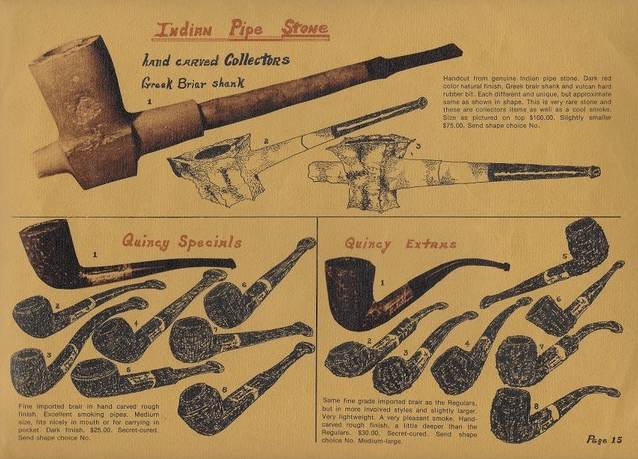
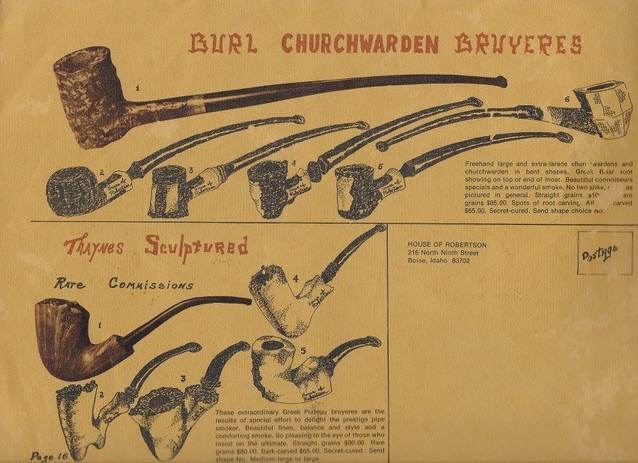
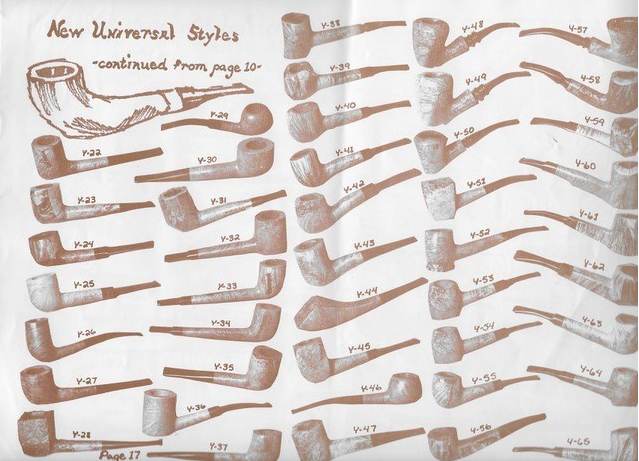
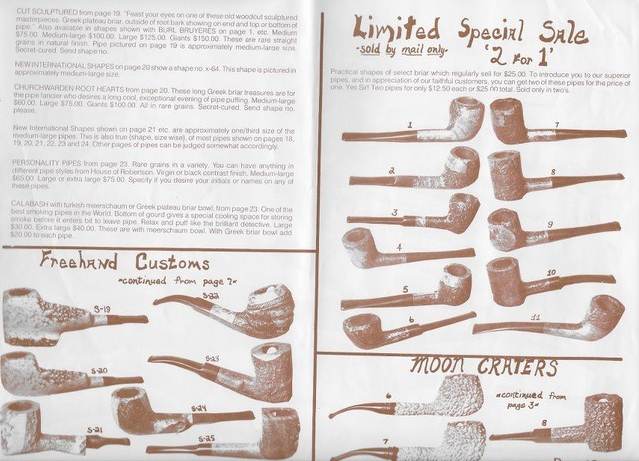
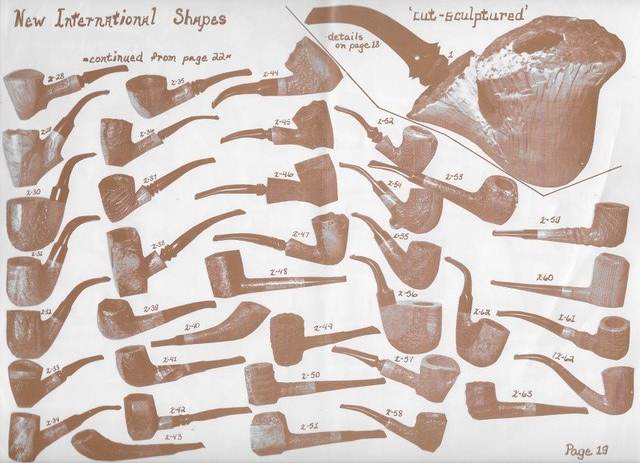
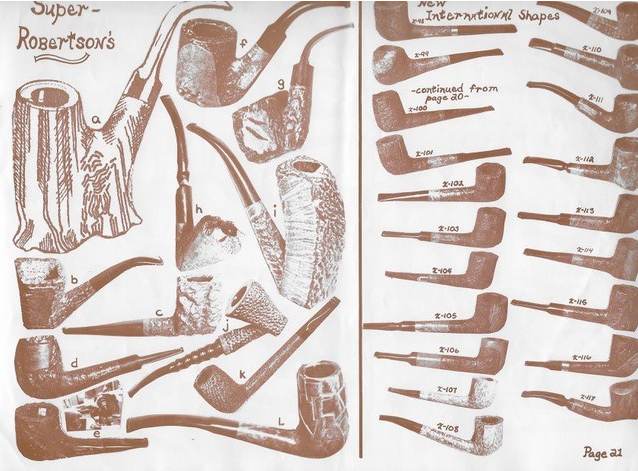
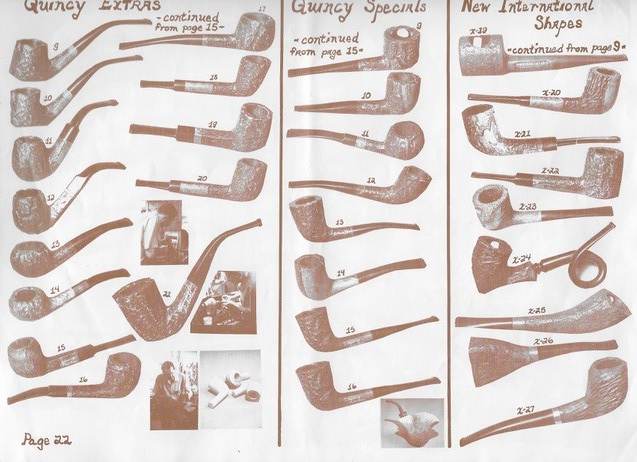
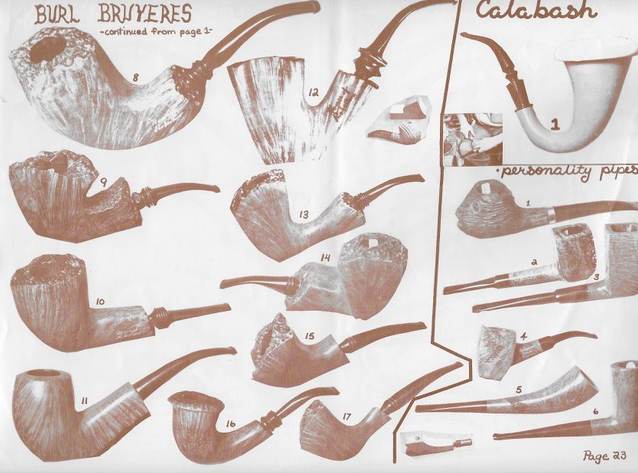
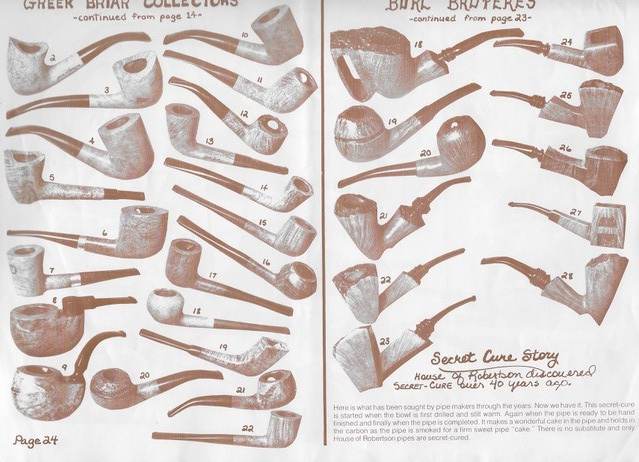
A House of Robertson Catalogue Filled with Great Examples of Thayne Robertson’s Work


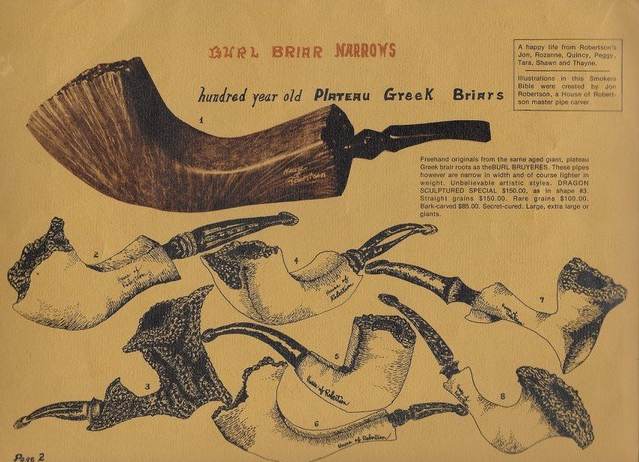
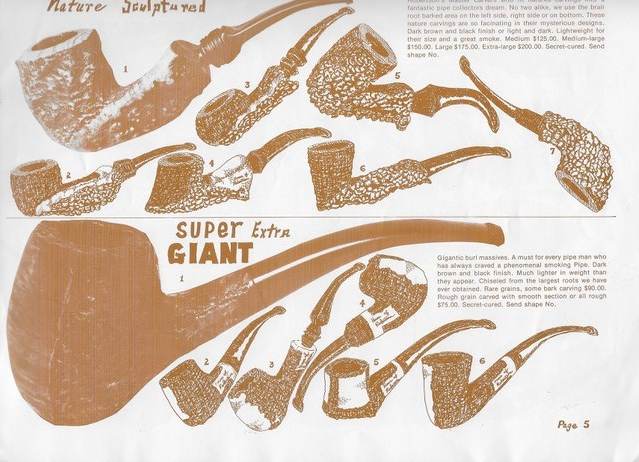
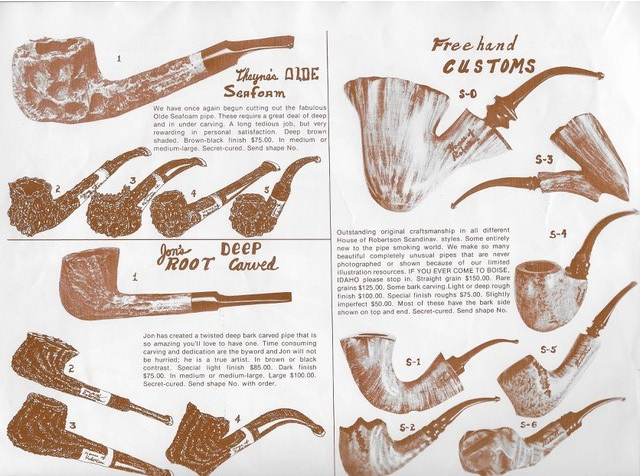
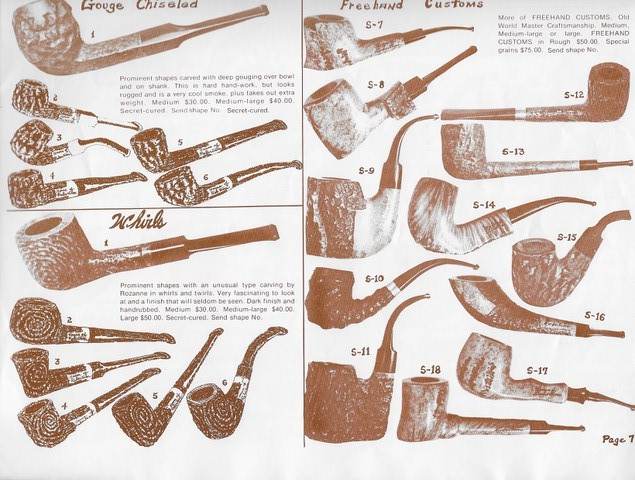
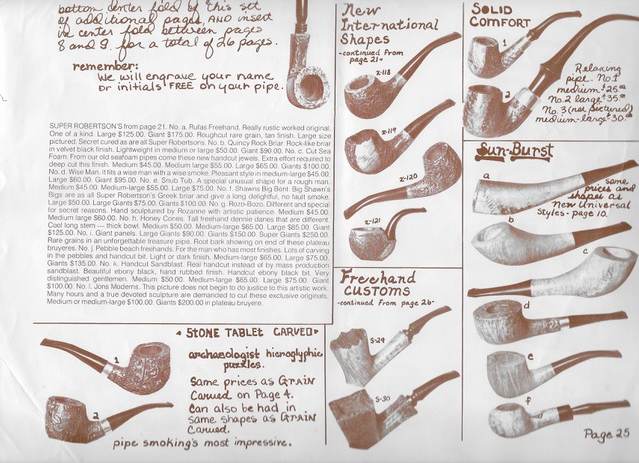
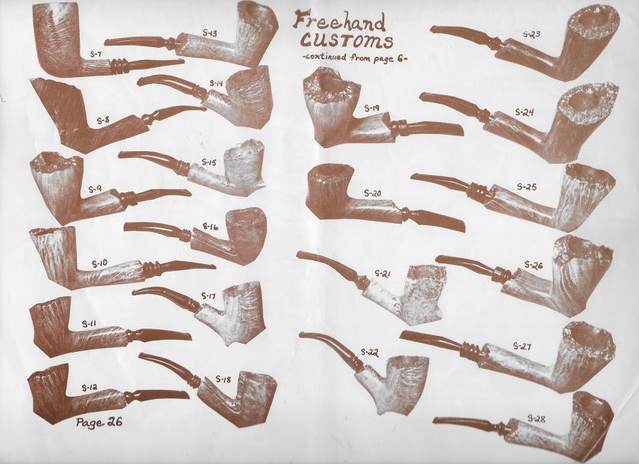
A friend pointed out this catalogue on Ebay recently so we bid on it and won. It is a great catalogue with lots of information about the Boise, Idaho pipemaker and  pipeshop owner, Thayne Robertson. It is quite a wishbook full of pipes with a broad range of styles that capture the imagination of a pipe man or woman.  Jeff and I have worked on quite a few House of Robertson pipes over the years and have come to appreciate the craftsmanship of the pipemaker. Have a look at the catalogue below.

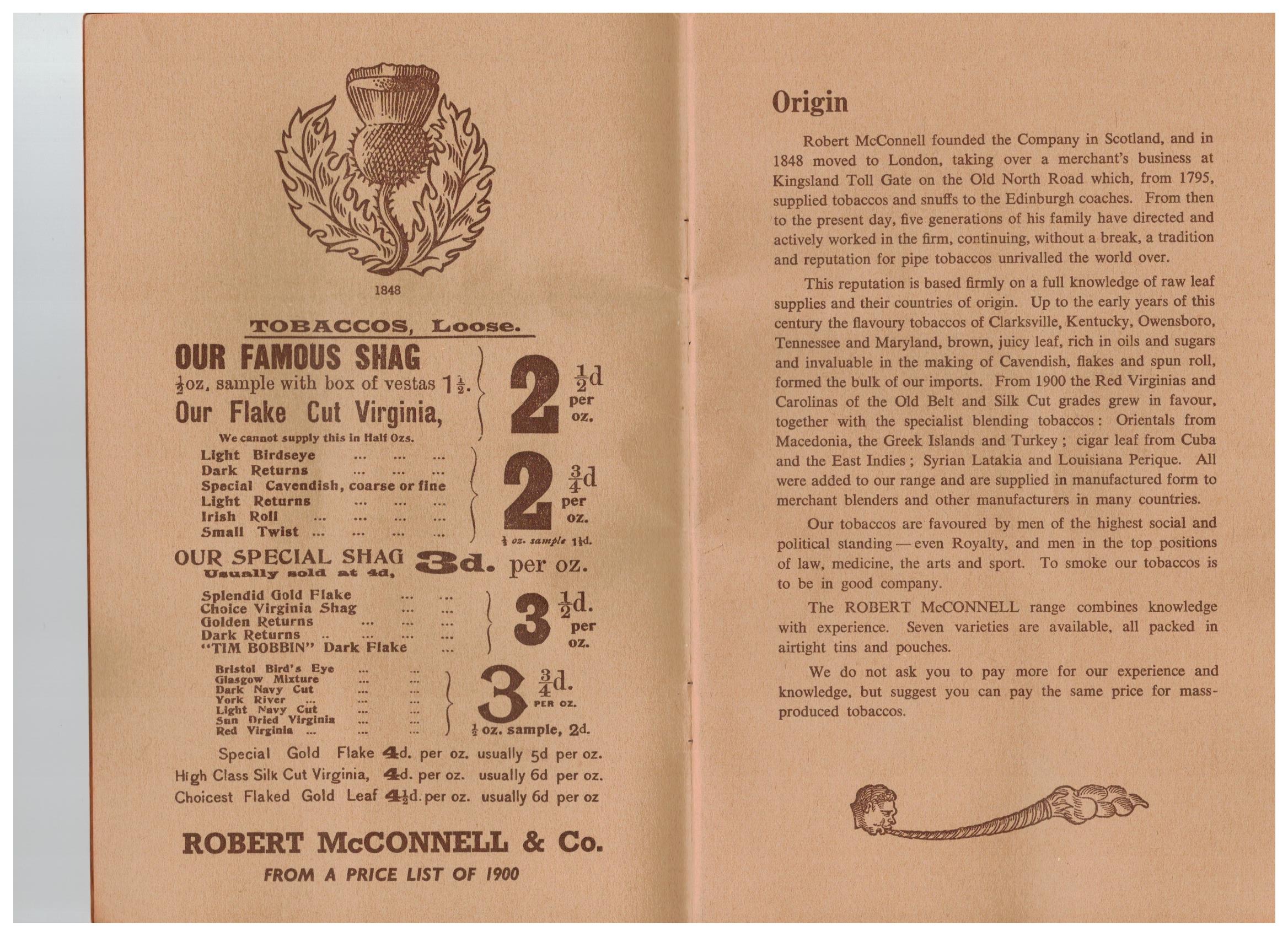
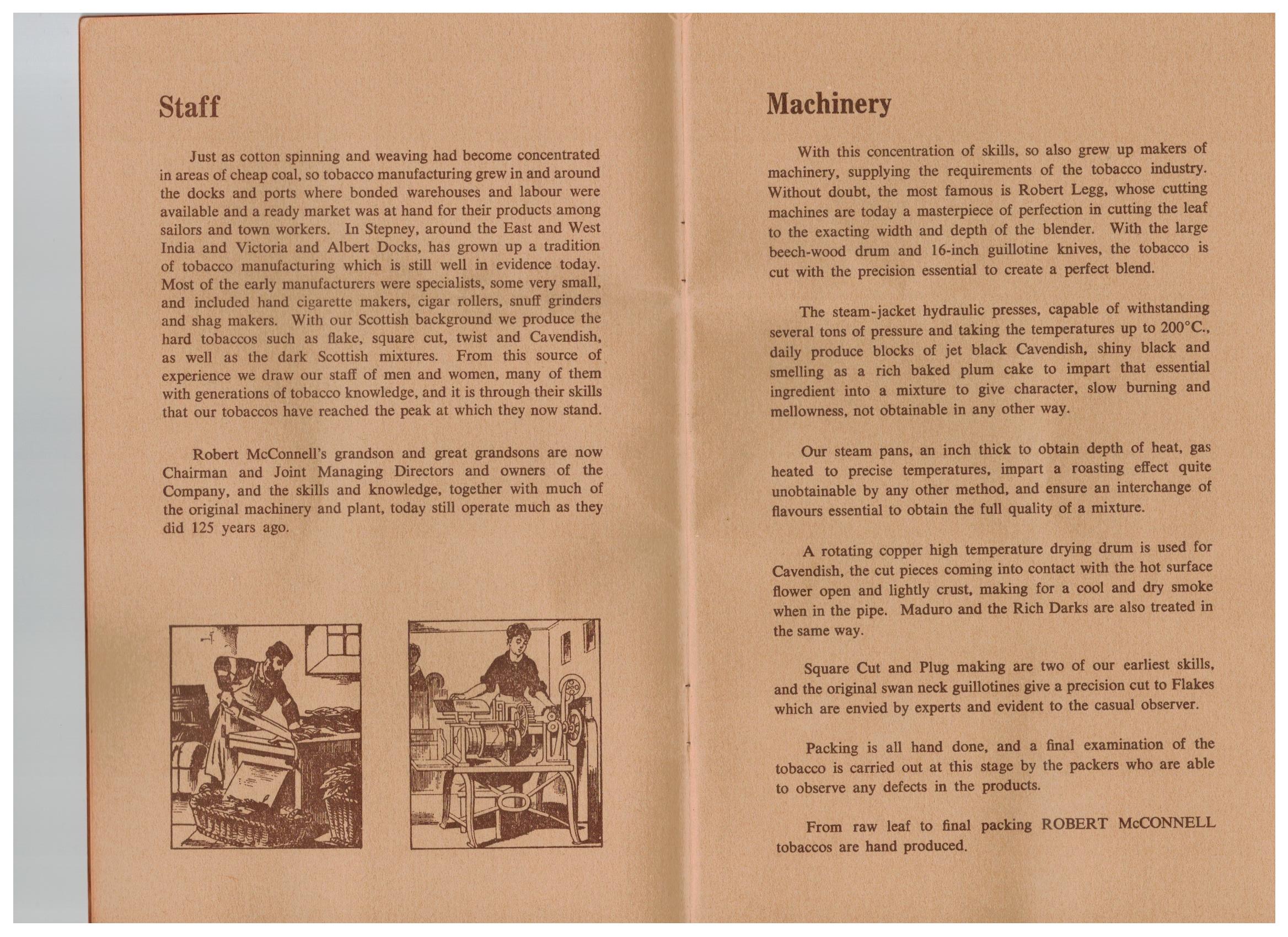
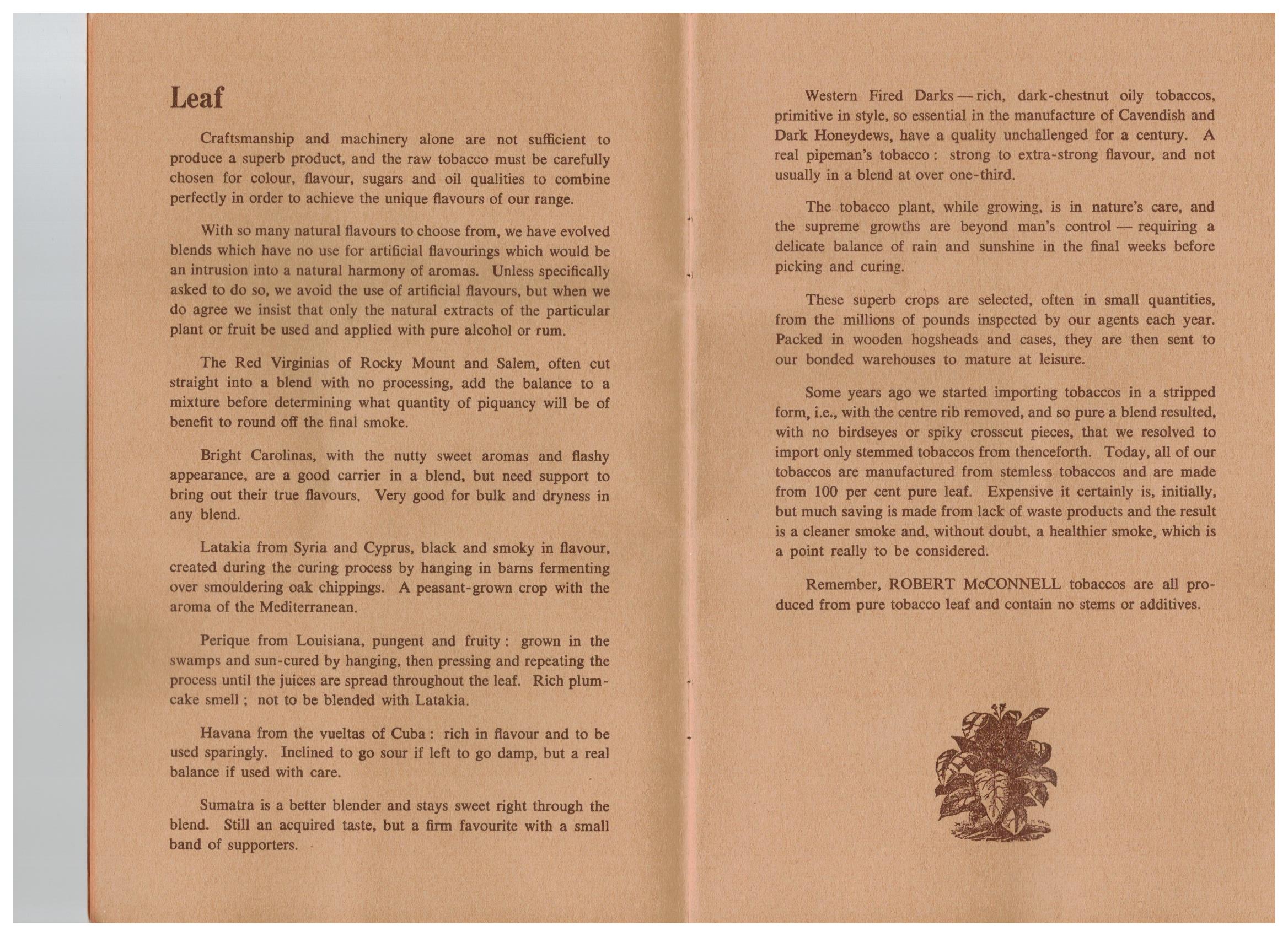
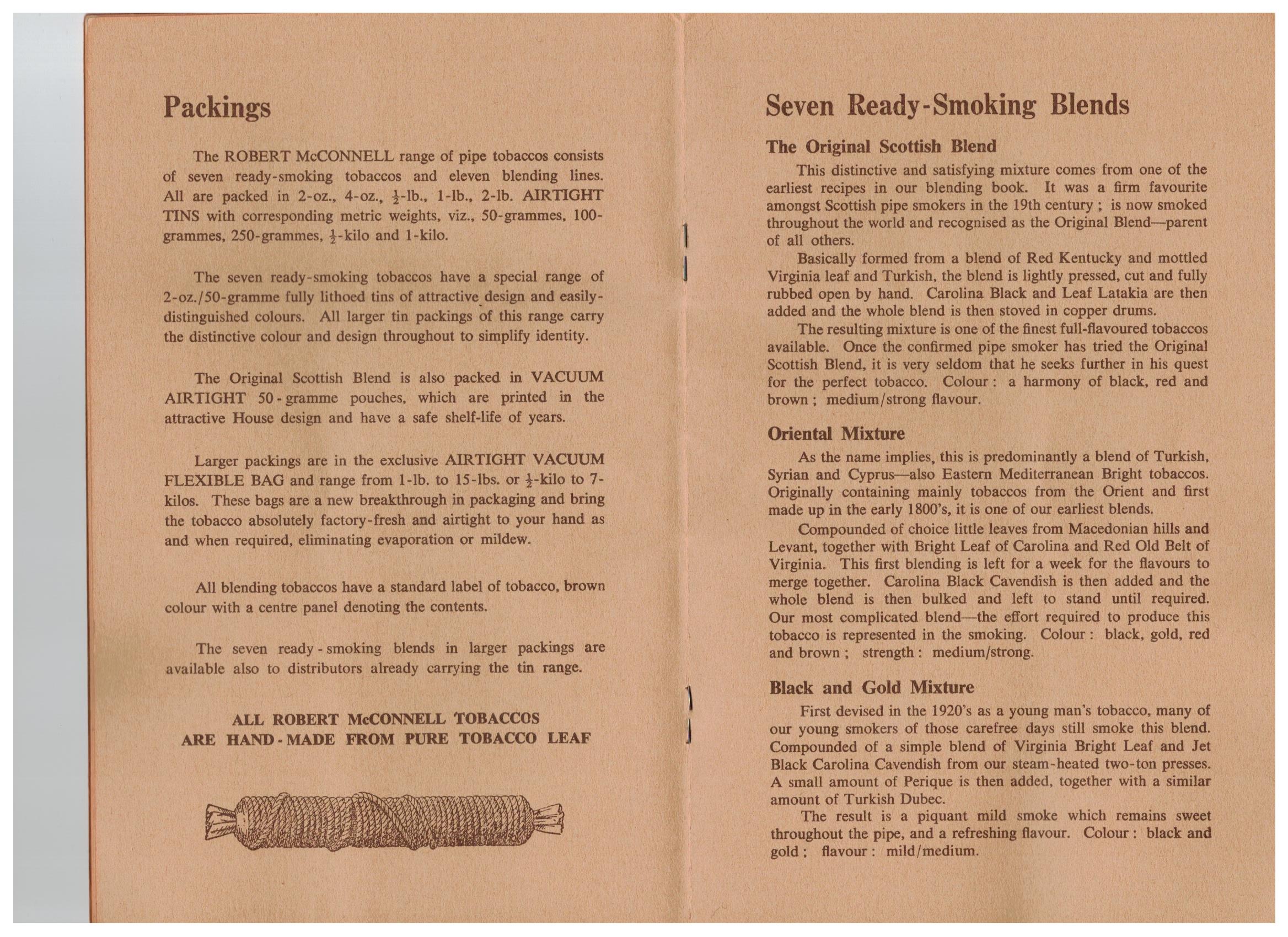
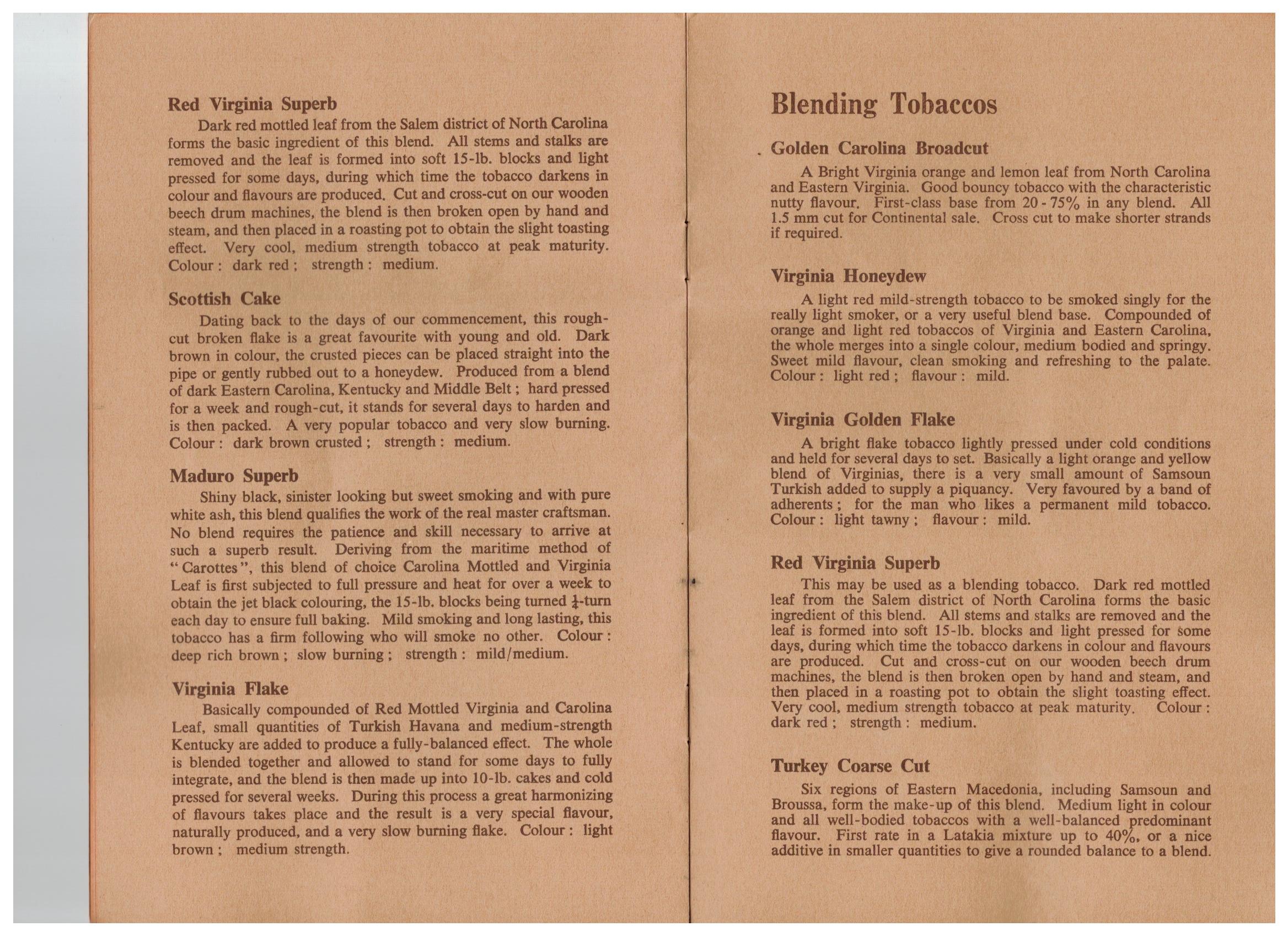
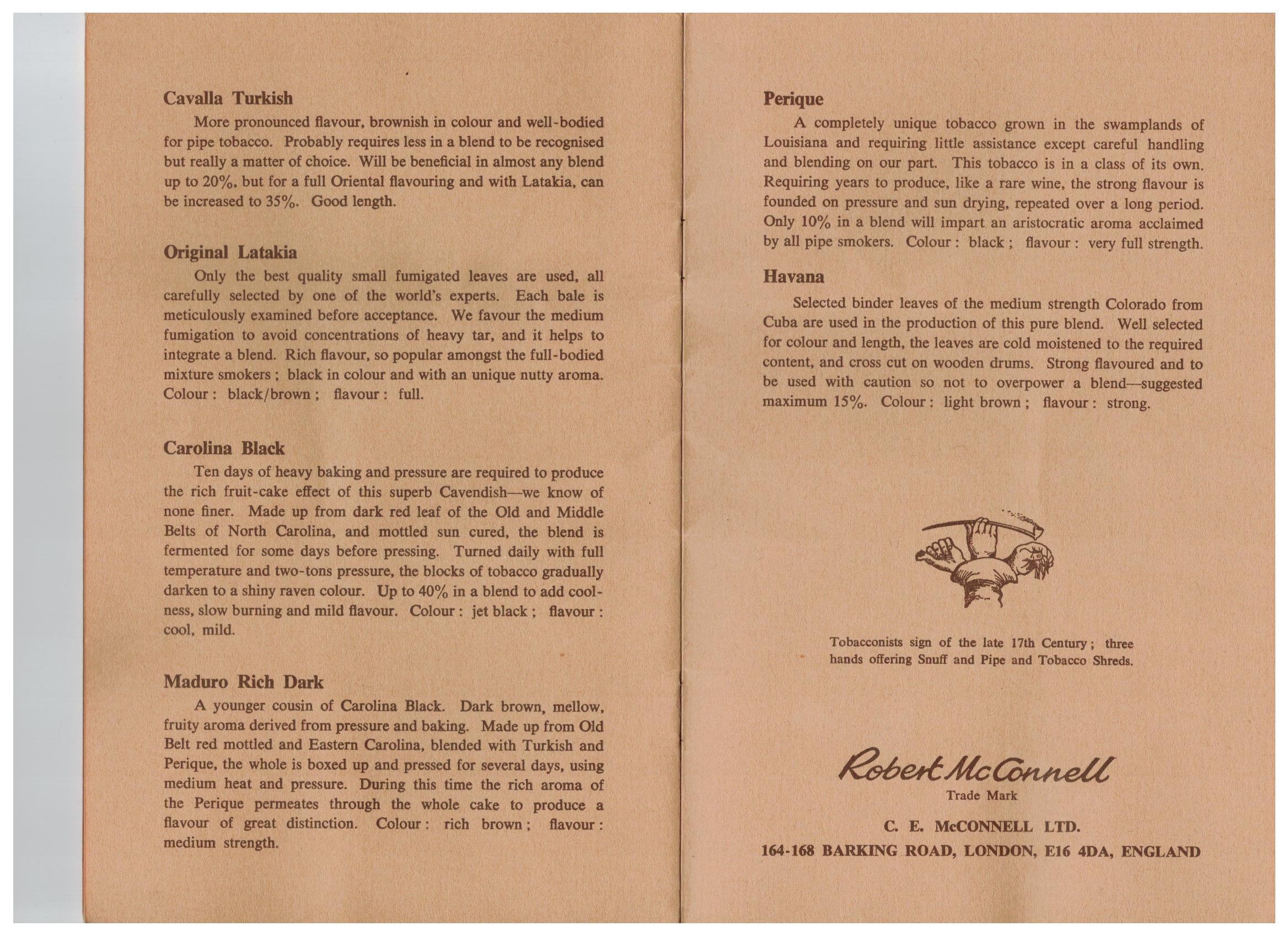
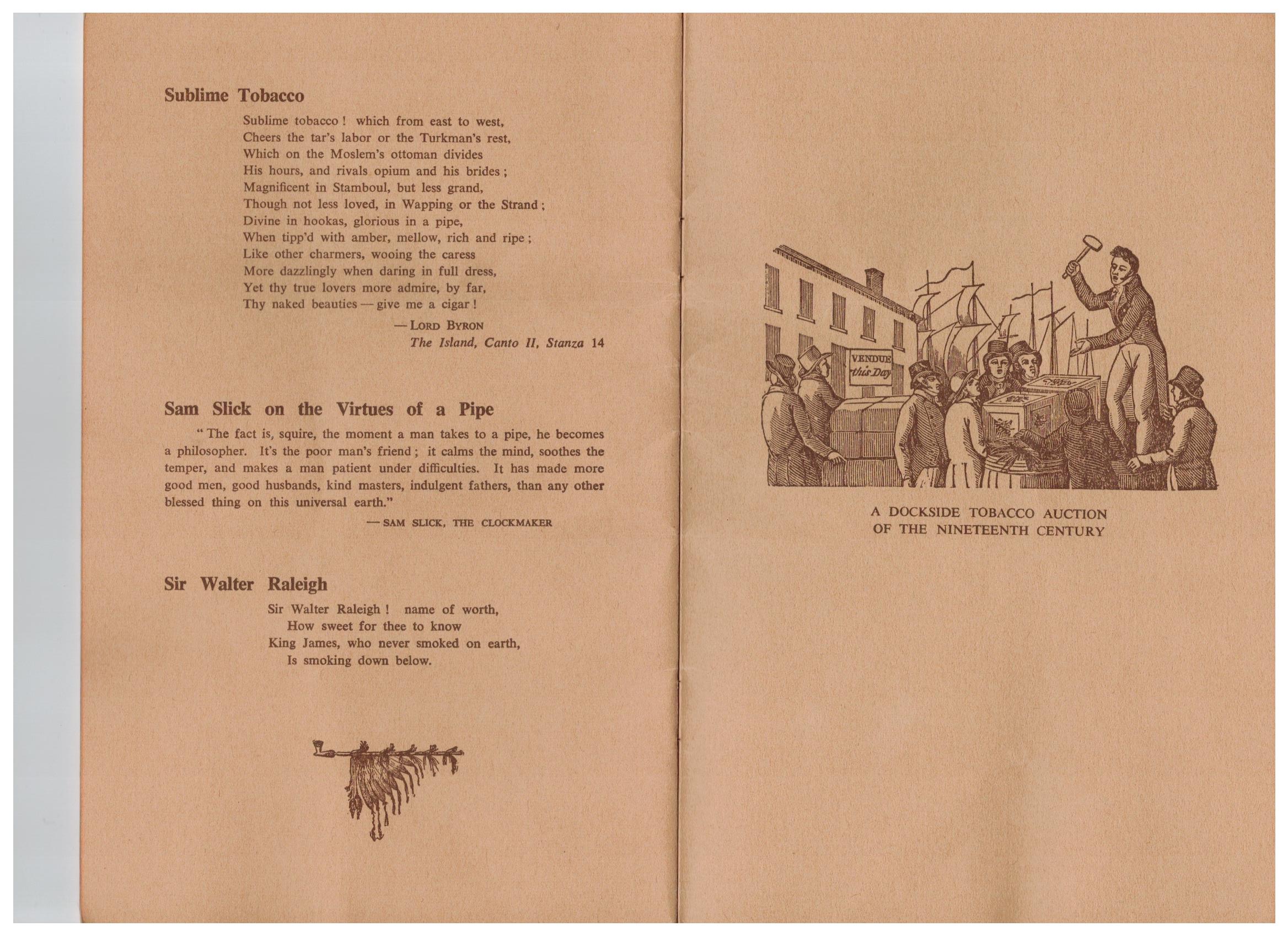
Robert McConnell Tobacco Manufacturer Booklet


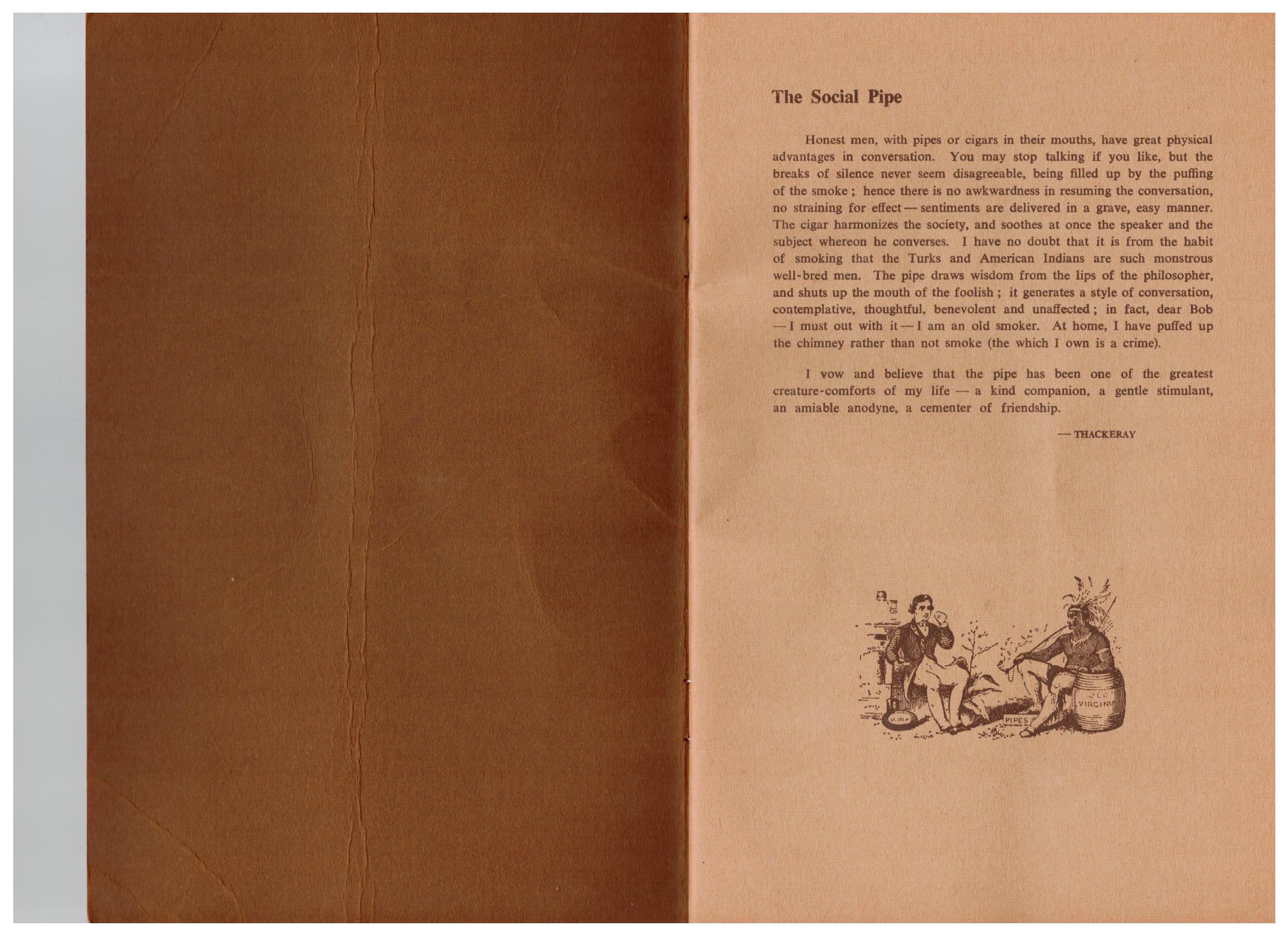
A friend gave me this booklet from Robert McConnell Tobacco Manufacturer recently. It is a great little booklet with lots of helpful information on various tobaccos manufactured by them as well as some other insights on tobacco preparation and enjoyment. It is a fun little booklet to read. I invite you to give it a read. Thanks.