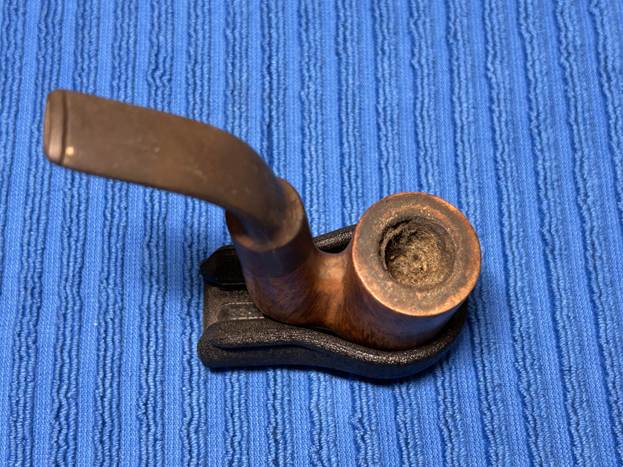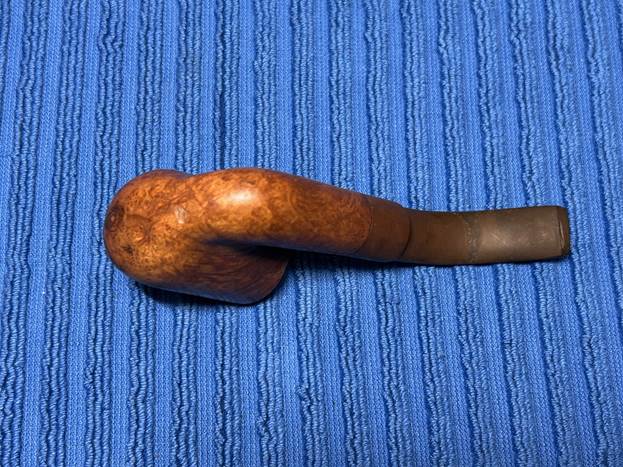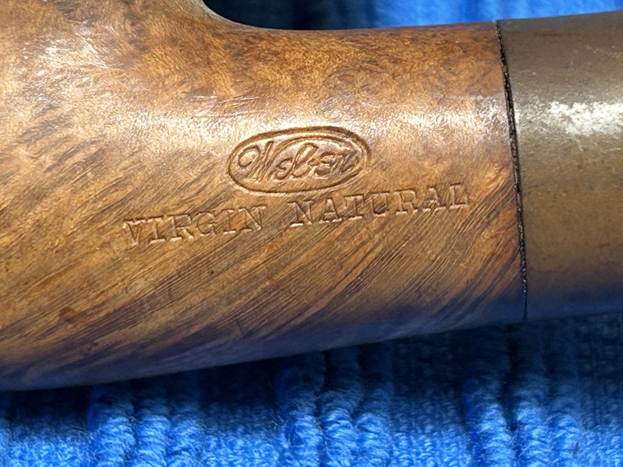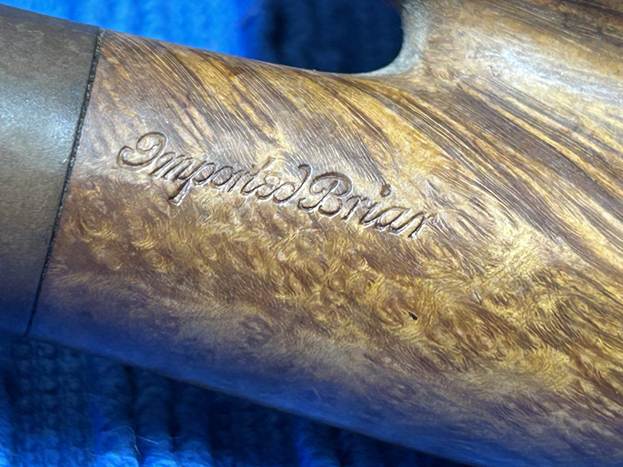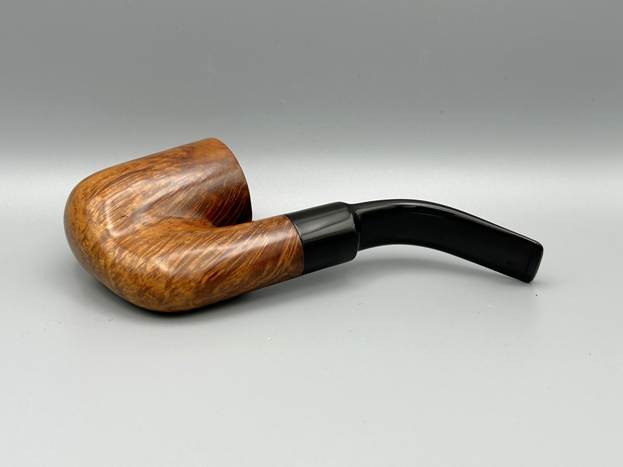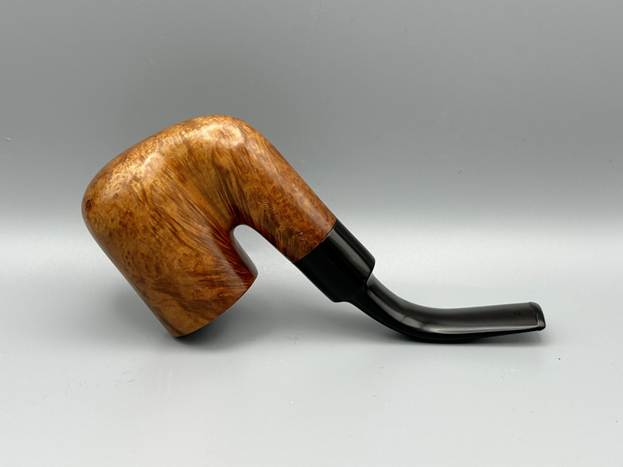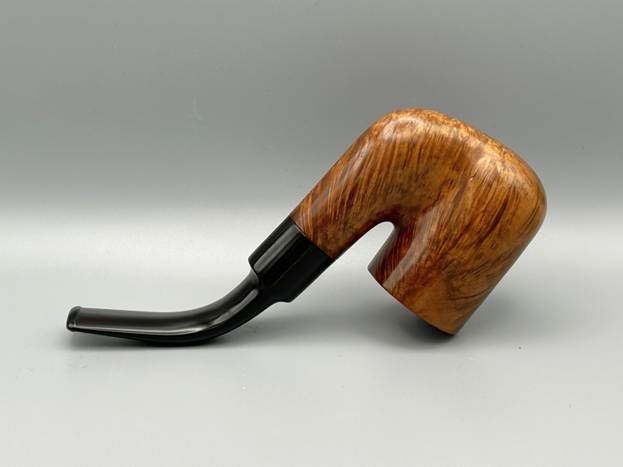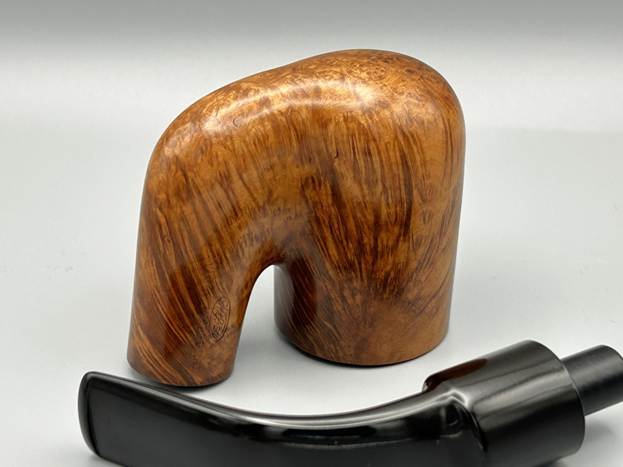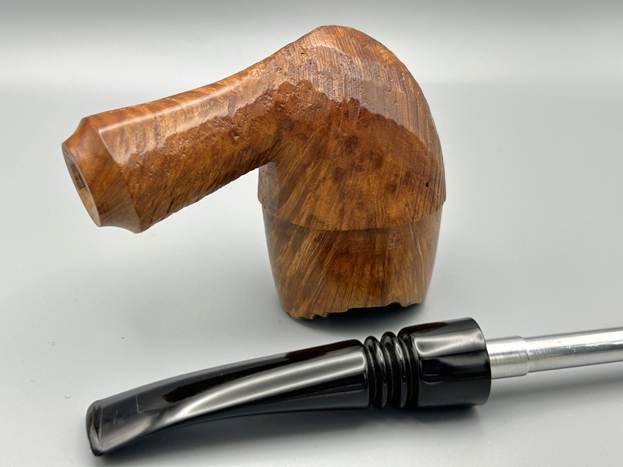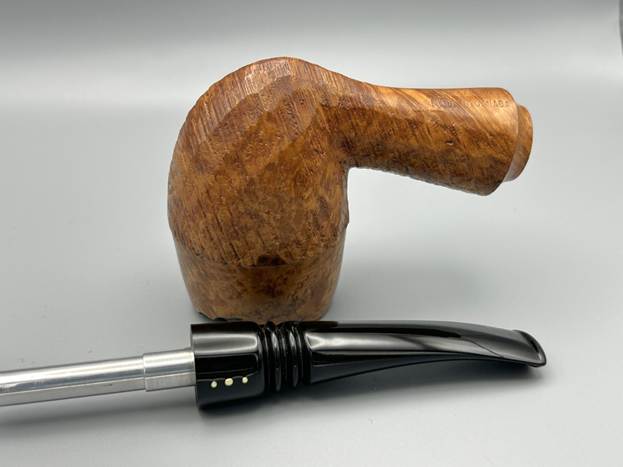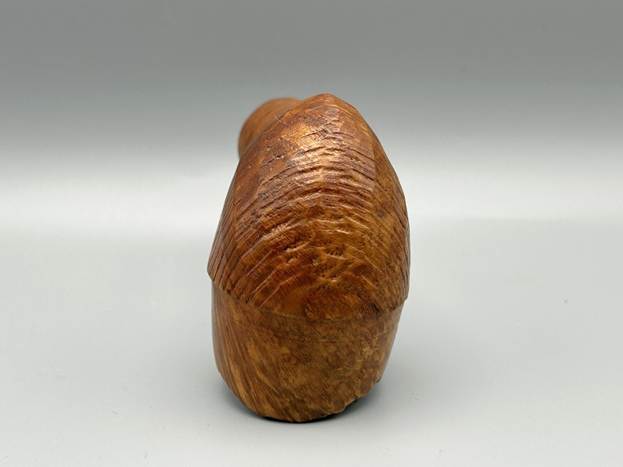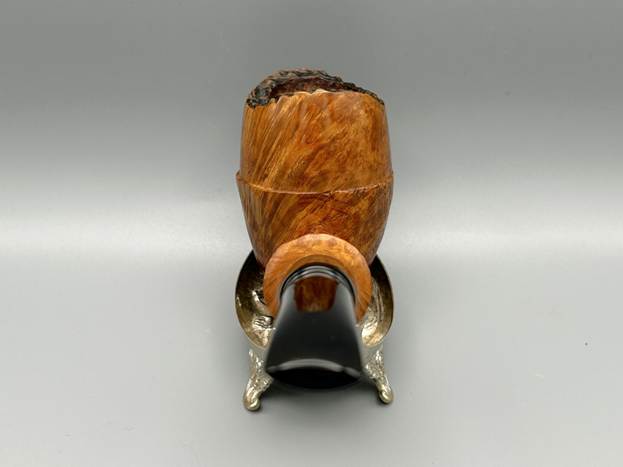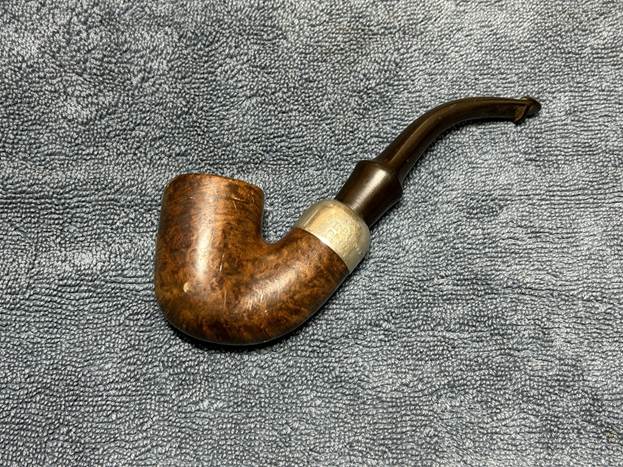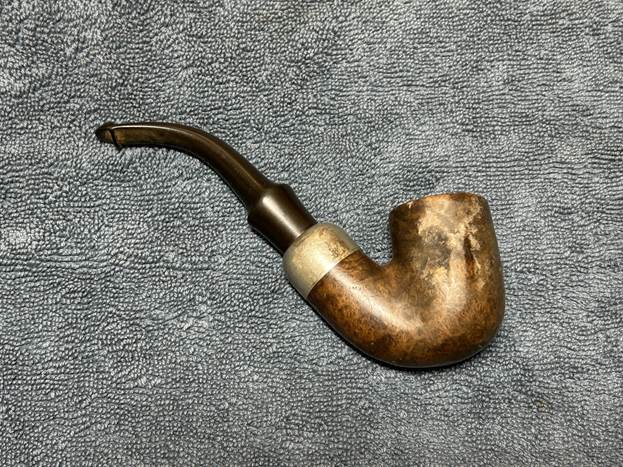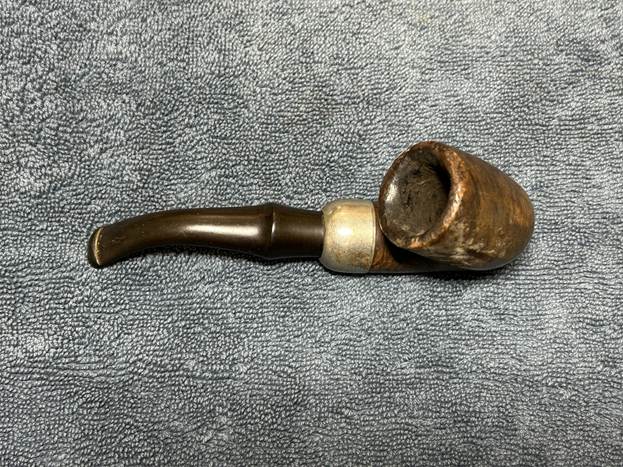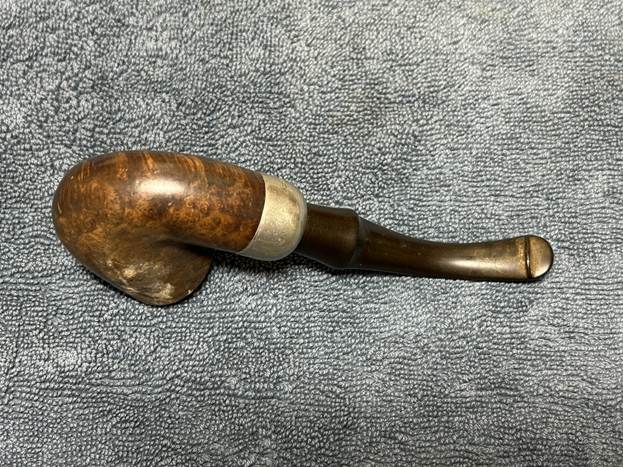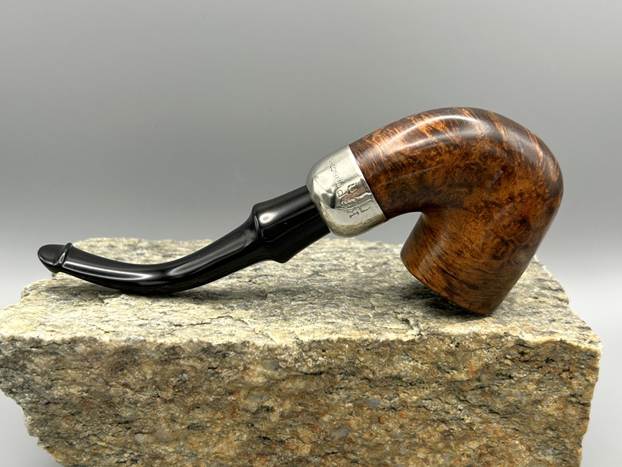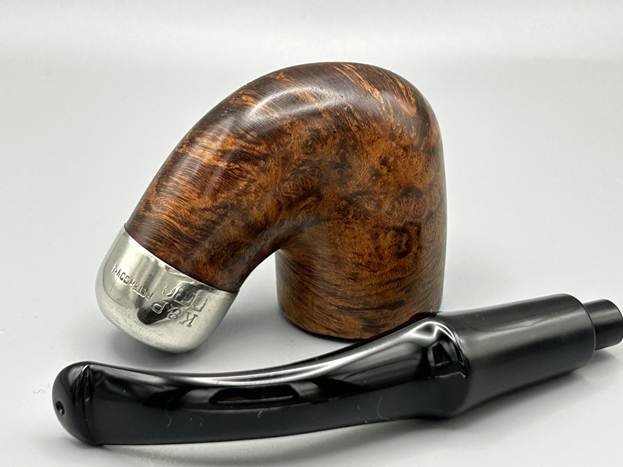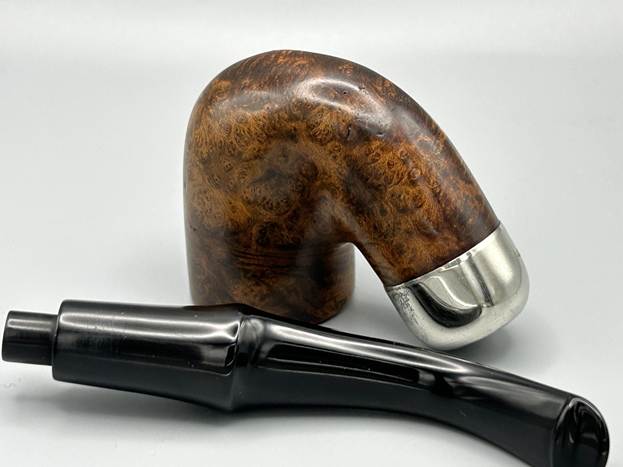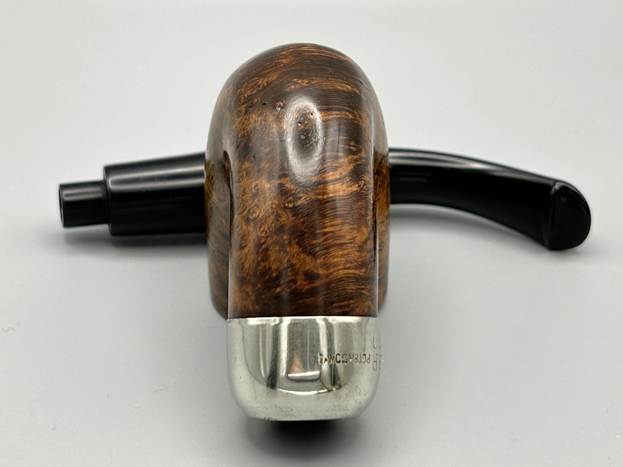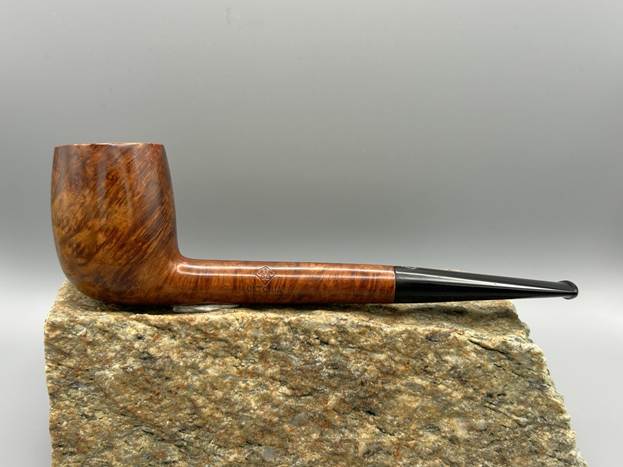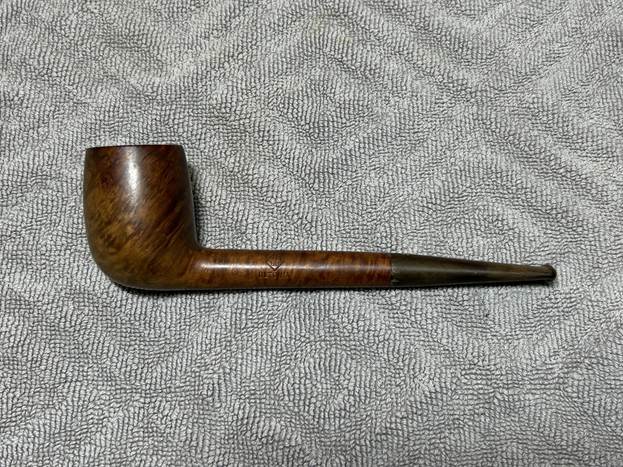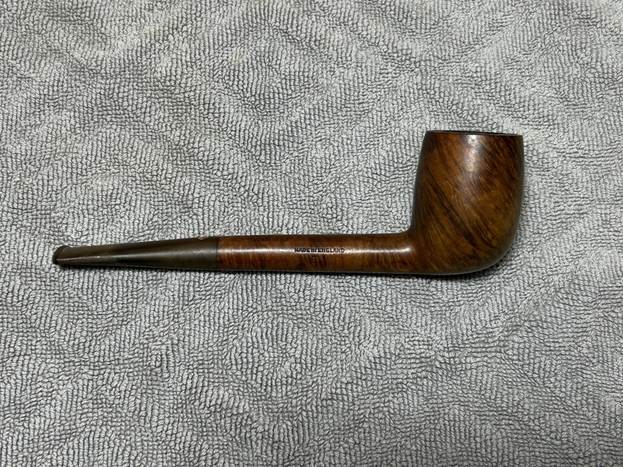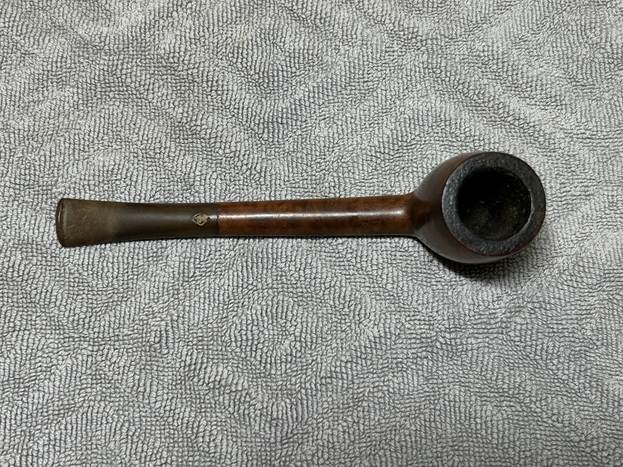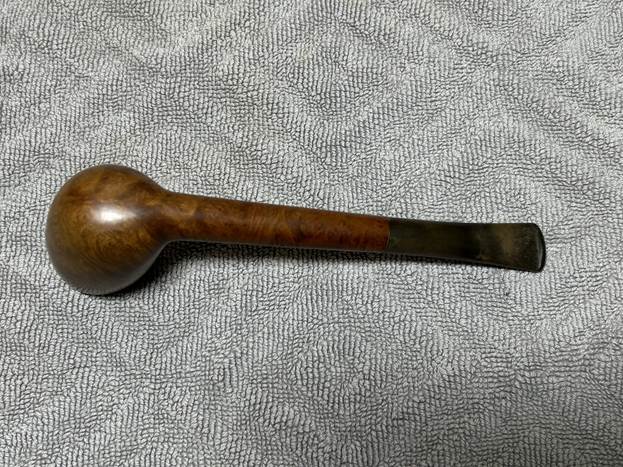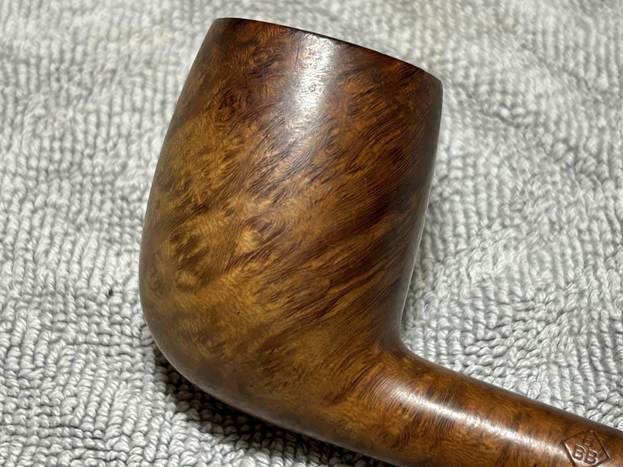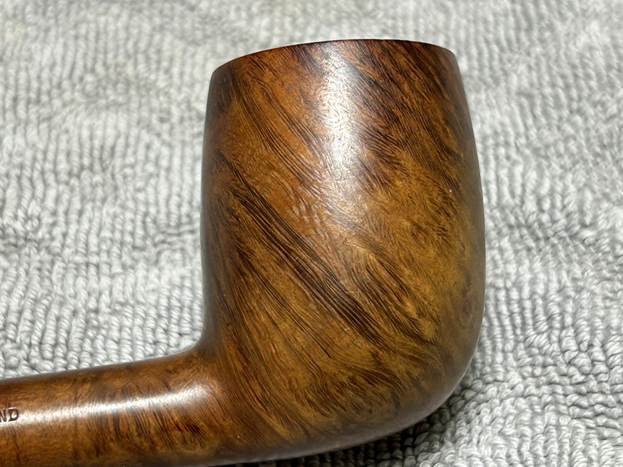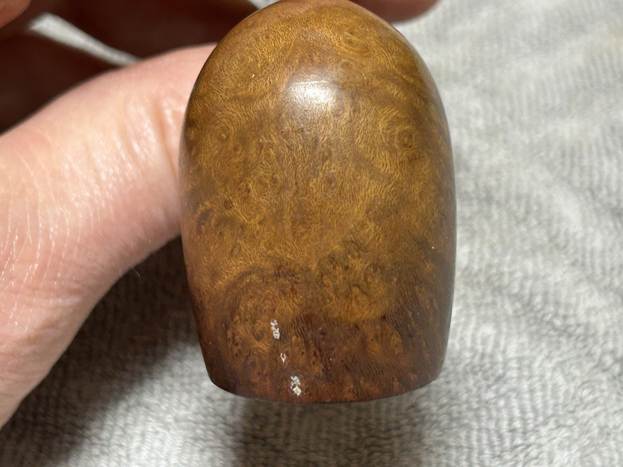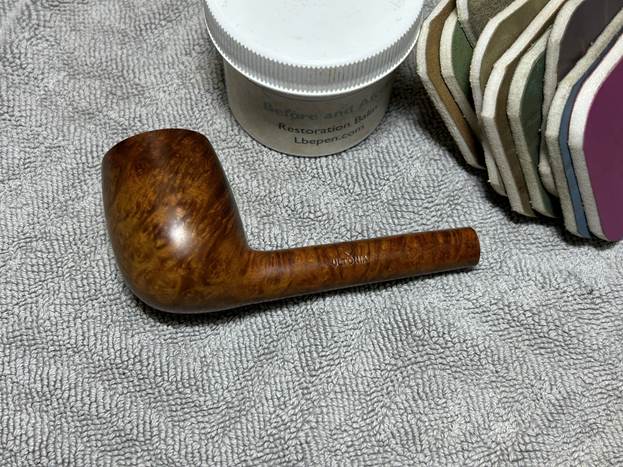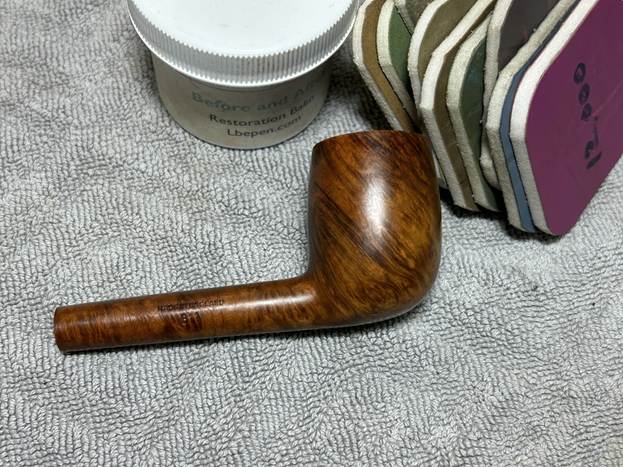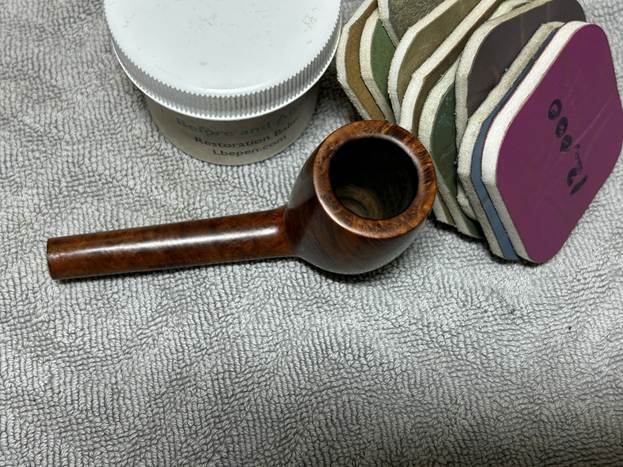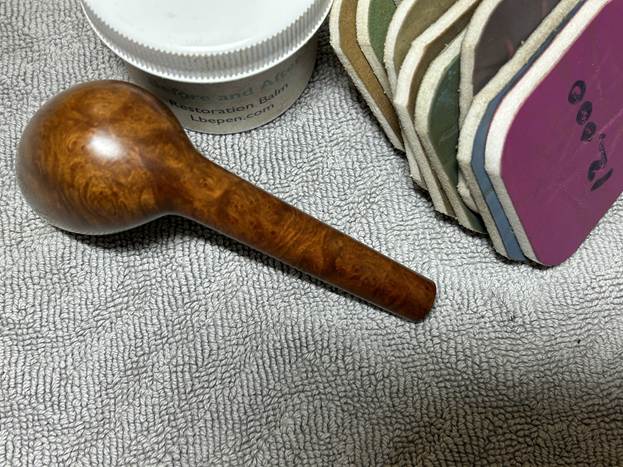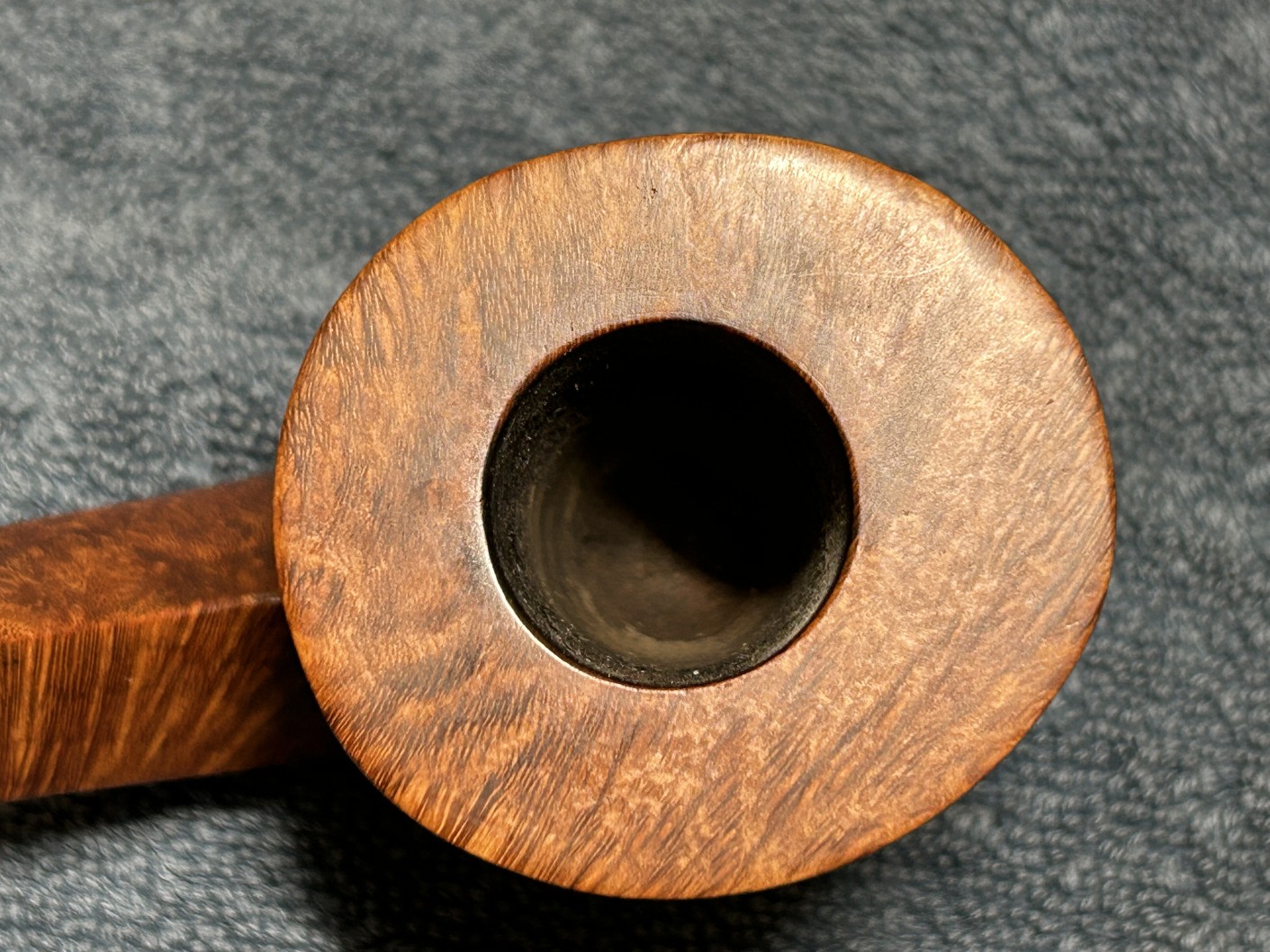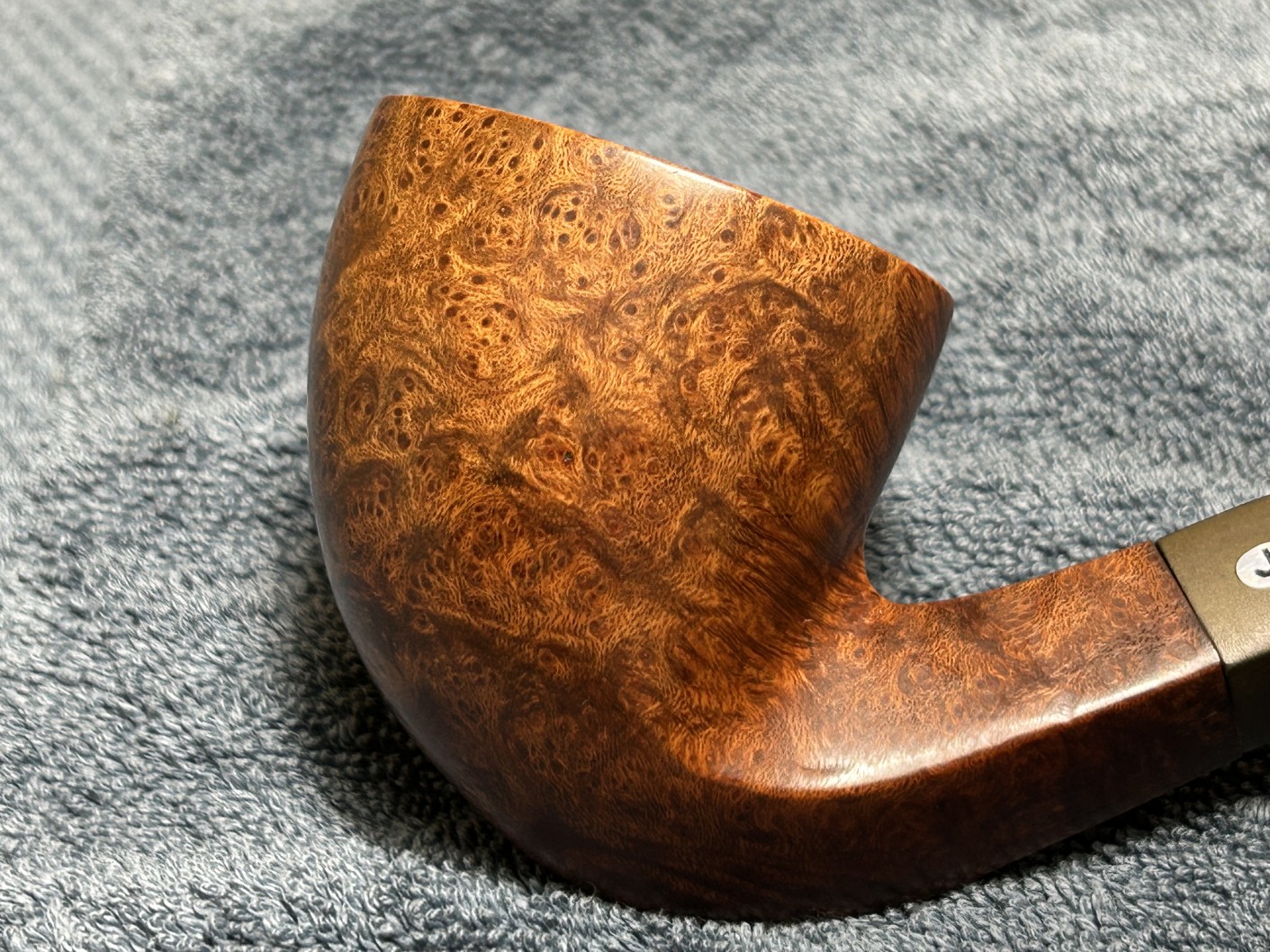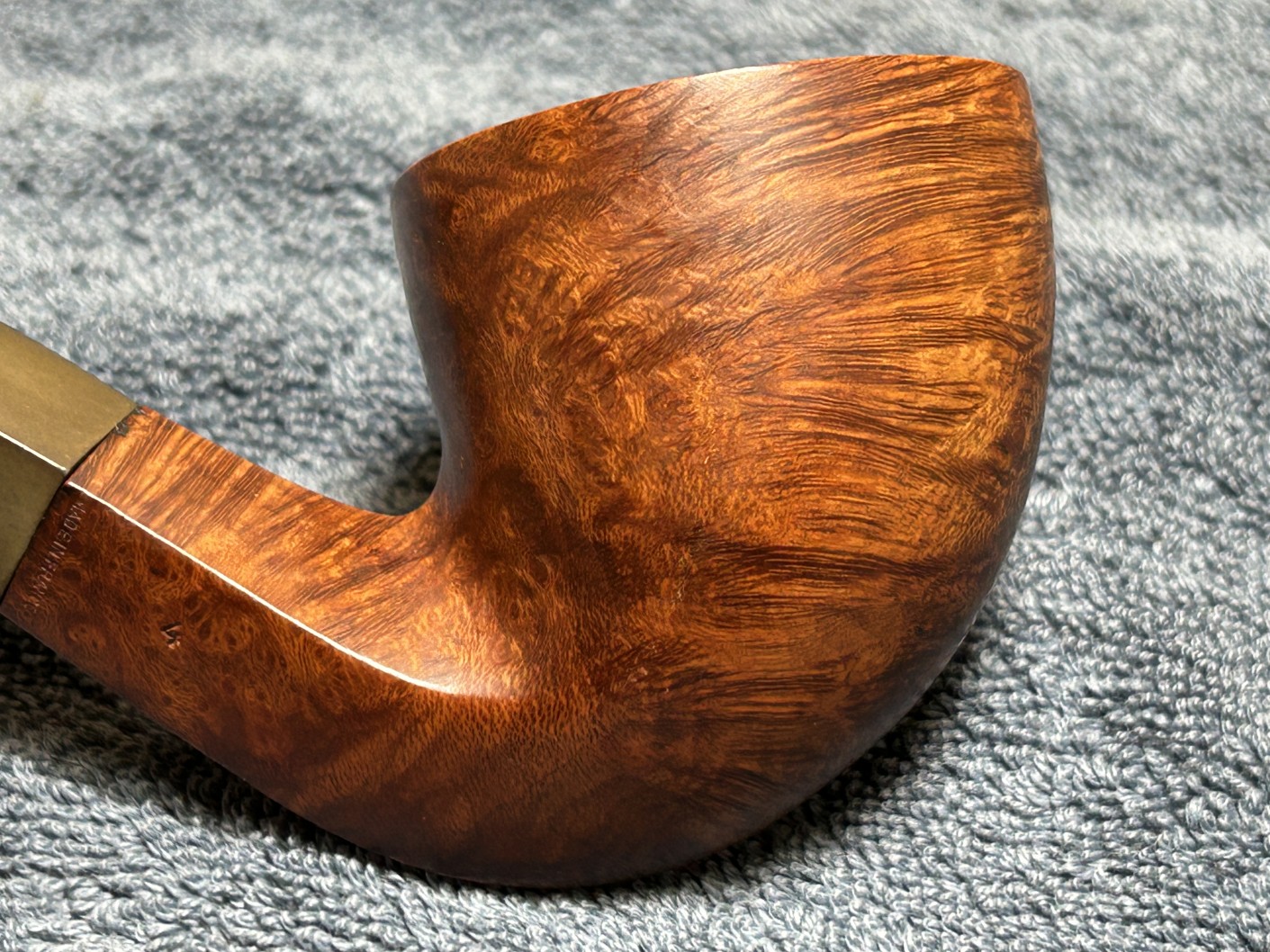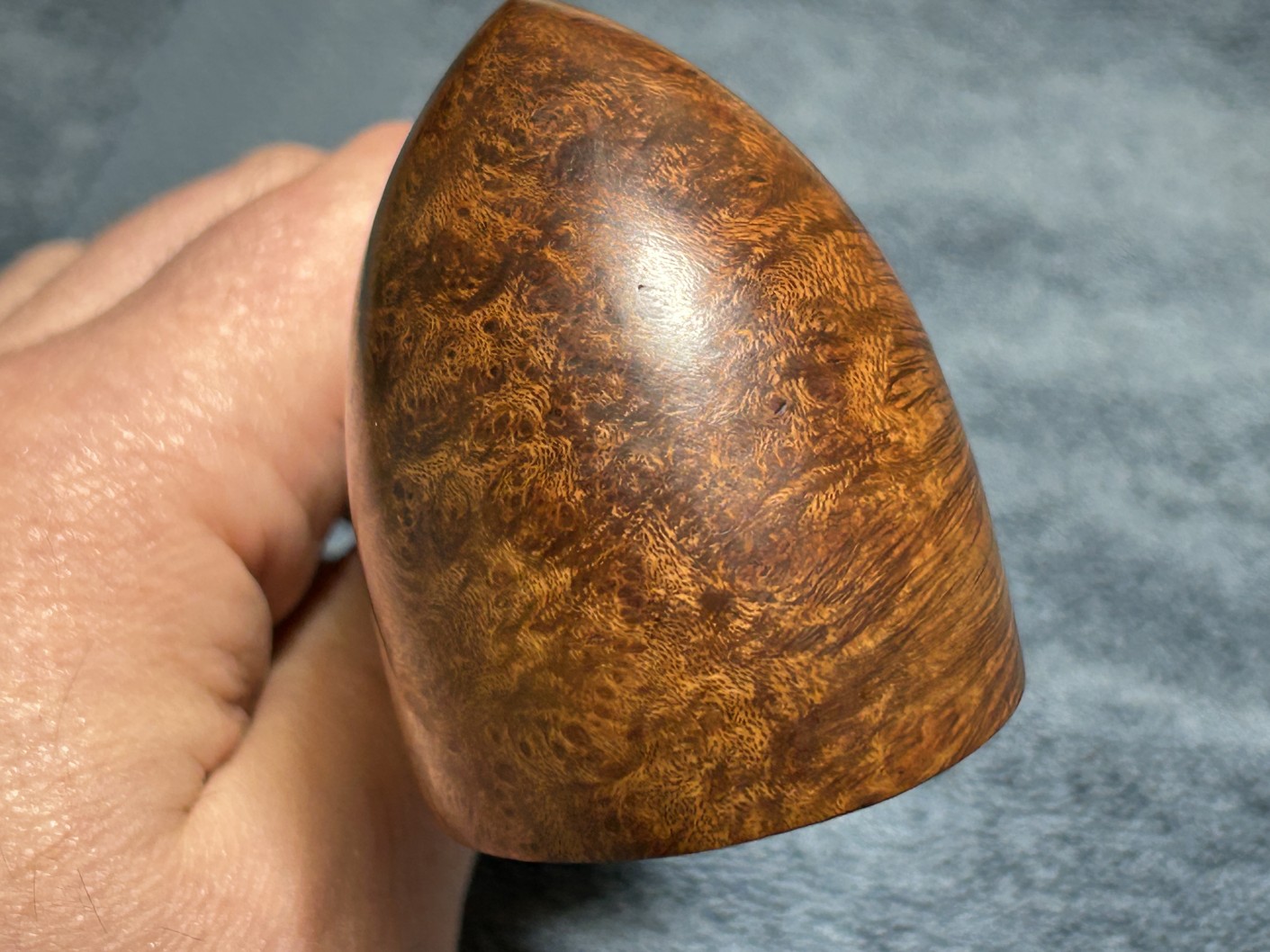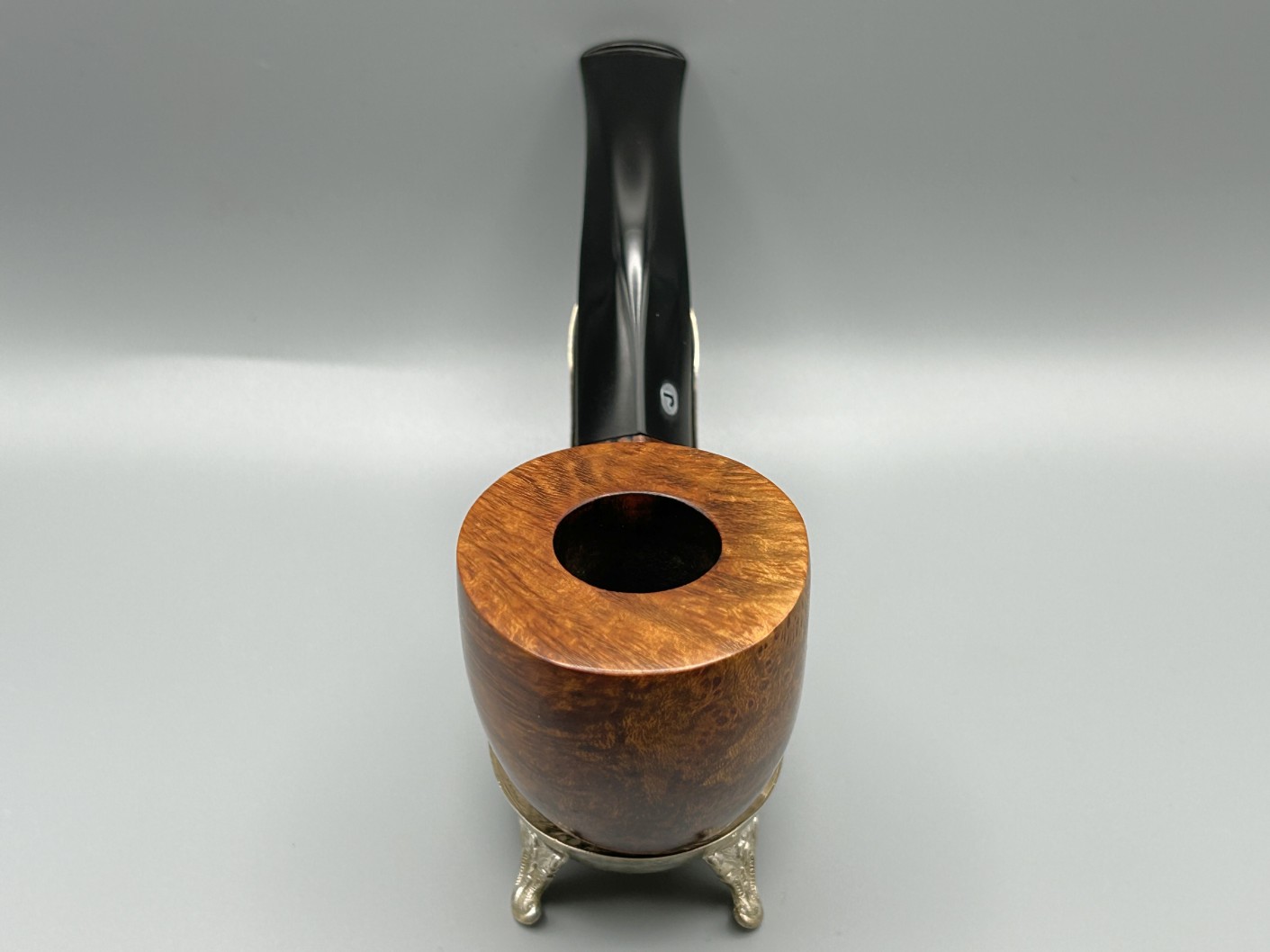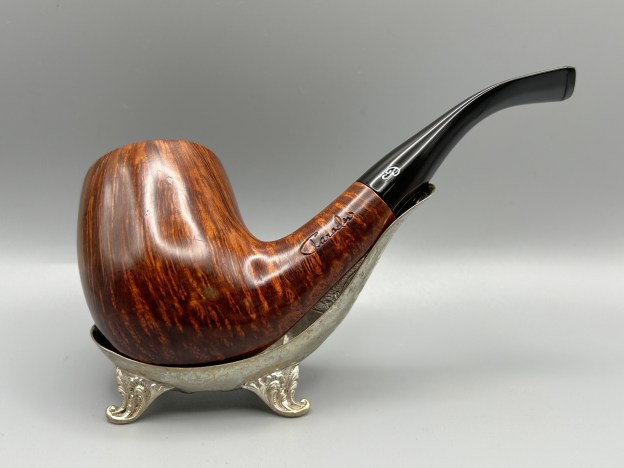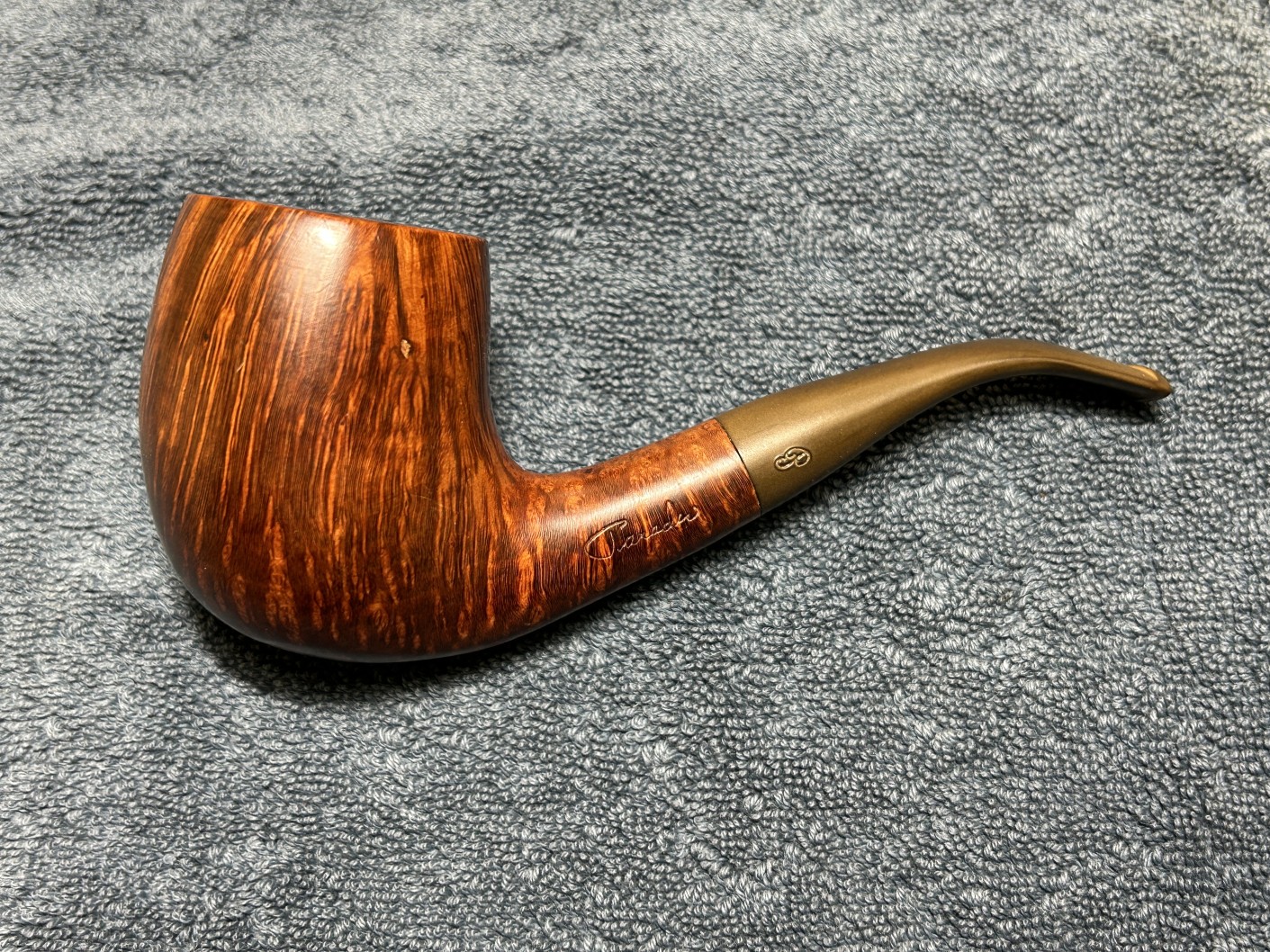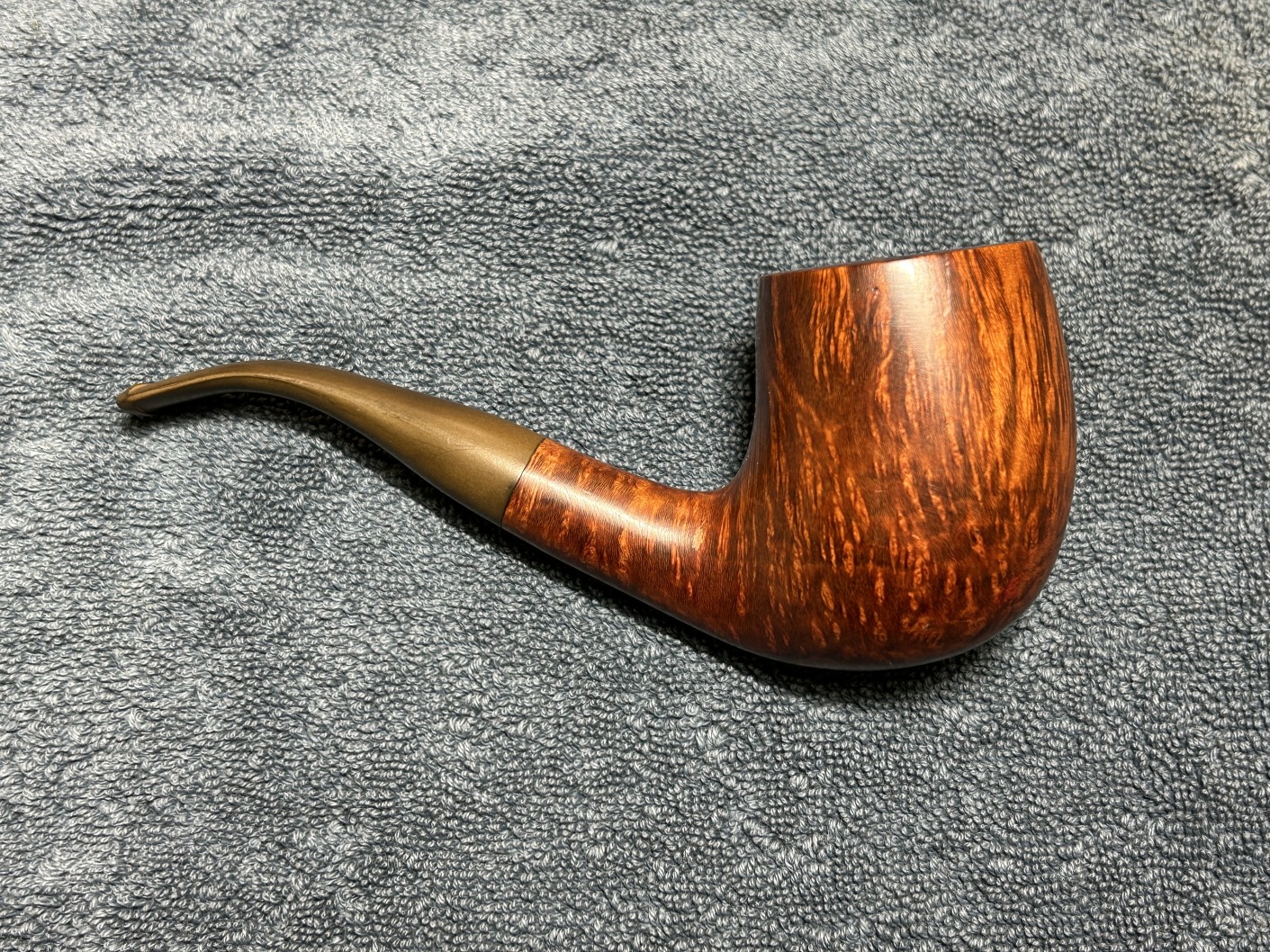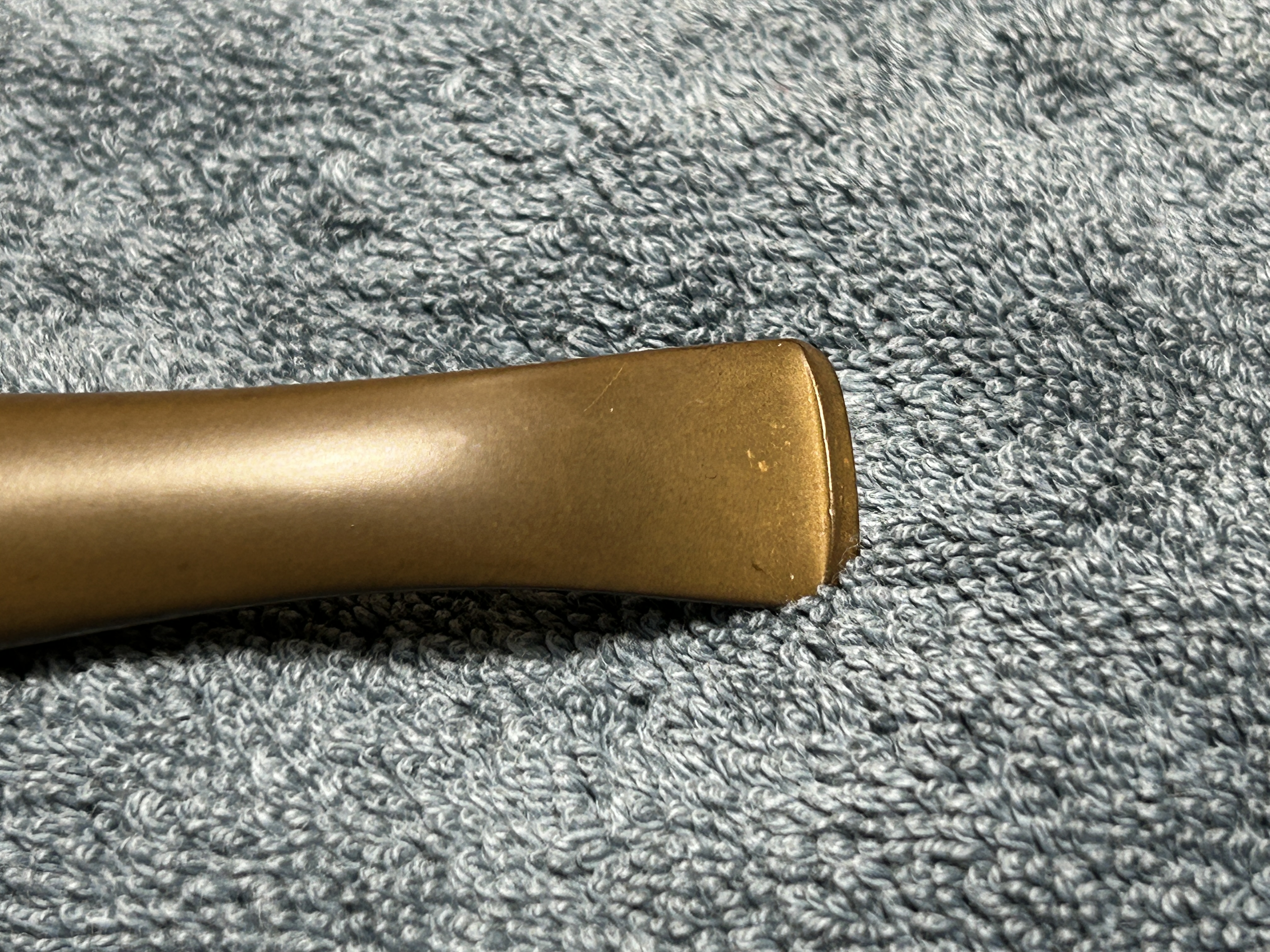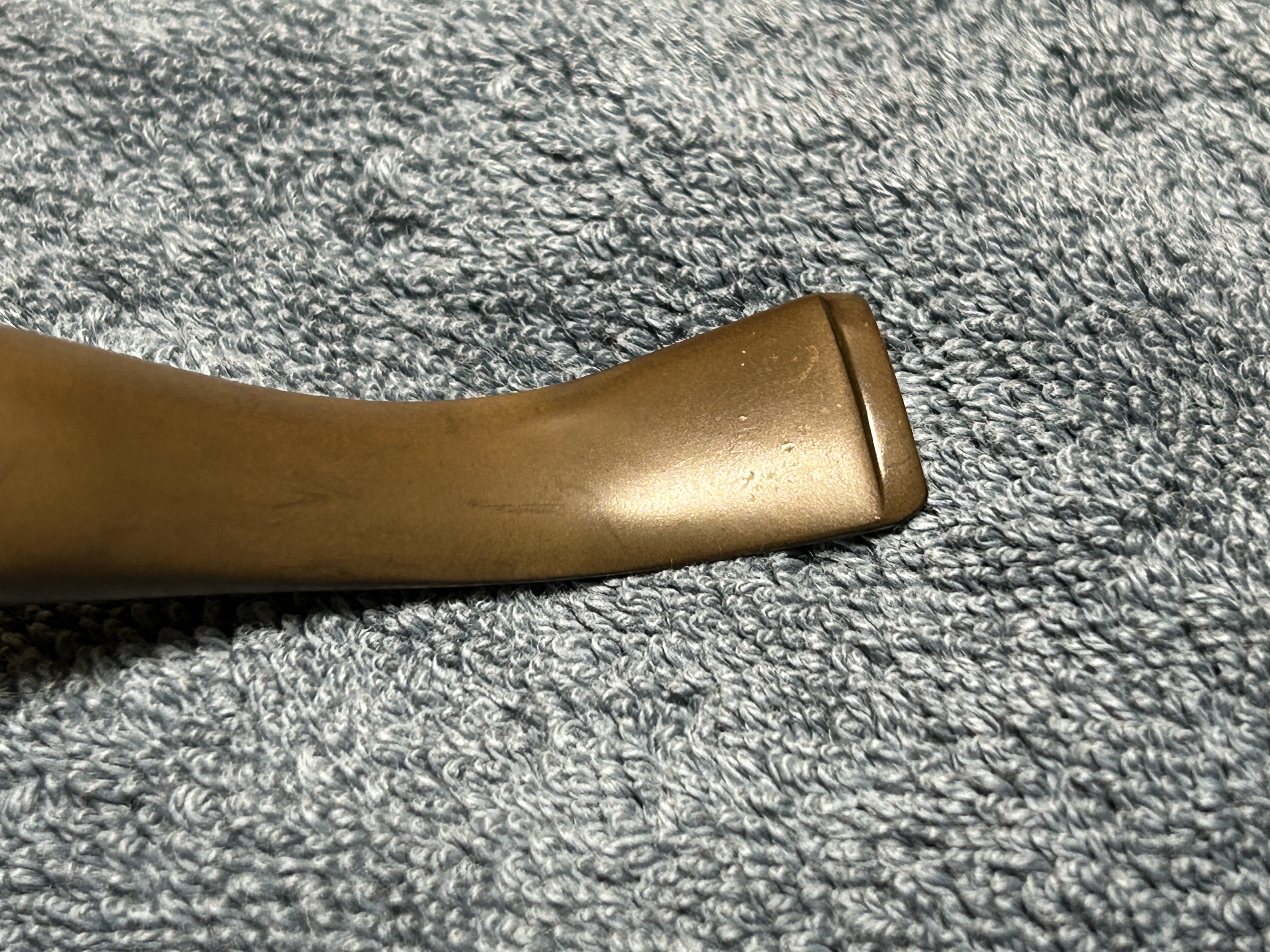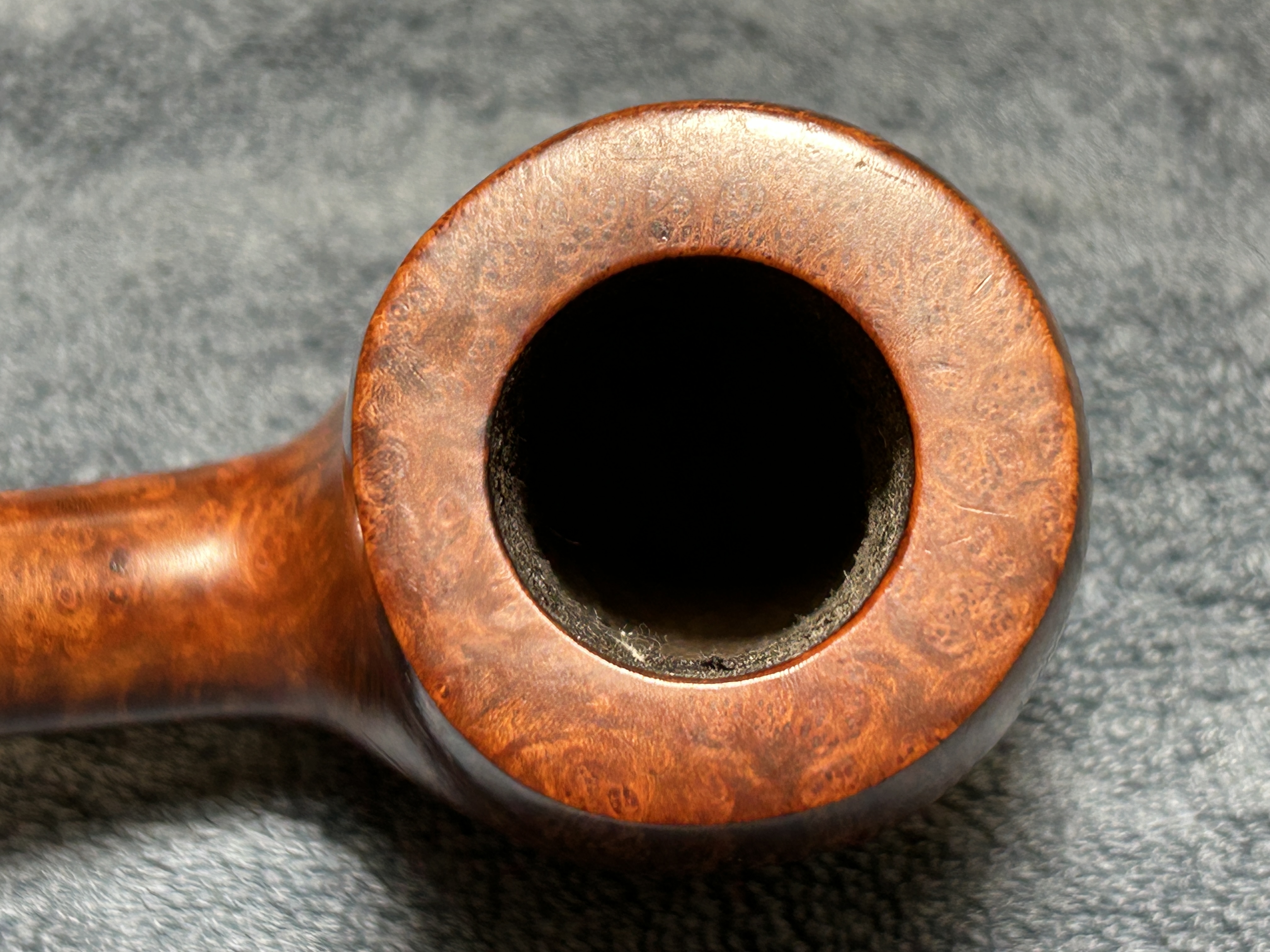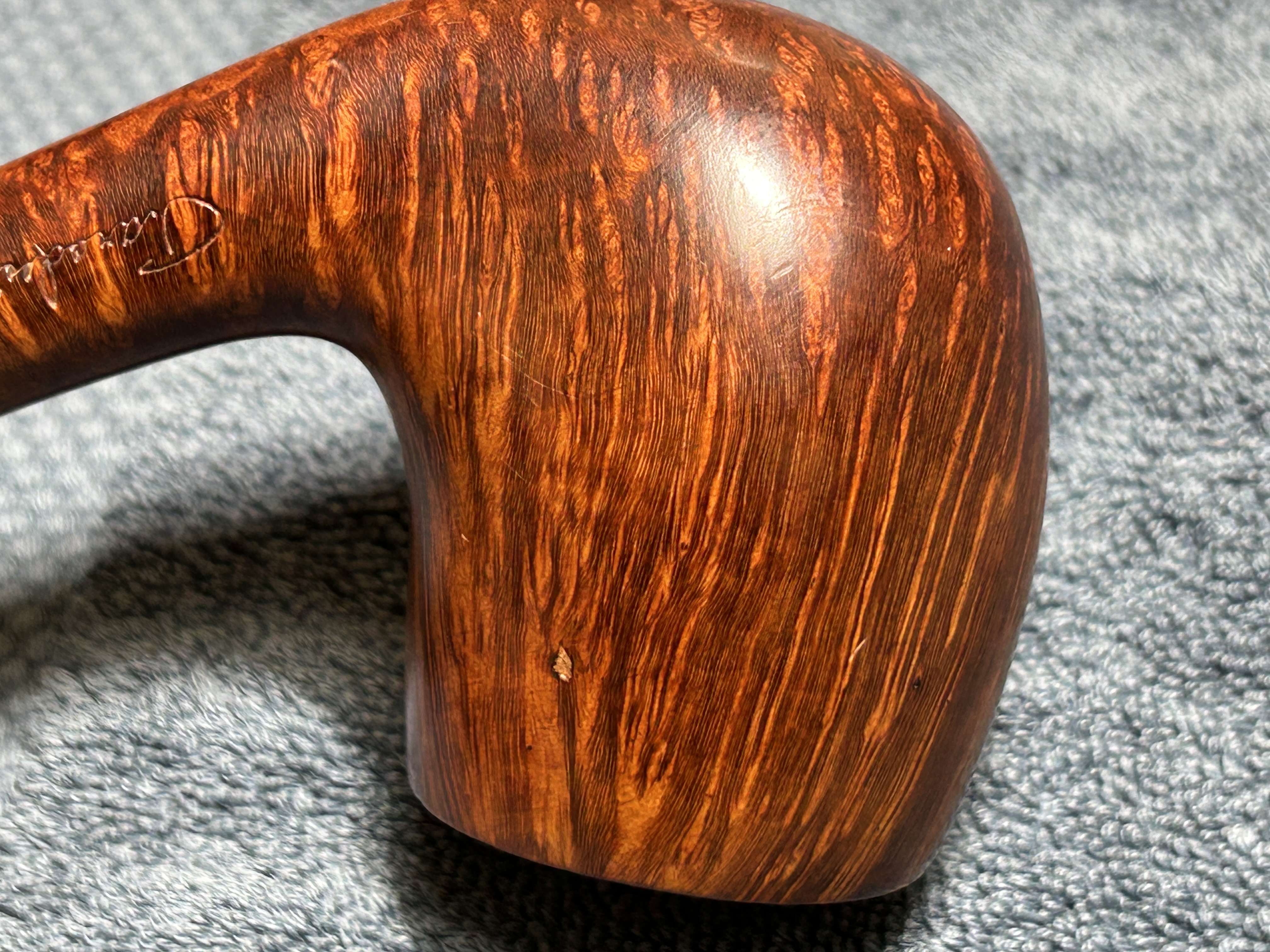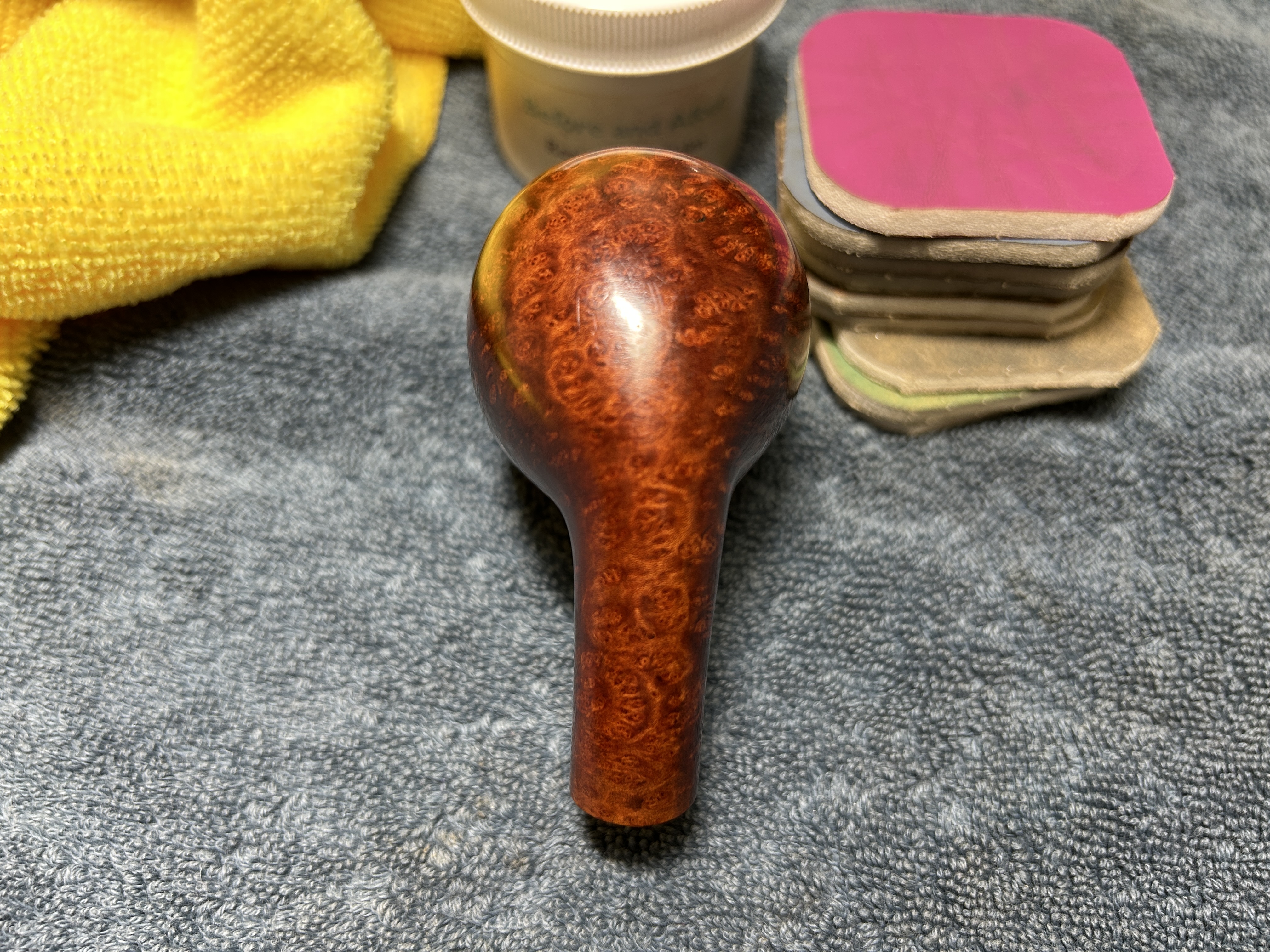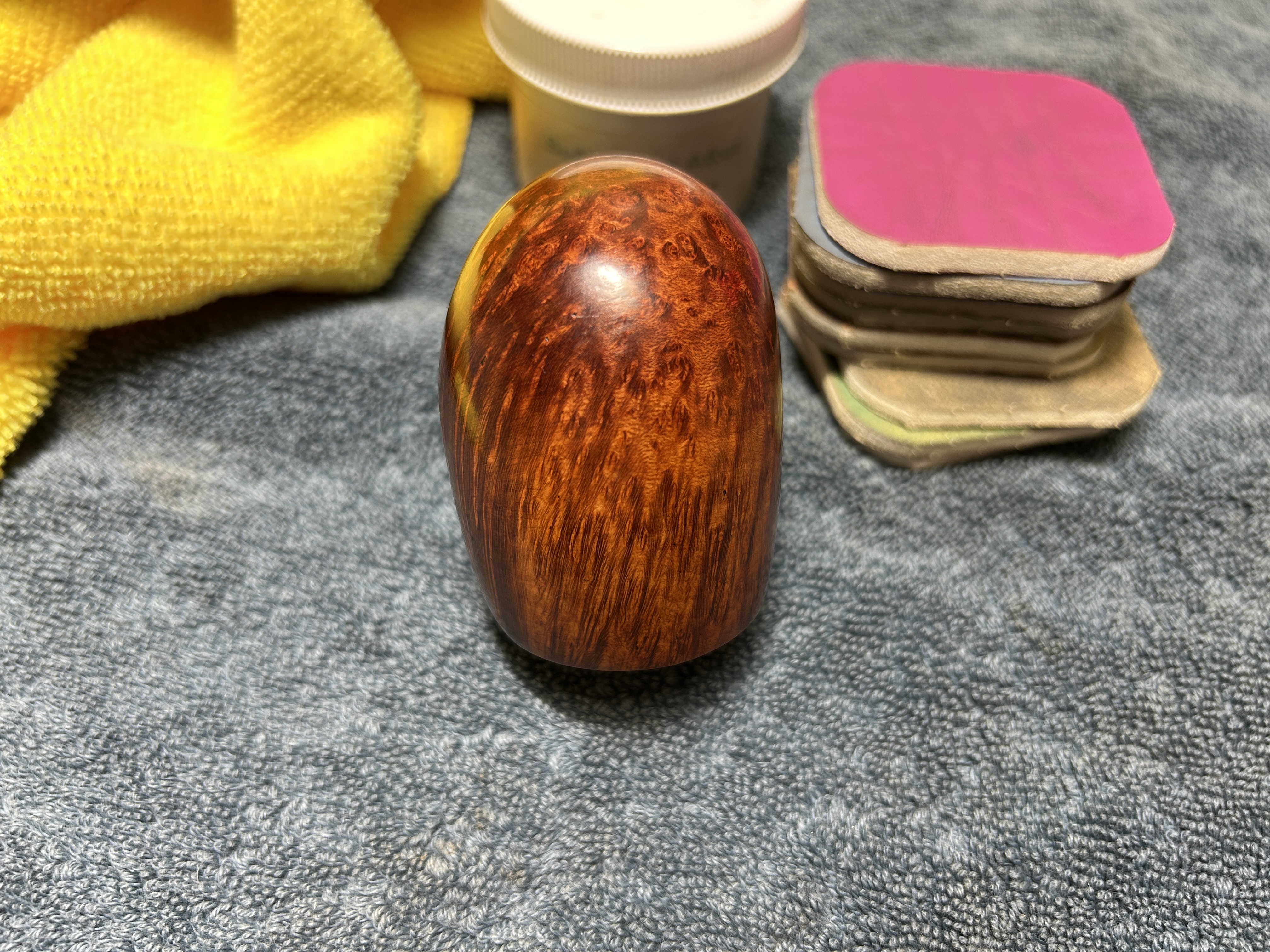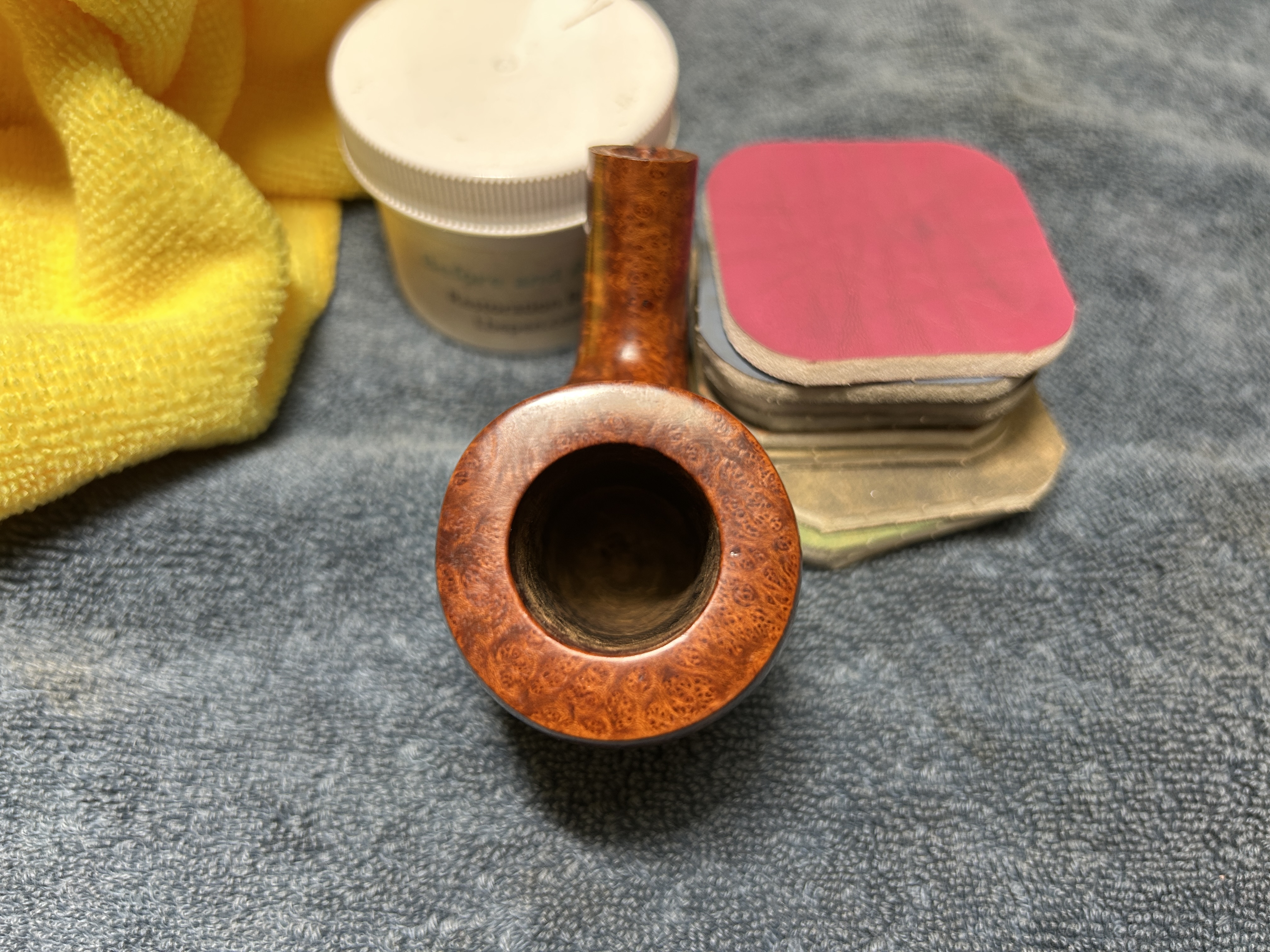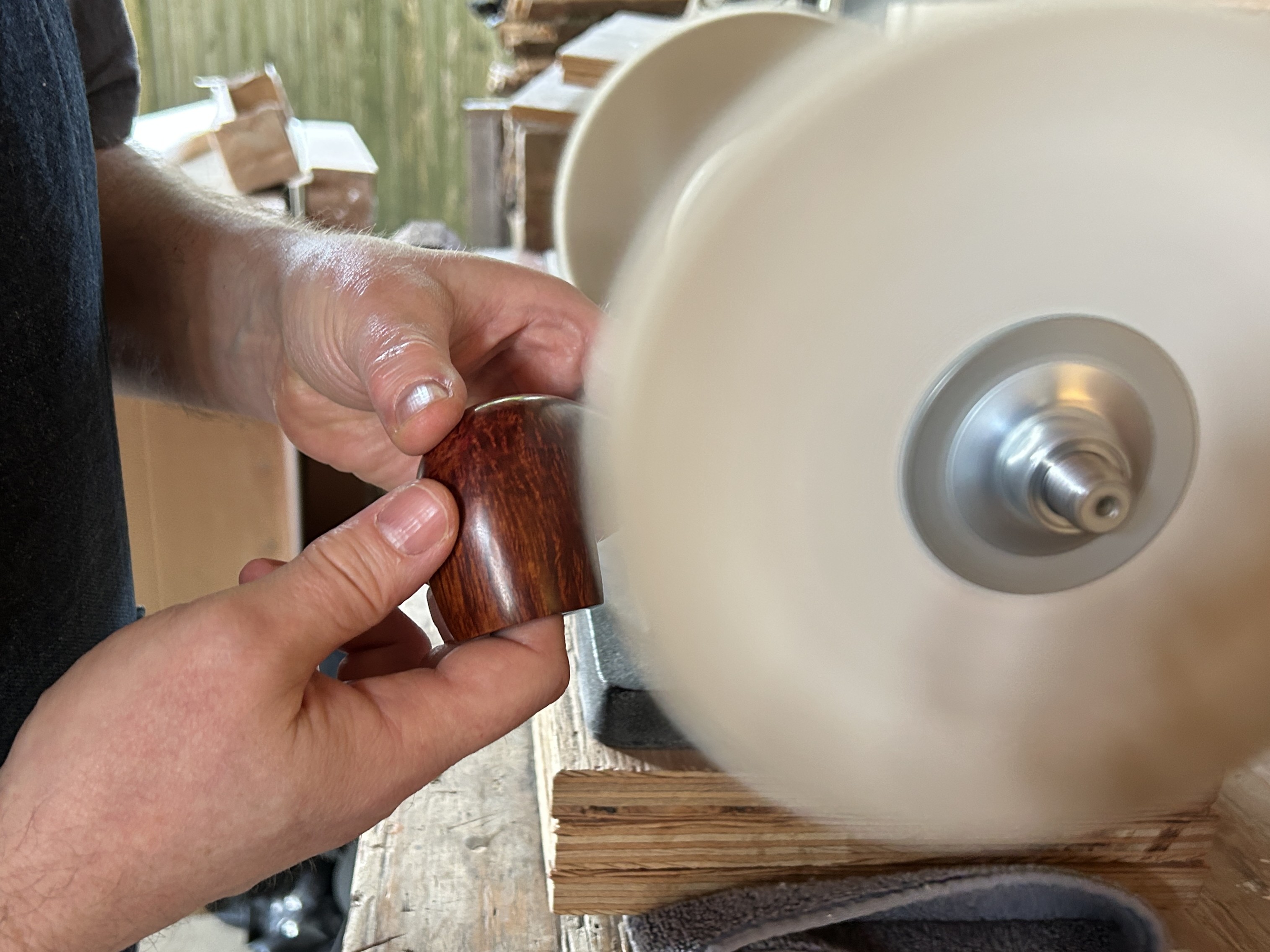
Tag Archives: Bowls – refinishing

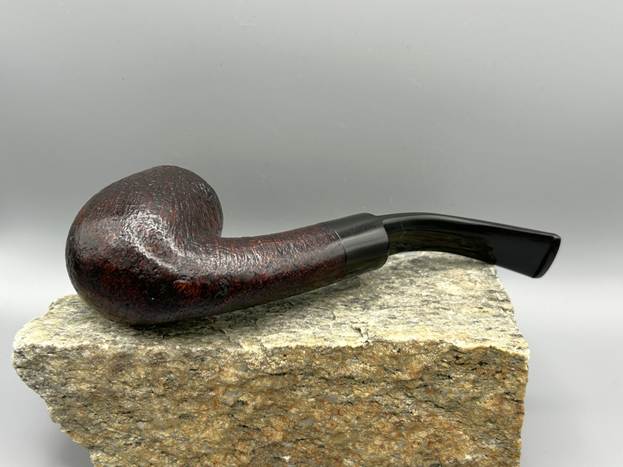
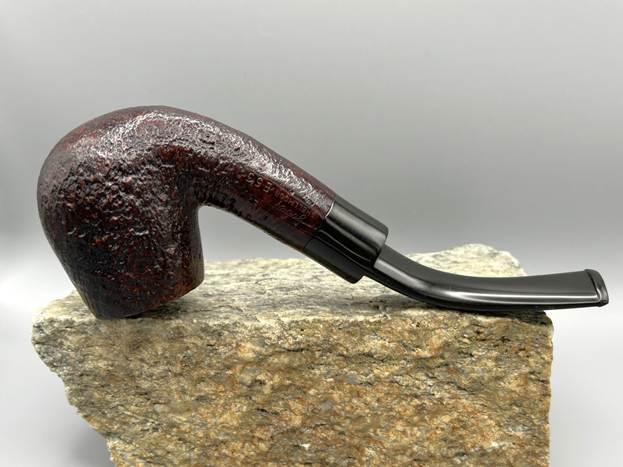
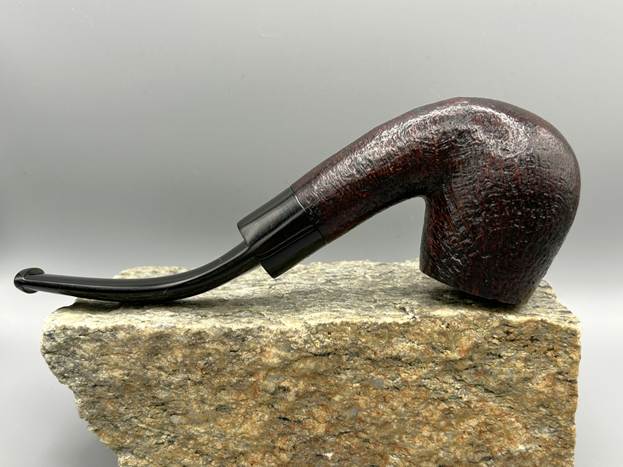
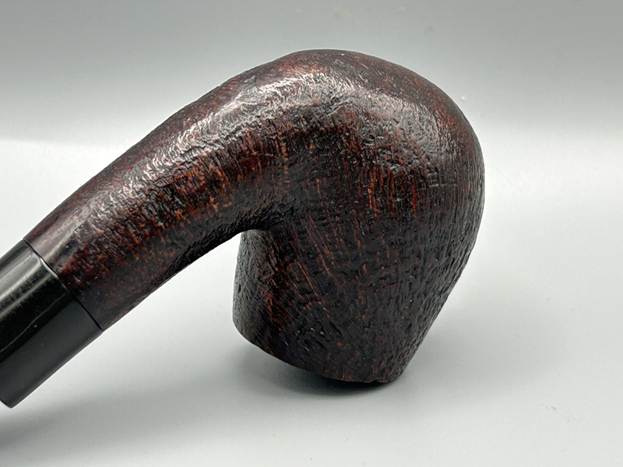
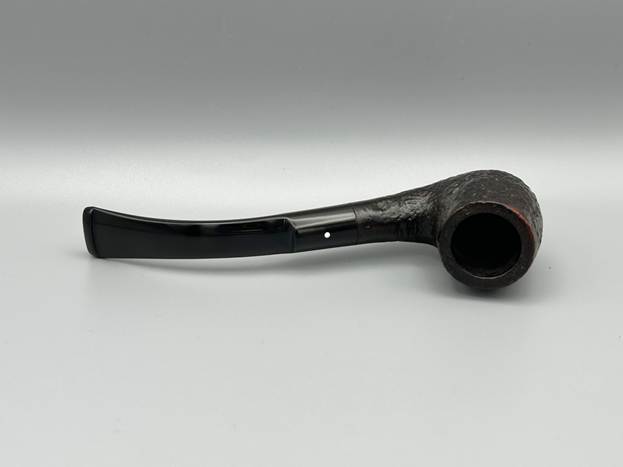
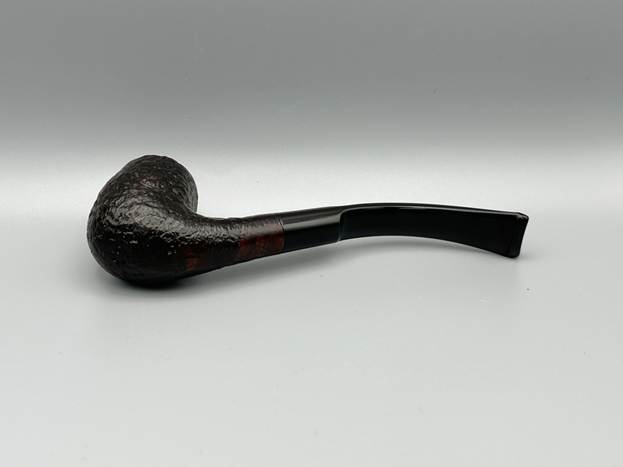
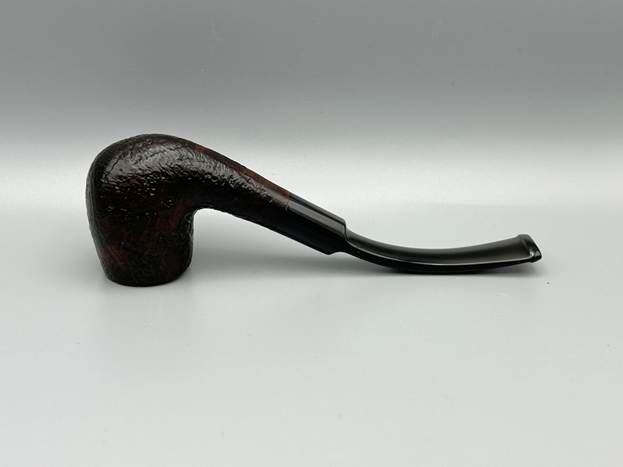
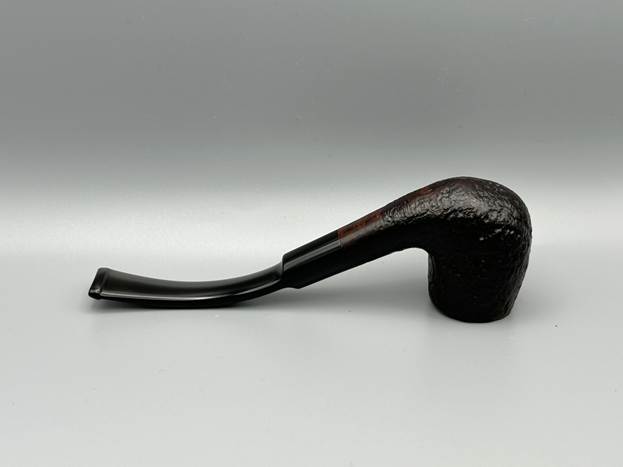
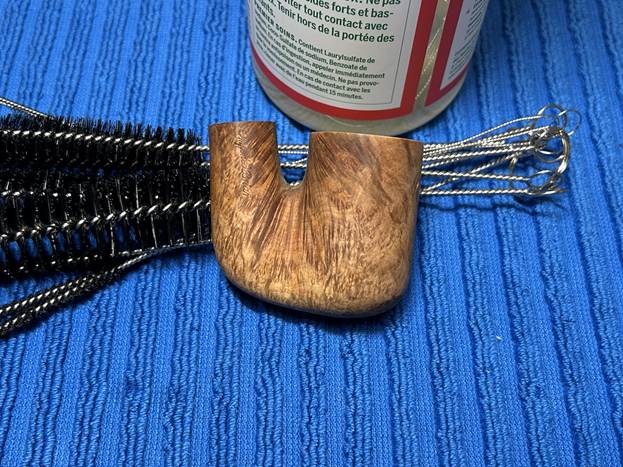
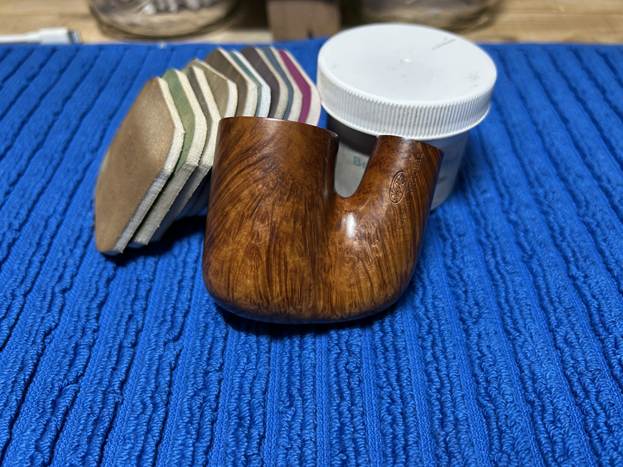
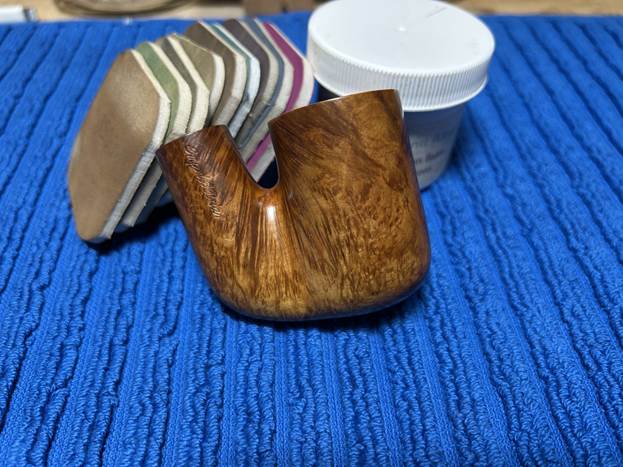
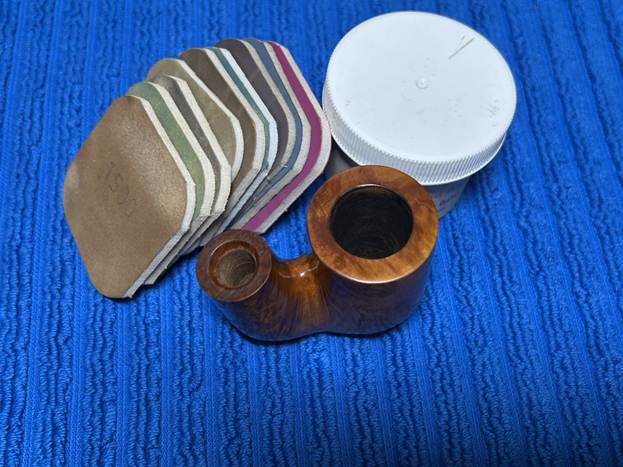
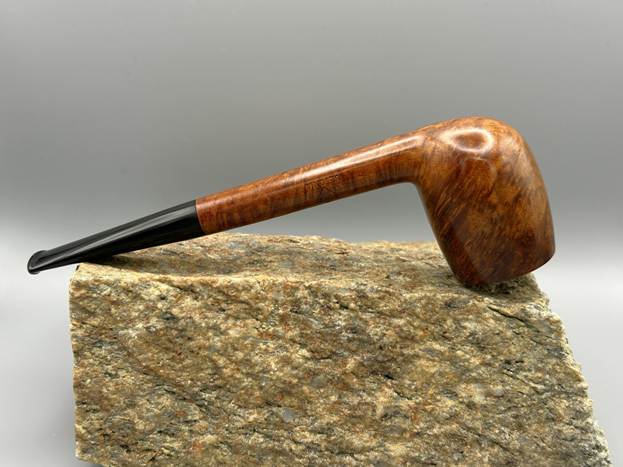
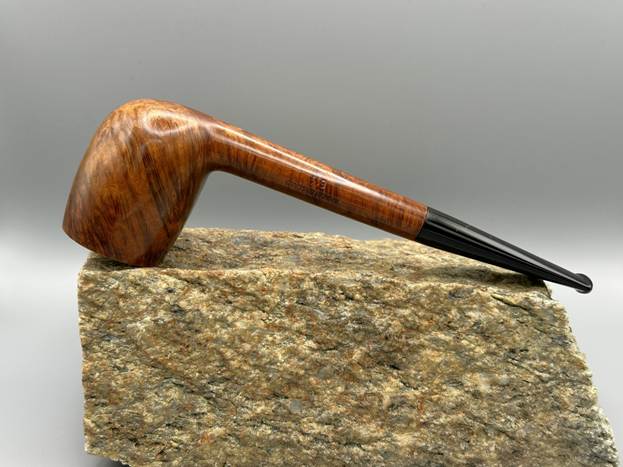
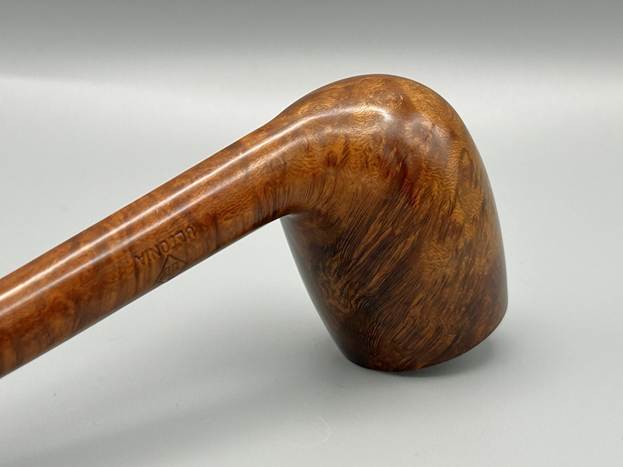
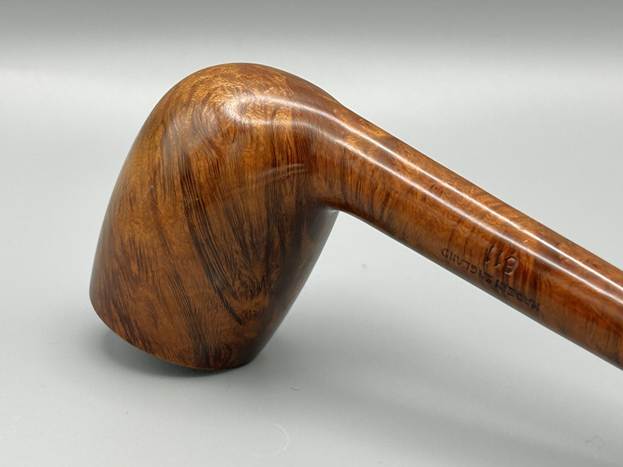
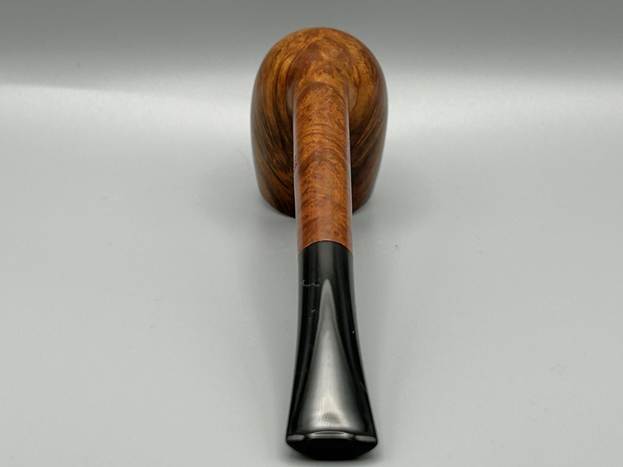
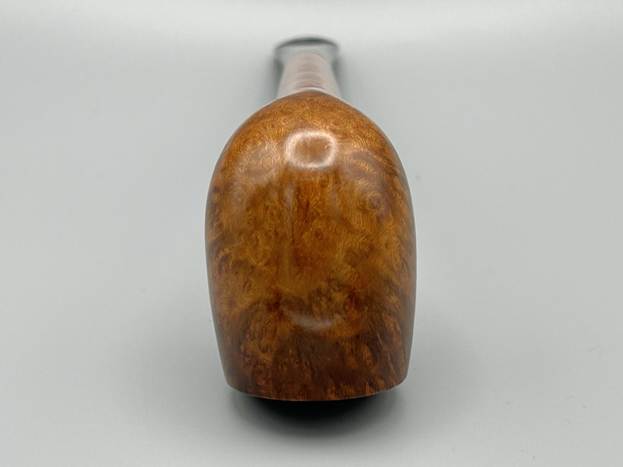
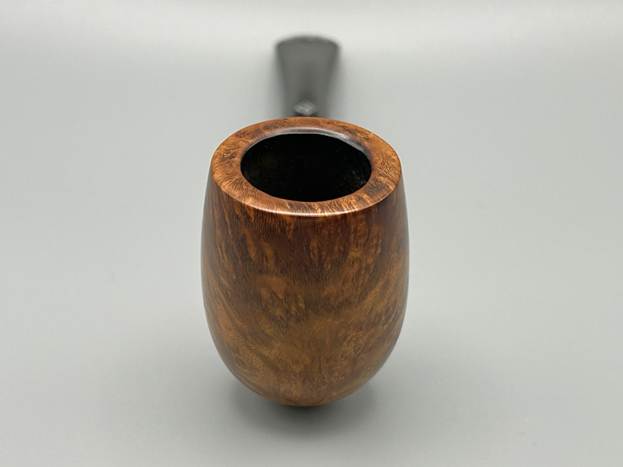
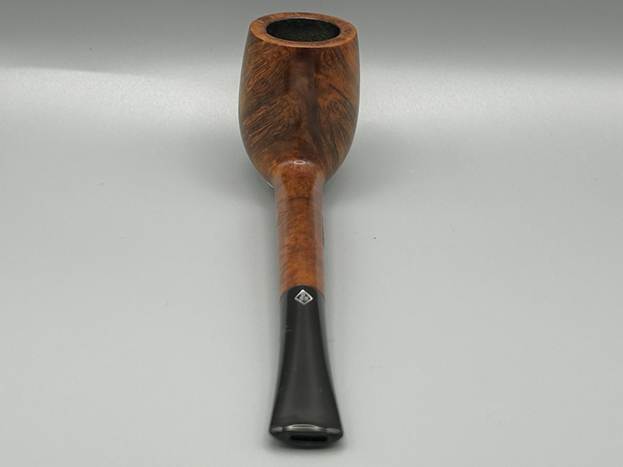
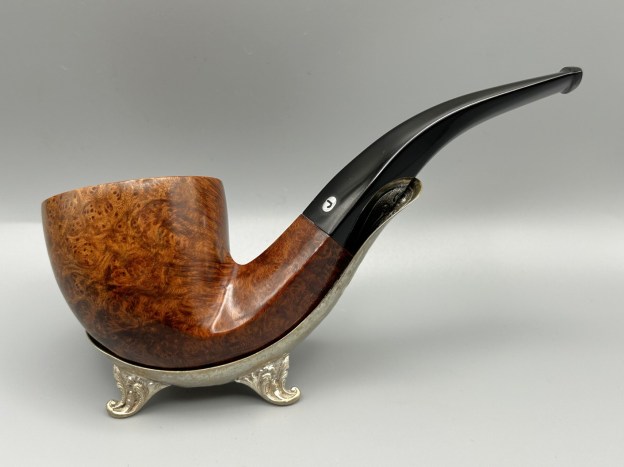
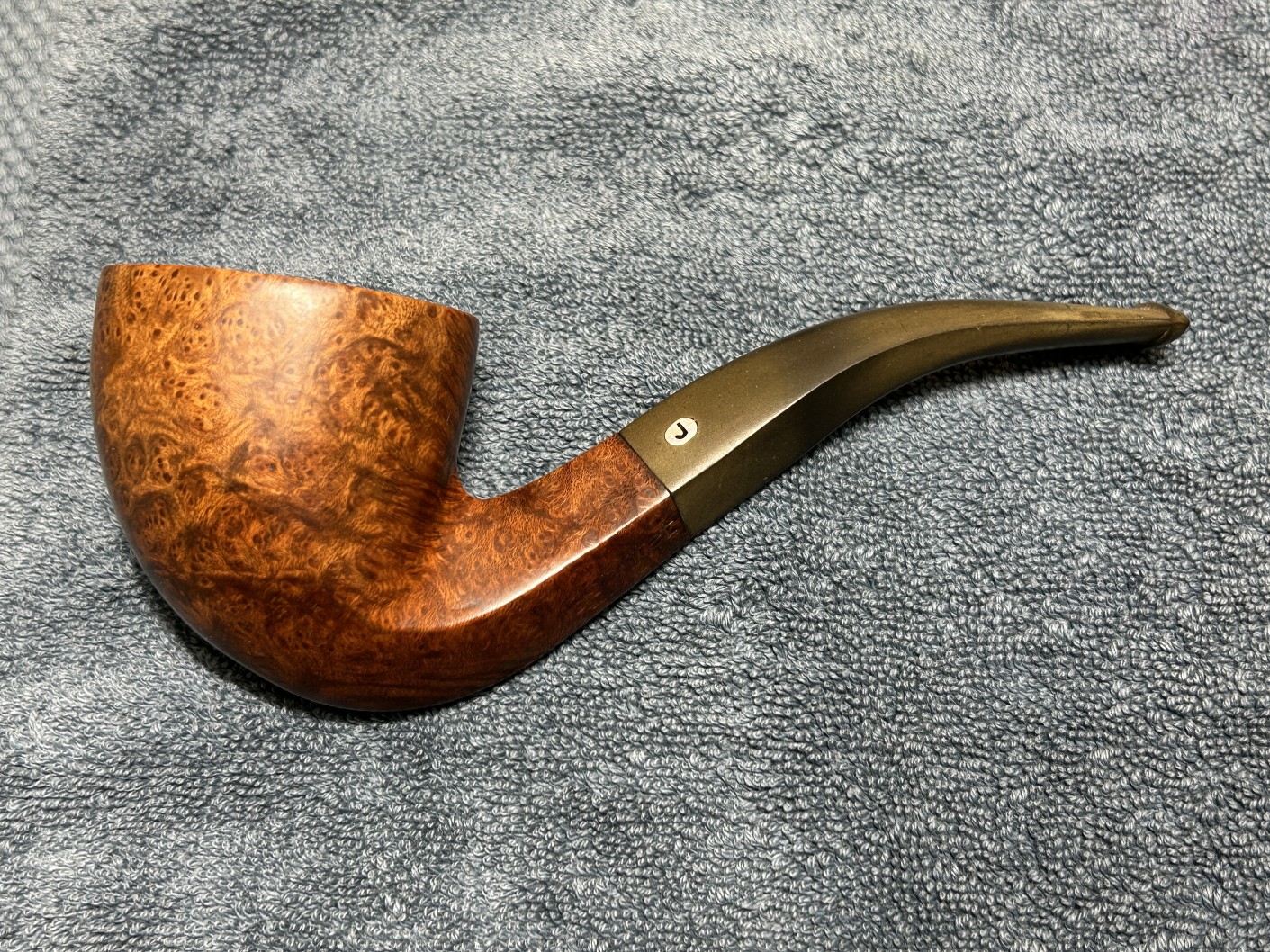
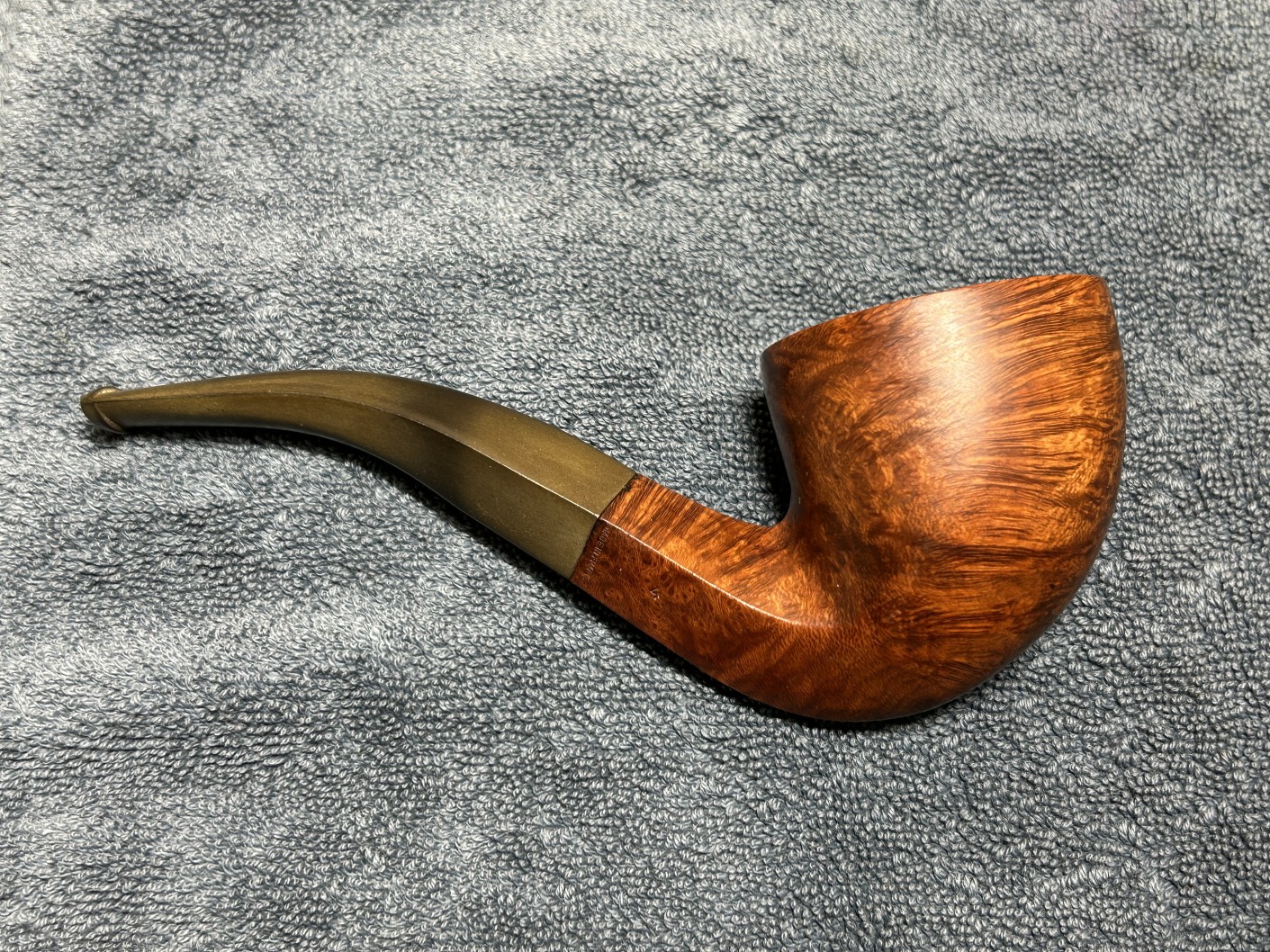
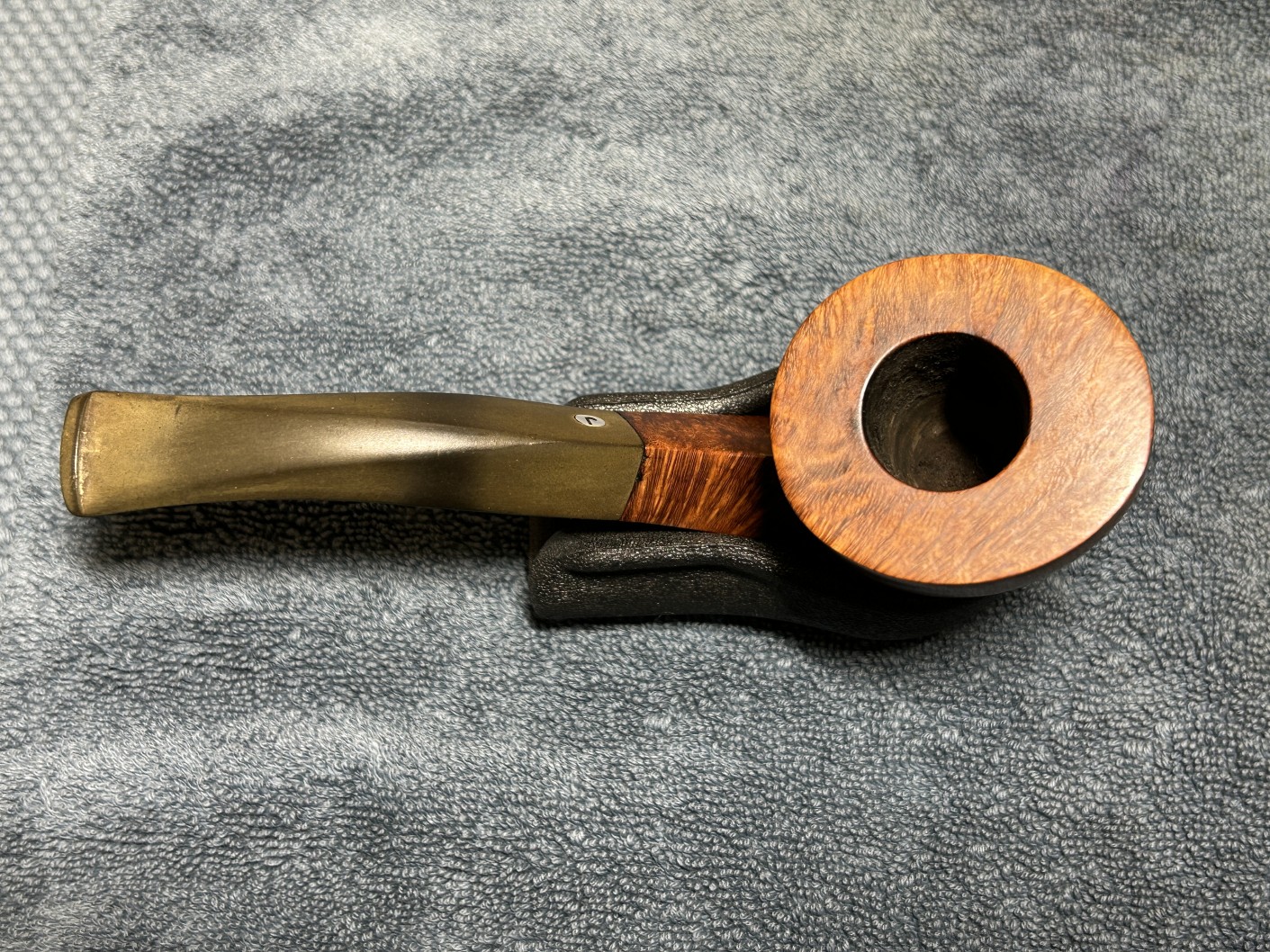
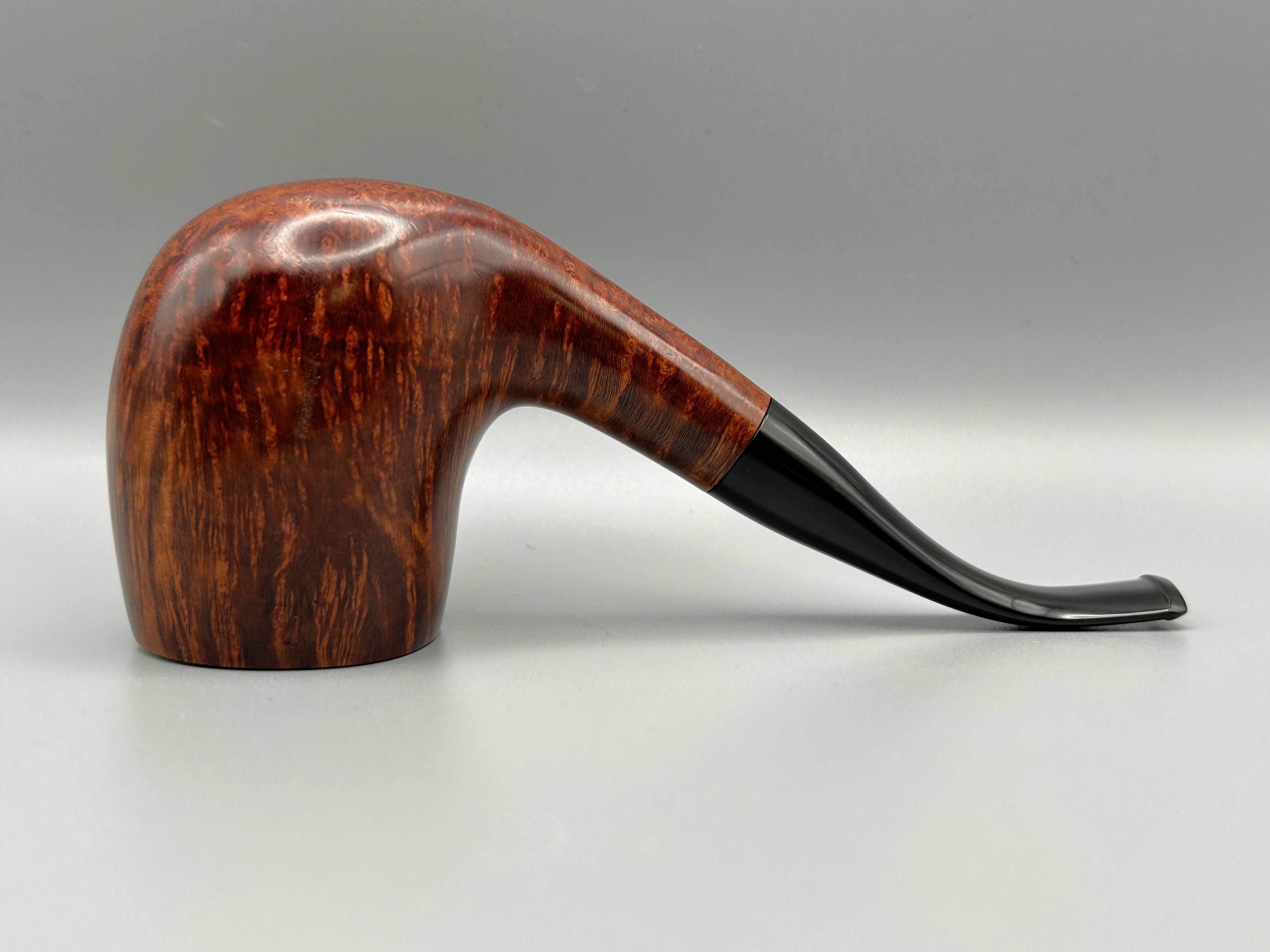
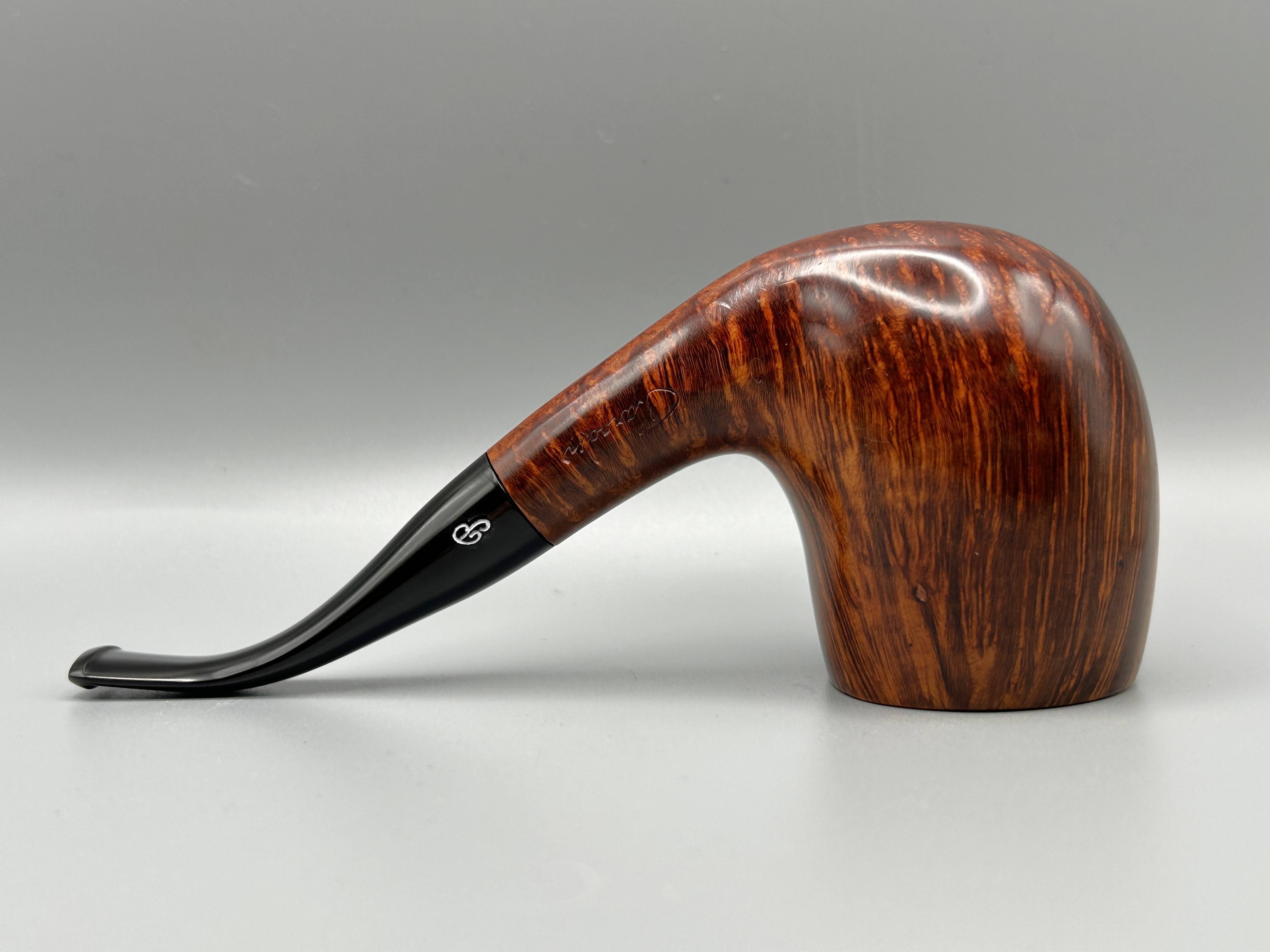
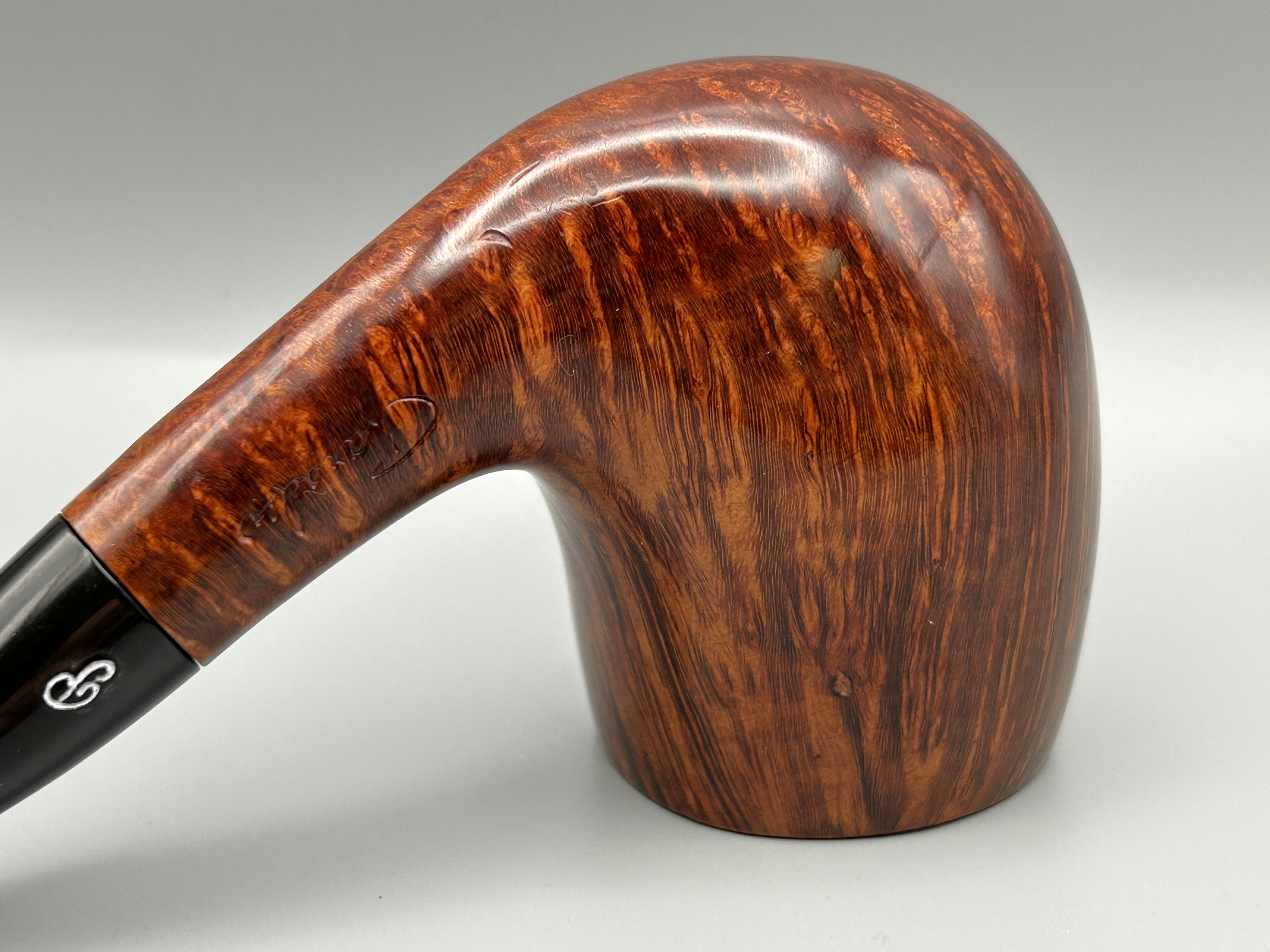
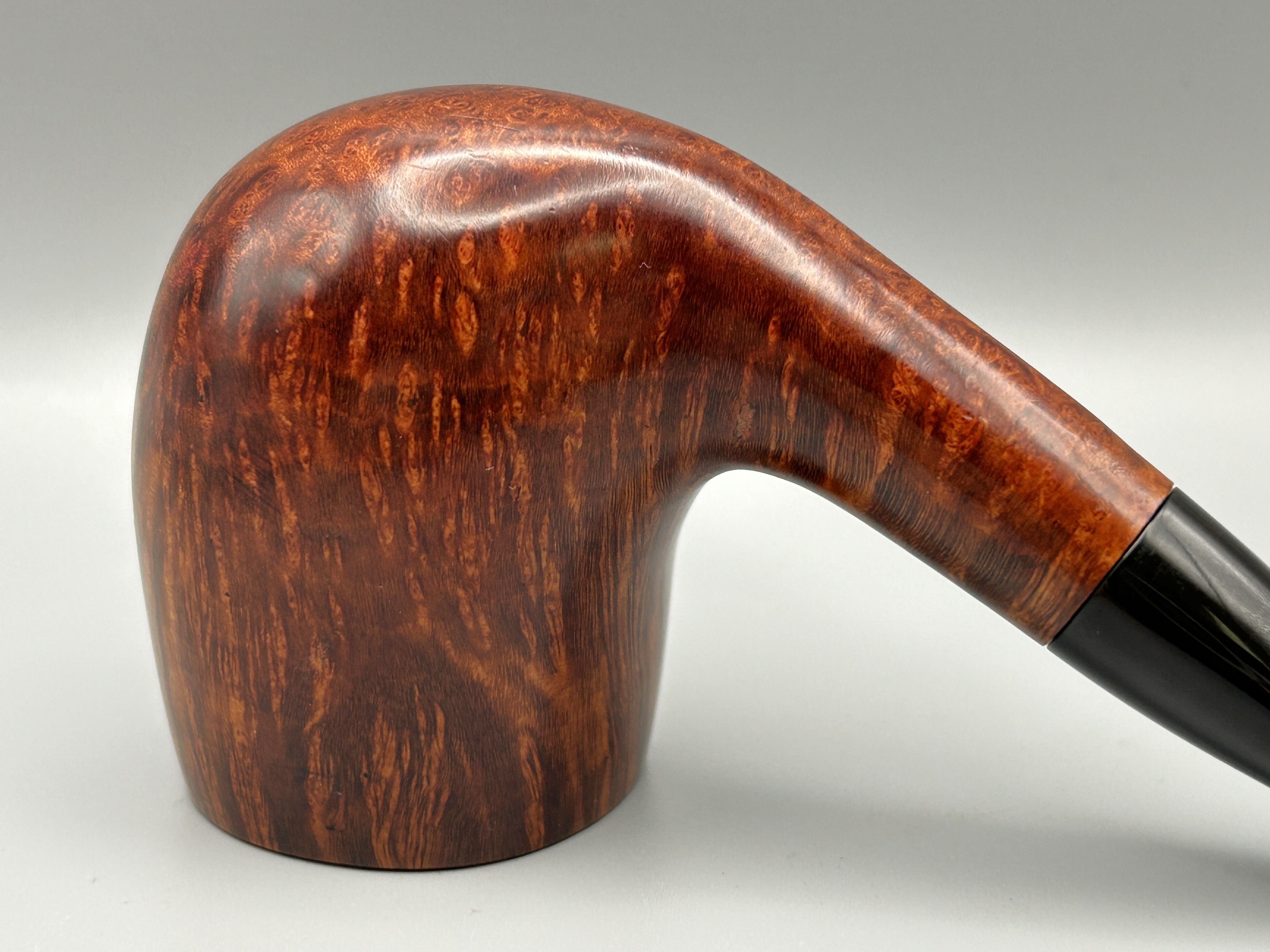
A Better Life for a Torben Dansk 16 Bent Billiard


by Kenneth Lieblich

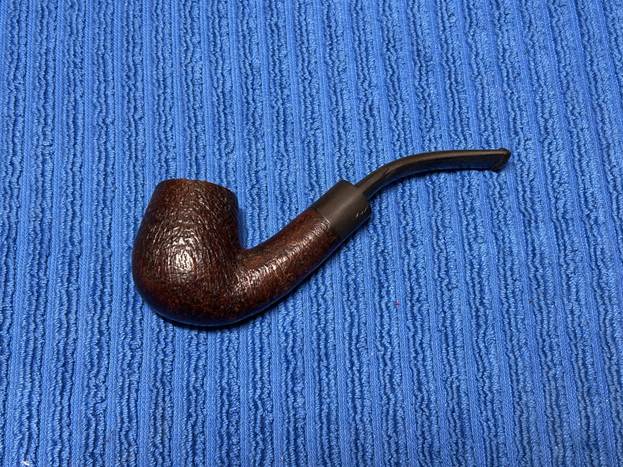
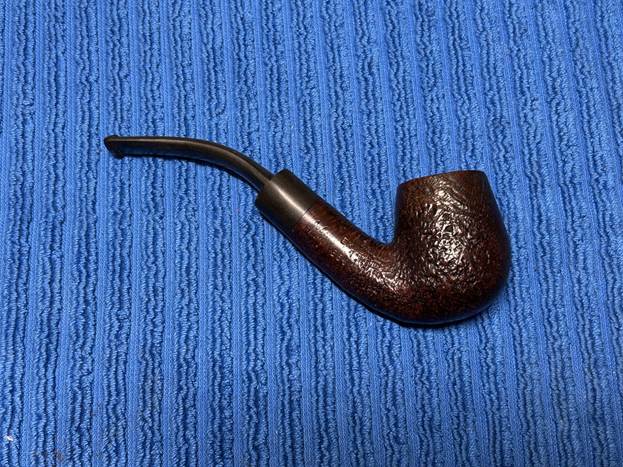
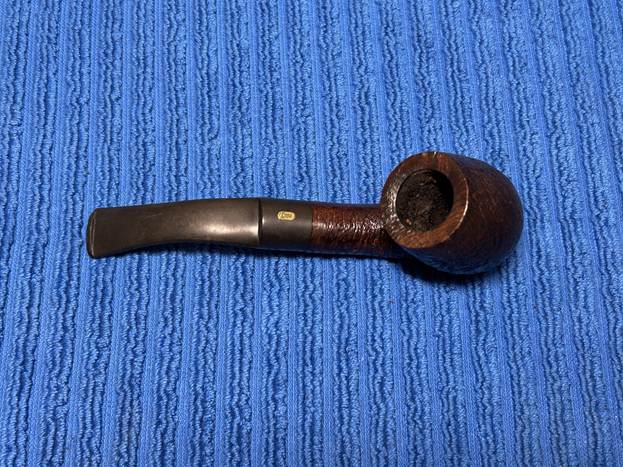
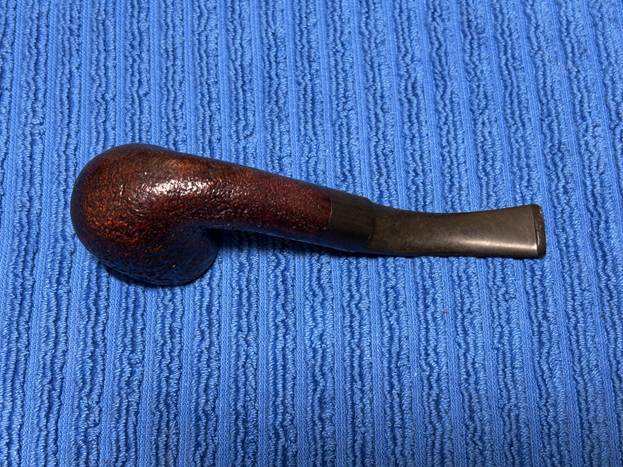
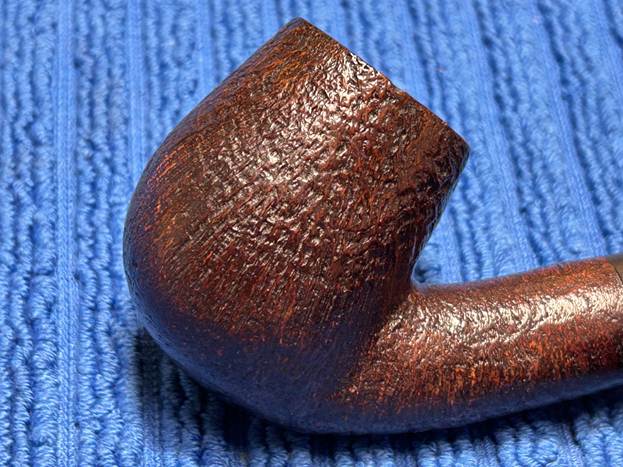
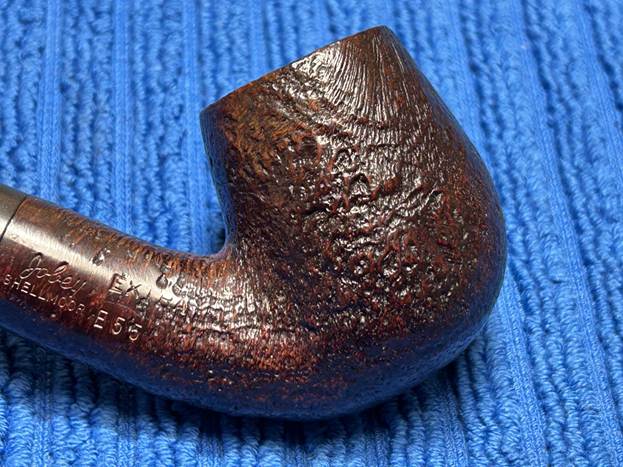
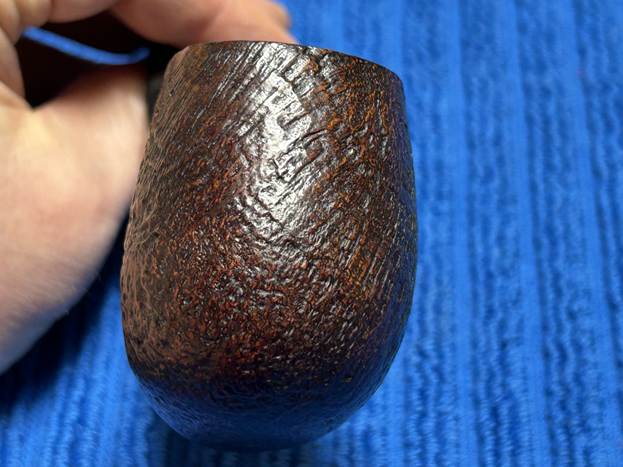
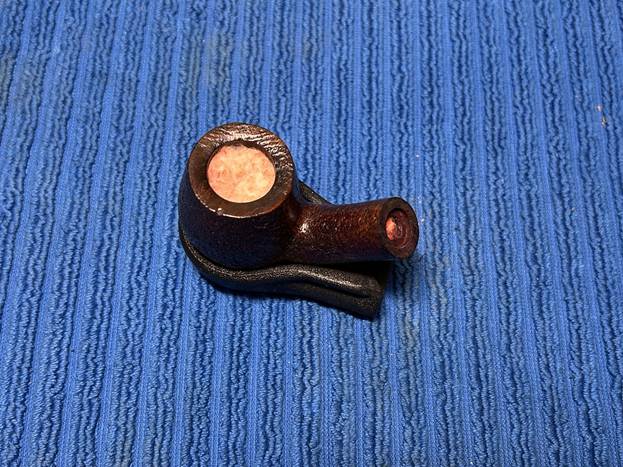
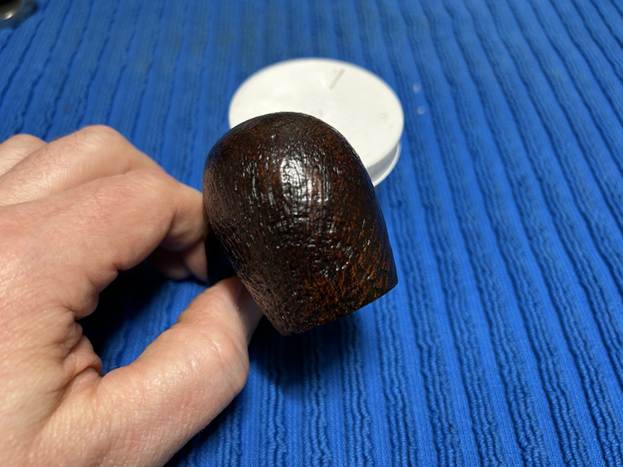
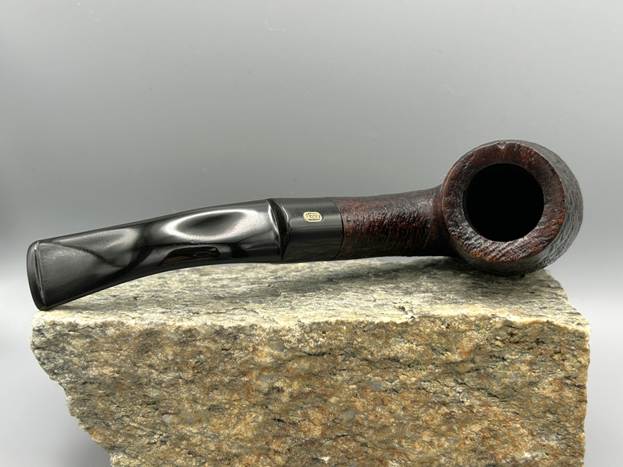
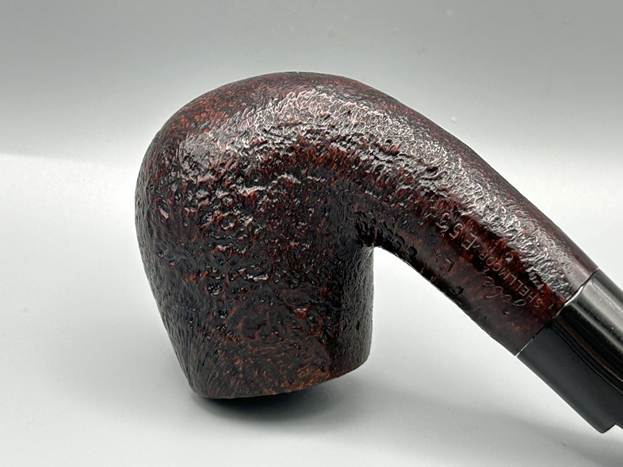
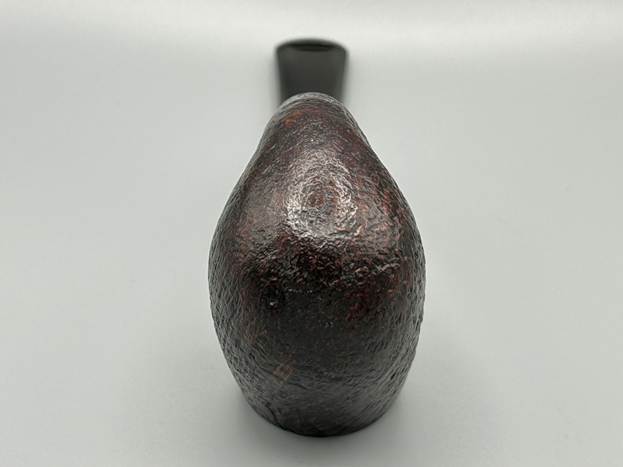
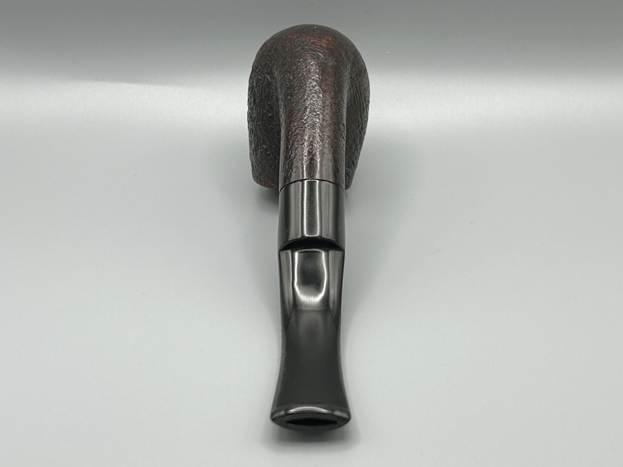
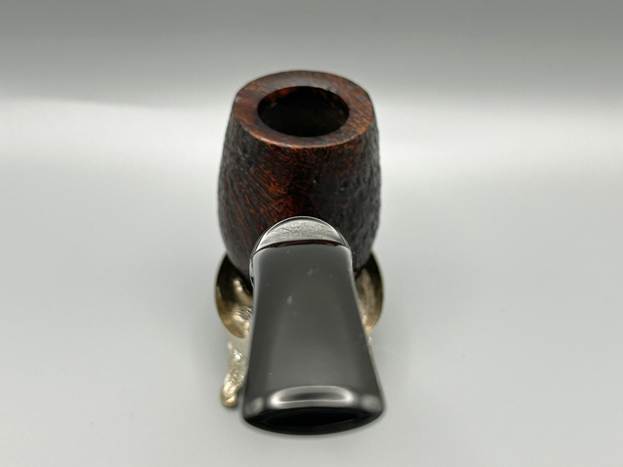
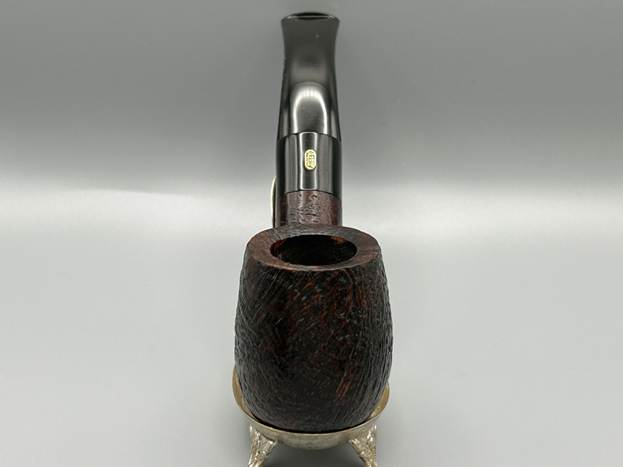
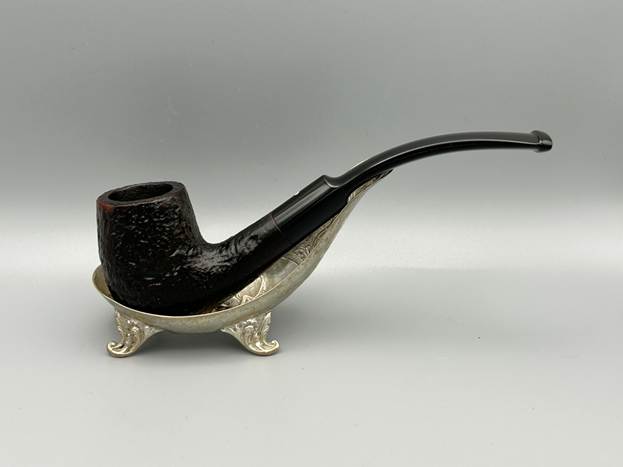
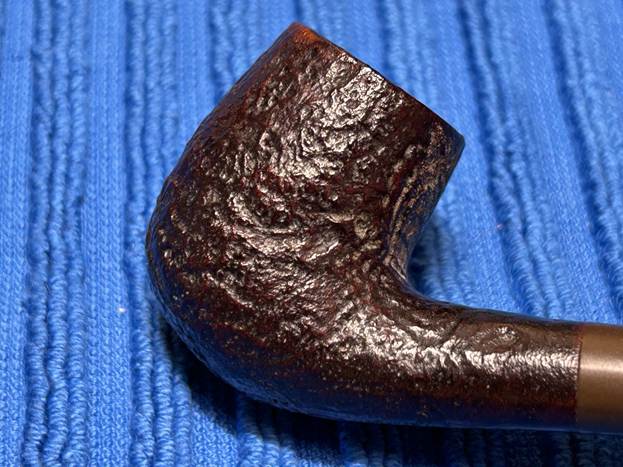
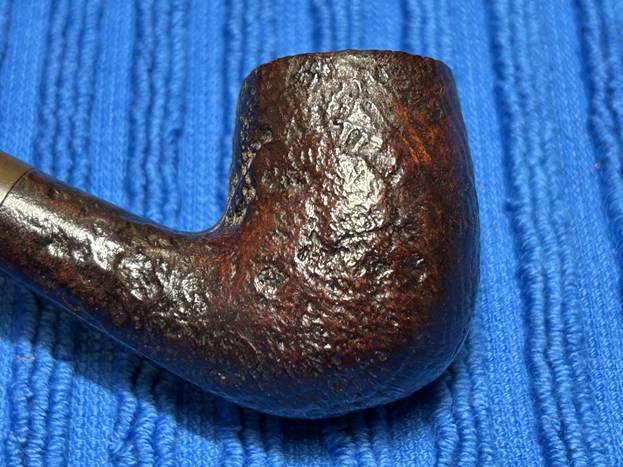
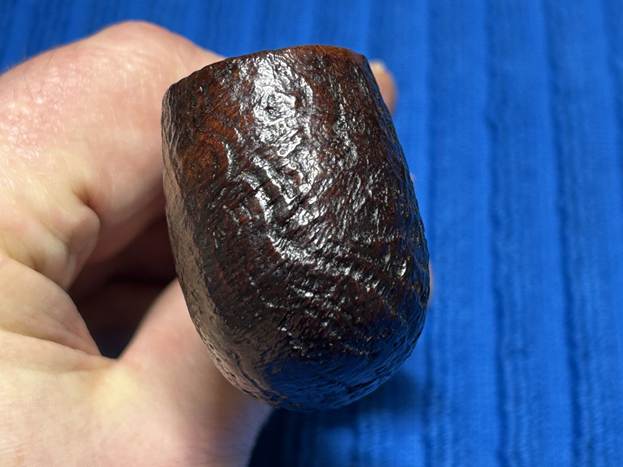
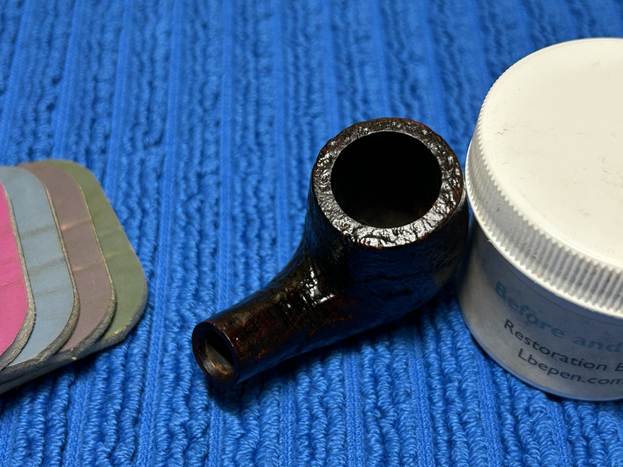
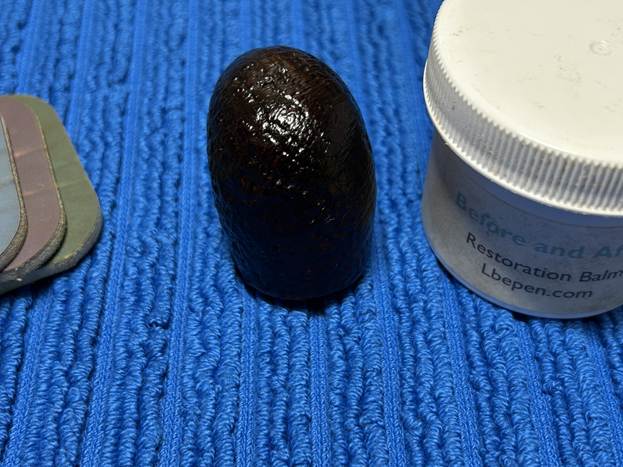
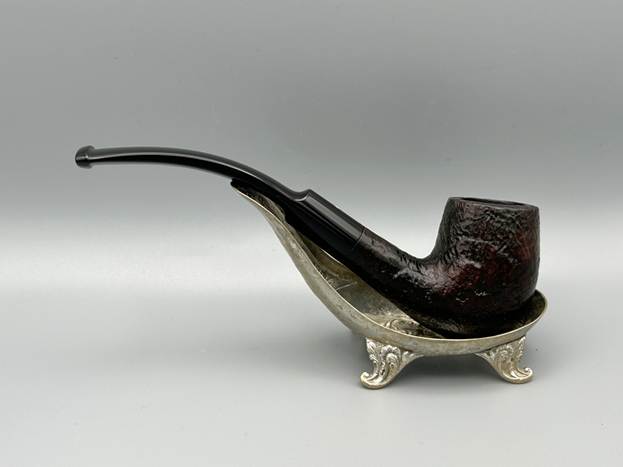
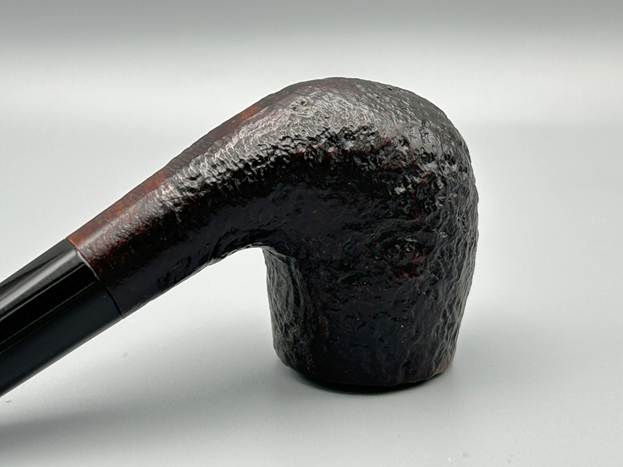
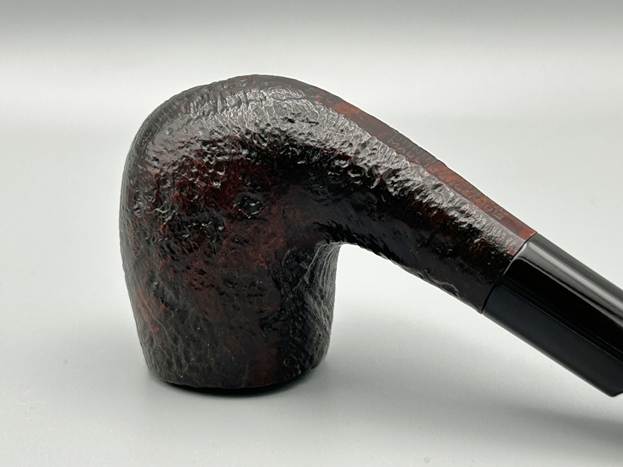
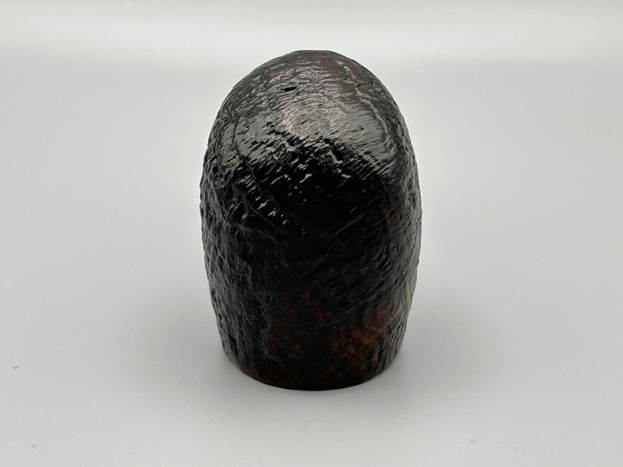
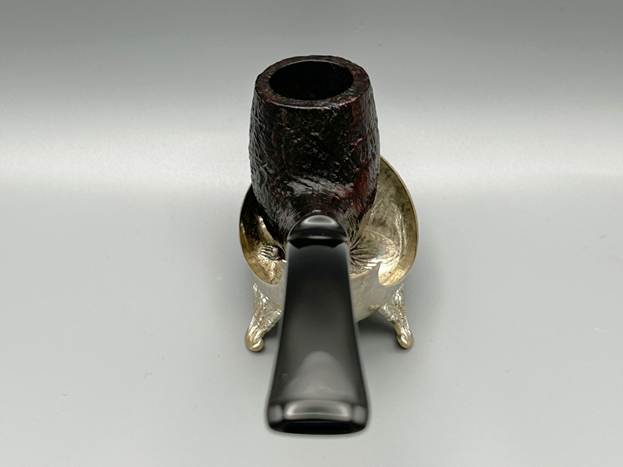
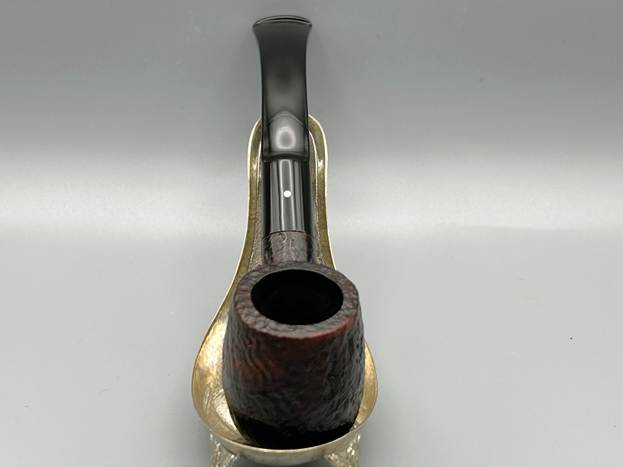
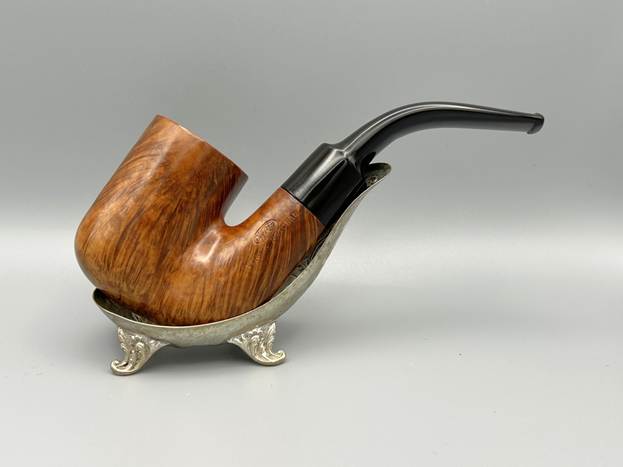
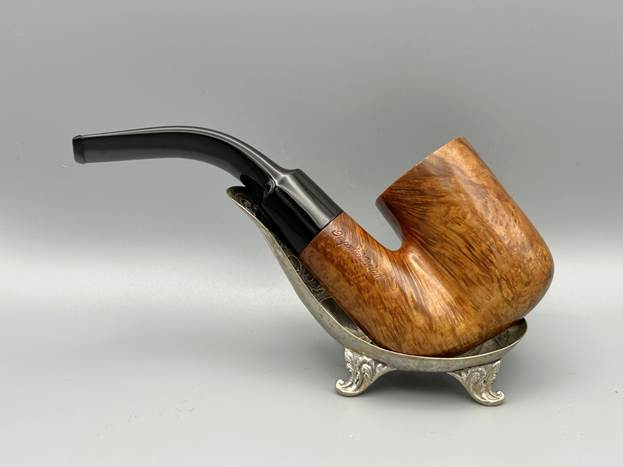
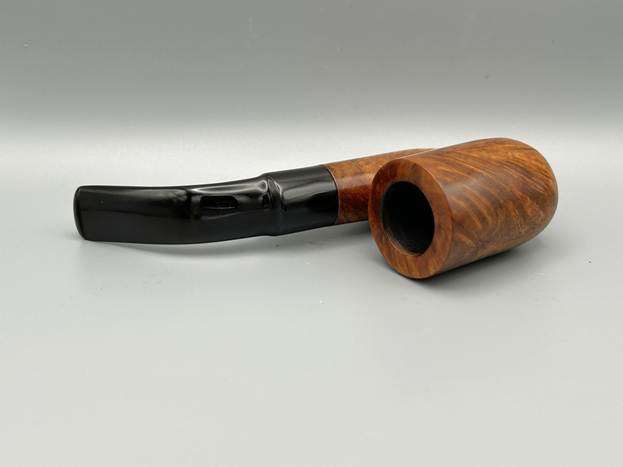
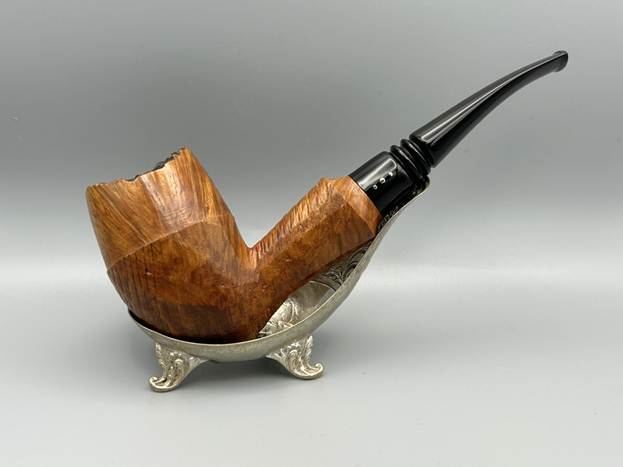
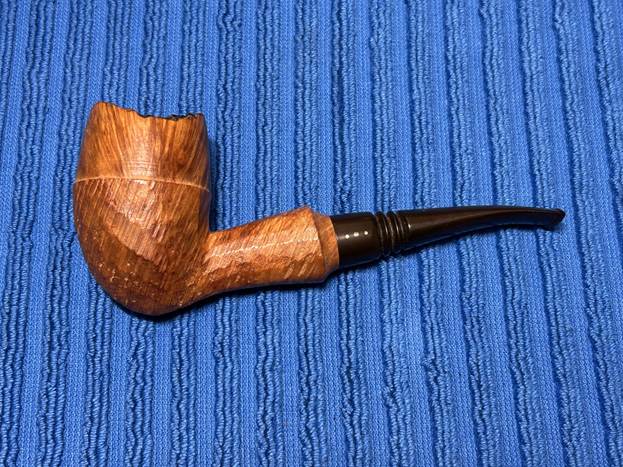
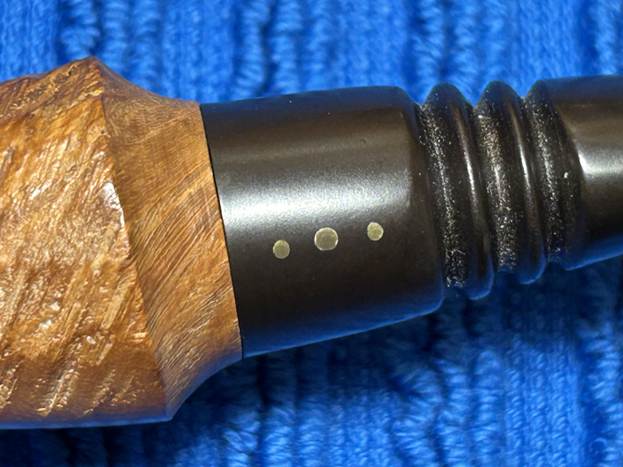
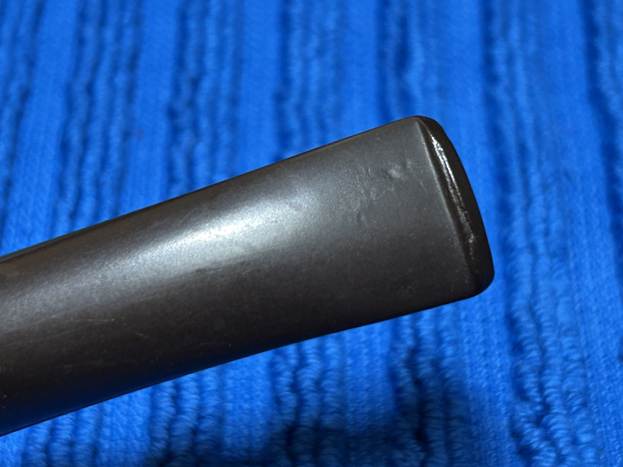
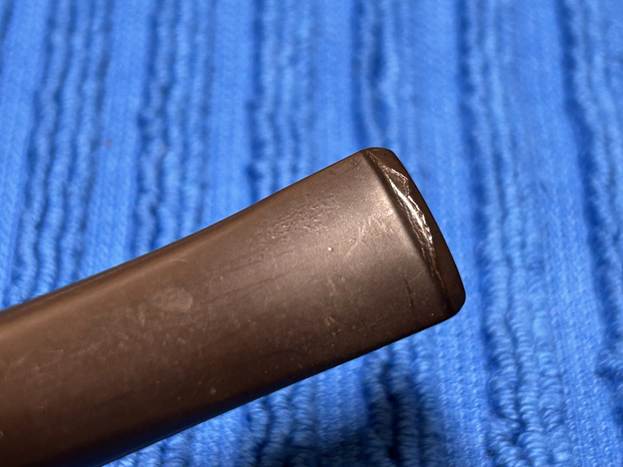
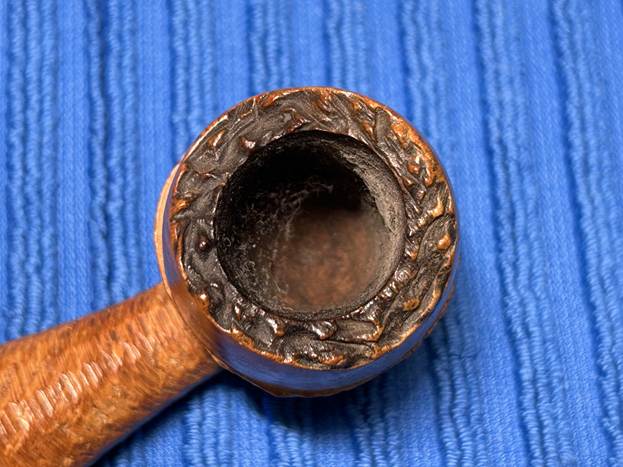
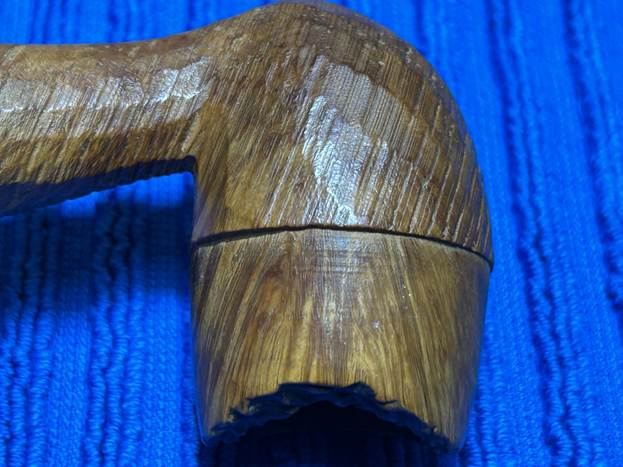
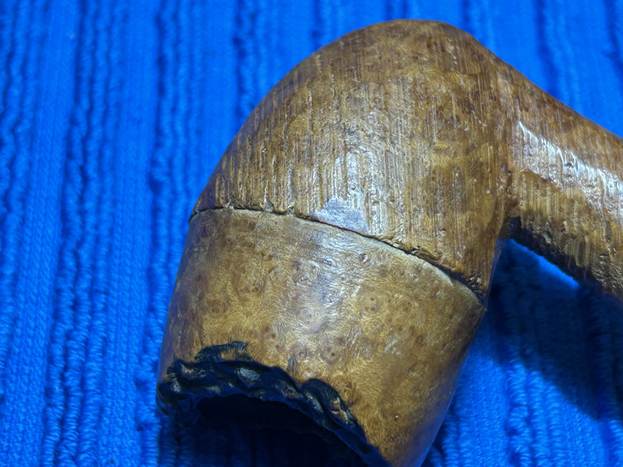
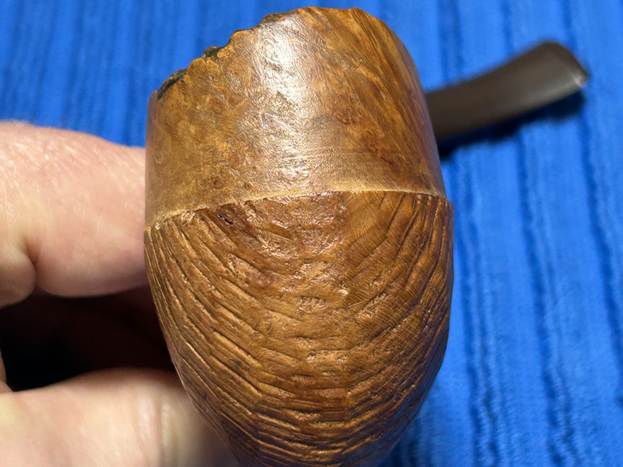
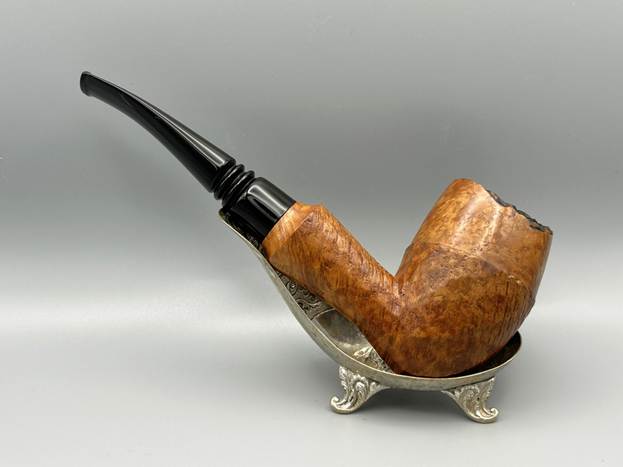
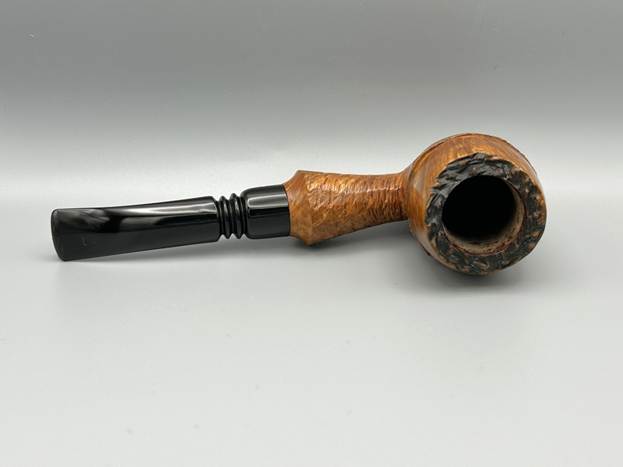
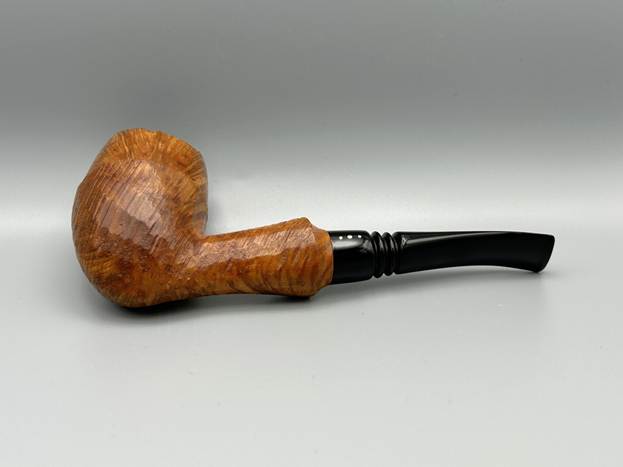
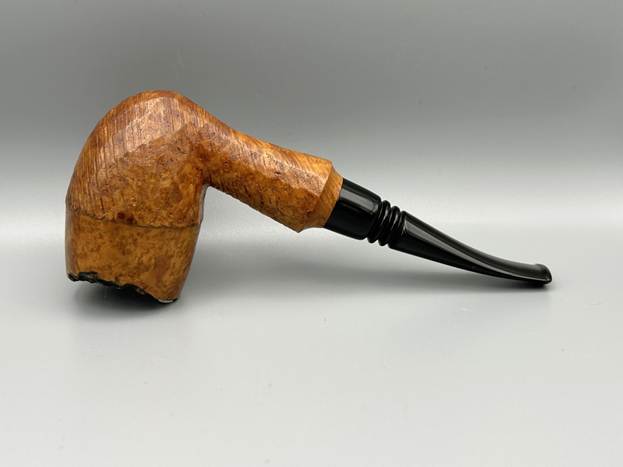
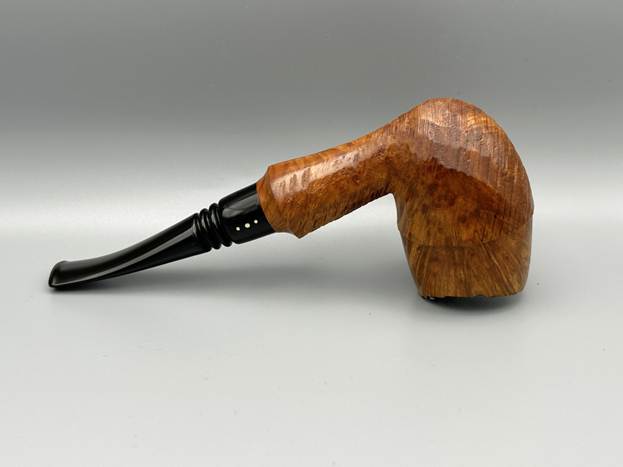
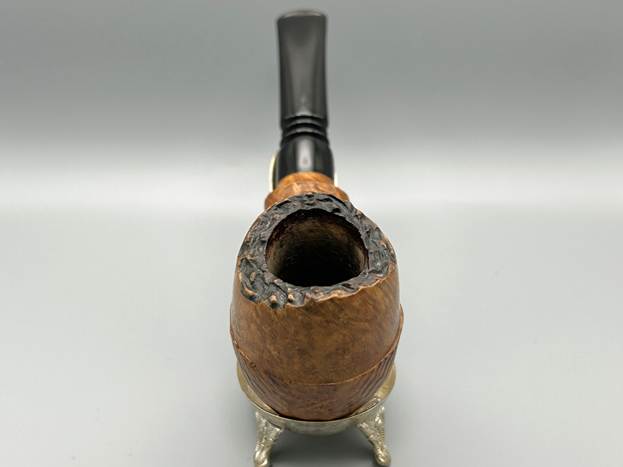
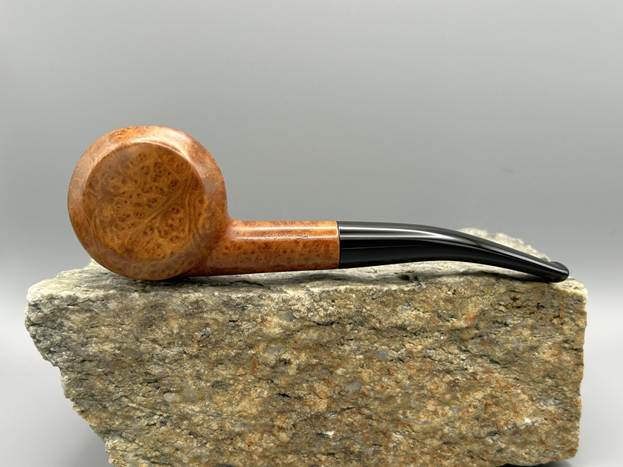
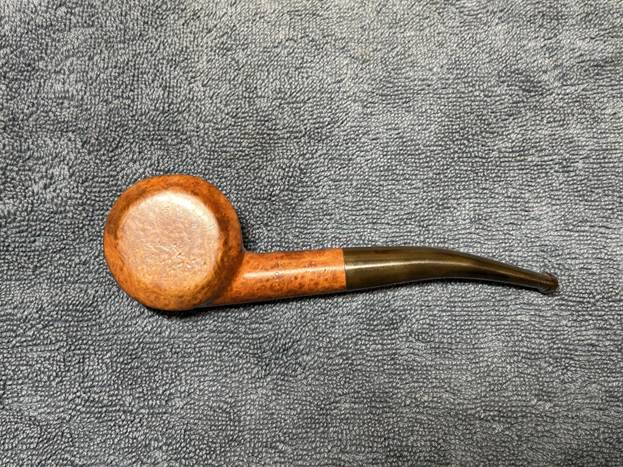
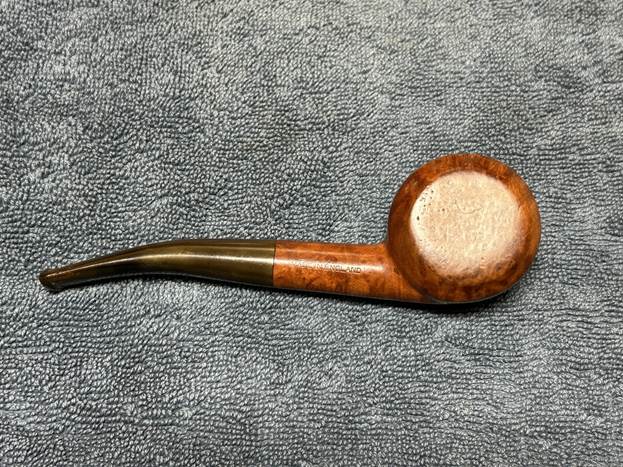
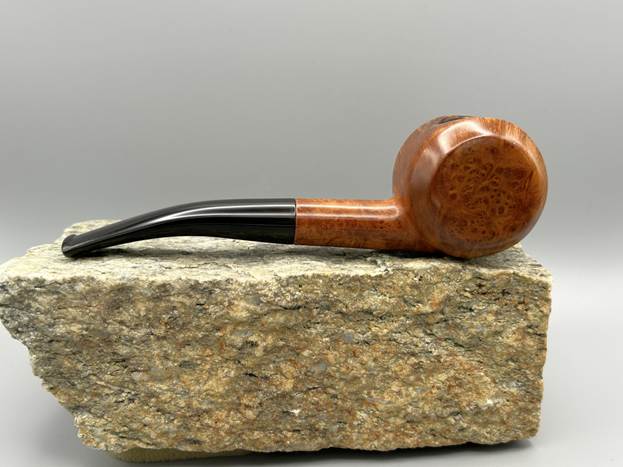
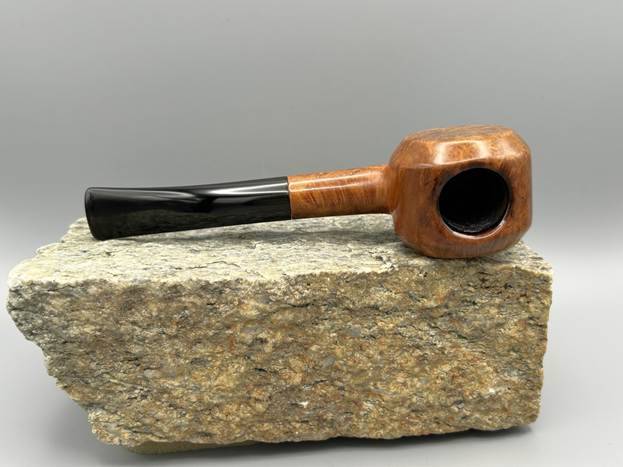
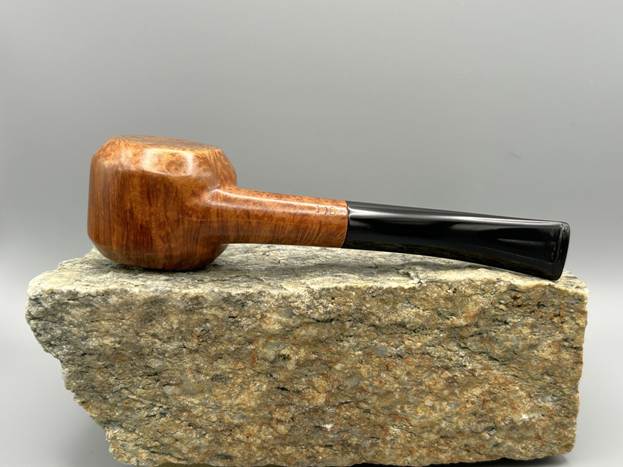
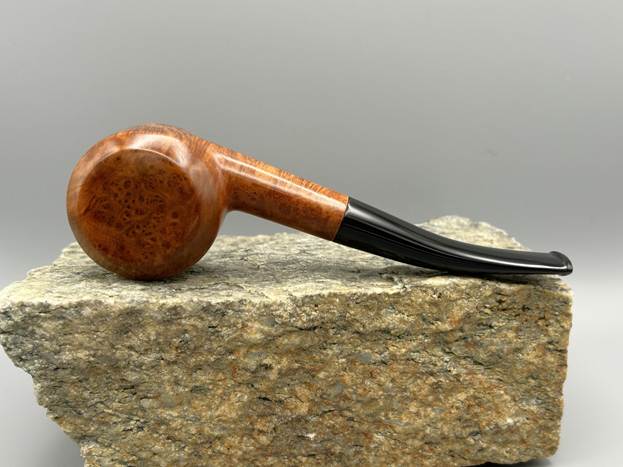
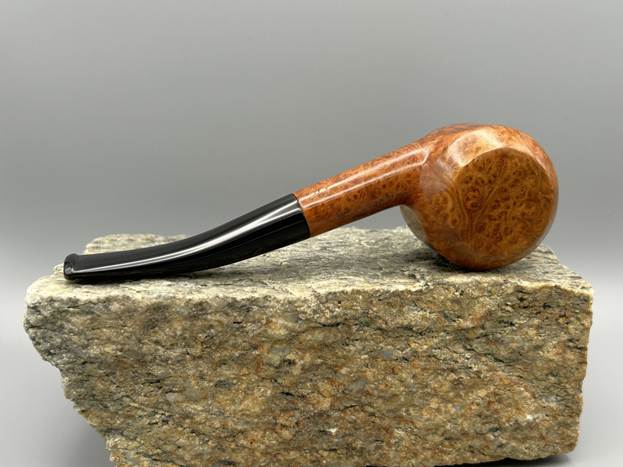
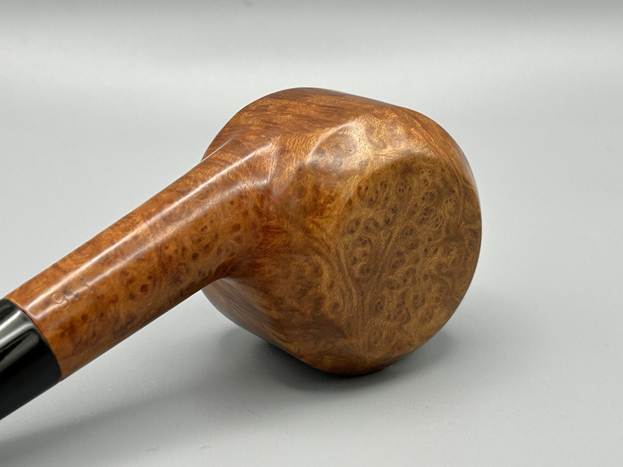
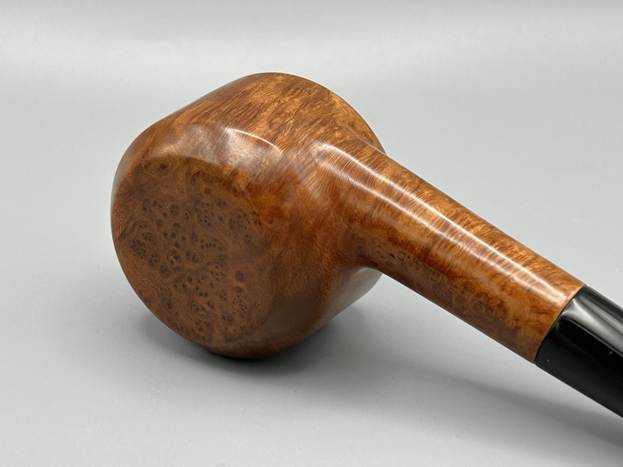
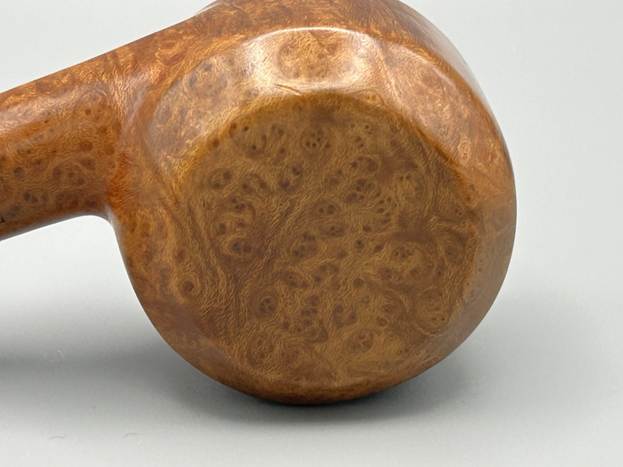
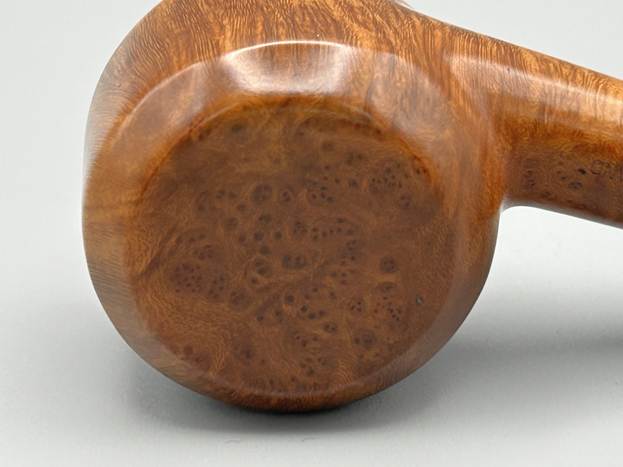
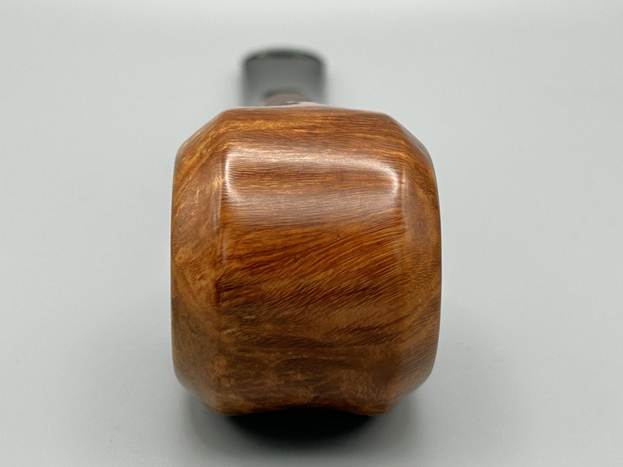
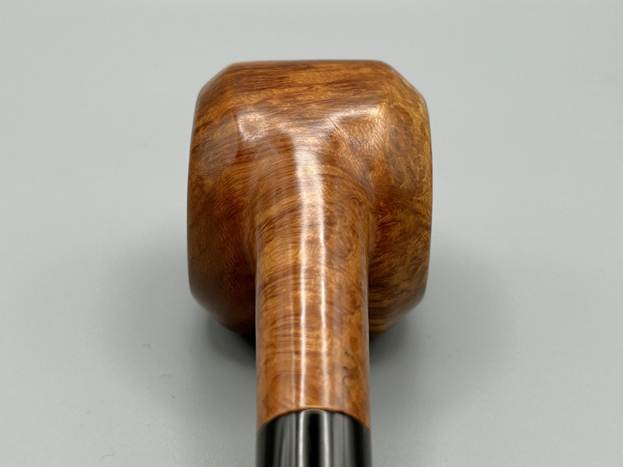
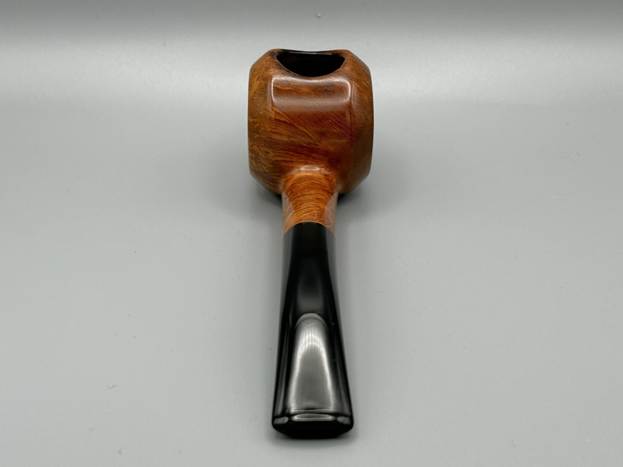
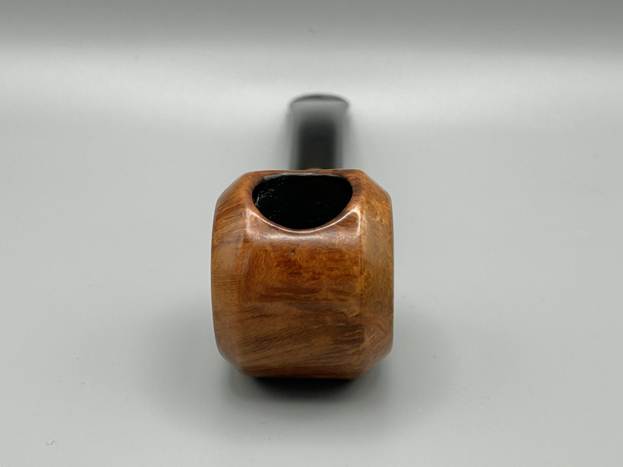
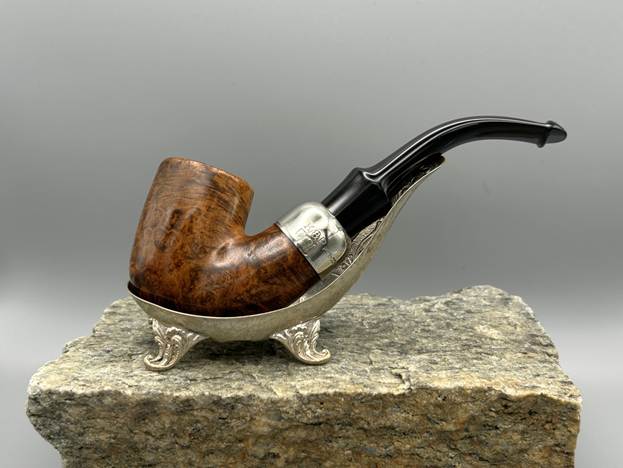
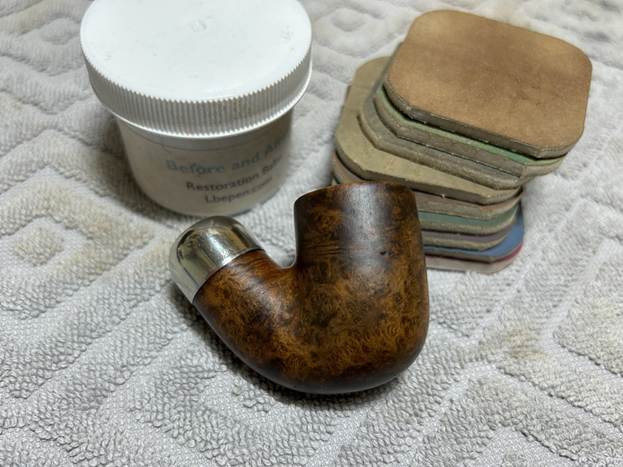
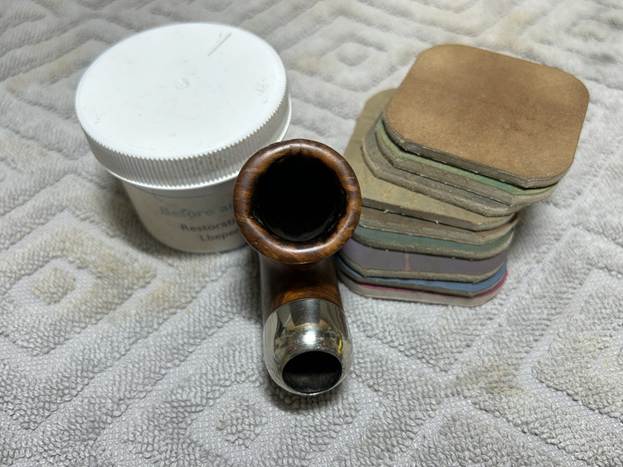
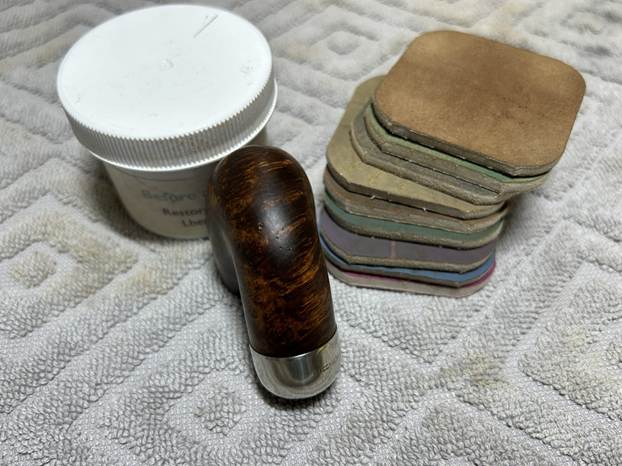
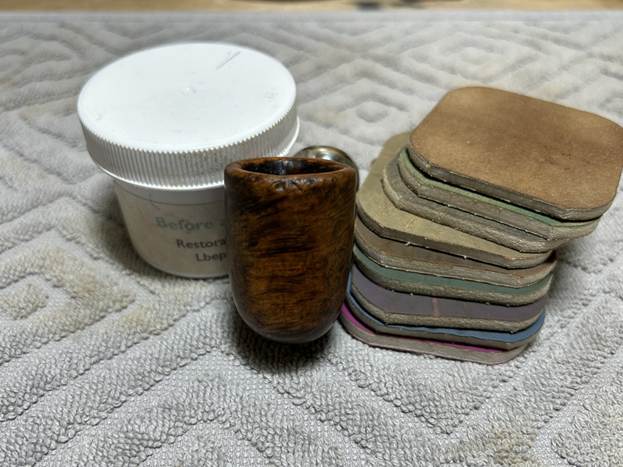
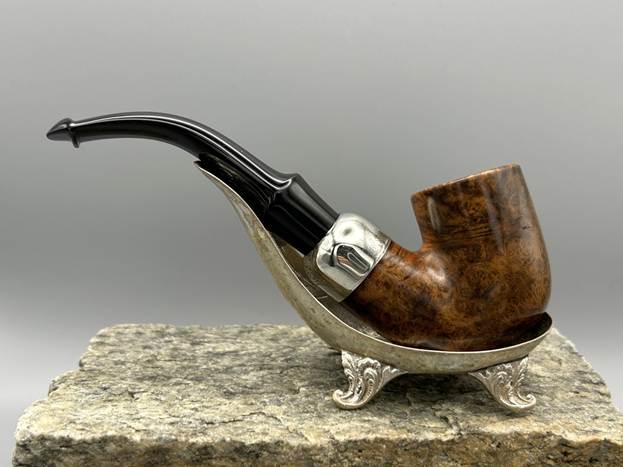
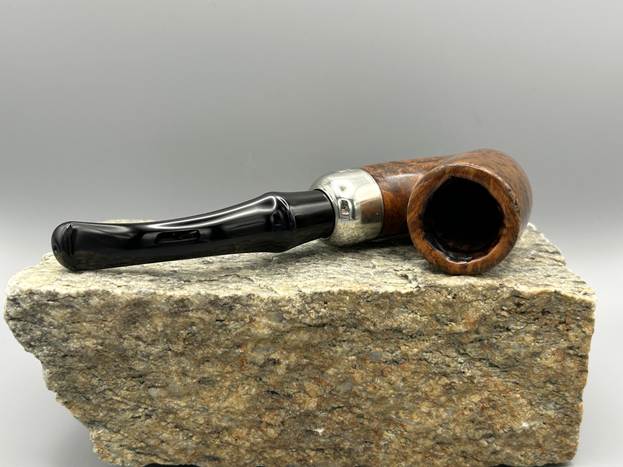
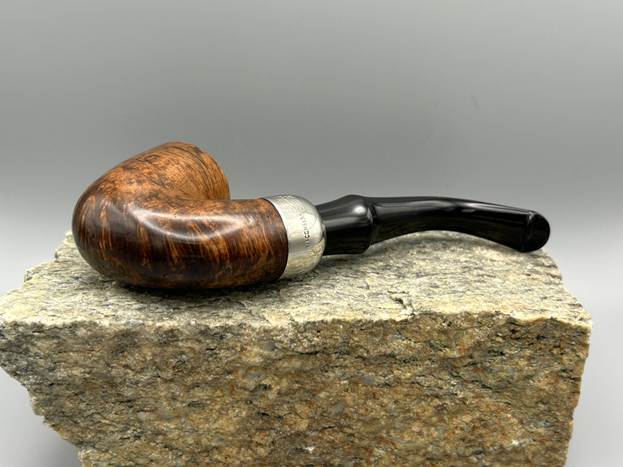
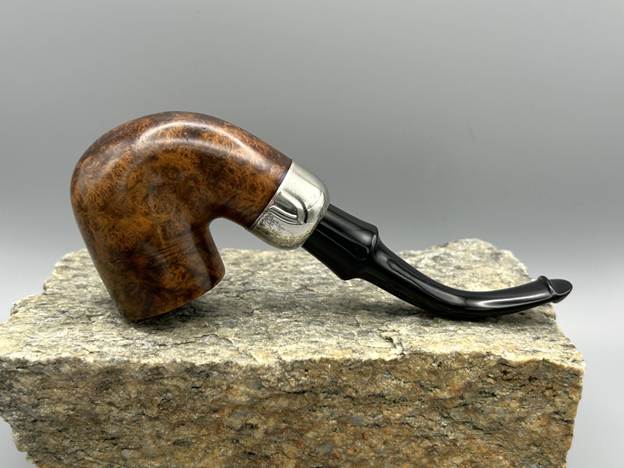
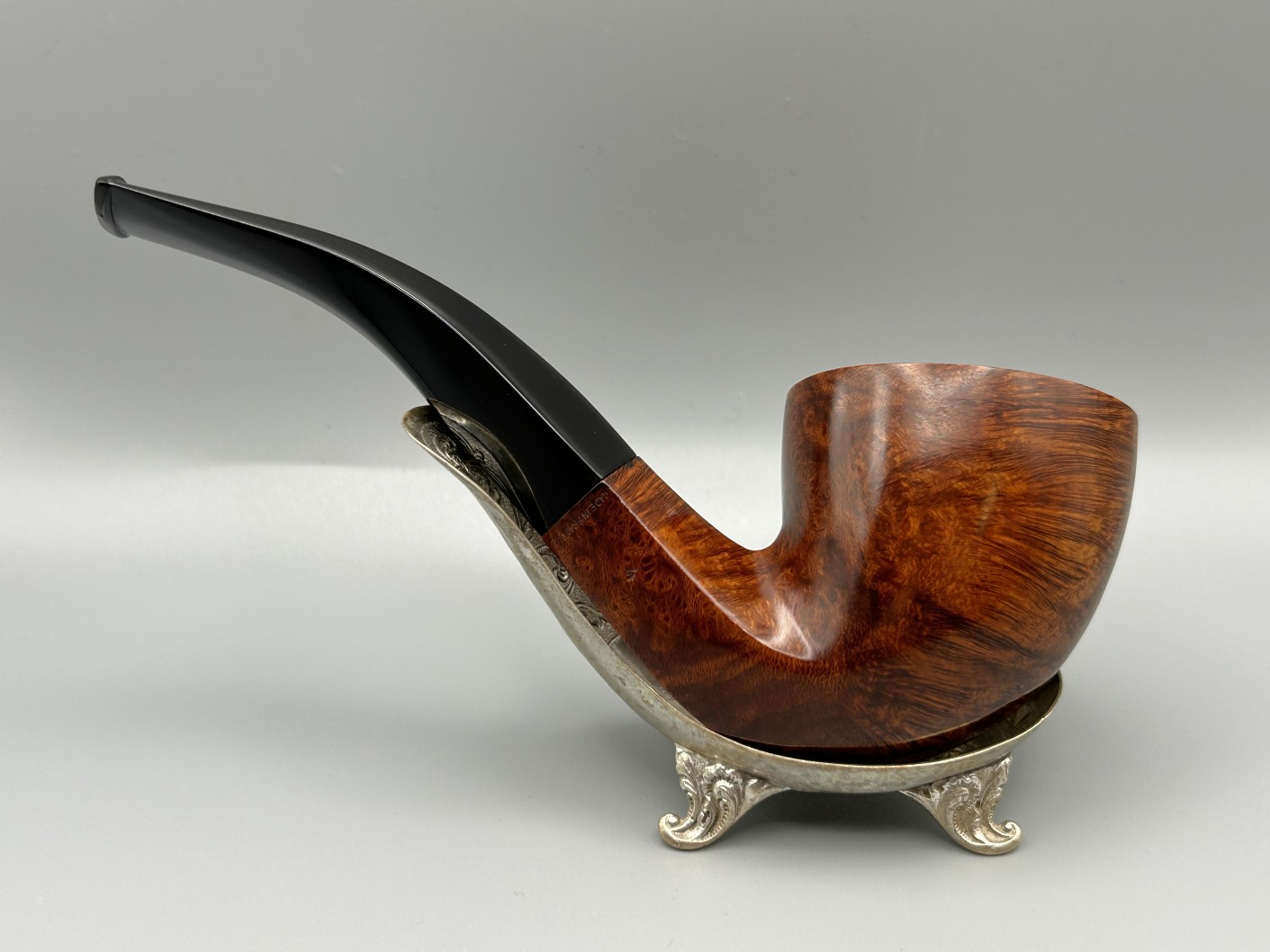
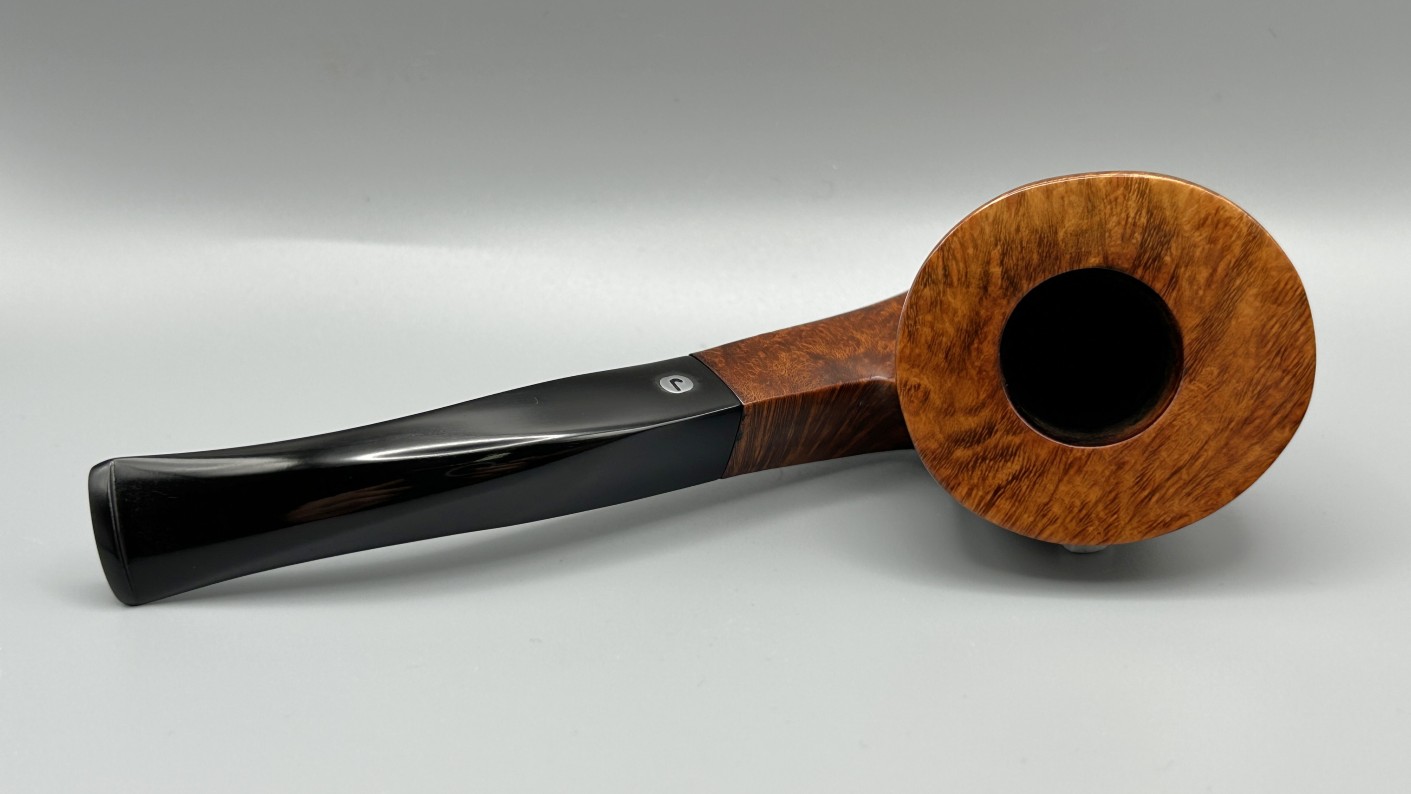
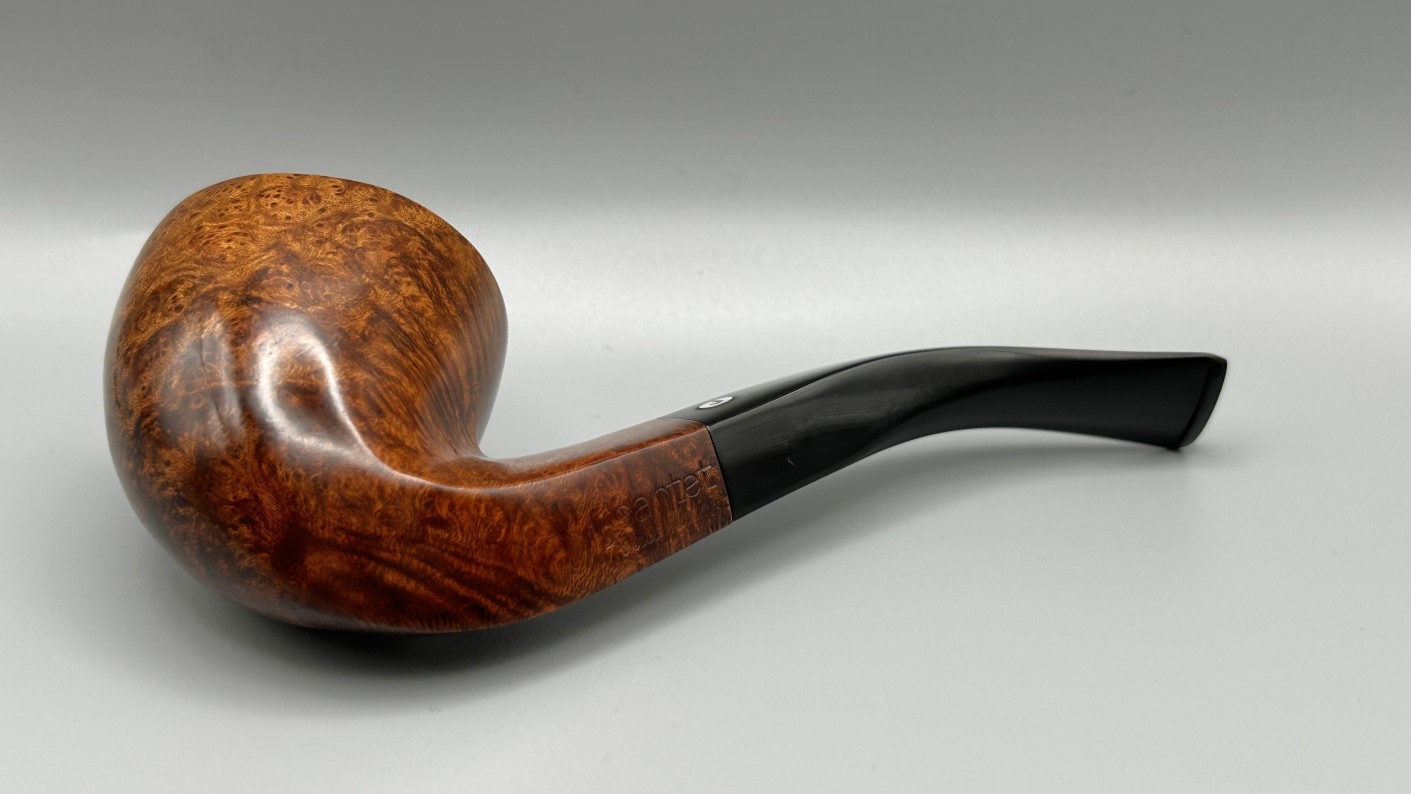
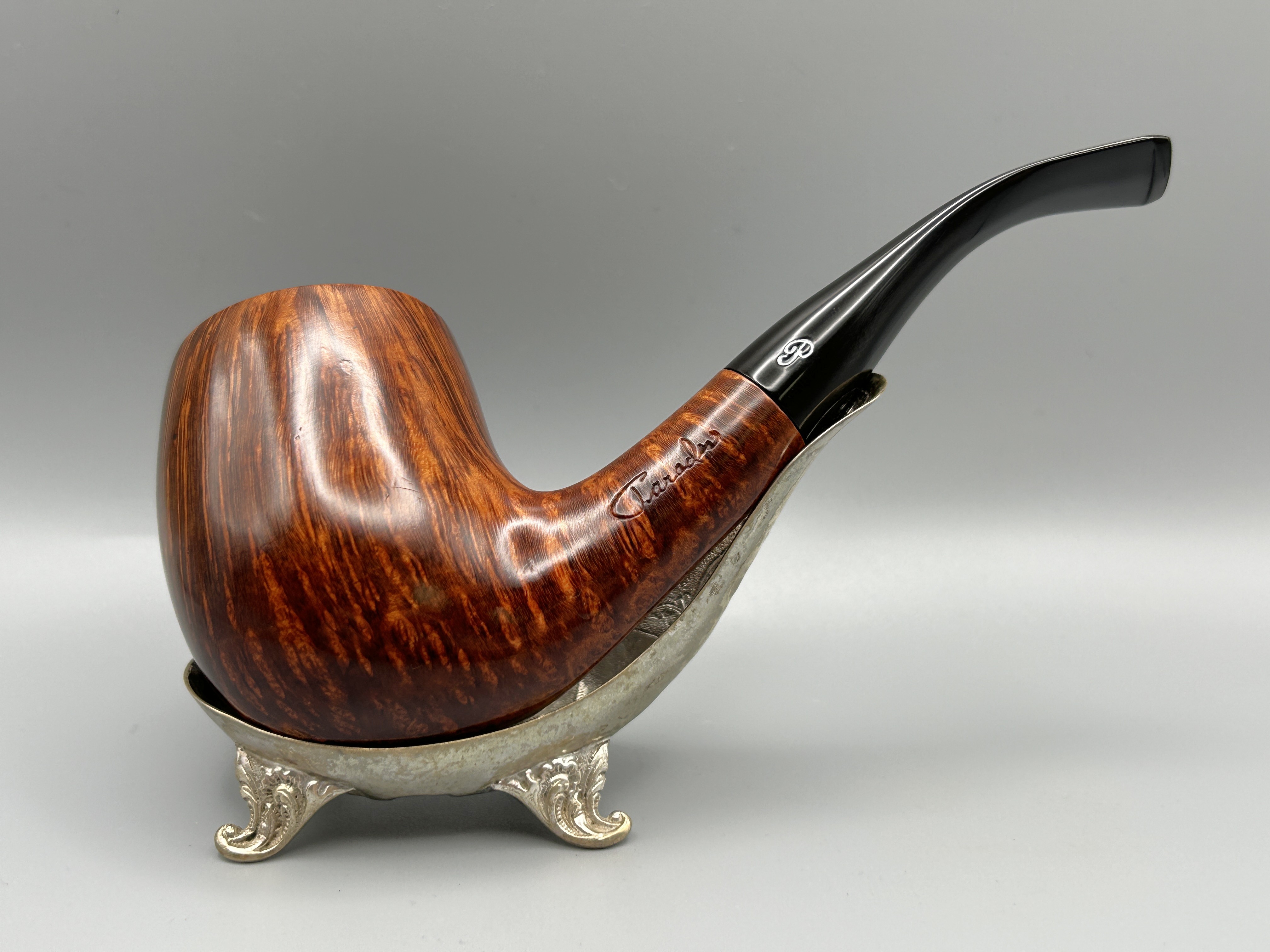
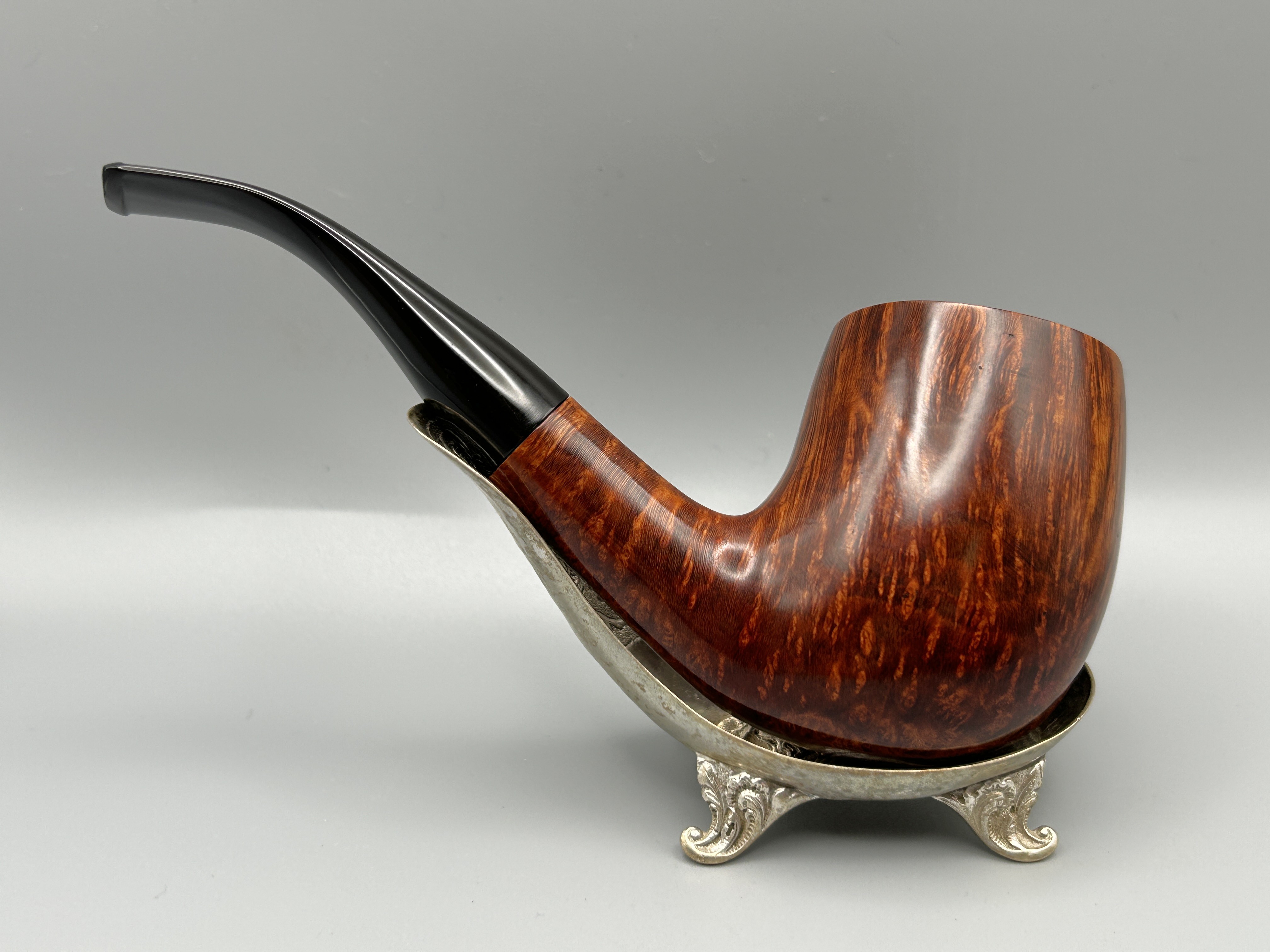
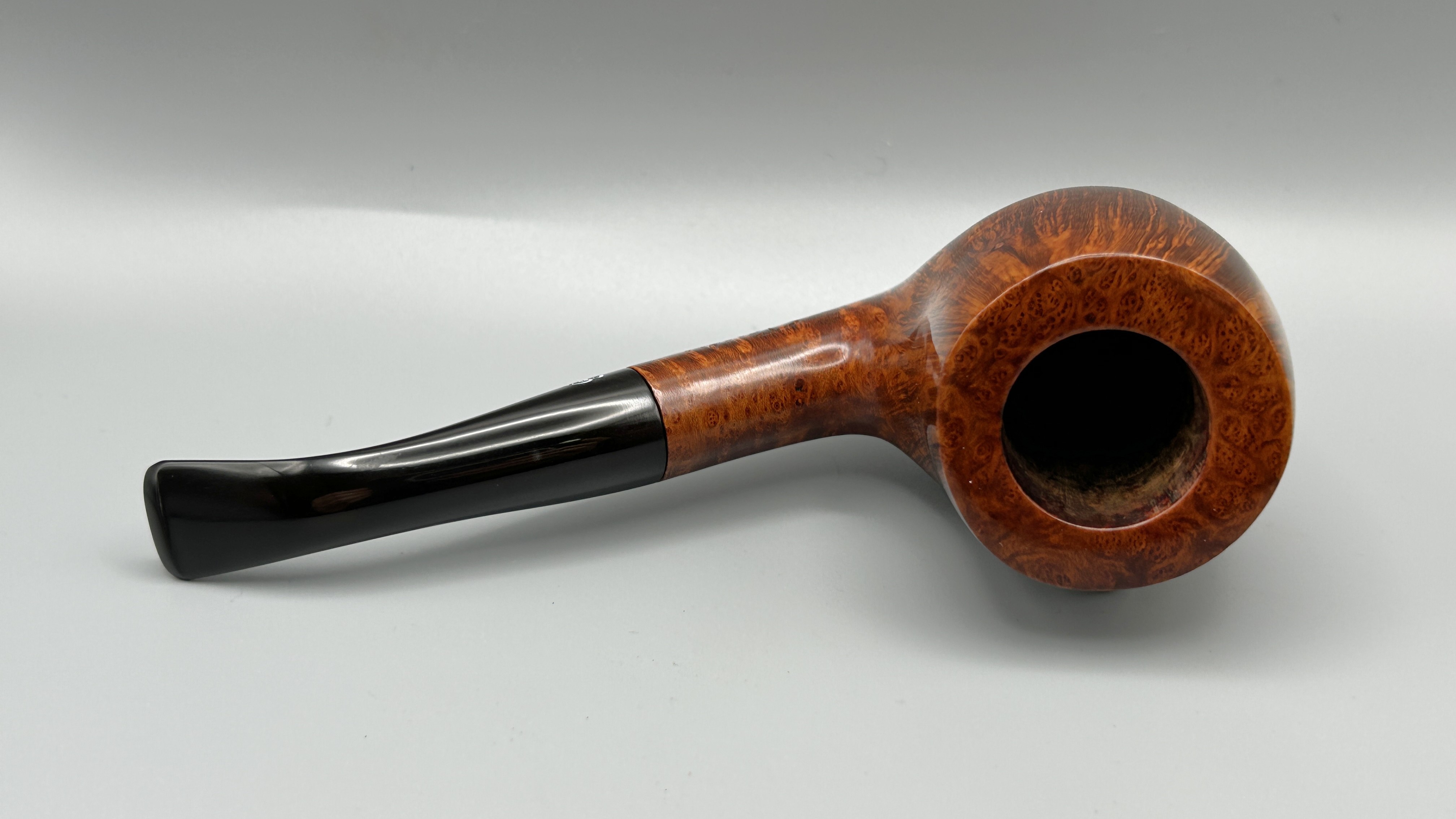
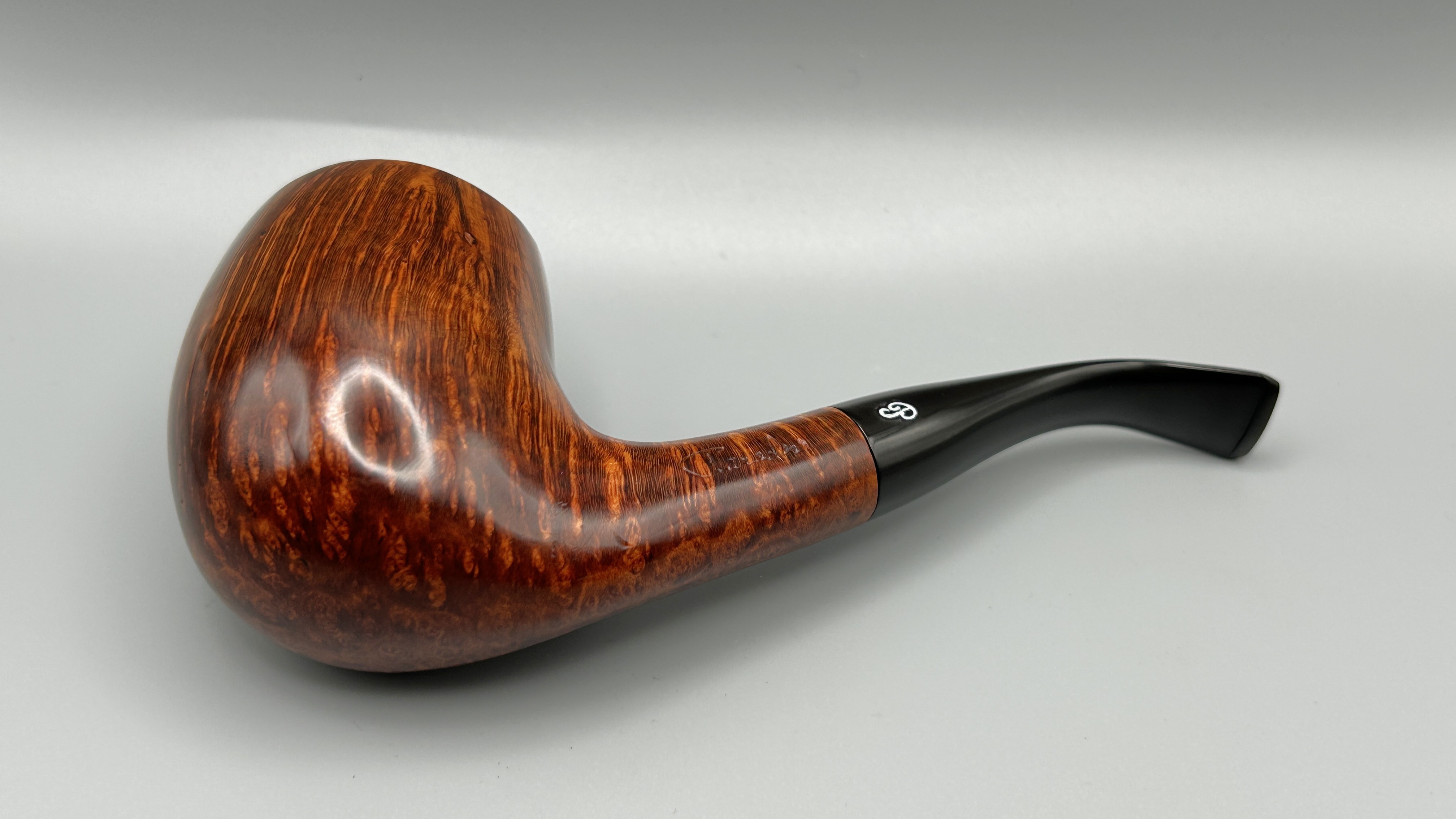
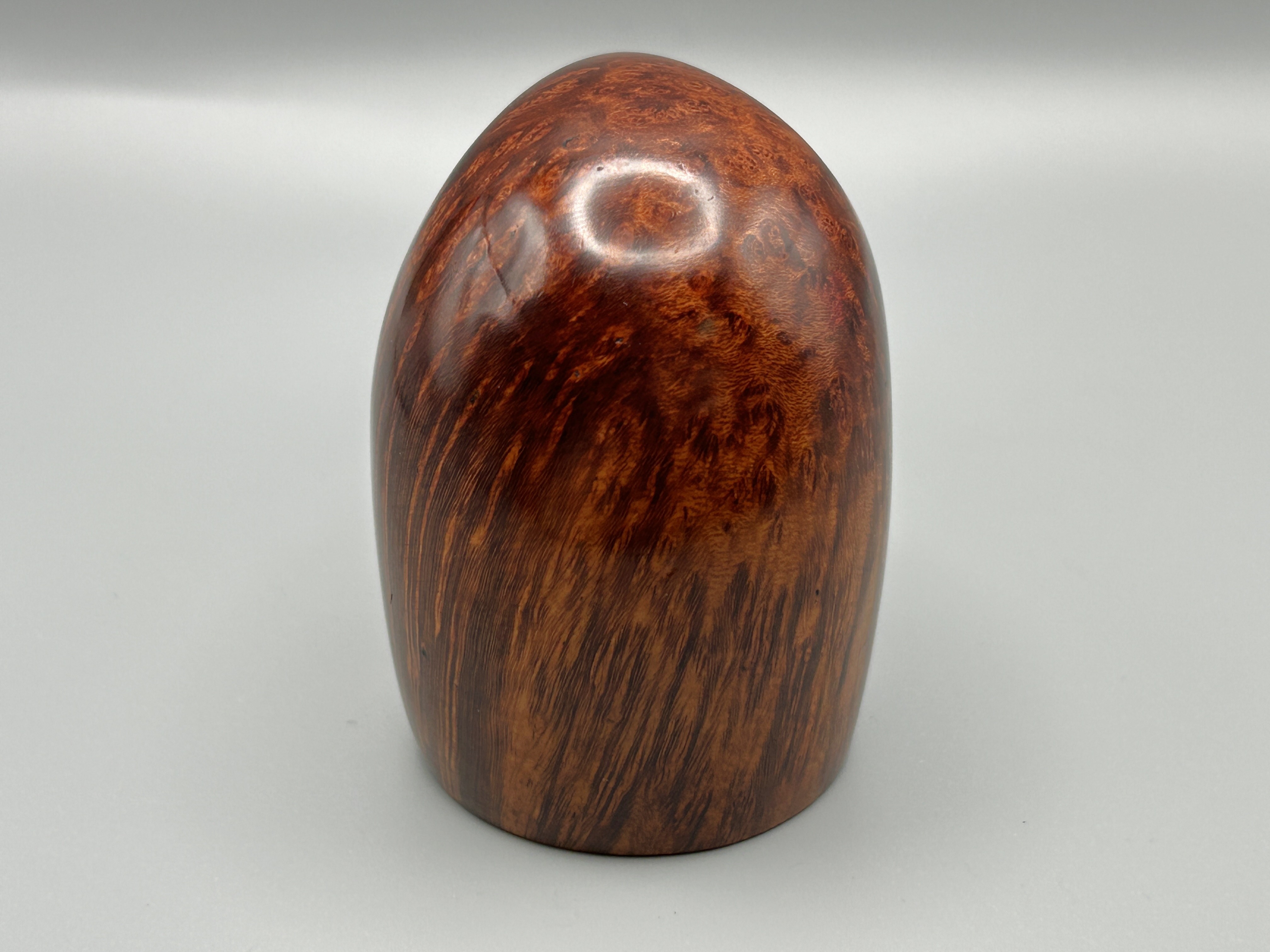
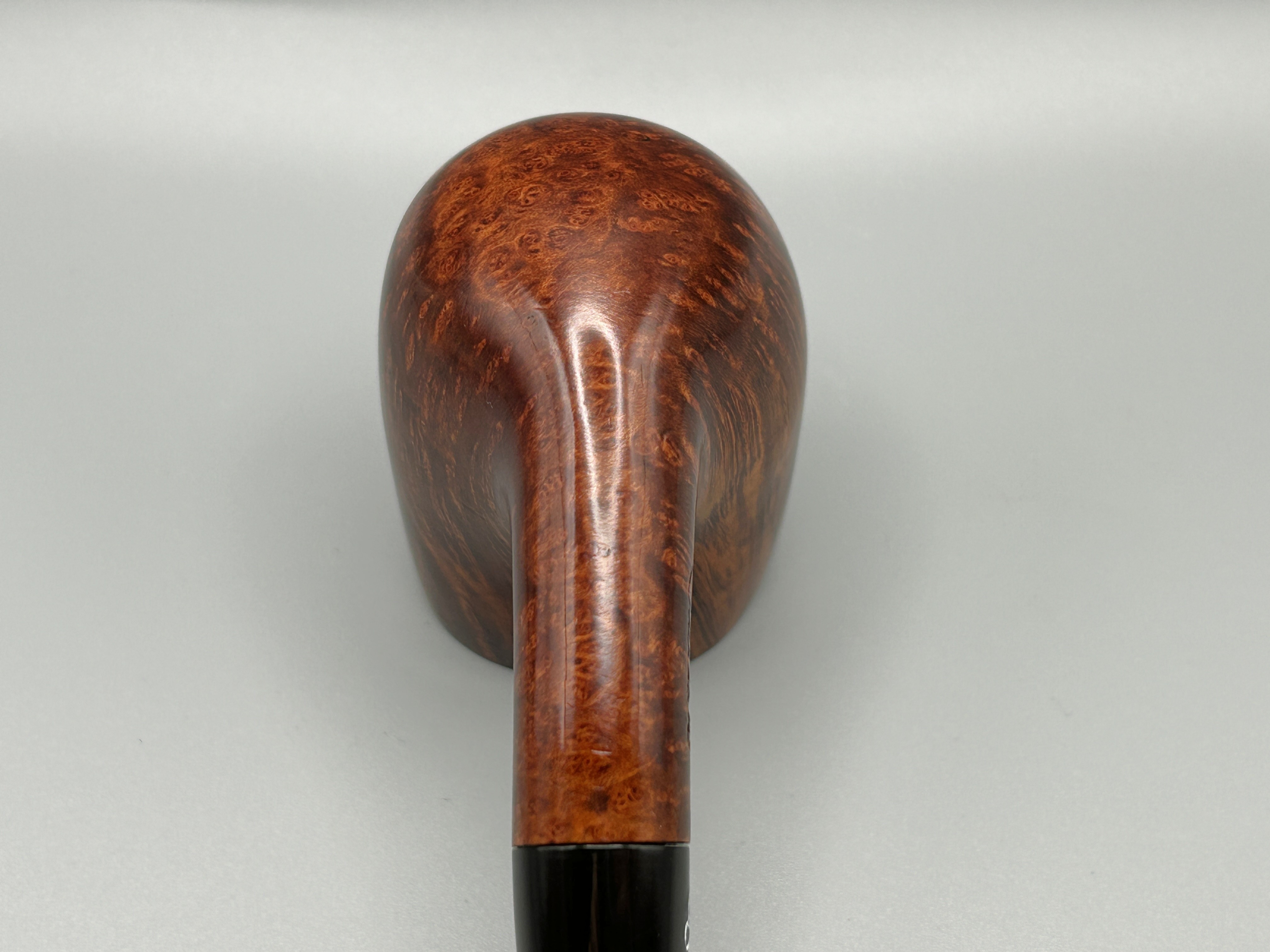
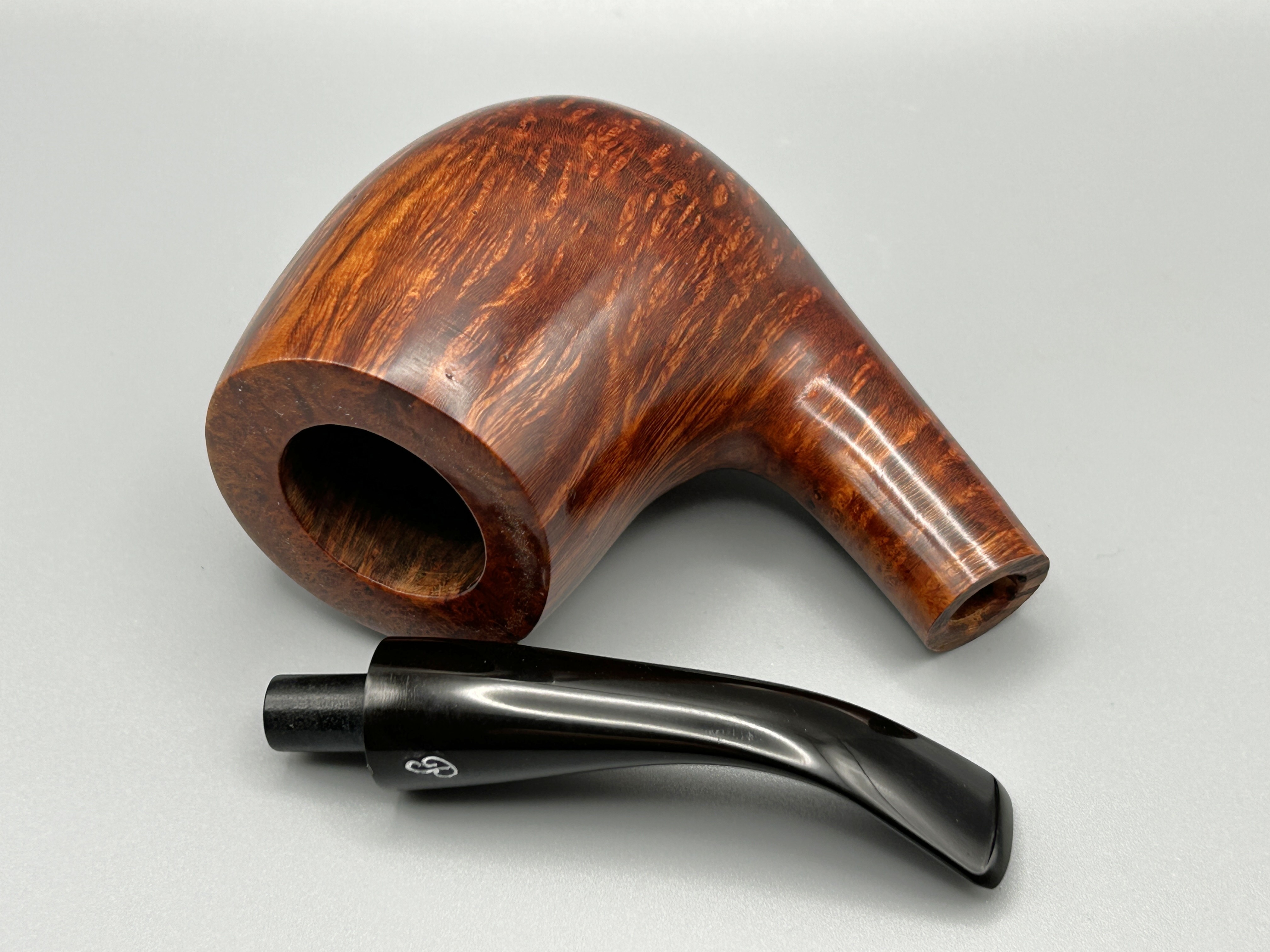
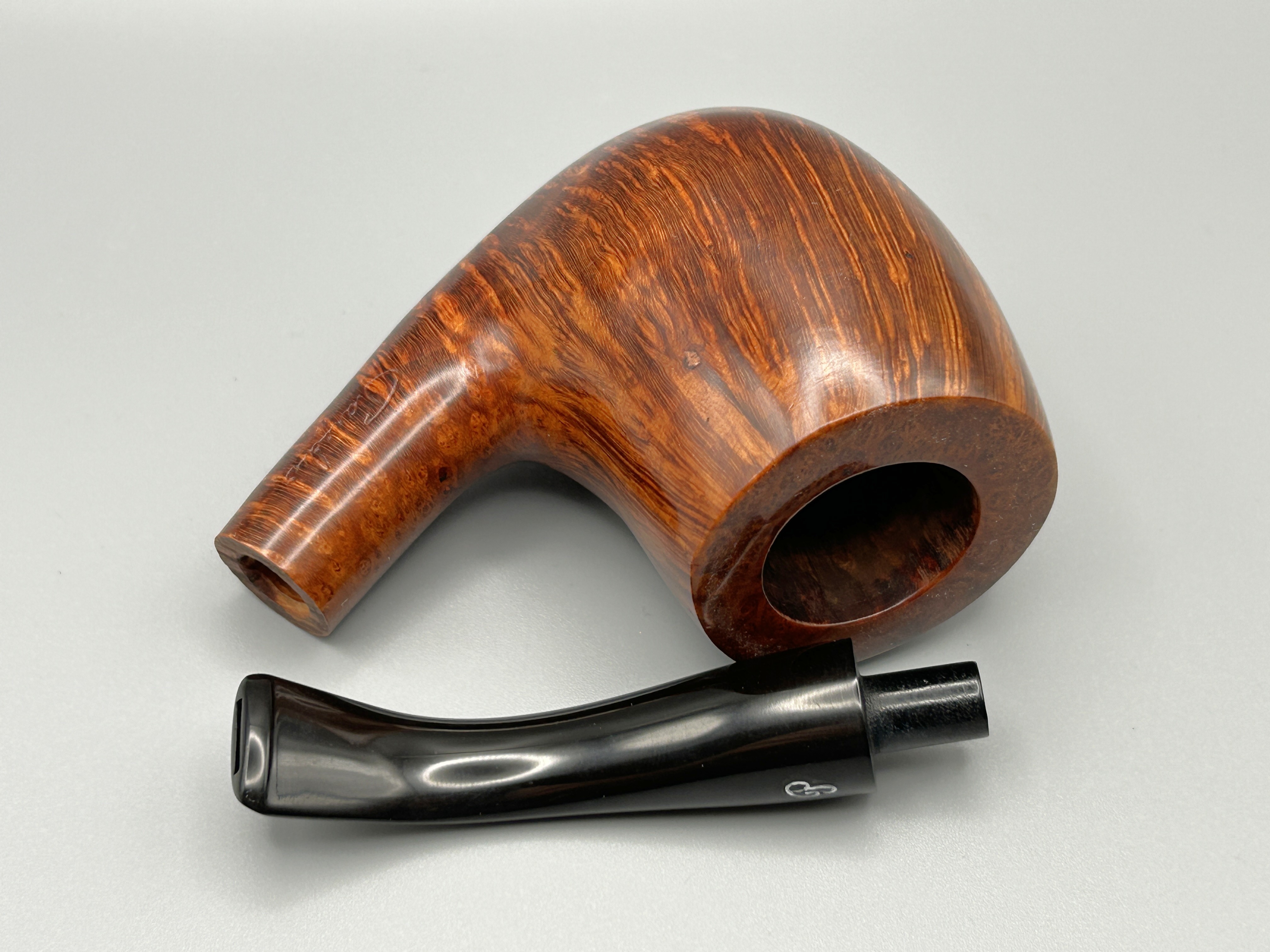
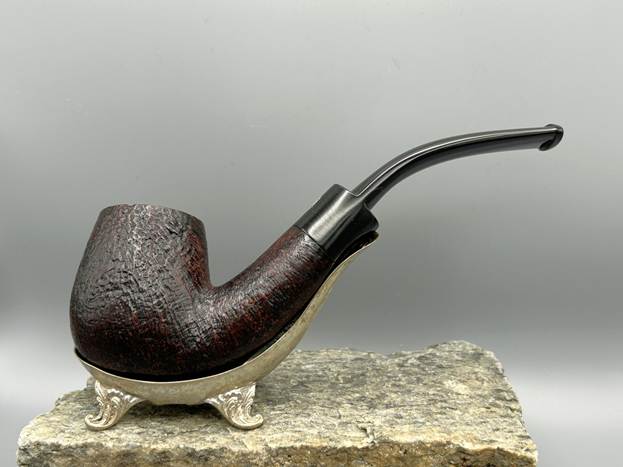
Now, this is a perfect example of the sort of pipe that we should all have in our collections: a really good smoker – and, by all accounts, that’s exactly what this is. This pipe is a dapper, sandblasted bent billiard from Torben Dansk of Denmark. The blast is gnarly and wonderful. The pipe looks well made and feels very nice to hold.

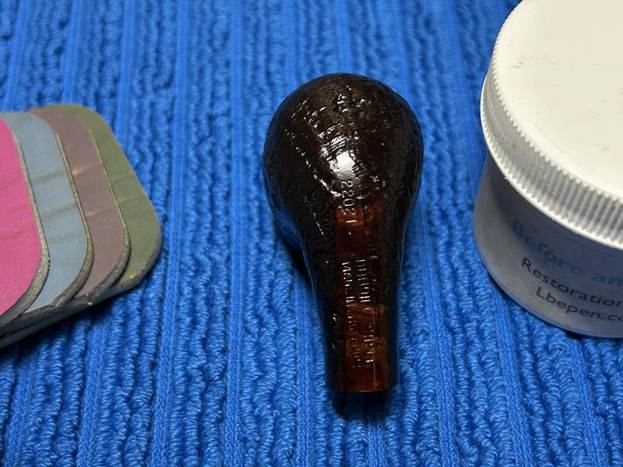
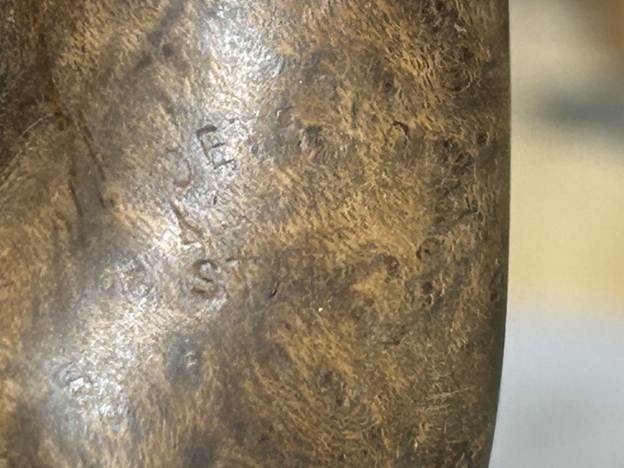
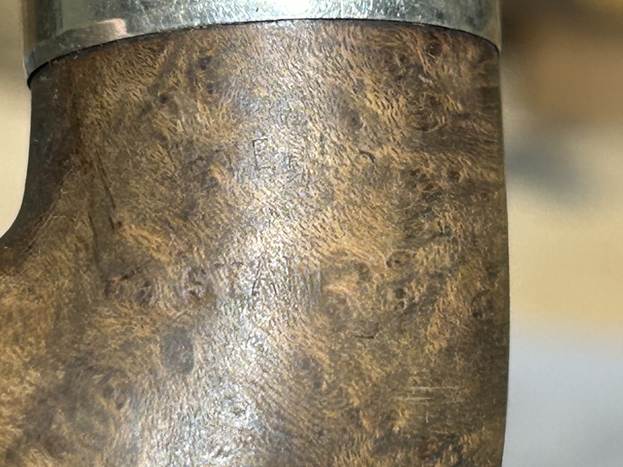
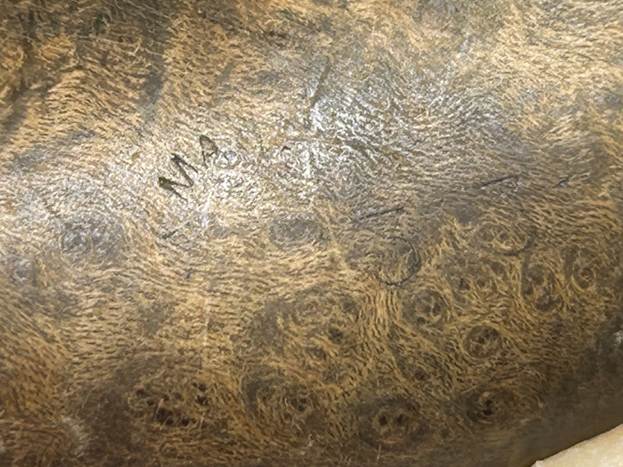
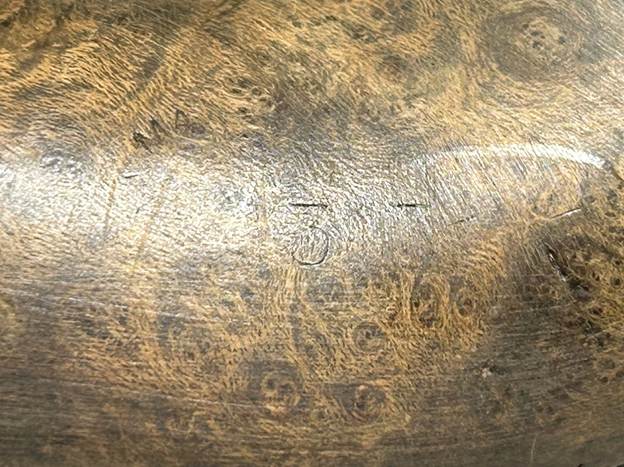
The markings are found on a smooth patch of briar on the underside of the shank. They read Torben [over] Made in Denmark [over] Dansk. Off to the right of this, and at a right angle, is the shape number, 16. Finally, on the stem, we see a Viking helmet as logo.

So, what do we know about Torben Dansk? There is a brief write-up at Pipedia about the label. It reads as follows:

Torben Dansk pipes were originally made by Torben Hetler. Next to other manufacture brands (Danmore, Tabago e.a.) they appeared in the first cataloge of Dan Pipe (originally named “Danske Pibe”), a pipe and tobacco mailing enterprise established by Heiko Behrens in 1972. Following the pipes became well-known and quite popular in Germany. Later they were made by Lars Christensen’s manufacture. According to the cataloge 1992/93 they were made by Poul Winslow.

I checked in at Pipephil, but they didn’t have any significant information to offer. However, there were three interesting comments from different fellows in the forums over at PipesMagazine:

The old briar buffed up like new and now it’s one of the best lookers and best smokers in my collection.

I had two Torben Dansk pipes in my collection several years ago. I remember they were both great smokers and I am sorry I traded them away.

Well, I wish I could say I had one in my collection. I was eyeing one on the bay and was outbid at the last second.

There was also mention of Torben Dansk at DutchPipeSmoker, in an article about the Dan Pipe company:

The history of Dan Pipe began in 1972 when, after a holiday in Denmark, teacher and enthusiastic pipe smoker Heiko Behrens decided to sell the creations of then unknown Danish pipe makers. In a small catalogue handmade pipes by Former, Emil Chonowitsch and Poul Hansen were presented together with factory pipes from Tabago, Torben Dansk, Danmore and other Danish producers. Soon also pipe tobacco was added to the catalogue, including Dan Pipe‘s first own-brand Torben Dansk. The quality of the pipes and tobaccos from the Dan Pipe catalogue provided good word-of-mouth advertising amongst the German pipe-smokers so gradually the customer base grew.

Sounds like a quality pipe. Let’s get working.

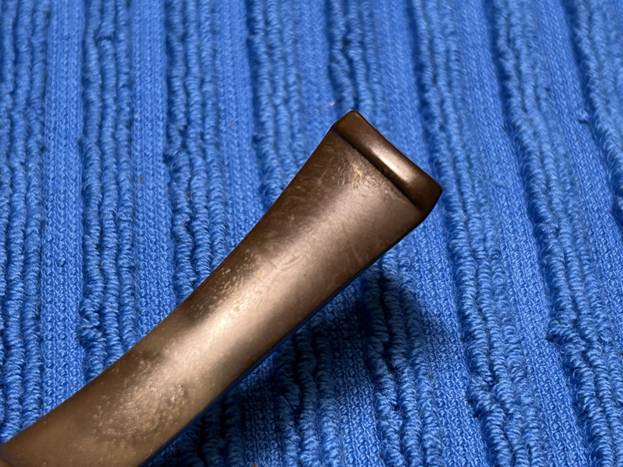
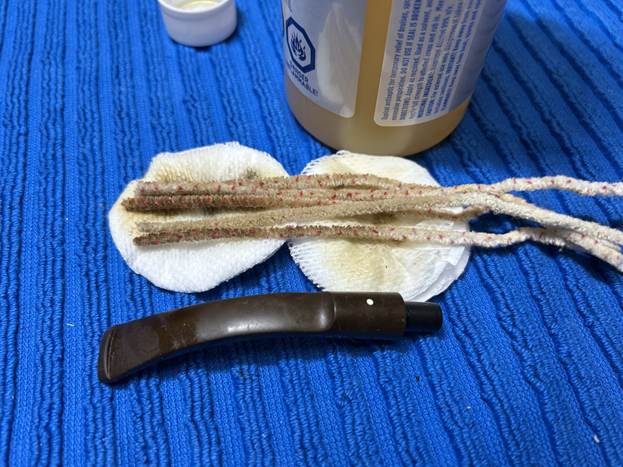
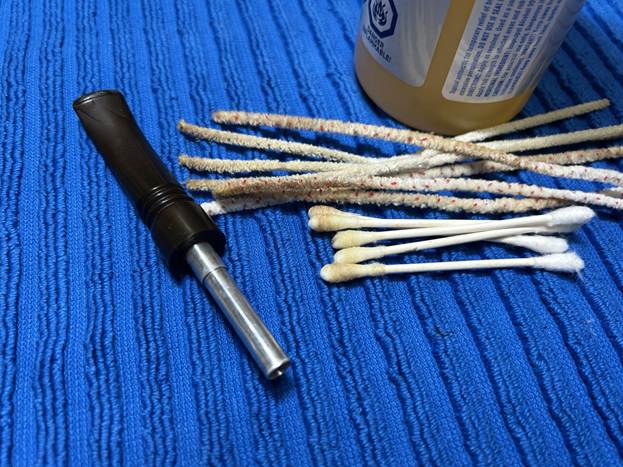
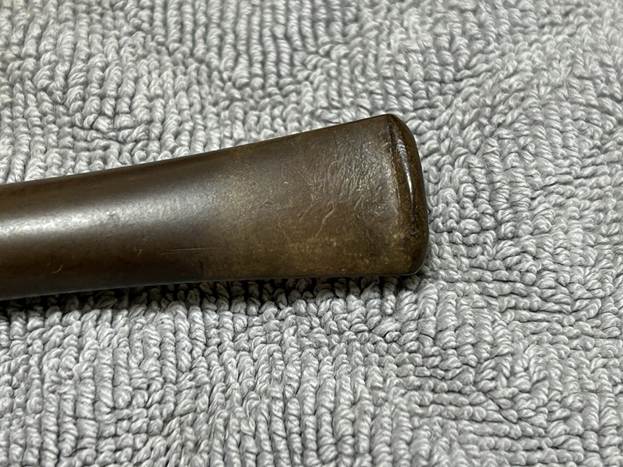
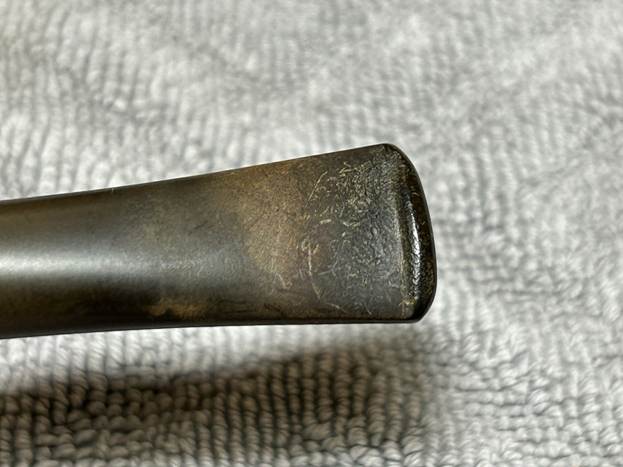
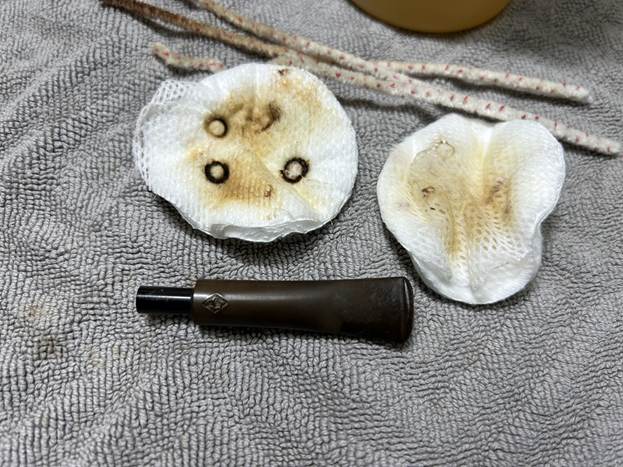
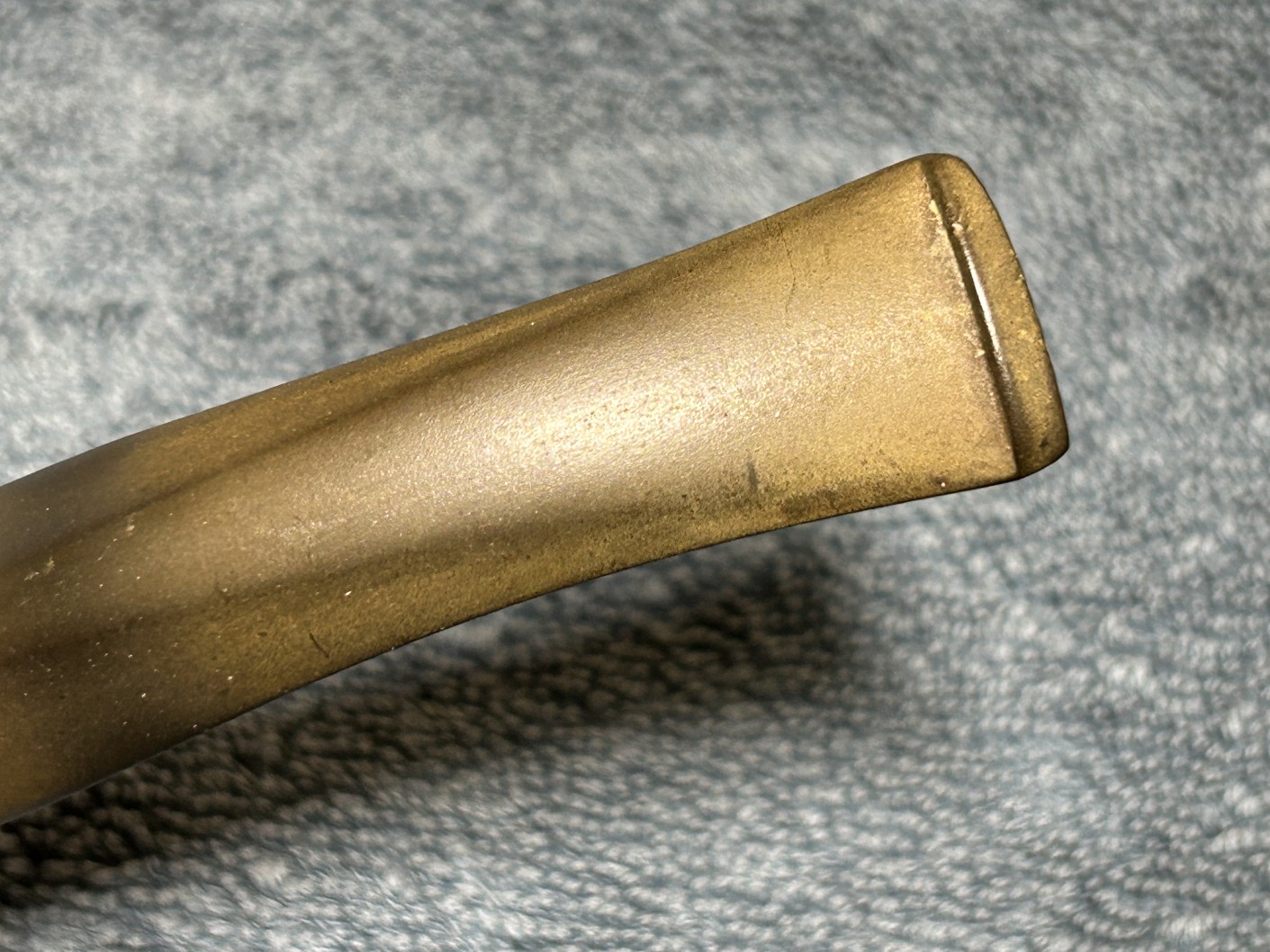
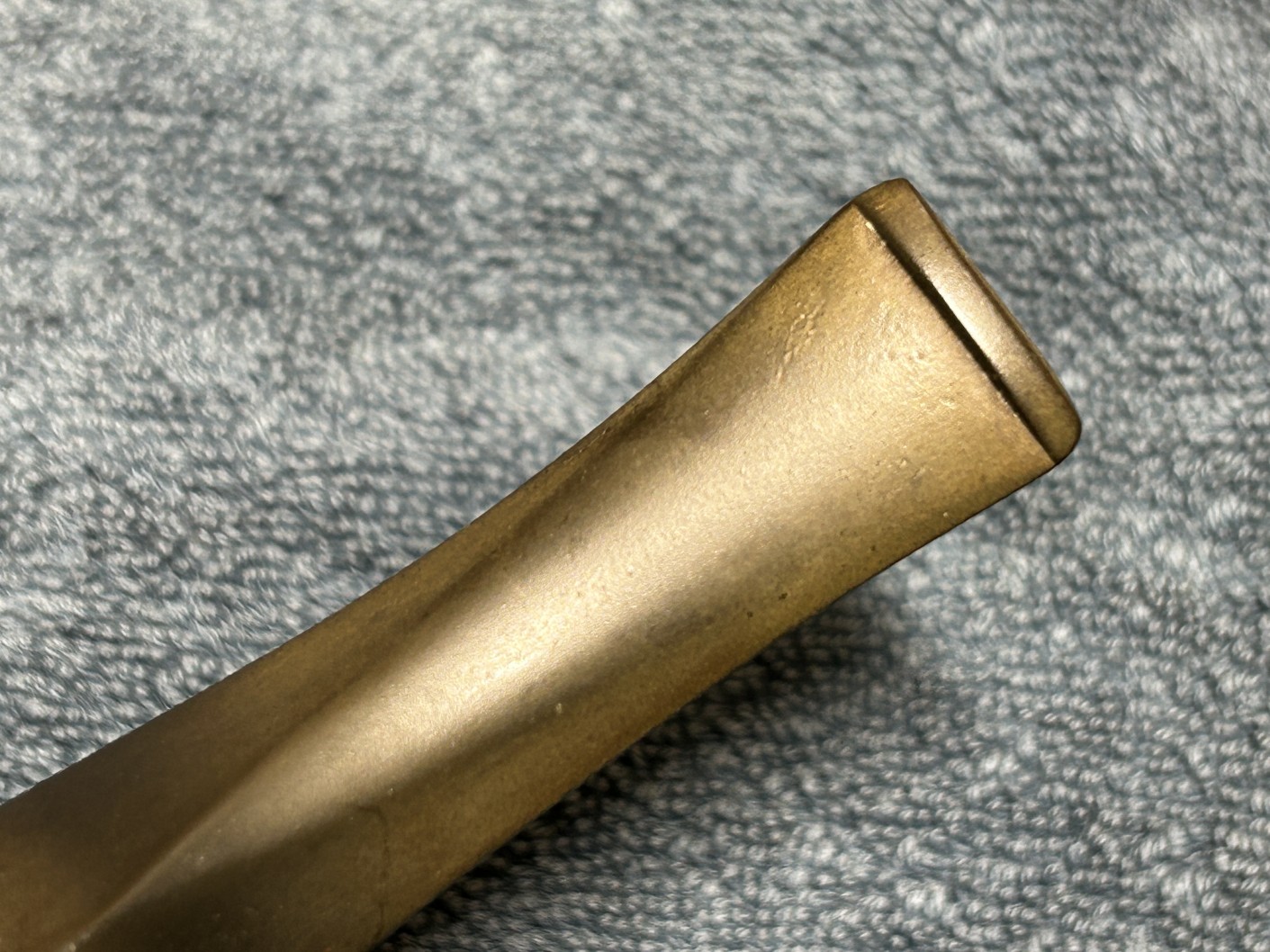
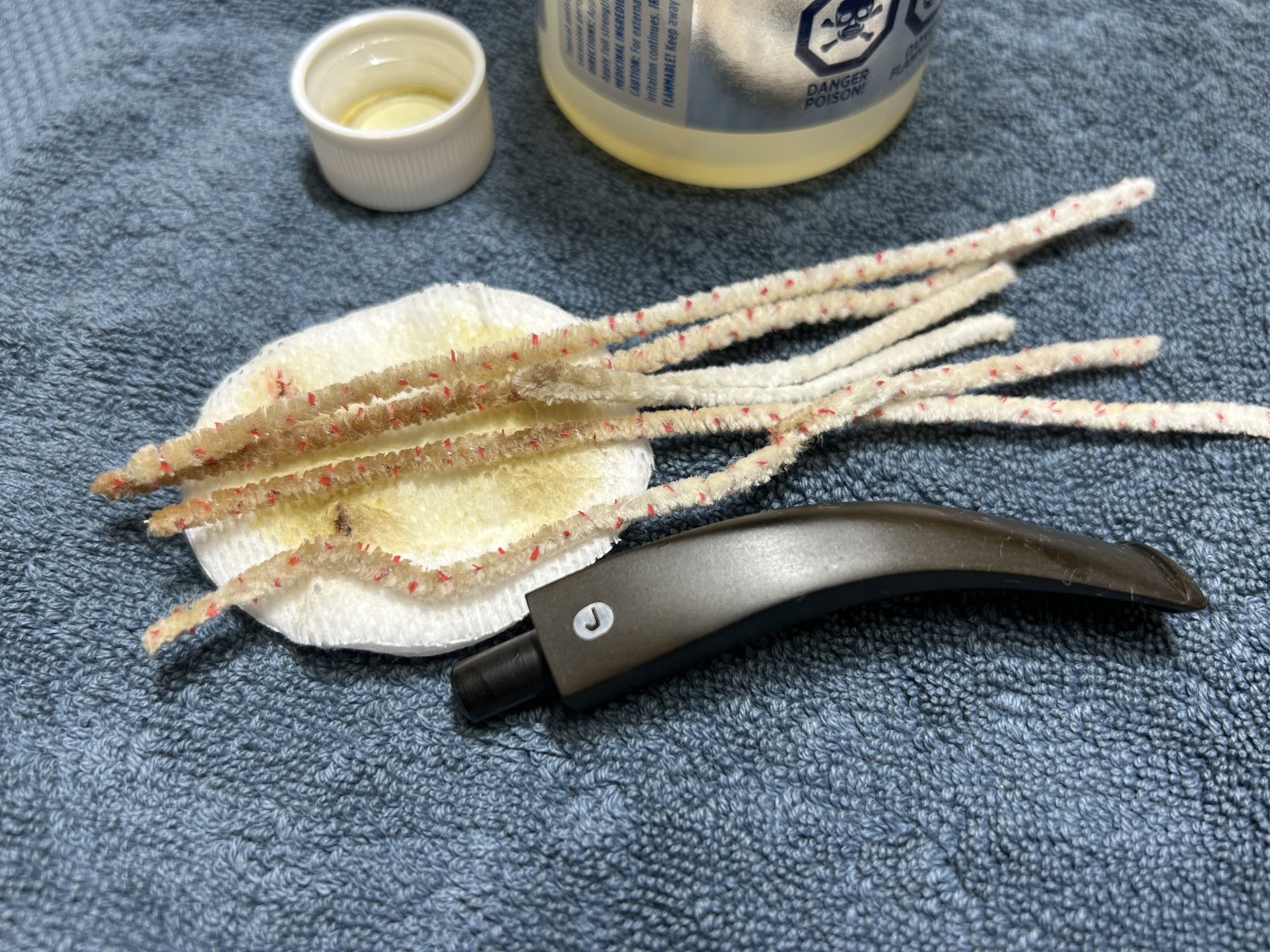
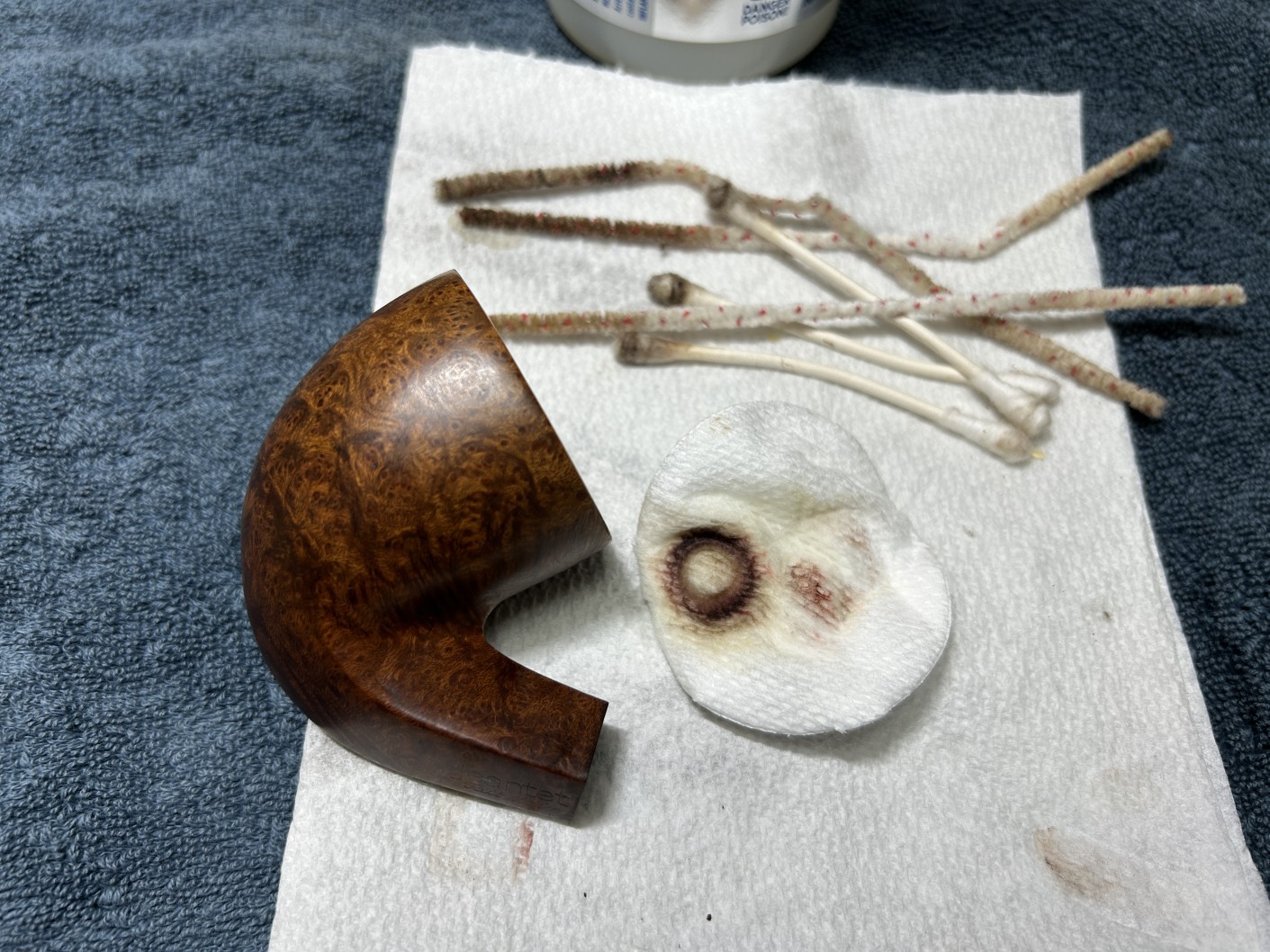
The stem’s calcification was quite substantial. I used an old butter knife and gently scraped some of the thicker accretion off. Doing this now helps later in removing the oxidation. I used isopropyl alcohol on a few cotton rounds and wiped down the stem to provide an initial cleaning of filth before moving on to the next steps. The primary cleaning came next. I disinfected the inside of the stem with both pipe cleaners and cotton swabs dipped in lemon-infused 99% isopropyl alcohol. I scrubbed thoroughly to make sure the interior was very clean.
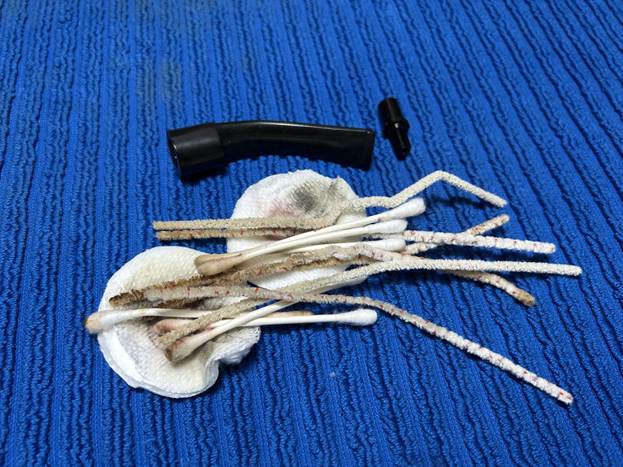
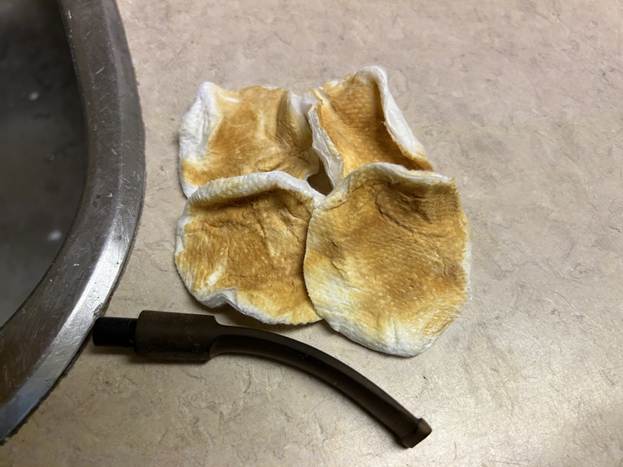
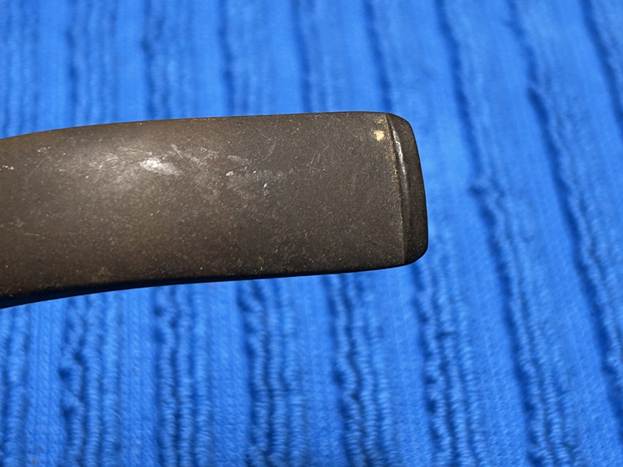
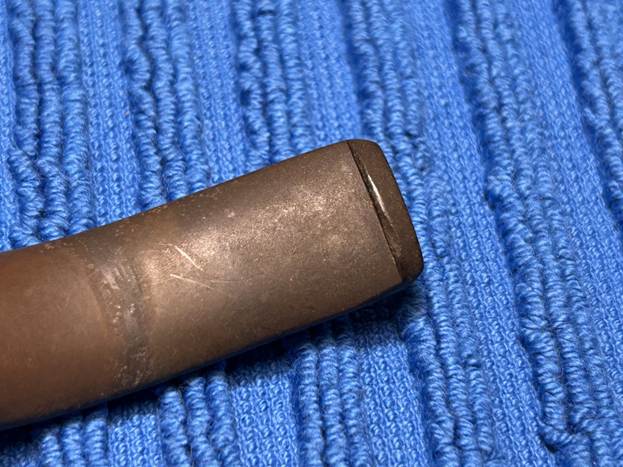
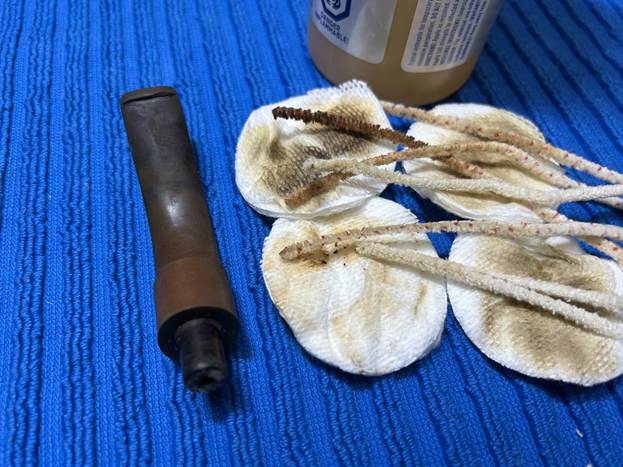
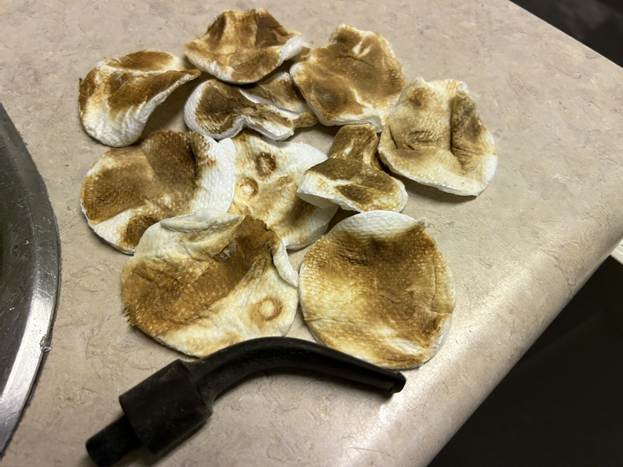
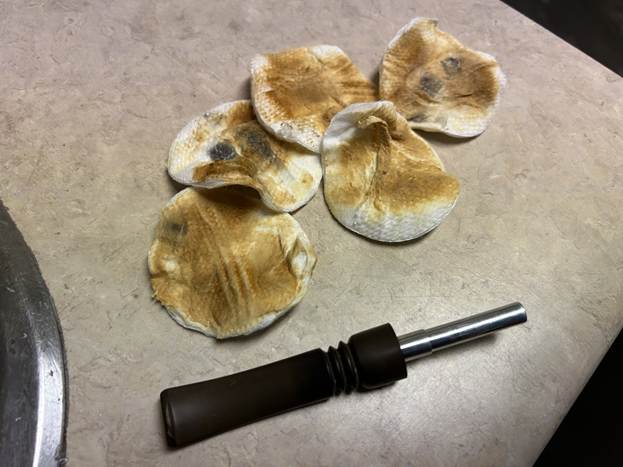
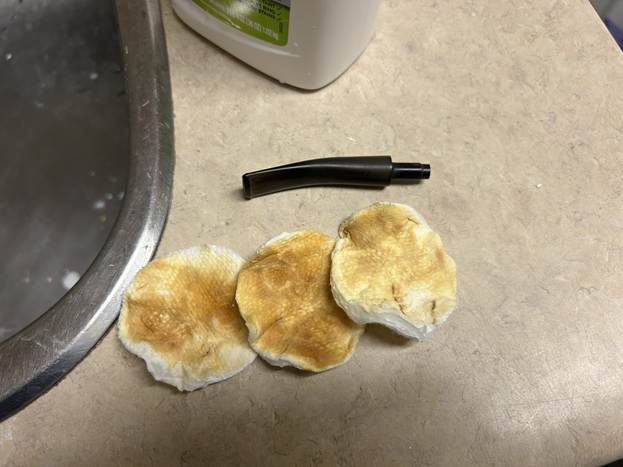
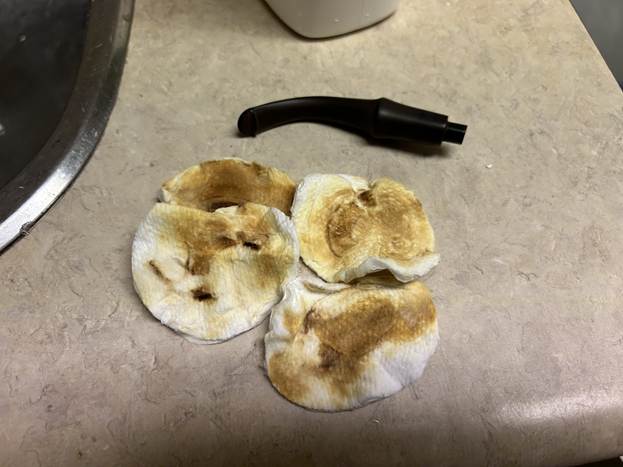
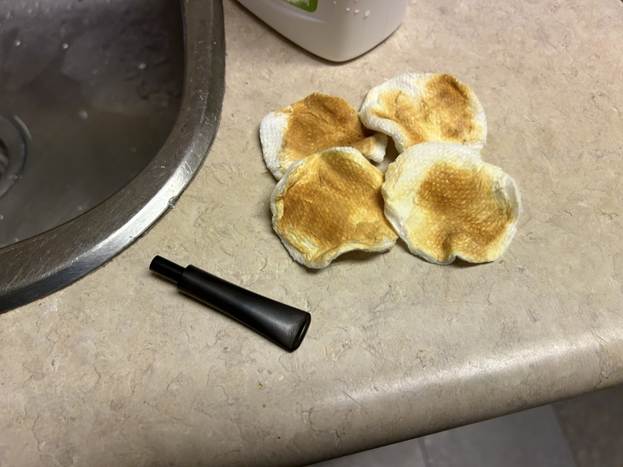
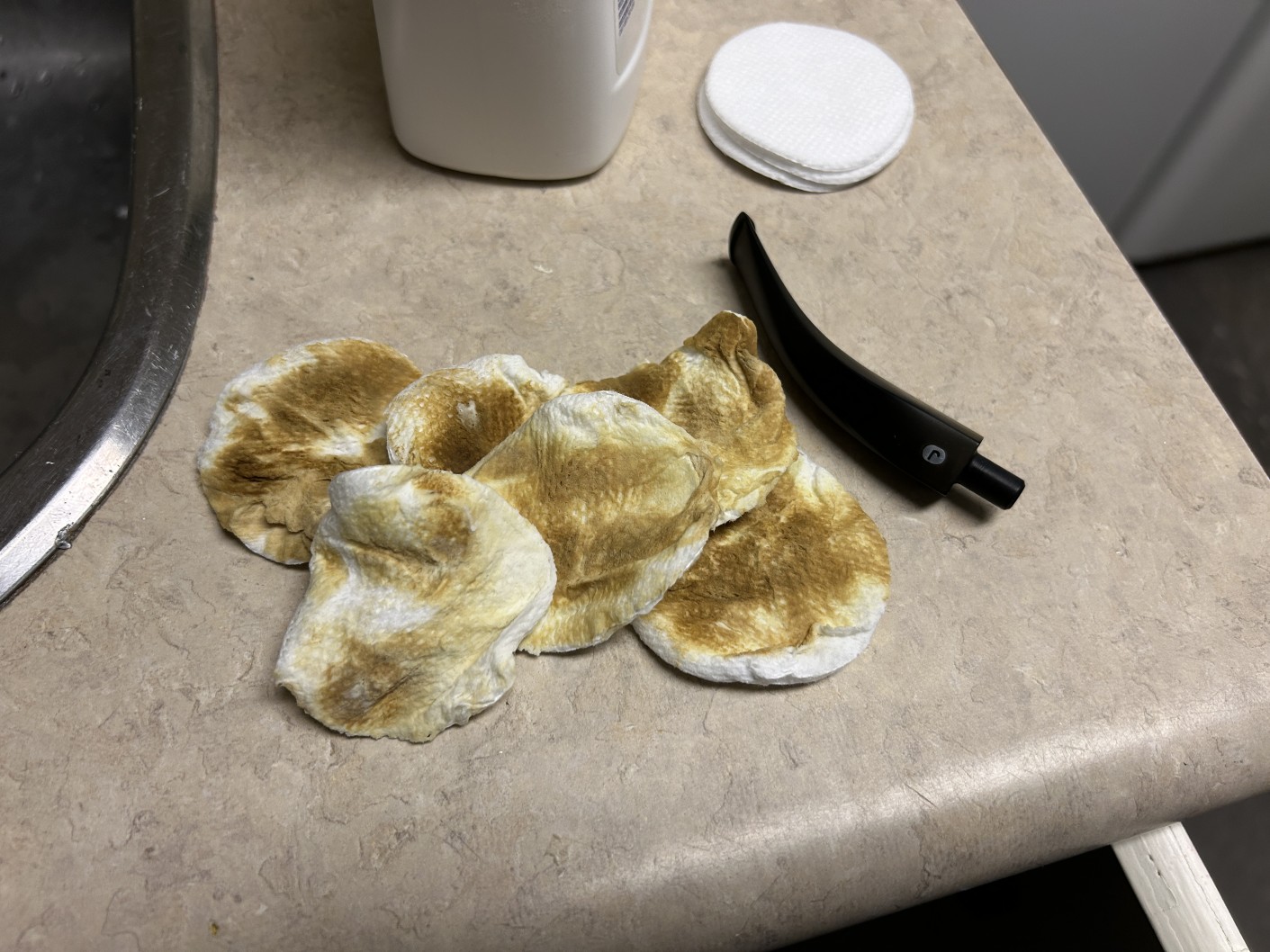
The goal of the next step is the removal (or minimization) of oxidation. Going to my sink, I used cream cleanser, cotton rounds, and a toothbrush, and scoured the stem to remove as much surface oxidation as possible. As the photos show, the result was a hideous, ochre-coloured mess – but better off the stem than on it.

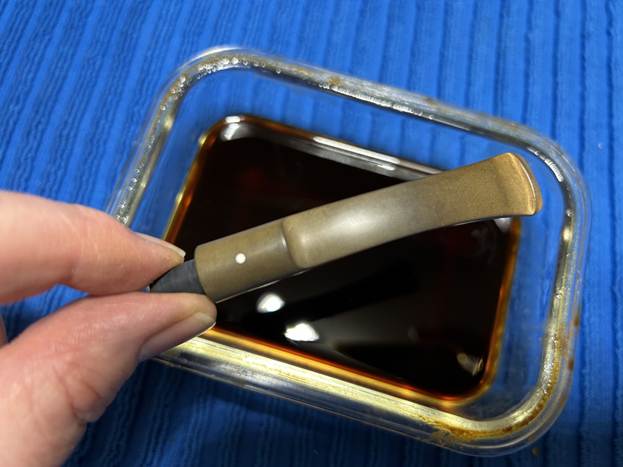
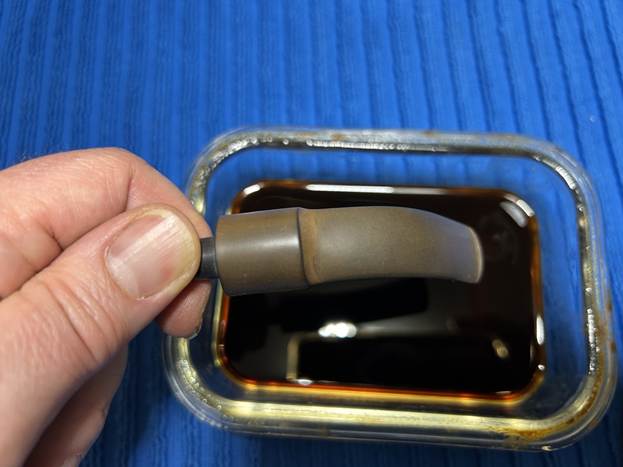
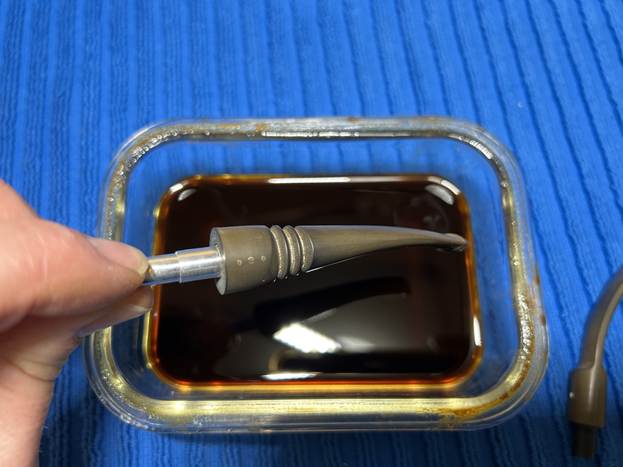
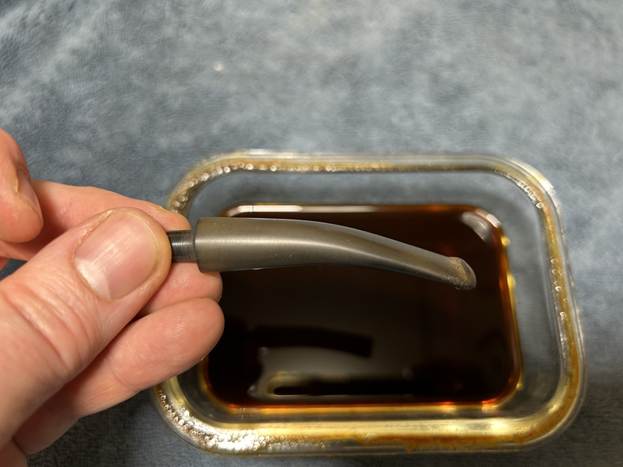
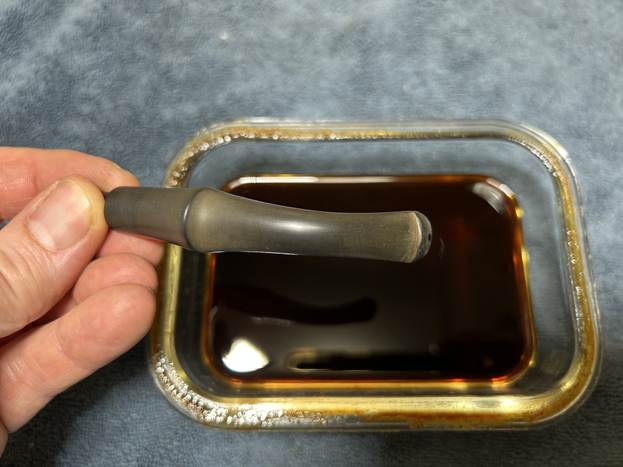
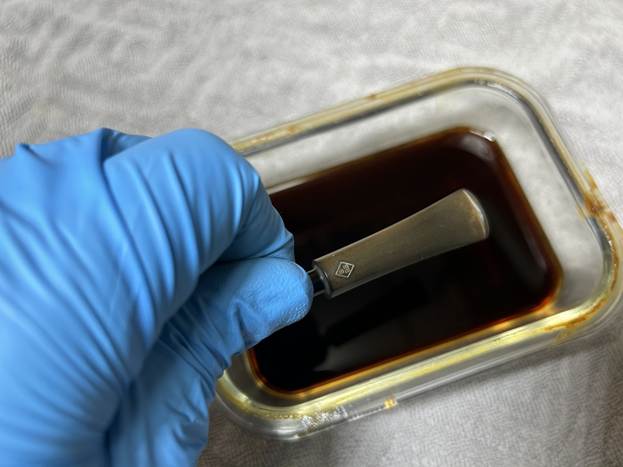
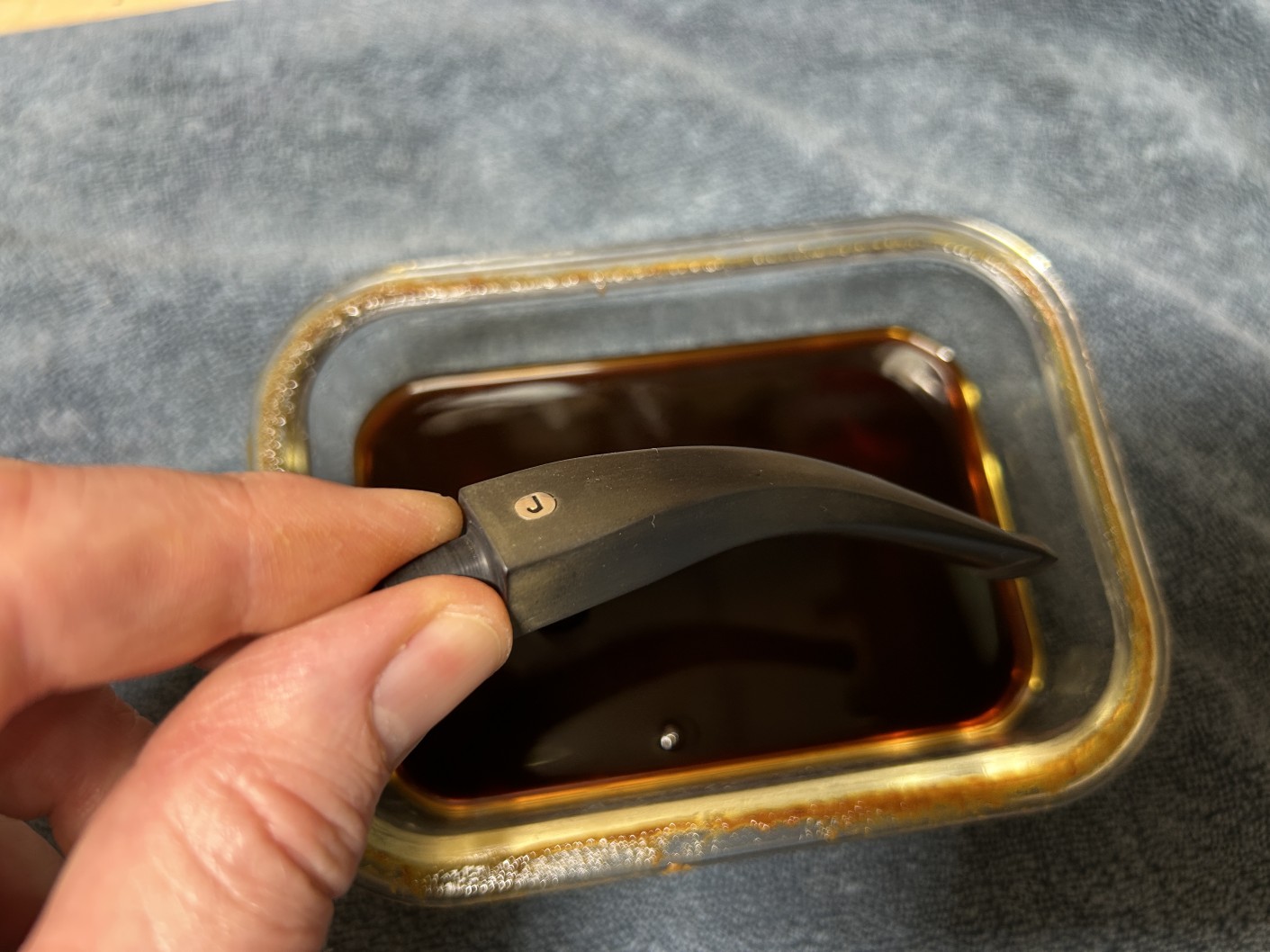
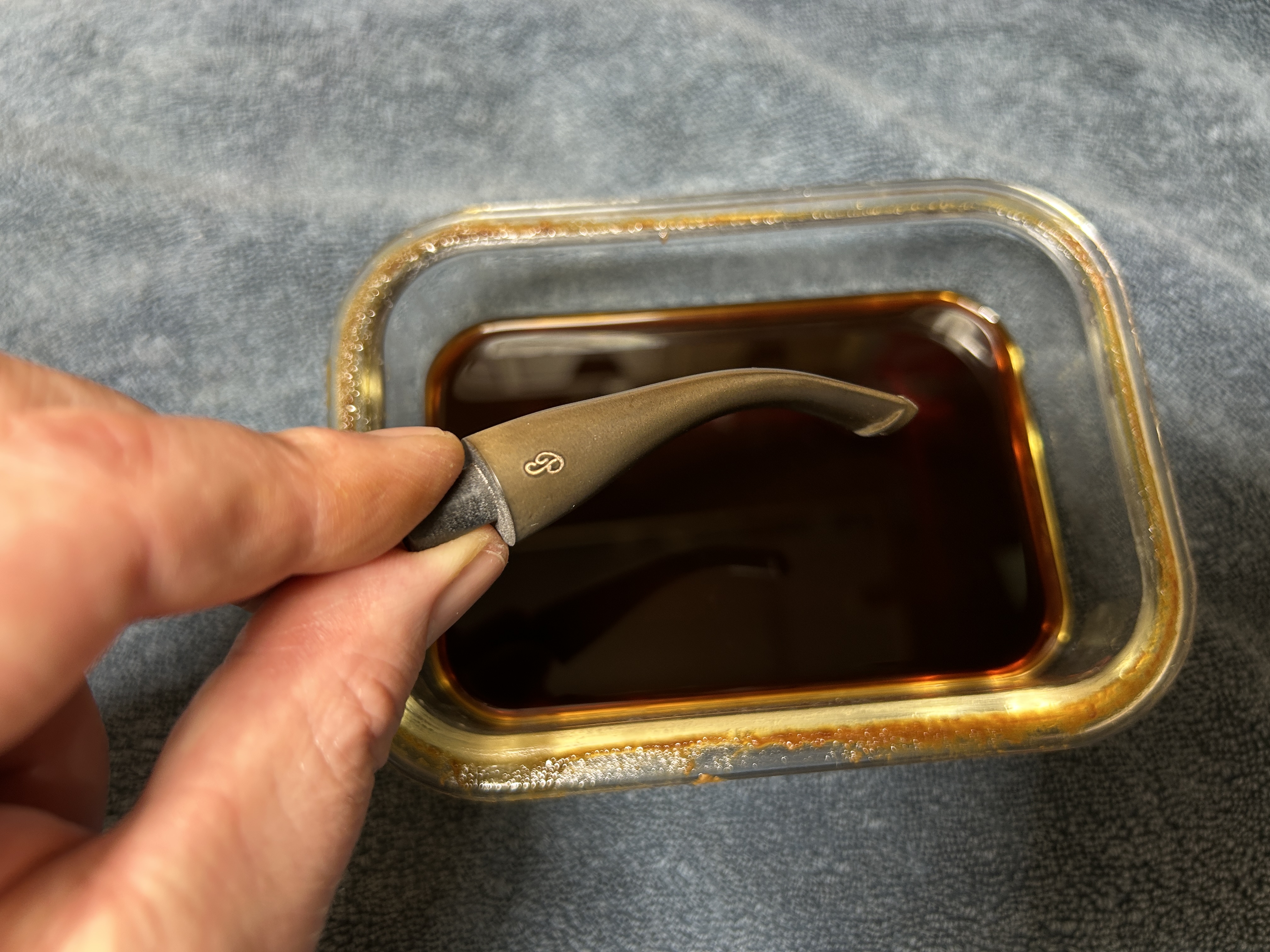
Once the stem was reasonably clean, I soaked it overnight in some Briarville Stem Oxidation Remover. This solution works to draw oxidation in the stem to the surface of the vulcanite. This is a major aid and an important step in ensuring a clean stem. The following day, I drew out the stem from its bath and scrubbed the lingering fluid with a toothbrush.

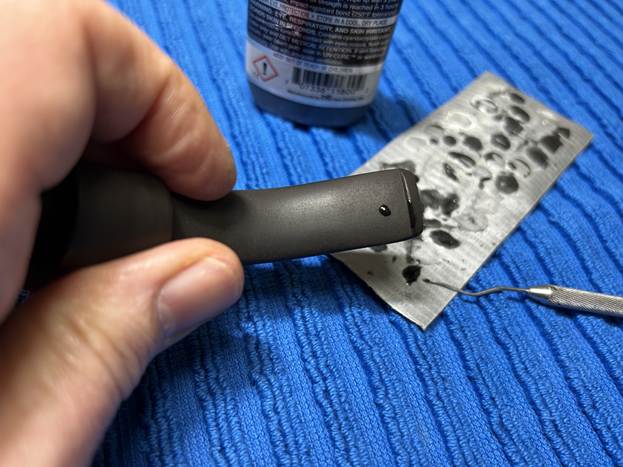
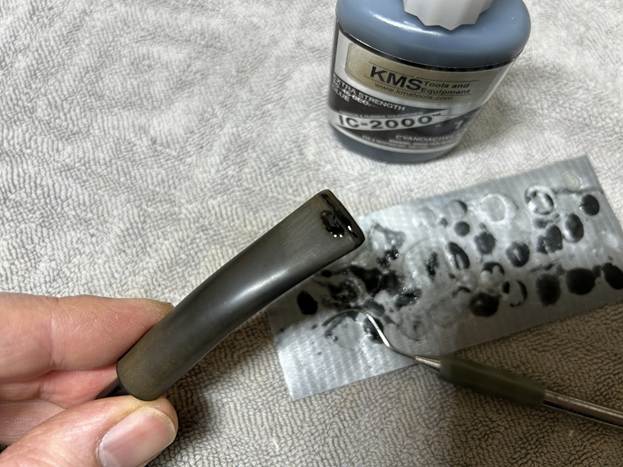
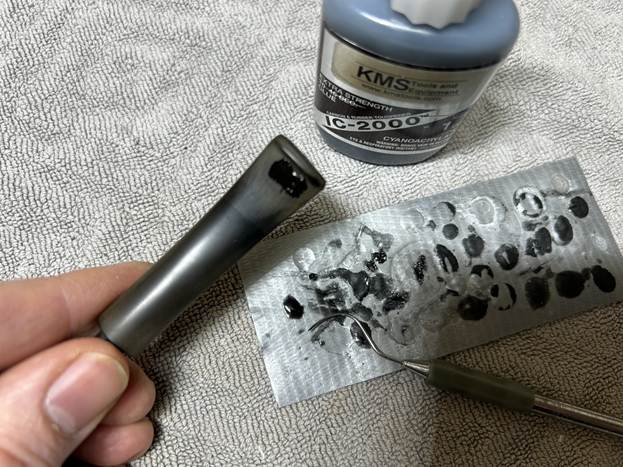
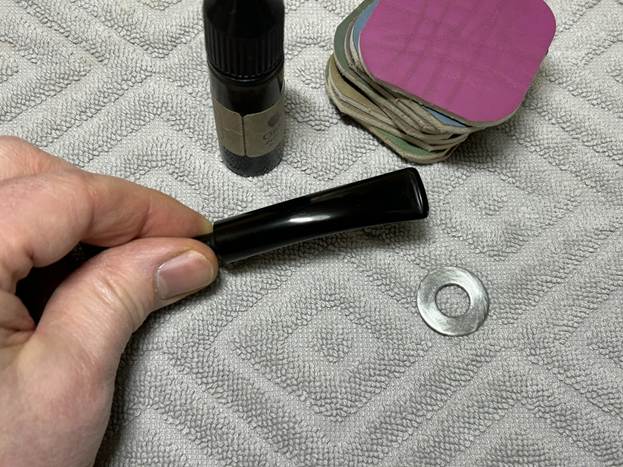
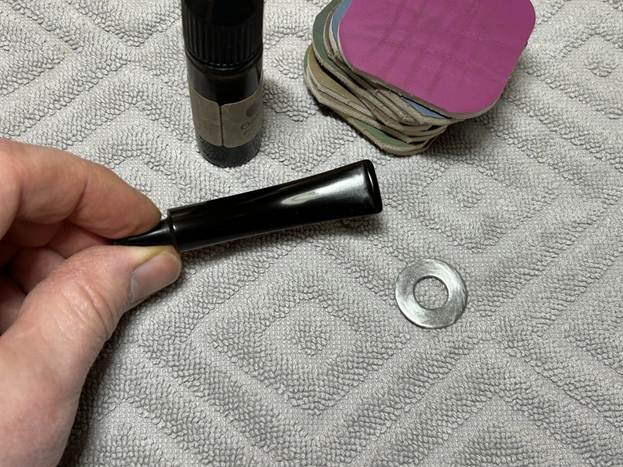
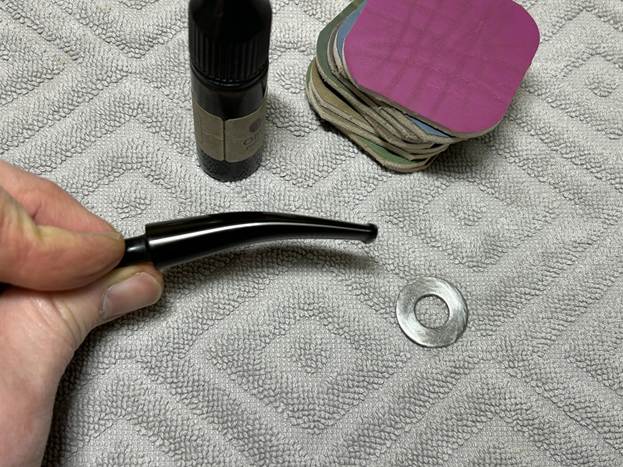
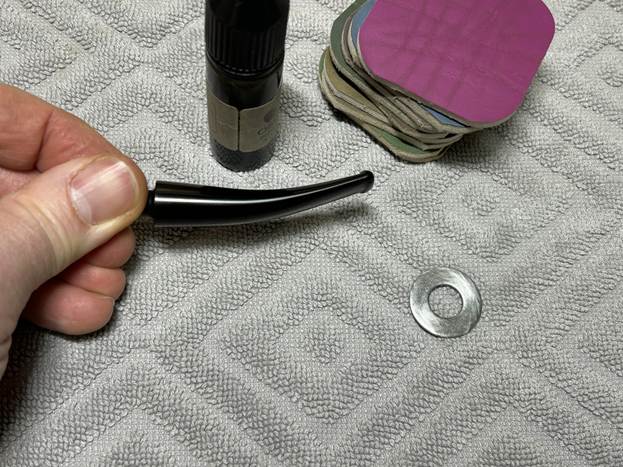
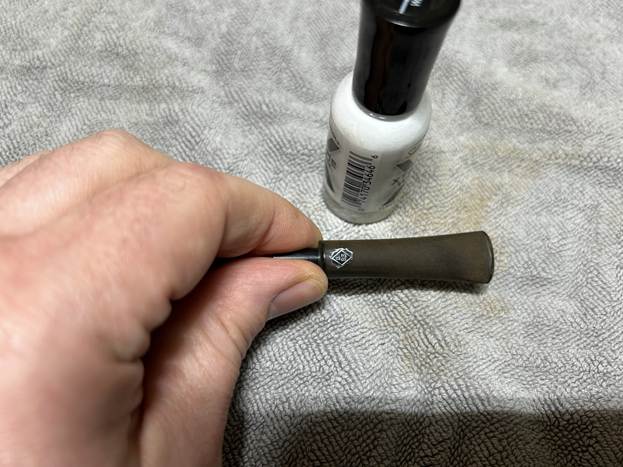
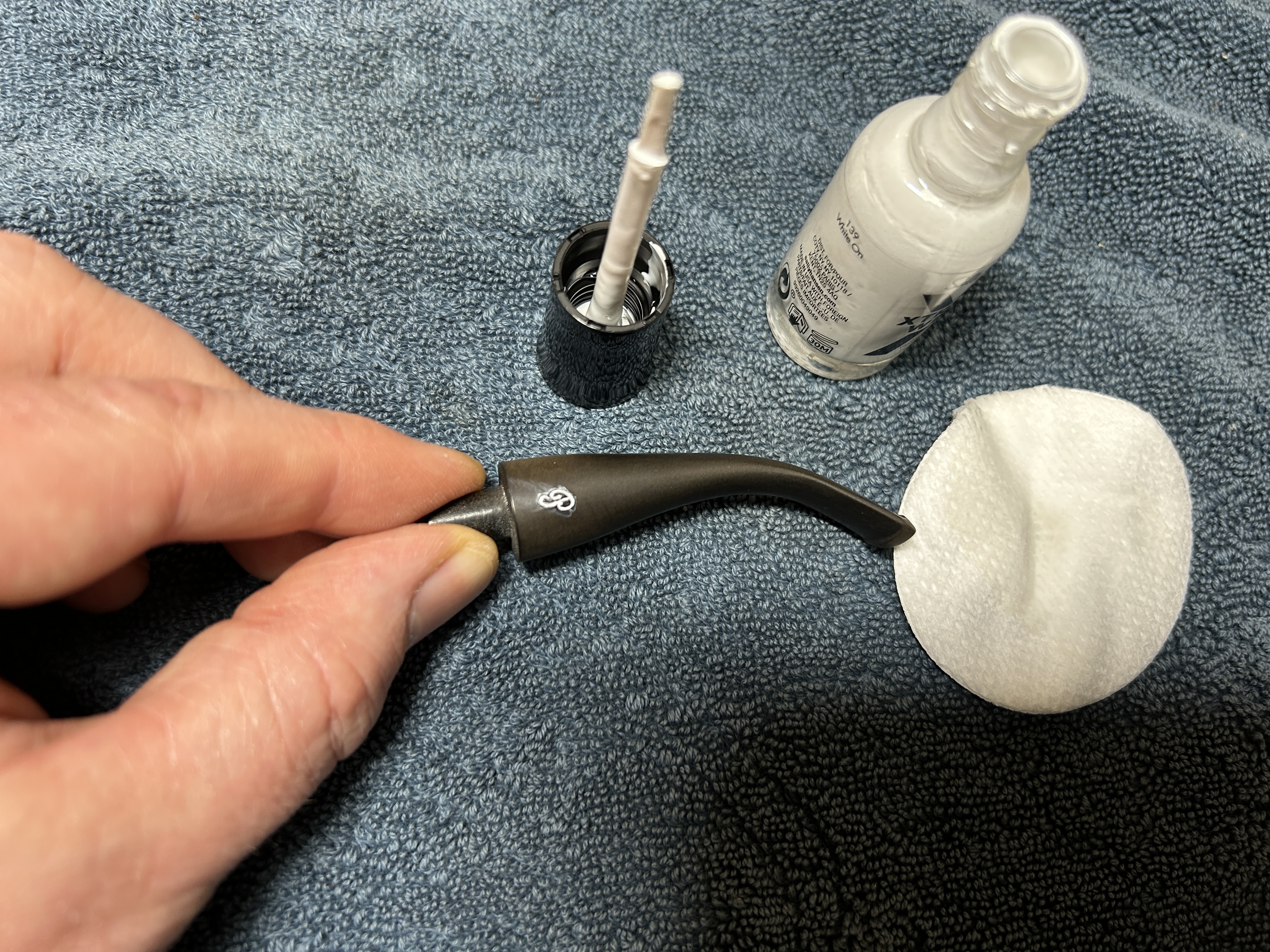
As the stem was now clean and dry, I set about fixing the marks and dents in the vulcanite. This was done by filling those divots with black cyanoacrylate adhesive, impregnated with carbon and rubber. I left this to cure and moved on. After this, I painted the logo on the stem with some enamel nail polish. I restored the logo carefully and let it fully set before proceeding.

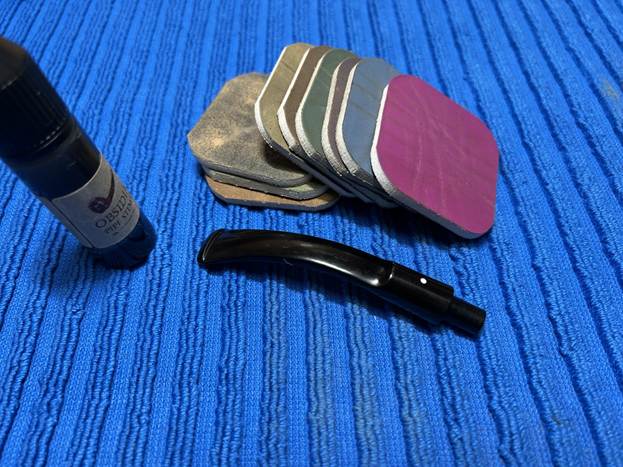
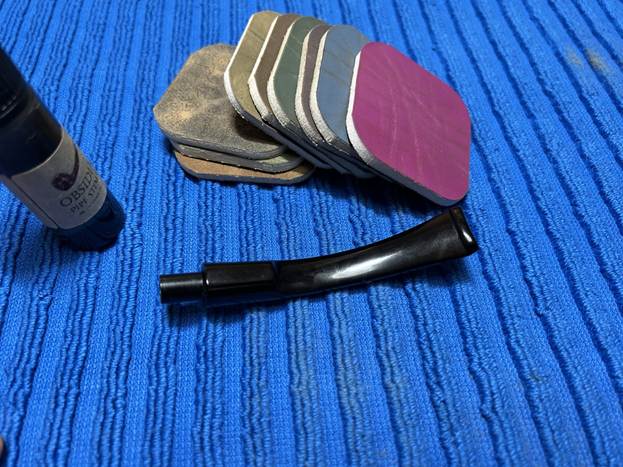
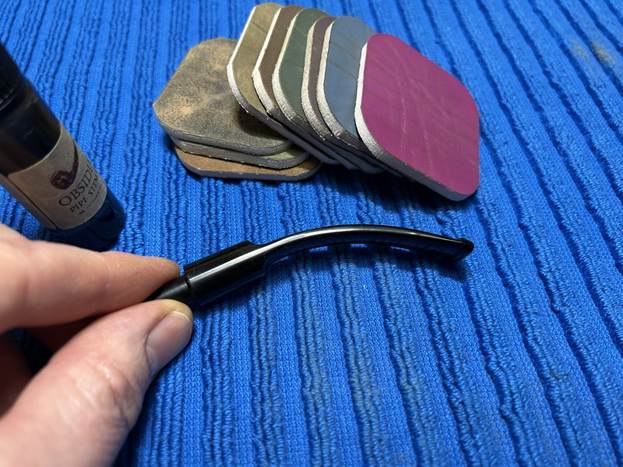
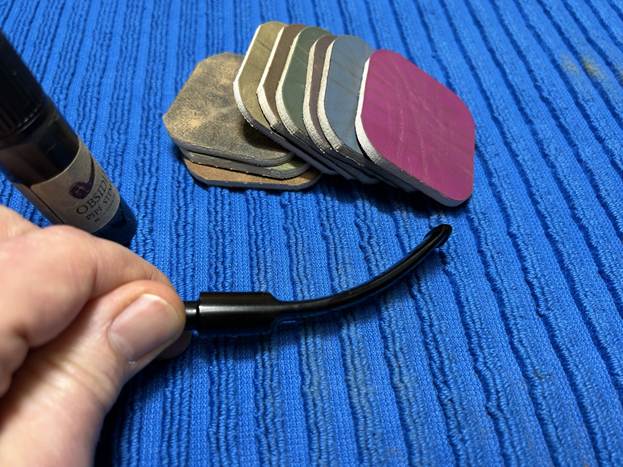
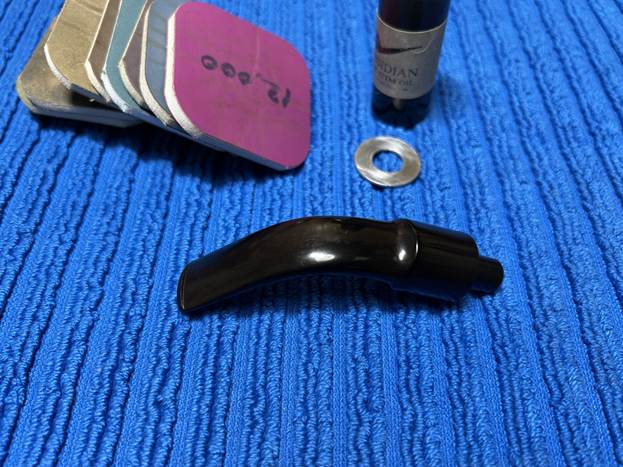
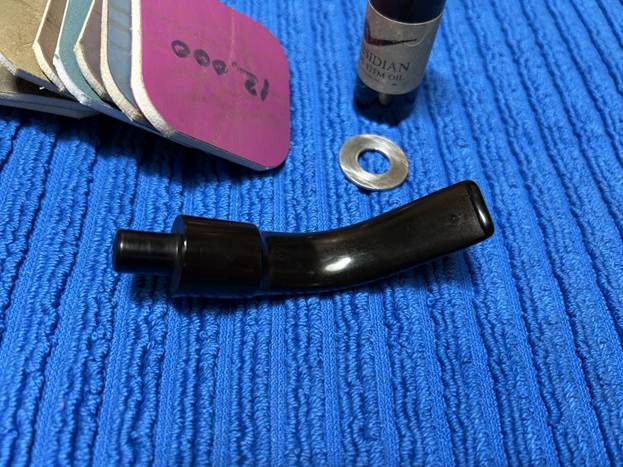
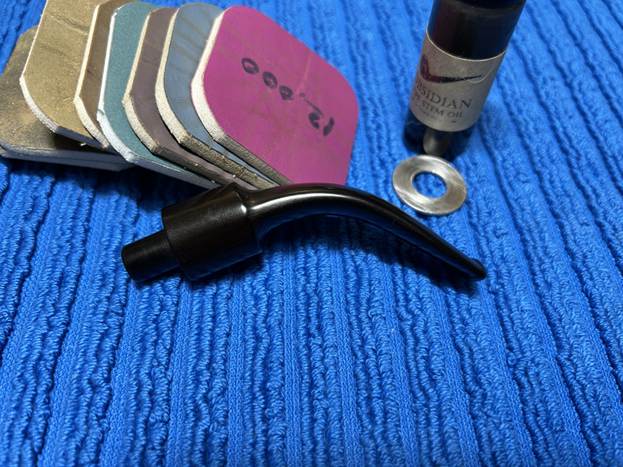
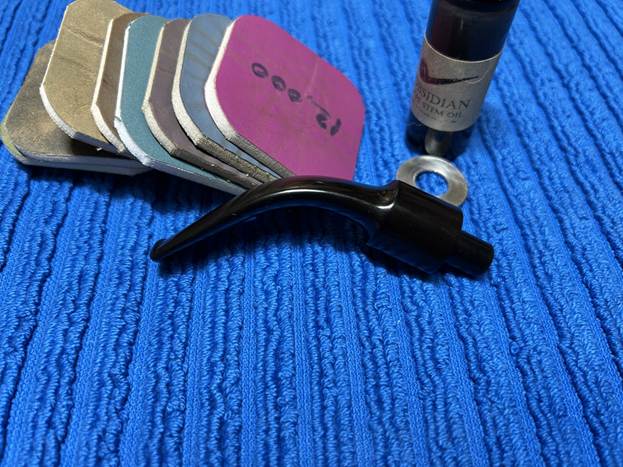
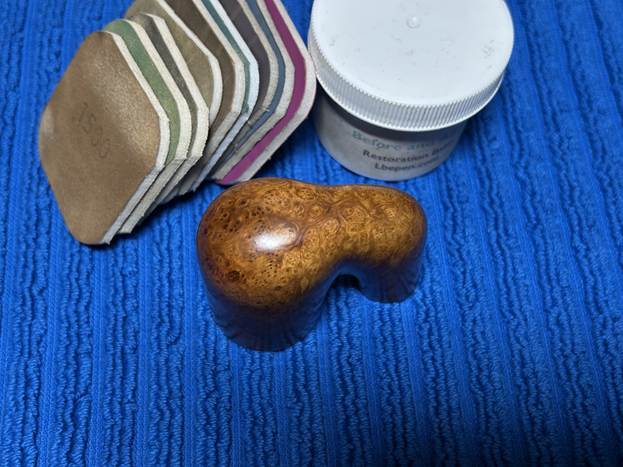
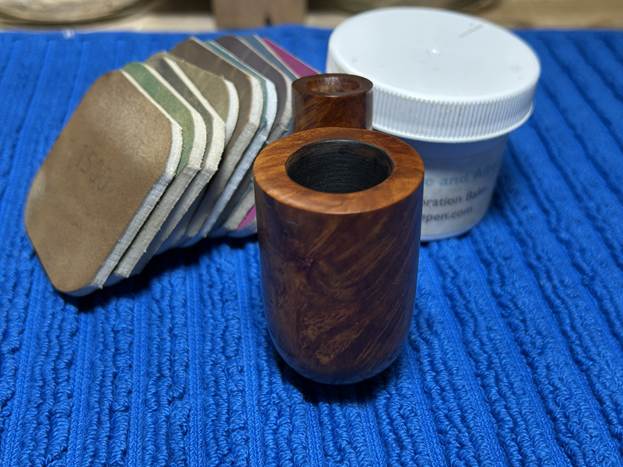
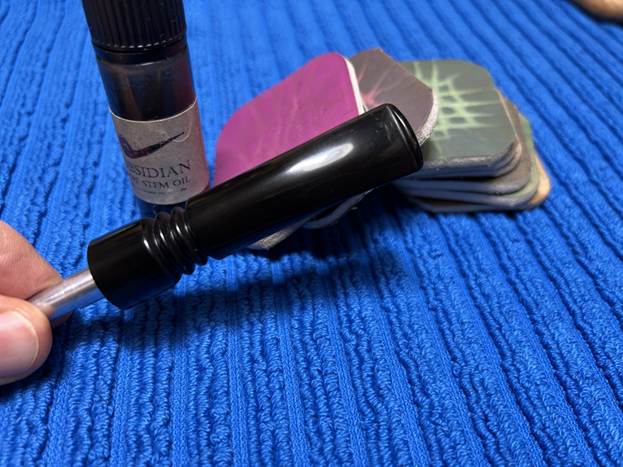
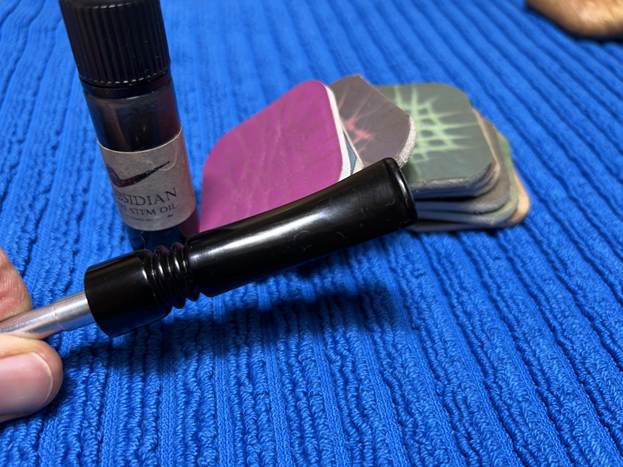
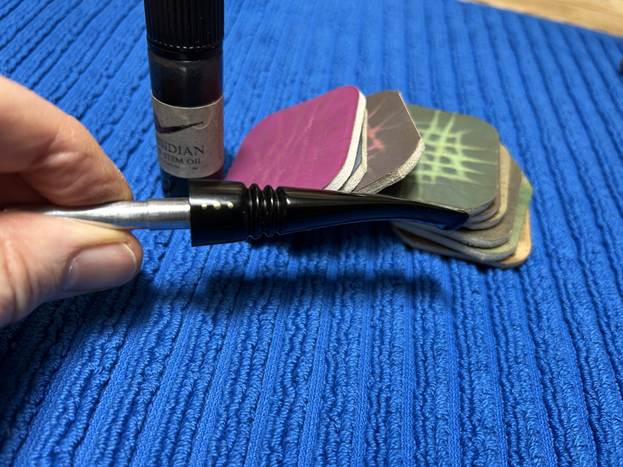
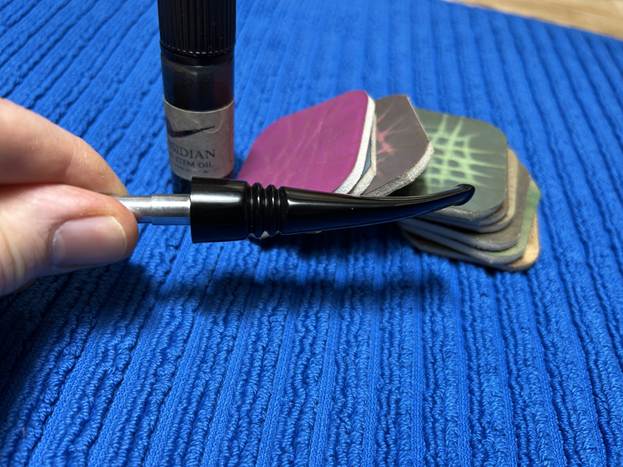
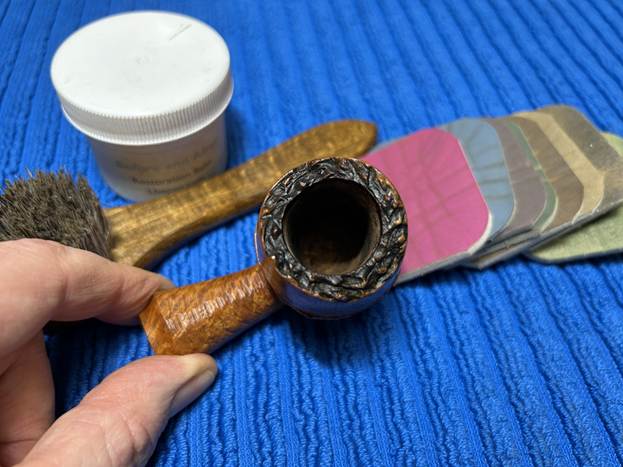
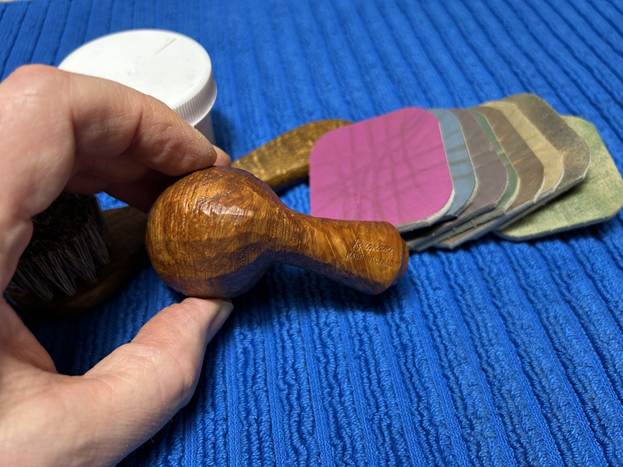
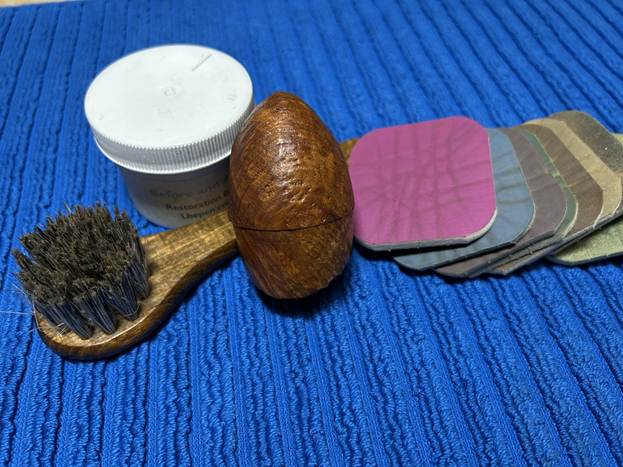
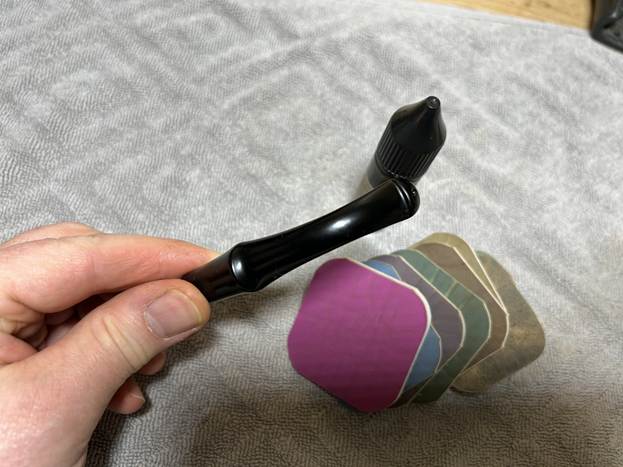
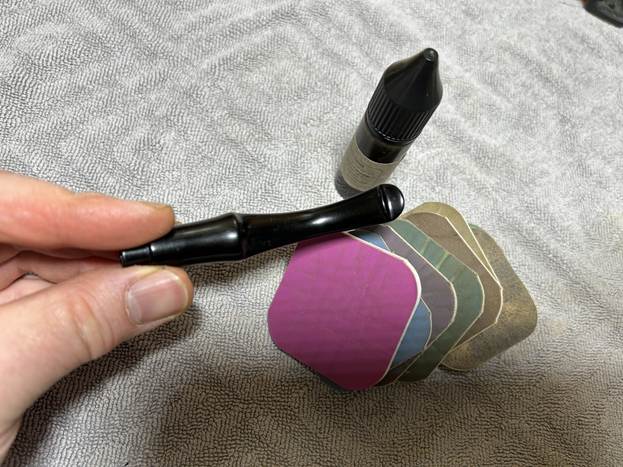
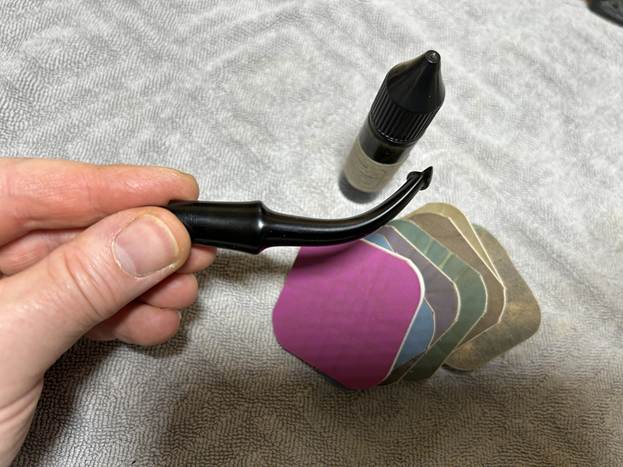
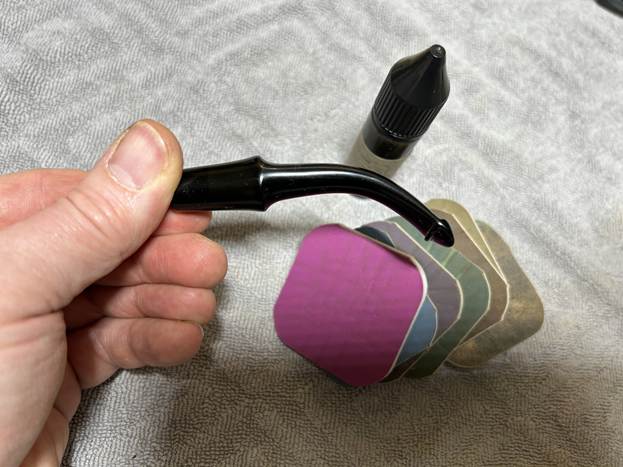
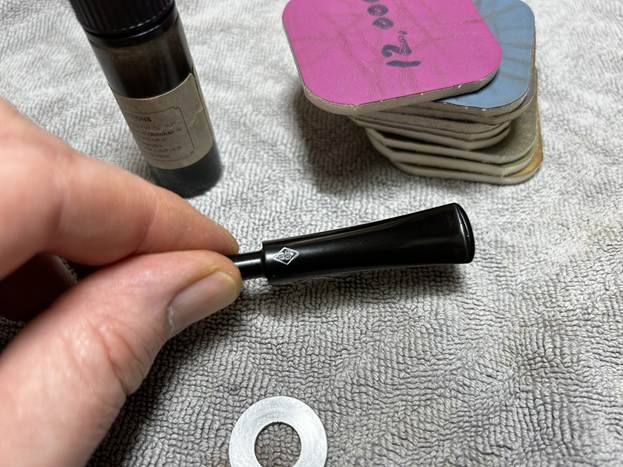
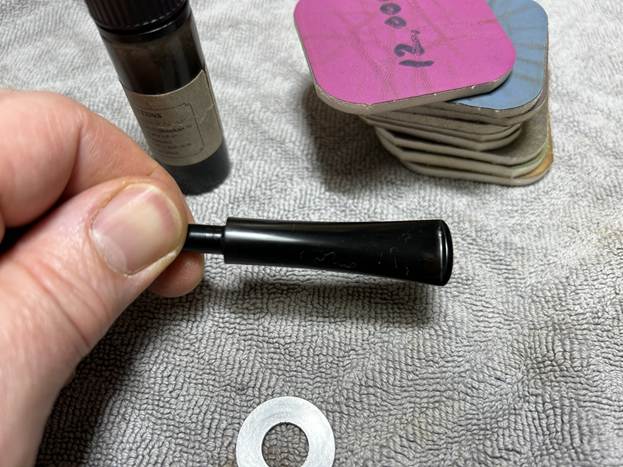
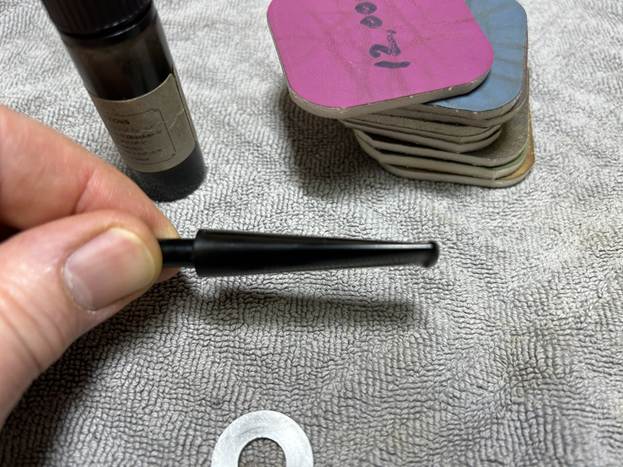
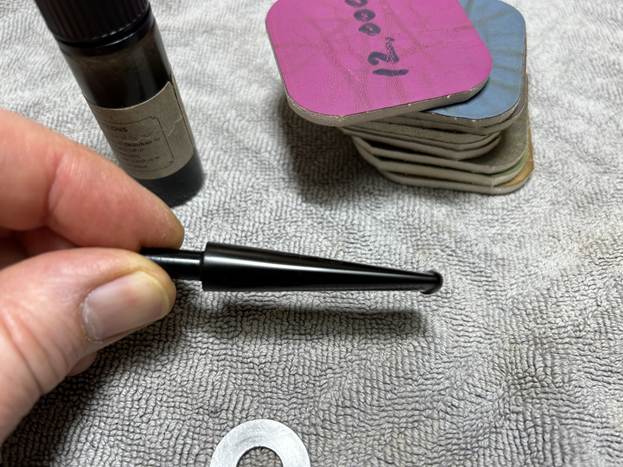
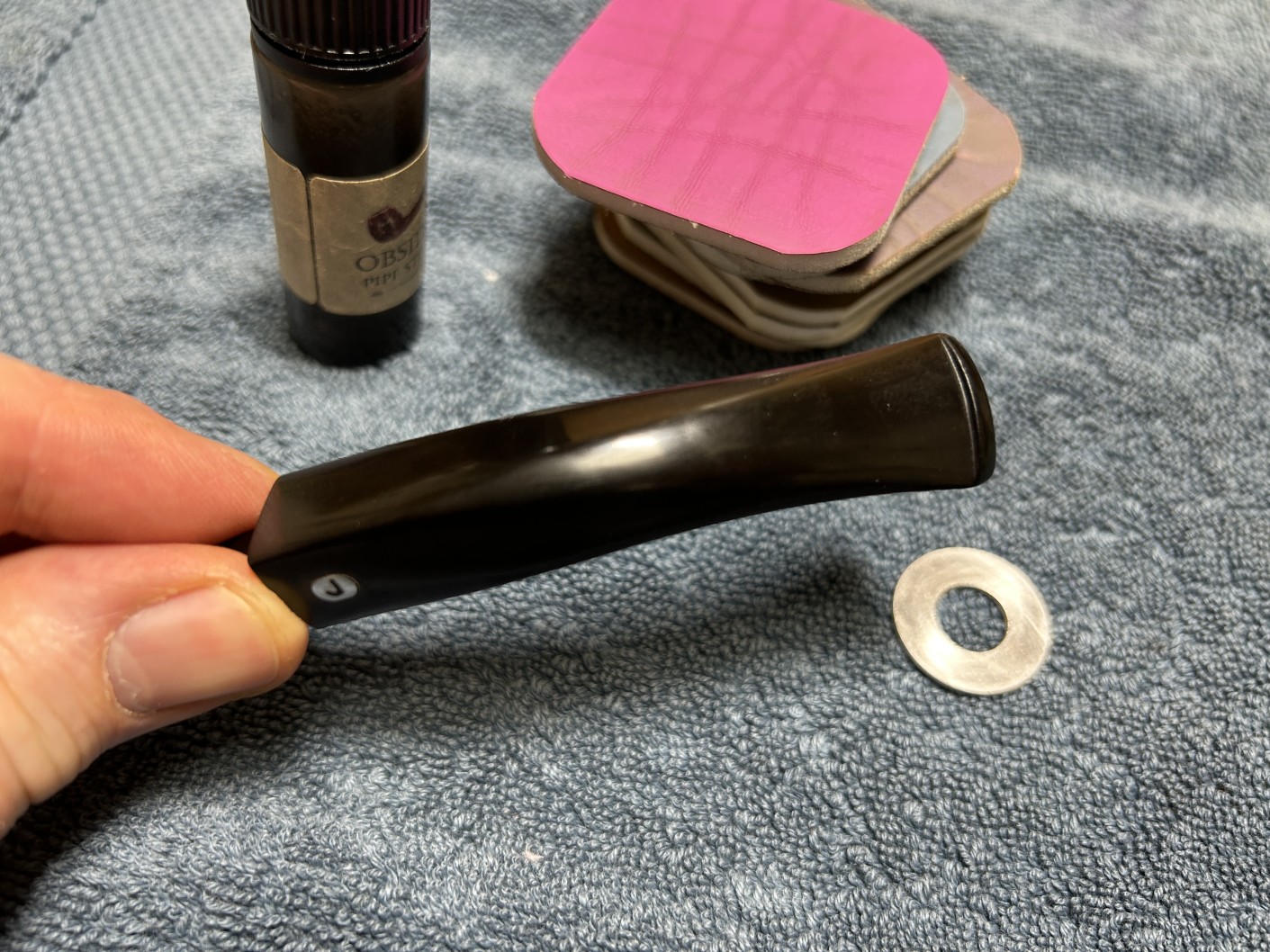
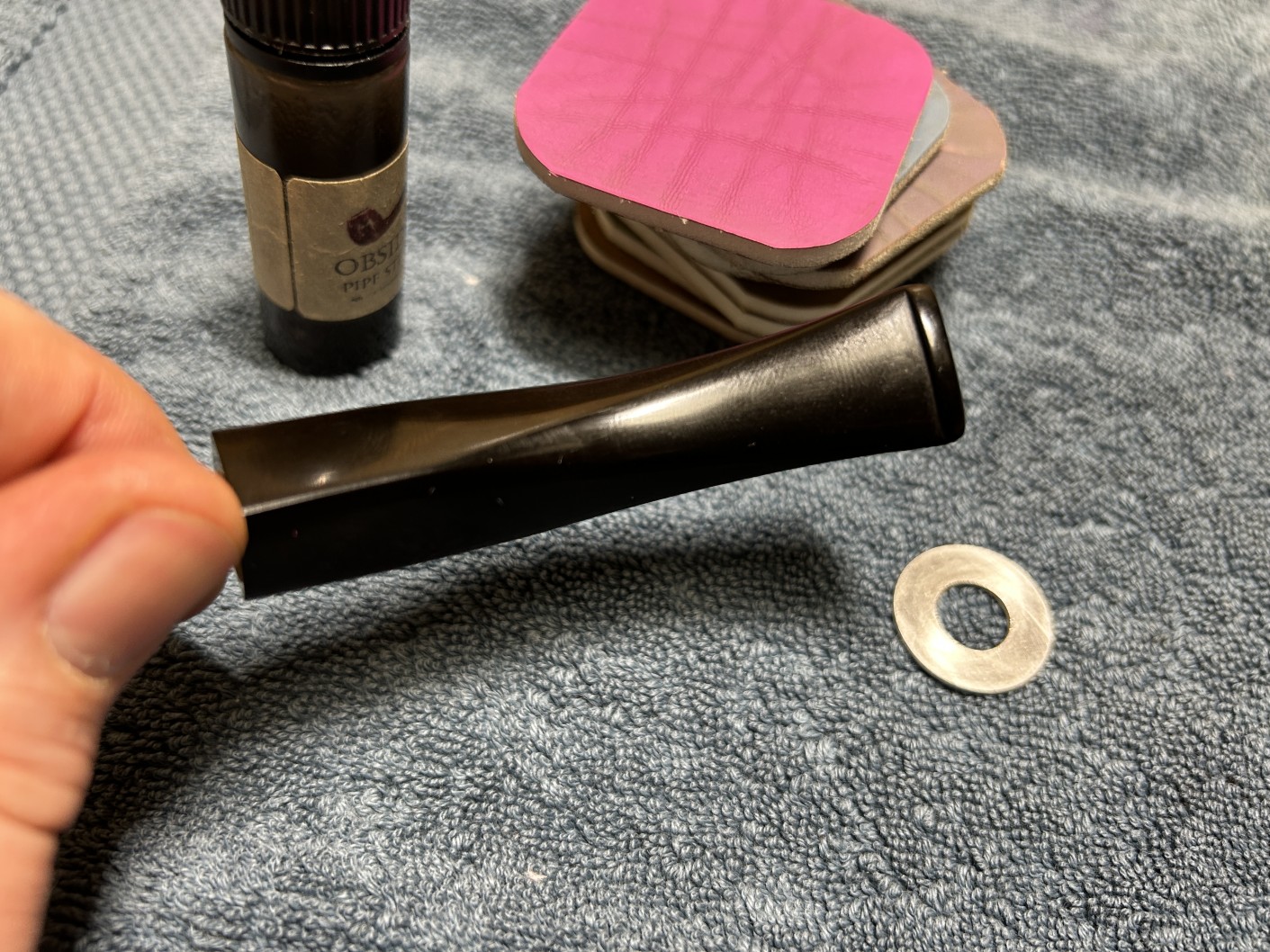
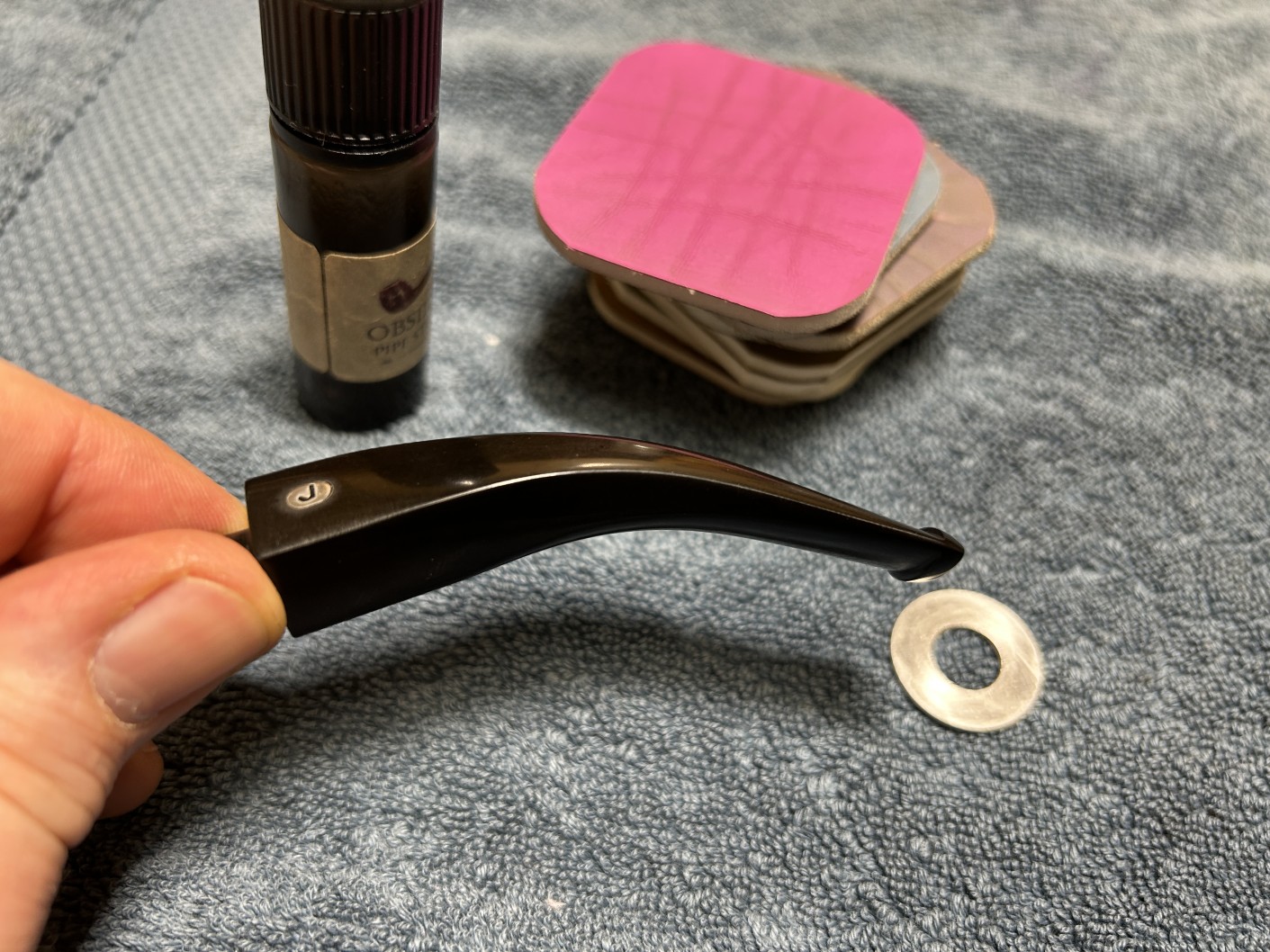
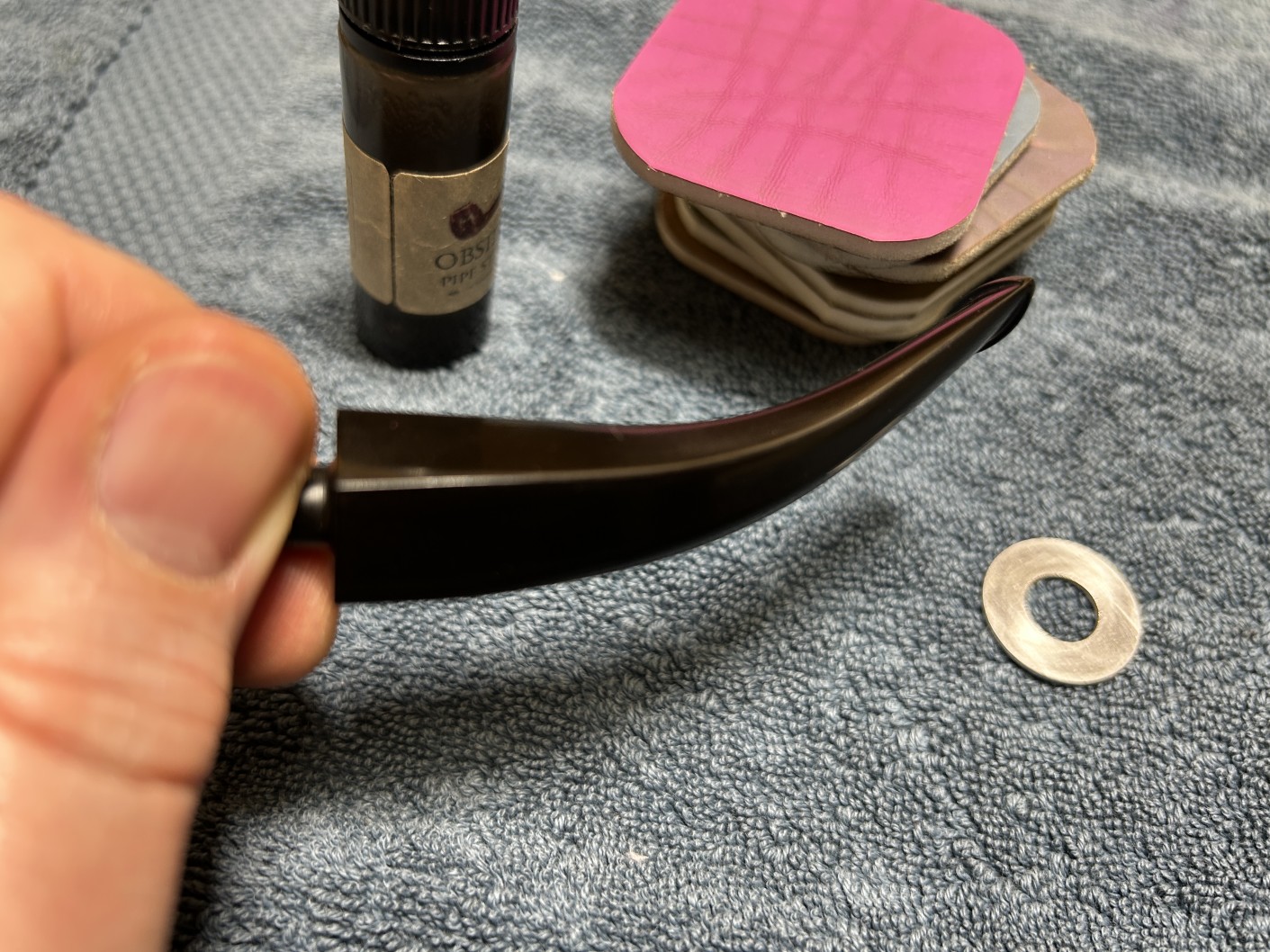
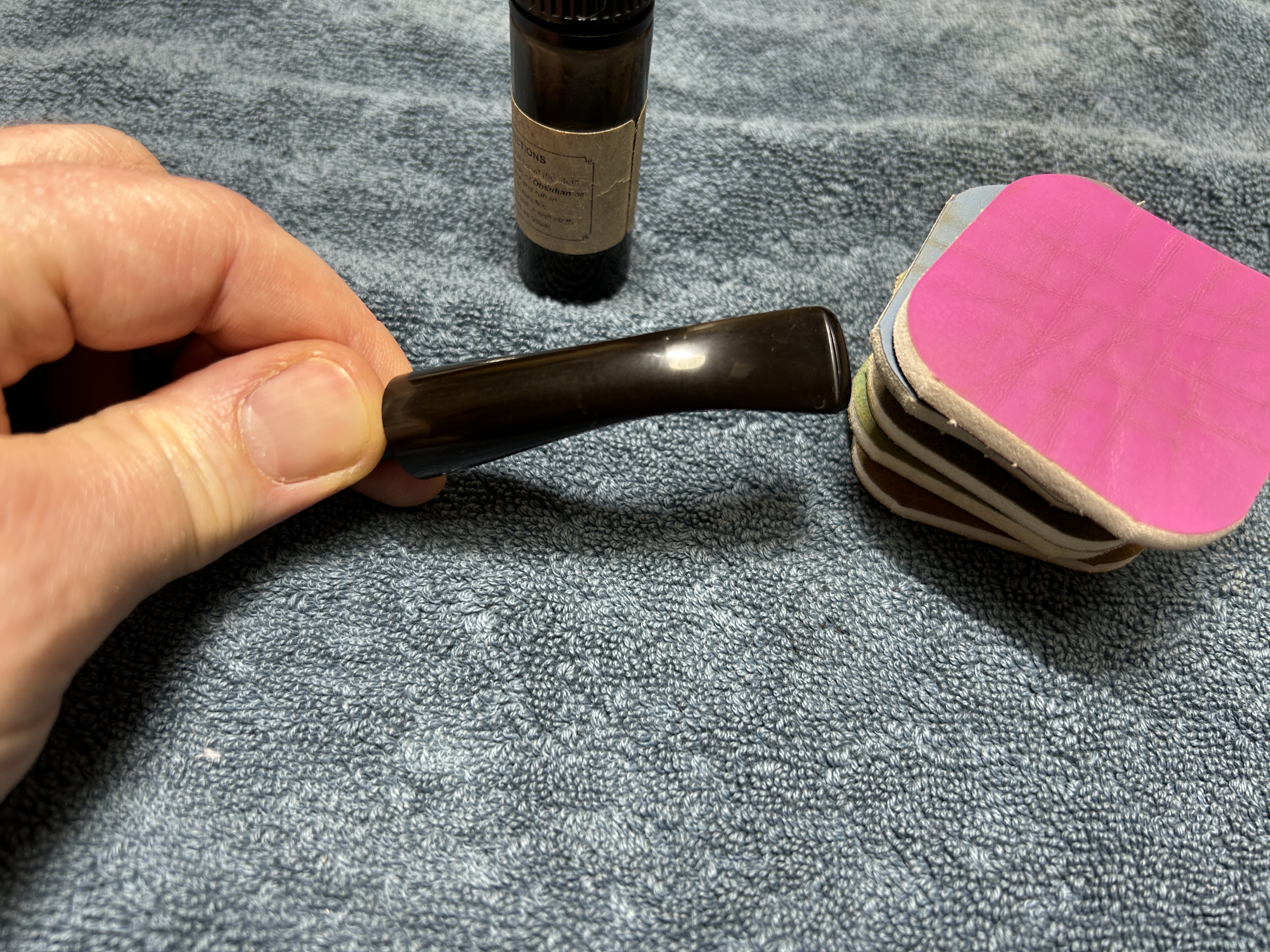
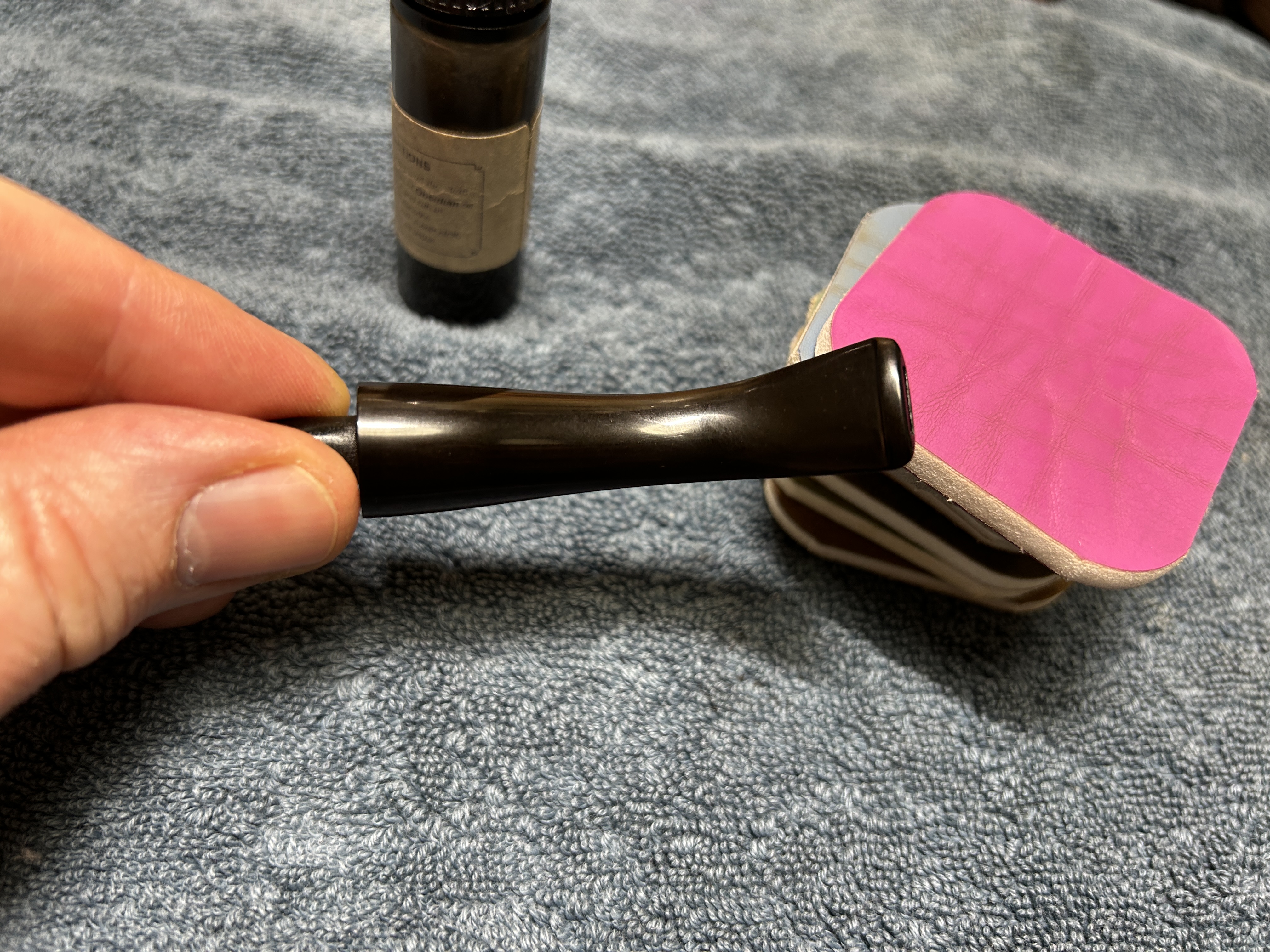
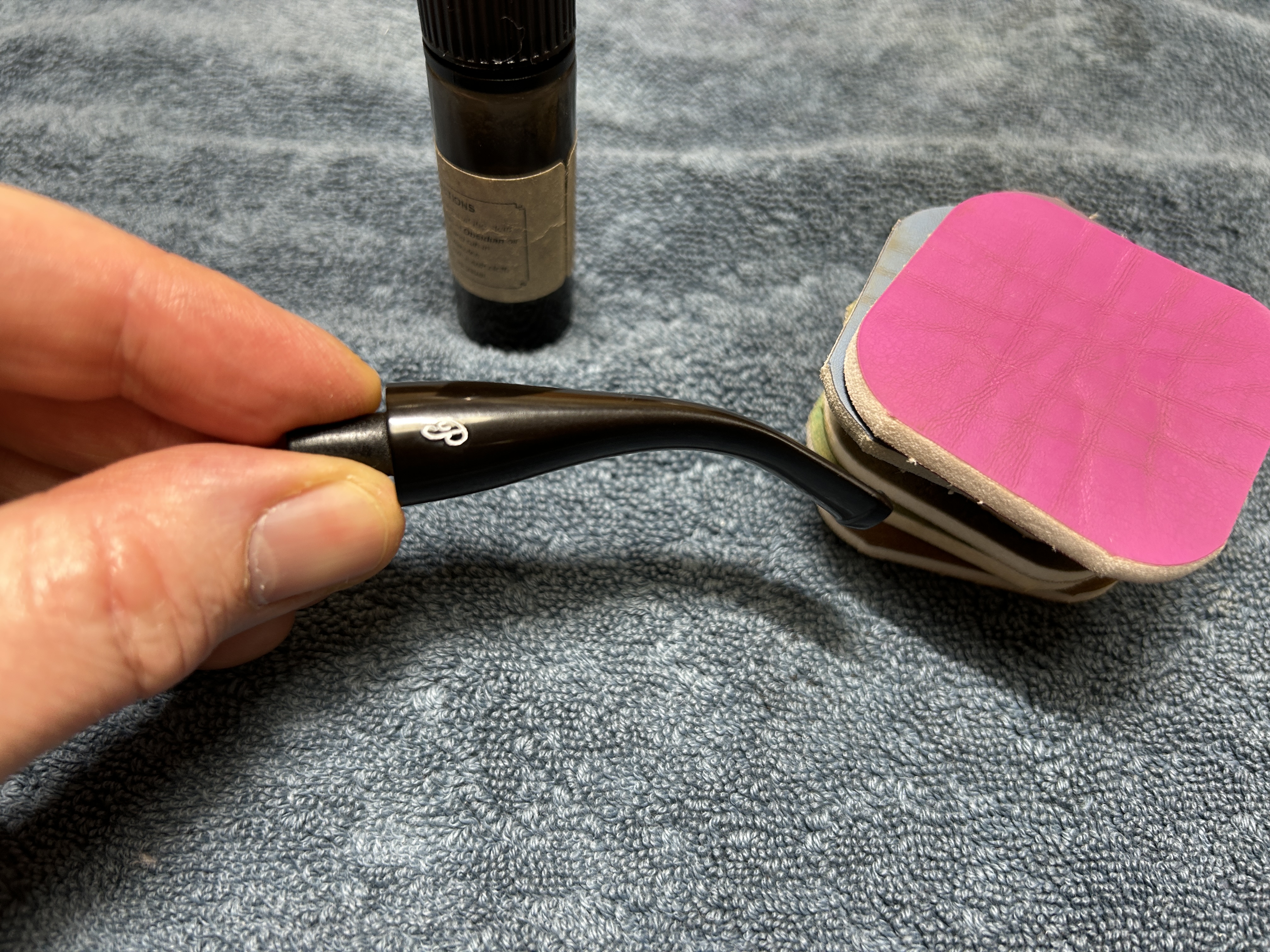
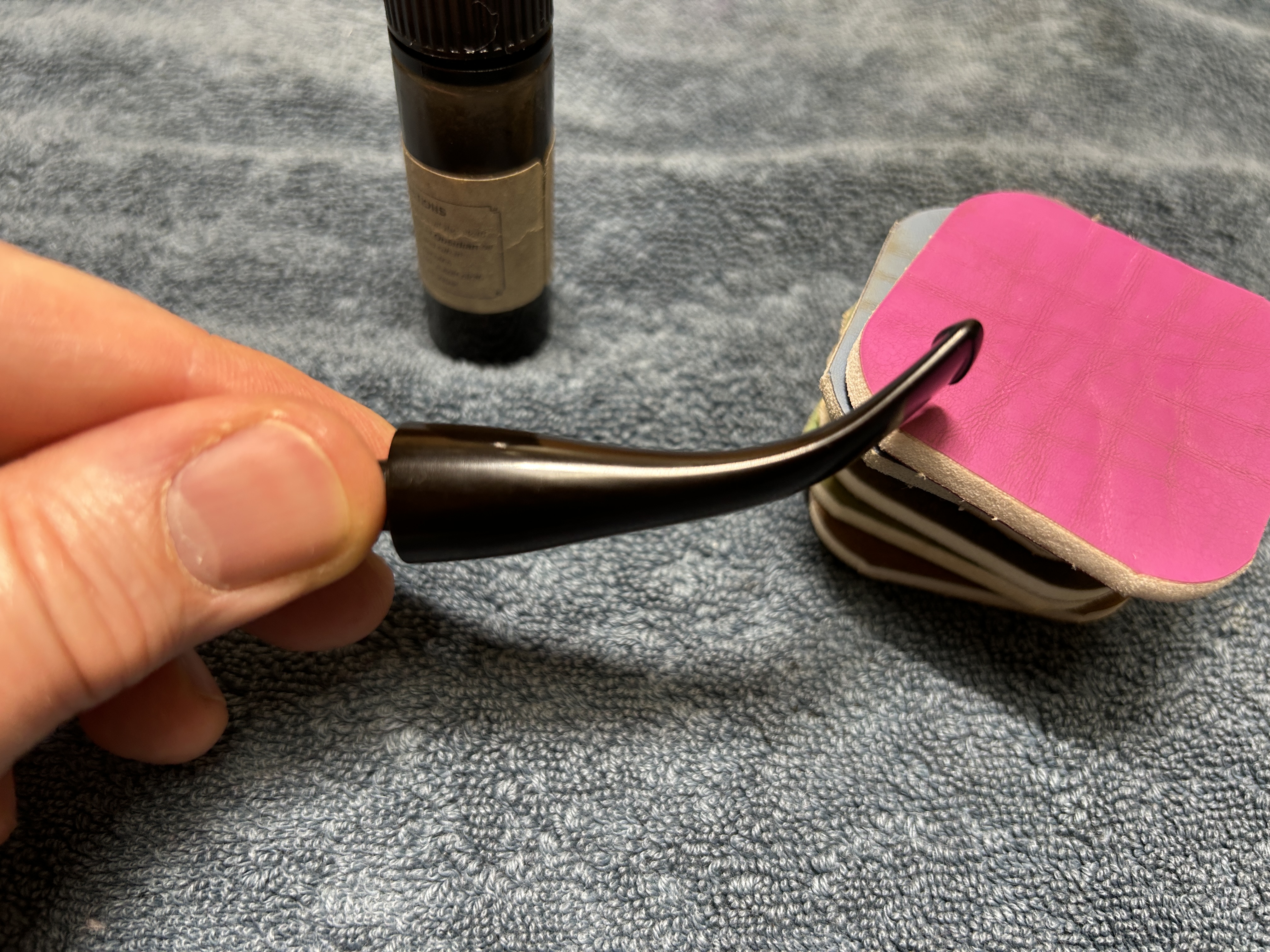
The penultimate step for the stem is sanding. First, with my set of needle files, I reduced the bulk of the cyanoacrylate repairs. I removed the excess adhesive as near to the surface as possible, without cutting into the vulcanite. Following that, I used all nine of the micromesh sanding pads (1,500 through 12,000 grit) to sand out flaws, even out the vulcanite, and provide gentle polishing of the finished surface. I also applied pipe-stem oil while using the last five micromesh pads. There was a wonderful, deep black shine to the stem when I was done.
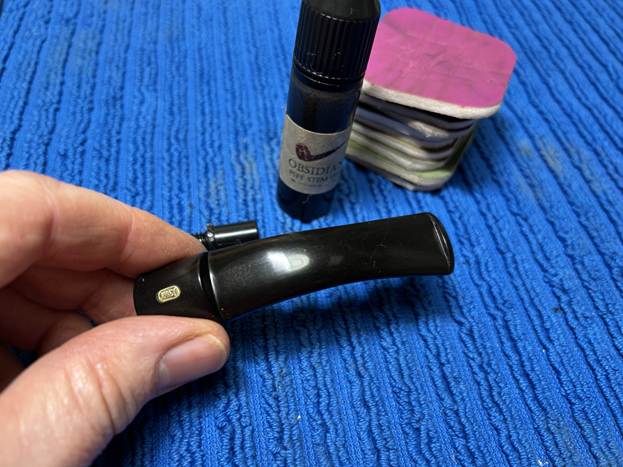
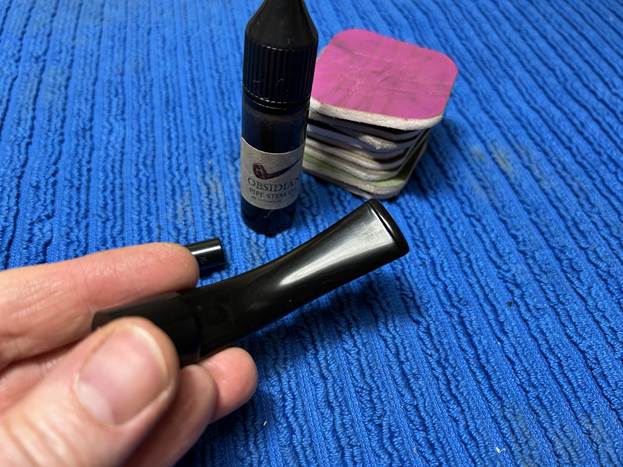
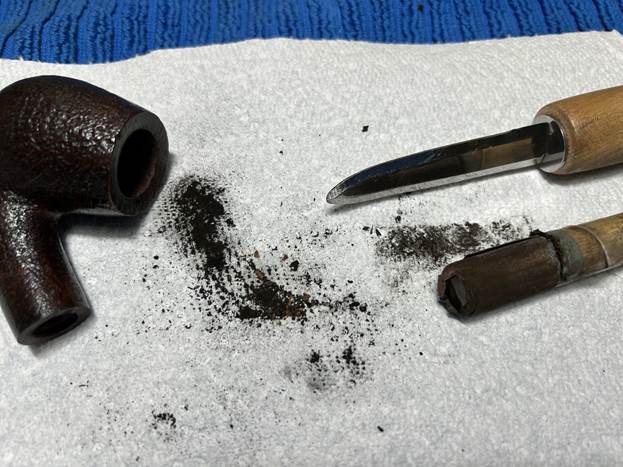
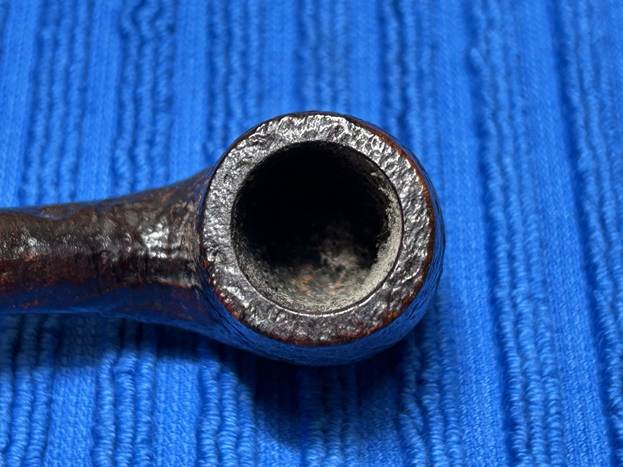
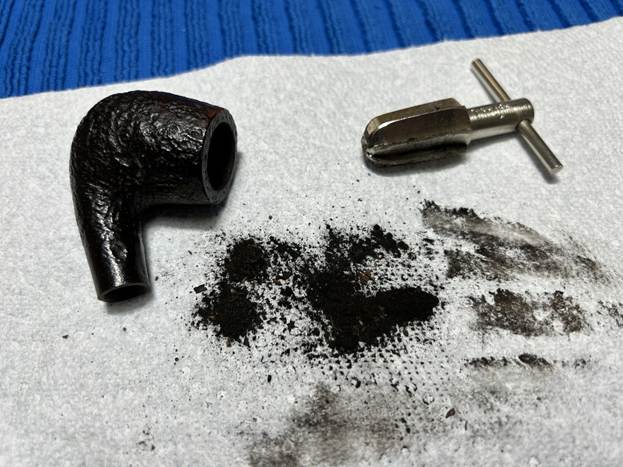
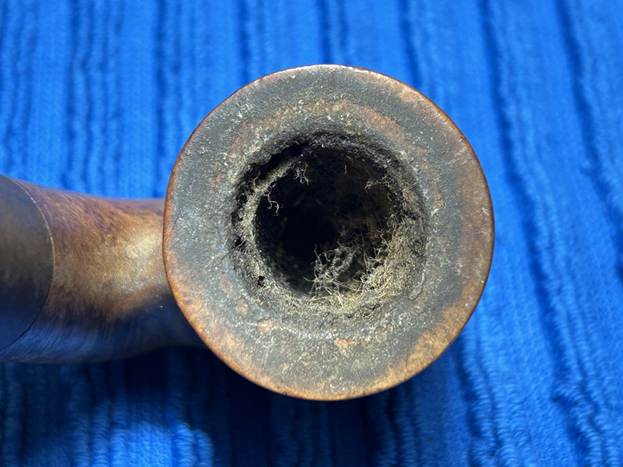
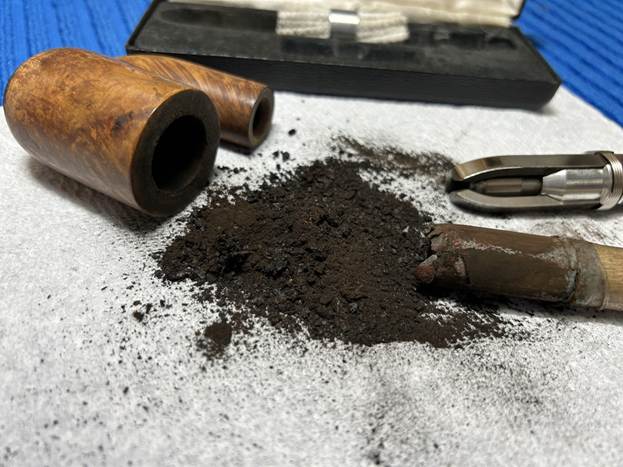
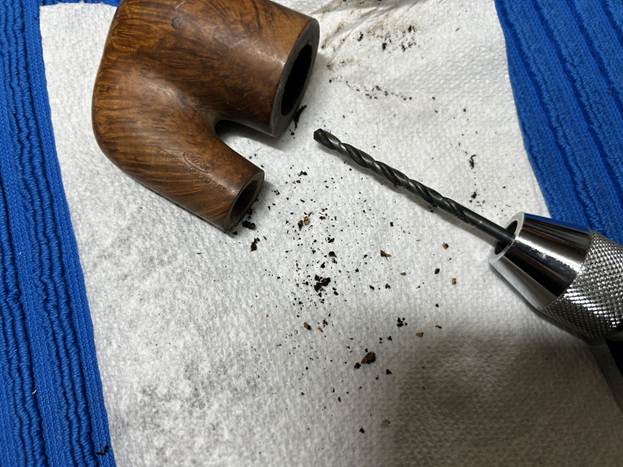
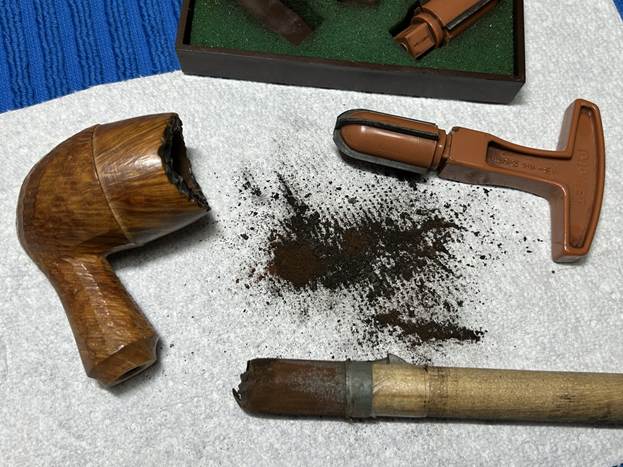
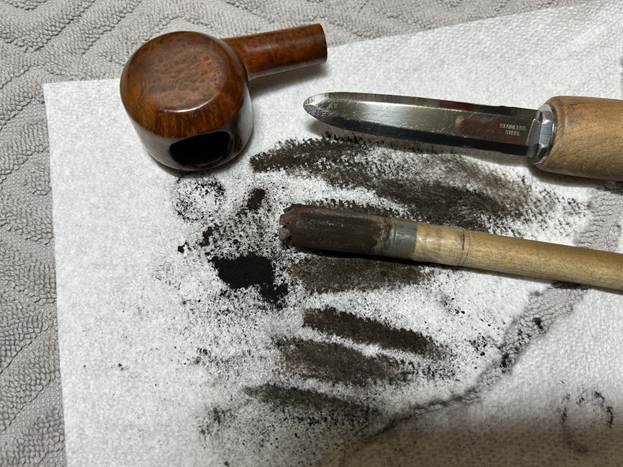
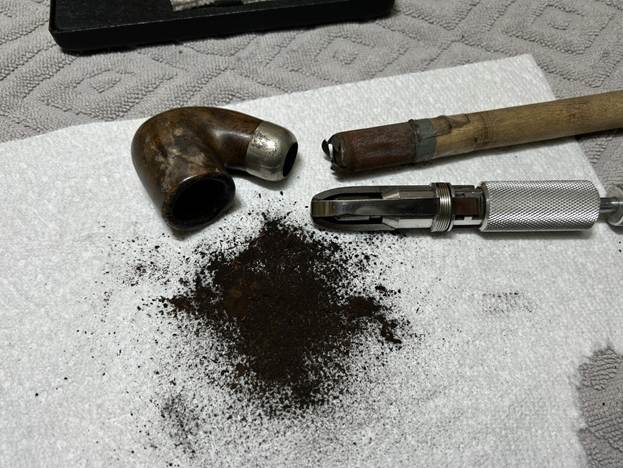
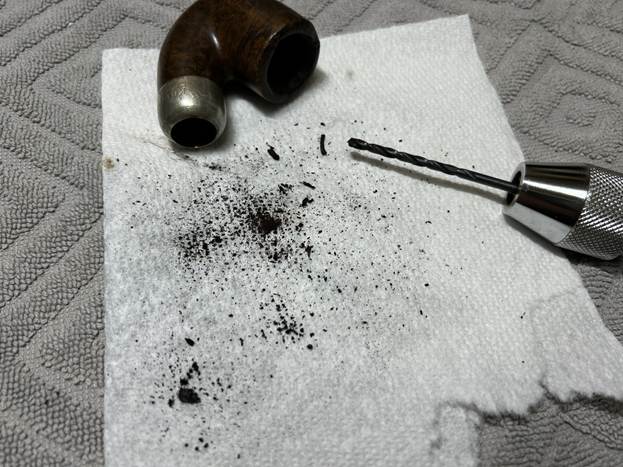
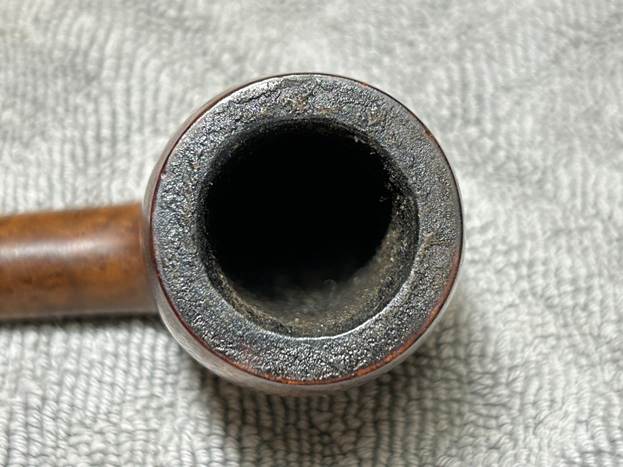
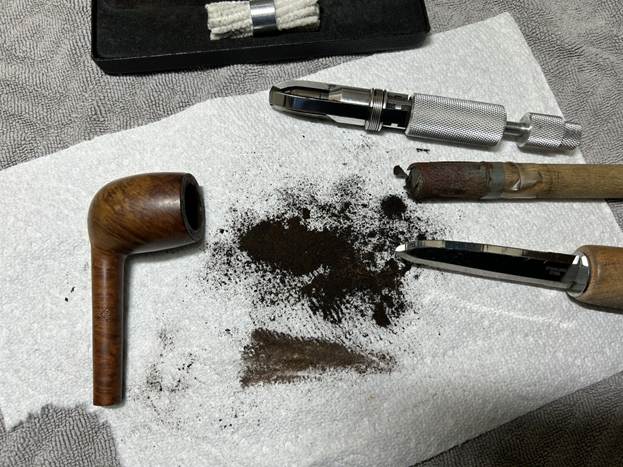
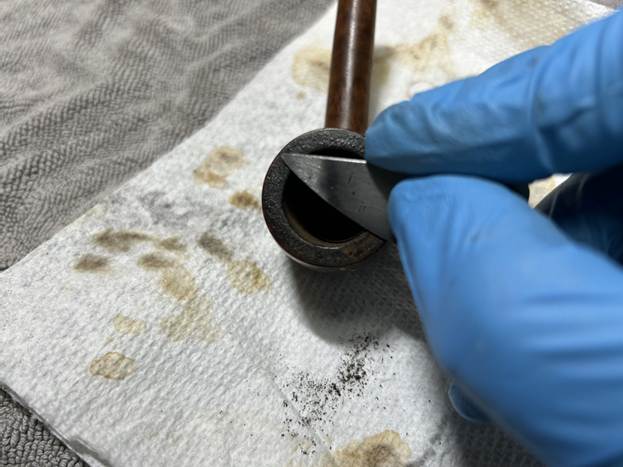
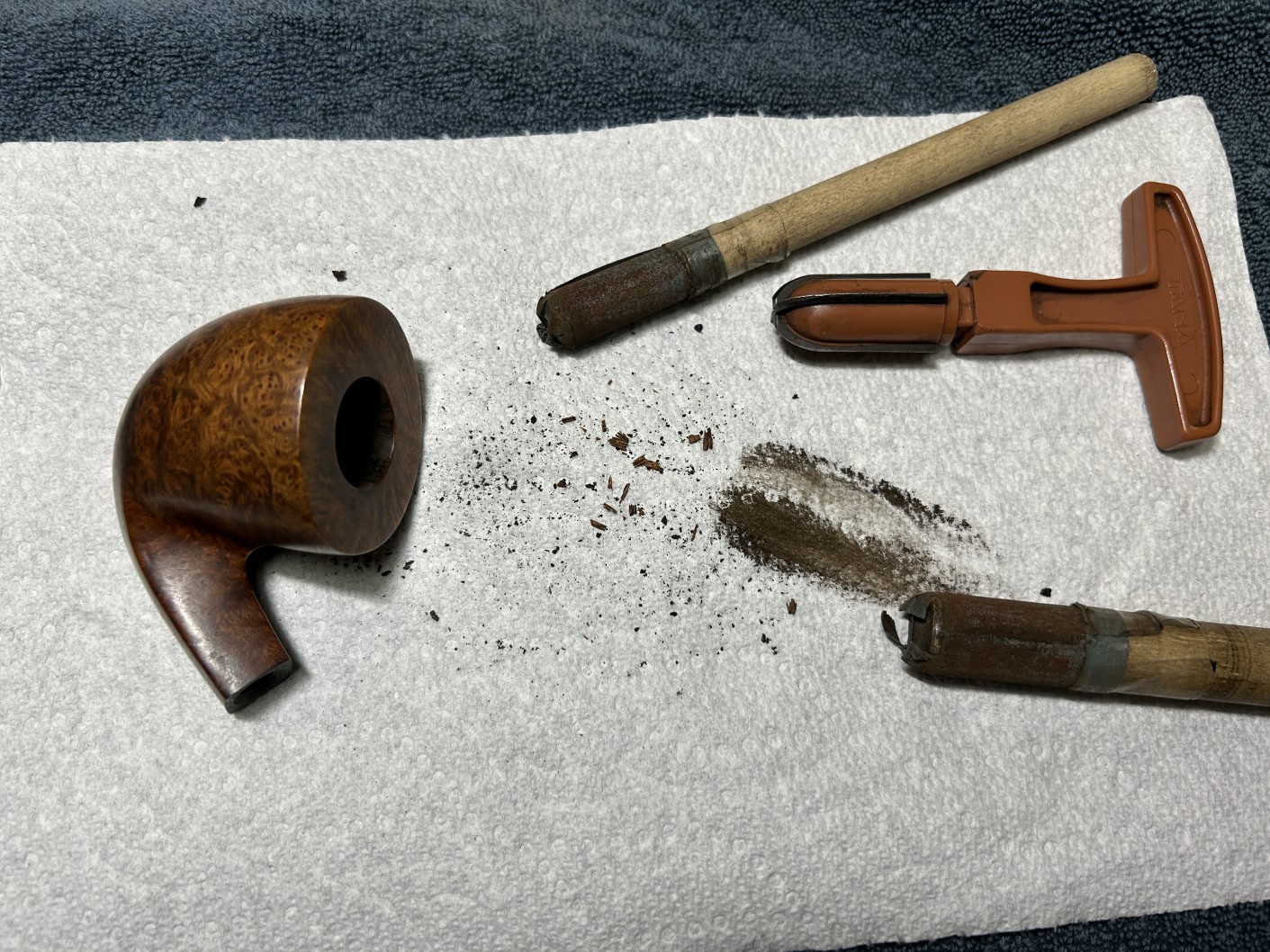
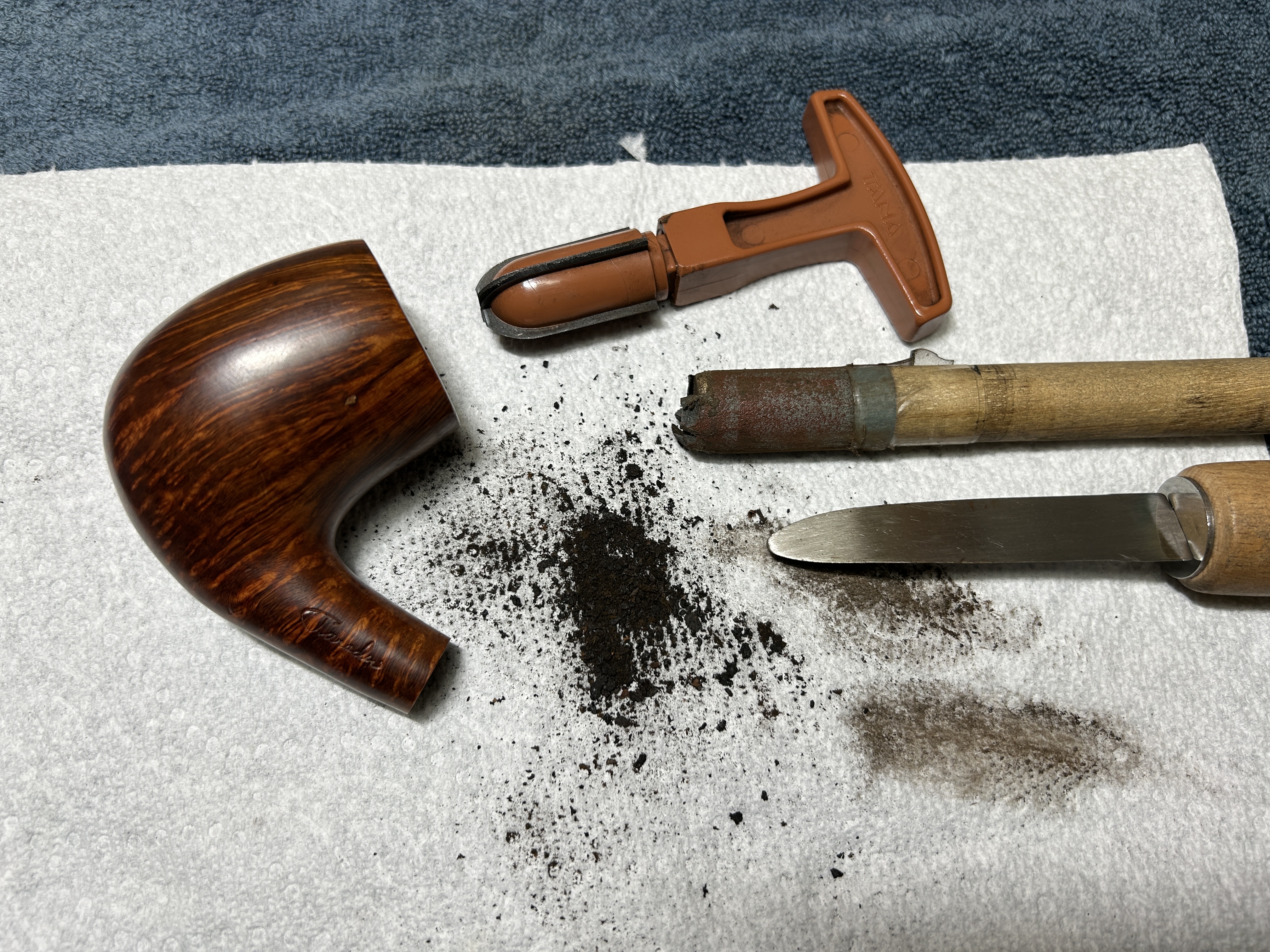
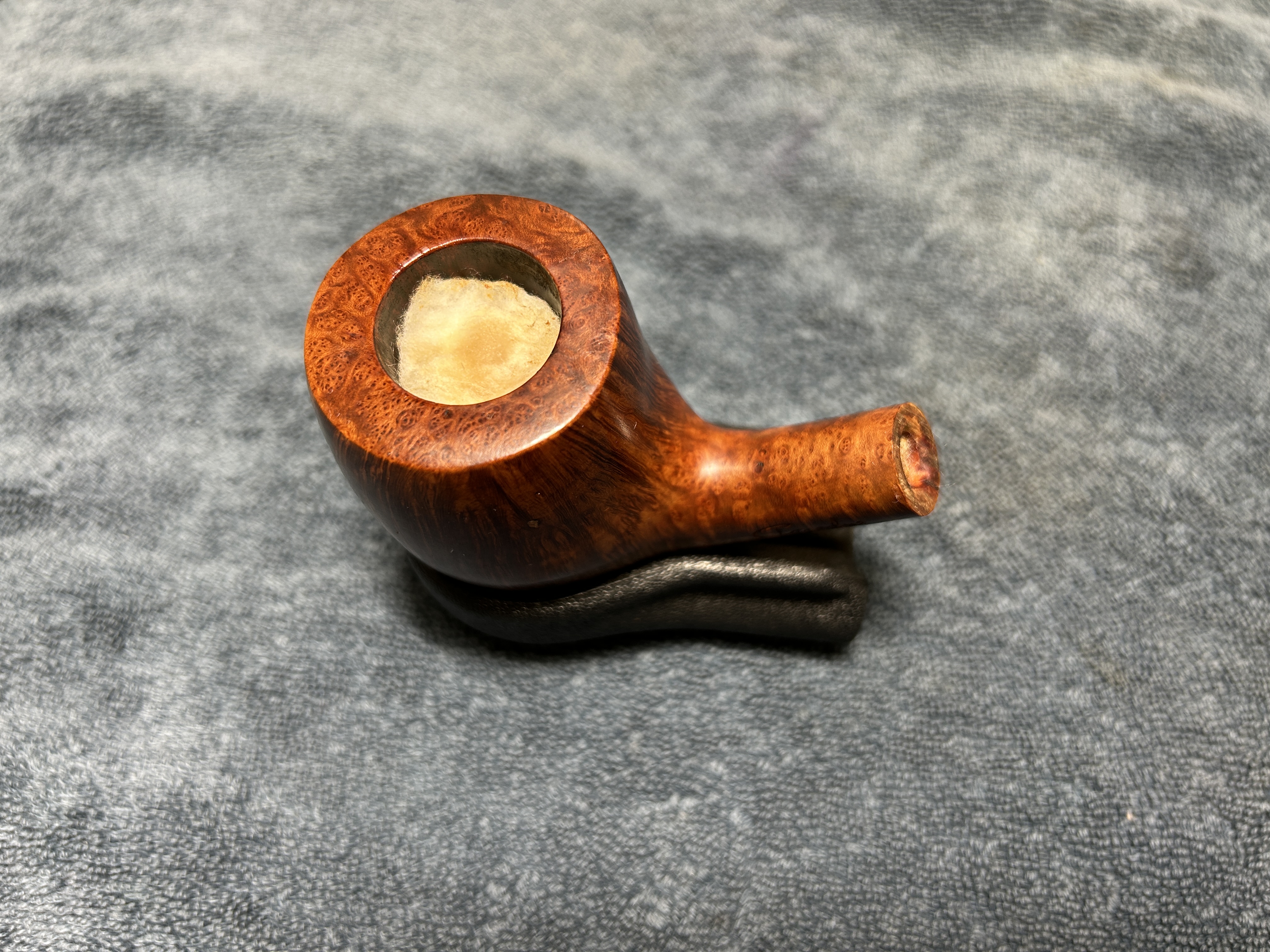
As the stem was (nearly) complete, I moved on to the stummel. The first step was to ream out the bowl – that is to say, remove all the cake inside the bowl. This accomplished a couple of things. First (and most obviously), it cleaned the bowl and provided a refurbished chamber for future smoking. Second, when the old cake was removed, I could inspect the interior walls of the bowl and determine if there was damage or not. I only used a pipe knife and a piece of sandpaper taped to a wooden dowel – fortunately, there was very little debris in the bowl.

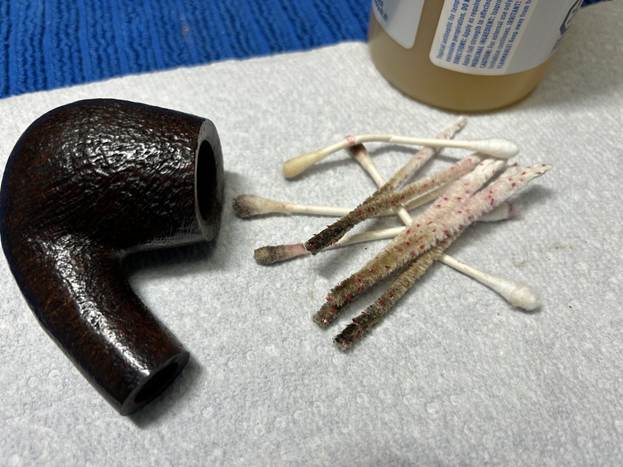
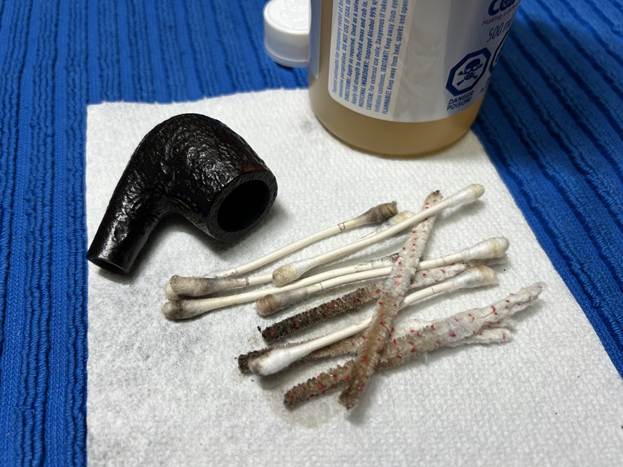
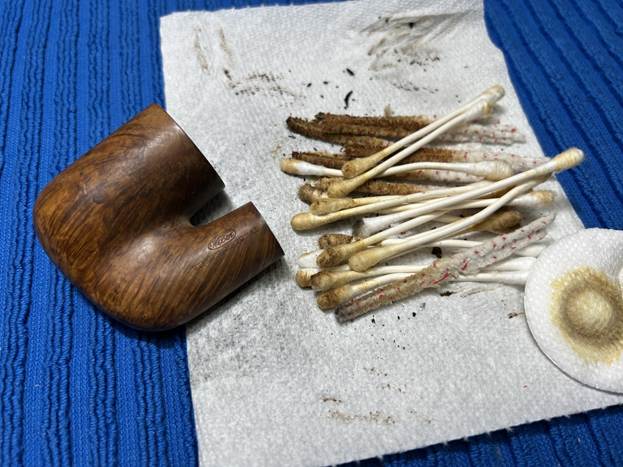
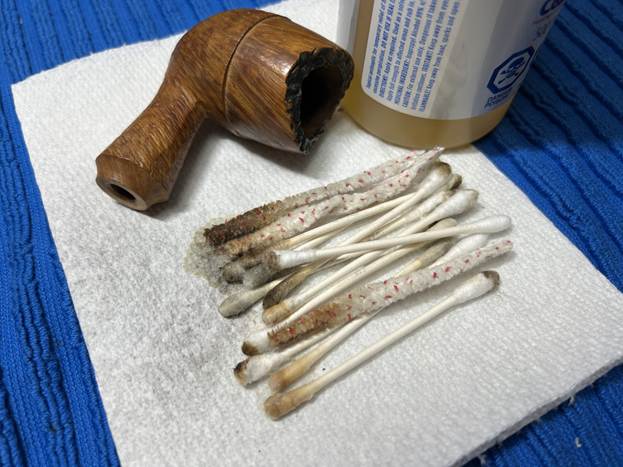
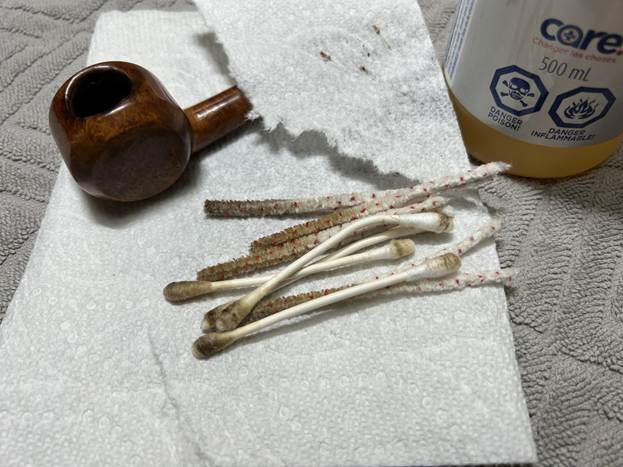
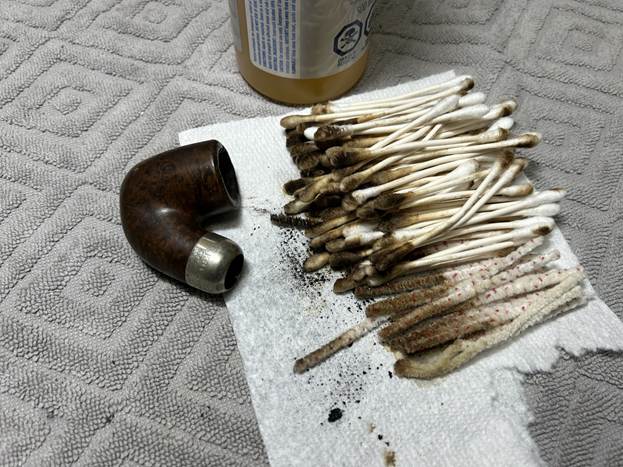
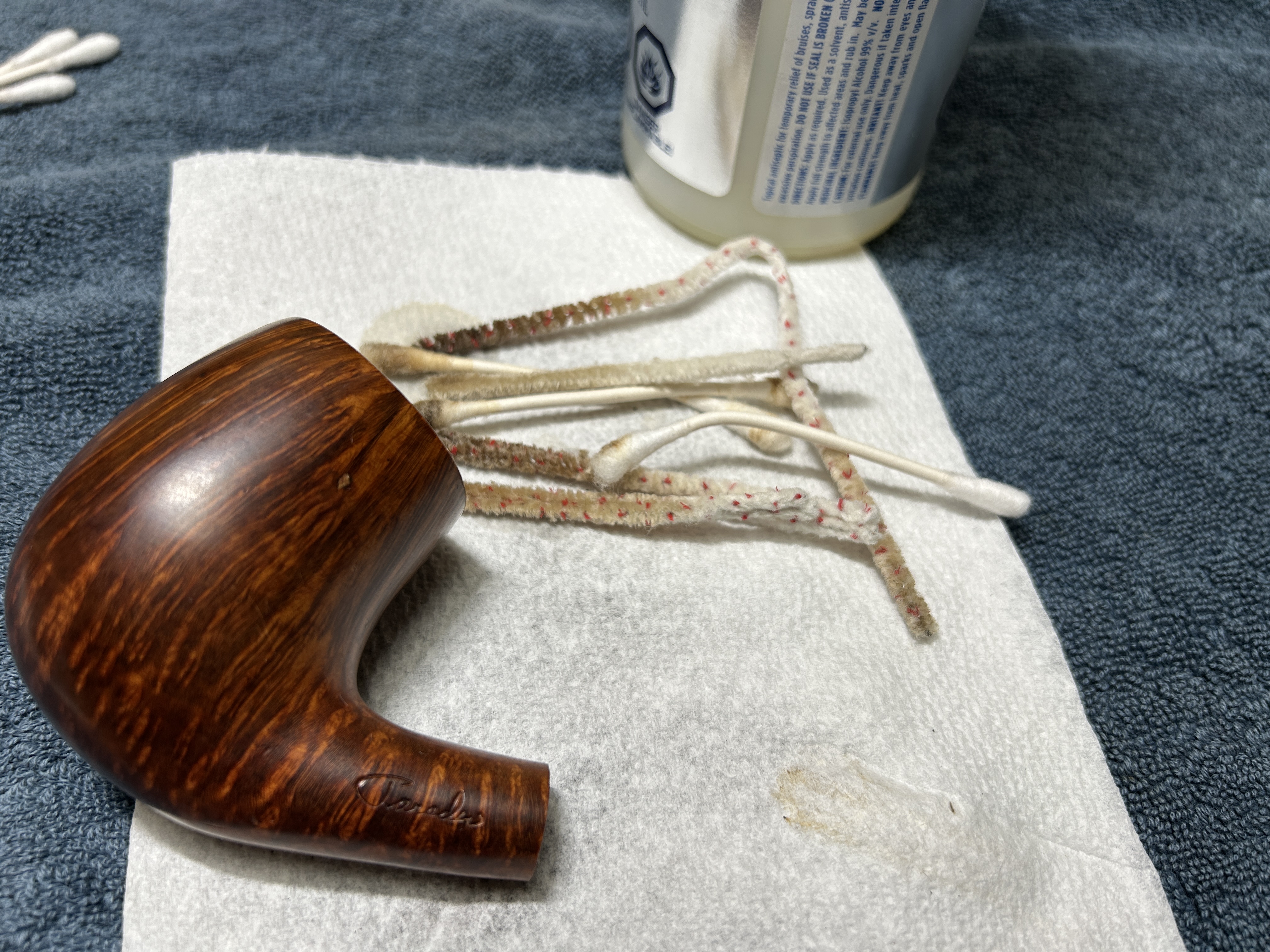
Similar to the stem, I then cleaned the stummel with both pipe cleaners and cotton swabs dipped in lemon-infused 99% isopropyl alcohol. With a pipe this dirty, it took quite a while and much cotton to clean.

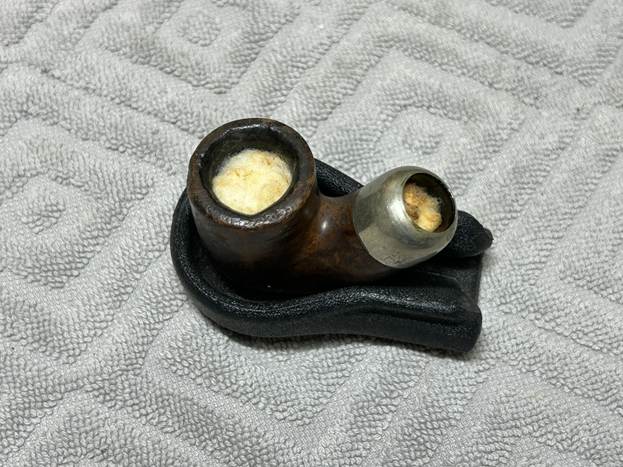
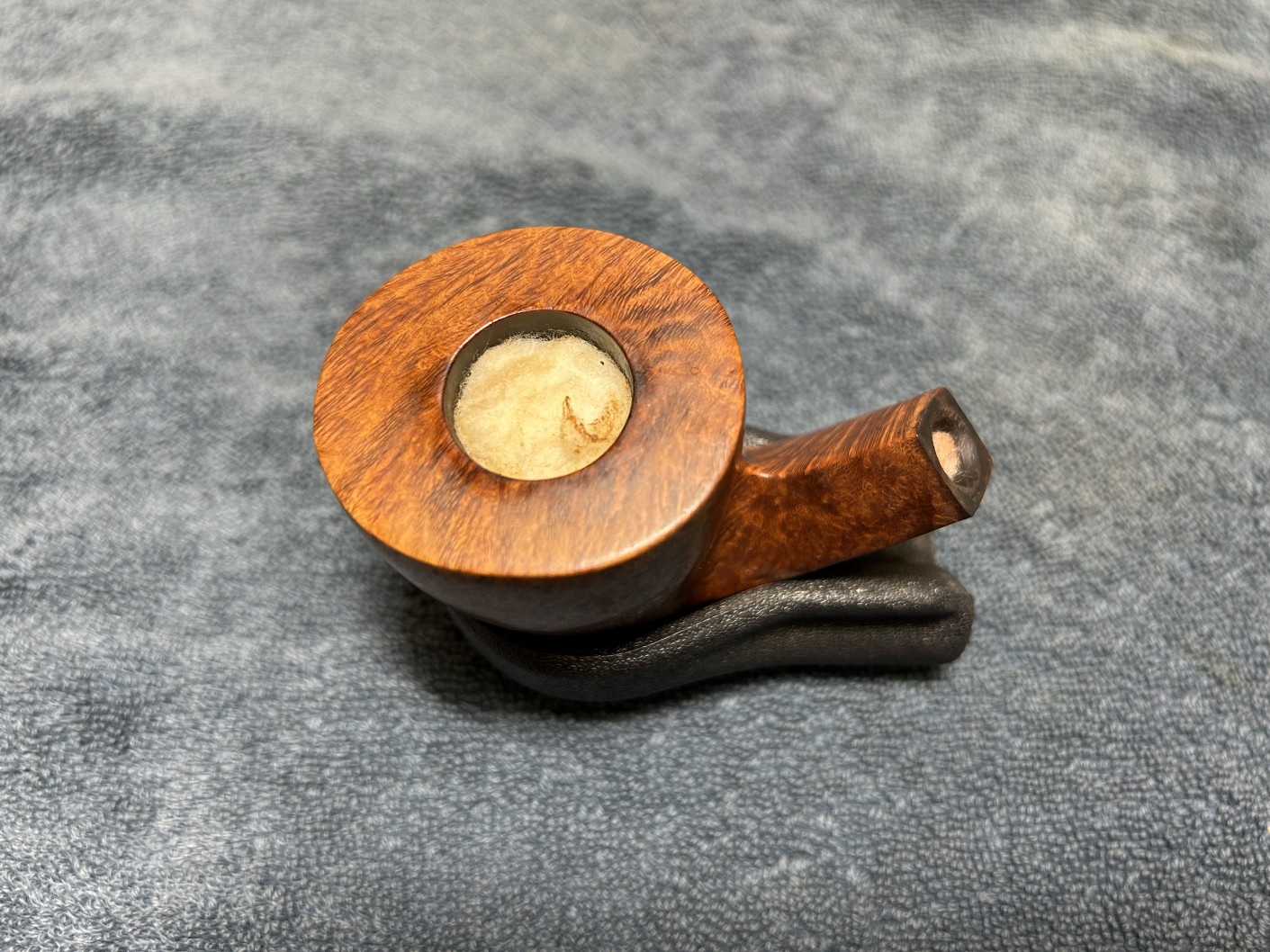
I then decided to ‘de-ghost’ the pipe – that is to say, exorcize the remaining filth from the briar. I filled the bowl and the shank with cotton balls, then saturated them with 99% isopropyl alcohol. I let the stummel sit overnight. This caused the remaining oils, tars and smells to leach out into the cotton.

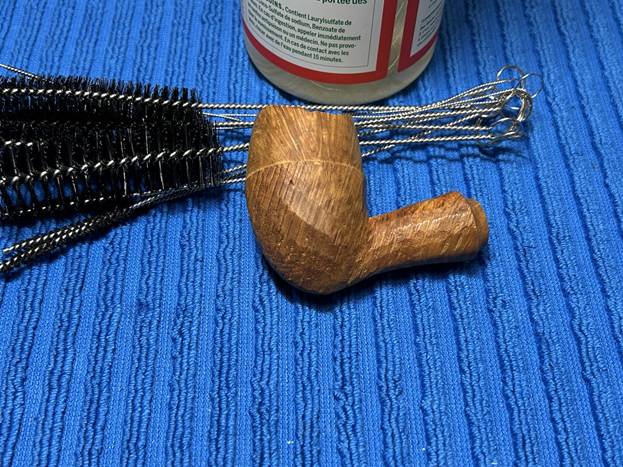
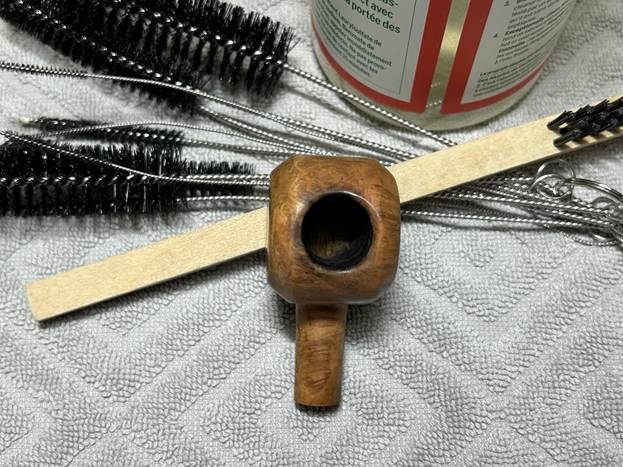
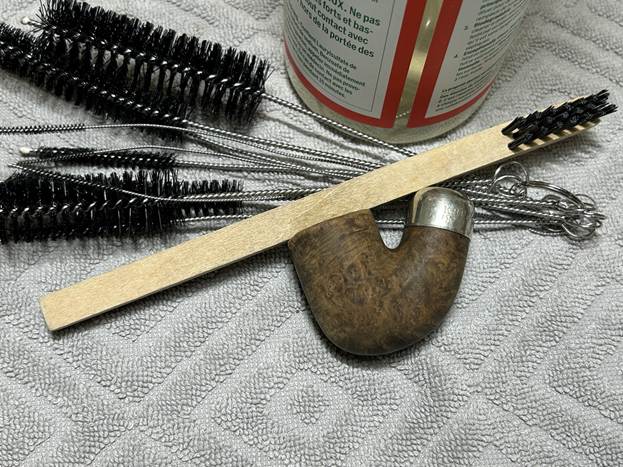
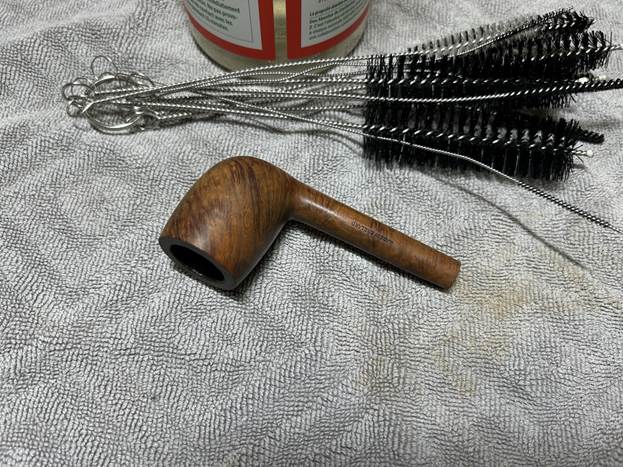
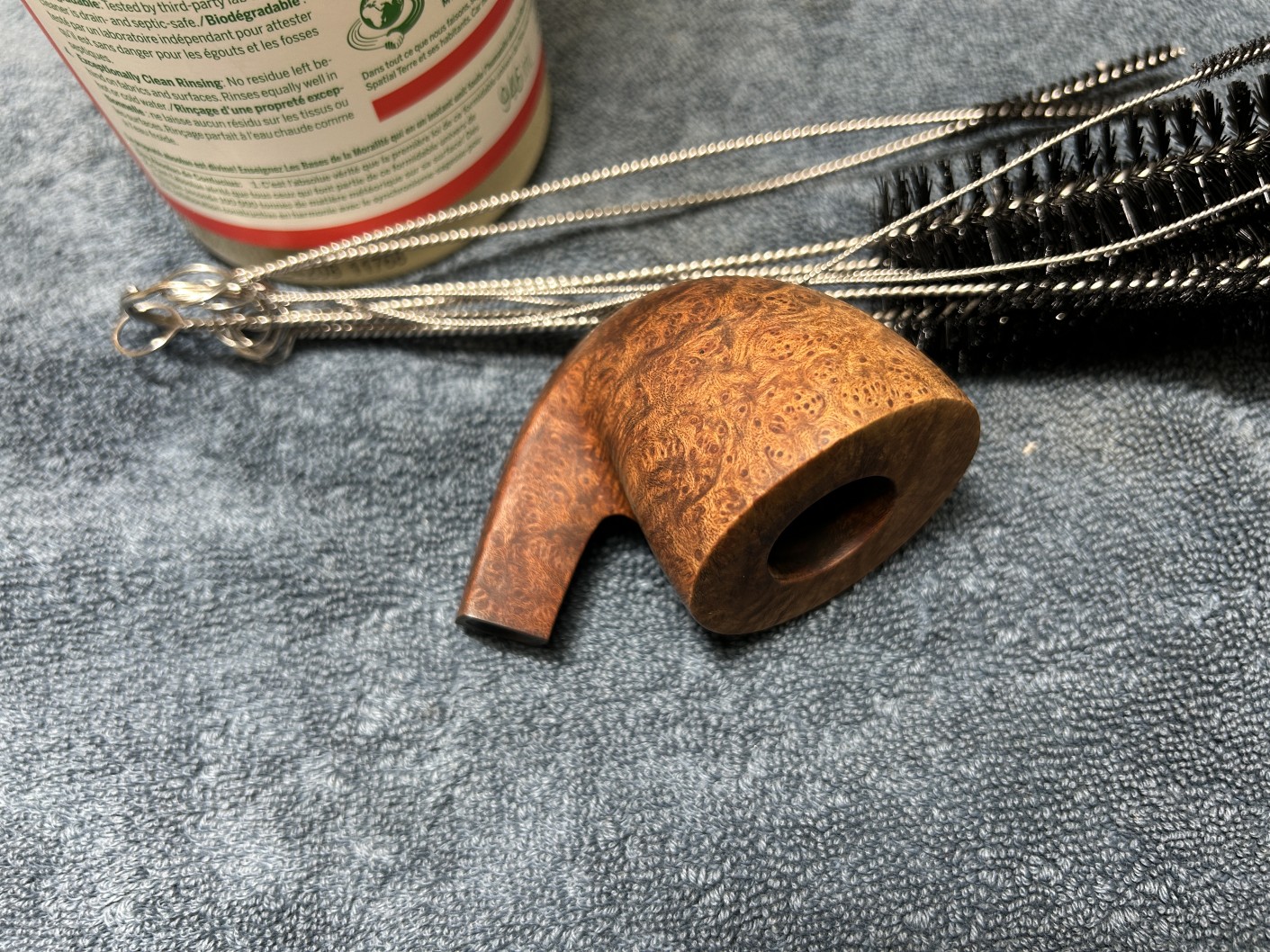
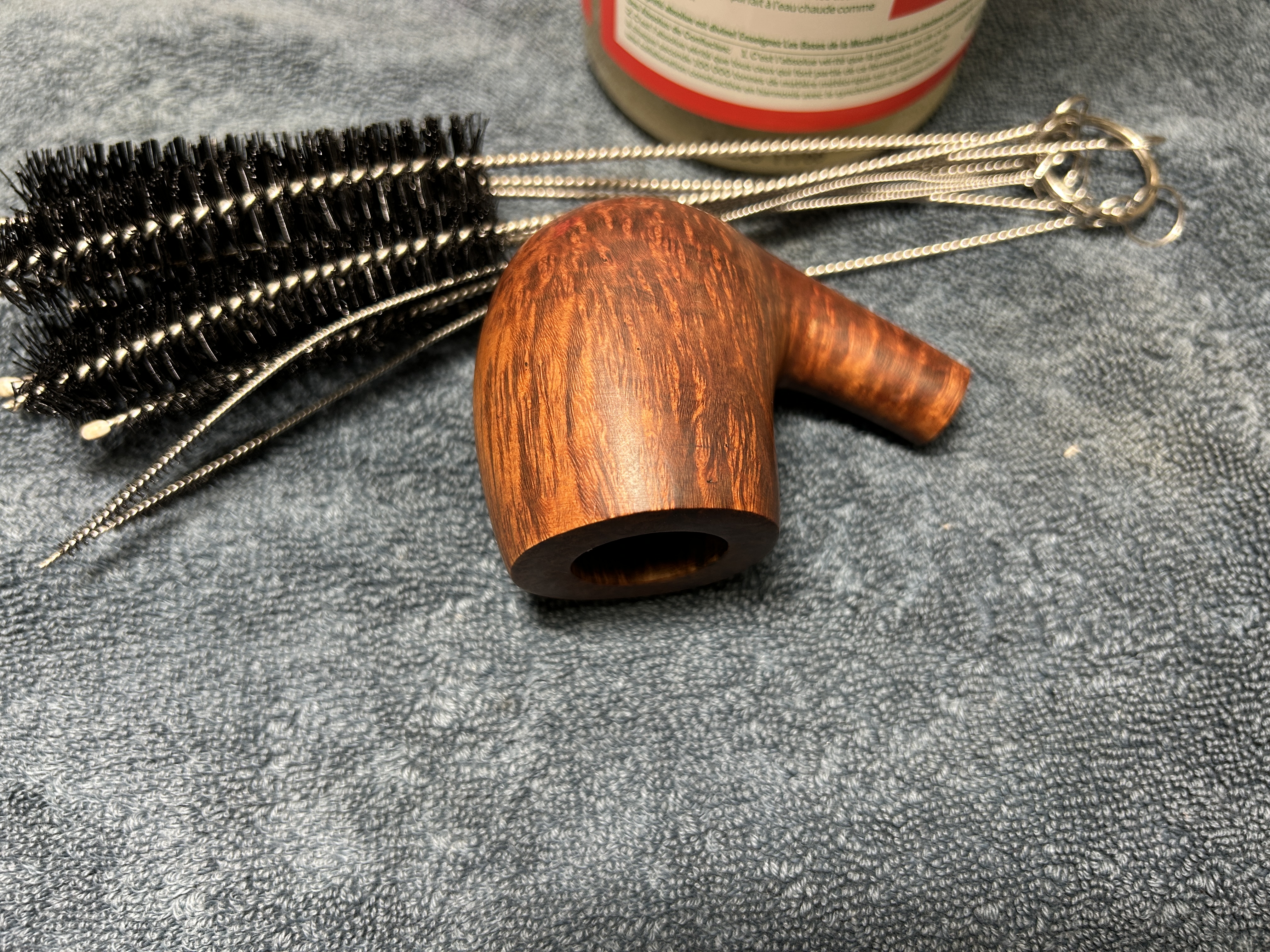
To tidy up the briar, I wiped down the outside, using a solution of a pH-neutral detergent and some distilled water, with cotton rounds. I also used a toothbrush in the crevices. This did a good job of cleaning any latent dirt on the surface of the briar. The last step of the cleaning process was to scour the inside of the stummel with the same mild detergent and tube brushes. This was the culmination of a lot of hard work in getting the pipe clean.

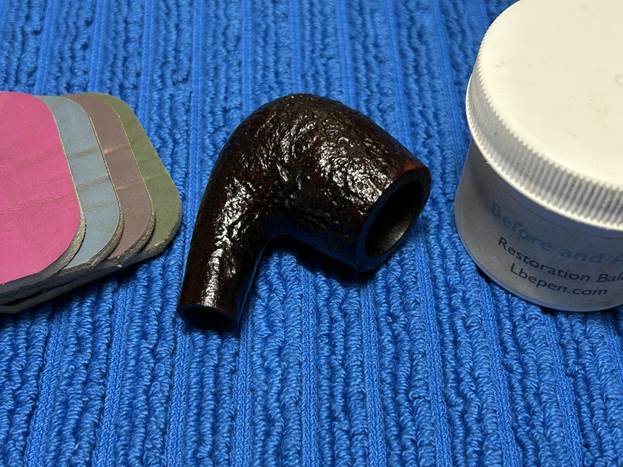
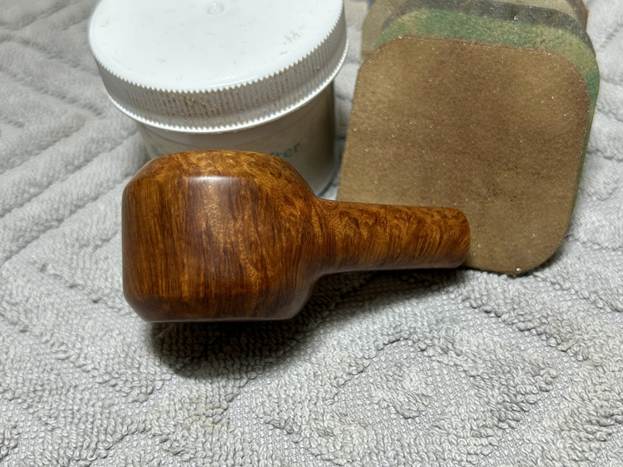
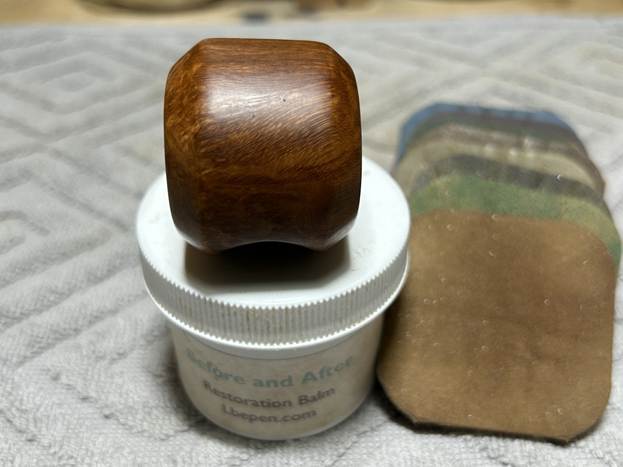
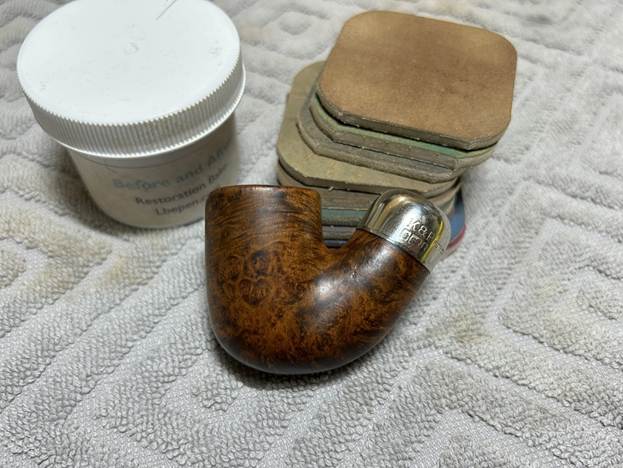
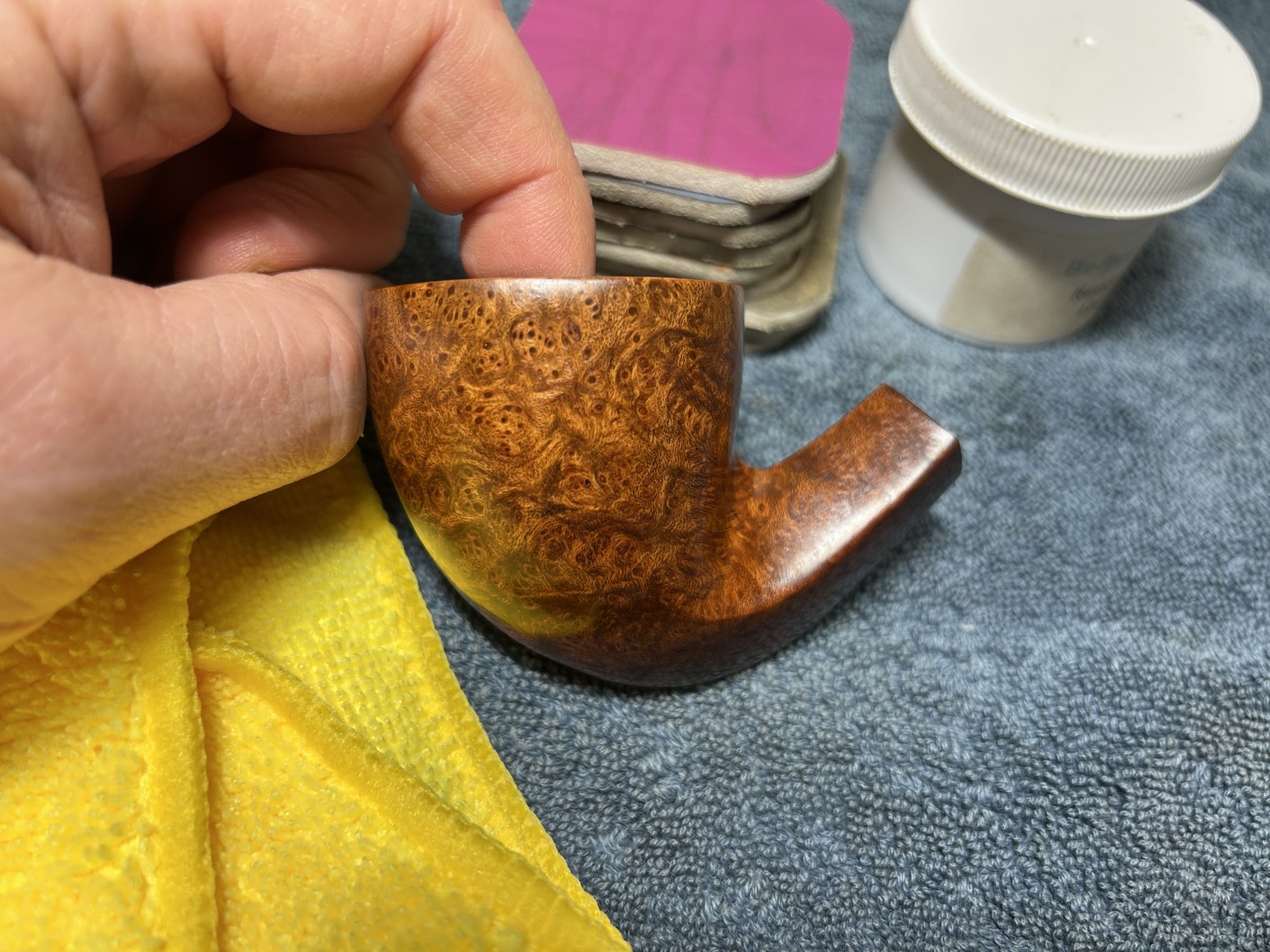
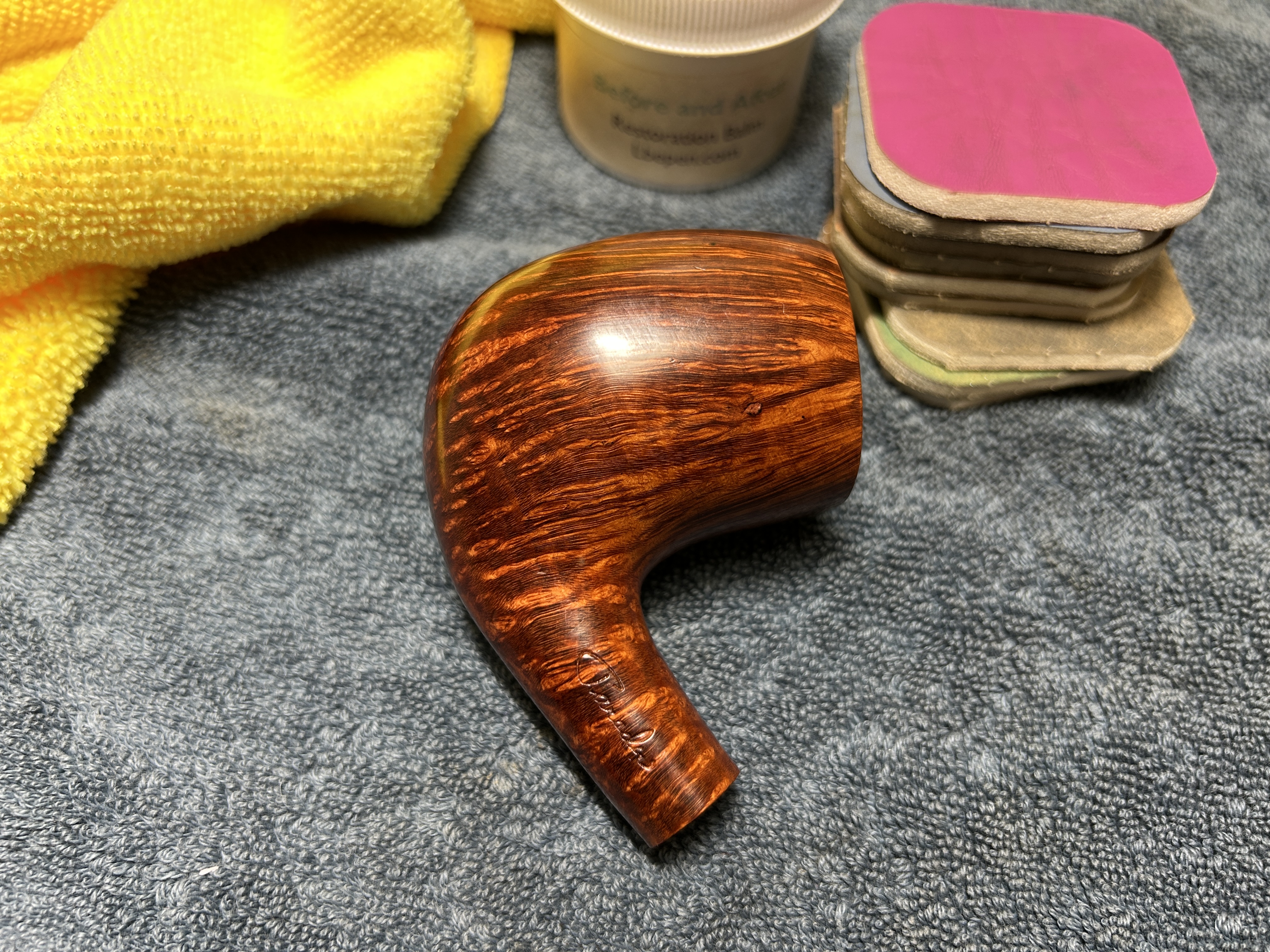
I gave a quick pass of the micromesh pads on the smooth bit of briar on the shank. I rubbed some LBE Before & After Restoration Balm into the briar and let it sit for 30 minutes or so. The balm moisturizes the wood and gives a beautiful depth to the briar. I then buffed the stummel with a microfibre cloth.

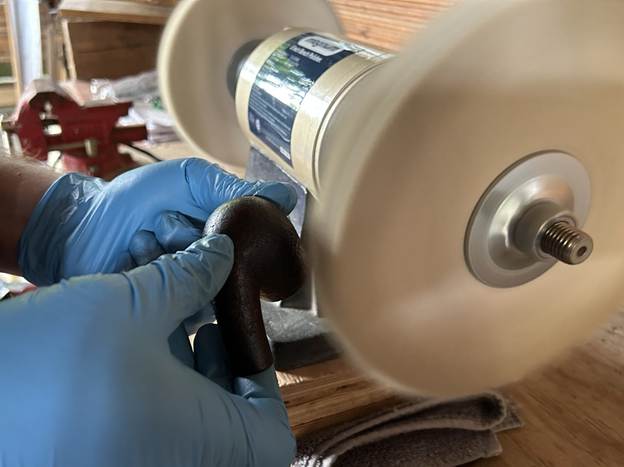
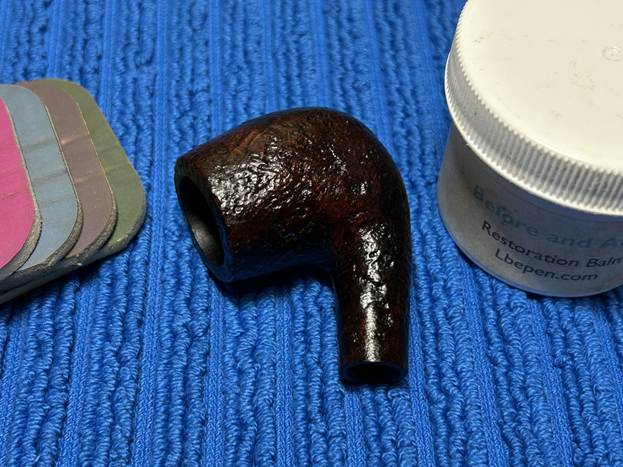
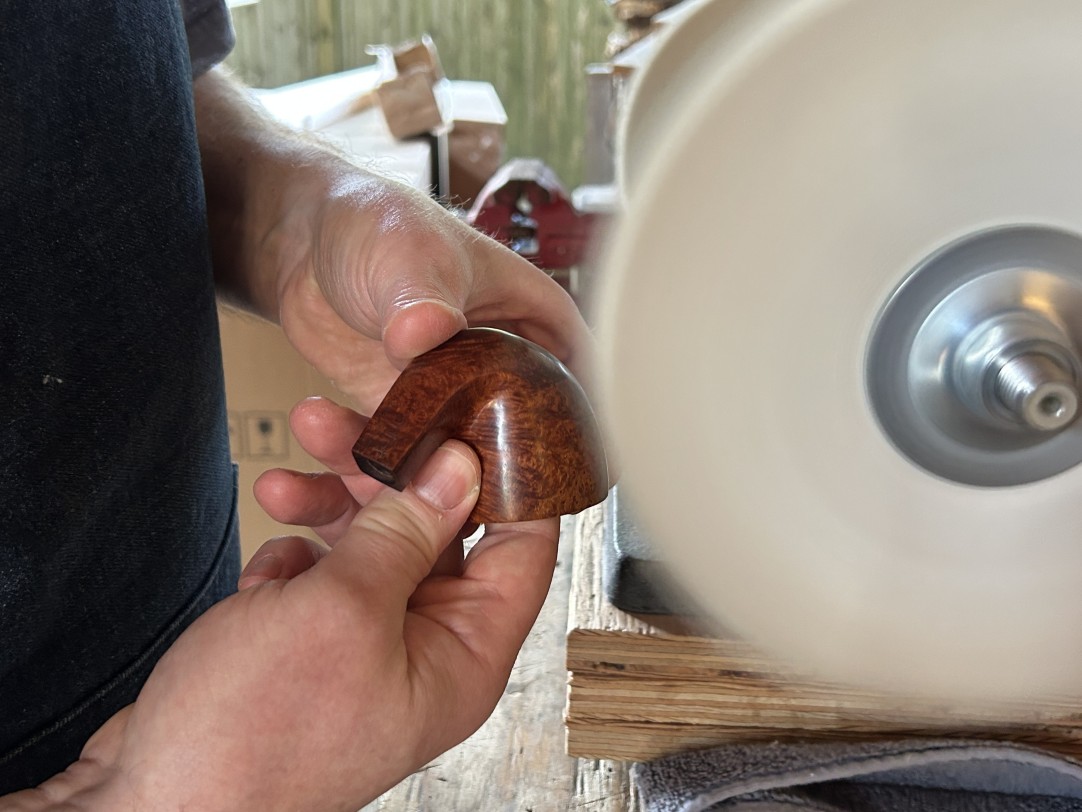
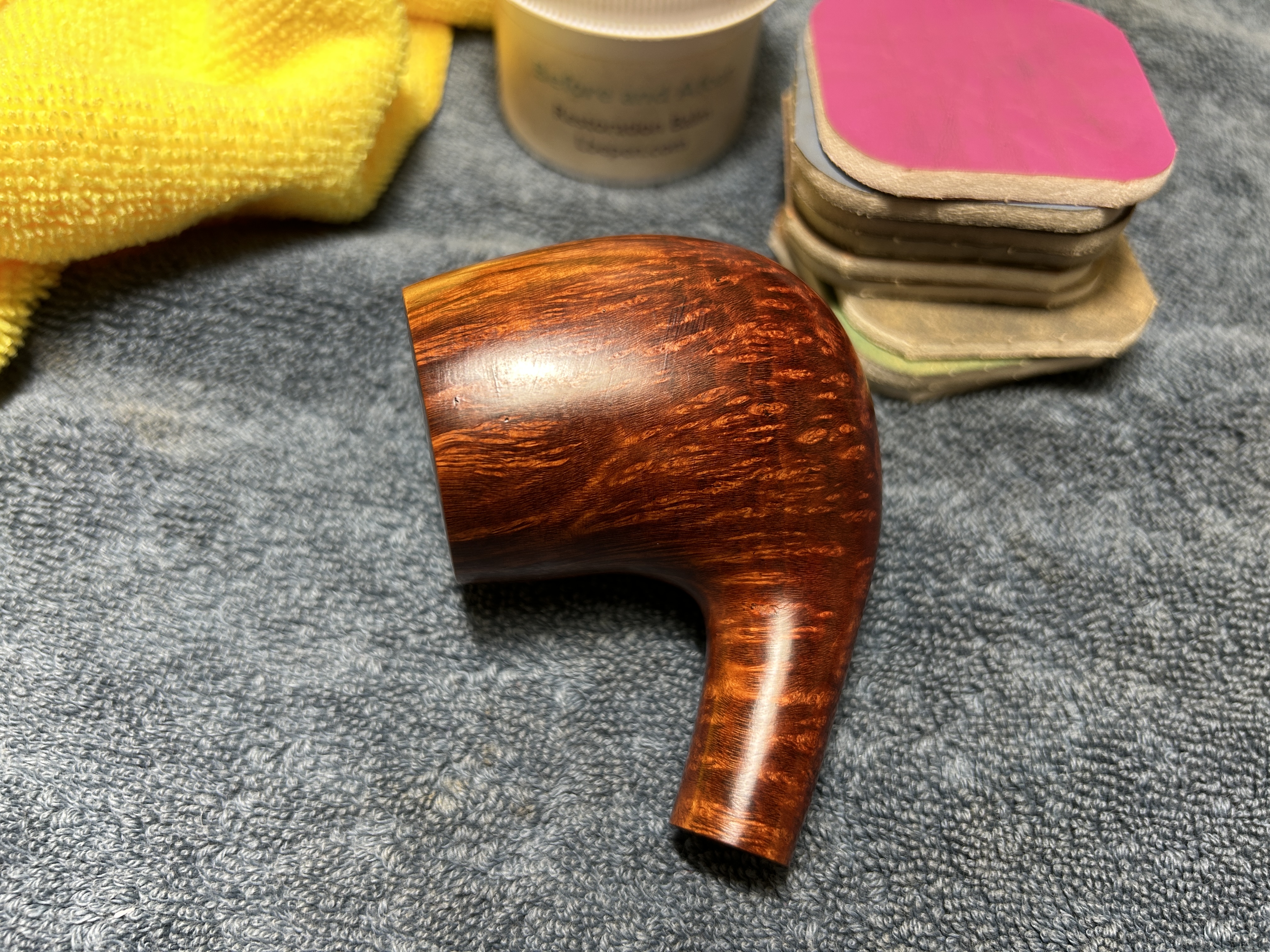
For the final step, I took the pipe to my bench polisher and carefully buffed it – first with a blue diamond compound, then with three coats of conservator’s wax. This procedure makes the pipe look its best – the stummel sings and the stem glows.

All done! This Torben Dansk 16 sandblasted bent billiard looks fantastic again and is ready to be enjoyed by its next owner. I am pleased to announce that this pipe is for sale! If you are interested in acquiring it for your collection, please have a look in the ‘Danish’ section of the store here on Steve’s website. You can also email me directly at kenneth@knightsofthepipe.com. The approximate dimensions of the pipe are as follows: length 5⅜ in. (138 mm); height 1⅞ in. (48 mm); bowl diameter 1⅓ in. (34 mm); chamber diameter ¾ in. (20 mm). The weight of the pipe is 1¼ oz. (36 g). I hope you enjoyed reading the story of this pipe’s restoration as much as I enjoyed restoring it. If you are interested in more of my work, please follow me here on Steve’s website or send me an email. Thank you very much for reading and, as always, I welcome and encourage your comments.

A Handsome Old Bruyere 56 Prince with a Special ‘Sitter’ Feature


by Kenneth Lieblich

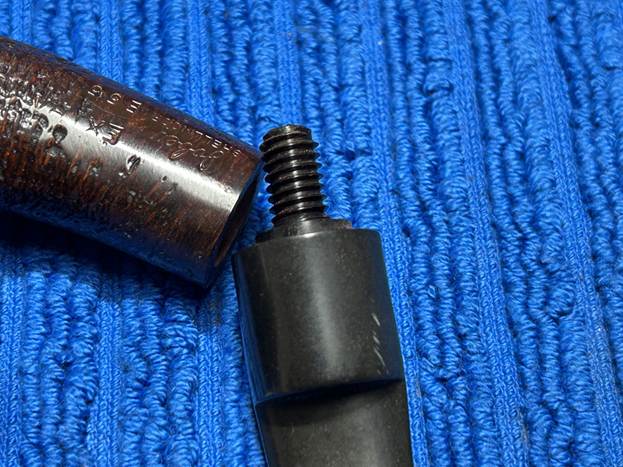
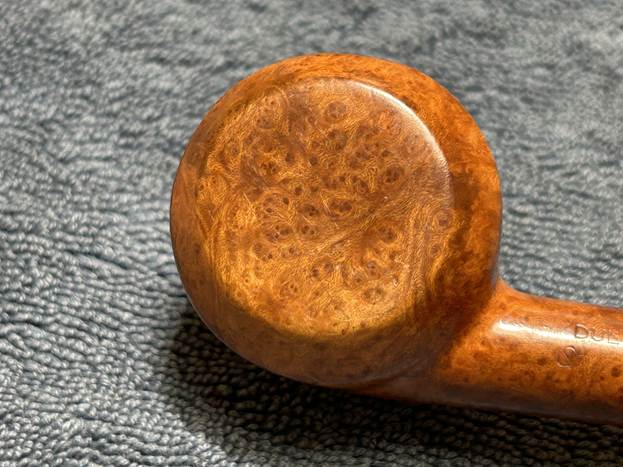
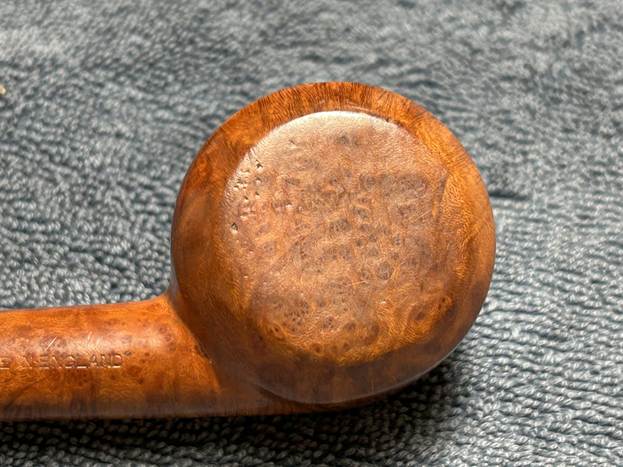
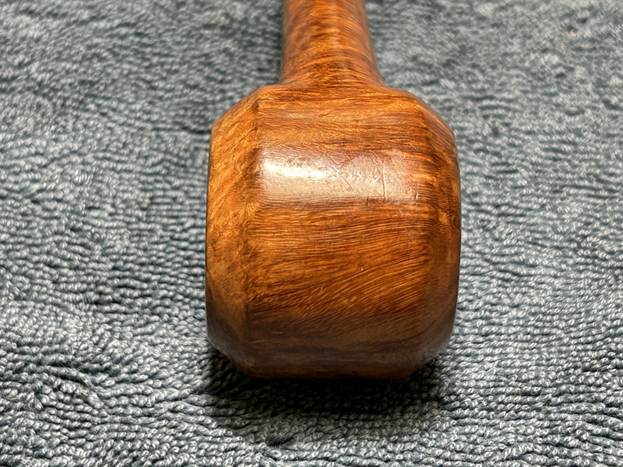
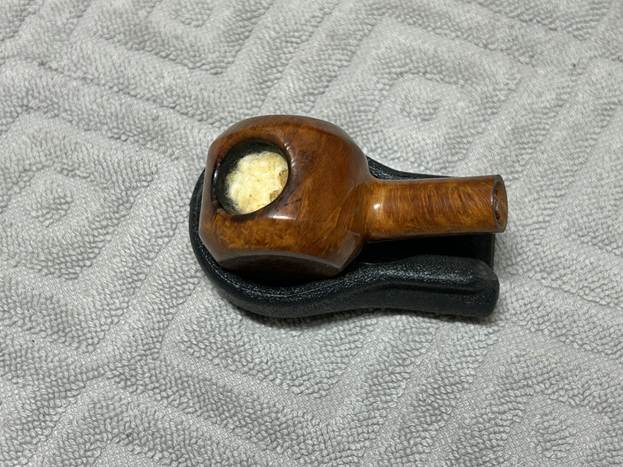
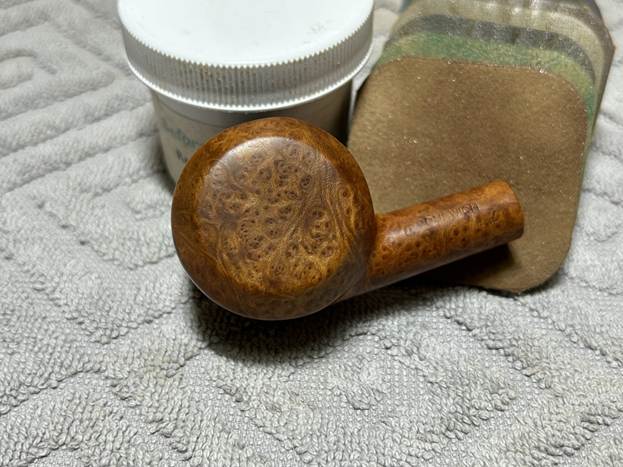
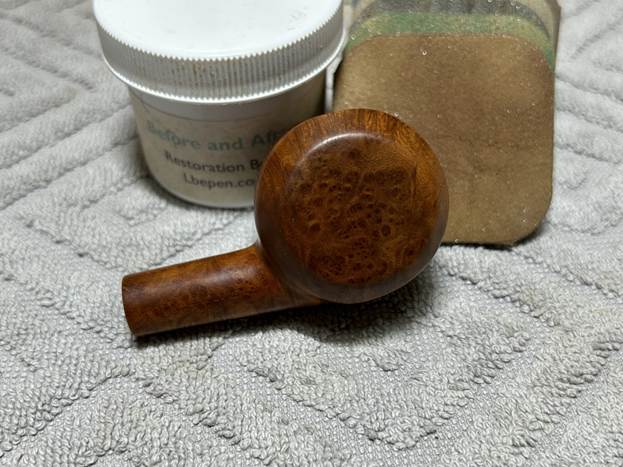
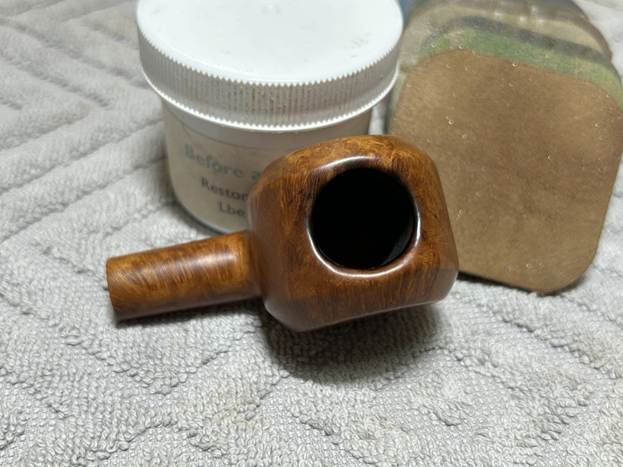
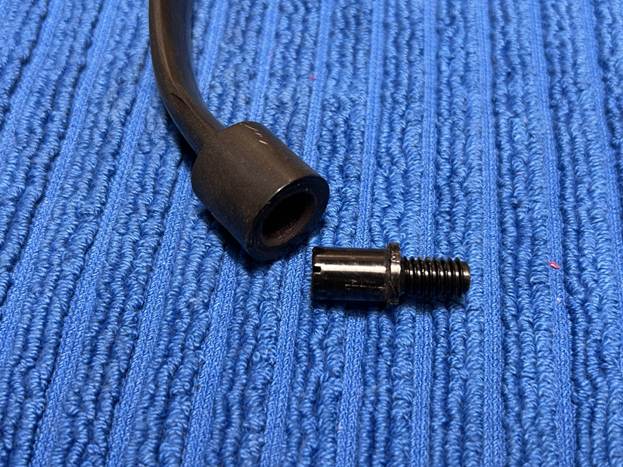
This pipe is quite fascinating and quite delightful, as it has a highly unusual feature. We don’t normally associate the prince pipe shape with the function of being a ‘sitter’, but this one has that feature – and with a screw-in base. Really nifty! I found it at one of those ‘antique’ fairs. You know the sort: the stuff they are selling makes the word ‘antique’ do an awful lot of heavy lifting. Anyway, I saw the pipe, thought it was good-looking, and then turned it over. Wow. It has a base that screws into the bottom of the bowl with a bone tenon. I thought that this one was really interesting – I hope you will too. This is a great pipe for the collector of unusual pieces.

Let’s look at the markings, because the origins of this pipe are a bit mysterious. Hopefully, the markings can help us. On the left side of the shank, we see Old Bruyere. On the right side of the shank, we see Made in England. Finally, on the underside of the shank, we see the shape number 56.

It seemed to me that this pipe was likely made by one of the big English makers. Comoy and Hardcastle do use the phrase ‘Old Bruyere’ on some of their pipes, but that isn’t convincing evidence. The shape number doesn’t correspond to Barling, Bewlay, Charatan, Comoy, Hardcastle, or Sasieni – but Orlik does fit. They do have a prince shape that is numbered 56. I can’t guarantee it, but I think this is likely to have been made by Orlik. My only hesitation is that the Orlik 56 is a quarter-bent prince – the straight prince is 55. Who knows? Alas, I haven’t worked it out. I suspect that this pipe is an experiment – and a really neat one, at that.

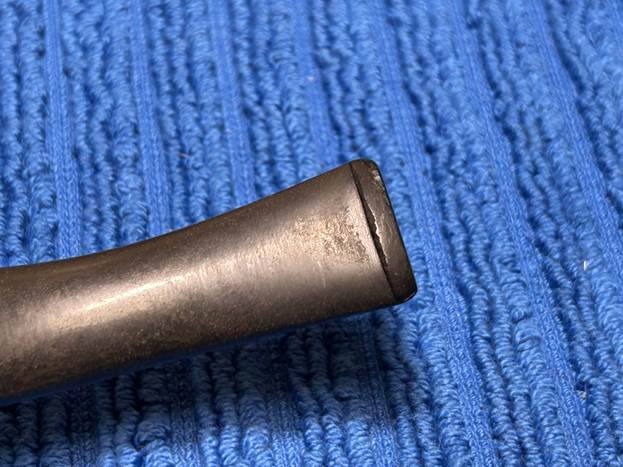
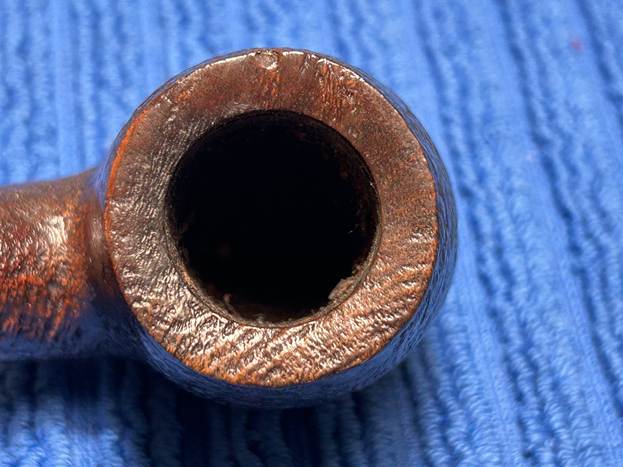
The condition of the pipe is great. The pipe has hardly been smoked. The bowl is clean and the briar is lovely. There are some very slight dents, but I can deal with those. The stem is also in good shape. There are more tooth marks than one would expect of a pipe that has been seldom smoked, but no big deal. The tenon in the base looks sound, clean, and firm.

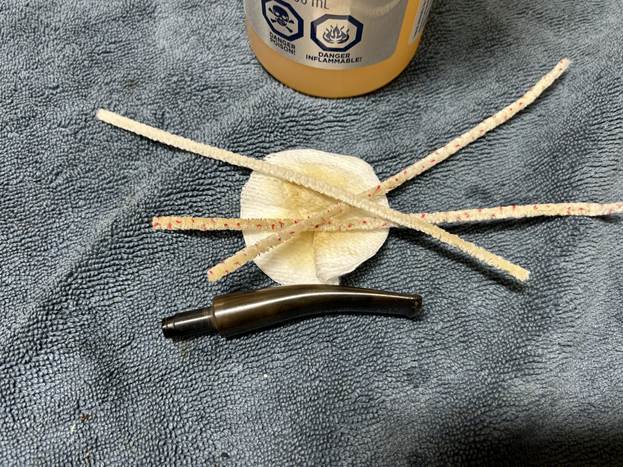
I used isopropyl alcohol on a few cotton rounds and wiped down the stem to provide an initial cleaning before moving on to the next steps. The primary cleaning came next. I disinfected the inside of the stem with both pipe cleaners and cotton swabs dipped in lemon-infused 99% isopropyl alcohol. I scrubbed thoroughly to make sure the interior was very clean.

The goal of the next step is the removal (or minimization) of oxidation. Going to my sink, I used cream cleanser, cotton rounds, and a toothbrush, and scoured the stem to remove as much surface oxidation as possible. As the photos show, the result was a hideous, ochre-coloured mess – but better off the stem than on it.

As the stem was now clean and dry, I set about fixing the marks in the vulcanite. This was done by filling those divots with black cyanoacrylate adhesive, impregnated with carbon and rubber. I left this to cure and moved on.

The penultimate step for the stem is sanding. First, with my set of needle files, I reduced the bulk of the cyanoacrylate repairs. I removed the excess adhesive as near to the surface as possible, without cutting into the vulcanite. Following that, I used all nine of the micromesh sanding pads (1,500 through 12,000 grit) to sand out flaws, even out the vulcanite, and provide gentle polishing of the finished surface. I also applied pipe-stem oil while using the last five micromesh pads. There was a wonderful, deep black shine to the stem when I was done.
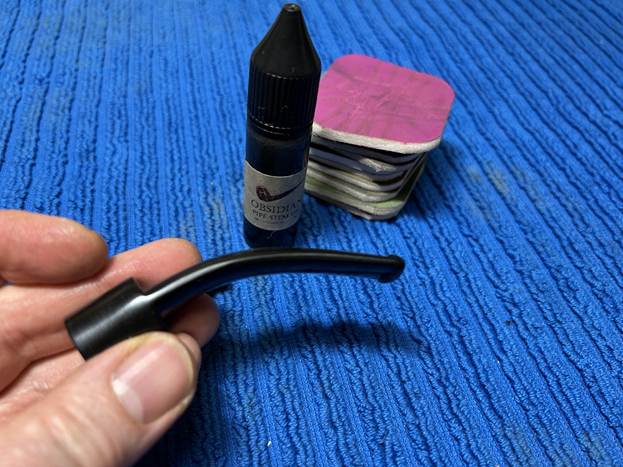
As the stem was (nearly) complete, I moved on to the stummel. The first step was to ream out the bowl – that is to say, remove all the cake inside the bowl. Of course, there wasn’t really much. I used a piece of sandpaper taped to a wooden dowel to clean the inside.

Similar to the stem, I then cleaned the stummel with both pipe cleaners and cotton swabs dipped in lemon-infused 99% isopropyl alcohol. Again, not too much here.

To tidy up the briar, I wiped down the outside, using a solution of a pH-neutral detergent and some distilled water, with cotton rounds. I also used a toothbrush in the crevices. This did a good job of cleaning any latent dirt on the surface of the briar. The last step of the cleaning process was to scour the inside of the stummel with the same mild detergent and tube brushes. This was the culmination of a lot of hard work in getting the pipe clean.

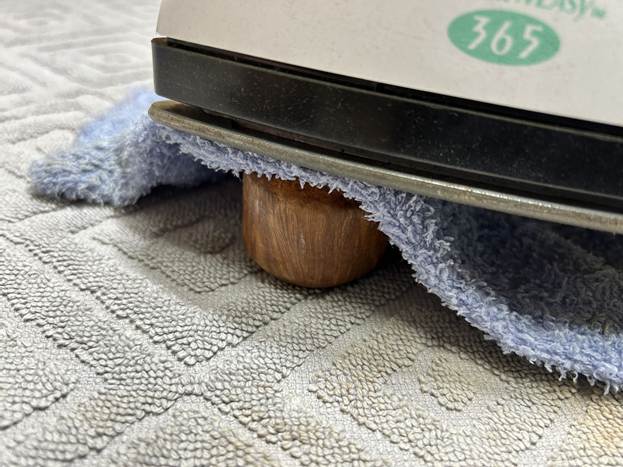
Having completed that, I was able to address the nicks on the rim and the bowl. I dug out my iron and a damp cotton flannel cloth. By laying the cloth over the affected areas and applying the iron to it, the hot and moist steam can cause the wood to swell slightly and return to shape. There was considerable improvement!

I used all nine micromesh pads (1,500 through 12,000 grit) to sand the outside of the stummel and finish it off. This sanding minimizes flaws in the briar and provides a beautiful smoothness to the wood. I rubbed some LBE Before & After Restoration Balm into the briar and let it sit for 30 minutes or so. The balm moisturizes the wood and gives a beautiful depth to the briar. I then buffed the stummel with a microfibre cloth.

For the final step, I took the pipe to my bench polisher and carefully buffed it – first with a blue diamond compound, then with three coats of carnauba wax. This procedure makes the pipe look its best – the stummel sings and the stem glows.

All done! This Old Bruyere 56 prince sitter with a screw-in base looks fantastic again and is ready to be enjoyed by its next owner. I am pleased to announce that this pipe is for sale! If you are interested in acquiring it for your collection, please have a look in the ‘British’ section of the store here on Steve’s website. You can also email me directly at kenneth@knightsofthepipe.com. The approximate dimensions of the pipe are as follows: length 5⅞ in. (149 mm); height 1¾ in. (45 mm); bowl diameter 1⅝ in. (41 mm); chamber diameter ¾ in. (20 mm). The weight of the pipe is 1¼ oz. (36 g). I hope you enjoyed reading the story of this pipe’s restoration as much as I enjoyed restoring it. If you are interested in more of my work, please follow me here on Steve’s website or send me an email. Thank you very much for reading and, as always, I welcome and encourage your comments.

Giving Three Old Pipes New Life


by Kenneth Lieblich

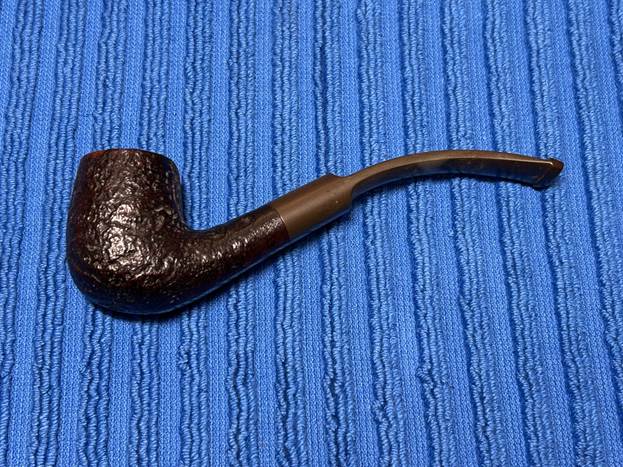
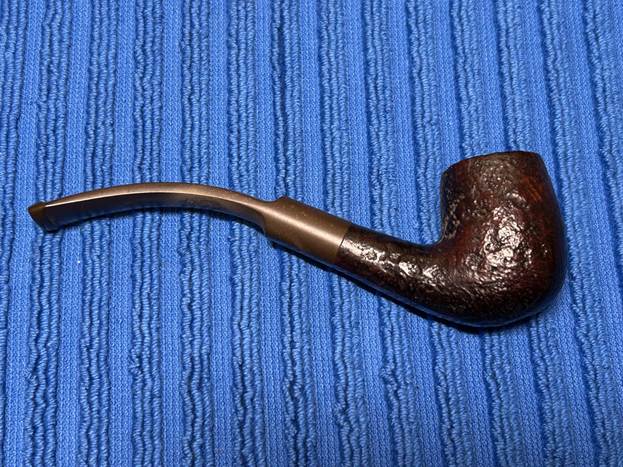
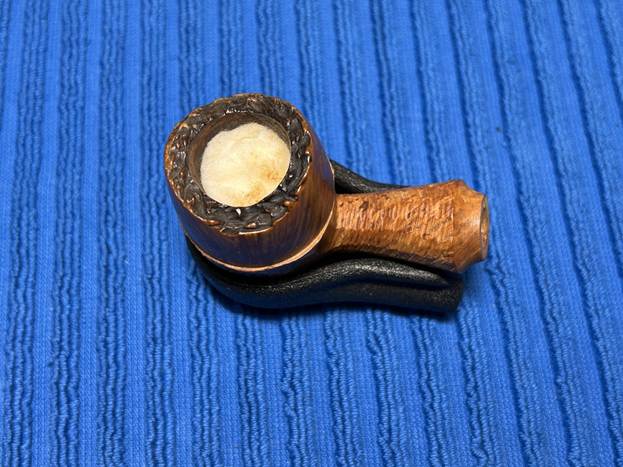
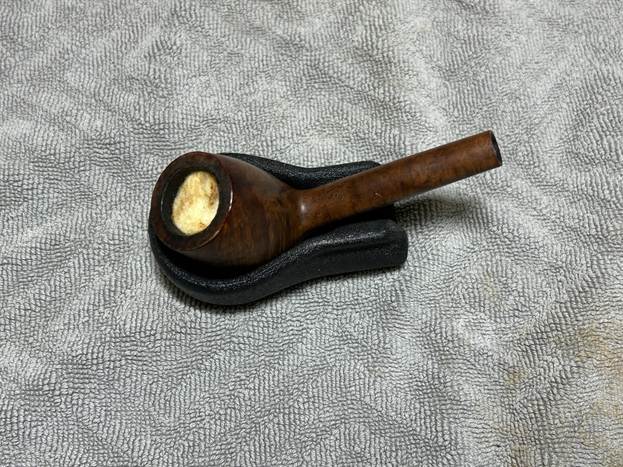
I recently received a package of three pipes from a fine gentleman in Texas. These old pipes belonged to his father-in-law and he was hoping to bring them back to working order. He wanted to get them smoking again after 20+ years of inactivity. I was happy to receive them and happy to work on them. I decided to do a blog about all three at once, so here we go. The three pipes are quite handsome. One is a little Savinelli 105 (probably a Petite) with a military tenon and acrylic shank extension. The second is a Dr Grabow bent billiard with a filter system and acrylic stem. Third is a large, round meerschaum with a variegated acrylic stem. You can see from the photos that they are attractive, very serviceable pipes.

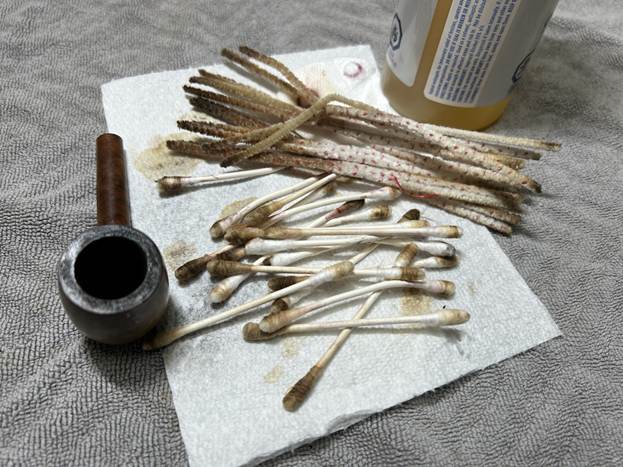
Let’s get started. I used isopropyl alcohol on a few cotton rounds and wiped down the three stems to provide an initial cleaning of filth before moving on to the next steps. The primary cleaning came next. I disinfected the inside of the stems with both pipe cleaners and cotton swabs dipped in lemon-infused 99% isopropyl alcohol. I scrubbed thoroughly to make sure the interior was very clean. I used lots and lots pipe cleaners and cotton swabs.

The goal of the next step is the removal (or minimization) of oxidation. There was only one stem (the Savinelli) that was made of vulcanite and, therefore, in need of de-oxidation. Going to my sink, I used cream cleanser, cotton rounds, and a toothbrush, and scoured the stem to remove as much surface oxidation as possible. As the photos show, the result was a hideous, ochre-coloured mess – but better off the stem than on it.

Once the stem was reasonably clean, I soaked it overnight in some Briarville Stem Oxidation Remover. This solution works to draw oxidation in the stem to the surface of the vulcanite. This is a major aid and an important step in ensuring a clean stem. The following day, I drew out the stem from its bath and scrubbed the lingering fluid with a toothbrush. The oxidation was very deep on this pipe and there will always be some remnants of it.

After this, I painted the Savinelli logo on the stem with some enamel nail polish. I restored the logo carefully and let it fully set before proceeding.

As the stems were now clean and dry, I set about fixing the marks and dents. This was done by filling those divots with black cyanoacrylate adhesive (impregnated with carbon and rubber) on the Dr Grabow stem and clear cyanoacrylate adhesive on the meerschaum stem. I left them to cure and moved on. The Savinelli stem didn’t need this treatment. The photos don’t show this very well, but the meer’s stem had very deep dents that required quite a bit of attention.

The penultimate step for the stems is sanding. First, with my set of needle files, I reduced the bulk of the cyanoacrylate repairs. I removed the excess adhesive as near to the surface as possible, without cutting into the stems. Following that, I used all nine of the micromesh sanding pads (1,500 through 12,000 grit) to sand out flaws, even things out, and provide gentle polishing of the finished surface. I also applied pipe-stem oil while using the last five micromesh pads. There was a wonderful, deep shine to all three stems when I was done. I am embarrassed to say that I forgot to take any photos of this step. You’ll just have to take my word for it.

As the stem were (nearly) complete, I moved on to the two briar stummels. The first step was to ream out the bowls – that is to say, remove all the cake. This accomplished a couple of things. First (and most obviously), it cleaned the bowl and provided a refurbished chamber for future smoking. Second, when the old cake was removed, I could inspect the interior walls of the bowls and determine if there was damage or not. I used a reamer, a pipe knife, and a piece of sandpaper taped to a wooden dowel. Collectively, these ensured that all the debris was removed.

Same sort of thing (kind of) for the meerschaum bowl. Normally, as above, I would use a reamer to remove the built-up cake inside the bowl, but meerschaum has the potential to crack in those circumstances. Instead, I used just the pipe knife and the sandpaper/dowel. There wasn’t too much.

Similar to the stems, I then cleaned the stummels with both pipe cleaners and cotton swabs dipped in lemon-infused 99% isopropyl alcohol. With pipes this dirty, it took quite a while and much cotton to clean. With the meer, I did this carefully because too much soaking can cause meerschaum to soften. In this case, I moved quickly, nothing softened, and everything turned out well.

I then decided to ‘de-ghost’ the two briar pipes – that is to say, exorcize the remaining filth from the briar. I filled the bowls and the shanks with cotton balls, then saturated them with 99% isopropyl alcohol. I let the stummels sit overnight. This caused the remaining oils, tars and smells to leach out into the cotton. However, I didn’t use this treatment on meerschaum for the aforementioned reasons.

My next step was to remove the lava on the rims of the two briar pipes. For this, I took a piece of machine steel and gently scraped the lava away. The metal’s edge is sharp enough to remove what I need, but not so sharp that it damages the rims.

To tidy up the briar pipes, I wiped down the outsides, using a solution of a pH-neutral detergent and some distilled water, with cotton rounds. I also used a toothbrush in the crevices. This did a good job of cleaning any latent dirt on the surface of the briar. The last step of the cleaning process was to scour the inside of the stummels with the same mild detergent and tube brushes. This was the culmination of a lot of hard work in getting the pipes clean. Again, this was only done on the briar pipes.

The Dr Grabow had a serious nick at the end of the shank. I filled this in with CA glue. Worked perfectly.

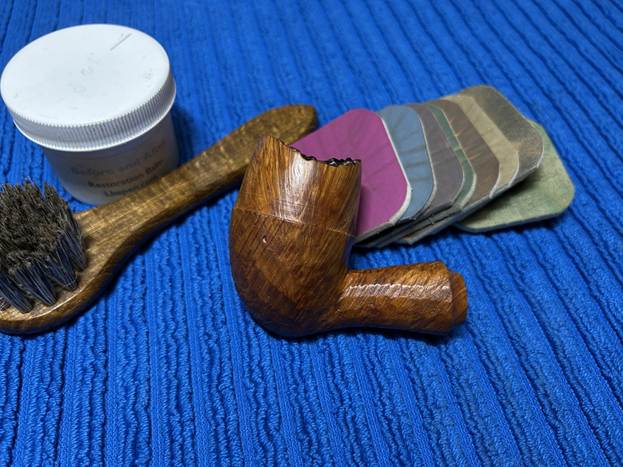
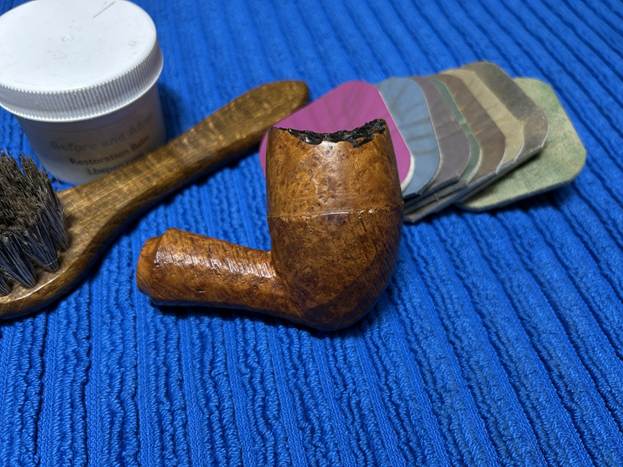
I used all nine micromesh pads (1,500 through 12,000 grit) to sand the outside of all three stummels and finish them off. This sanding minimizes flaws in the briar (and meerschaum) and provides a beautiful smoothness to the surfaces. I rubbed some LBE Before & After Restoration Balm into the two briar pipes and let them sit for 30 minutes or so. The balm moisturizes the wood and gives a beautiful depth to the briar. I then buffed the stummels with a microfibre cloth.

I then applied some Clapham’s Beeswax Finish to the meerschaum and also let it sit for about 30 minutes. As meerschaum pipes don’t do well on a bench-polisher, I then buffed it with a microfibre cloth. I repeated this process and left it – it sure was pretty!

For the final step, I took the two briar pipes (only) to my bench polisher and carefully buffed them – first with a blue diamond compound, then with three coats of carnauba wax. This procedure makes the pipes look their best – the stummels sing and the stems glow.

All done! These three handsome pipes look fantastic again and I am delighted with the results. I’m sure the Texan gentleman will be too. Stupidly, I forgot to take measurements of the pipes before I returned them. However, I hope you enjoyed reading the story of the pipes’ restoration as much as I enjoyed restoring them. If you are interested in more of my work, please follow me here on Steve’s website or send me an email at kenneth@knightsofthepipe.com. Thank you very much for reading and, as always, I welcome and encourage your comments.

Restoring a WDC Demuth Aristocrat 88 Churchwarden


by Kenneth Lieblich

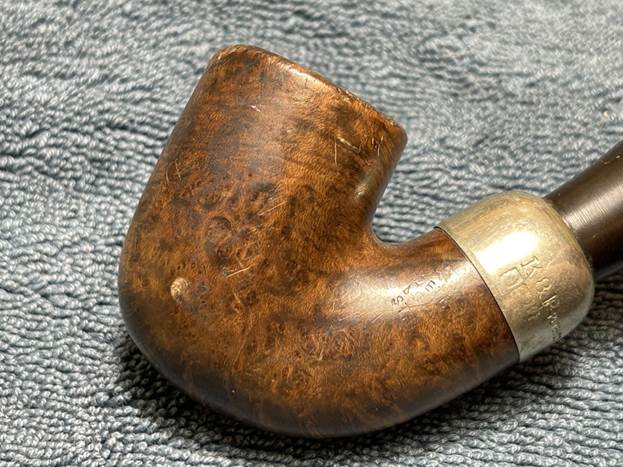
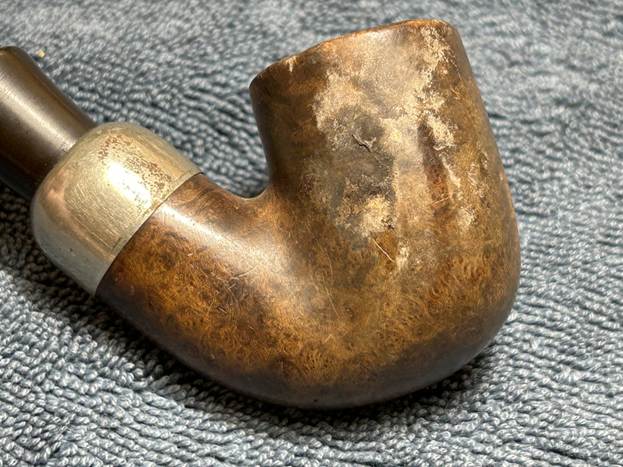
Here is a beautiful, early-twentieth century churchwarden for your perusal. I’ve had it sitting around for a little while, and now it’s time to get it cleaned up. It’s got the typical elegant shape and feel of a regular churchwarden, but this one is a full twelve inches long. This is an old timer and I can’t wait to get it into the hands of its next owner.

As the title tells you, this pipe is from WDC – the William Demuth Company, a venerable American pipe maker. The markings are as follows: on the left side of the shank are the letters WDC inside an inverted triangle, next to Demuth [over] Aristocrat. On the right side of the shank, we read Imported [over] Briar Root. And next to those, the shape number 88. Finally, the top of the stem shows a metal representation of the invested triangle – the logo for the WDC company. The Aristocrat was one of WDC’s better lines and, indeed, this is a handsome pipe.

Pipedia has some great information on the history of the company and I encourage you to read it here. In the meantime, here is a quotation from their article:

William Demuth. (Wilhelm C. Demuth, 1835-1911), a native of Germany, entered the United States at the age of 16 as a penniless immigrant. After a series of odd jobs he found work as a clerk in the import business of a tobacco tradesman in New York City. In 1862 William established his own company. The William Demuth Company specialized in pipes, smoker’s requisites, cigar-store figures, canes and other carved objects. The Demuth Company is probably well known for the famous trademark, WDC in an inverted equilateral triangle. In 1897 Ferdinand Feuerbach joined the Demuth company and by 1903 had become the production manager. Feuerbach is credited with developing Demuth’s popular Royal Demuth and Hesson Guard Milano pipelines. He left in 1919, when Sam Frank Sr. needed an experienced pipe man to run his pipe factory, located at 168 Southern Blvd., in the Bronx. Feuerbach and Frank had been close friends since Frank started his own business in 1900 and was closely associated with the sales staff of WDC, selling their line of pipes.

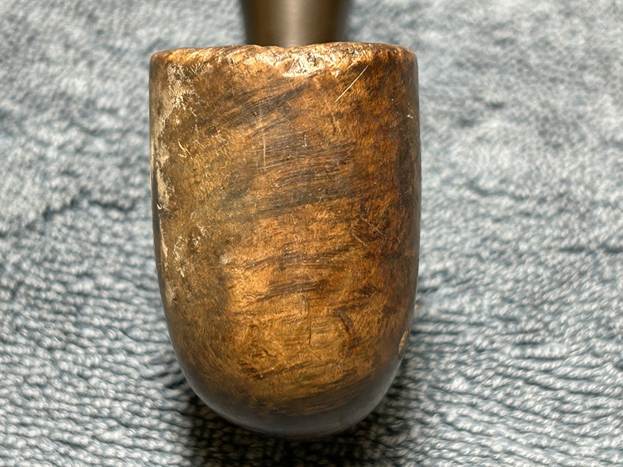
The pipe is in good condition. There are some dark marks on the rim of the briar and a bit of cake in the bowl. Nothing serious. The stem is just fine, aside from some tooth chatter.

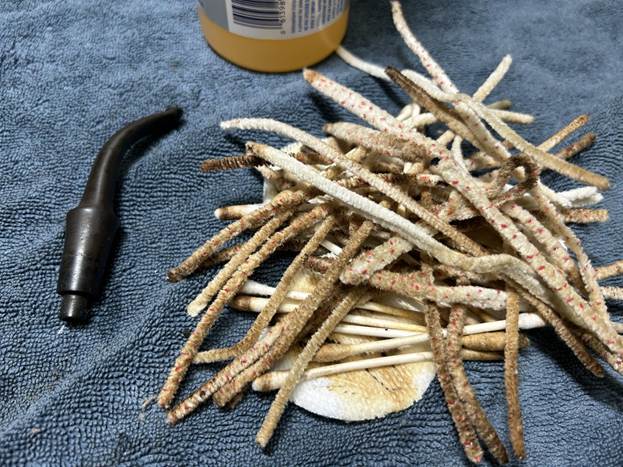
I used isopropyl alcohol on a few cotton rounds and wiped down the stem to provide an initial cleaning of filth before moving on to the next steps. The primary cleaning came next. I disinfected the inside of the stem with both pipe cleaners and cotton swabs dipped in lemon-infused 99% isopropyl alcohol. I scrubbed thoroughly to make sure the interior was very clean.

The goal of the next step is the removal (or minimization) of oxidation. Going to my sink, I used cream cleanser, cotton rounds, and a toothbrush, and scoured the stem to remove as much surface oxidation as possible. As the photos show, the result was a hideous, ochre-coloured mess – but better off the stem than on it.

As the stem was now clean and dry, I set about fixing the marks and dents in the vulcanite. This was done by filling those divots with black cyanoacrylate adhesive, impregnated with carbon and rubber. I left this to cure and moved on.

The penultimate step for the stem is sanding. First, with my set of needle files, I reduced the bulk of the cyanoacrylate repairs. I removed the excess adhesive as near to the surface as possible, without cutting into the vulcanite. Following that, I used all nine of the micromesh sanding pads (1,500 through 12,000 grit) to sand out flaws, even out the vulcanite, and provide gentle polishing of the finished surface. I also applied pipe-stem oil while using the last five micromesh pads. There was a wonderful, deep black shine to the stem when I was done.
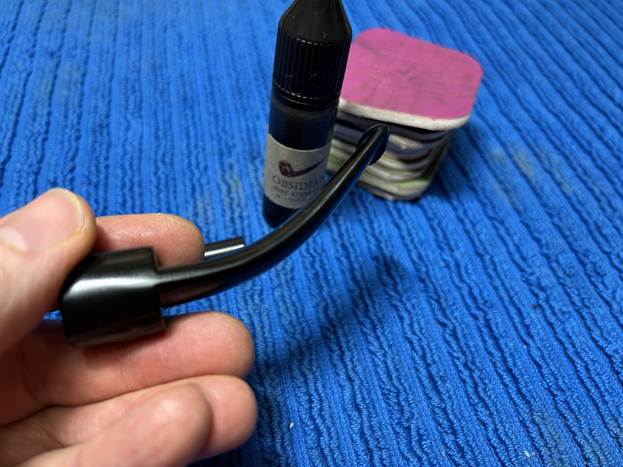
As the stem was (nearly) complete, I moved on to the stummel. The first step was to ream out the bowl – that is to say, remove all the cake inside the bowl. This accomplished a couple of things. First (and most obviously), it cleaned the bowl and provided a refurbished chamber for future smoking. Second, when the old cake was removed, I could inspect the interior walls of the bowl and determine if there was damage or not. I used a reamer and a piece of sandpaper taped to a wooden dowel. Collectively, these ensured that all the debris was removed.

Similar to the stem, I then cleaned the stummel with both pipe cleaners and cotton swabs dipped in lemon-infused 99% isopropyl alcohol. With a pipe this dirty, it took quite a while and much cotton to clean. It was pretty darn dirty.

I then decided to ‘de-ghost’ the pipe – that is to say, exorcize the remaining filth from the briar. I filled the bowl and the shank with cotton balls, then saturated them with 99% isopropyl alcohol. I let the stummel sit overnight. This caused the remaining oils, tars and smells to leach out into the cotton.

To tidy up the briar, I wiped down the outside, using a solution of a pH-neutral detergent and some distilled water, with cotton rounds. This did a good job of cleaning any latent dirt on the surface of the briar. The last step of the cleaning process was to scour the inside of the stummel with the same mild detergent and tube brushes. This was the culmination of a lot of hard work in getting the pipe clean.
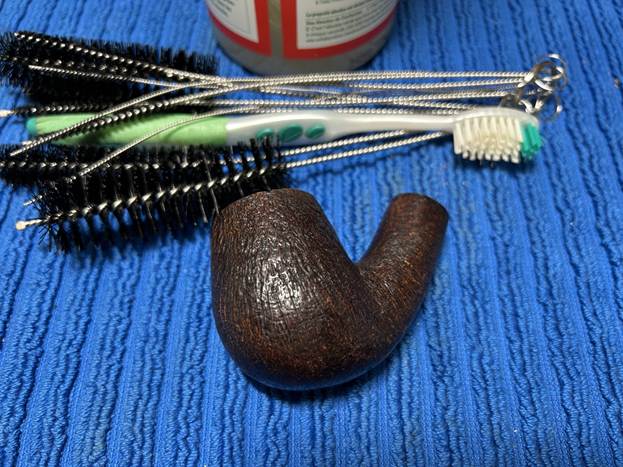
I used all nine micromesh pads (1,500 through 12,000 grit) to sand the outside of the stummel and finish it off. This sanding minimizes flaws in the briar and provides a beautiful smoothness to the wood. I rubbed some LBE Before & After Restoration Balm into the briar and let it sit for 30 minutes or so. The balm moisturizes the wood and gives a beautiful depth to the briar. I then buffed the stummel with a microfibre cloth.
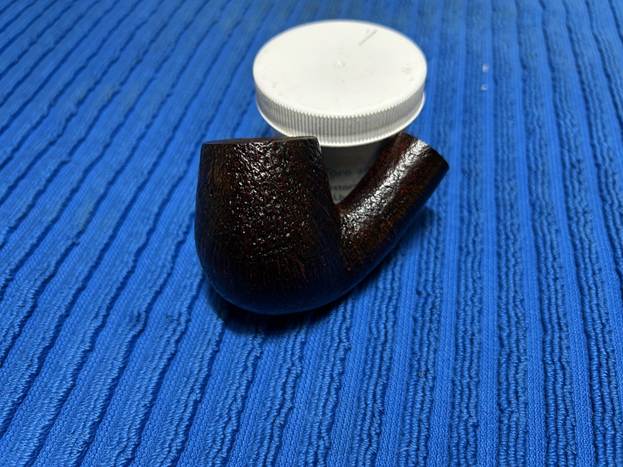
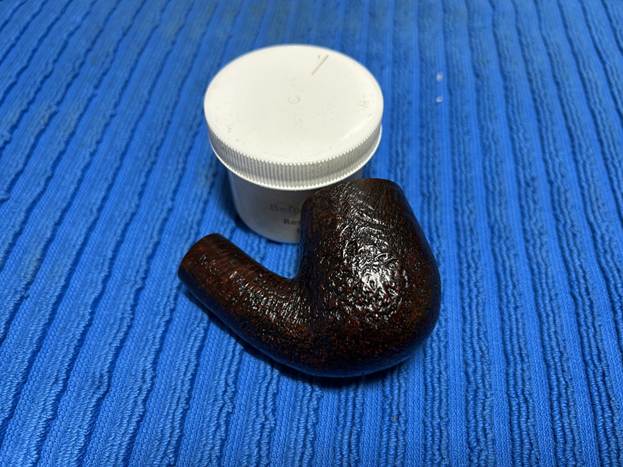
For the final step, I took the pipe to my bench polisher and carefully buffed it – first with a blue diamond compound, then with three coats of carnauba wax. This procedure makes the pipe look its best – the stummel sings and the stem glows.

All done! This WDC Demuth Aristocrat 88 churchwarden looks fantastic again and is ready to be enjoyed by its next owner. I am pleased to announce that this pipe is for sale! If you are interested in acquiring it for your collection, please have a look in the ‘American’ section of the store here on Steve’s website. You can also email me directly at kenneth@knightsofthepipe.com. The approximate dimensions of the pipe are as follows: length 12 in. (305 mm); height 1⅔ in. (42 mm); bowl diameter 1⅓ in. (33 mm); chamber diameter ¾ in. (20 mm). The weight of the pipe is 1¼ oz. (38 g). I hope you enjoyed reading the story of this pipe’s restoration as much as I enjoyed restoring it. If you are interested in more of my work, please follow me here on Steve’s website or send me an email. Thank you very much for reading and, as always, I welcome and encourage your comments.

Another Wonderful Hand-Carved Søren Freehand Bent Egg


by Kenneth Lieblich

The last few weeks have been an extraordinarily busy time for me, so I haven’t posted in a bit, but this pipe is from the same lot as the one I posted last time. I recently acquired a collection from a gentleman, now deceased, who clearly loved his pipes. They were all well used and, according to his family, he had a pipe hanging out of his mouth at all times. They were all interesting pipes, but this one called to me. It’s a Søren Hand-Carved Freehand Bent Egg, with a beautiful look and feel, by master carver, Søren Refbjerg Rasmussen. It also has an attractive plateau on the rim and the end of the shank. This one deserves to be back in someone’s collection – maybe yours! On the underside of the shank, we read Søren [over] Hand-Carved [over] Made in Denmark. Those are all the markings we can see.Pipedia has an article on Mr Rasmussen and I quote a part of it here:

Søren Refbjerg Rasmussen founded a company in 1969, which employed an average of 8 – 12 craftsmen in the 1970’s. The semi-freehands they produced were traded under his prename Søren. Rasmussen himself finished only the very best pipes. So his way of pipemaking closely resembled the ways of Preben Holm, Karl Erik Ottendahl or Erik Nørding. Altogether more than 1,000,000 pipes were sold. Today he works alone as Refbjerg and manufactures only a small number of pipes in his workshop in DK-2860 Søborg, which are considered to be tremendously precisely executed. The dimensions mostly range from small to medium sized, corresponding to his personal preferences. The shapes adhere to the classical models, but often he gives them a touch of Danish flair. Refbjerg accepts minor faults but never uses any fillings. “Straight Grain” is the only grading, used for his very best pieces. He likes stem decorations made of exotic woods or metal rings.Meanwhile, over at Pipephil, there is the following entry:And, finally, scandinavianpipes.com includes these details about him:

Søren Refbjerg was born 1943 in the city of Søborg where he still lives and has been a full time pipe-maker since 1969. In the 70´s Søren had his own small factory with 10 employees producing a huge number of pipes mainly for the US market. Søren has indeed been one of the most productive Danish pipe-makers and for many years he also produced pipes for W.Ø. Larsen For the last decades Søren has been making pipes by himself, always using briar from Corsica. Søren derive much relaxation from being on the coast while angling for Sea Trout with his own hand-tied flies and find this environment to be a great inspiration for making pipes. Many times Søren say to himself: “Inspired by nature, made by me”.

He died in 2021. Let’s take a closer look at the pipe. It is in very nice shape. The stem is remarkably clean – a little bit of tooth chatter, but very little oxidation or calcification. The stummel is very nice – some cake in the bowl and a bit of darkening on the rim. I used isopropyl alcohol on a few cotton rounds and wiped down the stem to provide an initial cleaning of filth before moving on to the next steps. The primary cleaning came next. I disinfected the inside of the stem with both pipe cleaners and cotton swabs dipped in lemon-infused 99% isopropyl alcohol. I scrubbed thoroughly to make sure the interior was very clean.The goal of the next step is the removal (or minimization) of oxidation. Going to my sink, I used cream cleanser, cotton rounds, and a toothbrush, and scoured the stem to remove as much surface oxidation as possible. As the photos show, the result was a nasty, black mess – but better off the stem than on it.The penultimate step for the stem is sanding. I used all nine of the micromesh sanding pads (1,500 through 12,000 grit) to sand out flaws, even out the vulcanite, and provide gentle polishing of the finished surface. I also applied pipe-stem oil while using the last five micromesh pads. There was a wonderful, deep black shine to the stem when I was done.As the stem was (nearly) complete, I moved on to the stummel. The first step was to ream out the bowl – that is to say, remove all the cake inside the bowl. This accomplished a couple of things. First (and most obviously), it cleaned the bowl and provided a refurbished chamber for future smoking. Second, when the old cake was removed, I could inspect the interior walls of the bowl and determine if there was damage or not. I used a pipe knife and a piece of sandpaper taped to a wooden dowel. Collectively, these ensured that all the debris was removed.Similar to the stem, I then cleaned the stummel with both pipe cleaners and cotton swabs dipped in lemon-infused 99% isopropyl alcohol.I then decided to ‘de-ghost’ the pipe – that is to say, exorcize the remaining filth from the briar. I filled the bowl and the shank with cotton balls, then saturated them with 99% isopropyl alcohol. I let the stummel sit overnight. This caused the remaining oils, tars and smells to leach out into the cotton.To tidy up the briar, I wiped down the outside, using a solution of a pH-neutral detergent and some distilled water, with cotton rounds. I also used a brush in the grooves of the plateau. This did a good job of cleaning any latent dirt on the surface of the briar. The last step of the cleaning process was to scour the inside of the stummel with the same mild detergent and tube brushes. This was the culmination of a lot of hard work in getting the pipe clean.Some darkening remained on the rim, so I took some crystalized oxalic acid and dissolved it in warm water. I took some cotton swaps, dipped in the solution, and rubbed the burned spot vigorously. The weak acid works very nicely to alleviate superficial burns (where the integrity of the wood is still sound).I then used all nine micromesh pads (1,500 through 12,000 grit) to sand the outside of the stummel and finish it off. This sanding minimizes flaws in the briar and provides a beautiful smoothness to the wood. I rubbed some LBE Before & After Restoration Balm into the briar and let it sit for 30 minutes or so. The balm moisturizes the wood and gives a beautiful depth to the briar. I then buffed the stummel with a microfibre cloth. For the final step, I took the pipe to my bench polisher and carefully buffed it – first with a blue diamond compound, then with three coats of carnauba wax. This procedure makes the pipe look its best – the stummel sings and the stem glows.This Søren Hand-Carved Freehand Bent Egg looks fantastic again and is ready to be enjoyed by its next owner. I am pleased to announce that this pipe is for sale! If you are interested in acquiring it for your collection, please have a look in the ‘Danish’ section of the store here on Steve’s website. You can also email me directly at kenneth@knightsofthepipe.com. The approximate dimensions of the pipe are as follows: length 6⅛ in. (155 mm); height 2⅓ in. (60 mm); bowl diameter 1⅔ in. (43 mm); chamber diameter ⅞ in. (22 mm). The weight of the pipe is 1¾ oz. (52 g). I hope you enjoyed reading the story of this pipe’s restoration as much as I enjoyed restoring it. If you are interested in more of my work, please follow me here on Steve’s website or send me an email. Thank you very much for reading and, as always, I welcome and encourage your comments.
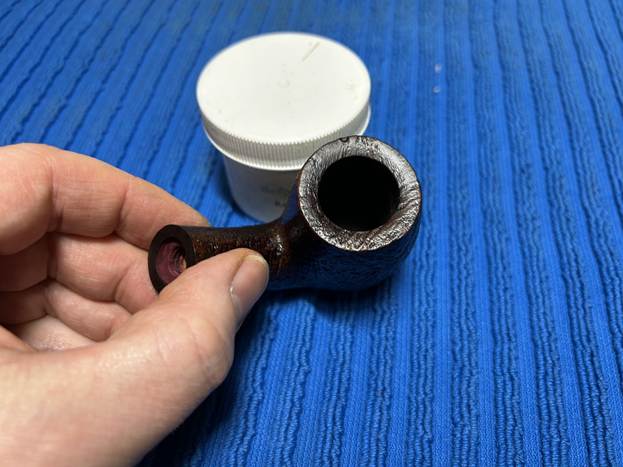
New Life for a Rovera Cordova Italy rusticated oval shank Sitter


by Steve Laug

This rusticated finished bowl with a short saddle stem was purchased on 01/20/2026 from a Facebook seller in Quaker Town, Pennsylvania, USA. It is a great oval shank Cherrywood like Sitter with a rich brown rusticated finish on the bowl and shank. The stem is a vulcanite saddle stem. The bowl is stained with a mix of browns that highlight the grain around the bowl and shank. It has a smooth rim top and ring around the bowl and shank end. It is stamped on the underside of the shank and reads Rovera [over] Cordova. On the shank end next to the stem/shank junction and is stamped Italy. The bowl had a thick cake and some tobacco debris on the walls. There was an overflow of lava on the rim top that was heavier toward the back of the bowl. There was grime ground into the finish which left the finish looking quite dull. The vulcanite saddle stem has a map of Italy in gold on the top of the saddle. There was some light oxidation on the surface and some light tooth marks and chatter on both sides of the stem ahead of the button. Jeff took photos of the pipe before he started his work on it.  He took a photo of the rim top and bowl to show the current condition. The inner edge and the rim top showed darkening and spots of lava as mentioned above. The photos of the bowl show the cake on the walls. The stem photos show the oxidation and light marks on the rim top on both sides. Jeff took photos of the sides and heel of the bowl to give a sense of the condition of the bowl and the grain around the bowl. He took photos of the underside of the shank to capture the stamping. They were clear and readable as noted above.Before I started working on the pipe I did a bit digging into the brand. I turned first to Pipephil’s site (http://www.pipephil.eu/logos/en/logo-r5.html). The information in the screen capture below shows the same stamped logo as on this pipe in the second pipe pictured below. I included the side bar information below the screen capture below.Artisan: Damiano Rovera is the son of Dorielo (See also Ardor and Angelo).

From there I turned to various entries on the Rover on Pipedia. I found some information on the listing for Roverart (https://pipedia.org/wiki/Roverart). I have included some information found there and also a great advertising flyer that I have included.

RoverArt pipes are made by Dorelio and Damiano Rovera, makers of the Ardor line, at a rate of approximately 500-800 pipes a year.Courtesy Doug Valitchka

They are available in seven different styles, including the Armony, finished with a light walnut stain, the Sinfony, finished in dark mahogany, the Ricciolo, with carved curls, the Ritmica, a rusticated pipe with red accents, the Tuba, a carved pipe with a bamboo shank, the Sax, a rusticated black pipe with a screw in bowl, and the Cornetta, a large horn with a briar shank. The Roverart line contains some of the less conventional pipes made by the Roveras. For more information see Ardor.

This is an interesting family of pipemakers. Take time to read about them. I am sure there is more available but now it is time to work on the pipe.

Now it was time to work on the pipe. Since Jeff always follows the same pattern of work in his cleanup we do not include photos but rather a simple summary. Jeff reamed the bowl with a PipNet pipe reamer and followed up with a Savinelli Fitsall pipe knife to remove the cake. He scrubbed out the mortise and the airway in the shank and the stem with alcohol, cotton swabs, shank brushes and pipe cleaners. He scrubbed the exterior of the bowl, rim, shank and stem with a tooth brush and Murphy’s Oil Soap to remove the oils and tars on the rim and the grime on the finish of the bowl. He rinsed it under running water. He dried it off with a soft cloth. He was able to remove the spotty lava build up on the rim top and you could see the marks on the top and edges of the rim. He soaked it in Briarville’s Pipe Stem Deoxidizer and rinsed it with warm water to rinse off the residue. The stem was clean and the oxidation was gone. I took photos of what the pipe looked like when I brought to my worktable. I took close up photos of the bowl, rim top and stem to show how clean the pipe was. The bowl was clean and the rim top and the inner edge looked good. There was some darkening in spot on the rim top and the inner edge was also darkened. The stem was clean and there were light tooth marks on the top and underside of the stem.I took a photo of the stamping on the underside of the shank. It is clear and readable and read as noted above. I also removed the stem from the shank and took photos of the pipe to show the look of the parts.I worked on the inner bevelled edge and rim top with a folded piece of 220 grit sandpaper. I was able to remove the darkening on both. It is looking much better.I sanded the edge and rim top with 320-3500 grit 2×2 inch sanding pads. I wiped it down with a damp cloth after each pad to remove the sanding debris. It began to look very good. I polished the smooth rim top and ring around the bowl top and shank end with micromesh sanding pads – 1500-12000 grit sanding pads. I wiped the bowl surface down with a damp cloth after each sanding pad to remove the sanding dust. Once I finished the exterior of the briar was clean and the grain really stood out. I worked some Before & After Restoration Balm into the surface of the briar with my fingertips to clean, enliven and protect the briar. I let the balm sit for 15 minutes and then buffed with a cotton cloth to raise the shine. The photos show the bowl at this point in the restoration process. The stem was clean and ready to work on. I set the bowl aside and touched up the stamp on the topside of the saddle. It was a map of Italy. I worked the Rub’n Buff Antique Gold into the stamp and polished off the excess.I sanded the stem with 320-3500 grit 2×2 inch sanding pads. I carefully avoided the stamping as I did not want to damage it. I wiped the stem down with an Obsidian Oil cloth to wipe of the sanding debris.I set the bowl aside and turned to the stem. I polished the stem with micromesh sanding pads – wet sanding with 1500-12000 grit pads. I wiped the stem down after each sanding pad with Obsidian Oil. I polished it with Before & After Pipe Stem Polish – both Fine and Extra Fine. Once I had finished the polishing I gave it final coat of oil and set it aside to dry. I am excited to finish this Rovera Cordova Italy Rusticated Oval Shank Sitter with a vulcanite saddle stem. I put the pipe back together and buffed it with Blue Diamond on the buffing wheel. I gave the bowl and the stem multiple coats of carnauba wax. I hand buffed the pipe with a clean buffing pad to raise the shine. It is fun to see what the polished bowl looks like with the mix of grain on the sides of the bowl. Added to that the black vulcanite saddle stem was beautiful. This smooth Rovera Cordova Italy Rusticated Sitter is great looking and the pipe feels great in my hand. It is light and well balanced. Have a look at it with the photos below. The dimensions are Length: 5 inches, Height: 2 inches, Outside diameter of the bowl: 1 ½ inches, Chamber diameter: ¾ of an inch. The weight of the pipe is 39 grams /1.38 ounces. It turned out to be a beautiful pipe. I will be putting it on the rebornpipes store in the Italian Pipe Makers section. If you are interested in adding it to your rack let me know by message or by email to slaug@uniserve.com. Thanks for your time reading the blog. I appreciate it.

Breathing Life into a Jarl Made in Denmark 1526 Acorn


by Steve Laug

This reddish, brown mixed finish, beautifully grained, saddle stem was purchased on 01/20/2026 from a Facebook seller in Quaker Town, Pennsylvania, USA. It is a great looking Bent Acorn with a sandblast finish on most of the bowl and shank and a smooth patch on both sides and a band on the shank end. The stem is a vulcanite fancy saddle stem. The bowl is stained with a contrast of browns that highlight the grain around the bowl and shank. It is stamped on the underside of the shank and reads Jarl [over] Made in Denmark. On the underside of the shank band it is stamped with the shape number 1526. The bowl had a thick cake and some tobacco debris on the walls. There was lava on the rim top and some spots of darkening on the inner edge of rim top. There was grime ground into the finish which left the finish looking quite dull. The vulcanite saddle stem was stamped with an upper case “J” with a Crown on the left side. There was some light oxidation on the surface and light tooth marks and chatter on both sides of the stem ahead of the button. Jeff took photos of the pipe before he started his work on it.  He took a photo of the rim top and bowl to show the current condition. The inner edge and the rim top showed darkening and spots of lava as mentioned above. The photos of the bowl show the cake on the walls. The stem photos show the oxidation and light marks on the rim top on both sides. Jeff took photos of the sides and heel of the bowl to give a sense of the condition of the bowl and the grain around the bowl. It reminds me of a Stanwell Vario. He took photos of the underside of the shank to capture the stamping. They were clear and readable as noted above. Before I started working on it I did a bit of research on the brand to remind myself of what I knew of the maker. I turned to Pipephil’s site first (http://www.pipephil.eu/logos/en/logo-j1.html#jarl). I did a screen capture of the information on the site. I did a screen capture of the pertinent information and have included it below.I then turned to Pipedia and found that a very short article that confirmed that the pipes were made by Niels Mogens Jorgensen (https://pipedia.org/wiki/Jarl). I have included the article in its entirety below.

In December of 2010 Ellen Jarl wrote that Jarl pipes were made by her grandfather, Niels Mogens Jørgensen in a little factory in the town of Bramdrupdam, just outside Kolding, Denmark. We have no reason to doubt that Niels Mogens Jørgensen is the maker of these pipes.

Now it was time to work on the pipe. Since Jeff always follows the same pattern of work in his cleanup we do not include photos but rather just a simple summary. Jeff reamed the bowl with a PipNet pipe reamer and followed up with a Savinelli Fitsall pipe knife to remove the cake. He scrubbed out the mortise and the airway in the shank and the stem with alcohol, cotton swabs, shank brushes and pipe cleaners. He scrubbed the exterior of the bowl, rim, shank and stem with a tooth brush and Murphy’s Oil Soap to remove the oils and tars on the rim and the grime on the finish of the bowl. He rinsed it under running water. He dried it off with a soft cloth. He was able to remove the spotty lava build up on the rim top and you could see the marks on the top and edges of the rim. He soaked it in Briarville’s Pipe Stem Deoxidizer and rinsed it with warm water to rinse off the residue. The stem was clean and the oxidation was gone. I took photos of what the pipe looked like when I brought to my worktable. I took close up photos of the bowl, rim top and stem to show how clean the pipe was. The bowl was clean and the rim top and the inner edge looked good. The stem was clean and there were light tooth marks on the top and underside of the stem.I took a photo of the stamping on the underside of the shank and the Crowned J stamp on the left side of the saddle stem. It is clear and readable and read as noted above. I also removed the stem from the shank and took photos of the pipe to show the look of the parts.I polished the smooth patches of the briar with micromesh sanding pads – 1500-12000 grit sanding pads. I wiped the bowl surface down with a damp cloth after each sanding pad to remove the sanding dust. Once I finished the exterior of the briar was clean and the grain really stood out. I worked some Before & After Restoration Balm into the surface of the briar with my fingertips to clean, enliven and protect the briar. I let the balm sit for 15 minutes and then buffed with a cotton cloth to raise the shine. The photos show the bowl at this point in the restoration process. I set the bowl aside and turned to the stem. I polished the stem with micromesh sanding pads – wet sanding with 1500-12000 grit pads. I wiped the stem down after each sanding pad with Obsidian Oil. I polished it with Before & After Pipe Stem Polish – both Fine and Extra Fine. Once I had finished the polishing I gave it final coat of oil and set it aside to dry. I am excited to finish this Jarl Made in Denmark Bent Acorn 1526 with a vulcanite, fancy saddle stem. I put the pipe back together and buffed it with Blue Diamond on the buffing wheel. I gave the bowl and the stem multiple coats of carnauba wax. I hand buffed the pipe with a clean buffing pad to raise the shine. It is fun to see what the polished bowl looks like with the mix of grain on the sides of the bowl. Added to that the black vulcanite saddle stem was beautiful. This smooth Jarl Made in Denmark Bent Acorn 1526 is great looking and the pipe feels great in my hand. It is light and well balanced. Have a look at it with the photos below. The dimensions are Length: 5 ½ inches, Height: 2 inches, Outside diameter of the bowl: 1 ¼ inches, Chamber diameter: ¾ of an inch. The weight of the pipe is 35 grams /1.20 ounces. It turned out to be a beautiful pipe. I will be putting it on the rebornpipes store in the Danish Pipe Makers section. If you are interested in adding it to your rack let me know by message or by email to slaug@uniserve.com. Thanks for your time reading the blog. I appreciate it.

Who Carved this Caveman Century Old Briar Italy 8546 Pocket Pipe


by Steve Laug

This smooth finish, beautifully grained pocket pipe, that is similar to a Savinelli Made Lollo or pocket pipe. It was purchased on 01/20/2026 from a Facebook seller in Quaker Town, Pennsylvania, USA. It is unique shaped pipe with a rich brown smooth finish on the bowl and shank. The stem is a short vulcanite saddle stem. The bowl is stained with a mix of browns that highlight the grain around the bowl and shank. It is stamped on the left side of the shank and reads Caveman. On the right side of the shank it is stamped Century Old [over] Briar Italy. On the underside is the shape number 8546. The bowl had a thick cake and some tobacco debris on the walls. There was an overflow of lava on the rim top that was heavier toward the back left side of the bowl. There was grime ground into the finish which left the finish looking quite dull. The vulcanite had some light oxidation on the surface and tooth chatter on both sides of the stem ahead of the button. Jeff took photos of the pipe before he started his work on it.  He took photos of the rim top and bowl to give a clear picture of the thickness of the cake and the lava and dust ground into the finish of the rim top and edges. There is dust and debris stuck to the walls of the bowl clearly visible in the photos. He also took photos of the top and underside of the stem to show the oxidation, chatter and light tooth chatter. Jeff took photos of the sides and heel of the bowl to give a picture of what the briar around the pipe looked like. There is some stunning grain under the grime. He took photos of the stamping on the sides of the shank. It read as noted above and is clear and readable. The manufacturer of the Caveman Century Old Briar 8546 pipe is a mystery that is twisted and complicated. I thought maybe it was one of the may lines crafted by Savinelli but I would have to see.

The Caveman pipe was typically a meerschaum pipe made of Tanganyika meerschaum. This was not a meerschaum so I am certain this connection is tenuous at best.

I did some more digging to try to identify the maker. I thought there might be a link between the Caveman pipe I was working and the Ice Age pipe. The Ice Age pipe was noted as being made by Savinelli so maybe there was a link here.

I did a quick google search of the Ice Age brand and came up with this information. It definitely links Savinelli to Ice Age but there is nothing linking it to the Caveman that I am working on. I am including the Facebook link (https://www.facebook.com/gerardo.benz.1/posts/ice-age-668-w-faux-plateaux-by-savinelli-nos-esta-pipa-es-un-hallazgo-fascinante/10242750087989992/) and some of the pertinent information below.

Ice Age 668 w/ Faux Plateaux (by Savinelli) (Nos) 

This pipe is a fascinating find that allows us to travel back to the golden age of pipe tobacco popularity, an Ice Age 668 specimen with a Faux Plateaux finish, whose manufacturing takes us directly back to Savinelli’s Italian mastery. Although some historical confusion often arises due to the intervention of Oppenheimer Pipe Group—that British giant who articulated the distribution of so many brands during the 20th century—, the “Made in Italy” stamp and shape numbering reveal its true artisanal origin. This is a commercial line probably born for the export market, combining the solidity of a historic house founded in the 19th century with a bold and modern aesthetic not always found in Savinelli’s more classic series.

The pipe is presented under the silhouette of a Bent Egg, where the fluidity of the design is absolute: the reed is born organically from the tub, continuing its line in a harmonious curve that culminates in an eye-catching acrylic extension. This detail not only brings an elegant visual contrast, but also tops it off in a military mount, giving it a technical and sophisticated character. The brezo has been treated with brown dyes that enhance the natural beauty of the vein, while the top of the casserole exhibits that rustic finish that mimics the natural bark of the brezo (the plateaux), creating a play of textures that are exquisite to the touch and to the look. It is essentially a pipe that balances the avant-garde of its time with an impeccable manufacturing base, making it a necessary exception within any New Old Stock (NOS) collection.

There was no link to the Caveman pipe I have so far. I decided to come at it from another angle. I did a search on the Old Briar and Italy link and came up with a link to Nino Rossi pipes on Pipephil’s site (http://www.pipephil.eu/logos/en/logo-n1.html#ninorossi). That connection took me nowhere so I did further digging.

I also did a search for Caveman Century Old Briar 8546 and found one on eBay for sale (https://www.ebay.com/itm/326285537872). It had the same shape but was rusticated.I followed another link listing a Caveman 8546 shaped sandblast pipe for sale on Worthpoint (https://www.worthpoint.com/worthopedia/vintage-italian-rusticated-1981585956). It is described a I attach with the photo below.

Vintage Italian Rusticated Sandblasted Briar ‘Caveman’ 8546 Estate Tobacco Pipe is in very nice condition. It has been used not abused. It should draw pleasure from smoking or from the replies it will bring to its oddity shape. Marked on the underside – Caveman 8546 Product of Italy. The CM is on the pipe stem. Length – 5 1/4 in Outside diameter – 1 3/8 in Inside diameter – 3/4 in,I followed the leads on the google search and found a tie to Lorenzo being the maker of the pipe (https://picclick.co.uk/VINTAGE-LORENZO-CAVEMAN-No8546-USED-SMOKING-332598667470.html).

I checked the four digit shape number and it also pointed to Lorenzo as the manufacturer. I found a link to an 8769 pipe on Dal’s blog (https://thepipesteward.com/2021/05/02/breathing-new-life-into-an-elegant-lorenzo-eleganza-8769-of-italy-bent-dublin/). I know the digits are different but the four numbers points to a similarity.

With that information I have run out of links. Perhaps one of you can help further identify the pipe for me. For now, I am going to say that I believe it is made by Lorenzo as the information below pointed out. Now it was time to work on the pipe.

Jeff had reamed the bowl with a PipNet Pipe Reamer and cleaned up the remnants with a Savinelli Fitsall Pipe Knife. He scrubbed the exterior of the bowl with undiluted Murphy’s Oil Soap with a tooth brush. He worked over the debris on the rim top and was able to remove it. He rinsed it under running warm water to remove the soap and grime. He cleaned out the inside of the shank and the airway in the stem with alcohol, cotton swabs, shank brushes and pipe cleaners. He soaked the stem in Briarville’s Pipe Stem Deoxidizer and rinsed it off with warm water. He scrubbed the stem with Soft Scrub and cotton pads to remove remaining oxidation on the stem. He rinsed it with warm water and dried it off. I took photos of the pipe once I received it. It really looked good. The rim top and the inner edge looked good but there was some roughness to the surface. The stem had some light chatter on both sides near the button. The bowl was very clean and the stem looked good.I took photos of the stamping on the sides of the shank. It was clear and read as noted above. I removed the stem and took a photo of the pipe to give a sense of the whole. I polished the briar with micromesh sanding pads – dry sanding with 1500-12000 grit pads and wiping it down after each pad with a damp cloth. I rubbed the bowl and shank down with Before & After Restoration Balm. I worked it into the surface of the bowl sides and shank with my fingertips. The product works to clean, enliven and protect the briar. I let the balm sit for 15 minutes and then buffed with a cotton cloth to raise the shine. I polished the vulcanite stem with micromesh sanding pads – 1500-12000 grit pads. I wiped it down with a damp cloth after each sanding pad. I used Before & After Pipe Polish – both Fine and Extra Fine to further polish the stem. This unique and beautiful in its own way Lorenzo Made Caveman Century Old Briar 8546 Pocket Pipe with a taper saddle stem is a great looking pipe now that it has been restored. I put the stem back on the bowl and carefully buffed the pipe with Blue Diamond on the buffing wheel to polish it. I gave the bowl and the stem multiple coats of carnauba wax on the buffing wheel and followed that by buffing the entire pipe with a clean buffing pad. I hand buffed the pipe with a microfiber cloth to deepen the shine. The finished Caveman Century Old Briar 8546 fits nicely in the hand and feels great. Give the finished pipe a look in the photos below. The dimensions of the pipe are Length: 5 inches, Height: 1 ¾ inches, Outside diameter of the bowl: 1 ¼ inches, Chamber diameter: ¾ of an inch. The weight of the pipe is 55 grams/1.98 ounces. I will be adding it to the rebornpipes store shortly in the Italian Pipe Makers Section. Thanks for reading this blog and my reflections on the pipe while I worked on it. There are many more to come!

Amazing Grain on a Hand-Carved Søren Freehand


by Kenneth Lieblich

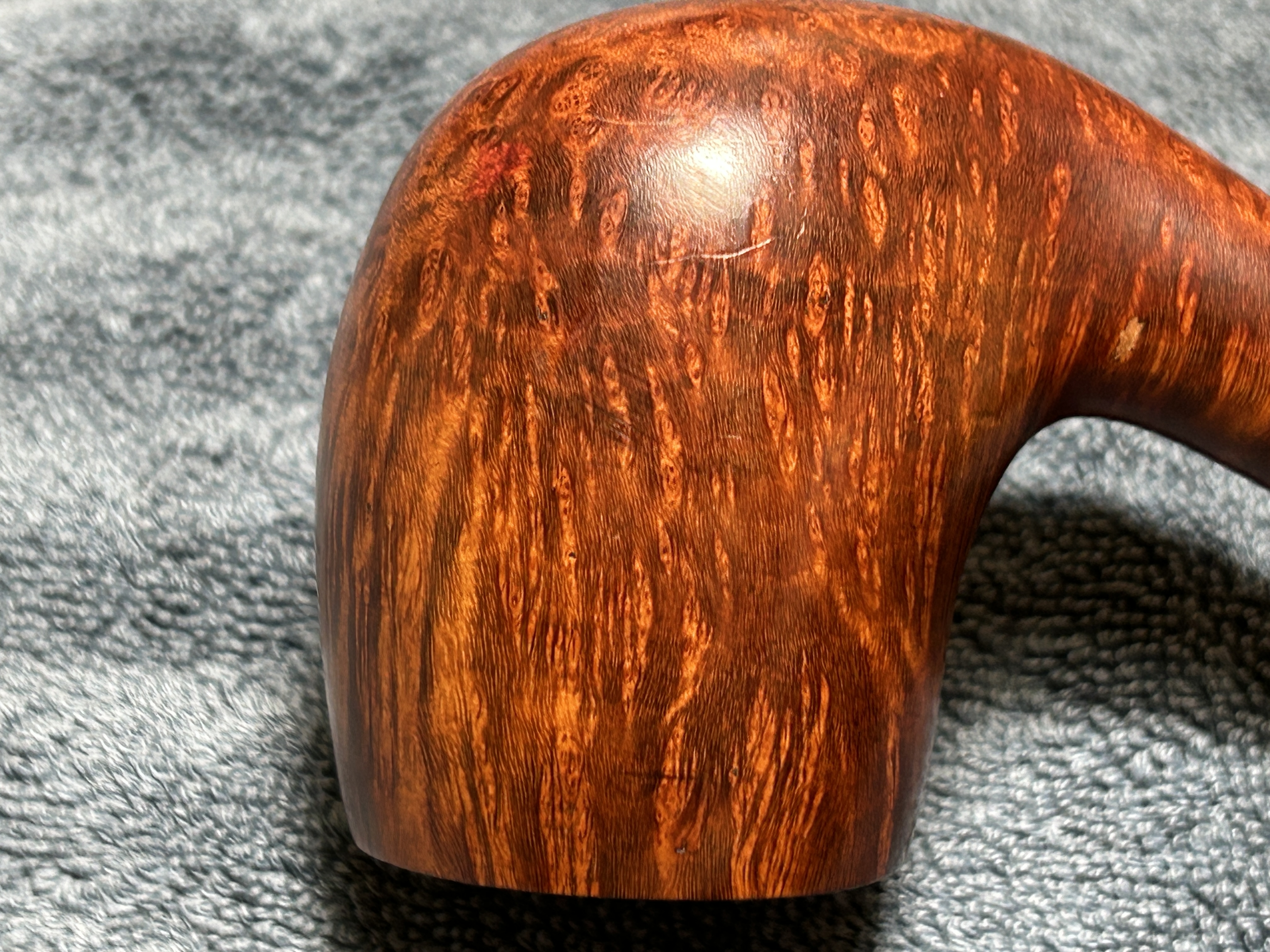
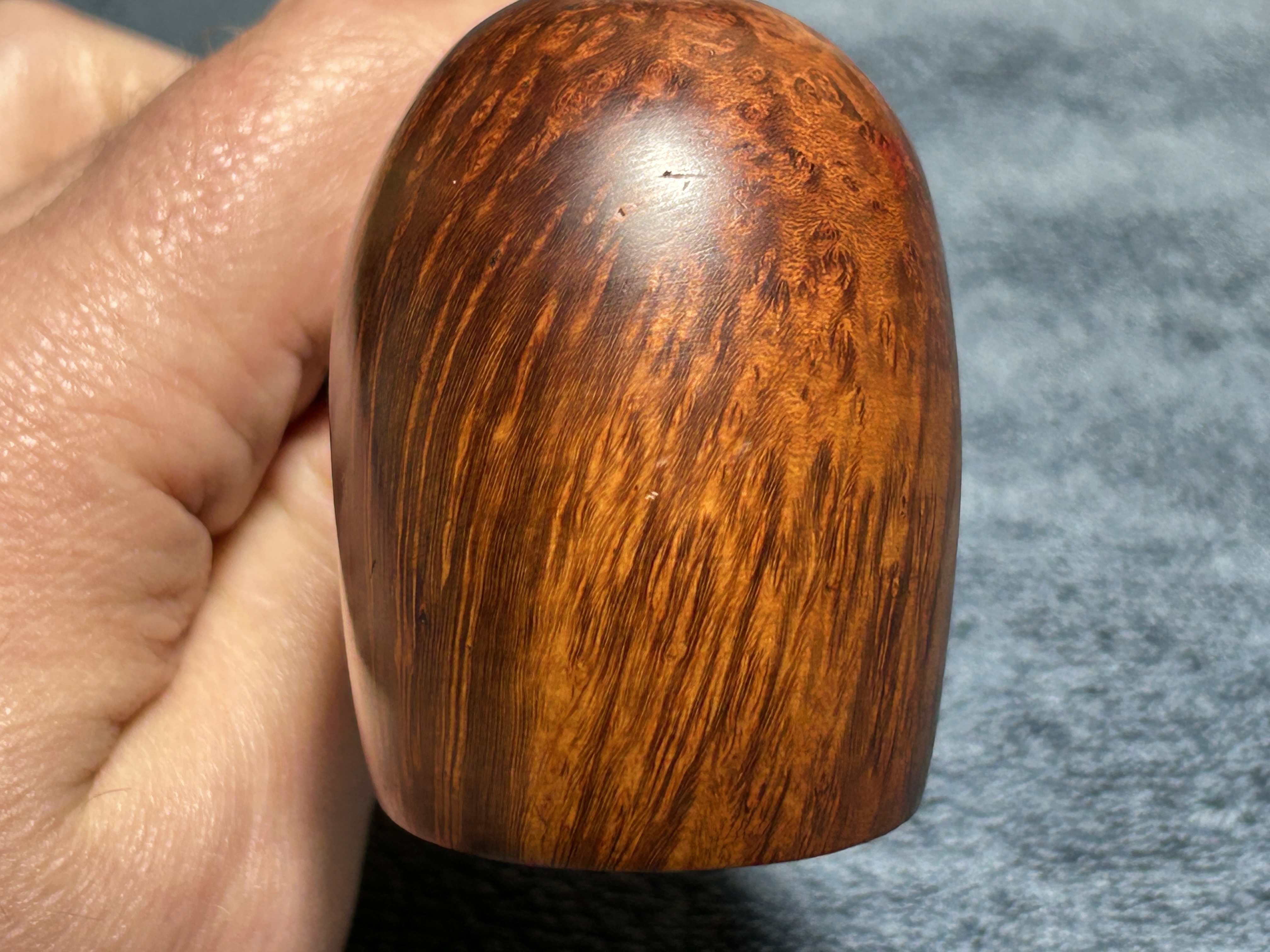
Well, now, this is quite the pipe! I recently acquired a collection from a gentleman, now deceased, who clearly loved his pipes. They were all well used and, according to his family, he had a pipe hanging out of his mouth at all times. As I was looking through them, this particular one caught my attention. It’s an interesting one, isn’t it? It’s a Søren Hand-Carved Freehand, with some stunning grain, by master carver, Søren Refbjerg Rasmussen. It also has an attractive plateau on the rim and the end of the shank. This one is really worth restoring. It’s a remarkable pipe and deserves to be back in someone’s collection. It promises to be a great smoker. On the underside of the shank, we read Søren [over] Hand-Carved [over] Made in Denmark. Those are all the markings we can see. Pipedia has an article on Mr Rasmussen and I quote a part of it here:

Søren Refbjerg Rasmussen founded a company in 1969, which employed an average of 8 – 12 craftsmen in the 1970’s. The semi-freehands they produced were traded under his prename Søren. Rasmussen himself finished only the very best pipes. So his way of pipemaking closely resembled the ways of Preben Holm, Karl Erik Ottendahl or Erik Nørding. Altogether more than 1,000,000 pipes were sold. Today he works alone as Refbjerg and manufactures only a small number of pipes in his workshop in DK-2860 Søborg, which are considered to be tremendously precisely executed. The dimensions mostly range from small to medium sized, corresponding to his personal preferences. The shapes adhere to the classical models, but often he gives them a touch of Danish flair. Refbjerg accepts minor faults but never uses any fillings. “Straight Grain” is the only grading, used for his very best pieces. He likes stem decorations made of exotic woods or metal rings.Meanwhile, over at Pipephil, there is the following entry:And, finally, scandinavianpipes.com includes these details about him:

Søren Refbjerg was born 1943 in the city of Søborg where he still lives and has been a full time pipe-maker since 1969. In the 70´s Søren had his own small factory with 10 employees producing a huge number of pipes mainly for the US market. Søren has indeed been one of the most productive Danish pipe-makers and for many years he also produced pipes for W.Ø. Larsen For the last decades Søren has been making pipes by himself, always using briar from Corsica. Søren derive much relaxation from being on the coast while angling for Sea Trout with his own hand-tied flies and find this environment to be a great inspiration for making pipes. Many times Søren say to himself: “Inspired by nature, made by me”.

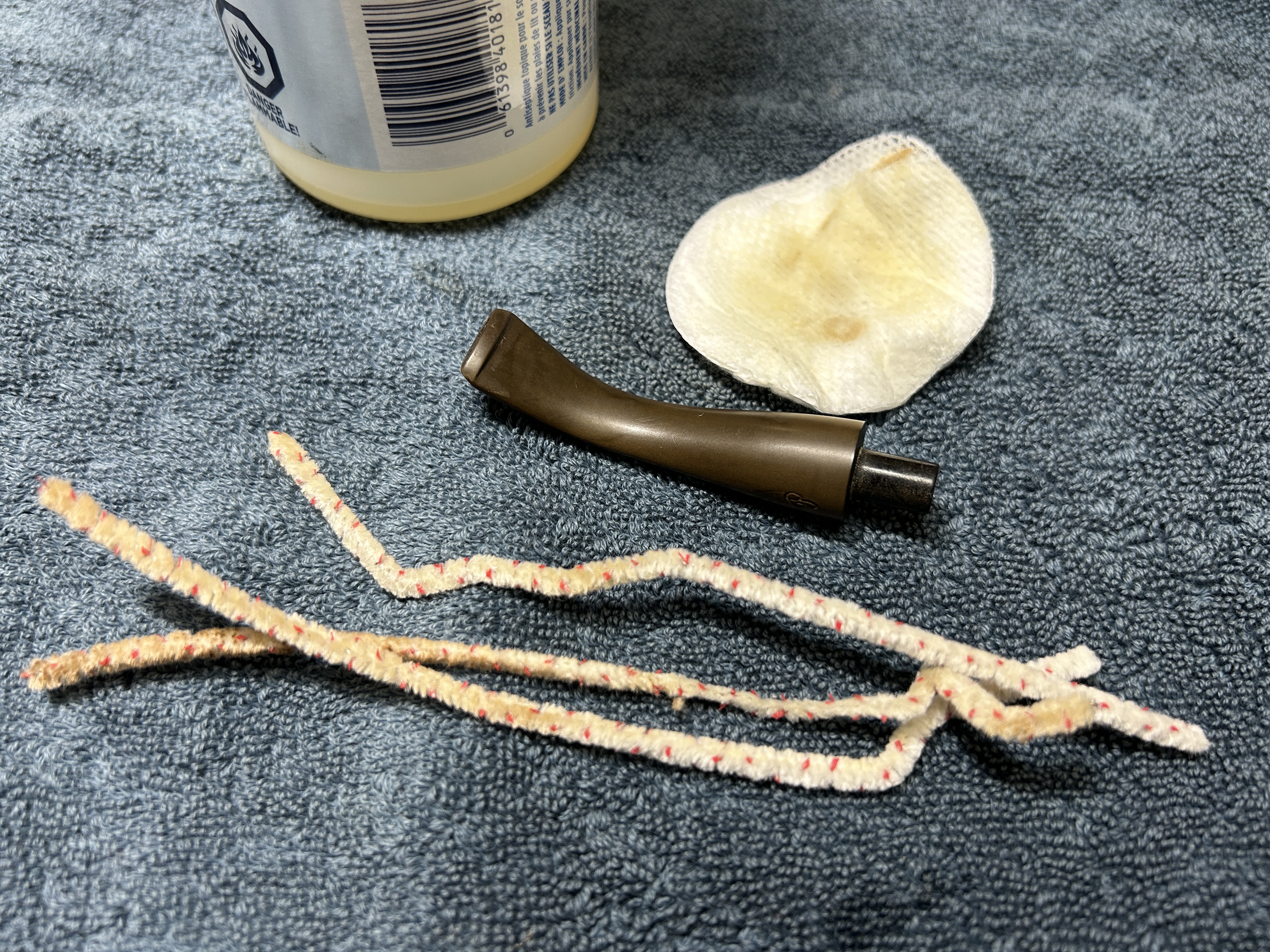
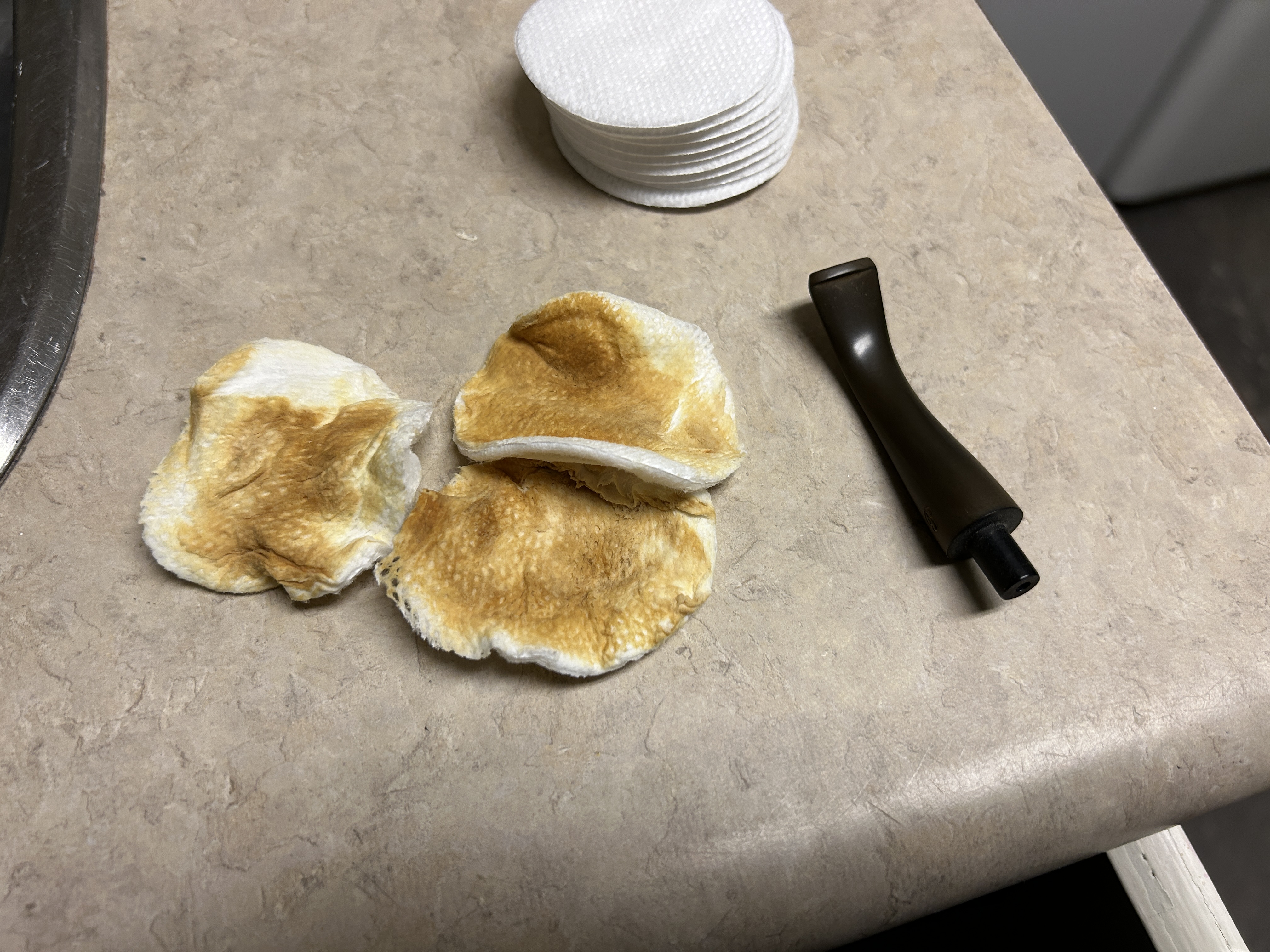
He died in 2021. Let’s take a closer look at the pipe. It is in very nice shape. The stem is thoroughly oxidized (and has a few bite marks), but isn’t damaged. The stummel is lovely! Wonderful condition, with only a little bit of cake in the bowl. It doesn’t look like it was smoked much. I used isopropyl alcohol on a few cotton rounds and wiped down the stem to provide an initial cleaning of filth before moving on to the next steps. The primary cleaning came next. I disinfected the inside of the stem with both pipe cleaners and cotton swabs dipped in lemon-infused 99% isopropyl alcohol. I scrubbed thoroughly to make sure the interior was very clean.The goal of the next step is the removal (or minimization) of oxidation. Going to my sink, I used cream cleanser, cotton rounds, and a toothbrush, and scoured the stem to remove as much surface oxidation as possible. As the photos show, the result was a hideous, ochre-coloured mess – but better off the stem than on it.Once the stem was reasonably clean, I soaked it overnight in some Briarville Stem Oxidation Remover. This solution works to draw oxidation in the stem to the surface of the vulcanite. This is a major aid and an important step in ensuring a clean stem. The following day, I drew out the stem from its bath and scrubbed the lingering fluid with a toothbrush. Due to the severity of the oxidation, I then repeated the scrubbing with the cream cleanser for maximum effect. There will always be a hint of the oxidation in the vulcanite, but that is just fine: it is part of the history of the pipe.As the stem was now clean and dry, I set about fixing the marks and dents in the vulcanite. This was done by filling those divots with black cyanoacrylate adhesive, impregnated with carbon and rubber. I left this to cure and moved on.The penultimate step for the stem is sanding. First, with my set of needle files, I reduced the bulk of the cyanoacrylate repairs. I removed the excess adhesive as near to the surface as possible, without cutting into the vulcanite. Following that, I used all nine of the micromesh sanding pads (1,500 through 12,000 grit) to sand out flaws, even out the vulcanite, and provide gentle polishing of the finished surface. I also applied pipe-stem oil while using the last five micromesh pads. There was a wonderful, deep black shine to the stem when I was done. As the stem was (nearly) complete, I moved on to the stummel. The first step was to ream out the bowl – that is to say, remove all the cake inside the bowl. This accomplished a couple of things. First (and most obviously), it cleaned the bowl and provided a refurbished chamber for future smoking. Second, when the old cake was removed, I could inspect the interior walls of the bowl and determine if there was damage or not. I used a pipe knife and a piece of sandpaper taped to a wooden dowel. Collectively, these ensured that all the debris was removed.Similar to the stem, I then cleaned the stummel with both pipe cleaners and cotton swabs dipped in lemon-infused 99% isopropyl alcohol.I then decided to ‘de-ghost’ the pipe – that is to say, exorcize the remaining filth from the briar. I filled the bowl and the shank with cotton balls, then saturated them with 99% isopropyl alcohol. I let the stummel sit overnight. This caused the remaining oils, tars and smells to leach out into the cotton.To tidy up the briar, I wiped down the outside, using a solution of a pH-neutral detergent and some distilled water, with cotton rounds. I also used a brush in the grooves of the plateau. This did a good job of cleaning any latent dirt on the surface of the briar. The last step of the cleaning process was to scour the inside of the stummel with the same mild detergent and tube brushes. This was the culmination of a lot of hard work in getting the pipe clean.I used all nine micromesh pads (1,500 through 12,000 grit) to sand the outside of the stummel and finish it off. This sanding minimizes flaws in the briar and provides a beautiful smoothness to the wood. I rubbed some LBE Before & After Restoration Balm into the briar and let it sit for 30 minutes or so. The balm moisturizes the wood and gives a beautiful depth to the briar. I then buffed the stummel with a microfibre cloth. For the final step, I took the pipe to my bench polisher and carefully buffed it – first with a blue diamond compound, then with three coats of carnauba wax. This procedure makes the pipe look its best – the stummel sings and the stem glows.This Søren Hand-Carved Freehand looks fantastic again and is ready to be enjoyed by its next owner. I am pleased to announce that this pipe is for sale! If you are interested in acquiring it for your collection, please have a look in the ‘Danish’ section of the store here on Steve’s website. You can also email me directly at kenneth@knightsofthepipe.com. The approximate dimensions of the pipe are as follows: length 6½ in. (165 mm); height 3 in. (66 mm); bowl diameter 1⅞ in. (49 mm); chamber diameter ⅞ in. (22 mm). The weight of the pipe is 2⅝ oz. (75 g). I hope you enjoyed reading the story of this pipe’s restoration as much as I enjoyed restoring it. If you are interested in more of my work, please follow me here on Steve’s website or send me an email. Thank you very much for reading and, as always, I welcome and encourage your comments.
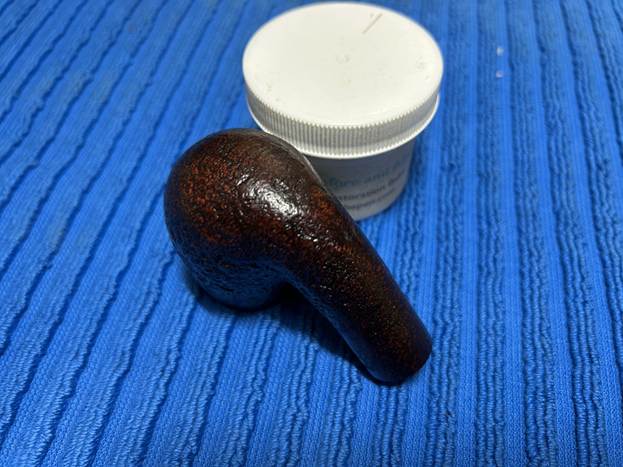
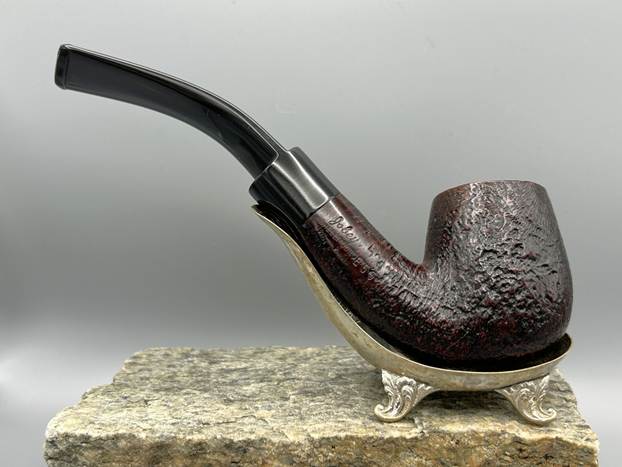
Fresh Life for a Stanwell Danish Star 02 Scoop


by Steve Laug

I am enjoying an evening free to work on a few pipes. The next pipe on the table came from an a seller in Ogden, Utah, USA. Even though the finish was a dirty and worn it had some amazing grain showing through the grit and grime of the years. On the left side of the shank it was stamped Stanwell [over] Danish Star. On the right side it is stamped with the shape number 02. On the underside it is stamped Made in Denmark. The pipe is a bent egg and as the shape number identifies. The finish is filthy with grime and oil ground into the briar of the bowl and shank sides. The bowl had a thick cake and there was an overflow of lava on the inner edge of the thin rim. The stem was a bent vulcanite taper stem that fit snugly in the shank. It had the Stanwell Crown S faintly stamped on the left side of the stem. The vulcanite was oxidized, calcified and had light chatter on both sides ahead of the button. Jeff took some photos of the pipe to show its overall condition before he started his cleanup work. He took photos of the rim top and bowl to give a clear picture of the thickness of the cake and the lava and dust ground into the finish of the rim top and edges. There is dust and debris stuck to the walls of the bowl clearly visible in the photos. He also took photos of the top and underside of the stem to show the oxidation, chatter and light tooth chatter. Jeff took photos of the sides and heel of the bowl to give a picture of what the briar around the pipe looked like. There is some stunning grain under the grime. He took photos of the stamping on the sides of the shank. It read as noted above and is clear and readable. I am always curious for more information on the pipes that I work on. Sometimes I have some history of the previous pipeman and sometimes not. This time I knew next to nothing of where the pipe came from so I turned ferret out information the Danish Star Line if I could find it.
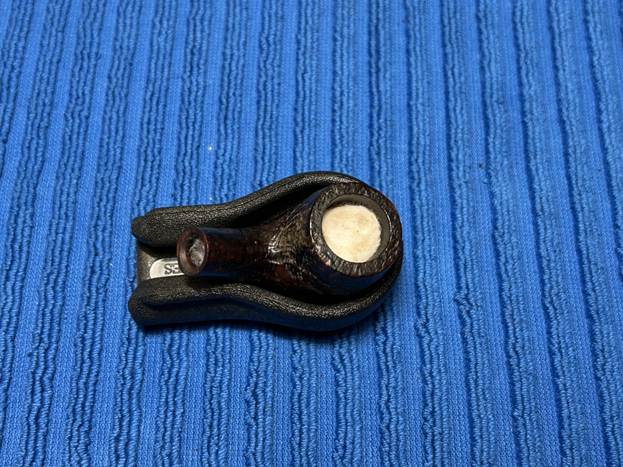
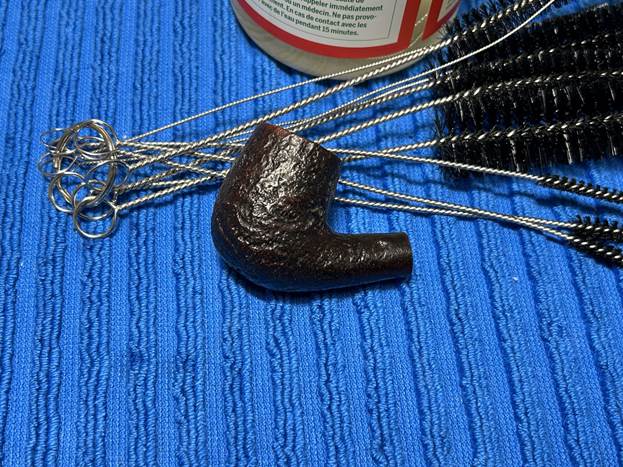
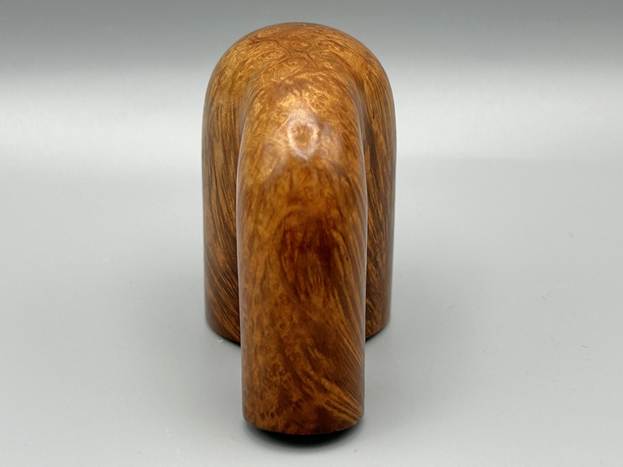
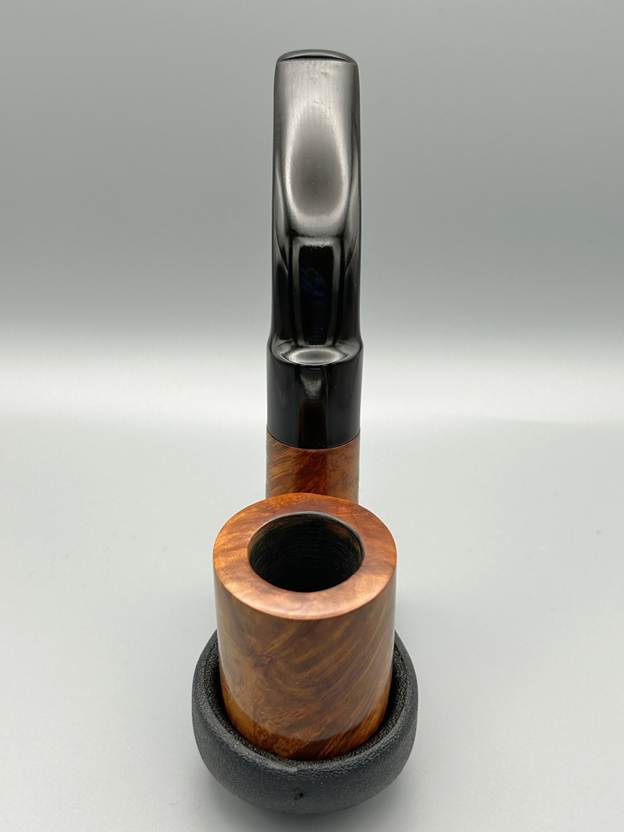
I turned first to Pipephil’s site to get a quick idea of when this pipe line was made and where it stood in the Stanwell hierarchy. I found nothing (http://www.pipephil.eu/logos/en/logo-stanwell.html).

I also turned to Pipedia’s article on Stanwell but it did not add any further information. There were a series of photos from Doug Valitchka of the Danish Star but it was a different shape number – a 138. It is a great read in terms of the history of the brand (https://pipedia.org/wiki/Stanwell).

From there I turned to the section on Stanwell shapes and numbers on Pipedia to see if I could identify the designer (https://pipedia.org/wiki/Stanwell_Shape_Numbers_and_Designers). Finally, I found a bit of help there. It stated that the shape number 02 came in two versions – a Freehand, oval bowl and stem designed by Sixteen Ivarsson and a Bent Egg Shaped Bowl sloping top and full mouthpiece. Now I knew that I was dealing with the second. There was also a catalogue photo that I have included below that shows the shape 02 at the top left of the photo.

With that information in hand I knew what I was dealing with in terms of the shape of the pipe. I am pretty sure it is a pipe that was made in the 80s or 90s. I was not certain but that is my educated guess. Now it was time to work on the pipe.

Jeff had reamed the bowl with a PipNet Pipe Reamer and cleaned up the remnants with a Savinelli Fitsall Pipe Knife. He scrubbed the exterior of the bowl with undiluted Murphy’s Oil Soap with a tooth brush. He worked over the debris on the rim top and was able to remove it. He rinsed it under running warm water to remove the soap and grime. He cleaned out the inside of the shank and the airway in the stem with alcohol, cotton swabs and pipe cleaners. He soaked the stem in Briarville’s Pipe Stem Deoxidizer and rinsed it off with warm water. He scrubbed the stem with Soft Scrub and cotton pads to remove remaining oxidation on the ferrule and the stem. He rinsed it with warm water and dried it off. I took photos of the pipe once I received it. It really looked good. The rim top and the inner edge of the rim showed some nicks and marks after the cleaning. The stem had some light chatter on both sides near the button. The bowl was very clean and the stem looked good.I took photos of the stamping on the sides of the shank. I left out the Made in Denmark photo that is shown above. It was clear and read as noted above. I removed the stem and took a photo of the pipe to give a sense of the whole. I decided to address the nicks on the inner edge of the bowl first. I used a folded piece of 220 grit sandpaper to smooth out the damage and clean up the edge. I was pleased with the smoothed out rim top and edge.I polished the briar with micromesh sanding pads – dry sanding with 1500-12000 grit pads and wiping it down after each pad with a damp cloth. I rubbed the bowl and shank down with Before & After Restoration Balm. I worked it into the surface of the bowl sides and shank with my fingertips. The product works to clean, enliven and protect the briar. I let the balm sit for 15 minutes and then buffed with a cotton cloth to raise the shine. I touched up the stamping on the top of the stem. It was a Stanwell Crown S logo. Parts of it were faint but I was able to get some of the stamping to show up with some white, acrylic fingernail polish. Once it had hardened I scraped off the excess and sanded it lightly to remove the remaining excess. It certainly looks better. I polished the vulcanite stem with micromesh sanding pads – 1500-12000 grit pads. I wiped it down with a damp cloth after each sanding pad. I used Before & After Pipe Polish – both Fine and Extra Fine to further polish the stem. This beautiful Stanwell Danish Star 02 Sloped Bent Egg with a taper vulcanite stem is a great looking pipe now that it has been restored. I put the stem back on the bowl and carefully buffed the pipe with Blue Diamond on the buffing wheel using a light touch on the briar. I gave the bowl and the stem multiple coats of carnauba wax on the buffing wheel and followed that by buffing the entire pipe with a clean buffing pad. I hand buffed the pipe with a microfiber cloth to deepen the shine. The finished Stanwell Danish Star Bent Egg fits nicely in the hand and feels great. Give the finished pipe a look in the photos below. The dimensions of the pipe are Length: 6 inches, Height: 2 inches, Outside diameter of the bowl: 1 ¼ inches, Chamber diameter: ¾ of an inch. The weight of the pipe is 46 grams/1.62 ounces. I will be adding it to the rebornpipes store shortly in the Danish Pipe Makers Section. Thanks for reading this blog and my reflections on the pipe while I worked on it. There are many more to come!