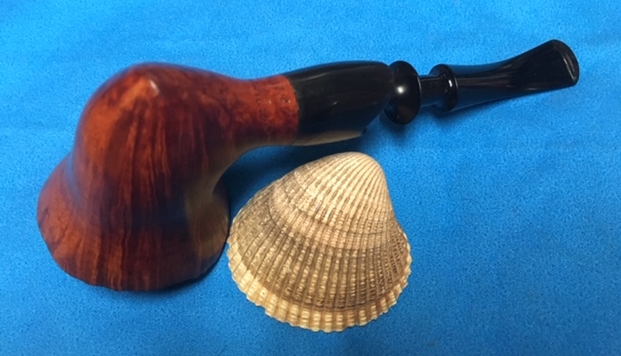
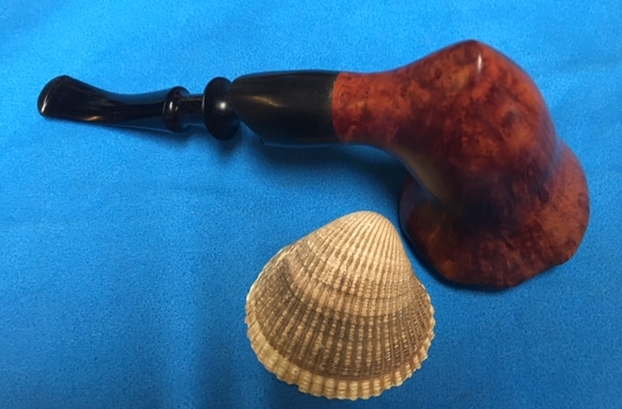
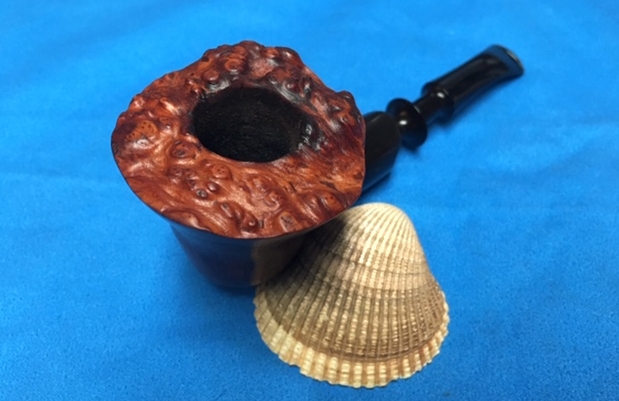
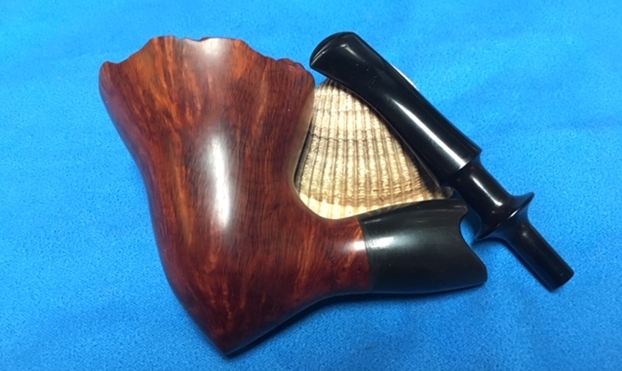
Blog by Dal Stanton
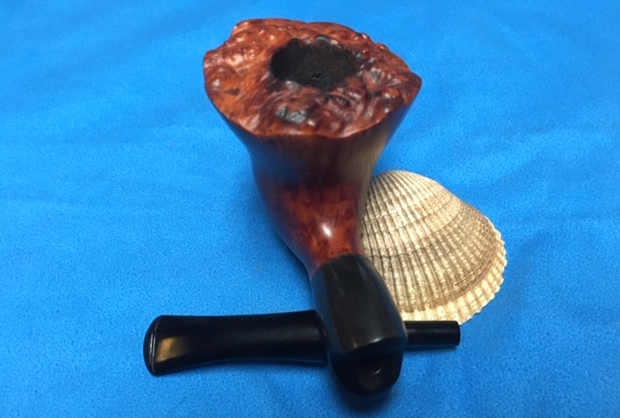
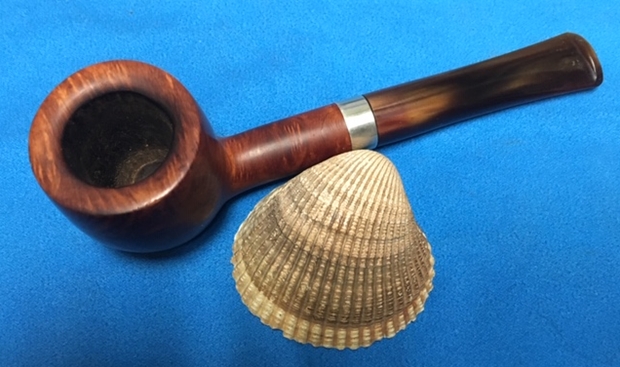
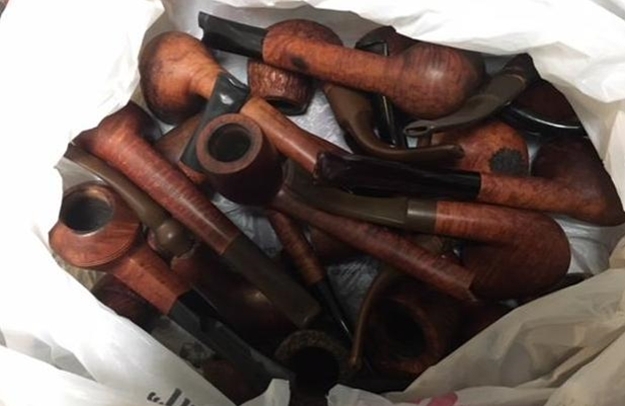
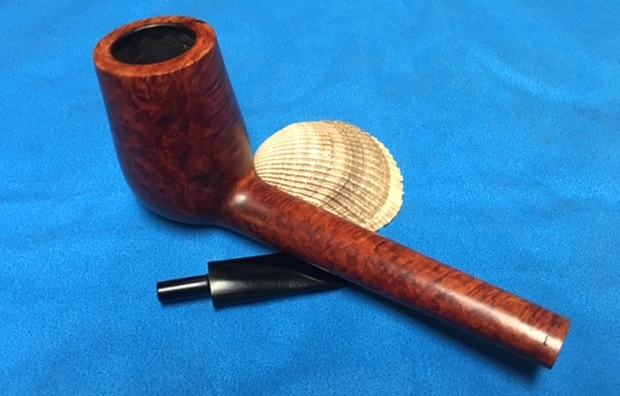
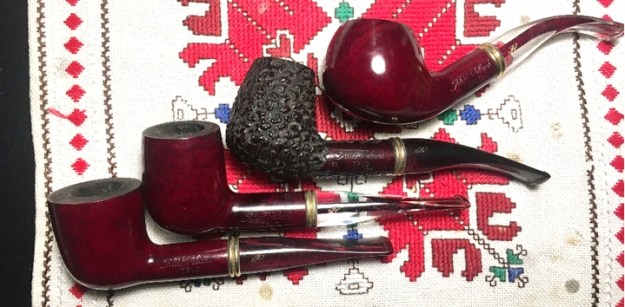
This Rusticated Volcano came to my worktable in what I call the St. Louis Lot of 26 that my son, Josiah, found in an antique shop before last Christmas. He was impressed by the quality of pipes in the Lot and emailed me in Bulgaria with a proposition of going in together for the Lot of 26. His part in the purchase would be his Christmas present to me – that I would choose a pipe for my own from the Lot. My part of the purchase would be to restore the pipes to benefit the Daughters of Bulgaria. It was a proposal hard to refuse and some weeks later I unwrapped the St. Louis Lot of 26 in Denver where our family had gathered for Christmas. I chose as my gift from Josiah an unbelievable find: a Churchwarden – EP Champion Made in France. After my restoration of the EPC Majestic, I know that this pipe also has a very auspicious nomenclature dating back to pre-WW2 from the now defunct Paris based A Pandevant & Roy Co. which has now been included in Pipedia as a new entry based on my research during that restoration – Woohoo! To see my first Pipedia entry, see this LINK! This picture, after opening the Lot of 26, just happens to have both subjects on the top – the Aldo Velani Trio Rusticated Volcano and my historic EP Churchwarden.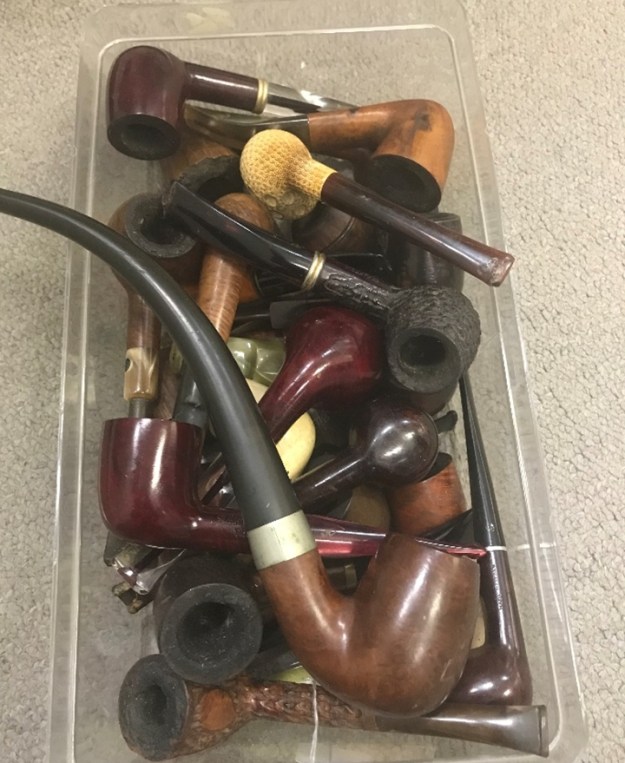 Now, back in Bulgaria, on the 10th floor of our formerly Communist apartment complex block, each pipe in the Lot of 26 has been sorted and populated on the website in the ‘For “Pipe Dreamers” Only!’ collection. Stephen saw the Aldo Velani when I posted a picture on Facebook of the Lot of 26 earlier. The former steward of this estate liked the Aldo Velani Trio set. In the Lot, in addition to the Rusticated Volcano came three others from the Aldo Velani Trio set. The common characteristics of the set is the bright Oxblood hue, the double-ringed gold banding and an assortment of acrylic stems. The set is obviously meant to appeal to an upscaled expectation.
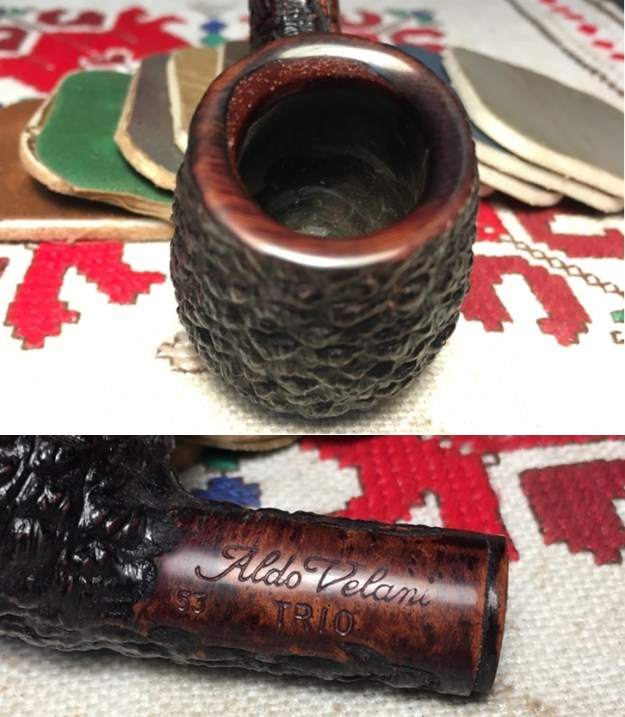
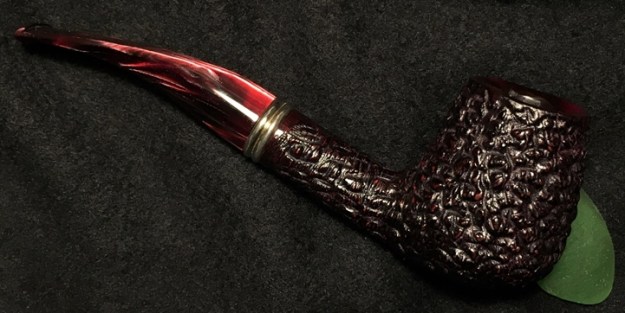
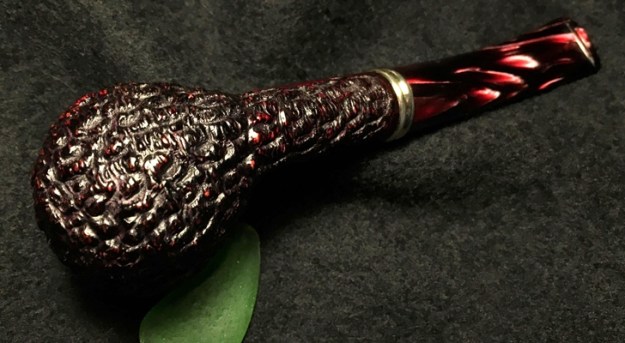
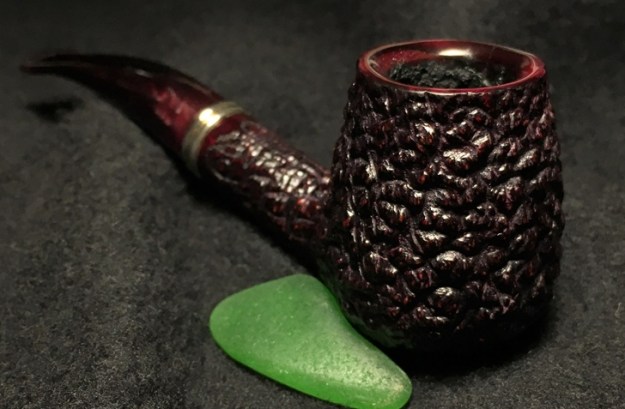
 Stephen was drawn to the deeply Rusticated Volcano and after communicating back and forth, he decided to commission it. Here are more pictures taking a closer look at the Aldo Velani Rusticated Volcano.
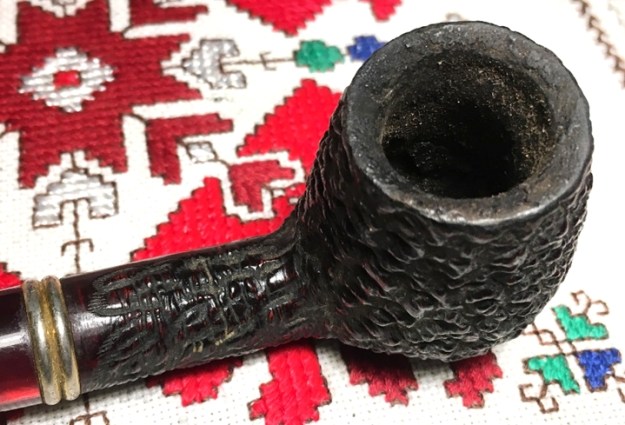
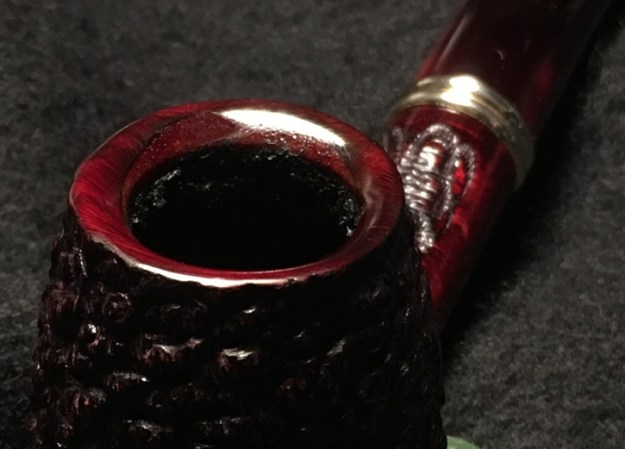
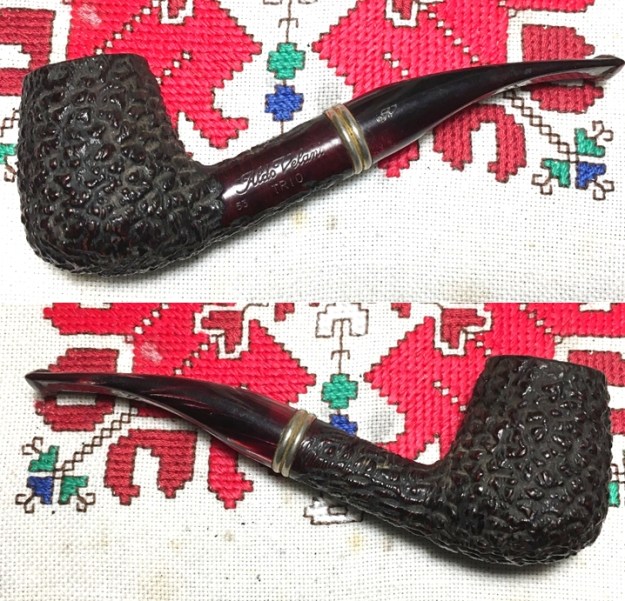 The rusticated version of the set of Aldo Velani Trio is cast somewhat darker than the smooth briar brothers. The chamber shows moderate build up of cake and some lava flow over the rim. This guy was well used by his former steward.
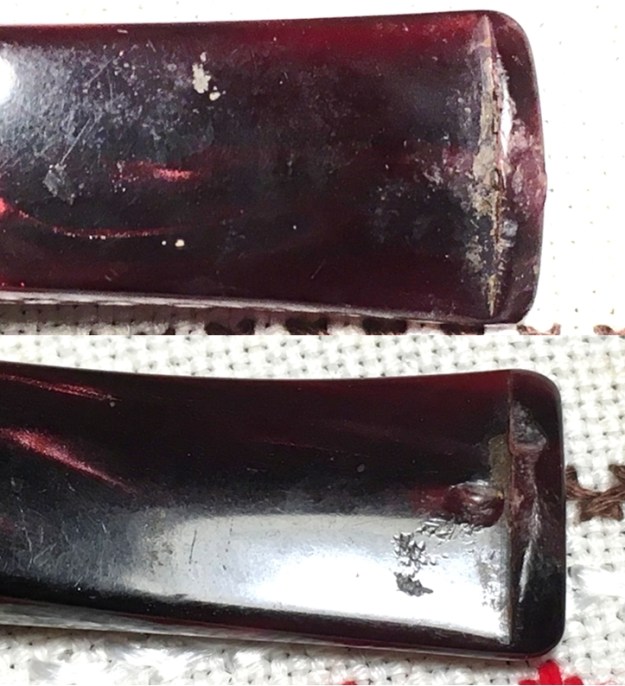
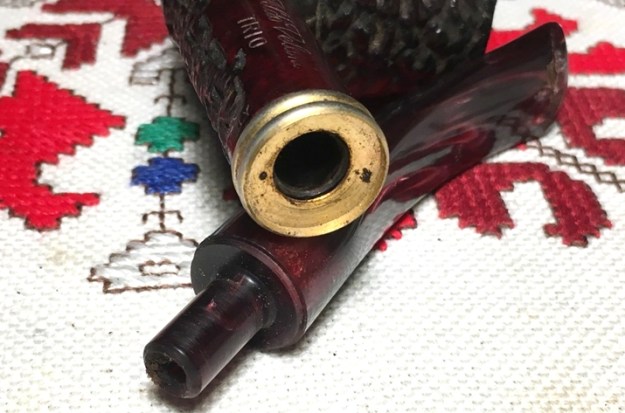
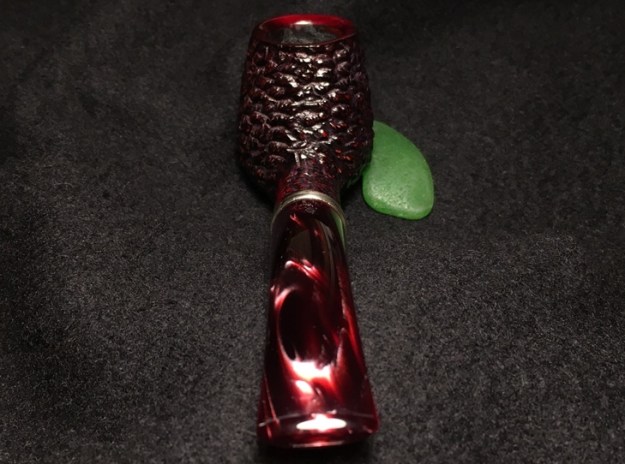
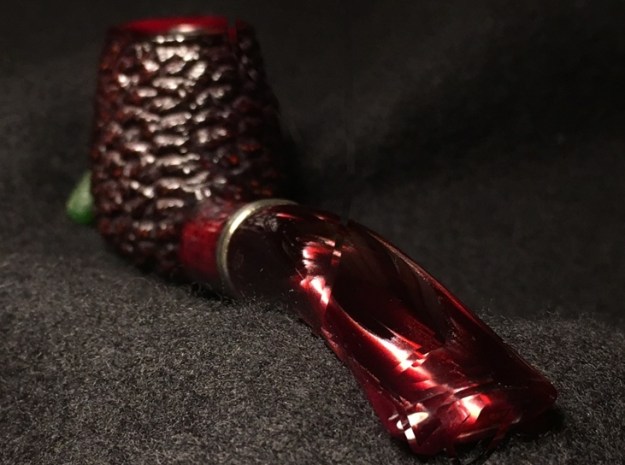
 The darker ruby red – burgundy acrylic stem shows heavy tooth chatter and chewing on the bit and button. The lower bit has a deeper bite compression that needs addressing.
 The amazing ‘fire’ of the acrylic stem presents in a spectrum of ruby red to burgundy and is eye catching and when the entire pipe is cleaned up, will probably steal the show.
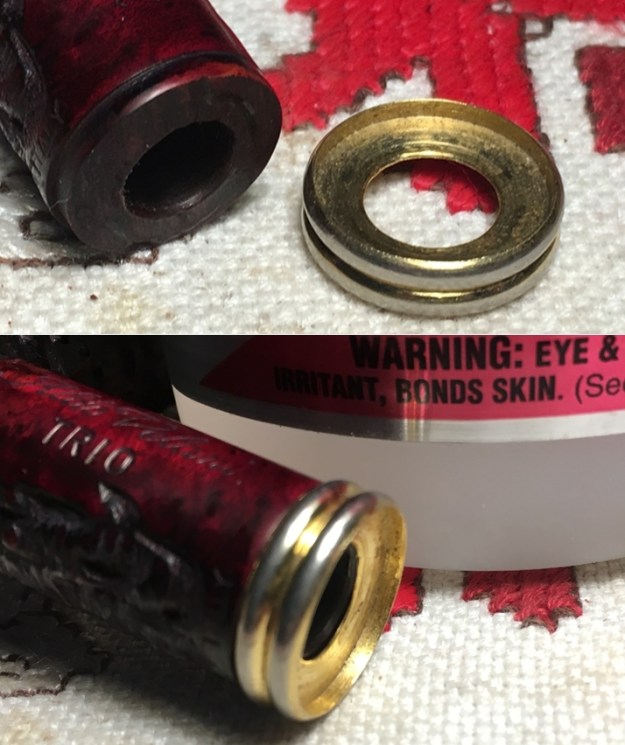
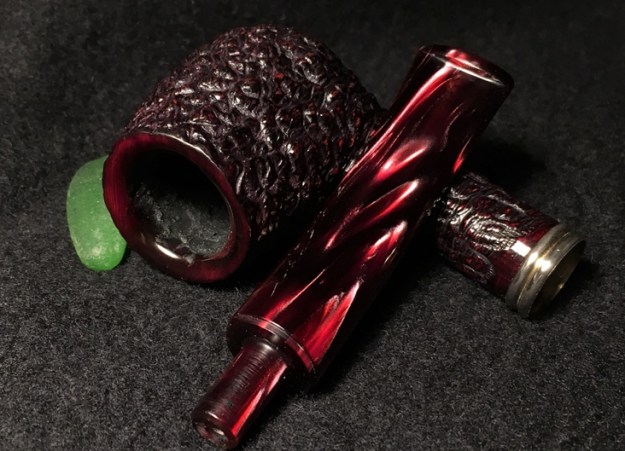
 The gold band I’m assuming is nickel plated as there are no markings showing a gold metal content. The double-bumped band is attractive and adds a touch of class as it joins the acrylic stem and rusticated stummel. The band will shine up nicely.
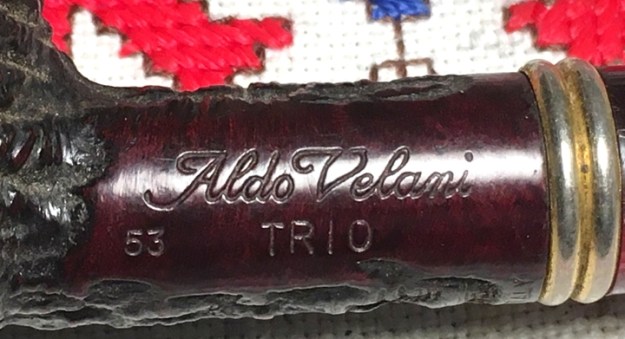
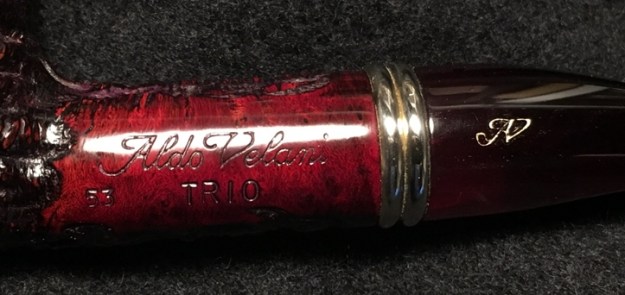
 The nomenclature on the left shank side is cursive script, ‘Aldo Velani’ [over] ‘TRIO’ with the shape number ‘53’ set to the left side of the smooth shank panel. Barely visible in the picture below is the stamping ‘Italy’ next to the band and the very bottom.
  The Aldo Velani stem stamp is interesting and takes a closer look to figure out. I found in Pipedia’s Aldo Velani article, an example and details of the stamping on an original Aldo Velani box, courtesy of Doug Valitchka. The stamp depicts a pipe as the front leg of the ‘A’ for Aldo and the back leg of the ‘A’ forms the front riser of the ‘V’ of Velani.
 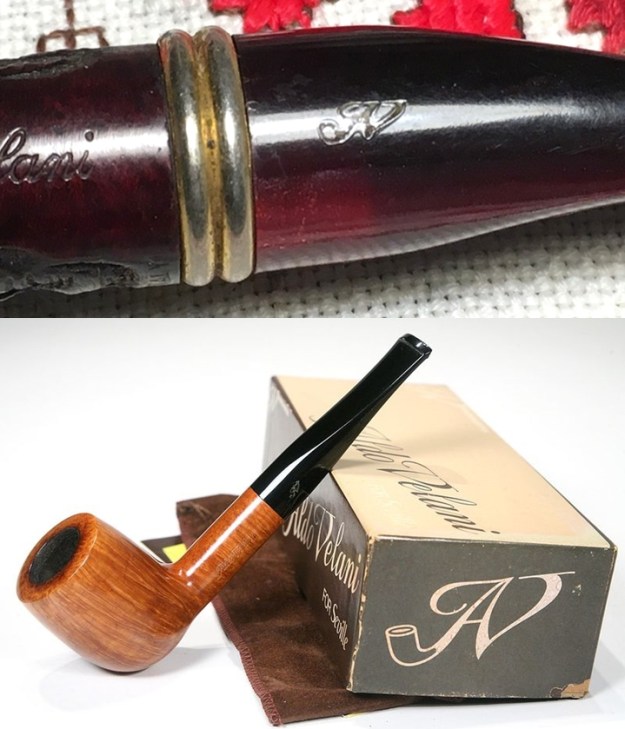 The article cited from Pipedia provides helpful information understanding the provenance of the Aldo Velani name:
Most Aldo Velani pipes are made in Livorno, Italy, for the USA market by Cesare Barontini. They were previously imported by Lane Limited. Lane spokesman Frank Blews once described Velani’s stylish, intrinsically Italian designs as “Billiards with more ball, bulldogs with more jaw.” The name “Aldo Velani” is actually fictional.
Another Barontini 2nd is named “Cesare”.
I learn two interesting things from this information. First, Aldo Velani is a faux name that does not describe an Italian pipe house but a specific pipe line. Secondly, the Aldo Velani is made by the Casare Barontini name based in Livorno, Italy. Further information is available cross referencing to Casare Barontini in Pipedia:
In 1890 Turildo Barontini opened a factory for the production of briar. In 1925 his son Bruno began to produce the first pipes. Cesare Barontini, son of Bruno, started direction of the factory in 1955, and still runs it together with his daughters Barbara and Silvia.
Sub-brands & Seconds: Aldo Velani. Cesare, L’artigiana, Stuart, Cortina
Pipephil’s site has several examples of the Aldo Velani line depicted which tend to be very stylish and nice-looking pipes which confirms the Pipedia assertion that Casare Brontini produced the Aldo Velani lines primarily for export. It is evident that there was not a consistency in the stem stamping or name style for Aldo Velani as different examples are given. Here are the stem stamping variations provided by Pipephil: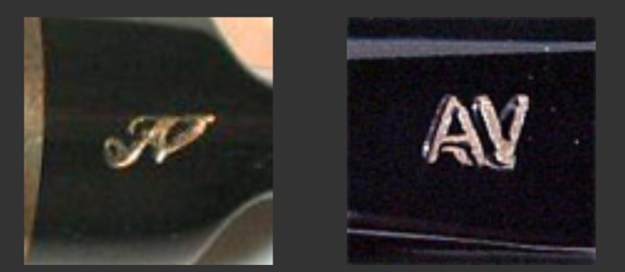 With a better understanding of the Aldo Velani Trio Rusticated Volcano before me, I begin his recommissioning by cleaning him up! I start by disassembling the parts – I find that the gold band easily is removed which will allow cleaning of each element to be easier.
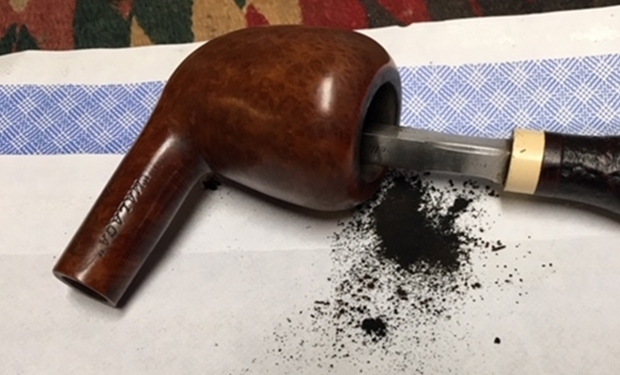
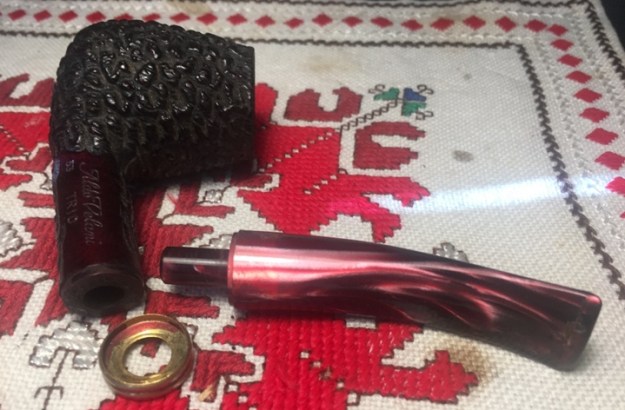 I then take the stummel and ream the chamber using the Pipnet reaming kit. I use the 2 smaller blade heads then switch to the Savinelli Fitsall tool. It doesn’t take long digging in the chamber and clearing away the cake that I realize there are problems. I remove the carbon cake and then sand the chamber wall with 240 grade paper wrapped around a Sharpie Pen to further clean and allow me to see the chamber wall with more clarity. I wipe the chamber with a cotton pad wetted with isopropyl 95% to aid me in my assessment.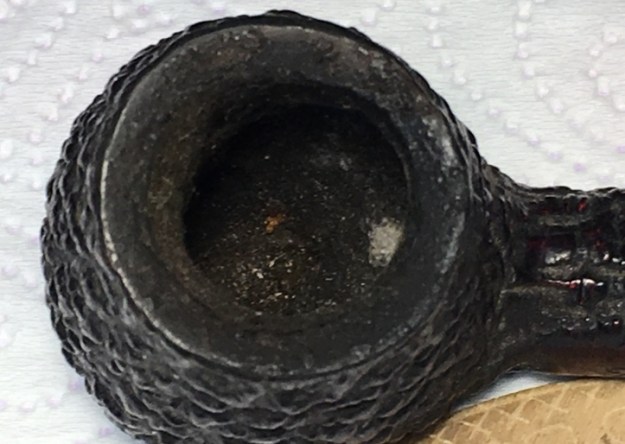
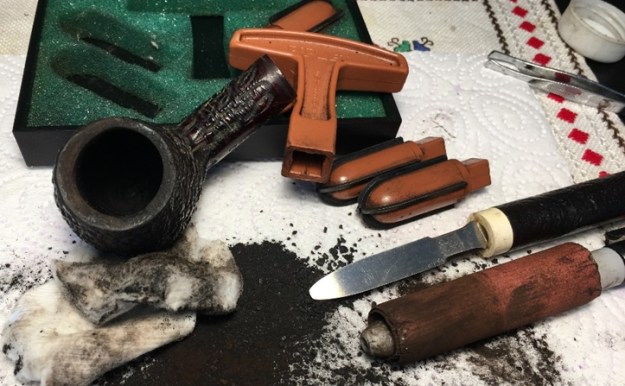 The first thing I note was strange was what looks like a ‘stoop’ at the lower back side of the chamber that gives the appearance of the draft hole entering the chamber floor more ‘forward’ than usual. What becomes more evident as I clear away the thick cake is that the back side of the chamber had fallen away revealing excessively burned briar. I see carbon fissures reaching into the chamber wall which I continue to remove by scraping with the Savinelli Fitsall Tool knowing that I need to find solid, healthier briar underneath the carbon cake. After sanding and cleaning, I take these pictures skewed toward an opened aperture to reveal the darker chamber confines with a pipe cleaner giving reference to the draft hole entry. I was able to find solid briar and now a cleaned surface with only 2 heat fissures that I see but the burning toward the aft of the bowl has reduced the diameter of the briar thickness significantly compared to the forward chamber wall thickness. The following pictures show what I’m seeing and it’s not good.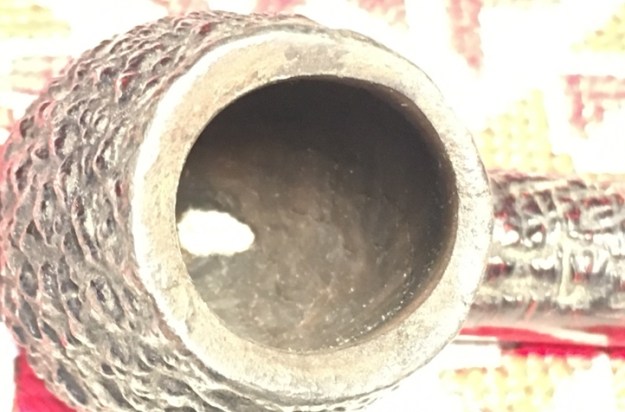
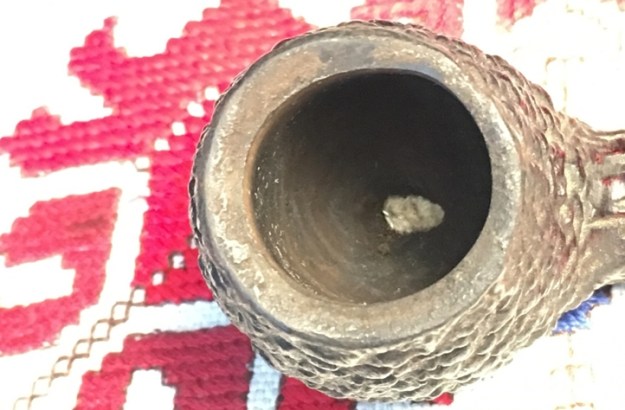
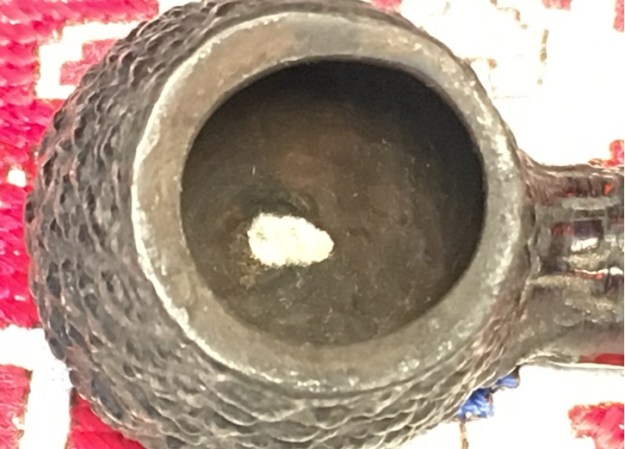
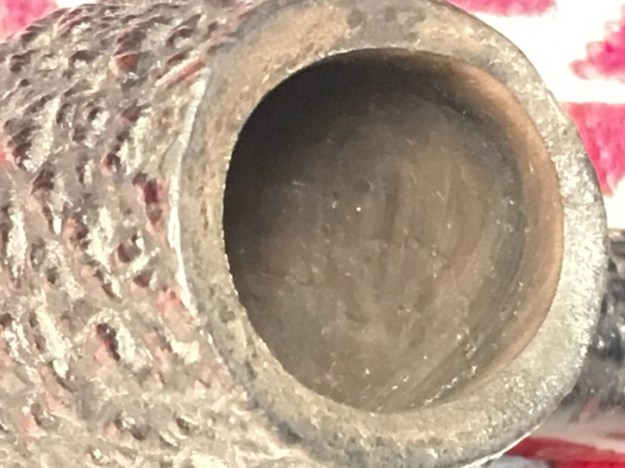 This final assessment picture below shows evidence of the wall thinning only in reference to the rim’s condition. The rim is dangerously thin.
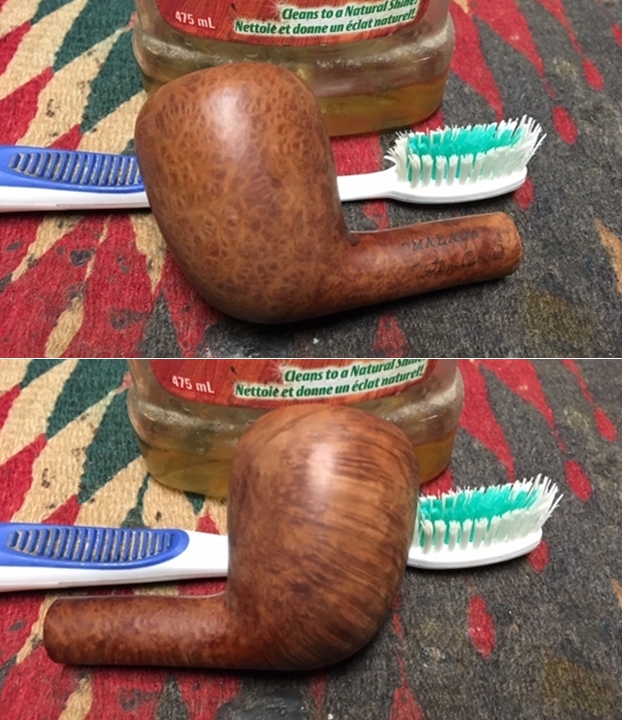
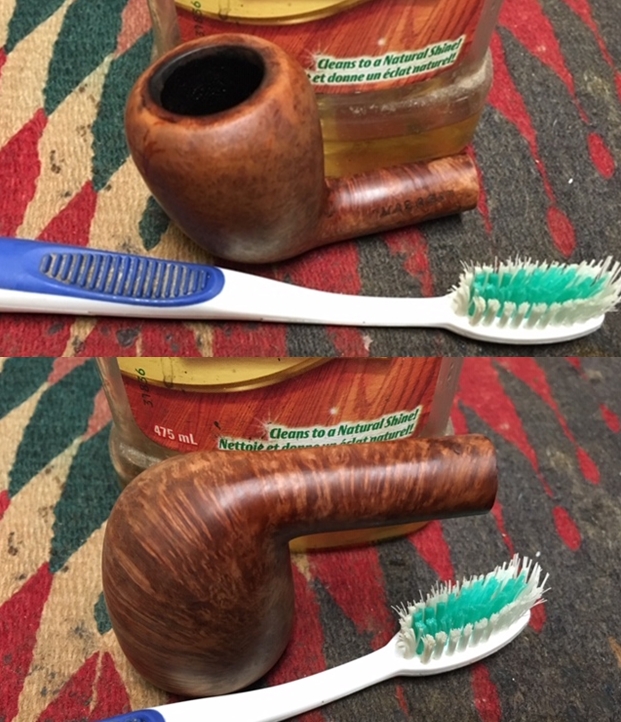
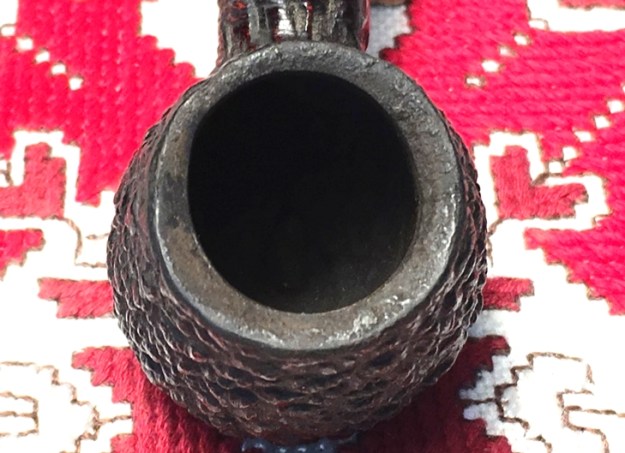 With much to think about now regarding how to proceed with the chamber damage, I proceed with the normal cleaning regimen which is needful and gives time to think! Using undiluted Murphy’s Oil soap on a cotton pad and with a bristled tooth brush, I clean the attractive rusticated surface. I also use a brass wire brush and a little help from my thumb’s fingernail to clean the remaining lava off the labored, bemangled rim. The cleaning does well and reveals the smooth briar rim motif of the original design of the Aldo Velani. The smooth briar rim would have popped in contrast to the rustication. I like it, but unfortunately, much of the original rim is now smoke history.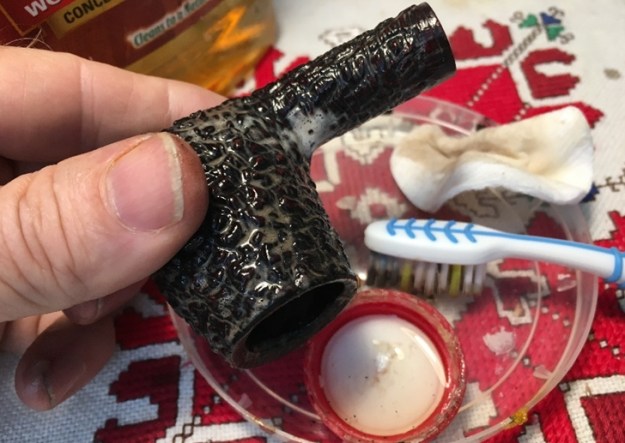

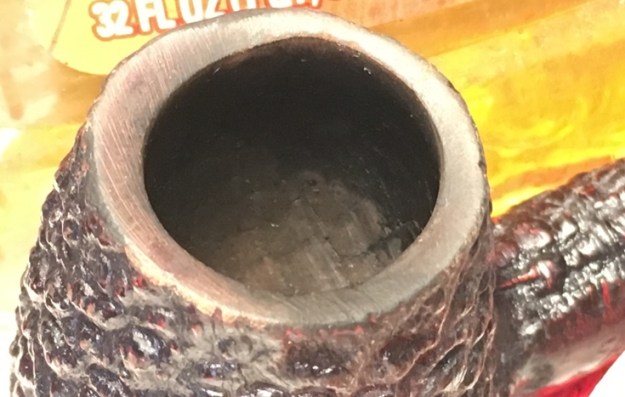
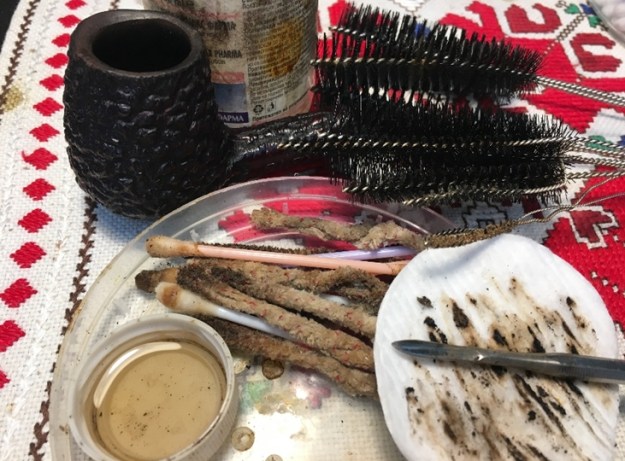
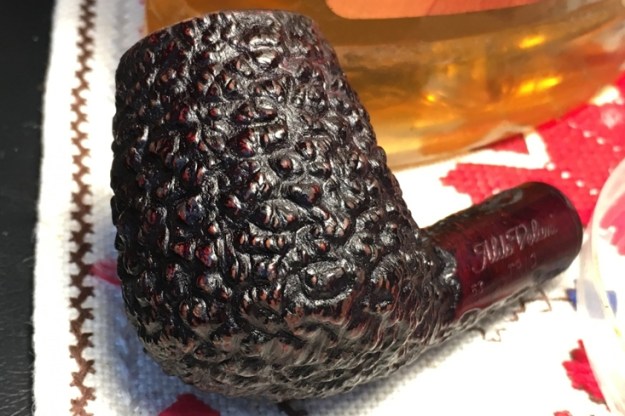 To the internals – I use pipe cleaners and cotton buds wetted with isopropyl 95% to do the job. With the condition of the chamber lack of care and maintenance, it’s not surprising that the internals are grungy. I also use a dental spatula to scrape the mortise wall as well as long shank brushes to clean the airway. In time, the pipe cleaners and buds start surfacing less soiled and I move to the next phase of cleaning the internals.
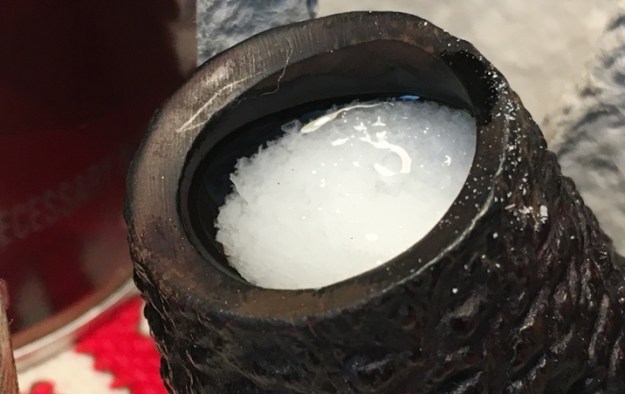
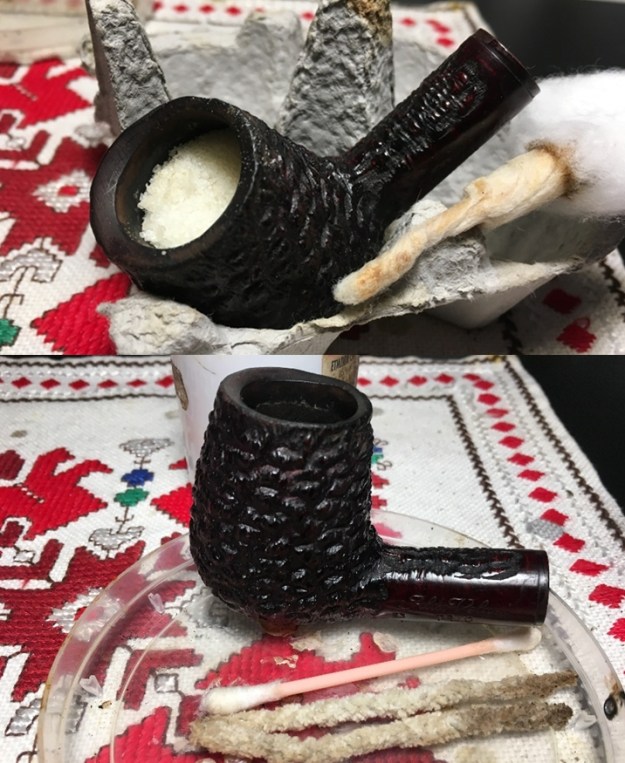
 I continue the internal cleaning with a kosher salt and alcohol soak. I stretch and twist a cotton ball to serve as a mortise wick and then insert it down the mortise into the airway with the help of a straight stiff wire. I then fill the bowl with kosher salt which, unlike iodized salt, does not leave a ghosted aftertaste. After putting the stummel in an egg crate to provide some stability, I fill the bowl with isopropyl 95% until it surfaces over the salt. After a while, the alcohol is absorbed into the salt and cotton wick and I add some more alcohol to top it off and put the stummel aside to soak for several hours.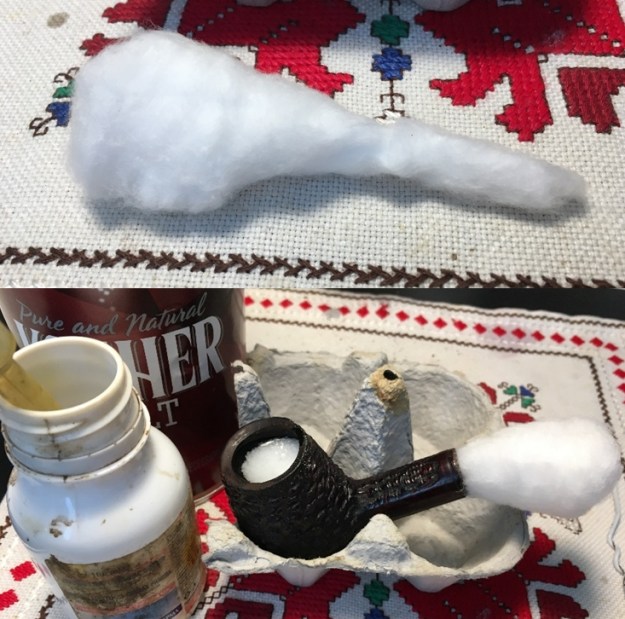
 With the kosher salt doing its thing, I turn now to the stem. The first thing to do is clean the internals using a pipe cleaner and isopropyl 95%. The pipe cleaners discover not too much resistance. I then wipe down the acrylic stem external surface to clean it from the grunge so I can examine the surface closely.
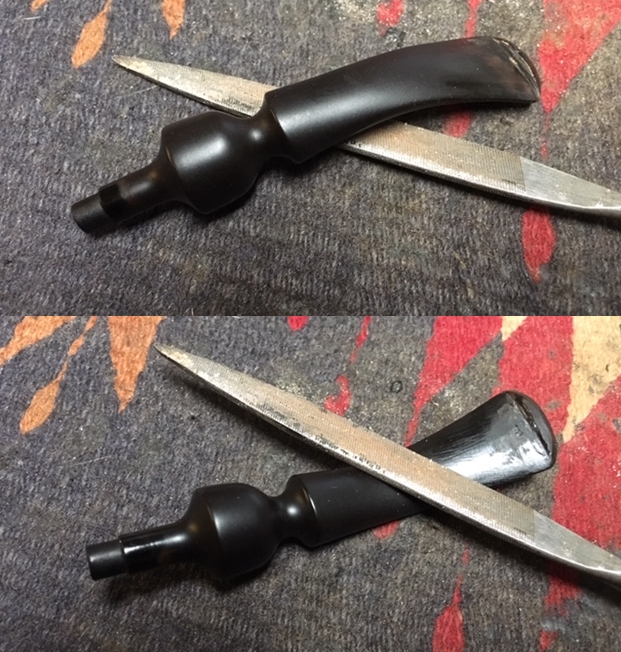
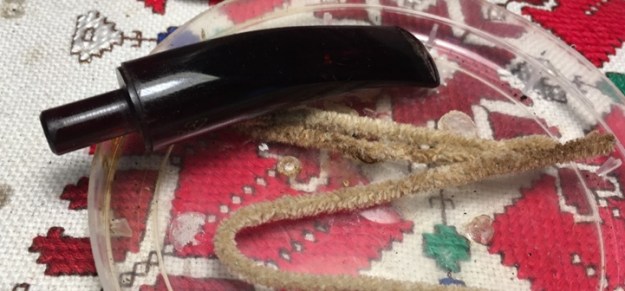 The stem is in good shape with only expected scratches and scrapes from normal wear. The bit is a different story with a compressed button and tooth chatter on the upper side and a deep compression on the lower bit with button damage and chatter. Starting with the upper bit challenges, I sand using 240 grit paper on the bit and button. I’m thinking that sanding alone might address the damage on this side. I also use a flat needle file to help shape and freshen the button. As I had hoped, sanding and filing alone erases the compressions and chatter.
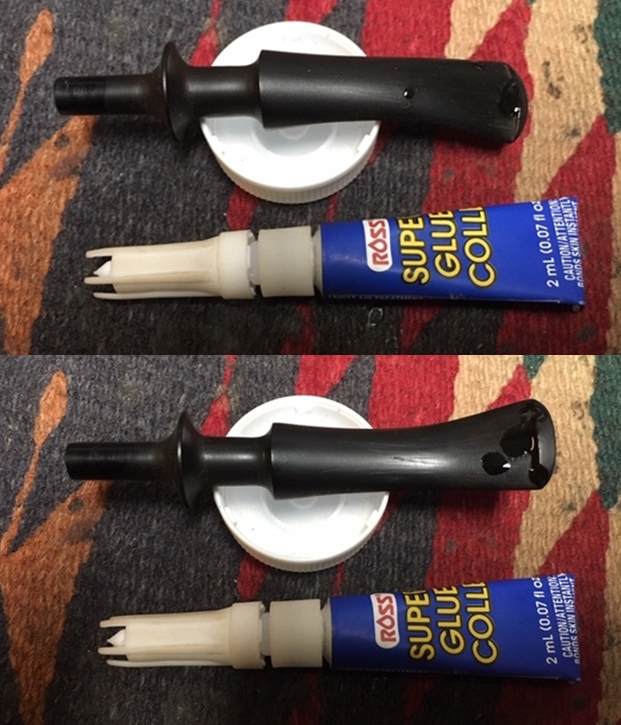
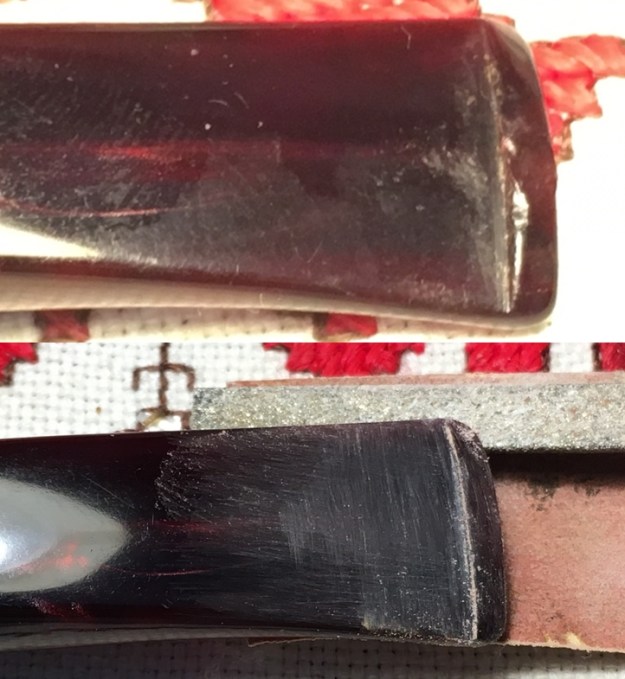 The lower bit is a different approach. I realize from the outset that sanding alone will not address the damage – the compressions on the bit and button are too deep. Because of this, I apply a patch of thick CA glue to the areas and then use an accelerator too quicken the curing time. I start with CA glue because I want the footprints of the compressions to be larger so that the CA has more to attach to.
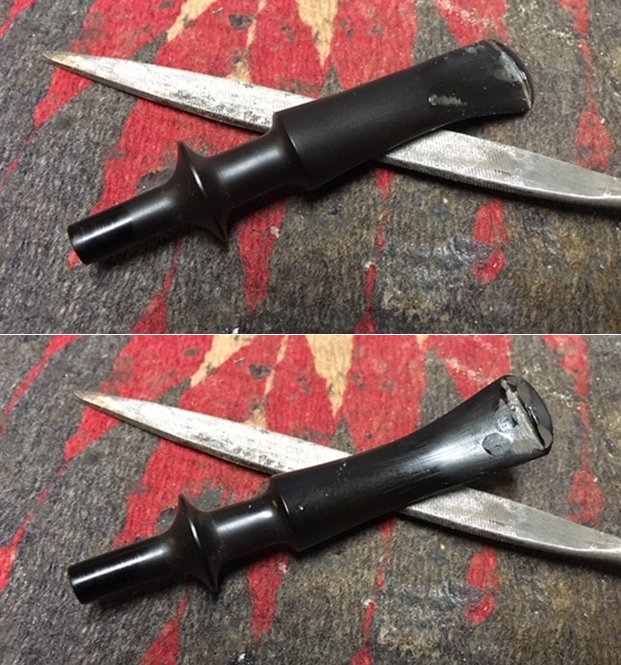
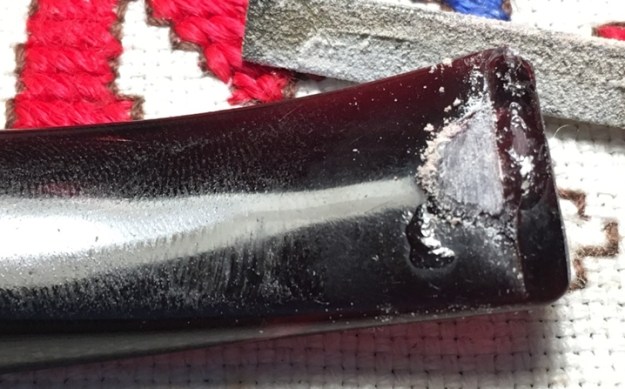
 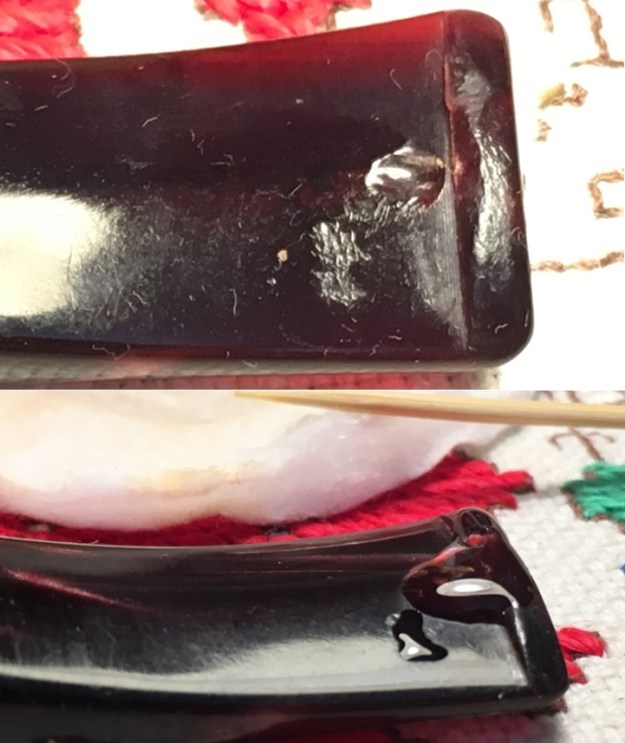 I then address the cured CA patch first by filing with a flat needle file and then by sanding with 240 grade paper. I reshape the button with the file as I work on filing the patch mounds down to the acrylic surface. Then, switching to 240, I bring the patches down flush with the acrylic surface. The ruby red and burgundy hues should shine through the transparent CA glue after sanded and polished.
 Sometimes an air pocket is uncovered in the sanding and filing like in the picture below. To remedy this, I add another drop of CA glue to fill this.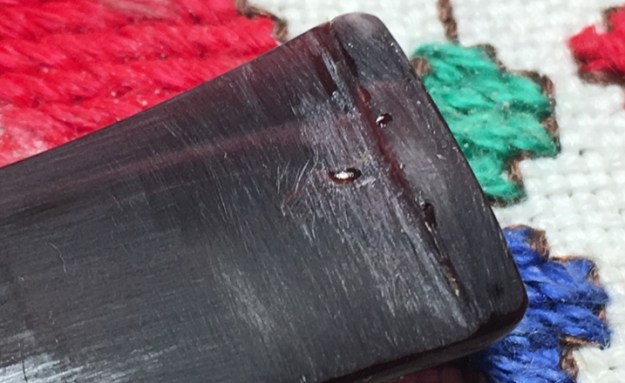
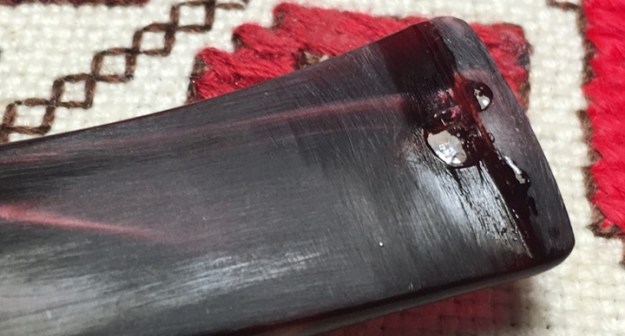 I finish this phase of the repair using the flat needle file and 240 grit paper.
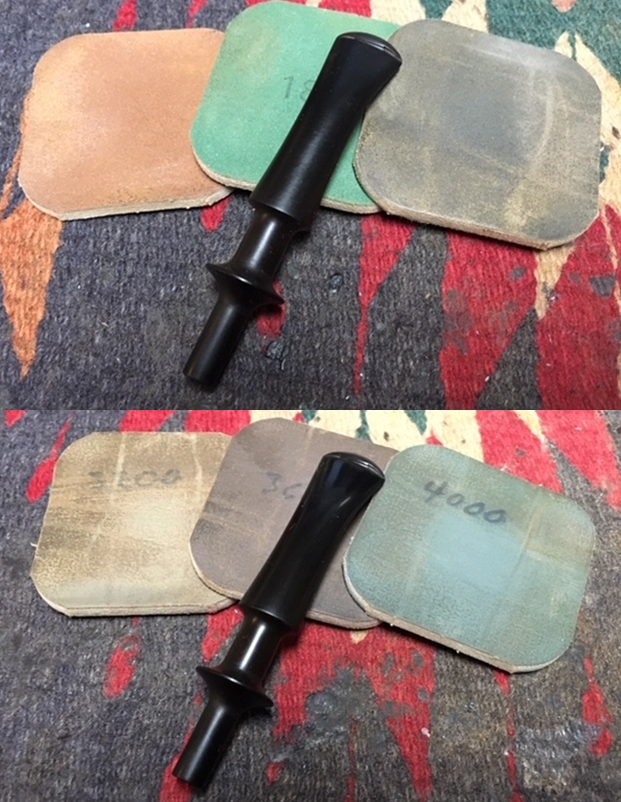
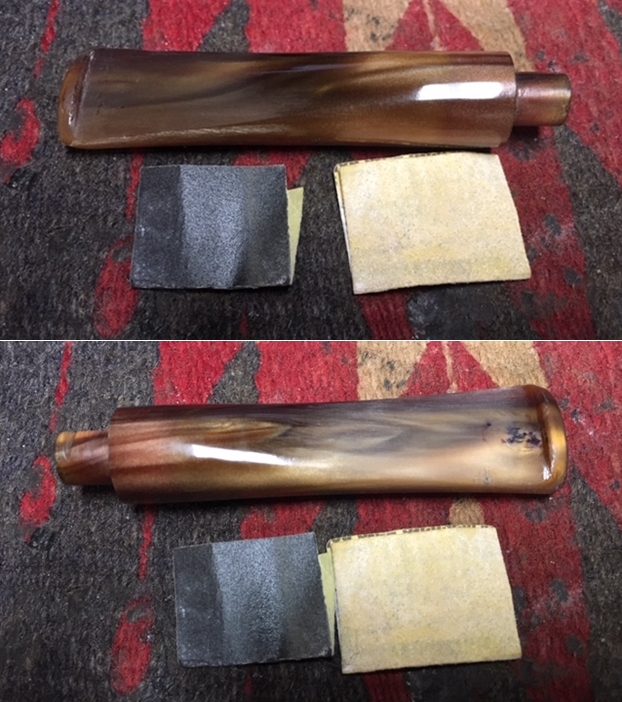
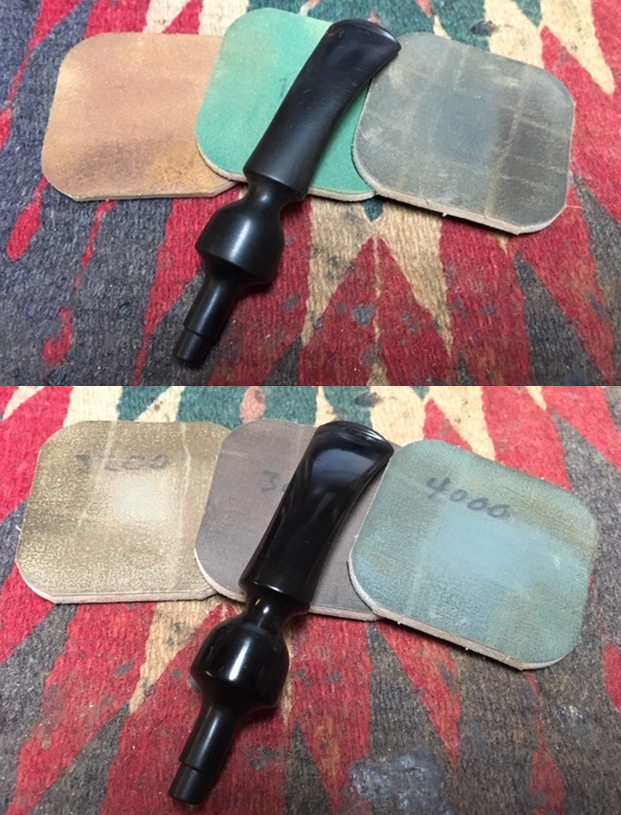
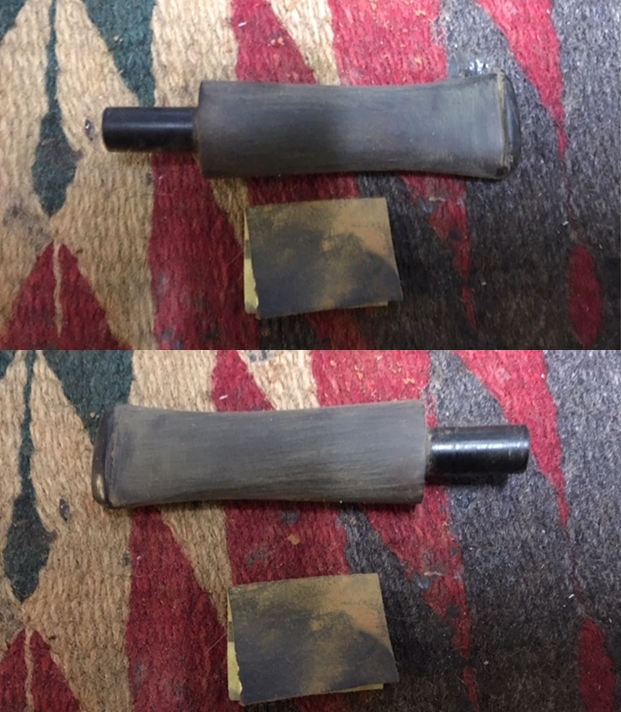
 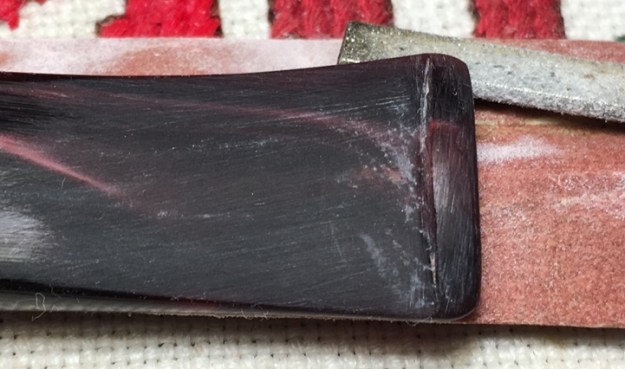 To erase the scratches of the 240 grit paper I follow by wet sanding with 600 grade paper and the I apply a 0000 grade of steel wool.
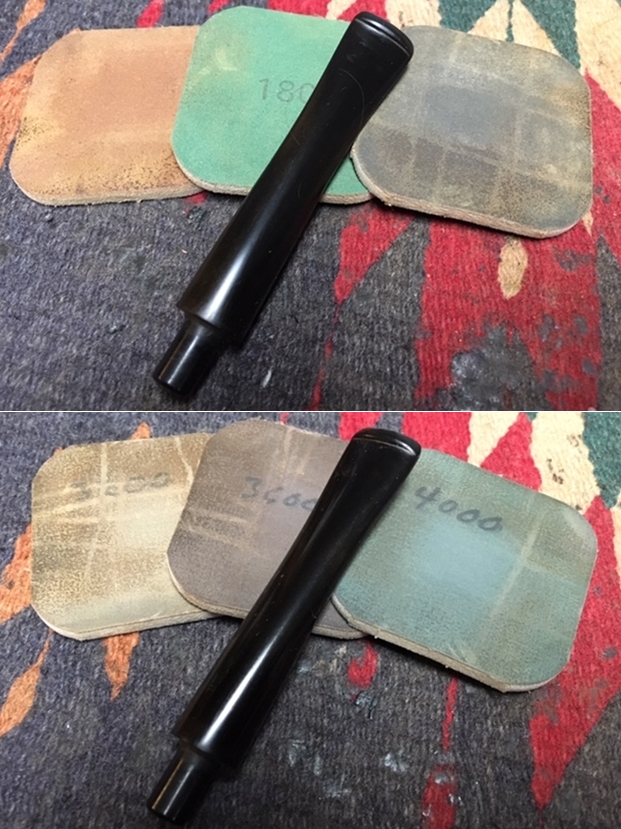
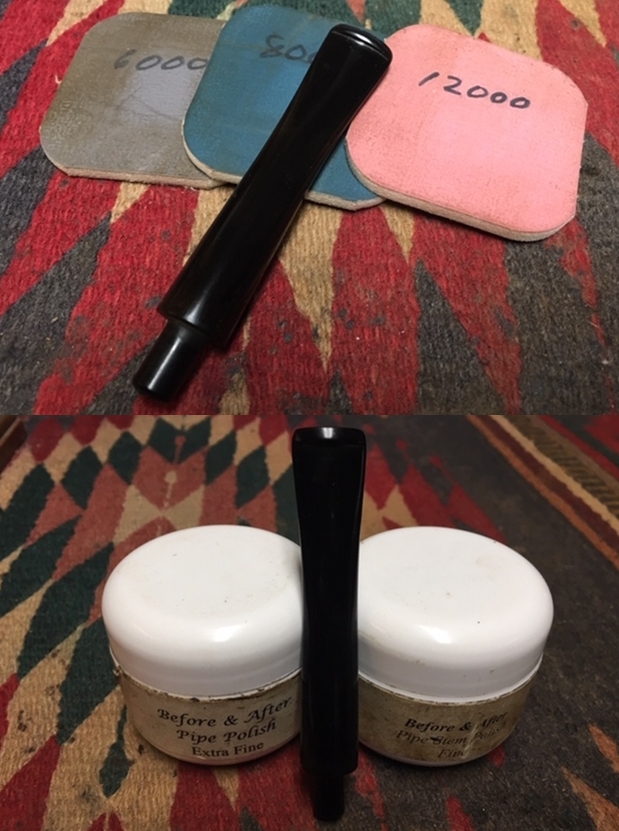
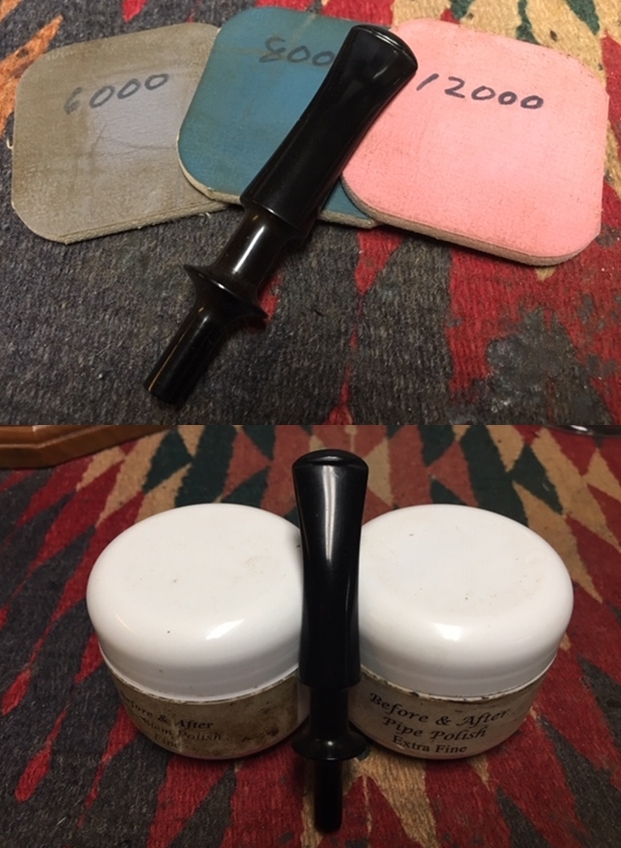
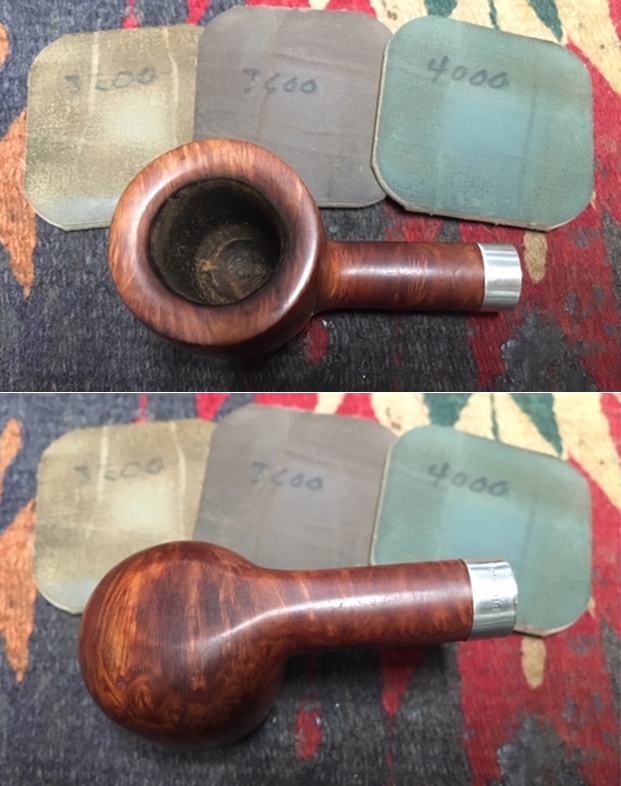
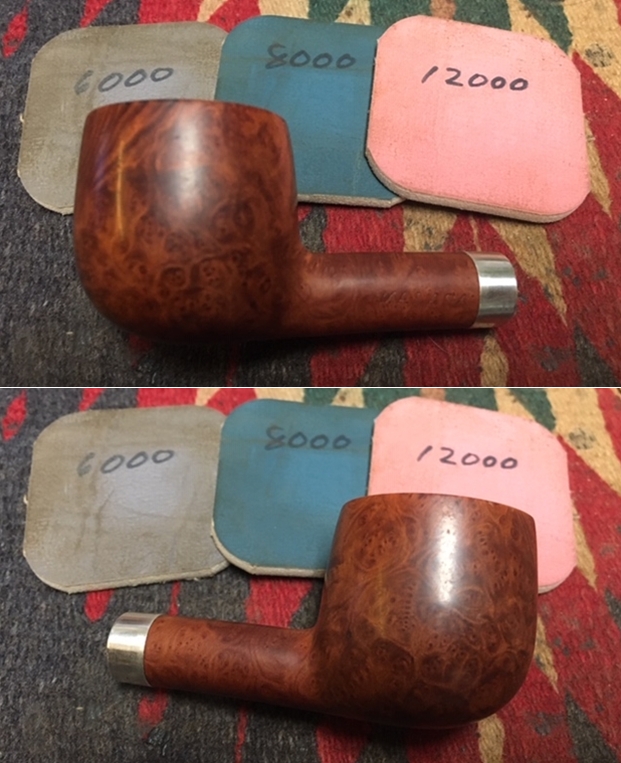
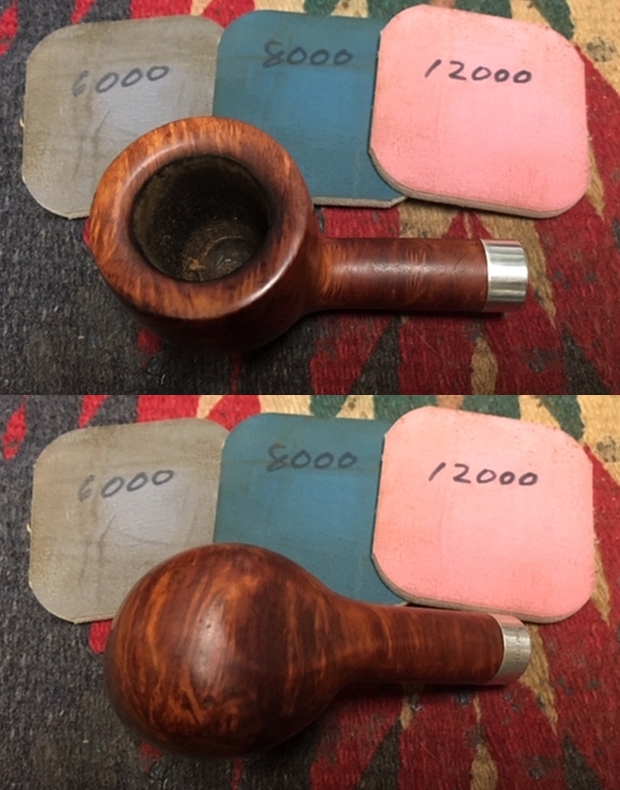
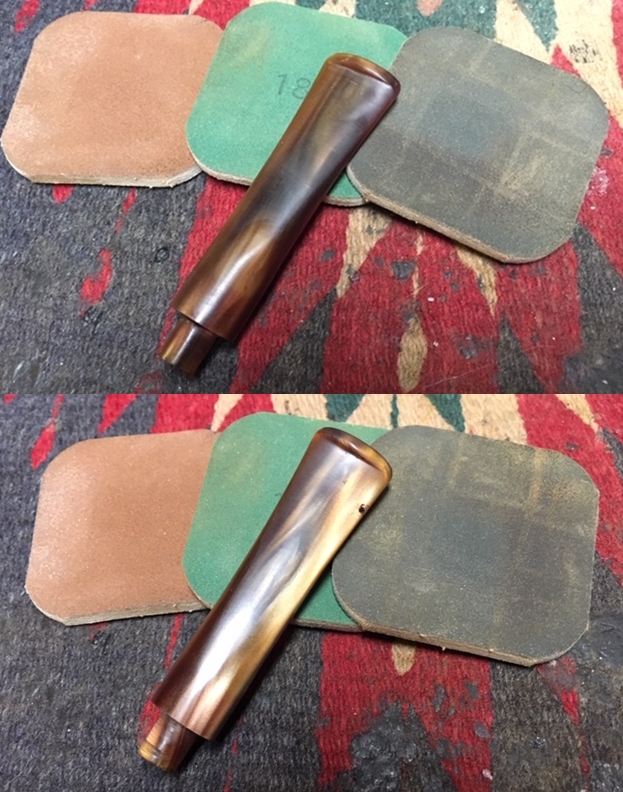
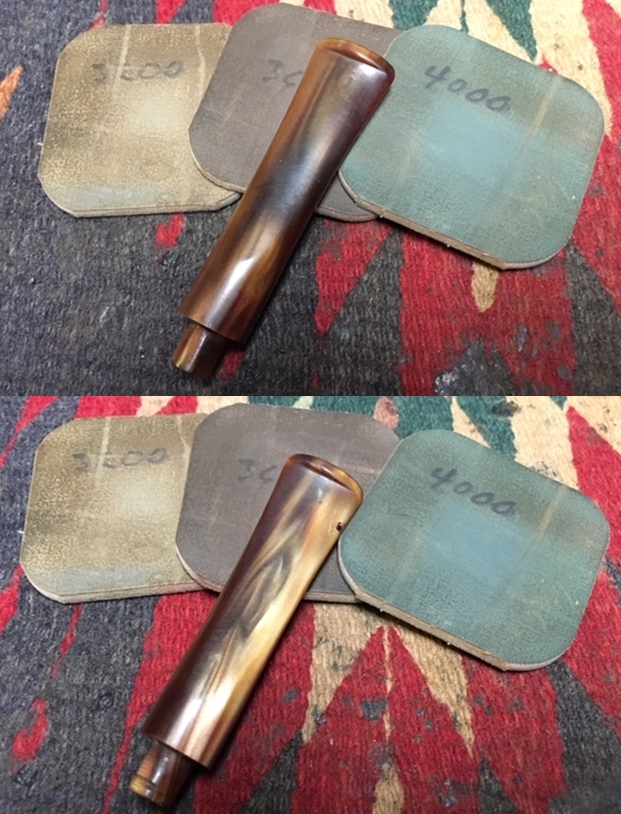
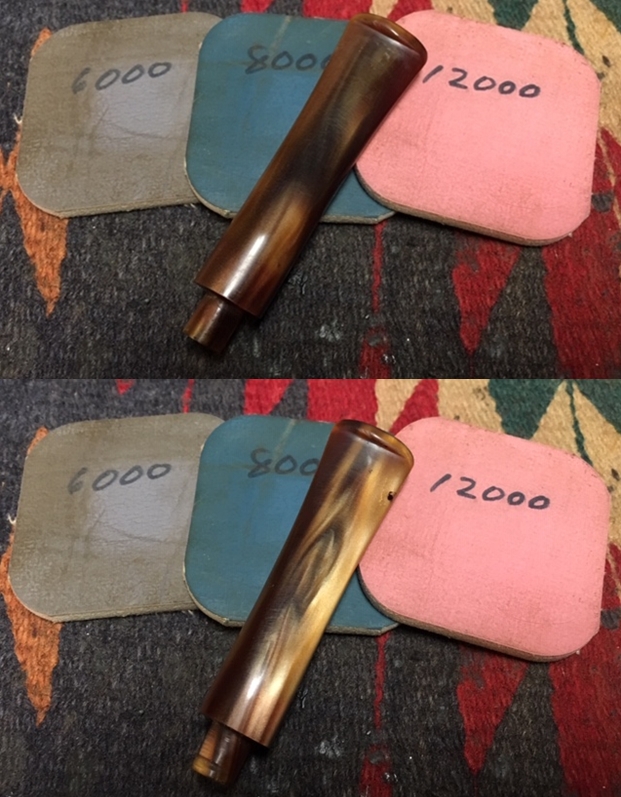
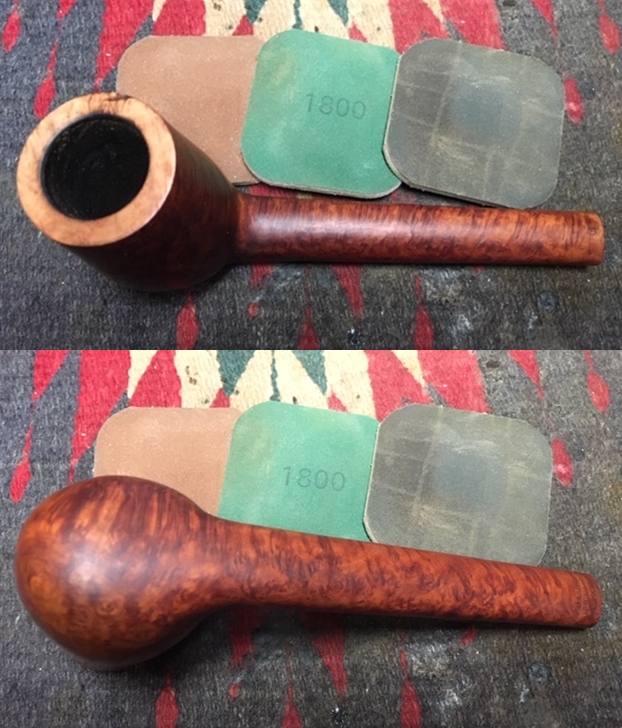
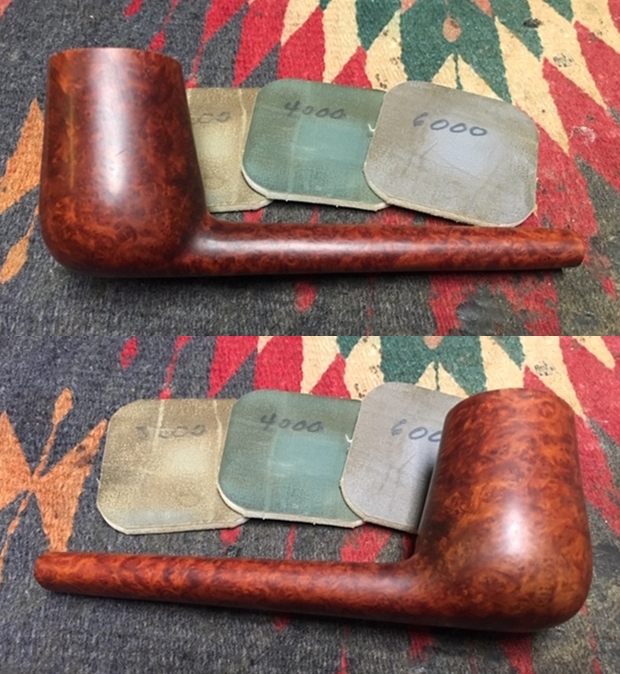
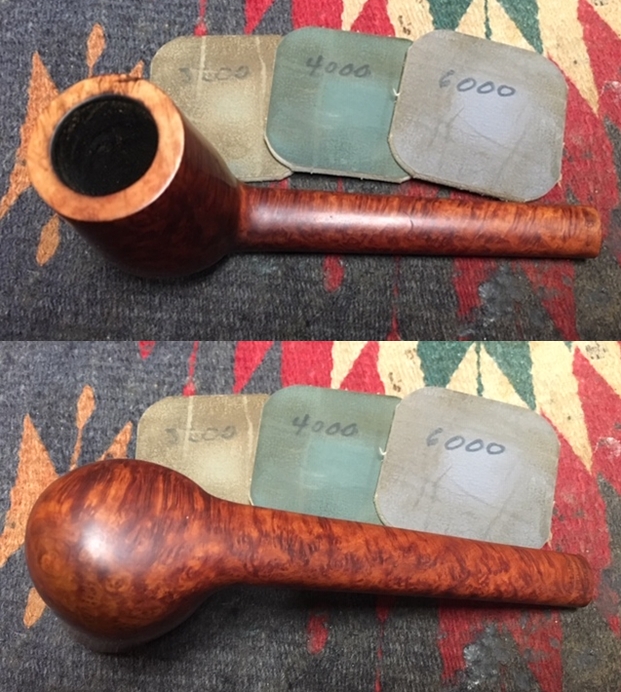
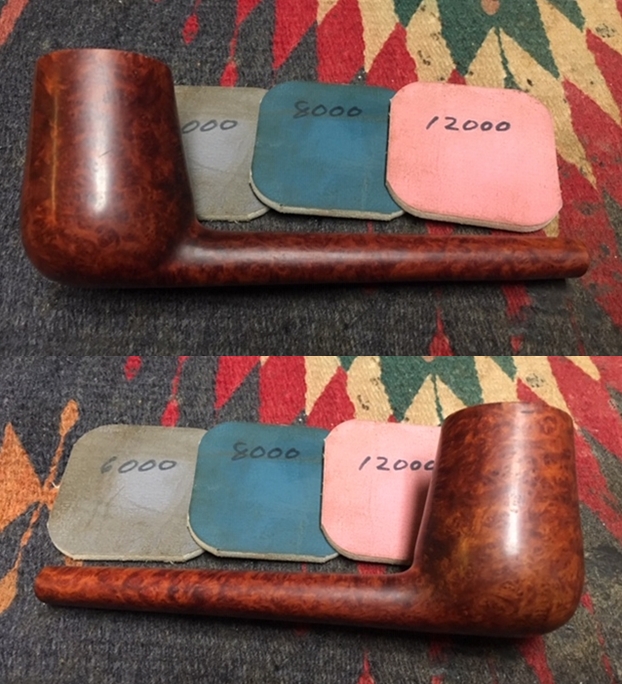
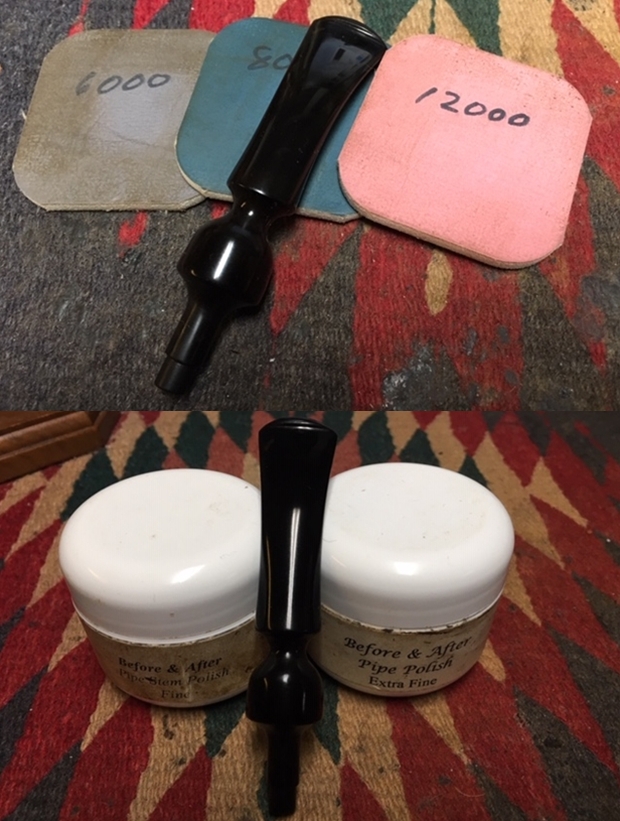
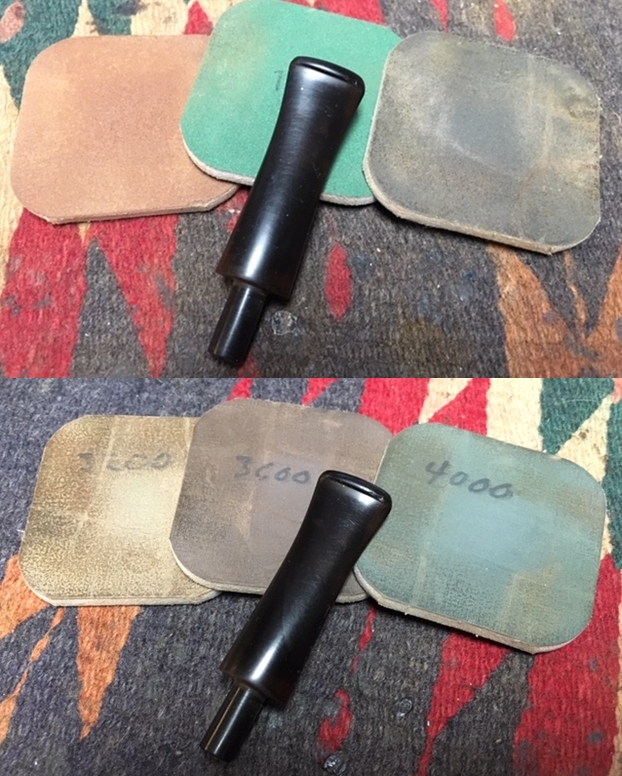
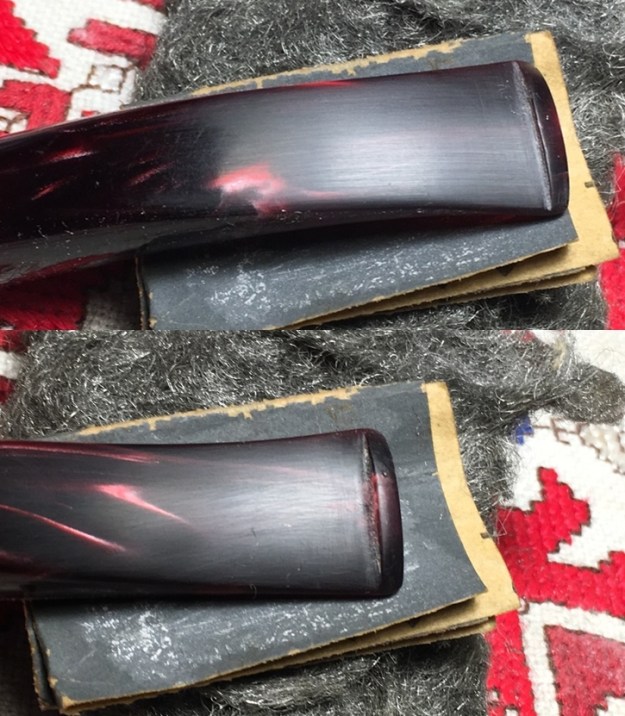 Then, the micromesh process using 9 pads from 1500 to 12000. First, I wet sand with pads 1500 to 2400 and then follow by dry sanding with pads 3200 to 4000 and 6000 to 12000. I’m not sure it revitalizes the acrylic material, but as I do with vulcanite stems, I apply obsidian oil to the stem after each set of 3 pads. My – the fire in this acrylic stem is beautiful. The problem is that it’s difficult to capture with my iPhone 6s camera!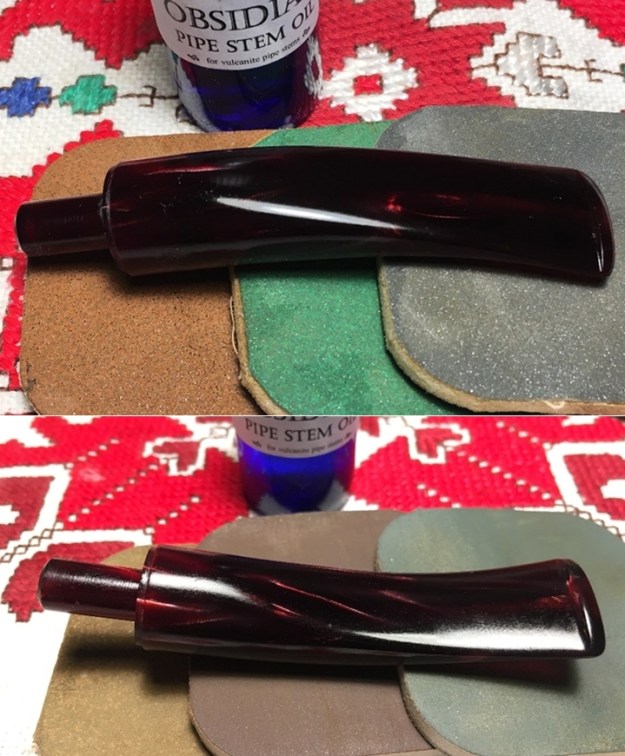
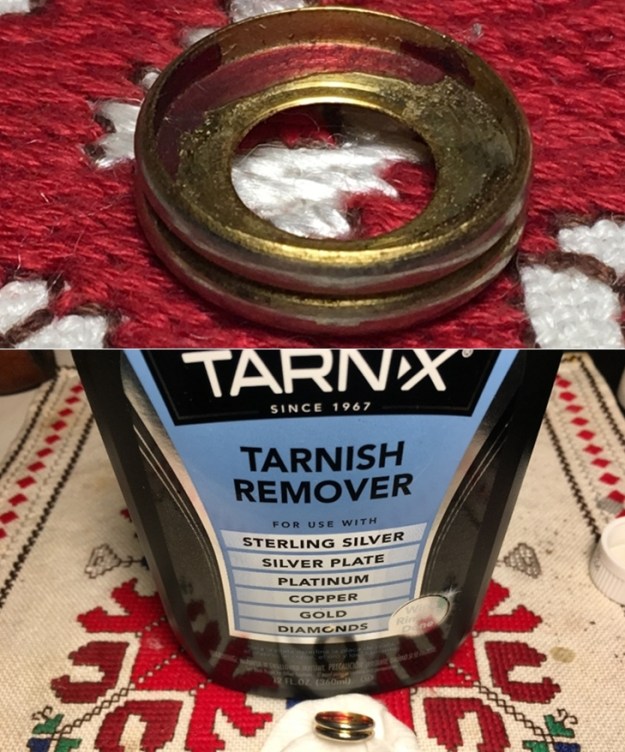
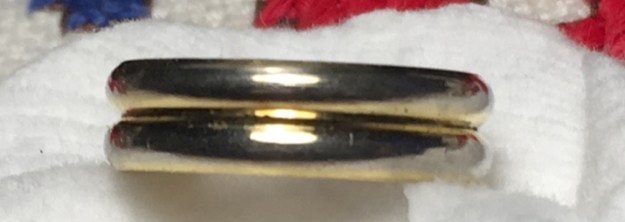
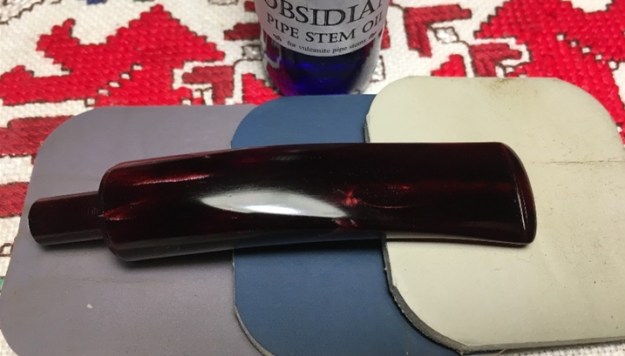 Next, I shine up the gold nickel plated double-ringed band – shank cap. I first wash it with warm water and dish soap using a bristled tooth brush to get into the center crease. After I dry the band, I then apply Tarn-X with a cotton pad and after scrubbing it well, rinse with cool tap water and dry it. It looks great. Later, I will buff it up more with the Dremel.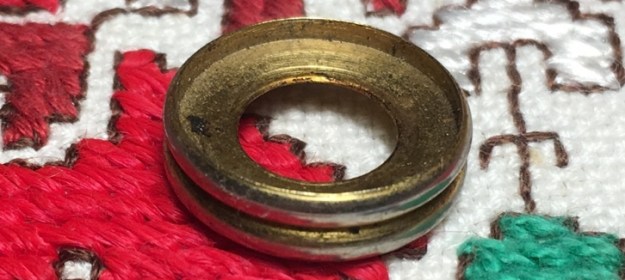
 It has been several hours since starting the kosher salt and alcohol soak. The salt and cotton wick have soiled somewhat, not as much as I thought it would, but perhaps my initial cleaning had accomplished more than I thought! After I toss the expended salt in the waste, clean the chamber with a paper towel, I also use broad bristled shank brushes to clean the residue salt left behind. I blow through the mortise to loosen and remove salt crystal remaining in the airway. Finally, to make sure the cleaning has done the job, I expend a few more pipe cleaners and cotton buds with alcohol and discover that the internals are clean. Moving on!
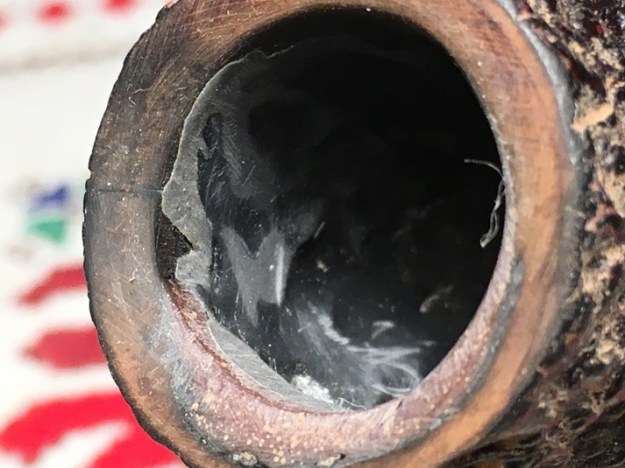
 I’ve had some time to think about the issues with the burning damage to the chamber. The good news is that there are no burn throughs, but the briar on the back side of the chamber is thin. The rim on the backside is also thinner in comparison to the front side of the rim which is evident in the first picture. In the second picture I’ve tried to show how the inner chamber has bowed out because of the loss of briar through burning. During the reaming and removal of all the charred wood, left behind is a bowed cavity where it should be relatively straight-vertical. The third picture shows the remaining fissure that crawls up the left side of the chamber and impacts the rim. I’ve looked very closely and thankfully, the fissure crack is isolated where it is. There are no skulking cracks over the rim into the rusticated surface.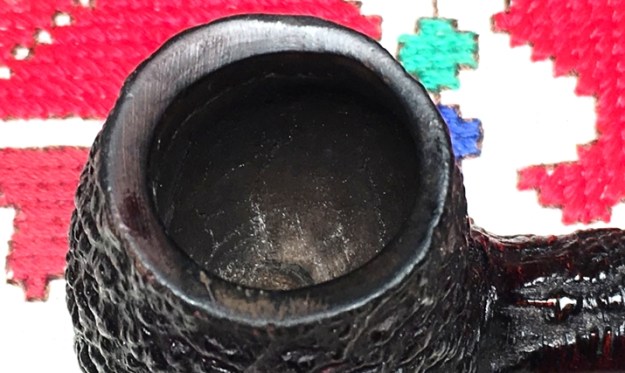
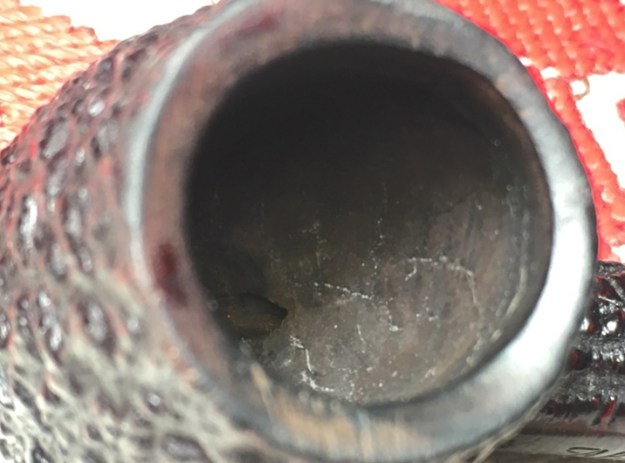
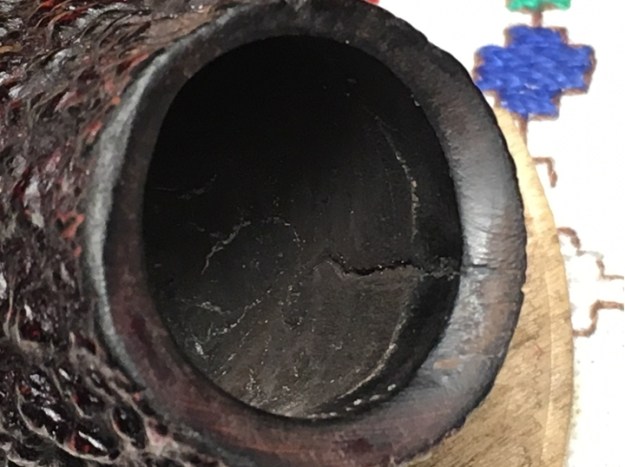 To give this pipe a longer life, I will employ two different approaches that hopefully will build the rim up and fill the bowl cavity out to increase the mass on the rear chamber wall. To do this I’ll use JB Kwik Weld to build a new chamber lining and to fill the fissure on the left side of the bowl. JB Weld will be the main strategy in the chamber itself because of its heat resistant capabilities. This is the lower chamber strategy. Before starting this, I will first build out the rim thickness using a mixture of thick CA glue and briar dust to form a putty that will cure and provide the upper scaffolding for a rear rim rebuild. I’ll form this first around the back side of the rim and as I form the rim mold with the putty, I’ll intentionally fashion an ‘under-ridge’ with the briar dust putty. This ‘under-ridge’ will form the raised boarder that the JB Kwik Weld will butt against when it is applied afterwards. I hope this plan will work!
The first thing I do is wipe the bowl and rim with alcohol and a cotton pad to clean the surface. Then I mix a batch of briar dust and thick CA glue on an index card. When it’s about the viscosity of molasses so it will hold together and not run, I trowel it to the rim with a curved dental spatula shaping the rim form. As I’m working, I see that the putty isn’t firming up on the rim as I hoped and so I use an accelerator to help quickly set the putty in place and cure. I apply three separate batches of putty to build up the rim which are shown in the pictures. The first phase looks good. The pictures show the progress.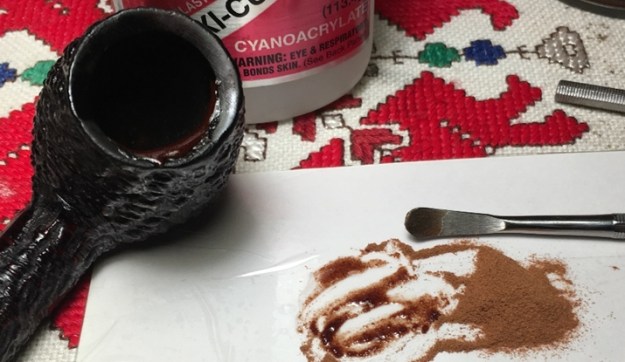
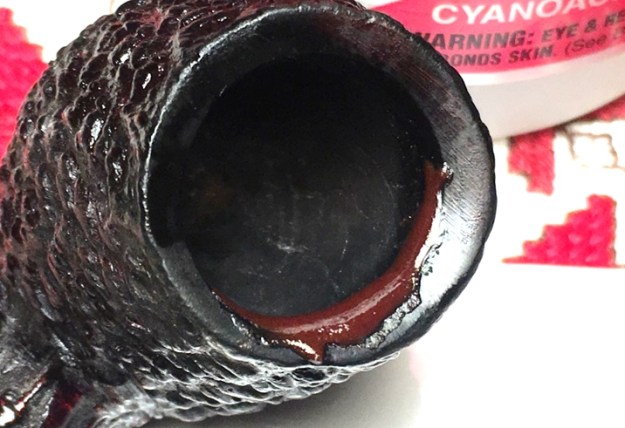
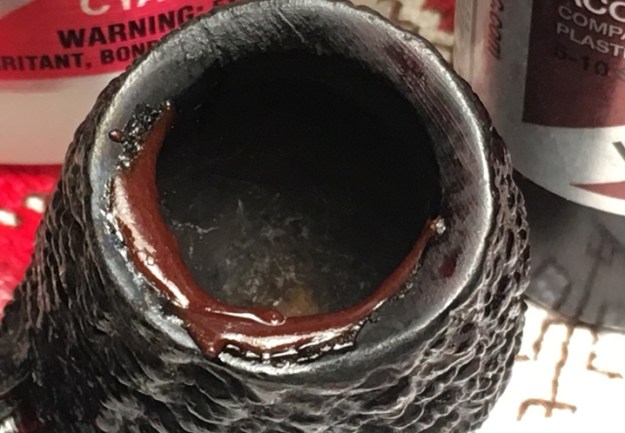
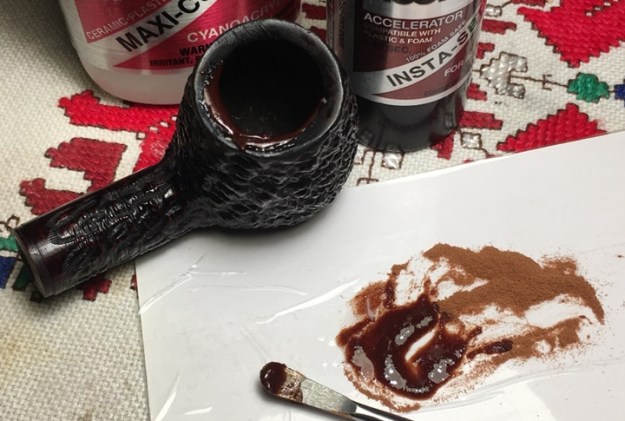
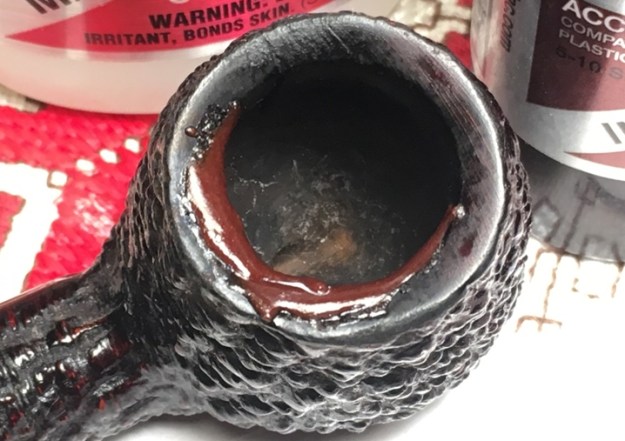 Next, I mix equal parts of the two components of JB Kwik Weld, the steel and hardener. After the two elements meet, there is about 4 minutes of relative pliability to apply the Weld in place. After four to five minutes the Weld begins to harden. I use a spatula to trowel the Weld into the chamber – trying to avoid the rim, but that wasn’t easy to do. As I apply the Weld into the chamber, I spread it on the back wall and fill the fissure. As it hardens, I tamp it down and shape. After applying and shaping, I set the stummel up so that the back of the bowl is down allowing gravity to help. I turn out the lights and call it a day.
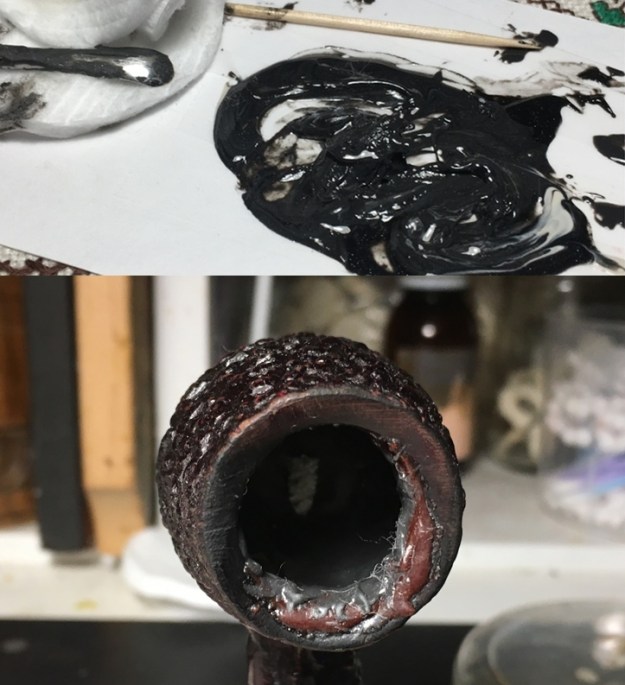
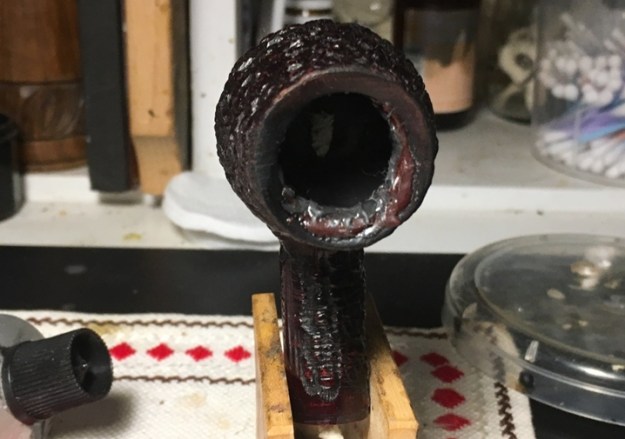 The next day I’m anxious to start to work on shaping the rim after the JB Kwik Weld and briar dust putty have thoroughly cured. My main work horse to begin with is the Dremel mounted with a round grinding stone and a half-rounded needle file. The grinding stone is the perfect size at 5/8 inches in diameter to fit into the narrowed Volcano summit and yet, large enough to provide a larger and less abrupt grinding footprint.
 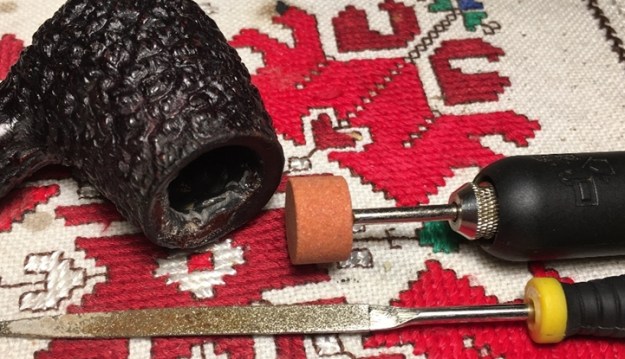 As I begin to grind the internal lip of the rim patch, I remove the excess briar dust putty patch material. I go slowly and patiently eyeballing the roundness of the rim. I decide to employ a caliper to measure the original intact part of the rim to help me measure the removal process. I would rather leave more and work down slowly sanding with paper than to be greedy with the Dremel grinder and take off too much.
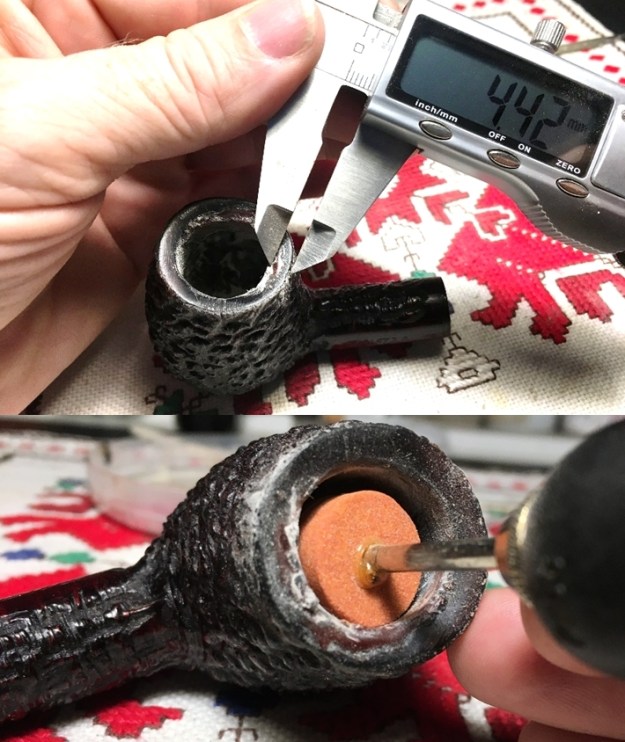 After a time, a take a picture to mark the progress removing and rounding.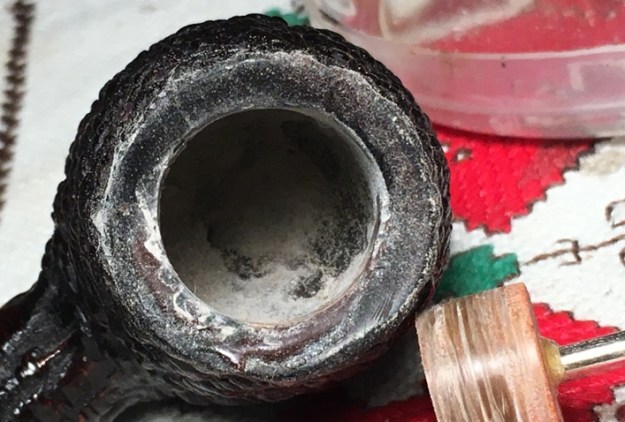
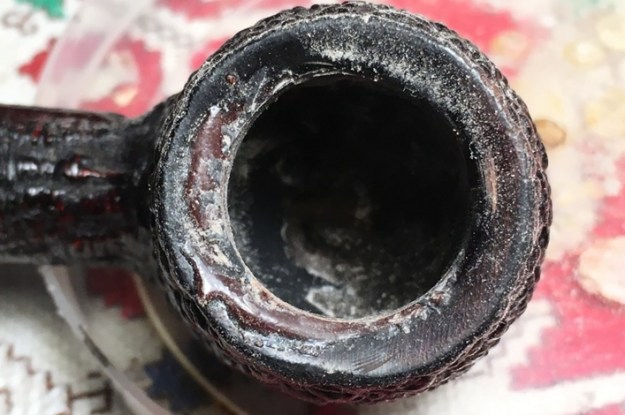 When I’m close to being satisfied with the removal and rounding with the Dremel grinding stone, I use both a flat and half rounded needle files to begin removal of the excess patch material on the rim top. The entire rim bevels inwardly and slanting toward the chamber and I patiently and gently file in that direction.
 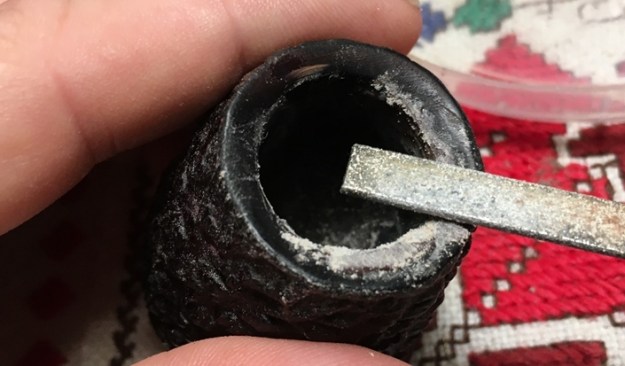 After filing, I transition to 240 grade paper to continue to shape and to blend the rim patch with the resident briar. I do a dance back and forth between sanding and filing and eyeballing the angle of the rim slant – seeking as much uniformity as possible!
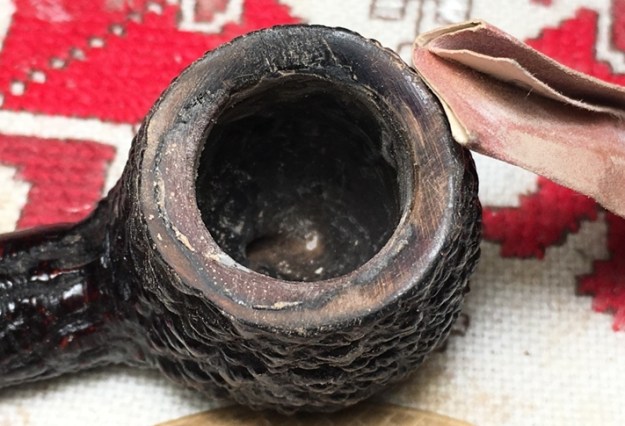 I’m satisfied with where I am at this juncture. The inner rim looks round and the rim rebuild is holding together very well. The area is still rough, and I’ll continue to work on that later, but now I turn my attention from the rim rebuild and restoration to the chamber.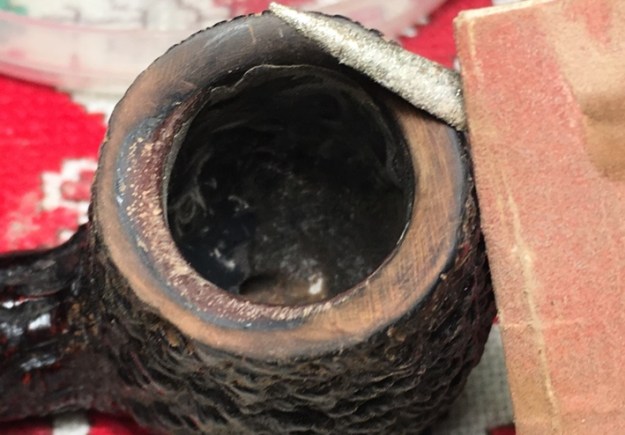
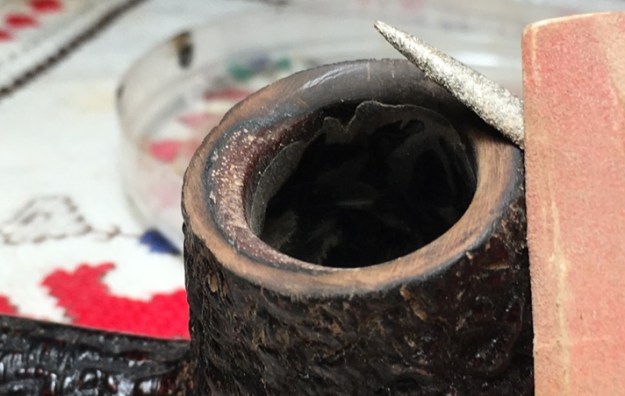 I wet a cotton pad with alcohol and wipe out the chamber so that I can assess where the chamber repair is with the JB Kwik Weld. With the shank oriented downwardly, I take a few pictures after replacing the pipe cleaner through the draft hole. The pictures are difficult to see what I can feel with my finger as I examine the contours of the hardened JB Weld. The cavity created by the burn damage has been filled partially and reinforced well. I no longer have any concerns about the thinness of the briar on the back of the bowl. I don’t believe I can fill the entire cavity with JB Weld and will not try. But I still can feel an abrupt ridge underneath the rim repair. This I need to fill to provide a smoother transition from the rim repair to the chamber repair.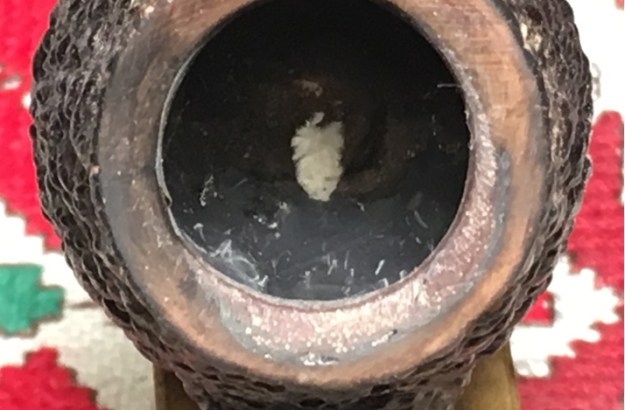
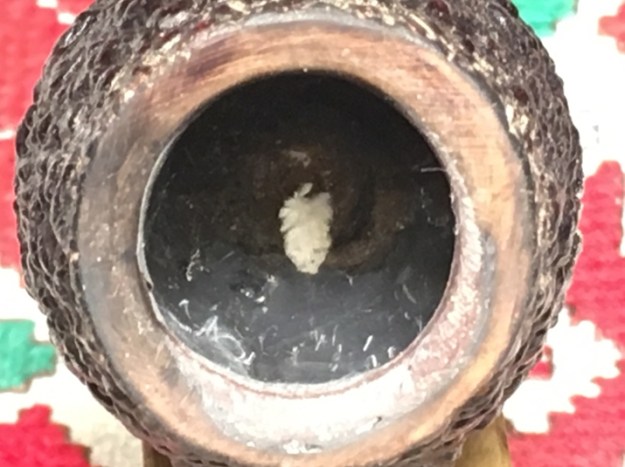 Orienting the picture now to the left side of the chamber, the JB Weld has filled the fissure very nicely. I’ll sand the excess off later. After dealing with the fissure proper, I’ll address the upper part of the fissure crack that reaches to the rim.
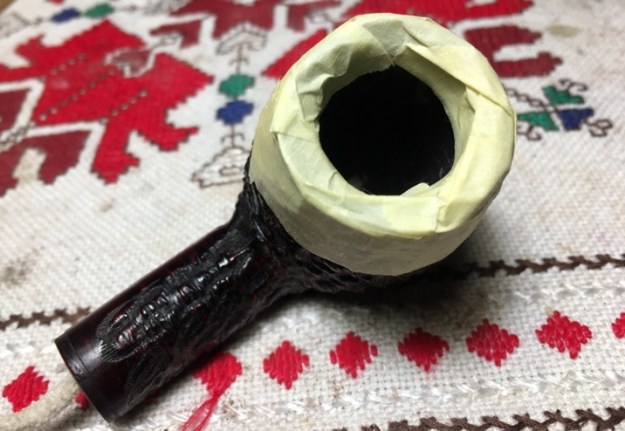
 For the second strategic application of JB Kwik Weld, I cover the rim and upper bowl with masking tape to protect from accidental drips of the Weld.
  After mixing the two parts of the JB Weld, again I use a dental spatula to apply the epoxy to specific areas underneath the rim rebuild to provide the foundation for a smooth, seamless transition between the two reconstruction areas. As before, to be careful, I place a pipe cleaner through the draft hole even though there is no plan for Weld to be applied in that area. After troweling enough JB Weld to the area targeted, I patiently and carefully continuously tamp the area to massage the epoxy into the best positioning. As the 4-minute window passes, the epoxy is thickening allowing me the final opportunity to shape and smooth the epoxy before it sets.
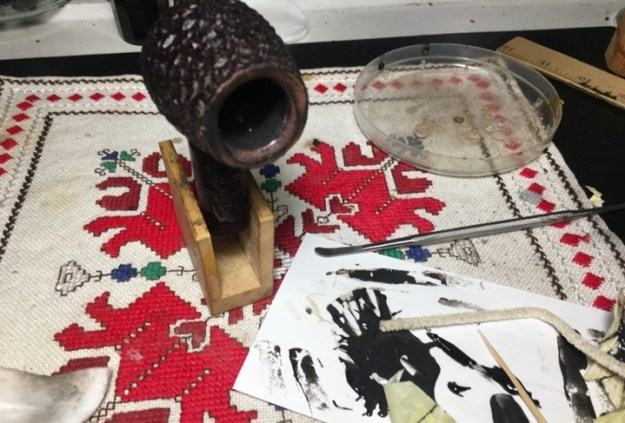 A few hours later, I begin the dance of sanding and utilizing the round grinding stone mounted onto the Dremel. The sanding paper I use is a coarse 120 grit and I wrap it around the end of the flat needle file to give me some reach and leverage as I apply pressure during the sanding. The goal is to remove all excess JB Kwik Weld only leaving that which provides necessary filling to the burned-out area and to the heat fissure. These pictures show the dance, but the reality is this phase is a mess with dust flying all over! Living and working in our 10th floor flat of a formerly Communist bloc apartment complex in the winter provides much opportunity for me to thank my wife for her patience and helping to take a few of the pictures below!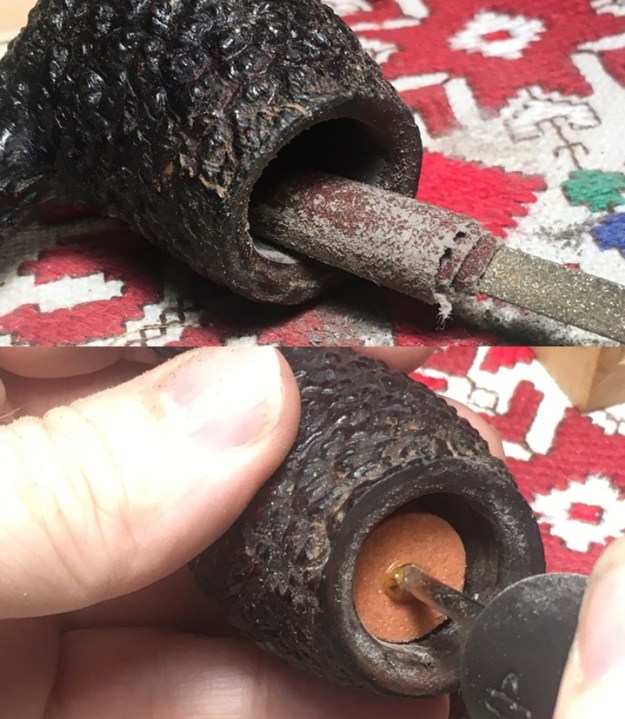
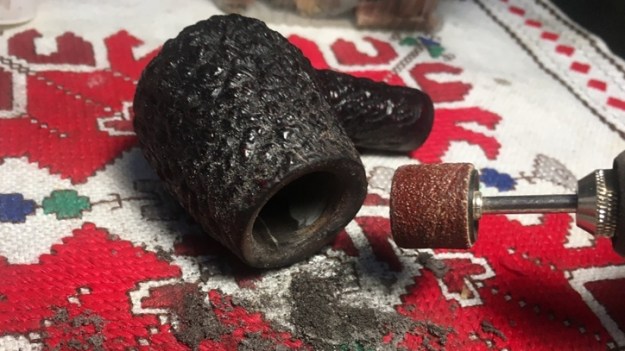
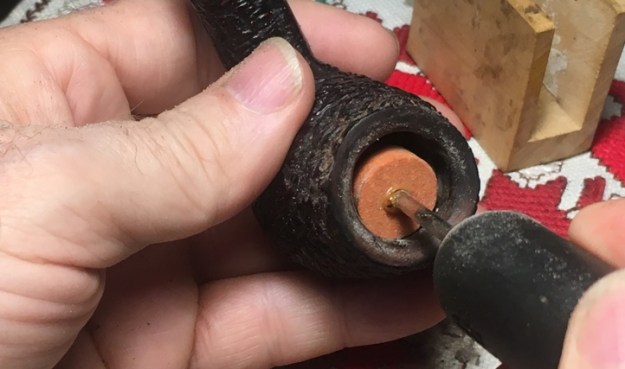 After I’m satisfied with the heavy duty grinding and sanding, I switch to a sanding drum mounted to the Dremel. It serves to fine tune the sanding and makes my job easier.
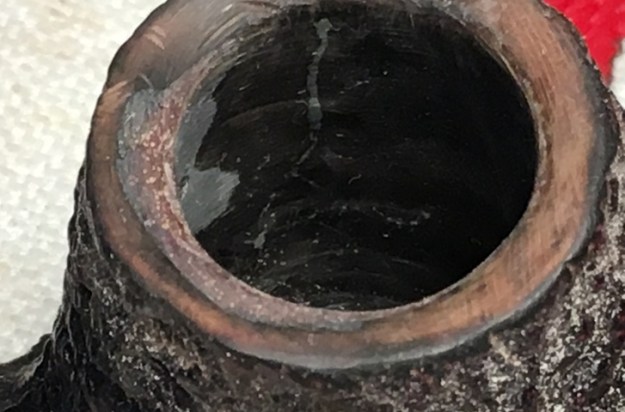
 I finish with the rim/chamber rebuild. After cleaning the chamber blowing and wiping with a cotton pad wetted with isopropyl 95%, I’m pleased with the outcome. The pictures show remaining epoxy in the areas of need. The first picture shows well the fissure that is now secured with epoxy. The lighter epoxy is visible but to the touch, there is nothing there.
 The next pictures show the transition between the two repair projects. The briar dust rim rebuild transitions to the chamber burn repair. The JB Weld contours to the chamber wall building out the large burned area that threatened the aft chamber wall, but thankfully never burned through. The aesthetics are still nothing to get excited about but I’m hopeful through the sanding and polishing process the rim rebuild will blend well with the surrounding briar. Later, I will apply a coating of pipe mud to the chamber to encourage the growth of a new, healthy protective cake.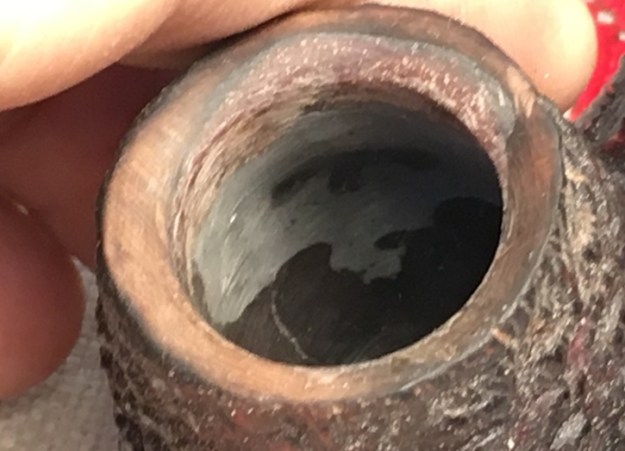
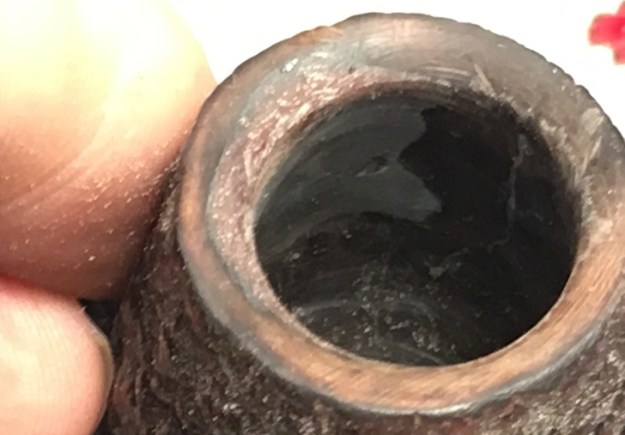 I move on now to fine tuning the rim. I use 240 grit paper to clean up scratches left over from the restoration project and then I apply 600 grade paper to smooth.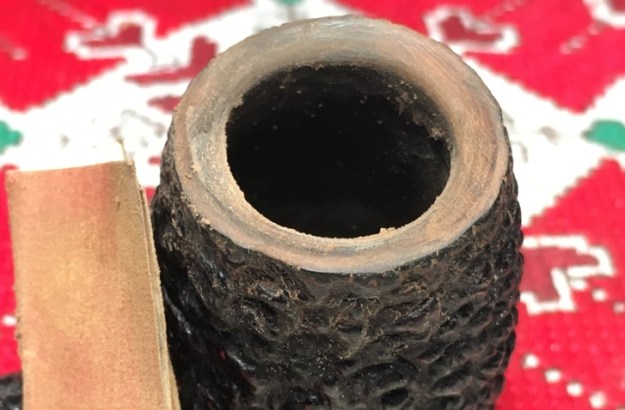
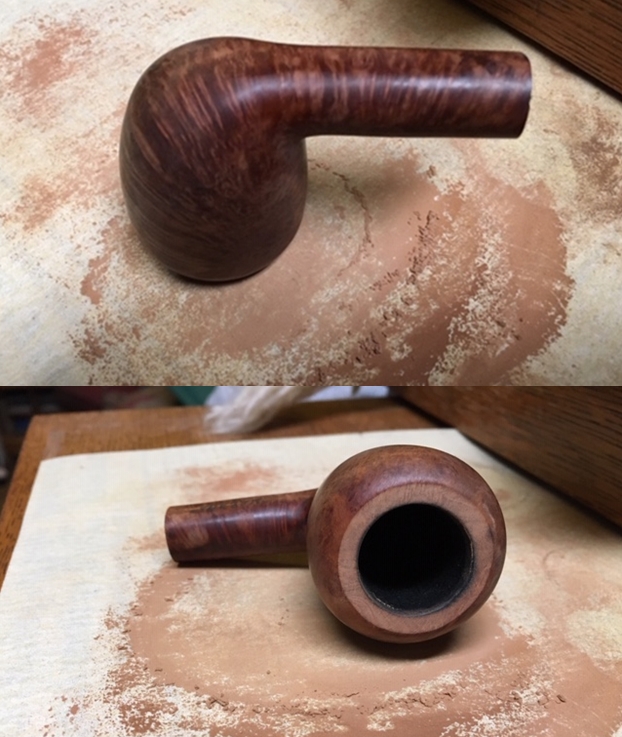
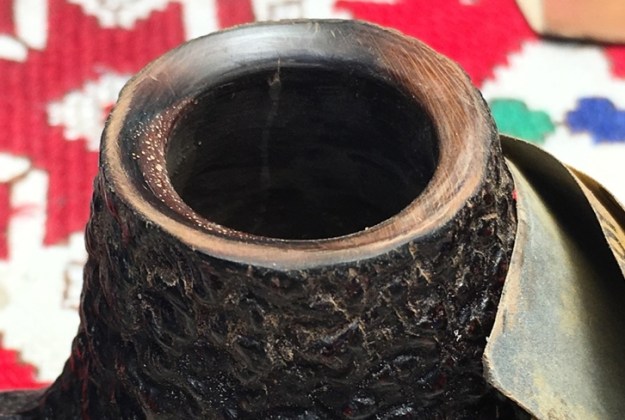 With all the sanding, filing and grinding of epoxy and briar, I do a quick clean up of the stummel by taking it to the sink and running tap water over it and scrub it with the bristled tooth brush. I also wipe the chamber and the rim with a cotton pad wetted with isopropyl 95% and run a pipe cleaner through the airway also wetted with alcohol to make sure all is clean.
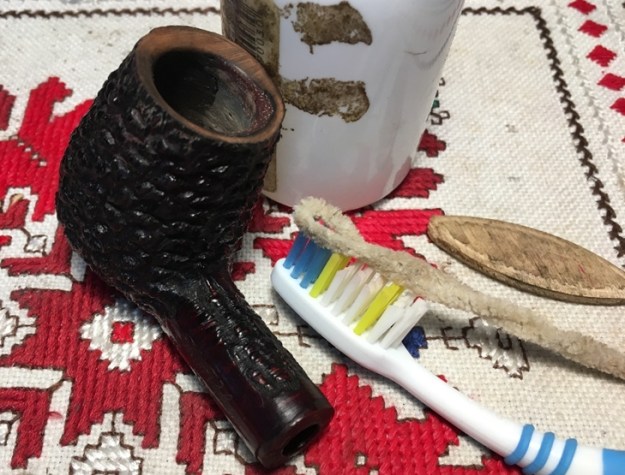 Next, before progressing further with the sanding of the rim, I color the rim to hide and blend the repairs. I use straight Fiebing’s Oxblood with a cotton bud to apply several coats of the dye to the rim. I also touch up the rusticated areas on the peak of the Volcano bowl that had lightened because of all the construction and cleaning going on. I’m hopeful that the dye will also be absorbed by the rim patch area which is speckled now after the sanding. After applying the dye several times, I give the rim a light wipe of a cotton pad wetted with alcohol simply to blend and gather excess dye.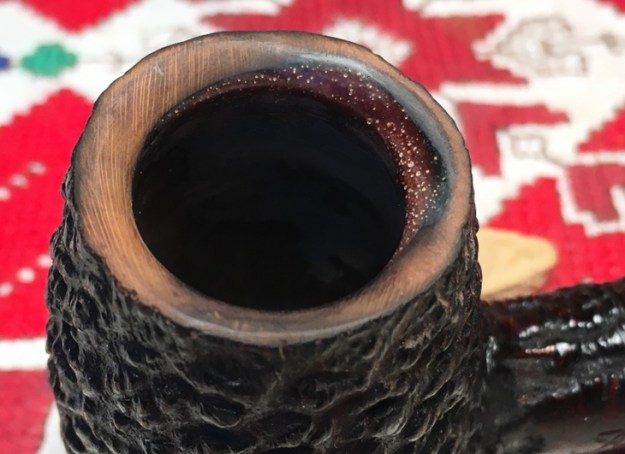
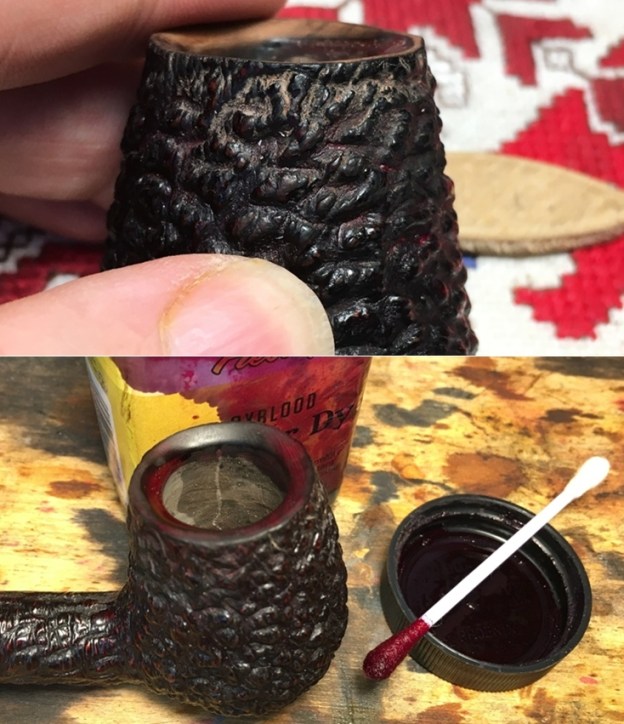
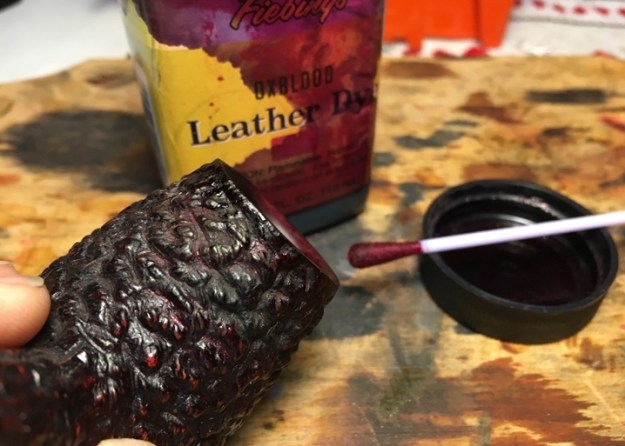 Next, I move directly to applying micromesh pads to the rim and to the smooth briar panel on the left shank flank. I begin by wet sanding with pads 1500 to 2400 and I realize immediately that I had made a mistake in the order of things. As soon as I began wet sanding the Oxblood dye that I had just applied was, for the most part, now running down the drain. I realize that I should have completed the micromesh regimen and then applied dye to the rim. Not able to change anything at this point, I continue after wet sanding with the first set of three, to dry sand using the remaining pads, 3200 to 12000. The pictures show the results – the rim looks great regarding the sanding and polishing but the coloring of the rim is lost for the most part. I also discover as I micromeshed the smooth panel that the color was coming off as well…. I’m encouraged by the fact that we learn as much from what not to do as doing something well. The pictures show the results.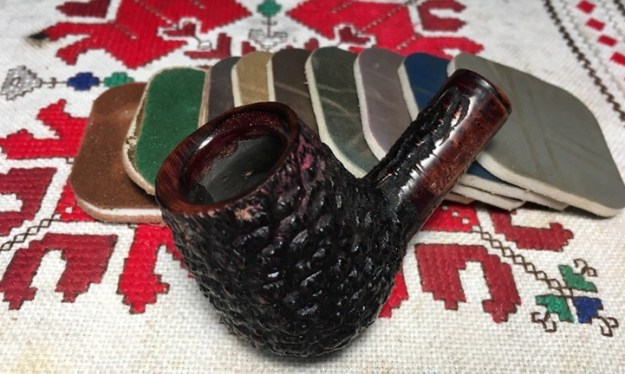
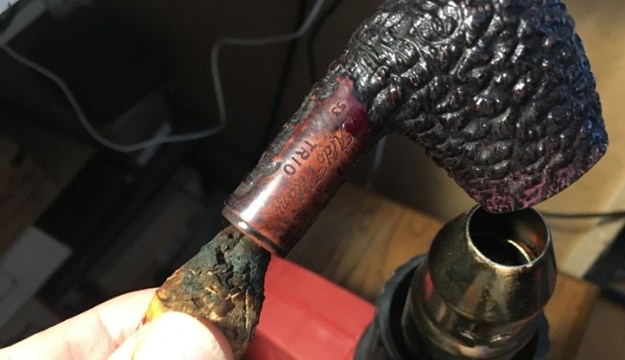
 Circumstances create the environment for decisions and decisions shaped by past successes and failures is the definition of wisdom. What is the wise course of action!? Previously, I planned to keep the original finish as it was and move to the polishing phase. Now, I decide to apply Fiebing’s Oxblood Leather Dye to the entire stummel and not just as a touch up. At this point there are too many ‘touch up’ points and it is better simply to refresh the entire bowl with dye. I assemble all the components of my tabletop dying station and then wipe the stummel down with alcohol to clean the surface. Using a hot air gun, I heat the stummel to open the briar to be more receptive to the dye pigmentation.
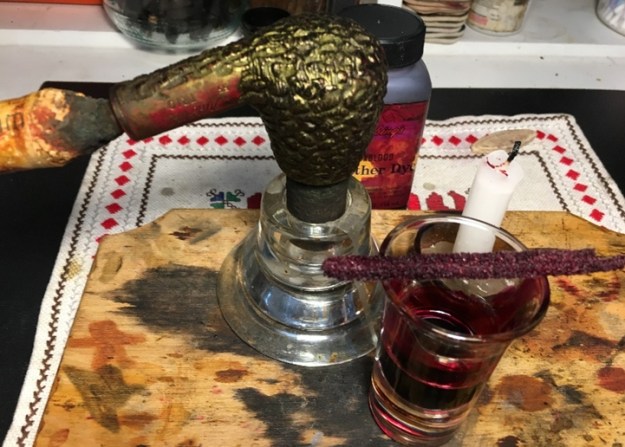
 After heated, I then apply the Oxblood dye to the stummel using a folded pipe cleaner holding on the cork which is inserted into the shank as a handle. As I paint the stummel with dye over sections at a time, I ‘fire’ the dye using a lit candle that combusts the alcohol in the aniline dye and sets the dye pigmentation in the wood. After fully saturating the stummel and covering the whole surface, I set the stummel aside to rest for several hours.
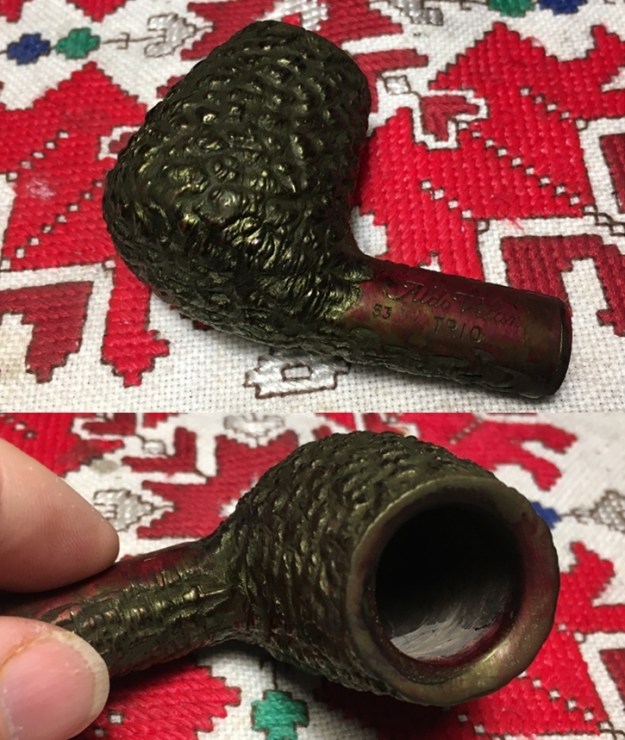
 Several hours later I’m ready to ‘unwrap’ the fired crust on the surface of the rusticated stummel.
 Since I’m working with a rusticated stummel, I don’t use a felt buffing wheel as is my approach with smooth briars. I mount a cotton cloth buffing wheel on the Dremel and set the speed at about 40% full strength, I apply Tripoli compound to the stummel.
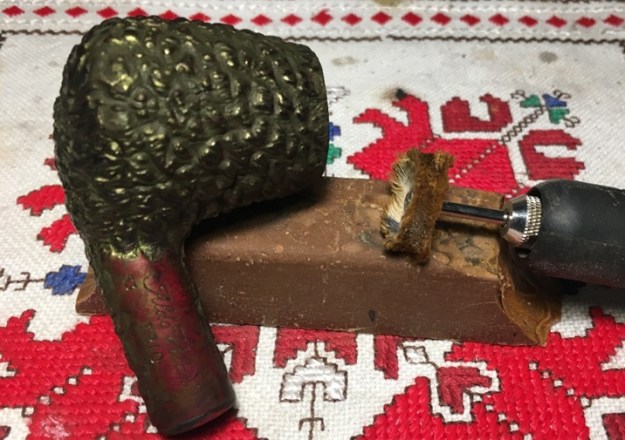 I’m always fascinated by the way the grain emerges during the unwrapping process with the Tripoli. The picture below shows the ‘front line’ of the buffing process and the richness of the rusticated surface being revealed. Yes, surgical gloves! In this way I keep stain of my hands which keeps my wife happier!
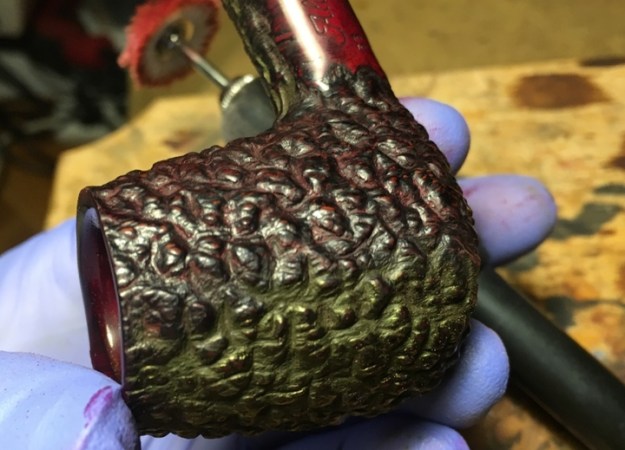 With my wife’s help, the next few pictures show my customary ‘Dremel posture’ – my lap top station working on a chopping board. I keep the overhead lamp close and I’m able to see the movement of the compounds and waxes I apply during the use of the Dremel.
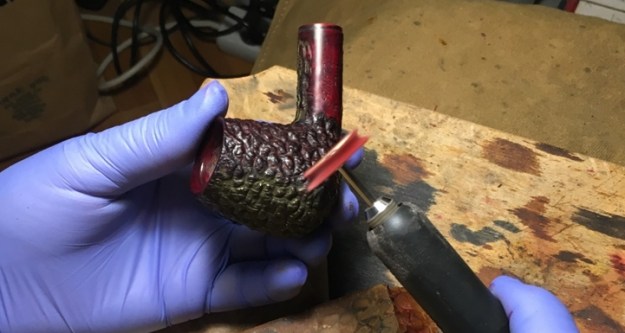 Working on rusticated and blasted surfaces are rough on the cotton cloth buffing wheels and I’ll be tossing this one when I’m finished! I buy buffing wheels in bulk. The smaller buffing wheel allows me to rotate the orientation of the stummel to follow the rusticated valleys and ridges – I keep moving and it takes a good bit of time to work through the rustication. Patience reveals good results most of the time!
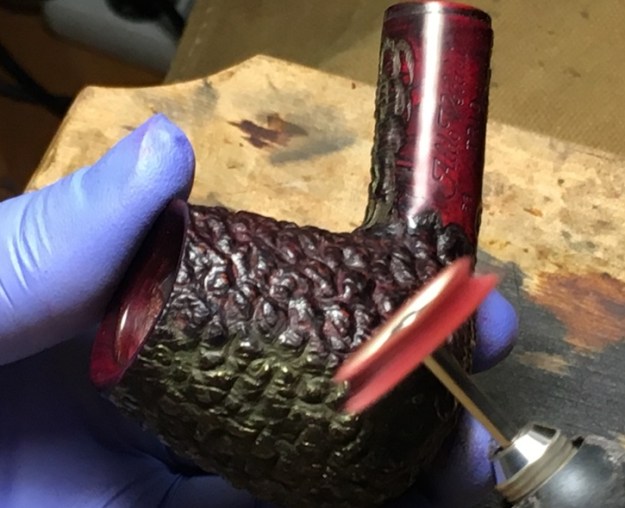 After completing the Tripoli regimen, I wipe the bowl with a cotton pad wetted with alcohol. I do this not really to lighten the aniline stain but to blend the Oxblood dye and to wipe off excess dye.
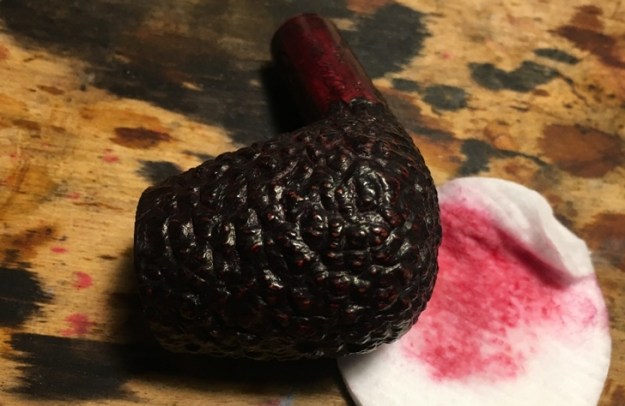 With a rusticated surface as distinct and deep as this Aldo Velani Trio, I use a 1500 grade micromesh pad and lightly ‘brush sand’ the surface of the stummel. What this does is sand the tips of many of the rustication ridges and lightens them. This creates more contrast in the rustication that I first saw many restoration ago, restoring a rusticated fully bent Billiard, Lorenzo Rialto. The ‘speckled’ effect creates a mesmerizing rusticated surface – I like it. The picture shows these results.
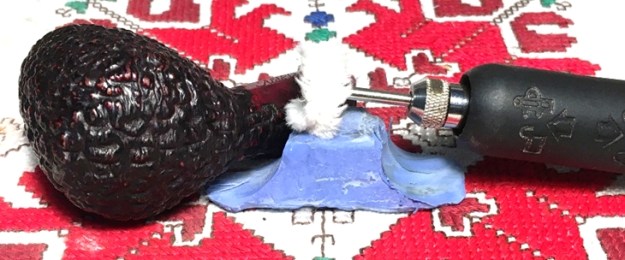
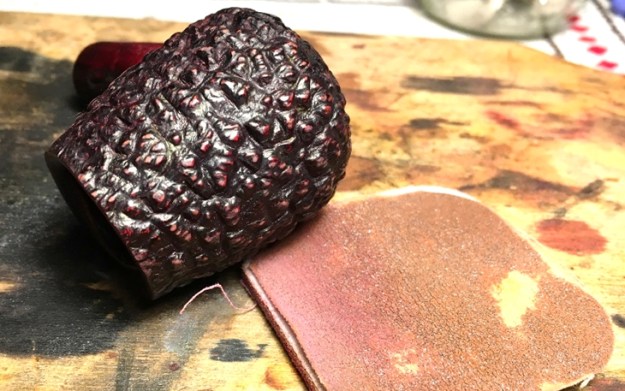 Next, I mount another cotton cloth buffing wheel to the Dremel, maintaining the same speed and I apply Blue Diamond compound to the stummel surface. I decide not to reunite the stem at this point to apply the Blue Diamond in order to use a different buffing wheel with the acrylic stem.
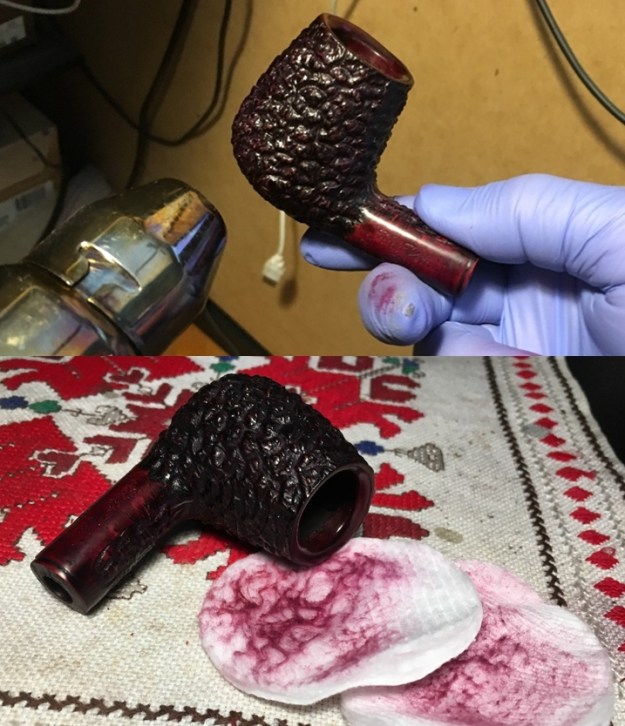
 One of the reasons for letting the newly dyed and fired stummel to ‘rest’ for several hours before working on it is that it helps the dye to set and less of it comes off later on the steward’s hands. This does happen especially the first few times a pipe is put in service and the bowl heats up for the first time. I’m concerned that the rusticated surface will hold more unseasoned dye surface and to mitigate against Oxblood dye coming off on the hands, I heat the stummel with the hot air gun and with the bowl heated, I wipe it heartily with a few cotton pads to capture the unseasoned dye. I hope this helps!
 Before turning to the stem, I have two additional projects to complete before the final phase of applying wax. I need to remount the gold band/shank cap and polish it. Also, I need to apply a mixture of sour cream (or natural yogurt) and activated charcoal to the chamber to aid the formation of a cake to serve to buffer the newly repaired chamber wall from the fire. Starting first with the band, I apply a small drop of thick CA glue inside the cap and then attach it to the end of the shank. I use a thicker variety so that it doesn’t run and get on something that it shouldn’t!
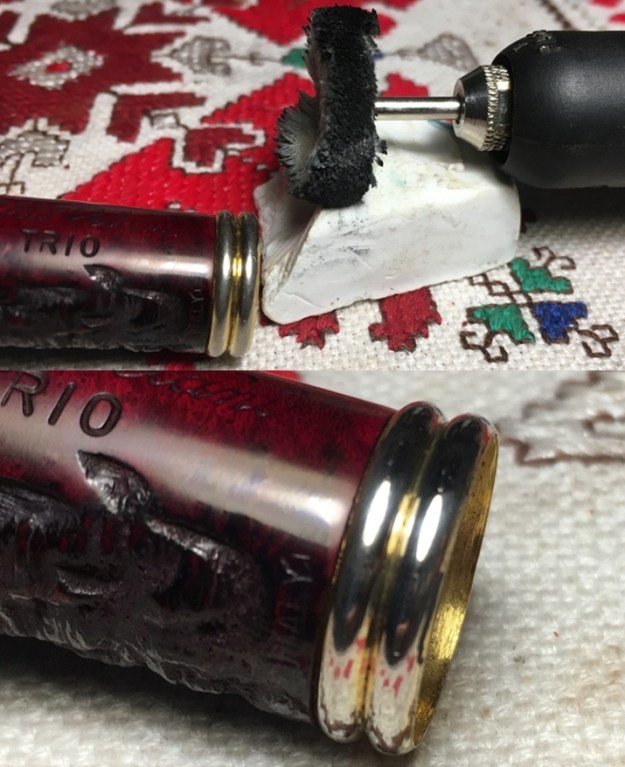
 Next, I mount a cotton cloth buffing wheel on the Dremel that is dedicated to the application of White Diamond compound on nickel. You don’t mix buffing wheels! I label each wheel for what compound or wax is used and on what surface – metals and wood are different! I also am careful while buffing the band to stay on the metal and not bleed over onto the briar. The black residue that comes off the metal can darken and stain briar – careful! Wow! I thought the cap was shiny before, but now it beams!
 Next, applying the natural yogurt and charcoal mixture to the chamber walls to provide a buffer between the briar and the burning tobacco helps as a ‘starter’ to develop a protective cake. I’ve learned that I have used too much yogurt in the past and toss a lot in the waste. This time, I use much less.
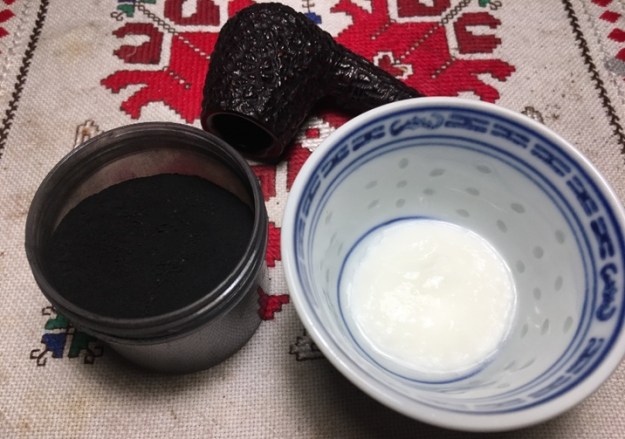 I mix the charcoal in until it thickens. I’ve learned to mix a little more charcoal than I think is necessary so that it is firmer. The test I’ve used to know when I’ve mixed enough charcoal into the soup is when I can scoop some of the mixture on a flat dental spatula and it doesn’t run off. That lets me know that it will stay where I put it on the chamber wall and not be overcome by gravity pulling it down to the floor of the chamber.
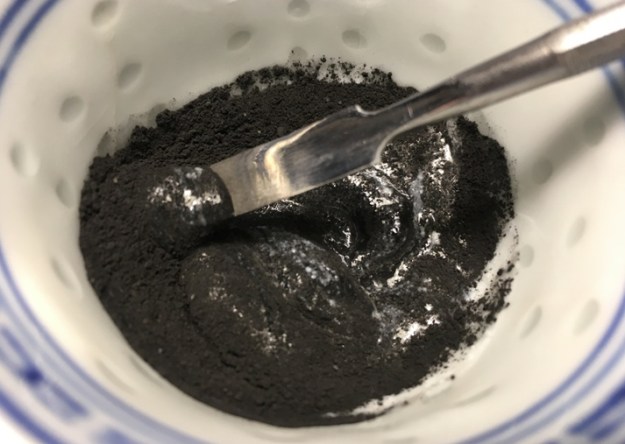 When the mixture seems good, and after I put a pipe cleaner through the draft hole, so it stays clear, I dollop the black mixture using a dental spatula and paint the chamber walls up to the rim. I got the mixture right. After covering the chamber walls fully, I take a picture – it’s not easy to see, but it looks good and will serve the needed purpose. A word to the new steward of the Aldo Velani Trio, when you put the pipe into service do not scrape the chamber to clean it! Gently stirring the ash loosens it allowing it to dump easily. Then, use a folded over pipe cleaner and ‘rub’ the chamber wall which cleans adequately. You want to allow enough time for a cake to develop.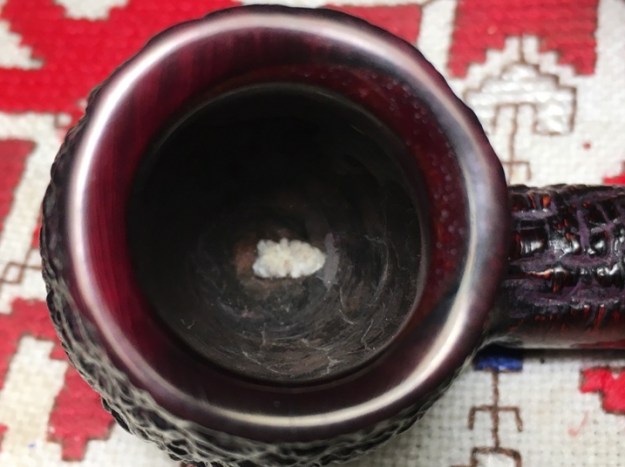
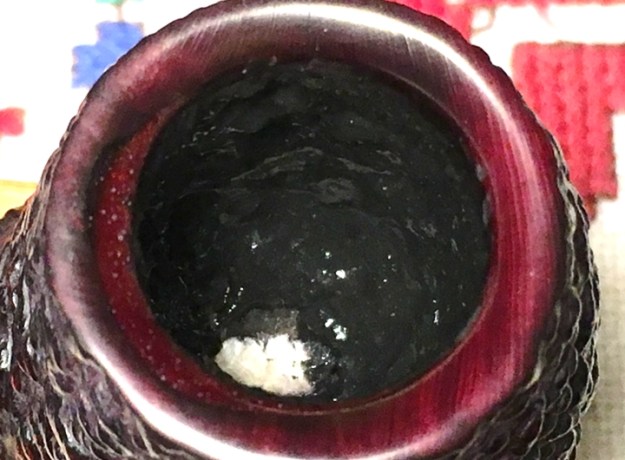 With the stummel waiting for the yogurt/charcoal mixture to dry, I now turn to the stem. I mount another cotton cloth wheel on the Dremel, maintain speed at 40% full power and apply Blue Diamond to the beautiful fiery acrylic stem. After this, I mount another cotton cloth wheel, maintain the same speed and apply White Diamond compound. After completed, I wipe and buff the stem with a felt cloth to remove the compound dust.
 Next, I want to spice up this classy stem by refreshing the Aldo Velani stamp on the side of the stem. It is unique with the A and V in cursive script, but to me the clincher is the pipe forming the left leg of the A. It’s just cool. With all the gold in the band, I think gold would be a good color to bring out this noteworthy stem stamping given that I don’t have a picture of the original intent but what I see looking closely at the stamp, it may have been gold but I’m not positive. I use Rub’nBuff European Gold to apply the color. As the name says, I apply it over the stamp with a cotton bud and then wipe it of with a cotton pad. I need to rub it well to clean up the excess but what is in the stamping stays in the stamp. It looks great!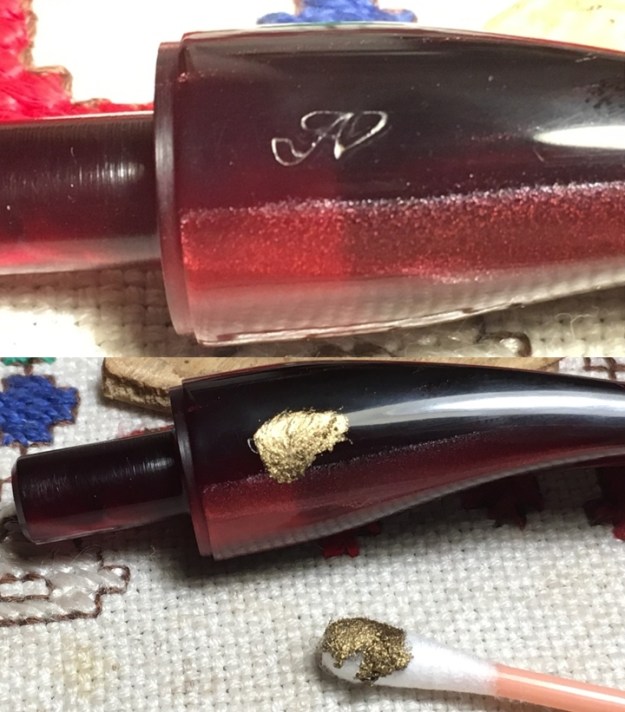
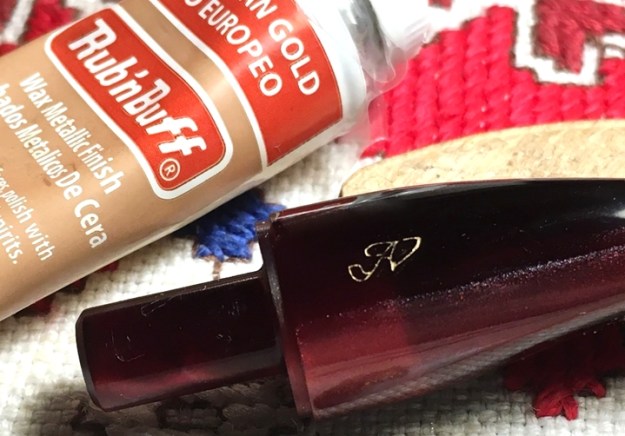 Now the home stretch. The charcoal/yogurt mixture has set up and time to apply carnauba wax. I unite stem and stummel and mount another cotton cloth buffing wheel on the Dremel, increase the speed to about 50% full power. I increase the RPMs to increase the heat in applying the wax – more heat causes the wax to liquefy more as it’s working into the briar which makes application of the wax to the rougher rusticated surface more likely not gunk up. When applying wax to the stem, I back the speed off to 40% full power. After completing the application of wax, I give the pipe a hearty hand buffing to raise the shine even more.
Oh my. This Barontini Aldo Velani Trio Rusticated Volcano is a classy pipe – I would call it a ‘dinner pipe’. It requires a more upscale dress code! This pipe required a lot of work – a repaired stem bit and button, a rim rebuild and a restoration of the damaged chamber. What a difference! The rustication is distinctive, and the Volcano shape is enhanced by the craggy rise of the bowl tightening into the summit of the smooth briar rim contrast. Transitioning to the stem the band adds to the class and the acrylic stem is simply on fire – it’s alive and the Oxblood hue of the briar is… did I say ‘classy’ already? This Aldo Velani Trio was commissioned by Stephen and he has the first opportunity to claim him from The Pipe Steward Store. This pipe benefits the Daughters of Bulgaria – women and girls who have been trafficked and sexually exploited. Thanks for joining me!



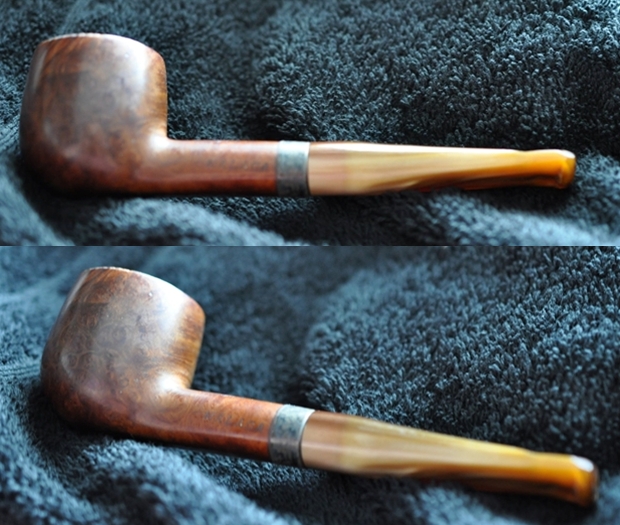
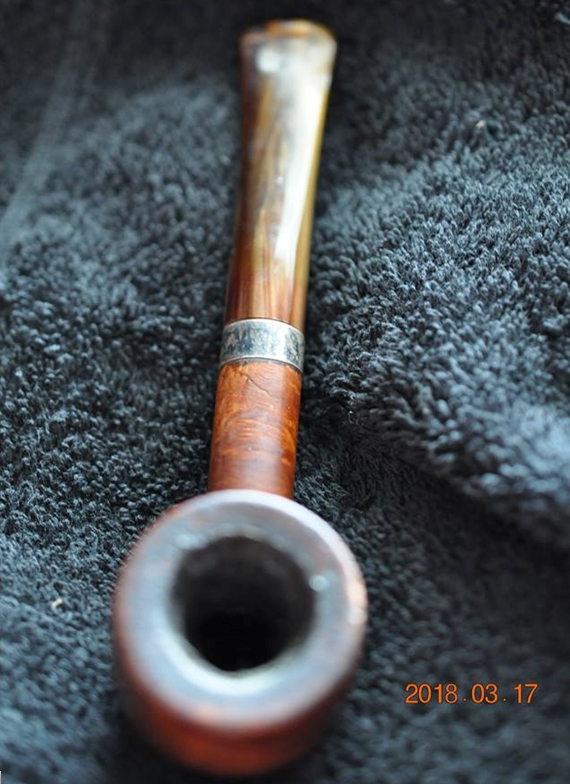
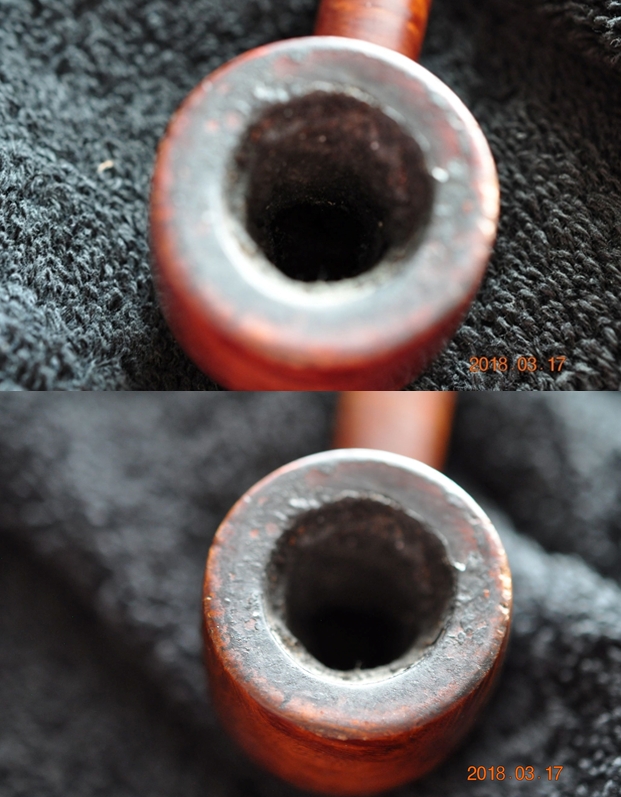
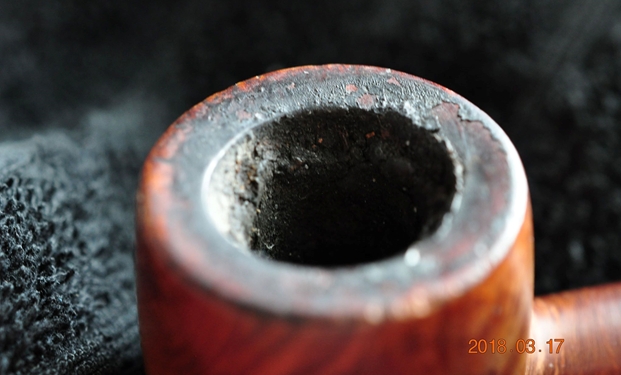
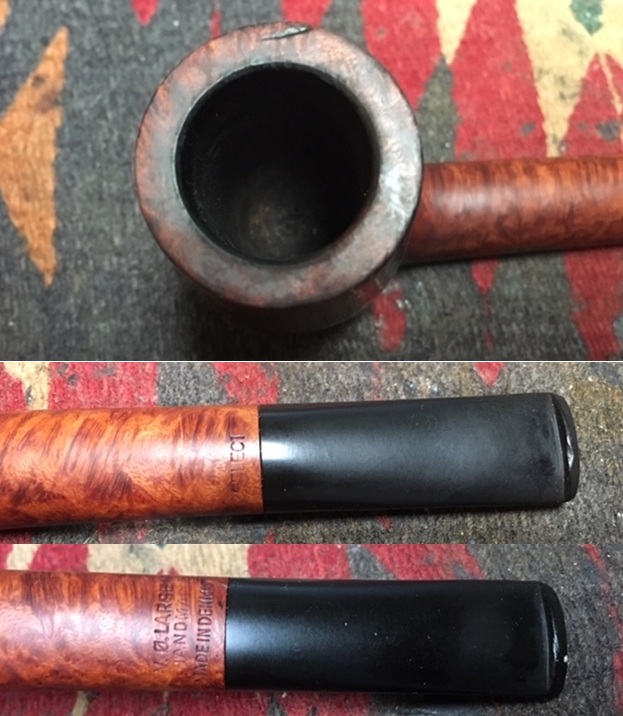
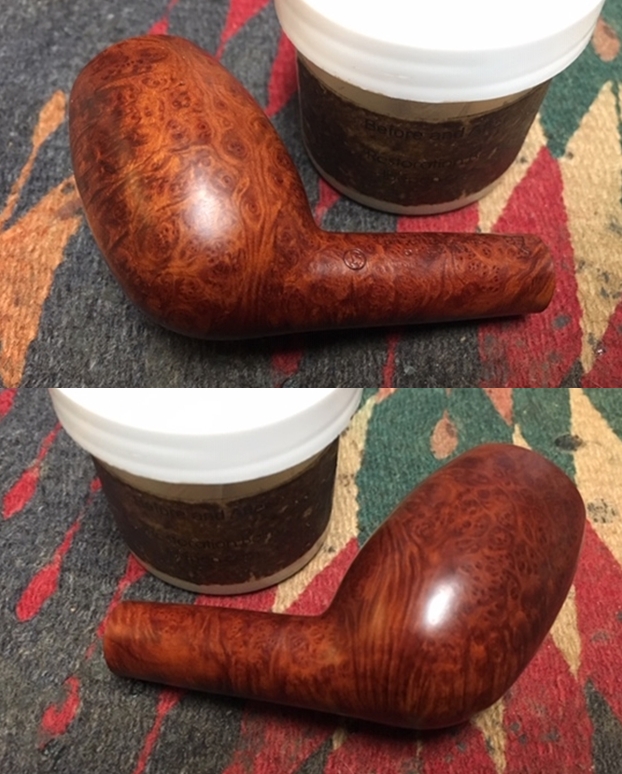
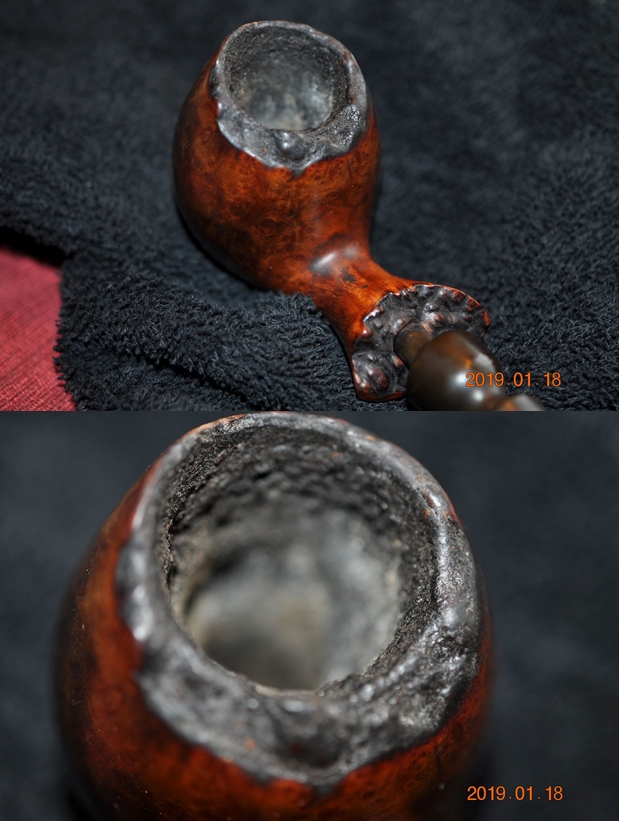
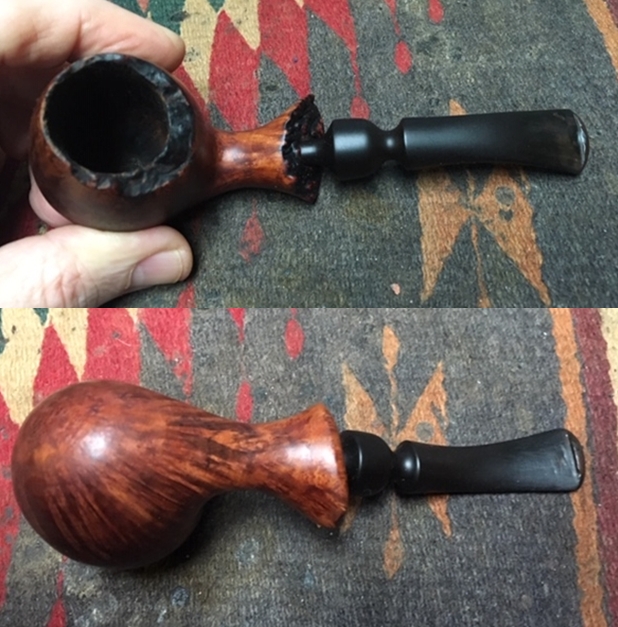
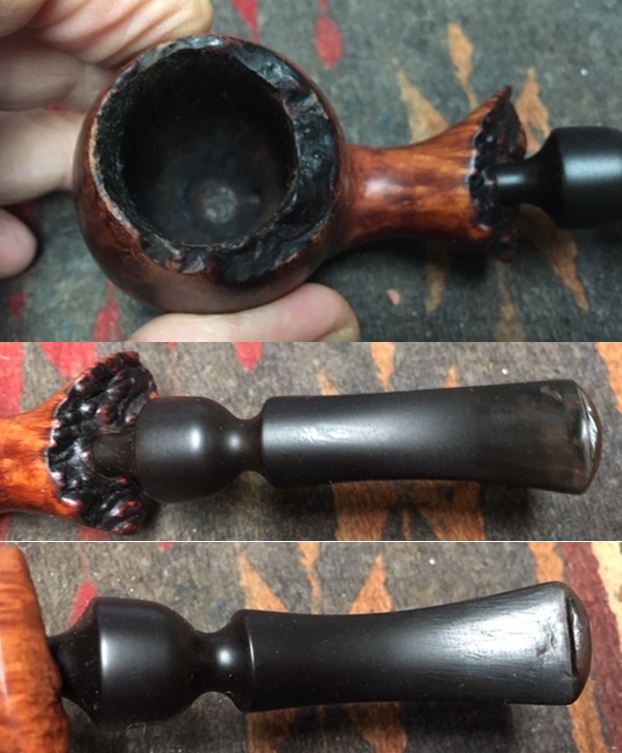
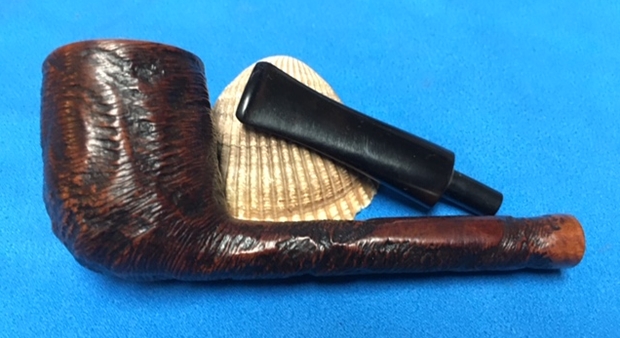
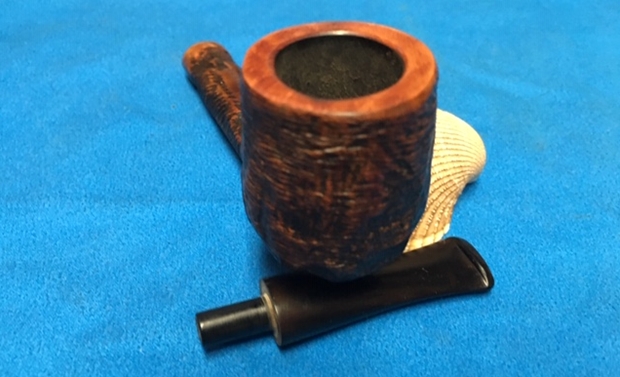
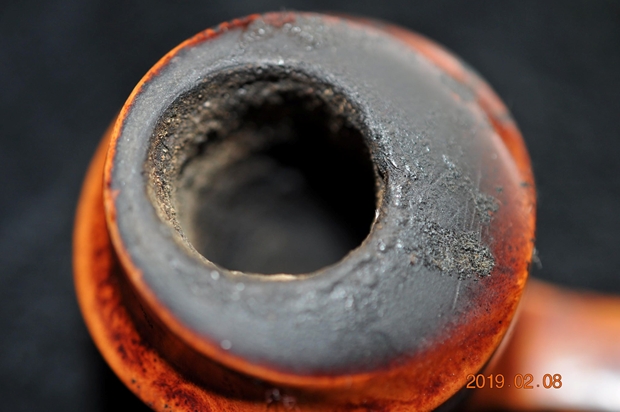
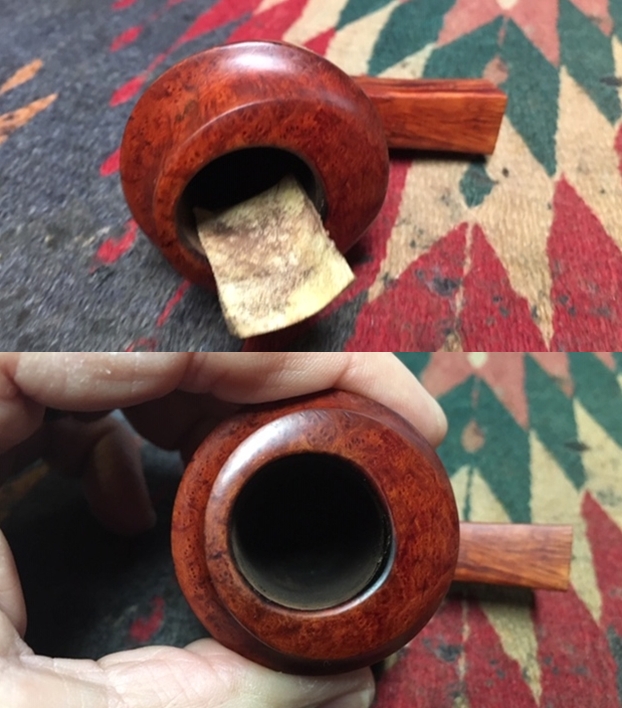
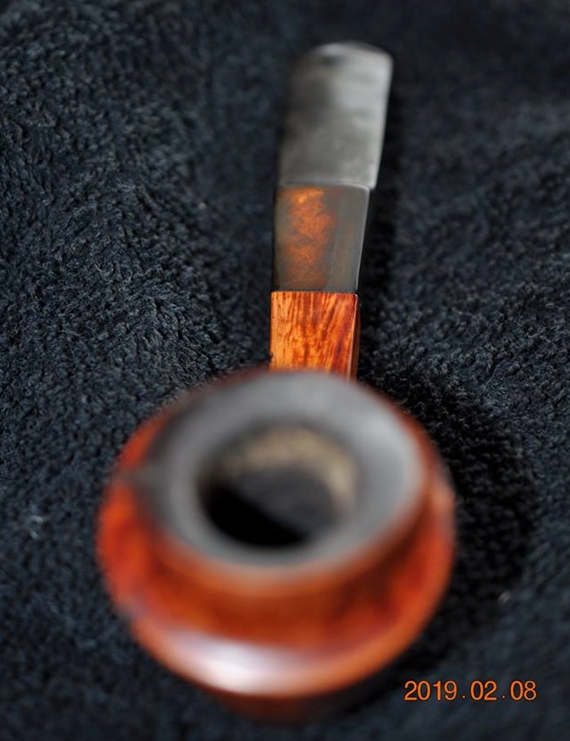 Jeff took a photo of the bowl and rim to capture the condition of the pipe before he started his cleanup work. There was a thick coat of lava on the rim and the cake in the bowl. It shows the mess this pipe was in when we received it. The thick lava overflow on the rim top made it hard to know what the inner edges of the bowl looked like. It looked like there maybe some damage on the back inner edge toward the left side making the bowl out of round. The outer edges actually appeared to be in excellent condition.
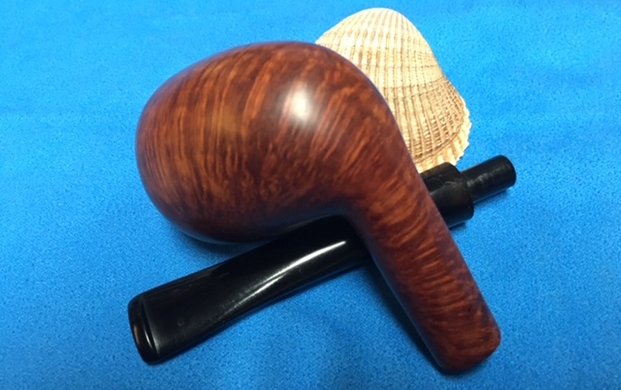
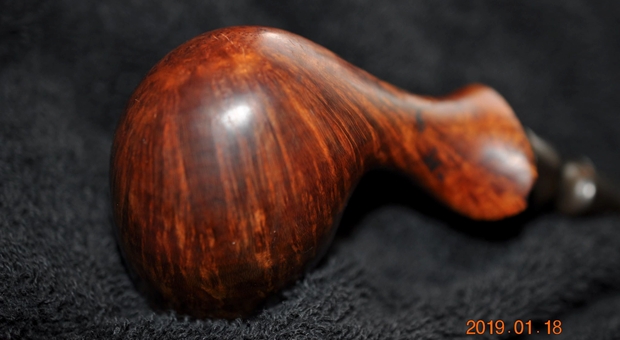
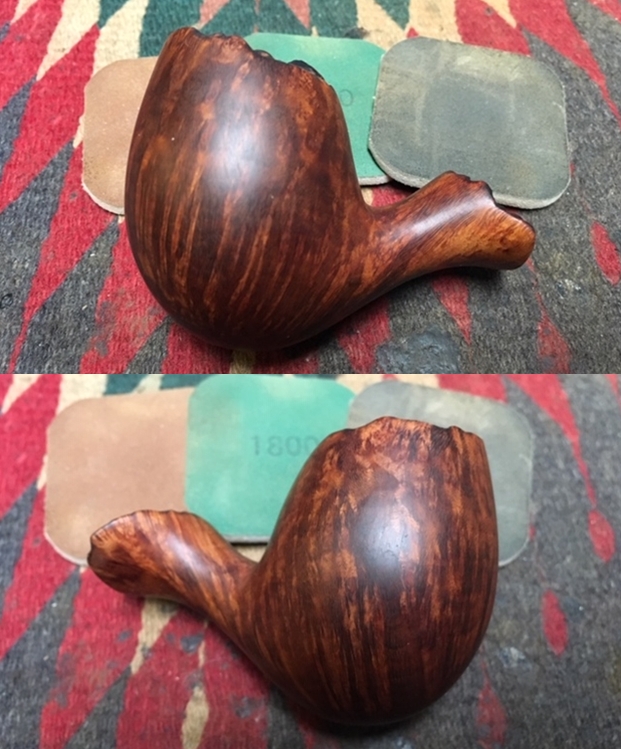
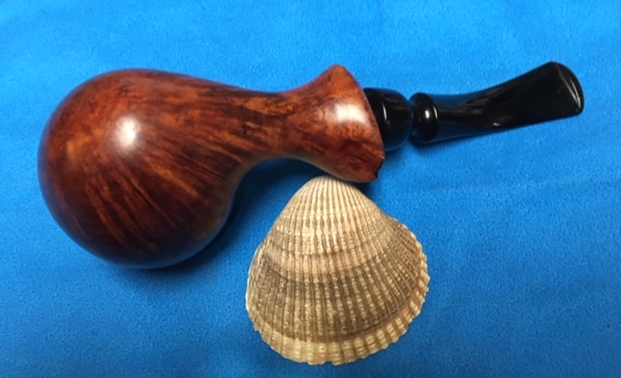
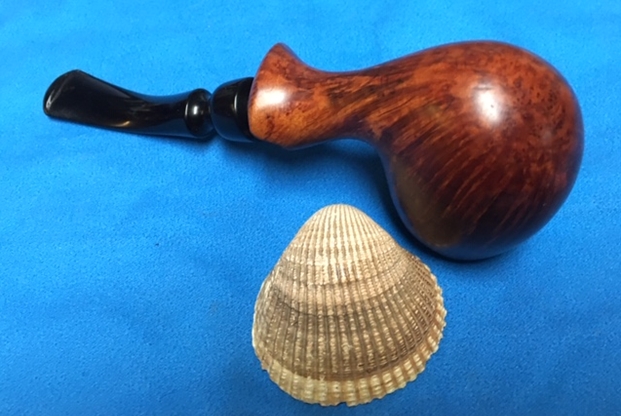
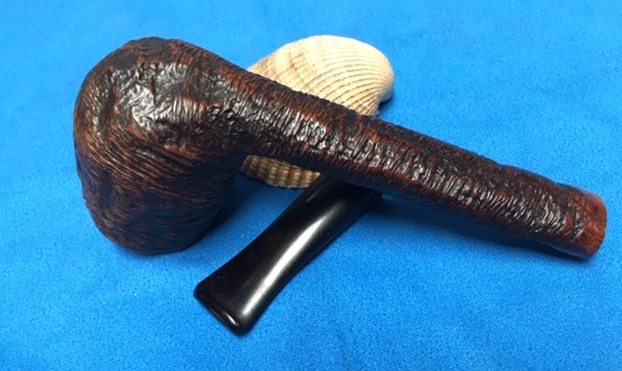
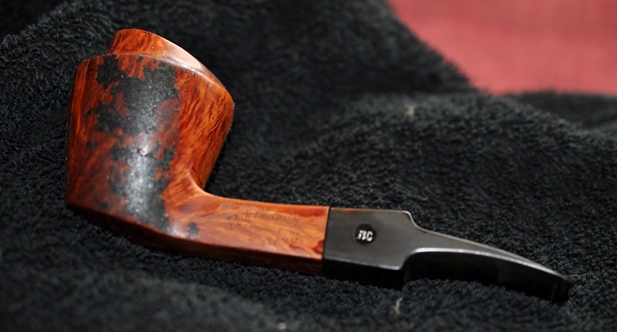
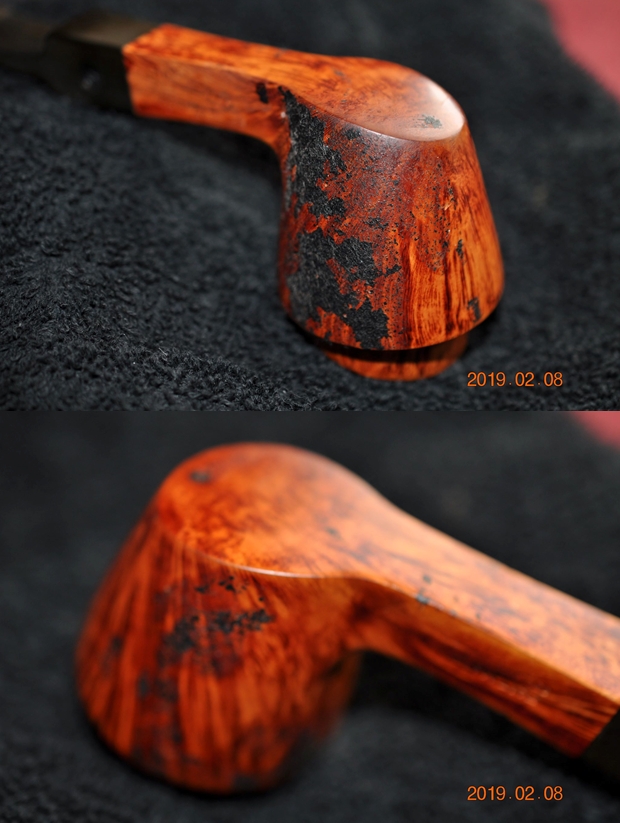
 He also took a series of photos of the sides of the bowl and shank to show the straight grain around the bowl. The finish has a lot of grime and thick layers of tars on the surface. It is very dirty but the grain is visible in the photo.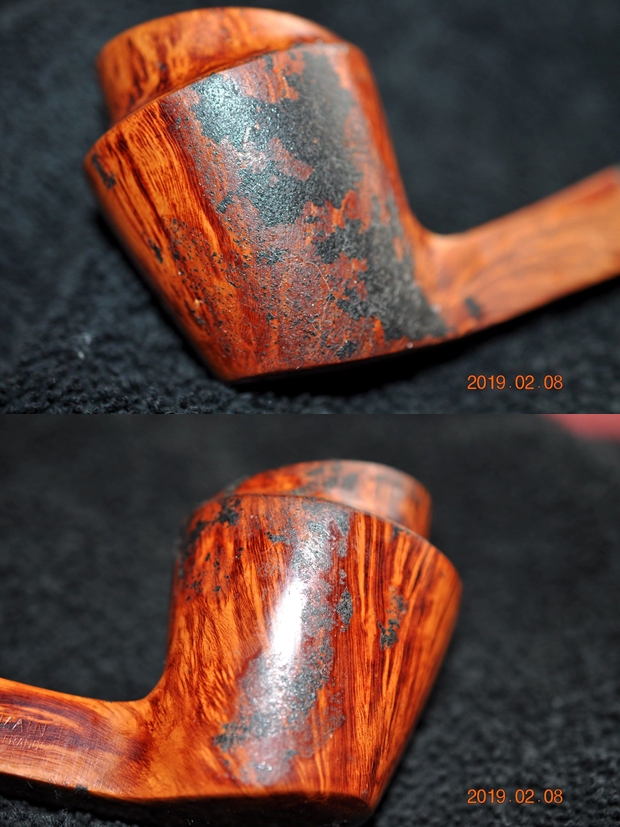
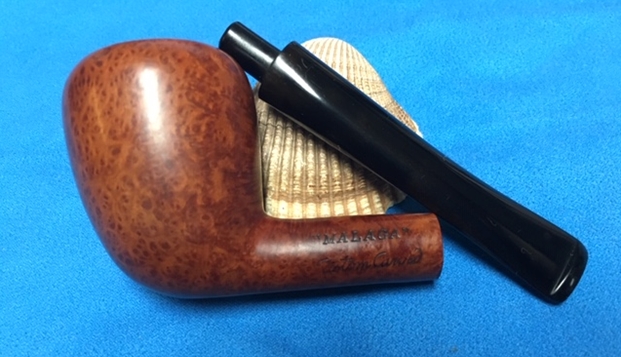
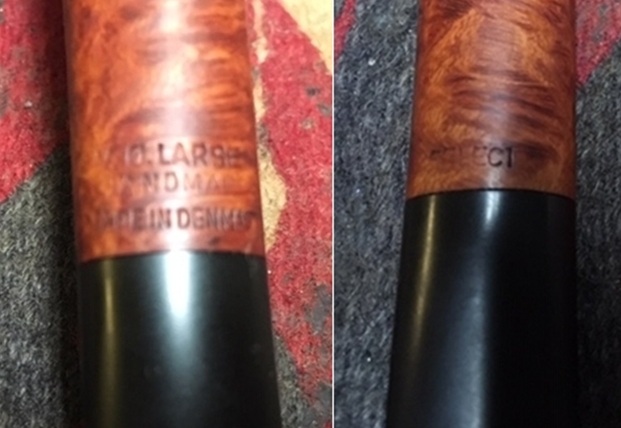
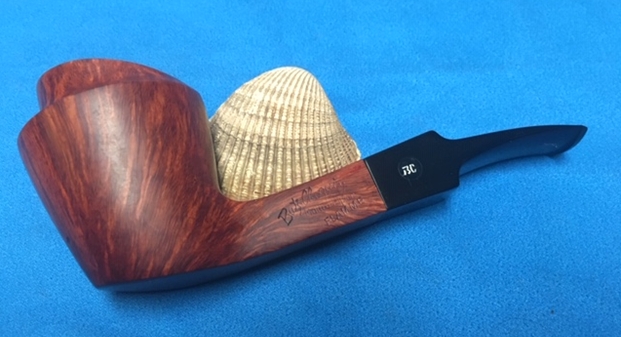
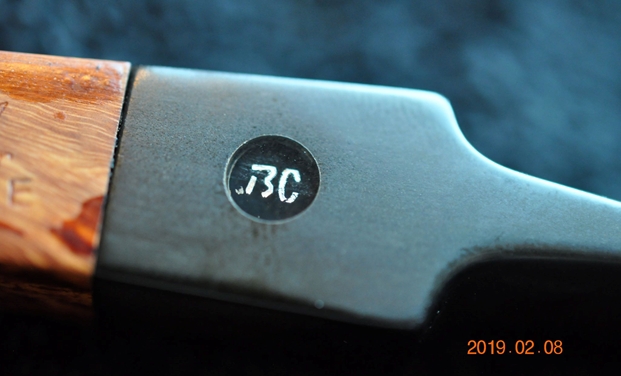
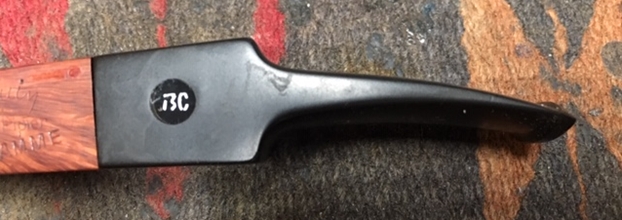
 Jeff took photos of the stamping on the left and right sides of the shank. It reads as noted above and is clear and legible. The left side of the saddle stem has the typical inlaid BC in acrylic.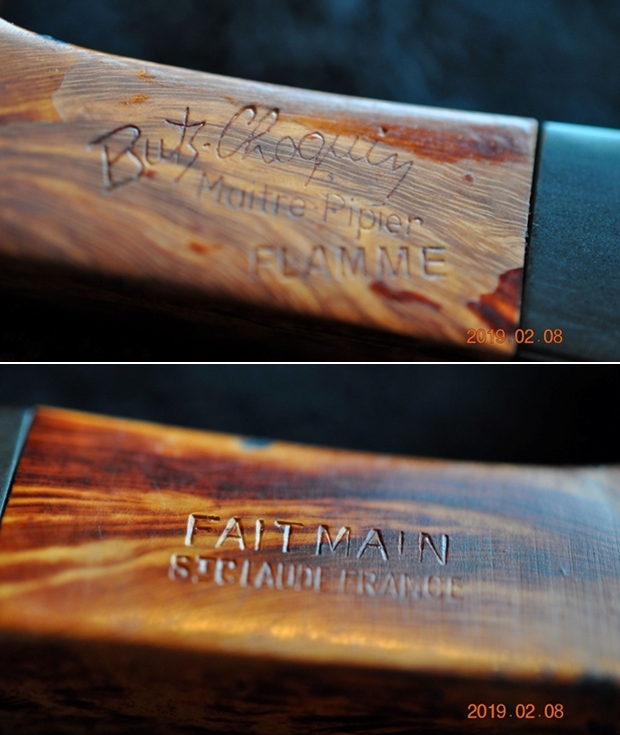
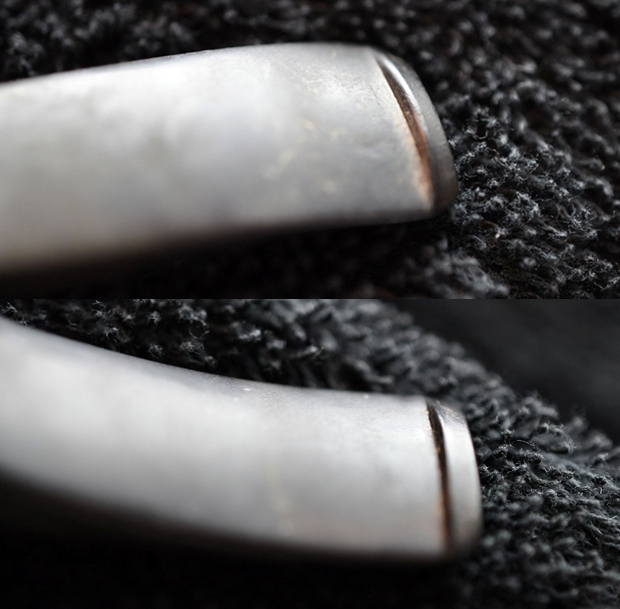
 The next two photos show the stem surface. They show the tooth chatter on both sides near the button. The stem is dirty and is lightly oxidized.
  I have worked on another Maitre Pipier not too long ago and wrote up a blog on it. It was a nice looking Calabash (https://rebornpipes.com/2019/02/14/a-butz-choquin-maitre-pipier-hand-made-calabash/). On that blog I included some overall information on the brand and I will repeat it here to set the stage.
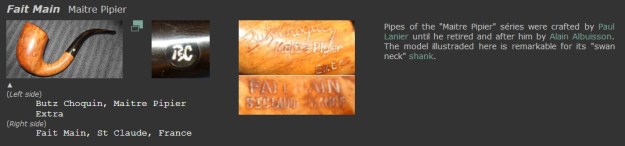 I turned then to Pipedia to see what I could find out there (https://pipedia.org/wiki/Butz-Choquin). I quote the article in its entirety as it gives a clear history.
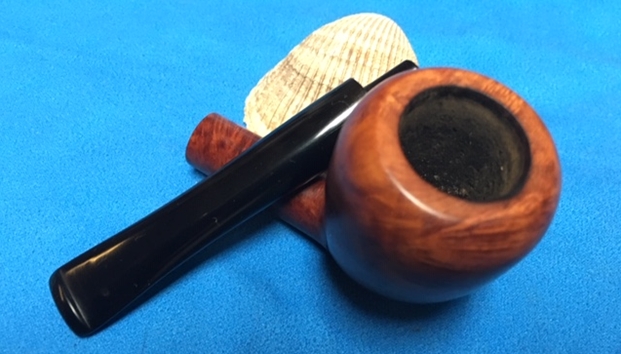
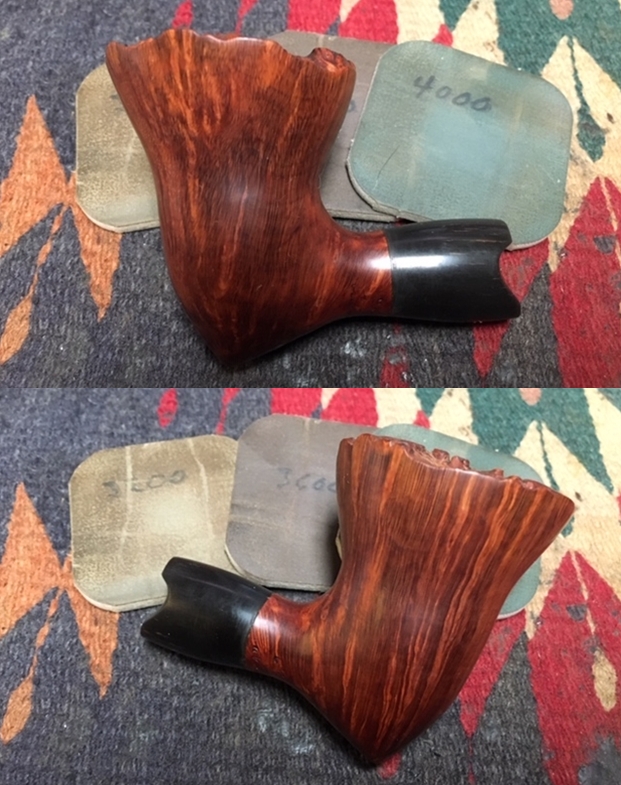
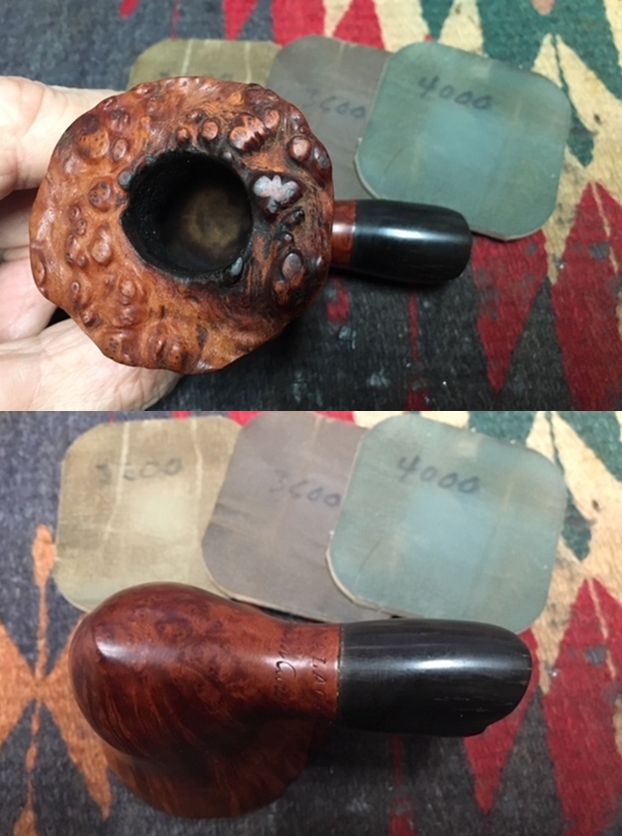
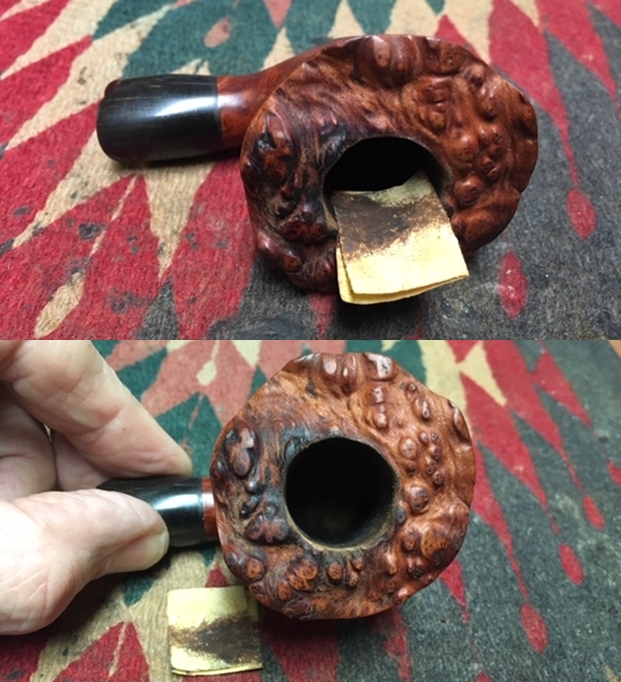
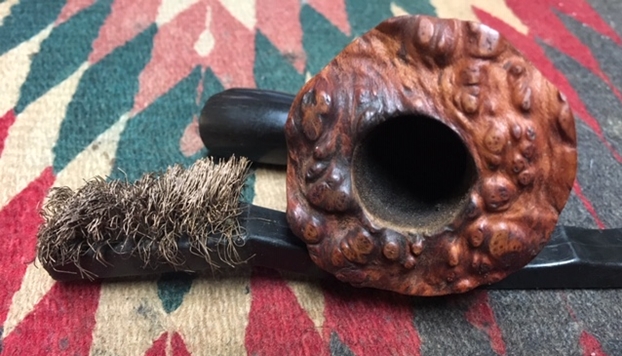
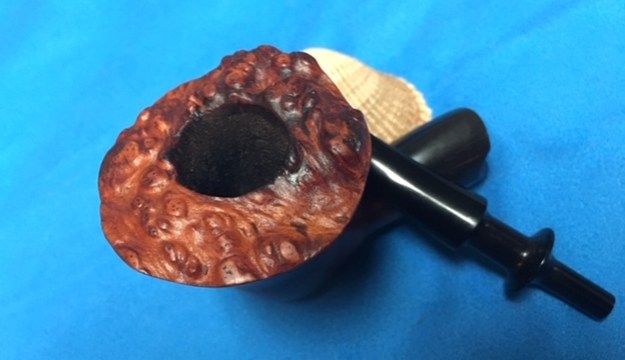
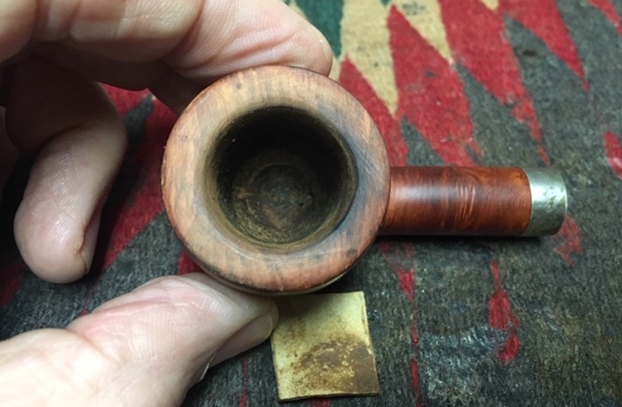
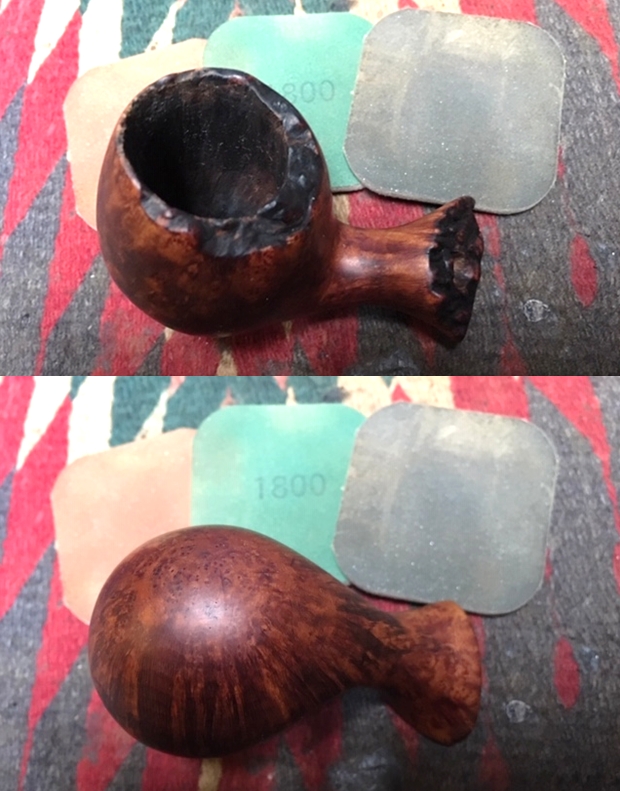
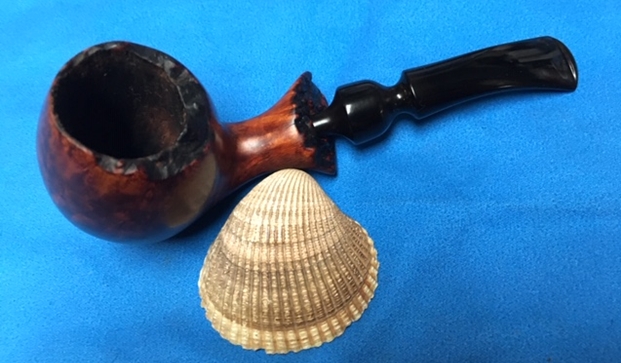
 I took a close up photo of the bowl and rim to capture the condition of the pipe before he started my restoration of the pipe. The rim top was clean but had some darkening on the surface at the back of the bowl. There was also some burn damage to the inner edge of the rim confirming my suspicions about it being out of round. The stem was quite clean with some light tooth marks on the top and underside near the button.
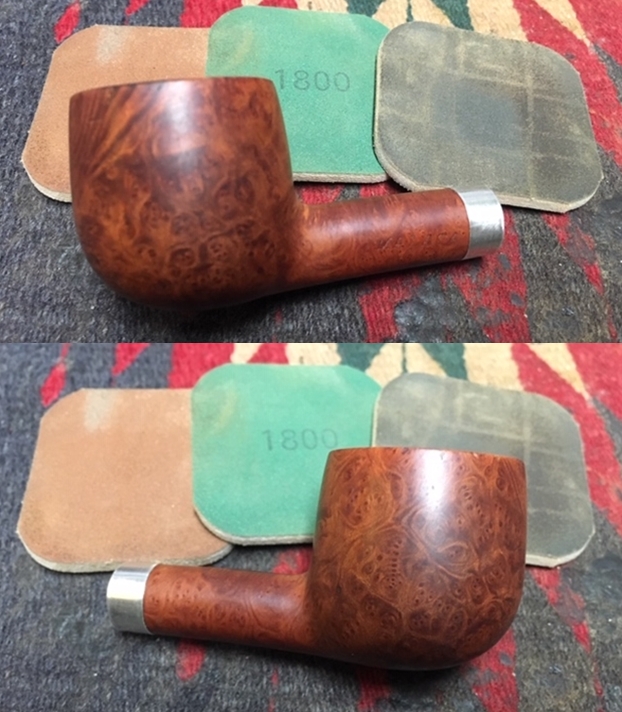
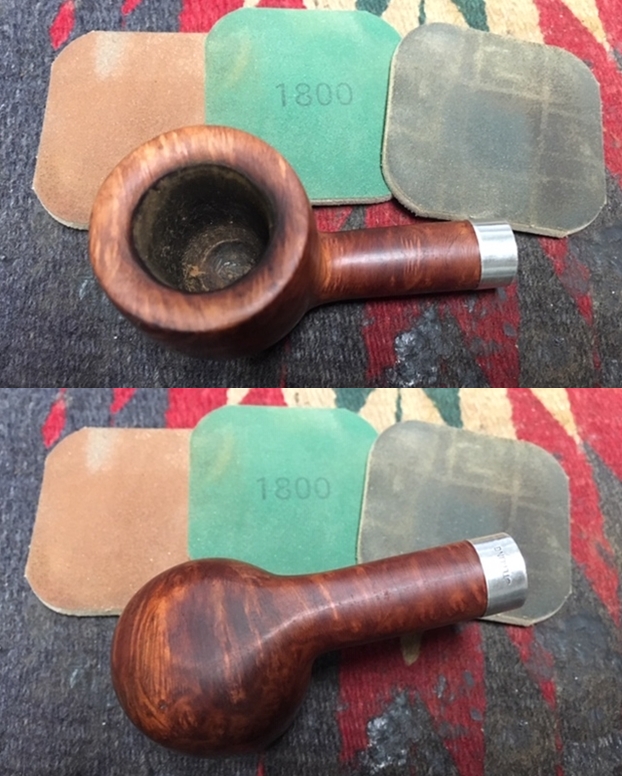
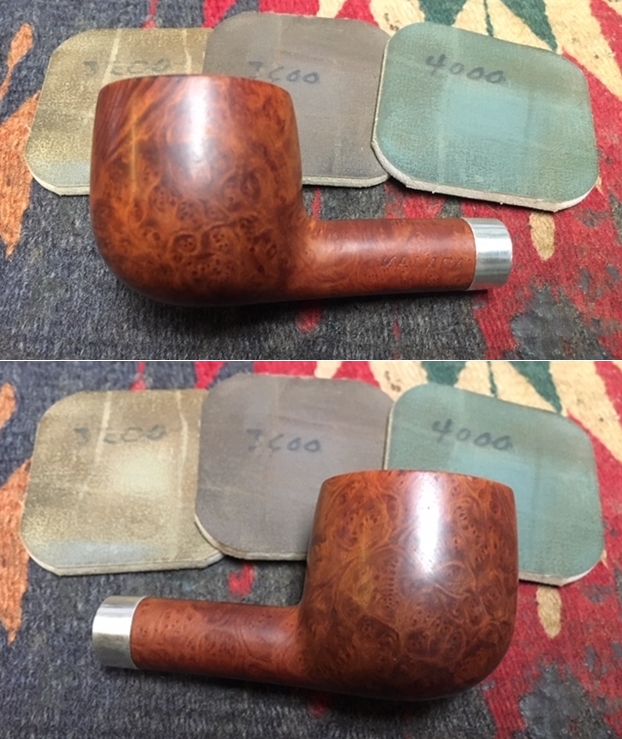
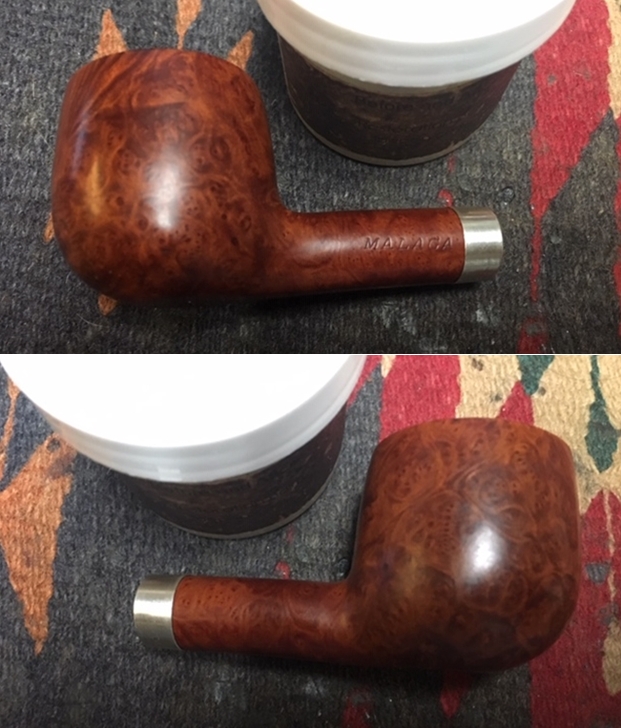
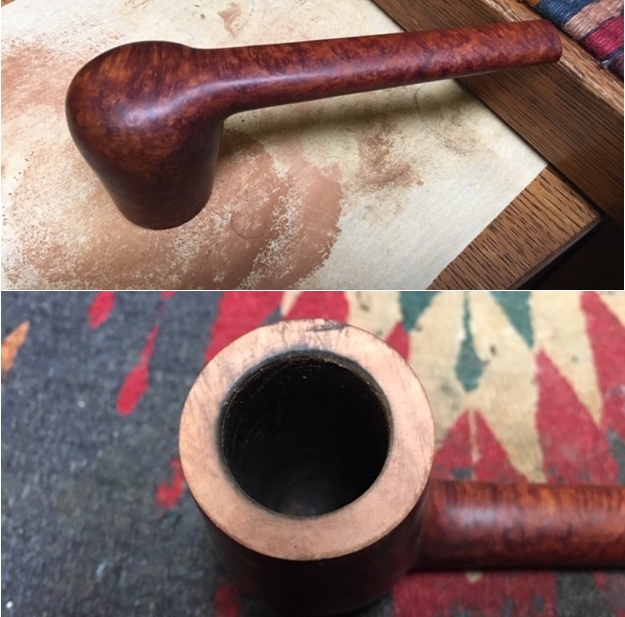
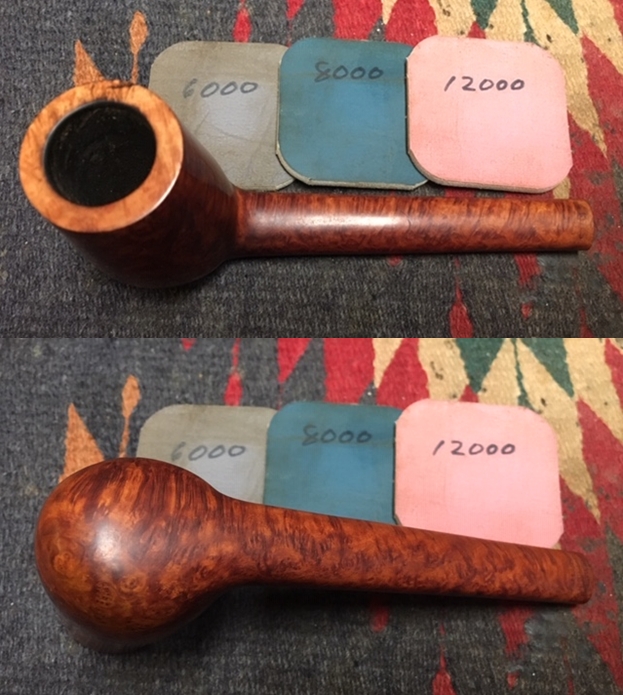
 I started the process of the restoration by working on the bowl. I polished the briar with 2400-12000 grit micromesh sanding pads – wet sanding with 1500-2400 grit pads and dry sanding with 3200-4000 grit pads. I wiped the rim top down with a damp cloth after each pad. I found that with each successive grit of micromesh the grain on the bowl and shank sides stood out more and gave a shine to the pipe. I liked what I saw when I looked at it.


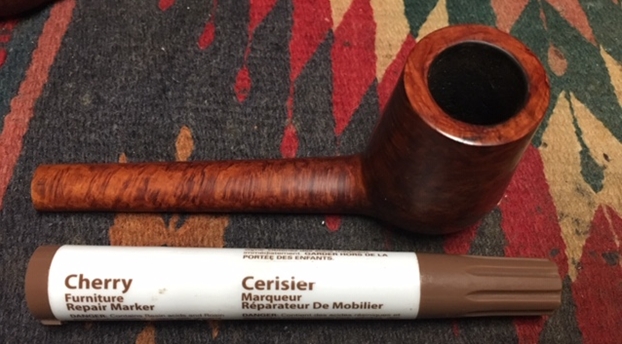
 I stained the top of the bowl to match the rest of the bowl. I used a Maple stain pen and set it aside to dry.
 I used a folded piece of 220 grit sandpaper to smooth out the damage to the inner edge of the rim. I worked on it to remove the burn damage and to try to bring the bowl back into round.
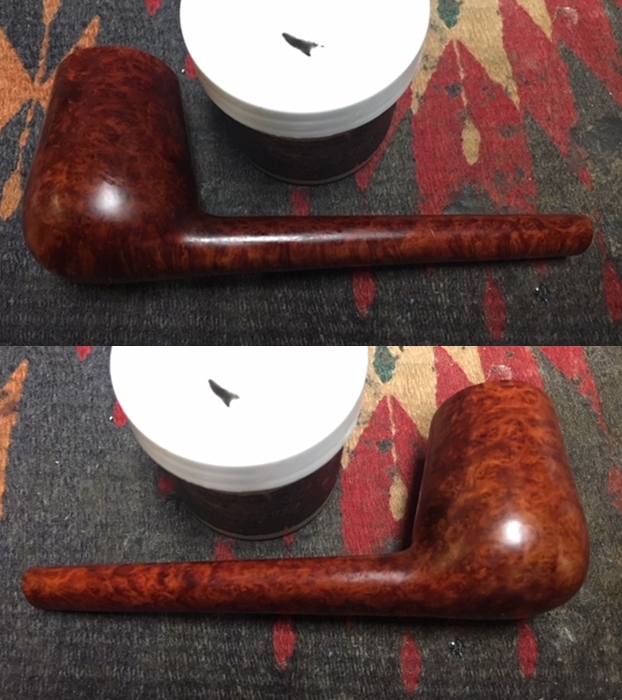
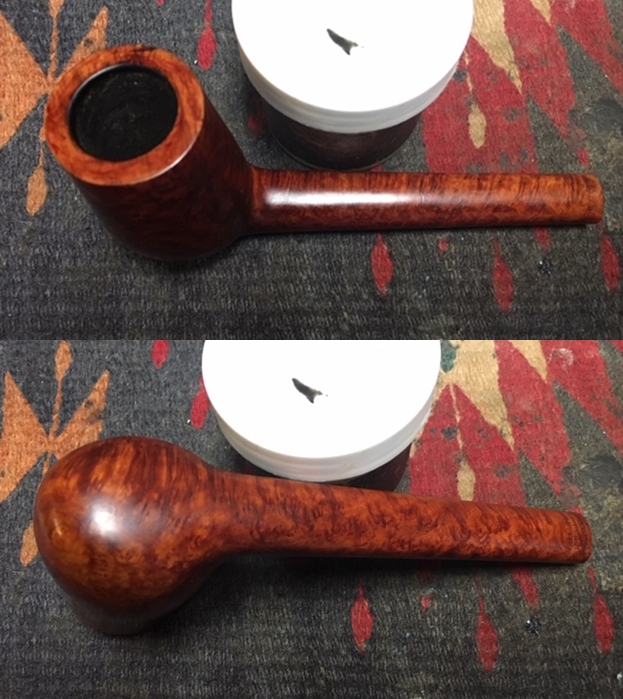
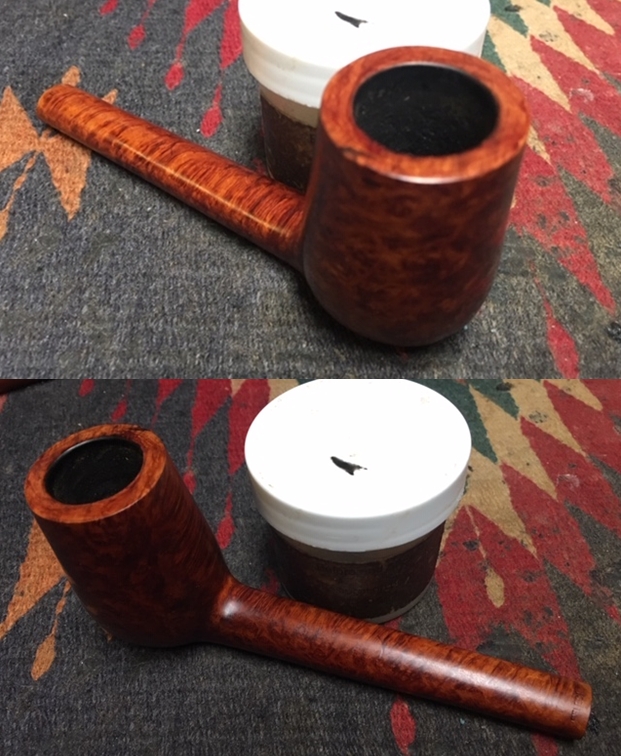
 I worked some Before & After Restoration Balm into the surface of the briar and the plateau with my fingertips to clean, enliven and protect it. I let the balm sit for a little while and then buffed with a cotton cloth to raise the shine. I buffed the rim top with a shoe brush to make sure that the nooks and crannies had the conditioner deep in them. The following photos show the bowl at this point in the restoration process. The bowl and the rim top look really good and the darkening is gone. The finish looks very good with the rich oil finish on the bowl and rim. I am very happy with the results.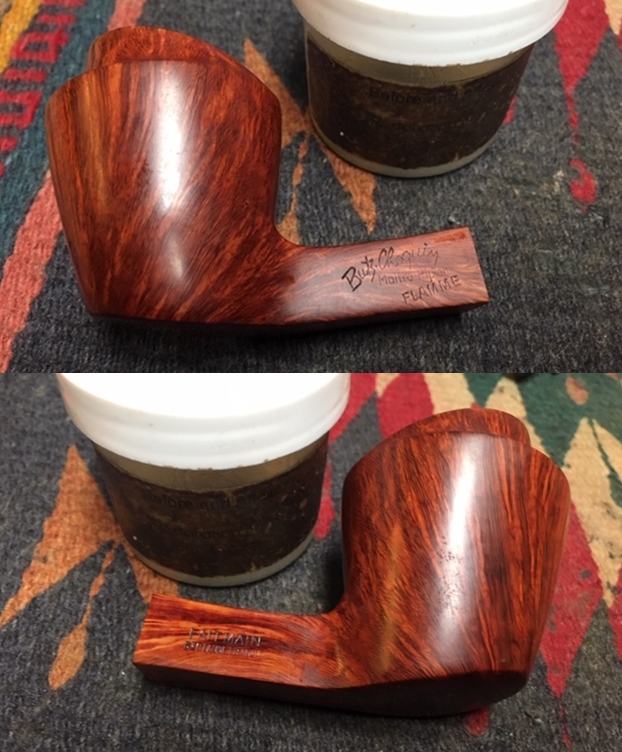
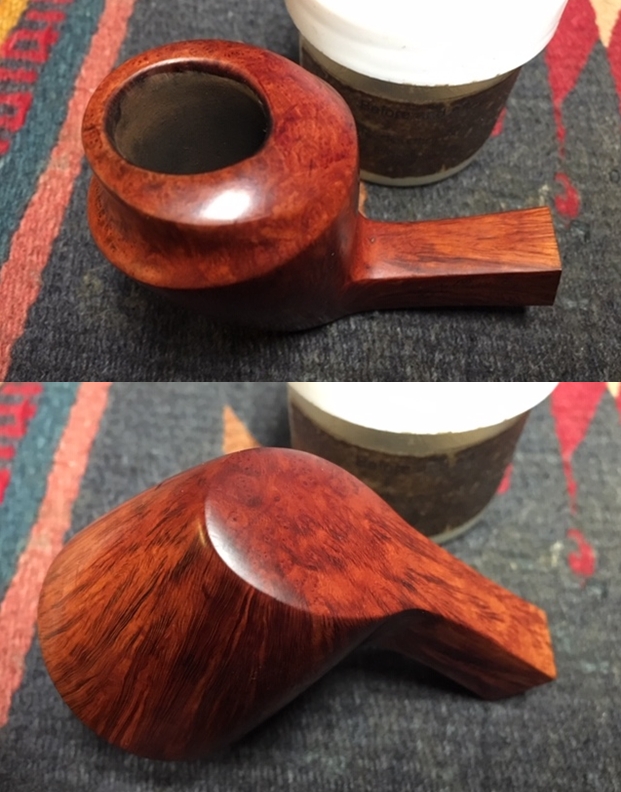
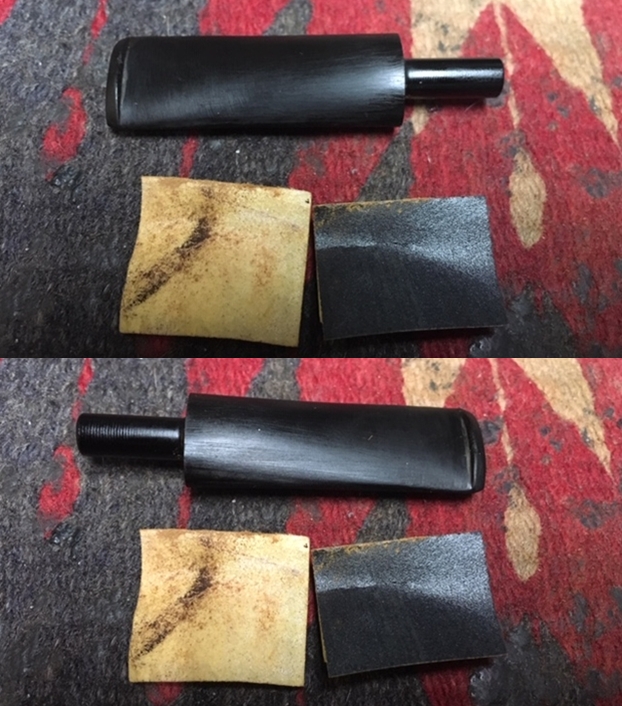
 With the bowl finished I set it aside and turned my attention to the stem. I sanded the stem surface with 220 grit sandpaper to smooth out tooth chatter and light tooth marks. I polished the surface of the whole stem with 400 grit wet dry sandpaper.
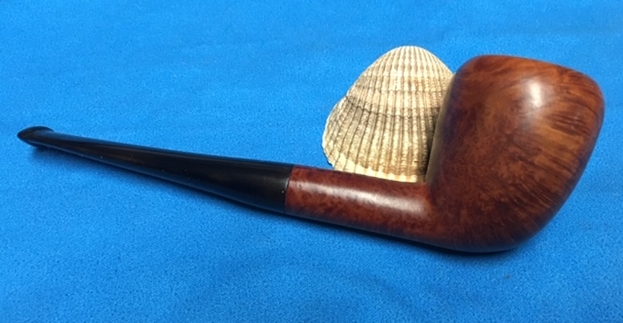
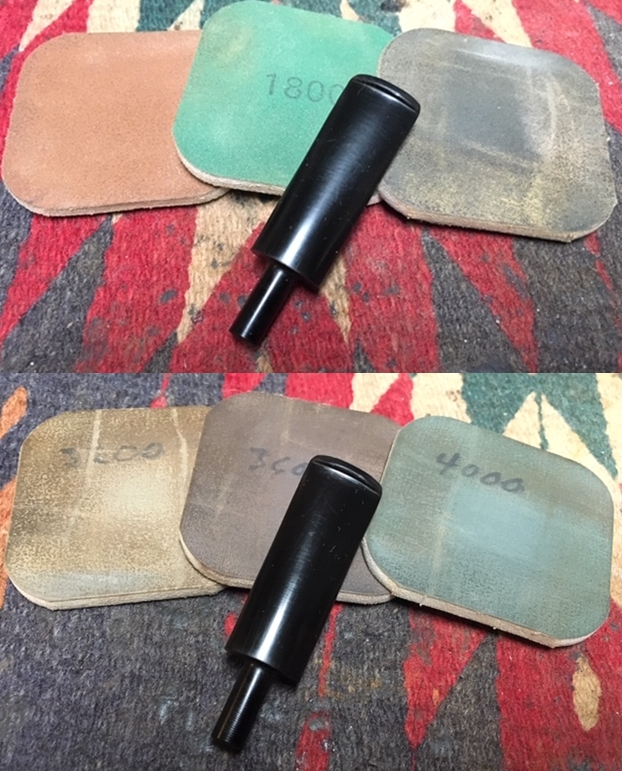
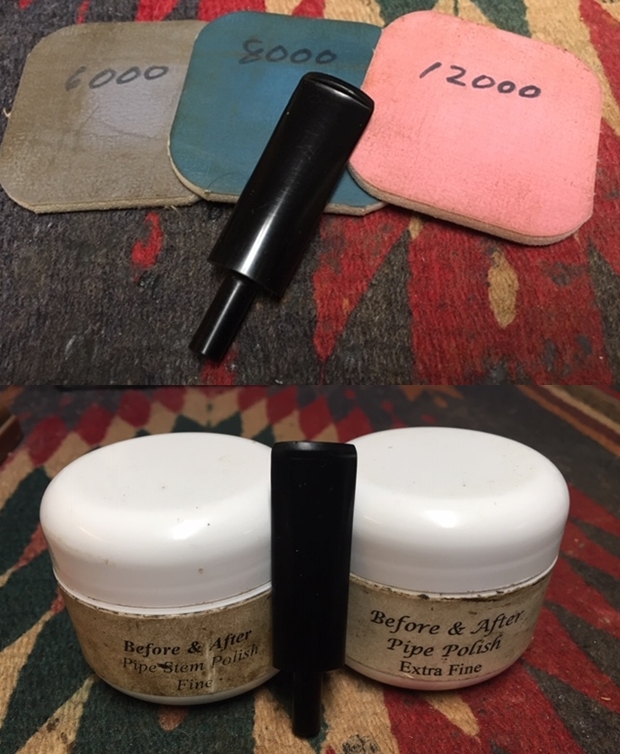
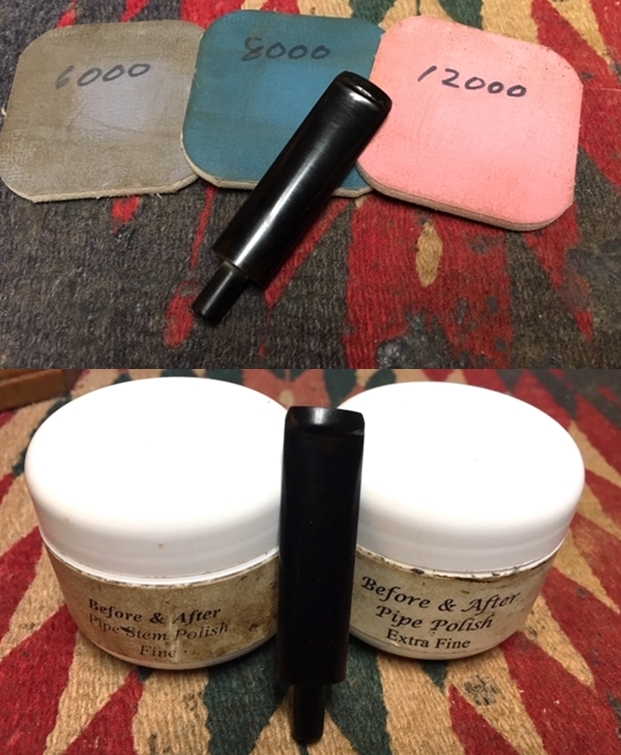
 I continued to polish the stem with micromesh sanding pads – wet sanding it with 1500-2400 grit pads and dry sanding it with 3200-12000 grit pads. I wiped the stem down with a damp cloth after each pad. I further polished it with Before & After Pipe Polish – both Fine and Extra Fine. I wiped it down with a coat of Obsidian Oil and set it aside to dry.
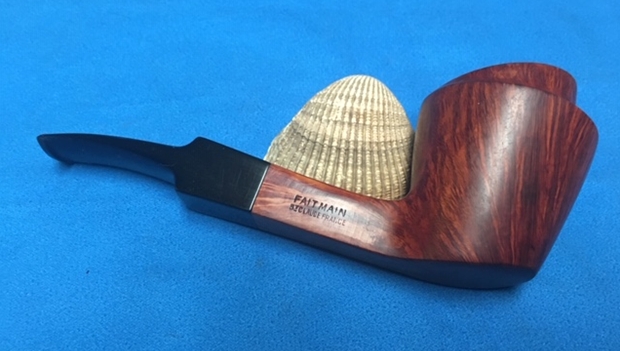
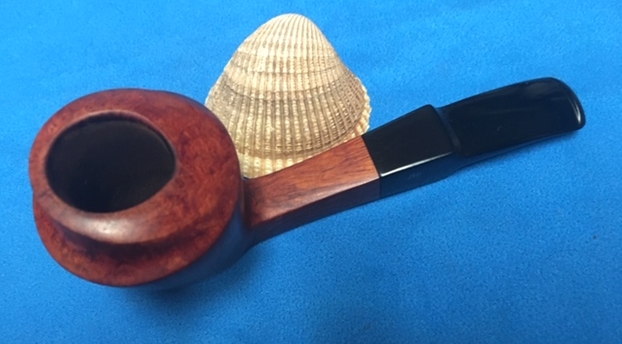
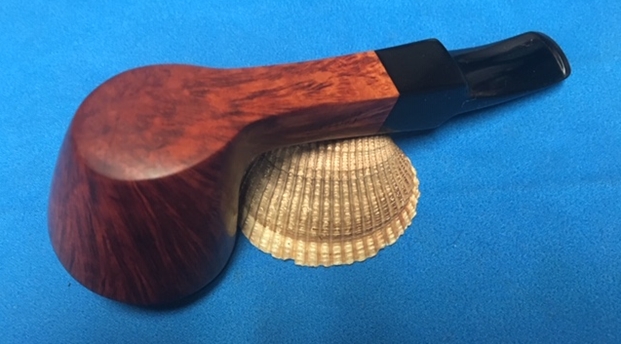
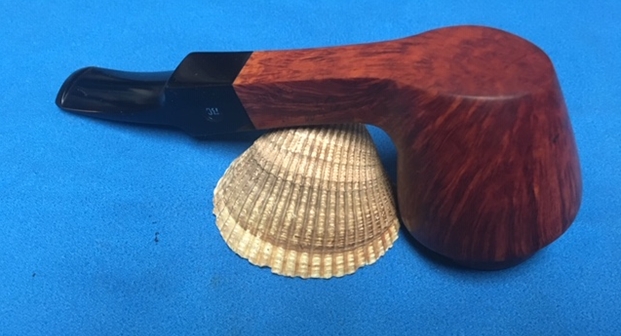
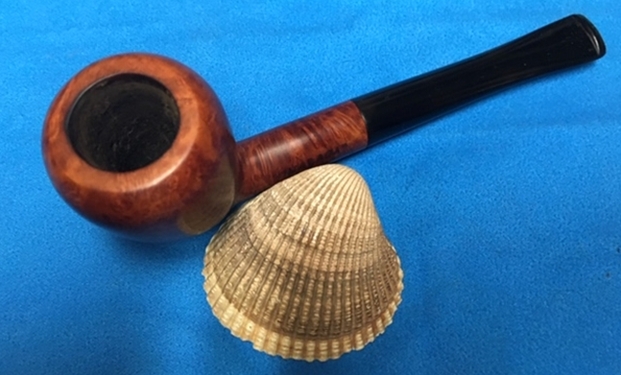
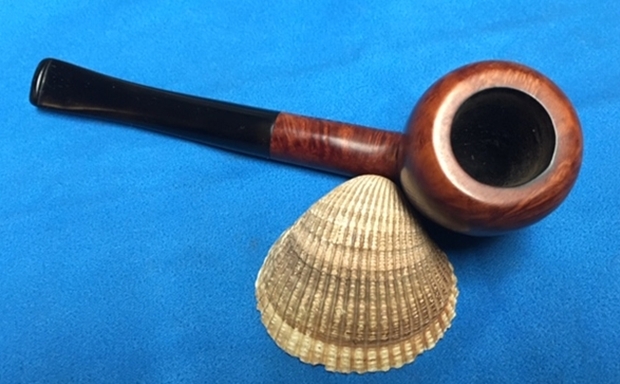
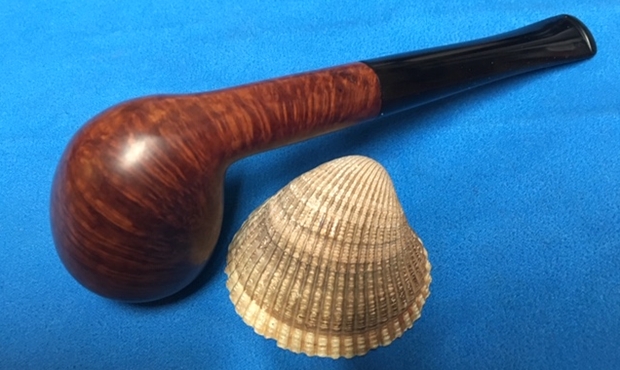
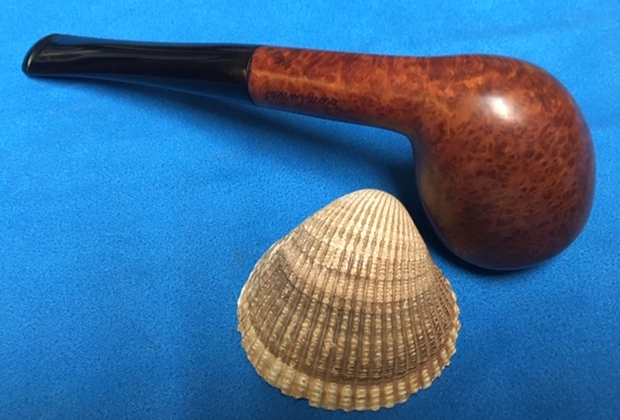
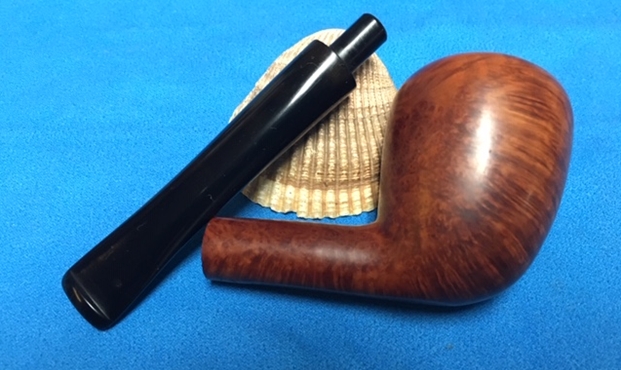
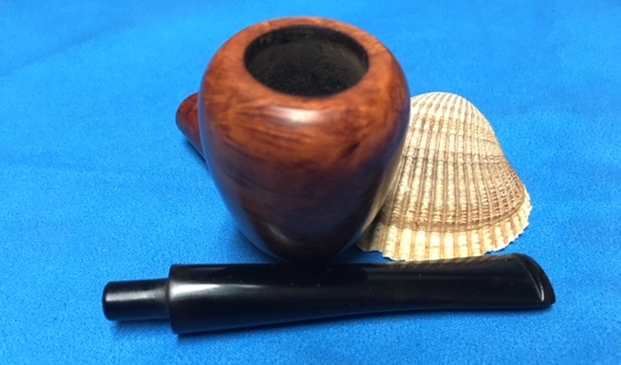
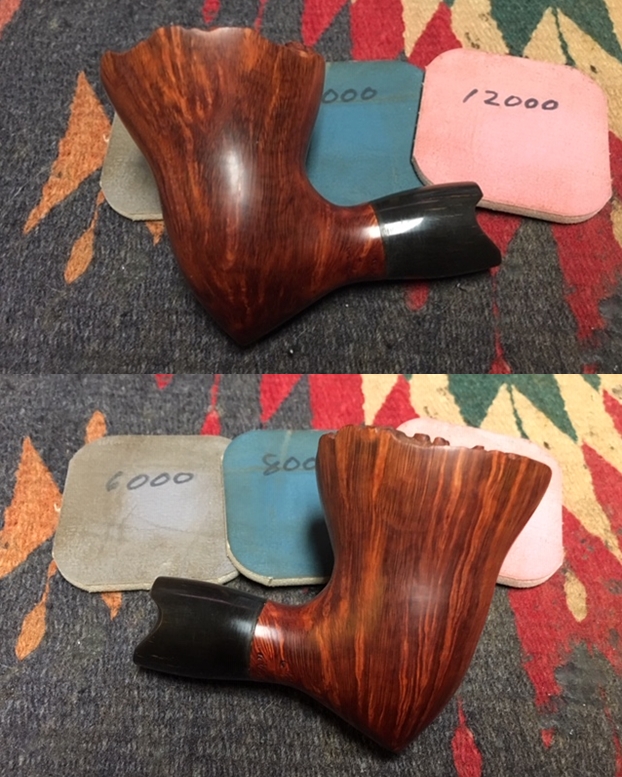
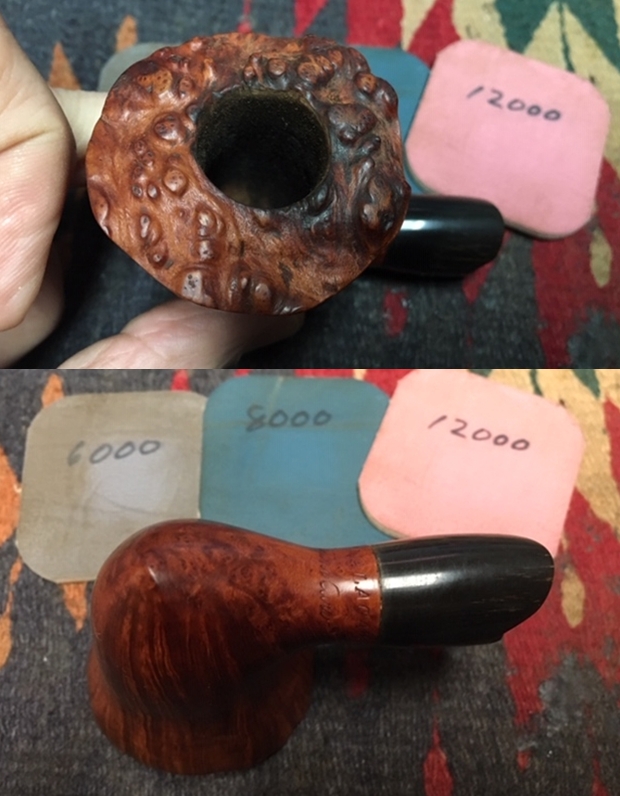
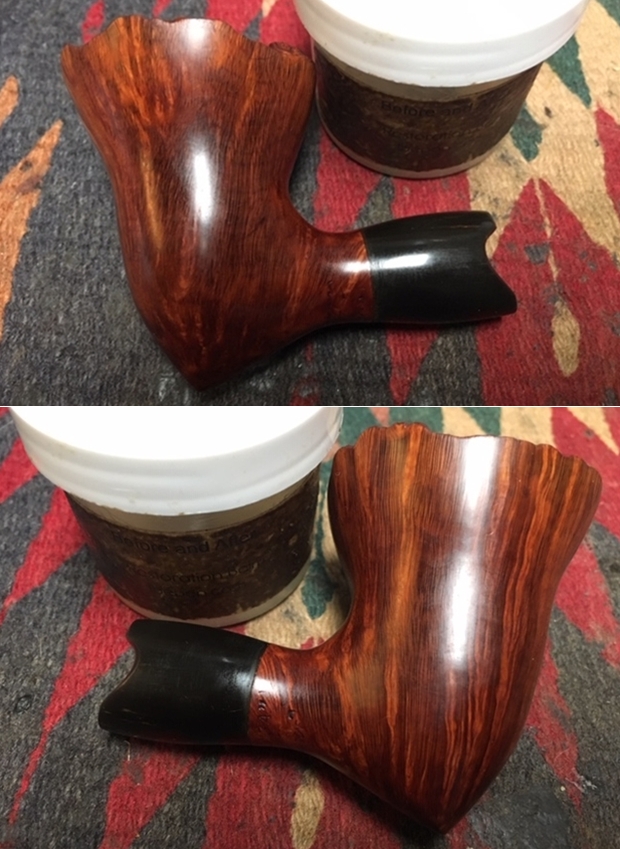
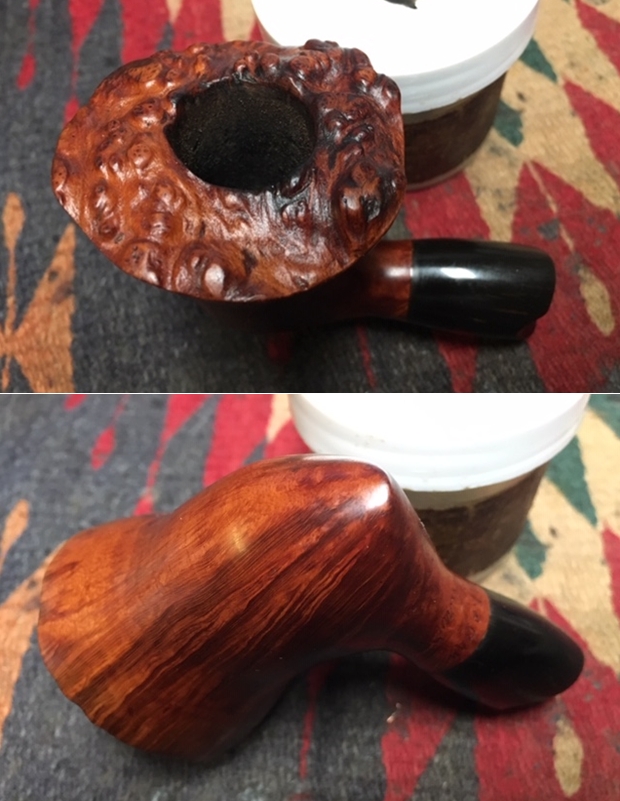
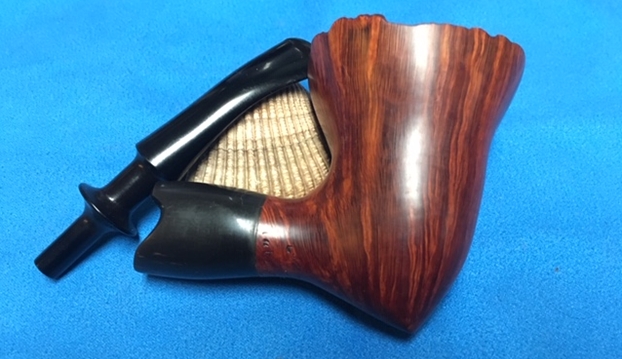
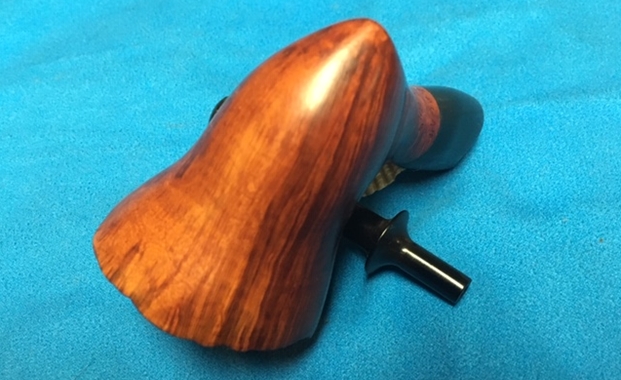
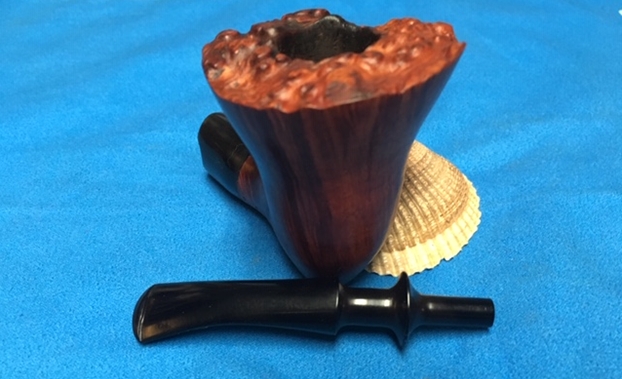
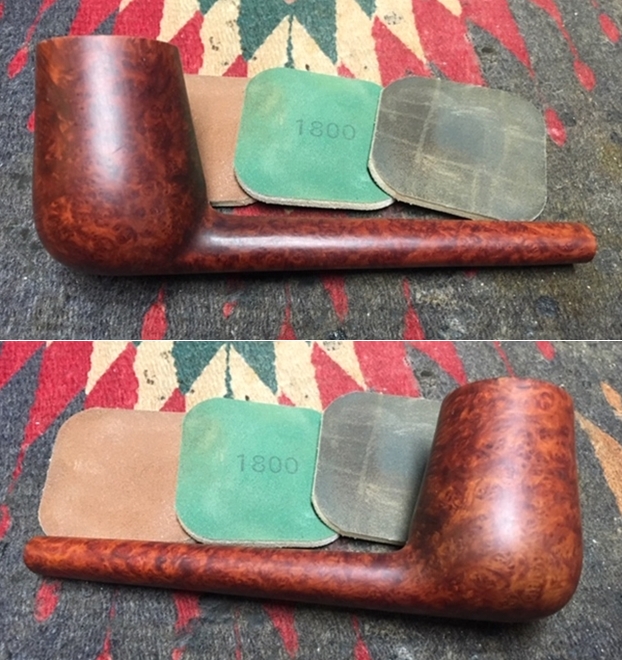
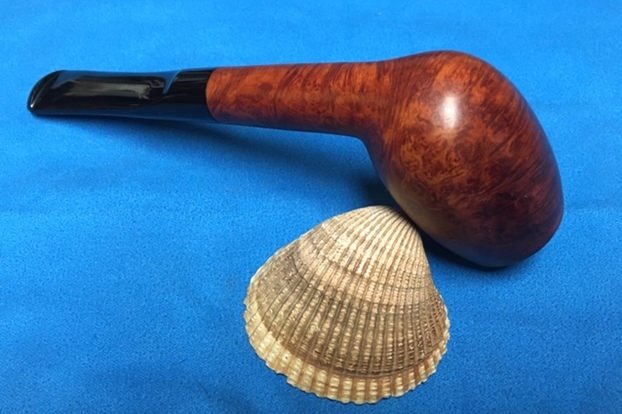
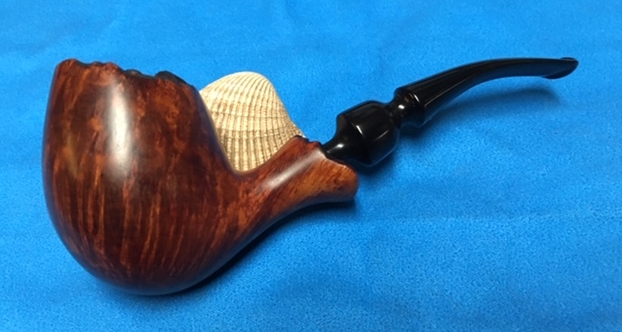
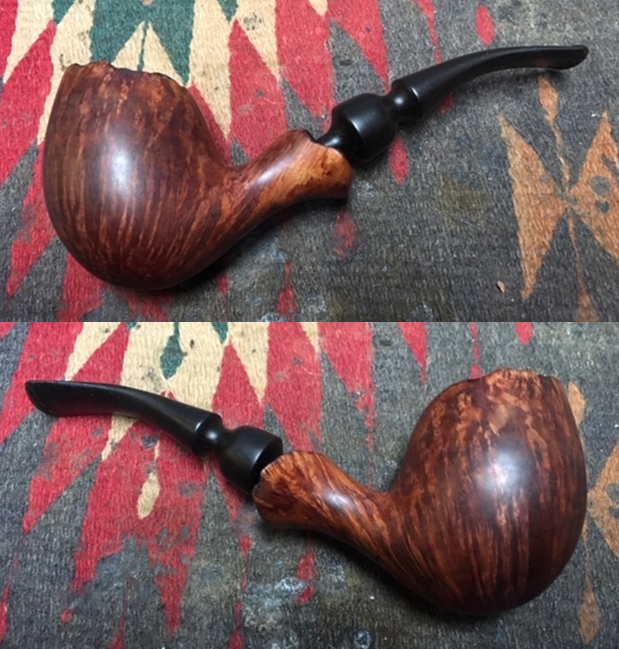
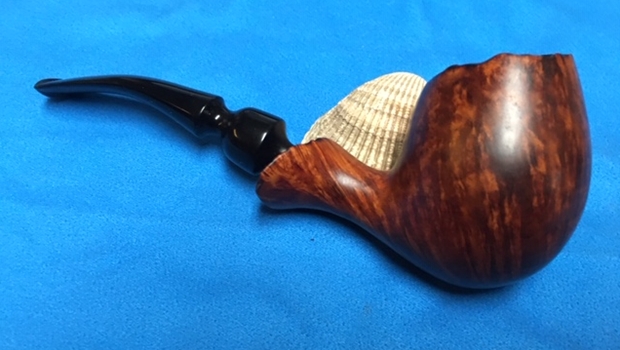
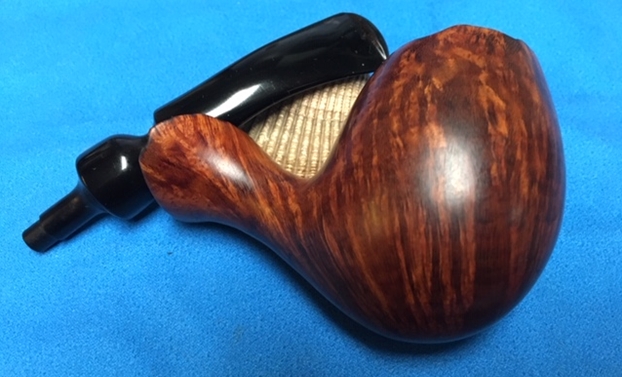
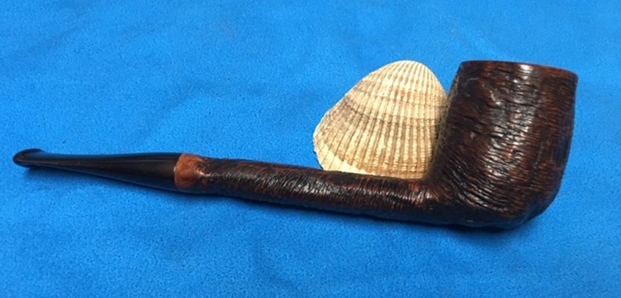
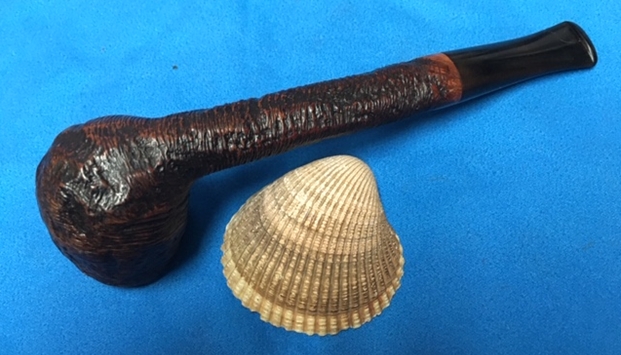
 Now with both parts of the pipe finished, I polished stem with Blue Diamond polish on the buffing wheel. I gave the bowl multiple and the stem multiple coats of carnauba wax. I buffed the pipe with a clean buffing pad to raise the shine. I hand buffed it with a microfiber cloth to deepen the shine. The pipe polished up pretty nicely. The grain came alive with the buffing. The rich medium brown finish on the briar works well with the polished, square, black vulcanite stem. The finished pipe is a beauty and feels great in the hand. Have a look at it with the photos below. The dimensions are Length: 5 1/2 inches, Height: 2 inches, Outside diameter of the bowl: 1 7/8 inches, Chamber diameter: 3/4 of an inch. This one will be going on the rebornpipes store shortly and can be added to your collection. Thanks for walking through the restoration with me on this Hand Made Butz Choquin Maitre Pipier Flamme pipe.