by Steve Laug
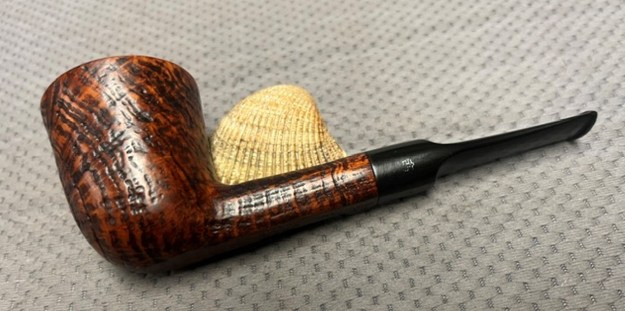
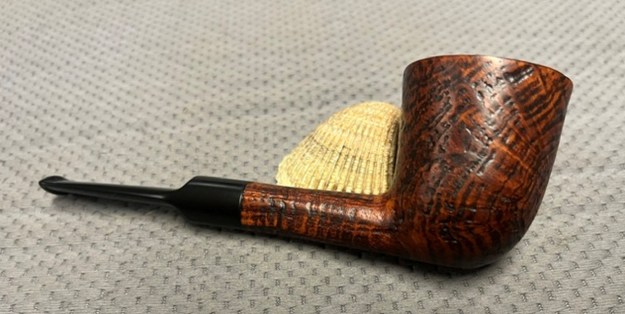
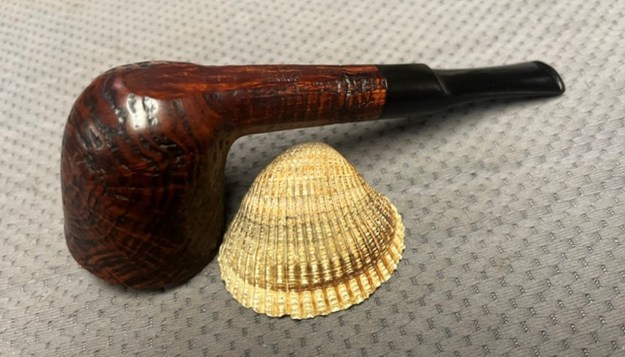
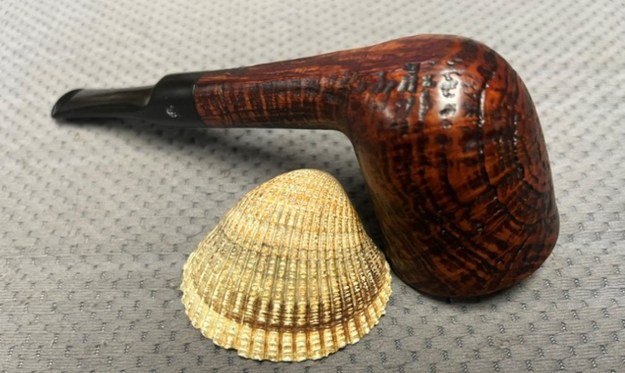
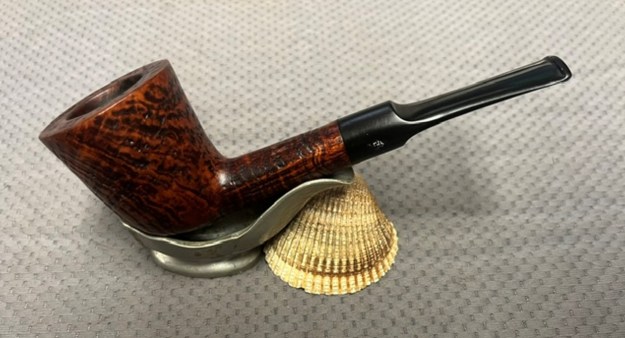
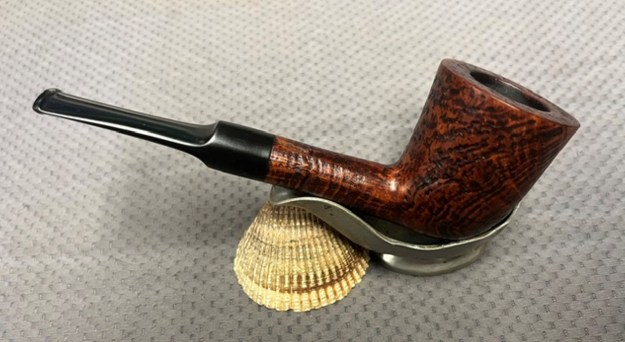
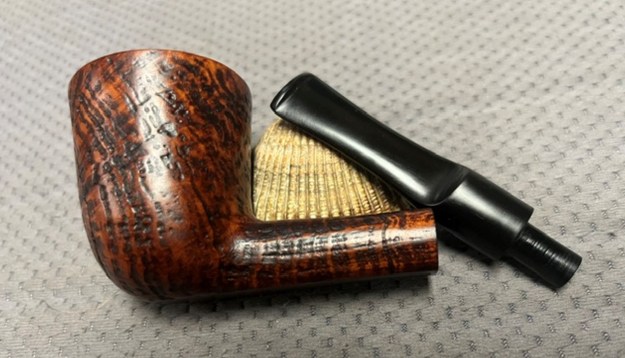
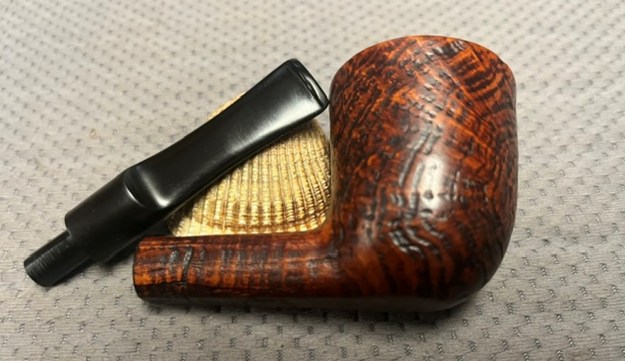
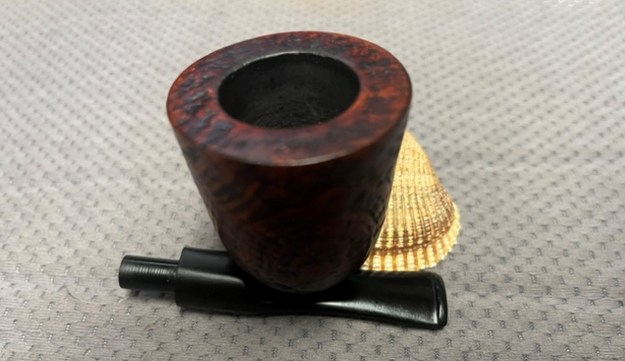
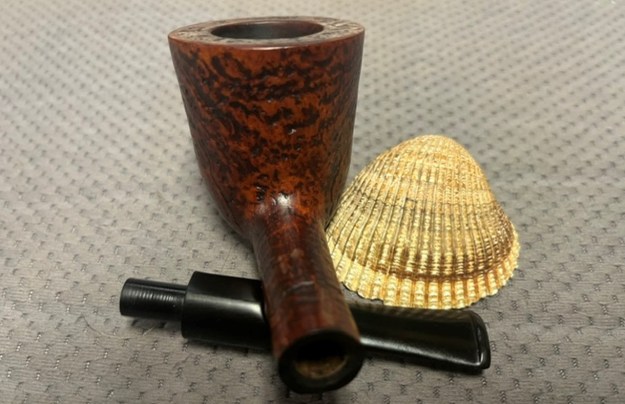
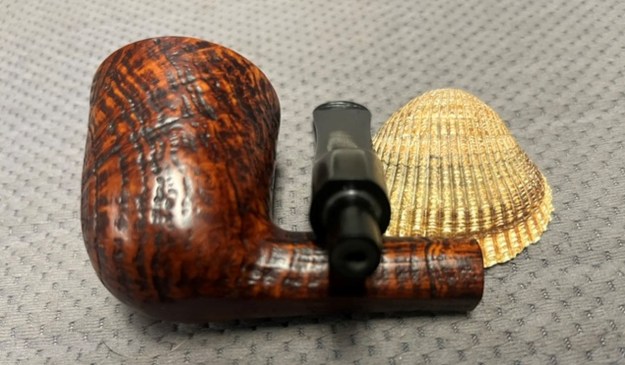
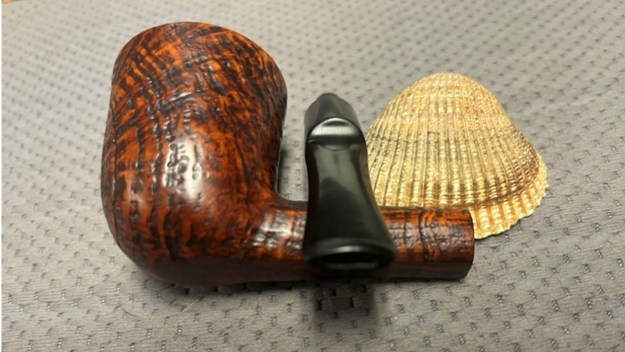
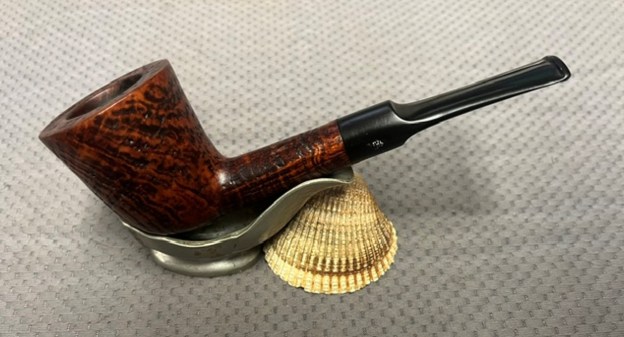
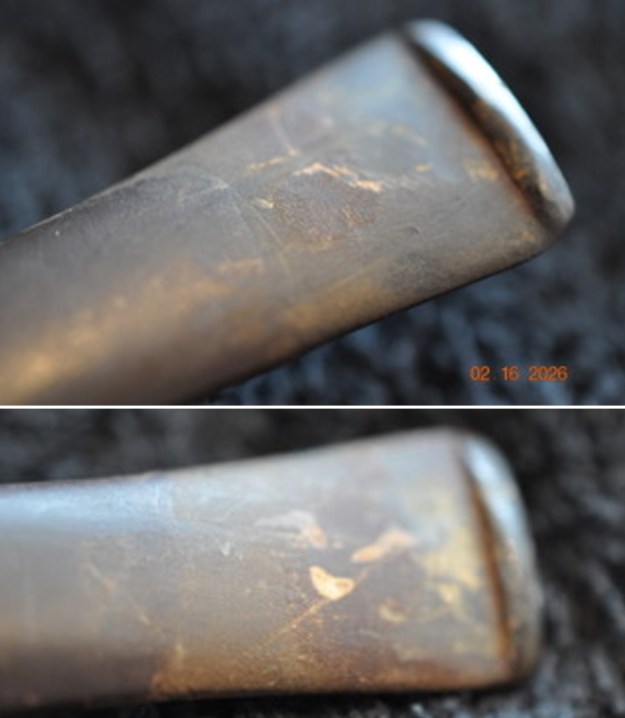
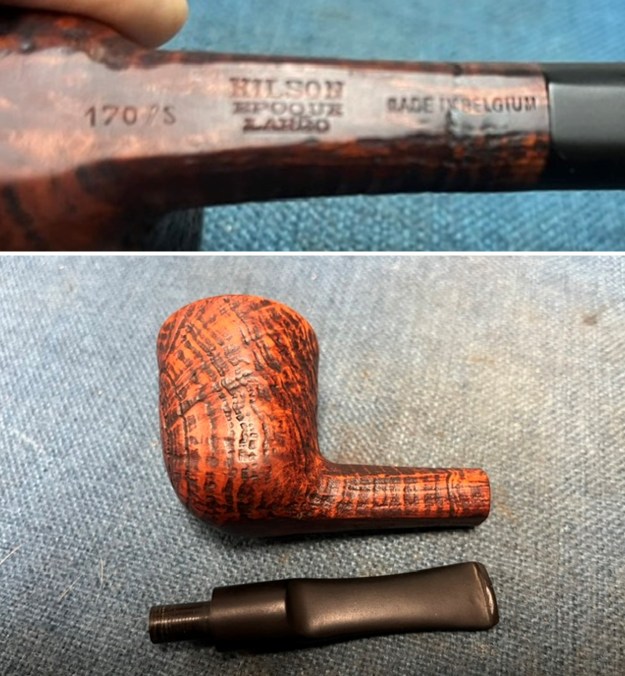
 This Sandblast Dublin with a Saddle stem was purchased on 01/20/2026 from a Facebook seller in Quaker Town, Pennsylvania, USA. It is a great looking Dublin with a blast that shows the flow of the grain. The stem is a vulcanite saddle stem. The bowl is stained with a contrast of blacks and browns that highlight the grain around the bowl and shank. It is stamped on the flat underside of the bowl and shank. It reads 170/S the shape number on the heel of the bowl followed by Hilson [over] Epoque [over] Largo. That is followed by Made in Belgium. The bowl had a thick cake and some tobacco debris on the walls. There was an overflow of lava on the rim top that was heavier toward the back of the bowl. There was grime ground into the finish which left the finish looking quite dull. The slightly oxidized saddle vulcanite stem has a Hilson H logo on the left side. There are light tooth marks and chatter on both sides of the stem ahead of the button. Jeff took photos of the pipe before he started his work on it.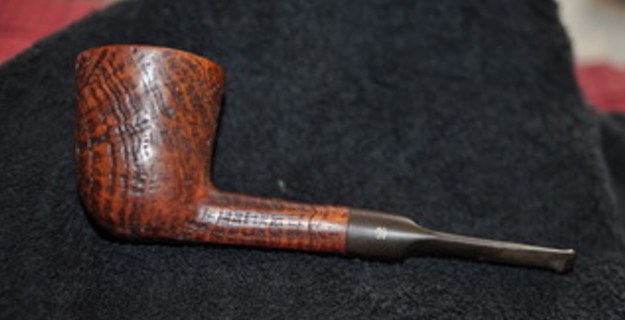
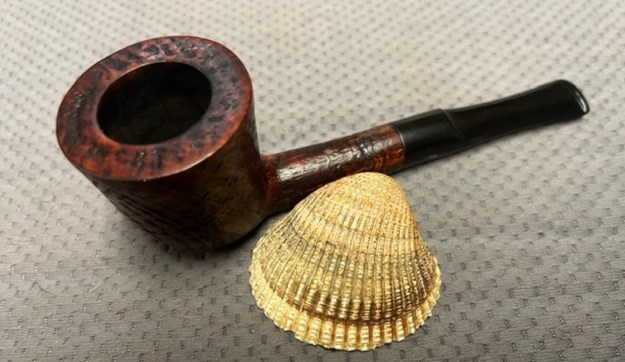
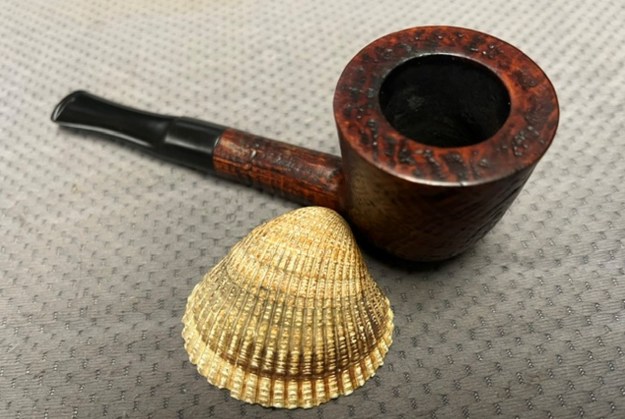
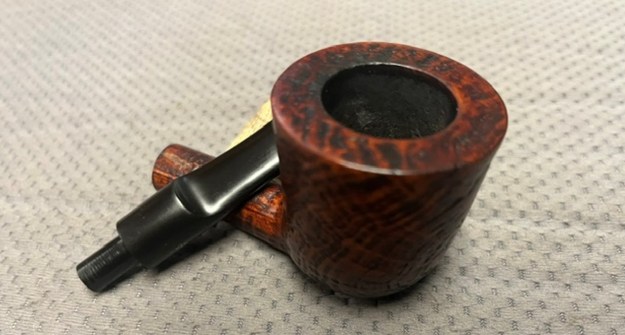
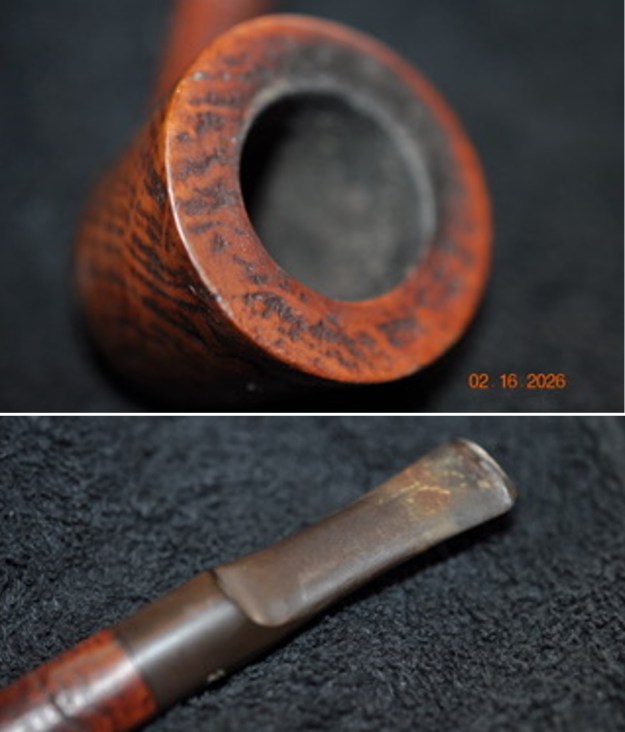
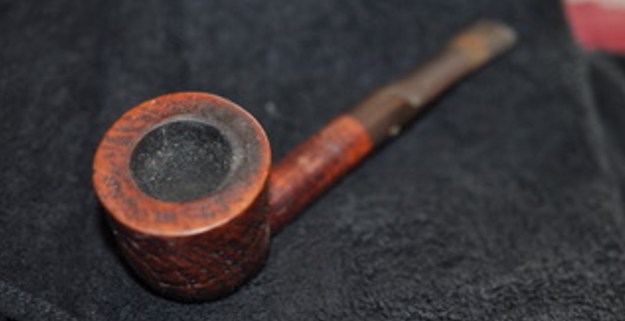 He took photos of the rim top to show the condition of the top and edges of the bowl. It is dull and has the lava on the rim top and bevelled edge of the rim. It is uniquely a beautiful pipe. The stem had light tooth marks and chatter on both sides ahead of the button.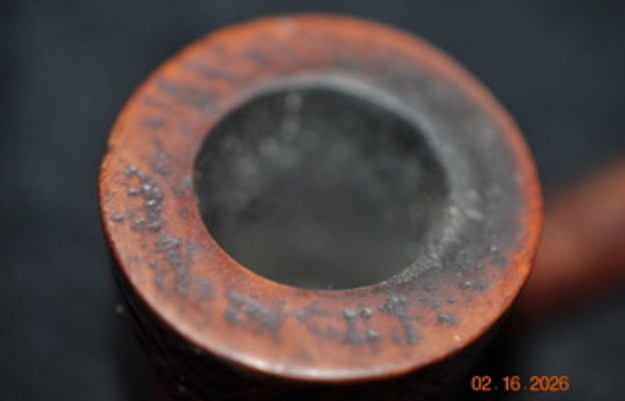
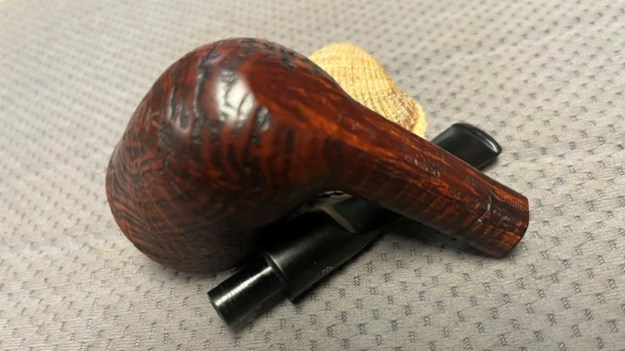
 The pipe has some nice grain that is highlighted by the stain and the sandblast. The difference adds a visual and tactile variation on the pipe.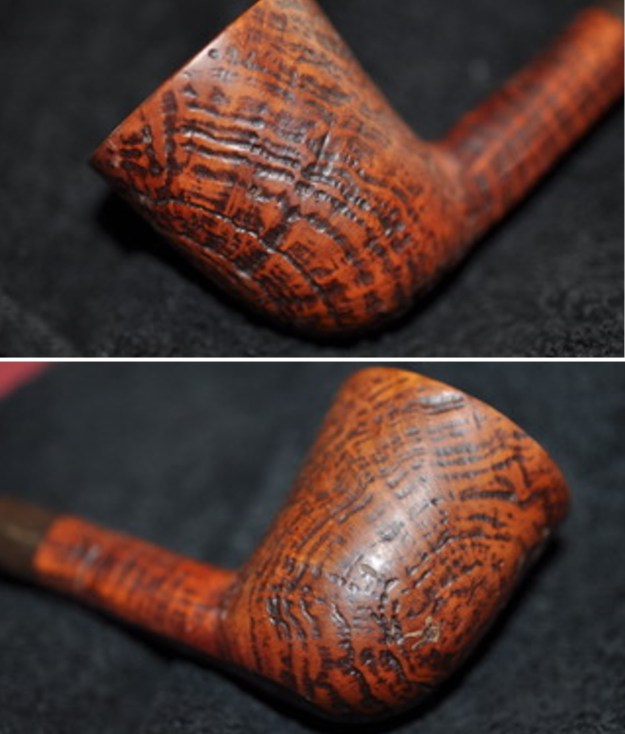
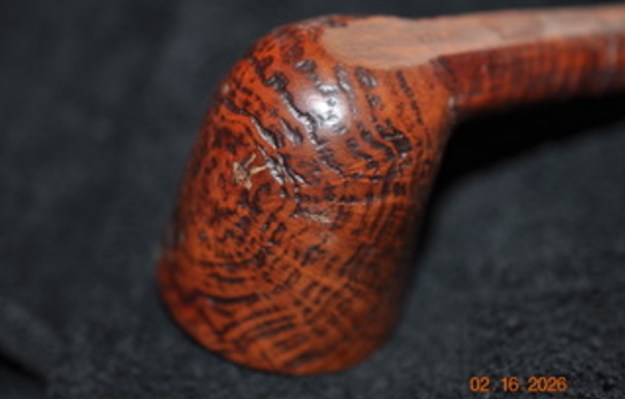 The pipe is stamped in a smooth section on the underside of the shank. On the left end it reads 170/2 which is the shape number. That is followed by the brand name Hilson over the line name Epoque [over] Largo. To the right end of the shank near the shank/stem junction it reads made in Made in Belgium. The photos below show that the stamping is very clean and readable.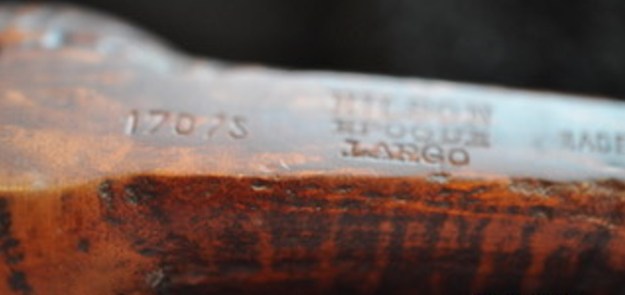
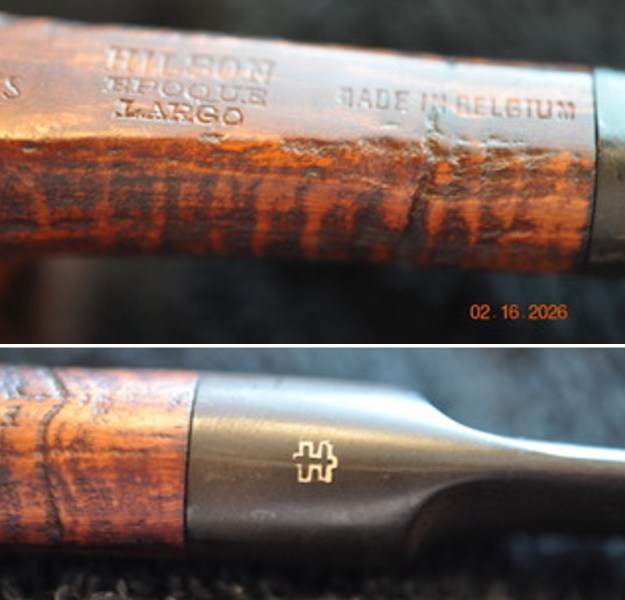 Before I started the refresh of the pipe, I did a quick review of the history of the brand because I like having that information in mind when I work on a pipe. I remembered at some point Hilson had been sold to Gubbels who made the Big Ben pipe. At that time, it moved from being a Belgian made pipe to being made in the Netherlands.
I turned first to Pipephil’s site to read what he had for information on the Hilson’s Epoque (http://www.pipephil.eu/logos/en/logo-h3.html). There were not any photos of the line on the listing. However, it is an interesting piece and I have included the sidebar information below the screen capture.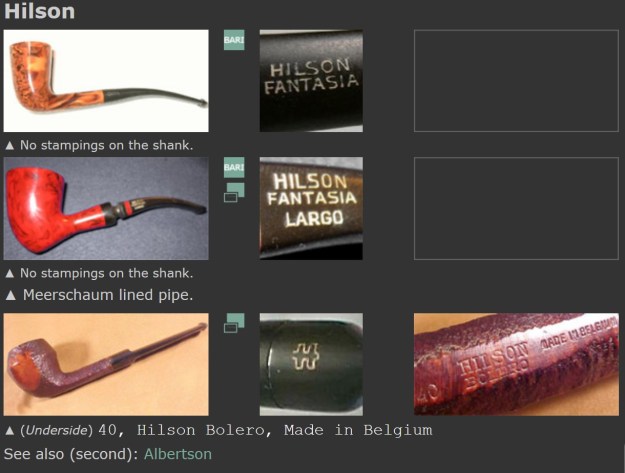 In 1846 a German named Jean Knödgen started to produce clay pipe in Belgium. In the late 19th century Jean Hillen who married into the Knödgen family took over the company and changed the firm in order to manufacture briar pipe. Jean Hillen had 2 sons: Jos Hillen was responsible for sales and Albert Hillen was responsible for the production. After WWII Albert founded the HILSON brand (Hillen and Son) and exported his pipes all over the world.
In 1980 after having gone bankrupt, the Belgian brand from Bree (Limburg) was taken over by the Royal Dutch Pipe Factory.
From there I turned to Pipedia and read the entry on Hilson (https://pipedia.org/wiki/Hilson). It is a great read on the history of the brand. I am including it below.
Jean-Claude Hillen (other sources: Jean-Paul) founded a trading company in the City of Bree in 1846. He soon turned his main interest on pipes and other tobacco related goods.
Particularly in the 1960’s and still throughout the 1970’s the brand Hilson of Broers Hillen B.V. (Hillen Bros. Co.) was quite successful in many European countries. They produced large numbers of machine made pipes covering the whole range of shapes and finishes. The pipes were well respected for good quality and craftsmenship at very moderate prices.
Rarely seen there are also nice freehands from this era stamped MASTRO and signed by A.M. Sanoul, who is otherwise completely unknown as a pipemaker.
All the same, in 1980 Hillen faced major financial problems. At this time there was only a second manufacturer of briars pipes in the Benelux countries, the Elbert Gubbels & Zonen B.V. in the Netherlands. The Belgian competitor being in trouble, Gubbels used the favour of the hour and bought up the company. The reason is plausible: in some countries, particularly in Germany, Hilson held larger market shares than Gubbels’ mainstay brand Big Ben.
The Hillen plant in Bree was closed down shortly after and ever since then Hilson pipes are manufactured in Roermond, NL.
Given that the plant in Bree, Belgium closed around 1980 after Gubbels had purchased the company, I knew that the pipe I was working on had been made prior to 1980. The Made in Belgium stamp on the underside of the shank gave that information. I am not sure that I can get any closer in terms of a date for the pipe.
On this pipe, my brother’s cleanup work was the lion’s share of what needed to be done to revitalize it. He reamed the bowl with a PipNet reamer to remove the cake and cleaned up after the reaming with a Savinelli Fitsall pipe knife. He scrubbed the finish with a tooth brush and Murphy’s Oil Soap to remove the grit and grime. He scrubbed the rim top and was able to loosen the debris that had built up there. He rinsed the bowl under running water and dried it off. He soaked the stem in Briarville’s Pipe Stem Deoxidizer and when he removed it he rinsed off the debris and product with warm water. He scrubbed out the airway in the bowl, shank and stem with pipe cleaners, shank brushes, cotton swabs and alcohol. When I received the pipe I was amazed at how good it looked. The stem would need some attention but that was about it. The bowl could be waxed and buffed with little other work. Jeff had done a great job. I took photos of what the pipe looked like when it arrived in Vancouver.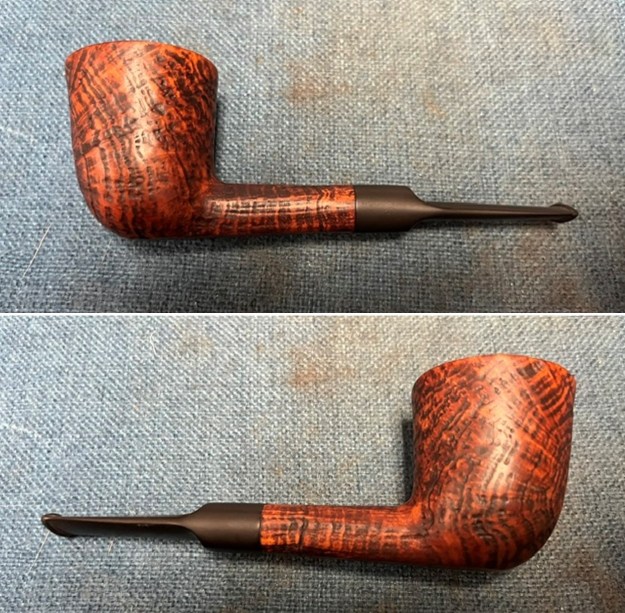
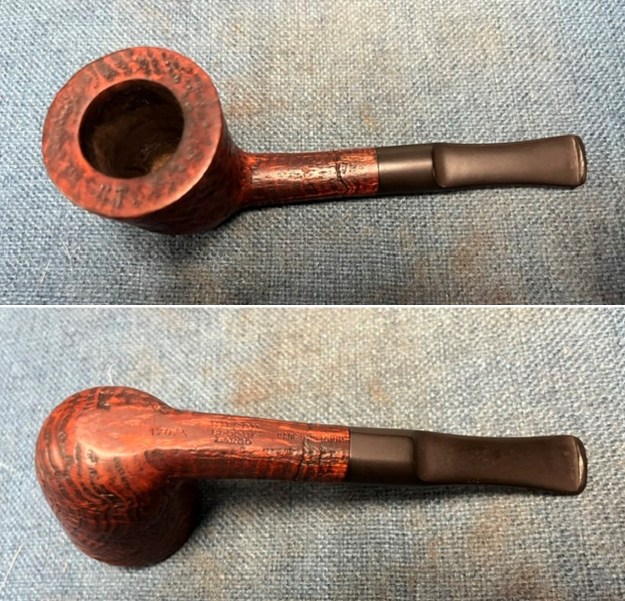
I took close up photos of the bowl and the rim top to show the condition. It looked better and the inner edge and top were in very good condition. I also took photos of both sides of the stem to give a sense of the condition of both sides at the button. There were light tooth marks and chatter on both sides ahead of the button.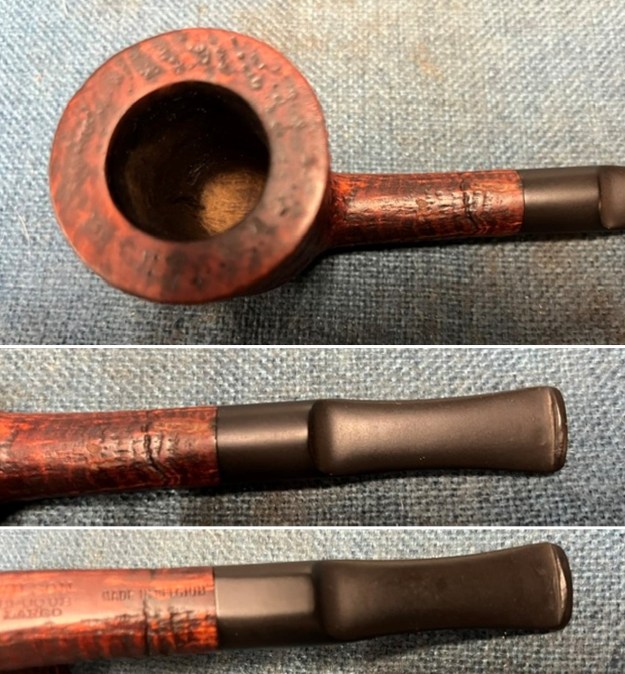 I took a photo of the stamping on the underside of the shank. It reads as noted above and is very clear and readable. I forgot to take a photo of the H logo on the stem but other than being faded is in excellent condition. I took the stem off the shank and took photos of the pipe to give a sense of its beauty and proportions.
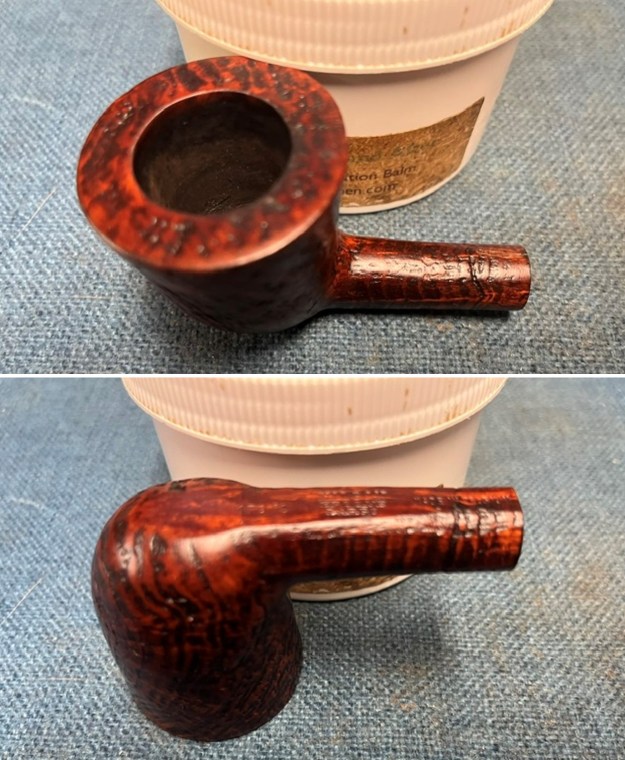
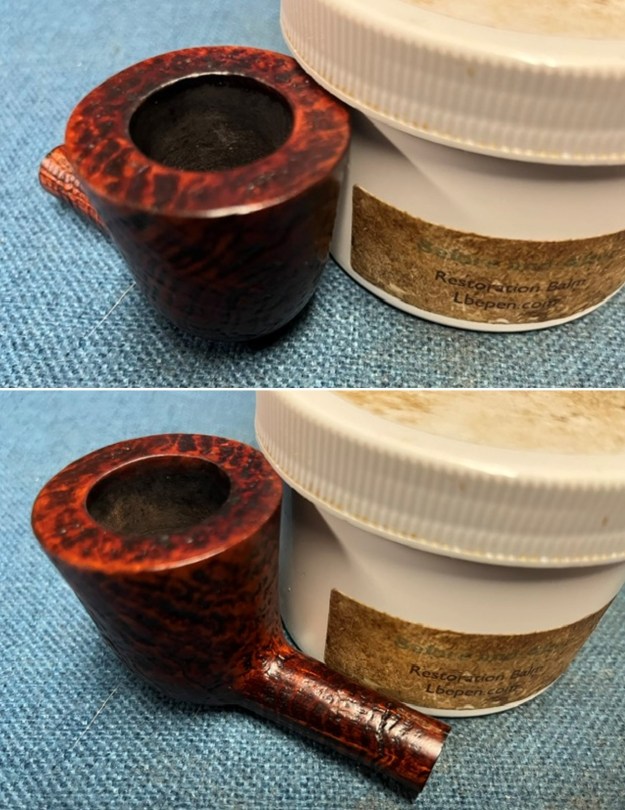
 I rubbed the bowl and shank down with Before & After Restoration Balm. I worked it into the surface of the bowl sides and shank with my fingertips to get it into the grain. The product works to clean, enliven and protect the briar. I let the balm sit for a little while and then buffed with a cotton cloth to raise the shine. The Balm did its magic and the grain in the sandblast stood out.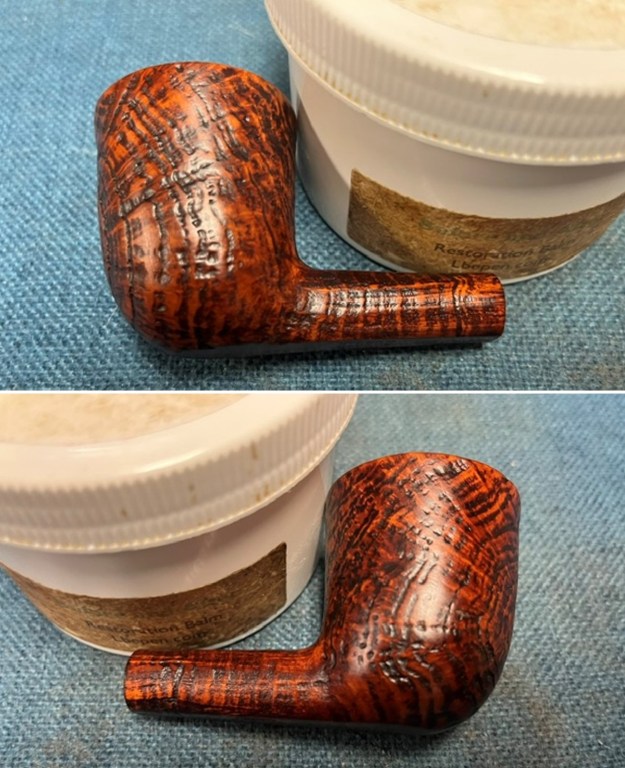
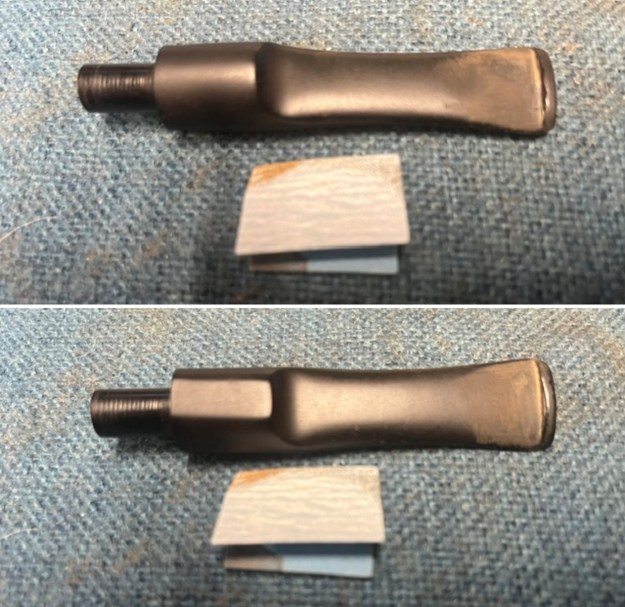
 I set the bowl aside and turned to the stem. I “painted” the surface of the stem with the flame of a Bic lighter to lift the tooth marks. I filled in those that remained with Extra Strength CA glue – strengthened with rubber. Once it cured I used a small flat file to flatten the repairs and recut the button. I blended the repairs further with a folded piece of 220 grit sandpaper.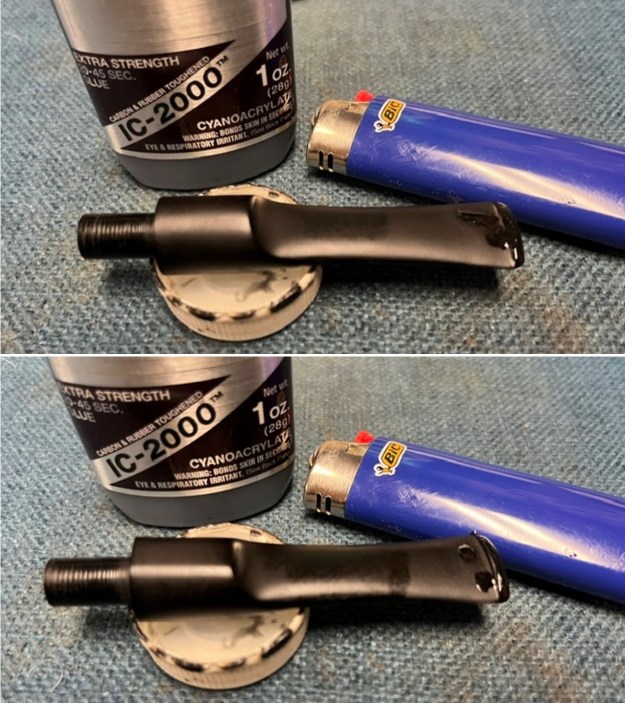
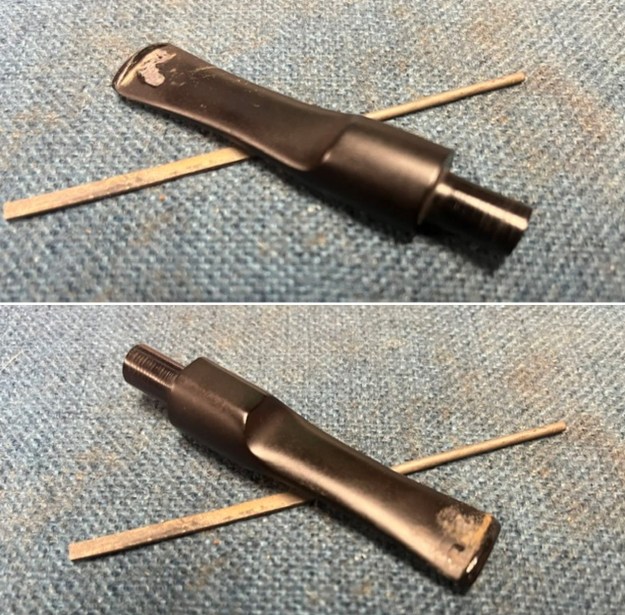
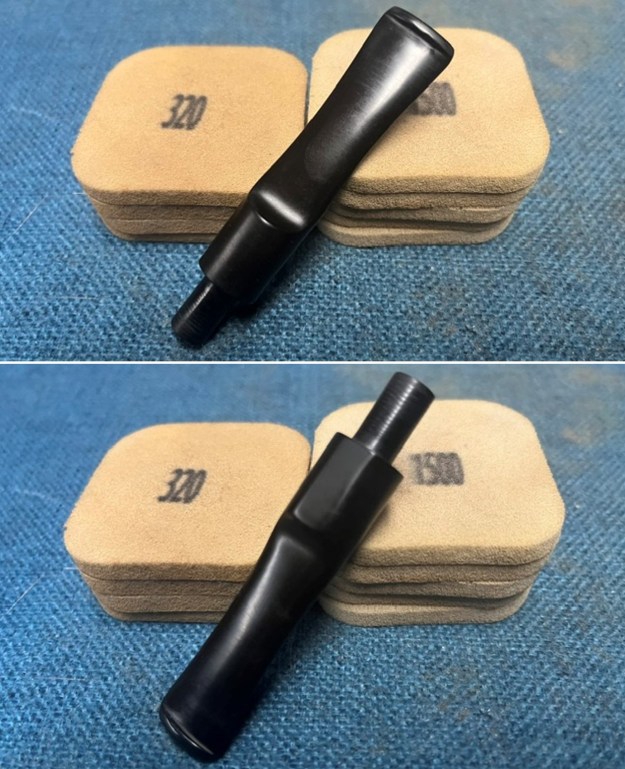
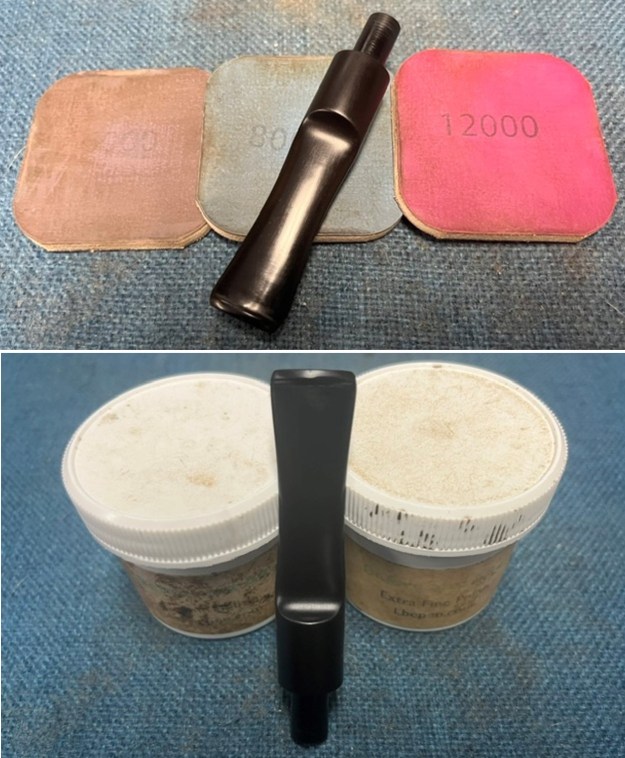
 I sanded the stem with 320-3500 grit 2×2 inch sanding pads. I wiped the stem down with a damp cloth after each pad. By the last sanding pad, it began to take on a deep shine.
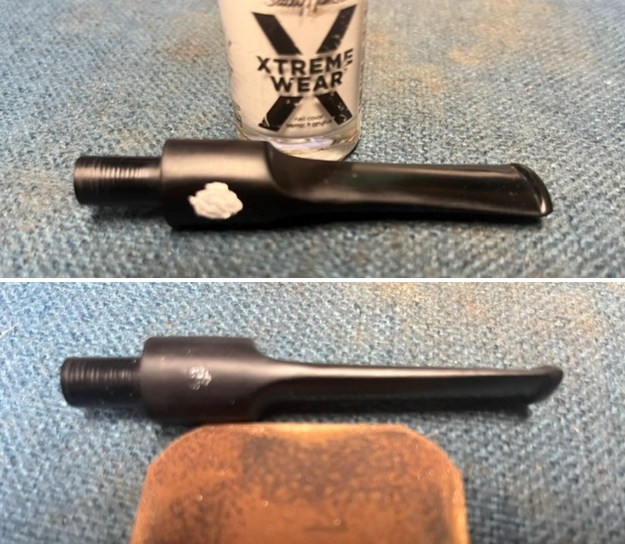
  I touched up the H logo on the left side of the saddle stem with white acrylic fingernail polish. It was faint in spots but I worked it into the stamp with a tooth pick. Once it cured I sanded off the excess with worn 1500 grit micromesh pad. It looked better.
 I polished it with micromesh sanding pads – dry sanding with 1500-12000 grit sanding pads. I wiped it down after each sanding pad with Obsidian Oil. I polished it with Before & After Pipe Stem Polish – both Fine and Extra Fine. I gave it another coat of Obsidian Oil and set it aside to dry.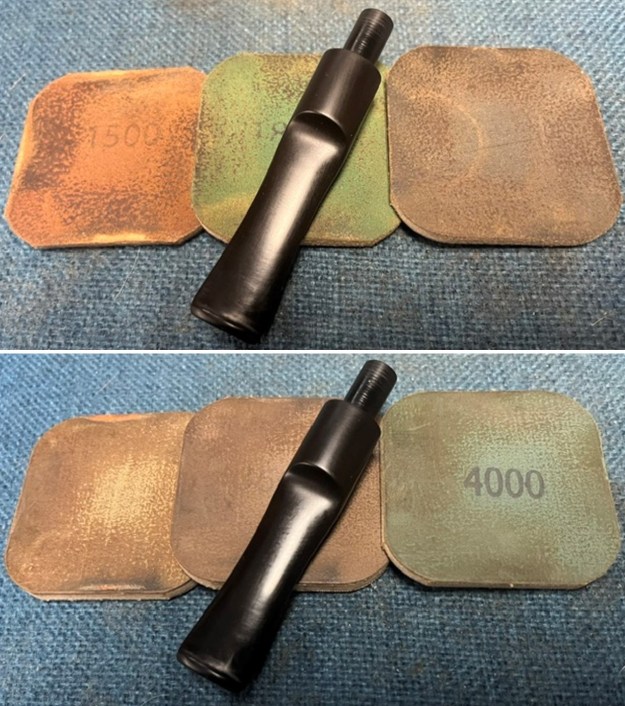
 I am excited to put the final touches on this interesting piece of Hilson’s Made in Belgium Pipe History. It is a beautiful Hilson Epoque Largo 170/S Sandblast Dublin shaped pipe. I put the pipe back together and buffed it with Blue Diamond on the buffing wheel. I gave the bowl and the stem multiple coats of carnauba wax. I hand buffed the pipe with a clean buffing pad to raise the shine. It is fun to see what the polished bowl looks like with beautiful grain on the bowl sides, top and bottom. The polished black vulcanite saddle stem combined with the bowl to make a stunning pipe. This older Hilson Epoque Largo 170/S is great looking and the pipe feels great in my hand. It is light and well balanced. Have a look at it with the photos below. The dimensions are Length: 5 ¾ inches, Height: 2 inches, Outside diameter of the bowl: 1 ¾ inches, Chamber diameter: 7/8 of an inch. The weight of the pipe is 42 grams/1.52 ounces. It is a beautiful pipe that I will soon be adding to the rebornpipes store in the Pipes from Various Makers Section. If you would like to add it to your collection let me know. It should be a great smoking pipe. Thanks for walking through the restoration with me as I worked over this pipe. Thanks to each of you who are reading this blog.