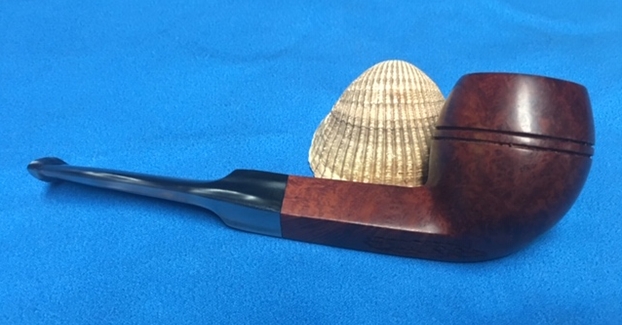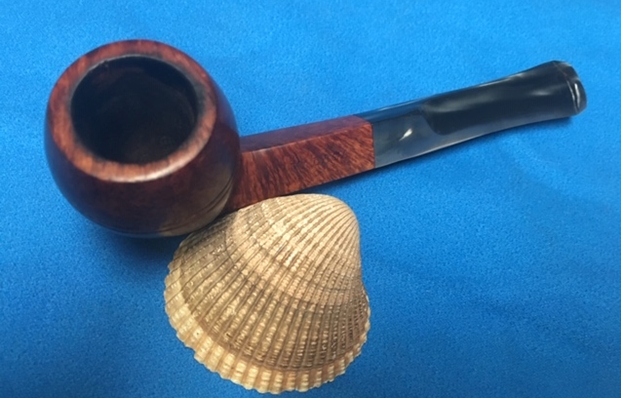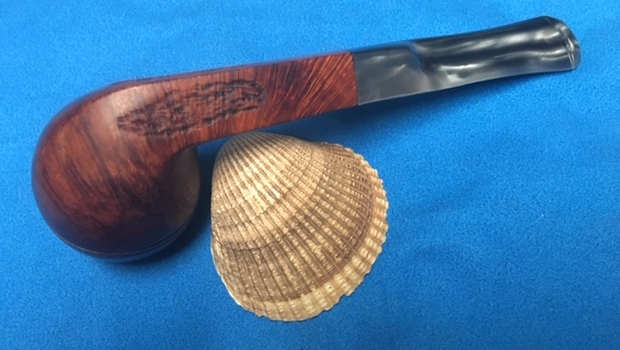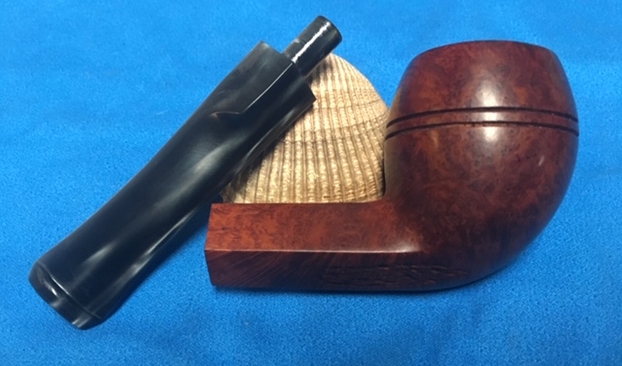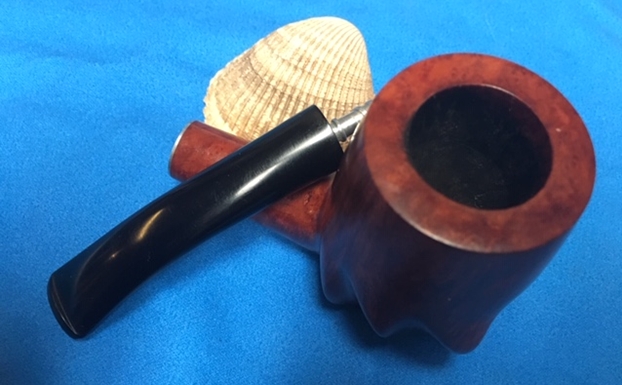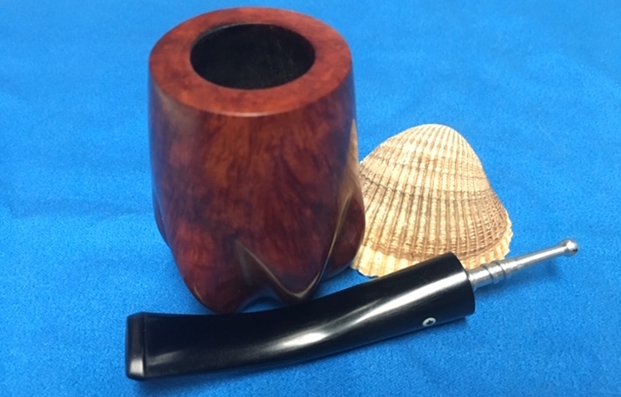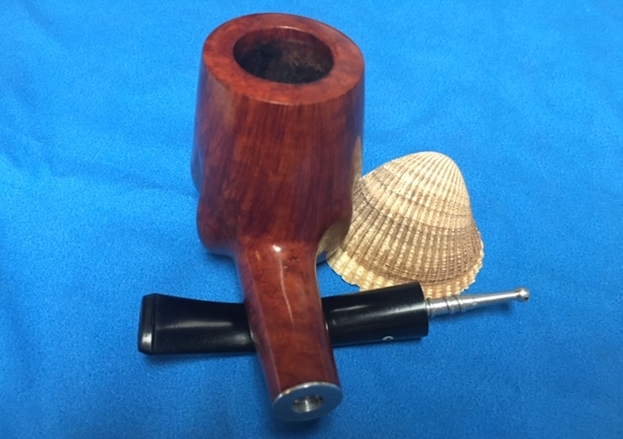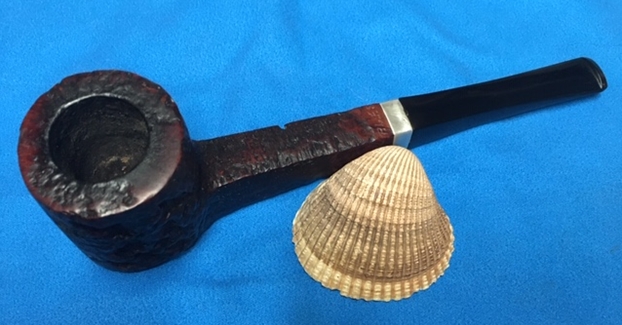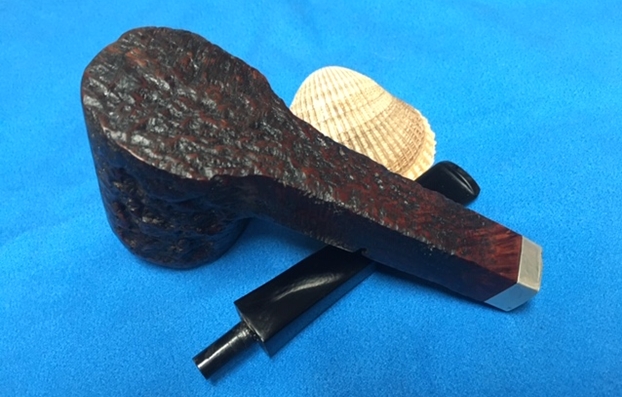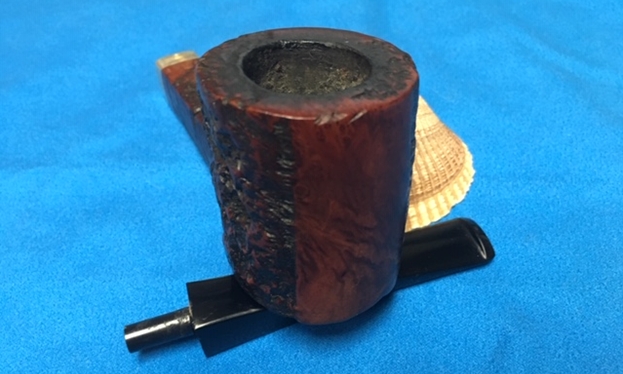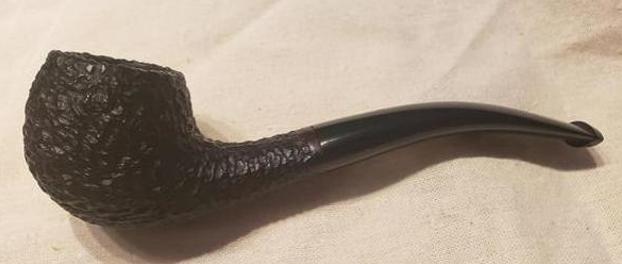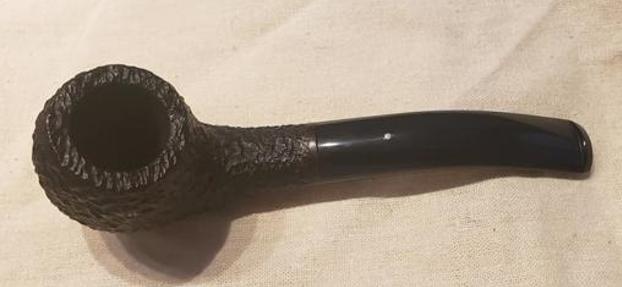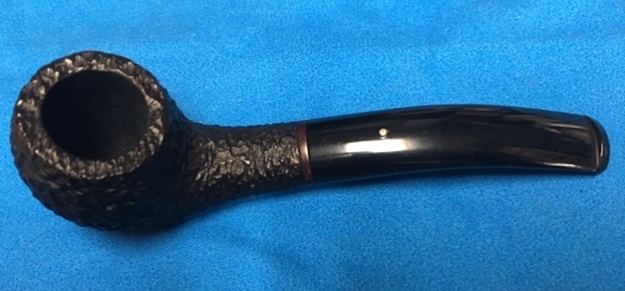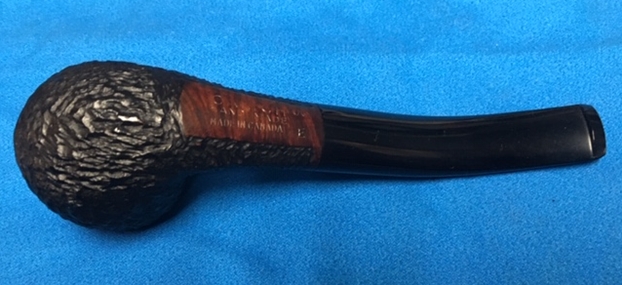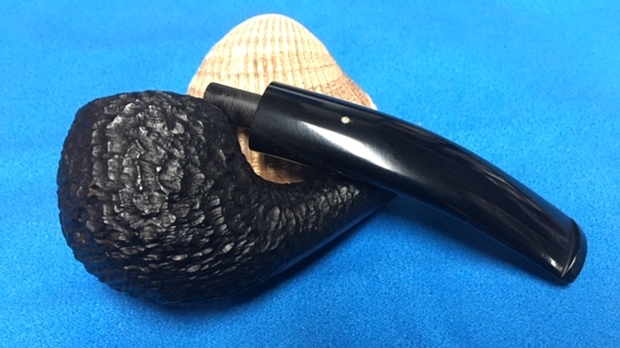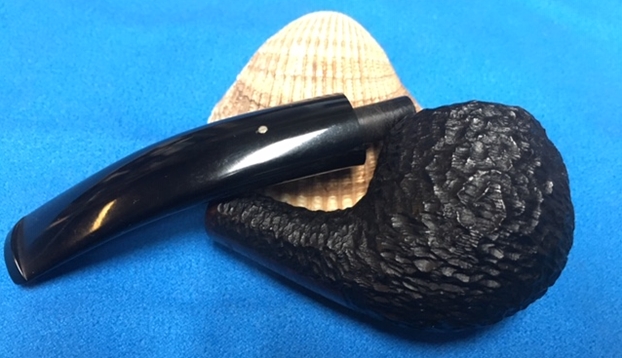
A Unique Malaga from Kathy’s Dad’s Pipes –a ¼ Bent Bulldog


Blog by Steve Laug

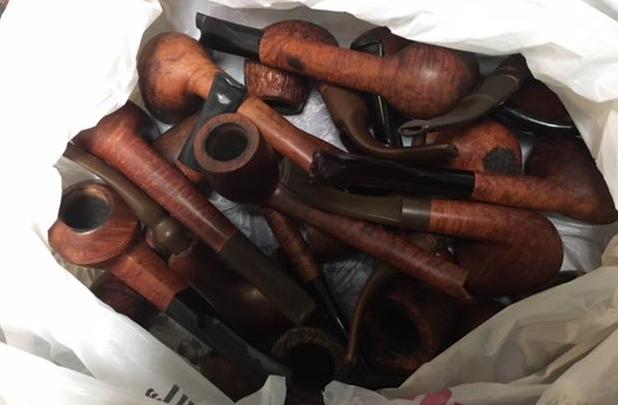
The next pipe on the work table is also from George Koch’s estate. It is another one of George’s Malaga pipes – this time a ¼ bent Bulldog with a golden acrylic stem. It is quite a stunning pipe and caught my eye when I was going through the bag of Malaga pipes that I still have to work on. The Bulldog was just one of the many Malaga pipes that came to my brother and me in several shipments of pipes from George’s daughter Kathy. When Jeff got each box the pipes were well wrapped and packed. Jeff unwrapped them and took the following photo to give an idea of the volume of the pipes that we purchased. The next Malaga came in mixed in a box of pipes much like the one below.In each of the previous blogs that I have written on the restoration of George’s pipes I have told his story. If you have followed the restorations you will have read the information and the background piece that Kathy did on her father. Here is a link to the last Malaga where that is included in full (https://rebornpipes.com/2019/01/26/back-to-kathys-dads-pipes-restoring-a-%c2%bc-bent-malaga-author/). You can also read the bio on her Dad, George Koch. It is an interesting read and one that shows just how far our pipe collecting passion can go when we find a brand of pipes that we enjoy. I am going to only include the portion on the Malagas at this point. If you wish to read the rest follow the link above.
Kathy writes…We lived in Livonia, and that’s where his love for Malaga pipes began. After a few years he returned to Allis Chalmers and we moved back to Springfield. I remember that when we went back to Michigan to visit friends, Dad had to go to the Malaga store and acquire a few new pipes. Many a year I wrote to Malaga and they picked out a pipe for me to purchase that I could give Dad for a Christmas or birthday present. He was always pleased. His favorites were the straight stemmed medium sized bowl pipes, but he liked them all. 

He had some other pipes, but the Malagas were his favorites. I remember him smoking them sitting in his easy chair after work, with feet up on the ledge by the fire burning in the fireplace.  Growing up it was my job to clean them and he liked the inner bowl and stem coated with Watkins vanilla, leaving a little of that liquid in the bowl to soak in when I put them back on the rack…I’m very happy they are being restored by you and your brother and hope they find homes who enjoy them as much as Dad did. Thank-you for your care and interest. — Kathy, the oldest daughter

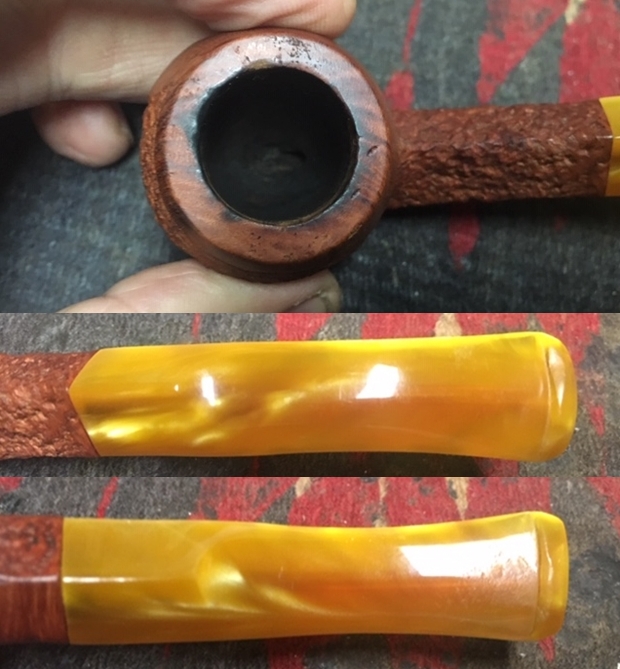
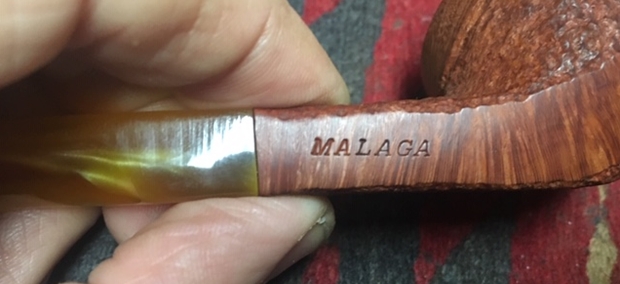
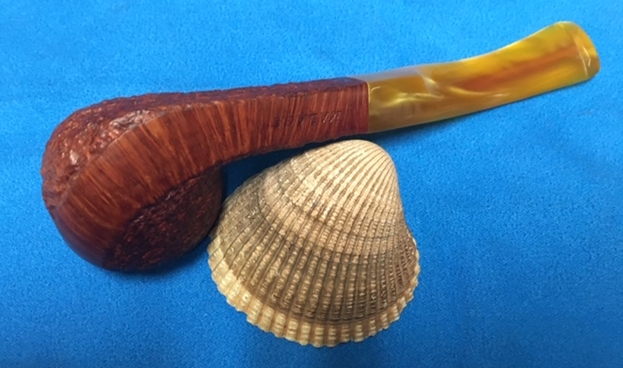
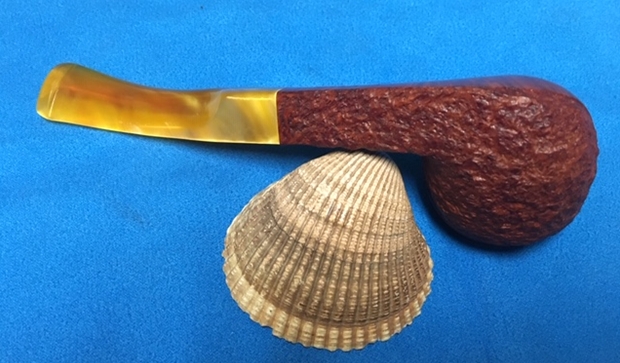
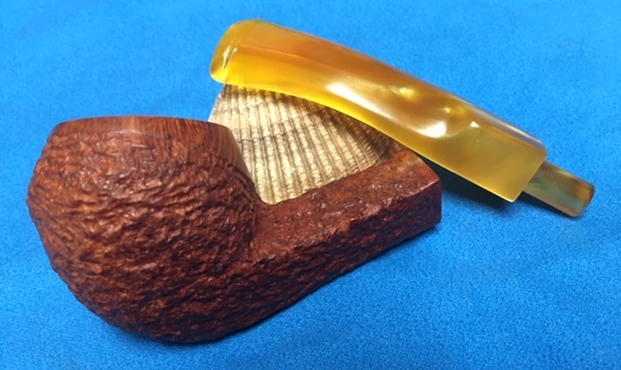
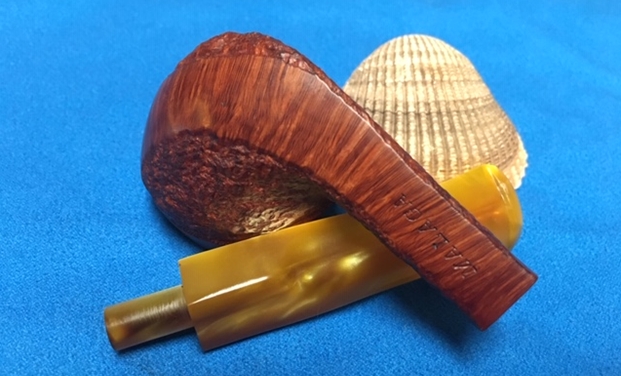
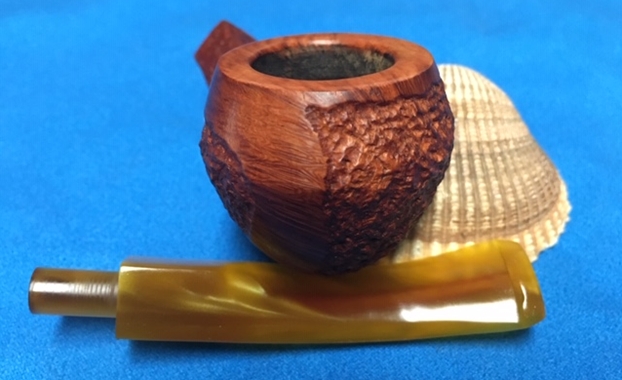
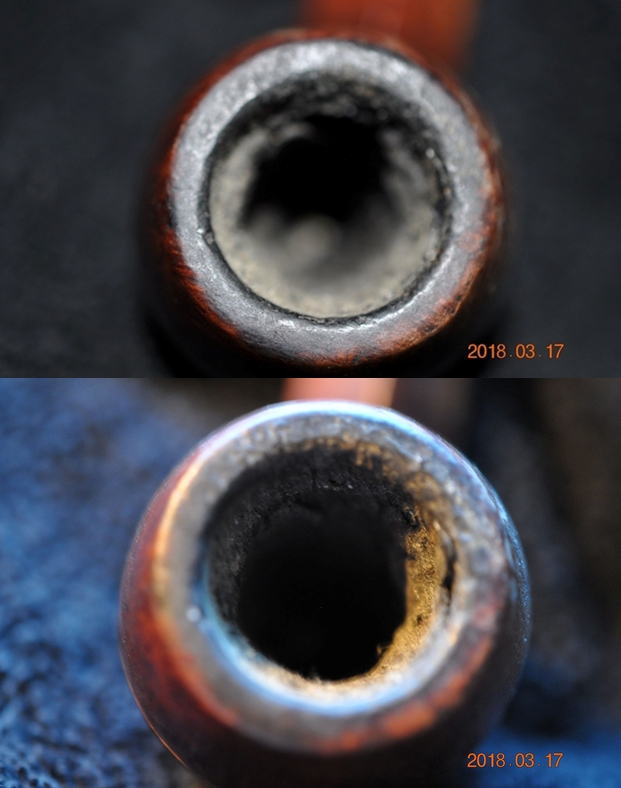
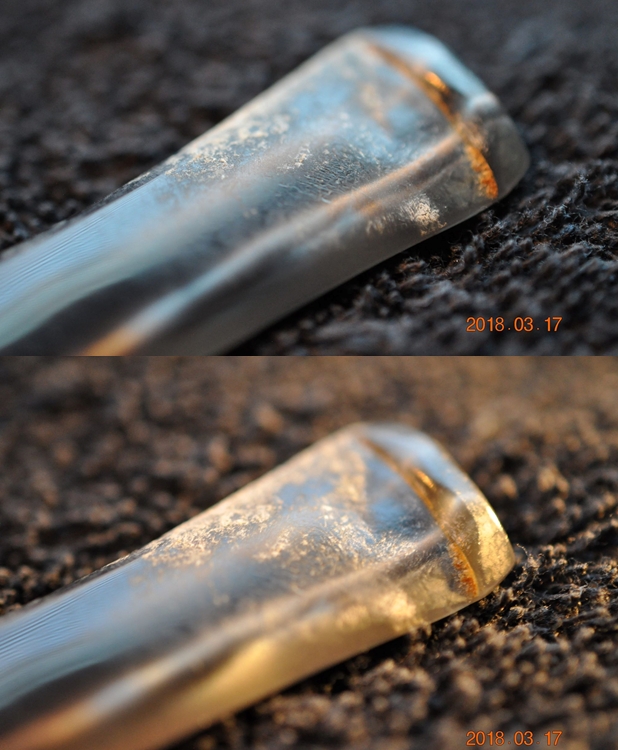
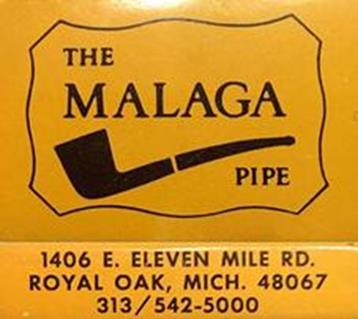
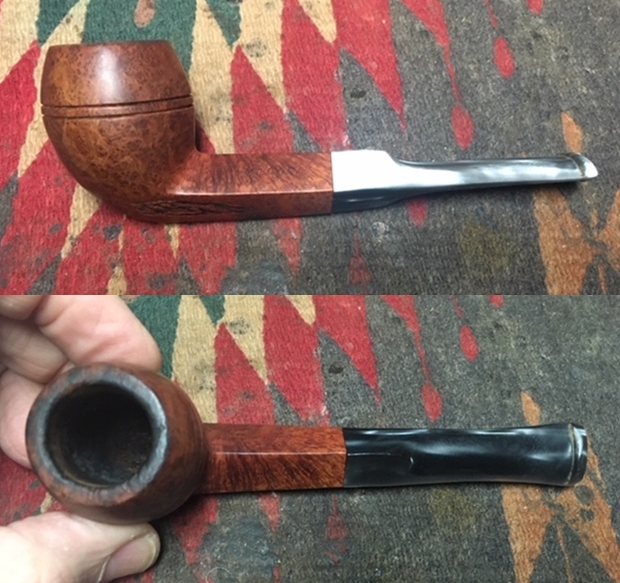
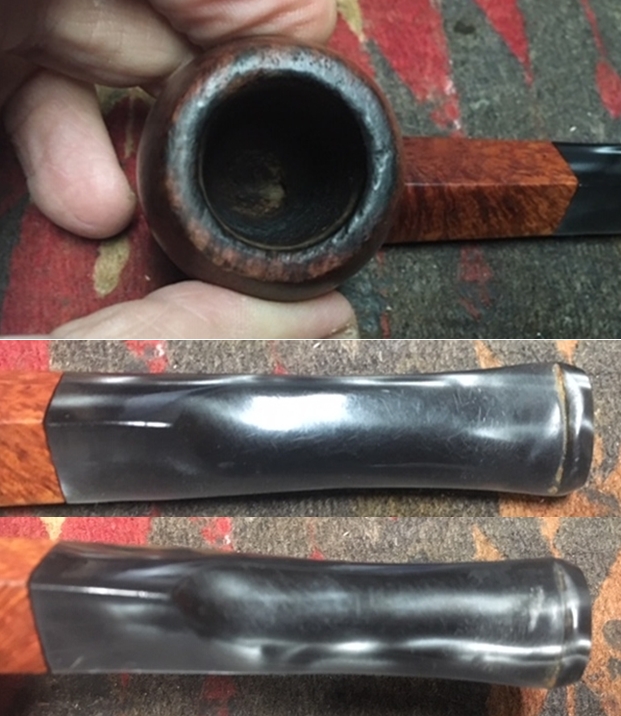
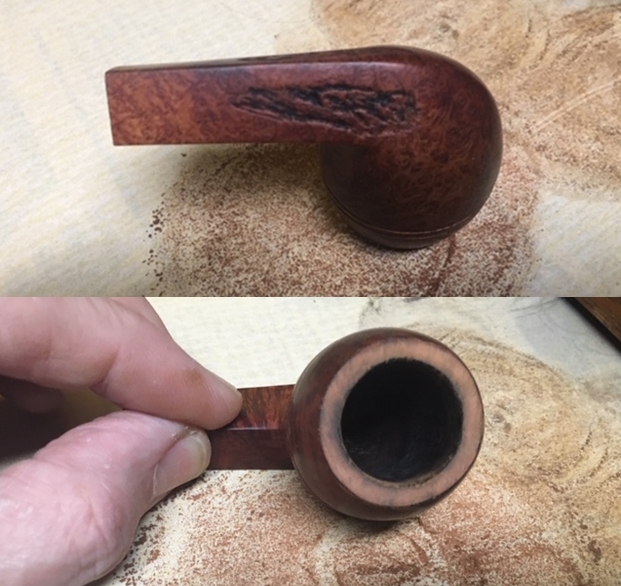
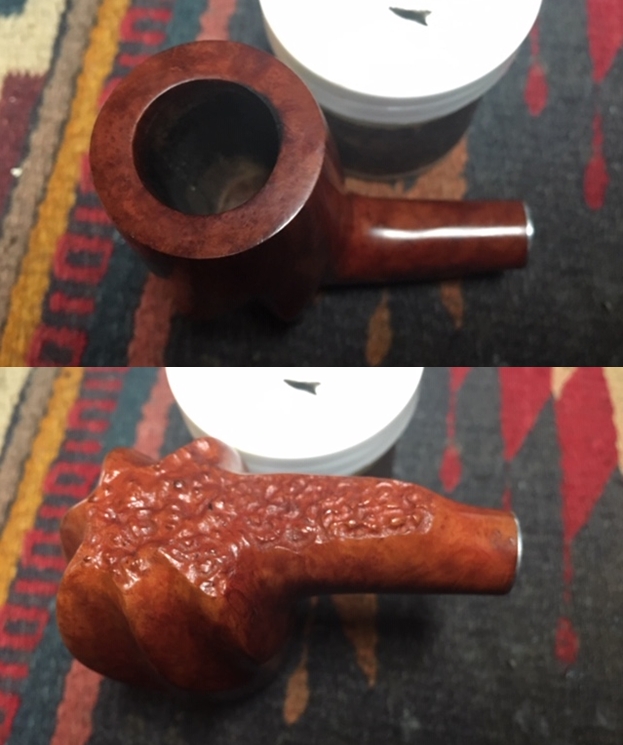
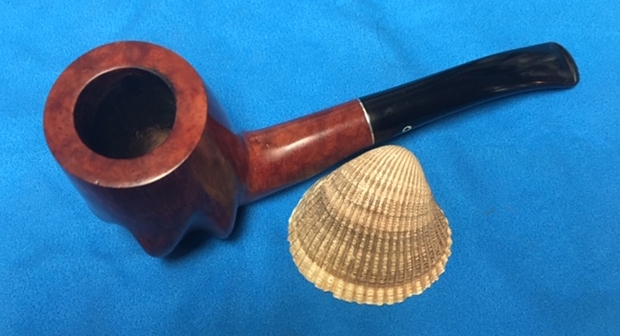
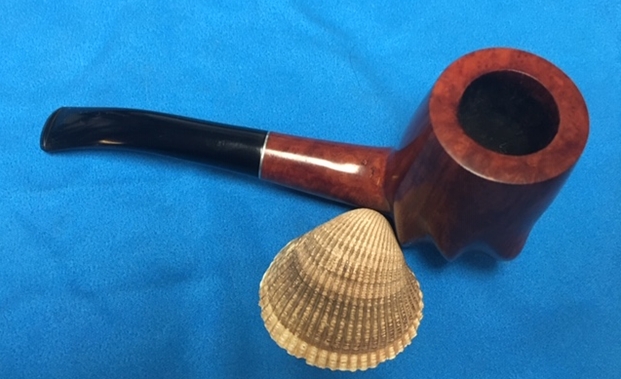
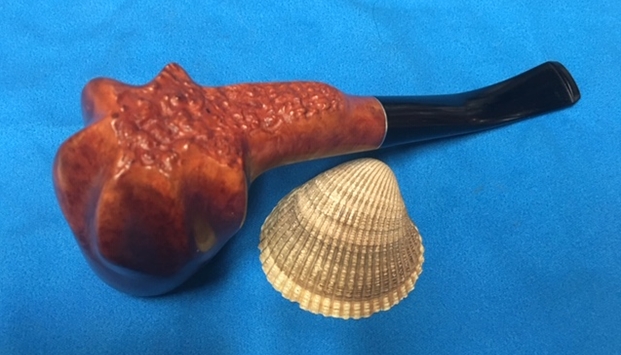
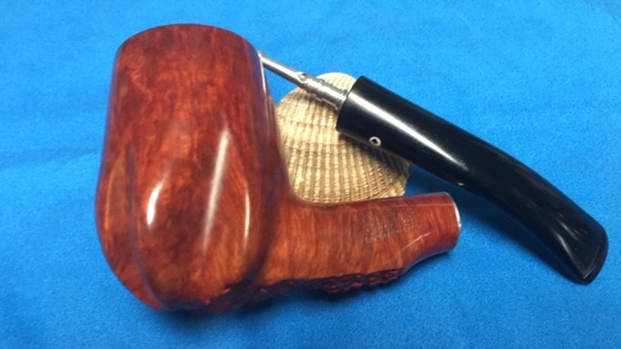
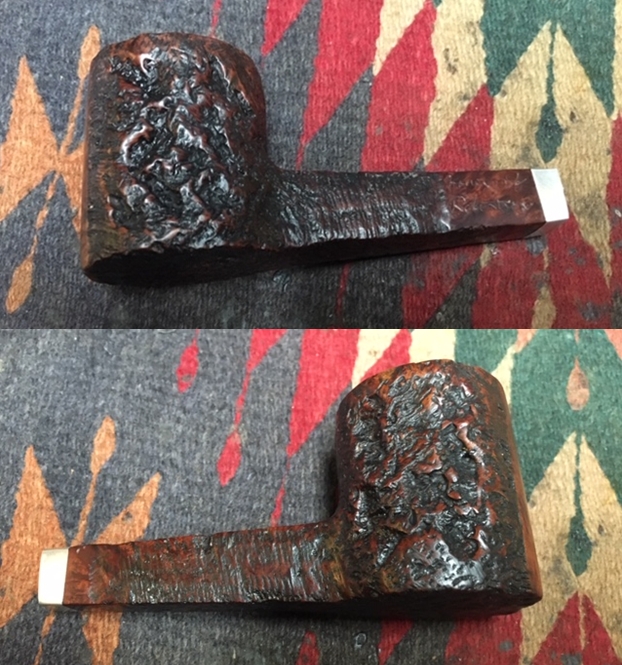
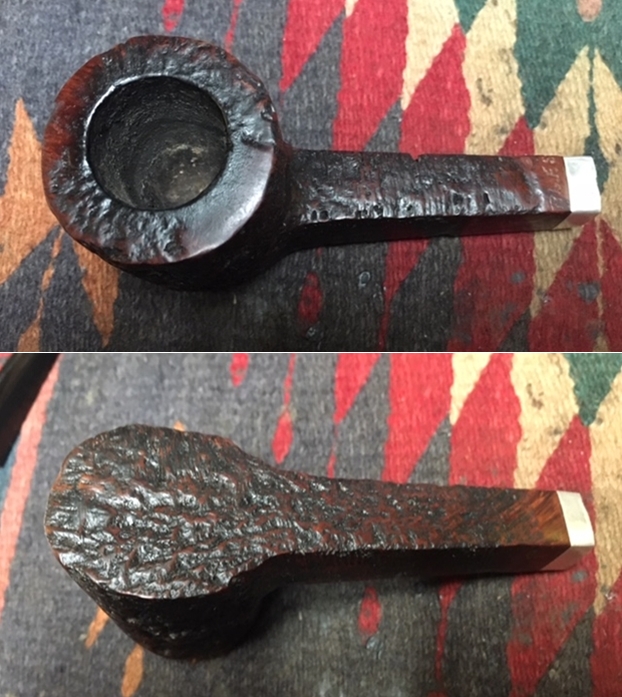
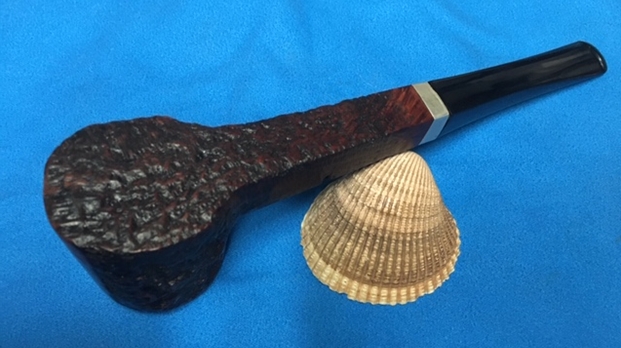
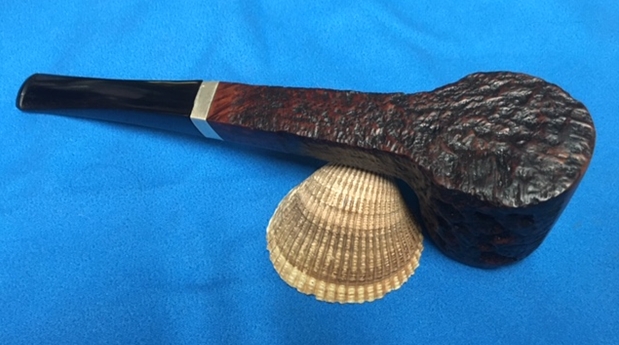
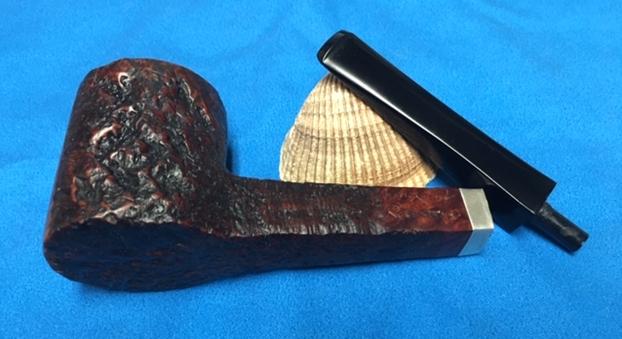
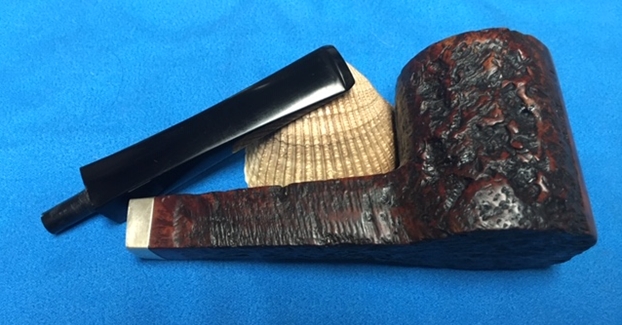
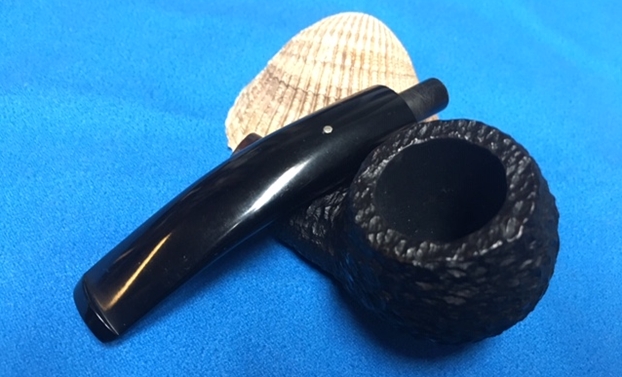
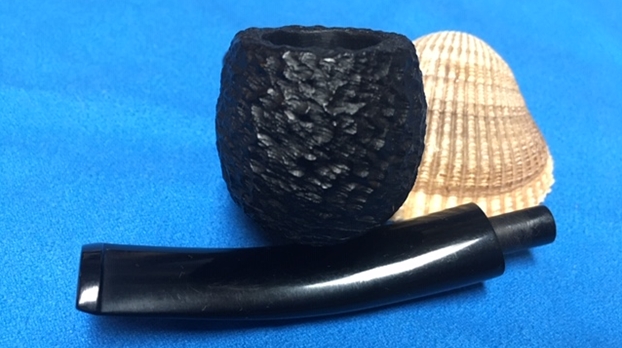
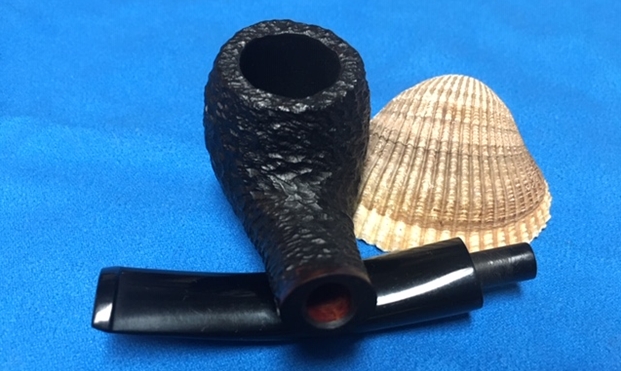
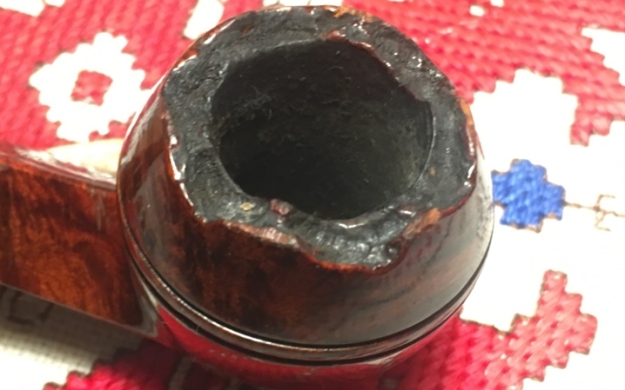
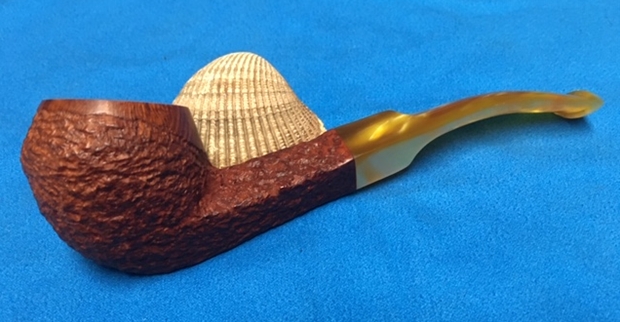
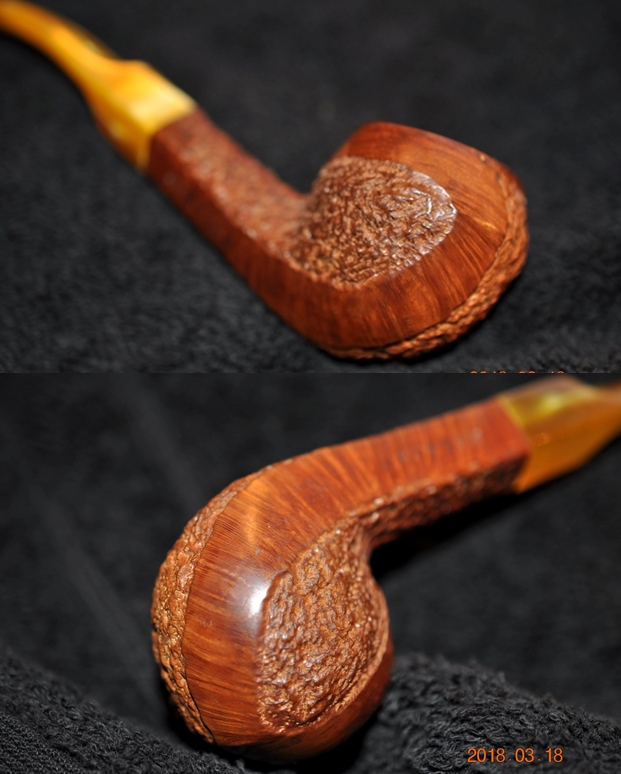
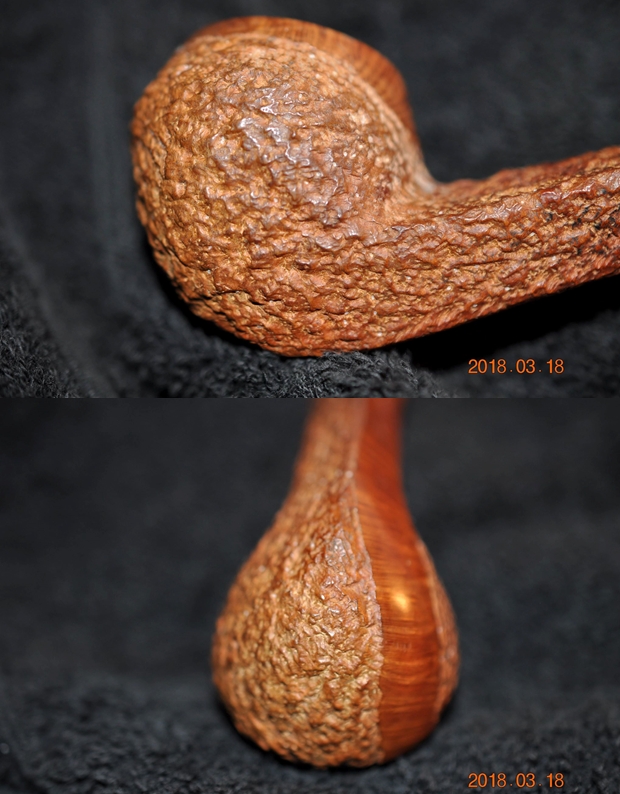
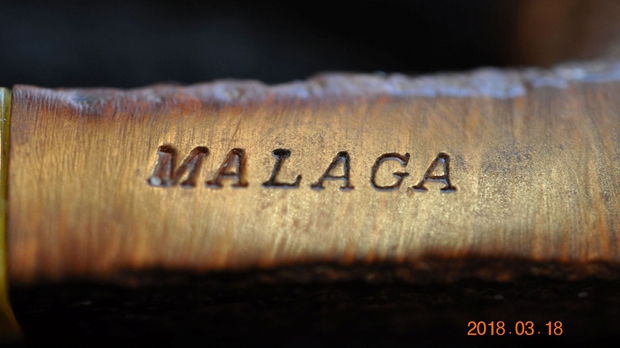
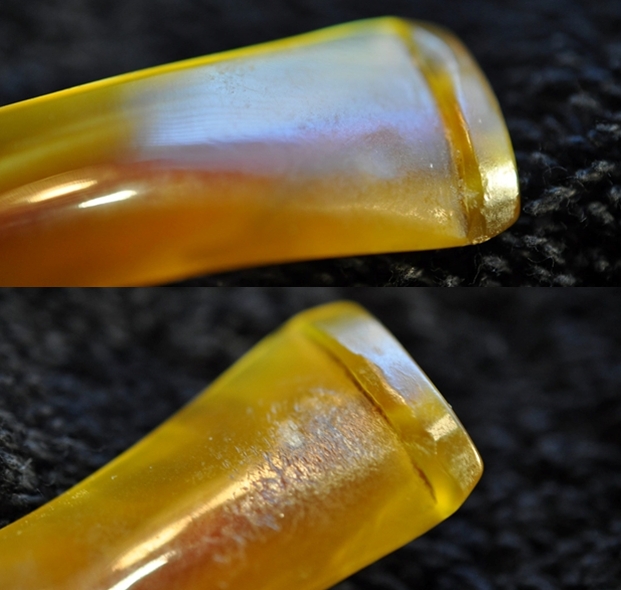
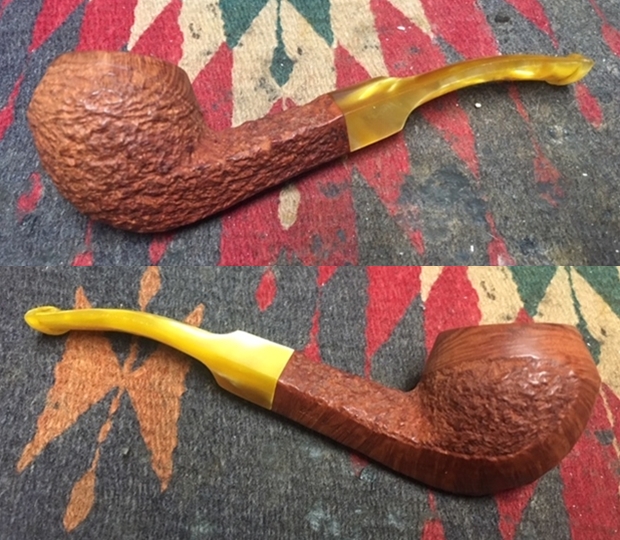
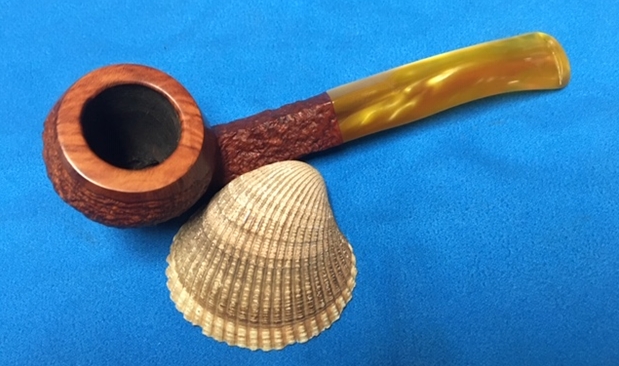
The Malaga ¼ Bent Bulldog with a variegated gold/yellow acrylic stem is next on the table. The carver combined rustication with a smooth stripe of cross grain up the right underside of the diamond shank and a portion of the right side of the bowl. There is a band of smooth briar around the shank end and the bowl top as well as a smooth rim top. There are no rings around the cap of the bowl. It is a well-shaped pipe that captures the cross grain in the stripe and adds the tactile feature of the rustication. The top of the bowl has some damage on the top and inner edge. The bowl had a very thick cake and cobwebs in the bowl. There was an overflow of lava onto the thin rim top. The stamping on the smooth underside of the diamond shank read MALAGA. The gold/yellow swirled acrylic stem had tooth dents and chatter on the top and the underside of the stem. Jeff took these photos before he started the cleanup work on the pipe. Jeff took two close up photos of the bowl and rim with different lighting to capture the condition of the pipe before he started his cleanup work. The rim top had some lava overflow and some darkening. There appeared to be some rim damage on the inner edge at the front of the bowl. You can see the wear on the rim top, the cake and cobwebs in the bowl. The pipe is dirty. He also took photos of the sides and bottom of the bowl and shank to show the beautiful cross grain on the stripe, around the rim and the rim itself. The photos also show the rugged rustication that gives the pipe a tactile sense as well.The finish is very dirty but this is another beautiful pipe. Jeff took a photo to capture the stamping on the top left side of the diamond shank. The photo shows stamping MALAGA. The stamping does not have the quotation marks that I have seen on some of the pipes.The next two photos show the stem surface. There are tooth marks and chatter on both sides near the button. There is also some wear on the sharp edge of the button.I am also including the link to a blog that I wrote that gives some of the history of the Malaga brand and the Malaga Pipe Shop in Royal Oak, Michigan in the USA. I have written an earlier blog to give a little history of the Malaga Brand and the pipemaker, George Khoubesser. Here is the link – https://rebornpipes.com/tag/malaga-pipes/.That blog also includes links to a catalogue and the history of the pipemaker George Khoubesser. Follow the link to get a feel for the brand and the pipemaker.

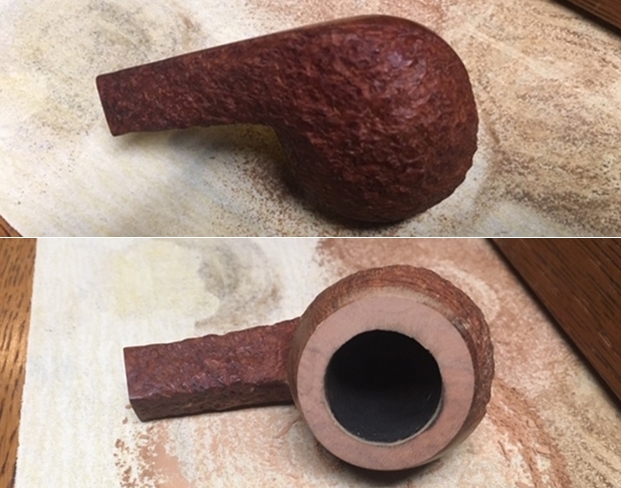
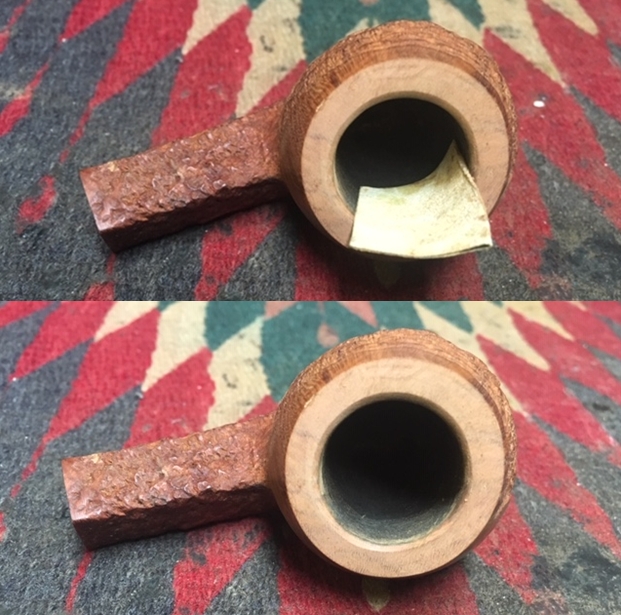
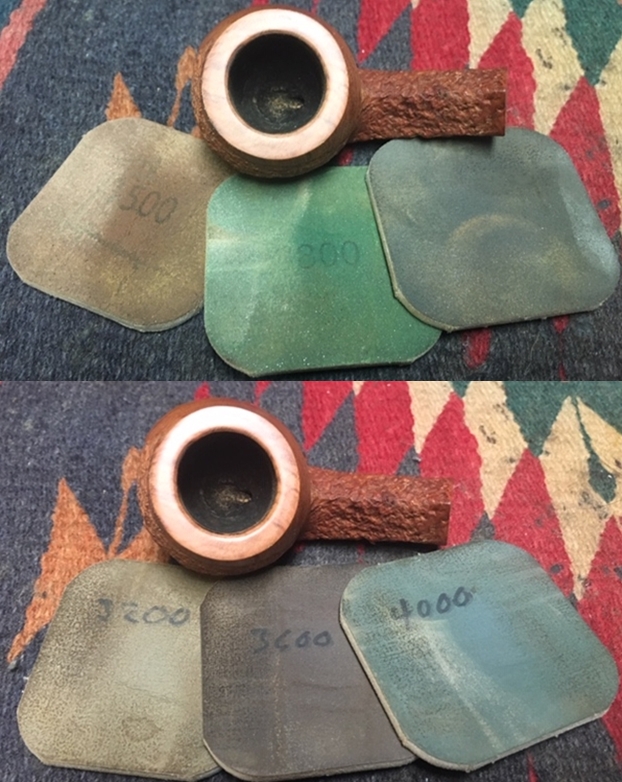
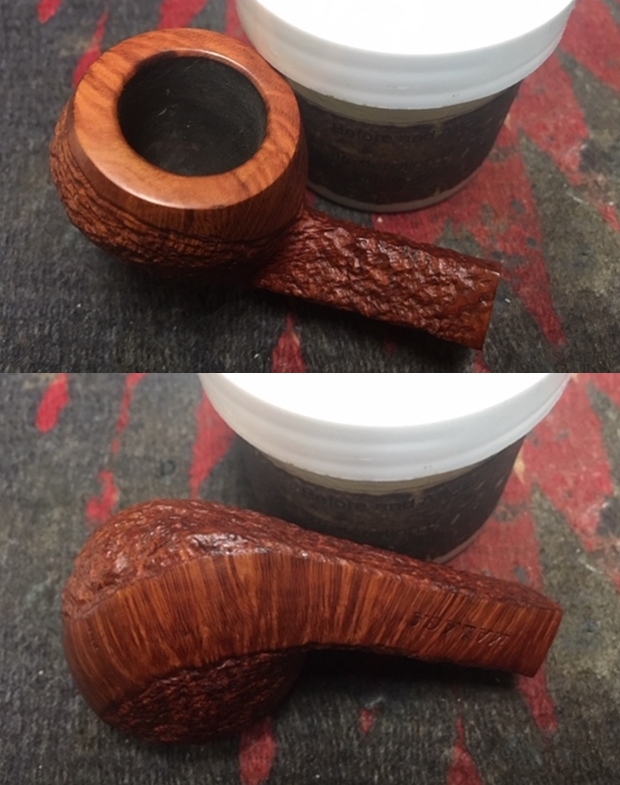
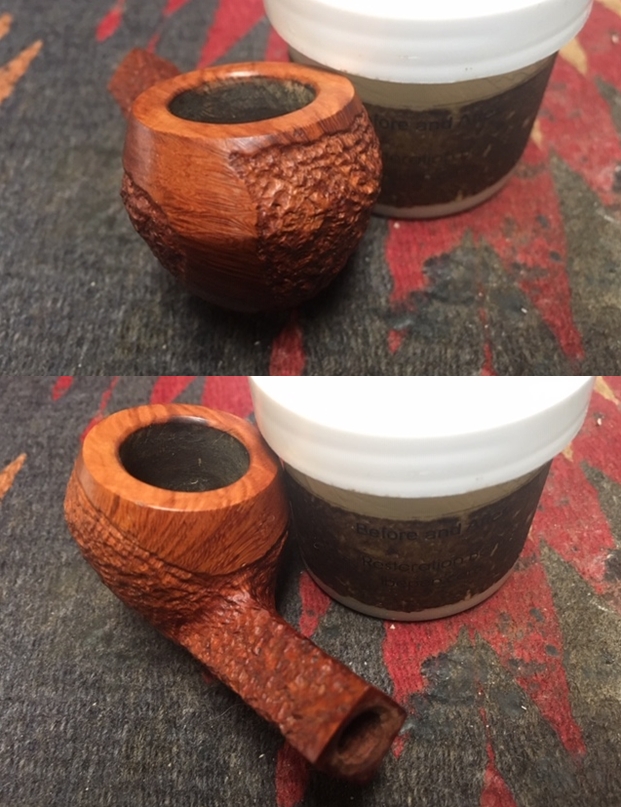
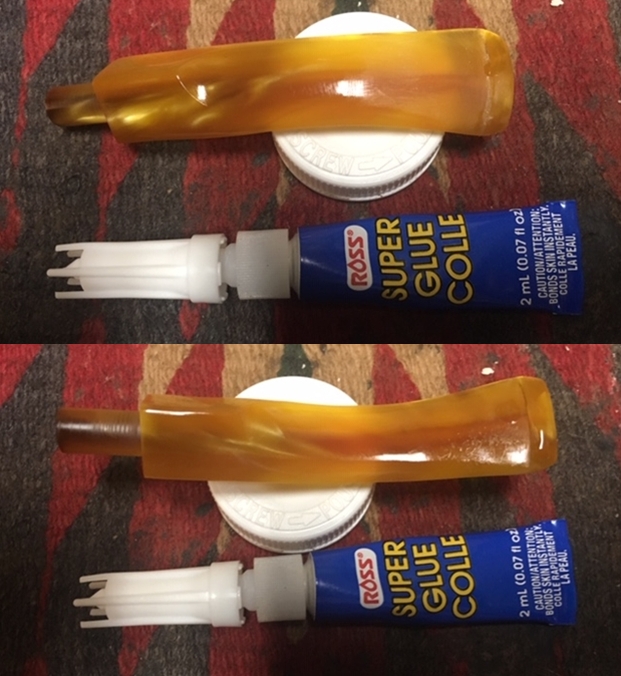
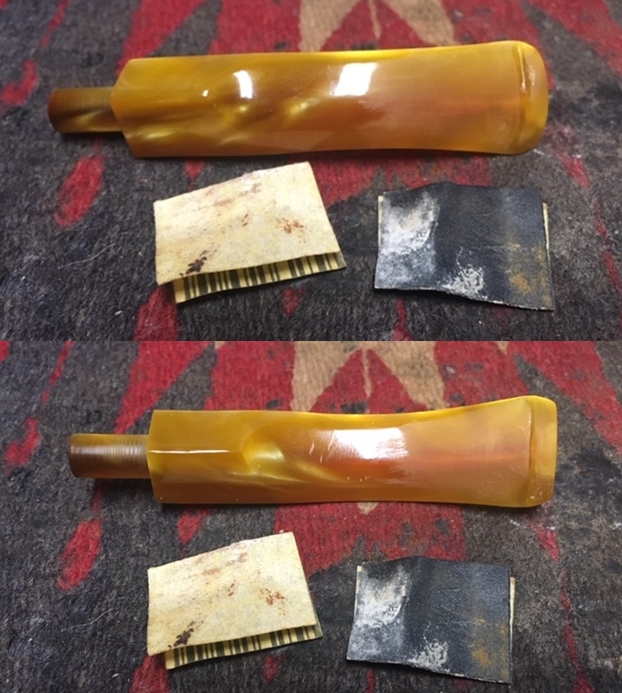
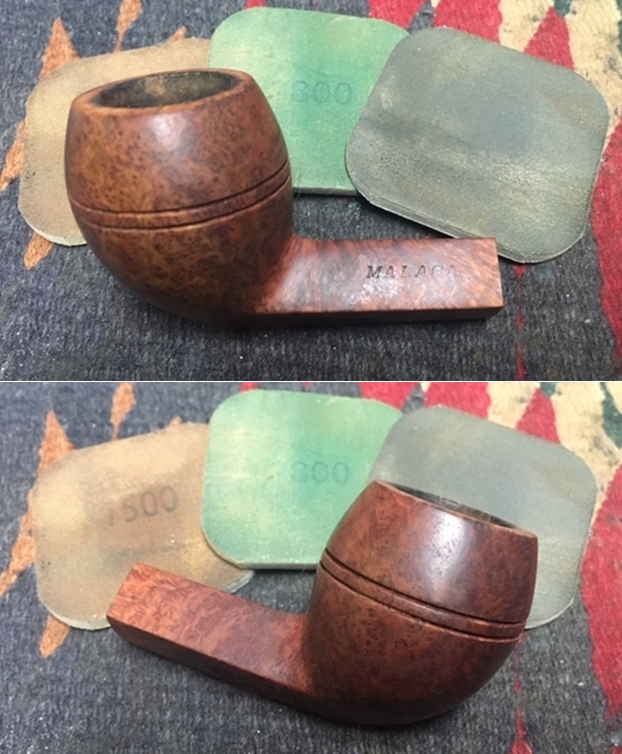
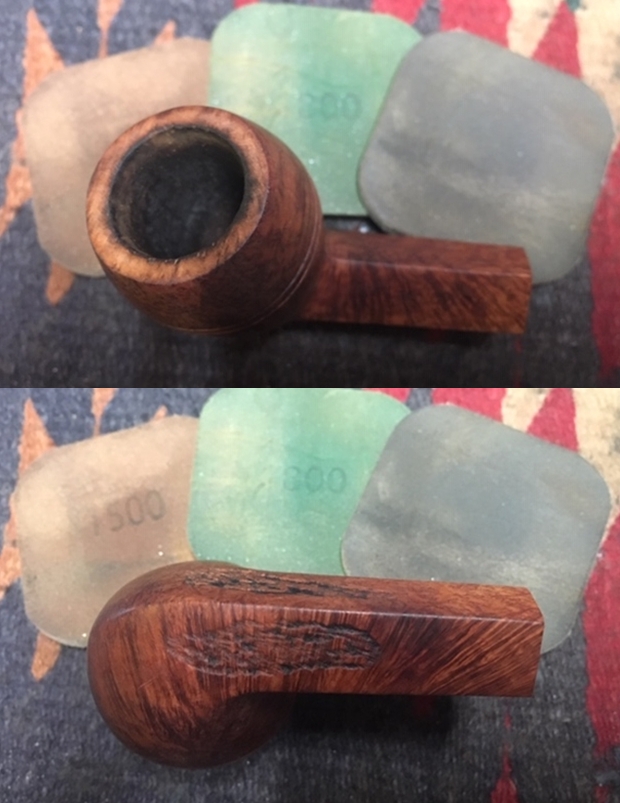
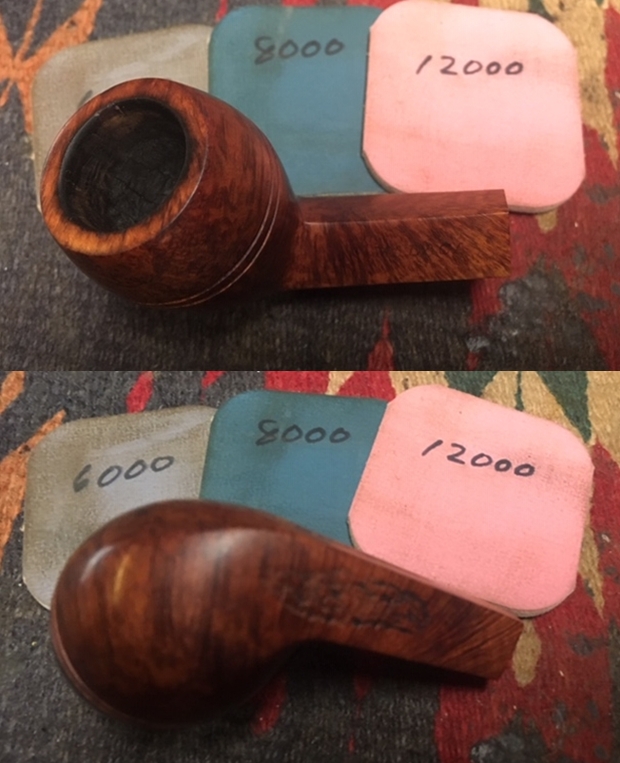
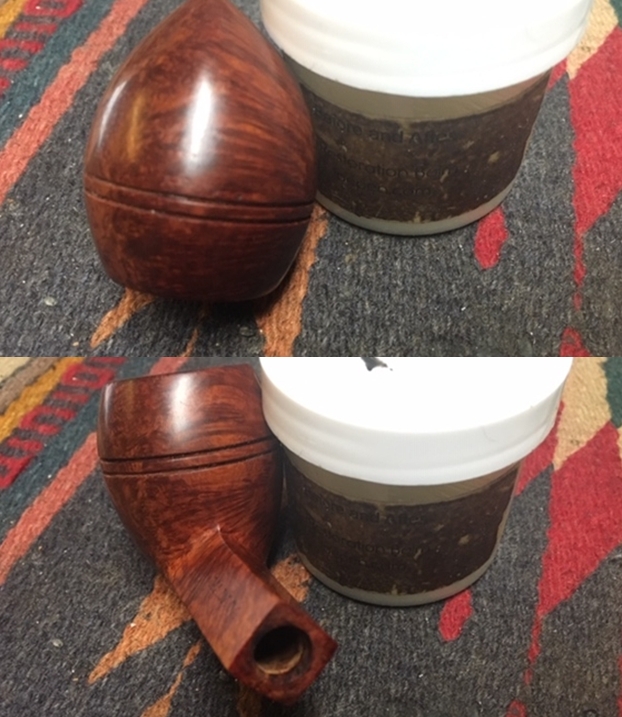
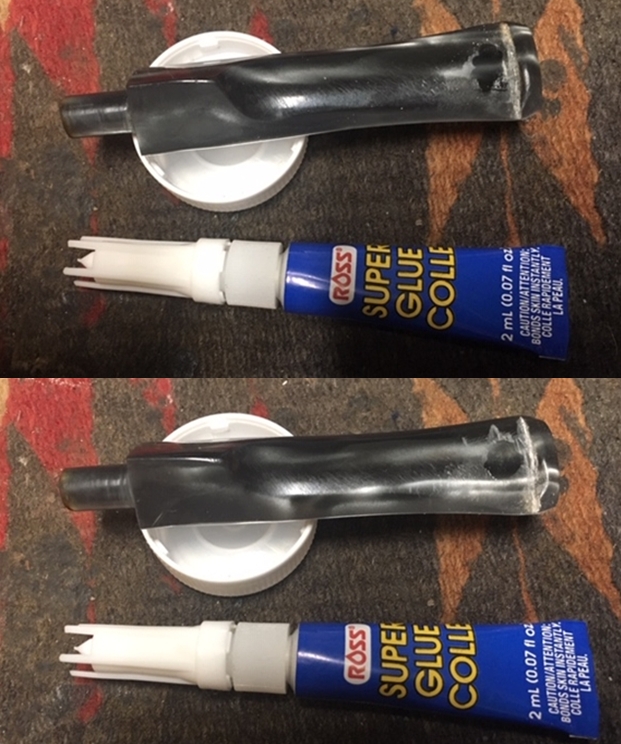
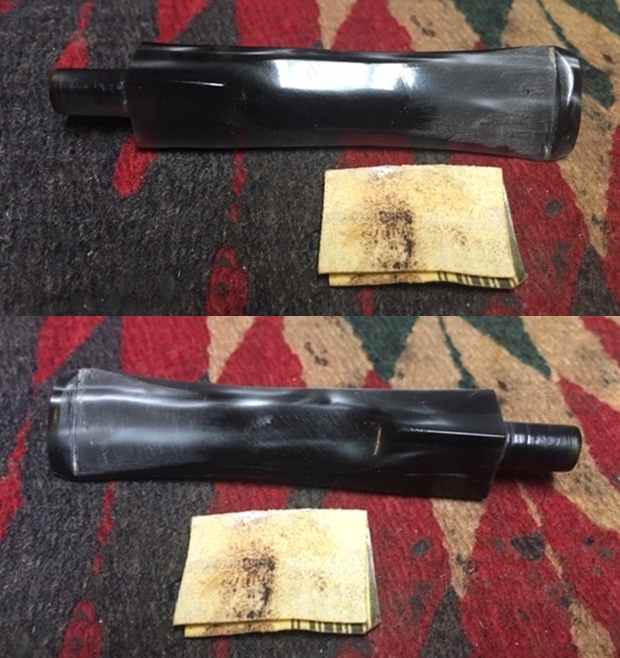
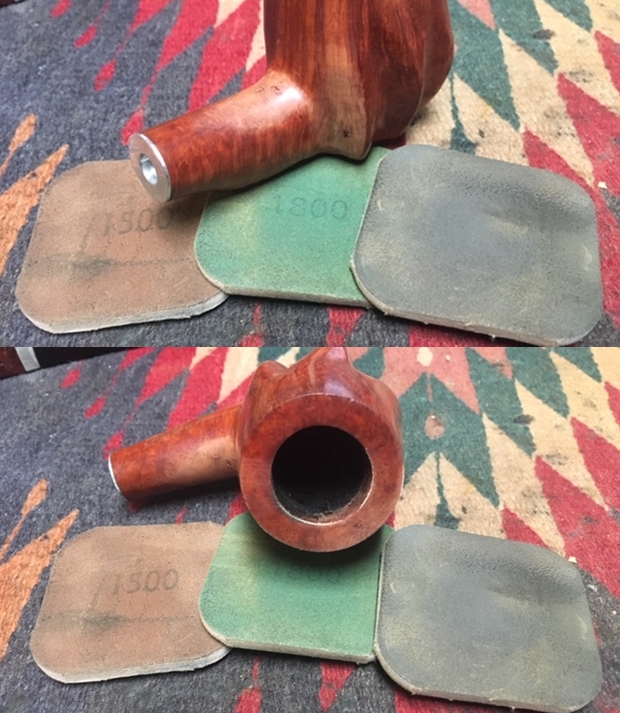
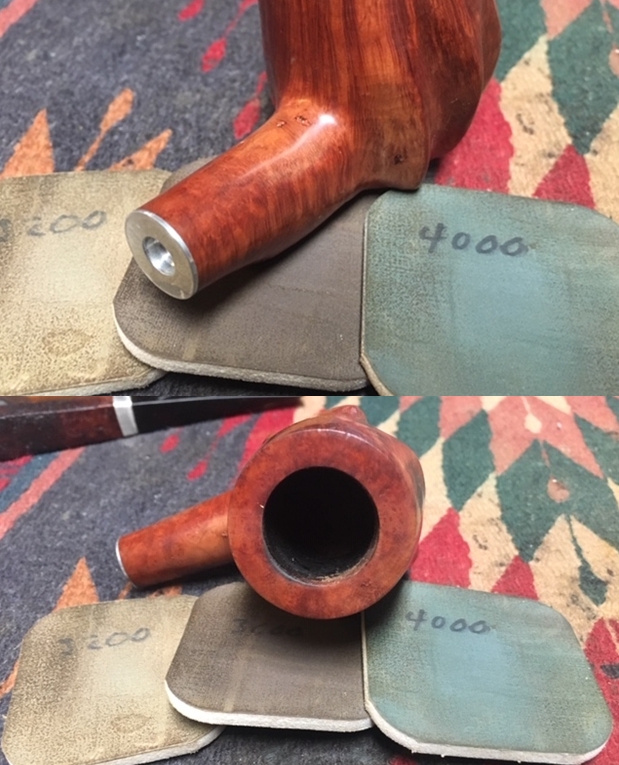
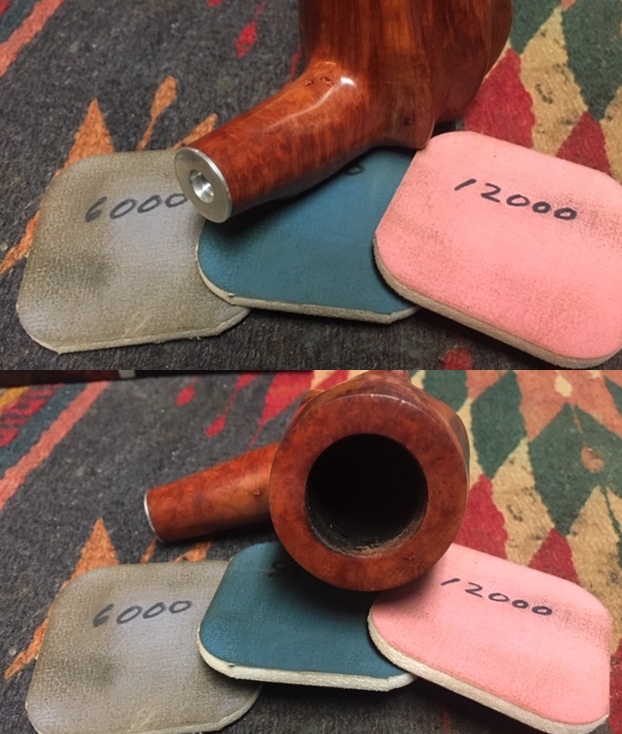
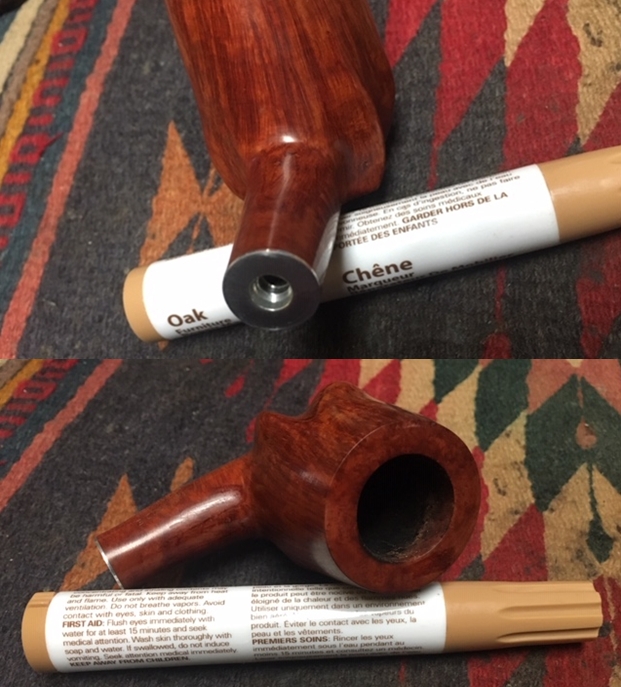
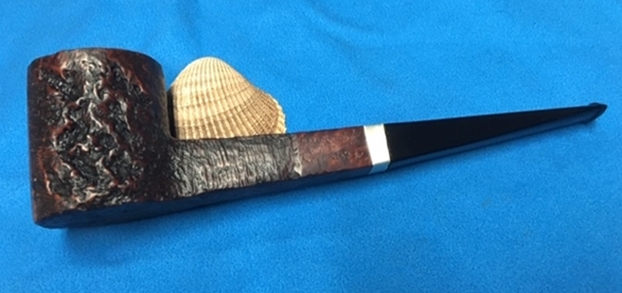
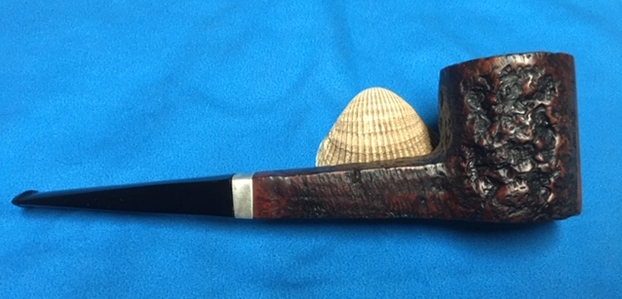
It has become a habitual pattern now for both Jeff and I when we work on pipes to follow the same procedure. I include it here so you have a sense of that pattern. Jeff reamed the bowl with a PipNet pipe reamer and followed up with a Savinelli Fitsall pipe knife to remove the cake. He scrubbed out the mortise and the airway in the shank and the stem with alcohol, cotton swabs and pipe cleaners. He scrubbed the exterior of the bowl, rim, shank and stem with a tooth brush and Murphy’s Oil Soap to remove the oils and tars on the rim and the grime on the finish of the bowl. He rinsed it under running water. He dried it off with a soft cloth. He was able to remove the lava build up on the rim top and you could see the damage to the flat surface of the rim and the inner edge on the right side and toward the front of the bowl. I took photos of the pipe to show its condition before I started my work on it. I took close up photos of the bowl and rim top as well as the stem. You can see the condition of the rim top and bowl in the first photo. Jeff was able to remove all of the tar and oils but you can now see the damaged areas on the surface clearly. There are damaged spots all around the top surface and on the right side and front of the inner edge of the bowl. The acrylic/Lucite stem had tooth chatter and some tooth marks on the top and underside of the stem near and on the button surface.I took a photo of the stamping on the shank to show how good the condition is. The stamp is deep and legible on the lower right side.I decided to address the damage to the rim top first. I topped the bowl with 220 grit sandpaper on a topping board to remove the damage to the flat surface of the rim top and also to try and minimize the damage to the inner edge of the rim.I worked over the inner edge of the rim with a folded piece of 220 grit sandpaper to smooth out the damage. I gave it a slight bevel to hide the burn damage on the front edge of the rim. The photos tell the story. The damage to the rim top is gone and the inner edge looks far better with the light bevel. The damage to the front edge is quite hidden.I polished the rim top and edge with micromesh sanding pads – wet sanding with 1500-2400 grit pads and dry sanding with 3200-12000 grit pads. I wiped the rim off after each sanding pad to remove the dust. The damage on the rim is pretty much invisible after polishing and the rim top really looked good. I worked some Before & After Restoration Balm into the rusticated and the smooth surface of the briar with my fingertips to clean, enliven and protect it. It took some time to really get it into the grooves and valleys of the rustication but I was able to work it in. I let the balm sit for a little wall and then buffed with a cotton cloth to raise the shine. The following photos show the bowl at this point in the restoration process. The reworked rim top looks really good and matches the colour of the rest of the pipe. I am very happy with the results. I set the bowl aside and worked on the stem. There were some tooth marks on the top and underside at the button that needed to be addressed. I also needed to do some work on the surface of the button on both sides. I filled the damaged areas in and build up the surface with clear super glue and set the stem aside until the repairs cured. I sanded both sides smooth with 220 grit sandpaper and 400 grit sandpaper to blend the tooth chatter and the repair into the surface of the stem. As I sanded and reshaped the button and stem surface the repaired areas and the tooth chatter disappeared.I polished the acrylic stem with micromesh sanding pads – wet sanding with 1500-2400 grit sanding pads and dry sanding it with 3200-12000 grit sanding pads. I wiped it down after each sanding pad with a damp cloth. I polished it with Before & After Pipe Stem Polish and wiped it down with a last coat of Obsidian Oil. This is one of the more unique Malaga pipes that I have worked from George’s collection. The combination of rustication and smooth is really nicely done and the shape flows with the grain. I polished stem and the bowl with Blue Diamond polish on the buffing wheel. I gave the bowl multiple coats of Conservator’s Wax and the stem multiple coats of carnauba wax. I buffed the pipe with a clean buffing pad to raise the shine. I hand buffed it with a microfiber cloth to deepen the shine. The pipe polished up pretty nicely. The cross grain and the rustication took on life with the buffing. The rich oil cured colour works well with the polished variegated gold/yellow acrylic stem. The finished pipe has a rich look that is quite catching. Have a look at it with the photos below. The shape, finish and flow of the pipe and stem are very well done. The dimensions are Length: 5 1/2 inches, Height: 1 5/8 inches, Outside diameter of the bowl: 1 3/8 inches, Chamber diameter: 3/4 of an inch. I will be putting this newly finished Malaga pipe on the rebornpipes store shortly if you are interested in adding it to your collection and carrying on the trust. Thanks for walking through the restoration with me as I worked over another one of Kathy’s Dad’s Pipes.

Restoring a Jobey Florentine Canadian that weary and worn


Blog by Steve Laug

Along with the recent Kaywoodie Original (https://rebornpipes.com/2019/01/25/new-life-for-a-kaywoodie-original-imported-briar-freehand-stack/) and the Royal Danish 984R Canadian (https://rebornpipes.com/2019/01/26/an-easy-restore-a-royal-danish-984r-canadian/) that I worked on, my brother Jeff sent me an interesting Jobey Canadian. The pipe has a Sea Rock style finish. The underside of the shank is stamped Jobey over Florentine in script followed by EXTRA and finally by PATENT PENDING. That helps to date this to the time after the patent was filed in 1970. Like the other pipes that came from this Idaho auction the pipe was in good condition – dirty but really not too bad. The finish was very dirty with grime worked into the grooves and valleys of the rustication. The bowl had a thick cake that flowed over the rim top leaving a thick coat of lava. It was hard to know what the inner and outer edges of the bowl looked like until the pipe was reamed and cleaned. The stem looked good but had deep tooth marks on both sides of the stem. Jeff took these pictures of the pipe to show its condition before he started his cleanup work. Jeff took a close up of the bowl and rim. The bowl thick cake and the photos show the lava overflow onto the rim top. It was thick and had filled in the crevices and valleys of the rustication.On the underside of the shank the stamping was very clear and readable. It is stamped in a smooth panel that runs from the heel of the bowl to end of the shank. It is evidently an early Jobey that is stamped Patent Pending. I am sure that the Patent refers to the Jobey Link in the shank.He took photos of the stem to show the oxidation on the stem. The first photo shows the faint/light Royal Danish Crown on the top side of the taper near the shank. The second and third photo show the oxidation and the otherwise pristine stem surface.On the topside of the tapered stem there is a brass Jobey insert that is pressed into the vulcanite. It was readable but dirty.Jeff followed his usual regimen of cleaning an estate pipe. He had reamed the bowl with a PipNet pipe reamer and followed up with a Savinelli Fitsall pipe knife to remove the cake. He scrubbed out the mortise and the airway in the shank and the stem with alcohol, cotton swabs and pipe cleaners. He scrubbed the exterior of the bowl, rim, shank and stem with a tooth brush and Murphy’s Oil Soap to remove the oils and tars on the bowl, rim and shank. He rinsed it under running water and dried it off with a soft cloth. It looked a lot better but the rim was still dirty. The stem had deep tooth marks on both sides from the button forward. I took photos of the pipe to show its condition before I started my work on it. I took close up photos of the rim top that shows the clean bowl and the remaining hard coat of lava in the grooves at the front right side of the rim top. The stem was clean and Jeff had used Before & After Deoxidizer to soak and remove much of the oxidation. He rinsed out the inside of the stem and rinsed off the exterior as well. It is hard to see the rippling tooth marks in the photos but they are on both sides of the stem.I removed the stem from the shank to show the Jobey Link that screwed into the shank and the smooth end that the stem sat on.I used a brass bristle wire brush to clean up the rim top of the bowl and loosen the remaining debris and dust in the grooves in the rustication toward the front of the bowl.I rubbed the bowl down with Before & After Restoration Balm into the coral rusticated finish of the bowl and the shank to deep clean the briar. I worked it into the smooth portions the sides and the bottom of the bowl. The product works to clean, enliven and protect the briar. I hand rubbed it with my fingers and wiped it off with a soft cloth. I buffed the bowl with a horsehair shoe brush to polish it. The briar really began to have a rich shine. I took some photos of the bowl at this point to mark the progress in the restoration. I sanded the stem down with a folded piece of 220 grit sandpaper to smooth out the tooth marks and waves in the surface of both sides. I used a piece of 400 grit wet dry sandpaper to polish out the scratches in the stem. I polished the stem with micromesh sanding pads – wet sanding it with 1500-2400 grit pads and dry sanding it with 3200-12000 grit pads. I wiped the stem down after each pad with a damp cloth to remove the sanding dust. I used the Before & After Pipe Polish to remove the small minute scratches left in the vulcanite. I finished by wiping the stem down with a final coat of Obsidian Oil and set it aside to dry.   I polished the stem with Blue Diamond to polish out the remaining small scratches and gave it several coats of carnauba. I polished the bowl and shank with Conservator’s Wax and buffed it with a shoe brush. I buffed the pipe with a clean buffing pad to raise the shine. I hand buffed it with a microfiber cloth to deepen the shine. The pipe polished up pretty nicely. The finished pipe is shown in the photos below. The dimensions are Length: 6 3/4 inches, Height: 1 3/4 inches, Outside diameter of the bowl: 1 1/4 inches, Chamber diameter: ¾ of an inch. I will be adding it to the rebornpipes store shortly. If you are interested in adding it to your collection email me at slaug@uniserve.com or send me a message on Facebook. Thanks for walking through the restoration with me as I worked over this rusticated Patent Pending Jobey made Canadian.

An Easy Restore – A Royal Danish 984R Canadian


Blog by Steve Laug

Along with the recent Kaywoodie Original (https://rebornpipes.com/2019/01/25/new-life-for-a-kaywoodie-original-imported-briar-freehand-stack/) that I worked on, my brother Jeff sent me a nice looking multi finished Canadian. It is a classic Danish version of the Canadian shape with an oval shank and a long tapered stem. The pipe is sandblasted with two smooth patches on the sides of the bowl. It is a nice looking pipe that looks a lot like the variegated finished pipes that Stanwell issued in the 60s and 70s. The underside of the shank is stamped Royal Danish in script followed by Made in Denmark and finally the shape number 984R. Like the other pipes that came from this Idaho auction the pipe was in pretty decent condition – dirty but really not too bad. The finish was dusty and dirty with grime worked into the sandblast finish. The bowl had a moderate cake in it but it did not go all the way to the bottom of the bowl – in fact the pipe was not even broken in. The rim top had a thick coat of lava and was dirty. The inner and outer edges of the bowl were in great condition. The stem was oxidized but in decent condition. Jeff took these pictures of the pipe to show its condition before he started his cleanup work.Jeff took a close up of the bowl and rim. The bowl had a moderate to medium cake but the lava overflow onto the rim top was quite thick. He also took a close up photo of the side and underside of the bowl and shank.On the underside of the shank the stamping was very clear and readable. It is stamped in a smooth panel that runs from the heel of the bowl to end of the shank. The Royal Danish Brand is a Stanwell second line. It is no wonder that the pipe looks very similar to a Stanwell. The shape number is also a Stanwell shape number.He took photos of the stem to show the oxidation on the stem. The first photo shows the faint/light Royal Danish Crown on the top side of the taper near the shank. The second and third photo show the oxidation and the otherwise pristine stem surface. Jeff had reamed the bowl with a PipNet pipe reamer and followed up with a Savinelli Fitsall pipe knife to remove the cake. He scrubbed out the mortise and the airway in the shank and the stem with alcohol, cotton swabs and pipe cleaners. He scrubbed the exterior of the bowl, rim, shank and stem with a tooth brush and Murphy’s Oil Soap to remove the oils and tars on the bowl, rim and shank. He rinsed it under running water. He dried it off with a soft cloth. He was able to remove the majority of darkening on the rim top without harming the finish underneath it. Without the grime the finish looked good. Other than the light oxidation, the stem was actually in pretty good condition and would only need to be polished. I took photos of the pipe to show its condition before I started my work on it. I took close up photos of the rim top that shows the clean bowl and the remaining lava in the grooves of the sandblast rim top. The stem was clean and Jeff had used Before & After Deoxidizer to soak and remove much of the oxidation. He rinsed out the inside of the stem and rinsed off the exterior as well. The photos of the stem show how good the stem actually looked after this treatment. I used a brass bristle wire brush to clean up the rim top of the bowl and loosen the remaining debris and dust in the grooves of the blast.I rubbed the bowl down with Before & After Restoration Balm into the sandblast finish of the bowl and the shank to deep clean the briar. I worked it into the smooth portions the sides and the bottom of the bowl. The product works to clean, enliven and protect the briar. I hand rubbed it with my fingers and wiped it off with a soft cloth. I buffed the bowl with a horsehair shoe brush to polish it. The briar really began to have a rich shine. I took some photos of the bowl at this point to mark the progress in the restoration. The stem was in really good condition so I skipped sanding it with 220 grit sandpaper. I polished the stem with micromesh sanding pads – wet sanding it with 1500-2400 grit pads and dry sanding it with 3200-12000 grit pads. I wiped the stem down after each pad with a damp cloth to remove the sanding dust. I used the Before & After Pipe Polish to remove the small minute scratches left in the vulcanite. I finished by wiping the stem down with a final coat of Obsidian Oil and set it aside to dry. I polished the stem with Blue Diamond to polish out the remaining small scratches and gave it several coats of carnauba. I polished the bowl and shank with Conservator’s Wax and buffed it with a shoe brush. I buffed the pipe with a clean buffing pad to raise the shine. I hand buffed it with a microfiber cloth to deepen the shine. The pipe polished up pretty nicely. The finished pipe is shown in the photos below. The dimensions are Length: 6 1/2 inches, Height: 2 inches, Outside diameter of the bowl: 1 3/8 inches, Chamber diameter: ¾ of an inch. I will be adding it to the rebornpipes store shortly. If you are interested in adding it to your collection email me at slaug@uniserve.com or send me a message on Facebook. Thanks for walking through the restoration with me as I worked over this beautiful Stanwell made Canadian.

Back to Kathy’s Dad’s Pipes – A ¼ Bent Malaga Author


Blog by Steve Laug

The next pipe on the work table is also from George Koch’s estate. It is another one of George’s Malaga pipes – a ¼ bent Author with an acrylic stem. The pipe was one of many that came to my brother and me in several shipments of pipes from George’s daughter Kathy. When Jeff got each box the pipes were well wrapped and packed. Jeff unwrapped them and took the following photo to give an idea of the volume of the pipes that we purchased. The next Malaga came in mixed in a box of pipes much like the one below.In each of the previous blogs that I have written on the restoration of George’s pipes I have told his story. It has been awhile since I worked on one of his pipes so I want to remind you of his story. To me it is important to keep the story attached to the pipes that came from his collection. Each pipe I work on I remind myself of the man and in the work give a remembrance to the pipeman who owned these pipes. Having held a large number of his pipes in my hand and having a pretty good feel for the shapes, colour and stems that he liked, I can almost imagine George picking out each pipe in his collection at the Malaga shop in Michigan. I am including Kathy’s brief bio of her father and a photo of her Dad enjoying his “Malagas”. Here is George’s bio written by his daughter.

Dad was born in 1926 and lived almost all his life in Springfield, Illinois. He was the youngest son of German immigrants and started grade school knowing no English. His father was a coal miner who died when Dad was about seven and his sixteen year old brother quit school to go to work to support the family. There was not much money, but that doesn’t ruin a good childhood, and dad had a good one, working many odd jobs, as a newspaper carrier, at a dairy, and at the newspaper printing press among others.

He learned to fly even before he got his automobile driver’s license and carried his love of flying with him through life, recertifying his license in retirement and getting his instrumental license in his seventies and flying until he was grounded by the FAA in his early eighties due to their strict health requirements. (He was never happy with them about that.) He was in the Army Air Corps during World War II, trained to be a bomber, but the war ended before he was sent overseas. He ended service with them as a photographer and then earned his engineering degree from University of Illinois. He worked for Allis Chalmers manufacturing in Springfield until the early sixties, when he took a job at Massey Ferguson in Detroit, Michigan.

We lived in Livonia, and that’s where his love for Malaga pipes began. After a few years he returned to Allis Chalmers and we moved back to Springfield. I remember that when we went back to Michigan to visit friends, Dad had to go to the Malaga store and acquire a few new pipes. Many a year I wrote to Malaga and they picked out a pipe for me to purchase that I could give Dad for a Christmas or birthday present. He was always pleased. His favorites were the straight stemmed medium sized bowl pipes, but he liked them all. 

He had some other pipes, but the Malagas were his favorites. I remember him smoking them sitting in his easy chair after work, with feet up on the ledge by the fire burning in the fireplace.  Growing up it was my job to clean them and he liked the inner bowl and stem coated with Watkins vanilla, leaving a little of that liquid in the bowl to soak in when I put them back on the rack. Dad quit smoking later in life and so they’ve sat on the racks for many years unattended, a part of his area by his easy chair and fireplace. Dad passed when he was 89 years old and it finally is time for the pipes to move on. I’m very happy they are being restored by you and your brother and hope they find homes who enjoy them as much as Dad did. Thank-you for your care and interest. — Kathy, the oldest daughter

Thank you Kathy for providing this beautiful tribute to your Dad. Jeff and I appreciate your trust in allowing us to clean and restore these pipes. We are also trusting that those of you who are reading this might carry on the legacy of her Dad’s pipes as they will be added to the rebornpipes store once they are finished.

The next the pipe is a nicely shaped Malaga ¼ Bent Author with a variegated grey and black acrylic stem. It has beautiful grain all around the bowl – flame grain around the bowl and birdseye grain on the bottom of the bowl and shank that is highlighted by the natural oil finish on the pipe. It is a well-shaped pipe following the pattern of the grain.The top of the bowl has some damage on the top and inner and outer edges. The bowl had a very thick cake and cobwebs in the bowl. There was an overflow of lava onto the thin rim top. The stamping on the top left side of the shank read “MALAGA”. On the right side of the shank it is stamped Imported Briar (upside down). The grey and black swirled, pearlized acrylic stem had tooth dents and chatter on the top and the underside of the stem. Jeff took these photos before he started the cleanup work on the pipe. Jeff took a close up photo of the bowl and rim to show the condition of the pipe before he started his cleanup work. The rim top had some lava overflow and some darkening. There appeared to be some rim damage on the inner edge the right side of the bowl. You can see the wear on the rim top, the cake and cobwebs in the bowl. The pipe is dirty but in good condition. He also took photos of the sides and bottom of the bowl and shank from the side to show the grain. The finish is very dirty but this is another beautiful pipe. Jeff took some photos to capture the stamping on the top left side of the diamond shank. The photo shows stamping “MALAGA”. The stamping does not have the quotation marks that I have seen on some of the pipes. The next two photos show the stem surface. There are tooth marks and chatter on both sides near the button. There is also some wear on the sharp edge of the button.Jeff has picked up quite pipes of this brand over the past year along with the ones from Kathy’s Dad’s estate. All of the pipes were made by the Malaga Pipe Shop in Royal Oak, Michigan in the USA. The more I work on the brand the more I am impressed by the quality of the craftsmanship and beauty of the pipes that came from the shop. I have written an earlier blog to give a little history of the Malaga Brand if you are interested: https://rebornpipes.com/tag/malaga-pipes/. That blog also includes links to a catalogue and the history of the pipemaker George Khoubesser). Follow the link to get a feel for the brand and the pipemaker.
Jeff had reamed the bowl with a PipNet pipe reamer and followed up with a Savinelli Fitsall pipe knife to remove the cake. He scrubbed out the mortise and the airway in the shank and the stem with alcohol, cotton swabs and pipe cleaners. He scrubbed the exterior of the bowl, rim, shank and stem with a tooth brush and Murphy’s Oil Soap to remove the oils and tars on the rim and the grime on the finish of the bowl. He rinsed it under running water. He dried it off with a soft cloth. The rim was thoroughly cleaned and the damage was very clear. Without the grime the finish looked really good. The bowl looked very clean and was unchecked or damaged. The acrylic stem would need to be worked on but I really liked the profile it cast. I took photos of the pipe to show its condition before I started my work on it. I took close up photos of the bowl and rim top as well as the stem. You can see the condition of the rim top and bowl in the first photo. Jeff was able to remove all of the tar and oils but you can now see the damaged areas on the surface clearly. There are damaged spots all around the top surface and on the inner edge of the bowl. The acrylic/Lucite stem had tooth chatter and some tooth marks on the top and underside of the stem just ahead of the button. I took some photos of the stamping on the shank to show the condition but to also show the upside Imported Briar stamping on the right side.I decided to address the damage to the rim top first. I worked over the thin rim top and the inner and outer edges with a folded piece of 220 grit sandpaper and followed that by sanding it with 400 grit wet dry sandpaper.I polished the rim top and the rest of the bowl and shank with micromesh sanding pads – wet sanding with 1500-2400 grit pads and dry sanding with 3200-12000 grit pads. I wiped the bowl and rim off after each sanding pad to remove the dust. The rim really shone once it was polished. I rubbed down the briar with Before & After Restoration Balm. I worked it into the smooth surface of the briar with my fingertips to clean, enliven and protect it. I let the balm sit for a little wall and then buffed with a cotton cloth to raise the shine. The following photos show the bowl at this point in the restoration process. The rim matches well but still needs to be polished and buffed to raise a shine on it. I set the bowl aside and worked on the stem. There were some tooth marks on the top and underside at the button that needed to be addressed. I sanded both sides smooth with 220 grit sandpaper and 400 grit sandpaper to blend the tooth chatter into the surface of the stem. When it was sanded it was smooth and the marks were gone. I used several round and oval needle files to open up the round airway in the end of the button and give shape to a slot. I polished the acrylic stem with micromesh sanding pads – wet sanding with 1500-2400 grit sanding pads and dry sanding it with 3200-12000 grit sanding pads. I wiped it down after each sanding pad with a damp cloth. I polished it with Before & After Pipe Stem Polish and wiped it down with a last coat of Obsidian Oil. I polished stem and the bowl with Blue Diamond polish on the buffing wheel. I gave the bowl and the stem multiple coats of carnauba wax. I buffed the pipe with a clean buffing pad to raise the shine. I hand buffed it with a microfiber cloth to deepen the shine. The pipe polished up pretty nicely. The straight, flame and birdseye grain really came with the buffing. The rich oil cured colour works well with the polished variegated grey/black acrylic stem. Together the pipe looks much better than when I began and has a rich look. The finished pipe is shown in the photos below. The shape, finish and flow of the pipe and stem are very well done. The dimensions are Length: 5 3/4 inches, Height: 1 1/4 inches, Outside diameter of the bowl: 1 1/2 inches, Chamber diameter: 3/4 of an inch. I will be putting this newly finished Malaga pipe on the rebornpipes store shortly if you are interested in adding it to your collection and carrying on the trust. Thanks for walking through the restoration with me as I worked over another one of Kathy’s Dad’s Pipes.

Back to Kathy’s Dad’s Pipes – Restoring a Malaga Straight Bulldog


Blog by Steve Laug

The next pipe on the work table is also from George Koch’s estate. It is another one of George’s Malaga pipes – a straight Bulldog with an acrylic stem. The pipe was one of many that came to my brother and me in several shipments of pipes from George’s daughter Kathy. When Jeff got each box the pipes were well wrapped and packed. Jeff unwrapped them and took the following photo to give an idea of the volume of the pipes that we purchased. The next Malaga came in mixed in a box of pipes much like the one below.In each of the previous blogs that I have written on the restoration of George’s pipes I have told his story. It has been awhile since I worked on one of his pipes so I want to remind you of his story. To me it is important to keep the story attached to the pipes that came from his collection. Each pipe I work on I remind myself of the man and in the work give a remembrance to the pipeman who owned these pipes. Having held a large number of his pipes in my hand and having a pretty good feel for the shapes, colour and stems that he liked, I can almost imagine George picking out each pipe in his collection at the Malaga shop in Michigan. I am including Kathy’s brief bio of her father and a photo of her Dad enjoying his “Malagas”. Here is George’s bio written by his daughter.

Dad was born in 1926 and lived almost all his life in Springfield, Illinois. He was the youngest son of German immigrants and started grade school knowing no English. His father was a coal miner who died when Dad was about seven and his sixteen year old brother quit school to go to work to support the family. There was not much money, but that doesn’t ruin a good childhood, and dad had a good one, working many odd jobs, as a newspaper carrier, at a dairy, and at the newspaper printing press among others.

He learned to fly even before he got his automobile driver’s license and carried his love of flying with him through life, recertifying his license in retirement and getting his instrumental license in his seventies and flying until he was grounded by the FAA in his early eighties due to their strict health requirements. (He was never happy with them about that.) He was in the Army Air Corps during World War II, trained to be a bomber, but the war ended before he was sent overseas. He ended service with them as a photographer and then earned his engineering degree from University of Illinois. He worked for Allis Chalmers manufacturing in Springfield until the early sixties, when he took a job at Massey Ferguson in Detroit, Michigan.

We lived in Livonia, and that’s where his love for Malaga pipes began. After a few years he returned to Allis Chalmers and we moved back to Springfield. I remember that when we went back to Michigan to visit friends, Dad had to go to the Malaga store and acquire a few new pipes. Many a year I wrote to Malaga and they picked out a pipe for me to purchase that I could give Dad for a Christmas or birthday present. He was always pleased. His favorites were the straight stemmed medium sized bowl pipes, but he liked them all. 

He had some other pipes, but the Malagas were his favorites. I remember him smoking them sitting in his easy chair after work, with feet up on the ledge by the fire burning in the fireplace.  Growing up it was my job to clean them and he liked the inner bowl and stem coated with Watkins vanilla, leaving a little of that liquid in the bowl to soak in when I put them back on the rack. Dad quit smoking later in life and so they’ve sat on the racks for many years unattended, a part of his area by his easy chair and fireplace. Dad passed when he was 89 years old and it finally is time for the pipes to move on. I’m very happy they are being restored by you and your brother and hope they find homes who enjoy them as much as Dad did. Thank-you for your care and interest. — Kathy, the oldest daughter

Thank you Kathy for providing this beautiful tribute to your Dad. Jeff and I appreciate your trust in allowing us to clean and restore these pipes. We are also trusting that those of you who are reading this might carry on the legacy of her Dad’s pipes as they will be added to the rebornpipes store once they are finished.

The next the pipe is a nicely shaped Malaga Bulldog with a variegated grey acrylic stem. It has beautiful grain all around the bowl – cross grain and birdseye grain that is highlighted by the natural oil finish on the pipe. The top of the bowl is had some damage on the top and inner and outer edges. The bowl had a very thick cake that had overflowed in lava onto the rim top. The stamping on the top left side of the shank read MALAGA. On the underside of the shank (both right and left) has a carved leaf pattern. The grey and silver, swirled, pearlized acrylic stem had tooth dents and chatter on the top and the underside of the stem. Jeff took these photos before he started the cleanup work on the pipe. Jeff took a close up photo of the bowl and rim to show the condition of the pipe before he started his cleanup work. The rim top had some lava overflow and some darkening. There appeared to be some rim damage on the inner edge toward the front of the bowl. You can see the wear on the rim top, the cake and remnants of tobacco in the bowl. The pipe is dirty but in good condition. He also took photos of the sides and bottom of the bowl and shank from the side to show the grain and the carved leaf patterns on this pipe. The finish is very dirty but this is a beautiful pipe. Jeff took some photos to capture the stamping on the top left side of the diamond shank. The photo shows stamping MALAGA. The stamping does not have the quotation marks that I have seen on some of the pipes. The next two photos show the stem surface. There are tooth marks and chatter on both sides near the button. There is also some wear on the sharp edge of the button.
Jeff has picked up quite pipes of this brand over the past year along with the ones from Kathy’s Dad’s estate. All of the pipes were made by the Malaga Pipe Shop in Royal Oak, Michigan in the USA. The more I work on the brand the more I am impressed by the quality of the craftsmanship and beauty of the pipes that came from the shop. I have written an earlier blog to give a little history of the Malaga Brand if you are interested: https://rebornpipes.com/tag/malaga-pipes/. That blog also includes links to a catalogue and the history of the pipemaker George Khoubesser). Follow the link to get a feel for the brand and the pipemaker.

Jeff had reamed the bowl with a PipNet pipe reamer and followed up with a Savinelli Fitsall pipe knife to remove the cake. He scrubbed out the mortise and the airway in the shank and the stem with alcohol, cotton swabs and pipe cleaners. He scrubbed the exterior of the bowl, rim, shank and stem with a tooth brush and Murphy’s Oil Soap to remove the oils and tars on the rim and the grime on the finish of the bowl. He rinsed it under running water. He dried it off with a soft cloth. The rim was thoroughly cleaned and the damage was very clear. Without the grime the finish looked really good. The bowl looked very clean and was unchecked or damaged. The acrylic saddle stem would need to be worked on but I really like the profile it cast. I took photos of the pipe to show its condition before I started my work on it. profile it cast. I took photos of the pipe to show its condition before I started my work on it. I took close up photos of the bowl and rim top as well as the stem. You can see the condition of the rim top and bowl in the first photo. Jeff was able to remove all of the tar and oils but you can now see the damaged areas on the surface clearly. There are damaged spots on the front inner edge and the back inner edge. There are also some deep dents and nicks in the flat surface of the rim. The acrylic/Lucite stem had tooth chatter and some light tooth marks on the top and underside of the stem just ahead of the button. There were deeper tooth marks on both the top and underside near the button. I decided to address the damage to the rim top first. I topped the bowl on a topping board using 220 grit sandpaper. I removed the damaged surface of the rim and made it smooth once again. I cleaned up the inner edge of the rim with a folded piece of 220 grit sandpaper.I polished the rim top with micromesh sanding pads – wet sanding with 1500-2400 grit pads and dry sanding with 3200-12000 grit pads. I wiped the rim off after each sanding pad to remove the dust. The rim really shone once it was polished. I rubbed down the briar with Before & After Restoration Balm. I worked it into the smooth surface of the briar with my fingertips to clean, enliven and protect it. I let the balm sit for a little wall and then buffed with a cotton cloth to raise the shine. The following photos show the bowl at this point in the restoration process. The rim matches well but still needs to be polished and buffed to raise a shine on it. I set the bowl aside and worked on the stem. There were some deep tooth marks on the top and underside of the acrylic stem at the button. I cleaned off the surface of the stem with alcohol and filled in the deep tooth mark with clear super glue.Once it cured, I sanded both sides smooth with 220 grit sandpaper and 400 grit sandpaper to blend the tooth chatter and the repair into the surface of the stem. When it was sanded it was smooth and the marks were gone. I polished the acrylic stem with micromesh sanding pads – wet sanding with 1500-2400 grit sanding pads and dry sanding it with 3200-12000 grit sanding pads. I wiped it down after each sanding pad with a damp cloth. I polished stem and the bowl with Blue Diamond polish on the buffing wheel. I gave the bowl and the stem multiple coats of carnauba wax. I buffed the pipe with a clean buffing pad to raise the shine. I hand buffed it with a microfiber cloth to deepen the shine. The pipe polished up pretty nicely. The grain really came alive in both the carved leaves on the shank sides and the rest of the smooth briar with the buffing. The rich oil cured colour works well with the polished variegated grey/silver acrylic stem. Together the pipe looks much better than when I began and has a rich look. The finished pipe is shown in the photos below. The shape, finish and flow of the pipe and stem are very well done. The dimensions are Length: 5 1/2 inches, Height: 2 inches, Outside diameter of the bowl: 1 ¼ inches, Chamber diameter: 3/4 of an inch. I will be putting this newly finished Malaga pipe on the rebornpipes store shortly if you are interested in adding it to your collection and carrying on the trust. Thanks for walking through the restoration with me as I worked over another one of Kathy’s Dad’s Pipes.
New Life for a Unique Kaywoodie Original Imported Briar Freehand Stack


Blog by Steve Laug

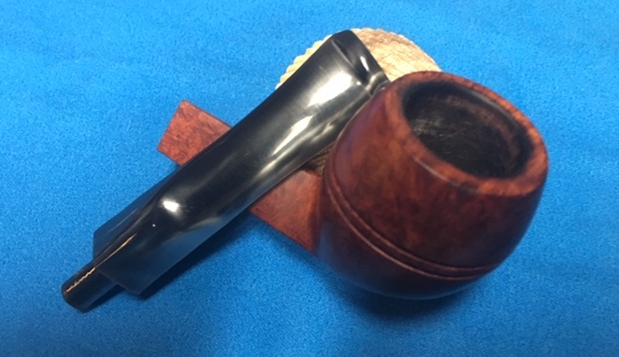
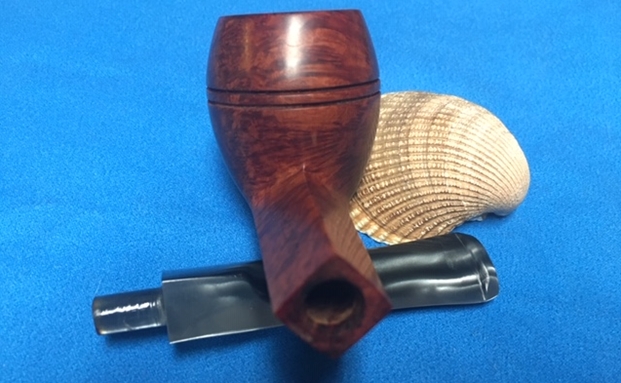
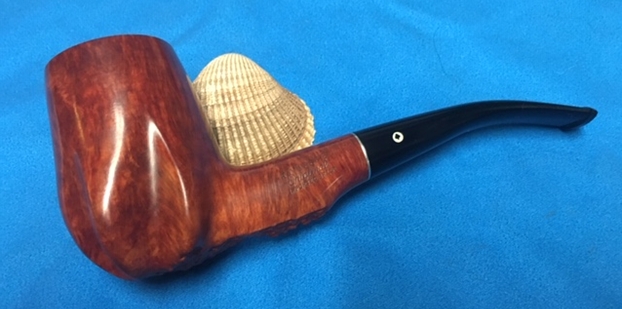
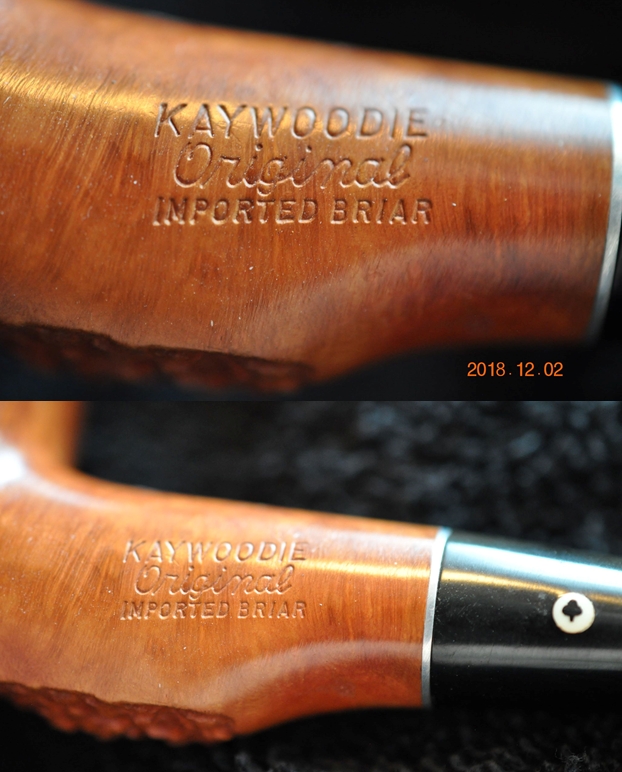
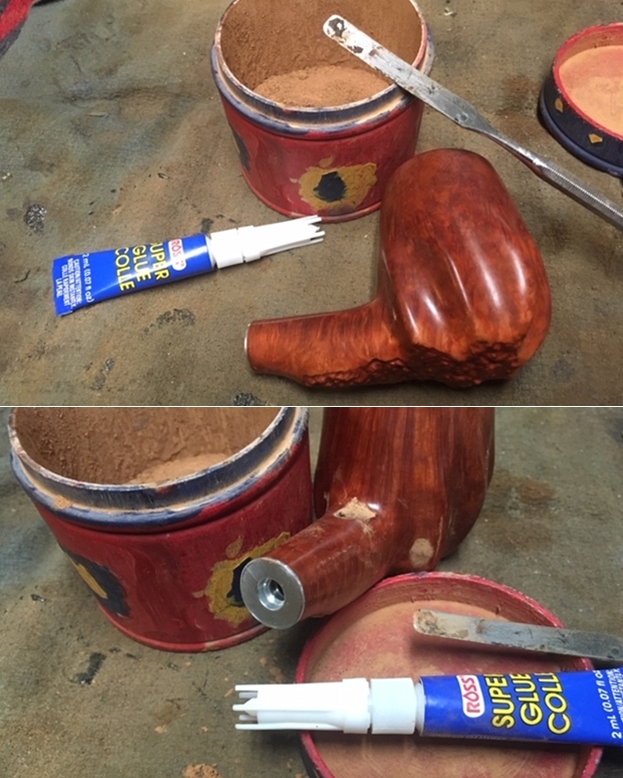
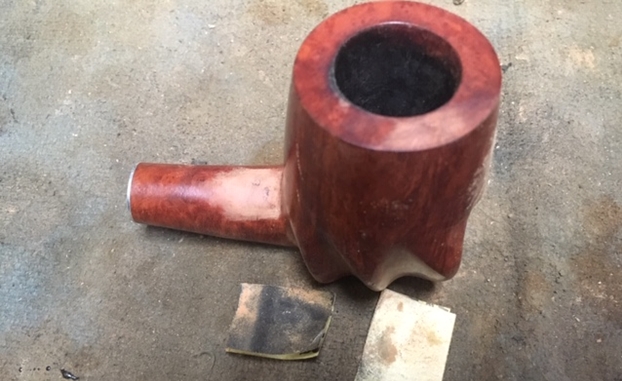
Recently my brother Jeff sent me a very interesting pipe. It has a plateau bottom on the shank and bowl with fluted sides merging upward with a stack shape billiard bowl. The shank looks quite normal but it has plateau on the bottom. It is quite unique looking and combines some of the features of a freehand and some of the features of a stack. The left side of the shank was stamped Kaywoodie over Original over Imported Briar. There is no other stamping on the shank or the bowl. When Jeff received the pipe it was in pretty decent condition – dirty but really not too bad. The finish was dusty and dirty with grime worked into the lovely grain of the briar and particularly into the underside plateau. The bowl had a moderate cake in it but it did not go all the way to the bottom of the bowl – in fact the pipe was not even broken in. The rim top was free of lava but there was some darkening on the backside of the rim top. The inner and outer edges of the bowl were in great condition. The stem had a white circle with the Kaywoodie Club on the left side of the taper stem. It had a Kaywoodie 3 hole stinger and a threaded metal shank that screwed into a metal mortise and spacer ring. The stem had some light tooth marks on both sides at the button. It was oxidized but in decent condition. Jeff took these pictures of the pipe to show its condition before he started his cleanup work. On the left side of the shank the stamping was very clear and readable. You can see that the pipe has some interesting grain even on the shank.He took photos of the stem to show the oxidation and tooth marks and chatter on the stem. Surprisingly the marks and chatter were on the surface.Jeff had reamed the bowl with a PipNet pipe reamer and followed up with a Savinelli Fitsall pipe knife to remove the cake. He scrubbed out the mortise and the airway in the shank and the stem with alcohol, cotton swabs and pipe cleaners. He scrubbed the exterior of the bowl, rim, shank and stem with a tooth brush and Murphy’s Oil Soap to remove the oils and tars on the bowl, rim and shank. He rinsed it under running water. He dried it off with a soft cloth. He was able to remove the majority of darkening on the rim top without harming the finish underneath it. Without the grime the finish looked good. There some large and ugly pink fills in the finish. There was one on the rim top on the right side, there was a pair of them on the top of the shank at the joint of the shank and bowl and the final one was in the fluted area to the right of the shank near the bottom of the bowl. Other than the oxidation and chatter the stem was actually in pretty good condition and would only need to be polished. I took photos of the pipe to show its condition before I started my work on it. I took close up photos of the rim top that shows the clean bowl and the light burn damage around the inner edge toward the back of the bowl. (You can also see the small fill on the top of the rim at the top of the photo, right side of the pipe.) The stem was clean and Jeff had used Before & After Deoxidizer to soak and remove much of the oxidation. He rinsed out the inside of the stem and rinsed off the exterior as well. The photos of the stem show how good the stem actually looked after this treatment.I unscrewed the stem to show the three hole stinger and the threaded tenon.I took some photos of the pink putty fills in the briar on the rim top and on the shank and on the lower right side of the bowl near the shank.I picked out the fills on the bowl and shank with a dental pick and a sharp pen knife point to remove as much of the putty as I could.I filled in the freshly dug out fills with briar dust and clear super glue. I put glue in the fills and used a dental spatula to fill briar dust into the glue repairs. When the fills had cured I used a needle file to flatten the repairs and sanded the patches with a folded piece of 220 grit sandpaper. I followed that by sanding with a folded piece of 400 grit wet dry sandpaper. I polished the repaired areas with micromesh sanding pads – wet sanding them with 1500-2400 grit pads and dry sanding with 3200-12000 grit pads. I wiped the areas down with a damp cloth to clean off the sanding dust. I touched up the sanded and polished areas with an Oak coloured stain pen. It matched really well with the rest of the bowl and shank. Once it is waxed and polished they will blend in a lot better than the pink ones.I rubbed the bowl down with Before & After Restoration Balm to deep clean the briar, particularly the sanded areas. I worked it into the plateau on the bottom of the bowl. The product works to clean, enliven and protect the briar. I hand rubbed it with my fingers and wiped it off with a soft cloth. I buffed the bowl with a horsehair shoe brush to polish it. The briar really began to have a rich shine. I took some photos of the bowl at this point to mark the progress in the restoration. I set the bowl aside and turned my attention to the stem. I sanded the stem with 220 grit sandpaper to remove the tooth chatter and marks as well as the oxidation.I polished the stem with micromesh sanding pads – wet sanding it with 1500-2400 grit pads and dry sanding it with 3200-12000 grit pads. I wiped the stem down after each pad with a damp cloth to remove the sanding dust. I used the Before & After Pipe Polish to remove the small minute scratches left in the vulcanite. I finished by wiping the stem down with a final coat of Obsidian Oil and set it aside to dry. I polished the stem and bowl with Blue Diamond to polish out the remaining small scratches. I gave the bowl and the stem several coats of carnauba wax and buffed the pipe with a clean buffing pad to raise the shine. I worked some Conservator’s Wax into the plateau on the underside of the bowl and shank. I hand buffed it with a microfiber cloth to deepen the shine. The pipe polished up pretty nicely. The finished pipe is shown in the photos below. I have never seen a Kaywoodie quite like this one. It is not only unique in having the plateau on the underside but also the fluting on the side of the bowl. The stamping Kaywoodie Original is also a new one for me. The dimensions are Length: 6 1/4 inches, Height: 2 1/2 inches, Outside diameter of the bowl: 1 1/2 inches, Chamber diameter: ¾ of an inch. I will be adding it to the rebornpipes store shortly. If you are interested in adding it to your collection email me at slaug@uniserve.com or send me a message on Facebook. Thanks for walking through the restoration with me as I worked over this Kaywoodie Original.

Repairing a Broken Tenon on a House of Robertson War Club


Blog by Steve Laug

Back in February of 2018 (almost a year ago now) I posted my restoration of an interesting House of Robertson Pipe that was made by a carver in a pipe shop in Boise, Idaho. It was not only an interesting pipe but also one that had some history that was interesting to me as I was raised in Idaho for the better part of my childhood and adolescence. It was a huge piece of wood and had both smooth and rusticated portions on the shank and bowl. It was a flat bottom sitter with a square shank. The dimensions of the pipe are: Length: 7 3/8 inches, Height: 2 inches, Outside Diameter: 1 5/8 inches, Diameter of the chamber: 7/8 inches. I sent it back to a fellow in Idaho who collected House of Robertson pipes and who used to frequent the Boise shop. He was excited to add it to his collection. (https://rebornpipes.com/2018/02/28/restoring-a-rusticated-house-of-robertson-war-club/). Here is what it looked like when I sent it to him. About the same time I picked up the Calich, I received an email from the collector in Idaho asking for help. This is what he wrote to me:

Steve, I purchased the rusticated House of Robertson War Club pipe earlier this year. I have thoroughly enjoyed it. The bad news is i was polishing it and dropped it. The stem broke at the tenon and is still lodged in the briar. Hopefully you can repair or replace it. If so, please let me know and then how to proceed with mailing and payment. Thanks…

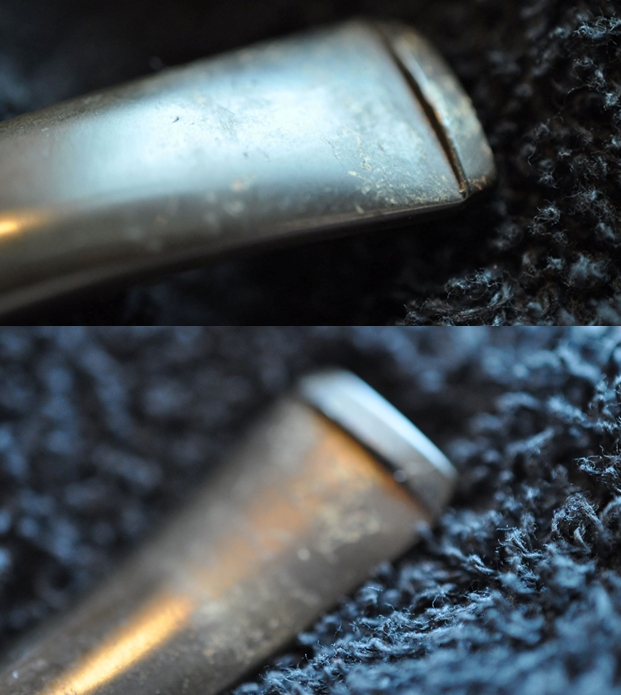
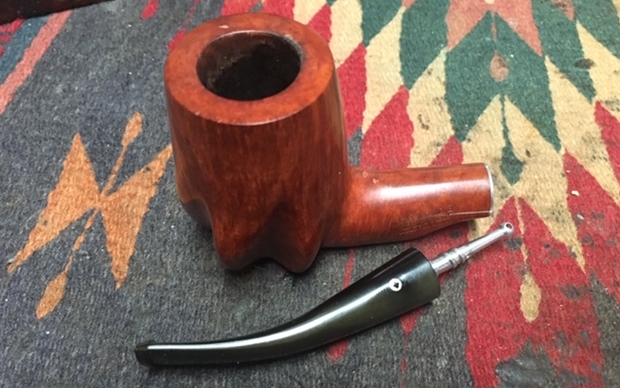
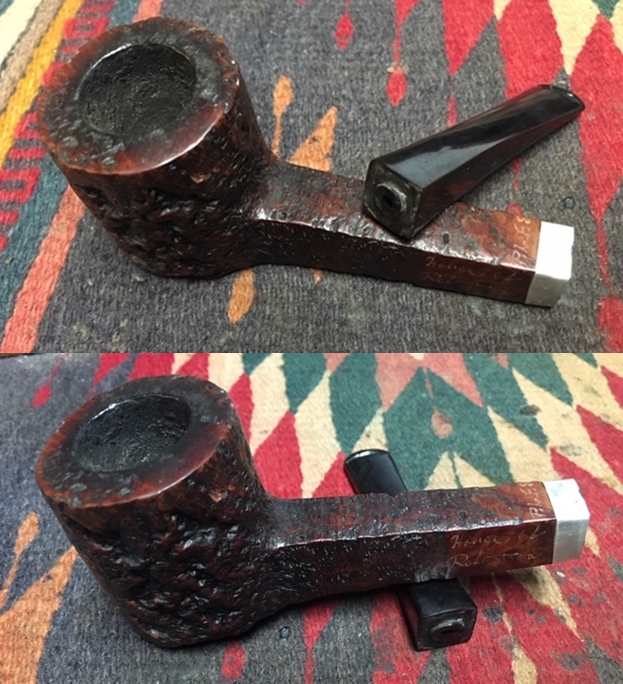
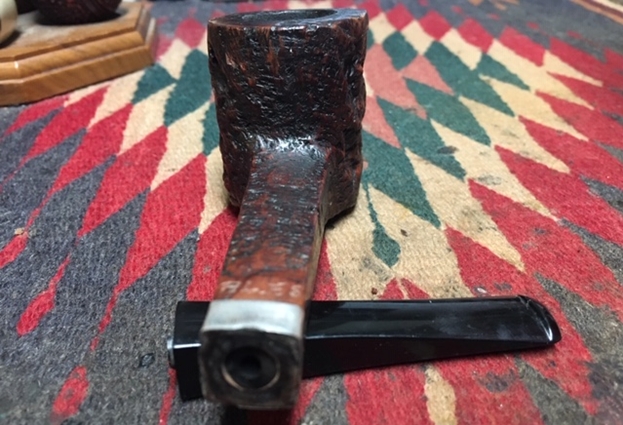
I wrote him back pretty quickly and he put it in the mail. It arrived here yesterday and was waiting for me when I got home from work. I opened the envelope that it had been mailed in and took out the two plastic Ziploc bags and the bubble wrap that was around the bowl and stem. I took them out of the mailer and unwrapped the protective layers and took them out of the Ziploc bag. This is what I saw. The stem had snapped off almost perfectly against the stem end. There was a small ledge but really nothing stuck out from the original tenon.I took an end view photo to show the snapped off tenon in the shank of the pipe. You can see in that photo that it is also a clean break.This morning I was “chatting” with Charles Lemon on the Tobacco Pipe Restorers Group on Facebook about Jobey Links and how easy they were to work with when replacing a tenon. I went through my container of tenons and I did not have one that would work in this shank without a lot of work. I took out my box of Jobey Link replacement tenons and one of them was absolutely the perfect size for this shank. I would need to use it backwards and do some modifications but it was exactly what I wanted for this repair. I used a topping board to flatten out the remnants of the broken tenon on the stem. I used a knife to bevel the airway to make drilling it easier. I took the following photo to show the parts of the repair.I tried my usual method for removing a broken tenon from the shank – a drywall screw turned into the airway in the shank until it was tight and then wiggling the broken tenon out of the shank. It failed to produce any results. It was almost like the tenon was glued/bonded to the walls of the shank. I used a cotton swab to dribble alcohol down the shank around the broken tenon. I left the shank and tenon sitting while I went to work for the day. When I came home I tried the screw again and still absolutely no movement on the tenon… it was stuck.

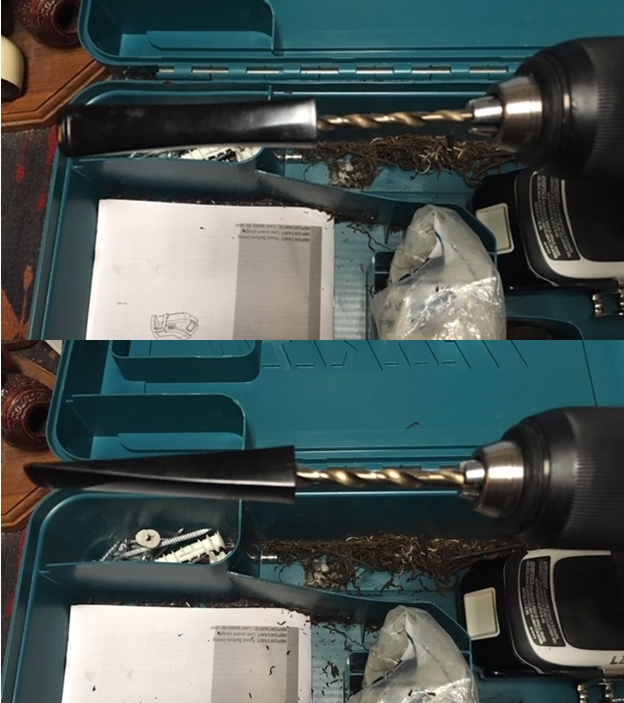
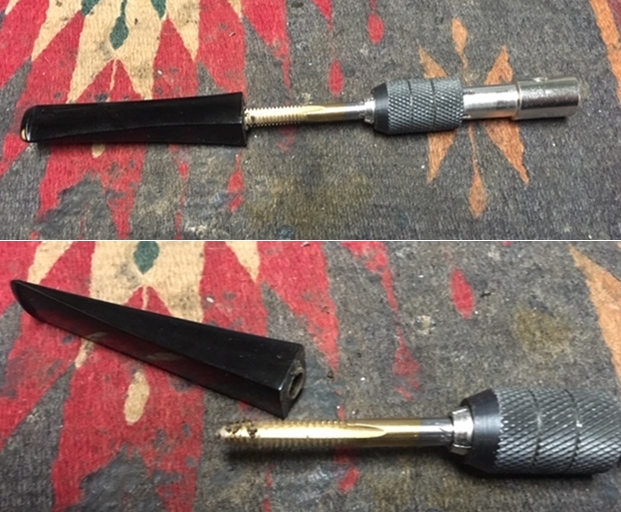
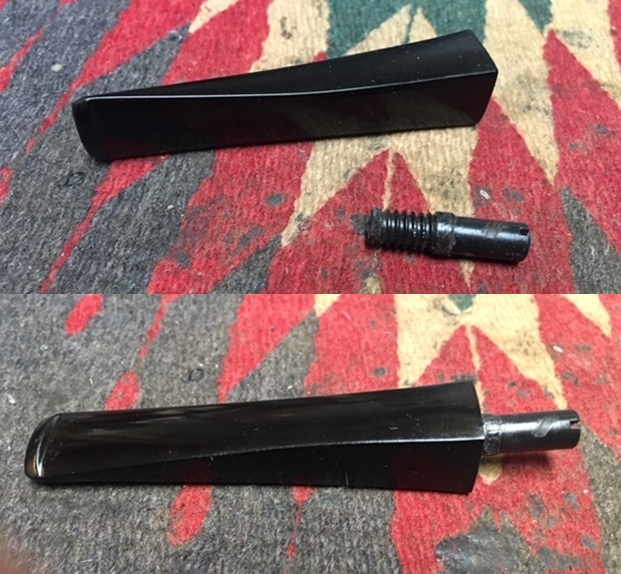
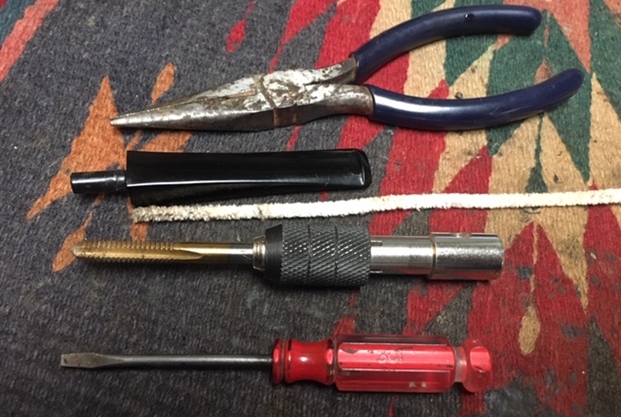
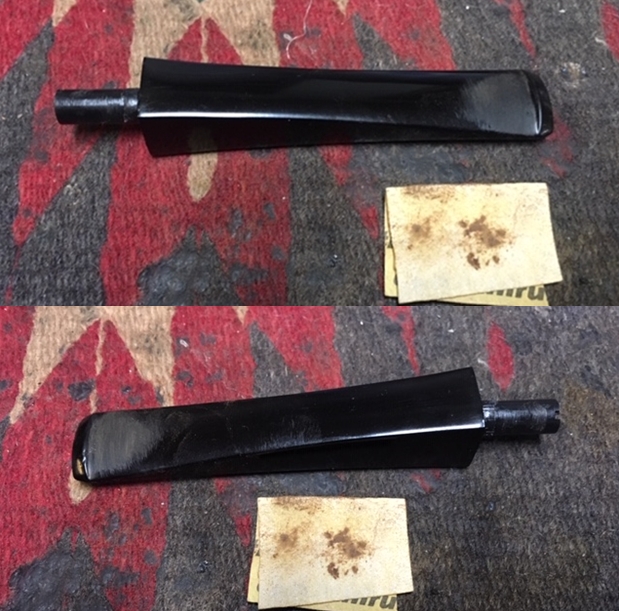
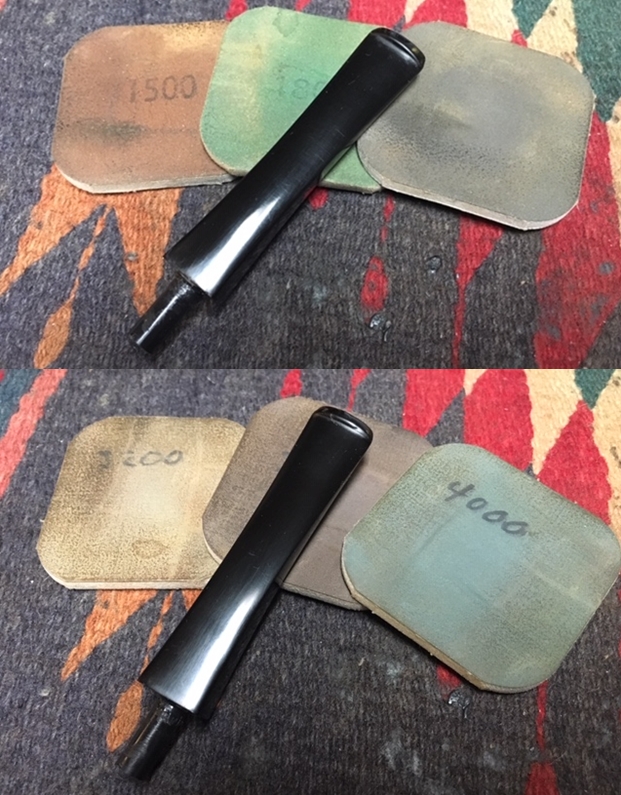
I resorted to the next best method – drilling the tenon out of the shank with my cordless drill. I started with a bit a little larger than the airway and turned it into the airway with the drill and then reversed the drill to see if I could pull it out. Nope. It still did not move. I tried a larger drill bit and repeated the process still no movement at all. I tried a third bit – a little bit smaller than the diameter of the original tenon. I drilled it in and backed it out – no luck. I then decided to just drill out the tenon all together. It did not take too much to drill it with the ¼ inch drill bit and then take out the pieces of the old tenon. The fourth photo below shows the clean airway in the shank. The tenon is gone. Now with that half of the job done I set the bowl aside and picked up the stem. I used a drill bit slightly smaller than the threaded portion of the Jobey Link. I drilled out the airway in the stem with increasingly larger drill bit until it was the perfect size for the Link. I still needed to tap the newly drilled airway so that I could turn the tenon into the stem. I used a tap set that I have and tapped threads into the newly drilled airway in the stem. It did not take long to tap thread into the vulcanite. I tapped the airway until it was deep enough for to take the threaded tenon. I shortened the threaded end of the tenon to deal with the taper of the stem. I used a Dremel and sanding drum and then smoothed it out on the 220 grit sandpaper topping board. I used the Dremel and sanding drum to remove the hip on the Jobey Link. I flattened it out to match the smooth part of the tenon that would go into the shank. The added length of the tenon fit perfect in the depth of the mortise on the pipe. I turned the tenon into the airway with a pair of pliers.I sanded out the scratch marks from the Dremel removal of the hip on the tenon with 220 grit sandpaper and polished it with 1500-2400 grit micromesh and took a photo of the stem with the new tenon and the tools I used to work on it.When I looked over the stem I could see a few tooth marks on the surface on both the top and underside near the button. I figured that since I was working on it anyway I would remove those areas. I sanded the stem with 220 grit sandpaper to remove the damage and polished the sanding marks with 400 grit wet dry sandpaper. I polished the vulcanite stem with micromesh sanding pads – wet sanding with 1500-2400 grit pads and dry sanding with 3200-12000 grit pads. I wiped the stem down after each pad with Obsidian Oil. When I finished the last pad I gave it a final coat of Obsidian Oil and set it aside to dry. I set the stem aside and turned my attention to the bowl. I examined it and found that there were a few small nicks and chips around the rim top and outer edge of the bowl. I touched these up with a walnut stain pen to blend them into the rest of the finish on the bowl. I rubbed the bowl down with Before & After Restoration Balm to enliven the wood and protect the newly finished portions of the briar. I took these photos after to show the bowl and the repairs are unnoticeable. I put the stem back on the shank and buffed the pipe with a clean buffing pad to bring a shine back to the bowl and stem. I gave it several coats of Conservator’s Wax and continue the buff. I hand buffed it with a microfibre cloth to deepen the shine. The finished pipe is shown in the photos below. Tomorrow I will box it up and send it back to Idaho. Can’t wait to see what he thinks when he has it in his hands. Thanks for reading this. Cheers.

I am the happy owner of an unsmoked pipe by the late John Calich


Blog by Steve Laug

Not too long ago there was a benefit auction on TLOC (Tobacco Lovers of Canada) Facebook Group in support of the son of one of the members son was diagnosed with cancer. There were tobaccos and pipes up for auction with all proceeds going to a fund for the family. I decided to enter an auction for one of the pipes – an unsmoked smaller group two sized Calich pipe. I put in repeated bids for the pipe both because I actually wanted the pipe and because I wanted to try to drive the price up so others would bid more in support of the family. I entered bids up to the last minute, even bidding against myself and ended up winning the pipe. I was pleased to have won the pipe in that it was a double win for me – first it gave me the chance to help out a family and second it gave me the opportunity to add another Calich to my collection. I have loved John Calich’s pipes for over 25 years now and have collected a few of them. When John was living I spoke with him several times via phone and had him make some new stems for some of his pipes that I picked up off eBay. He was a very kind gentleman and was always helpful when I spoke with him. He was always ready with encouragement and when I needed to know how to do something when I was first learning to repair pipes he was willing to help. He was one of the old guard of Canadian Pipe makers. I miss him.

John Calich, courtesy Doug Valitchka

John Calich was one of Canada’s finest carvers. He died in July 2008. John was a full time pipe maker for the last 40 years. Calich pipes were mostly traditional shapes. His signature style is rustication and smooth on the same pipe along with his unique skill to stain a pipe in contrasting colors. He used only top quality Grecian and Calabrian briar. The mouthpieces are hand finished Vulcanite “A”. Each pipe was entirely made by hand. John Calich was featured in the summer 2005 issue of Pipes & Tobacco. His pipes are graded 3E – 7E. Retail prices range from$ 145.00 to $ 500.00 Each pipe is stamped “CALICH” 3-8E, his earlier pipes were graded from 3-14, and a single, tiny silver dot is applied to the top of the stem (https://pipedia.org/wiki/Calich).

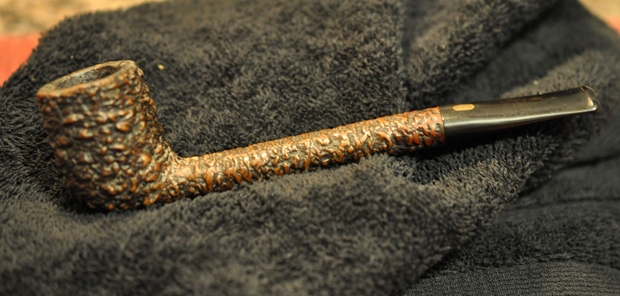
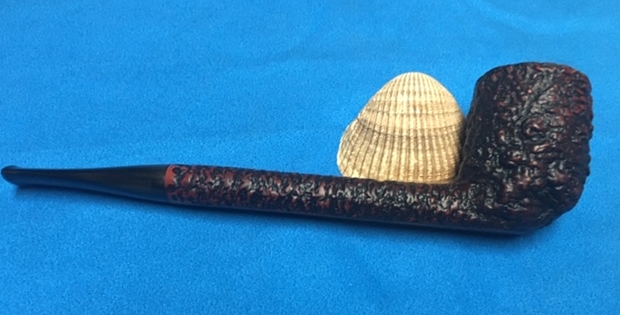
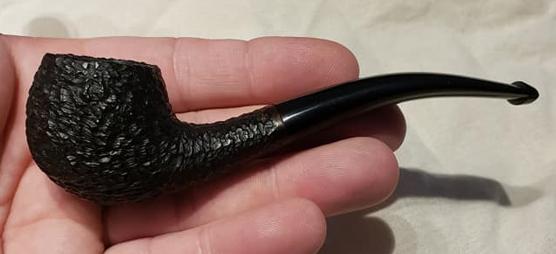
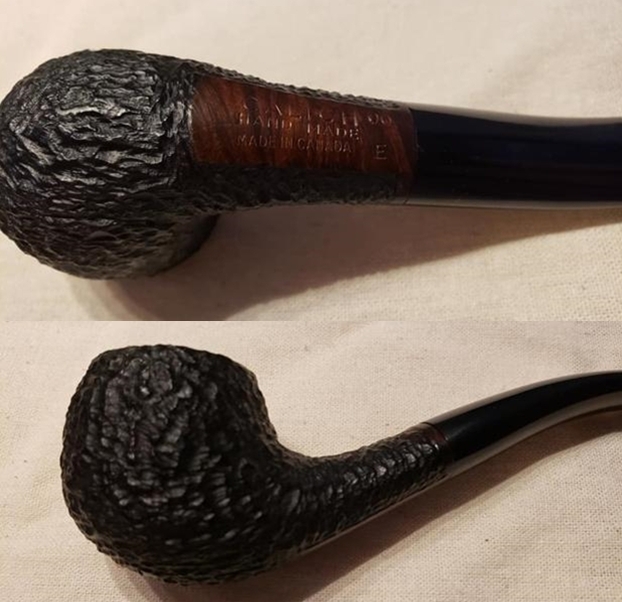
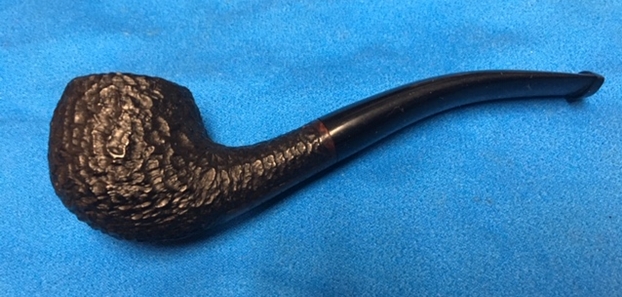
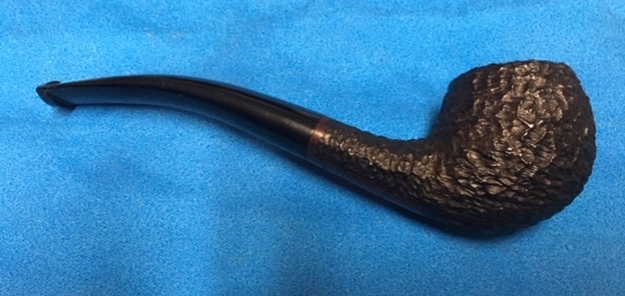
The first two photos were from the auction itself and show the shape of the pipe that caught my eye. The third photo was sent to me in response to a question I asked about the size of the pipe. You can see from that photo that it is a petite pipe. The rustication on the pipe is rugged and tactile and should feel good in my hand when it heats up. John Calich always puts a silver dot on his stems as is visible in the second photo. The colours in the third photo are more accurate in terms of capturing the dark brown colour of the stain.The next photo shows the stamping on a smooth panel on the underside of the shank. It reads Calich 00 over Hand Made. Under that it reads Made in Canada followed by the letter E. Both that photo and the one that follows it show the rustication pattern on the bowl and shank.The pipe arrived about two weeks ago and the box was quite large. It made me wonder what was inside. When I opened the box I found that the fellow handling the auction had included a tin of McClellands #22 Virginia. I am thinking of breaking in the pipe with that tobacco as it is one of my favourites and it is no longer available. I took the following photos to show what it looked like. The pipe is small but will be a great Virginia pipe. The dimensions are as follows – Length: 5 inches, Height: 1 3/8 inches, Outside diameter of the bowl: 1 1/8 inches, Chamber diameter: 5/8 of an inch. Like the other pipes that have, made by John Calich this is bound to be a very good smoking machine. John’s pipes are comfortable in the hand and the mouth and have an effortless draught. I am truly looking forward to loading up the first bowl of Virginia and enjoying the pipe on the weekend. Thanks for looking.


Restoring a Jobey 085 Churchwarden


Blog by Steve Laug

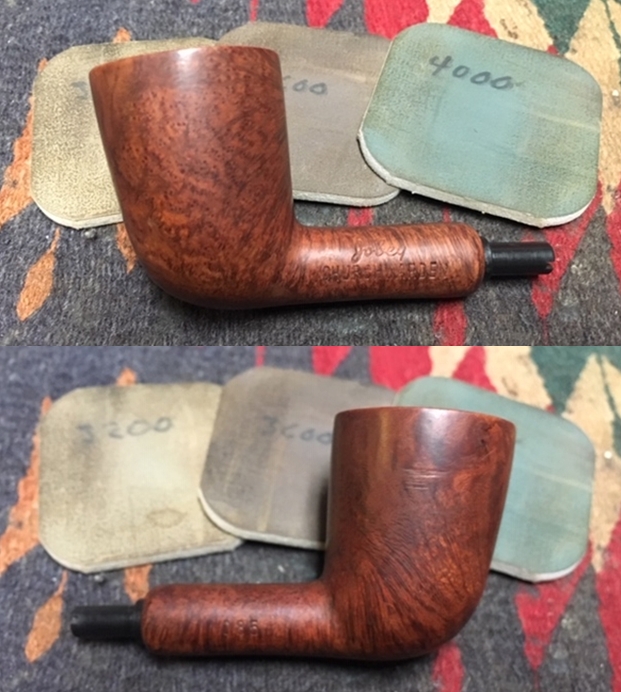
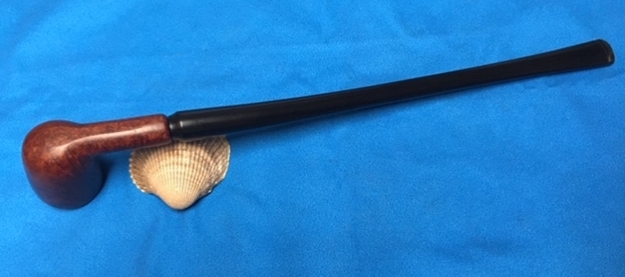
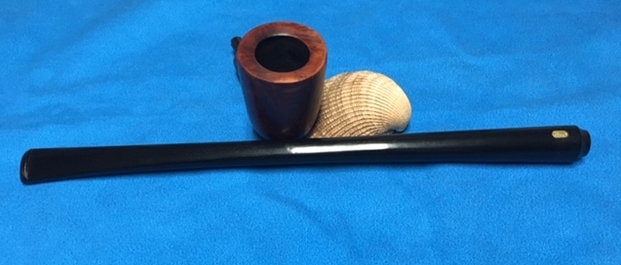
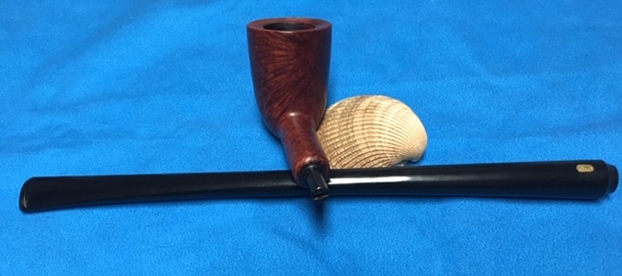
My brother Jeff always keeps an eye open for Churchwardens and so far he continues to come up with not only brands that I have heard of but also Churchwardens from name brand pipes that I had no idea existed. The pipe on the worktable today is made by Jobey and has the patented Jobey link between the stem and the shank. The bowl is a fairly classic Dublin shape but that is where the classic is modified. The first modification is that the shank is rounded almost like it was made for a stick bit or for a metal ferrule. I expected the shank to be faced, as usual on a churchwarden, to take a long tapered stem that flows directly from the shank with no interruption. The modification to the classic is related but refers to how the stem seats in the shank of the pipe. Instead of the expected stick bit with a push tenon this one has the threaded mortise that the Jobey Link screws into. The Link has a smooth end that the stem can be pushed on and held in place by friction. I have included a patent drawing of the link in a pipe. Note the threads in the shank and the smooth end in the stem. That is followed by an advertisement for the link and a picture of the link. This Jobey had been well loved and smoked often. The stem had tooth chatter on both sides near the button. The finish was dirty but otherwise looked good. The rim top appeared to be in good condition under the coat of lava on the back side. The bowl had a thick cake and the interior of the pipe was dirty with tars and oils. Jeff took photos of the pipe before he started his cleanup. Jeff took photos of the bowl and rim as well as the sides of the pipe to show the general condition of the briar before cleaning. He took photos of the stamping on the left and right side of the shank. The stamping on the left read Jobey in script over the block letters CHURCHWARDEN. On the right side it was stamped with the shape number 085. He also took photos of the fit of the stem in the shank and the brass Jobey logo inset on the stem top. You can see the debris in the logo and the oxidation on the stem in the photos below. The stem had tooth marks and chatter on both the top and underside near the button.Jeff had reamed the bowl with a PipNet pipe reamer and followed up with a Savinelli Fitsall pipe knife to remove the cake. He scrubbed out the mortise and the airway in the shank and the stem with alcohol, cotton swabs and pipe cleaners. He scrubbed the exterior of the bowl, rim, shank and stem with a tooth brush and Murphy’s Oil Soap to remove the oils and tars on the bowl, rim and shank. He rinsed it under running water. He dried it off with a soft cloth. The lava mess on the rim was thoroughly removed without harming the finish underneath it. Without the grime the finish looked good. The inner edge of the bowl was beveled inward and looked very good. The out edge had a few tiny nicks in it. The oxidation on the stem was gone and all that remained were some tooth marks and chatter at the button on both sides. Otherwise it was actually in pretty good condition and would only need to be polished. I took photos of the pipe to show its condition before I started my work on it. I took close up photos of the rim top that shows the clean bowl and how it was beveled inward. You can also see the small nicks along the outer edge of the bowl toward the back side. The stem was clean and Jeff had used Before & After Deoxidizer to soak and remove much of the oxidation. He rinsed out the inside of the stem and rinsed off the exterior as well. The photos of the stem show how good the stem actually looked after this treatment.I removed the stem from the shank and unscrewed the Jobey Link from the shank. I took a photo of it with the Link removed and the Link in place in the shank.I decided to start my work on the pipe by addressing the tooth marks on the top and underside of the stem at the button. I sanded the tooth marks out the stem surface with 220 grit sandpaper. I sanded the stem until the surface was smooth and the marks had disappeared.I polished the stem with micromesh sanding pads – wet sanding it with 1500-2400 grit pads and dry sanding it with 3200-12000 grit pads. I wiped the stem down after each pad with a damp cloth to remove the sanding dust. I used the Before & After Pipe Polish to remove the small minute scratches left in the vulcanite. I finished by wiping the stem down with a final coat of Obsidian Oil and set it aside to dry. I set the stem aside and turned my attention to the bowl. I polished the rim top and edges – both inner and outer with micromesh sanding pads – wet sanding with 1500-2400 and dry sanding with 3200-12000 grit pads. I worked on the nicked edges on the outside of the bowl to smooth them out. I polished the entire bowl avoiding the stamping with the pads. I wiped it down with a damp cloth after each sanding pad. You can see the progress in the photos below. I put the bowl and stem back together. I buffed the bowl and stem with Blue Diamond to polish the briar and the vulcanite. I gave the bowl and the stem multiple coats of carnauba wax. I buffed the pipe with a clean buffing pad to raise the shine. I hand buffed it with a microfiber cloth to deepen the shine. The pipe polished up pretty nicely. The pipe turned out very well and shows the grain shining through. The contrast of the various grains – birdseye, flame and straight swirling around the bowl and shank looked good with the polished, long black vulcanite. I will soon be putting this Jobey Churchwarden on the rebornpipes store. The finished pipe is shown in the photos below. The dimensions of the pipe are Length: 11 1/2 inches, Height: 1 3/4 inches, Outside diameter of the bowl: 1 3/8 inches, Chamber diameter: 3/4 of an inch. If this is the kind of Churchwarden you might want to add to your collection then send me a message or an email. Thanks for reading this blog and my reflections on the pipe while I worked on it.

Recommissioning a Stubborn Kaywoodie Prime Grain 205R ‘Fancy’ Bulldog


Blog by Dal Stanton

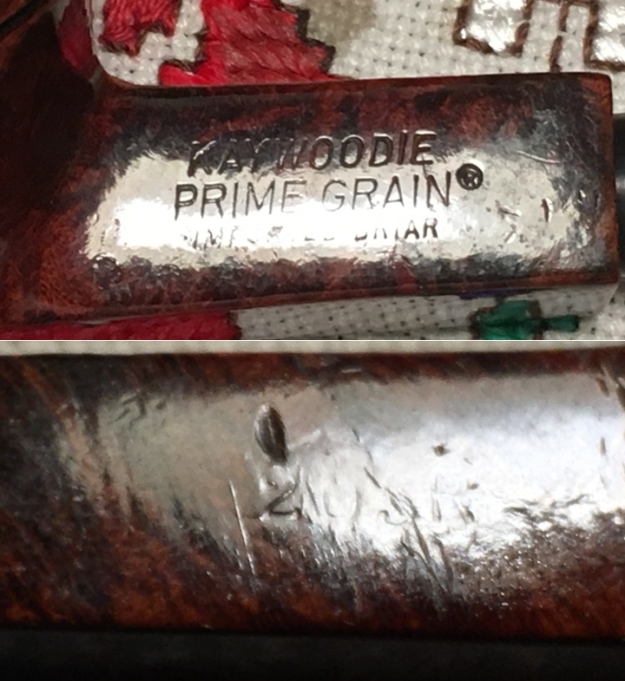
I acquired this Kaywoodie as a solo in an eBay auction, December of 2017, while my wife and I were on a Christmas trip from Bulgaria to be with family in the United States.   True confession – while in the US I indulged in a few eBay auctions!  They’re exciting, what can I say.  But this Bulldog got my attention. Why?  True confession #2: I’m not a Kaywoodie connoisseur, but I was drawn to the profile of this stout Bulldog bowl proudly cresting with what looked like a crown and reminded me of one of my favorite chess pieces – the Rook or Castle.  The Rook is one of the strongest pieces on the board if properly moved – usually waiting patiently through much of the combat until, strike!  Yes, this is what drew me in to look at the details of the Kaywoodie Prime Grain. The slightly bent fancy stem added class to the Rook and the hue of the pipe leaned somewhat reddish – the complete warrior pipe!  So, I bid and now this guy is on the worktable here in Sofia, Bulgaria, after Paul saw him on The Pipe Steward site in the For “Pipe Dreamers” Only! collection and commissioned him along with the last pipe I restored, a Mastersen Freestyle, which turned out great.  Here are a few of the pictures I saw on eBay of the Kaywoodie Prime Grain Bulldog. With the Bulldog now on my worktable, I take more pictures to get a better look at the condition of the pipe. The nomenclature is stamped on the upper left shank side with KAYWOODIE [over] PRIME GRAIN [over] IMPORTED BRIAR.  The name is marked to the right with the encircled ‘R’ indicating a registered trademark.  The upper right shank side has the ghost of a shape number remaining.  After using a magnifying glass and after several pictures I was able to make it out as, ‘205R’.According to the extremely useful Kaywoodie thread entitled 3 Digit Shape numbers submitted by ‘kwguy’ (who I suspect is the major Pipedia Kaywoodie contributor Bill Feuerbach III, because many who responded to the thread with huge thanks, directed the comments to ‘Bill’), the general dating of this Kaywoodie is pretty straight forward.  Three-digit shape numbers were introduced to Kaywoodie pipes in 1972.  According to kwguy:

Maybe a little background is in order.  In 1972, we closed the West New York factory having completed construction of our new 197,000 square foot factory in Yapank on Long Island.  The plan was to move all pipe production there, but in the interim, the Medico factory in Richmond Hill Queens would handle the final sanding and finishing of all of the Kaywoodie, Yello-Bole and Medico pipes. The thought was eventually those operations would also shift to Yapank as skilled workers could be trained to handle those operations.  (A down turn in the pipe market in the seventies doomed the new plant, but that’s another story)

Having the three lines being finished in one building, would create confusion if there were two shape numbering systems.  So a new 3 digit system was adopted.  The Medico 3 digit system was also changed at this time.  This list will have three columns of numbers.  The first will be the “new” three digit number, used on all Kaywoodie and Medico pipes from 1972-1980.  (We stopped stamping shape numbers in 1980)  The second column is the Kaywoodie two-digit number and the third column is the original Medico 3 digit number, all of which refer to the same shape.

The 205R places this Kaywoodie between 1972 and 1980 according to this information.  Also, in the article, the addition of the ‘R’ indicated a ‘wavy or rusticated rim’.  I found the 205 shape number in the list referenced and I clipped all the Bulldog numbers for comparison and interest:So, the shape number tells me that I have before me a Kaywoodie medium Bulldog with a rusticated or wavy rim and was manufactured in the Medico factory in Richmond Hill Queens between 1972 and 1980.  One additional piece of information comes from the Kaywoodie – My Free Forum, called the “Kaywoodie Master List”.  This is a great resource compiling all the different Kaywoodie lines in alphabetic order.  Through this I found that the ‘Prime Grain’ line was produced between 1958 and 1976.  This information narrows the dating further by lowering the later date – therefore, this Kaywoodie was manufactured between 1972 and 1976 – Ha!, when I graduated from high school in South Florida and the cost of gas to fill my 1968 VW Bug was about .40 US cents/gallon! – of course, this was before the Euro was thought of.  This was also a period of time when huge decisions impacted my life and, like well-placed dominos falling, would bring me to Bulgaria some 45 years later working with the Daughters of Bulgaria and restoring pipes for them!

With a better understanding of this Kaywoodie Prime Grain Bulldog, I take a closer look at the condition.  There is almost no cake build up in the chamber.  The surface of the bowl has chips here and there – a few on the shank.  The biggest issue I see at this point for the stummel restoration is what I unlovingly refer to as the ‘candy apple’ finish that encompasses the stummel.  When you start working on a pipe this shiny, the concern is that the finish is acrylic which is a bear to remove.  I much prefer natural grain showcased without the artificial candy apple sheen that this Kaywoodie has.  The grain underneath the surface looks good.  The fancy stem is attractive but has light tooth chatter and very minor oxidation.  I take a couple of pictures to highlight the chips and the finish.I begin the reclamation of this Kaywoodie Bulldog by cleaning the airway with pipe cleaners dipped in isopropyl 95%.  I then add the fancy stem to a soak of Before & After Deoxidizer with other stems of pipes in the queue.  After the stem soaks for several hours, I fish the Kaywoodie stem out and allow the Deoxidizer to drain off the stem.  With a cotton pad wetted with alcohol, I wipe the stem along with the raised oxidation and the stem looks good.  I then apply paraffin oil (a mineral oil) to the stem to begin its revitalization.  The pictures show the progress.With the stem taking a respite, I turn now to the internals of the Bulldog stummel by reaming the chamber. Even thought the cake is light, I still utilize the two smaller Pipnet Reaming blade heads to do the initial cleaning.  To fine tune the removal, the Savinelli Fitsall Tool does a great job of scraping the wall and reaching down to the floor removing carbon in the hard-reached areas.  Lastly, with a piece of 240 grit paper wrapped around a Sharpie Pen for leverage, the final step to clean the chamber is accomplished with sanding followed by wiping the chamber with a cotton pad wetted with alcohol to remove the remaining carbon dust.  After an examination of the cleaned chamber, all looks good.  No heat cracking or fissures are visible.  The pictures show the progress from start to completion. Moving to cleaning the external, even though I’m pretty sure that Murphy’s Oil Soap will not make a dent on the candy apple finish itself, I use a cotton pad and work on the surface as well as the rusticated rim using a bristled tooth brush.  As I suspected, the finish is clean on top but still very much intact, but the rusticated rim cleaned up quite nicely.Before addressing the finish issue further, I complete the cleaning regimen by now working on the internals of the stummel.  Using pipe cleaners and cotton buds dipped in isopropyl 95%, I go to work.  With the Kaywoodie Synchro-Stem shanking fitting in place, access to the mortise to clean is a bit frustrated.  I don’t use any pipe cleaners as the space is short.  To reach through the metal stinger insert hole I utilize some sharp dental probes to scrape the mortise walls to loosen the oils and tars that have collected.  After many cotton buds, progress is made and I’m satisfied with the cleaning and it’s time to move on.Now, back to the stummel surface and the removal of the acrylic finish.  First, I try the more conservative approach using alcohol with a cotton pad to see if the finish can be removed.  The picture shows that the answer is no with isopropyl 95%.Then, switching to acetone, I again use a cotton pad and focus only on one area to see if it would make a dent.  It did not after concentration for several minutes on a single shank panel.  The next step is simply to allow the stummel to soak for several hours in acetone.  Often, it takes this much time to allow the chemicals to break down the composition of the finish.  Into the acetone soak it goes and I turn my attention to the stem.With the stummel in the cooker, I work on the stem.  The tooth chatter is addressed first with heating the vulcanite by painting the upper- and lower-bit area with a flame.  The button lips are chewed as well.  I use a Bic lighter to do the job.  As the vulcanite heats it should expand recovering to a degree the original shape of the vulcanite.  After heating, the results are not great.  The texture of the vulcanite is harder, more plastic-like than normal.  So, I resort to first refreshing the button with a flat needle file and then sanding out the chatter using 240 grit paper followed by 470 grit. Continuing the process of erasing the scratches of the coarser grade papers with finer grade, I wet sand the entire stem with 600 grit paper then complete this phase using 0000 steel wool.With a closer look at the results, I’m not satisfied with the results on the lower bit area.  I can still see cross-scratches from filing and the coarser grade sanding papers.  I know that there are differing grades of vulcanite/rubber compounds used in fashioning stems, and I’ve not really studied it.  However, in restoring pipes, stems have differing responses to the work done on them.  As I said earlier, this material is harder than usual and begrudgingly gives up his imperfections!  For the lower bit, I back up and dry sand the area using 240, 600, 470 grade papers and 0000 steel wool.  I also try something that I believe I read about on Dad’s Pipes, where Charles Lemon uses the buffing wheel and Tripoli compound – a coarser compound, to work on the removal of oxidation from the stems.  I decide to give it a try – not to remove oxidation per se, but to clear up the scratches left over and also to reach into the forward curves/valleys of the fancy stem. These pictures show more favorable results. The stummel has been soaking in the acetone bath overnight hopefully to loosen the acrylic ‘candy apple’ finish.  I fish it out and am surprised by the fact that the finish looks to be still intact!  I use a cotton pad on the surface and, oh my, this is nasty stuff.  I quickly switch to using steel wool to work on the finish.  The soaking did accomplish one thing – it softened the acrylic surface that allowed the finish to be removed with more force.  The pictures show the different stages – and it wasn’t easy! The most difficult part was removing the acrylic finish from the upper shank panels that held the nomenclature and the ghost of a shape number.  I used steel wool around the edges, but the only abrasion used over the stampings themselves was a cotton pad – this made for a long bout!The candy apple acrylic finish is finally removed after hours of soaking and elbow grease, as they say.  To rehydrate the stummel after all the chemical activity, I wipe paraffin oil on the surface and let it absorb through the night.  The final two pictures in below show this. With the stubborn acrylic finish removed, I now investigate the stummel and identify areas that need addressing. I find 2 old fills on the nomenclature panel.  Using a sharp dental probe, I test and then dig out the old fill material.  I’m thankful that I invested in a legit set of dental tools that are a huge help!  Two more small fills are cleaned out on the right bowl side and small dent just above the ghosting shape number on the upper right shank panel. I take a picture of these areas to chronicle the progress.  Next, to address these areas, I mix a batch of briar dust putty to fill the pits.  To do this I mix some briar dust and thick CA glue.  I place some briar dust on an index card and add a small puddle of thick CA glue next to it.  I then draw briar dust into the CA glue with a tooth pick mixing it as I go. I continue to draw more briar dust into the CA until the mixture thickens to about the consistency of molasses.  I then apply the putty to fill the pits and tamp down, making sure the hole is filled with a bit of excess that will be sanded down when cured.  After filling the pits, I set the stummel aside for the patches to cure. Turning now to the stem, I wet sand using micromesh pads 1500 to 2400.  Following this with pads 3200 to 4000 and 6000 to 12000 I dry sand.  Between each set of 3 I apply Obsidian Oil to help revitalize the vulcanite. With several hours having passed, the briar dust putty patches are fully cured.  I first begin removing the excess putty using a flat needle file.  I file each patch mound to near the briar surface.  Then I switch to sanding with 240 grit paper bringing the patches flush with the surface.  I finish with 600 grit paper.  The pictures show the progress.Filing.240 grit paper. 600 grit paper.With the patches completed and sanded, I now switch to the entire bowl.  I’m anxious to see what the grain does after the micromesh process cleans, blends and buffs out the grain.  I wet sand using micromesh pads 1500 to 2400 and then dry sand with pads 3200 to 4000 and 6000 to 12000.  I like this process.  The pictures show the emerging complexion of the briar landscape. The grain is now able to be seen from underneath the acrylic candy apple finish with the micromesh process also teasing out the grain picture.  I like what I see.  The bird’s eye grain is distinct, but it’s joined with a lot of movement.  When I compare the reddish hue that I originally saw on eBay (picture below) to the natural grain presentation pictured above, hands down I choose the natural grain.  A decision is made – I decide not to color the stummel but to stay with the natural briar hue.With this decided, I will apply Before & After Restoration Balm to the stummel.  Before doing this, I use a dental probe and do a quick clean up of the twin grooves circling the bowl.  I then squeeze a bit of the Balm on my fingers and work it into the briar surface.  I set it aside for about 20 or so minutes while the Balm does its thing.  I like the B&A Restoration Balm because it deepens the rich natural tones of the briar.  I take a picture of the ‘absorbing’ phase.  I then wipe off the Balm with a clean cloth, buffing as I go. Next, using Before & After Fine and Extra Fine Polish, I apply each in succession to the stem.  I work each in with my fingers to further condition and polish the stem.  I wipe both polishes off with a cotton pad and then with a microfiber cloth.I rejoin stummel and stem and I’m thankful that the stem is clocked perfectly.  Usually, with time, the stem can begin to over-clock and not be true.  This stem is ready to go.  I then mount a cotton cloth buffing wheel to the Dremel and with it set at about 40% of full power, I apply Blue Diamond to both the stummel and the fancy stem.  After applying the compound, I wipe the pipe down with a felt cloth to remove leftover compound dust.  Then, after mounting another cotton cloth wheel to the Dremel, I apply a few coats of carnauba wax to the stem and stummel.  With both Blue Diamond and carnauba, I also work into the rusticated rim and curves of the fancy stem – both which are looking great.

I’m very pleased with the results of the Kaywoodie Prime Grain Bulldog.  I went with the natural grain hue rather than coloring the briar and I like the results.  The grain is very active with large, distinct bird’s eye grain populating the landscape.  I also like the horizontal grain running along part of the dome.  The fancy stem with the Kaywoodie ‘shamrock’ looks good.  Paul commissioned this Kaywoodie Prime Grain Bulldog which benefits the Daughters of Bulgaria and since he is the commissioner, he has the first opportunity to acquire the Bulldog from The Pipe Steward Store.  Thank you for joining me!