Tag Archives: restemming

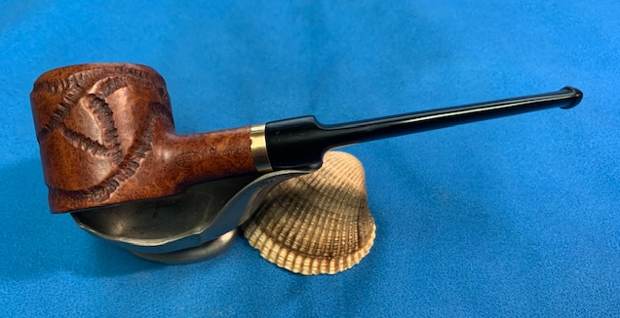
Restemming & Restoring a French Made GBD Sauvage 1345 Poker/Pot


Blog by Steve Laug

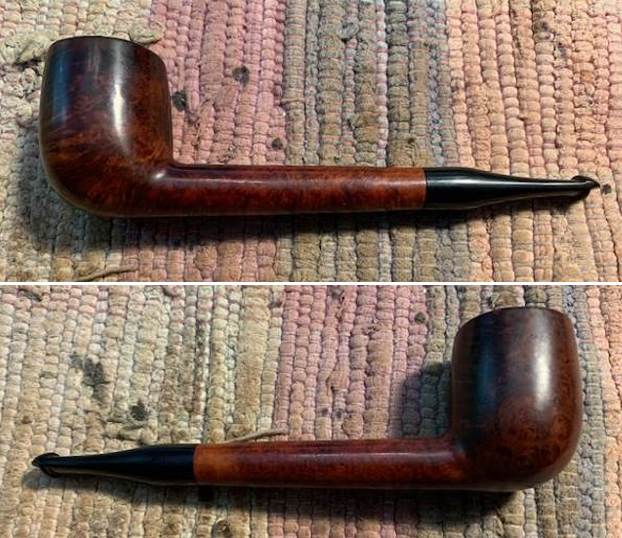
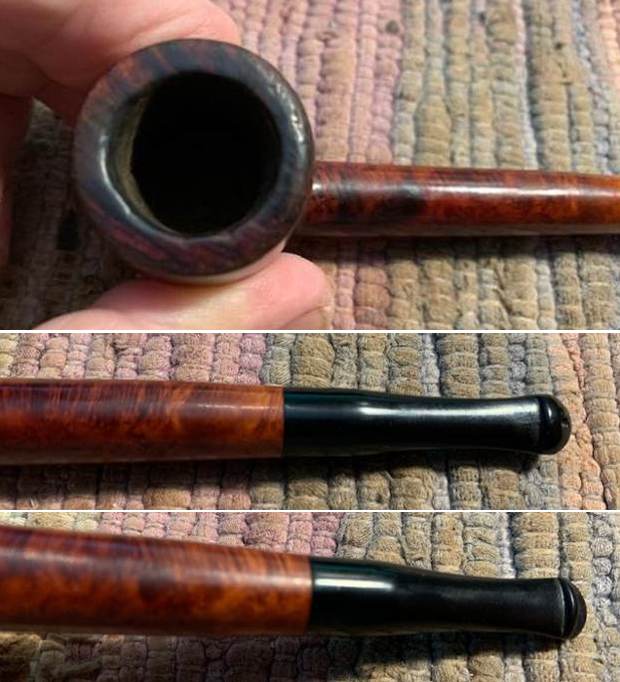
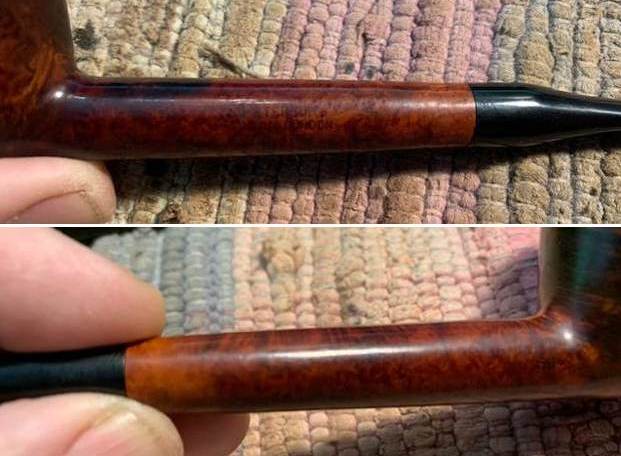
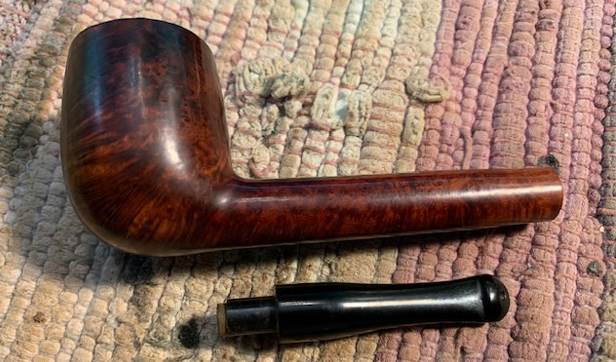
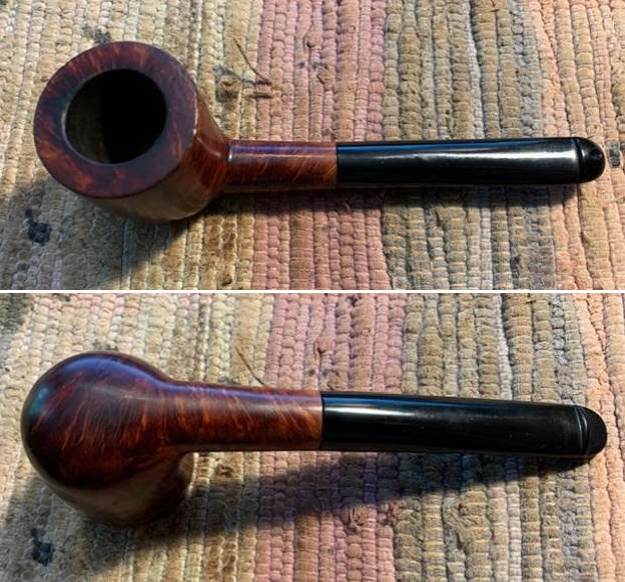
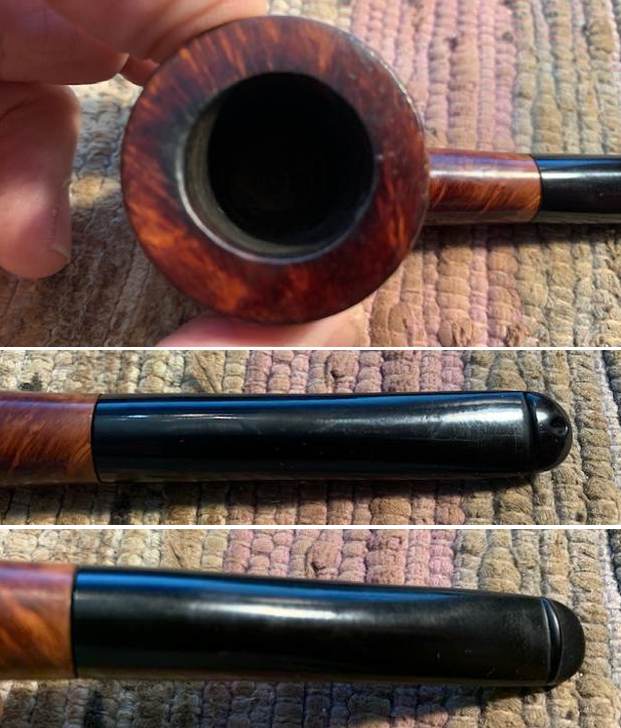
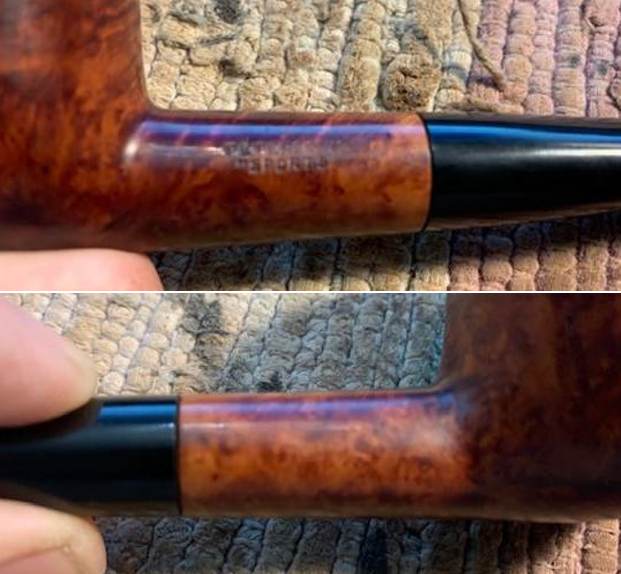
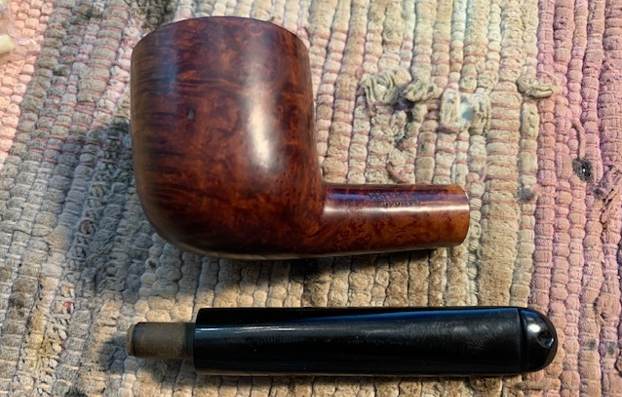
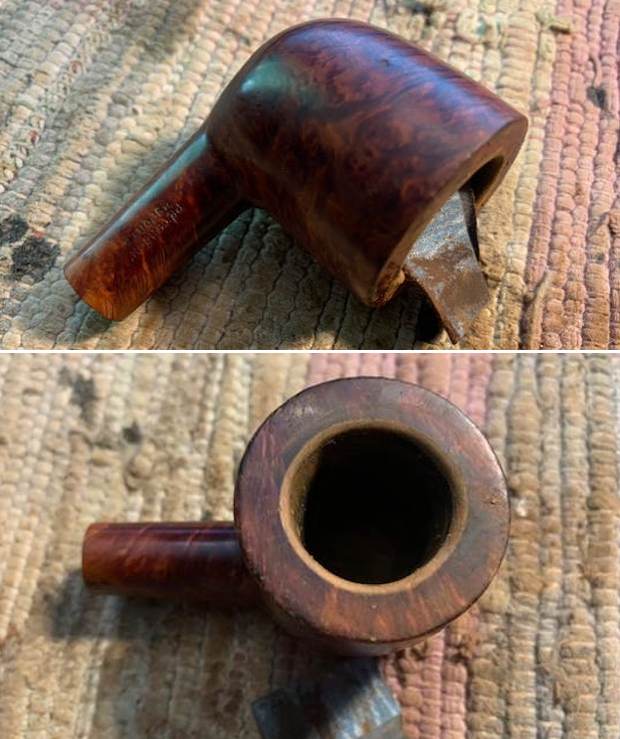
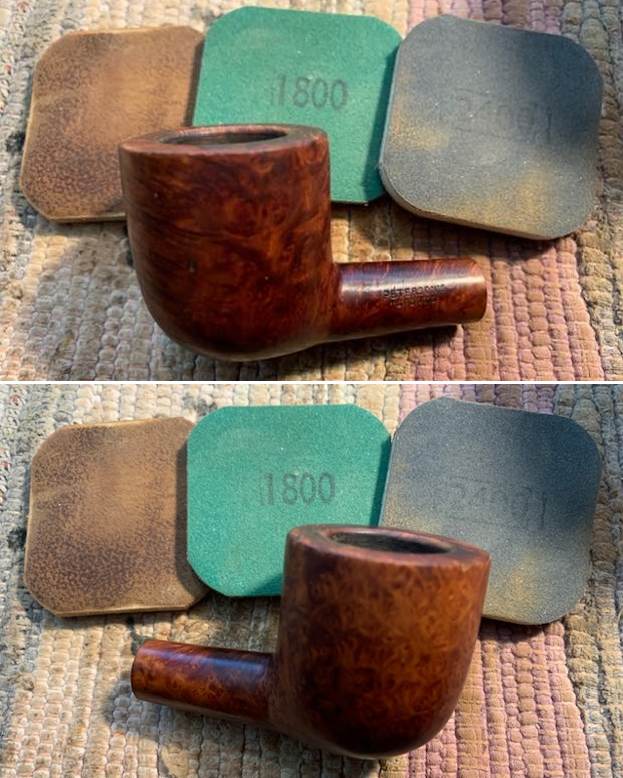
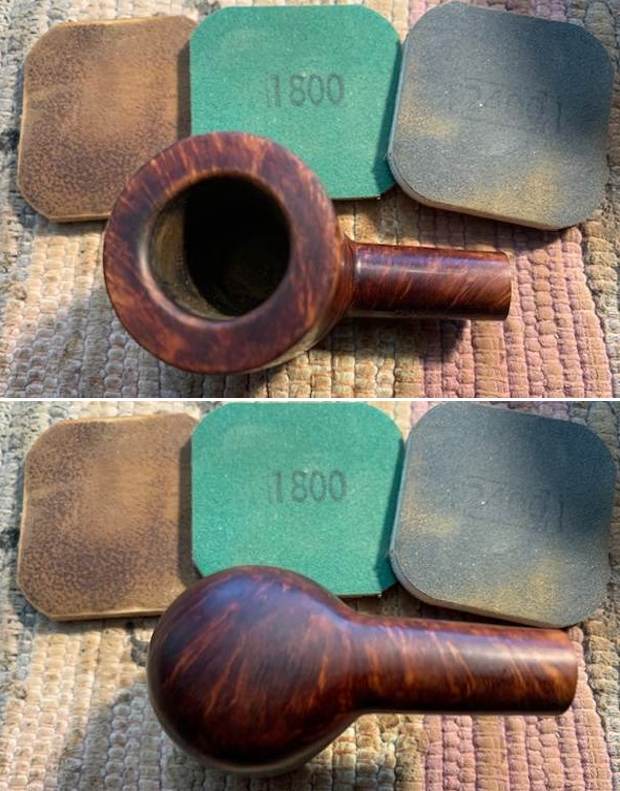
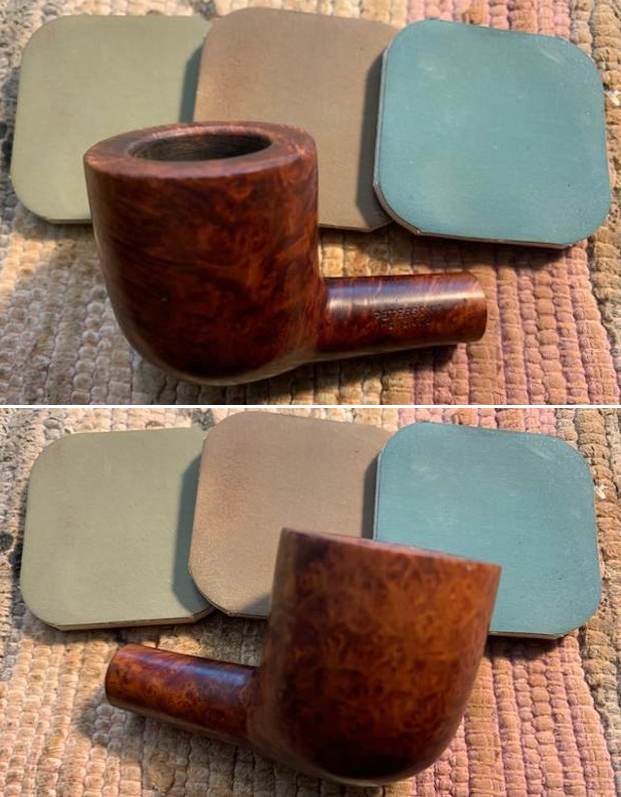
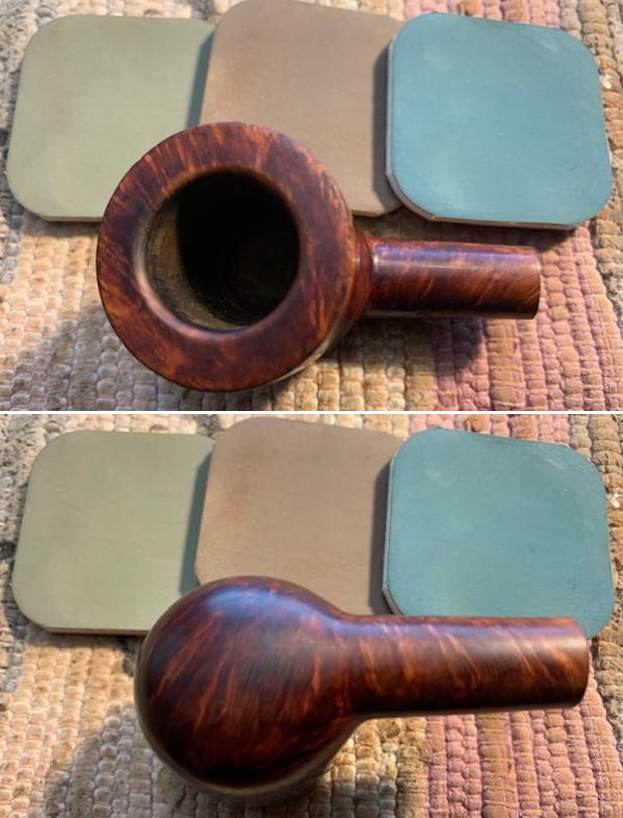
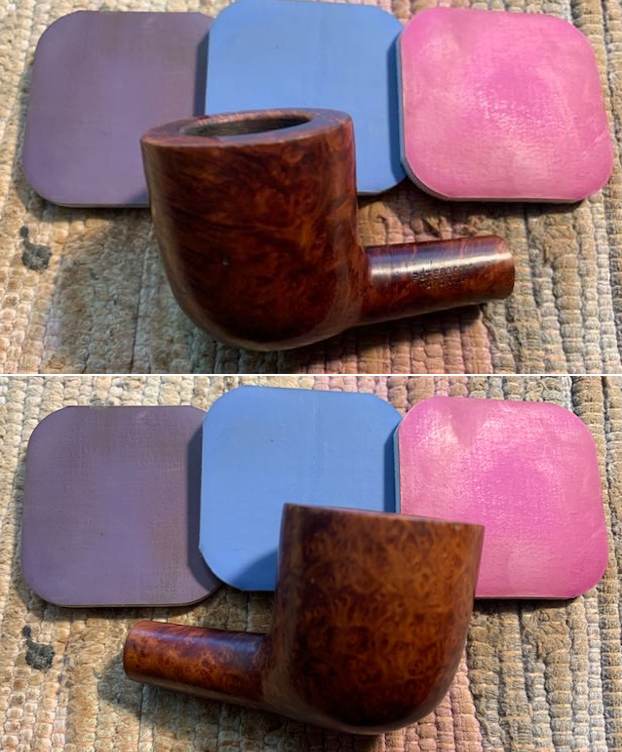
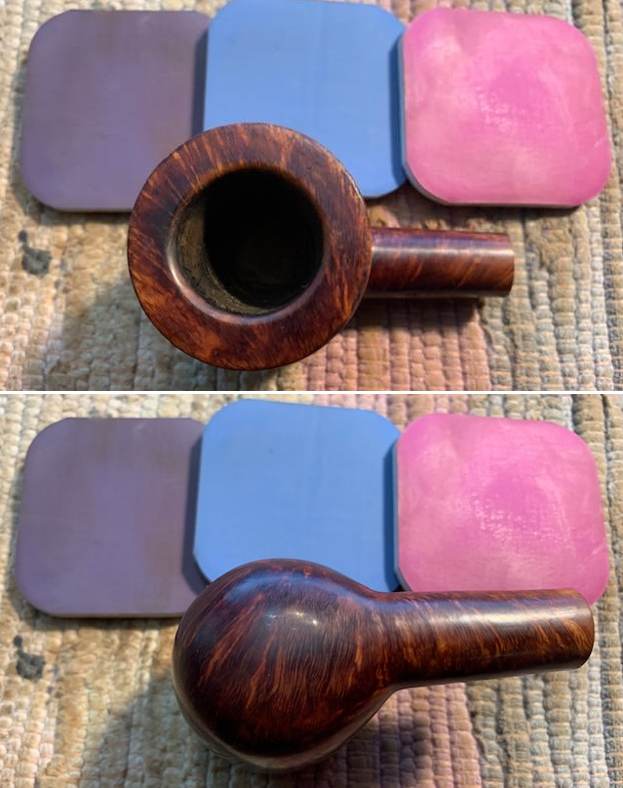
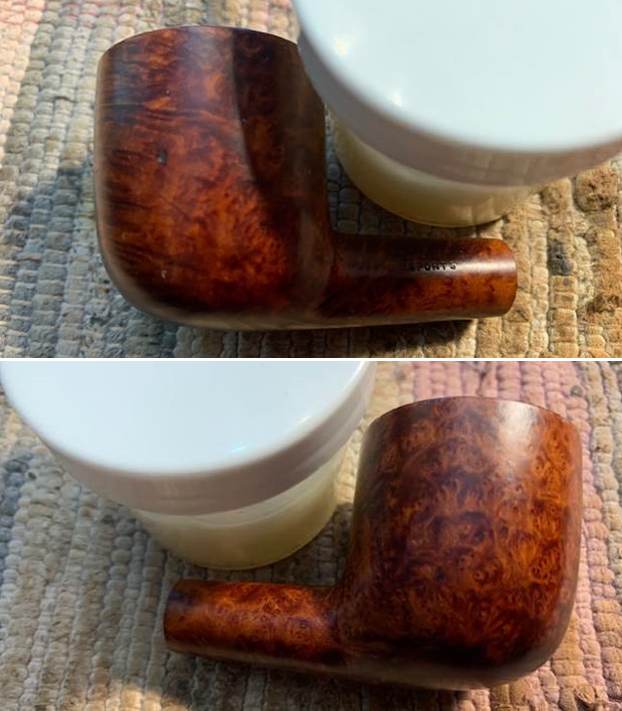
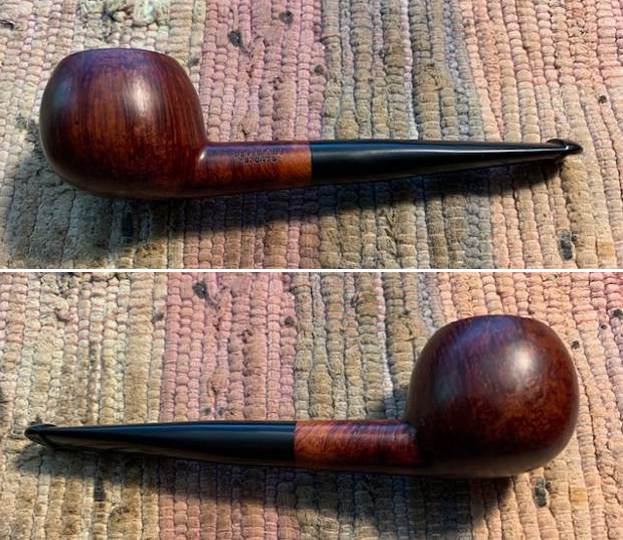
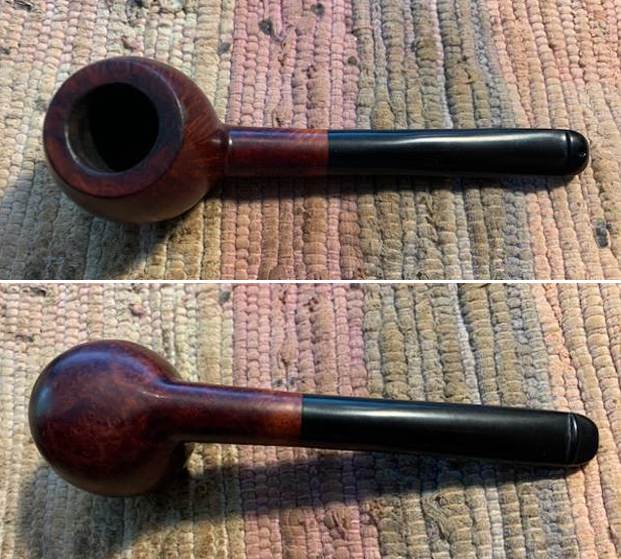
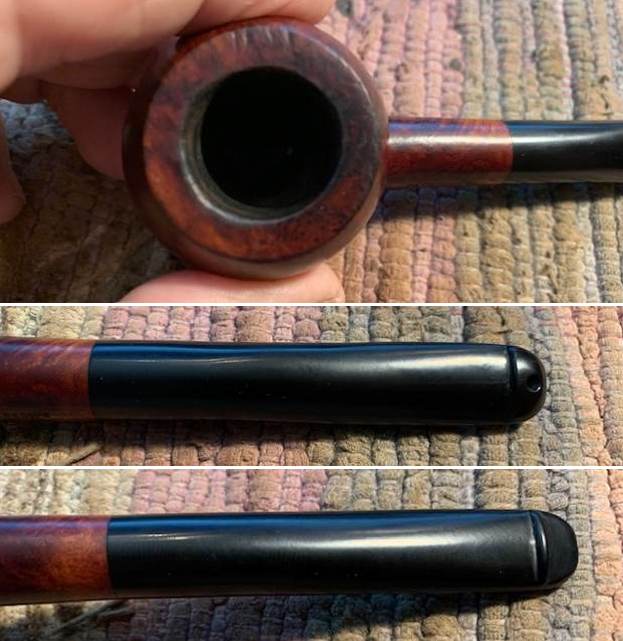
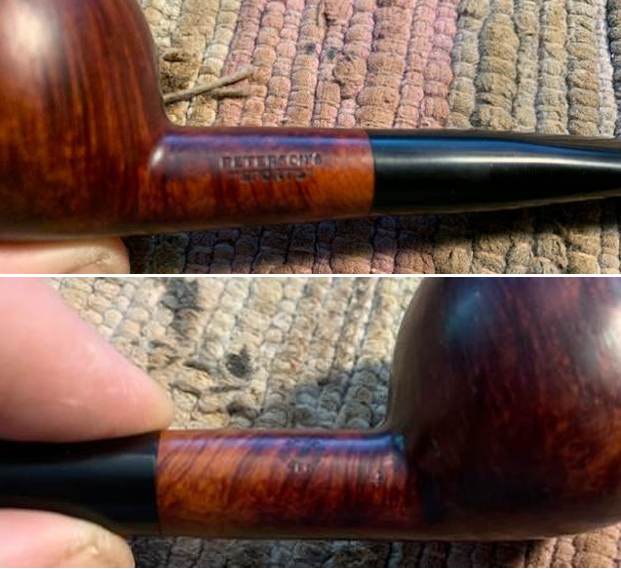
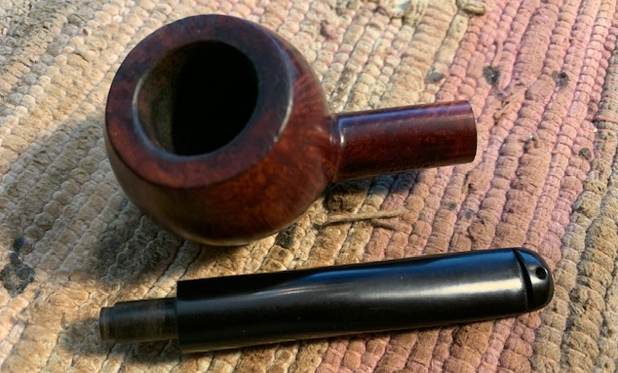
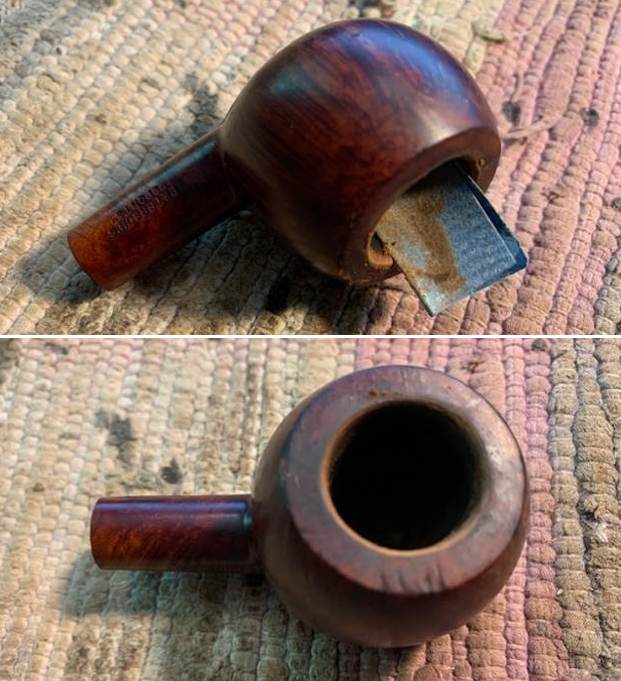
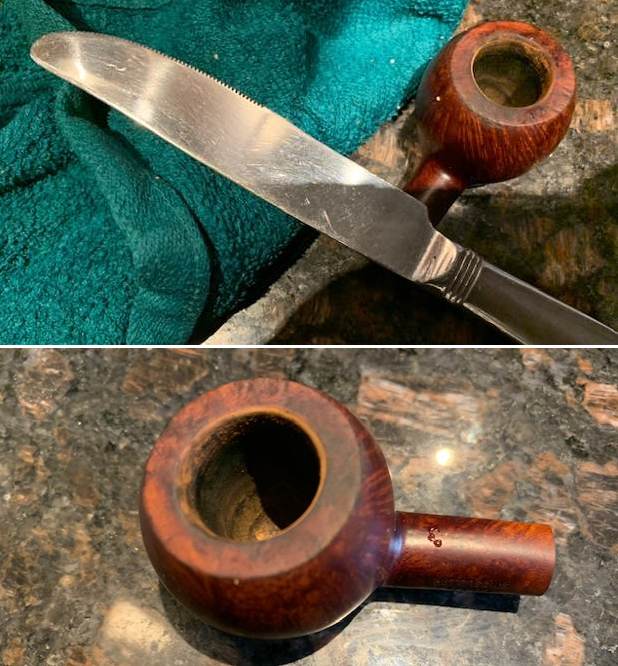
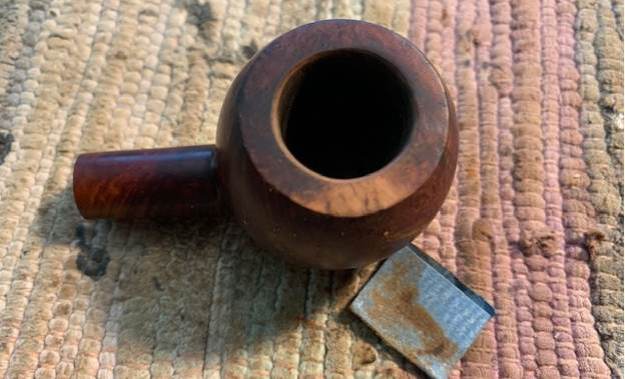
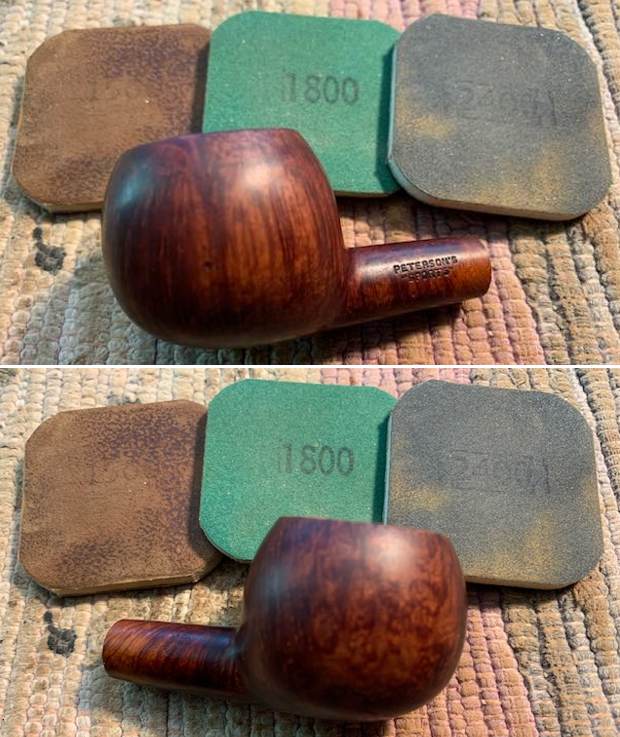
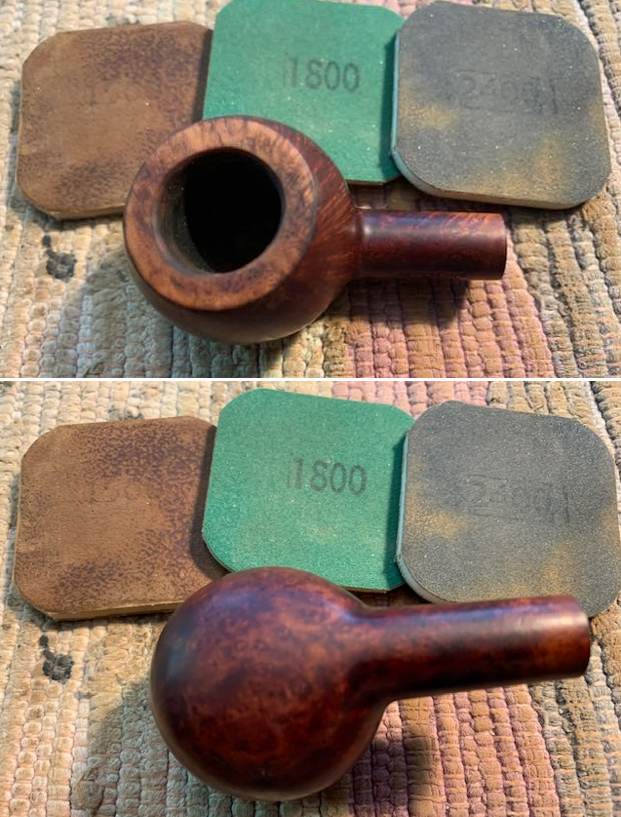
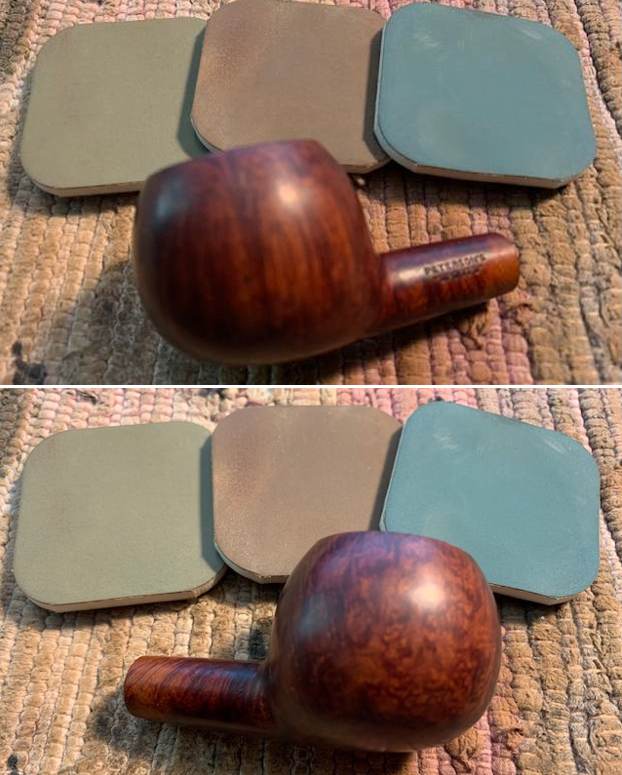
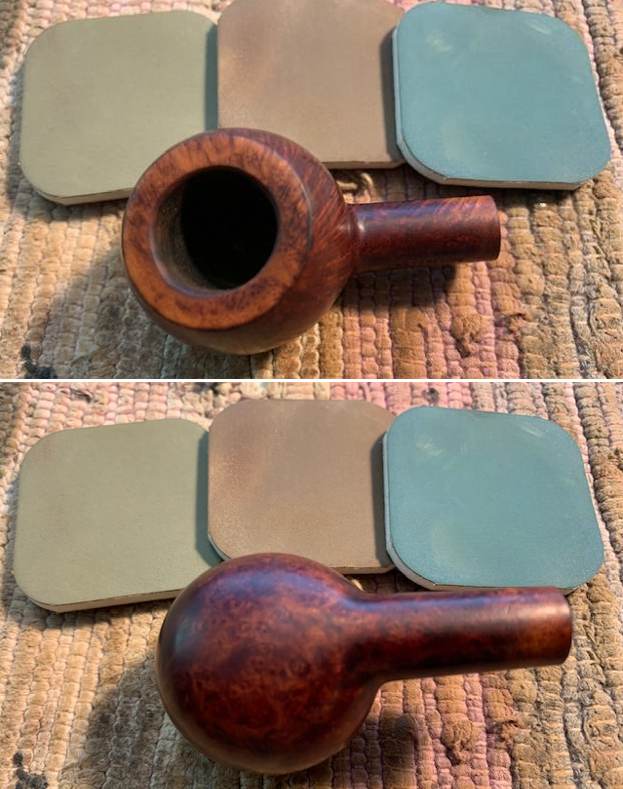
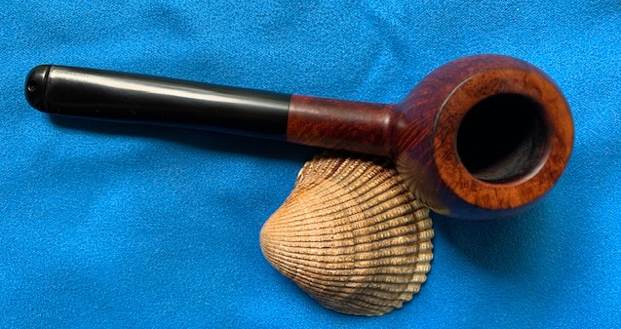
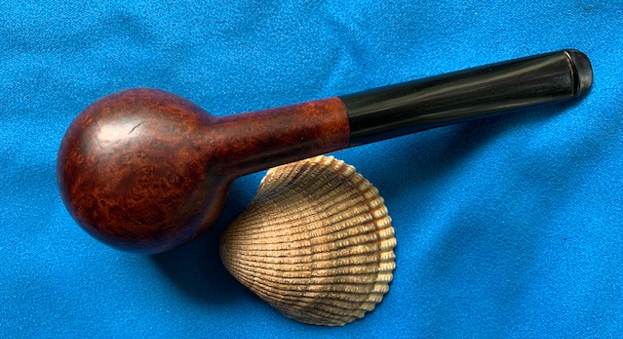
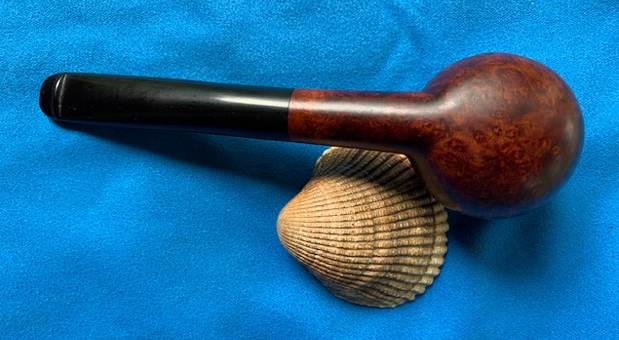
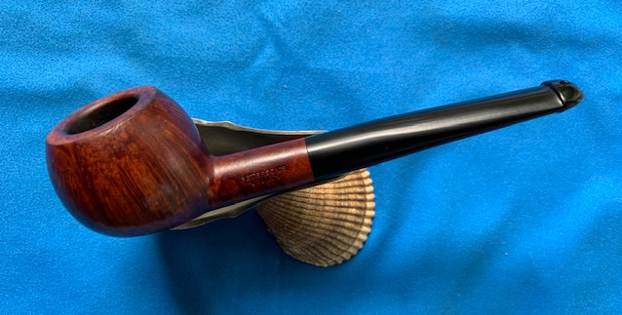
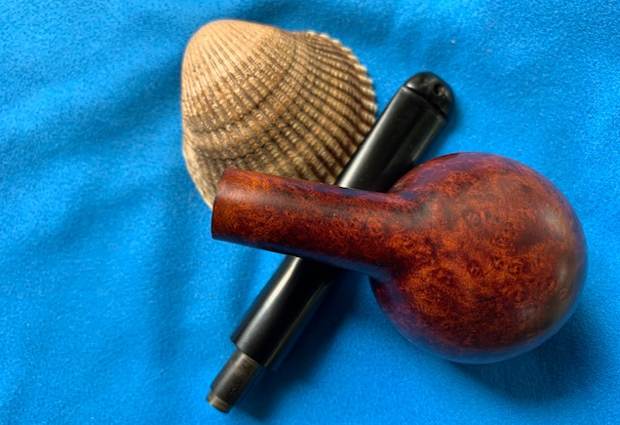
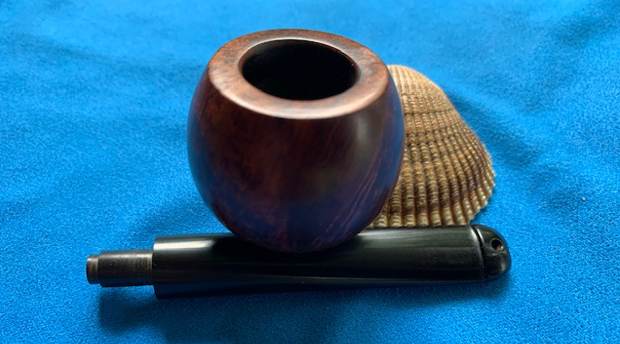
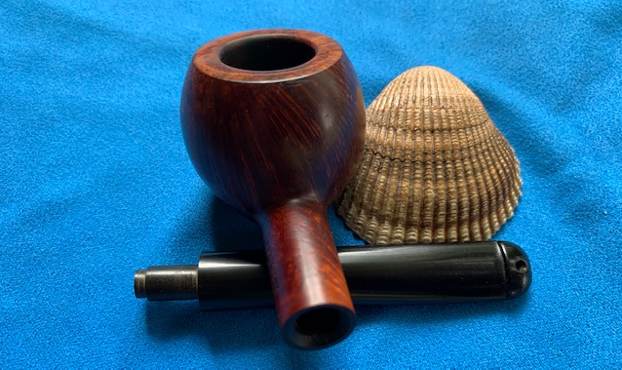
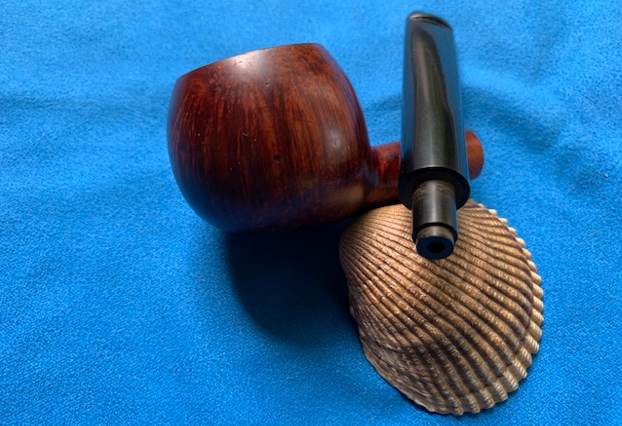
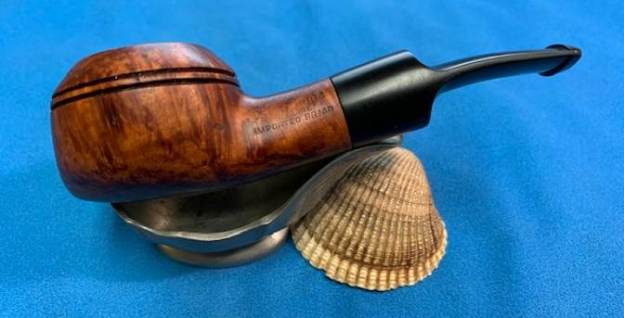
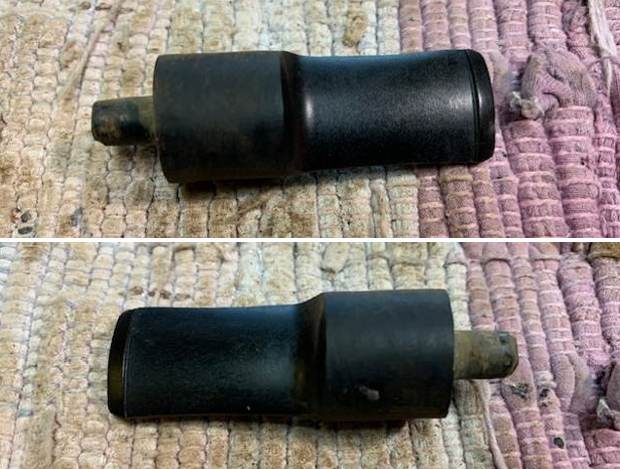
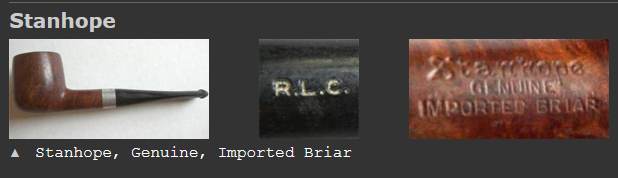
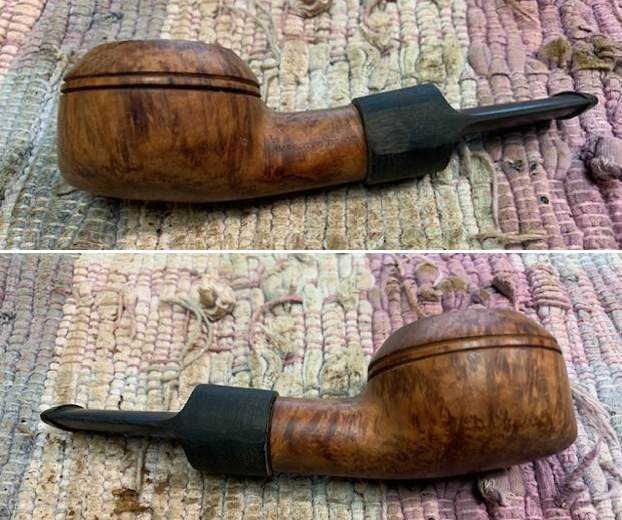
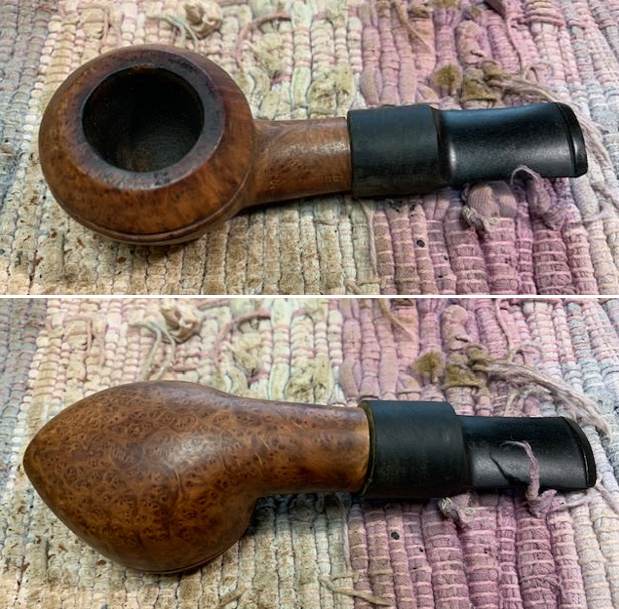
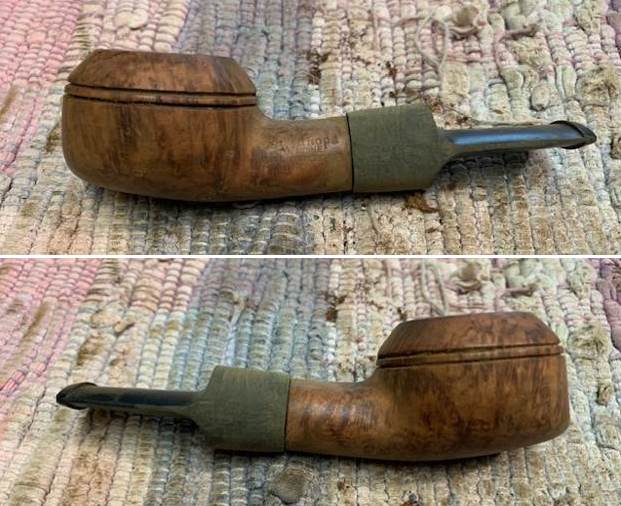
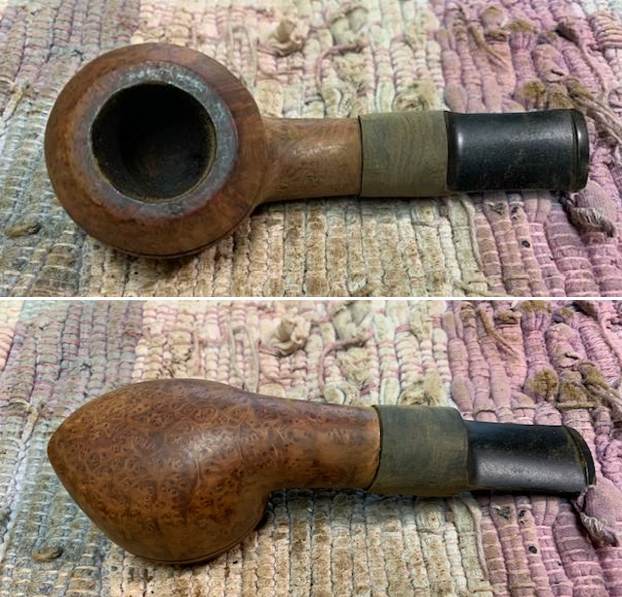
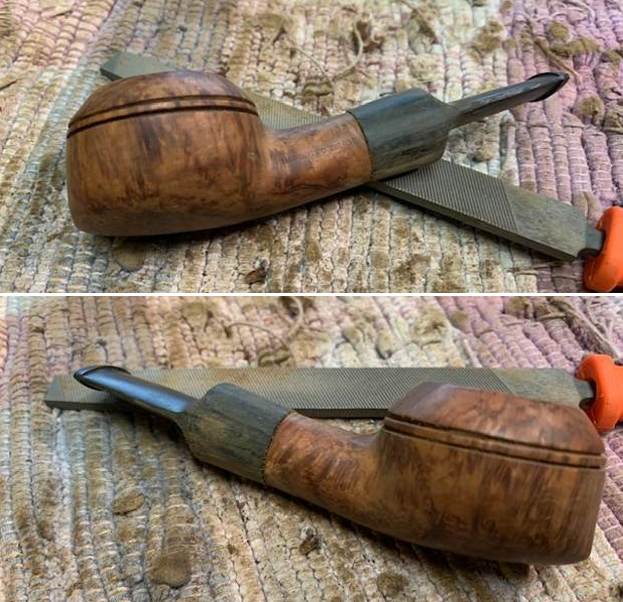
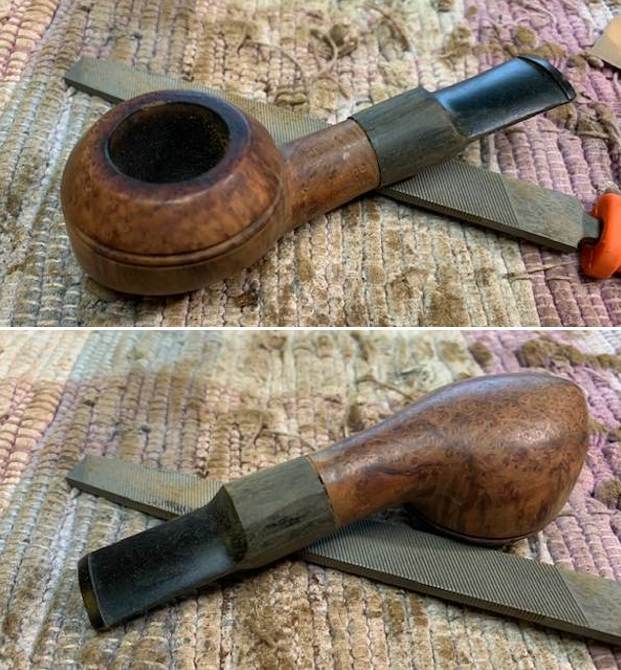
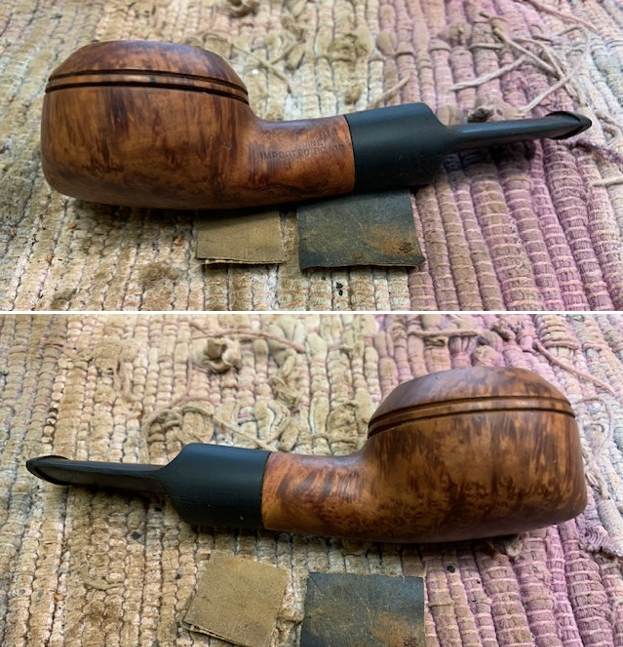
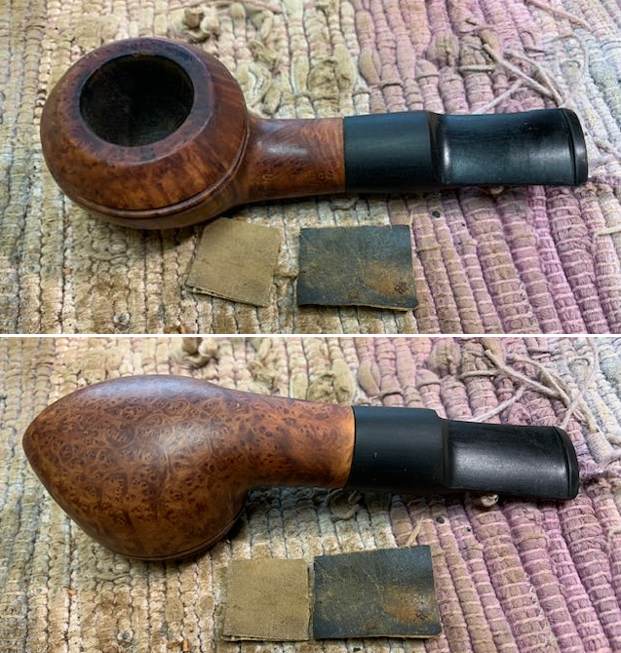
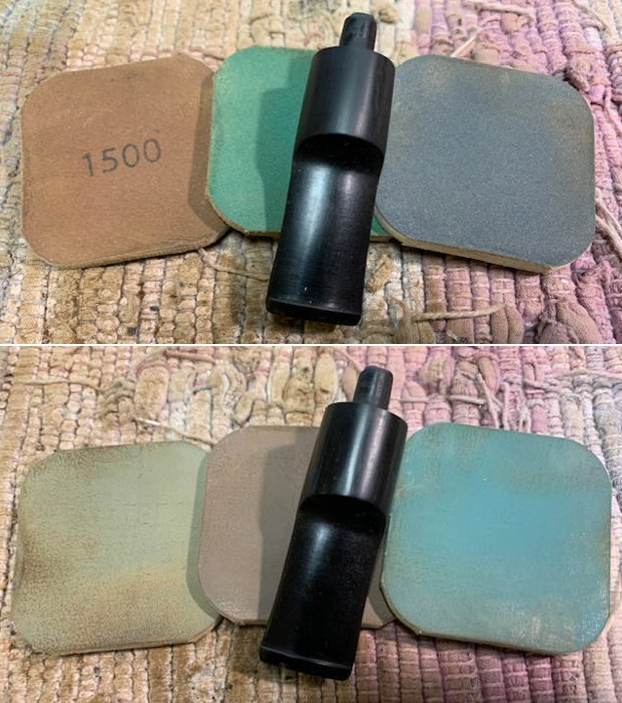
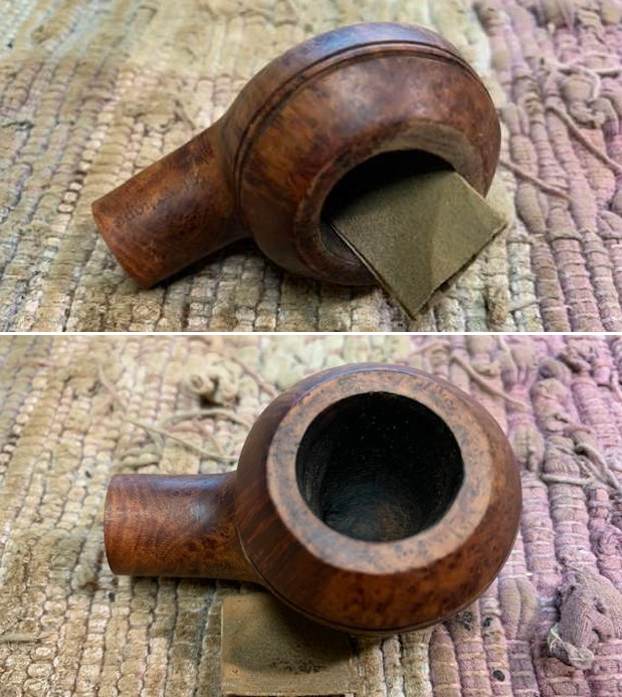
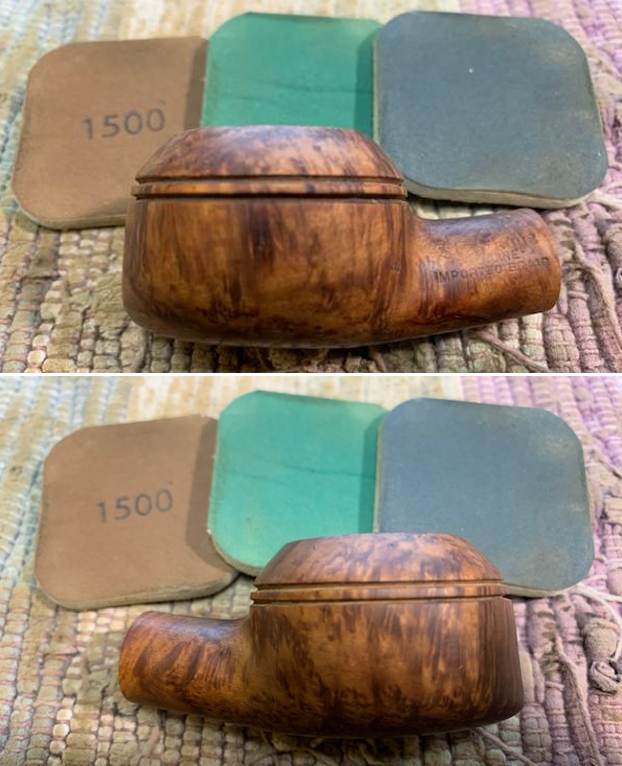
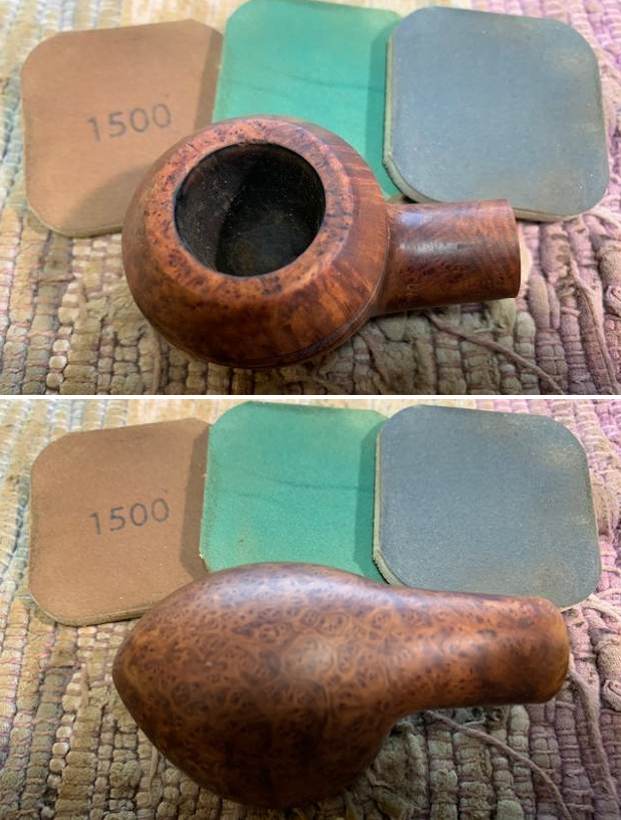
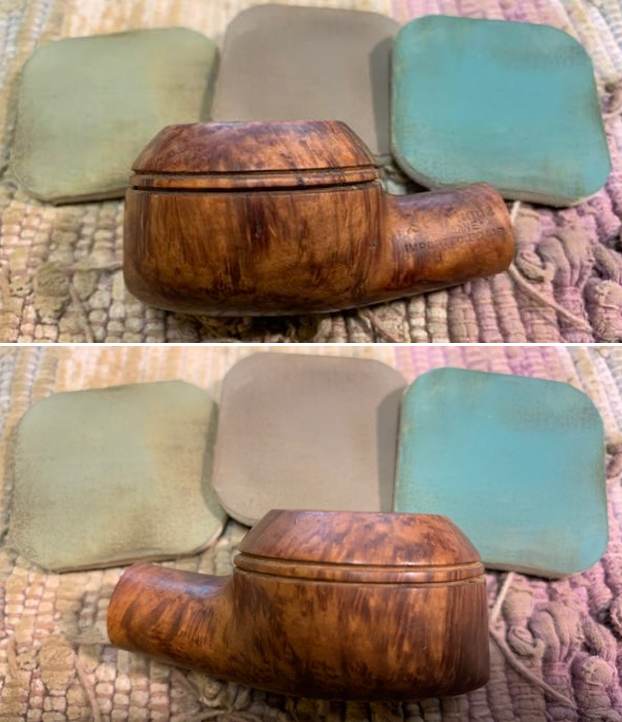
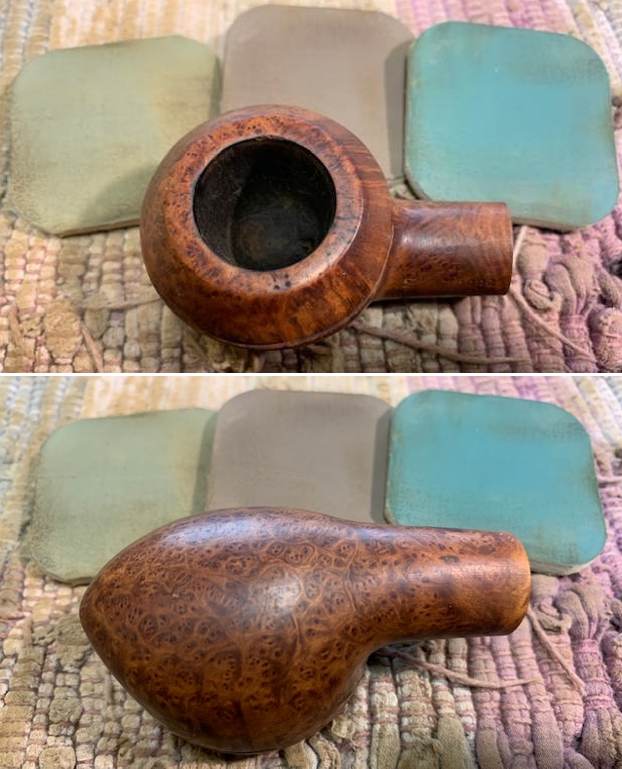
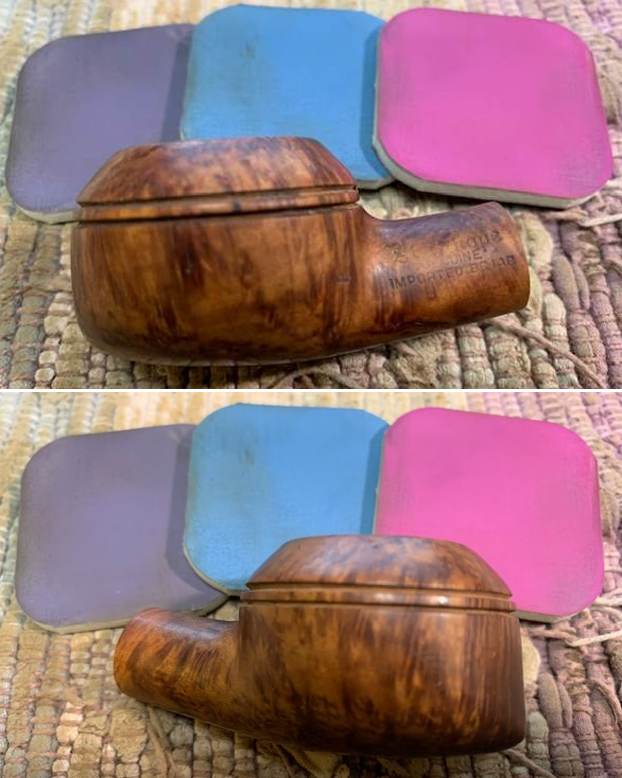
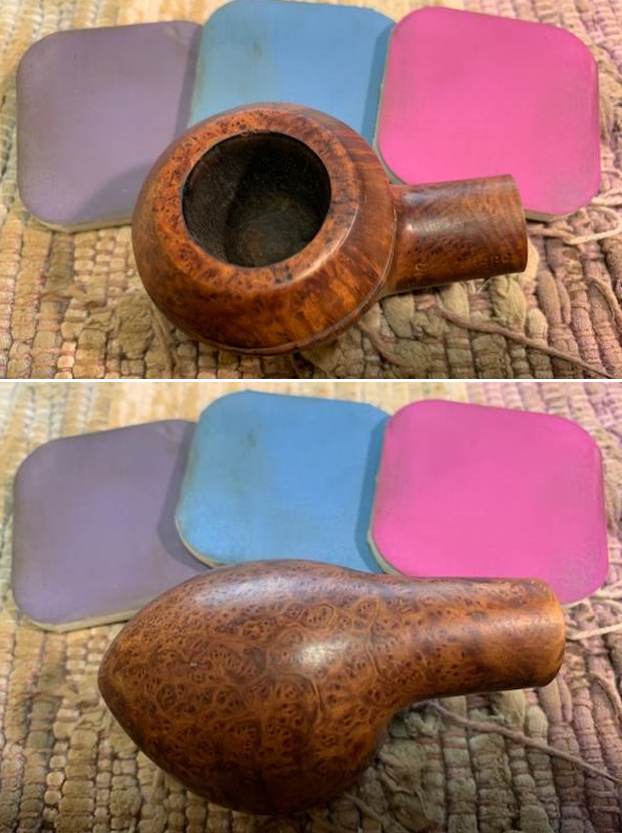
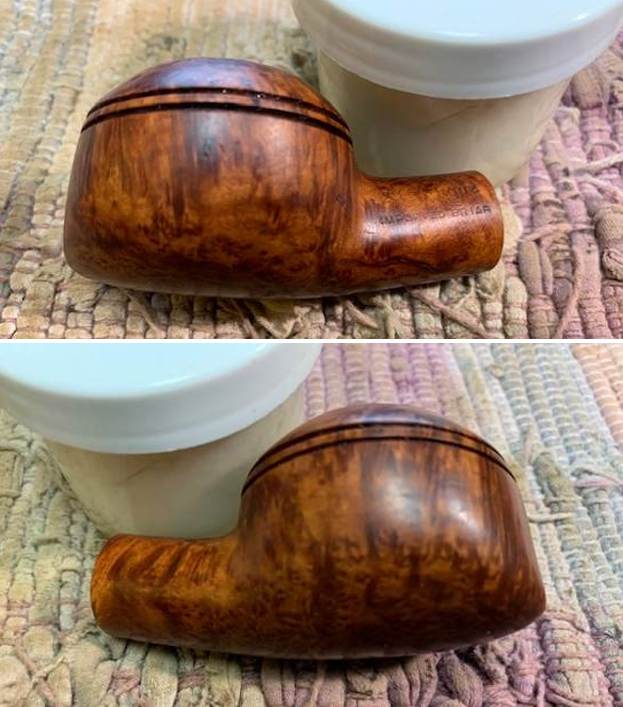
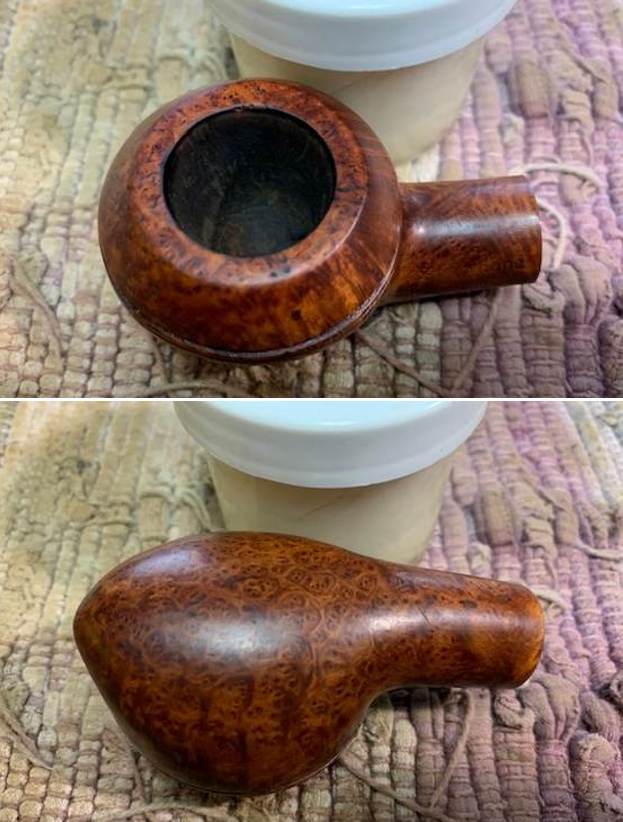
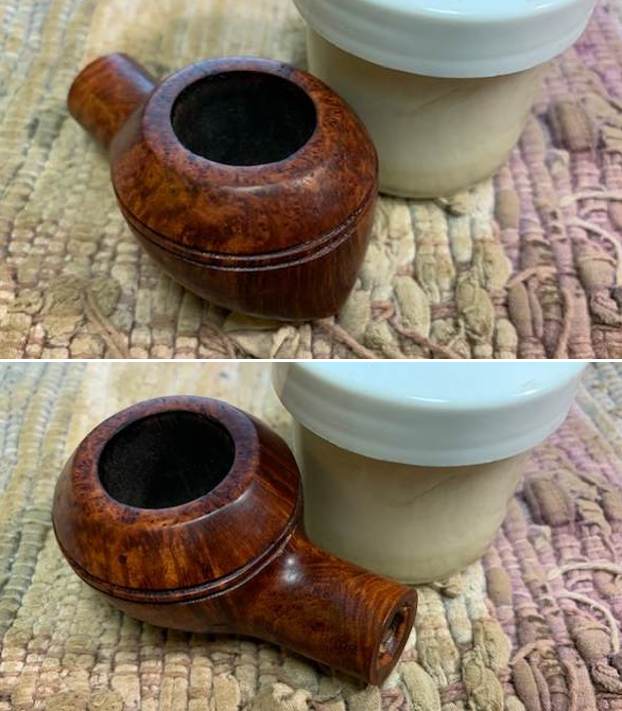
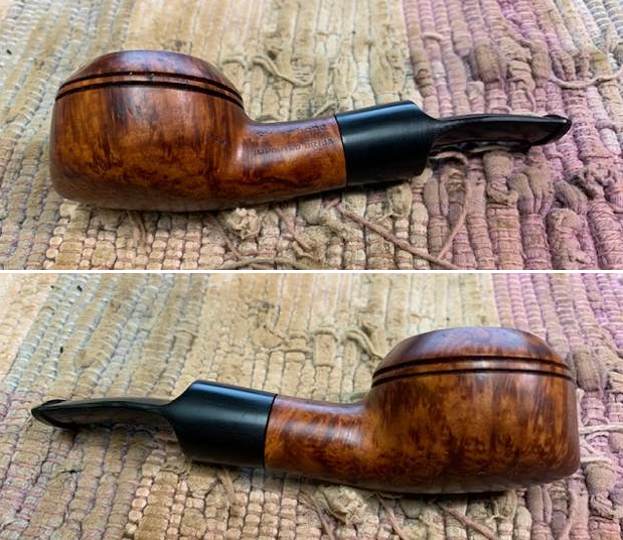
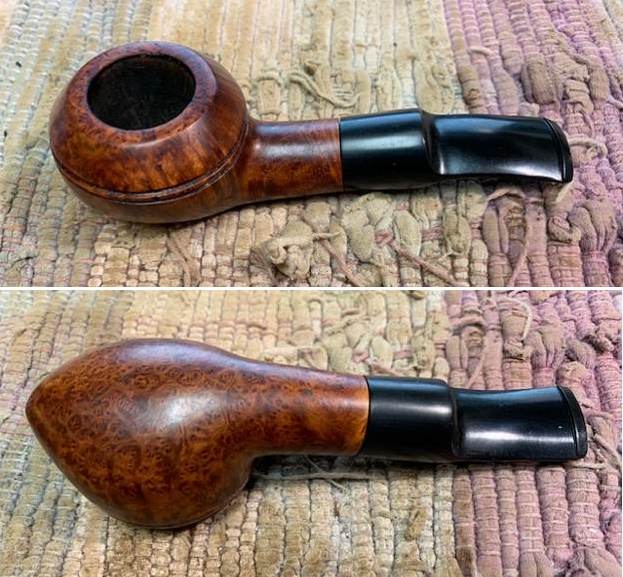
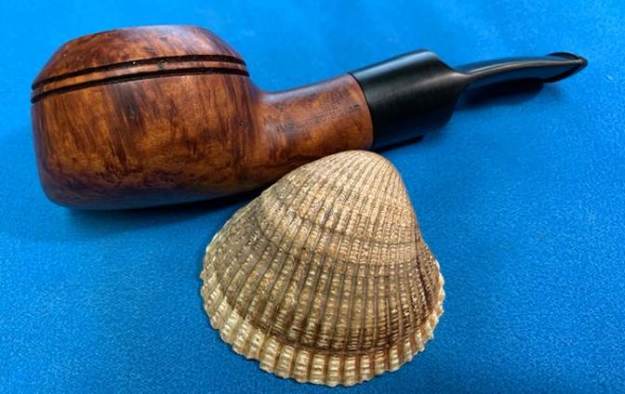
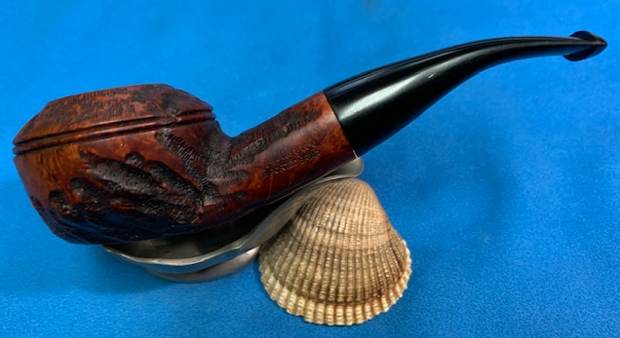
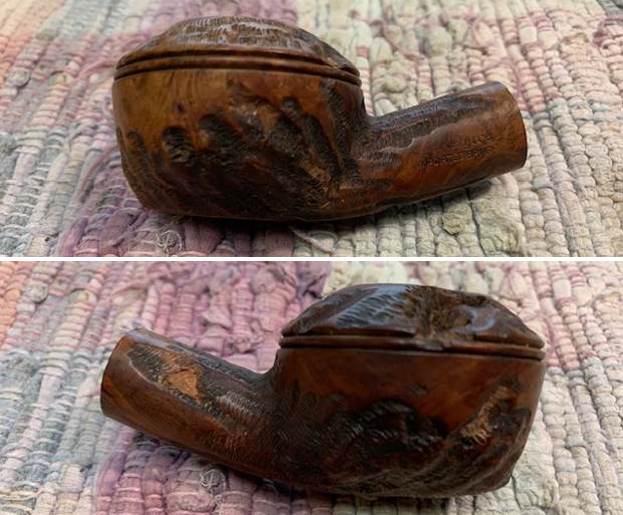
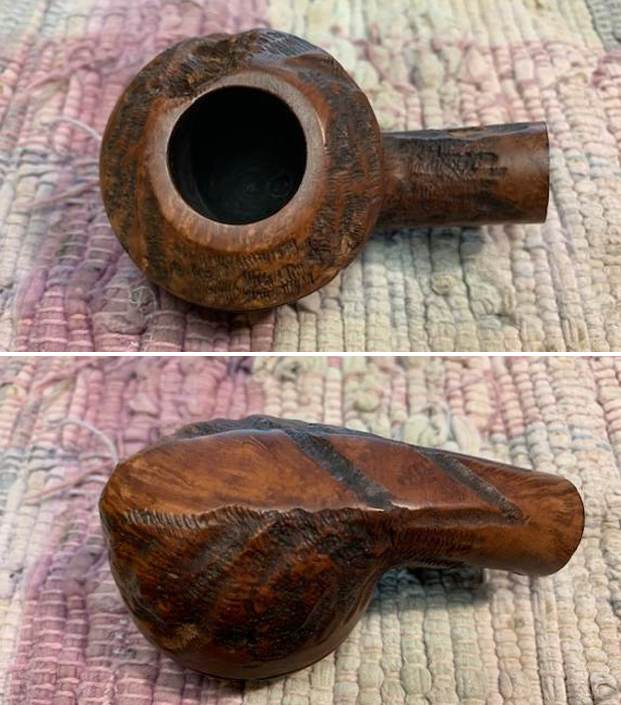
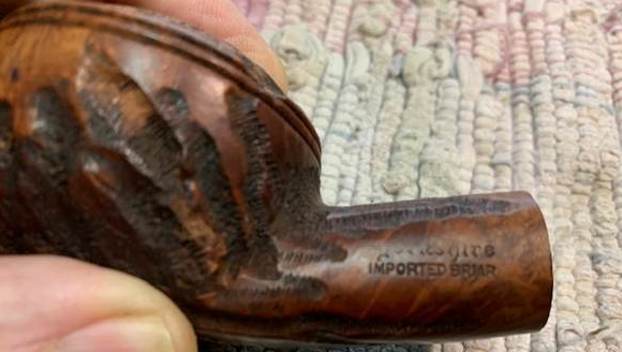
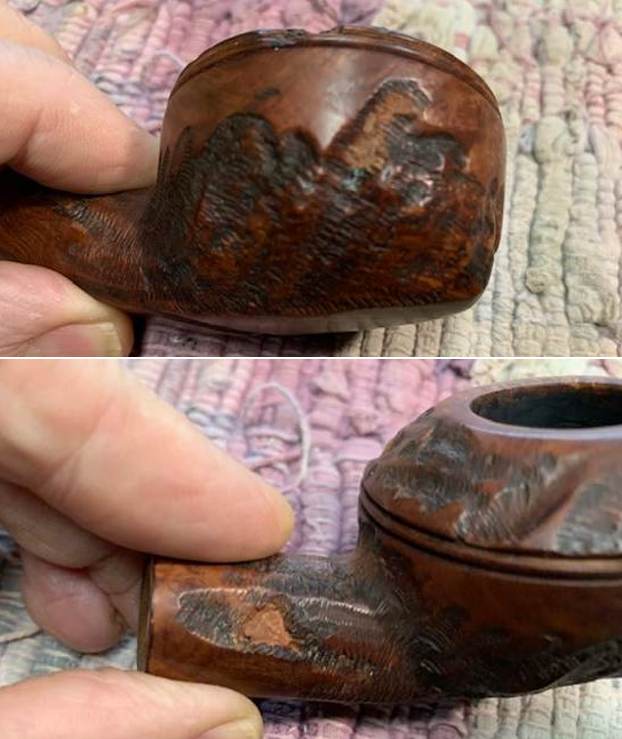
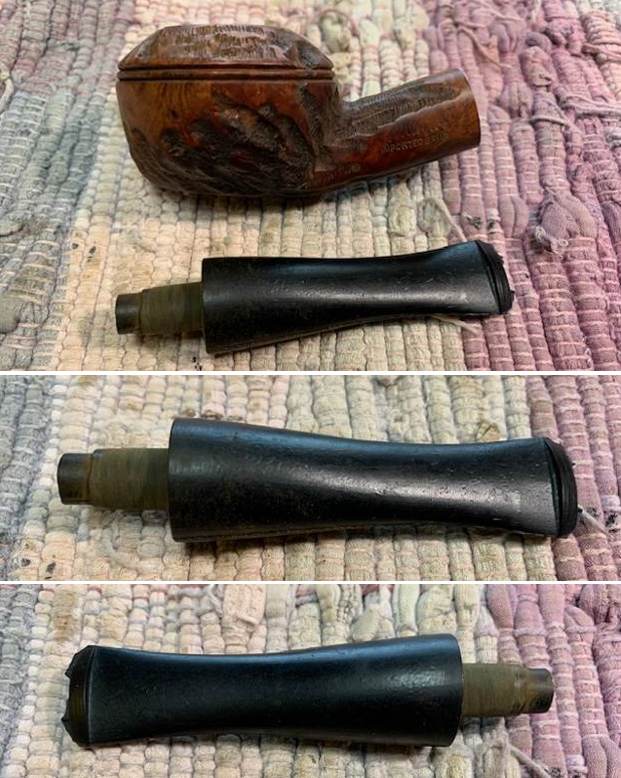
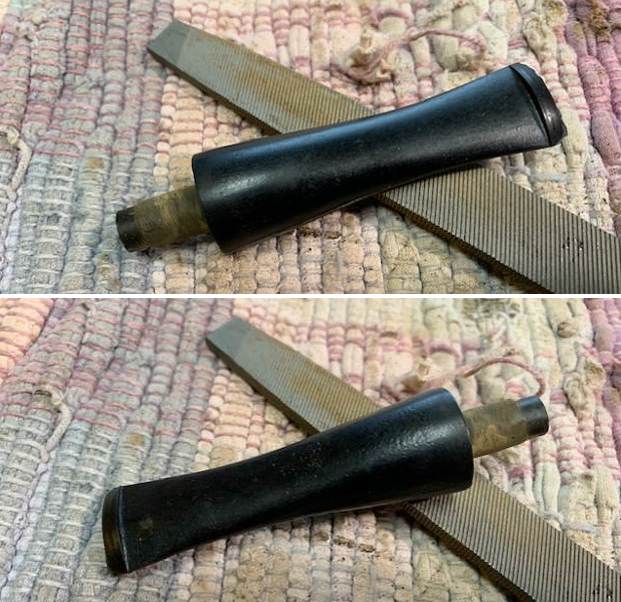
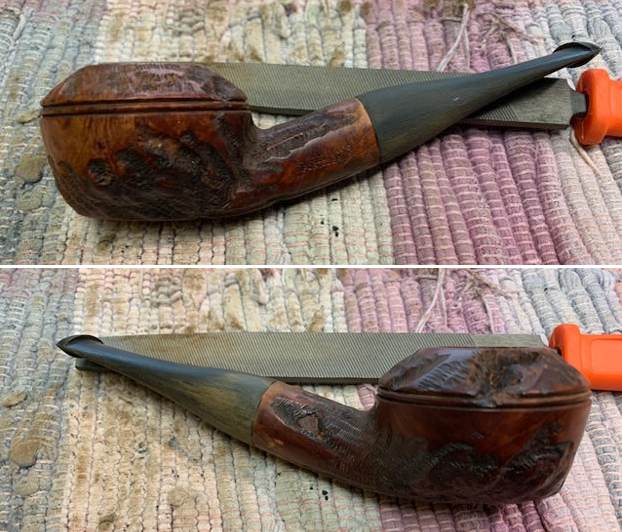
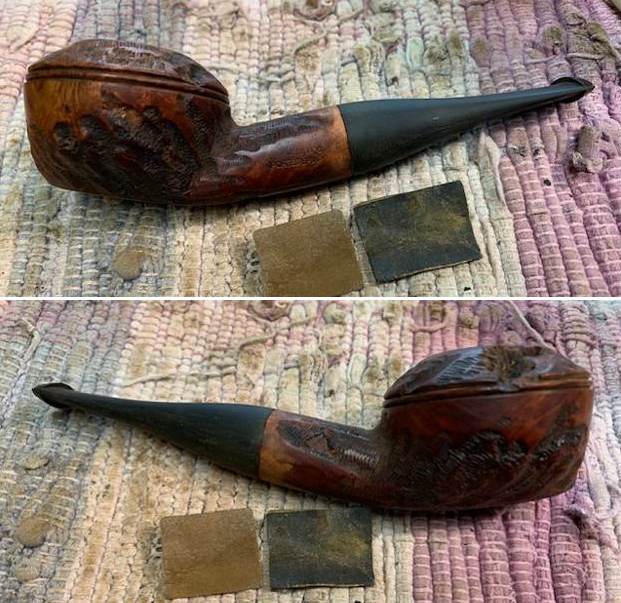
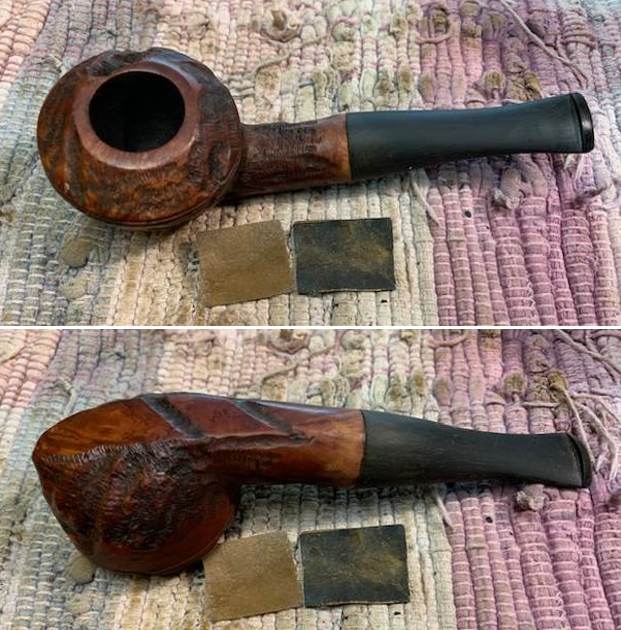
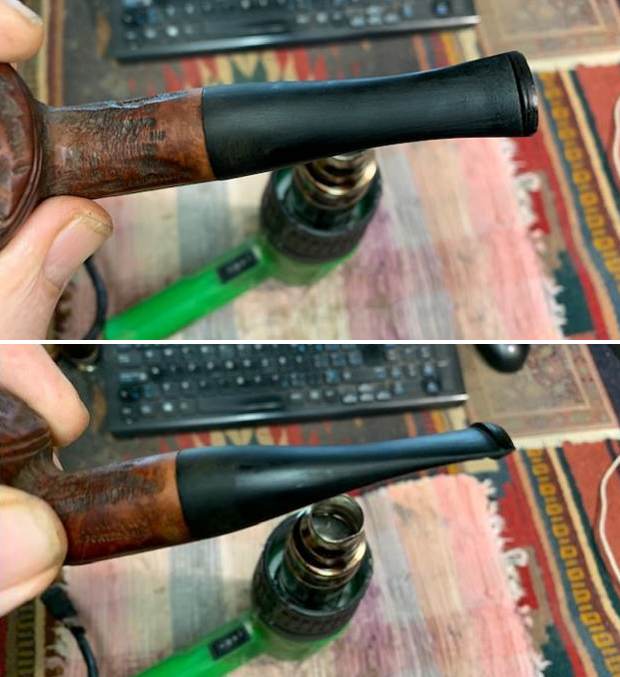
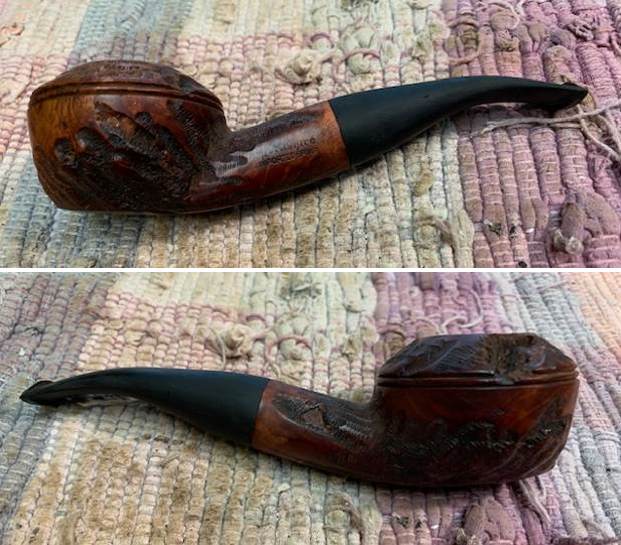
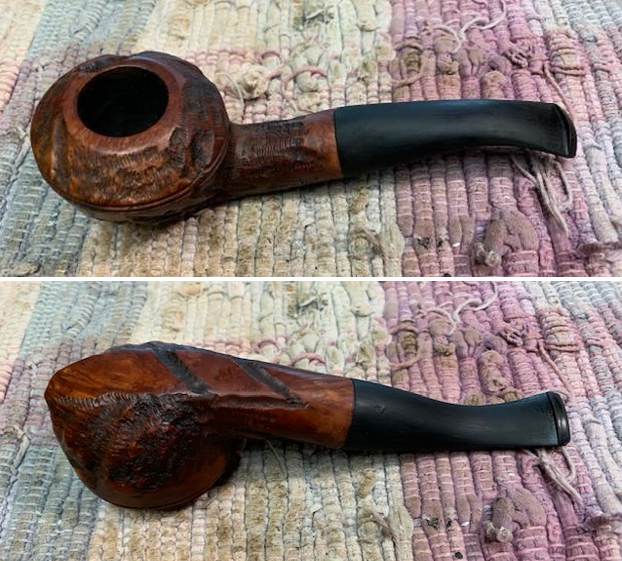
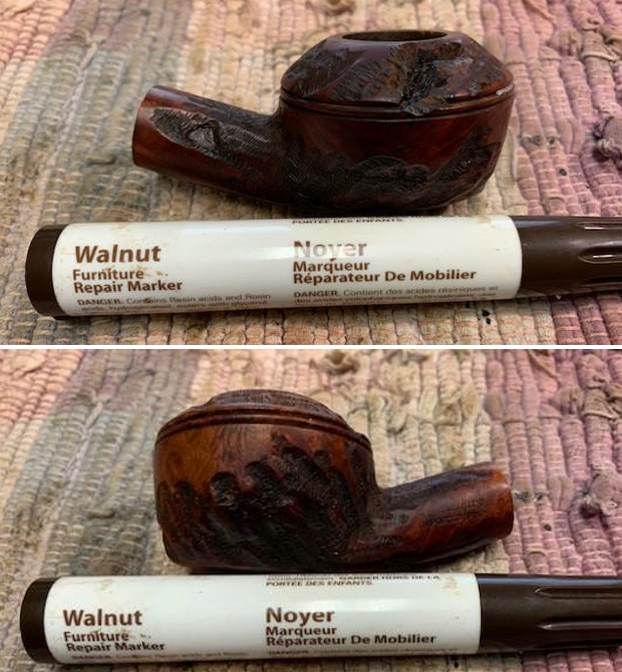
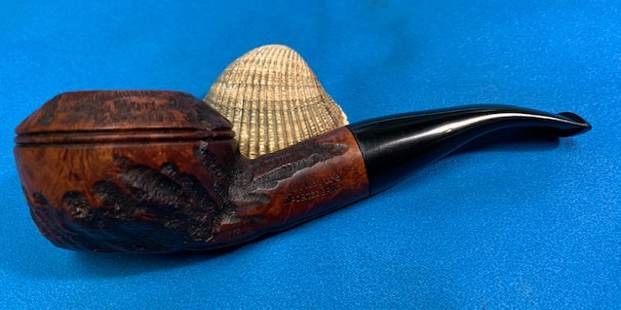
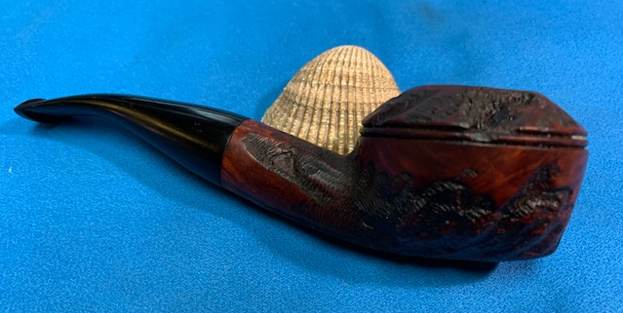
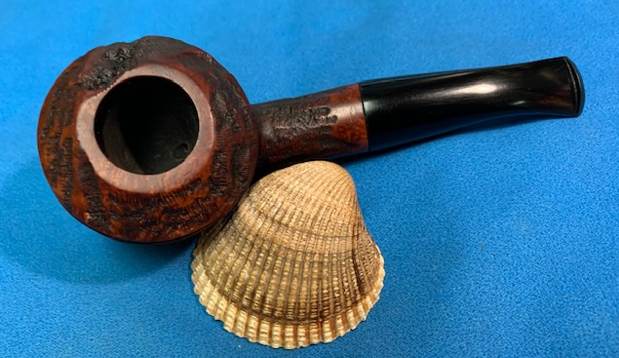
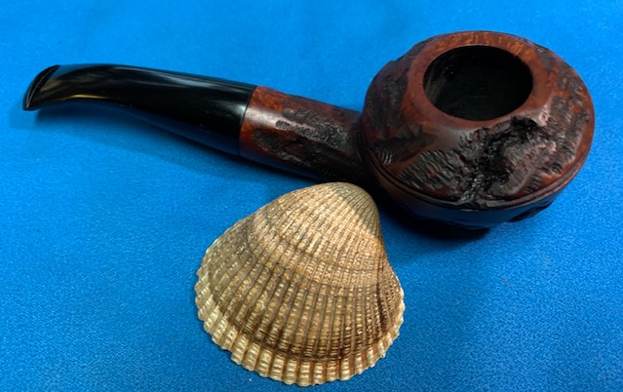
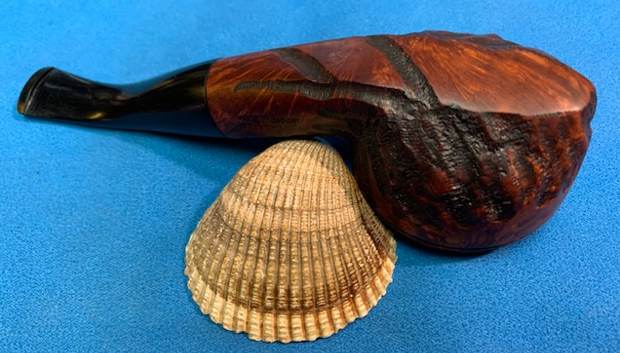
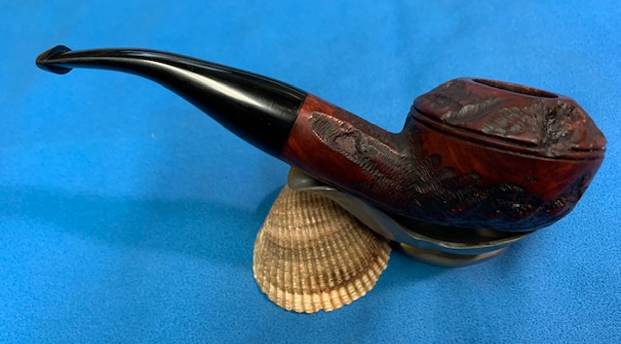
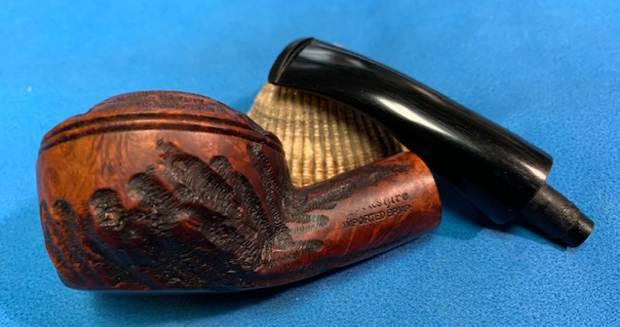
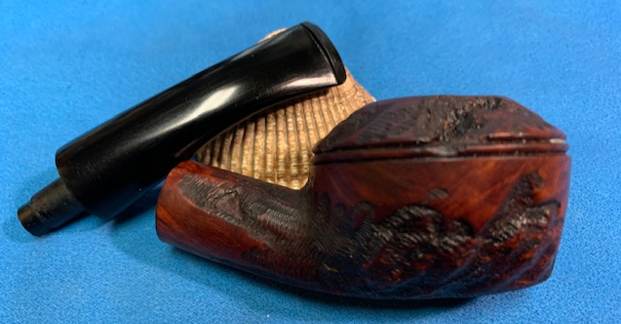
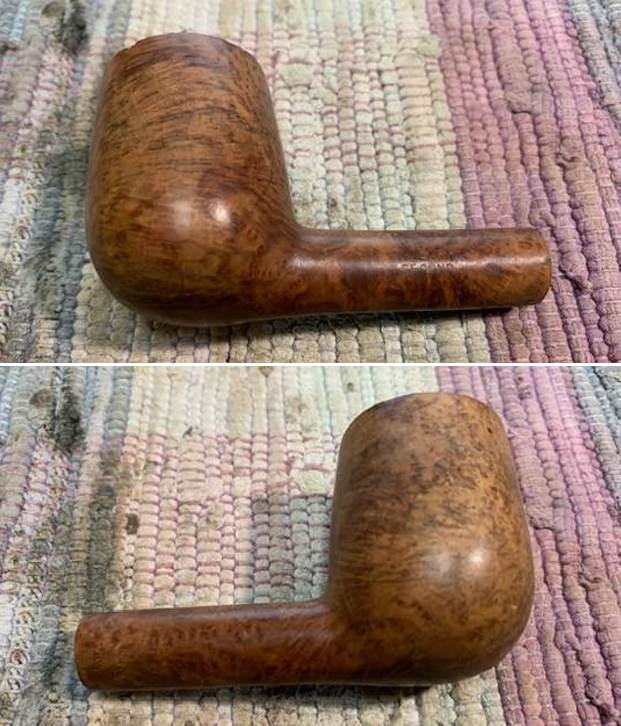
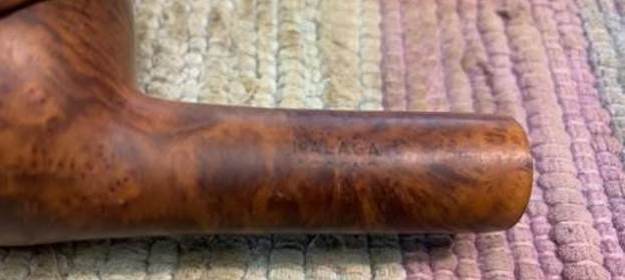
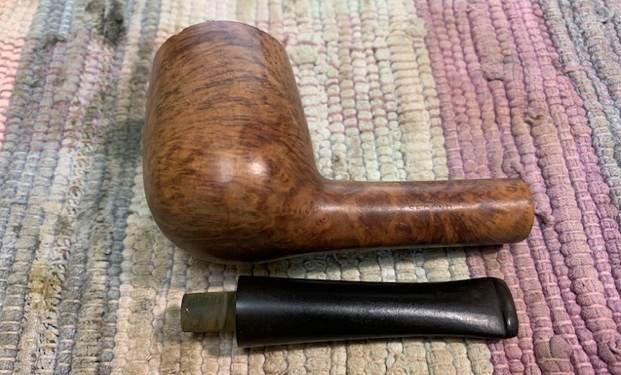
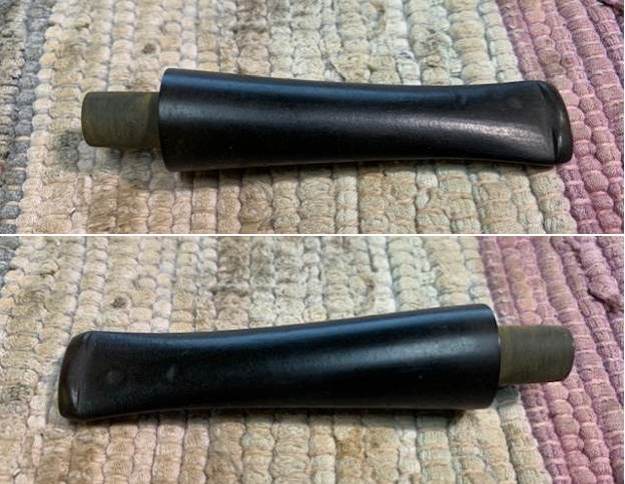
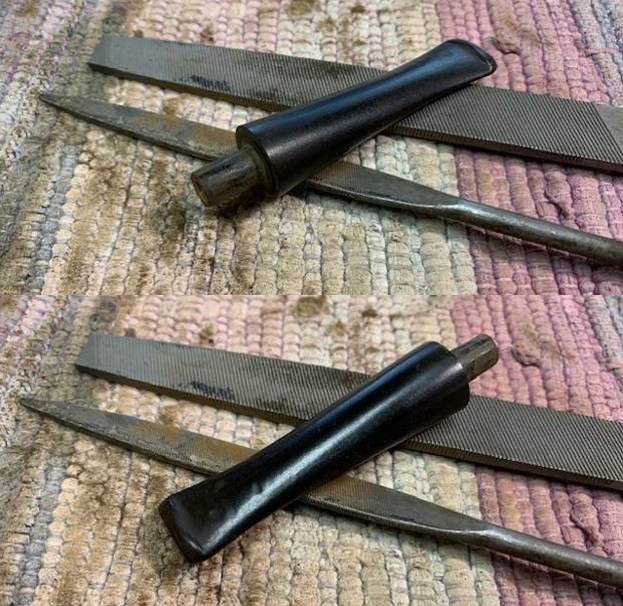
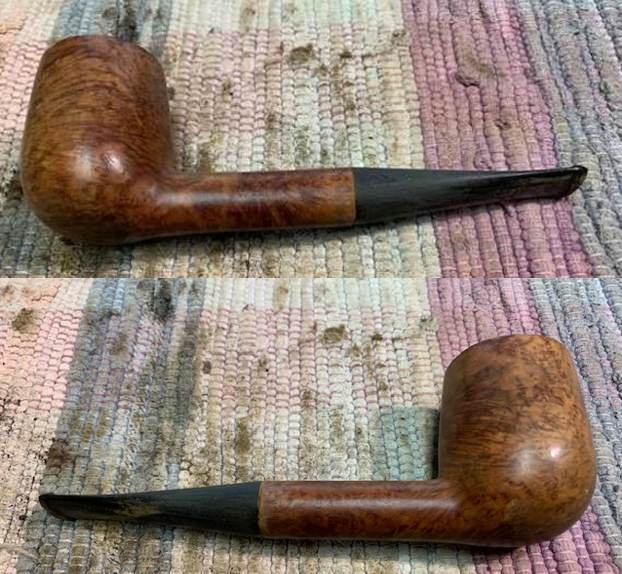
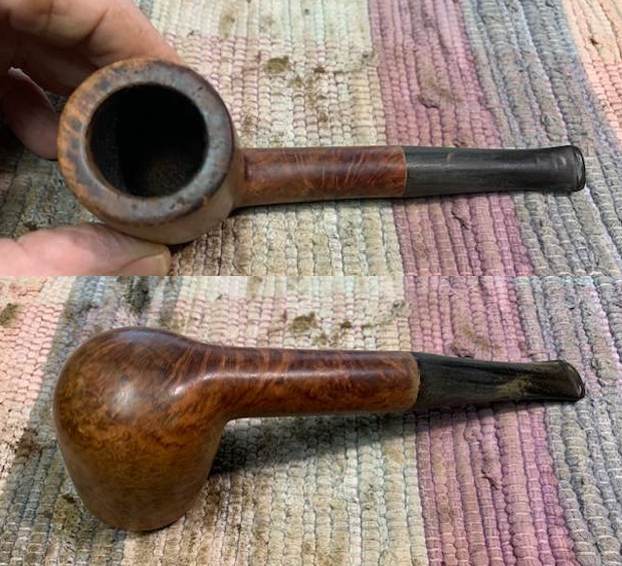
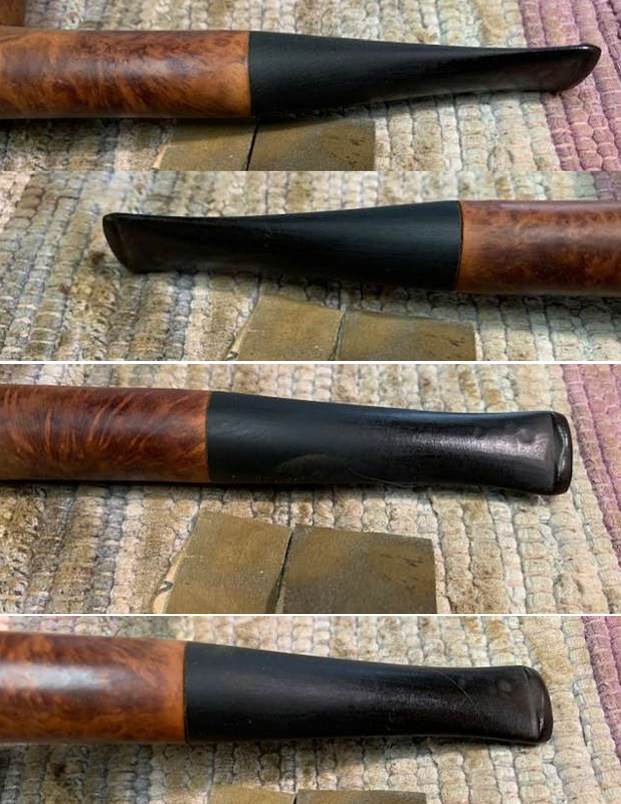
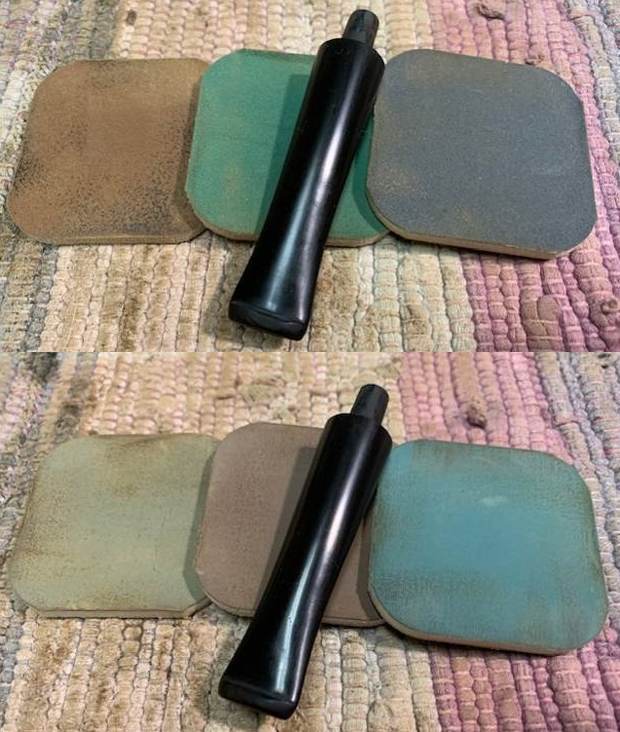
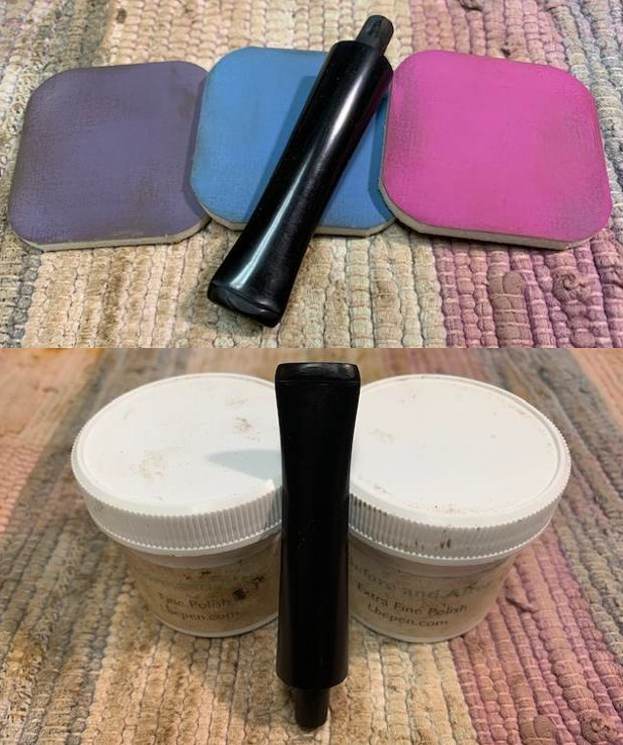
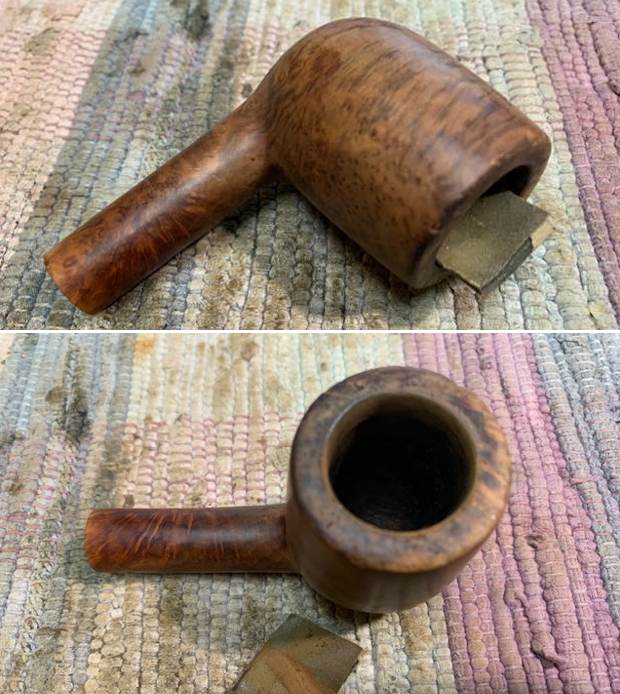
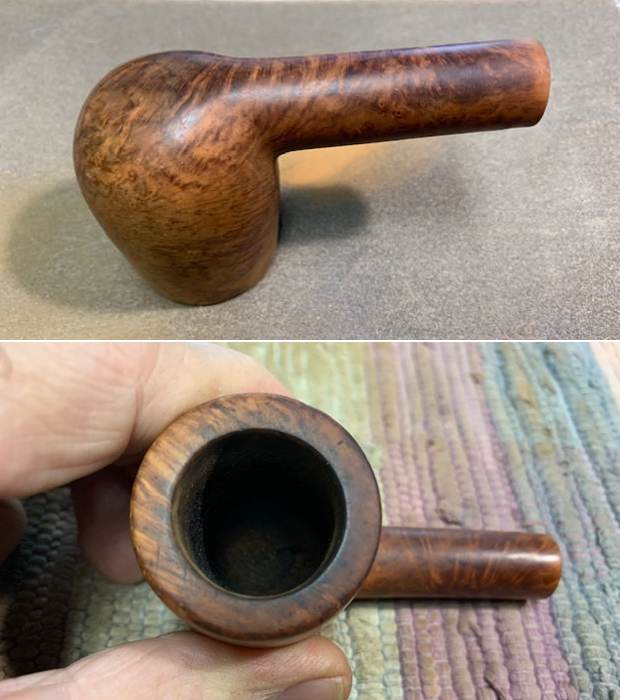
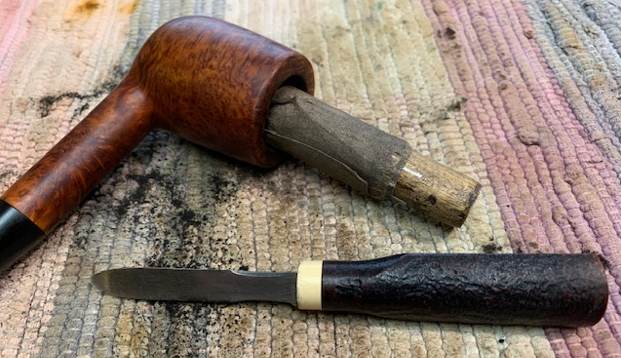
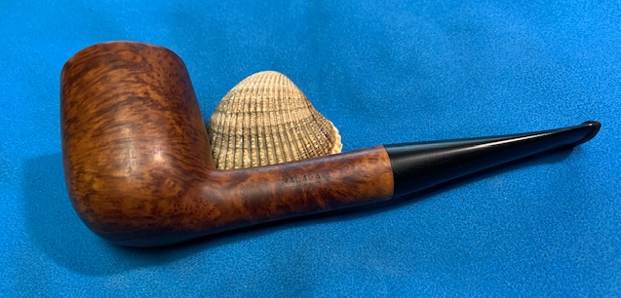
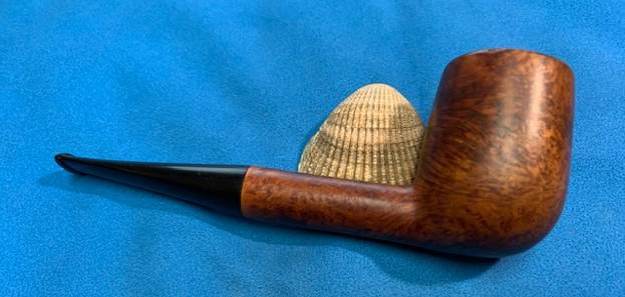
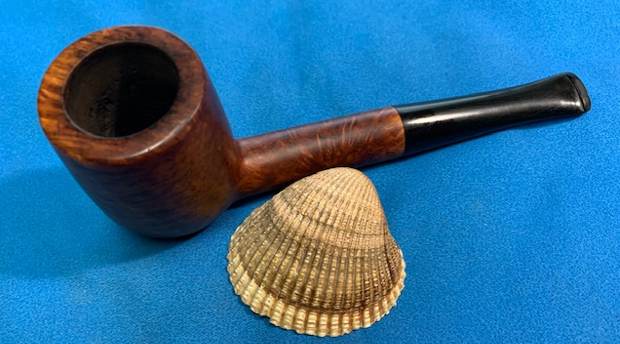
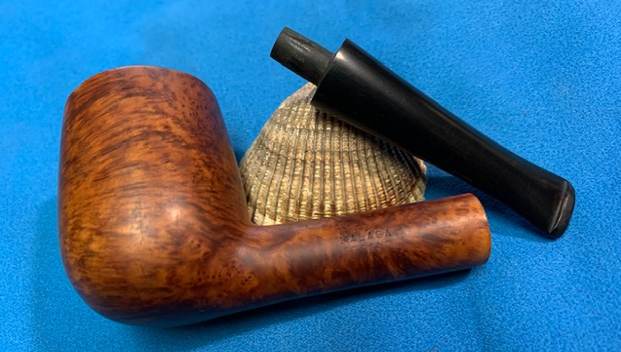
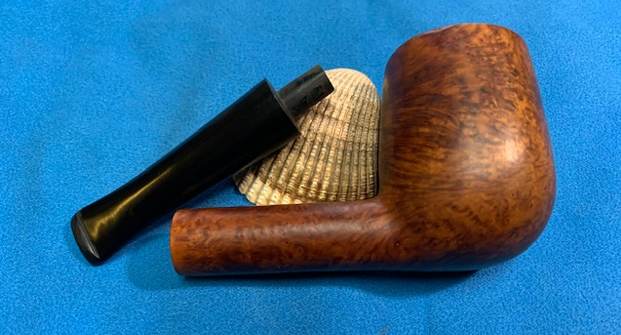
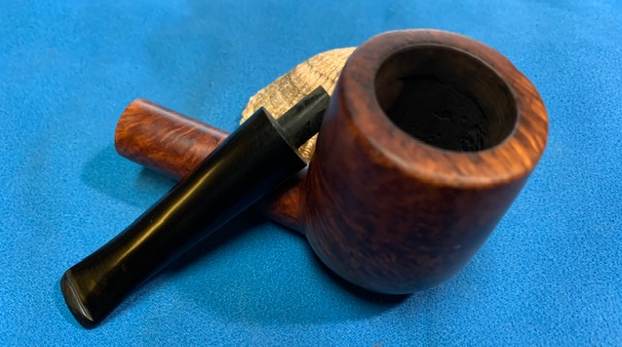
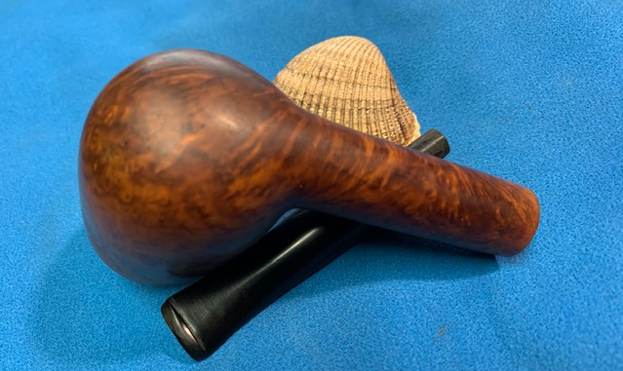
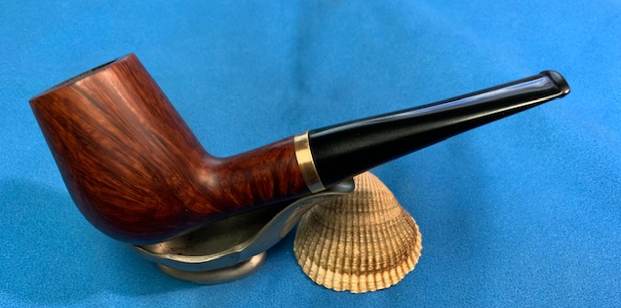
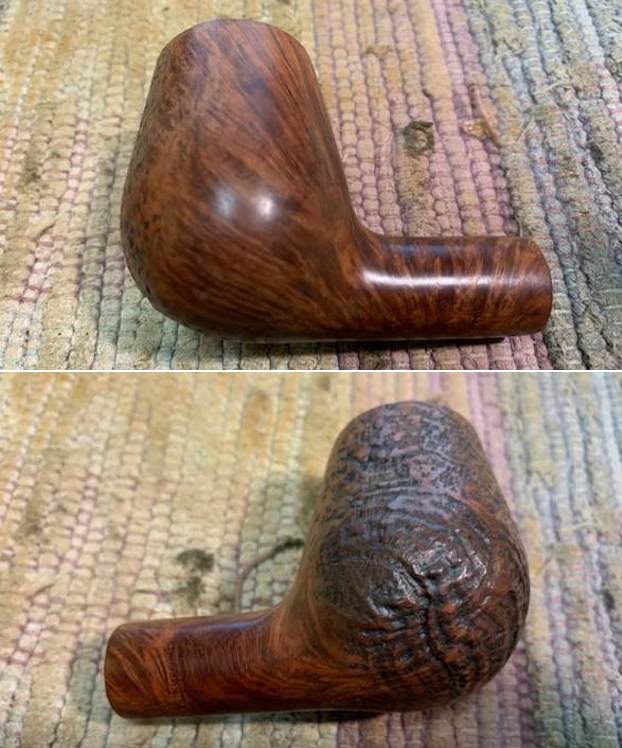
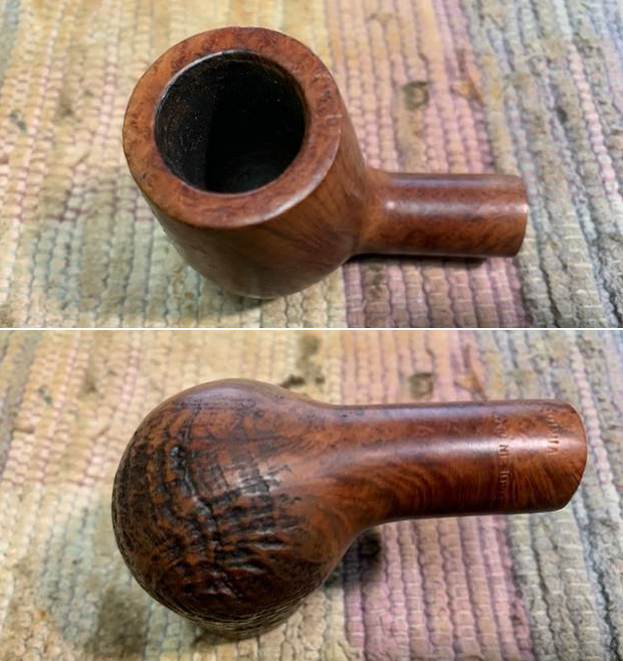
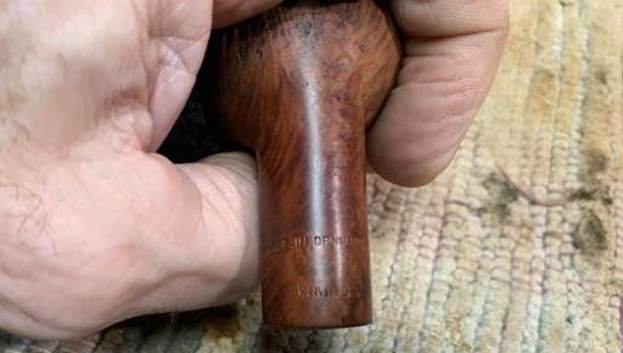
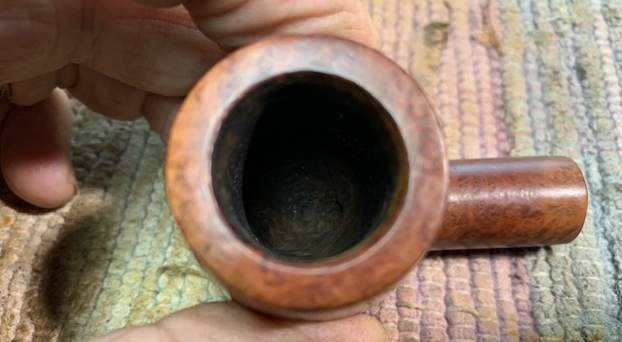
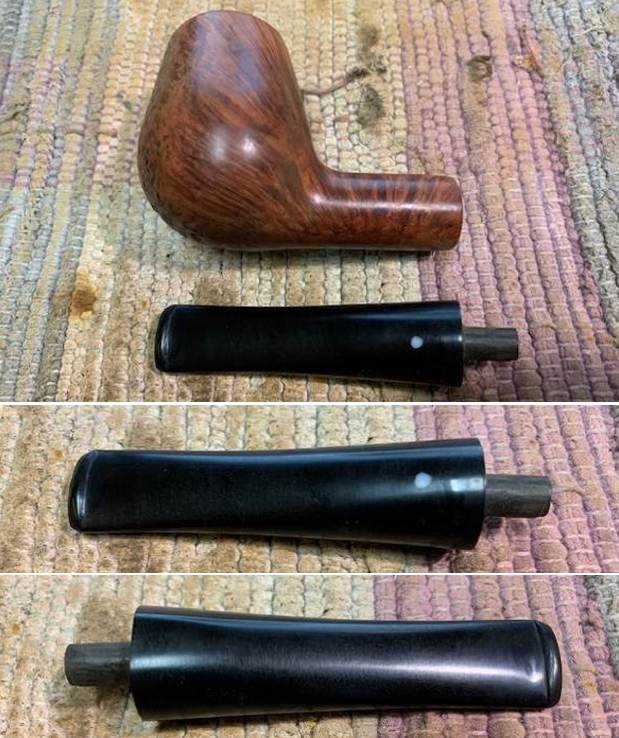
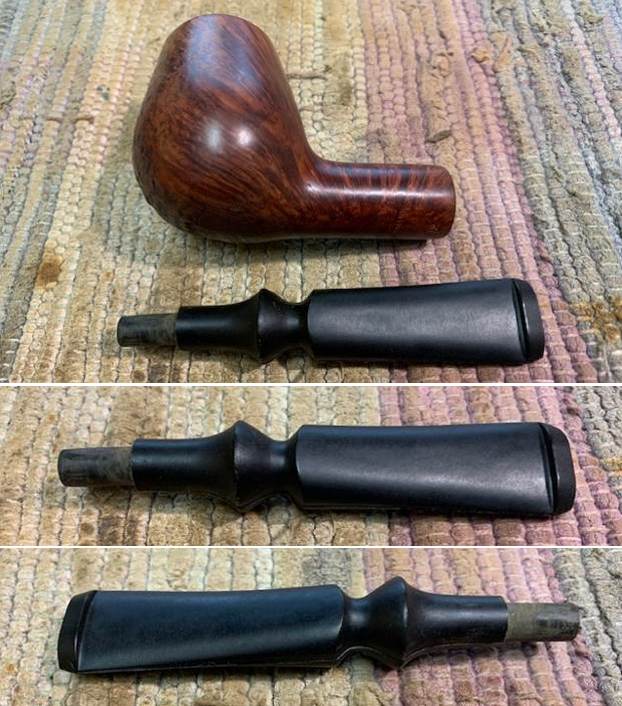
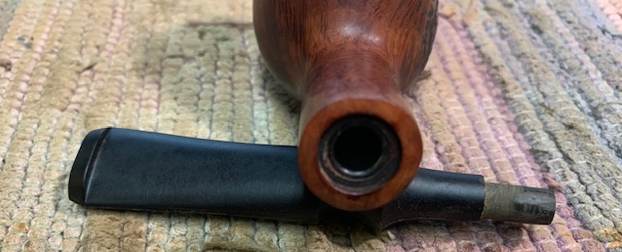
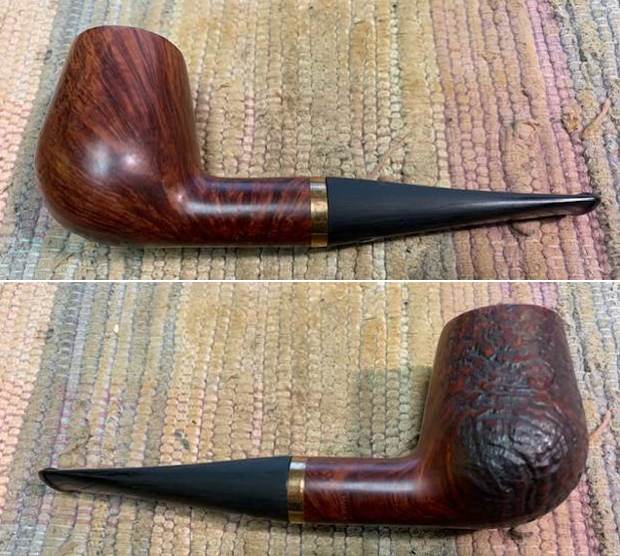
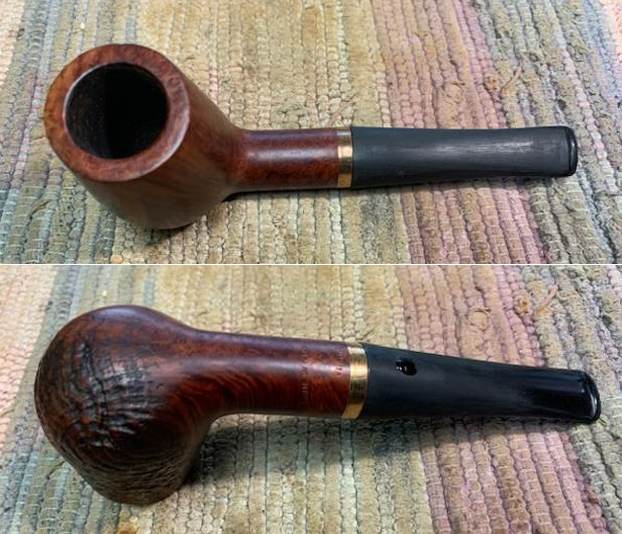
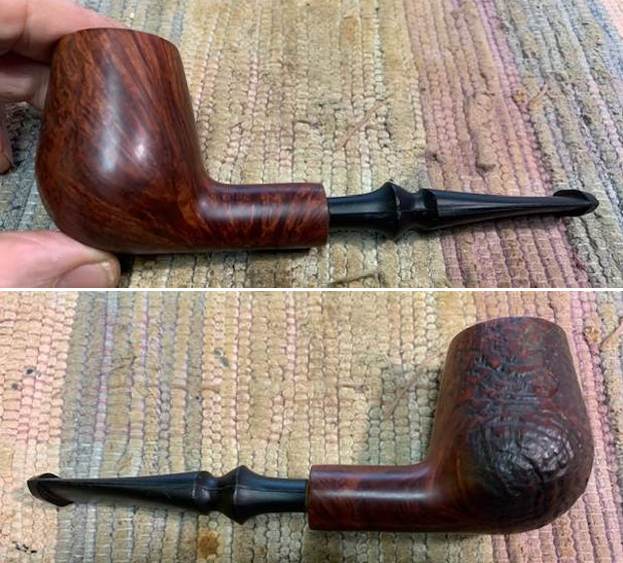
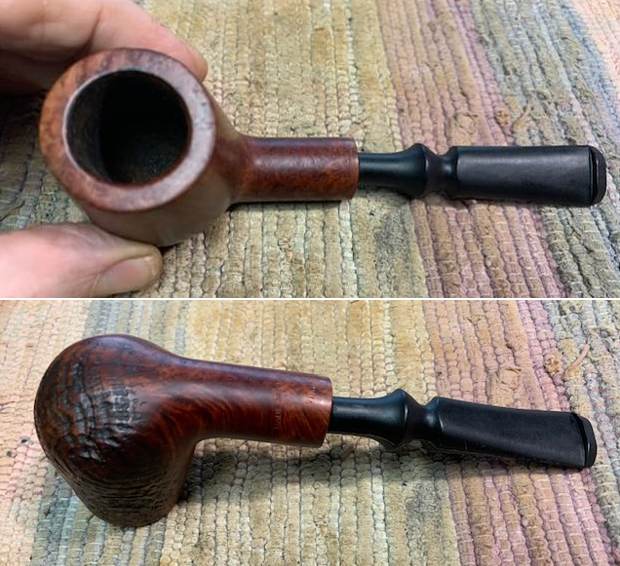
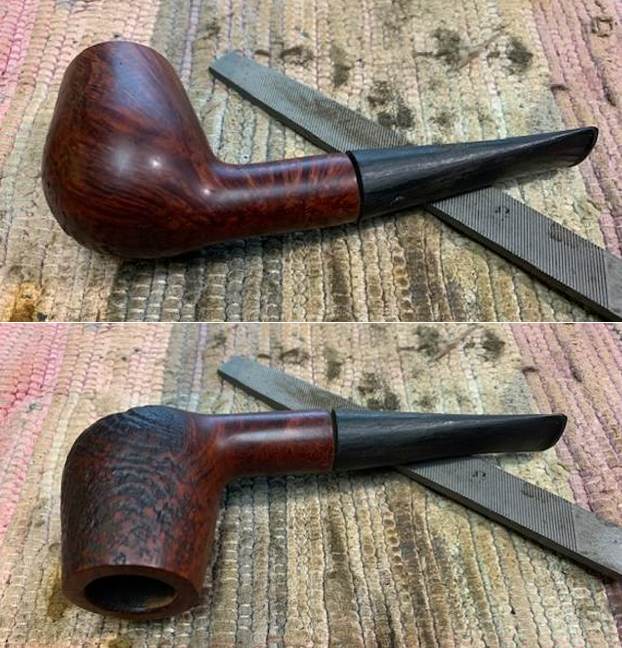
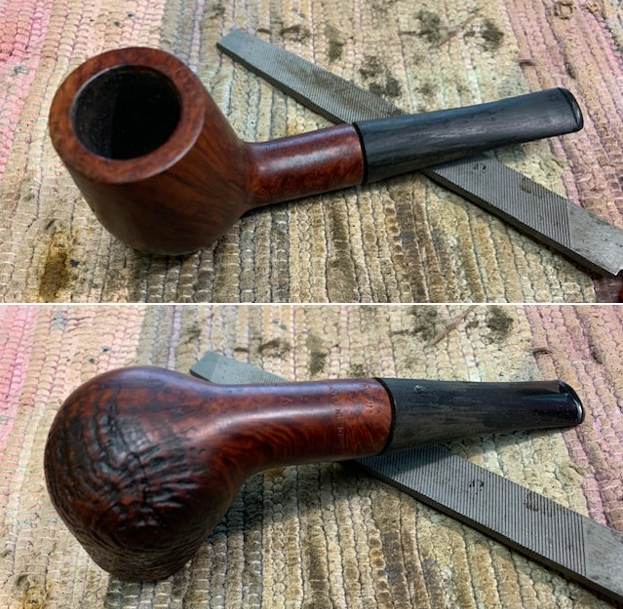
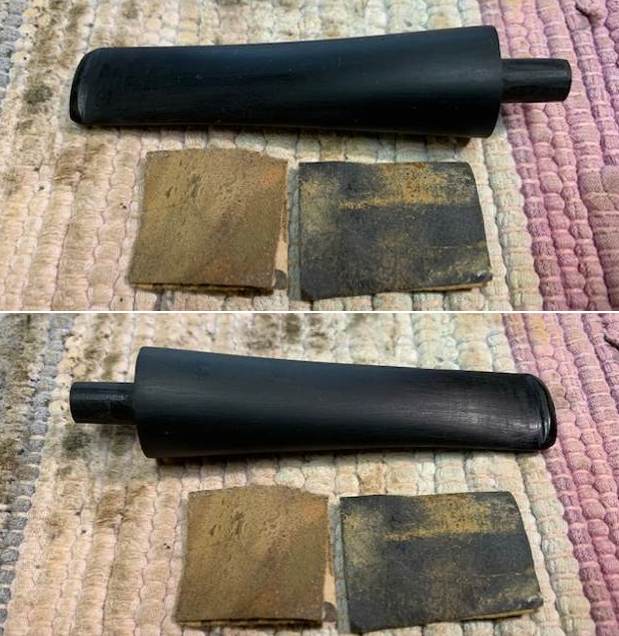
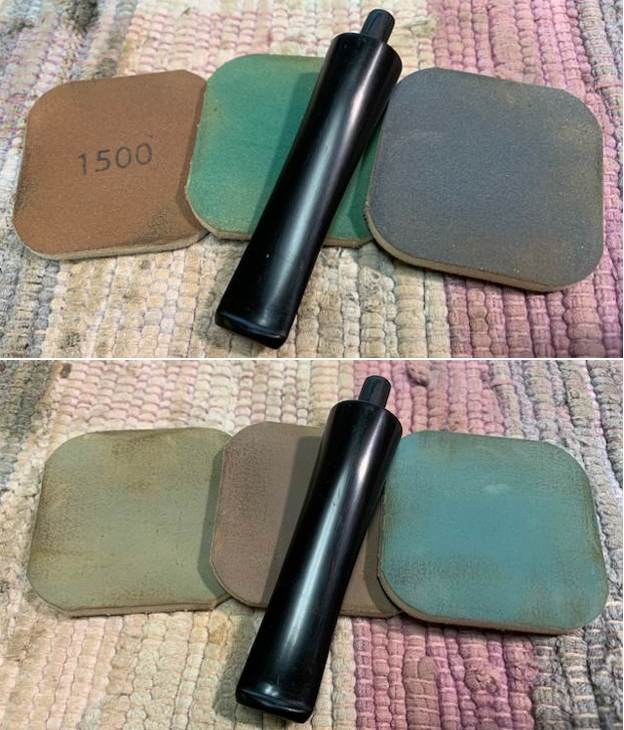
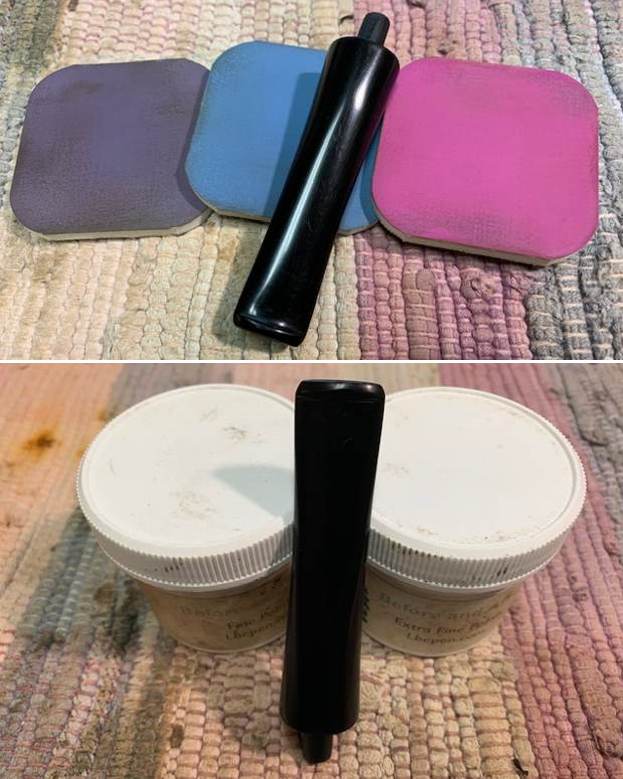
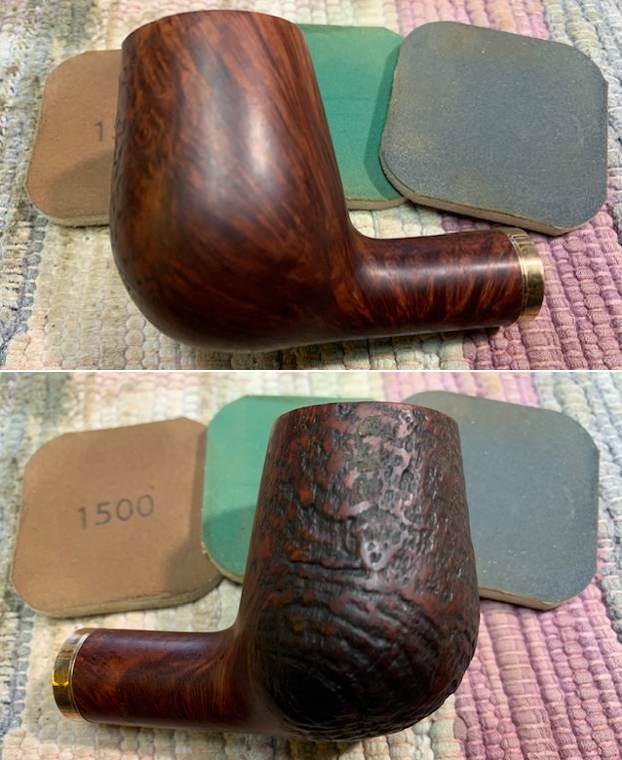
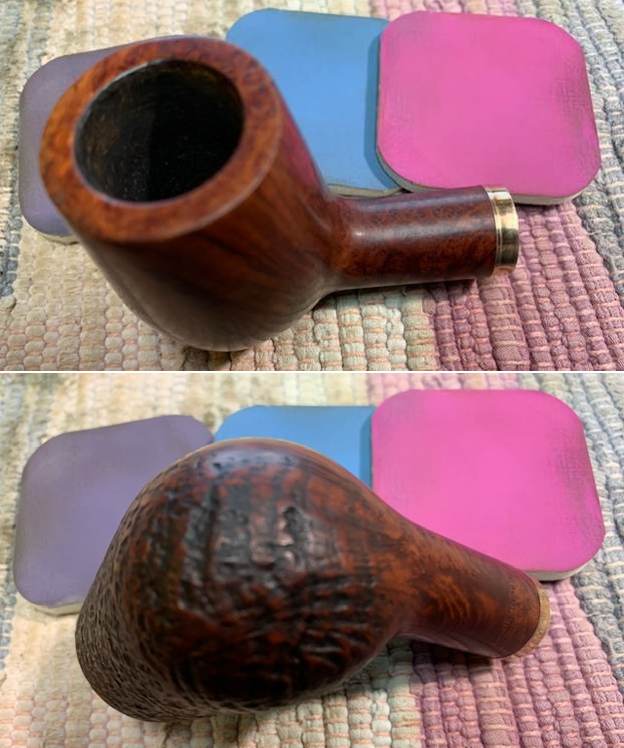
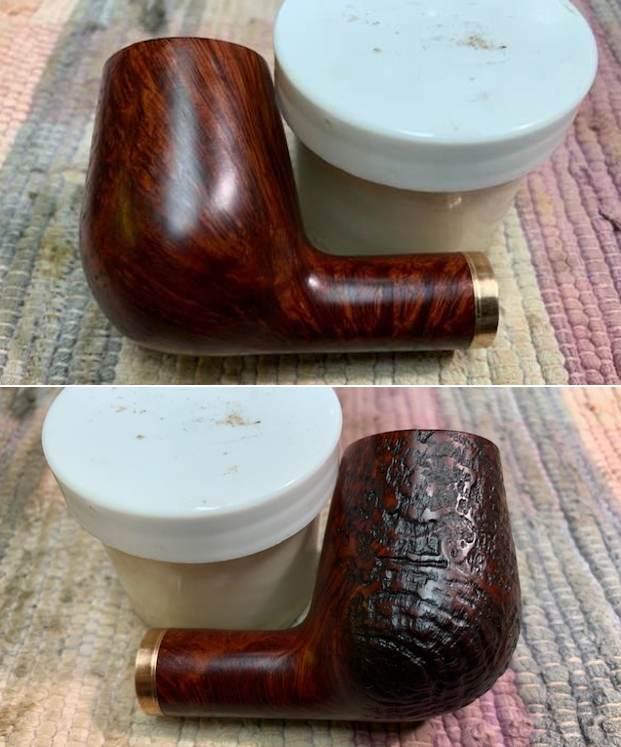
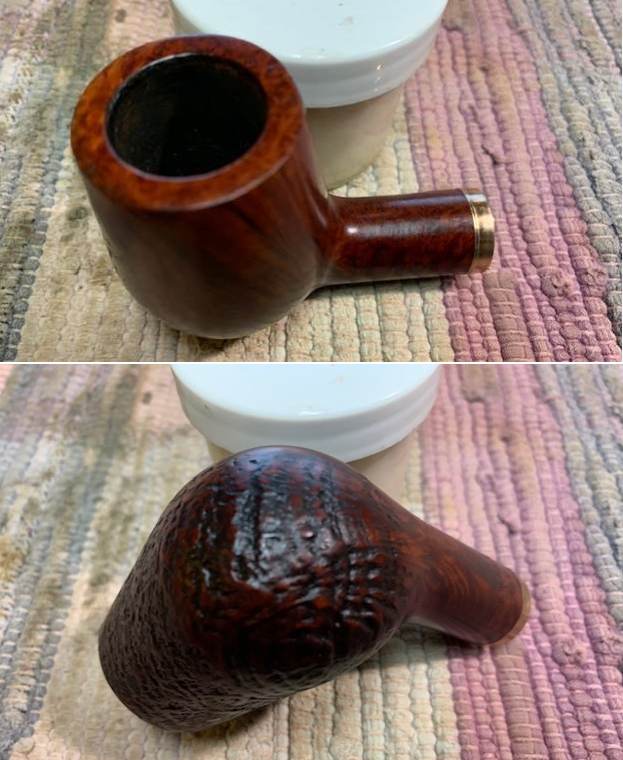
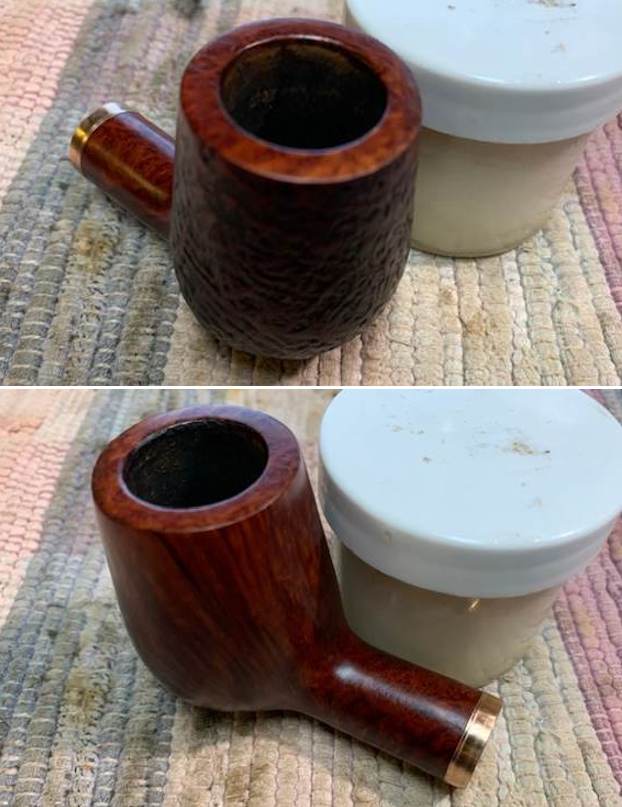
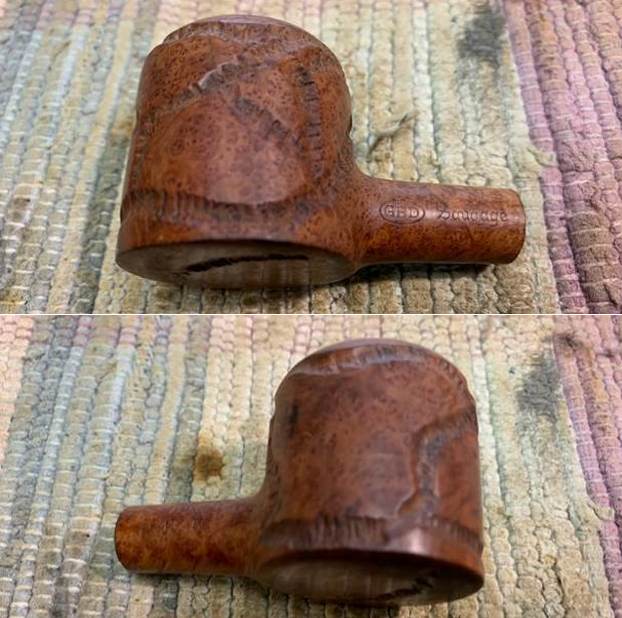
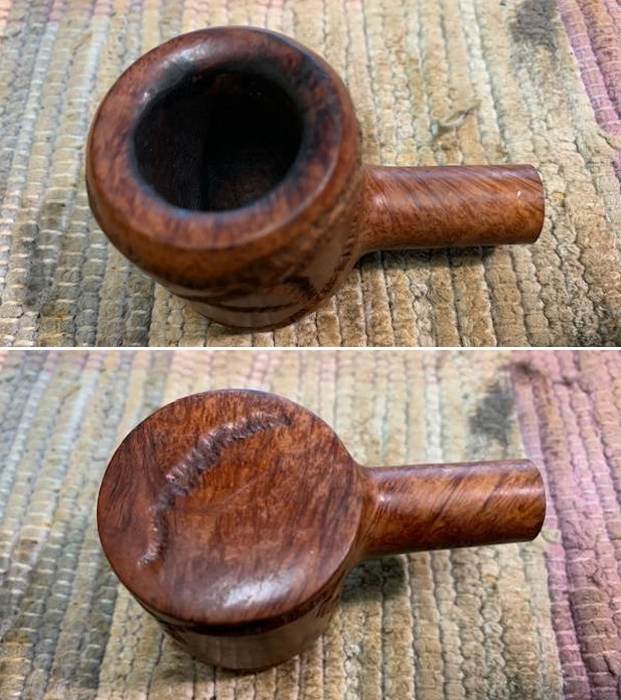
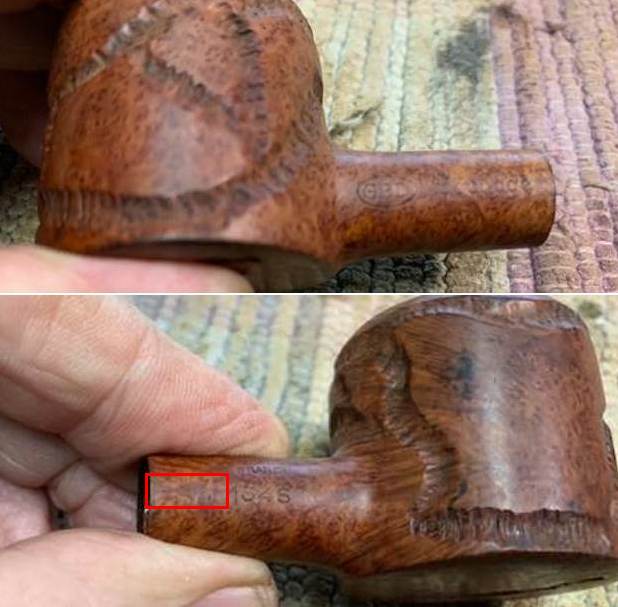
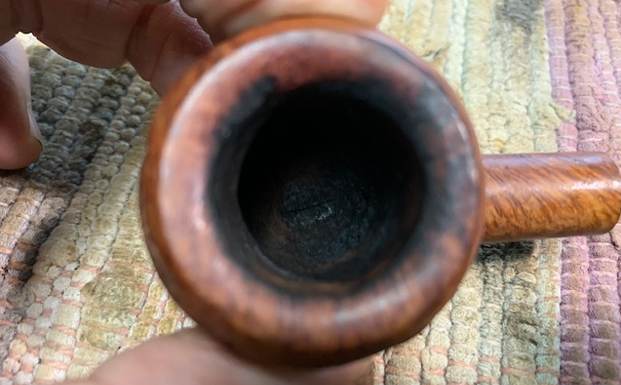
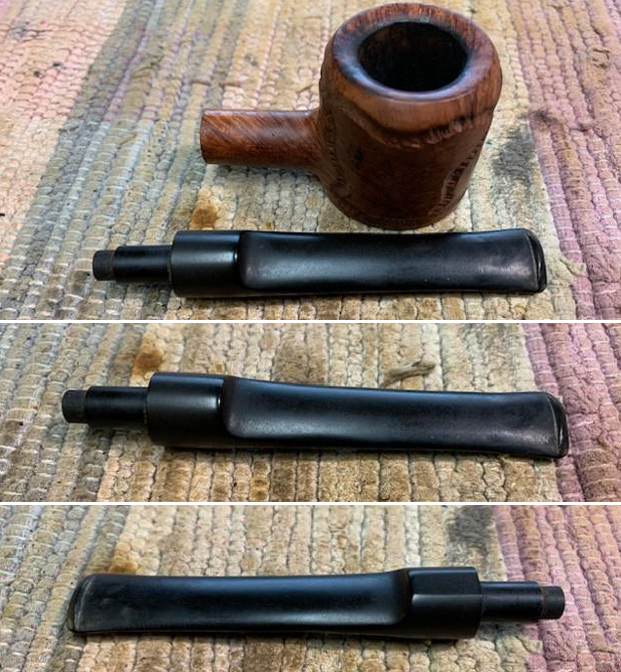
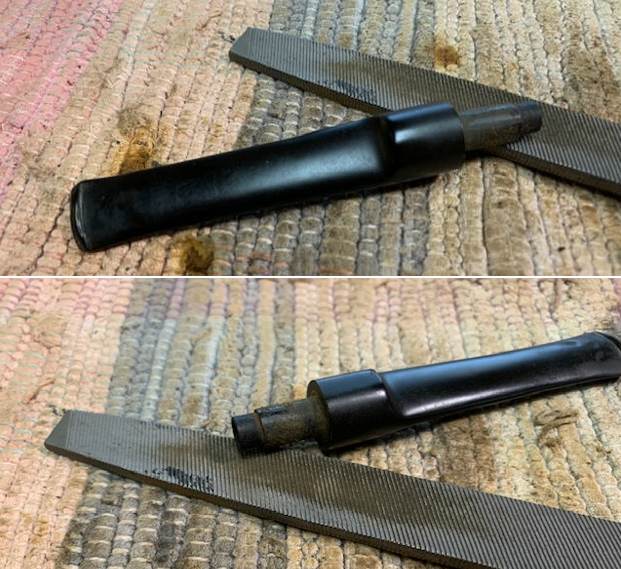
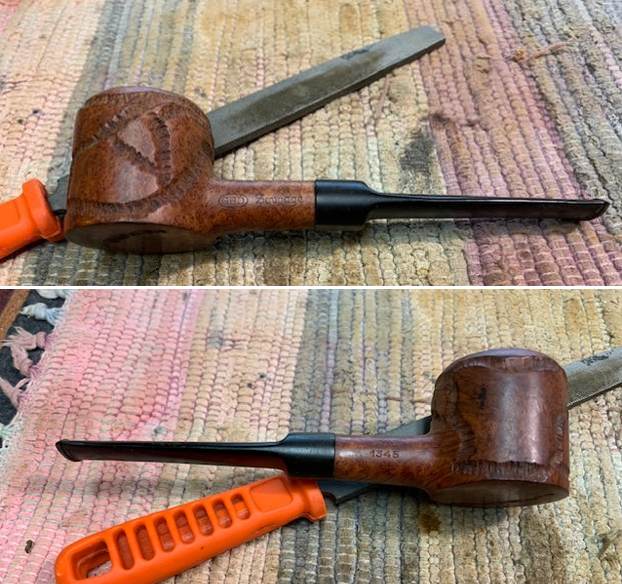
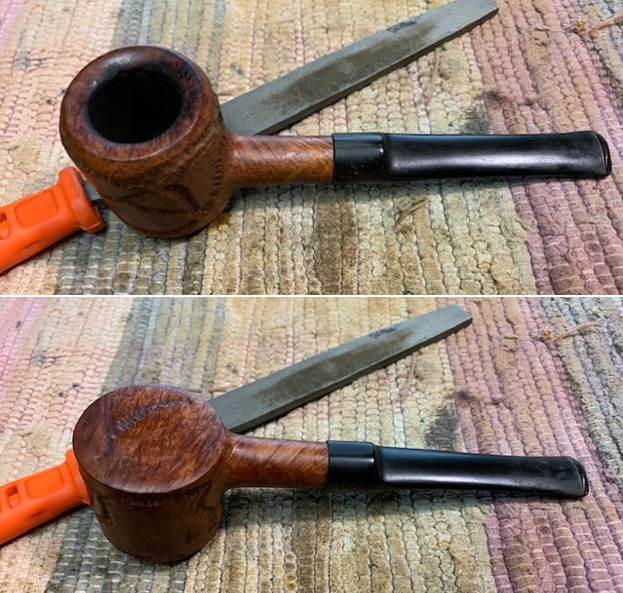
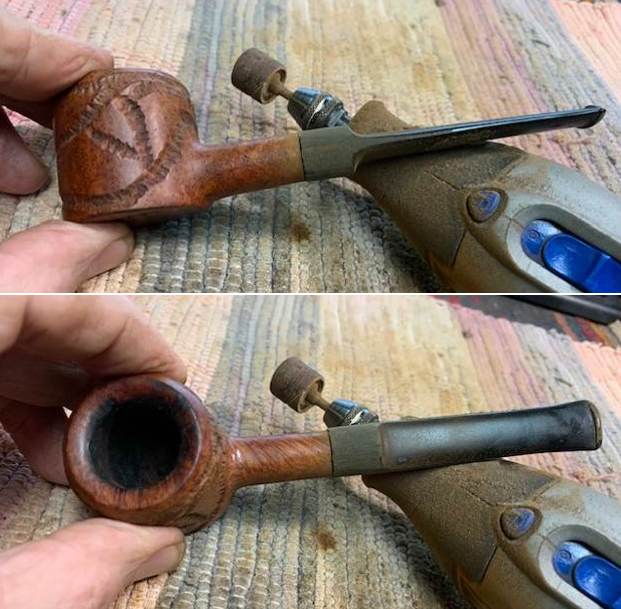
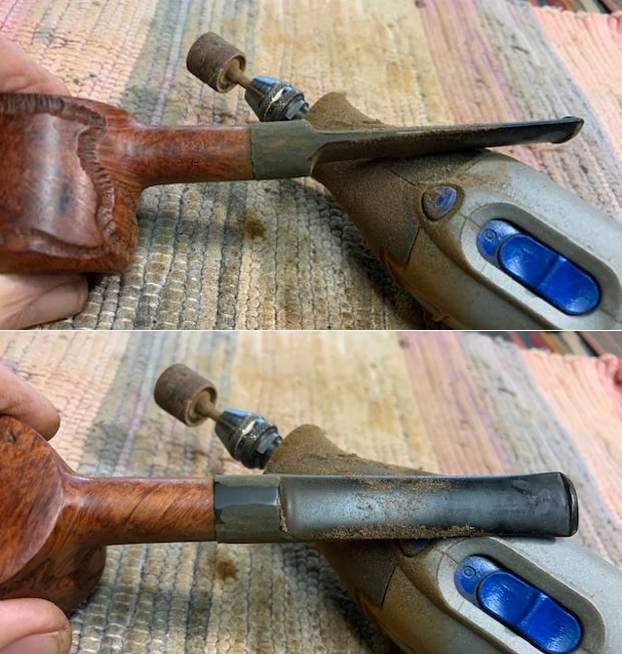
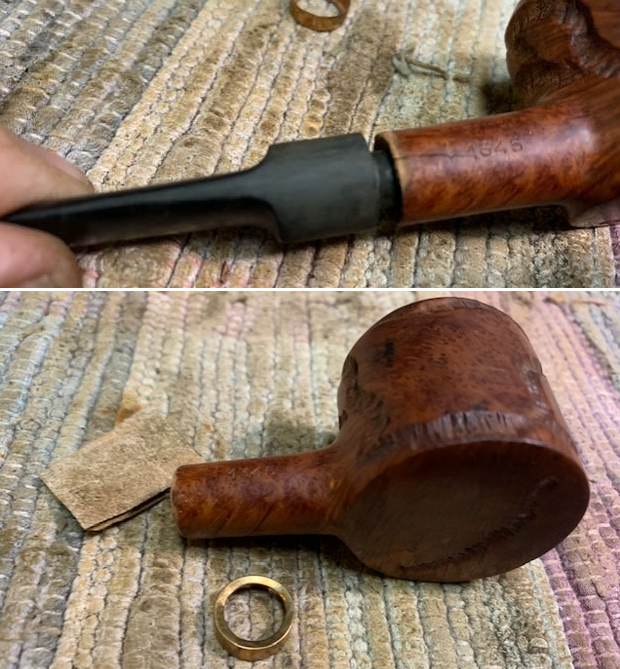
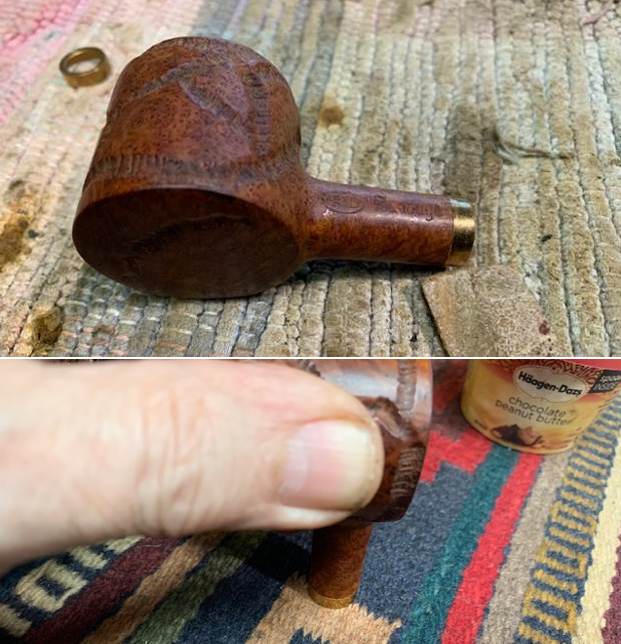
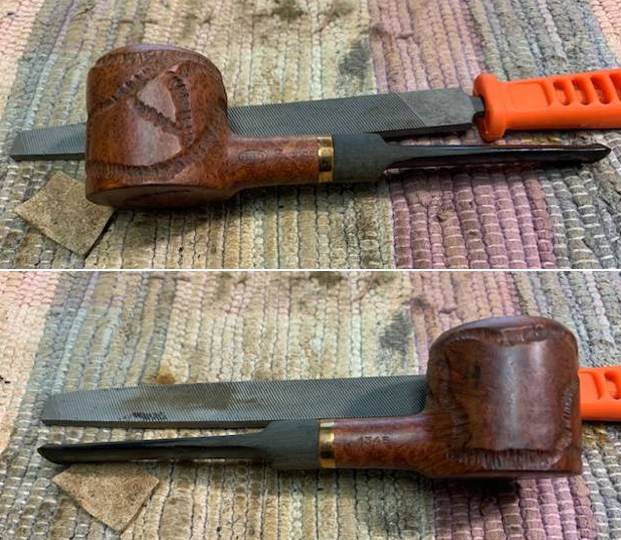
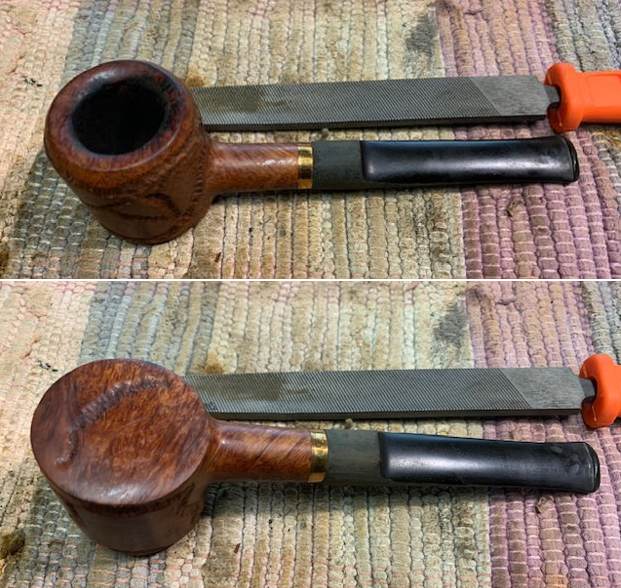
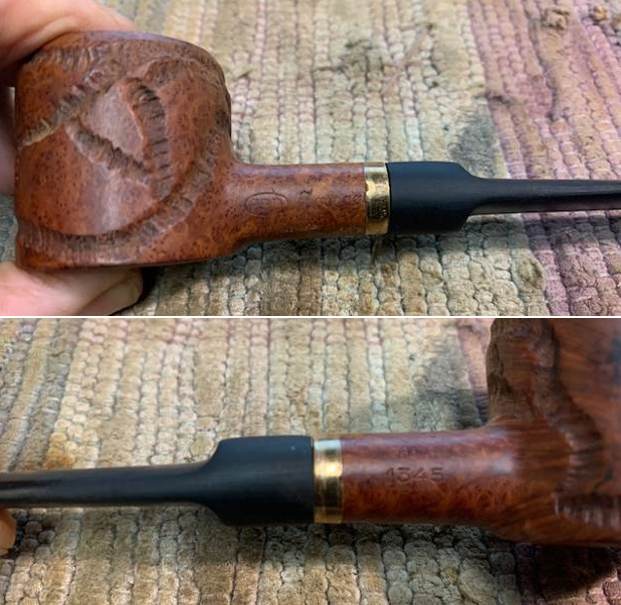
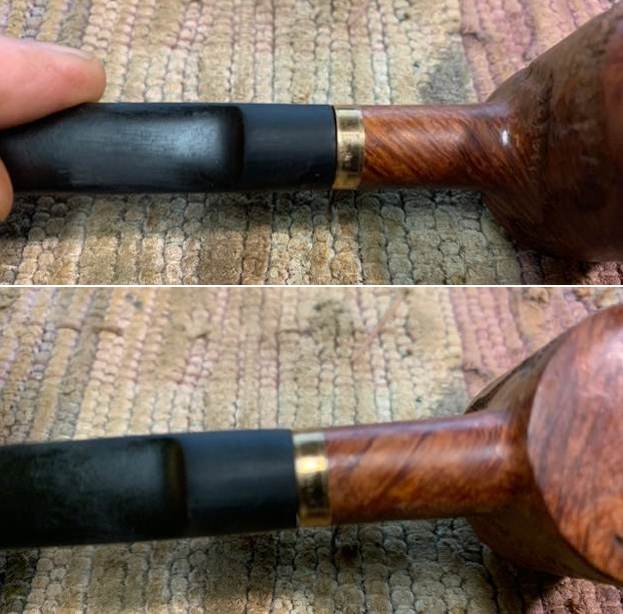
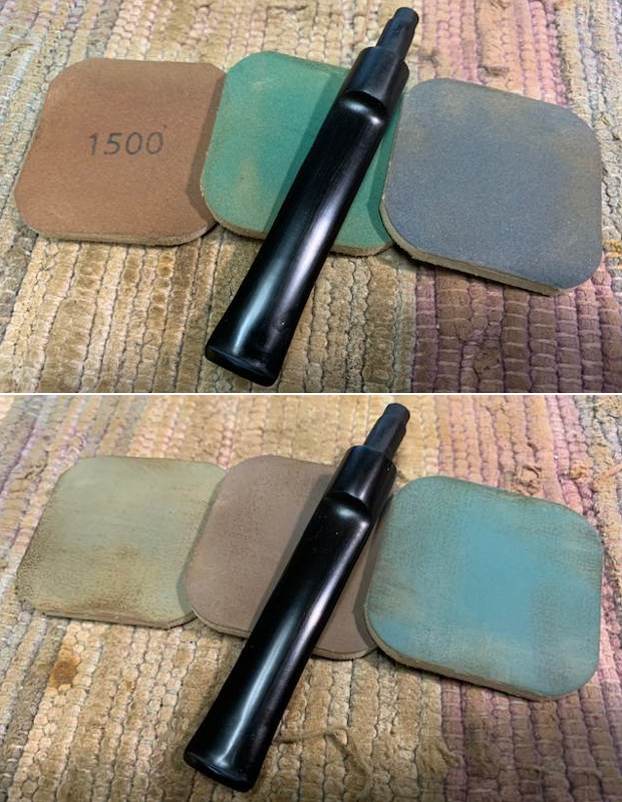
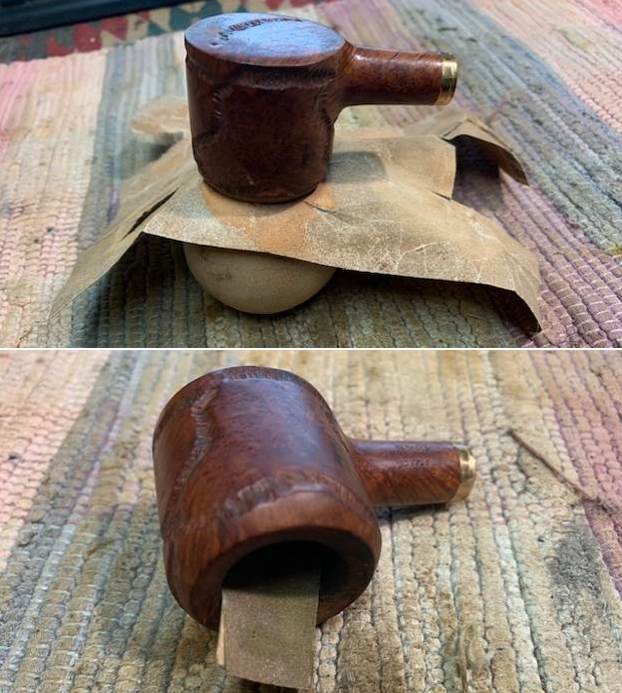
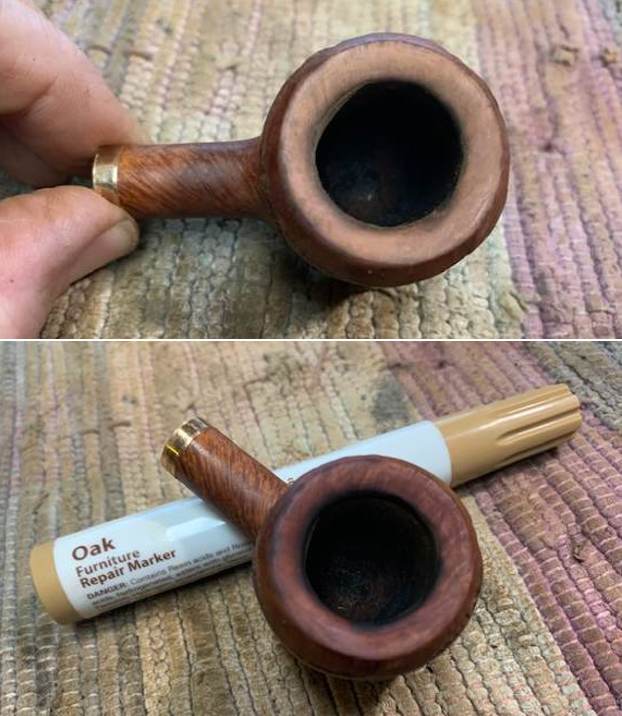
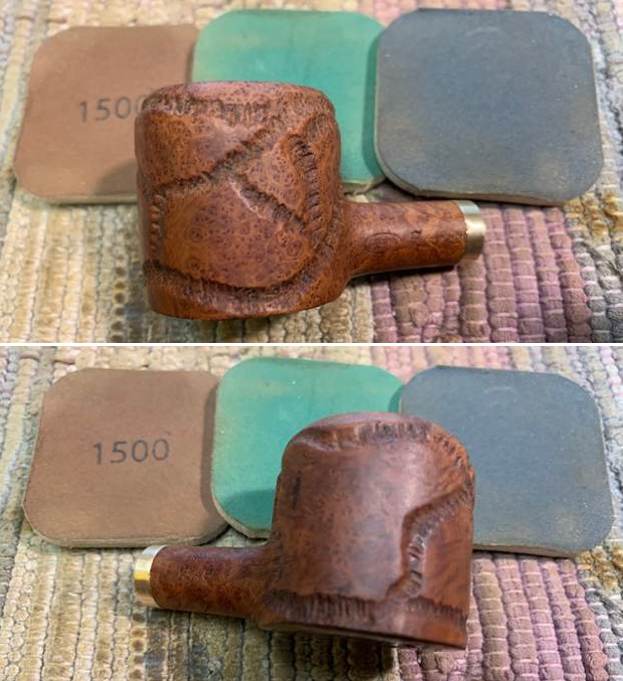
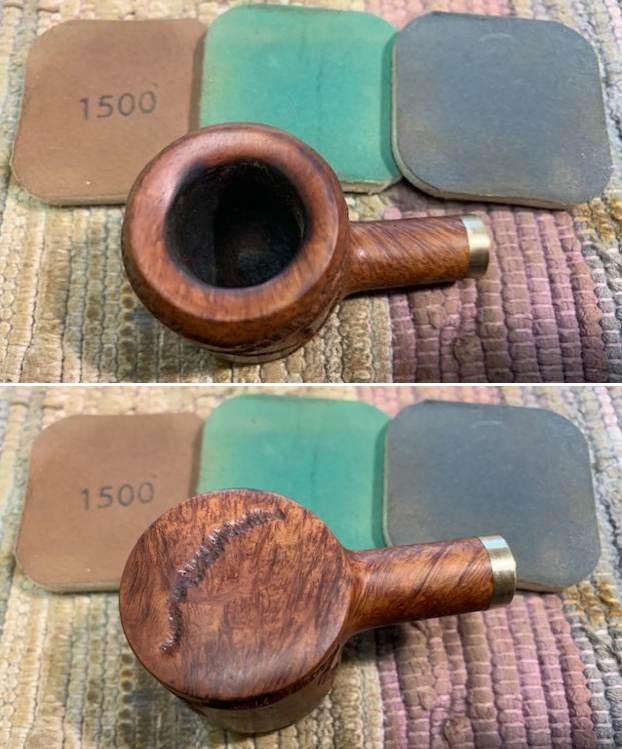
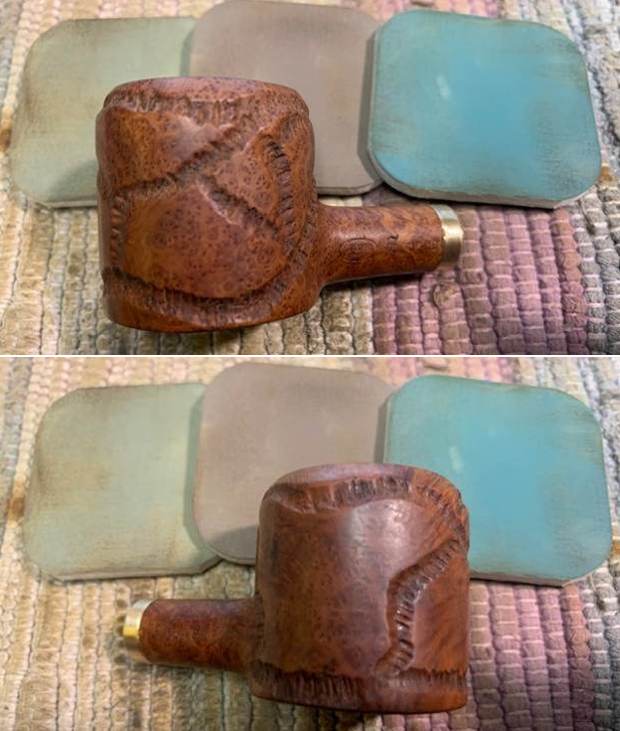
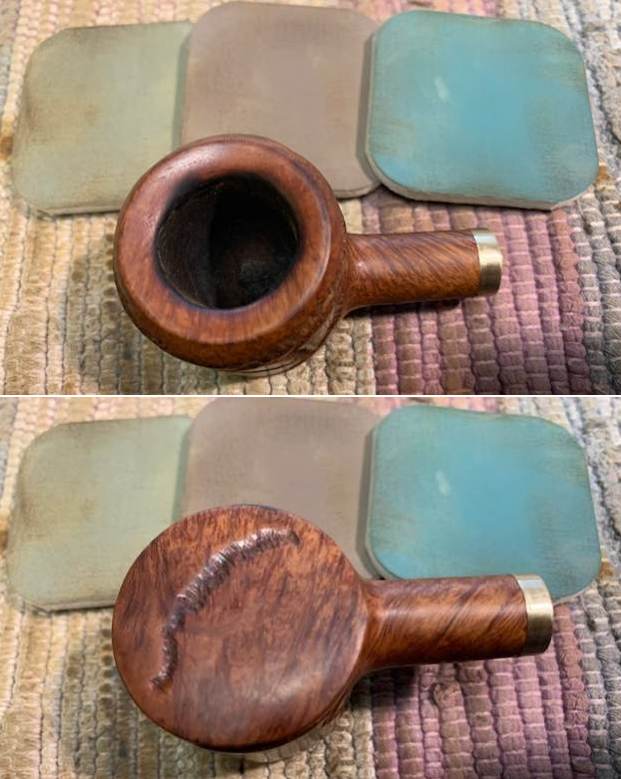
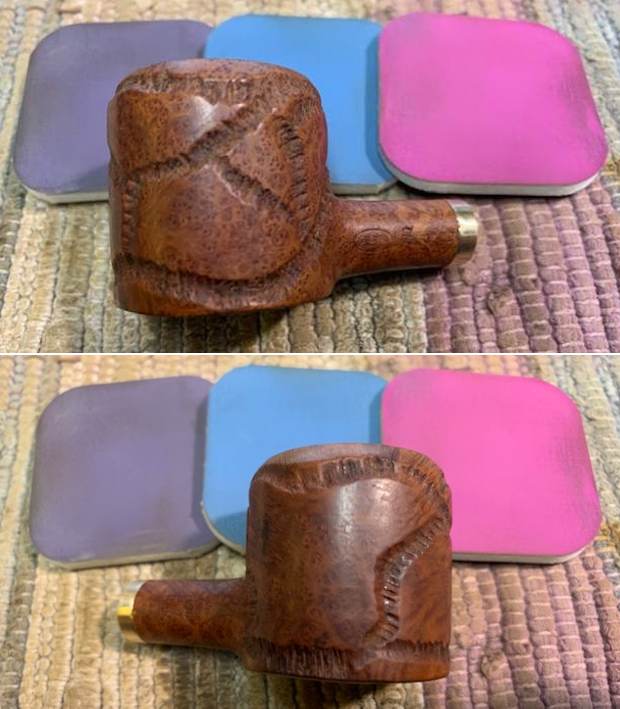
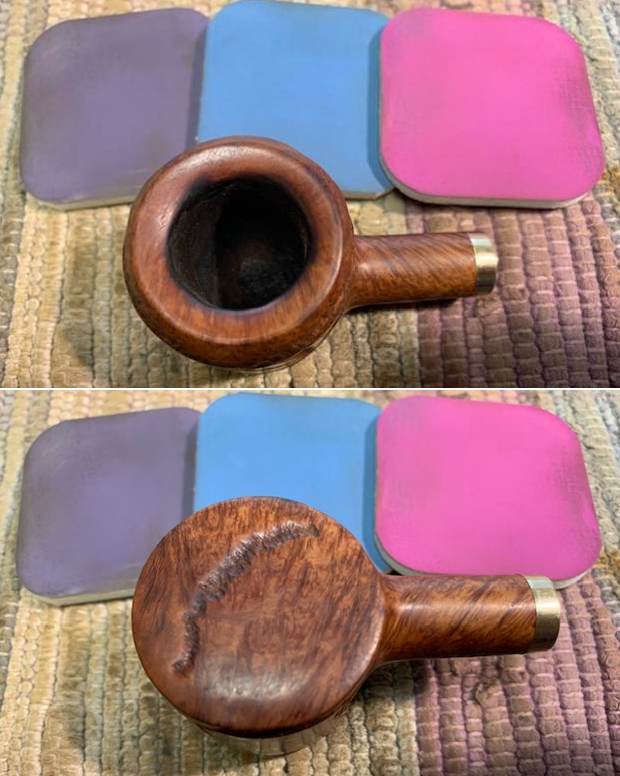
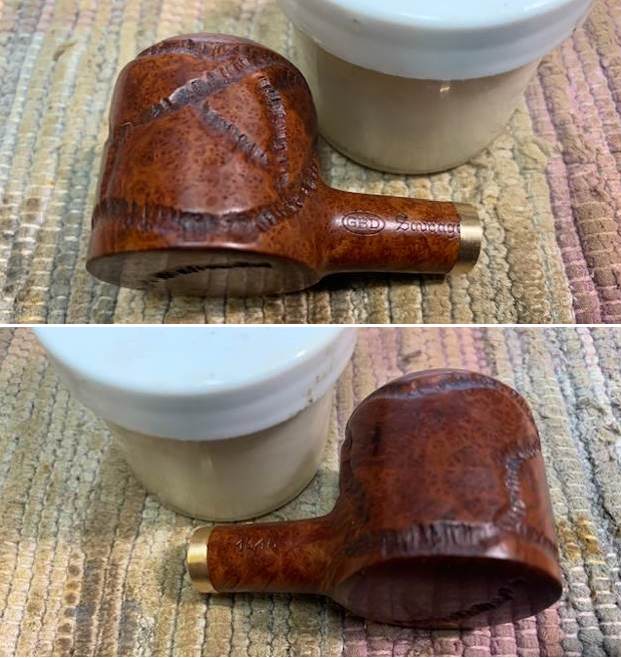
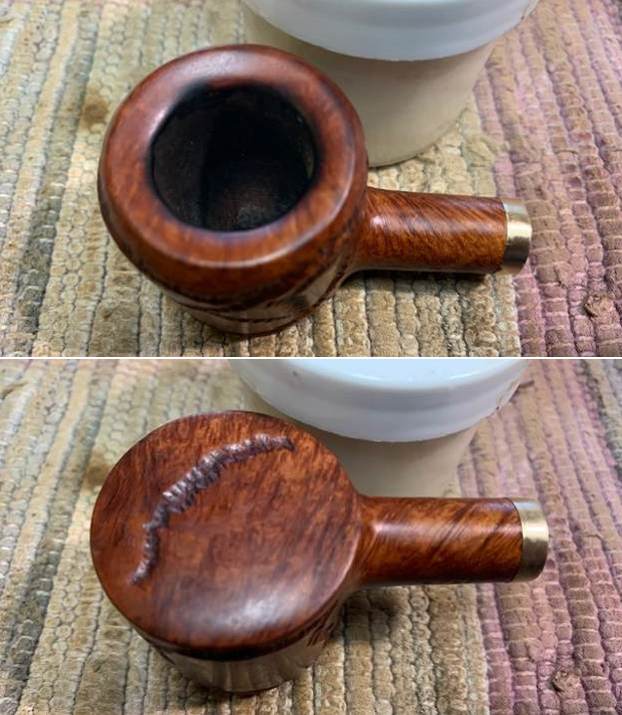
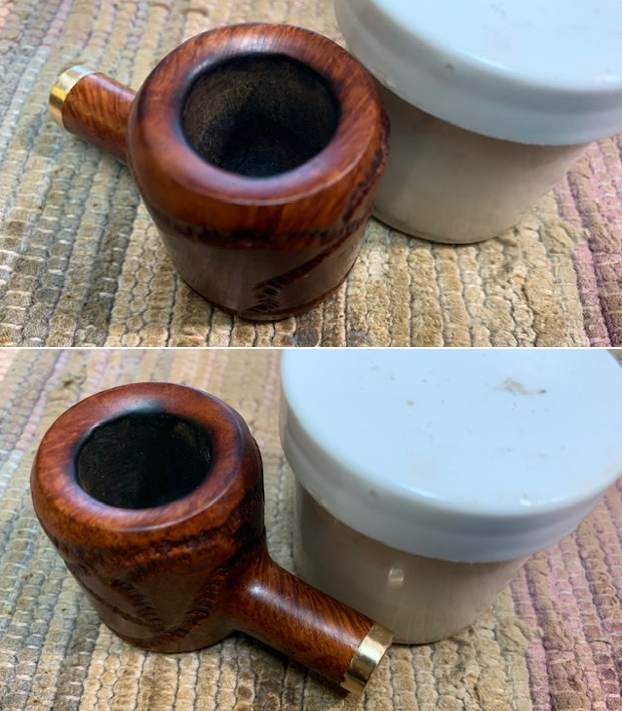
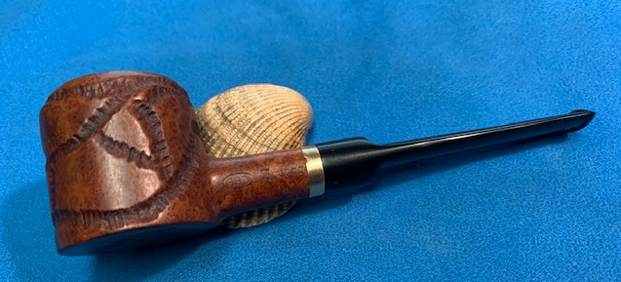
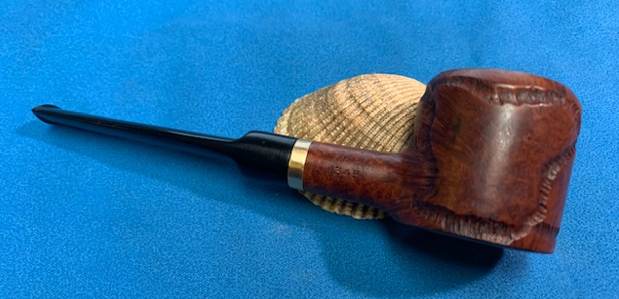
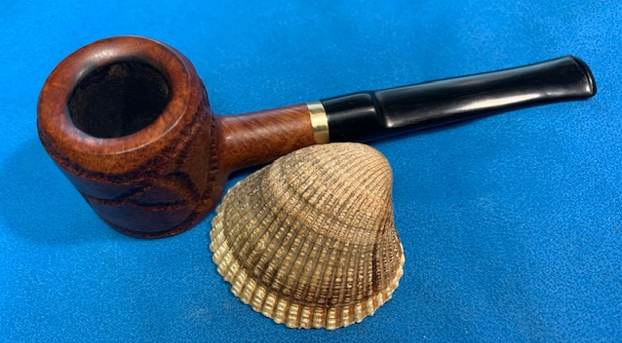
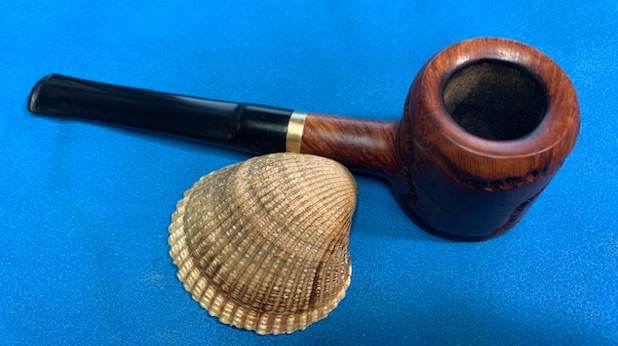
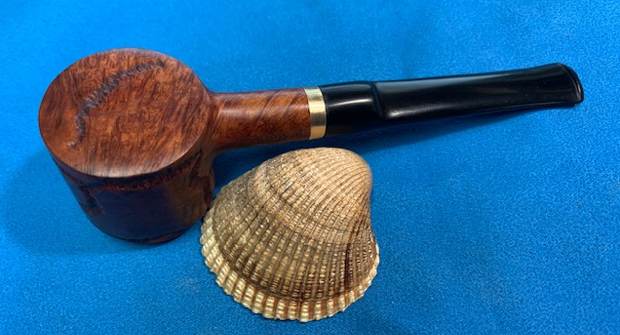
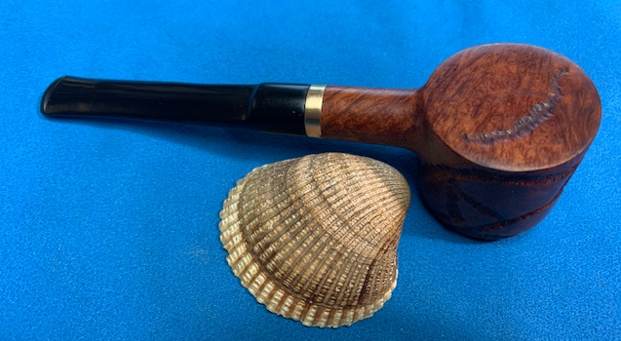
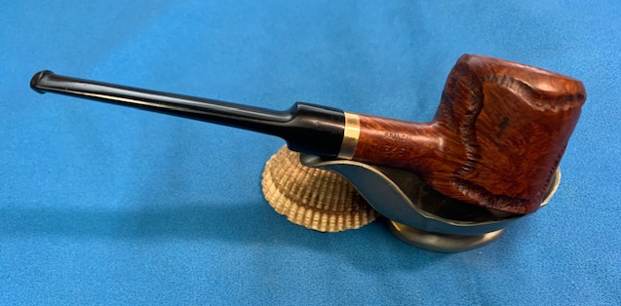
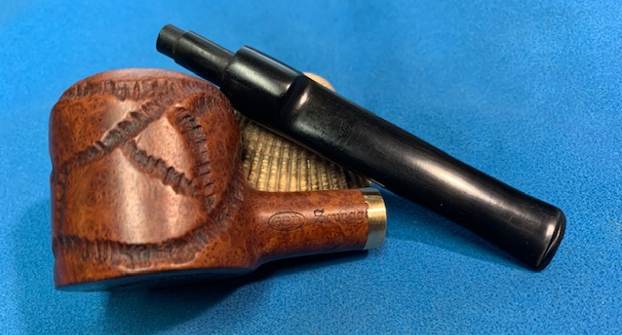
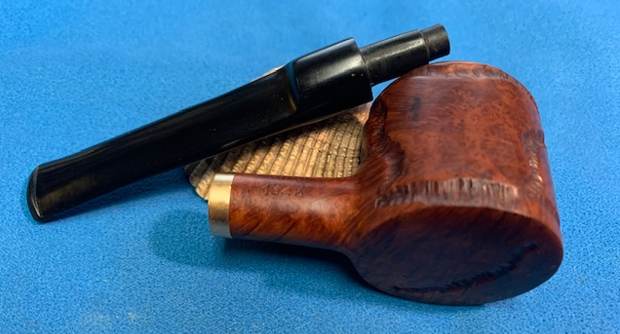
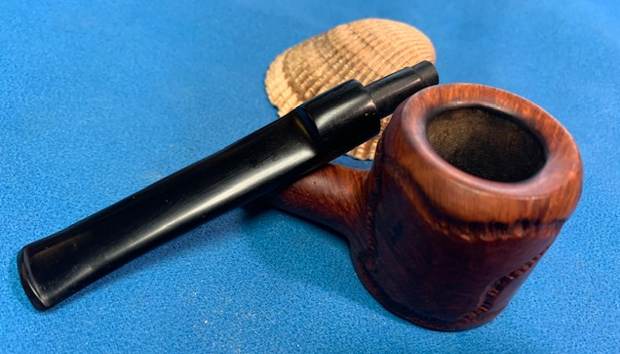
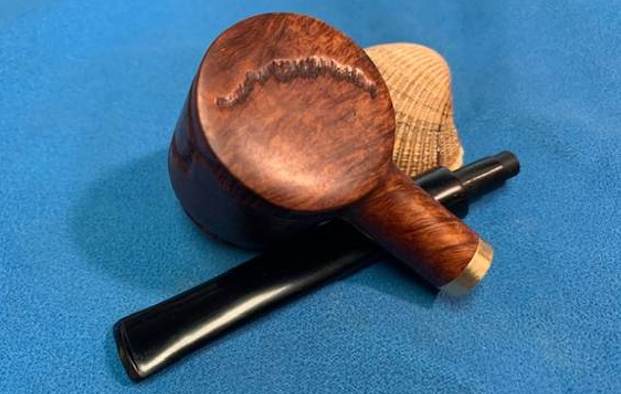
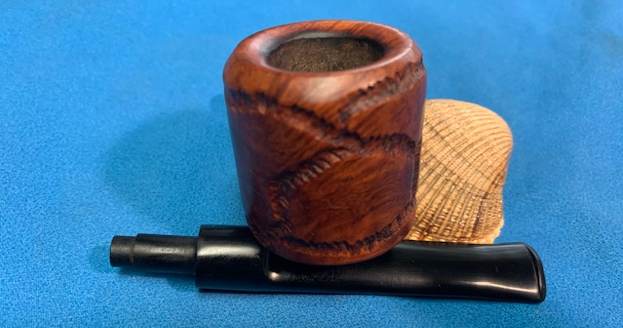
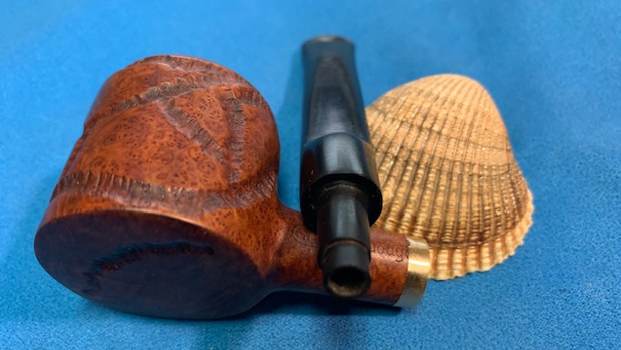
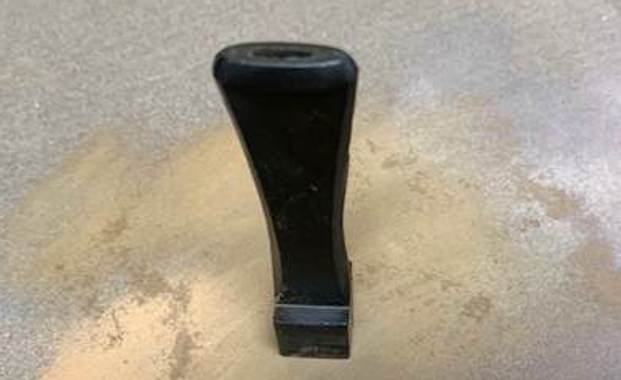
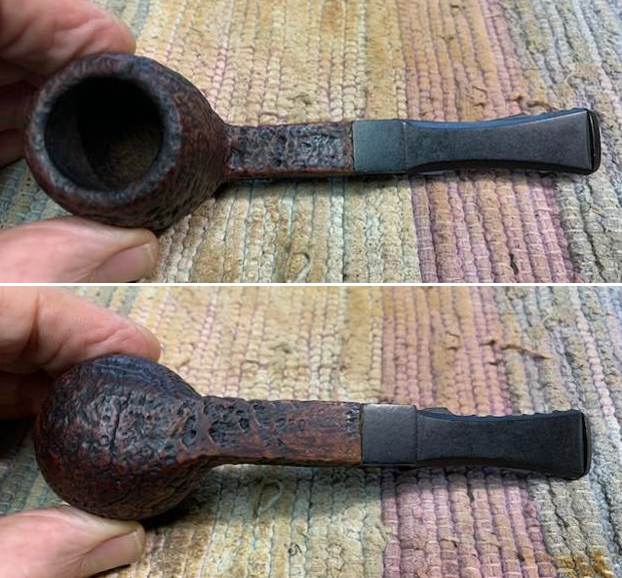
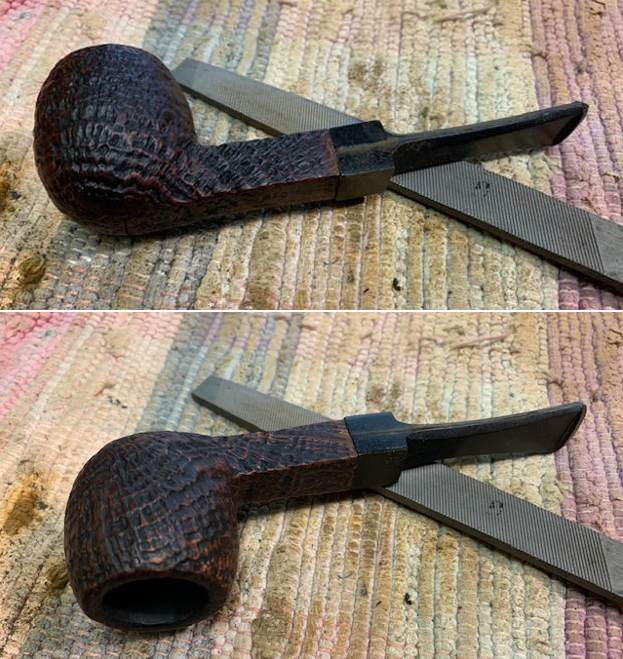
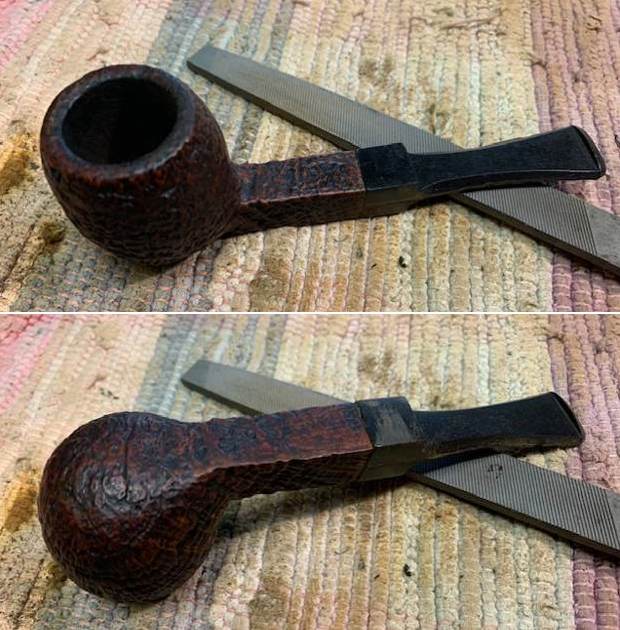
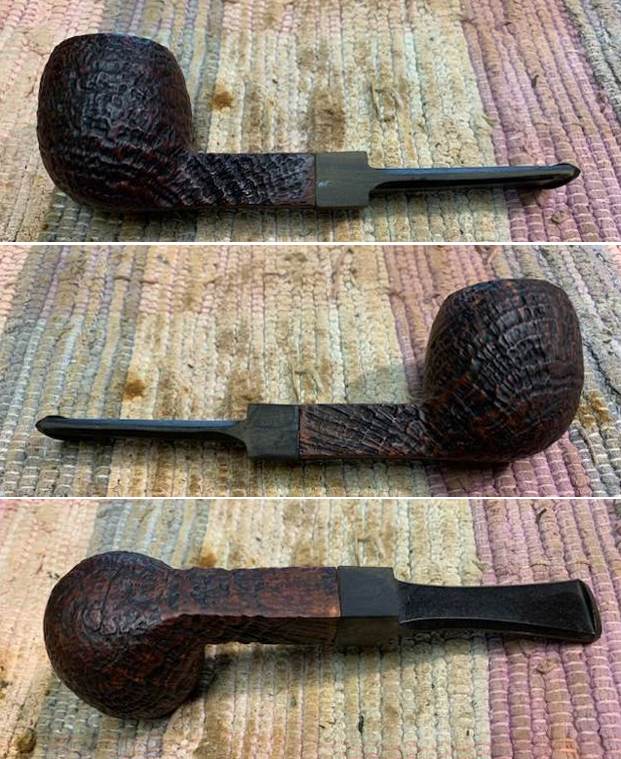
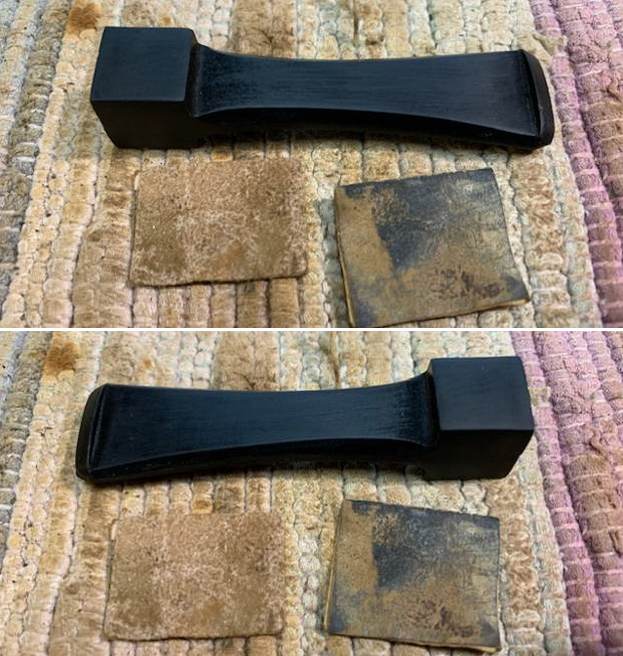
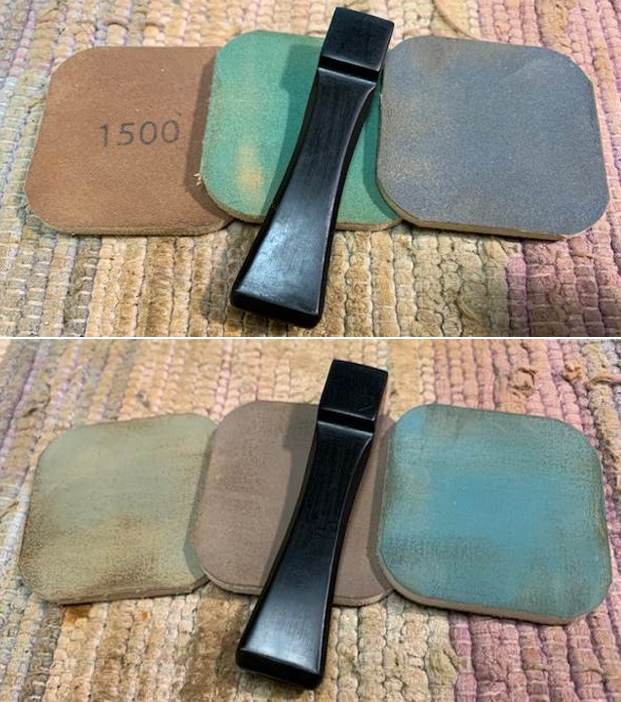
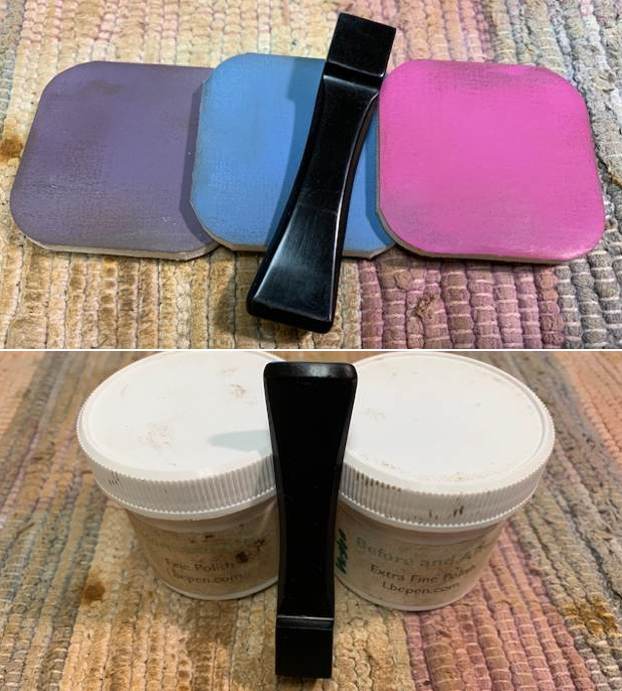
The next pipe I chose to work on was another bowl from my box of bowls to restem. It is a different looking bowl that combines both a Pot and a Poker shape. It has a inward beveled rim, flat bottom and worm trails curled around the bowl sides. When I examined the shank it had a small hairline crack on the right side that would need to be repaired but otherwise it was solid. It was unique enough I wanted to work on it. It is stamped on the left side of the shank and has a GBD oval logo next to the bowl/shank union followed by Sauvage. On the right side of the shank it is stamped FRANCE [over] the shape number 1345. The stamping was clear and readable with a lens. The bowl had been cleaned and reamed somewhere along the way by either Jeff or me. I honestly don’t remember when or where we got this bowl. It looked very good and I was looking forward to seeing the finished pipe. The stem was long gone so this would be a restemming job. I took some photos of the bowl to give a sense of the condition of bowl. The stamping was on both sides of the shank and it is clear and readable as noted above. I have also drawn a red rectangle around the area where the crack in the shank is located in the photo below.The next photo shows the rounded rim top and edges. It also shows the condition of the bowl and rim top/edges. It is clean and looks quite good. There is some burn damage on the inner edge of the bowl and on the beveled rim top at the front and the back of the bowl.Now it was time to begin my restemming work on this pipe. I went through my can of stems and chose a stem that would work. I would need to remove some the diameter of the tenon and the saddle portion to fit the thin almost pencil shank of the pipe. I used a flat file to remove the small amount of excess on the tenon. It was a close fit but I did not want to make the crack in the shank worse by a tenon that was not correct.When I had finished shaping the tenon I sanded it with a piece of 220 grit sandpaper and inserted it in the shank. It was looking pretty good. I would need to trim back some of the diameter of the saddle portion but I liked it! I generally use a Dremel and sanding drum to reduce the diameter of the stem. I do this with the stem in place on the shank so that I do not overdo it. It is a touchy exercise and one slip and I could easily damage the shank and make more work for myself. I move carefully and take it back as close as I can at this point. Once I band the shank I will need to do some more work on it but it is starting to look right. With the fit close enough it was time to band the shank. I generally do the final adjustments on the stem diameter after I have fit the band in place. I picked a band out that would fit when heated. I took a photo of the crack in the shank to show what I was working with. I sanded the shank end and gave it a slight bevel to facilitate pressing the band in place. Once it was ready I put the band on the shank. It was tight so I heated it with a lighter and when it had expanded I pressed it against the pad on my desk and pushed it all the way onto the shank. It covered the “e” on Sauvage slightly but the length of the crack defined what I needed to band it. I used some 220 grit sandpaper to once again take a little bit off the diameter of the tenon and the band compresses the crack and the diameter of the mortise changes. When I was finished I put the stem in the shank and took photos of the newly banded shank. It was going to look good once I finished shaping the stem diameter but it is very close at this point. What do you think of the new look? I finished adjusting the fit of stem diameter with 220 grit sandpaper and everything was aligned. I started the polishing with 400 grit wet dry sandpaper and the stem was looking very good at this point. Now I needed to deal with the tooth marks and chatter on the end of the stem. I “painted” them with the flame of a lighter to lift them as much as possible. I filled in the ones that remained with clear super glue. Once the glue cured I flattened out the repairs with a small flat file. I followed that by sanding the stem with 220 grit sandpaper to blend them into the surface. I started polishing the stem with 400 grit wet dry sandpaper. I polished the stem with micromesh sanding pads – wet sanding with 1500-12000 grit pads. I wiped the stem down after each sanding pad with Obsidian Oil. I polished the stem with Before & After Pipe Stem Polish – both Fine and Extra Fine and buffed it with a cotton cloth. Once I had finished the polishing I gave it final coat of Obsidian Oil and set it aside to dry. With the stem finished (other than to buff the pipe at the end)I set it aside and I turned my attention to the bowl. I used a wooden ball that Kenneth gave me with a piece of 220 grit sandpaper to clean up the bevel. I finished with a folded piece of 220 grit sandpaper to further minimize the burn damage. I touched up the stain with an Oak Stain pen to match the surrounding briar of the bowl. It looked much better at this point. I polished the briar with micromesh sanding pads – dry sanding with 1500-12000 grit pads. I wiped the bowl down after each pad with a damp cloth to remove the sanding debris left behind. I rubbed the bowl and shank down with Before & After Restoration Balm. I worked it into the surface of the smooth and worm trails on the bowl and shank with my fingertips to clean, enliven and protect the briar. I let the balm sit for a little while and then buffed with a cotton cloth to raise the shine. The Balm did its magic and the grain really took on dimension and colour. I am excited to be on the homestretch with this petite French Made GBD Sauvage 1345 Poker/Pot. This is the part I look forward to when it all comes back together, polished and waxed. I put the bowl and the new stem together and polished the stem and bowl with Blue Diamond to polish out the scratches in the vulcanite and give a light shine to the bowl. I gave the bowl and the stem multiple coats of carnauba wax. I buffed the pipe with a clean buffing pad to raise the shine. I hand buffed it with a microfiber cloth to deepen the shine. The pipe polished up pretty nicely. The worm trail carving on the bowl actually looks okay with the rest of the smooth finish. The banded shank and new polished black saddle vulcanite stem works well with this little sitter. This GBD Sauvage Poker/Pot was another fun pipe to work on and came out looking great. It is a comfortable sized pipe to hold in the hand. The finished pipe is shown in the photos below. The dimensions of the pipe are Length: 5 ¾ inches, Height: 1 ½ inches, Outside diameter of the bowl: 1 ½ inches, Chamber diameter: ¾ of an inch. The weight of the pipe is 33 grams/1.16 ounces. If you are interested in adding this pipe to your rack it will be on the rebornpipes store in the French Pipemakers Section soon. Thanks for reading this blog and my reflections on the pipe while I worked on it.

A Straightforward Restemming & Restoration of a Jobey Shellmoor 250 Apple


Blog by Steve Laug

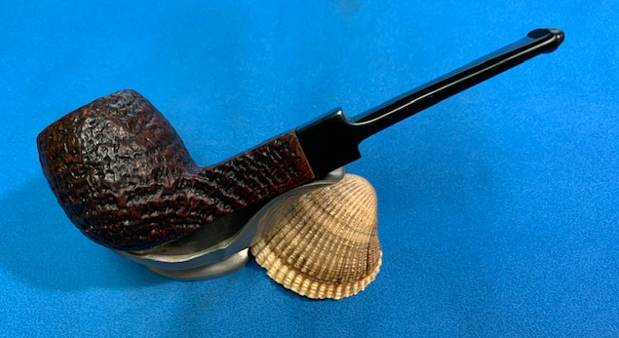
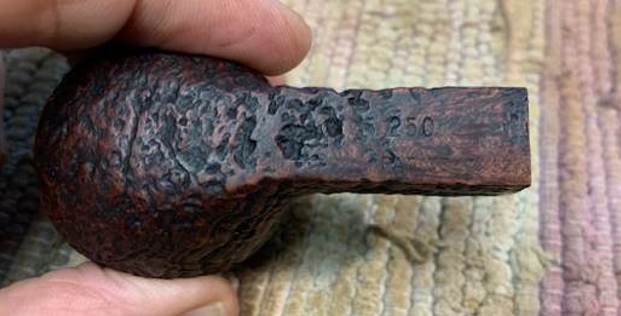
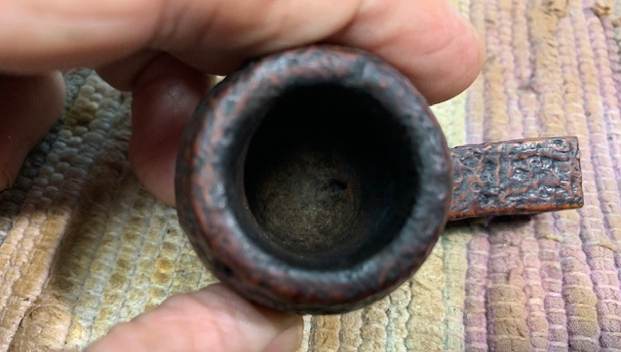
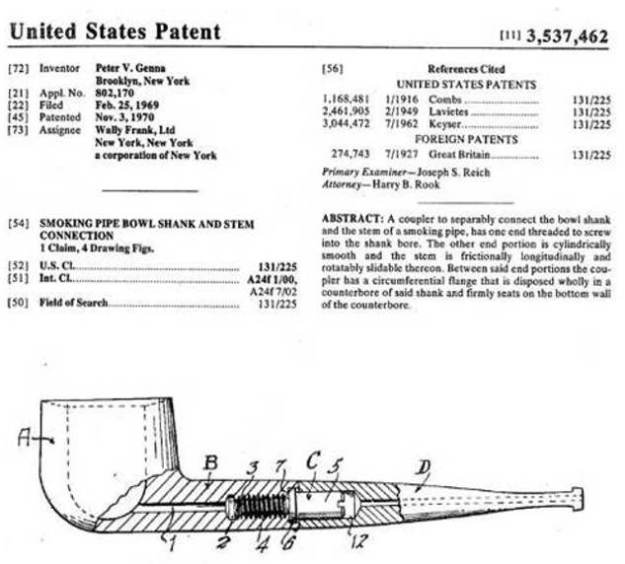
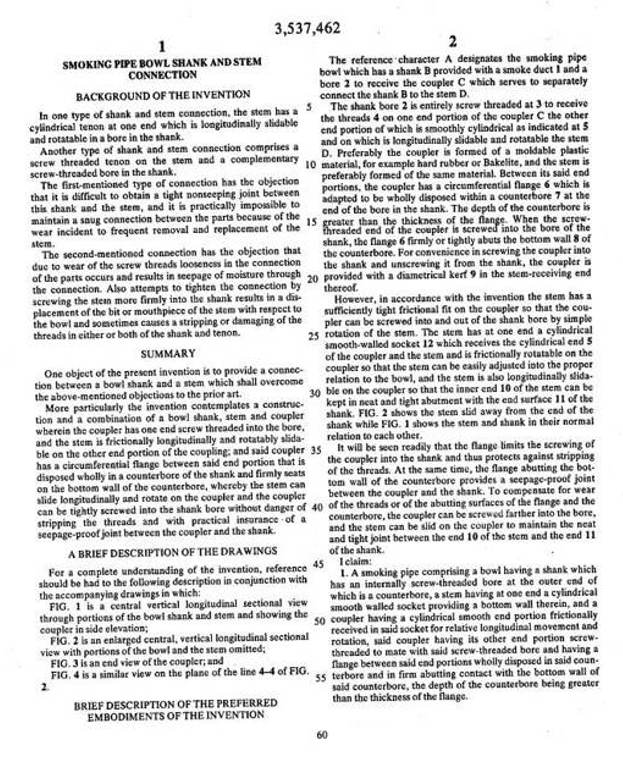
The next pipe I chose to work on was another bowl from my box to restem. This one is a nice sandblast apple. It has a deep and rugged blast around the bowl and shank. When I examined the shank it was threaded which was interesting. Once I saw the stamping that became clear. It is stamped on the underside of the shank and reads Jobey [over] Shellmoor. To the left of that stamp is a shape number 250. Underneath the Shellmoor stamp is another series of numbers – PAT. 3537462. The stamping was clear and readable with a lens. I want to see what I can find out about the Patent number. I don’t recall working on one of those before. The bowl had been cleaned and reamed somewhere along the way by either Jeff or me. I honestly don’t remember when or where we got this bowl. It looked very good and I was looking forward to seeing the finished Apple. The stem was long gone so this would be a restemming job. It would be a different stemming job because of the Jobey Link System so it would be kind of fun. I took some photos of the bowl to give a since of the condition of this nice little Apple. I took some photos of the stamping on the sides of the shank. The stamping is clear and readable as noted above. There was a smooth panel on the underside of the shank. It is stamped as noted above and is clear and readable with a lens.The next photo shows the rounded rim top and edges. It also shows the condition of the bowl and rim top/edges. It is clean looks quite good. I will give it a quick go over with a brass brush but otherwise it looks good.Before I started to work on the pipe I wanted to understand the patent information so I turned to the US Patent search site and entered the numbers. I was able to find both a description of the invention and a diagram that was submitted with the Patent application. Here is the link to the site and a screen capture of the information found there. https://pdfpiw.uspto.gov/.piw?docid=03537462&SectionNum=1&IDKey=6F776849C285&HomeUrl=http://patft.uspto.gov/netacgi/nph-Parser?Sect1=PTO1%2526Sect2=HITOFF%2526d=PALL%2526p=1%2526u=%25252Fnetahtml%25252FPTO%25252Fsrchnum.htm%2526r=1%2526f=G%2526l=50%2526s1=3537462.PN.%2526OS=PN/3537462%2526RS=PN/3537462Now it was time to begin my restemming work on this pipe. I went through my can of tenons and found a Jobey Link that screwed into the shank perfectly. I chose a stem from the can of stems I have here that would the shank well. I would need to remove the standard tenon and drill the stem to receive the end of the tenon. I used a hacksaw to cut off the normal tenon on the stem. That part was very simple but then things went quickly sour. I put a piece of tape on the drill bit to start drilling out the saddle to receive the Link. I started with a small bit and started drilling. The tape move and the bit suddenly came out of the top part of the blade of the stem. Yikes what a mess.Sooo…needless to say the ruined stem went into the waste bin and I had to start over. I chose a new blank from the bag Jeff sent me as the fit was the closest one I had in terms of matching the sides of the shank. I cut off the tenon with the hacksaw. This time I measured the depth of the saddle and the length of the tenon and drilled to match it – very carefully in multiple stages. I checked and rechecked as I did not want to do the work a third time. I used a series of drill bits from one that was slightly larger than the airway and ended with a ¼ inch bit that was the size of the Link.I smoothed out the face of the stem on a topping board with 220 grit sandpaper. I wanted the surface smooth so it would sit well against the shank when the Link was inserted.With the face smoothed out I pushed the snug fitting Jobey Link into the hole in the face of the stem. It fit well against the shank end so that was a plus. Everything lined up so I took some photos of the restem at this point. The casting remnants on the sides of the stem needed to be removed and they were quite rough and messy. I used a flat file (rasp) to flatten out the castings on the saddle and blade sides of the stem as well as the area around the slot in the button. I used my Dremel and a sanding drum to do the rough work on the stem. I worked on it carefully to remove more of the casting marks and to reduce the bottom side of the saddle to match the size of the shank.The only way I know how to do this is with the new stem in place in the shank and then carefully move the sanding drum up and around the stem surface to get a close/rough fit. It was getting much closer but there was a lot more work to do hand shaping it with sandpaper and files.With the majority of the heavy work done it was time to work over the stem with 220 grit sandpaper and get everything aligned. I started the polishing with 400 grit wet dry sandpaper and the stem was looking very good at this point.I polished the stem with micromesh sanding pads – wet sanding with 1500-12000 grit pads. I wiped the stem down after each sanding pad with Obsidian Oil. I polished the stem with Before & After Pipe Stem Polish – both Fine and Extra Fine and buffed it with a cotton cloth. Once I had finished the polishing I gave it final coat of Obsidian Oil and set it aside to dry. With the stem finished (other than to buff the pipe at the end) I turned my attention to the bowl. I used a brass bristle wire brush to clean up the debris still in the sandblast rim top of the bowl. It looked better when I finished.   I rubbed the bowl and shank down with Before & After Restoration Balm. I worked it into the surface of the sandblast bowl sides and shank with my fingertips and a horsehair shoe brush to clean, enliven and protect the briar. I let the balm sit for a little while and then buffed with a cotton cloth to raise the shine. The Balm did its magic and the sandblast grain really took on dimension and colour. I am excited to be on the homestretch with beautiful sandblast PAT. 3537462  Jobey Shellmoor 250 Apple. This is the part I look forward to when it all comes back together, polished and waxed. I put the bowl and the new stem together and polished the stem and bowl with Blue Diamond to polish out the scratches in the vulcanite and give a light shine to the bowl. I gave the bowl multiple coats of Conservator’s Wax and the stem multiple coats of carnauba wax. I buffed the pipe with a clean buffing pad to raise the shine. I hand buffed it with a microfiber cloth to deepen the shine. The pipe polished up pretty nicely. The rugged sandblast finish looks really good with the new polished black square saddle vulcanite stem. This Sandblast Jobey Shellmoor Apple was another fun pipe to work on and came out looking great. It is a comfortable sized pipe to hold in the hand. The finished pipe is shown in the photos below. The dimensions of the pipe are Length: 5 ½ inches, Height: 1 ¾ inches, Outside diameter of the bowl: 1 ¼ inches, Chamber diameter: ¾ of an inch. The weight of the pipe is 38 grams/1.38 ounces. If you are interested in adding this pipe to your rack it will be on the rebornpipes store in the American Pipemakers Section soon. Thanks for reading this blog and my reflections on the pipe while I worked on it.

Restemming and Breathing New Life into a Flumed Genuine Block Meerschaum Author


Blog by Steve Laug

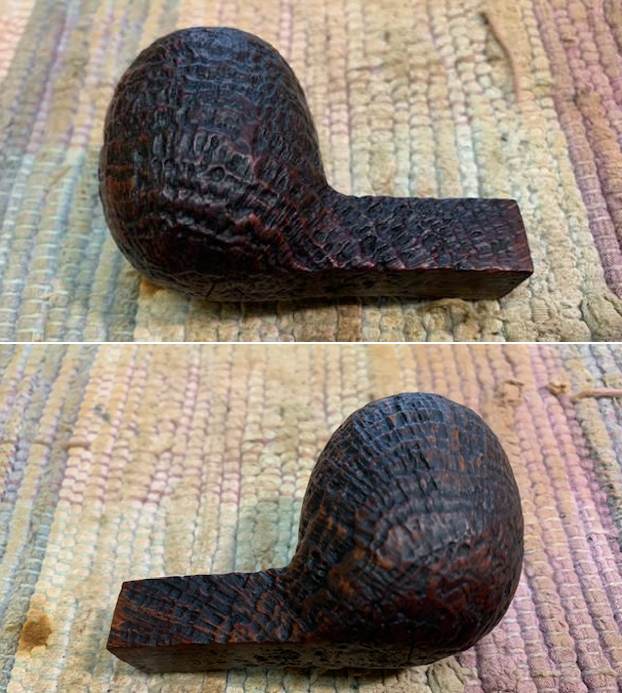
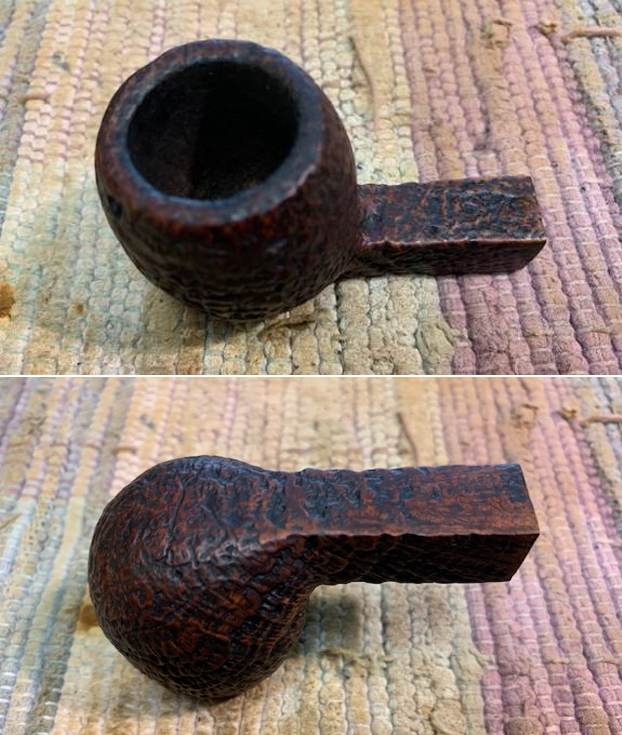
The next pipe I chose to work on was another bowl from my box to restem. This one is an interesting looking meerschaum with a rugged rustication on the bowl and shank. It has a flumed black rim top with the colour going down a short distance on the bowl sides. It is stamped on the underside of the shank and reads Genuine Block [over] Meerschaum. Arched around the end at the shank stem it is stamped GT. Britain. The stamping was faint but readable and to me it looks like an African Meerschaum pipe made by Manx pipes on the Isle of Man. It had been cleaned and reamed somewhere along the way by either Jeff or me. I honestly don’t remember when or where we got this bowl. It was tired looking but showed a lot of promise. The stem was long gone so this would be a restemming job. I took some photos of the bowl to give a since of the condition of this nice little Author. I took some photos of the stamping on the sides of the shank. The stamping is clear and readable as noted above. There was a smooth panel on the underside of the shank. It is stamped/carved Genuine Block Meerschaum. It is faint but still readable.The next photo shows the flumed rim top and edges. It also shows the condition of the bowl and rim top/edges. It is clean but there is still a bit of lava on the rim top that will need to be addressed.Jeff had picked up some great unused stems of all sorts and sizes. In the bag I received from him yesterday was the kind of stem I had been looking for for this pipe. It is an oval saddle stem whose thickness is correct but the width will need to be adjusted. The tenon will need to be turned to fit the shank and will also need to be shortened for a proper depth. Now it was time to work on the pipe itself. I started with fitting the stem to the shank. I used the PIMO Tenon Turning Tool to reduce the diameter of the tenon and smooth out the face of the stem. I drilled the airway to hold the guiding pin and adjusted the cutting head for the first and then the second turn that removed the excess diameter of the tenon. I always love the swirls of vulcanite that peel off while the turner does its work. I cleaned up the casting remnants on the face of the stem with a file for a proper fit against the shank. I constantly checked the fit in the shank while I worked on it. I shortened the length of the tenon a topping board with 220 grit sandpaper. When it was finished I fit it in the shank and took photos of the pipe and its new stem. I still had a lot of work to do but there was progress. Now it was time to adjust the width by reshaping the sides of the new stem. I would also need to do some adjustments to the fit against the shank face. I took some photos of the top and underside to show the excess material on the stem that would need to be removed.I used my Dremel and a sanding drum to do the rough work on the stem. I worked on it carefully to remove as much excess as I could from the sides and reshape the look of the stem to match the stem. The only way I know how to do this is with the new stem in place in the shank and then carefully move the sanding drum up and around the stem surface to get a close/rough fit. It was getting much closer but there was a lot more work to do hand shaping it with sandpaper and files. I decided to enjoy a bowl of Friedman & Pease Fool’s Cap in a Nachwalter I cleaned and restored a while ago. I find that slowly puffing a bowl relieves some of the tedium of shaping and sanding a newly fit stem to get all the angles just right.I took photos of the pipe after I had fit the stem to the shank. The look and fit of the stem looked like it was original. I was pleased with the look and read to move on to polishing it. I polished the stem with micromesh sanding pads – dry sanding with 1500-12000 grit pads. I wiped the stem down after each sanding pad with Obsidian Oil. With the shaping and polishing finished on the straight stem it was time to bend the stem to match the angles of the shank. I used a heat gun to soften the vulcanite and then gave it a slight downward bend. I left the stem in the shank and touched up the polishing of the stem with Before & After Pipe Stem Polish – both Fine and Extra Fine and buffed it with a cotton cloth. Once I had finished the polishing I gave it final coat of Obsidian Oil and set it aside to dry. With the stem finished (all but the final buff) I turned my attention to the bowl. I used a brass bristle wire brush to clean up the debris still in the rusticated, flumed rim top of the bowl. It looked better when I finished.  I scrubbed the rusticated surface of the bowl and rim with a tooth brush and undiluted Murphy’s Oil Soap. I rinsed the bowl off with warm water to remove the debris and clean the brush. The finish looked much better. I used a black stain pen to touch up the flumed rim top and edges. I applied it carefully around outer edge of the bowl as well following the pattern of the previous flume.I am excited to be on the homestretch with interesting British Made Flumed Rusticated Meerschaum Author. This is the part I look forward to when it all comes back together, polished and waxed. I put the bowl and the new stem together and polished the stem and bowl with Blue Diamond to polish out the scratches in the vulcanite and give a light shine to the bowl. I gave the stem multiple coats of carnauba wax. I buffed the pipe with a clean buffing pad to raise the shine. I hand buffed it with a microfiber cloth to deepen the shine. The pipe polished up pretty nicely. The rugged rusticated finish looks really good with the deep nooks and crannied of the rustication and the porous spots showing the “grain” in the meerschaum. The restored bowl goes really well with the new polished black saddle vulcanite stem. This Rusticated Flumed Author was another fun pipe to work on and came out looking great. It is a comfortable sized pipe to hold in the hand. The finished pipe is shown in the photos below. The dimensions of the pipe are Length: 5 inches, Height: 1 ¼ inches, Outside diameter of the bowl: 1 ¼ inches, Chamber diameter: ¾ of an inch. The weight of the pipe is 51 grams/1.80 ounces. If you are interested in adding this pipe to your rack it will be on the rebornpipes store in the Ceramic and Meerschaum Pipe Section soon. Thanks for reading this blog and my reflections on the pipe while I worked on it.

This Greenwich House Antique Imported Briar Crowned Pot Turned into a Nightmare


Blog by Steve Laug

Sometimes when I start working on a pipe there is can be a sense of gloom or expectant trouble. That was the case with this one. I thought it would be a straightforward clean up and restoration. Little did I know what lay ahead for me in this restoration. Time would tell and I would share it here with you my readers. It started as usual. I recognized the brand on this pipe but could not remember any of the details. Jeff picked this pipe up from an antique store in Ogden, Utah, USA back in 2019. It is stamped on the left side of the shank and reads Greenwich House [arched over] Antique and on the right side Imported [over] Briar. It was the Greenwich House tag that grabbed my attention. You know how sometimes a name just sits on the edge of your memory beyond your reach but you still know it? That is what this name did to me. The finish is quite dirty with a cake in the bowl and lava overflow on the rim top. The worm trails on the sides and base reminded me of a Custom-Bilt but a bit more smooth. The crowned rim top was more elegant. The saddle style stem was old vulcanite and other than deep tooth marks it was quite clean, Jeff took some photos of the pipe before he started. He took close up photos of the rim top, bowl and stem to give a better picture of what he was seeing as he prepared to clean it up. You can see the cake in the bowl and the lava on the rim top. The inner edge appears to be burned and damaged but it was hard to tell for sure. The stem had some deep tooth marks on both sides just ahead of the button and some light calcification at the sharp edge.Jeff took his characteristics photos of the bowl sides and heel to give a clear picture of the grain around the bowl and the style of the worm trails carved into the sides and heel. It is a nice piece of briar.The stamping was readable though a little faint on the left side of the shank. It read Greenwich House arched over Antique on the left. On the right side it was very clear and read Imported [over] Briar.I turned first to my blog on a previous restoration of a Greenwich House pipe. I had worked on one that was stamped Thoro-Kleen, a metal pipe (https://rebornpipes.com/2016/02/24/a-piece-of-art-deco-greenwich-house-thoro-kleen/). I read through that blog and have included a pertinent piece of information on the brand below.

According to Pipedia (https://pipedia.org/wiki/Thoro-Kleen) the Greenwich House Thoro-Kleen was a metal pipe system from the same family as the Roybrooke, Comet, and Original Gridiron pipes, and parts from all are believed to be interchangeable. The pipes were sold by the Greenwich House Corporation, located in 1947 at 939-M 8th Avenue, N.Y. 19, N.Y…

From that I knew it was an American Made pipe that had been carved for or by a company known as Greenwich House Corporation in New York City.

I turned to the listing of American Brands on Pipedia to see if there was a listing for the Greenwich House itself (https://pipedia.org/wiki/American_Pipe_Brands_%26_Makers_G_-_H). I found that there was not an article but the list of makers identified the brand and said that The Antique was made of Aged Algerian Briar. One more piece fell in place. The pipe I was working on was stamped Antique so I now knew the source of the Imported Briar.

But I still wanted a bit more information so I did a Google search and was taken to pipes made by Greenwich House on smokingpipes.com and other sites. Worthpoint, an auction site had several and also had one stamped Antique (https://www.worthpoint.com/worthopedia/vintage-greenwich-house-carved-1992675965). I have included the description from the sale item below as it is quite descriptive of the pipe in my hands.

Vintage Greenwich House Carved Antique Aged Algerian Tobacco Pipe. Good condition. Measures about 6.25″ long.

It is similarly stamped as mine and also similarly sized. Now it was time to work on the pipe itself. Jeff had cleaned up this nicely grained Pot with his usual pattern. He reamed the bowl with a PipNet pipe reamer and then cleaned up the inside of the bowl with a Savinelli Fitsall Pipe Knife. He scrubbed the exterior of the bowl and shank with Murphy’s Oil Soap and a tooth brush to remove the grime on the rim top and bowl. He cleaned the internals of the shank and stem with pipe cleaners, cotton swabs and alcohol until the airways were clean and the pipe smelled fresh. The pipe looked much better once the bowl and stem were clean. He scrubbed the stem with Soft Scrub to remove the oxidation and then let it soak in Before & After Pipe Stem Deoxidizer. He rinsed it with warm water when he took out of the soak. Before I started my part of the work I took photos of the pipe. I took close up photos of the bowl and the rim top to show the condition. The photo clearly shows the burn damage to the inner edge and the rim top at the back of the bowl. You can also see the roughening of the rest of the inner edge and rim top. It was going to take some work to bring it back. I also took photos of both sides of the stem to give a sense of the condition of both sides at the button. There is deep tooth marking and damage on both sides ahead of the button. I took a photo of the stamping on the sides of the shank. It was readable but was more faint on the left than the right side. It read as noted above.I removed the stem from the shank and saw to my chagrin a stinger. I fiddled with it a bit to see if it was pressure fit or screwed into the tenon. There was no give to it. (This portends what is ahead, keep reading.) I set the stem down with the bowl and took a photo to give a general look at the proportions of this pipe.I started work on this one by using a folded piece of 220 grit sandpaper to clean up the inner edge of the bowl and the rim top at the back. I was able to clean and reshape the bowl by slowly working through the process. So far the restoration was going well.I polished the bowl and rim top with micromesh sanding pads – dry sanding with 1500-12000 grit pads and wiped down the bowl after each sanding pad. I rubbed the bowl and shank down with Before & After Restoration Balm. I worked it into the surface of the bowl sides and shank with my fingertips and a horse hair shoe brush to clean, enliven and protect the briar. I let the balm sit for a little while and then buffed with a cotton cloth to raise the shine. The Balm did its magic and the grain stood out.   So far so good! I filled in the deep gouges on the top and underside of the stem and set it aside for the repairs to cure.After the repairs cured things took a horrible turn! If you have read this blog for long you know how much I dislike metal stingers. I find that they indeed condense moisture and fill the shank with horrendous muck. Soooo… I decided I would try to remove this one and give the stem a thorough cleaning. I have found that most stingers are either threaded and screwed into the tenon or are pressure fit. Either way a little heat loosens the glue or gunk that hold it tight and it is easily removed.

Well… the heat did absolutely nothing with this one. It did not twist or wiggle free. It was solid with or without heat… or cold for that matter. I was frustrated at this point and tried to pull it with pliers and the “wicked” thing snapped off! Now that usually does not matter either. I can easily drill it out with a small bit.

Again not so!! The remaining tube went well beyond the saddle on the stem. I drilled and drilled then filed the edges to smooth it out. At this point I should have just left it. But I DID NOT DO THAT. NO! I tried to pull out the remnant of the tube with a small file. And then a chunk of the tenon cracked off. You can see the offending tube in the tenon stubbornly laughing at me. Arggh… This was becoming much more of a  problem. Each step I took to remedy it made it actually worse. Now I would need to cut off the remaining tenon and the drill the stem and make a new tenon for it. OH MY! THIS IS NOT WHAT I WANT TO DO!!

I got out my hacksaw and carefully cut all the way around the broken tenon. I purposely did not cut the tube as I wanted to see how far into the stem it actually went. I pulled it out with a pair of pliers and took a photo of the length of the offending tube once it was free of the airway. You might laugh at this point and I invite that. This was a lot of work to go to just to clean out the airway in the stem. But now I could replace the tenon. I went through my tenons and had one that was a close fit to the shank of the pipe. I would need to drill out the stem to take the threaded replacement tenon but I was hoping that this part would proceed without more things going awry. I started drilling with my cordless drill and a bit slightly larger than the airway in the stem. I continued going through various bits up to ¼ inch which was the size I would need to receive the threaded tenon end with some modifications. You will notice the repairs to the deep tooth marks still have not been smoothed out.I modified the threaded tenon with a Dremel and sanding drum. I removed the should on the middle of the tenon and reduced the diameter of the threaded portion so that I could glue it in place in the stem. I cleaned up the edge between the thicker portion and the threaded portion with a flat rasp to make the fit smooth when inserted in the stem. I inserted it in the stem and took a photo.Before gluing the tenon I the stem I put all the parts together to make sure that everything lines up correctly. It looks good so I take photos to show it at this point in the process. With the alignment correct I coated the threaded end of the tenon with black super glue and pushed the tenon in place in the stem. I set the stem aside to let the glue cure and went and had a cup of coffee with Irene. I needed to lick my wounds a bit on this whole mess!After coffee I went back to the stem to clean up the repairs on the top and underside of the stem. I flattened out the repairs with a flat file to begin to blend them into the surface. I followed that up with 220 grit sandpaper to further blend it in. I started polishing it with 400 grit wet dry sandpaper. I polished the stem with micromesh sanding pads – 1500-12000 grit pads. I wiped it down with Obsidian Oil after each sanding pad. I used Before & After Pipe Polish – both Fine and Extra Fine to further polish the stem. I gave it a final coat of Obsidian Oil and set it aside to dry. While I liked the look of the new stem on the shank it felt like it was missing something to me. I really wanted to give it a special touch that would set it apart and make the look spectacular. I went through my band collection and found a perfect 14K Gold band that would do just what I wanted. I took down the end of the shank to enable a snug fit. I heated the band with a lighter and pressed it onto the shank end. I finally finished this nightmarish restoration of a pipe that should have been quite simple. The Greenwich House Antique Import Briar Crowned Pot with a vulcanite saddle stem is a great looking pipe now that everything came together. The briar around the bowl is clean and really came alive. The rim top looks much better than when I began. The rich brown stains gave the grain a sense of depth with the polishing and waxing. The grain  on the smooth portions really popped and the worm trails carving look good as well. I put the vulcanite stem back on the bowl and carefully buffed the pipe with Blue Diamond on the buffing wheel using a light touch on the briar. I gave the bowl and the stem multiple coats of carnauba wax on the buffing wheel. I buffed the pipe with a clean buffing pad to raise the shine. I hand buffed the pipe with a microfiber cloth to deepen the shine.

The finished Greenwich House Antique Pot is a beauty and feels great in the hand and looks very good. Give the finished pipe a look in the photos below. The dimensions of the pipe are Length: 5 ¾ inches, Height: 2 inches, Outside diameter of the bowl: 1 ½ inches, Chamber diameter: ¾ of an inch. The weight of pipe is 2.29 ounces/65 grams. It is much more beautiful in person than these photos can capture. I will be putting it on the rebornpipes store soon. Look for it in the American Pipe Makers section. If you would like to add it to your collection let me know. This is another pipe that has the possibility of transporting the pipe man or woman back to a slower paced time in history where you can enjoy a respite. Thanks for walking through the restoration with me.

Replacing a Broken Tenon on an Italian Made Capri Gozzo Billiard


Blog by Steve Laug

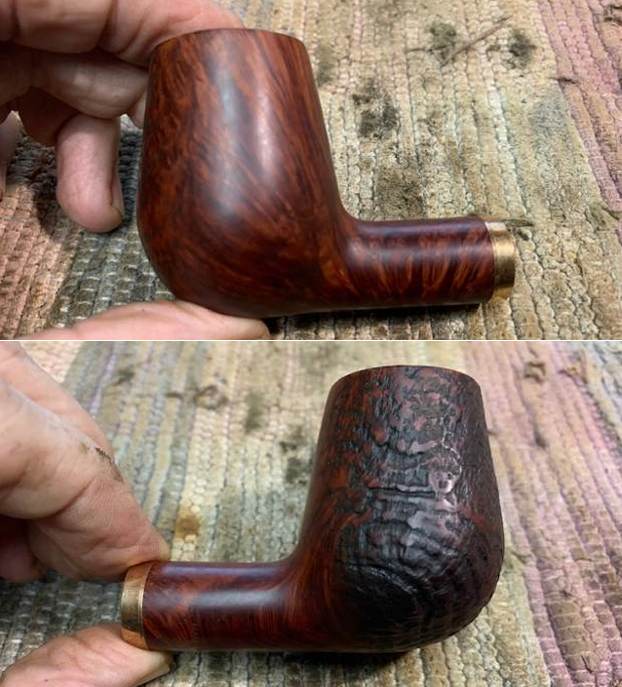
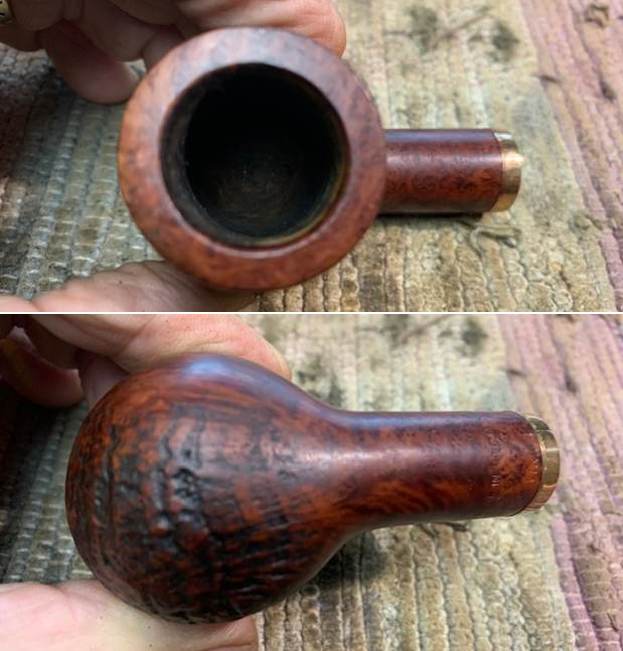
Yesterday I received an unexpected package from a fellow living in Port Clements, British Columbia. I say unexpected because I had not spoken to anyone from there about a repair. But here it was so I opened it to find a pipe with a broken tenon and a cheque for the work. There was a note in the package with a return address but no phone number or email. The pipe had the tenon broken off cleanly and stuck in the shank.The edges of the shank had some nicks in the edges and face on the left side. The stem face had some remnants but otherwise the break had been clean. The pipe was stamped on the left side of the shank and read Capri [over] Gozzo. On the right side of the shank it was stamped and read Made in Italy. The finish was dirty and there was a moderate cake in the bowl and lava overflowing on the rim top. It looked like he had dropped it somewhere along the way and snapped the stem off. The stem was lightly oxidized and had some chatter and tooth marks on both side ahead of the button but nothing to deep. I took some photos of the bowl and stem when I received it to show what it looked like when I received it here in Vancouver. I took photos of the rim top to show the condition of the bowl and the damage to the inner edge and the top of the rim. I also took photos of the stem to show the oxidation and tooth chatter on both sides at the button.I took a photo of the stamping on the left side of the shank. It was clear and readable as noted above.I took some photos of the shank end and stem end to show the broken tenon and the remnant on the face of the stem.I decided to start my work on the pipe by pulling the tenon from the shank. Usually I use a dry wall screw and twisted it into the airway. On this pipe it was stuck tight. I put it in the freezer for about 30 minutes and it was still stuck. I decided to drill it out and move on. I went through my tenons and found that I was missing the black Delrin one that I needed for the size of the shank. I did find a threaded white Delrin one that would fit the shank with a few minor adjustments. I used a Dremel and sanding drum to remove the shoulder ahead of the threads and it fit perfectly in the shank. I am hoping that the fellow will return my calls so I can chat with him about the tenon. No luck on many phone calls so the tenon was glued in place this morning.Now it was time to work on replacing the broken tenon. I drilled out the face of the stem with a cordless drill and a bit roughly the size of the airway in the stem. I find that this helps to center the drilling. I worked my way through drill bits up to 15/64s which is approximately the size of the threaded portion of the tenon.I turned the threaded portion of the tenon into the drilled airway and the fit was perfect. I used a dental pick to spread some black CA glue on the threads of the tenon and turned it in place in the stem. I set it aside to wait for the glue to cure.While the glue cured on the new tenon I turned my attention to the bowl. I reamed the bowl with a Savinelli Fitsall Pipe Knife and then sanded it with 220 grit sandpaper wrapped around a piece of dowel.I used a piece of folded 220 grit sandpaper to clean up the inner edge of the bowl and smooth out the nicks there. I also sanded the rim top at the same time to remove the lava and darkening there. I stained the rim top with an oak stain pen to blend it into the surrounding briar.I polished the briar with micromesh sanding pads – dry sanding with 1500-12000 grit pads and wiping the briar down with a damp cloth after each pad. The briar began to take on a shine as the pads progressed. I worked some Before & After Restoration Balm into the surface of the briar with my fingertips to clean, enliven and protect the briar. I let the balm sit for 15 minutes and then buffed with a cotton cloth to raise the shine. The photos show the bowl at this point in the restoration process. I pressed a thin brass band on the shank end to take care of the nicks and chips there. It also gave a smooth surface for the face of the stem to sit. I like the addition of the bling. I set the bowl aside and turned my attention to the stem. It was in such great condition that I polished it with micromesh sanding pads – wet sanding with 1500-12000 grit sanding pads. I wiped it down after each sanding pad with Obsidian Oil. I polished it with Before & After Pipe Stem Polish – both Fine and Extra Fine. This Capri Gozzo Fancy Saddle Stem Billiard turned out to be a more beautiful pipe than I had expected when I took it out of the package. The finish on the briar is nice and the grain really stands out. I put the pipe back together and buffed it lightly with Blue Diamond on the buffing wheel. I gave the bowl and the stem multiple coats of carnauba wax. I hand buffed the pipe with a clean buffing pad to raise the shine and hand buffed it with a microfibre cloth to deepen the shine. It is fun to see what the polished bowl looks like with the polished black vulcanite stem. This classic looking Capri Gozzo Billiard feels great in my hand. It is light and well balanced. Have a look at it with the photos below. The dimensions are Length: 6 inches, Height: 1 ½ inches, Outside diameter of the bowl: 1 ½ inches, Chamber diameter: 7/8 of an inch. The weight of the pipe is 63 grams/2.22 oz. The pipe definitely looks better than when it arrived. It will be heading back to pipeman who sent it to me later this week. Thanks for walking through the repair and restoration with me as I worked over this pipe. Thanks to each of you who are reading this blog.
A Labour of Love


Blog by Kenneth Lieblich

Next on the chopping block is the very first GBD I have had the pleasure of restoring. I titled this story A Labour of Love because the work involved was far more than I could have imagined for such a beautiful pipe. The pipe is a GBD Colossus and I acquired it in a group of pipes I purchased from a fellow in the Eastern US. It was definitely a mixed bag of very good and very bad. Some pipes were destroyed beyond repair, some pipes were filthy but repairable, some stems were missing their stummels, and some stummels were missing their stems. This was one of those – a stummel without a stem. Makes it a bit tricky to smoke, methinks. This pipe is a calabash-shaped GBD Colossus. As the photos show, it is stamped on the left side of the shank with GBD [over] International [over] London Made [over] Colossus. On the right side it is stamped Made in London [over] England [next to] 9552 – this, of course, is the shape number. There is quite a bit of information on GBD on the Internet – they have a long and storied history in pipemaking. In this case, I was curious about International and Colossus. The main Pipepedia article on GBD tells us about their origins:

In 1850 three gentlemen got together in Paris to establish a firm dedicated to the fabrication of Meerschaum pipes – a courageous step in politically restless times. Ganneval probably came from the area of Saint-Claude where he had learned making wooden pipes. Bondier’s family obviously came from Paris and had emigrated in 1789 to Geneva. He himself had worked as a wood turner in the clay and china pipe industry in and around Saint-Claude making stem extensions etc. Donninger was an Austrian or Swiss and had worked in Vienna, the world’s center of the Meerschaum pipe. They agreed on the acronym GBD selecting the initials of their surnames.

The Pipedia article provides a lot more information on their interesting history. I would encourage you to read on here. The shape number 9552 corresponds correctly with GBD’s identification of this pipe as a calabash. The page on GBD models states the following concerning the International line and the Colossus size:

International – France and England made: medium brown smooth, carved top rim, rim stained black. In addition to the pipe line and shape information stamped on the pipe, GBD also had codes for plus sized pipes. These codes in ascending order of size were Conquest, Collector, Colossus.

I also took this screenshot from Pipephil:Anyway, on to the pipe – and what a gorgeous pipe it was (and such a big bowl)! However, it was absolutely filthy and had a few issues. The stummel had the following problems: tons of lava on the rim, notable greasy/sticky stains to the bowl and shank, plenty of cake in the bowl, a few scratches here-and-there, and a few small burns on the rim. Meanwhile, the stem had a few problems of its own. Oh wait. No stem. Umm, yeah, that is going to be an issue. This pipe was going to require some considerable work, but I was really looking forward to restoring this one. Well, suffice it to say that first on my list of tasks was to find a stem for this beauty. However, GBD stems are not just lying around, sad to say. In this case, Superman Steve came to my rescue. He had a spare GBD stem that suited my pipe very well. I was (and still am) deeply grateful to him for getting that stem for me. I will come back to the story of how I fit the stem a bit later. By the way, here is a photo of Superman Steve:This stummel was quite a mess. I first decided to ream out the bowl. I used both the PipNet Reamer (which I broke in the process) and the KleenReem to remove the built-up cake and followed that with 220-grit sandpaper to eliminate as much as I could. I took it down to bare briar, as I wanted to ensure there were no hidden flaws in the walls of the bowl. Fortunately, there were none. I then proceeded to clean out the insides of the shank with cotton swabs, pipe cleaners, and lemon isopropyl alcohol. There was a lot of nastiness inside this stummel and – boy-oh-boy – it took a lot of cotton to get this thing clean! As I mentioned earlier, the rim of the stummel was pretty ugly and also needed to be addressed. A combination of techniques was used to sort this out. In order to remove the lingering bits of lava and fix the nicks, I “topped” the pipe – that is to say, I gently and evenly sanded down the rim on a piece of 220-grit sandpaper. This effectively removed the lava and the damage, without altering the look of the pipe. I then took a solid wooden sphere, wrapped sandpaper around it, and sanded the inner bevel thoroughly. This was to achieve on the inner part of the rim the same thing that I achieved by “topping” the rim on sandpaper. A de-ghosting session seemed in order, so I thrust cotton balls in the bowl and the shank, and saturated them with 99% isopropyl alcohol. I let the stummel sit for 24 hours. This caused the oils, tars and smells to leech out into the cotton. Finally, a relatively clean and fresh-smelling bowl emerged. I followed that up by cleaning the insides with some dish soap and tube brushes. I then moved on to cleaning the outside of the stummel with Murphy’s Oil Soap and some cotton pads. Some stains were pretty stubborn and I had to scrub hard, but this did eventually remove the remaining dirt. After that, a light application of Before & After Restoration Balm brought out the best in the stummel’s grain. Having completed that, I was able to address a small nick on the shank. I dug out my iron and a damp cloth to try and raise the nicks. The hot and moist steam created can often cause the wood to swell slightly and return to shape. There was some movement – not a lot, but it was better than doing nothing. I filled the remaining divot with cyanoacrylate adhesive and let it cure. Now, with the nick filled, it was time to sand down the stummel. I used all nine Micromesh pads (1,500 through 12,000 grit) to wet/dry sand everything smooth. Then I added a bit more Before & After Restoration Balm. On to the stem, and what a trial it was. As mentioned, Superman Steve got me a GBD stem and that was terrific: the stem was clean and in nice shape. So what is the problem? Well, its width did not quite match the width of the shank. The stem was slightly wider. So, with 200-grit sandpaper in hand, I began removing the excess vulcanite. As silly as it sounds, this took a couple of hours of work to get this right. The photos below detail the lengthy process to both remove the excess and ensure evenness all around the stem face. At long last, I managed to get the size and shape just right, but the faces of both the shank and stem were not matching in the way that one would want. I took the decision that this pipe would benefit from a thin – emphasis on thin – band around the end of the shank. My jar of bands proffered a lovely, thin band that perfectly suited this pipe. With a quick application of glue, the band was on and things were looking much improved. I used some of my Micromesh pads to give that extra shine. In order to finish up the stem, I took a BIC lighter and ‘painted’ it with its flame in order to lift the slight tooth marks. This was reasonably successful in raising the dents. Before I moved on to the Micromesh pads, I built up the small dents on the stem with cyanoacrylate adhesive and let them fully cure. I then sanded it down with 220-, 400-, and 600-grit sandpapers to meld the repair seamlessly into the stem. This ensures that it keeps its shape and looks like it should. I then used all nine Micromesh pads (1,500 through 12,000 grit) to bring out the lovely black lustre on the stem. I also used Obsidian Pipe Stem Oil in between each pad scrubbing. Of course, since the stem was straight, it did not suit the pipe and needed to be bent. The end of the stem needed to be parallel with the rim of the bowl. I did not have a heat gun at the time, so I brought out a hair drier and heated the vulcanite stem in order to make it malleable. After heating it for 90 minutes (yes, you read that correctly), it became obvious that the hair drier just did not generate enough heat to bend the stem. I then realized that I was going to have to use the nuclear option: dipping the stem in boiling hot water. This is a nuclear option because the water added an horrific oxidation to the stem – the worst I have ever seen. When it was finally soft, I gently curved the stem over a wooden dowel. The dowel provided a firm surface and a proper curve. Once I had the bend I wanted, I left the stem to cool and set itself in place. I then had to go back and use all nine Micromesh pads (and the Obsidian Pipe Stem Oil) again to restore the black lustre. A few four-letter words might have been silently uttered in the process, but I digress… Then it was off for a trip to the buffer. A dose of White Diamond and a few coats of carnauba wax were just what this pipe needed. The lovely shine made the wood look absolutely beautiful.

This is a wonderfully crafted pipe and has a very elegant feel to it. Steve told me from the beginning that this was a pipe I should keep for myself. So, this one is being added to my collection – and I am pleased to say that it smokes beautifully. I am sure that I will be enjoying this one for many years to come. I hope you enjoyed reading the story of these pipes as much I as I did restoring them. If you are interested in more of my work, please follow me here on Steve’s website or email me directly at kenneth@knightsofthepipe.com. Thank you very much for reading and, as always, I welcome and encourage your comments.

Five for the Price of One


Blog by Kenneth Lieblich

Next on the chopping block is a quintet of pipes. Word has been getting around! My barber’s boss approached me recently about restoring his late grandfather’s pipes. Of course, I was only too happy to oblige. The fellow told me that his grandfather did not have fancy pipes, but he just wanted them to look good. Interestingly, he also asked that I not clean the pipes too much – he wanted some of the olfactory memories to remain. When I got my hands on the pipes, I realized what I was up against. These five pipes were really a mess. Quite frankly, if I had these pipes for myself, I would have tossed some on the firewood pile. But my customer wanted these pipes restored as a nice remembrance of his grandfather – and I completely understand and respect that. Since I restored these pipes all together, I thought I would write up their story altogether too – with a tip of my hat to my customer’s late grandfather.

Well, what have we got here? (1) A cherrywood pipe from Missouri Meerschaum, missing its stem; (2) another cherrywood pipe from Missouri Meerschaum; (3) a briar bent pot, marked Château Bruyère 32; (4) a briar egg, marked Savoy 710, missing its stem; and (5) a Brigham Voyageur 126 bent Rhodesian. Missouri Meerschaum is, of course, most famous for being the largest corncob manufacturer in the world – although they do make hardwood pipes too. Herb Wilczak and Tom Colwell’s book, Who Made That Pipe? states that Château Bruyère (as its name suggests) is made in France by an unknown manufacturer. Pipedia tells us that Savoy is a brand of Oppenheimer Pipe/Comoy’s, which was also sold by M. Linkman & Co. Finally, Brigham is the famous Canadian pipe manufacturer. The markings suggest that this Brigham was made after the move of production to Italy.

Problems with these pipes? Wow – where to begin? Both cherrywoods needed new stems. After all, one was cracked beyond repair and the other was missing altogether. They had lava and burns all over, and plenty of cake in the bowl. Besides that, the stummels were just a bit grimy. The Château Bruyère was in really bad condition: tons of lava, cake, and serious burning; cracks galore on the rim; but at least the stem had only minor tooth marks and dents. The Savoy would, of course, also need a new stem, but its stummel was also a disaster: some fills; tons of lava and cake; and (worst of all) an enormous burn gouge on the rim. The Brigham was not too bad (compared with the others), but it still had the usual cake and lava. It also looked like the rim had been used to hammer nails! The stems were first on my list. Fortunately, Steve had a couple of new Missouri Meerschaum stems for me to use on the cherrywood pipes. That was the easiest part of this whole restoration! I also had to sculpt a new stem for the Savoy. Stupidly, I forgot to take photos of this procedure, but, suffice it to say, it was tricky getting the tenon to fit correctly and getting the edges of the new stem to match with the existing stummel. On the two pre-existing stems, I took a BIC lighter and ‘painted’ them with flame in order to lift the tooth marks. This was reasonably successful in raising the dents. Then, I cleaned out the insides of the stems with pipe cleaners and isopropyl alcohol. They were terribly dirty and I went through a large number of pipe cleaners in order to clean them up. Once this process was done, the stems went for an overnight soak in the Before & After Hard Rubber Deoxidizer. The following day, I cleaned all of the de-oxidizing sludge off with alcohol, pipe cleaners, et cetera. The oxidation had migrated to the surface and would be fairly straightforward to remove. I scrubbed vigorously with SoftScrub on cotton pads to remove the leftover oxidation. On the Brigham, the tenon had come loose from the stem and needed to be repaired. I used my cyanoacrylate adhesive to sort that problem out and let it set. I also built up the small dents on the Brigham and Château Bruyère stems with cyanoacrylate adhesive and let them fully cure. I then sanded the repairs down with 220-, 400-, and 600-grit sandpapers to meld the repair seamlessly into the stems. This ensured that they keep their shape and look like they should. I then used all nine Micromesh pads (1,500 through 12,000 grit) to bring out the lovely black lustre on the stems. I also used Obsidian Pipe Stem Oil in between each pad scrubbing. I should make quick mention of the stem I made for the Savoy. I had a blank and an old, spare stem to potentially use. I ended up using the blank because it fit better. Making a new stem is tricky and messy business, and Steve is far better (and more experienced) than I am at it. Basically, I used some 220-grit sandpaper to remove the excess material from the tenon (to ensure it fit into the stummel’s mortise) and from the tenon-end of the stem (to ensure that this end matches the shape and thickness of the shank). Once the basic shape is achieved, I use progressively finer sandpaper (and then the MicroMesh pads) to make the stem look just as it should. In this end, I was pleased with the results and I wish I had photos to show you of the process!All five stummels were a terrible mess: loaded with cake, filth, and an overall yucky feel. They had obviously been thoroughly smoked and enjoyed. Quite frankly, the grandfather must have smoked them until there was no more draw! Anyway, I first decided to ream out all of the bowls. I used both the PipNet Reamer and the KleenReem to remove most of the built-up cake – but not all. I didn’t take the cake down to bare briar, as my customer wanted some essence of his grandfather left in the bowls. The one exception to this was the Brigham, and I did ream it completely and brought it down to bare briar. My customer wanted only this pipe to be completely cleaned out. On all five, however, I did clean out the insides of the shanks with Q-tips, pipe cleaners, and isopropyl alcohol. There was a lot of nastiness inside the shanks and it took a lot of cotton to get them clean! I then moved on to cleaning the outside of the stummels with Murphy’s Oil Soap on some cotton pads and also used a tooth brush to get into the crevasses of the Brigham and the Château Bruyère. I actually soaked the rims in Murphy’s for a while, just to loosen up the lava. I followed that up by cleaning the insides of the Brigham with some dish soap and tube brushes. A de-ghosting session seemed in order for the Brigham. The de-ghosting consisted of thrusting cotton balls in the bowl and the shank, and saturating them with 99% isopropyl alcohol. I let the stummel sit for 24 hours. This caused the oils, tars and smells to leech out into the cotton. Finally, a relatively clean and fresh-smelling bowl emerged. There was a great deal of damage to the rims of all the stummels – and that also needed to be addressed. In order to remove the lingering bits of lava, fix any nicks, and tidy up the look, I “topped” the pipes – that is to say, I gently and evenly sanded down the rims on a piece of 220-grit sandpaper. This effectively removed the lava and the damage, without altering the look of the pipes. However, some needed more attention than others. The two cherrywood pipes were straightforward enough, but a fair amount of work was needed on the other three. The Château Bruyère, as you will have seen, had fairly horrific damage to the wood of the bowl. There were so many cracks and burns that I was not sure if anything meaningful could be done. I did top the bowl, but stopped before I took too much off. There was no getting around the fact that this pipe was not going to be like new. I was comforted by the fact that this pipe was simply being cleaned up and was not going to be smoked again. I sealed off the cracks with cyanoacrylate adhesive, let them cure, and then sanded them smooth. It made a huge difference.But the Château Bruyère still needed a bit more help: re-staining. In order to create some external beauty to this pipe, I opted for aniline dye. I applied my own mixture of some of Fiebing’s Medium Brown Leather Dye and some Fiebing’s Black Leather Dye. I then applied flame in order to set the colour. Worked like a charm! The pipe looked so much better after this.The Savoy had a large valley running along the rim of the bowl (not to mention some considerable burning). A combination of techniques was used to sort this out. I topped the stummel to start, but then I took a solid wooden sphere, wrapped sandpaper around it, and sanded it thoroughly. This was to achieve on the inner part of the rim the same thing that I achieved by “topping” on sandpaper. I then built up the remaining wound with a mixture of briar dust and cyanoacrylate adhesive. I was quite pleased with the results. Finally, I added a brass ferrule to the end of the shank and glued it in place. It gave the pipe a snazzy look. The Brigham was also tricky, but for a different reason. The Brigham had what I like to call a “broken nose”. The front edge was smashed in and would need to be built up. More than that, the repair would need to be rusticated so as to match the original rustication of the pipe. I am always worried about this sort of work because I dread the possibility of not getting the match right. In this case, I topped the Brigham first, but only slightly – just enough to make it neat and tidy. Then I built up the edge with a mixture of briar dust and cyanoacrylate adhesive. Then, I topped it a second time in order to even out the repair with the rim. Finally, I got out my Dremel and used that to rusticate the pipe’s “nose”. The results were quite good. Now, with the damage repaired on all five pipes, it was time to sand down the stummels. Just like the stems, I used all nine Micromesh pads (1,500 through 12,000 grit) to sand everything smooth on the three briar pipes (I did not sand the cherrywoods). A light application of Before & After Restoration Balm brought out the best in the stummels’ grain

Then it was off for a trip to the buffer. A dose of White Diamond and a few coats of carnauba wax were just what these pipes needed to shine (literally and figuratively). The polishing was the cherry on top of a long road of recovery for these five pipes. The pipes began in the hands of a man who clearly loved smoking them. His grandson, honouring his grandfather’s memory, wanted them to look good again – but not so new that the essence of his grandfather was lost. It was my job to make sure that his grandfather was still in those pipes. I know that my customer will enjoy looking at those pipes (and remembering) for many years to come. I hope you enjoyed reading the story of these pipes as much I as I did restoring them. If you are interested in more of my work, please follow me here on Steve’s website or email me directly at kenneth@knightsofthepipe.com. Thank you very much for reading and, as always, I welcome and encourage your comments.

Restemming and Breathing New Life into a WW2 Monterey Specimen Grain Bowl


Blog by Steve Laug

The next pipe I chose to work on was another bowl from my box to restem. This one has some great grain around the sides and shank. It is stamped Monterey [over] Specimen Grain on the on the left side of the shank. On the right side it is stamped Mission Briar. It had been cleaned and reamed somewhere along the way by either Jeff or me. I honestly don’t remember when or where we got this bowl. It had a hairline crack on the right side of the shank that ran mid shank for about ½ an inch. The stem was long gone so this would be a restemming job. I would need to band the shank as well. The rim top was darkened and the inner edge of the bowl was out of round. I knew from working on Monterey/Mission Briar pipes in the past that I was dealing with a WW2 years pipe that was made in California using Manzanita in place of hard to find briar. I also remembered a connection to Kaywoodie but the details were not clear to me. I took some photos of the bowl to give a since of the condition of this nice little billiard. I took some photos of the stamping on the sides of the shank. The stamping is clear and readable as noted above.The next two photos show some of the issues that I have to deal with on this pipe. The first one shows the hairline crack in the shank. I have circled it in red. The second one shows the out of round bowl.I took a stem out of my can of stems that had the right tenon size and length. The diameter of the stem was slightly larger than the shank but it would fit with some adjustments.I put the stem on the shank and took a photo of the look of the pipe. You can see that I need to adjust the diameter of the stem to match the shank.To gather some more information on the Monterey brand I turned first to Pipephil to get some more information on the brand (http://pipephil.eu/logos/en/logo-m6.html). I did a screen capture of the information on the site and included it below. I also included information in the side bar below the screen capture.“Mission Briar” is the common denomination for wood from Manzanita burl (Fam: Ericaceae), a shrub growing in California (USA). During WWII, when Briar was rare, it was used by Reiss-Premier Pipe Co and KB&B (Monterey line).

From that information I knew that the pipe was made between 1941-1946 during the time period of World War II. It was made out of Manzanita burl from California. It was also made by KB&B as it was a Monterey Line Mission Briar pipe.

There was also a picture of two different boxed pipes. The first box is for a Specimen Grain the same as the one that I am working on. The second box is for a Forty Niner. On the inside of the box is a description of the Mission Briar. It reads as follows:

Mission Briar is manufactured from Manzanita Burl grown on the sunny slopes of California’s Pacific Coast, and is proudly offered on its own merits.

“Manzanita Burl and tree heath (Imported Briar) are related to each other botanically belonging to the Ericaceae, or heath family.” – U.S. Department of Agriculture.

The intricately woven texture and grain of this hardy burl supplies a quality pipe of beauty, strength and sweetness, a pipe you can you can cherish and enjoy smoking.

Kaufman Bros. & Bondy, Inc., 630 Fifth Avenue, New York City.From there I turned to Pipedia (https://pipedia.org/wiki/Mission_Briar) to see what else I could learn from there. The article there was taken from Jose Mauel Lopes. I quote it in full below.

From Pipes, Artisans and Trademarks, by José Manuel Lopes

Mission Briar was a brand created during WW II, which disappeared soon afterwards. In 1941, due to the difficulty of importing brair, Kaufmann Bros. & Bondy, through Kaywoodie, and the Reiss-Premier Co., started making pipes out of Manzanita burls, known as “mission briar”.

The Pacific Briarwood Company, a Kaufmann Bros. & Bondy subsidiary, owned plantations of the bush in the Santa Cruz mountains in California. As the quality of the wood was not as good as briar, the project was abandoned soon after the war.

Monterey pipes were made using Mission briar by Kaywoodie.

I learned from that it was a short-lived creation by KB&B through Kaywoodie. They created the Pacific Briarwood Company as a subsidiary to make pipes from the bush in the Santa Cruz mountains in California. It last until shortly after the war ended. Monterey pipes were made by Kaywoodie!

Now it was time to work on the pipe itself. I started with fitting the stem to the shank. I removed a lot of the diameter on the stem with my Dremel and a sanding drum. Once I had the fit close I set the stem aside and turned to deal with the issues on the bowl and shank.  I went through my bands and found a thin brass band that fit the shank perfectly. I heated it and pressed in place on the shank. It fit perfectly and I like the look of it. I took photos of the pipe with the newly fit band on the shank. It looked really good. I sanded the inner edge of the bowl with a folded piece of sandpaper. I then used a wooden ball that Kenneth had given me and a piece of 220 grit sandpaper to give a slight bevel to the inner edge of the bowl.I wiped the bowl down with isopropyl alcohol on a cotton pad to remove the shiny spots on the briar and make the stain a bit more transparent to reveal the grain on the wood. It looked really good. I dry sanded the briar with micromesh sanding pads – 1500-12000 grit sanding pads. I wiped the bowl surface down with a damp cloth after each sanding pad to remove the sanding dust. Once I finished the exterior of the briar was clean and the grain really stood out.  I rubbed the bowl down with Before & After Restoration Balm. I worked it into the surface of the briar with my fingertips to clean, enliven and protect it. I let the balm sit for 10 minutes then buffed the pipe with a cotton cloth to raise the shine. Mark Hoover’s Balm is a product that I have come to appreciate and one I use on every pipe I have been working on. I set the bowl aside and worked on the stem. I polished the stem with micromesh sanding pads – wet sanding with 1500-12000 grit pads. I wiped the stem down after each sanding pad with Obsidian Oil. I polished it with Before & After Pipe Stem Polish – both Fine and Extra Fine. Once I had finished the polishing I gave it final coat of oil and set it aside to dry.    I am excited to be on the homestretch with beautiful Mission Briar Monterey Specimen Grain Billiard. This is the part I look forward to when it all comes back together, polished and waxed. I put the bowl and stem back together. I polished the bowl and stem with Blue Diamond to polish out the scratches in the briar and the vulcanite. I gave the bowl and the stem multiple coats of carnauba wax. I buffed the pipe with a clean buffing pad to raise the shine. I hand buffed it with a microfiber cloth to deepen the shine. The pipe polished up pretty nicely. The beautifully grained finish looks really good with the interesting grain patterns standing out on the shape. The grain, the thin brass band and the polished black vulcanite went really well together. This Monterey Specimen Grain Billiard was another fun pipe to work on and came out looking amazingly graceful. It is a small billiard but it is a comfortable pipe to hold in the hand. The finished pipe is shown in the photos below. The dimensions of the pipe are Length: 5 ¾ inches, Height: 1 ½ inches, Outside diameter of the bowl: 1 ¼ inches, Chamber diameter: ¾ of an inch. The weight of the pipe is 27 grams/.95 ounces. If you are interested in adding this pipe to your rack it will be on the rebornpipes store in the American Pipe Makers Section soon. Thanks for reading this blog and my reflections on the pipe while I worked on it.

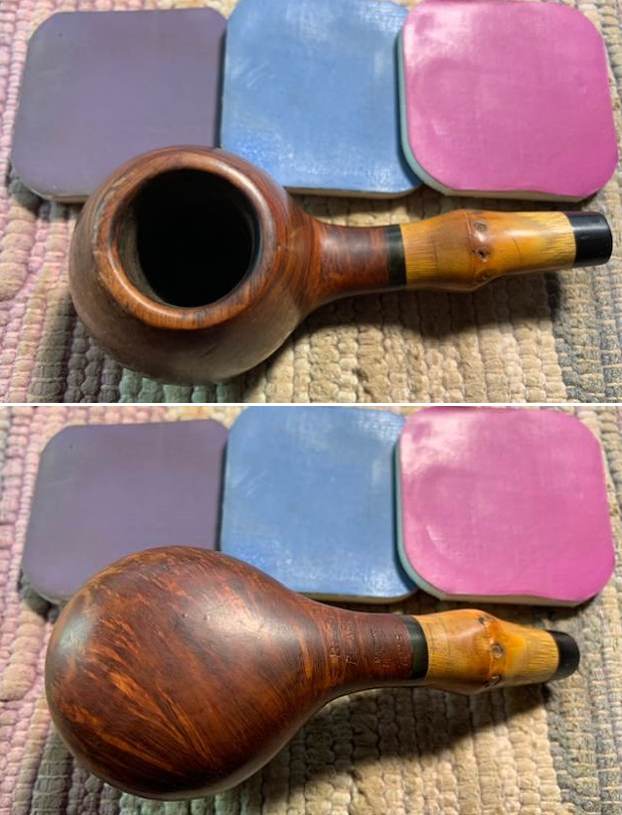
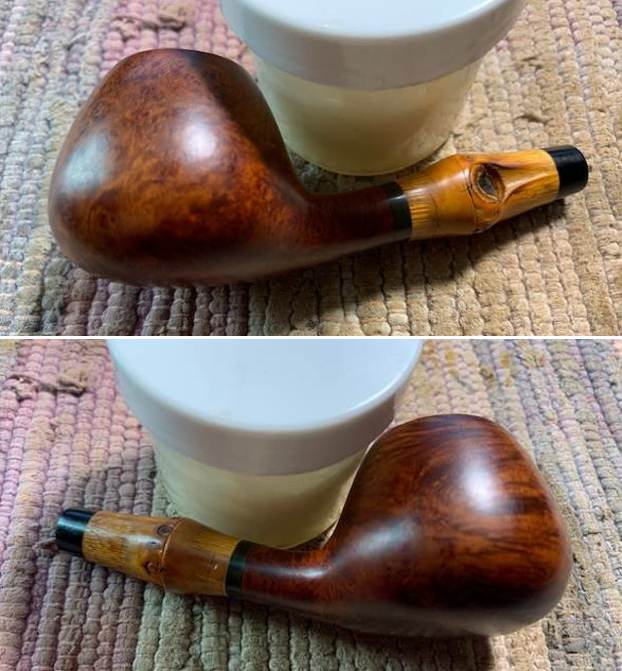
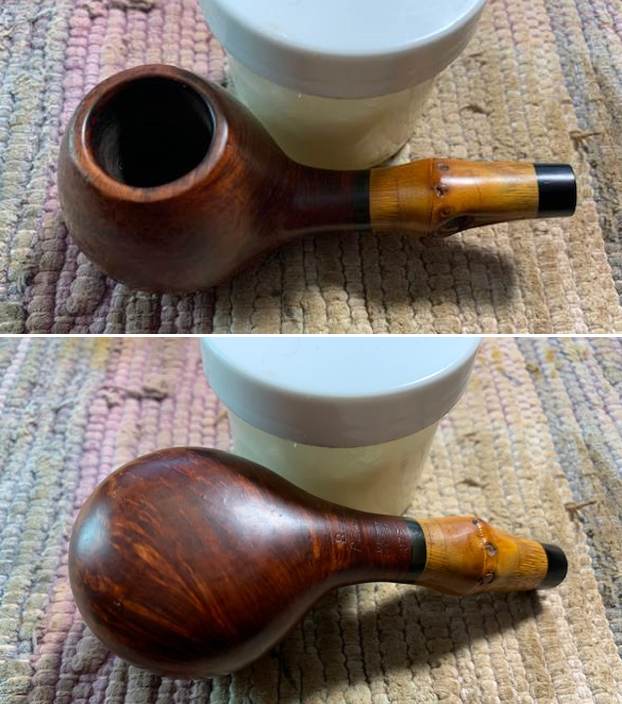
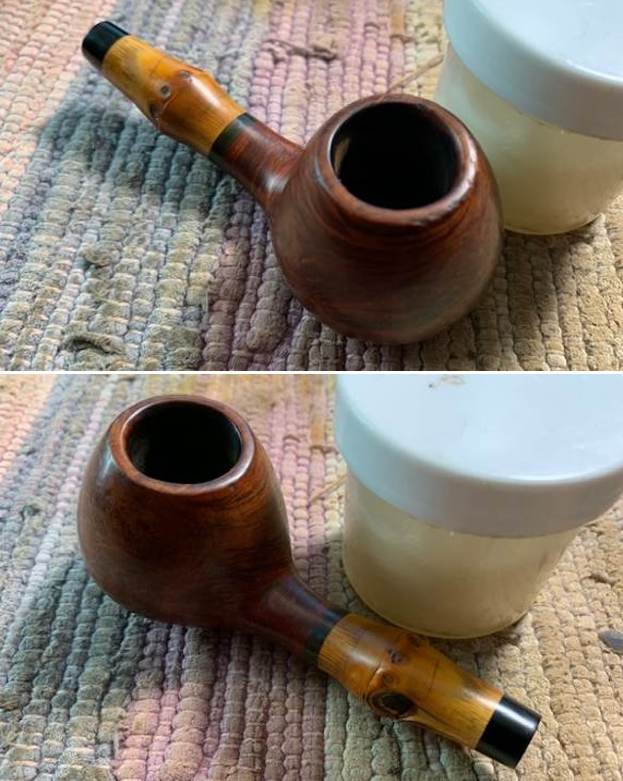
Resurrecting And Re-Stemming A Vintage Churchwarden Cutty With Reed Shank


Blog by Paresh Deshpande

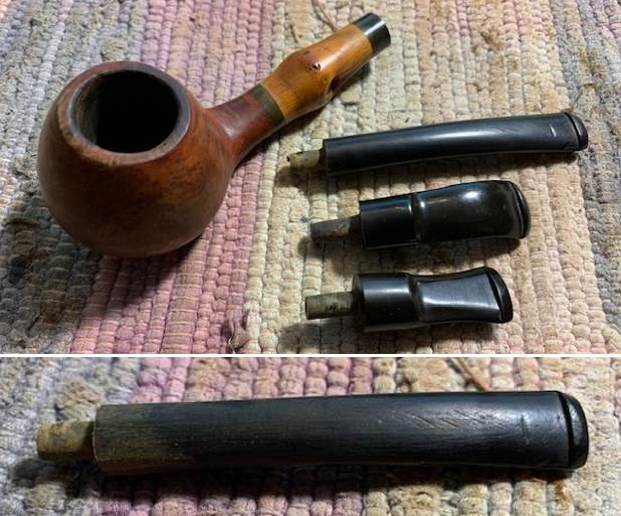
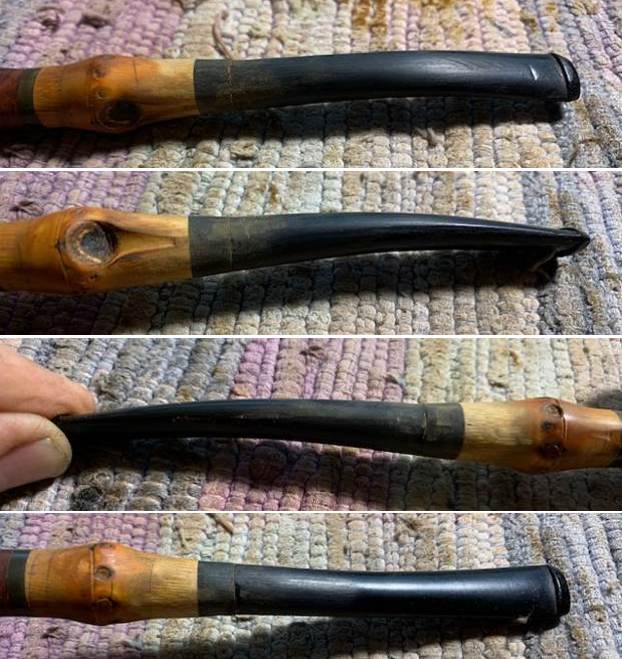
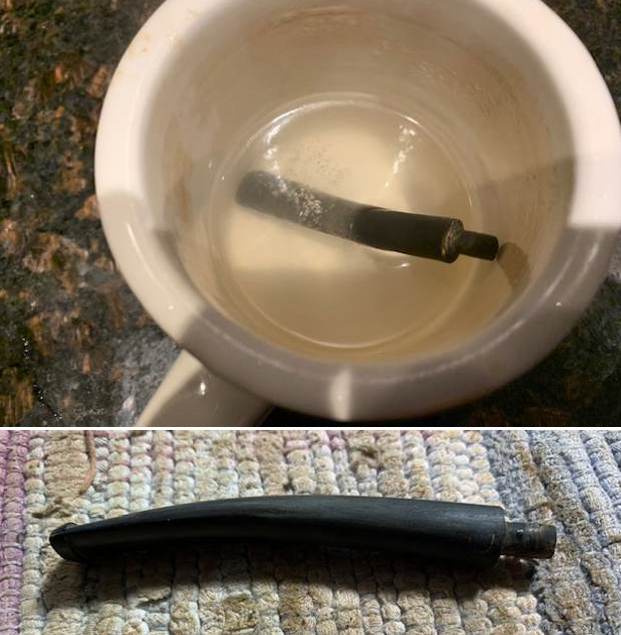
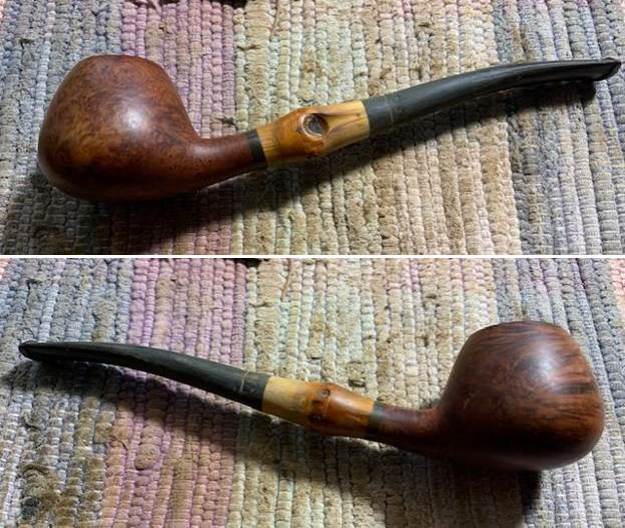
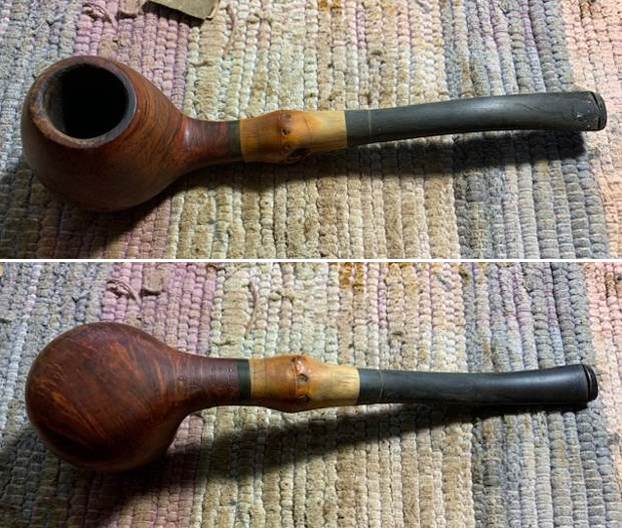
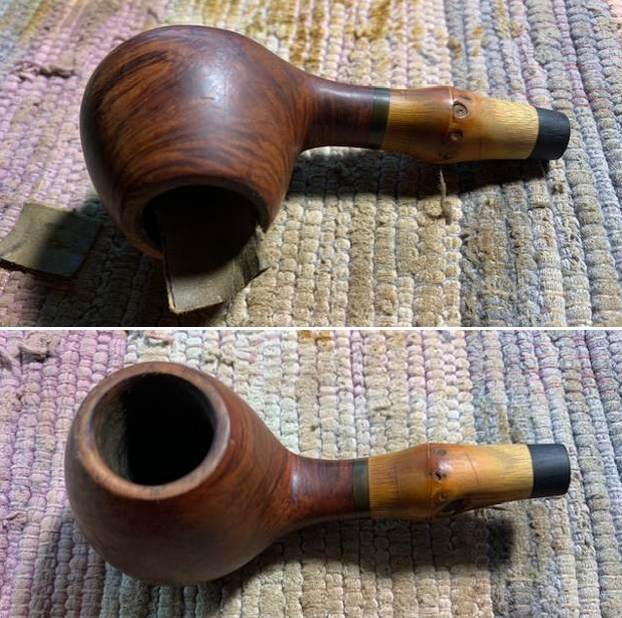
The next pipe that I selected to work on is an old, rustic no name Cutty shaped pipe with a long thin Reed shank that ended in a round orifice when I saw it for the first time. Closer examination confirmed that the round orifice was threaded implying that the stem was MIA. This pipe came to us in 2019 while Abha was in Pune and I was away at my place of work, as a part of estate sale by a French gentleman on Etsy which I am yet to chronicle. There are some really good, interesting and collectible pipes in this lot that I am looking forward to work on in coming days.

This no name Cutty shaped pipe has a steep forward cant to the stummel. This forward rake appears more pronounced as the stummel itself tapers upwards towards the rim. The stummel is as delicately and beautifully shaped as a Tulip. Here are a few pictures of the pipe as it sits on my worktable.  The complete lack of stampings of any kind on the pipe means that the provenance of the pipe cannot be ascertained with documented evidence. However, given the shape, construction, condition and the materials used in making this pipe makes me believe that this was a locally made pipe from the early 20th century. I may be wrong in my appreciation (primarily dictated by inert desire/wish for this pipe to be an old timer!) as I am vastly inexperienced as compared to many of the esteemed readers of rebornpipes and would be glad to learn more about such pipes from them.

Having placed my request, I now move on to the initial visual inspection.

Initial Visual Inspection
As noted at the start of this write up, this pipe came with a threaded reed shank end that is now missing the stem that would have come with a threaded tenon to seat in to the shank. Given the retro and vintage look of the pipe, I think the stem would have been a bone/ horn or Amber with a bone tenon. So the first step in this restoration would have to be selecting a suitable bone stem with threaded tenon. The shank end face shows two cracks on opposite sides of the shank (encircled in yellow) which would need to be addressed. The stummel end of the reed is upturned, flared and hollowed with threads to seat the stummel and at the bottom of which is the short foot. The threaded surface is covered in dried oils and gunk causing the draught hole to clog. This would have to be cleaned and opened. The entire length of the shank is covered in dirt and grime giving it a dull and dirty appearance. The chamber has a decent layer of cake that is even from top to the bottom of the bowl. The rim top is covered in overflow of lava and hides any dents or chips on the smooth surface. The rim is significantly dark and thin on one side and is encircled in pastel blue. This makes the chamber out of round and gives a lopsided appearance to the top view of the stummel. The bottom of the stummel is threaded and seats atop the threaded reed shank. The threaded area shows heavy accumulation of oils, ash and gunk all around and even within the threads. Cleaning this area would ensure a flush and snug seating of the bowl over the shank.The briar has taken on a nice dark brown patina over a long period of time and prolonged use which when polished and cleaned, should contrast beautifully with the light hues of the long reed shank. There are a few dents and fills (marked in yellow circle) over the entire stummel surface that is visible through the dirt and grime that covers the surface. Truth be told, the stummel does not boast of complete flamboyant straight or bird’s eye or flame grains over the surface, but a mixed pattern of swirls and flame grains that is attractive enough to hold your attention. Preserving the deep brown aged patina will be the primary concern in this bowl refurbishing. The Process
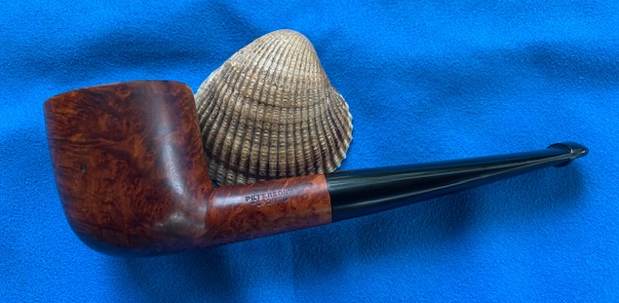
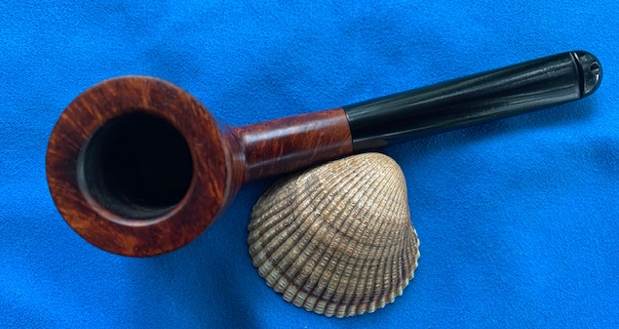
I started the restoration of this pipe with the removal of the carbon cake from the walls of the chamber. Using my fabricated knife, I carefully removed the cake from the chamber to expose the chamber walls. It was heartening to note that there are no heat related issues in the surface of the walls. I smoothed out the surface by sanding the walls with a folded piece of 220 grit sand paper. To remove the last traces of residual carbon dust, I wiped the chamber with a cotton swab wetted with 99.9% pure alcohol. I further cleaned the draught hole at the bottom center of the bowl with a pointed dental tool. The hardened cake had greatly reduced the diameter of the draught hole and ran a pipe cleaner dipped in alcohol to clean it further.Next, I cleaned the threaded bottom of the stummel that seats atop the long reed shank with a dental tool. I scraped out the entire dried gunk that had accumulated in the hollow space as well as from in between the threads. I further cleaned the bottom of the stummel with q-tips and alcohol.With the preliminary cleaning of the internals of the stummel completed, I turned to cleaning the internals of the long reed shank. With my fabricated pointed tool and round needle file, the dried oils and tars that had formed a block at the neck of the shank and stummel junction was removed and cleaned. I scraped out all the dried debris from the surface of the shank end with a sharp dental tool. I ran a few long pipe cleaners dipped in alcohol through the airway of the stem till the pipe cleaners emerged white.I cleaned the exteriors of the stummel and the reed shank with Murphy’s Oil soap and a tooth brush. I ensured that all the tars and grime was cleaned from both the surfaces. This cleaning has revealed the exact extent of damage to the rim top surface. The area where the rim has thinned out also shows signs of charring which would need to be addressed. I dried the shank surface with a soft paper towel and ran a fluffy pipe cleaner through the shank airway to dry it out. Now that the stem surface is rid of the dirt and grime, the cracks at the shank end are clearly discernible and so is the surprise revelation of a crack at the base of the threaded portion of the shank (encircled in red).I marked the end points of the shank end cracks and that at the stummel end with marker pen under magnifying glass. I shall drill counter holes at the marked end of each of the crack to prevent the further spread of these cracks. I used a 1 mm drill bit mounted on my hand held rotary tool to drill the counter holes… …and filled these and the cracks with clear CA superglue. I set the reed shank aside for the superglue to cure. The external cleaning had not only exposed an additional crack at the stummel end of the shank, it had also exposed all the fills and dings over the stummel surface. With a thin sharp knife, I gouged out all the old fills from the surface and cleaned the area with isopropyl alcohol in preparation of filling these gouged out surfaces with a mix of briar dust and CA superglue. I use the layering method to fill these pits in the briar. After all the fills were repaired, I set the stummel aside for the fills to harden and cure completely.The shank repairs had cured by the following noon when I got back from work. Using a flat needle file, I evened out the fills to roughly match the rest of the shank surface. I fine tuned the match by sanding the fills with a folded piece of 320 grit sand paper. Did I mention having customized a sterling silver band for providing additional support against the crack’s lateral expansion? I guess not. Here in India, our local Silversmiths are very skilled in turning jewelry and at repairs right in front of their customers at very affordable rates. Steve and Jeff are witnesses to such craftsmanship when they had visited us in India. Long and short of the story is that I got a 1.5 inch long silver band customized for this shank and fixed it over the shank end with superglue. That crack isn’t going any further now.Now that the cracks have been repaired and stabilized, the next goal was to find the right stem to go with the overall profile of the pipe. I selected a couple of suitable bone stems from my stash of spares and asked for Abha’s opinion. She selected a horn stem that was perfectly matched in size and shape with the shank. However, the stem came with its own set of challenges. First, the tenon was broken with half of it sticking inside the stem and secondly, the top section of the stem surface was partially sliced (encircled in blue), but remained firmly attached. Notwithstanding these issues, the stem matched the profile of the pipe to the T and looks amazing. The first issue with the stem that I dealt with was removal of the broken half of the tenon. I mounted a drill bit slightly larger than the tenon opening on to my hand held rotary tool and carefully drilled it inside the tenon. Once the drill bit had a firm grip on the tenon, I turned the motor counter clockwise and dislodged the tenon remnants from the stem revealing a threaded stem end.I would need to identify a threaded bone tenon that would match the shank and stem threads for a perfectly aligned seating. I rummaged through my spare parts box and came up with a bone tenon that was threaded at one end and smooth conical shaped at the other end. The seating of the smooth side of the tenon into the stem was perfect and so was the threaded end into the shank end snug and aligned. The Pipe Gods are especially favoring me it seems. A perfectly matching, period correct horn stem and a perfectly matching bone tenon are nothing short of a miracle.Before fixing the tenon, I cleaned out the stem internals using anti-oil dish washing soap and thin shank brushes. I scrubbed the external surface with soap and Scotch Brite pad. Using paper towels and pipe cleaners, I dried the stem externals and airway respectively. I inserted a petroleum jelly (Vaseline) coated tapered pipe cleaner through the tenon and stem airway and out through the round orifice opening at the slot end. This serves two purposes, firstly, perfect alignment of the tenon and stem airway is ensured and secondly, the petroleum jelly prevents the superglue from seeping into the airway and clogging it shut once the glue has dried. I roughed out the smooth surface of the tenon with a needle file to provide better bonding surface and applied superglue over the smooth surface of the tenon and over the threads in the stem and inserted the tenon into the stem. I wiped the excess glue from the surface and held the two together for the glue to harden a bit and then set it aside for the superglue to harden completely. While the stem was set aside for the glue to cure, I sanded the stummel fills with a flat needle file. To further even out the filled areas and address the minor dents and dings over the stummel surface, I sanded it with a worn out piece of 220 grit sand paper till smooth.Next I addressed the issue of the charred and out of round chamber. I began with topping the rim over a 220 grit sand paper, frequently checking for the progress being made. I stopped once the charred surface was reduced to an acceptable- to- me level and the thickness of the rim top was close to even all round. To get the chamber back to round, I created a bevel over the inner and outer edge with a folded piece of 180 grit sand paper. I am pretty pleased with the progress being made thus far.While I had been working on the stummel, the tenon fix to the stem had set solid. I checked the seating of the tenon in to the shank end and it was snug and perfectly aligned.There was this issue of sliced top surface on the stem which I addressed next. I applied clear CA superglue over and under the sliced surface and set the stem aside to cure. I sprayed an accelerator over the superglue to hasten the process of curing. Once the stem repairs were set, with a needle file, I sanded the fill to achieve a rough match with the stem surface. I further fine tuned the match by sanding the entire stem surface with a folded piece of 220 grit sandpaper. I applied a little EVO (Extra Virgin Olive Oil) to the reed shank and stem and set it aside to be absorbed into the surface. While the shank and stem were set aside to absorb the EVO, I dry sanded and polished the stummel surface with 1500 to 12000 grit micromesh pads. Dry sanding with micromesh pads helps to preserve the patina of the old briar and is a trick I use when restoring all my vintage pipes. I rubbed a small quantity of “Before and After Restoration” balm which moisturizes and enlivens the briar. I let the stummel absorb the balm for 15- 20 minutes and then gave the stummel a rigorous hand buff with a micromesh cloth. The transformation in the appearance of the stummel is phenomenal and immediate. With the stummel now refurbished and rejuvenated, I turned my attention back to the shank and horn stem. I polished the shank and stem by wet sanding using 1500 to 12000 grit micromesh pads. I rubbed a little “Before and After” balm in to the reed shank and a little EVO in to the stem. All that remained was a polish with Blue Diamond compound and final wax coating using Carnauba Wax. I mounted a cotton buffing wheel earmarked for Blue Diamond compound on to my hand held rotary tool and applied a coat of the compound over the stummel surface to polish out the minor scratches. With a cotton buffing wheel that I use for carnauba wax, I applied a coat of carnauba wax to the stummel and stem and continued to work on it till the complete coat of wax had been polished out. I mounted a clean cotton cloth buffing wheel and gave the entire pipe a once over buff. I finished the restoration by giving the entire pipe a rigorous hand buffing using a microfiber cloth to deepen the shine further. The finished pipe is shown below. This pipe shall find its way to my collection based purely on its delicate stunning looks and uniqueness of the shape. P.S. The Pipe God was definitely smiling down upon me as I worked this pipe. Rarely does it happen that the replacement stem is a perfect size match and the new tenon is period correct and fits in the shank like a glove.
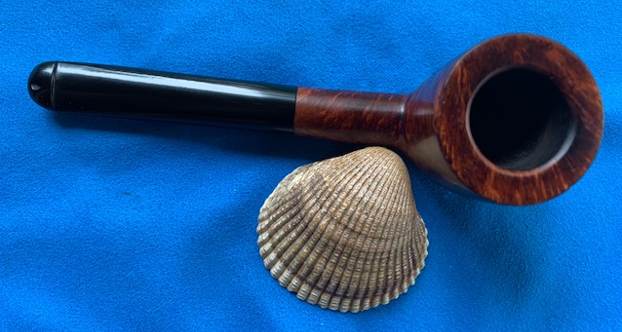
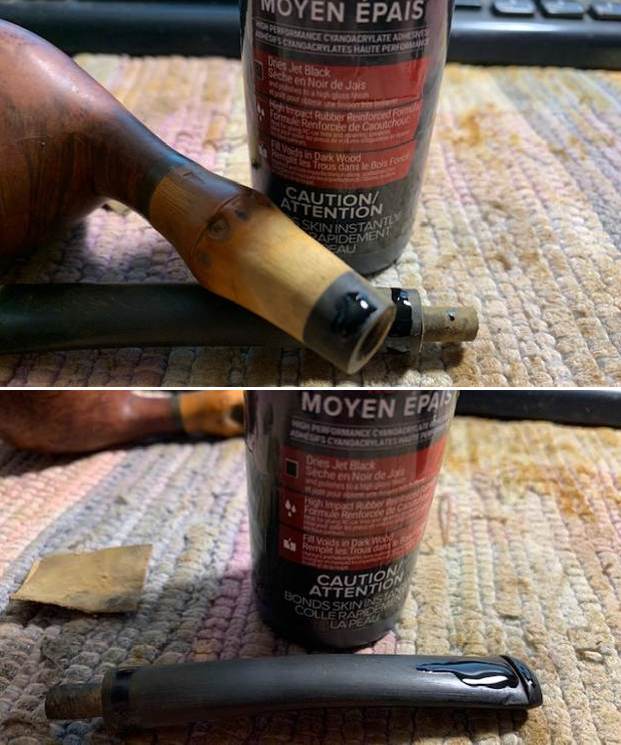
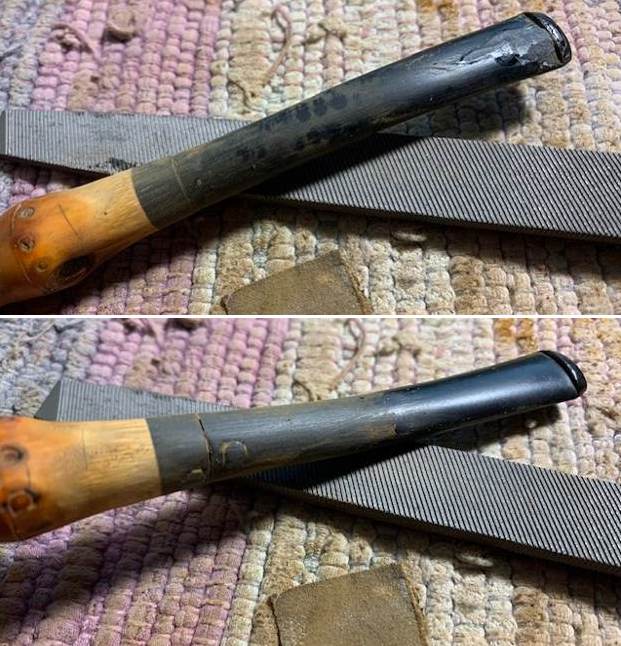
The most difficult part of this restoration for me was…can you guess? Please let me know your guess in the comments below and a big thank you for your valuable time in reading the write up.

Praying for you and yours… Be safe and stay safe.

Restemming & Restoring a Comoy’s Christmas 1987 Shape 42 Bent Billiard


Blog by Steve Laug

This morning I went through my box of stummels (bowls) again and picked out a Bent Billiard bowl that had some promise. I went through my can of stems and found a taper stem that needed some work but was a good fit. The pipe I chose to work on is an interesting Comoy’s Bent Billiard with a mixture grain around the sides. The rim top was had some darkening and some roughness on the front outer edge of the bowl. The inner edge of the bowl looked good. The interior of the bowl was clean without chips, cracks or checking on the walls. The finish was dirty and tired but still quite redeemable. The stamping on the pipe was clear and readable. On the left side it read COMOY’s [over] Christmas [over] 1987. On the right side it had the normal circular Comoy’s COM stamp Made in London in a circle [over] England below that was the shape number 42. I took some photos of the bowl before I started to work on it. I took a photo of the stamping on the left and right sides of the shank. It reads as noted above and is clear and readable.I went through some of stems and found a taper vulcanite stem that had been used previously. It had some calcification and oxidation on the surface and had tooth marks on both sides near the button.The tenon would need to be shortened slightly but I put it on the shank and took some photos of what it looked like at this point.I started my work on the bowl by dealing with the damage to the rim top and outer edge of the bowl. I lightly topped the rim on a topping board with 220 grit sandpaper. I worked over the inner beveled edge of the rim with a folded piece of sandpaper to remove some of the darkening. It was definitely an improvement. I polished the rim top and the bowl with micromesh sanding pads – dry sanding with 1500-12000 grit pads. I wiped the bowl down with a damp cloth between each pad. The bowl began to take on a shine as I went through the various pads. I stained the top of the bowl with a Cherry stain pen to blend in better with the rest of the bowl colour. It will definitely blend well once the pipe is buffed and polished.I rubbed the bowl and shank down with Before & After Restoration Balm. I worked it into the surface of the bowl sides and shank with my fingertips to clean, enliven and protect the briar. I let the balm sit for 10 minutes and then buffed with a cotton cloth to raise the shine. The grain really came alive. It looks better than when I began. With the bowl finished it was time to focus on the stem. I took out the stem and worked on the fit in the tenon. I shortened the length with a Dremel and sanding drum and it fit very well. I used a heat gun to soften the vulcanite enough to give it the proper bend.While I was bending the stem I also heated the bite marks in the stem. I was able to lift many of the tooth mark. I filled in the remaining tooth marks on the button surface and just ahead of it on the underside with clear super glue and set the stems aside to let the repairs cure.    Once the repairs cured I smoothed them out with a small file and started blending them into the surface of the stem. I sanded the repairs with 220 grit sandpaper to further blend it into the stem surface. I started polishing it with 400 grit wet dry sandpaper. I don’t know if this ever happens to you but I was so busy fitting and shaping the stem that I forgot to clean out the inside!! I paused now to do that. I scrubbed out the airway with 99% isopropyl alcohol and pipe cleaners. It was really dirty! Not any more.I polished the stem with micromesh sanding pads – dry sanding with 1500-12000 grit pads. I wiped the stem down after each pad with a cloth and Obsidian Oil. I finished the polishing with Before & After Pipe Stem Polish – both Fine and Extra Fine. I gave it a final coat of Obsidian Oil. I put the pipe back together – the bowl with its new stem. This restemmed and restored Comoy’s Christmas 1987 Shape 42 Bent Billiard is a real beauty and I think that the chosen stem works well with it. The grain on the bowl came alive with the buffing. I used Blue Diamond on the buffing wheel on both the bowl and stem. I gave both multiple coats of carnauba wax on the wheel then buffed it with a clean buffing pad to raise the shine. I hand buffed it with a microfibre cloth to deepen the shine. The Comoy’s Bent Billiard feels great in the hand. It is lightweight and the contrast in the browns of the briar, the Silver band and the polished vulcanite stem with the popping grain on the mixed brown stained bowl is quite amazing. The dimensions of the pipe are Length: 5 inches, Height: 1 ¾ inches, Outer diameter of the bowl: 1 1/8 inches, Chamber diameter: ¾ of an inch. The weight of the pipe is 1.41 ounces/40 grams. It really is a beauty. I will be putting it on the rebornpipes store in the  British Pipe Makers section shortly if you are interested in adding it to your collection. Thanks for walking through the restemming and the restoration with me. Cheers.