Monthly Archives: January 2019

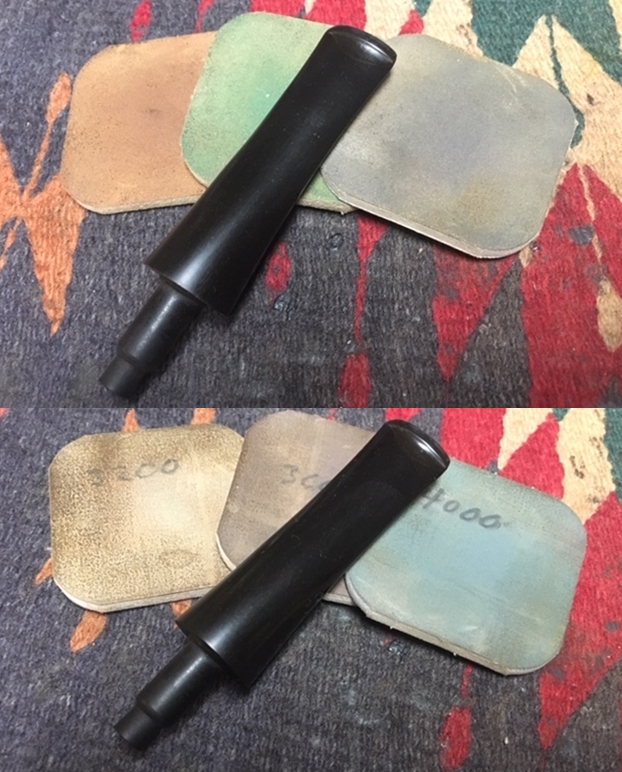
Repairing a Broken Tenon on a House of Robertson War Club


Blog by Steve Laug

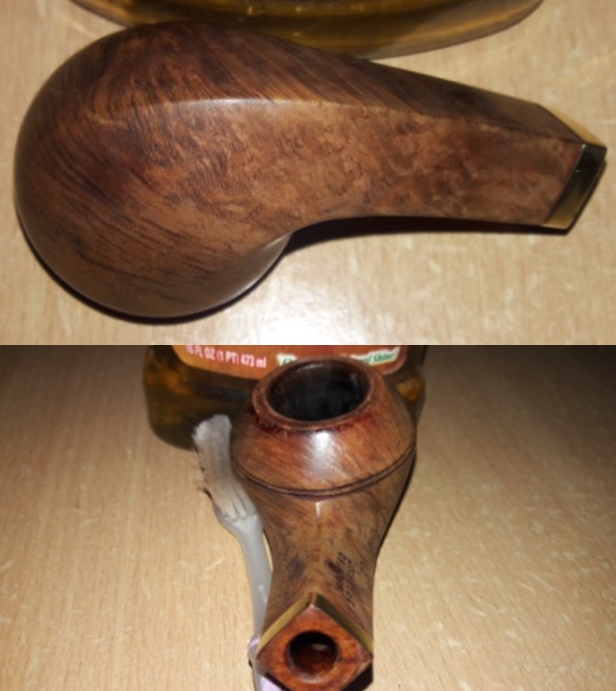
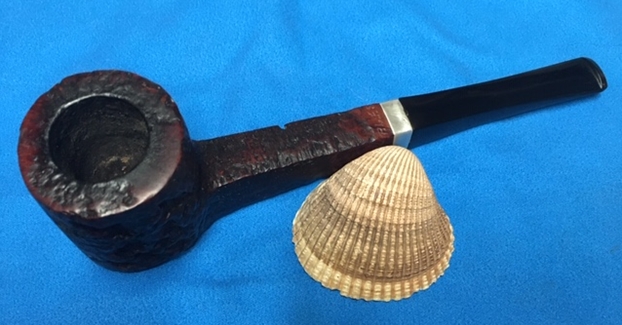
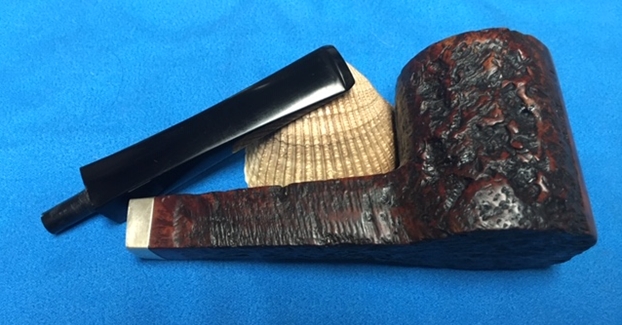
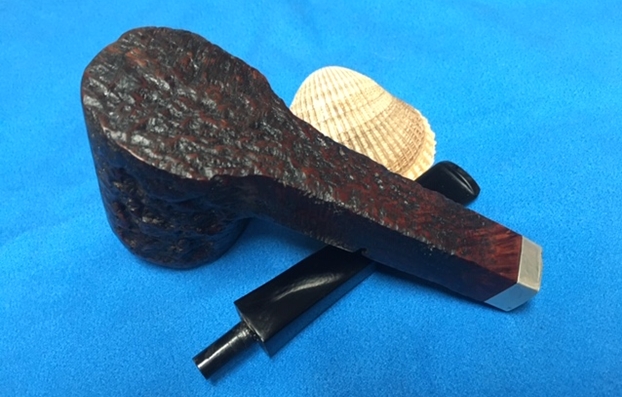
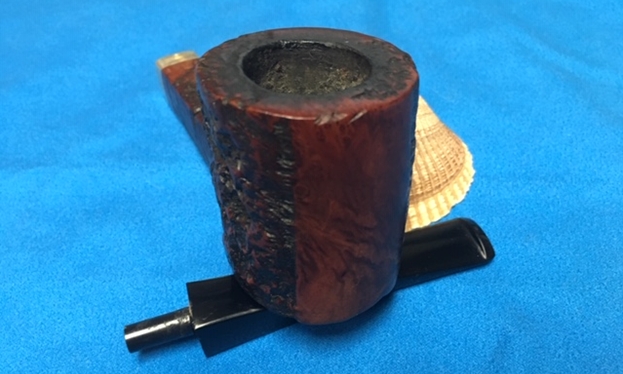
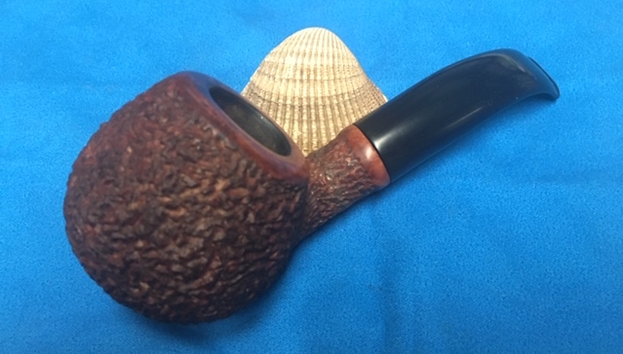
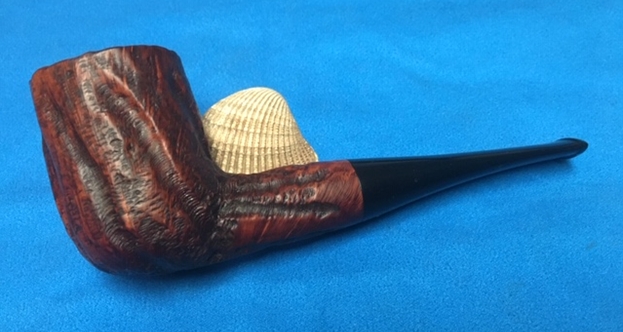
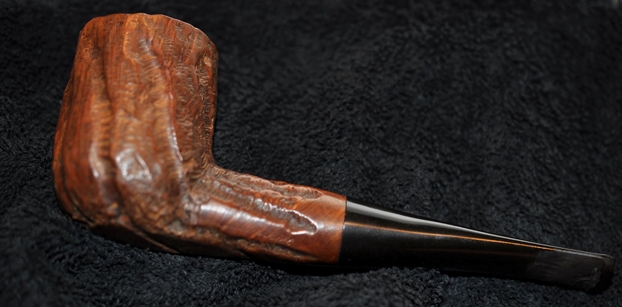
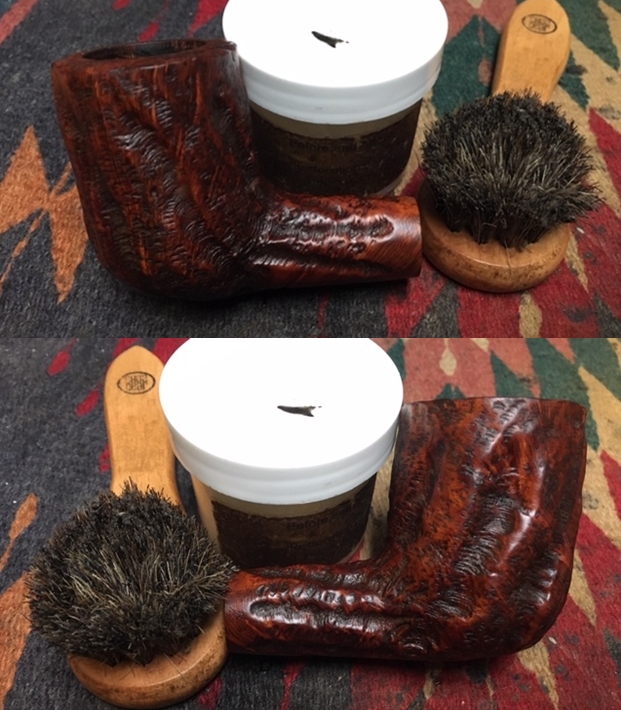
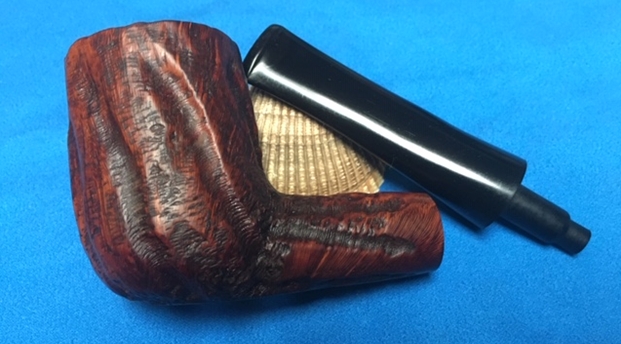
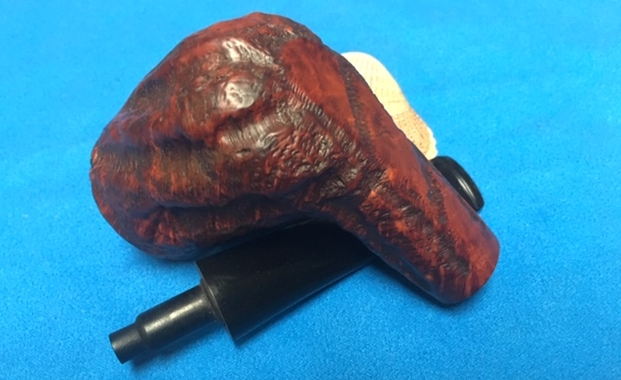
Back in February of 2018 (almost a year ago now) I posted my restoration of an interesting House of Robertson Pipe that was made by a carver in a pipe shop in Boise, Idaho. It was not only an interesting pipe but also one that had some history that was interesting to me as I was raised in Idaho for the better part of my childhood and adolescence. It was a huge piece of wood and had both smooth and rusticated portions on the shank and bowl. It was a flat bottom sitter with a square shank. The dimensions of the pipe are: Length: 7 3/8 inches, Height: 2 inches, Outside Diameter: 1 5/8 inches, Diameter of the chamber: 7/8 inches. I sent it back to a fellow in Idaho who collected House of Robertson pipes and who used to frequent the Boise shop. He was excited to add it to his collection. (https://rebornpipes.com/2018/02/28/restoring-a-rusticated-house-of-robertson-war-club/). Here is what it looked like when I sent it to him. About the same time I picked up the Calich, I received an email from the collector in Idaho asking for help. This is what he wrote to me:

Steve, I purchased the rusticated House of Robertson War Club pipe earlier this year. I have thoroughly enjoyed it. The bad news is i was polishing it and dropped it. The stem broke at the tenon and is still lodged in the briar. Hopefully you can repair or replace it. If so, please let me know and then how to proceed with mailing and payment. Thanks…

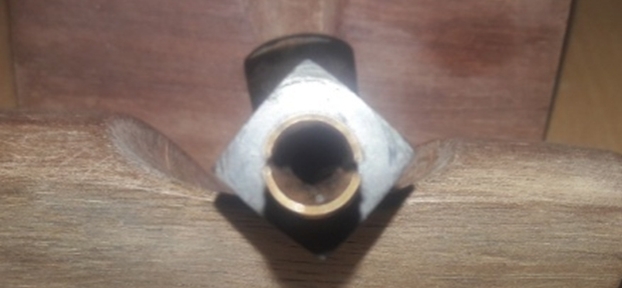
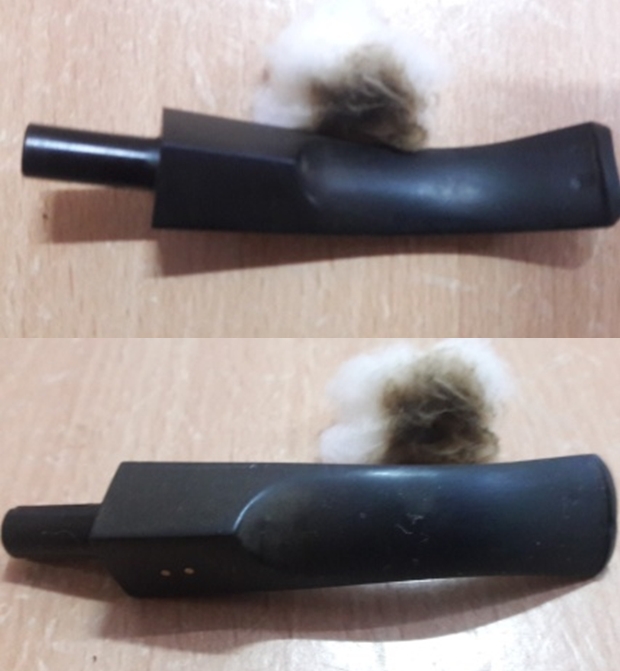
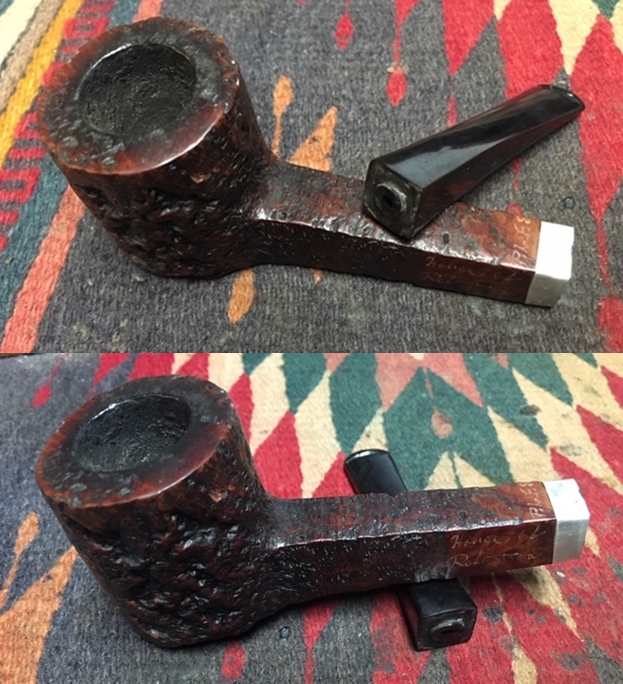
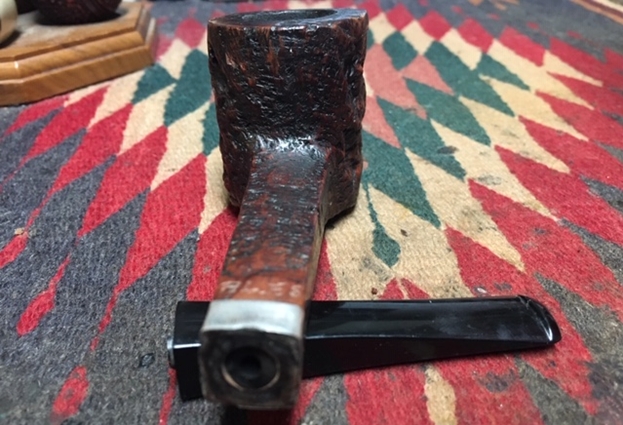
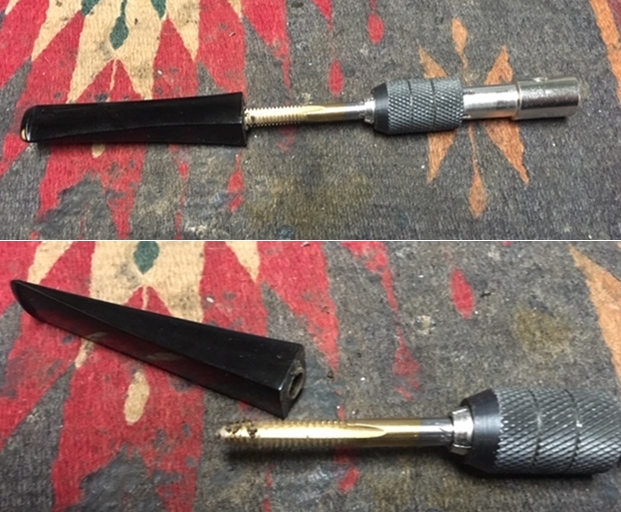
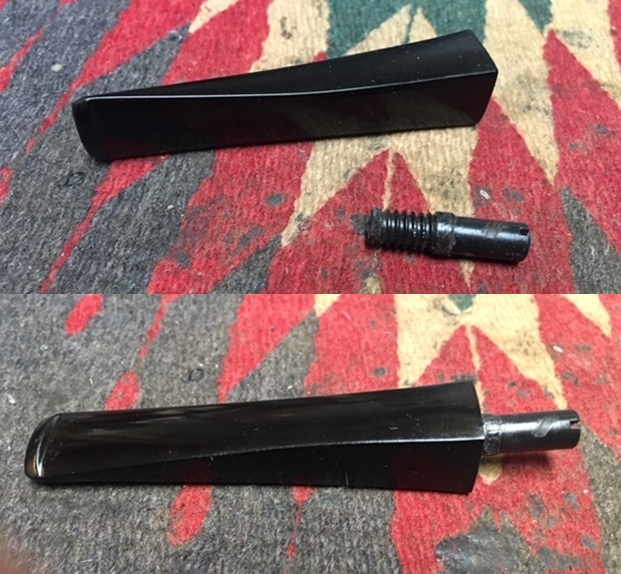
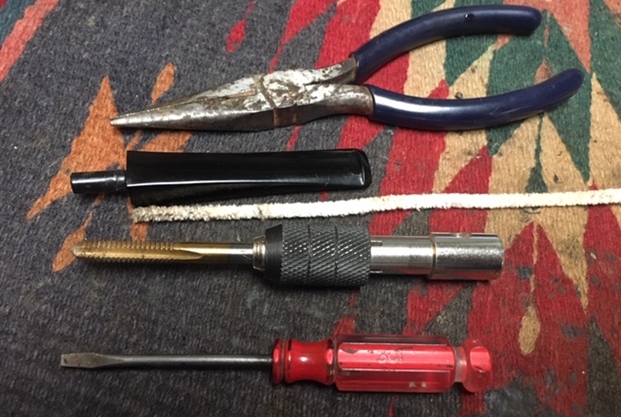
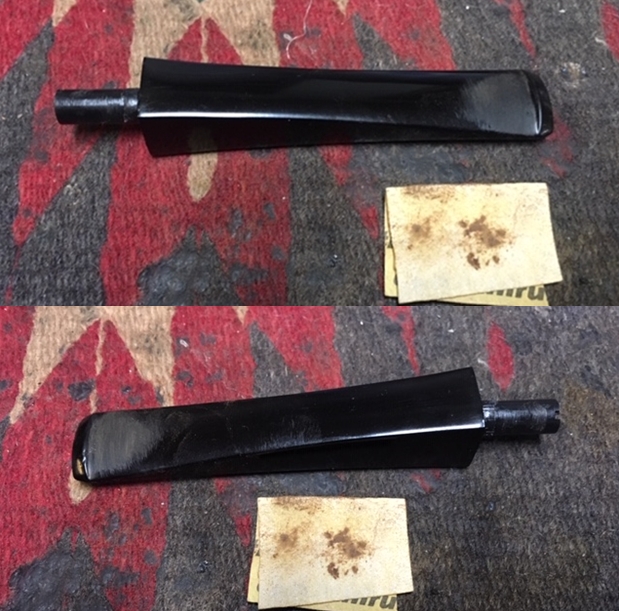
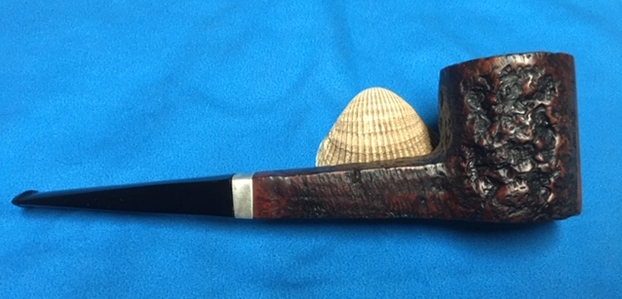
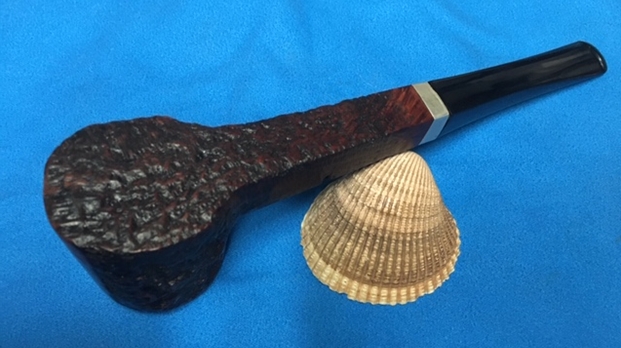
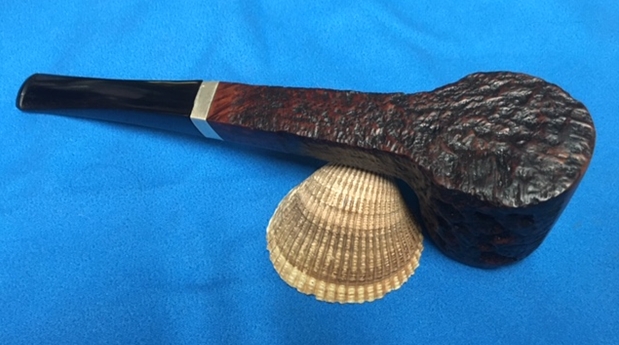
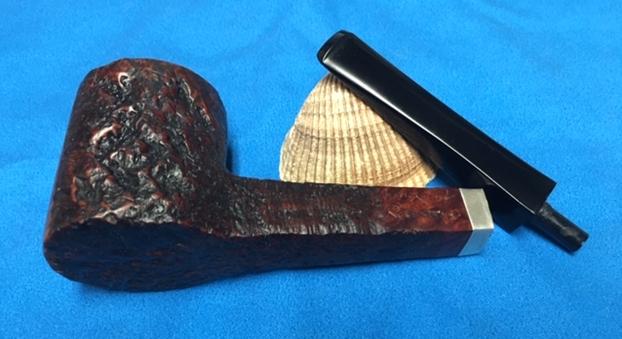
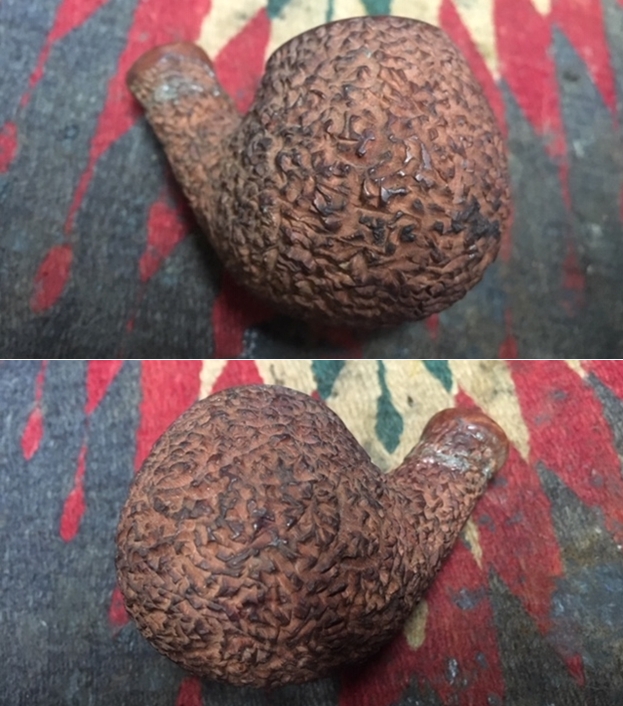
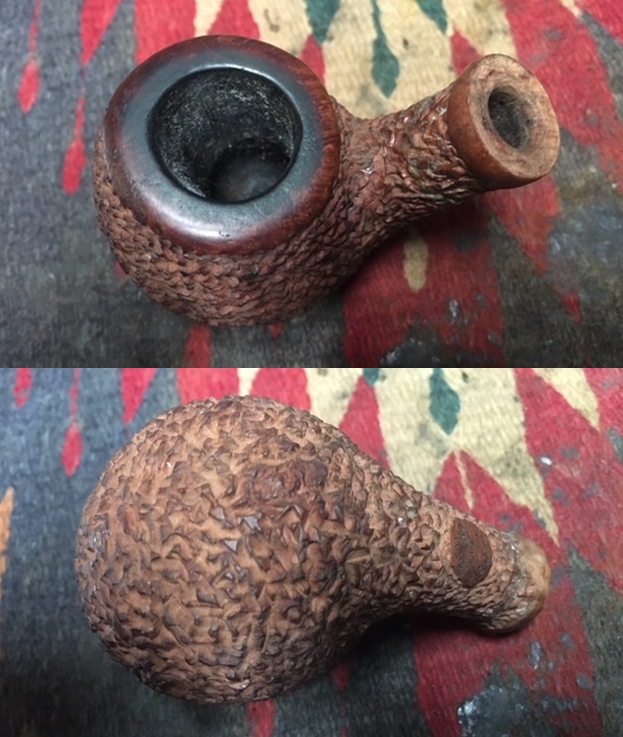
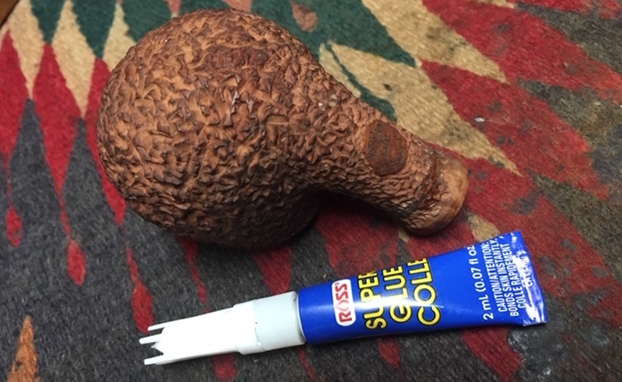
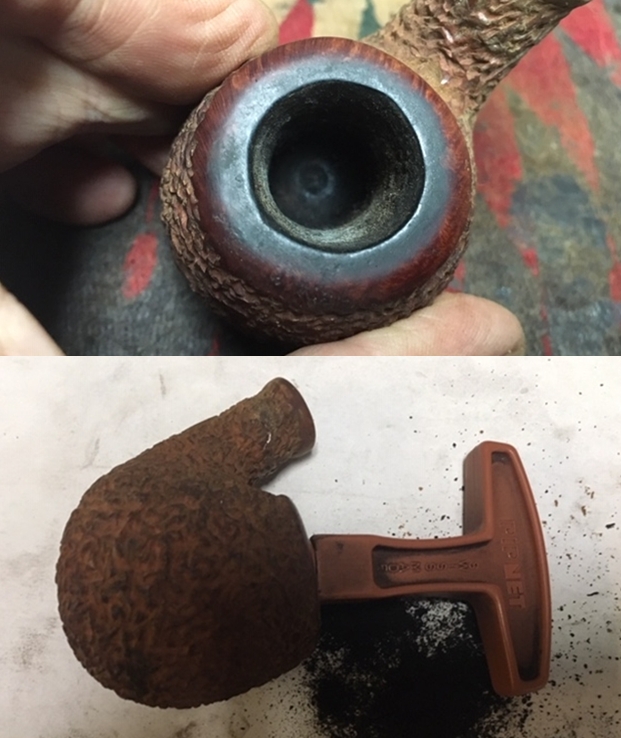
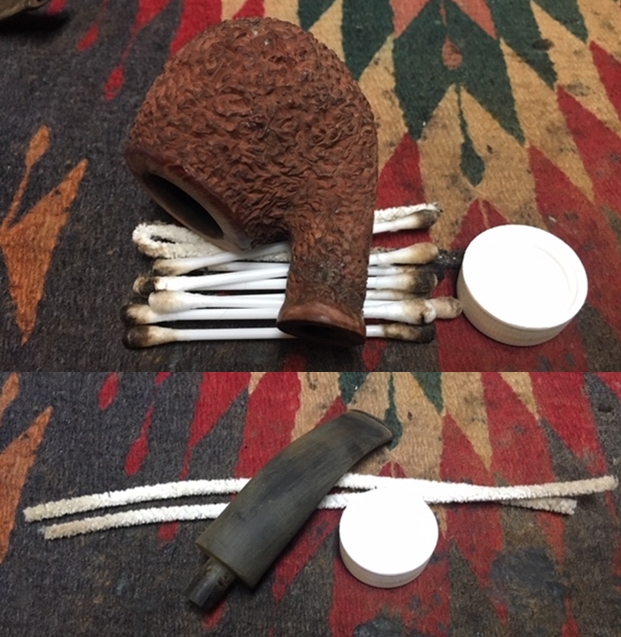
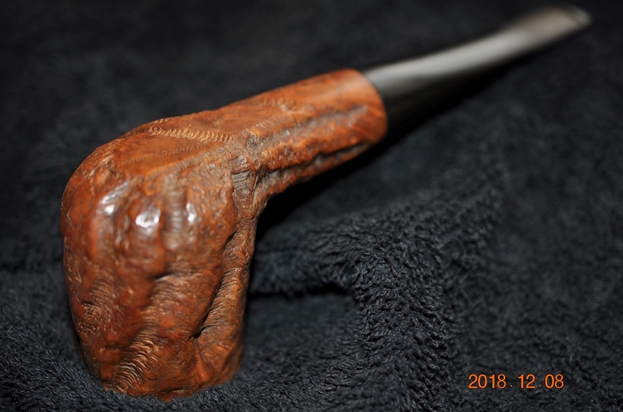
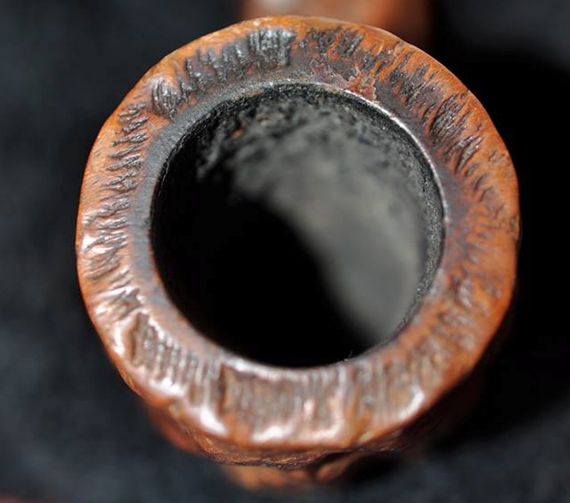
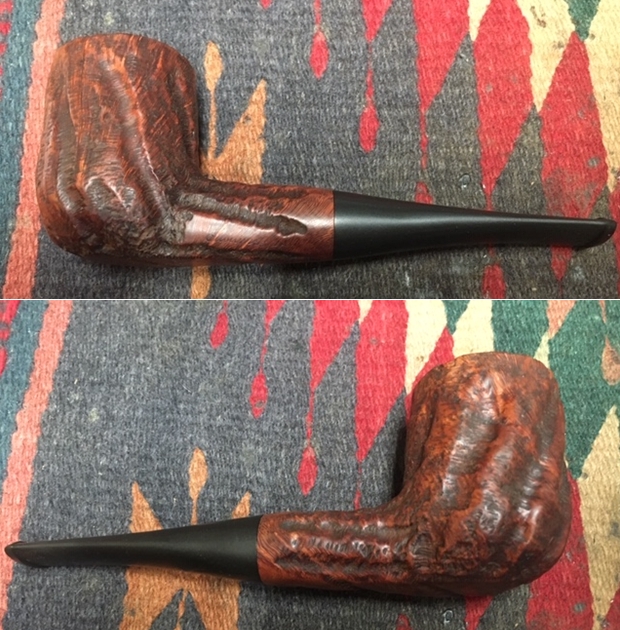
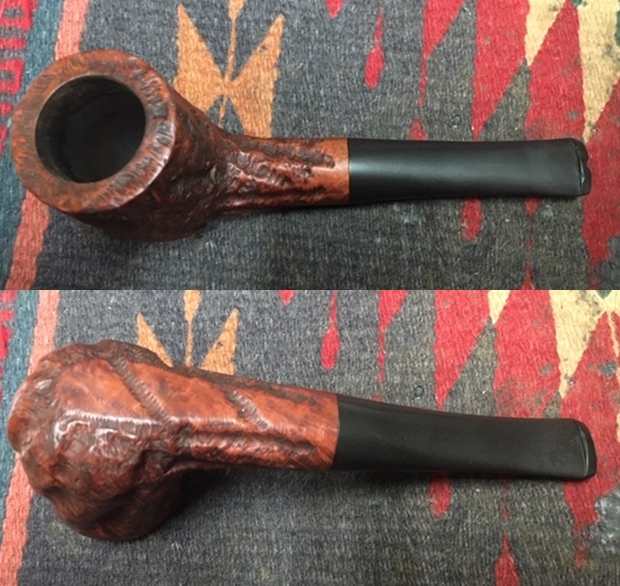
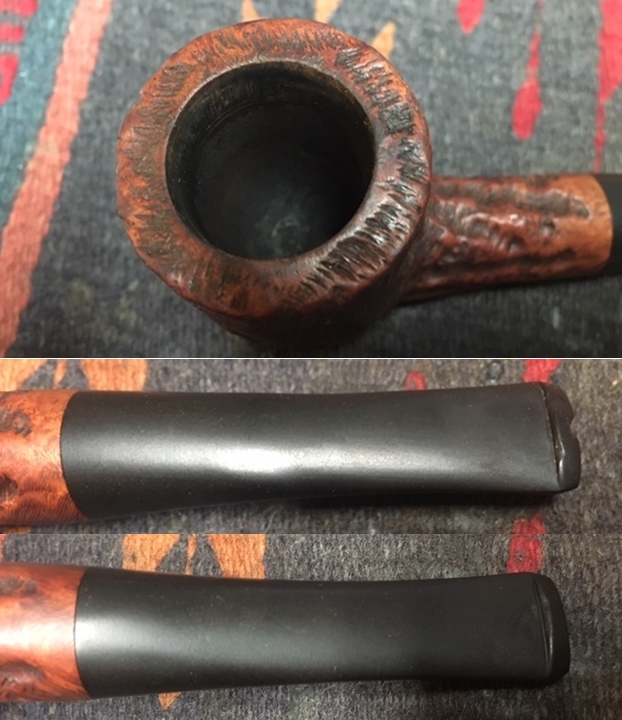
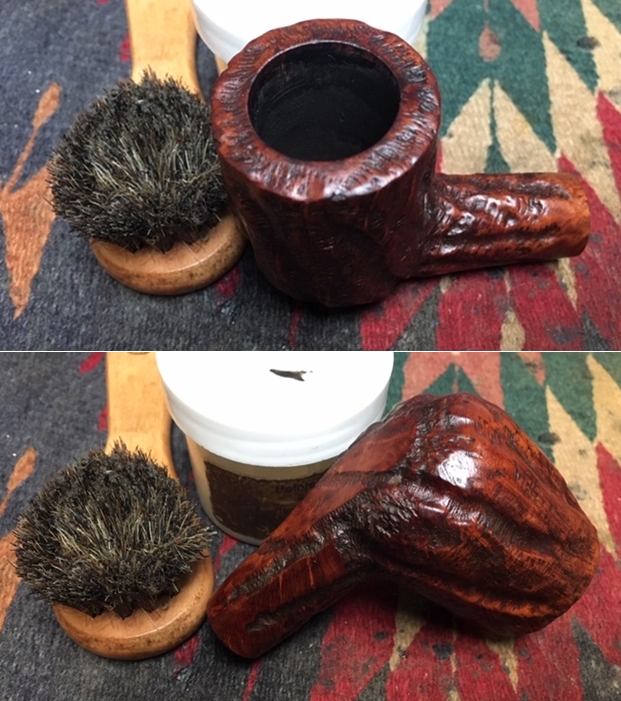
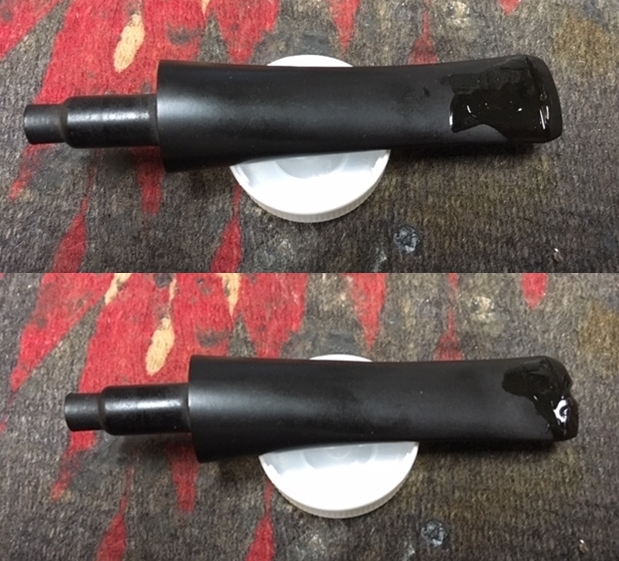
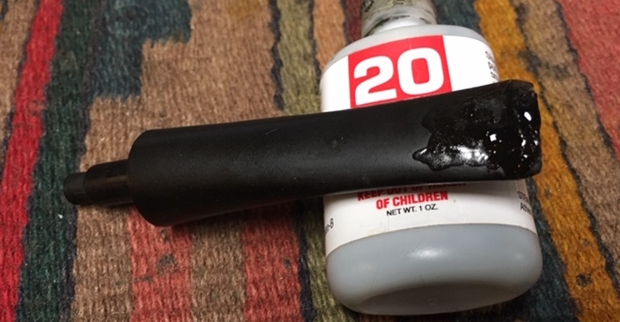
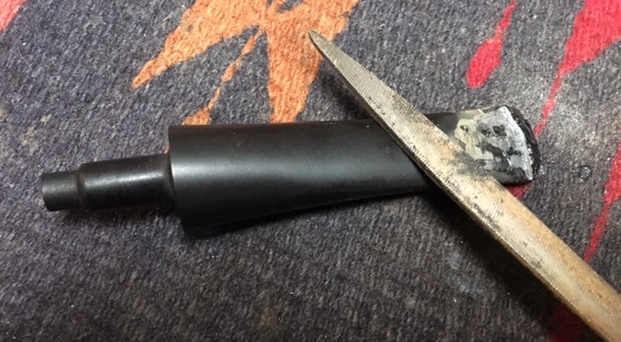
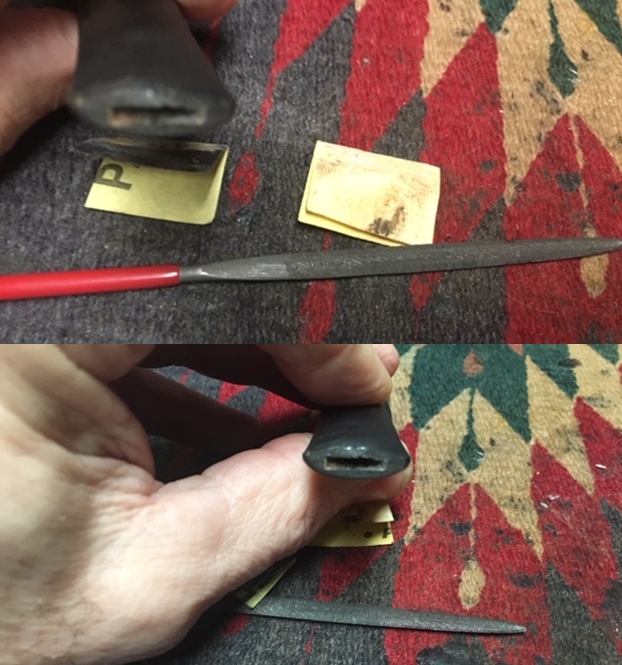
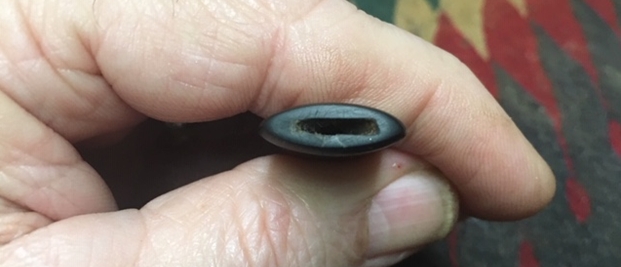
I wrote him back pretty quickly and he put it in the mail. It arrived here yesterday and was waiting for me when I got home from work. I opened the envelope that it had been mailed in and took out the two plastic Ziploc bags and the bubble wrap that was around the bowl and stem. I took them out of the mailer and unwrapped the protective layers and took them out of the Ziploc bag. This is what I saw. The stem had snapped off almost perfectly against the stem end. There was a small ledge but really nothing stuck out from the original tenon.I took an end view photo to show the snapped off tenon in the shank of the pipe. You can see in that photo that it is also a clean break.This morning I was “chatting” with Charles Lemon on the Tobacco Pipe Restorers Group on Facebook about Jobey Links and how easy they were to work with when replacing a tenon. I went through my container of tenons and I did not have one that would work in this shank without a lot of work. I took out my box of Jobey Link replacement tenons and one of them was absolutely the perfect size for this shank. I would need to use it backwards and do some modifications but it was exactly what I wanted for this repair. I used a topping board to flatten out the remnants of the broken tenon on the stem. I used a knife to bevel the airway to make drilling it easier. I took the following photo to show the parts of the repair.I tried my usual method for removing a broken tenon from the shank – a drywall screw turned into the airway in the shank until it was tight and then wiggling the broken tenon out of the shank. It failed to produce any results. It was almost like the tenon was glued/bonded to the walls of the shank. I used a cotton swab to dribble alcohol down the shank around the broken tenon. I left the shank and tenon sitting while I went to work for the day. When I came home I tried the screw again and still absolutely no movement on the tenon… it was stuck.

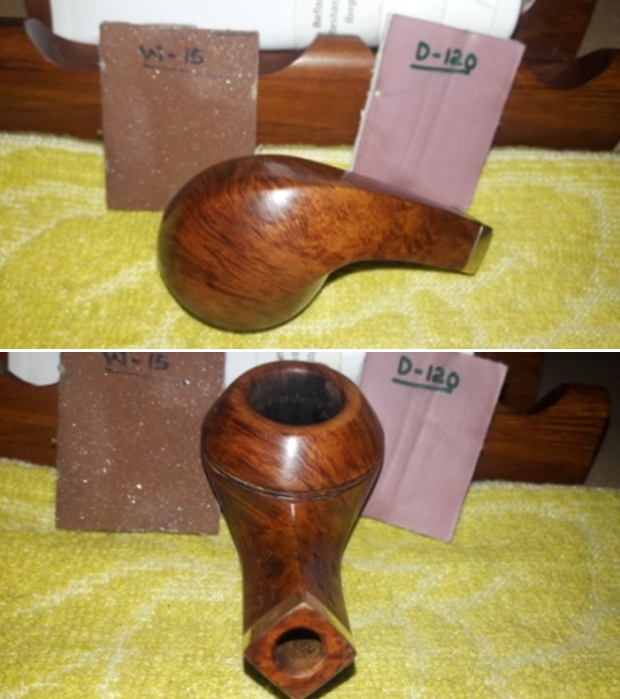
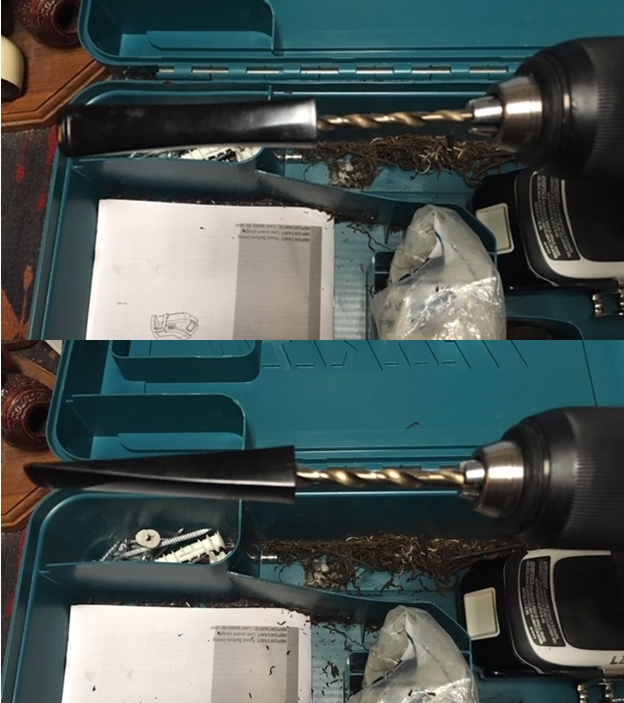
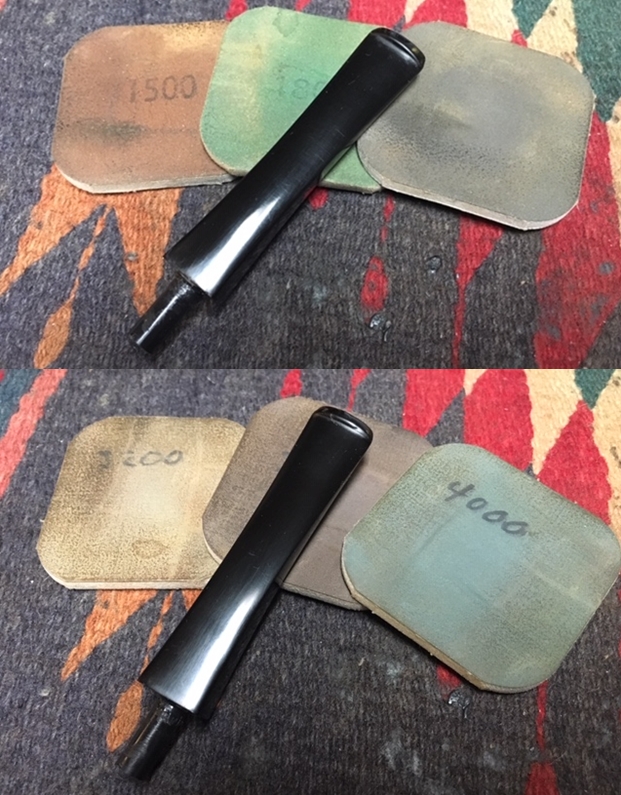
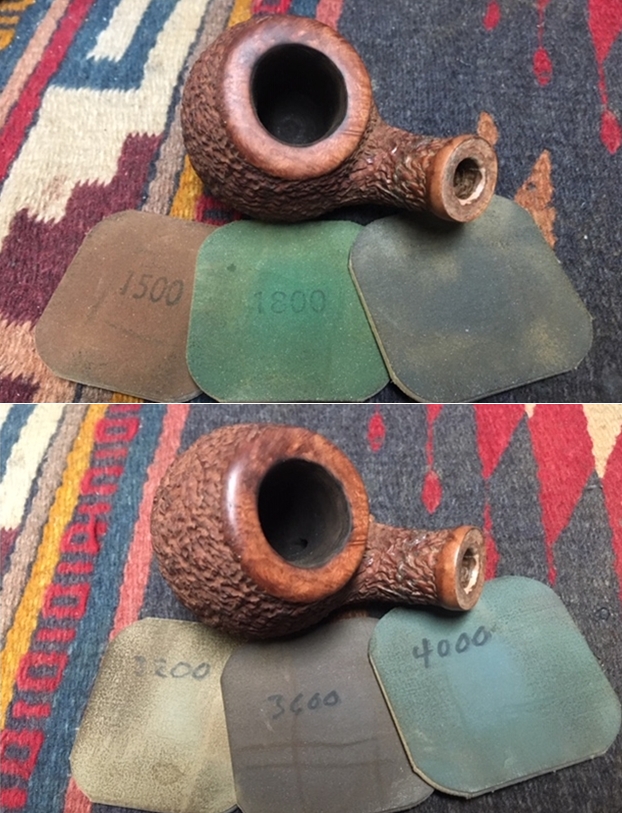
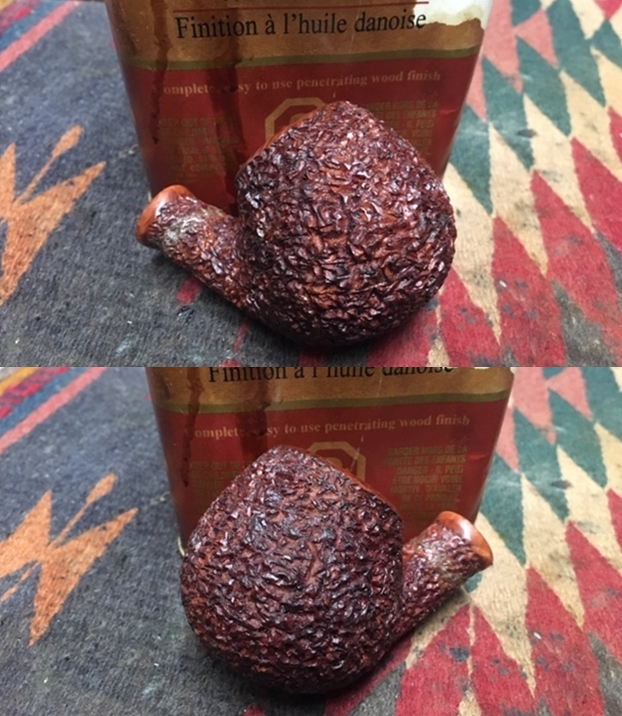
I resorted to the next best method – drilling the tenon out of the shank with my cordless drill. I started with a bit a little larger than the airway and turned it into the airway with the drill and then reversed the drill to see if I could pull it out. Nope. It still did not move. I tried a larger drill bit and repeated the process still no movement at all. I tried a third bit – a little bit smaller than the diameter of the original tenon. I drilled it in and backed it out – no luck. I then decided to just drill out the tenon all together. It did not take too much to drill it with the ¼ inch drill bit and then take out the pieces of the old tenon. The fourth photo below shows the clean airway in the shank. The tenon is gone. Now with that half of the job done I set the bowl aside and picked up the stem. I used a drill bit slightly smaller than the threaded portion of the Jobey Link. I drilled out the airway in the stem with increasingly larger drill bit until it was the perfect size for the Link. I still needed to tap the newly drilled airway so that I could turn the tenon into the stem. I used a tap set that I have and tapped threads into the newly drilled airway in the stem. It did not take long to tap thread into the vulcanite. I tapped the airway until it was deep enough for to take the threaded tenon. I shortened the threaded end of the tenon to deal with the taper of the stem. I used a Dremel and sanding drum and then smoothed it out on the 220 grit sandpaper topping board. I used the Dremel and sanding drum to remove the hip on the Jobey Link. I flattened it out to match the smooth part of the tenon that would go into the shank. The added length of the tenon fit perfect in the depth of the mortise on the pipe. I turned the tenon into the airway with a pair of pliers.I sanded out the scratch marks from the Dremel removal of the hip on the tenon with 220 grit sandpaper and polished it with 1500-2400 grit micromesh and took a photo of the stem with the new tenon and the tools I used to work on it.When I looked over the stem I could see a few tooth marks on the surface on both the top and underside near the button. I figured that since I was working on it anyway I would remove those areas. I sanded the stem with 220 grit sandpaper to remove the damage and polished the sanding marks with 400 grit wet dry sandpaper. I polished the vulcanite stem with micromesh sanding pads – wet sanding with 1500-2400 grit pads and dry sanding with 3200-12000 grit pads. I wiped the stem down after each pad with Obsidian Oil. When I finished the last pad I gave it a final coat of Obsidian Oil and set it aside to dry. I set the stem aside and turned my attention to the bowl. I examined it and found that there were a few small nicks and chips around the rim top and outer edge of the bowl. I touched these up with a walnut stain pen to blend them into the rest of the finish on the bowl. I rubbed the bowl down with Before & After Restoration Balm to enliven the wood and protect the newly finished portions of the briar. I took these photos after to show the bowl and the repairs are unnoticeable. I put the stem back on the shank and buffed the pipe with a clean buffing pad to bring a shine back to the bowl and stem. I gave it several coats of Conservator’s Wax and continue the buff. I hand buffed it with a microfibre cloth to deepen the shine. The finished pipe is shown in the photos below. Tomorrow I will box it up and send it back to Idaho. Can’t wait to see what he thinks when he has it in his hands. Thanks for reading this. Cheers.

I am the happy owner of an unsmoked pipe by the late John Calich


Blog by Steve Laug

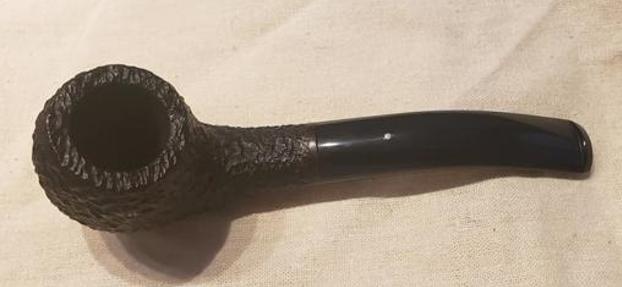
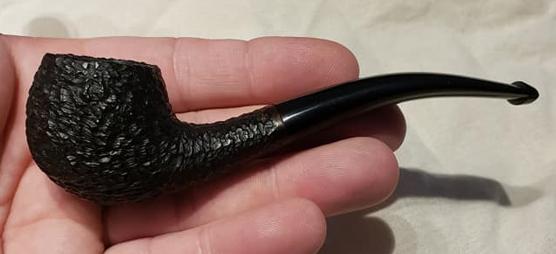
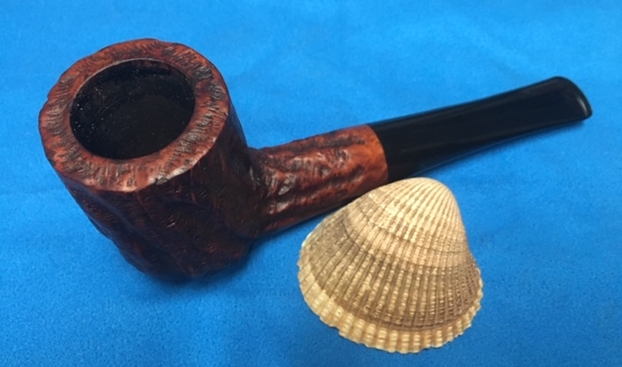
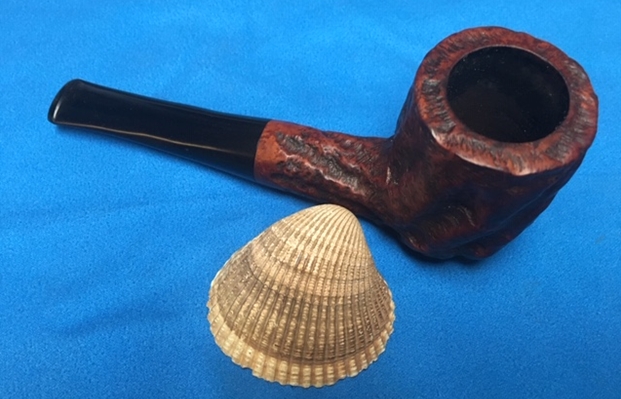
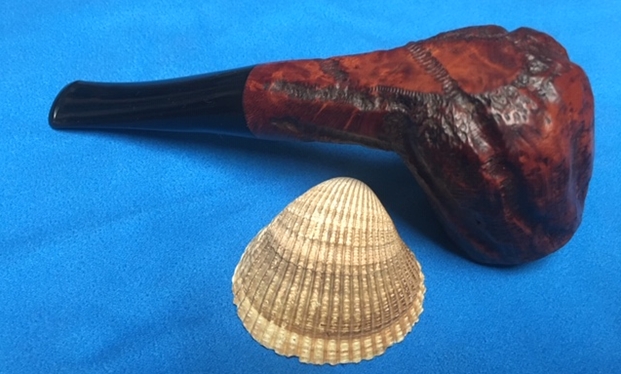
Not too long ago there was a benefit auction on TLOC (Tobacco Lovers of Canada) Facebook Group in support of the son of one of the members son was diagnosed with cancer. There were tobaccos and pipes up for auction with all proceeds going to a fund for the family. I decided to enter an auction for one of the pipes – an unsmoked smaller group two sized Calich pipe. I put in repeated bids for the pipe both because I actually wanted the pipe and because I wanted to try to drive the price up so others would bid more in support of the family. I entered bids up to the last minute, even bidding against myself and ended up winning the pipe. I was pleased to have won the pipe in that it was a double win for me – first it gave me the chance to help out a family and second it gave me the opportunity to add another Calich to my collection. I have loved John Calich’s pipes for over 25 years now and have collected a few of them. When John was living I spoke with him several times via phone and had him make some new stems for some of his pipes that I picked up off eBay. He was a very kind gentleman and was always helpful when I spoke with him. He was always ready with encouragement and when I needed to know how to do something when I was first learning to repair pipes he was willing to help. He was one of the old guard of Canadian Pipe makers. I miss him.

John Calich, courtesy Doug Valitchka

John Calich was one of Canada’s finest carvers. He died in July 2008. John was a full time pipe maker for the last 40 years. Calich pipes were mostly traditional shapes. His signature style is rustication and smooth on the same pipe along with his unique skill to stain a pipe in contrasting colors. He used only top quality Grecian and Calabrian briar. The mouthpieces are hand finished Vulcanite “A”. Each pipe was entirely made by hand. John Calich was featured in the summer 2005 issue of Pipes & Tobacco. His pipes are graded 3E – 7E. Retail prices range from$ 145.00 to $ 500.00 Each pipe is stamped “CALICH” 3-8E, his earlier pipes were graded from 3-14, and a single, tiny silver dot is applied to the top of the stem (https://pipedia.org/wiki/Calich).

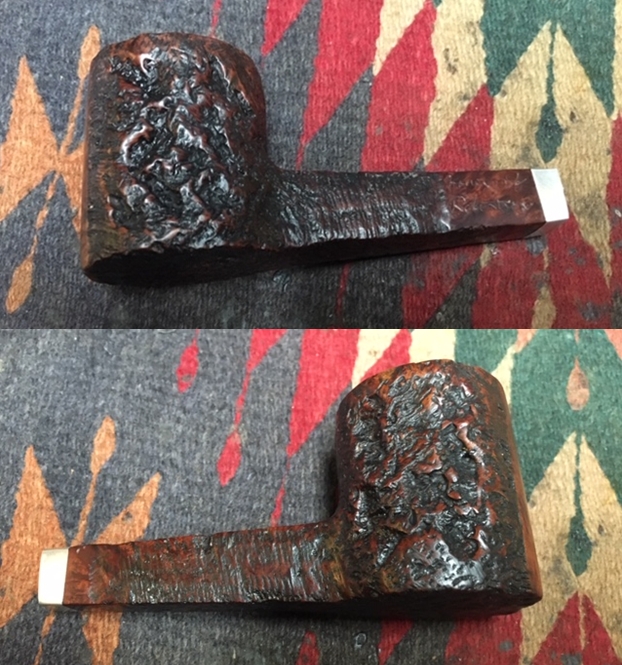
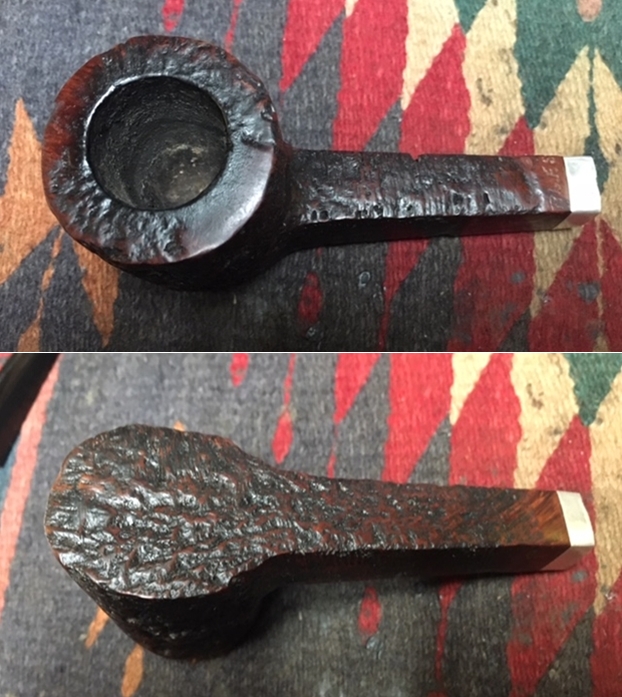
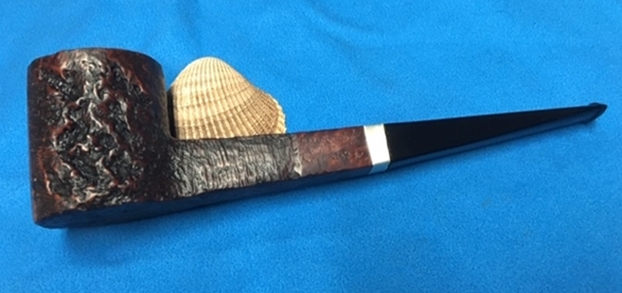
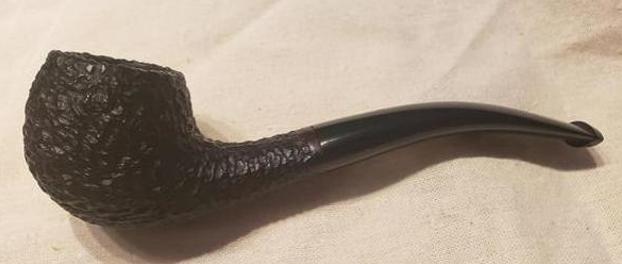
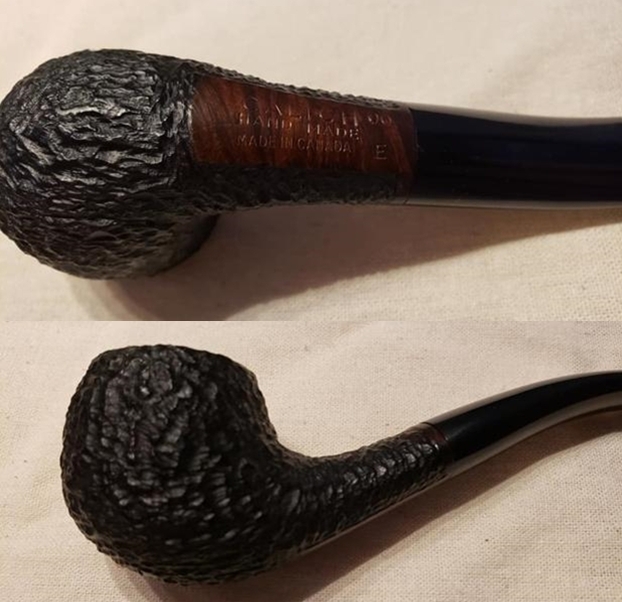
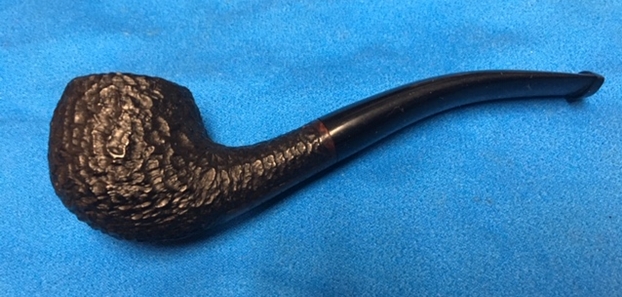
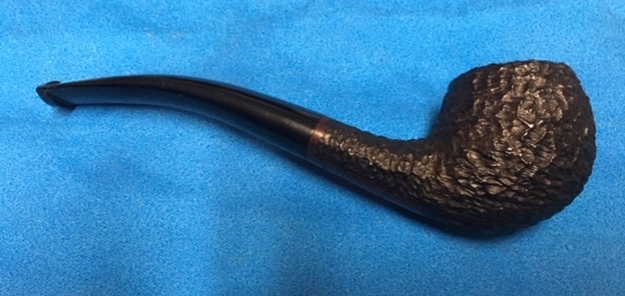
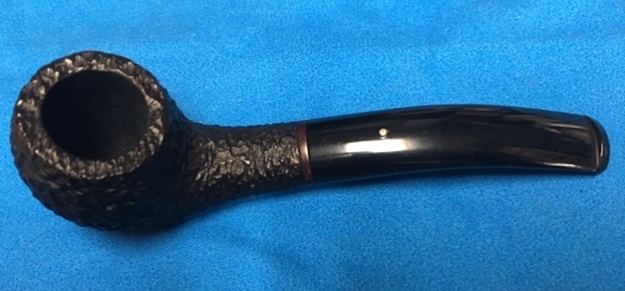
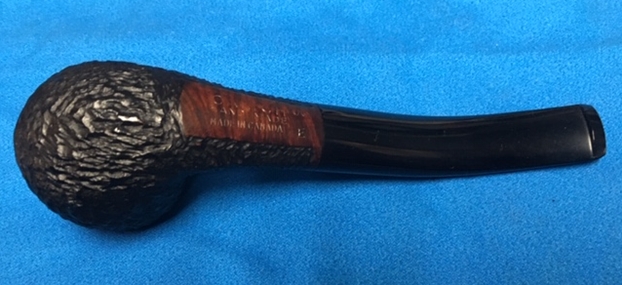
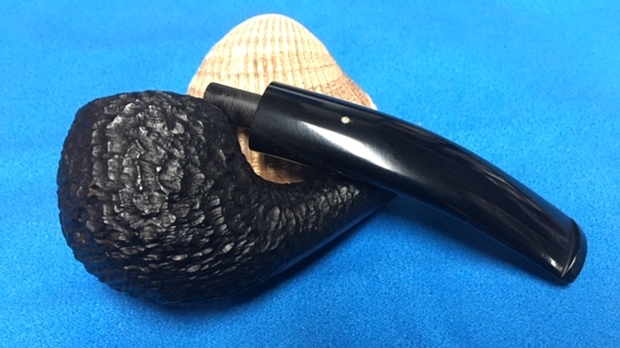
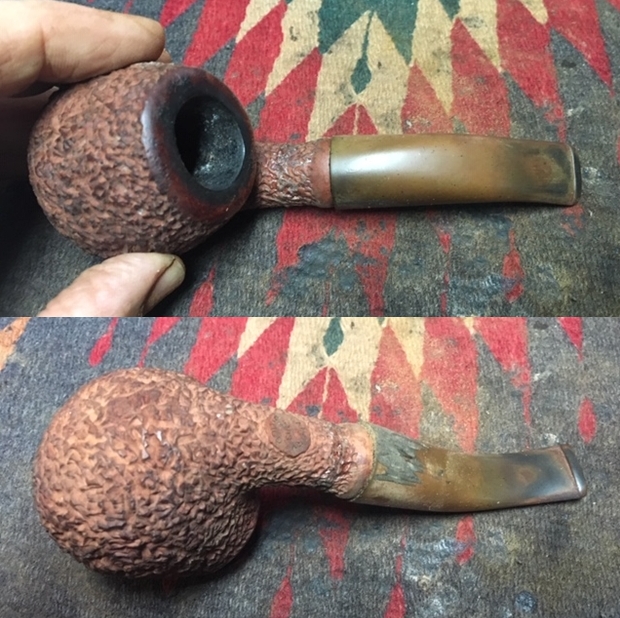
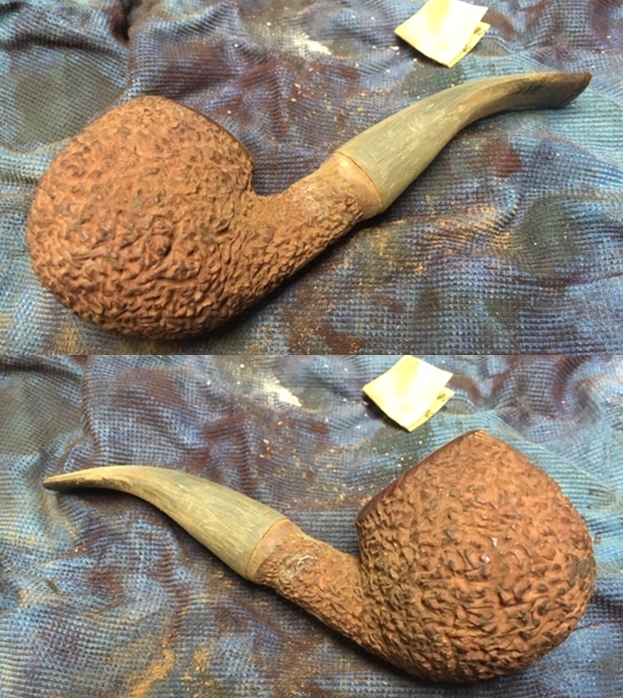
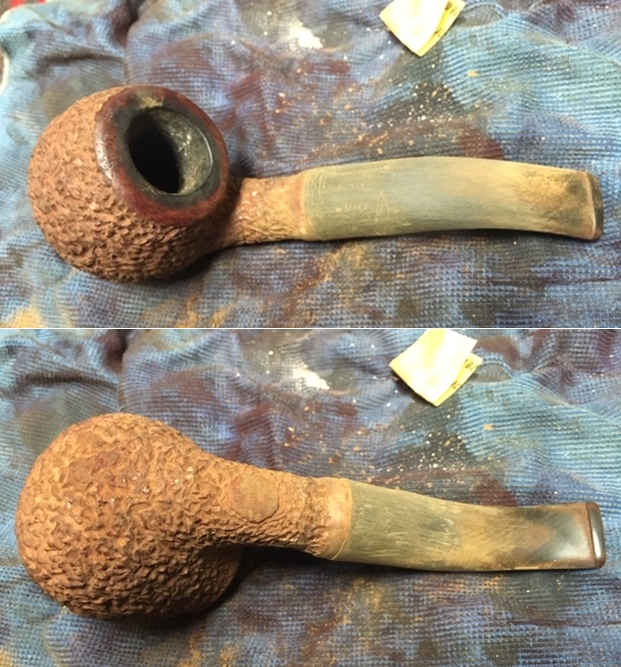
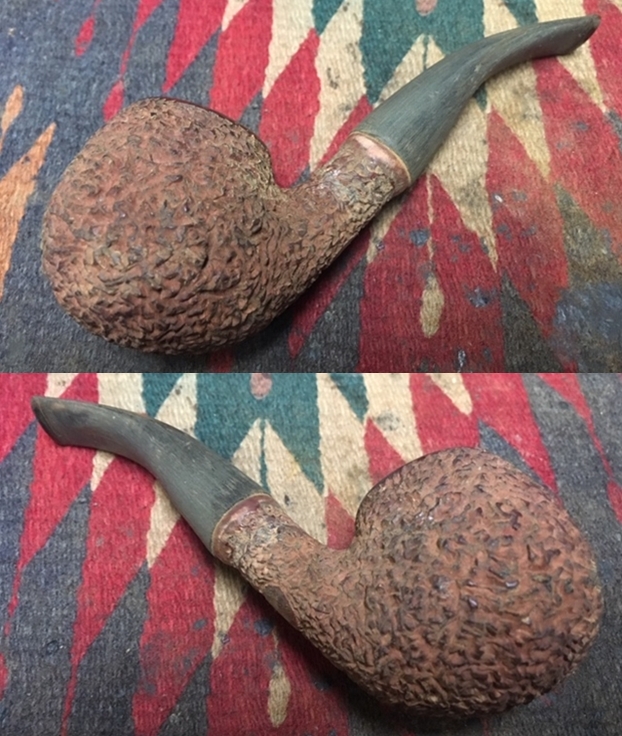
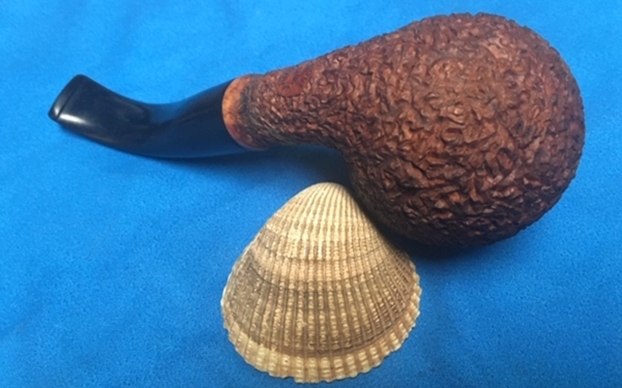
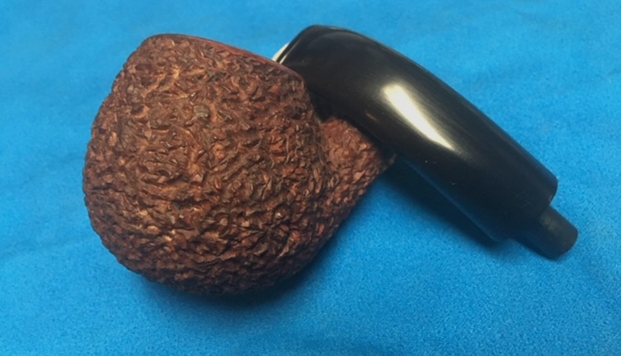
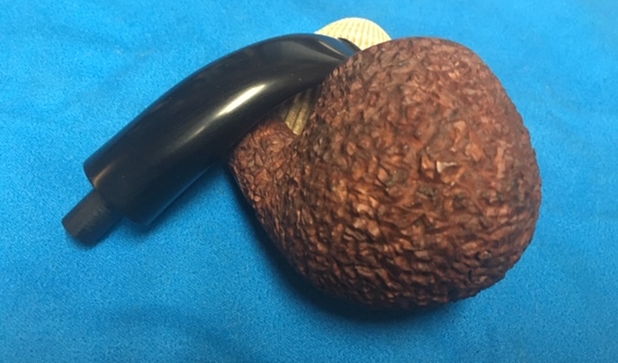
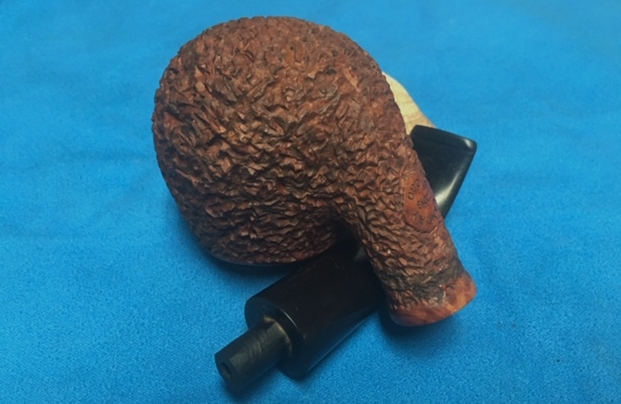
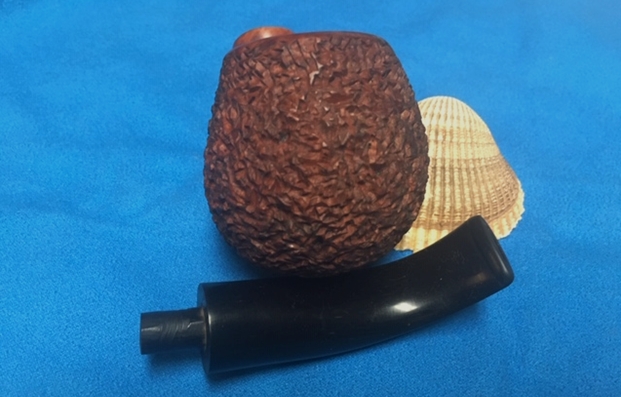
The first two photos were from the auction itself and show the shape of the pipe that caught my eye. The third photo was sent to me in response to a question I asked about the size of the pipe. You can see from that photo that it is a petite pipe. The rustication on the pipe is rugged and tactile and should feel good in my hand when it heats up. John Calich always puts a silver dot on his stems as is visible in the second photo. The colours in the third photo are more accurate in terms of capturing the dark brown colour of the stain.The next photo shows the stamping on a smooth panel on the underside of the shank. It reads Calich 00 over Hand Made. Under that it reads Made in Canada followed by the letter E. Both that photo and the one that follows it show the rustication pattern on the bowl and shank.The pipe arrived about two weeks ago and the box was quite large. It made me wonder what was inside. When I opened the box I found that the fellow handling the auction had included a tin of McClellands #22 Virginia. I am thinking of breaking in the pipe with that tobacco as it is one of my favourites and it is no longer available. I took the following photos to show what it looked like. The pipe is small but will be a great Virginia pipe. The dimensions are as follows – Length: 5 inches, Height: 1 3/8 inches, Outside diameter of the bowl: 1 1/8 inches, Chamber diameter: 5/8 of an inch. Like the other pipes that have, made by John Calich this is bound to be a very good smoking machine. John’s pipes are comfortable in the hand and the mouth and have an effortless draught. I am truly looking forward to loading up the first bowl of Virginia and enjoying the pipe on the weekend. Thanks for looking.


Restoring a Jobey 085 Churchwarden


Blog by Steve Laug

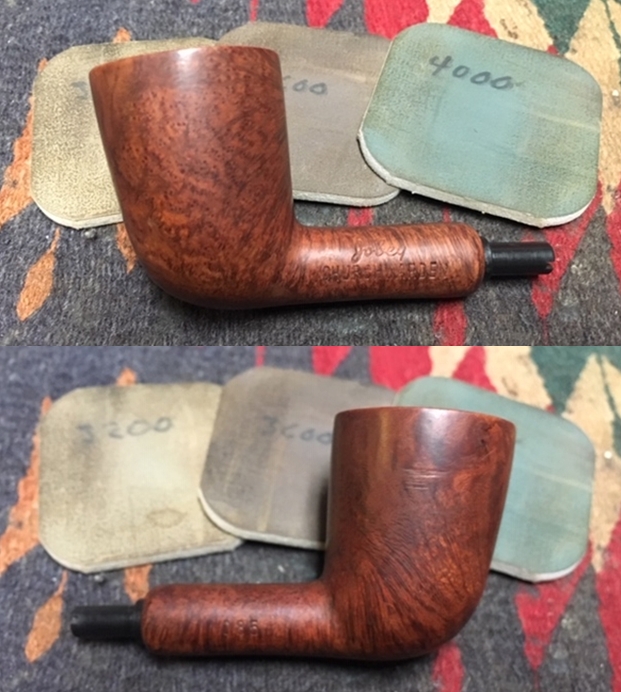
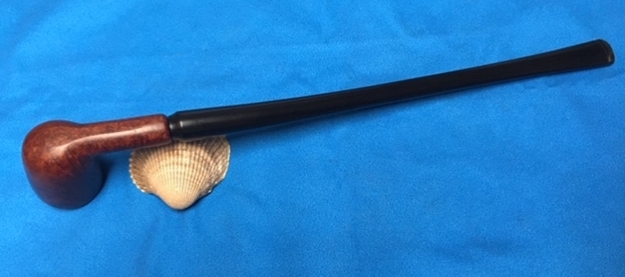
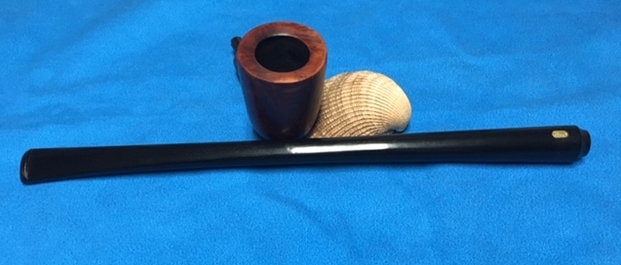
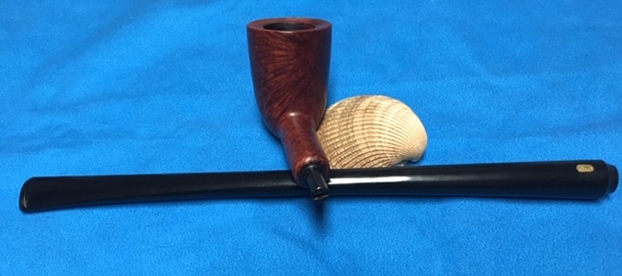
My brother Jeff always keeps an eye open for Churchwardens and so far he continues to come up with not only brands that I have heard of but also Churchwardens from name brand pipes that I had no idea existed. The pipe on the worktable today is made by Jobey and has the patented Jobey link between the stem and the shank. The bowl is a fairly classic Dublin shape but that is where the classic is modified. The first modification is that the shank is rounded almost like it was made for a stick bit or for a metal ferrule. I expected the shank to be faced, as usual on a churchwarden, to take a long tapered stem that flows directly from the shank with no interruption. The modification to the classic is related but refers to how the stem seats in the shank of the pipe. Instead of the expected stick bit with a push tenon this one has the threaded mortise that the Jobey Link screws into. The Link has a smooth end that the stem can be pushed on and held in place by friction. I have included a patent drawing of the link in a pipe. Note the threads in the shank and the smooth end in the stem. That is followed by an advertisement for the link and a picture of the link. This Jobey had been well loved and smoked often. The stem had tooth chatter on both sides near the button. The finish was dirty but otherwise looked good. The rim top appeared to be in good condition under the coat of lava on the back side. The bowl had a thick cake and the interior of the pipe was dirty with tars and oils. Jeff took photos of the pipe before he started his cleanup. Jeff took photos of the bowl and rim as well as the sides of the pipe to show the general condition of the briar before cleaning. He took photos of the stamping on the left and right side of the shank. The stamping on the left read Jobey in script over the block letters CHURCHWARDEN. On the right side it was stamped with the shape number 085. He also took photos of the fit of the stem in the shank and the brass Jobey logo inset on the stem top. You can see the debris in the logo and the oxidation on the stem in the photos below. The stem had tooth marks and chatter on both the top and underside near the button.Jeff had reamed the bowl with a PipNet pipe reamer and followed up with a Savinelli Fitsall pipe knife to remove the cake. He scrubbed out the mortise and the airway in the shank and the stem with alcohol, cotton swabs and pipe cleaners. He scrubbed the exterior of the bowl, rim, shank and stem with a tooth brush and Murphy’s Oil Soap to remove the oils and tars on the bowl, rim and shank. He rinsed it under running water. He dried it off with a soft cloth. The lava mess on the rim was thoroughly removed without harming the finish underneath it. Without the grime the finish looked good. The inner edge of the bowl was beveled inward and looked very good. The out edge had a few tiny nicks in it. The oxidation on the stem was gone and all that remained were some tooth marks and chatter at the button on both sides. Otherwise it was actually in pretty good condition and would only need to be polished. I took photos of the pipe to show its condition before I started my work on it. I took close up photos of the rim top that shows the clean bowl and how it was beveled inward. You can also see the small nicks along the outer edge of the bowl toward the back side. The stem was clean and Jeff had used Before & After Deoxidizer to soak and remove much of the oxidation. He rinsed out the inside of the stem and rinsed off the exterior as well. The photos of the stem show how good the stem actually looked after this treatment.I removed the stem from the shank and unscrewed the Jobey Link from the shank. I took a photo of it with the Link removed and the Link in place in the shank.I decided to start my work on the pipe by addressing the tooth marks on the top and underside of the stem at the button. I sanded the tooth marks out the stem surface with 220 grit sandpaper. I sanded the stem until the surface was smooth and the marks had disappeared.I polished the stem with micromesh sanding pads – wet sanding it with 1500-2400 grit pads and dry sanding it with 3200-12000 grit pads. I wiped the stem down after each pad with a damp cloth to remove the sanding dust. I used the Before & After Pipe Polish to remove the small minute scratches left in the vulcanite. I finished by wiping the stem down with a final coat of Obsidian Oil and set it aside to dry. I set the stem aside and turned my attention to the bowl. I polished the rim top and edges – both inner and outer with micromesh sanding pads – wet sanding with 1500-2400 and dry sanding with 3200-12000 grit pads. I worked on the nicked edges on the outside of the bowl to smooth them out. I polished the entire bowl avoiding the stamping with the pads. I wiped it down with a damp cloth after each sanding pad. You can see the progress in the photos below. I put the bowl and stem back together. I buffed the bowl and stem with Blue Diamond to polish the briar and the vulcanite. I gave the bowl and the stem multiple coats of carnauba wax. I buffed the pipe with a clean buffing pad to raise the shine. I hand buffed it with a microfiber cloth to deepen the shine. The pipe polished up pretty nicely. The pipe turned out very well and shows the grain shining through. The contrast of the various grains – birdseye, flame and straight swirling around the bowl and shank looked good with the polished, long black vulcanite. I will soon be putting this Jobey Churchwarden on the rebornpipes store. The finished pipe is shown in the photos below. The dimensions of the pipe are Length: 11 1/2 inches, Height: 1 3/4 inches, Outside diameter of the bowl: 1 3/8 inches, Chamber diameter: 3/4 of an inch. If this is the kind of Churchwarden you might want to add to your collection then send me a message or an email. Thanks for reading this blog and my reflections on the pipe while I worked on it.

Recommissioning a Stubborn Kaywoodie Prime Grain 205R ‘Fancy’ Bulldog


Blog by Dal Stanton

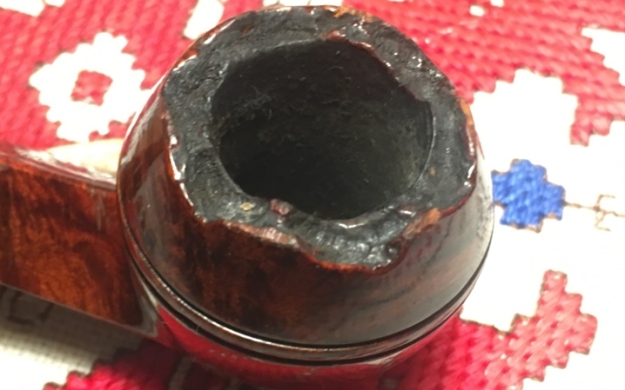
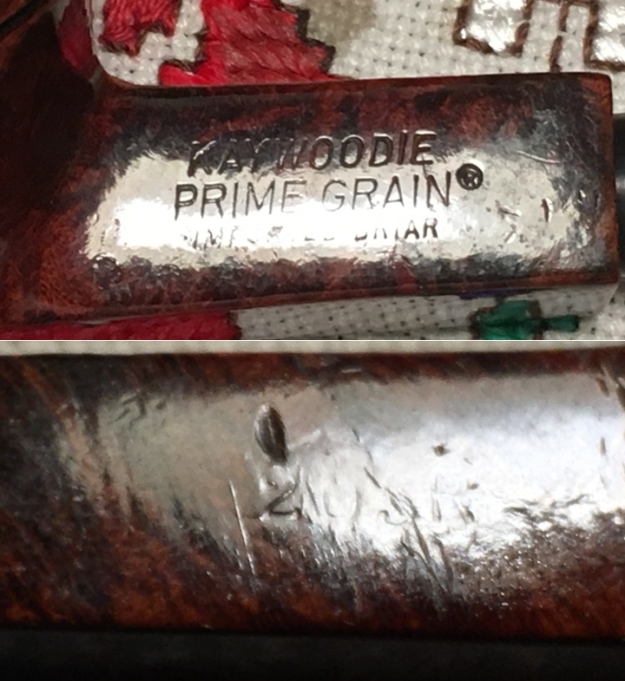
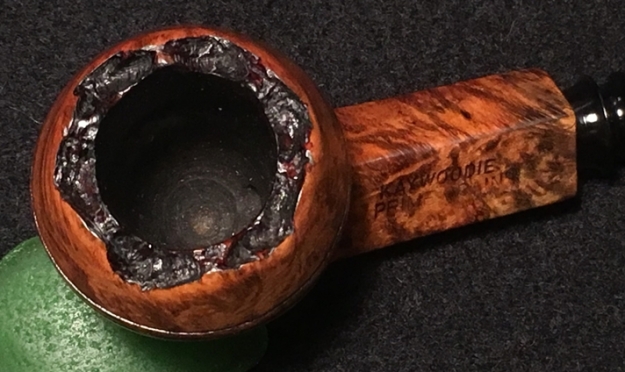
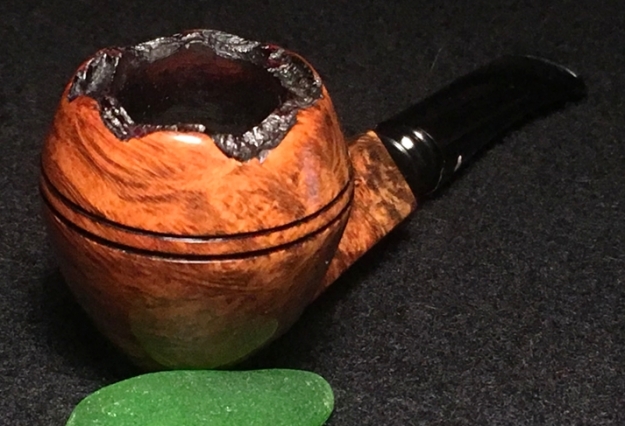
I acquired this Kaywoodie as a solo in an eBay auction, December of 2017, while my wife and I were on a Christmas trip from Bulgaria to be with family in the United States.   True confession – while in the US I indulged in a few eBay auctions!  They’re exciting, what can I say.  But this Bulldog got my attention. Why?  True confession #2: I’m not a Kaywoodie connoisseur, but I was drawn to the profile of this stout Bulldog bowl proudly cresting with what looked like a crown and reminded me of one of my favorite chess pieces – the Rook or Castle.  The Rook is one of the strongest pieces on the board if properly moved – usually waiting patiently through much of the combat until, strike!  Yes, this is what drew me in to look at the details of the Kaywoodie Prime Grain. The slightly bent fancy stem added class to the Rook and the hue of the pipe leaned somewhat reddish – the complete warrior pipe!  So, I bid and now this guy is on the worktable here in Sofia, Bulgaria, after Paul saw him on The Pipe Steward site in the For “Pipe Dreamers” Only! collection and commissioned him along with the last pipe I restored, a Mastersen Freestyle, which turned out great.  Here are a few of the pictures I saw on eBay of the Kaywoodie Prime Grain Bulldog. With the Bulldog now on my worktable, I take more pictures to get a better look at the condition of the pipe. The nomenclature is stamped on the upper left shank side with KAYWOODIE [over] PRIME GRAIN [over] IMPORTED BRIAR.  The name is marked to the right with the encircled ‘R’ indicating a registered trademark.  The upper right shank side has the ghost of a shape number remaining.  After using a magnifying glass and after several pictures I was able to make it out as, ‘205R’.According to the extremely useful Kaywoodie thread entitled 3 Digit Shape numbers submitted by ‘kwguy’ (who I suspect is the major Pipedia Kaywoodie contributor Bill Feuerbach III, because many who responded to the thread with huge thanks, directed the comments to ‘Bill’), the general dating of this Kaywoodie is pretty straight forward.  Three-digit shape numbers were introduced to Kaywoodie pipes in 1972.  According to kwguy:

Maybe a little background is in order.  In 1972, we closed the West New York factory having completed construction of our new 197,000 square foot factory in Yapank on Long Island.  The plan was to move all pipe production there, but in the interim, the Medico factory in Richmond Hill Queens would handle the final sanding and finishing of all of the Kaywoodie, Yello-Bole and Medico pipes. The thought was eventually those operations would also shift to Yapank as skilled workers could be trained to handle those operations.  (A down turn in the pipe market in the seventies doomed the new plant, but that’s another story)

Having the three lines being finished in one building, would create confusion if there were two shape numbering systems.  So a new 3 digit system was adopted.  The Medico 3 digit system was also changed at this time.  This list will have three columns of numbers.  The first will be the “new” three digit number, used on all Kaywoodie and Medico pipes from 1972-1980.  (We stopped stamping shape numbers in 1980)  The second column is the Kaywoodie two-digit number and the third column is the original Medico 3 digit number, all of which refer to the same shape.

The 205R places this Kaywoodie between 1972 and 1980 according to this information.  Also, in the article, the addition of the ‘R’ indicated a ‘wavy or rusticated rim’.  I found the 205 shape number in the list referenced and I clipped all the Bulldog numbers for comparison and interest:So, the shape number tells me that I have before me a Kaywoodie medium Bulldog with a rusticated or wavy rim and was manufactured in the Medico factory in Richmond Hill Queens between 1972 and 1980.  One additional piece of information comes from the Kaywoodie – My Free Forum, called the “Kaywoodie Master List”.  This is a great resource compiling all the different Kaywoodie lines in alphabetic order.  Through this I found that the ‘Prime Grain’ line was produced between 1958 and 1976.  This information narrows the dating further by lowering the later date – therefore, this Kaywoodie was manufactured between 1972 and 1976 – Ha!, when I graduated from high school in South Florida and the cost of gas to fill my 1968 VW Bug was about .40 US cents/gallon! – of course, this was before the Euro was thought of.  This was also a period of time when huge decisions impacted my life and, like well-placed dominos falling, would bring me to Bulgaria some 45 years later working with the Daughters of Bulgaria and restoring pipes for them!

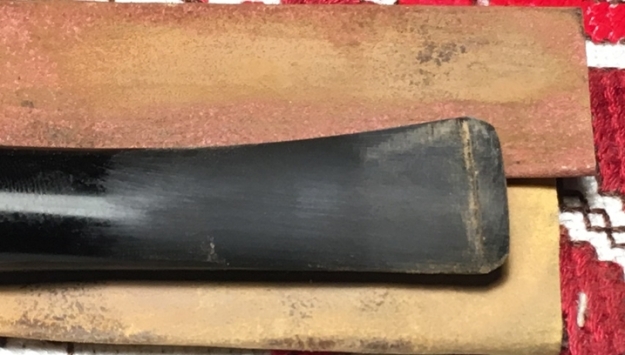
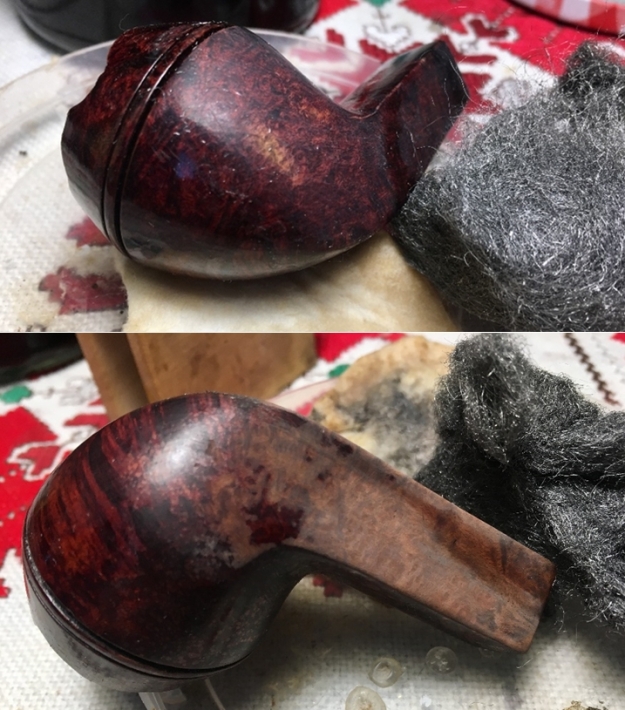
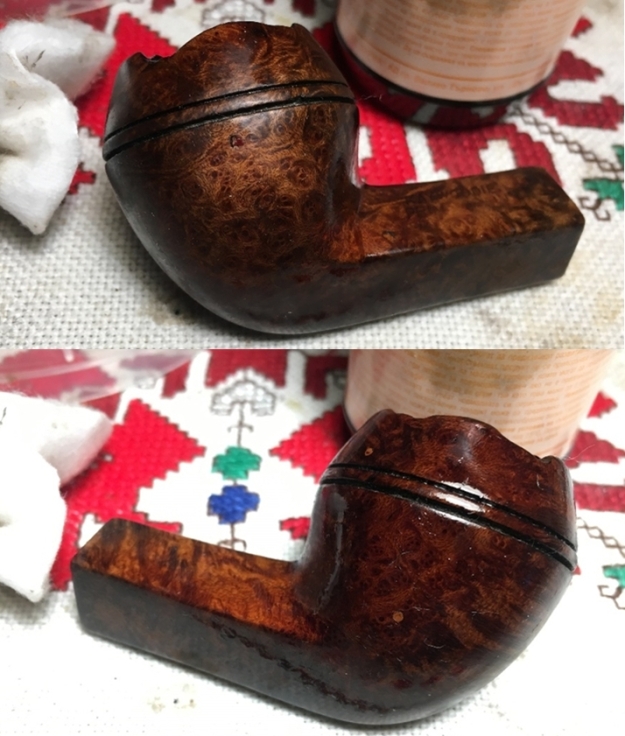
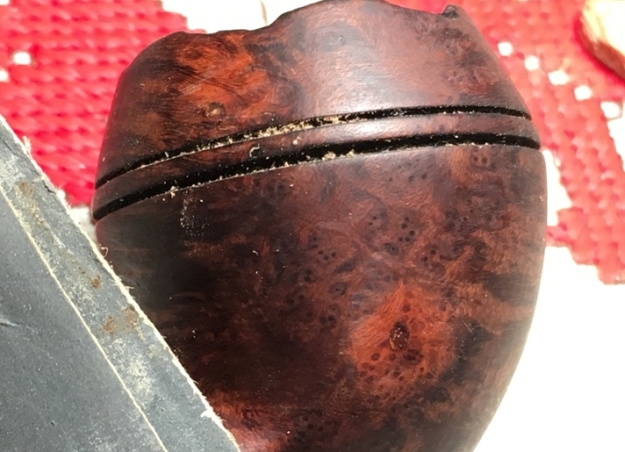
With a better understanding of this Kaywoodie Prime Grain Bulldog, I take a closer look at the condition.  There is almost no cake build up in the chamber.  The surface of the bowl has chips here and there – a few on the shank.  The biggest issue I see at this point for the stummel restoration is what I unlovingly refer to as the ‘candy apple’ finish that encompasses the stummel.  When you start working on a pipe this shiny, the concern is that the finish is acrylic which is a bear to remove.  I much prefer natural grain showcased without the artificial candy apple sheen that this Kaywoodie has.  The grain underneath the surface looks good.  The fancy stem is attractive but has light tooth chatter and very minor oxidation.  I take a couple of pictures to highlight the chips and the finish.I begin the reclamation of this Kaywoodie Bulldog by cleaning the airway with pipe cleaners dipped in isopropyl 95%.  I then add the fancy stem to a soak of Before & After Deoxidizer with other stems of pipes in the queue.  After the stem soaks for several hours, I fish the Kaywoodie stem out and allow the Deoxidizer to drain off the stem.  With a cotton pad wetted with alcohol, I wipe the stem along with the raised oxidation and the stem looks good.  I then apply paraffin oil (a mineral oil) to the stem to begin its revitalization.  The pictures show the progress.With the stem taking a respite, I turn now to the internals of the Bulldog stummel by reaming the chamber. Even thought the cake is light, I still utilize the two smaller Pipnet Reaming blade heads to do the initial cleaning.  To fine tune the removal, the Savinelli Fitsall Tool does a great job of scraping the wall and reaching down to the floor removing carbon in the hard-reached areas.  Lastly, with a piece of 240 grit paper wrapped around a Sharpie Pen for leverage, the final step to clean the chamber is accomplished with sanding followed by wiping the chamber with a cotton pad wetted with alcohol to remove the remaining carbon dust.  After an examination of the cleaned chamber, all looks good.  No heat cracking or fissures are visible.  The pictures show the progress from start to completion. Moving to cleaning the external, even though I’m pretty sure that Murphy’s Oil Soap will not make a dent on the candy apple finish itself, I use a cotton pad and work on the surface as well as the rusticated rim using a bristled tooth brush.  As I suspected, the finish is clean on top but still very much intact, but the rusticated rim cleaned up quite nicely.Before addressing the finish issue further, I complete the cleaning regimen by now working on the internals of the stummel.  Using pipe cleaners and cotton buds dipped in isopropyl 95%, I go to work.  With the Kaywoodie Synchro-Stem shanking fitting in place, access to the mortise to clean is a bit frustrated.  I don’t use any pipe cleaners as the space is short.  To reach through the metal stinger insert hole I utilize some sharp dental probes to scrape the mortise walls to loosen the oils and tars that have collected.  After many cotton buds, progress is made and I’m satisfied with the cleaning and it’s time to move on.Now, back to the stummel surface and the removal of the acrylic finish.  First, I try the more conservative approach using alcohol with a cotton pad to see if the finish can be removed.  The picture shows that the answer is no with isopropyl 95%.Then, switching to acetone, I again use a cotton pad and focus only on one area to see if it would make a dent.  It did not after concentration for several minutes on a single shank panel.  The next step is simply to allow the stummel to soak for several hours in acetone.  Often, it takes this much time to allow the chemicals to break down the composition of the finish.  Into the acetone soak it goes and I turn my attention to the stem.With the stummel in the cooker, I work on the stem.  The tooth chatter is addressed first with heating the vulcanite by painting the upper- and lower-bit area with a flame.  The button lips are chewed as well.  I use a Bic lighter to do the job.  As the vulcanite heats it should expand recovering to a degree the original shape of the vulcanite.  After heating, the results are not great.  The texture of the vulcanite is harder, more plastic-like than normal.  So, I resort to first refreshing the button with a flat needle file and then sanding out the chatter using 240 grit paper followed by 470 grit. Continuing the process of erasing the scratches of the coarser grade papers with finer grade, I wet sand the entire stem with 600 grit paper then complete this phase using 0000 steel wool.With a closer look at the results, I’m not satisfied with the results on the lower bit area.  I can still see cross-scratches from filing and the coarser grade sanding papers.  I know that there are differing grades of vulcanite/rubber compounds used in fashioning stems, and I’ve not really studied it.  However, in restoring pipes, stems have differing responses to the work done on them.  As I said earlier, this material is harder than usual and begrudgingly gives up his imperfections!  For the lower bit, I back up and dry sand the area using 240, 600, 470 grade papers and 0000 steel wool.  I also try something that I believe I read about on Dad’s Pipes, where Charles Lemon uses the buffing wheel and Tripoli compound – a coarser compound, to work on the removal of oxidation from the stems.  I decide to give it a try – not to remove oxidation per se, but to clear up the scratches left over and also to reach into the forward curves/valleys of the fancy stem. These pictures show more favorable results. The stummel has been soaking in the acetone bath overnight hopefully to loosen the acrylic ‘candy apple’ finish.  I fish it out and am surprised by the fact that the finish looks to be still intact!  I use a cotton pad on the surface and, oh my, this is nasty stuff.  I quickly switch to using steel wool to work on the finish.  The soaking did accomplish one thing – it softened the acrylic surface that allowed the finish to be removed with more force.  The pictures show the different stages – and it wasn’t easy! The most difficult part was removing the acrylic finish from the upper shank panels that held the nomenclature and the ghost of a shape number.  I used steel wool around the edges, but the only abrasion used over the stampings themselves was a cotton pad – this made for a long bout!The candy apple acrylic finish is finally removed after hours of soaking and elbow grease, as they say.  To rehydrate the stummel after all the chemical activity, I wipe paraffin oil on the surface and let it absorb through the night.  The final two pictures in below show this. With the stubborn acrylic finish removed, I now investigate the stummel and identify areas that need addressing. I find 2 old fills on the nomenclature panel.  Using a sharp dental probe, I test and then dig out the old fill material.  I’m thankful that I invested in a legit set of dental tools that are a huge help!  Two more small fills are cleaned out on the right bowl side and small dent just above the ghosting shape number on the upper right shank panel. I take a picture of these areas to chronicle the progress.  Next, to address these areas, I mix a batch of briar dust putty to fill the pits.  To do this I mix some briar dust and thick CA glue.  I place some briar dust on an index card and add a small puddle of thick CA glue next to it.  I then draw briar dust into the CA glue with a tooth pick mixing it as I go. I continue to draw more briar dust into the CA until the mixture thickens to about the consistency of molasses.  I then apply the putty to fill the pits and tamp down, making sure the hole is filled with a bit of excess that will be sanded down when cured.  After filling the pits, I set the stummel aside for the patches to cure. Turning now to the stem, I wet sand using micromesh pads 1500 to 2400.  Following this with pads 3200 to 4000 and 6000 to 12000 I dry sand.  Between each set of 3 I apply Obsidian Oil to help revitalize the vulcanite. With several hours having passed, the briar dust putty patches are fully cured.  I first begin removing the excess putty using a flat needle file.  I file each patch mound to near the briar surface.  Then I switch to sanding with 240 grit paper bringing the patches flush with the surface.  I finish with 600 grit paper.  The pictures show the progress.Filing.240 grit paper. 600 grit paper.With the patches completed and sanded, I now switch to the entire bowl.  I’m anxious to see what the grain does after the micromesh process cleans, blends and buffs out the grain.  I wet sand using micromesh pads 1500 to 2400 and then dry sand with pads 3200 to 4000 and 6000 to 12000.  I like this process.  The pictures show the emerging complexion of the briar landscape. The grain is now able to be seen from underneath the acrylic candy apple finish with the micromesh process also teasing out the grain picture.  I like what I see.  The bird’s eye grain is distinct, but it’s joined with a lot of movement.  When I compare the reddish hue that I originally saw on eBay (picture below) to the natural grain presentation pictured above, hands down I choose the natural grain.  A decision is made – I decide not to color the stummel but to stay with the natural briar hue.With this decided, I will apply Before & After Restoration Balm to the stummel.  Before doing this, I use a dental probe and do a quick clean up of the twin grooves circling the bowl.  I then squeeze a bit of the Balm on my fingers and work it into the briar surface.  I set it aside for about 20 or so minutes while the Balm does its thing.  I like the B&A Restoration Balm because it deepens the rich natural tones of the briar.  I take a picture of the ‘absorbing’ phase.  I then wipe off the Balm with a clean cloth, buffing as I go. Next, using Before & After Fine and Extra Fine Polish, I apply each in succession to the stem.  I work each in with my fingers to further condition and polish the stem.  I wipe both polishes off with a cotton pad and then with a microfiber cloth.I rejoin stummel and stem and I’m thankful that the stem is clocked perfectly.  Usually, with time, the stem can begin to over-clock and not be true.  This stem is ready to go.  I then mount a cotton cloth buffing wheel to the Dremel and with it set at about 40% of full power, I apply Blue Diamond to both the stummel and the fancy stem.  After applying the compound, I wipe the pipe down with a felt cloth to remove leftover compound dust.  Then, after mounting another cotton cloth wheel to the Dremel, I apply a few coats of carnauba wax to the stem and stummel.  With both Blue Diamond and carnauba, I also work into the rusticated rim and curves of the fancy stem – both which are looking great.

I’m very pleased with the results of the Kaywoodie Prime Grain Bulldog.  I went with the natural grain hue rather than coloring the briar and I like the results.  The grain is very active with large, distinct bird’s eye grain populating the landscape.  I also like the horizontal grain running along part of the dome.  The fancy stem with the Kaywoodie ‘shamrock’ looks good.  Paul commissioned this Kaywoodie Prime Grain Bulldog which benefits the Daughters of Bulgaria and since he is the commissioner, he has the first opportunity to acquire the Bulldog from The Pipe Steward Store.  Thank you for joining me!


Restemming and Rebirthing a Landry 2013 Bent Ball


Blog by Steve Laug

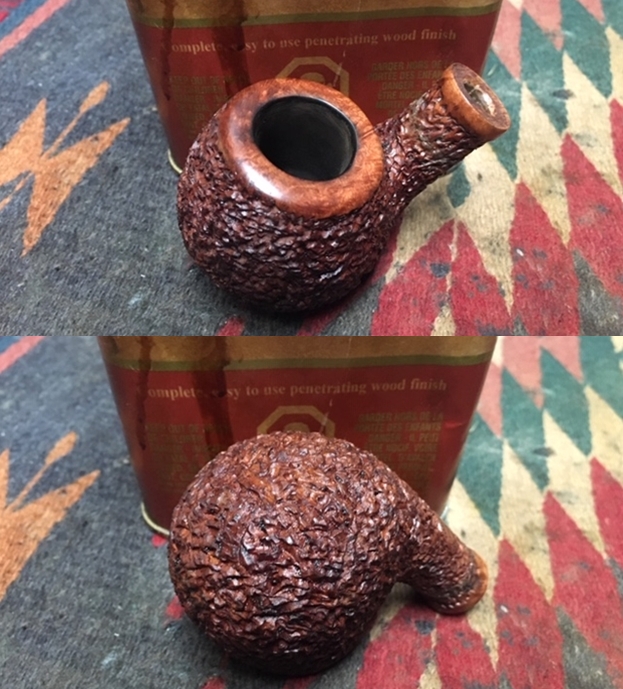
Last evening I had a fellow drop by the house with three pipes for repair. Two of them were not worth repairing – broken shanks and Chinese knockoff pipes. Neither was made of briar and one had the beginning of a large burn out on the back of the bowl. I discouraged the fellow from fixing either of those two as the cost of repair would be more than he paid when he purchased them. However the third one was interesting to me. It was a bent ball bowl without a stem. It was a real mess. He had broken the stem in half and lost it. The shank had also been broken but he was a bit of a wood worker and had clamped and glued it. He had done a decent job and the repair was solid. The bowl had a cake that was thick and soft – made from the heavily case aromatic that he smoked. The airway in the shank was clogged with tars and oils and I could not even blow through it. The rusticated finish was rugged and sharp with a smooth rim and shank band. The bowl and rim were very dirty and the briar looked lifeless. The shank flared at the stem/shank junction.

When I examined the pipe while he was there I found that it had a makers stamp on an oval smooth patch on the underside of the shank. It was clearly stamped LANDRY arched at the top of the oval. The year it was made, 2013 was in the middle of the oval and the letters U.I.O.G.D were arched at the bottom of the oval. When I asked the owner of the pipe what those letters were he said that I was some Latin phrase. When I examined it with a loupe I found that there were periods between the letters and that probably I was dealing with an acronym of some kind. I went with his notion of it being Latin, Googled the acronym and found that it stood for the five words making up the Benedictine motto: Ut In Omnibus Glorificetur Dei (translated from Latin it means: So that in all things God may be glorified). That made sense as he had been given the pipe by a Benedictine Priest a while ago when he had first started smoking a pipe and he had broken it after smoking it quite heavily.

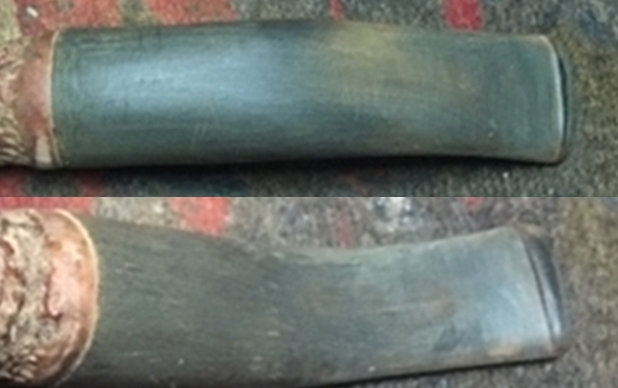
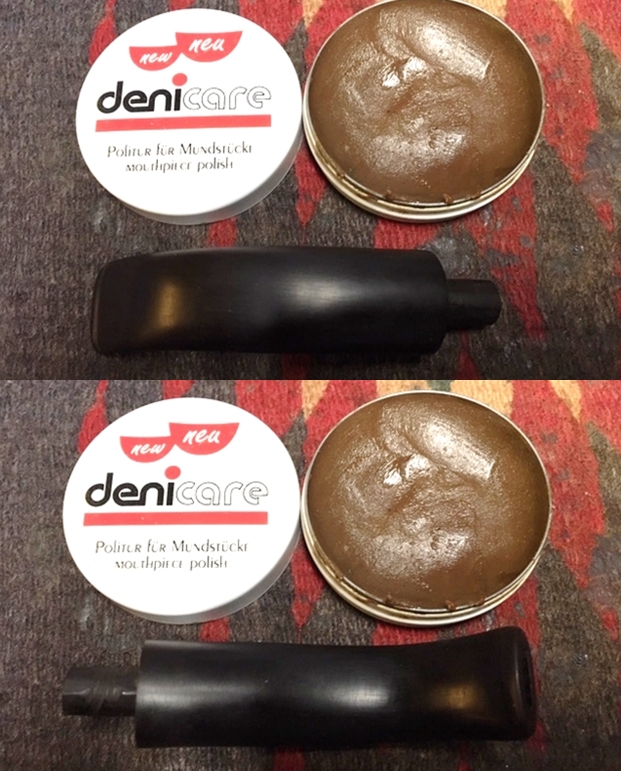
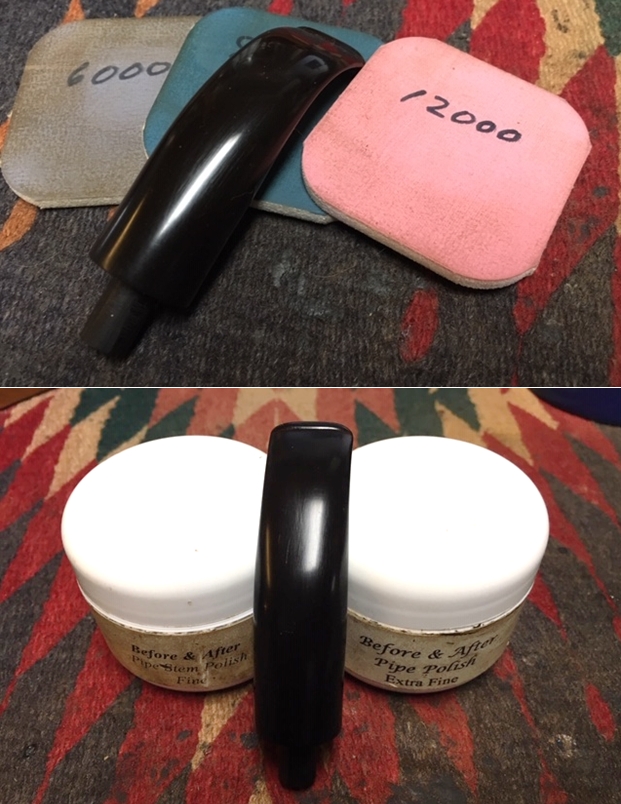
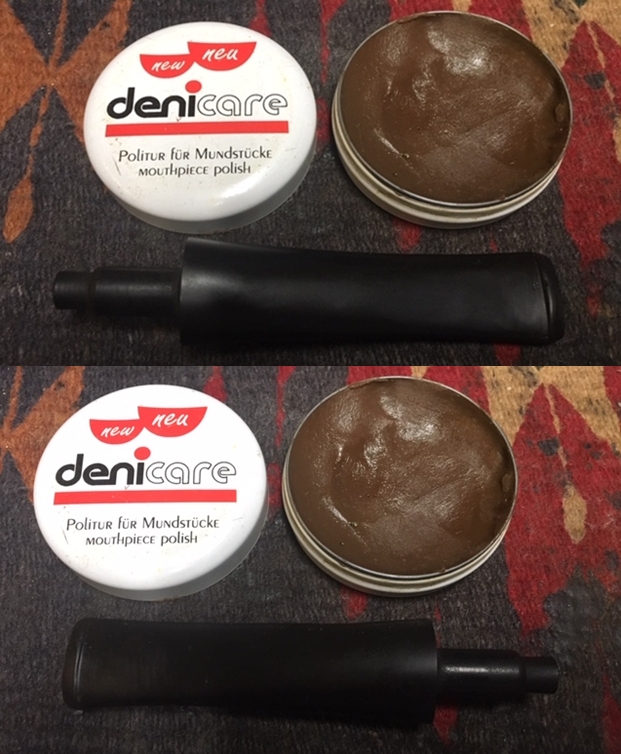
I took photos of the bowl before I started to work on it. You can see the repair on the shank. The rustication is very dirty and the rim top is coated with an overflow of lava from the bowl. The entire pipe reeked of a sweet cherry aromatic. The shank was heavily gummed up and I could not blow air through the shank into the bowl. It was clogged. The bowl also appeared to be drilled at an angle and from a quick glance seemed to be drilled crooked. The pipe was a mess! I took a photo of the oval and the stamping on the shank. You can also see the glue repair on the shank. It was a solid repair but a bit sloppy.There were some gaps in the glue around the circumference of the shank so I used a wire brush to clean up excess glue from the repair. I wanted to remove all of the excess glue so that it would look cleaner once I finished. I then filled in the gaps in the repair with clear super glue and filled in those areas with briar dust to build up the area ahead of the smooth band at the shank end.Restemming this old bowl would be a bit tricky. The shank actually flared to a smooth hip at the end where the stem sat. It was wider in diameter than the rusticated shank just below it. It was obvious from the way the shank end and mortise were made that it required a flush fit stem and not a freehand style stem. I would need to find a stem that had a wide enough diameter for me to work with and give the pipe the kind of look that it must have had originally. I went through my can of old stems and found one that was going to work. The tenon was almost perfect. I sanded it lightly with the sanding drum on the Dremel and cleaned it up with a file and the fit was just right. I would need to reduce the diameter of the stem slightly to match the shank but I think it was going to work for me. I took photos of the fit of the “new” stem to show you what I saw. Bear with me for the moment. It was quite ugly and my brother said it looked like a muffin top of a tight belt (or something like that). But I thought it had potential… time will tell. I trimmed the excess diameter of the stem with a sanding drum on my Dremel. I worked on it until the diameter was very close to the right size. I brought it back to the work table and sanded it smooth with a folded piece of 220 grit sandpaper to remove the scratches from the Dremel. I took photos of the stem and shank at this point. I wiped down the stem with Obsidian Oil to clean off the dust and get a sense of how it was looking. I sanded the band around the shank a bit too as it had some glue on it from the repair that had been done. I took photos of the pipe at this point in the process. I decided it was time to set the stem aside for a bit and work on the bowl. I took a photo of the bowl and rim to show what it looked like when I started. The bowl is thickly caked and there was damage to the inner edge of the rim. The lava overflow was quite thick on the rim top as well. I reamed the bowl with a PipNet pipe reamer. You can see the angle of the bowl from the way that the reamer is sitting in the second photo below. I cleaned up the reaming with a Savinelli Fitsall pipe knife and then sanded the walls of the bowl with sandpaper wrapped around a piece of dowel. With the bowl reamed I turned my attention to the dirty exterior of the bowl. I scrubbed it with a tooth brush and undiluted Murphy’s Oil Soap. I worked over the rim top with the tooth brush and a piece of sandpaper to remove the tars and lava there. I rinsed it off with running water to remove the soap and debris in the finish. Now it was time to address the thick tars and oils in the shank and open the airway into the bowl. I worked on the mortise and the airway in the shank with a paper clip, pipe cleaners, cotton swabs and alcohol. Once I had opened the airway I scrubbed it until it was clean. I also cleaned out the airway in the new stem with alcohol and pipe cleaners. It was not nearly as dirty as the shank.I polished the rim top and the smooth shank end with micromesh sanding pads – wet sanding with 1500-2400 grit pads and dry sanding with 3200-12000 grit pads. I wiped the polished areas with a damp cloth after each sanding pad. The rim and shank end began to really look good. I decided to stain the bowl and shank with some Medium Walnut Danish Oil. It has the translucence I wanted to let the natural colour of the briar shine through while allowing me to hide the repairs to the shank. I applied the stain with a cotton pad and daubed it deep into the grooves of the rustication. I kept applying it until the coverage was good. I waxed the bowl with several coats of  Conservator’s Wax and buffed it out with a horsehair shoe brush. The bowl and rim looked really good. I really liked the look of the bowl at this point in the process. The shine and the finish looked very good. I set the bowl aside and turned my attention to the new stem. I sanded it with 220 grit sandpaper to remove the oxidation and the scratch marks from fitting the stem. I wiped the stem down with Obsidian Oil to remove the sanding dust and get a feel for the scratching. I polished the stem with Denicare Mouthpiece Polish. I applied it with my finger and rubbed it in and then off with a cotton pad. I find that it is gritty enough to remove the residual oxidation after sanding (besides I have about three tins of the stuff to get through so I use it on each pipe).I polished the stem with micromesh sanding pads – wet sanding with 1500-2400 grit pads and dry sanding with 3200-12000 grit pads. I wiped the stem down with Obsidian Oil after each sanding pad. I finished polishing the stem with Before & After Pipe Polish – Fine and Extra Fine. I gave it a final coat of Obsidian Oil and set it aside to dry. I bent the stem with a heat gun to get it to follow the lines of the top of the bowl so that it can hang in the mouth with the bowl top straight. I polished the stem with Blue Diamond on the buffing wheel and gave it multiple coats of carnauba wax. I put it back on the shank and buffed the entire pipe with a clean buffing pad to raise the shine on the bowl. The heavy rustication works well with the stain I chose to use on it and the combination looks really good with the polished vulcanite stem. The flared shank end and the thick stem work well together to my mind to create an interesting pipe. The finished pipe is shown in the photos below. Its dimensions are – Length: 6 inches, Height: 2 inches, Outer diameter of the bowl: 1 ½ inches, Chamber diameter: 7/8 of an inch. I will give it another coat of Conservator’s Wax and then call the fellow who dropped it off for repair. I am hoping he likes the look of his pipe. Thanks for reading this blog.

New Life for another B.P. Jum War Club


Blog by Steve Laug

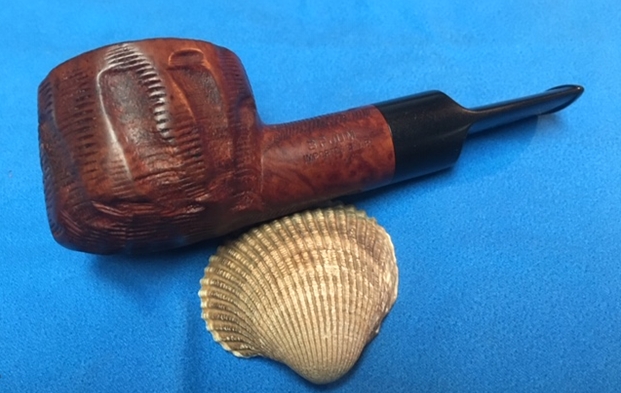
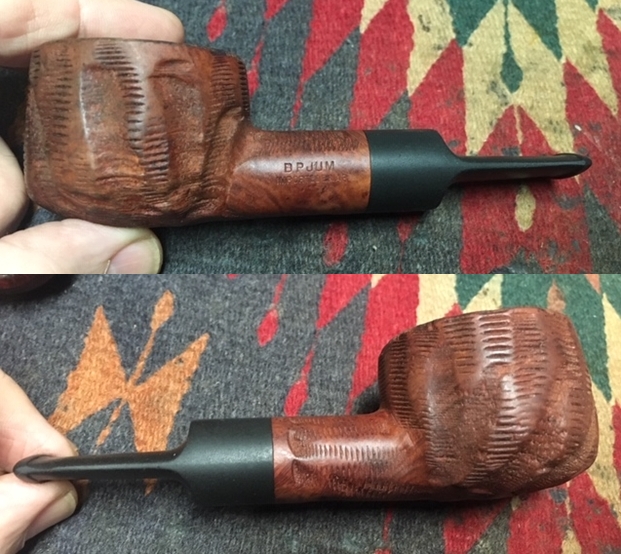
I was sorting through another one of the boxes of pipes that my brother Jeff sent me and found another B.P. Jum pipe. In a previous blog (https://rebornpipes.com/2018/06/02/breathing-new-life-into-a-b-p-jum-war-club/) I had restored one that was very similar. I had called it a war club because of the size and heft of the pipe. This B.P. Jum was also a large, hefty carved pipe. It too had the shape and a carved finish that was similar to the Custombilt pipes such as the ones that I have worked on lately. It is the same size as the previous Jum that I had worked on – 5 ½ inches long, 1 ½ inches tall, outside wall diameter 2 inches and the chamber diameter 1 inch. The shank diameter is 7/8 inches. The stem is 2 ¼ inches long. The briar was very dirty with grit and grime in the depths of the carvings. The rim top had a thick coat of lava and tars in the carving of the rim. There was a thick cake built up on the walls of the bowl. Interestingly this pipe did not have any visible fills that I have come to expect on the B.P. Jum line. The stem was oxidized and dirty and there were no tooth marks or chatter on either side of the stem. The internals of the both the airway in the stem and shank and the mortise were very dirty with tars and oils. Jeff took photos of the pipe before he started his cleanup work on it. Jeff took a photo of the rim top and inside of the bowl to show the condition. You can see the thick cake in the bowl and the heavy lava overflowing over the surface of the rim top. He also took a photo the underside of the bowl and shank. I have included it here as well.There was a smooth portion of briar on the underside of the shank that was stamped BP JUM over IMPORTED BRIAR. You can see that the pipe has some interesting grain even on the shank.He took photos of the stem to show the oxidation and calcification on the stem. Surprisingly there were no tooth marks or chatter on the surface.When I worked on the previous B.P. Jum I did some research to try to find out information on the brand. There was a lot of conjecture as to whether the brand was made by Tracy Mincer of Custombilt fame. There is no definitive proof other than the common shapes, sizes and look of the pipes. Bill Unger, of Custombilt fame and author of a history of the brand, mentions BP Jum but cannot definitively connect the two. So the maker remains a mystery that is still unsolved. Do any of you reading this have information on the brand? Send me a message or an email if you can help. Thanks ahead of time.

Jeff had reamed the bowl with a PipNet pipe reamer and followed up with a Savinelli Fitsall pipe knife to remove the cake. He scrubbed out the mortise and the airway in the shank and the stem with alcohol, cotton swabs and pipe cleaners. He scrubbed the exterior of the bowl, rim, shank and stem with a tooth brush and Murphy’s Oil Soap to remove the oils and tars on the bowl, rim and shank. He rinsed it under running water. He dried it off with a soft cloth. The lava mess on the rim was thoroughly removed without harming the finish underneath it. Without the grime the finish looked good. The inner edge of the bowl showed some burn damage and was out of round. The stem was actually in pretty good condition and would only need to be polished. I took photos of the pipe to show its condition before I started my work on it. I took close up photos of the rim top that shows the clean bowl and the burn damage around the inner edge of the bowl. The stem was clean and Jeff had used Before & After Deoxidizer to soak and remove much of the oxidation. He rinsed out the inside of the stem and rinsed off the exterior as well. The photos of the stem show how good the stem actually looked after this treatment.The BP JUM stamp is very clean and readable. You can see from the photo that there are no visible fills in the shank or the portion of the bowl showing. The rest of the bowl is clean in the same way – no fills in the briar. That is a first for the B.P. Jum pipes that I have worked on.There was a small nick in the edge of the rim that I filled in with clear super glue. Once the glue dried I scraped away the excess with a pen knife and then used a brass bristle wire brush to clean up the grooves in the rim.I used a folded piece of 220 grit sandpaper to smooth out the burn damage and nicks in the inner edge of the rim. I gave the inner edge a slight bevel to mask the damage.I rubbed the bowl down with Before & After Restoration Balm to deep clean the briar and particularly the sanded areas. The product works to clean, enliven and protect the briar. I hand rubbed it with my fingers and wiped it off with a soft cloth. I buffed the bowl with a horsehair shoe brush to polish it. The briar really began to have a rich shine. I took some photos of the bowl at this point to mark the progress in the restoration. I waxed the cleaned and polished bowl with Conservator’s Wax and worked it into the rusticated finish. I buffed it with a shoe brush and a soft cloth. The bowl is finished other than the final buffing that I will do once the stem is finished. I set the bowl aside and turned my attention to the stem. Since the stem was in such good condition and there was no oxidation or tooth marks I could immediately turn polishing it with micromesh sanding pads. I wet sanded it with 1500-2400 grit pads and dry sanded it with 3200-12000 grit pads. I wiped the stem down after each pad with a damp cloth to remove the sanding dust. I used the Before & After Pipe Polish to remove the small minute scratches left in the vulcanite. I finished by wiping the stem down with a final coat of Obsidian Oil and set it aside to dry. I polished the stem and bowl with Blue Diamond to polish out the remaining small scratches. I gave the bowl multiple coats of Conservator’s Wax and the stem several coats of carnauba wax and buffed the pipe with a clean buffing pad to raise the shine. I hand buffed it with a microfiber cloth to deepen the shine. The pipe polished up pretty nicely. The finished pipe is shown in the photos below. It is an interesting looking pipe that may have been carved by Tracy Mincer. It certainly bears a lot of resemblance to Custombilt/Custom-Bilt pipes. The dimensions are Length: 5 ½ inches, Height: 1 1/2 inches, Outside diameter of the bowl: 2 inches, Chamber diameter: 1 inch. I will be adding it to the rebornpipes store shortly. If you are interested in adding it to your collection email me at slaug@uniserve.com or send me a message on Facebook. Thanks for walking through the restoration with me as I worked over this B.P. Jum.

On the table – a Clipper High Class Briar Bent Churchwarden


Blog by Steve Laug

Over the past several years my brother Jeff has picked up some very interesting Churchwarden pipes. They have varied from classic shapes to Freehands. They have been anywhere from 7 to 10 inches long and have had straight, ¼, ½ and almost full bent stems. Each box he sends has at least one of these pipes – at least it seems so. In one of the recent boxes there was a beautiful little half bent Churchwarden. I have been keeping an eye out for one that I thought Paresh would like and this seemed like it was the one. When I showed it Paresh during one of our Whatsapp calls he fell in love with it and I added it to his box.

When Jeff received the pipe it was in pretty decent condition – dirty but really not too bad. The finish was dusty and dirty with grime worked into the lovely grain of the briar. The bowl had a moderate cake in it but the rim top was free of lava. The inner edge of the bowl was in great condition other than what appeared to be a small burned area toward to the front. That would not be clear until it was reamed. The rim top had some nicks and scratches as did the outer edge of the bowl. The left side of the shank was stamped Clipper over High Class Briar over IBERPIPSA. On the right side of the shank it had a square box with a pipe and puff of smoke as a logo. The underside at the stem/shank union it had the shape number 512. The stem did not seat in the shank due to the buildup of tars and oils. At the shank the stem had two vertical dots on the topside. The stem had some deep tooth marks on both sides at the button. It was oxidized but in decent condition. Jeff took these pictures of the pipe to show its condition before he started his cleanup work. He took close up photos of the rim top and the side and bottom of the bowl to show the condition of the briar and the bowl. You can see the cake in the bowl and the slight burn mark toward the front of the inner edge of the rim. You can also see the small nicks around the outer edge of the bowl. The finish is pretty but quite dirty. He took a photo of the stamping on the left, right and underside of the shank as well as the two vertical dots on the stem. The photos of the stem show the tooth chatter and marks on both sides of the stem near the button and the wear on the button itself.I did some research on the brand and found many different pipes that bore this stamping. They also seemed to have the name Swensson stamped on the shank as well. This link shows the same stamping with the addition of the Swensson name (https://en.todocoleccion.net/collectable-smoking-pipes/pipa-swensson-iberpipsa-car07~x111057347). Here is a second link that shows the box that the brand came in as well as a leaflet (https://en.todocoleccion.net/collectable-smoking-pipes/pipa-clipper-5740-iberpipsa~x33567017). I have included that photo for the information that it includes. There were other references to the brand with lots of photos of pipes in a variety of classic shapes. However there was nothing on either Pipedia or Pipephil that I could find. All of the examples of pipes bearing this brand that I saw were well made and showed beautiful grain.Armed with little bit of information that I could find it was time to start working on this pipe. Jeff had cleaned the pipe with his usual thoroughness – reaming the bowl with a PipNet pipe reamer and cleaning up the remnants with a Savinelli Fitsall Pipe Knife. He scrubbed the internals of the bowl, shank and stem with alcohol, cotton swabs and pipe cleaners. He scrubbed the exterior with Murphy’s Oil Soap to clean off the dust and grime on the finish. The rim top looked very good other than the small burned inner edge at the front of the bowl. The inside of the bowl itself looked great. The pipe had some beautiful grain all around the bowl and the cut of the briar maximized that. The stem was in great condition other than the oxidation and tooth marks on both sides near the button. I took photos of the pipe before I started working on it. I took some close up photos of the rim top, bowl and stem to show what they looked like after Jeff’s cleanup. The two different photos show the damage at the front inner edge of the rim from different angles. The stem was in good shape other than the tooth marks and chatter on both sides near the button.I took some photos of the stampings around the shank to give a picture of what they looked like after the cleanup. I worked on the damage to the front of  inner edge first. I used a folded piece of 220 grit sandpaper to smooth out the burned area and bevel the inner edge slightly to minimize the damage there. I polished the rim edges – both inner and outer with micromesh sanding pads – wet sanding with 1500-2400 and dry sanding with 3200-12000 grit pads. I worked on the nicked edges on the outside of the bowl to smooth them out. I polished the entire bowl avoiding the stamping with the pads. I wiped it down with a damp cloth after each sanding pad. You can see the progress in the photos below.  I worked some Before & After Restoration Balm into the smooth finish of the bowl and the rim top. I worked it into the surface of the briar with my fingertips to clean, enliven and protect the wood. Once the bowl was covered with the balm I let it sit for about 20 minutes and buffed it off with a soft cotton cloth and then polished it with a microfiber cloth. I took photos of the pipe at this point in the process to show what the bowl looked like at this point. I set the bowl aside and turned my attention to the stem. I decided to address the oxidation and the tooth marks on both sides of the stem ahead of the button. I sanded the tooth marks and chatter with 220 grit sandpaper and was able to remove them all. I sanded the stem surface with the 220 grit sandpaper and removed the majority of the oxidation. I polished the stem with Denicare Mouthpiece Polish to take out the oxidation at the button edge and on the end of the mouthpiece. I also worked hard to scrub it from the surface of the stem at the tenon end.I polished the stem, button and blade with micromesh sanding pads – wet sanding with 1500-2400 grit pads and dry sanding with 3200-12000 grit pads. I wiped the stem down after each sanding pad with Obsidian Oil. I polished it with Before & After Pipe Stem Polish – both Fine and Extra Fine. Once I had finished the polishing I gave it a final coat of oil and set it aside to dry. I put the bowl and stem back together. I buffed the bowl and stem with Blue Diamond to polish the briar and the vulcanite. I gave the bowl and the stem multiple coats of carnauba wax. I buffed the pipe with a clean buffing pad to raise the shine. I hand buffed it with a microfiber cloth to deepen the shine. The pipe polished up pretty nicely. The pipe turned out very well and shows the grain shining through. The contrast of the various grains – birdseye, flame and straight swirling around the bowl and shank looked good with the polished, long black vulcanite. This Churchwarden will soon be joining the other pipes I have boxed up for Paresh. The finished pipe is shown in the photos below. The dimensions of the pipe are Length: 10 inches, Height: 1 3/4 inches, Outside diameter of the bowl: 1 1/4 inches, Chamber diameter: 3/4 of an inch. I am looking forward to hearing what Paresh thinks of the pipe now. Thanks for reading this blog and my reflections on the pipe while I worked on it. Addendum: I posted on Facebook Tobacco Pipe Restorers Group and asked questions about the brand. I received this response from Sam Vior, a member there:      Iberpipsa: Iberica de Pipas, SA it was founded late 1980’s and made several lines: Swenson, Everest, Clipper, Brio, Coral, Commodore. In Spain.

That led me to a page on Pipedia (https://pipedia.org/wiki/Iberica_de_Pipas). I quote from that article in full.

“Founded in 1919, Iberica de Pipas is a company dedicated to the manufacture of pipes and gift items in wood. More than eighty years of presence in the market guarantee our products. Our accumulated experience has strengthened and allowed us to both continue making improvements and maintain the professional standards which our name inspires throughout the years.

In our effort to maintain client satisfaction, we offer an increased variety of quality products ranging from smoking to gift and home articles at an excellent price-quality relationship. Thanks to our professional standards and transparency, we can also manufacture any personally designed specialty items that our clients so desire. Contact us, we are eager to discuss how we can fulfil your needs.”

Brands (afak):

New Life for an old Custombilt Apple


Blog by Steve Laug

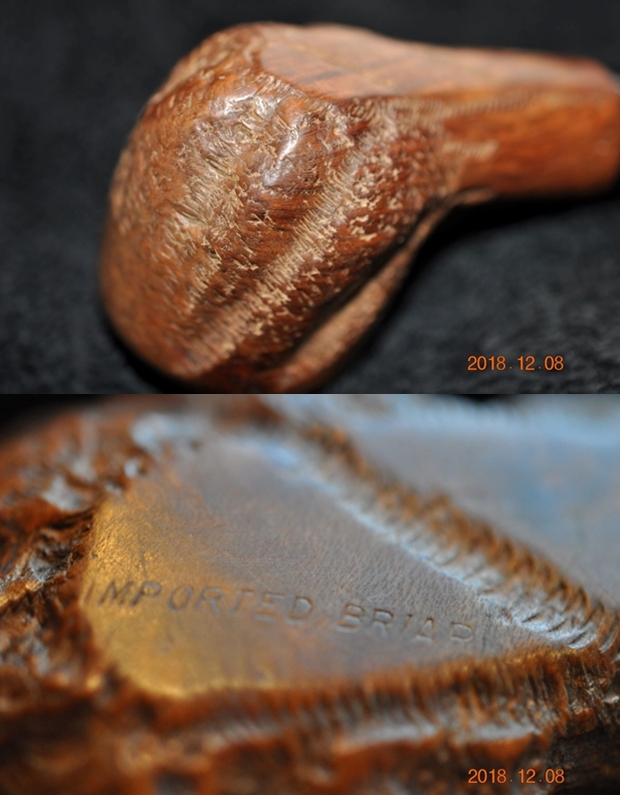
I have always been intrigued by Tracy Mincer and his Custom-Bilt pipes and even his Custombilt pipes like this one. There is something about the rugged carving and appearance of the pipes that gets my attention. I have a few of them in my collection and always enjoy the tactile nature of the pipe when it is being smoked. This old apple has the Custombilt stamp and I had reacquainted myself with the eras of the various spellings of the brand so that I can place it along with the previous billiard within the Rich Era. The pipe was in pretty decent condition when Jeff received it – dirty but really not too bad. The finish was dusty and dirty in the worm trail carvings. The bowl had a thick cake in it that flowed over the rim top into the rustication. The inner edge of the bowl appeared have some damage toward to the front but that would not be clear until it was reamed. The rim top had some deep scratches and gouges toward the right front. The stem had some deep tooth marks on both sides at the button but otherwise was in decent condition. The smooth part of the shank stamped Custombilt in script on the left side. On a smooth panel on the heel of the bowl it is stamped Imported Briar. Jeff took these pictures of the pipe to show its condition before he started his cleanup work. He took close up photos of the rim top and the side and bottom of the bowl to show the condition of the briar and the bowl. You can see the cake in the bowl and the lava overflowing onto the top of the rim. The worm trail rustication is quite dusty and dirty. He took a photo of the stamping on the left shank side and the heel of the bowl.The photos of the stem show the tooth chatter and marks on both sides of the stem near the button and the wear on the button itself.I did the research on the brand when I worked on the previous Custombilt that I restored earlier today (https://rebornpipes.com/2019/01/18/bringing-an-old-custombilt-billiard-to-back-to-life/). I have included much of that here for you to read. It comes from a great article on Pipedia that helps understand the brand and give a sense of what the various stamping looks like on the pipes (https://pipedia.org/wiki/Custom-Bilt). I cite from that article to give a feel for the brand:

In 1946, the name was changed to Custombilt after Mincer began an association with Eugene J. Rich, Inc. There were some big changes in advertising and distribution. The slogan “AS INDIVIDUAL AS A THUMBPRINT” began at this time as well.

In 1953, Leonard Rodgers bought the company and emphasized tobacco pouches and butane lighters. (However, it appears Mincer was working on his new pipe, the Doodler.) In 1968, Rodgers sold the Company to Consolidated Cigars. In the early 1970s, Wally Frank Co. bought the Custombilt trademark and began to produce their version of the pipe in 1974 or 1975. Hollco Rohr owned the Weber pipe factory, located in New Jersey, and produced the Custombilt pipes there. In 1987, the pipes were made out of the Butz-Choquin factory (France) and then Mexico until the late 1990s. Currently, the Custombilt name is owned by Tobacalera of Spain.

Along with the information above I found that the stamping that is on this pipe is identical to that identified in the article as Stamp Number Five. I have included that graphic because of the information that it included. It brings some of the issues in identifying the maker and the time period of the brand. In my mind the pipe I have in hand is very much like the Rich era pipes that I have seen and the note below says that. Interestingly the author also says he has seen the same stamping on the Wally Frank era pipes. It is a fascinating piece of history and a beautifully made old pipe.Armed with that information I turned to working on the pipe. Jeff had cleaned the pipe with his usual thoroughness – reaming the bowl with a PipNet pipe reamer and cleaning up the remnants with a Savinelli Fitsall Pipe Knife. He scrubbed the internals of the bowl, shank and stem with alcohol, cotton swabs and pipe cleaners. He scrubbed the exterior with Murphy’s Oil Soap to clean off the dust and grime on the finish. The rim top looked very good under the thick lava coat. I love the way the grain of the briar shows through the rustication. There were just a few nicks and scratches to deal with. The inside of the bowl itself looked great. The stem was in great condition other than the tooth marks on both sides near the button. I took photos of the pipe before I started working on it. I took some close up photos of the rim top, bowl and stem to show what they looked like after Jeff’s cleanup. The rim top has some darkening around the top and the edges. There is also some nicks and scratches on the surface ant the edges. Some are quite deep looking. The stem was in good shape other than the tooth marks and chatter on both sides near the button.  I took some photos of the stamping which seemed far more visible after Jeff’s cleanup than before.I worked on the  rim top and inner edge damage first. I gently topped the bowl to remove the deep cuts and gouges and smooth out the damage. I used a folded piece of 220 grit sandpaper to  further clean up the inner edge and leave it smooth. I polished the sanded rim top with micromesh sanding pads – wet sanding with 1500-2400 and dry sanding with 3200-12000 grit pads. I wiped it down with a damp cloth after each sanding pad. You can see the progress in the photos below. I stained the rim with three different stain pens – Cherry, Walnut and Mahogany. It still needed to be blended in a bit but the match of colour is perfect. I buffed it on the buffing wheel with Blue Diamond polish. The second photo shows the polished rim top. The match is good.Since the briar was in such good condition I started with rejuvenating the wood. I worked some Before & After Restoration Balm into the rustication and worm trails on the bowl and the rim top. I worked it into the surface of the briar with my fingertips to clean, enliven and protect the wood. Once the bowl was covered with the balm I let it sit for about 20 minutes and buffed it off with a soft cotton cloth and then polished it with a microfiber cloth. I took photos of the pipe at this point in the process to show what the bowl looked like at this point. I set the bowl aside and turned my attention to the stem. I decided to address the deep tooth marks on both sides of the stem ahead of the button. I filled in the tooth marks on the both sides of the stem with a clear super glue (Jeff had already cleaned the stem very well so it was not an issue). I set the stem aside to let the repairs cure.Once the repair had cured I used a flat blade needle file to sharpen the edge of the button on both sides of the stem. I also used it to flatten out the repairs. I worked on the remaining repaired areas with 220 grit sandpaper to blend them into the surface of the stem. I polished the stem with Denicare Mouthpiece Polish to take out the oxidation at the button edge and on the end of the mouthpiece. I also worked hard to scrub it from the surface of the stem at the tenon end.I polished repaired areas on the stem, button and blade with micromesh sanding pads – wet sanding with 1500-2400 grit pads and dry sanding with 3200-12000 grit pads. I wiped the stem down after each sanding pad with Obsidian Oil. I polished it with Before & After Pipe Stem Polish – both Fine and Extra Fine. Once I had finished the polishing I gave it a final coat of oil and set it aside to dry. I put the bowl and stem back together. I buffed the bowl and stem with Blue Diamond to polish out any light scratches that remained in the briar and the vulcanite. I gave the bowl and the stem multiple coats of carnauba wax. I buffed the pipe with a clean buffing pad to raise the shine. I hand buffed it with a microfiber cloth to deepen the shine. The pipe polished up pretty nicely. The worm trail rusticated finish on this Rich era Custombilt and the smooth portion around the cap on the rim and shank turned out very nice and shows the grain shining through. It has the kind of rustic beauty that draws collectors to them after all of these years. The contrast of the worm trails with the grain swirling through them looked good with the polished black vulcanite. This Custombilt Apple will soon be joining the other pipes I have on the rebornpipes store. The finished pipe is shown in the photos below. The dimensions of the pipe are Length: 5 1/2 inches, Height: 1 7/8 inches, Outside diameter of the bowl: 1 ½ inches, Chamber diameter: 7/8 of an inch. If you are interested in adding it to your collection let me know. Thanks for reading this blog and my reflections on the pipe while I worked on it.

Sprucing up the first of my WDC; a Demuth Gold Dot #77 Bulldog


Blog by Paresh Deshpande

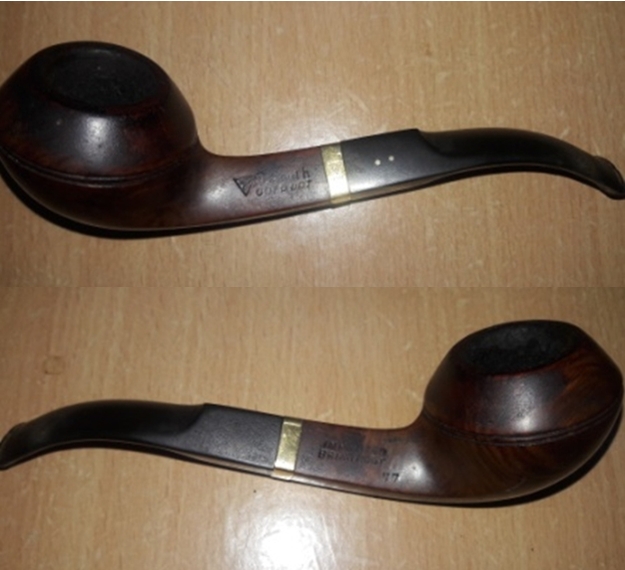
There a quite a few WDCs that I have inherited from my old man and the one on my table now is a “Demuth, Gold Dot”. I love the classic Bulldog and Rhodesian shape in pipes and am naturally attracted to pipes with this shape. Thus, no surprise here that I chose to work on this WDC Demuth Gold Dot in a classic Bulldog shape!!

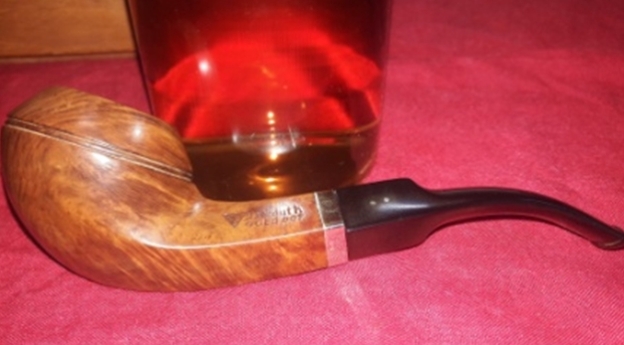
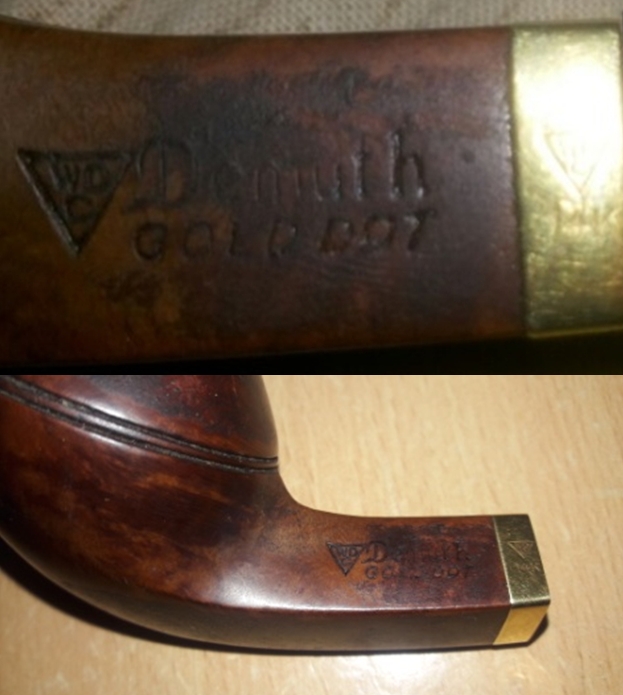
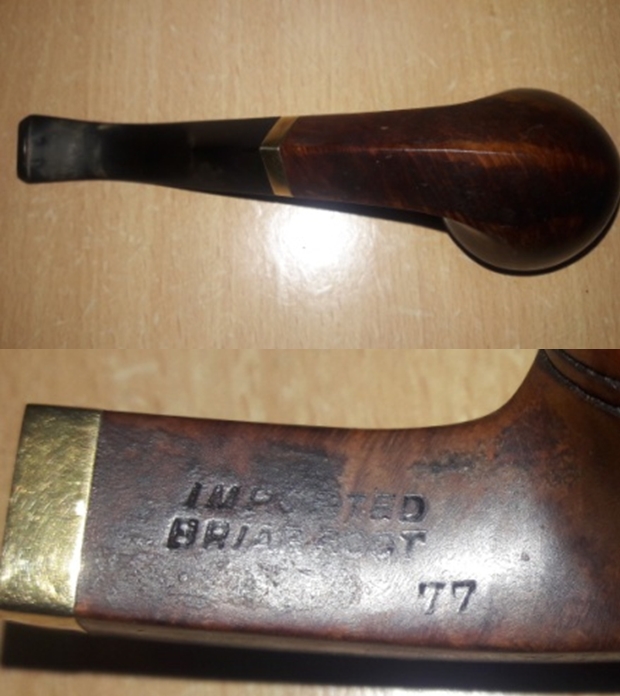
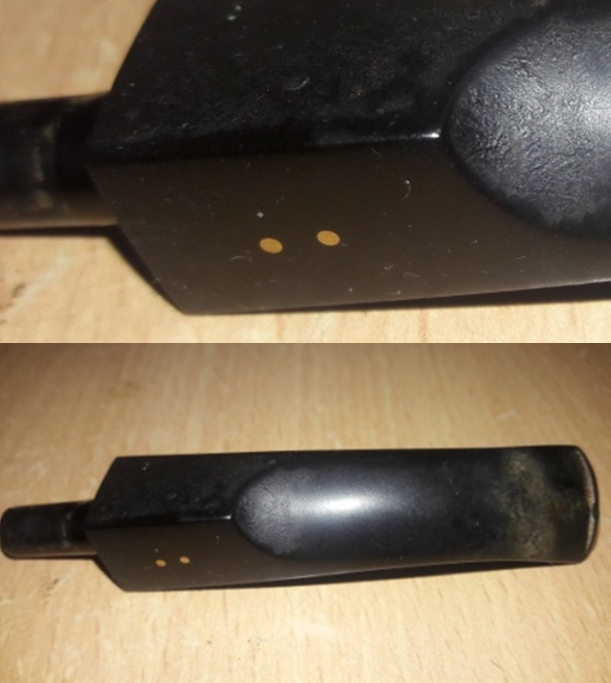
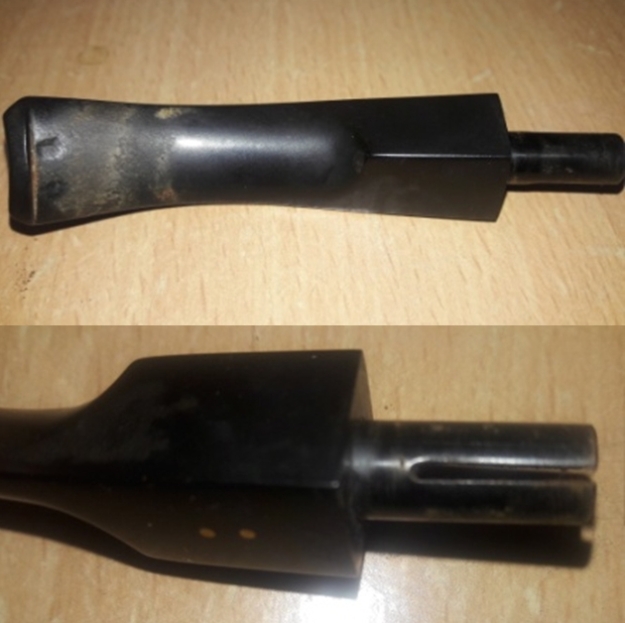
This is the first WDC from my grandfather’s collection, a smooth Gold Dot in an impressive Bulldog shape. The beautiful straight grain follow a circular pattern on the right and front of the bowl while linear pattern adorns the left side of the bowl and along the diamond shank, neatly divided by the spine on either side. The shank is stamped on the left with the trademark inverted equilateral triangle with letters “WDC” enclosed in it. This is followed by “Demuth” over “GOLD DOT” in block capital letters. On the right, the shank is stamped “IMPORTED” over “BRIAR ROOT” followed by the shape number “77” towards the bowl and shank joint. A half inch thick gold band adorns the shank end and is stamped on the left with the trademark WDC triangle over “14 K”, indicating the purity of the gold band. The ¾ bent saddle stem has two gold filled dots in the center of the saddle portion of the stem on the left side. I searched pipedia.com for more information on this pipe and attempt at estimating the vintage of this pipe. Here is what I have found on pipedia:-
William Demuth. (Wilhelm C. Demuth, 1835-1911), a native of Germany, entered the United States at the age of 16 as a penniless immigrant. After a series of odd jobs he found work as a clerk in the import business of a tobacco tradesman in New York City. In 1862 William established his own company. The William Demuth Company specialized in pipes, smoker’s requisites, cigar-store figures, canes and other carved objects.

The Demuth Company is probably well known for the famous trademark, WDC in an inverted equilateral triangle. William commissioned the figurative meerschaum Presidential series, 29 precision-carved likenesses of John Adams, the second president of the United States (1797-1801) to Herbert Hoover, the 30th president (1929-1933), and “Columbus Landing in America,” a 32-inch-long centennial meerschaum masterpiece that took two years to complete and was exhibited at the World’s Columbian Exposition in Chicago in 1893.

The Presidential series was the result of Demuth’s friendship with President James A. Garfield, a connoisseur of meerschaum pipes. Demuth presented two pipes to Garfield at his inauguration in 1881, one in his likeness, the other in the likeness of the President’s wife. Later, Demuth arranged for another figurative matching the others to be added to the collection as each new president acceded to the White House, terminating with President Hoover.

In early 1937, the City of New York notified S.M. Frank & Co. of their intent to take by eminent domain, part of the land on which the companies pipe factory was located. This was being done to widen two of the adjacent streets. As a result of this, Frank entered into negotiations to purchase the Wm. Demuth Co.’s pipe factory in the Richmond Hill section of Queens. It was agreed upon that Demuth would become a subsidiary of S.M. Frank and all pipe production of the two companies would be moved to DeMuth factory. New Corporate offices were located at 133 Fifth Avenue, NYC.

Demuth pipes continued to be made at the Richmond Hill plant till December 31. 1972. Then the Wm. Demuth Company met its official end as a subsidiary company by liquidation.

I came across an interesting advertisement on the same page on pipedia.com which shows the exact same pipe that I am now working on. It is the same pipe as the first pipe on the left. A close scrutiny of the picture confirms the following:

(a) The Gold Dot line of WDC pipes was offered sometime before 1941 as inferred from the bottom line of this flyer which encourages readers to “WRITE FOR NEW 1941 STYLE BOOKLET”, implying that this flyer was published prior to 1941!!!!!

(b) The Gold Dot line of WDC pipes was at the time their top of the line product as it is the most expensive of all the pipes advertised in the flyer, retailing at $10!!!Pipephil.eu too has the same pipe shown with shape # 77. Here is the link; http://www.pipephil.eu/logos/en/logo-w1.html
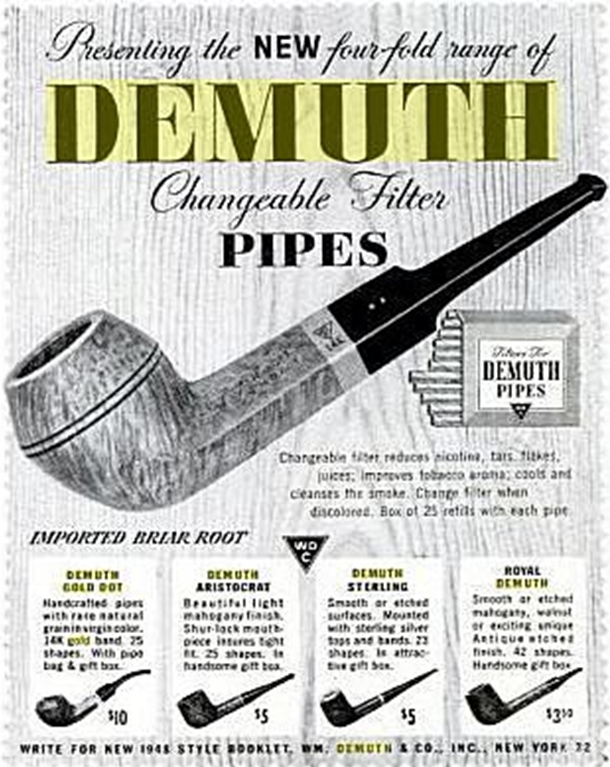
From the above gleaned information, it is safe to conclude that the pipe now on my worktable is of 1940s vintage and at that point in time was WDC’s top-of-the-line offering!!!!

INITIAL VISUAL INSPECTION
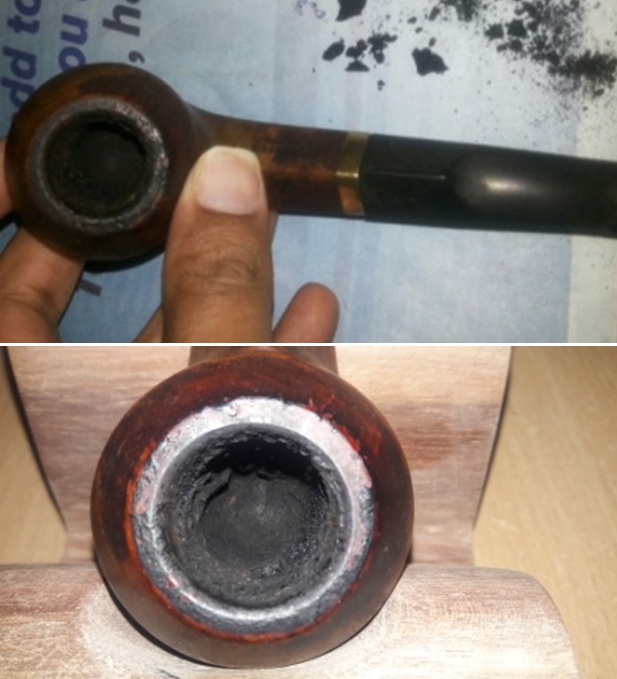
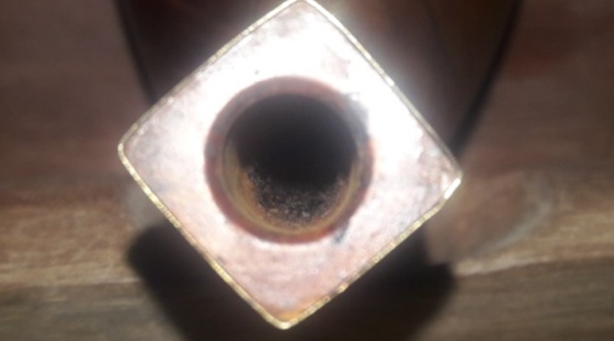
Age definitely shows on the stummel surface!!! The briar is dull and lifeless and has taken on a layer of aged patina, through which one can make out the beautiful straight grain patterns all around. There is a heavy overflow of lava all over the entire stummel surface. The bowl cap, bowl, shank and even the stem is covered in oils, tars and grime accumulated over the years of storage and is sticky to the touch. To be honest, the stummel is filthy to say the least. A thorough cleaning of the stummel followed by polish should accentuate the beautiful straight grain pattern seen on the stummel through all the dirt. The double ring that separates the cap from the rest of the bowl is even and undamaged; however, it is filled with dust, dirt and grime. The chamber exudes a strong, but not definitely unpleasant, smell. I hope that this will be addressed once the chamber has been reamed and internals of the shank and mortise is cleaned with isopropyl alcohol. There is heavy buildup of cake with a thick layer in the chamber. The buildup is such that I am barely able to squeeze my little finger in to the bowl. The condition of the inner walls of the chamber can be ascertained only after the cake has been removed completely and taken down to bare briar. The bowl however, feels robust and solid to the touch from the outside. The rim top has a thick layer of overflowing lava. The condition of the beveled inner and outer edge and rim top can be commented upon once the overflow of lava is removed and the chamber is reamed. The shank end of the pipe is clean. However, the mortise does show signs of accumulated dried oils, tars and remnants of ash, greatly restricting the air flow, or dare I say, completely restricting air flow. These issues should be a breeze to address, unless some hidden gremlins present themselves!! The vulcanite stem has deep tooth indentations and minor tooth chatter on the upper and lower surface. It is heavily oxidized and has traces of overflowing lava, dust, oils and tars on the saddle portion of the stem. The opening of the tenon is filled with dried oils and tars. The air flow through the stem is greatly restricted to say the least. The fit of the stem in to the mortise is very tight, which will loosen further after the mortise and tenon have been cleaned. The metal tenon has a slot like groove extending more than half way towards the stem end on either side; probably to securely seat the “changeable filter” as advertised in the flyer above (actually I was wondering the purpose of the metal tenon, which as it is, was new to me, with slots on either side. This doubt was cleared by the flyer!!). The overall condition of the pipe, with the thick build-up of cake in the chamber, clogged mortises and stem airway, overflowing of lava covering the entire stummel, makes me believe that this would have been one of my grandfather’s favorite pipes.
THE PROCESS
I started this project by reaming the chamber with size 2 and followed it up with size 3 head of PipNet reamer. I used a 220 grit sand paper, pinched between my thumb and forefinger, to sand the inner walls of the chamber of the pipe. Once I had reached the bare briar, I wiped the chamber with a cotton pad dipped in isopropyl alcohol. This removed all the residual carbon dust from the chamber. The walls of the chamber are nice and solid with no signs of heat fissures or cracks. I scrapped out the overflowing lava from the rim top with my fabricated knife. The inner and outer rim edges are pristine and that was a big relief.This was followed by cleaning the mortise and air way of the pipe using hard bristled and regular pipe cleaners, q-tips dipped in alcohol. The mortise and the draught hole were given a final clean with shank brushes dipped in alcohol. I dried the mortise with a rolled paper napkin. The shank internals and the draught hole are now nice and clean with an open and full draw. The gunk in the mortise had hardened to such an extent that I had to resort to using all the tools of the trade to get rid of the accumulated gunk, not to mention the time spent on cleaning it. The crud that was extracted from the mortise can be seen in the picture below. I had expected that the ghosting would be history by this stage. However, that was not to be the case. I had to resort to alcohol treatment to get rid of all the ghosting. I packed a few cotton balls in to the chamber. Drawing out a wick from one cotton ball, I inserted it in to the mortise of the pipe. Using a syringe, I topped the chamber with isopropyl alcohol and set it aside. Half hour later, I topped the chamber again with isopropyl alcohol as the level of alcohol had gone down from spreading inside the stummel. This process is usually done using Kosher salt as it leaves no aftertaste or smells. But here, in my part of the world, Kosher salts costs a huge bomb and from my personal experience, I have realized that cotton works equally well in drawing out all the oils and tars from the internals of the stummel exactly as Kosher salt does, but at a very economical cost. I set the stummel aside overnight to allow the alcohol to do its intended task. Next morning, I discard the wick and cotton balls from the stummel and wipe the bowl clean. Though the cotton balls and the cotton wick did not turn a dirty color as usual, the old smells were completely eliminated. While the stummel was soaking in the alcohol bath, I cleaned out the internals of the stem using hard bristled and regular pipe cleaners dipped in alcohol. Well, that sounds easier than actually done. From the amount of overflowing lava deposits on the stem, I had anticipated a difficult time in cleaning the stem internals. But what really confronted me was a nightmare of a time cleaning it. For starters, the pipe cleaners would not move an inch in to the airway from either ends!!! I soak the internals of the stem, after packing the slot with a pipe cleaner, by filling it with isopropyl alcohol using a syringe. This helped in loosening the hardened oils and tars in the air way. Thereafter began the tedious process of cleaning the stem internals with a straightened paper clip and scrubbing the aluminum tenon with the fabricated dental spatula. The blobs of accumulated gunk removed from the air way could not be photographed as my table and tray was cleaned out by my helper before I could take a few pictures!!!! After a great deal of struggle, time and lots of pipe cleaners, the air way is finally clean with an open draw.The deep bite marks on the stem were flamed using a Bic lighter. However, this did not work. From my experience, I have learnt that getting rid of the oxidation from and around the surface to be filled helps in subsequent better blending of the fill with the stem surface. With a folded piece of used 220 grit sand paper, I sand the area that is required to be filled. I cleaned the sanded portion of the stem with cotton pad dipped in alcohol and spot filled the damaged area with a mixture of activated charcoal and clear superglue. I set the stem aside for the fill to cure. Now, it was the turn of the stummel to get cleaned up. Using a hard bristled tooth brush dipped in undiluted Murphy’s oil soap, I very deliberately scrubbed the stummel, cleaning the surface thoroughly. I was very deliberate on the surface areas which were covered in overflowed lava over which dirt and grime had accumulated over the years. I rinsed the stummel under tap water, taking care that water does not enter the mortise or the chamber. I dried the stummel using cotton cloth and paper napkins. On close inspection, I observed a couple of dents and ding on the front portion of the crown. These would need to be addressed. Other than this, the stummel is now clean and devoid of any grime and dirt. It is really surprising that the rim top, inner bevel and edges and the stummel is in such pristine condition after so many years of storage and without a single fill. Speaks volumes about the quality of this line of pipes from WDC!! I addressed the dents and dings to the front portion of the crown by the steaming process. I heated my fabricated knife over a candle. I placed a soaked Turkish hand towel over the dents and placed the hot knife over the wet towel. The steam that was generated pulled the dents to the surface. The stummel is now without any blemishes.To further clean and highlight the grains, I sand the stummel with micromesh pads, wet sanding with 1500 to 2400 grit pads and dry sanding with 3200 to 12000 grit pads. I wiped the stummel after each wet pad with a moist cloth to remove the resulting dust. I rub a small quantity of “Before and After Restoration Balm” in to briar and let it rest for a few minutes. The balm almost immediately works its magic and the briar now has a nice vibrant appearance. I further buff it with a horse hair shoe brush. The pipe now looks lovely with beautiful grains showing off their beauty in all glory!! With the stummel nice and clean and attractive, I worked the stem of the “GOLD DOT” by sanding the fills with a flat heat needle to achieve a rough match with the surrounding stem surface. I sharpened the lip edges using a needle file and sand the entire stem with 220 followed by 400, 800 and 1000 grit sand paper to perfectly blend the filled surface with the rest of the stem surface. This helps to reduce the sanding marks left behind by the more abrasive 220 grit paper. By mere sanding itself, the minor tooth marks seen on stem surfaces were completely addressed. This process also eliminated the deep oxidation seen on the vulcanite stem. To bring a deep shine to the vulcanite stem, I went through the complete set of micromesh pads, wet sanding with 1500 to 2400 grit pads and dry sanding with 3200 to 12000 grit pads. I rubbed the stem down with Extra Virgin Olive oil after every three pads. I completed the restoration of the stummel by cleaning the grooves between the twin rings separating the crown from the rest of the stummel, of all the dust, grime and polishing compounds accumulated during the restoration process. Lucky me, there is no damage to the rings, which would have been a challenge to restore.To finish, I re-attach the stem with the stummel. I mount a cotton cloth buffing wheel on to my local machine which is similar to a Dremel.  I set the speed at about half of the full power and polished the entire pipe with White Diamond compound. I wiped/ buffed the pipe with a soft cotton cloth to clear it of any leftover compound dust. I then mounted another cotton cloth wheel on to the polishing machine and applied several coats of carnauba wax over the stummel and the stem. I finished the restoration by giving the pipe a rigorous hand buffing using a microfiber cloth to raise the shine further. The completed pipe, with the dark brown hues of the grains on the stummel contrasting with the shiny black stem, looks lovely, fresh and vibrant; the photographs speak for themselves. If only the pipe could tell some of my grand Old man’s stories and recount incidents witnessed while being smoked.…Cheers!! I am grateful to all the readers for their valuable time spent in reading this write up and joining me on this part of the journey in to the world of pipe restoration while I attempt to preserve a heritage and past memories of a part of me. 
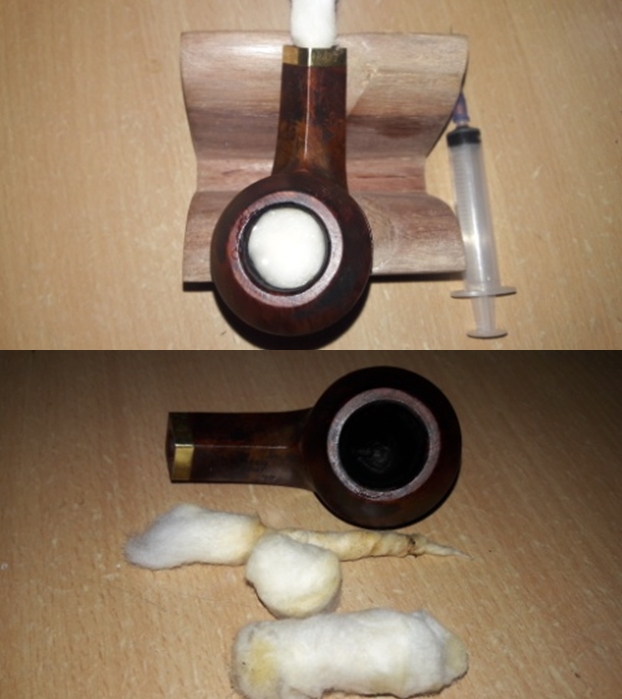
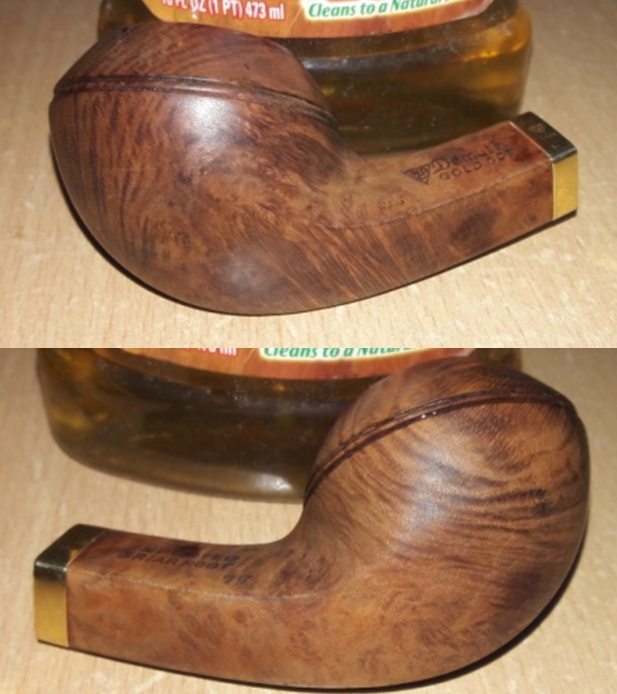
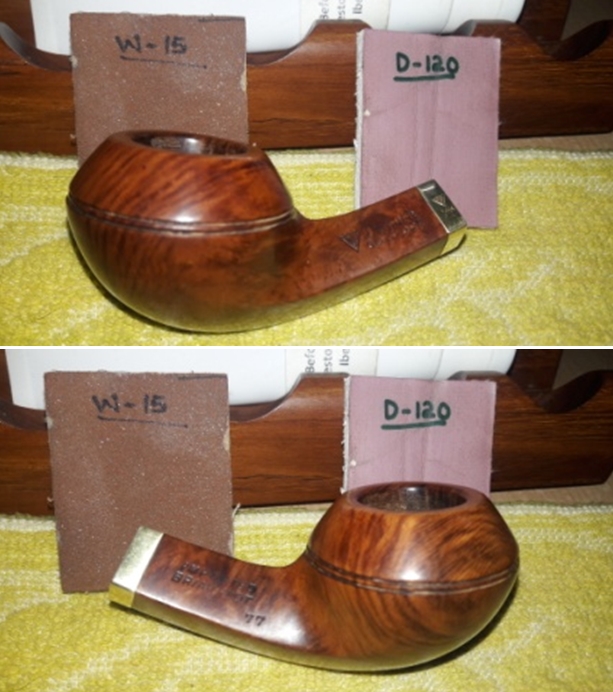
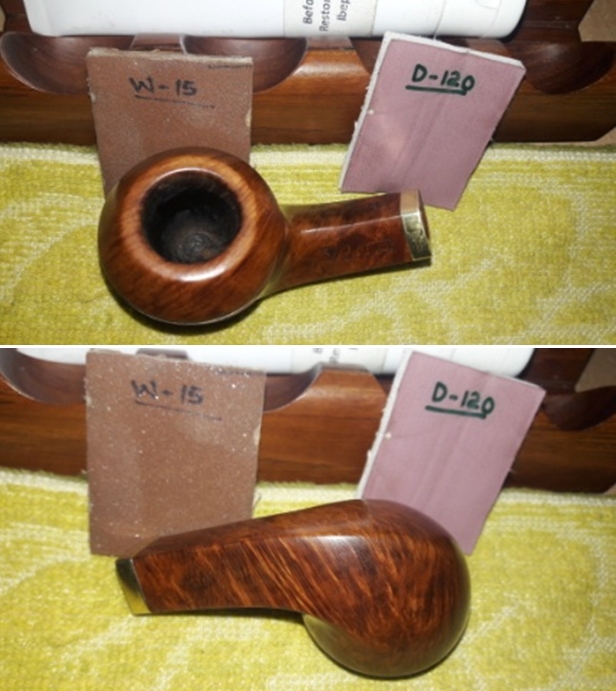
Bringing an old Custombilt Billiard to back to life


Blog by Steve Laug

I have always been intrigued by Tracy Mincer and his Custom-Bilt pipes and even his Custombilt pipes like this one. There is something about the rugged carving and appearance of the pipes that gets my attention. I have a few of them in my collection and always enjoy the tactile nature of the pipe when it is being smoked. This old billiard has the Custombilt stamp and I will need to reacquaint myself with the eras of the various spellings of the brand so that I can place it in the hierarchy. The pipe was in pretty decent condition when Jeff received it – dirty but really not too bad. The finish was dusty and dirty in the worm trail carvings. The bowl had a decent cake in it that was lightly flowing over the rim top into the rustication. The inner and outer edge of the bowl appeared to be in great condition. The stem had a chip out of the edge of the button on the topside and tooth marks in the stem just ahead of the button on the underside. The smooth part of the shank, between the worm trails is stamped Custombilt in script on the left side. On a smooth panel on the heel of the bowl it is stamped Imported Briar. Jeff took these pictures of the pipe to show its condition before he started his cleanup work. He took close up photos of the rim top and the side and bottom of the bowl to show the condition of the briar and the bowl. You can see the cake in the bowl and the lava overflowing onto the top of the rim. The worm trail rustication is quite dusty and dirty. The photos of the stem show the tooth chatter and marks as well as the chip out of the topside of the button.When I brought the pipe to my worktable I did some reading on Pipedia to before starting the restoration. I have learned that it is important to keep the variations in spelling of this brand clear in mind when trying to put these on a timeline. The names Custom-Bilt, Custombilt, and other variations help place the pipes in the history of the Company.

There is a great article on Pipedia that helps understand the brand and give a sense of what the various stamping looks like on the pipes (https://pipedia.org/wiki/Custom-Bilt). I cite from that article to give a feel for the brand:

In 1946, the name was changed to Custombilt after Mincer began an association with Eugene J. Rich, Inc. There were some big changes in advertising and distribution. The slogan “AS INDIVIDUAL AS A THUMBPRINT” began at this time as well.

In 1953, Leonard Rodgers bought the company and emphasized tobacco pouches and butane lighters. (However, it appears Mincer was working on his new pipe, the Doodler.) In 1968, Rodgers sold the Company to Consolidated Cigars. In the early 1970s, Wally Frank Co. bought the Custombilt trademark and began to produce their version of the pipe in 1974 or 1975. Hollco Rohr owned the Weber pipe factory, located in New Jersey, and produced the Custombilt pipes there. In 1987, the pipes were made out of the Butz-Choquin factory (France) and then Mexico until the late 1990s. Currently, the Custombilt name is owned by Tobacalera of Spain.

Along with the information above I found that the stamping that is on this pipe is identical to that identified in the article as Stamp Number Five. I have included that graphic because of the information that it included. It brings some of the issues in identifying the maker and the time period of the brand. In my mind the pipe I have in hand is very much like the Rich era pipes that I have seen and the note below says that. Interestingly the author also says he has seen the same stamping on the Wally Frank era pipes. It is a fascinating piece of history and a beautifully made old pipe.Armed with that information I turned to working on the pipe. Jeff had cleaned the pipe with his usual thoroughness – reaming the bowl with a PipNet pipe reamer and cleaning up the remnants with a Savinelli Fitsall Pipe Knife. He scrubbed the internals of the bowl, shank and stem with alcohol, cotton swabs and pipe cleaners. He scrubbed the exterior with Murphy’s Oil Soap to clean off the dust and grime on the finish. The rim top looked very good under the thick lava coat. I love the way the grain of the briar shows through the rustication. There were just a few nicks and scratches to deal with. The inside of the bowl itself looked great. The stem was in great shape other than a bit of tooth marks and the chip out of the top of the button. I took photos of the pipe before I started working on it. I took some close up photos of the rim top, bowl and stem to show what they looked like after Jeff’s cleanup. It is a startling difference. The rim top looked very good and the edges were clean and undamaged. The stem was in good shape other than the chipped button and the tooth marks and chatter on both sides near the button.I took some photos of the stamping which seemed far more visible after Jeff’s cleanup than before.Since the briar was in such good condition I started with rejuvenating the wood. I worked some Before & After Restoration Balm into the rustications and worm trails on the bowl and the rim top. I worked it into the surface of the briar with my fingertips and a shoe brush to clean, enliven and protect the wood. Once the bowl was covered with the balm I let it sit for about 20 minutes and buffed it off with a soft cotton cloth and then polished it with a microfiber cloth. I took photos of the pipe at this point in the process to show what the bowl looked like at this point. I set the bowl aside and turned my attention to the stem. I decided to address the deep tooth mark on the underside of the stem and the chip in the top edge of the button. I filled in the tooth mark on the underside of the stem with a clear super glue (Jeff had already cleaned the stem very well so it was not an issue). I used the clear superglue to fill in the chipped area and build it up. I did this by layering the super glue until the surface was filled in with the glue. The last coat of glue that I applied was black super glue. I set the stem aside to let the repairs cure. Once the repair had cured I used a flat blade needle file to sharpen the edge of the button on both sides of the stem. I also used it to flatten out the repairs. I worked on the remaining repaired areas with 220 grit sandpaper to blend them into the surface of the stem. I smoothed out the slotted edge of the button with 220 grit sandpaper on the topping board. I reworked the edges of the slot with a needle file to clean up the repair. I shaped and polished the button with 400 grit wet dry sandpaper. The repaired area looks very good and will look even better as the stem and repairs are polished with micromesh sanding pads. I polished the stem with Denicare Mouthpiece Polish to take out the oxidation at the button edge and on the end of the mouthpiece. I also worked hard to scrub it from the surface of the stem at the tenon end. I polished repaired areas on the stem, button and blade with micromesh sanding pads – wet sanding with 1500-2400 grit pads and dry sanding with 3200-12000 grit pads. I wiped the stem down after each sanding pad with Obsidian Oil. I polished it with Before & After Pipe Stem Polish – both Fine and Extra Fine. Once I had finished the polishing I gave it a final coat of oil and set it aside to dry. I put the bowl and stem back together. I buffed the bowl and stem with Blue Diamond to polish out the light scratches that remained in the briar and the vulcanite. I gave the bowl and the stem multiple coats of carnauba wax. I buffed the pipe with a clean buffing pad to raise the shine. I hand buffed it with a microfiber cloth to deepen the shine. The pipe polished up pretty nicely. The worm trail rusticated finish on this Rich era Custombilt turned out very nice and shows the grain shining through. It has the kind of rustic beauty that draws collectors to them after all of these years. The contrast of the worm trails with the grain swirling through them looked good with the polished black vulcanite. This Custombilt billiard will soon be joining the other pipes I have on the rebornpipes store. The finished pipe is shown in the photos below. The dimensions of the pipe are Length: 5 3/4 inches, Height: 2 ¼ inches, Outside diameter of the bowl: 1 ½ inches, Chamber diameter: 7/8 of an inch. If you are interested in adding it to your collection let me know. Thanks for reading this blog and my reflections on the pipe while I worked on it.