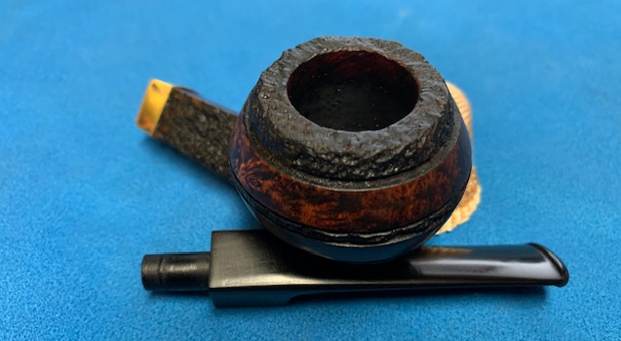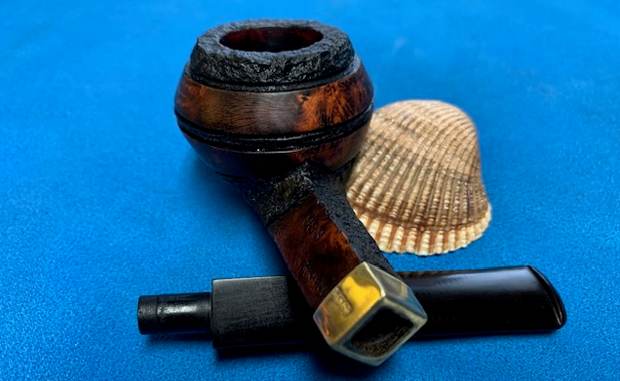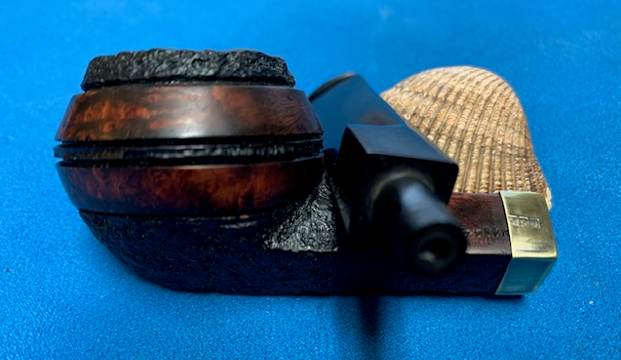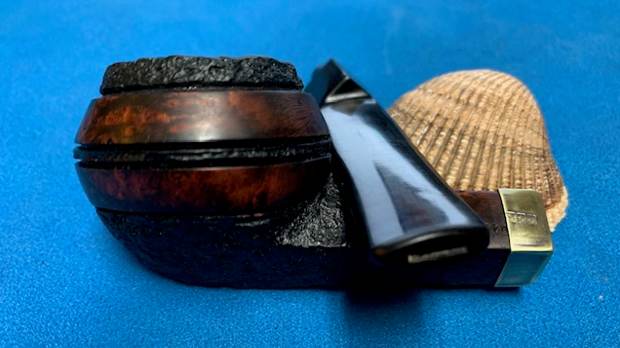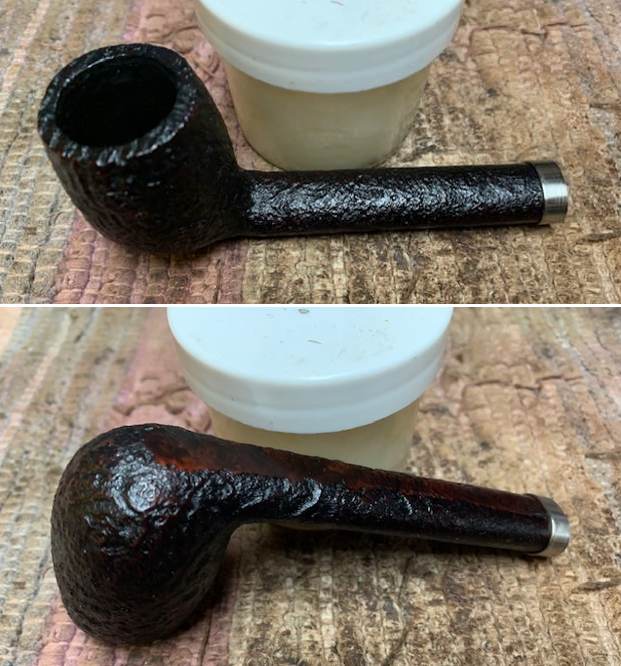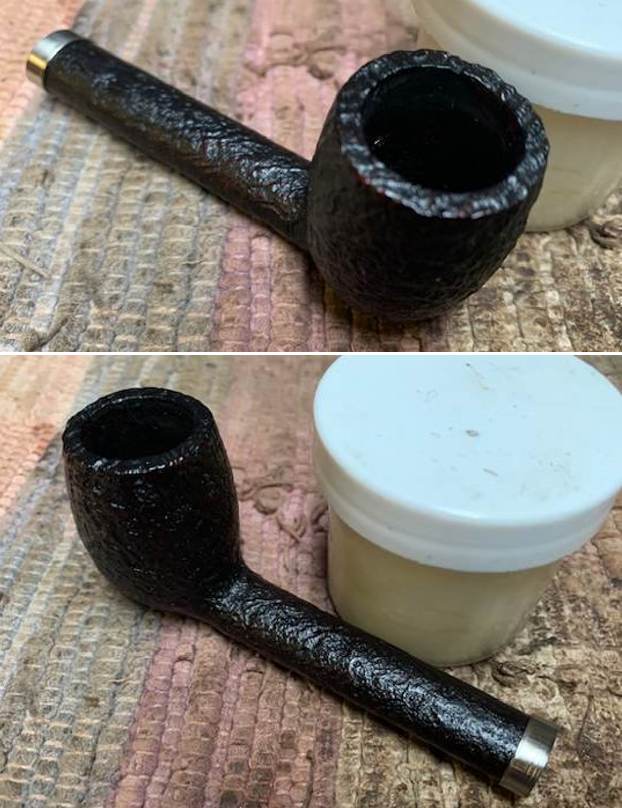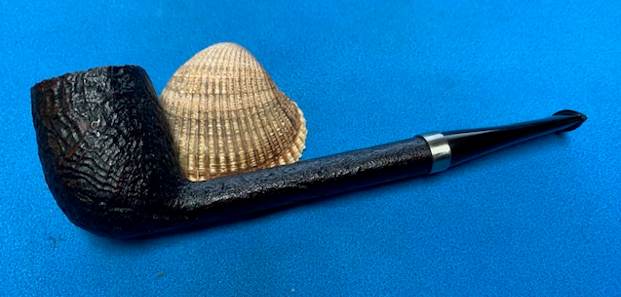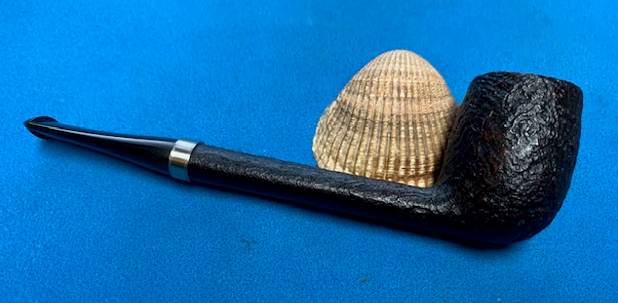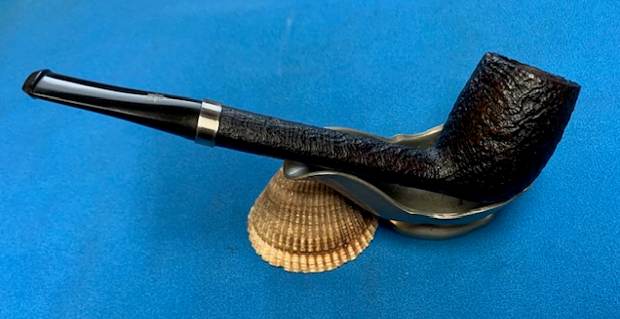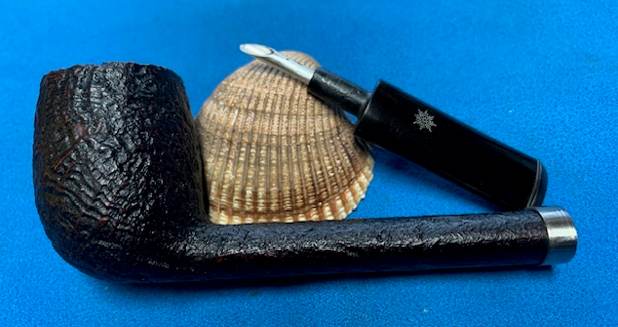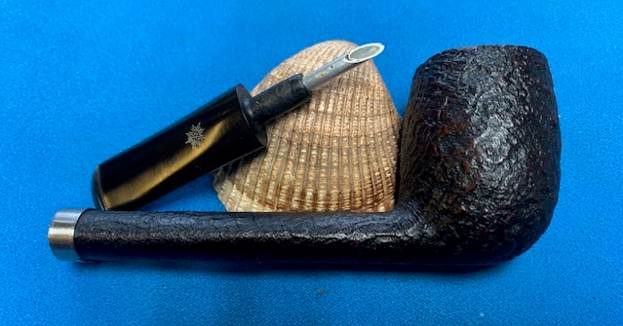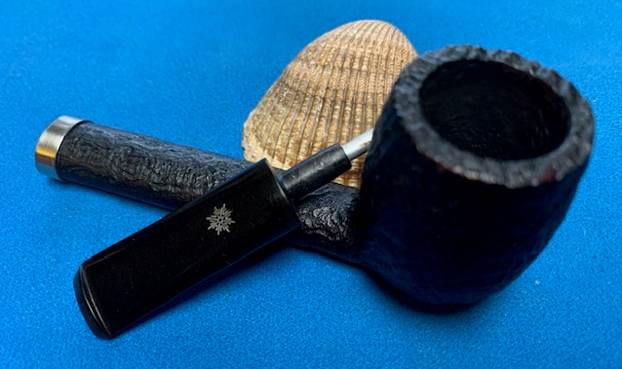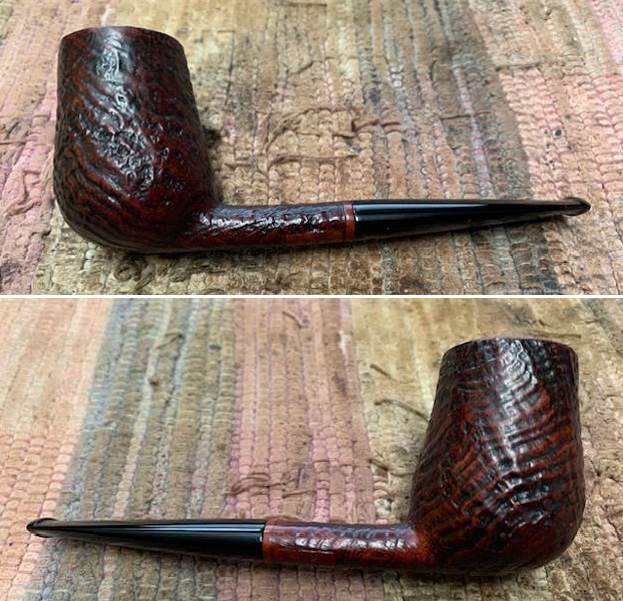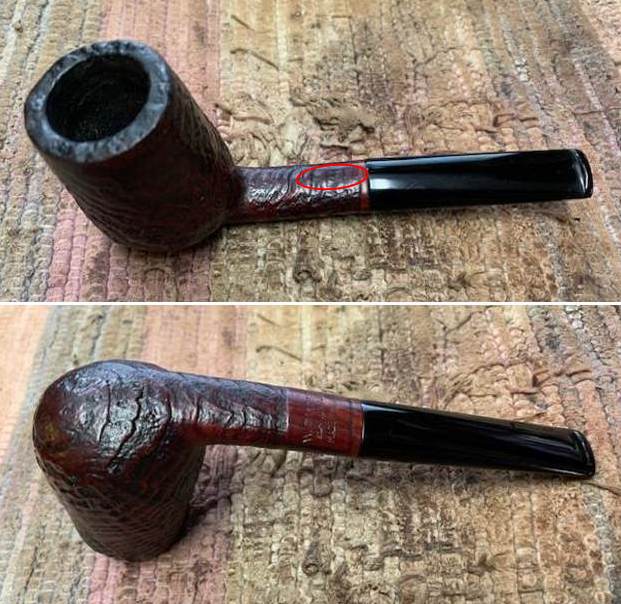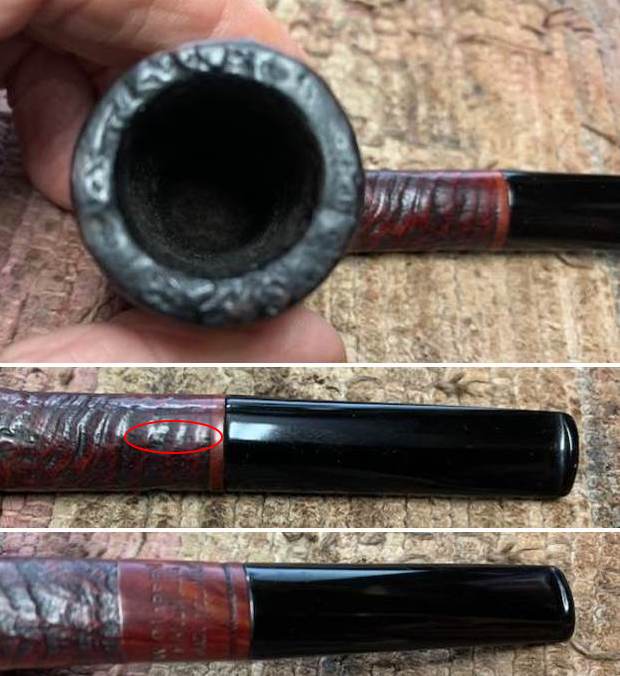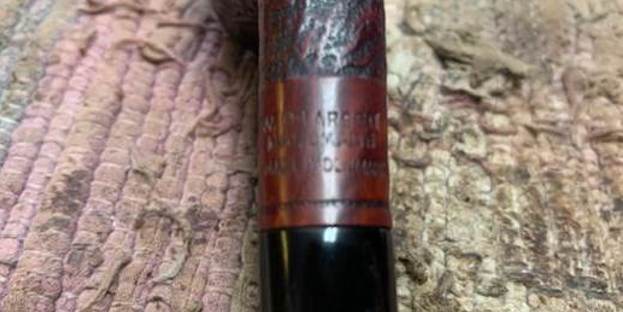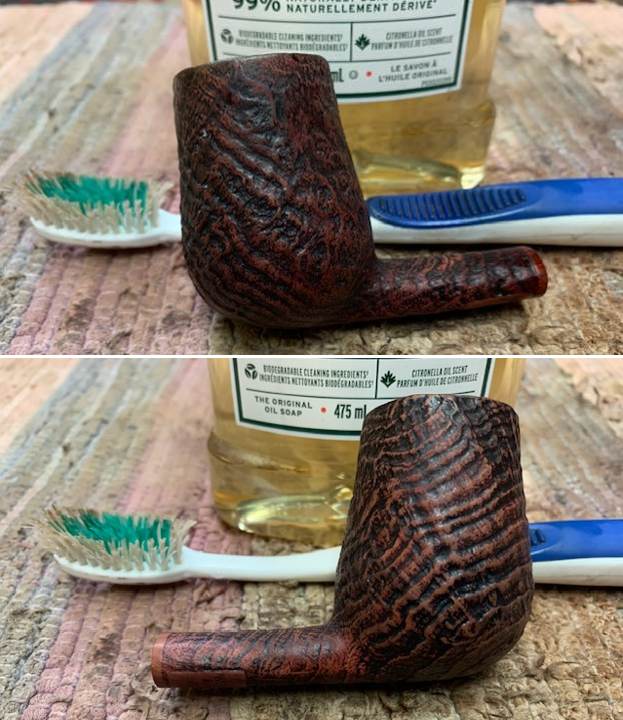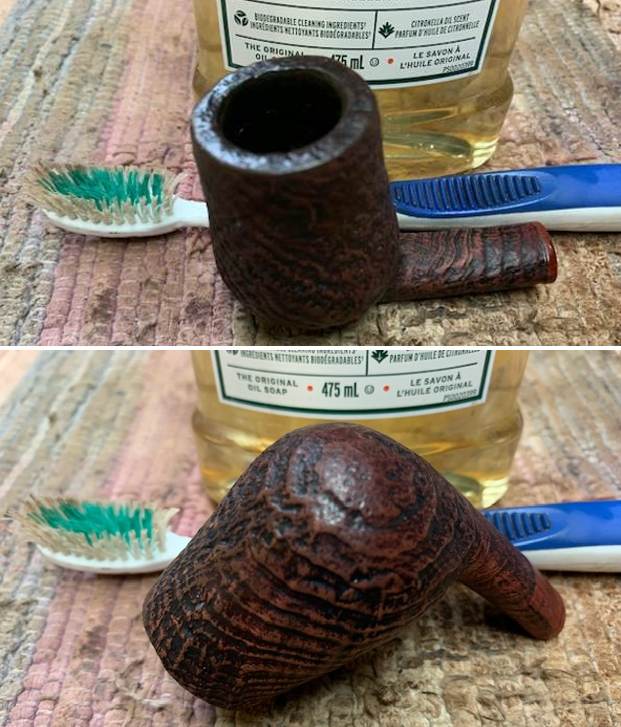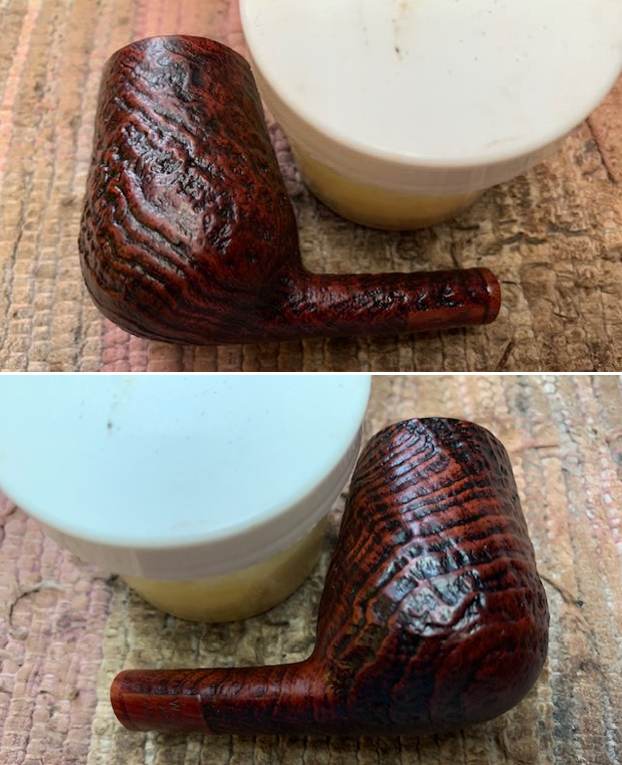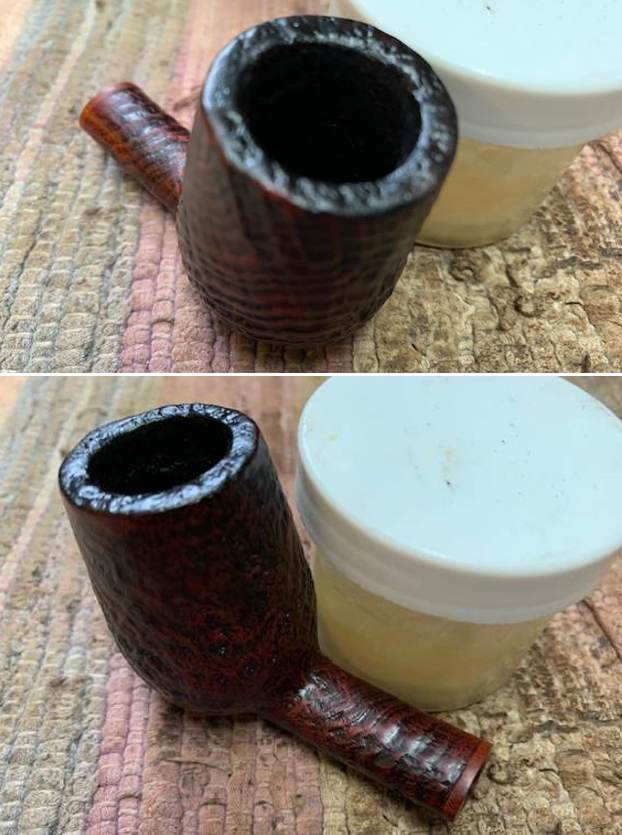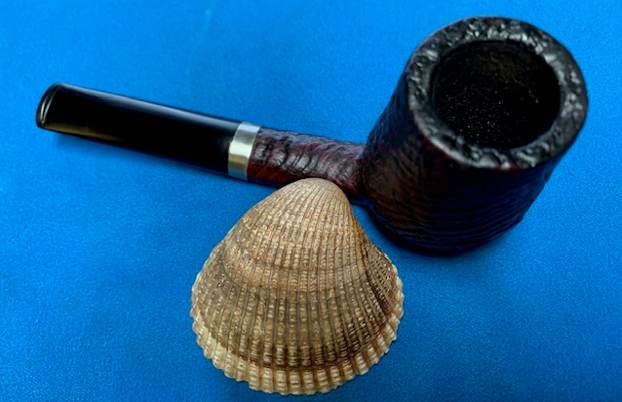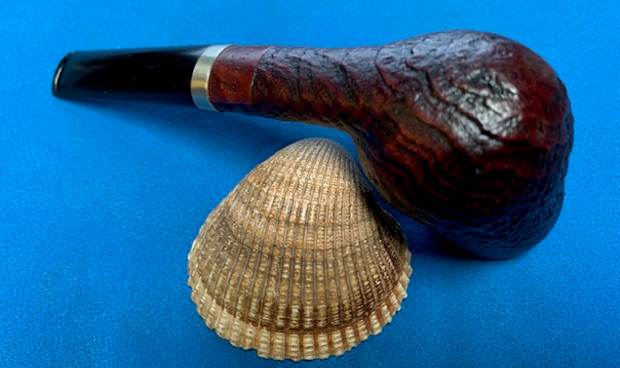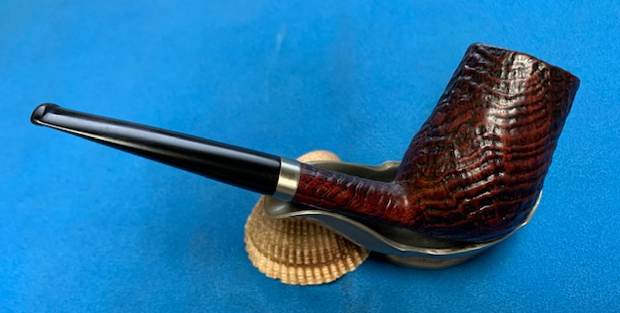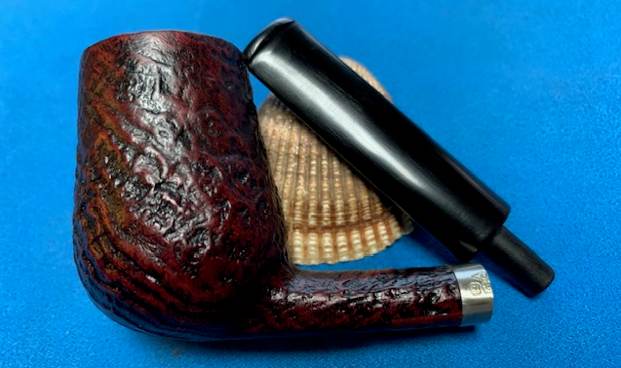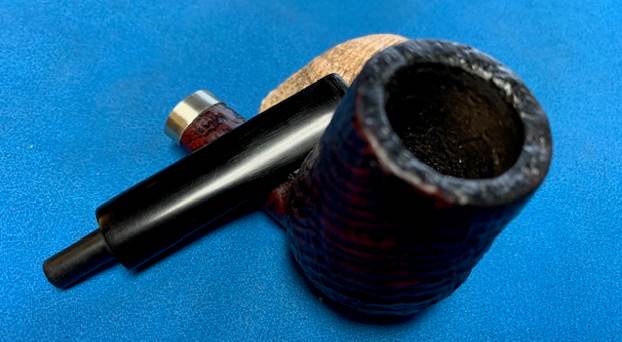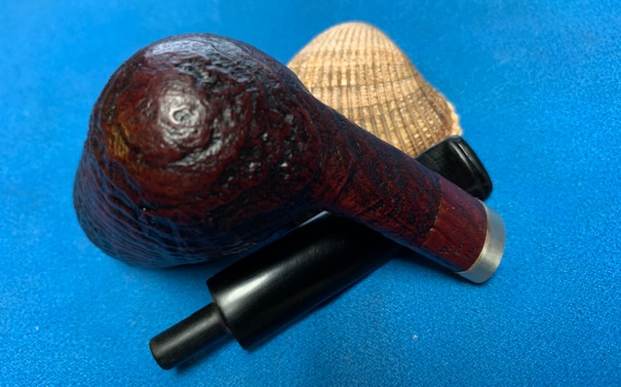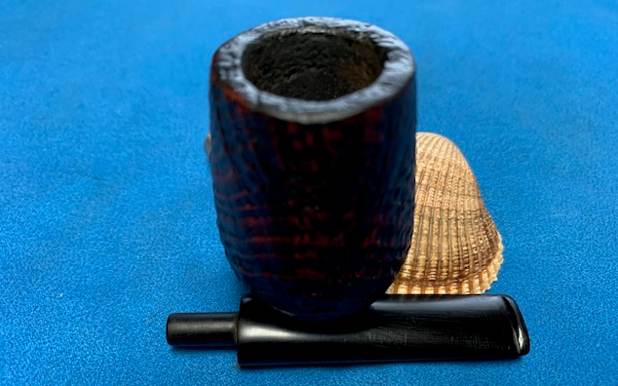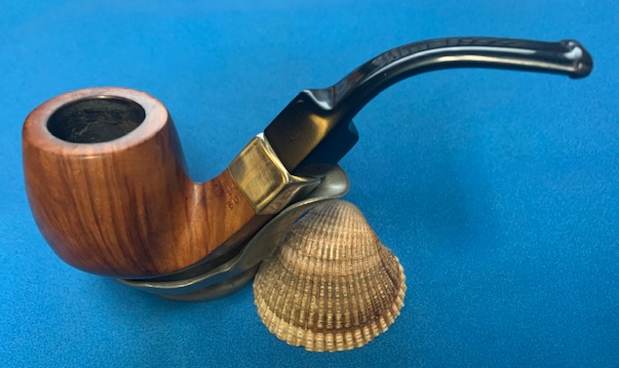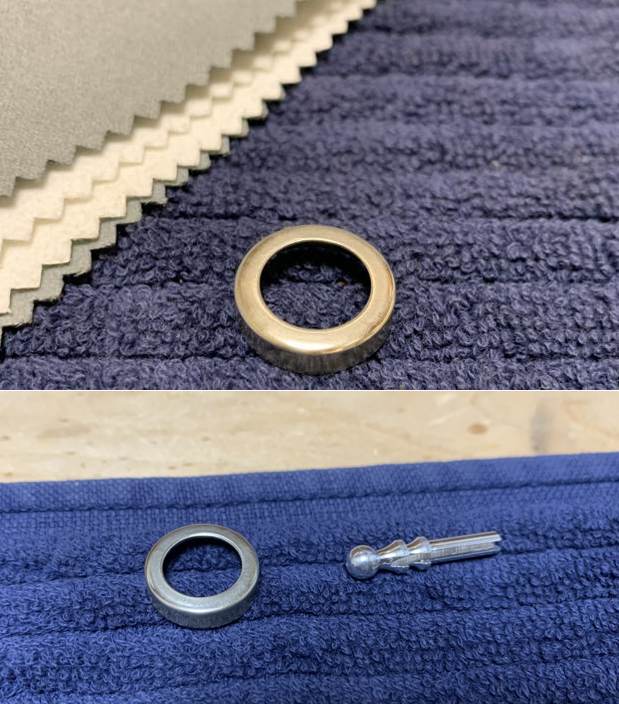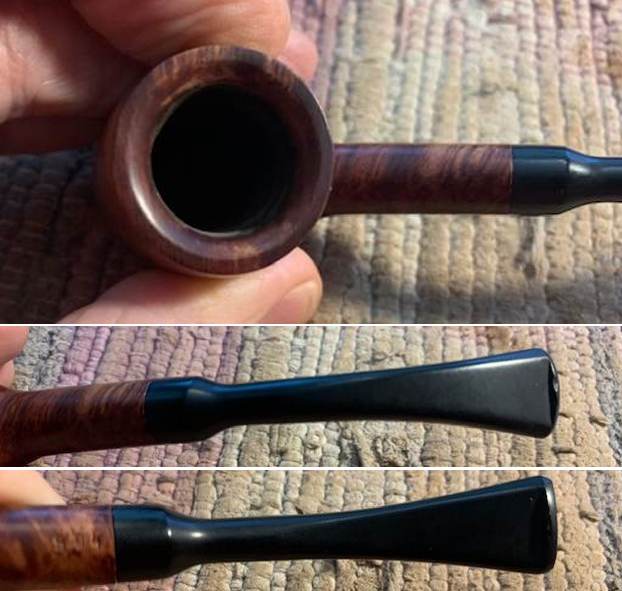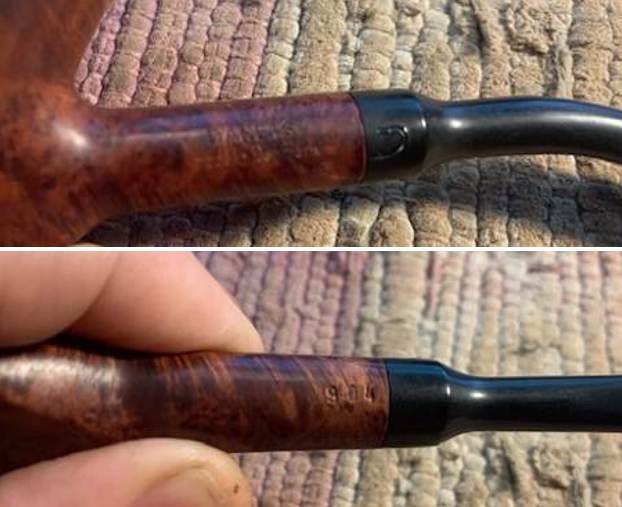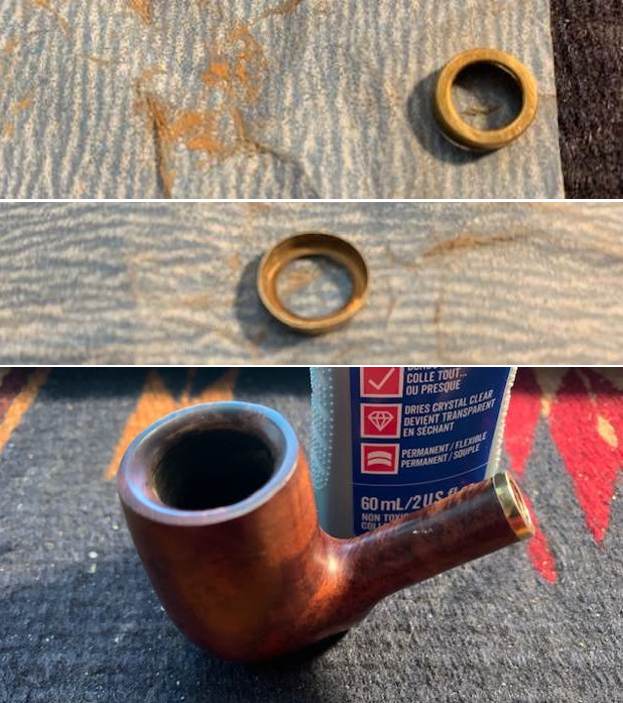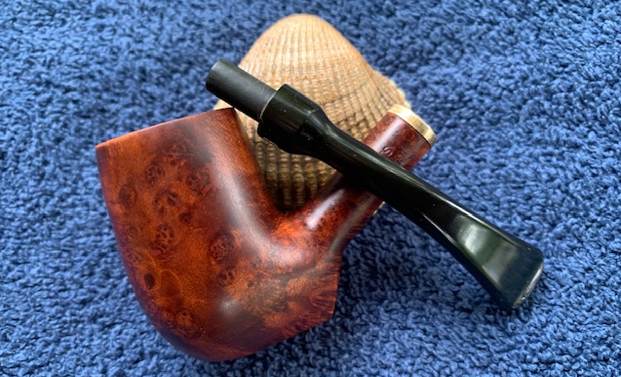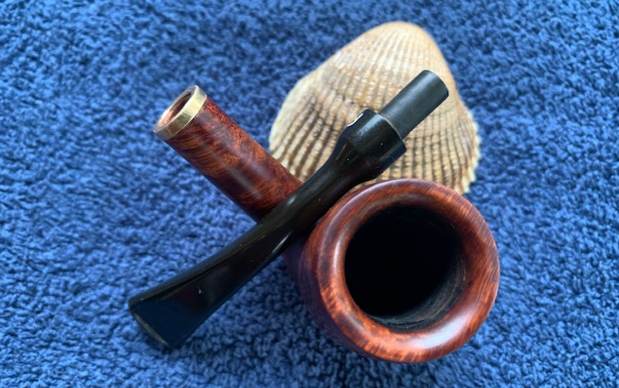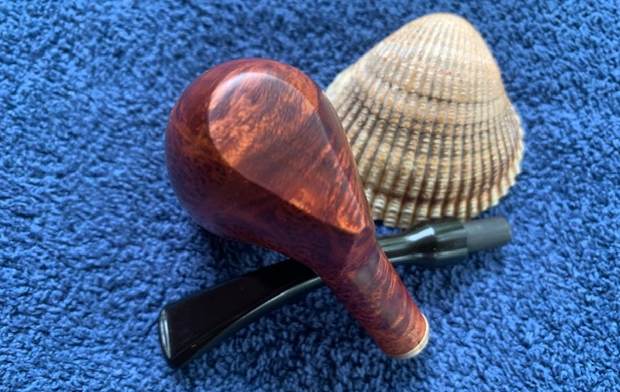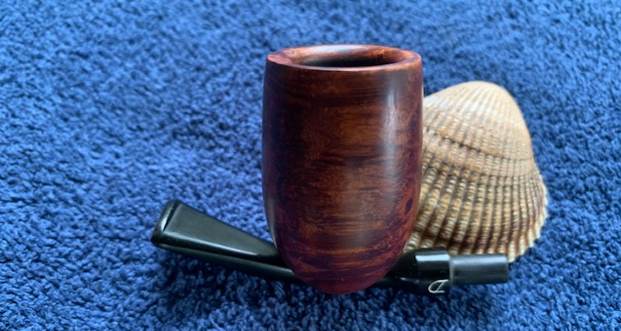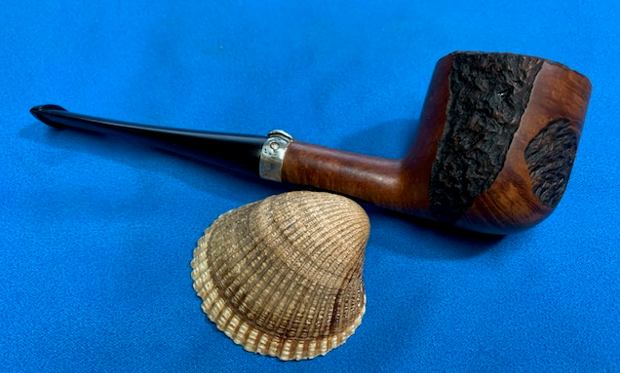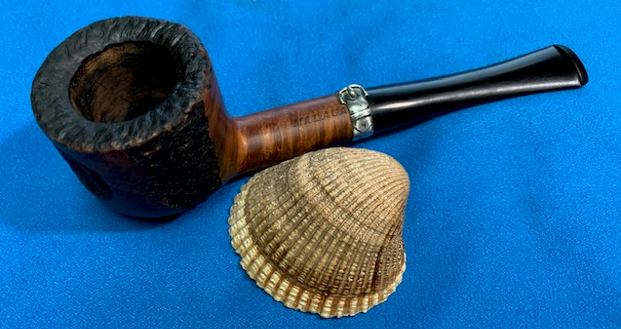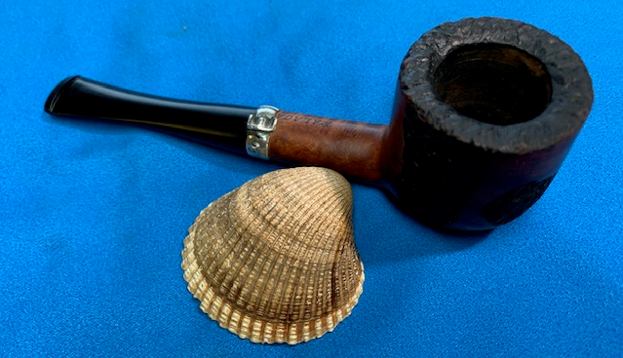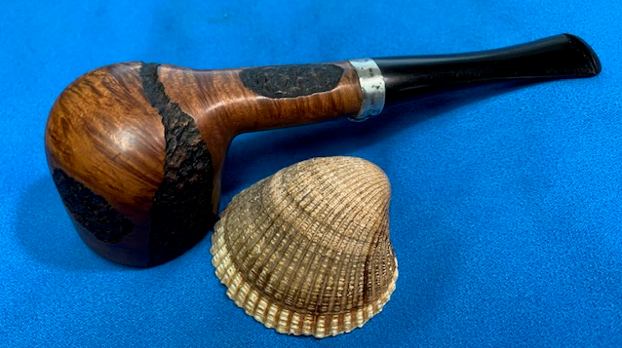
Tag Archives: Banding a cracked shank

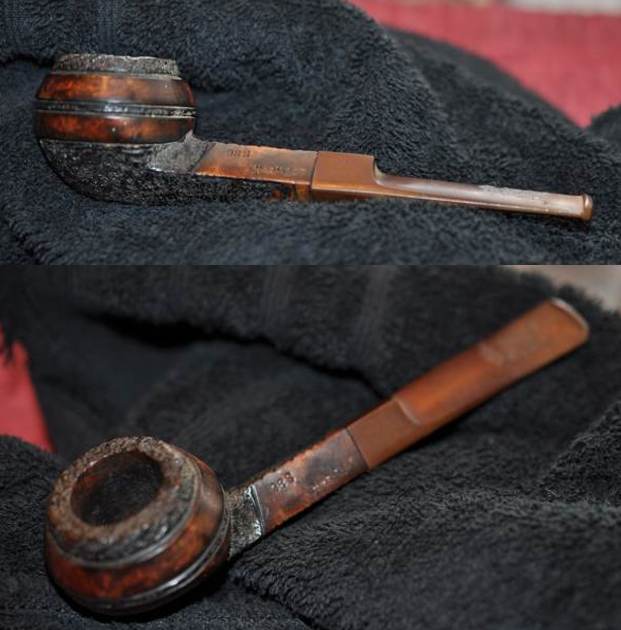
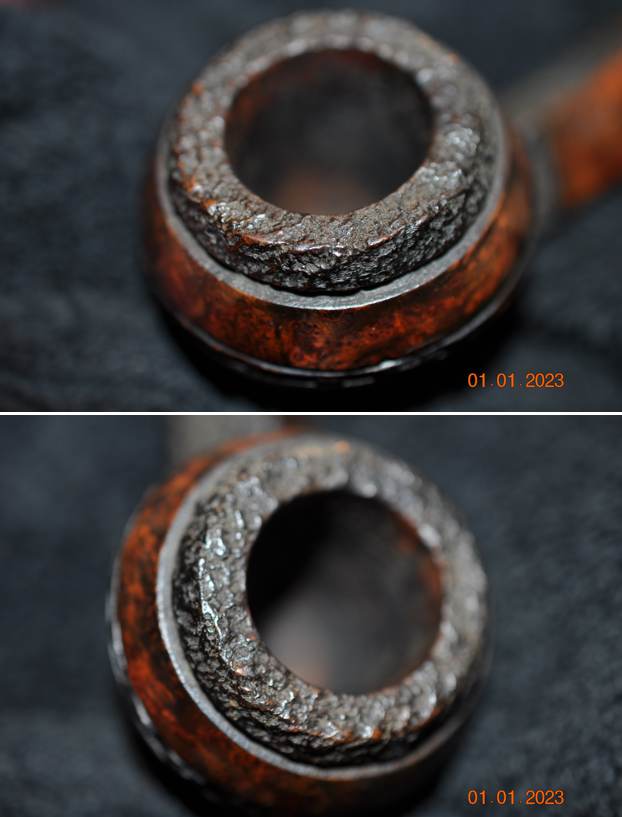
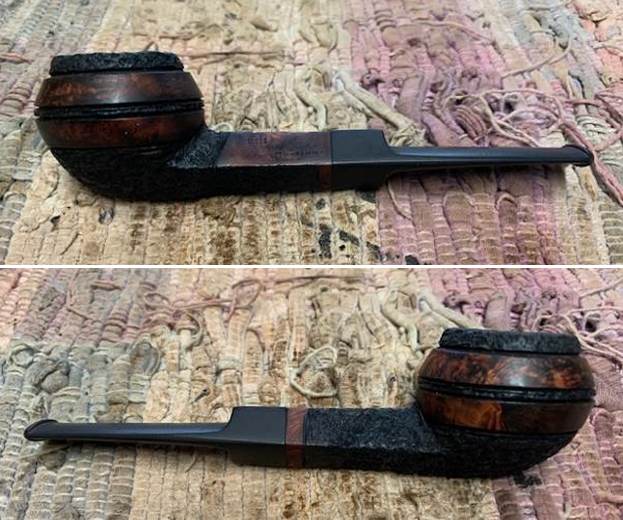
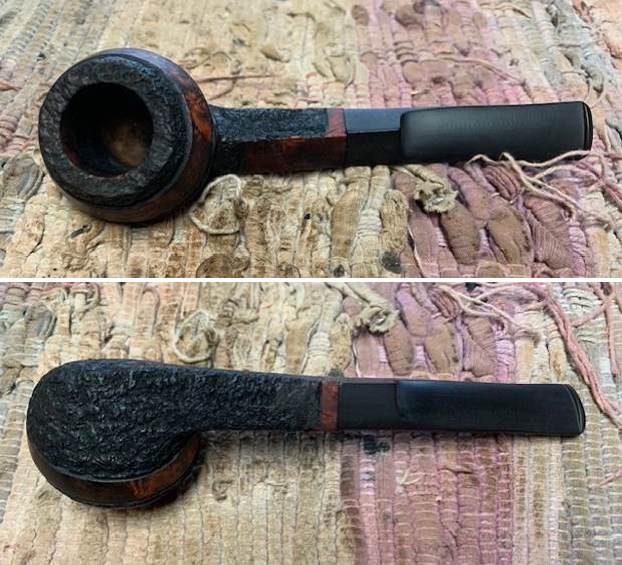
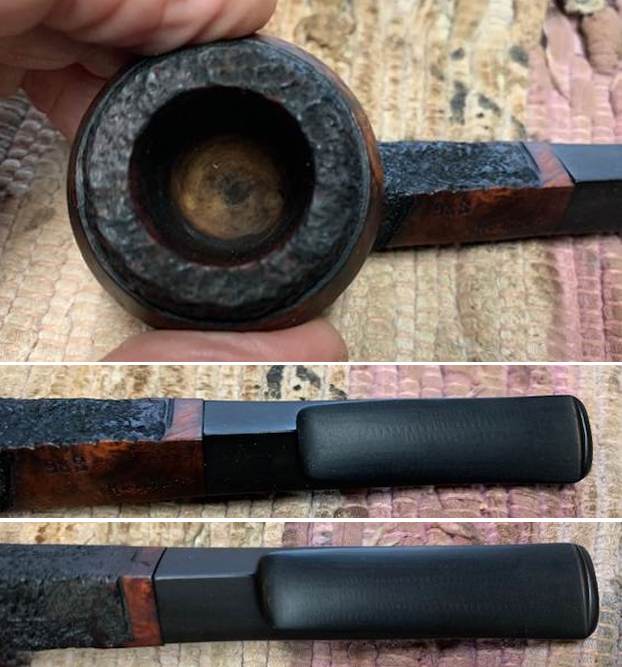
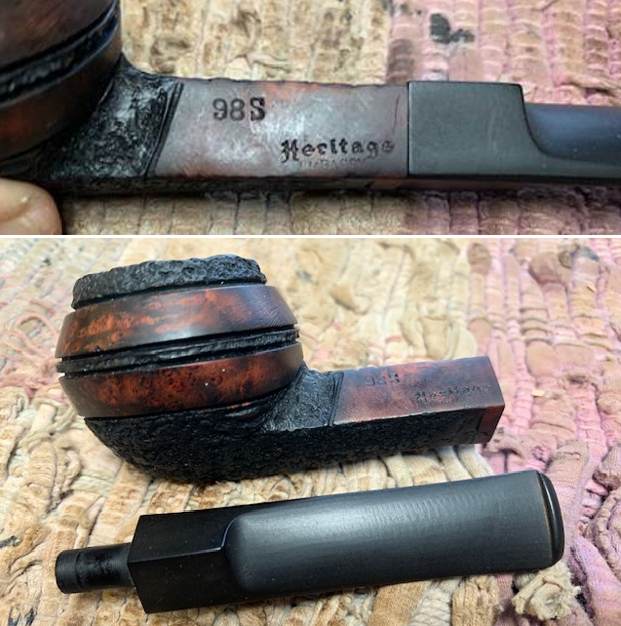
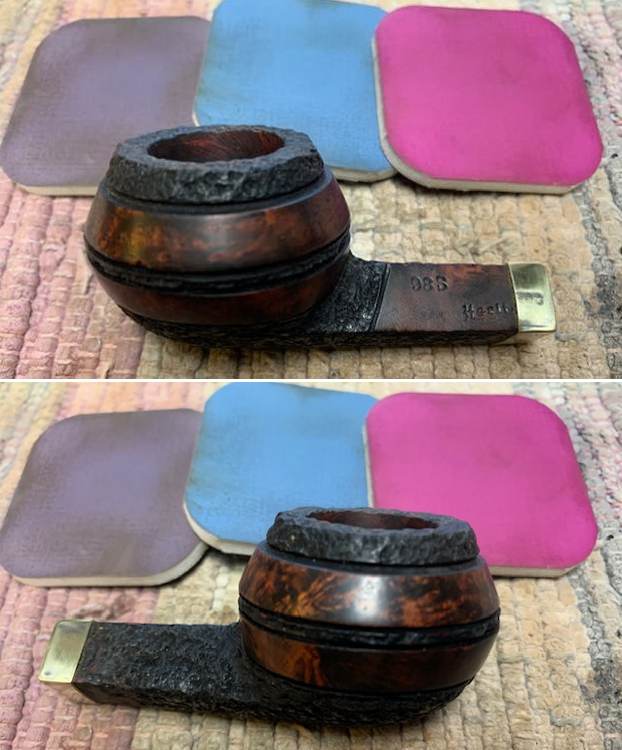
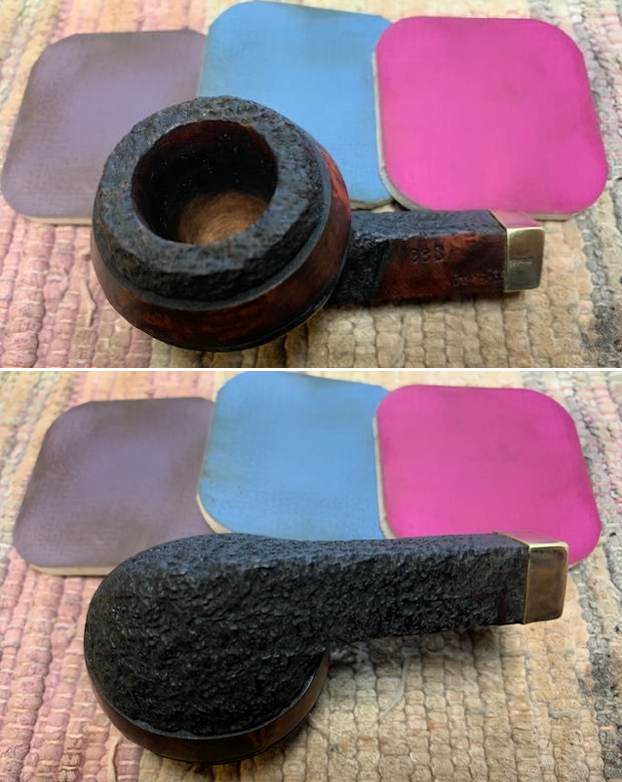
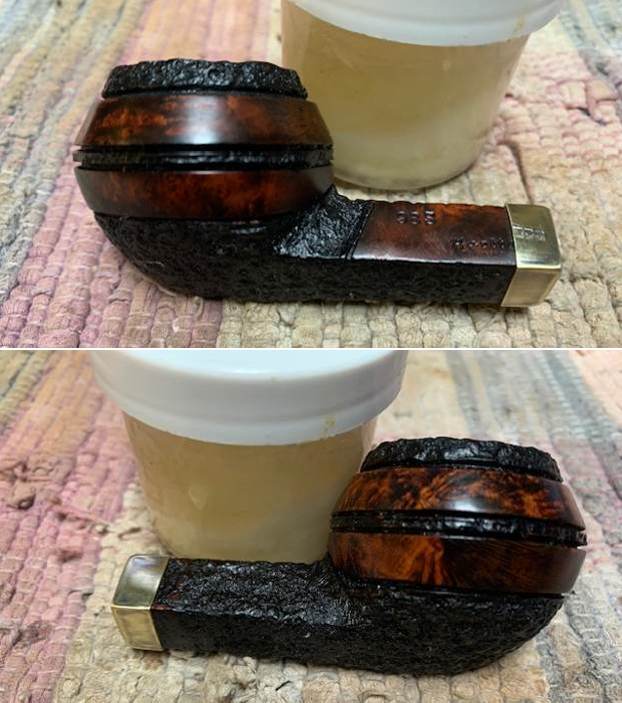
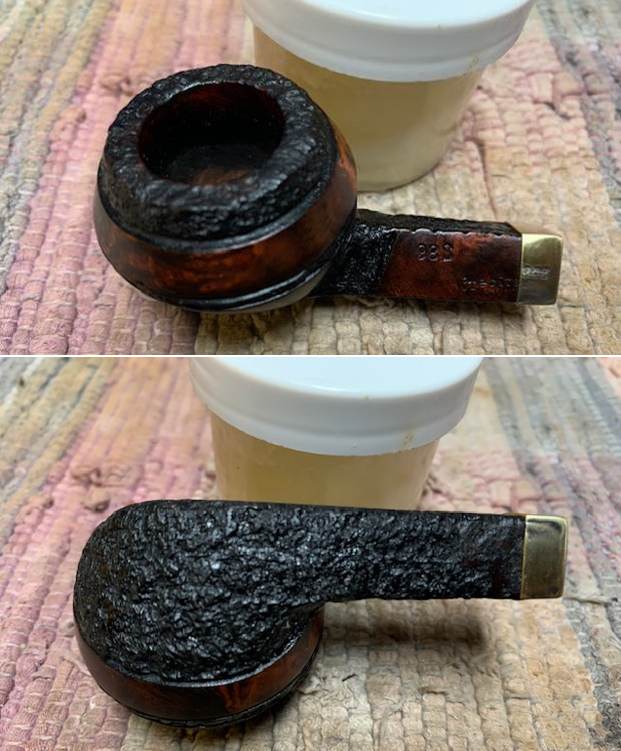
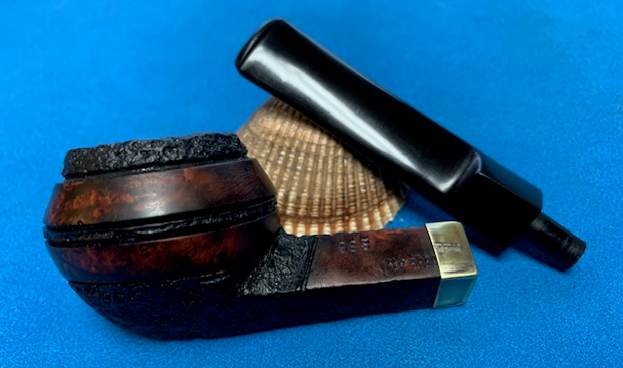
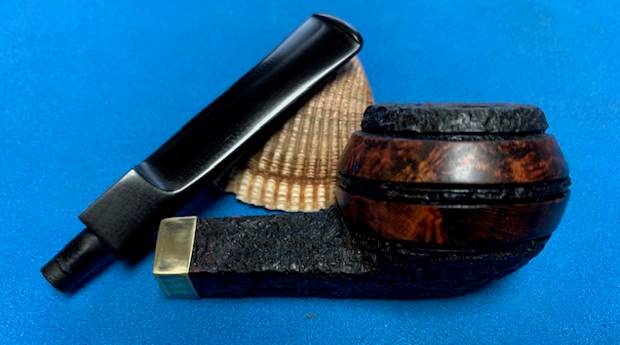
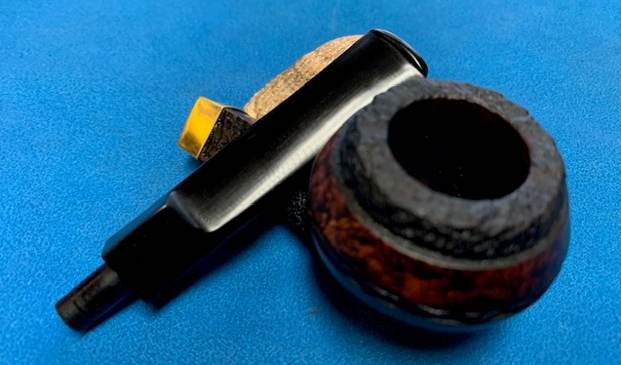
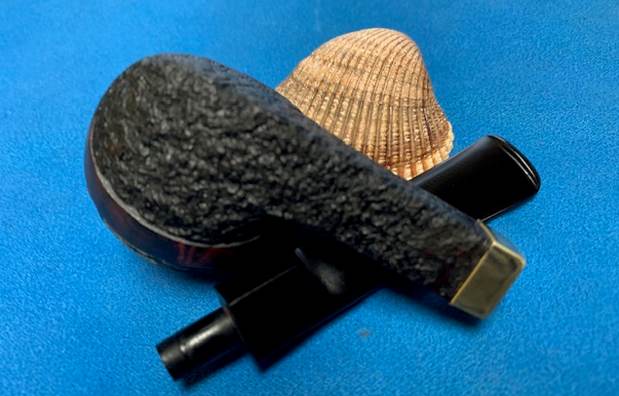
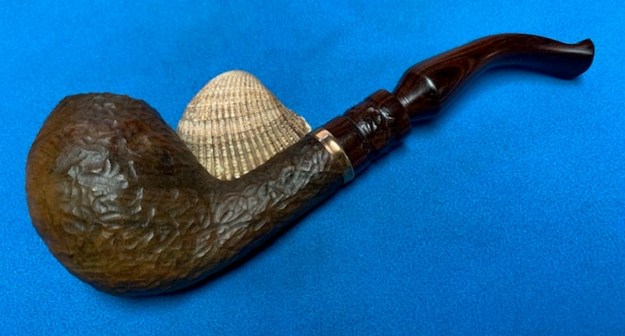
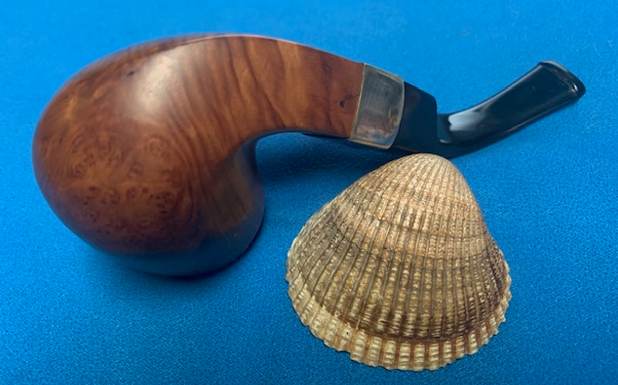
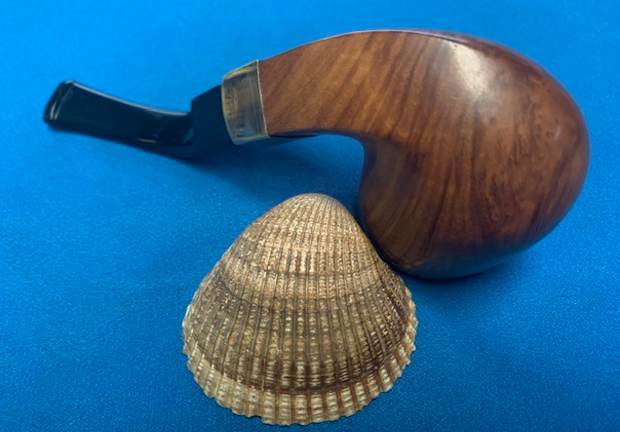
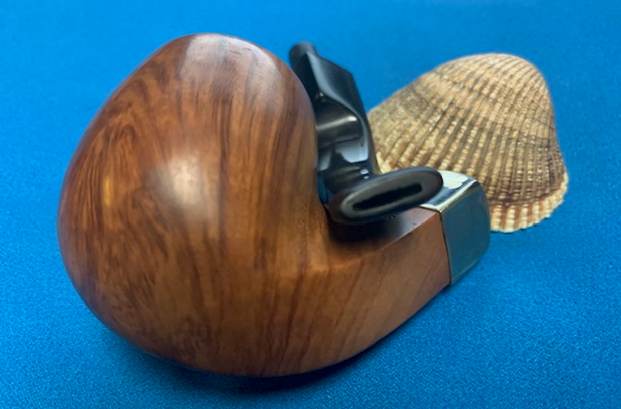
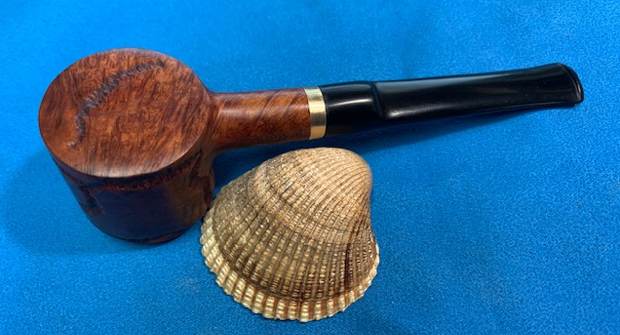
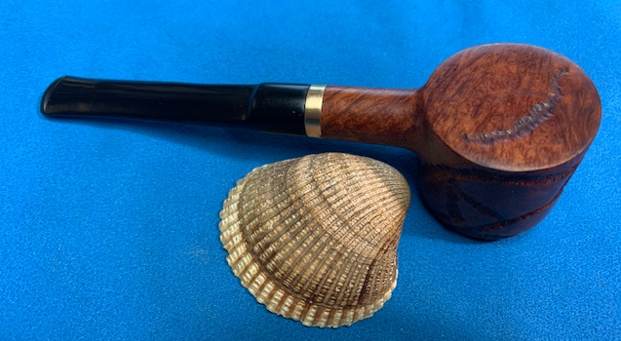
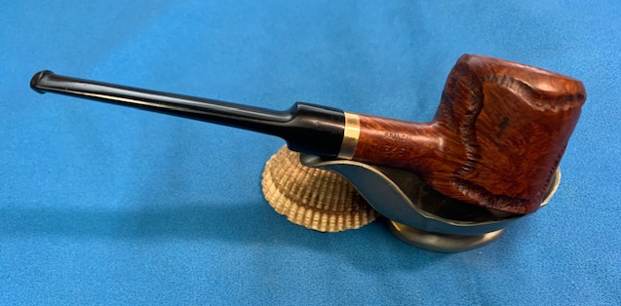
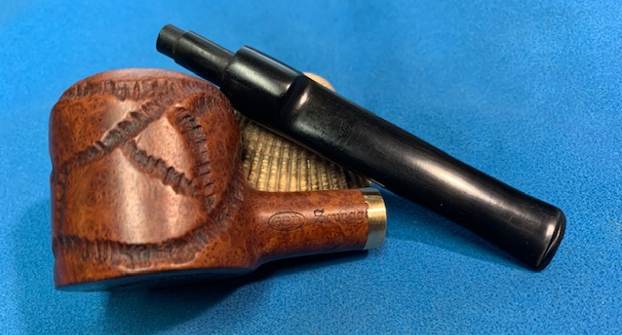
Repairing a Cracked Shank and Banding a Jost’s Supreme Diamond Shank Bent Billiard


Blog by Steve Laug

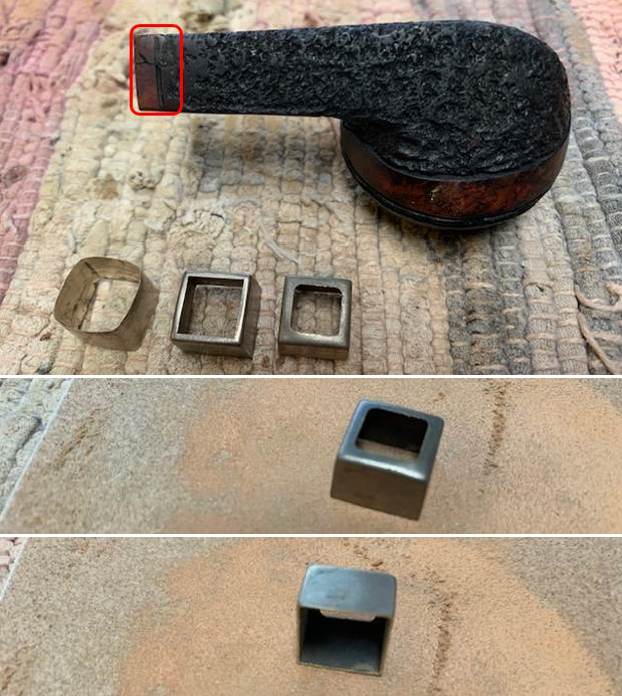
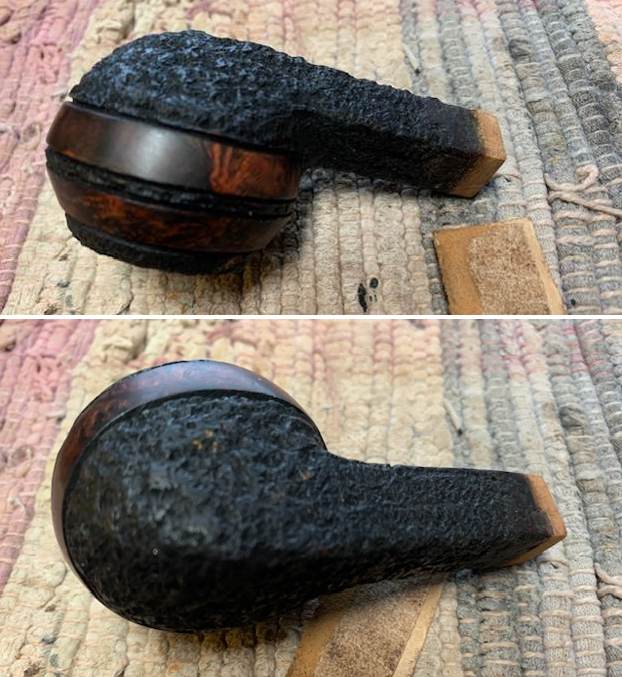
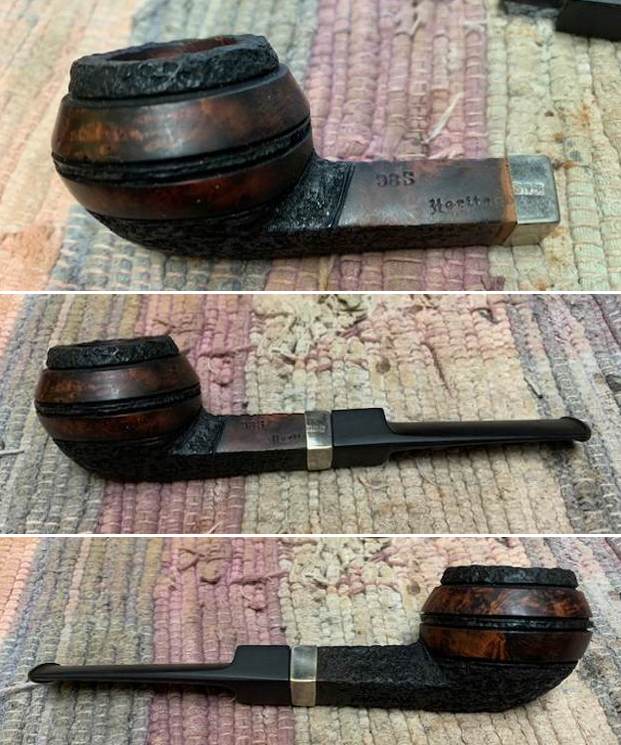
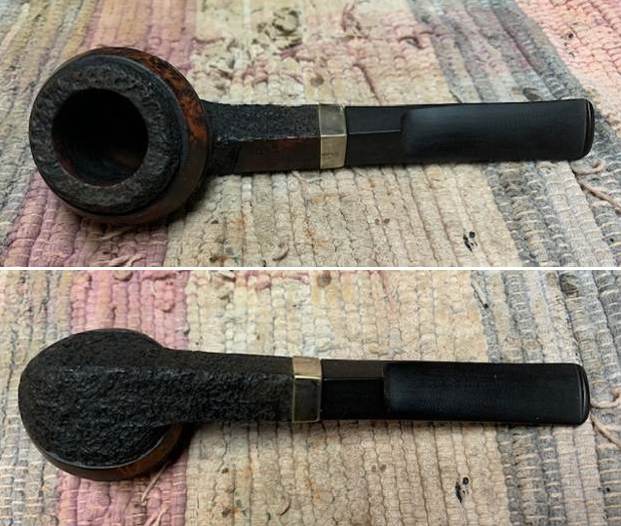
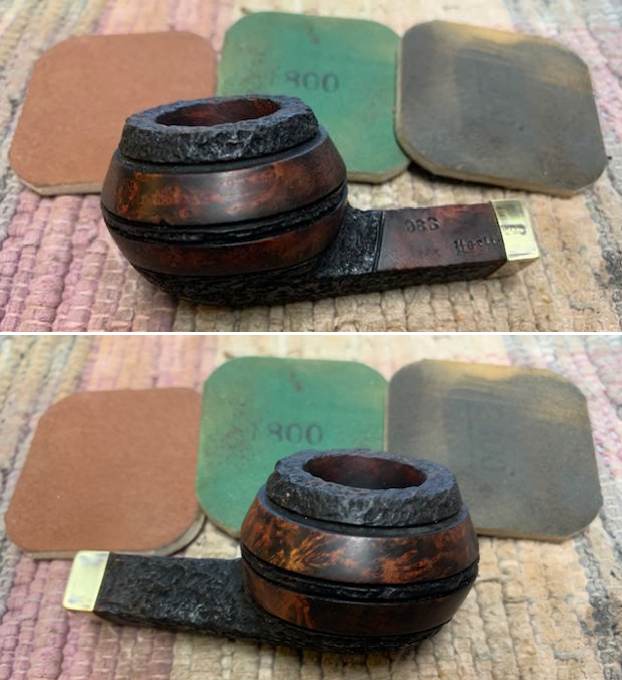
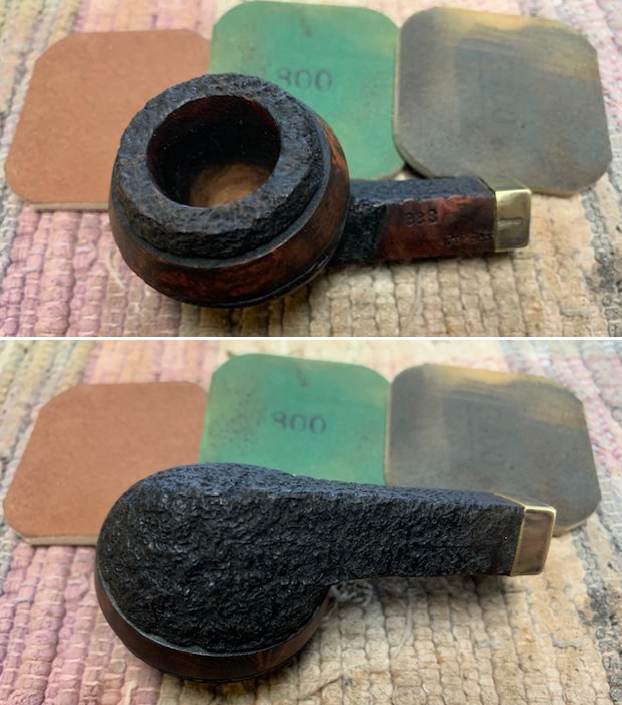
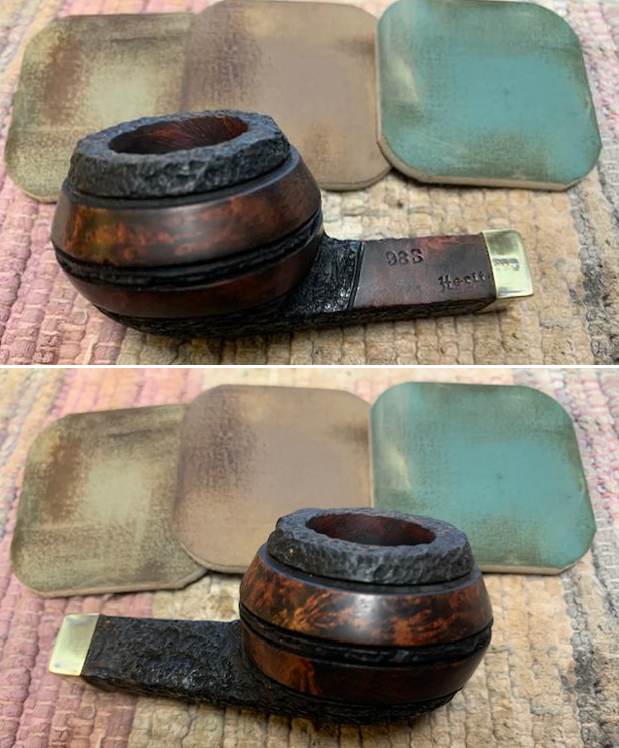
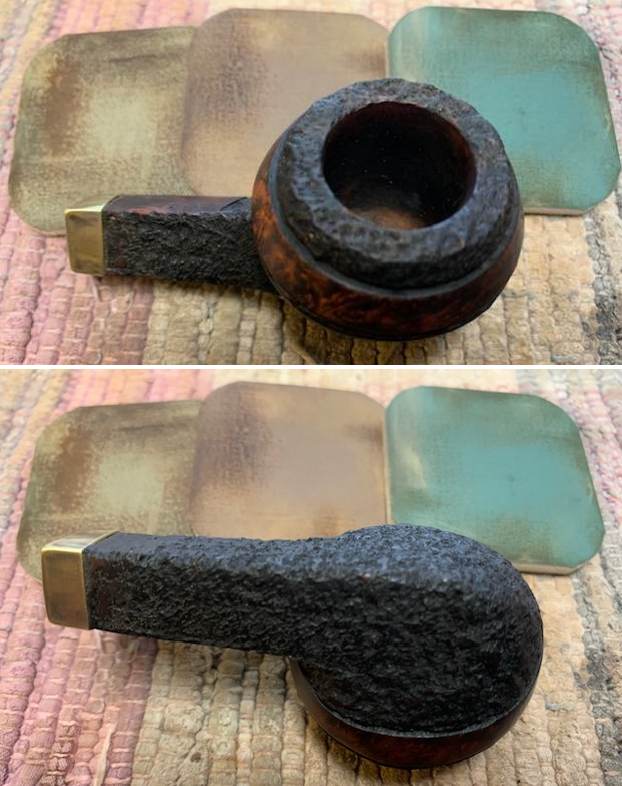
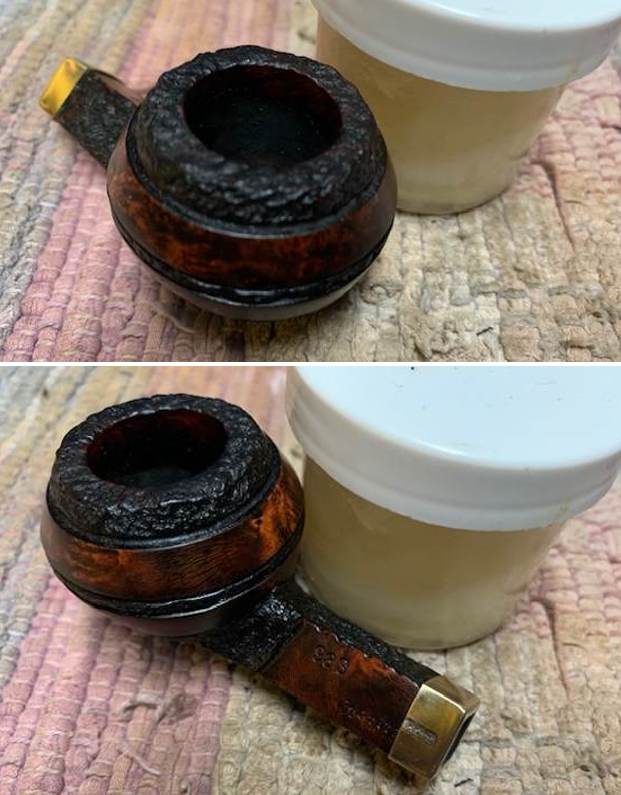
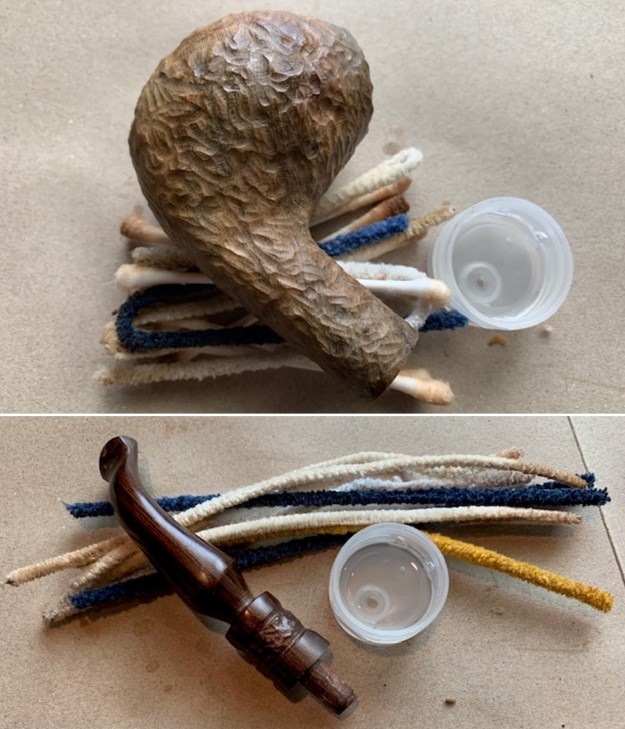
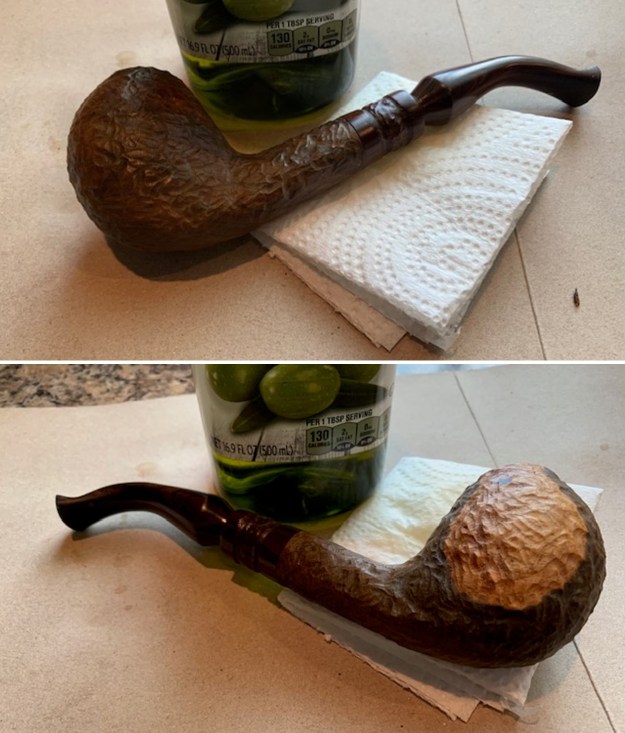
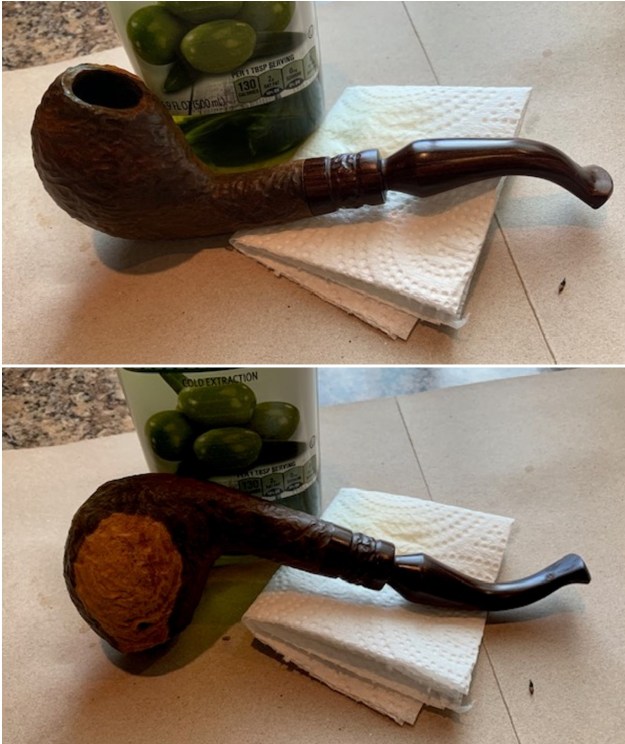
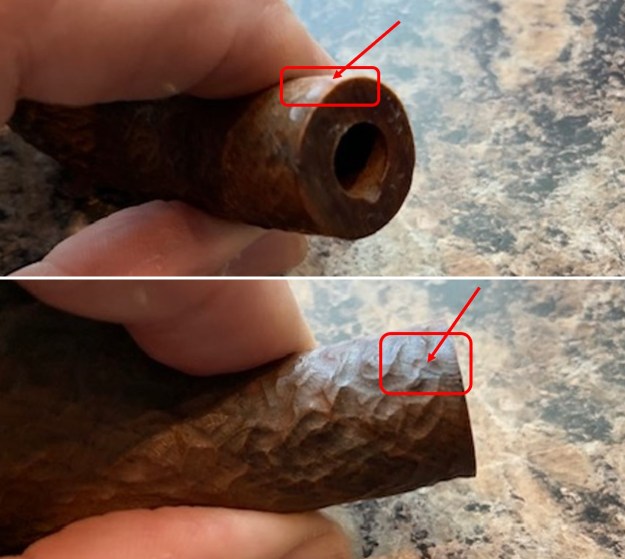
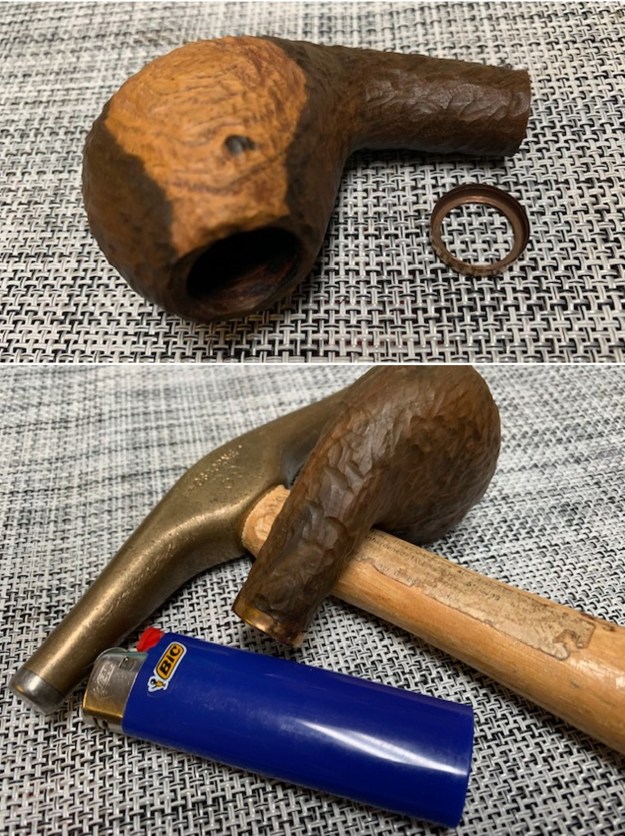
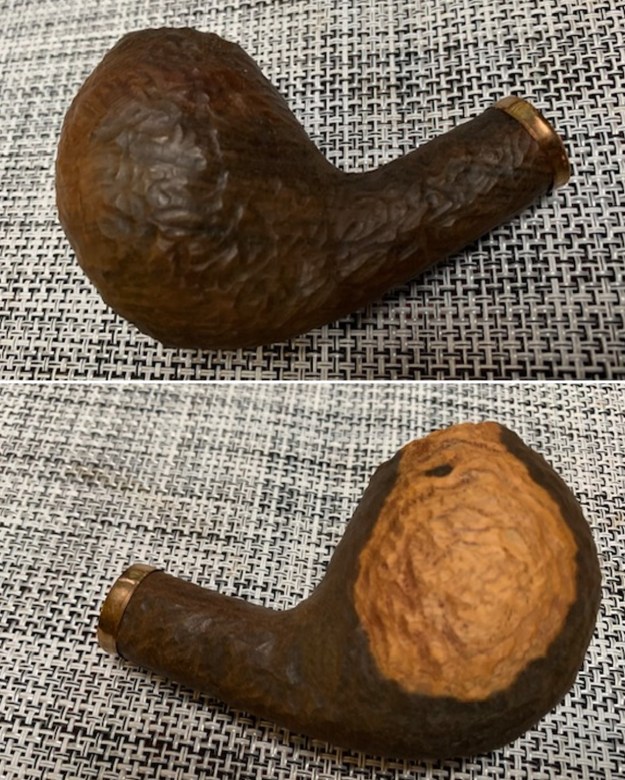
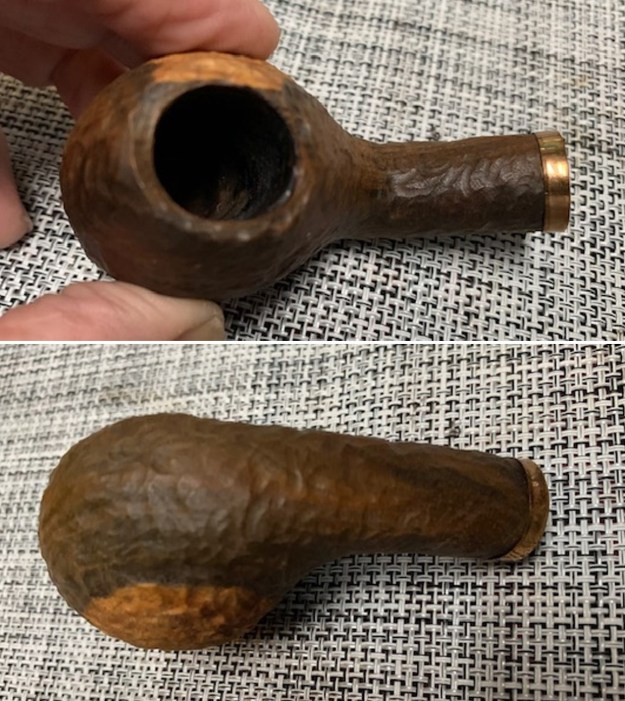
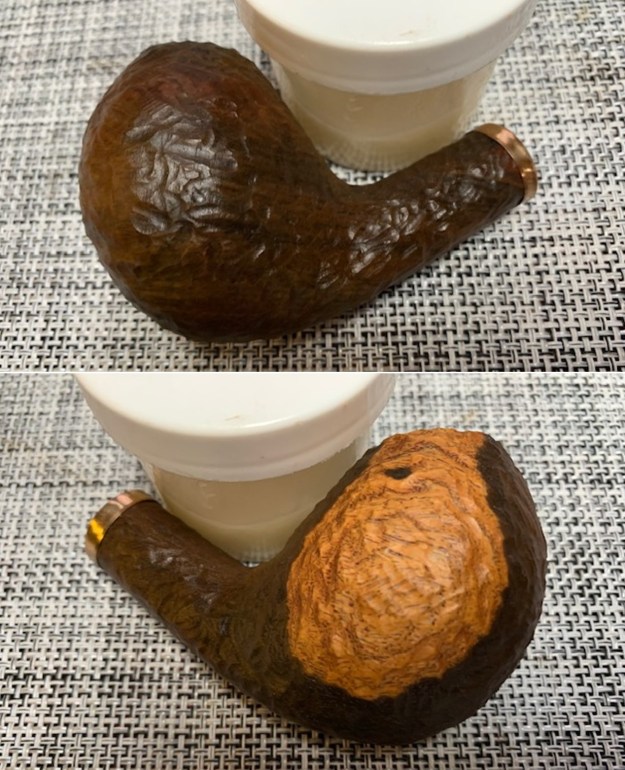
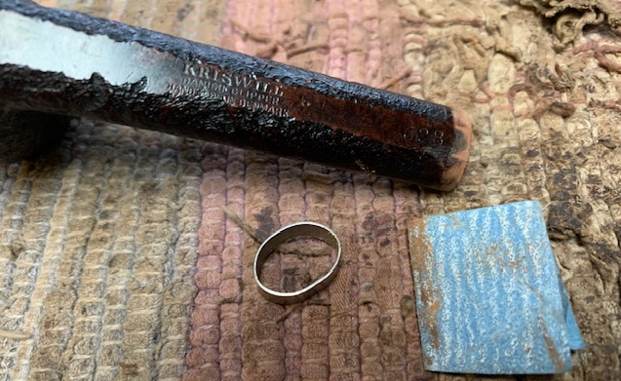
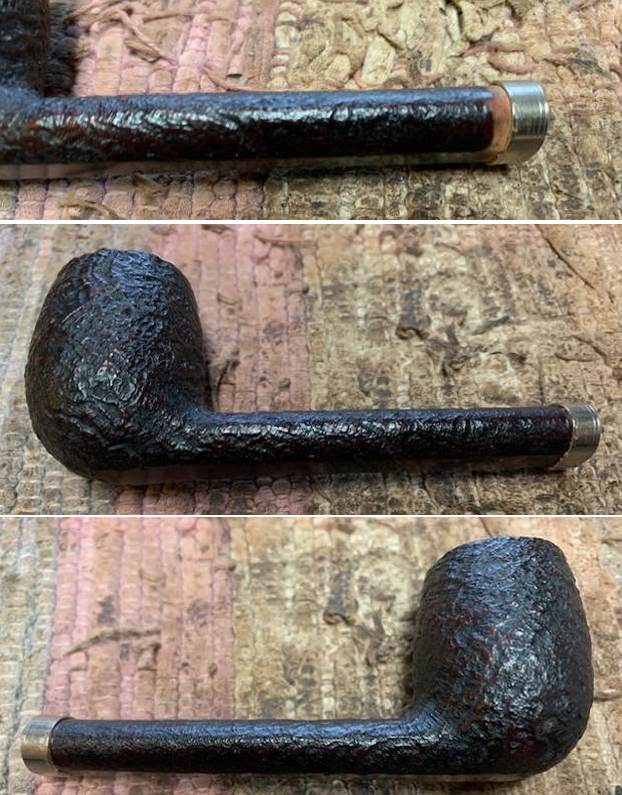
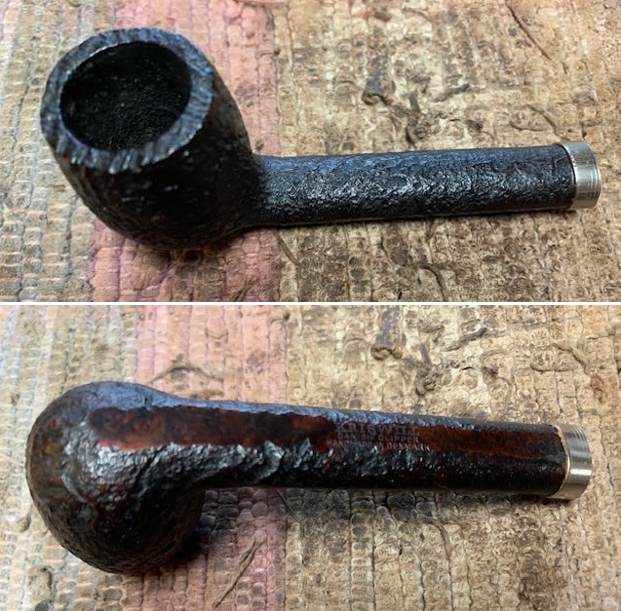
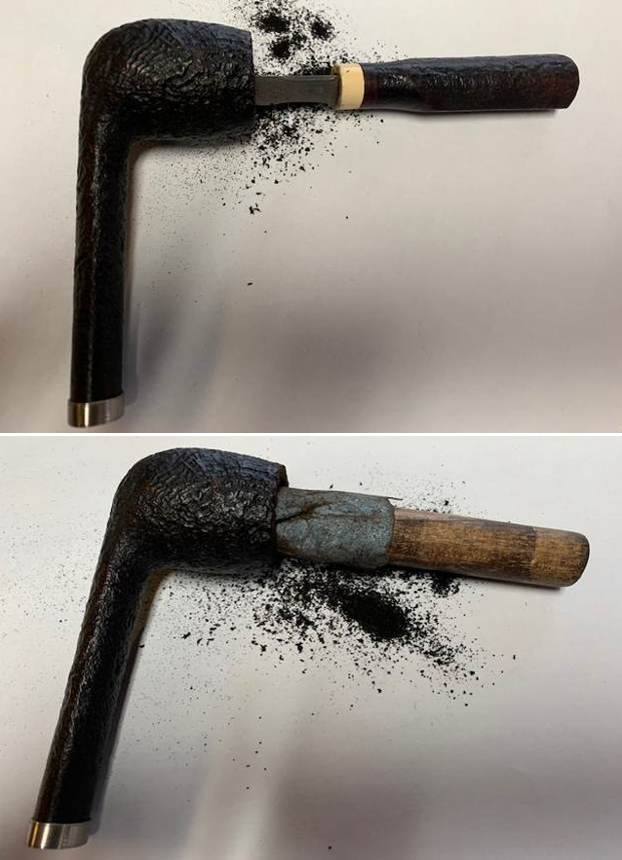
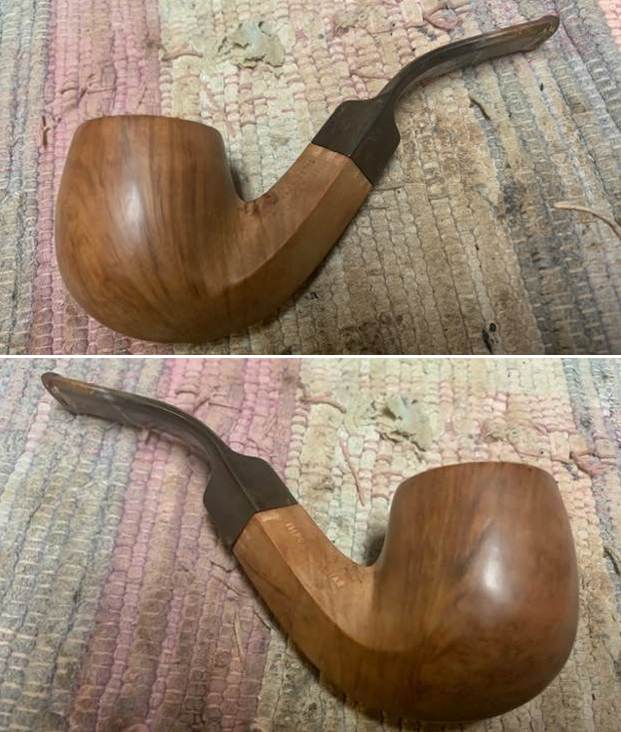
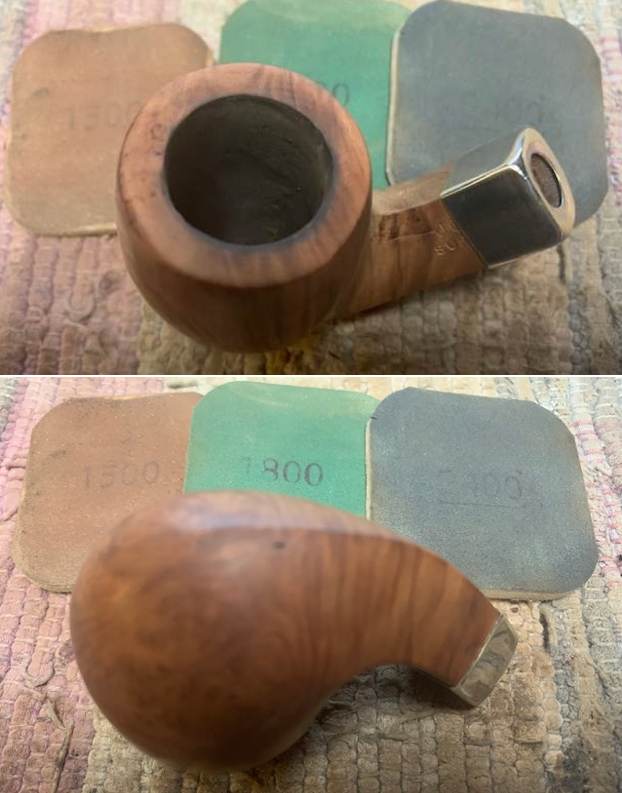
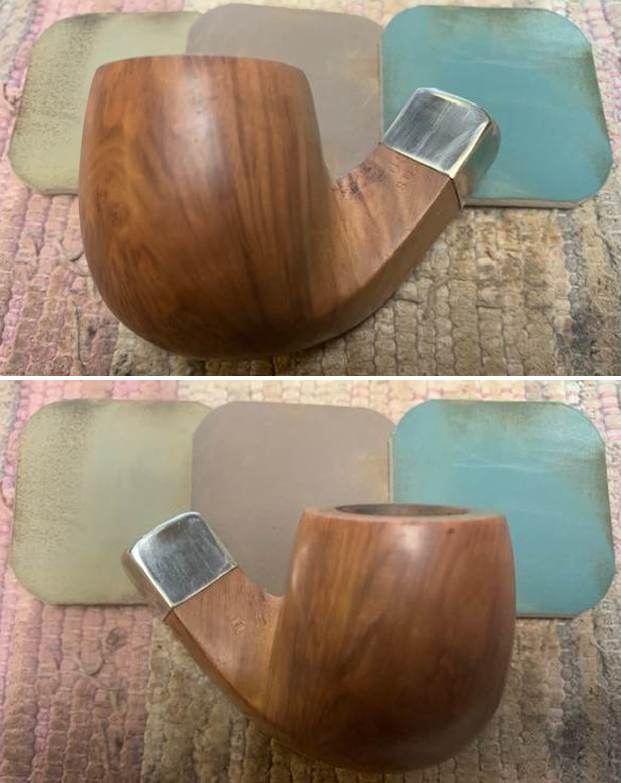
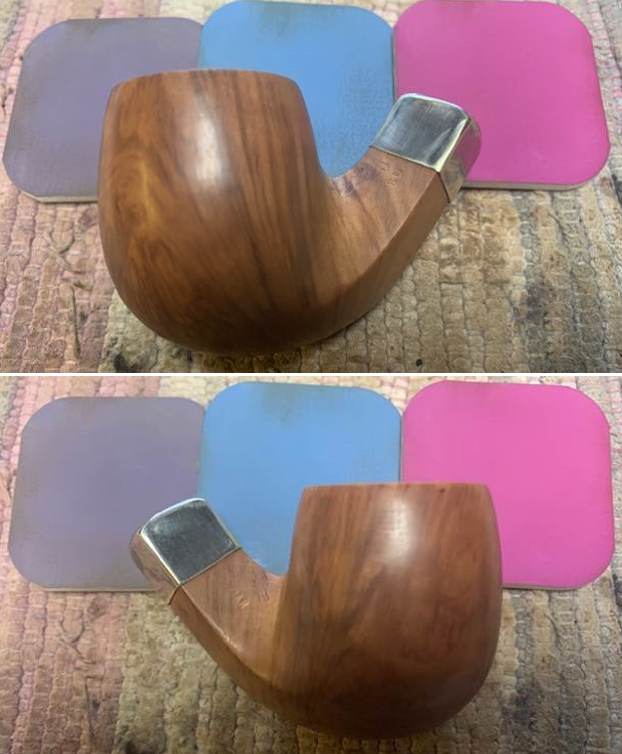
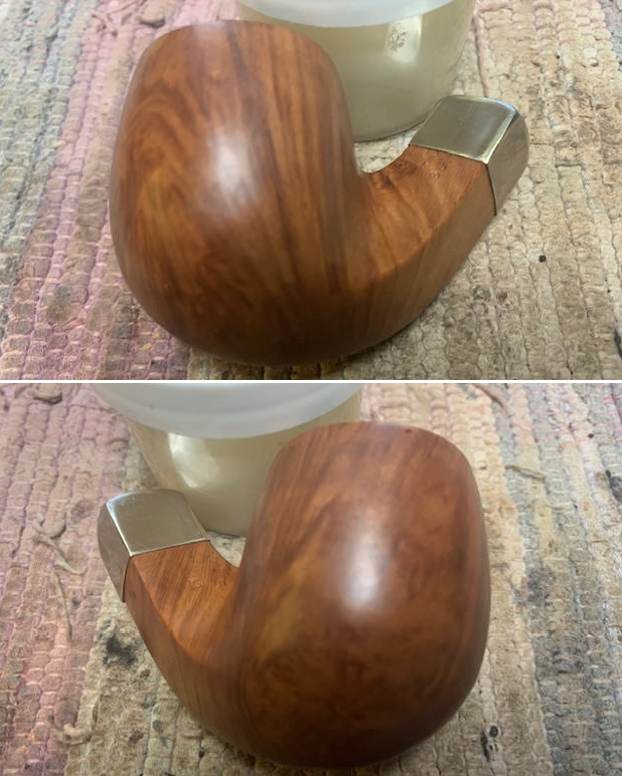
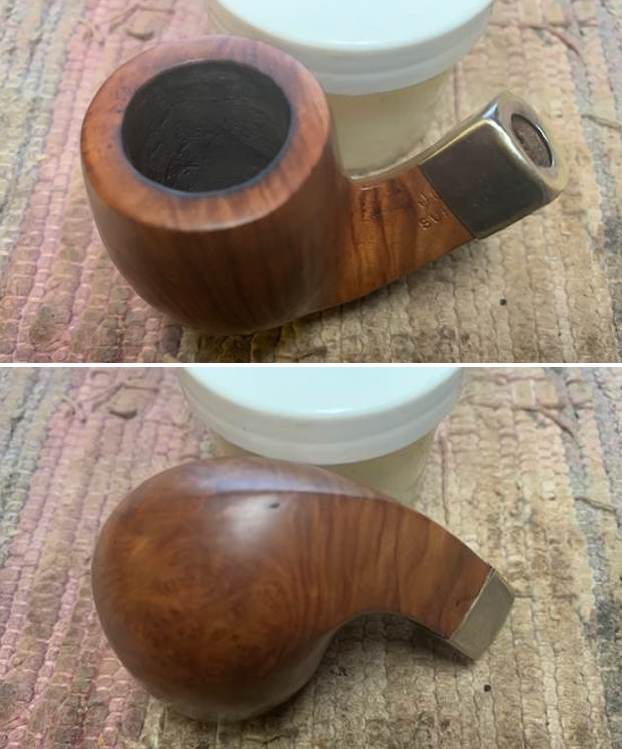
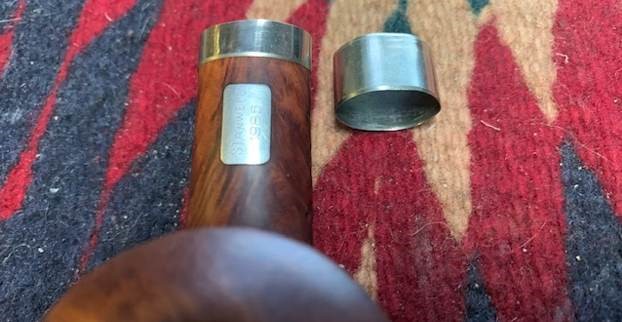
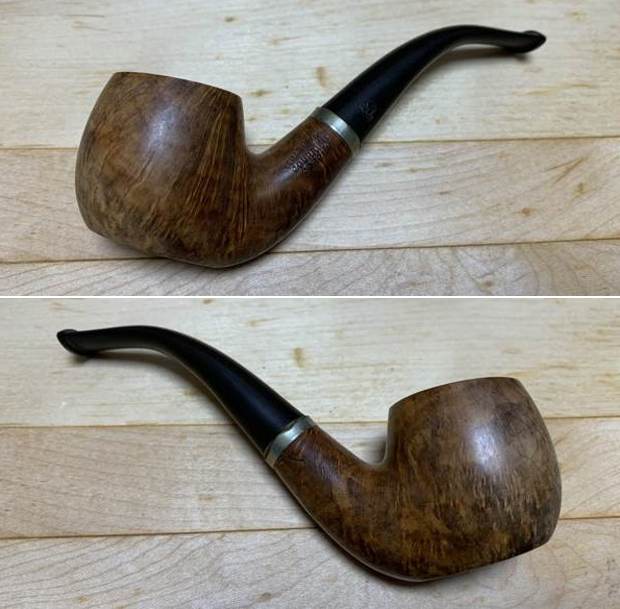
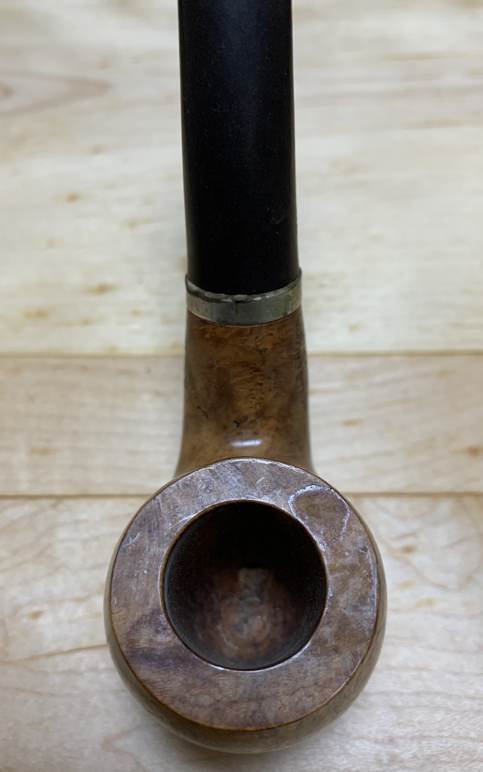
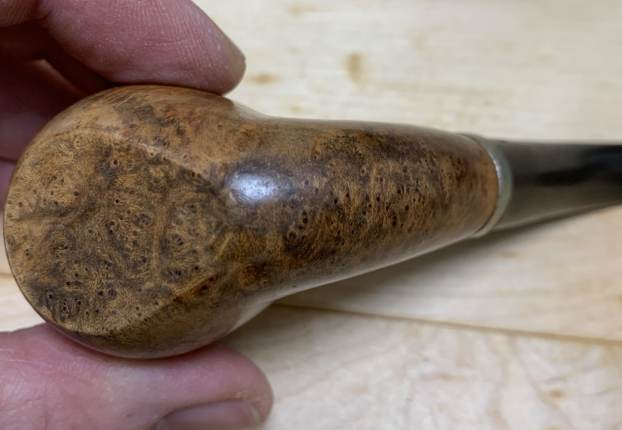
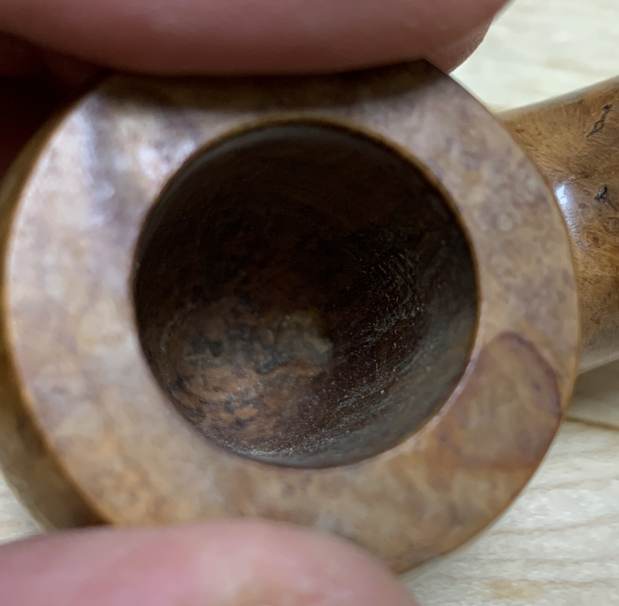
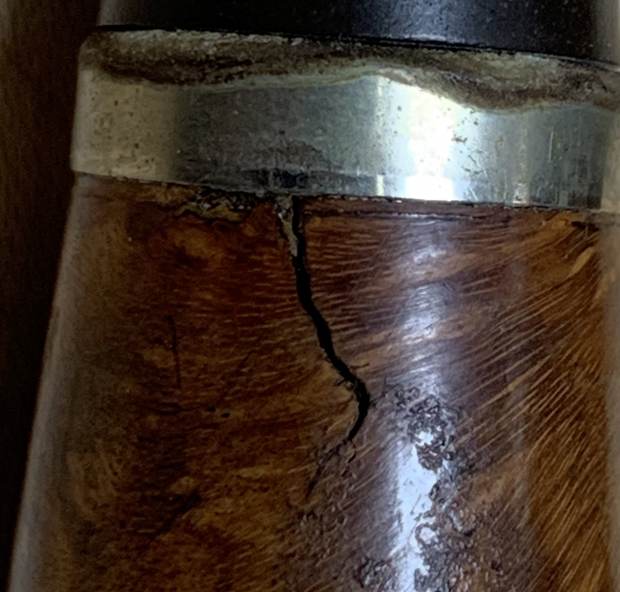
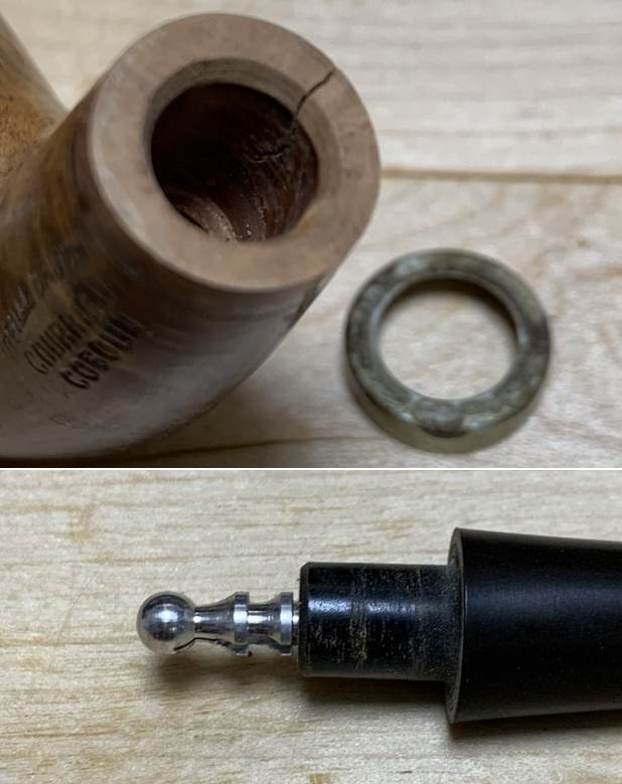
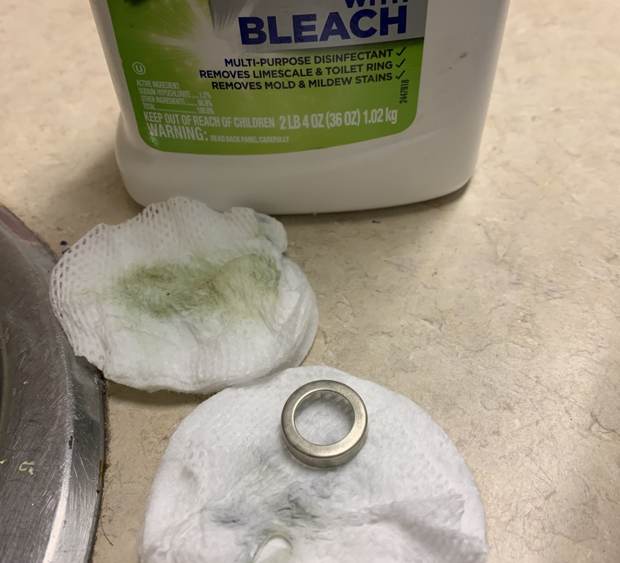
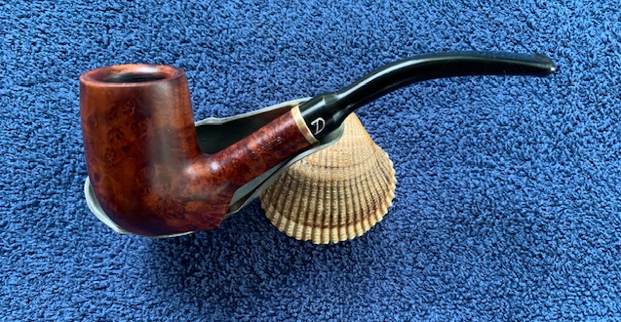
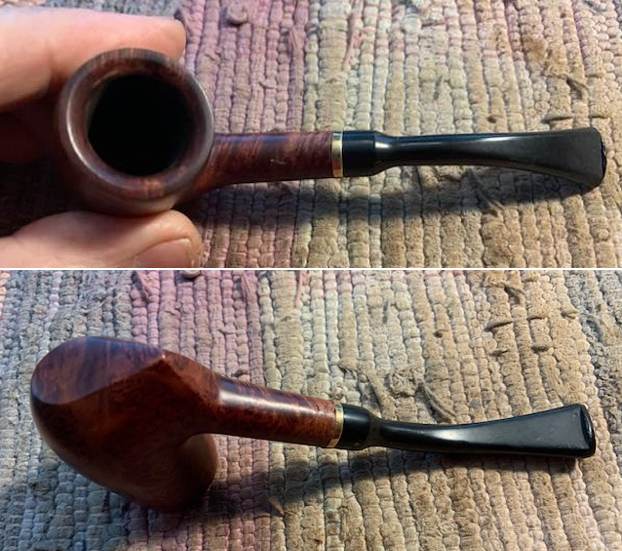
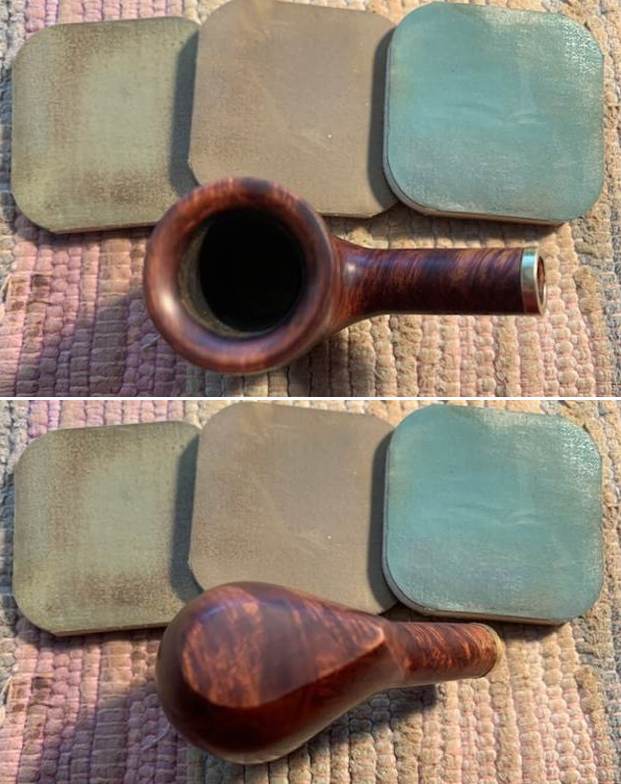
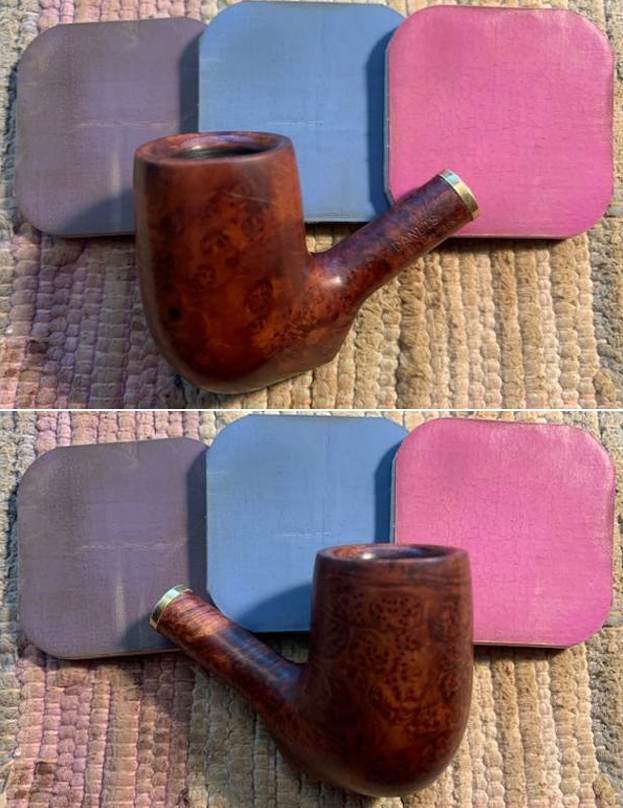
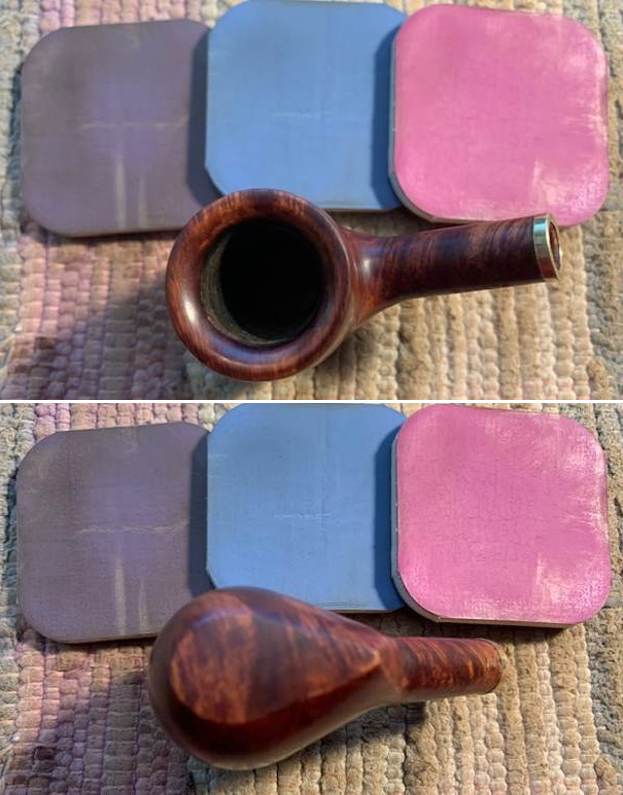
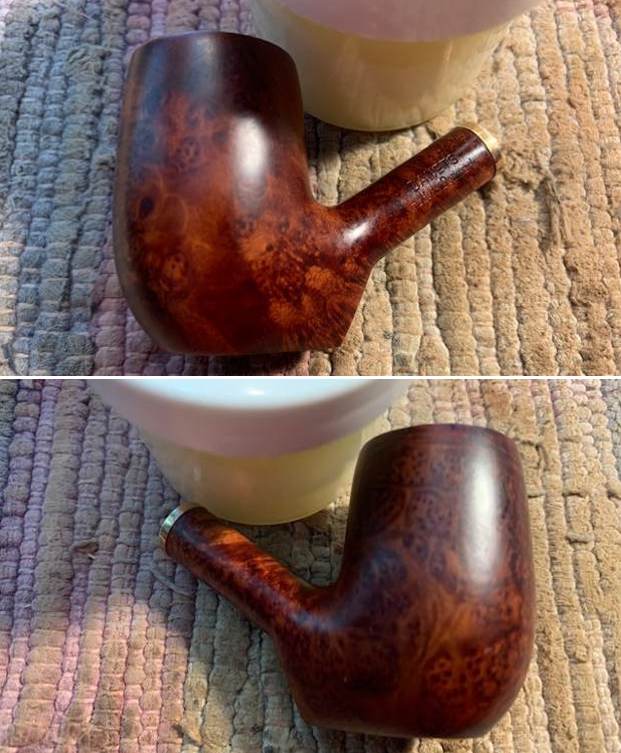
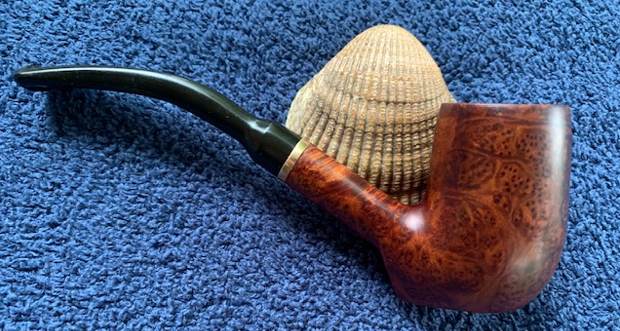
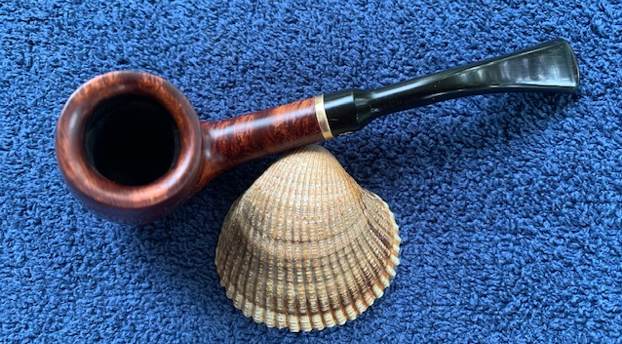
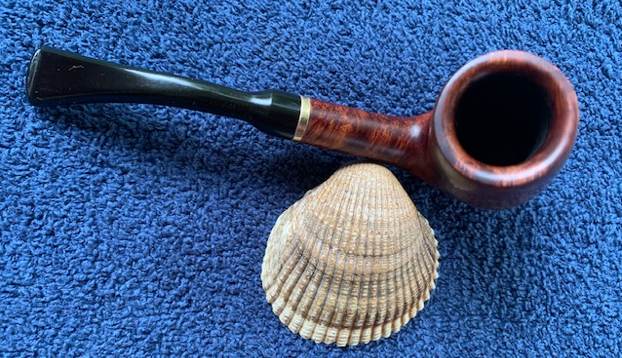
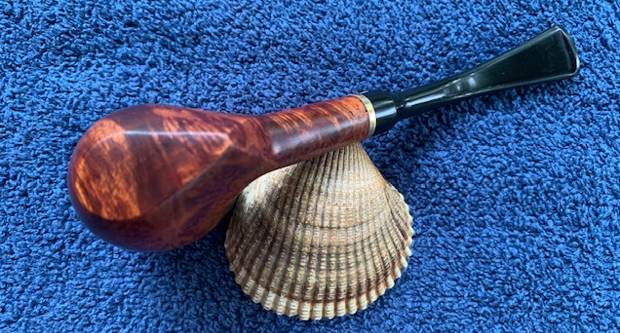
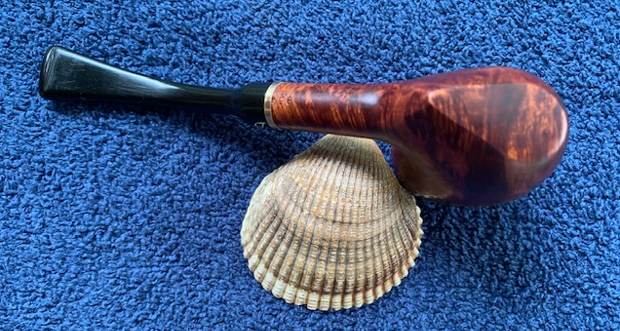
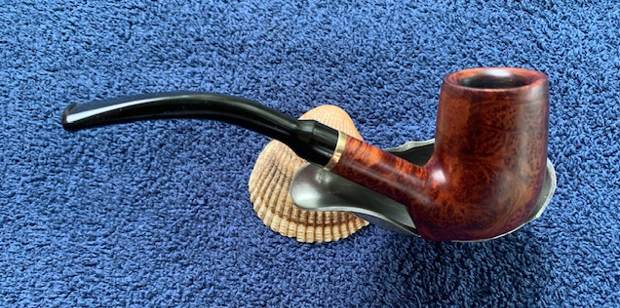
The next pipe on the table is another that the Vancouver pipe man dropped off for me to work on for him. It was stamped Jost’s Supreme and had a natural finish around the bowl. It is a bent diamond shank Billiard with some interesting grain. It needed restoration on the bowl which was heavily caked and the shank had the remnants of a paper wrap that had been used to hold the stem in place due to the crack in the shank. It also needed a repair to the crack on a pipe that I had originally worked on back in 2016. When I originally had worked on it the pipe had a thick cake and was well used. Here is the link to that restoration that I did back when I first picked it up (https://rebornpipes.com/2016/11/11/restoring-the-fourth-classic-find-a-josts-supreme-diamond-shank-bent-billiard/).The stem had tooth marks, tooth chatter and a lot of oxidation and calcification on the stem. Here are some photos of the pipe when he picked it up in 2016 to give a bit for context for my work. When I took the pipe out of the bag to work on this morning this is what I saw. The finish on the briar looked very good. It was dirty and the natural finish looked dried out. There was a crack on the lower right side of the diamond shank. The stem was very loose in the shank and the tenon appeared to have been wrapped in paper to tighten it. The bowl had a very thick cake and the airway in the shank was dirty. I would need to be cleaned up before I worked on the shank repair and the fit of the stem in the shank. The stem was oxidized, calcified and had tooth marks and chatter on both sides ahead of the button. I took photos of the rim top and the thick cake in the bowl to show how it looked. The rim top had some darkening around the inner edge of the bowl. It will clean up pretty well. The photos of the stem show the condition of the stem. You can see the tooth marks and chatter under the calcification on the stem surface.I took a photo of the stamping on both sides of the shank. It is clear and readable as noted above. I took the stem off the shank and photographed the look of the pipe as a whole. It is a nice looking Diamond Shank Bent Billiard. I went back and reread the previous restoration blog that I written on the restoration the previous time I had worked on the pipe. I also was very interested to read the back story and history on the brand. I quote from the blog below.

In earlier blogs I have written about restoring another Jost’s pipe that I found. When I restored that pipe it was a brand I had heard of but was unfamiliar with. I researched the web to find some information about the brand. Here is a link to the blog I wrote on the Jost’s Olde English Deluxe: https://rebornpipes.com/2016/09/03/josts-olde-english-de-luxesupreme-overstamped-j214-bent-billiard/. I am quoting several of the paragraphs that summarize what I learned about the brand.

I looked up Jost’s pipes on the Pipephil site and found a pipe that had the same stamping on the left side of the shank as the one I was working on. The right side had slightly different stamping in that it had the classic COM stamp circle where the one I had was two lines Made in over England. It also had a picture of the circle J stamp on the stem. There was a note there the tobacco shop proprietor was Mrs. Henry A. Jost. Her resident carver was Harvey Raspberry.”

I also found a blog that is called ClassicPipeShop that even had a catalogue of the pipes made by the Jost’s Shop or were imported by them for their store. I quote that blog once more as it places the new pipe that I am working on now.

“I did some more hunting online and I found a blog that did a great write up on Jost’s Pipe Shop and gave some definitive information on the brand and grades of the pipes. Here is the link if you wish to read a well written history of the brand and also some interesting details about shop blends of tobacco. http://classicpipeshop.blogspot.ca/2015/03/josts-pipe-shop-201-north-6th-street-st.html

 “I have included the section of the blog on the pipes. It covers a lot of information regarding the source of the pipes and the levels/grades of pipes. Remember that the one I am working on is a De Luxe/Supreme. I quote:”

“Jost’s Pipes are closely tied to Comoy’s. Many of Jost’s pipes have the standard Comoy’s shape number and the “Made in England” in a circle. If the Jost’s pipe doesn’t have the “Made in England” it is probably made by Harvey Raspberry.”

“If the pipe has a shape number that is preceded by a “J” that is a Comoy’s product without question.  Typically these will have the words “Made in London England” on the reverse side of the shank from where the Jost stamp is made.  There are always exceptions to the rule but 95% of the time, this is accurate.”

“Many different levels of pipes were offered by Jost’s Pipe Shop.  From a 1950s catalog I have the following available:”

Jost Old English De Luxe: $85.00

These were typically of the highest… Grain is stunning and the briar is flawless.  These are the grade you should look out for as they are great smokers.

*Jost Old English Supreme: (no pricing available)

The majority of the Old English version pipes you see are marked Supreme.  These are stained in a darker color and are presumably from the same Algerian aged Briar as the De Luxe brothers.  These are also of the highest quality available. *(The current pipe I am working on is stamped Jost’s Supreme on the left side of the shank with no shape number and no Made in London England stamp.  If I read the information correctly it was one that was made by Harvey Raspberry, who was the shop pipe maker.)

Jost Virgin Briar Supreme: $35.00

Don’t see too many marked as Virgin Briar Supreme but you will often find “Supreme” Jost pipes on the second hand market (see above).  Excellent quality briar and displays the lighter toned finish of the De Luxe above.  Grain is not as flashy or desirable as the De Luxe model.

Jost Thames Briars: $25.00

I’ve seen these offered as blasted / rusticated pipes and look quite nice.  Most of the smooth finish Thames pipes are riddled with fills.  Good smokers but not much to look at (smooth).

Jost Sandblast Briars: $25.00

These are a great value.  The shop made sand-blasted pipes are usually quite large and snapped up very quickly by collectors.  The Comoy’s versions (with J shape #s) are of excellent quality and typically rather small compared to the shop-made variety.

Dukes Briars: $15.00

These come up very rarely.  The two I’ve seen in recent years are rather small in size.  Smooth finish with light / honey stain color.  Not sure what the story is behind these.

Now I knew the background on the pipe. I knew that the Supreme pipe was one of the higher end Jost’s in the Old English line. It was time to work on the pipe!

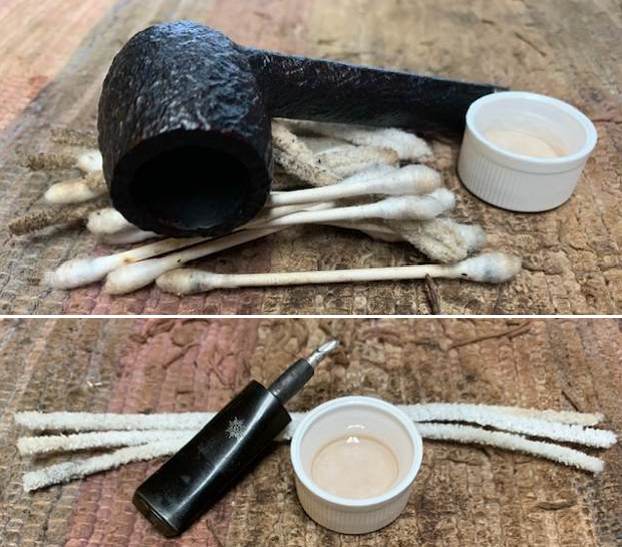
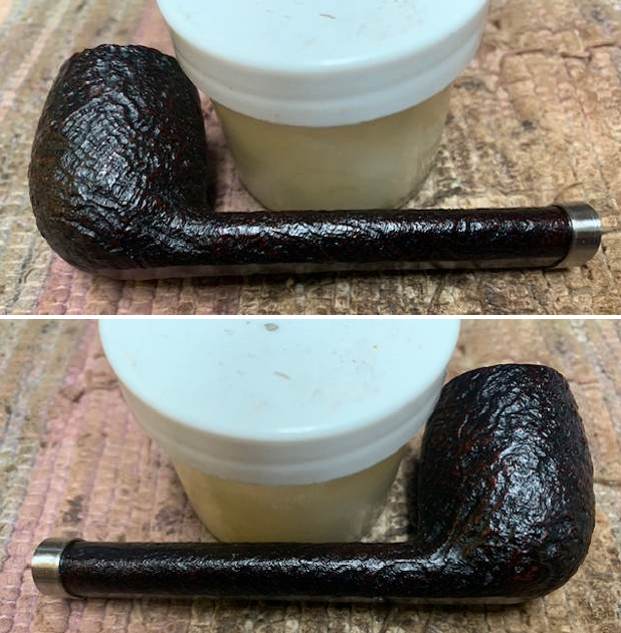
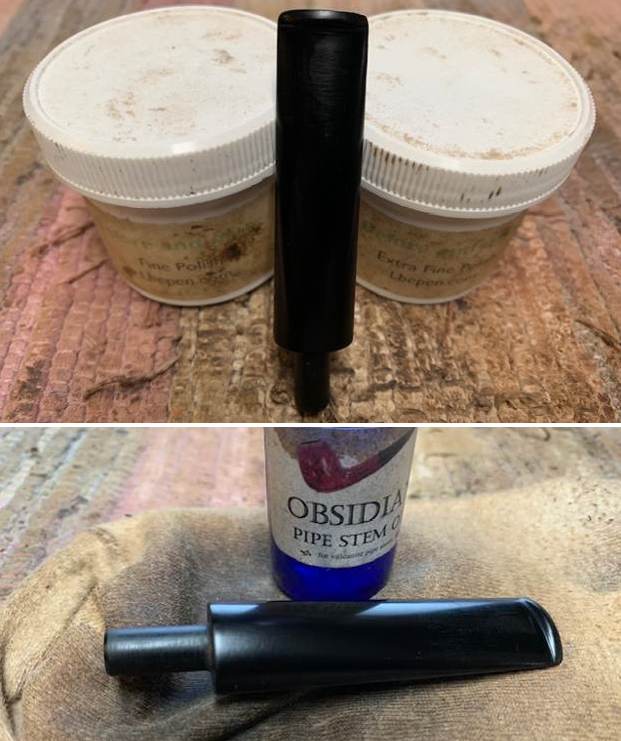
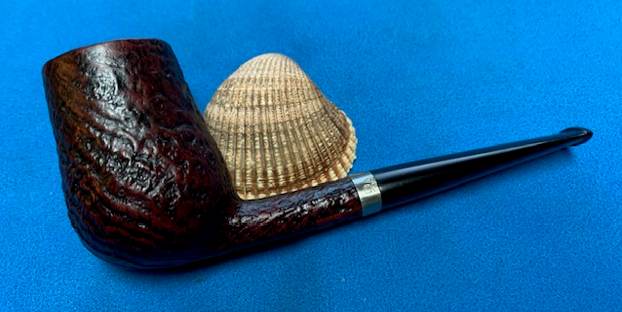
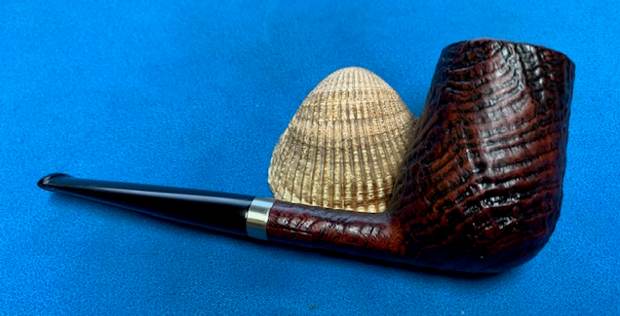
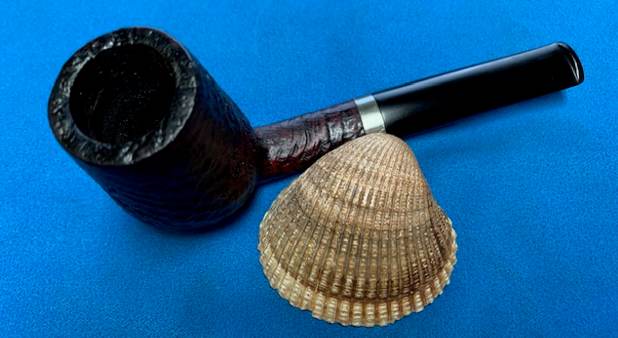
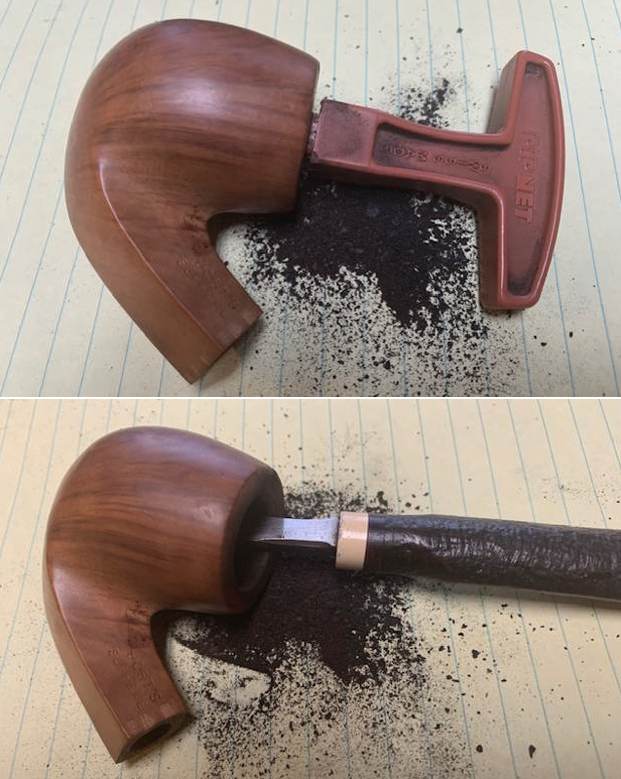
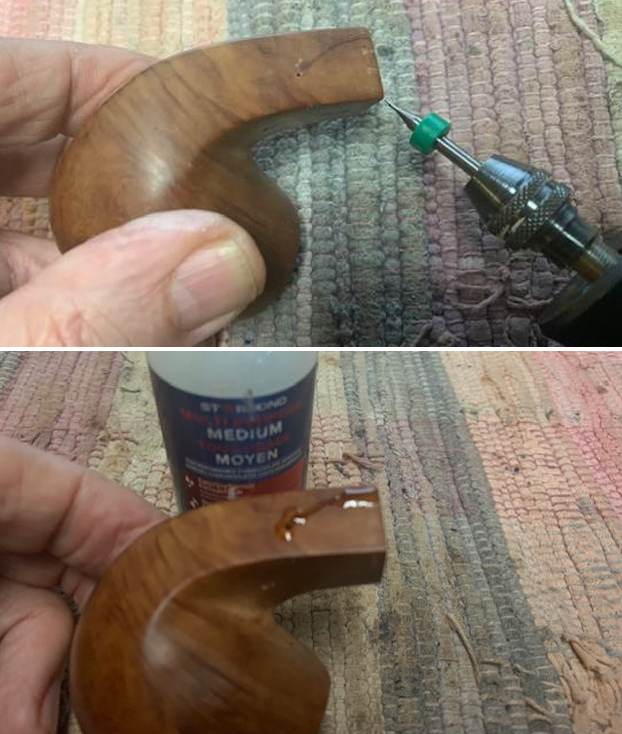
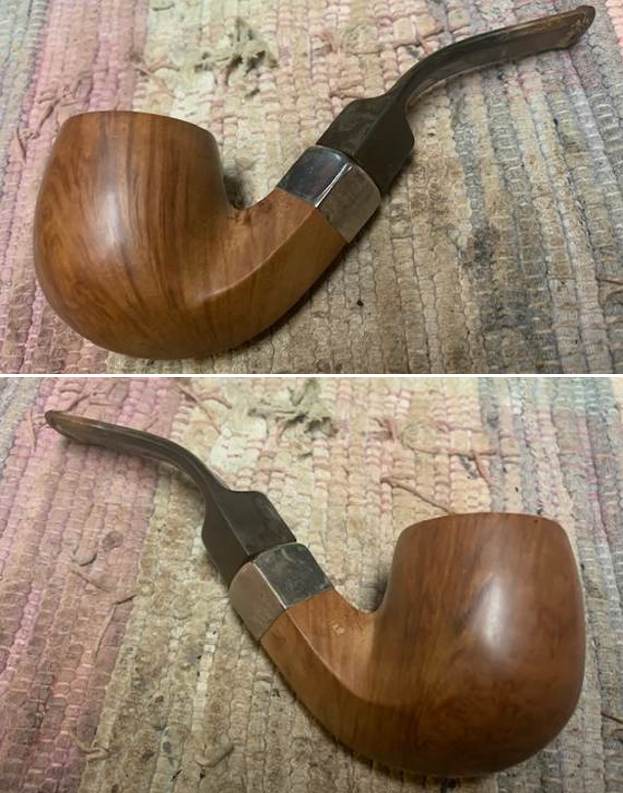
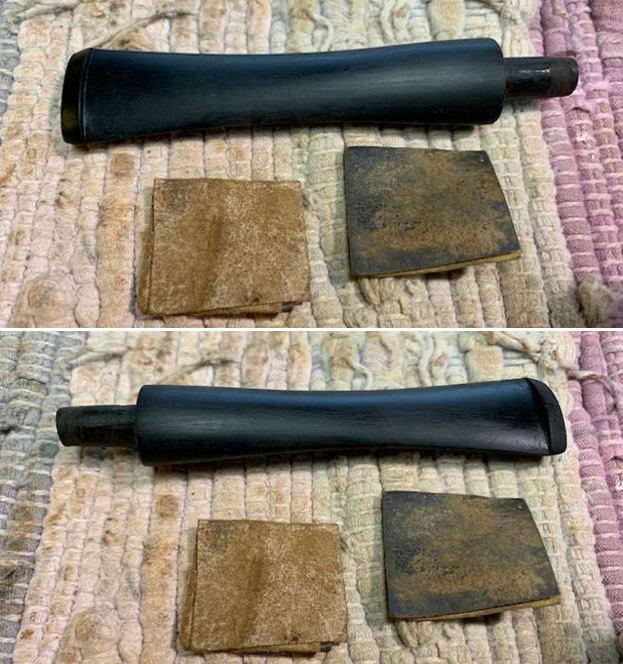
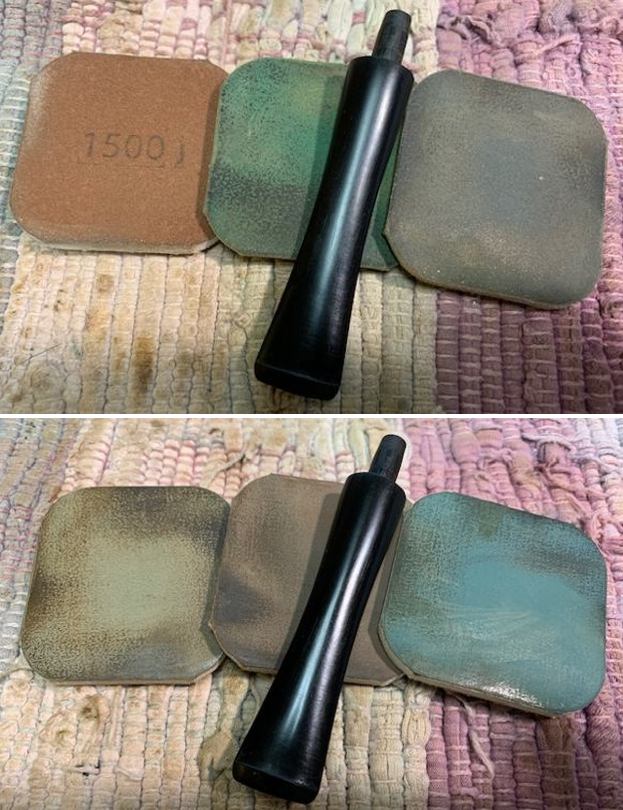
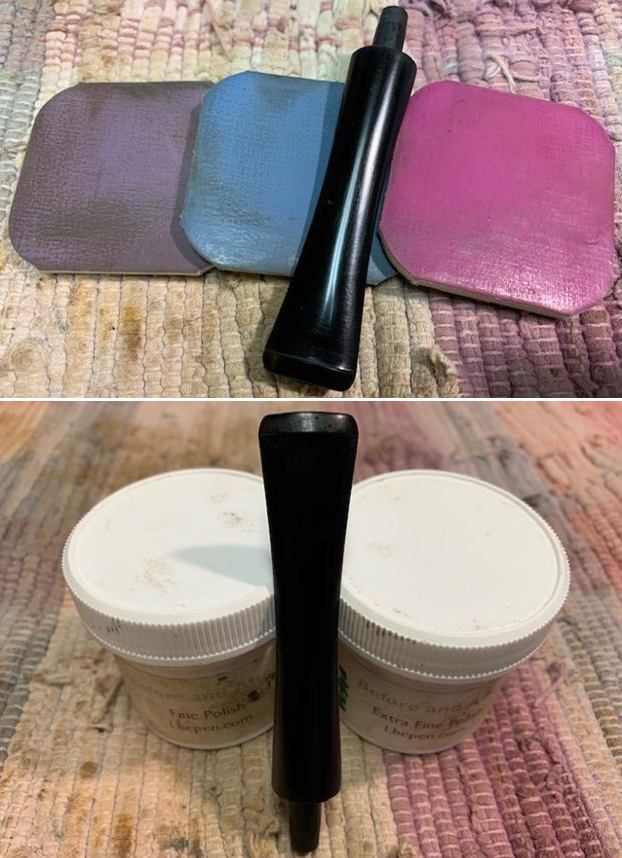
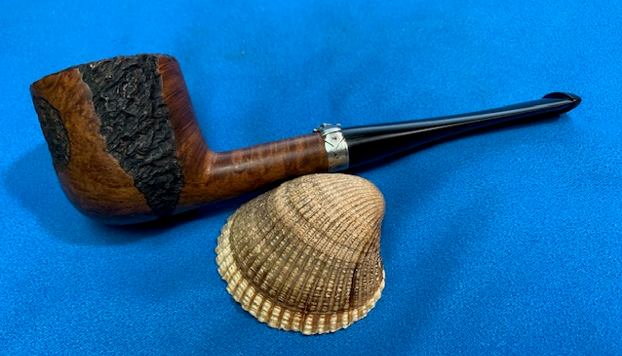
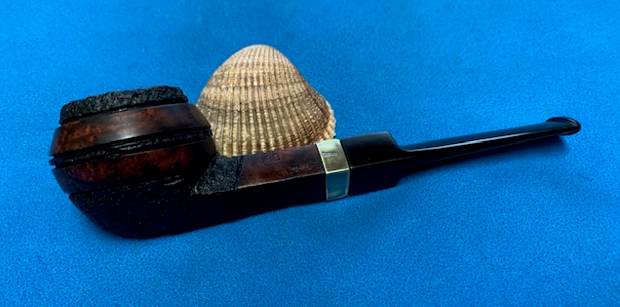
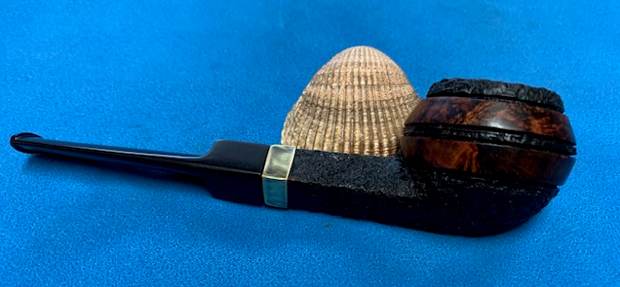
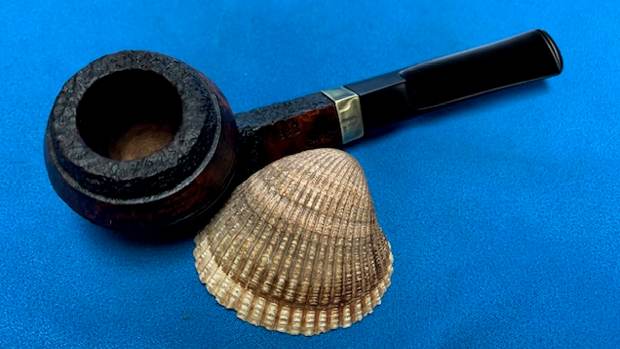
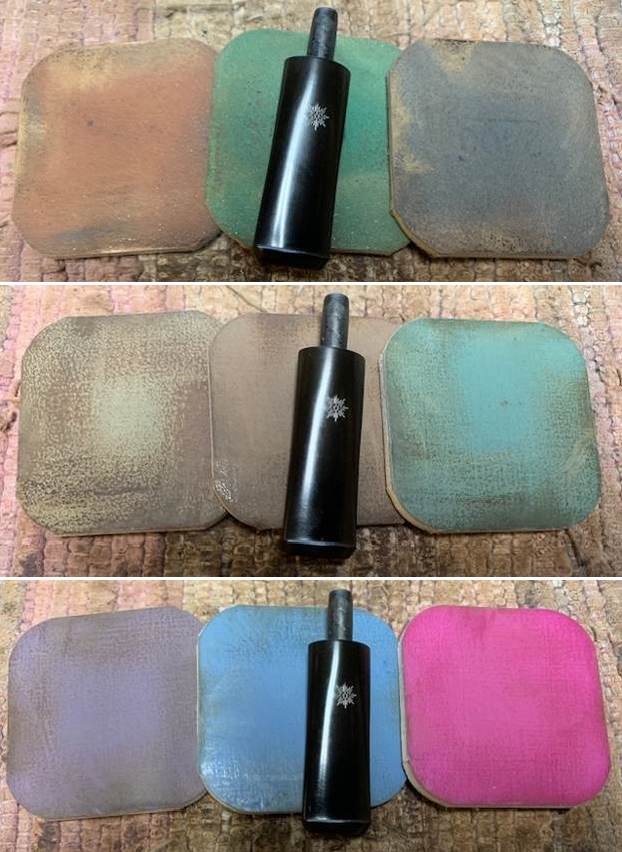
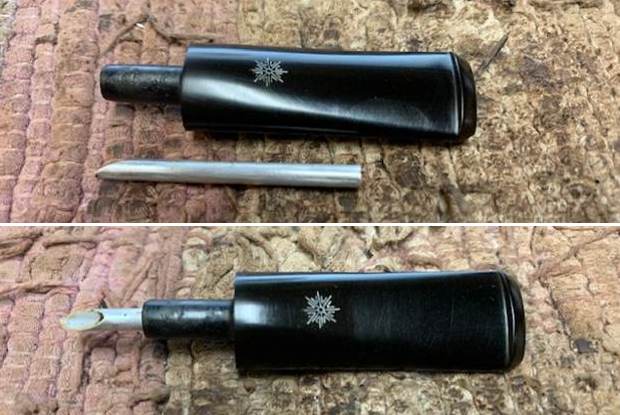
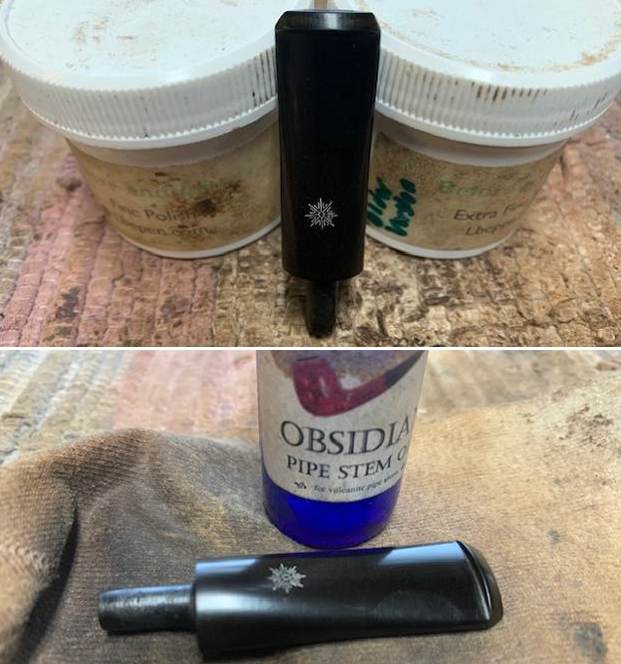
I decided clean up the pipe before I repaired the cracked shank. I reamed the bowl back to bare briar with a Pipenet Pipe Reamer using the third cutting head. I cleaned up the reaming with a Savinelli Fitsall Pipe Knife. I finished the bowl clean up with 220 grit sandpaper wrapped around a piece of dowel. The walls were smooth and there was no sign of burning or checking. It looked very good.   I cleaned out the internals with 99% isopropyl alcohol, pipe cleaners and cotton swabs. I worked over the shank and the airway in the stem. It took some work but once finished it was clean and smelled fresh. With the internals clean it was time to work on the cracked shank. I drilled a small pinhole at the end of the crack on the right underside of the shank. I do this to stop the crack from further spreading. I fill in the pinhole with clear CA glue and built up the surface of the crack at the same time. I squeezed the crack together and held it until the glue set. I spread the glue with a dental spatula and pressed into the shank crack. Once the repair cured I sanded it smooth with 220 grit sandpaper. I went through my bands and found a shank band/ferrule in nickel that was a snug fit on the shank. It was crowned and slightly dome so that would need to be flattened. I put the band a piece of dowel and used a ball peen hammer to flatten the top of the dome for a better fit with the stem.I heated the band with a lighter and pressed it onto the shank end. The fit of the ferrule to the shank was tight and it pulled the crack together even more than my clamping. It covered much of the stamping but the crack was quite long and I wanted some strong coverage. I put the stem on the shank and took photos of the new look of the pipe. I sanded the damage on the rim top and edges with 220 grit sandpaper. I was able to remove the majority of it with the sanding. There was some remaining darkening on the back inner edge of the bowl. I polished the bowl rim top with micromesh sanding pads – dry sanding with 1500-12000 grit pads. I wiped the briar down with a damp cloth after each sanding pad. It took on a real shine by the time I finished with the last sanding pad. I worked some Before & After Restoration Balm into the smooth rim and the sandblast finish on the bowl and shank. I worked it into the surface of the briar with my fingertips to clean, enliven and protect the wood. I used a horse hair shoe brush to work it into the crevices and keep from building up in the valleys and crevices of the finish. Once the bowl was covered with the balm I let it sit for about 15 minutes and buffed it off with a soft cotton cloth and the shoe brush. I polished it with a microfiber cloth. I took photos of the pipe at this point in the process to show what the bowl looked like at this point. I used a topping board with 220 grit sandpaper to try and flatten the remaining crown on the shank band/ferrule.Now it was time to address the part of the restoration I leave until last. I set the bowl aside and turned my attention to the stem. I filled in the deep grooves in the tenon to build it up and make it even. Once the repair cured I sanded it smooth to make it round and even once more. Once finished it looked better and the fit in the shank was very good. I wanted to adjust the bent in the stem as it had straightened a bit over time. I heated the blade with the flame of a Bic lighter. Once the vulcanite had softened I bent it to the correct angle and set the bend with cool water. It looks much better. I took the newly bent stem off the shank and worked on the stem surface to deal with the tooth marks and chatter. I used a folded piece of 220 grit sandpaper to remove the oxidation and calcification off the surface of the stem. I build up the damage to the top of the button edge with black CA rubberized glue. Once it had cured I recut the button edge and flattened the repairs. I smoothed out the repairs with 220 grit sandpaper and started polishing the stem with 600 grit wet dry sand paper. I use micromesh sanding pads and water to wet sand the stem with 1500-12000 grit sanding pads. I wiped it down after each sanding pad with Obsidian Oil on a cotton rag after each sanding pad as I find it does two things – first it protects the vulcanite and second it give the sanding pads bite in the polishing process. After finishing with the micromesh pads I rub the stem down with Before & After Fine and Extra Fine stem polish as it seems to really remove the fine scratches in the vulcanite. I rub the Fine Polish on the stem and wipe it off with a paper towel and then repeat the process with the Extra Fine Polish. I finished the polishing of the stem down with a final coat of Obsidian Oil and set the stem aside to let the oil absorb. This process gives the stem a shine and also a bit of protection from oxidizing quickly. The final steps in my process involve using the buffer. I first buff the stem and the briar with Blue Diamond on the buffing wheel. Blue Diamond is a plastic polish but I find that it works very well to polish out the light scratches in the vulcanite and the briar. I work the pipe over on the wheel with my finger or thumb in the bowl to keep it from becoming airborne. It works well and I am able to carefully move forward with the buffing. The briar and stem just shone!   I finished with the Blue Diamond and moved on to buffing with carnauba wax. Once I have a good shine in the briar and vulcanite I always give the bowl and the stem multiple coats of carnauba wax. I have found that I can get a deeper shine if I following up the wax buff with a clean buffing pad. It works to raise the shine and then I follow that up with a hand buff with a microfiber cloth to deepen the shine. It is always fun for me to see what the polished bowl looks like with the polished vulcanite stem. It really is a beautiful pipe. The smooth finish around the shows the grain shining through the buffed natural finish of this Jost’s Supreme Diamond Shank Bent Billiard. The finished pipe feels great in my hand. It is light and well balanced. Have a look at it with the photos below. The dimensions are Length: 5 ½ inches, Height: 2 inches, Outside diameter of the bowl: 1 ½ inches, Chamber diameter: 7/8 of an inch. The weight of the pipe is 1.62 ounces/46 grams. It is a beautiful pipe and the third of the five pipes for repair that I have ahead of me. Once I am finished with the lot he will get them back to enjoy once more. As always I encourage your questions and comments as you read the blog. Thanks to each of you who are reading this blog. Remember we are not pipe owners; we are pipemen and women who hold our pipes in trust until they pass on into the trust of those who follow us.
Rebirthing a Stanwell 1985 POY Sandblast Dublin with a smooth Rim Top


Blog by Steve Laug

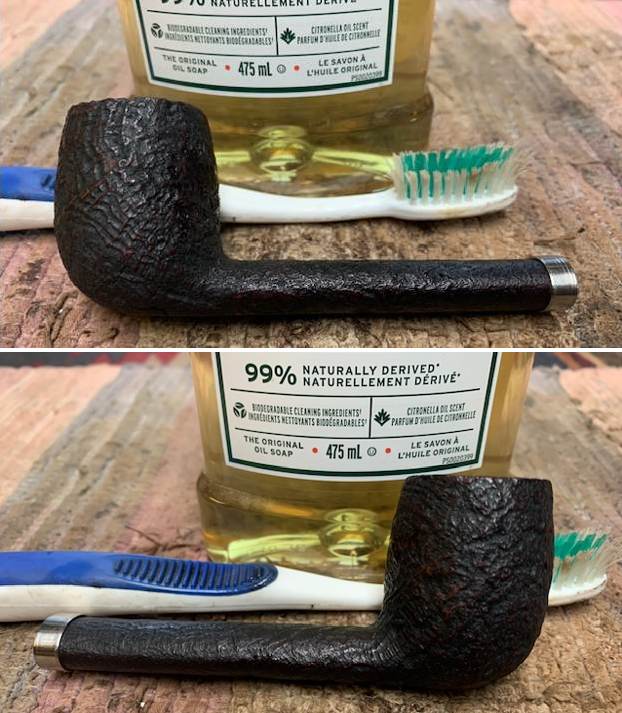
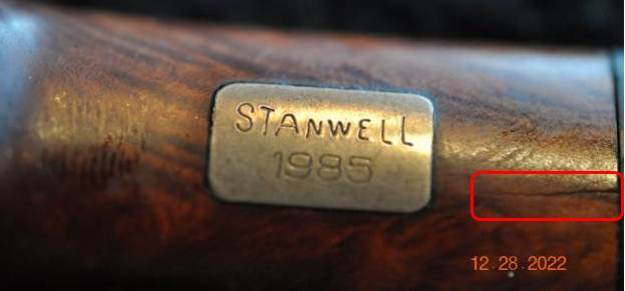
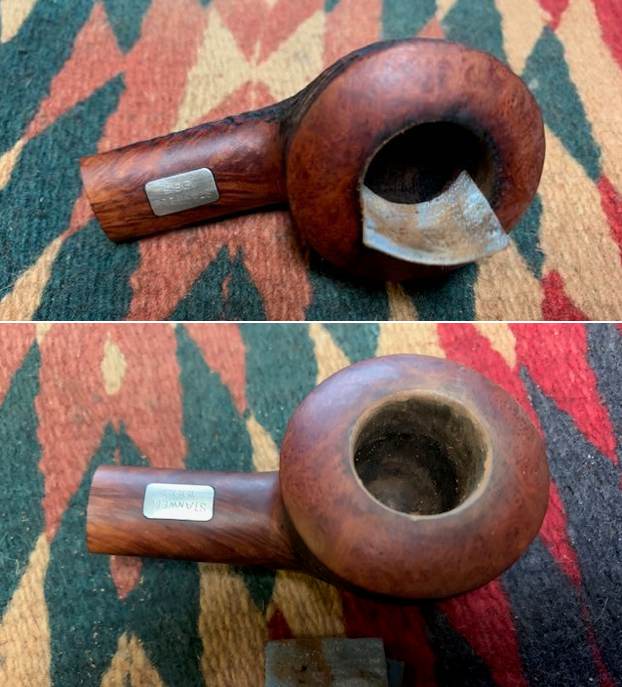
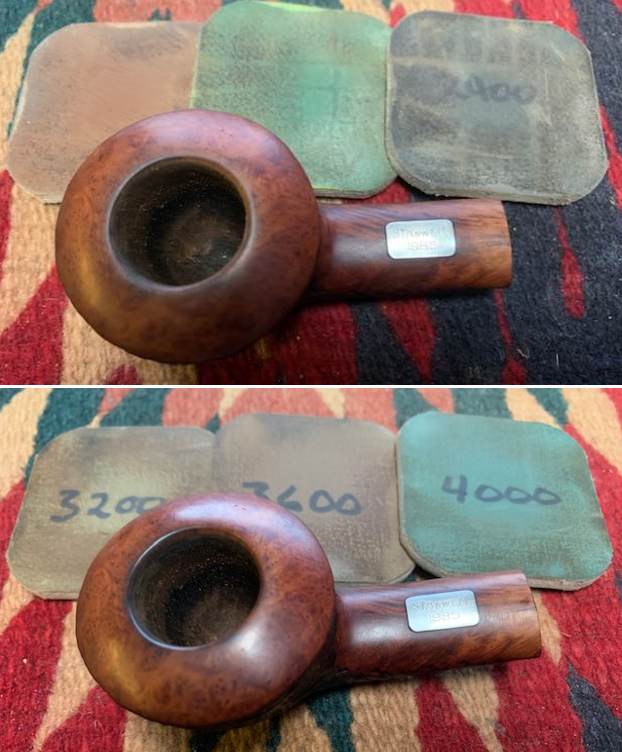
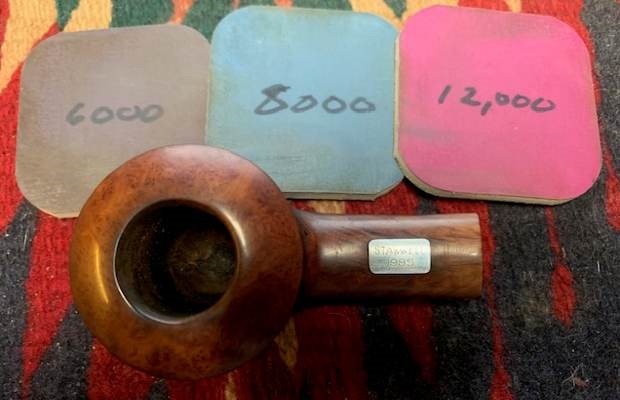
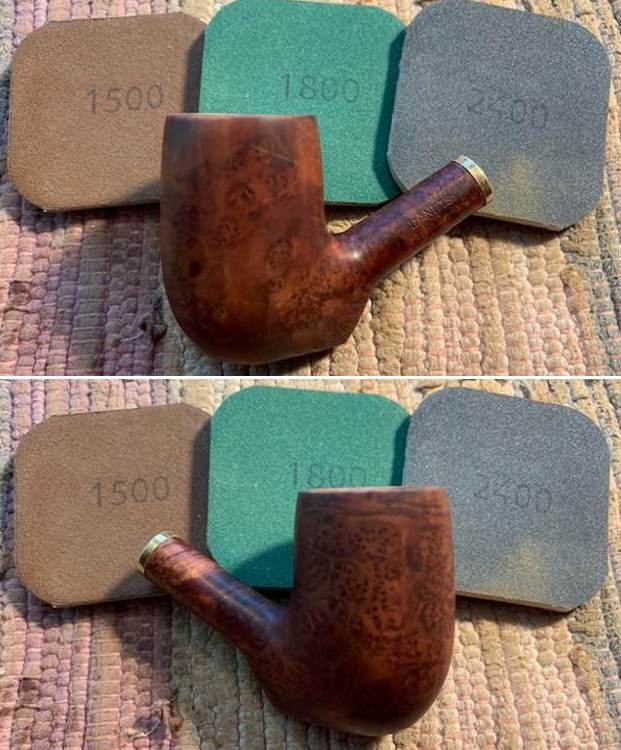
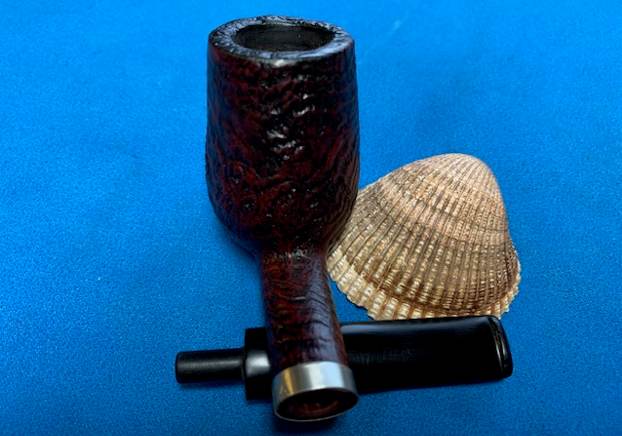
The next pipe I am working on was purchased on 12/13/2022 as part of a group of pipes from a fellow in Copenhagen, Denmark. This was another horribly tired and dirty pipe with a lot of wear and tear and obviously it had been someone’s favourite smoker. The pipe has an identifying silver plate on the topside of the shank that reads Stanwell [over] 1985. There was no other stamping on the shank and the silver plate confirmed for me that it was a Stanwell Pipe of the Year. The dirty sandblast finish on this was worn and tired looking. There were tars and oils ground into the surface of the briar. The shank had a hairline crack on the left side of the top that would need to be dealt with. The sandblast showed some nice grain around the bowl and shank and though it was a little dirty it was a nice looking pipe. The bowl had a thick cake that flowed over the top of the lightly crowned rim in a thick coat of a lava and showed potential damage on the top and the inner edge. The stem was a black vulcanite saddle stem with a silver Crown S on the topside of the saddle. It had some deep and wide tooth marks and chatter on both sides ahead of the button. There was also some oxidation and calcification on both sides of the stem. Jeff took photos of the pipe before he started his clean up work.  He took photos of the rim and bowl to show the heavy cake and thick lava coat covering the rim top. It really was filthy and a mess. He also took photos of the stem surfaces to show its overall condition when it arrived. The photos of the sides and heel of the bowls show beautiful grain around the bowl and shank sides. The sandblast is nicely done and highlights the grain. The brown stain on the briar adds depth finish on the pipe and makes the grain really stand out. It shows some promise. He also took a photo of the stamped silver plate on the left underside of the shanks. It reads as noted above. I have also boxed the hairline crack on the top of the shank in red in the photo below.Jeff cleaned up the pipe for me. He reamed the bowl with a PipNet pipe reamer and cleaned it up with a Savinelli Fitsall Pipe Knife. He scrubbed the exterior with Murphy’s Oil Soap and a tooth brush to clean off the grime off the finish and the heavy overflow of lava on the rim top. The cleaning had removed the thick coat on the rim top. He cleaned up the internals of the shank, mortise and stem with pipe cleaners, cotton swabs and alcohol to remove all of the oils and tars in the pipe. He soaked the stem in Before & After Deoxidizer and was able to remove much of the oxidation, calcification. When it arrived here in Vancouver it was a clean pipe and I knew what I had to work with. I took photos of it before I started my part of the restoration. I took a photo of the rim top and the stem to show their condition once it arrived in Canada. Jeff was able to clean up the incredibly thick cake and the lava overflow that was shown in the rim and bowl photos above. The rim top showed damage on the surface and the inner edge of the bowl. He was also able to get rid of the grime and grit in the surface of the briar around the sandblast. The second photo of the three below shows the crack in the shank (once again boxed in red). The stem looked better, though there were deep tooth marks and chatter on both sides near the button.I took a photo of the stamping on the silver plate on the topside of the shank to show that it was readable and undamaged by the cleanup work.I removed the stem from the shank and took a photo of the parts to give a sense of what the pipe looks like.I started my work on the inner edge and rim top with a folded piece of 220 grit sandpaper. I was able to remove that damage on the rim top and bring the inner edge back into round. It looked much better. I repaired the hairline crack in the shank with a dab of clear CA glue. I clamped the shank together to let the repair cure. Once it had cured I sanded it smooth with 220 grit sandpaper to blend in the repair. It looked much better. To stabilize it further I will need to put a thin band on the shank end so that with the addition and removal of the stem does not rebreak the crack.I started polishing the rim top and smooth portions of the briar (including the repaired hairline crack) with micromesh sanding pads. I wet sanded it with 1500-12000 grit pads. I wiped the bowl down after each pad with a damp cloth. The bowl began to take on a rich shine and grain was beginning to stand out. I rubbed the bowl and shank down with Before & After Restoration Balm to deep clean the finish on the bowl and shank. The product works to clean, enliven and protect the briar. I worked it in with my fingers to get it into the briar. I used a horsehair shoe brush to work it into the sand blast areas. I let it sit for 10 minutes then I wiped it off and buffed it with a soft cloth. The briar really began to have a rich shine. I took some photos of the bowl at this point to mark the progress in the restoration. It is a beautiful bowl. To stabilize the crack further and stop it from reoccurring each time the stem was removed I banded it. I had a band that would work on the shank but it needed to be reduced by half to get the depth more aesthetically pleasing to my eye. I used a coarse 180 grit sanding pad and worked the band against it until I have removed approximately half of the width. I heated it with a lighter and pressed it on the shank. The fit was perfect and to me it looked very good. I polished the band with a jeweler’s cloth to protect and give it a shine. I gave it another coat of Restoration Balm and buffed it off with a clean cloth. I set the bowl aside and worked on the stem. I filled in the deep tooth marks with clear CA glue. I flattened the repairs with a small file. And sanded the smooth with 220 grit. I started polishing the whole stem with 600 grit sandpaper until the sanding marks were gone. I polished the stem with micromesh sanding pads – dry sanding with 1500-12000 grit pads. I wiped the stem down after each pad with a damp cloth to remove the sanding dust. I gave it a further polish with Before & After Stem Polish – both Fine and Extra Fine. I finished by wiping the stem down with a final coat of Obsidian Oil and set it aside to dry. I put the stem back on the Stanwell Pipe of the Year 1985 Dublin pipe and took the pipe to the buffer. I buffed the bowl and stem with Blue Diamond to polish the briar and the vulcanite stem. Blue Diamond does a great job on the smaller scratches that remain in both. I gave the bowl and the stem several coats of carnauba wax and buffed the pipe with a clean buffing pad to raise the shine. I hand buffed it with a microfiber cloth to deepen the shine. The finished pipe is shown in the photos below. This is a beautiful Stanwell POY 1985 – the vulcanite saddle stem and crowned rim top and sandblast finish combine to give the pipe a great look. The polished black, vulcanite stem looks really good with the rich browns standing out in the sandblast. The dimensions of the pipe are Length: 5 inches, Height: 1 ½ inches, Outside diameter of the bowl: 1 ¾ inches, Chamber diameter: ¾ of an inch. The weight of the pipe is 1.38 ounces/39 grams. This pipe has already been spoken for as an Anniversary present. It will soon be going to the fellow who ordered it. Thanks for walking through the restoration with me on this beauty!

Paint It Black!


Blog by Kenneth Lieblich

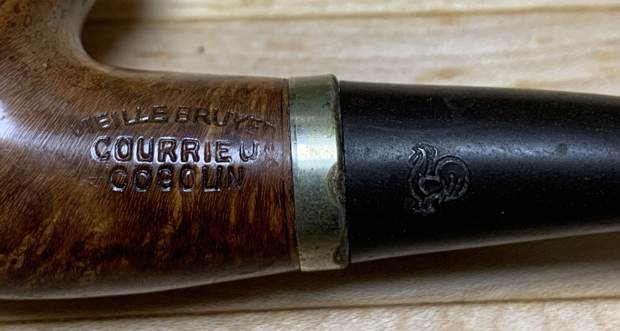
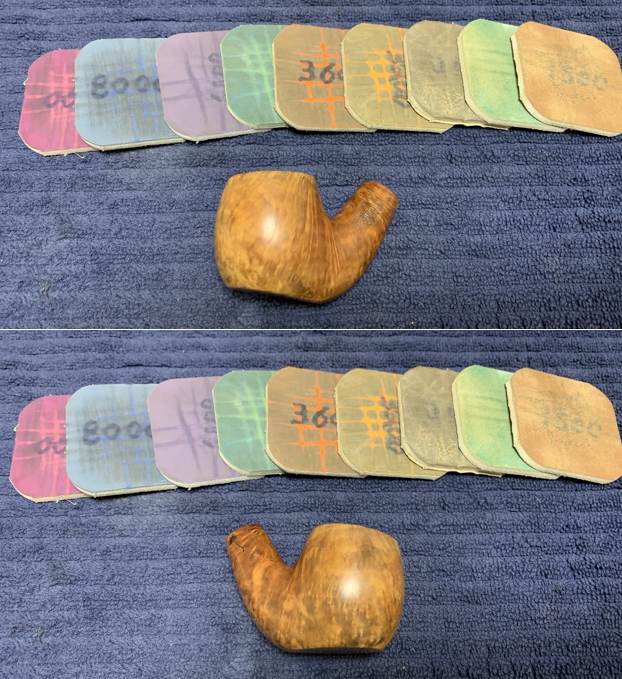
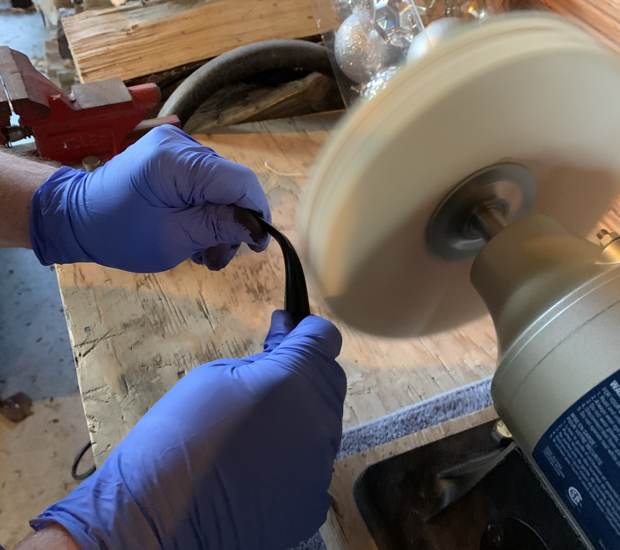
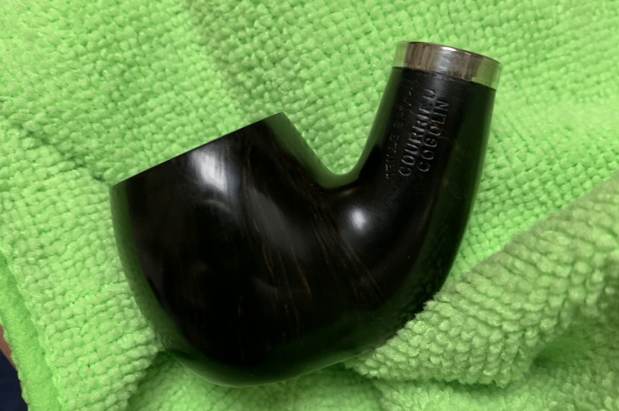
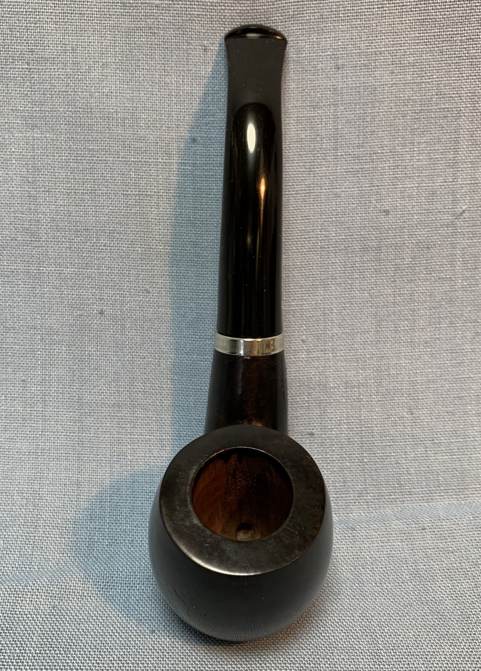
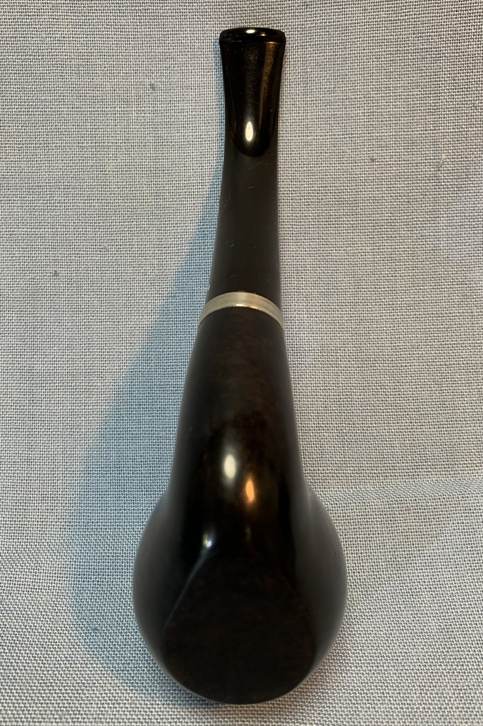
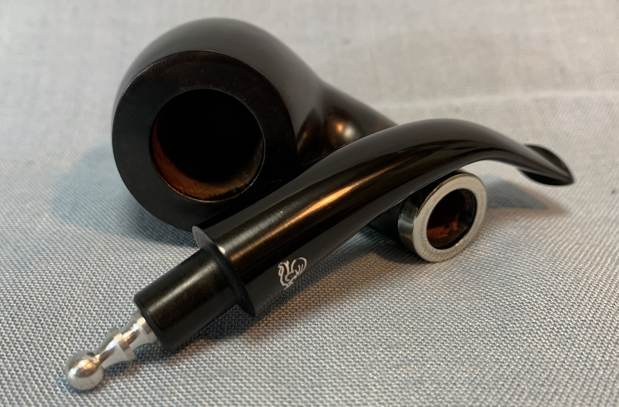
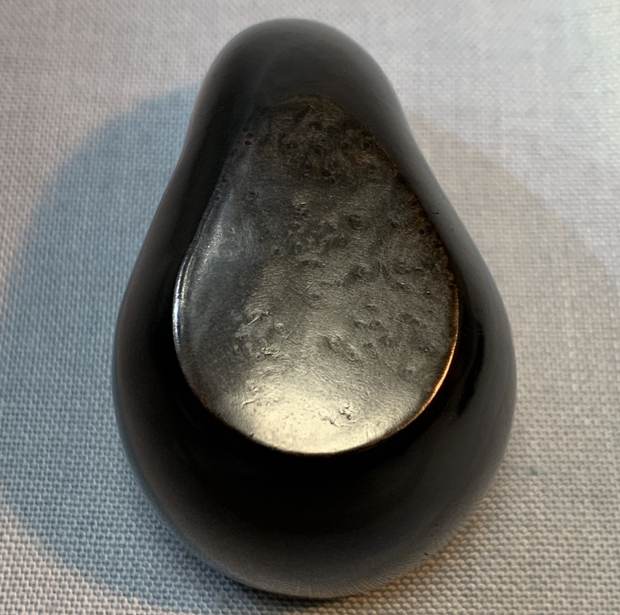
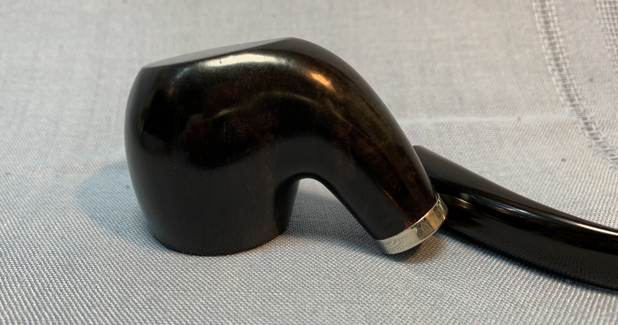
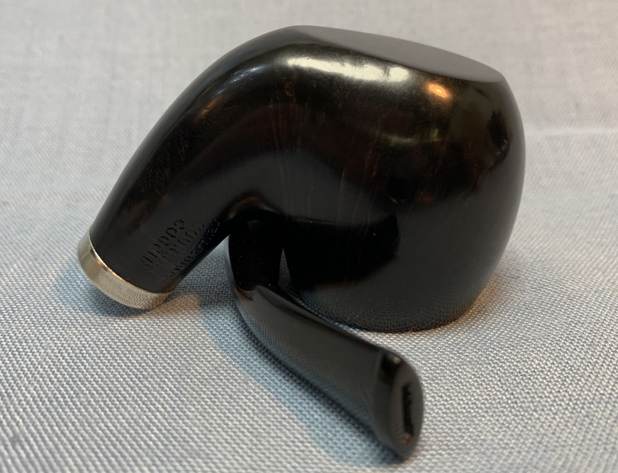
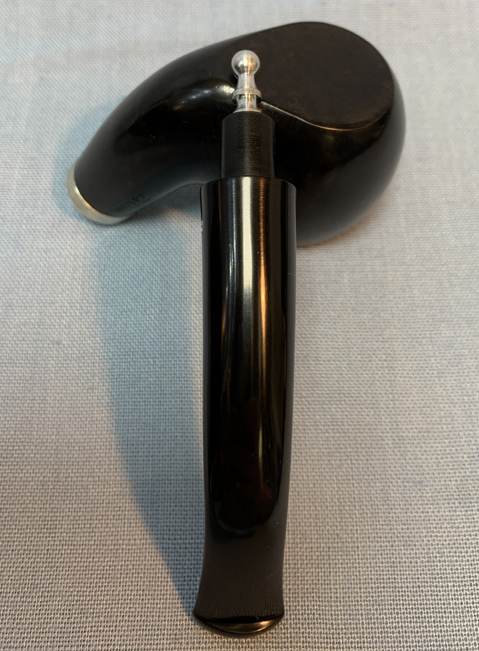
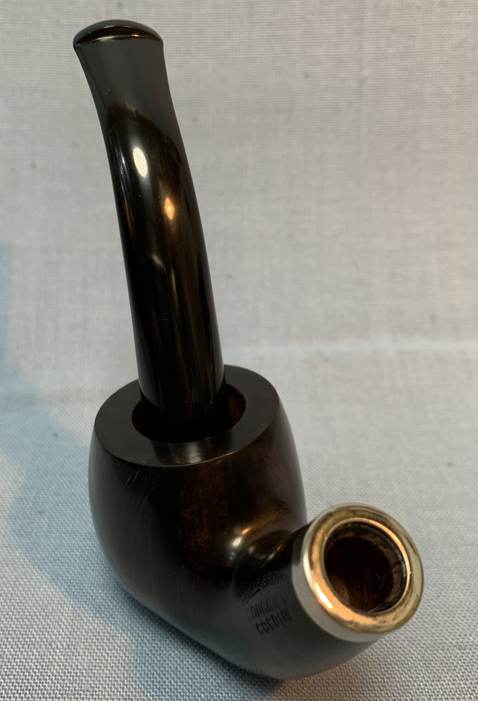
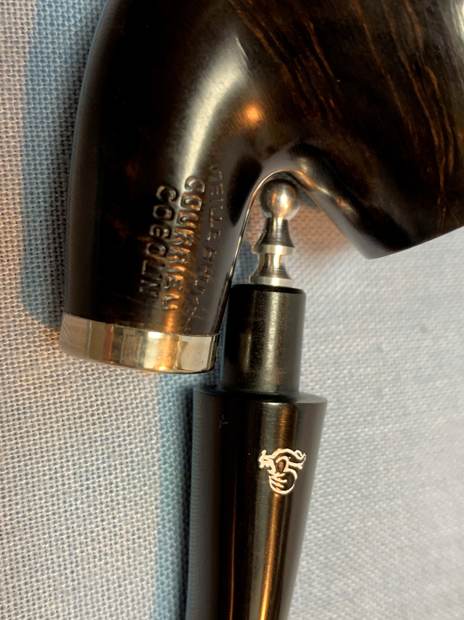
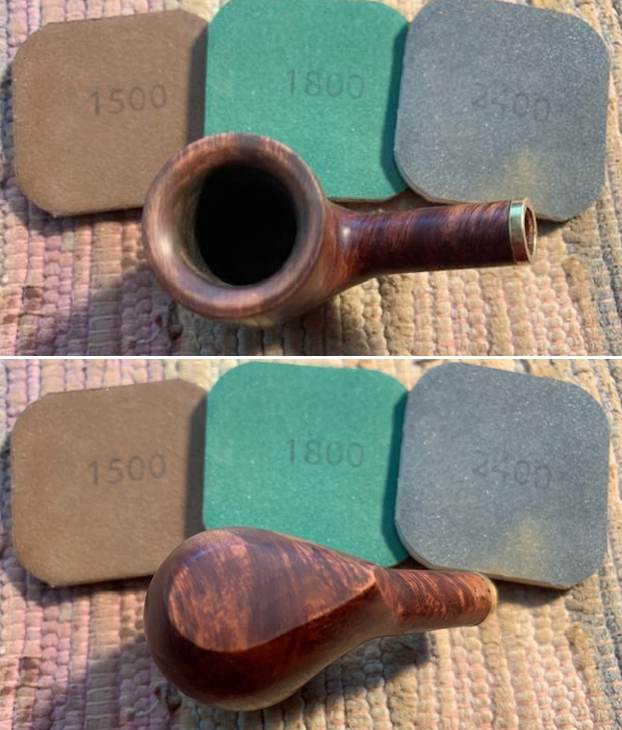
Next on the chopping block is a very pretty, unsmoked bent apple sitter from the French company, Courrieu, based in the Provençal town of Cogolin. A customer of mine wanted an attractive yet inexpensive pipe – he decided on this one, as it was both unsmoked but flawed, and therefore inexpensive. The markings were as follows: on the left side of the shank were the words Vieille Bruyere [over] Courrieu [over] Cogolin. The right side had no markings, but the left side of the stem had the image of a Gallic rooster – a national symbol of France and, subordinately, traditionally associated with Courrieu.Pipephil gave me a brief overview of the Courrieu brand:Ulysse Courrieu started carving pipes in Cogolin in 1802. Courrieu certainly is the oldest French briar pipe factory. The family corporate is managed (2009) by René Salvestrini who married a Courrieu daughter.

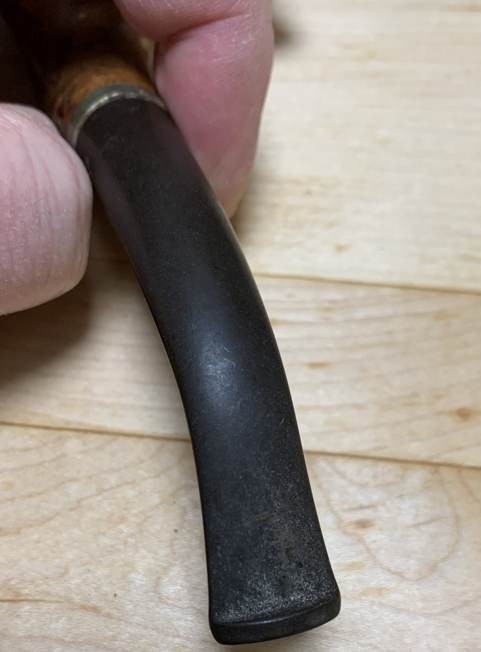
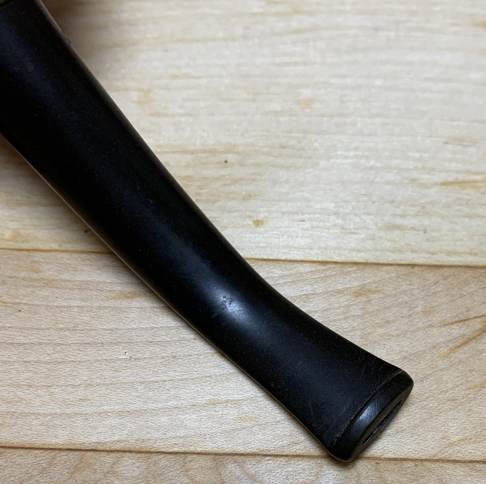
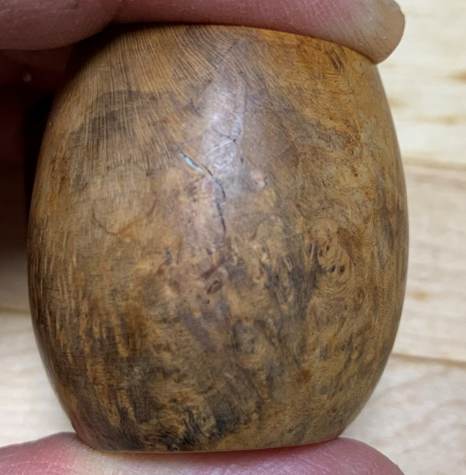
This pipe had some fine briar wood and looked like a well-made pipe. However, despite being unsmoked, this pipe still had some issues. The stem was clearly unused but had acquired some minor oxidation over time. The band around the shank was heavily tarnished; so much so that I was unsure if it was tarnished, or actually damaged, and if I would need a new band.There were also some minor abrasions and staining. Most notable, however, was a substantial crack in the shank, as shown in the photographs. The crack extended through the wood into the mortise and would require some careful work to repair successfully. On a pleasant note, the stinger was in immaculate condition. Other than buffing it with a microfiber cloth, it needed nothing else. One of my customer’s stipulations was to stain the pipe black. No problem as far as I was concerned. However, many people don’t quite understand what they will get when they request a black pipe. They often think that the pipe will end up as some sort of shiny lacquered item, but that’s not the way it works with me. I won’t use lacquer on pipes and I need to make it beautiful in other ways. Fortunately, my friend was aware of this and I endeavoured to make it as attractive as possible.

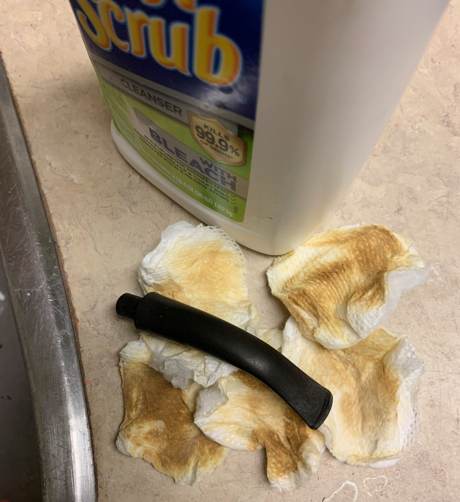
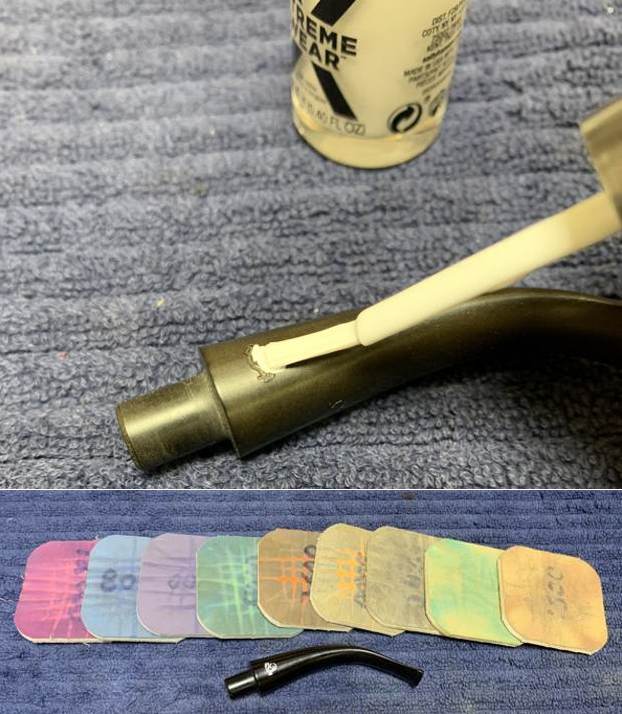
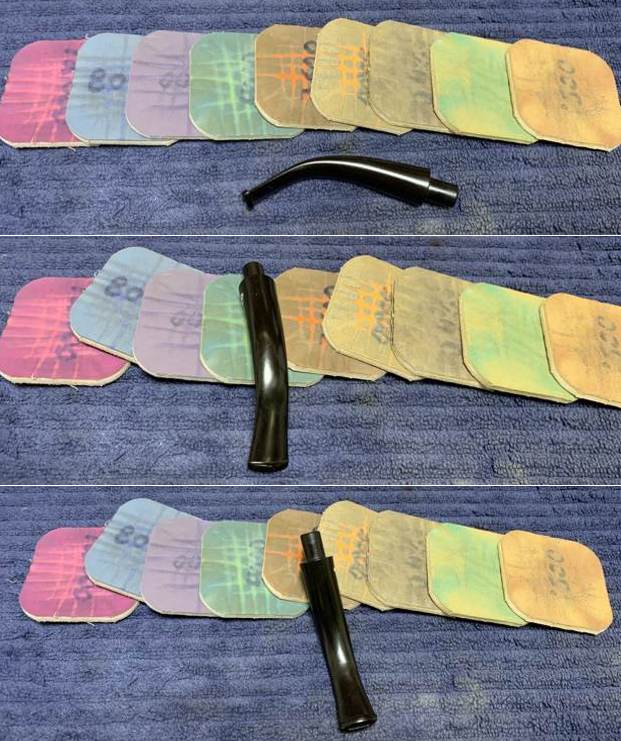
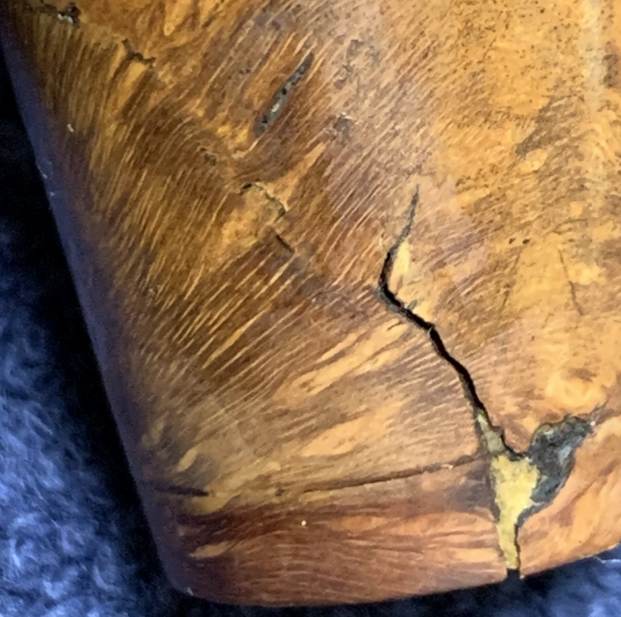
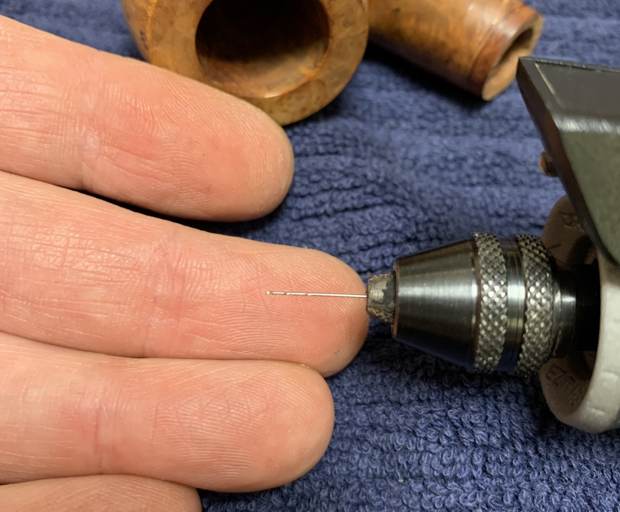
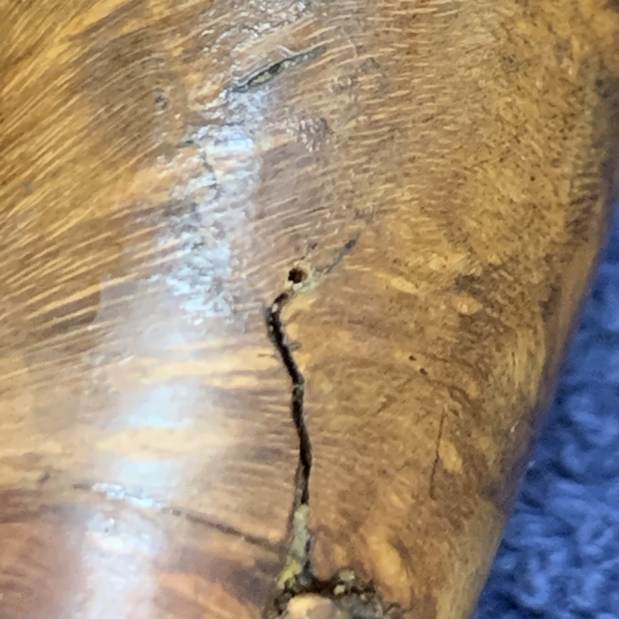
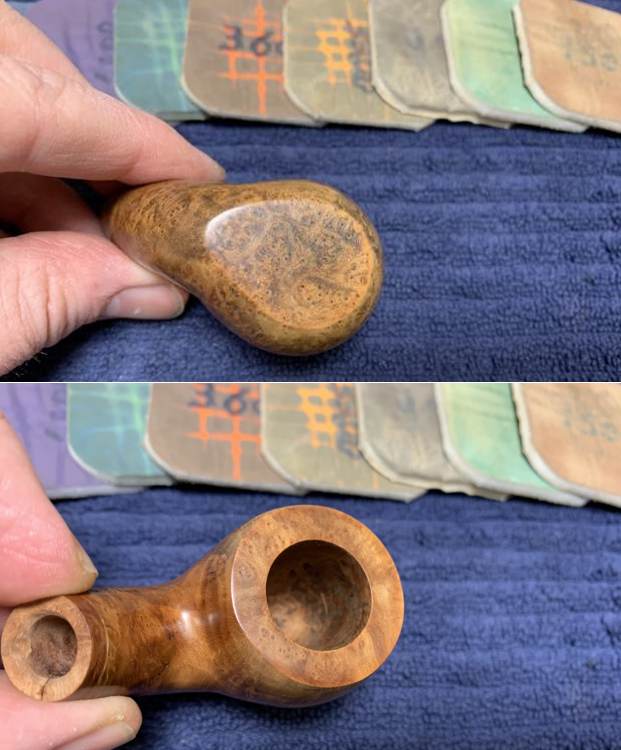
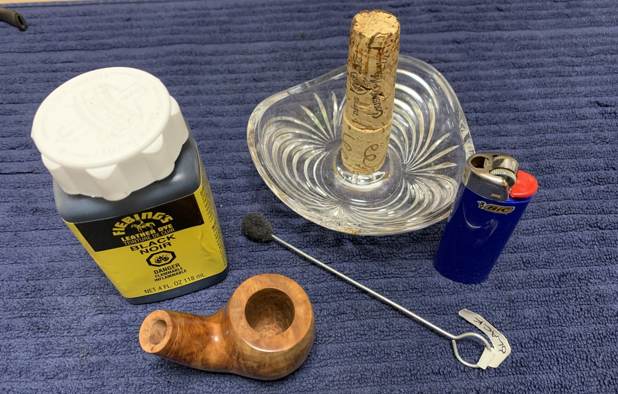
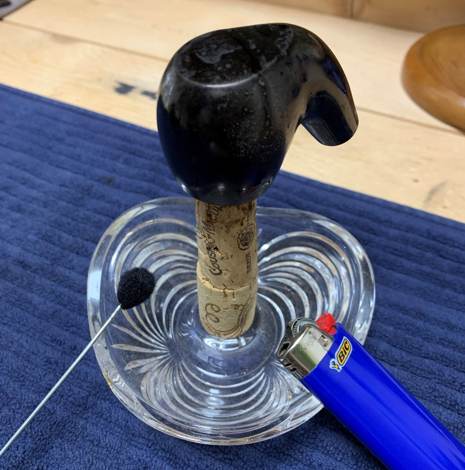
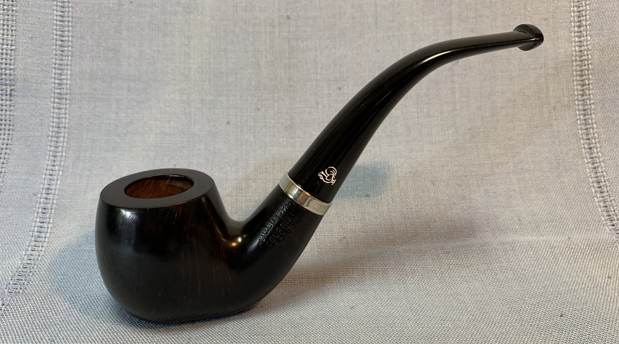
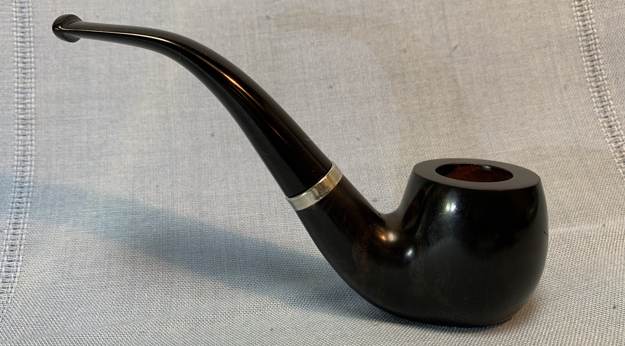
Now to work! As you saw, the band was pretty awful, so I brought out some SoftScrub on a cotton round and duly scrubbed away, taking care not to bend the soft metal. I was delighted at how well that turned out, as I had feared that the band was damaged beyond repair. Once clean, I buffed it with a jewelry polishing cloth and it looked like new. Hurray! Even though the stem had never been smoked, I ran a few pipe cleaners through it to ensure maximum cleanliness. There was some latent dust, but it was easily dealt with. I used some cotton rounds and Murphy’s Oil Soap to remove the top layer of oxidation. Then the stem went for an overnight bath in the Pipe Stem Oxidation Remover. The following day, I cleaned all of the de-oxidizing mess off with alcohol, pipe cleaners, et cetera. The oxidation had migrated to the surface and would be straightforward to remove. I scrubbed with SoftScrub on some cotton pads to remove the leftover oxidation. After this, I used some white nail polish and carefully painted the embossed Gallic rooster on the stem. I painted the area carefully and let it set for a few minutes. I then used all nine Micromesh pads (1,500 through 12,000 grit) to bring out the lovely black lustre on the stem. I also used Obsidian Pipe Stem Oil in between each pad scrubbing. Then I set the stem aside and moved on to the stummel. The next order of business was to scrub the outside of the stummel with some cotton rounds and Murphy’s Oil Soap. Despite being unsmoked, the stummel was reasonably dirty from sitting abandoned for decades.Then it came time to address the crack in the shank. To ensure that any crack repair is successful, I need to make sure that the crack won’t elongate. I took a micro-drill bit and drilled a hole through the wall of the shank into the mortise, at the very end of the crack. By doing this, I prevent the crack from growing any further. Look how tiny the drill bit is! You can also see the drilled hole at the end of the crack. I also removed the old yellow adhesive you can see below. I needed to apply cyanoacrylate adhesive to the crack to seal and repair it. First, however, I stuffed the mortise area with some folded pipe cleaners, coated with petroleum jelly. This would prevent the adhesive from dripping inside the shank and creating further problems. After that, I carefully applied a bead of adhesive to the tiny hole and the length of the crack. Finally, I clamped it shut and let it sit overnight to cure. This was a great success – obviously, the crack would always be there, but I was really pleased with how the repair looked. I then sanded the adhesive down, as well as the stummel. Just like the stem, I used all nine Micromesh pads (1,500 through 12,000 grit). Having completed that, it was time for the staining. First, I brought out my heat gun and spent a couple of minutes thoroughly heating the wood, so it would be as receptive as possible to the stain. I needed the black to penetrate well into the wood, to give the best results. I applied Fiebing’s Black Leather Dye with a cotton dauber. I flamed it with my Bic lighter, let it set, then coated it again with dye, flamed it again, and let that set too. I decided to let the pipe sit overnight. Upon the morrow, I stained and flamed the pipe another two times, always making sure I warmed the pipe with my heat gun first. This dye is alcohol-based, so I used isopropyl alcohol to wipe down the pipe and remove excess stain. I am very happy with the results. Then it was off for a trip to the buffer. A dose of White Diamond and a few coats of carnauba wax were just what this pipe needed. I think the black came out very well on this pipe. I know that the new owner will enjoy smoking it for many years to come. I hope you enjoyed reading the story of this pipe as much I as I did restoring it. The approximate dimensions of the pipe are as follows: length 4½ in. (114 mm); height 3½ in. (89 mm); bowl diameter 1¼ in. (32 mm); chamber diameter ⅝ in. (16 mm). The weight of the pipe is 1½ oz. (43 g). If you are interested in more of my work, please follow me here on Steve’s website or email me directly at kenneth@knightsofthepipe.com. Thank you very much for reading and, as always, I welcome and encourage your comments.

Finally Getting Around to Finishing up this Danet’s 904 Sitter


Blog by Steve Laug

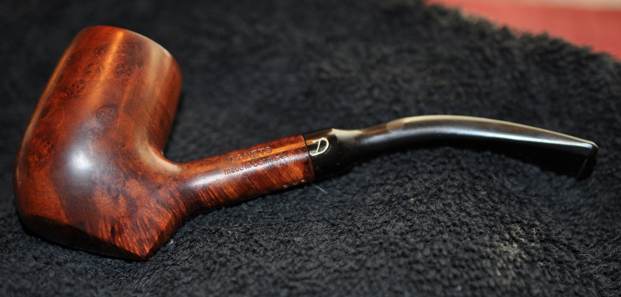
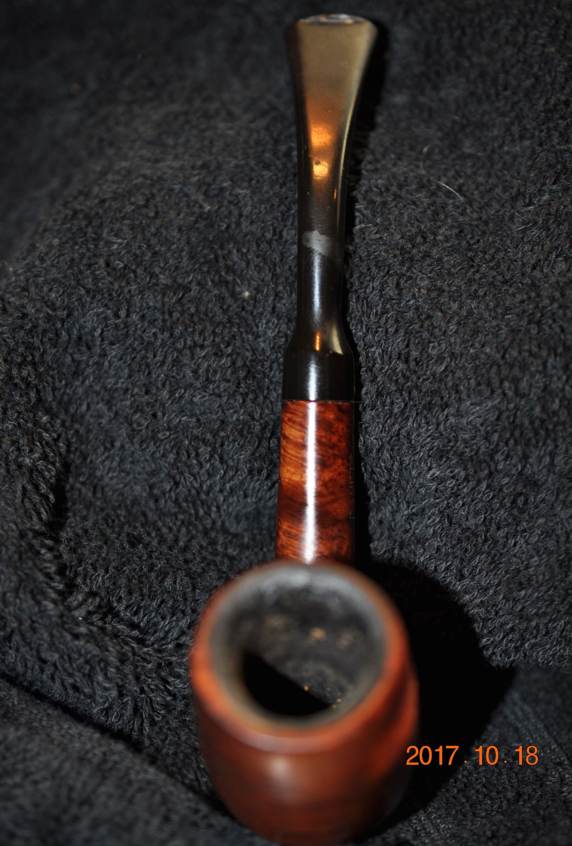
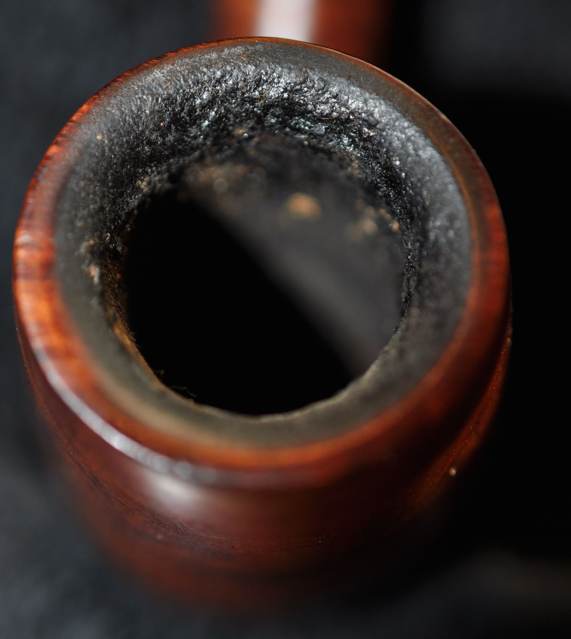
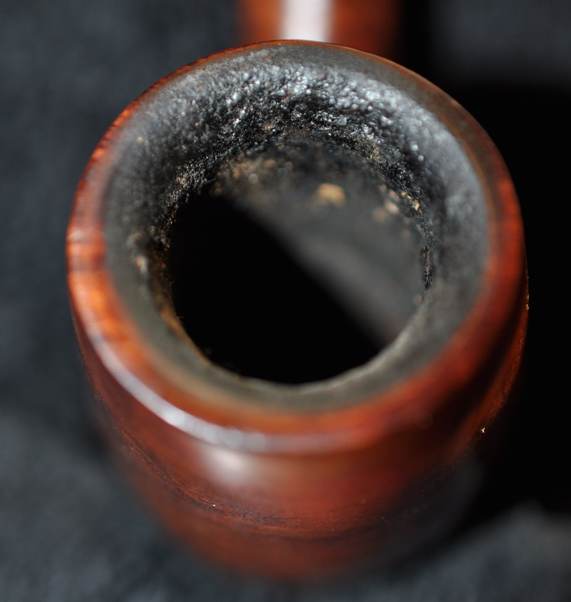
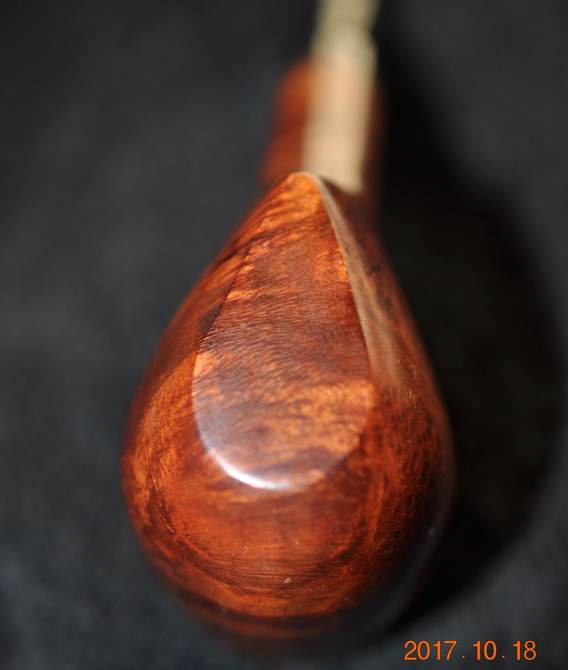
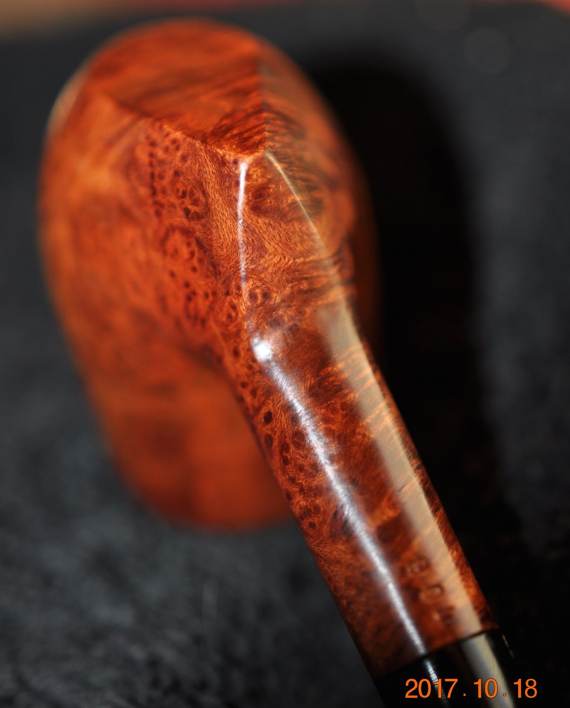
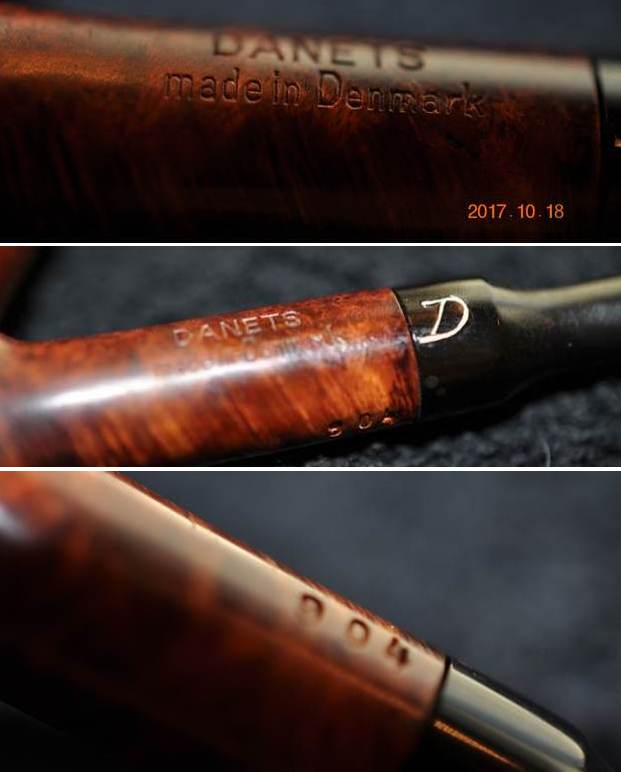
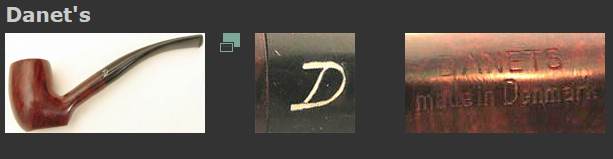
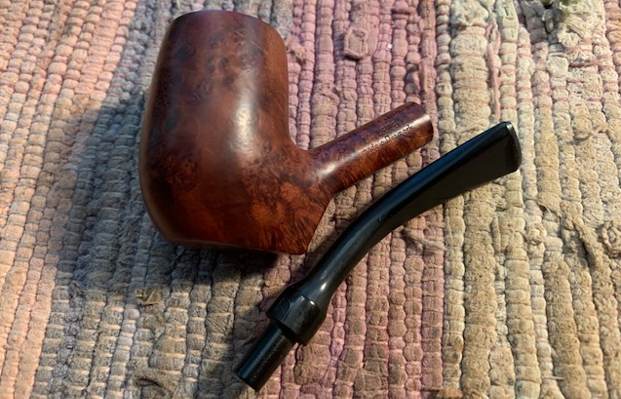
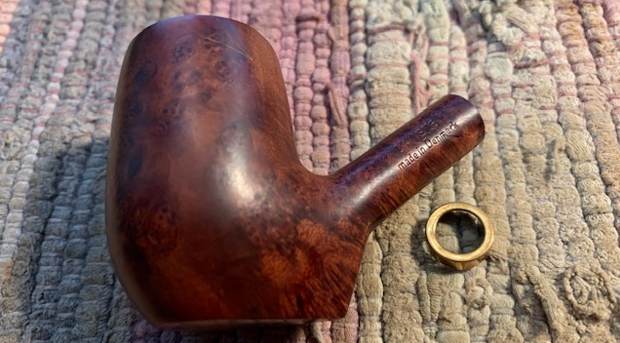
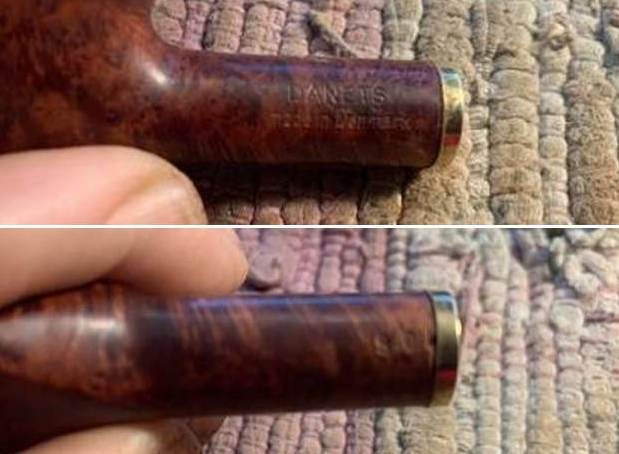
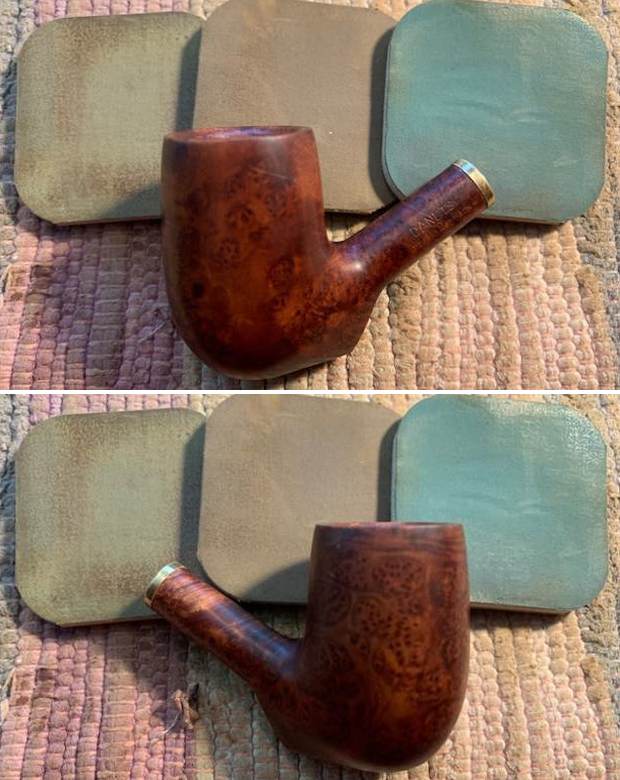
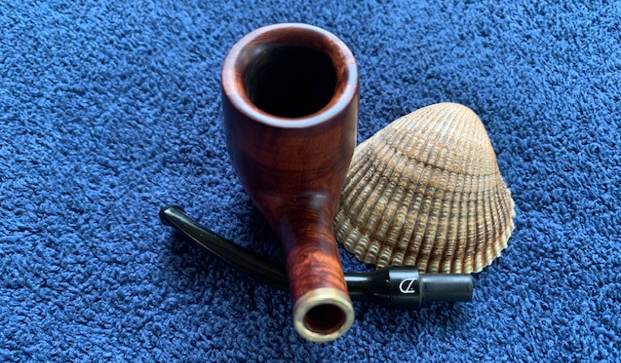
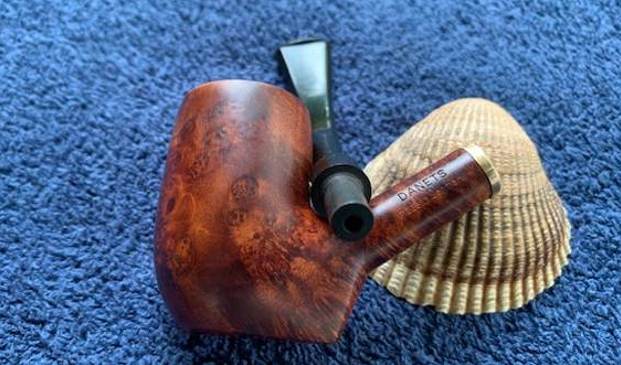
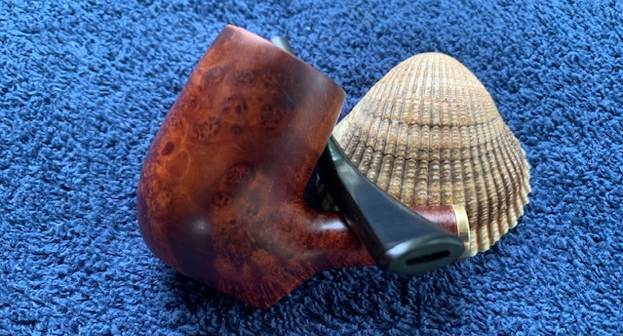
It seems I am finally getting some time to work on the backlog of pipes we have here. We have a large collection of pipes we have picked up over time and cleaned up and set aside to work on. This interesting piece was purchased from an antique store on 10/14/2017 in Pocatello, Idaho, USA and I am finally getting around to it. The pipe is Danish take on a bent Billiard with an extended flat heel that makes the pipe a sitter. It is stamped on the left side of the shank and reads Danets [over] made in Denmark. On the underside near the stem it has the shape number 904 stamped. The briar was dirty with grime ground into the finish. The bowl had a thick cake with an overflow of lava on the beveled rim top. The fancy saddle stem was lightly oxidized and had tooth marks and chatter on both sides ahead of and on the button surface. There was a cursive D on the left side of the saddle stem. There was also a crack in the shank on the left side that ran about ½ inch up the shank. He took photos of the bowl and rim top to show the condition of both. The bowl has a thick cake that overflows with lava onto the beveled inner edge of the rim. It is hard to know what the rim top and edges look like under the cake and lava. He took photos of the stem as well to show the tooth marks and chatter on the top and underside ahead of the button and on the button surface as well. He took photos of the grain on the heel of the bowl and the shank. The grain was quite nice and followed the flow of the pipe. I took photos of the stamping on the sides of the shank. The stamping was clear and readable on the shank sides. The D stamp on the stem side was also deep and readable. I looked up information on the brand before I started my work on it. I turned first to Pipephil’s site to get a quick overview (http://pipephil.eu/logos/en/logo-d2.html). I included a screen capture of the pipe pictured there. Interestingly, it is the same shape as the one that I am working on. The difference is the taper stem on the one in the photo. I also have included information in the sidebar below the picture. The information connects the Danets to Georg Jensen. I quote:Brand imported from Denmark to USA by BRANDT IMPORT. Sometimes stamped DANETS. Probably a label from Georg Jensen as the photo below would attest these stampings.
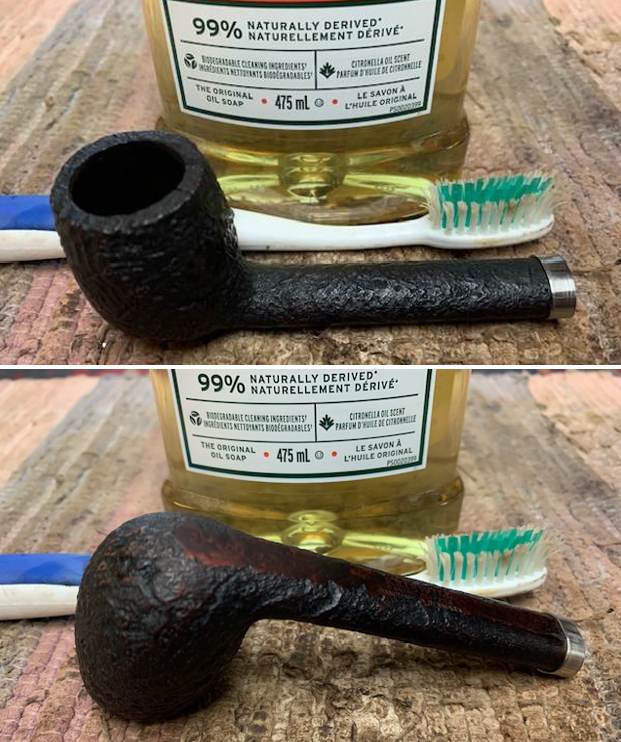
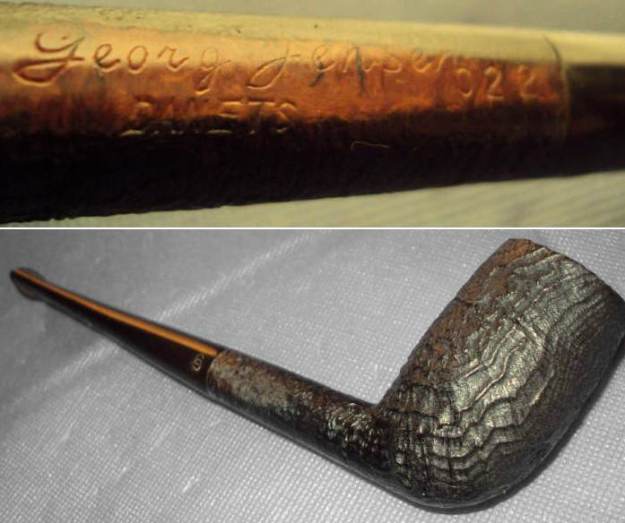
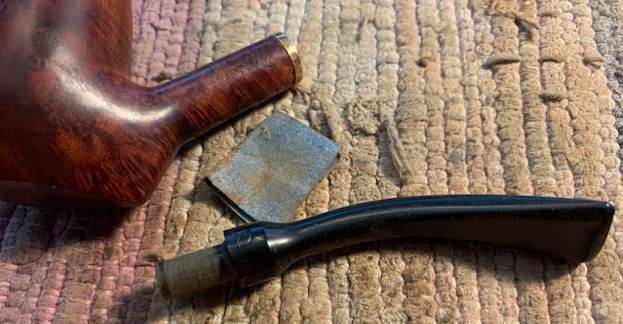
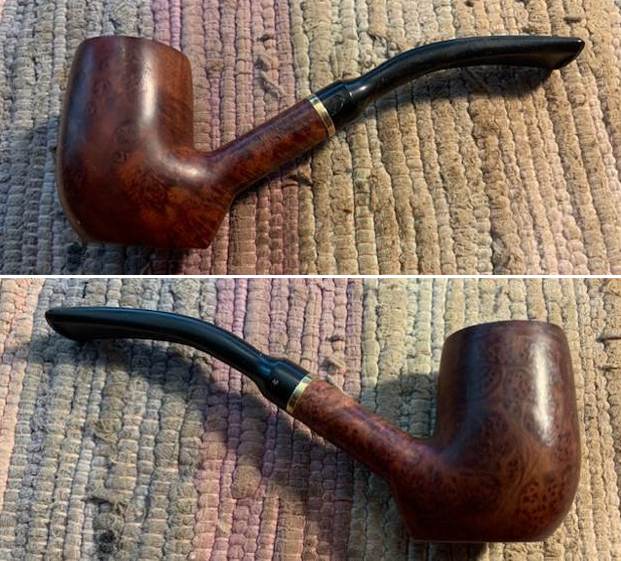
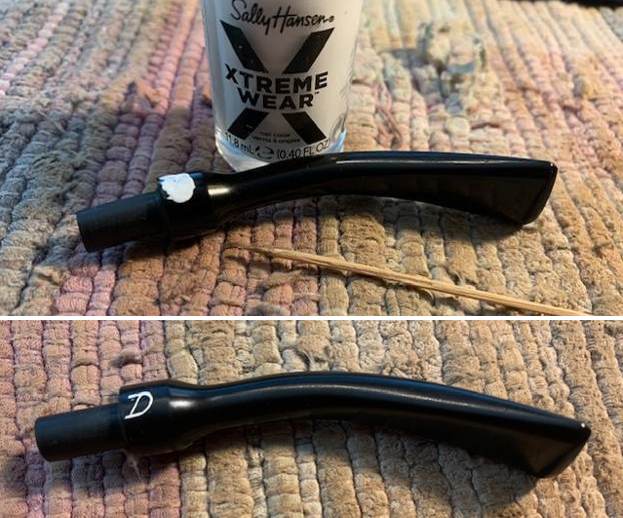
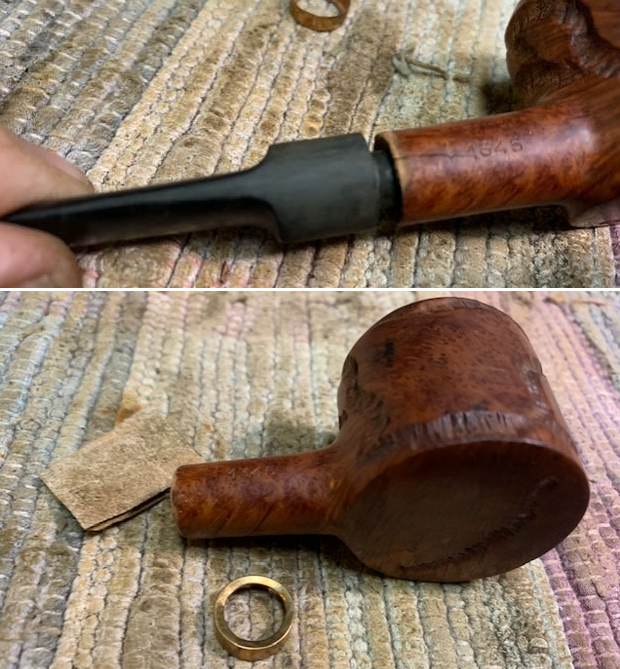
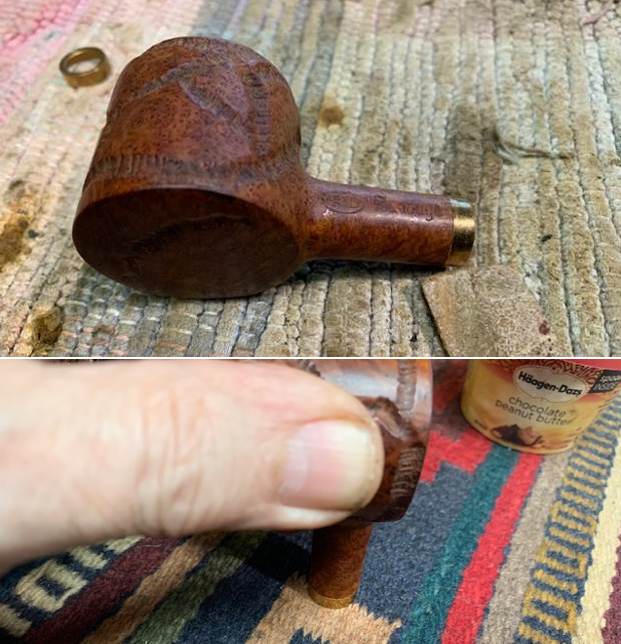
I followed one of the links in the side bar to the photo below. The link with Georg Jensen and Danets is clearly shown in the photo. With that information, I turned to work on the pipe itself. Jeff had thoroughly cleaned up the pipe. He reamed the pipe with a PipNet Pipe Reamer and cleaned up the remnants with a Savinelli Fitsall Pipe Knife. He scrubbed the bowl with undiluted Murphy’s Oil Soap with a tooth brush. He rinsed it under running warm water to remove the soap and grime. The inner edge of the rim and top cleaned up very well. He cleaned out the inside of the shank and the airway in the stem with alcohol, cotton swabs and pipe cleaners. He scrubbed the exterior of the stem with Soft Scrub to remove as much of the oxidation as possible. He soaked it in Before & After Pipe Stem Deoxidizer and rinsed it with warm water. The vulcanite stem was clean and had light tooth marks and chatter on both sides ahead of the button. There was a Danets D logo stamped on the left side of the stem. I took photos of the pipe before I started my work on it. It was an amazing looking pipe. I took photos of the rim top and bowl as well as the stem to give a sense of the condition of both. The rim top and edges looked very good. The stem cleaned up well and the tooth marks on the top and underside ahead of the button were very light.      I took photos of the stamping on the sides of the shank. They are readable as noted above. The D on the stem side lost all colour but it is deep and readable.    I took the stem out of the shank and took a photo of the overall look of the pipe. It is a unique looking pipe with the oddly shaped flat bottom on the bowl.I started my work on the pipe by addressing the hairline crack in the left side of the shank. I found a brass band that was a perfect fit on the shank. The depth of the band was too much and when on the shank covered the edges of the stamping on the shape number on the underside.I used a piece of 220 grit sandpaper to sand the underside of the band and reduce the depth. I took half of the depth off and checked the fit regularly to make sure it was thin enough to not cover the stamping on the underside of the shank. Once I had the depth correct I used a tooth pick to put white glue on the cracked shank and inside of the band and pressed it into place on the shank.   I took photos of the freshly fitted band. The glue had cured and you can see the stamping is not affected by the placement of the band.    With the band binding together the crack the tenon was too big for the mortise. I sanded the tenon with 220 grit sandpaper to reduce the diameter of the tenon so that it fit the mortise. I put the stem in the shank and took photos of the new look of the pipe. I polished the briar with micromesh sanding pads – dry sanding it with 1500-12000 grit pads. I wiped the briar down with a damp cloth to remove the sanding dust. The briar really took on a rich shine with the polishing.  I rubbed the bowl down with some Before & After Restoration Balm. I worked it into the briar with my finger tips to clean, revive and preserve the wood. It really brings the grain alive once again. I let it sit for 15 minutes then buffed it off with a soft cloth. The grain really pops at this point in the process.   I set the bowl aside and turned my attention to the stem. I filled in the small tooth marks (almost pin prick marks) next to the button on each side of the stem with clear super glue. Once it cured I sanded them smooth with 220 grit sandpaper and started the polishing with 400 grit wet dry sandpaper.     I polished the stem with micromesh sanding pads – 1500-12000 grit pads. I wiped the stem down after each pad with a cloth impregnated with Obsidian Oil. I finished the polishing with some Before & After Pipe Stem Polish – both Fine and Extra Fine. The stem looked very good.  I touched up the white stamp on the “D” on the left side of the stem with white acrylic fingernail polish. I worked it into the depth of the stamp with a tooth pick. Once it dried, I scraped off the excess material and polished the stem.    As always I am excited to finish a pipe that I am working on. I put the Georg Jensen Made Danet 904 Sitter back together and buffed it with Blue Diamond on the buffing wheel. I gave the bowl and the stem multiple coats of carnauba wax. I buffed the pipe with a clean buffing pad and hand buffed it to raise the shine. It is fun to see what the polished bowl looks like with the grain popping around the bowl and shank. The thin brass repair band adds a touch of bling to the pipe. The polished vulcanite saddle stem brought the combination to a beautiful close. It is light and well balanced. Have a look at it with the photos below. The dimensions are Length: 5 inches, Height: 1 ¾ inches, Outside diameter of the bowl: 1 inch, Chamber diameter: ¾ of an inch. The weight of the pipe is 27 grams/.99 ounces. It is a beautiful pipe and one that will be on the rebornpipes store in the Danish Pipe Makers section. If you are interested in adding it to your collection let me know. Thanks for walking through the restoration with me as I worked over this pipe. Thanks to each of you who are reading this blog. I want to keep reminding us of the fact that we are not pipe owners; we are pipemen and women who hold our pipes in trust until they pass on into the trust of the next trustee.

Restemming & Restoring a French Made GBD Sauvage 1345 Poker/Pot


Blog by Steve Laug

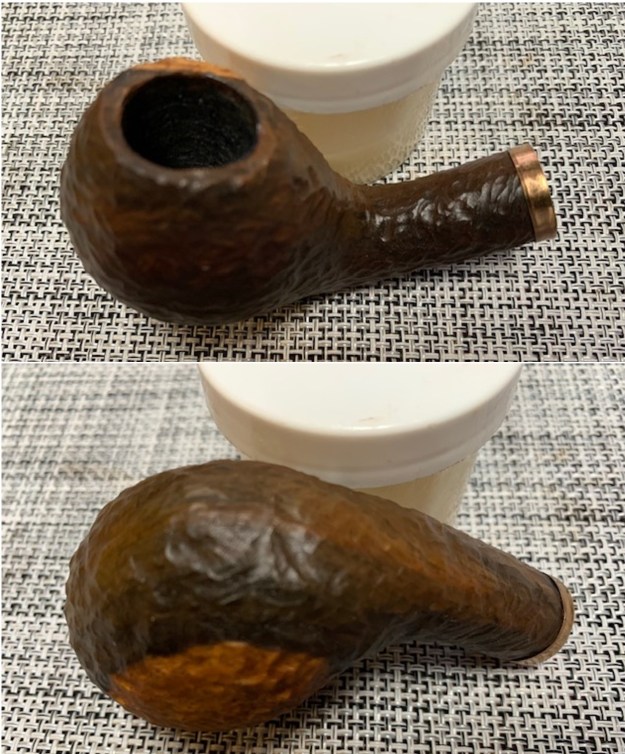
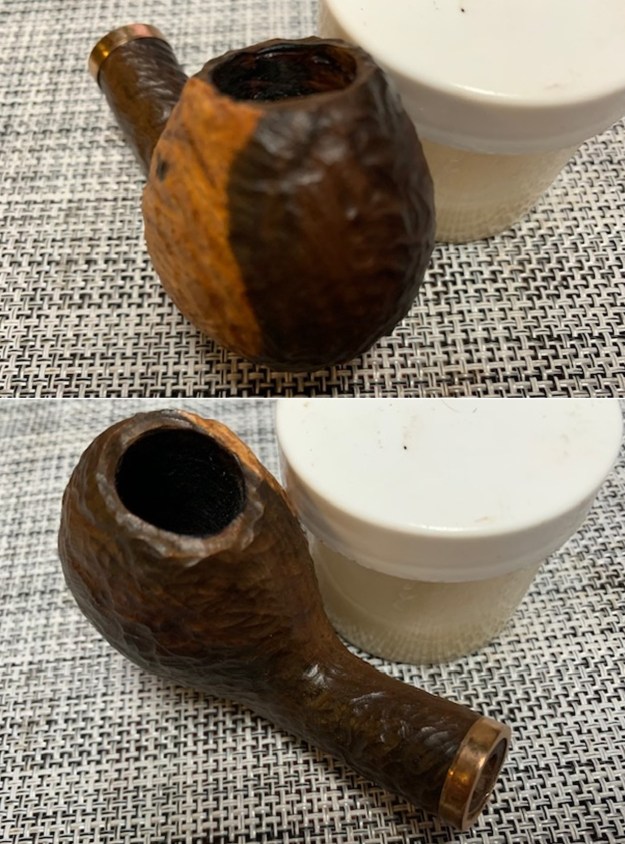
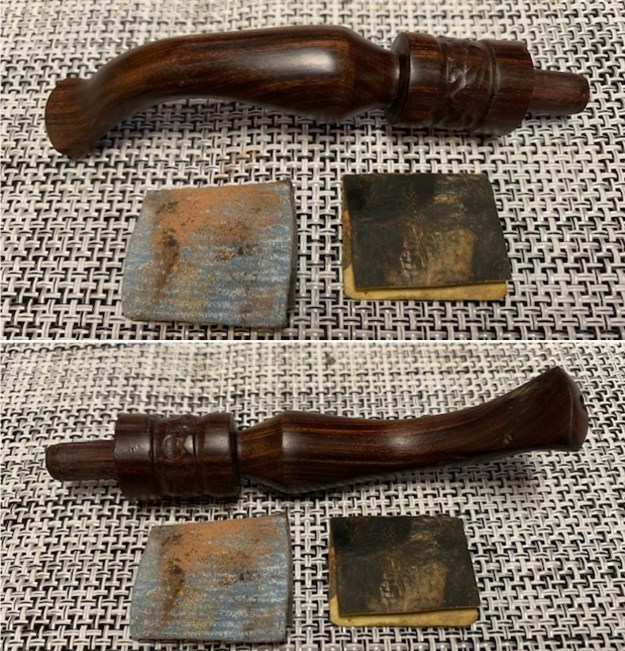
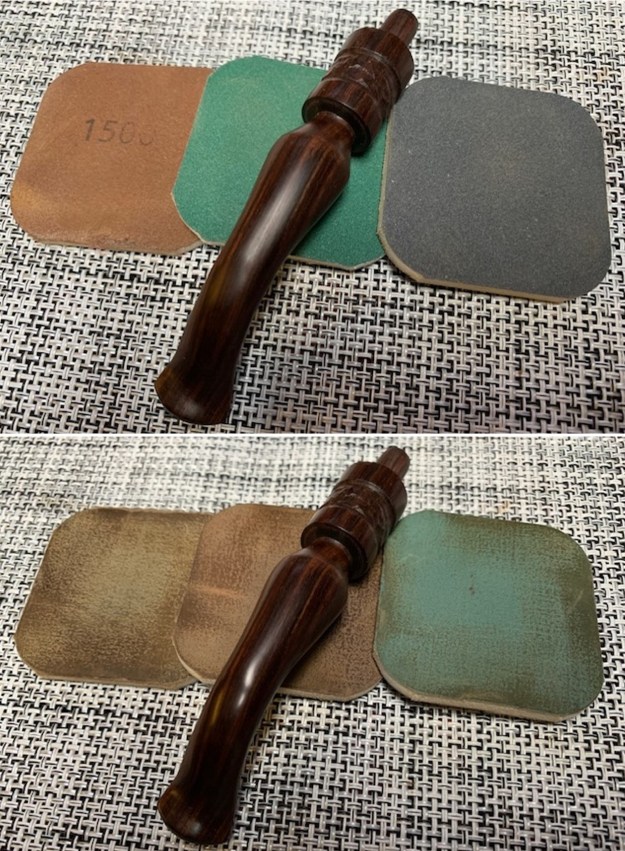
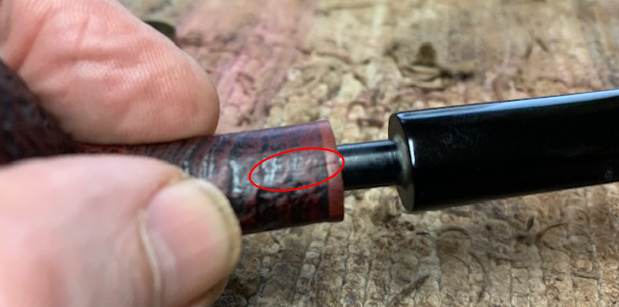
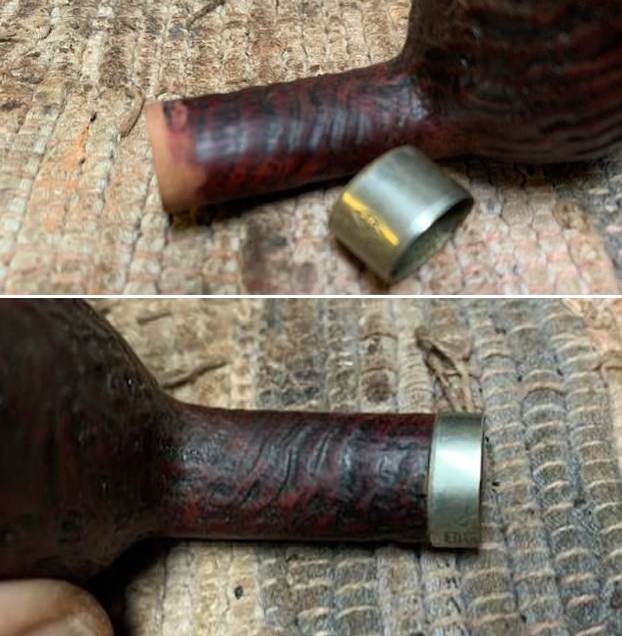
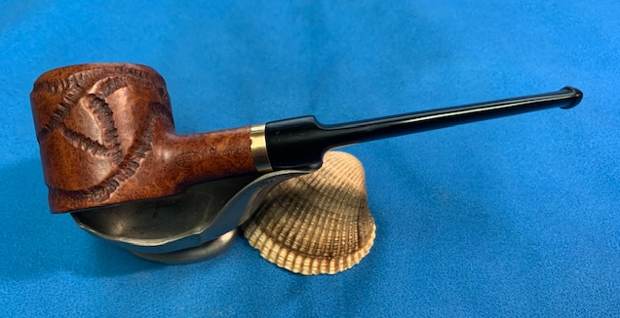
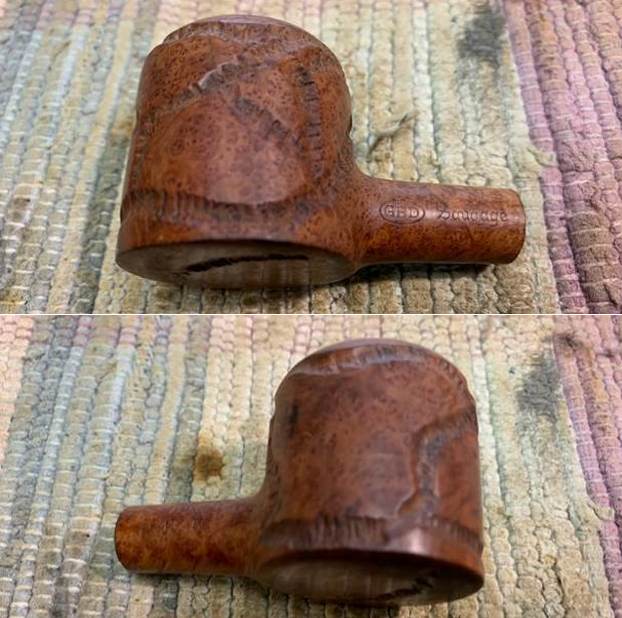
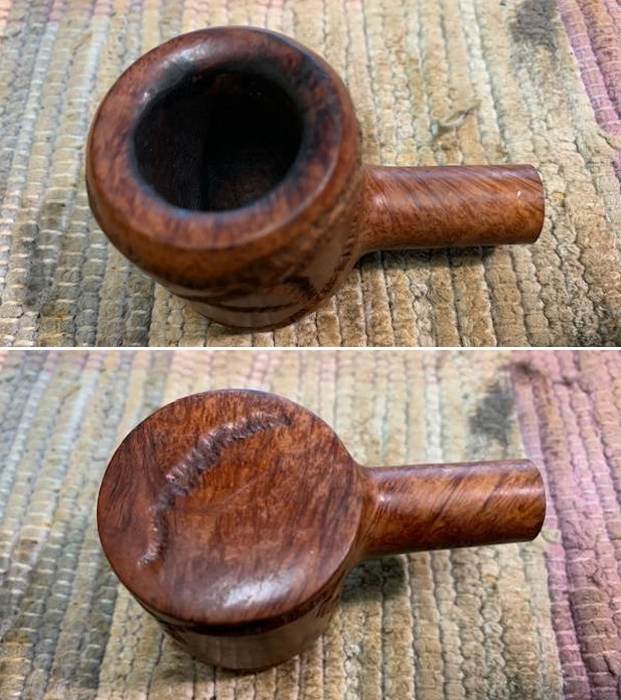
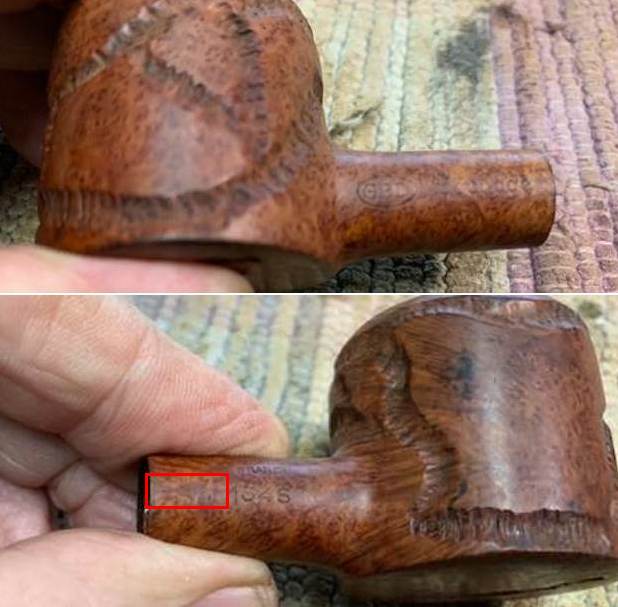
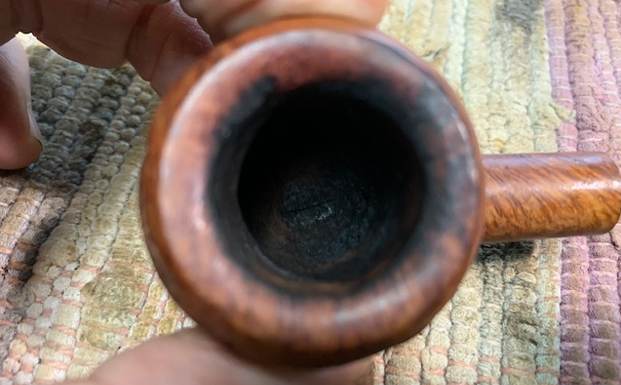
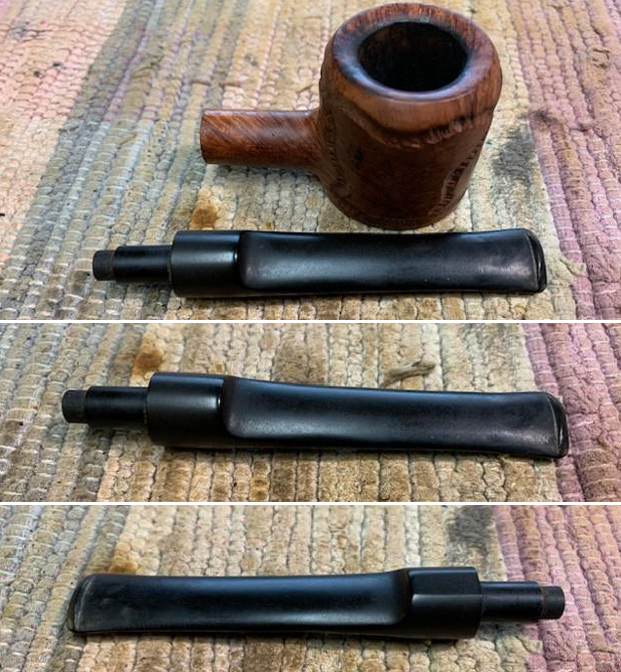
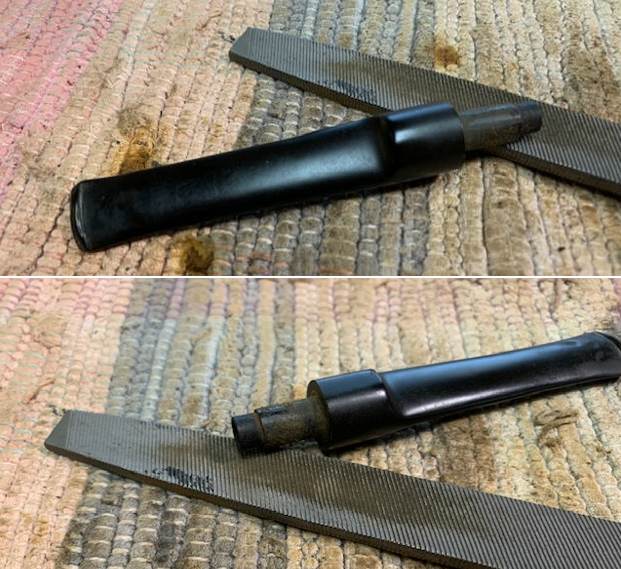
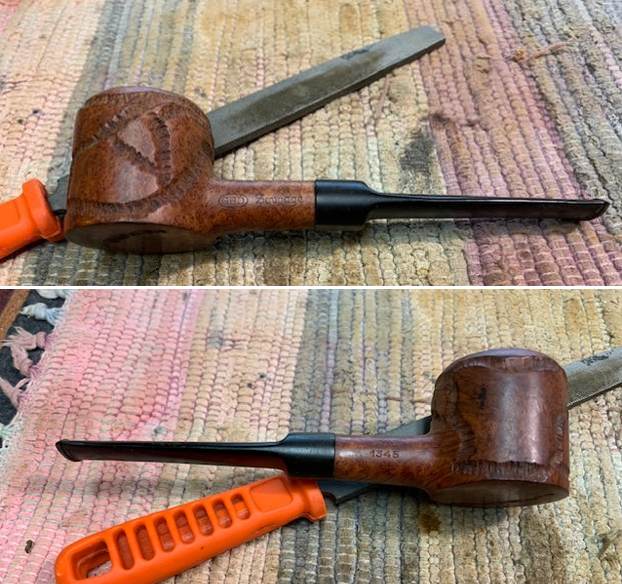
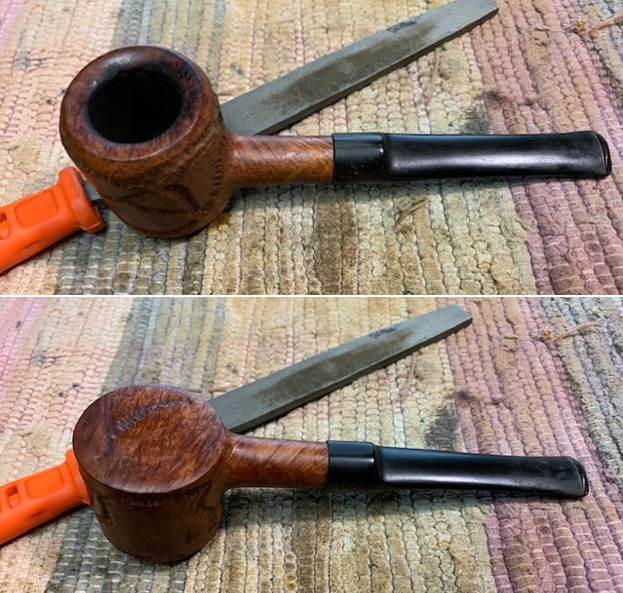
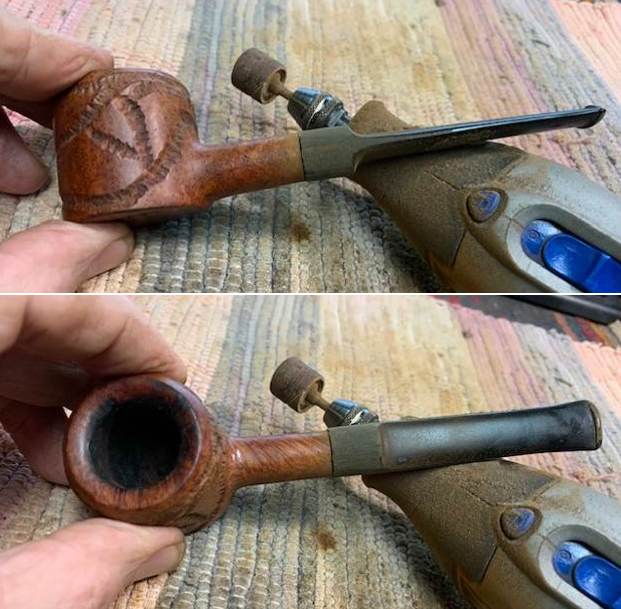
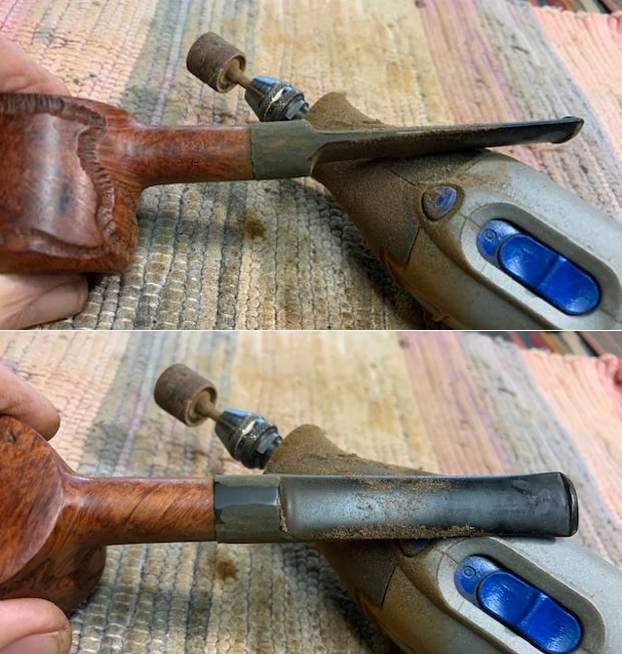
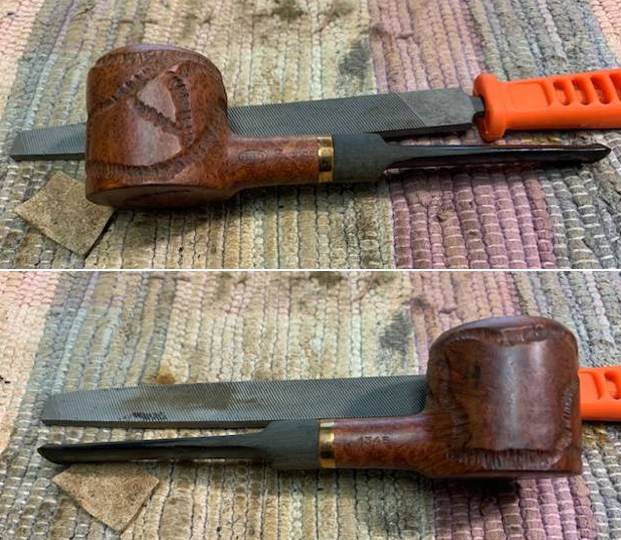
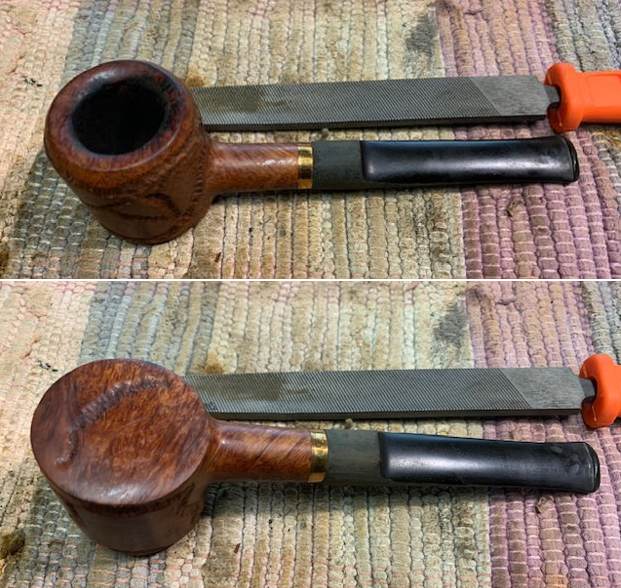
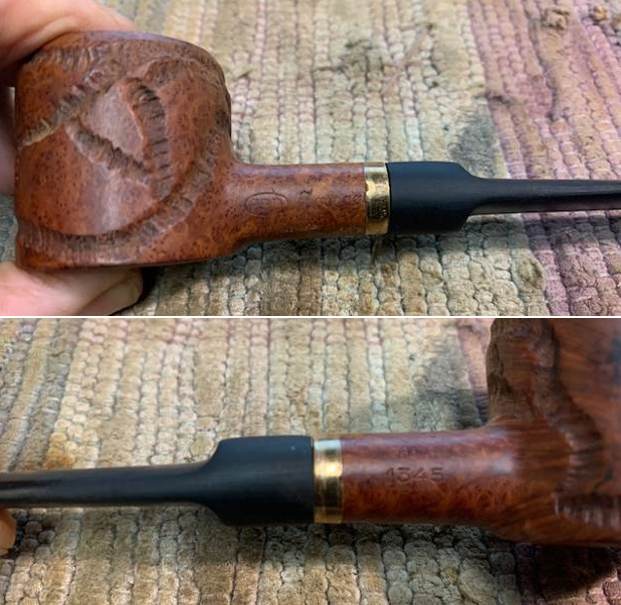
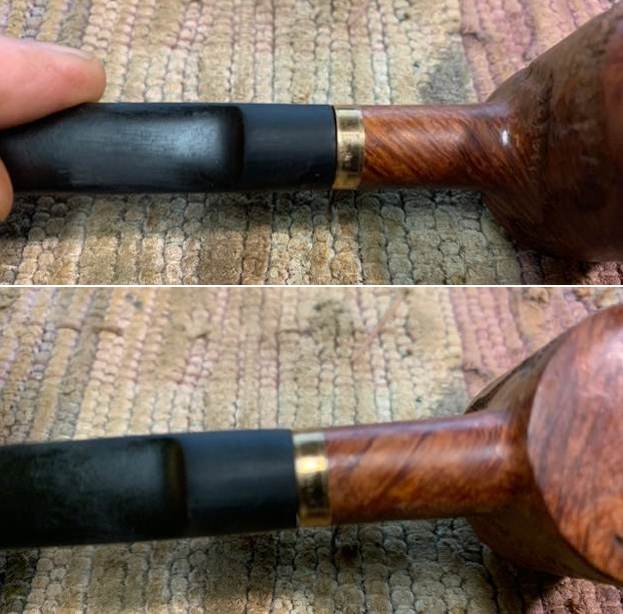
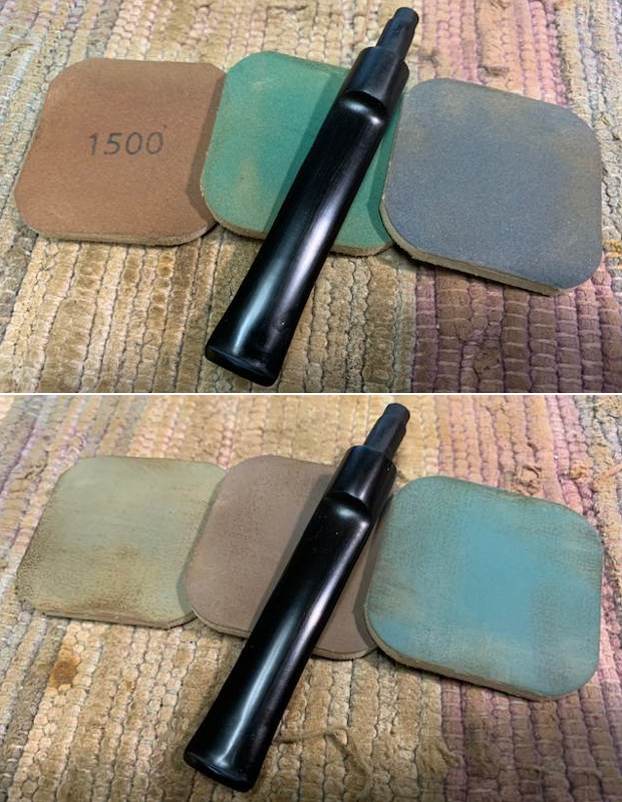
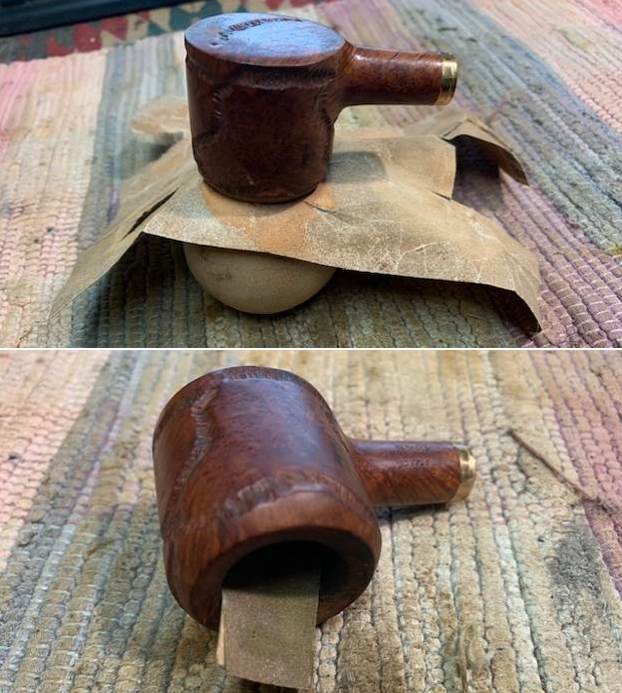
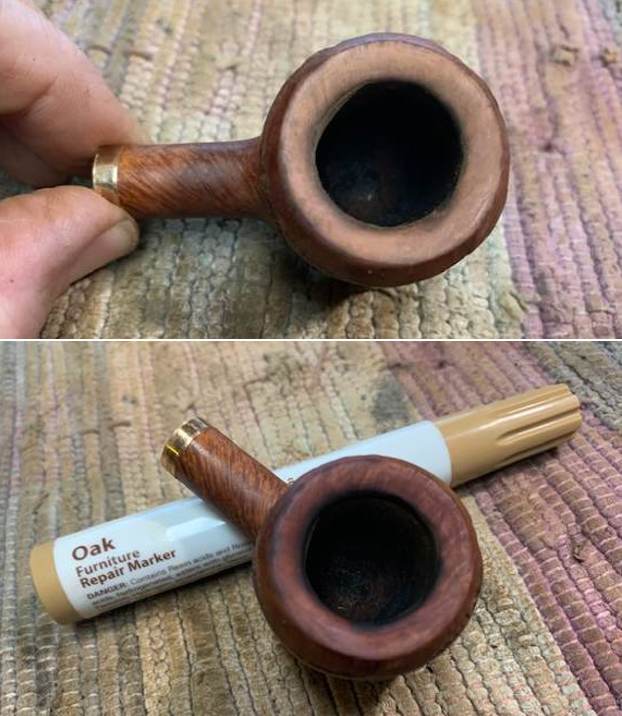
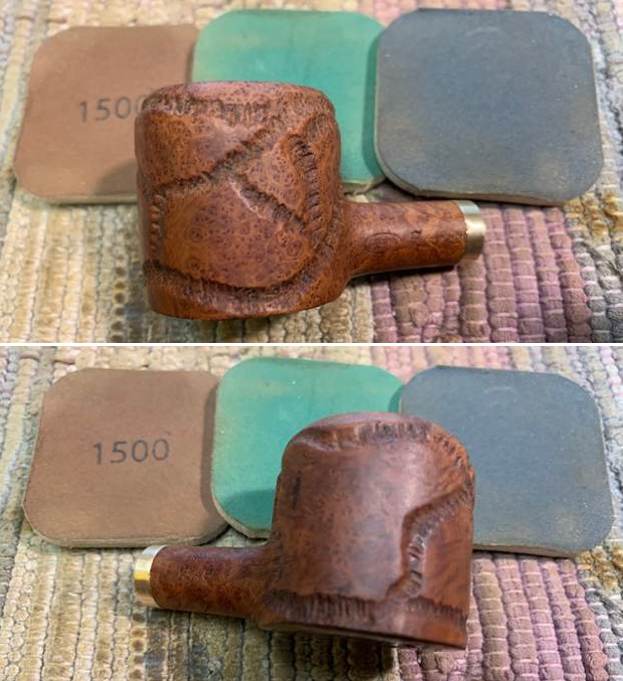
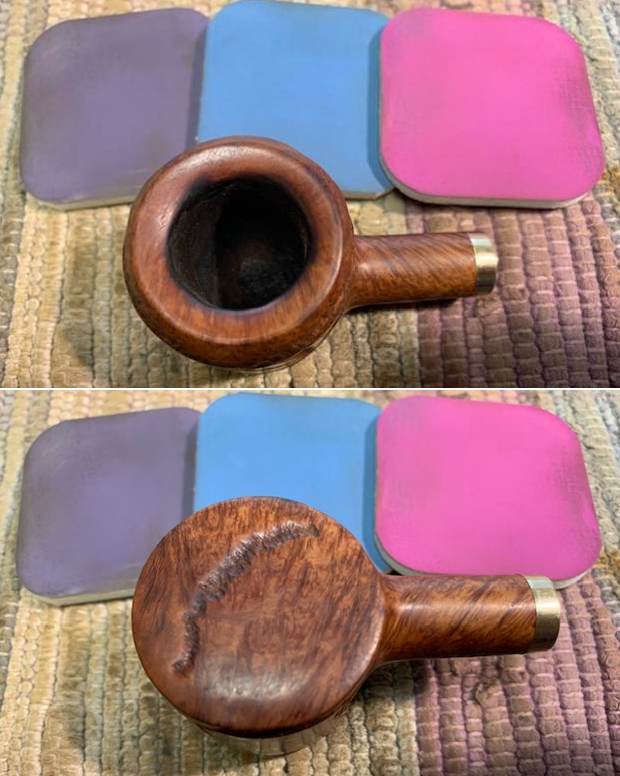
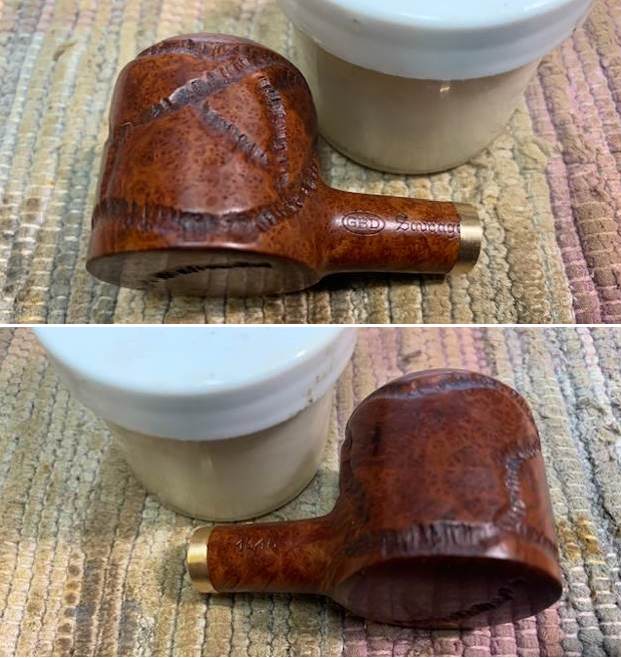
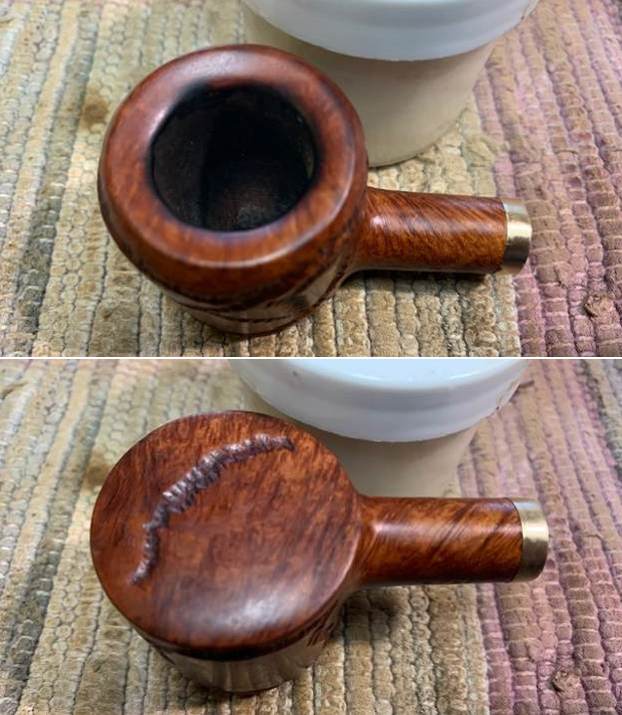
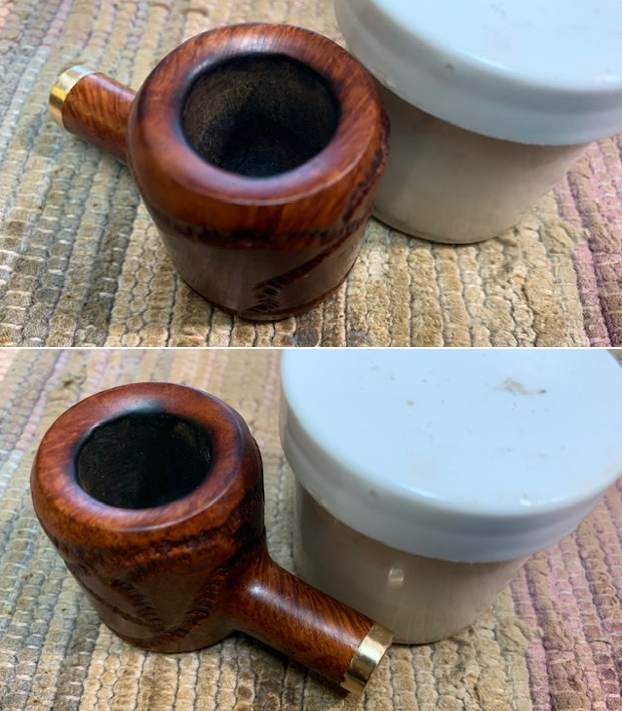
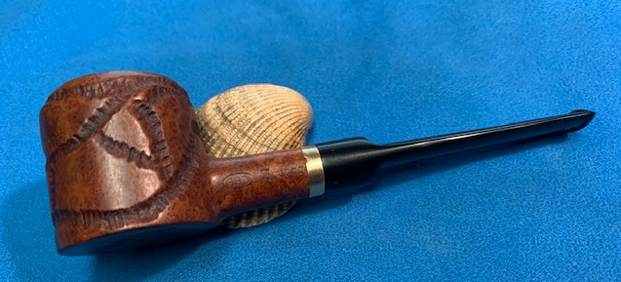
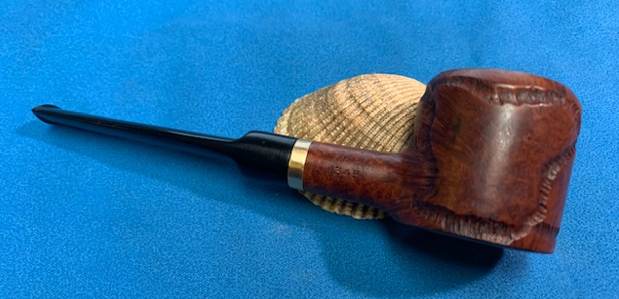
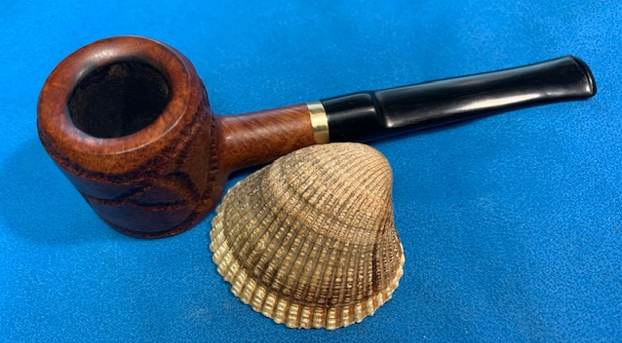
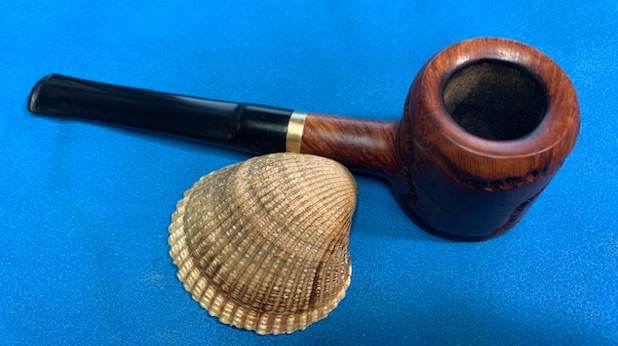
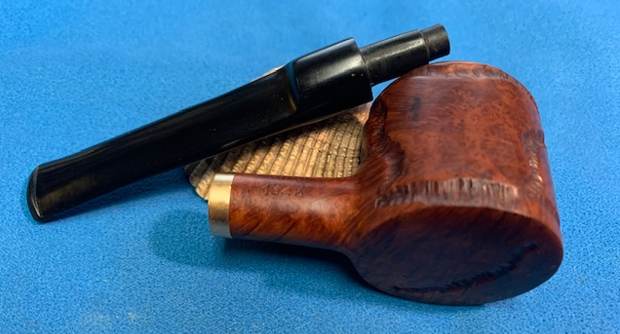
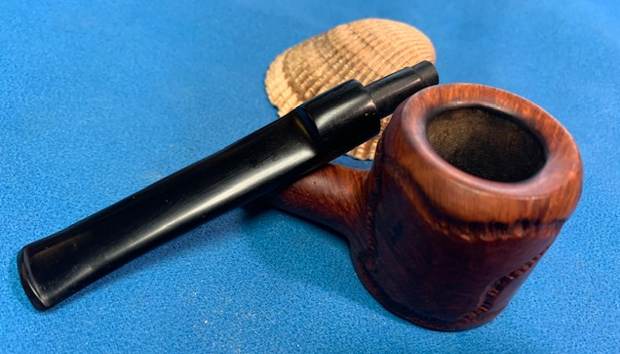
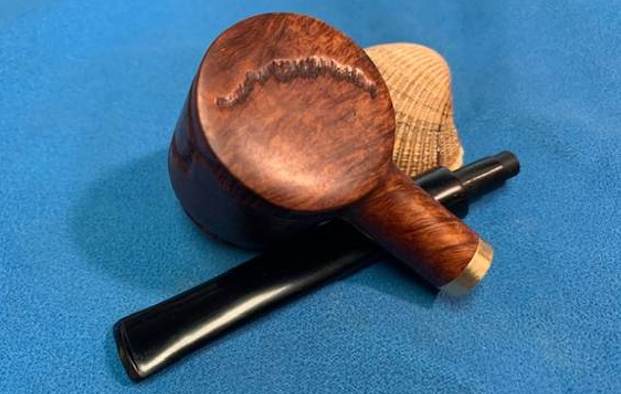
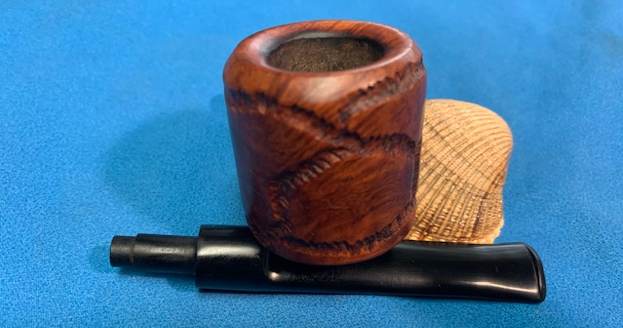
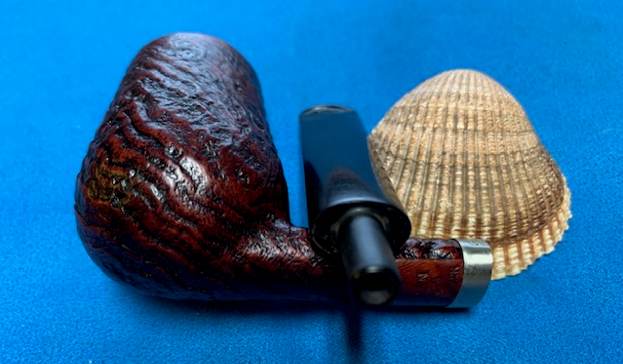
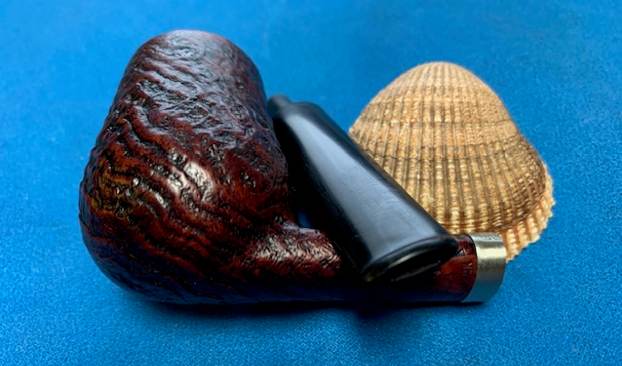
The next pipe I chose to work on was another bowl from my box of bowls to restem. It is a different looking bowl that combines both a Pot and a Poker shape. It has a inward beveled rim, flat bottom and worm trails curled around the bowl sides. When I examined the shank it had a small hairline crack on the right side that would need to be repaired but otherwise it was solid. It was unique enough I wanted to work on it. It is stamped on the left side of the shank and has a GBD oval logo next to the bowl/shank union followed by Sauvage. On the right side of the shank it is stamped FRANCE [over] the shape number 1345. The stamping was clear and readable with a lens. The bowl had been cleaned and reamed somewhere along the way by either Jeff or me. I honestly don’t remember when or where we got this bowl. It looked very good and I was looking forward to seeing the finished pipe. The stem was long gone so this would be a restemming job. I took some photos of the bowl to give a sense of the condition of bowl. The stamping was on both sides of the shank and it is clear and readable as noted above. I have also drawn a red rectangle around the area where the crack in the shank is located in the photo below.The next photo shows the rounded rim top and edges. It also shows the condition of the bowl and rim top/edges. It is clean and looks quite good. There is some burn damage on the inner edge of the bowl and on the beveled rim top at the front and the back of the bowl.Now it was time to begin my restemming work on this pipe. I went through my can of stems and chose a stem that would work. I would need to remove some the diameter of the tenon and the saddle portion to fit the thin almost pencil shank of the pipe. I used a flat file to remove the small amount of excess on the tenon. It was a close fit but I did not want to make the crack in the shank worse by a tenon that was not correct.When I had finished shaping the tenon I sanded it with a piece of 220 grit sandpaper and inserted it in the shank. It was looking pretty good. I would need to trim back some of the diameter of the saddle portion but I liked it! I generally use a Dremel and sanding drum to reduce the diameter of the stem. I do this with the stem in place on the shank so that I do not overdo it. It is a touchy exercise and one slip and I could easily damage the shank and make more work for myself. I move carefully and take it back as close as I can at this point. Once I band the shank I will need to do some more work on it but it is starting to look right. With the fit close enough it was time to band the shank. I generally do the final adjustments on the stem diameter after I have fit the band in place. I picked a band out that would fit when heated. I took a photo of the crack in the shank to show what I was working with. I sanded the shank end and gave it a slight bevel to facilitate pressing the band in place. Once it was ready I put the band on the shank. It was tight so I heated it with a lighter and when it had expanded I pressed it against the pad on my desk and pushed it all the way onto the shank. It covered the “e” on Sauvage slightly but the length of the crack defined what I needed to band it. I used some 220 grit sandpaper to once again take a little bit off the diameter of the tenon and the band compresses the crack and the diameter of the mortise changes. When I was finished I put the stem in the shank and took photos of the newly banded shank. It was going to look good once I finished shaping the stem diameter but it is very close at this point. What do you think of the new look? I finished adjusting the fit of stem diameter with 220 grit sandpaper and everything was aligned. I started the polishing with 400 grit wet dry sandpaper and the stem was looking very good at this point. Now I needed to deal with the tooth marks and chatter on the end of the stem. I “painted” them with the flame of a lighter to lift them as much as possible. I filled in the ones that remained with clear super glue. Once the glue cured I flattened out the repairs with a small flat file. I followed that by sanding the stem with 220 grit sandpaper to blend them into the surface. I started polishing the stem with 400 grit wet dry sandpaper. I polished the stem with micromesh sanding pads – wet sanding with 1500-12000 grit pads. I wiped the stem down after each sanding pad with Obsidian Oil. I polished the stem with Before & After Pipe Stem Polish – both Fine and Extra Fine and buffed it with a cotton cloth. Once I had finished the polishing I gave it final coat of Obsidian Oil and set it aside to dry. With the stem finished (other than to buff the pipe at the end)I set it aside and I turned my attention to the bowl. I used a wooden ball that Kenneth gave me with a piece of 220 grit sandpaper to clean up the bevel. I finished with a folded piece of 220 grit sandpaper to further minimize the burn damage. I touched up the stain with an Oak Stain pen to match the surrounding briar of the bowl. It looked much better at this point. I polished the briar with micromesh sanding pads – dry sanding with 1500-12000 grit pads. I wiped the bowl down after each pad with a damp cloth to remove the sanding debris left behind. I rubbed the bowl and shank down with Before & After Restoration Balm. I worked it into the surface of the smooth and worm trails on the bowl and shank with my fingertips to clean, enliven and protect the briar. I let the balm sit for a little while and then buffed with a cotton cloth to raise the shine. The Balm did its magic and the grain really took on dimension and colour. I am excited to be on the homestretch with this petite French Made GBD Sauvage 1345 Poker/Pot. This is the part I look forward to when it all comes back together, polished and waxed. I put the bowl and the new stem together and polished the stem and bowl with Blue Diamond to polish out the scratches in the vulcanite and give a light shine to the bowl. I gave the bowl and the stem multiple coats of carnauba wax. I buffed the pipe with a clean buffing pad to raise the shine. I hand buffed it with a microfiber cloth to deepen the shine. The pipe polished up pretty nicely. The worm trail carving on the bowl actually looks okay with the rest of the smooth finish. The banded shank and new polished black saddle vulcanite stem works well with this little sitter. This GBD Sauvage Poker/Pot was another fun pipe to work on and came out looking great. It is a comfortable sized pipe to hold in the hand. The finished pipe is shown in the photos below. The dimensions of the pipe are Length: 5 ¾ inches, Height: 1 ½ inches, Outside diameter of the bowl: 1 ½ inches, Chamber diameter: ¾ of an inch. The weight of the pipe is 33 grams/1.16 ounces. If you are interested in adding this pipe to your rack it will be on the rebornpipes store in the French Pipemakers Section soon. Thanks for reading this blog and my reflections on the pipe while I worked on it.
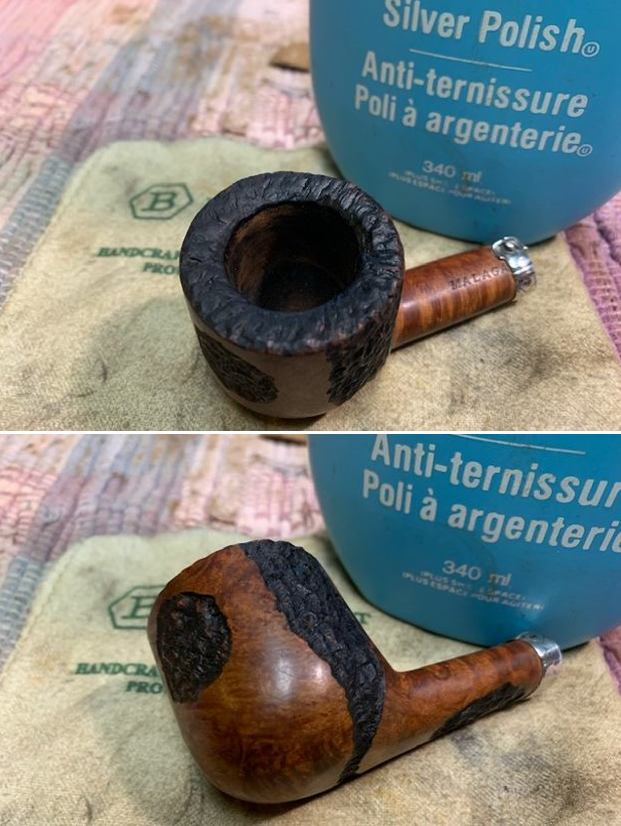
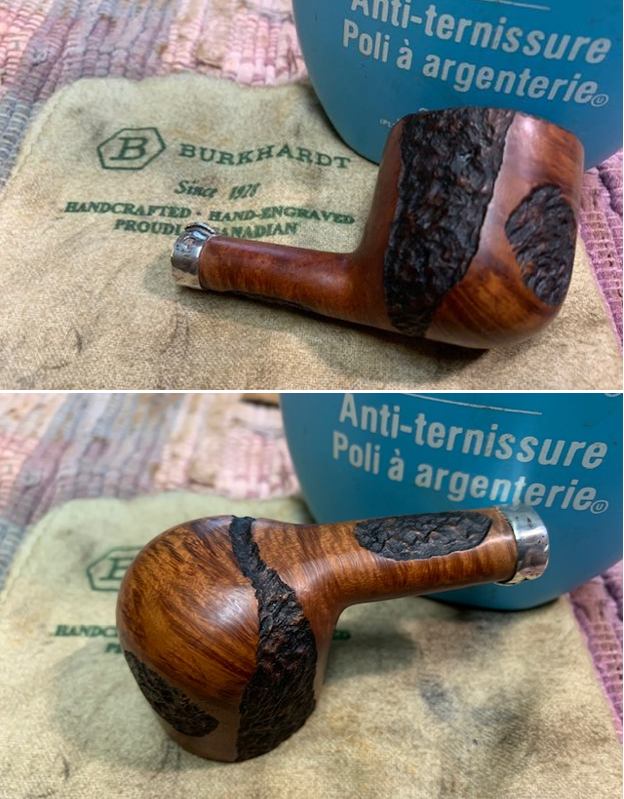
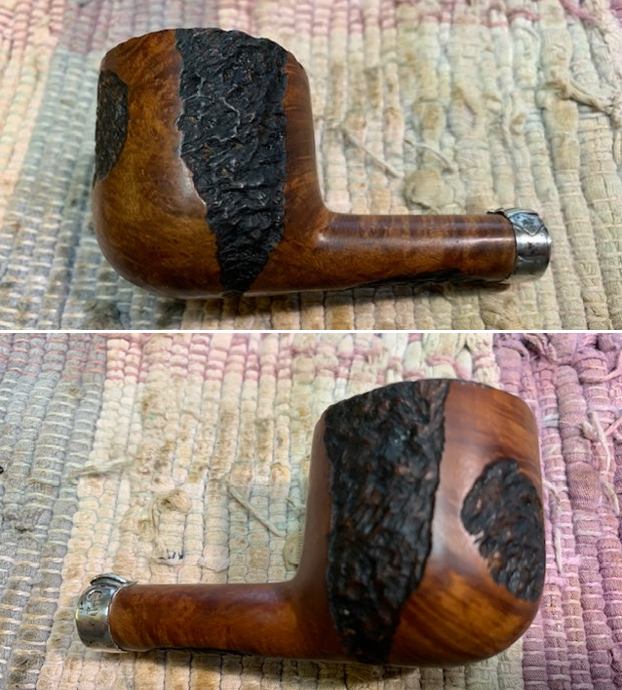
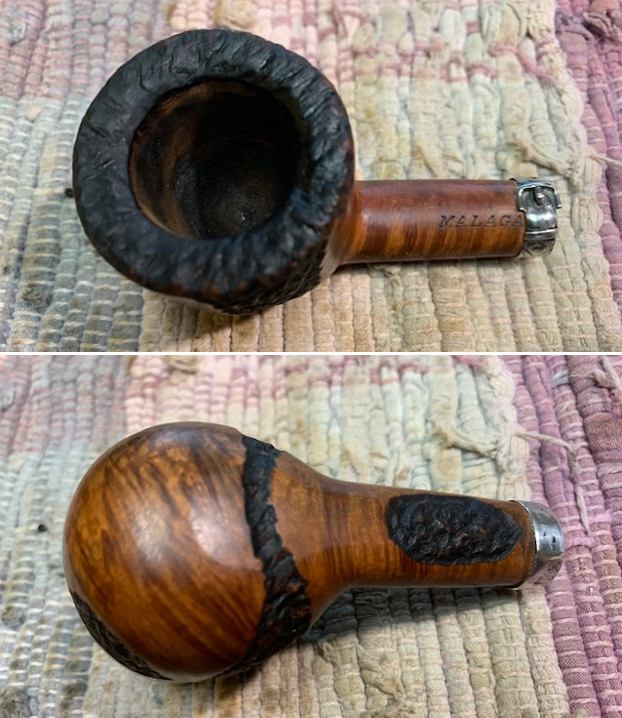
Restemming & Restoring a Malaga Mixed Finish Pot  


Blog by Steve Laug

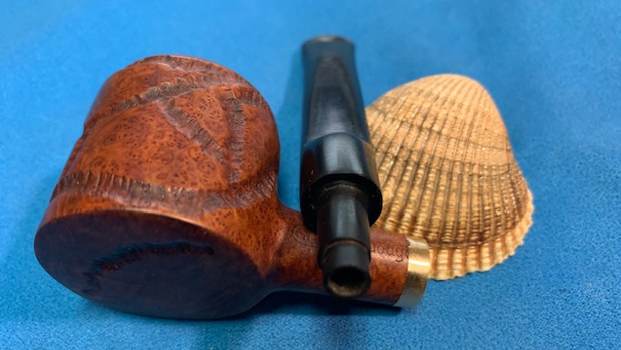
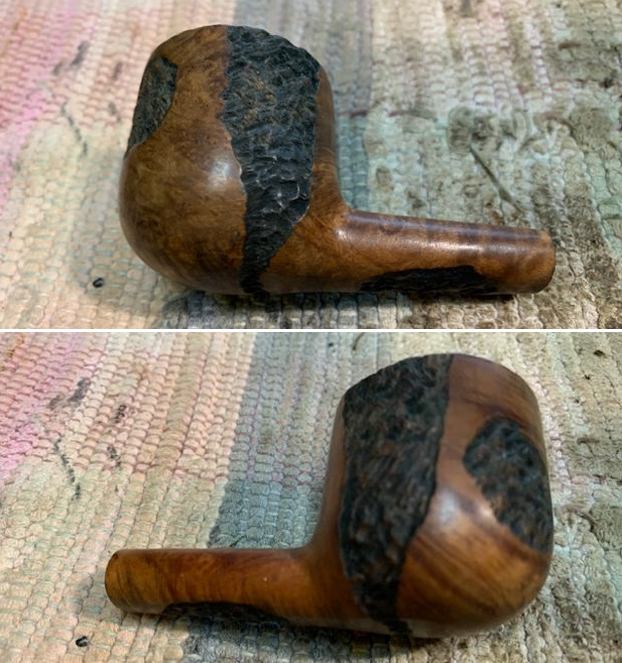
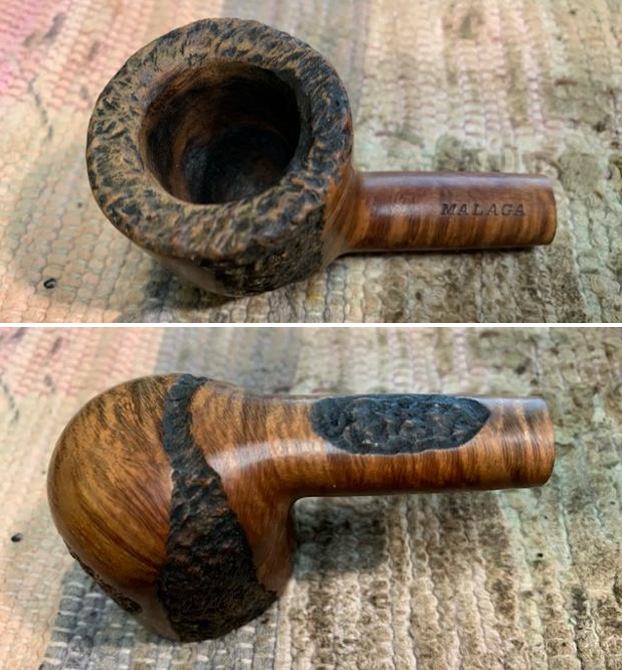
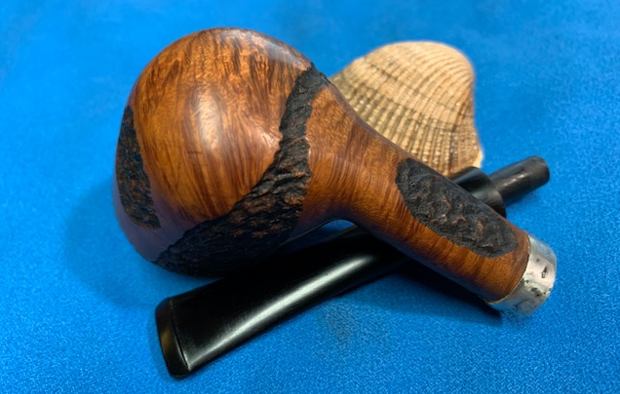
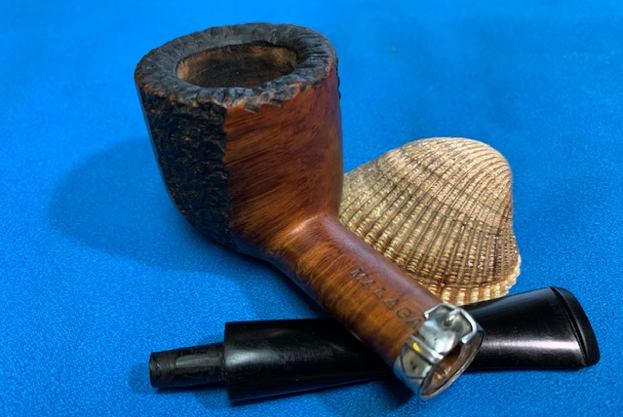
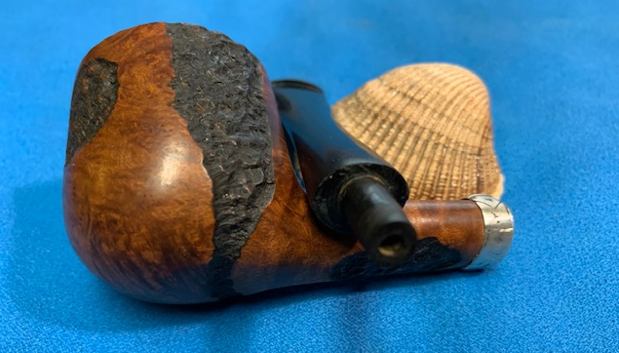
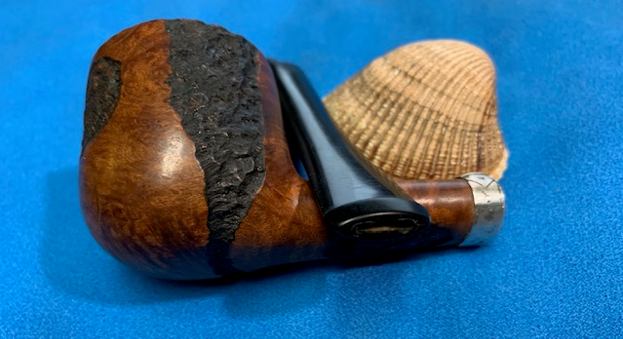
This morning I went through my box of stummels (bowls) here and picked out a Pot shaped bowl that had some promise to me. I went through my can of stems and found an oval shaped stem with the casting marks on the sides and button end. The pipe I chose to work on is an interesting Malaga Pot with a mixture of rusticated portions and smooth portions on the bowl and shank sides. I have worked on a lot of Malaga pipes in the past so I am not a stranger to the brand. I have included the link below to a bit of history on the brand that I compiled.

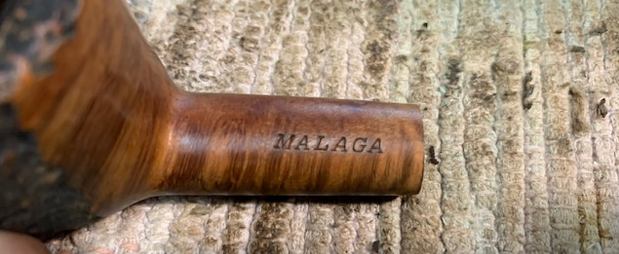
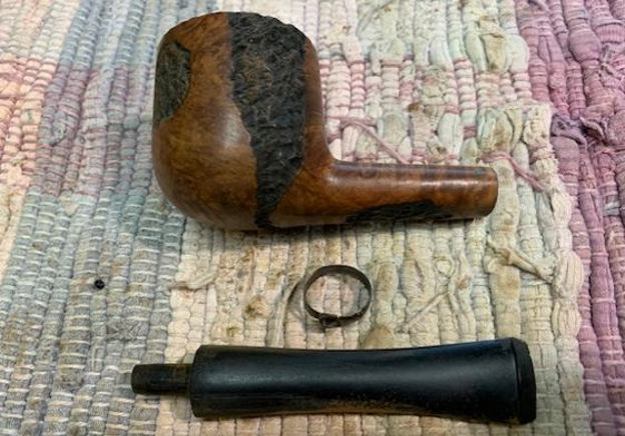
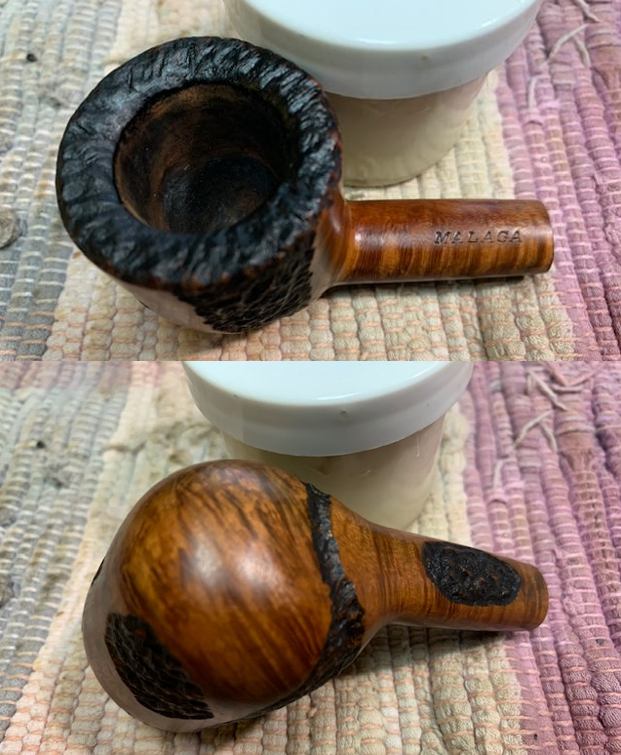
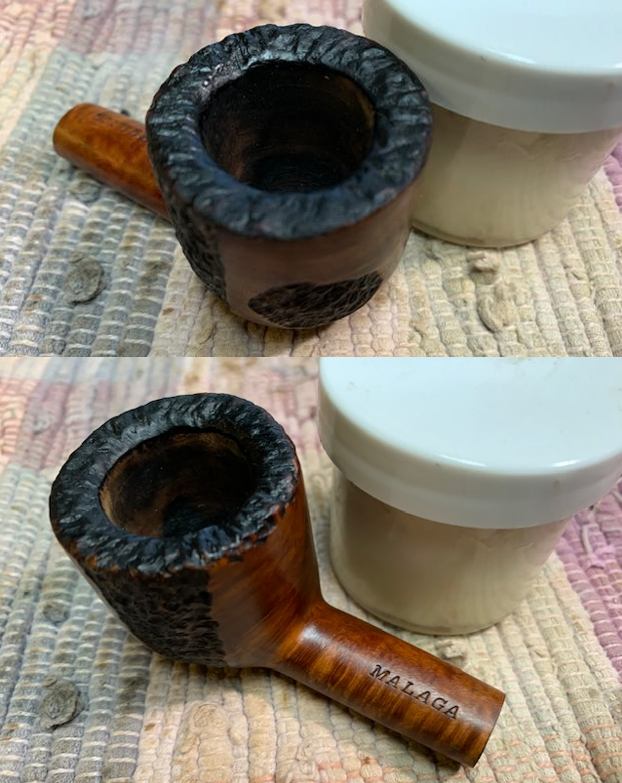
The bowl looked very good. The grain around the sides was quite nice and a mix of flame and birdseye grain. The rim top was rusticated as were some patches on the front, the sides and the bottom of the shank. The inner edge of the bowl showed some wear. There was a hairline crack on the underside of the shank that extended about ¼ inch up the shank. The interior of the bowl was clean and there were not any chips, cracks or checking on the walls. Examining the mortise there was a snapped off tenon in the shank. It was crumbling and would need to be pulled. The finish was washed out and bit and tired but still quite redeemable. The stamping on the pipe was clear and readable. On the topside it read MALAGA and no other stamping was on the shank. I took some photos of the bowl before I started to work on it. I took a photo of the stamping on the topside of the shank. It reads as noted above and is clear and readable. I went through some of stems and found an oval vulcanite stem blank. It was the right diameter and once I turned the tenon it would fit the shank. It has casting marks on the sides and on the button end. I also found a unique sterling silver band that fit the shank. It was shaped like a belt and buckle and would look very good.I have worked on quite a few Malaga pipes and blogged their restorations, so rather than repeat previous blogs, I am including the link to one that gives some of the history of the Malaga brand and the Malaga Pipe Shop in Royal Oak, Michigan in the USA from a catalogue. It gives a sense of the brand and the history in their own words. Follow the link to get a feel for the brand and the pipemaker – https://rebornpipes.com/2013/02/09/george-khoubesser-and-malaga-pipes/.

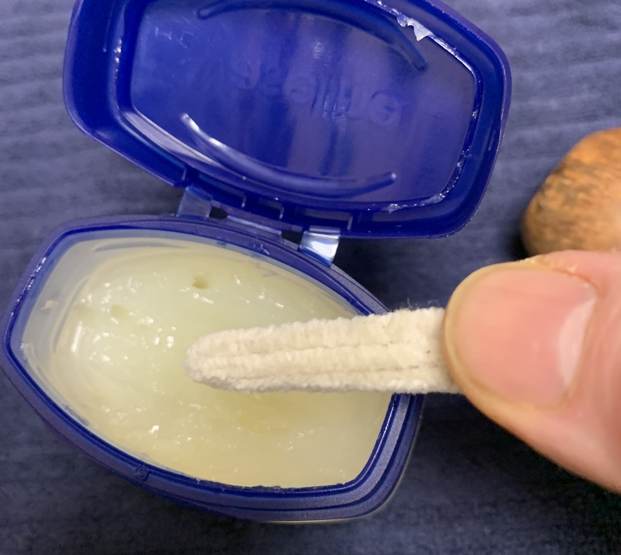
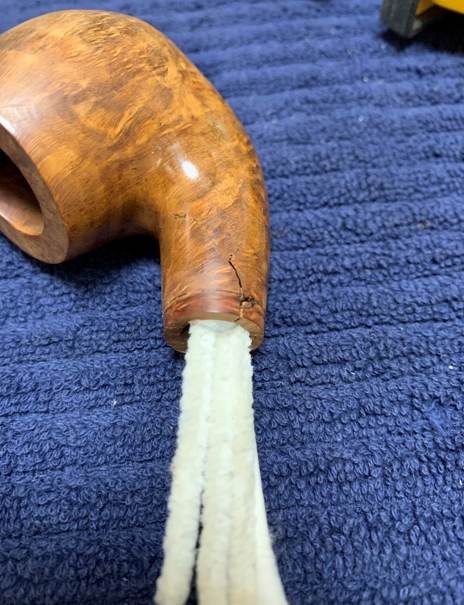
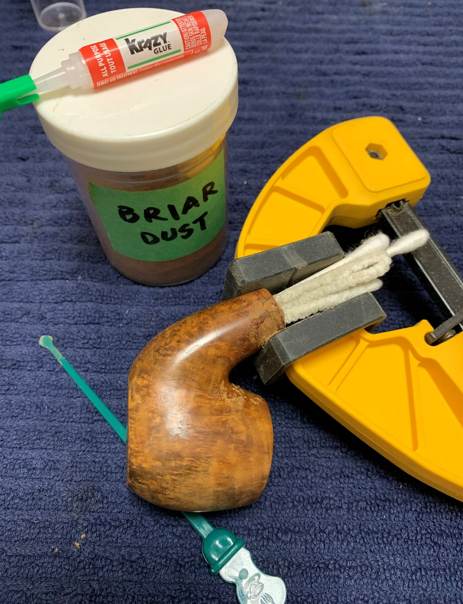
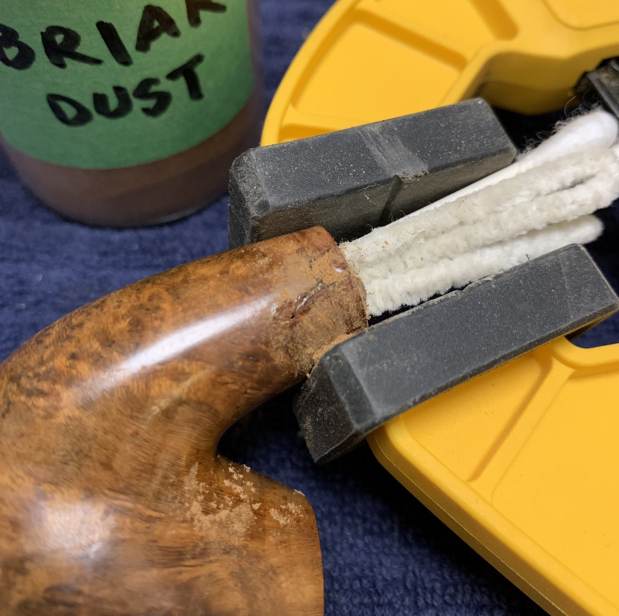
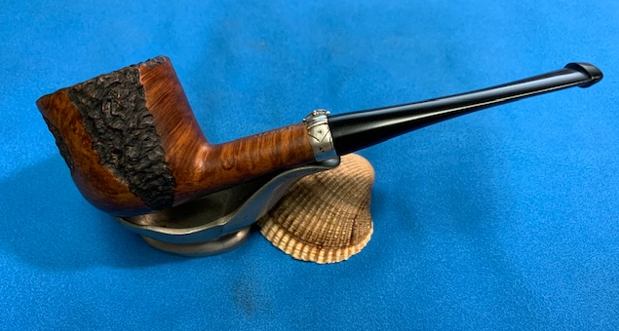
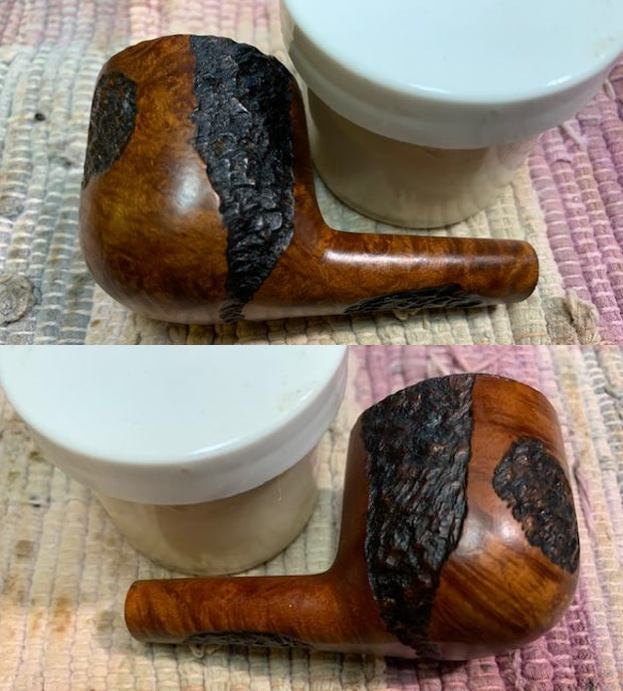
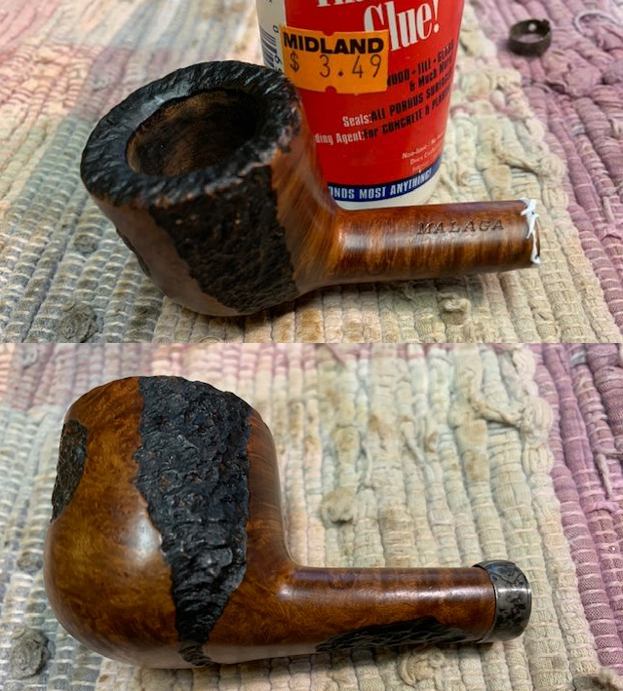
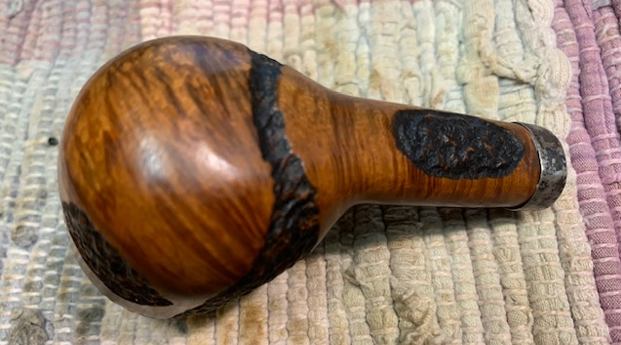
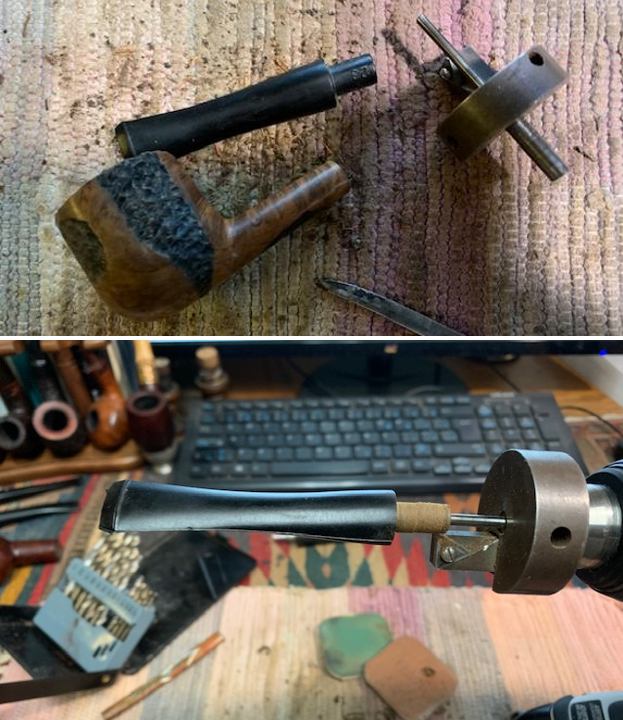
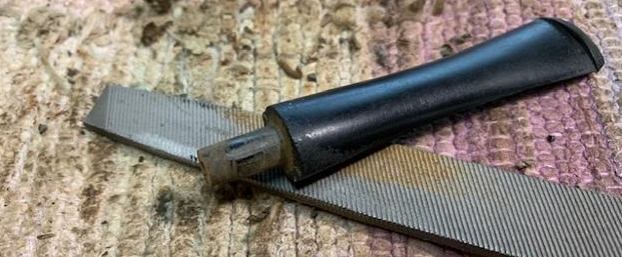
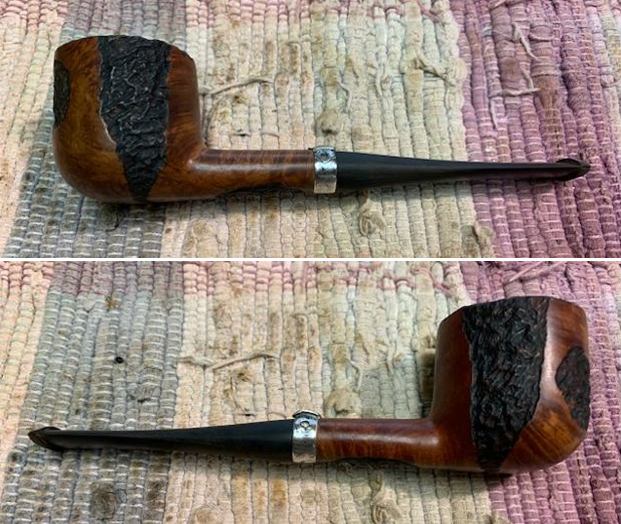
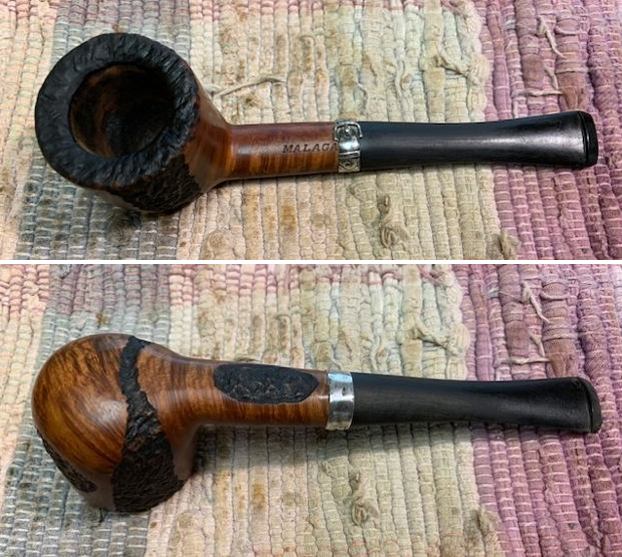
With that information in hand I turned to work on the bowl. There was a broken off tenon in the shank. I tried to pull it with a screw and then moved on to drill it out. I started with a bit a little larger than the tenon in the airway and worked my way up to the size of the shank. When I removed the bit the pieces of tenon fell out on the table top. With the mortise clean I was ready to move on to the next part of the clean up.I cleaned up the rustication on the rim top with a brass bristle wire brush to remove the debris in the rustication. It cleaned up well. I used a Black Sharpie Pen to restain the rustication on the rim top and the sides of the bowl. I rubbed the bowl and shank down with Before & After Restoration Balm. I worked it into the surface of the bowl sides and shank with my fingertips and a horsehair shoe brush to clean, enliven and protect the briar. I let the balm sit for 10 minutes then buffed with a cotton cloth to raise the shine. The grain really came alive. It looks better than when I began. The crack on the underside of the shank was a mere hairline what was not long or wide so it would be an easy repair with a bit of glue and a band. I painted the shank end with some all-purpose white glue. I spread it with a dental spatula and pressed the band in place on the shank.I polished the Sterling Silver belt band with some silver polish and a jeweler’s cloth. I was able to remove the tarnish and the band looked very good. I took pictures of the banded shank to show the look of it. Notice that the belt buckle is on the top and the A of the Malaga is perfectly framed on the right side by the buckle. With the bowl finished it was time to focus on the stem. I took out the stem and the Pimo tenon turning tool and set up the tool in my cordless drill. I put the guiding pin in the airway on the stem and adjusted the cutting head. I held the stem in place and carefully turned the tool on the tenon. I used a flat file to smooth out the tenon to fit in the shank. I put the stem in shank for a sense of the look of the pipe. The stem fit well and it looked like it belonged. I sanded the castings off the edges of the stem and the button with 220 grit sandpaper before I took the photo.I removed the stem and worked on it next. I smoothed out remnants of the castings and the scratches in the surface of the vulcanite with 220 grit sandpaper. I started polishing the stem with 400 grit wet dry sandpaper.I polished the stem with micromesh sanding pads – dry sanding with 1500-12000 grit pads. I wiped the stem down after each pad with a cloth and Obsidian Oil. I finished the polishing with Before & After Pipe Stem Polish – both Fine and Extra Fine. I gave it a final coat of Obsidian Oil. I put the pipe back together – the bowl with its new stem. This restored Malaga Oil Cured Pot with rusticated panels is a real beauty and I think the Sterling Silver Belt band and the chosen stem works well with it. The grain on the bowl came alive with the buffing. I used Blue Diamond on the buffing wheel on both the bowl and stem. I gave both multiple coats of carnauba wax on the wheel then buffed it with a clean buffing pad to raise the shine. I hand buffed it with a microfibre cloth to deepen the shine. The Malaga Pot feels great in the hand. It is lightweight and the contrast in the browns of the briar, the Silver band and the polished vulcanite stem with the popping grain on the mixed brown stained bowl is quite amazing. The dimensions of the pipe are Length: 6 inches, Height: 1 ¾ inches, Outer diameter of the bowl: 1 ½ inches, Chamber diameter: 1 inch. The weight of the pipe is 1.59 ounces/45 grams. It really is a beauty. I will be putting it on the rebornpipes store in the American (US) Pipe Makers section shortly if you are interested in adding it to your collection. Thanks for walking through the restemming and the restoration with me. Cheers.

The Prince of Pipes


Blog by Kenneth Lieblich

One of my dearest friends contacted me recently to inquire if I could repair and restore a pipe that belongs to his father. His father told me that the pipe had been given to him by his wife (my friend’s mother) as a graduation gift in 1967. I was only too happy to oblige – not just to help my friend, but to raise this beautiful pipe back to life. The pipe is from The House of Bewlay and is a Prince shape. Just as an aside, the shape was named after Prince Albert, the Prince of Wales, who later became King Edward VII (1841–1910). What a gorgeous pipe! I must admit that the prince is one of my favourite pipe shapes (and possibly my outright favourite). This one is the epitome of elegance in pipe smoking. The pipe’s markings read Bewlay [over] Deluxe [over] London Made. The other side of the pipe read Made in [over] England and the shape number, 258. This corresponds nicely with a Bewlay catalogue from the late 60s, as you can see in the photo below. One additional piece of information that was useful was the date of the gift: 1967. This certainly gives us a good idea of the time period from which this pipe dates. Let us read a bit more about Bewlay from the Pipedia article:

The English brand of Bewlay & Co. Ltd. (formerly Salmon & Gluckstein Ltd.), was in business from the early 20th century until the 1950s. The brand ended up being sold and taken over by Imperial Tobacco Co. The shop chain closed in the 1980s but there seems to be one shop still in business on Carr Lane in the city of Hull. Bewlay pipes were made by prestigious firms. Notably Barling, Charatan, Loewe & Co., Sasieni, Huybrecht, and Orlik. So understandably, the English considered a Bewlay pipe a quality pipe.Anyway, on to the pipe – and what a beauty it was. However, it was not without its issues. The stummel had the following problems: lava on the rim, a notable burn to the rim, plenty of cake in the bowl, strange stain patterns, and – most serious of all – a nasty crack to the shank. Meanwhile, the stem had its own set of problems: the ‘B’ logo was nearly obliterated, some oxidation and calcification, and minor tooth marks and dents. This pipe was not going to be too tough, but I needed to be especially careful to ensure the crack would be repaired perfectly – so it could be used for many years to come. The stem was first on my list. I took a BIC lighter and ‘painted’ the stem with its flame in order to lift the tooth marks. This was reasonably successful in raising the dents. Then, I cleaned out the insides of the stem with pipe cleaners and isopropyl alcohol. It was dirty, but not too bad and I went through a decent number of pipe cleaners in order to clean it up. I also soaked the stinger in lemon-infused isopropyl alcohol. This loosened everything up and I was able to clean it up very nicely. Once this process was done, the stem went for an overnight soak in the Before & After Hard Rubber Deoxidizer. The following day, I cleaned all of the de-oxidizing sludge off with alcohol, pipe cleaners, et cetera. The oxidation had migrated to the surface and would be fairly straightforward to remove. I scrubbed vigorously with SoftScrub to remove the leftover oxidation. Before I moved on to the Micromesh pads, I built up the small dents on the stem with cyanoacrylate adhesive and let them fully cure. I then sanded it down with 220-, 400-, and 600-grit sandpapers to meld the repair seamlessly into the stem. This ensures that it keeps its shape and looks like it should. I then used all nine Micromesh pads (1,500 through 12,000 grit) to bring out the lovely black lustre on the stem. I also used Obsidian Pipe Stem Oil in between each pad scrubbing.I then took the opportunity to repair the “B” logo on the stem. It had faded – both by loss of paint over time and also by fingers inadvertently smoothing out the “B” over time. So, I added some acrylic paint with a paint brush, let it dry, and buffed it to make it look good. The “B” is back, but, as later photos reveal, a little bit has disappeared into history.

On to the stummel, and the usual cleaning procedures were in order for this pipe. I used both the PipNet Reamer and the KleenReem to remove the built-up cake and followed that with 220-grit sandpaper to remove as much as I could. I wanted to take the bowl down to bare briar to ensure there were no hidden flaws in the walls of the bowl. Fortunately, there were none. I then proceeded to clean out the insides of the shank with Q-tips, pipe cleaners, and isopropyl alcohol. There was some nastiness inside this stummel, but fortunately not too much – it only took a handful of pipe cleaners etc. to sort that out. I followed that up by cleaning the insides with some dish soap and tube brushes. I then moved on to cleaning the outside of the stummel with Murphy’s Oil Soap and some cotton pads. That removed any latent dirt. By the way, I deliberately did not de-ghost this pipe – I wanted to leave as much of the original tobacco essence as I could for the owner.As I mentioned earlier, there was some lava and a substantial burn on the rim of the stummel that also needed to be addressed. In order to minimize the impact of both, I “topped” the pipe – that is to say, I gently and evenly sanded down the rim on a piece of 220-grit sandpaper. This effectively removed the lava and most the damage, without altering the look of the pipe. However, I had to stop short of removing it all, otherwise the look of the pipe would have been altered. For the remaining bits of burn, I took some oxalic acid on a Q-tip and rubbed and rubbed and rubbed! The burn site did improve but never fully disappeared. It would be a permanent feature of the pipe going forward. I took solace from the fact that the burn did not affect the integrity of the wood. I then took a solid wooden sphere, wrapped sandpaper around it, and gently sanded the opening of the tobacco chamber. This was to achieve on the inner part of the rim the same thing that I achieved by “topping” on sandpaper. On to the major issue with this pipe: the crack in the shank. Naturally, Steve had the answers to all of this pipe’s problems. He explained that my first step was to ensure that the crack would not continue to creep after I had repaired it. To that end, I took a micro-drill bit, inserted it in my Dremel, and very carefully drilled a hole right through the wall of the shank. This was quite nerve-wracking, but it worked perfectly. I then needed to apply cyanoacrylate adhesive to the crack in order to seal and repair it. First, however, I used a Q-tip and a folded pipe cleaner to coat the inside of the shank with petroleum jelly. This would prevent the adhesive from dripping inside the shank and creating further problems. That done, I carefully applied a bead of adhesive to the tiny hole and the length of the crack. Finally, I clamped it shut and let it sit overnight to cure. This was a great success – obviously, the crack would always be visible, but I was really pleased with how the repair looked.Before moving on to sanding, there were a couple of small nicks on the underside of the stummel that I needed to sort out. I dug out my iron and a damp cloth to try and raise the nicks. The hot and moist steam created can often cause the wood to swell slightly and return to shape. There was some movement – not a lot, but it was better than doing nothing. I filled the remaining divots with cyanoacrylate adhesive. Now, with the crack repaired and the nicks filled, it was time to sand down the stummel. Just like the stem, I used all nine Micromesh pads (1,500 through 12,000 grit) to sand everything smooth. A light application of Before & After Restoration Balm brought out the best in the stummel’s grain. All of the work I had done to this point had taken its toll on the colour of the wood. Originally, there was a lovely sort of brownish-Burgundy colour on this pipe, and I wanted to restore this as best I could – and I also wanted to ensure that we got rid of that weird mottling. In order to bring back some life to this pipe, I opted for aniline dye. I dragged out some of Fiebing’s Oxblood Leather Dye, but it looked too reddish to me. Instead, I experimented with mixing to see what I could come up with. I made my own concoction of Oxblood and Medium Brown dyes, painted the stummel, and then applied flame in order to set the colour. Furthermore, since it is an alcohol-based dye, I was able to adjust the colour to my liking by applying my own isopropyl alcohol to the colour. Let it sit overnight and it worked like a charm!Then it was off for a trip to the buffer. A dose of White Diamond and a few coats of carnauba wax were just what this pipe needed. Now that the wood was looking all spiffy, I had to circle back and complete the repair on the crack in the shank. It needed a tight-fighting band to ensure that the crack would never open up again. I went to my jar of bands and picked one that looked good. I heated it up and then messed it up! See the photos. I did not apply even pressure as I was attaching the band, so it went mush. Fortunately, I had more bands and I did a much better job of getting the next one on. I glued it in place and let that set. It looked very dapper. I polished up the band with a 12,000-grit MicroMesh pad. I also went back to the buffer with both the stem and stummel, gave them a final application of White Diamond and carnauba wax, and brought out that lovely shine.In the end, what a beauty this pipe is! It is an elegant pipe, from a very fine maker. It obviously meant a great deal to its owner, and I was delighted to bring it back to life. Once the pipe was returned to its owner, he told me that it looked better than when it was new! Although I am not sure I agree with that, I am very pleased that he is very pleased. As I mentioned before, the prince is one of my favourite shapes and it was great fun to work on this one. I hope you enjoyed reading the story of this pipe as much I as I did restoring it. If you are interested in more of my work, please follow me here on Steve’s website or email me directly at kenneth@knightsofthepipe.com. Thank you very much for reading and, as always, I welcome and encourage your comments.

Restemming & Restoring a “Malaga” Lovat


Blog by Steve Laug

Sometimes the repetitive work on similar pipes and stems gets tiring to me and to alleviate the inevitable boredom I change things up a bit to refresh me. I have a box of stummels (bowls) here that I periodically go through and see if I have a potential stem that would fit them. Yesterday when I finished the old timer on my work I went through the box and picked out three bowls and found workable stems for them. All were in different states of need but all had been thoroughly cleaned before I boxed them up. The first restemmed and restored was a ZETTERVIG Copenhagen Handmade 900 Egg (https://rebornpipes.com/2021/09/04/restemming-restoring-a-zettervig-copenhagen-hand-made-900-egg/). The next one I chose to work on is a lovely Malaga Lovat stummel.  I have worked on a lot of Malaga pipes in the past so I am not a stranger to the brand. I have included the link below to a bit of history on the brand that I compiled.

The bowl looked very good. The grain around the sides was quite nice and a mix of flame and birdseye grain. The rim top had some burn damage on the rear top and inner edge and some darkening all the way around. The bowl was slightly out of round. There was a crack in the underside of the shank that extended about ½ inch up the shank. The interior of the bowl was clean and there were not any chips, cracks or checking on the walls. Examining the mortise it was clean and well drilled with no issues other than the previously noted crack. The finish was washed out and bit and tired but still quite redeemable. The stamping on the pipe was clear and readable. On the left side it read “MALAGA” and on the right side it read IMPORTED BRIAR. I took some photos of the bowl before I started to work on it. I took a photo of the stamping on the sides of the shank. It reads as noted above and is clear and readable.I went through some of stems and found this saddle style stem without a tenon. It had been drilled for a tenon but it had never been finished. It was the right diameter and it fit the shank and the look of the pipe very well. It has a few tooth marks and chatter near the button but it would clean up well.I have worked on quite a few Malaga pipes and blogged their restorations, so rather than repeat previous blogs, I am including the link to one that gives some of the history of the Malaga brand and the Malaga Pipe Shop in Royal Oak, Michigan in the USA from a catalogue. It gives a sense of the brand and the history in their own words. Follow the link to get a feel for the brand and the pipemaker – https://rebornpipes.com/2013/02/09/george-khoubesser-and-malaga-pipes/.

With that information in hand I turned to work on the bowl. I addressed the crack in the shank first. I cleaned it and smoothed it out. I used an awl and pressed a small hole in the shank at the end of the crack. I filled in the crack with clear CA glue and pressed it together until it cured. I pressed a brass band onto the end of the shank to further address the crack. It serves that function and also gives it a bit of bling. With that repaired I turned to deal with the rim top issues. I topped the bowl on a topping board with 220 grit sandpaper to smooth out and minimize the damage on the rim top. I used a small wooden ball that Kenneth gave me recently to give the inner edge a bevel to minimize the burn on the inner edge and bring the bowl back to round.I shortened the tenon to fit the shank of the pipe. I used the Dremel and sanding drum to remove the shoulder at the top of the tenon above the threads. I shaped the tenon fit with a small file and sanded it smooth. I glued the threaded end of the tenon with clear CA glue and pressed it into the stem. It cures quickly so it is key to move quickly and set it well as  you only get one chance! I put the stem in shank for a sense of the look of the pipe and then wiped the bowl down with alcohol on a cotton pad to remove the debris from the sanding and that was still in the surface of the briar. I liked what I saw. The grain was really quite nice and the band and new stem worked well with the pipe. I removed the stem and polished the briar with micromesh sanding pads – dry sanding with 1500-12000 grit pads and wiping it down with a damp cloth after each pad. It really began to shine. I stained the rim top and edges with a Maple stain pen to match the rest of the stain around the bowl sides. The rim top and inner edge look very good.I worked some Before & After Restoration Balm into the surface of the smooth briar with my finger tips. The product is amazing and works to clean, enliven and protect the briar. I let it sit on the briar for 10 or more minutes and then buff it off with a soft cloth. It really makes the grain sing. I set the bowl aside and turned my attention to the stem. I “painted” the stem surface with a Bic lighter flame to raise the tooth marks. I was able to lift all of them to the surface. I smoothed out what remained with 220 grit sandpaper and started polishing the stem with 400 grit wet dry sandpaper.I polished the stem with micromesh sanding pads – dry sanding with 1500-12000 grit pads. I wiped the stem down after each pad with a cloth and Obsidian Oil. I finished the polishing with Before & After Pipe Stem Polish – both Fine and Extra Fine. I gave it a final coat of Obsidian Oil. I put the pipe back together – the bowl with its new stem. This restored “Malaga” Imported Briar Oil Cured Lovat is a real beauty and I think the brass band and the chosen stem works well with it. The grain on the bowl came alive with the buffing. I used Blue Diamond on the buffing wheel on both the bowl and stem. I gave both multiple coats of carnauba wax on the wheel then buffed it with a clean buffing pad to raise the shine. I hand buffed it with a microfibre cloth to deepen the shine. The “Malaga” Lovat feels great in the hand. It is lightweight and the contrast in the browns of the briar, the brass of the band and the polished vulcanite stem with the popping grain on the mixed brown stained bowl is quite amazing. The dimensions of the pipe are Length: 6 inches, Height: 1 ¾ inches, Outer diameter of the bowl: 1 ¼ inches, Chamber diameter: 7/8 of an inch. The weight of the pipe is 1.34 ounces/38 grams. It really is a beauty. I will be putting it on the rebornpipes store in the American (US) Pipe Makers section shortly if you are interested in adding it to your collection. Thanks for walking through the restemming and the restoration with me. Cheers.

Restoring and Repairing a Cracked Shank on a John Surrey Ltd Super Panel Lovat


Blog by Steve Laug

The next pipe on the table is one that we picked up back in 2018 and have no clear record of where and when we picked it up. The shape is what attracted us to the pipe. It is a unique shape with the panels on the bowl and the short Lovat style shank with a saddle stem. The finish was dirty with grime ground into the finish around the bowl sides. There were also some cracks in right side mid shank and on the lower part as well. The cracks were in the middle of some fills on that side of the bowl. There was a thick cake in the bowl and lava overflow on the top of the rim. There was also tobacco debris in the bowl. The stem was lightly oxidized and there were tooth marks and chatter on both sides near the button. The pipe is stamped on the left side of the shank and reads SUPER. On the right side it reads IMPORTED BRIAR. On the underside it is stamped John Surrey Ltd. The stamping is all clear and readable. He took photos of the rim top and bowl to give a clear picture of the thickness of the cake and well as the nicks, lava and darkening on the rim top. The inner and outer edges of the bowl were in great condition. He also took photos of the top and underside of the stem to show the light oxidation and the chatter and tooth marks.  Jeff took a photo the sides and heel of the bowl to give a picture of the beautiful grain around the bowl and shank. He also took a photo of the fills and damage to the right and underside of the shank – there were fills that had fallen out and there was a crack that needed attention.The stamping on the sides of the shank is clear and readable and read as noted above. Jeff did not take a photo of the John Surrey Ltd. stamp on the underside of the shank. I turned to Pipephil’s site and looked for information on the John Surrey Ltd pipe company (http://pipephil.eu/logos/en/logo-j3.html). I found that the company, John Surrey, Ltd. was originally located at 509 Fifth Avenue New York City, New York in the USA. I also did a screen capture of the section on the brand. Interestingly the Super line is not included in the list but all of the other pipes in the section are stamped with the same style stamping as the one I am working on. The closest one is the John Surrey Ltd. Imported Briar Super Deluxe. It is possible that the Deluxe stamp is worn off on this one but it is not clear.I turned to Pipedia in the US pipe makers section to see if I could find some more information on the brand (https://pipedia.org/wiki/John_Surrey_Ltd.). I found a short summary which I include below regarding the brand.

John Surrey Ltd. made John Surrey pipes. They were based at 509 Fifth Ave, New York. And in 1948 the company put a pipe on the market which sold very successfully: the Slugger Baseball Pipe (shank and stem like a baseball bat, and bowl similar to a baseball).

That was the extent of the information so it was not time to work on the pipe. Jeff had cleaned up the pipe following his usual procedures. He reamed the pipe with a PipNet pipe reamer and cleaned up the remnants with a Savinelli Fitsall Pipe Knife. He cleaned out the inside of the shank and the airway in the stem with 99% isopropyl alcohol, cotton swabs and pipe cleaners. He scrubbed the exterior of the bowl with undiluted Murphy’s Oil Soap and a tooth brush. He rinsed it under running warm water to remove the soap and grime. He soaked the stem in Before & After Deoxidizer and rinsed it off with warm water. I took photos of the pipe once I received it. The crowned rim top cleaned up really well. The rim top had a lot of nicks and deep gouges in it but the inner and outer edge of the bowl appeared to be in good condition. The stem surface looked very good and the tooth marks chatter on the stem on both sides near the button could probably be sanded out. The stamping on the sides of the shank is readable and reads as noted above.  I removed the stem and took two photos of the pipe to give a sense of the shape and the grain on the bowl and shank. It was a unique shape and would be a beautiful pipe when I was finished. I took a series of photos of the cracks on the shank and flaws where the putty fills had fallen out.I decided to start my work on the pipe by dealing with the damage on the shank end. I filled in the crack and the damaged fills with briar dust and clear CA glue. I found a thin brass band in my band collection that was a perfect fit on the shank so once the repair had cured and I sanded it down I fitted a band. I put a thin bead of glue around the shank end and pressed the band in place. It bound the repaired areas together and it gave the shank a touch of bling. I took some photos of the banded shank to give a picture of what I was seeing! I dealt with the damage to the rim top by topping it on a topping board with 220 grit sandpaper. Like so many other things in this process I also would need to redo the crowned rim top once I was finished.I wiped the bowl down with acetone on a cotton pad to remove the heavy stain around parts of the bowl sides. I wanted really be able to see the grain on the bowl. I also used this in preparation for reworking the bowl crown.I used a flat file to take down the outer edge and bevel it to bring the crowned rim back to the top of the bowl. I sanded the outer filed edge and the inner edge to give a slight inward bevel with 220 grit sandpaper to smooth out the file marks and fine tune the shape of the rim.I polished the newly shaped rim top and edges along with the rest of the bowl with micromesh sanding pads – 1500-12000 grit pads. I wiped it down with a damp cloth after each sanding pad. It was beginning to look good to my eyes. I forgot to take a photo of the underside at this point. I paused the polishing to stain the rim top and edges of the bowl with an Oak Stain Pen. I wanted to see if I could blend it into the bowl sides. I also touched up the light spots on the bowl sides at the same time. Once I finished that I buffed the bowl with Blue Diamond on the buffing wheel and returned to finish the polishing with 6000-12000 grit micromesh pads. I rubbed the bowl and shank down with Before & After Restoration Balm. I worked it into the surface of the bowl sides and shank with my fingertips to clean, enliven and protect the briar. I let the balm sit for ten minutes then buffed the bowl with a cotton cloth to raise the shine. I set the bowl aside and turned my attention to the stem. I “painted” both sides of the stem with the flame of a lighter to lift the tooth marks. It did a great job and left only one deep mark on the underside and some lighter tooth marks on the topside along the button. I filled them in with clear CA glue and once it cured I sanded the stem with 220 grit sandpaper to smooth out the repairs. I started polishing it with 400 grit sandpaper. I polished the stem with micromesh sanding pads – 1500-12000 grit pads. I wiped it down with Obsidian Oil after each sanding pad. I used Before & After Pipe Polish – both Fine and Extra Fine to further polish the stem.This John Surrey Ltd. Super Imported Briar Panel Lovat is a great looking pipe now that it has been restored. The combination of various brown stains around the bowl is quite beautiful and highlights grain very well. The finish works well with the thin brass band on the shank end and the polished vulcanite saddle stem. I put the stem back on the bowl and carefully buffed the pipe with Blue Diamond on the buffing wheel using a light touch on the briar. I gave the bowl and the stem multiple coats of carnauba wax on the buffing wheel and followed that by buffing the entire pipe with a clean buffing pad. I hand buffed the pipe with a microfiber cloth to deepen the shine. The finished John Surrey Ltd. Super Panel Lovat sits nicely in the hand and feels great. Give the finished pipe a look in the photos below. The dimensions of the pipe are Length: 4 ¾ inches, Height: 1 ½ inches, Outside diameter of the bowl: 1 ¼ inches, Chamber diameter: ¾ inch. The weight of the pipe is 38 grams/1.34 ounces. I will be putting it on the American (US) Pipemakers section of the rebornpipes store shortly. If you are interested in adding this pipe to your collection send me a message or an email. Thanks for reading this blog and my reflections on the pipe while I worked on it. There are many more to come!

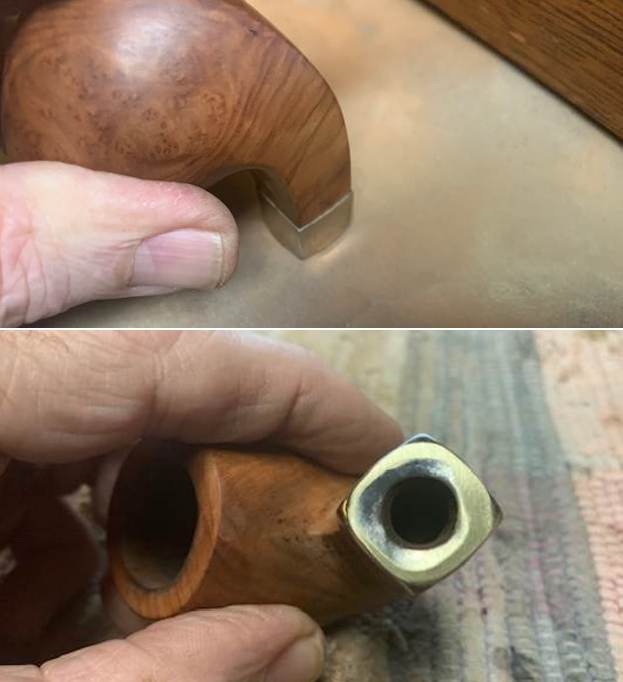
Restoring and Repairing a Cracked Shank & Broken Tenon on a Portland oval shank 60 Egg


Blog by Steve Laug

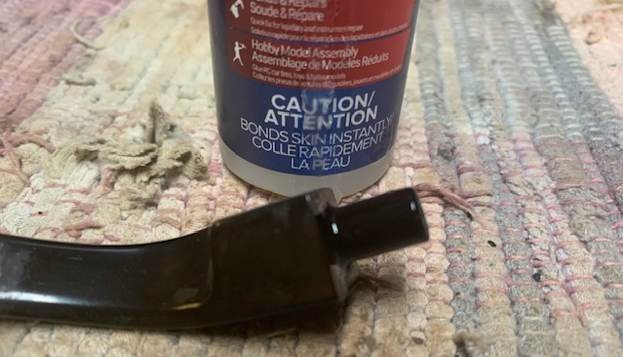
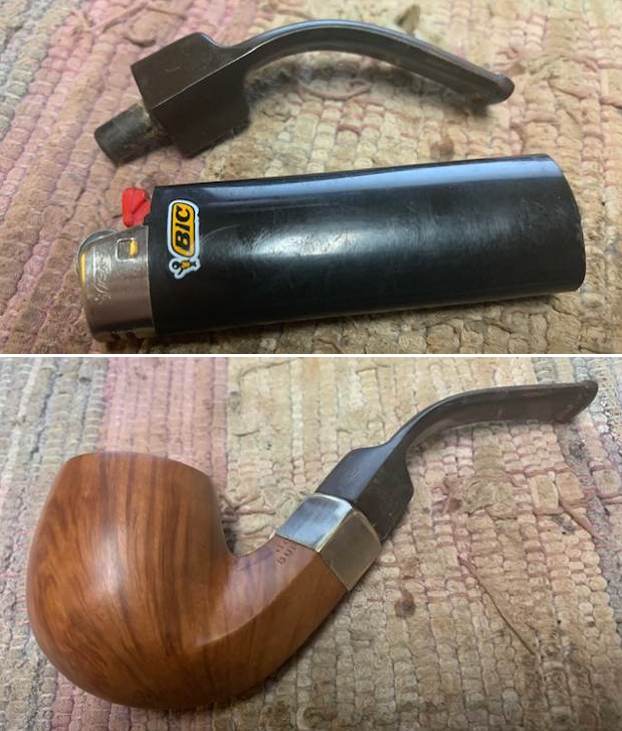
I am still doing some repairs for a local pipe shop and this one came from a referral from them. I have fixed several pipes for this particular pipeman in Vancouver including banding, restoring and fitting a new stem. He stopped by last weekend and dropped off a pipe to be reamed and cleaned and also this relatively new pipe that he had dropped. It is an interesting looking pipe with mix of nice grain around the bowl sides. It was stamped on the underside of the shank and read Portland [over] Bruyere Garantie followed by the shape number 60 near the shank/stem junction. He had only smoked it a couple of times before he dropped it. The stem snapped off leaving the tenon in the shank. When I looked it over there were also cracks on the top of the shank that happened at the same time. The stem was dirtier than the bowl but overall it was in good condition. I took some photos of the pipe before I started working on it. I took photos of the rim top and the stem surfaces to chronicle the condition. The rim had some darkening from his lighter toward the right front of the bowl and on the back side. There was not any cake in the bowl as it was still quite new. The stem was just dirty with light tooth marks on both sides near the button. The tenon had snapped off very close to the stem so it would be a simple process to add a new tenon.I took a photo of the stamping on the shank underside. It is clear and readable.I took a photo of the parallel cracks on the top of the shank. These were hairline but they were present and though you cannot see it they go to the end of the shank.I began my work on this pipe by pulling the broken tenon. I always use a coarse threaded screw and gently turn it into the airway in the broken tenon. I carefully wiggle it free. If it is tight a short 10 minutes in the freezer takes care of that. I went through my box of tenons and found a threaded one that was close to the diameter of the older broken tenon. It would need to be shaped but it would work.Before working on the stem I decided to put the band on the shank and repair the crack and protect it from going further. They are very fine cracks and I decided not to drill it as the hole would be bigger than the cracks. A tight fitting band would pull it together. I reduced the depth of the band with a topping board to make it thin and give a daintier look than the big clunky band. It is a thin brass band and it is pressure fit in place on the shank. I heated the band with a lighter and pressed it onto the shank. I like the look of the banded shank in the photos below.With the band fitted it was time to work on the tenon and the stem. I used my Dremel and sanding drum to make the tenon smaller in diameter to match the shank. I worked on it until the fit in the shank was snug but not tight.With that finished it was time to drill out the stem. I used the Dremel and sanding drum to flatten out the broken tenon end on the face of the stem. I started drilling with a bit slightly larger than the airway and finished with a bit that would allow the threaded tenon to fit the stem.I do not tap the drilled hole in the stem. Rather I flatten out the threads slightly as they provided the grip for the glue when I insert the tenon in the stem. I coated the threaded tenon end with black superglue which dries more slowly than the regular glue and allows me to make adjustments in the fit. I checked the fit in the shank and was pleased with it. I set the stem aside so the glue could cure.I turned my attention to polishing the bowl. I polished it with micromesh sanding pads – dry sanding it with 1500-12000 grit pads. I wiped the briar down with a damp cloth after each sanding pad. The pipe really began to take on a shine as I worked through the pads. I rubbed the briar down with some Before & After Restoration Balm. It works to protect, clean and enliven the briar. I rub it in with my finger tips and let it sit for 10 minutes. I buff it off with a cotton cloth to remove the excess and give the bowl a shine. I polished the stem and new tenon with micromesh sanding pads – 1500-12000 grit pads. I dry sanded with the pads and wiped the stem down with Obsidian Oil after each sanding pad. I finished the polishing with Before & After Pipe Stem Polish – both Fine and Extra Fine. I gave it a final rubdown with Obsidian Oil.I put the stem back on the bowl and polished the pipe with Blue Diamond on the buffing wheel to give it a shine. I gave it multiple coats of carnauba wax and buffed it with a clean buffing pad. I hand buffed it with a microfiber cloth to deepen the shine. I took some photos of the pipe before calling the pipeman to pick up his pipe. I am pleased with the look of the Portland Bruyere Garantie 60 Egg and the fit of the repair band and the stem to the shank. I think it will meet his expectations when he picks it up later today. Thanks for walking through the repair with me in this blog. Cheers.