Monthly Archives: July 2022

Breathing Life into a Tired and Worn Comoy’s Tradition Pot


Blog by Steve Laug

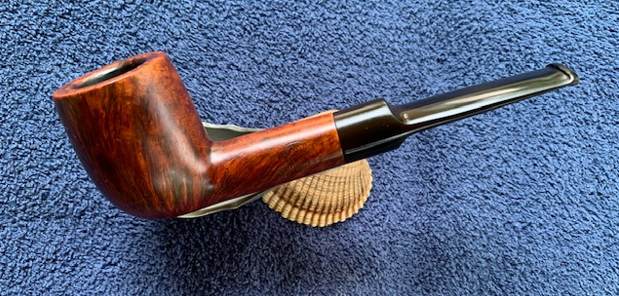
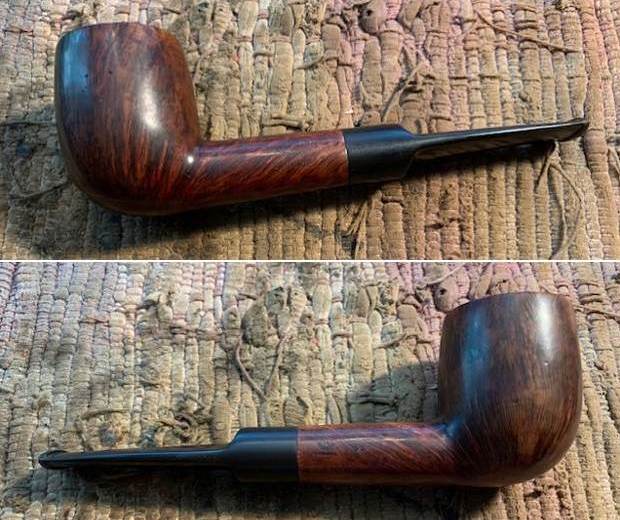
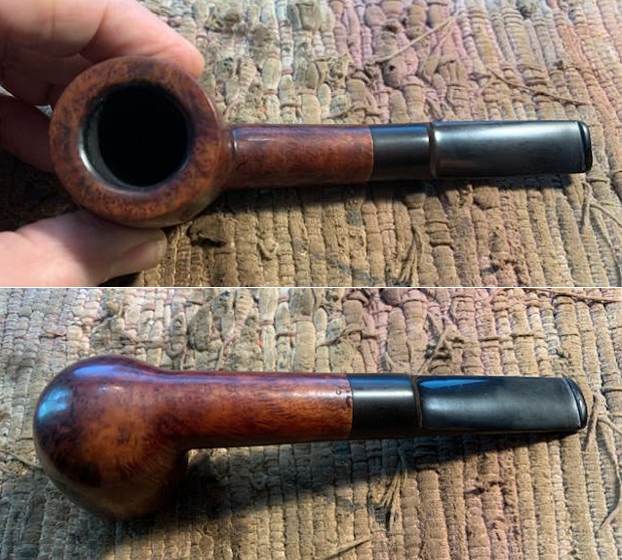
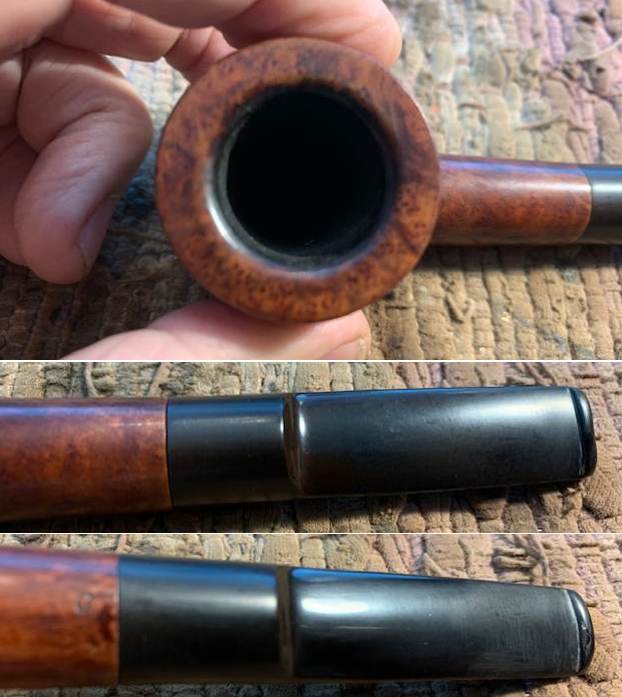
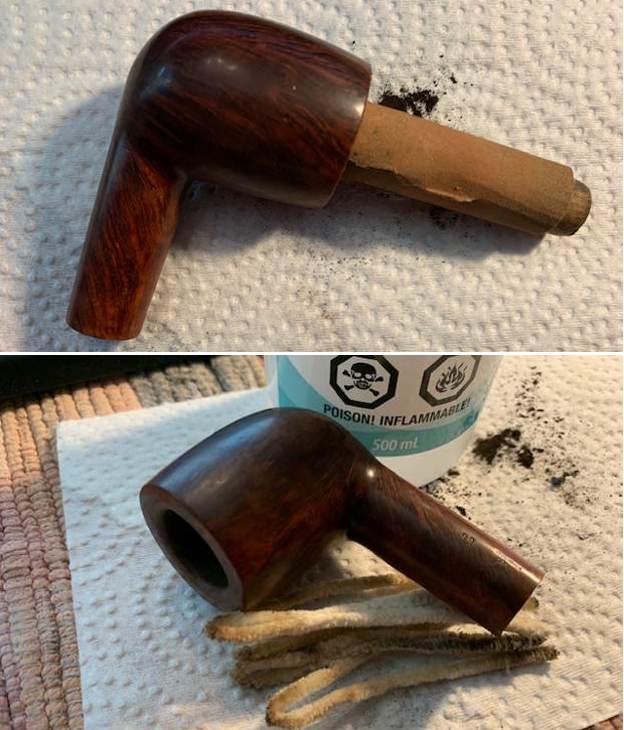
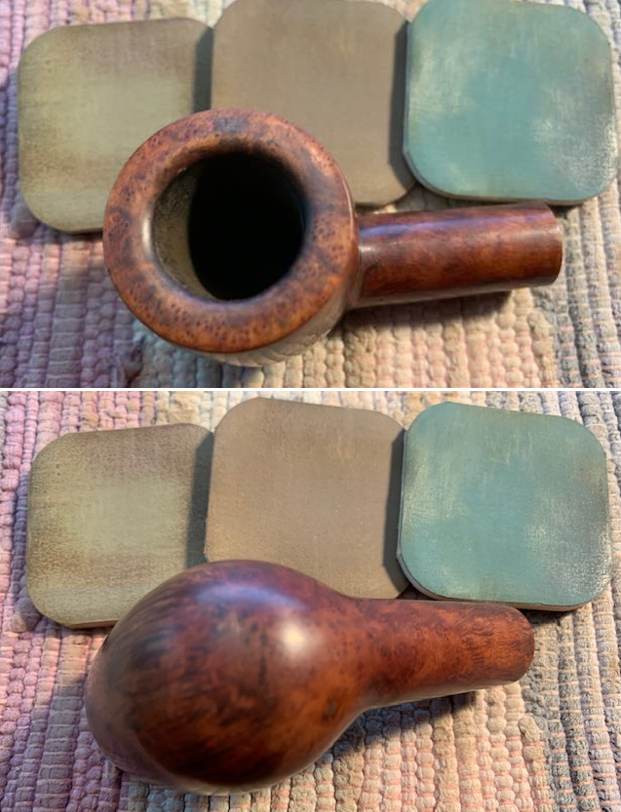
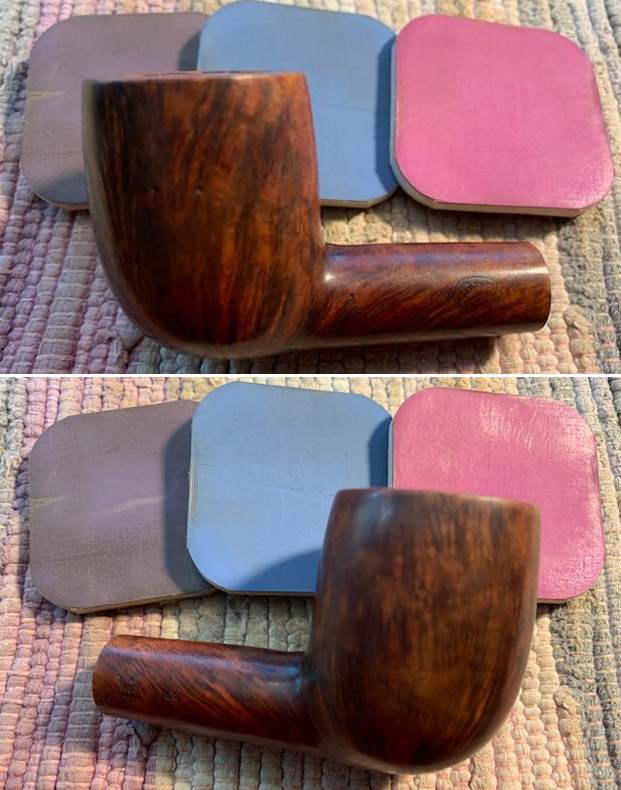
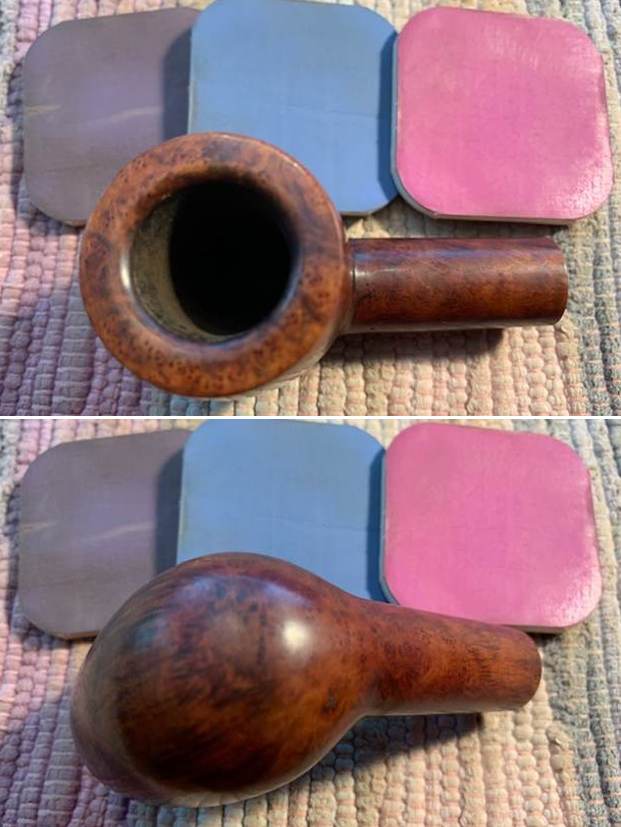
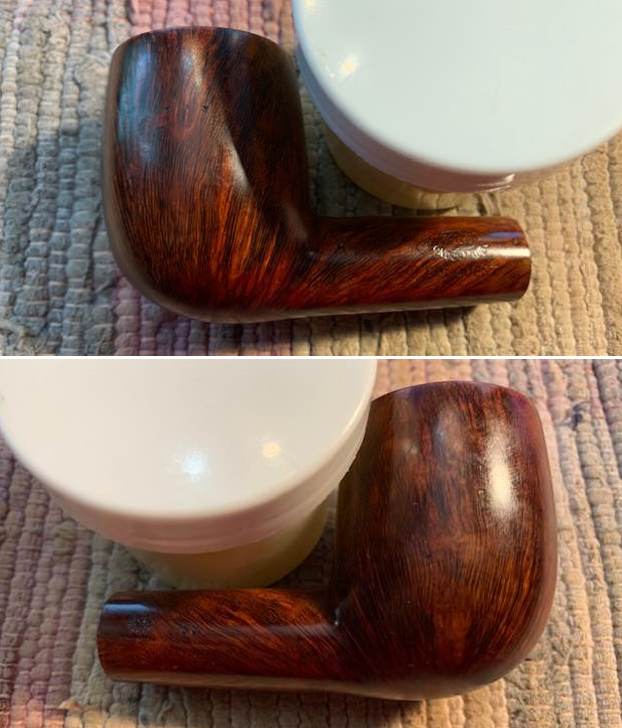
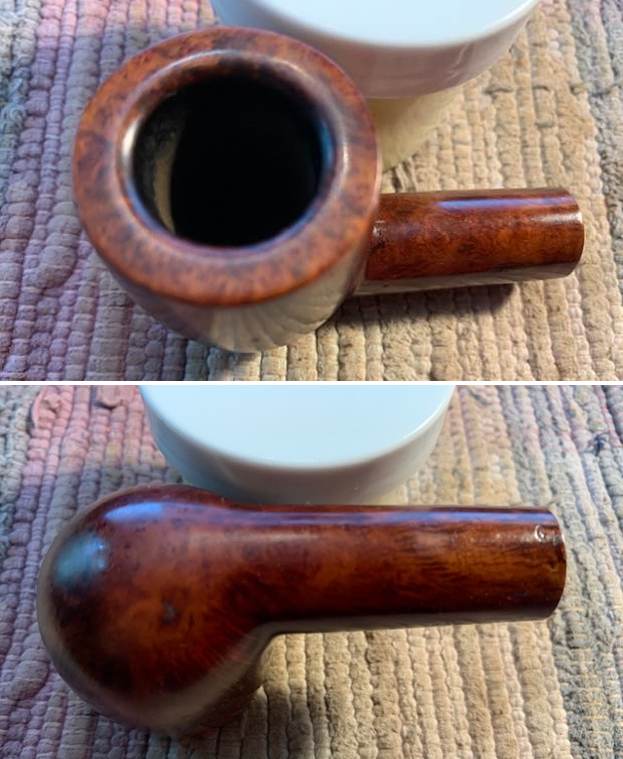
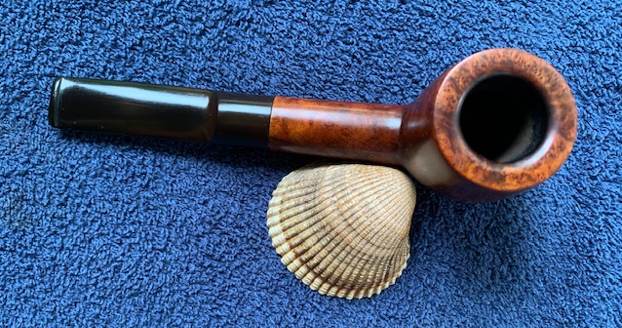
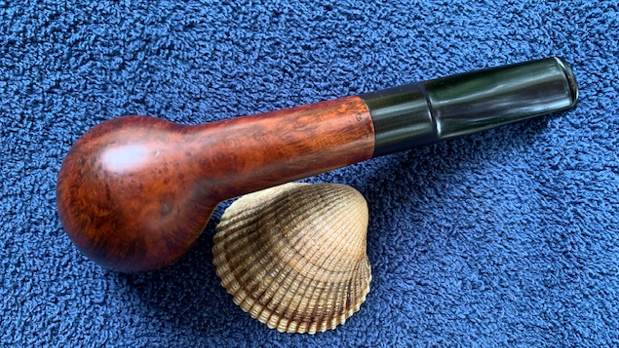
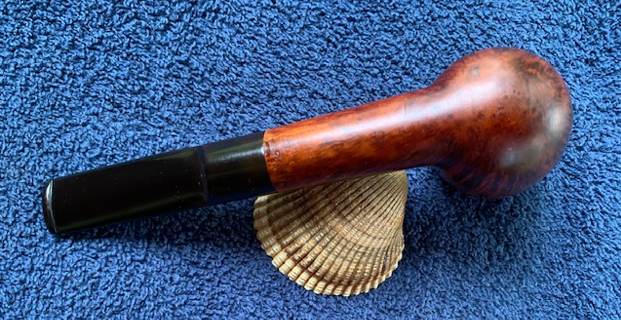
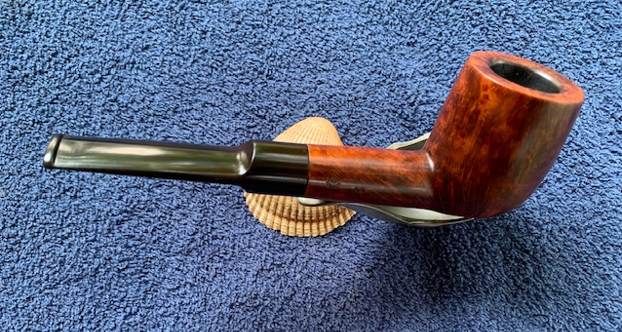
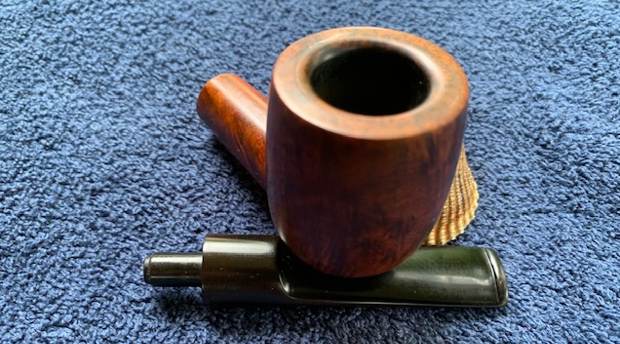
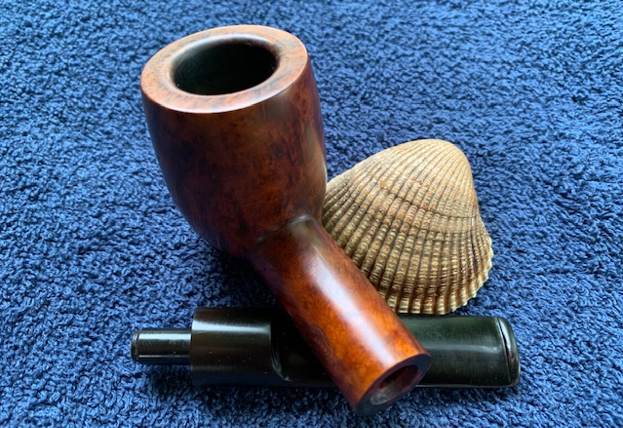
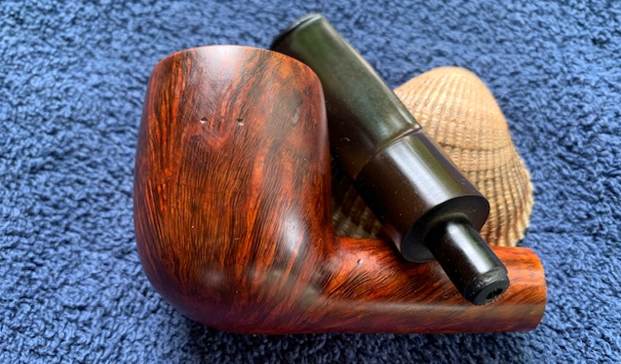
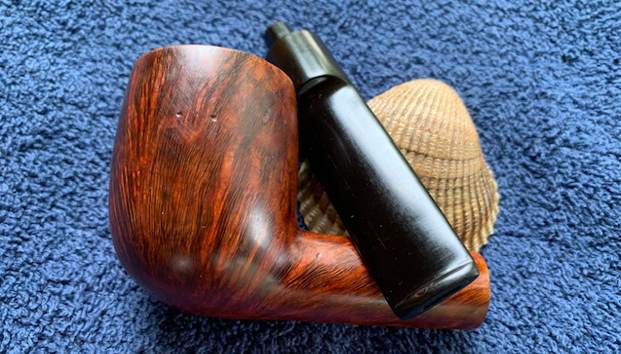
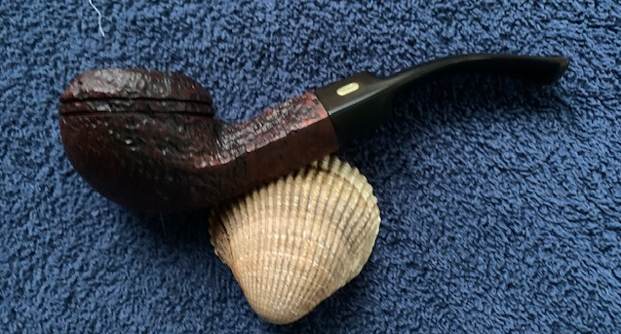
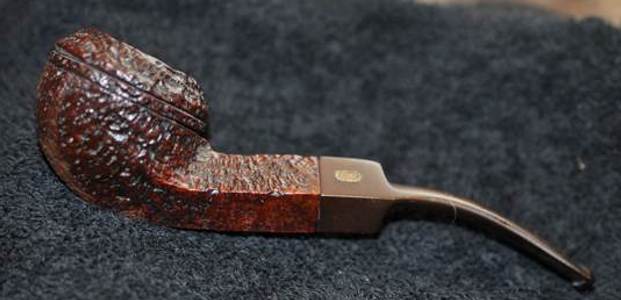
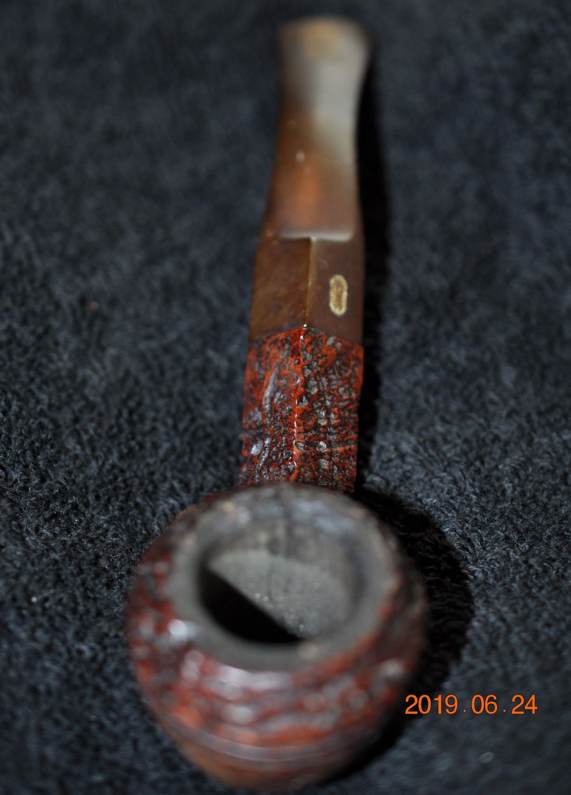
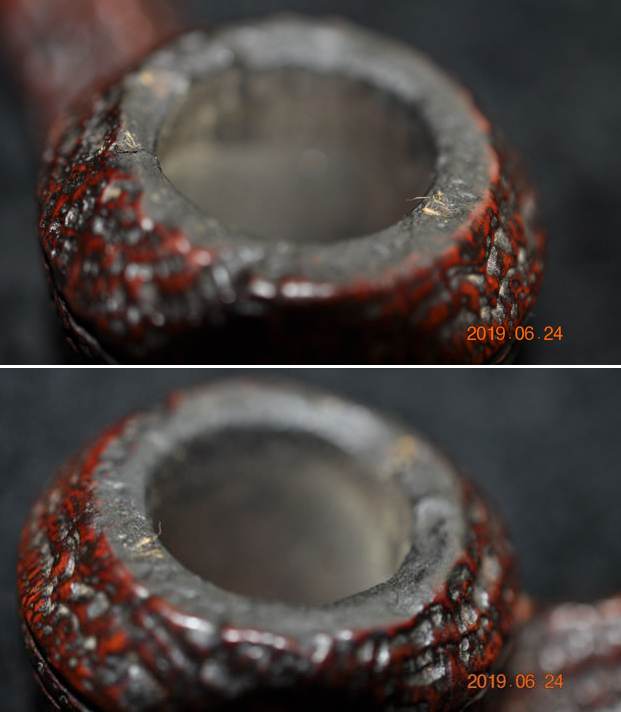
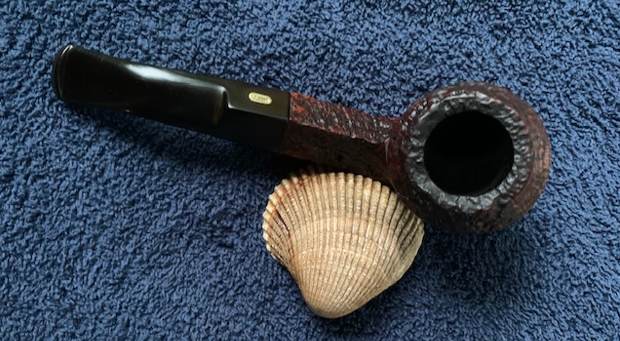
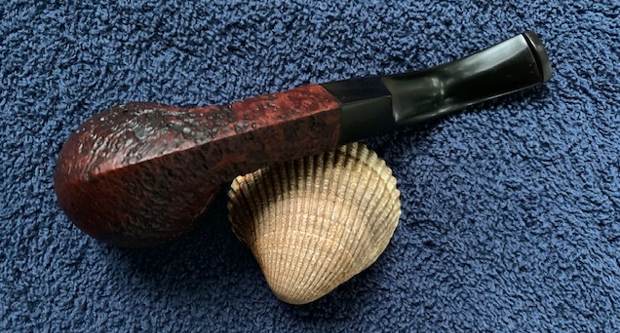
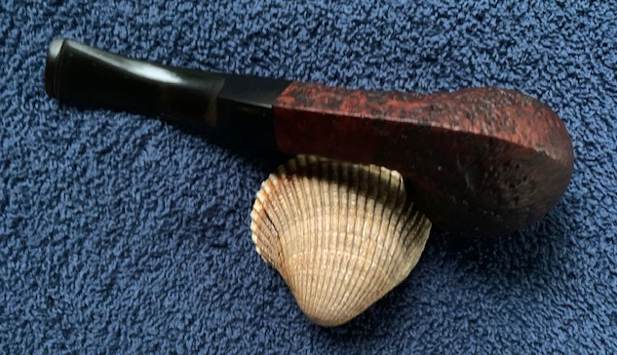
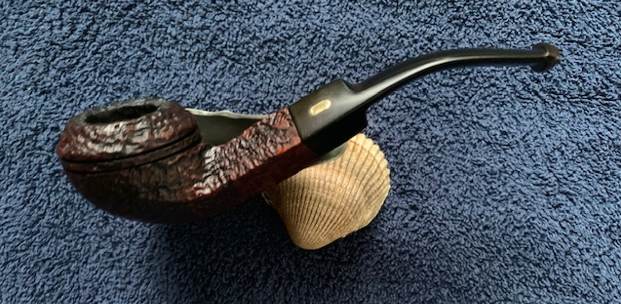
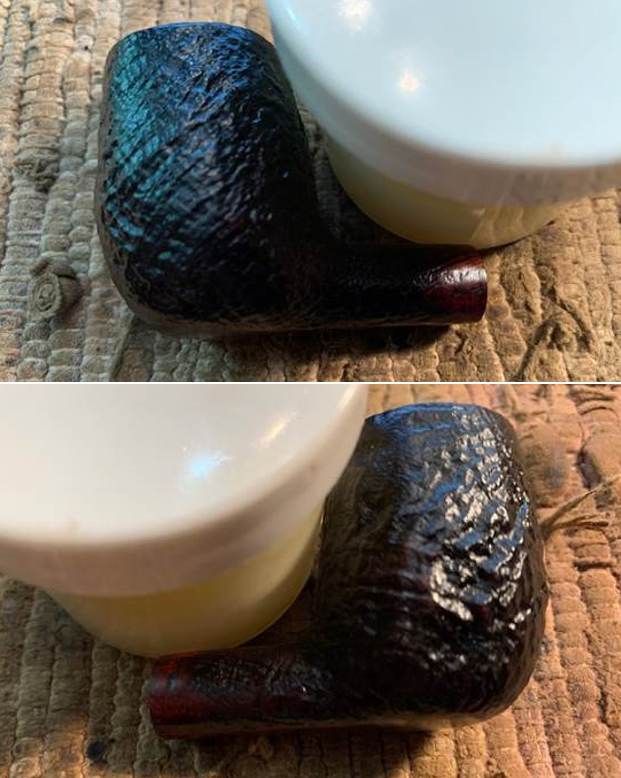
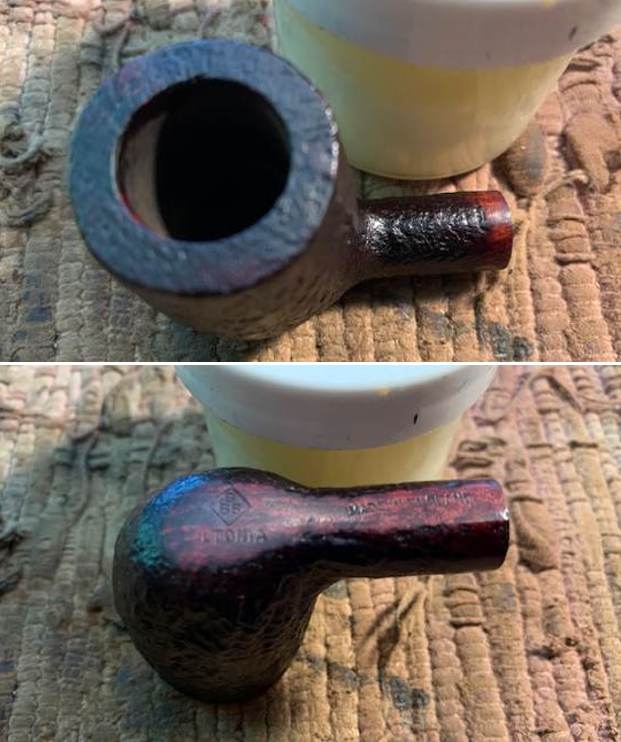
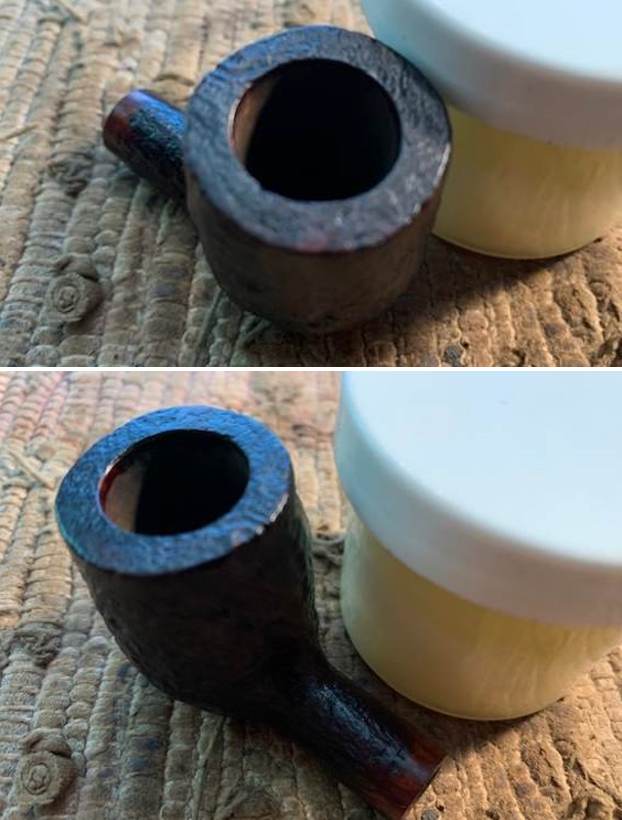
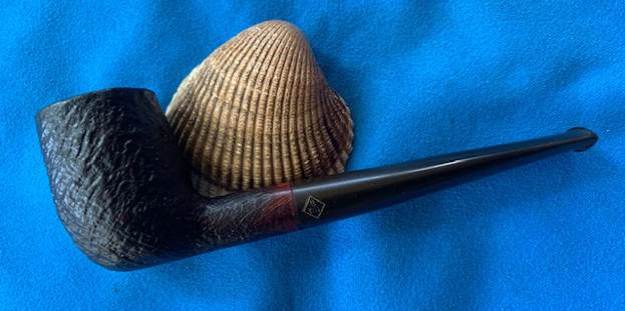
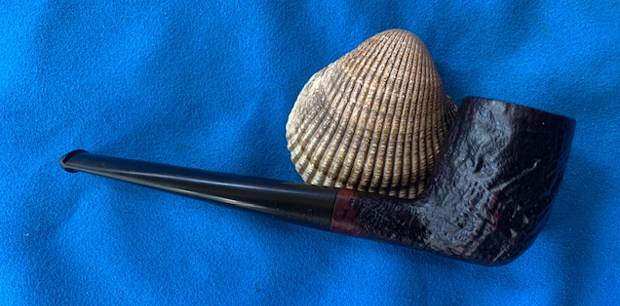
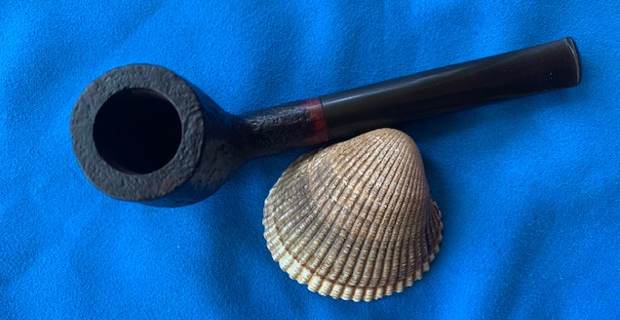
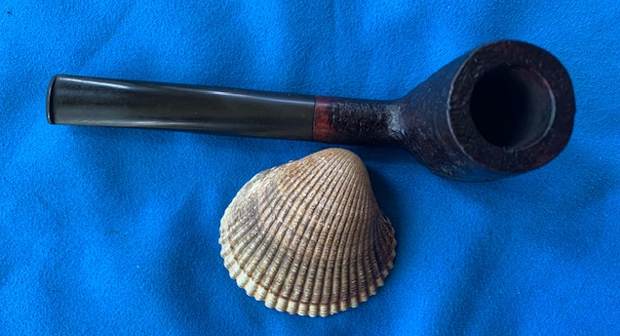
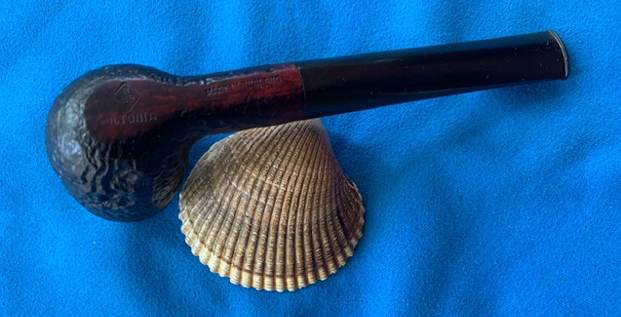
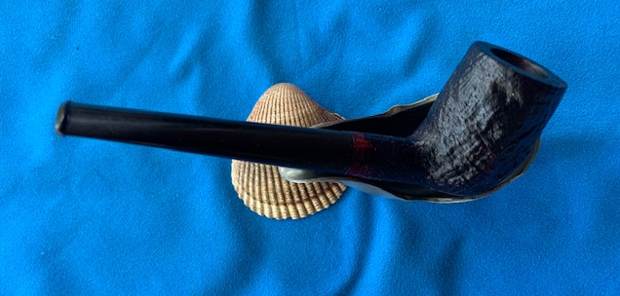
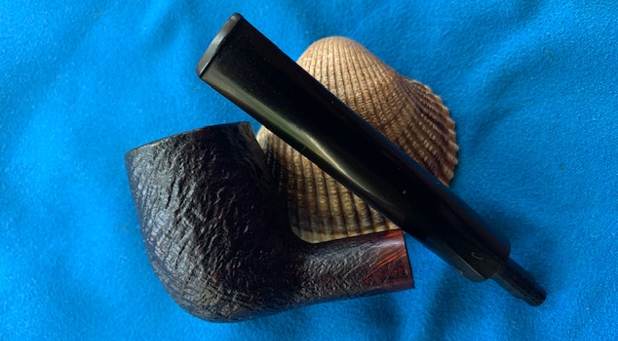
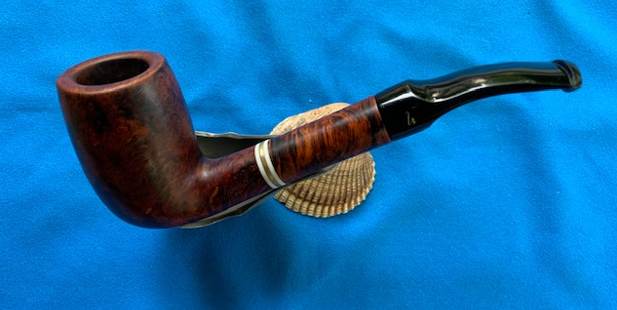
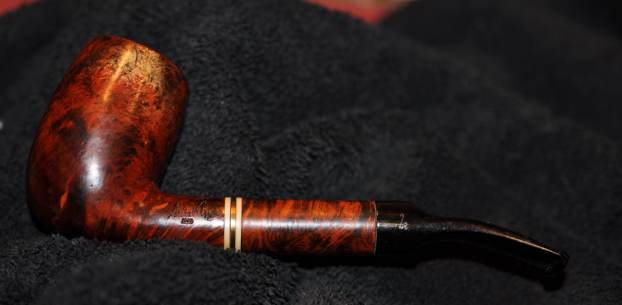
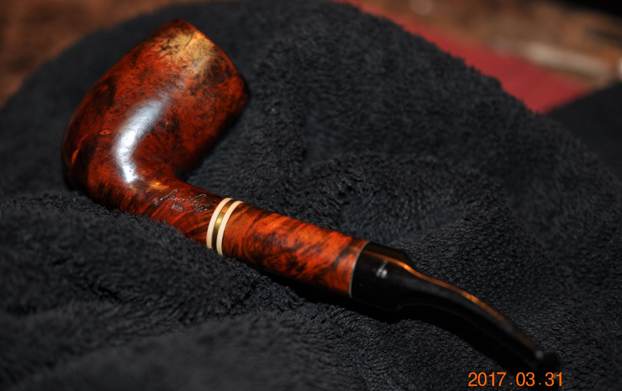
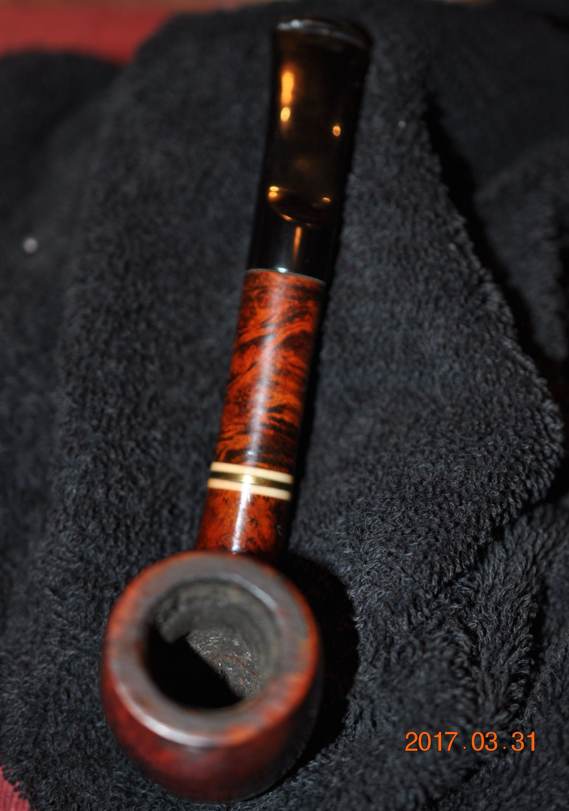
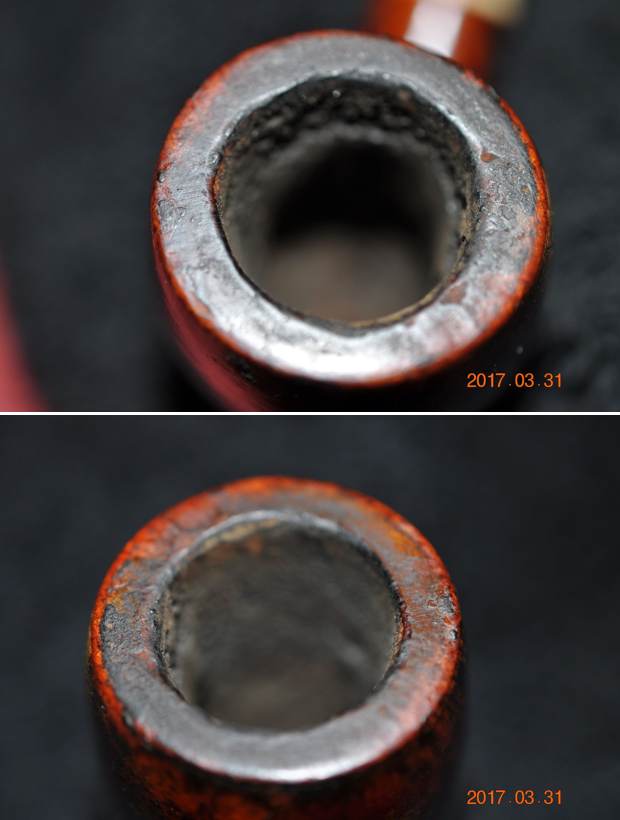
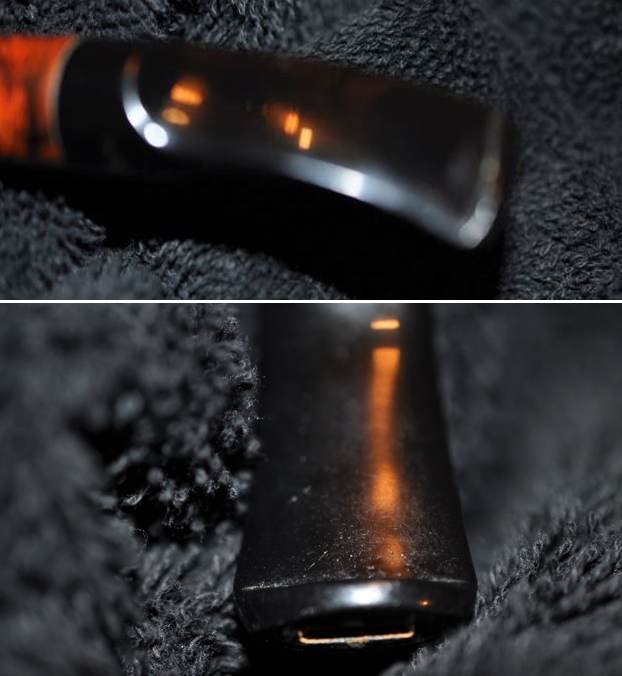
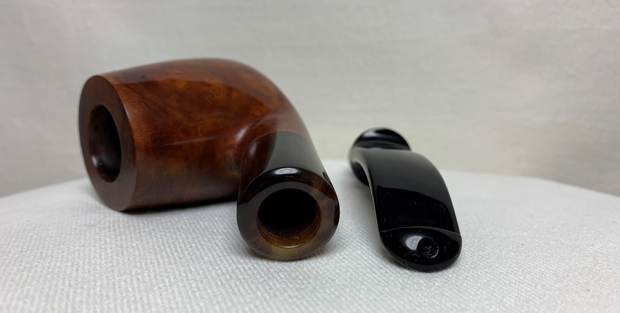
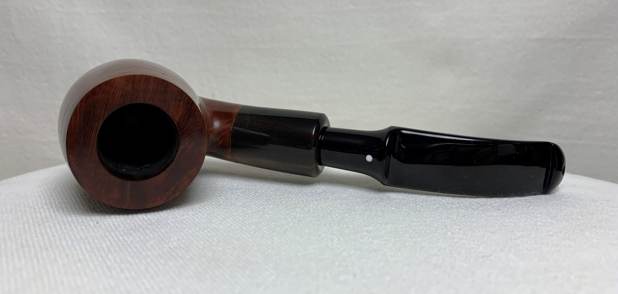
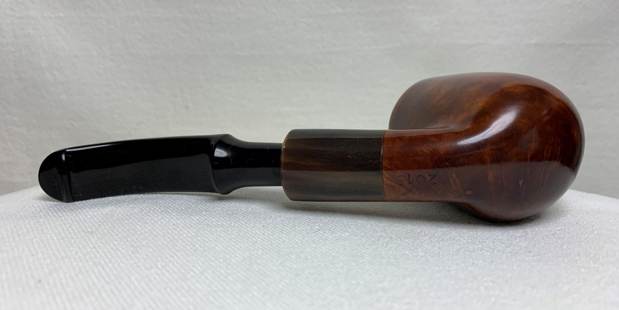
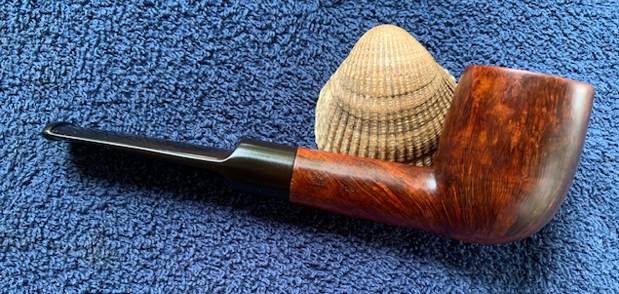
Jeff and I know longer remember where or when we purchased this pipe. It is a small pipe with nice grain and a saddle stem. It is stamped on the left side of the shank and reads COMOY’S [over] TRADITION. The right side is very faintly stamped Made in England. The rest of the stamp was unclear as was the shape number. It had a flat bottom on the shank and heal of the bowl that made it a sitter. We don’t have any photos of the pipe before Jeff cleaned it. But Jeff did his usual cleanup. The bowl was reamed with a PipNet reamer. He cleaned it up with a Savinelli Fitsall Pipe Knife. He scrubbed the internals with alcohol, pipe cleaners and cotton swabs. He did the same with the airway in the stem. The rim top and the beveled inner rim edge were damaged and showed burn marks on the front and back of the bowl. The outer edge of the bowl was damaged on the front side. The bowl was also out of round and damaged. The vulcanite saddle stem is clean but has some tooth marks on the top and underside ahead of the button. The stem has a 3 part C on the left side of the saddle. I took some photos of the pipe before I started my work on it.  I took photos of the bowl and rim top to show the condition of both. The bowl is very clean but you can see the burn damage on the top front and rear of the bowl and on the beveled inner edge. There was some darkening all over the rim top. It really was quite a mess. I took photos of the stem as well to show the tooth dents on the top and underside ahead of the button and on the button surface as well. There was three part C logo on the left side of the saddle. I took a photo of the stamping on the left side of the shank. The stamping on the right is very faint and I could not capture the Made in England stamp that was faint. There was no shape number on the shank.I removed the stem from the shank and took a photo of the pipe. It is proportionally pleasing and quite an eye catching pipe. I looked on Pipephil’s site for information on the Comoy’s Tradition and found the following information I have included a screen capture (http://www.pipephil.eu/logos/en/logo-comoy.html). It has the three part C which dated it to 1946 and following. The stamping is the same as the one I am working on. I turned to the article on Pipedia about dating Comoy’s pipes but the style of the stamping (https://pipedia.org/index.php?title=Comoy%27s_Dating_Guide#1917_to_the_end_of_the_1930.27s_.28at_least_1938.29). I have include the section in the screen capture below that date this pipe to the 1950s.

Now the Comoy’s stamp can be found in three variants in the 1950s

  1. A simple block-letter style without serifs but with the C larger than the other letters and the apostrophe before the “S”.
  2. A return to the slightly more fancy block letters with serifs and the apostrophe. (It seems that some grades carried different stamps, or at least that the stamping changed in different years for some grades.)
  3. A simple block-letter style without serifs and without the apostrophe and with the “C” the same size as the rest of the letters. This stamp was probably not used very long.
  4. A simple block-letter style without serifs but with the apostrophe before the “S” and with the “C” the same size as the rest of the letters.

Inlaid “C” on the stem

C” was first inlaid in the side of the mouthpiece around 1919. This was a complex inlay needing three drillings. First, a round white inlay was inserted, then the centre of the white was drilled out, and a smaller round black inlay was inserted. Finally, another drilling was made to remove the open part of the “C,” and an even smaller black inlay was inserted. This inlaid “C,” known as the “three-piece C,” was continued until the Cadogan era in the 1980s. However, the “C” in the 1920s and early 30s is much thinner and more delicate than the one post-WW II.

That article gave me some helpful information regarding the pipe that I was working on. I knew that the stamping and logos identified the pipe as having been made in following WW2 and from what I can see from the above information it is a 1950s era pipe.

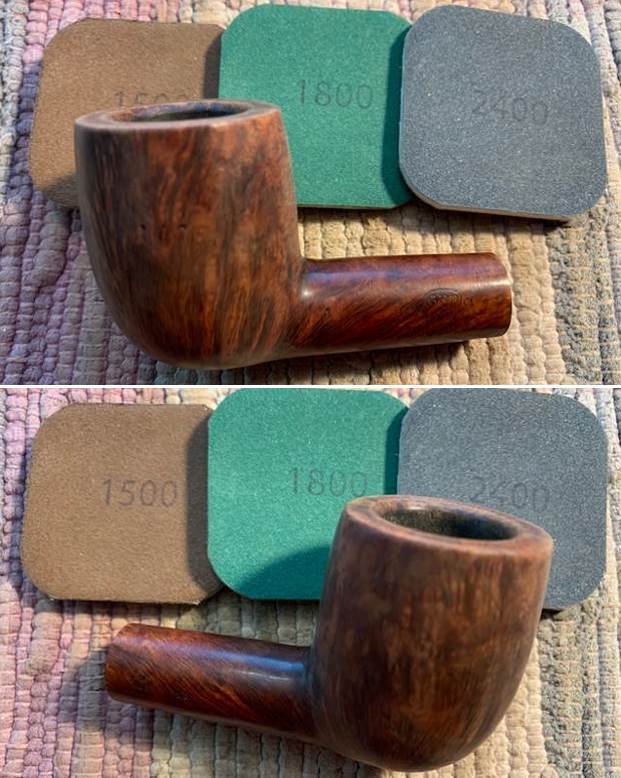
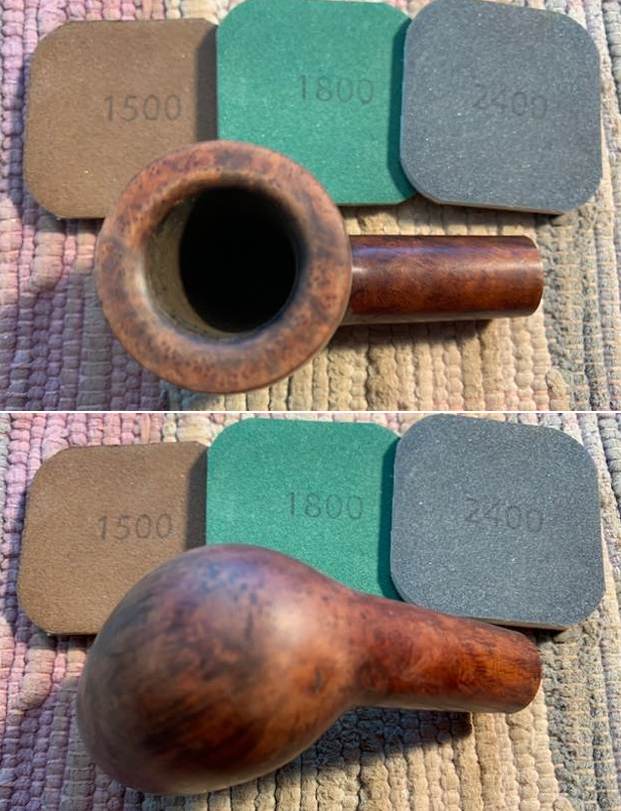
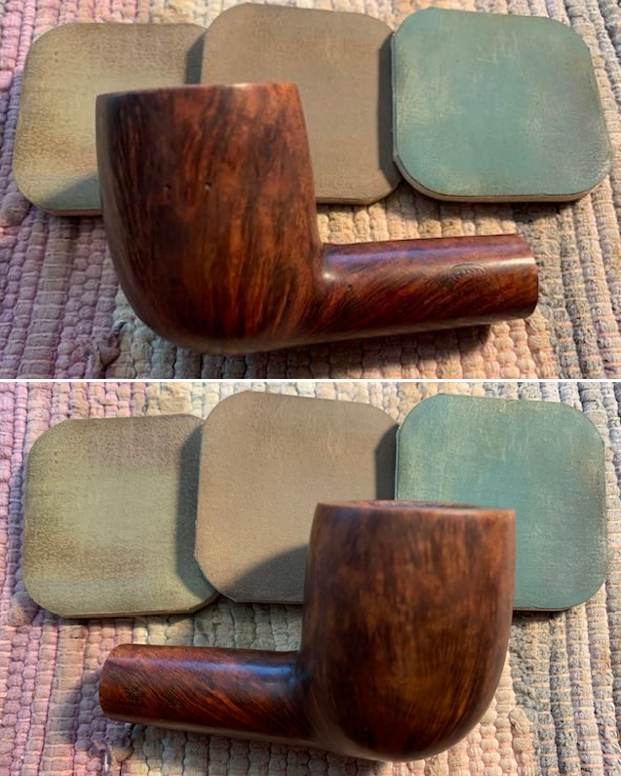
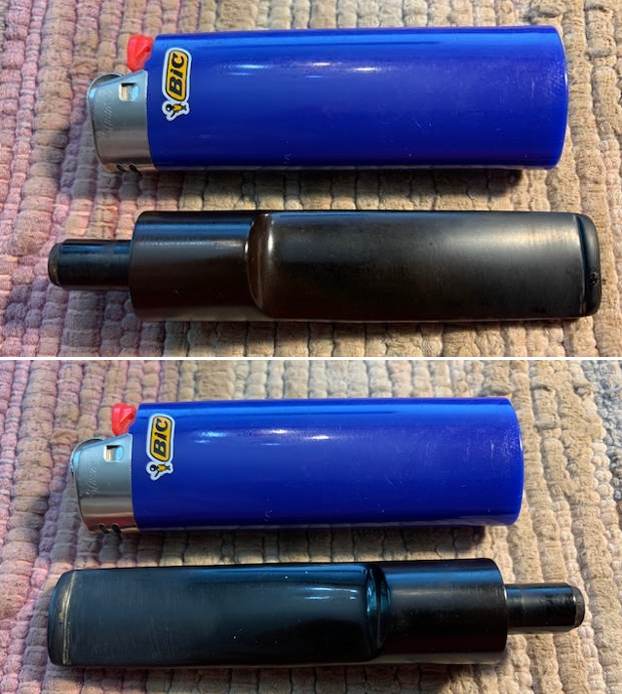
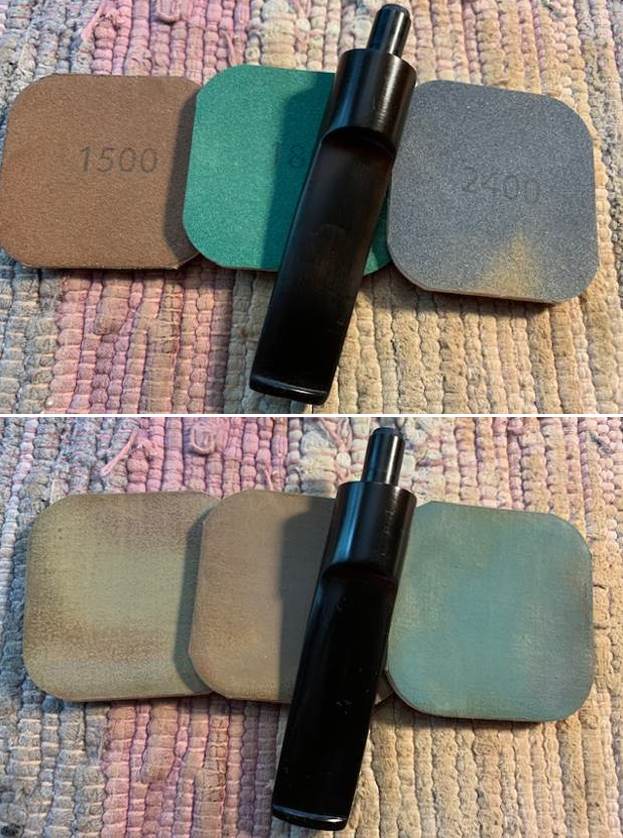
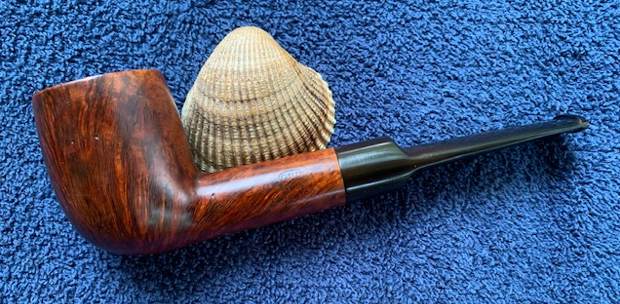
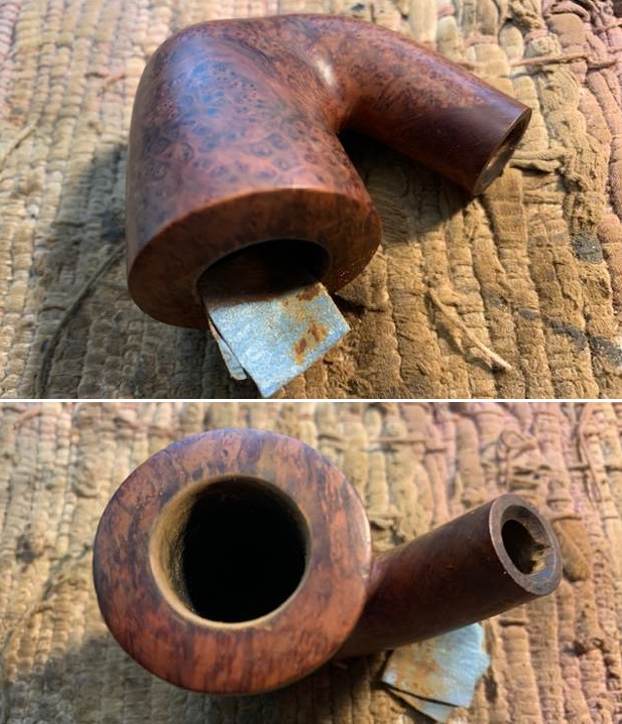
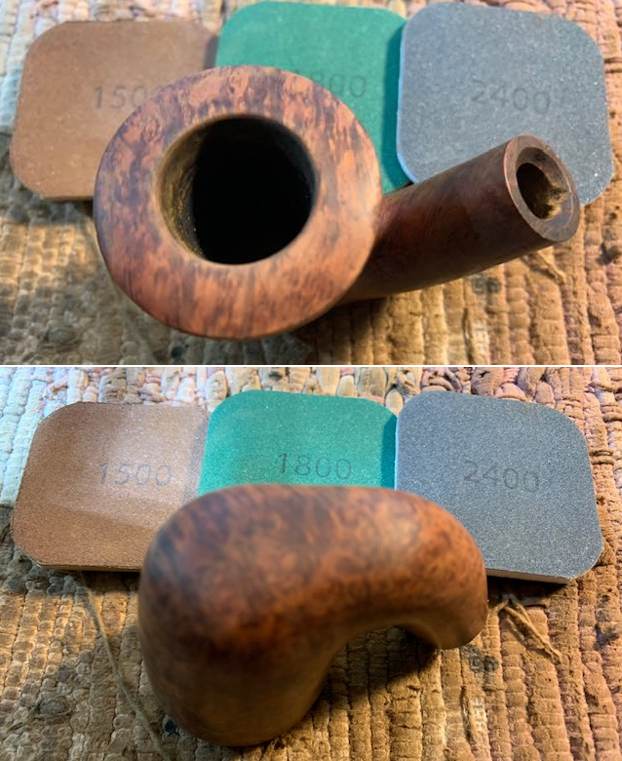
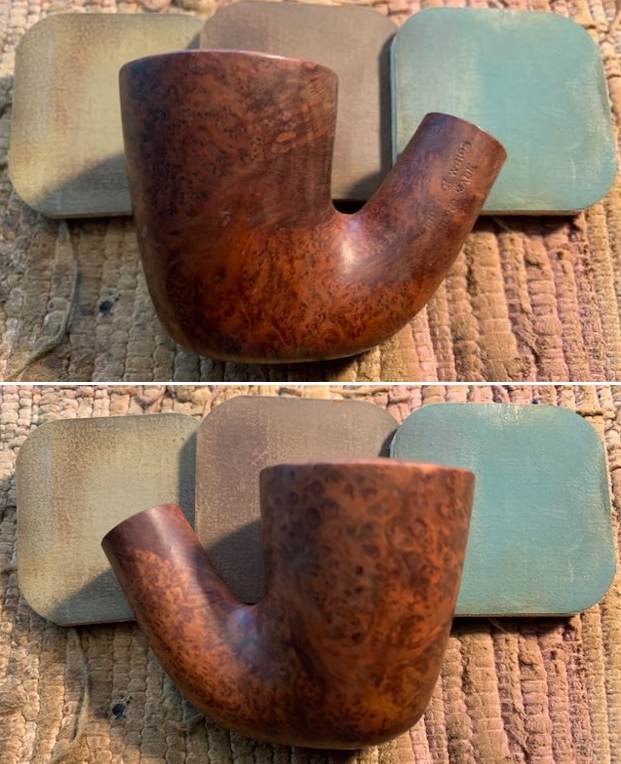
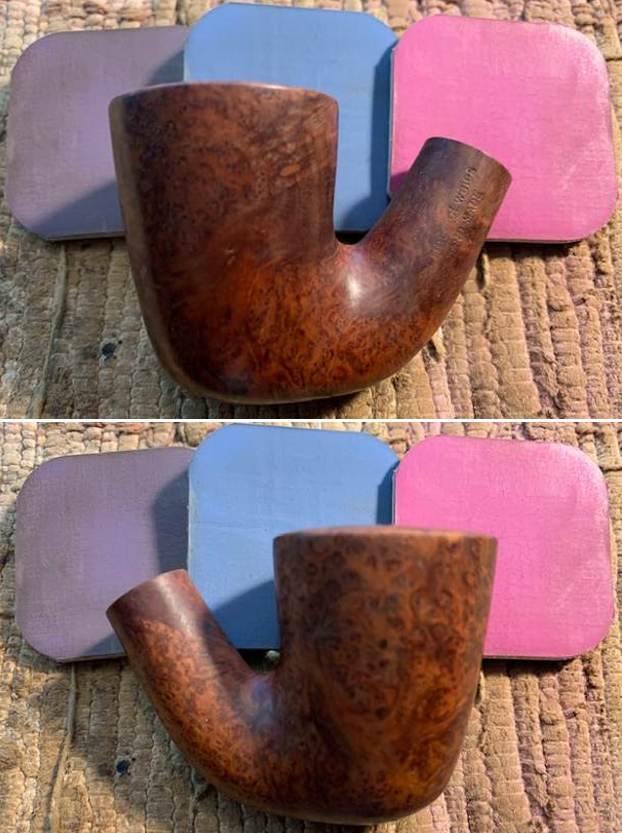
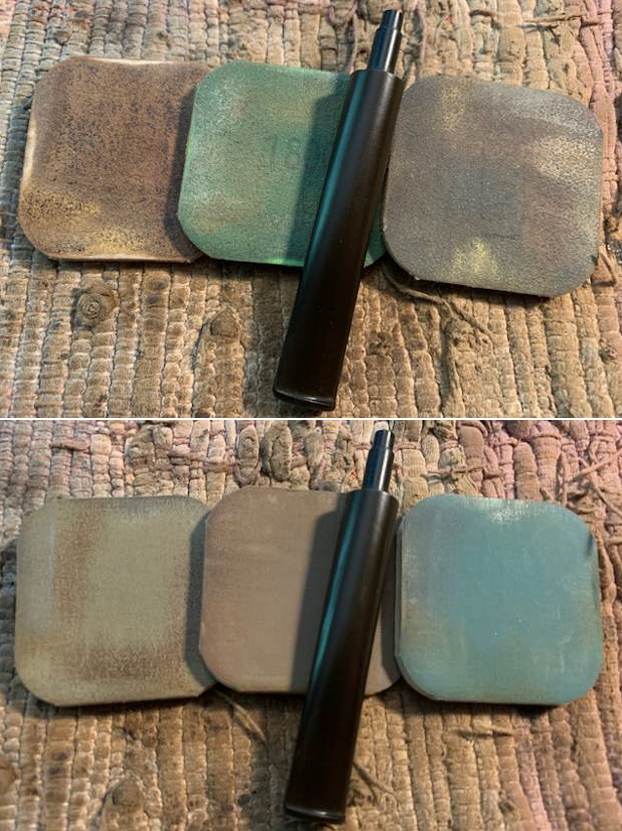
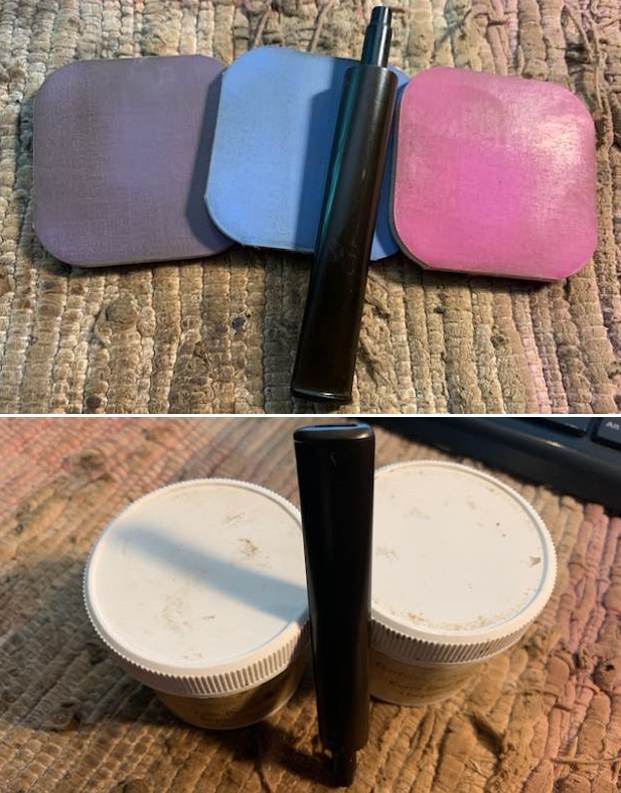
I started my work on the pipe by addressing the damage on the rim top, outer edge and the inner beveled edge of the bowl. I topped the bowl on a topping board with 220 grit sandpaper. I filled in the deep damage on the outer edge and rim top with clear super glue and briar dust. I used a wooden ball and 220 grit sandpaper to give the rim top and inner edge a bevel and minimize the burn damage to the top and edges. I stained the rim top with an Oak Stain Pen to match the colour around the sides of the bowl. It took several coats but it matched quite well.I polished the briar on the rim top and the rest of the bowl with micromesh sanding pads – dry sanding it with 1500-12000 grit pads. I wiped the briar down with a damp cloth to remove the sanding dust. The briar really took on a rich shine with the polishing. I rubbed the bowl down with some Before & After Restoration Balm. I worked it into the briar with my finger tips to clean, revive and preserve the wood. It really brings the grain alive once again. I let it sit for 15 minutes then buffed it off with a soft cloth. The grain really pops at this point in the process. I set the bowl aside and turned my attention to the stem. I “painted” the surface of the stem with the flame of a Bic lighter and was able to lift the tooth marks and chatter significantly. I sanded out those that remained with 220 grit sandpaper and started polishing it with 400 grit wet dry sandpaper. It was starting to look very good.     I polished the stem with micromesh sanding pads – 1500-12000 grit pads. I wiped the stem down after each pad with a cloth impregnated with Obsidian Oil. I finished the polishing with some Before & After Pipe Stem Polish – both Fine and Extra Fine. The stem looked very good.   As always I am excited to finish a pipe that I am working on. I put the Comoy’s Tradition Pot back together and buffed it with Blue Diamond on the buffing wheel. I gave the bowl and the stem multiple coats of carnauba wax. I buffed the pipe with a clean buffing pad and hand buffed it to raise the shine. It is fun to see what the polished bowl looks like with the grain popping around the bowl and shank. Added to that the polished vulcanite saddle stem was a beautiful touch. It is light and well balanced. Have a look at it with the photos below. The dimensions are Length: 5 inches, Height: 1 ½ inches, Outside diameter of the bowl: 1 ¼ inches, Chamber diameter: ¾ of an inch. The weight of the pipe is 34 grams/1.20 ounces. It is a beautiful pipe and one that will be on the rebornpipes store in the British Pipe Makers section. If you are interested in adding it to your collection let me know. Thanks for walking through the restoration with me as I worked over this pipe. Thanks to each of you who are reading this blog. I want to keep reminding us of the fact that we are not pipe owners; we are pipemen and women who hold our pipes in trust until they pass on into the trust of the next trustee.

Breathing Life into a GBD London Made C Conquest 68 Billiard


Blog by Steve Laug

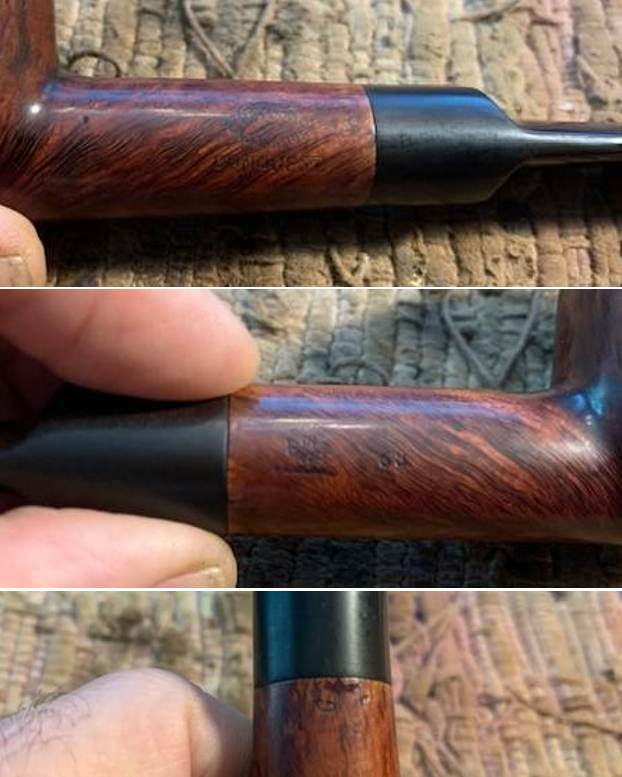
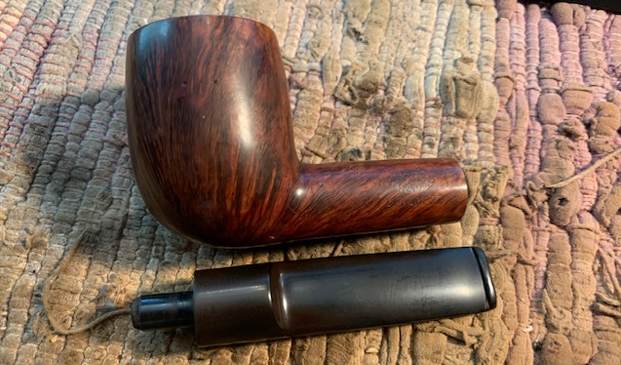
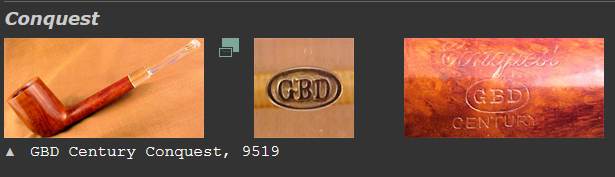
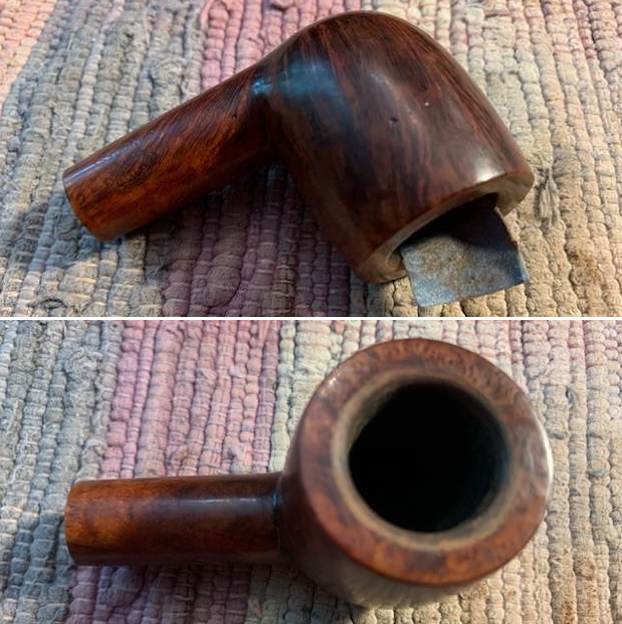
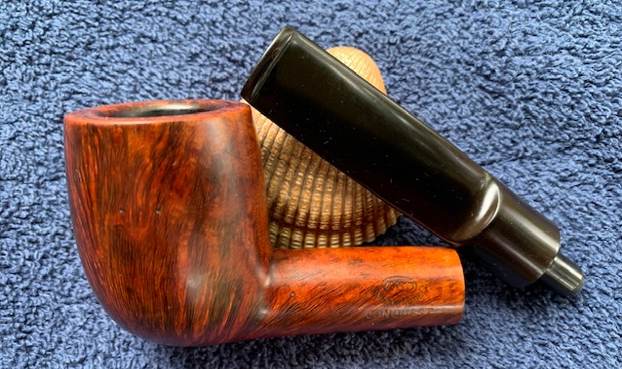
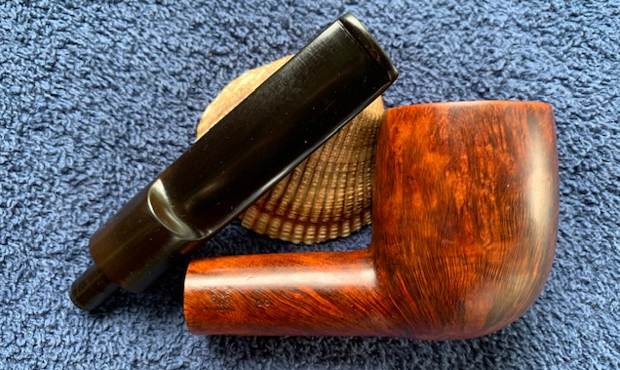
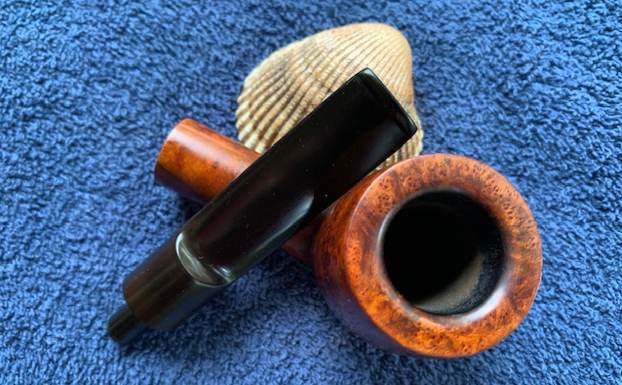
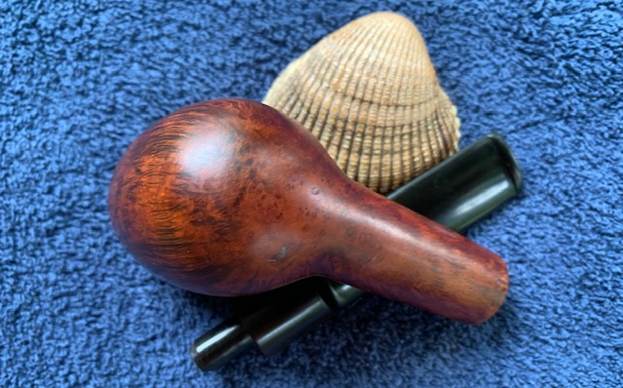
Jeff and I know longer remember where or when we purchased this pipe. It is a large pipe with nice grain and a saddle stem. It is stamped on the left side of the shank and reads GBD in an oval with London Made C arched underneath it. Below that it is stamped CONQUEST. On the right side of the shank it is stamped Made in London in an oval England followed by the shape number 68. On the underside of the shank it is stamped with a G. We don’t have any photos of the pipe before Jeff cleaned it. But Jeff did his usual cleanup. The bowl was reamed with a PipNet reamer. He cleaned it up with a Savinelli Fitsall Pipe Knife. He scrubbed the internals with alcohol, pipe cleaners and cotton swabs. He did the same with the airway in the stem. The briar is very clean and the rim top and the beveled rim edge look good. There were several fills well blended into the finish on the bottom of the bowl. There were are few sandpits on the right side of the bowl. There is some darkening on the back edge of the beveled rim top but otherwise it looks great. The vulcanite saddle stem is clean but has some tooth marks on the top and underside ahead of the button. I took some photos of the pipe before I started my work on it.  I took photos of the bowl and rim top to show the condition of both. The bowl is very clean but you can see some darkening on the inner beveled edge. There was some slight darkening was also on the rim top on the back. I took photos of the stem as well to show the tooth marks on the top and underside ahead of the button and on the button surface as well. There was no brass logo on the side of the saddle though it was a perfect fit.I took photos of the stamping on the shank sides. The stamping on the left, right and underside is faint but still very readable.I removed the stem from the shank and took a photo of the pipe. It is proportionally pleasing and quite an eye catching pipe.I knew that the GBD Conquest was a special line of GBD pipes that were generally larger in my experience than the normal GBD Pipes. So I turned to Pipephil to have a look and found one photo of a Conquest but no specific information on the line (http://pipephil.eu/logos/en/logo-gbd.html). I have included a screen capture of the pipe there. It was a Conquest Century Model which was different from the one I was working on. It also had a Perspex stem rather than the black vulcanite one I have.I turned then to Pipedia link on GBD pipes and followed a link there to a separate page on the various GBD Models (https://pipedia.org/wiki/GBD_Model_Information). I found a section on what they called Plus Sized Pipes that included information on the Conquest line. I quote below.

In addition to the pipe line and shape information stamped on the pipe GBD also had codes for plus sized pipes. These codes in ascending order of size were…

Conquest

Collector

Colossus

Perspex refers to the lucite/acrylic bit material GBD used, the clear bits used on various models are Perspex. Metal rondelles were discontinued after the merger with Comoy.

The information was very clear that the pipe was one of the larger GBD pipes like I suspected. I also found it interesting that the Conquest was at the bottom of the order of Large pipes. It also notes that the Metal rondelles were discontinued after the merger with Comoy. That helped me to come to the conclusion that the stem on the one I was working on is probably original.

I started my work on the pipe by addressing the darkening on the inner beveled edge of the bowl and the rim top. I used a folded piece of 220 grit sandpaper to deal with the darkening. It did not take too much and it was clean and smooth.  The inside of the bowl was a bit rough from the removal of the cake. I sanded it smooth with a piece of 220 grit sandpaper wrapped around a dowel. I wiped it down with a piece of paper towel and the inside was clean and smooth. I cleaned out the dust from the sanding with alcohol and pipe cleaners.I polished the briar with micromesh sanding pads – dry sanding it with 1500-12000 grit pads. I wiped the briar down with a damp cloth to remove the sanding dust. The briar really took on a rich shine with the polishing.   I rubbed the bowl down with some Before & After Restoration Balm. I worked it into the briar with my finger tips to clean, revive and preserve the wood. It really brings the grain alive once again. I let it sit for 15 minutes then buffed it off with a soft cloth. The grain really pops at this point in the process. I set the bowl aside and turned my attention to the stem. I “painted” the surface of the stem with the flame of a Bic lighter and was able to lift the tooth marks and chatter. It looked much better and the marks all lifted. Polishing the stem would take care of the damage.  I polished the stem with micromesh sanding pads – 1500-12000 grit pads. I wiped the stem down after each pad with a cloth impregnated with Obsidian Oil. I finished the polishing with some Before & After Pipe Stem Polish – both Fine and Extra Fine. The stem looked very good.    As always I am excited to finish a pipe that I am working on. I put the GBD London Made Conquest C 68 Billiard back together and buffed it with Blue Diamond on the buffing wheel. I gave the bowl and the stem multiple coats of carnauba wax. I buffed the pipe with a clean buffing pad and hand buffed it to raise the shine. It is fun to see what the polished bowl looks like with the grain popping around the bowl and shank. Added to that the polished vulcanite saddle stem was a beautiful touch. It is light and well balanced. Have a look at it with the photos below. The dimensions are Length: 6 inches, Height: 1 ¾ inches, Outside diameter of the bowl: 1 3/8 inches, Chamber diameter: 7/8 of an inch. The weight of the pipe is 56 grams/1.98 ounces. It is a beautiful pipe and one that will be on the rebornpipes store in the British Pipe Makers section. If you are interested in adding it to your collection let me know. Thanks for walking through the restoration with me as I worked over this pipe. Thanks to each of you who are reading this blog. I want to keep reminding us of the fact that we are not pipe owners; we are pipemen and women who hold our pipes in trust until they pass on into the trust of the next trustee.

Found an Oddity – an Imported Briar Sparkless Cigar Pipe


Blog by Steve Laug

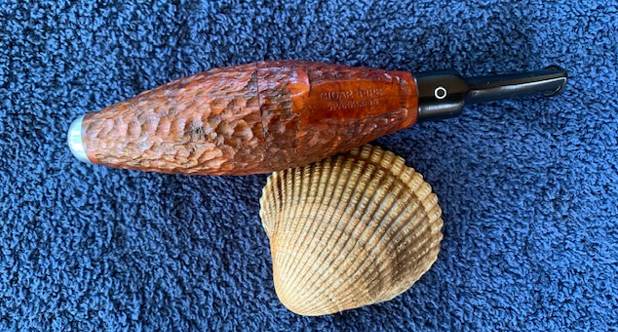
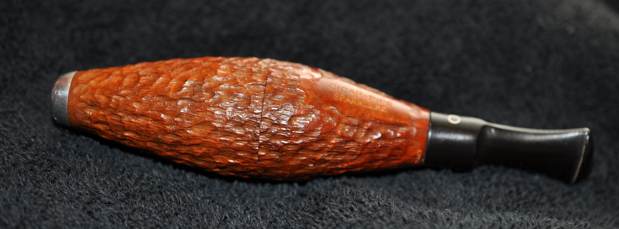
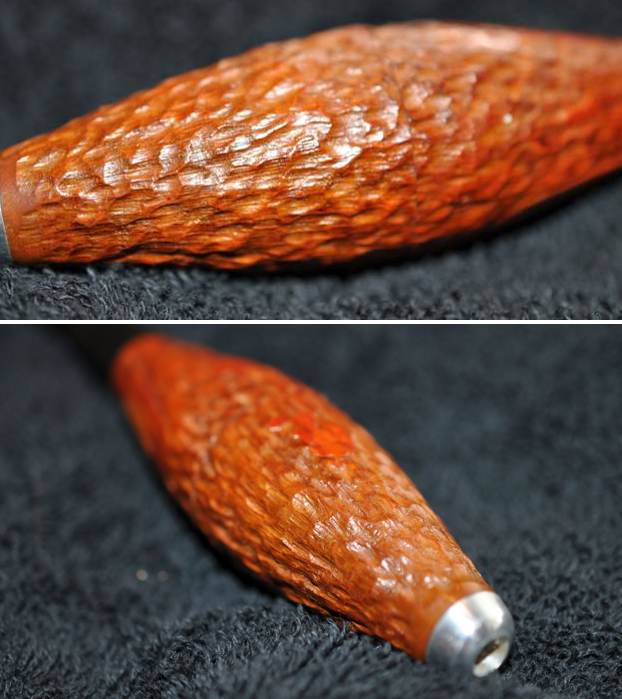
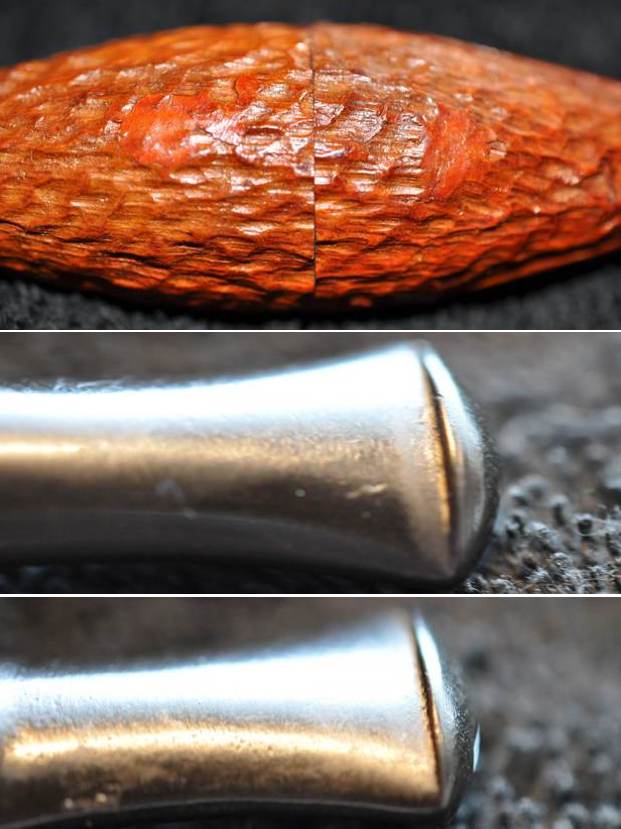
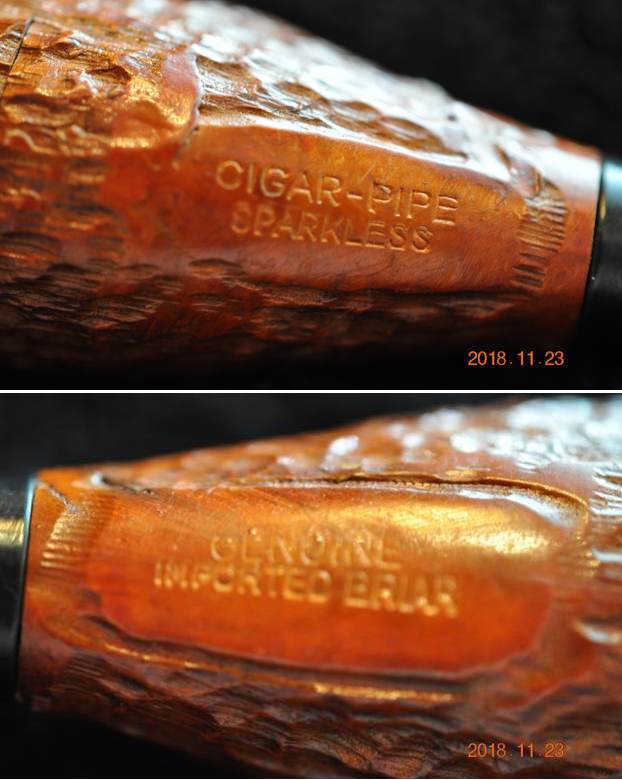
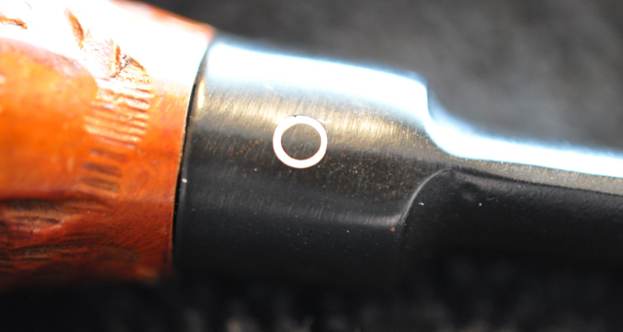
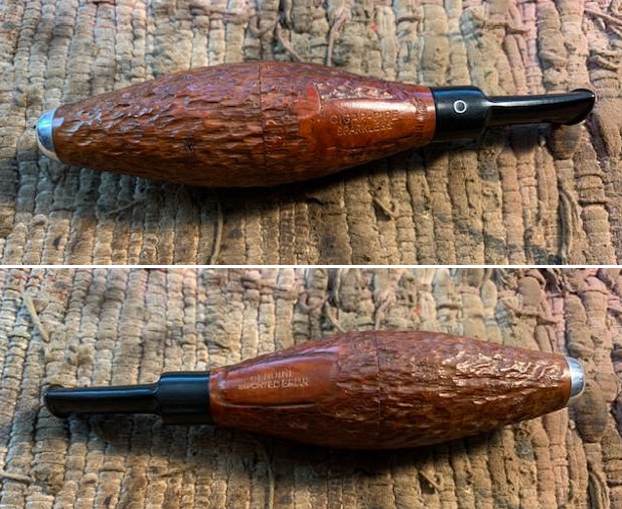
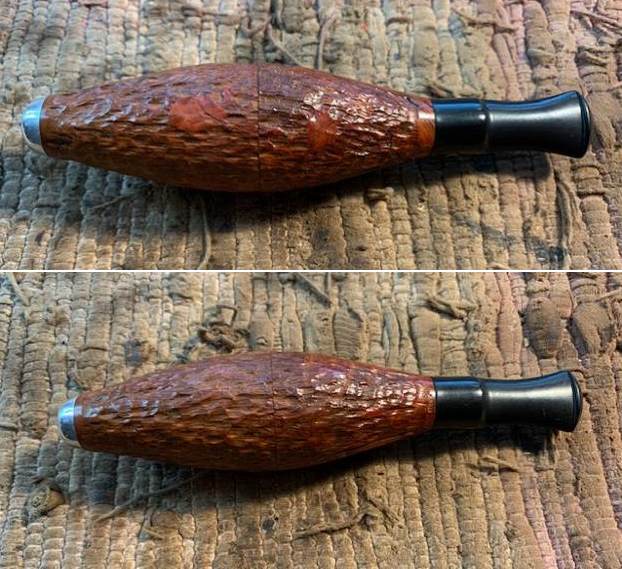
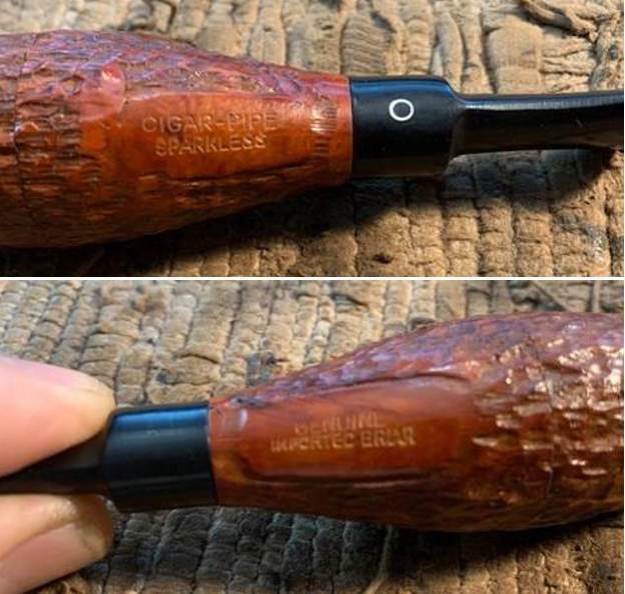
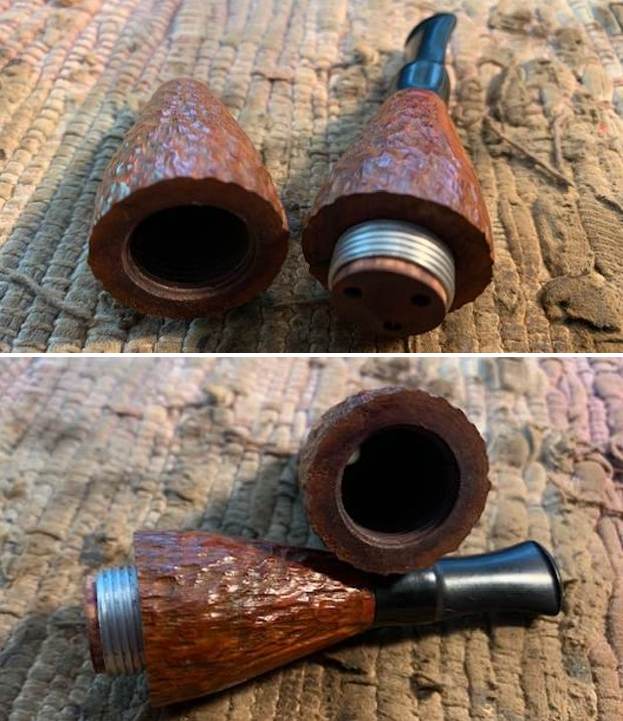
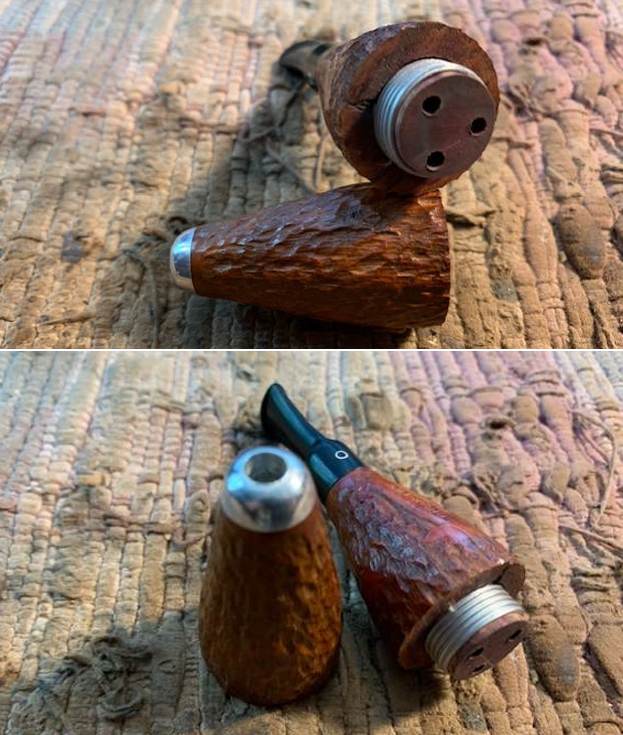
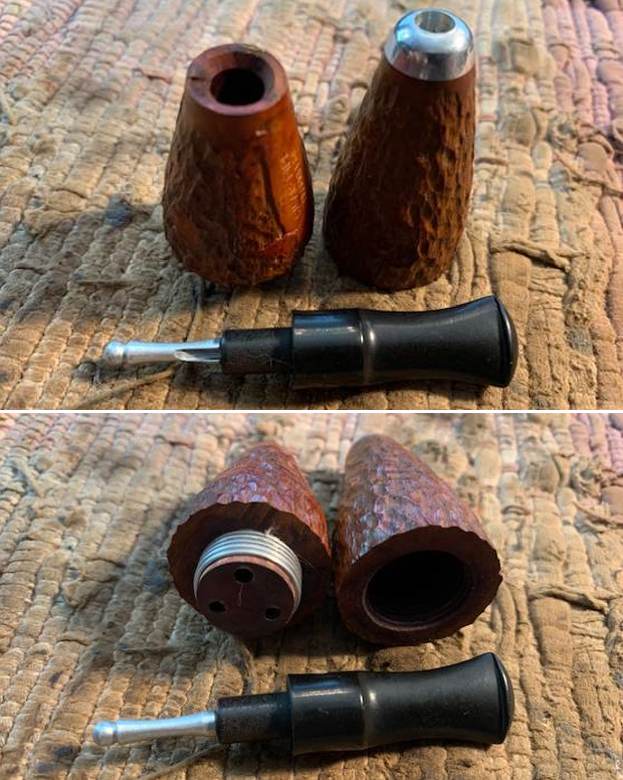
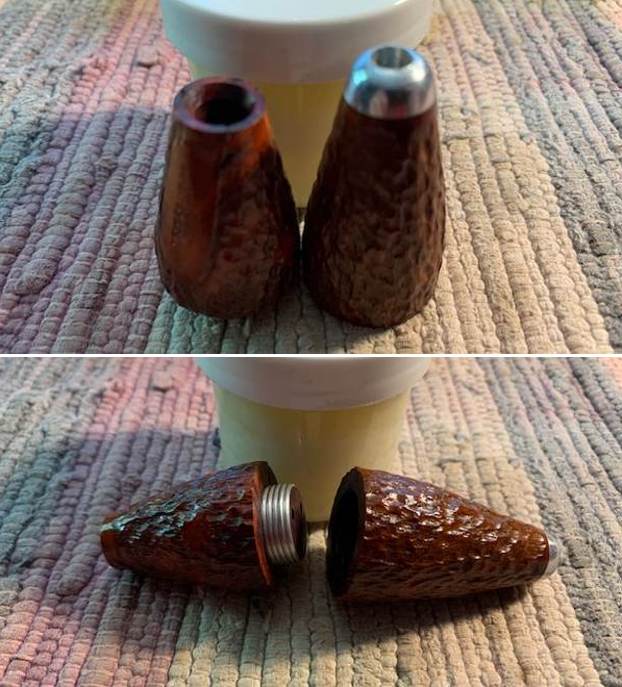
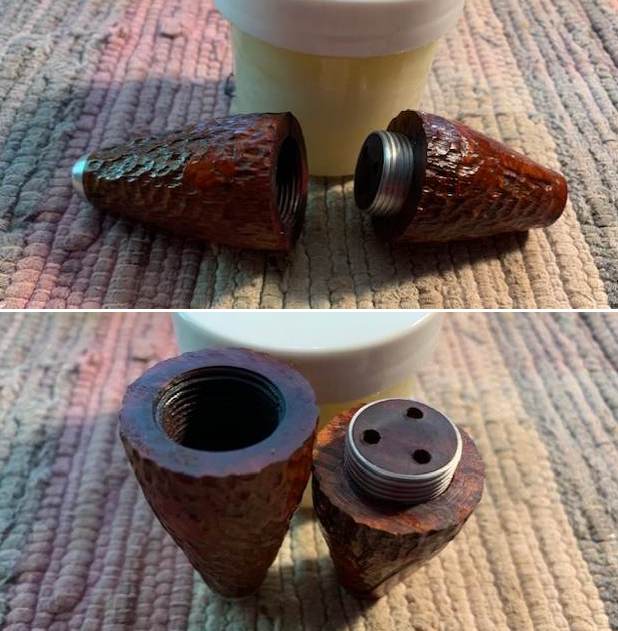
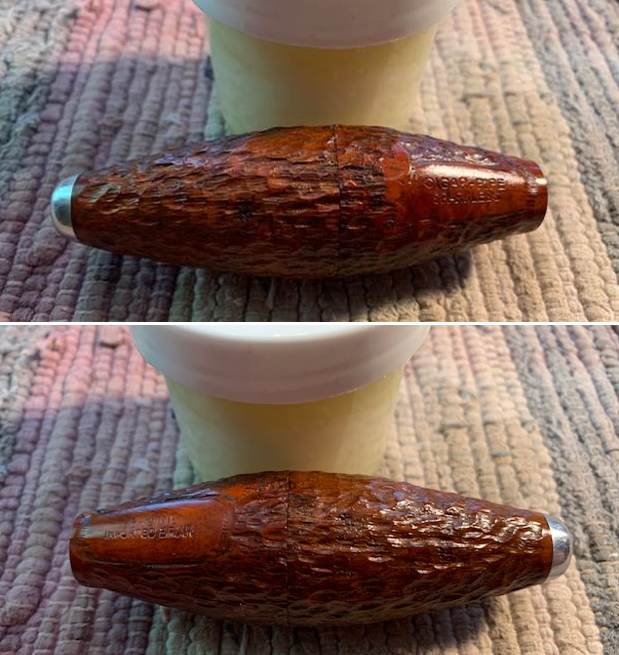
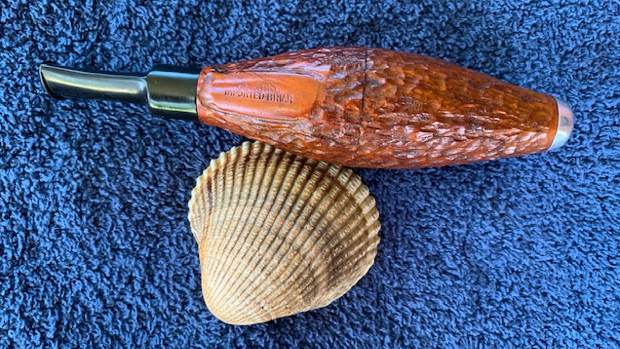
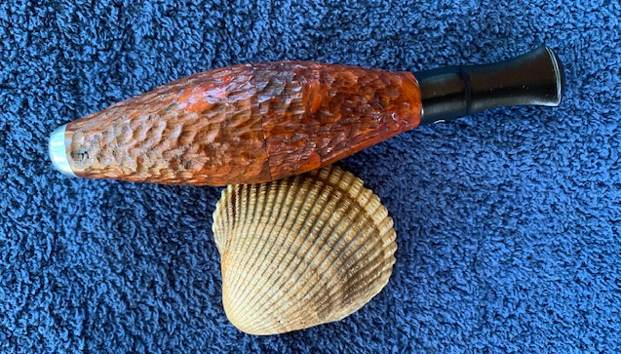
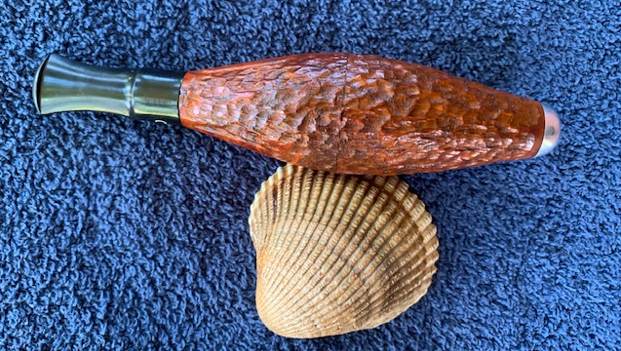
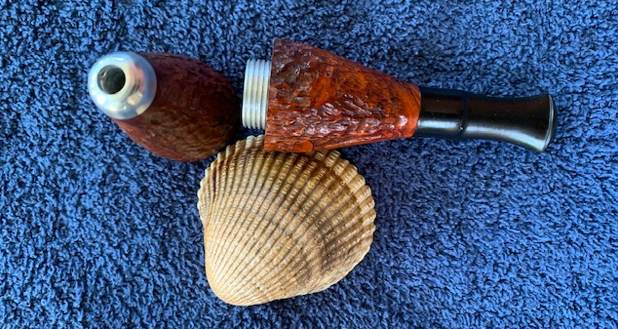
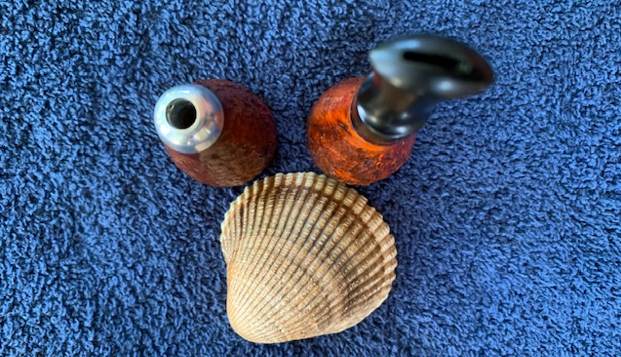
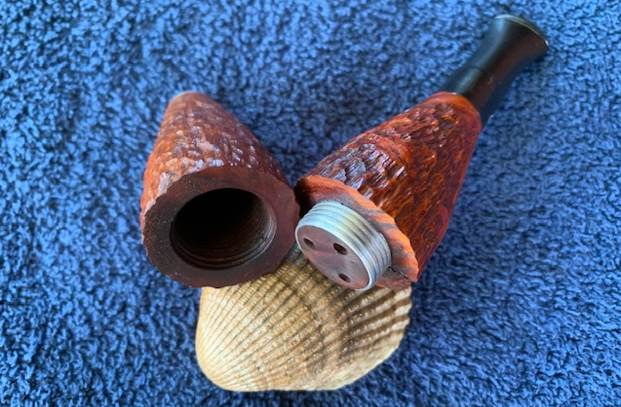
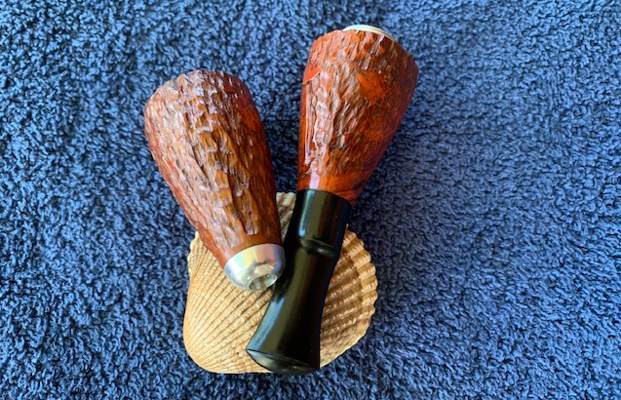
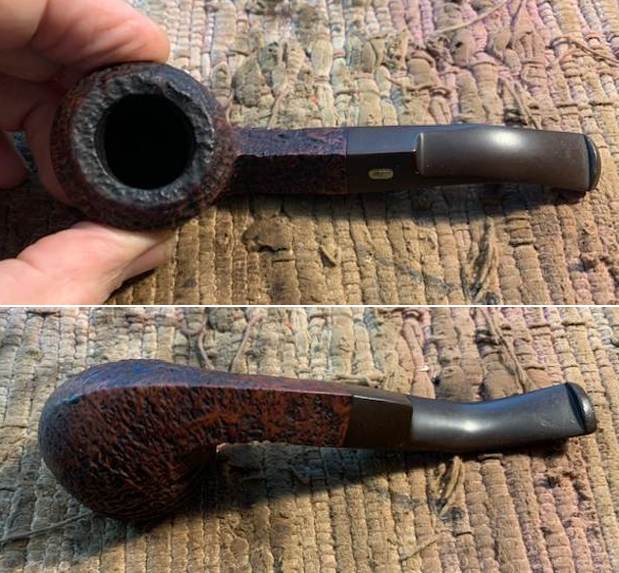
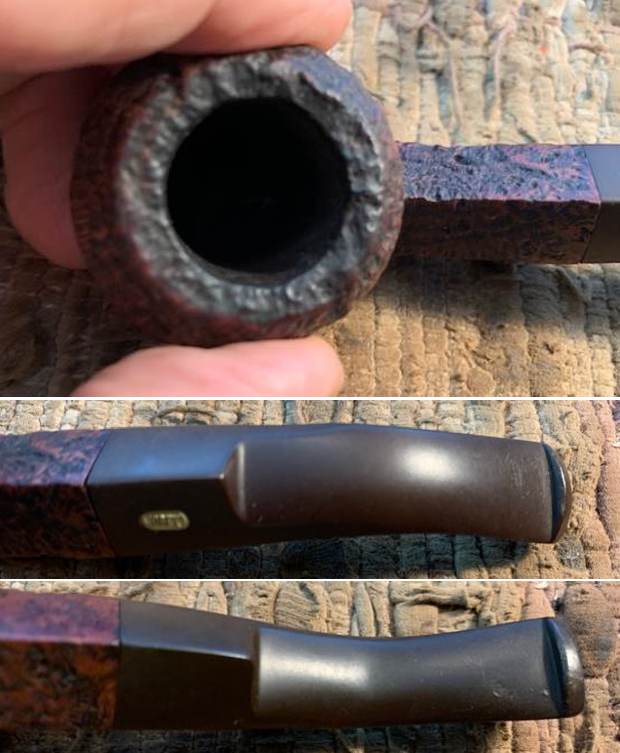
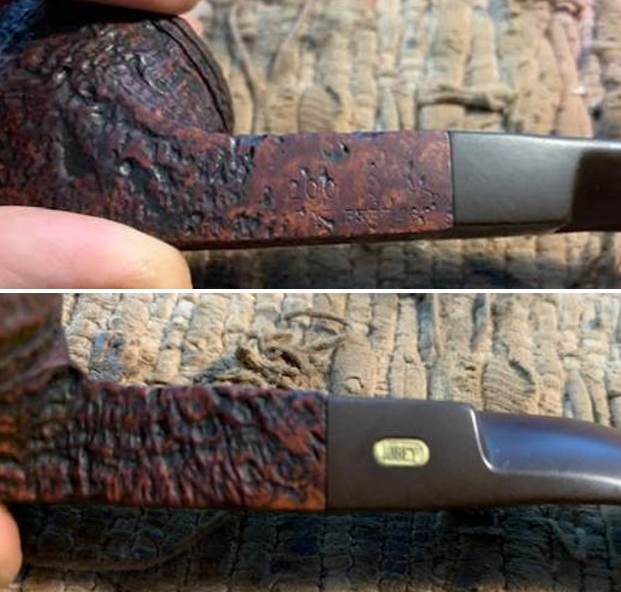
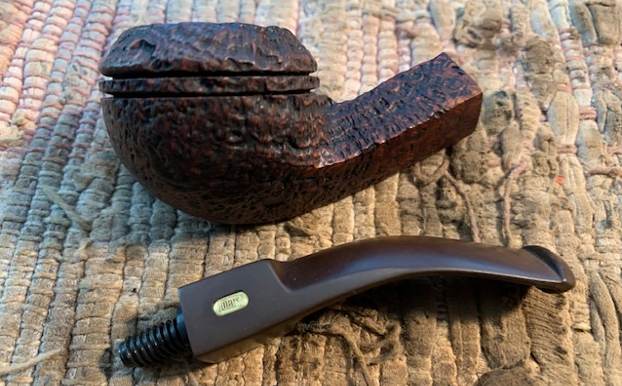
I decided to work on something a bit different now. I pulled out a rusticated Cigar Pipe that Jeff had purchased at an Antique Store on 04/17/18 in Bozeman, Montana, USA. The pipe is stamped on both sides. On the left side it reads CIGAR-PIPE [over] SPARKLESS. On the right side it reads GENUINE [over] IMPORTED BRIAR. The finish was dirty and grit was in the rustication. There was a thick varnish coat on the finish that had a few bubbles in it. The bowl is split in half and held together by a threaded metal apparatus in the stem end of the pipe. The other end is threaded in the briar and screws onto the apparatus. There is an aluminum nose cone on the front end of the pipe. The inside was dirty and had been smoked. There was a lot of carbon in bowl and the shank end of the pipe. The stem is vulcanite and has some calcification along the button edge. There was tooth chatter and marks on both sides ahead of the button. There was a white circle logo on the left side of the saddle stem. There is a stinger in place in the tenon end. Jeff took photos of the pipe before he started his clean up work.Jeff took photos of the sides of the pipe to show the rustication around the briar. You can also see the varnish on the briar that is slightly worn and spotty. You can also see the fills in the briar around the bowl sides. Jeff took a photo of the bowl from the side. You can see the line (joint) in the center of the pipe. You can also see the putty fills on both the right and the left of the bowl in the first photo. He took photos of the stem sides to show the tooth chatter and marks on the surface near the button.He captured the stamping on both sides of the bowl. It is clear and readable as noted above. He also captured the logo on the left side of the saddle stem. I worked on a pair of Mastercraft Sparkless  Cigar pipes back in 2016 so I turned and reread the blog I wrote on the work. Here is the link: https://rebornpipes.com/2016/09/12/back-in-flight-a-pair-of-mastercraft-sparkless-cigar-pipe-zeppelins/. I quote from the research below:
I have seen a lot of these pipes for sale in shops and on eBay but I had never had one in my hand so I had never done any research into them or what “sparked” their invention. So now that I had two of them I figure it was time to look up some information. I looked on the pipephil website and found that they were made by Mastercraft and that there were some further articles in the odd pipes section of the site. Here is the link to that part of the site. http://www.pipephil.eu/oddpipes/pipcig/sparkless2.html. The trouble is that the articles were in French. I used Google Translator to translate them into English and then did some serious editing to the translations. I am including both articles in full here. The first one is written about the smooth briar versions and the second is about the rusticated versions.

Overseas manufacturers of pipes are not deprived of market of cigar pipes based on the mythical model of the 1920s. The best-known is called Sparkless [1] and comes from the Mastercraft House which was issued in several finishes. Two of them will allow you to judge fully of these strange pipes (The article included two photos of two different smooth finishes on the pipes – a stained and an unstained version).

It should be noted on at the outset that it is stockier than its Germanic Zeppelin cousin. When the pipe is disassembled we note that the two wooden parts screw into another – one side is threaded wood on the interior of the piece and the other side has a metal threaded end that turns into the wooden threads. There may be some doubts about how well this type of connection will hold up under use. There is no place for a filter in the Sparkless pipes unlike the Zeppelin. This pipe is adapted to the tastes of American smokers.

You should know that Mastercraft had a long standing near-monopoly of imports of European briar and particularly Italian briar. This explains the stamping ITALY on the side of the pipe.

The stamping is as follows:

On one side it is stamped Cigar Pipe, Sparkless and on the other side it is stamped Century Old, Briar Italy. On the nose of the pipe it is stamped Perfected on one side and Reg. No. M.U. 3840 on the other side.

The measurements of the pipe are as follows: The length is 13.9 cm and the height is 3.2 cm.

Where the German maker, Vauen offers one model of the Zeppelin pipe, the American Mastercraft diversifies its range. To the two versions of the Sparkless model mentioned above we add here two other variations in the form of pipe, rusticated in natural finish.

These variations to this atypical pipe probably spoke to a limited audience. Let’s face it the quality of the woodwork on the two models rusticated models isn’t the most refined in the light of the criteria of the XXI century. But don’t lose sight of the variety that was offered when these pipes were made was radically new.

My preference is usually saddle bit pipes. But I confess that by comparing the Zeppelin to the Pipe-Cigar Mastercraft models, the Zeppelin has more elegance due to the continuity of the shape to the tip compared to the general shape of the Cigar-Pipe. The German made Zeppelin pipe appears as a whole very consistent where each part (tip – stove – metallic cap) is the continuation of the other. This consistency and flow is less noticeable for this North American pipe.

The complete disassembly of the pipe shows that the stem in ebonite has a condensation system reduced to its simplest expression here: a small aluminum tube. It should be noted that these systems don’t bring great benefits for smoking and on the contrary can add moisture and condensation. They are often the origin of disturbances in the draw of the pipe and cause of particularly unpleasant gurgle. But it should not hurt.

The details of the stamping nomenclature reflects that the origin of the pipes is Italian and are potentially made by Lorenzo.

On one side it is stamped Cigar Pipe, Sparkless and on the other side it is stamped Century Old, Briar Italy. On the nose of the pipe it is stamped Perfected on one side and Reg. No. M.U. 3840 on the other side.

The measurements of the pipe are as follows: The length is 13.9 cm and the height is 3.2 cm.

Armed with the interesting information I went to work on the Cigar-Pipes that I had a rusticated pipe. My brother had done the lion’s share of cleanup work on both of these pipes. Judging from the internals and the externals he did a great job cleaning out all of the gunk and grime. The rusticated briar was cleaned with a tooth brush and Murphy’s Oil Soap and in doing so he was able to remove the majority of the finish. The next four photos show the exterior of the pipe. The stem was quite clean though it had tooth chatter on both sides. The white circle logo was in good condition. The finish was dull. The aluminum nose cone was dull. There was a fill on one side of the pipe that stood out as it was smooth and the rest of the bowl was rusticated. I took photos of the stamping on the shank sides and the stem. It is clear and readable. I took pipe apart and took photos of the halves of the pipe. It is an interesting  piece of pipe history.       I worked some Before & After Restoration Balm into the surface of the briar with my fingertips and a horsehair shoe brush. The product works to clean, renew and preserve briar. I let it sit on the briar for 15 minutes then buffed it off with a soft cotton cloth. The pipe looks very good at this point in the process.  I polished out the tooth chatter on both sides of the stem with micromesh sanding pads – dry sanding with 1500-12000 grit pads and wiping it down after each pad with some Obsidian Oil. I polished it further with Before & After Stem Polish – both Fine and Extra Fine. I gave it a final coat of Obsidian Oil and laid it aside to dry.   As always I am excited to finish a pipe that I am working on. I put the rusticated Sparkless Cigar Pipe back together and buffed it with Blue Diamond on the buffing wheel. I gave the bowl and the stem multiple coats of carnauba wax. I buffed the pipe with a clean buffing pad and hand buffed it to raise the shine. It is fun to see what the polished bowl looks like with the colours shining through the various carving in the rustication along with the vulcanite saddle stem. It is beautiful, light and unique pipe. Have a look at it with the photos below. The dimensions are Length: 5 inches, Height: 1 inch, Outside diameter of the bowl: 1 1/8 inches, Chamber diameter: ¾ of an inch. The weight of the pipe is 31 grams/1.13 ounces. It is a beautiful pipe and one that will be on the rebornpipes store in the American Pipe Makers section. If you are interested in adding it to your collection let me know. Thanks for walking through the restoration with me as I worked over this pipe. Thanks to each of you who are reading this blog. I want to keep reminding us of the fact that we are not pipe owners; we are pipemen and women who hold our pipes in trust until they pass on into the trust of the next pipeman or woman.

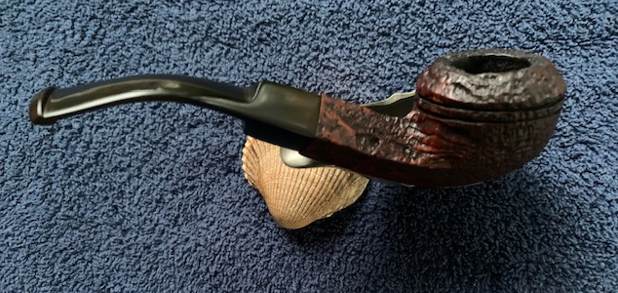
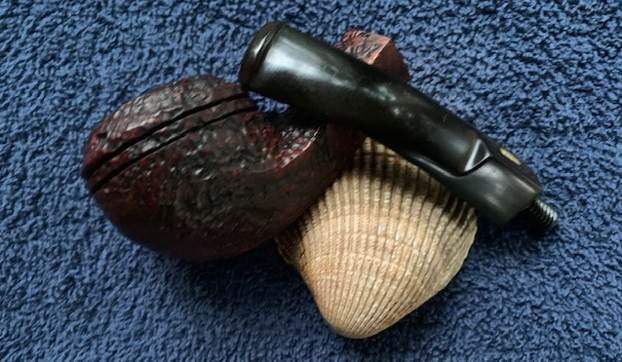
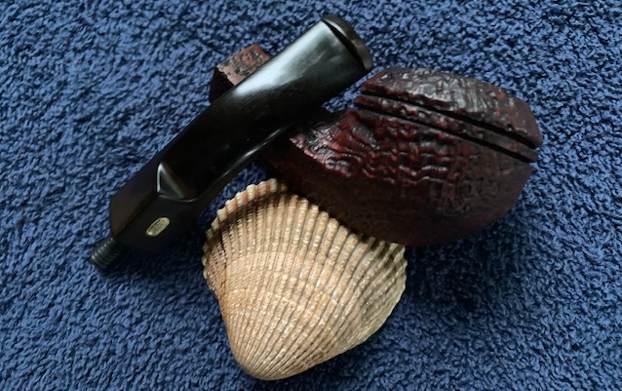
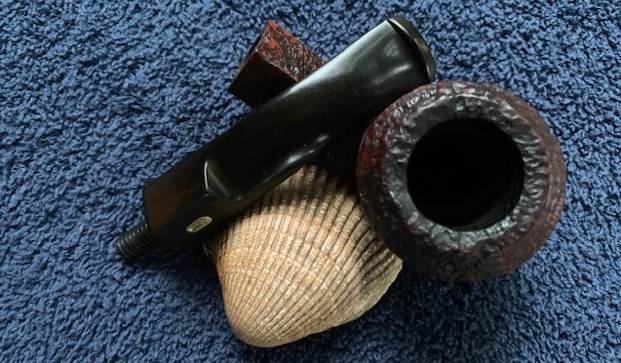
Restoring an interesting Mastercraft Made Sparkless Bent Egg


Blog by Steve Laug

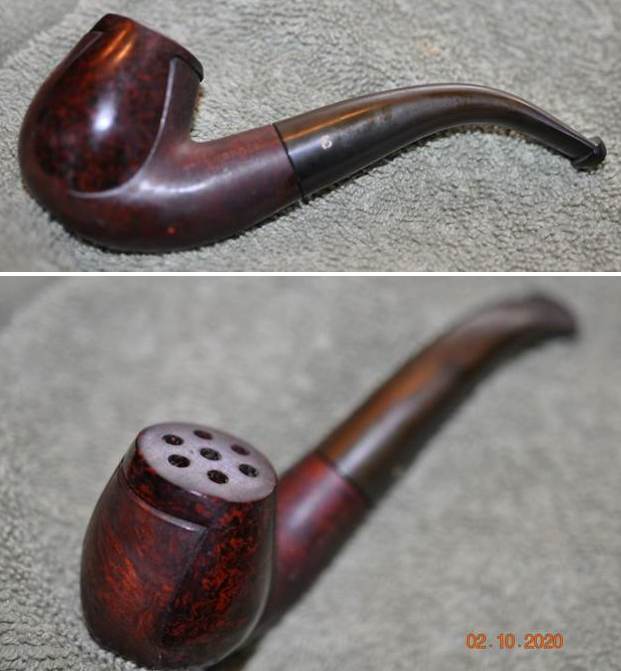
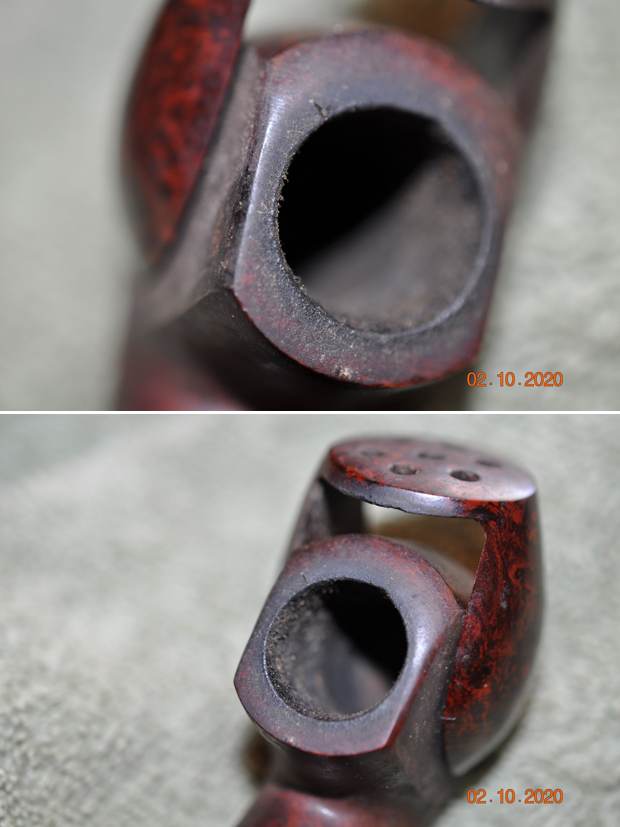
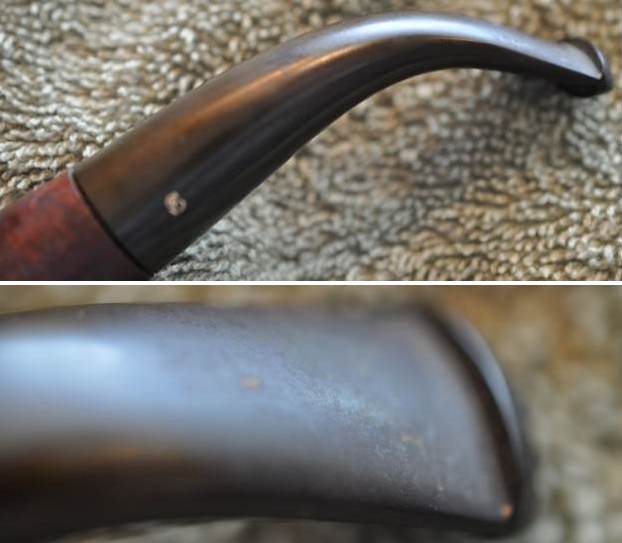
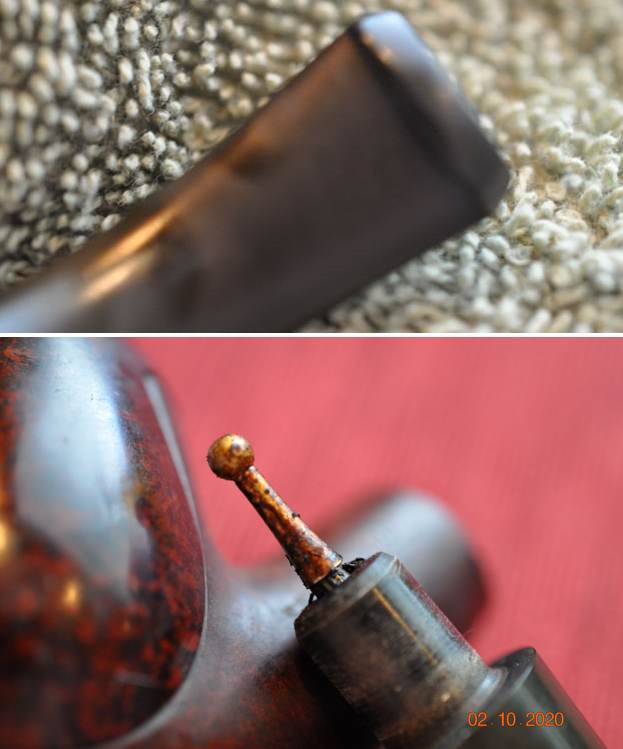
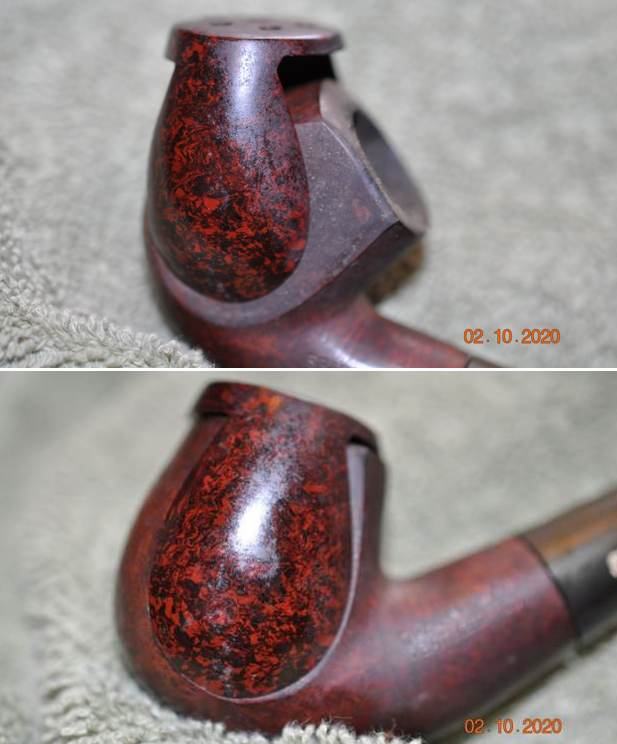
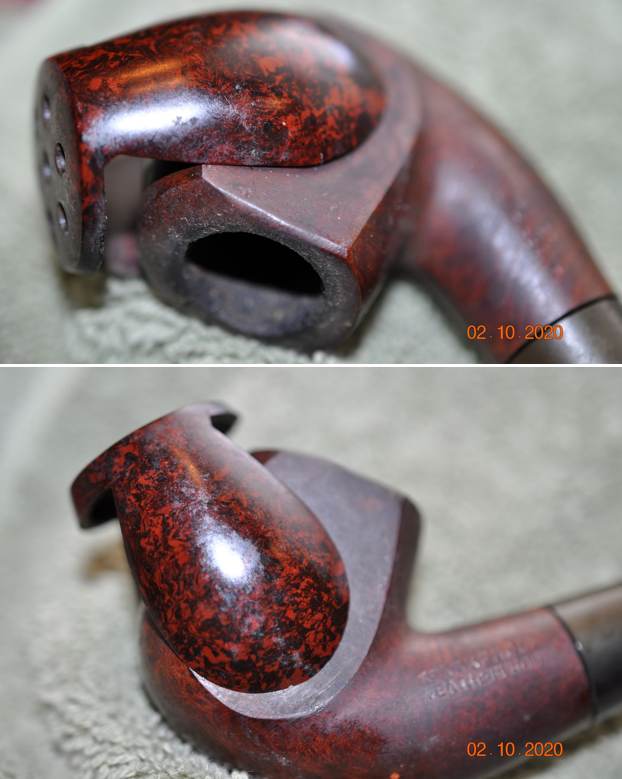
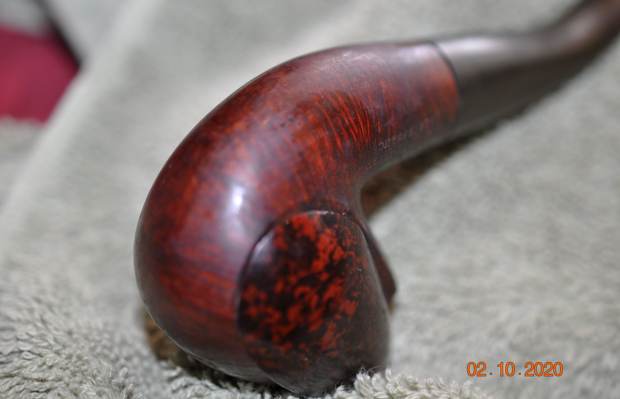
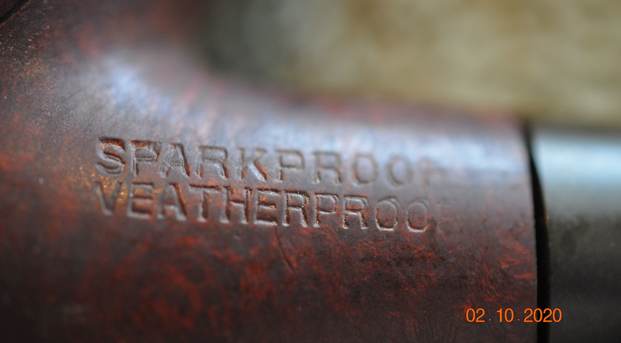
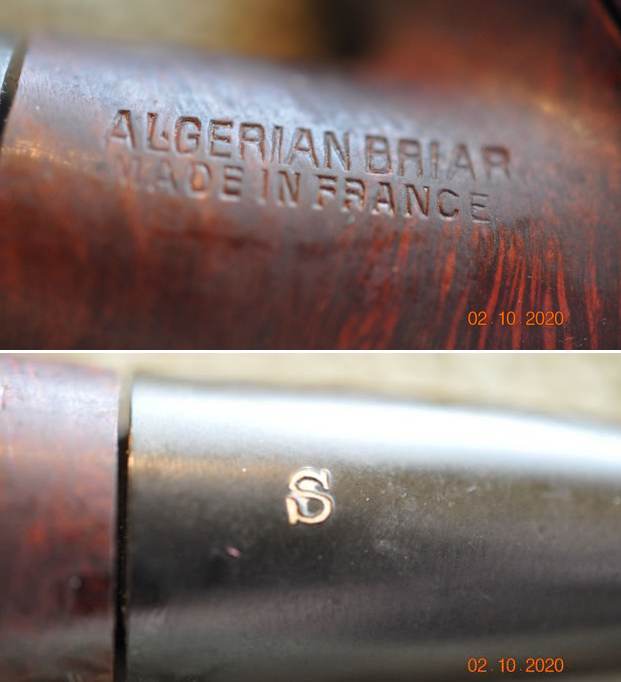
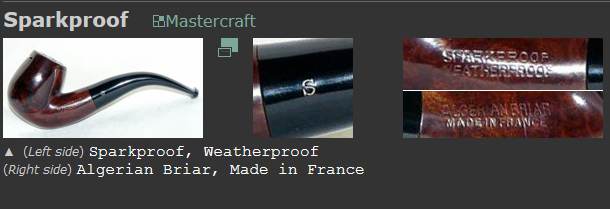
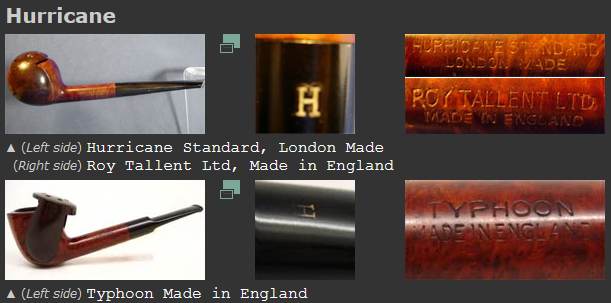
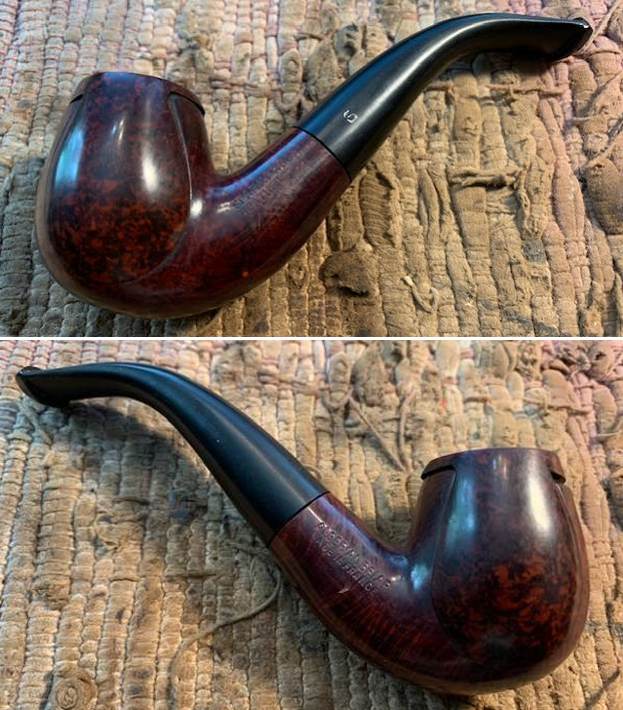
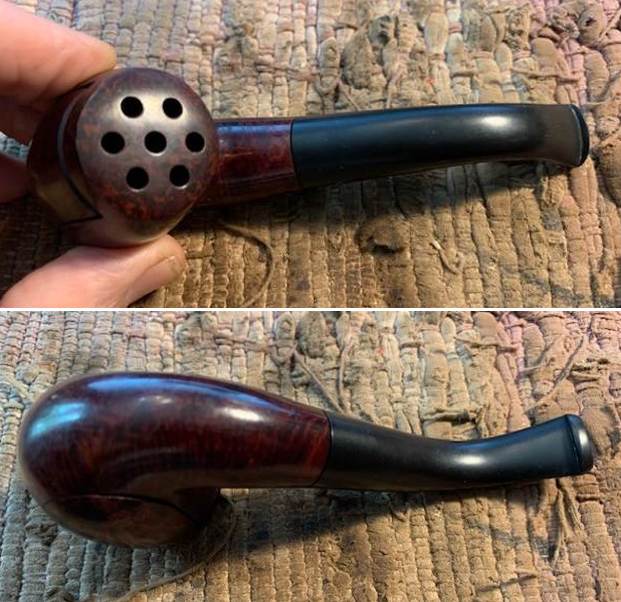
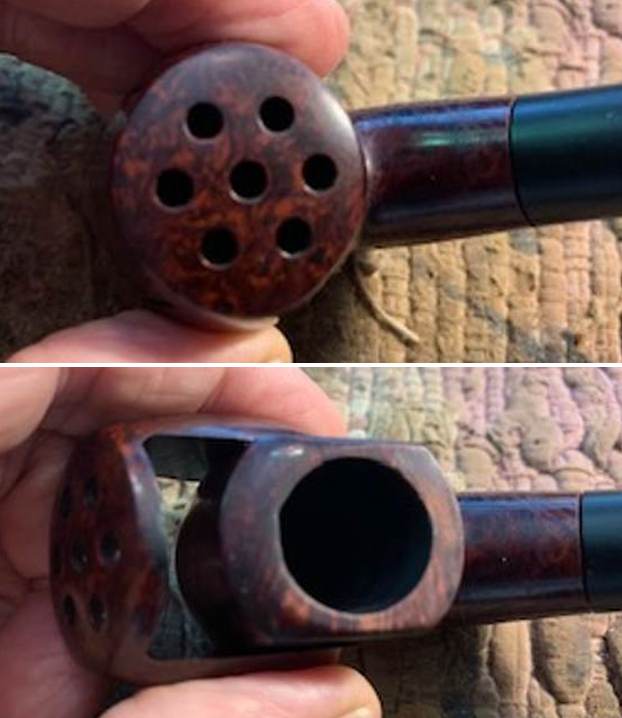
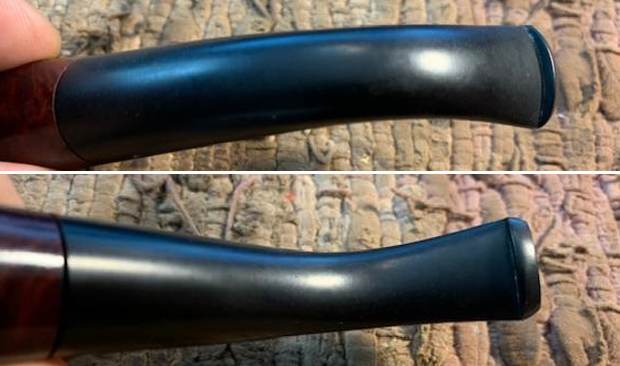
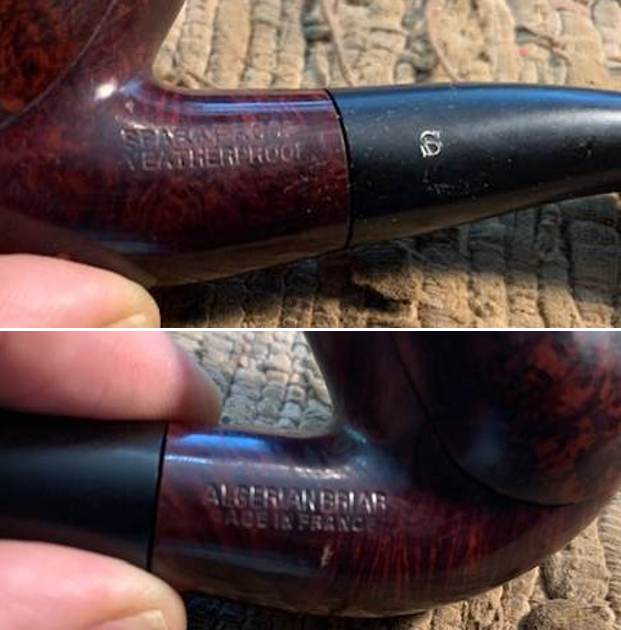
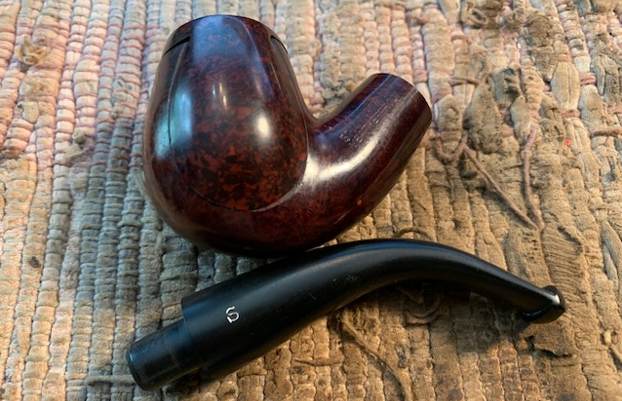
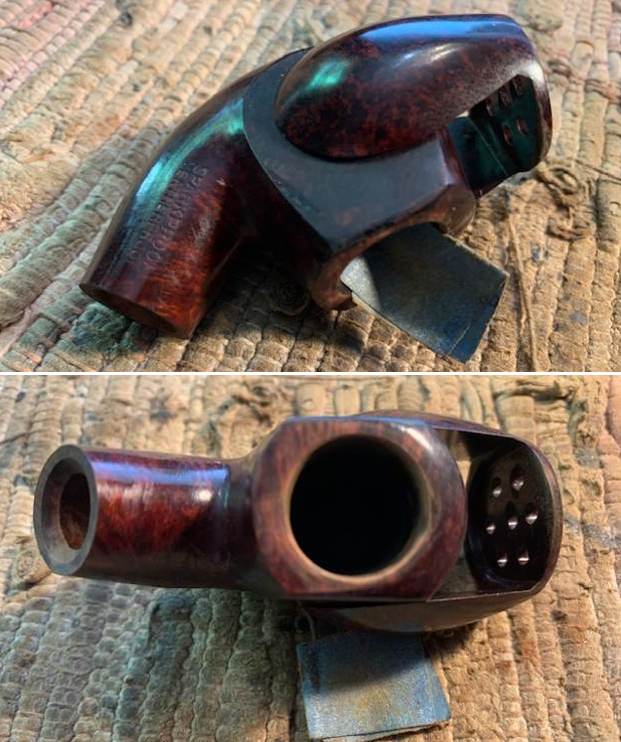
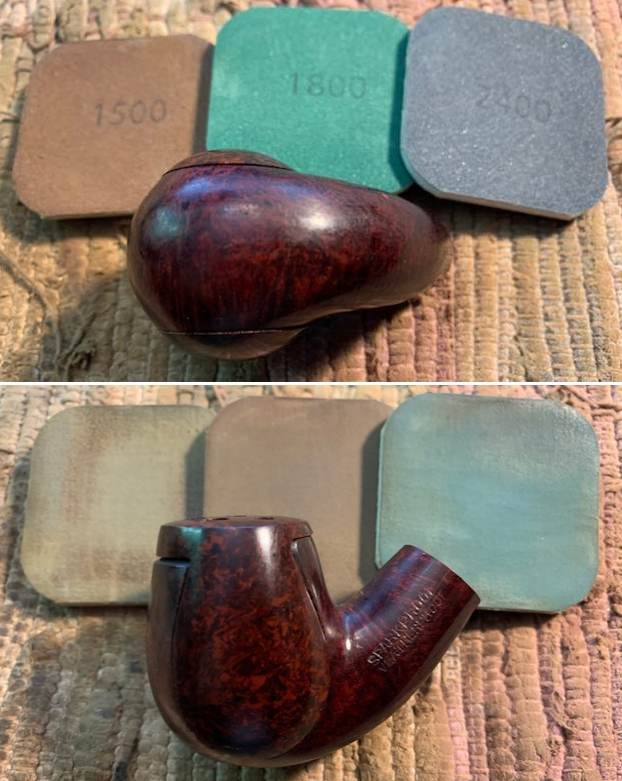
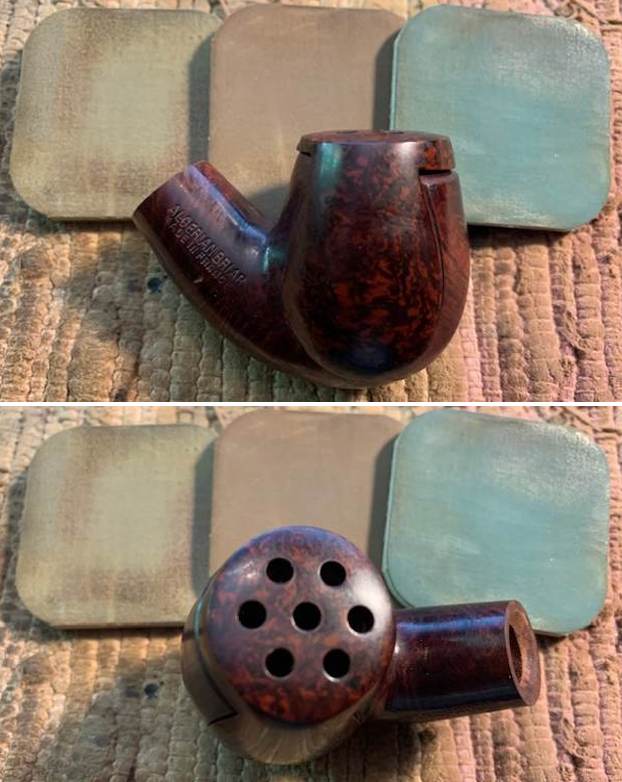
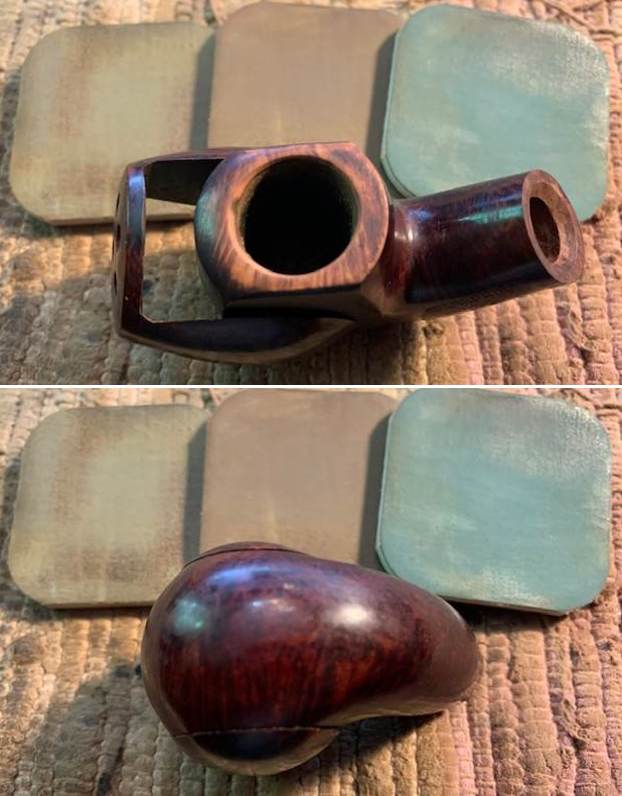
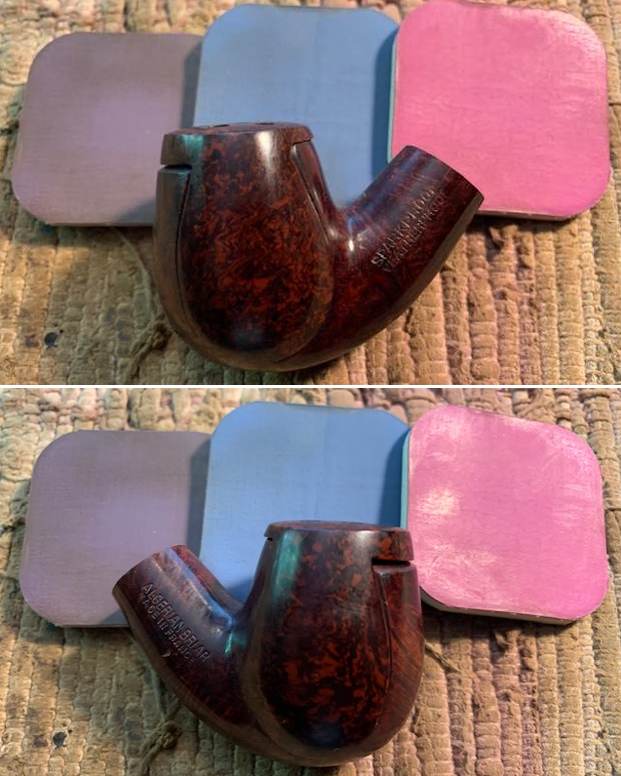
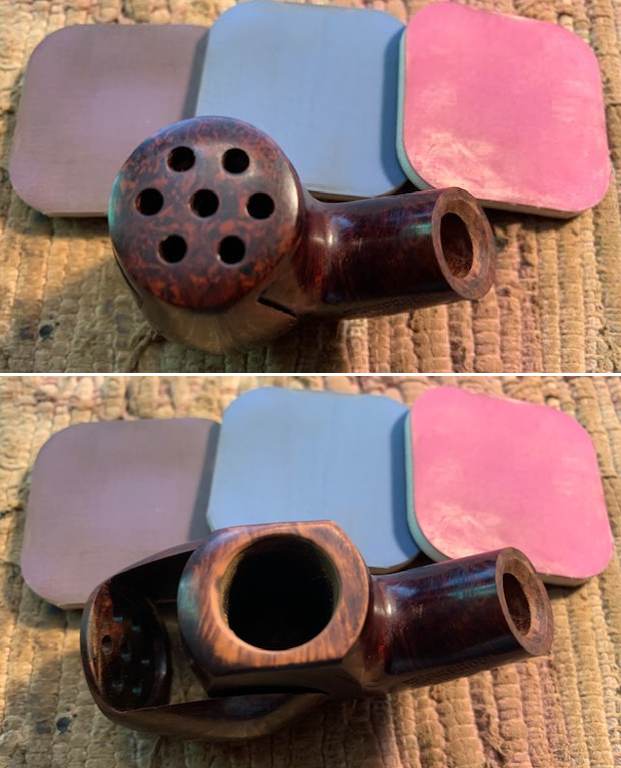
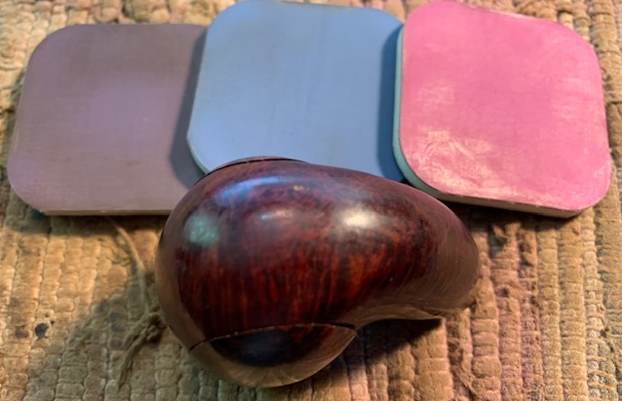
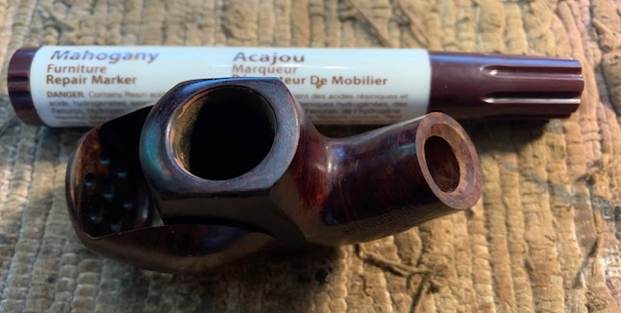
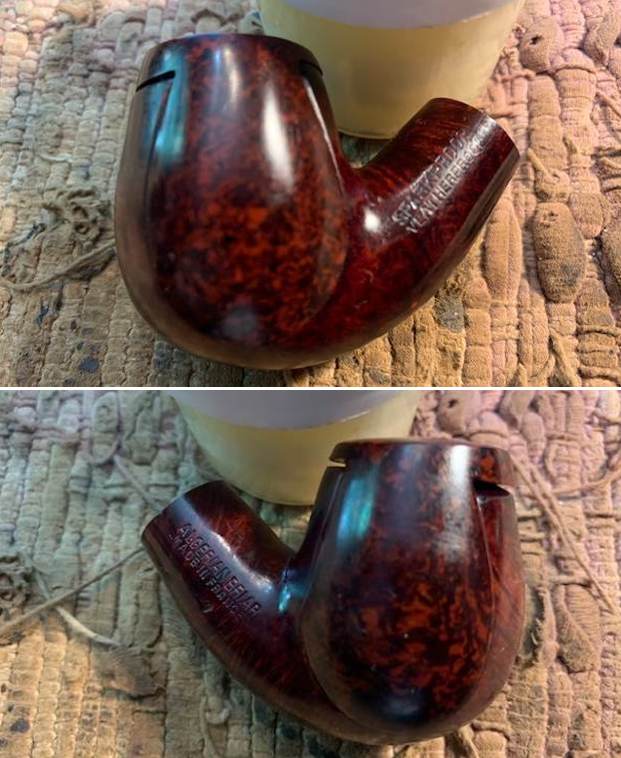
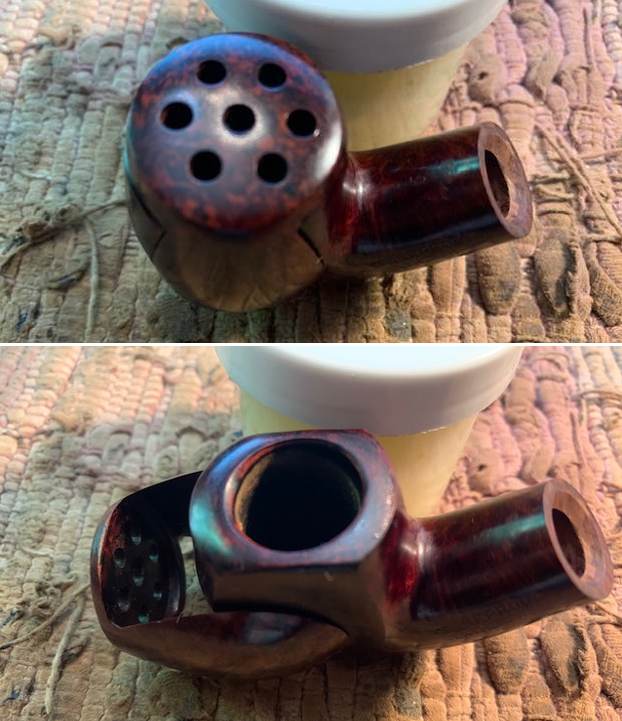
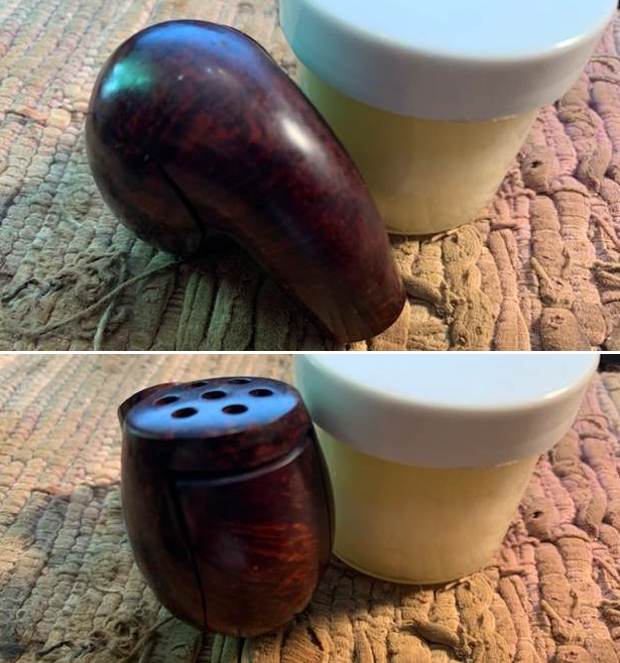
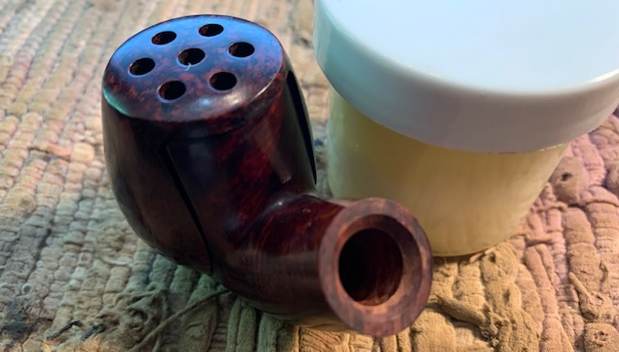
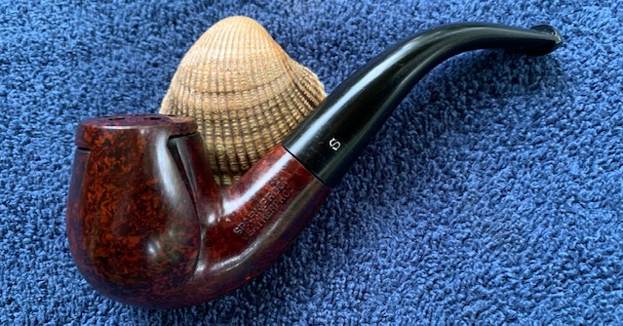
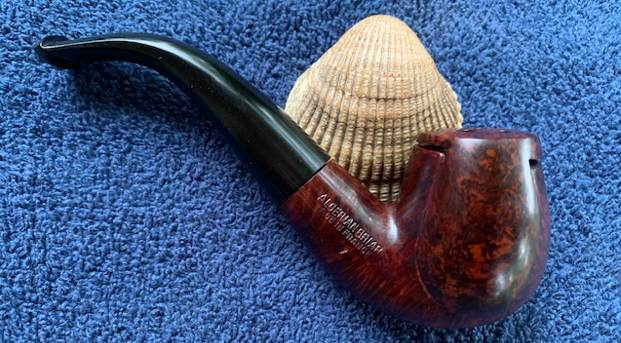
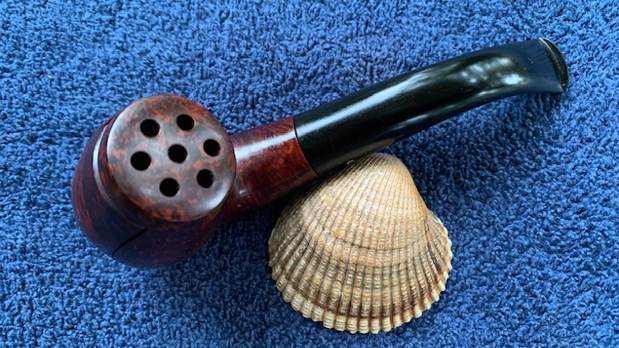
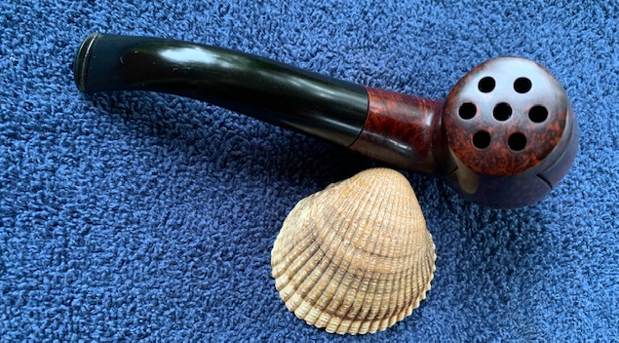
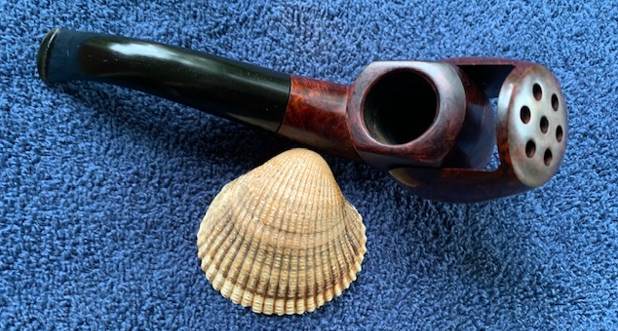
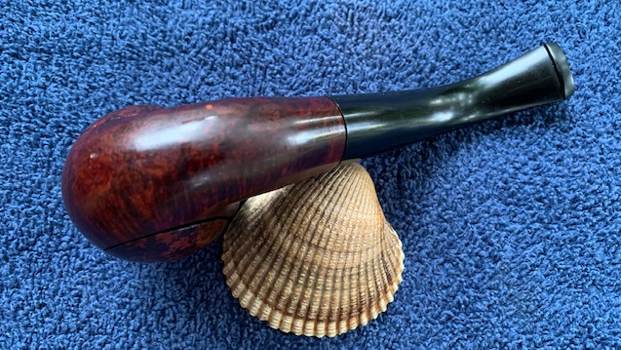
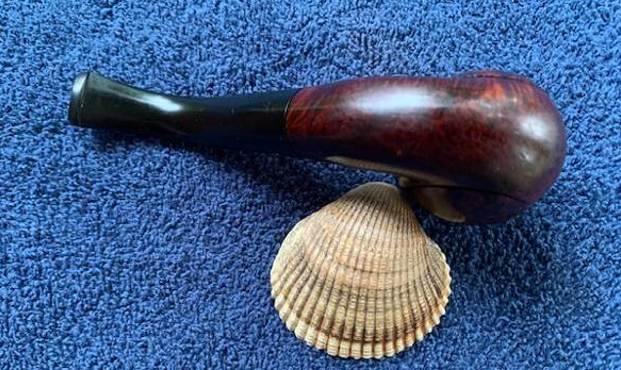
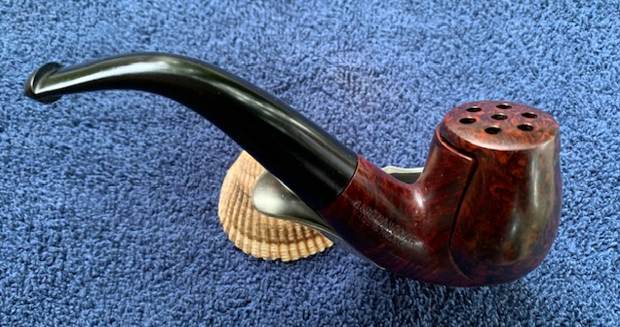
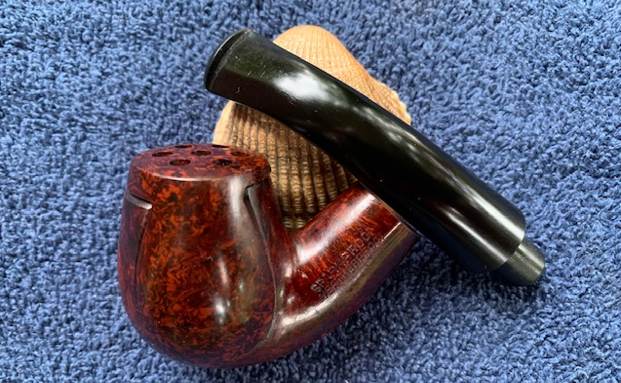
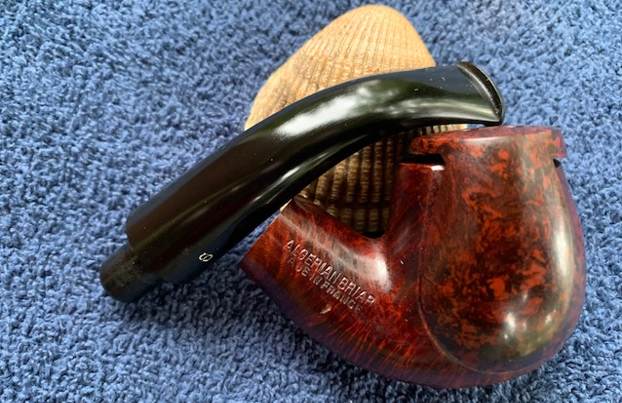
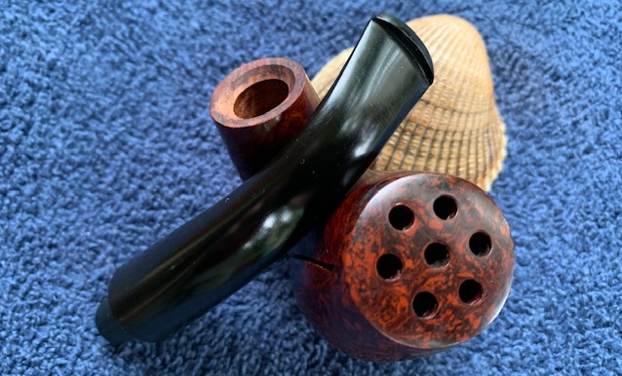
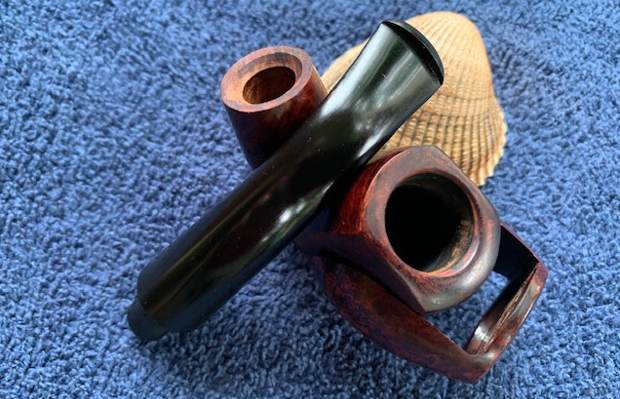
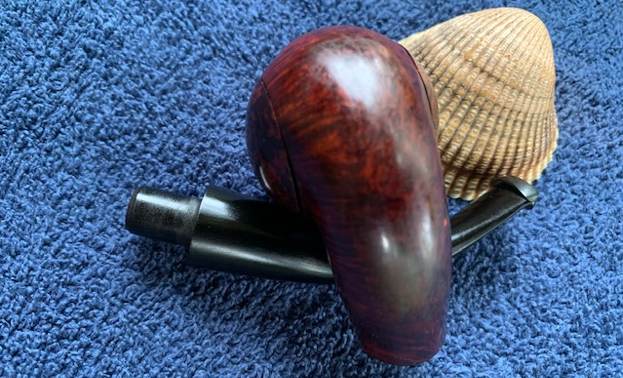
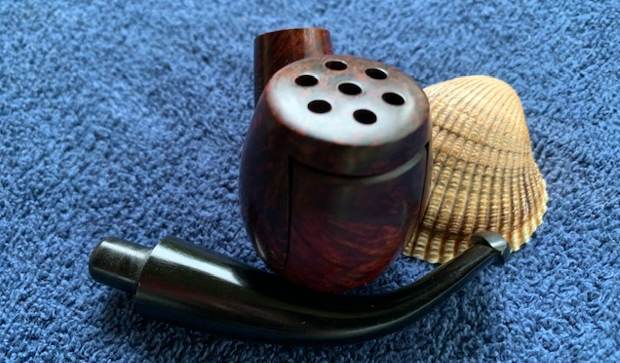
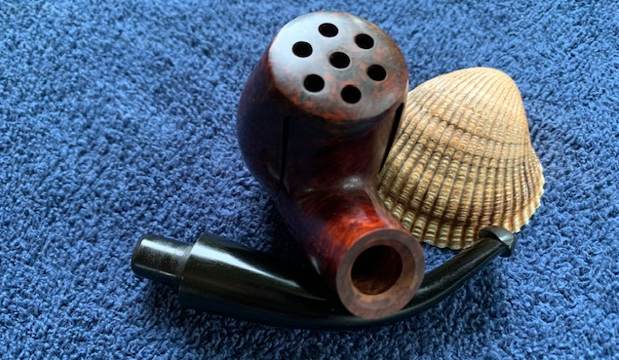
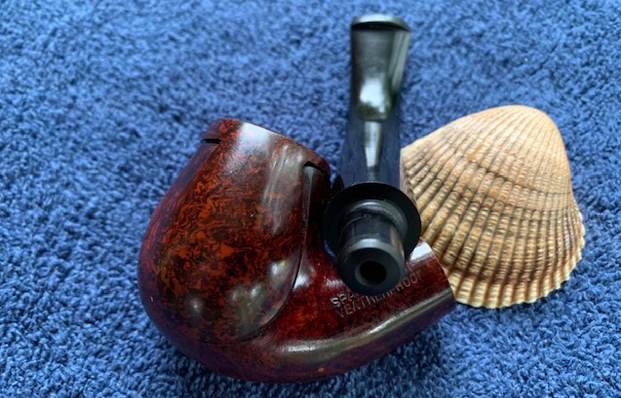
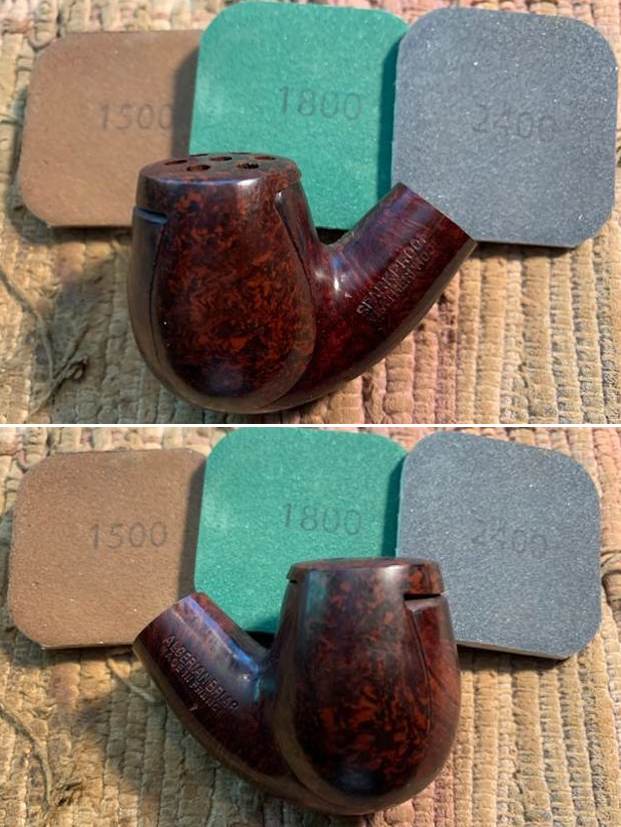
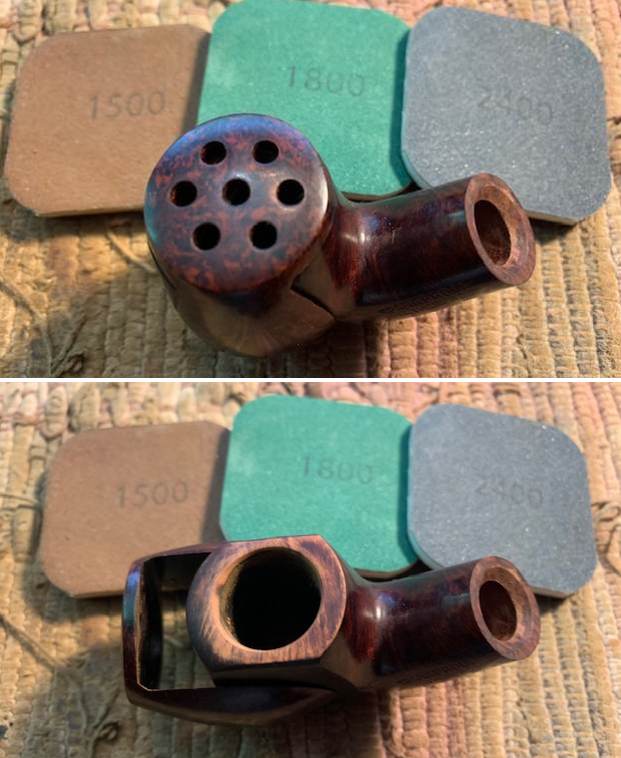
In picking up estate pipes there are always those unique ones that just call out to be worked on  and this was one of those. We purchased it from an online auction on 04/16/20 in Columbia, Missouri, USA. The pipe is stamped on the left side of the shank and reads Sparkproof [over] Weatherproof. On the right side it is stamped Algerian Briar [over] Made in France. There is a stamped S logo on the left side of the taper stem. I have worked on several different brands of the flip top bowl cover pipes that are often called Hurricane pipe. The bowl is briar and the cap and sides are made of Bakelite. The finish on this Sparkless was filthy with grime ground into the finish. The Bakelite lid was also dirty and the holes in the cap and inside of the lid was also dirty. There was a thick cake in the bowl and a lava coat on rim top under the lid. The vulcanite (hard rubber) stem was oxidized and had tooth marks and chatter on both sides ahead of the button. Jeff took photos of the pipe before he started his clean up work. This one would be quite labour intensive.  He took some photos of the rim top and bowl from various angles with the lid flipped to give me a clear picture of the condition of the rim top and bowl. You can see the cake in the bowl and the thickness of the lava coat on the top and inner edge. He captured the condition of the stem and the tooth damage on both sides of the stem in the photos. He also took a photo of the stinger in the tenon to show the build up on the aluminum. Jeff took some photos of the sides and heel of the bowl with the cap flipped and closed to show the condition of the finish on the pipe. Under the oils and grime it was a nice looking bowl. I think it will be a beauty once it is restored.     He took photos of the stamping on the sides of the shank. It is clear and readable and reads as noted above. He did not capture the S logo stamp on the left side of the stem in the photos below. Before I started to work on my part of this particular pipe I wanted to understand more about the Sparkproof brand name. I looked it up on Pipephil (http://pipephil.eu/logos/en/logo-s10.html) and found the following listing. I did a screen capture of the section as it showed a very similar looking pipe with the same stamping as the one I have. It also linked the brand to Mastercraft. I turned to the link to Mastercraft to see if there was any other information. There was some information on the Sparkproof Zeppelin but nothing on this one.I also followed a link to the Hurricane pipe (http://pipephil.eu/logos/en/logo-h4.html#hurricane) and did a screen capture of that section as well. I also included the information underneath the entry and in the sidebar.Hurricane is not exactly a brand but rather a pipe type characterized by an integrated swivel cover. An H on the stem denotes a pipe produced by Orlik. These pipes were often made in collaboration with Nutt Products Ltd or were sometimes stamped for Roy Tallent Ltd.

Other brands have crafted or distributed Hurricane type pipes stamped with their own name among which:

I think that the pipe I have is one of these collected pipes probably made in collaboration with Nutt Products Ltd. or Roy Tallent Ltd. There seem to have been a large number of these in a variety of shapes and formations that all came out about the same time in England and France. Now it was time to work on the pipe.

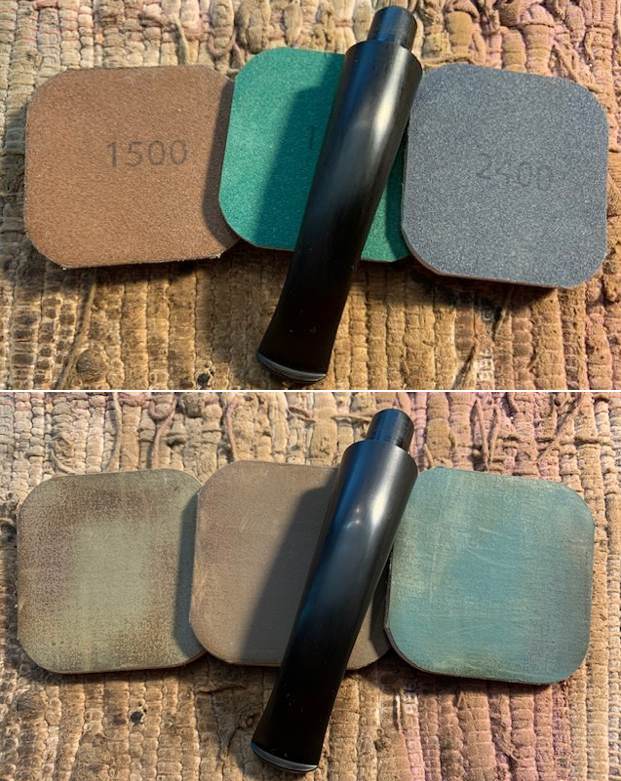
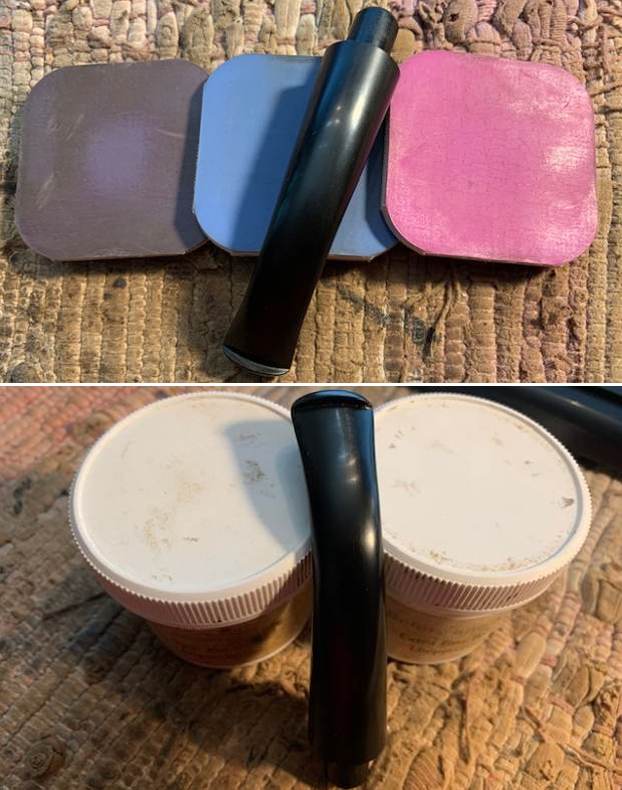
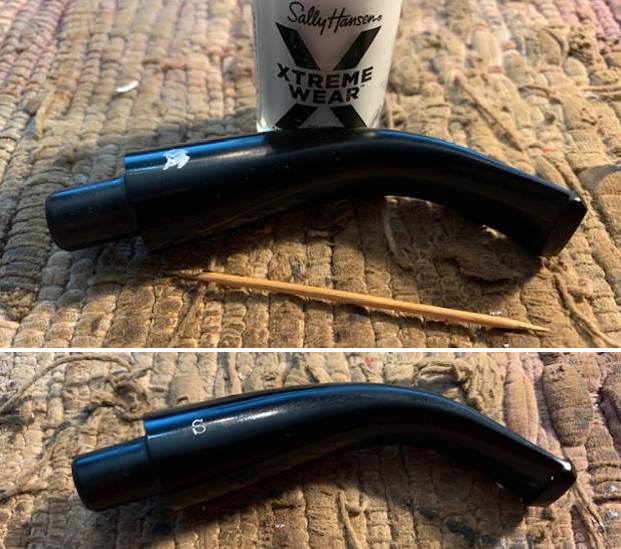
Jeff once again did an amazing job cleaning the pipe. The clean up was labour intensive because of the flip cap. It did not completely flip out of the way so there was a lot of maneuvering that had to happen to do the work on it. Both the inside of the cap and bowl underneath had to be cleaned so there were many more surfaces that needed attention. He reamed it with a PipNet pipe reamer and got rid of the cake. He cleaned up the reaming with a Savinelli Fitsall Pipe Knife. He took the cake out completely so that we could see the walls of the bowl and assess for damage. He cleaned the internals of the cap, the shank and stem with cotton swabs, pipe cleaners and alcohol. He scrubbed the exterior with undiluted Murphy’s Oil Soap and a tooth brush to get into the grooves around the flip top. He rinsed the pipe under warm water. He dried it off with a cloth and then let it air dry. The rim top cleaned up pretty good. I took pictures of the pipe before I started my work on it.   I took a close up photo of the rim top to show how clean it was with the lid closed and open. There was some darkening and a chip on the inner edge on the right front of the bowl. There were also some chips on the back edge of the salt and pepper rim cover. Overall the pipe looked impressive at this point in comparison to where it had started. The stem looked amazingly good with light tooth marks and chatter on both sides. I took photos of the stamping on the sides of the shank. It is clear and readable though faint in some spots.      I took a photo of the bowl and stem taken apart. I started my work on the pipe by addressing the remaining darkening on the inner edge of the bowl and nicks on the back edge of the wind cap. I used a folded piece of 220 grit sandpaper and when finished the pipe looked better.     I polished the briar with micromesh sanding pads (carefully avoiding the stamping). I used 1500-12000 grit pads and wiped the bowl down after each pad with a damp cloth. The bowl really took on a shine.     I used a Mahogany stain pen to restain the rim top to match the rest of the bowl. It looks very good and polishing will only make it better.I worked some Before & After Restoration Balm into the briar and Bakelite Wind Cap with my finger tips. The product is a great addition to the restoration work. It enlivens, enriches and protects the briar while giving it a deep glow. It is a product I use on every pipe I work on.  I set the bowl aside and turned my attention to the stem. Somewhere along the way the stinger was lost – no big loss that is my feeling! I polished the stem with micromesh sanding pads – dry sanding with 1500-12000 grit sanding pads. I wiped it down after each sanding pad with Obsidian Oil. I polished it with Before & After Pipe Stem Polish – both Fine and Extra Fine. I buffed the stem with a soft cloth to raise the shine.    I touched up the S stamp on the left side of the stem with some white acrylic fingernail polish. I worked it into the stamp with a tooth pick. Once it dried I scraped off the excess and it was much better.     As always I am excited to finish a pipe that I am working on. I put the Sparkless Sparkproof, Weatherproof Bent Egg back together and buffed it with Blue Diamond on the buffing wheel. I gave the bowl and the stem multiple coats of carnauba wax. I buffed the pipe with a clean buffing pad and hand buffed it to raise the shine. It is fun to see what the polished bowl looks like with the grain popping around the bowl and shank along the polished hard rubber taper stem. It is beautiful, light and well balanced pipe. Have a look at it with the photos below. The dimensions are Length: 5 inches, Height: 1 ¾ inches, Outside diameter of the bowl: 1 1/8 inches, Chamber diameter: ¾ of an inch. The weight of the pipe is 52 grams/1.83 ounces. It is a beautiful pipe and one that will be on the rebornpipes store in the French Pipe Makers section. If you are interested in adding it to your collection let me know. Thanks for walking through the restoration with me as I worked over this pipe. Thanks to each of you who are reading this blog. I want to keep reminding us of the fact that we are not pipe owners; we are pipemen and women who hold our pipes in trust until they pass on into the trust of the next pipeman or woman.

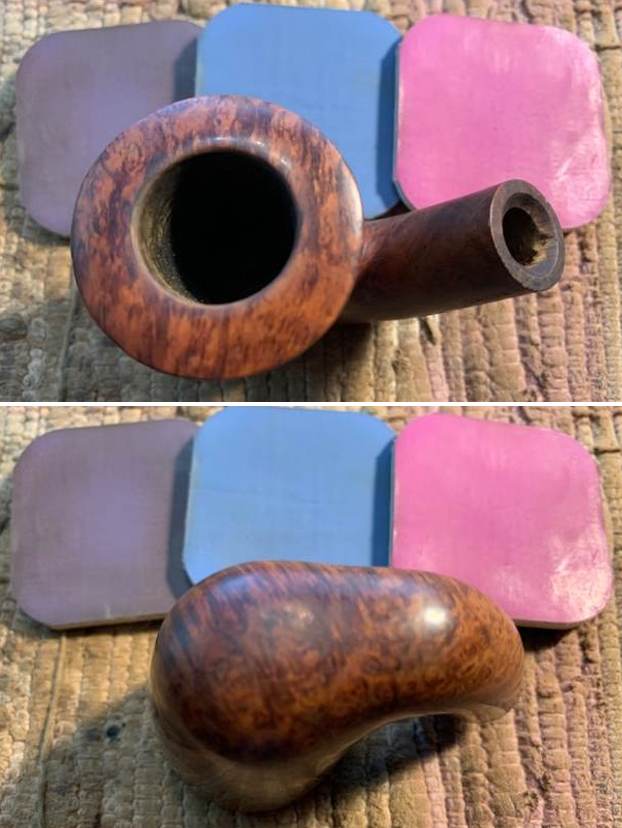
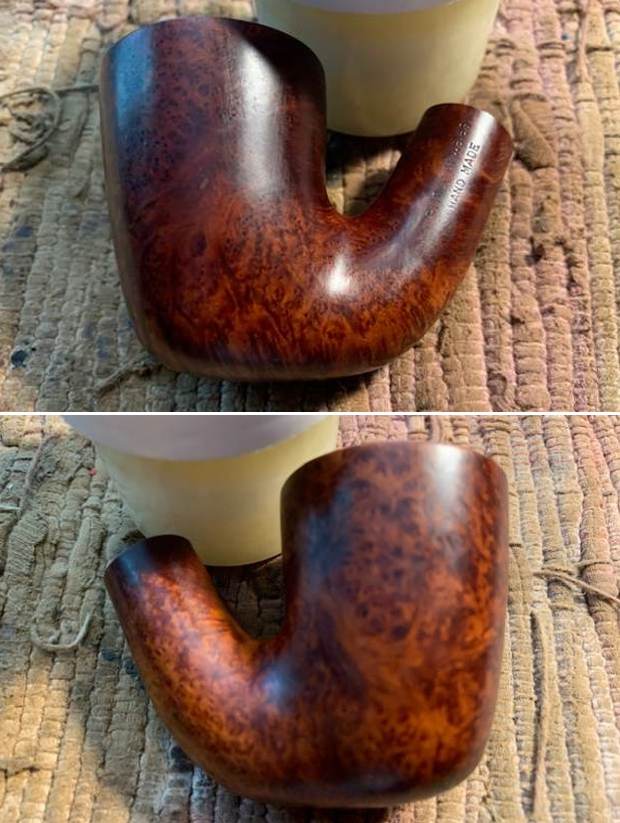
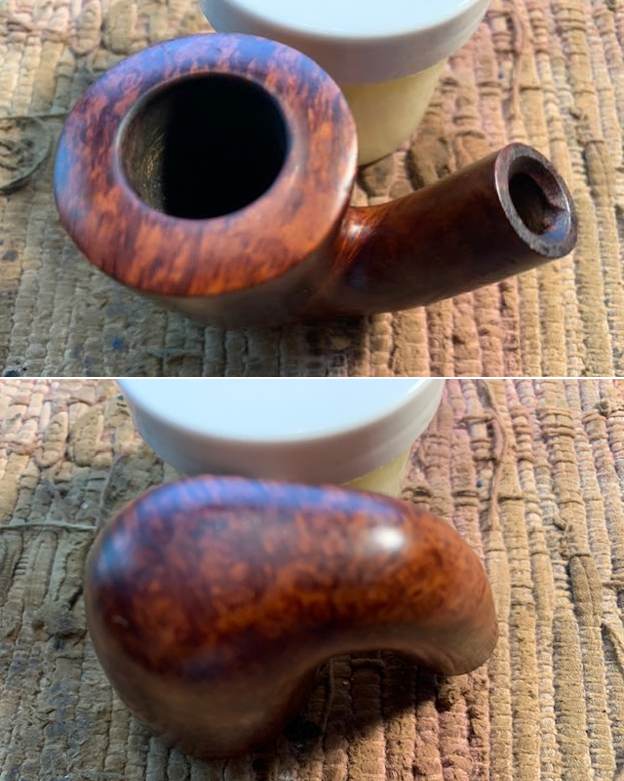
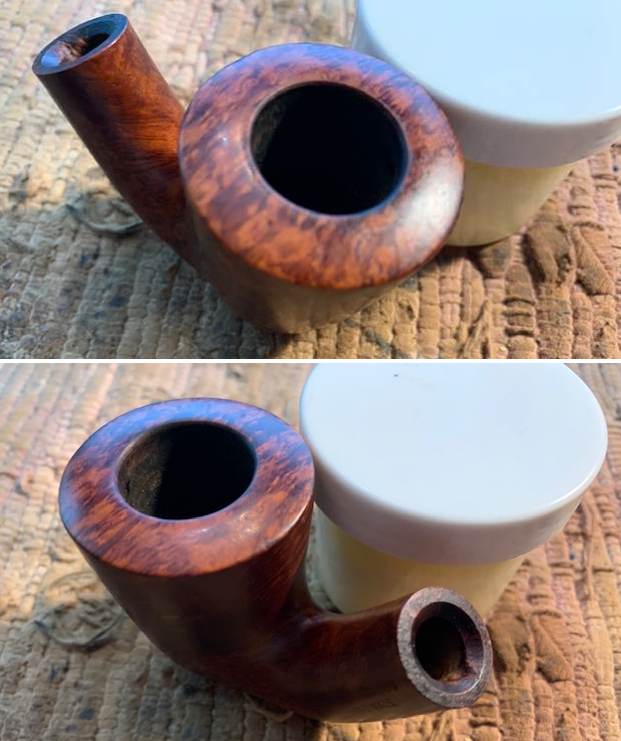
Breathing Life into an Italian  Hand Made Prince of Wales Bent Dublin


Blog by Steve Laug

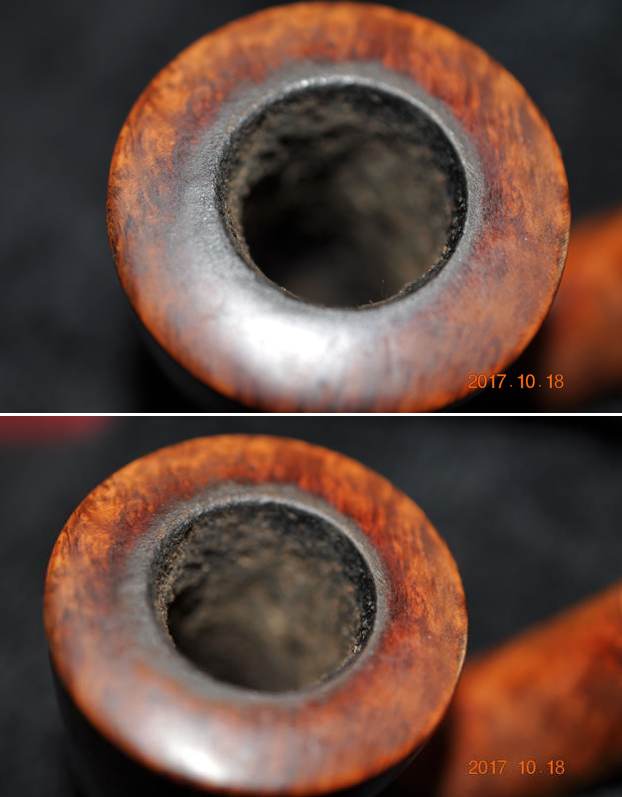
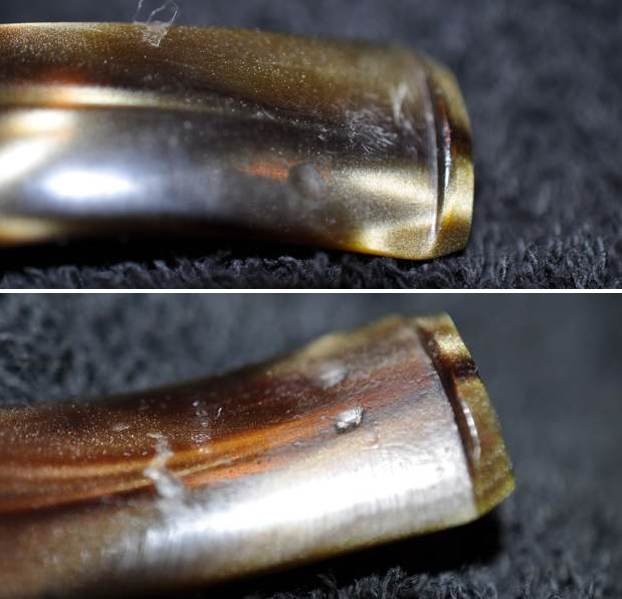
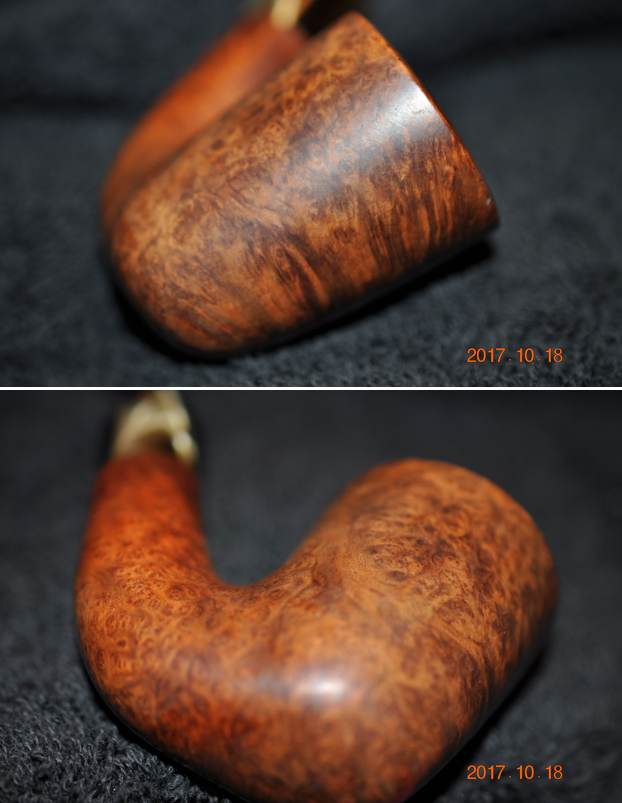
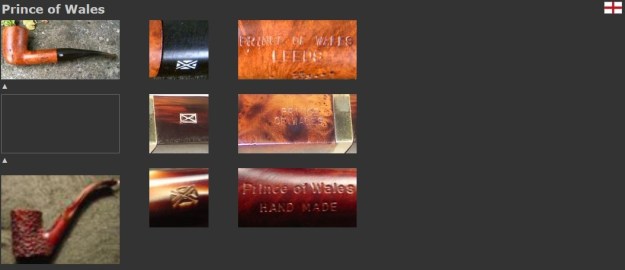
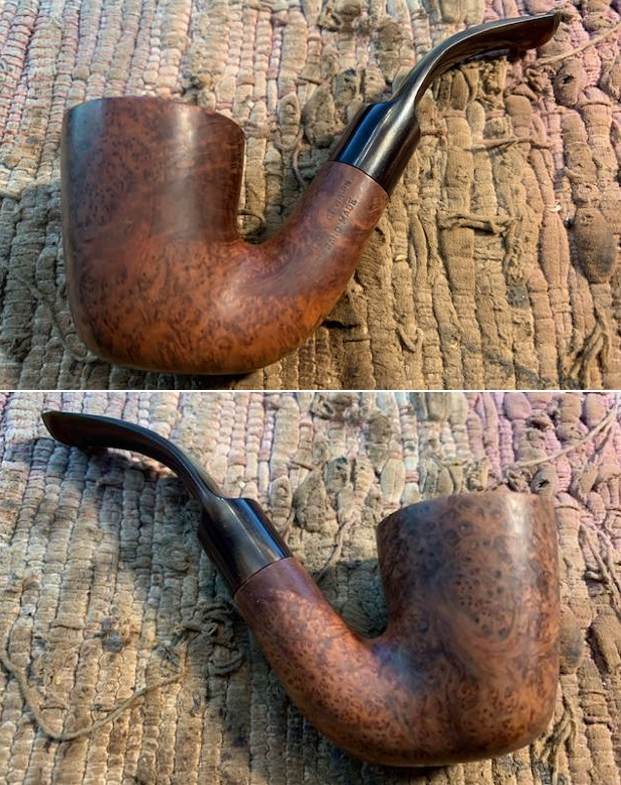
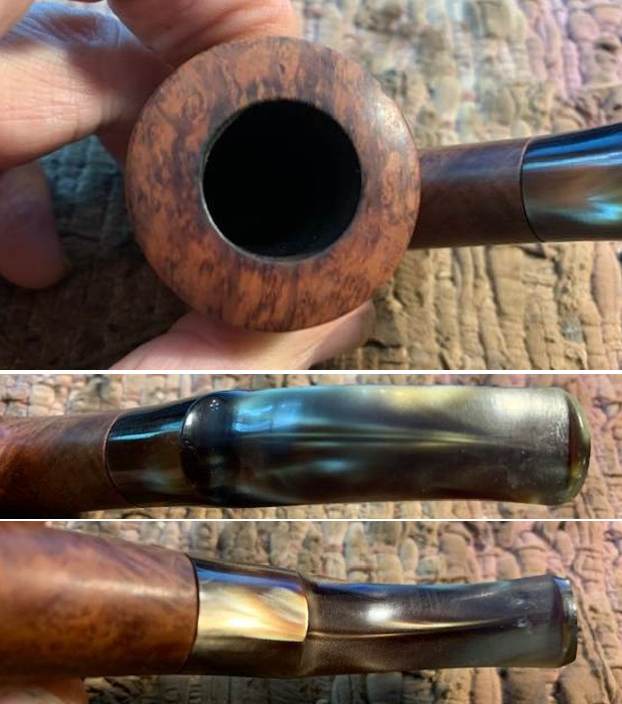
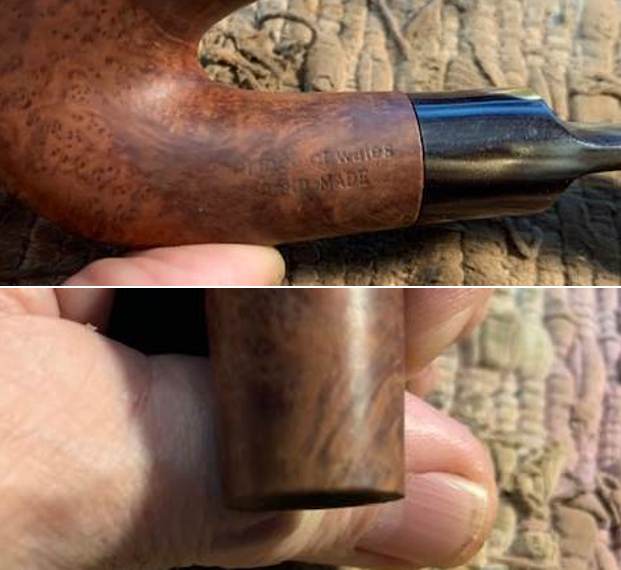
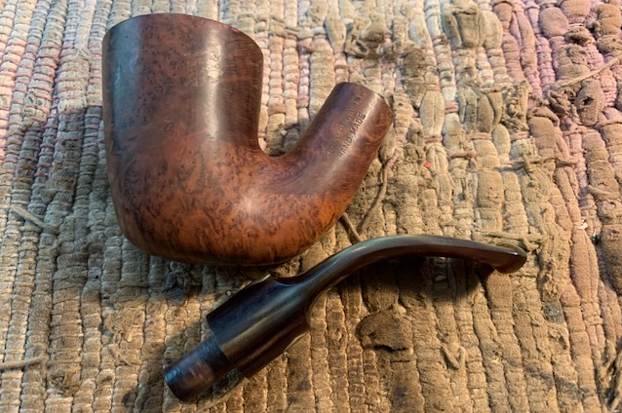
The next pipe on the work table was purchased from an antique mall on 09/09/17 in Salt Lake City, Utah, USA and has been sitting here for five years waiting for me to work on it. It is a nice smooth Bent Dublin with a variegated brown/gold/tan acrylic stem. It is stamped Prince of Wales over Hand Made on the left side of the shank and Italy on the underside near the stem shank junction. The finish was quite dirty and the rim top had a thick overflow of lava on the inner edge on the top. The bowl was thickly caked and there were some nicks on the outer edge. The stem was an acrylic saddle shape that was quite nice. It was dirty and had some tooth marks and chatter on both sides near the button. There was no logo stamped on the stem. Jeff took some photos of the pipe to show the general condition of the pipe before he started his clean up. He took some photos of the rim top and bowl from various angles to give me a clear picture of the condition of the rim top and bowl. You can see the cake in the bowl and the thickness of the lava coat on the top and inner edge. He captured the tooth damage on both sides of the stem in the photos. Jeff took some photos of the sides and heel of the bowl to show the condition of the finish on the pipe. Under the oils and grime it was a nice looking bowl. I think it will be a beauty once it is restored.   He took a photo of the stamping on the side of the shank. It is stamped on the left side of the shank and reads as noted above. It is clear and readable. He did not capture the Italy stamp on the underside of the shank but it is faint and readable.Before I started my part of the restoration I wanted to have a clear picture of the background and what the stamping looked like on the Prince of Wales pipe. I turned to Pipephil as he often has photos that give me the information that I am looking for (http://www.pipephil.eu/logos/en/logo-p5.html). Sure enough he had a photo showing the stamping on the shank. I did a screen capture of the picture on the site and include it below.What is interesting in these photos is that it is the same logo but several of them say made in Leeds. They seem to be English made or at least maybe made for a pipe shop. The logo is a Scottish Flag in the photos but the one I am working on does not have a stamp on the stem. The shank is stamped Italy which makes me think that someone had the pipe made by an Italian company for their shop.

I turned to Pipedia and looked up the brand there (https://pipedia.org/wiki/Prince_Of_Wales). Here is what I found there. I quote in full.

“It is quite a three pipe problem …”

  1. The name “Prince of Wales” was used at times by GBD for a sub-brand.
  2. Pipephil shows English made Prince of Wales which bear the Scottish flag (X-shaped cross representing the cross of the Christian martyr Saint Andrew, the patron saint of Scotland) as logo.
  3. Also listed by Pipephil is a brand named P.O.W. attributed to a Scottish firm G.M. Frame. Now, if P.O.W. doesn’t stand for “prisoner of war”, this might be an indication that there are two different Prince of Wales productions.
  4. Danish made semi-freehands stamped “PRINCE OF WALES” + “DANISH LINE” + “HANDMADE IN DENMARK”. The stems, as usual for the bulk of such pipes, often as stitch in stems. Decorated with a white ring and a stylized Danish flag. (Were once mentioned as order production for GBD. – Unconfirmed!)
  5. Prince of Wales Made in Italy. Quotation: “In the spirit of the Bing’s Favorite Pipe, Savinelli expands its line of pipes favored by famous pipesmokers. Prince of Wales Favorite series features a new mosaic designed mouthpiece which gives it a unique look like no other series. This pipe can be used with or without Savinelli balsa inserts (20pk included).”

Now I knew I was dealing with a bit of a mystery pipe. It has an Italy stamp on the shank and the name Prince of Wales which sounds British. Very interesting piece. The fifth option above makes me wonder if it is not a Savinelli product. But no definitive information!

Jeff once again did an amazing job cleaning the pipe. He reamed it with a PipNet pipe reamer and got rid of the cake. He cleaned up the reaming with a Savinelli Fitsall Pipe Knife. He took the cake out completely so that we could see the walls of the bowl and assess for damage. He cleaned the internals of the shank and stem with cotton swabs, pipe cleaners and alcohol. He scrubbed the exterior with undiluted Murphy’s Oil Soap and a tooth brush. He rinsed the pipe under warm water. He dried it off with a cloth and then let it air dry. The rim top cleaned up pretty good. I took pictures of the pipe before I started my work on it.   I took a close up photo of the rim top to show how clean it was. There was some darkening on the inner edge on the right front of the bowl. Overall the pipe looked impressive at this point in comparison to where it had started. I took photos of the stamping on the left and underside of the shank. It is clear and readable though faint in some spots.    I took a photo of the bowl and stem taken apart. I started my work on the pipe by addressing the remaining darkening on the inner edge of the bowl and nicks on the outer edge. I used a folded piece of 220 grit sandpaper and when finished the pipe looked better.     I polished the briar with micromesh sanding pads (carefully avoiding the stamping). I used 1500-12000 grit pads and wiped the bowl down after each pad with a damp cloth. The bowl really took on a shine.   I worked some Before & After Restoration Balm into the briar with my finger tips. The product is a great addition to the restoration work. It enlivens, enriches and protects the briar while giving it a deep glow. It is a product I use on every pipe I work on.  I set the bowl aside and turned my attention to the stem. I filled in the rough bite marks with clear CA glue and set the stem aside to cure.  Once it cured I flattened it with a small file and sharpened the edge of the button at the same time. I sanded out the tooth chatter and marks in the acrylic with a folded piece of 220 grit sandpaper and polished out the scratches with 440 grit wet dry sandpaper.    I polished the stem with micromesh sanding pads – wet sanding with 1500-12000 grit sanding pads. I wiped it down after each sanding pad with Obsidian Oil. I polished it with Before & After Pipe Stem Polish – both Fine and Extra Fine. I buffed the stem with a soft cloth to raise the shine.     As always I am excited to finish a pipe that I am working on. I put the Italian Made Prince of Wales Bent Dublin back together and buffed it with Blue Diamond on the buffing wheel. I gave the bowl and the stem multiple coats of carnauba wax. I buffed the pipe with a clean buffing pad and hand buffed it to raise the shine. It is fun to see what the polished bowl looks like with the grain popping around the bowl and shank. Added to that the polished variegated brown/gold/tan acrylic saddle stem was a beautiful touch. It is light and well balanced. Have a look at it with the photos below. The dimensions are Length: 5 ½ inches, Height: 2 inches, Outside diameter of the bowl: 1 ½ inches, Chamber diameter: ¾ of an inch. The weight of the pipe is 59 grams/2.08 ounces. It is a beautiful pipe and one that will be on the rebornpipes store in the Italian Pipe Makers section. If you are interested in adding it to your collection let me know. Thanks for walking through the restoration with me as I worked over this pipe. Thanks to each of you who are reading this blog. I want to keep reminding us of the fact that we are not pipe owners; we are pipemen and women who hold our pipes in trust until they pass on into the trust of the next pipeman or woman.

Breathing Life into a Jobey Shellmoor 200 Patent Bulldog


Blog by Steve Laug

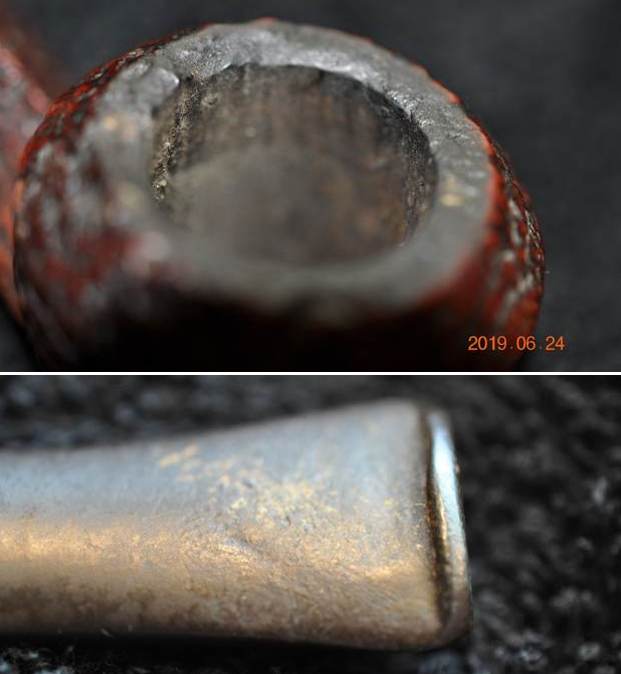
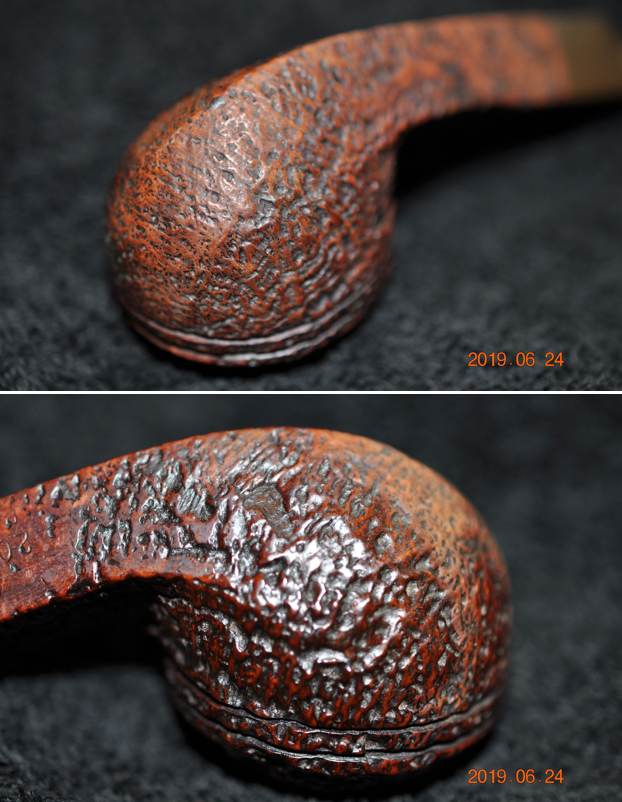
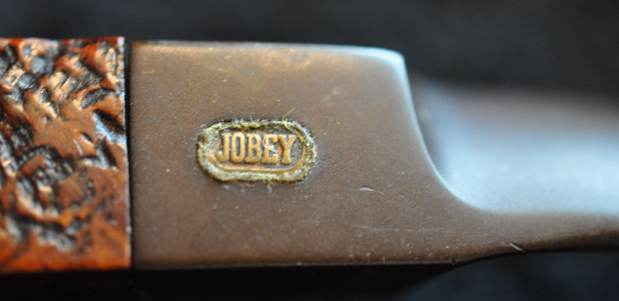
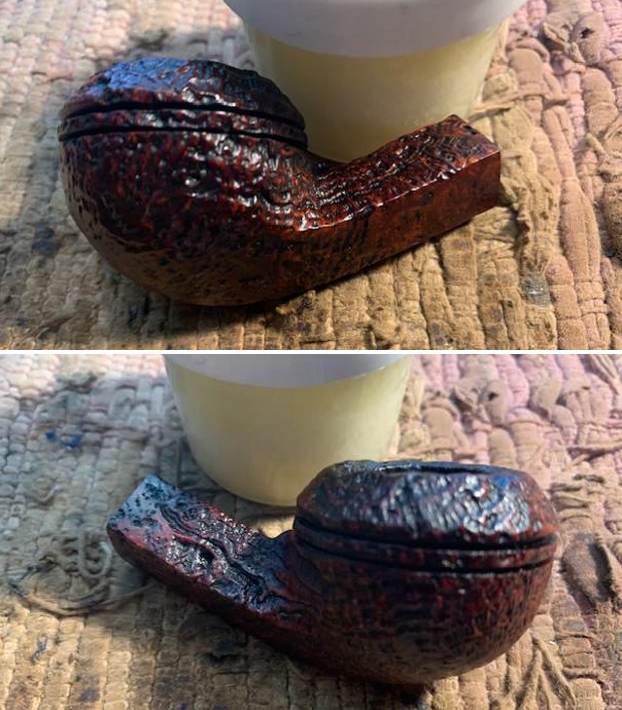
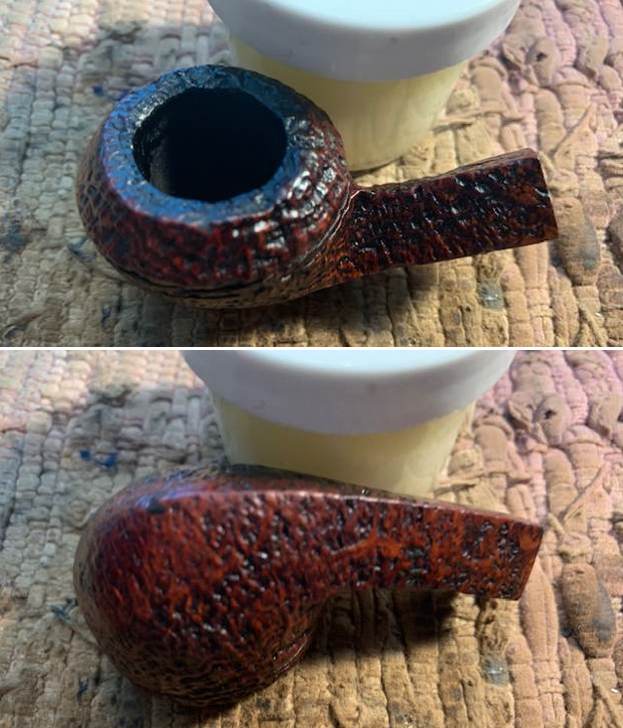
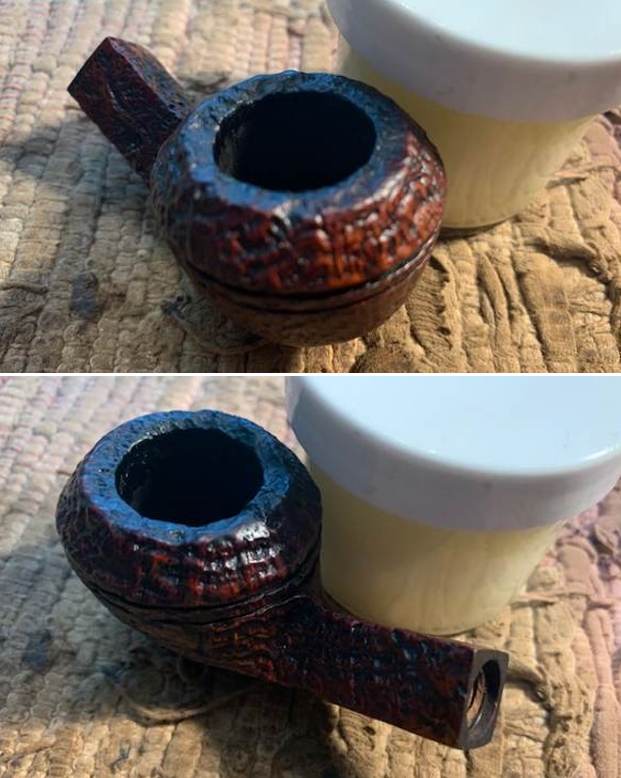
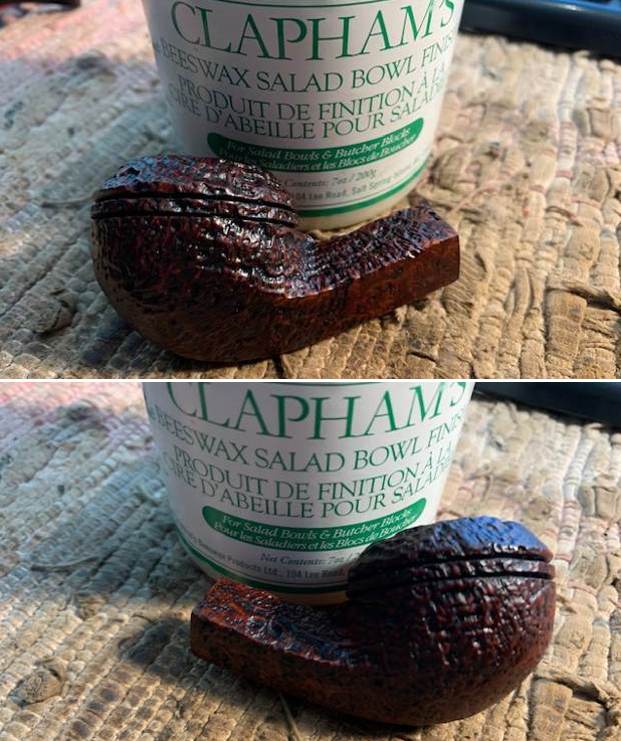
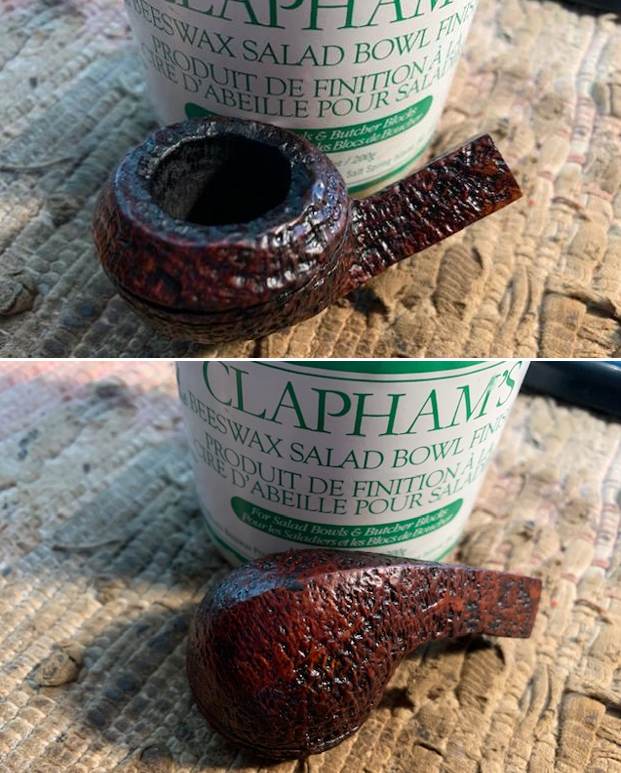
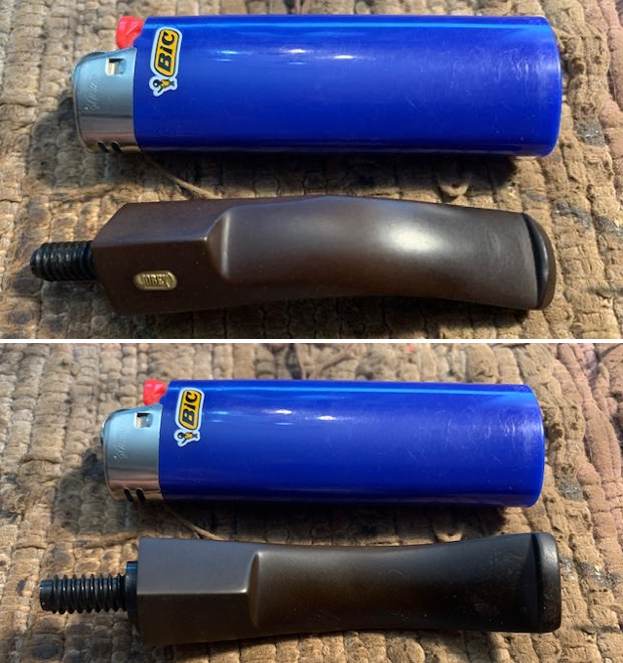
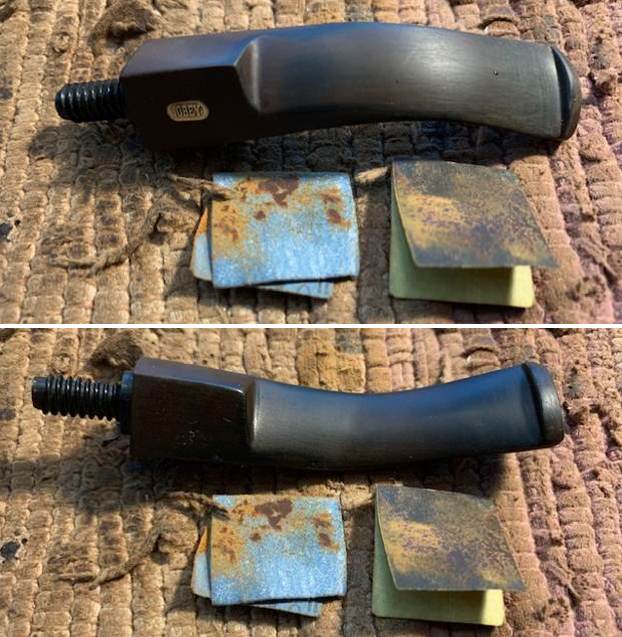
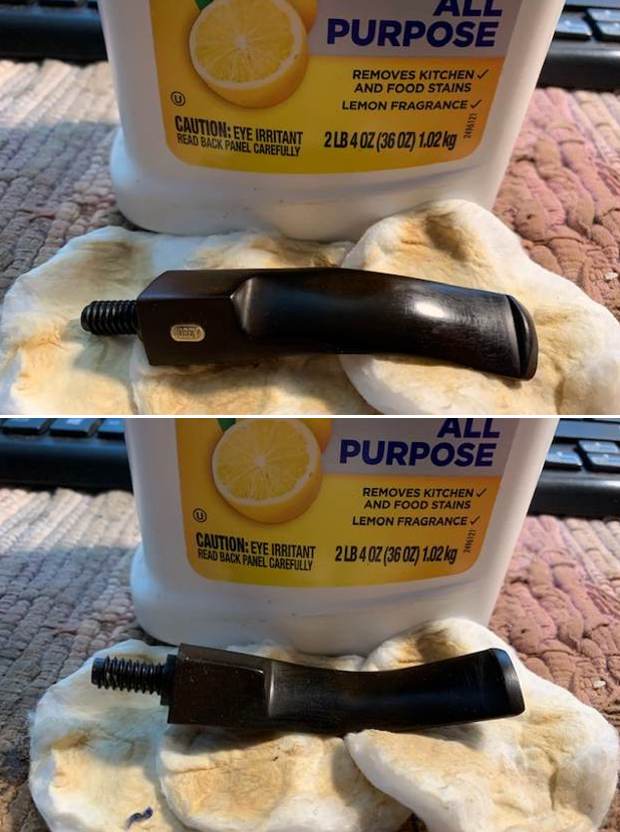
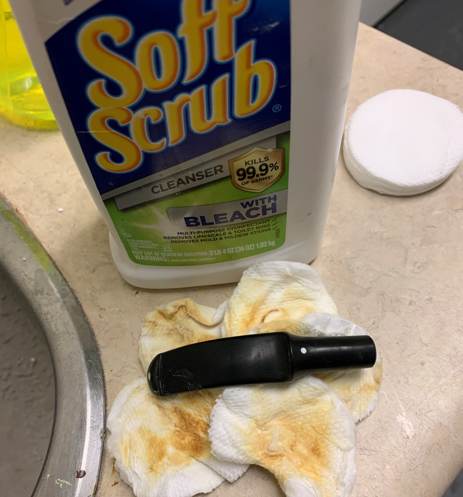
The next pipe on the table is one that has been here for over three years. It is nice looking sandblasted bent Bulldog. We purchased it from an online auction on 06/18/19 in Huntington Station, New York, USA. It is a great looking pipe with lots of promise. The sandblast is quite rugged and there is a lot of dust and grit in the crevices. The pipe is stamped on the underside of the shank on the left side. The shape number 200 is followed by the Patent Number – PAT. 3537462. Above that it is stamped Jobey (in script) [over] Shellmoor. The bowl has a heavy cake and tobacco debris in the bowl with lava overflowing and filling in much of the sandblast on the rim top. The edges look quite good. Other than being dirty the finish is in good condition. The stem has a Jobey brass oval inlaid on the left side of the saddle stem. It has an saddle stem and is connected to the shank by the patented Jobey Link system. It is oxidized and has tooth chatter on both sides ahead of the button. Jeff took photos of the pipe before he started his clean up work. He took a photo of the bowl and rim top to show the condition of the pipe. You can see the cake in the bowl and the lava on the rim top. The stem photos also show the oxidation and tooth chatter on the top and underside ahead of the button. He took photos of the sandblast on the sides and heel on the bowl. It really is a nice looking blast and shape.He took photos of the stamping on the underside of the diamond shank. It is clear and readable as noted above. There are some faint spots but it is readable. The Jobey brass oval logo stamp is inlaid on the top left side of the stem. Before I started to work on the pipe I wanted to understand the patent number on the shank. To understand the information I turned to the US Patent search site and entered the numbers. I was able to find both a description of the invention and a diagram that was submitted with the Patent application. The patent is for the Jobey Link that connects the stem and shank on the pipe. Here is the link to the site and a screen capture of the information found there. https://pdfpiw.uspto.gov/.piw?docid=03537462&SectionNum=1&IDKey=6F776849C285&HomeUrl=http://patft.uspto.gov/netacgi/nph-Parser?Sect1=PTO1%2526Sect2=HITOFF%2526d=PALL%2526p=1%2526u=%25252Fnetahtml%25252FPTO%25252Fsrchnum.htm%2526r=1%2526f=G%2526l=50%2526s1=3537462.PN.%2526OS=PN/3537462%2526RS=PN/3537462 With that information, I turned to work on the pipe itself. Jeff had thoroughly cleaned up the pipe. He reamed the pipe with a PipNet Pipe Reamer and cleaned up the remnants with a Savinelli Fitsall Pipe Knife.  He scrubbed the bowl with undiluted Murphy’s Oil Soap with a tooth brush. He rinsed it under running warm water to remove the soap and grime. He cleaned out the inside of the shank and the airway in the stem with alcohol, cotton swabs and pipe cleaners. He scrubbed the exterior of the stem with Soft Scrub to remove as much of the oxidation as possible. He soaked it in Before & After Pipe Stem Deoxidizer and rinsed it with warm water. The acrylic stem was clean but had tooth marks and chatter on both sides ahead of the button. There was an Jobey Brass Oval logo inlaid on the left side of the stem. I took photos of the pipe before I started my work on it. It was an amazing looking pipe.  I took photos of the rim top and bowl as well as the stem to give a sense of the condition of both. The rim top and edges looked very good. The stem cleaned up well and the tooth marks on the top and underside ahead of the button were very light.I took photos of the stamping on the underside of the shank. They are readable as noted above. I took the stem out of the shank and took a photo of the overall look of the pipe.The bowl was in excellent condition. The rim top and edges looked really good. I started my work by working some Before and After Restoration Balm into the surface of the sandblast bowl. It works to preserve, clean and renew the briar. I worked it into the crevices with a shoe brush. I let it sit for 10 minutes and then buffed it off with a soft cloth. The bowl really looked good at this point. I stopped by Lee Valley Tools to pick up some micromesh sanding pads and came across a new product that they had displayed. It is Clapham’s Beeswax Salad Bowl Finish  composed of mineral oil, beeswax and carnauba wax that is applicable without a buffer. I picked up a jar of it to try out and figured this sandblast finish would be a great test case. I applied it by hand and buffed it off with a soft cloth. I set the bowl aside and turned my attention to the stem. I “painted” the stem with the flame of a Bic lighter to lift the tooth marks on both sides. I sanded out the remaining tooth marks and chatter with 220 grit sandpaper and started the polishing with 400 grit wet dry sandpaper. I scrubbed the stem with Soft Scrub all purpose cleanser and cotton pads to remove the residual oxidation that was still in the stem. It worked very well and the stem was greatly improved.I polished the stem with micromesh sanding pads – dry sanding it with 1500-12000 grit sanding pads and wiping it down after each pad with some Obsidian Oil. I finished polishing it with Before & After Pipe Stem Polish – both fine and extra fine. I gave it a final coat of Obsidian Oil. This Patent Jobey Shellmoor 200 Sandblast Bent Bulldog with a vulcanite saddle stem is a great looking pipe now that it has been restored. The beautiful grain on the briar shines through the polished finish is stunning. I put the stem back on the bowl and carefully buffed the pipe with Blue Diamond on the buffing wheel. I gave the bowl multiple coats of Clapham’s Wax and the stem multiple coats of carnauba wax on the buffing wheel and followed that by buffing the entire pipe with a clean buffing pad. I hand buffed the pipe with a microfiber cloth to deepen the shine. The finished Jobey Shellmoor 200 Bent Bulldog fits nicely in the hand and feels great. Give the finished pipe a look in the photos below. The dimensions of the pipe are Length: 5 ½ inches, Height: 1 ½ inches, Outside diameter of the bowl: 1 ½ inches, Chamber diameter: ¾ of an inch. The weight of the pipe is 36 grams/1.27 ounces. I will soon be adding it to the rebornpipes store in the American Pipe Makers Section. If you are interested in this pipe send me a message or an email. Thanks for reading this blog and my reflections on the pipe while I worked on it. There are many more to come!

Breathing New Life into a BBB Ultonia Sandblast Billiard


Blog by Steve Laug

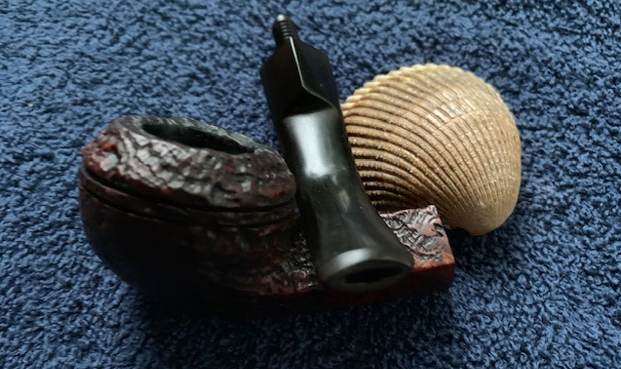
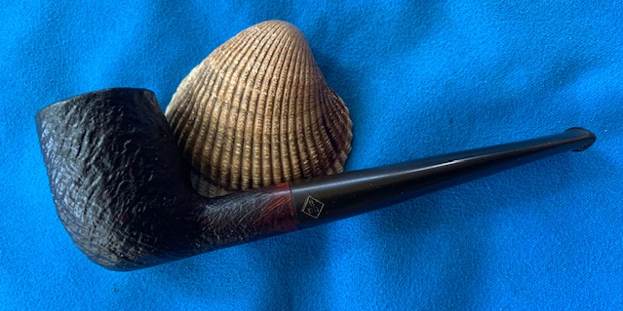
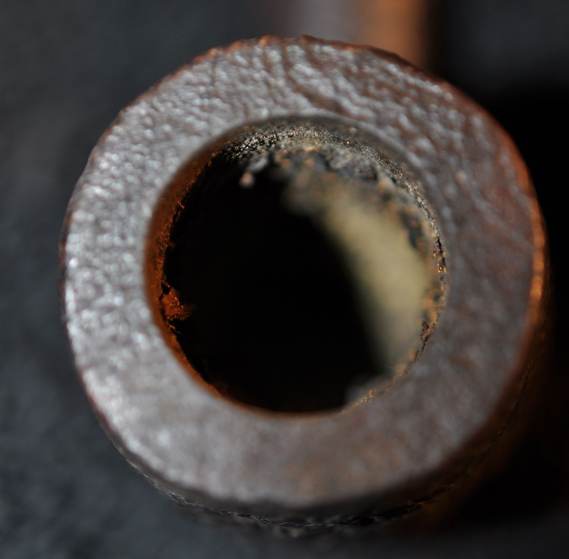
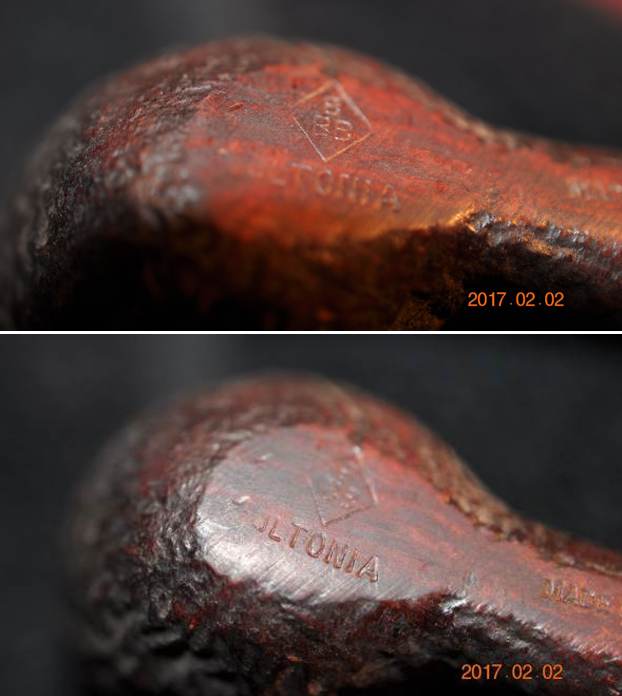
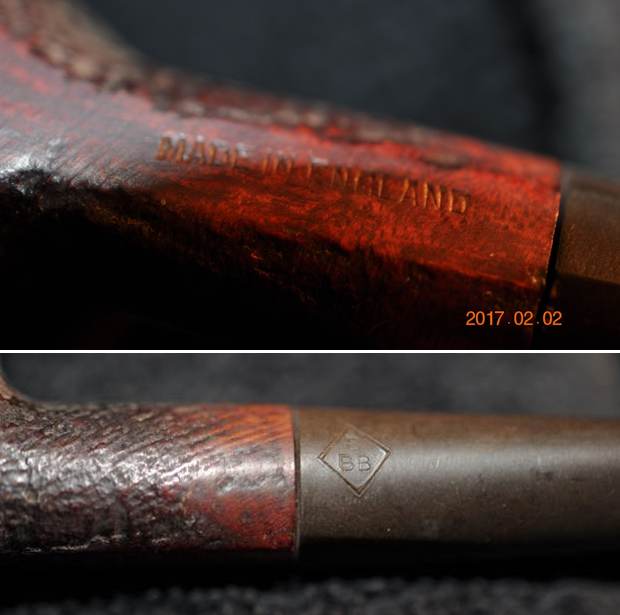
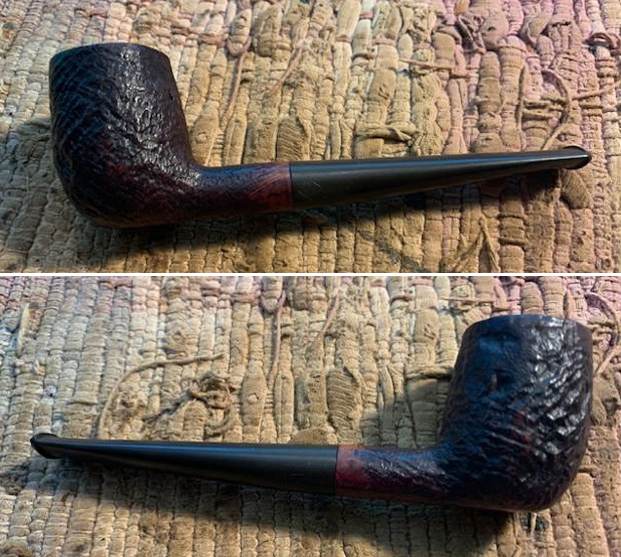
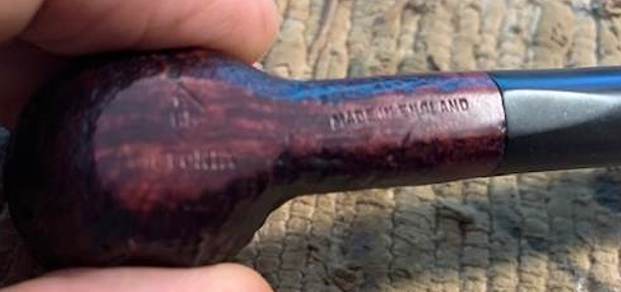
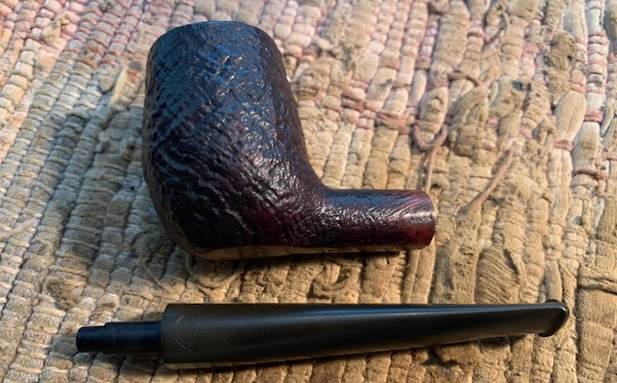
The next pipe on the table is another one that has been here for over five years. It is nice looking short, old style BBB Ultonia Billiard. We picked it up off eBay on 01/29/17 from a seller in Poughkeepsie, New York, USA. The shank is quite short but it is not cut off or damaged. It was designed that way. The sandblast is quite rugged and there is a lot of dust and grit in the crevices. The bowl has a moderate cake and tobacco debris in the bowl. The edges and rim top look quite good. Other than being dirty the finish is in good condition. The stem has a BBB diamond stamp on the left side. It has an older style straight taper cut to it. It is oxidized and has tooth chatter on both sides ahead of the button. Jeff took photos of the pipe before he started his clean up work. He took a photo of the bowl and rim top to show the condition of the pipe. You can see the cake in the bowl and the light lava on the rim top. The stem photos also show the oxidation and tooth chatter on the top and underside ahead of the button. He took a photo of the sandblast and the smooth heel on the bowl. It really is a nice looking blast and shape.He took photos of the stamping on the heel of the bowl and shank. It is clear and readable as noted above. There does not appear to be a shape number stamped on the pipe. The BBB Diamond stamp is visible on the left side of the shank. I turned to Pipephil’s site to see if it listed the Ultonia line (http://pipephil.eu/logos/en/logo-bbb.html). It did not but it gave a short summary of the brand. I quote:

BBB: ” Best British Briar” is now a brand of the Cadogan Company (Oppenheimer group). American rights to use the brand name were sold to Wally Frank in 1980. Founder of the brand in 1847: Louis Blumfeld. The oldest pipe brand name in the UK has been registered in 1876 (Blumfeld Best Briar) Grading (ascendant): Own Make, Bold Grain, Best Make, Rare Grain.

I turned to Pipedia (https://pipedia.org/wiki/BBB) to see if I could get some specific information on the Ultonia. I read through the history on the site and I quote the pertinent section of article below.

Louis Blumfeld develops from the very start of important international trade, with a particular success in Canada, in Australia, in Zealand News, India and in the extrème Is Europe, in Switzerland and, with a special mention, in Denmark. If the USA were never an extraordinary market, a branch is opened all the same in New York. In fact, the marketing strategy was focused especially on the countries of the Britanique Empire. Little before 1914, A Frankau & Co was also a sole agent for the pipes Cherry Wood of the Ropp house to cover the United Kingdom and its colonies.

If the BBB are its the most known pipes, A Frankau & Co had several marks of pipes: Capt. Kidd, Fairway (“F” in white; FAIRWAY/LONDON MADE/ENGLAND), Frankau’ S (London Made/Made in England), Glokar, Major Daff, the Snap-FIT. It also seems that Ultonia and Last word must be regarded as marks with whole share, in spite of the fact that they are presented as being product lines under label BBB. That would explain their absence of catalogues BBB…

In the Thirties, the top-of-the-range one becomes “BBB Best Make” with alternatives like “Super Stopping” and “Ultonia Thule”. The BBB Carlton, sold with the detail with 8/6 in 1938, is equipped with a system complicated out of metal, system which equipped the BBB London Dry too. Blue Peter was not estampillées BBB but BBB Ultonia, and the BBB Two Star (* *) become the bottom-of-the-range one. The calabash leave the catalogues, but some pipes with case and some scums are still produced. The forms also are typical of this time: half are billiards, some princes and bullcaps, a limited number of bulldogs and curved. It is as at that time as the top-of-the-range series receive an incrustation of initials BBB out of metal, whereas the bottom-of-the-range series have only the engraved pipe.

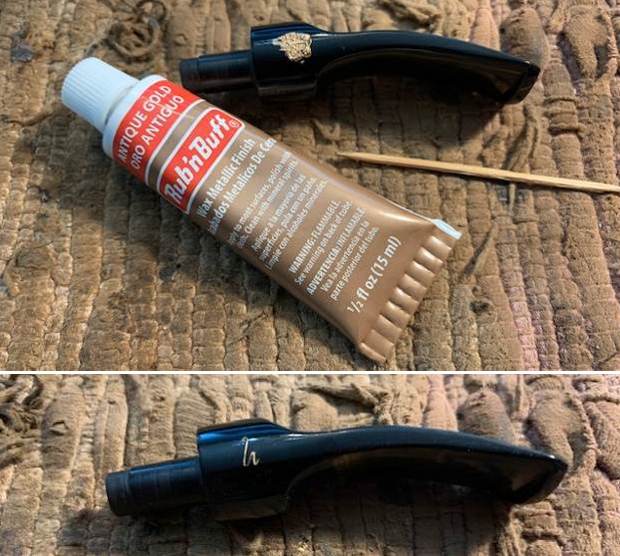
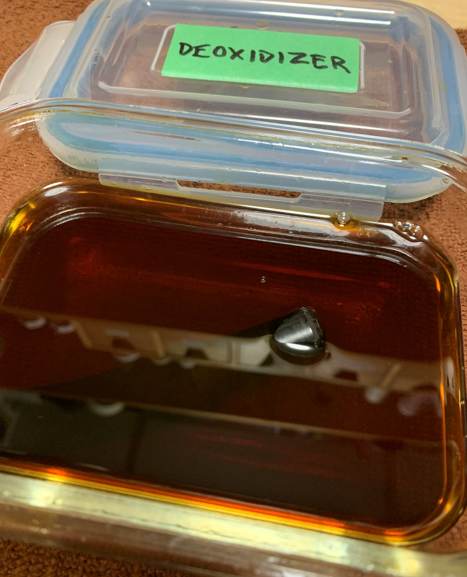
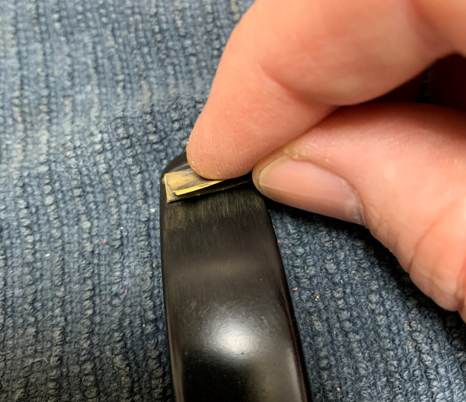
With that information, I turned to work on the pipe itself. Jeff had thoroughly cleaned up the pipe. He reamed the pipe with a PipNet Pipe Reamer and cleaned up the remnants with a Savinelli Fitsall Pipe Knife.  He scrubbed the bowl with undiluted Murphy’s Oil Soap with a tooth brush. He rinsed it under running warm water to remove the soap and grime. There was some darkening on the inner edge of the rim and top that would need to be dealt with. He cleaned out the inside of the shank and the airway in the stem with alcohol, cotton swabs and pipe cleaners. He scrubbed the exterior of the stem with Soft Scrub to remove as much of the oxidation as possible. He soaked it in Before & After Pipe Stem Deoxidizer and rinsed it with warm water. The acrylic stem was clean but had tooth marks and chatter on both sides ahead of the button. There was an BBB Diamond logo on the left side of the stem. I took photos of the pipe before I started my work on it. It was an amazing looking pipe. I took photos of the rim top and bowl as well as the stem to give a sense of the condition of both. The rim top and edges looked very good. The stem cleaned up well and the tooth marks on the top and underside ahead of the button were very light.I took photos of the stamping on the heel and underside of the shank. They are readable as noted above. I took the stem out of the shank and took a photo of the overall look of the pipe.The bowl was in excellent condition. The rim top and edges looked really good. I started my work by working some Before and After Restoration Balm into the surface of the sandblast bowl. It works to preserve, clean and renew the briar. I worked it into the crevices with a shoe brush. I let it sit for 10 minutes and then buffed it off with a soft cloth. The bowl really looked good at this point. I set the bowl aside and turned my attention to the stem. I touched up the BBB Diamond on the left side with some Rub’n Buff Antique Gold. I applied it to the stamp and worked it in with a tooth pick. I buffed it off and the stamping looks good. I polished the stem with micromesh sanding pads – dry sanding it with 1500-12000 grit sanding pads and wiping it down after each pad with some Obsidian Oil. I finished polishing it with Before & After Pipe Stem Polish – both fine and extra fine. I gave it a final coat of Obsidian Oil. This older BBB Ultonia Made in England Sandblast Billiard with a vulcanite taper stem is a great looking pipe now that it has been restored. The beautiful grain on the briar shines through the polished finish is stunning. I put the stem back on the bowl and carefully buffed the pipe with Blue Diamond on the buffing wheel. I gave the bowl and the stem multiple coats of carnauba wax on the buffing wheel and followed that by buffing the entire pipe with a clean buffing pad. I hand buffed the pipe with a microfiber cloth to deepen the shine. The finished BBB Ultonia Billiard fits nicely in the hand and feels great. Give the finished pipe a look in the photos below. The dimensions of the pipe are Length: 5 inches, Height: 1 ½ inches, Outside diameter of the bowl: 1 1/8 inches, Chamber diameter: 5/8 of an inch. The weight of the pipe is 27 grams/.95 ounces. I will soon be adding it to the rebornpipes store in the British Pipe Makers Section. If you are interested in this pipe send me a message or an email. Thanks for reading this blog and my reflections on the pipe while I worked on it. There are many more to come!

Restoring a Nino Rossi 1886 Shape 138


Blog by Steve Laug

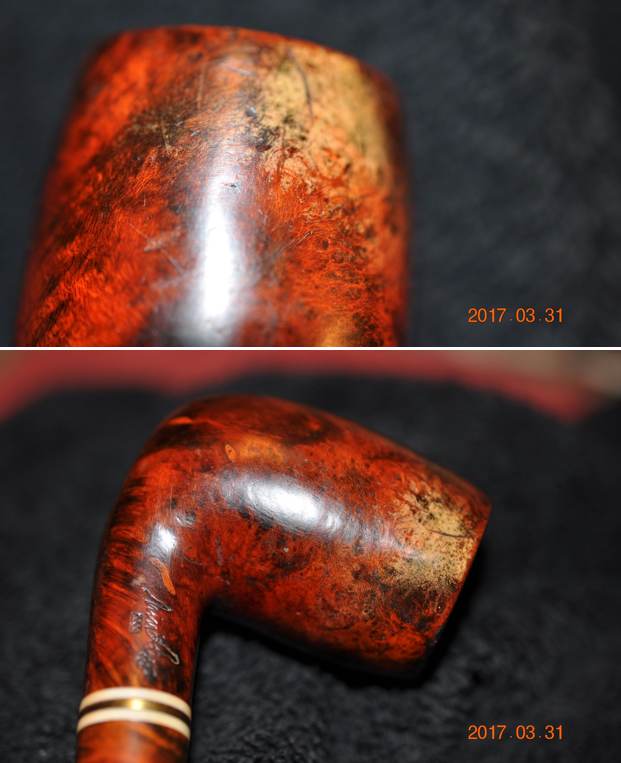
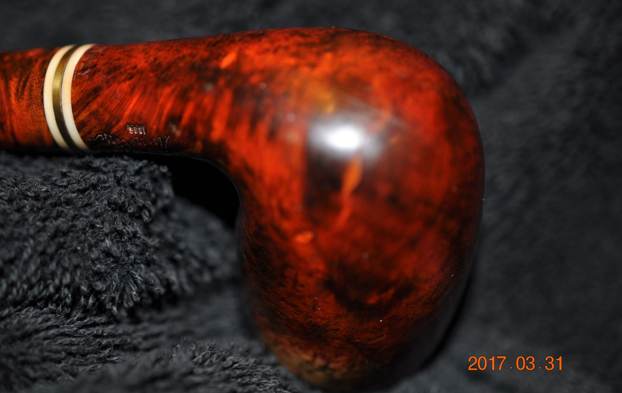
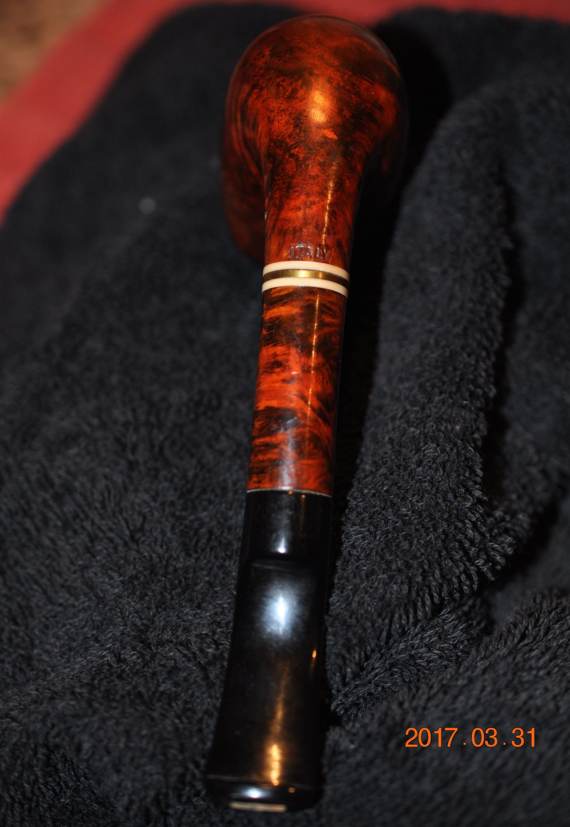
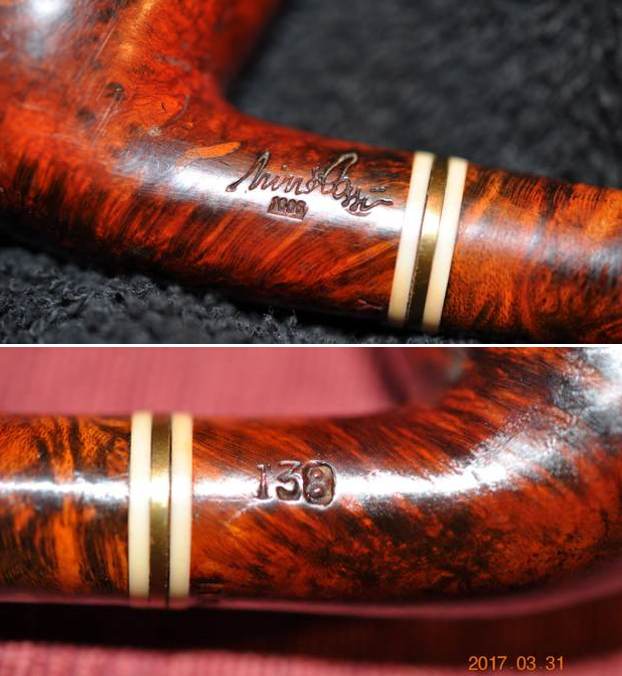
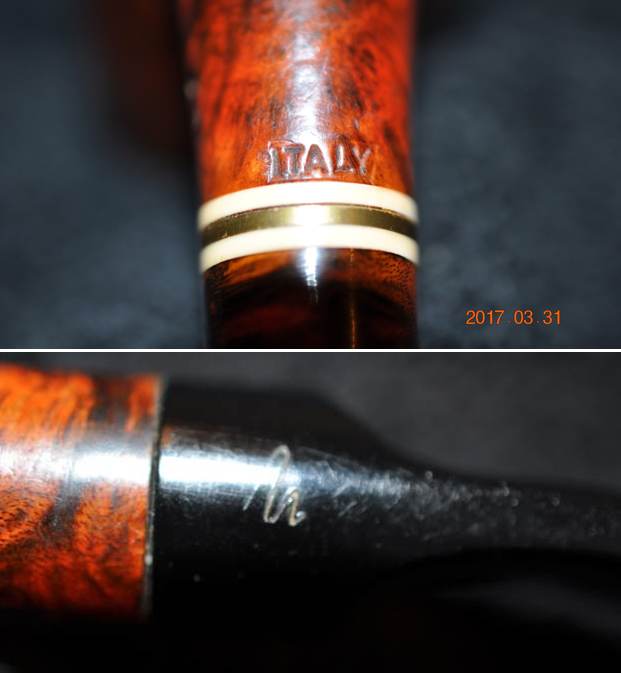
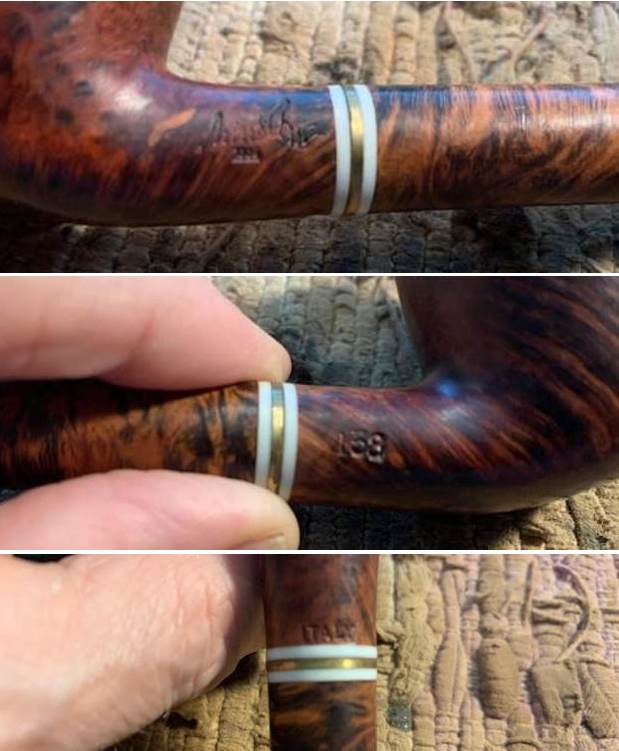
The next pipe on the table is another that caught my eye when I was going through my boxes of pipes to be refurbished. It was purchased off eBay from a seller in Spearville, Kansas, USA in March of 2017. So, it is another that has been sitting here for over five years now. I sent a message to Jeff to see if he had some before photos of the pipe to show the condition when he received it. He did and sent them to me via Messenger. The pipe is a unique shape but it was a real mess. It is stamped on the left side of the shank with the signature of Nino Rossi [over] 1886. On the right side it is stamped with the shape number 138 and on the underside near the stem it read ITALY. The stem had the brand logo stamped on the left side as well and though fade it was readable. The finish was filthy with dirt and grime ground into the briar. There was some fading near the ride top of the bowl. The was some tarnish on the mid-shank brass band sandwiched between two white acrylic spacers. The bowl was heavily caked and there was a lava overflow on the rim top and the inner edge of the bowl. It appeared to me that the bowl edges were damaged but I would not know for sure until the pipe was cleaned up. The stem had tooth marks and chatter on both sides ahead of the button. The inside of the stem and shank was also filthy with heavy tars and oils to the point it was almost clogged. Jeff took photos of the pipe before he started his clean up and I include those now. He took photos of the rim top to show the condition of the pipe and the cake in the bowl. You can see the potential damage on the inner edge. He also took photos of the stem to show the bite marks and chatter on both sides. Jeff captured the grain around the bowl sides and heel in the next photos. It really shines through even the grime. There are worn spots in the finish and numerous fills in the bowl and heel. They blend pretty well and I think after the clean up it will be a beautiful pipe. He took photos of the stamping on the shank sides and stem. He was able to capture them very well. Before I started to work on the pipe I wanted to remind myself of the background and history of the company. I find that when I do that it gives me another level of appreciation for the pipe that I am working on. I remembered that I had worked on a Nino Rossi 1886 pipe before so I turned to the blog I had written on the brand when I did that pipe and reread the history. Here is the link to the blog (https://rebornpipes.com/2022/01/04/a-fun-restore-of-a-nino-rossi-1886-classico-in-shape-992/). While the shape is slightly different it was informative. I quote from the information I found on the blog below.

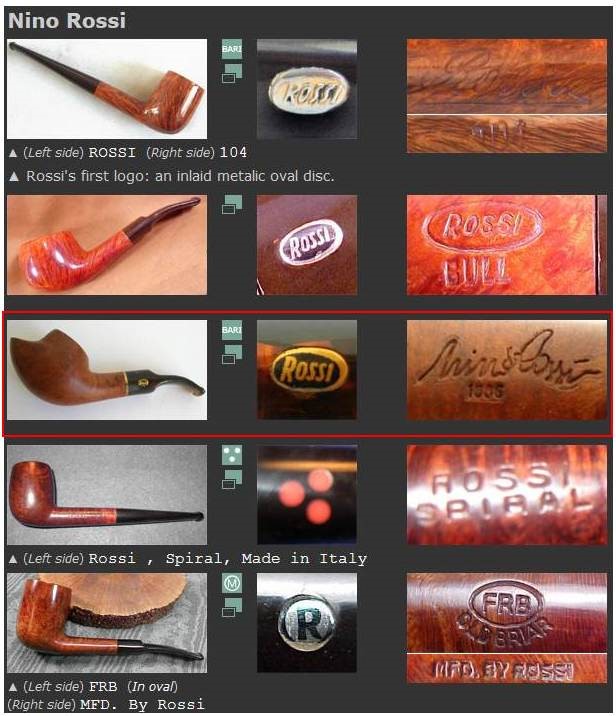
I turned first to Pipephil’s site to see what I could learn about the brand as generally the site gives a good summary (http://pipephil.eu/logos/en/logo-n1.html#ninorossi). I quote the information from the side bar below and a screen capture of the pertinent section on the site. I drew a red box around the pipe in the photo below with the same stamping as the one I am working on.

Brand founded in 1886 by Ferdinando Rossi senior. He established a factory in Barasso, 5 miles away from Varese. The pipes production by the 850 employees reached 50,000 pipes/day in 1936. Ferdinando Rossi junior headed the company from 1946 until close down in 1985.I turned to Pipedia to read the more complete history of the brand and learn what I could about a possible date for this pipe (https://pipedia.org/wiki/Rossi). First, I wanted to understand the 1886 stamp on the shank under the signature stamp. I found that it was the year that the company acquired land and opened Fabbrica di Pipe di Radica Rossi.

Rossi acquired a large area of land in Barasso in the province of Varese and founded the Fabbrica di Pipe di Radica Rossi in 1886. For sure there was no lack of skilled workers and Rossi personally recruited 30 craftsmen of different occupations from the environment to get started. After a few years the enterprise had developed well and entered into export trades. In 1892 e.g., the ledgers registered the first pipes shipped to Brazil.

I quote a summary section of the article below.

From, approximately, Twenties, Rossi pipes were marked with “FRB” (Fratelli Rossi Barasso) or “MFRB” (Manifattura Fratelli Rossi Barasso), into an oval and above “OLD BRIAR” (or similar – sometimes, there was also “MFD. BY ROSSI”, as “Manufactured by Rossi”); on the stem, there was generally the “R” letter in circle. However, “FRB OLD BRIAR” was maintained for the “traditional pipes” (for cheap models – see below), surely, to Sixties.

From, approximately, the fiftieth anniversary (1936), pipes were marked with “Rossi” (in cursive font), with model name just under it; on the stem, there was “ROSSI” (for expensive models like “extra”, which had the best quality; “racine”, which was rusticated by hand; “extra grain”, which was accurately sandblasted; “super”, which had the best briar selection, and a limited production; “fiamma”, which was the best selection of Sardinia and Greece briar, and a very limited production) or “R” in circle (for inexpensive models like “standard”, “grana” and “FRB”).

From, approximately, Seventies, until 1985, Rossi pipes were marked with “ROSSI”, in an oval (sometimes there was also “ITALY” on the shank); on the stem, there was “ROSSI”. In these years, appeared the signature “Nino Rossi” (in cursive font): he was the last heir of the factory.

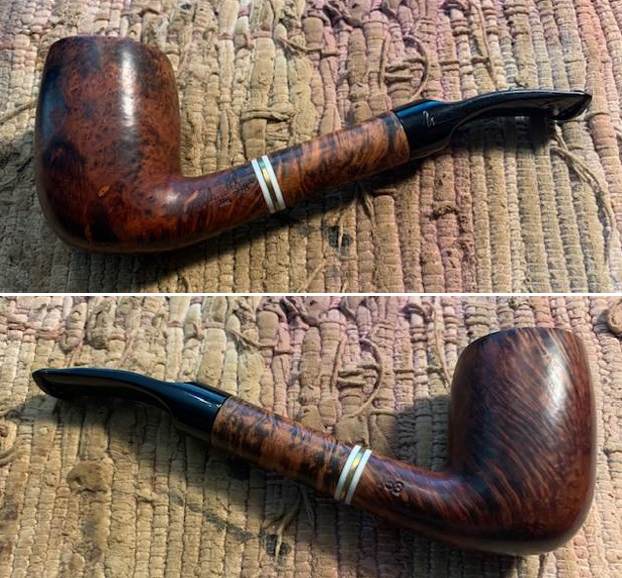
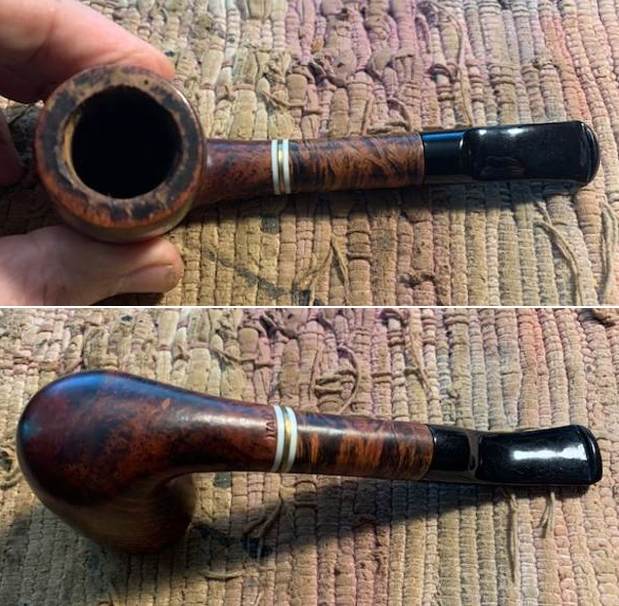
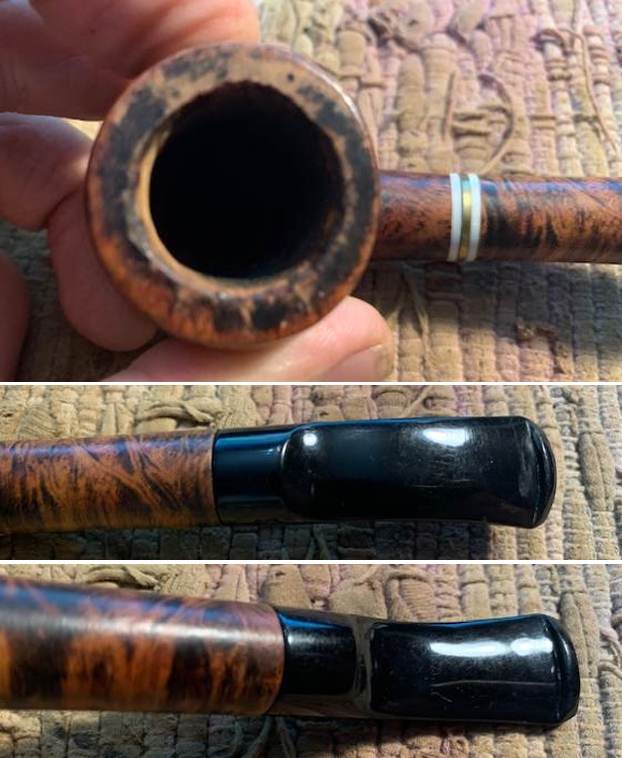
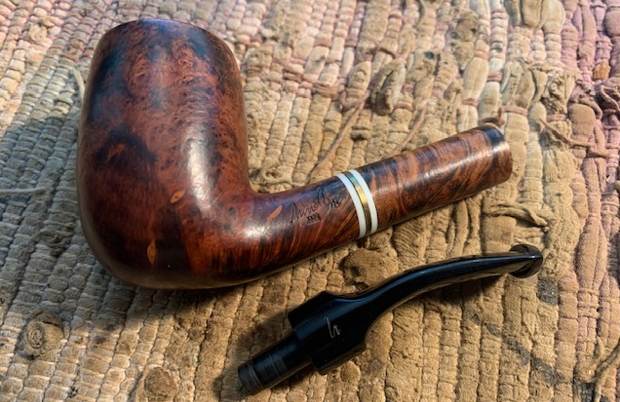
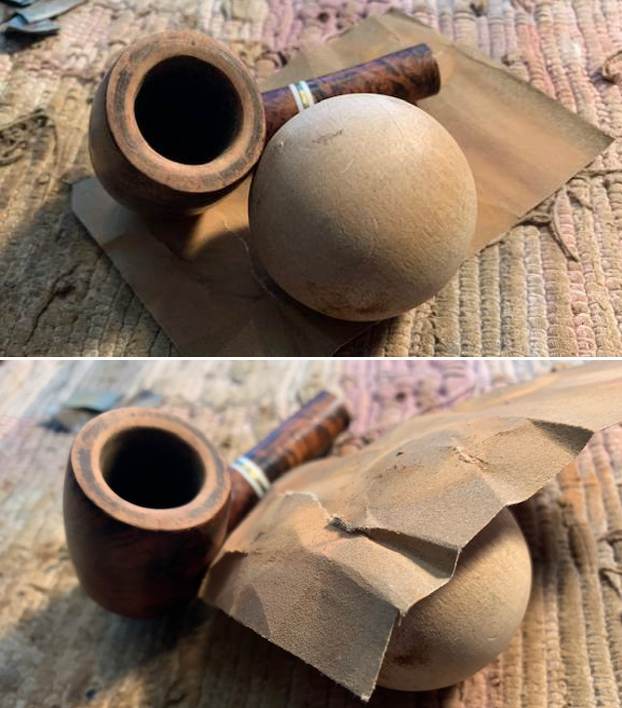
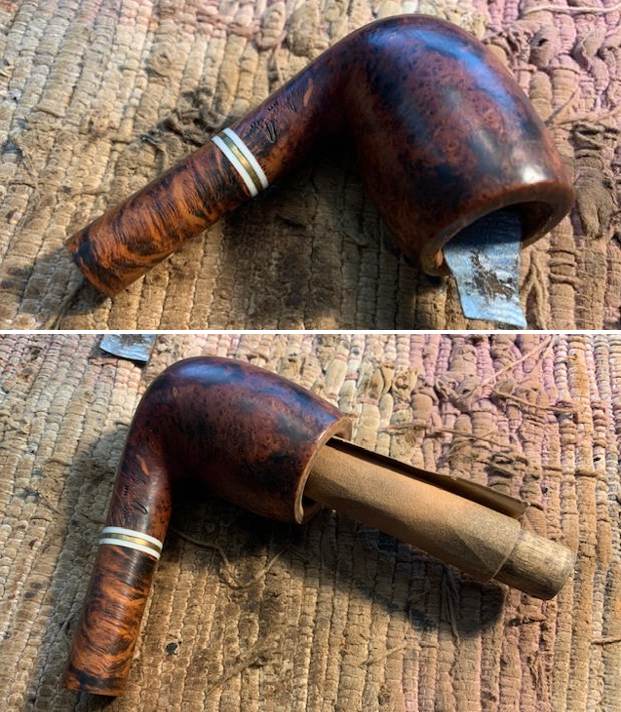
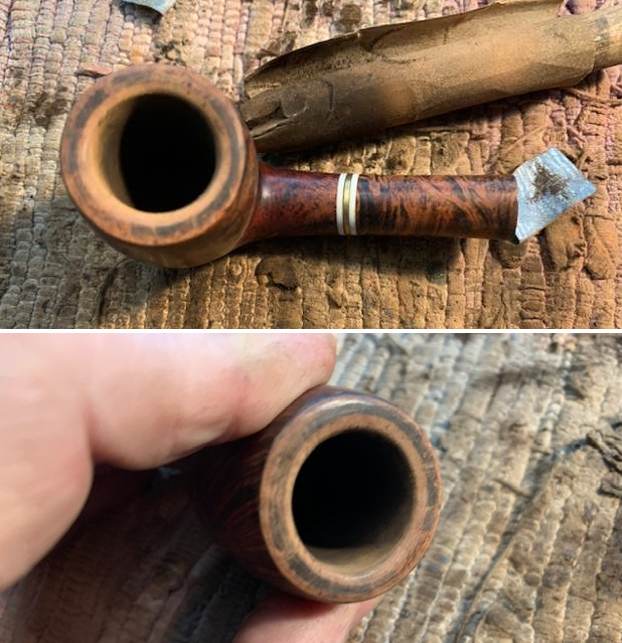
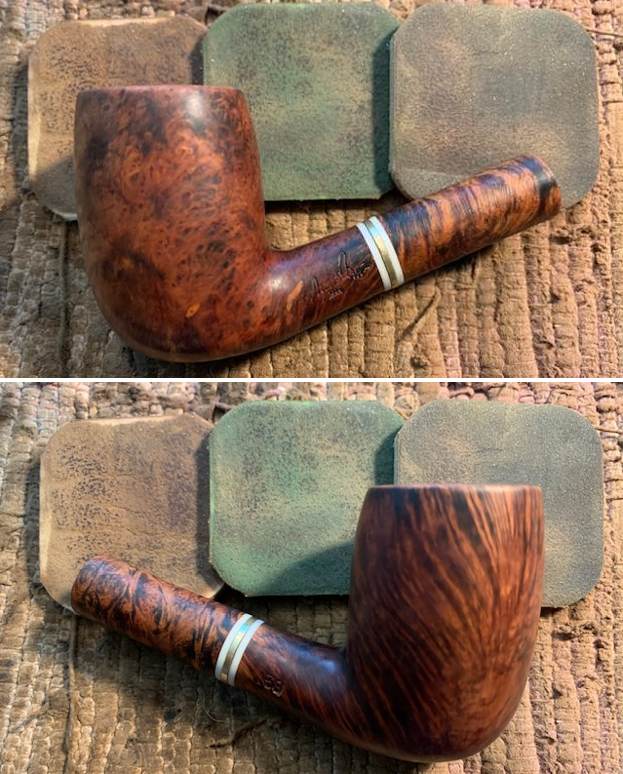
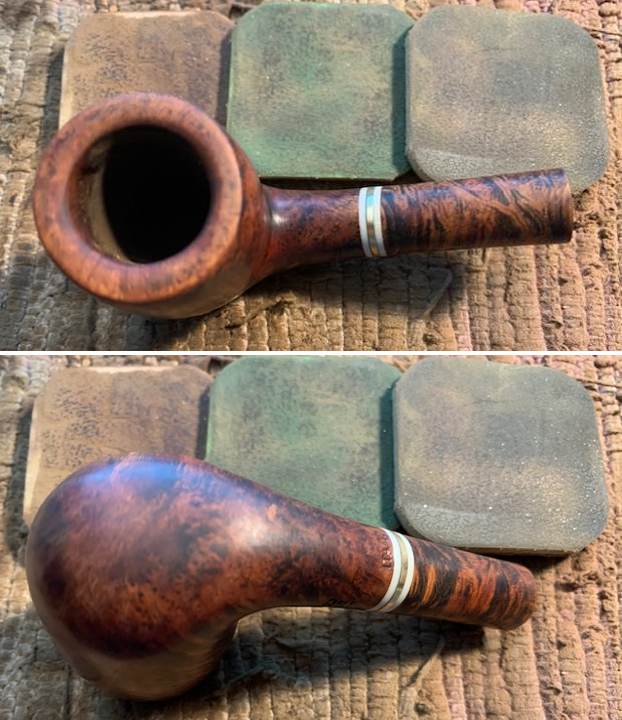
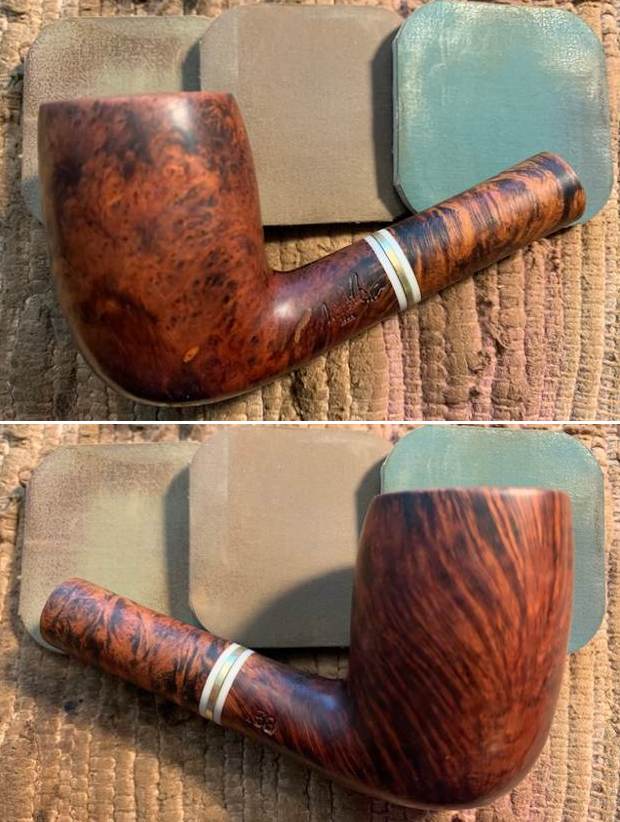
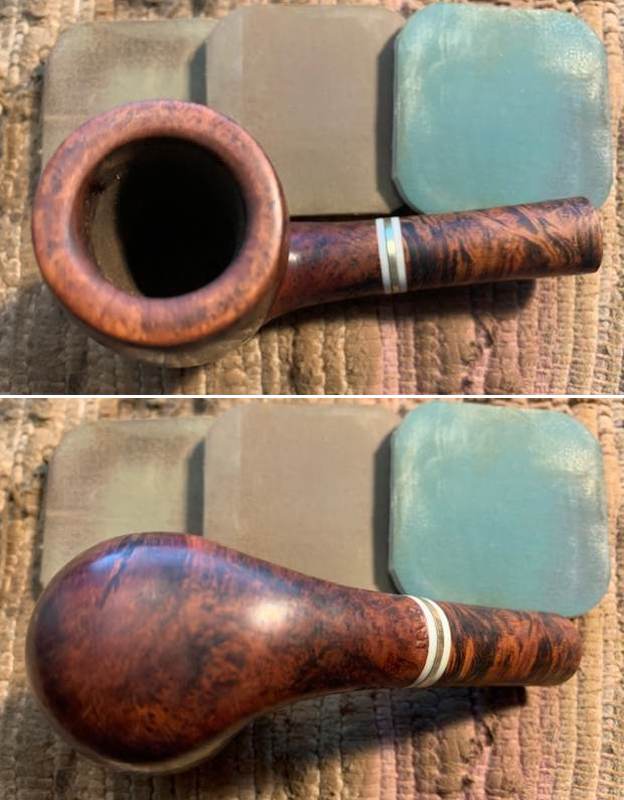
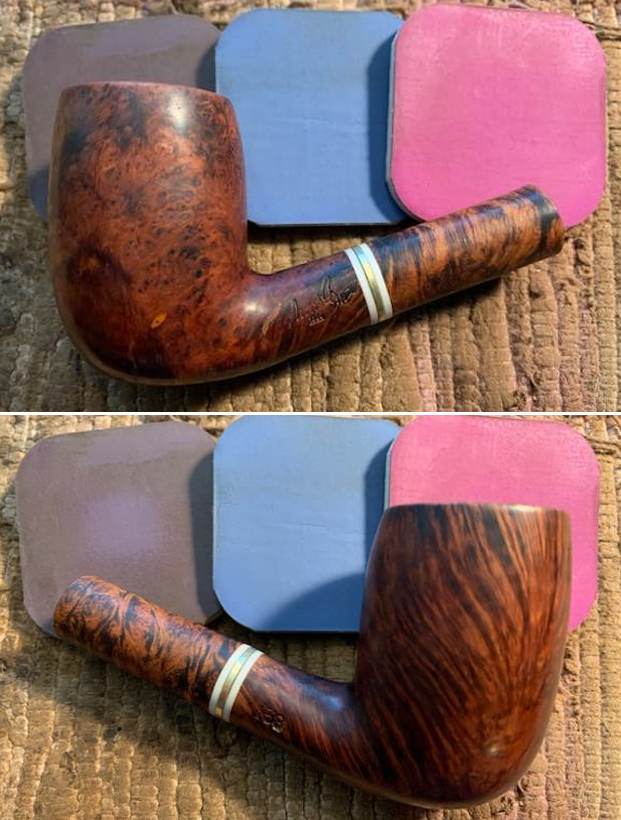
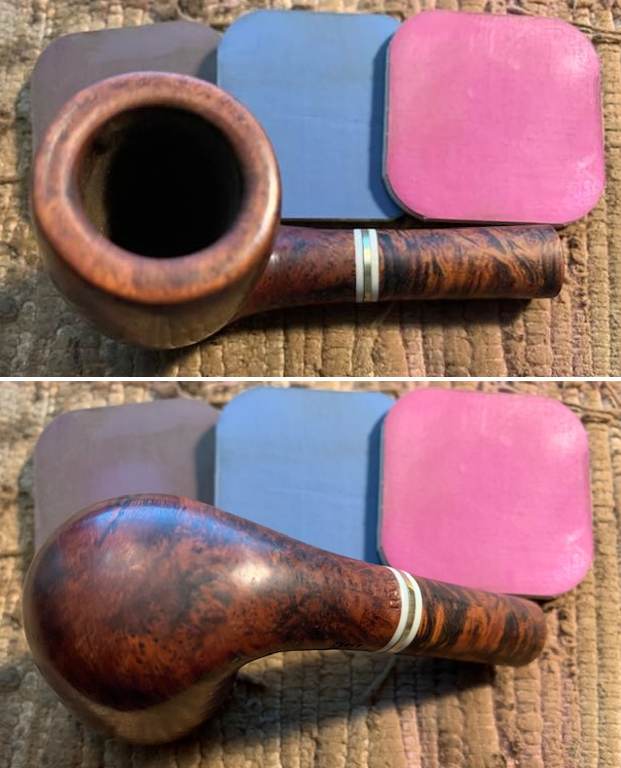
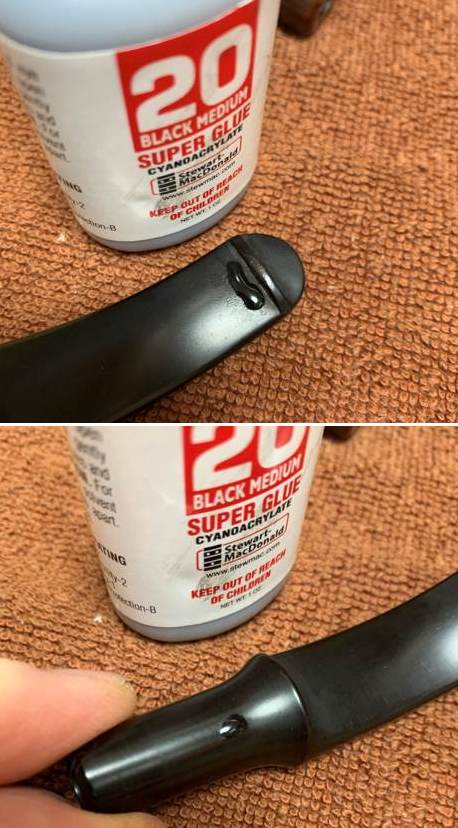
With that information, I turned to work on the pipe itself. Jeff had thoroughly cleaned up the pipe. He reamed the pipe with a PipNet Pipe Reamer and cleaned up the remnants with a Savinelli Fitsall Pipe Knife.  He scrubbed the bowl with undiluted Murphy’s Oil Soap with a tooth brush. He rinsed it under running warm water to remove the soap and grime. There was some darkening on the inner edge of the rim and top that would need to be dealt with. He cleaned out the inside of the shank and the airway in the stem with alcohol, cotton swabs and pipe cleaners. He scrubbed the exterior of the stem with Soft Scrub to remove as much of the oxidation as possible. He soaked it in Before & After Pipe Stem Deoxidizer and rinsed it with warm water. The acrylic stem was clean but had tooth marks and chatter on both sides ahead of the button. There was an N logo on the left side of the stem. I took photos of the pipe before I started my work on it.  I took photos of the rim top and bowl as well as the stem to give a sense of the condition of both. The rim top had some damage and darkening to the inner edge and rim top on the right front and back side. The bowl was out of round and need some work. The stem cleaned up well and there were tooth marks on the top and underside ahead of the button.I took photos of the stamping on the sides and underside of the shank. They are readable as noted above.I took the stem out of the shank and took a photo of the overall look of the pipe.I decided to start my work on the pipe by addressing the darkening and damage on the inside edge of the bowl and the rim top. I used a piece of 220 grit sandpaper and a wooden ball to clean up the bevel on the inner edge and the top of the bowl. I touched it up with a folded piece of 220 grit sandpaper. I wiped the top and edges down with a damp cloth and the rim top and edges looked much better. I wrapped a piece of dowel with 220 grit sandpaper and sanded the inside walls of the bowl to smooth them out. I polished the briar with micromesh sanding pads – dry sanding with 1500-12000 grit pads. I wiped the bowl down after each pad with a damp cloth. I rubbed the bowl down with Before & After Restoration Balm. I worked it into the surface of the bowl sides and shank with my fingertips. The product works to clean, enliven and protect the briar. I let the balm sit for a little while and then buffed with a cotton cloth to raise the shine. I set the bowl aside and turned my attention to the stem. I filled I the deep tooth mark on the top and underside of the stem with black CA glue. Once it cured I used a small file to flatten the repair and shape the button edge. I sanded the repair smooth to blend it into the surface of the stem with the 220 grit sandpaper to smooth them out. I started the polishing of the stem with 400 grit wet dry sandpaper. The stem was looking better with the repairs and polishing. I polished the stem with micromesh sanding pads – 1500-12000 grit pads. I wiped it down with Obsidian Oil after each sanding pad. I used Before & After Pipe Polish – both Fine and Extra Fine to further polish the stem. I gave it a final rub down with Obsidian Oil. I used some Rub’n Buff Antique Gold to touch up the N stamp on the left side of the saddle. I applied it and worked it into the stamp with a tooth pick. I buffed it off with a soft towel. The resultant stamp looked very good.This Nino Rossi 1886 Shape 138 ¼ Bent Stack with a briar shank extension and a short saddle stem is a great looking pipe now that it has been restored. The beautiful grain on the briar and the briar shank extension that shines through the polished finish is stunning. There is a brass spacer with a white acrylic space on each side between the shank and the extension. It looks great. I put the stem back on the bowl and carefully buffed the pipe with Blue Diamond on the buffing wheel. I gave the bowl and the stem multiple coats of carnauba wax on the buffing wheel and followed that by buffing the entire pipe with a clean buffing pad. I hand buffed the pipe with a microfiber cloth to deepen the shine. The finished Nino Rossi 138 fits nicely in the hand and feels great. Give the finished pipe a look in the photos below. The dimensions of the pipe are Length: 6 inches, Height: 2 inches, Outside diameter of the bowl: 1 ¼ inches, Chamber diameter: ¾ of an inch. The weight of the pipe is 56 grams/1.98 ounces. I will soon be adding it to the rebornpipes store in the Italian Pipe Makers Section. If you are interested in this pipe send me a message or an email. Thanks for reading this blog and my reflections on the pipe while I worked on it. There are many more to come!

Reviving a Vauen Luxus


Blog by Kenneth Lieblich

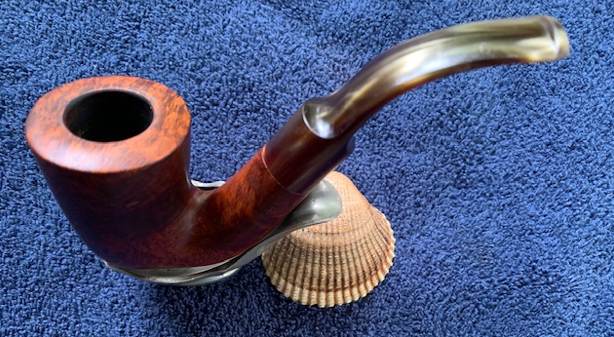
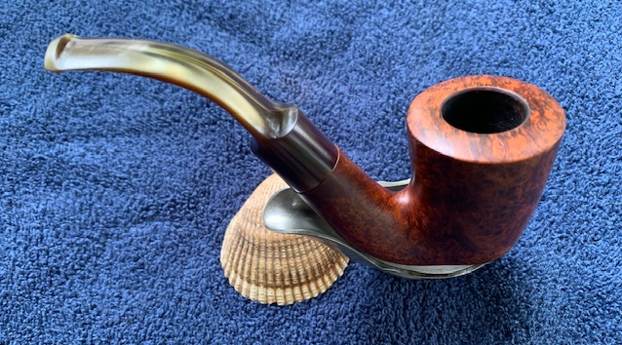
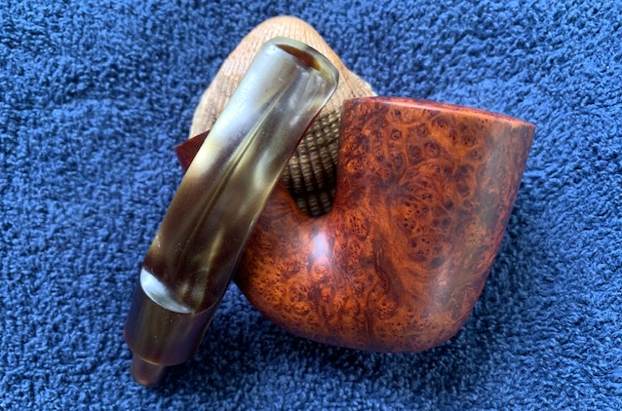
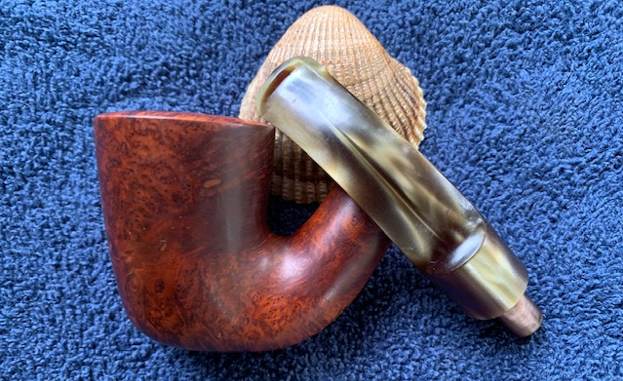
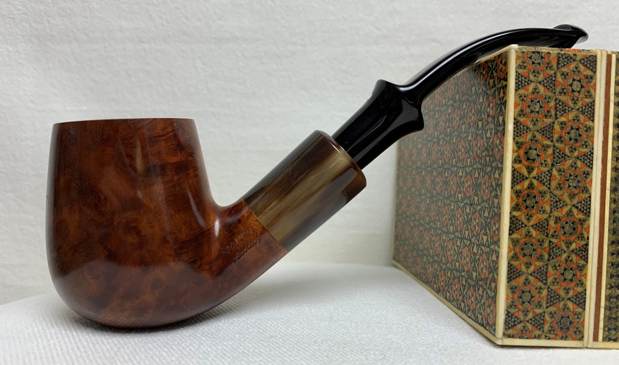
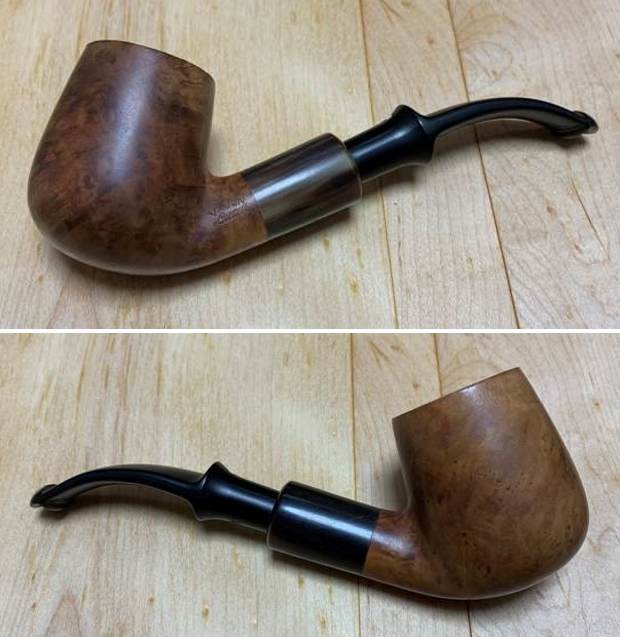
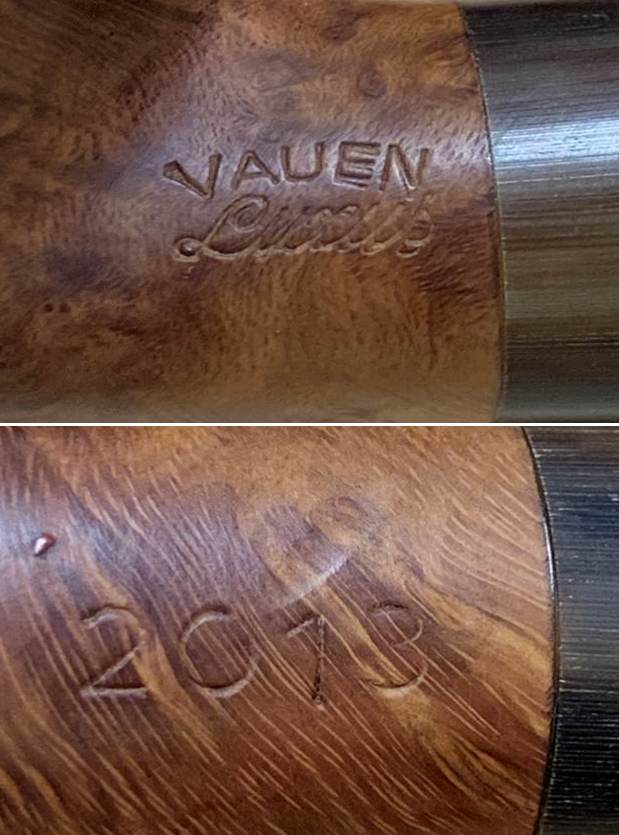
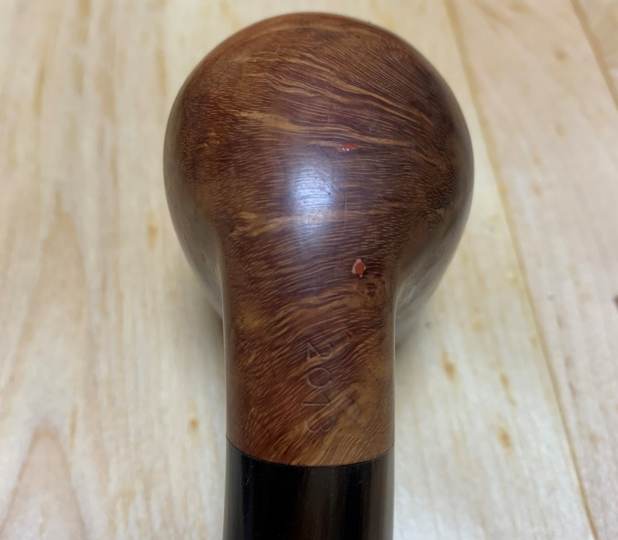
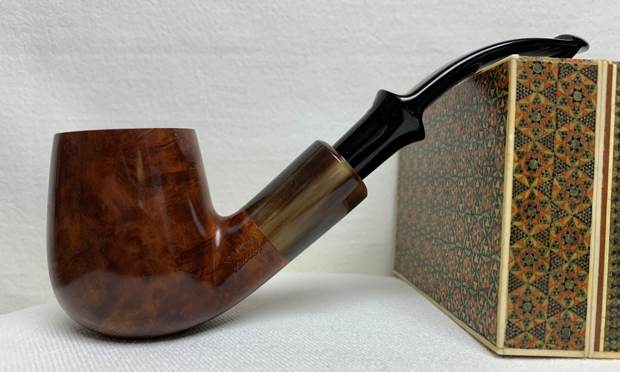
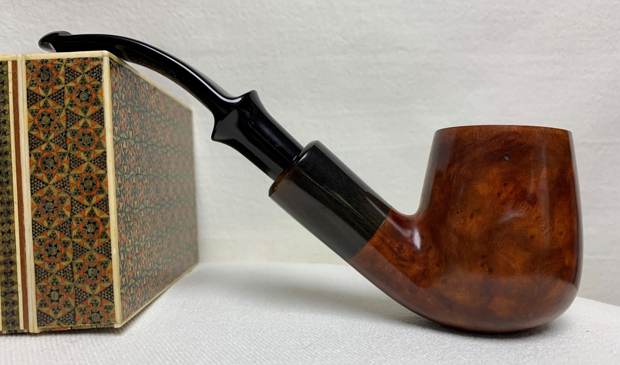
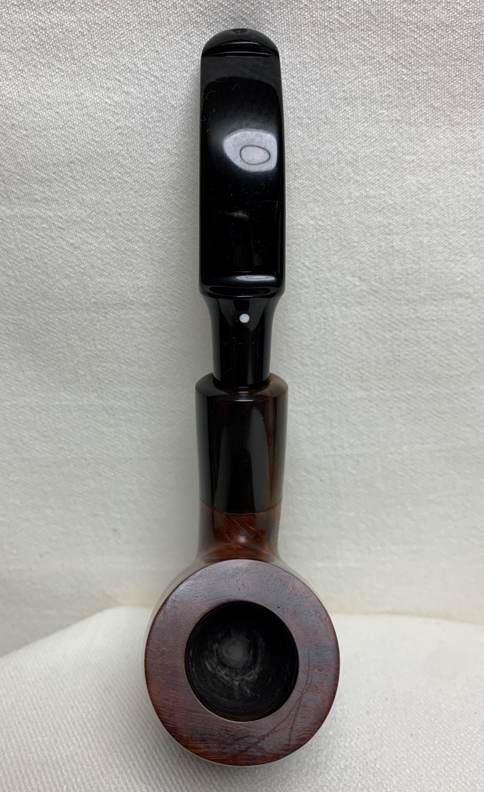
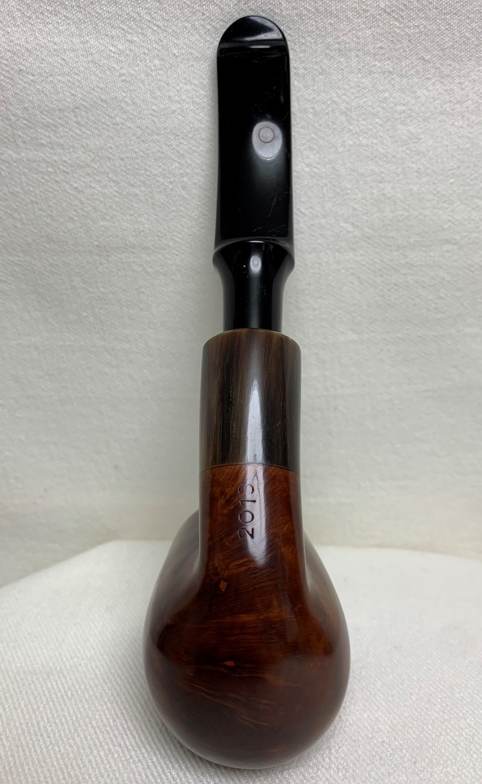
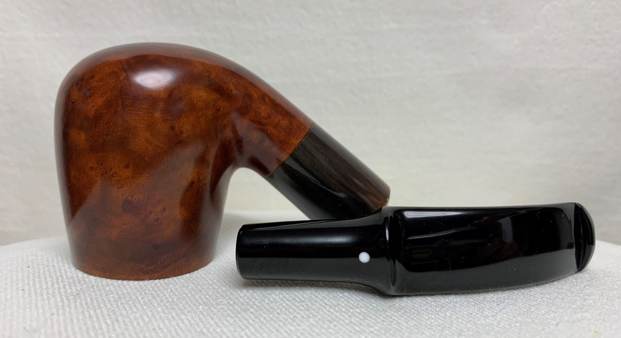
Next on the chopping block is a handsome Vauen, which I acquired from a Craigslist pipe lot. Although not an old pipe, it is a handsome one. It’s rather big and hefty, but not heavy, and feels good in the hand. I’m really glad that my customer picked out this pipe, as it has been sitting around unused for far too long. I’m happy that it has found a new home.This pipe is a Vauen Luxus 2013 chunky, bent billiard with a beautiful horn ferrule, It also takes a 9 mm filter. The stem has the traditional Vauen white dot (not unlike Dunhill’s) and, most interestingly, it has a P-lip, very reminiscent of Peterson’s. The ‘2013’ does not refer to the year of manufacture, rather, it refers to the shape number. The markings on the pipe are as follows: on the left side of the shank, it reads Vauen [over] Luxus. The underside of the shank shows the model number 2013, and the top of the stem shows the classic white Vauen dot.I searched on Pipedia for some history of the Vauen brand. Here’s what I found:

In 1848 Karl Ellenberger and his partner Carl August Ziener turned an idea into reality in Nuremberg. In the first German pipe manufacturing company they produced tobacco pipes from selected woods for connoisseurs throughout the world.

The Vereinigte Pfeifenfabriken in Nuremberg (known in short as VPFN) was brought into being in 1901 with the amalgamation with the Gebhard Ott pipe factory founded in 1866, also in Nuremberg. In this way, a business was created under the management of Ernst Eckert, a scion of the founding family Ott, and its products and services were to attend and shape the culture of tobacco and smoking in Europe and overseas for a long time – for 150 years now.

In the 1920s, VAUEN had taken out a trademark on a white dot on the mouthpiece for Germany and Austria, at the same time that Dunhill had done the same for the international market. The companies ended up in court with the result that Dunhill may use the white dot internationally, whereas VAUEN may use it only in Germany and Austria and has to use a differently-coloured dot for all other markets. They have used light blue and grey dots internationally since then. The white or coloured dot denotes the higher quality pipes of VAUEN; the lower-end pipes are only marked by the VAUEN imprint on the stem.

In the search for a term which would be easy for all pipe friends to remember and not confuse with anything else, Ernst Eckert’s son, Adolf Eckert coined a new name for the business in 1909.

VAUEN, consisting of the initial letters V (pronounced VAU) from Vereinigte Pfeifenfabriken and the N (pronounced EN) of Nuremberg. A brand name for the future had been created.

After 1945 Ernst Eckert, son of Adolf Eckert, succeeded in overcoming the destructive effects of the war with an unshakeable pioneering spirit. VAUEN grew to become a business with a worldwide reputation once more.

Alexander Eckert, now the fifth generation of pipemakers, has been at the head of the oldest German pipe-manufacturing company since 1982. The company, which has been in the hands of the founder’s family since it was established, is expanding again in importance as a result of increased international commitment.

Over at Pipephil.eu, they note that “Some of the pipes in Vauen’s Dr. Perl line (Germany) are equipped with a conventional P-lip stem.” In this context, the word ‘conventional’ is referring to the same P-lip invented by Peterson in 1898.

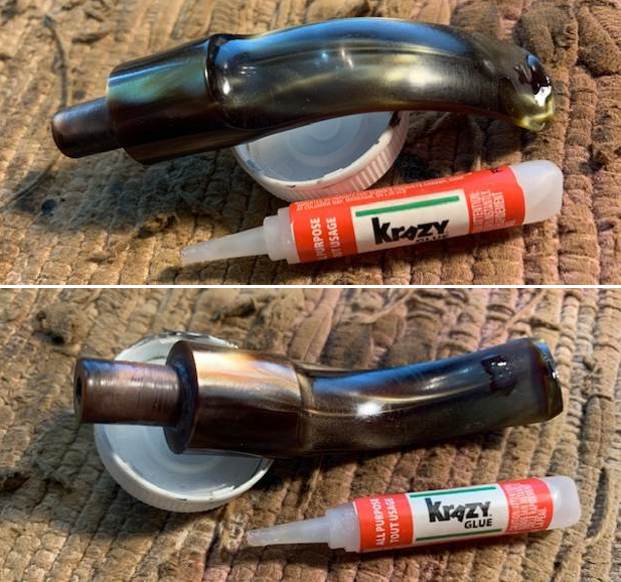
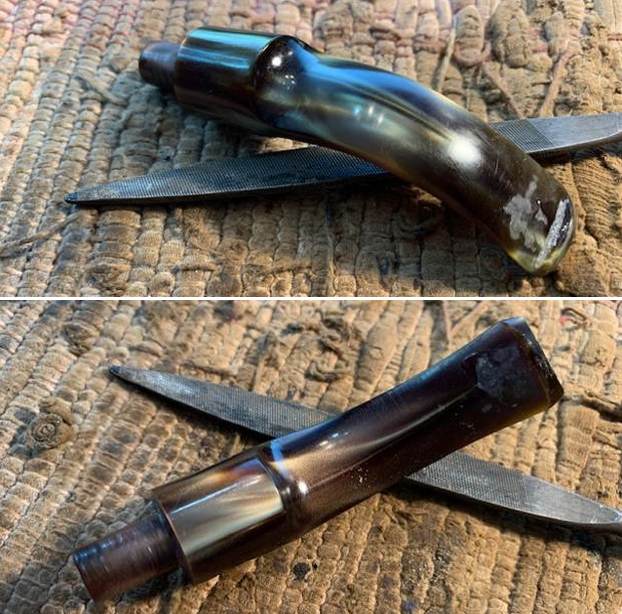
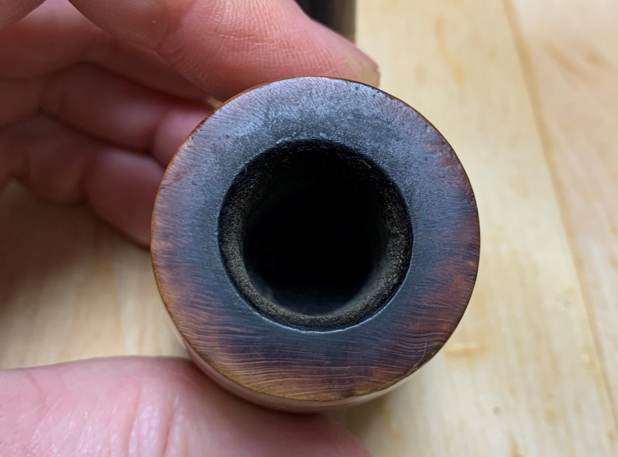
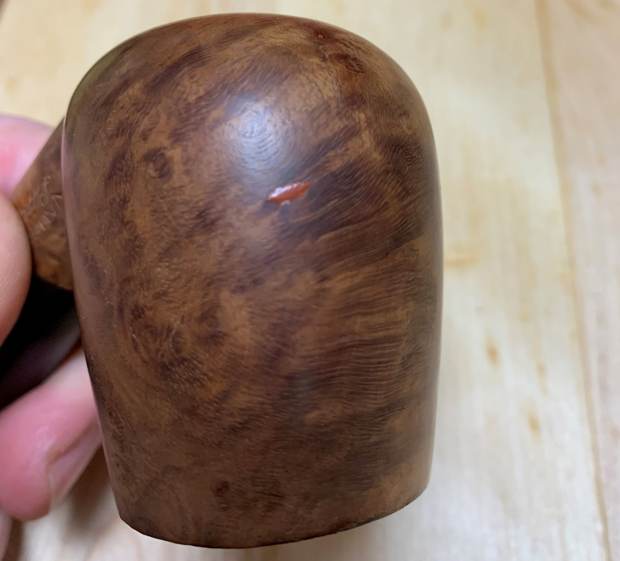
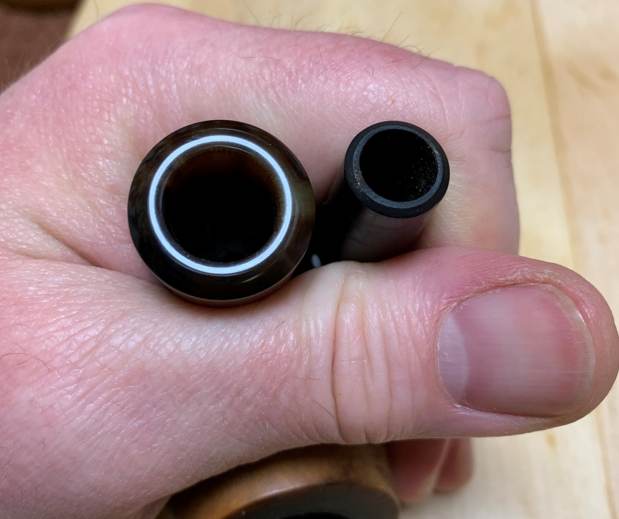
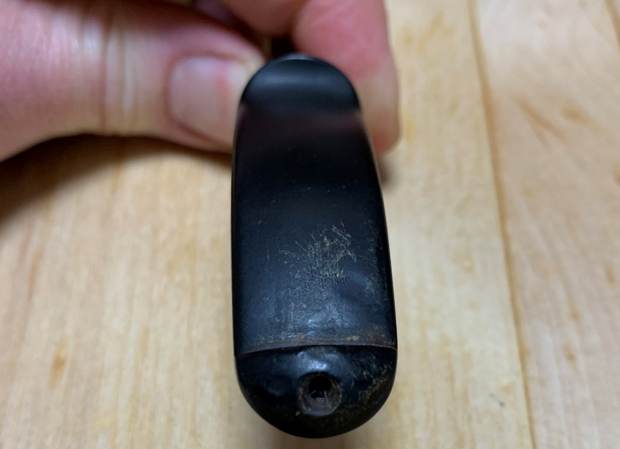
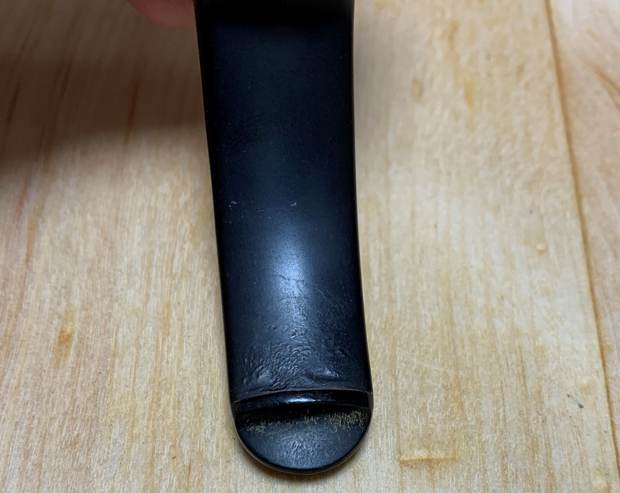
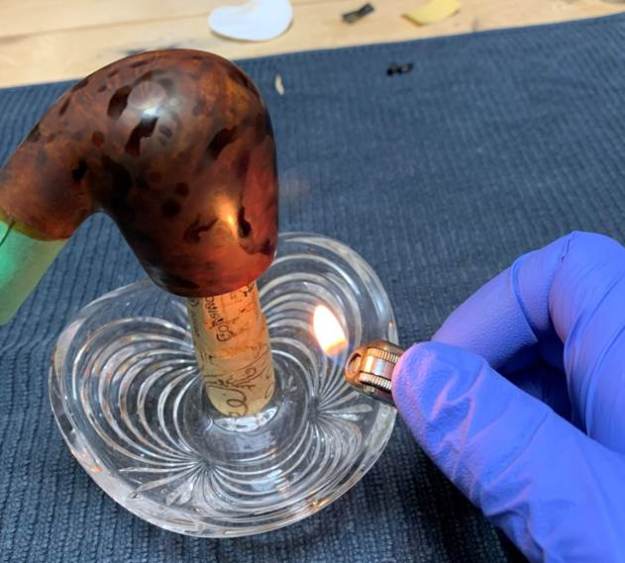
On to the pipe: given that it wasn’t very old, the pipe was in pretty good shape, but as usual, there were a couple of issues. The rim on the stummel was blackened and a bit burnt – that would need to be addressed. The insides were fairly dirty and would need some work to clean out. There were also some small fills in the wood, and they had ever-so-slightly expanded so that you could feel them when rubbing your finger over the surface. My customer didn’t want the fills dug out and replaced, so I would need to stain the fills instead. Mercifully, the beautiful horn was in good shape and wouldn’t need anything other than a polish. The stem needed some work. It was definitely dirty inside and the cavity that holds the filter would need a thorough cleaning. The stem also had some calcification and tooth marks/dents that would need addressing. In addition, the button would need to be reshaped. The stem was first on my list. I wiped down the outside of the stem with Murphy’s Oil Soap on some cotton pads. I also took a BIC lighter and ‘painted’ the stem with its flame in order to lift the bite marks and dents. Unfortunately, this didn’t really work, but I have ways of sorting this problem out.

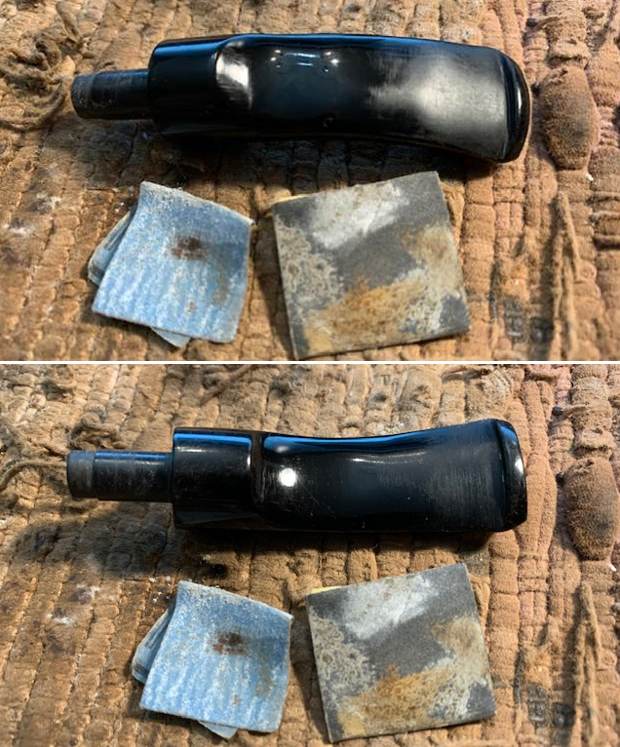
Then, I cleaned out the inside with pipe cleaners and isopropyl alcohol. It was pretty dirty and required quite a few pipe cleaners. Once this process was done, the stem went for an overnight soak in the Pipe Stem Oxidation Remover.The following day, I cleaned all of the de-oxidizing mess off with alcohol, pipe cleaners, et cetera. The oxidation had migrated to the surface and would be fairly straightforward to remove. I scrubbed with SoftScrub on some cotton pads to remove the leftover oxidation on the stem.The bite marks on and around the button had to be dealt with, so I whipped out my black cyanoacrylate adhesive to fill those in and let them fully cure. 

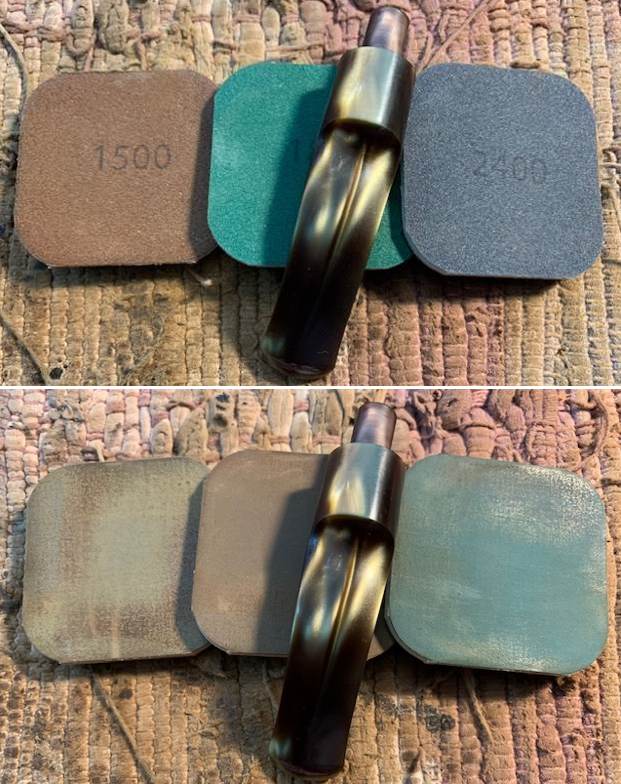
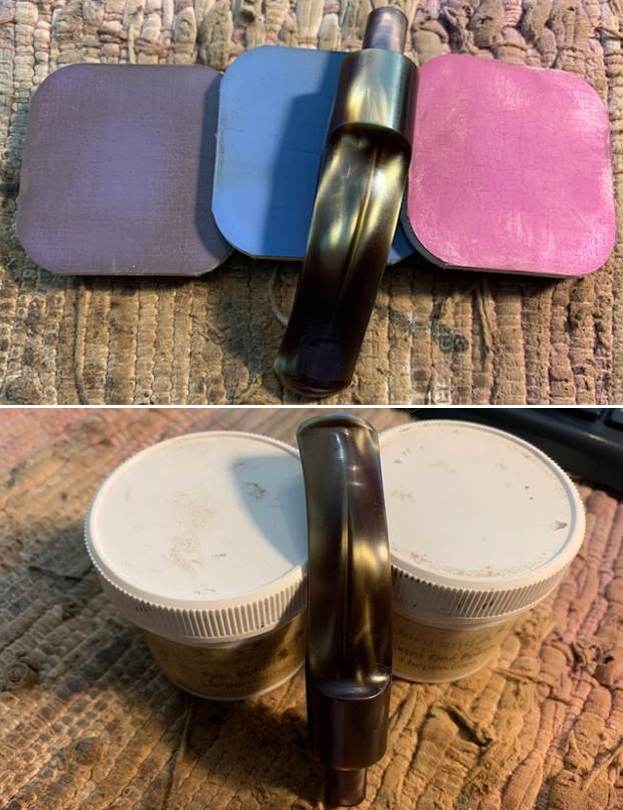
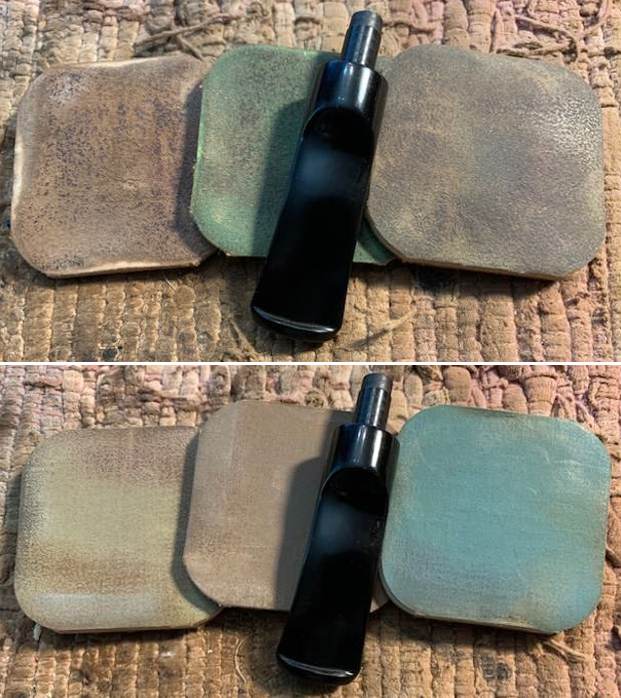
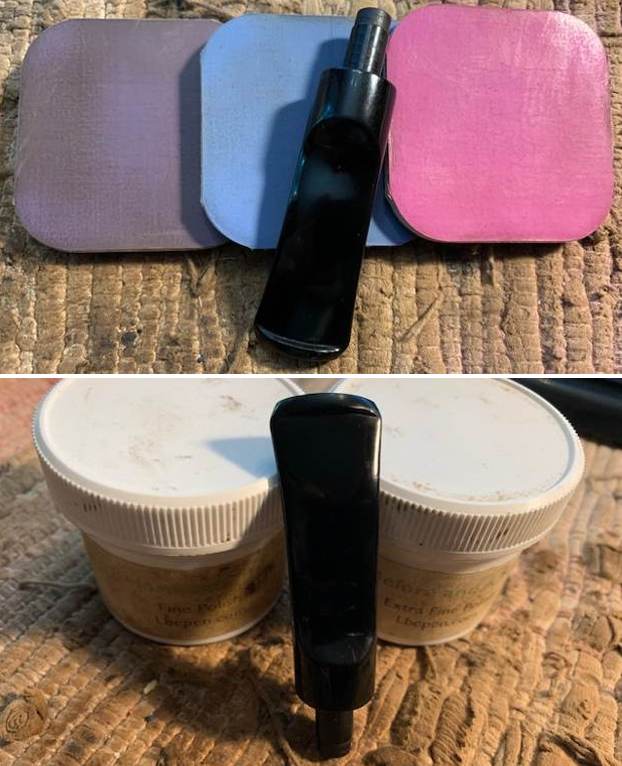
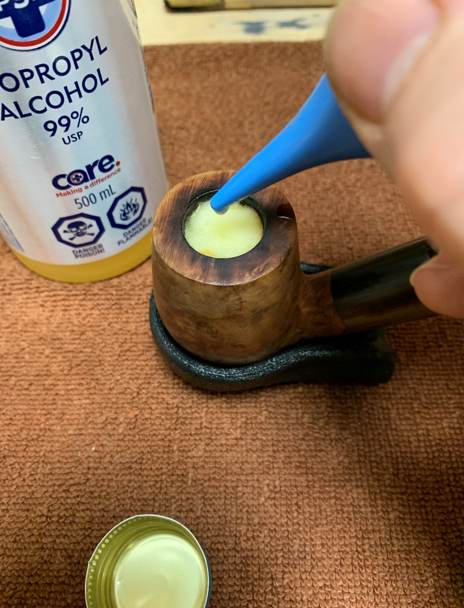
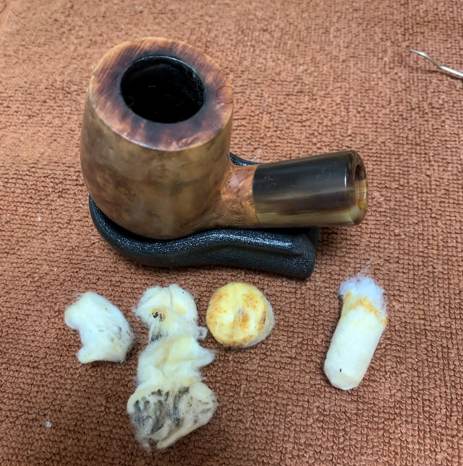
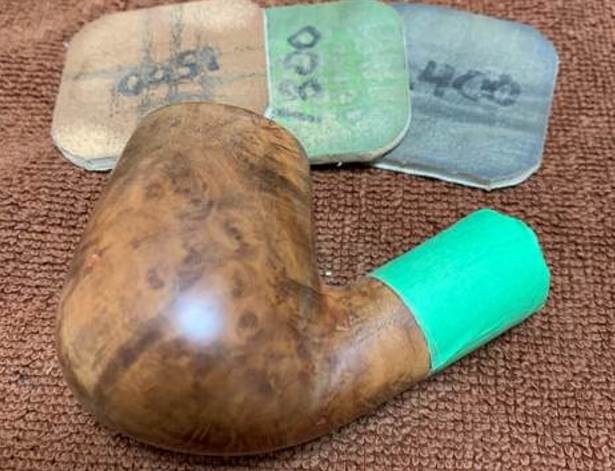
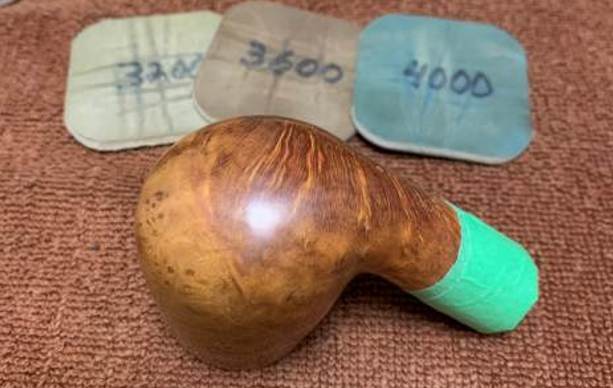
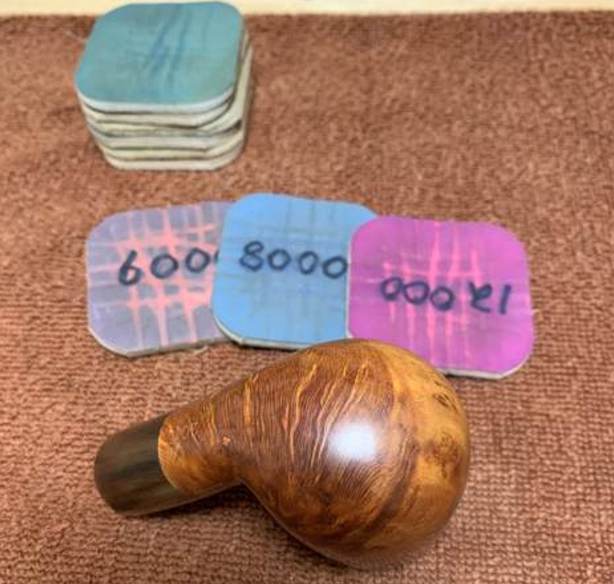
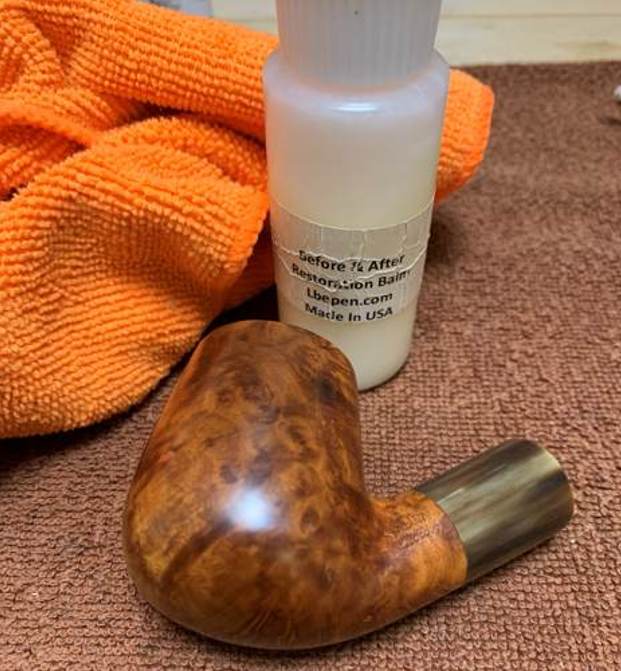
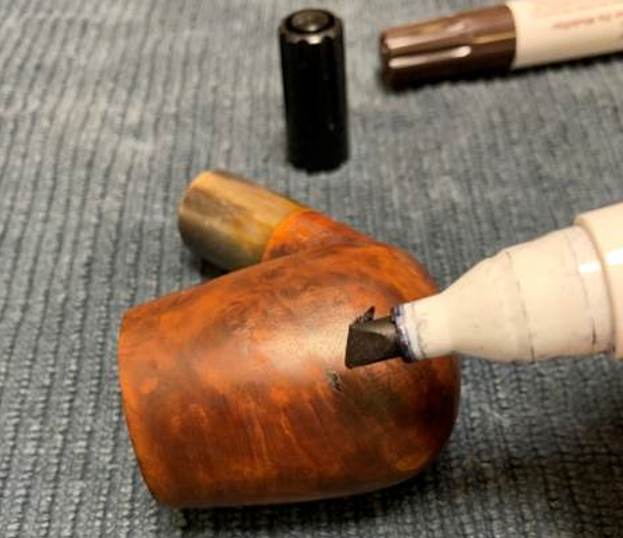
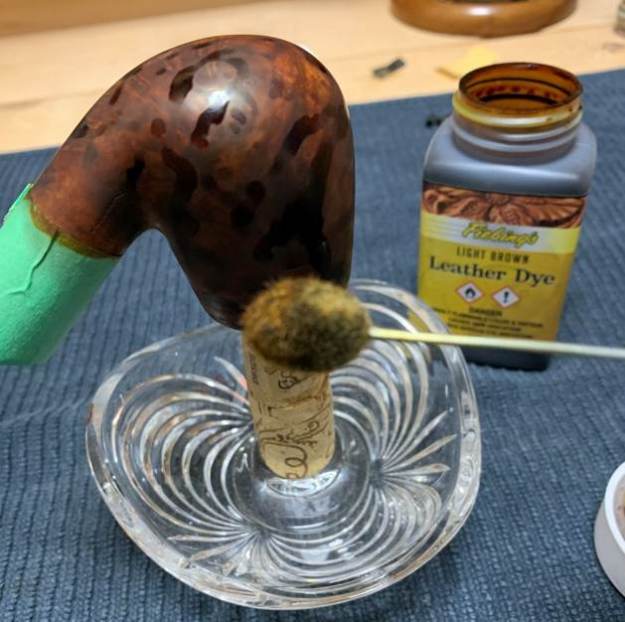
I then sanded the adhesive down with 220-, 400-, and 600-grit sandpapers to meld seamlessly into the stem. Next, I used all nine Micromesh pads (1,500 through 12,000 grit) to bring out the lovely black lustre on the stem. I also used Obsidian Pipe Stem Oil in between each pad scrubbing. On to the stummel, and the usual cleaning procedures were in order. The bowl really needed reaming so I used the KleenReem to remove the built-up cake and followed that with 220-grit sandpaper on a dowel to eliminate as much as possible. I took the chamber down to bare briar, as I wanted to ensure there were no hidden flaws. Fortunately, there were none. I then proceeded to clean out the insides of the shank with Q-tips, pipe cleaners, and isopropyl alcohol. There was quite a bit of filth inside these stummels and it took a lot of cotton to get them clean. I followed that up by cleaning the insides with some dish soap and tube brushes.I used a toothbrush and some Murphy’s Oil Soap to scrub the outside of the stummel and then the lava on the rim of the pipe.The burn marks remained, so in order to remove the remaining burns and nicks on the rim, I “topped” the pipe – that is to say, I gently and evenly sanded down the rim on a piece of 220-grit sandpaper. This effectively removed the damage, without altering the look of the pipe.A de-ghosting session also seemed in order, so I thrust cotton balls into the bowl and the shank and saturated them with 99% isopropyl alcohol. I let the stummel sit overnight. This caused the oils, tars and smells to leach out into the cotton. The bowl was nice and clean after this. Just before sanding, I covered the horn with painter’s tape to prevent any damage to it. I then used all nine Micromesh pads (1,500 through 12,000 grit) on the stummel to make it lovely and smooth. After that, a light application of Before & After Restoration Balm brought out the best in the wood.In order to minimize the appearance of the fills, I opted to apply some stain to the wood. First, however, I used some furniture pens on the fills and the newly sanded rim to darken them a bit. I began by applying a layer of Fiebing’s Light Brown Leather Dye to the pipe. After applying the dye, flaming it with a BIC, and letting it set for a few hours, I wiped the stummel down with isopropyl alcohol to remove much of the dye. Then it was time for the second round of staining, following the same steps as before. Finally, it was off for a trip to the bench polisher. A dose of White Diamond and a few coats of carnauba wax were just what it needed. The lovely shine made the wood look absolutely beautiful. This Vauen Luxus looks fantastic and arise ready to be enjoyed again by the next owner. I know that the new owner will enjoy smoking it for many years to come. I hope you enjoyed reading the story of this pipe as much I as I did restoring it. If you are interested in more of my work, please follow me here on Steve’s website or email me directly at kenneth@knightsofthepipe.com. The approximate dimensions of the pipe are as follows: length 6 in. (150 mm); height 2.3 in. (59 mm); bowl diameter 1.4 in. (35 mm); chamber diameter 0.8 in. (20 mm). The weight of the pipe is 2.5 oz. (72 g). Thank you very much for reading and, as always, I welcome and encourage your comments.

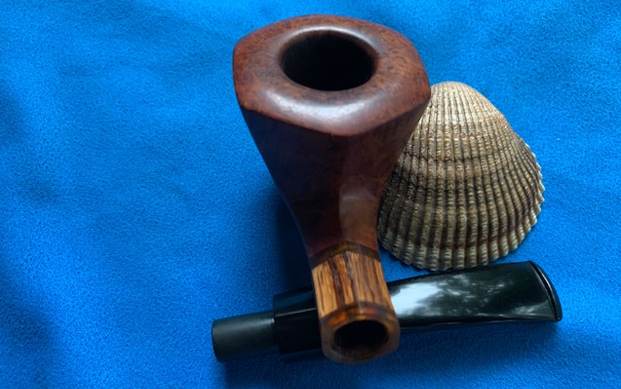
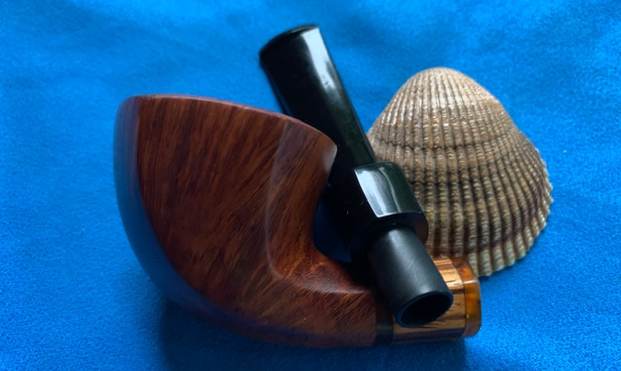
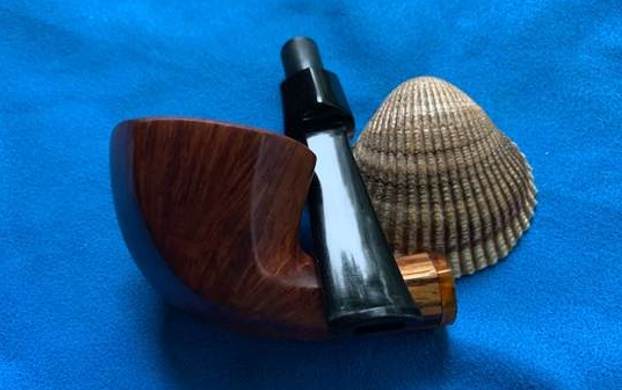
Restoring a Jess Chonowitsch Designed Stanwell Zebrano 163 Faceted Hexagonal Freehand


Blog by Steve Laug

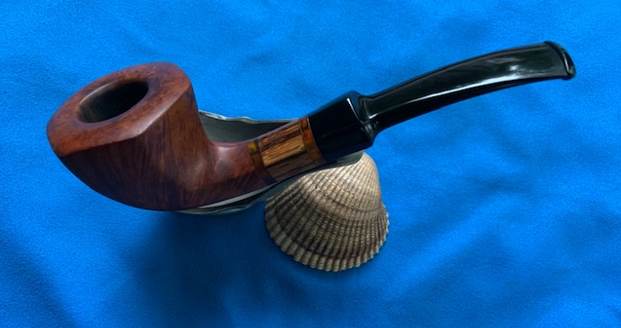
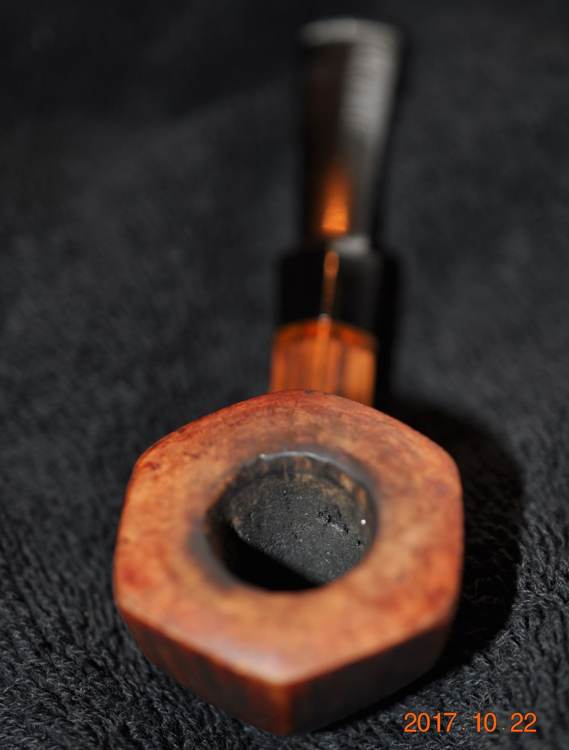
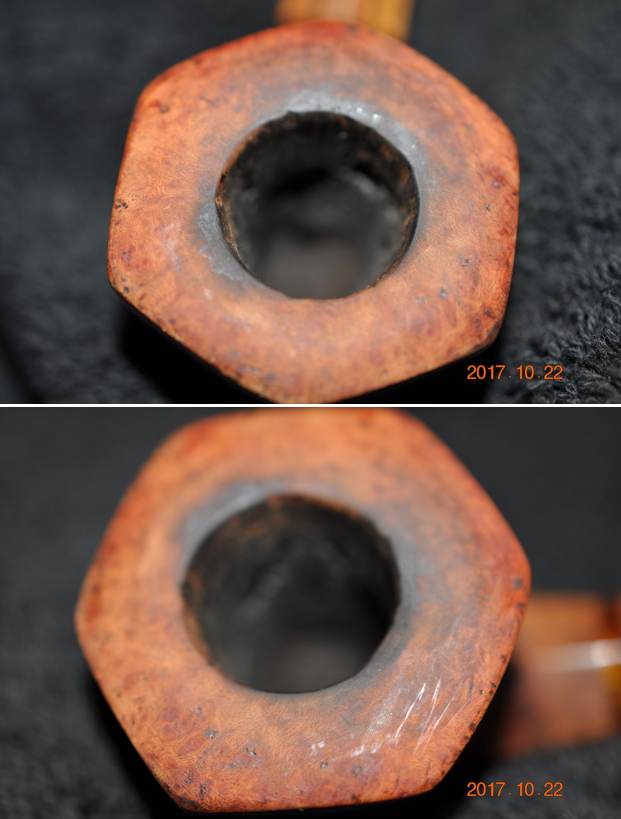
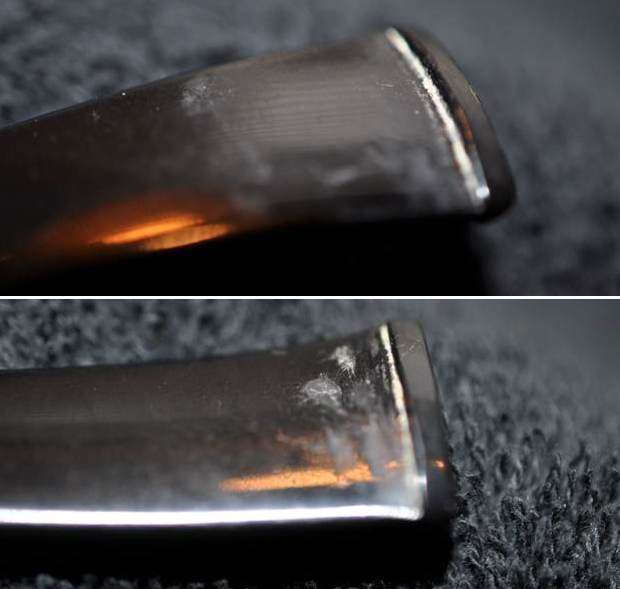
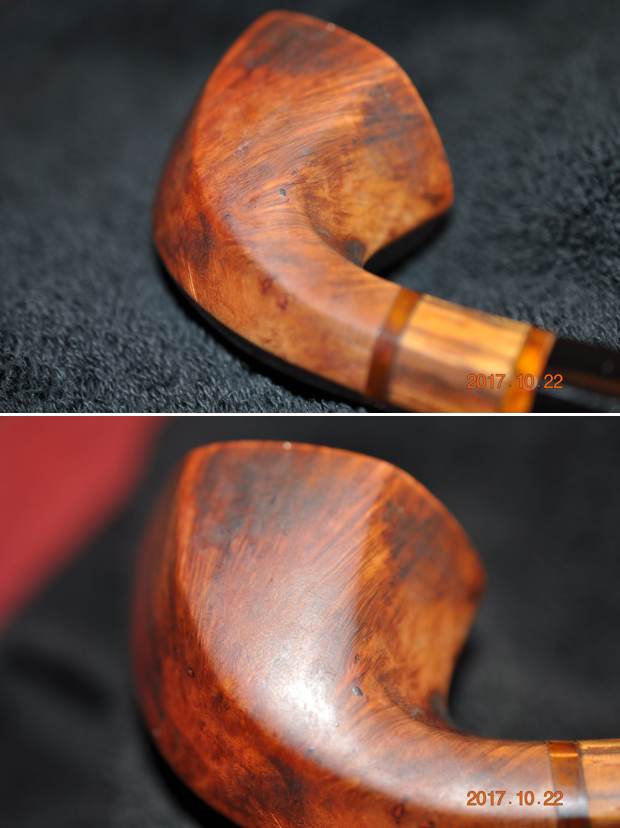
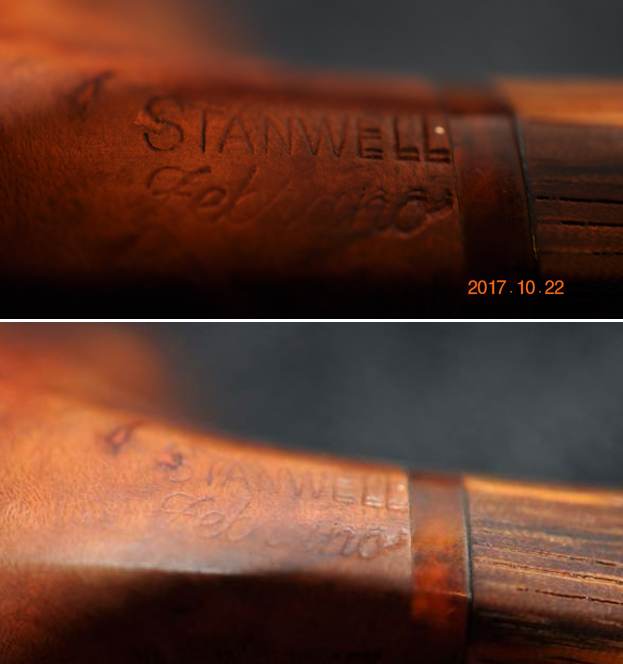
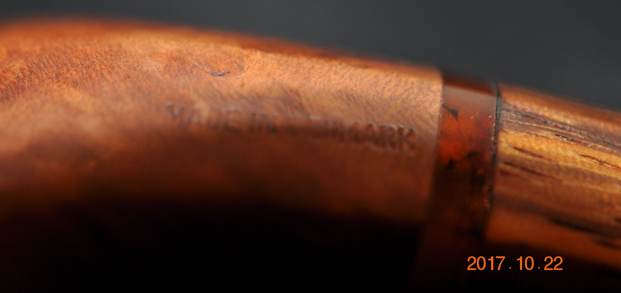
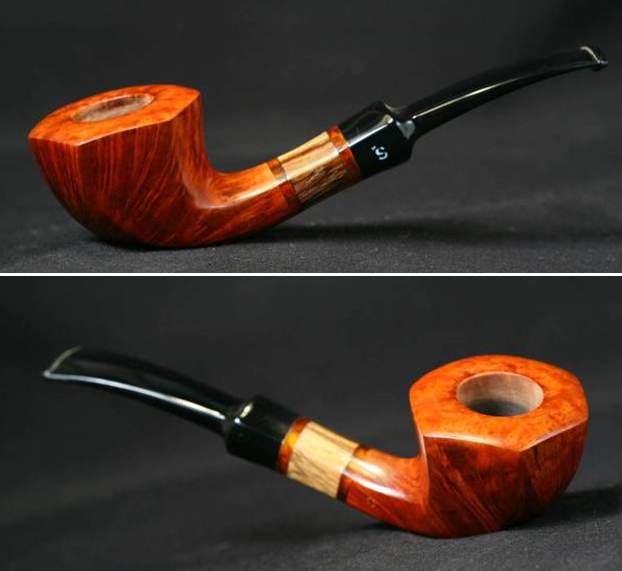
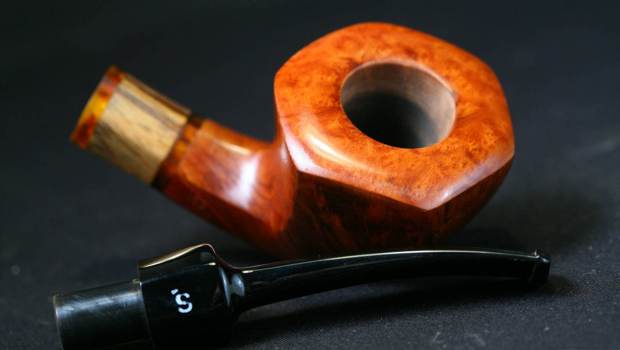
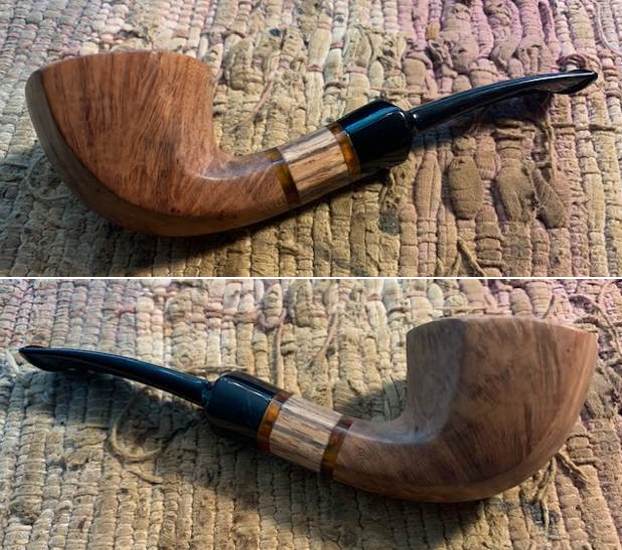
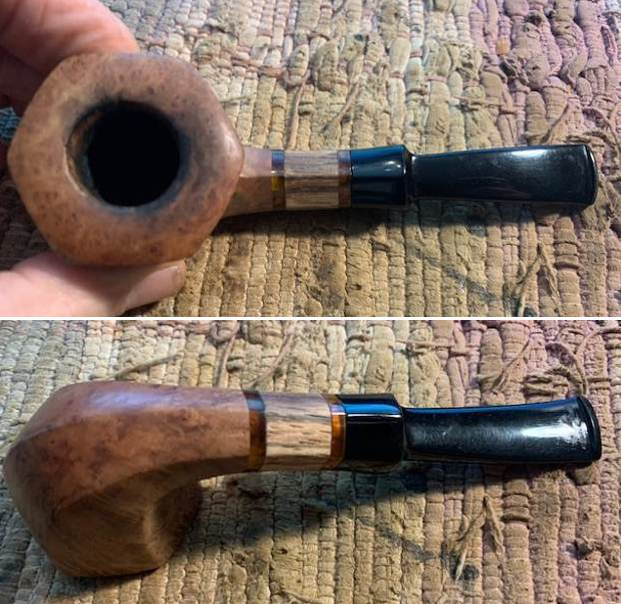
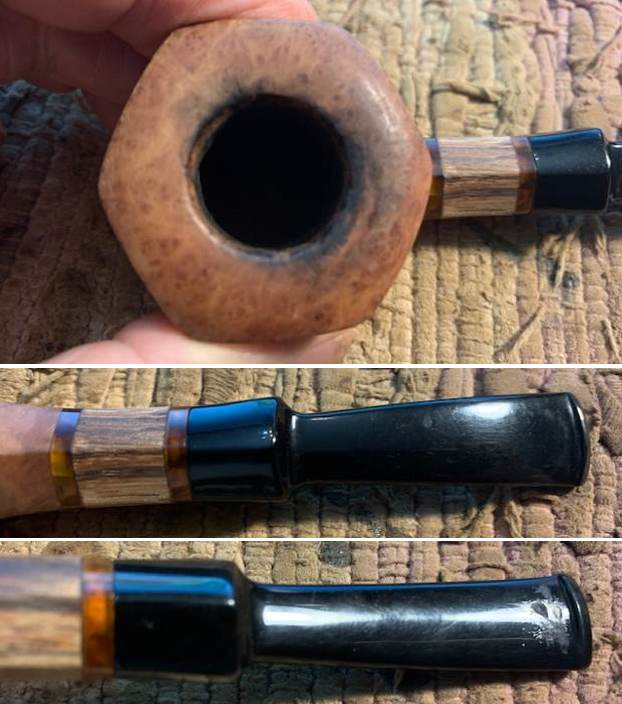
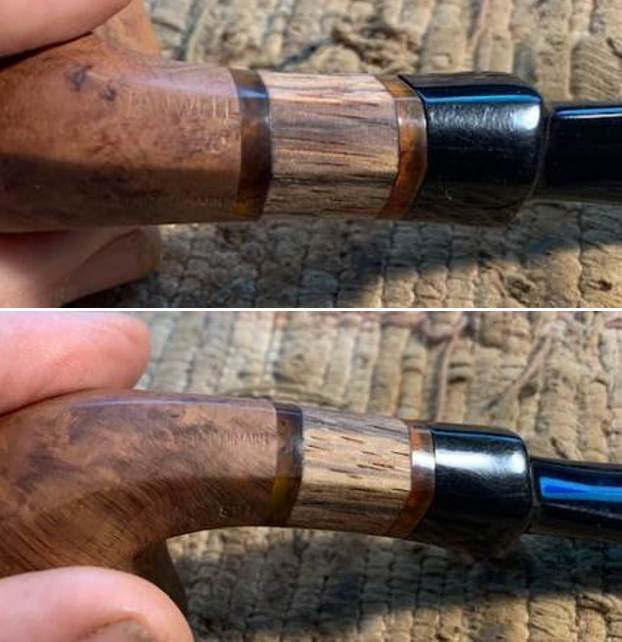
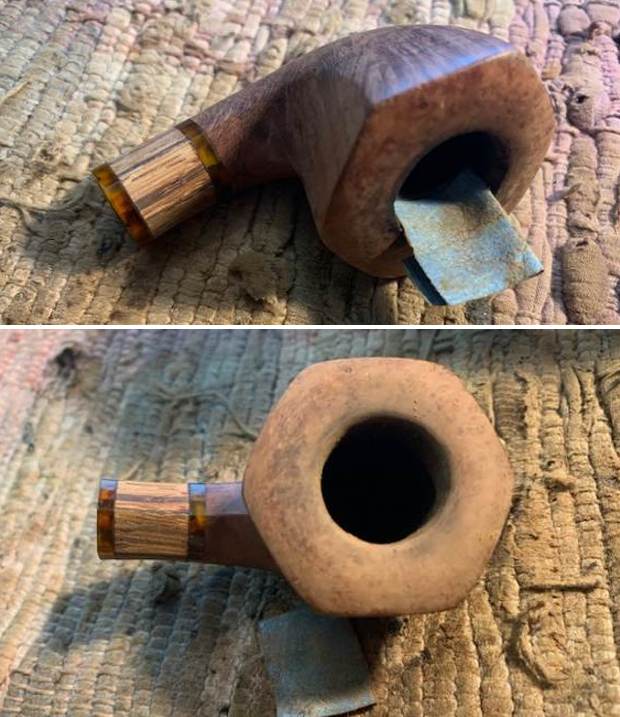
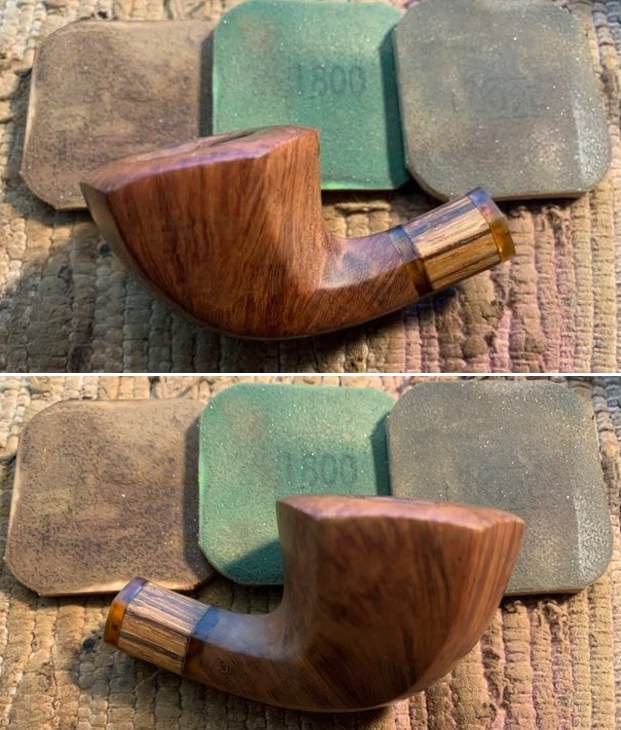
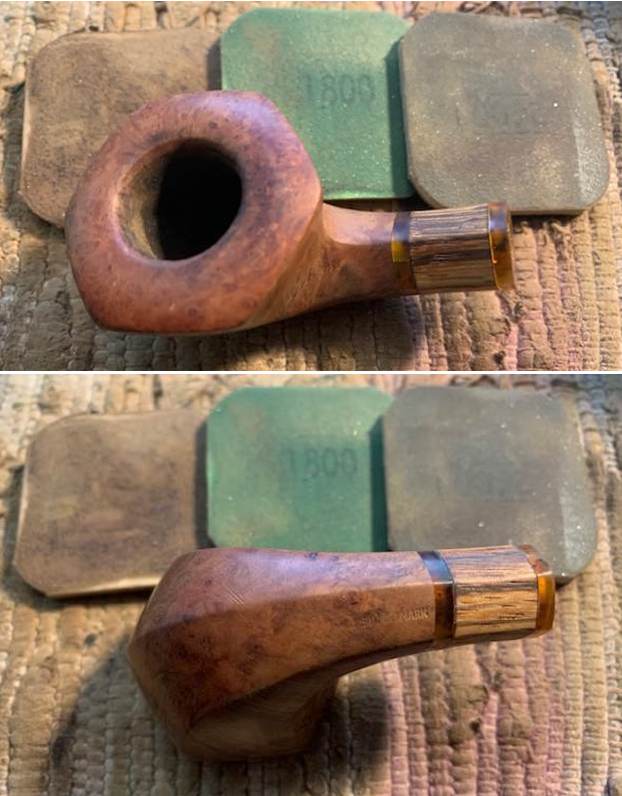
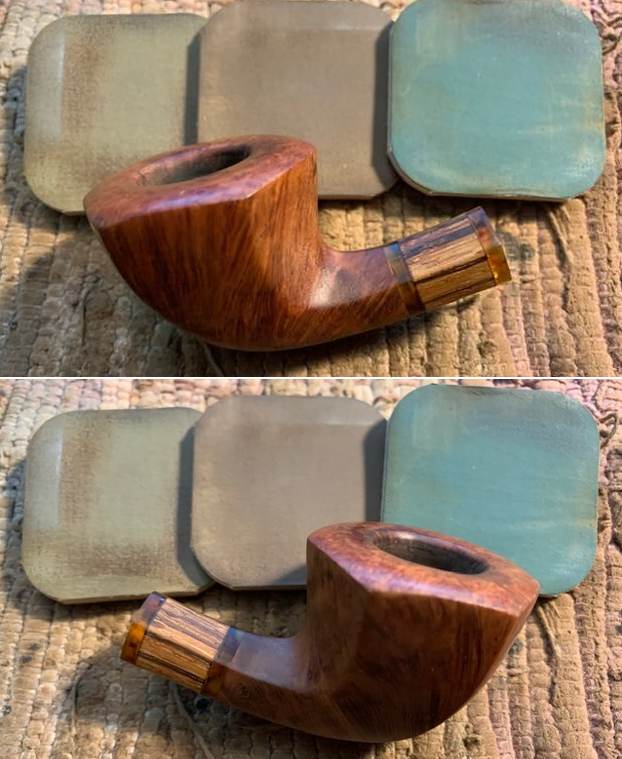
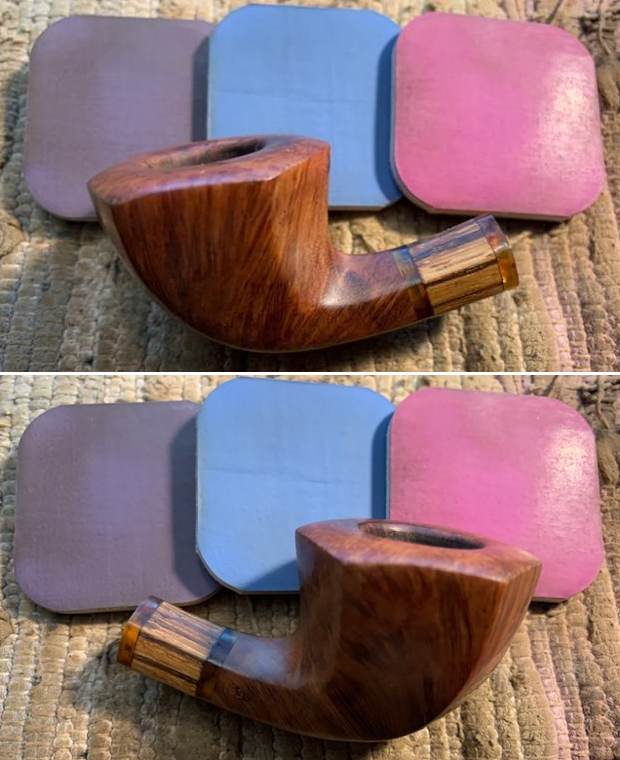
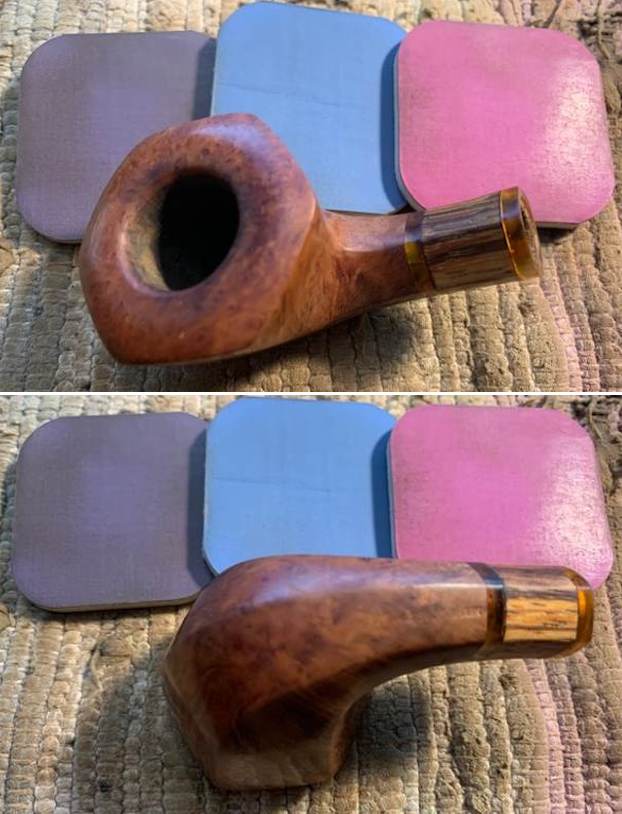
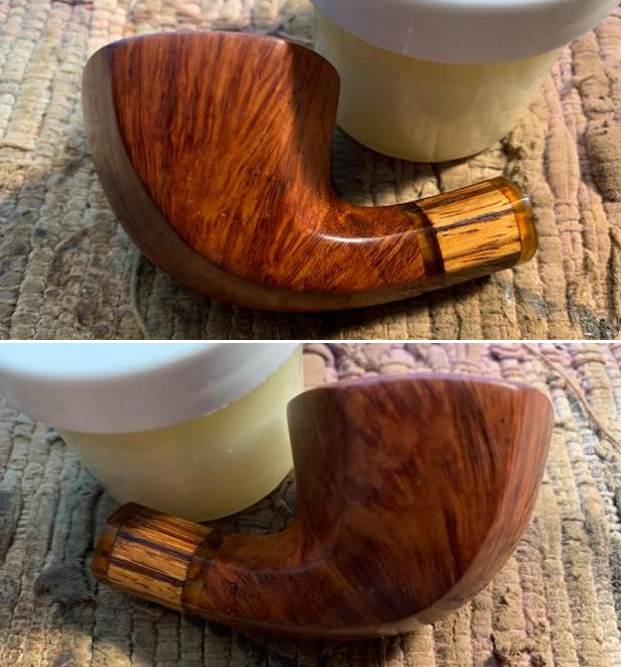
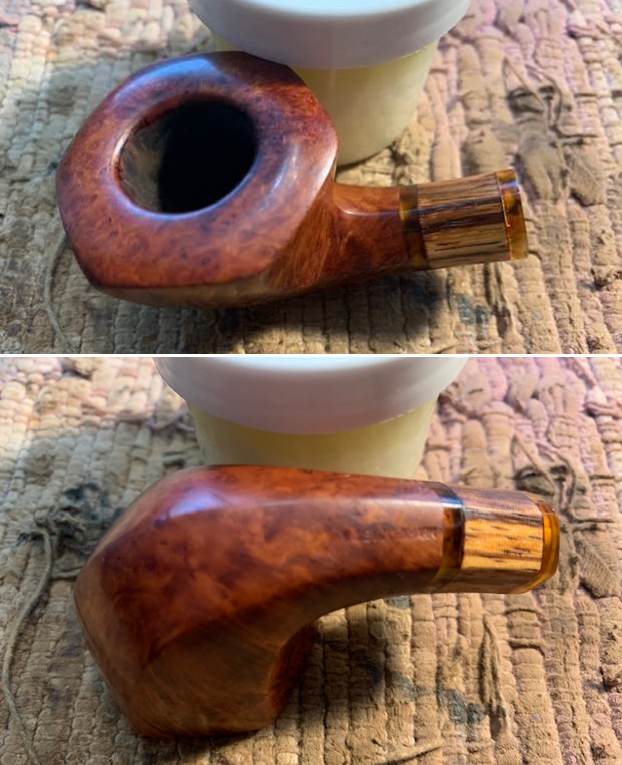
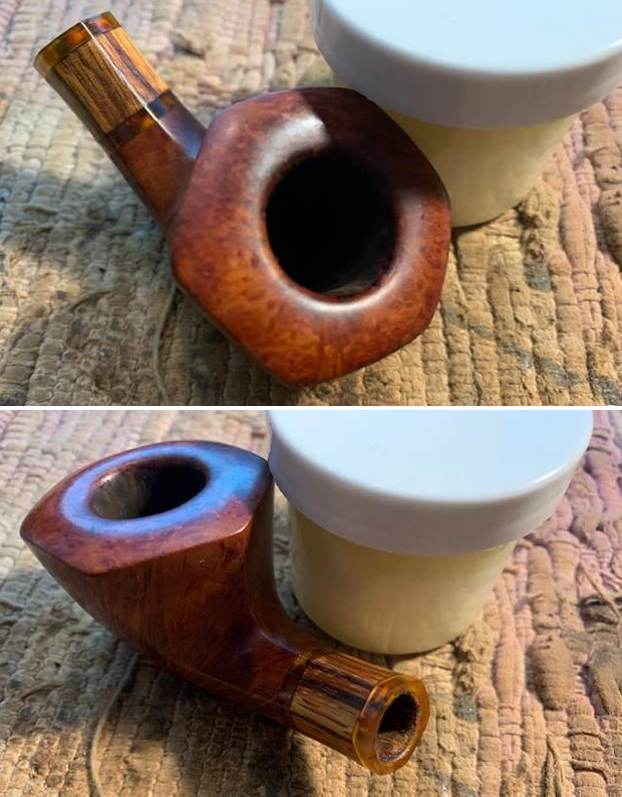
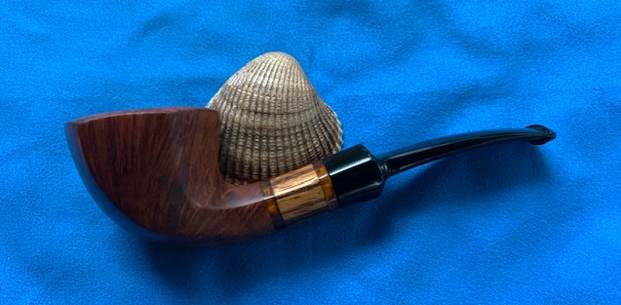
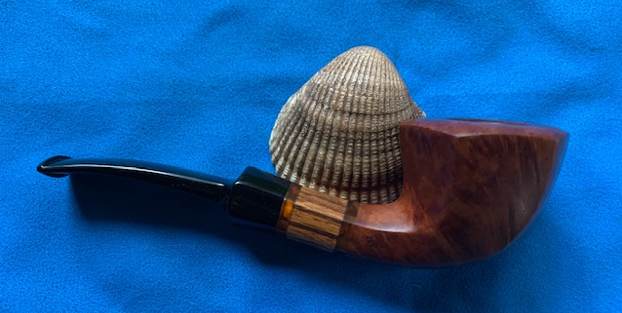
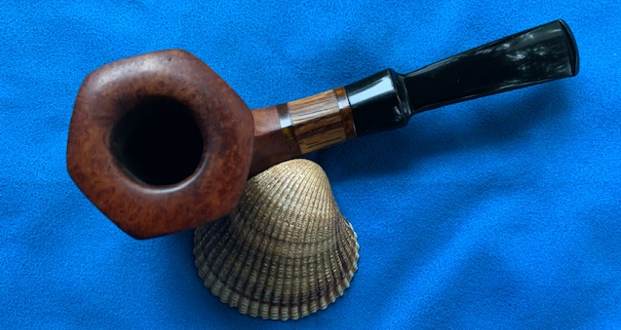
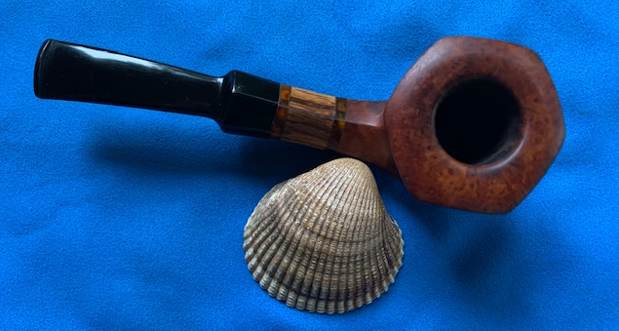
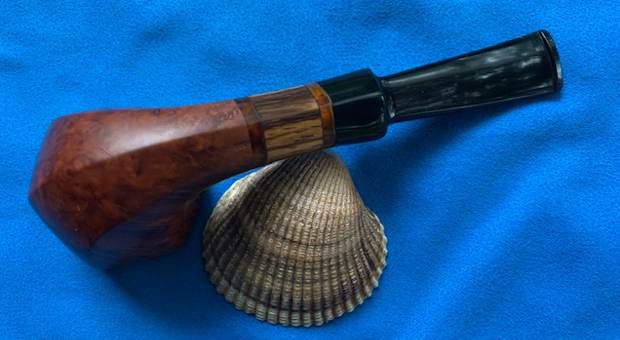
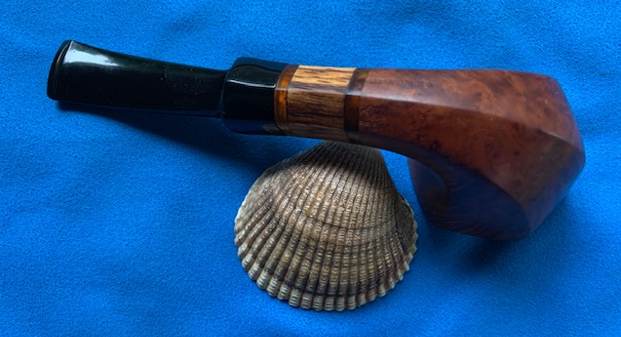
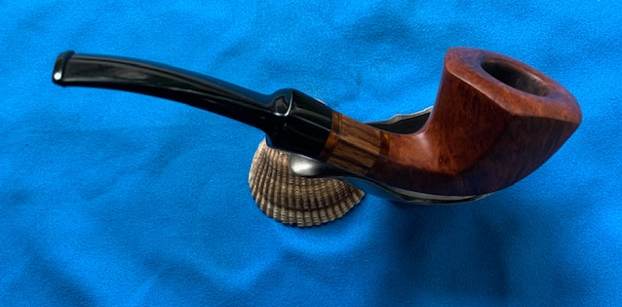
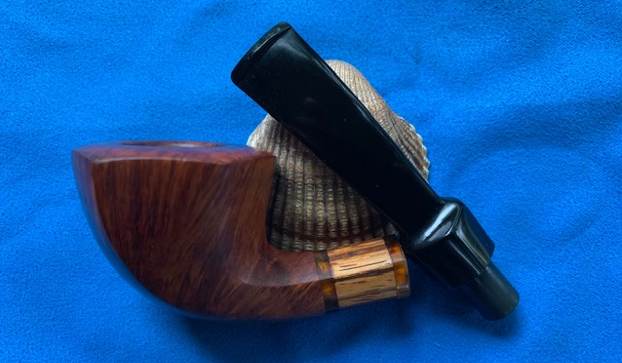
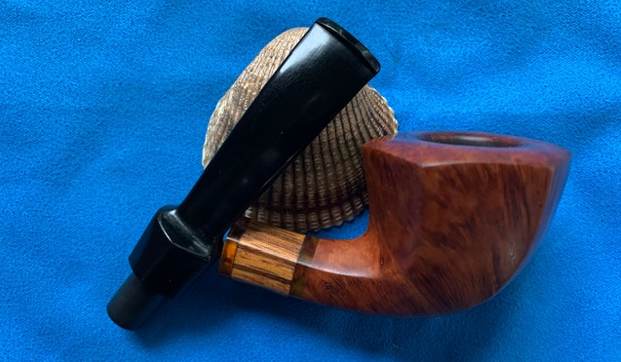
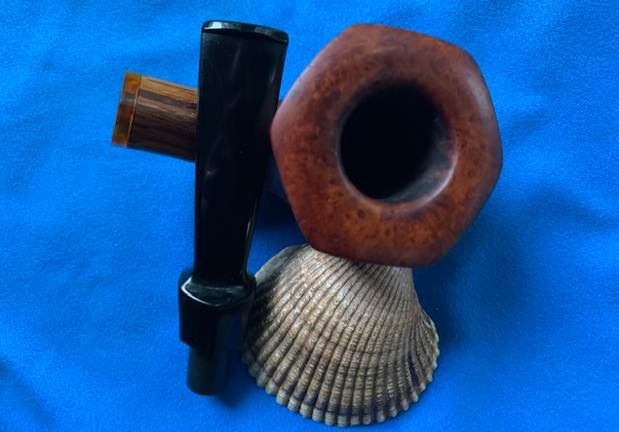
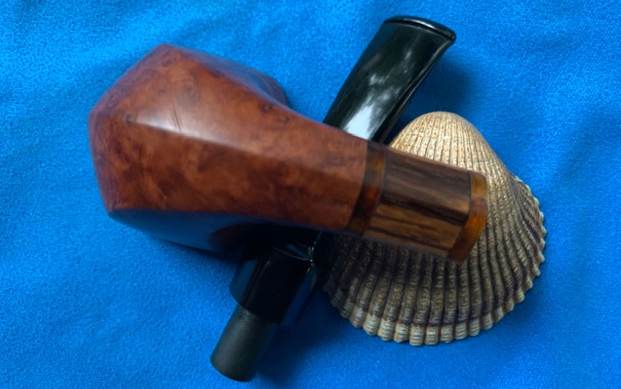
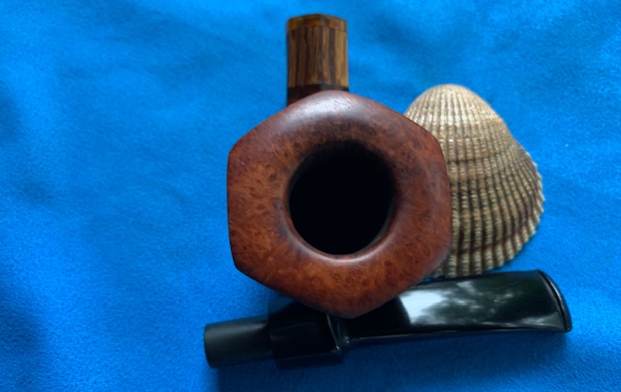
I went through my pipes to choose what to work on next and this one caught my eye. It is a great looking Hexagonal Faceted Freehand. It is stamped on the left underside of the hexagonal shank and read Stanwell [over] Zebrano. On the right side underside it is stamped Made in Denmark and on the top right side it was stamped with the shape number 163. Zebrano pipes have a shank extension of Zebra wood on the end, sandwiched between two wafers of orange acrylic. Jeff was travelling in Europe for a holiday with his wife  bought this pipe on 09/16/2017 in Frankfurt, Germany at a bazaar. It has been sitting here in Vancouver cleaned and awaiting my part of the work for almost 5 years. When he found it the finish had thick grime and oils ground into the outside of the bowl and shank. The Zebrano insert had dried out and was rough to the touch. The rim top and inner edge of the bowl had burn damage and was slight out of round. There as a thick cake in the lower ¾ of the bowl and lighter cake on that ¼ of the bowl. The black acrylic stem was scratched and filthy and the inside of the filter tenon sans filter was filthy. It was made for a 9mm filter that I would need to replace. There were deep tooth marks and chatter on both side of the stem near the button. Jeff took photos of the pipe when he got home and got around to cleaning it. Jeff took photos of the rim top to show the condition of the bowl and edges. You can see the damage on the top and edges. You can see that the bowl is slightly out of round as well. He took photos of the stem surface to show the deep marks and damage on both sides. He took photos of the sides and the heel of the bowl to show the interesting grain patterns in the briar through the thick grime. He took a photo of the Zebra wood insert with the acrylic spacers as well. It was quite beautiful.  He took photos of the stamping on the sides of the shank. It is readable but faint in places. Before I started working on the pipe I decided to do a bit of digging on the shape and the design. I turned first to a blog on rebornpipes by Bas Stevens the was a compilation of Stanwell shapes (https://rebornpipes.com/2013/09/03/stanwell-shapes-compiled-by-bas-stevens/). There I found the shape number 163. The information given there said that the shape was a Freehand, “Facet”, hexagonal, with brass ring by Jess Chonowitsch. It was a shape designed by Jess Chonowitsch and that was interesting to me.

I also looked on Pipedia and on Pipephil’s site and while I could read the history of the brand and gather background the Zebrano line was not mentioned. I did a Google search for the Zebrano 163 shape and found a gallery of photos and information on the pipe. I am including both the information on the brand and a few photos of the pipe. It was helpful information regarding what the pipe looked like originally (https://bn-dev.com/pipes-estate/galerie/galerie.php?pipe=3cb469b6b1b5237bdfe99cec04ff4c5feb267fc0). I quote below:

Marque / brand           Stanwell

Marquages / stamping            Stanwell zebrano made in denmark 163

Finition / finish           lisse / smooth

Longueur / length       14.8 cm / 5.83 in

Hauteur / height          4.49 cm / 1.77 in

diamètre tête / bowl diameter             4.22 cm / 1.66 in

diamètre fourneau / chamber diameter          1.93 cm / 0.76 in

Profondeur / depth      3.41 cm / 1.34 in

Poids / weight 43 gr / 1.52 oz

Forme / shape             freehand

Matière tuyau / Stem material            acrylique / acrylic (lucite)

Matière pipe / pipe material   bruyère / briar

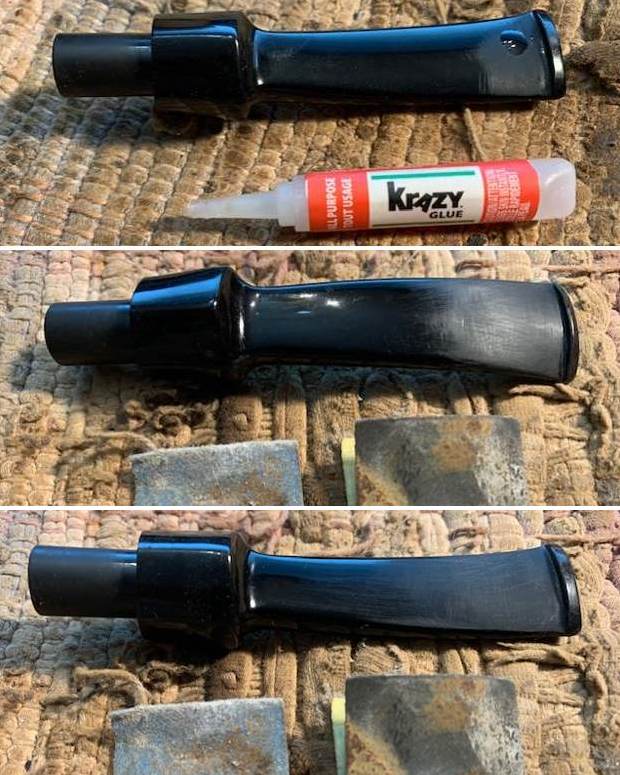
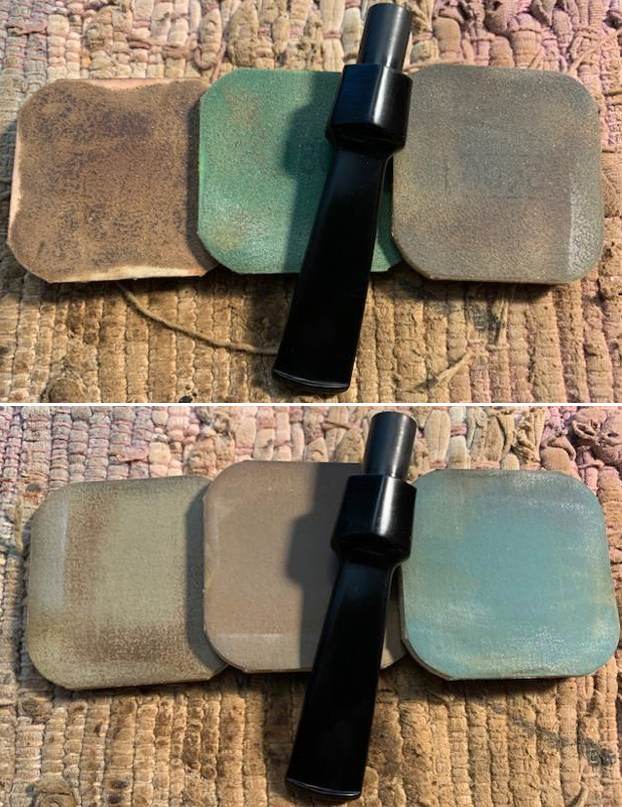
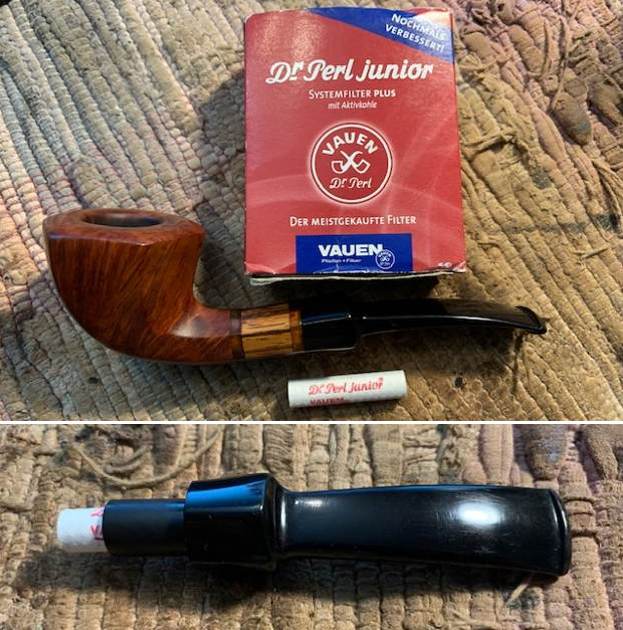
Filtre / filter    9mm With that information and a visual idea of what the pipe looked like originally, I turned to work on the pipe itself. Jeff had thoroughly cleaned up the pipe. He reamed the pipe with a PipNet Pipe Reamer and cleaned up the remnants with a Savinelli Fitsall Pipe Knife. He scrubbed the bowl with undiluted Murphy’s Oil Soap with a tooth brush. He rinsed it under running warm water to remove the soap and grime. There was some darkening on the inner edge of the rim and top that would need to be dealt with. He cleaned out the inside of the shank and the airway in the filter tenon and the stem with alcohol, cotton swabs and pipe cleaners. He scrubbed the exterior of the stem with Soft Scrub to remove as much of the oxidation as possible. The acrylic stem was clean but had tooth marks and chatter on both sides ahead of the button. There was no stamped logo on the left side of the stem. I took photos of the pipe before I started my work on it. I took photos of the rim top and bowl as well as the stem to give a sense of the condition of both. The rim top had some damage and darkening to the inner edge and rim top on the right front and back side. The stem cleaned up well and there were tooth marks on the top and underside ahead of the button.I took photos of the stamping on the underside of the hex shank. The are faint but readable as noted above. I took the stem out of the shank and took a photo of the overall look of the pipe.I decided to start my work on the pipe by addressing the darkening and damage on the inside edge of the bowl and the rim top. I used a folded piece of 220 grit sandpaper to clean up the bevel on the inner edge and the top of the bowl. I wiped the top and edges down with a damp cloth and the rim top and edges looked much better.I polished the briar with micromesh sanding pads – dry sanding with 1500-12000 grit pads. I wiped the bowl down after each pad with a damp cloth. I rubbed the bowl down with Before & After Restoration Balm. I worked it into the surface of the bowl sides and shank with my fingertips. The product works to clean, enliven and protect the briar. I let the balm sit for a little while and then buffed with a cotton cloth to raise the shine. I set the bowl aside and turned my attention to the stem. I filled I the deep tooth mark on the underside of the stem with clear CA glue. Once it cured I sanded the repair smooth to blend it into the surface of the acrylic. I sanded out the rest of the tooth chatter and marks with the 220 grit sandpaper to smooth them out. I started the polishing of the stem with 400 grit wet dry sandpaper. The stem was looking better with the repairs and polishing.   I set the bowl aside and turned to work on the stem. I polished the stem with micromesh sanding pads – 1500-12000 grit pads. I wiped it down with Obsidian Oil after each sanding pad. I used Before & After Pipe Polish – both Fine and Extra Fine to further polish the stem.  I have a box of Vauen 9mm System Filters that fit perfect in the tenon on the Stanwell Zebrano. I put one in place in the tenon and took some photos of the fit.This Jess Chonowitsch Designed Stanwell Faceted Hexagon Freehand 163 with a hexagon acrylic saddle stem fit for 9mm filters is a great looking pipe now that it has been restored. The beautiful grain on the briar and the Zebra wood shank extension that shines through the polished finish is stunning. I put the stem back on the bowl and carefully buffed the pipe with Blue Diamond on the buffing wheel. I gave the bowl and the stem multiple coats of carnauba wax on the buffing wheel and followed that by buffing the entire pipe with a clean buffing pad. I hand buffed the pipe with a microfiber cloth to deepen the shine. The finished Stanwell Zebrano 163 fits nicely in the hand and feels great. Give the finished pipe a look in the photos below. The dimensions of the pipe are Length: 5 ½ inches, Height: 1 ¾ inches, Outside diameter of the bowl: 1 ¾ inches, Chamber diameter: ¾ of an inch. The weight of the pipe is 40 grams/1.41 ounces. I will soon be adding it to the rebornpipe store in the Danish Pipe Making Companies Section. If you are interested in this pipe send me a message or an email. Thanks for reading this blog and my reflections on the pipe while I worked on it. There are many more to come!