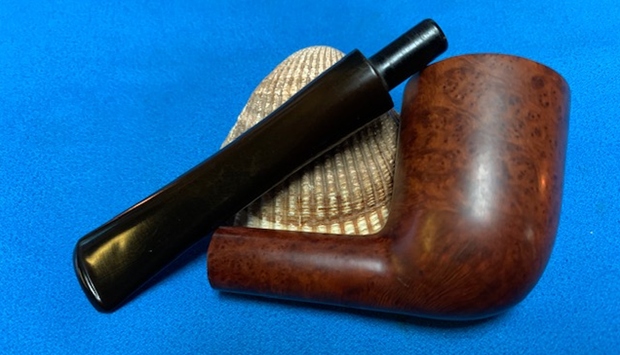
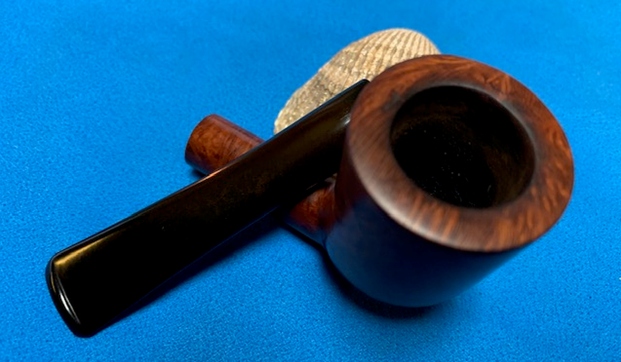
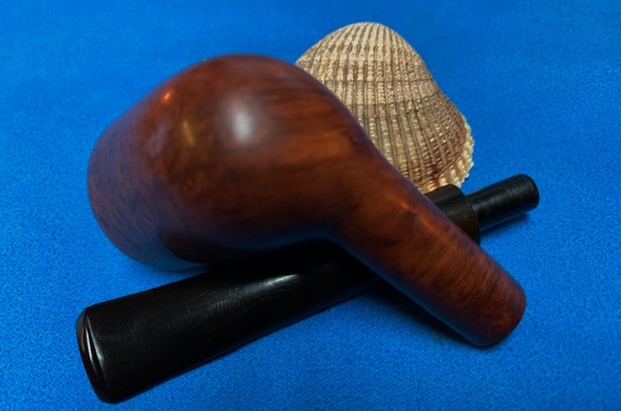
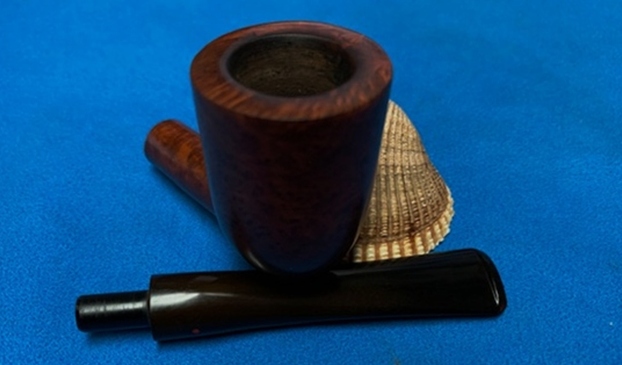
Monthly Archives: October 2020

Renewed Life for a Comoy’s Blazon 332 Billiard


Blog by Steve Laug

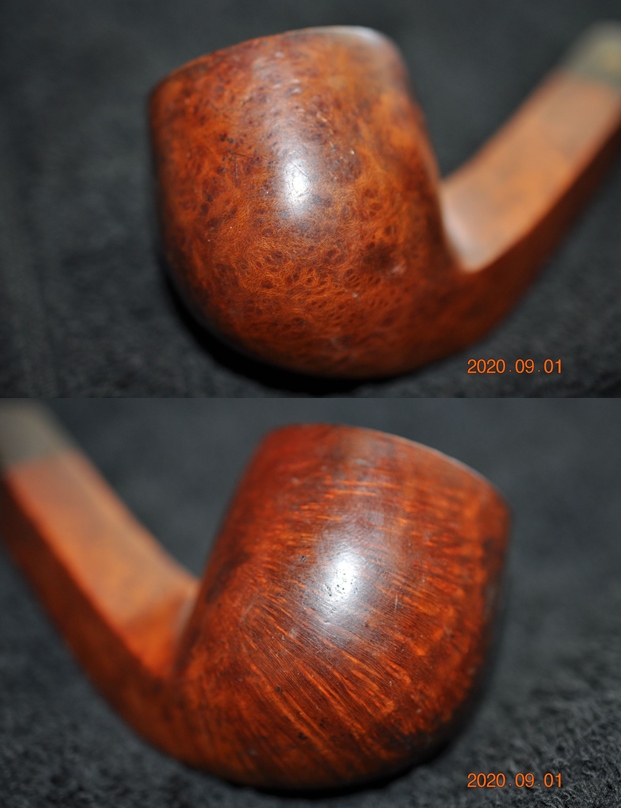
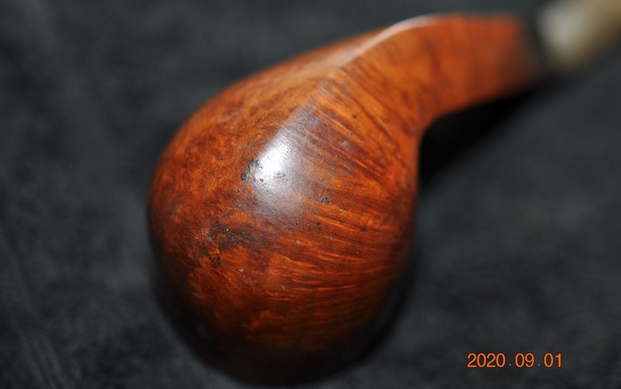
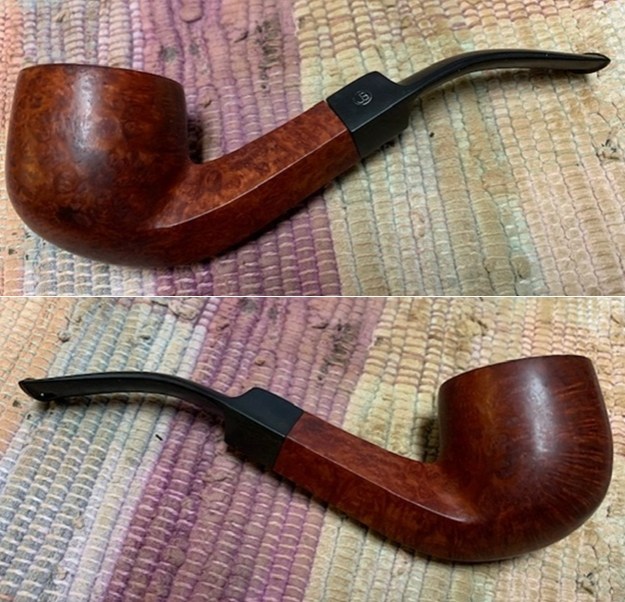
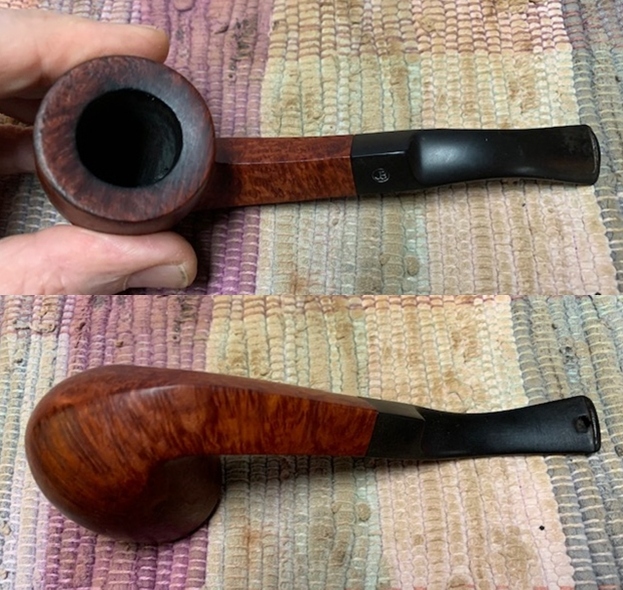
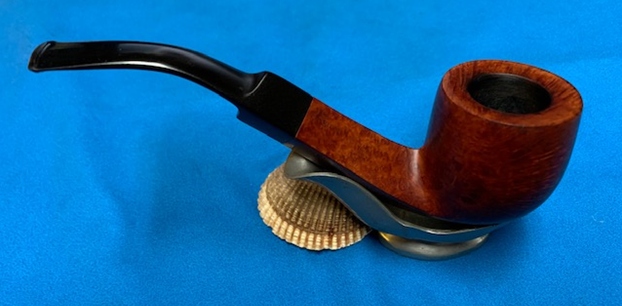
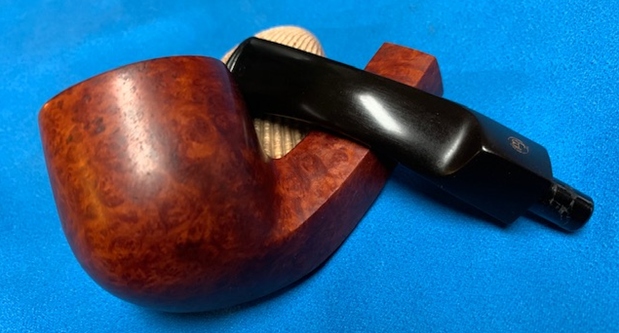
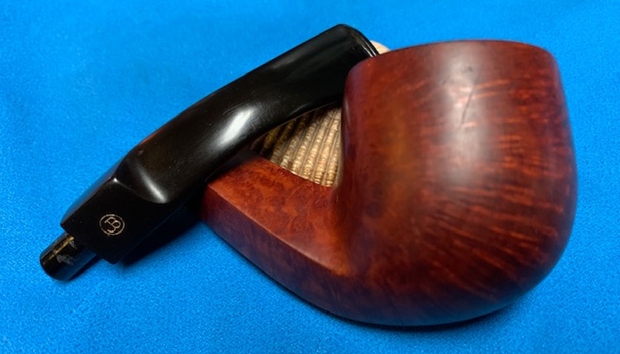
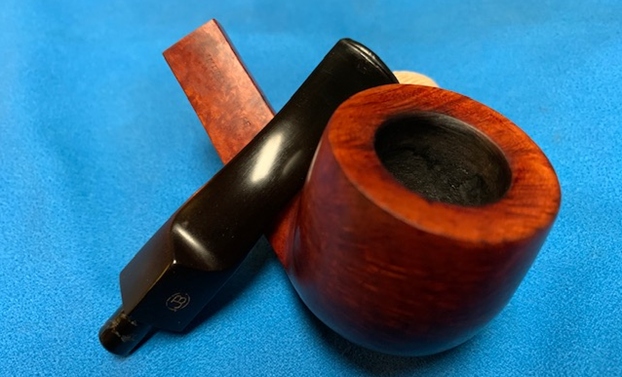
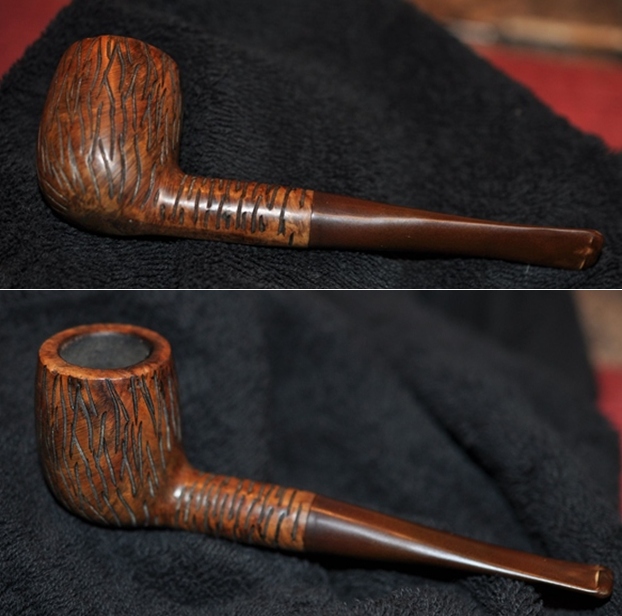
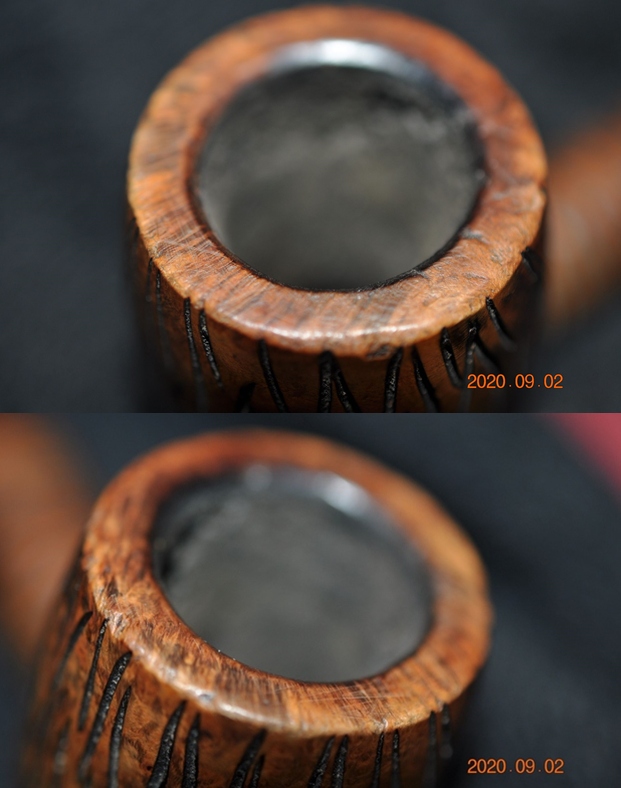
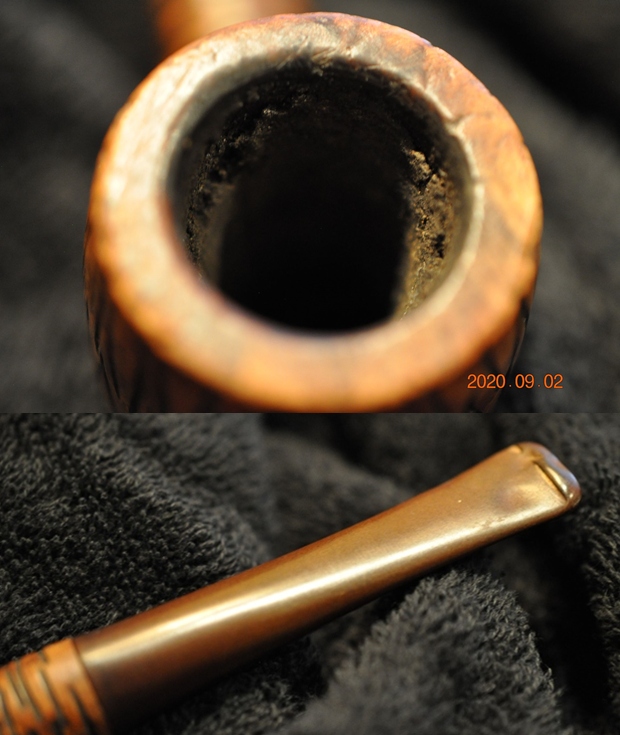
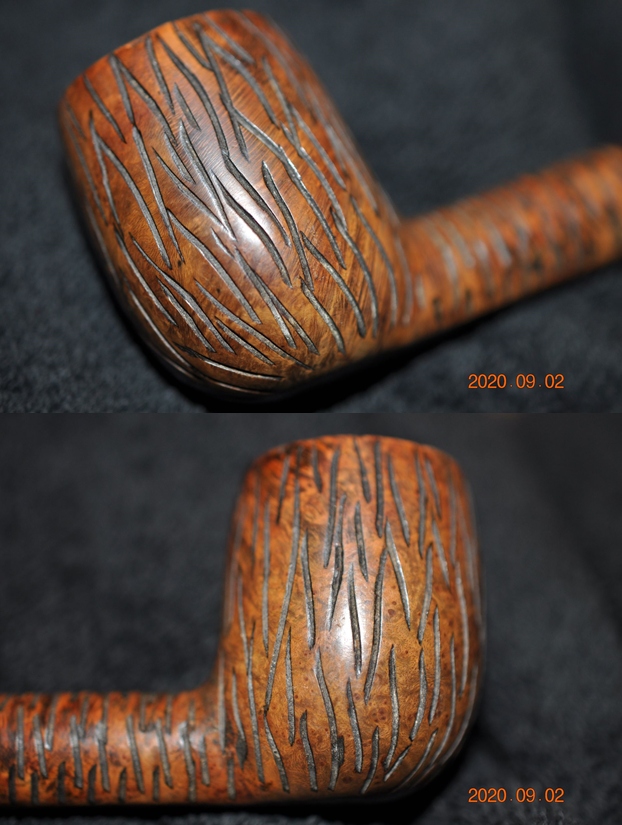
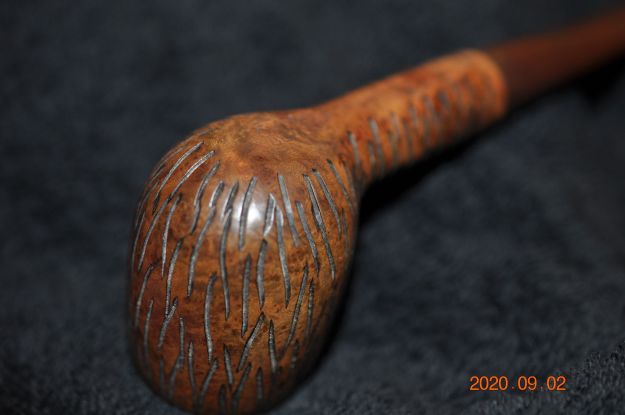
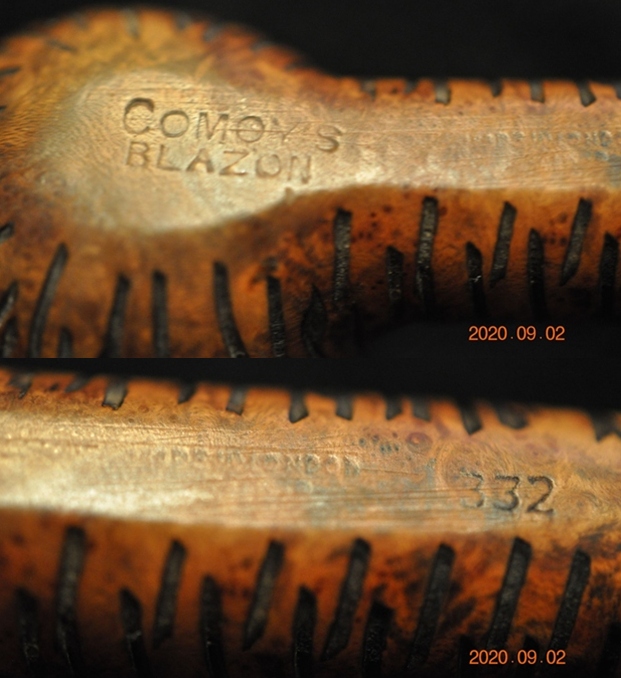
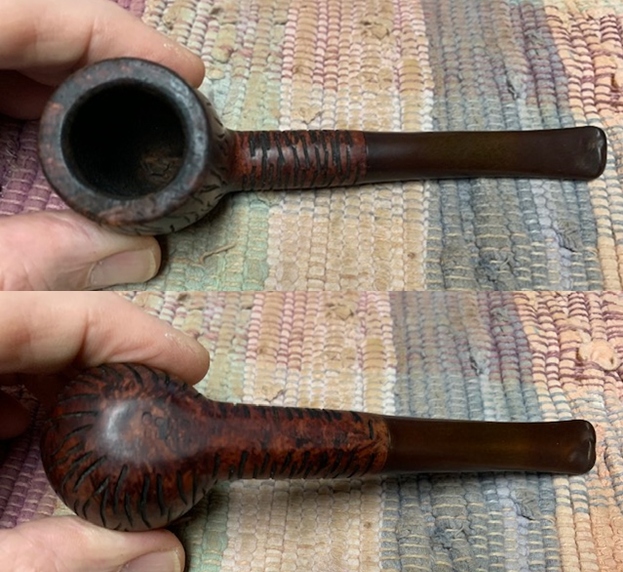
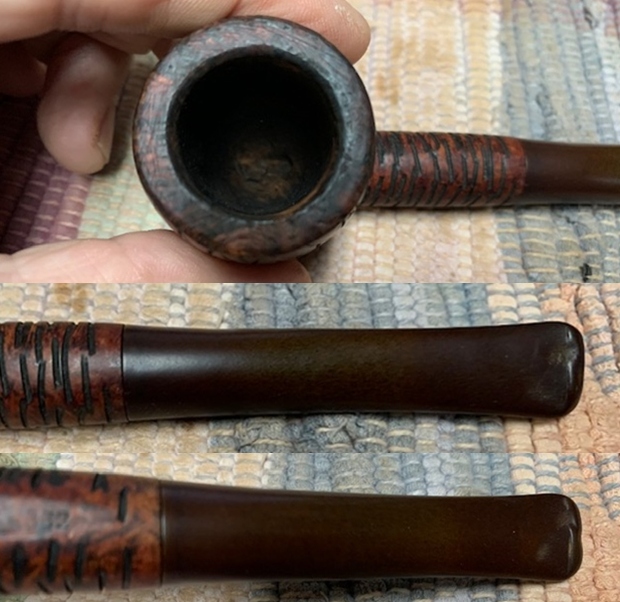
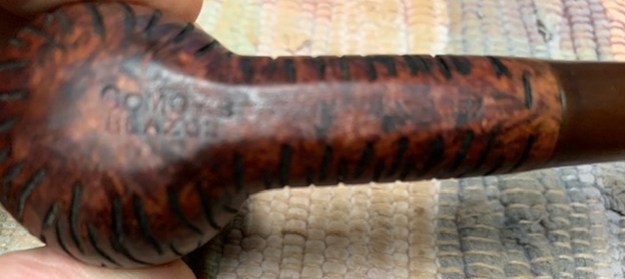
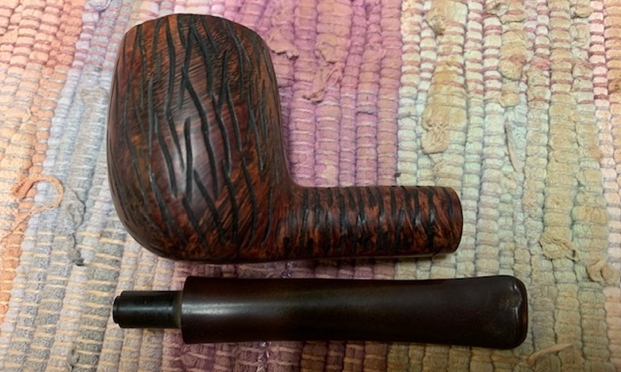
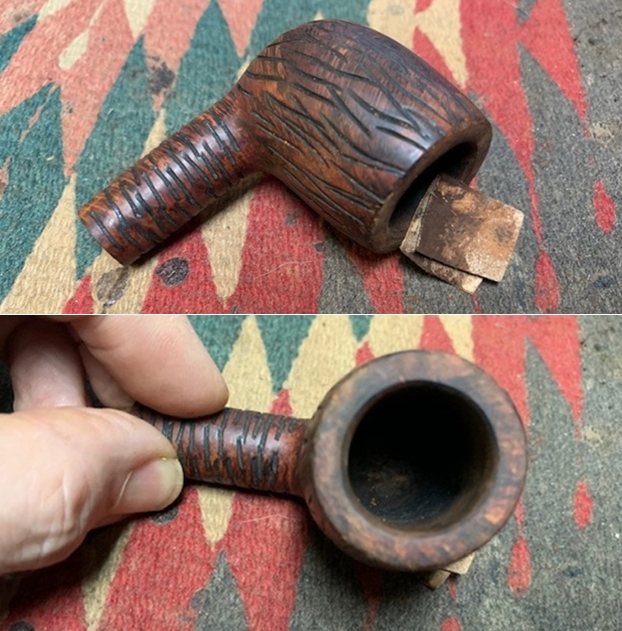
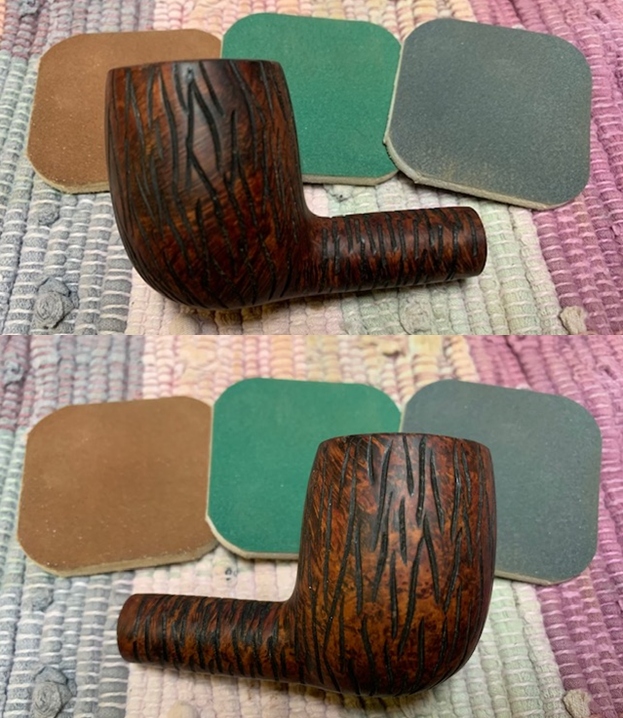
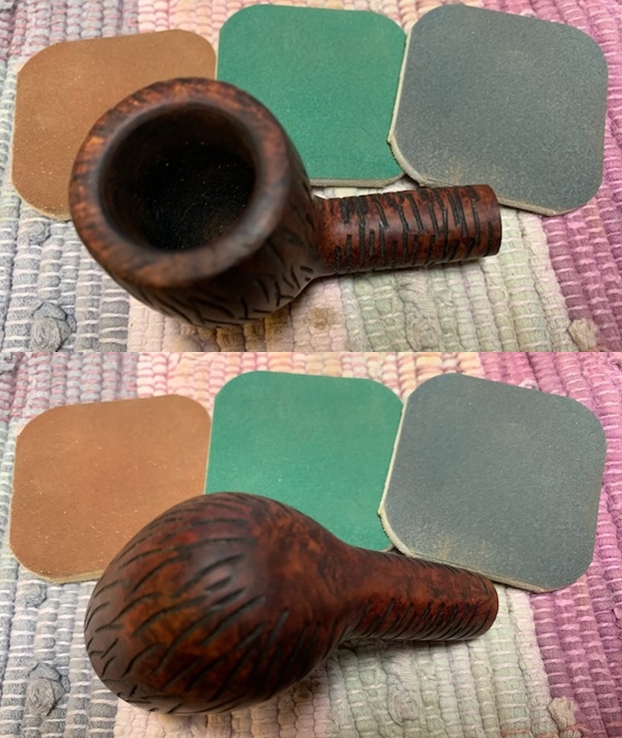
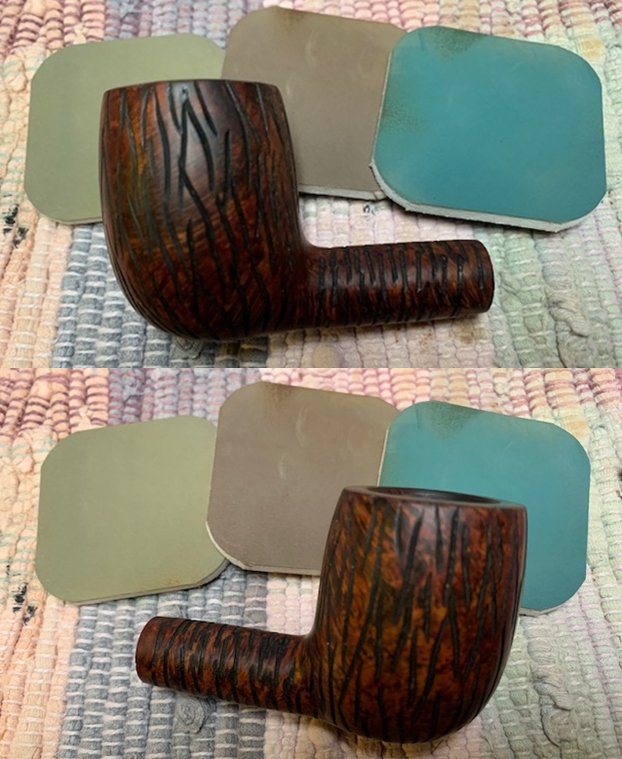
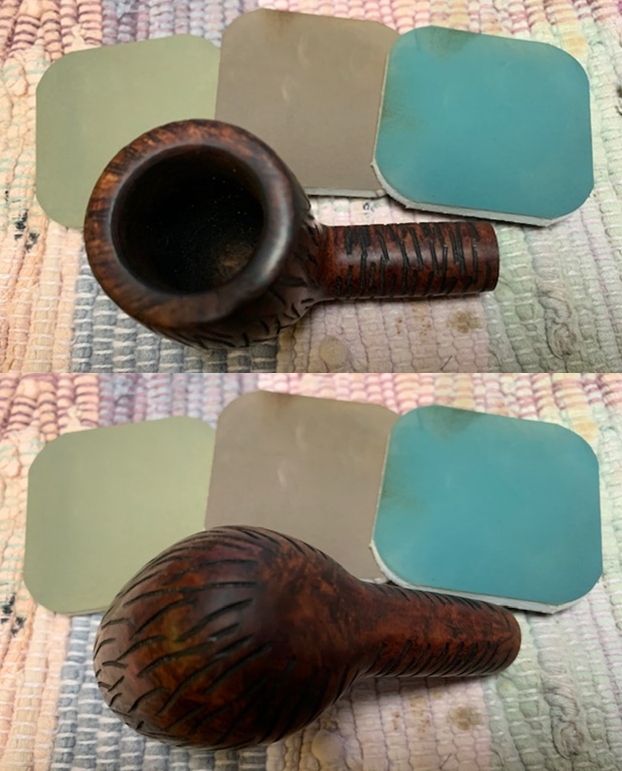
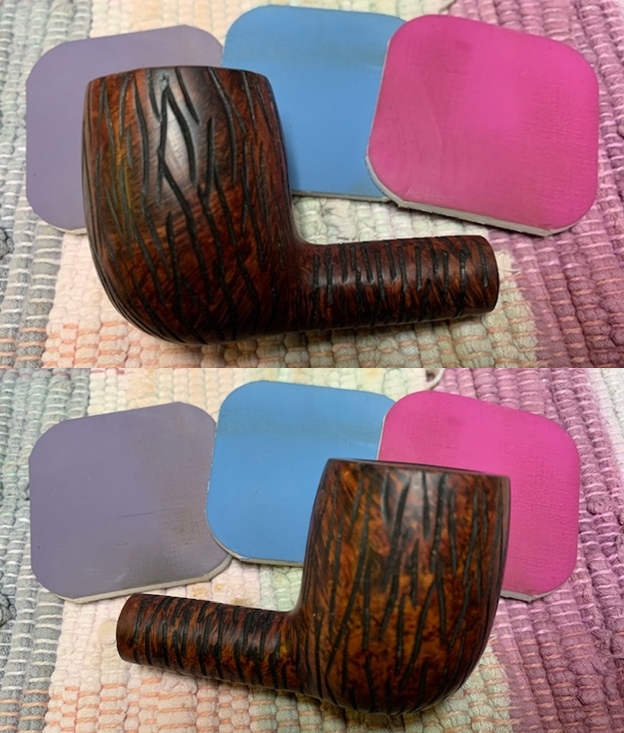
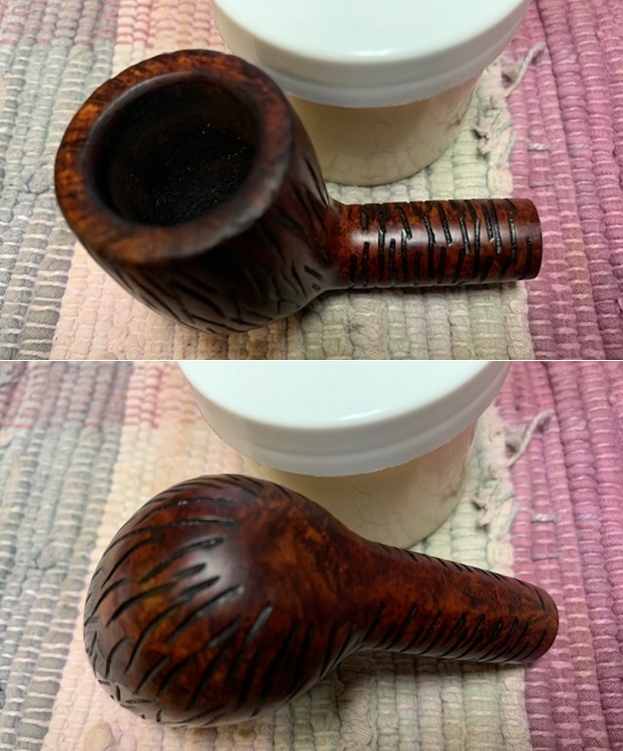
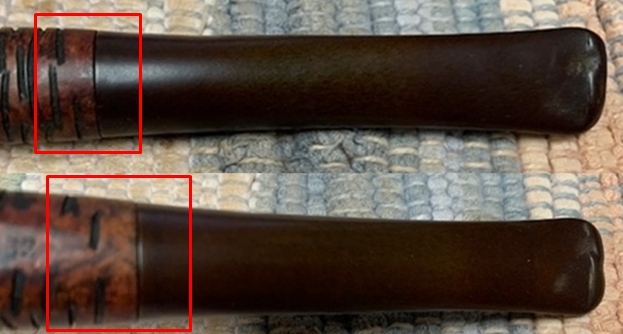
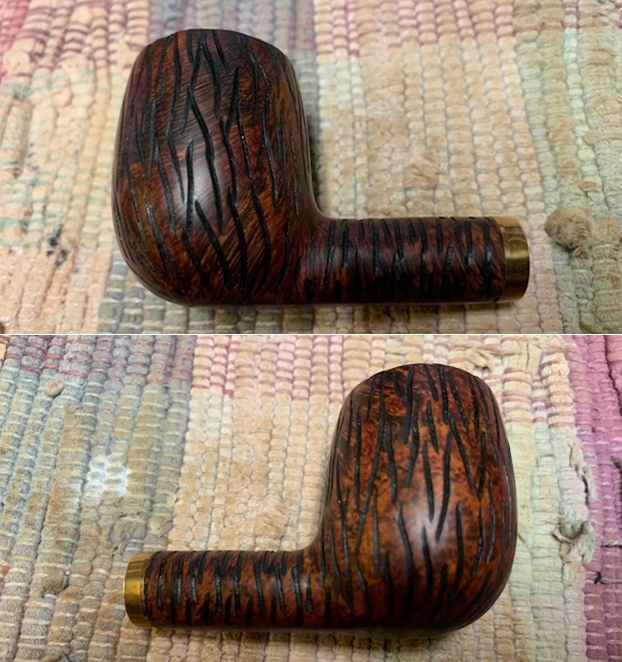
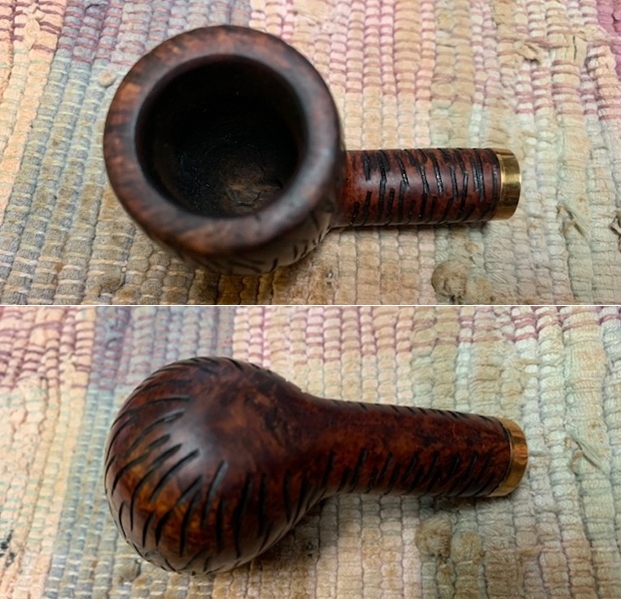
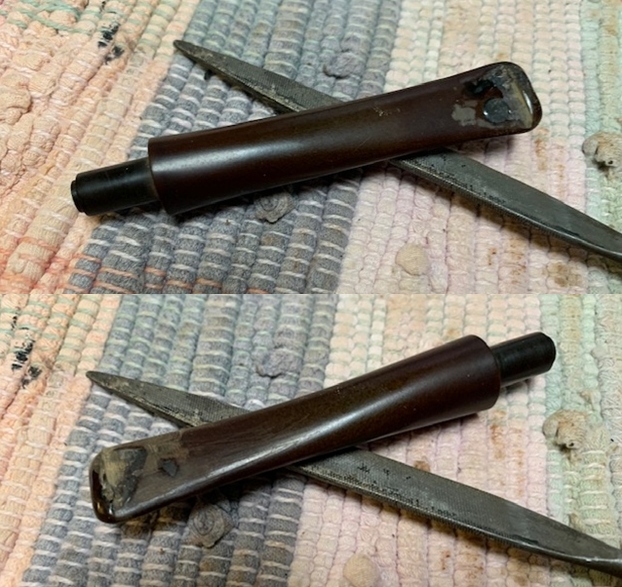
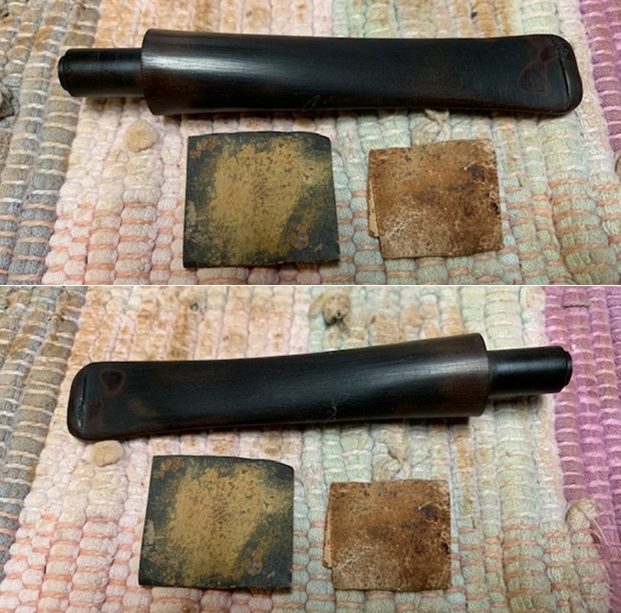
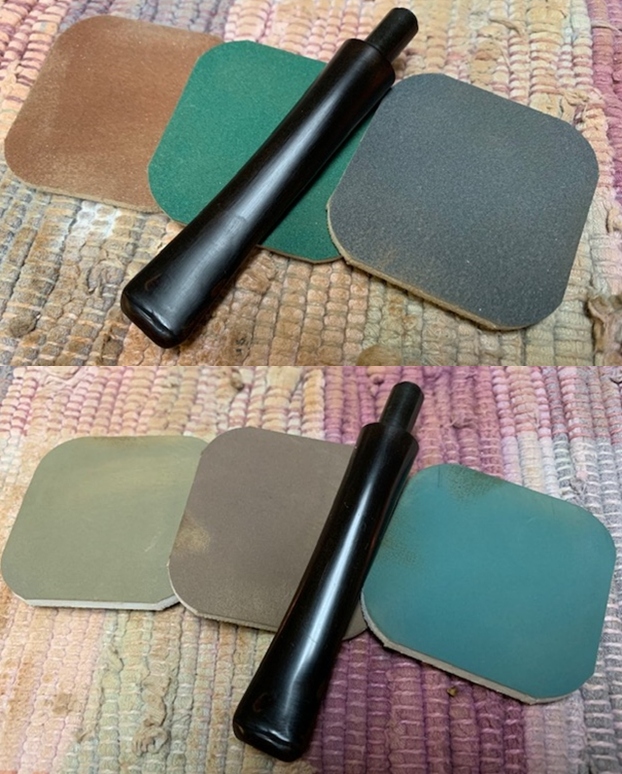
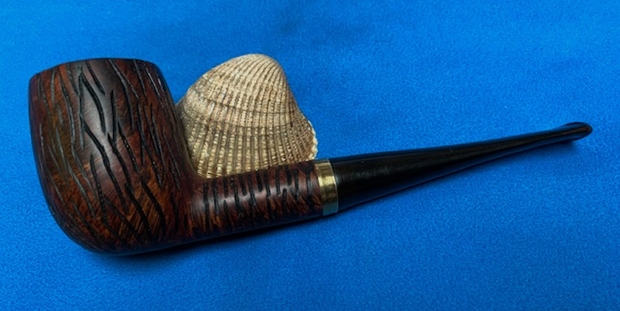
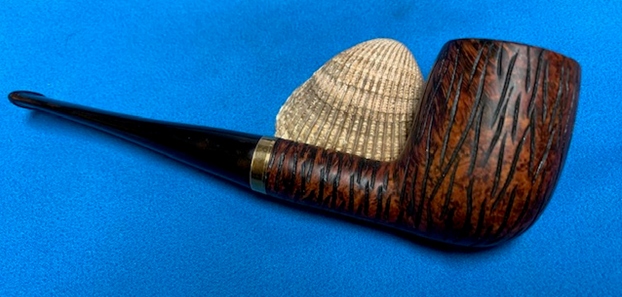
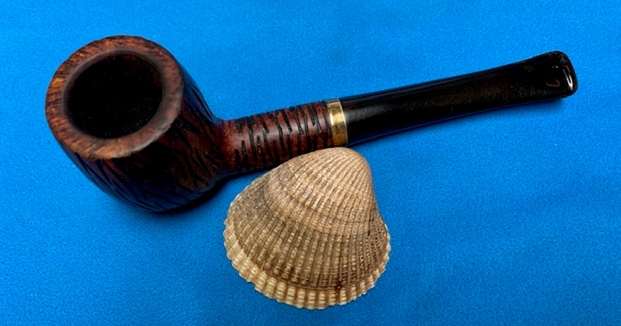
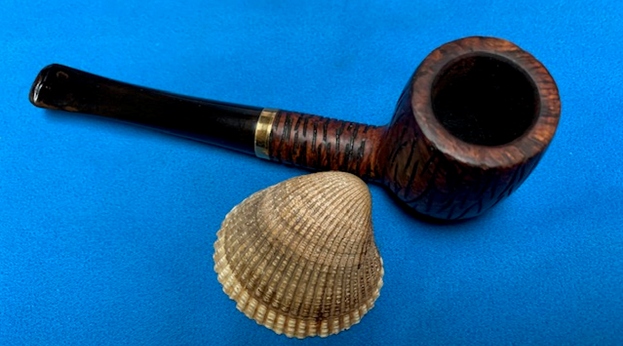
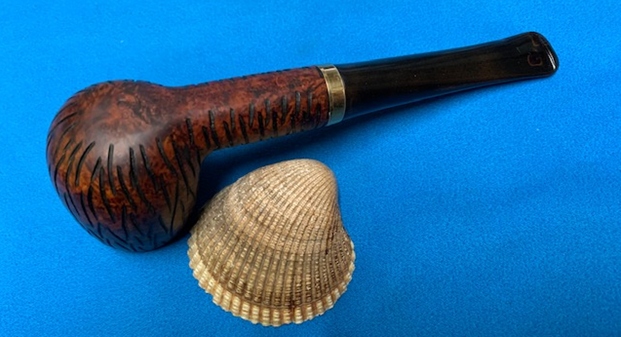
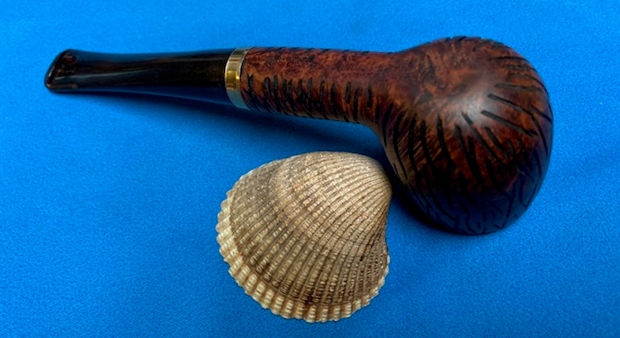
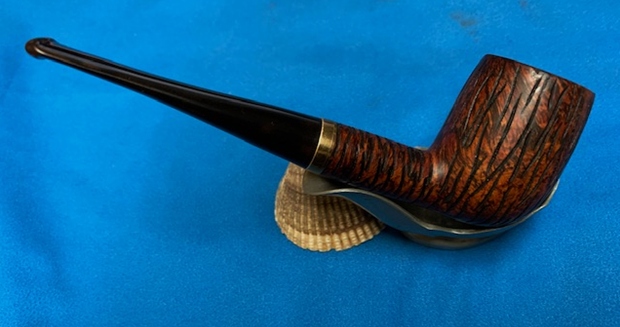
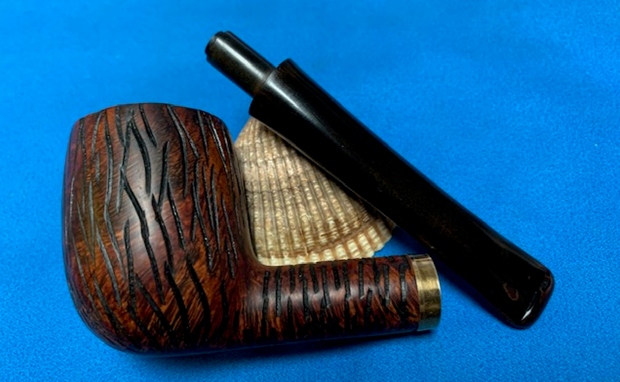
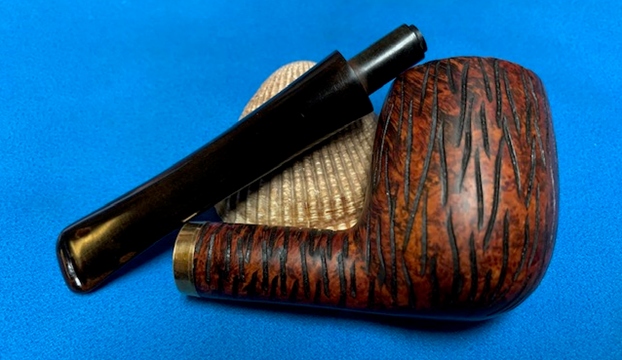
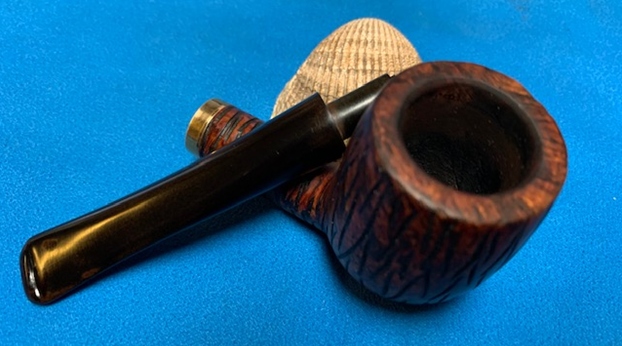
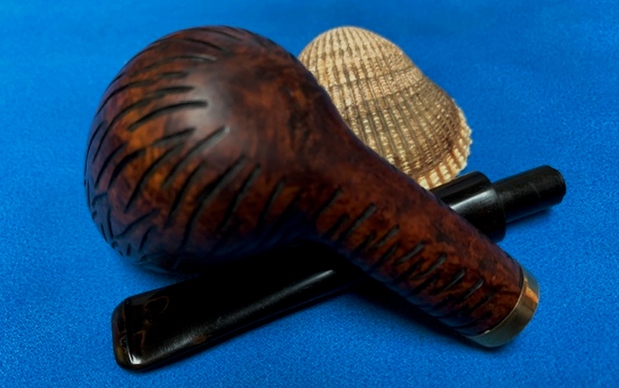
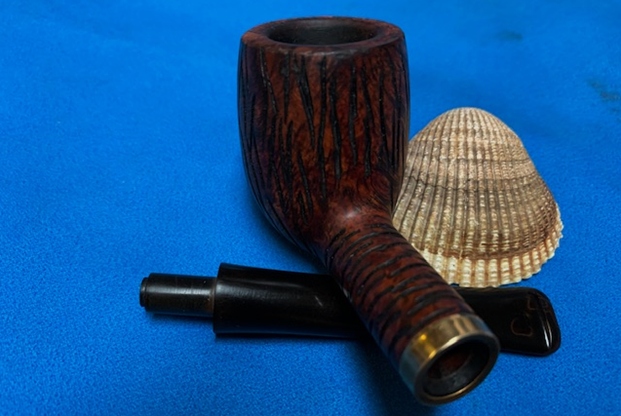
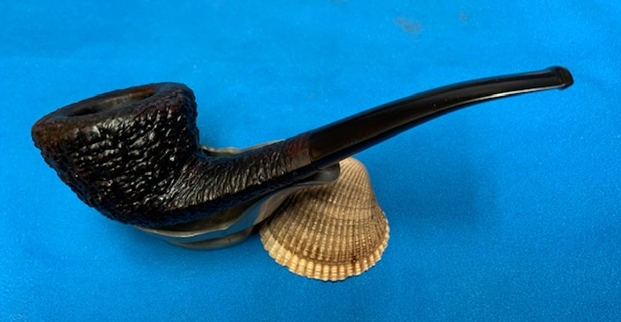
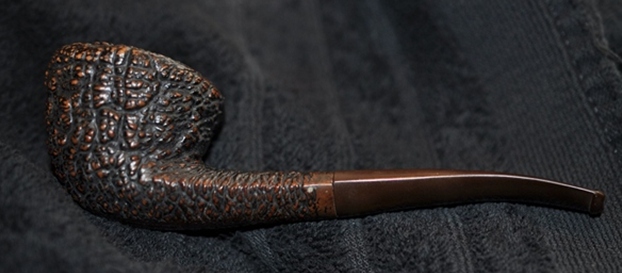
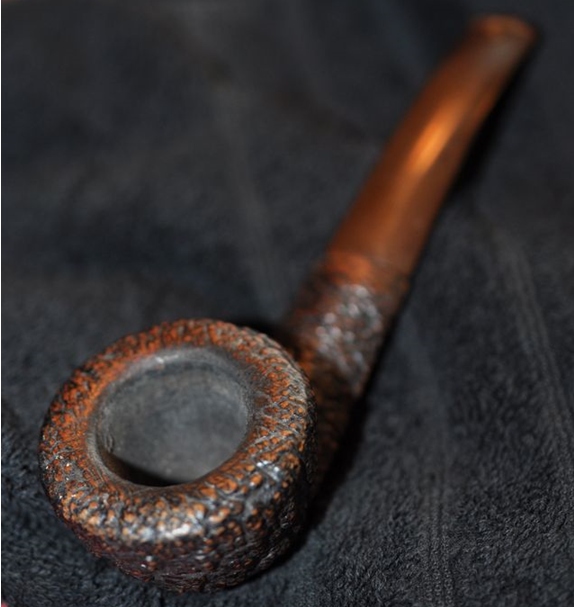
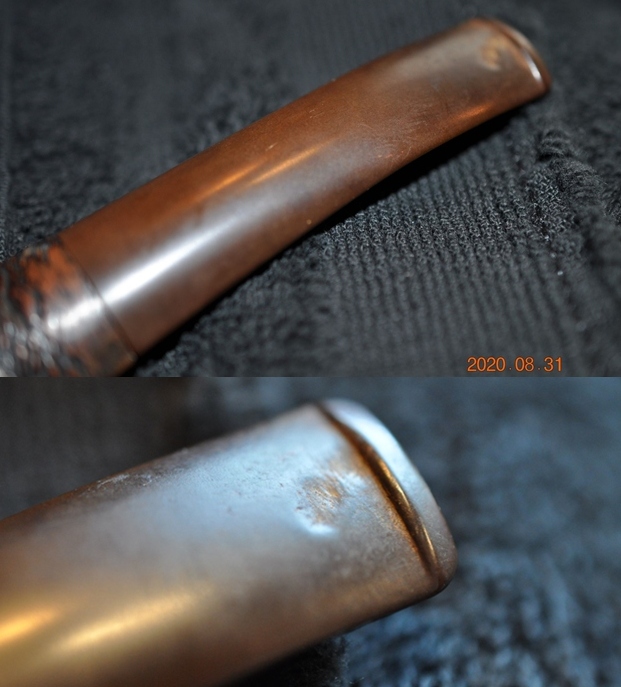
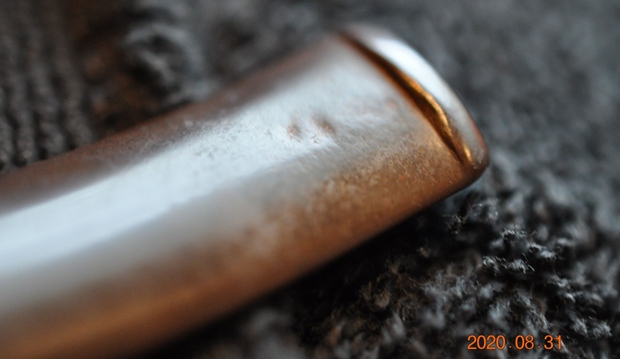
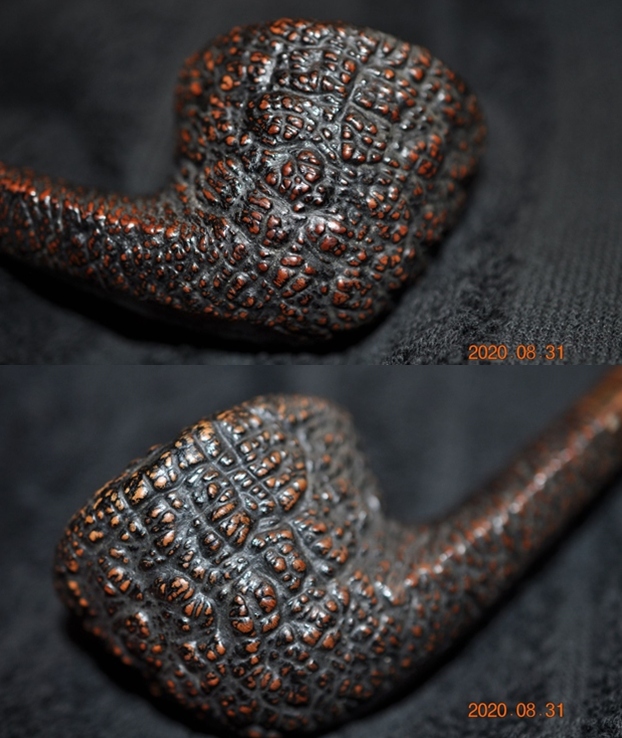
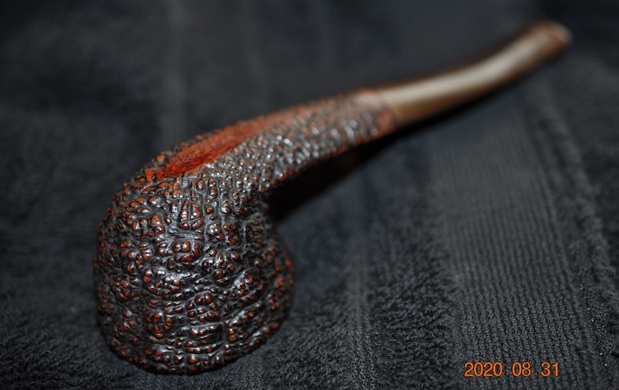
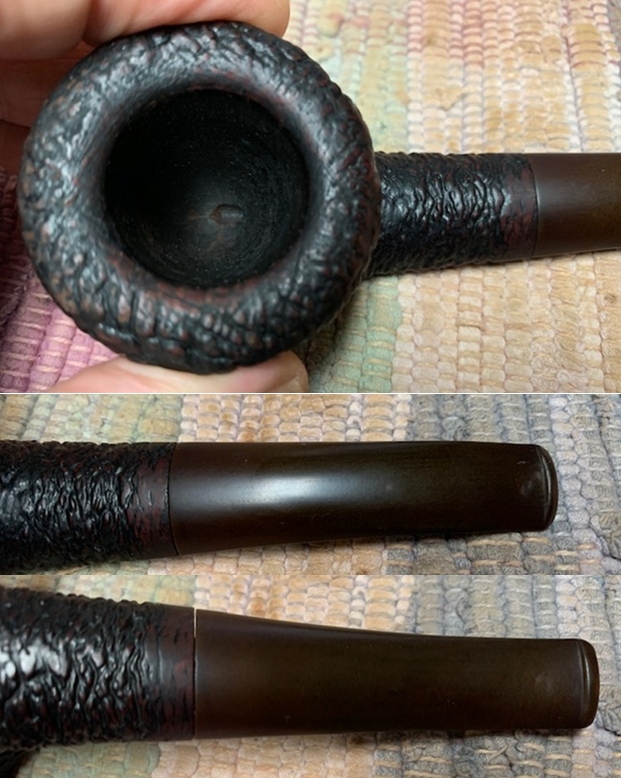
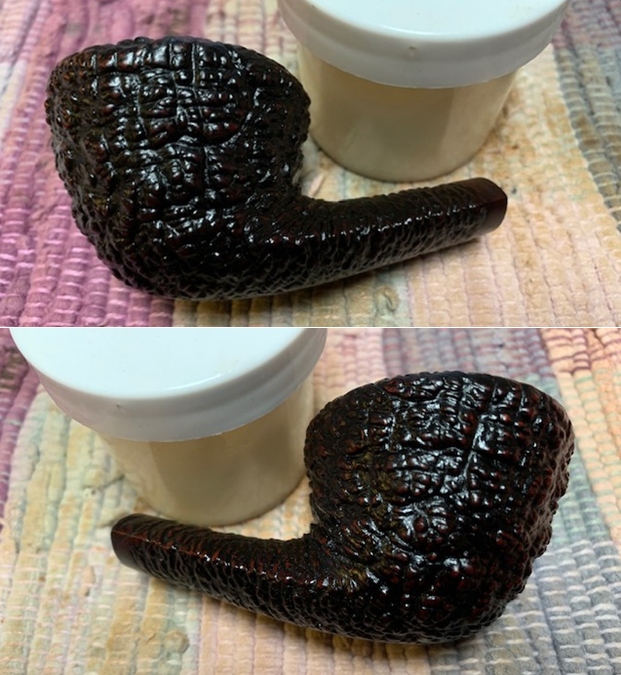
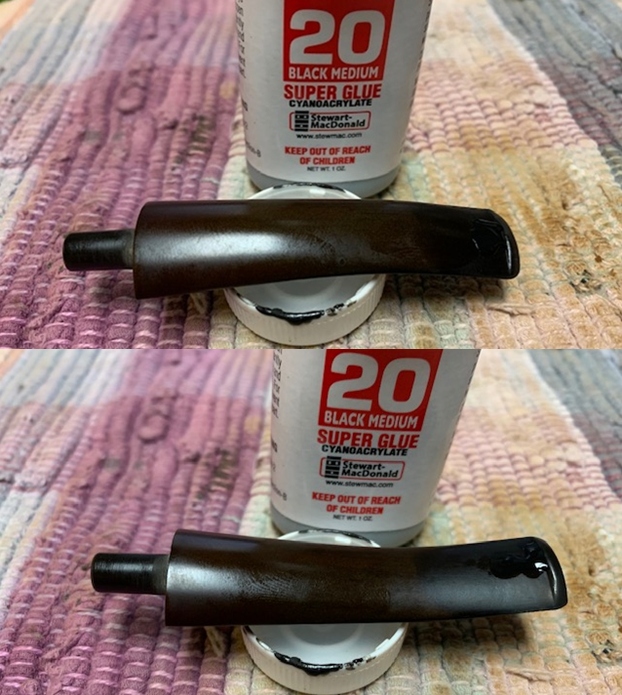
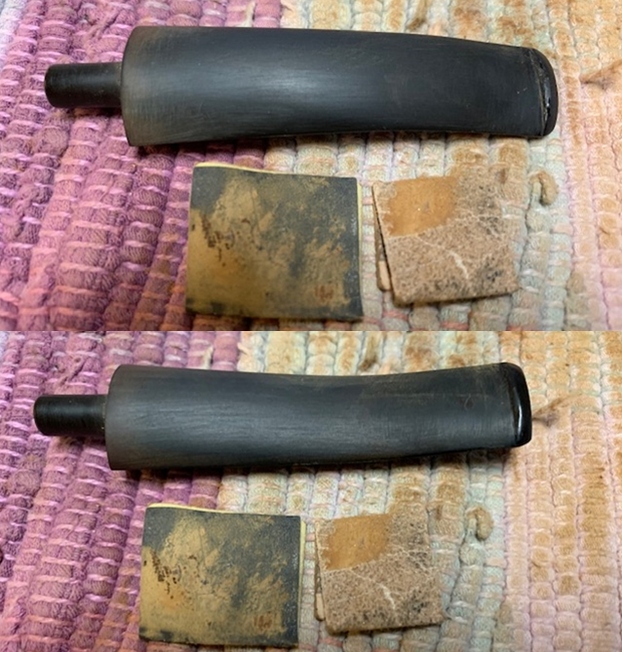
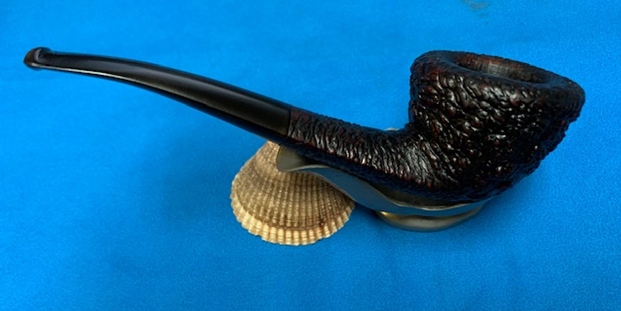
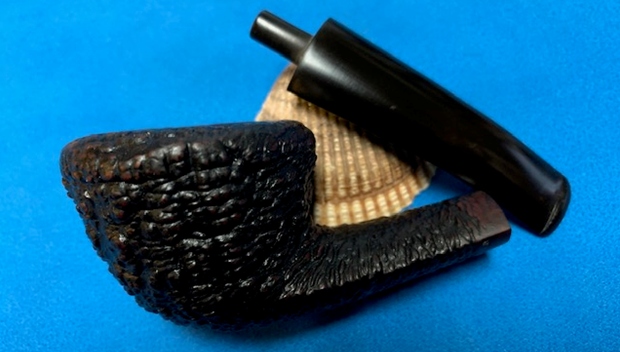
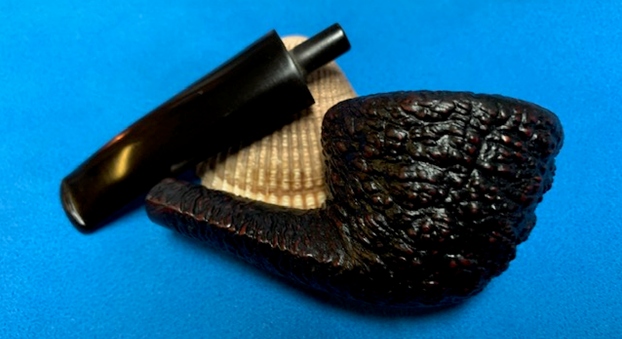
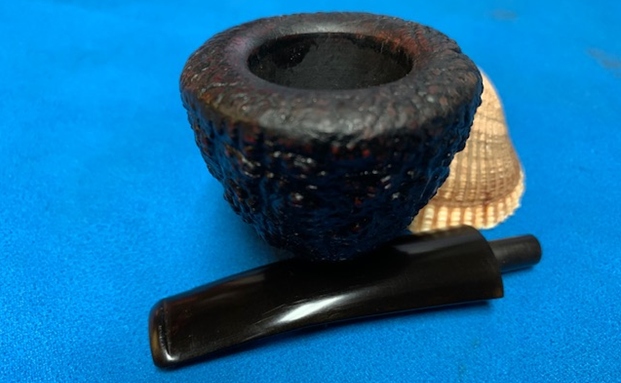
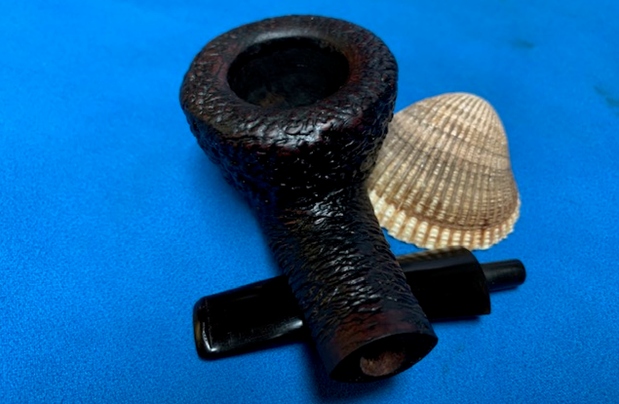
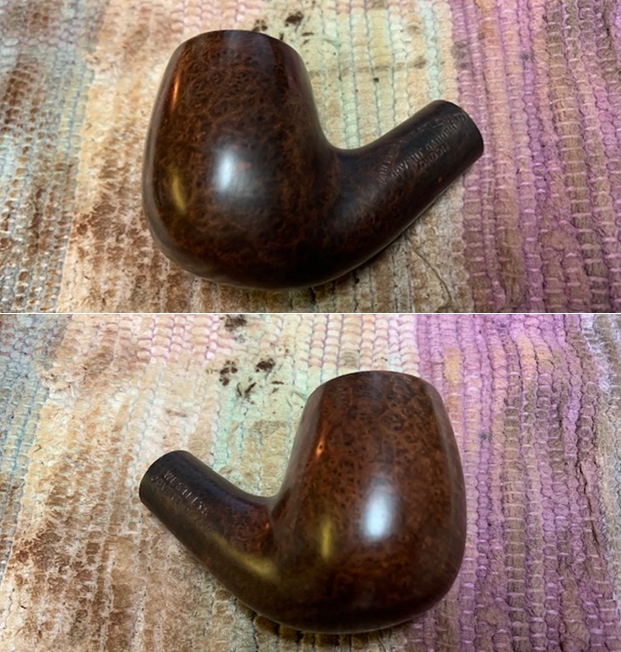
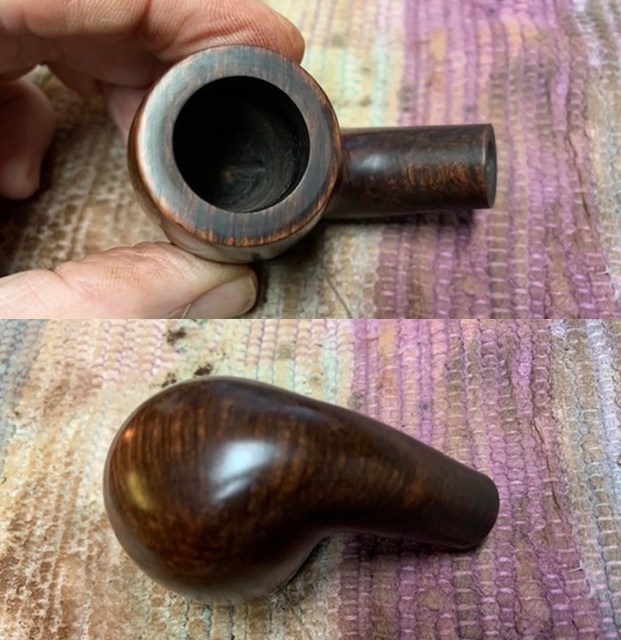
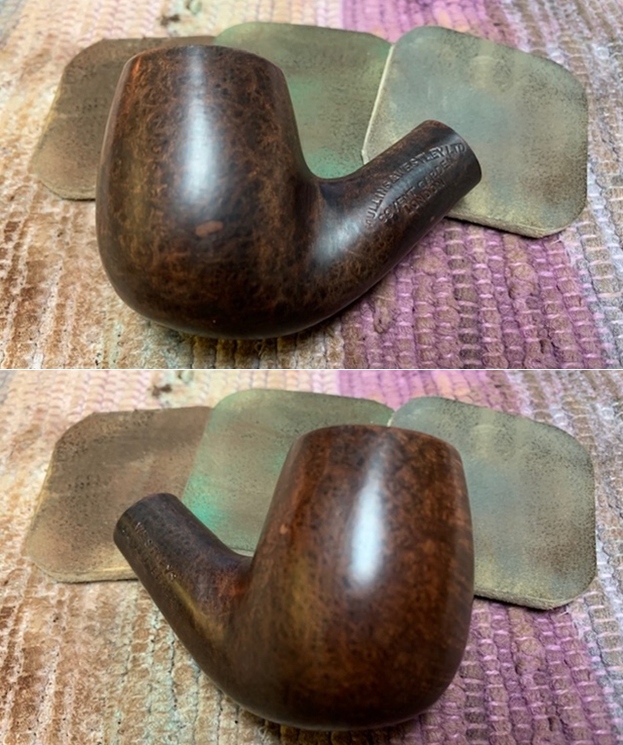
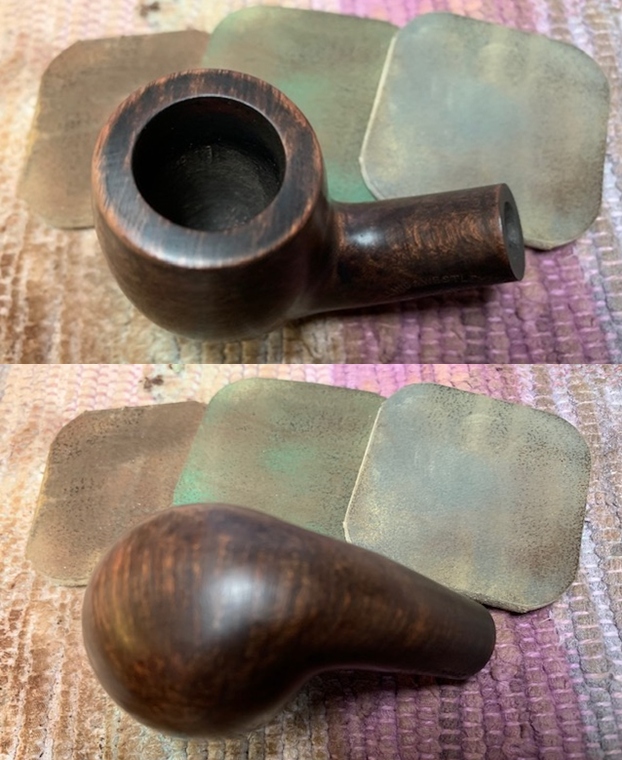
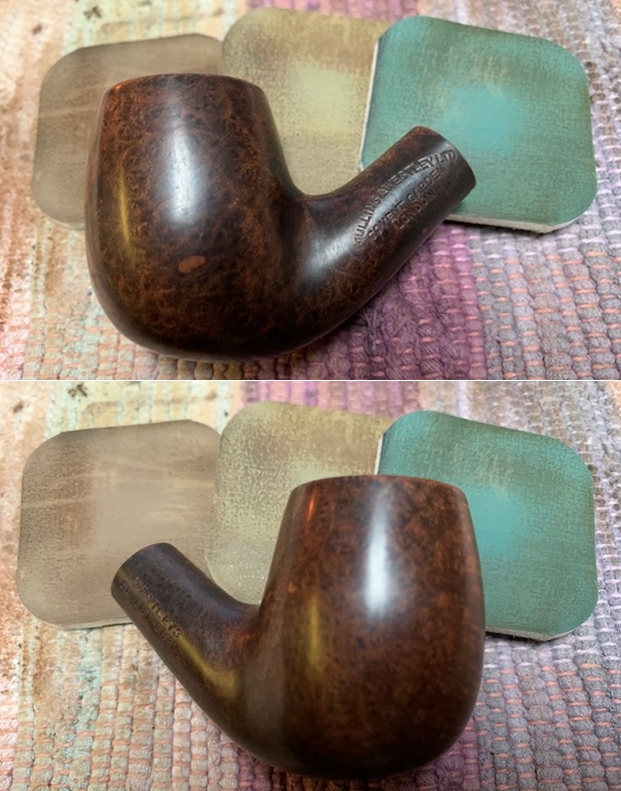
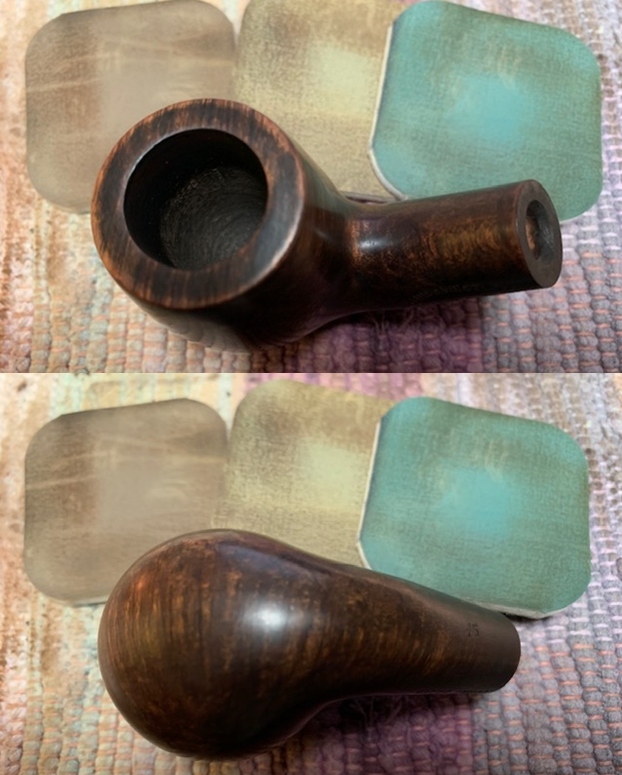
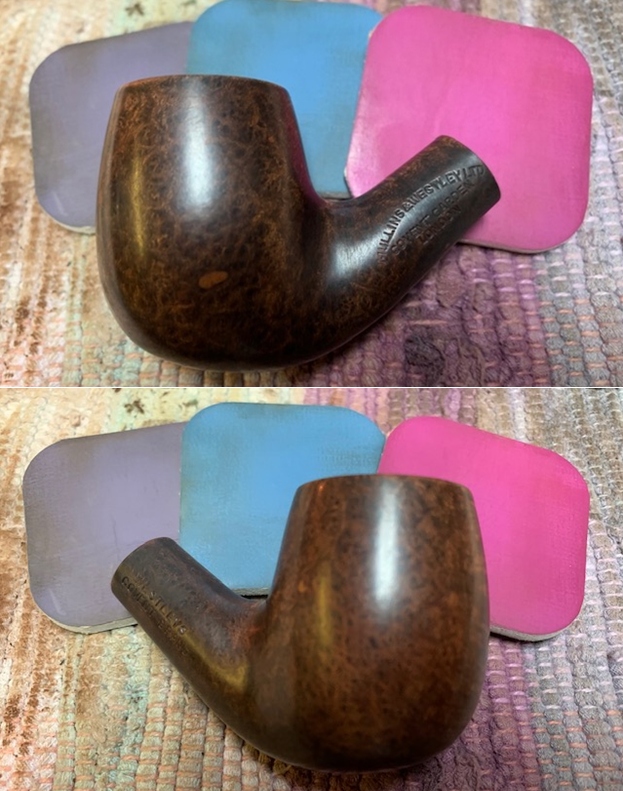
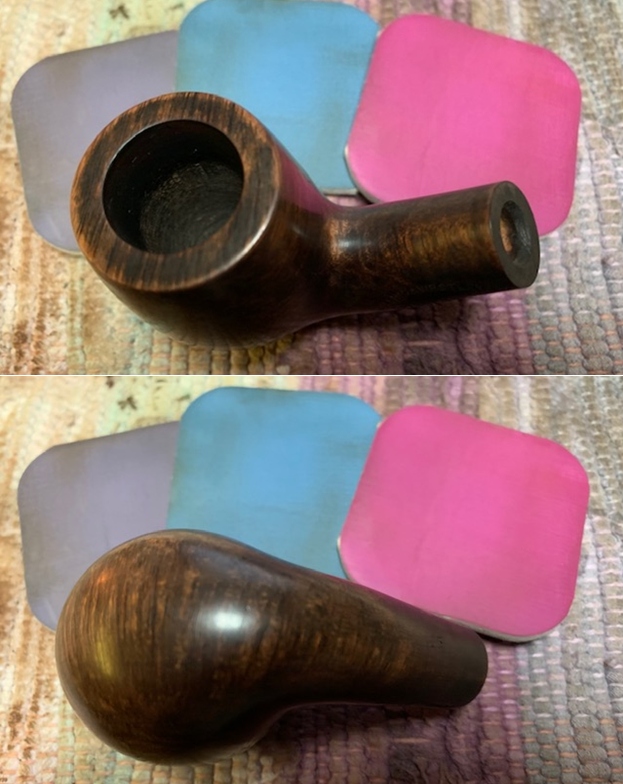
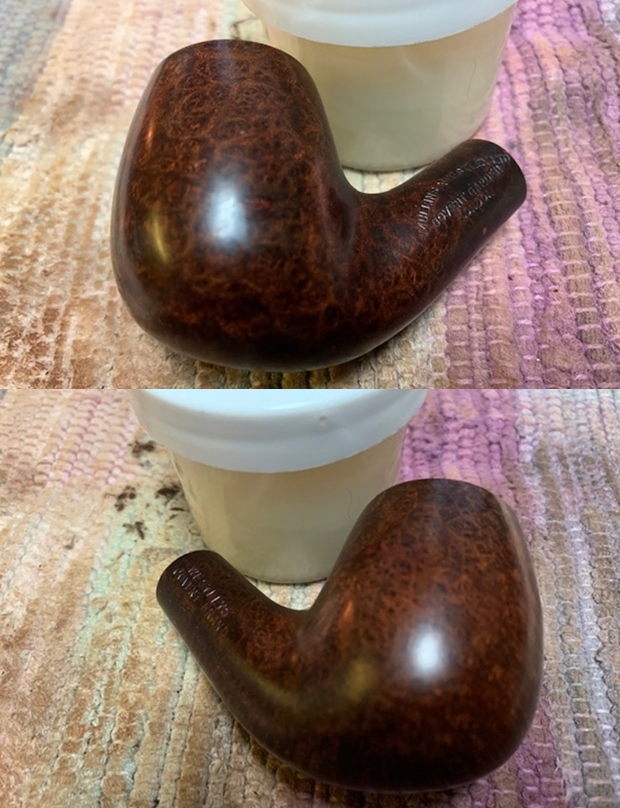
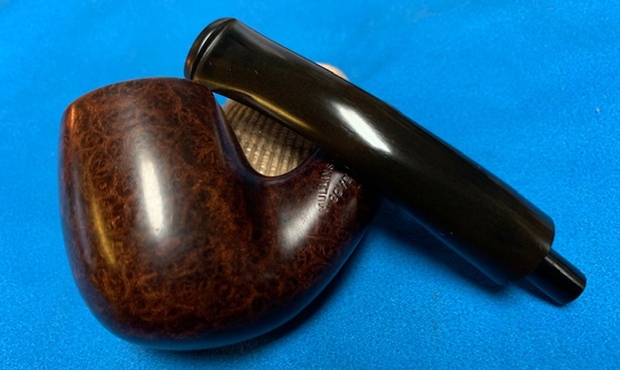
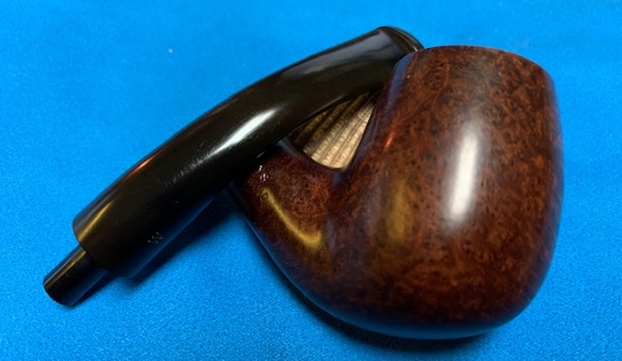
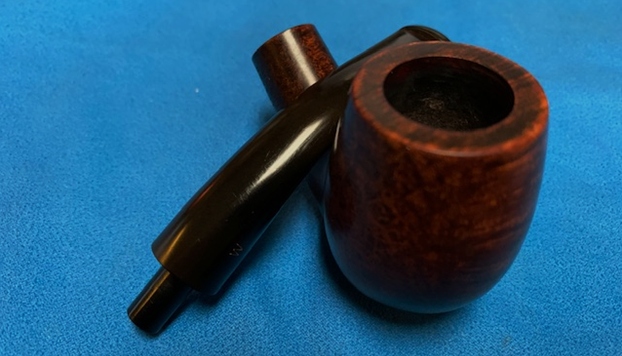
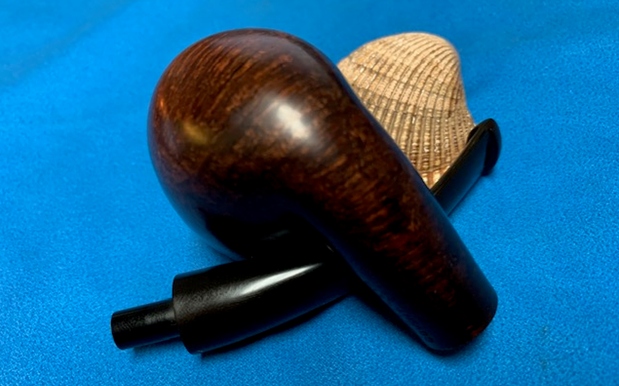
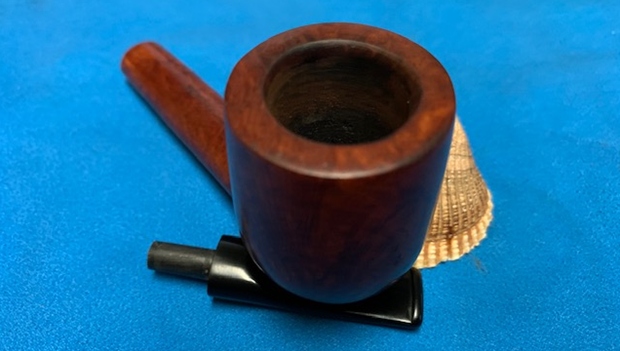
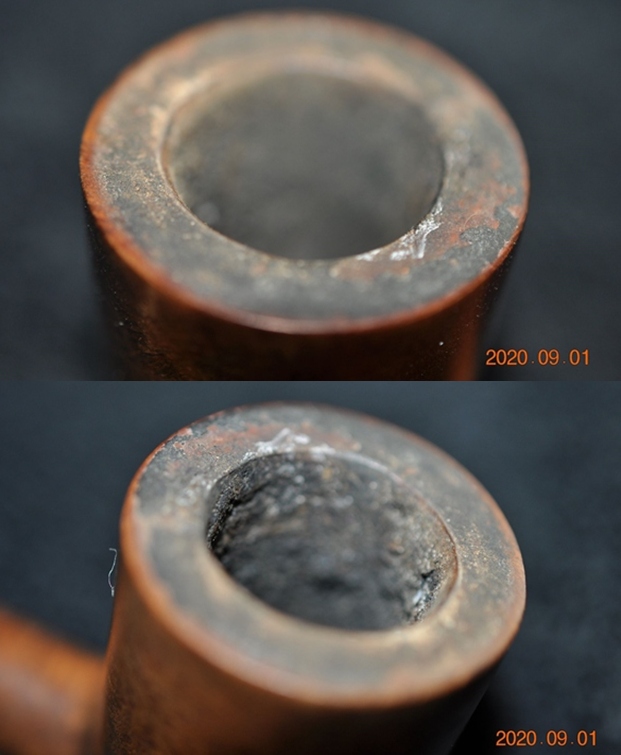
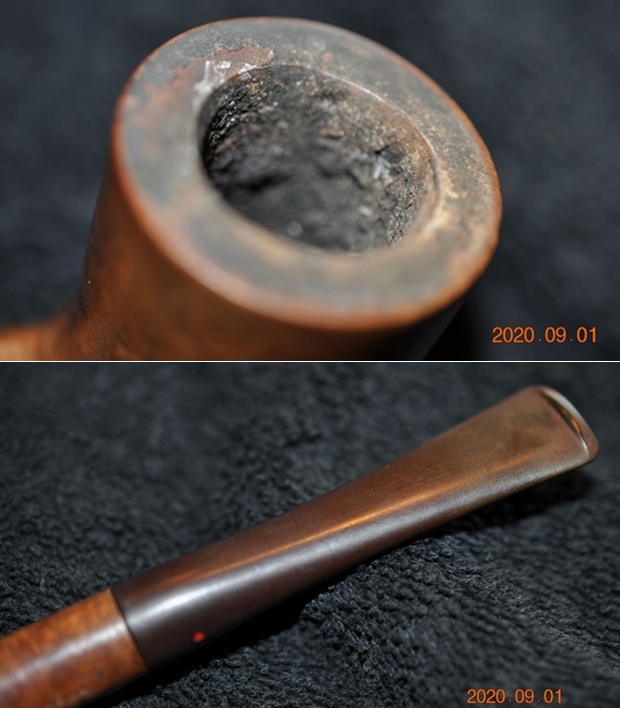
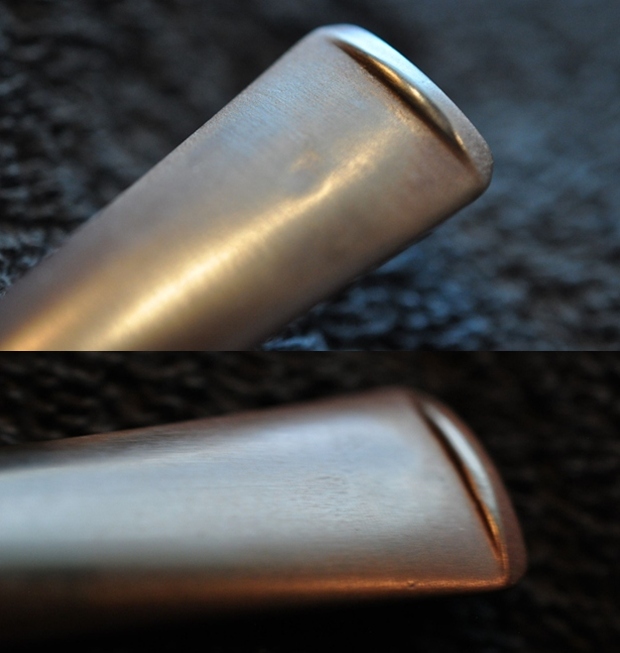
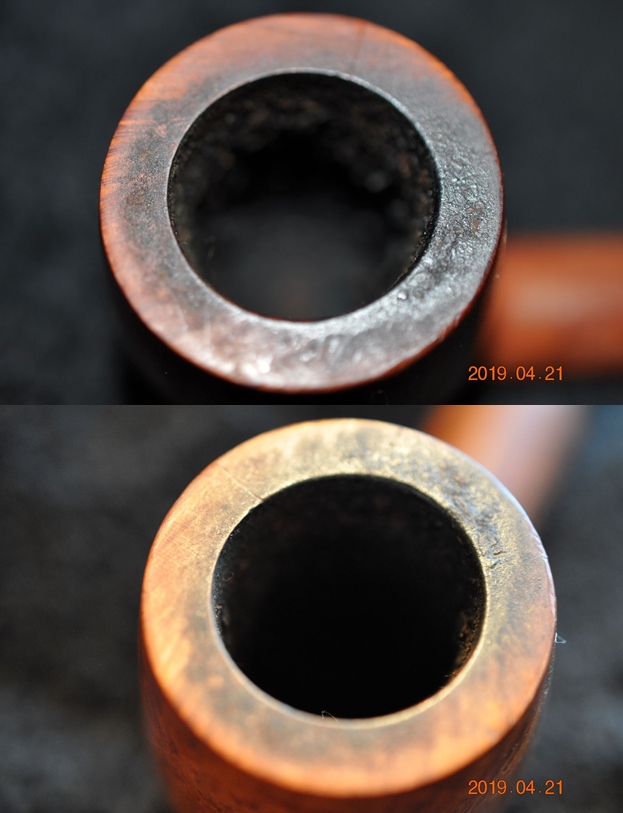
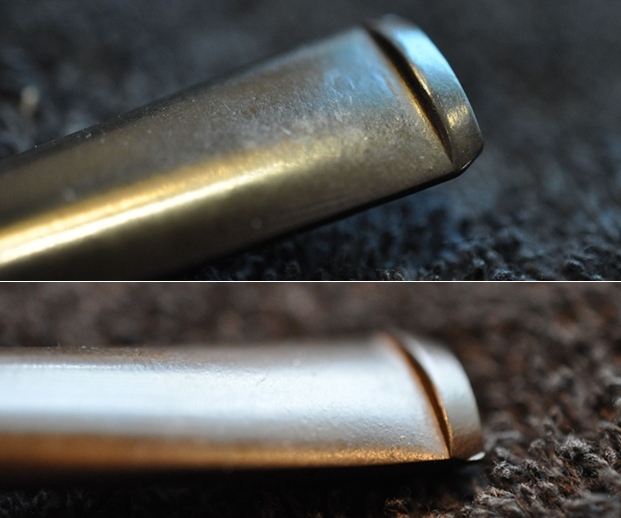
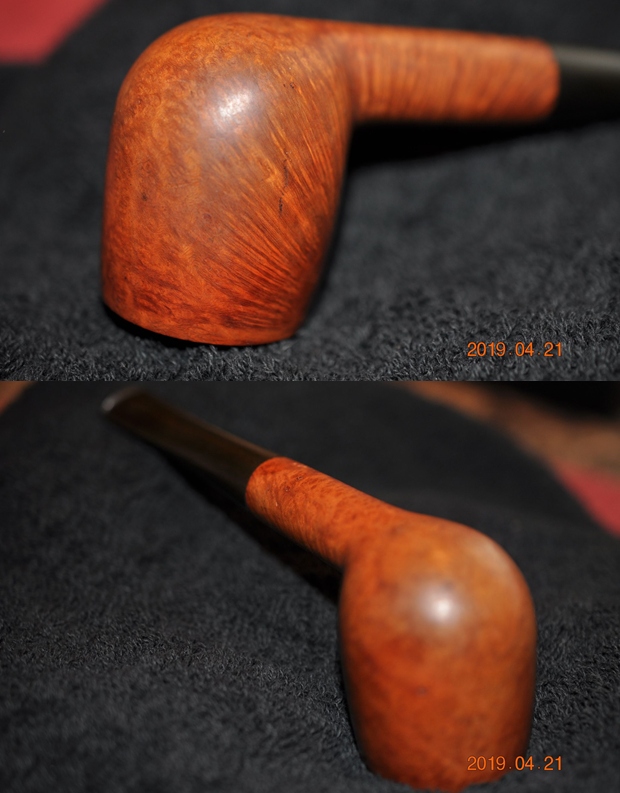
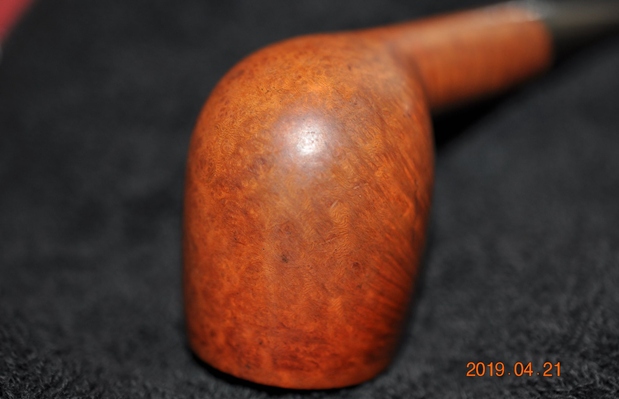
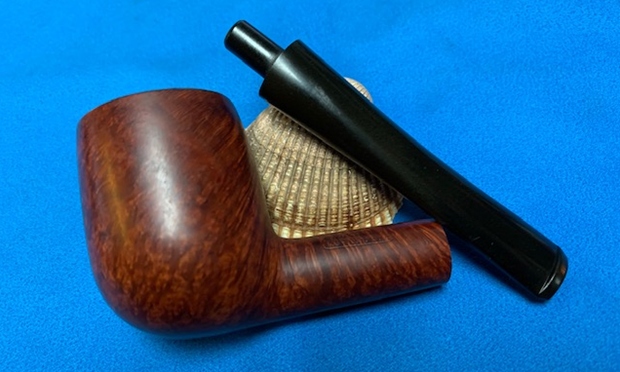
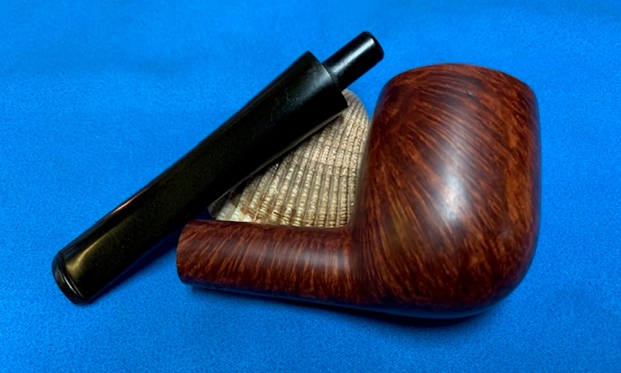
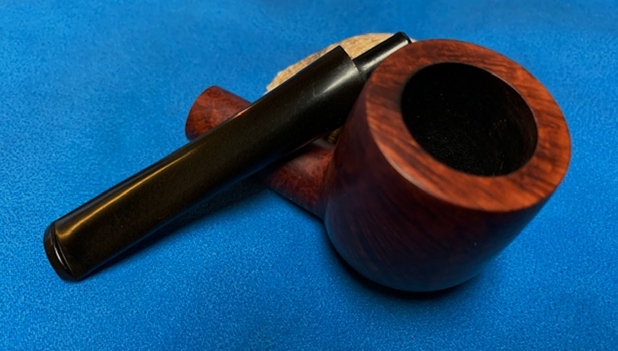
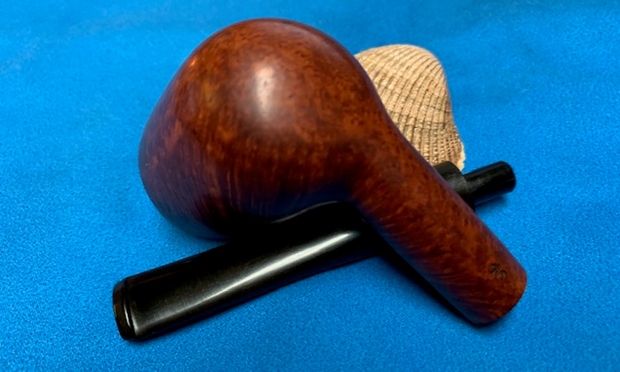
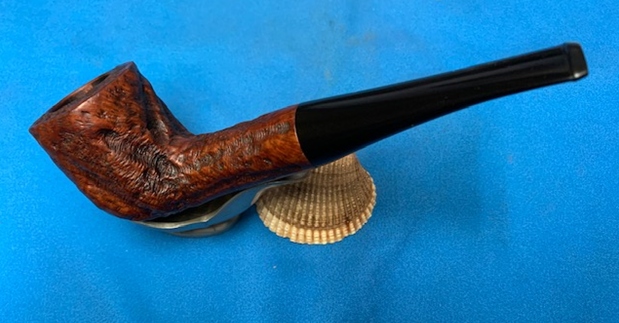
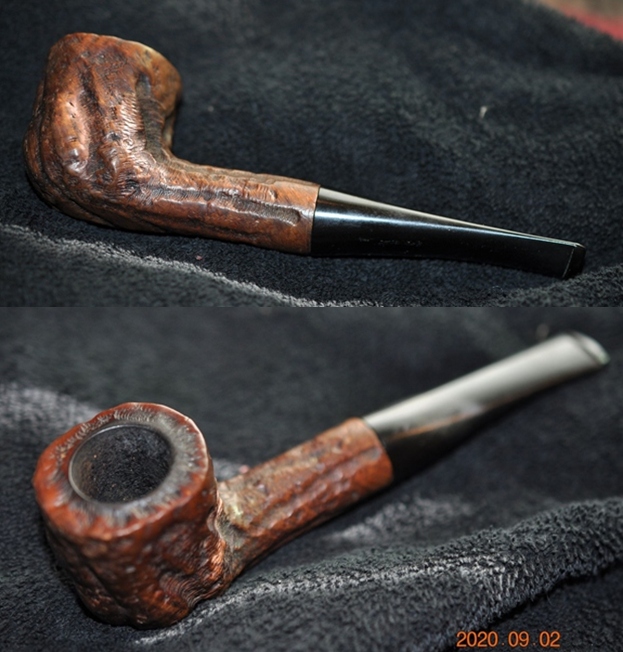
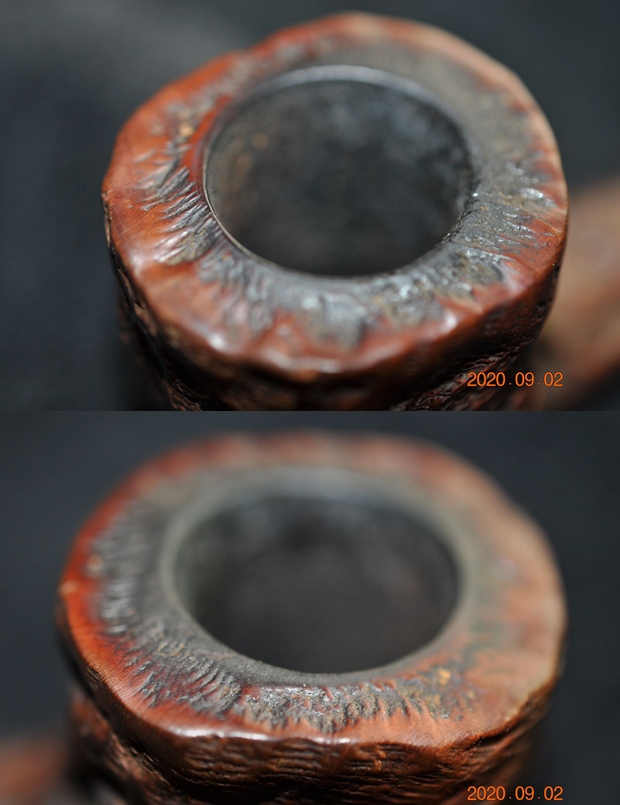
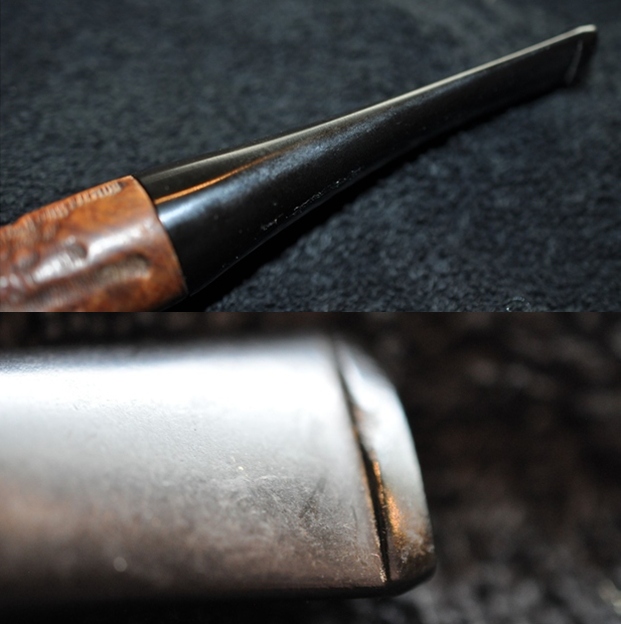
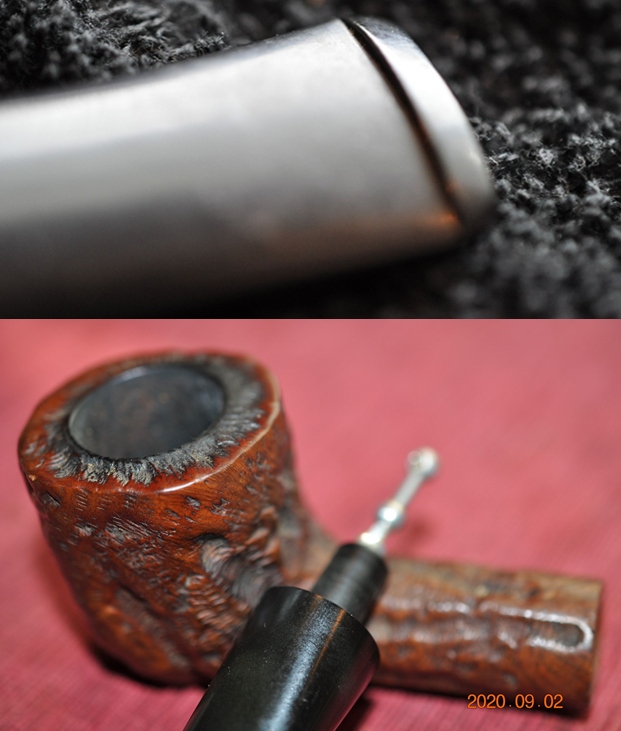
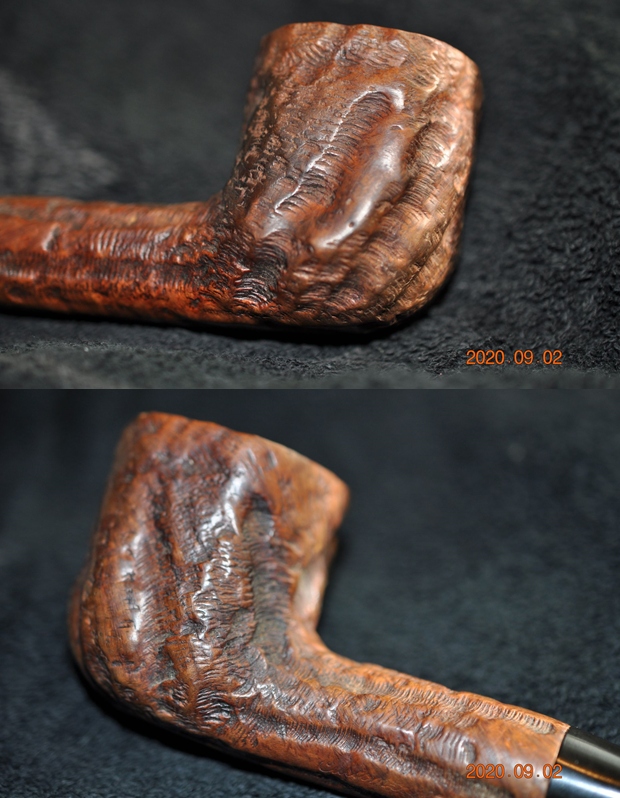
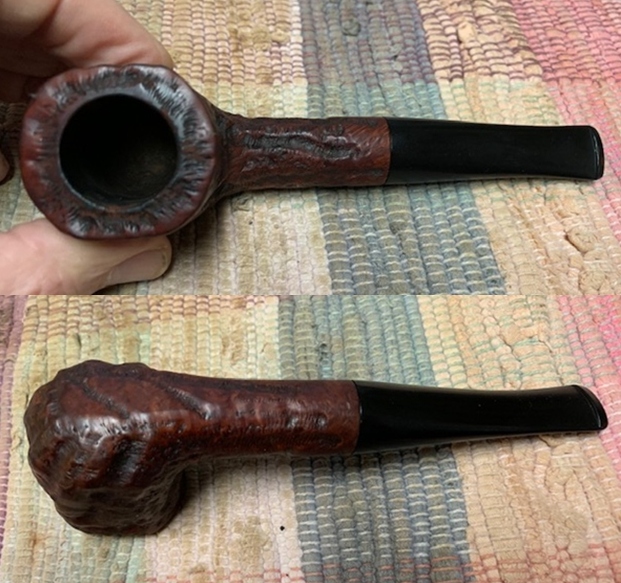
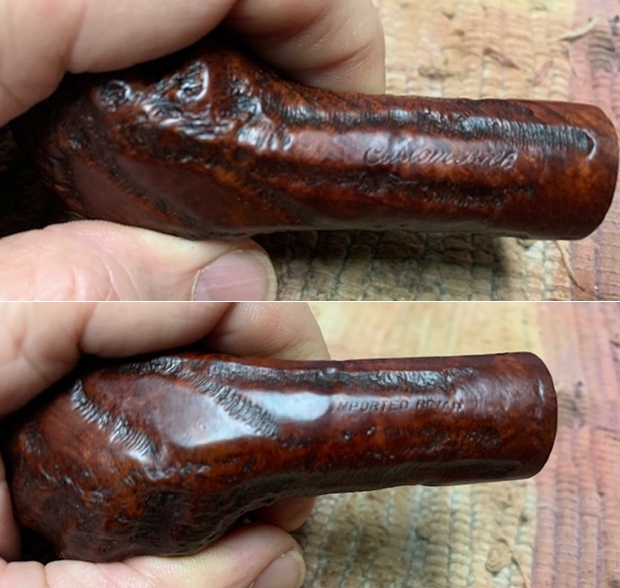
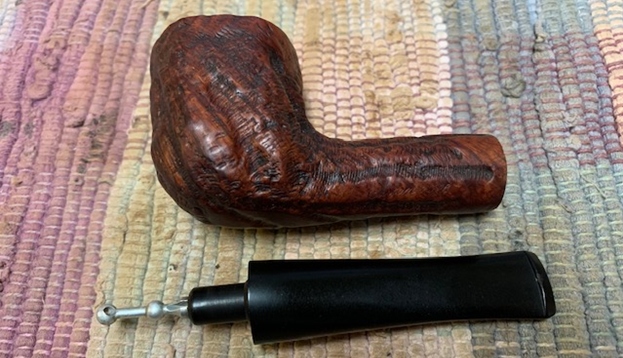
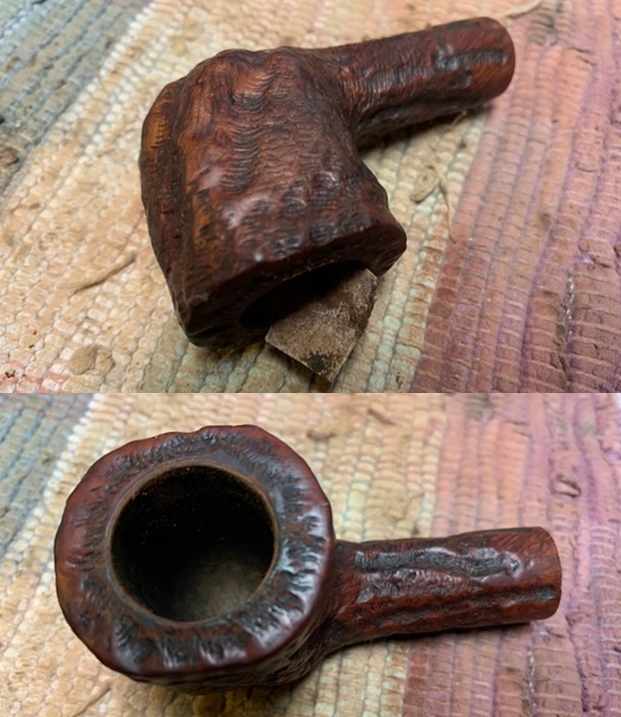
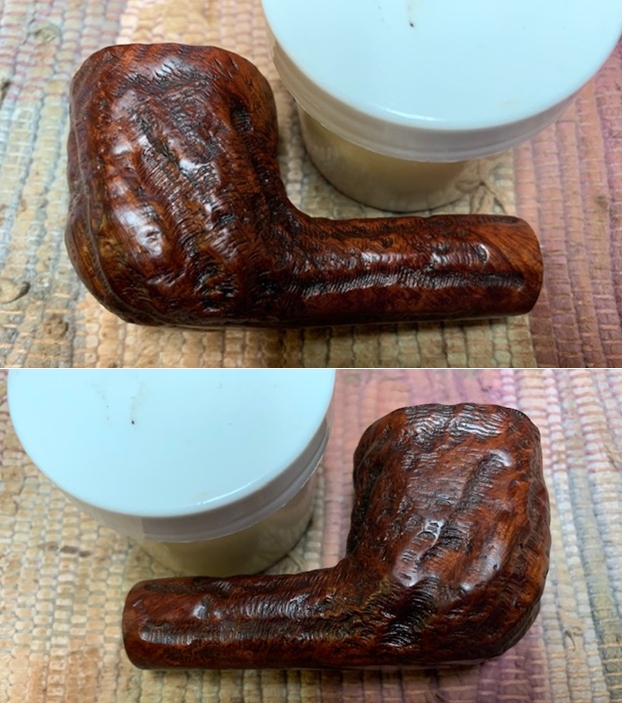
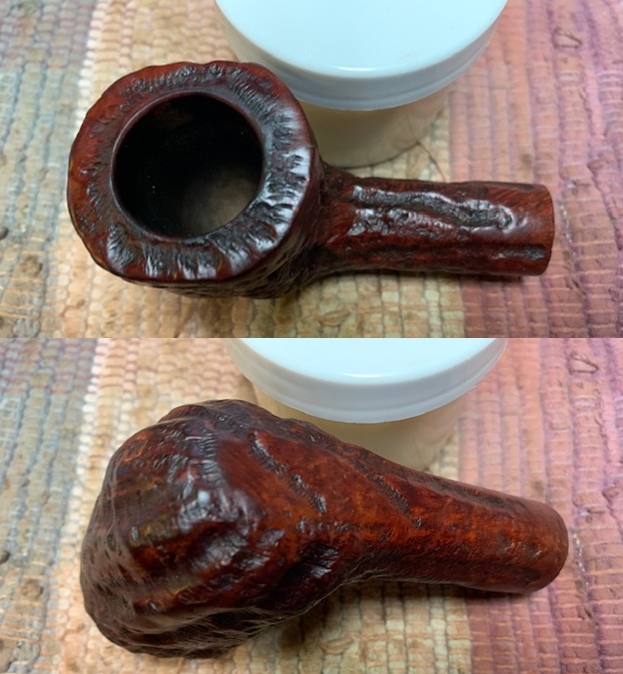
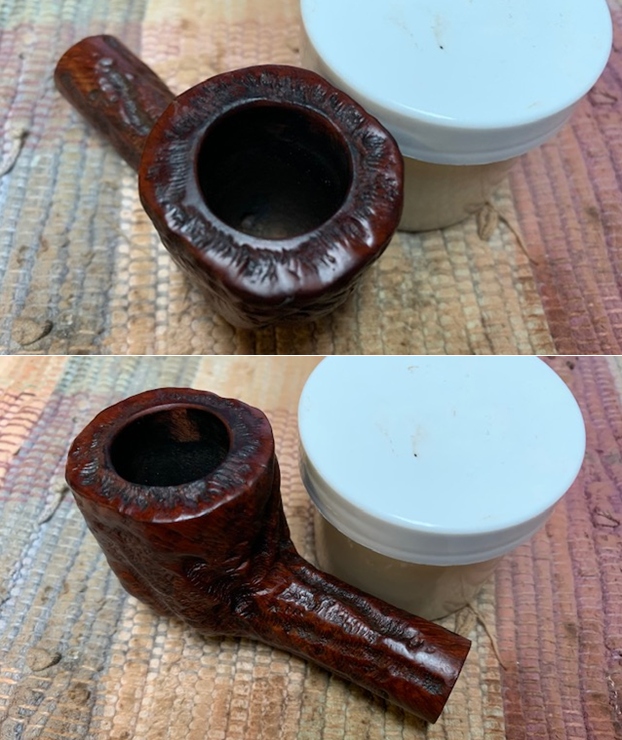
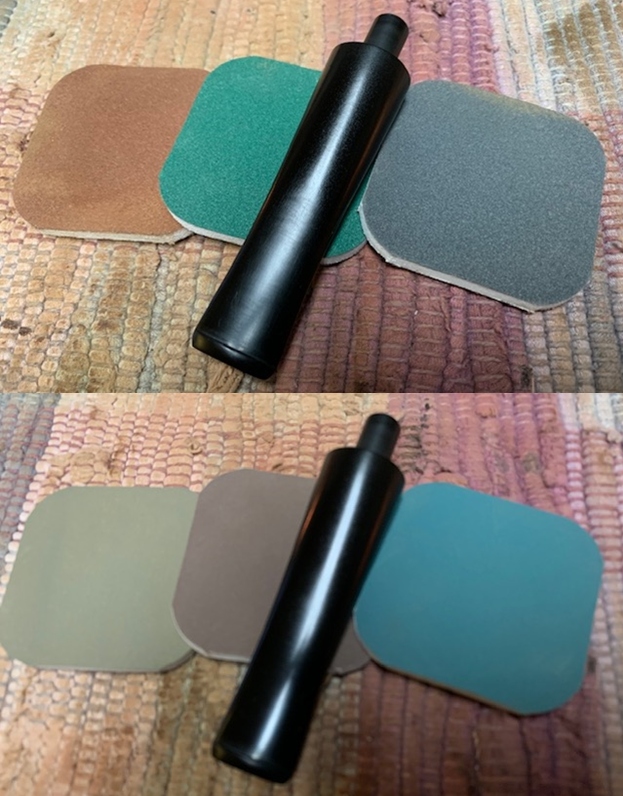
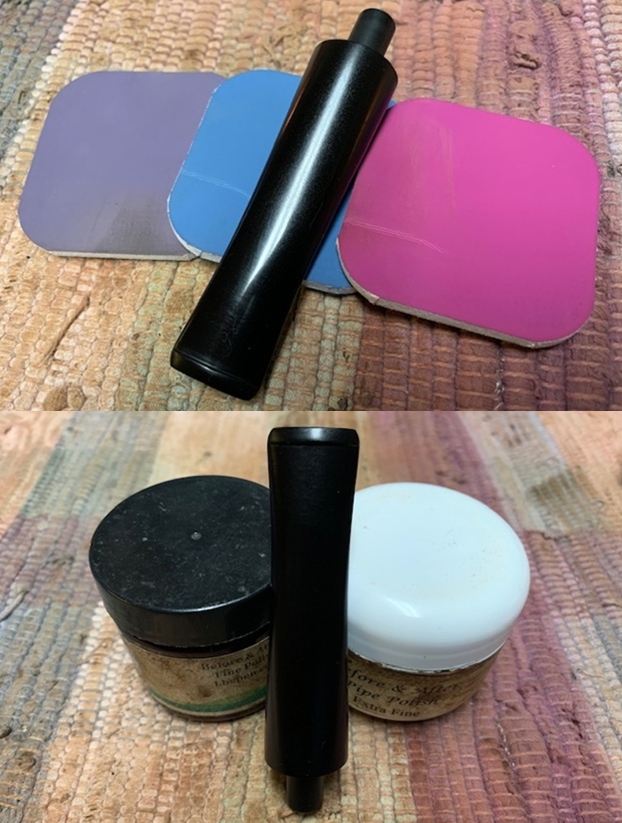
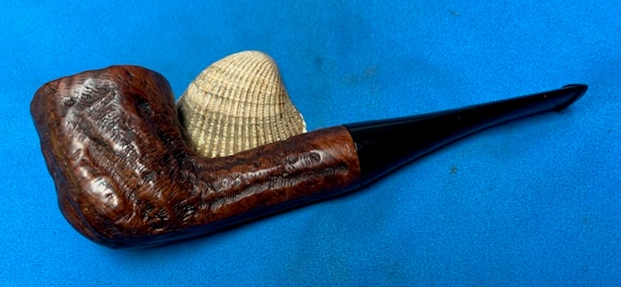
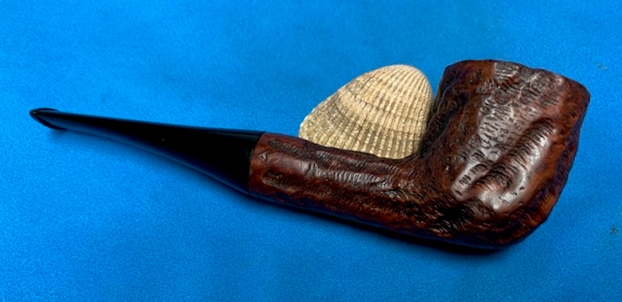
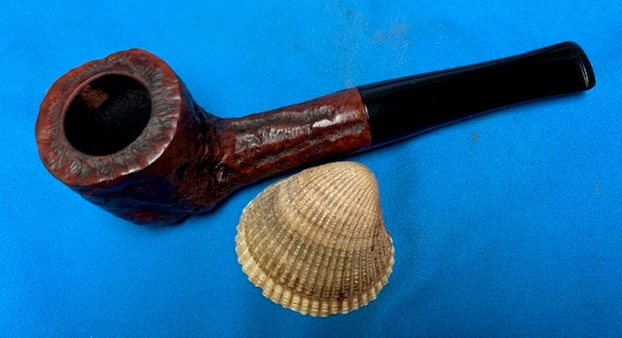
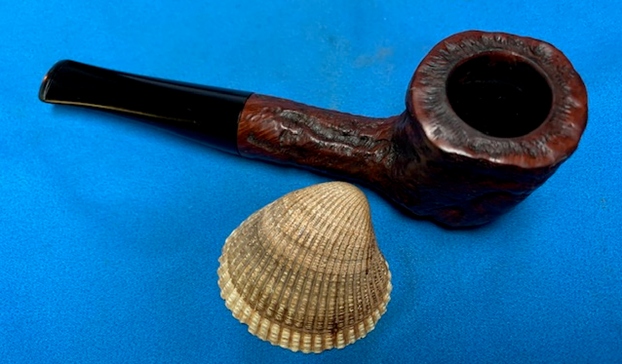
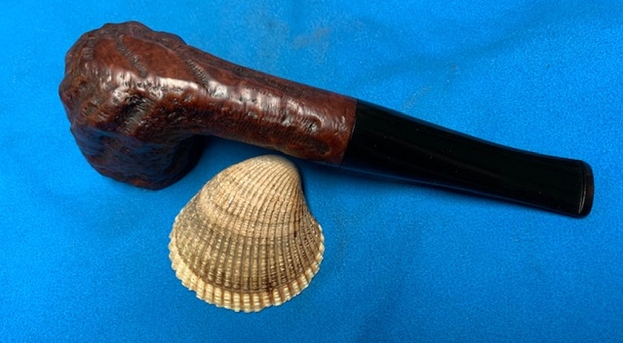
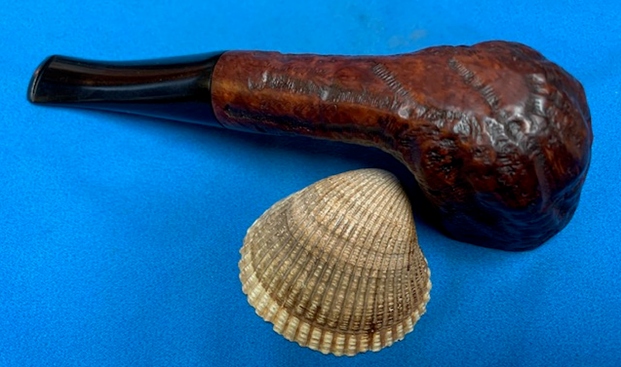
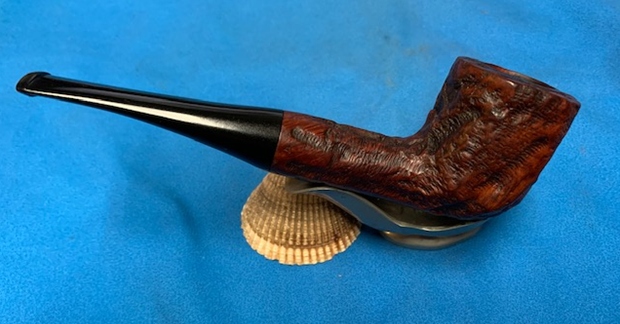
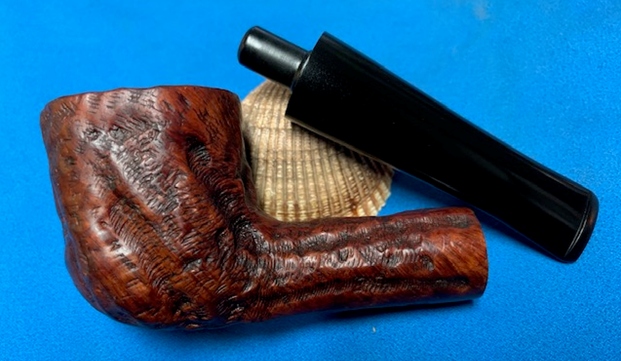
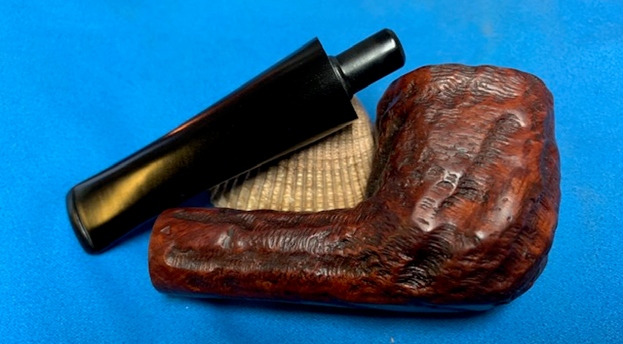
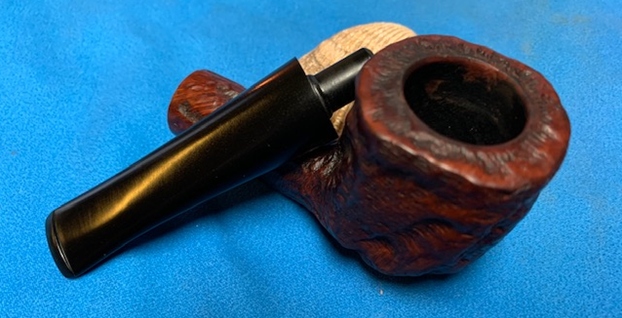
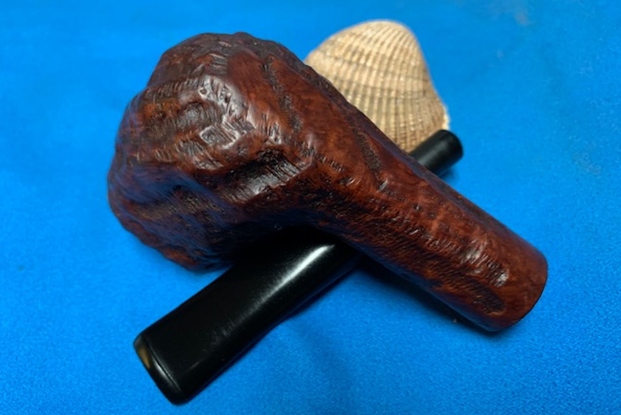
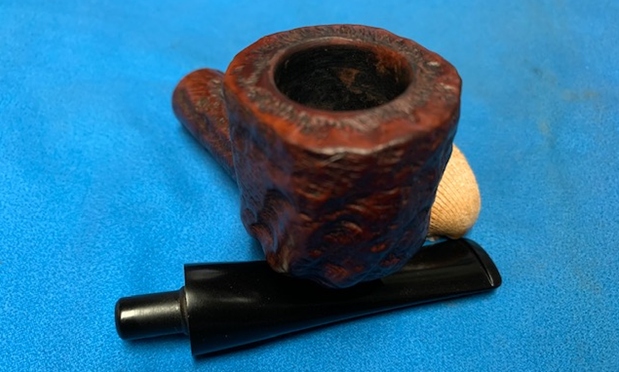
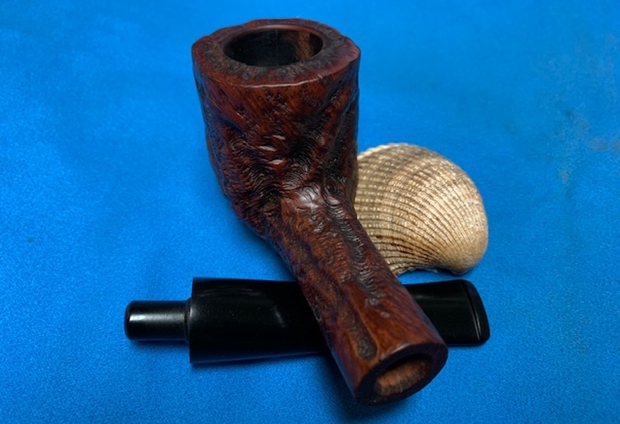
The next pipe on the work table came to us from a pipe hunt that Jeff and his wife recently did in Utah, USA.  The pipe is interesting looking rusticated billiard that is not my favourite but from the looks of it was someone else’s.  The rim top is actually quite clean but has a lot of scratches in the surface. On the heel of the bowl it is stamped Comoy’s [over] Blazon. That is followed by Made in London England and the shape number 332. The pipe has a slashes carved all over the surface and I am wondering if the Blazon name is a clue to what it supposed to be – perhaps flames? The stain is a mix of browns and blacks that also add to the idea of flames. The finish was very dirty with dust in all of the rustication, making it hard to see beyond that to the grain that pokes through underneath that. There was a thick cake in the bowl and it had overflowed with lava onto the inner rim edge. It was hard to know at this point the condition of the rim edges. The stem was oxidized and there were deep tooth marks and chatter on both sides just ahead of the button and on the button surface itself. The stem did not have the characteristic C logo or stamp. Jeff took photos of the pipe before he started working on it. I include those below. Jeff took photos of the bowl and rim top to show the cake in the bowl and the condition of both. It was thick and hard cake but hopefully it had protected the rim and edges from damage. There are a lot of nicks and scratches in the surface of the rim top. He took photos of the top and underside of the stem showing the scratching, oxidation and tooth marks on the stem surface and button. The tooth marks are quite deep on both sides of the stem.   Jeff took a photo of the sides and heel of the bowl to show the condition of the finish – the grime and grit all over the sides and bottom of the bowl. The rustication is unique and dirty but it is interesting. This is another tactile finish that will be interesting as it heats up during a smoke. Jeff took two photos of the stamping on the underside of the shank to capture all of it. It is very clear and readable other than the faint Made in London England stamp mid shank.    This pipe was a real mess like many of the pipes we work on. I was curious to see what it would look like when I unpacked it. I was surprised at how good it looked. Jeff reamed it with a PipNet pipe reamer and cleaned up the reaming with a Savinelli Fitsall Pipe Knife. He scrubbed out the internals of the shank and stem with alcohol, pipe cleaners and cotton swabs until the pipe was clean. He scrubbed the exterior of the bowl with Murphy’s Oil Soap and a tooth brush to remove the grime and grit on the briar and the lava on the rim top. The finish on the bowl looked really good when I got it. The rim top looked much better and the inner and outer edges were looking good. He soaked the stem in Before & After Deoxidizer bath to remove the oxidation. The stem looked better other than some light oxidation and the tooth marks and chatter in the surface. When the pipe arrived here in Vancouver for the second stop of its restoration tour it looked very good. I took photos of the pipe before I started my work on it.  I took photos of the condition of the rim top and stem before I started working. The rim top looks better than before and the damage is very obvious to both the inner edge and top. The crevices and valleys of the rustication are clean and look great. The bowl is spotless. The stem is lightly oxidized and has some deep tooth marks on both sides and the button itself. I took a photo of the stamping on the underside of the heel and the shank. It is far more clear and readable in person than in this photo.I took the bowl and stem apart and took a photo of the pipe to show the look of the pipe.I started my work on the pipe by cleaning up the rim top and inner edge of the bowl with a folded piece of 220 grit sandpaper. Once finished it looked far better.  I polished the briar with micromesh sanding pads. I dry sanded the bowl with 1500-12000 grit pads and wiped the bowl down with a damp cloth after each pad. The briar really took on a shine by the final pads.    I worked some Before & After Restoration Balm into the finish of the bowl and the rim top and shank with my fingertips and a horsehair shoe brush to clean, enliven and protect it. I find that the balm really makes the briar come alive again. The contrasts in the layers of stain and the separate finishes really made the grain stand out. I let the balm sit for 10-15 minutes and then buffed with a cotton cloth to raise the shine. The bowl really looks good at this point. I set it aside and worked on the stem.    The shank end was coned and did not fit well against the stem. I have included the photo of the fit before I went ahead and worked on it. I have drawn a box around the area in red in the photos below. I decided to press a brass decorative band on the end of the shank to clean up the fit. I heated it and pressed it on the shank. It took care of the damage and the stem fit well against it.I set aside the bowl and turned my attention to the stem. I filled in the tooth dents and marks with Black Super Glue and set it aside for the repairs to cure. Once they cured I flattened them with a file. I cleaned up the repaired areas with 220 sandpaper to blend the repairs into the surface of the stem. I started polishing it with 400 grit wet dry sandpaper.  I polished the stem with micromesh sanding pads – wet sanding it with 1500-12000 grit pads. I polished it further with Before & After Pipe Stem Polish – both fine and extra fine. Once again I am the part of the restoration that I always look forward to – the moment when all the pieces are put back together. I put the pipe back together and lightly buffed the bowl with Blue Diamond. I buffed the stem with a heavier touch with Blue Diamond on the buffing wheel. I gave the bowl and the stem multiple coats of carnauba wax. I buffed the pipe with a clean buffing pad to raise the shine. I hand buffed it with a microfiber cloth to deepen the shine. It is fun to see what the polished bowl looks like with the combination of rustication and smooth finishes. The black vulcanite stem stands out as a shiny black contrast to the colours of the bowl. This dark stained Comoy’s Blazon 332 Billiard must have been a fine smoking pipe judging from the condition it was when we received it. Have a look at it in the photos below. The dimensions are Length: 5 ¾ inches, Height: 2 inches, Outside diameter of the bowl: 1 1/4 inches, Chamber diameter: 3/4 of an inch. The weight of the pipe is 45grams/1.59oz. This is one that will go on the British Pipemakers section of the rebornpipes online store shortly. Thanks to each of you who are reading this blog. Remember we are not pipe owners; we are pipemen and women who hold our pipes in trust until they pass on into the trust of the next generation.

Renewed Life for a Savinelli Capri Root Briar 316EX Squat Dublin


Blog by Steve Laug

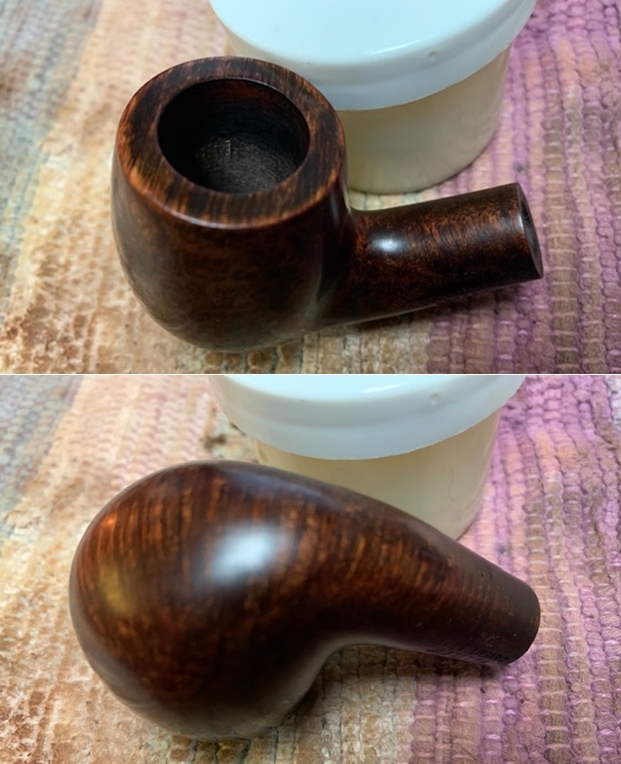
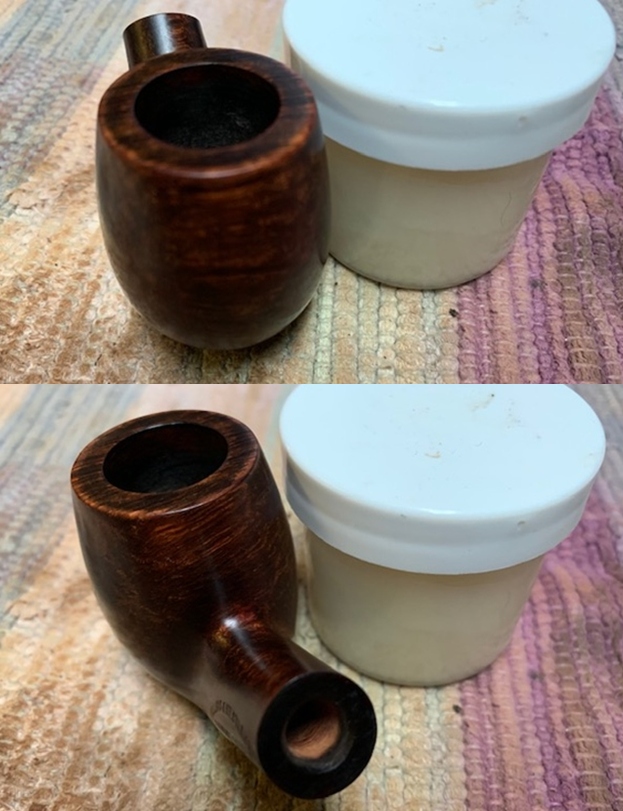
The next pipe on the work table came to us from a pipe hunt that Jeff and his wife recently did in Utah, USA.  The pipe is a great looking squat Dublin shape. The rim top and bowl are clean with variations of brown and black stains. On the heel of the bowl it is stamped Savinelli Capri [over] Root Briar. That is followed by The Savinelli “S” shield and Italy and the shape number 316EX. The pipe has a Sea Rock or coral style rustication that I really like. The finish was very dirty with dust in all of the rustication, making it hard to see beyond that to the finish underneath that. There was a medium cake in the bowl and it had overflowed with lava onto the rim top. It was hard to know at this point the condition of the rim edges. The stem was oxidized and there were tooth marks and chatter on both sides just ahead of the button. The Savinelli S shield logo on the top of the stem had worn off. Jeff took photos of the pipe before he started working on it. I include those below. Jeff took photos of the bowl and rim top to show the cake in the bowl and the lava build up on the rim top and dust and grime in the rustication. It was thick and hard but hopefully it had protected the rim and edges from damage. The lava is deep in the rustication and there is a buildup on the inner edge of the bowl. He took photos of the top and underside of the stem showing the scratching, oxidation and tooth marks on the stem surface and button. The tooth marks are quite deep on both sides of the stem.   Jeff took a photo of the sides and heel of the bowl to show the condition of the finish – the grime and grit all over the sides and bottom of the bowl. The rustication is deep and dirty but it is interesting. This is a very tactile finish and one that I enjoy.   Jeff took two photos of the stamping on the underside of the shank to capture all of it. It is very clear and readable other than the shape number 316EX. This pipe was a real mess like many of the pipes we work on. I was curious to see what it would look like when I unpacked it. I was surprised at how good it looked. Jeff reamed it with a PipNet pipe reamer and cleaned up the reaming with a Savinelli Fitsall Pipe Knife. He scrubbed out the internals of the shank and stem with alcohol, pipe cleaners and cotton swabs until the pipe was clean. He scrubbed the exterior of the bowl with Murphy’s Oil Soap and a tooth brush to remove the grime and grit on the briar and the lava on the rim top. The finish on the bowl looked really good when I got it. The rim top looked much better and the inner and outer edges were looking good. He soaked the stem in Before & After Deoxidizer bath to remove the oxidation. The stem looked better other than some light oxidation and the tooth marks and chatter in the surface. When the pipe arrived here in Vancouver for the second stop of its restoration tour it looked very good. I took photos of the pipe before I started my work on it.  I took photos of the condition of the rim top and stem before I started working. The rim top looks very good. The crevices and valleys of the rustication are clean and look great. The bowl is spotless. The stem is lightly oxidized and has some tooth marks and tooth chatter. The Savinelli S shield on the top of the stem is worn off. I took a photo of the stamping on the underside of the heel and the shank. It is clear and readable as noted above.I took the bowl and stem apart and took a photo of the pipe to show the look of the pipe.I worked some Before & After Restoration Balm into the finish of the bowl and the rim top and shank with my fingertips and a horsehair shoe brush to clean, enliven and protect it. I find that the balm really makes the briar come alive again. The contrasts in the layers of stain and the separate finishes really made the grain stand out. I let the balm sit for a little while and then buffed with a cotton cloth to raise the shine. The bowl really looks good at this point. I set it aside and worked on the stem. I filled in the tooth dents and marks with Black Super Glue and set it aside for the repairs to cure. Once they cured I flattened them with a file. I cleaned up the repaired areas with 220 sandpaper to blend the repairs into the surface of the stem. I started polishing it with 400 grit wet dry sandpaper.  I polished the stem with micromesh sanding pads – wet sanding it with 1500-12000 grit pads. I polished it further with Before & After Pipe Stem Polish – both fine and extra fine. Once again I am the part of the restoration that I always look forward to – the moment when all the pieces are put back together. I put the pipe back together and lightly buffed the bowl with Blue Diamond. I buffed the stem with a heavier touch with Blue Diamond on the buffing wheel. I gave the bowl multiple coats of Conservator’s Wax and the stem multiple coats of carnauba wax. I buffed the pipe with a clean buffing pad to raise the shine. I hand buffed it with a microfiber cloth to deepen the shine. It is fun to see what the polished bowl looks like with the combination of rustication and smooth finishes. The black vulcanite stem stands out as a shiny black contrast to the colours of the bowl. This dark stained Savinelli Capri Root 316EX Dublin must have been a fine smoking pipe judging from the condition it was when we received it. Have a look at it in the photos below. The dimensions are Length: 5 ¾ inches, Height: 1 ¾ inches, Outside diameter of the bowl: 2 inches, Chamber diameter: 1 ¼ inch. The weight of the pipe is 49grams/1.69oz.  This is one that will go on the Italian Pipemakers section of the rebornpipes online store shortly. Thanks to each of you who are reading this blog. Remember we are not pipe owners; we are pipemen and women who hold our pipes in trust until they pass on into the trust of the next generation.

Restoring a Sasieni Four Dot Walnut “Victoria” Dublin


Blog by Steve Laug

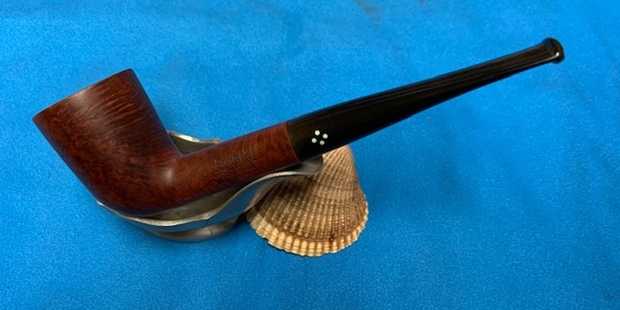
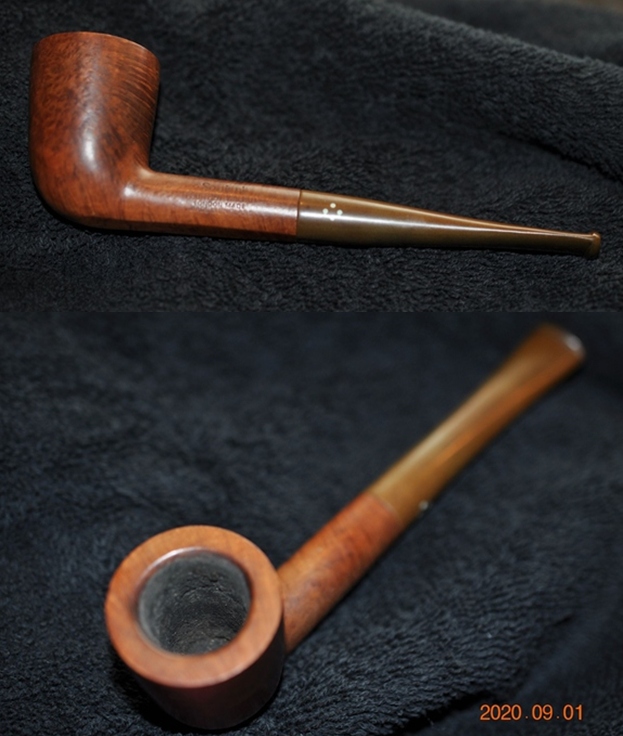
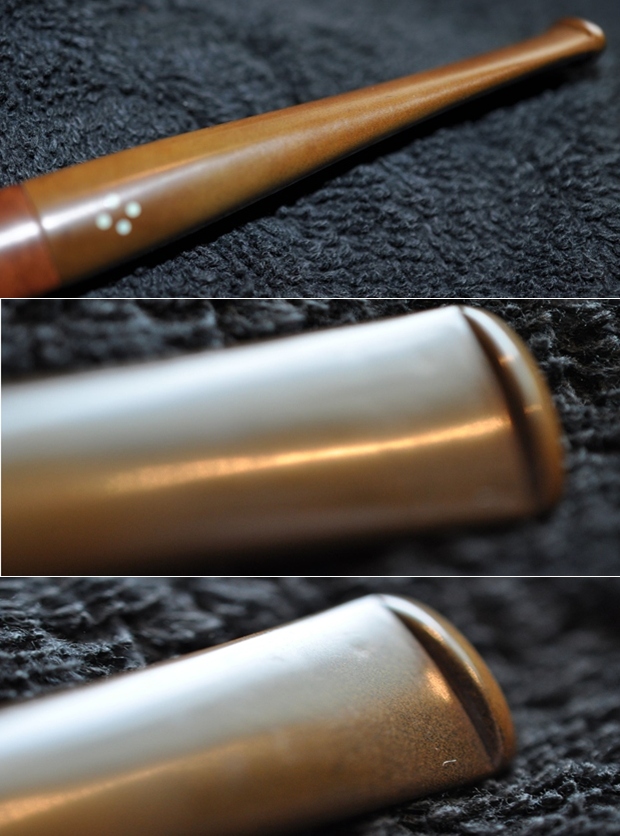
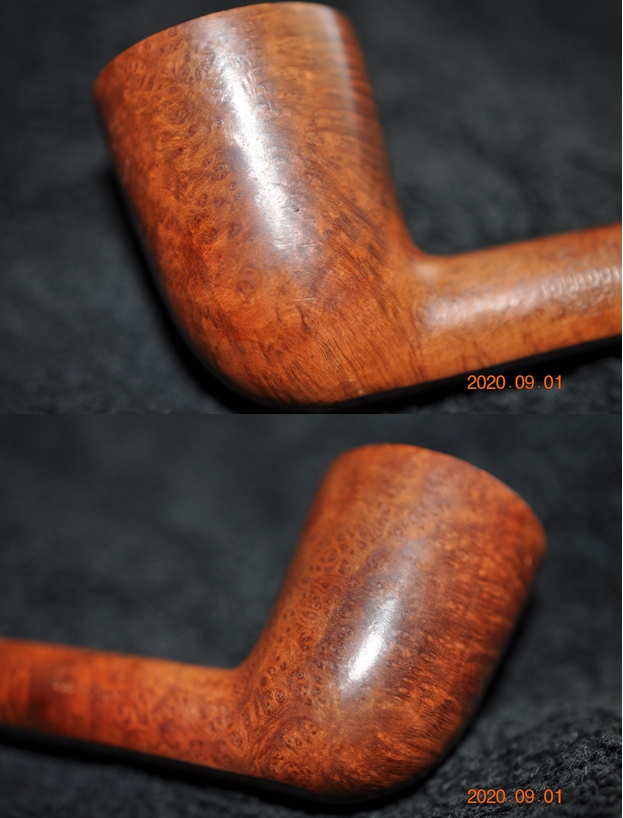
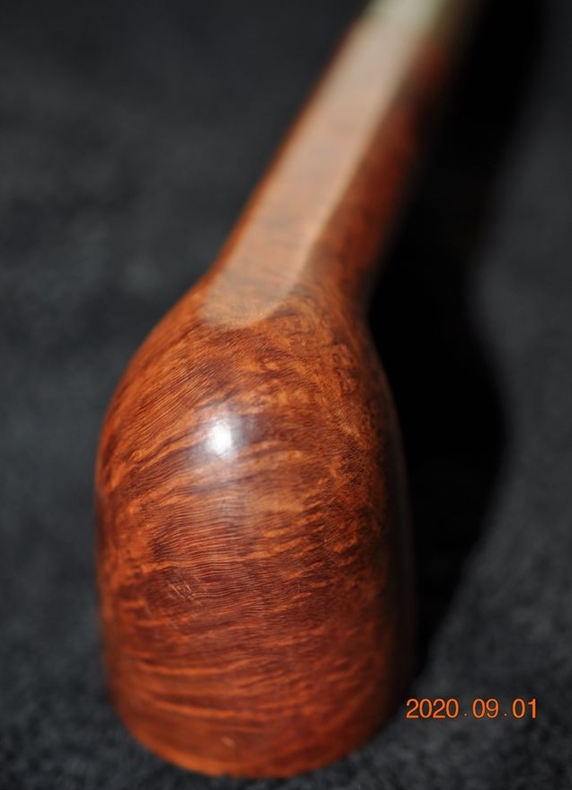
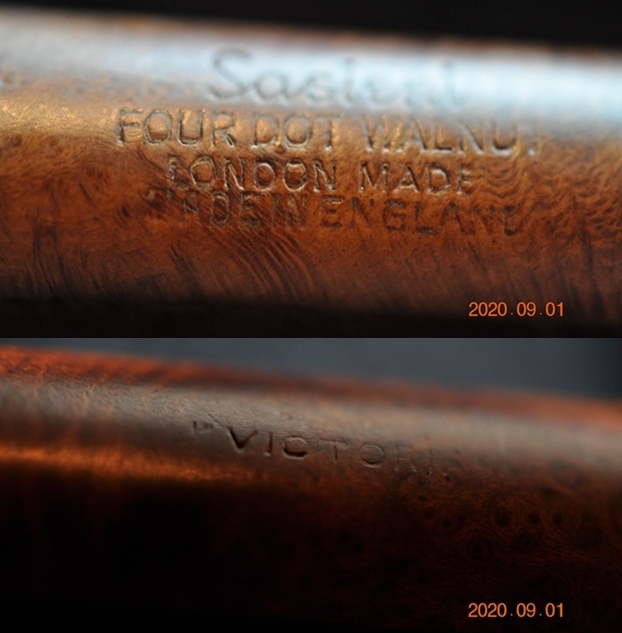
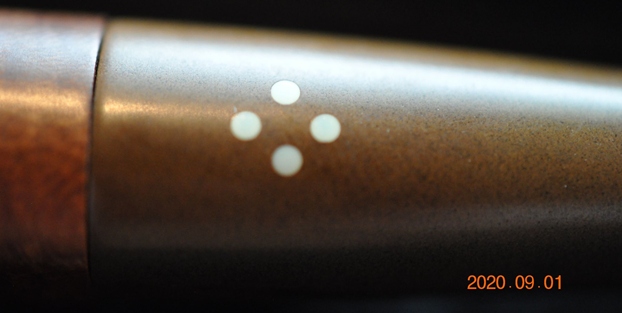
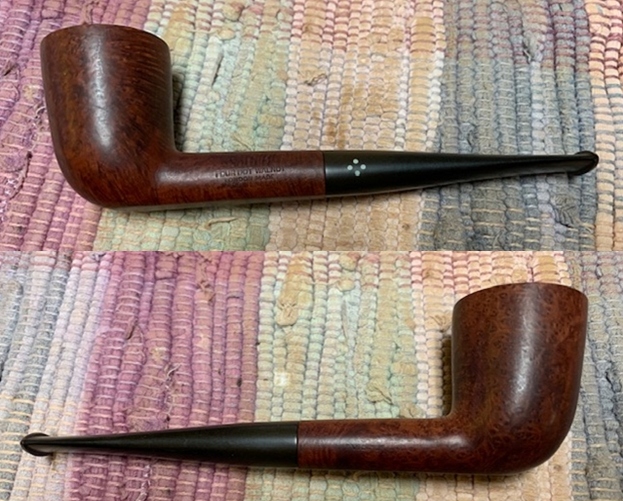
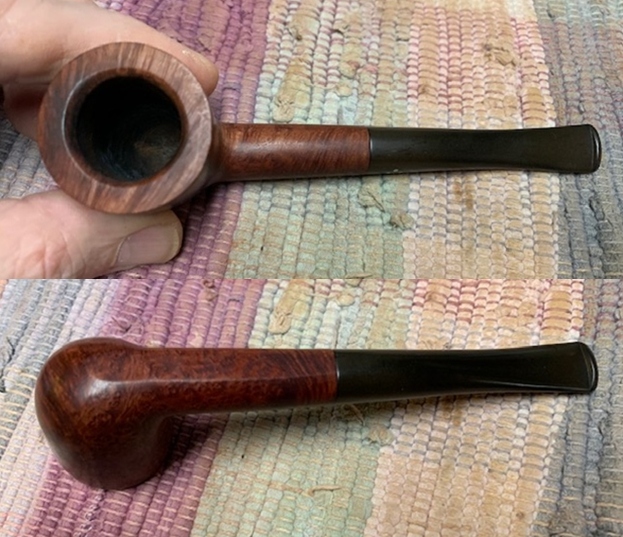
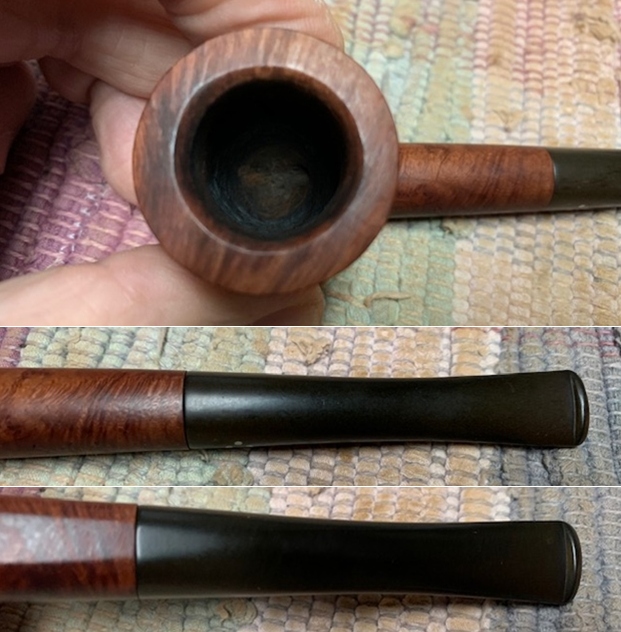
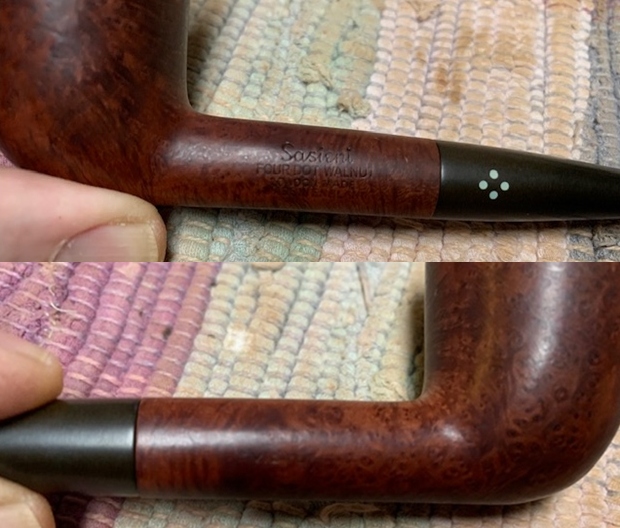
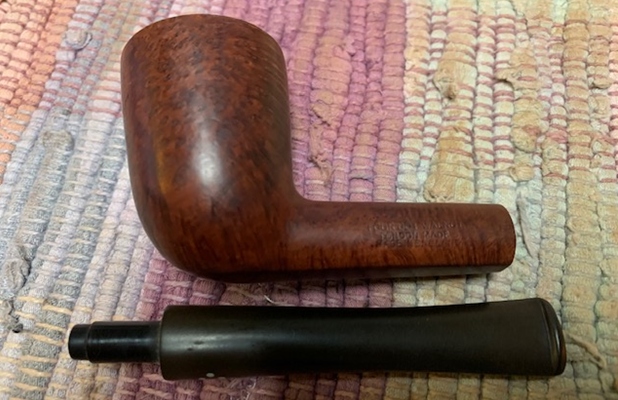
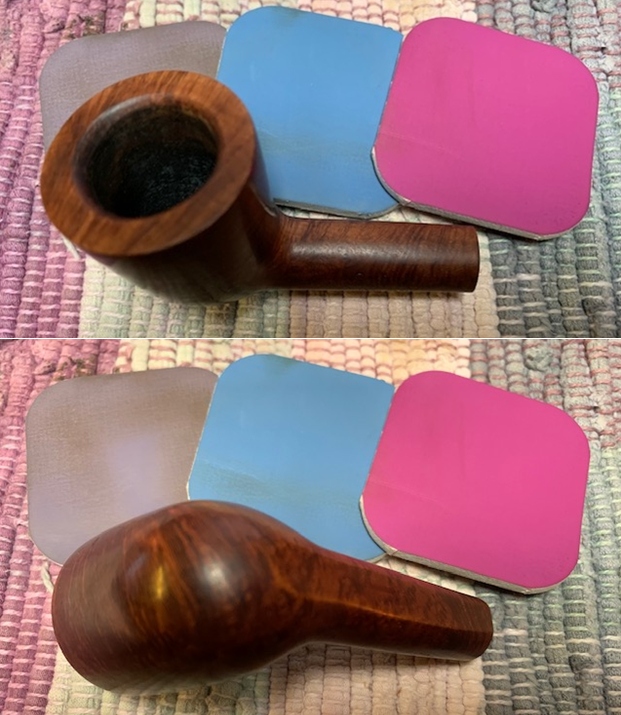
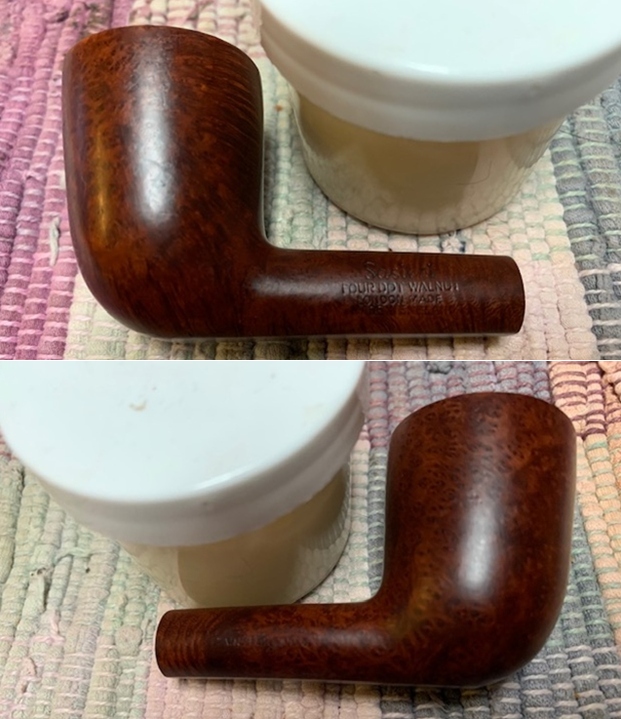
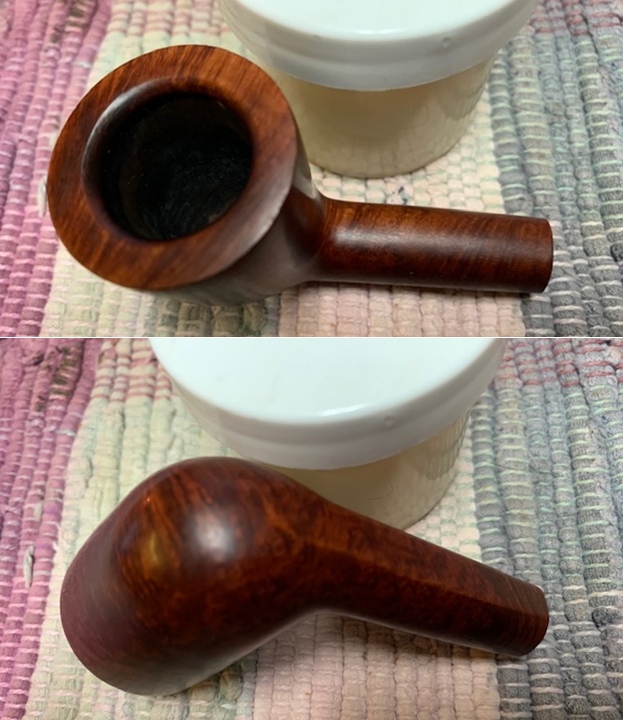
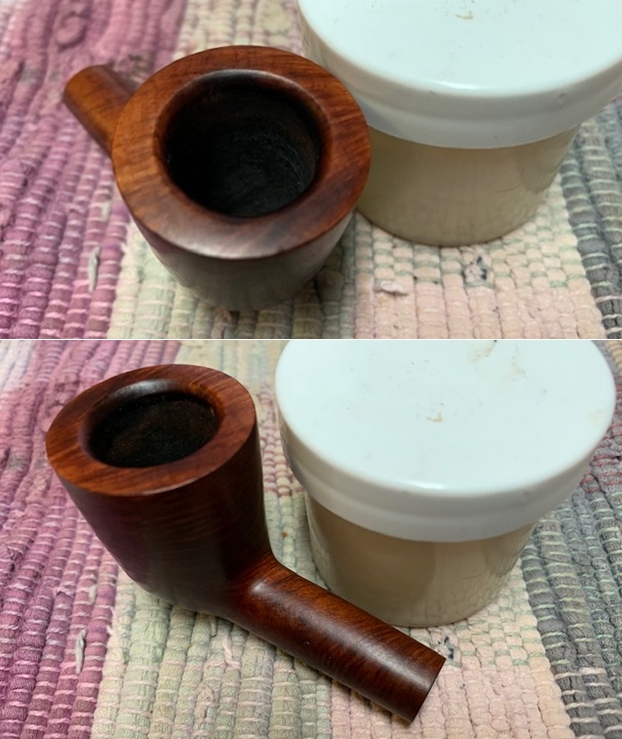
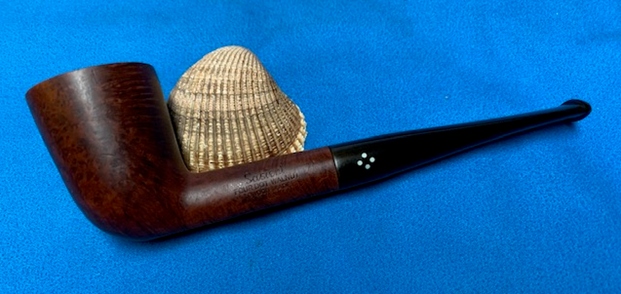
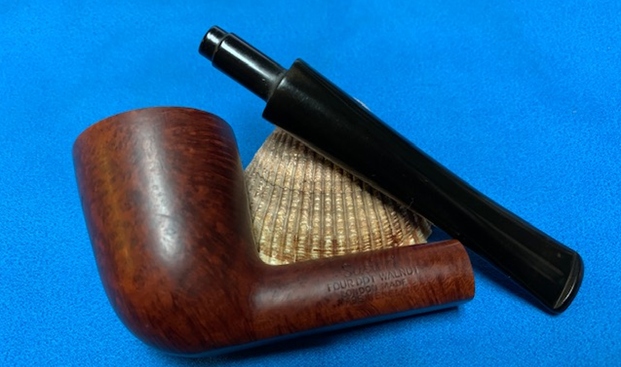
The next pipe on the work table came to us from a pipe hunt that Jeff and his wife recently did in Utah, USA. The pipe is an interesting looking Sasieni Dublin shaped pipe with a vulcanite taper stem. The pipe is well shaped and has a smooth finish that shows the grain around the bowl. The pipe is stamped on the left side of the shank and it reads Sasieni [over] Four Dot Walnut [over] London Made [over] Made in England. On the right side of the shank it is stamped “Victoria”. There was grime and oils ground into the smooth finish on the briar. The bowl was moderately caked with a light lava overflow on the beveled inner edge. The outer edge looks very good. The taper vulcanite stem was oxidized, calcified and had tooth chatter and marks on the top and underside near the button and on the button edge. There were four light blue dots on the left side of the taper in a diamond pattern. The pipe showed a lot of promise but it was very dirty. Jeff took some photos of the pipe before he started his cleanup work.   He took photos of the rim top and bowl to give a clear picture of the thickness of the cake and the inner edge of the rim. He also took photos of the top and underside of the stem. The photos show the overall condition of the stem. The stem had four light blue dots on the left side of the taper.  Jeff took photos of the sides and heel of the bowl to give a picture of what the briar looked like. It truly has some nice sandblasted grain around the bowl and shank.   The stamping on the sides of the shank is clear and readable and read as noted above.  The four light blue dots are in a diamond pattern as noted above.   I turned to Pipephil (http://www.pipephil.eu/logos/en/logo-sasieni.html) to get a quick view of the Sasieni Four Dot pipes. I did a screen capture of the site’s information on the Four Dot line. There was nothing on the “Victoria” pipe but the data provided by the site helped understand the stamping. It appears that the pipe I am working on is a Pre-Transition pipe (1946-1979). It is stamped Four Dot Walnut ( Walnut is the name for the rich finish). The stamp “Victoria” is the name of a town and is also the shape name for the Dublin.
I turned to Pipedia (https://pipedia.org/wiki/Sasieni) for a quick read.

Furthermore, by 1935 Sasieni began stamping pipes, based on the shape, with their own names, which were usually, but not always, English towns. For example, apples were stamped “Hurlingham”, bulldogs were “Grosvenor” or “Danzey”, and panels were “Lincoln”. One rare and interesting variation of this was the large bent, dubbed “Viscount Lascelles”. Even in this soft Sasieni market, these pipes regularly sell for $150 in their rare appearances in mailers…

…Somewhat later still, this was modified to reflect the finish, e.g. Four Dot Walnut, or Four Dot Natural. All these changes seem to have been made in the years between 1946 and 1950.

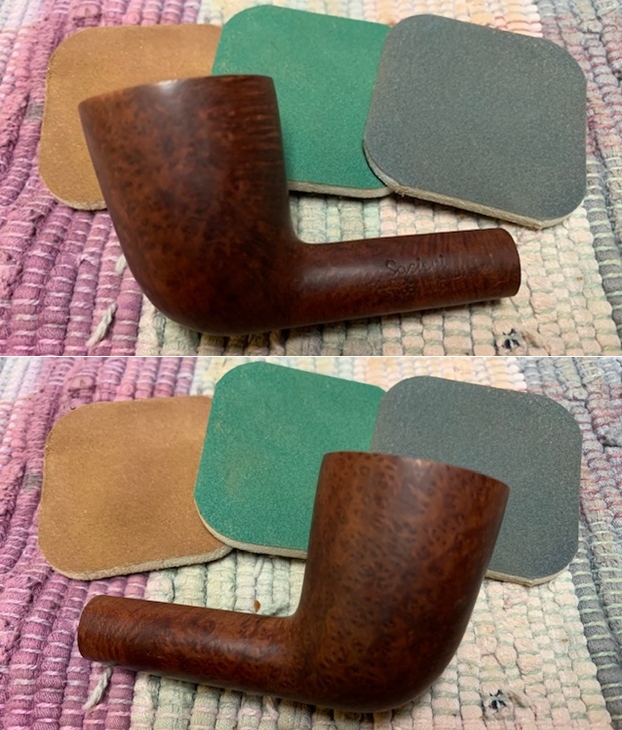
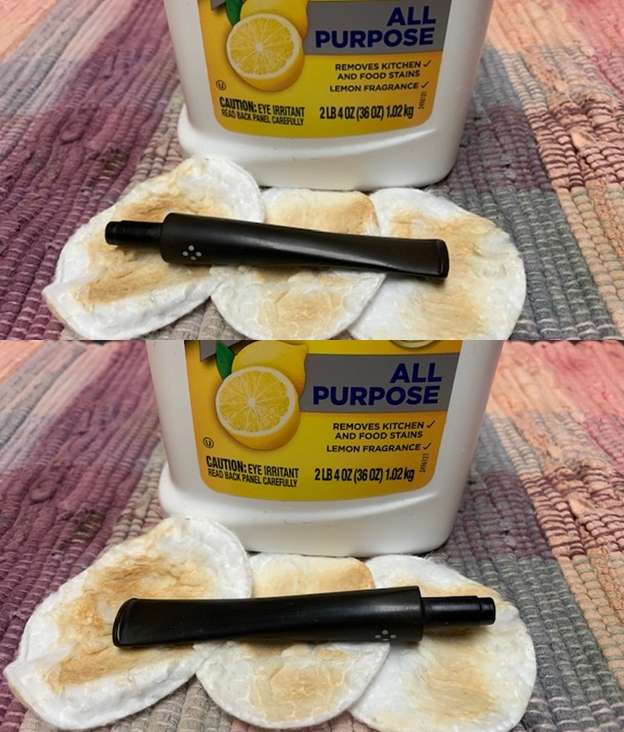
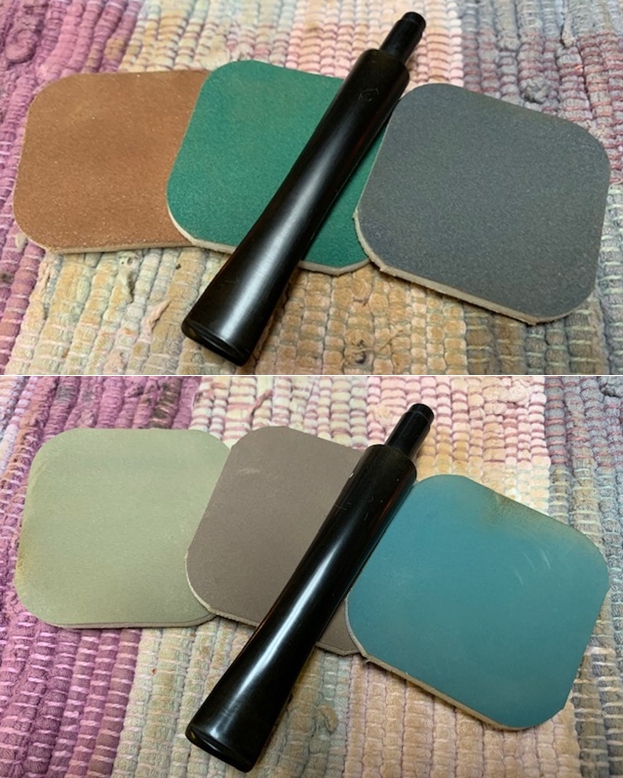
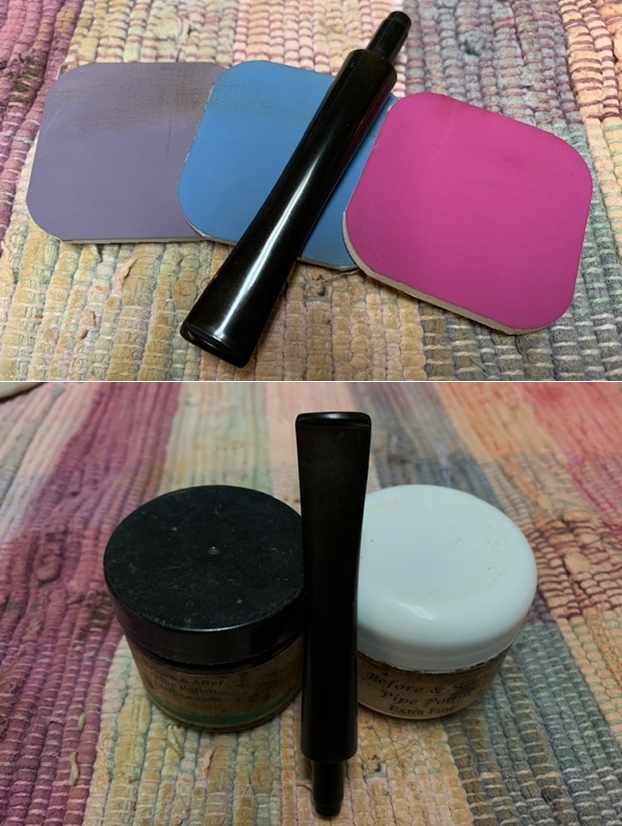
Jeff had cleaned up the pipe with his usual penchant for thoroughness. He reamed the pipe with a PipNet pipe reamer and removed the rest of it with a Savinelli Fitsall Pipe Knife.  He scrubbed the bowl with undiluted Murphy’s Oil Soap with a tooth brush. He rinsed it under running warm water to remove the soap and grime. He cleaned out the inside of the shank and the airway in the stem with alcohol, cotton swabs and pipe cleaners. He soaked the stem in a Before & After Deoxidizer bath and rinsed it off with warm water. I took photos of the pipe before I started my part of the restoration work. The rim top cleaned up really well. The rim top, inner and outer edge of the bowl is in excellent condition. The stem surface looked very good with a few tooth marks and chatter on both sides near the button. There was also some remaining oxidation.  The stamping on the shank sides is clear and readable. It is stamped as noted above.  I removed the stem and took a photo of the pipe to give a sense of the whole. The taper stem is nice and the photo gives a sense of what the pipe looks like. I started my work on the pipe by polishing the briar with micromesh sanding pads. I dry sanded the bowl with 1500-12000 grit pads and wiped the bowl down with  damp cloth after each pad. The briar really took on a shine by the final pads. I rubbed the bowl and shank down with Before & After Restoration Balm. I worked it into the surface of the bowl sides and shank with my fingertips to clean, enliven and protect the briar. I let the balm sit for about 10-15 minutes and buffed with a cotton cloth to raise the shine. The grain came alive and the fills while visible look better than when I began.   I set the bowl aside and turned to work on the stem. I scrubbed the stem with Soft Scrub All Purpose cleanser to remove the remaining oxidation. I have found that a good scrub with this product removes the oxidation left behind by the other methods. You can see it on the cotton pads underneath the stem.  I polished the vulcanite stem with micromesh sanding pads – 1500-12000 grit pads. I wiped it down with Obsidian Oil after each sanding pad. I used Before & After Pipe Polish – both Fine and Extra Fine to further polish the stem.      This Sasieni Four Dot Walnut Victoria Dublin is a great looking pipe now that it has been restored. The sandblasted finish gives the shape an elegant look. The flow of the bowl and stem are well done make for a great hand feel. I put the stem back on the bowl and carefully buffed the pipe with Blue Diamond on the buffing wheel using a light touch on the briar. I gave the bowl multiple coats of Conservator’s Wax and the stem multiple coats of carnauba wax on the buffing wheel. I buffed the entire pipe with a clean buffing pad. I hand buffed the pipe with a microfiber cloth to deepen the shine. The finished Sasieni Four Walnut Victoria fits nicely in the hand and feels great. Give the finished pipe a look in the photos below. The dimensions of the pipe are Length: 5 ½ inches, Height: 1 ¾ inches, Outside diameter of the bowl: 1 3/8 inches, Chamber diameter: ¾ of an inch. The weight of the pipe is 30grams/1.06oz. It is a great looking and light weight pipe. I will be putting it on the rebornpipes store shortly. If you are interested in adding this pipe to your collection send me a message or an email. Thanks for reading this blog and my reflections on the pipe while I worked on it. There are many more to come!

Reworking one of my Early Restorations – a GBD New Standard 91327 Lovat


Blog by Steve Laug

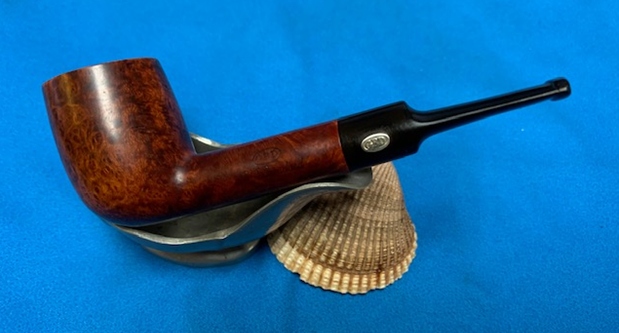
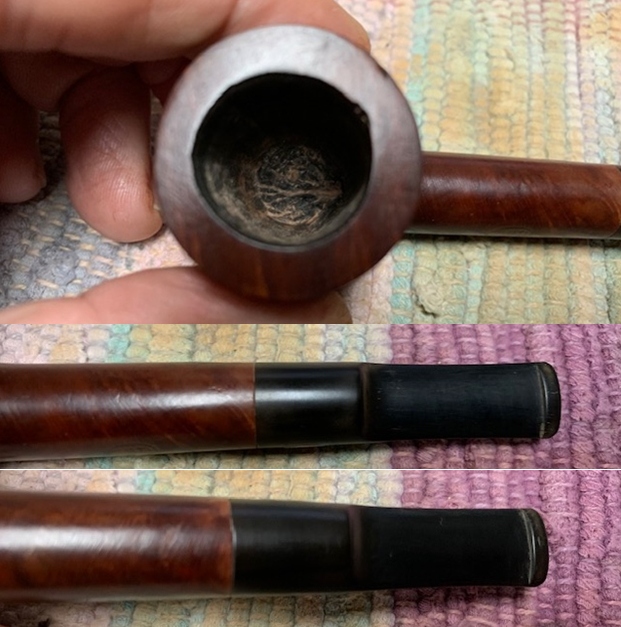
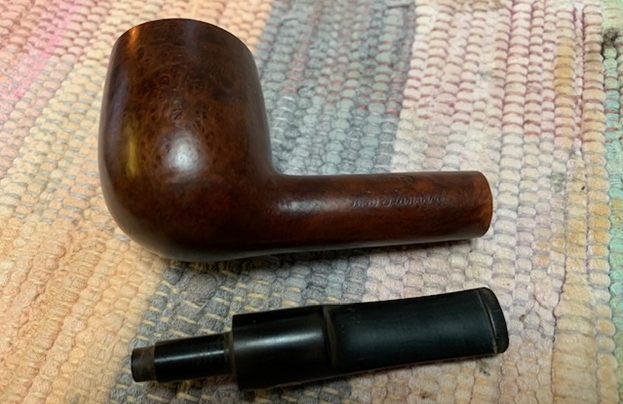
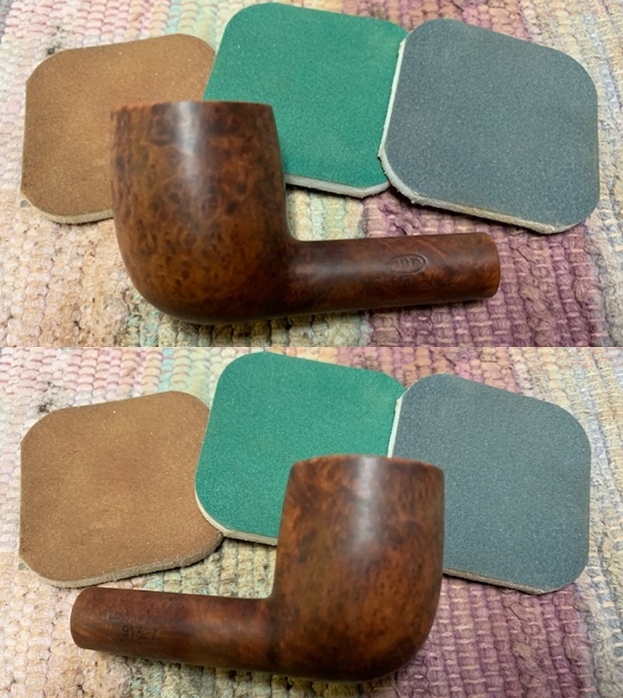
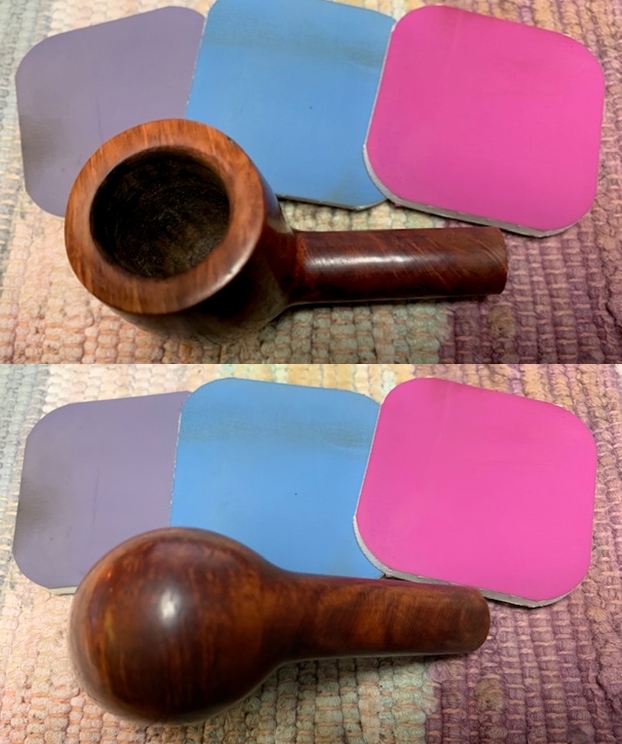
I restored this older GBD New Standard Lovat probably 15-20 years ago. I had not been working on pipes for too long – maybe a year or two. I really had no idea about staining or reshaping a stem or how to make the grain on the pipe like it must have when the pipe first came out. I was going through a box of pipes that I was getting rid of and came across this one in the bottom of the box. Looking at it closely I decided to take it on again and rework it. The finish was worn, the outer edge of the rim was in rough condition with chips out of it and the rim top had been topped but I had not even bothered to polish out the scratches from the sandpaper. The bowl was out of round and the inner edges were worn and had some nicks and gouges. The shank end was lighter in colour than the rest of the bowl. I had not even bothered to match the colours… good to see that I have still been learning. The bowl and shank were very clean so at least I had done that well back then. The stem still had some oxidation around the button. It had a lot of potential and I really wanted to see if I could bring it out with a bit more work. Time would tell!

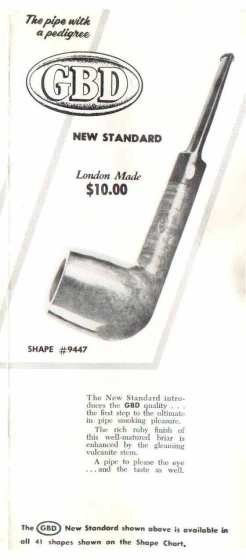
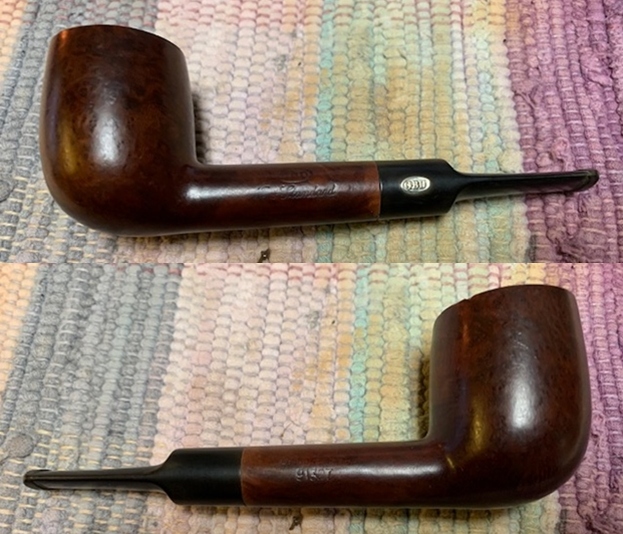
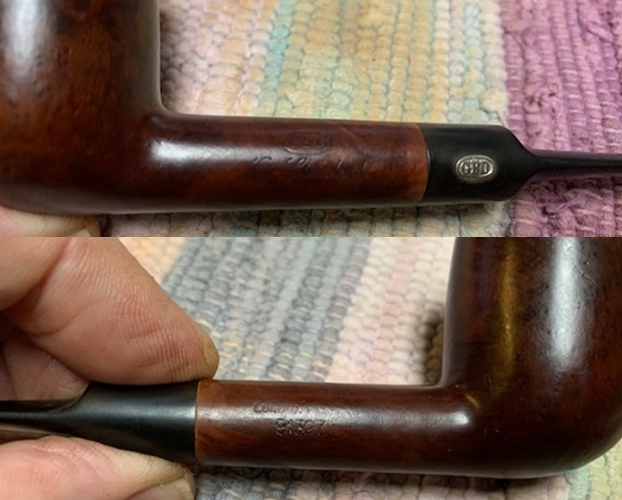
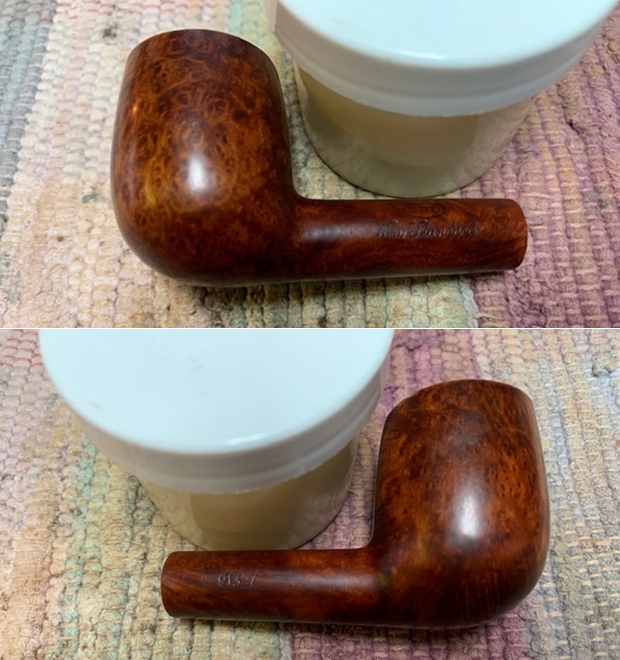
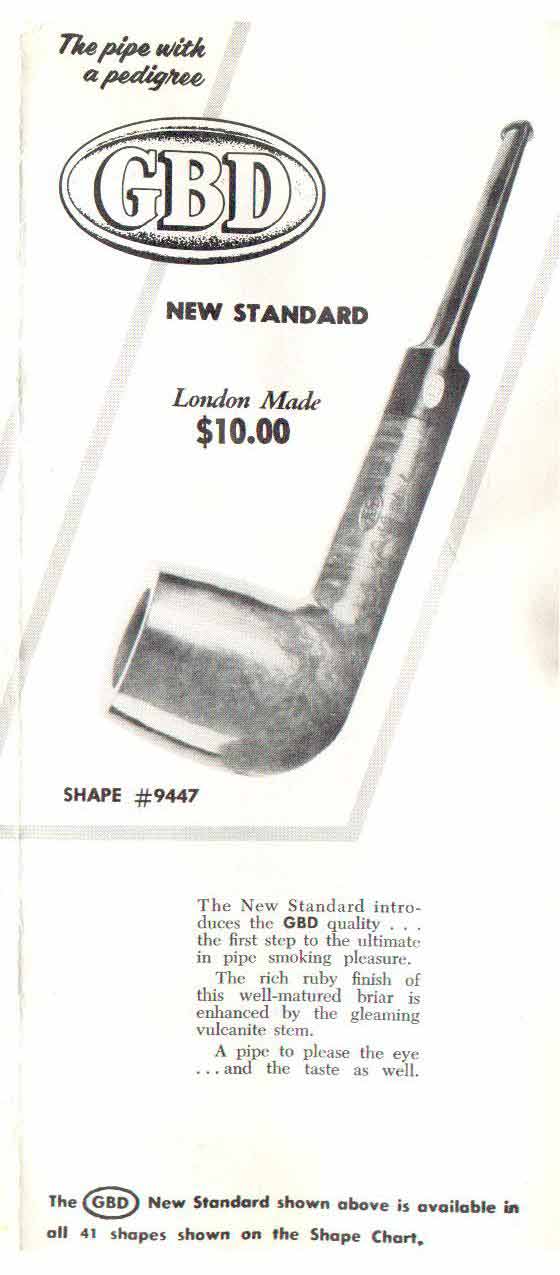
The petite pipe is stamped GBD in an oval [over] New Standard on the left side of the shank and on the right side of the shank it reads London England [over] 91327 (shape number). I found that the New Standard was made in  England. It originally had a smooth finish with brown staining in what was called a “tobacco brown” finish. The shape number is one that I cannot find listed anywhere so I am not sure what to make of that but it is a neat little pipe. I have often found shape numbers on GBD pipes that are not on the list of known shape I did a quick look on Pipedia and found the flyer to the left that described the New Standard London Made Pipe (https://pipedia.org/images/b/b8/GBD_1961Flyer_NewStandard_Shape9447.jpg)

I took photos of the pipe when I took it out of the box before I started reworking it. You can see the overall look of the pipe at this point in the process. As you look at the photos of the pipe pay attention to the flaws in the previous restoration of this pipe. What do you see? As I work over the pipe let me know if I caught the things that you saw. Thanks for reading through this chronicle of a reworked restoration.

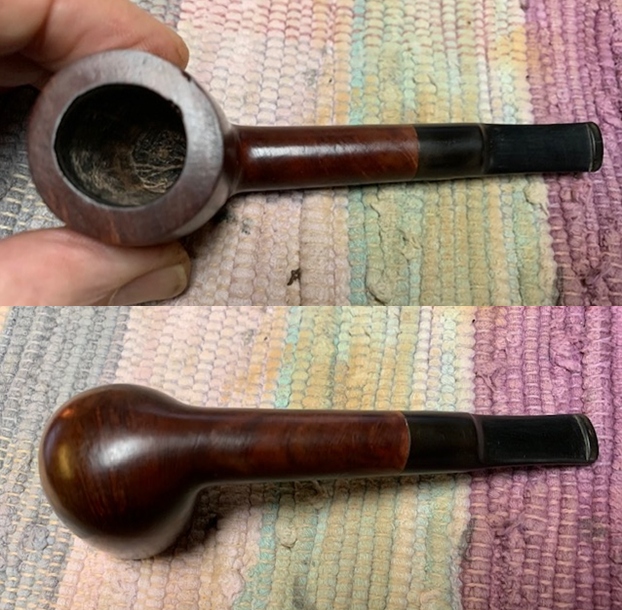
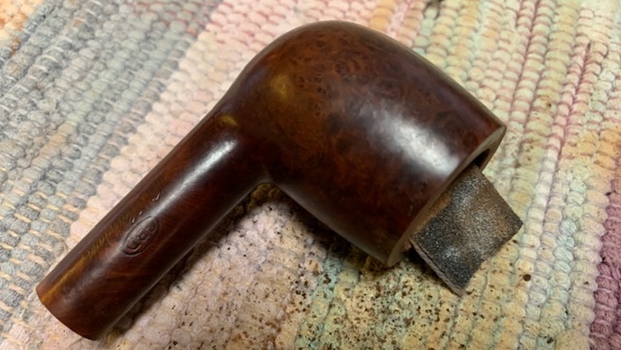
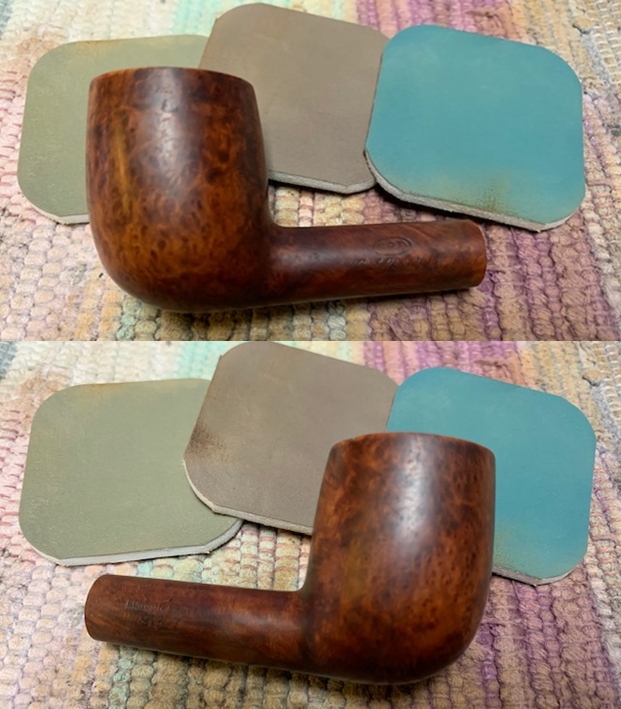
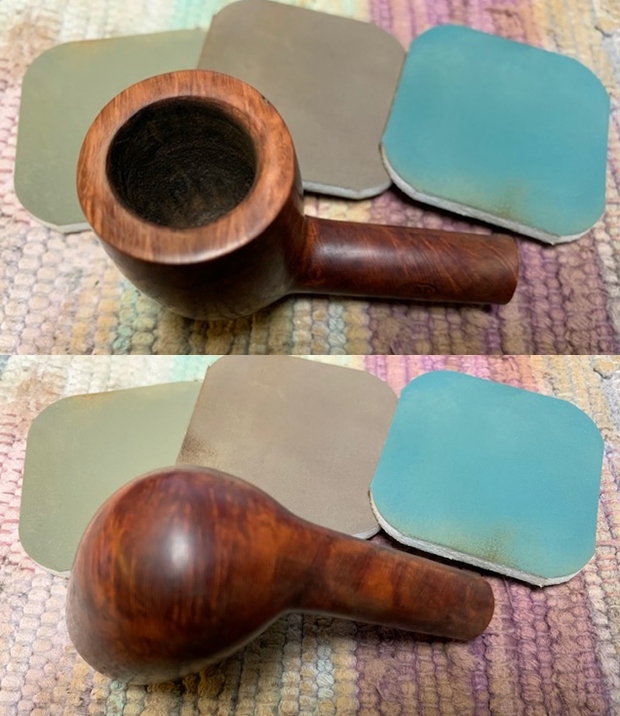
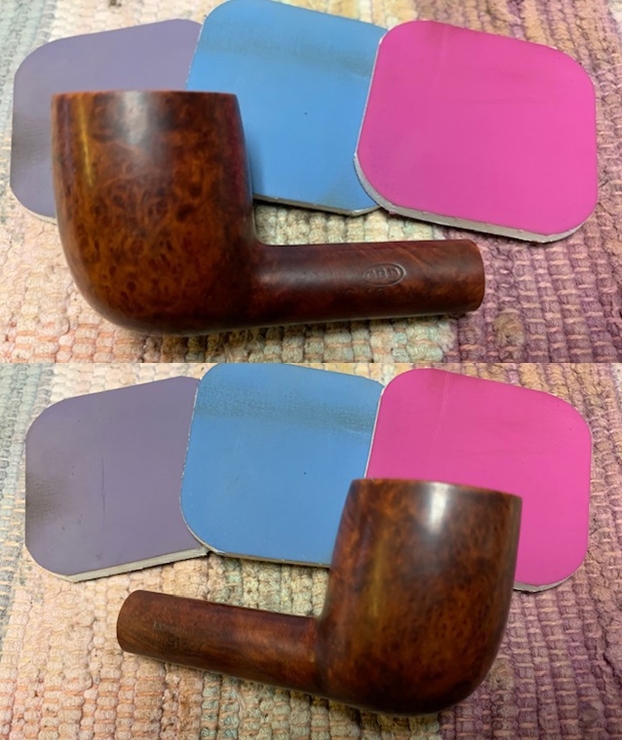
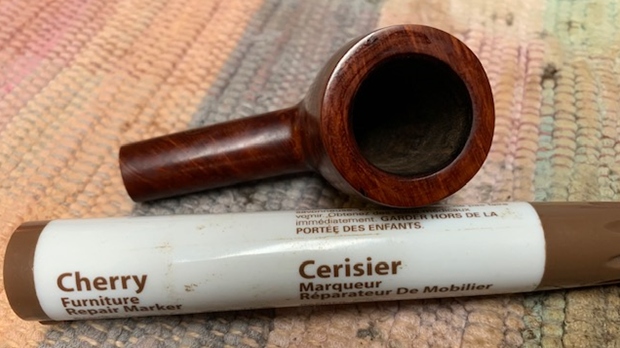
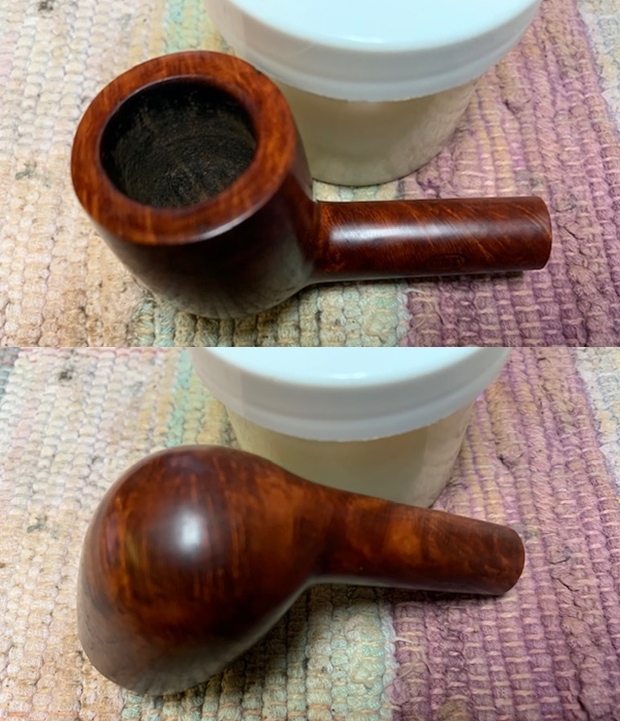
I took photos of the rim top and bowl to give a clear picture of the damage to the rim top and edges of the bowl that I had not dealt with before. There were large nicks out the inner edge on the front and the rear of the bowl. There was also a chip out of the outer edge on the right rear of the bowl. You cannot see it from these photos but the rim top is not smooth and has a lot of sanding scratches that I did not bother removing. I took photos of the top and underside of the stem to show the remaining oxidation on the topside and underside near the button and at the saddle.  The stamping on both sides was faint but readable. It read as noted above.I removed the stem from the shank and took a photo of the pipe.I reworked and reshaped the edges of the bowl with a folded piece of 220 grit sandpaper to remove the damage and to bring it back to round. I gave it a slight bevel that will become obvious in the photos of the polishing process. (I forgot to take a photo of the rim top before I started the process of polishing it.)To even the stain colour around the bowl and make the grain stand out more clearly I polished the briar with micromesh sanding pads – dry sanding with 1500-12000. I wiped the bowl down with a damp cloth after each pad. Note the rim top and you can see the change to the inner edge worked above. I used a Cherry stain pen to touch up the sanded edges and top of the rim and blend them into the rest of the bowl.I rubbed the bowl and shank down with Before & After Restoration Balm. I worked it into the surface of the bowl sides and shank with my fingertips to clean, enliven and protect the briar. I let the balm sit for ten minutes and then buffed it with a cotton cloth to raise the shine. The grain came alive and the finish looked rich. I polished the vulcanite stem with micromesh sanding pads – 1500-12000 grit pads. I wiped it down with Obsidian Oil after each sanding pad. I used Before & After Pipe Polish – both Fine and Extra Fine to further polish the stem.  I am pretty happy with the upgrade to this GBD New Standard 91327 Lovat. The rim top looks far better and the finish is now uniform and reveals the grain really well. The stem is clean and no longer has residual oxidation in the crease at the button or the saddle.  I put the stem back on the bowl and carefully buffed the pipe with Blue Diamond on the buffing wheel using a light touch on the briar. I gave the bowl and the stem multiple coats of carnauba wax on the buffing wheel and followed that by buffing the entire pipe with a clean buffing pad. I hand buffed the pipe with a microfiber cloth to deepen the shine. The finished small GBD Lovat fits nicely in the hand and feels great. Give the finished pipe a look in the photos below. The dimensions of the pipe are Length: 5 inches, Height: 1 ½ inches, Outside diameter of the bowl: 1 ¼ inches, Chamber diameter: ¾ of an inch. The weight of the pipe was 29g/1.02oz. I will be putting it on the rebornpipes store shortly. Thanks for reading this blog and my reflections on the pipe while I worked on it. There are many more to come!  

Cleaning up a new brand to me – a Mullins & Westley Covent Garden 45 Bent Billiard


Blog by Steve Laug

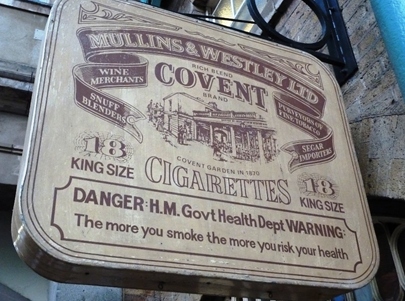
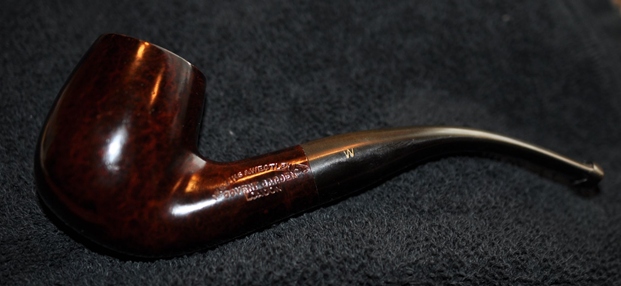
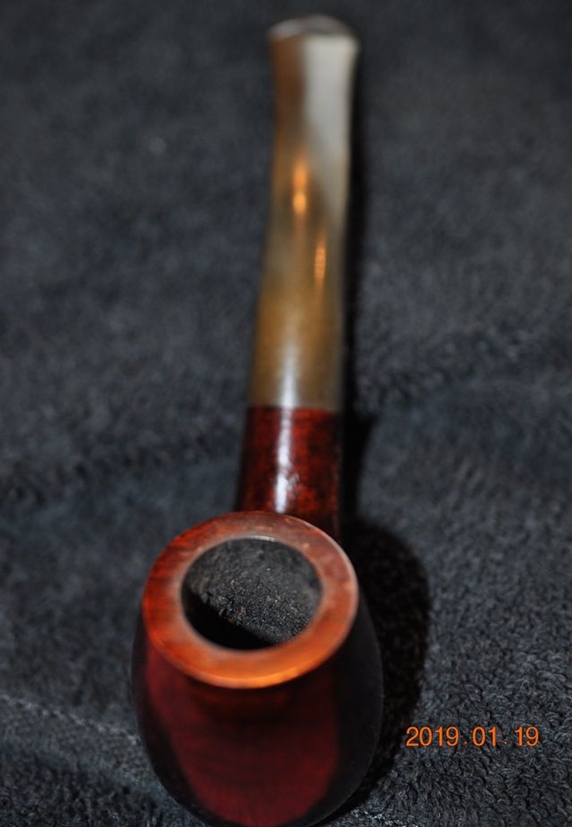
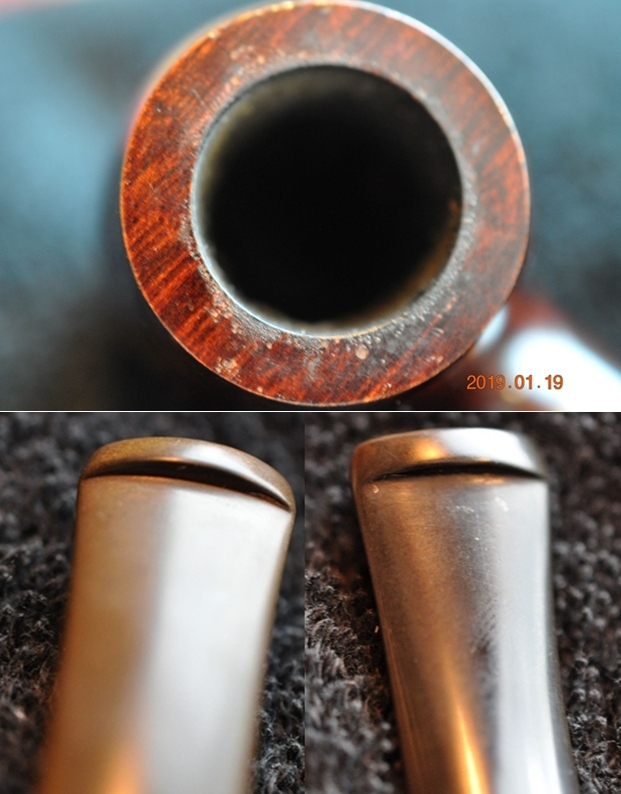
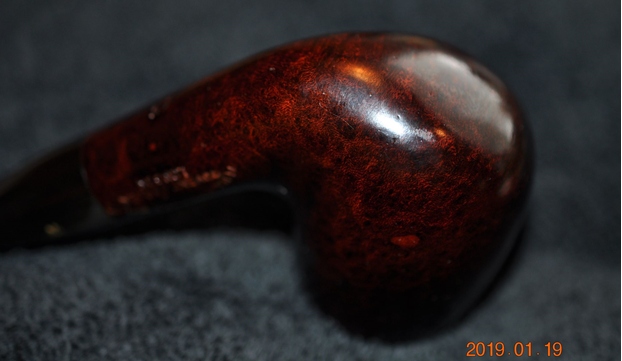
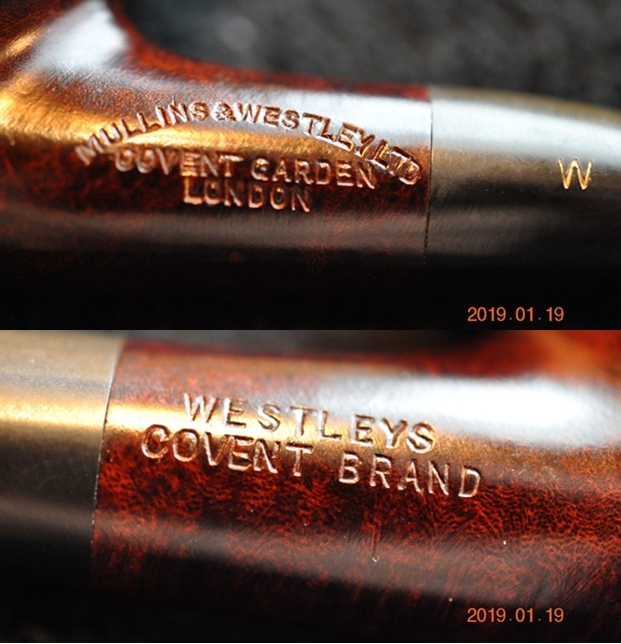
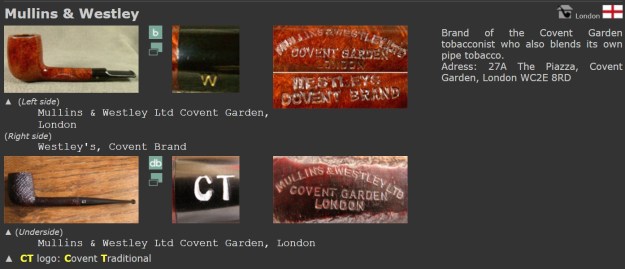
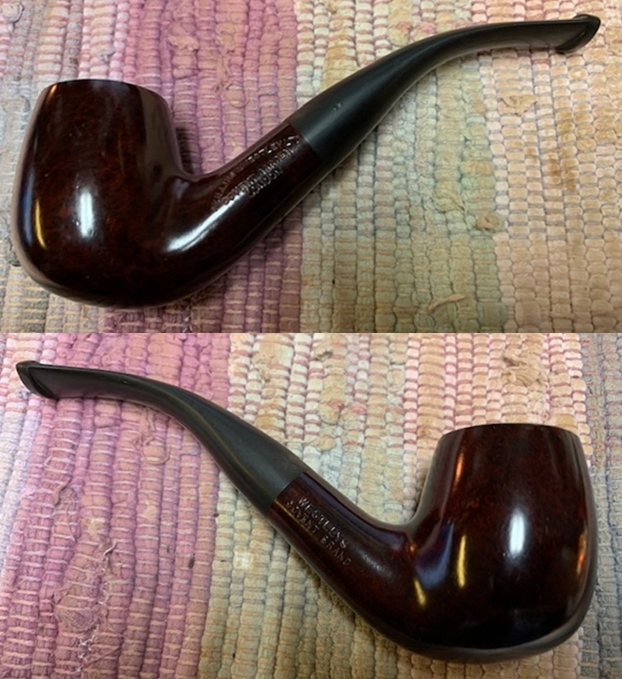
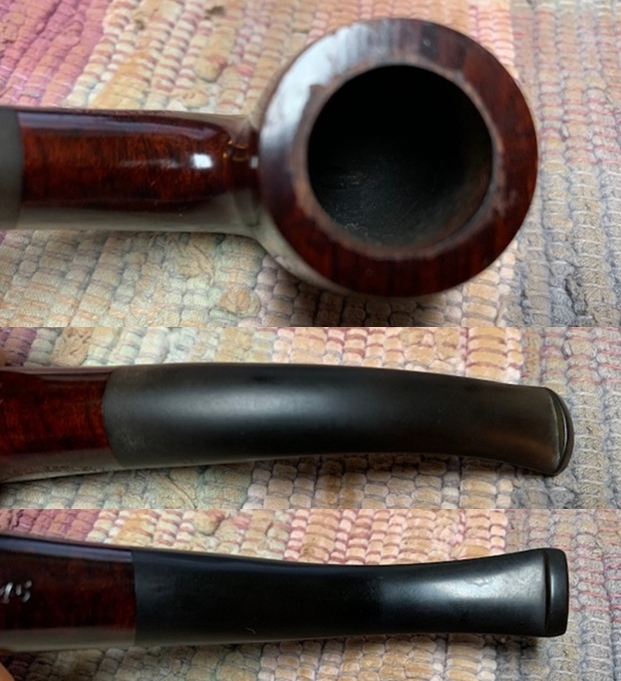
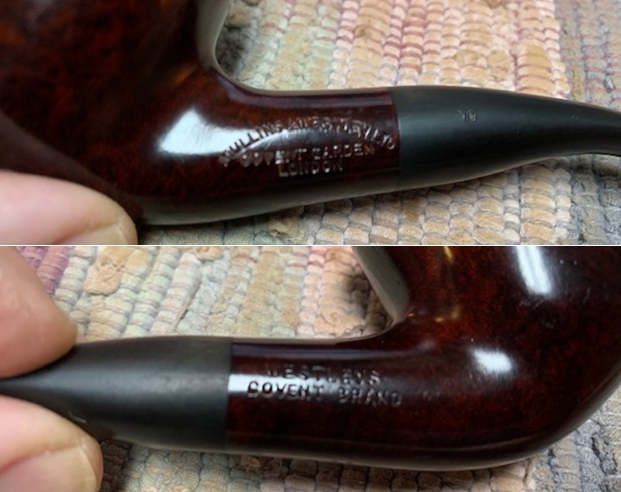
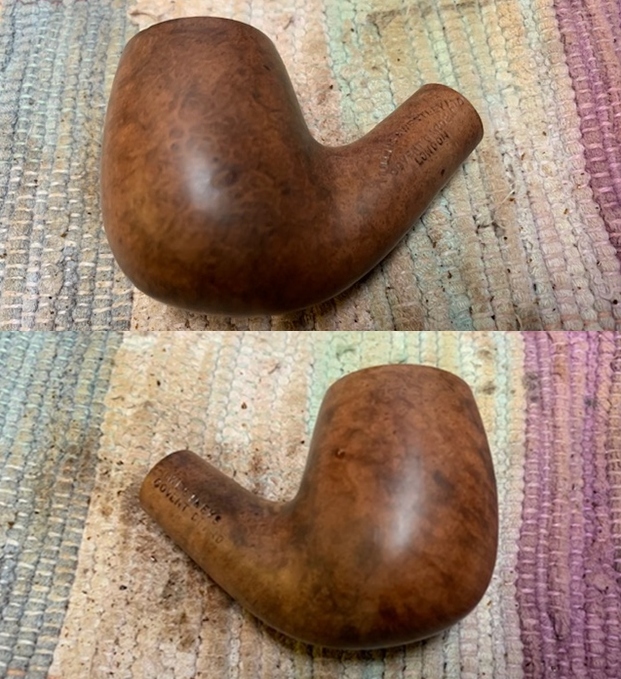
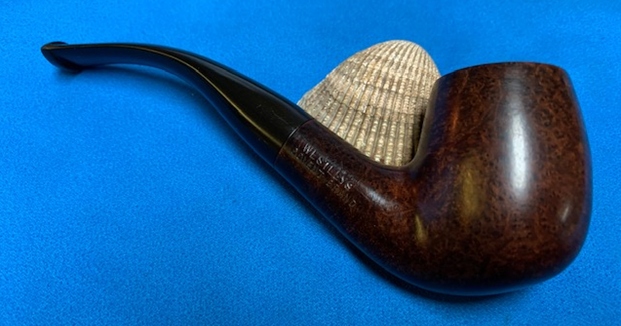
The next pipe on the work table came to us from an online auction from Ancram, New York, USA.  It is a bent Billiard that is stamped on the left side of the shank and read Mullins and Westley LTD. [arched over] Covent Garden [over] London. On the right side it is stamped Westleys [over] Covent Brand. On the underside of the shank the shape number 45 was stamped near the shank end. The finish was very shiny and the varnish was nicked and scratched on the sides and heel of the bowl. The varnish on the rim top was peeling on the inner edge of the bowl. The bowl was heavily caked and there was a light and spotty lava overflow on the rim top. The inner and outer edges of the rim appeared to have no damage. The taper stem had a W stamped on the left side. It had light tooth chatter and marks on the top and underside near the button. It had promise but it was very dirty. Jeff took some photos of the pipe before he started his cleanup work.   He took photos of the rim top and bowl to give a clear picture of the thickness of the cake and tobacco debris as well as the spotty lava coat on the top. He also took photos of the top and underside of the stem to show the oxidation and the chatter and tooth marks on the topside and underside near the button.  Jeff took a photo of the heel of the bowl to give a picture of the condition of the finish on the pipe. You can seep the nicks and spots where the varnish is damaged. There is some nice grain under the varnish coat.The stamping on the sides of the shank is clear and readable and read as noted above. Since I had never heard of the Mullins & Westley Brand or as the right side of the shank read the Westleys Covent Brand I turned to Pipephil’s site to see if I could garner any helpful information on the company and the maker. I found a listing for the brand and actually learned that it was a tobacco shop in Covent Garden, London (http://www.pipephil.eu/logos/en/logo-m8.html). I have included a screen capture of the section the brand. I quote a note that appeared in the sidebar.

Brand of the Covent Garden tobacconist who also blends its own pipe tobacco. Address: 27A The Piazza, Covent Garden, London WC2E 8RDI turned to Pipedia (https://pipedia.org/wiki/British_Pipe_Brands_%26_Makers_M_-_Q) and found the listing for the brand. There was not an article but it did confirm the information on PipePhil’s site. I quote:

Mullins & Westley Tobacconists; 27A The Piazza, Covent Garden, London. Today probably most famous for their snuff tobaccos. Private label pipes made by various European brands.

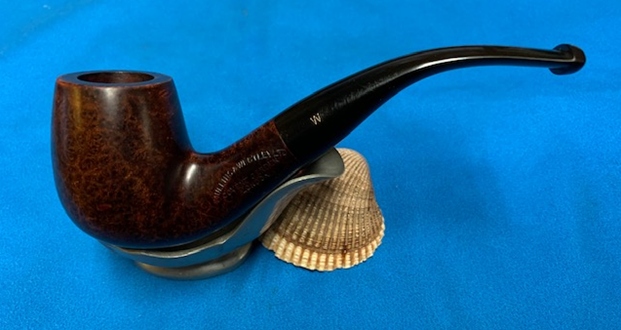
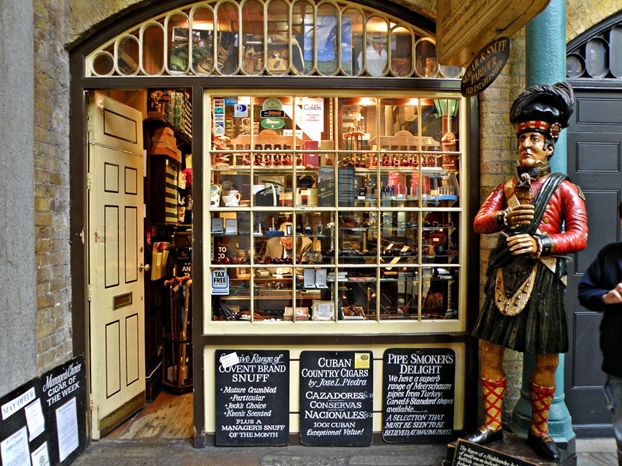
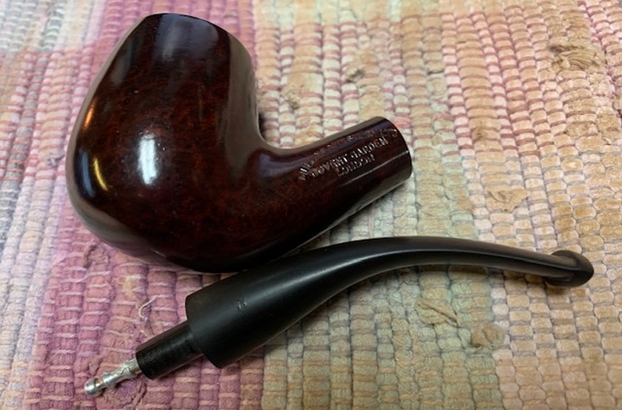
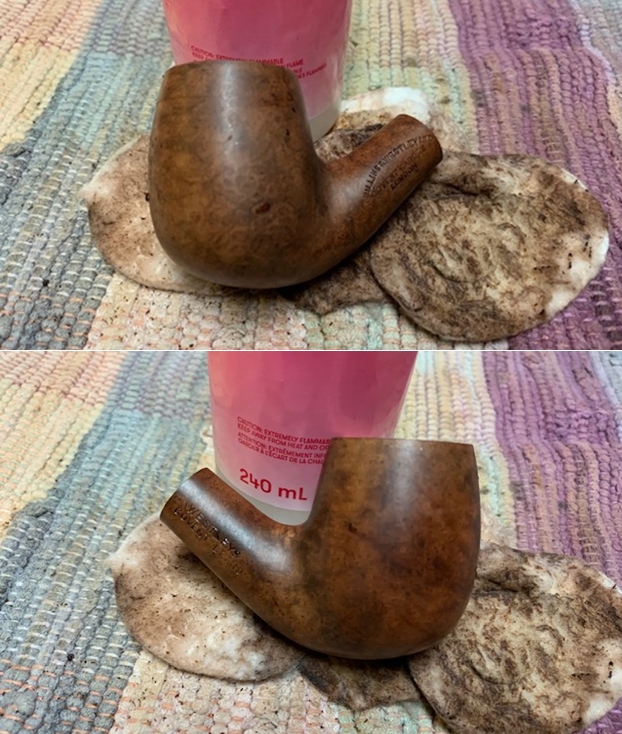
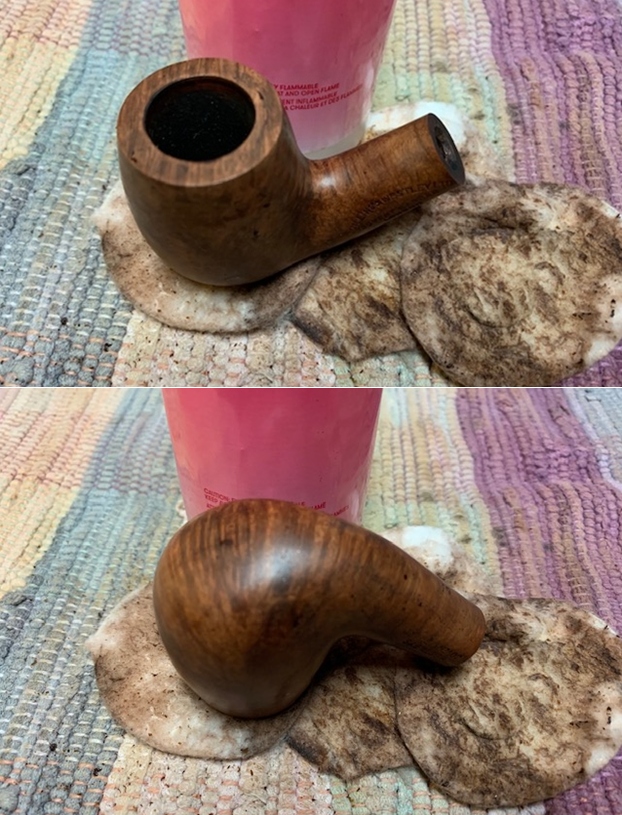
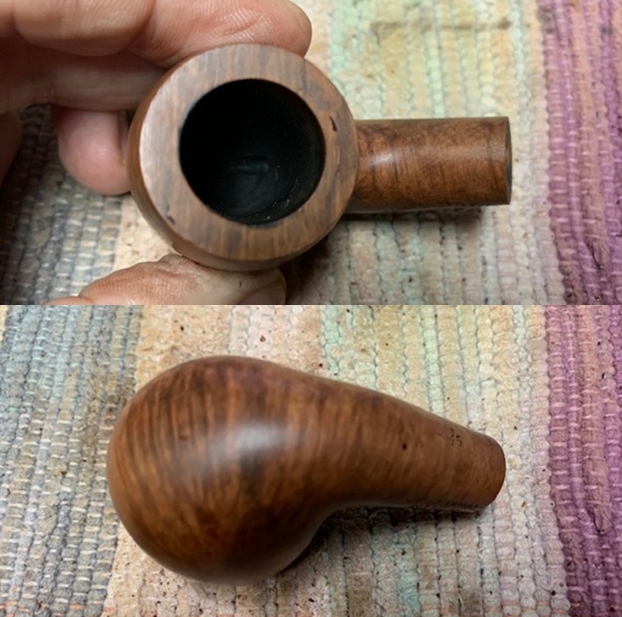
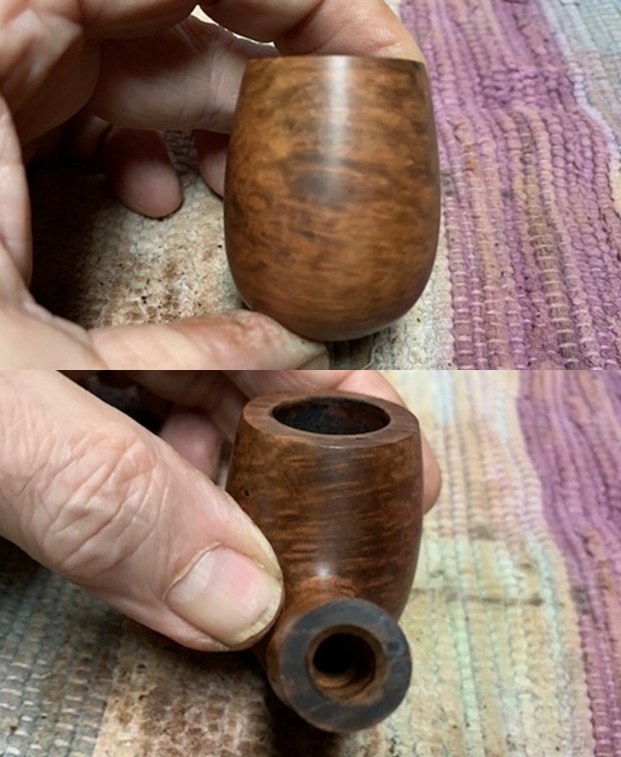
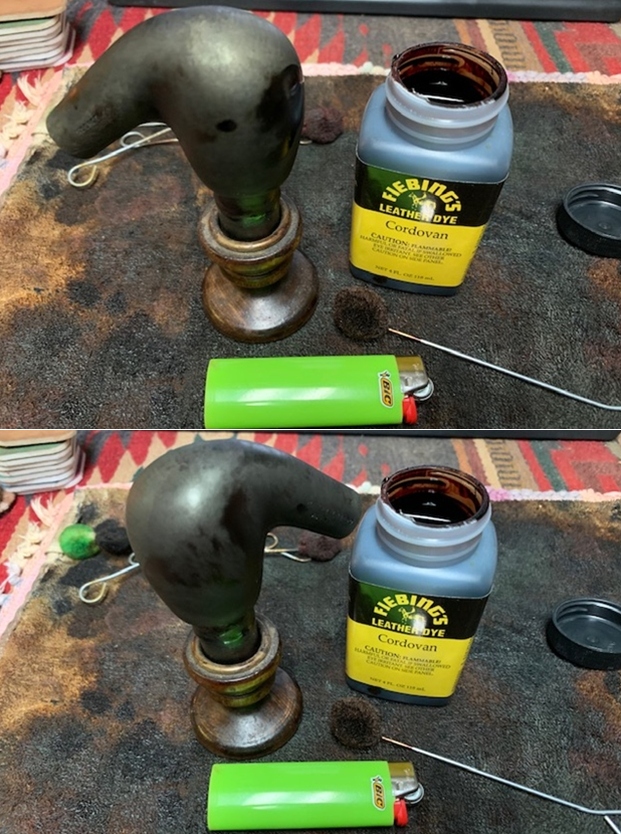
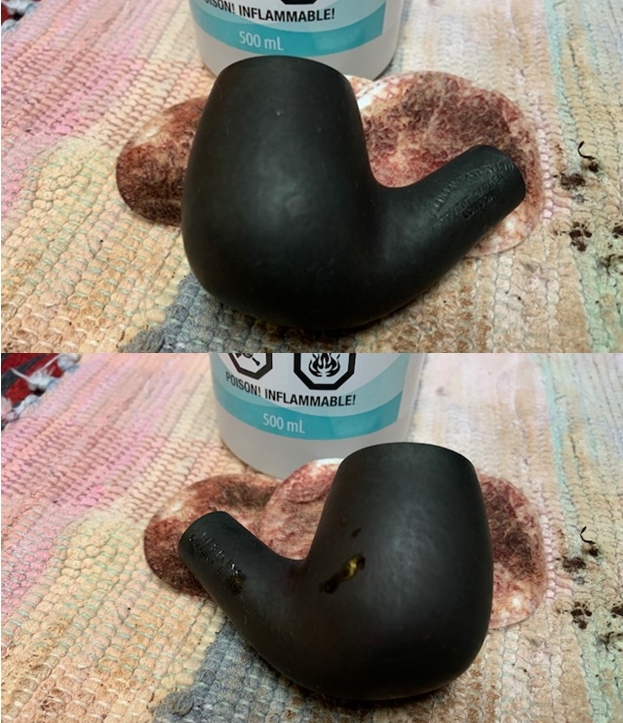
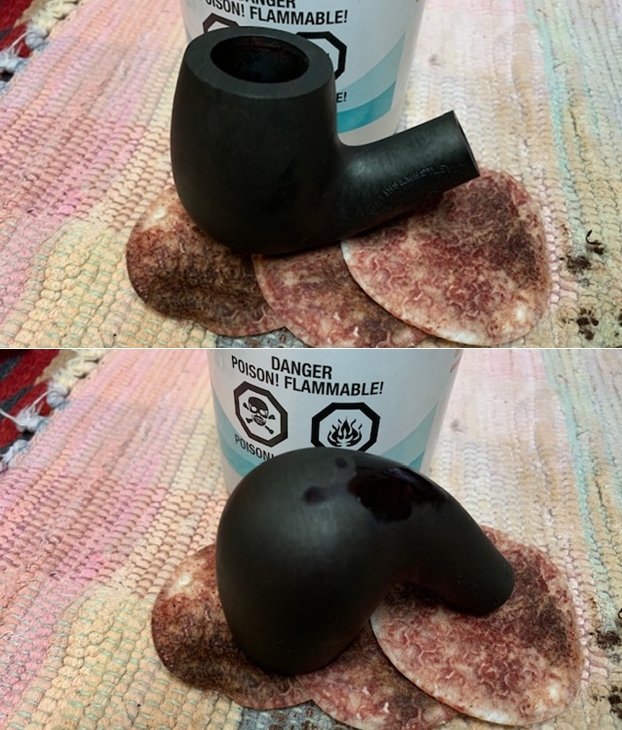
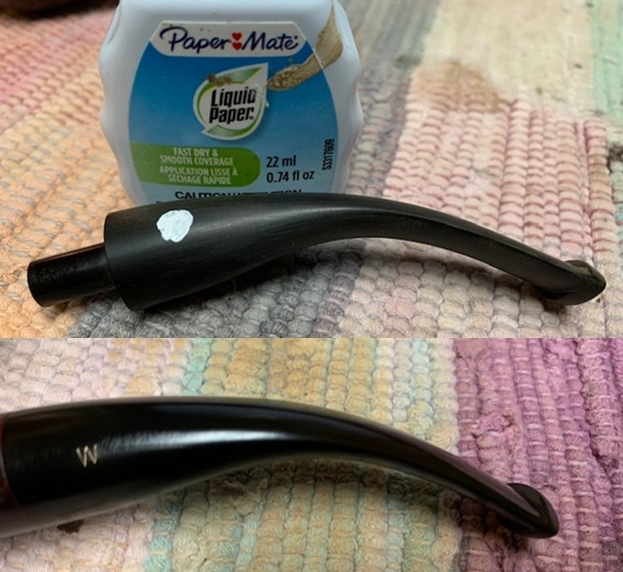
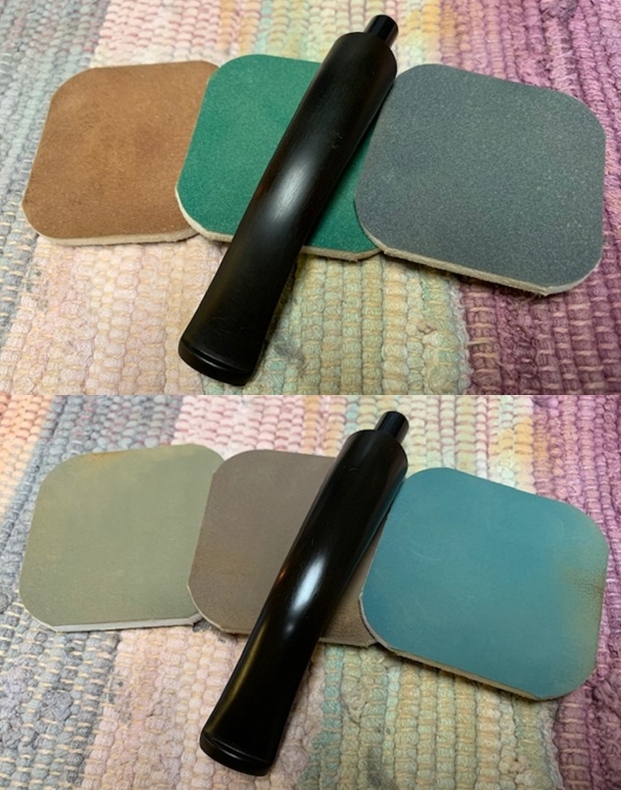
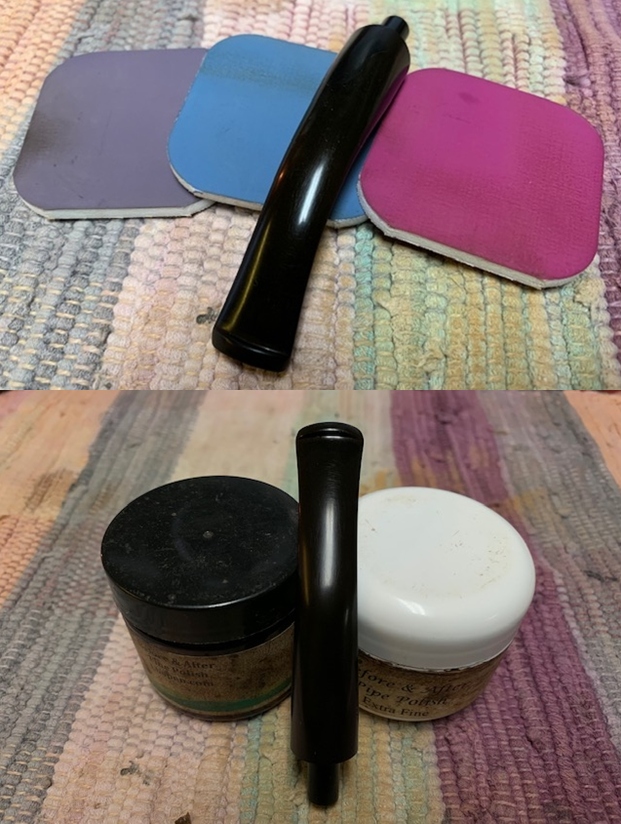
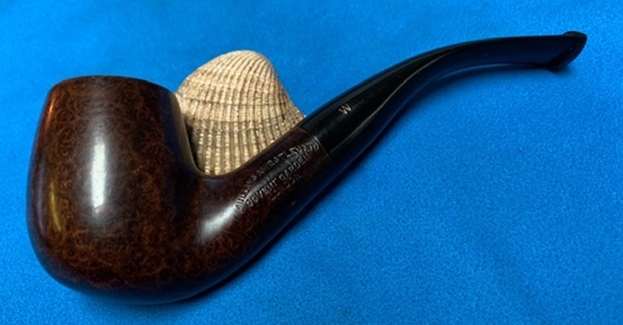
I googled the shop and found that it had a website that no longer worked. There were photos of the shop that others had collected. I saved one from Flicker that captured the essence of the small shop. It reminds me of some of the shops that I visited in York, Bath and Cambridge on a trip to England. Here is the link to the photo and the photo as well (https://c1.staticflickr.com/7/6181/6056846779_698d27c9f9_b.jpg).Jeff had cleaned up the pipe with his usual penchant for thoroughness. He reamed the pipe with a PipNet pipe reamer and removed the rest of it with a Savinelli Fitsall Pipe Knife.  He scrubbed the bowl with undiluted Murphy’s Oil Soap with a tooth brush. He rinsed it under running warm water to remove the soap and grime. He cleaned out the inside of the shank and the airway in the stem with alcohol, cotton swabs and pipe cleaners. He soaked the stem in Before & After Deoxidizer and rinsed it off with warm water. I took photos of the pipe once I received it.   The rim top cleaned up really well. The rim top and edges of the bowl show the peeling varnish coat. It is hard to see in the photos above but the entire bowl has the same issue. The stem surface looked very good with very light tooth marks and chatter on the top and the underside near the button. The stamping on the left side of the shank is clear and readable. It reads as noted above. I would need to touch up the W stamp on the stem side.   I removed the taper stem and took a photo of the pipe to give a sense of the whole. There was an aluminum stinger in the tenon that I would need to remove.Now it was time to work on the pipe. When I have to deal with removing a peeling varnish coat I always move forward with a bit of fear and trepidation as I have learned the hard way that you never know what will be underneath the varnish. A shiny coat often hides a multitude of surprises. I went ahead and scrubbed the bowl with acetone on cotton pads to remove the finish. It took some work but it came off pretty well. I was surprised that actually there were only a few small fills in the briar. I breathed a sigh of relief!  Once I had the coat of varnish removed I wiped the bowl down with a clean pad and some more acetone to remove the debris of varnish that was left behind on the briar. I took photos of the briar to show that the pipe was actually quite nice under the varnish coat. I decided to stain the bowl with a Cordovan aniline stain. I applied the stain with a dauber and flamed it with a lighter to set the stain in the briar. I repeated the process until the coverage was what I wanted. I set the bowl aside to let the stain cure.I wiped the briar down with alcohol on cotton pads to remove the excess and to begin the process of bringing the grain to the surface so it is more visible.  I buffed the pipe with red Tripoli on the buffing wheel and removed some more of the top coat of stain on the bowl. The grain is starting to really come alive. I wanted the stain to be a bit more transparent and make the grain pop. I polished the briar with micromesh sanding pads – sanding with 1500-12000 grit pads and wiping it down after each pad with a damp cloth. There is a fill on the lower left side and the upper right side that stood out a bit but that was the extent of the visible fills.      I rubbed the bowl and shank down with Before & After Restoration Balm. I worked it into the surface of the bowl sides and shank with my fingertips to clean, enliven and protect the briar. I let the balm sit for ten minutes and then buffed it with a cotton cloth to raise the shine. The grain came alive and the finish looked rich. I set the bowl aside and turned to work on the stem. I touched up the W stamp on the left side of the stem with Liquid Paper. I scraped off the excess material with my fingernail and buffed around the stamp with cotton pad.I polished the vulcanite stem with micromesh sanding pads – 1500-12000 grit pads. I wiped it down with Obsidian Oil after each sanding pad. I used Before & After Pipe Polish – both Fine and Extra Fine to further polish the stem.  This Mullins & Westley Ltd Covent Garden 45 Bent Billiard is a great looking pipe now that it has been stripped and refinished. The smooth finish around the bowl is quite beautiful and highlights the grain and works well with the polished vulcanite taper stem. The fills on the sides of the bowl are less visible after polishing. I put the stem back on the bowl and carefully buffed the pipe with Blue Diamond on the buffing wheel using a light touch on the briar. I gave the bowl and the stem multiple coats of carnauba wax on the buffing wheel and followed that by buffing the entire pipe with a clean buffing pad. I hand buffed the pipe with a microfiber cloth to deepen the shine. The finished Westley Covent Garden Bent Billiard fits nicely in the hand and feels great. Give the finished pipe a look in the photos below. The dimensions of the pipe are Length: 5 ½ inches, Height: 2 inches, Outside diameter of the bowl: 1 ¼ inches, Chamber diameter: ¾ of an inch. The weight of the pipe was 47g/1.66oz. I will be putting it on the rebornpipes store shortly. Thanks for reading this blog and my reflections on the pipe while I worked on it. There are many more to come!  

Restoring and Restemming a MALAGA Canadian


Blog by Steve Laug

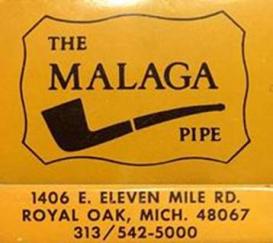
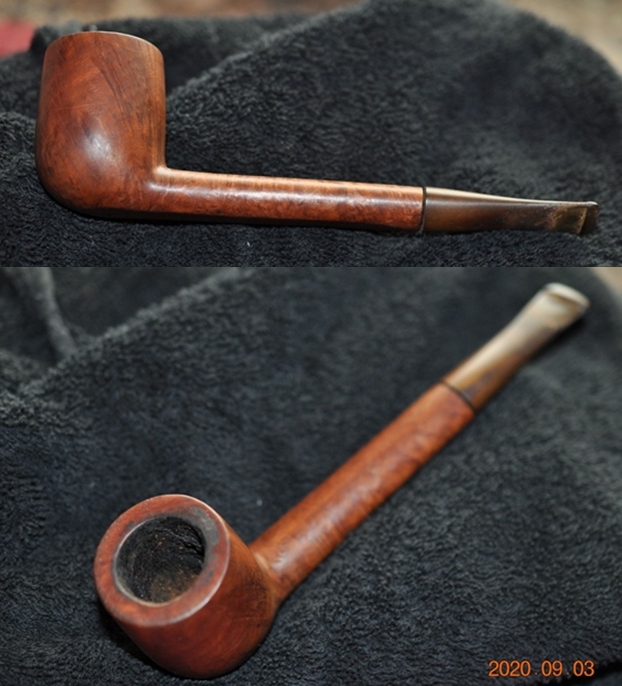
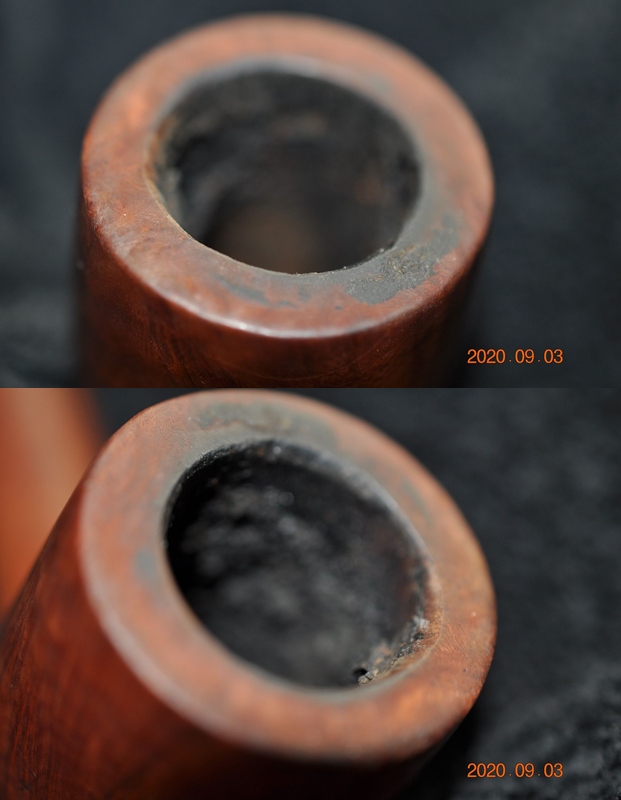
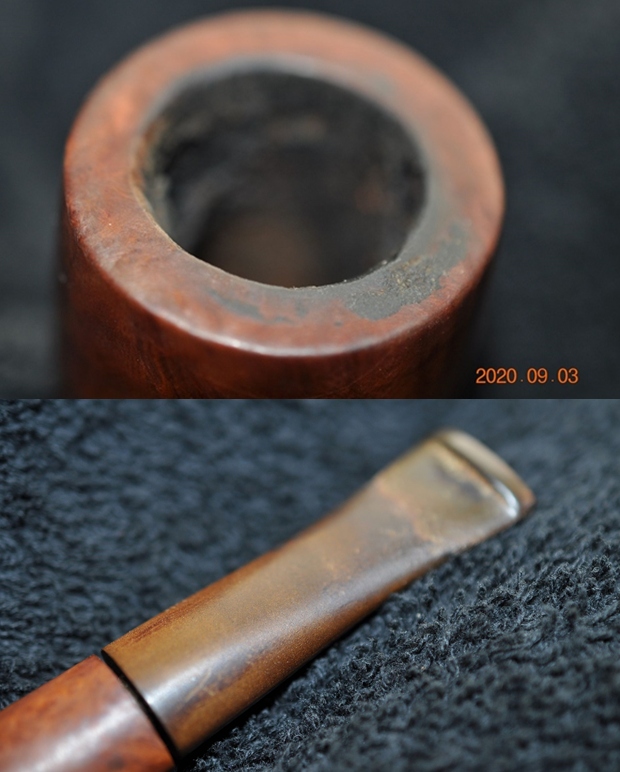
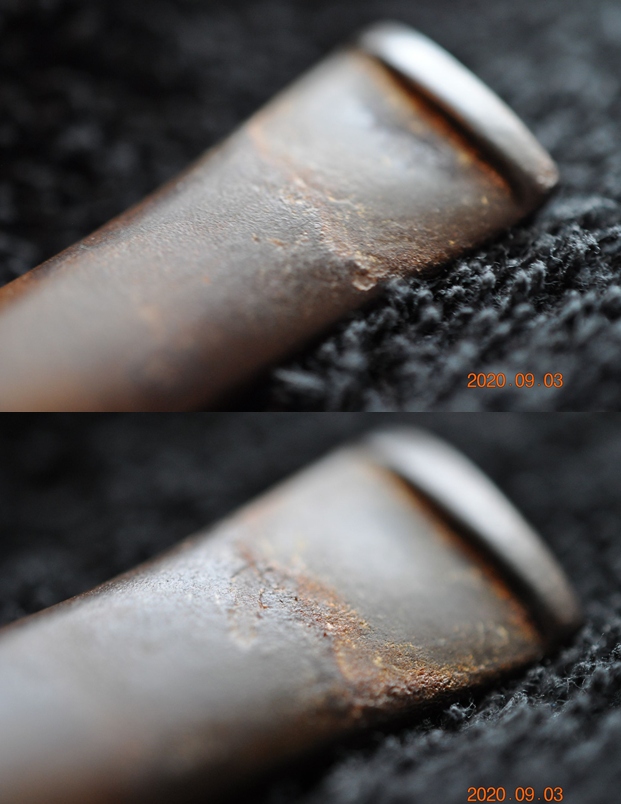
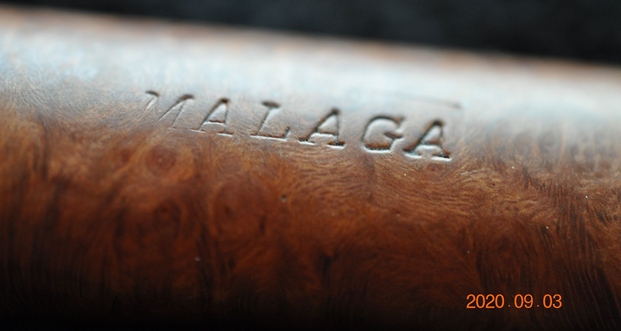
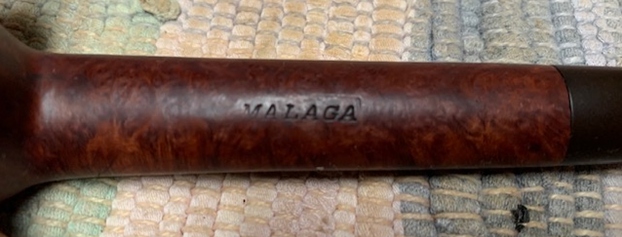
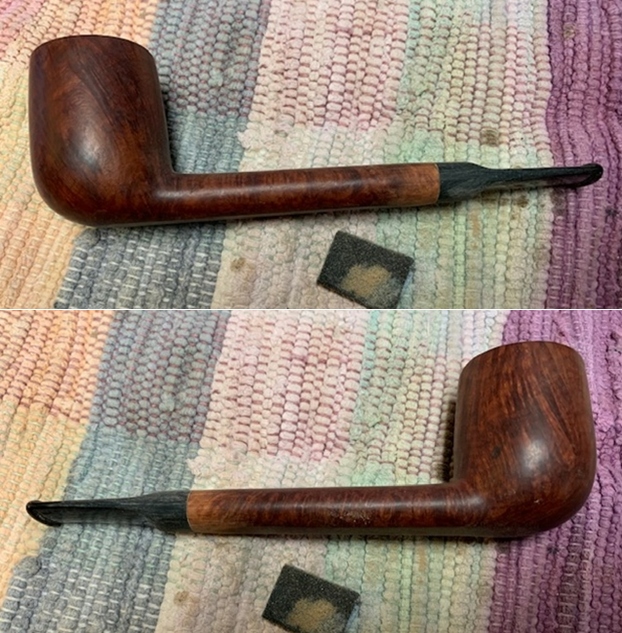
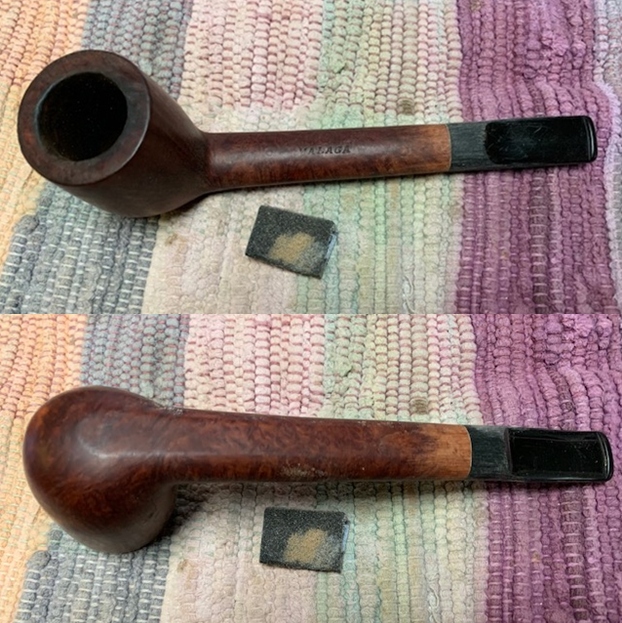
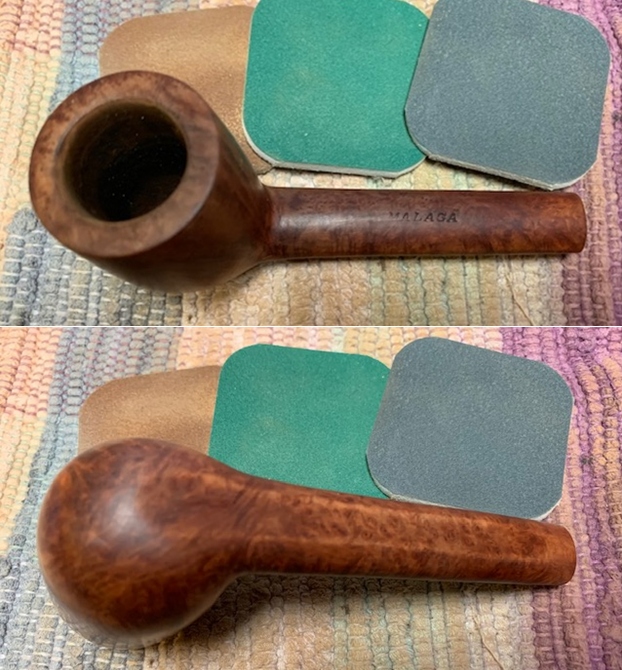
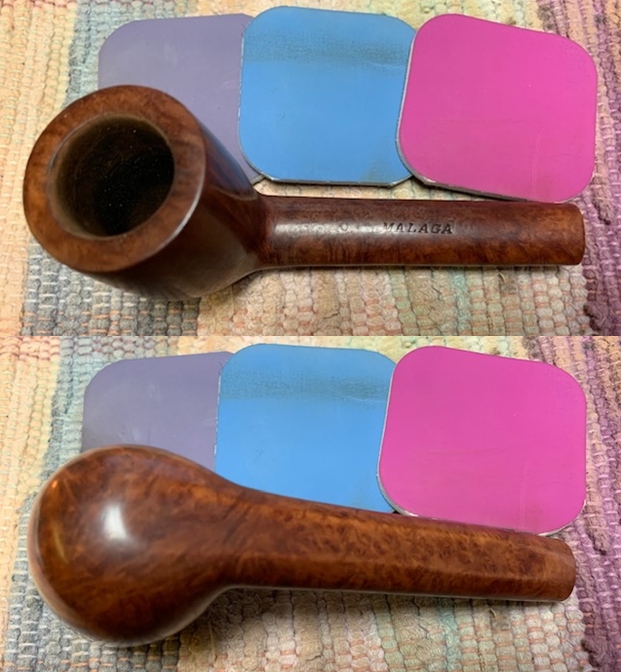
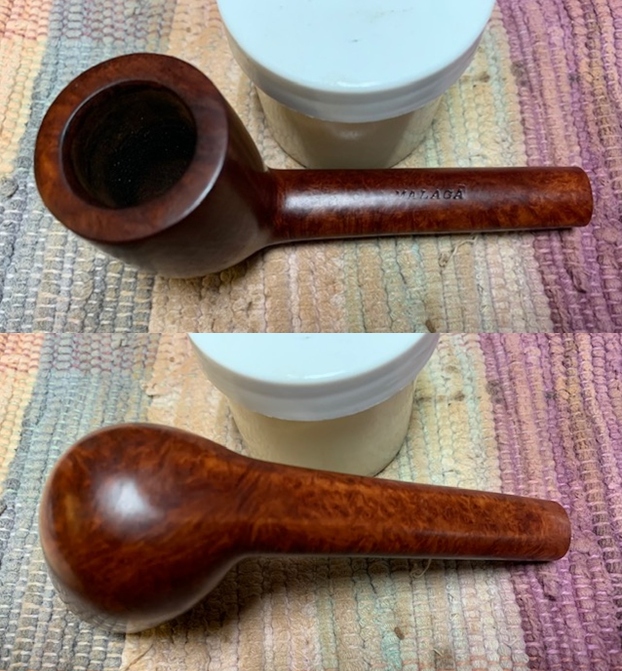
The next pipe on the table is a “Malaga” pipe that Jeff picked up from an online auction from Alden, Michigan, USA. It is a nice looking Canadian with an oil cured finish and some great looking grain around the bowl and shank. The pipe is stamped on top of the shank and reads MALAGA. The carver did a great job of carving the pipe to capture the grain around the bowl and shank. The bowl had a heavy cake with an overflow of lava on the rim top with heavier overflow on the back side of the rim top. The sides of the bowl and shank are very dirty with grime and oils ground into the finish from prolonged use. The vulcanite stem was heavily oxidized and had tooth dents and chatter on the top and the underside of the stem. Jeff took photos of the pipe before he started the cleanup work. Jeff showed me the pipe on Facetime and it was quite a beauty. With some work it will be a real beauty. I looked forward to seeing it in person.    Jeff took a close up photo of the bowl and rim to capture the condition of the pipe before he started the cleanup work. The bowl has a thick cake and the uneven overflow of lava on the rim top is quite thick toward the front. The inside edge of the rim could be damaged but it quite hidden under the lava coat. The stem is deeply oxidized, calcified and dirty and there is tooth chatter and marks on both sides of the stem ahead of the button.  He took a photo of the stamping on the topside of the shank. It read as noted above.Jeff took photos of the sides and heel of the bowl to give a picture of what the briar looked like. There is some nice grain around the sides. You can also see the damage to the rim edges and the heel of the bowl in the photos below. I am including the link to a blog that I wrote that gives some of the history of the Malaga brand and the Malaga Pipe Shop in Royal Oak, Michigan in the USA. I have written an earlier blog to give a little history of the Malaga Brand and the pipemaker, George Khoubesser. Here is the link – https://rebornpipes.com/tag/malaga-pipes/.That blog also includes links to a catalogue and the history of the pipemaker George Khoubesser. Follow the link to get a feel for the brand and the pipemaker.

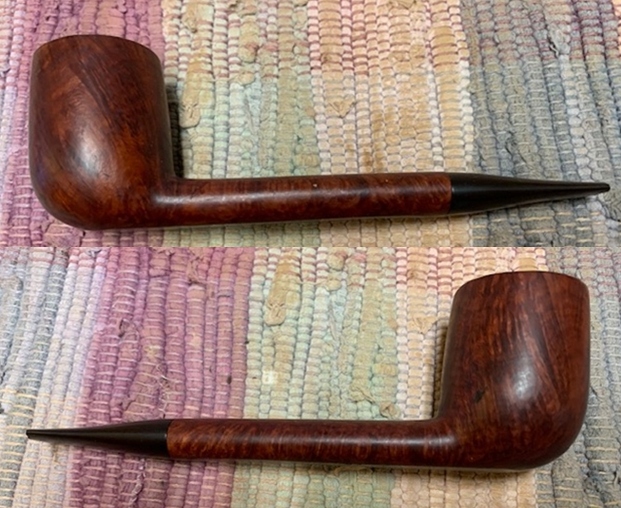
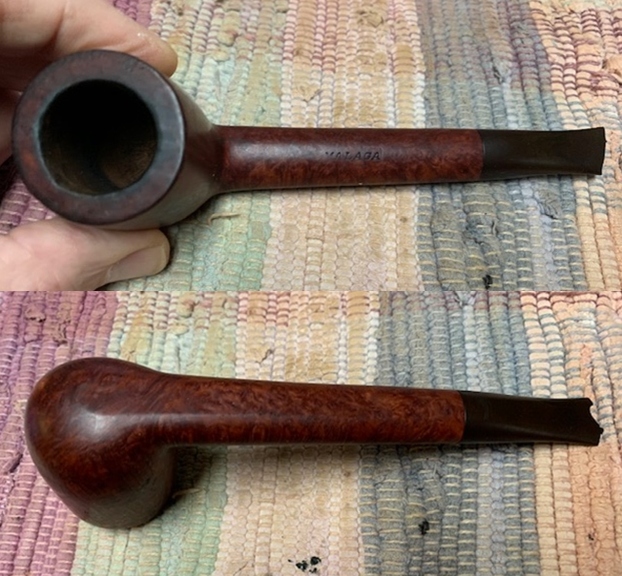
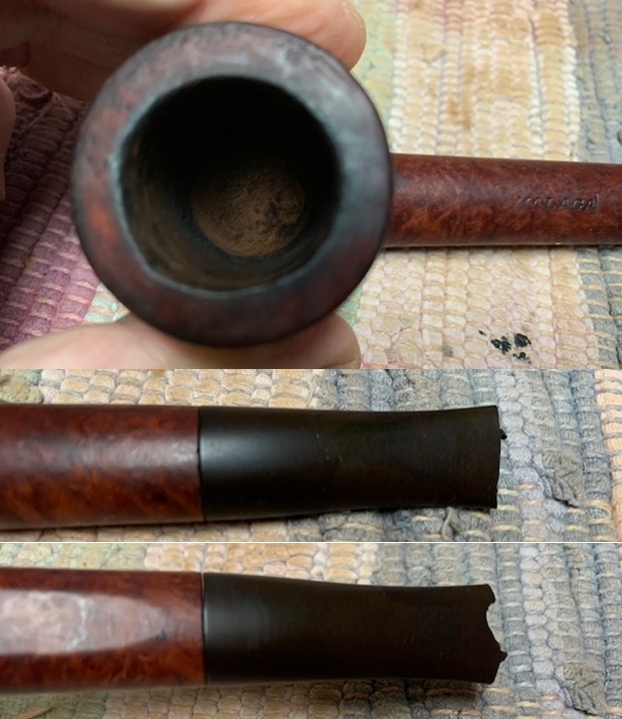
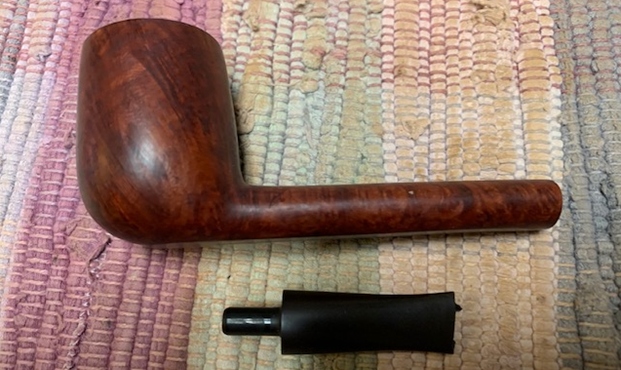
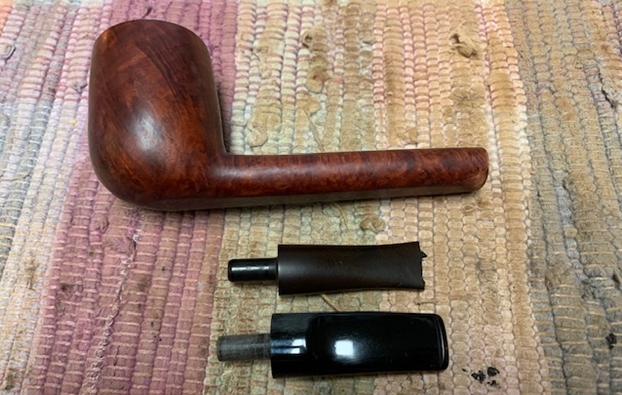
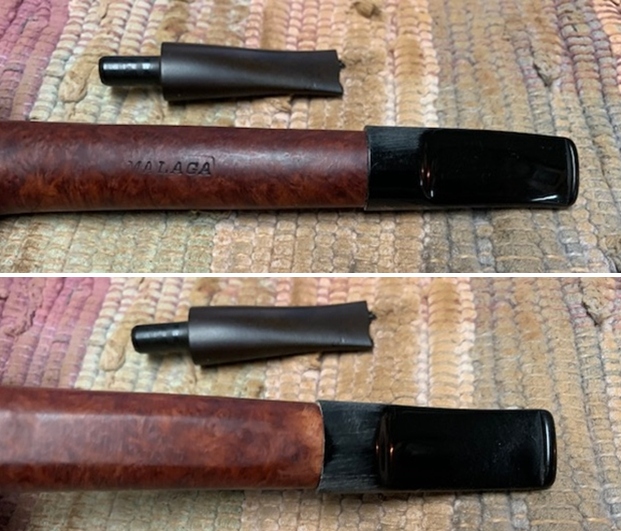
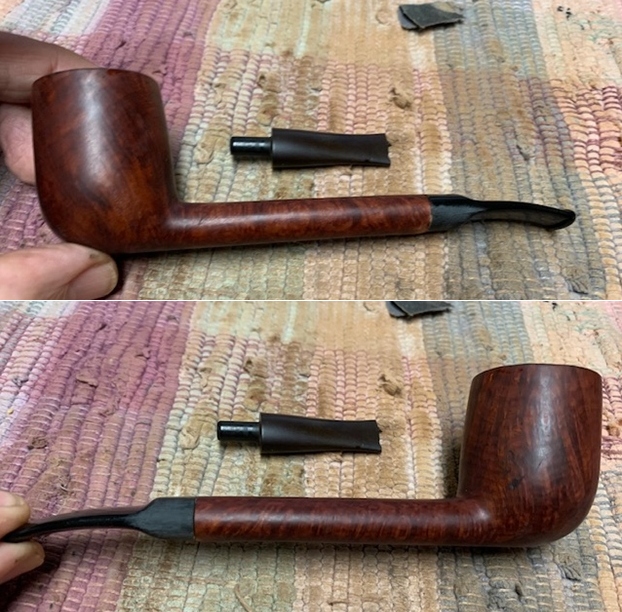
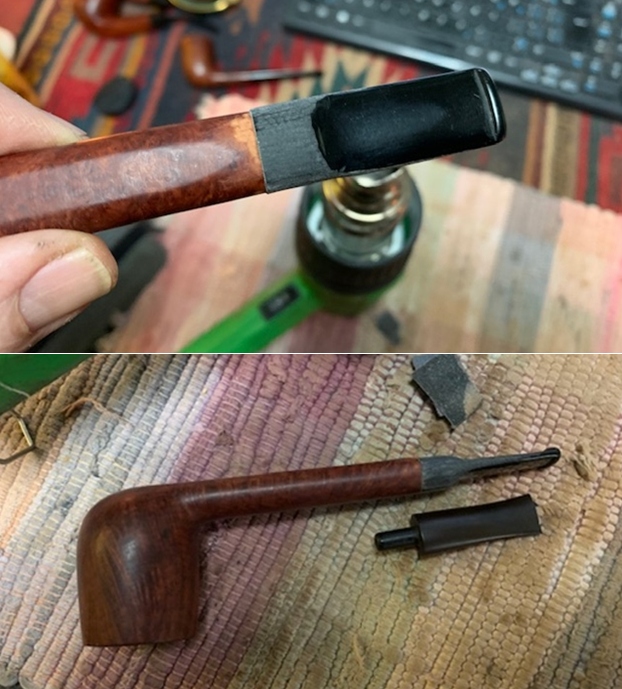
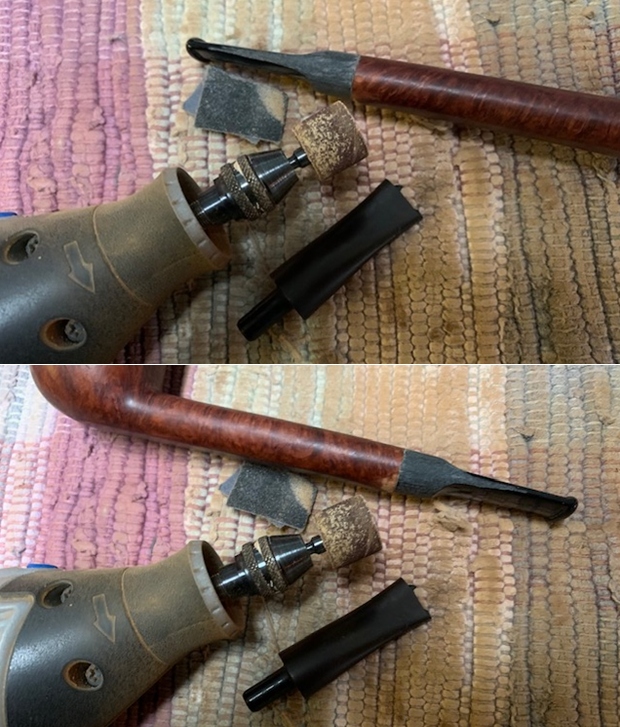
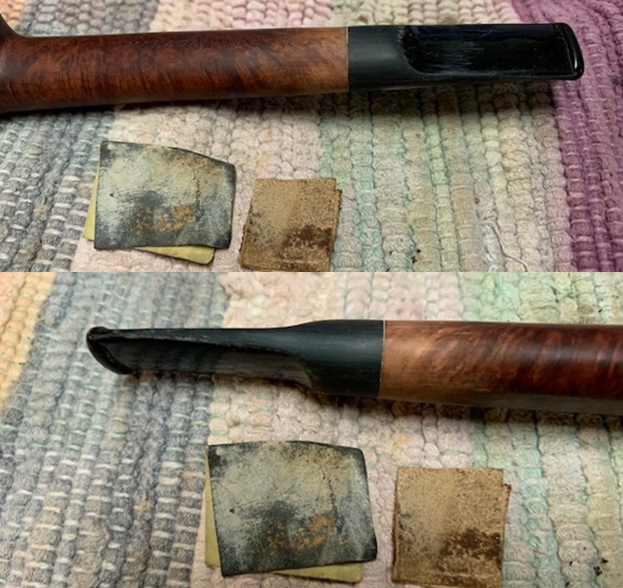
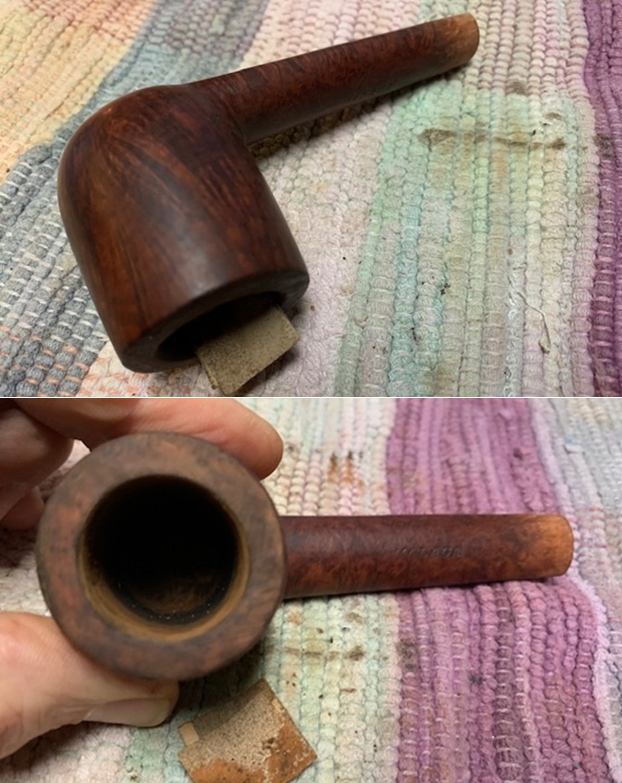
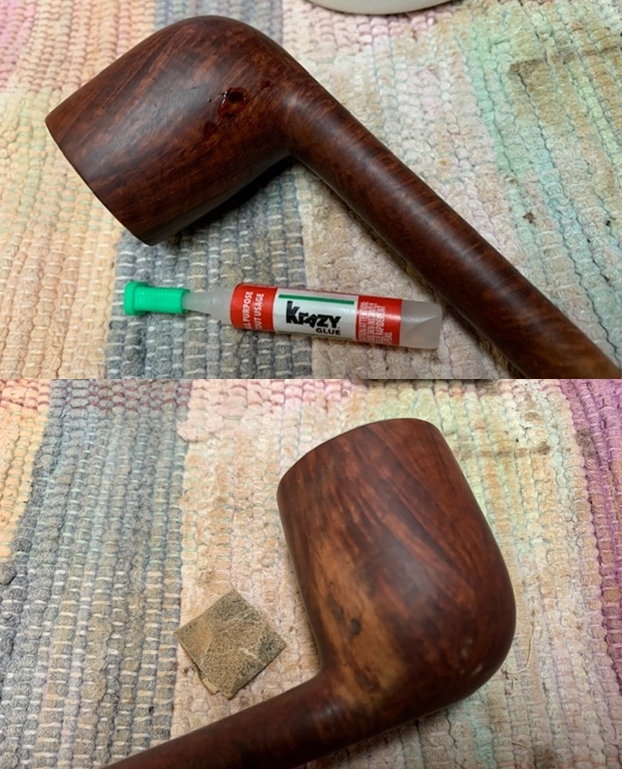
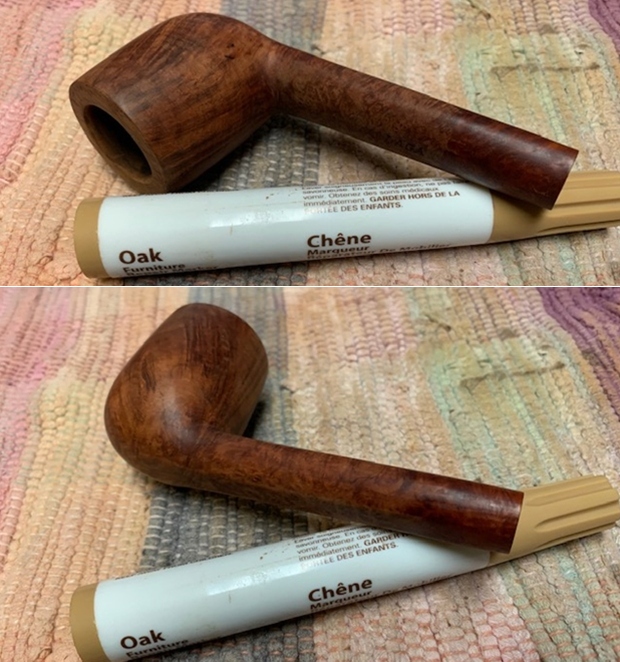
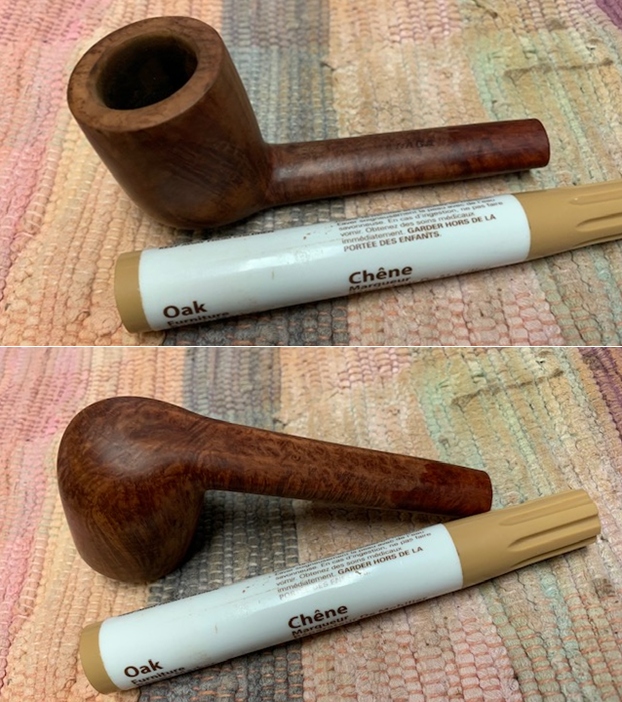
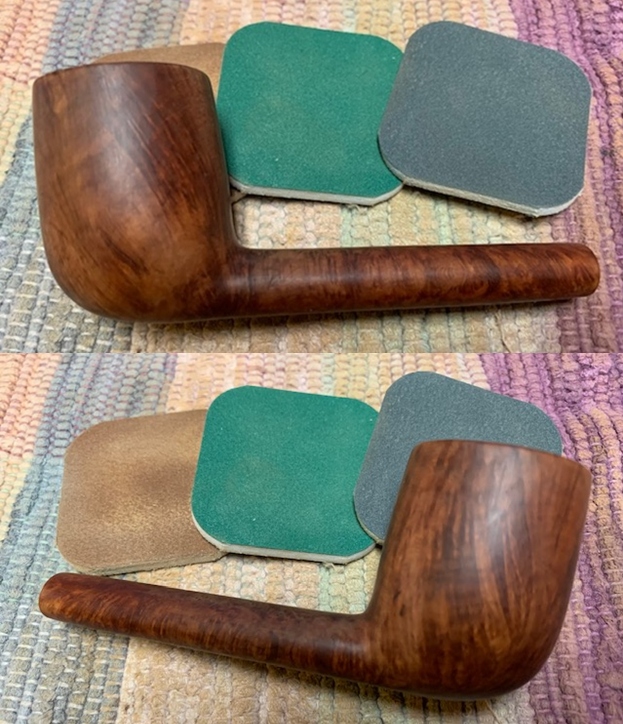
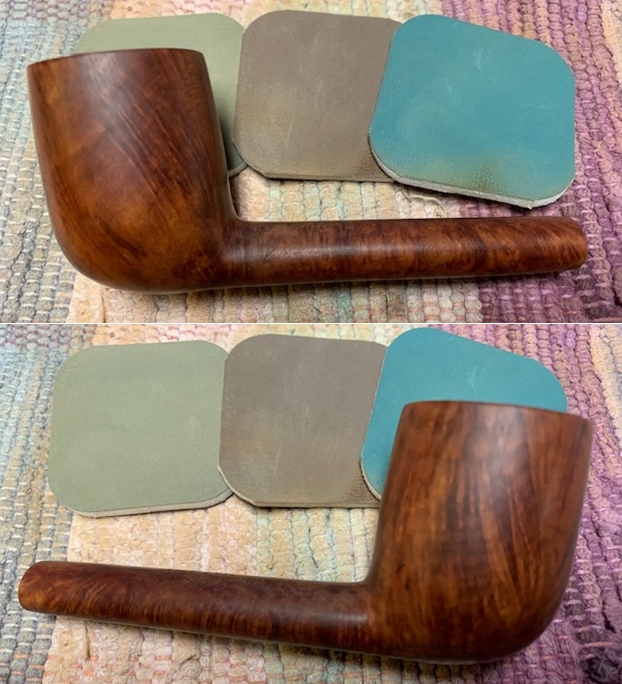
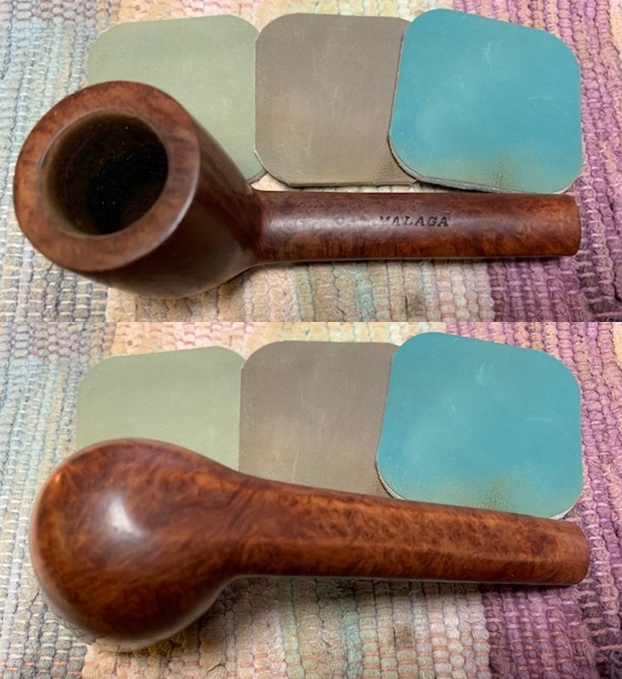
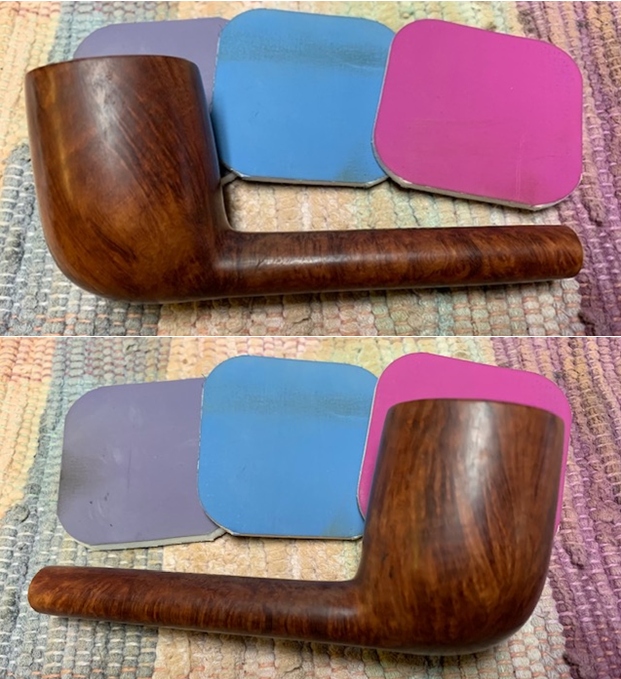
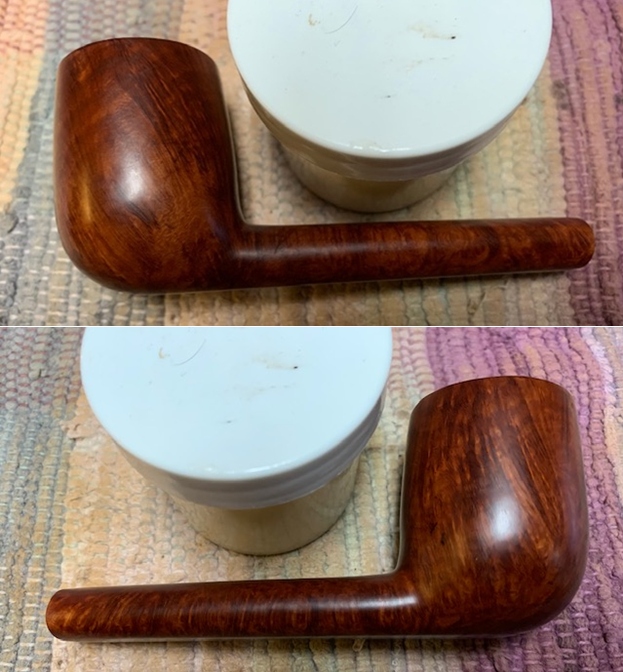
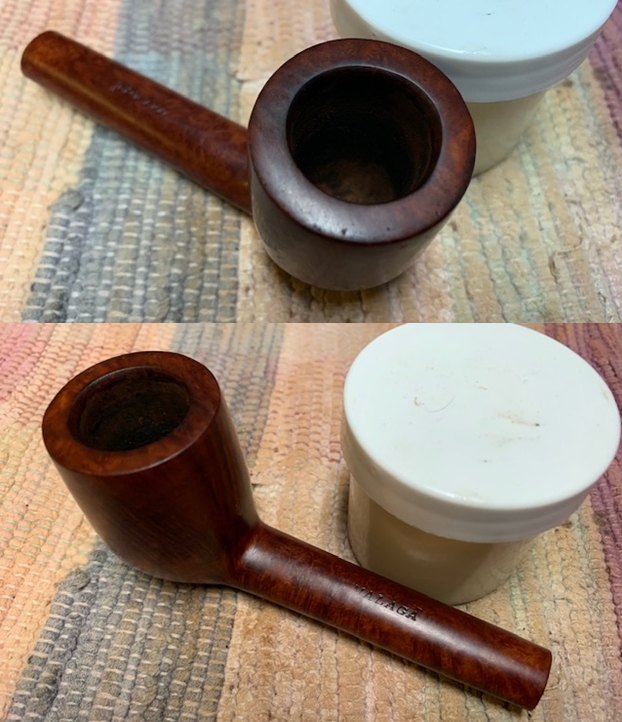
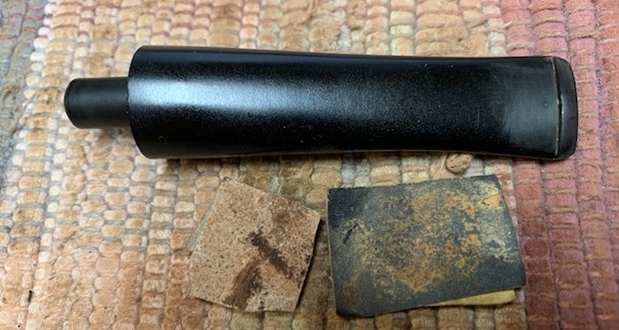
Jeff had cleaned up the pipe with his usual penchant for thoroughness. He reamed the pipe with a PipNet pipe reamer and removed the rest of it with a Savinelli Fitsall Pipe Knife.  He scrubbed the bowl with undiluted Murphy’s Oil Soap with a tooth brush. He rinsed it under running warm water to remove the soap and grime. He cleaned out the inside of the shank and the airway in the stem with alcohol, cotton swabs and pipe cleaners. He soaked the stem in Before & After Deoxidizer and rinsed it off with warm water. When the pipe arrived and I unpacked it the stem was broken off at the end. There was about a ¼ inch of the stem and the entire button was in the bottom of the bag that the pipe was packed in. I took photos of the pipe once I received it.  The rim top cleaned up really well. The rim top and outer edge of the bowl show some darkening over most of the surface. There is damage to the inner edge of the bowl and bowl is out of round.  The stem surface looked very good with tooth marks and chatter on the top side and the underside near the button.   The stamping on the topside of the shank is clear and readable. It reads as noted above.  I removed the taper stem and took a photo of the pipe to give a sense of the whole.  Now it was time to work on the pipe. I decided to work on it by fitting a new stem on the shank. I went through my can of stems and found an acrylic slight saddle stem that was the perfect length and the tenon fit well. The width of the stem was slightly bigger than the shank. The fit on the upper and lower side was perfect.I sanded the tenon slightly so that fit would be snug in the shank. Once I had removed a little bit of the diameter with 220 grit sandpaper I put it on the shank and took a photo. I started sanding it with 220 grit sandpaper to start reshaping the stem to fit the shank. I took photos of fit of the stem  at this point.I heated the stem with a heat gun to remove the bend in the stem. I heated it until it had softened and then carefully straightened it out.    I continued to sand the excess diameter of the stem to fit it to the shank. I took photos of the stem once I had finished with the Dremel and sanding drum. It is very close to fitting and sanding it with 220 grit sandpaper will clean up the fit. I sanded it with a folded piece of 220 grit sandpaper to fit it to the shank.  I sanded the briar and the stem to get a smooth transition between the stem and the shank. I took some closeup photos of the fit of the stem to the shank after I sanded it with some more 220 grit sandpaper and started the polishing with 400 grit wet dry sandpaper.   I removed stem from the shank and turned my attention to the inner edge of the bowl. I worked on cleaning up the darkening and the damage on the edge and the rim top with a folded piece of 220 grit sandpaper.  There were two large nicks/chips in the right side of the bowl toward the lower backside of the bowl. I filled them in with clear super glue. Once the glue cured I sanded it smooth with 220 grit sandpaper and blended it into the surrounding briar. I used an Oak Stain Pen to touch up the sanded area of the bowl repair and the work fitting the stem to the shank.    I polished the briar with micromesh sanding pads – wet sanding with 1500-12000 grit pads and wiping it down after each pad with a damp cloth.   I rubbed the bowl and shank down with Before & After Restoration Balm. I worked it into the surface of the bowl sides and shank with my fingertips to clean, enliven and protect the briar. I let the balm sit for a little while and then buffed with a cotton cloth to raise the shine. The grain came alive and the finish looked rich.   I polished the acrylic stem with micromesh sanding pads – 1500-12000 grit pads. I wiped it down with Obsidian Oil after each sanding pad (Obsidian Oil does not usually work with acrylic but I used it anyway as it gives traction to sanding with the next pad). I used Before & After Pipe Polish – both Fine and Extra Fine to further polish the stem.   This restemmed Malaga Canadian with a acrylic saddle stem turned out to be a real beauty. The carver really maximized the grain with the shape of the pipe. I polished stem and the bowl with Blue Diamond polish on the buffing wheel and the finish just popped and came alive. I gave the bowl and the stem multiple coats of carnauba wax. I buffed the pipe with a clean buffing pad to raise the shine. I hand buffed it with a microfiber cloth to deepen the shine. The pipe polished up pretty nicely. The pipe took on life with the buffing. The rich oil cured colour works well with the polished acrylic stem. The finished pipe has a rich look that is quite catching. Have a look at it with the photos below. The shape, finish and flow of the pipe and stem are very well done. The dimensions are Length: 6 inches, Height: 2 inches, Outside diameter of the bowl: 1 ½ inches, Chamber diameter: 7/8 of an inch. The weight of the pipe was 47g/1.66oz. I will be putting it on the rebornpipes store shortly. Thanks for reading this blog and my reflections on the pipe while I worked on it. There are many more to come!

Breathing New Life into a Blatter of Montreal Dublin


Blog by Steve Laug

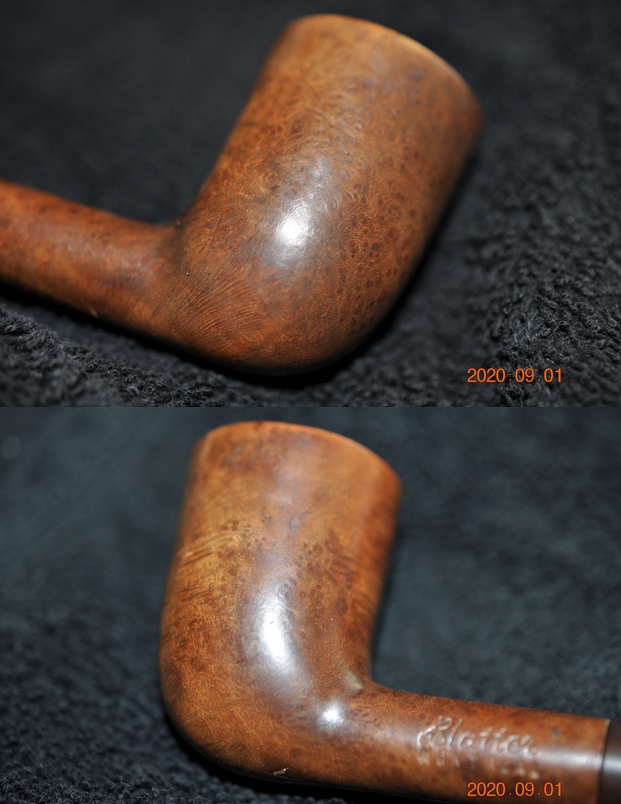
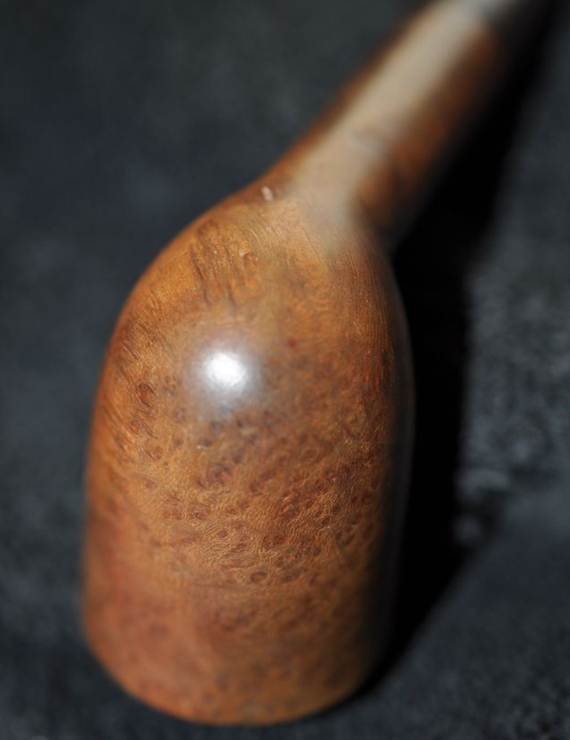
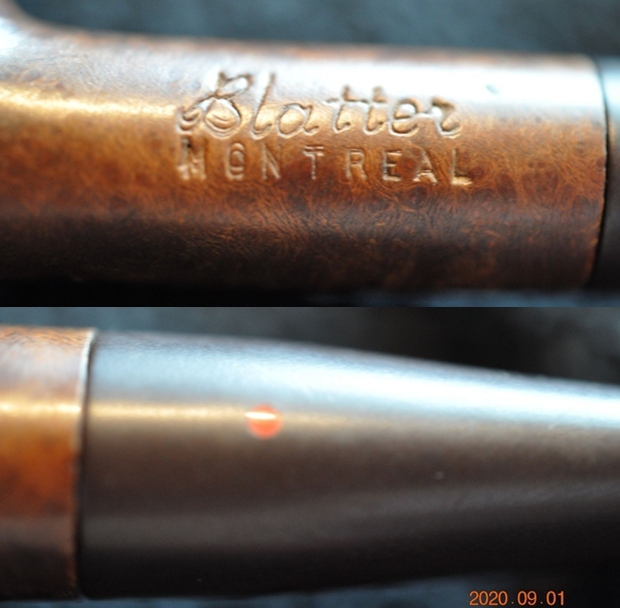
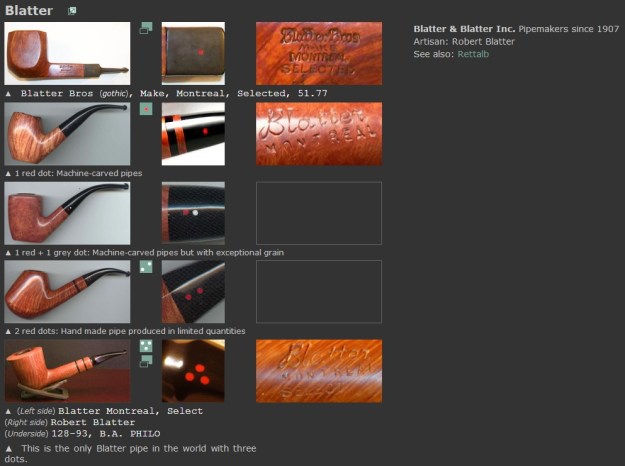
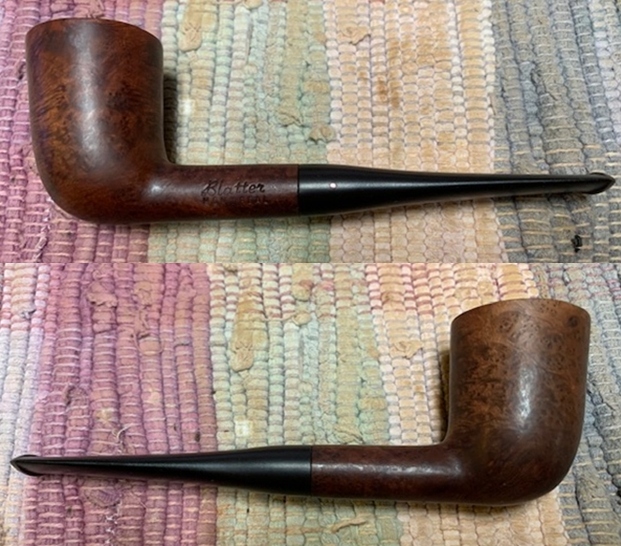
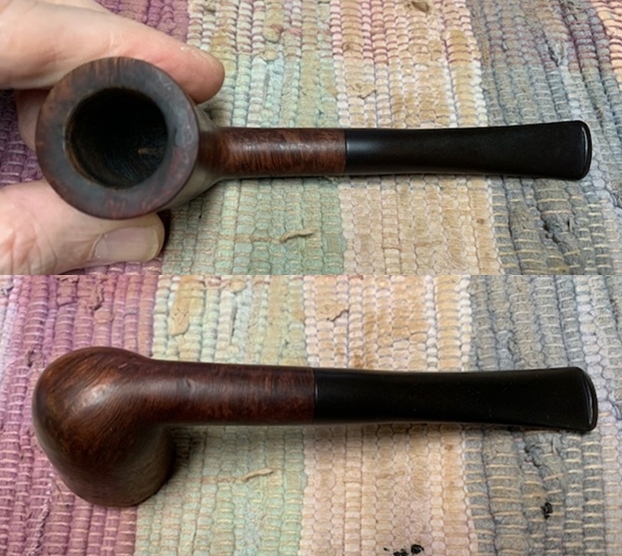
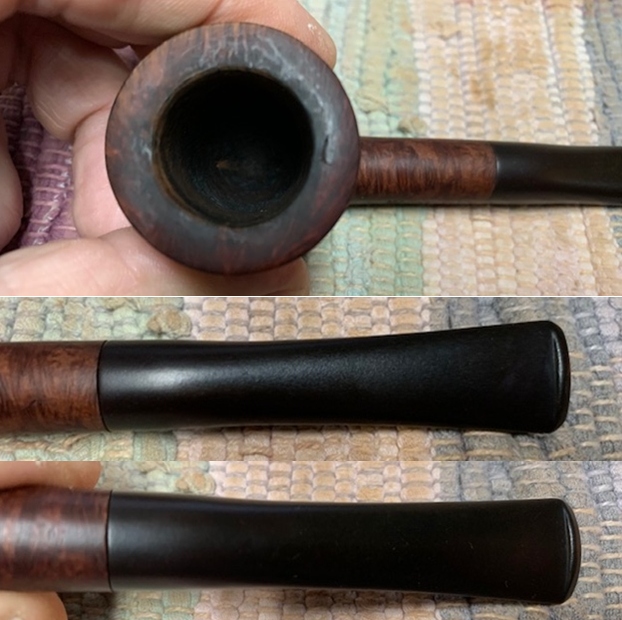
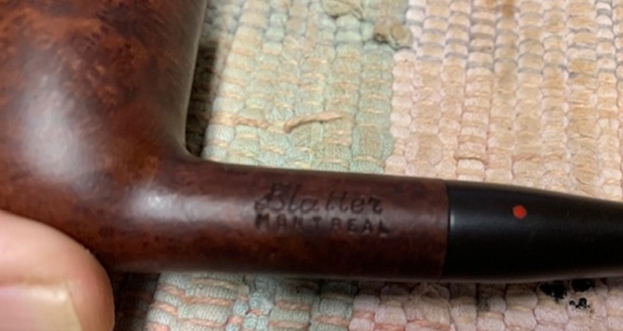
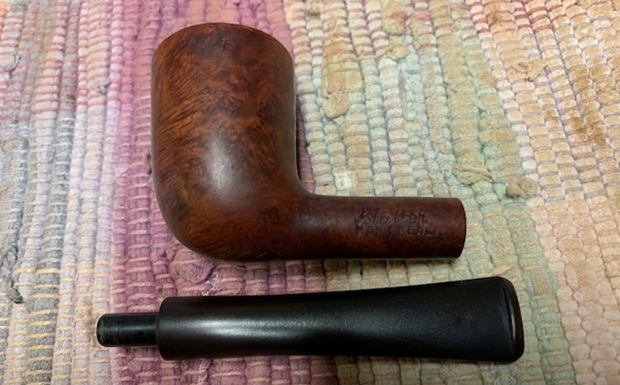
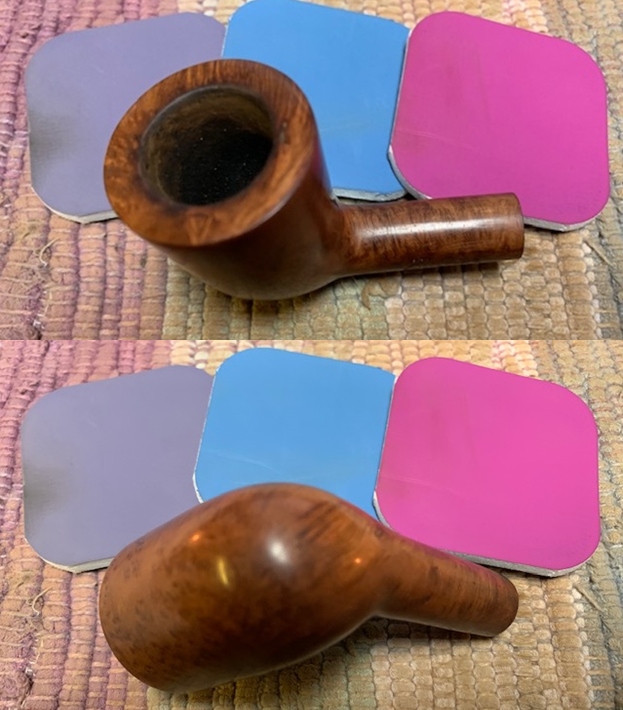
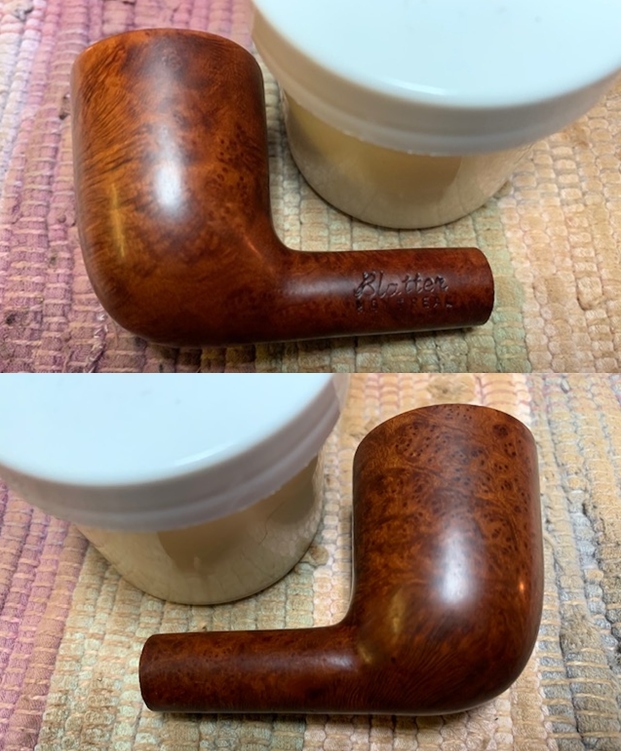
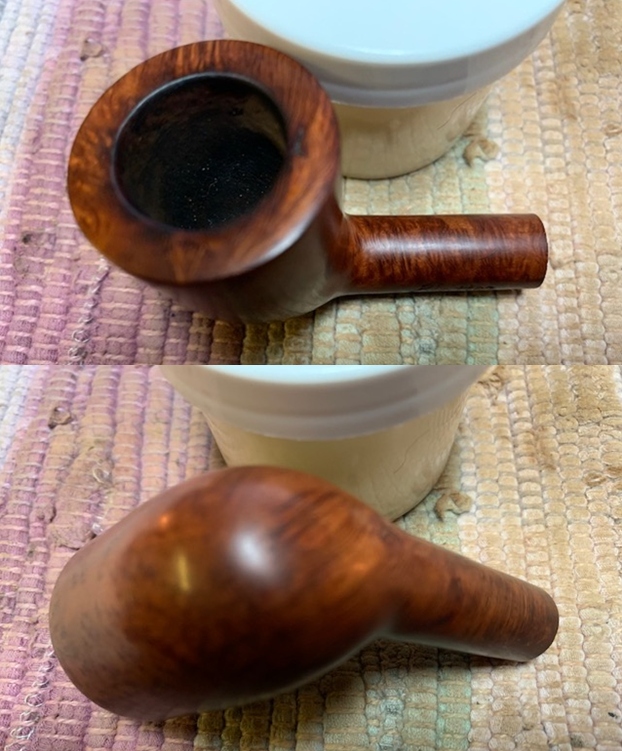
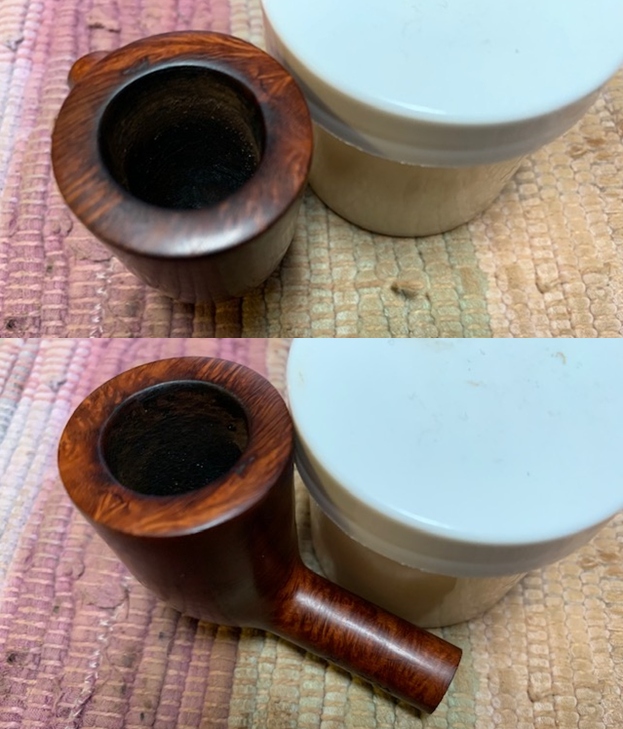
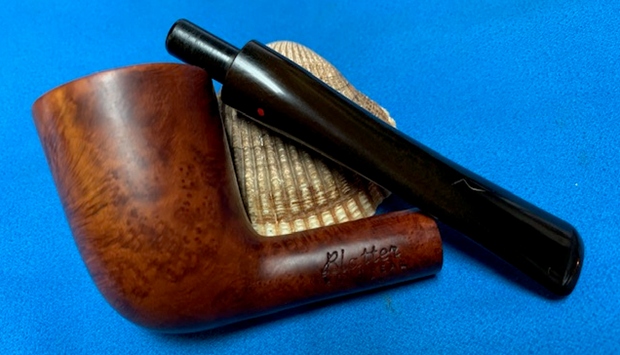
The next pipe on the work table came to us from an antique shop on Jeff and Sherry’s recent Utah pipe hunt.  It is a nicely shaped Dublin that is stamped on the left side of the shank and read Blatter in script [over] Montreal. The finish was very dirty and worn but underneath the dirt and oils there was some amazing grain. The bowl was heavily caked and there was a lava overflow on the rim top obscuring the edges so I would have to see it after cleaning to know if it was round. The outer edge of the rim was clean and sharp with no damage. The stem had tooth chatter and marks on the top and a bite through on the underside near the button. There was a red dot on the left side of the taper stem. It had promise but it was very dirty. Jeff took some photos of the pipe before he started his cleanup work.   He took photos of the rim top and bowl to give a clear picture of the thickness of the cake and tobacco debris as well as thick lava coat on the top. He also took photos of the top and underside of the stem to show the oxidation and the chatter and tooth marks on the topside and the bite through on the underside near the button. Jeff took photos of the sides and heel of the bowl to give a picture of what the briar looked like. There is some nice grain around the sides. You can also see the damage to the rim edges and the heel of the bowl in the photos below.    The stamping on the left side of the shank is clear and readable and read as noted above. It also appears to have been double stamped.   I turned to Pipephil’s site and looked up the brand (http://www.pipephil.eu/logos/en/logo-b5.html). I included a screen capture of the section on the red dot pipe. I quote a note that appeared at the bottom of the section.
The green dot which appeared in 1964 and was continued until 1967. After 1968 Blatter pipes were marked with the red dot. I turned to Pipedia (https://pipedia.org/wiki/Blatter_%26_Blatter) and read the history of the brand. It is well worth reading.

I turned to their website which has a great summary of the history of the brand in both English and French (http://www.blatterpipes.com/English.html). I quote a portion of the history of the brand from that succinct summary.

In the late 1890’s Frederic Blatter owned and operated a pipe factory in London, England, home of some of the great pipemakers and smokers of the time. After a fire destroyed the Blatter pipe factory, the family made a decision to move to Cape Town, South Africa with the prestigious mandate to make pipes for certain French Generals. After opening a factory and several retail stores in the cities of Cape Town and Durban, the family was once again on the move. This time Montreal, Canada.

Ernest Blatter and family moved from South Africa to Montreal in 1907. Once again the brothers opened a pipemaking factory on St-Hubert street and a retail store at 190 St. Catherine street West. Cigars and pipes were very popular in the 1930’s and the Blatters operated five stores. The St. Catherine street location operated for sixty three years until  it moved to 365 President Kennedy avenue, in 1970.   Mr. Peter Blatter began working with his father, Henri-Georges, in 1964. Mr. Henri-Georges Blatter passed away in 1967. Mr. Robert Blatter, Peter’s brother,  joined the firm in 1968 and took over the pipemaking duties.

Today, the family business specializes in the finest briar pipes, which are all handmade on the premises, and the finest quality cigars from Cuba and around the world. In 1982 Pierre and Robert Blatter were inducted in the prestigious “Confrérie des Maîtres-Pipiers de Saint-Claude”.   After major renovations to their store, they have recreated that much sought after ambiance of their original location.

In the summer of 2000,  Patrick,  son of Pierre Blatter joins the family business and slowly learns the careful art of pipmaking under the watchful eye of his uncle Robert.   In 2013, Patrick is invited to Saint-Claude and finally is honored and inducted, just like his father and Uncle, into the prestigious Confrérie des Maîtres-Pipiers de Saint-Claude!…

I would recommend that you visit their site or even better, their shop and see some of beautiful pipes they make. They also make some great tobacco blends in their shop on 375 President Kennedy Avenue, Montreal, Quebec. They are a pleasure to do business with and are well worth a visit should you find yourself in Montreal.

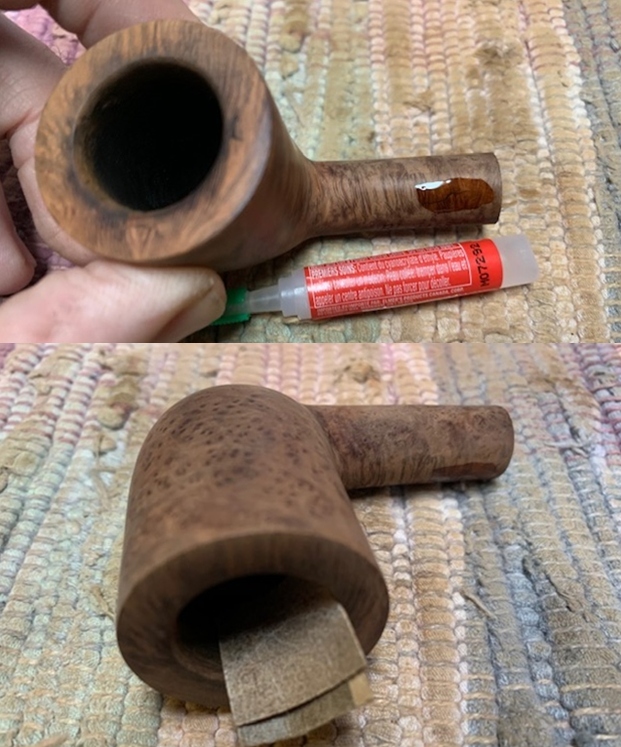
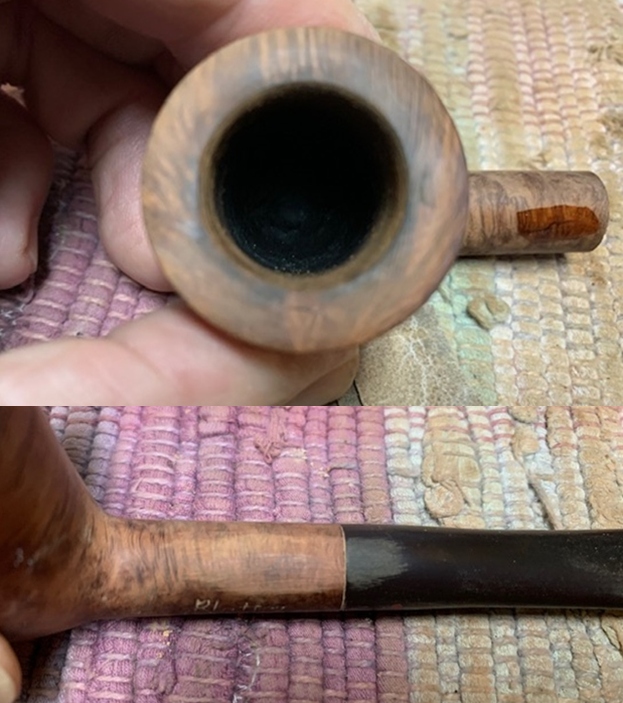
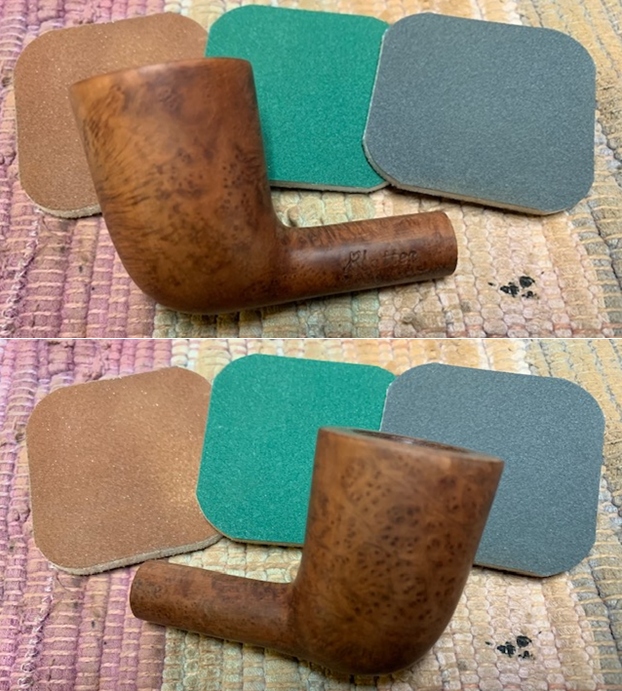
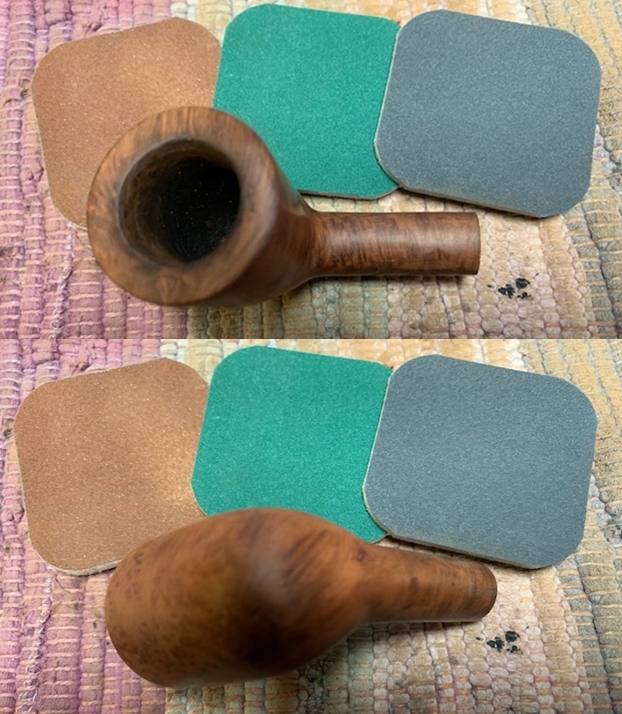
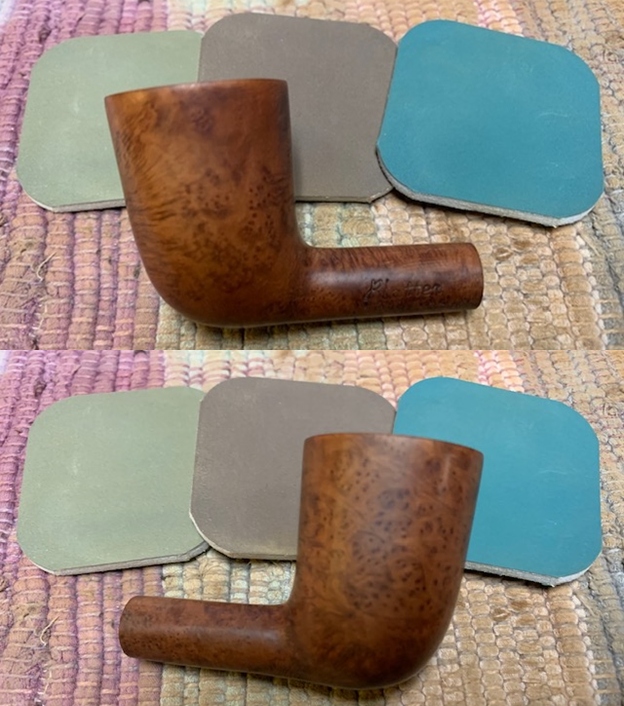
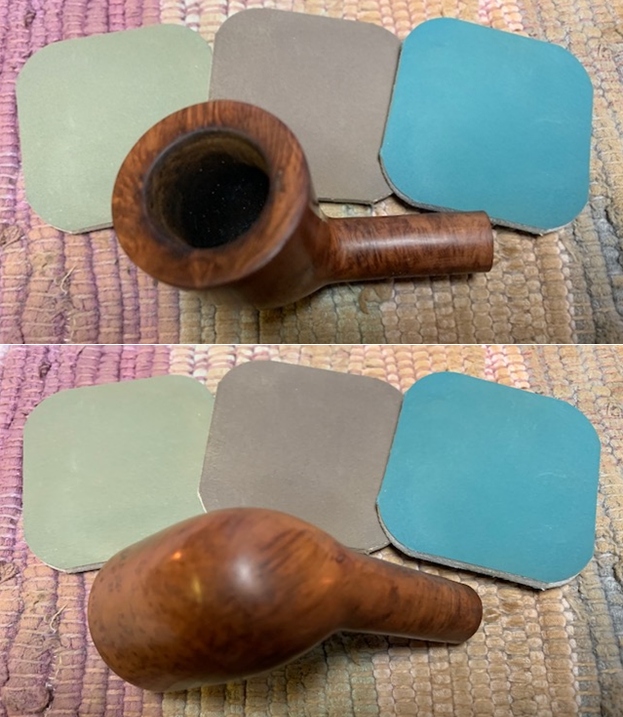
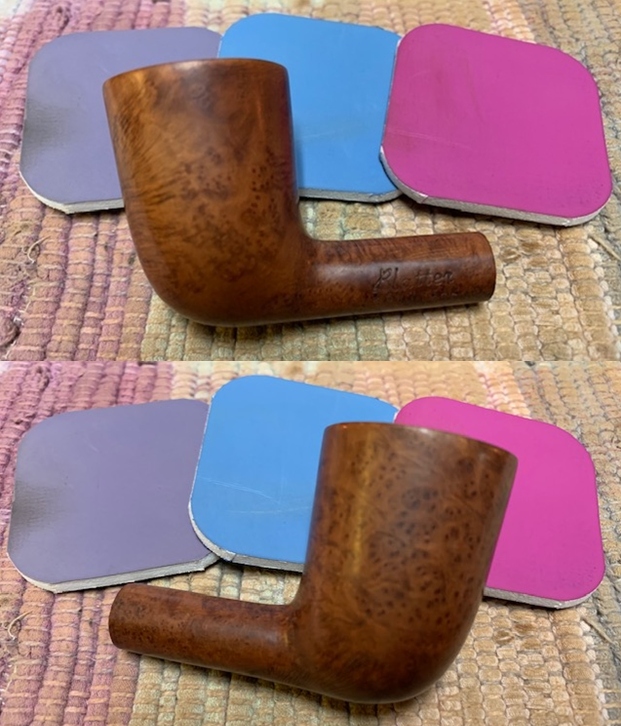
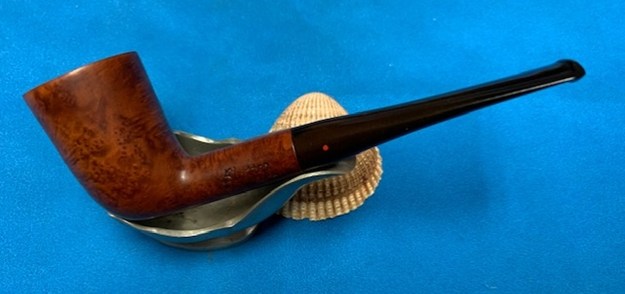
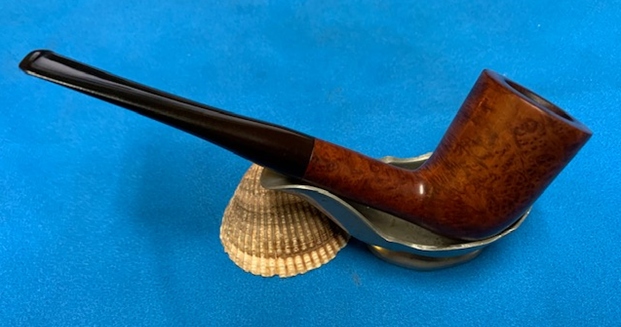
Jeff had cleaned up the pipe with his usual penchant for thoroughness. He reamed the pipe with a PipNet pipe reamer and removed the rest of it with a Savinelli Fitsall Pipe Knife.  He scrubbed the bowl with undiluted Murphy’s Oil Soap with a tooth brush. He rinsed it under running warm water to remove the soap and grime. He cleaned out the inside of the shank and the airway in the stem with alcohol, cotton swabs and pipe cleaners. He soaked the stem in Before & After Deoxidizer and rinsed it off with warm water. I took photos of the pipe once I received it.     The rim top cleaned up really well. The rim top and outer edge of the bowl show some darkening over most of the surface. The stem surface looked very good with tooth marks and chatter on the top side and the underside near the button.  The stamping on the left side of the shank is clear and readable. It reads as noted above.     I removed the taper stem and took a photo of the pipe to give a sense of the whole.  Now it was time to work on the pipe. I wiped the bowl down with acetone on a cotton pad to remove the remaining finish before I started sanding. I filled in the flaw on the top of the shank with clear super glue. Once it cured I sanded it with 220 grit sandpaper to blend it into the surface of the shank. I worked on the rim top and edges with a folded piece of 220 grit sandpaper to clean up the darkening and damage. It looked much better and it was ready to polish. I polished the briar with micromesh sanding pads – wet sanding with 1500-12000 grit pads and wiping it down after each pad with a damp cloth.      I rubbed the bowl and shank down with Before & After Restoration Balm. I worked it into the surface of the bowl sides and shank with my fingertips to clean, enliven and protect the briar. I let the balm sit for a little while and then buffed with a cotton cloth to raise the shine. The grain came alive and the finish looked rich.  I set the bowl aside and turned to work on the stem. I “painted” the stem surface with the flame of a lighter. The heat lifted the tooth marks. Those that remain will be sanded out. I sanded the stem with 220 grit sandpaper and started polishing it with 400 grit wet dry sandpaper. I polished the vulcanite stem with micromesh sanding pads – 1500-12000 grit pads. I wiped it down with Obsidian Oil after each sanding pad. I used Before & After Pipe Polish – both Fine and Extra Fine to further polish the stem.    This smooth finish Blatter of Montreal Dublin is a great looking pipe now that it has been restored. The smooth finish around the bowl is quite beautiful and highlights the grain and works well with the polished vulcanite taper stem. The repaired flaws on the top of the shank and on the heel look much better and are now smooth to touch. I put the stem back on the bowl and carefully buffed the pipe with Blue Diamond on the buffing wheel using a light touch on the briar. I gave the bowl and the stem multiple coats of carnauba wax on the buffing wheel and followed that by buffing the entire pipe with a clean buffing pad. I hand buffed the pipe with a microfiber cloth to deepen the shine. The finished Blatter Dublin fits nicely in the hand and feels great. Give the finished pipe a look in the photos below. The dimensions of the pipe are Length: 6 inches, Height: 1 ¾ inches, Outside diameter of the bowl: 1 ¼ inches, Chamber diameter: ¾ of an inch. The weight of the pipe was 30g/1.06oz. I will be putting it on the rebornpipes store shortly. Thanks for reading this blog and my reflections on the pipe while I worked on it. There are many more to come!       

New Life for a Bessai Special X JB Diamond Shank Pot


Blog by Steve Laug

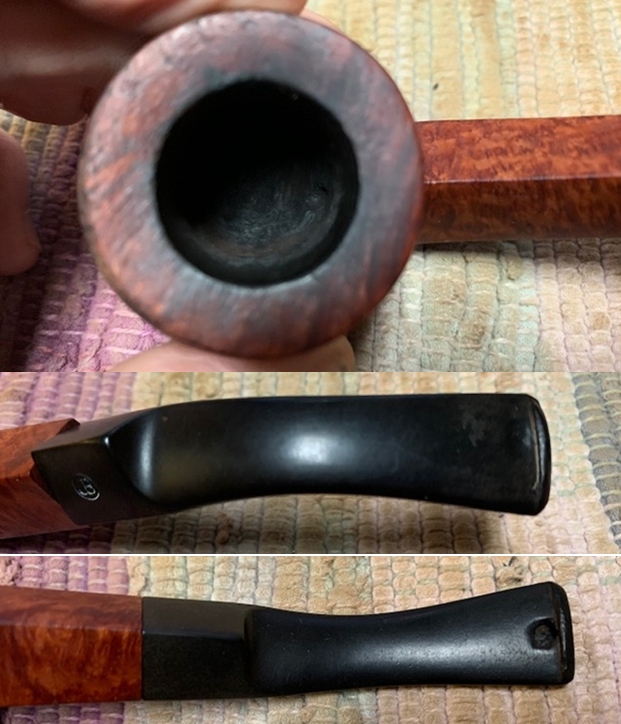
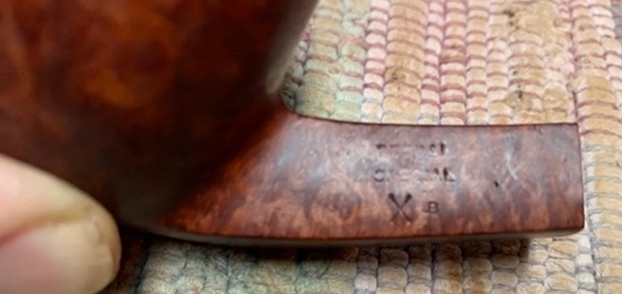
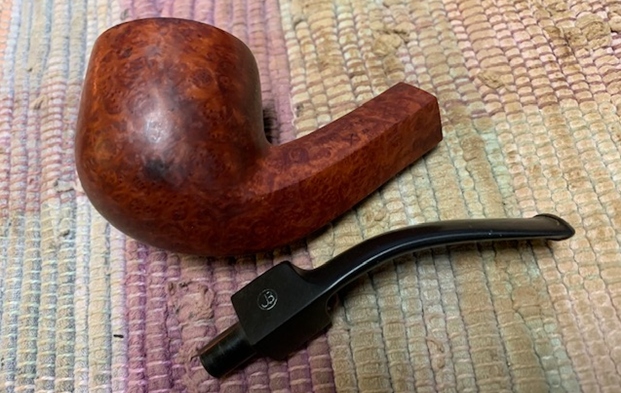
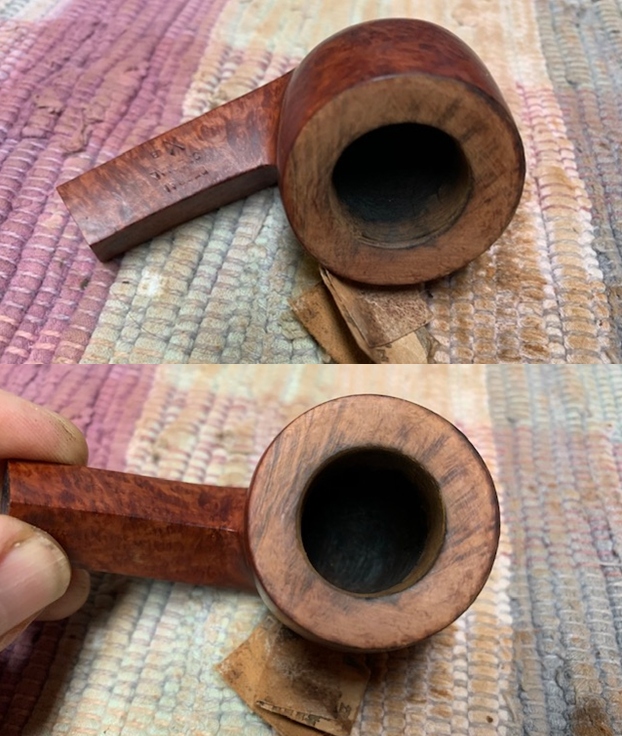
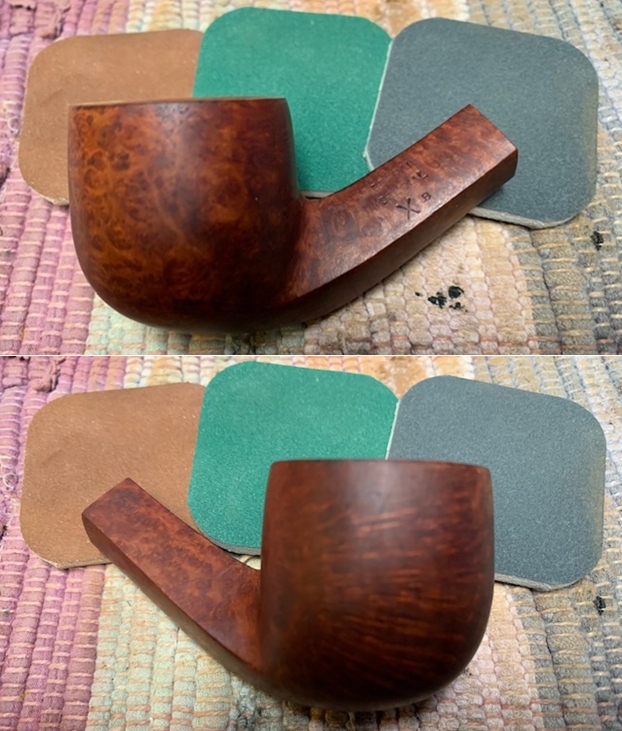
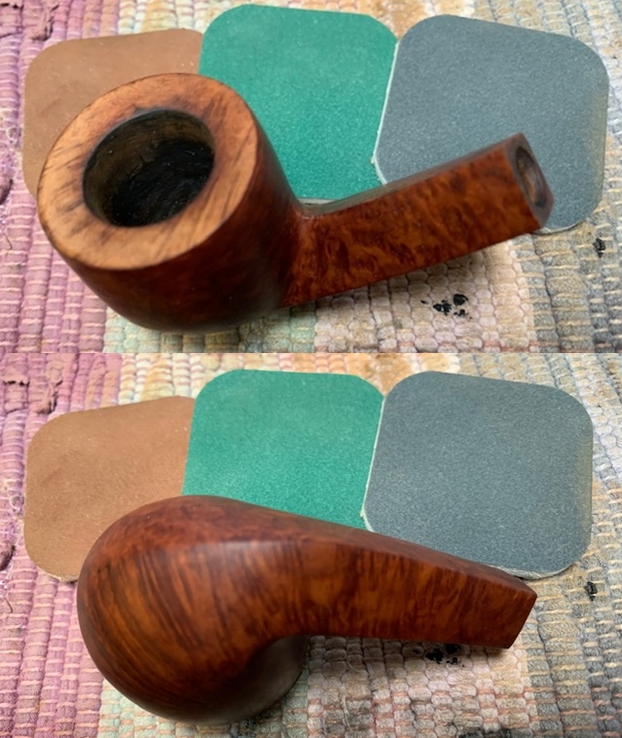
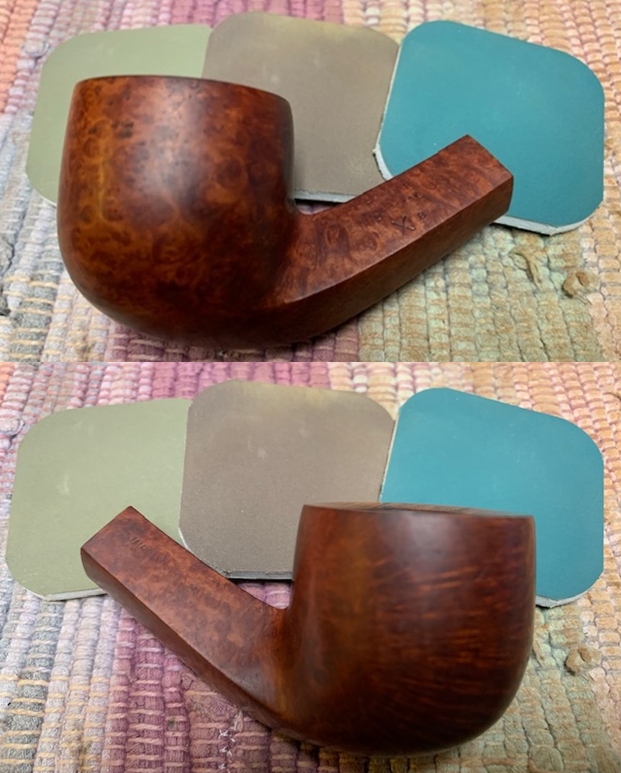
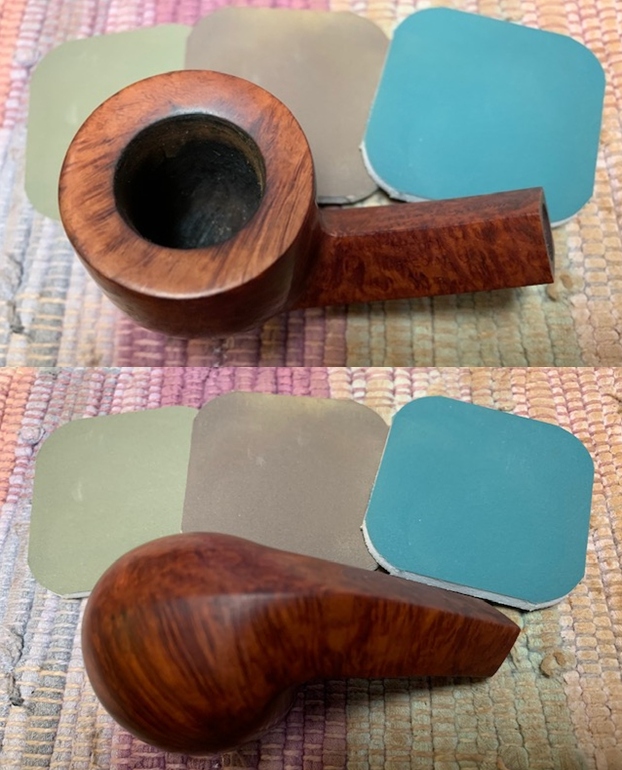
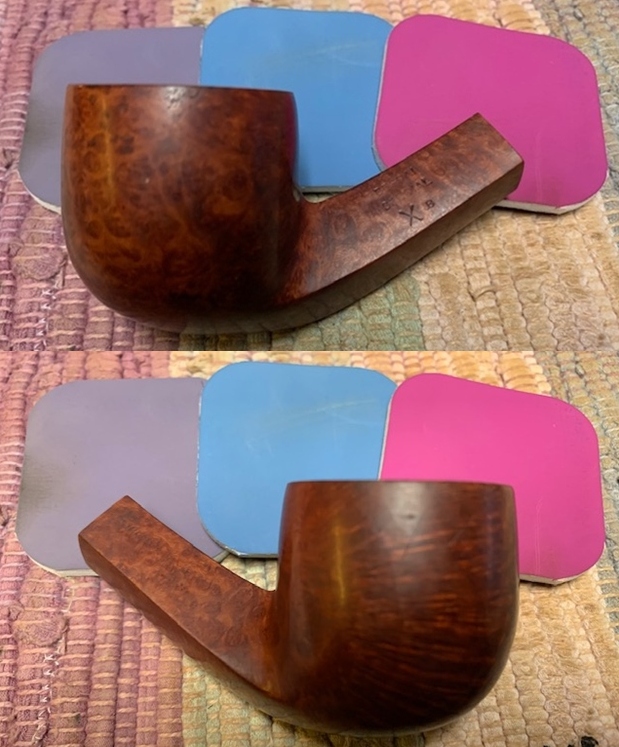
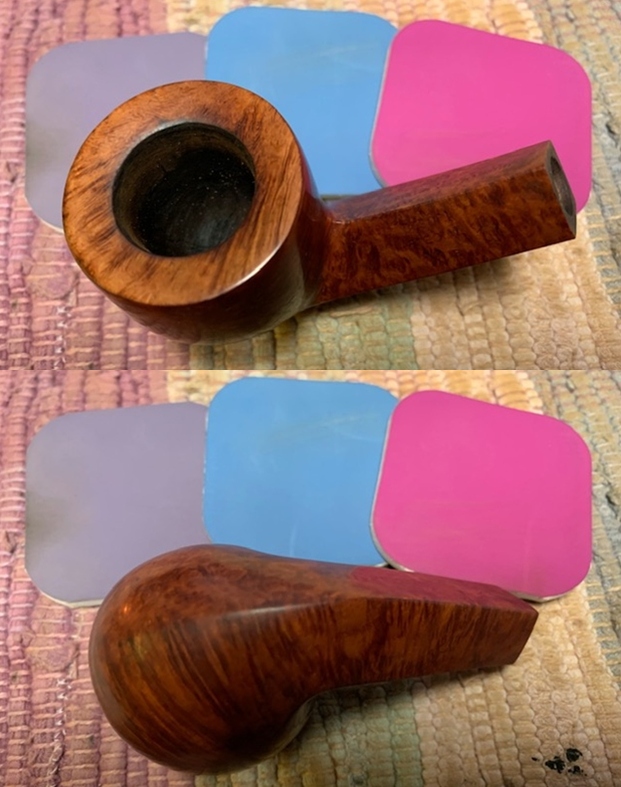
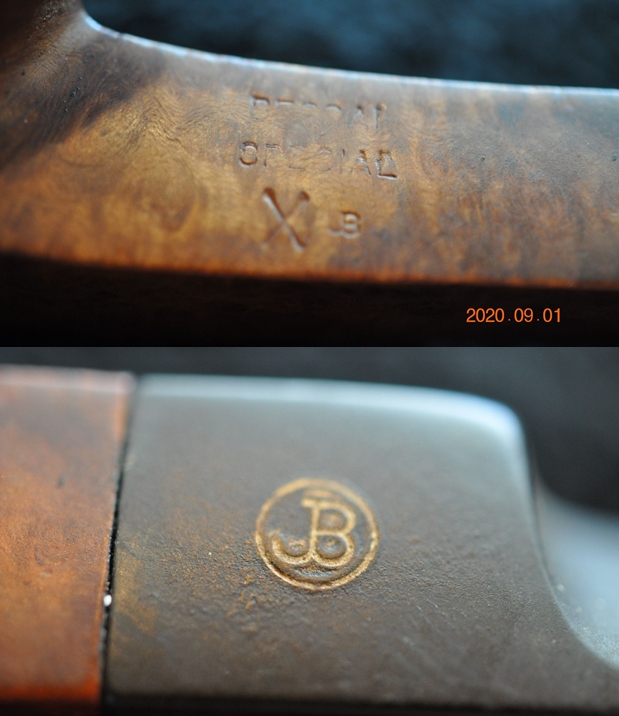
The next pipe on the work table came to us from an online auction in Kingman, Arizona, USA.  The pipe is an interesting looking piece – a smooth oil finished Diamond Shank Bent Pot pipe with some nice grain around the bowl. The pipe is stamped on the left side of the shank and reads Bessai [over] Special (over) X and a subscript JB. There was a lot of grime ground into the smooth finish on the briar. The bowl was heavily caked with a thick lava coat on the top of the beveled rim. The inside edges looked to be in good condition. The overall look of the rim appears to be good under the thick lava coat. The stem had tooth chatter and marks on the top and a bite through on the underside near the button. There was a JB in a circle logo on the saddle stem. It had promise but it was very dirty. Jeff took some photos of the pipe before he started his cleanup work.    He took photos of the rim top and bowl to give a clear picture of the thickness of the cake and tobacco debris as well as thick lava coat on the top. He also took photos of the top and underside of the stem to show the oxidation and the chatter and tooth marks on the topside and the bite through on the underside near the button.    Jeff took photos of the sides and heel of the bowl to give a picture of what the briar looked like. There is some nice grain around the sides. You can also see the damage to the rim edges and the heel of the bowl in the photos below.    The stamping on the left side of the shank is clear and readable and read as noted above.     I have worked on quite a few Bessai pipes over the years and back in 2014 I restemmed a bowl. I wrote a blog on the pipe and did quite an extensive amount of research on the brand (https://rebornpipes.com/2014/07/14/restemming-and-restoring-a-john-bessai-special-diamond-shank-bent-brandy/). I am including that information here for ease of reference. If you have read it before feel free to skip ahead to the work on the pipe.

HISTORY & BACKGROUND

I started out with what I had found previously and written about on the blog. I quote the following paragraph from Pipedia http://pipedia.org/index.php?title=Bessai

John Bessai was a long time pipemaker, repairman and tobacco shop owner who operated his pipe shop at the “Old Arcade” in Cleveland, Ohio. The shop was opened in approximately 1898. It was a small 2-room shop where he hand-crafted his own pipes in the back room and could work when customers were not there. Like so many other shop made brand, John Bessai’s limited production was quickly acquired by regular customers and thus his craftsmanship remained little known outside of Ohio and the Midwest. While his name is known by pipe collectors in the Midwest, his work is seldom seen elsewhere! He died before 1969. Nevertheless, John Bessai left behind a small number of classic shaped pipes; all were made on-site. They are praised worthy of collecting and reflecting skills well beyond most American pipe makers. John Bessai’s logo “JB” appeared as one letter as the “back” of the “J” and the “back” of the “B” share a single line. The logo was stamped on the stem and on the left side of the shank. His son Herb Bessai took over the business and also continued making pipes. He closed the shop in about 1978.

I suspected that there would be more information three years later. I did some further research and came across the information found in the paragraph below on one of the pipe forums.

John Bessai was located in the Colonial Arcade at least into the late 1980s. After his death, his son Herb ran the shop. It was taken over after Herb’s retirement by a male and then name was changed to “Old Erie Pipes”. This was then located in the Erieview Plaza and when that mall closed, taken over by Cousin’s Cigars which has a store on Euclid Avenue near CSU, and a store on Chagrin Boulevard in Woodmere Village.

Finally my digging paid off. On one of the pipe forums I came across a link that led me to a gold mine of information gathered by a man after my own heart, Andrew Hross. He has a blog called Classic Pipe Shop on Blogspot. I have included the link below for those who want more information. Andrew has done an amazing job of gathering information on the Bessai Brand so rather than rewrite the history I am quoting portions of Andrew’s work on The John Bessai Pipe Clinic. (http://classicpipeshop.blogspot.ca/2014/04/the-john-bessai-pipe-clinic-information.html)

The John Bessai Pipe Clinic, 35 Colonial Arcade, Cleveland, OH 44115 – by Andrew HrossOwner(s):

**John Bessai 1920s until his passing in 1969, **Herb Bessai ~1962-1983, **Daniel Gottschall 1984-~1993, **Purchased by Dad’s Smoke Shop / Cousin’s Smoke Shop and rolled into the Old Erie Smoke Shop about 1993. Cousin’s Cigars purchased the remaining stock of Bessai pipes near after Herb Bessai passed away in 2002.

Years of Operation: 1920s (unkown specific date at this time) – 1983. After 1983 the business was sold to Daniel Gottschall who later sold it to Cousin’s Cigar (Euclid Ave) around 1993. The name was changed to “Old Erie Tobacco Company”. They were forced to move to the Galleria when all the tenants of the Old Arcade were cleared out to make room for renovations. Their new address was The Galleria at Erieview, 1301 East 9th Street in Cleveland…

…John’s son Herb took over the shop in the early 60s after he graduated from Cleveland State University / Fenn College (unclear) as he is listed as having played Basketball for CSU. Herb was also a helpful, informative and friendly individual.

Pipes offered by John Bessai Pipe Clinic: Most of the pipes that were offered by the John Bessai Pipe Clinic were fairly standard in shape… I would say most of the pipes Bessai offered were smooth pipes. My assessment would be 90% smooth and 10% rusticated / sandblasted…

…The story is that John crafted pipes in the back room or off site and finished them in house while the store wasn’t busy. Very little information is available on the accuracy of this statement. Some of his pipes from the late 1960s through the 1970s (John passed away in 1969) I feel were left over stock from previous turnings and sometimes showed fills or sand pits. Some of these pipes even carry Herb’s markings (see below). These pipes still smoke very well but are not as eye-appealing as other earlier pipes from the store’s career.

Stampings and rough dating of John Bessai Pipe Clinic Pipes: Which pipes did John make and which ones did Herb make/finish? All Bessai pipes carry his standard large JB stamp either on the stem or shank or both. Typically the JB on the stem is within a circle.

All pipes created by John Bessai’s hands reportedly contain the miniscule ‘jb’ stamp on the shank or body of the pipe. I have older pipes in my possession that do not contain this stamp (condenser, old stamps, etc) that were clearly shop made pipes. I feel he started using the tiny ‘jb’ stamp in the 50s to early 60s.

An interesting note about John Bessai’s stems – they always clean very nicely and aren’t prone to as much oxidation (that brownish / green color) as most Dunhill and Charatan pipes tend to oxidize. His cuts to his stems were very impressive and often transitioned from diamond-shaped shanks almost architecturally. Very comfortable to smoke.

John Bessai Special Pipes:

… I have a couple Bessai Special pipes. These stand out either by large size, graining or possibly shape. Most Specials are unique pipes and are rare to find in comparison to his regular issue pipes.

John Bessai Special X pipes:

I only have one of these and it’s a beauty. This one is a larger bowl (around a group 4 Dunhill) with deep colored grain and a hefty substantial shank. Special X pipes are probably the rarest of John Bessai pipes and should be sought out if possible. I’ve smoke mine roughly 4 or 5 times and it performs with the best of my pipes…

Herb Bessai Pipes:

Unfortunately none of these pipes that I’ve seen have astounded me with grain or general appearance. Having said this, these pipes smoke nicely and are a great value if you can find them. I have one that my father found at an Antique Show in the South. There’s another author shape on reborn pipe’s blog that someone refinished because of the amount of fills in the pipe. He also states it’s a wonderful smoker (Editor’s note: This is my pipe and the write up I did on the blog). These pipes are likely from the late 60s through the early 70s. I believe many pipes after this period were created en masse at a factory in the US. It is unclear what stamp was used on these later pipes…

Dating / Circa era Bessai Pipes: If the pipe carries a stamp stating Cleveland, O U.S.A. it’s considered an older production pipe (pre1960s). I’ve not seen any newer pipes with that stamp.

Bullseye stamping usually indicates an earlier pipe as that stamp seems to have been abandoned pre1960 as well.

Most of the earlier Bessai pipes have an unusual ‘stinger’ or condenser at the end of the tenon which is unique to Bessai pipes. They are either a hard plastic or created out of wood. They are typically easy to remove and could have been easily lost if misplaced. These pipes I would consider pre-1960 and possibly 1940s-early 1950s production based on their stamps and patina of the pipes.

1970s 1980s and beyond: My feeling on these pipes after John’s passing is that they purchased finished pipes from a large manufacturer and stamped them with the John Bessai or Bessai stamp (on shank and/or stem). Most of these shapes are standard among many stores from that period and offer less than spectacular grain (and sometimes fills). Stamps on these pipes are probably fairly plain and don’t have the tiny ‘jb’ stamp on the shank indicating it was produced by John Bessai…

The pipe in hand was a John Bessai Special X pipe so it is a rare one. It has a larger bowl (around a group 4 Dunhill) with deep colored grain and a hefty substantial shank. It has an excellent transition between a large bowl and a diamond shank and stem flowing into a flat blade. Special X pipes are probably the rarest of John Bessai pipes and should be sought out if possible. Now it was time to work on the pipe.

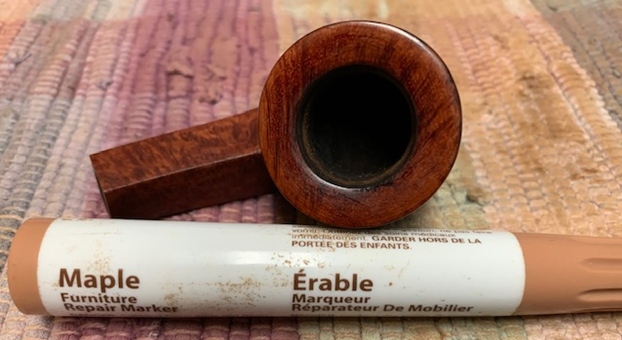
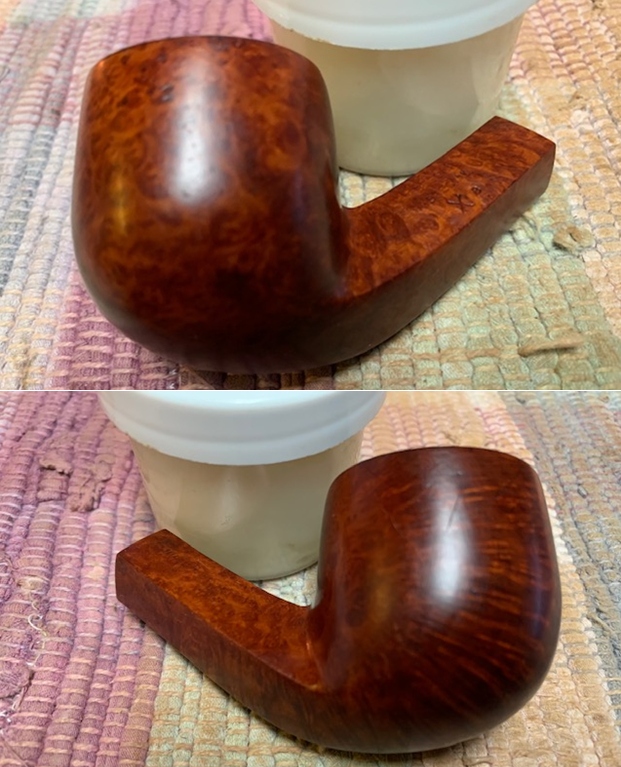
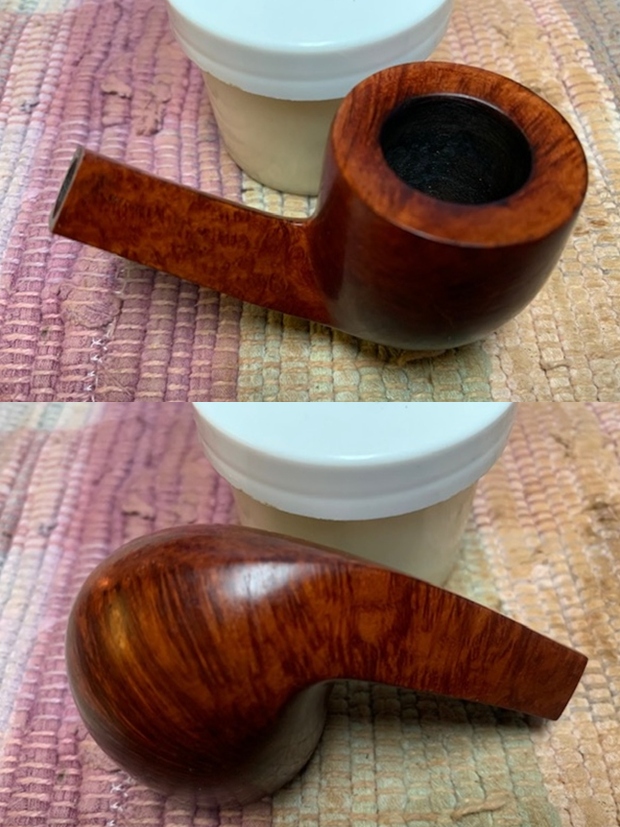
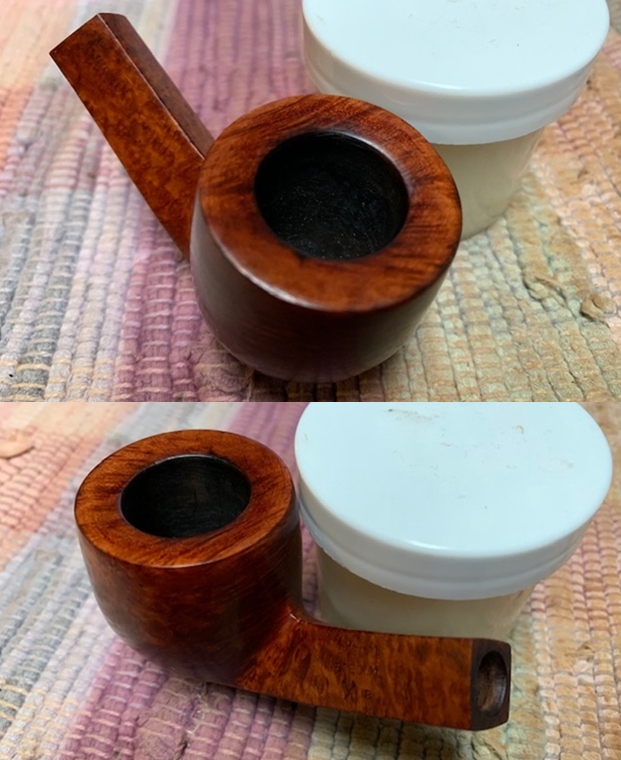
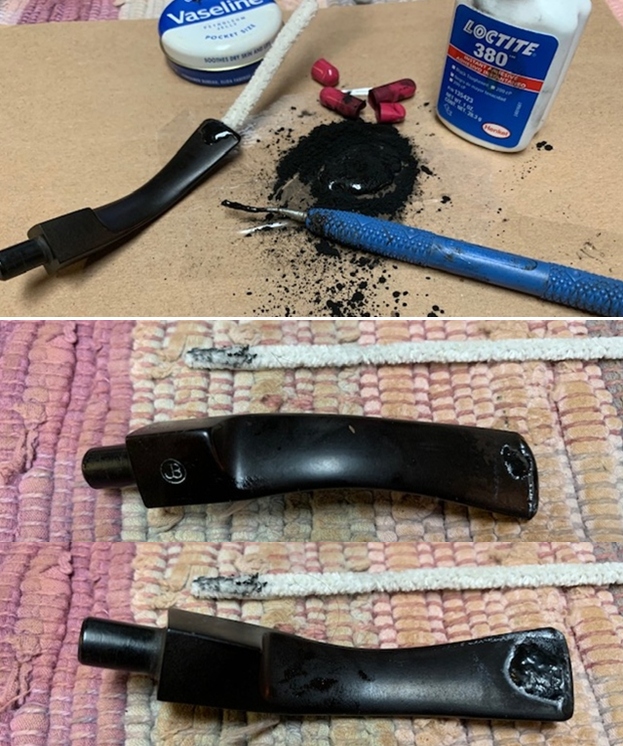
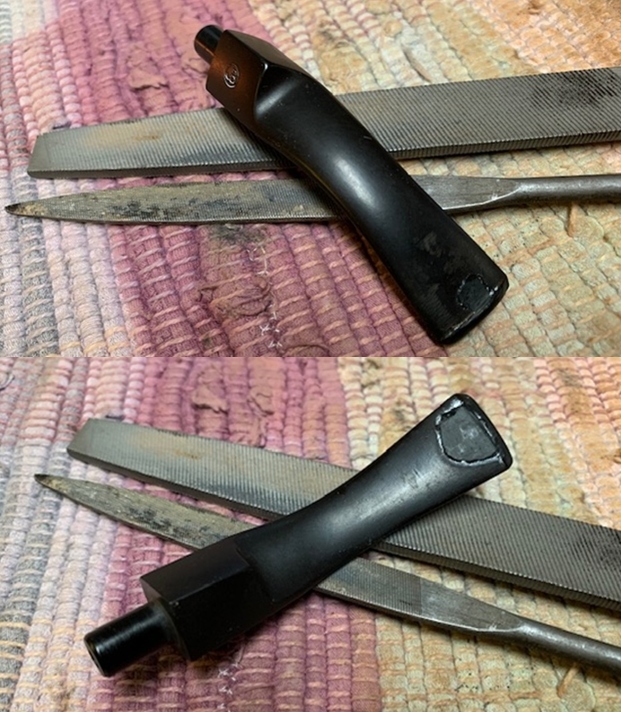
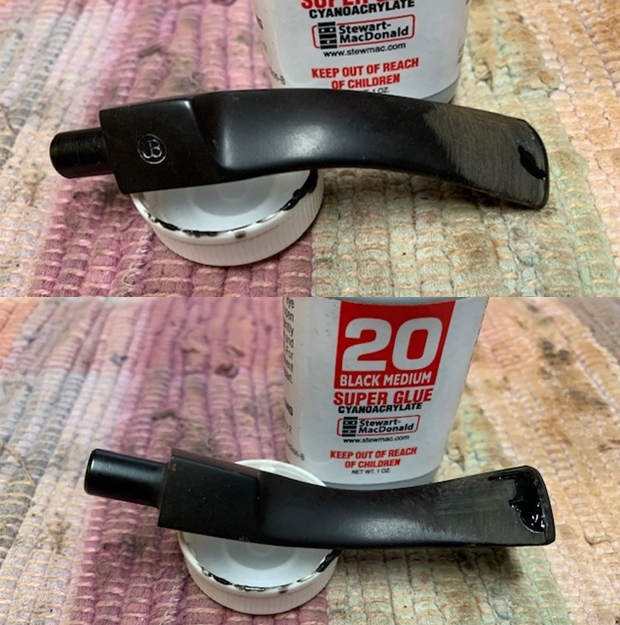
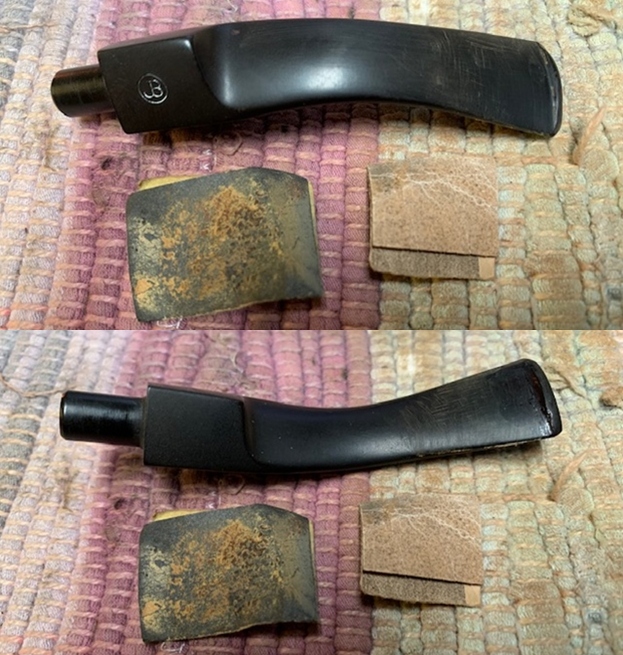
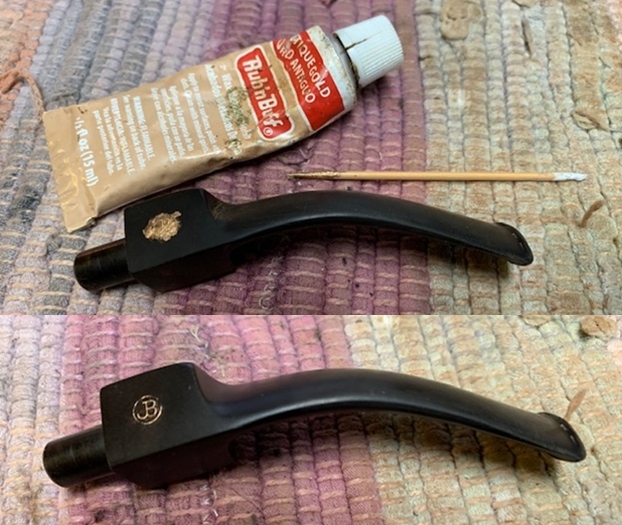
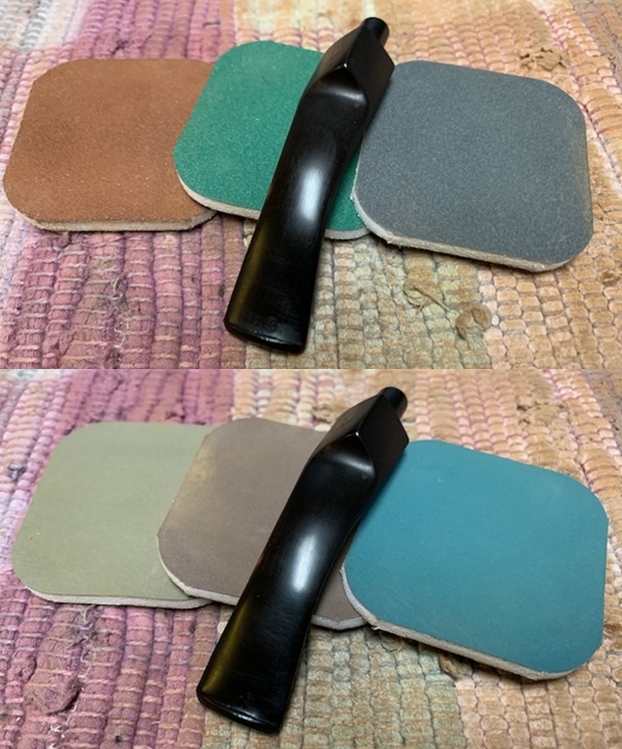
Jeff had cleaned up the pipe with his usual penchant for thoroughness. He reamed the pipe with a PipNet pipe reamer and removed the rest of it with a Savinelli Fitsall Pipe Knife.  He scrubbed the bowl with undiluted Murphy’s Oil Soap with a tooth brush. He rinsed it under running warm water to remove the soap and grime. He cleaned out the inside of the shank and the airway in the stem with alcohol, cotton swabs and pipe cleaners. He soaked the stem in Before & After Deoxidizer and rinsed it off with warm water. I took photos of the pipe once I received it.   The rim top cleaned up really well. The rim top and outer edge of the bowl show some darkening more prevalent toward the back of the bowl. The stem surface looked very good with tooth marks and chatter on the top side and a bite through on the underside near the button.  The stamping on the left side of the shank is clear and readable. It reads as noted above.    I removed the saddle stem and took a photo of the pipe to give a sense of the whole. Now it was time to do my work on the pipe. I worked on the rim top and edges with a folded piece of 220 grit sandpaper to clean up the darkening and damage. Once I was done sanding it looked much better and it was ready to polish.   I polished the repaired areas and the rest of the briar with micromesh sanding pads – wet sanding with 1500-12000 grit pads and wiping it down after each pad with a damp cloth.  Once I had polished the rim top I used a Maple stain pen to touch up the rim top. I knew that once it was polished it would blend in very well. I rubbed the bowl and shank down with Before & After Restoration Balm. I worked it into the surface of the bowl sides and shank with my fingertips to clean, enliven and protect the briar. I let the balm sit for a little while and then buffed with a cotton cloth to raise the shine. The grain came alive. I set the bowl aside and turned to work on the stem. I mixed a batch of charcoal powder and Loctite Black CA glue on piece of cardboard and cellotape. I stirred the mixture until I had a putty-like substance. I greased a folded pipe cleaner with Vaseline and inserted it in the slot in the airway under the bite through. I used a dental spatula to fill in the bite through on the underside and the deep tooth mark on the topside. I sprayed it with an accelerator to harden it and then removed the pipe cleaner.  Once the repairs cured I used a file and a rasp to smooth out the repair. Once I had it smoothed as much as possible with the files. I filed in the air pockets in the repair with black super glue. Once it cured I used 220 grit sandpaper to further smooth the finish.   I touched up the gold circle JB stamp with Rub’n Buff Antique Gold. I pressed it into the stamp with a tooth pick then buffed it off with a soft cloth.    I polished the vulcanite stem with micromesh sanding pads – 1500-12000 grit pads. I wiped it down with Obsidian Oil after each sanding pad. I used Before & After Pipe Polish – both Fine and Extra Fine to further polish the stem.   This Bessai Special X JB stamped Diamond Shank Bent Pot is a great looking pipe now that it has been restored. The smooth oil cured finish around the bowl is quite beautiful and highlights the grain and works well with the polished rebuilt vulcanite saddle stem. The repaired bite through on the underside of the stem looks much better and is now smooth to touch. I put the stem back on the bowl and carefully buffed the pipe with Blue Diamond on the buffing wheel using a light touch on the briar. I gave the bowl and the stem multiple coats of carnauba wax on the buffing wheel and followed that by buffing the entire pipe with a clean buffing pad. I hand buffed the pipe with a microfiber cloth to deepen the shine. The finished Bessai Special X JB Bent Pot fits nicely in the hand and feels great. Give the finished pipe a look in the photos below. The dimensions of the pipe are Length: 5 ¾ inches, Height: 1 ¾ inches, Outside diameter of the bowl: 1 ½ inches, Chamber diameter: 7/8 of an inch. The weight of the pipe is 48g/1.69oz. I am not sure what I am doing with this one yet. It may well end up on the store. Keep an eye open for it. Thanks for reading this blog and my reflections on the pipe while I worked on it. There are many more to come!
Beautification for an American Made Bertram Washington DC Grade 40 Billiard


Blog by Steve Laug

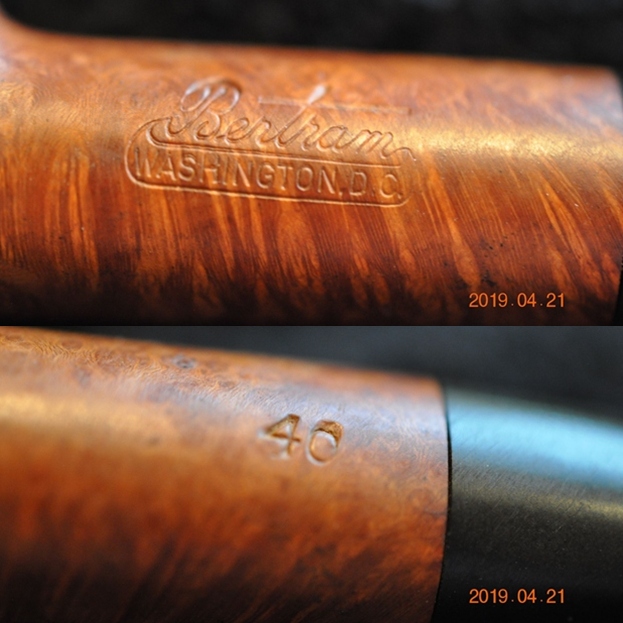
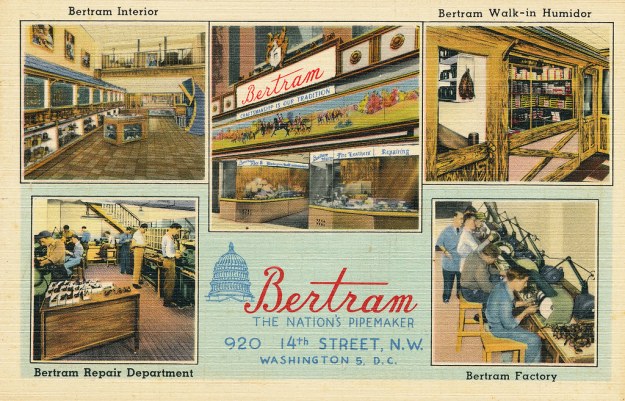
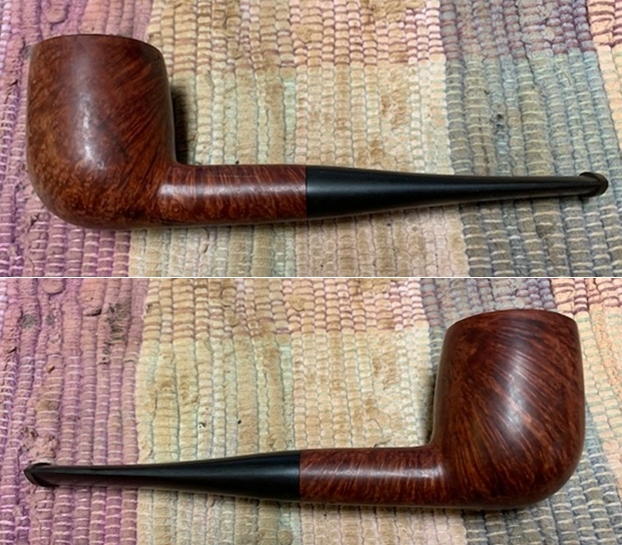
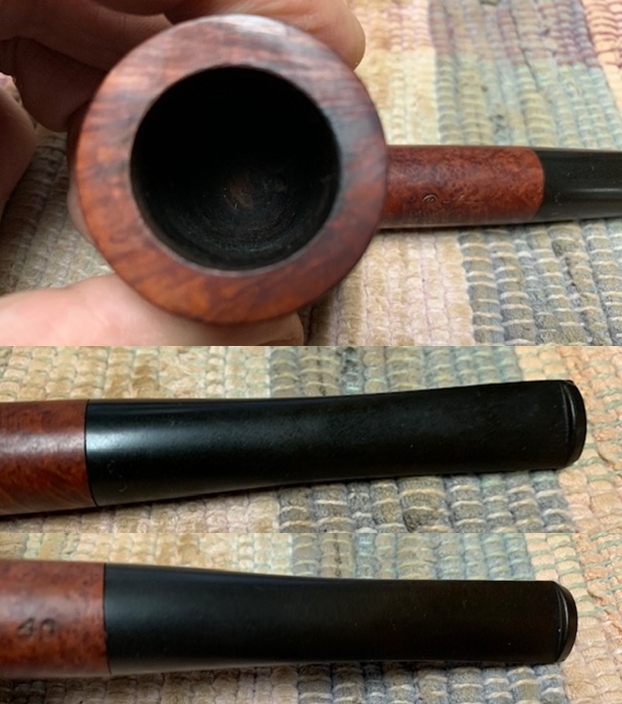
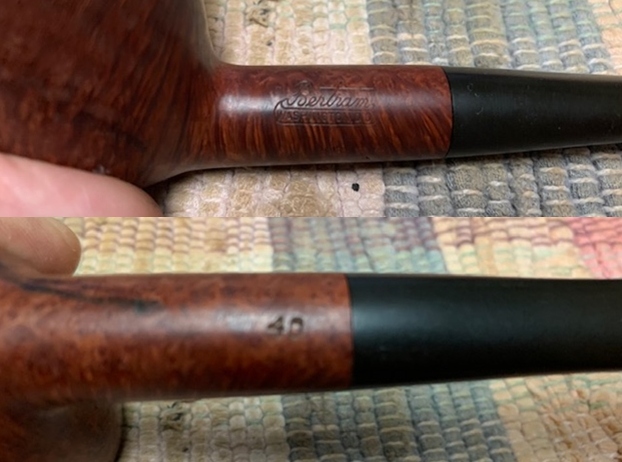
The next pipe on the work table came to me from one of our estate purchases. Between us we pick up quite a few pipes for restoration. I try to work them into the restoration queue so that I can keep them moving. We picked up over 120+ Bertram pipes from an estate that a fellow on the east coast of the US was selling. This next one is from that estate – a beautifully grained large Billiard Grade 40 Bertram with a tapered vulcanite stem. The pipe is stamped on the lower left side near the shank junction with the stem and reads 40. Higher up on the left side it is stamped Bertrams [over] Washington D.C. centered on the shank. The finish had a lot of grime ground into the smooth finish on the bowl and some darkening around the sides of the bowl. There are also some nicks on the backside of the bowl toward the back top. The bowl was caked with an overflowing lava coat on the top of the rim, heavier toward the back of the bowl. The edges looked okay other than some potential burn damage on the back inner edge. The stem was lightly oxidized, dirty and had light tooth chatter and marks on the top and underside near the button. There were not markings or a logo on the taper stem. Like the rest of the Bertrams in this lot the pipe had promise but it was very dirty. Jeff took photos of the pipe before he started his cleanup work. He took photos of the rim top and bowl to give a clear picture of the thickness of the cake and the lava on the rim top. The lava was thicker toward the back of the rim and there were remnants of tobacco on the walls of the thickly caked bowl. He also took photos of the top and underside of the stem to show the chatter and tooth marks. Otherwise the stem is quite clean. Jeff took photos of the sides and heel of the bowl to give a picture of what the briar around the pipe looked like. There is some stunning grain under the grime.   He took photos of the stamping on the shank. It reads as noted above and is clear and readable. The grade number is 40.    As I have worked on Bertrams I have written on the brand and have included the following information. If you have read it in past blogs, you can skip over it. If you have not, I have included the link to Bertram history and information. I would recommend that if you don’t know much about them take some time to read the background. I include a link to the write up on Pipedia (http://pipedia.org/wiki/Bertram). Bertram pipes were based out of Washington DC. They were popular among famous politicians and celebrities of the time. They made many products for them from FDR’s cigarette holders to Joseph Stalin’s favorite pipe. They were considered some of the best America had to offer till they finally closed their doors in the 70s. Bertram graded their pipes by 10s and sometimes with a 5 added (15, 25, 55 etc.), the higher the grade the better. Above 60s are uncommon and 80-90s are quite rare. I have worked on one 120 Grade billiard. I have several blogs that I have written on rebornpipes that give some history and background to Bertram pipes. (https://rebornpipes.com/2015/06/16/an-easy-restoration-of-a-bertram-grade-60-217-poker/). I have included the following link to give a bit of historical information on the pipe company. It is a well written article that gives a glimpse of the heart of the company. http://www.streetsofwashington.com/2012/01/bertrams-pipe-shop-on-14th-street.html#

From this information I learned that all of these Bertrams were made before the closure of the shop in the 1970s. This Bertram Billiard has a stunning a mix of grain around the bowl. This pipe has a 40 Grade stamp on it which I am sure explains the quality of the briar. But like many of these Bertrams the Grading system is a mystery to me.

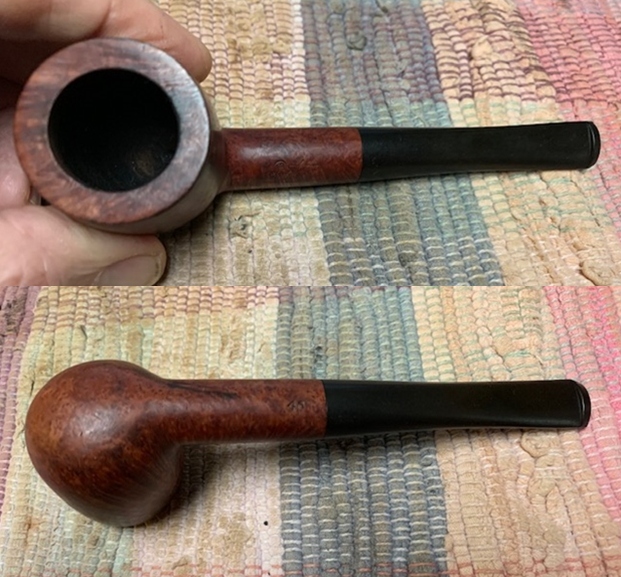
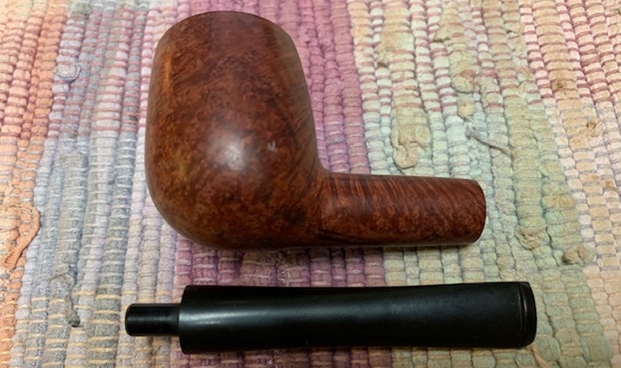
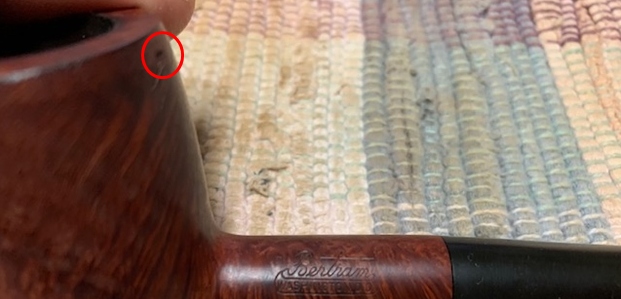
Jeff had cleaned up the pipe with his usual penchant for thoroughness. He reamed the pipe with a PipNet Pipe Reamer and cleaned up the remnants with a Savinelli Fitsall Pipe Knife.  He scrubbed the bowl with undiluted Murphy’s Oil Soap with a tooth brush. He rinsed it under running warm water to remove the soap and grime. He cleaned out the inside of the shank and the airway in the stem with alcohol, cotton swabs and pipe cleaners. He soaked the stem in Before & After Deoxidizer and rinsed it off with warm water. I took photos of the pipe once I received it.   The rim top had some darkening on the back of the bowl but otherwise looked very good. The inner edge of the rim looked very good with no damage. The stem surface looked very good with a few small tooth marks and chatter on both sides near the button.I took a photo of the stamping on the shank. The Bertram Washington DC is toward the top of the left side mid shank. On the underside of the shank is stamped the Grade 40 number.  I removed the stem and took a photo of the pipe to give a sense of the whole. The stem is tapered. I started my work on the pipe by dealing with the large pit on the backside of the bowl. I have circled it in red in the first photo below. I filled it in with clear super glue and briar dust. Once the fill cured I sanded it smooth with 220 grit sandpaper to blend it into the surrounding briar. I polished the bowl and the rim top, sides and shank with micromesh sanding pads – wet sanding with 1500-12000 grit pads and wiping it down after each pad with a cloth.  I rubbed the bowl and shank down with Before & After Restoration Balm. I worked it into the surface of the bowl sides and shank with my fingertips to clean, enliven and protect the briar. I let the balm sit for a little while and then buffed with a cotton cloth to raise the shine.   I set the bowl aside and turned to work on the stem. It was in very good condition so I polished the vulcanite stem with micromesh sanding pads – 1500-12000 grit pads. I wiped it down with a damp cloth after each sanding pad. I used Before & After Pipe Polish – both Fine and Extra Fine to further polish the stem.    This Bertram Washington DC Grade 40 Billiard with a vulcanite taper stem is a great looking pipe now that it has been restored. I put the stem back on the bowl and carefully buffed the pipe with Blue Diamond on the buffing wheel using a light touch on the briar. I gave the bowl and the stem multiple coats of carnauba wax on the buffing wheel and followed that by buffing the entire pipe with a clean buffing pad. I hand buffed the pipe with a microfiber cloth to deepen the shine. The finished Bertram 40 Billiard fits nicely in the hand and feels great. Give the finished pipe a look in the photos below. The dimensions of the pipe are Length: 6 inches, Height: 2 inches, Outside diameter of the bowl: 1 ½ inches, Chamber diameter: ¾ of an inch. The weight of this pipe is 50g/1.76oz. If you are interested in adding this pipe to your collection send me a message or an email. Thanks for reading this blog and my reflections on the pipe while I worked on it. There are many more to come!

Breathing Life into a Custom-Bilt Imported Briar Panel Billiard


Blog by Steve Laug

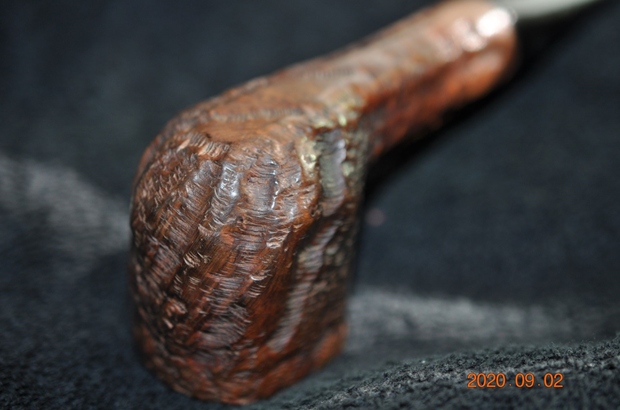
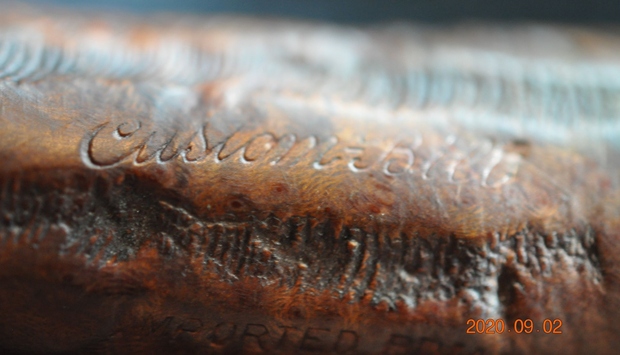
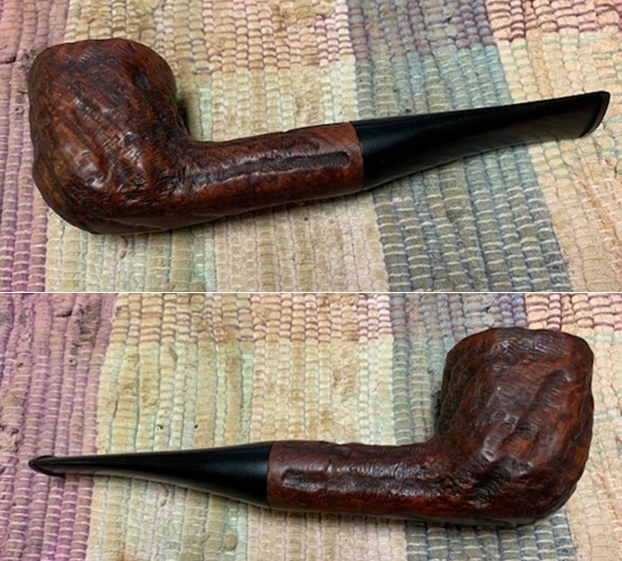
The next pipe on the work table came to us from an antique store in Murray, Utah, USA. The pipe is a classic Custom-Bilt piece – a rusticated Panel Billiard shaped pipe with some nice grain around the bowl. The pipe is stamped on the left side of the shank and reads Custom-Bilt and below that on another smooth band it reads Imported Briar. There was a lot of grime ground into the smooth and rusticated portions of the finish on the briar. The bowl was heavily caked with an overflow of lava on the rusticated top and inner edge of the rim. The inside edges looked to be in good condition. The stem was dirty and lightly oxidized. It had tooth chatter and marks on the top and underside near the button and on the button edge. There were not markings or a logo on the saddle stem. There was also a removable stinger in the tenon end. It had promise but it was very dirty. Jeff took some photos of the pipe before he started his cleanup work. He took photos of the rim top and bowl to give a clear picture of the thickness of the cake and tobacco debris as well as the lava on the rim top rustication. He also took photos of the top and underside of the stem to show the light oxidation and the chatter and tooth marks.  He took the stem off the shank and took a photo of the stinger in the tenon end. Jeff took photos of the sides and heel of the bowl to give a picture of what the briar looked like. The rustication pattern around the bowl is instantly recognizable as done by Custom-Bilt. It is hard to see that the right and left side are flat which is what I call a panel.  The stamping on the left side of the shank is clear and readable and read as noted above. I turned to Pipephil (http://www.pipephil.eu/logos/en/logo-c8.html) to get a quick view of the brand once again. I knew that I was working with one of the older pipes and probably made by Tracy Mincer himself. He stopped making the Custom-Bilt pipes in the early 1950s. The screen capture I included below shows a brief history of the brand. I turned to Pipedia (https://pipedia.org/wiki/File:CustomBilt_Stamp1.jpg) for a quick read. The majority of the information there was two book reviews of the Custom-Bilt Story by Bill Unger.
The one line I culled was the following: “Tracy Mincer started the original Custom-Bilt pipes it appears in 1934”.

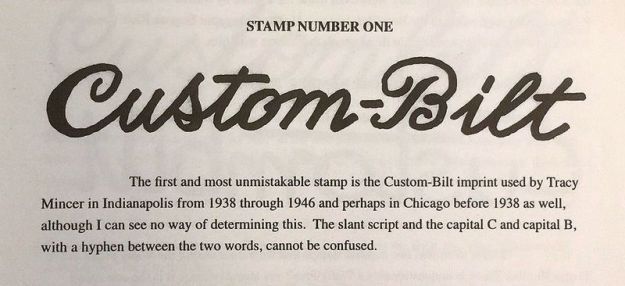
I did a screen capture of the stamping that matched the stamping on the pipe that I am working on.What I learned from that is that the stamp was used by Tracy Mincer in Indianapolis in the US from 1938-1946 and possibly in Chicago before 1938 as well. There were also some metal bits in the vulcanite and the Imported Briar stamp which made think WW2 or shortly after. So now I had a possible date for this pipe. It was an old timer and it was well worth working on.

Armed with that information I turned to work on the pipe itself.  Jeff had cleaned up the pipe with his usual penchant for thoroughness. He reamed the pipe with a PipNet pipe reamer and removed the rest of it with a Savinelli Fitsall Pipe Knife.  He scrubbed the bowl with undiluted Murphy’s Oil Soap with a tooth brush. He rinsed it under running warm water to remove the soap and grime. He cleaned out the inside of the shank and the airway in the stem with alcohol, cotton swabs and pipe cleaners. He soaked the stem in Before & After Deoxidizer and rinsed it off with warm water. I took photos of the pipe before I started my part of the restoration work. The rim top cleaned up really well. The rim top and outer edge of the bowl look very good. The stem surface looked very good with a few small tooth marks and chatter on both sides near the button. There was a deep tooth mark on the topside of the button.    The stamping on underside of the shank is clear and readable. It is stamped as noted above.I removed the stem and took a photo of the pipe to give a sense of the whole. The tapered stem is nice and the photo shows the removable stinger.I cleaned up the inner edge of the bowl with a folded piece of 220 grit sandpaper to smooth out the damage. Once I had smoothed out the edge the bowl was ready.   The bowl was in excellent condition so started by rubbing the bowl and shank down with Before & After Restoration Balm. I worked it into the surface of the bowl sides and shank with my fingertips and a horsehair shoe brush to clean, enliven and protect the briar. I let the balm sit for about 10-15 minutes and buffed with a cotton cloth to raise the shine. The grain came alive.  I set the bowl aside and turned to work on the stem. I removed the pressure fit stinger before working on the rest of the stem. I will include it with the pipe to the next owner but will not reinstall it. I also filled in the deep tooth mark on the topside of the button with clear superglue. Once the repair cured I sanded it with 220 grit sandpaper to blend it into the surface of the vulcanite. I started polishing it with 400 grit wet dry sandpaper. I polished the vulcanite stem with micromesh sanding pads – 1500-12000 grit pads. I wiped it down with Obsidian Oil after each sanding pad. I used Before & After Pipe Polish – both Fine and Extra Fine to further polish the stem. This Custom-Bilt Imported Briar Panel Billiard is a great looking pipe now that it has been restored. The style of rustication that is used around the bowl is quite beautiful and works well with both the shape and the polished vulcanite taper stem. I put the stem back on the bowl and carefully buffed the pipe with Blue Diamond on the buffing wheel using a light touch on the briar. I gave the bowl multiple coats of Conservator’s Wax and the stem multiple coats of carnauba wax on the buffing wheel and followed that by buffing the entire pipe with a clean buffing pad. I hand buffed the pipe with a microfiber cloth to deepen the shine. The finished Custom-Bilt is another pipe that fits nicely in the hand and feels great. Give the finished pipe a look in the photos below. The dimensions of the pipe are Length: 6 inches, Height: 2 inches, Outside diameter of the bowl: 1 ½ inches, Chamber diameter: ¾ of an inch. The weight of the pipe is 53g/1.87oz  I will be putting it on the rebornpipes store shortly. If you are interested in adding this pipe to your collection send me a message or an email. Thanks for reading this blog and my reflections on the pipe while I worked on it. There are many more to come!