Monthly Archives: November 2016

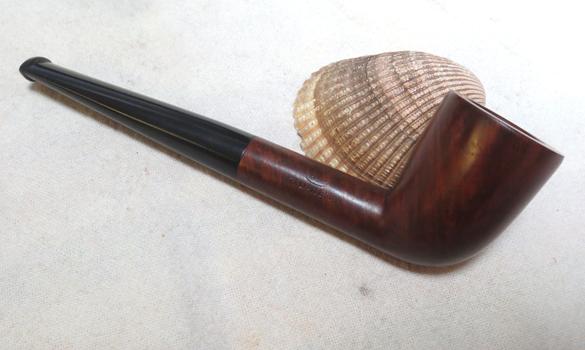
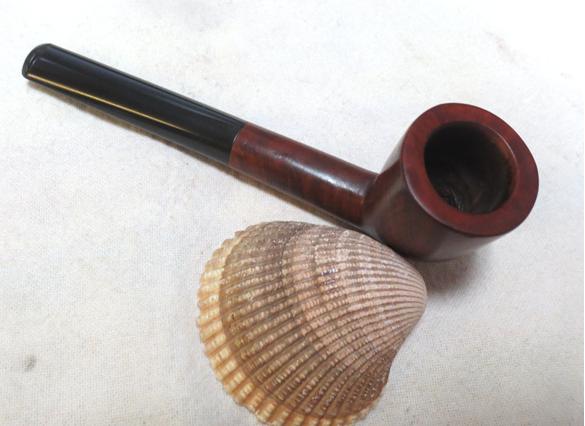
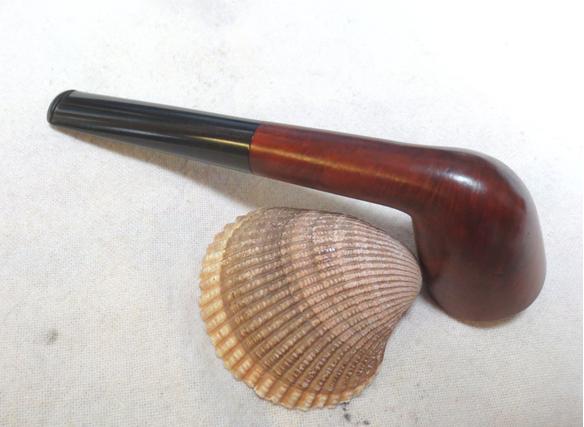
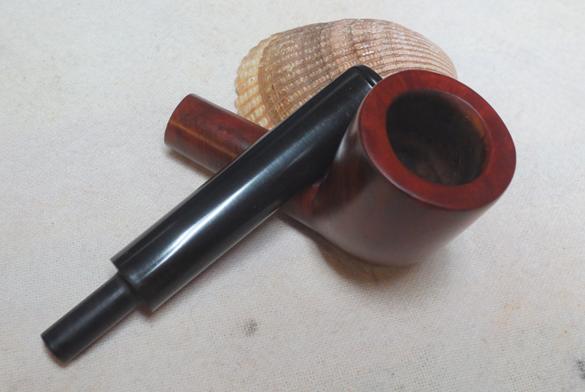
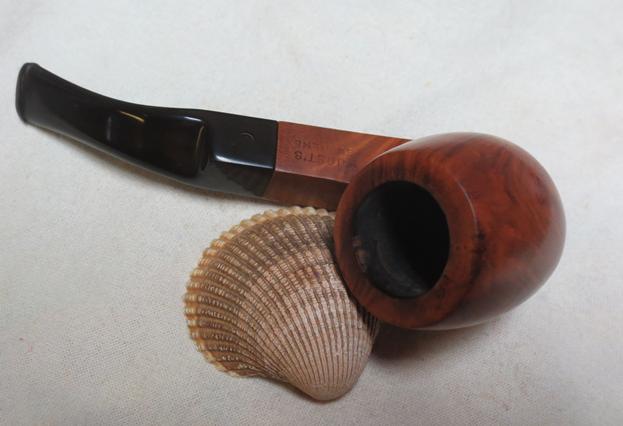
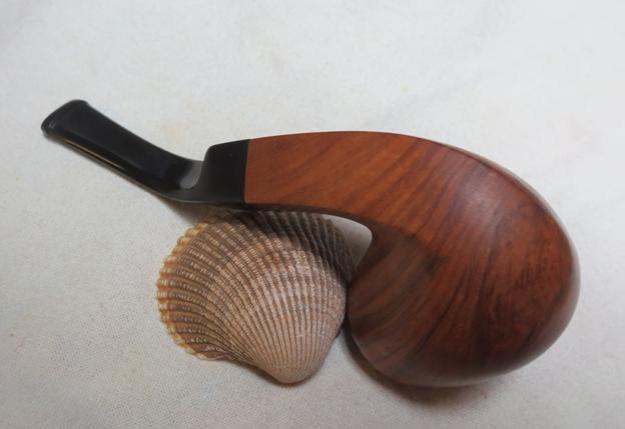
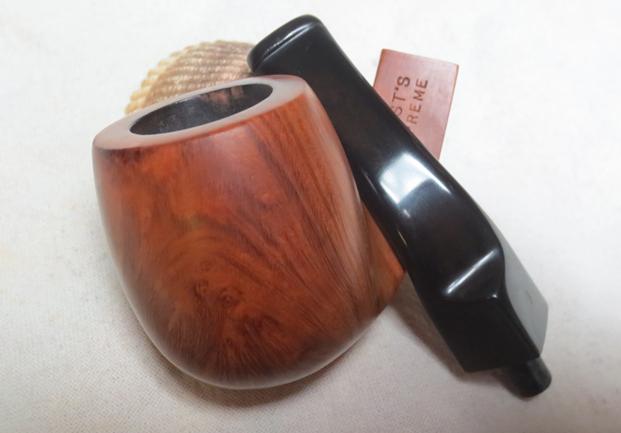
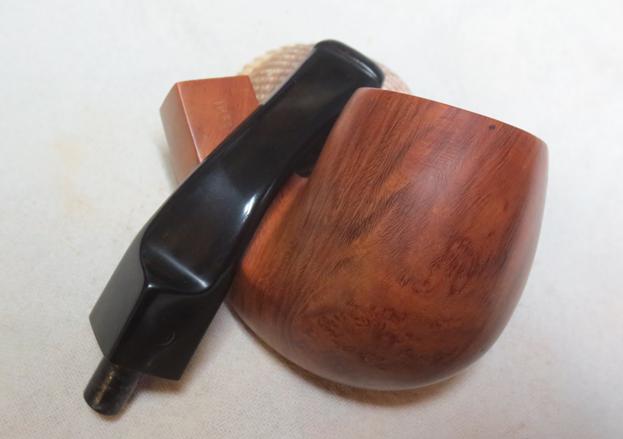
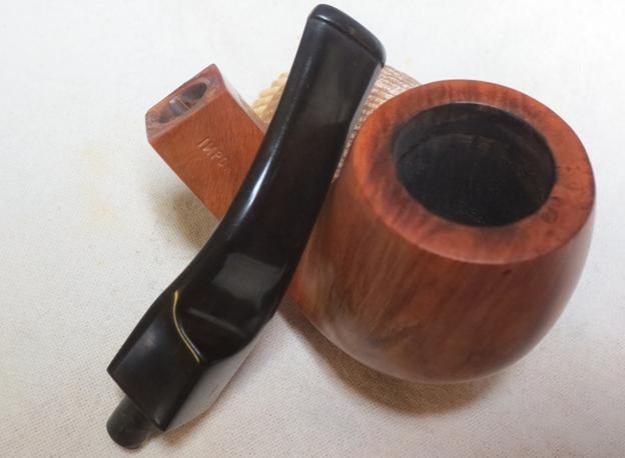
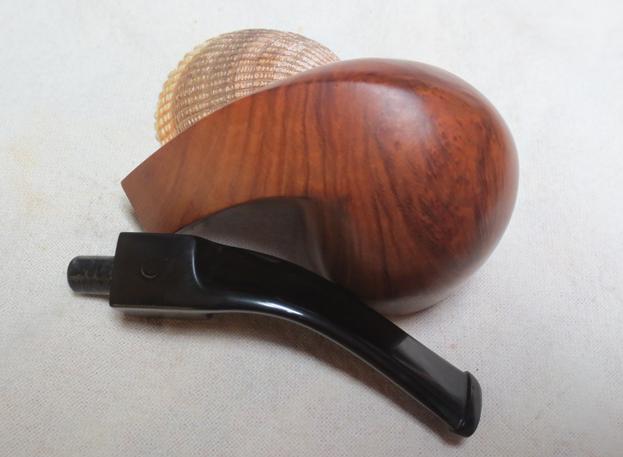
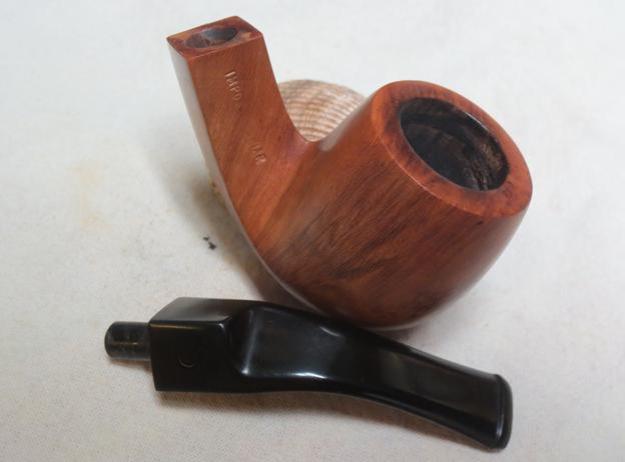
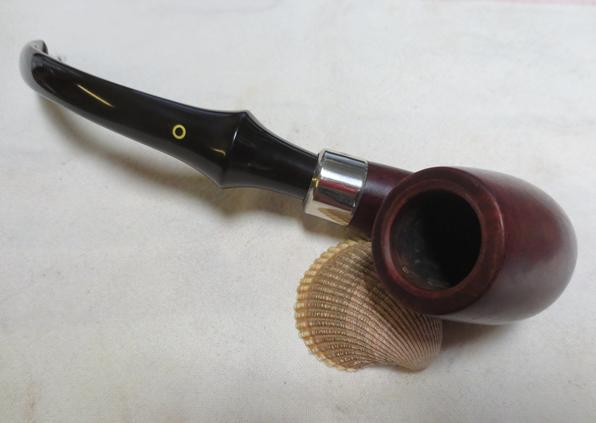
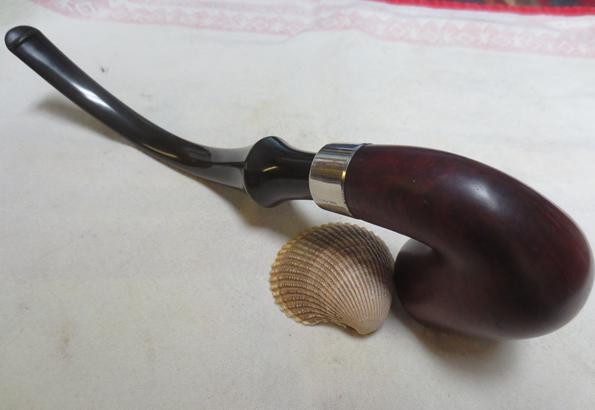
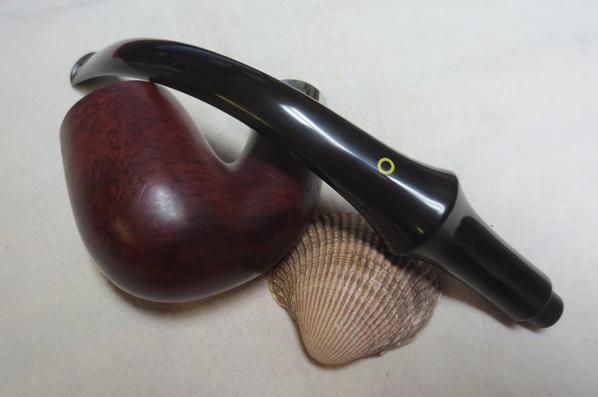
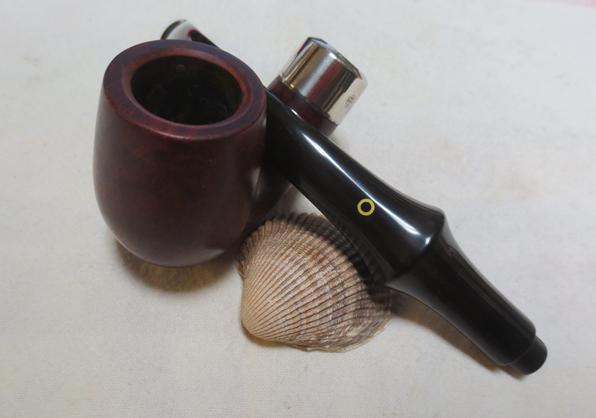
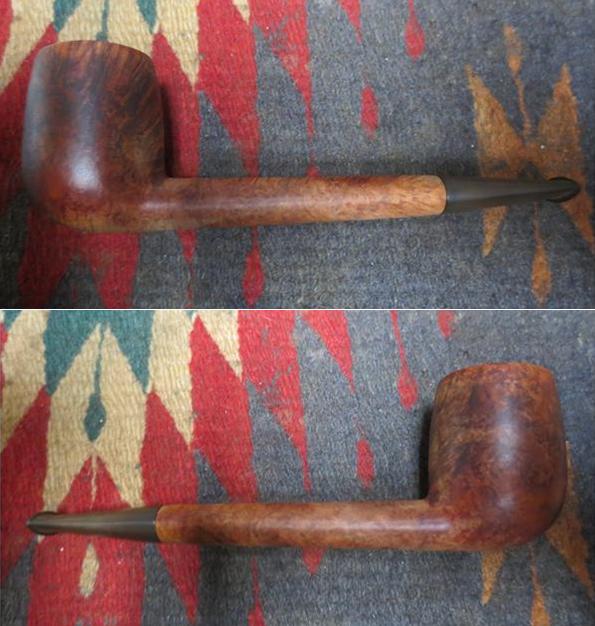
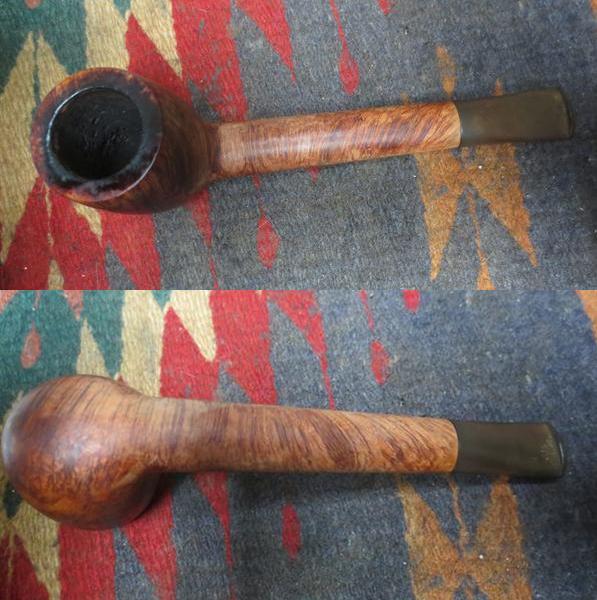
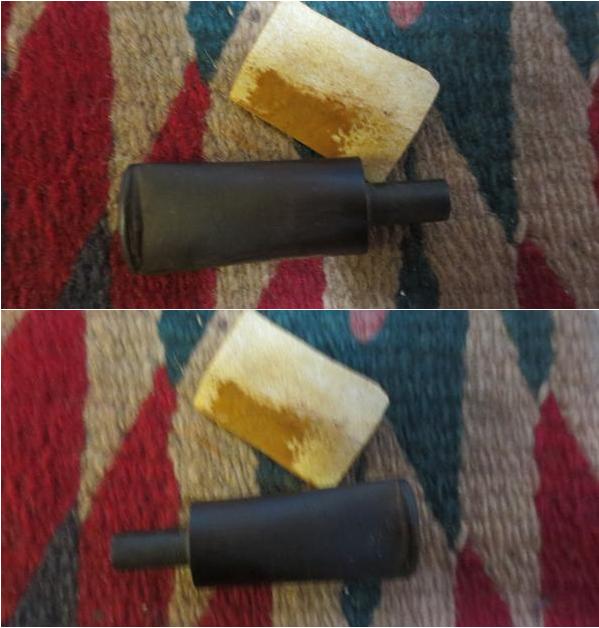
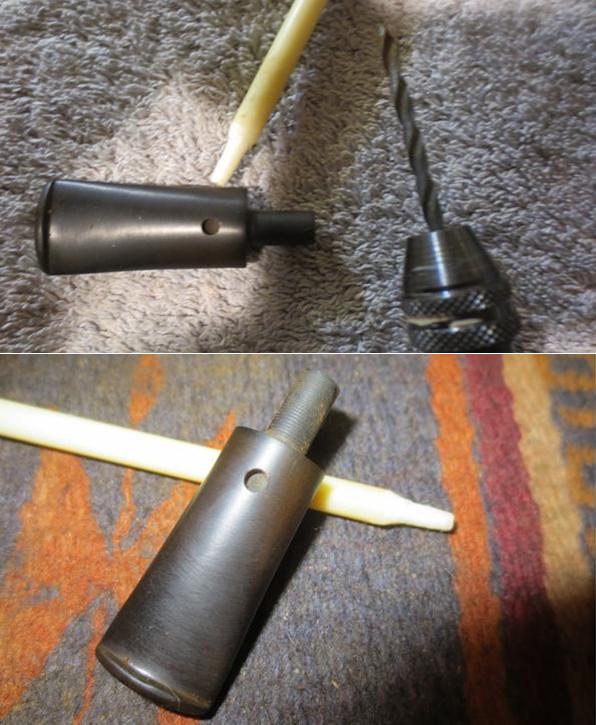
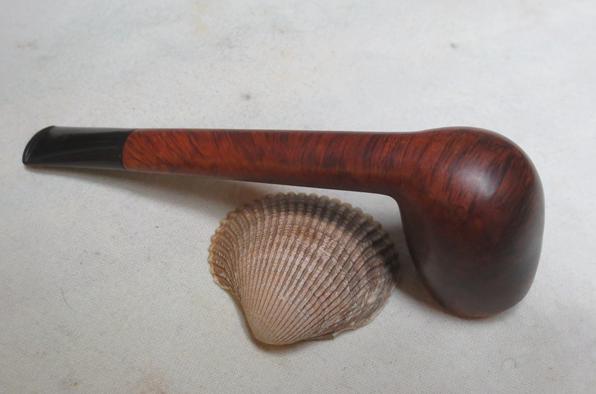
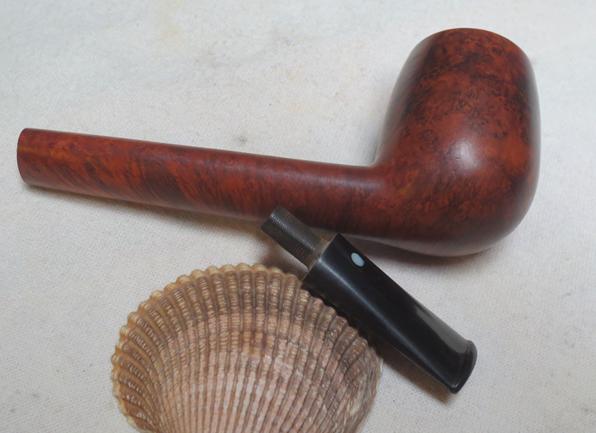
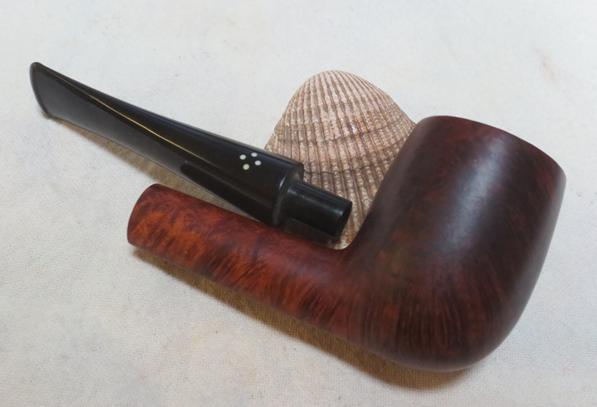
An interesting “The Nuvo” MLC Italian Briar hidden in a WDC Case


Blog by Steve Laug

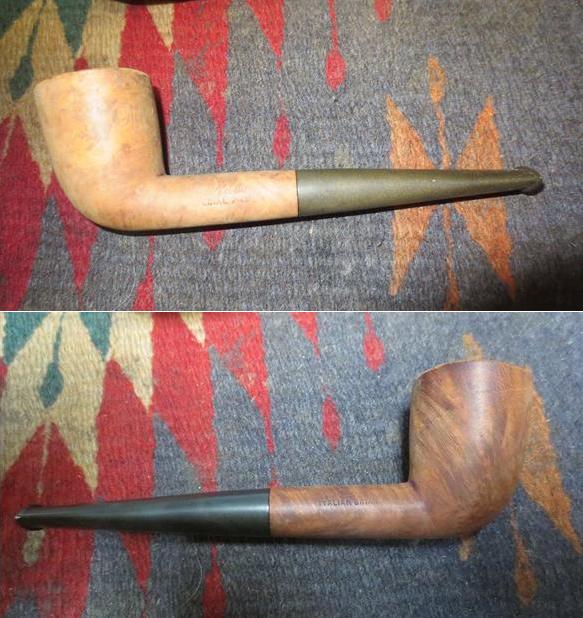
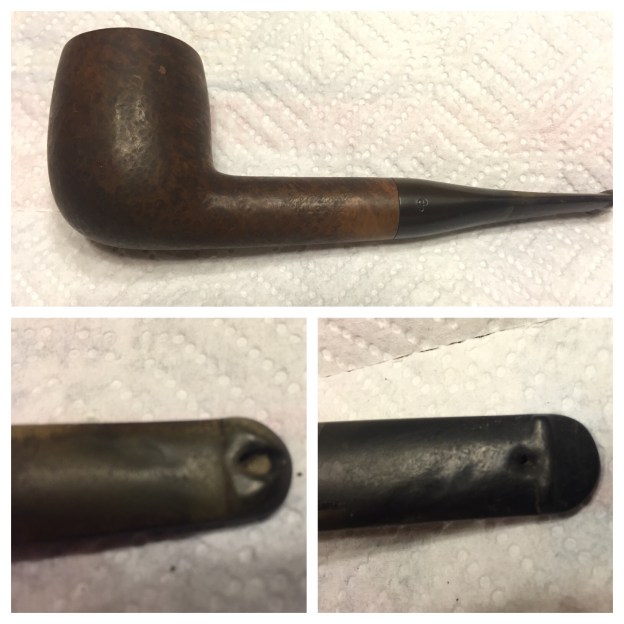
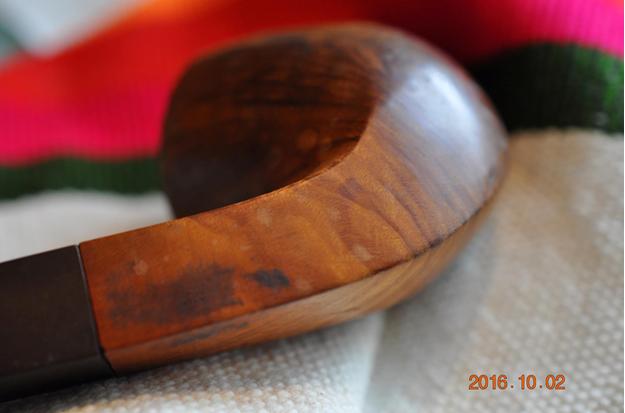
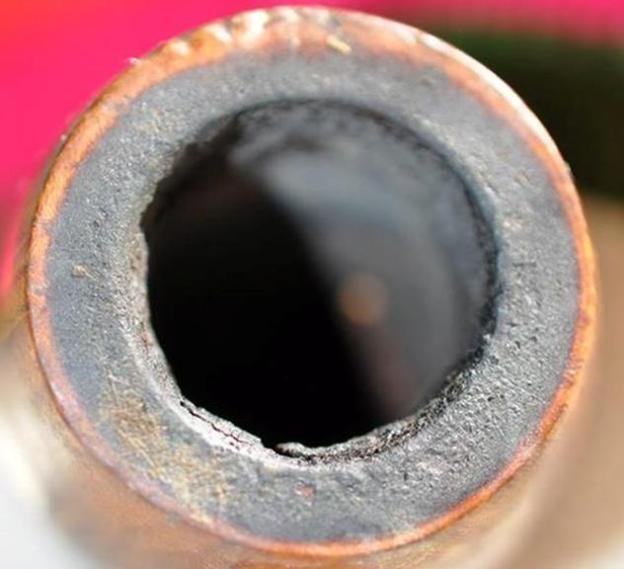
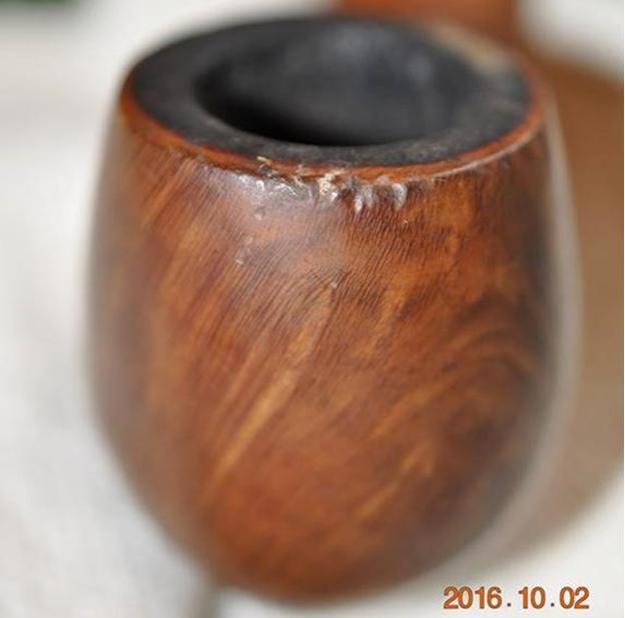
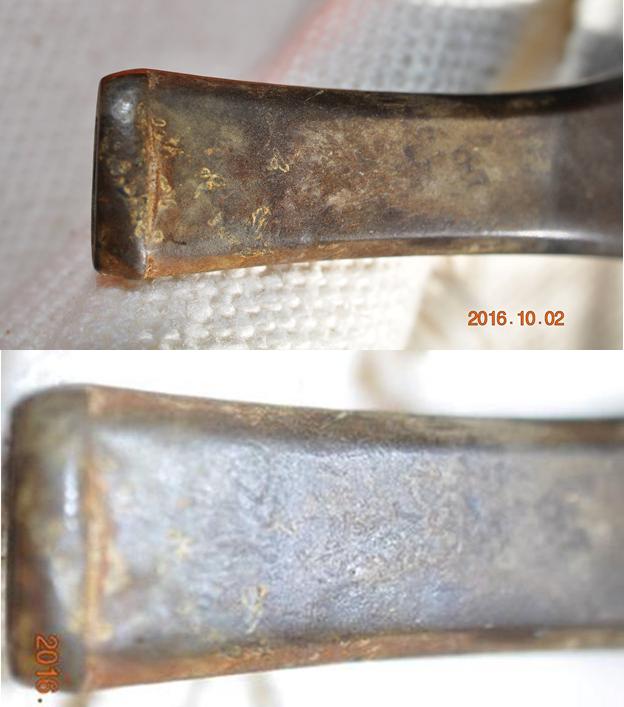
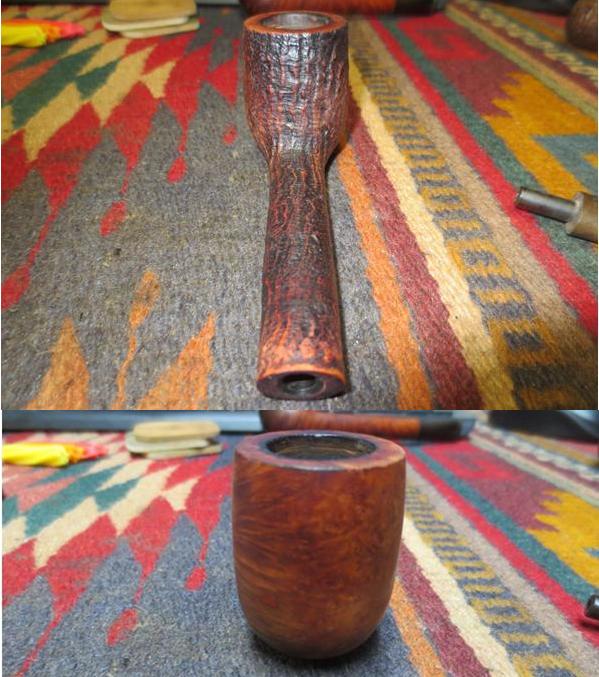
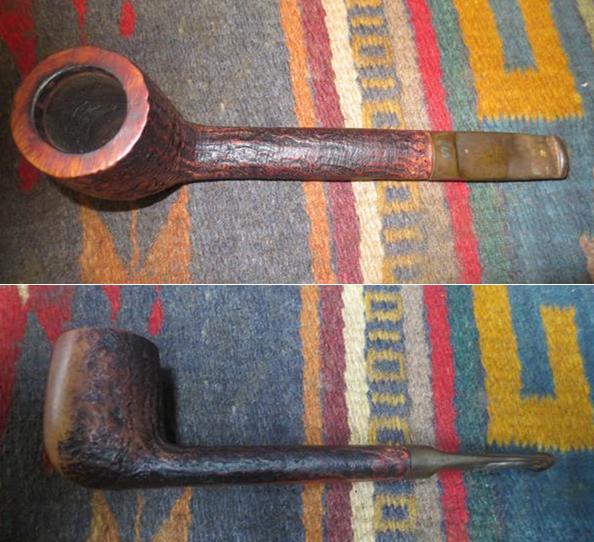
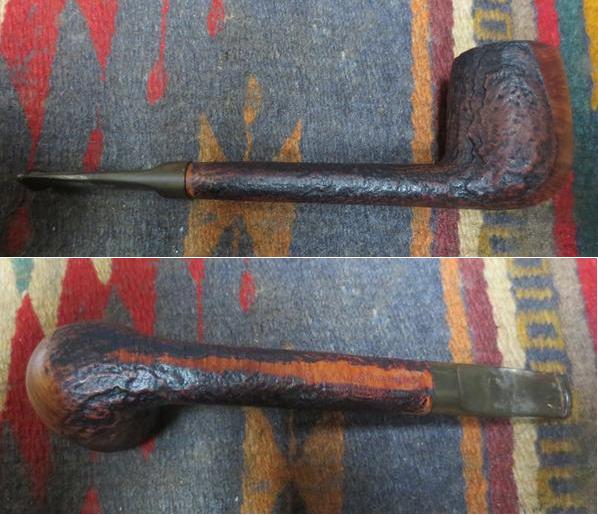
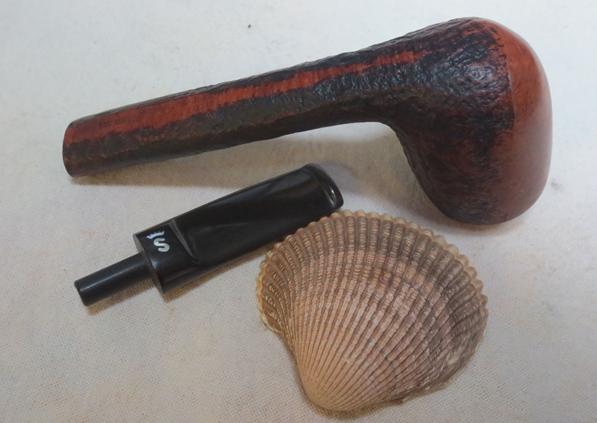
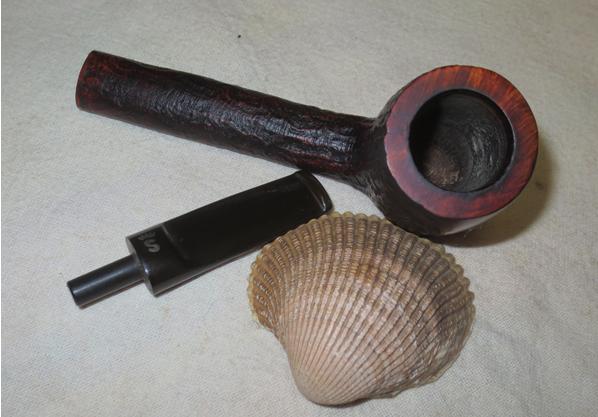
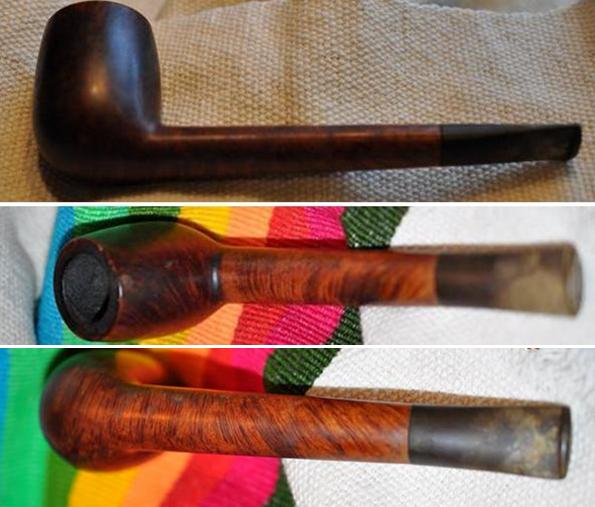
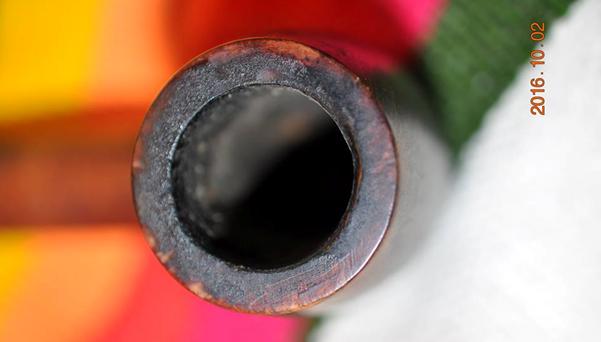
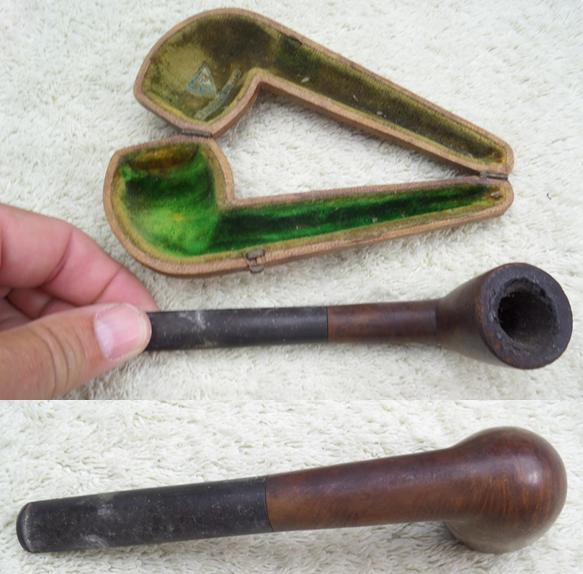
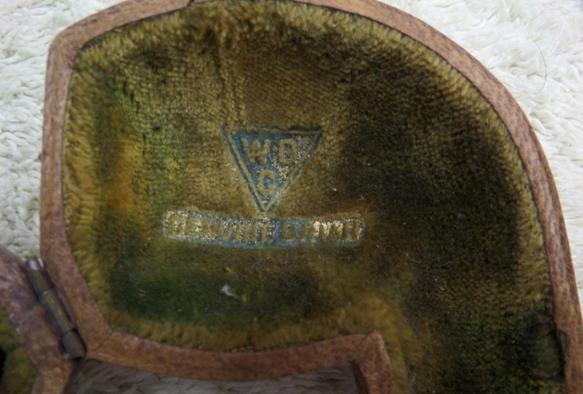
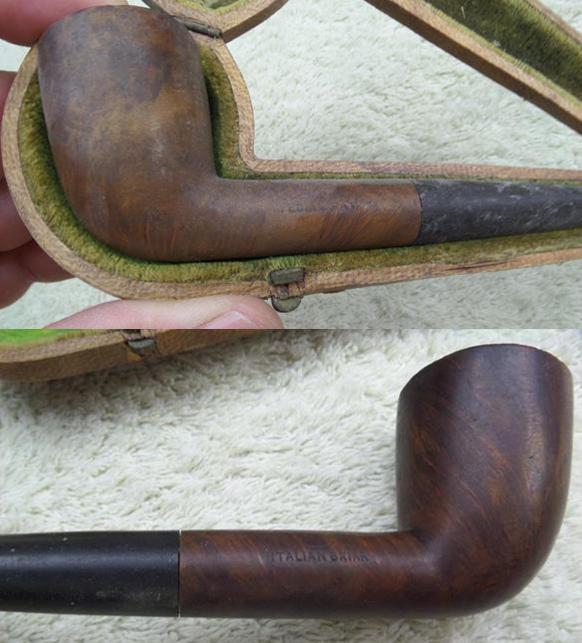
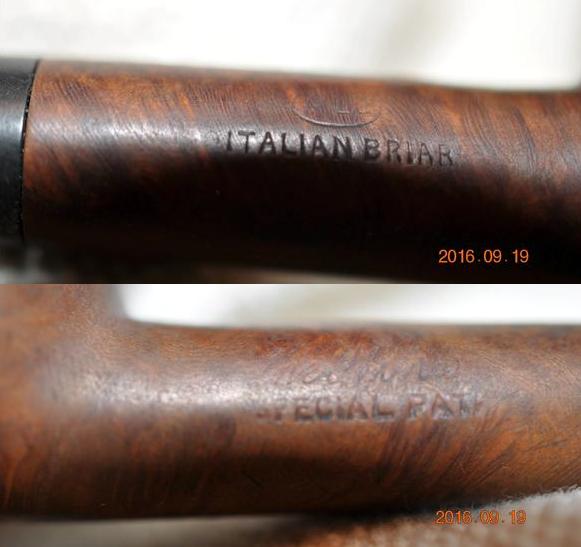
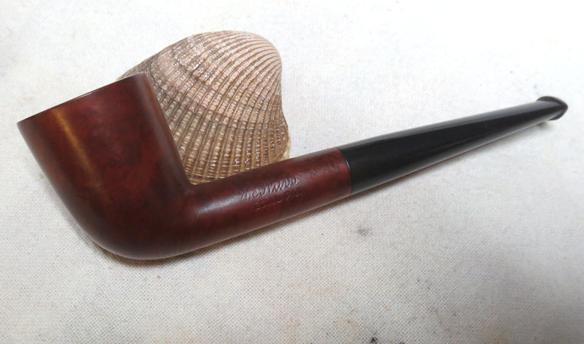
When we saw this older case and pipe for sale on eBay we were under the assumption that the pipe in the case was an older WDC pipe. The age of the case and the pipe appeared to match in the photos posted by the eBay seller. The case was in decent shape on the left side and the right side had a ripped part missing near the stem end. The covering on the case was leather. The hinge and clasp mechanism were in good condition. The green velvet lining looked worn. The stamp on the inside the top of the case was readable but worn. It read WDC in the triangle and over Genuine Briar. mlc1The finish on the briar was worn looking and the stem looked like it was covered with white calcification over the length of the stem all the way around.mlc2 mlc3The bowl was thickly caked with a thick coat of lava overflowing onto the rim. It was so thick that it was hard to tell if the outer and the inner edges of the rim were in good condition. Underneath it may well have a lot of nicks and the bowl could easily be out of round.mlc4The seller included some close up photos of the stamp on the inside cover of the case. You can see the WDC triangle logo over Genuine Briar. They also included close up photos of the stamping on the left and right sides of the shank. It is very hard to read the lettering in the photos. It looks like the left side is stamped with something over Special Pat. On the right side what is readable is Italian Briar. The rest of the stamping was not readable in the photos.
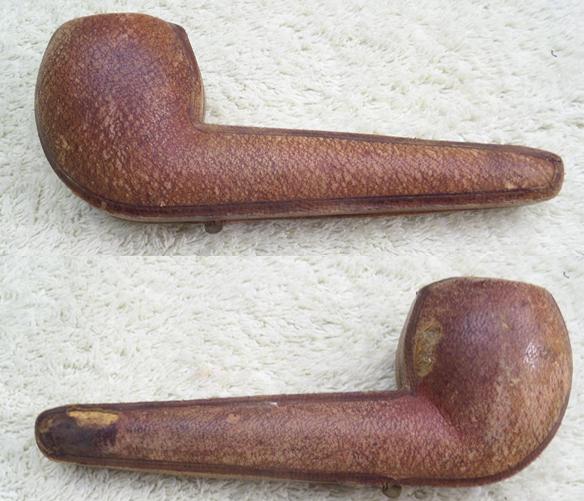
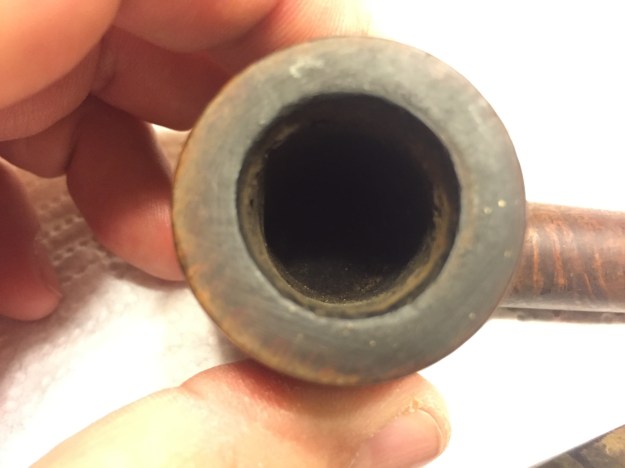
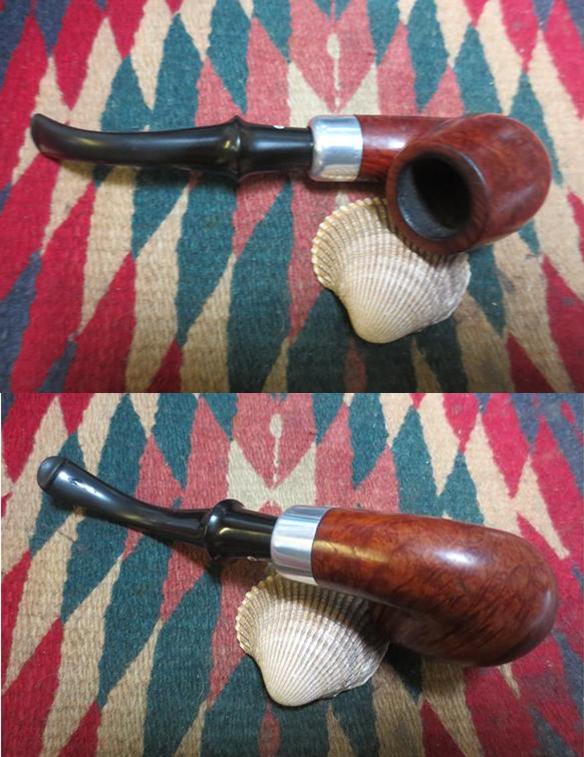
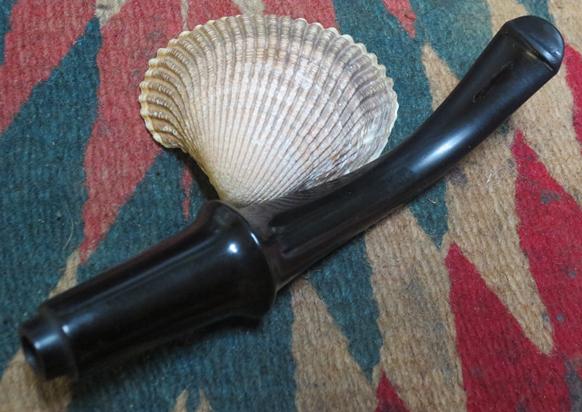
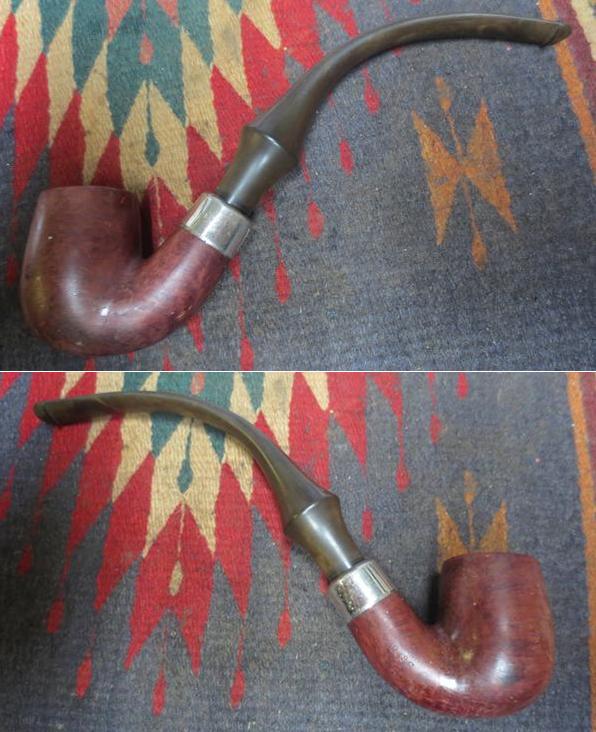
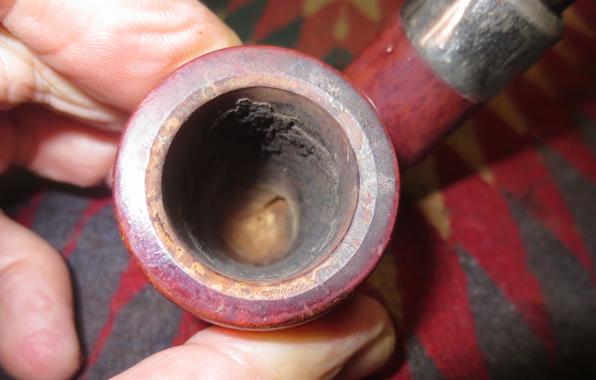
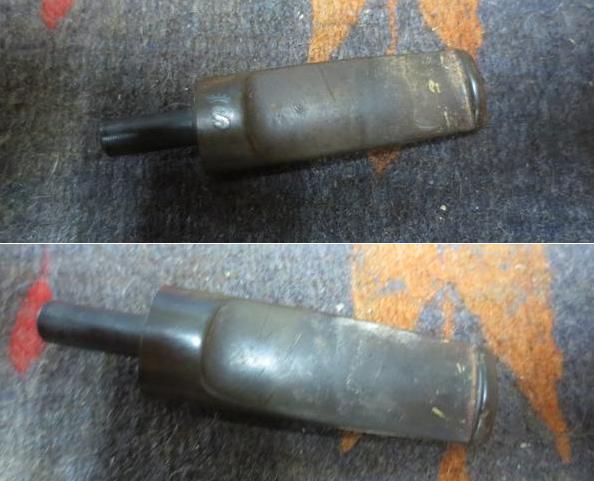
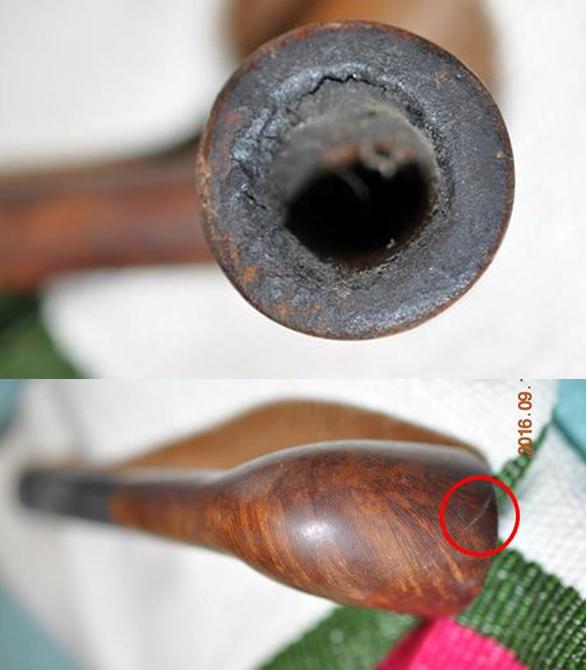
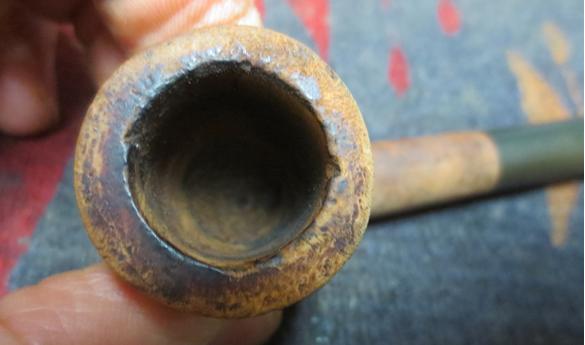
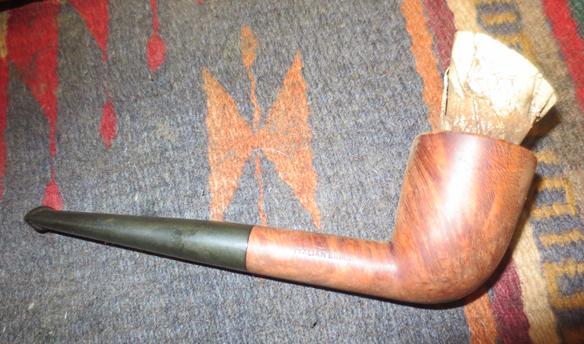
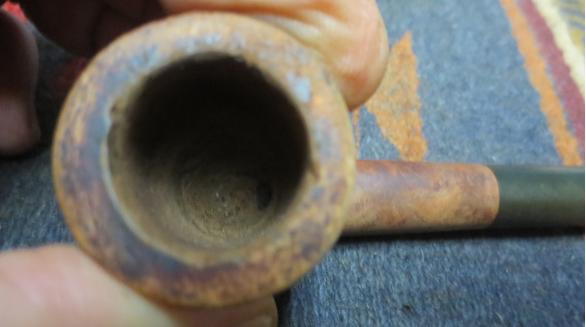
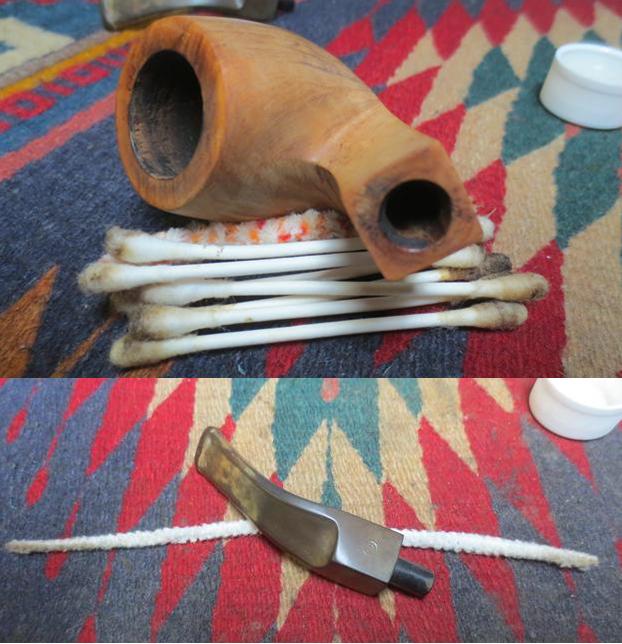
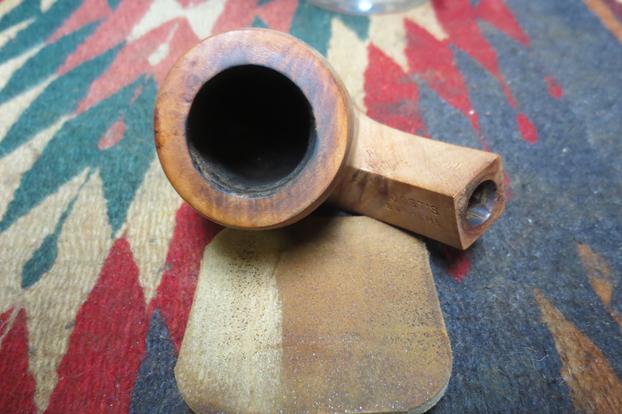
mlc5 mlc6When the pipe arrived in Idaho my brother took photos of the pipe before he cleaned it up. The finish was certainly a mess and there was a lot of grime and build up on the bowl and the shank. There also appeared to be some nice grain peering through the grime.mlc7He took some close up photos of the rim and the front of the pipe. The overflow of lava and the cake in the bowl was very thick. The outer edge of the rim was rounded and showed some damage. The frontal photo shows a dent at the front top of the bowl that goes diagonally across the bowl. I have circled it in red to show the location of the dent.mlc8He also took photos of the stamping for me. On the right side of the shank there appeared to be an oval with the letters stamped MLC in the centre. On the left side it seems to read “The Nuvo” over Special Pat.mlc9The closes up photos of the white substance on the stem surface show the condition of the stem and looks almost crystalline.mlc10I took some photos of the pipe when it arrived in Vancouver and I brought it to the work table to begin the restoration. My brother had done an amazing job cleaning up the dirty finish and the white on the stem. He had reamed the bowl clean of the thick cake. He also removed the thick lava on the rim top.mlc11 mlc12 mlc13I took a close up photo of the bowl and rim to show the condition. My brother had been able to remove all of the cake and the tar. The outer edge of the rim was rounded and had dents. The inner edge was missing chunks and the bowl was out of round. The top of the rim had nicks and dents and was also in rough shape.mlc14The stem looked to be in decent condition. The high quality rubber of the stem was pitted and lightly oxidized. The style of the button added to my idea that I was dealing with an older pipe.mlc15I was able to clearly read the stamping on the pipe once I had it in hand. It read “The Nuvo” over Special Pat. on the left side of the shank. On the right side it was stamped with an MLC in an oval over Italian Briar. I was not familiar with th name on the pipe or the Oval MLC stamp. I looked my copy of “Who Made that Pipe” and found that The Nuvo was made by M. Linkman Company in 1914. The MLC logo in the oval stood for M. Linkman Company.
I looked the brand up on Pipedia (https://pipedia.org/wiki/M._Linkman_%26_Co) and found that M. Linkman Company name was said to stand for Mary Linkman & Company. Mary Linkman was the mother of Louis B. Linkman, originator of the Dr. Grabow pipe. This Chicago company produced both meerschaums and briars. I also looked on the PipePhil Logos and Stampings site (http://www.pipephil.eu/logos/en/logo-l4.html) and found that the M. Linkman and Co. was established by Louis B. Linkman and August Fisher in 1898. The company closed down in the 1950s and the Dr Grabow branch was sold to Henry Leonard and Thomas Inc. There was also a note that early Linkman’s pipes were stamped MLC in an oval.

I now knew that the pipe I had in hand was an early Linkman’s pipe rather than one made by WDC. That meant that the case and the pipe did not match.

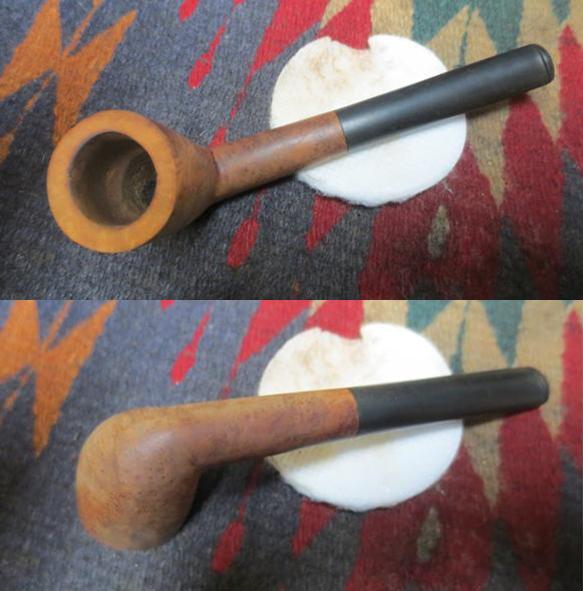
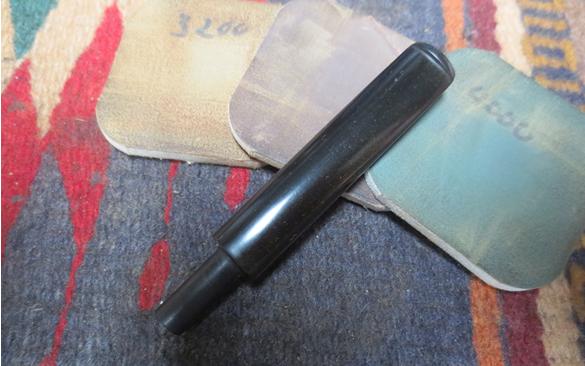
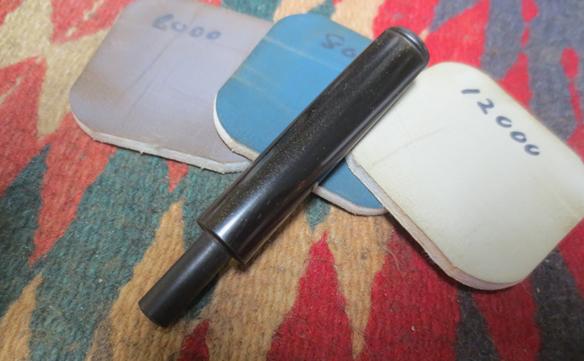
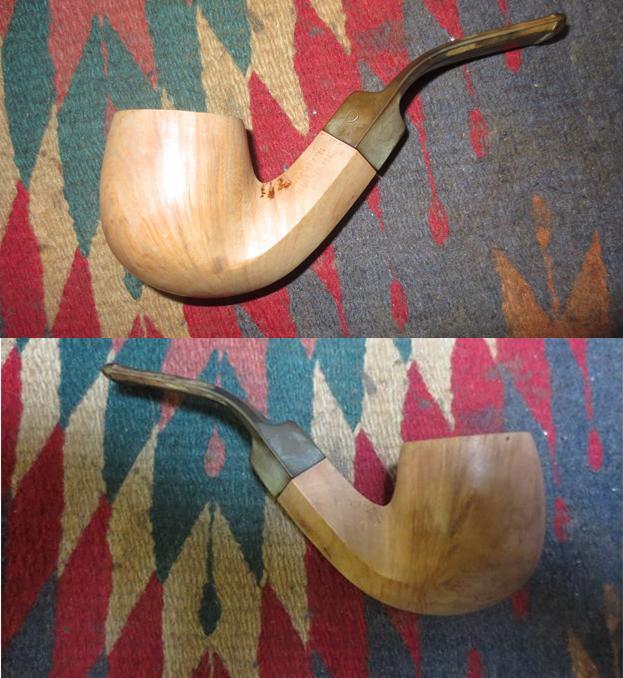
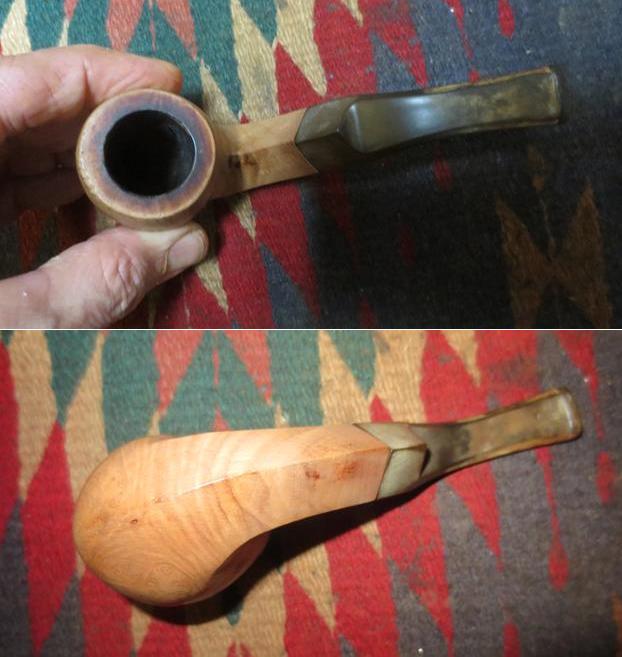
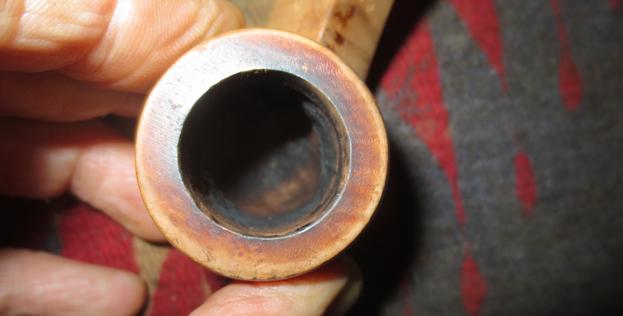
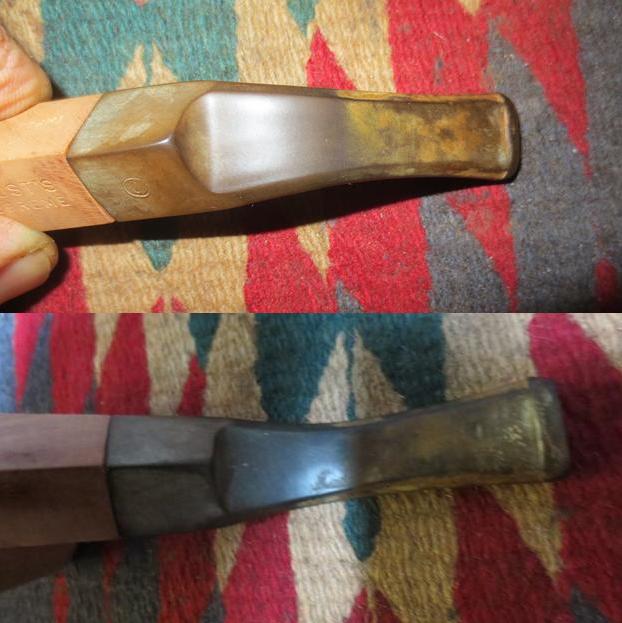
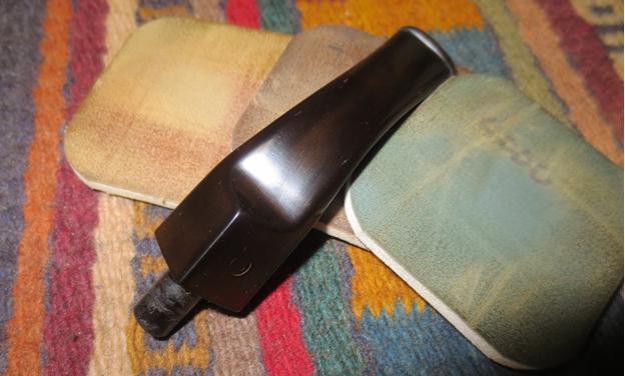
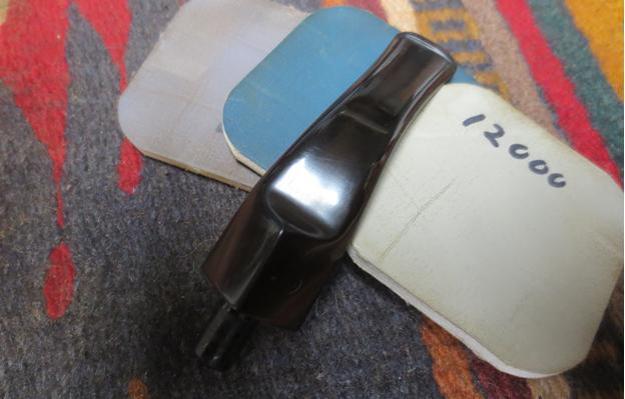
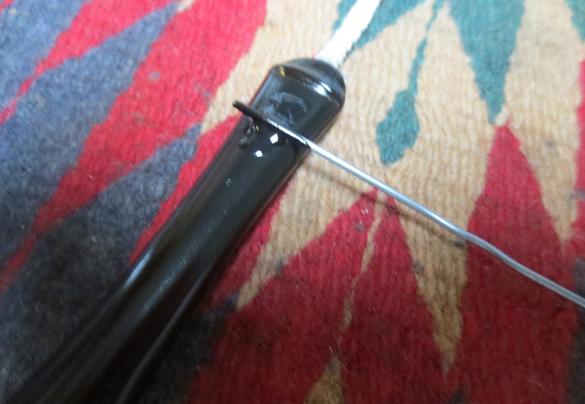
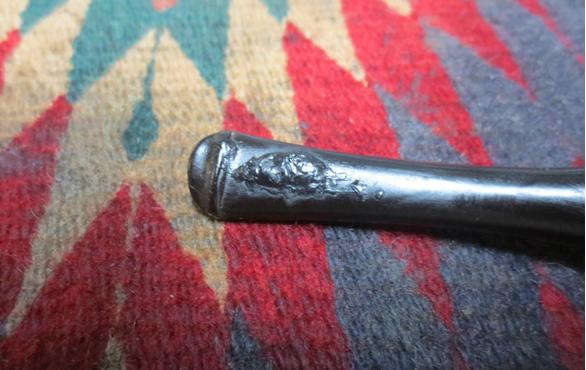
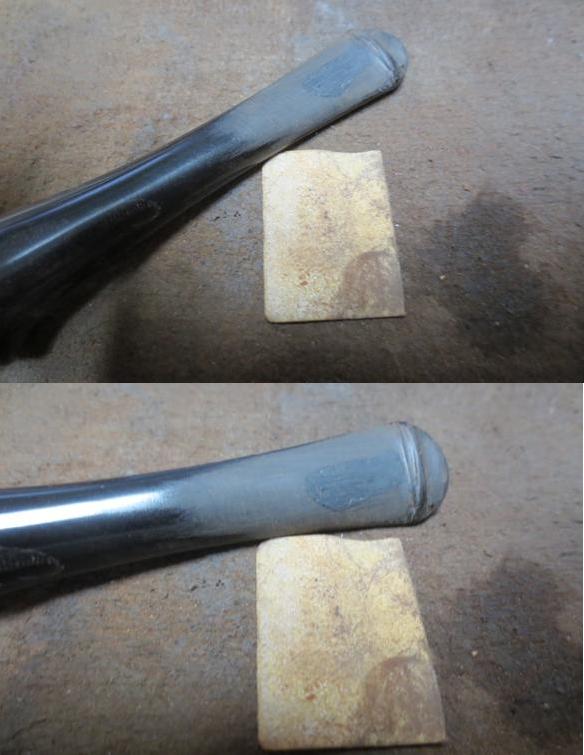
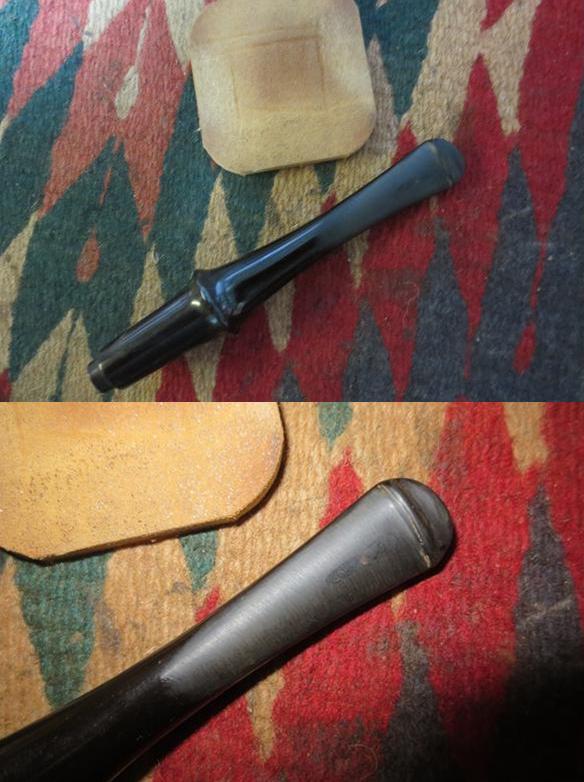
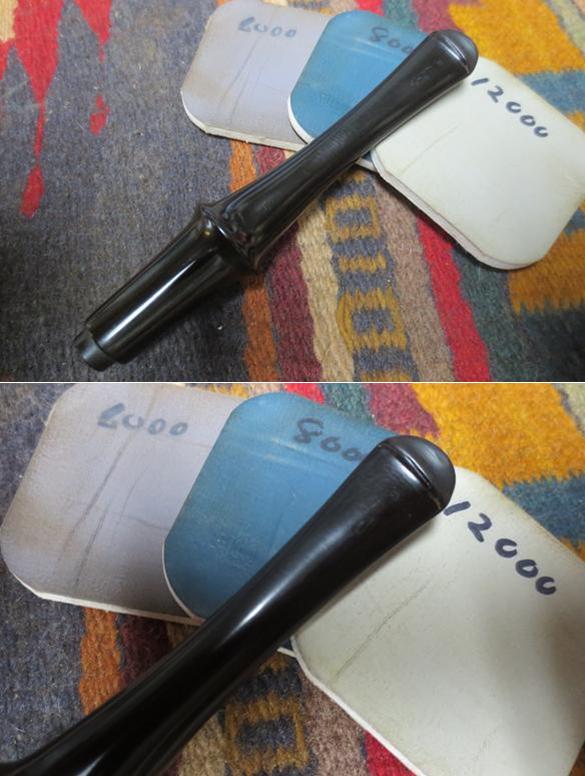
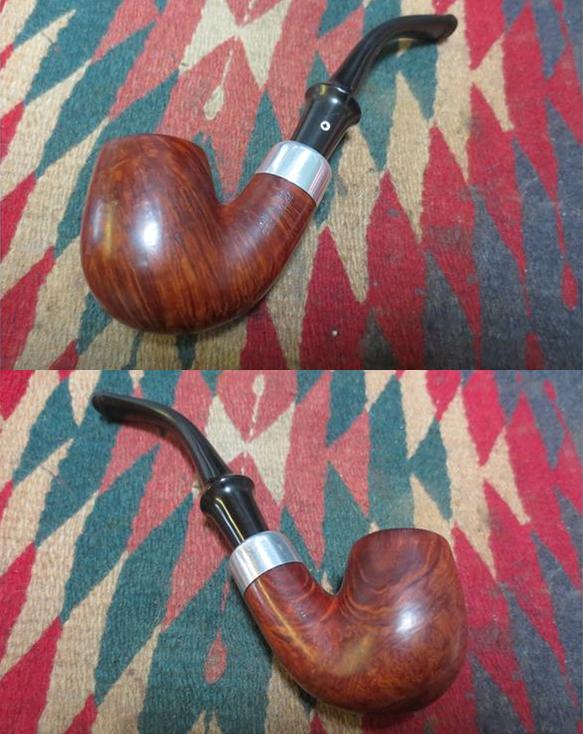
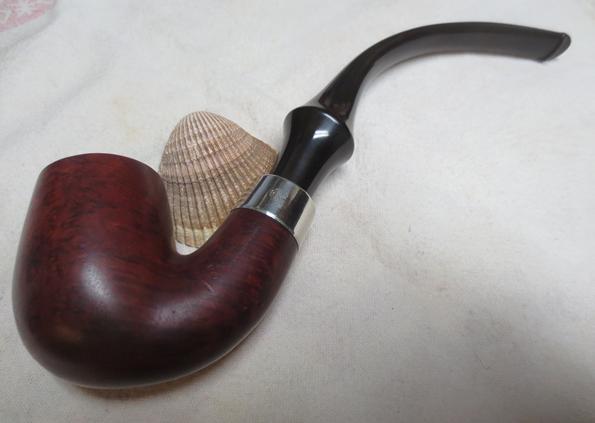
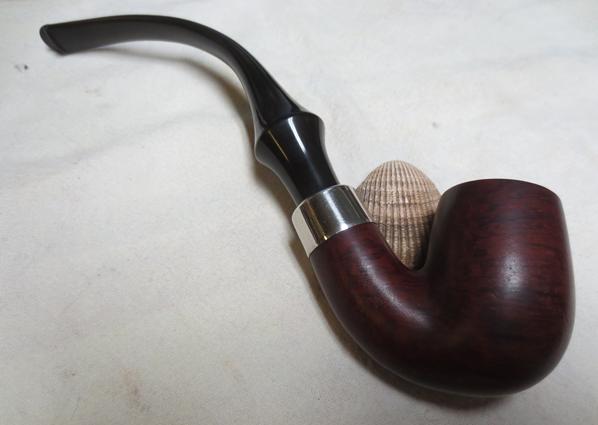
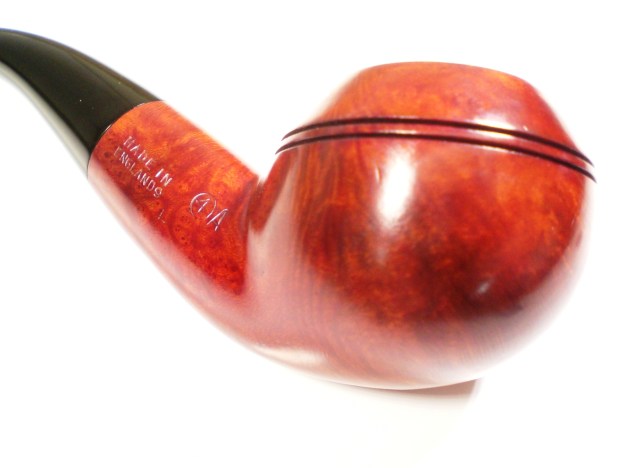
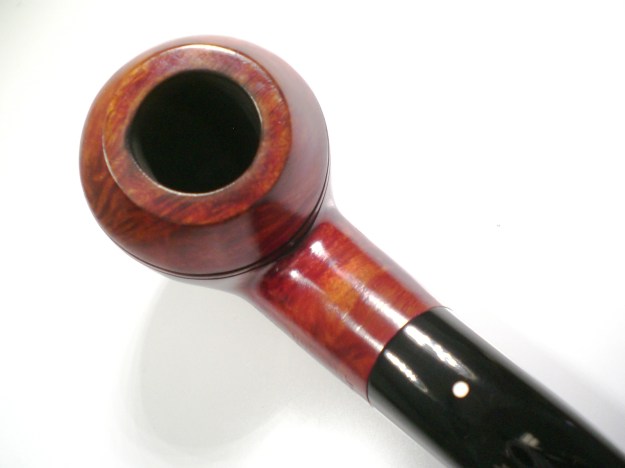
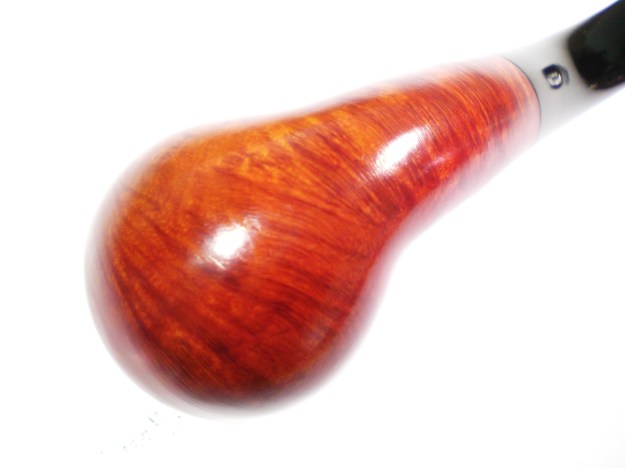
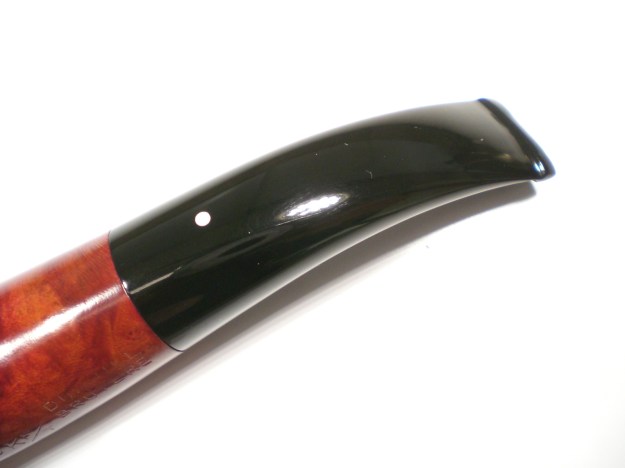
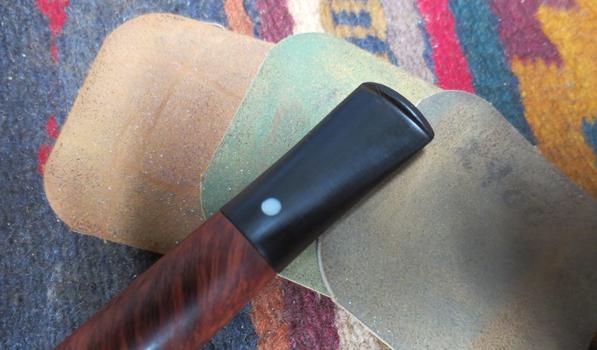
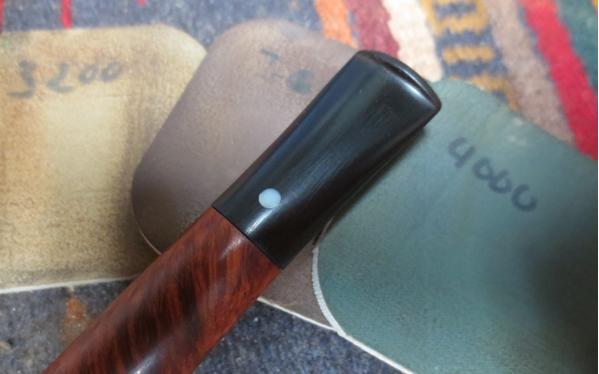
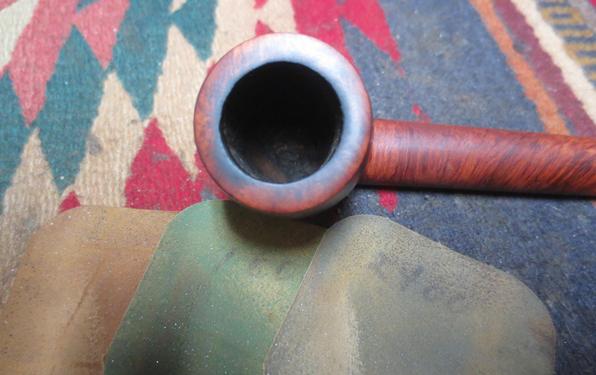
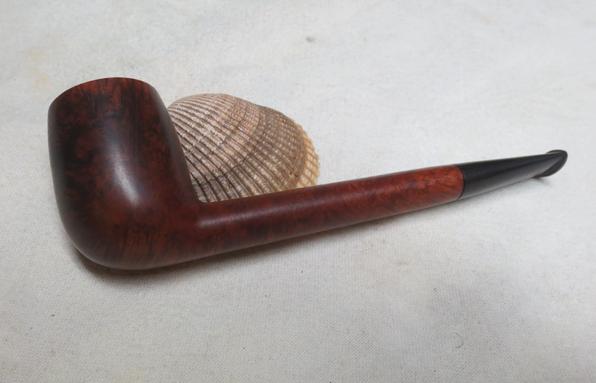
I decided to try to clean up the inside edge of the bowl before I topped it. I wanted to remove as much of the damage to the inner rim as I could to better see how much of the rim top I would need to remove with the topping action. I used a rolled piece of 220 grit sandpaper wrapped around my finger to sand the inner edge of the bowl.mlc16When I finished sanding the edge there were still some deep gouges in the edge of the rim at the back and the front of the bowl. The bowl was also out of round and seemed to be thinner on the right side than the rest of the bowl.mlc17I topped the bowl rim on a topping board with 220 grit sandpaper. I worked on it until I had removed all of the damage to the rim top and also removed the damage to the outer edge of the rim and also what was on the inner edge. In the second photo you can see that much of the damage to the inner edge of the rim was removed. I still needed to bevel that edge to smooth out the damage.mlc18I used a folded piece of 220 grit sandpaper to sand the edge of the bowl. I worked it over until I had removed the damaged areas on the front and the back side of the rim edge. I also worked to make the bowl round once again.mlc19I sanded the rim edges and the top of the rim with 1500-4000 grit micromesh sanding pads once i had the bowl in round. I scraped the inside of the mortise with a dental pick to remove the hard chunks of tar that were collected on the inside walls of shank. Once I had removed all of the hardened buildup I scrubbed out the mortise and the airways in the shank and the stem with pipe cleaners, cotton swabs and alcohol until the oils and tars were gone.mlc20I wiped down the exterior of the briar with acetone on a cotton pad to remove all of the residual dirt and grime from the topping and cleaning. I wanted the surface to be clean and oil free in preparation for the new stain coat that I would give it.mlc21 mlc22I thinned some dark brown aniline stain by 50% with isopropyl alcohol (need to put in an order for more stain). I applied it to the bowl with a folded pipe cleaner. I flamed the stain to set it and repeated the process until the coverage on the bowl and shank were an even medium brown colour.mlc23 mlc24I set the bowl aside to let the stain cure and turned my attention to working on the stem. I sanded it with 220 grit sandpaper to remove the light oxidation and smooth out the pitted surface of the stem. I polished it with micromesh sanding pads – wet sanding it with 1500-2400 grit pads and dry sanding it with 3200-12000 grit pads. I rubbed the stem down with Obsidian Oil after each set of three sanding pads. I gave it a final coat of oil after the third set of pads and set it aside to dry.mlc25 mlc26 mlc27I put the stem back on the pipe and buffed it with Blue Diamond on the buffing wheel. I took precaution to not buff the stamping on the shank sides. I gave the bowl and stem multiple coats of carnauba wax to protect it. I buffed it with a clean buffing pad to raise a shine. I hand buffed it with a microfibre cloth to deepen the shine. The finished pipe is shown in the photos below. I am happy with the way it turned out. The look and finish of the pipe turned out very well. Thanks for walking with me through the process.mlc28 mlc29 mlc30 mlc31 mlc32 mlc33 mlc34 mlc35
 

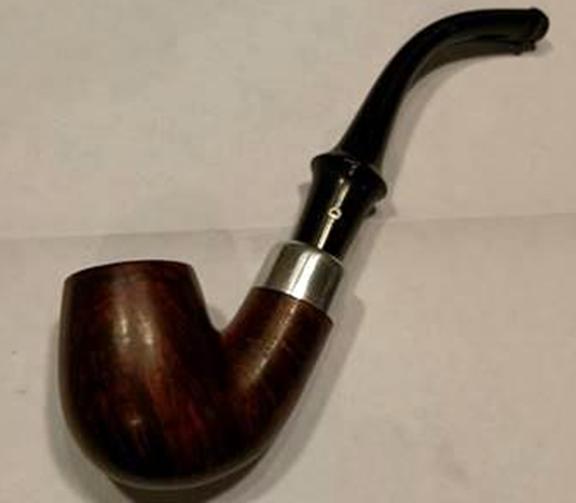
Peterson Kildare Marathon Restoration


This year has been a roller coaster ride for me; between added responsibilities of watching our new grandson, health issues, and a flair up of my spinal stenosis that put me down for almost two months, I have been unable to do any of my hobbies. Unfortunately this has put a couple of friends that I have pipes to work on in a state of limbo waiting on me. They are not easy clean-ups and they knew going in I am slow – but still I feel badly about it.

This Peterson Kildare 106 billiard had been in my possession for ages it seems to me at least. I have worked on it off and on, loosing track if my progress (and many of my notes and photos) of the process. It went out in the mail today I am happy to say (and the owner is probably happier to hear!).
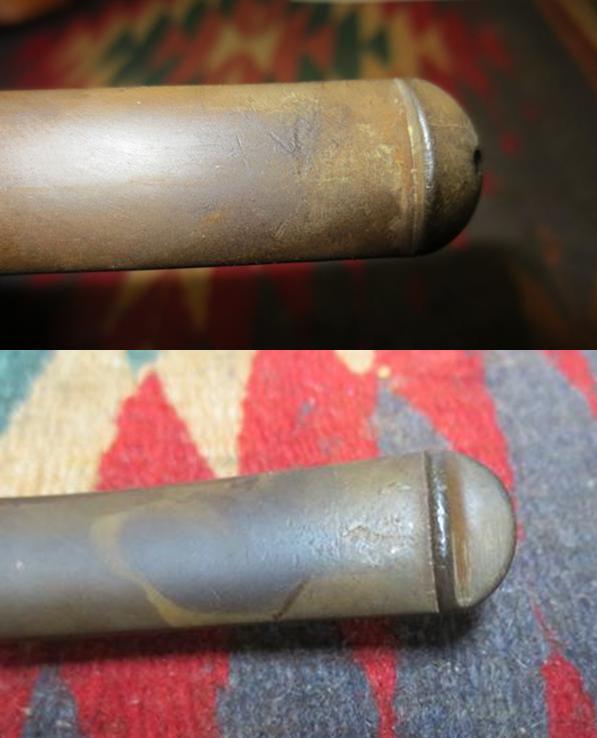
I knew the pipe needed stem work mostly but when it arrived at my home it was in worse condition than I had anticipated. The stem was really badly gnawed on, with an extra hole bitten through on the bottom. The pipe was very dirty and there was a fill that had partly fallen out; that didn’t really bother the owner, as I recall, but it made me nuts! Here is a look at what the pipe looked like when I got it.

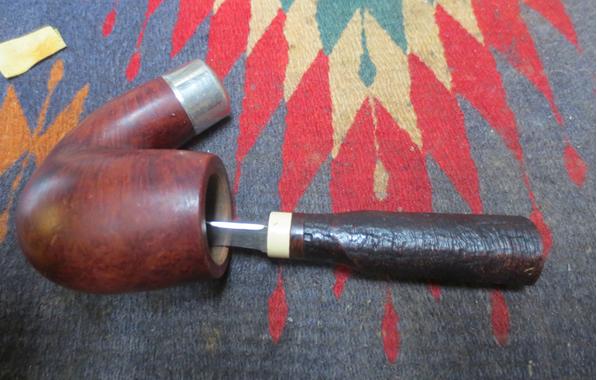
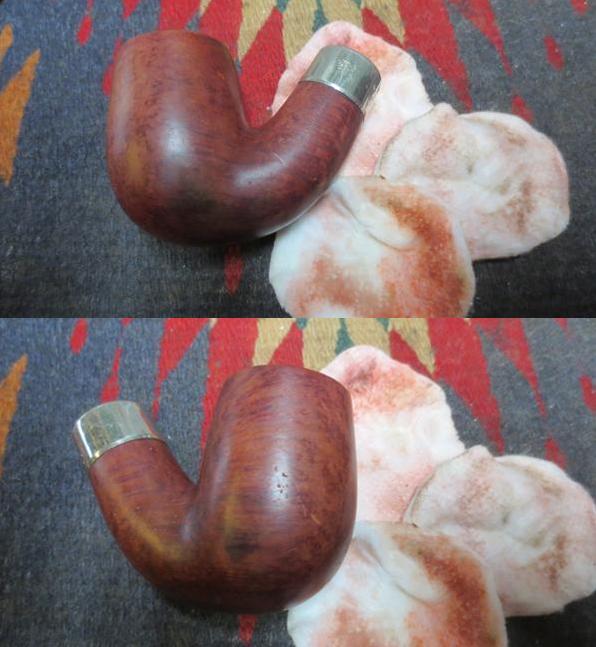
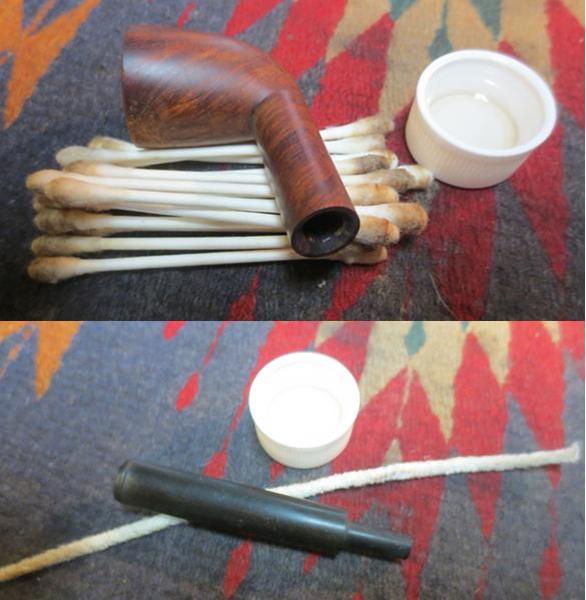
I began cleaning the internals which weren’t bad as it turns out. I cleaned the stummel with alcohol and cotton pads, removing the grime, exposing the missing fill even worse; I knew I had to deal with that as I went along. But first I began to ream the bowl while the stem soaked in an OxiClean bath. img_5027

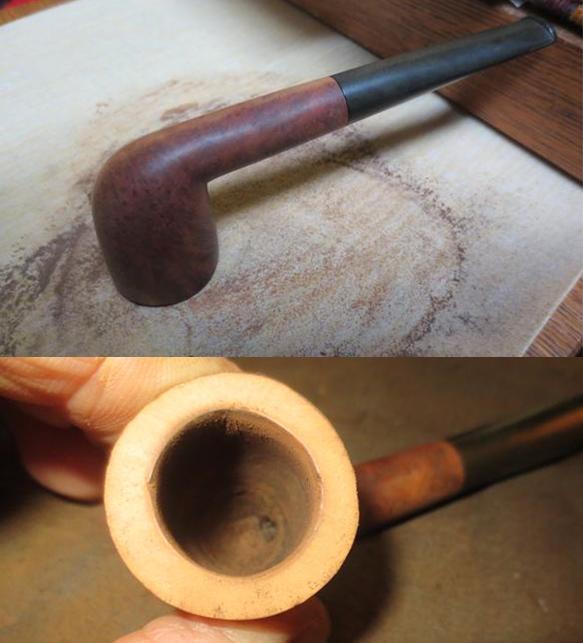
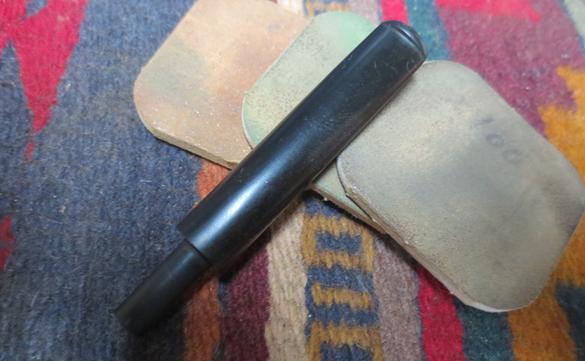
The OxiClean bath and a scrubbing in clean, warm water with a green Scotch pad left the stem clean and free of oxidation. The amount of work the stem needed was even more apparent now; not only did the bit need a lot of work, there were some very large dents in the stem. I tried to raise the dents with heat but that really made no difference. So I decided to start the process of building the bit up (P-lip, a new for me repair) and filling in the dents with black CA glue and charcoal powder. This took many layers over many days (which turned into months); I had to raise, shape, repeat, over and over to get the P-lip back and to fill the extra hole in the bottom of the stem and the deep divots.

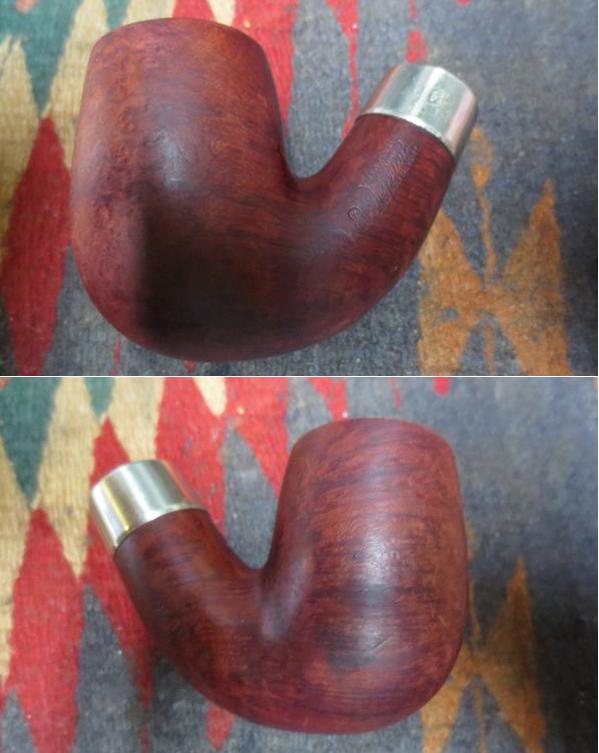
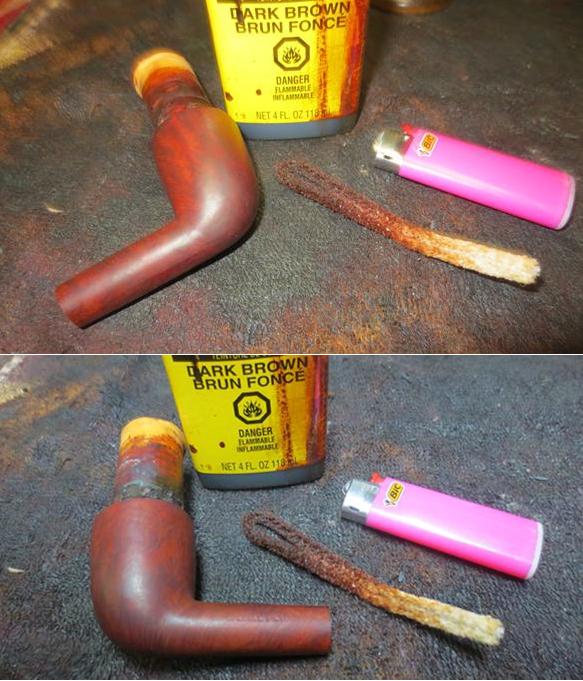
During the interim times I worked on the fill that was partly gone and one other dent that stream wouldn’t raise. I used coarse briar dust from filing not sanding (which I think takes dye better and is less apt to just be a black spot) and CA glue to fill the two spots (the worst one is visible in the very first photo in this post). I accidentally over did the fill, costing myself a lot of extra time. However the patch ended up blending in great in the end. After a lot of working the patch to blend I stained the pipe with a diluted Brown Fiebing’s leather dye, two coats, flamed on, if I remember right. After buffing with brown-Tripoli the stummel looked nice but too dark to see the really nice grain (birds eye and flame) so I wiped it down with alcohol on a cotton pad until it let the gain show through and re-buffed with brown-Tripoli. Now the stummel looked good to me. Back to the stem…

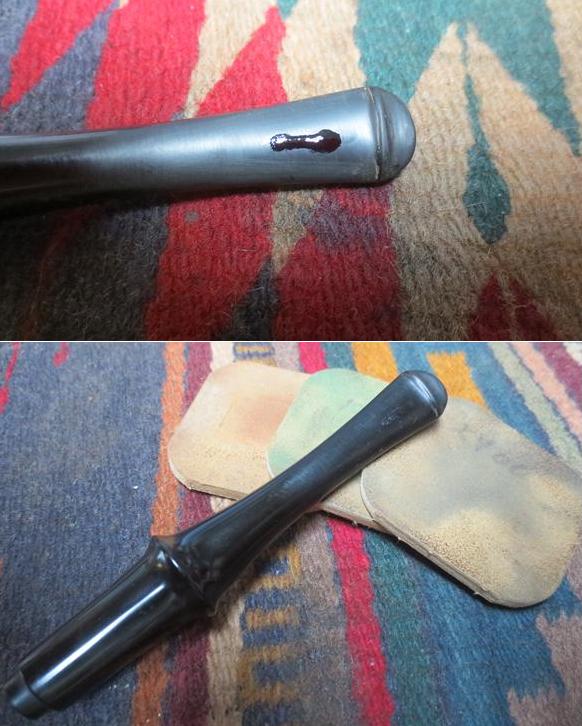
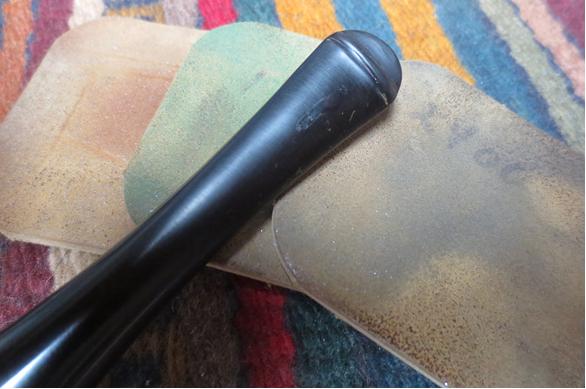
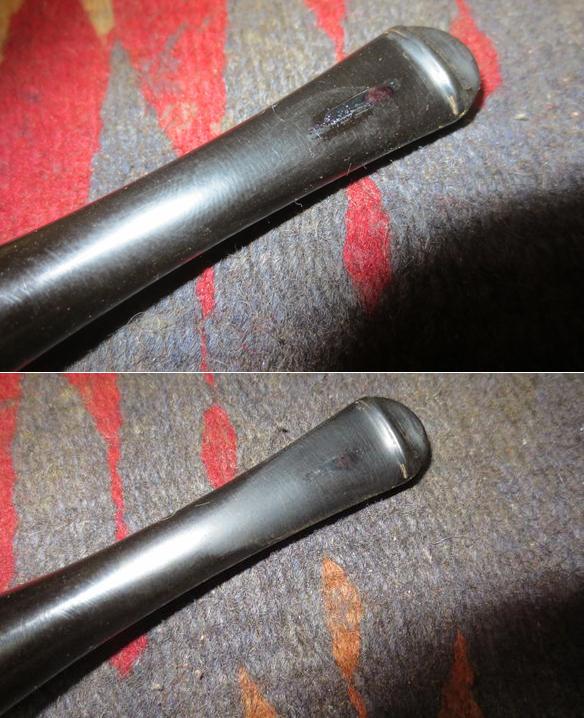
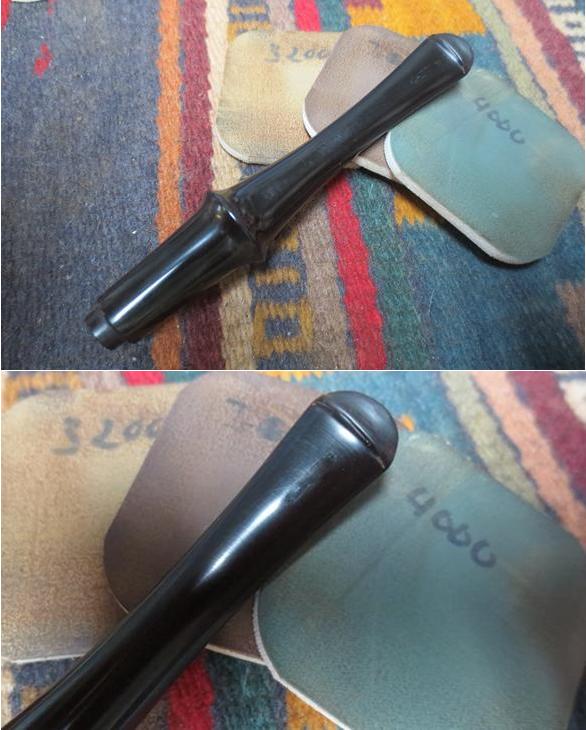
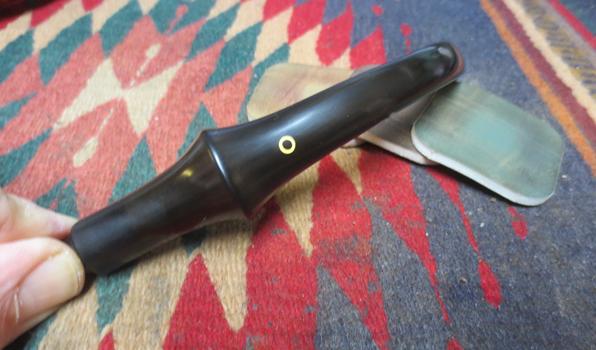
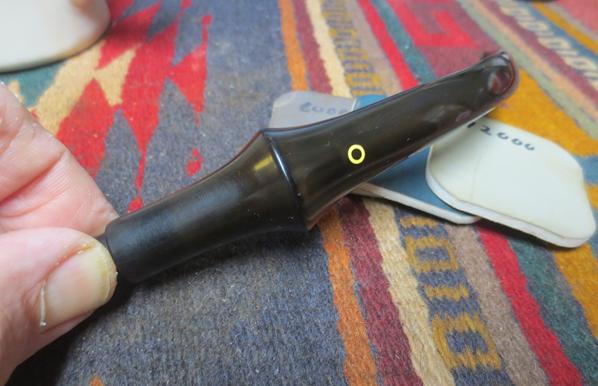
This P-lip drove me to the brink of insanity! Not having a P-lip on hand to compare it to made it more difficult. Filling the bottom hole (that wasn’t supposed to be there) was easy but shaping that top and bottom lip/ridge was a chore. The deep divot just did not want to be filled; the patch shrunk over and over. The huge, dented  draft hole on the top of the stem was a bother, too; I can’t tell you how many times I glued it shut trying to get that button rebuilt! In the end it came out pretty good; there are some tiny scratches visible if you look real close. But all things given, the owner was happy with that, especially since with the holidays and even more babysitting duties for me on the horizon, who knows when I would be able to finish it (again).

After finally getting the work done I finished the pipe off with a few coats of carnauba wax. I want to mention that I followed the instructions, more or less, for Dremel buffing for the stem and the waxing of the stummel. I currently can’t use my buffer so I wanted to give this option a try and am very pleased with the results. Mine is a variable speed Dremel and I used 5,000 RPM for the compounds and 10,000 RPM for the wax.

Hopefully with the new Dremel techniques I’ve learned (thanks again, Dal and Steve) and with some luck (and no small amount of “okay” from my wife) I will find a way to down size my work-needs to be able to work from my kitchen instead of my basement workshop, allowing me to work more when my mobility issues keep me from the stairs.

Restoring the fourth Classic Find – a Jost’s Supreme Diamond Shank bent billiard


Blog by Steve Laug

I written about the estate lot that my brother and I purchased from an estate sale in Pocatello, Idaho. There were a lot of great pipes in the lot. I have written about the pipes we picked up in a previous blog: (https://rebornpipes.com/2016/10/07/a-good-day-hunting-orchestrated-between-british-columbia-and-idaho/). I also wrote of how my brother had stopped at an antique shop and found four amazing pipes. These included a Four Dot Sasieni Pembroke with a patent number, Pat.No. 150221/20, a Dunhill Root Briar Canadian EC 4R, a Charatan’s Make Canadian Sandblast 0121 and finally a Jost’s Supreme Diamond Shank bent billiard. I have restored and written blogs on three of the four pipes he found – Sasieni, Dunhill and the Charatan’s Make. Here are those links: (https://rebornpipes.com/2016/11/05/restoring-a-classic-find-a-sasieni-four-dot-london-made-pembroke/ ; https://rebornpipes.com/2016/11/06/restoring-another-classic-find-a-dunhill-4r-root-briar-canadian-ec/ ; and https://rebornpipes.com/2016/11/06/restoring-the-third-classic-find-a-charatans-make-0120-canadian/.  I am now finished with the fourth pipe that –  the Jost’s Supreme diamond shank bent billiard.

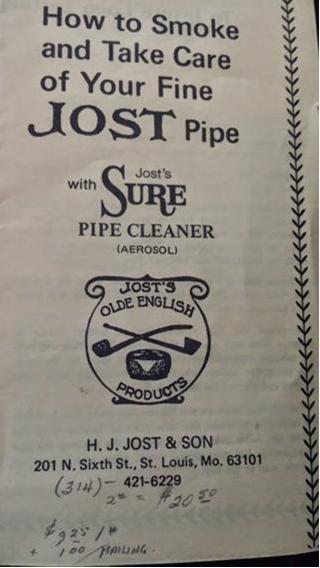
In earlier blogs I have written about restoring another Jost’s pipe that I found. When I restored that pipe it was a brand I had heard of but was unfamiliar with. I researched the web to find some information about the brand. Here is a link to the blog I wrote on the Jost’s Olde English Deluxe: https://rebornpipes.com/2016/09/03/josts-olde-english-de-luxesupreme-overstamped-j214-bent-billiard/. I am quoting several of the paragraphs that summarize what I learned about the brand.

I looked up Jost’s pipes on the pipephil site and found a pipe that had the same stamping on the left side of the shank as the one I was working on. The right side had slightly different stamping in that it had the classic COM stamp circle where the one I had was two lines Made in over England. It also had a picture of the circle J stamp on the stem. There was a note there the tobacco shop proprietor was Mrs. Henry A. Jost. Her resident carver was Harvey Raspberry.”

I also found a blog that is called ClassicPipeShop that even had a catalogue of the pipes made by the Jost’s Shop or were imported by them for their store. I quote that blog once more as it places the new pipe that I am working on now.

“I did some more hunting online and I found a blog that did a great write up on Jost’s Pipe Shop and gave some definitive information on the brand and grades of the pipes. Here is the link if you wish to read a well written history of the brand and also some interesting details about shop blends of tobacco. http://classicpipeshop.blogspot.ca/2015/03/josts-pipe-shop-201-north-6th-street-st.html

 “I have included the section of the blog on the pipes. It covers a lot of information regarding the source of the pipes and the levels/grades of pipes. Remember that the one I am working on is a De Luxe/Supreme. I quote:”

“Jost’s Pipes are closely tied to Comoy’s. Many of Jost’s pipes have the standard Comoy’s shape number and the “Made in England” in a circle. If the Jost’s pipe doesn’t have the “Made in England” it is probably made by Harvey Raspberry.”

jost“If the pipe has a shape number that is preceded by a “J” that is a Comoy’s product without question.  Typically these will have the words “Made in London England” on the reverse side of the shank from where the Jost stamp is made.  There are always exceptions to the rule but 95% of the time, this is accurate.”

“Many different levels of pipes were offered by Jost’s Pipe Shop.  From a 1950s catalog I have the following available:”

Jost Old English De Luxe: $85.00

These were typically of the highest… Grain is stunning and the briar is flawless.  These are the grade you should look out for as they are great smokers.
*Jost Old English Supreme: (no pricing available)

The majority of the Old English version pipes you see are marked Supreme.  These are stained in a darker color and are presumably from the same Algerian aged Briar as the De Luxe brothers.  These are also of the highest quality available. *(The current pipe I am working on is stamped Jost’s Supreme on the left side of the shank with no shape number and no Made in London England stamp.  If I read the information correctly it was one that was made by Harvey Raspberry, who was the shop pipe maker.)

Jost Virgin Briar Supreme: $35.00

Don’t see too many marked as Virgin Briar Supreme but you will often find “Supreme” Jost pipes on the second hand market (see above).  Excellent quality briar and displays the lighter toned finish of the De Luxe above.  Grain is not as flashy or desirable as the De Luxe model.

Jost Thames Briars: $25.00

I’ve seen these offered as blasted / rusticated pipes and look quite nice.  Most of the smooth finish Thames pipes are riddled with fills.  Good smokers but not much to look at (smooth).

Jost Sandblast Briars: $25.00

These are a great value.  The shop made sand-blasted pipes are usually quite large and snapped up very quickly by collectors.  The Comoy’s versions (with J shape #s) are of excellent quality and typically rather small compared to the shop-made variety.

Dukes Briars: $15.00

These come up very rarely.  The two I’ve seen in recent years are rather small in size.  Smooth finish with light / honey stain color.  Not sure what the story is behind these.

From my research and rereading of the information on the brand it appears that my brother had found yet another good pipe. Using the information from the blog and the web I was able to learn a lot about the particular pipe I had in my hands. The stamping told me it was a pipe made by the Jost’s Pipe Shop in-house pipe maker, Harvey Raspberry. The pipe was stamped Jost’s Supreme on the left side of the shank. In all likelihood it is a Jost’s Old English Supreme. The majority of the Old English version pipes are marked Supreme. The pamphlet quoted above from the blog said that these pipes were stained in a darker color and were presumably from the same Algerian Aged Briar as the De Luxe. The pipes were of the highest quality available. I was not able to determine the age of the pipe.

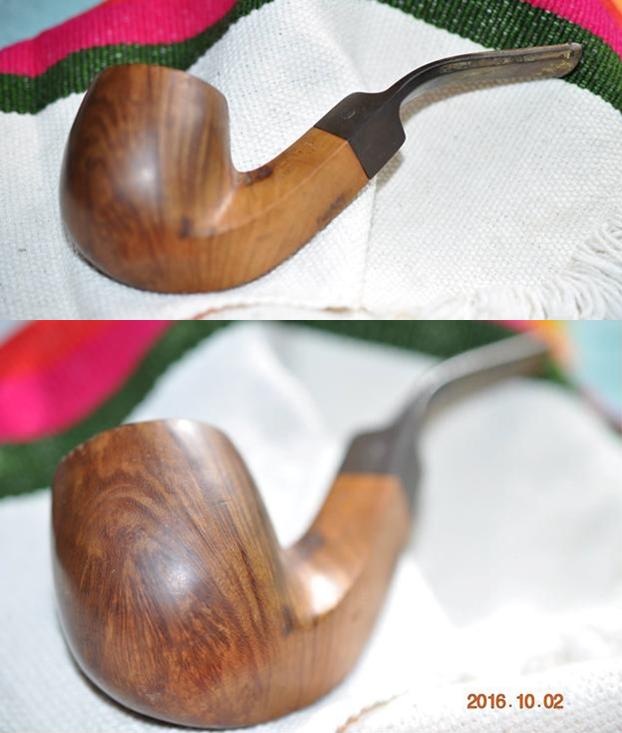
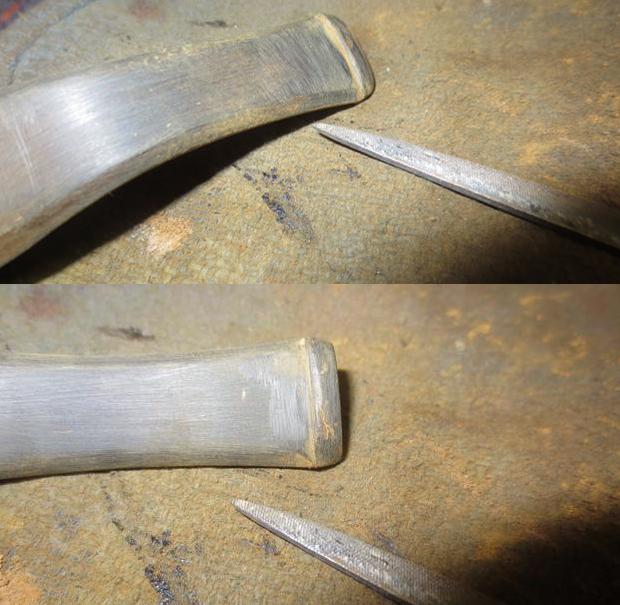
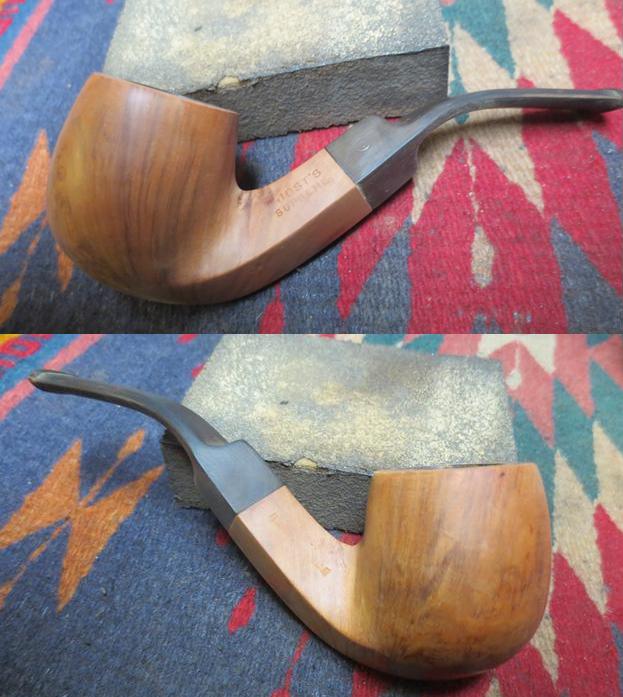
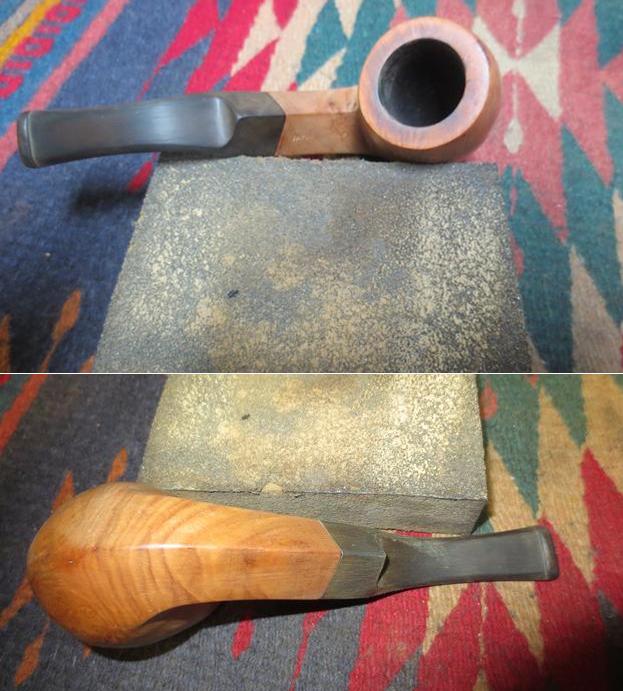
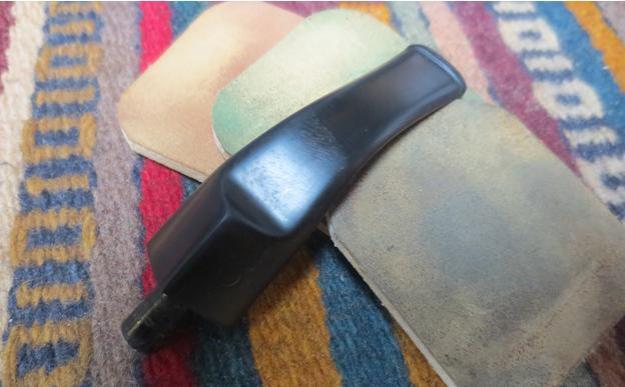
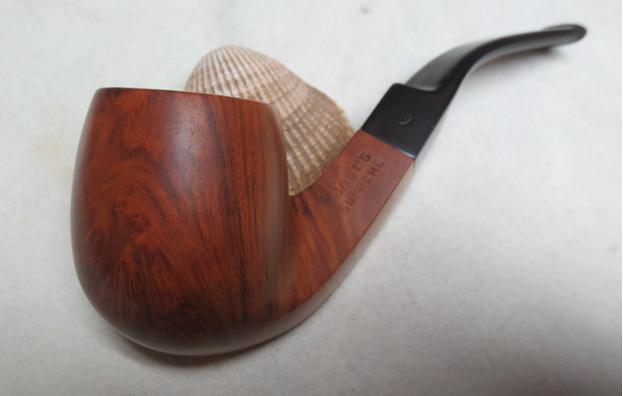
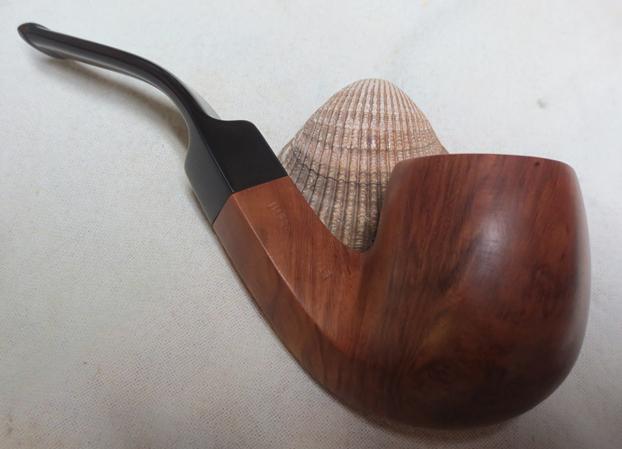
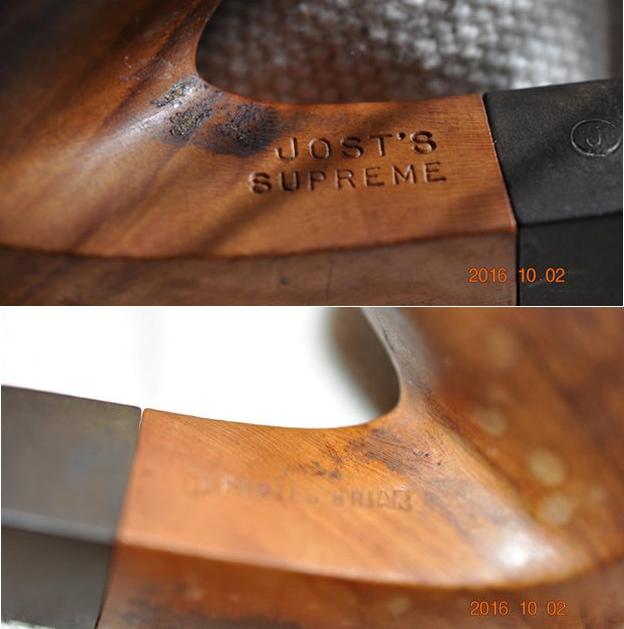
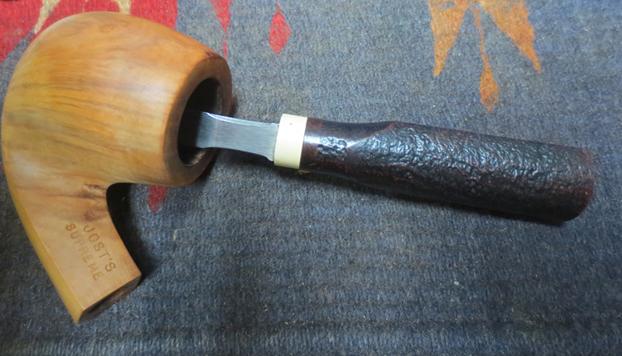
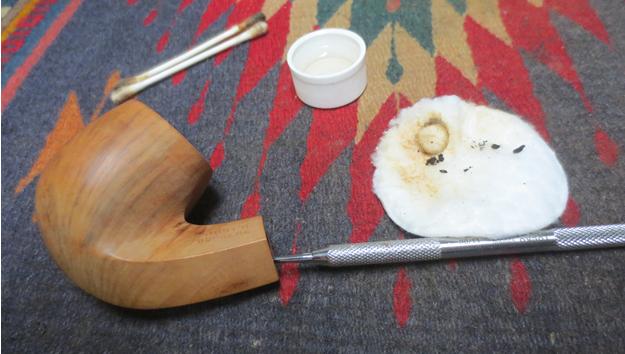
My brother took the photos that follow. They show the pipe before he cleaned it up and sent it to me. It has some nice looking briar under the grime and dirt of the years. It looks to me like it had a natural finish on the bowl rather than the dark stain mentioned above.jost1The next photos clearly show the stamping on the shank. The left side is stamped Jost’s over Supreme. The right side is stamped Imported Briar.jost2The bowl and shank had a sticky black substance on the top of the grain. It looked as if it may have come from sticky labels used by the antique shop where the pipe was sold.jost3The next close up photo shows the state of the cake in the bowl and the thick lava overflow on the top of the rim. It is hard to tell if the inner edge of the rim is damaged or not because of the thick cake. The second photo shows the nicks and cuts in the front top edge of the bowl and extending onto the rim.jost4 jost5The stem was badly oxidized and there were a lot of tooth marks and chatter that had rounded the sharp edge of the button. The tooth marks and chatter were covered with calcification. The vulcanite was pitted and worn.jost6My brother did an amazing job cleaning up the pipe. He scrubbed the sticky surface and all of the tars and oils on the bowl and the rim. He scrubbed it with a tooth brush and Murphy’s Oil Soap and removed the soiled finish on the bowl and much of the rim top lava. He reamed the bowl with a PipNet reamer and took the cake back to bare briar. He scrubbed the mortise and the airway in the shank with pipe cleaners, cotton swabs and alcohol. I took the following photos when the pipe arrived in Vancouver before I started refurbishing it.jost7 jost8I took a close up photo of the rim top. He had gotten almost all of the lava off of the rim and all that remained was some slight rim darkening. I also took photos of the stem to show how much of the buildup had been removed before I got the pipe. There was a deep oxidation in the vulcanite.jost9 jost10I used a Savinelli Fitsall Pipe Knife to clean up the reaming of the bowl. I smoothed out the remaining cake at the bottom edges of the bowl and smoothed out the inner edge of the rim.jost11I used a dental pick with a slight spatula to scrape out the hard deposits of tar on the inside of the mortise. It took a little extra work but it cleaned up the buildup and made the stem fit against end of the mortise snugly.jost12I scrubbed out the mortise and the shank and stem airways with pipe cleaners, cotton swabs and alcohol to remove the debris from my scraping work in the mortise. It did not take too many before the pipe was clean on the interior.jost13I sanded the rim with 1500-4000 grit micromesh sanding pads to remove the slight rim darkening that remained. I was able to polish the rim. I used clear super glue and briar dust to fill in the deep nicks and gouges in the front face and top edge of the bowl. I sanded the bowl front with 220 grit sandpaper to smooth the surface and to blend it in with the surrounding briar. I polished bowl at the same time as I did the rim with the micromesh sanding pads.jost14I used a needle file to sharpen the edge of the button and make it more defined. I sanded the stem with 220 grit sandpaper to remove the scratches on the stem left behind by the file and the oxidation in the surface of the vulcanite.jost15I sanded the bowl and the stem with a medium and a fine grit sanding pad to remove the scratches and to polish the briar and the stem.jost16 jost17With the majority of the oxidation removed and the scratches in the briar I worked on polishing the stem. I wet sanded it with 1500-2400 grit micromesh sanding pads and dry sanded it with 3200-12000 grit pads. I rubbed the stem down with Obsidian Oil after each set of three pads. After rubbing the stem down with a final coat of oil after the last set of pads I set it aside to dry.jost18 jost19 jost20I buffed the stem with red Tripoli to further remove the light oxidation that remained in the vulcanite. I buffed both the bowl and stem with Blue Diamond on the buffing pad to polish it. I gave them multiple coats of carnauba wax and buffed it to a shine with a clean buffing pad. I hand buffed the finished pipe with a microfibre cloth to deepen the shine. The finished pipe is shown in the photos below. I really like the way it turned out. The grain of the briar really stood out. The natural finish looked really good and the contrast in the flame and straight grain with the underlying briar is quite stunning. Thanks for walking through this journey with me.jost21 jost22 jost23 jost24 jost25 jost26 jost27 jost28 jost29


This Poor Old Kaywoodie Chesterfield had seen better days


Blog by Steve Laug

I received an email from Jim, the same fellow who sent me the Yello-Bole that I refurbished for him. I wrote about it in an earlier blog (https://rebornpipes.com/2016/11/10/breathing-life-into-a-huge-kbb-yello-bole-3068c-bent-billiard/). I have included the gist of his email and the photos he sent me because any of us who try our hand at pipe repair have found ourselves in similar situations. One simple thing going wrong can quickly compound into a second and a third thing going wrong and leave you with a mess on a pipe that at first glance should have been a simple cleanup.

“So I have a Kaywoodie Chesterfield pipe – the first pipe I ever obtained – and it is in need of serious attention.  I bought it at Barclay’s in Upper Arlington, Ohio from their Estate Pipe display, and I really like the pipe.  However, about three days ago, I was cleaning it, and got a tapered pipe cleaner stuck in the bit.  As I was pulling the cleaner through, the thicker end jammed itself well inside the bit as I attempted to draw the thinner end through the lip.  I apparently pulled too hard, and the end of the pipe cleaner broke off, leaving the remainder of the cleaner fully trapped in the bit.  In my idiocy, I tried various strategies to dislodge the cleaner which eventually led to my doing further damage to the bit in the form of a split down the center of the underside of the stem latitudinally.”

“…I know this particular pipe is not terribly valuable or even rare.  However, I am kind of a sap, and the pipe has a measure of sentimental value in that it is the first pipe I got, and I picked it because it reminded me of the pipes my dad smoked when I was a kid.  I am hoping you can give me some good news in the form of a means to remedy my stupidity.”

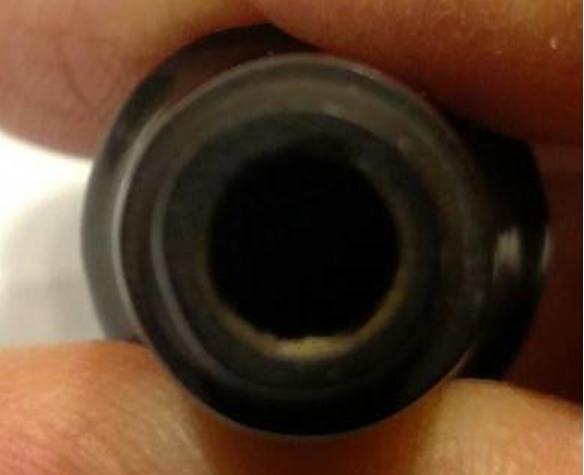
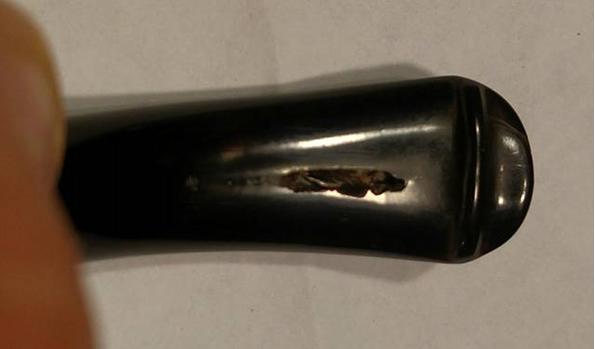
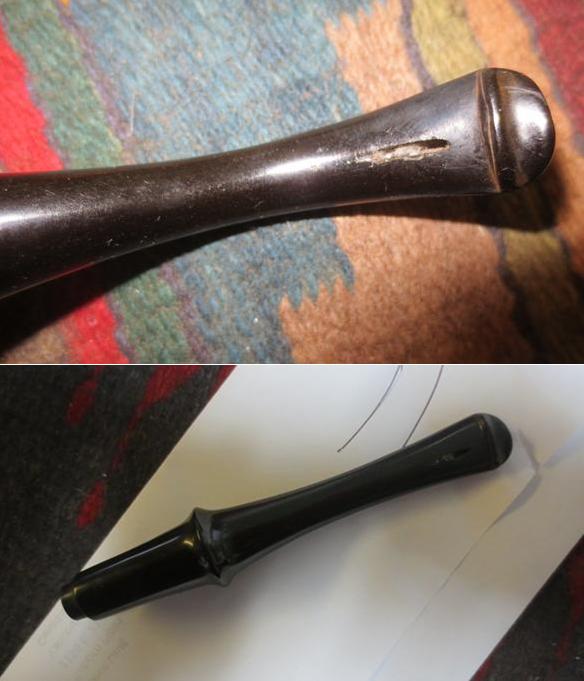
He sent the next three photos to show me his pipe and his travail. The first is one of the overall view of the pipe. Though it is hard to see in this photo the bowl has some very nice grain. I will take some pictures of the bowl and the finished pipe once I have finished the repair.chest1He took a photo of the end of the shank. His caption read: “You cannot see the thicker end of the pipe cleaner because it’s stuck way in there…” Indeed the pipe cleaner was stuck in the stem. It was jammed in the stem 1 ½ inches from the button with a bit showing through the jagged split in the stem and about two inches in from the shank end of the stem.chest2The last photo he sent shows the underside of the stem with this caption: “….And this is what you get when a dummy tries to ameliorate a situation that is beyond his ken.” It was a jagged split that looked awful in the photo below.chest3I had him send the pipe to me so that I could see what could be done. A stem repair in its own right that large is a fair bit of work but it could be done. The pipe cleaner jammed in the airway was an altogether different issue. I needed to have a look to see what I could come up with to remove the jam from the airway in the stem. I could not be sure until I saw it and tried.

The package arrived in Canada a few days ago and I opened it to find he had included the large Yello-Bole that I mentioned above and the damaged Chesterfield. The Chesterfield is actually a stunning pipe. The grain on the bowl, the finish and the nickel ferrule all combine to make a beautiful pipe. The bowl was in great shape and required no cleaning or repairs – just a buff to polish it. I can certainly see why Jim was attached to it. He was willing to have a new stem fit to the shank but I really wanted to see if the original Kaywoodie stem could be salvaged.

I took the next series of photos to show the damage to the stem underside. I needed to straighten the stem out to properly work on it. I traced the angle of the curve on the back of the letter that Jim sent along with the package so that I could recapture it once I finished the repair. I used a dental pick and tweezers to pull as much of the pipe cleaner and wire out of the damaged area on the stem. I found as I worked on the damaged area that several chunks of a small drill bit also fell out giving testimony to one of the ways Jim had tried to remove the jammed pipe cleaner. I was hoping to be able to pull all of it out this way but it continue to break and come out in small pieces until I was unable to reach any more with the pick and the tweezers.

I used a drill bit on my cordless drill and turned the straightened stem onto the bit from the shank end. My thought was that perhaps the drill bit would seize a piece of the pipe cleaner when I backed it out of the stem. It worked to a degree but it would not bring out the last 1 ½ inches of broken pipe cleaner. I was stuck. I needed some time to think through my options and try to figure out how to address the problem. I laid the stem aside and worked on the Yello-Bole while I pondered my next moves with the stem.chest4While I was working on the Yello-Bole I had a thought that maybe putting the stem in the freezer for a bit might work. My thinking was that when I removed it the contraction and expansion of the vulcanite and that of the pipe cleaner would be different enough that the pipe cleaner would drop out of the shank. At least that is what I dreamed would happen. A few days went by and I had some late nights at work and the stem sat in the freezer for a lot longer than I had anticipated. Needless to say when I finally took it out of the freeze it appeared to have made no difference. The pipe cleaner did not simply fall out of the airway as the stem warmed.

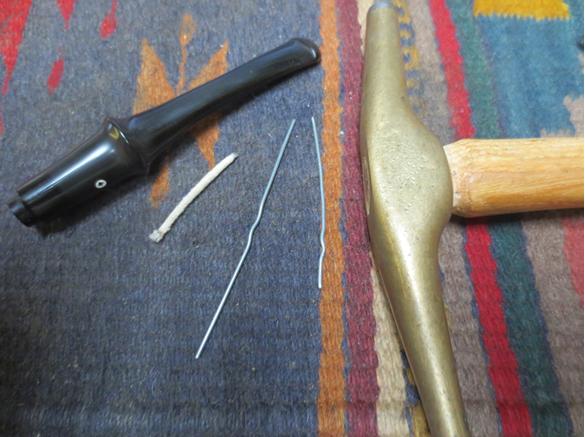
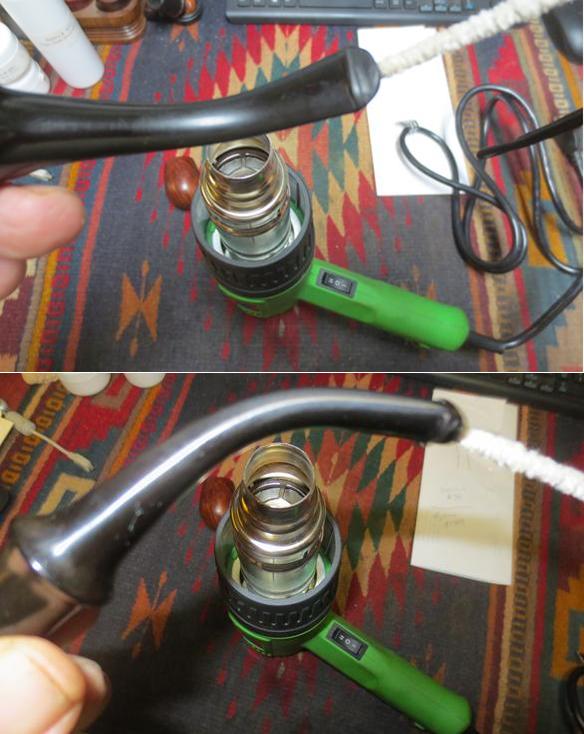
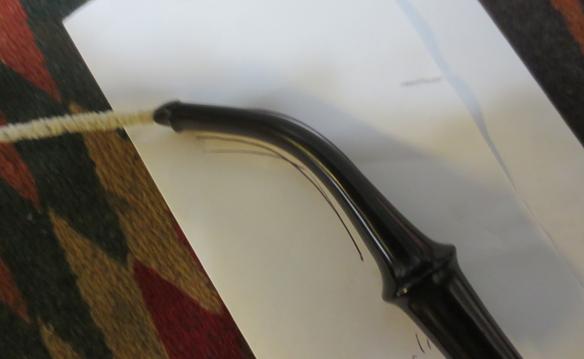
I laid it aside for the night and went to sleep. I woke up early this morning with an idea. I straightened a length of paper clip that I used as a punch. I slid it into the button end of the stem carefully past the damaged underside until it hit the jammed pipe cleaner. I used a small furniture tack hammer to tap on the bit of paper clip extending above the button. I tapped it maybe four or five times and I felt it begin to give. Encouraged, I tapped it several more times and the pipe cleaner bit fell free of the shank end of the pipe. You can see the broken piece of pipe cleaner below the stem in the next photo. I plugged the damaged area with my thumb and blew through the stem to clear out debris left behind by the pipe cleaner bits. The airway was finally free.chest5I mixed a batch of charcoal powder and black super glue on a patch of cardboard until I had a thick paste. I use activated charcoal capsules for the finely ground charcoal and a medium viscosity super glue for the mixture. I greased a pipe cleaner with Vaseline and slid it into the stem filling in the area on both ends of the damaged spot. I applied the mixture of super glue and charcoal powder to the damaged area with a length of straightened paperclip. I smoothed out the repair with the edge of a paper clip. I sprayed the repair with an accelerator and slid the pipe cleaner out of the airway. I blew through the shank end of the stem and the airway was clear of blockage. I used a clean pipe cleaner to remove the excess Vaseline from the inside of the stem.chest6I used the rest of the mixture to build up the repair and spread it over the surface of the stem, bonding the patch to the solid vulcanite on both sides of the damaged area. The patch was thick and large but I would be able to sand it smooth.chest7Once the patch dried I sanded it with 220 grit sandpaper to smooth it out and blend it with the surrounding vulcanite. The next two photos show the repaired area at this point in the process.chest8I polished the stem with micromesh sanding pads – wet sanding with 1500-2400 grit pads and dry sanding with 3200-12000 grit pads. As I worked over the repaired area some of the air bubbles in the mixture of charcoal powder and the glue came to the surface. I have never found them to be big deal as they only need to be lightly filled with clear super glue. I repeated the super glue and sanding process until the patch was smooth. I sanded it with micromesh pads until it shone and after each set of three pads I rubbed the stem down with Obsidian Oil. I gave it a final coat of oil after the last set of three pads and set it aside to dry. The following photos show process of how the repaired area gradually smoothed and blended into the rest of the vulcanite.chest9 chest10 chest11 chest12 chest13 chest14Once the repair was finished and polished I set the stem aside to cure for several hours. I wanted to make sure that the charcoal and black super glue patch was hard. I had visions of it dropping out when I heated the stem and applied pressure to bend it. Once it had hardened bending it was not a problem. I slid a small pipe cleaner into the stem from the button end to keep the airway from collapsing when I bent it. I heated it over a heat gun until the vulcanite was pliable. I bent it to match the pattern on the paper and then cooled it with running water. I repeated the process until I had the right curve to the stem.chest15 chest16I buffed the stem and bowl with Blue Diamond polish on the buffing wheel to raise a shine and polish out the scratches. I gave the bowl and stem multiple coats of carnauba wax. I buffed it with a clean buffing pad on the wheel and hand buffed it with a microfibre cloth. The repair to the underside of the stem is solid and smooth. While the repair is visible under bright light it did not stand out while looking at it with the naked eye. Along with that the repair was fortunately on the underside of the stem in the curve. I think Jim will appreciate the repair and the pipe should serve him well. I look forward to hearing what he thinks of the repair once he has the pipe in hand. Thanks for walking with me through the process.chest17 chest18 chest19

Breathing Life into a Huge KBB Yello-Bole 3068C Bent Billiard


Blog by Steve Laug

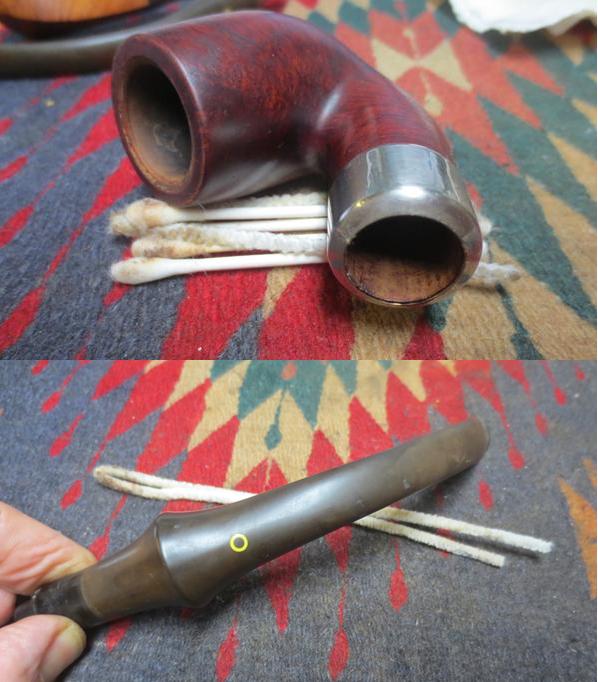
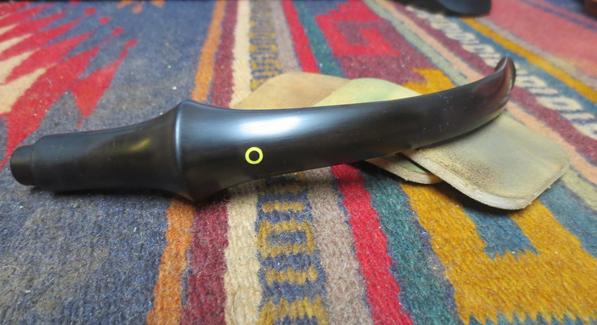
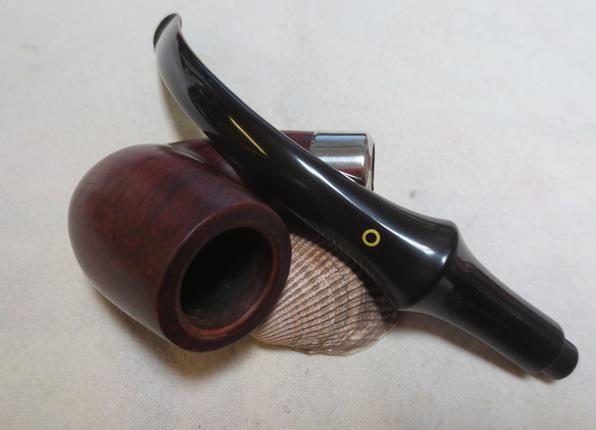
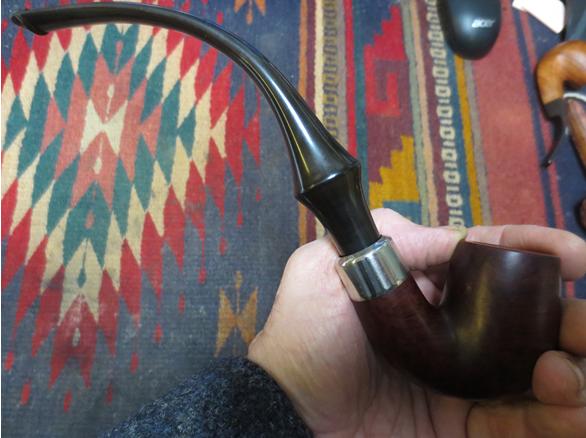
A good friend of rebornpipes, Jim emailed me about a pair of pipes that he had that he wanted me to have a look at. The first of them is on the work table and it is going to take a bit of work to bring back to life. The second is the one I just finished and it is a beautiful pipe. It is a Yello-Bole like none I have seen before and I have worked on many of them over the years. This one is a large KBB Yello-Bole bent billiard similar in style to the WDC Wellington big pipes. This one is 10 inches long and 2 ¼ inches tall. The bowl is 7/8 inches in diameter and 1 ¾ inches deep. The stem was in decent shape other than oxidation and light tooth chatter on the top and bottom sides near the button. The button itself was very clean with a few tooth marks but the airway was in perfect condition. The stem has the older style inlaid Yello-Bole logo of the yellow circle on the top side. The stem appears to be a P-lip but it is the faux P-lip that has the airway coming out straight at the end of the P.

The finish on the bowl was dirty and the varnish coat was peeling away and flaking off around the bowl. There was a deep, rich oxblood colour to the stain underneath the peeling finish. The rim was dirty but otherwise it was pretty clean with no dents, dings or nicks in the surface or in the inner or outer edges of the rim. In the photos it appears that the bowl was meerschaum lined but I assure you that it was not – it is merely coated with the famous Yello-Bole Honey Curing yellow mixture. The bevel on the rim shows the yellow as does the bottom of the bowl. In fact, though the pipe was smoked it appears that it was never smoked all the way to the bottom of the bowl and the lower 1/4th of the bowl still shows the yellow bowl coating. There was a light cake that was spotty around the inside of the bowl but it was not thick of overflowing onto the rim.

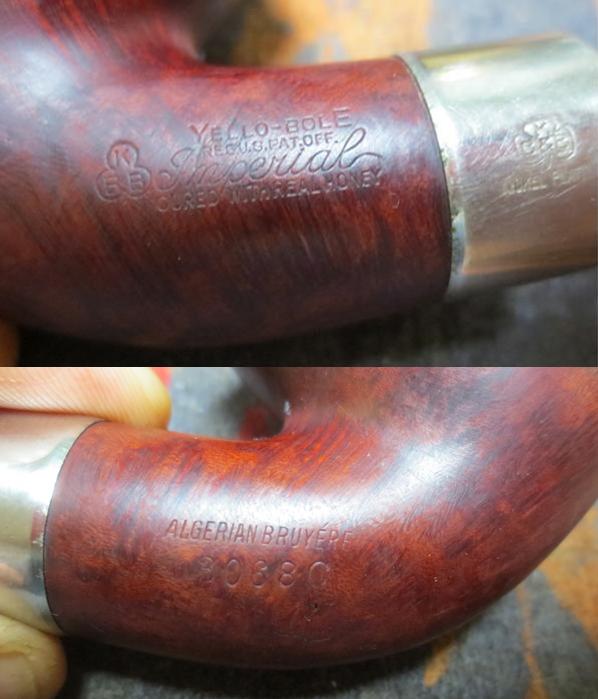
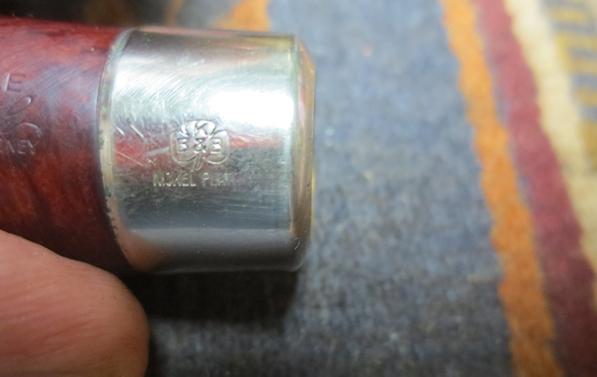
The stamping on the left side of the shank reads KBB in a cloverleaf/club and next to it Yello-Bole over Reg. U.S. Pat. Off. Under that it is stamped Imperial in script and below that the fourth line of the stamp reads Cured With Real Honey. The nickel ferrule on the shank end is stamped with the KB&B Cloverleaf and underneath reads Nickel Plated. It is interesting to me to see this stamping on the band. Typically the Yello-Bole pipes bore the KBB stamp without the ampersand (&) between the two “b’s” which is true on the logo on the left side of the shank. It simply reads KBB in the leaf. On the band however the logo has the KB&B stamp which is usually reserved for the better quality Kaywoodie pipes of the time. The right side of the shank is stamped Algerian Briar over 3068C which I assume is the shape number.

I took the photos below to show what the pipe looked like when it arrived and I had unpacked it on my work table.yb1 yb2I took some close up photos of the bowl, rim and stem to show the condition of those areas when I received the pipe. You can see the clean bevel on the rim with the slight darkening of the yellow bowl coating and the light, uneven cake in the bowl. You can also see the yellow bowl coating on the bottom portion of the bowl. The stem shows the oxidation and the light tooth chatter on the top and underside near the button. You can also see the airway exiting the stem at the end rather than the top of the “P-lip”.yb3 yb4I reamed the bowl with the Savinelli Fitsall Pipe Knife to clean the cake back to bare briar. I used that tool as I wanted to leave the yellow bowl coating intact in the bowl to leave it as original as possible.yb5I scrubbed off the peeling finish with cotton pads and acetone (fingernail polish remover) until the surface of the briar was smooth and the oxblood stain coat shone through. I used 1500-2400 grit micromesh sanding pads to work on the rim top and the inner bevel of the rim until they also were clean.yb6 yb7Once I had removed the varnish coat there were a lot of dings and dents in the rim and the sides of the bowl. I used a hot butter knife and a wet cloth to steam out the dents. It took some time but I continued to steam the dented areas on the bowl until I had removed all but the small nicks on the bowl. I took photos of the bowl after I had steamed it and you can see from the photos that the briar looked far better after steaming.yb8 yb9I took some close up photos of the stamping on the shank and the nickel ferrule to show what I talked about in the earlier paragraphs. The nickel-plated ferrule had a lot of scratches in the surface of the nickel. You can also compare the KBB stamp on the shank with the KB&B stamp on the ferrule in the photos.yb10 yb11I polished the nickel ferrule with micromesh sanding pads to remove the scratches. I started with 1500 grit and worked my way up to 12000 grit. It removed the scratches and also polished the nickel. I cleaned out the interior of the mortise, the sump at the bottom of the shank and the airways in the shank and the stem with alcohol, pipe cleaners and cotton swabs. The first photo below shows the clean briar in the shank.yb12I sanded the stem with 220 grit sandpaper to remove the oxidation on the surface of the stem. I scrubbed it with the Before & After Pipe Stem Deoxidizer to lift more of the oxidation. I wet sanded the stem with 1500-2400 grit micromesh sanding pads and dry sanded with 3200-12000 grit pads. After sanding with each set of three pads I rubbed the stem down with Obsidian Oil. After sanding with 12000 grit micromesh I gave the stem a final coat of the oil and set it aside to dry.yb13 yb14 yb15I buffed the bowl and stem with Blue Diamond on the buffing wheel to further polish the bowl and the stem. I was seeking to remove even the micro scratches left behind in the vulcanite by the micromesh sanding pads and the remaining scratches in the briar as well. I gave the pipe multiple coats of carnauba wax to protect the pipe. I buffed it with a clean buffing pad on the wheel and raise a shine. I personally do not like the high gloss look of a pipe when it first comes off the wheel so I hand buff it with a microfibre cloth to deepen the shine and give it a rich look. The finished pipe is shown in the photos that follow. I look forward to hearing from Jim as to his thoughts regarding this “rare to me” older KBB Yello-Bole. Thanks for walking with me through the process.yb16 yb17 yb18 yb19 yb20 yb21 yb22 yb23

ADDENDUM:

Andrew commented below regarding the size of the pipe. I have added this photo of the pipe in my hand to give an idea of the size.yb1

1969 Dunhill CK Shape Mystery/Addition


By Al Jones

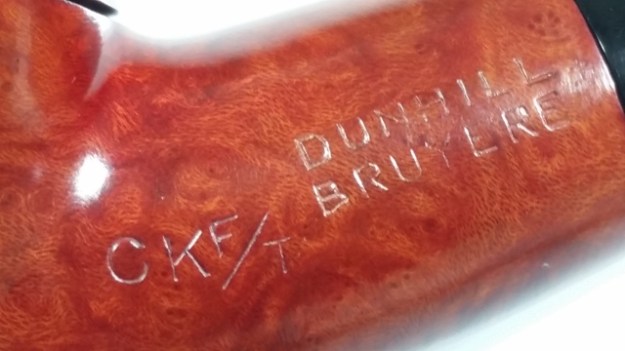
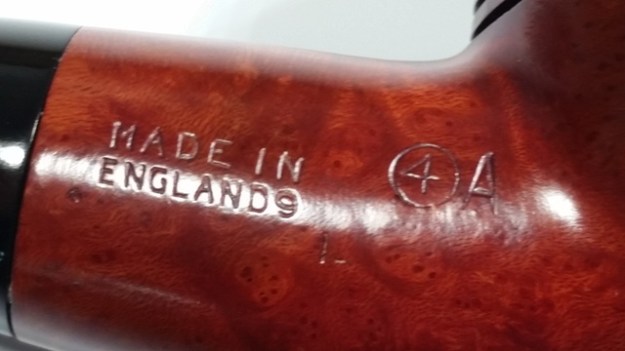
The Dunhill CK “author” shape is one of my favorites from the classic British makers, which includes the Sasieni Ashford, Comoys 256, etc. I found this one at the EstatePipeShop.uk. Dean does great work, so this one didn’t really need anything. This is my second CK, a 1969 Bruyere. I had a 1971 Shell in my collection.

I tried to learn more about the CK shape, but I didn’t really learn much about the shape. I was unable to determine when this shape number entered the Dunhill catalog and even checked with Dunhill collector, Rich Esserman. David Fields at RD Fields also answered my email inquiry, but had no historical knowledge of this shape. I know at some point that the CK shape became the Shape 29, which is currently available. When was this shape introduced? Why was it named the CK? Given that the Dunhill brand is most assuredly the most documented pipe brand, I was surprised that the history of this popular shape isn’t covered somewhere on the various Dunhill pipe pages.

Below is the pipe. As I mentioned, it didn’t need much,but I can’t resist putting my own touch to any pipe. I always polish my stems with micromesh up to the 12,000 grade and buff with Megiuars Plastic Polish. The bowl had a few handling dings and I was able to remove several using an iron set on “high” and a wet cloth. The bowl was then buffed with White Diamond and several coats of Carnuba wax.

dunhill_ck_bruyere_finish_gallery

dunhill_ck_bruyere_finish-6

dunhill_ck_bruyere_finish-3

dunhill_ck_bruyere_finish-7

dunhill_ck_bruyere_finish-5

dunhill_ck_bruyere_finish-8

dunhill_ck_bruyere_finish-2

dunhill_ck_bruyere_finishweb1dunhill_ck_bruyere_finishweb2

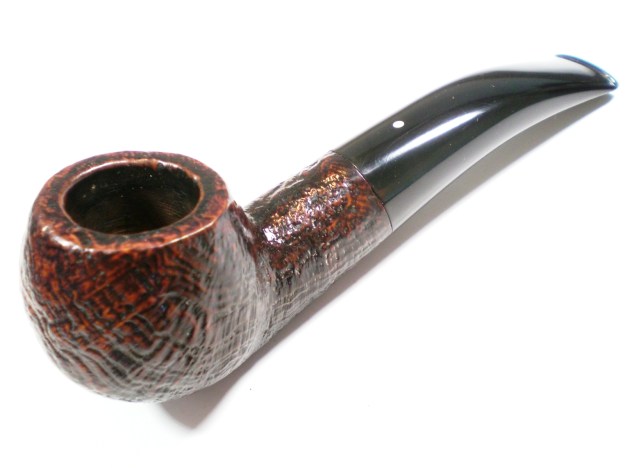
It’s interesting to see the difference between my two CK shapes.  The 1971 shell is smaller and less chunky.   The 1969 shape to my eye, is less Author and more Rhodesian.

dunhill_ck_shell-1971-1


Restoring the third Classic Find – a Charatan’s Make 0120 Canadian


Blog by Steve Laug

My brother and I recently purchased some pipes from an estate sale from an old pipeman named Gene in Pocatello, Idaho. There were a lot of great pipes in the lot. I have written about the pipes on a previous blog: (https://rebornpipes.com/2016/10/07/a-good-day-hunting-orchestrated-between-british-columbia-and-idaho/). I wrote of how he had stopped at an antique shop and four found prestigious finds. These included a Four Dot Sasieni Pembroke with a patent number, Pat.No. 150221/20, a Dunhill Root Briar Canadian EC 4R, a Charatan’s Make Canadian Sandblast 0121 and a Jost’s Supreme Diamond Shank bent billiard. I wrote about the restoration of the Sasieni and the Dunhill earlier in two other blogs: (https://rebornpipes.com/2016/11/05/restoring-a-classic-find-a-sasieni-four-dot-london-made-pembroke/) (https://rebornpipes.com/2016/11/06/restoring-another-classic-find-a-dunhill-4r-root-briar-canadian-ec/). The third pipe that I have chosen to restore is the sandblast Charatan’s Make 0120 Canadian.

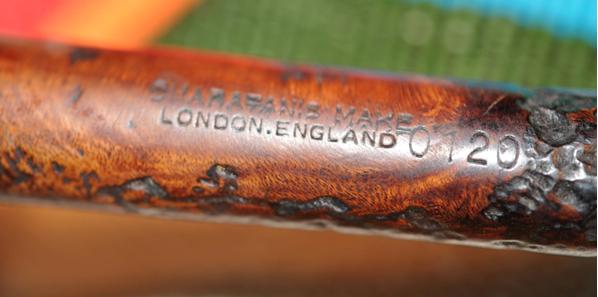
The Charatan pipe also had a replacement stem as there was no sign of a CP logo stamp on the top side. The stamping was on the smooth underside of the shank and it read Charatan’s Make and underneath it read London, England. At the end of the brand stamping was the number 0120 which is the shape number of a Canadian. I did some searching online and read the Charatan’s entry in Pipedia (https://pipedia.org/wiki/Dating_of_Charatans). I quote from there: “Pipes that belong to eras till the 1960 have the engraving ‘CHARATAN’S MAKE LONDON, ENGLAND’ in two lines, the shape code is composed by numbers only. The X and the DC appear only on pipes after 1960.

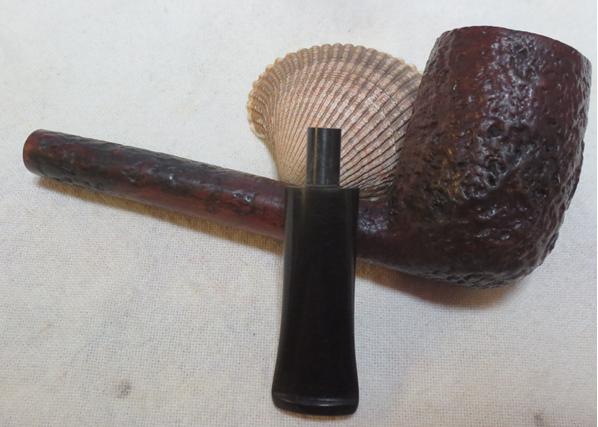
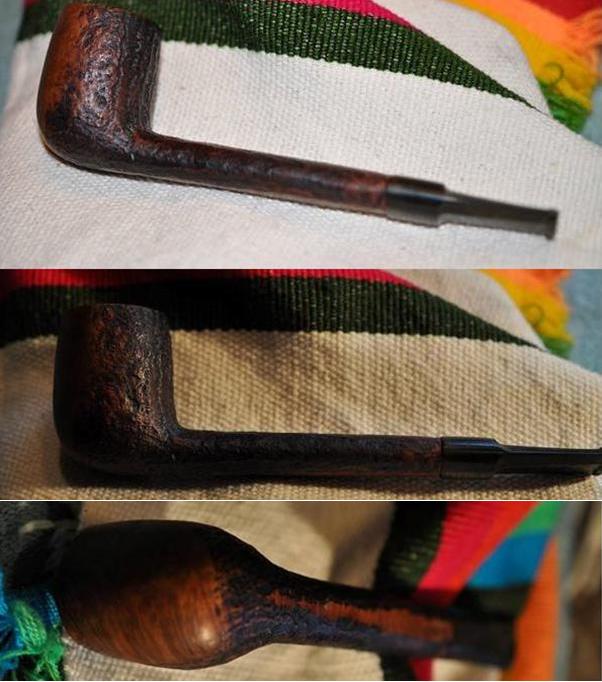
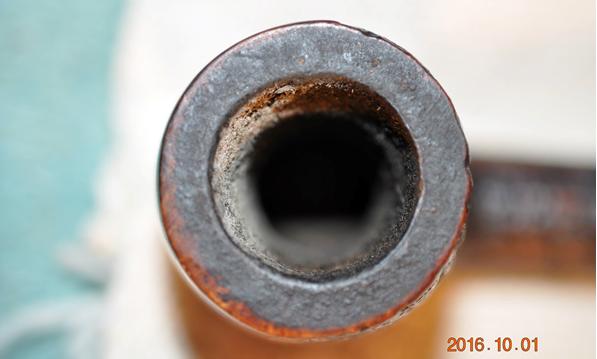
My brother had found another good one. The stamping gave me information about the time frame it was made. I knew that it was made prior to 1960 by the style of the stamping. It came from what the article identified as the Reuben era of Charatans that went from 1910-1960.  Like the Dunhill the only thing that would have been better was if it had come with the original stem. My brother took the photos that follow. They show the pipe before he cleaned it up and sent it to me. It had a nice sandblast that deep and craggy on the bowl and shank. From mid shank back to the stem it appeared that the pipe had been rusticated to match the blast pattern. He took some photos of the pipe to give a feel for the overall look of it when he received it. These photos show the pipe before he cleaned and reamed it.char1He took some close up photos of the bowl and sandblast on the bottom of the bowl. The bowl had a thick cake that had flowed over the top of the rim in hard tarry lava. It was thick but it appeared that the outer rim was undamaged and with any luck the inner one would be as well. The blast is interesting in that it also has a rustication pattern on the bowl bottom and also on the shank. It follows the pattern of the grain on the bowl.char2The next photo shows the clear and sharp stamping on smooth underside of the shank. It reads as noted above – Charatan’s Make over London England with the shape number 0120 on the stem end of the shank.char3The stem had a lot of tooth chatter and some shallow tooth dents. There was oxidation and also calcification.char4My brother did his normal thorough job of cleaning the pipe. He scrubbed it with a tooth brush and Murphy’s Oil Soap. He cleaned out all of the dust and debris in the grooves and crevices of the “blastication”. The stem does not fit tightly against the shank at this point. The next photos below show the pipe as it looked when I brought it to my work table.char5 char6I took some close up photos of the rim to show how well it cleaned up. My brother was able to get the lava out of the grooves on the rim and also on the underside of the shank. The stamping was still very clear.char7He cleaned out a lot of the gunk in the shank but the stem still did fit tightly against the shank end. He did get the calcification and some of the oxidation off the stem. You can clearly see the tooth chatter and the tooth dents now that the stem was clean.char8I scraped out the inside of the mortise with a dental pick with a flattened blade end. I scraped the stepped down area of the mortise as it entered the airway in the shank. I took a lot of tar and gunk out the shank area.char9I scrubbed the mortise, the airway in the shank and the stem with cotton swabs, pipe cleaners and alcohol. Once it was clean the stem fit more closely against the end of the shank.char10I scrubbed down the bowl and shank with acetone on cotton pads to remove the finish that remained on the pipe.char11 char12I restained the pipe with a dark brown aniline stain thinned 50/50 with isopropyl alcohol. I flamed the stain and repeated the process until the coverage was even.char13I put the stem in the shank and took the pipe to the buffer. I buffed it to polish the stain. When I was just about finished I could not believe what happened. It is that moment when you are buffing a pipe where you get a sick feeling. The wheel grabbed the pipe out of my hand, off my finger and threw it against the table top under the buffer. It was not far – a mere 2 inches but I heard the snap as the tenon broke. I was sick to my stomach. I was almost finished with the pipe and then this had to happen. I took a photo of the broken tenon once I had pulled it from the shank. It was almost a clean break at the end of the stem. Oh the frustration.

I used a Dremel to flatten the broken edge of the tenon against the face of the shank. It took a few moments to smooth out the broken part. I used the topping board with 220 grit sandpaper to face the end of the stem. I went through my box of threaded tenons and actually had one left in the box that was not a Jobey Link system tenon. It was the same diameter as the broken tenon.char14I chucked a drill bit in the cordless drill that was just a little larger than the air way in the stem. I turned the stem onto the drill bit the length of the threaded portion of the replacement tenon. I put two more drill bits in the drill and turned the stem onto the bits. Once it was the same diameter as the threaded portion I shortened the threaded end slightly so that it would fit tight against the stem. I roughed up the threads with the Dremel and a sanding drum. I left the threads in place so that I could turn it into the stem.char15I screwed it into the stem as far as it would go by hand and then used a pair of pliers to finish turning it tight against the stem face.char16I put the stem in place in the shank and the fit was tight against the shank. I polished the stem with micromesh sanding pads – wet sanding with 1500-2400 grit pads and dry sanding with 3200-12000 grit pads. I rubbed it down with Obsidian Oil after each set of three pads. After the final set I rubbed it down with a last coat of oil. I set the stem aside to dry. (In the photos below of the shank and stem I did not push the stem in against the shank so it shows a small gap at that point. You will notice in the final photos that I pushed it back in place.)char17 char18 char19With fear and trepidation I took the pipe back to the buffer. I did not want to repeat the broken tenon so I was very careful. I worked the pipe against the buffing wheel that had been charged with Blue Diamond polish. I buffed it until the stem shone. I lightly buffed the bowl with the polish as well – being careful to not let it build up in the grooves. I polished the stem with carnauba wax and put Conservator’s Wax on the sandblast finish of the bowl and shank. I buffed the pipe with a clean buffing pad to raise the shine. I hand buffed it with a microfibre cloth to deepen the shine. The finished pipe is shown in the photos below. The fit of the stem against the shank was better than when I started. Thanks for walking through the restoration with me and also through the frustrating need to replace the tenon.char20 char21 char22 char23 char24 char25 char26 char27

Cleaning and Restoring a Stanwell Antique 56 Canadian


Blob by Steve Laug

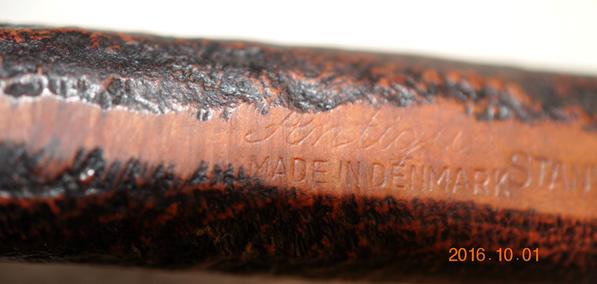
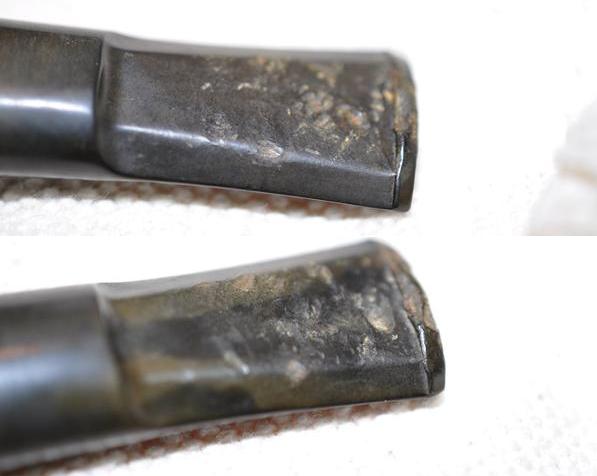
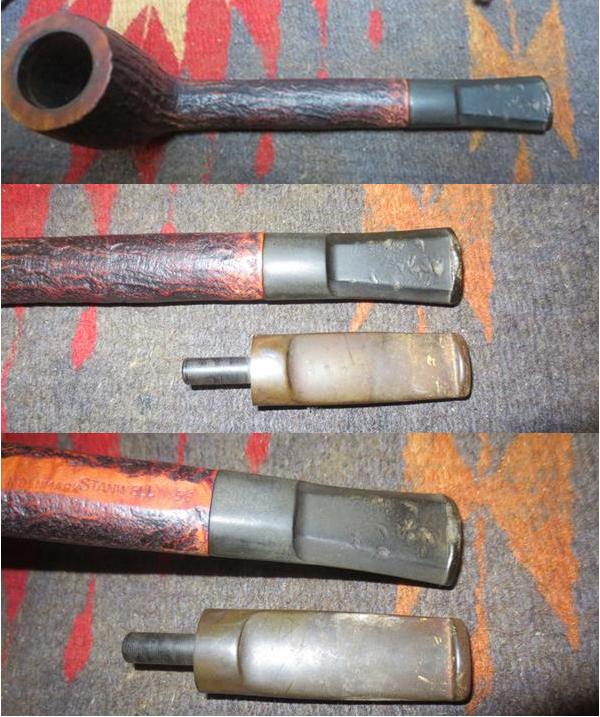
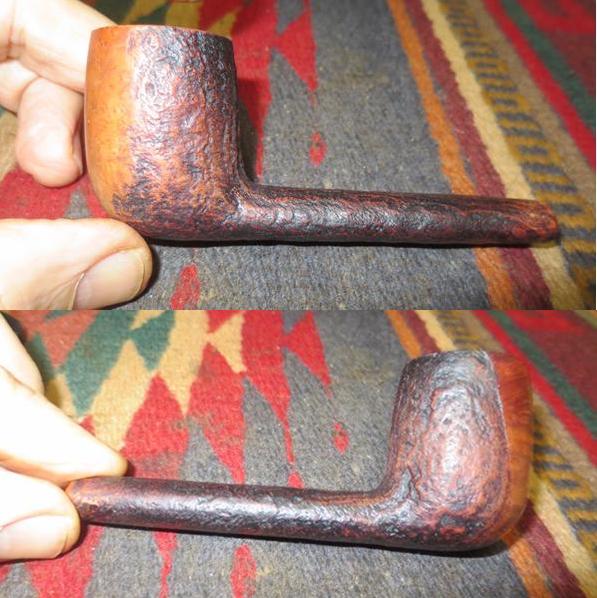
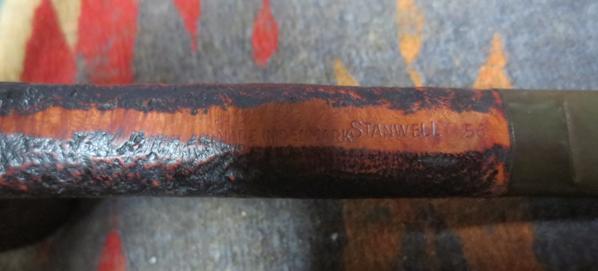
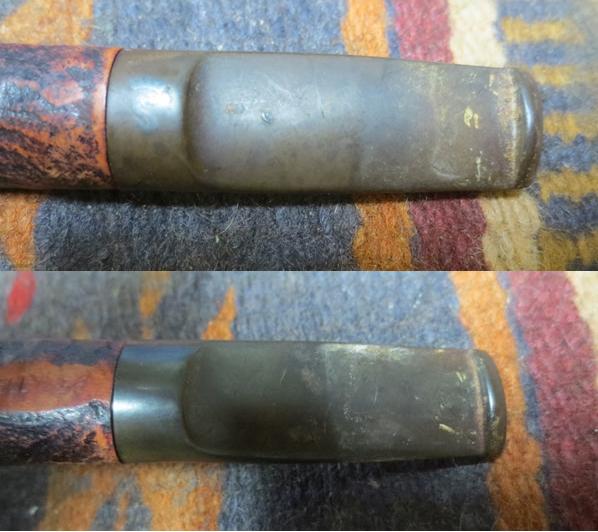
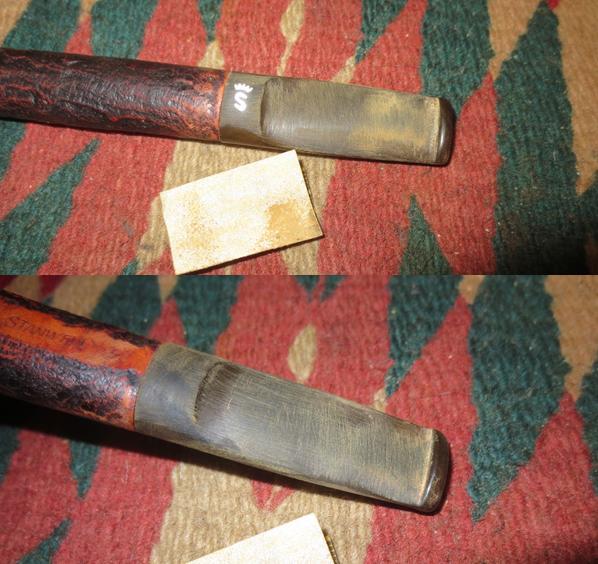
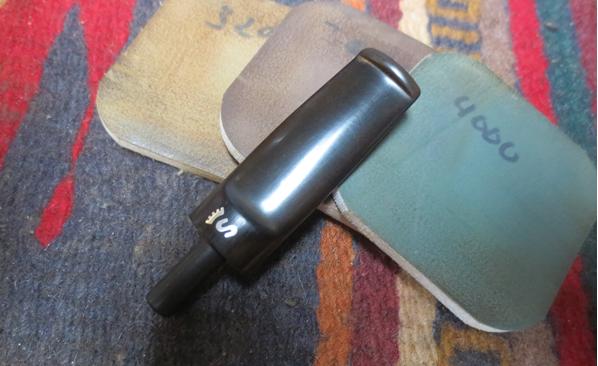
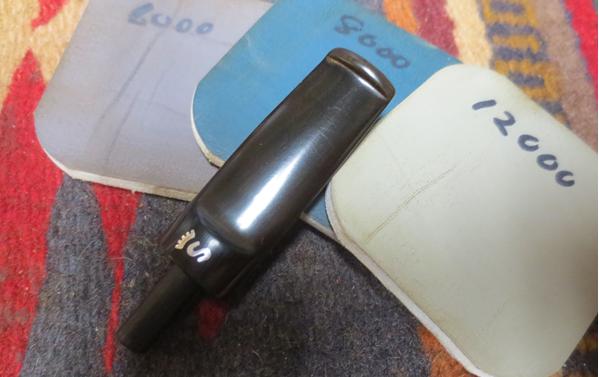
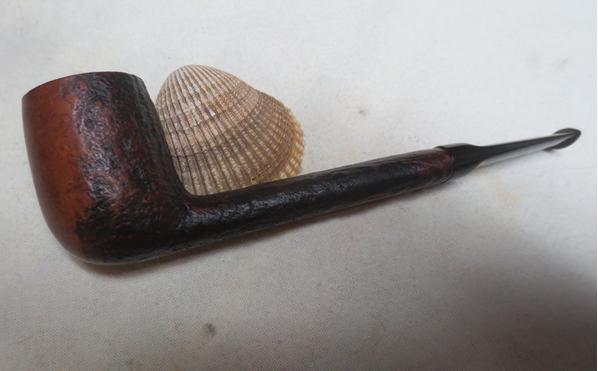
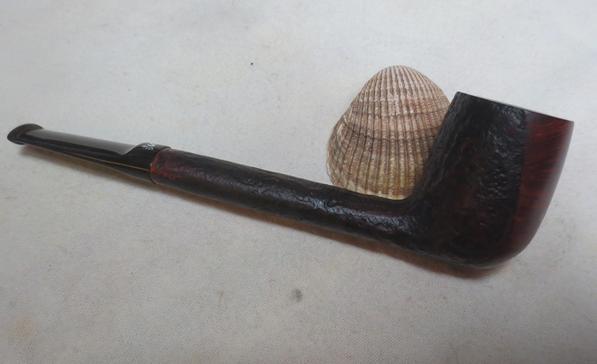
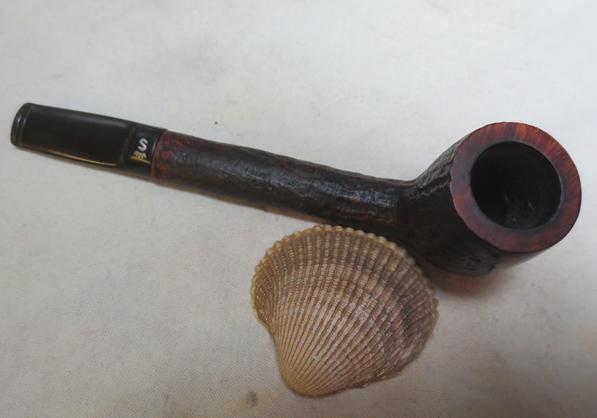
One of the first pipes I chose to restore from the estate lot my brother and I purchased in Idaho from an older pipeman, Gene was this Stanwell Canadian. It was a nice looking contrast stained pipe that was sandblasted over most of the surface area – the shank and ¾ of the bowl. The underside of the shank and the front of the bowl were smooth and stained a medium brown. The rim top was also smooth and had a matching stain. The stem was a replacement and while it fit the mortise well it did not fit against the shank. It was well chewed by what Gene called a beaver. The tooth marks were deep and many. Fortunately the stem did not match the shank of the pipe so it would not be a loss. I would need to look for a stem in my can of stems and see if I could find one that matched the stem. Maybe I would even find one that bore the Stanwell logo and worked with the pipe. My brother Jeff took some photos of the pipe before he cleaned it up. The next photos show the pipe when he received it.stanwell1Jeff took close up photos – the first shows the cake in the bowl and the overflow of tars and lava over the top of the rim. The outer and inner rims were in great shape. The bowl was still in round and the outer edge is smooth where the smooth portion is and rougher where the sandblast portion of the bowl was. The underside of the shank was stamped Antique in script over Made in Denmark. Next to that it was stamped Stanwell. Next to the shank/stem junction it bore the shape number 56 which is the shape number for a long Canadian.stanwell2 stanwell3He also took some photos of the stem top and bottom. I have included them as they show the chewed surface of the stem on the top and the bottom side. It was a mess and the button was chewed down as well.stanwell4When the pipe arrived in Vancouver I took a photo of the pipe with the stem that came with it. I went through my can of stems and found a stem that bore the silver Stanwell logo on the top side of the saddle. It fit the shank well and with a little cleanup it would work very well. It was oxidized and had some light tooth chatter on both sides. It was almost straight from the shank to the edge of the button.stanwell5I removed the stem and took photos of the bowl without a stem to give you an idea of the condition of the bowl and shank of the pipe. You can see from the photos that my brother had cleaned up the exterior of the pipe with Murphy’s Oil Soap and a tooth brush and removed the grime that was in the grooves and crevices of the sandblast finish. There was also a small fill on the front of the bowl on the smooth portion of the bowl front. He was also able to remove much of the tars and lava on the rim top.stanwell6 stanwell7I took a close up photo of the stem – both top and bottom sides in order to show the general condition. You can see the crown S on the top of the saddle portion of the stem.stanwell8The tenon was the perfect size to fit the mortise on the Canadian. The width of the stem was the same as the shank. The height was slightly larger than the height of the shank. It would need to be sanded lightly to bring about a match. The photos show what the pipe looked like with the new stem.stanwell9 stanwell10I took a close up photo of the bowl rim and the underside of the shank. It was in great shape. The stamping on the shank underside was clear and readable.stanwell11 stanwell12I also took a close up photo of the stem top and underside with it in place in the shank. You can see from the photos that the stem fit nicely in the shank and looked like it belonged on the pipe.stanwell13I sanded the stem with 220 grit sandpaper to remove the tooth chatter and the tarnishing to the crown S logo. I worked on the height of the stem so that it was more in line with the thickness of the shank.stanwell14Once I had the stem fit better I polished it with micromesh sanding pads – wet sanding with 1500-2400 grit sanding pads and dry sanding with 3200-12000 grit sanding pads. I rubbed the stem down with Obsidian Oil after each set of three sanding pads. I gave it a final coat of oil after the last set of three pads and set it aside to dry.stanwell15 stanwell16 stanwell17I rubbed the bowl down with a light coat of olive oil and hand buffed it with a shoe brush. I gave it several coats of Conservator’s Wax and buffed it with the shoe brush. I buffed the smooth portions on the bowl and rim with Blue Diamond and buffed the stem as well to polish it. I gave the stem and smooth portions of the bowl with carnauba wax. I buffed the entire pipe with a clean buffing pad to raise the shine. I hand buffed it with a microfibre cloth to deepen the shine. The finished pipe is shown in the photos below. The shine and the contrast finish and stains make the pipe a unique looking pipe. The new stem looks right with the pipe. Together they combine to make a good looking pipe. Thanks for walking through the restoration with me.stanwell18 stanwell19 stanwell20 stanwell21 stanwell22 stanwell23 stanwell24 stanwell25 stanwell26
Restoring another Classic Find – a Dunhill 4R Root Briar Canadian EC


Blog by Steve Laug

My brother and I recently purchased some pipes from an estate sale from an old pipeman named Gene in Pocatello, Idaho. There were a lot of great pipes in the lot. I have written about the pipes on a previous blog: (https://rebornpipes.com/2016/10/07/a-good-day-hunting-orchestrated-between-british-columbia-and-idaho/). On his way home my brother stopped at an antique shop and found pipes that were by far the most prestigious of the finds. These included a Charatan’s Make Canadian Sandblast 0121, the Four Dot Sasieni Pembroke with a patent number, Pat.No. 150221/20, what we thought was a Dunhill Bruyere Canadian EC 4R (Once I got it I was pretty certain it is actually a Root Briar) and a Jost’s Supreme Diamond Shank bent billiard. I wrote about the restoration of the Sasieni earlier (https://rebornpipes.com/2016/11/05/restoring-a-classic-find-a-sasieni-four-dot-london-made-pembroke/). The second pipe that I have chosen to restore is the Dunhill Root Briar EC 4R Canadian.

When my brother was cleaning up the pipe he called me and let me know that he had found a Dunhill on his recent hunt. He was excited and surprised by the find. The pipe obviously had a replacement stem as there was no white dot. The stamping had been buffed so much that it was unreadable except with a bright light and a lens. He read me the stamping on the shank. Near the bowl on the left side of the top of the shank it was stamped EC and mid shank on the left it read Dunhill over Root Briar. On the top right side mid-shank it read Made in over England with a 6 next to the D. That would make it a 1966 pipe if I am not mistaken. Next to the bowl shank junction on the same side it read circle 4R. The EC stamping told me that I was dealing with a Canadian. The R following the circle 4 told me that the pipe was a Group 4 sized Root Briar. He had found a good one. The only thing that would have been better was if it had come with the original stem. My brother took the photos that follow. They show the pipe before he cleaned it up and sent it to me. It had some nice grain on the bowl and shank.dunhill1He took some close up photos of the bowl and stem. The first one below shows the condition of the rim. It had some tars on the surface but otherwise appeared to be in great shape. The inner and outer edge both looked good. There was a light cake in the bowl as well. The second and third photos show the oxidized and calcified stem. There was some light tooth chatter on both sides near the button. The replacement stem appeared to be well made.dunhill2 dunhill3The next two photos show the condition of the stamping on the top of the shank from both the left side and the right side. It was faint and over buffed but with a light and lens still readable.dunhill4My brother carefully cleaned the externals of the pipe with Murphy’s Oil Soap and was careful in the process to not further damage the stamping. He reamed the bowl and scrubbed the rim to remove the tars and oils. He cleaned out the interior of the pipe with pipe cleaners, cotton swabs and alcohol leaving the mortise and the airways in the shank and the stem clean. The next photos show what the pipe looked like when it arrived in Vancouver.dunhill5 dunhill6While the rim was free of debris there was still a lot of darkening and thin coat of tar on it. It would not take too much to clean off the surface. He had been able to remove much of the calcification on the stem and clear up some of the scratches on the stem.dunhill7 dunhill8I sanded the stem with 220 grit sandpaper and removed the oxidation and the tooth chatter. There were some light tooth marks as well that I was able to sand out and leave the surface of the stem smooth.dunhill9I gave the stem a light buff with Tripoli to polish it lightly and then drill it for a replacement dot on the top side. I used an ivory/white coloured knitting needle that I trim down to fit as a dot. I chose to make the dot larger than the normal white dot on these pipes to make it clear that it was a replacement. I marked the spot on the top of the stem with an awl and started the hole. I drilled it with a Dremel.dunhill10I painted the shaped end of the knitting needle with clear super glue gel and then inserted it in the drilled hole in the top of the stem. I cut it close to the stem with a pair of nippers and then sanded it with the Dremel to get as close as I could to the surface of the stem and then finished sanding it with 220 grit sandpaper to blend it in with the stem surface. You can see from the second photo that it is slightly larger than the standard Dunhill dot.dunhill11 dunhill12I polished the stem with micromesh sanding pads – wet sanding it with 1500-2400 grit pads and dry sanding it with 3200-12000 grit pads. I rubbed the stem down with Obsidian Oil after each set of three pads. After the final set of three pads I gave it a final rub down with the oil and set it aside to dry. In the photos below the dot looks like it has a blue tint but in person it is a bright white.dunhill13 dunhill14 dunhill15I sanded the bowl and the shank with the micromesh sanding pads, avoiding areas where the stamping resided so as not to further damage it. I worked on the rim with the pads to further remove the darkening and light oils that still remained. I gave the bowl a light rubdown with olive oil to bring some life back to the natural finish of the Root Briar.dunhill16I carefully buffed the bowl and stem with Blue Diamond on the wheel and gave them both several coats of carnauba wax. I buffed the pipe with a clean buffing pad and hand buffed it with a microfibre cloth. The finished pipe is shown in the photos below. While the stem obviously cries out that it is a replacement and the white dot says the same the overall look of the pipe is beautiful. The warm glow of the root briar finish looks really good. This old classic should be good to deliver a great smoking experience for many years to come. Thanks for walking with me through the process.dunhill17 dunhill18 dunhill19 dunhill20 dunhill21 dunhill22 dunhill23 dunhill24

Restoring a Classic Find – a Sasieni Four Dot London Made Pembroke


Blog by Steve Laug

My brother and I recently purchased some pipes from an estate sale from an old pipeman named Gene in Pocatello, Idaho. There were a lot of great pipes in the lot. I have written about the pipes on a previous blog: https://rebornpipes.com/2016/10/07/a-good-day-hunting-orchestrated-between-british-columbia-and-idaho/ .  On his way home my brother stopped at an antique shop and found pipes that were by far the most prestigious of the finds. These included a Charatan’s Make Canadian Sandblast 0121, the Four Dot Sasieni Pembroke with a patent number, Pat.No. 150221/20, a Dunhill Bruyere Canadian EC 4R and a Jost’s Supreme Diamond Shank bent billiard. My brother took the photos that follow. They show the pipe before he cleaned it up and sent it to me.sas1He took some close up photos of the rim top. The top and the inner beveled edge of the bowl had a thick cake of tars and oils that had overflowed from the cake in the bowl. The outer edge of the rim appeared to be in good shape but the inner edge was hard to assess because of the lava buildup on the top.sas2The finish was very dirty but underneath the soiled grain there was some nice flame grain and birdseye that flowed around the bowl and on bottom and up the sides of the bowl and shank.sas3 sas4The shank was stamped on the left side near the bowl Made in England in a rugby ball shaped circle. Also on the left side next to that it reads Sasieni in clean and not a flowery script over FOUR DOT over LONDON MADE over PAT.No. 150221/20. On the right side of the shank it is stamped “Pembroke” (enclosed in quotation marks).sas5The stem was badly oxidized and was calcified from the button forward about an inch. I have seen this on pipes that generally had a softee bit. There were light tooth marks and tooth chatter on the both sides of the stem near the button. The four dot pattern is clear on the left side of the tapered stem. It may well be a light blue in colour but at this point in the process it was very hard to be sure.sas6I wanted to try to establish a date for the pipe based on the Patent Number stamping, the style of the stamping of Sasieni on the shank and the pattern of the four dots. I went to my go to source of information Pipedia and looked for the article on Sasieni pipe. Here is the link: https://pipedia.org/wiki/Sasieni. There I found some helpful information. I quote the relevant paragraphs in full: “All Sasieni One, Four, and Eight Dot pipes made before W.W.II and destined for the U. S. market carried a patent number on the shank which usually started with the numbers “15″, with 150221/20 and 1513428 being representative of the group. Also, the name “Sasieni” was stamped on the shank in a very florid manner, with the tail of the last “i” sweeping underneath the name forming a shape which has been compared to a fish by more than one collector. This script was discontinued by Alfred almost immediately after he took over the company, so this alone tells you your pipe is pre W.W.II. Underneath in block lettering are the words “London Made”, with the patent number making the third line…”

The pipe I had in hand had the 150221/20 stamping which told me that my pipe had been made for the American market. I also learned that the florid script Sasieni with tail of the last “i” sweeping underneath was discontinued after WWII. The arrangement of the stamping however is identical to the description above. The only difference was the stamping of the script Sasieni. My pipe did not have the florid “i” at the end. I read further in the article and found what I was looking for.

“Once Alfred took over the company in 1946, these elements changed in fairly rapid succession. The first thing to be changed was the nomenclature itself. In place of the elaborate “Sasieni” stamp of pre-war pipes, a simpler, though still script style, “Sasieni” was used. This can be seen on patent pipes which have the small, old style dots.”

I learned that Alfred Sasieni changed the script of the Sasieni stamp from the older florid stamp after 1946 to the simpler script. The paragraph says that it can be seen on patent pipes which had the small, old style dots. Now I knew that the pipe I had was made for the American market after WWII and after 1946. I had the window for the age of my pipe and knew that I had a pre-transition period pipe made during the time in which the Sasieni family still owned the business.
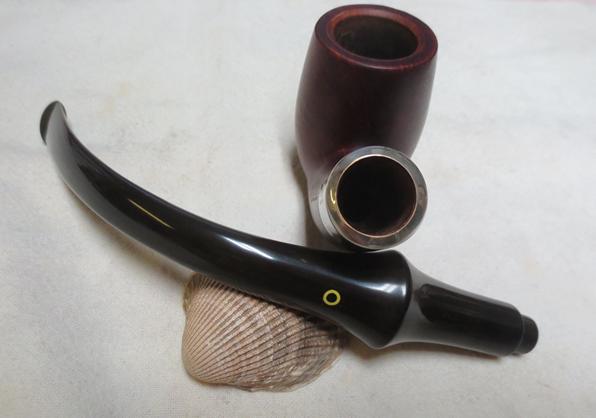
I turned to the Pipephil website to have a look at the time chart that is shown there with the time frames of the Sasieni pipes. Here is the link: http://pipephil.eu/logos/en/infos/sasieni-timechart.html. I use a screen capture to copy the relevant section regarding the dating of my pipe. The red box around the years 1941-1947 shows the features that make up my assessment of the date of this pipe.
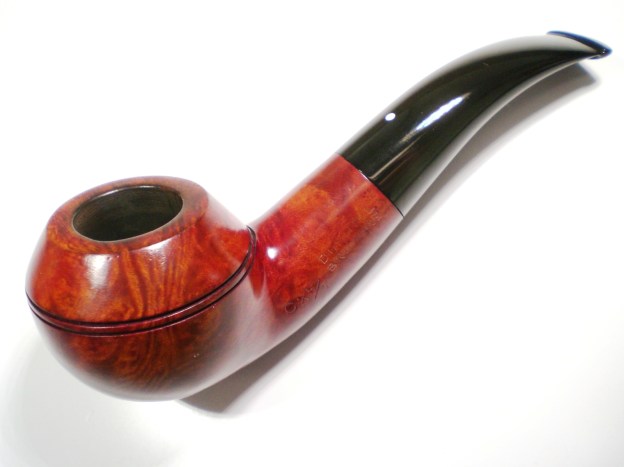
  • The passing of Joel Sasieni and his replacement by his son Alfred Sasieni in 1946.
  • The reissue of Four Dot pipes that had previously stopped during the war years.
  • The increase of the dot size and the rearrangement of the dots into an equilateral triangle. (While the one I have is in the same arrangement of dots, the size of the dots is small as noted above for pipes bearing the patent numbers.)
  • The simplified Sasieni stamping.

sas7
My brother scrubbed down the bowl ad removed grime on the finish. He reamed the bowl with PipNet reamer and took the cake back to bare briar. The stem was stuck in the shank so he was unable to remove it and clean out the inside of the mortise and the airway in the shank and the stem. There was still some darkening and build up on the rim. The stem damage, oxidation and calcification still remained. I took photos of the pipe when it arrived in Vancouver and I brought it to my work table.sas9sas10I took a close up photo of the rim. There were still some chips of tar and some stain remaining on the rim of the pipe. The beveled inner edge was still dirty and caked.sas11The stem was worn and dirty. The oxidation and calcification were quite thick on top and bottom of the stem.sas12I was able to remove the stem from the shank by carefully twisting it slowly. It came out and left behind a thick tar that held it in place in the shank. I think that the change of altitude and humidity from Idaho to here made the stem removable. Once it was out of the shank I worked on the bowl. I scrubbed the rim of the pipe with acetone on a cotton pad to remove the remaining finish. I sanded the top with 1500-2400 grit pads to smooth out the damage. I wiped down the bowl with the acetone as well. The photos below show the pipe after scrubbing.sas13 sas14I cleaned up the remnants on cake on the inside walls of the bowl with a Savinelli Fitsall Pipe Knife. I scraped the remaining cake completely out of the bowl.sas15I worked on the inside of mortise with a dental spatula and scraped away the tarry buildup that had held the stem in place. I scrubbed the mortise and the airway in the shank and the stem with pipe cleaners, cotton swabs and alcohol until the inside was clean and the cleaners came out without more darkening. It took a lot of cleaning and scrubbing.sas16I sanded the stem to remove the oxidation and the calcification with 220 grit sandpaper. I was able to sand out the tooth marks and blend them into the surface of the stem. I worked on the button edge with needle files and sandpaper to sharpen the look of the button.sas17I polished the stem with micromesh sanding pads – wet sanding with 1500-2400 grit pads and dry sanding with 3200-12000 grit pads. After each set of three pads I rubbed the stem down with Obsidian Oil. I gave the stem a final coat of the oil after using the last set of pads. I set the stem aside to dry. (There was still a light oxidation around the stem at the shank junction but the buffing would take care of that.)sas18 sas19 sas20I gave the bowl a light coat of olive oil and buffed it with a soft cloth. I took the following photos to show the look of the pipe before I buffed it with Blue Diamond or gave it coats of carnauba.sas21 sas22I lightly buffed the pipe with Blue Diamond on the buffing wheel being careful around the stamping on the shank. I gave the pipe multiple coats of carnauba wax and buffed the pipe with a clean buffing pad. I finished by hand buffing it with a microfibre cloth to deepen the shine. The finished pipe is shown in the photos below. It really is a well-made pipe that is laid out well with the pattern of the grain. It certainly came out looking better than its age for a pipe made in around 1946. Thanks for walking through the restoration process with me.sas23 sas24 sas25 sas26 sas27 sas28 sas29 sas30