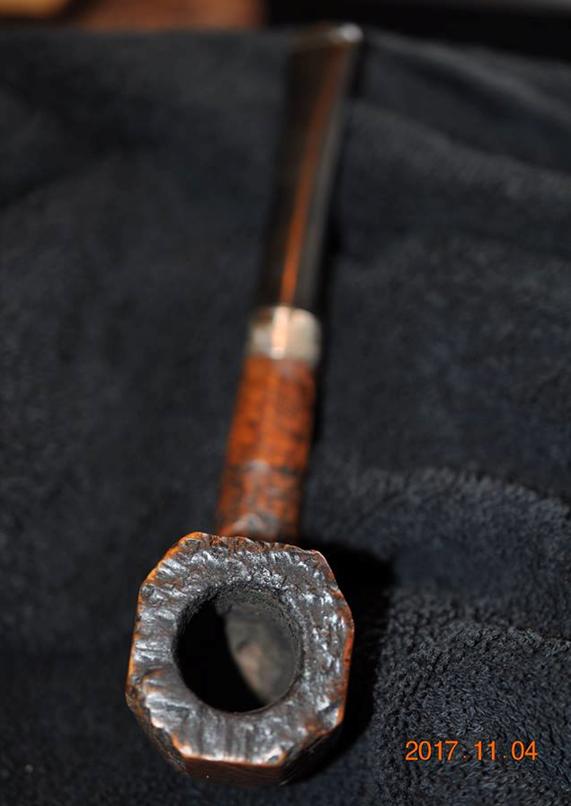
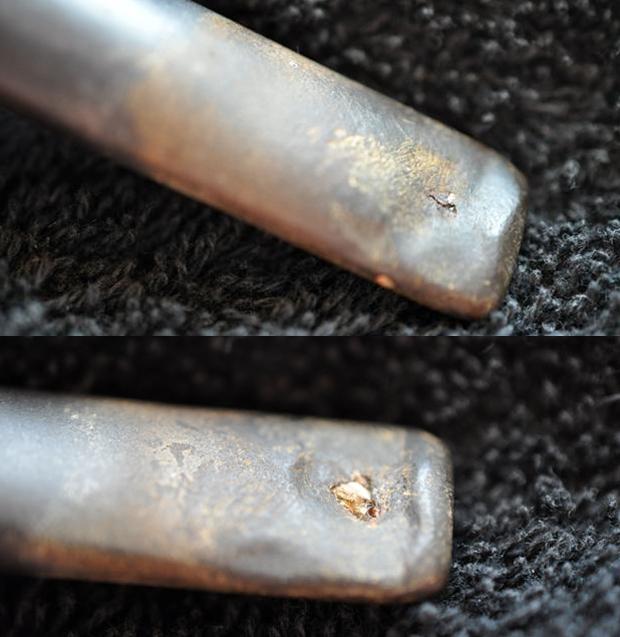
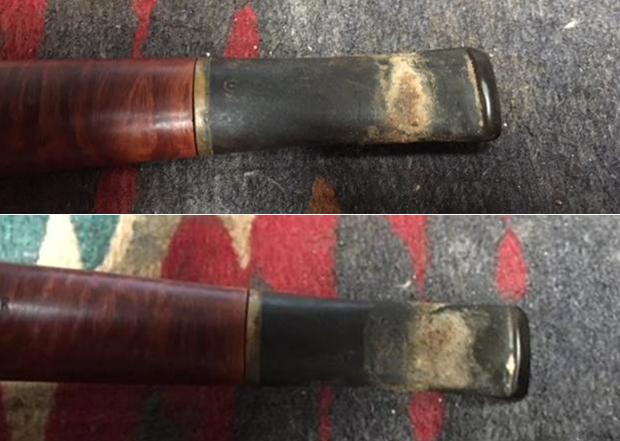
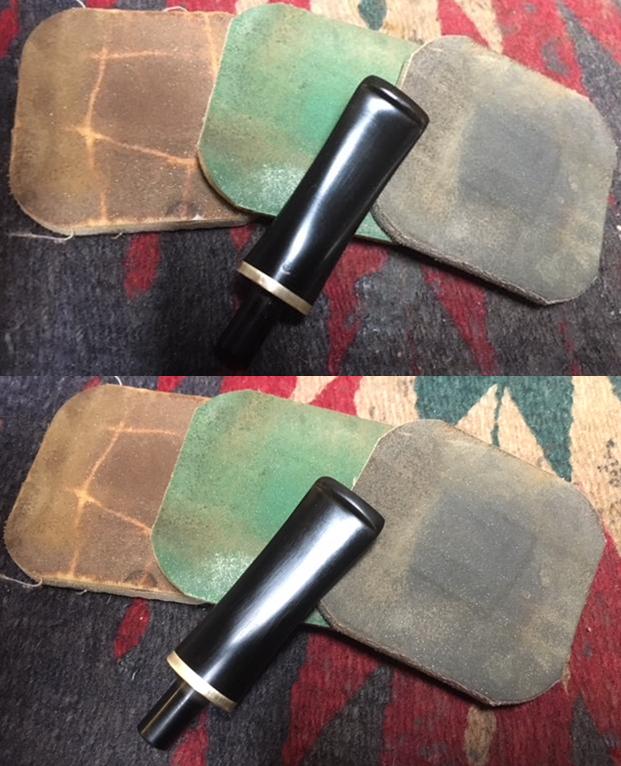
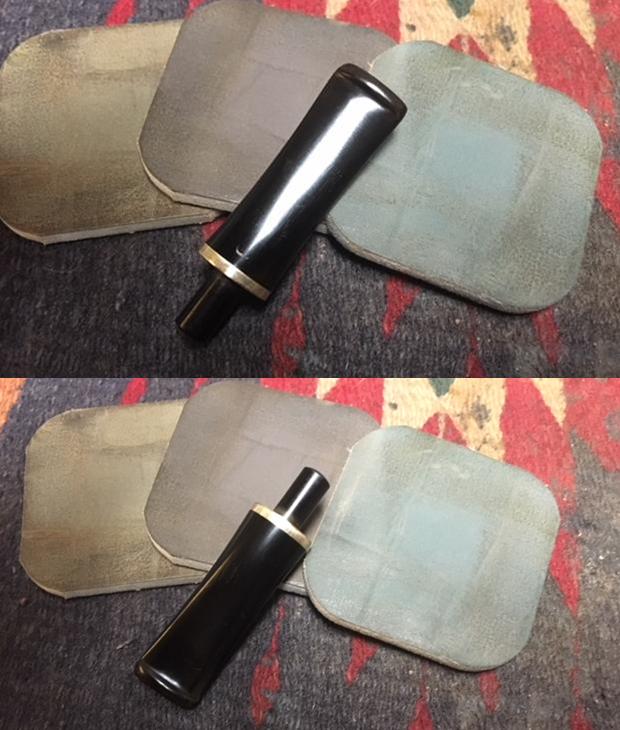
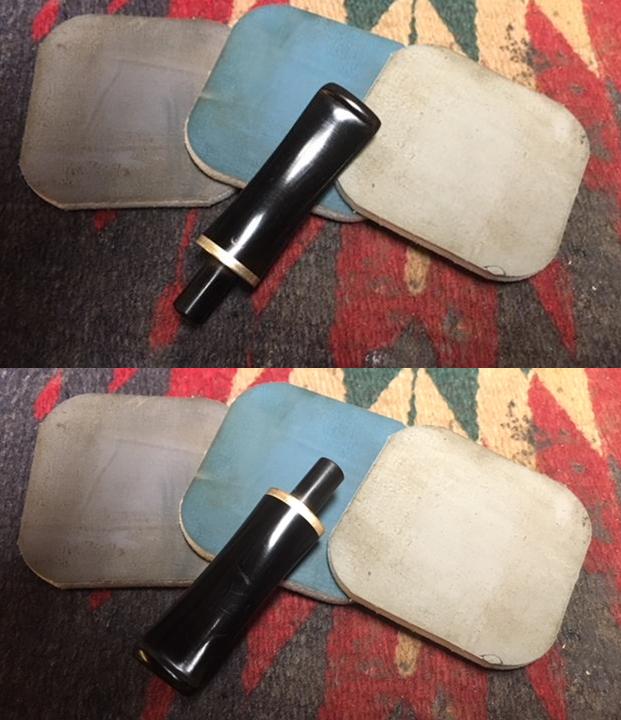
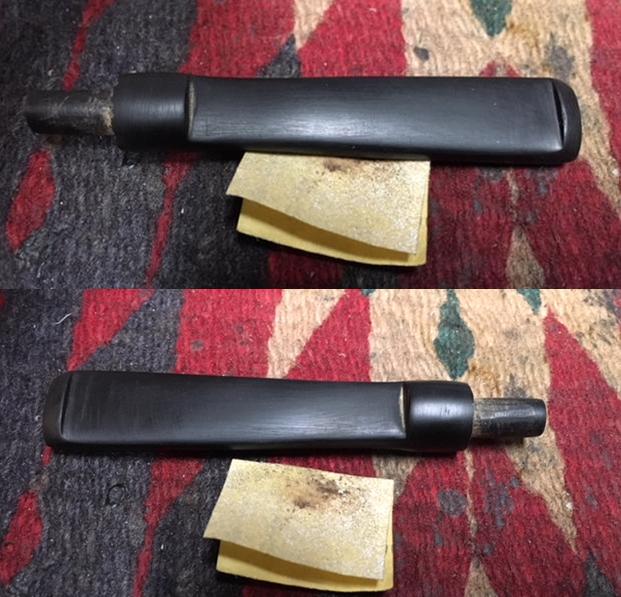
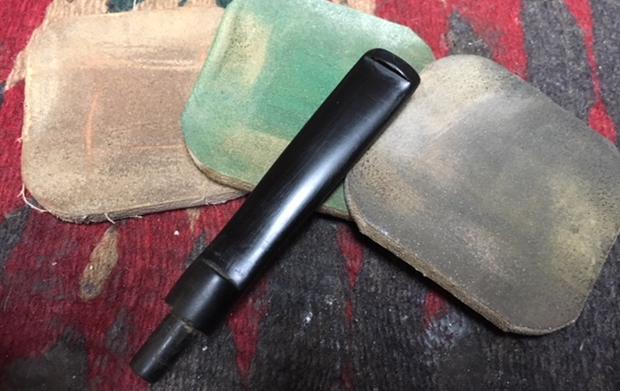
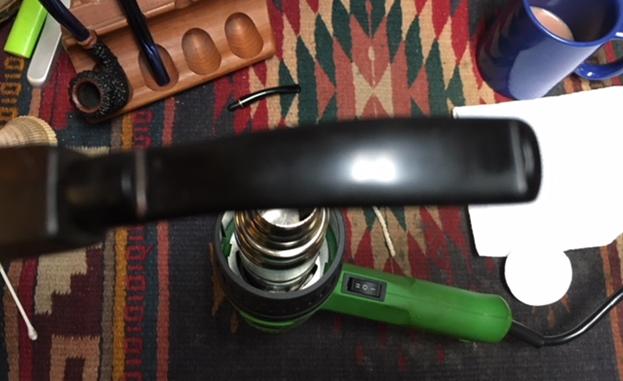
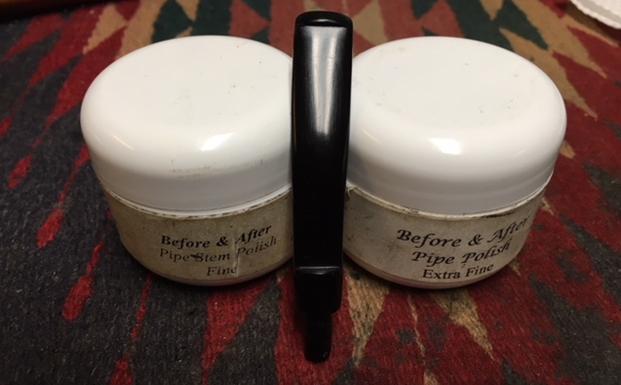
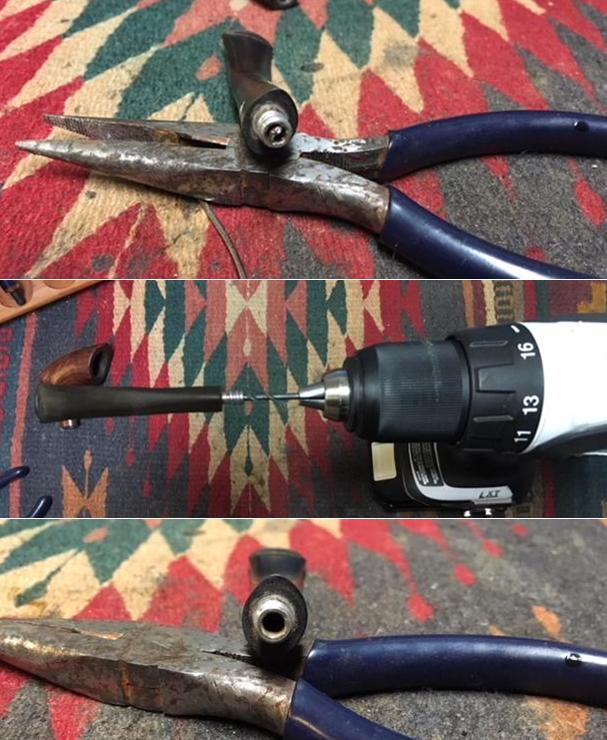
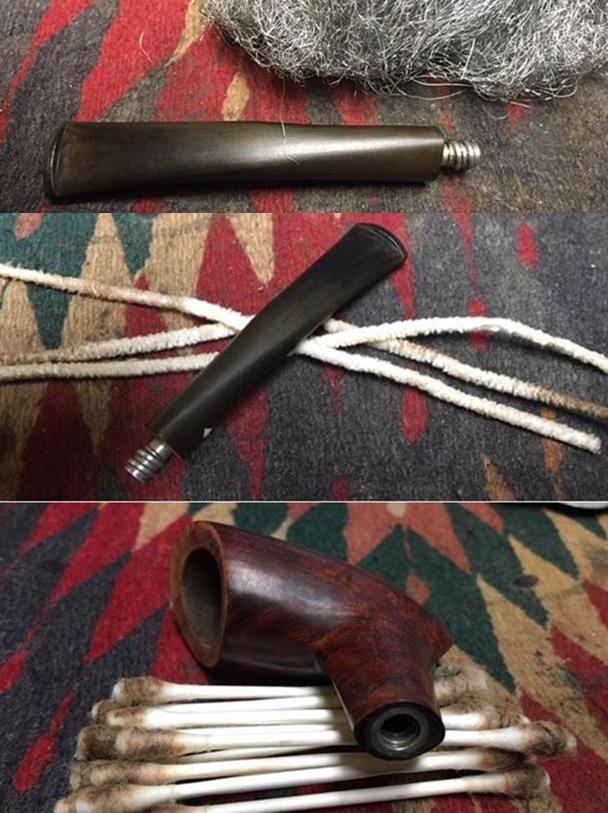
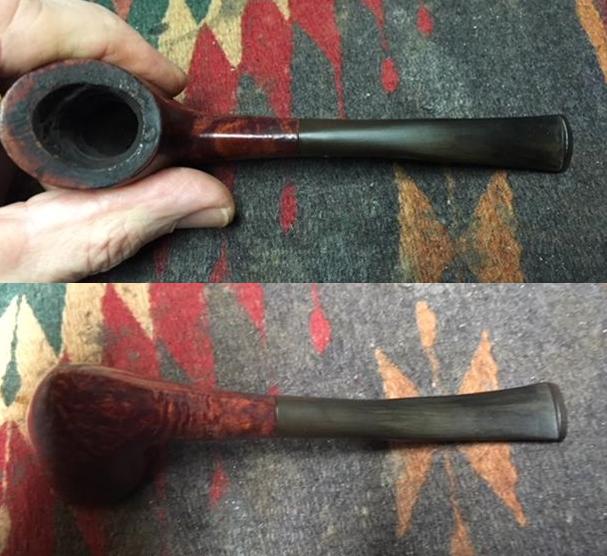
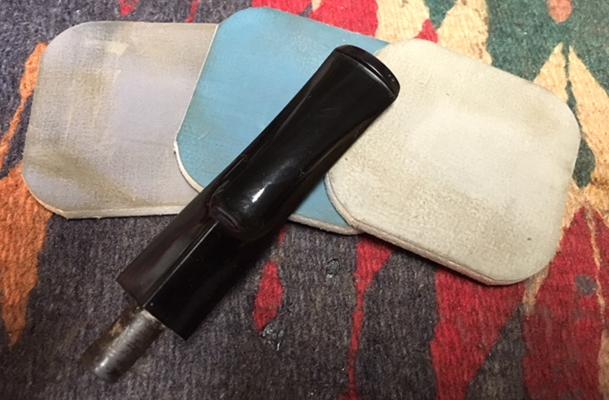
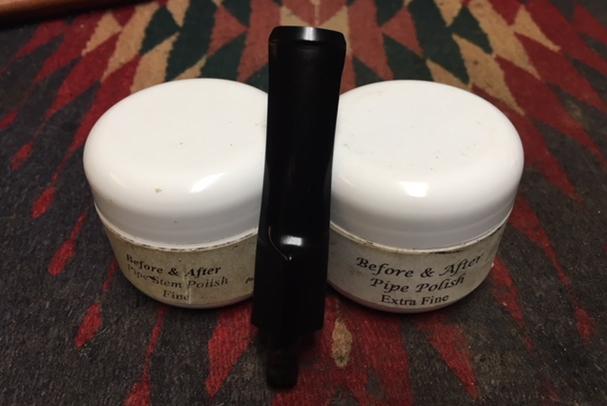
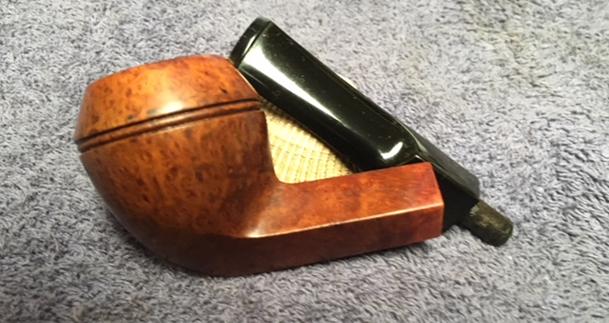
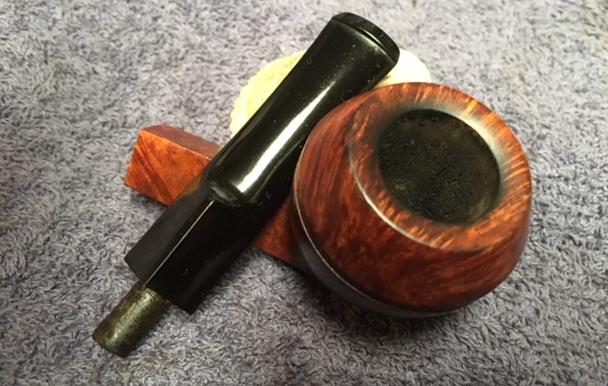
Tag Archives: vulcanite

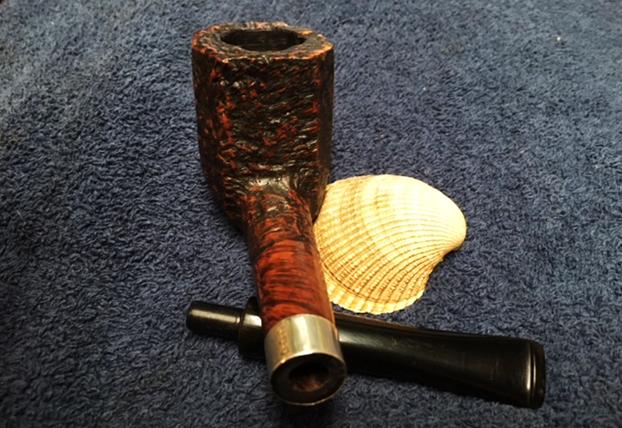
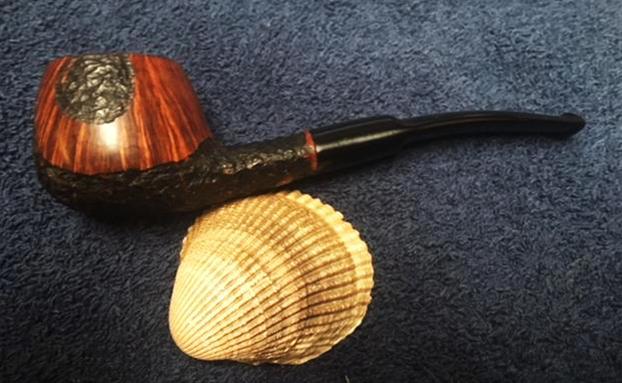
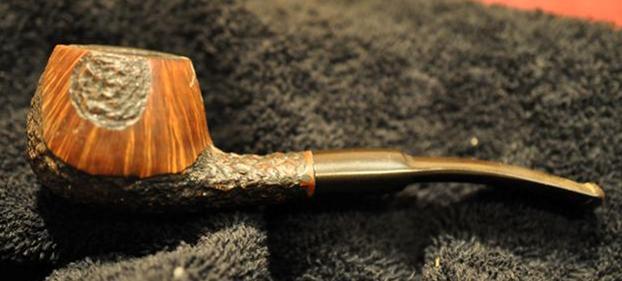
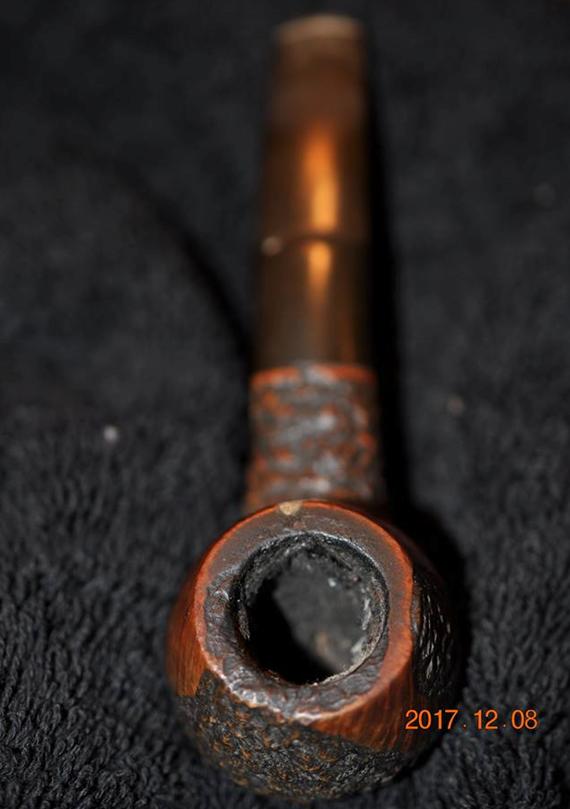
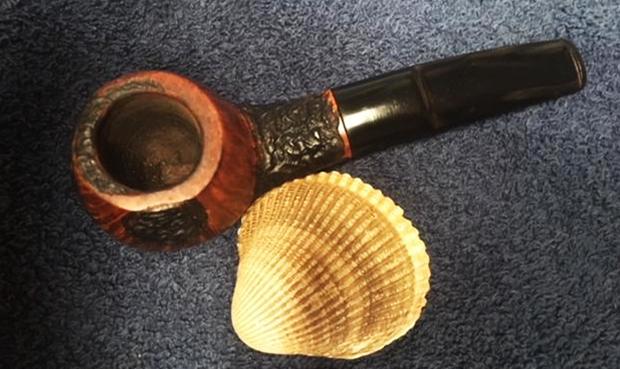
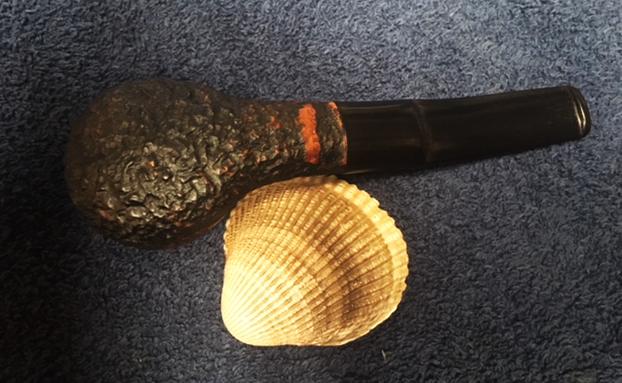
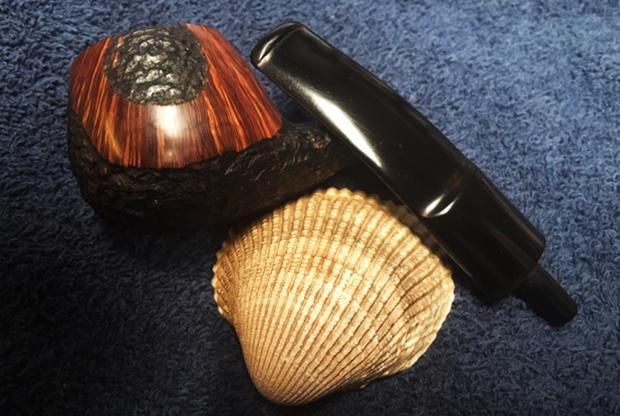
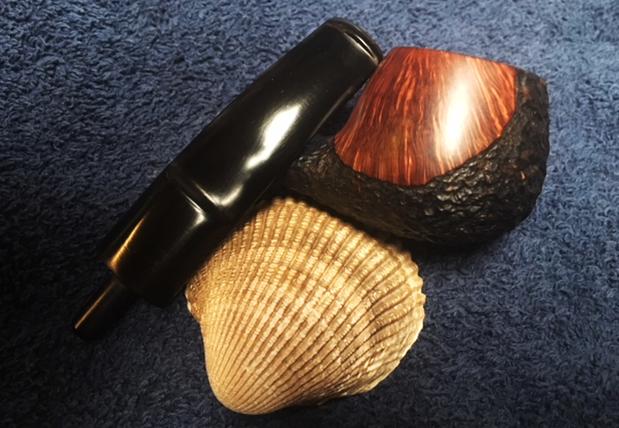
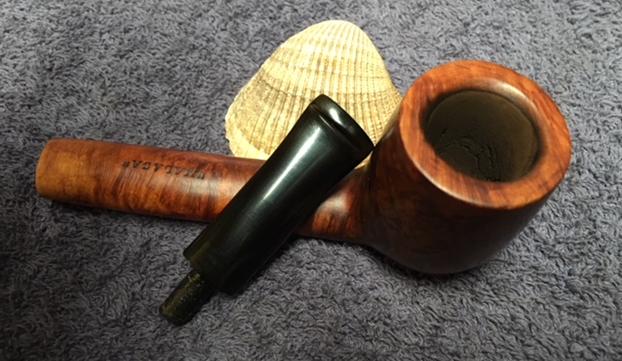
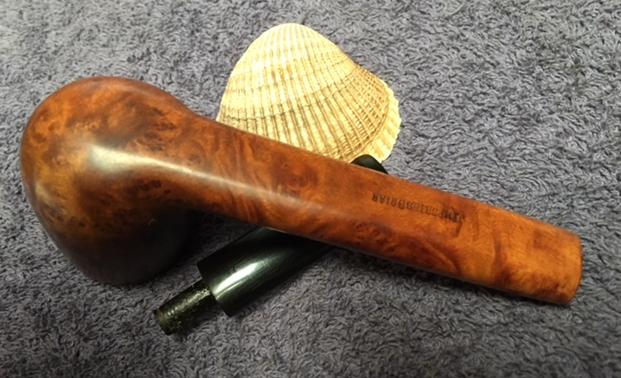
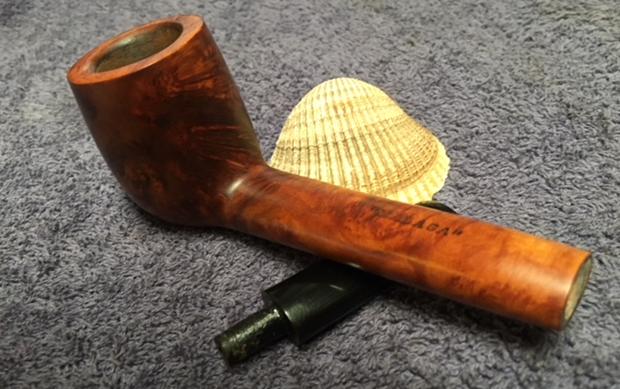
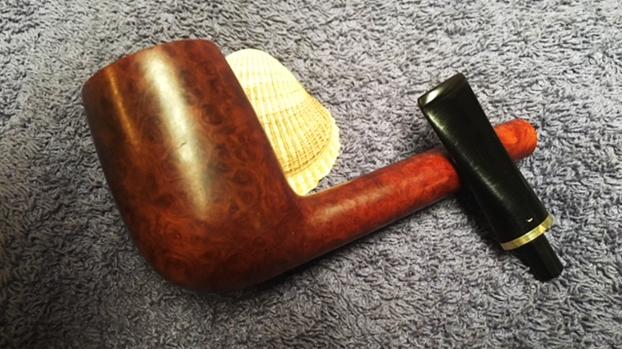
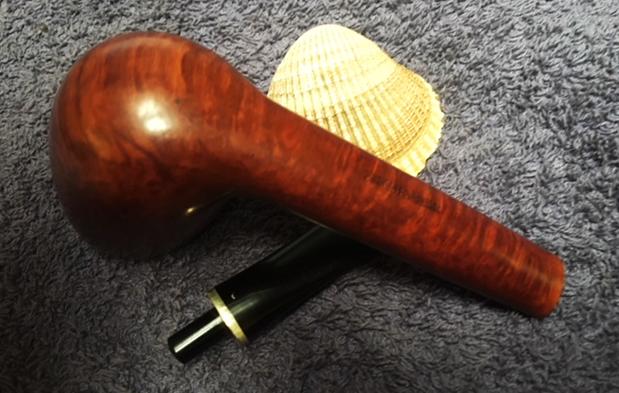
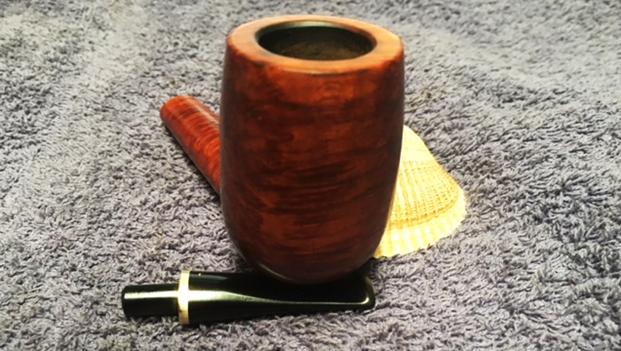
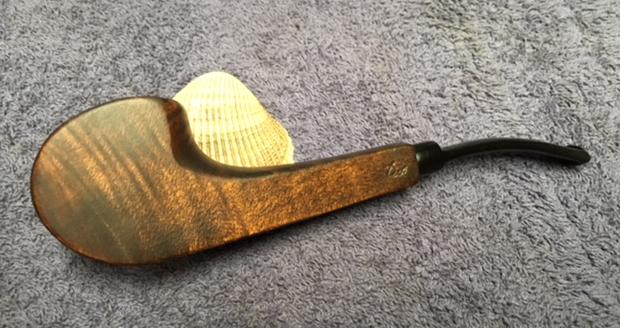
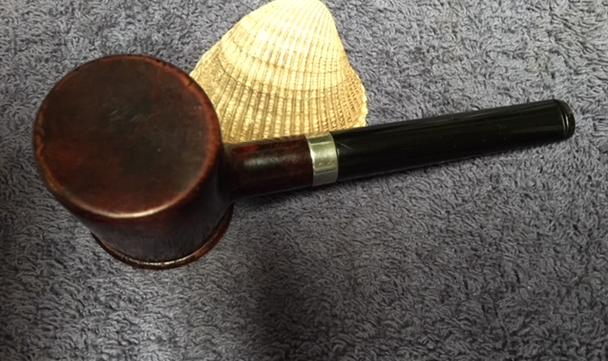
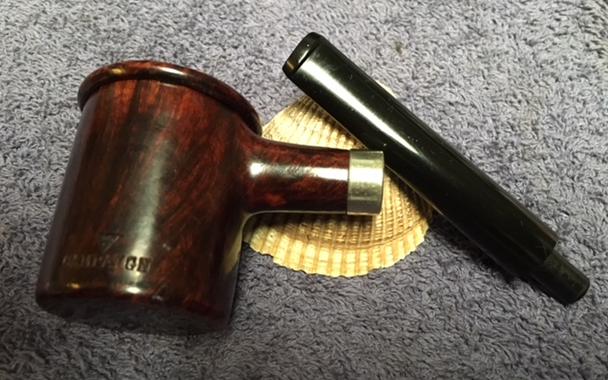
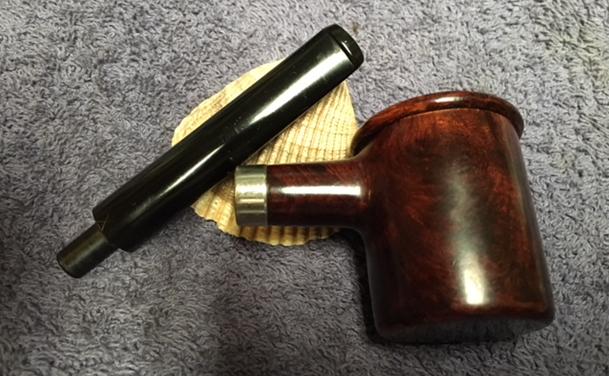
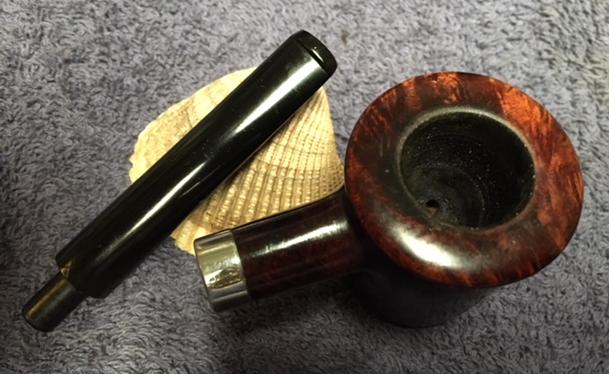
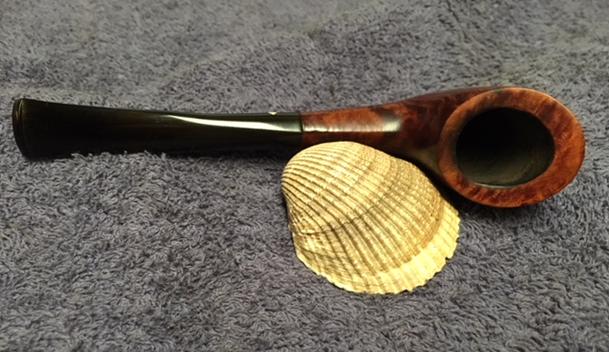
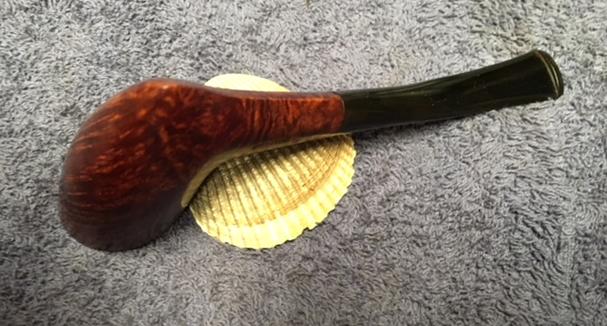
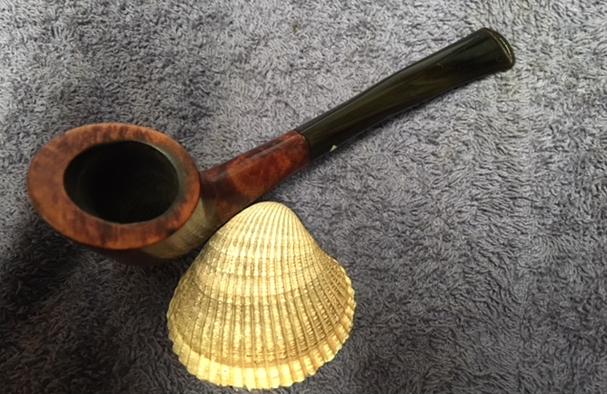
Introducing the House of Robertson Brand – A Large Rusticated Special Horn


Blog by Steve Laug

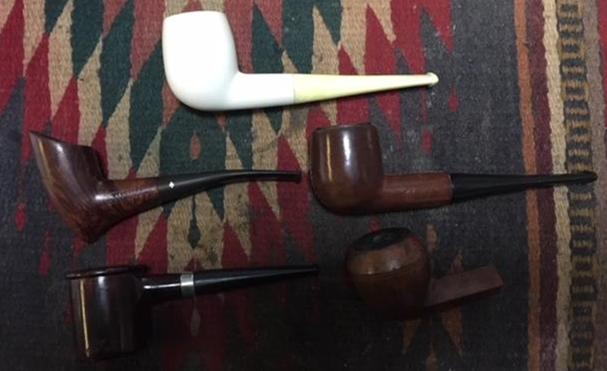
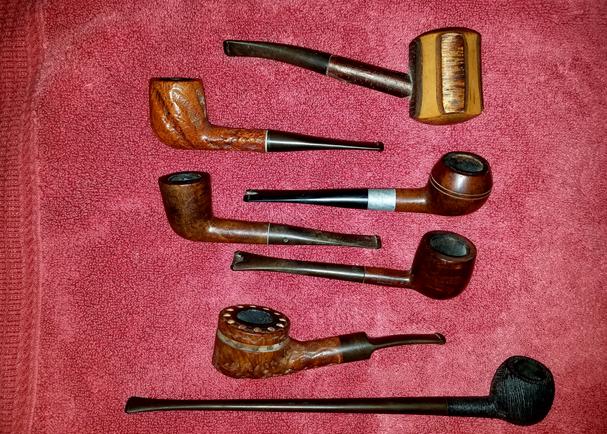
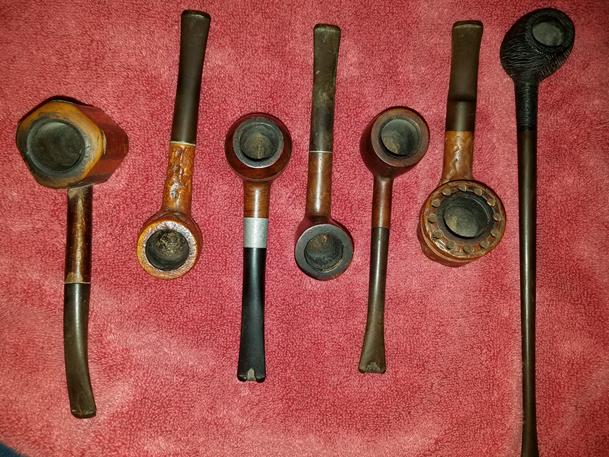
My brother Jeff found an assortment of House of Robertson pipes at an auction in Wilder, Idaho which is an area in the greater Boise, Idaho area. He picked them up for us to restore. I had forgotten that I had mentioned the brand in passing in a blog on Leonard’s Pipe Shop in Portland, Oregon. Here is the link to that blog where I mention it as one of the brands that Leonard’s sold: https://rebornpipes.com/2013/06/06/leonards-pipe-shop-portland-oregon/. It is a fascinating brand that really I had never had the privilege of seeing first hand. He cleaned them all up and on a recent trip to Idaho, I picked them up and brought them back to Canada. I took pictures of the lot of them to show the wide variety of pipes that they made in terms of both size and style. The craftsmanship is very good with the fit of the stem and shank well done and the finish both rusticated and smooth exemplary. Jeff picked up three more of the brand in Pocatello, Idaho so I will be working on more of these pipes in the future. They all have the name House of Robertson roughly hand etched on the side or underside of the shank with an engraving tool. I did a bit of hunting for information about the brand and found a link on Pipedia that gave me the only information I could find on the brand. I include that in total as it is interesting to read.

“House of Robertson” was in business for many years, but alas, closed their doors in 1999. They were located in Boise, Idaho. They are noted for making rather large and interesting pipes. Thayne Robertson was a Master Mason, AF & AM, and started the shop about 1947 and his son Jon started working there in 1970 when he finished college, along with Thayne’s daughter. Thayne and his son started making the big pipes at that time, and made them together until 1987 when Thayne passed away. Jon kept the store and his sister moved on to other things. The House of Robertson appears to have closed around 1999. https://pipedia.org/wiki/Robertson

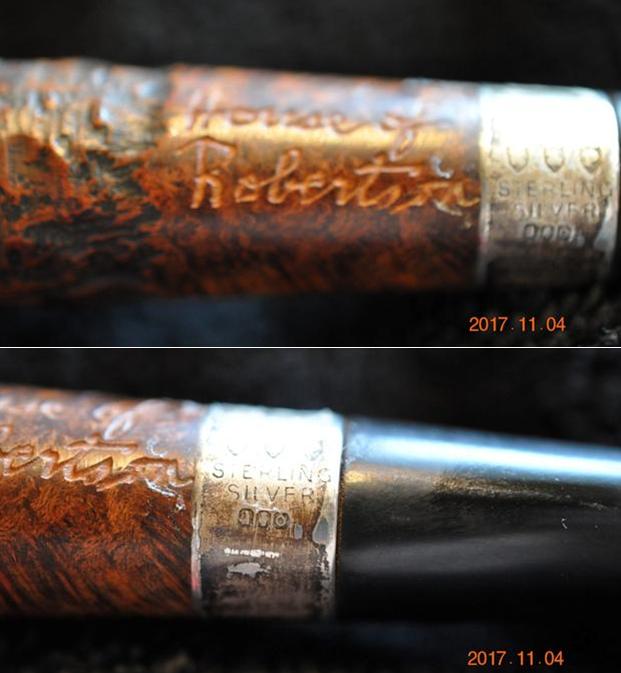
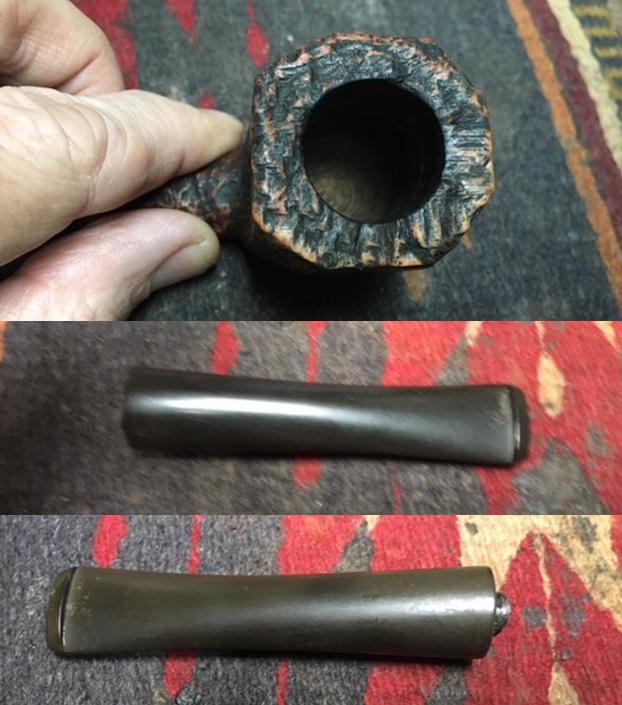
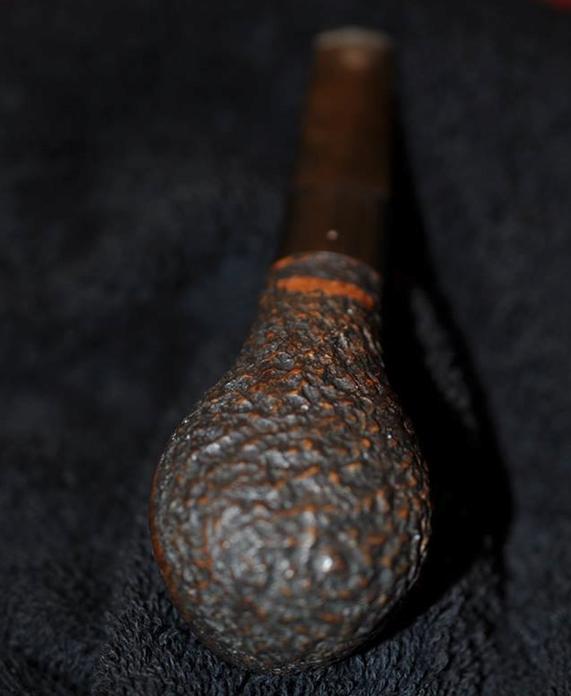
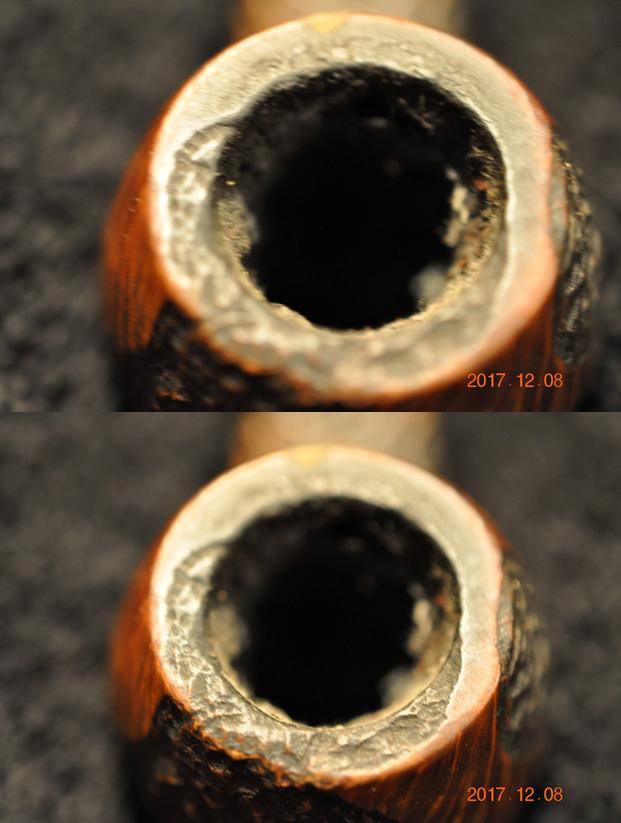
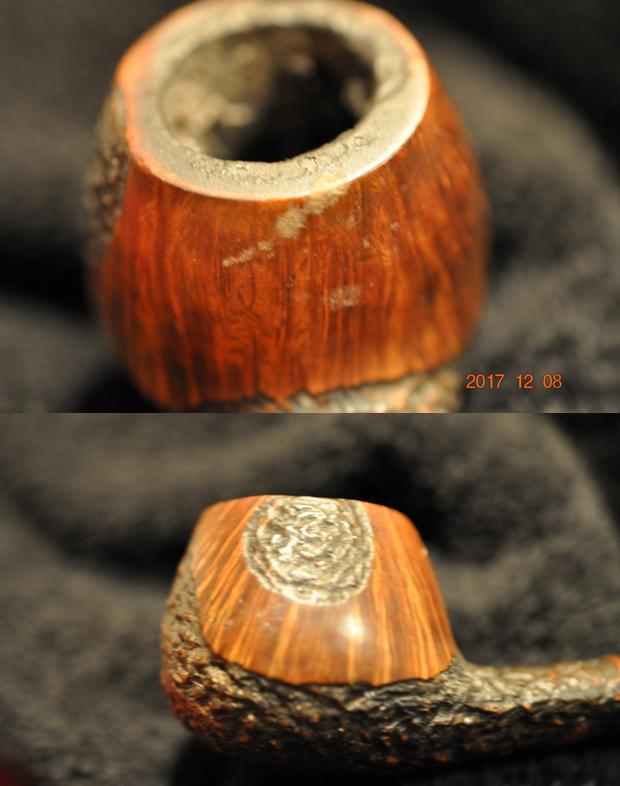
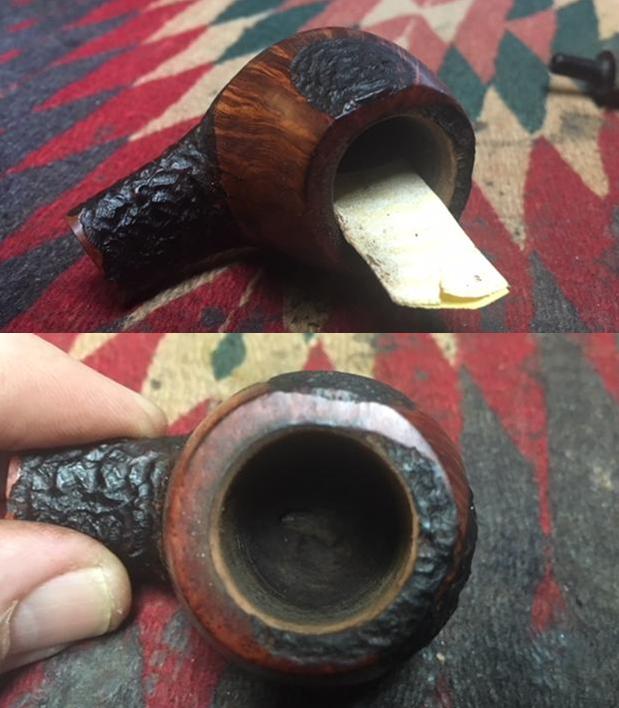
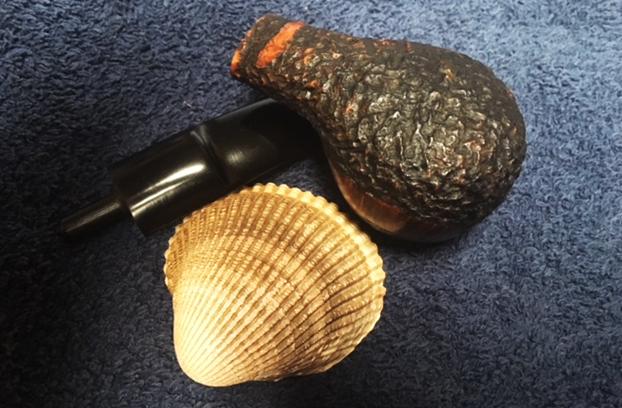
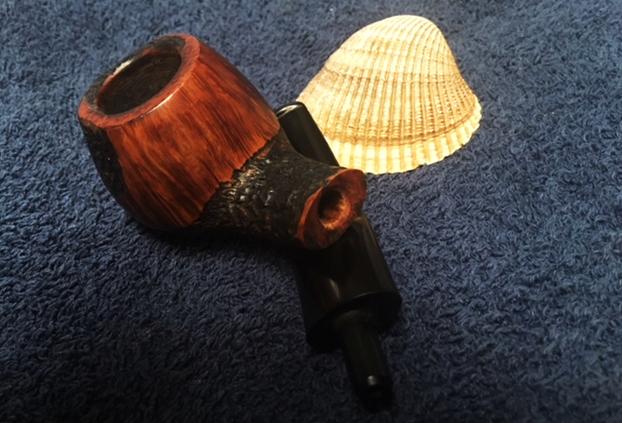
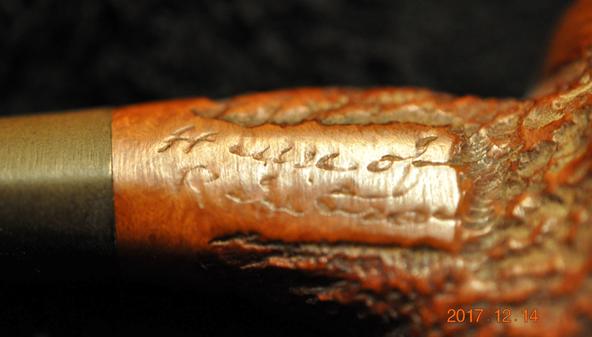
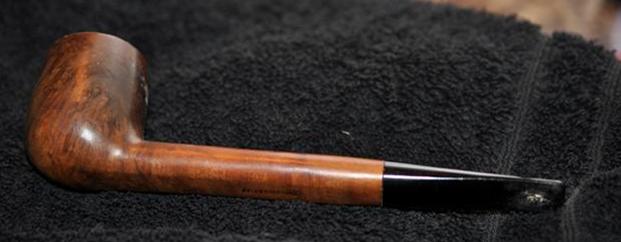
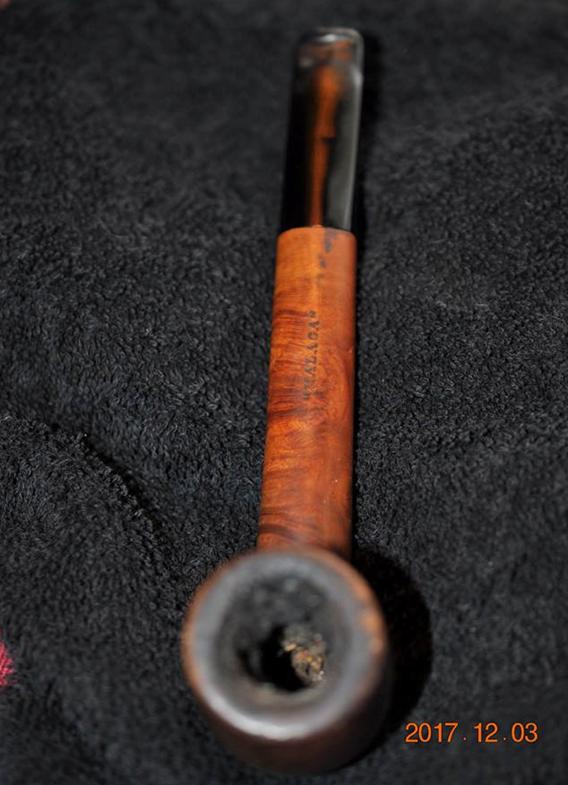
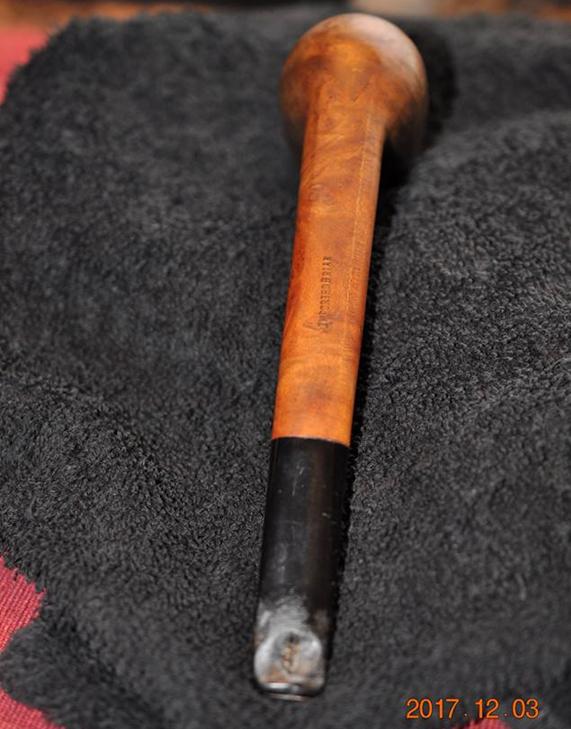
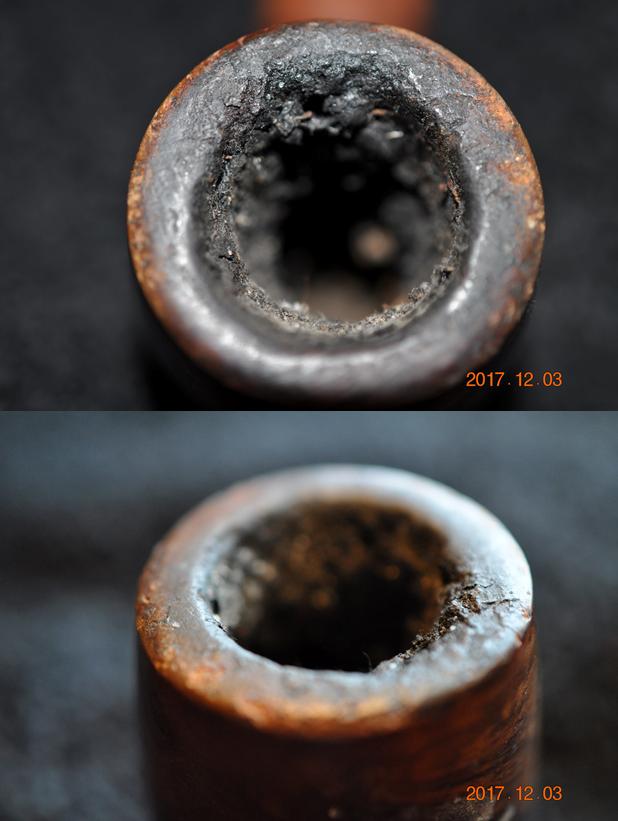
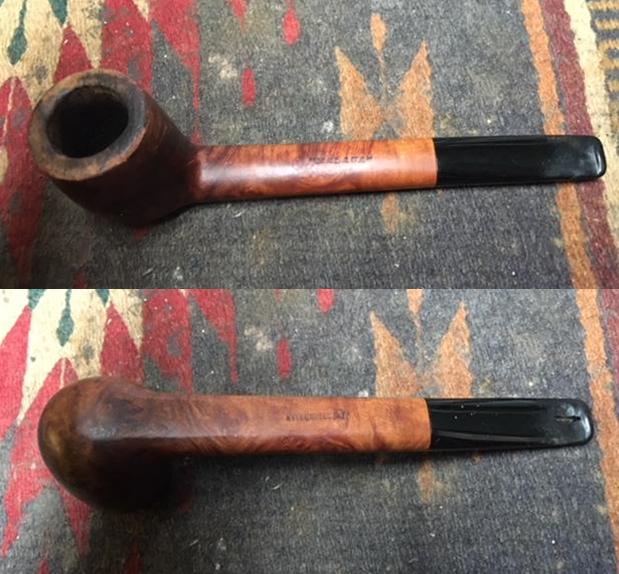
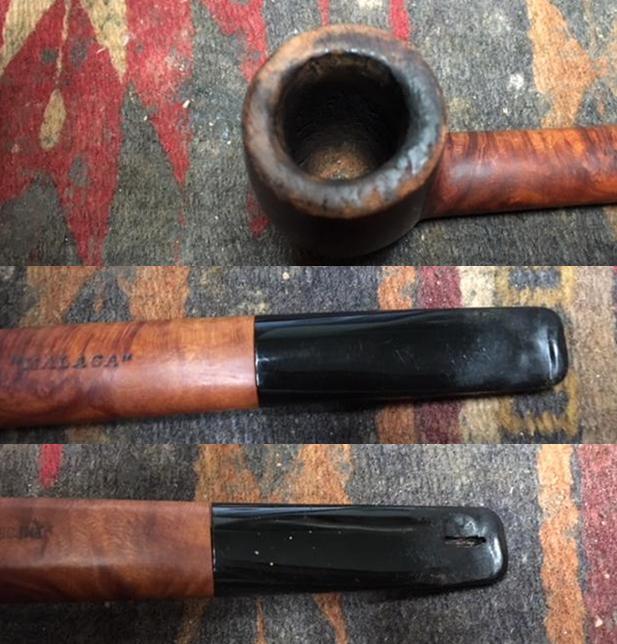
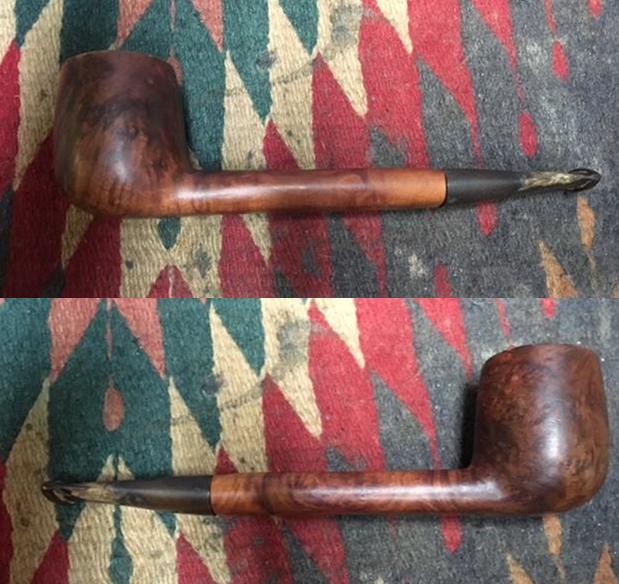
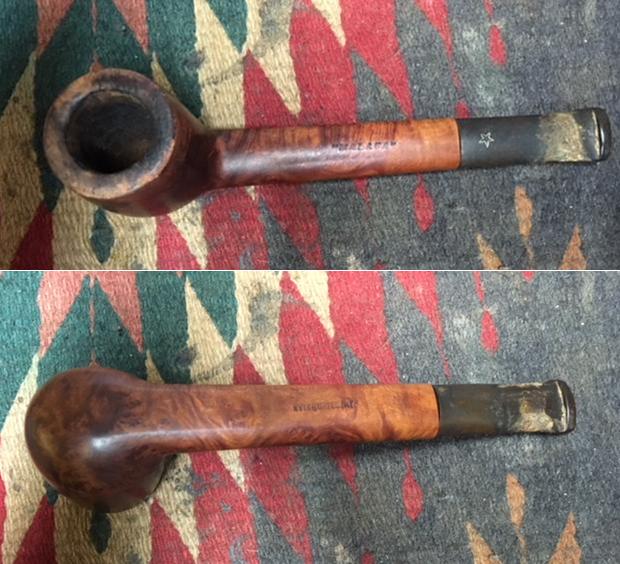
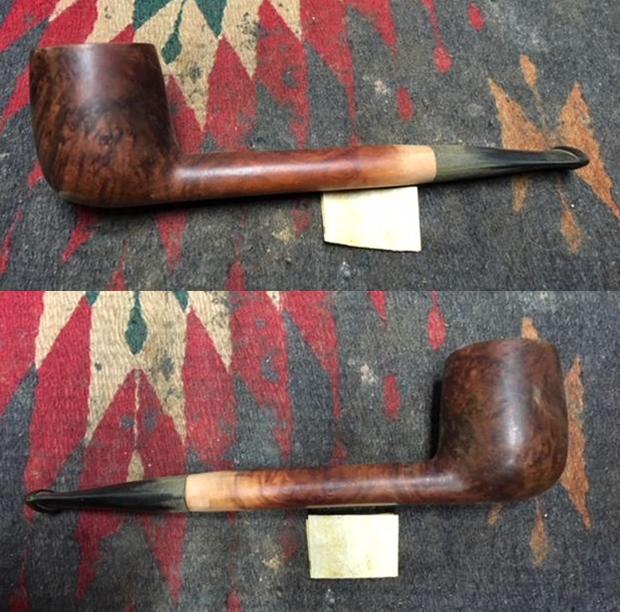
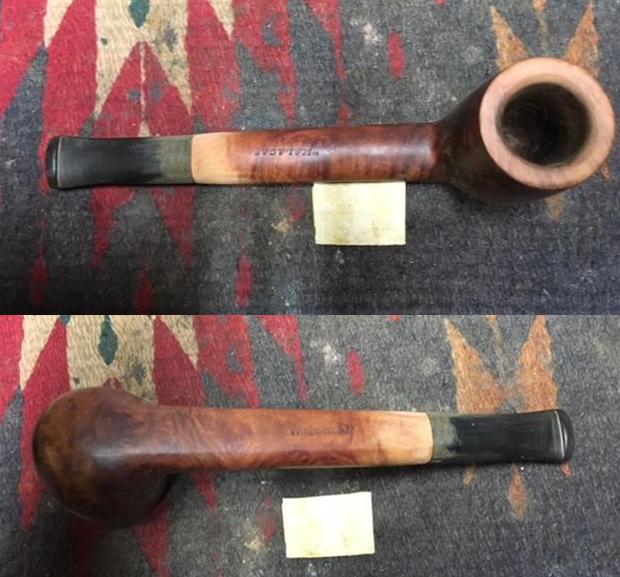
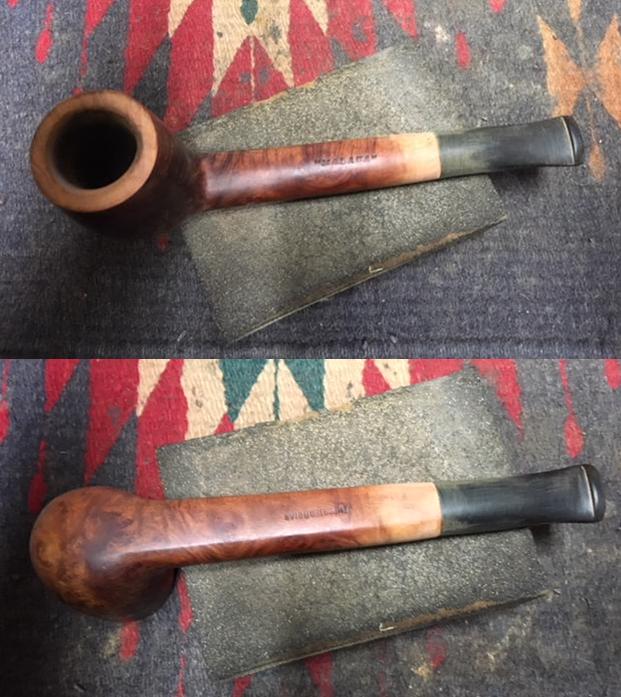
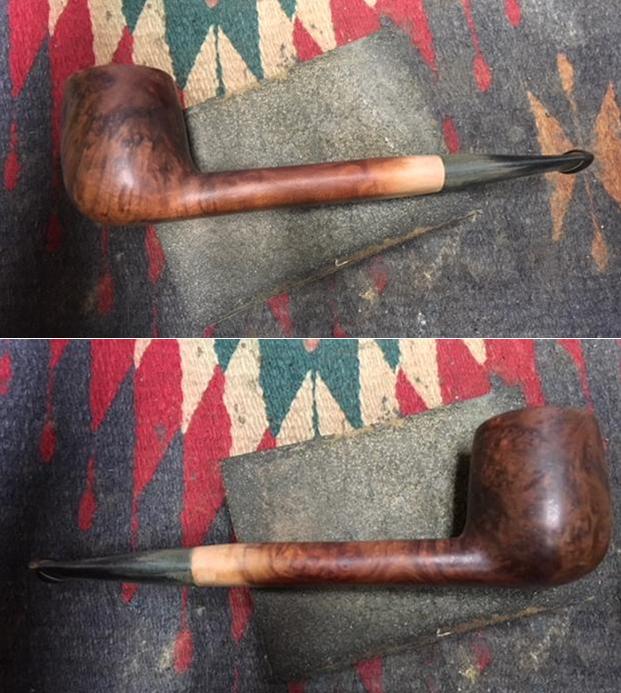
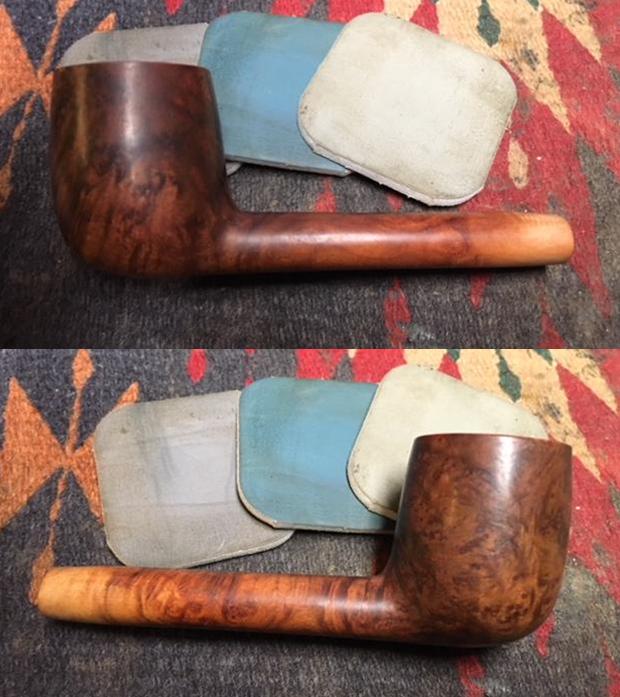
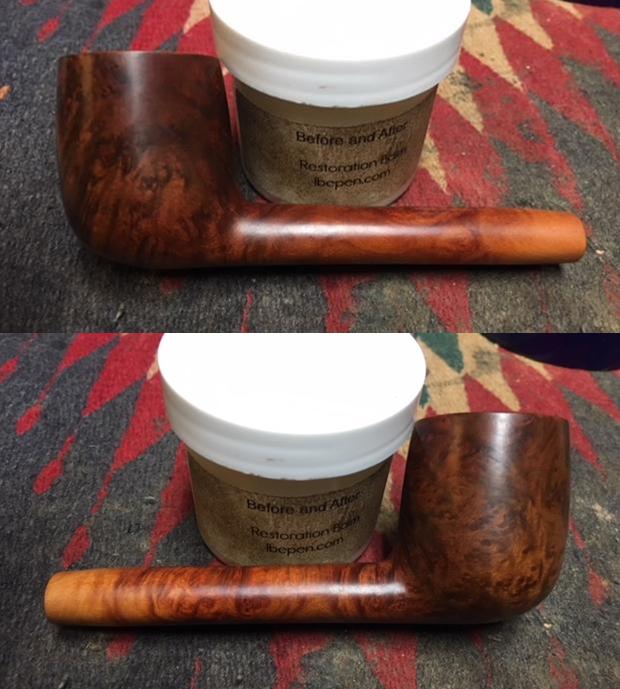
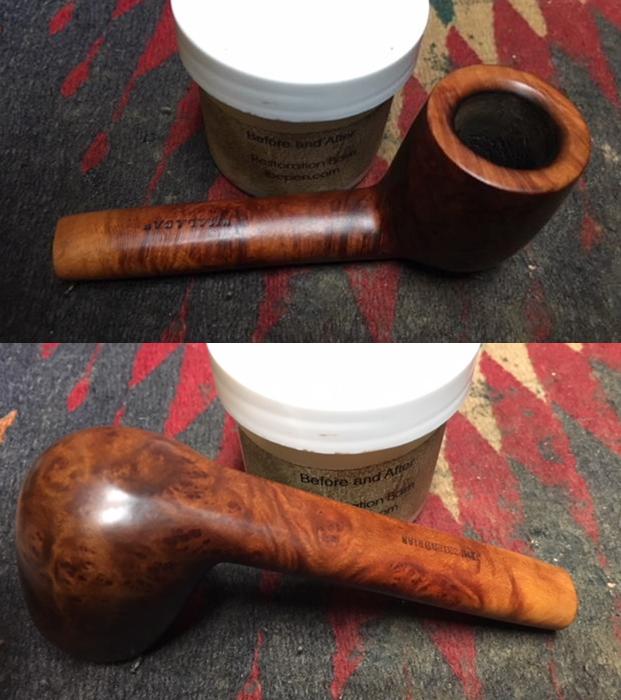
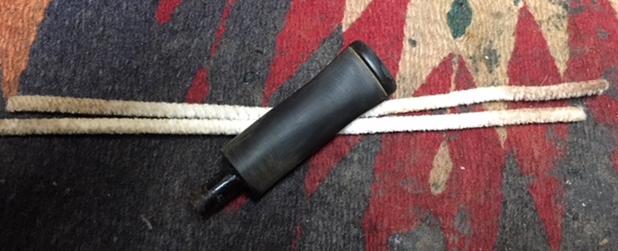
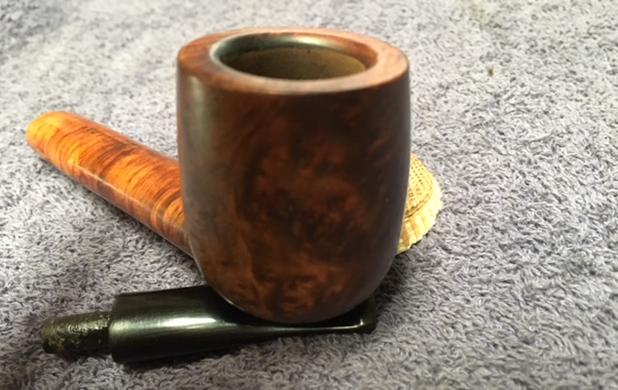
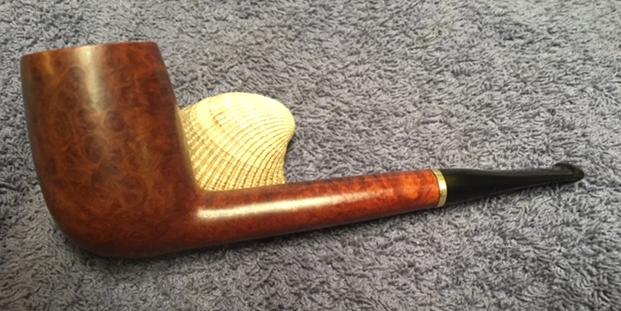
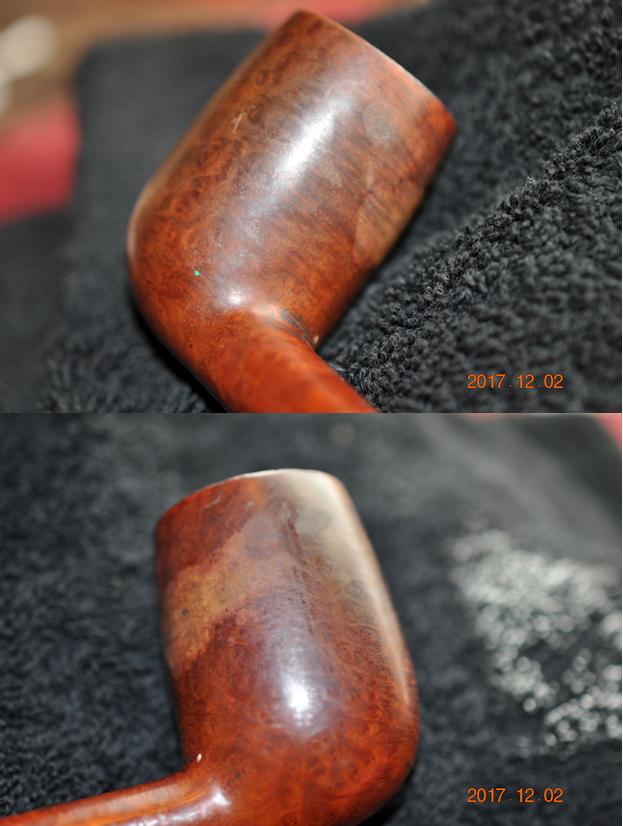
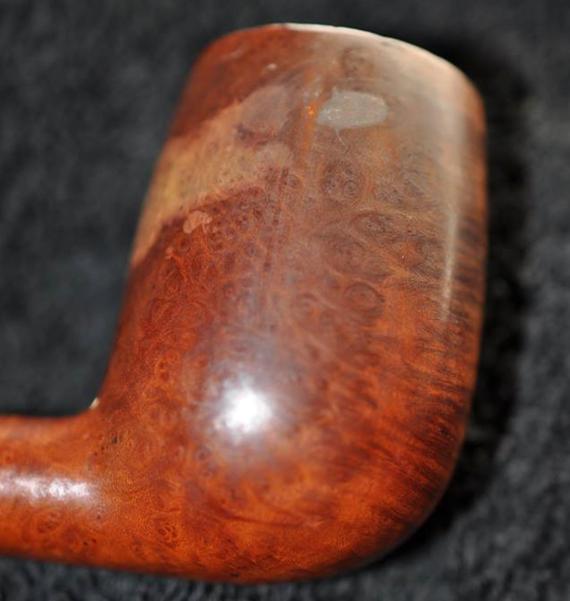
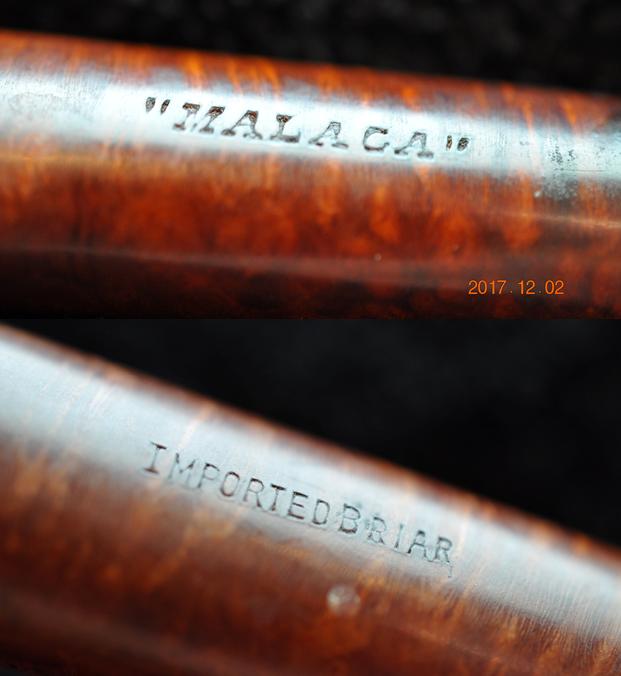
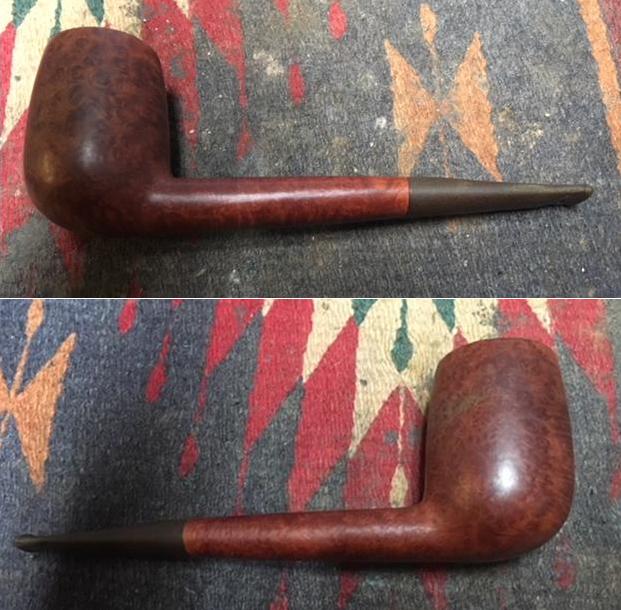
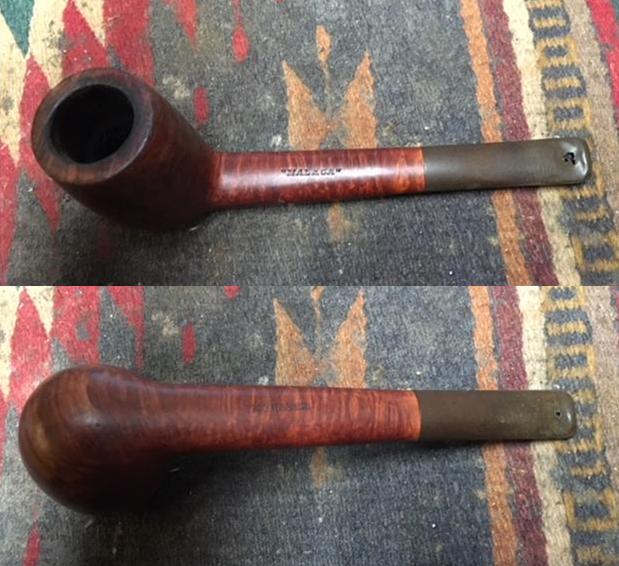
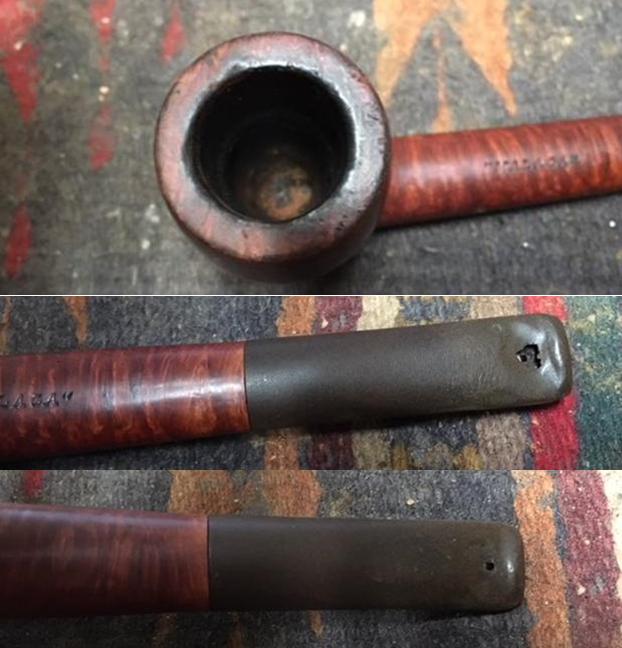
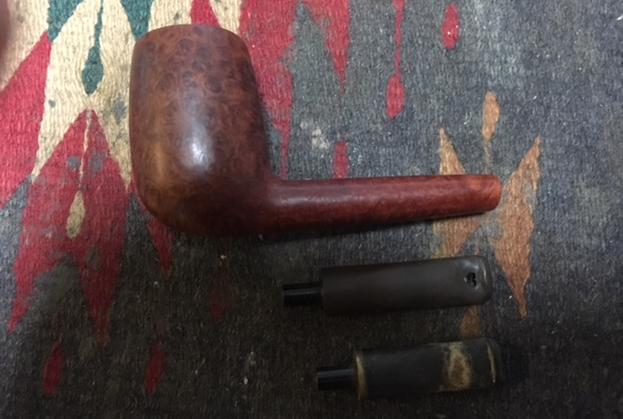
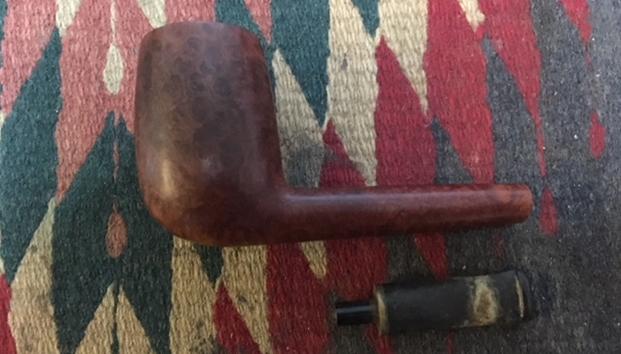
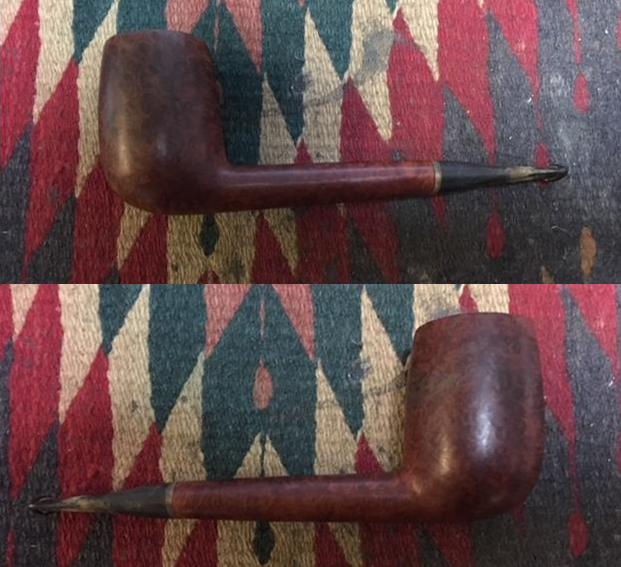
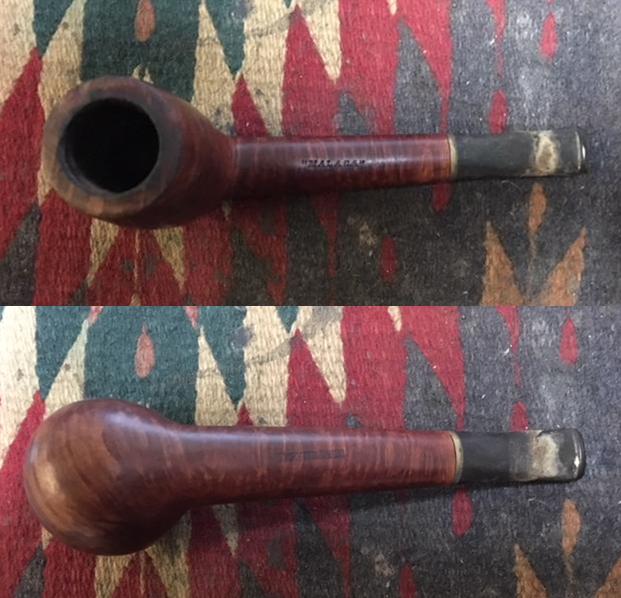
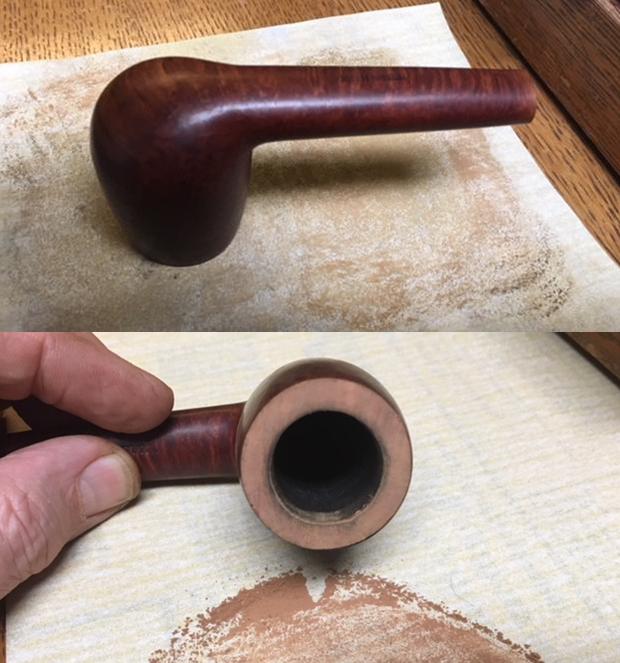
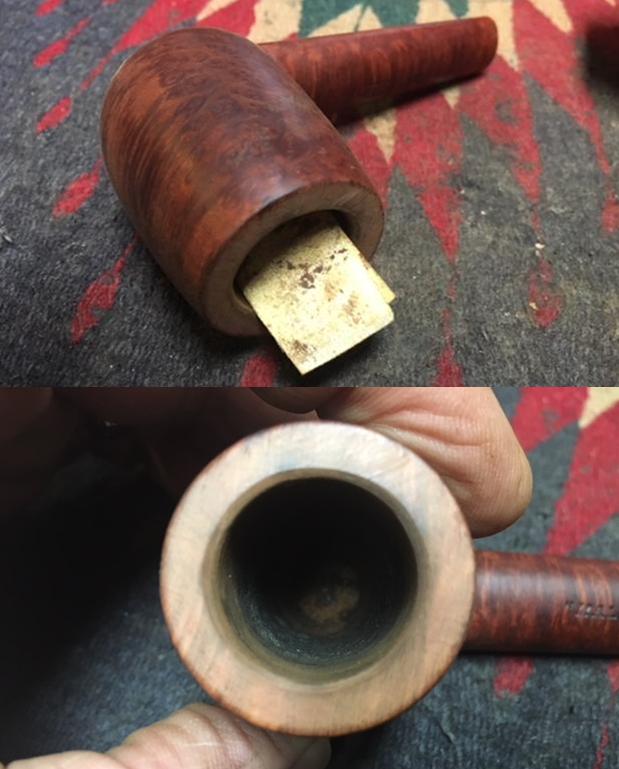
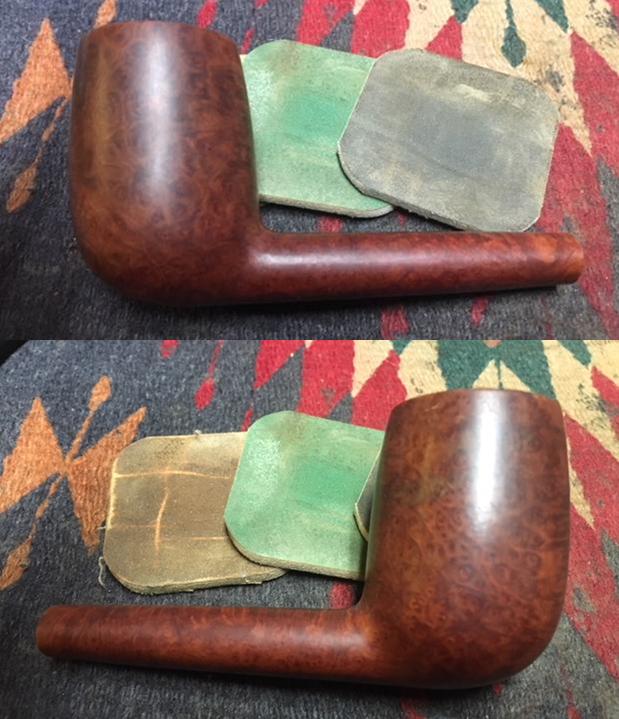
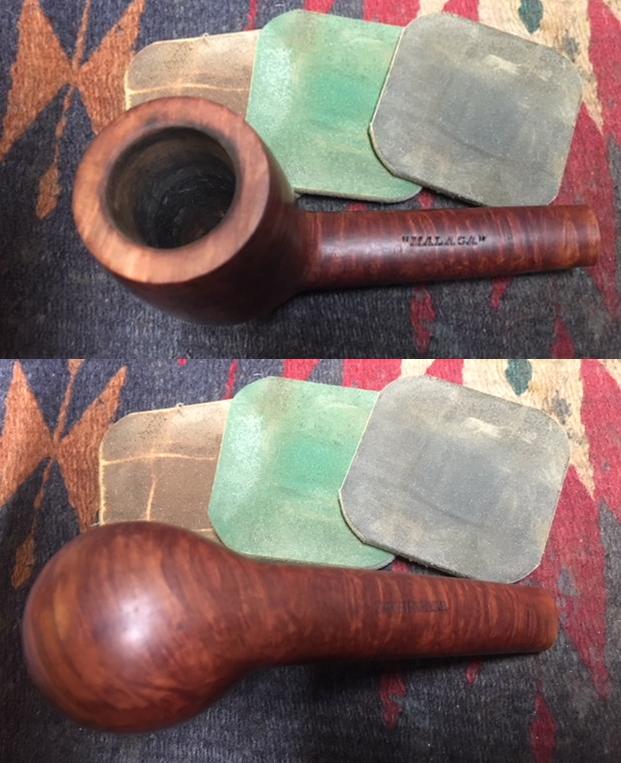
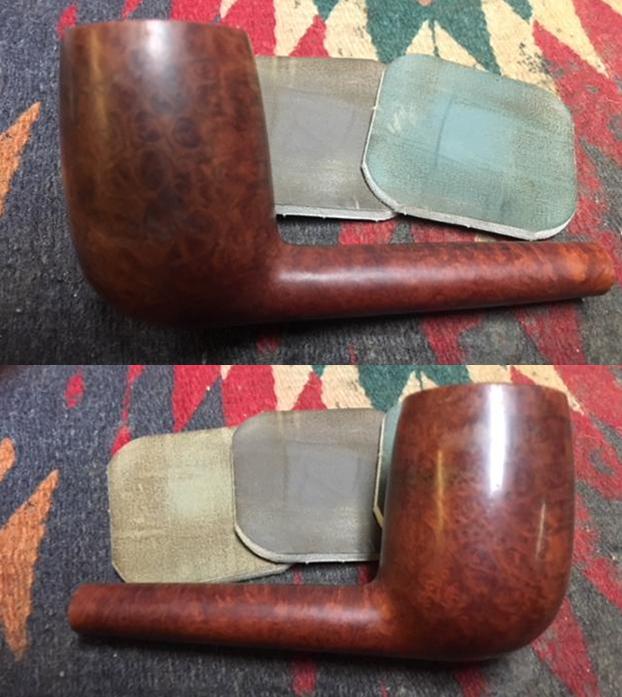
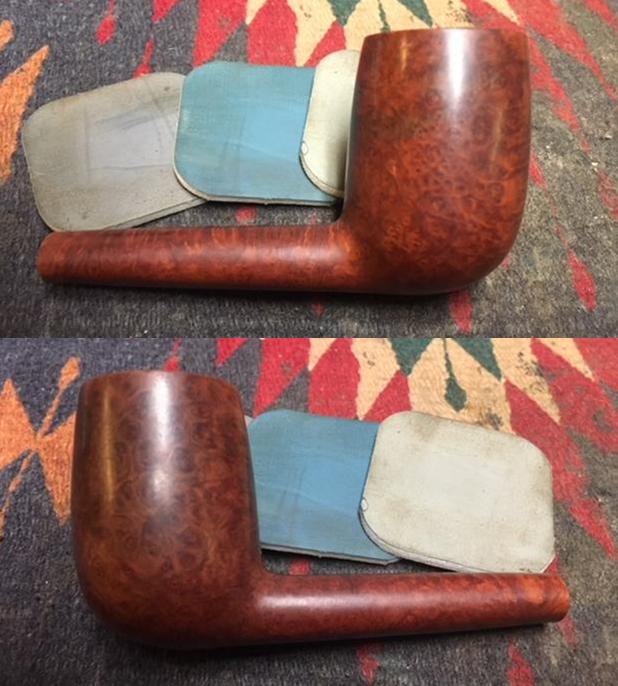
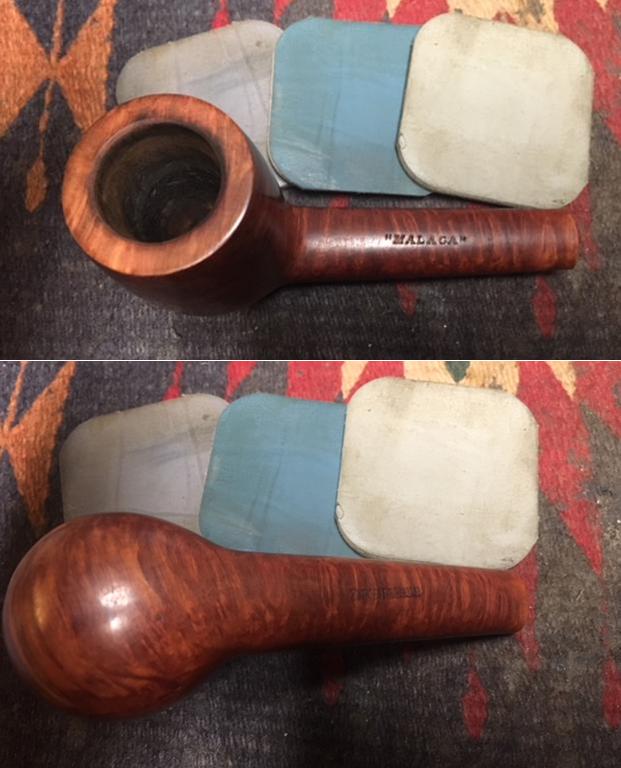
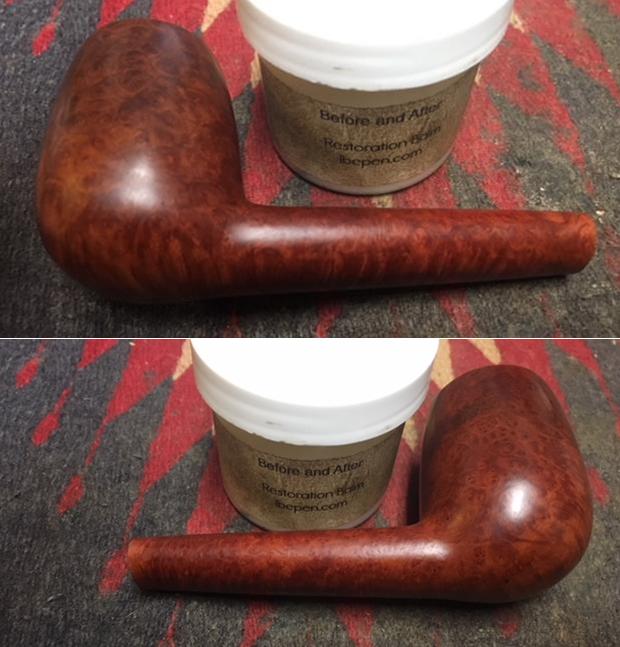
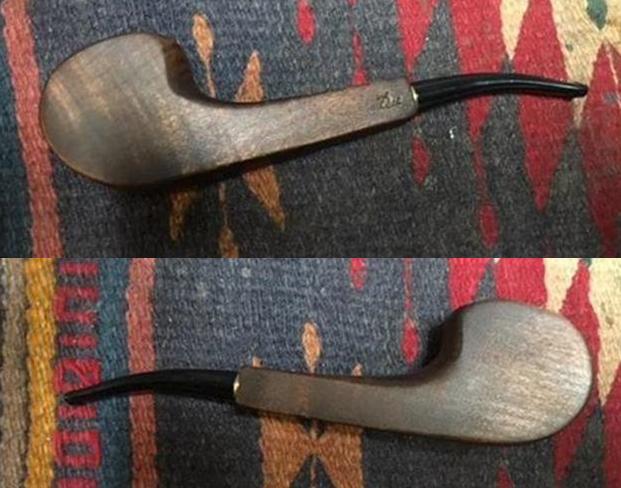
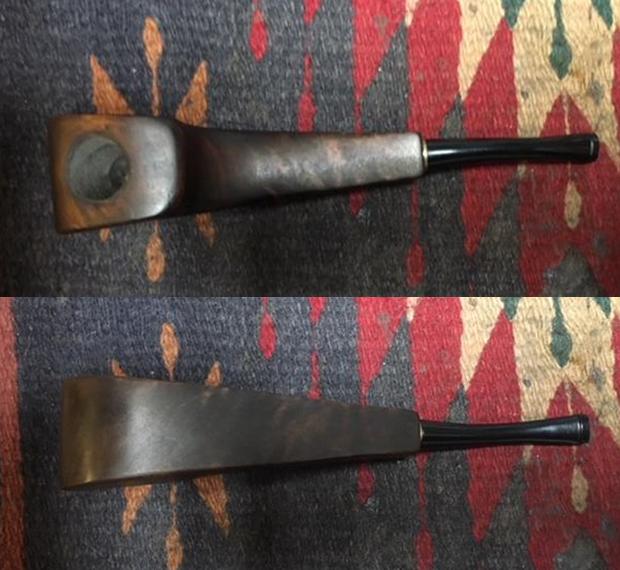
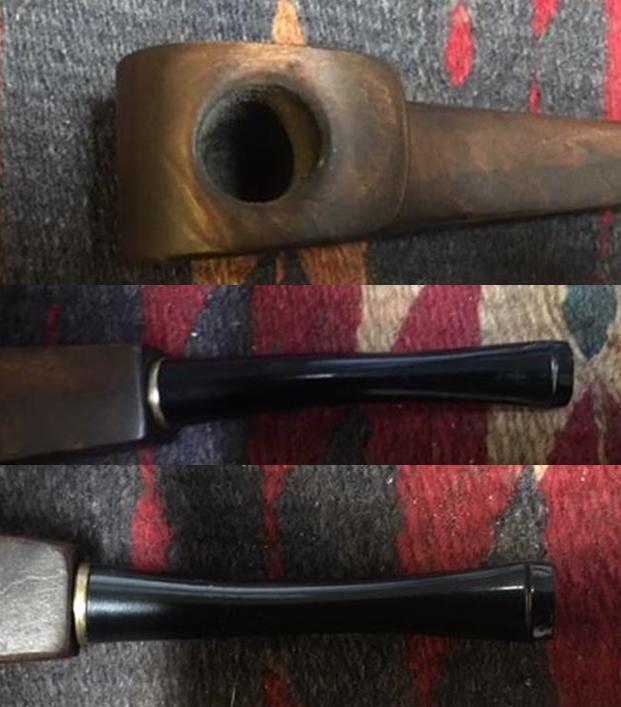
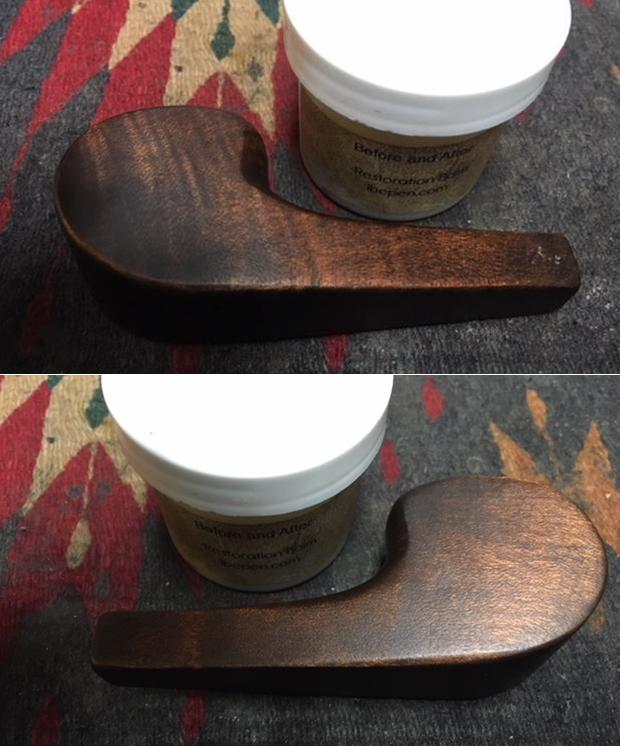
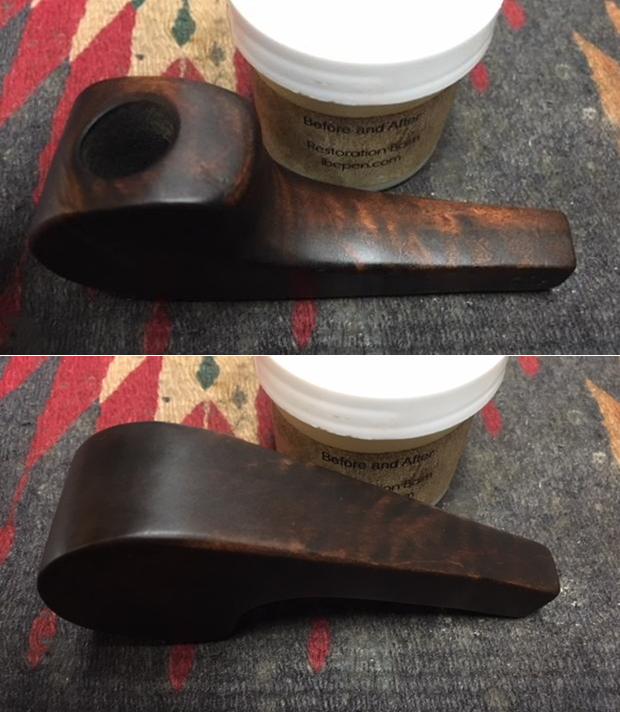
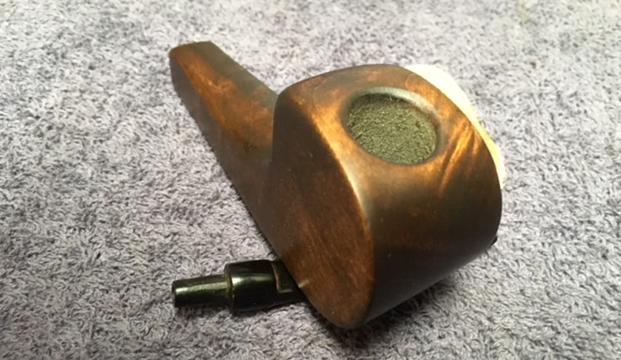
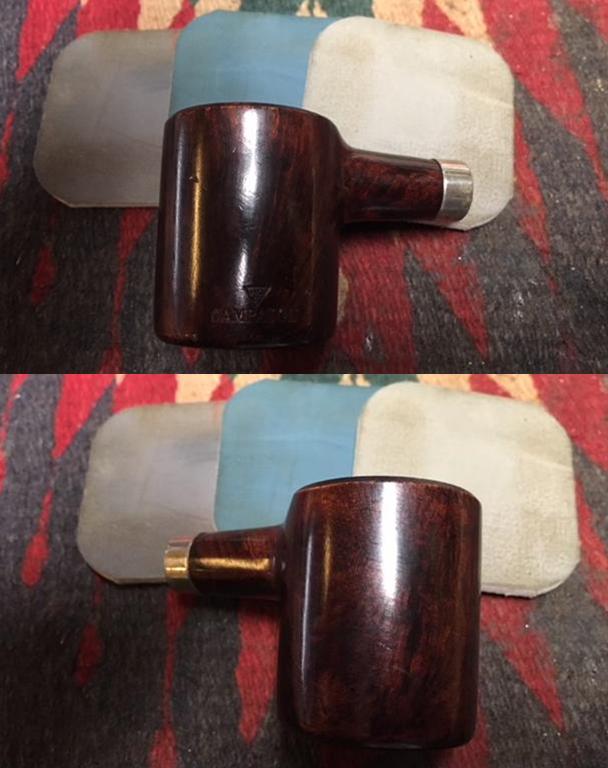
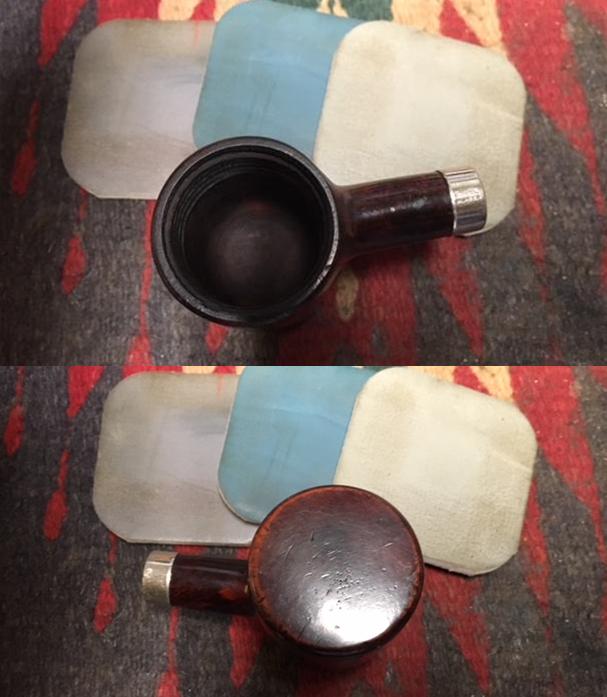
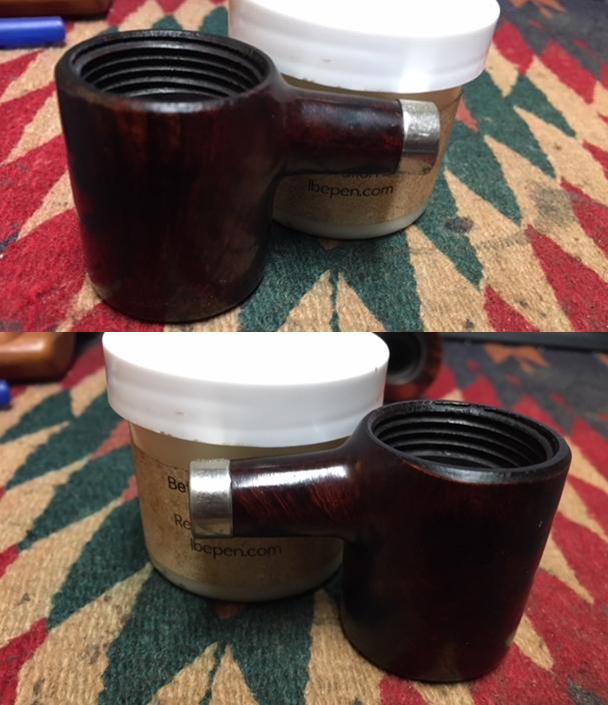
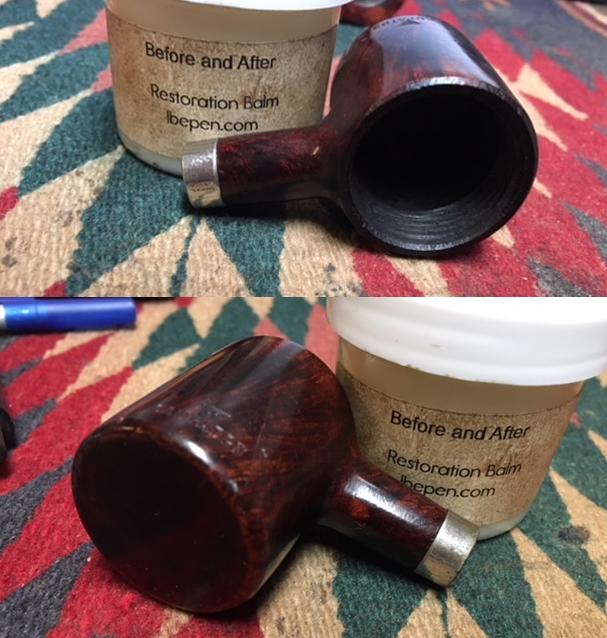
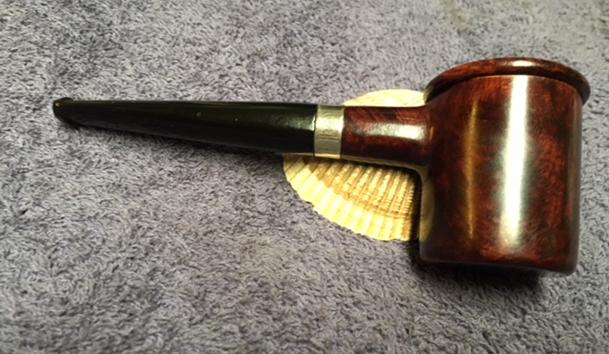
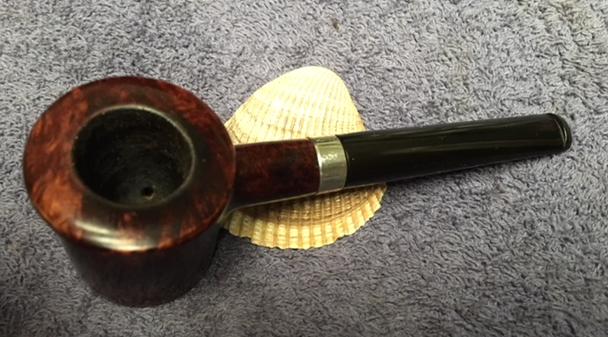
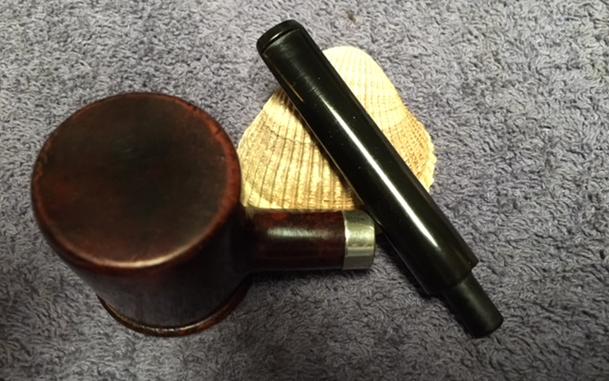
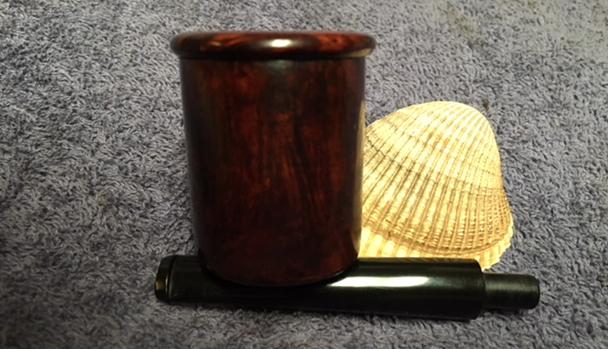
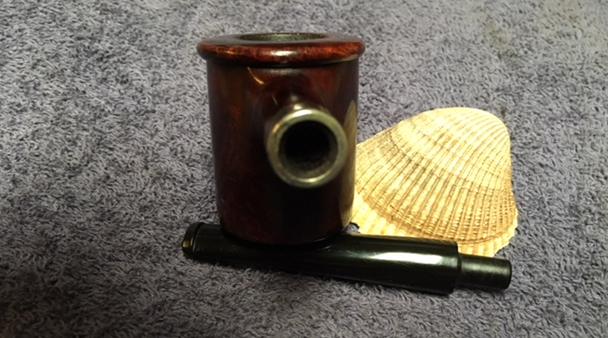
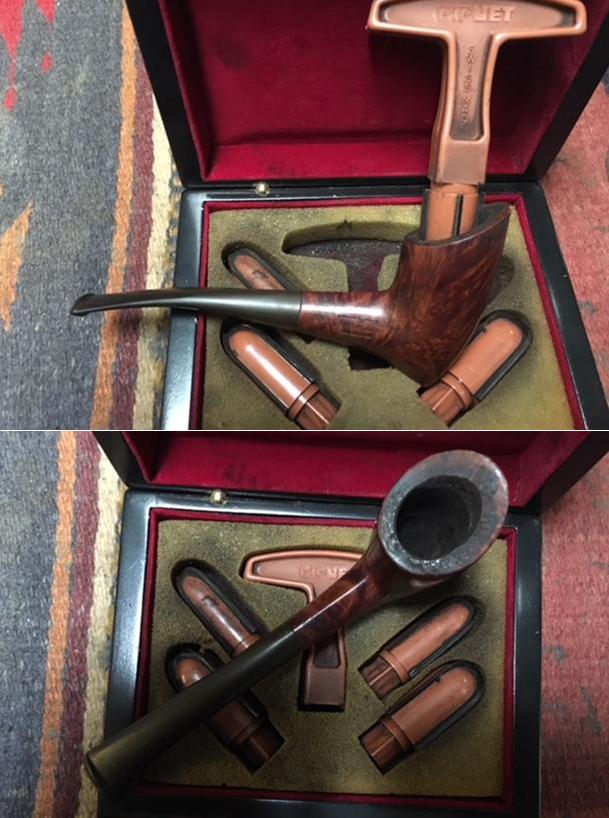
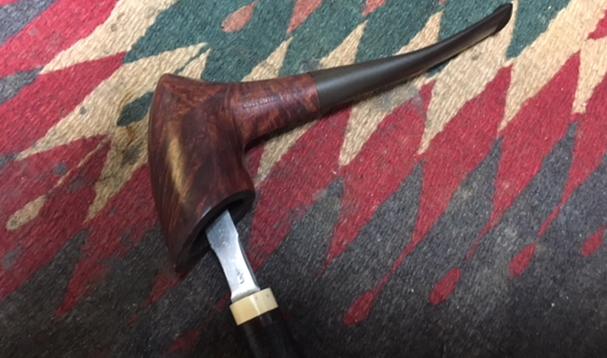
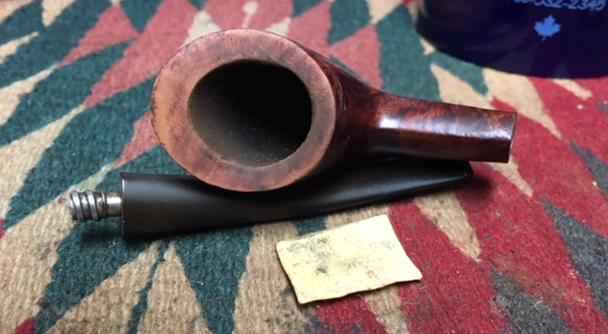
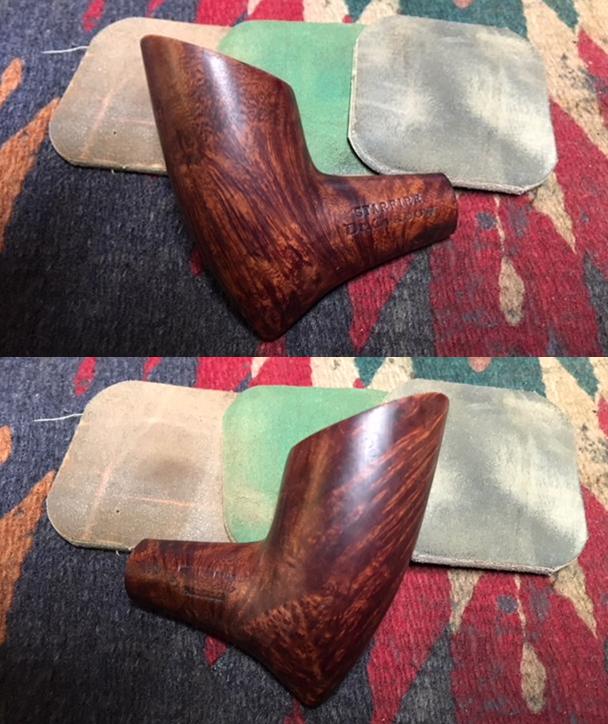
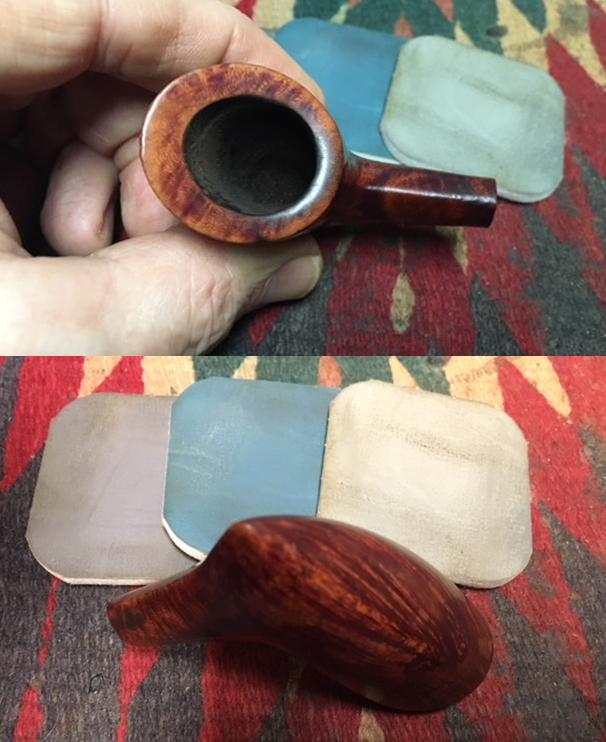
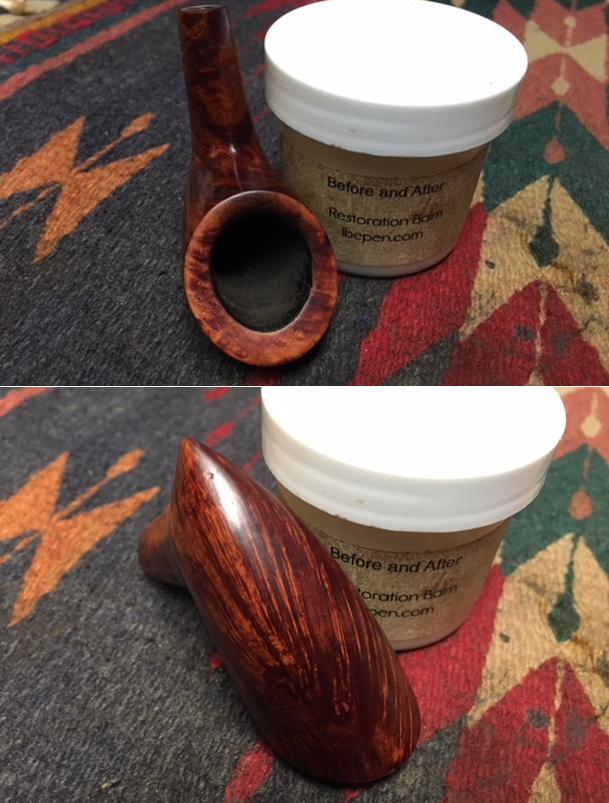
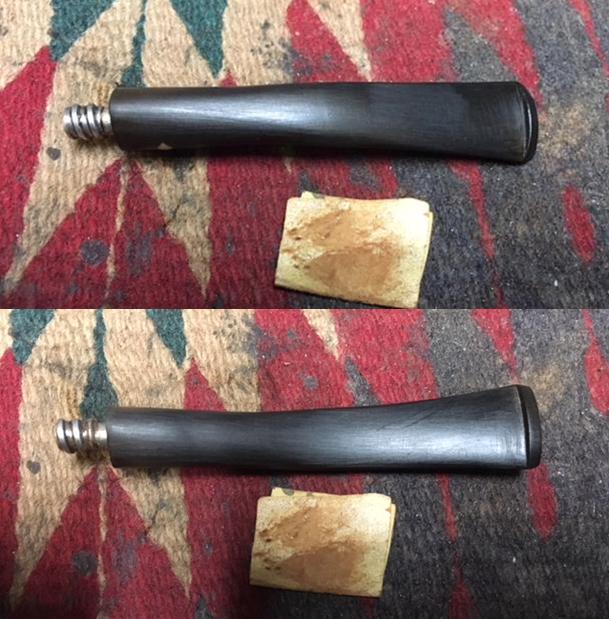
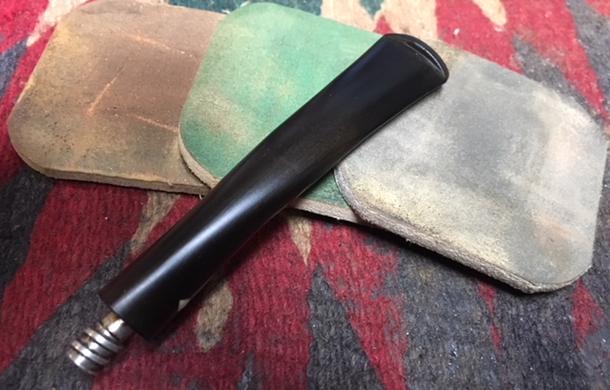
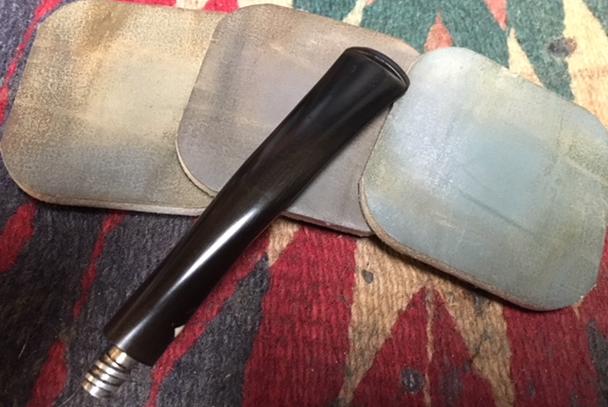
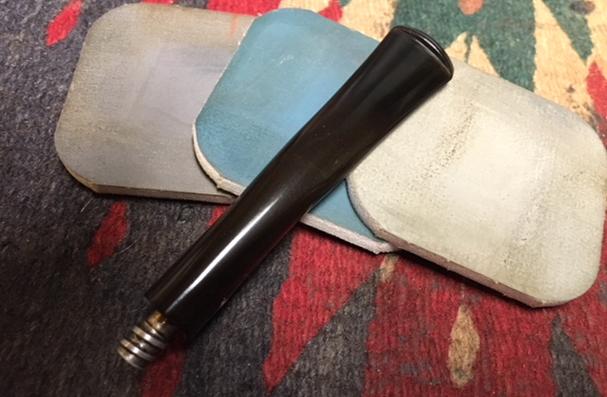
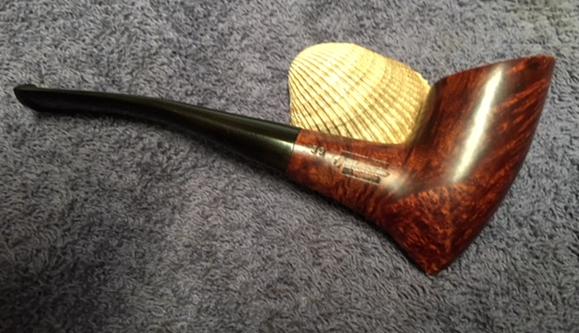
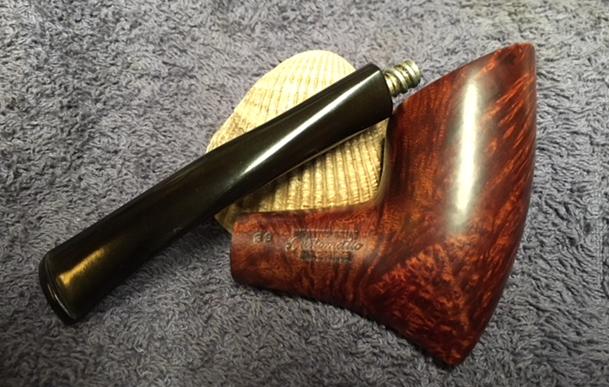
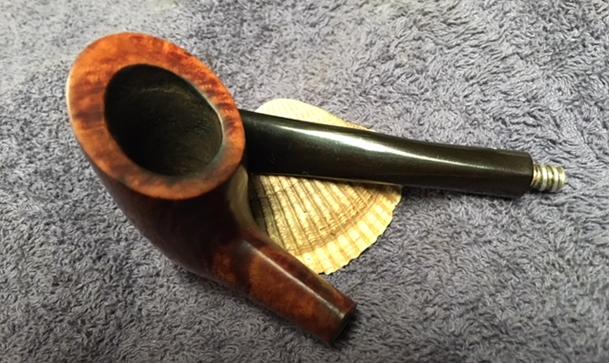
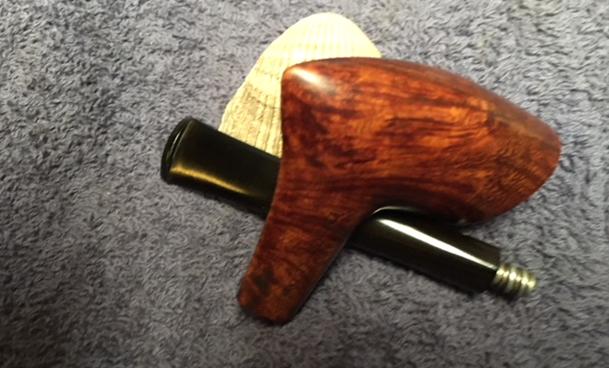
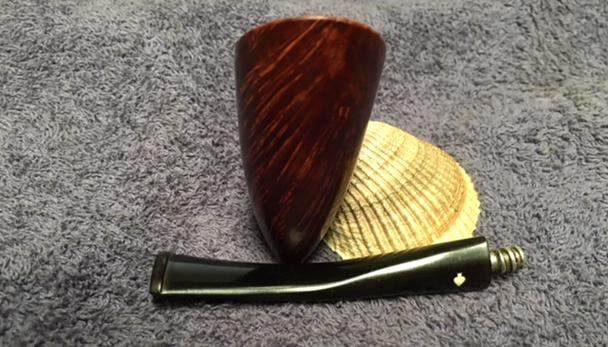
The first of the six pipes I chose to work on was the large horn shaped rusticated pipe. It is stamped House of Robertson on a smooth panel on the left side of the shank and Special on a smooth part on the underside of the shank next to the stem/shank junction. The rusticated finish on the pipe was in good shape – just dusty and dirty. The deep grooves in the rustication were very dirty. The smooth rim top had some darkening where it had been repeatedly heated with a lighter. The bowl had a thin cake but it did not go all the way to the bottom of the bowl. The pipe is quite large but very light weight for the chunk of briar that was used. The stem was oxidized but did not have tooth marks or chatter on the surface. The fit of the stem to the shank was good. The vulcanite appeared to have been a pre-formed stem that was shaped to fit this pipe. The internals of the shank and stem had some tars and oils. Jeff took photos of the pipe before he started the cleanup. The next close-up photos show the finish on various sides of the bowl. The first photo shows that the bowl had a thin cake and a darkened spot on the left side of the rim top where the previous owner had repeatedly lit the pipe. The inner edge of the rim had a few small nicks along the edges and there was some darkening on the back inner edge. The finish on the rim top was in great condition. The three photos that follow the rim view show the pipe from different angles. The next two photos show the etched name on the left side of shank on a smooth panel of briar. It reads House of Robertson. On the underside of the shank is etched the name Special – also on a smooth panel of briar. The stem was oxidized and pitted from the oxidation. There were no tooth marks on the stem top or underside. There was one small nick on the stem at the joint of the stem and the shank on the underside. I wonder if it did not happen when the word Special was etched on the shank. Probably I will never know but it is interesting.Jeff out did himself on the cleanup of this pipe. He reamed the bowl with a Savinelli Fitsall pipe knife to remove the thin cake. He scrubbed out the mortise and the airway in the shank and the stem with alcohol, cotton swabs and pipe cleaners. When he had finished, the bowl looks almost new on the inside (I actually don’t think it has ever been smoked to the bottom of the bowl as it is raw briar in the bottom third).  He scrubbed the exterior of the bowl, rim and shank with a tooth brush and Murphy’s Oil Soap to remove the oils and tars on the bowl, rim and shank. He rinsed it under running water. He dried it off with a soft cloth. The light lava mess on the rim and the dust deep in the rustication was thoroughly removed without harming the finish underneath it. Once the grime was removed the finish actually looked to be in excellent condition I took photos of the pipe to show its condition before I started my work on it. I took a photo of the rim top to show the great condition it was in after the cleanup. Jeff was able to remove all of the darkening and tar on the right side of the rim top and the back edge of the rim. The stem was clean but pitted and oxidized.I rubbed the bowl down with Before & After Restoration Balm to deep clean the nooks and crannies of the rusticated finish, enliven and protect the briar. I hand rubbed it with my fingers and wiped it off with a soft cloth. I buffed the bowl on the wheel with a horsehair shoe brush to polish it. It really began to have a deep shine in the briar. I took some photos of the bowl at this point to mark the progress in the restoration. I sanded the stem with 220 grit sandpaper to remove the oxidation on both sides and in the angles of the saddle stem.I polished out the sanding scratches and marks in the vulcanite with micromesh sanding pads – wet sanding it with 1500-2400 grit pads and dry sanding it with 3200-4000 grit pads. I wiped the stem down with Obsidian Oil after each sanding pad. I buffed the stem with Blue Diamond on the buffing wheel. I brought it back to the table and sanded it with the final three 6000-12000 grit pads. After the final pad I gave it a final coat of oil and set it aside to dry. I put the stem back on the bowl and worked the pipe over on the buffing wheel using Blue Diamond to lightly polish the bowl and shank. I buffed the bowl with a light touch so as not to get any of the buffing compounds in the grooves of the rustication. I buffed the stem to raise the gloss on the vulcanite. I gave the bowl multiple coats of Conservator’s Wax and gave the stem multiple coats of carnauba wax. I buffed the entire pipe with a clean buffing pad to raise the shine. I hand buffed it with a microfiber cloth to deepen the shine. The finished pipe is shown in the photos below. The medium brown stains on the rusticated horn shaped bowl works well with the rich black of the short vulcanite stem. The polish and the reworking of the stem material left this a beautiful and well-made pipe. The dimensions of the pipe are: Length: 6 inches, Height: 2 ½ inches, Outside Diameter: 1 3/4 inches, Diameter of the chamber: 3/4 inch. I will be adding this one to the rebornpipes store shortly if you are interested in adding it to your collection. It will make a fine addition to the rack. If you are interested email me at slaug@uniserve.com or send me a message on Facebook. Thanks for looking.
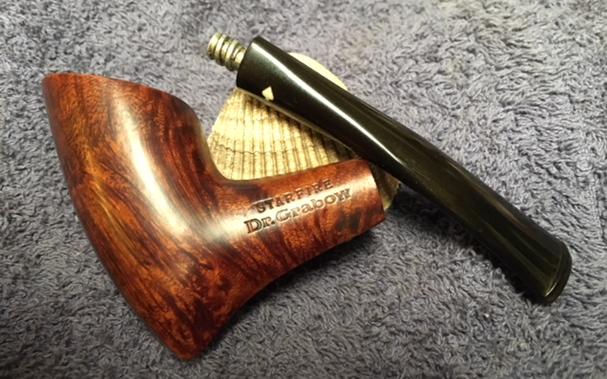
Breathing Life into a Dr. Grabow Omega Bent Billiard


Blog by Steve Laug

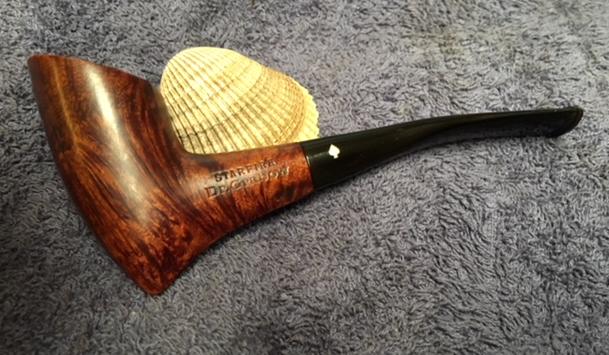
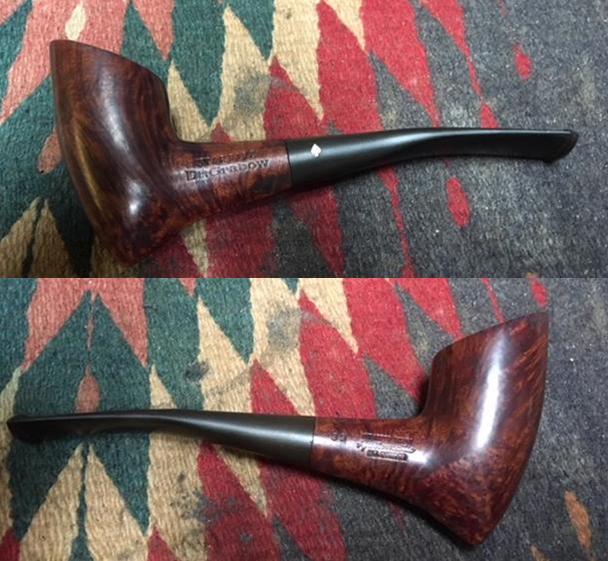
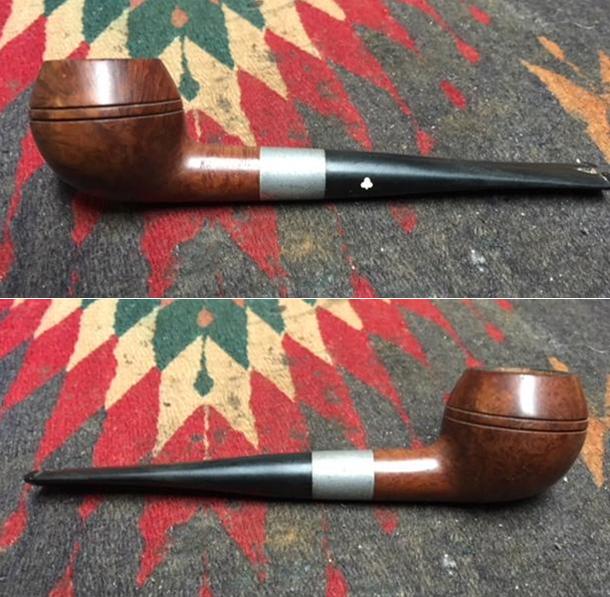
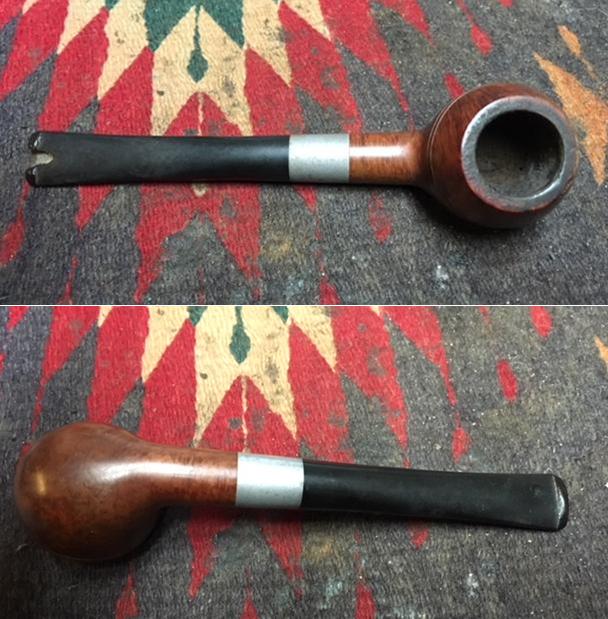
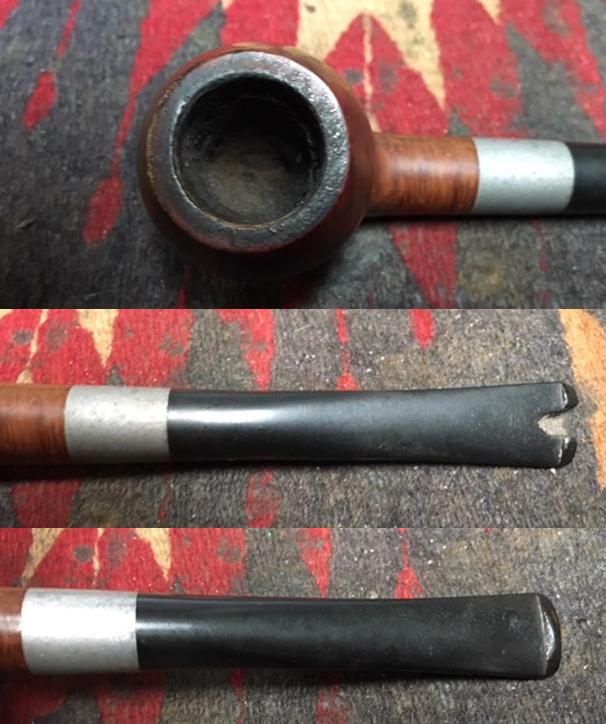
I have always liked the look of the Dr. Grabow Omega pipes. I have worked on quite a few over the years and have found them well made. The briar is a mixed grain pattern usually but the look of the classic shape and the feel in the hand is quite nice. The style of the stem mimics the Peterson P-Lip but up close it is very different. The airway exits not on the top of the button as in a P-Lip but out the end as in a standard fish tail stem. This old timer was no exception so when Jeff sent it I was interested in what it would look like after his cleanup. The bowl was structurally sound but the finish was worn and tired looking with a lot of scratches all around the sides and bottom of the bowl. The bowl had a thick cake that had flowed over the top. The rim was coated in lava and it was beat up. It had a lot of small holes in it like it had been knocked out on concrete and the outer front edge of the bowl was roughened and rounded over. The inner edge of the bowl looked like it was undamaged. The nickel ferrule was oxidized and scratched. The stem had some tooth marks on the top and underside near the button and was oxidized. Jeff took photos of the pipe to show its condition before he started his cleanup work. The next photo shows the cake in the bowl and the condition of the lava overflow on the rim top. You can see that it is quite thick. You can also see the rough condition of the outer edge of the bowl.Jeff took several photos of the bowl from various angles to show the general condition of the finish. There were scratches and nicks but none of them look too deep in the briar. The finish also appears to be very dirty and the varnish coat that is usually present seems worn and tired looking on the sides and bottom of the bowl. The next two photos not only show the stamping on the shank but also the buildup of tars and grime around the edges of the ferrule. It is almost as if the shank was weeping under the ferrule. The stamping is worn but readable. It is stamped OMEGA over Dr. Grabow on the left side of the shank and on the right Imported Briar.When Jeff took the pipe apart it appeared that the seller had put a newer Grabow Paper Filter in the shank of the pipe to make the pipe appear to have been cleaned. The next three photos show the condition of the tenon end of the stem and the filter. The oxidation on the stem is also visible in the photos below. The stem was scratched and worn but the Grabow Spade logo was in good condition on the left side of the shank. The top and underside of the stem had some deep tooth marks around the button and the sharp edge of the top of the button was quite worn and damaged.I did some searching to find out a bit of history about the Omega. I found that it was first released around 1975 and was a copy of a well pipe imported from Italy. It has continued to be offered for sale in their catalogues.

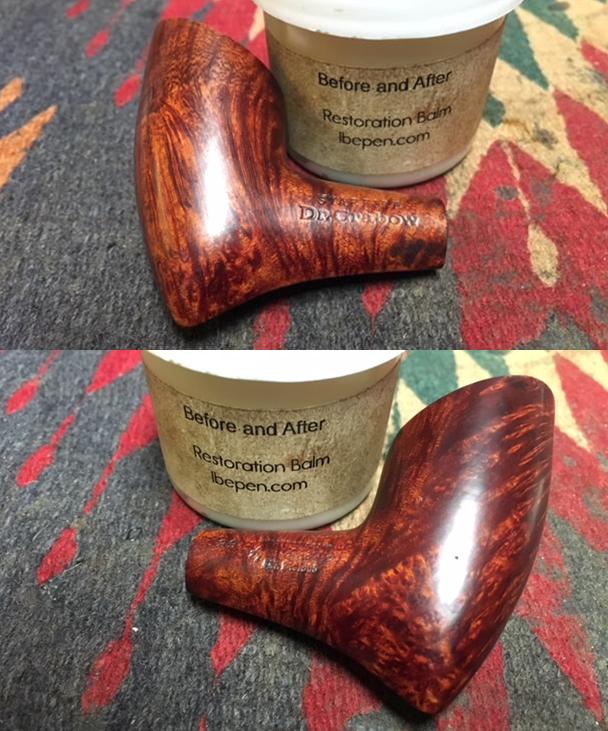
Jeff did a thorough cleanup on the bowl and stem. He reamed the bowl back to bare briar with a PipNet pipe reamer and cleaned up the remnants with a Savinelli Fitsall reamer. He cleaned the internals with alcohol, pipe cleaners and cotton swabs – scrubbing out the mortise as it was very dirty. He scrubbed the exterior of the pipe with Murphy’s Oil soap and a tooth brush and was able to remove all of the tars and oils built up on the briar. He was able to remove all of the tars and lava on the rim top and left it looking very clean. The damage on the rim top and outer edge was clean and visible. He soaked the stem in an Oxyclean bath to raise the oxidation to the surface of the vulcanite. When it arrived I took some photos of it to show how it looked before I did the restoration.  Jeff was able to remove the thick lava coat from the rim and revealed what I thought would be underneath the thick coat. The rim top was speckled with tiny dents and marks and the outer edge was damaged all the way around the bowl. There was a little damage on the inner edge on the right side of the bowl.The Oxyclean soak had really raised the oxidation to the surface. The stem was clean but heavily oxidized when it arrived.Because the was so oxidized after the soak in Oxyclean, I put it in a bath of Before & After Pipe Stem Deoxidizer to soak overnight and work on the vulcanite oxidation. In the morning I removed the stem from the deoxidizer and wiped off the excess deoxidizer from the surface of the stem with a paper towel. I cleaned out the airway in the stem with pipe cleaners and alcohol to remove any remnants of the bath from that part of the stem. The photos below show the stem after the soak and rub down. The oxidation looked much more manageable and what remained would be easily dealt with. The tooth chatter on the top and underside of the stem is hard to see in the photos, but it is present.I sanded the stem with 220 grit sandpaper to remove the tooth chatter and minimize the tooth marks on both sides of the stem. I reshaped the button with the sandpaper and a needle file. I sanded the rest of the stem to break up the remaining oxidation.I polished out the sanding scratches and marks in the vulcanite with micromesh sanding pads – wet sanding it with 1500-2400 grit pads and dry sanding it with 3200-4000 grit pads. I wiped the stem down with Obsidian Oil after each sanding pad. I buffed the stem with Blue Diamond on the buffing wheel being careful around the spade logo insert as they can easily be damaged. I brought it back to the table and sanded it with the final three 6000-12000 grit pads. After the final pad I gave it a final coat of oil and set it aside to dry. The outer edge of the rim was damaged all around the bowl but the worst damage was on the front edge. You can see the roughness of the rim edge in the next photo. With the small pin prick holes on the rim top and the damage on the inner edge of the right side of the bowl I decided to top the bowl. I top a pipe on a topping board with 220 grit sandpaper and work the bowl over the sandpaper holding the rim flat against the topping board and working the bowl to evenly sand the bowl top smooth and remove the damage. Once the rim edges were almost smooth I used a folded piece of sandpaper to smooth out the outer edge of the bowl all the way around the bowl. I polished the rim top with micromesh sanding pads – wet sanding with 1500-2400 grit pads and dry sanding with 3200-12000 grit pads. I wiped the rim down after each pad with a damp cotton pad. When I finished the polishing I wiped it down a final time. I blended some light and medium brown stain from a stain pen to restain the rim top and edges to match the colour of the rest of the bowl. The blend works well in trying to get this particular shade of brown. I hand buffed the stain to polish it and blend the colours together.I rubbed the bowl down with Before & After Restoration Balm to deep clean the smooth finish, enliven and protect the briar. I hand rubbed it with my fingers and wiped it off with a soft cloth. I buffed the bowl with Blue Diamond on the wheel to polish it. It really began to have a deep shine in the briar. I took some photos of the bowl at this point to mark the progress in the restoration. I decided to leave the small nicks in the bowl surface as marks of character rather than damage the original finish by sanding them all out. I cleaned and polished the nickel ferrule with micromesh sanding pads. I was careful in sanding the nickel in that the dust from the metal can discolour the briar and make more work. I was happy with the finished end cap. I buffed the briar on the wheel with Blue Diamond to polish it more. I was careful around the already light stamping. I hand buffed the bowl and ferrule with a microfiber cloth and took photos of the bowl at this point. I put the stem back on the bowl and worked the pipe over on the buffing wheel using Blue Diamond to polish the bowl and shank. I buffed the stem to raise the gloss on the vulcanite. I gave the bowl and stem multiple coats of carnauba wax. I buffed the entire pipe with a clean buffing pad to raise the shine. I hand buffed it with a microfiber cloth to deepen the shine. The finished pipe is shown in the photos below. The dark to medium brown stain on the billiard shaped bowl works well with the polished nickel ferrule and the rich black of the vulcanite stem. This old Omega pipe has some interesting grain and has lots of life in it to add your own story to the ongoing saga of the briar. The dimensions of the pipe are: Length: 6 inches, Height: 1 3/4 inches, Diameter of the bowl: 1 1/4 inches, Diameter of the chamber: 5/8 inches. I will be adding this one to the rebornpipes store shortly if you are interested in adding it to your collection. It will make a fine addition to the rack. If you are interested email me at slaug@uniserve.com or send me a message on Facebook. Thanks for looking.
 

Restoring a Custombilt Standard 302 Bulldog


Blog by Steve Laug

Those of you that collect Tracy Mincer made pipes know all about the variety of stampings on the pipes that he made. They go from Custom-Bilt, Custom-bilt, Custombilt, Doodler and even those named after himself. His pipes are unique and the Custom-Bilt pipes (no matter how you spell the name) that he made are immediately recognizable. Their chunky Rhodesian or Bulldog/Bull moose shape along with the unique worm trail deep rustication and the stubby fit in the hand makes them easy to identify. When Jeff sent me photos of the next pipe that came to the worktable, I was not sure where it fit in the world of this brand. I have read Bill Unger’s opus on the brand so I had a bit of an idea but I wanted to spend time working on the pipe before I narrowed down the period. It has a more refined shape and refined application of the rustication to the bowl. It seemed more controlled and predictable than the other typical Custom-Bilt pipes I have worked on and restored. The stem also had a different feel than the others I have worked on and the amount of briar in the body of the pipe seemed less that what I expect in these pipes. Jeff took photos of the pipe before he started to work on it so I could have an idea of what we had in our hands.The pipe appeared to be in decent condition. The finish was dirty but did not look like it was damaged. The bowl had a thinner cake that the others I have been working on lately. There was lava overflow on the top of the rim. I am sure there would be some darkening and possible some burn marks on the inner edge of the beveled rim top. The outer edge appeared to be undamaged. The stem was vulcanite and had a very light oxidation on the top surfaces. There was tooth chatter on both sides of the stem just ahead of the button. The edge of the button also had some tooth wear. The previous owner had put a light bend in the stem in the last 1 inch. To me it did not look right and would need to be straightened.Jeff took two close up photos of the bowl and rim top to show the condition of the pipe when it arrived. The first shows the rim close up and the second shows it in relation to the rest of the bowl. He also included a photo of the underside of the bowl to show the carving and rustication pattern there. The pipe is stamped on the left side and reads Custombilt as one word over Standard. On the right side of the shank it is stamped with a number which I assume identifies the shape – 302.The stem had light oxidation and tooth chatter so it would be a pretty straightforward cleanup as well.I wanted to refresh my memory regarding the time periods the different Custom-Bilt pipes were made so I did a bit of research. I looked first on the Pipephil website to see what information he had on the brand. This is the link: http://www.pipephil.eu/logos/en/logo-c8.html

Tracy Mincer stopped making Custom-Bilt pipes in the early 1950s. The trademark was successively bought by Leonard Rodgers (1953), Consolidated Cigars (1968) and Wally Frank Co. (early 1970s). The later began to produce again his version of the pipe in 1974 or 1975 at Weber pipe factory (NJ). In 1987, the pipes were made out of the Butz-Choquin factory (France) and then Mexico until the late 1990s. Currently (2010), the Custombilt name is owned by Tobacalera of Spain which is part of Altadis. It is generally admitted (but not proved) pipes stamped “Custom – Bilt” (with the hyphen) are from the Mincer era. The name might have changed from Custom-Bilt to Custombilt (without the hyphen) in 1946.

I also looked on the Pipedia website and found confirmation to the Pipephil information and some additional information. Here’s the link to that article: https://pipedia.org/wiki/Custom-Bilt

In 1946, the name was changed to Custombilt after Mincer began an association with Eugene J. Rich, Inc. There were some big changes in advertising and distribution. The slogan “AS INDIVIDUAL AS A THUMBPRINT” began at this time as well. In the early 1950’s, Tracy Mincer developed severe financial problems that caused him to stop making the Custombilt, and he lost the name. In 1953, Leonard Rodgers bought the company and emphasized tobacco pouches and butane lighters. (However, it appears Mincer was working on his new pipe, the Doodler.) In 1968, Rodgers sold the Company to Consolidated Cigars. In the early 1970s, Wally Frank Co. bought the Custombilt trademark and began to produce their version of the pipe in 1974 or 1975. Hollco Rohr owned the Weber pipe factory, located in New Jersey, and produced the Custombilt pipes there. In 1987, the pipes were made out of the Butz-Choquin factory (France) and then Mexico until the late 1990s. Currently, the Custombilt name is owned by Tobacalera of Spain…

Given that information I knew that the pipe was made after 1946 when the name was changed to Custombilt. To me the lack of the characteristic shape and carving pointed to after Mincer lost the company and stopped making the brand. The shape reminds me of several Wally Frank pipes that I have had in the past so I am thinking it was made after they bought the trademark in 1974-1975. It also could be the Weber version of the brand when Hollco Rohr owned it. That is as specific as I can get in identifying the time frame for the manufacture of this pipe. I am pretty certain it is not a Tracy Mincer made pipe so that pushes it to the later 1974-75 dates.

Jeff did a thorough cleanup on the bowl and stem. He reamed the bowl with a PipNet pipe reamer and cleaned up the last bit of cake with a Savinelli Fitsall reamer. He cleaned the internals with alcohol, pipe cleaners and cotton swabs – scrubbing out the mortise as it was very dirty. He scrubbed the exterior of the pipe with Murphy’s Oil soap and a tooth brush and was able to remove all of the tars and oils built up on the briar. He was able to remove all of the tars and lava on the rim top and left it looking very clean. He soaked the stem in an Oxyclean bath to raise the oxidation to the surface of the vulcanite. When it arrived I took some photos of it to show how it looked before I did the restoration. He did a great job removing the cake in the bowl and the lava on the rim top. The inner edge of the bowl is damaged on the back right side and the left front of the pipe. There were also some burn marks in those spots on the rim surface.The oxidation came to the surface of the stem after the soak in Oxyclean. The tooth chatter is visible on the top and underside near the button. You can also see the light damage on the edge of the button on both sides. I put it in a bath of Before & After Pipe Stem Deoxidizer to soak overnight and work on the vulcanite oxidation.In the morning I removed the stem from the deoxidizer and wiped off the excess deoxidizer from the surface of the stem with a paper towel. I cleaned out the airway in the stem with pipe cleaners and alcohol to remove any remnants of the bath from that part of the stem. The photos below show the stem after the soak and rub down. The oxidation was pretty much gone and what remained would be easily dealt with. The tooth chatter on the top and underside of the stem is hard to see in the photos, but it is present.I sanded the stem with 220 grit sandpaper to remove the tooth chatter on both sides of the stem as well as the oxidation that remained in the angles of the saddle stem.I heated the stem with a heat gun to straighten out the bent end. I liked the straight look on the stem better than the slight tweak that last pipe man had put in it.I polished out the sanding scratches and marks in the vulcanite with micromesh sanding pads – wet sanding it with 1500-2400 grit pads and dry sanding it with 3200-4000 grit pads. I wiped the stem down with Obsidian Oil after each sanding pad. I buffed the stem with Blue Diamond on the buffing wheel. I brought it back to the table and sanded it with the final three 6000-12000 grit pads. After the final pad I gave it a final coat of oil and set it aside to dry. I sanded out the burn marks on the rim with 220 grit sandpaper to remove them and smooth out the surface. I worked on the inside edge of the rim to bring it back to round. When I was finished I polished the rim top and edge with micromesh sanding pads – wet sanding with 1500-2400 grit pads and dry sanding with 3200-12000 grit pads. I was able to polish out all of the scratches in the rim top and edges. I used a medium brown stain pen to restain the rim and inner edge of the bowl to blend it in with the rest of the bowl. The burn marks are invisible now and the polished rim top looks pristine.I rubbed the bowl down with Before & After Restoration Balm to deep clean the nooks and crannies of the rusticated finish, enliven and protect the briar. I hand rubbed it with my fingers and wiped it off with a soft cloth. I buffed the bowl with a horsehair shoe brush to polish it. It really began to have a deep shine in the briar. I took some photos of the bowl at this point to mark the progress in the restoration. I buffed the bowl with a soft cloth to polish away the remaining Restoration Balm. I put the stem back on the bowl and worked the pipe over on the buffing wheel using Blue Diamond to polish the bowl and shank. I buffed the bowl with a light touch so as not to get any of the buffing compounds in the grooves of the rustication. I buffed the stem to raise the gloss on the vulcanite. I gave the bowl multiple coats of Conservator’s Wax and gave the stem multiple coats of carnauba wax. I buffed the entire pipe with a clean buffing pad to raise the shine. I hand buffed it with a microfiber cloth to deepen the shine. The finished pipe is shown in the photos below. The medium brown stains on the rusticated bulldog shaped bowl works well with the rich black of the vulcanite stem. The polish and the reworking of the stem material left this a beautiful and well-made pipe. The dimensions of the pipe are: Length: 6 inches, Height: 1 ½ inches, Outside Diameter: 2 inches, Diameter of the chamber: 3/4 inch. I will be adding this one to the rebornpipes store shortly if you are interested in adding it to your collection. It will make a fine addition to the rack. If you are interested email me at slaug@uniserve.com or send me a message on Facebook. Thanks for looking.
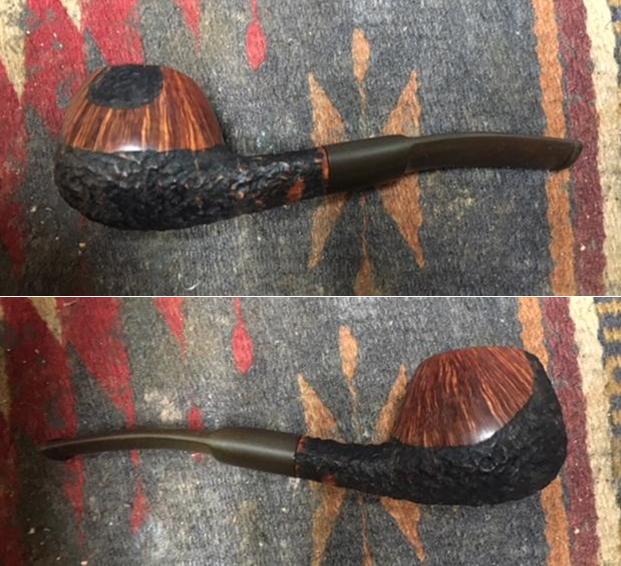
Cleaning up another new one for me – A Peterson’s Laxiom Apple


Blog by Steve Laug

The next pipe on the table is Peterson’s Laxiom Apple with a Military bit and a vulcanite shank extension. My brother, Jeff picked this one up in Montana on a trip there is October. He was drawn to it because he had never seen a Peterson pipe like it before. It has a heavily rusticated finish on the bowl and shank and is stained a dark brown colour. There is a little translucency in the stain and you can see the wood underneath. While the finish is rough it has been buffed to take off the sharp edges so it has a very tactile finish on the bowl. There is a smooth band of unrusticated wood at the shank end next to the vulcanite shank extension. The pipe is stamped on a smooth portion of the underside of the shank with the words Peterson’s over Laxiom. The bowl had a light cake build up and light lava on the thin rim edge but was in great condition overall. The extension and the military style bit were both oxidized. On the left side of the stem it is stamped with the characteristic Peterson’s P and on the underside it is stamped Great Britain. There were some tooth marks on the stem and button on both sides. Jeff took photos of the pipe before he did his cleanup work. He took this close up photo of the bowl to show its condition. I am amazed that the pipe is in excellent condition overall with little wear or tear to the bowl and rim top. He also took some photos of the bowl from various angles to show the finish on the bowl. It is a unique and pretty little pipe. The next two photos show the stamping on the underside of the shank and the underside of the stem. Both are very clear and readable.The stem and shank extension/ferrule were oxidized with a deep oxidation that would take some time to remove. The condition is very clear in the photos below. The second photo shows tooth marks on the button itself and the third photo shows tooth marks and chatter next to the button.I did some hunting on-line to see if I could find any information on the brand and found a link on the pipesmagazine.com forum (http://pipesmagazine.com/forums/topic/peterson-laxiom-pipes). I did not find it too helpful in that the pipe I had in hand was not meerschaum but definitely wood. I quote it below in full because the one thing that was a clue was the Peterson Manx link that I knew was a fact.

I just picked up a couple Peterson Laxiom pipes that are quite unusual. Both are stamped “Great Britain” on the stem. Both are black rusticated models which reminded me of a black Pioneer Block Meerschaum in my collection, in large part due to their similar stem and ferrule design. The Petes are relatively lighter in weight and are not labeled as meerschaum.

I noticed that Laxey Pipes Ltd made African meerschaum bowls for Peterson and that it was a Peterson Manx partnership with a factory on the Isle of Man, which closed in 1981 when Peterson’s meerschaum production was moved to Dublin.

Putting two and two together, I’m guessing that Peterson Laxiom pipes are East African meerschaum, but it’s gnawing at me that they might be some sort of wild composite, like Brylon. I can say with almost 100% certainty that the draft hole was drilled and not molded, as one of the two is obviously off-center.

A post from a number of years ago regarding Laxiom pipes came up empty, even after inquiring with three longtime Peterson employees.

Now I had a link to Manx but I was pretty certain the pipe was not meerschaum. It felt and looked like briar. I wrote to a good friend and go to Peterson’s aficionado, Mark Irwin to see if he could help me with information. He wrote back with his usual great information and a couple of photos from a catalogue showing the brand. I quote Mark’s answer in part.

Hi Steve,

… let’s look at the Laxiom…Thanks for these great photos, first of all. I have never seen one with the vulcanite shank extension unscrewed, and did not know it worked that way.

When you complete your restoration, if you have time, would you send me a photo for the Encyclopedia chapter with the pipe broken down this way? One picture goes a long way in understanding how something is put together, and I want readers to see how the Laxiom worked.

Laxiom: 1971-1975 A briar line produced for Iwan Ries, black rustic or walnut smooth or sculpted finish with acrylic threaded (removable) ferrule and vulcanite Laxi P-Lip or fishtail mouthpiece, made at the Peterson-Manxman factory in seven shapes. See Laxi. 

…Laxi 1971-1975 Easy-push mouthpiece for Iwan Ries, often with ferrule, P-Lip or fishtail. Military stem extended into mortise of removable (threaded) acrylic ferrule. Stem could be re-ordered if broken.

I have included 2 pages for your use in the blog from the 1971 Iwan Ries catalog. I’m beginning a series of articles on the Peterson – IRC connection, but I don’t mind a bit if you print these before I do! … Best, Mark The first page above describes the pipes and the second shows the variety of offerings. I have enclosed the description in a red box. Here is what it says:

Laxiom, a giant step ahead. Select briar, fine vulcanite stem. Another Peterson’s of Dublin, from their Manxman Division in the Isle of Man. Our exclusive mind-opening model – once again brings pipes out of exile. No longer relegated to a drab, drag world. Sensible, bigger bowl capacity disproves the old thick-bowled concept that left a thimble sized tobacco chamber! Stems aren’t shackled either by stem repair traumas. They’re delivered, at last, by the great new Laxi stem – a 71 Instant-Replace, the bit worth its weight in gold. Evidence is convincing – this IRC pipe escapes yesterday’s uniformityisms into today’s land of self-expression. Both regular and Peterson Lip are interchangeable, instantly substituted. Here’s more unconventionalism that makes it – everywhere. Yesterday’s experienced knowledge + Today’s awareness and vision = a pipe with a lot of smoking to do! Only in shapes shown – prince, apple, Dublin, billiard, pot, full bowl design carved apple.

I8J1913 Walnut $11.50

I8J1914 Black Sandblast $9.50

I8J1913s Instant-Replace Stem, reg. $2.50

I8J1913sp Instant-Replace stem, Peterson’s Lip $3.50

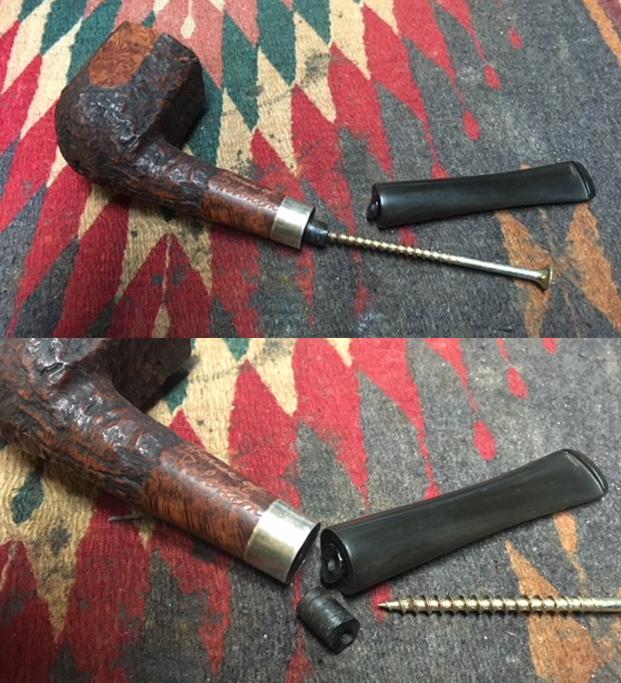
I am almost feel I don’t need to say this anymore as you all know by now that my brother Jeff does the cleanup on the pipes that we get. It is amazing to start with pipes that are already cleaned and reamed. In fact on the local repairs I do I have to do all the work and I really miss his work. He did the work on this one as usual. He reamed the bowl with a PipNet pipe reamer and cleaned up the last bit of cake with a Savinelli Fitsall reamer. He cleaned the internals of the shank and the stem with alcohol, pipe cleaners and cotton swabs. He scrubbed the exterior of the pipe with Murphy’s Oil soap and a tooth brush and was able to remove all of the dust, tars and oils built up on the briar. He was able to remove all of the tars and lava on the rim top and leave it looking very clean. He soaked the stem in an Oxyclean bath to raise the oxidation to the surface of the vulcanite. When it arrived it looked very clean. I took photos of the pipe before I started my restoration work. I took a photo of the bowl and rim to show its condition after his cleanup work. It looked really good.The Oyclean brought the oxidation to the surface of the stem and the tooth marks were very visible on both sides. This is when I wish I could order one of those Insta-Replace Lax stems and just put this one aside. But there are none available so it is a cleanup job.I pulled the stem off and put it in a bath of Before & After Pipe Stem Deoxidizer and left it to soak overnight. In the morning I removed the stem from the deoxidizer and wiped off the excess deoxidizer from the surface of the stem with a paper towel. I cleaned out the airway in the stem with pipe cleaners and alcohol to remove any remnants of the bath from that part of the stem. The photos below show the stem after the soak and rub down. It was still lightly oxidized but the oxidation was significantly less than when I started. I decided to work on it without further soaking. It would be a stem that I would have to hand work to get rid of all the oxidation. The tooth marks are visible on the top and underside of the stem in the photos.I noticed that while I was wiped the shank extension down with some Obsidian Oil there was a bit of give in the extension. Since I could find little information on the brand I had no idea what to expect in this case. I carefully turned the shank extension and it came unscrewed from the shank of the pipe. I was pleased in that it would be easier to work on with it separated. I took photos to show the parts of the pipe. With the shank extension removed I scrubbed out the airway with a pipe cleaner and alcohol to double check if there was debris in this section of the shank with the threaded tenon removed. It was very clean. I rubbed the bowl down with Before & After Restoration Balm to deep clean the smooth finish, enliven and protect the briar. I hand rubbed it with my fingers and wiped it off with a soft cloth. I buffed the bowl with a horsehair shoe brush to raise the shine. I took some photos of the bowl at this point to mark the progress in the restoration. I rubbed some Vaseline Petroleum Jelly on the threads of the shank extension to make it easier to turn into the shank and protect the threads in the process.I screwed the extension part way into the shank and polished it to remove the oxidation. I sanded it with 1500-4000 grit micromesh sanding pads and rubbed it down with Obsidian Oil after each pad. I buffed the shank extension with Red Tripoli and Blue Diamond on the buffing wheel to polish it further and remove the stubborn oxidation that was still present. I took it back to the work table and sanded it with 6000-12000 grit micromesh pads, once again rubbing it down with oil after each pad. After the final pad I gave it a final coat of oil and let it dry. I repaired the deep bite marks in the surface of the button and the underside of the stem near the button. I cleaned up the surrounding area and wiped it down with alcohol. I filled them in with black superglue.After the repairs had dried I sanded them to blend them into the surface of the stem. I used 220 grit sandpaper to smooth out the repaired areas and reshaped the top of the button.I polished out the sanding scratches and marks in the vulcanite with micromesh sanding pads – wet sanding it with 1500-2400 grit pads and dry sanding it with 3200-4000 grit pads. I wiped the stem down with Obsidian Oil after each sanding pad. I buffed the stem with Blue Diamond on the buffing wheel. I brought it back to the table and sanded it with the final three 6000-12000 grit pads. After the final pad I gave it a final coat of oil and set it aside to dry. I put the stem back on the bowl and worked the pipe over on the buffing wheel using Blue Diamond to polish the bowl and shank. I lightly buffed the bowl so as not to leave behind polishing compound in the rustication. I used more pressure on the stem to raise the gloss on the vulcanite. The P stamp on the side of the stem was not deep enough to hold a repaint so I left it. I gave the bowl multiple coats of Conservator’s Wax and the stem multiple coats of carnauba wax. I buffed the entire pipe with a clean buffing pad to raise the shine. I hand buffed it with a microfiber cloth to deepen the shine. The finished pipe is shown in the photos below. The dark brown stain on the rustication of the apple shaped bowl works well with the rich black of the vulcanite stem. This is a unique pipe the likes of which I have never before seen. It is a beautiful and well-made pipe. The dimensions of the pipe are: Length: 6 inches, Height: 1 3/4 inches, Diameter of the bowl: 1 inches, Diameter of the chamber: 3/4 inches. Thanks for looking.
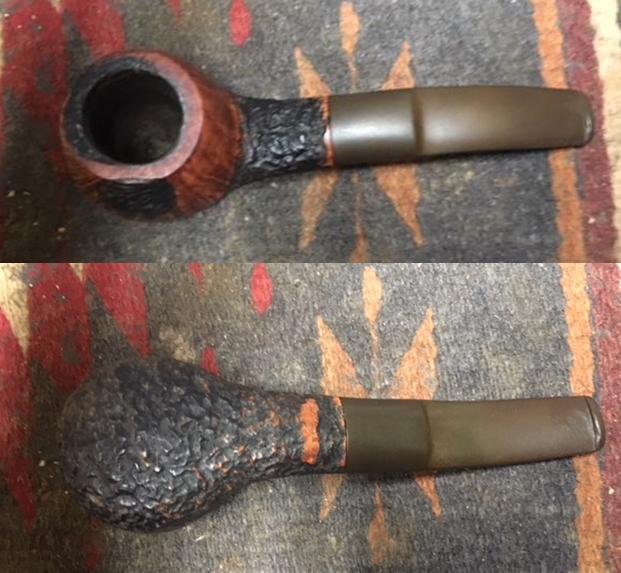
A Simple Refresh – a GBD New Standard 9438 Rhodesian


Blog by Steve Laug

I chose a second easy pipe to work on – another of my favourite shapes, a GBD Rhodesian. It is stamped on the left side of the shank with GBD in an oval over the words New Standard in script. On the right side of the shank it is stamped London, England over 9438. The stamping is quite readable. The finish was in decent shape. There was a light cake in the bowl and overflowing onto the topside of the rim. There was a slight burn mark on the outer edge of the rim from repeated lighting in that spot. The stem has the brass roundel on the left side of the saddle. The stem was lightly oxidized and there was tooth chatter on both the top and underside near the button. The next series of photos show the pipe when my brother received it in Idaho. He sent along a few close up photos to show the rim top and cake in the bowl. It shows the thickness of the cake and the light build up on the top. The photos that follow show the stamping on the shank sides and the roundel on the stem side. The next two photos show the tooth chatter on the top and the underside of the stem at the button. There were a lot of tiny tooth marks that covered the first inch of the stem on each side.My brother did his usual exceptional job of cleaning the pipe on the inside and out before he sent it to me in Vancouver. I ran a pipe cleaner through it when it came and it was spotless. He was able to remove much of the grime from the finish and the tars from the rim top.In the next photo you can see the burn marks around inner edge of the rim and on the front left outer edge. These would take a bit of work to minimize.I took a close up photo of the rim top to focus in on the burn marks around the edges of the bowl and rim top. I also took some photos of the stem to show the oxidation and the tooth chatter. I worked on the rim top with 1500-2400 grit micromesh sanding pads to remove the burned areas. I was glad to see that they were only surface and did not go too deep. I was able to remove them for the most part. There is a small remnant of the mark on the front edge of the rim. I polished the entire bowl with the 1500-2400 grit micromesh while I worked on the rim to begin to bring a shine to the briar. I continued to polish the rim and the bowl with 3200-12000 grit micromesh sanding pads to deepen the shine and polish the briar. I buffed the bowl lightly with Blue Diamond on the buffing wheel and set it aside. I worked on the stem. I sanded the stem with 220 grit sandpaper to remove the tooth  chatter on both sides. They were not too deep so it did not take too much work to remove the marks in the vulcanite. I polished the stem with micromesh sanding pads – wet sanding with 1500-2400 grit pads and then buffed it with Red Tripoli on the buffing wheel to breakdown the oxidation further. I then dry sanded it with 3200-12000 grit pads. I rubbed the stem down with Obsidian Oil after each set of three pads to bring life to the rubber and to also give the micromesh something to bit in during the polishing. Once I finished with the 12000 grit pad I gave it a final coat of oil and set it aside to dry. I put the stem on the pipe and buffed the entire pipe with Blue Diamond on the buffing wheel to polish out the remaining scratches. I gave the pipe multiple coats of carnauba wax to protect it and buffed it with a clean buffing pad to raise the shine. I took it back to the work table and hand buffed it with a microfibre cloth to deepen the shine. The finished pipe is shown in the photos below. The grain is unique and a mix of grains – flame grain, cross grain and some straight grain. There is even birdseye on the bottom and on the rim. The stain that was on the bowl is a reddish-brown and it allows the grain to shine through. It is a beautiful example of the GBD 9438 shape Rhodesian and one that will grace the pipe rack. Thanks for walking through this simple refresher with me.  

An Interesting Welsh Pipe Find: A C.A. Sander Sandhurst Bent Bulldog


Blog by Steve Laug

I came across this beautiful sandblast bent bulldog on Ebay and put a bid in for it. I was the sole bidder and won it for a decent price plus reasonable shipping from Great Britain. The pipe is stamped on a smooth spot on the bottom left side of the shank. It reads SANDHURST #16 and next to that it is stamped C.A. SANDER over SWANSEA. The seller stated that the pipe was in a good used condition, and had some wear. He also said that the measurements of the pipe are 135mm or 5.5 inches long, bowl size 35mm or 1.4 inches x 28mm or 1.10 inches. From the photos he included in the sale the finish on the bowl looked to be in excellent shape. The rim was very clean. I could not see the inside of the bowl but the way the rim looked I was guessing that it was very clean. The sandblast was nicely done with some deep craggy ring grain. There was no ring around the cap on the bowl. The stamping on the shank was clear but was weak in spots. The stem was lightly oxidized but had no tooth chatter or bite marks.Swan1

Swan2

Swan3

Swan4

Swan5 I knew next to nothing about the maker of the pipe. I could ascertain from the stamping that the pipe was made by a C.A. Sander in Swansea. I remembered that Swansea is in Wales so I had something to start with. I looked in Who Made that Pipe and also in Lopes book and could find nothing listed for that maker. I used Google to see if I could find any information on the company and looking a company of that name in Swansea, Wales. I actually found out that the company started in 1977 and closed in 1998. It appears from the information that I found to have been a family owned and operated company with broad interests. There was no mention of pipes in any of the company documents that I could find. I wonder if the brand was not just one of many avenues for the company to expand its horizons. I found two pipes online with the CA Sander stamping these included the Oxford and the Sandhurst. Both the Oxford and the Sandhurst are sandblast finish pipes with a dark stain. There was no other information available that I could find listed online. Does anyone have any information on the brand? (I have included a photo of the stamping on a stemless Oxford Bulldog that I just purchased on eBay for comparison.)Swan6 When the pipe arrived it was in far better shape than the seller intimated. The bowl was lightly smoked if at all. There was no cake and the darkening did not extend to the bottom of the bowl. I ran a pipe cleaner through the shank and the stem and it came out clean. There was dust in the shank that came out but no tobacco oils or tars. The stem was actually less oxidized than I expected and would clean up very easily. There were some tiny tooth chatter next to the button on the top and the bottom side of the stem. There were some small nicks in the vulcanite on the top right side midstem.Swan7

Swan8

Swan9

Swan10 I took a close up photo of the rim and bowl to show the excellent condition of the rim and bowl. The second photo below shows the nicks in the stem that I spoke of above. This should be an easy clean up.Swan11

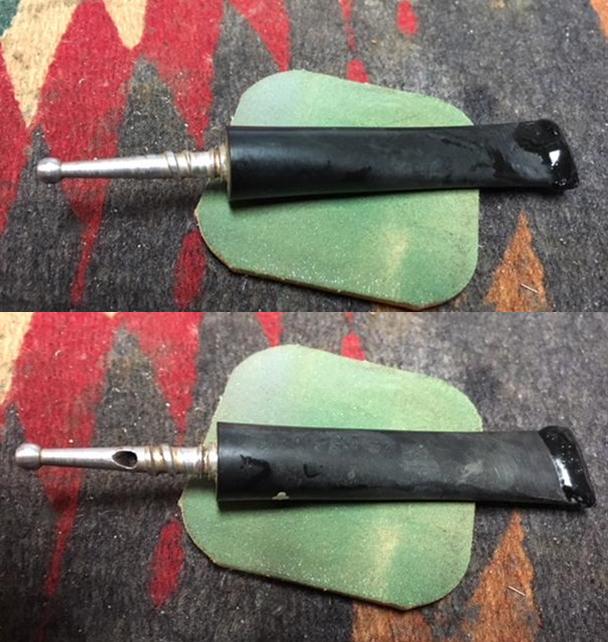
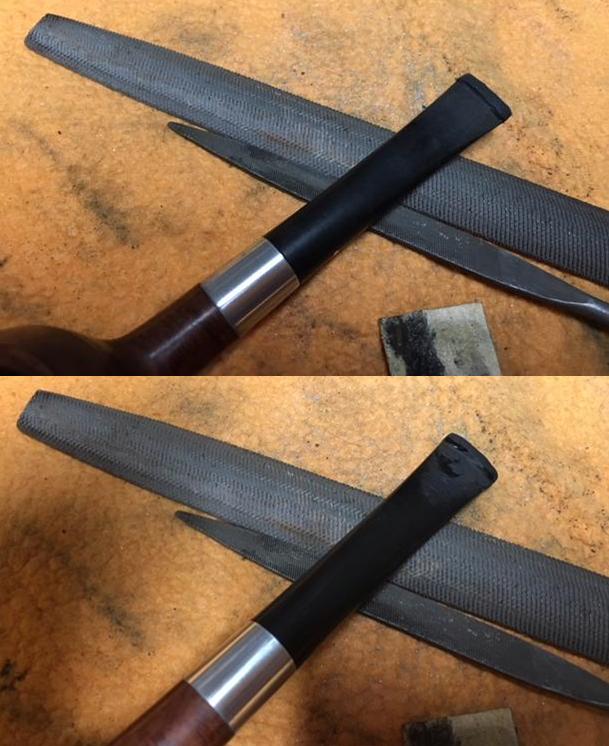
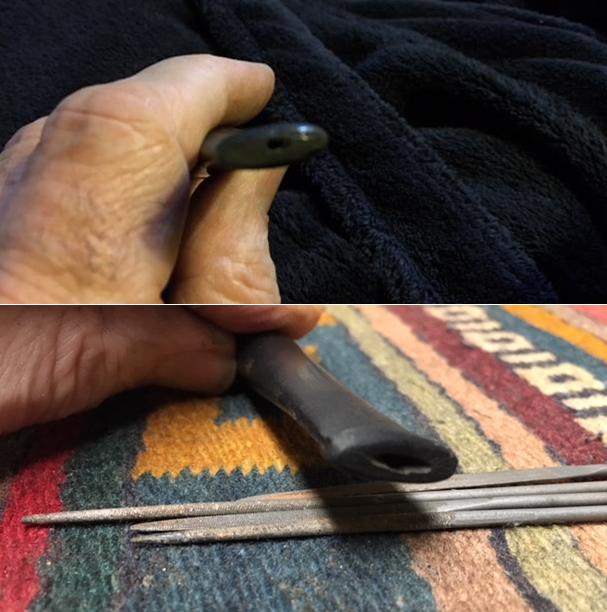
Swan12 The slot in the button was very thin and I was unable to get a pipe cleaner into the airway from that end. I used three different needle files to open it wide enough to take a thick pipe cleaner easily. Once it was open I sanded the inside of the slot to make it smooth. The draw on the pipe is much better after opening the slot. The narrowness of the slot makes me wonder if that is why the pipe was not smoked more.Swan13

Swan14

Swan15 I sanded the stem with 220 grit sandpaper to remove the oxidation, smooth out the tooth chatter and the two nicks on the right side. Once they were gone and the stem was smooth I used a medium and fine grit sanding sponge to begin to minimize the scratching. I put a plastic washer between the stem and the shank to keep the shoulders sharp and protect the shank while I was sanding.Swan16

Swan17

Swan18

Swan19

Swan20 I wet sanded the stem with 1500-2400 grit micromesh sanding pads and then rubbed the stem down with Obsidian Oil. The oxidation is disappearing and the dark black of the rubber is beginning to stand out. I dry sanded it with 3200-4000 grit micromesh pads, gave it another coat of oil and finished sanding it with 6000-12000 grit pads. I gave it a final coat of Obsidian Oil and then set it aside to dry.Swan21

Swan22

Swan23 I buffed the pipe and stem with Blue Diamond on the wheel and then gave them multiple coats of carnauba wax. I polished the pipe with a clean flannel buff and then gave it a final buff by hand with a microfibre cloth. The stem cleaned up amazingly well. The pipe is ready for a inaugural smoke. The draw is wide open and easy! Thanks for looking.Swan24

Swan25

Swan26

Swan27Addendum: 06/06/18 I received an email from Andrew  in answer to a question I asked in my two blogs on CA Sander pipes. I quote in full his email because of the information that it includes.

Comment: You asked about C A Sander

C A Sander were tobacconists based in Wind Street Swansea. I don’t know exactly when the business started but it it passed to my Grandfather from his father (both were C A Sander) and by the 1920 was a successful and well established retail business with shops all over south wales. They were importers and blenders (if that is the term) of tobacco and the shops sold smoking paraphernalia. At my grandfathers retirement late 60’s to business went to my uncle again C A Sander but known generally as Jim. He developed a business supplying cigarette machines around South Wales and moved out of retail he eventually sold the business to Rothermans and went into other business ventures, I expect that was when the limited company you found was formed. Uncle Jim has now retired but still lives in the area.

Hope this helps with your research.

Andrew I received this followup email from someone who would like to get in touch with you. Here is her email

Hi there – I stumbled upon your website when looking for anything to do with C.A. Sander tobacco shop and I saw the pipe you restored – which is amazing! and then saw the comment below left by Andrew. Since that shop was owned by my grandfather, and Andrew’s grandfather – it would seem that we are cousins – but we have never met. I would love to get into contact with Andrew. Would you be able to assist in that? If possible, could you ask him to contact me at my email address pianokey88@hotmail.com?
Many thanks for your help! Georgina

Gourd Calabash Restoration


Blog by Aaron Henson

I was at work the other morning and got caught looking at something on the internet that should not have been. It was not as terrible as it sounds. My job requires that take annual training (given online) each year, and after almost ten years of the same information I take some liberties. While the training was running in one window I was browsing the latest estate pipe auctions on eBay in another. At 6:30 am there are not many other people about the office so I didn’t think much about it until a friend happened by and asked about my interest in pipes. We talked for a bit and at the end of the conversation he said that he had his father’s Sherlock Holmes pipe that was collecting dust and would I be interested in it. Of course I said “Yes!”

The very next morning my friend brought over a beautiful calabash gourd pipe. He also sent me home with nice Grabow Savoy bent billiard – his own pipe that he had not smoked in over ten years. The calabash, he said, was a pipe that he had bought as a gift for his father sometime in the late ‘70’s or early ‘80’s. After his father had passed away it had come back him. He had had it on display in his rec-room for a while but in recent years it was pushed to the back of the shelf.

Upon getting home that night, I put my other restoration projects on hold (a 1929 Peterson Irish Free State with a broken shank and an Oom-Paul with a bit through stem) to make room on the work bench. I did not jump right into the restoration that night however. All of my restorations up to this point have been with briar pipes. I have always been interested in meerschaum and calabash pipes but never actively pursued acquiring one. But now, with this amazing gift, I dove into study about the making, care and restoration of calabash gourd pipes.

What I found was that there is not nearly as much information about restoring gourd pipes as there is about restoring briar. I believe this to be in part because gourd pipes just don’t hold up as well over time as briar does.

I began with a thorough inspection of the pipe. The stem had a lot of dried crust of some sort on it but not much oxidation but there was very little tooth chatter around the button. Upon reflection I realized that this was not too surprising considering that a pipe of this size would be very difficult to clench. The stem was also slightly misaligned. Nothing very noticeable and may even have been intentional so as to provide a more comfortable smoke. The stem inserted into a plastic ferrule that was in very good condition but it was only with great difficulty that I remove the stem. I was worried that would break it before it came free. A drop of alcohol at the base of the stem eventually helped it break free.

The gourd was a little dirty but the most noticeable thing was that one side appeared faded compared to the other, probably a symptom of being placed on display. I confirmed with my friend that the meerschaum bowl was a replacement. The outer rim of the bowl sits almost flush with the edge of the gourd, there not being much overhang. I tried to remove the bowl for inspection and cleaning but it seems that the new bowl was glued in place. There we no markings of any kind on the pipe, so the manufacturer will remain a mystery.Calabash1

Calabash2

Calabash3

Calabash4

Calabash5 I began by cleaning the stem by setting it to soak in an Oxyclean bath. After 10 minutes I removed the stem and scrubbed it with a magic eraser pad. This was a new technique for me and I was so focused on what I was doing I forgot to take pictures. The outside of the stem cleaned up very well the crusties coming off in the soak. The interior of the stem also cleaned up easily; the third alcohol soaked pipe cleaner came out as clean as it went it in. Below is the cleaned stem. My apologies for the background – the green is a little hard on the eyes.Calabash6 Next I addressed the tooth chatter; one large dent on the top of the stem and three smaller on the bottom. I tried to raise the dents with some heat from lighter. While the stem was still warm I realigned the bit with the curve of the stem. The heat helped raise the dents but didn’t remove them completely and the larger one still required a drop of black super glue filler. The other dents were easily removed with 220 grit sandpaper. The pictures below are after the heat was applied and before the sanding.Calabash7 I follow the same regimen that many of the others on this blog do for polishing vulcanite stems: 1500-12000 micro-mesh pads, wet sanding the first six pads and stopping every 3 pads to coat the stem in mineral oil. I found a set of ½-inch wide micro-mesh sticks at my local Wood Works store and these worked very well around the bead detail on the stem.Calabash8

Calabash9

Calabash10 Since I could not remove the meerschaum bowl, I opted not to use any alcohol based cleaners on the gourd. Instead I scrubbed it down with Murphy’s Oil Soap on a cotton pad. After cleaning, I made several passes with a wet paper towel to wipe off the soap residue.Calabash11 The sun bleached side of the pipe had kind of a rough feel so I lightly sanded the entire gourd with 600 grit paper. This evened out the texture and removed any surface damaged of the gourd.Calabash12 The ferrule was plastic and I had very difficult time removing the stem the first time. Some of the sticky residue I had cleaned from the stem must have gotten into the mortise. I used a pipe cleaner bent in half and dipped in alcohol to swab the mortise clean. Even with my initial troubles, three passes was all that was required to clean the mortise. I wiped the outside of the ferrule down with alcohol and then buffed using the 4000 – 8000 micro mesh pads to remove any light scratches.Calabash13

Calabash14 I debated with myself a long time about what to do with the discolored gourd. I finally decided to try to blend the discoloration with a light stain. Mixing one part Fiebing’s Light Brown with three parts isopropyl alcohol, I used a cotton swab to apply the stain. Starting at the edge of the discoloration, I worked my way around the pipe, layering the stain to get the variation and depth of color. To my surprise this worked well and I was very pleased with the results. After multiple coats and looking at the pipe under various types of lighting I was finally satisfied with the results. When the stain had dried completely, I applied a light coat of mineral oil wiping off the excess.Calabash15

Calabash16

Calabash17

Calabash18 Taking the stem to the buffing wheel, I put on three coats of carnauba wax and called the restoration complete. My next project is to build a stand for the pipe. I will start on it as soon as I can settle on a design that I think will complement the shape of the pipe. And maybe someday, I will replace the bowl with one that gives the pipe a more traditional calabash look. But right now, I am looking forward to burning bowl of Burley Virginia.

Thanks for looking.

Reworking one of my own


Blog by Steve Laug

I don’t remember when I carved this pipe I do know it was one of the first I carved. It was a kit and the plateau was on the bottom of the bowl. I did the work with a Dremel and sanding drum. The stem was the one that came in the kit and I just used it. Over the years, probably in the neighbourhood of ten years, I smoked it infrequently but enough to know that it delivered a decent smoke. Looking at it the other day I noticed that it had a thin cake in the bowl so I obviously smoked it more than I remember. When I took it out of the rack the fit of the stem to the shank irritated me. It was a sloppy fit and slightly rounded at the shoulders. The diameter of the shank and the stem were not matched. On and on went the list of imperfections that stood out to me when I looked at it. I love the shape of the bowl, my odd rustication on the bottom of the bowl and shank and the look and feel of the bowl in my hand. But the stem had to go.apple1

apple2

apple3

apple4 I had a little time on my hands so I went through my can of stems and found a stem that was thicker looking and about ½ inch shorter. I fit the tenon in the mortise and the fit against the end of the shank was tight and clean. Personally I liked the chubbier stem and the compact look it gave the pipe. To me it just seemed to work with this bowl. The stem was larger in diameter than the shank so it needed to be brought down to a clean transition between the two.apple5

apple6

apple7

apple8 I worked on the stem diameter with emery cloth and sandpaper taking off the excess material and adjusting the fit to the shank.apple9

apple10 When the fit was better I sanded the stem and the shank with medium and fine grit sanding sponges to minimize the scratches.apple11

apple12 Once I had the fit correct and the transition smooth I took the photo below. I needed to restain the shank when I was finished to match the bowl.apple13 I used a light brown stain pen to match the stain on the bowl. I stained it and hand buffed it out to blend it in. Once the stain was buffed I set up my heat gun and heated the stem to adjust the bend slightly. In the original stem there was an abrupt down turn that did not work for me. I heated the stem and rebent it. Afterward I took the next series of photos to show the state of the pipe after the rebend.apple14

apple15

apple16

apple17 With the stem bent the angle I wanted it was time to polish the stem. I sanded it with a fine grit sanding sponge and the used micromesh sanding pads to finish it. I wet sanded with 1500-2400 grit pads and then rubbed it down with Obsidian Oil. When the oil had been absorbed I dry sanded it with 3200-4000 grit pads. Each successive grit of pad raised more shine in the vulcanite. I rubbed it down again with oil and then continued dry sanding it with 6000-12,000 grit pads. When I finished I rubbed it down a final time with the oil and let it dry.apple18

apple19

apple20 When it dried I took it to the buffer and buffed it with Blue Diamond Plastic polish and then gave the pipe multiple coats of carnauba wax. I finished by buffing it with a clean flannel buff to give it a finished shine. This one is going as a birthday present to a friend of mine. I gave him a choice of pipes that I had made and he chose this one. It is a great smoking pipe and I think he will enjoy it.apple21

apple22

apple23

apple24

apple25

apple26 It seems that the work never seems to be finished on the pipes I have carved. I always seem to see one more adjustment, one more tweak to get it just right. Ah well, at least I am done with this one. Thanks for looking.
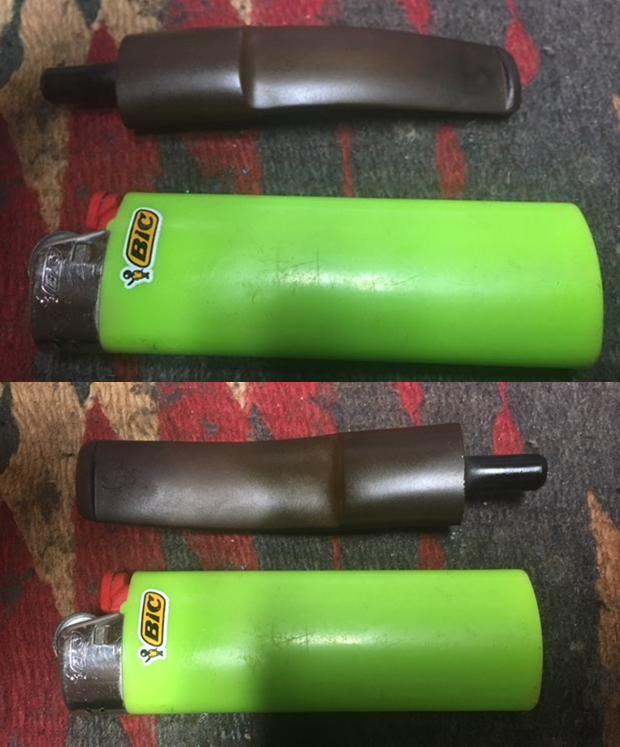
Restoration of a Barclay Rex HGP Briar Root Labelled “THE DUKE”


I read a post by dmcmtk on Pipe Smokers Unlimited Forum regarding a pipe he picked up that was a Barclay Rex with a white spot on the stem. He had written to the store and received a response that the pipe was made for them by Dunhill. I had no idea that Dunhill had made pipes for the NY shop so I began to hunt down some of these pipes looking for the tell-tale white dot on the stem. I found some on Ebay under the Barclay Rex shop store there and one stood out to me and seemed to call my name. The write-up on the ad read:

“This is a HGP Stubby Briar Root estate pipe that has been carefully restored on-site.The stem is in excellent condition and has very little visible wear; there are a few nicks on the bowl. This pipe was made by hand for Barclay Rex and likely dates to before 1960. The letters HGP actually stand for the craftsman’s initials.”

The story and the shape intrigued me and it had the white spot on the stem. I was hooked. It had a buy it now price so I went for it. I contacted the store and paid the bill and the pipe was mine. I was not too concerned about the condition as I would work on it anyway. The ad said that it had been carefully restored on-site so I would see what that meant when it arrived. The photos below were on Ebay and give a good idea of why the shape caught my attention. $_57 $_58 $_59 $_60 $_61 $_62 $_63 $_64 $_65 $_66 I wrote to Barclay-Rex to find out a little background information on this pipe and the stamping it showed in the pictures. I received this email response:

Dear Steve,
This was made by a pipe maker who worked for Barclay Rex for a time in the mid-20th century. His initials were HGP and he would stamp his pipes as such. We are unsure why the maker decided to place a white dot on his stem, but we have come across one or two more of his with the same combination. Unfortunately, his full name has been forgotten with time.
– barclayrex1910

When the pipe arrived it was in good shape. The stamping indeed was HGP over Briar Root on the left side of the shank and The Duke on the bottom of the shank. Part of the shank and bottom of the bowl was flattened so that it was a sitter. I took it apart to examine it more closely. It was anything but cleaned and restored. The stem was rough – there was oxidation next to the band that went quite deep. There was a gouge on the right side of the stem that was quite deep. The top and the bottom of the stem from the taper to the button had obviously been modified to make a more pronounced taper. The file marks were still evident in the vulcanite. The width of the button end of the stem had also been modified and was narrower than originally designed as the sides of the stem also showed file marks. The button itself had a orific opening but someone had modified it into a poorly shaped slot. The stem had deep tooth marks on the surface of top and bottom near the button. There was a bite through on the top side next to the button. The angle of the taper was very abrupt and sharp with distinct cut marks. The tenon was fit for a filter by the appearance of it and the inside was very tarry. A filter would not have fit with all of the buildup in the stem. The bowl was another story. It was out of round with burn marks on the inner edge that needed some work. It had been reamed so that was not an issue. Then inside of the shank was filthy. The tars and oils were thick against the end of the mortise.

I decided to work on the stem first. I wanted to address the taper of the stem and cleanup the file marks and gouge in the top portion. I sanded the stem with 220 grit sandpaper to remove the scratches and reshape the taper. This took quite a bit of sanding to reshape the angles and edges of the stem. There was a slight hip on both sides of the stem that needed to be sanded out to get a smooth flow to the lines of the sides. The next series of photos show the progress in reshaping and repairing the stem. I worked on the taper first to remove the sharp angles of the sides and top of the taper and work on a flow to the profile of the stem. IMG_8158 IMG_8159 I sanded the gouge on the top right side of the stem until it disappeared and also worked on the transition from the flattened top and bottom of the taper and the round end next to the shank. The wet spot on the first photo next to the button highlights the spot where the small hole in the top of the taper was. At this point the taper is smooth and the transition is beginning to look right. The profile shot below shows the work that has been done. IMG_8163 IMG_8164 I continued to sand and smooth out the taper to give it a look similar to a Peterson tapered stem. The first photo shows the taper after all of the shaping. I rubbed some Vaseline on a pipe cleaner and inserted it in the orific slot in the button so that I could patch the hole in the top side of the stem. The second photo below shows the size and placement of the hole. IMG_8178 IMG_8180 I used black super glue for the repair and sprayed it with the accelerator to harden it more quickly. I found that the accelerator allows me to sand more quickly but curing actually takes longer. I sanded it with sanding sticks to smooth it out and then build it up several more times to give more thickness to the stem at the button. I reshaped the sharp inner edge of the button with a needle file. Superglue patch IMG_8181 After sanding with the sticks I sanded the patched area with 220 grit sandpaper and then with medium and fine grit sanding sponges to smooth out the scratches and blend in the superglue patch with the rest of the stem surface. IMG_8182 I finished sanding the stem with micromesh sanding pads – wet sanding with 1500-3200 grit pads and dry sanding with 3600-12,000 grit pads. I rubbed the stem down with Obsidian Oil between each three grit sequence of pads and let it sit until absorbed before continuing with the next set of three pads. When I finished sanding with the last three grits of micromesh I rubbed it down with a final coat of Obsidian Oil and when dry put the back on the pipe and gave it a buff with White Diamond. IMG_8187 IMG_8188 IMG_8189 I set the stem aside and turned my attention to the bowl. I decided to top the bowl to even out the rim as most of the inner rim damage did not go too deeply into the bowl. Topping it would smooth out the rim and allow me to correct the damage that made it out of round. I set up the topping board with the 220 grit sandpaper and sanded the top until the rim was smooth and the burn damage was minimized. I sanded the inner edge with a folded piece of 220 grit sandpaper to further mask the damage to the inner rim. IMG_8161 IMG_8162 I sanded the topped bowl with medium and fine grit sanding sponges and then with 1500-4000 grit micromesh sanding pads. I cleaned out the sanding dust from the bowl with a damp cloth and wiped down the top of the bowl with an alcohol wipe to prepare it for restaining. I decided against restaining the whole bowl and to just stain the rim. Thanks to Greg I have a set of staining pens that make this kind of thing quite easy. I started with the lightest stain pen and then used the medium stain pen to match the colour of the bowl. I buffed it with White Diamond and then gave the bowl and rim a quick buff with carnauba wax. After the buffing I sanded the band with the micromesh sanding pads and then polished it with a polishing cloth. The finished bowl is shown in the photos below. IMG_8167 IMG_8168 IMG_8169 IMG_8171 IMG_8172 The next photo shows what I did next, though in retrospective I probably should have done this first, I did not. I cleaned out the inside of the shank with isopropyl alcohol, cotton swabs and pipe cleaners to remove the tarry buildup in the mortise and airway of the pipe. IMG_8175 Once I finished cleaning out the inside of the pipe I gave it a quick buff with White Diamond and then gave it multiple coats of carnauba wax, buffing with a soft flannel buff between coats. The finished pipe is shown below. The restoration and refurbishment are complete and now it can be honestly said that it has been “restored”. The amount of work it took to bring this pipe back to a finished look was far more than I expected when I bid on it. I honestly was surprised at how dirty and unfinished it was when it arrived. Now I have a pipe that I can be proud of and enjoy smoking. The look and feel in the hand is exactly what I like and I look forward to firing up the first bowl in it very soon. IMG_8192 IMG_8193 IMG_8194 IMG_8196
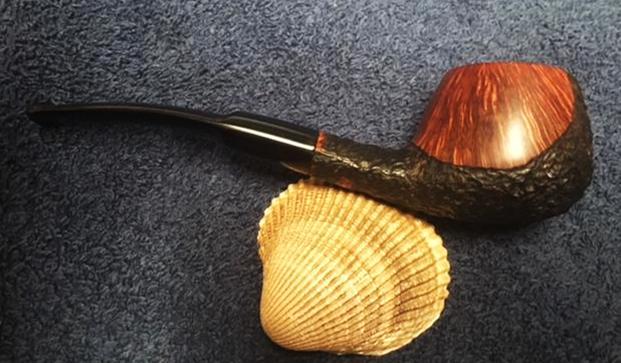
Hard Rubber and other Early Plastic Used In Pipes – Ronald J. de Haan

While searching the web for information on Bakelite I came across this very interesting article on vulcanite, Bakelite and Casein that were all used at some point in history in making pipes and pipe stems. The link for the article, that includes the photos used to illustrate the various pipes are included is shown below: http://pipeacademy.org/pdf/publications/AIP%20Publication%20PDFS/2001%20Pipe%20Year%20Book,%20de%20Haan%20searchable.pdf
I have edited the article and posted it here without the photos that were used in the original piece. I have not found this concise a description of the materials anywhere else. Thank you Ronald J. de Haan for your excellent research.

This article is an attempt to draw attention to a very interesting field within the area of smoking collectibles. Many collectors of tobacco articles know something about many smoking accessories made out of synthetic material, like ashtrays, match-holders and cigar-cases.

In general though, there is very little knowledge about pipes made out of synthetic material, like hard rubber and other early plastics. Pipes (bowl and stem) that are completely made out of synthetic material are quite rare. This is not surprising, because synthetic material is less heat resistant during smoking, than traditional materials such as meerschaum, clay or briar.

The use of hard rubber for the production of pipes did not come as the result of long research; but is the result of the discovery of vulcanisation in 1839, which increased the applications for rubber enormously.

The introduction of rubber
Rubber is a natural product extracted from the rubber tree, Hevea brasiliensis. The bark of the tree is cut in a controlled way, as not to disrupt the flow of sap so the tree will survive. The milk-like, syrupy substance is known under several names. In the Amazon area the inland name for rubber tree is Cahucha (weeping tree). This word lives on in the French Caoutchouc and the German Kautschuk, both meaning rubber. The name rubber dates from the mid 18th century and was introduced by the famous British theologian and scientist Joseph Priestly.

The story of rubber in the western world begins at the end of the 15th century. On his second journey to America, Christopher Columbus visited the island of Haiti and saw children playing with elastic balls. The material was introduced in Europe as a toy. For the next centuries its application was limited.

In 1731 the French Charles de la Condamine, during a surveyor-expedition in Peru discovered that the local inhabitants used rubber to make their clothing waterproof. They also made shoes and bottles by pulling the material around moulds and letting the rubber harden in the sun or above a fireplace.

The British Thomas Hancock experimented in 1820 with forming rubber by mechanical power after heating the material, which resulted in the first waterproof rain clothes, made by Charles Mackintosh. It was the American Charles Goodyear who patented in 1839 the process of stabilising rubber with the help of sulfur, which is called the vulcanization process.

The vulcanization process
By vulcanising the rubber for a longer time and by adding a larger percentage of sulfur (up to 50%) the product became harder. The result was a new material. It was the first half synthetic plastic made out of a natural product changed by a controlled chemical process.

This new material is known by several names, depending on the production or the appearance: ebonite, because it looks like ebony; vulcanite because of the process of heating, referring to the Roman god Vulcan; hard rubber, which speaks for itself.

One of the first patents by Goodyear states that the new material was used in the production of pipe stems, an application that proved to be very suitable because the material was easy to mould. This hard rubber, though not the most suitable material for pipe-bowls, was used for the production of complete pipes until the 20th century, undoubtedly because of the ease of doing the detailed work. In order to prevent the bowls from melting or burning away, it was necessary to place inserts of meerschaum, briar or clay in the bowl of the tobacco pipe. Cigar and cigarette holders however, were produced without an insert because it was not necessary.

Two other synthetic materials have to be mentioned in this article, because they have been used extensively in the production of pipes, sometimes in combination with hard rubber. These two materials are casein and Bakelite.

Casein
Casein, in full casein-formaldehyde, consists as the name suggests of an important part of the milk protein. Casein can be extracted from skimmed milk with a specific enzyme. By exposing the kneadable doughy substance to the liquid formaldehyde for days or even weeks a new material emerges, which will not melt, even at high temperatures.

It is a so-called thermosetting synthetic material, like rubber (semi-synthetic). The patent for the production of this material dates from 1899 and belonged to the Germans Krische and Spitteler. They called the new material Galalith. Later it became known also as Erinoid, Ameroid and Kasolid. Casein can be coloured easily. A drawback of the material is its sensitiveness to liquid. Long-term exposure to liquid makes the material crack.

The pipe-making industry used the material widely till after the Second World War for the production of cigarette pipes (pipettes), as it could easily be pierced, turned or modeled. The long Charleston cigarette pipes of the 1920’s are made of casein.

Bakelite
Bakelite, officially phenol-formaldehyde, is regarded as the first fully synthetic material. The Belgian born Leo Baekeland invented it in the United States. He succeeded in controlling the long known heavy chemical reaction between phenol and formaldehyde. Controlled high temperature and high-pressure, formed the basis for his patent which he obtained in 1907. The result of the chemical reaction is an amber-coloured resin. Mixed with filling material like sawdust, asbestos or textile fibres the result, after pressing, is a hard thermosetting synthetic material. The most important qualities of this material are its insulation for electricity, its solidity and the possibility of use in mass production.

These qualities made Bakelite the most successful synthetic material in the first half of the 20th century. From 1928 it was also produced as moulded resin. Both the pressed and the moulded forms were suitable for the pipe making industry. Pipes were made from Bakelite and moulded phenol-resin. Complete pipes of Bakelite are very rare because of its lack of heat resistance. Phenol-resin however was frequently used for pipe mouthpieces and cigarette holders because it imitated amber.

Literature
Cool, Patrick and Sessor, Catherine, Bakeliet, Helmond 1993

Engelen, Jos, De Meerschuimpijp, in: Pijpologische Kring Nederland, 20″c jaargang nr, 80 (1988), page 998

Katz, Sylvia, Early Plastics, Shire Publication nr, 168 (1986)

Perree, Rob, Bakelite, Amsterdam 1996

Tymstra, Fred, Bakelieten pijpen met stenen potje, in: Pijpelogische Kring Nederland, 16° jaargang nr, 63, page 566-572 (1993)

Woshner, Mike, India-Rubber and Gutta Percha in the Civil War Era, z.pl., z.j.

Catalogues
Smokers Articles and Walking Canes and Miscellaneous Goods, The Novelty Rubber Co., New York 1877

Price Current, Goodyear’s Rubber MFG Co. And Goodyear’s I.R. Clove MFG Co., New York 1880

Pipes and smokers Articles, Zorn & Co

George, Philadelpia 1892 (reprint by Paul Jung Jr., 1989)

Catalogue General, Bessard-Pignol Gustave, Clermont Ferrand 1894

With special thanks to:
Richard Schoevaart, Amsterdam, Karelloeff, Laren, Jacques Bergmans, Weert.