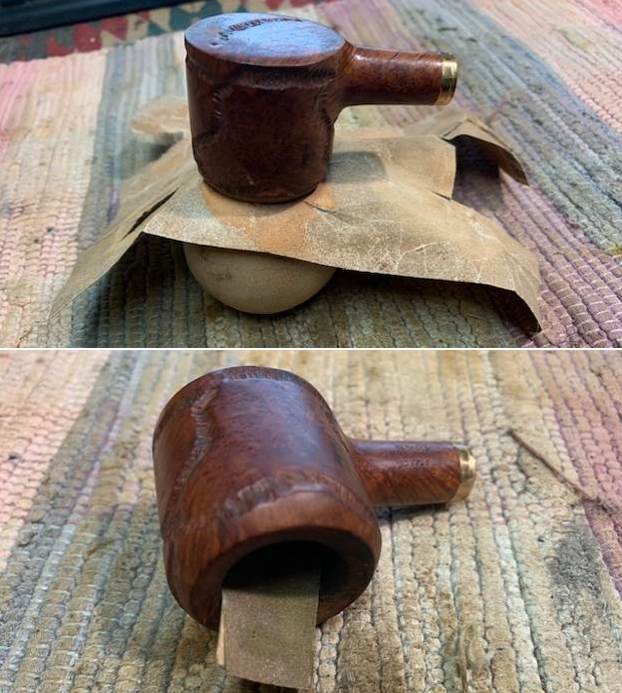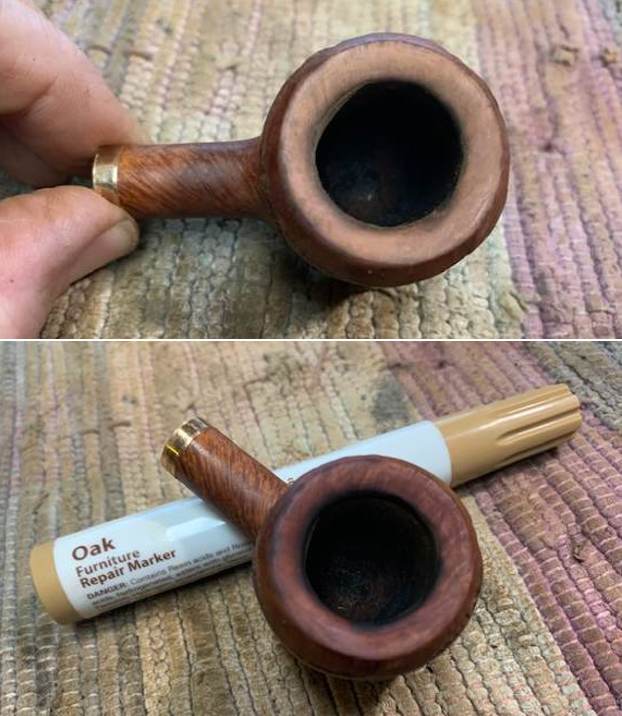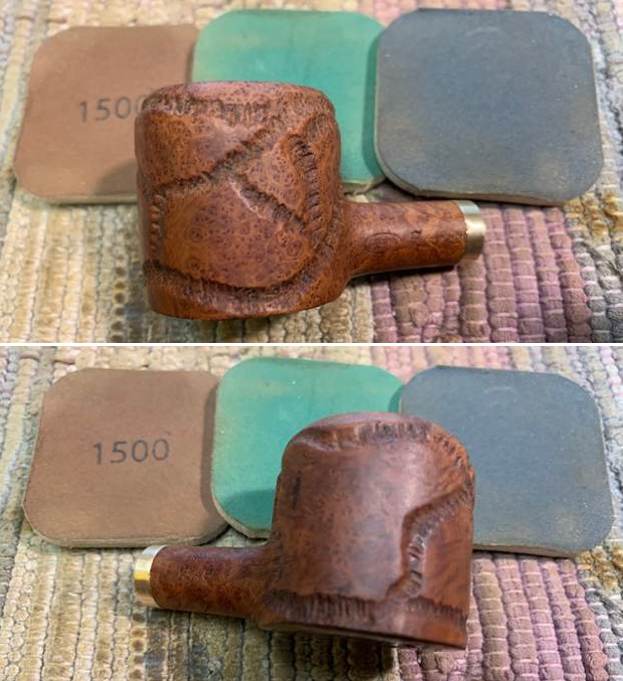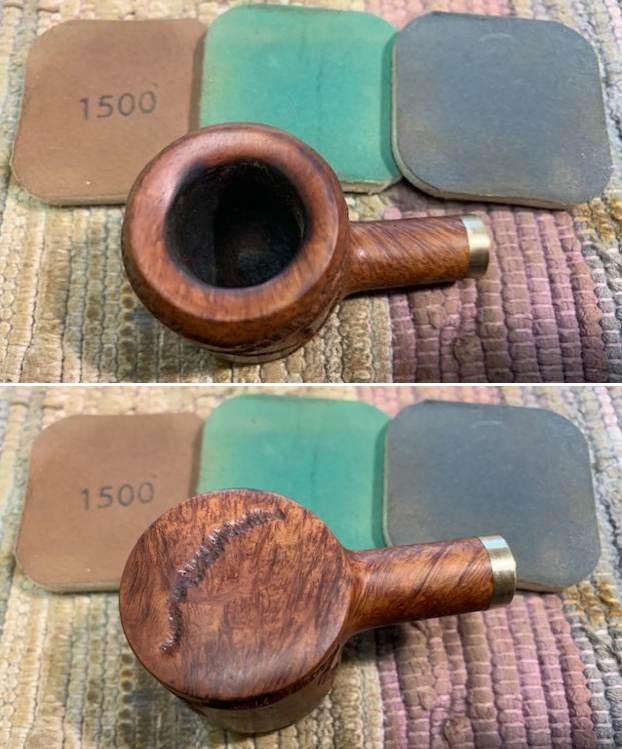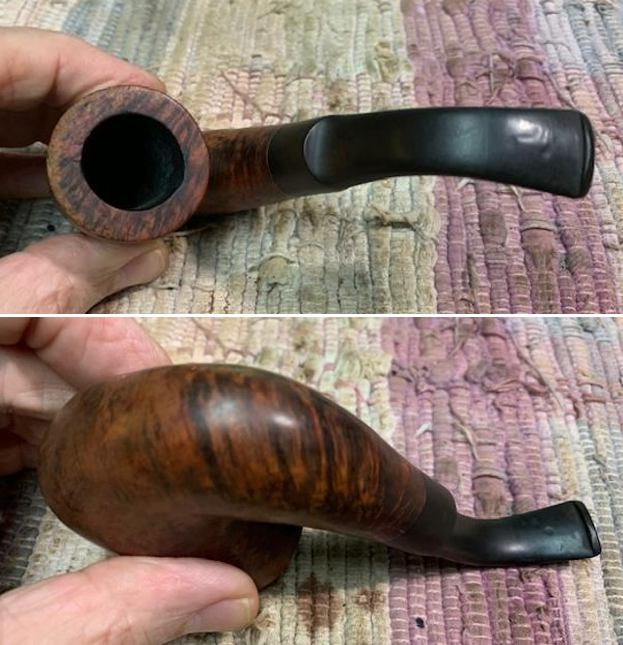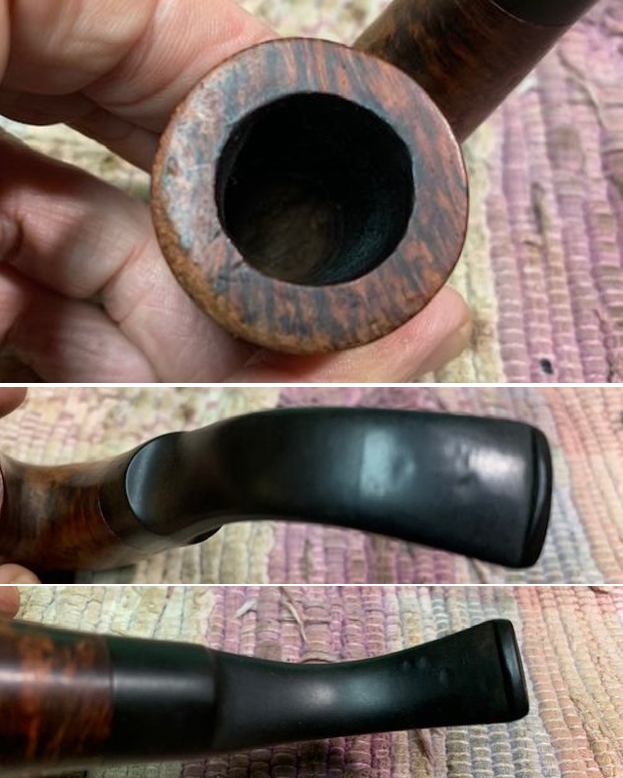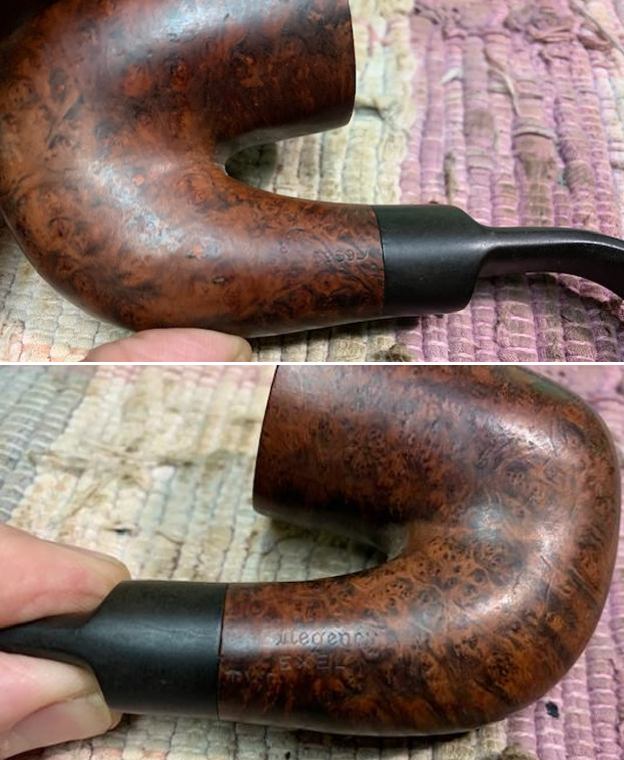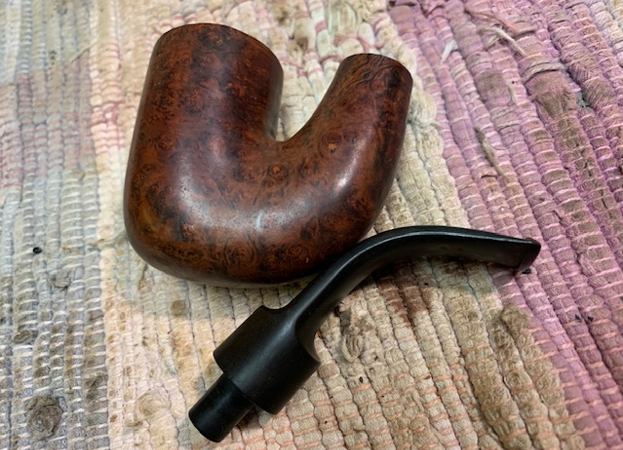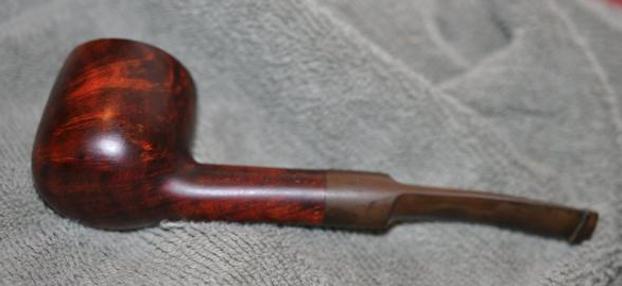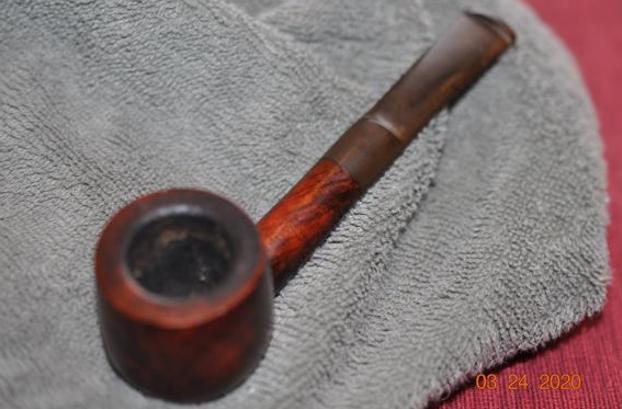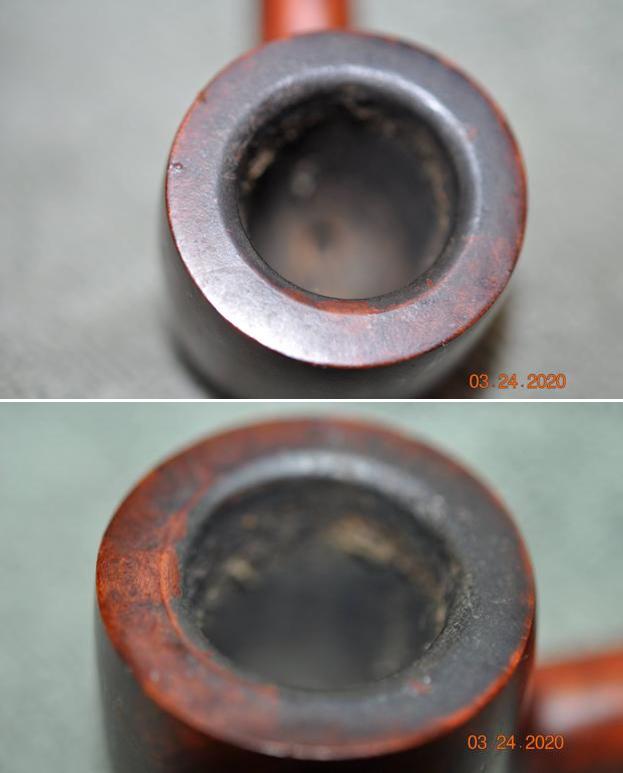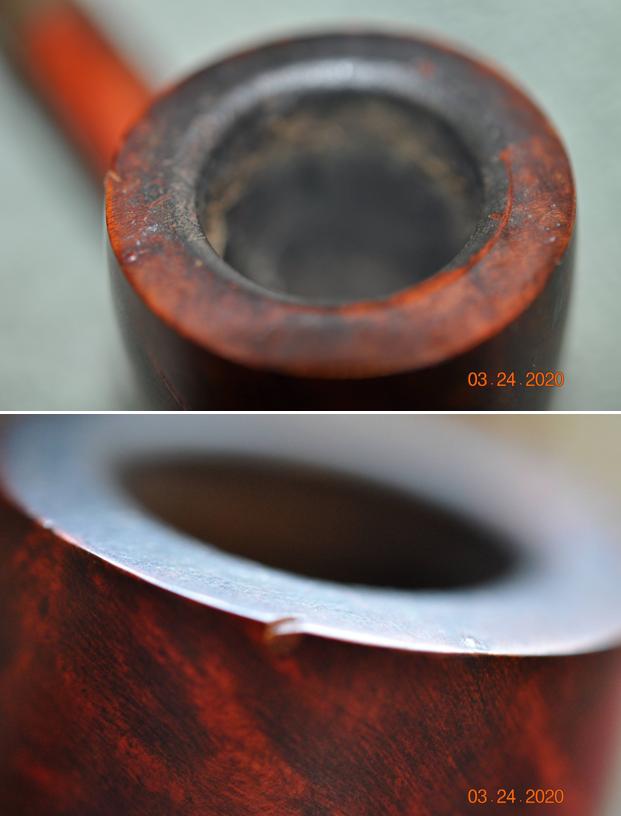
Tag Archives: staining

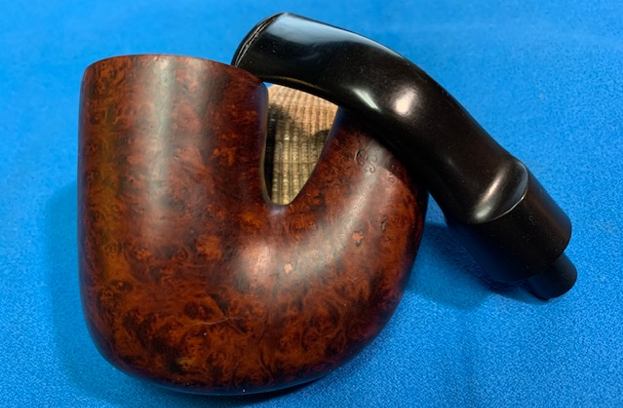
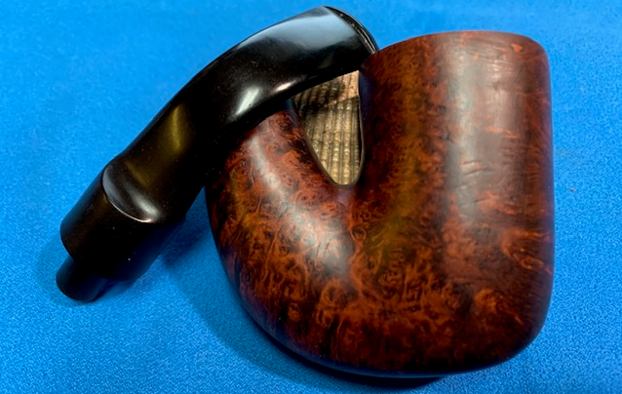
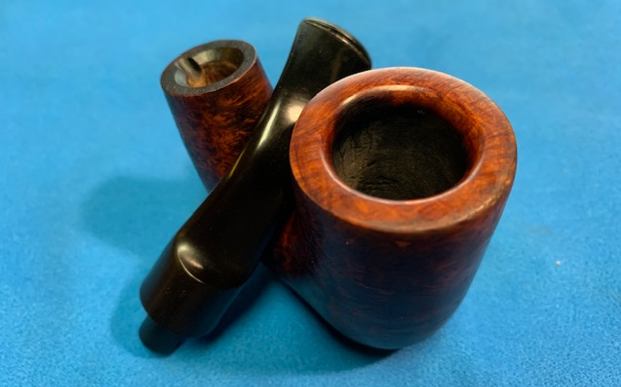
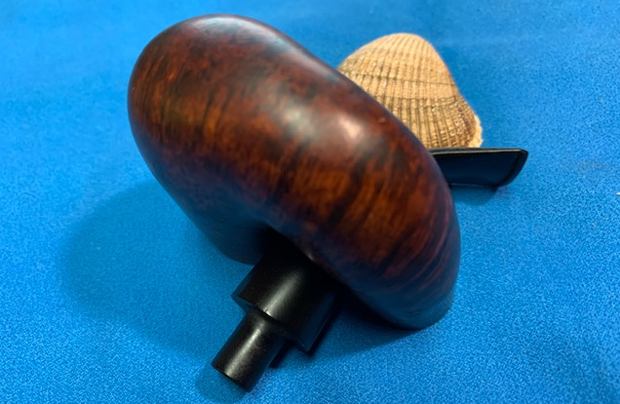
Restemming & Restoring a Comoy’s Christmas 1987 Shape 42 Bent Billiard


Blog by Steve Laug

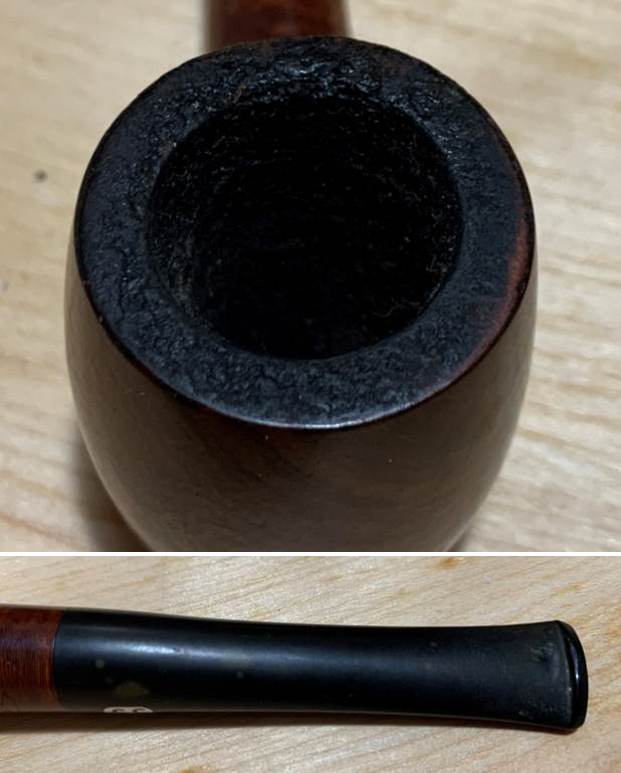
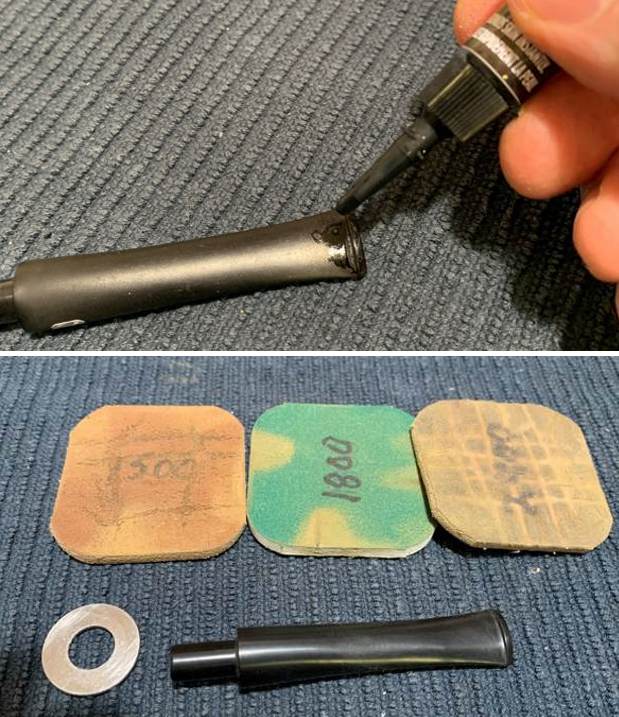
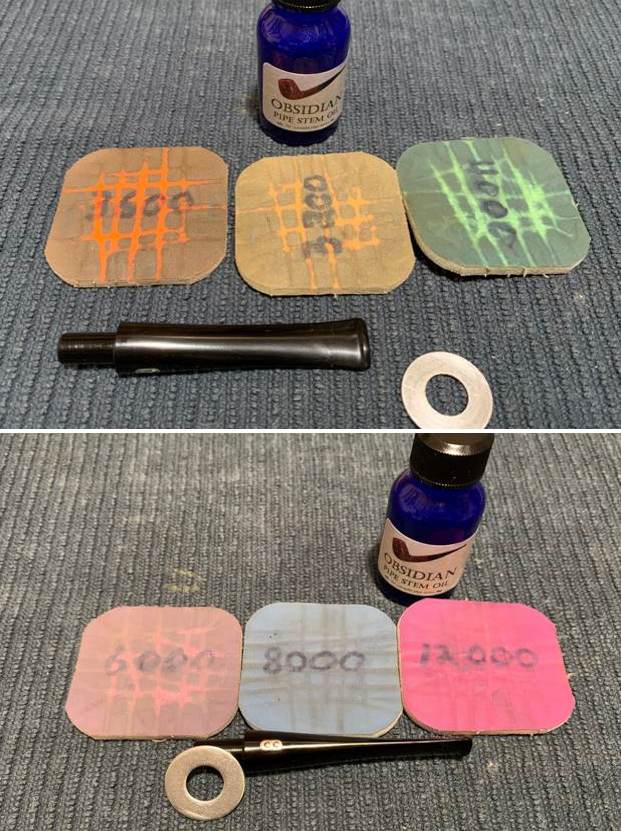
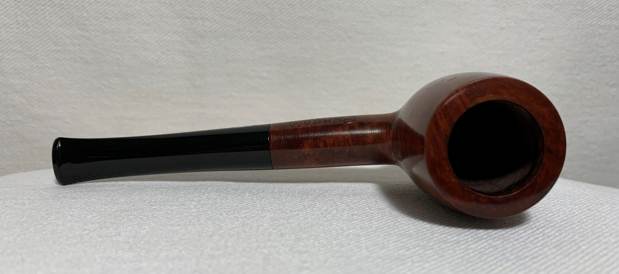
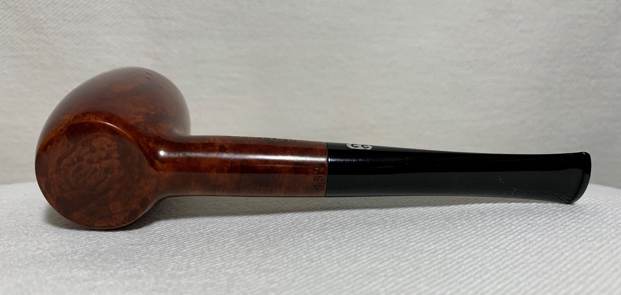
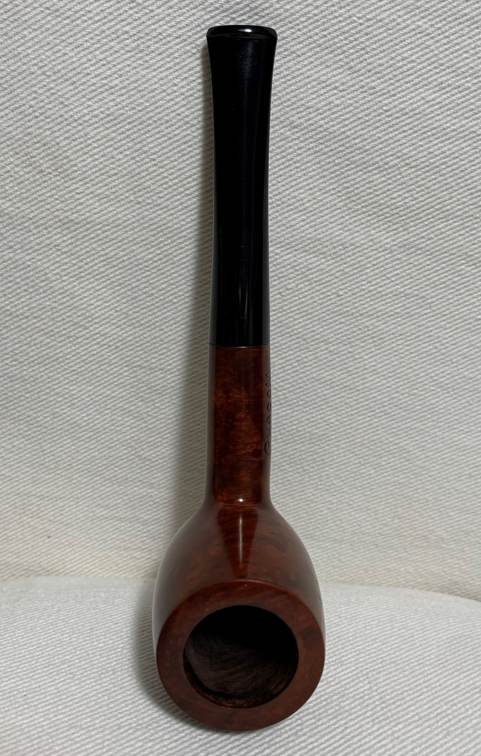
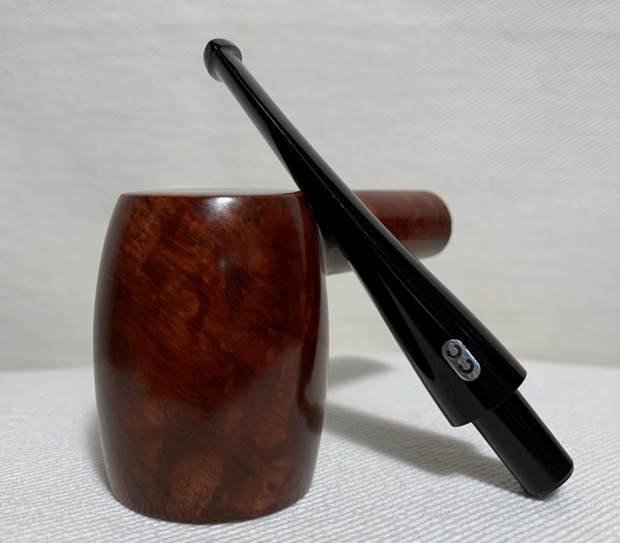
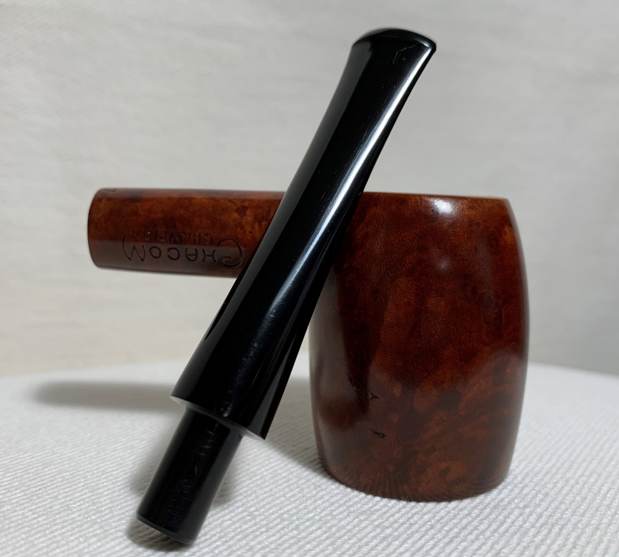
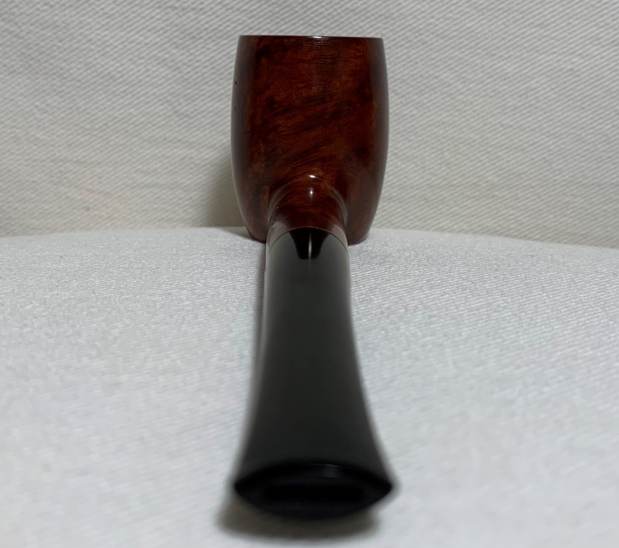
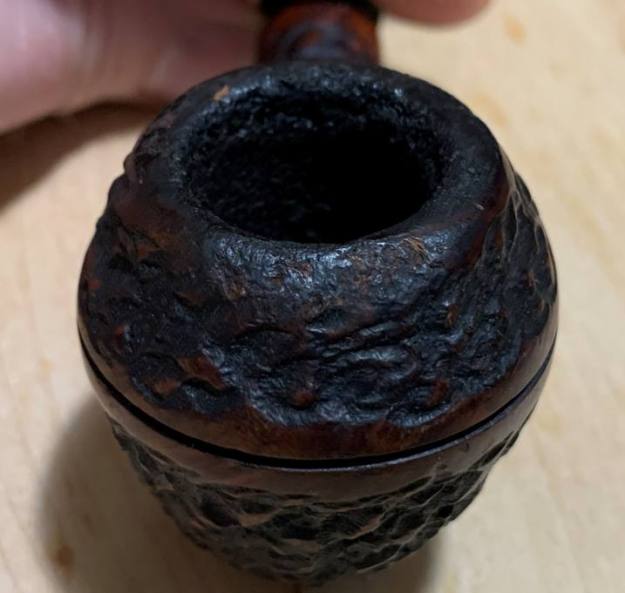
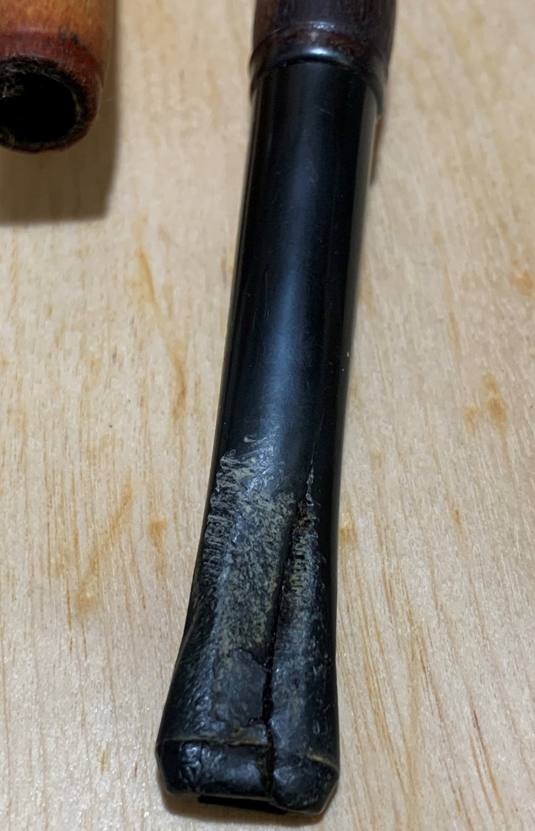
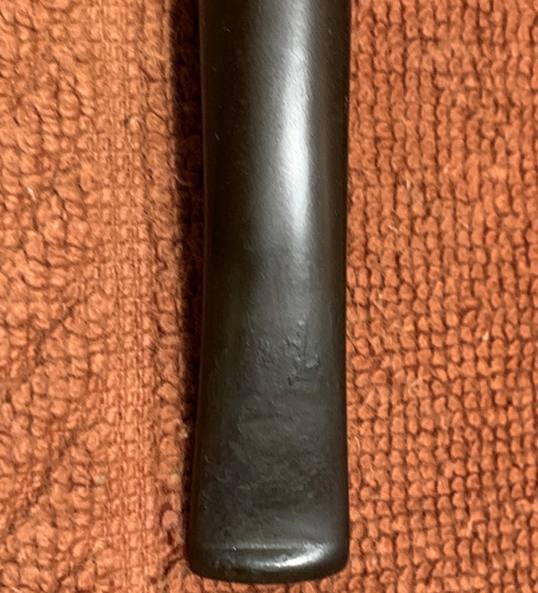
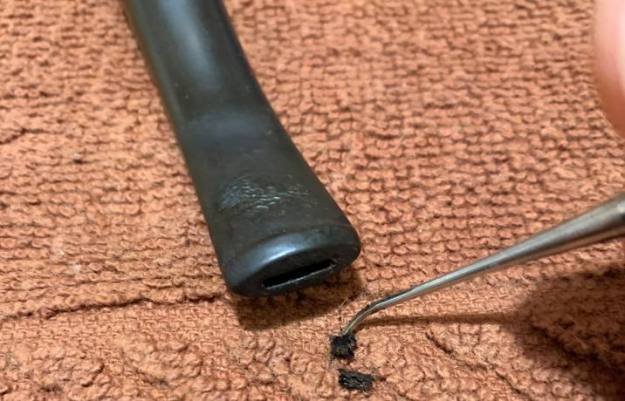
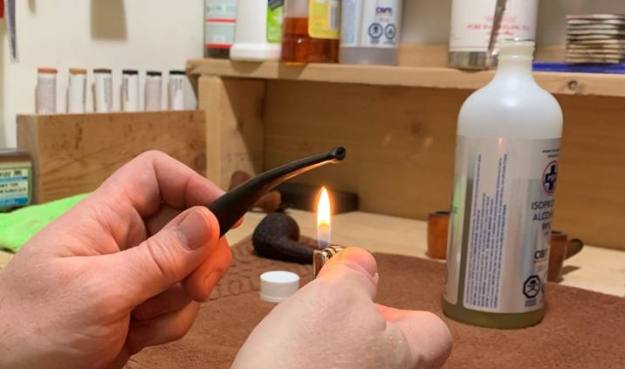
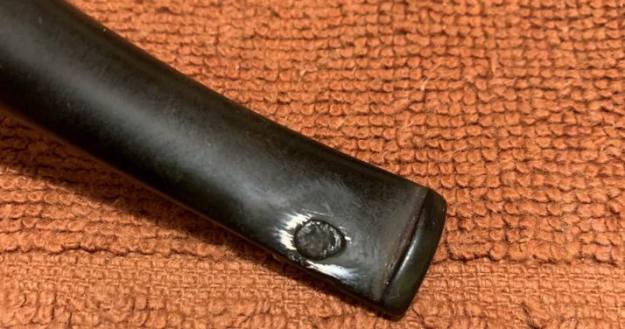
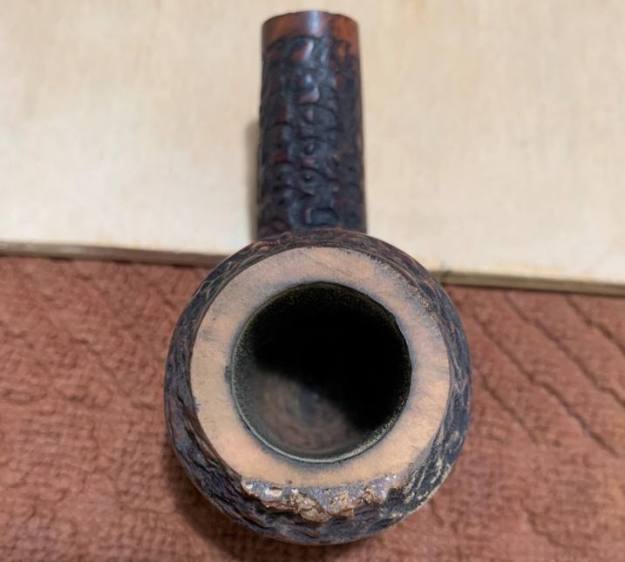
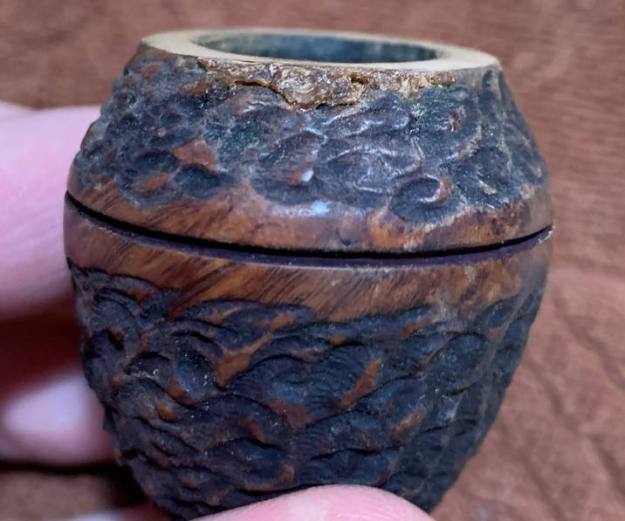
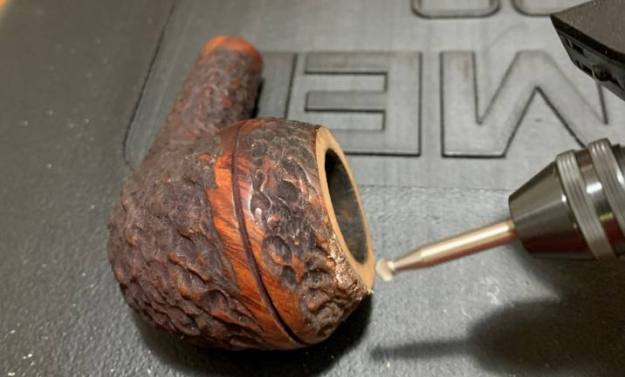
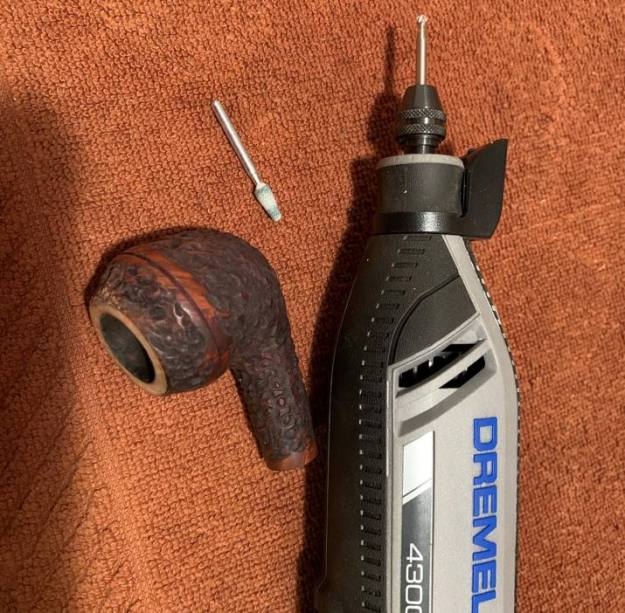
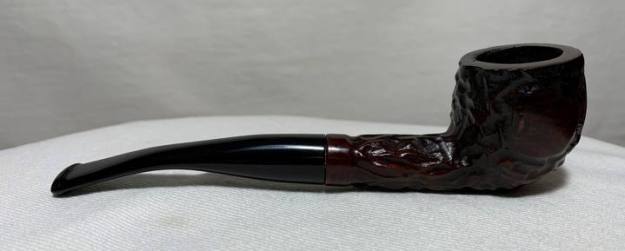
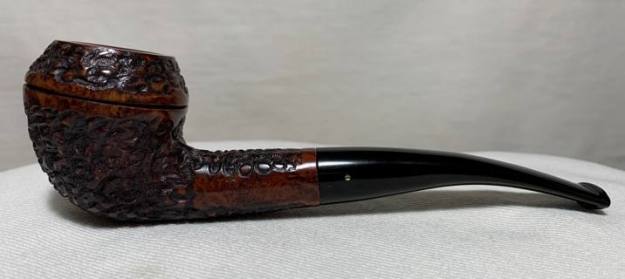
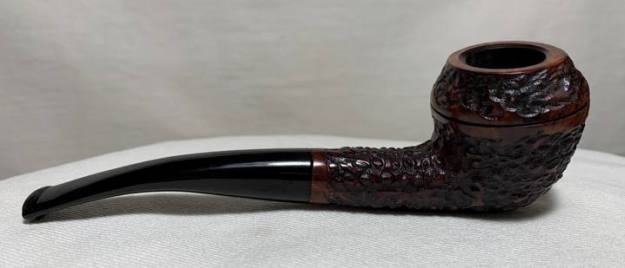
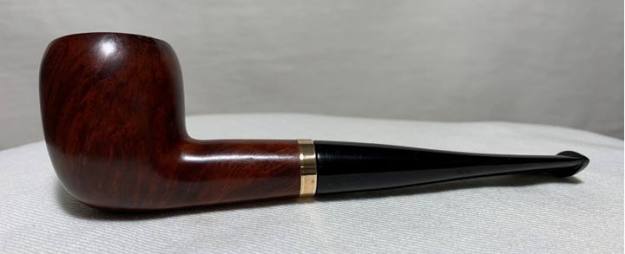
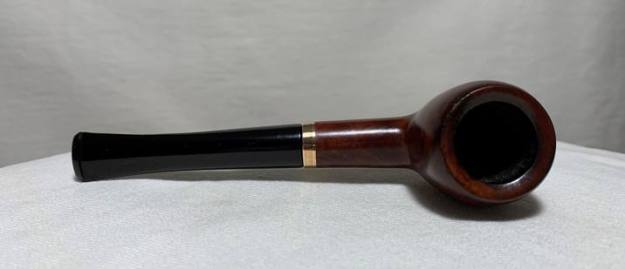
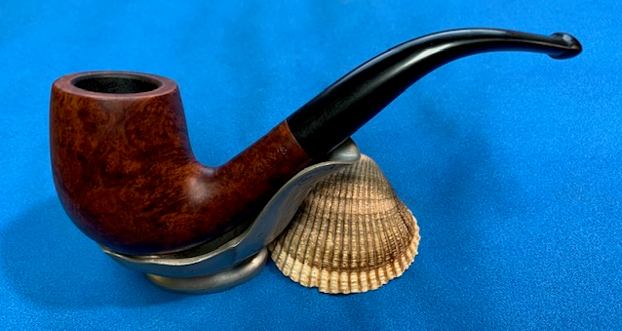
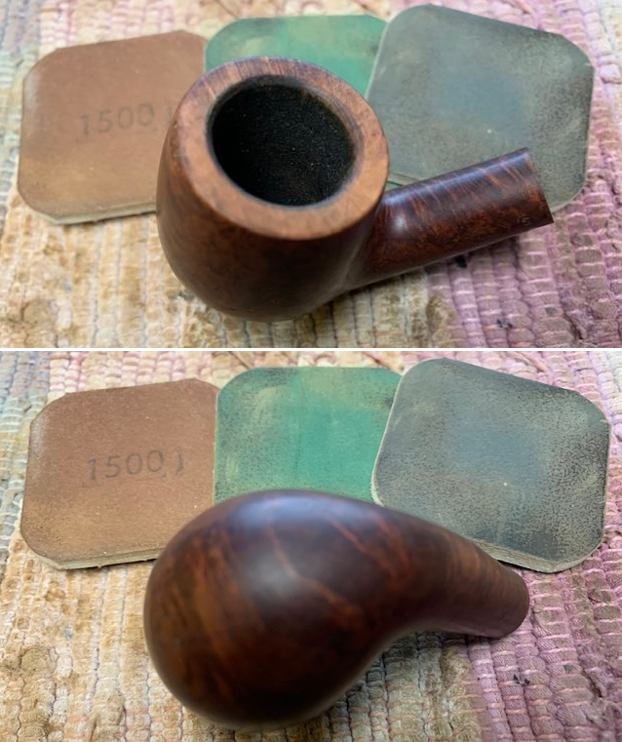
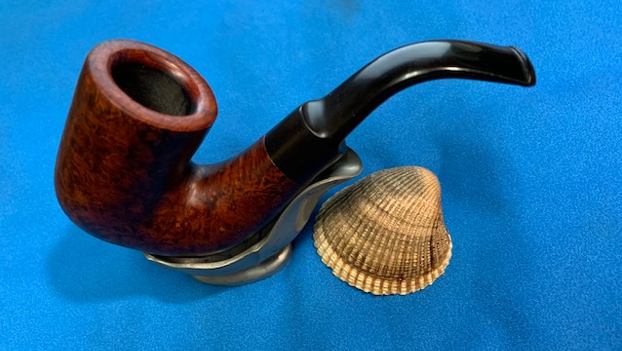
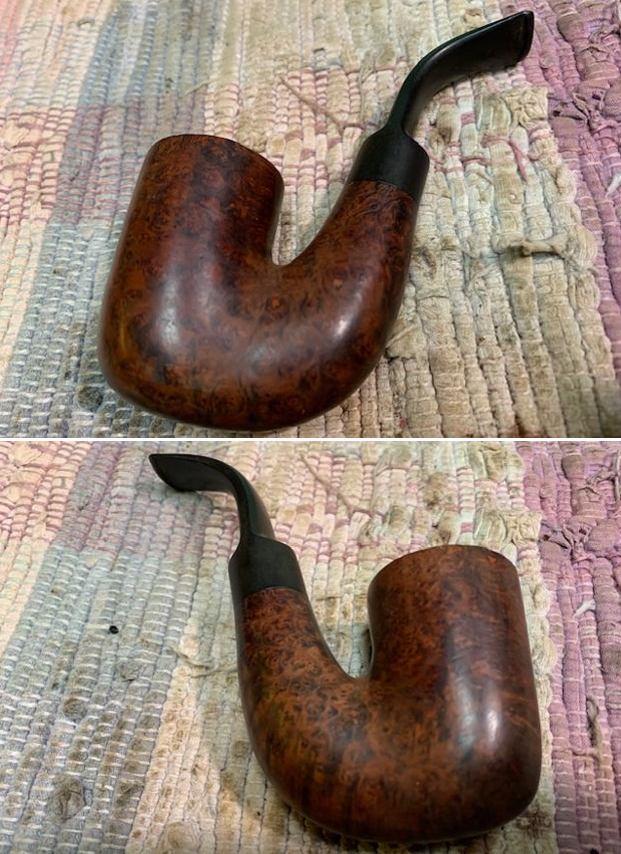
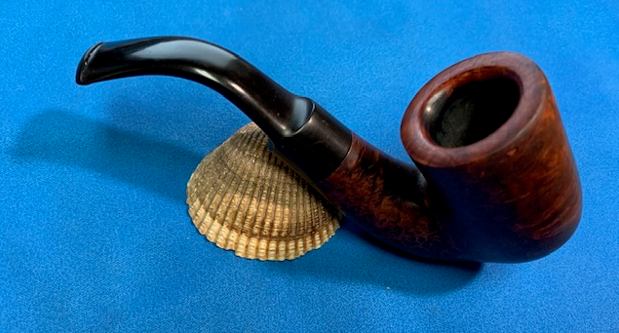
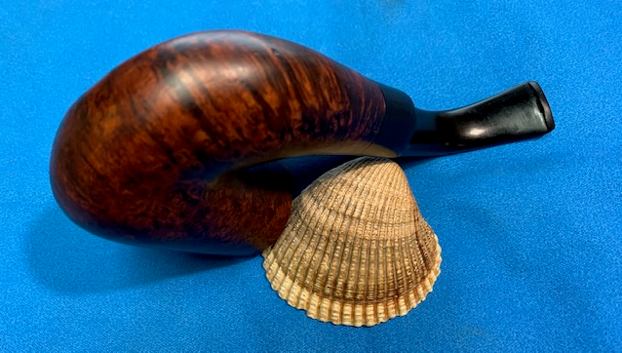
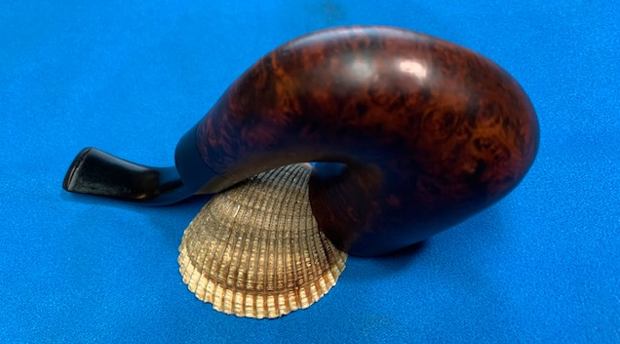
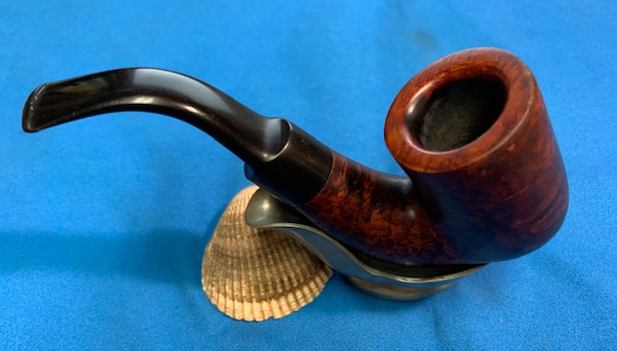
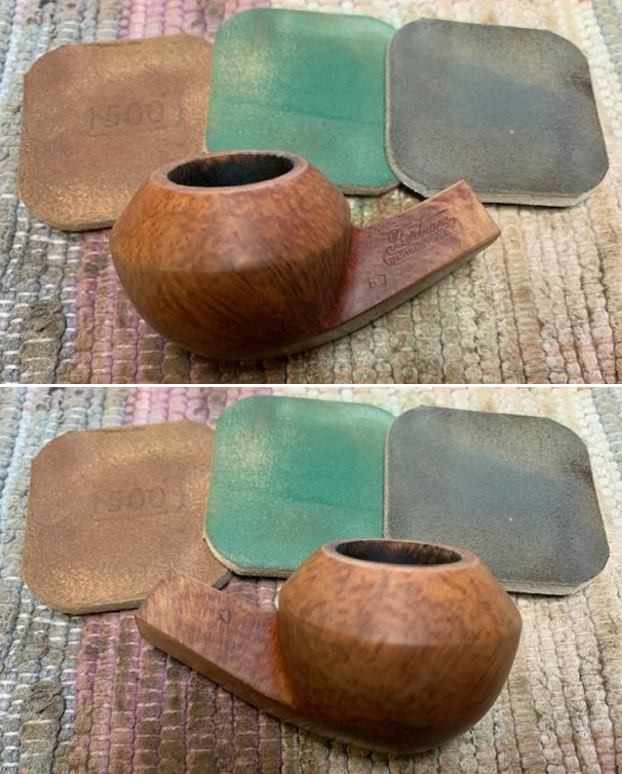
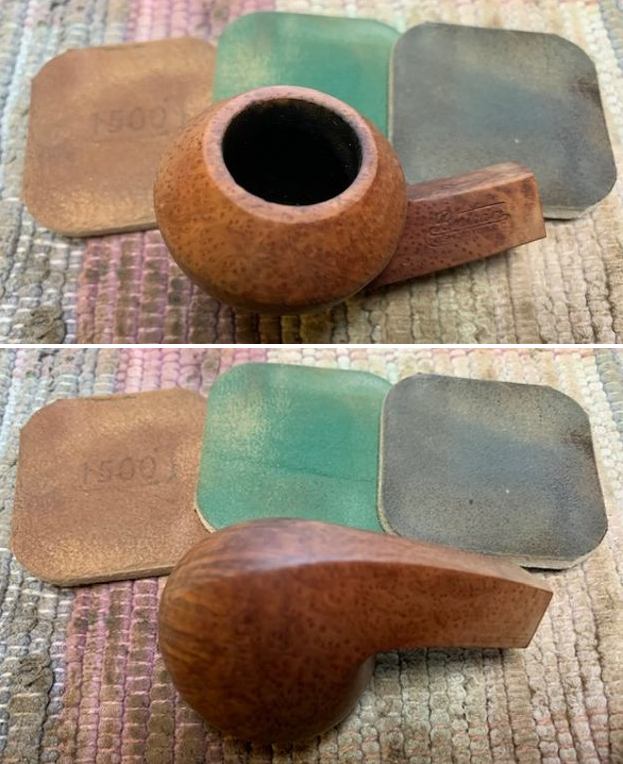
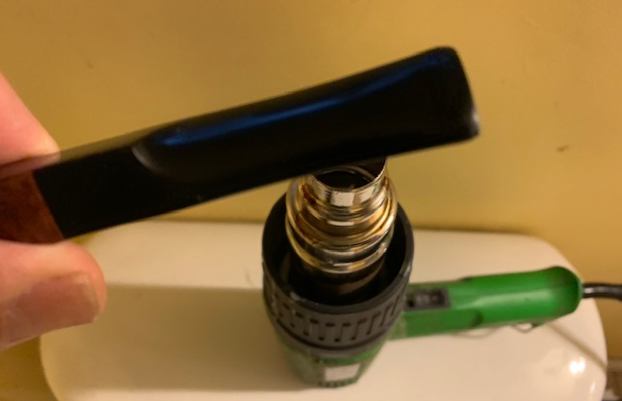
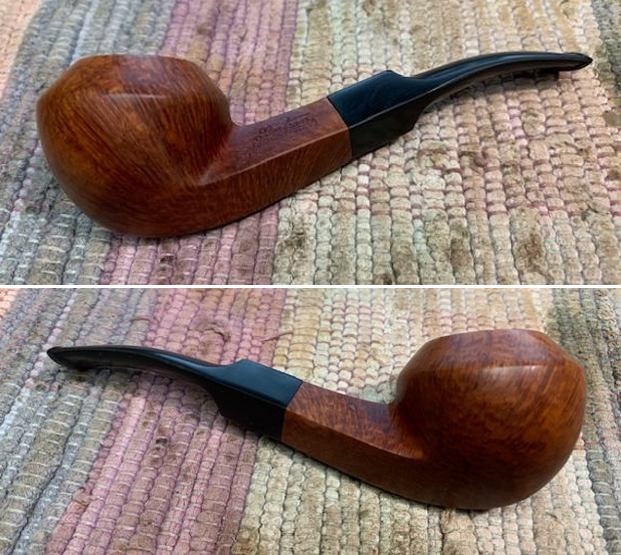
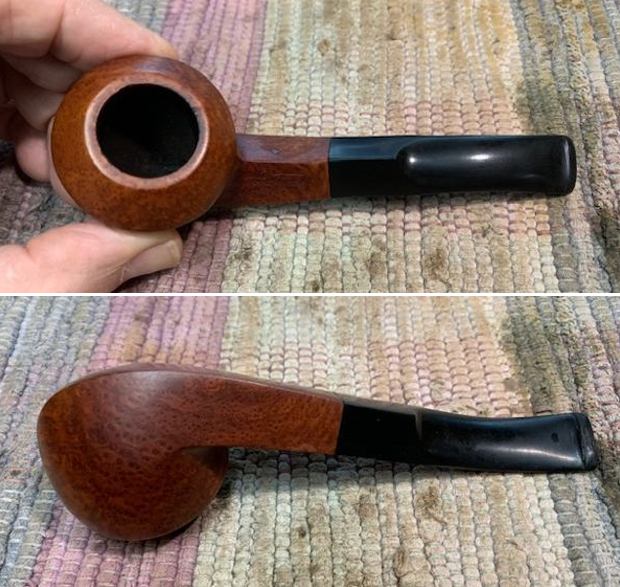
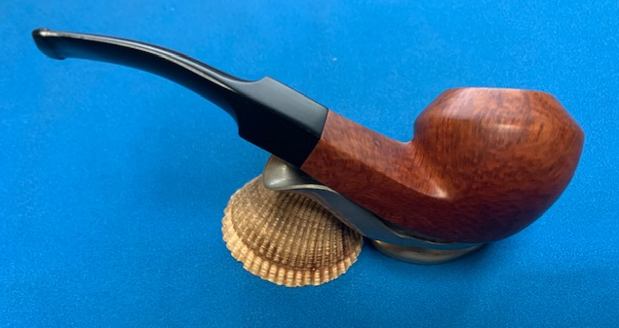
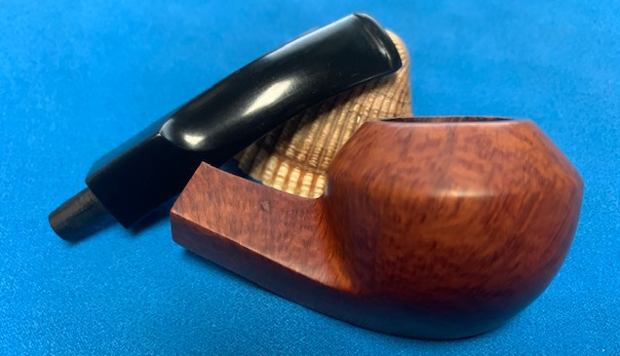
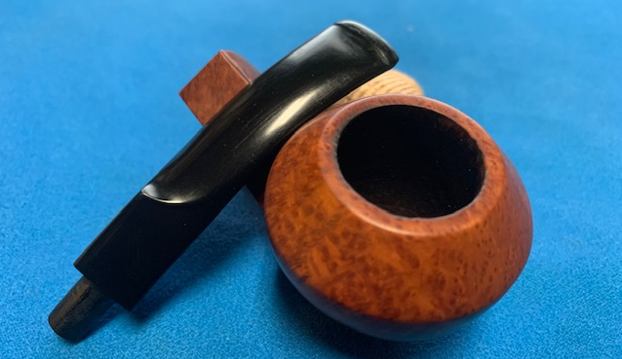
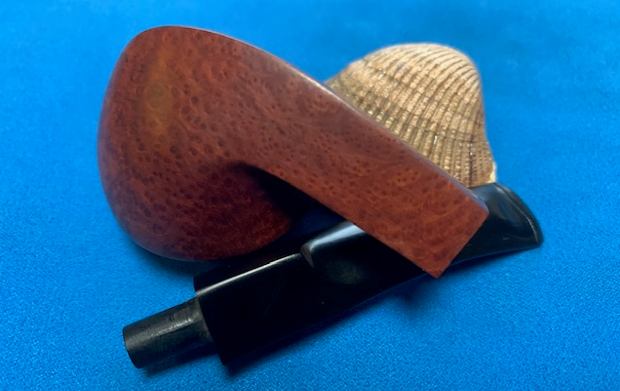
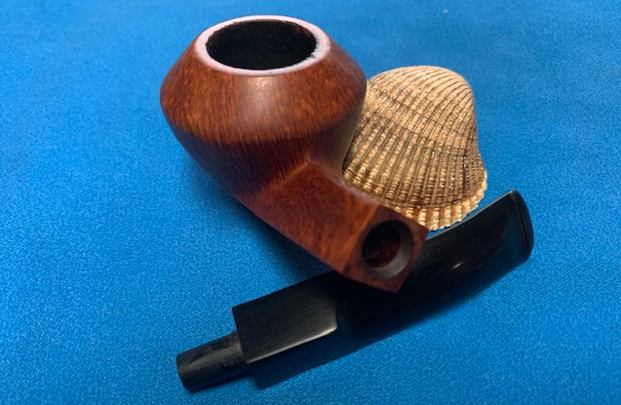
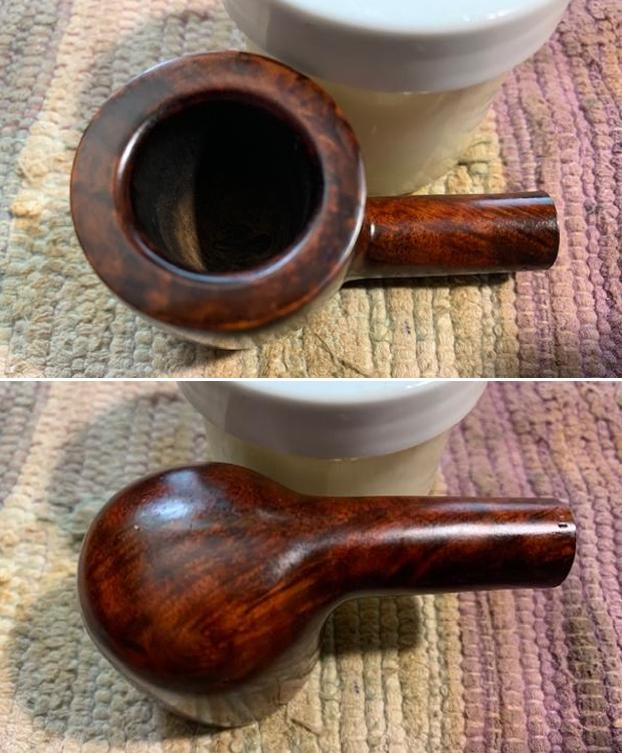
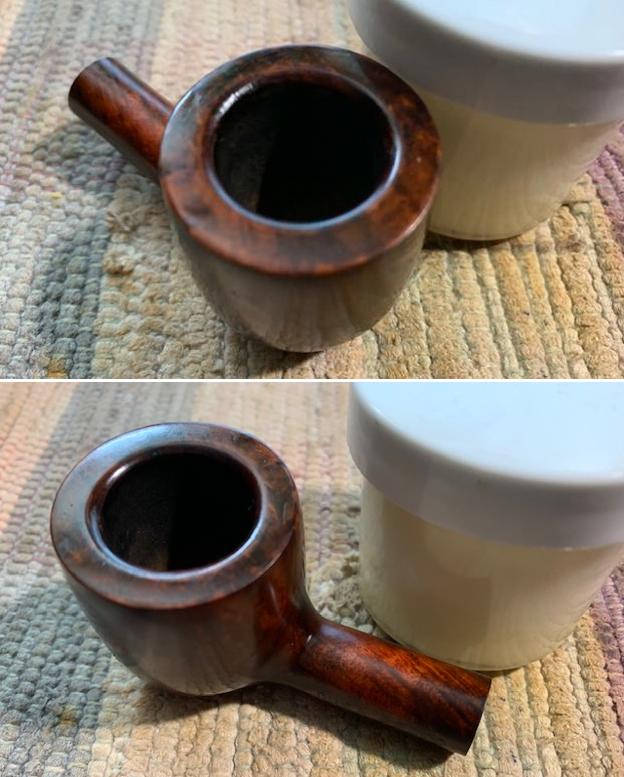
This morning I went through my box of stummels (bowls) again and picked out a Bent Billiard bowl that had some promise. I went through my can of stems and found a taper stem that needed some work but was a good fit. The pipe I chose to work on is an interesting Comoy’s Bent Billiard with a mixture grain around the sides. The rim top was had some darkening and some roughness on the front outer edge of the bowl. The inner edge of the bowl looked good. The interior of the bowl was clean without chips, cracks or checking on the walls. The finish was dirty and tired but still quite redeemable. The stamping on the pipe was clear and readable. On the left side it read COMOY’s [over] Christmas [over] 1987. On the right side it had the normal circular Comoy’s COM stamp Made in London in a circle [over] England below that was the shape number 42. I took some photos of the bowl before I started to work on it. I took a photo of the stamping on the left and right sides of the shank. It reads as noted above and is clear and readable.I went through some of stems and found a taper vulcanite stem that had been used previously. It had some calcification and oxidation on the surface and had tooth marks on both sides near the button.The tenon would need to be shortened slightly but I put it on the shank and took some photos of what it looked like at this point.I started my work on the bowl by dealing with the damage to the rim top and outer edge of the bowl. I lightly topped the rim on a topping board with 220 grit sandpaper. I worked over the inner beveled edge of the rim with a folded piece of sandpaper to remove some of the darkening. It was definitely an improvement. I polished the rim top and the bowl with micromesh sanding pads – dry sanding with 1500-12000 grit pads. I wiped the bowl down with a damp cloth between each pad. The bowl began to take on a shine as I went through the various pads. I stained the top of the bowl with a Cherry stain pen to blend in better with the rest of the bowl colour. It will definitely blend well once the pipe is buffed and polished.I rubbed the bowl and shank down with Before & After Restoration Balm. I worked it into the surface of the bowl sides and shank with my fingertips to clean, enliven and protect the briar. I let the balm sit for 10 minutes and then buffed with a cotton cloth to raise the shine. The grain really came alive. It looks better than when I began. With the bowl finished it was time to focus on the stem. I took out the stem and worked on the fit in the tenon. I shortened the length with a Dremel and sanding drum and it fit very well. I used a heat gun to soften the vulcanite enough to give it the proper bend.While I was bending the stem I also heated the bite marks in the stem. I was able to lift many of the tooth mark. I filled in the remaining tooth marks on the button surface and just ahead of it on the underside with clear super glue and set the stems aside to let the repairs cure.    Once the repairs cured I smoothed them out with a small file and started blending them into the surface of the stem. I sanded the repairs with 220 grit sandpaper to further blend it into the stem surface. I started polishing it with 400 grit wet dry sandpaper. I don’t know if this ever happens to you but I was so busy fitting and shaping the stem that I forgot to clean out the inside!! I paused now to do that. I scrubbed out the airway with 99% isopropyl alcohol and pipe cleaners. It was really dirty! Not any more.I polished the stem with micromesh sanding pads – dry sanding with 1500-12000 grit pads. I wiped the stem down after each pad with a cloth and Obsidian Oil. I finished the polishing with Before & After Pipe Stem Polish – both Fine and Extra Fine. I gave it a final coat of Obsidian Oil. I put the pipe back together – the bowl with its new stem. This restemmed and restored Comoy’s Christmas 1987 Shape 42 Bent Billiard is a real beauty and I think that the chosen stem works well with it. The grain on the bowl came alive with the buffing. I used Blue Diamond on the buffing wheel on both the bowl and stem. I gave both multiple coats of carnauba wax on the wheel then buffed it with a clean buffing pad to raise the shine. I hand buffed it with a microfibre cloth to deepen the shine. The Comoy’s Bent Billiard feels great in the hand. It is lightweight and the contrast in the browns of the briar, the Silver band and the polished vulcanite stem with the popping grain on the mixed brown stained bowl is quite amazing. The dimensions of the pipe are Length: 5 inches, Height: 1 ¾ inches, Outer diameter of the bowl: 1 1/8 inches, Chamber diameter: ¾ of an inch. The weight of the pipe is 1.41 ounces/40 grams. It really is a beauty. I will be putting it on the rebornpipes store in the  British Pipe Makers section shortly if you are interested in adding it to your collection. Thanks for walking through the restemming and the restoration with me. Cheers.  

Restoring a Lovely Barling 5959 Regency Oom Paul


Blog by Steve Laug

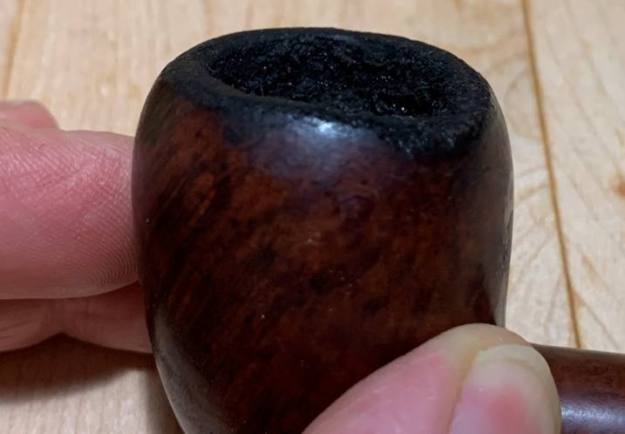
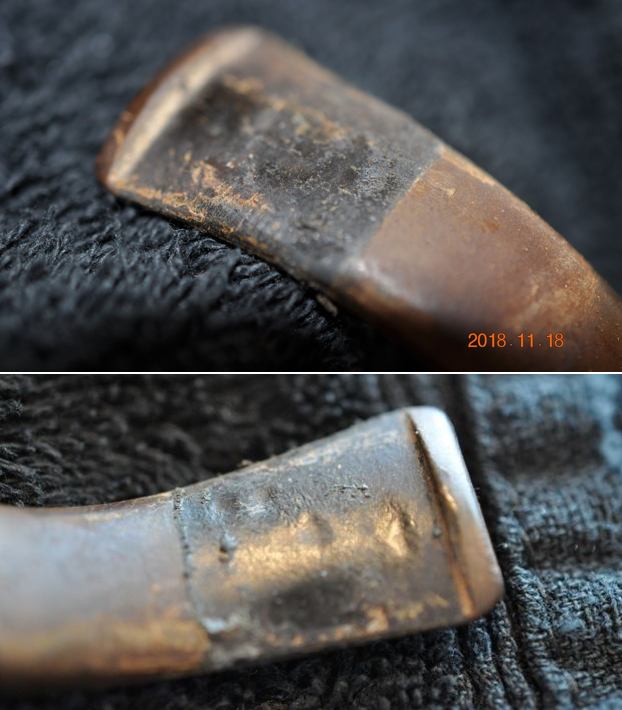
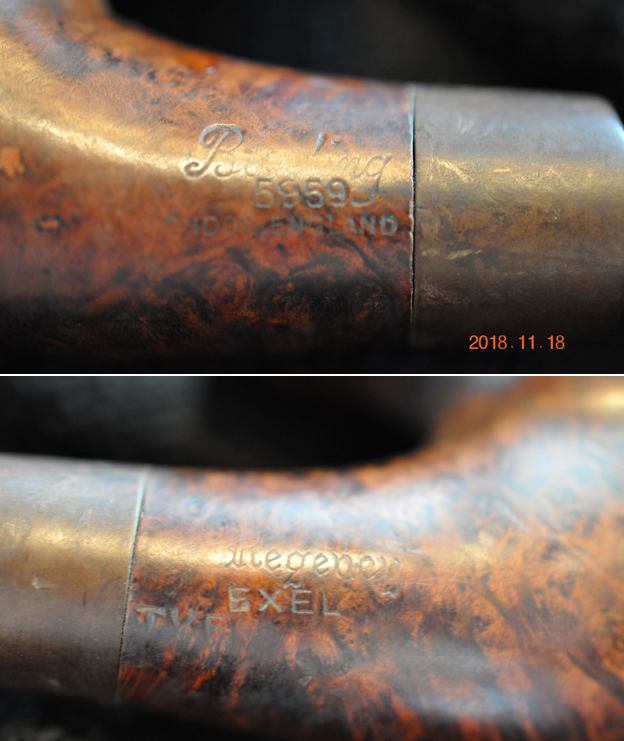
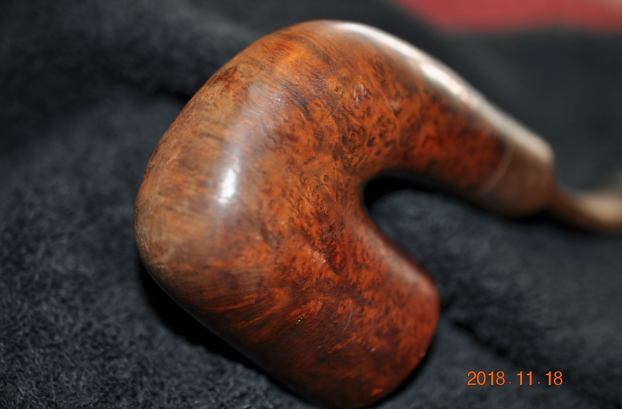
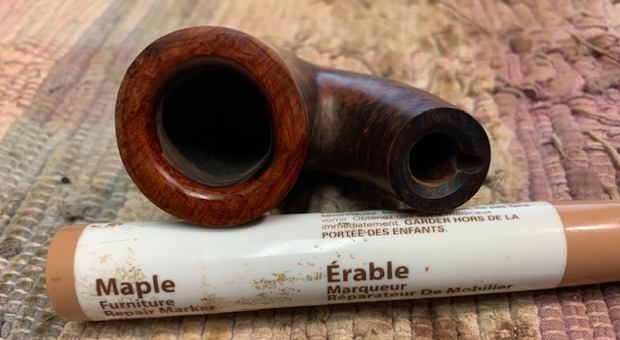
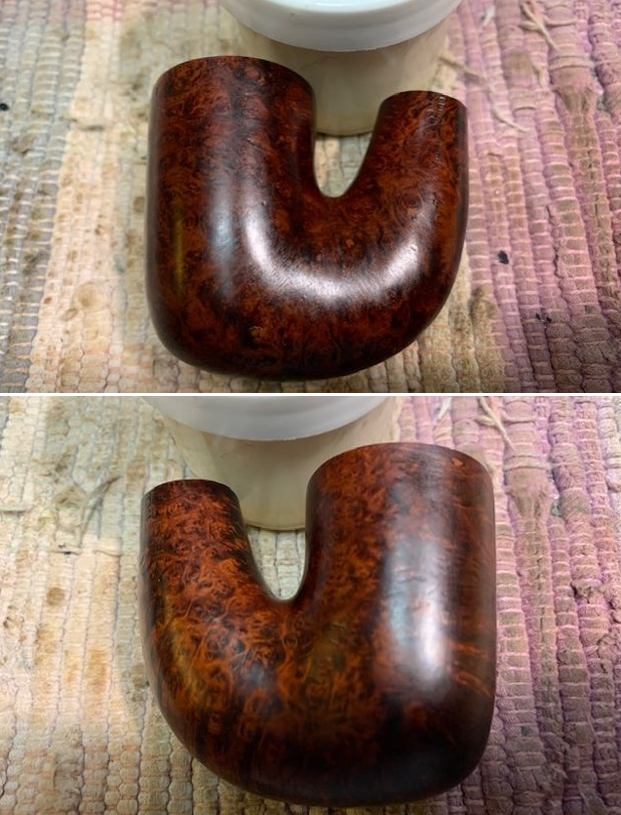
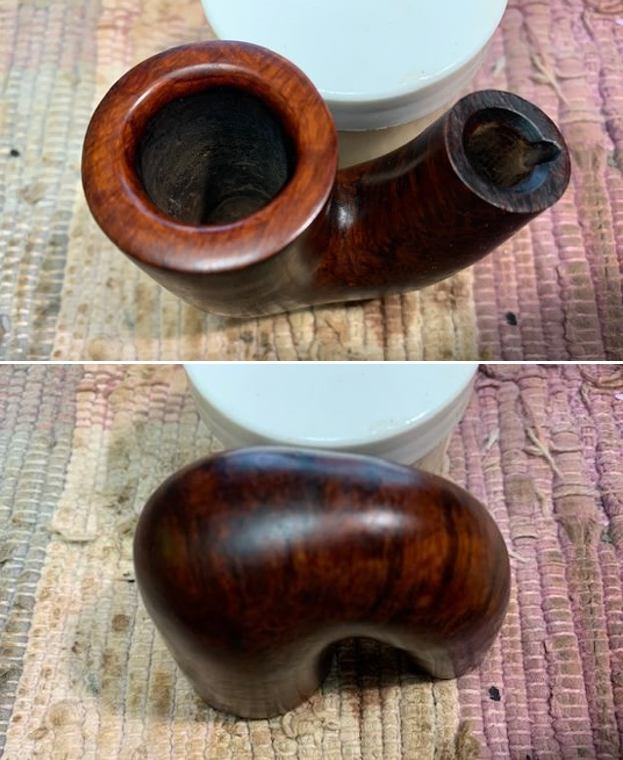
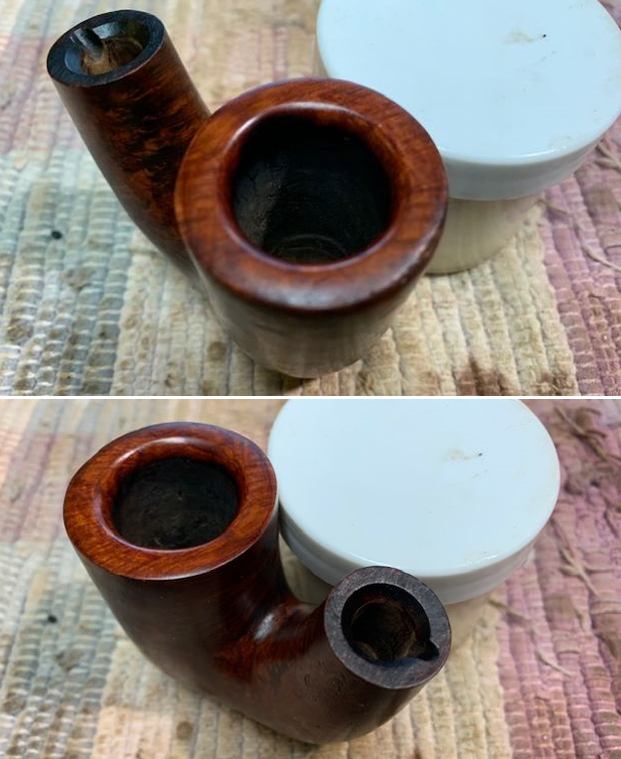
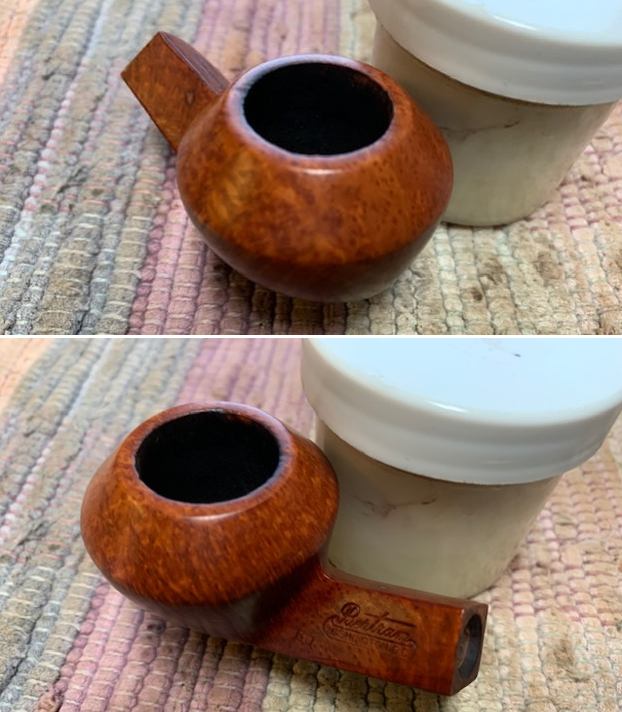
The next pipe I chose to work on an interesting looking Oom Paul shaped briar pipe that Jeff picked up from an online auction on 11/08/18 in Romney, West Virginia, USA. It was an interesting Oom Paul that has some great grain around the bowl and shank. It is stamped on the left side of the shank and reads Barling [over] 5959 [over] London England. On the right side it is stamped Regency in script [over] EXEL [over] T.V.F. So it is a Barling pipe. I will need to do a bit of work on the stamping to identify when it was made. The stem is a vulcanite saddle stem that had a rotting and cracking rubber Softee Bit on the end. The briar was very dirty and the front of the bowl had been knocked against a hard surface and was damaged and rough. There was a thick cake in the bowl and an over flow of lava covered the rim top. The stem was oxidized, calcified and the rubber Softee bit was worn. Jeff took some photos of the pipe before he started his clean up work on it. He took some photos of the bowl, rim top and edges to show the condition of the pipe before he started. There appeared to be some damage on the inner edge at the back of the bowl. The outer edge at the front was a real mess. He took photos of the stem with the Softee Bit in place and with it removed. It really is a mess with oxidation, calcification and tooth marks and chatter on both sides of the stem.He took photos of the stamping on the shank sides. It is clear and readable as is noted above.He took a photo of the side and heel of the bowl to show the grain that was on this particular piece of briar. It was a beauty.I checked the usual sources for information on the Barling Regency and did not come up with much. I am pretty certain it is a Post Transition Era pipe from the late 1960s to 1970s. I cannot narrow it down much further than that so I know that it is a new pipe (still over 50years old at least). Now it was time to move on to the pipe itself.

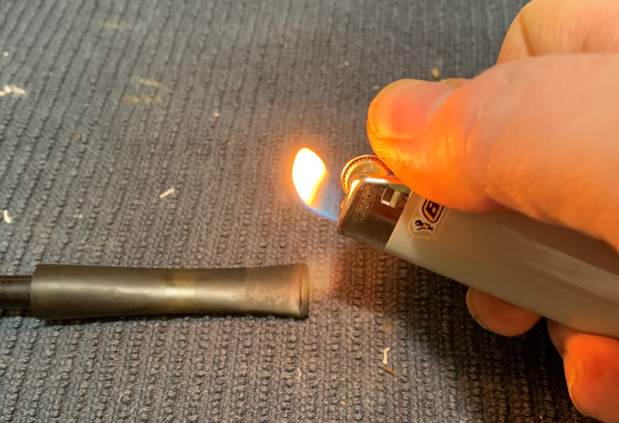
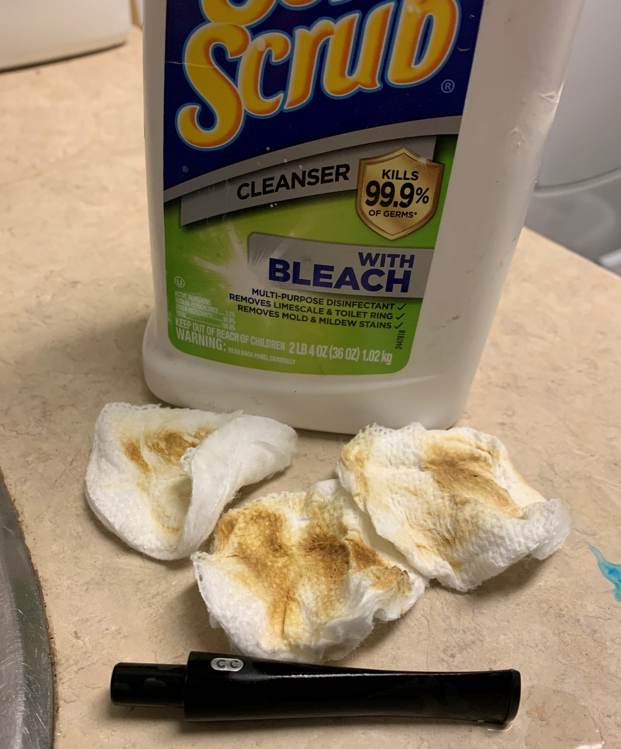
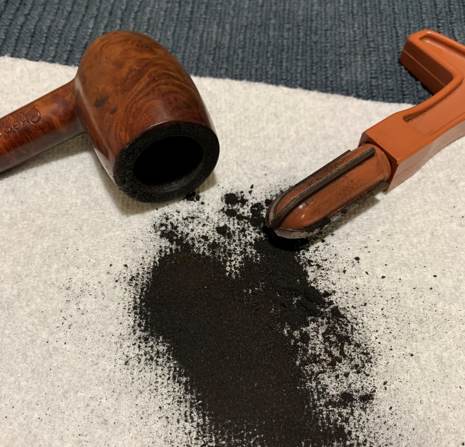
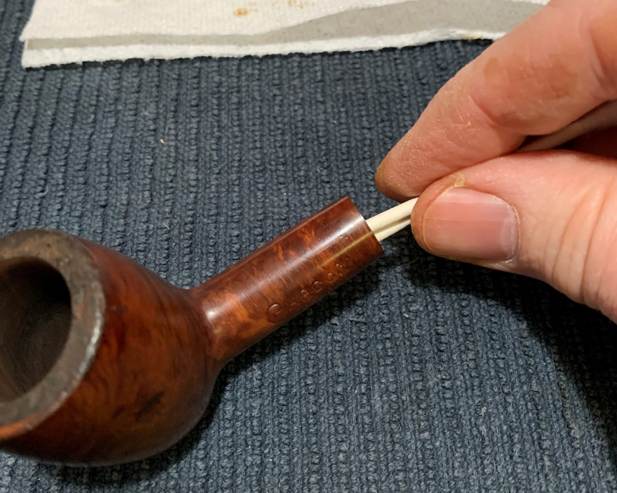
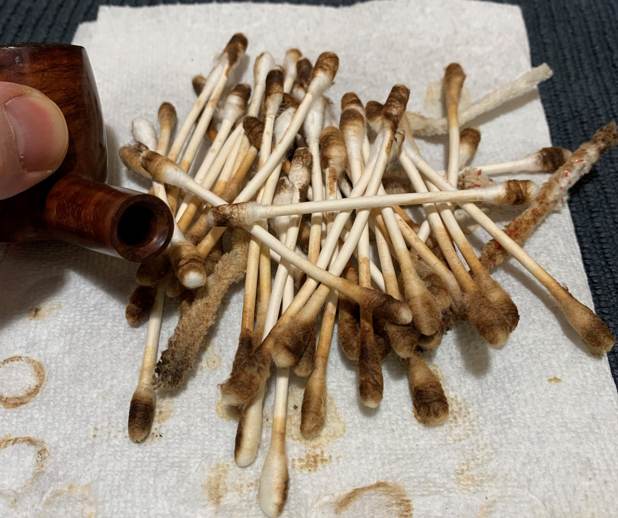
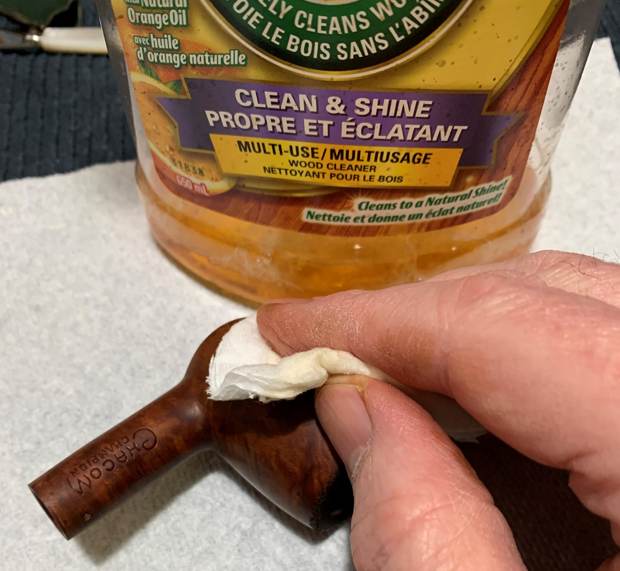
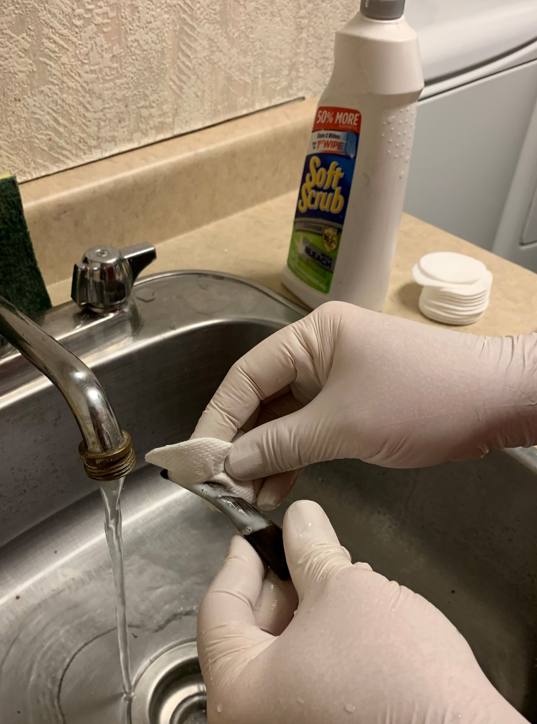
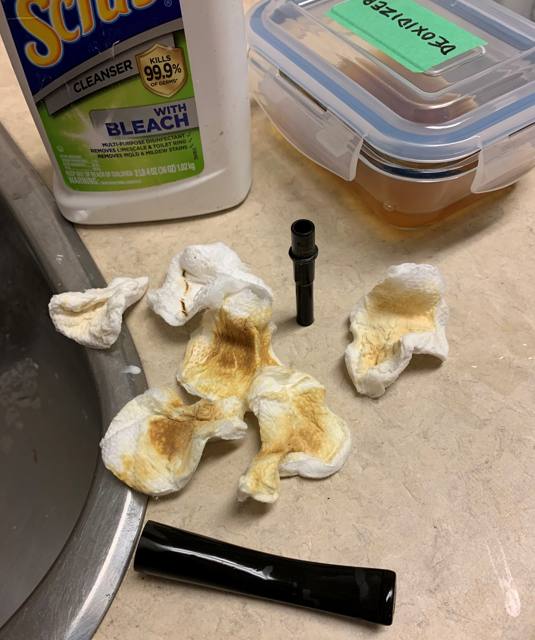
Jeff had cleaned up the pipe in his usual manner. He had reamed it with a PipNet pipe reamer and followed that up with a Savinelli Fitsall Pipe Knife afterward. He took the cake back to bare briar and the bowl looked very good. He scrubbed the internals with alcohol, pipe cleaners and cotton swabs to remove the oils and tars. He scrubbed the externals with Murphy’s Oil Soap and a tooth brush to remove the grime from the briar. He scrubbed the stem with Soft Scrub and then soaked it in a bath of Before & After Pipe Stem Deoxidizer. He rinsed it off with warm water and dried it with a coarse cloth to remove the remaining oxidation. The tooth marks are visible in the photos of the stem surfaces below. The pipe looked very good once it arrived here in Vancouver. I took photos of the pipe before I started my work. I took a photo of the rim top and bowl to show the condition of the briar. You can see the damage on the outer edge of the bowl on the front side. The top surface is scratched and marred. The inner edge of the bowl shows some burn damage on the back of the bowl. The stem looked good but the tooth marks are very visible.The next photos show the stamping on both sides of the shank. It is clear and readable though faint. The grain is also quite stunning.I took a photo of the pipe with the stem removed to give a sense of the proportion of the bowl and the stem.I decided to start by dealing with damage to the inner and outer edge of the bowl and clean up the rim top. I began with the inner edge and used a folded piece of 220 grit sandpaper to smooth out the damage there and begin a slight bevel on the edge. I topped the bowl to clean up the top and to deal with the damage on the front outer edge. I took photos of the refreshed rim top and edges. It looked much better. I polished the rim top and the bowl with micromesh sanding pads – dry sanding with 1500-12000 grit pads. I wiped the bowl down with a damp cloth between each pad. The bowl began to take on a shine as I went through the various pads. I stained the top of the bowl with a Maple stain pen to blend in better with the rest of the bowl colour. It will definitely blend well once the pipe is buffed and polished.I rubbed the bowl and shank down with Before & After Restoration Balm. I worked it into the surface of the bowl sides and shank with my fingertips to clean, enliven and protect the briar. I let the balm sit for 10 minutes and then buffed with a cotton cloth to raise the shine. If you look you can see the many small fills in the briar but they actually blend in surprisingly well. I set the bowl aside and turned my attention to the stem. I “painted” the surface of the stem on both sides with the flame of a lighter. I was able to lift many of the tooth mark. I filled in the remaining tooth marks on the button surface and just ahead of it on the underside with clear super glue and set the stems aside to let the repairs cure.    Once they cured I smoothed out the repairs with a small file and started blending them into the surface of the stem (I forgot to take photos of that part of the process). I sanded the repairs with 220 grit sandpaper to further blend it into the stem surface. I started polishing it with 400 grit wet dry sandpaper. I polished the vulcanite stem with micromesh sanding pads – 1500-12000 grit pads. I wiped it down with a damp cloth after each sanding pad. This Barling Regency 5959 Oom Paul with a vulcanite saddle stem is a great looking pipe now that it has been restored. The rich browns and blacks of the contrasting stains came alive with the polishing and waxing. I put the stem back on the bowl and carefully buffed the pipe with Blue Diamond on the buffing wheel using a light touch on the briar. I gave the bowl and the stem multiple coats of carnauba wax on the buffing wheel and followed that by buffing the entire pipe with a clean buffing pad. I hand buffed the pipe with a microfiber cloth to deepen the shine. The finished Barling Regency Oom Paul is a beauty and fits nicely in the hand and looks very good. Give the finished pipe a look in the photos below. The dimensions of the pipe are Length: 4 inches, Height: 2 ¼ inches, Outside diameter of the bowl: 1 ½ inches, Chamber diameter: 7/8 of an inch. The weight of the pipe is 64 grams/2.26 ounces. I will be putting this Barling on the British Pipe Makers section of the rebornpipes store shortly if you want to add it to your collection. Thanks for reading this blog and my reflections on the pipe while I worked on it. There are many more to come!

Restemming & Restoring a Bertram 60 Bent Bulldog


Blog by Steve Laug

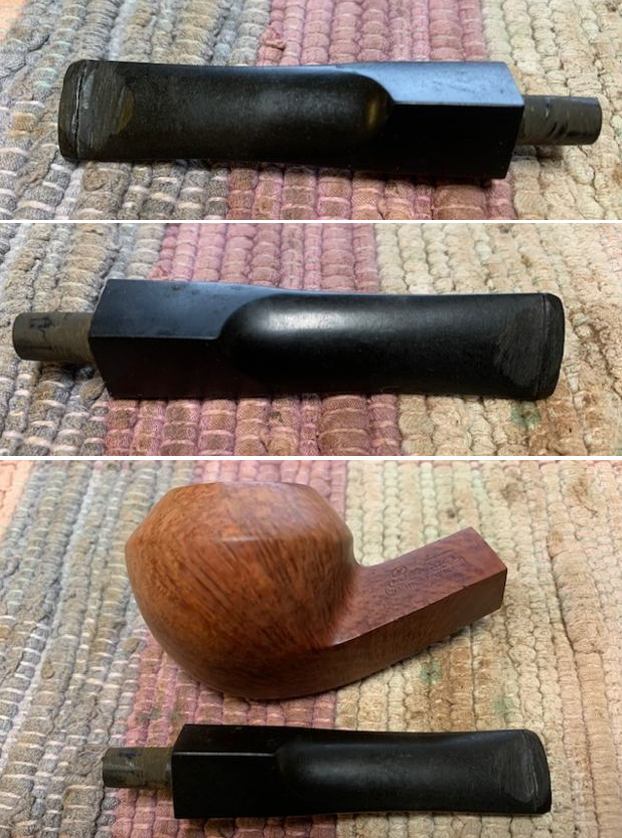
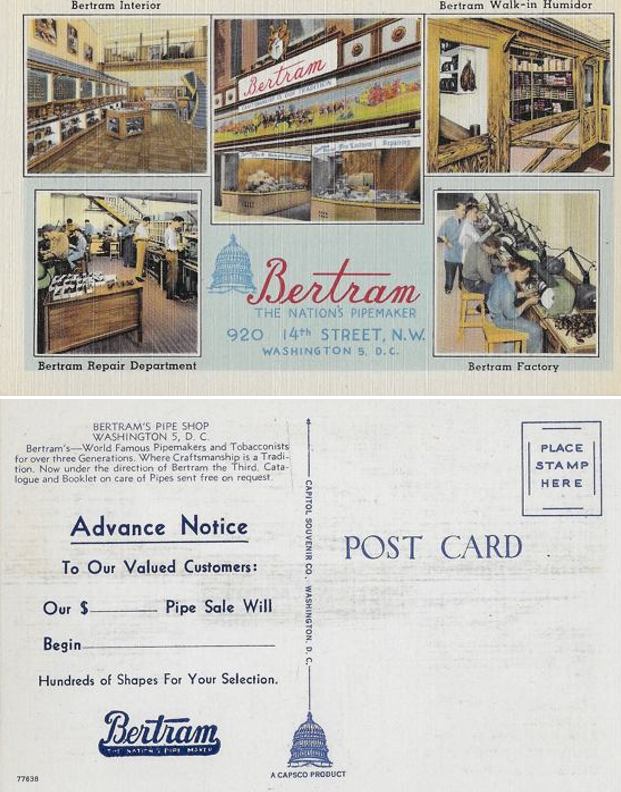
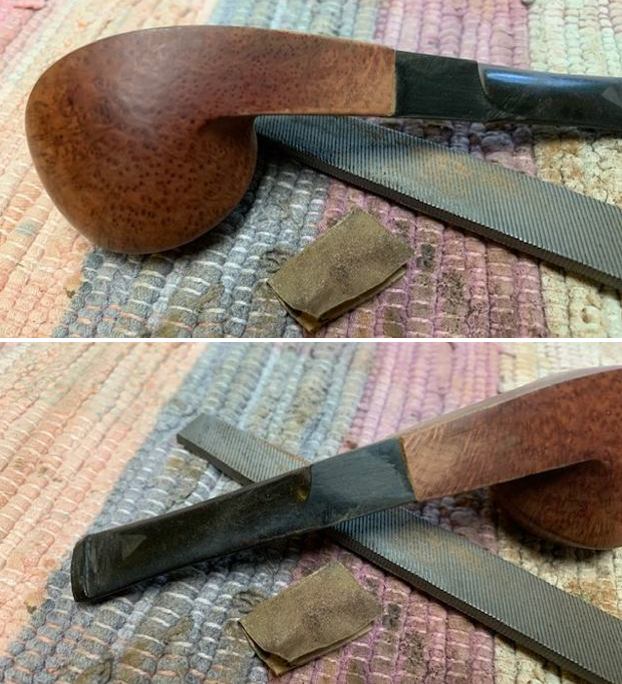
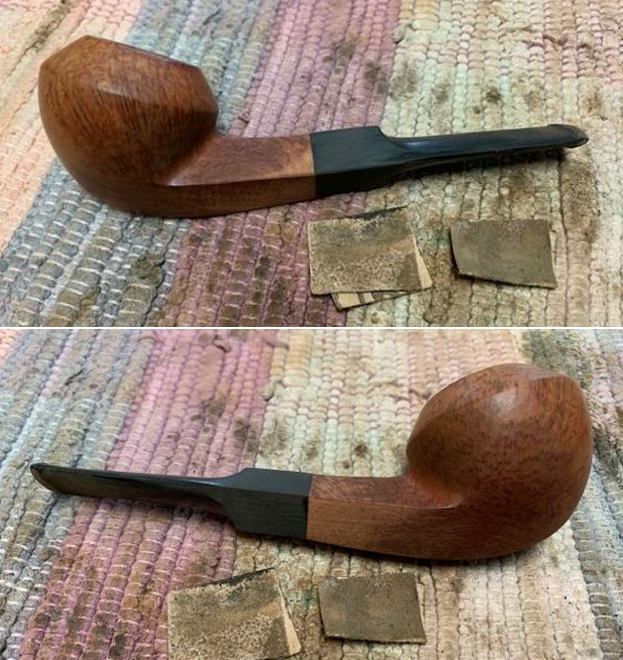
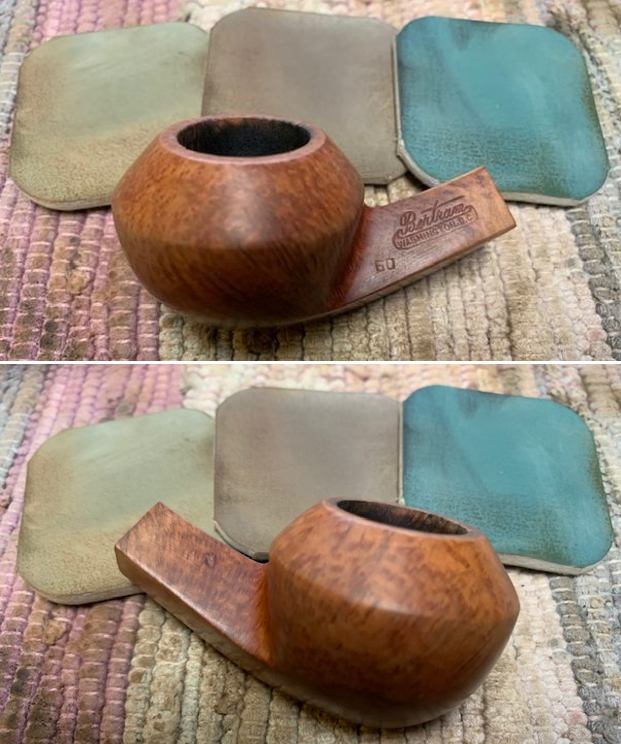
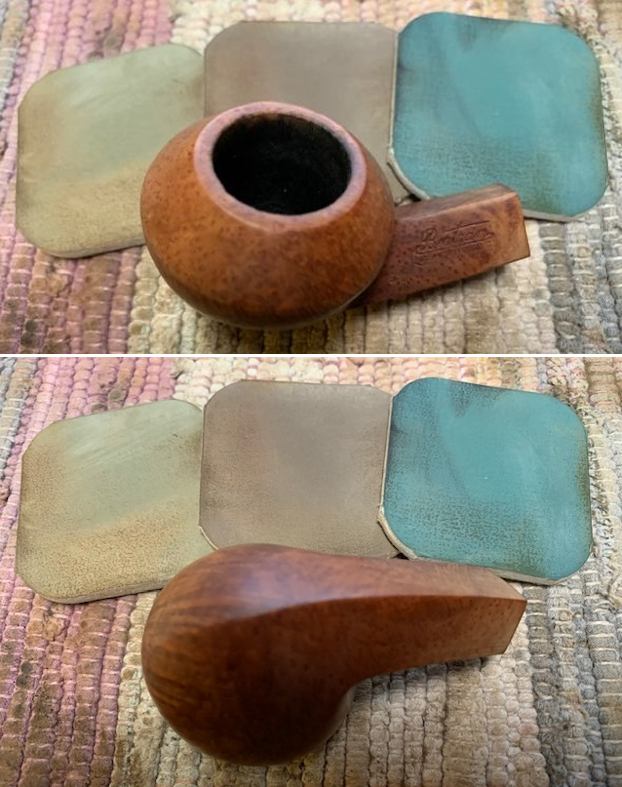
Sometimes the repetitive work on similar pipes and stems gets tiring to me and to alleviate the inevitable boredom I change things up a bit to refresh me. I have a box of stummels (bowls) here that I periodically go through and see if I have a potential stem that would fit them. Sunday afternoon I went through the box and picked out two bowls and found workable stems for them both. They were in different states of need but all had been thoroughly cleaned before I boxed them up. The pipe I chose to work on next is a nicely grained Bulldog stummel. The bowl looked very good. The grain around the sides was quite nice and a mix of flame and birdseye grain. There was one small fill on the right side of the shank but it was in good condition. The rim top was in excellent condition with a bit of darkening toward the rear of the bowl. The interior of the bowl was clean and there were not any chips, cracks or checking on the walls. The finish was dull and bit and tired but still quite redeemable. The stamping on the pipe was clear and readable. On the left side it read Bertram in script [over] Washington DC in a ribbon. The grade 60 stamp was on the same side near the bowl/shank junction. I took some photos of the bowl before I started to work on it.   I took a photo of the stamping on the left side of the shank. It reads as noted above and is clear and readable.I went through some of stems and found this diamond saddle style stem that was close to the right diameter and had a tenon that would work as well. It has some file damage on the surface near the button but it would clean up well. I also took a photo of the stem and bowl together to give a sense of the look.The pipe is a Bertram from the Bertram Pipe Shop in Washington DC. I have posted a lot of different blogs on the brand so the information available is quite accessible. I am including pic of a post card that a reader of the blog sent me. It is a great memento that I love to spend time looking at. I started my work on the pipe by fitting the new stem to the shank. I trimmed down the tenon diameter slightly with a file so that the fit in the shank was snug. The stem diameter needed more work so I worked it with a file to match it to the shank. I sanded it with 220 grit sandpaper to smooth it out. I removed the stem and polished the briar (bowl and sanded shank end) with micromesh sanding pads – dry sanding with 1500-12000 grit pads and wiping it down with a damp cloth after each pad. It really began to shine. I restained the shank end where I had sanded it to make the transition to the new stem smooth with an Oak stain pen. The colour was a perfect match. Once the bowl was buffed the newly stained section will blend in even better. I worked some Before & After Restoration Balm into the surface of the smooth briar with my finger tips. The product is amazing and works to clean, enliven and protect the briar. I let it sit on the briar for 10 or more minutes and then buff it off with a soft cloth. It really makes the grain sing. I set the bowl aside and turned my attention to the stem. I flattened out the file marks as much as possible with a flat file. I knew I would not remove them this way but I wanted make them flatter. I filled in the deeper cut marks with clear CA glue and once it was hard smoothed out the repairs with 220 grit sandpaper and started polishing the stem with 400 grit wet dry sandpaper. I polished the stem with micromesh sanding pads – dry sanding with 1500-12000 grit pads. I wiped the stem down after each pad with a cloth and Obsidian Oil. I finished the polishing with Before & After Pipe Stem Polish – both Fine and Extra Fine. I gave it a final coat of Obsidian Oil. I used my heat gun to bend the vulcanite stem to match the angles of the bowl and give it a proper Bent Bulldog look. I put the pipe together – the bowl with its new stem. This restored and restemmed Bertram Washington DC Grade 60 Bent Bulldog is a real beauty and I think the chosen stem works well with it. The grain on the bowl came alive with the buffing. I used Blue Diamond on the buffing wheel on both the bowl and stem. I gave both multiple coats of carnauba wax on the wheel then buffed it with a clean buffing pad to raise the shine. I hand buffed it with a microfibre cloth to deepen the shine. The Bertram Bent Bulldog feels great in the hand. It is lightweight and the contrast in the browns of the briar and the polished vulcanite stem with the popping grain on the mixed brown stained bowl is quite amazing. The dimensions of the pipe are Length:5 ½ inches, Height: 1 ¾ inches, Outer diameter of the bowl: 1 ¾ inches, Chamber diameter: ¾ of an inch. The weight of the pipe is 1.31 ounces/37 grams. It really is a beauty. I will be putting it on the rebornpipes store in the American Pipe Makers section shortly if you are interested in adding it to your collection. Thanks for walking through the restemming and the restoration with me. Cheers.

It is about time to Breath Life into a new Frankenpipe


Blog by Steve Laug

I have not created a Frankenpipe for a long time. I call them Frankenpipes with a tip of the hat to Mary Shelley’s grand creation Frankenstein. These remind me of her story what with the gathering of parts, “stitching” them together and breathing life into them. It is a thoroughly creative process I enjoy and I suppose there is always the possibility of crafting of a monster. Over the years I have crafted quite a few of these pipes and they tend to stay in my collection. You can search on the blog and see the variety of Frankenpipes that have come together. I find them incredibly enjoyable because they are very different from a restoration. Truly it is looking at a bunch of parts and imagining combining them into something that reflects the parts but as a whole it very different from any of them.

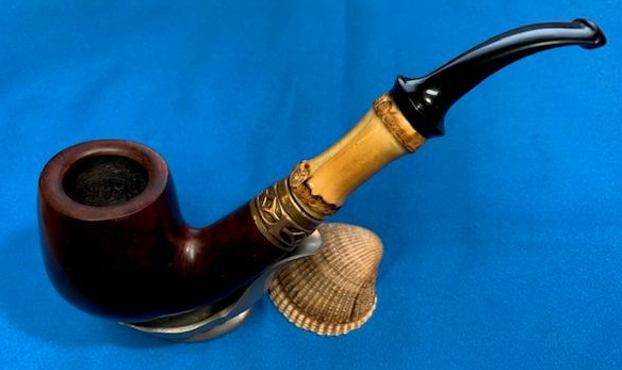
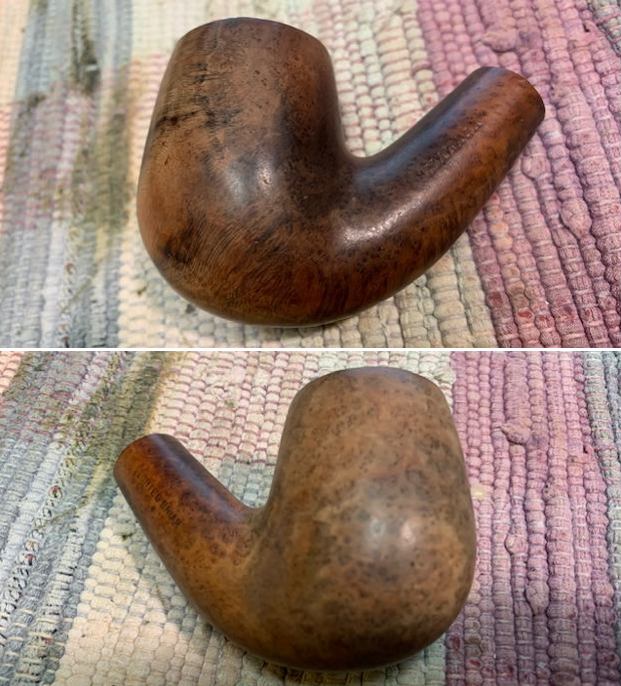
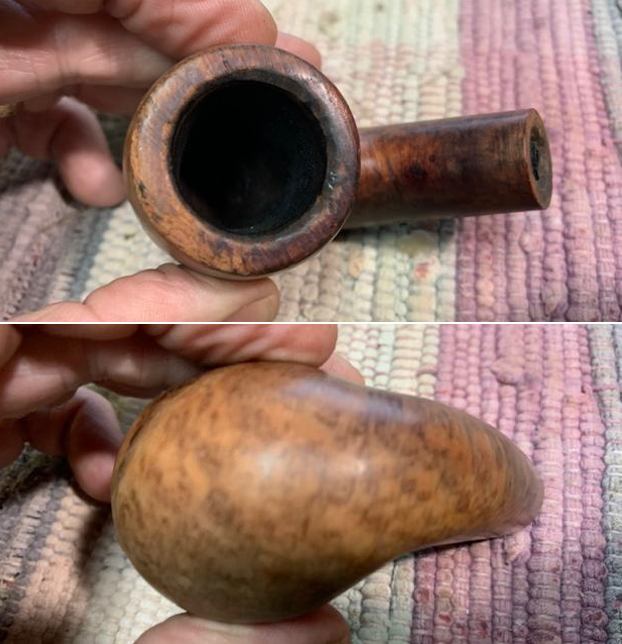
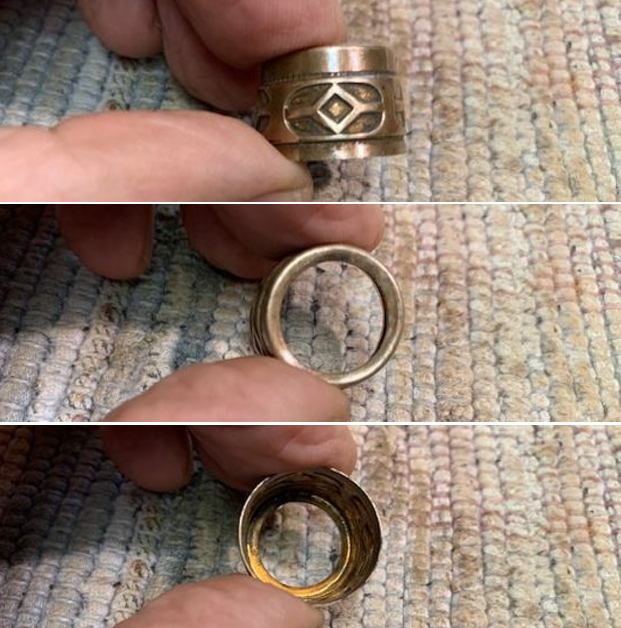
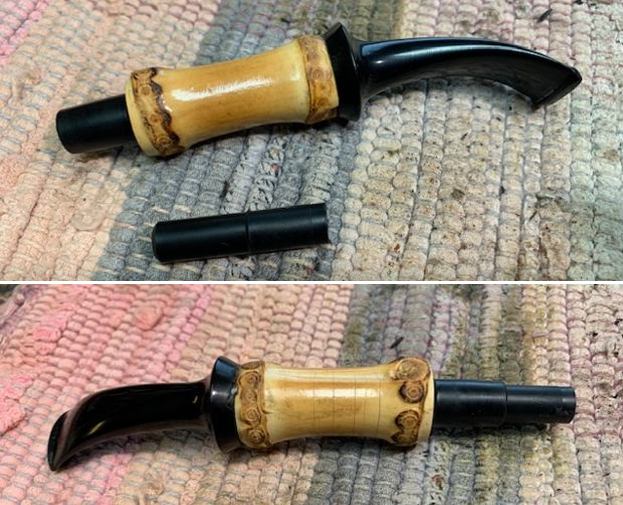
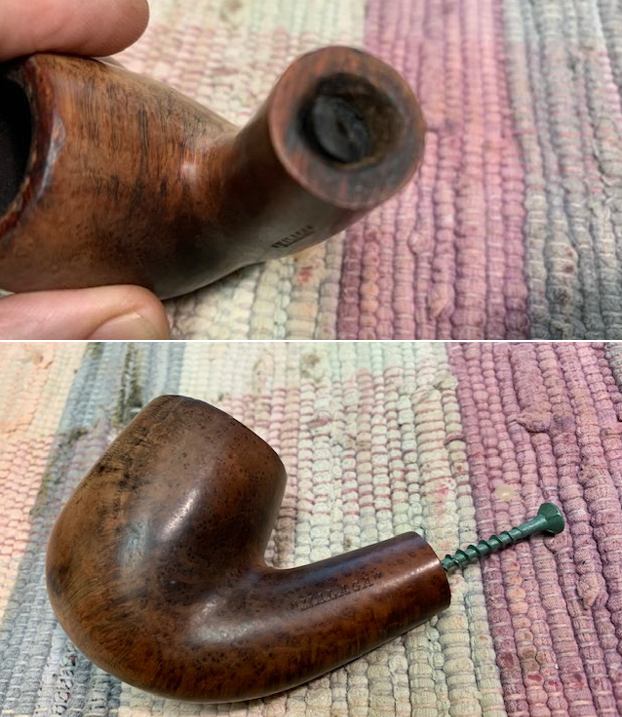
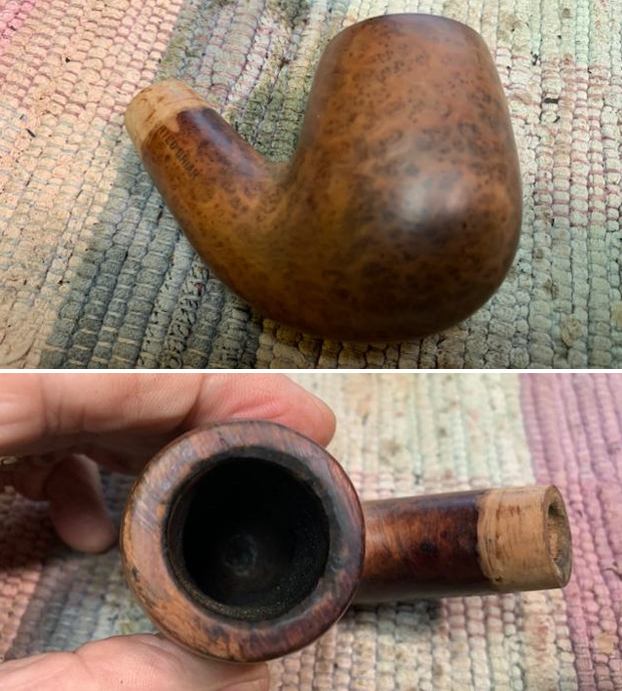
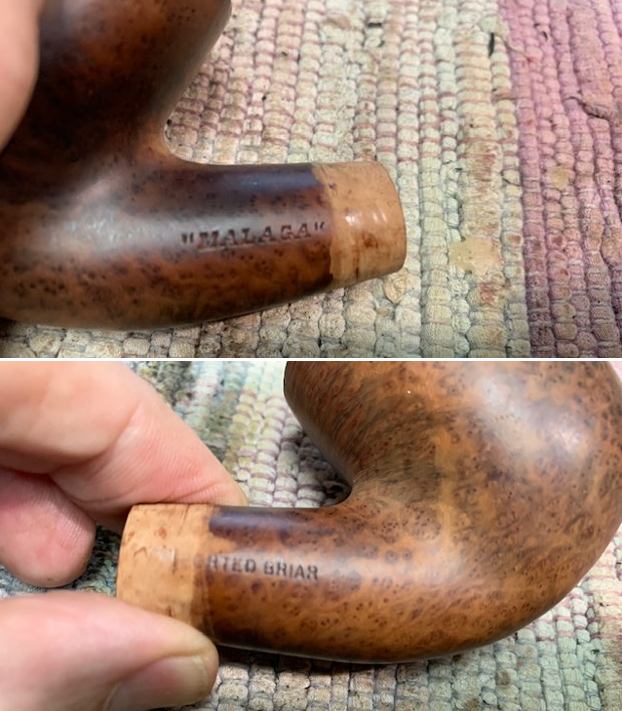
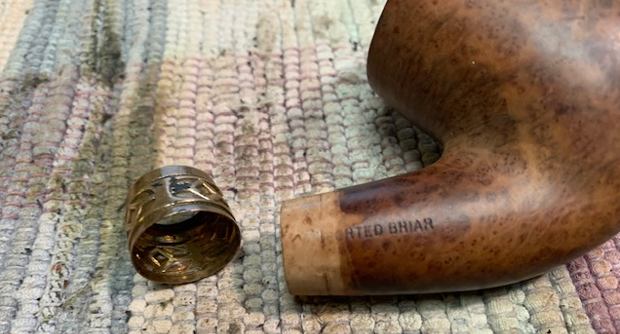
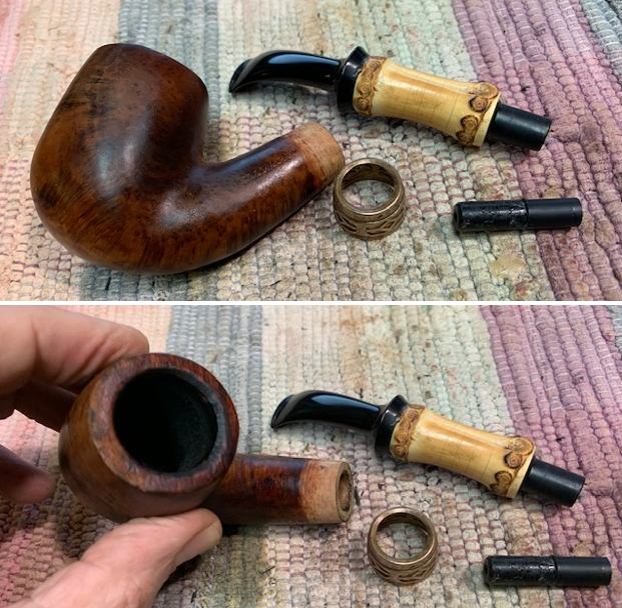
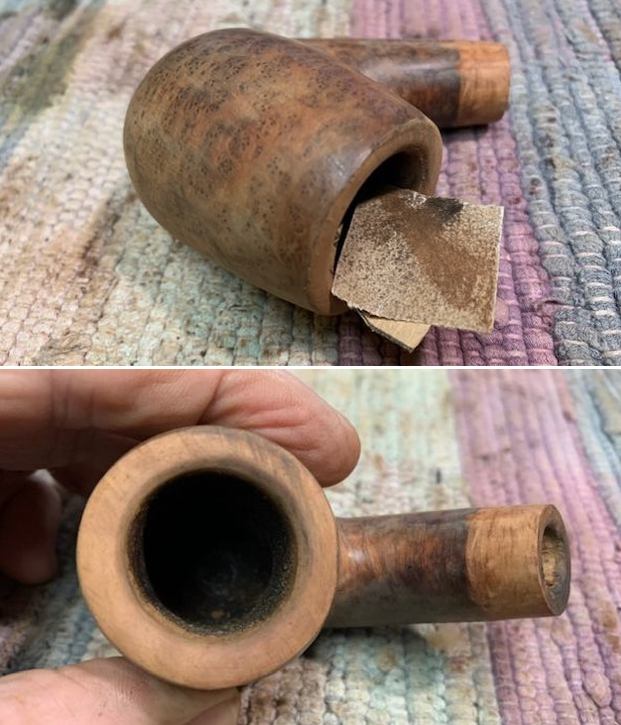
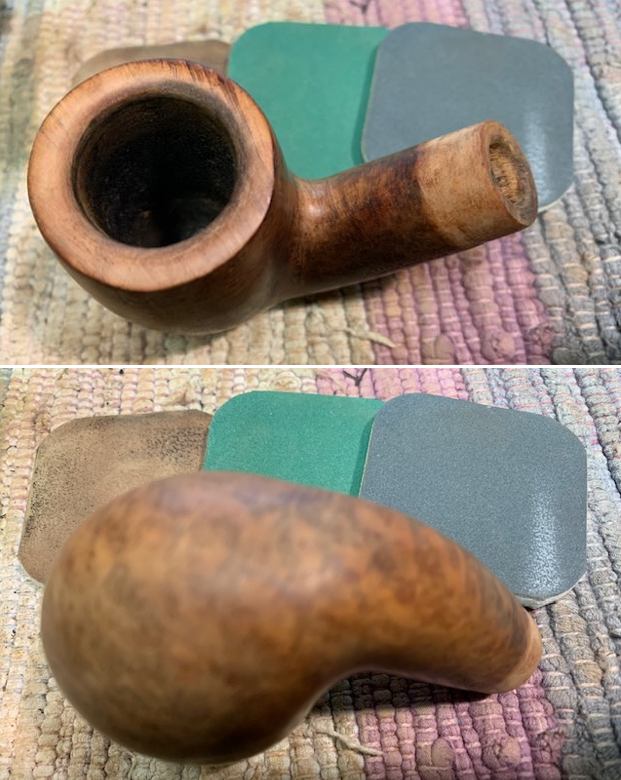
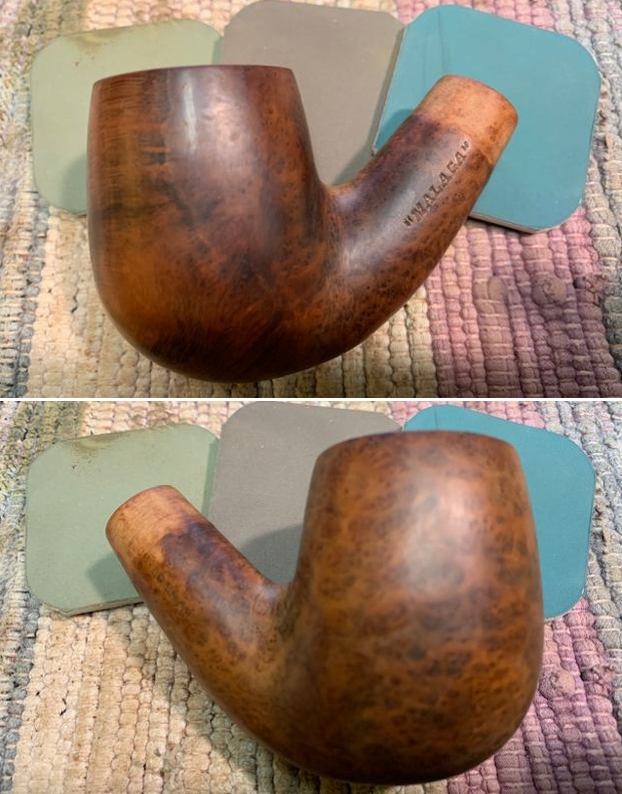
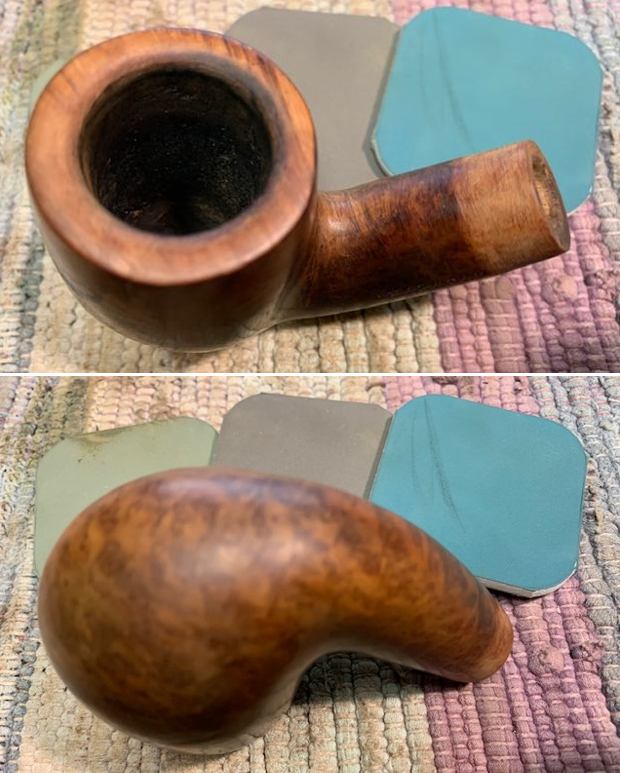
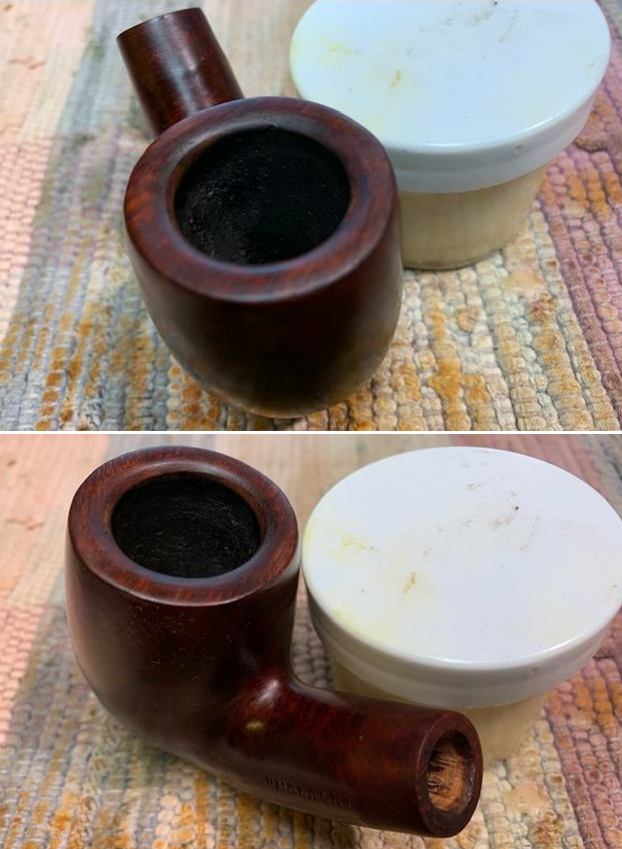
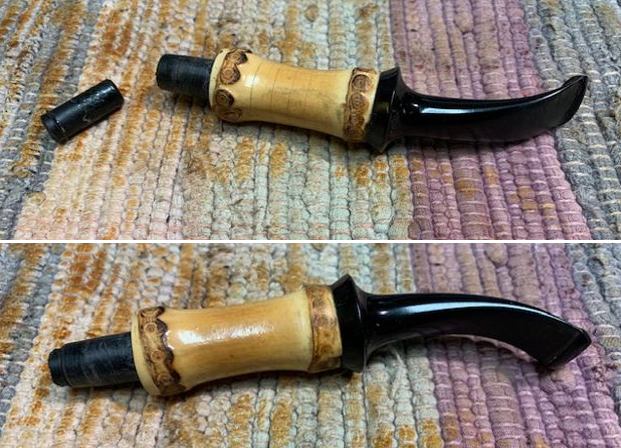
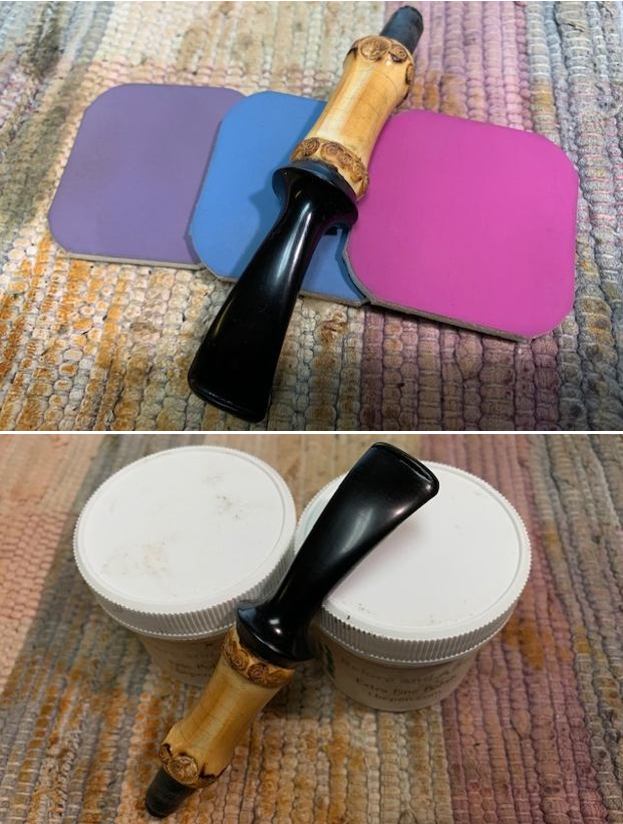
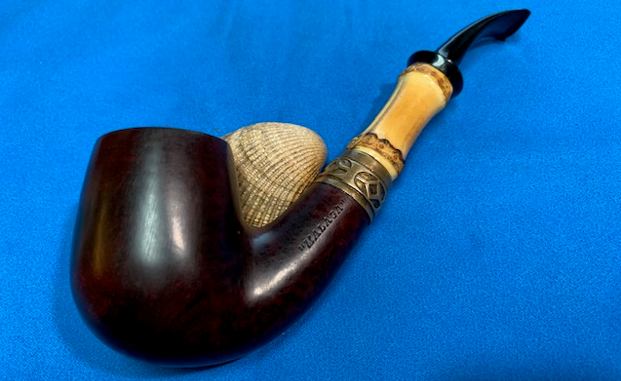
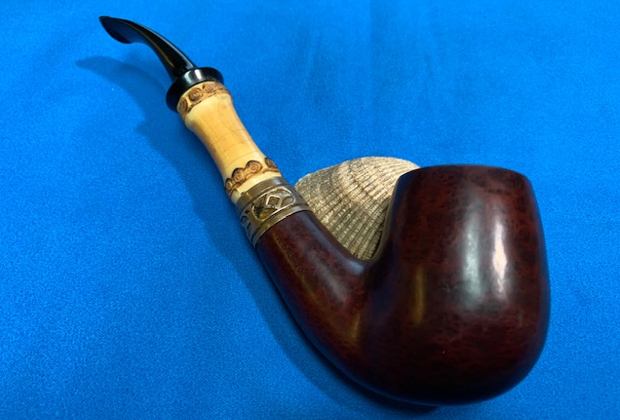
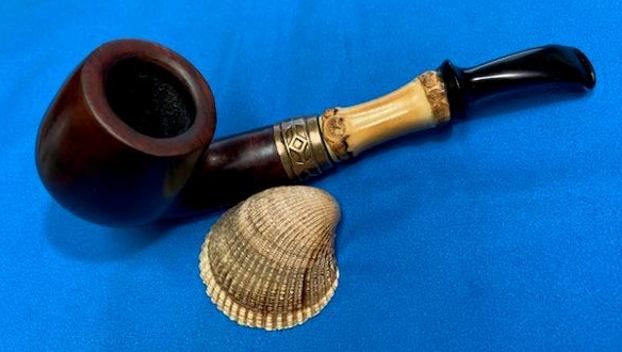
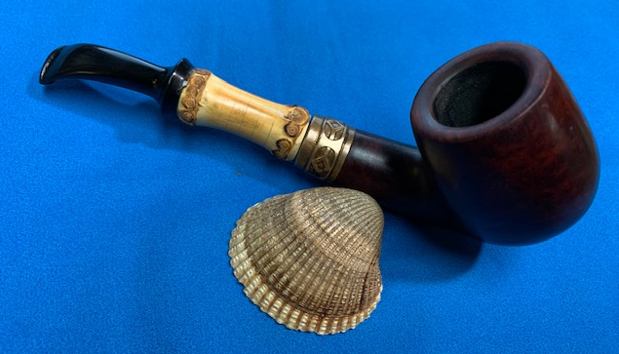
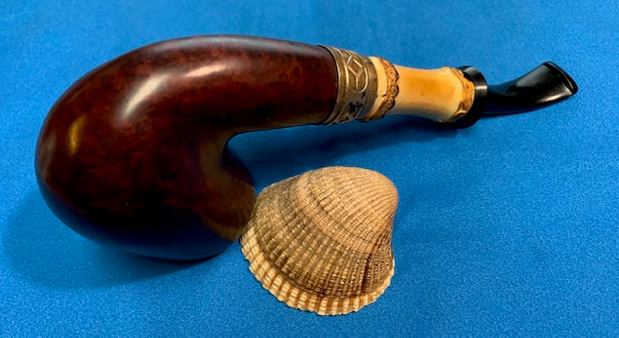
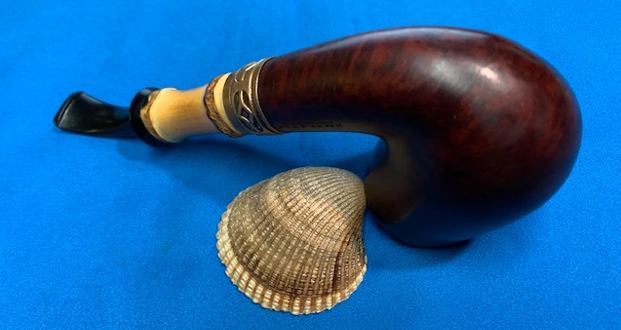
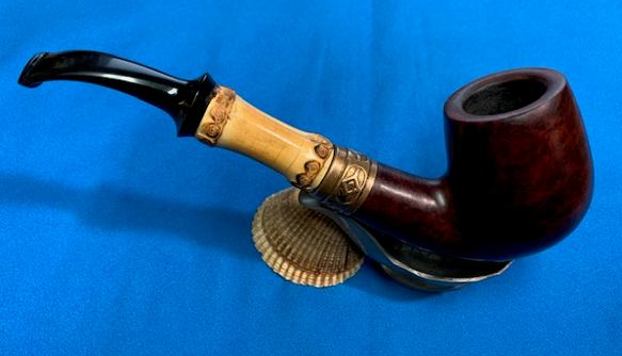
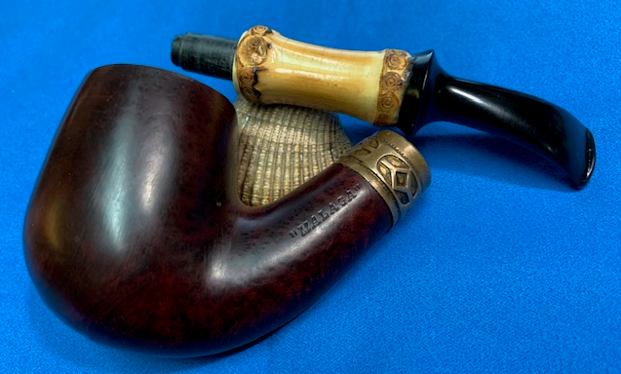
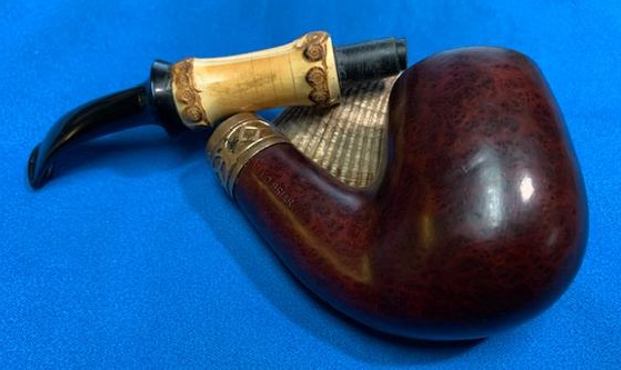
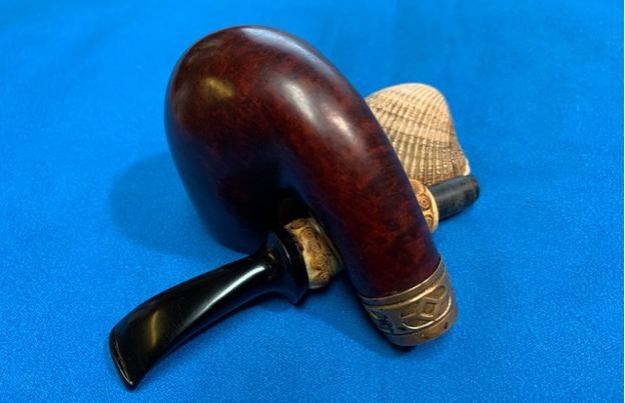
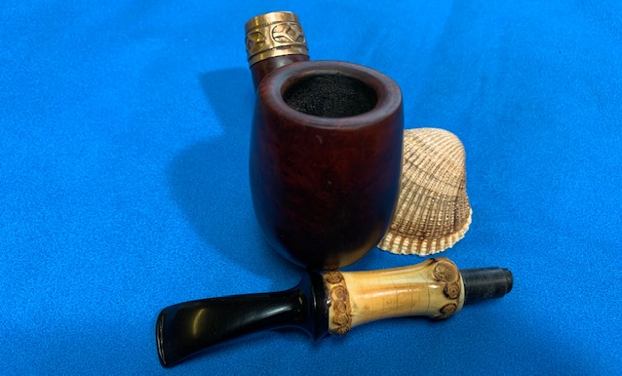
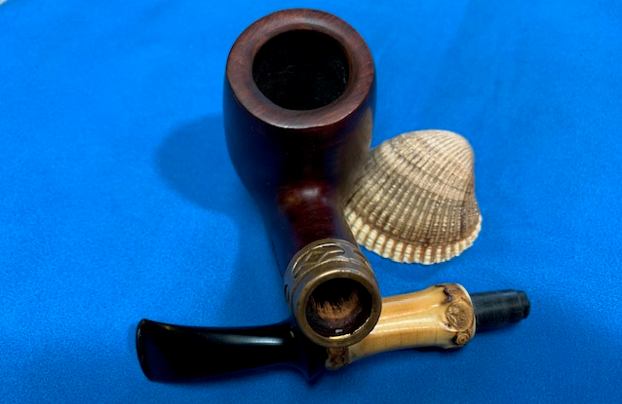
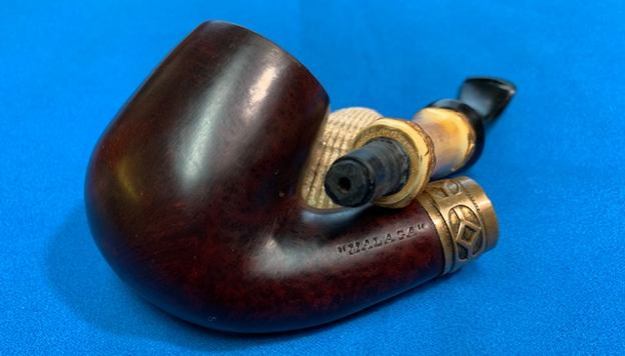
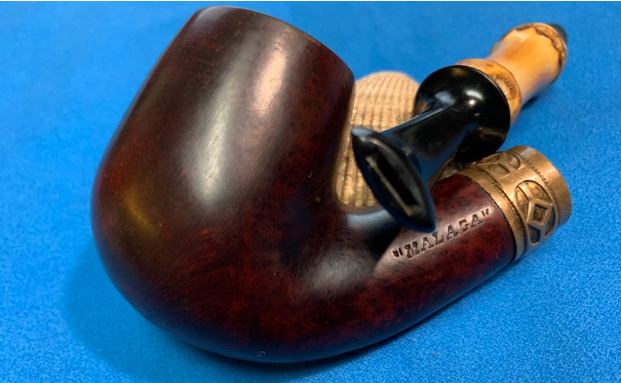
This afternoon I had an urge to make a Frankenpipe so after work I went through my parts. I found some parts that with some imagination could make an interesting looking pipe – at least in my mind’s eye. The parts for this Frankenpipe have all been around for a long time. The bowl is one I have had in a box here that had a snapped tenon in the shank. The stem had disappeared a long time ago and I did not have a stem for it that interested me. It is a large magnum sized “Malaga” bowl. It is far from a perfect piece of briar with a bald spot on the front left of the bowl. The rim top has burn marks and the bowl is out of round – thicker on the front side of the bowl than either side of the back of the bowl. The inner edge had a burned in “bevel” on the back right. The finish was worn and tired with black streaks over the bald spot on the left front of the bowl. It needed some serious TLC to bring life to it. Jeff had done his thorough clean up on the bowl so it was ready to work on. Here is what I saw with the bowl! As I stared at the bowl I thought that a band might look interesting on it. Don’t ask me why because as yet I had not chosen a stem for the bowl. I just thought a band would work. I went through my box of bands and nothing turned my crank or caught my eye. Then I remembered a bag of parts that I have from the mid to late 1800s. In that bag were several unique and original bands. There was one that caught my eye and I really thought it had promise. I took it out of the bag and found that it was in excellent condition and was probably never used. Here are some pictures of the decorative brass band.At that point I had an aha moment. I remembered an odd stem that I had in my collection of stems that just might be the thing that I was looking for on this Frankenpipe. It was unique and one that Jeff had picked up and save for me. I had never found a use for it but now I thought I might have. The two knuckle bamboo shank and acrylic stem is a single that has bend bonded together. The stem is thus a unit with the bamboo and the Delrin tenon on the other end is also integrated. It is drilled for a filter so I found a repair tenon that I could craft into an adapter to convert the tenon to a regular pipe sans filter. It would be removable if needed. Here is what it looked like with and without the tenon adapter. (The adapter would need to be shortened but you get the idea.)All of the parts have been here for quite a while. All of them give silent testimony to my crazy propensity to collect parts!! And all of them would finally come together to form a new Frankenpipe that was more than the sum of its parts. Read along as I walk through my process.
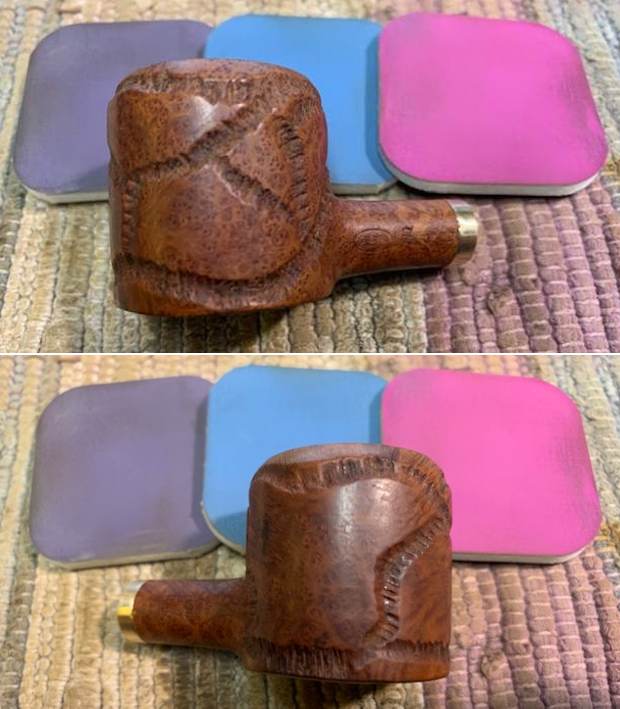
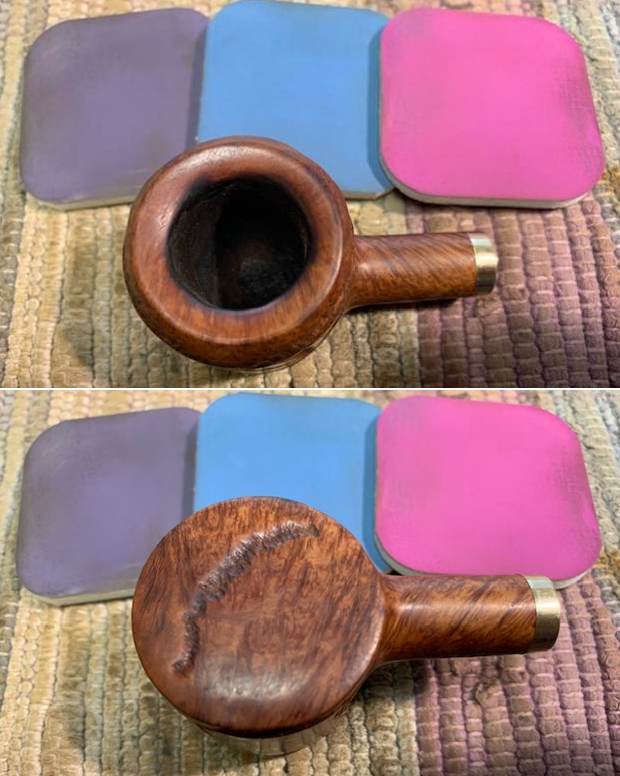
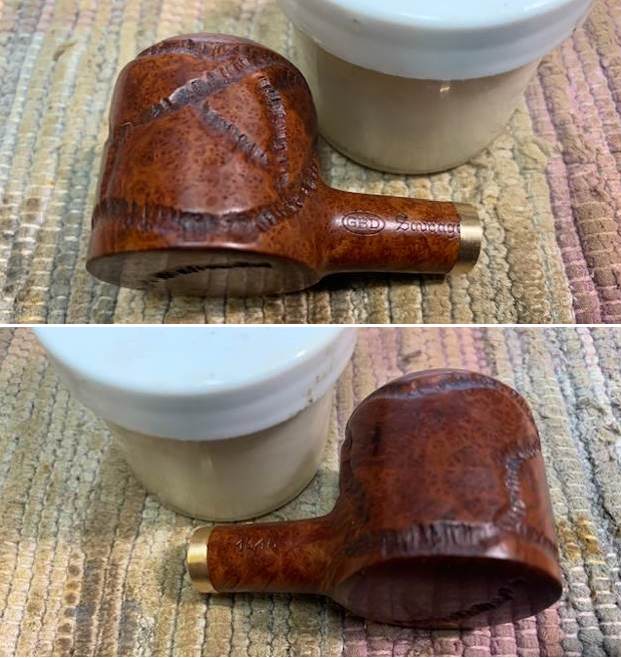
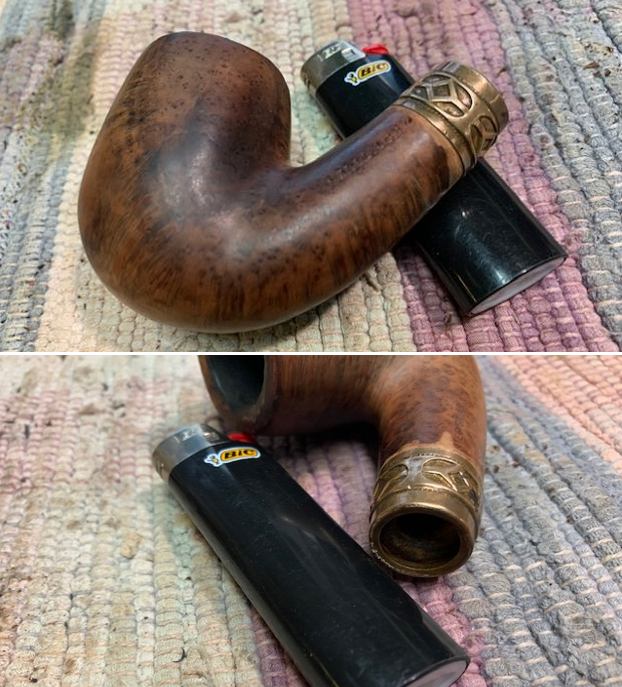
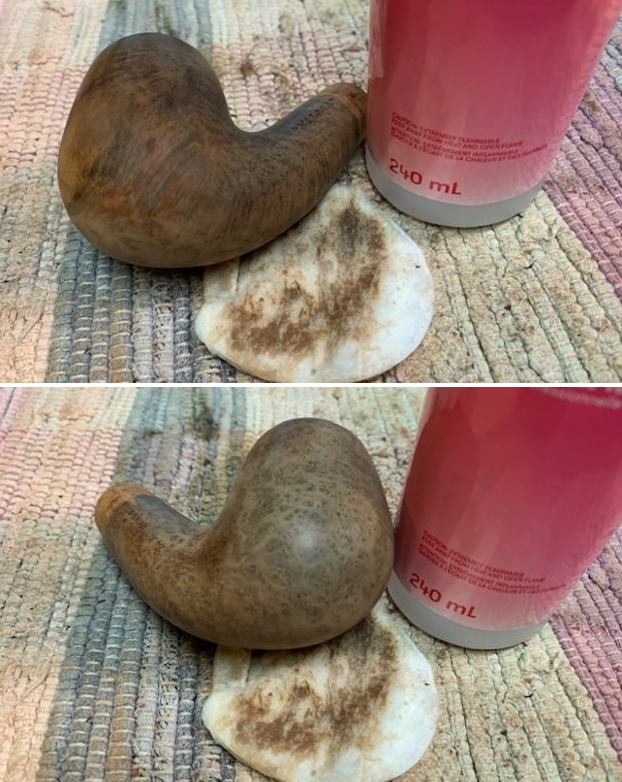
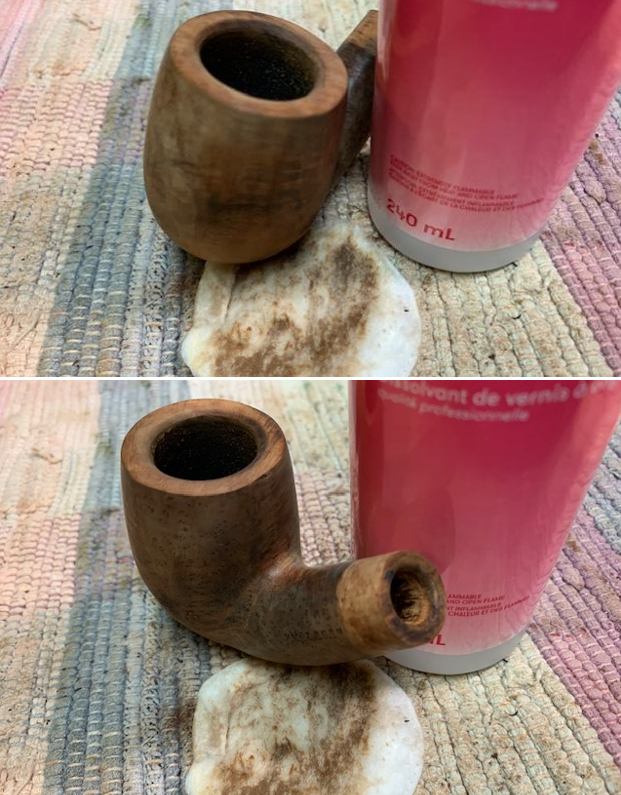
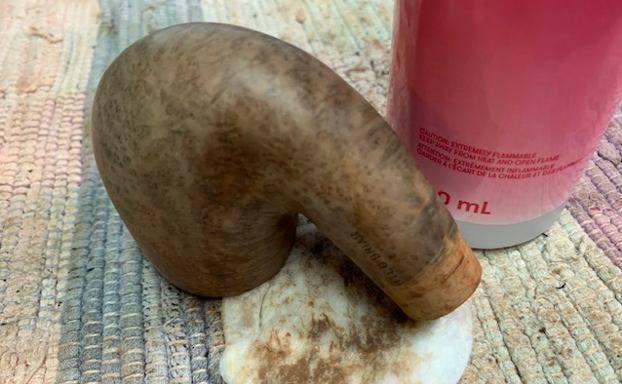
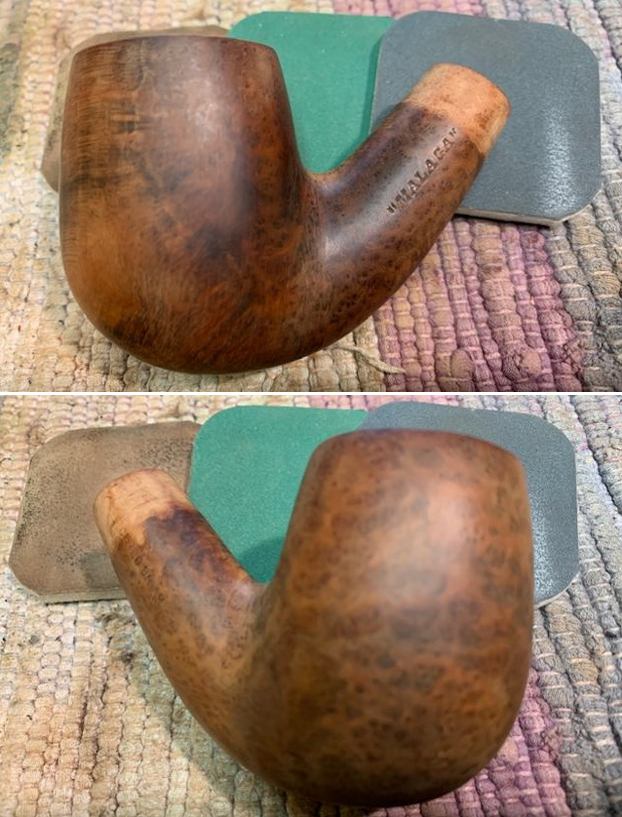
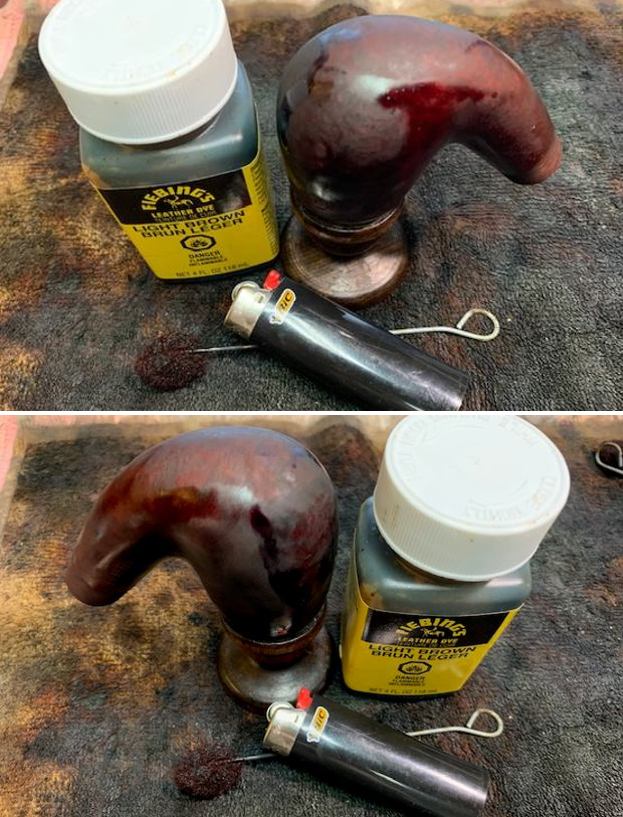
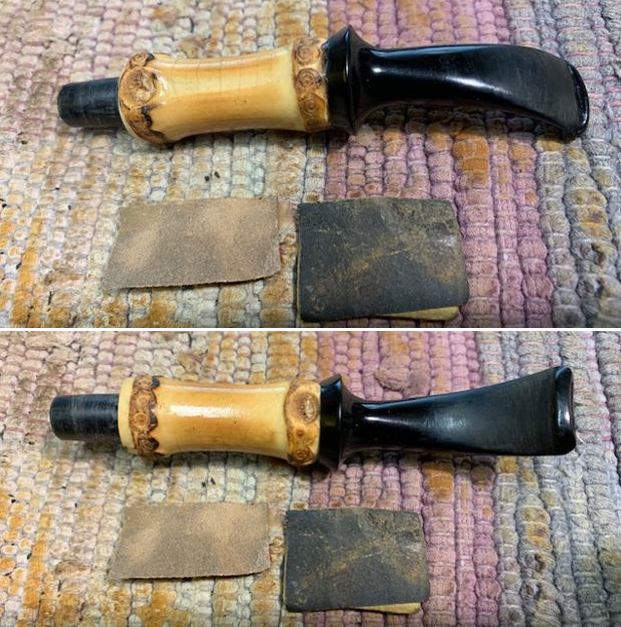
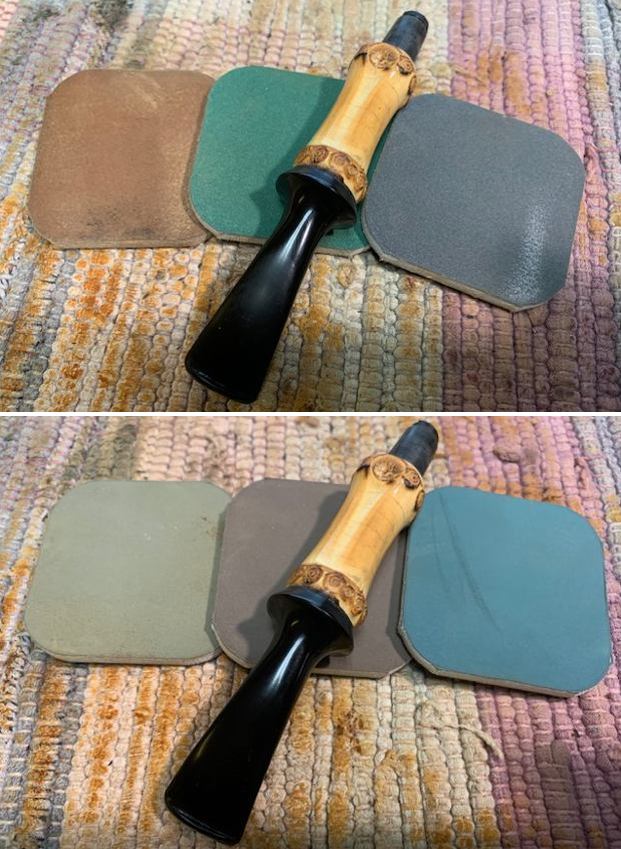
I began the work by addressing the issues with the bowl. I tried to pull the broken tenon with a screw. It was stuck so I put the bowl in the freezer for a little while. After about 10 minutes I tried again and was successful pulling the tenon out of the shank.With that finished I need to address the shank of the pipe to fit the conical ferrule/band that I had chosen. In the next photos you can see that I have chosen to shape the shank end to match the flow of the band. I did this with a Dremel and sanding drum and smooth it out with files and sandpaper. I was careful to leave the original Malaga stamp intact. I was not as concerned with the Imported Briar stamp on the right side of the shank. Progress is being made.I did a bit more shaping on the shank end. The decorative band now fit it quite well. I put the parts side by side and took some photos of the parts of the pipe. I took photos from various angles and sides. Can you begin to see what I am seeing with this pipe? I think it is going to work. Do you? Now back to work on the bowl! I decided to deal with the rim top damage by topping the bowl. It was in rough shape so I used 150 grit sandpaper on a topping board and remove the damaged parts of the rim top. It looked better. I worked over the inner edge of the rim with a folded piece of 150 sandpaper to give it all a bevel to match the burn damage at the back of the bowl. At this point I wanted to try the fit of the band on the shank. I heated it slightly with a lighter and pressed in place. I like what I am seeing. I removed the band once it cooled and went to work some more on the bowl. It needed to be polished and stained before I set the band in place but I wanted to have a look. Didn’t you? I wiped the bowl and shank down with acetone on a cotton pad to try to remove the dark patches and the remnants of the stain. All of this was in preparation for the future staining of the bowl. I polished the bowl with micromesh sanding pads – dry sanding with 1500-12000 grit pads to prepare it for staining. I wiped it down with a damp cloth to remove the debris after each pad. I stained the polished bowl with Fiebings Light Brown aniline stain. I applied the stain, flamed it and repeated the process until I was happy with the coverage. I set it aside to dry.Once the stain dried I wiped the bowl down with alcohol to make the stain more transparent. I buffed the pipe on the buffer with both Red Tripoli and Blue Diamond to further reduce the heaviness of the colour. I worked some Before & After Restoration Balm into the surface of the briar with my finger tips. The product works to clean, enliven and protect the briar. I let it sit on the briar for 10 minutes then buffed it off with a soft cloth. With the bowl finished and the stain cured it was time to press the band in place. I gave it a thin layer of white all purpose glue on the inside of the band and pressed it onto the shank end. It looks quite fetching to me. I set it aside to let the glue cure but I like it! I set the bowl aside and worked on the tenon adapter and the stem surface. I used the Dremel and sanding drum to shorten the adapter until the fit in the tenon allowed the shank to fit snug against the shank end.With the internals finished it was time to work on the tooth marks and chatter on the surface of the acrylic stem. I sanded them smooth with a folded piece of 220 grit sandpaper. I started polishing the stem surface with 400 grit wet dry sandpaper.I polished the stem with micromesh sanding pads – 1500-12000 grit pads. I dry sanded the stem with the pads and wiped it down with a damp cloth after each pad. I finished the polishing with Before & After Pipe Stem Polish – both Fine and Extra Fine. I gave it a final buff with a cloth and Obsidian Oil. I put the parts of the Frankenpipe together and took the pipe to the buffer. I buffed it with Blue Diamond and really like the way the brass and bamboo polished up. They looked great after buffing. The bowl and stem also shone but I expected that really. The combination of the darker stain on the bowl, the antique brass band, the 2 knuckle bamboo with developing patina and the black acrylic stem came together even better than expected. I gave the pipe several coats of carnauba wax on the buffing wheel. I buffed it with a clean buffing pad to raise the shine and hand buffed it with a microfibre cloth to deepen the shine. The finished pipe really shone with rich hues. The dimensions of this Frankenpipe are Length: 5 ½ inches from the front of the bowl to tip of the stem, Height: 2 inches, Outer diameter of the bowl: 1 ¾ inches, Chamber diameter: 7/8 of an inch. The weight of the pipe is 69 grams/ 2.47 ounces. It really surprised me as it looks to be a much bigger pipe than it is. I would say it is Dunhill Group 5 pipe at least in terms of bowl size. It really is a beautiful pipe in person and it will be staying with me along with the other Frankenpipes I have crafted. I am looking forward to enjoying a bowl shortly. It was a fun pipe to work on. I hope you enjoyed the process as you read about it. Thank you for taking time to read about it. As Paresh says – Stay safe/Stay healthy.
New Life for a Butz-Choquin Regate 1282 Zulu


Blog by Steve Laug

The next pipe on the table is one that came to us from Australia. It went to Jeff first then was shipped to me. It is a well traveled pipe that was purchased in 2020 from the estate of a fellow pipeman in Australia, shipped to the US and then to Canada. The shape is very nice, with the forward canted bowl and the quarter bent stem. It is a great shape with a taper vulcanite stem. The finish was dirty with grime ground into the finish around the bowl sides. There was a thick cake in the bowl and lava overflow on the top of the rim – heavier on the backside of the rim top but nonetheless on the entire rim top. There was some burn damage on the right front inner beveled edge of the bowl. The pipe is stamped on the left side of the shank and reads Butz-Choquin at an angle [over] Regate. On the right side it reads St. Claude – France [over] the shape number 1282. The stem was lightly oxidized and there were tooth marks and chatter on both sides near the button. The taper stem also has a BC stamped on the left side. Jeff took some photos of the pipe before he started the clean up work. He took photos of the rim top and bowl to give a clear picture of the thickness of the cake and well as the nicks, lava and darkening on the rim top. The inner edges showed some burn damage on the inner bevel of the bowl. The outer edges of the bowl appeared to be in great condition. He also took photos of the top and underside of the stem to show the light oxidation and the chatter and tooth marks. Jeff took a photo the sides and heel of the bowl to give a picture of the beautiful grain around the bowl and shank. There were also shiny spots of varnish around the bowl and shank sides. The stamping on the sides of the shank is clear and readable and read as noted above. There is also BC stamp on the left side of the stem. I turned to Pipephil’s site and looked for information on the Butz – Choquin Regate I was working on (http://pipephil.eu/logos/en/logo-butzchoquin.html). As always there was a good, brief description of the history of the brand.

I turned to Pipedia (https://pipedia.org/wiki/Butz-Choquin) to see what I could find on the brand that the Regate line there. I found a catalogue page from Doug Valitchka on the Regate that listed the pipe line and a description (https://pipedia.org/wiki/File:BC10.jpg). I have captured that image below. The description under the Regate heading reads –

Regate (and the description below is in both French and English)

Les veines classique qui rallie les suffrages de la plupart des fumeurs

A great classic which meets with the approval of the majority of smokers.

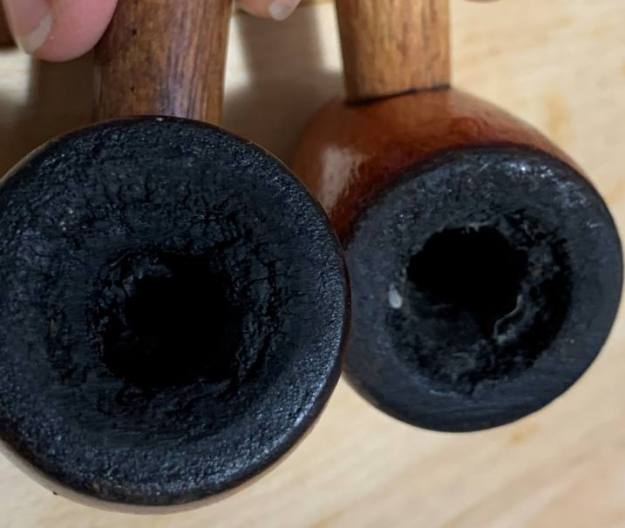
I have also included another picture from Doug Valitchka that shows the shape of the pipe that I am working on (https://pipedia.org/wiki/File:BC06.jpg). It is the second shape that is shown on the page – Shape 1282. The shape is called a Genoises. Now it was time to work on the pipe. Jeff had cleaned up the pipe following his usual procedures. He reamed the pipe with a PipNet pipe reamer and cleaned up the remnants with a Savinelli Fitsall Pipe Knife. He cleaned out the inside of the shank and the airway in the stem with 99% isopropyl alcohol, cotton swabs and pipe cleaners. He scrubbed the exterior of the bowl with undiluted Murphy’s Oil Soap and a tooth brush. He rinsed it under running warm water to remove the soap and grime. He soaked the stem in Before & After Deoxidizer and rinsed it off with warm water. I took photos of the pipe once I received it.  The rim top cleaned up really well. But the cleaning revealed some serious burn damage on the rim top and front inner edge toward the right side. The stem surface looked good and the light tooth marks and chatter would be easy to address. The stamping on the sides of the shank is readable and reads as noted above.I removed the stem and took a photo of the pipe to give a sense of the shape and the grain on the bowl and shank. It was a great looking shape and would be a beautiful pipe when I was finished. I decided to start my work on the pipe by wiping the bowl down with acetone on a cotton pad to remove the heavy stain around parts of the bowl sides. I wanted really be able to see the grain on the bowl. I dealt with the damage to the rim top by topping it on a topping board with 220 grit sandpaper. I cleaned up the beveled inner edge of the rim with 220 grit sandpaper to remove as much of the burn damage as possible. I polished the bowl with micromesh sanding pads – 1500-12000 grit pads. I wiped it down with a damp cloth after each sanding pad.  It was beginning to look good to my eyes. I stained the inner edge and rim top with an Oak Stain Pen to match the rest of the surrounding bowl. It helps to blend in the burned area some more. The rim top and edges definitely look better than when I started.I rubbed the bowl and shank down with Before & After Restoration Balm. I worked it into the surface of the bowl sides and shank with my fingertips to clean, enliven and protect the briar. I let the balm sit for ten minutes then buffed the bowl with a cotton cloth to raise the shine. I set the bowl aside and turned my attention to the stem. I “painted” both sides of the stem with the flame of a lighter to lift the tooth marks. It did a great job and left only one deep mark on the underside and some lighter tooth marks on the topside along the button. I filled them in with clear CA glue and once it cured I used a small file to sharpen the edge of the button and smooth out the repair. I sanded the stem with 220 grit sandpaper to smooth out the repairs. I started polishing it with 400 grit sandpaper.  I used some white acrylic fingernail polish to touch up the BC stamp on the left side of the stem. I painted it on with the brush and once it dried scraped it off and sanded it with a 1500 grit micromesh sanding pad.I polished the stem with micromesh sanding pads – 1500-12000 grit pads. I wiped it down with Obsidian Oil after each sanding pad. I used Before & After Pipe Polish – both Fine and Extra Fine to further polish the stem. This Butz-Choquin Regate 1282 Zulu is a great looking pipe now that it has been restored. The combination of various brown stains around the bowl is quite beautiful and highlights grain very well. The finish works well with the polished curved vulcanite taper stem. I put the stem back on the bowl and carefully buffed the pipe with Blue Diamond on the buffing wheel using a light touch on the briar. I gave the bowl and the stem multiple coats of carnauba wax on the buffing wheel and followed that by buffing the entire pipe with a clean buffing pad. I hand buffed the pipe with a microfiber cloth to deepen the shine. The finished Butz-Choquin Regate Zulu sits nicely in the hand and feels great. Give the finished pipe a look in the photos below. The dimensions of the pipe are Length: 6 inches, Height: 1 ¾ inches, Outside diameter of the bowl: 1 ¼ inches, Chamber diameter: ¾ inch. The weight of the pipe is 35 grams/1.23 ounces. I will be putting it on the French Pipemakers section of the rebornpipes store shortly. If you are interested in adding this pipe to your collection send me a message or an email. Thanks for reading this blog and my reflections on the pipe while I worked on it. There are many more to come! 

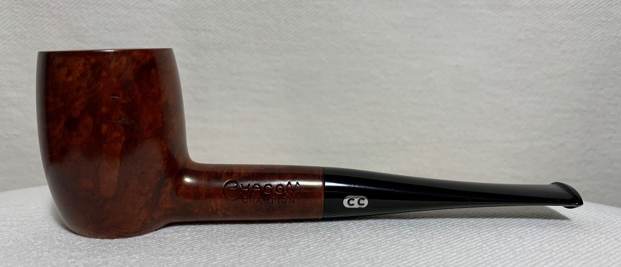
Resurrecting a Tired Warrior – a Butz-Choquin Casino 1575 Spigot Billiard


Blog by Steve Laug

The next pipe on the table is a Butz-Choquin Spigot style pipe with a polished nickel ferrule and a polished nickel stem end. The pipe had classic shape and at first glance looked very good. We purchased this from an online auction late in 2020 in Elgin, South Carolina, USA. It had a rich finish somewhere underneath all of the debris, grime and damage to rim edges and sides. There was a thick cake in bowl and lava on the rim top. The rim top was uneven with dips and burns on the top. The front of the bowl had significant burn damage from the rim top down into the surface of the briar on the front. The left side had the same issue and had been worn away over time so that it was canted inward making that part of the bowl thinner on the side. The pipe is stamped on the left side of the shank Butz-Choquin at an angle [over] Casino and on the right side it was stamped St Claude in an arch over France [over] the shape number 1575. The nickel ferrule and stem end were oxidized and scratched. The stem was oxidized but had deep tooth marks on the top and underside near the button. The deepest marks were on the underside with one that was almost a bite through. The BC logo on the topside was faded and needed to be touched up. Jeff took photos of the pipe before he started his clean up work. I like to have an idea of how the pipe was smoked before we got it and what the bowl and rim top looked like. Jeff always takes some photos of the bowl and rim from various angles to show what it looked like. This bowl and rim top were in rough condition. The stem was a real mess with deep tooth marks and damage on both sides. He took a photo of the nickel ferrule and stem end to give a picture of their condition when we received the pipe. It definitely needs work. He took photos of the sides and heel of the bowl to give a sense of the grain on the pipe. You can also see the damage around the top front and sides in the photos. Jeff captured the burn damage on the front of the bowl in the next photo and some of the nicks and gouges in the sides of the bowl in the second photo. There is work to do on this one!The next photos show the stamping on the left and right side of the shank. It is clear and readable as noted above. Jeff also captured the BC stamp on the topside of the stem. I turned to Pipephil.eu and read through the listing on the brand. It is always a quick reminder to me of the basics of a brand. The Casino line was not listed there. I include the short summary of the history below.

The origin of the brand reaches back to 1858 when Jean-Baptiste Choquin in collaboration with his son-in-law Gustave Butz created their first pipe in Metz (France). Since 1951 Butz-Choquin  is a brand of the Berrod-Regad group (Saint-Claude, France).

Jean Paul Berrod managed the company from 1969 to 2002 when he retired and sold the corporate to Mr Fabien Gichon. Denis Blanc, already owner of EWA, took over the S.A. Berrod-Regad in 2006.

I could not find anything specific in Pipedia about the Casino line, but a simple search on the internet will show many different shapes available in the Casino line from Butz-Choquin.   Now it was time to work on the pipe.

Jeff had done a great cleanup on the pipe. He reamed the bowl with a PipNet pipe reamer and followed up with a Savinelli Fitsall pipe knife to remove the cake. He scrubbed out the mortise and the airway in the shank and the stem with alcohol, cotton swabs and pipe cleaners. He scrubbed the bowl exterior with a tooth brush and Murphy’s Oil Soap to remove the grime on the finish of the bowl and the lava from the rim top. He rinsed it under running water. One of the benefits of this scrub is that it also tends to lift some of the scratches and nicks in the surface of the briar. He dried it off with a soft cloth. He cleaned the internals and externals of the stem with alcohol, pipe cleaners and cotton swabs. He soaked the stem in Briarville’s Pipe Stem Deoxidizer and rinsed it off with warm water and cleaned out the airway in the stem with alcohol. When I received it the pipe looked very good.  I took a photo of the rim top and stem to show the condition. The rim top and the inner edge of the bowl were in rough shape. The outer edge had a lot of burn damage on the front and the left side. The rim top and inner edge also has significant burn damage and was not flat. The stem was vulcanite and there were some deep tooth marks and chatter on both sides ahead of the button. The stamping on the pipe is clear and readable as noted above. The BC logo on the stem is deep and needs to be repainted with white (as seen in the photo of the top of the stem above).I started my work on this pipe by dealing with the damage to the outer edge of the bowl and rim top. I topped the bowl first on a topping board with 220 grit sandpaper. I flattened out the rim top and made the top of the rim consistently flat. I removed much of the burn damage to the bowl top. I worked on the damaged areas on the left side and front of the bowl by building them up with briar dust and clear super glue. I built up the left side of the inner edge with super glue and briar dust as well. There the burn damage was shallow but it made the bowl out of round. I topped it once again to smooth out the repair on the rim top. I used a piece of dowel wrapped in sandpaper to sand the inner edge of the rim and smooth out the repair in that area. It worked well.I smoothed out the repairs on the left and front of the bowl with 220 grit sandpaper and blended them into the surrounding briar.I gave the inner edge of the bowl a slight bevel with 220 grit sandpaper to help reshape it and bring it back to round. The rim top and edges looked good at this point in the process.I restained the pipe with a light brown aniline stain. I applied it with a dauber and flamed it with a Bic lighter to set it in the grain. I repeated the process until I was happy with the coverage.Once the stain had dried I wiped the bowl down with 99% isopropyl alcohol to make it a bit more transparent. I find that doing a wipe down at this point evens the finish before I start polishing it with micromesh.I polished the briar with 1200-1500 micromesh sanding pads and wiping it down with damp cloth after each sanding pad. As I worked through the cycle of pads the shine developed with each change of pad. The damage on the rim sides looks better. I left some of the nicks and sandpits as they really are a part of the pipe’s story. I rubbed the bowl and shank down with Before & After Restoration Balm. I worked it into the surface of the bowl sides and shank with my fingertips to clean, enliven and protect the briar. I let the balm sit for 10 minutes, then buffed with a cotton cloth to raise the shine. The Balm did its magic and the grain stood out on the briar. I set the bowl aside and turned my attention to the stem. I decided to address the tooth marks on the stem. They were ragged, with sharp edges and heat did not lift them at all. I filled them in with clear super glue. I let the repairs cure and once they hardened I flattened and shaped them with a small file. I sanded them with 220 grit sandpaper to blend them into the surface of the stem. I started the polishing of the stem with 400 grit wet dry sandpaper. I touched up the BC stamp on the left side of the stem with white acrylic nail polish. I worked it into the stamp with a tooth pick and then sanded off the excess once it had dried with a 1500 micromesh sanding pad.I polished it with micromesh sanding pads – 1500-12000 grit pads. I wiped it down with Obsidian Oil after each sanding pad. I used Before & After Pipe Polish – both Fine and Extra Fine to further polish the stem. The photos below show the polished stem. This Butz-Choquin Casino 1575 Spigot Billiard with a polished nickel ferrule and stem cap on a vulcanite stem is a great looking pipe now that it has been restored. It was a lot of work and I took a decision to leave some of the journey of the pipe in the finish so it is far from flawless but it is a beauty. The rich browns of the stain made the grain come alive with the polishing and waxing. I put the stem back on the bowl and carefully buffed the pipe with Blue Diamond on the buffing wheel using a light touch on the briar. I gave the bowl and the stem multiple coats of carnauba wax on the buffing wheel and followed that by buffing the entire pipe with a clean buffing pad. I hand buffed the pipe with a microfiber cloth to deepen the shine. The finished BC Casino 1575 Spigot really is a beauty and fits nicely in the hand and looks very good. Give the finished pipe a look in the photos below. The dimensions of the pipe are Length: 6 ¼ inches, Height: 1 ¾ inches, Outside diameter of the bowl: 1 ¼ inches, Chamber diameter: ¾ of an inch. The weight of the pipe is 1.87oz./53grams. This beauty will be going off to its new trustee in Michigan along with several other nice pipes. Thanks for reading this blog and my reflections on the pipe while I worked on it. There are many more to come!

Breathing Life into this Savinelli Made Duca Carlo Pot


Blog by Steve Laug

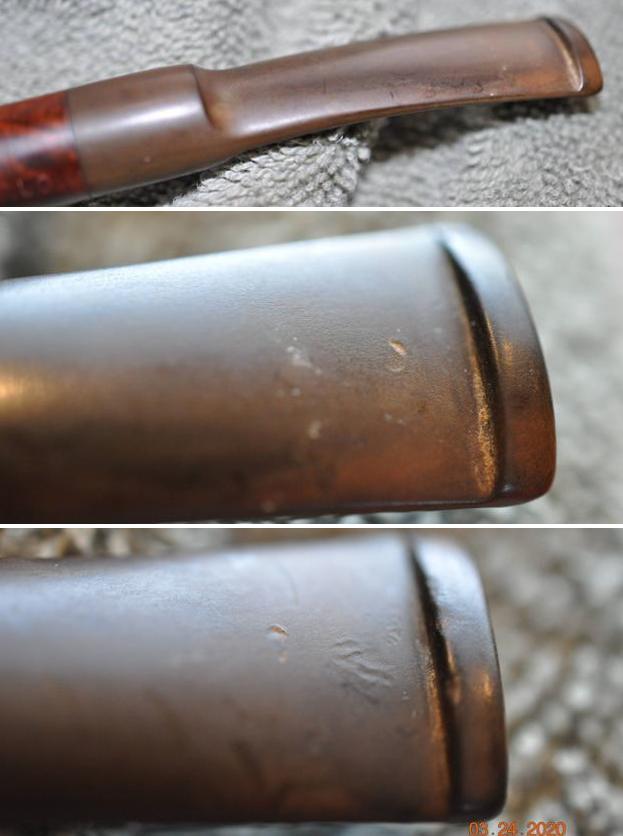
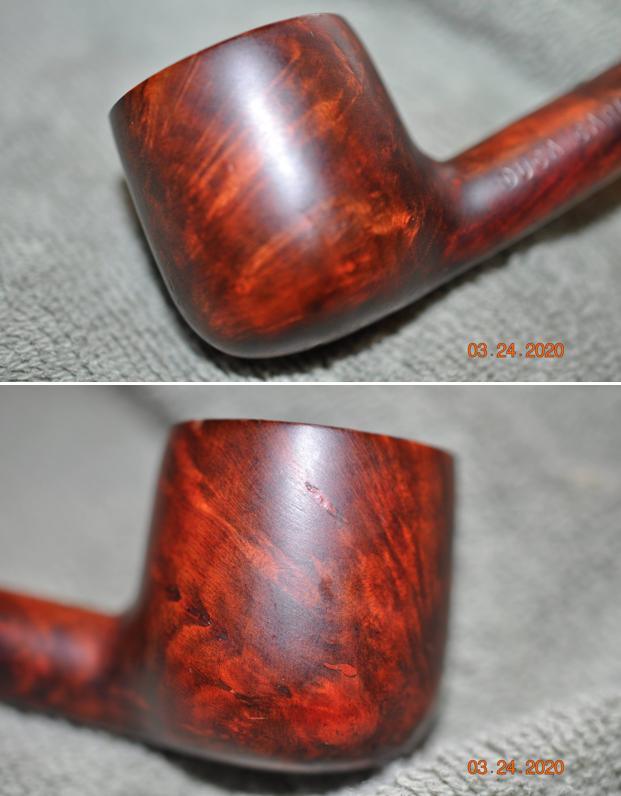
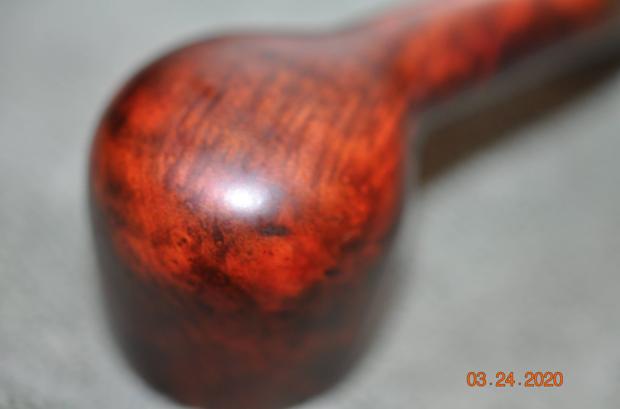
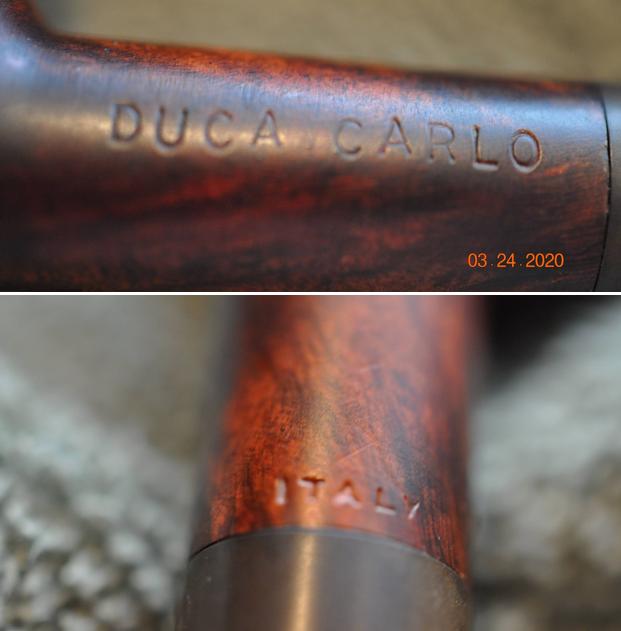
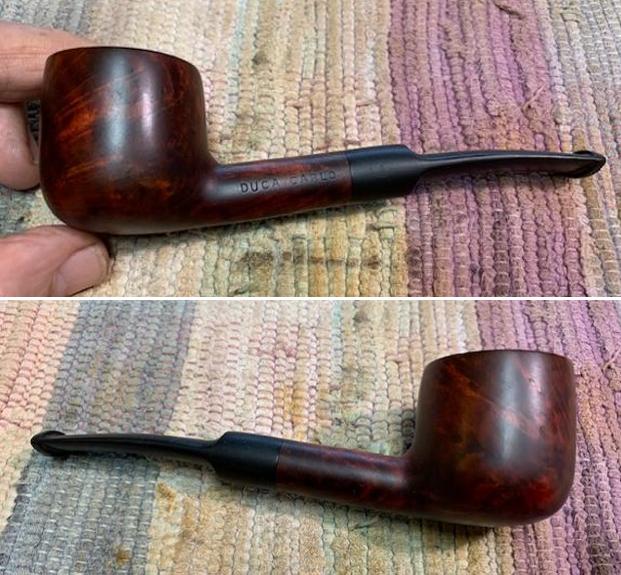
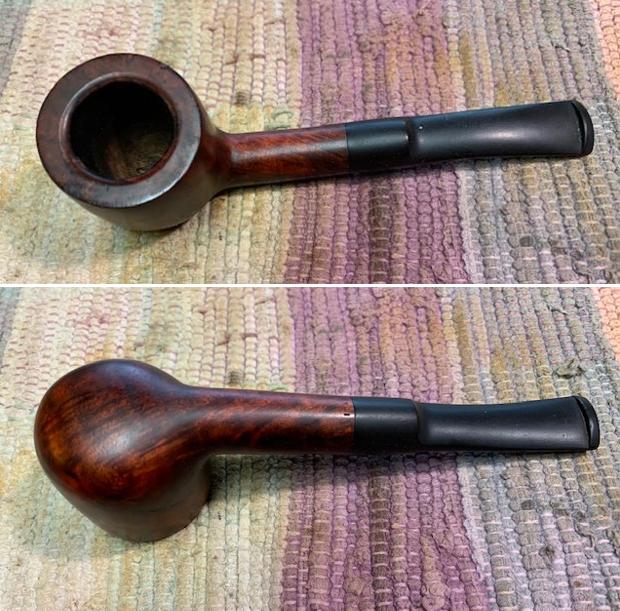
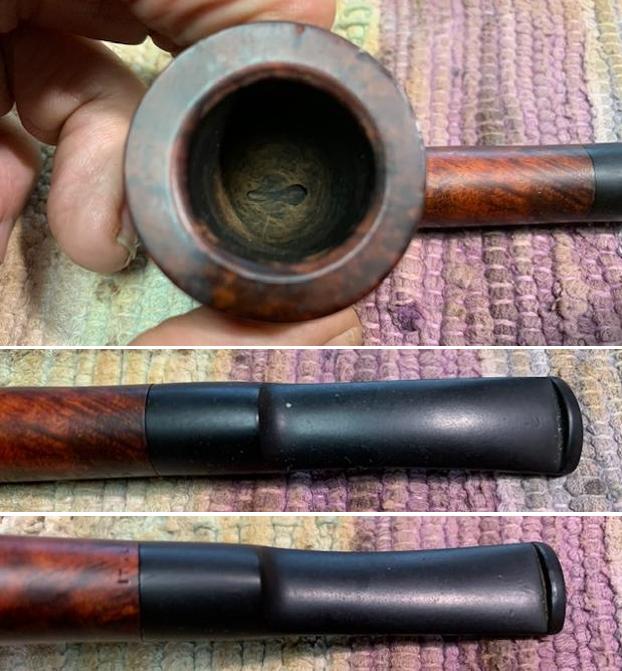
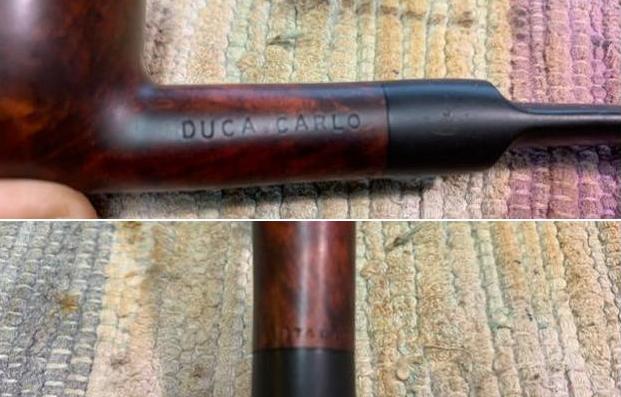
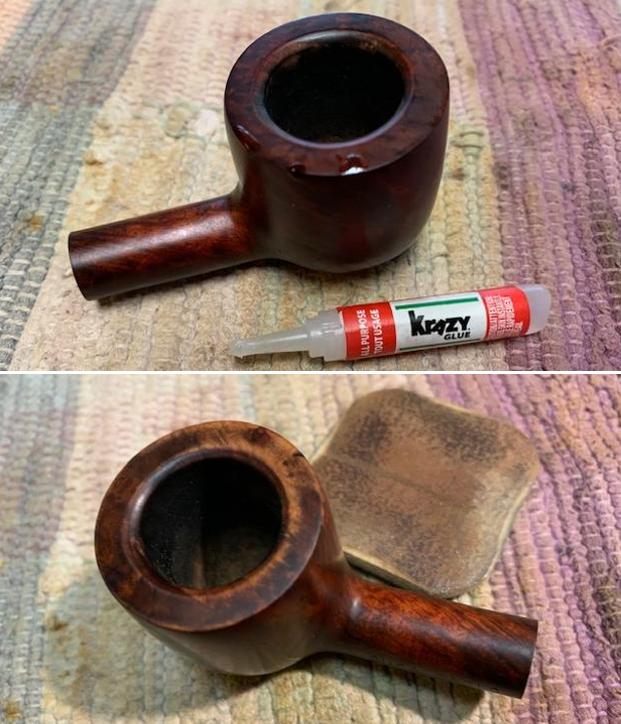
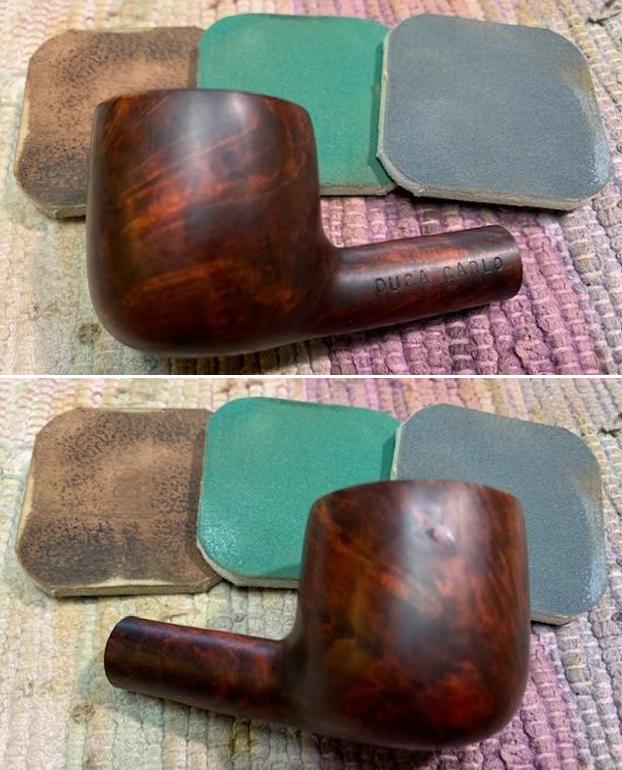
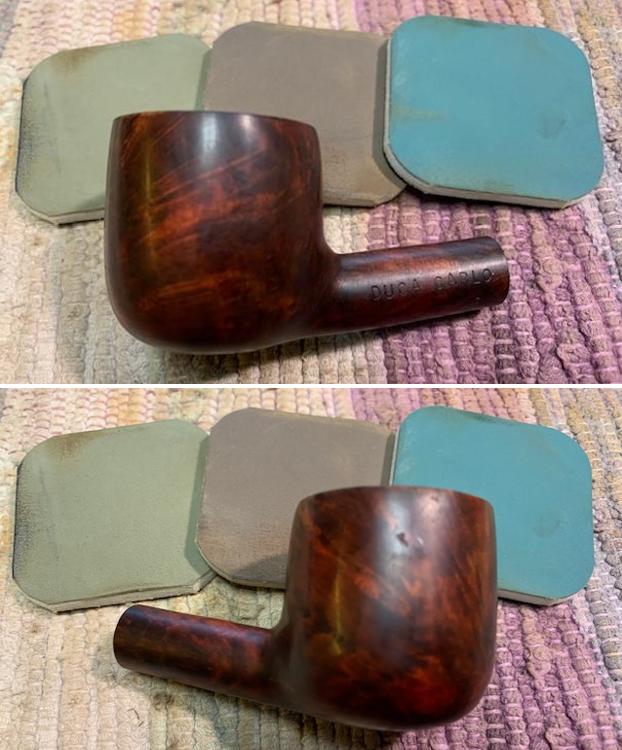
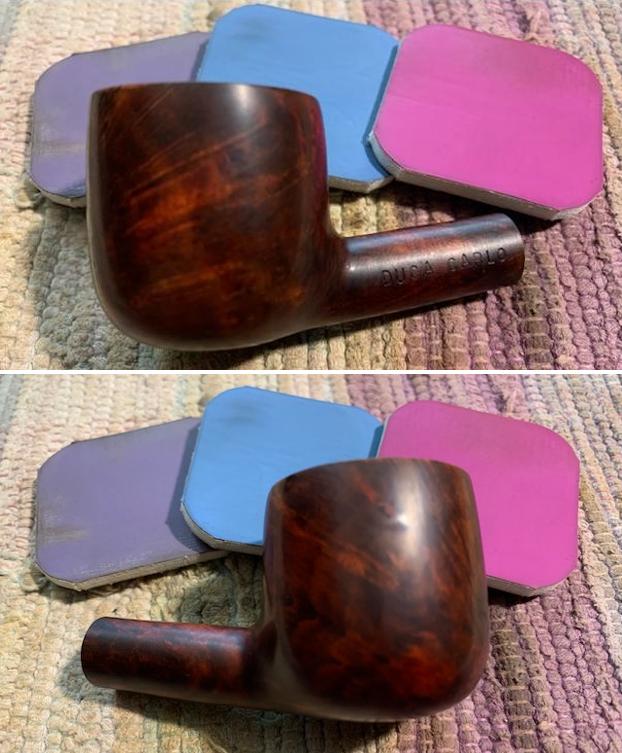
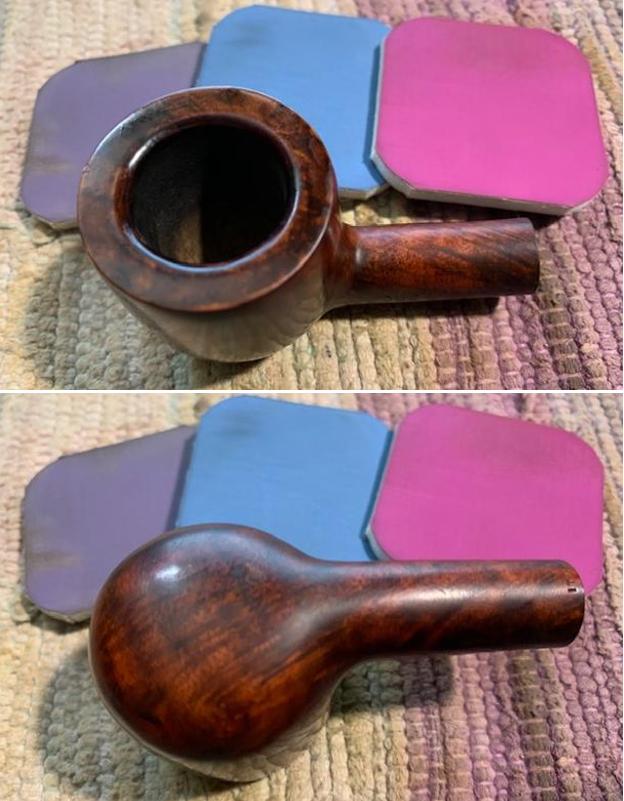
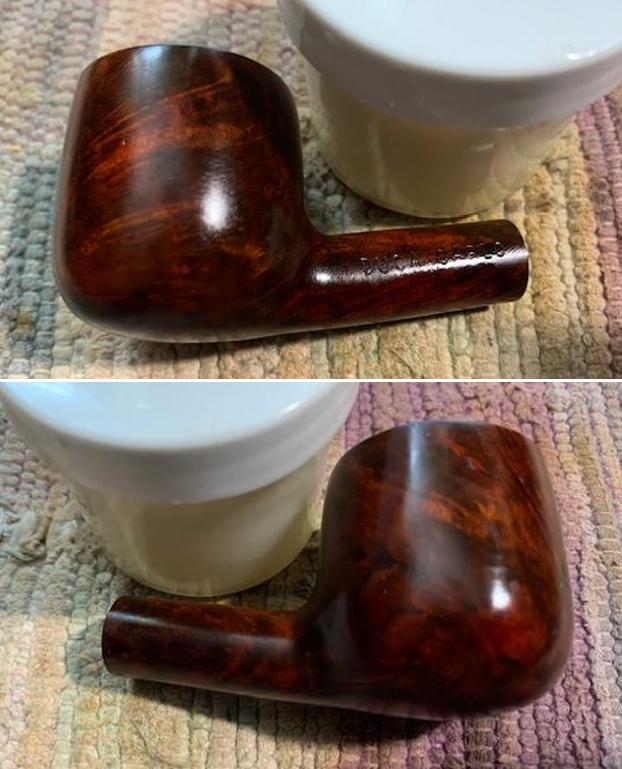
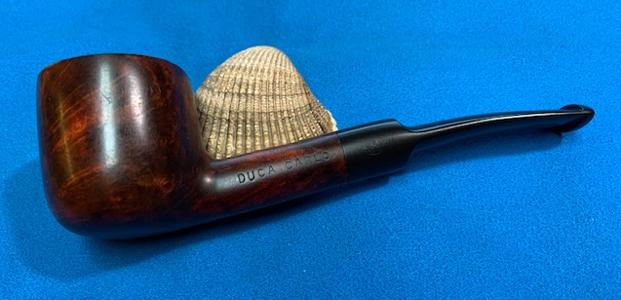
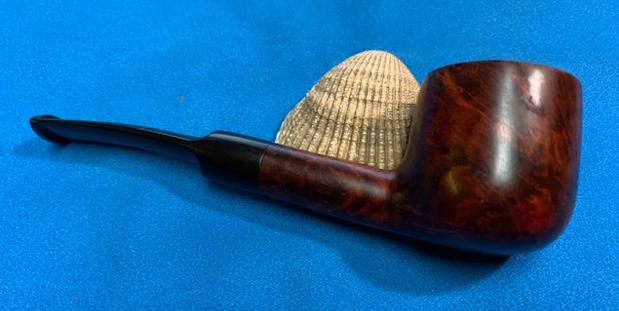
This July long weekend has been a bit of rest and relaxation for me as I have been able to take time in the basement at my work table and deal with pipes that have been piling up in the boxes around the table. I have posted two I have worked on already – both French Made – a Butz-Choquin Optima and a Chatham Volcano. They were interesting pipes because of the shape and style. This one was more of a relaxed restoration because it was a classic shape and did not present too many challenges. Jeff purchased this pipe from an antique mall Logan, Utah, USA. It had an interesting fire-like finish on it that reminded me of molten lava. The bowl was classic Pot shaped. There was a thick cake in bowl and lava on the rim top. There were nicks around the out edge of the rim  on the right side. There were several fills around the bowl sides. The finish was filthy with grit and grime ground into the surface of the briar. The pipe is stamped on the left side of the shank DUCA CARLO and on the underside across the shank just below the shank/stem union it was stamped ITALY. I remembered that the pipe was a Savinelli made pipe but I could not remember how it was connected. I would need to check the blog. The stem was oxidized and had light tooth marks and chatter on both sides at the stem. Jeff took photos of the pipe before he started his clean up work. I like to have an idea of how the pipe was smoked before we got it and what the bowl and rim top looked like. Jeff always takes some photos of the bowl and rim from various angles to show what it looked like. He also captured the nicked right outer edge. The stem looked very good under the oxidation. He took photos of the sides and heel of the bowl to give a sense of the grain on the pipe. You can also see the fills on the right side of the bowl. The next two photos show the stamping on the left side and underside of the shank. It is clear and readable as noted above.I did a quick scan of the rebornpipes blog and found a link to the Duca Carlo pipe that Dal Stanton had restored (https://thepipesteward.com/2021/05/04/liberating-the-grain-of-a-candy-apple-finish-a-savinelli-duca-carlo-poker-of-italy/). I always appreciate the research that Dal does when he works on pipes because it is what I like doing when I am restoring the pipes on my table. I quote from the portion of the blog that gives the background information on the brand. (Thanks Dal for the leg work on this one!)

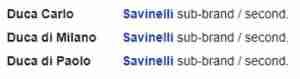
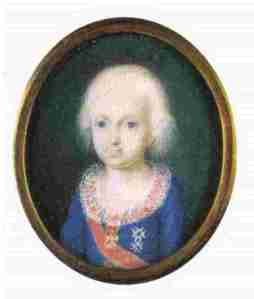
Whenever I work on a pipe, I’m always interested to know something of the pipe.  My first stop at Pipedia reveals that the Duca Carlo is a second of Savinelli, the well-known Italian pipe manufacturer.Savinelli’s history as an Italian pipe maker goes back to 1876 – a rich history and tradition which can be read in Pipedia’s Savinelli article.  The Duca Carlo is listed in the main Savinelli article within an extensive listing of “Savinelli made sub-brands, seconds & order productions”.  The Duca (Duke) Carlo is listed with the Duca di Milano and Duca di Paolo giving the impression that Savinelli produced these as special lines commemorating these historical figures.  With a quick internet search brings me to a Wikipedia article.  Duca Carlo reveals an interesting story of a child that died of smallpox at age 3 (See: Carlo, Duke of Calabria):

Carlo of Naples and Sicily (ItalianCarlo Tito Francesco Giuseppe; 4 January 1775 – 17 December 1778) was Duke of Calabria as heir to Naples and Sicily. Born at the Caserta Palace near Naples, he was known as the Duke of Calabria at birth as the heir apparent to his father’s throne. His mother was a daughter of Empress Maria Theresa and thus sister of Marie Antoinette.

A member of the House of Bourbon, he was a prince of Naples and Sicily by birth. He was the hereditary prince of Naples. His birth allowed his mother to have a place in the Council of State, pursuant to his parents’ marriage contract.

Carlo died of smallpox[1] aged 3. Six of his younger siblings would die of smallpox also: Princess Maria Anna (in 1780), Prince Giuseppe (in 1783), Prince Gennaro (in 1789), Prince Carlo Gennaro (also in 1789), Princess Maria Clotilde (in 1792) and Princess Maria Enricheta (also in 1792).  He was buried at the Church of Santa Chiara in Naples.

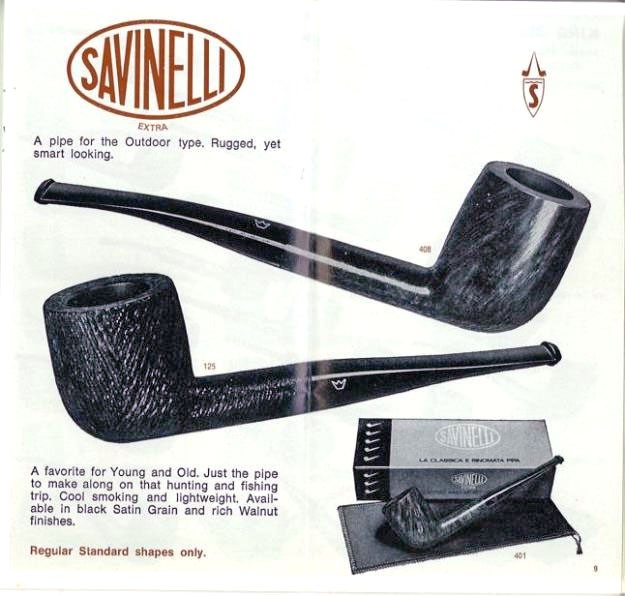
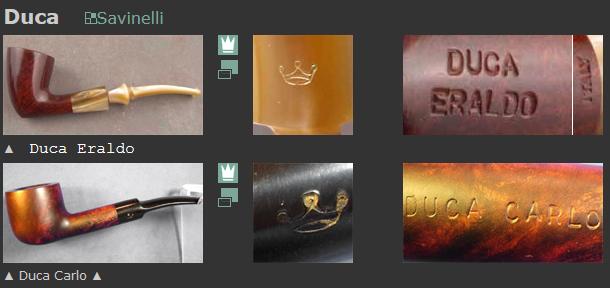
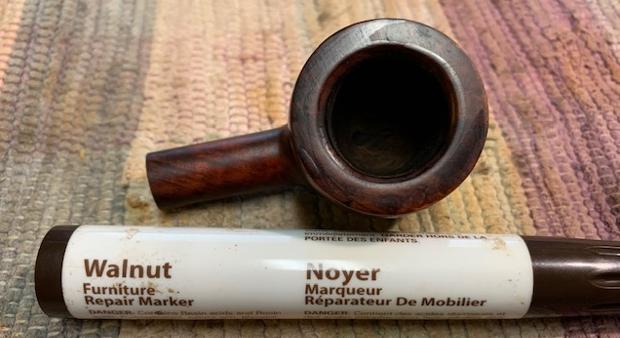
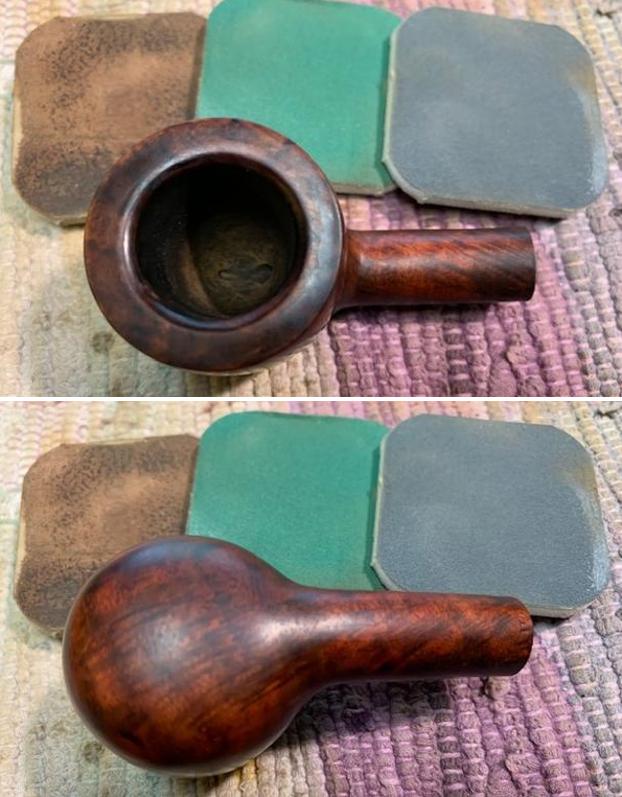
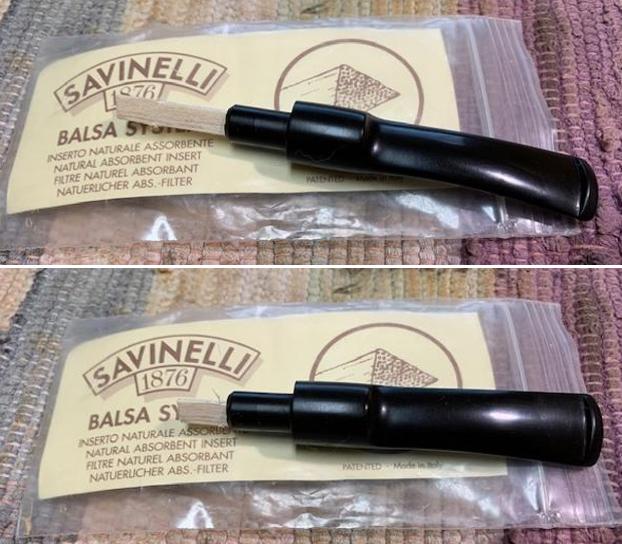
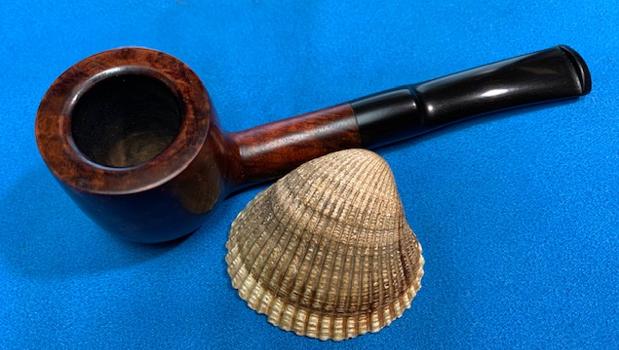
The only other reference to the Duca series in the Savinelli Pipedia article comes from a photo that does not mention a name, but the stem stamping is clearly from the Duca series of pipes listed.  No dating on the picture can be seen.The Savinelli Duca line is confirmed by my next stop. Pipephil (http://pipephil.eu/logos/en/logo-d9.html) gives two examples of Savinelli Ducas – a Duca Carlo and Duca Eraldo.  Consistent between each example is the crown stem stamping.Armed with the information that I had gleaned from Dal’s blog, I turned my attention to the pipe itself. Jeff had done a great cleanup on the pipe. He reamed the bowl with a PipNet pipe reamer and followed up with a Savinelli Fitsall pipe knife to remove the cake. He scrubbed out the mortise and the airway in the shank and the stem with alcohol, cotton swabs and pipe cleaners. He scrubbed the bowl exterior with a tooth brush and Murphy’s Oil Soap to remove the grime on the finish of the bowl and the lava from the rim top. He rinsed it under running water. One of the benefits of this scrub is that it also tends to lift some of the scratches and nicks in the surface of the briar. He dried it off with a soft cloth. He cleaned the internals and externals of the stem with alcohol, pipe cleaners and cotton swabs. He soaked the stem in Briarville’s Pipe Stem Deoxidizer and rinsed it off with warm water and cleaned out the airway in the stem with alcohol. When I received it the pipe looked very good. I took a photo of the rim top and stem to show the condition. The rim top and the inner edge of the bowl were in good condition. There were some nicks on the right outer edge of the bowl but otherwise it looked good. The stem was vulcanite and there were some tooth marks and chatter on both sides ahead of the button. The stem is made for a 6mm filter or a Savinelli Balsa Filter System.The stamping on the pipe is clear and readable as noted above. There are the remnants of the crown stamp on the left side of the saddle stem.I removed the stem from the shank and took a photo of the pipe to give a sense of the whole. I started my work on this pipe by addressing the nicks along the edges. I filled them in with a clear CA glue and set them aside to cure. Once cured I blended them into the surrounding briar with a 1500 grit micromesh sanding pad. I touched up the rim top with a Walnut stain pen to blend it into the surrounding briar. I would probably need to do a bit more work on it but I liked what I saw. I sanded the bowl with micromesh sanding pads, dry sanding with 1500-12000 grit sanding pads and wiping it down with damp cloth after each sanding pad. As I worked through the cycle of pads the shine developed with each change of pad. The pipe looks very good. I rubbed the bowl and shank down with Before & After Restoration Balm. I worked it into the surface of the bowl sides and shank with my fingertips to clean, enliven and protect the briar. I let the balm sit for 10 minutes, then buffed with a cotton cloth to raise the shine. The Balm did its magic and the grain stood out on the briar. I set the bowl aside and turned my attention to the stem. I polished it with micromesh sanding pads – 1500-12000 grit pads. I wiped it down with Obsidian Oil after each sanding pad. I used Before & After Pipe Polish – both Fine and Extra Fine to further polish the stem. The photos below show the polished stem. I fit the stem with a Savineli 6mm Balsa System filter. The fit was perfect and the draw seems remarkably open. This Savinelli Made Duca Carlo Italian Pot with a vulcanite saddle stem is a great looking pipe now that it has been restored. The rich browns and blacks of the contrasting stains came alive with the polishing and waxing. I put the stem back on the bowl and carefully buffed the pipe with Blue Diamond on the buffing wheel using a light touch on the briar. I gave the bowl and the stem multiple coats of carnauba wax on the buffing wheel and followed that by buffing the entire pipe with a clean buffing pad. I hand buffed the pipe with a microfiber cloth to deepen the shine. The finished Duca Carlo Pot is a beauty and fits nicely in the hand and looks very good. Give the finished pipe a look in the photos below. The dimensions of the pipe are Length: 5 ¾ inches, Height: 1 ½ inches, Outside diameter of the bowl: 1 ½ inches, Chamber diameter: 7/8 of an inch. The weight of the pipe is 1.31oz./37grams. This beauty will be going on the rebornpipes store in the Italian Pipe Makers section. Let me know if you are interested in adding it to your collection. Thanks for reading this blog and my reflections on the pipe while I worked on it. There are many more to come!

Working on a bit of an odd Bari Special Handcut Freehand


Blog by Steve Laug

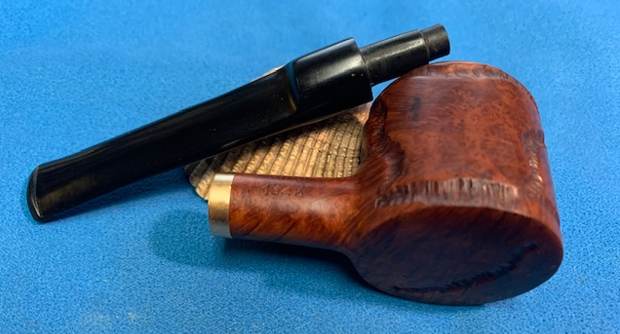
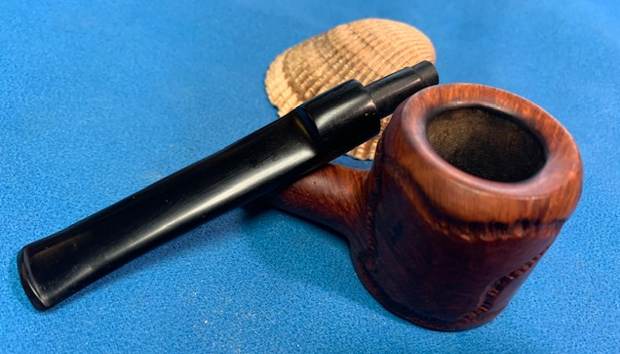
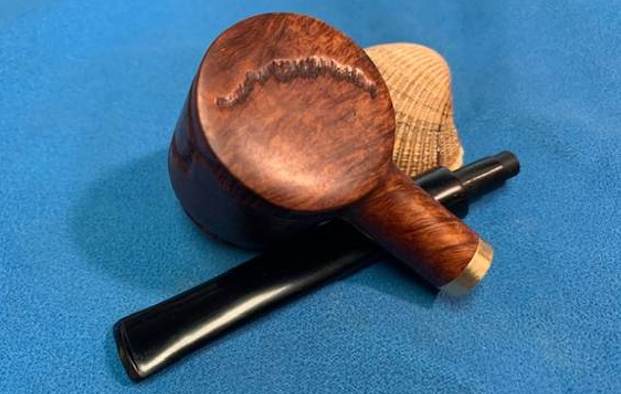
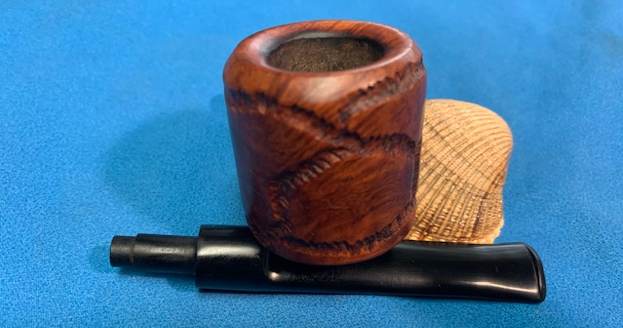
The next pipe on the work table is one that was purchased in 2020 from an auction in Salina, Kansas, USA. It has been here for a while and I am just now getting to it. Work has been demanding so it is slowing down my restoration work a bit. This pipe is a Bari Special Handcut Freehand. It has a really mix of flame and straight grain around the bowl and shank. It was stamped on the sides of the shank. On the left side it reads Bari [over] Special [over] Handcut. On the right side it reads Handmade [over] in Denmark. On the underside of the shank it is stamped with the numbers 72  00. The pipe was dirty with grime ground into the finish. There was a thick cake in the bowl and lava overflow on the plateau rim top. The inner edge of the rim was covered so thickly in lava it was hard to know what was underneath. The square saddled vulcanite stem was oxidized and had tooth marks and chatter ahead of the button on both sides. BARI was stamped on the left side of the fancy saddle stem. Jeff took photos of the pipe before he started his work on cleaning it up for us. Jeff took photos of the rim top and the stem to show the condition of the pipe when we received it. You can see the thick cake in the bowl and the lava on the rim top and inner edge of the bowl. The bowl is square while the chamber is round. The oxidized and calcified vulcanite stem was quite unique and picked up the square angles of the bowl and the shank. It has chatter and deep tooth marks on both sides near the button. He took photos of the sides of the bowl and the heel to give an idea of the shape and the condition of the briar around the bowl. It really is a nicely shaped pipe with some great grain. The next photos Jeff took show the stamping on the sides of the shank. It is clear and readable as noted above. The stem logo is also clear. Jeff took a photo of the partial plateau on the shank end. The top two thirds of the shank end was plateau while the bottom third was smooth. It is quite nice.I worked on a Bari Special Handcut pipe previously so I looked up the blog to refresh myself on the brand a bit (https://rebornpipes.com/2020/07/22/cleaning-up-a-danish-made-bari-special-handcut-b-dublin-freehand/). I quote from the research I did for that pipe below:

I quoted a section from Pipedia on Bari pipes (https://pipedia.org/wiki/Bari). It is good to be reminded of the fact that Viggo Nielsen was the pipe maker.

Pipedia states that Bari Piber was founded by Viggo Nielsen in Kolding, Denmark around the turn of 1950/51. His sons Kai and Jørgen both grew into their father’s business from a very young age and worked there till 1975. Both have become successful pipe makers.

Bari successfully adapted the new Danish design that had been started mainly by Stanwell for its own models. Bari was sold in 1978 to Van Eicken Tobaccos in Hamburg, Germany though the pipes were still made in Denmark. From 1978 to 1993 Åge Bogelund and Helmer Thomsen headed Bari’s pipe production.

Helmer Thomson bought the company in 1993 re-naming it to “Bari Piber Helmer Thomsen”. The workshop moved to more convenient buildings in Vejen. Bogelund, who created very respectable freehands of his own during the time at Bari got lost somehow after 1993. Bari’s basic conception fundamentally stayed the same for decades: series pipes pre-worked by machines and carefully finished by hand – thus no spectacular high grades but solid, reliable every day’s companions were what they turned out. The most famous series are the smooth “Classic Diamond” and the blasted “Wiking”.

I did a quick look at Pipephil’s site (http://www.pipephil.eu/logos/en/logo-b1.html) and did a screen capture of the section on Bari pipes.Jeff had cleaned up the pipe following his normal cleaning process. In short, he reamed the bowl with a PipNet pipe reamer and cleaned up the reaming with a Savinelli Fitsall Pipe Knife. He scrubbed the smooth bowl with undiluted Murphy’s Oil Soap with a tooth brush. He worked over the lava and debris on the rim top and was able to remove it. He rinsed it under running warm water to remove the soap and grime. He cleaned out the inside of the shank and the airway in the stem with alcohol, cotton swabs and pipe cleaners. He scrubbed the stem with Soft Scrub and cotton pads to remove the debris and oils on the stem. He soaked it in a bath of Briarville’s Pipe Stem Deoxidizer to remove the oxidation. He rinsed it with warm water and dried it off. I took photos of the pipe once I received it. It really looked good however, surprisingly there were a number of fills around the shank and bowl. I took close up photos of the stem and the rim top to show both how clean they were and what needed to be addresses with both. The rim top and bowl look good. The edge was clean but there was some burn damage on the rim top at the back of the bowl. The stem looked better and the tooth marks and chatter were still present.I took a photo of the stamping on the sides of the shank. You can see from the photos that it is readable. I removed the stem from the bowl and took a photo of the parts to give a sense of the beauty of the pipe. I started my work on the pipe by addressing the damage to the back of the plateau rim top. Notice that it is burned but the grooves and crevices are still present. I cleaned it up with a brass bristle wire brush to remove as much of the loose char as possible. Once it was clean I used several burrs on my Dremel to redefine the grooves and crevices in the plateau at the back of the rim top. Once I was finished I was happy with the look or the rim top. I restained the rim top with a black stain pen to match the plateau on the shank end. I polished the smooth briar with micromesh sanding pads – dry sanding with1500-4000 grit pads to smooth out the surface of the briar and the noticeable fills around the shank and bowl. I wiped the bowl down after each sanding pad with a damp cloth to remove the sanding dust. The briar began to take on a shine. I paused after polishing the bowl with the 4000 grit micromesh pad to stain the fills around the sides of the shank and bowl. I used a Walnut stain pen to match the surrounding briar. Once the stain cured I finished polishing the bowl with 6000-12000 grit micromesh sanding pads. The bowl really did begin to shine. I rubbed the bowl down with Before & After Restoration Balm working it into the briar with my finger tips and into the plateau on the shank end and rim top with a horsehair shoe brush. The product works to clean, revive and protect the briar. I let it sit on the pipe for 10 minutes then buffed it off with a soft cloth. I set the bowl aside and turned my attention to the stem. I “painted” the stem surface with the flame of a lighter to lift the deep tooth marks in the vulcanite. Since vulcanite has “memory” I was able to lift the marks on the top and underside of the stem significantly. There were a few that did not lift completely so I filled them in with clear CA glue and set the stem aside to cure. Once the repairs cured I sanded it with 220 grit sandpaper to blend them into the surface and started polishing the stem with 400 grit wet dry sandpaper. I polished the stem with micromesh sanding pads – wet sanding it 1500-12000 pads. I wiped it down with some Obsidian Oil each pad to remove the dust and polishing debris. I polished it with Before  After Pipe Polish – both Fine and Extra Fine. I gave it a final coat of Obsidian Oil and set it aside to dry. This is another pipe that I am really happy about the finished restoration. This Odd Bari Special Handcut Freehand 72 00 turned out beautifully. It really is a great looking pipe with a great shape and rugged plateau rim top and shank end. The bowl is almost square and the shank is the same with virtually the same angles as the bowl from bottom to top. The unique vulcanite saddle stem carries on the shape to the end. The polished black of the stem works well with the briar. The briar really came alive with the buffing. The rich black and brown stains of the finish make the grain really pop with the polishing and waxing. I put the stem back on the bowl and buffed the pipe with Blue Diamond on the buffing wheel using a light touch on the briar. I gave the bowl and the stem multiple coats of carnauba wax on the buffing wheel. I buffed the pipe with a clean buffing pad to raise the shine. I hand buffed the pipe with a microfiber cloth to deepen the shine. The finished Bari Special Freehand really has a unique beauty and feels great in the hand. It looks very good. Give the finished pipe a look in the photos below. The dimensions of the pipe are Length: 6 ½ inches, Height: 2 ¼ inches, Outside diameter of the bowl: 1 ¾ inches long x 1 ½ inches wide, Chamber diameter: ¾ of an inch. The weight of the pipe is 70 grams/2.47 oz. The pipe will be going on the rebornpipes store soon. It will be in the section on Danish Pipe Makers if you would like to add it to your collection. Thanks for reading this blog and my reflections on the pipe while I worked on it. It was a fun one to work on!

Chasing the Grain – a Beautiful Ben Wade Martinique Freehand by Preben Holm


Blog by Steve Laug

This particular smooth finished Freehand pipe was purchased from an auction in 2020 in Cedar Springs, Michigan, USA. It really is a nice looking pipe that is shaped chasing the grain around the bowl and shank. It is stamped on the underside of the shank and reads Ben Wade [over] Martinique [over] Hand Made [over] Denmark. It is a smooth finished pipe with a plateau finish on the shank end. The pipe had a moderate cake in the bowl and there was a lava overflow on the rim top and inner edge of the bowl. There was grime ground into the finish and dust and debris in the plateau valleys on the shank end. The original stem had the original Ben Wade Crown logo faintly stamped on the top of the blade of the fancy turned acrylic fancy saddle. It had tooth marks and chatter on both sides near the button. The pipe was dirty but still a beauty. Jeff took photos of the pipe before he started his work on it. Jeff took photos of the rim top and the stem to show the condition of the pipe when we received it. You can see the cake in the bowl and the lava on the rim top and inner edge of the bowl. It is hard to know what it looks like underneath the build up of lava but there may be a bit of rim damage. We will know after cleaning. The turned acrylic stem and has chatter and a few deep tooth marks on both sides near the button. The airway in the stem is stained with tobacco stains and there is a build up of debris there as well. He took photos of the sides of the bowl and the heel to give an idea of the shape and the condition of the briar around the bowl. It really is a nicely shaped pipe that has the classic look of a Freehand carved by Preben Holm. The next photos Jeff took show the stamping on the underside of the  shank. It is clear and readable as noted above.In a previous blog I had researched the brand quite a bit. I have included it below for information on this pipe (https://rebornpipes.com/2020/12/04/restoring-a-gorgeous-ben-wade-martinique-freehand-sitter/). I quote:

I remembered that the Preben Holm pipes were marketed under the Ben Wade label in the US and imported through Lane Ltd. I turned to Pipedia and read the listing on the brand to refresh my memory and flesh out the knowledge of the brand (https://pipedia.org/wiki/Ben_Wade). I have included a photo from that site that was taken from a Tinderbox advertisement. I quote the portion of the article that summarizes the Danish period of the history of the brand:

Young Copenhagen master pipemaker Preben Holm had made a meteoric career heading a pipe manufacture employing 45 people at the age of 22! But around the turn of 1970/71 he was in major financial difficulties. His US distributor, Snug Harbour Ltd. in New York City, left him in the lurch. Holm had three unpaid invoices on his desk and another large shipment was ready for the USA, when Snug Harbour’s manager told him on the phone that there was no money at all on the account to pay him.

So the Dane went to New York for an almost desperate search for a new distribution partner. He made contacts with Lane Ltd. and met Herman G. Lane in February 1971. Lane Ltd. had no interest in Holm’s serial pipes produced at that time but so much the more in the hand-carved freehands because the hype for Danish freehands and fancies in the States was still on its way to the climax then. The meeting resulted in an agreement to start a cooperation. Lane insisted to improve the quality considerably and in return he assured to be able to sell essentially larger quantities.

Holm went back home to work on new samples with all-new designs and altered finishes for Lane. Both, Lane and Holm, agreed that it would be unwise to sell the pipes under Preben Holm’s name as long as Snug Harbour had a considerable stock of Preben Holm pipes and might sell them pipes at very low prices just to bring in some money.

So on Mr. Lane’s proposal it was determined to use the name Ben Wade belonging to Lane Ltd. Lane spent considerable amounts of money for advertising the new brand in the big magazines– the centerpiece being whole-page ads showing a very exclusive Seven Day’s Set.

The cooperation with Lane Ltd. proved to be an eminent business success for both partners. Within a very short time Ben Wade Handmade Denmark sold in much larger quantities and at higher prices than they had ever dreamed of. And the hype these freehands and fancy pipes caused went on unbroken long after Herman G. Lane deceased. Preben Holm – obviously much more brilliant in pipe making than in pipe business – was in major troubles again in 1986 and had to sack most of his staff. The Ben Wade production was significantly lowered but continued until his untimely death in June of 1989.

Up to now Preben Holm made Ben Wade pipes are cult and highly sought for on the estate markets.

With that information my initial thoughts were confirmed. This pipe was a Preben Holm made Freehand distributed in the US by Lane Ltd under the name Ben Wade. The freehand rage occurred in the late 70s and the pipes were made until Preben’s death in 1989. My guess would be that this pipe was made sometime during that time period and potentially in the late 70s.

Jeff had cleaned up the pipe following his normal cleaning process. In short form he reamed the pipe with a PipNet Pipe Reamer and cleaned up the remnants with a Savinelli Fitsall Pipe Knife.  He scrubbed the bowl with undiluted Murphy’s Oil Soap with a tooth brush. He worked over the lava on the rim top and the debris in the plateau shank end and was able to remove it. He rinsed it under running warm water to remove the soap and grime. He cleaned out the inside of the shank and the airway in the stem with alcohol, cotton swabs and pipe cleaners. He scrubbed the stem with Soft Scrub and cotton pads to remove the debris and oils on the stem. He rinsed it with warm water and dried it off. I took photos of the pipe once I received it.  It really looked good. I took close up photos of the stem and the rim top to show both how clean they were and what needed to be addresses with both. The rim top and bowl look good. There was some darkening and damage on the back and right inner edge of the rim that would need attention. The stem looked better and the faint Ben Wade Crown logo was visible on the topside. The tooth marks and chatter were still present. I would need to remove those to bring the stem back.I took a photo of the stamping on the underside of the shank. You can see from the photo that it is readable. It is clearer on the top half of the stamp than the lower but it is still readable. I removed the stem from the bowl and took a photo of the parts to give a sense of the beauty of the pipe.I began my work on the damage on the inner edge of the bowl at the back. I used a folded piece of 220 grit sandpaper to shape and bevel the damaged area to match the rest of the bevel around the inner edge. I used a Maple Stain Pen to touch up the inner edge and blend it to the rim top.I polished the briar with micromesh sanding pads -1500-12000 grit pads. I wiped the bowl down after each sanding pad to remove the dust. The briar began to take on a deep shine. I worked some Before & After Restoration Balm into the surface of the briar with my finger tips and a horse hair shoe brush to get into the crevices of the plateau. The product is incredible and the way it brings the grain to the fore is unique. It works to clean, protect and invigorate the wood. I set the bowl aside and turned my attention to the stem. I sanded the tooth marks and chatter smooth with 220 grit sandpaper to blend them into the surface of the briar. I started the polishing of the stem with 400 grit wet dry sandpaper.I polished the stem with micromesh sanding pads – wet sanding it 1500-12000 pads. I wiped it down with a damp cloth after each pad to remove the dust and polishing debris. I polished it with Before After Pipe Polish – both Fine and Extra Fine. I touched up the stamp on the top of the stem with Rub’n Buff Antique Gold. I rubbed it into the stamp with a tooth pick and buffed it off with a cloth. It looked much better.I am really happy with the way that this Preben Holm made Ben Wade Martinique Danish Made Freehand turned out. It really is a beautiful looking pipe with a great shape and smooth finished bowl and rim and the remnant of plateau on the shank end. The fancy original acrylic saddle stem is really nice. The smokey Topaz colour of the stem works well with the briar. The briar really came alive with the buffing. The rich brown stains of the finish gave the pipe a sense of depth with the polishing and waxing. I put the stem back on the bowl and carefully buffed the pipe with Blue Diamond on the buffing wheel using a light touch on the briar. I gave the bowl and the stem multiple coats of carnauba wax on the buffing wheel. I buffed the pipe with a clean buffing pad to raise the shine. I hand buffed the pipe with a microfiber cloth to deepen the shine. The finished Ben Wade Martinique really is a beauty and feels great in the hand and looks very good. Give the finished pipe a look in the photos below. The dimensions of the pipe are Length: 6 ¼ inches, Height: 2 ¼ inches, Outside diameter of the bowl: 2 inches long x 2 ¼ inches wide, Chamber diameter: 1 inch. The weight of the pipe is 52 grams/1.83 oz. The pipe will be going on the rebornpipes store soon. It will be in the section on Danish Pipe Makers if you would like to add it to your collection. Thanks for reading this blog and my reflections on the pipe while I worked on it. It was a fun one to work on!

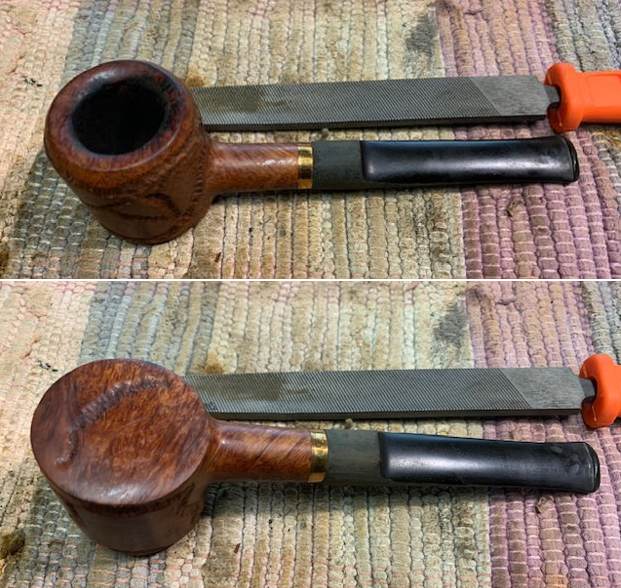
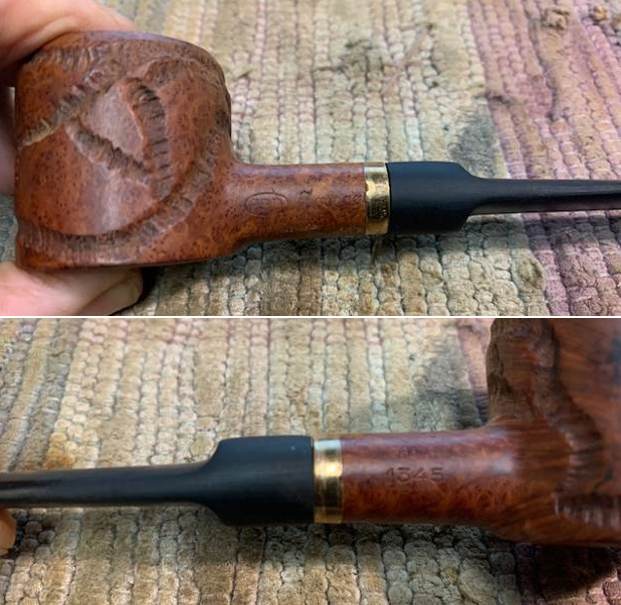
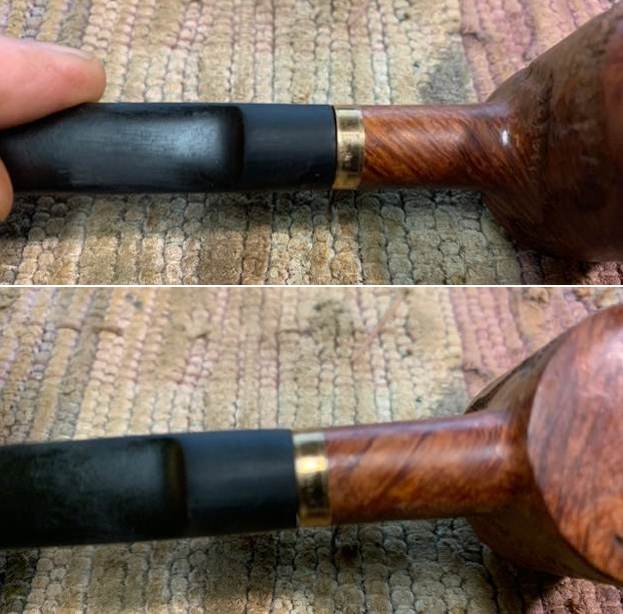
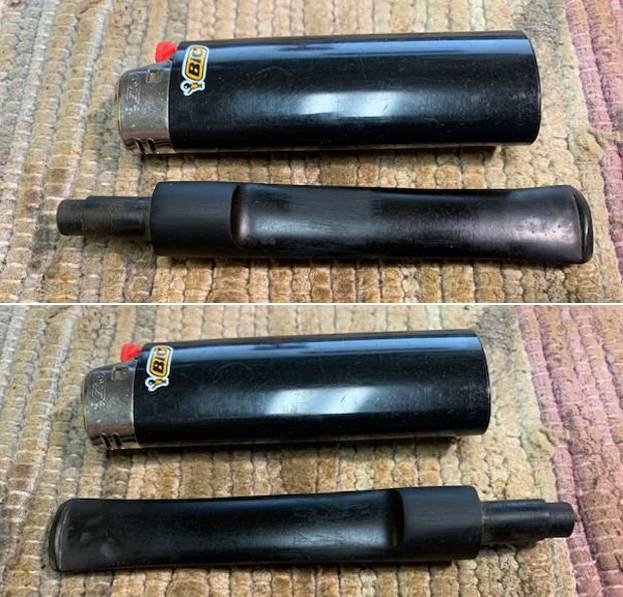
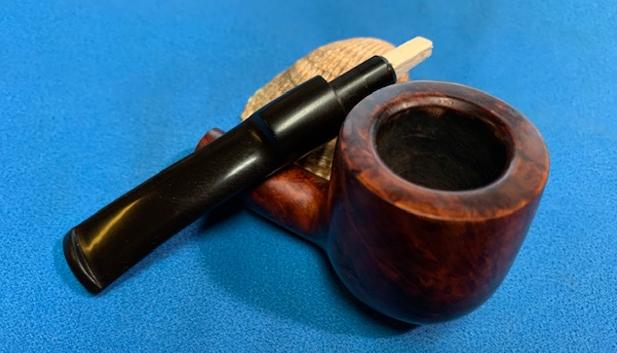
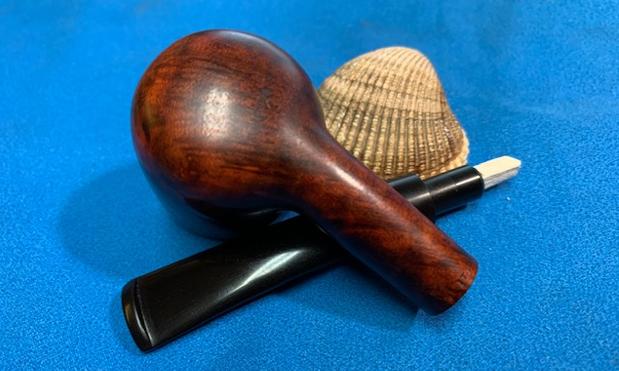
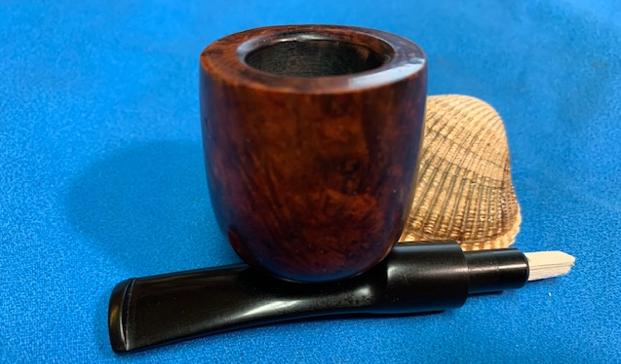
What a Tired and Worn Pair of Cased 1919 Charles Mass Pipes – Part 2: An Exhausted Billiard


Blog by Steve Laug

This restoration is Part 2 of one that started with an email from a reader of the blog name Tim. He had written the following email to me with a request. I have included that email below.

Hello Steve, I have a cased set of 1919 Charles Maas pipes that have been smoked hard and put away wet. Can I send them to you to have them restored? I’m a huge fan of your work and use your site often as inspiration, but these are outside my ability. – Tim

I finished the restoration of the Bulldog first and have written about the work on the blog already. Here is the link (https://rebornpipes.com/2021/05/30/what-a-tired-and-worn-pair-of-cased-1919-charles-mass-pipes-part-1-a-weary-bulldog/).

I am including the photos that Tim Sent me so you can see them if you have not read Part 1 of the blog on the Bulldog. Tim’s package arrived on Thursday and when I got home from work I opened it to have a look at the pipes first hand. I took the case out of the well packed box and this is what I saw. The case was suede with a fine leather edge around the sides. There was a thin gold line around the case edges. When I opened it I saw Tim’s 1919 label and the two pipes. There was a gold banded Bulldog and a nice stubby billiard. Both were nicely carved bowls and both had been heavily used and worn.

I sent Tim the following list summarizing the damages on the Billiard (a similar list is on the blog about the Bulldog). There is a lot of work to do to bring these back to life.

The billiard:
1. The rim top is badly damaged leaving the top uneven and thicker/taller toward the back of the bowl and more damaged than even the Bulldog.
2. The inner edge of the bowl is thicker than the bulldog but still thinner on the front side than the rest of the bowl. It is still thick enough.
3. The outer edge is chipped and uneven on the bowl front showing some burn marks.
4. The finish is worn and damaged with paint marks on the surface.
5. The bowl is slightly out of round with chips and marks on the inner edge
6. The stem has deep compressions from tooth marks on both sides at the button.                        7. The inside of the bowl is badly checked and will need to examined for integrity.

Both pipes had been reamed and they were quite clean inside. It appeared that previous earlier reaming somewhere along the way had left the inner edge chipped and damaged. That is the assessment of the Billiard and it is clear from the list that there is a lot of work to do on it.

For background on the Charles Maas brand read the previous blog to get a clear idea of the history of the company. I will not include it again at this point. Here is another copy of the link for ease of reference (https://rebornpipes.com/2021/05/30/what-a-tired-and-worn-pair-of-cased-1919-charles-mass-pipes-part-1-a-weary-bulldog/).

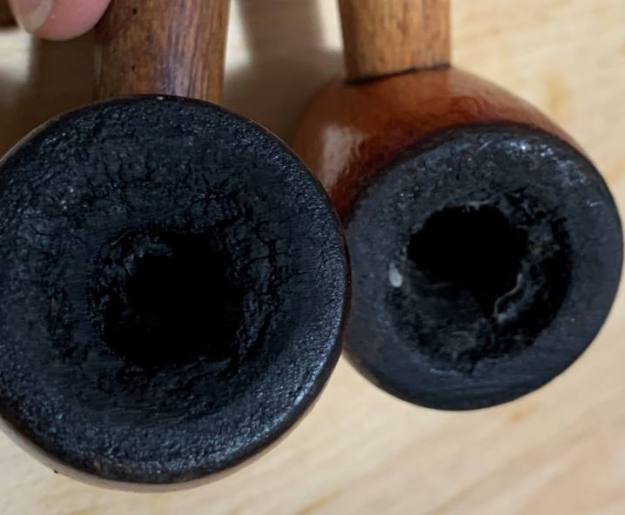
It was time to work on the second pipe – the Billiard. It was surprisingly clean. The bowl had been reamed and the airways cleaned. (I later found out that Tim had done the clean up for me. Thanks Tim!)There was no stamping on the shank of the pipe. There was no gold band to identify it as a Charles Maas pipe like the one on the Bulldog. However it was obvious that the case was custom fitted to this little Billiard so that is proof enough for me. I took some photos of the pipe before I began, to catalogue what I saw before I started. I took some close up photos of the rim top and the stem surfaces. You can see the chipping and damage to the top and inner edges of the bowl. The top is significantly lower on the front of the bowl with burn marks and charring to the top and front of the bowl. The stem shows some deep tooth marks on both sides ahead of the button.I took some photos of the rim from various angles to show the serious damage to the bowl top and edges. It really is a mess and will be an interesting challenge to rebuild.I removed the stem from the shank and took a photo of the left side of the pipe as it really gave a good picture of what the pipe must have looked like when new.I decided to start work on this pipe by addressing the damaged rim top and edges. I built up the front edge of the bowl with briar dust and clear CA glue. My goal was to bring it up as close as possible to the height of the bowl on the left side. It took a bit of layering to get there. I also filled in the damage on the front outer edge of the bowl at the same time. Once I had the height as even as possible I would top the bowl on a topping board with 180 grit sandpaper to smooth out the rim top.Once I had it close to even I topped it on a topping board with 180 grit sandpaper. I took a few photos of the front and sides of the bowl to show what the repair looked like at this point in the process. There is still work to do but it is definitely getting there. I sanded the repair on the front of the bowl a bit as well. Much work to do! I worked over the top and edges of the bowl – both inner and outer edges, with 220 grit sandpaper to capture the original shape as much as possible. You can see the repaired areas on the rim top and edges from the photos below. I am pretty pleased with the overall appearance of the cap and top at this point in the process. The repairs are very clear at this point. I still had work to do on the rim top and outer edges but I also wanted to work on the inner edge. I repaired the damage there with the super glue and briar dust as well. I was not looking to build it up too much but to take care of the deep cuts and gouges on the left front of the edge. I sanded the repair with 180 and 220 grit sandpaper and I was happy with what I was seeing at this point in the process. I worked some more on the inner edge of the bowl with a piece of 220 grit sandpaper wrapped around a piece of dowel. I wanted to smooth out the inside of the bowl and the inner edges of the rim.I decided to give the repaired edge and top a quick coat of Walnut stain to see what it looked like. I find that doing this often shows flaws that need to be addressed in the repair and makes it easier to see where I am with the top and edges. I started the polishing process with 1500-2400 grit micromesh sanding pads. I dry sanded with the pads in preparation for restaining the bowl. After each pad I wiped the bowl down with a damp cloth. My goal was to remove the scratching left behind by the repairs to the rim top and cap. I was able to remove them. Once it was smooth the briar was ready for staining. I stained it with a Feibing’s Light Brown aniline stain. I applied it and flamed it with a lighter to set it in the grain. I repeated the process until the coverage of the briar was good. I set it aside to let the stain cure.I buffed pipe with Blue Diamond on the buffing wheel to remove the crusty coat of stain. I then polished it with the remaining micromesh pads -3200-12000 grit pads. I wiped it down after each pad with a damp cloth. I worked some Before & After Restoration Balm into the surface of the briar of the bowl with my finger tips. The product is incredible and the way it brings the grain to the fore is unique. It works to clean, protect and invigorate the wood. I set the bowl aside and turned to work on the stem. I “painted” the stem with the flame of a Bic lighter to try to lift the tooth marks in the surface on both sides. I was able to lift it some but not completely. I filled in the remaining dents with clear CA glue and set it aside to cure. Once they cured I used a small file to recut the button edge and flatten the repairs to blend them into the surface. I sanded the stem with 220 grit sandpaper to remove the remaining oxidation on the saddle and also to further blend in the repairs. I started the polishing with 400 grit wet dry sandpaper. I polished the stem with micromesh sanding pads – wet sanding with 1500-12000 grit pads. I wiped the stem down after each sanding pad with Obsidian Oil. I finished polishing the surface with Before & After Pipe Stem Polish – both fine and extra fine. I gave the stem a final coat of Obsidian Oil and let it dry. I am really happy with the way that the rebuild of the rim and cap worked on on this Charles Maas Billiard (the second of two in a cased set). It really is a great looking pipe with lots of character. The old style hard rubber mouthpiece really look good with the brown of the briar. The grain really came alive with the buffing and a sense of depth came out with the polishing and waxing. I put the stem back on the bowl and carefully buffed the pipe with Blue Diamond on the buffing wheel using a light touch. I gave the bowl and the stem multiple coats of carnauba wax on the buffing wheel. I buffed the pipe with a clean buffing pad to raise the shine. I hand buffed the pipe with a microfiber cloth to deepen the shine. The finished Charles Maas Billiard really is a beauty and feels great in the hand and looks very good. Give the finished pipe a look in the photos below. The dimensions of the pipe are Length: 4 ¼ inches, Height: 1 ½ inches, Outside diameter of the bowl: 1 1/8 inches, Chamber diameter: ¾ of an inch. The weight of the pipe is 27 grams/.95 oz. The pipe will be going back to Tim with the Bulldog that I have finished. I think this little cased set is a real beauty.Thanks for reading this blog and my reflections on the pipe while I worked on it. It was a fun one to work on!