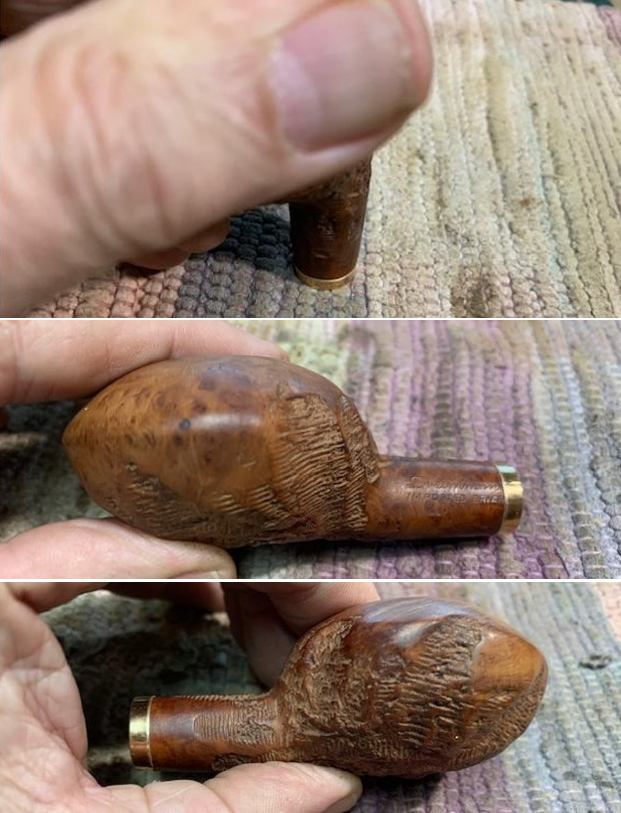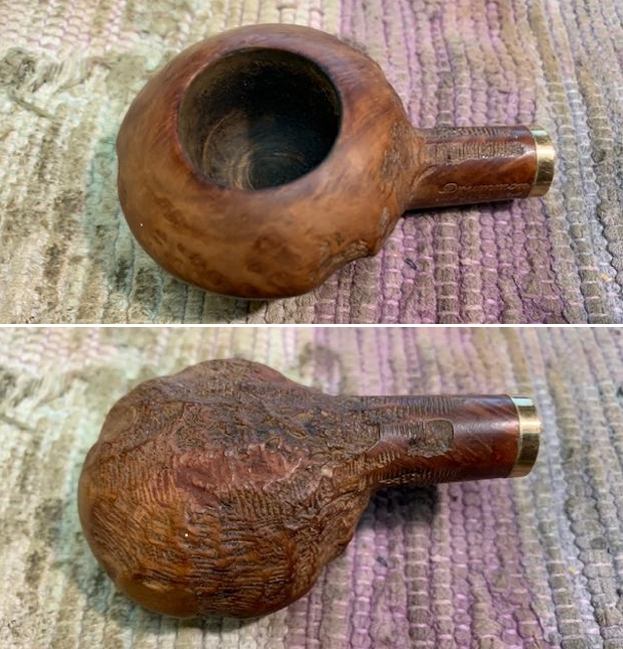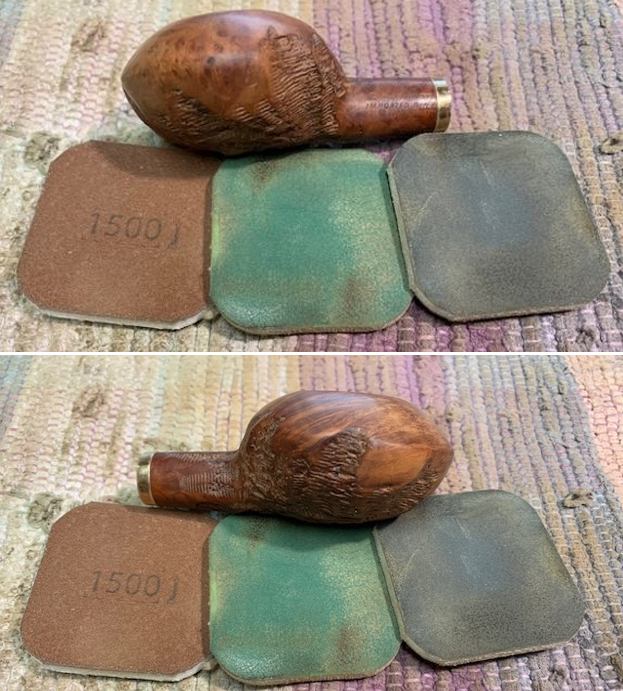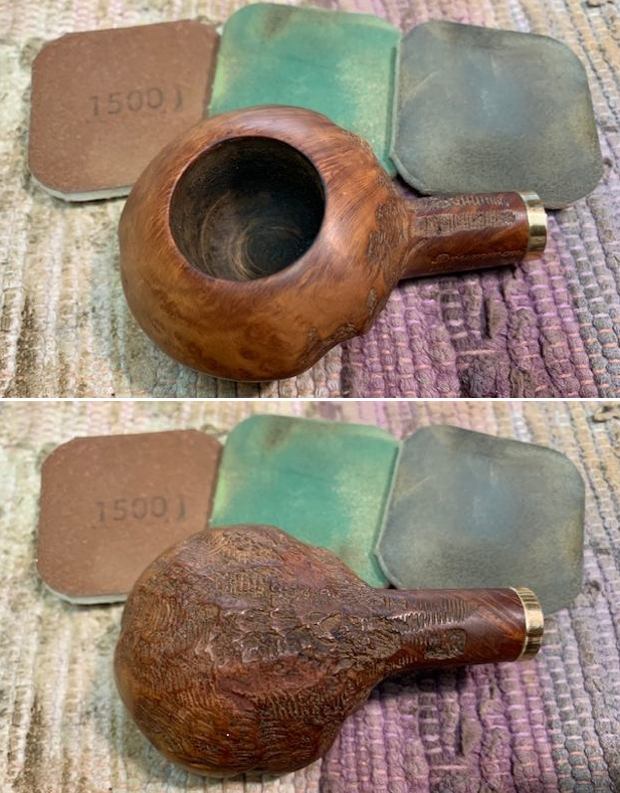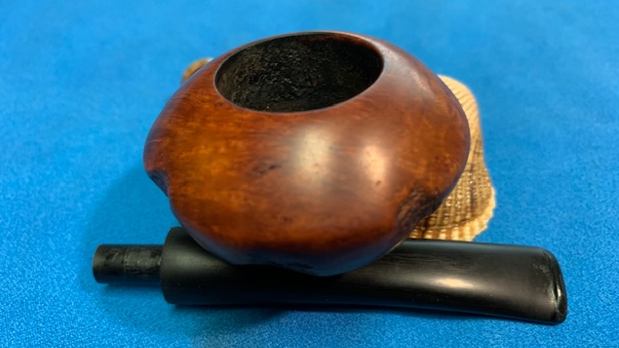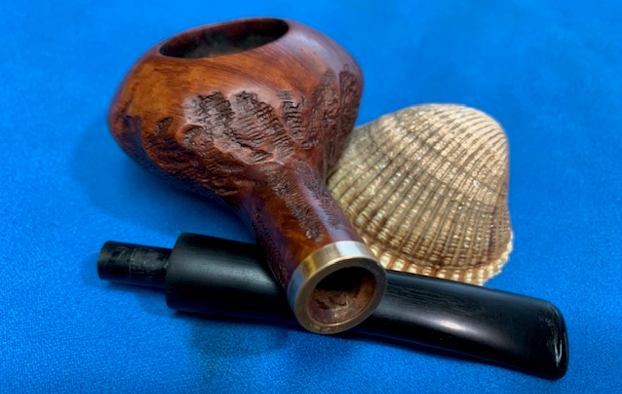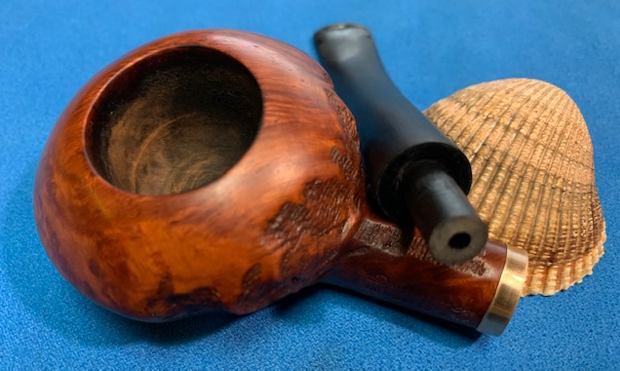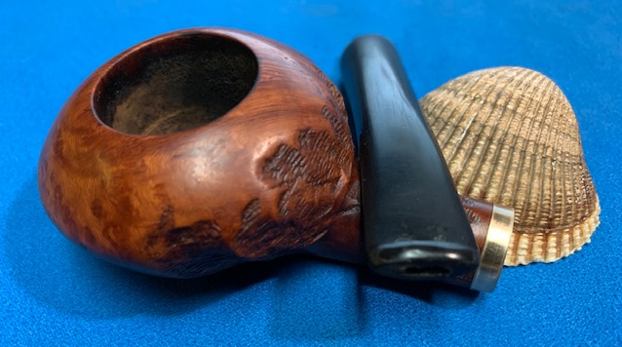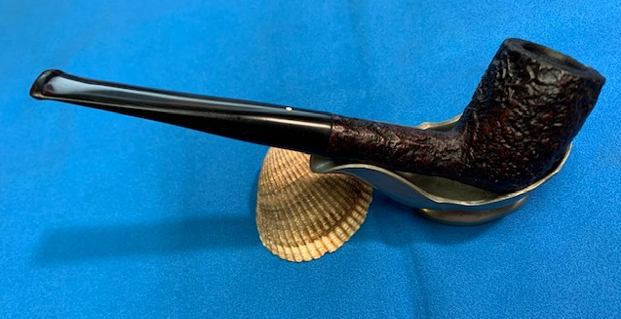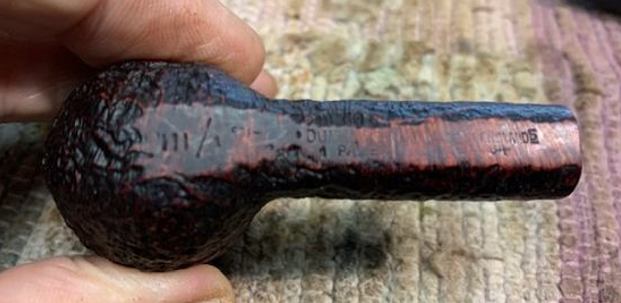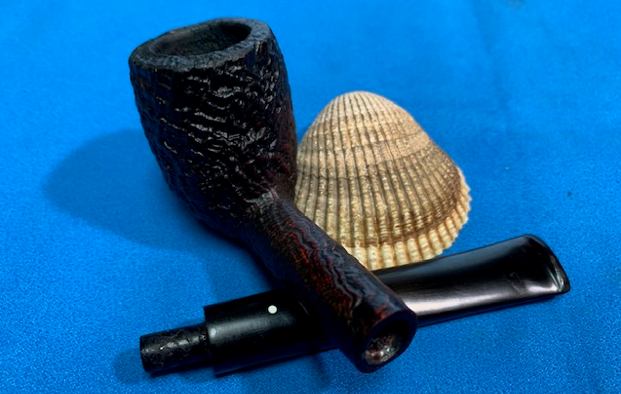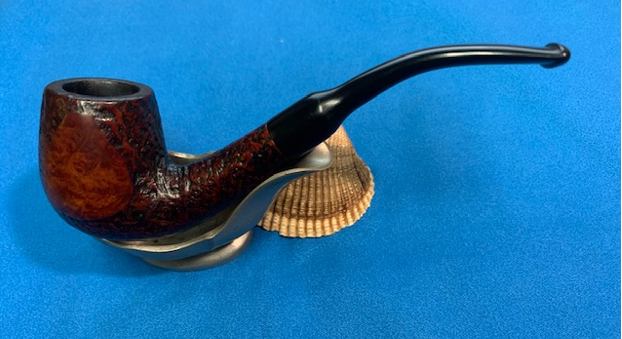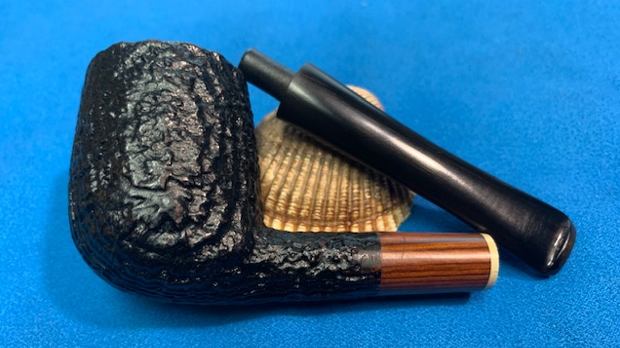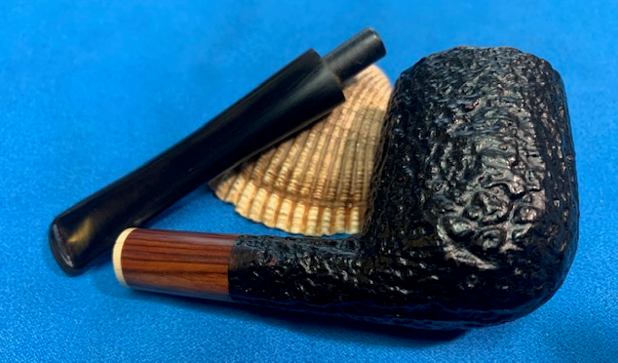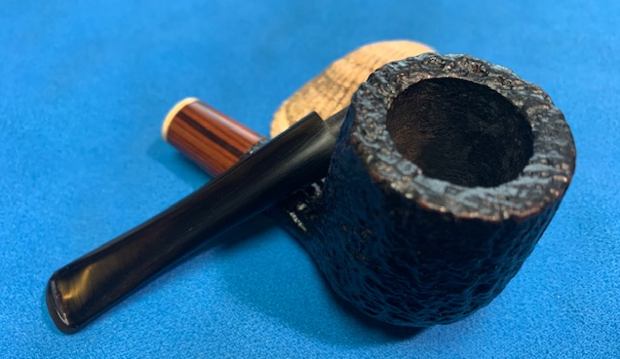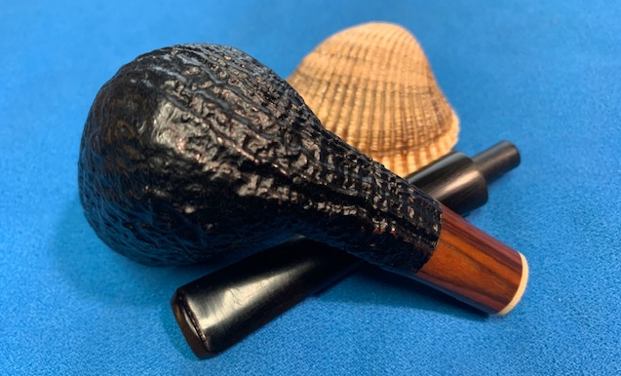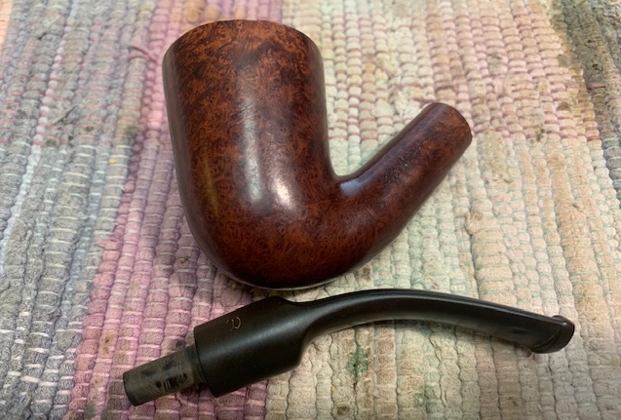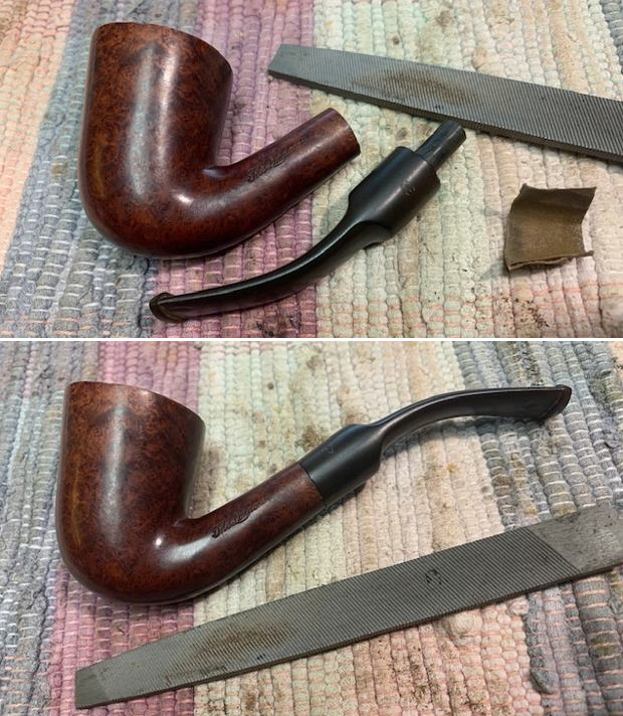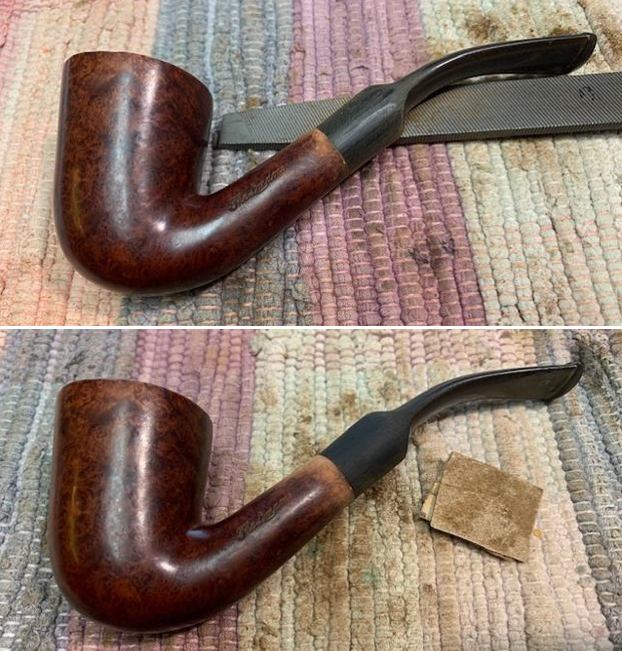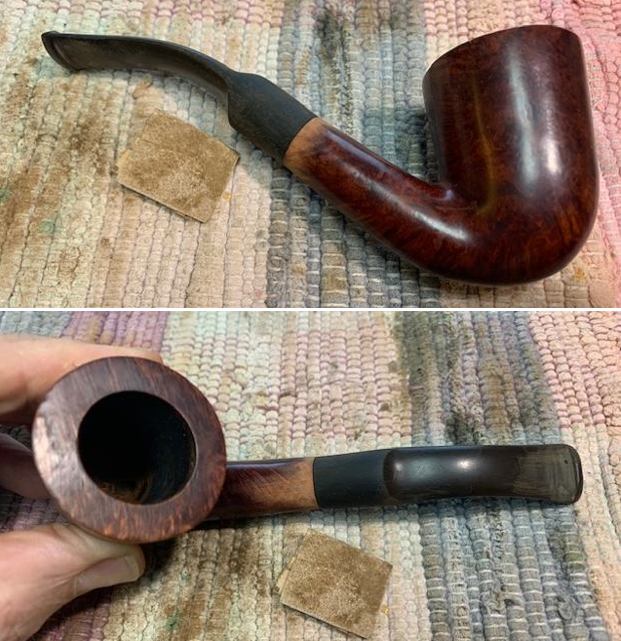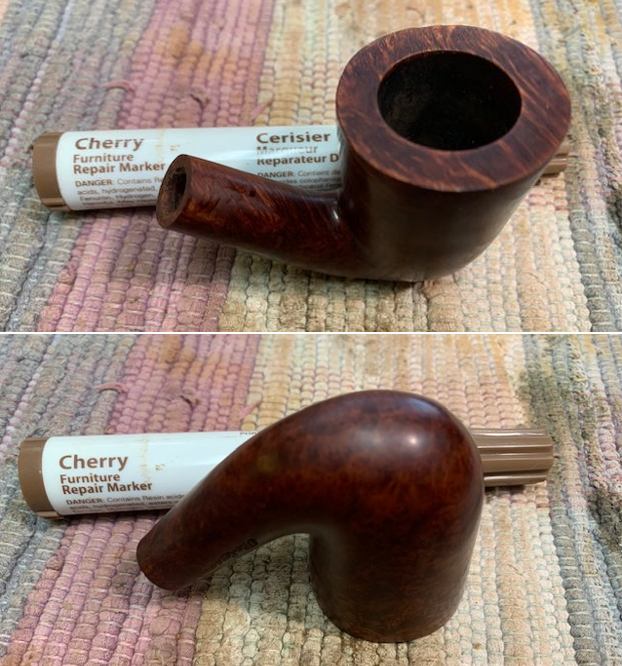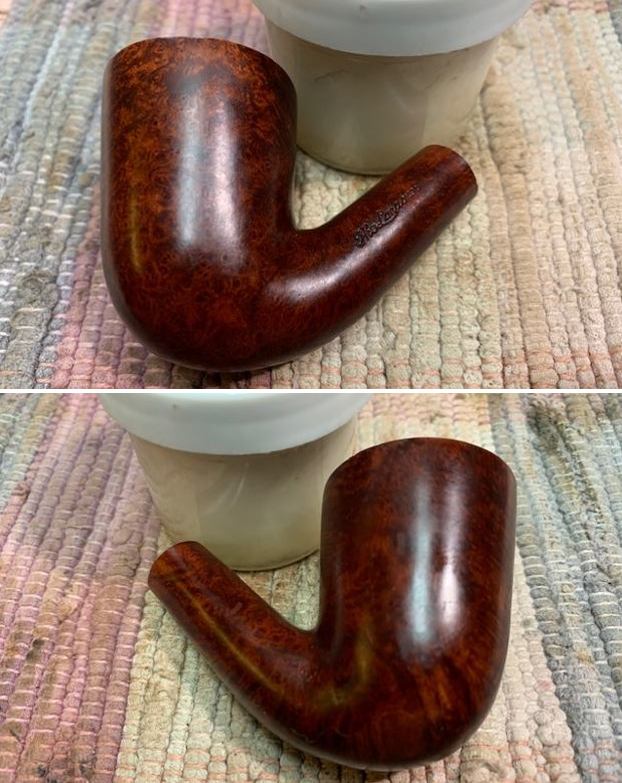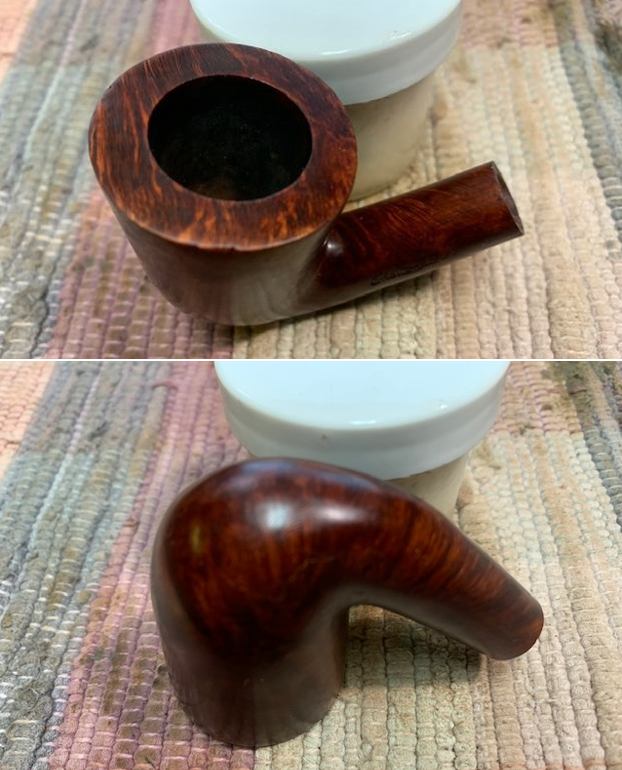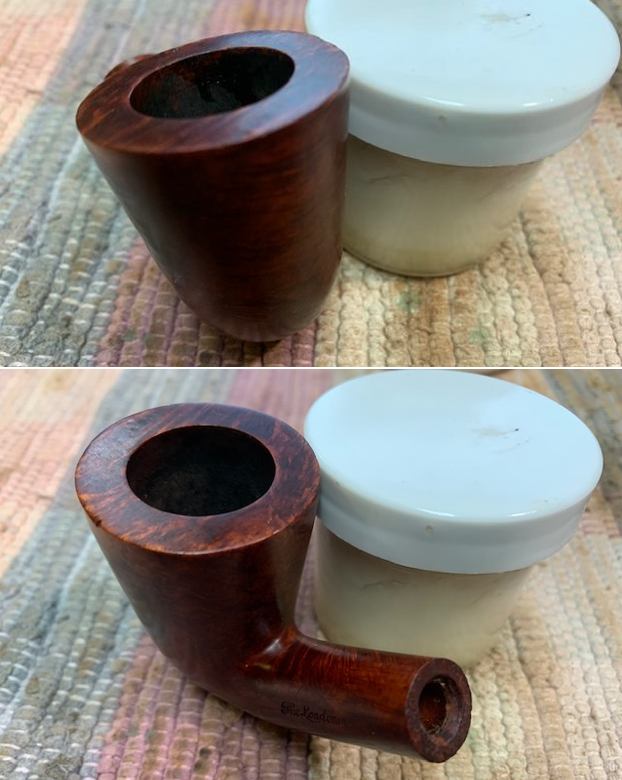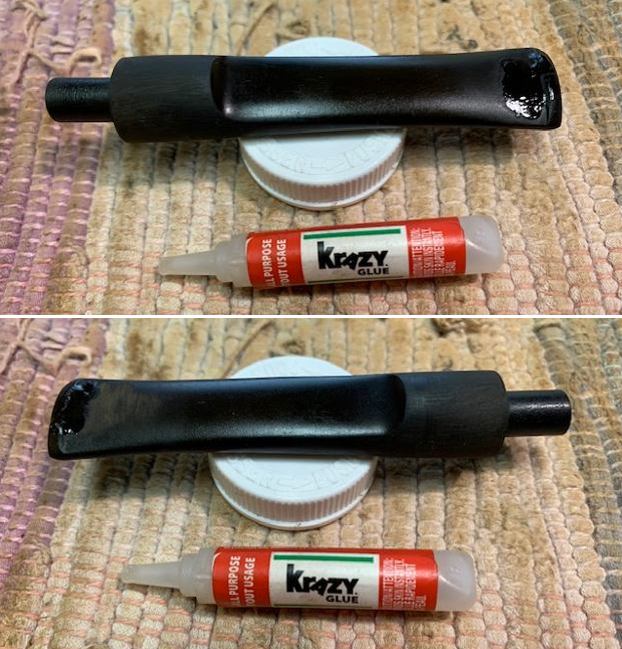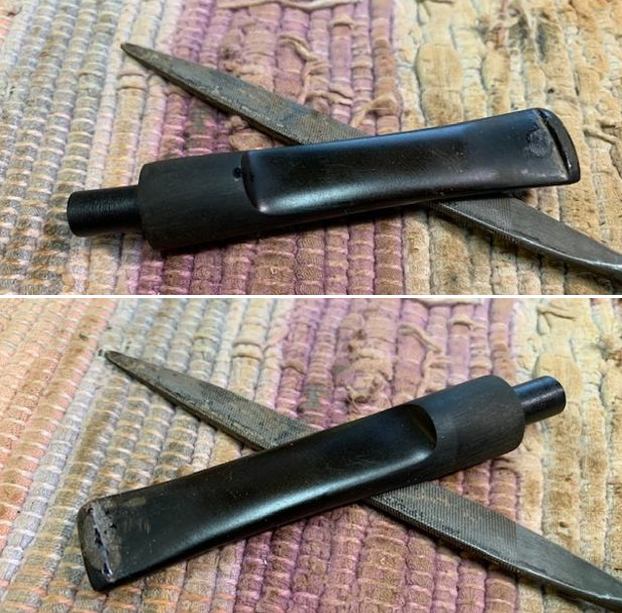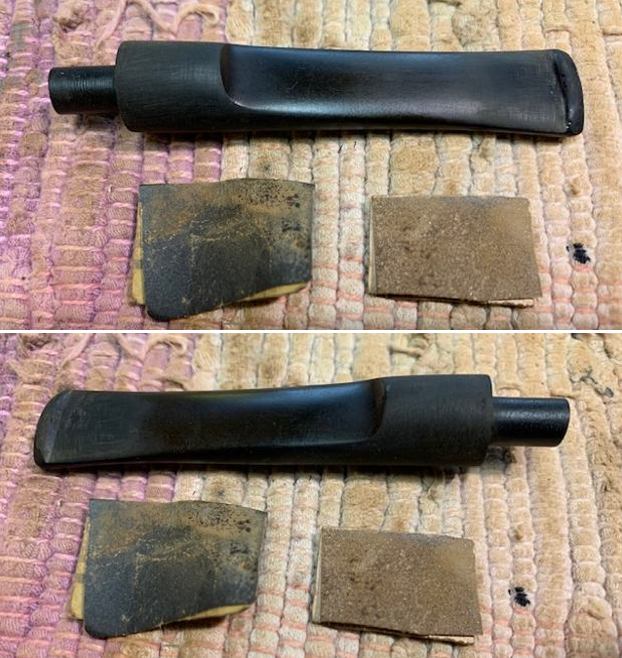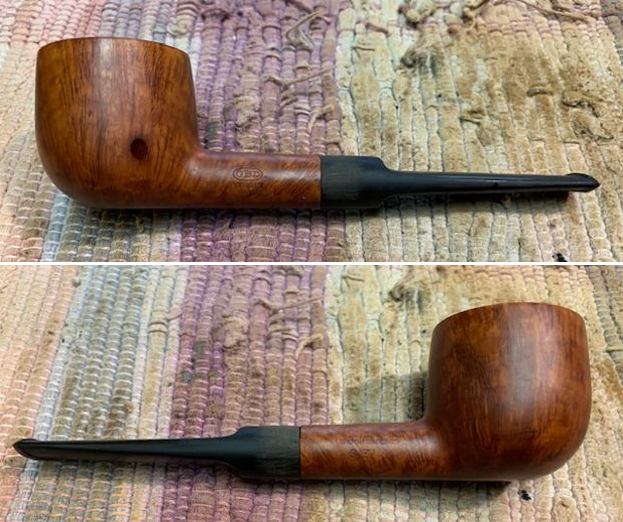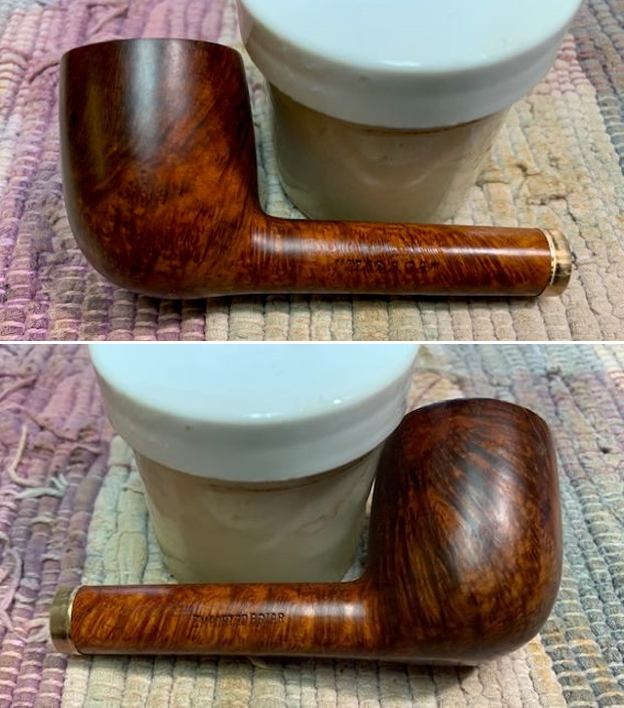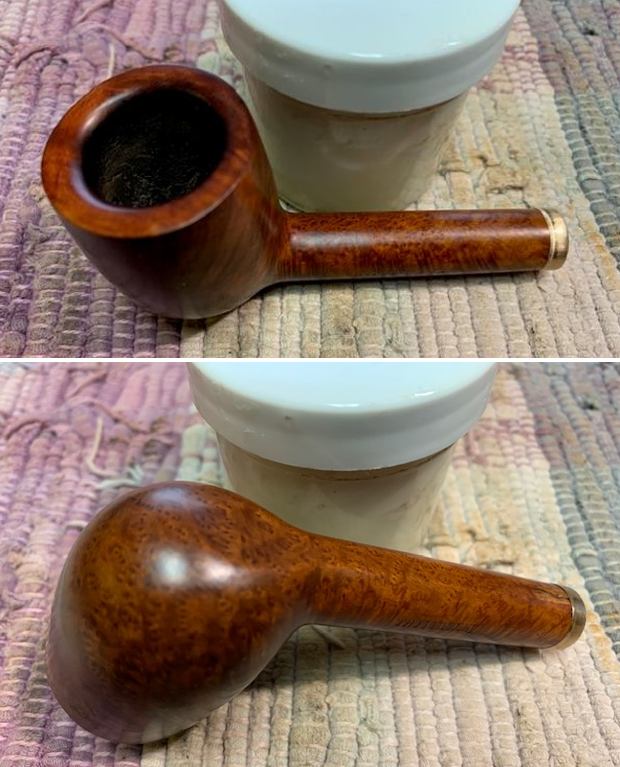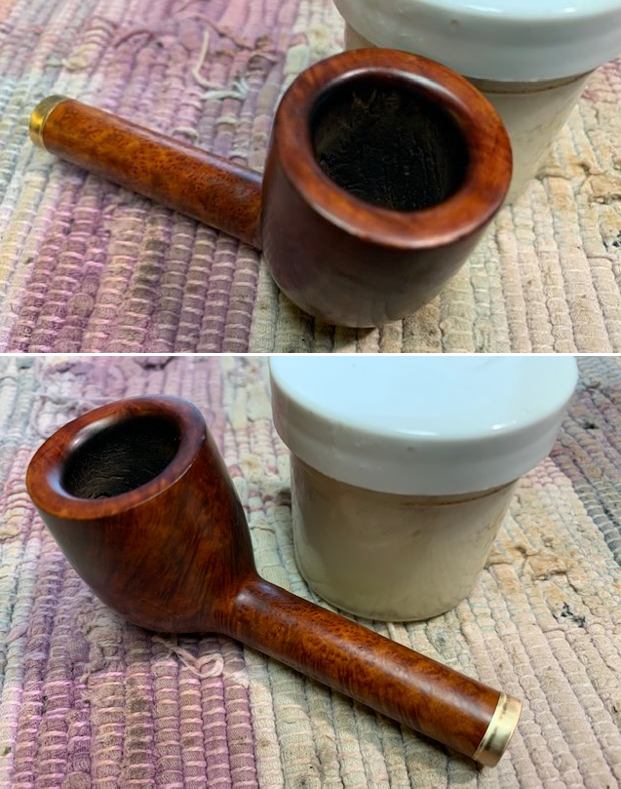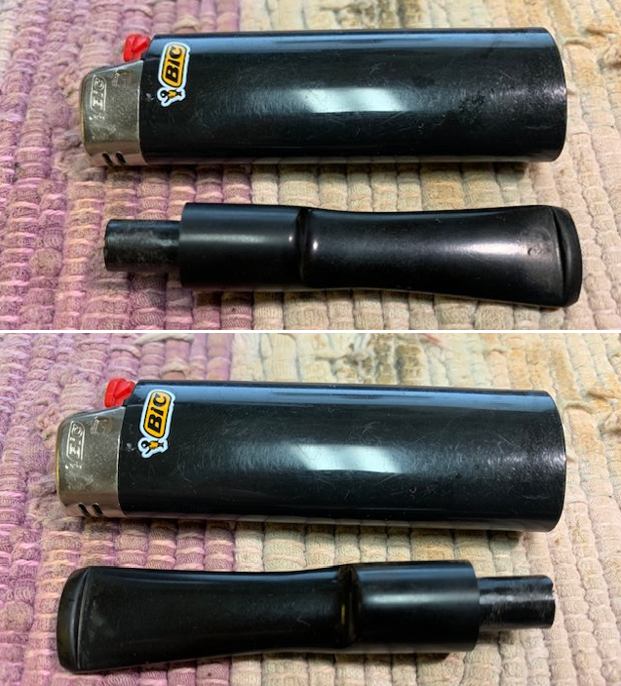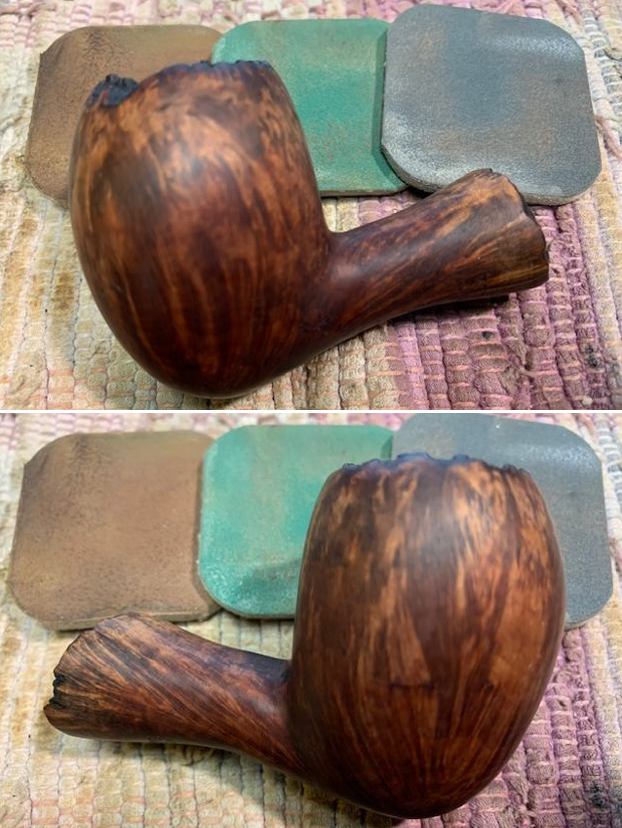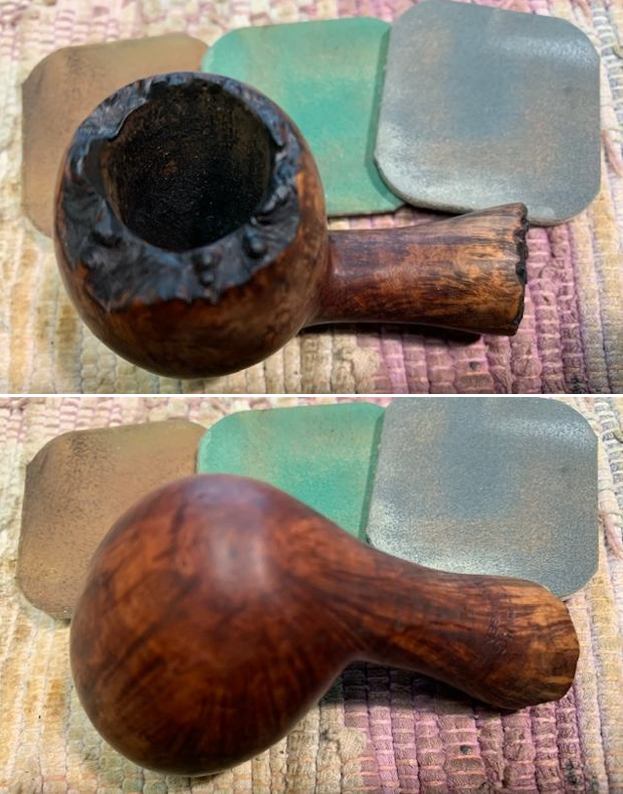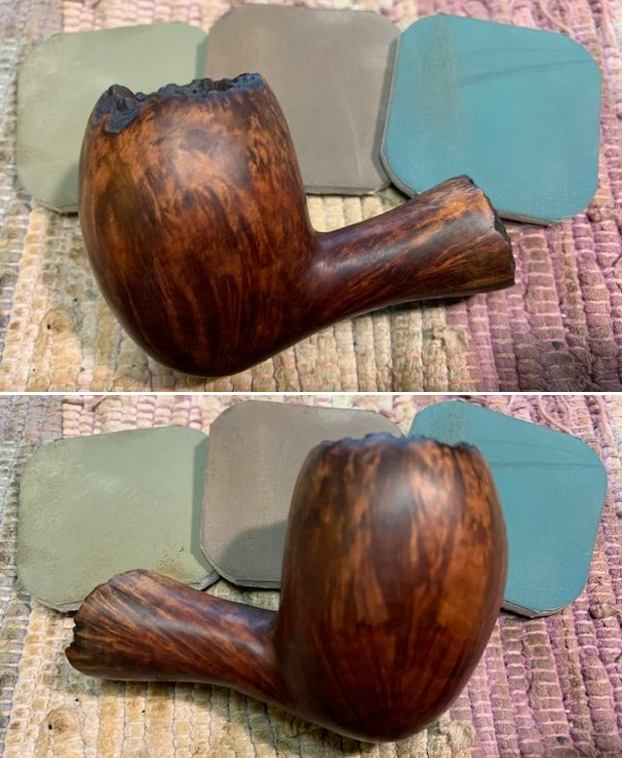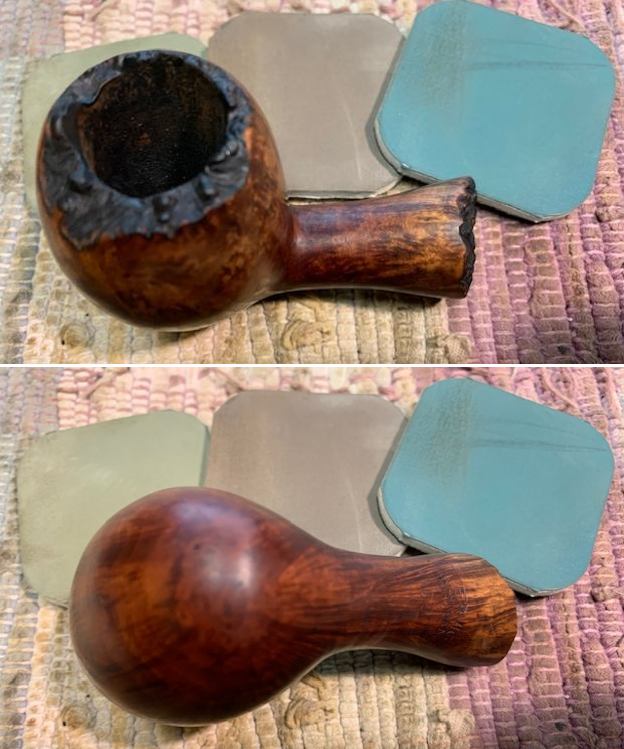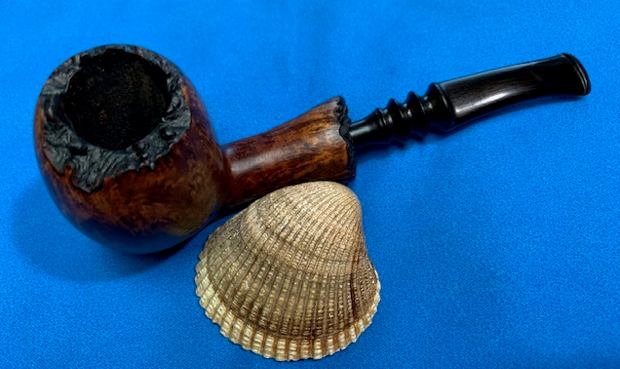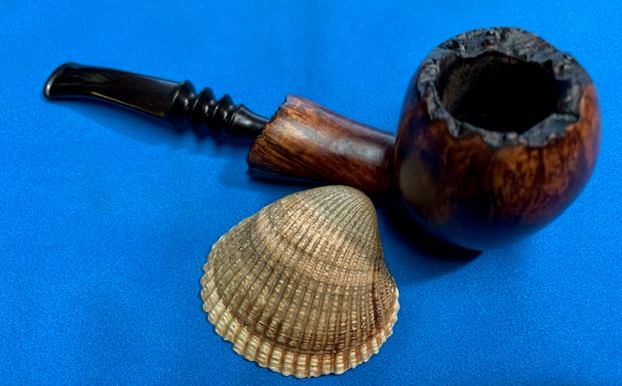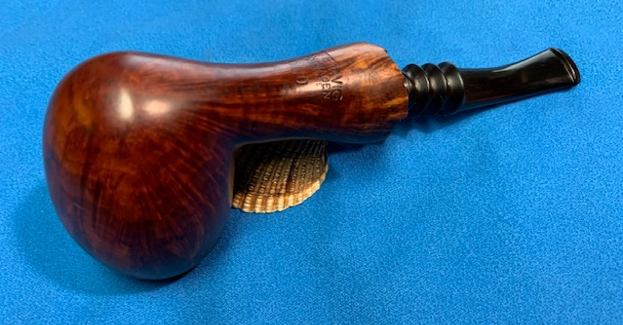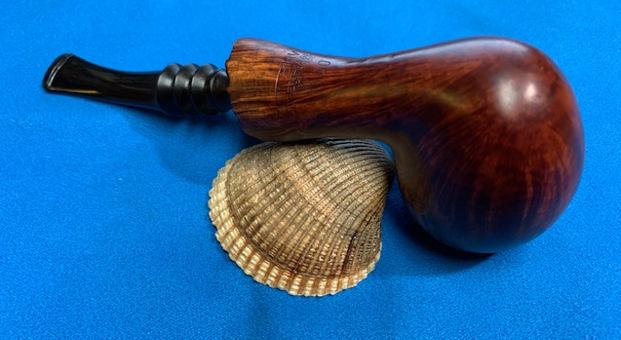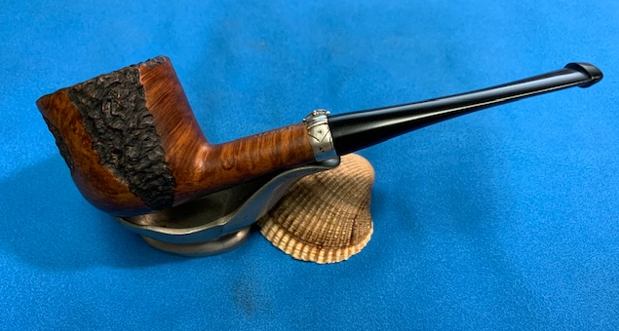
Tag Archives: pipe restemming

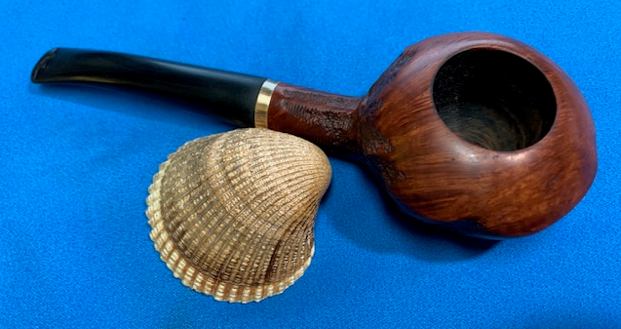
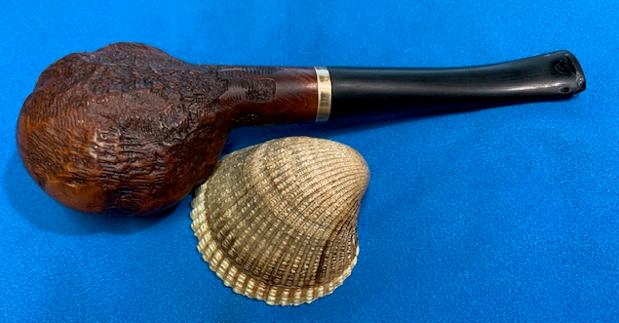
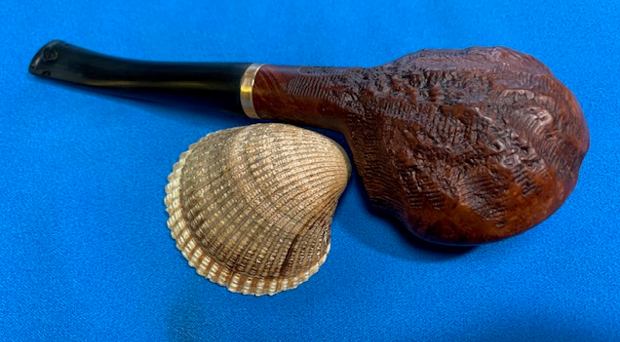
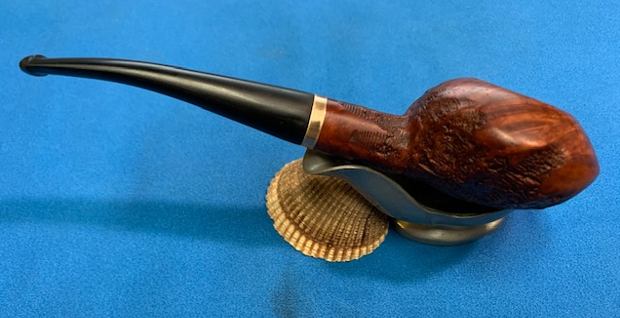
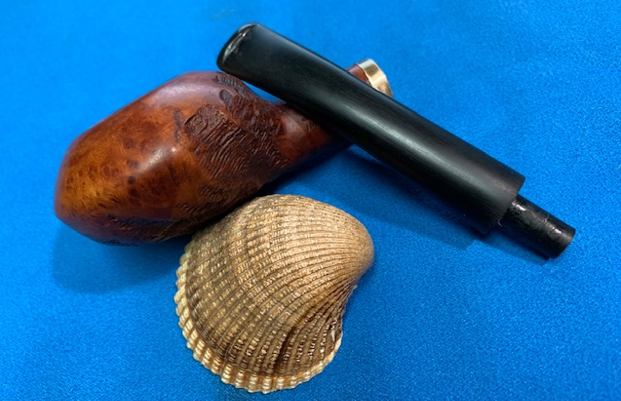
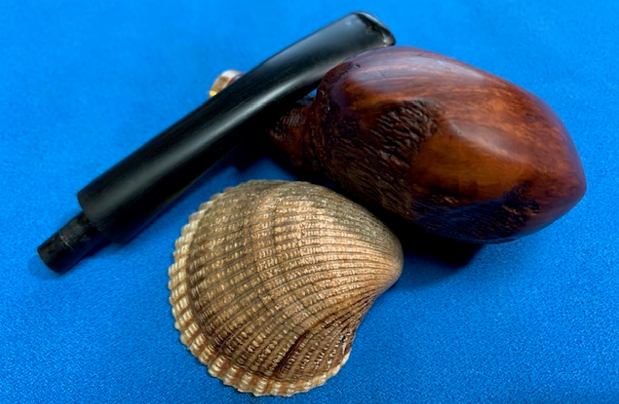
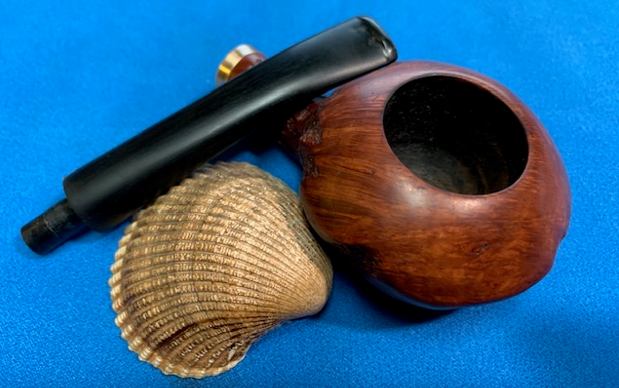
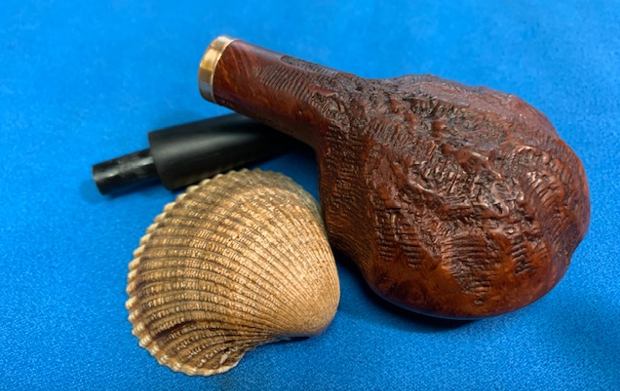
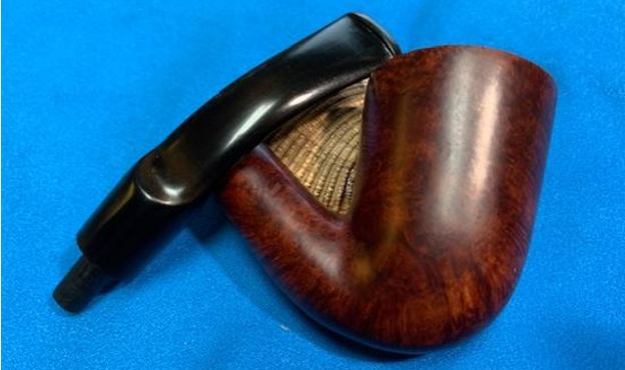
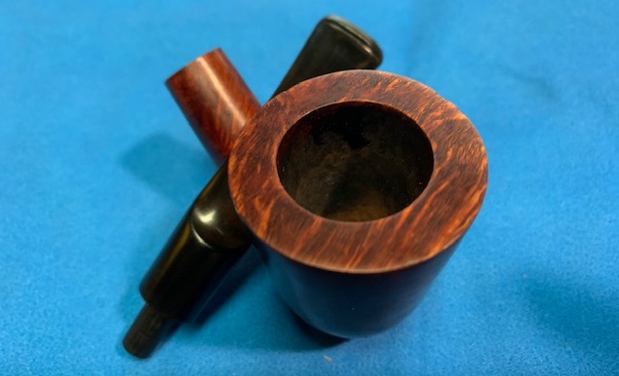
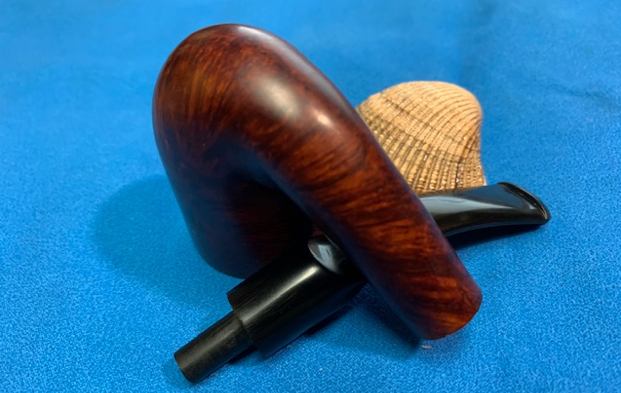
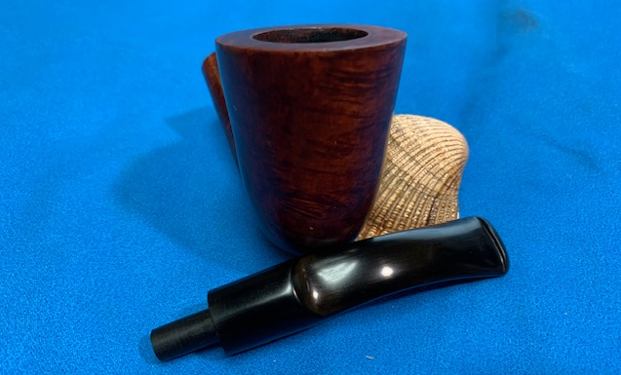
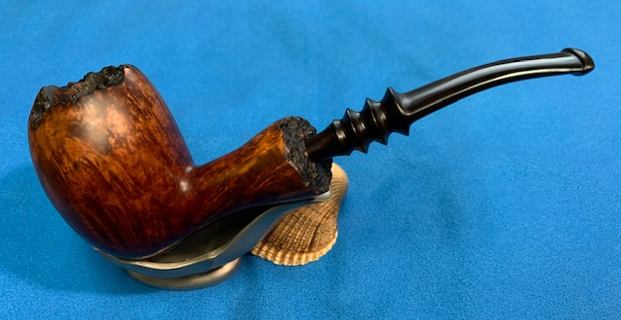
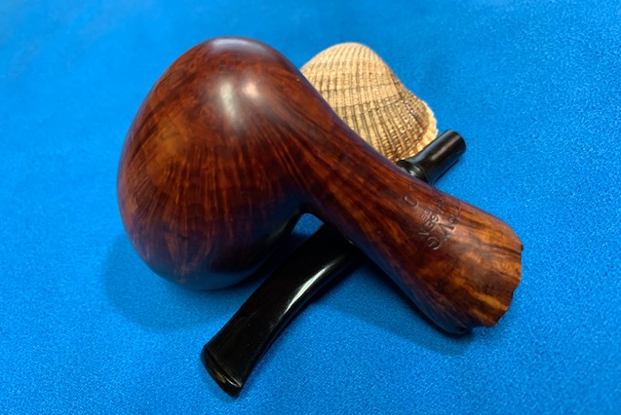
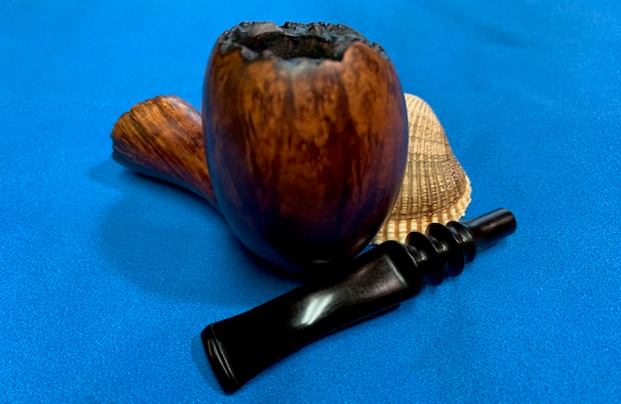
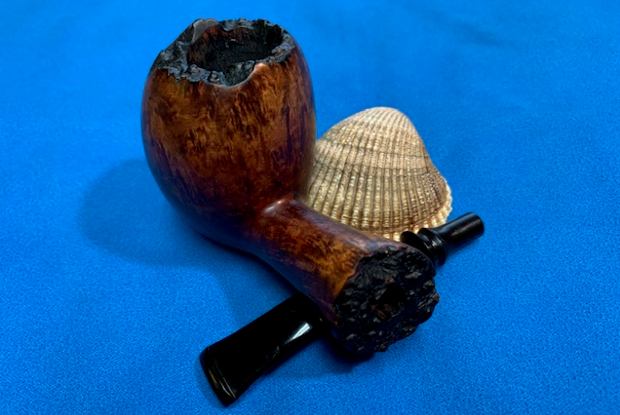
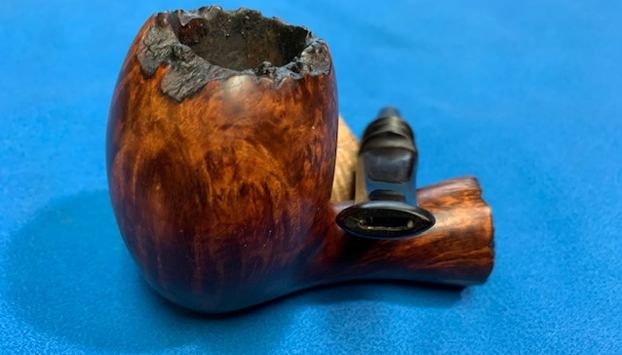
Restemming & Restoring a Zettervig Copenhagen Hand Made 900 Egg


Blog by Steve Laug

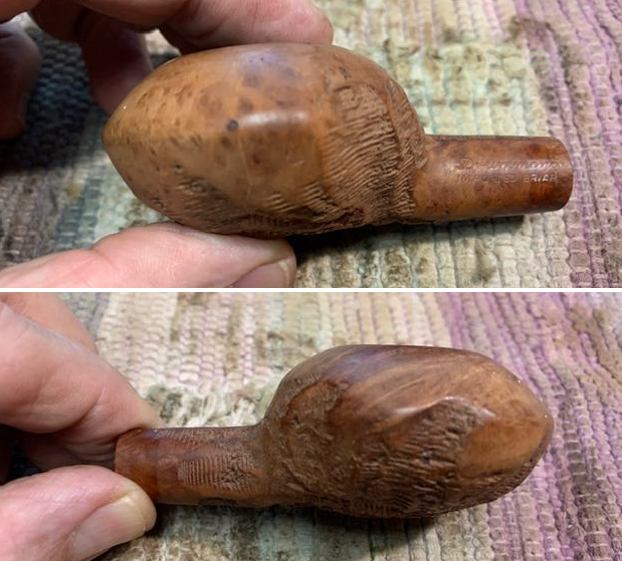
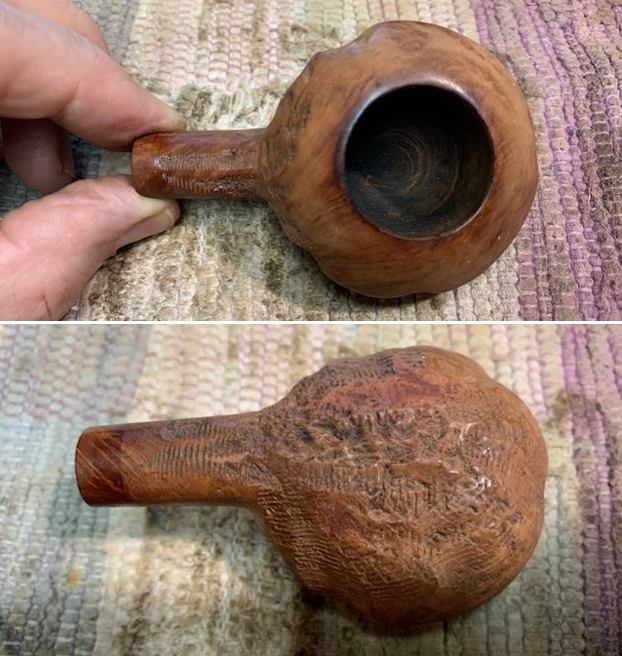
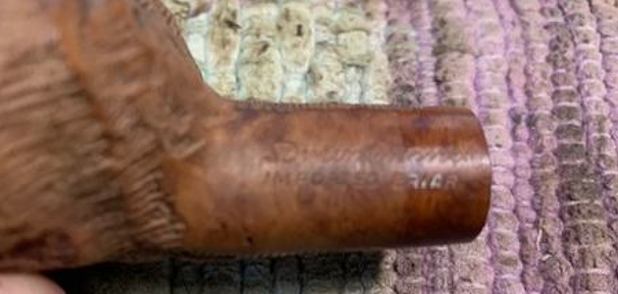
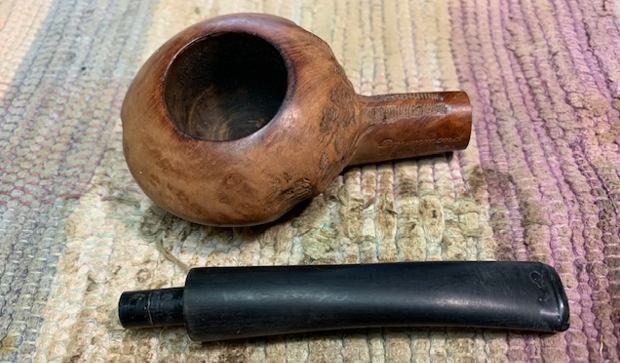
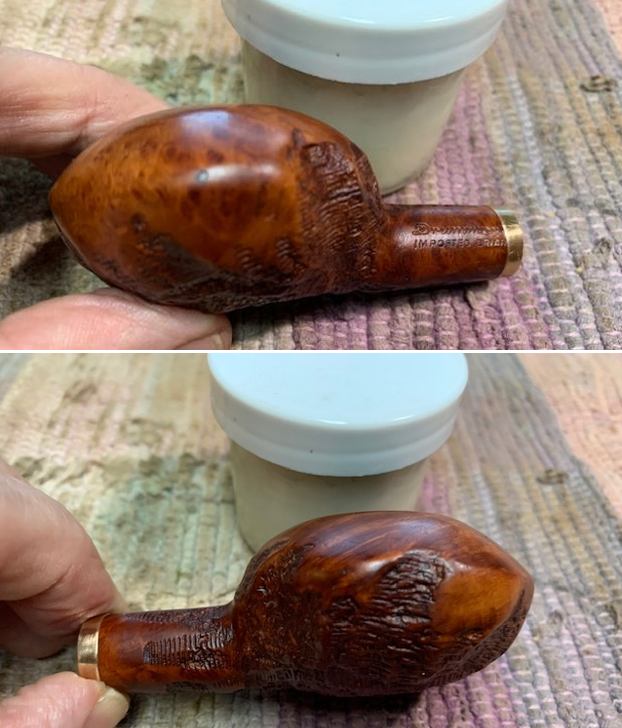
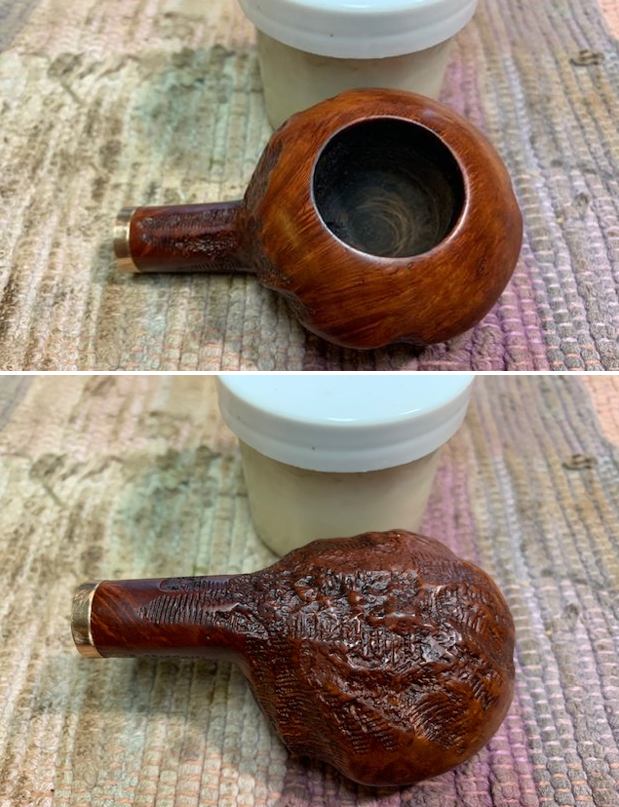
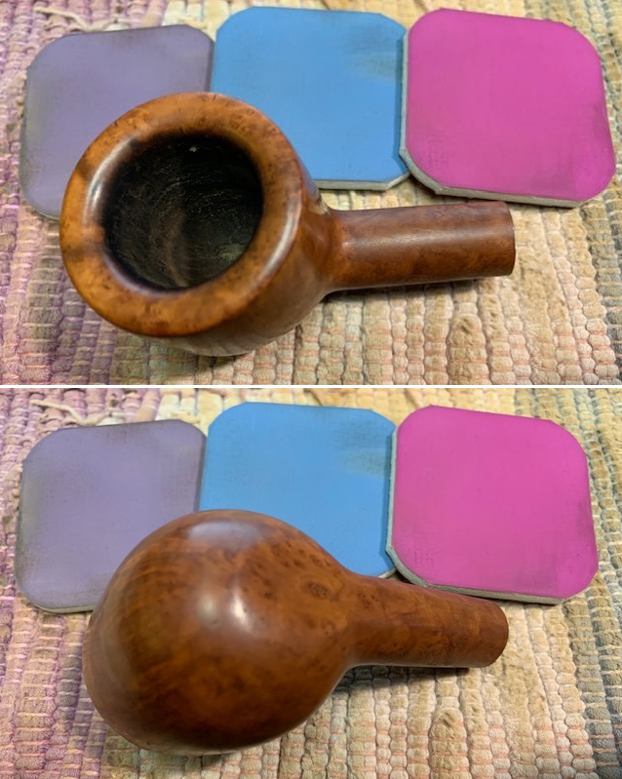
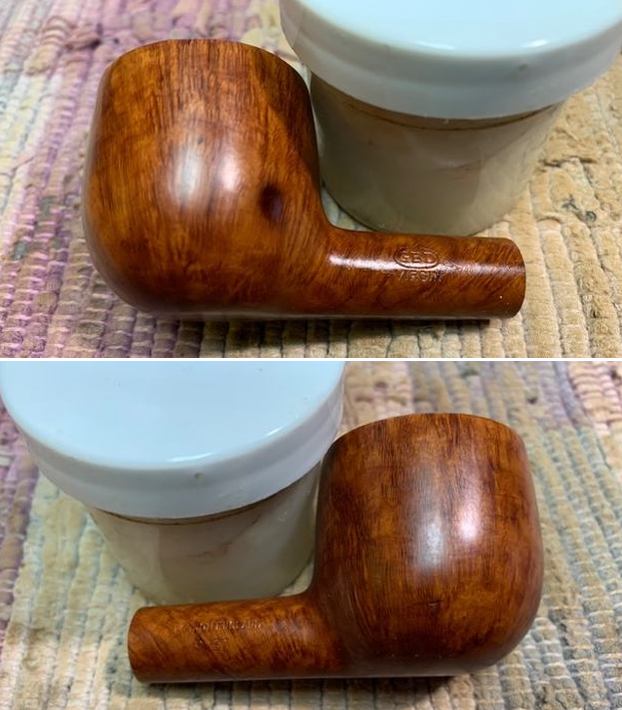
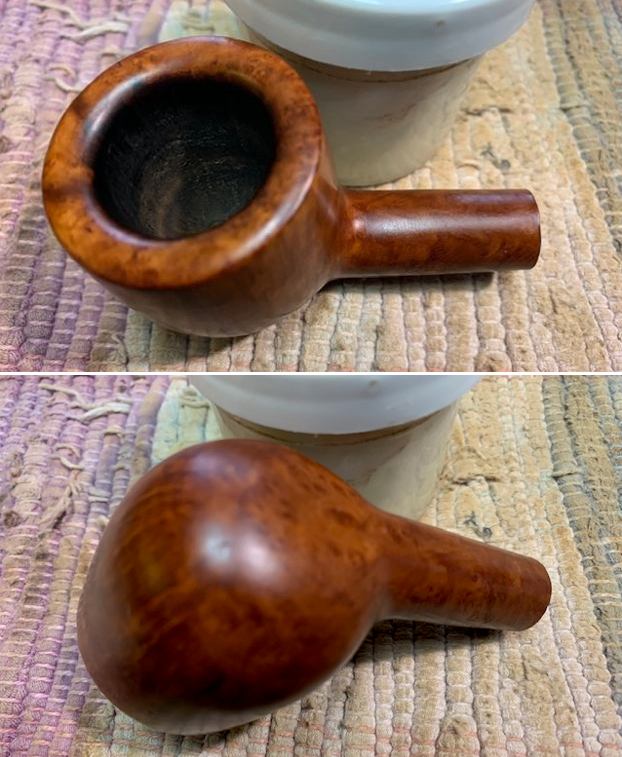
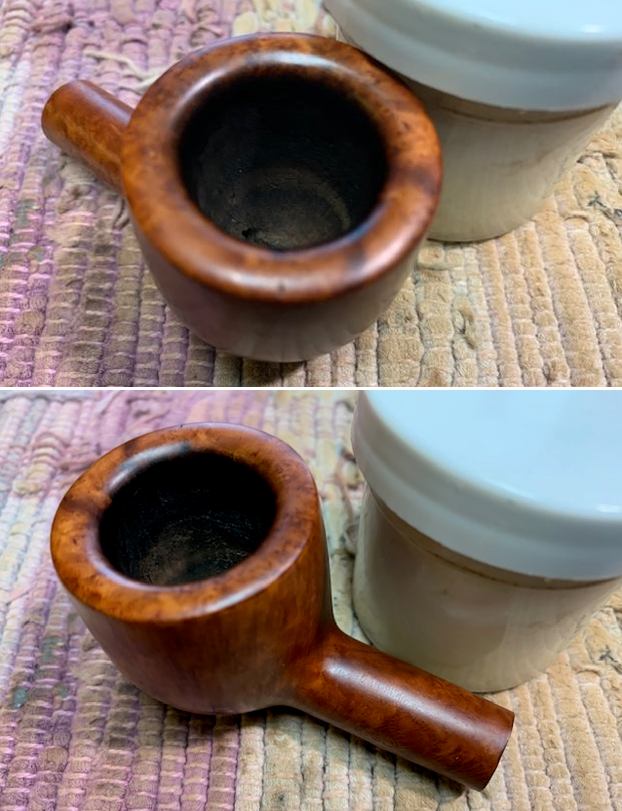
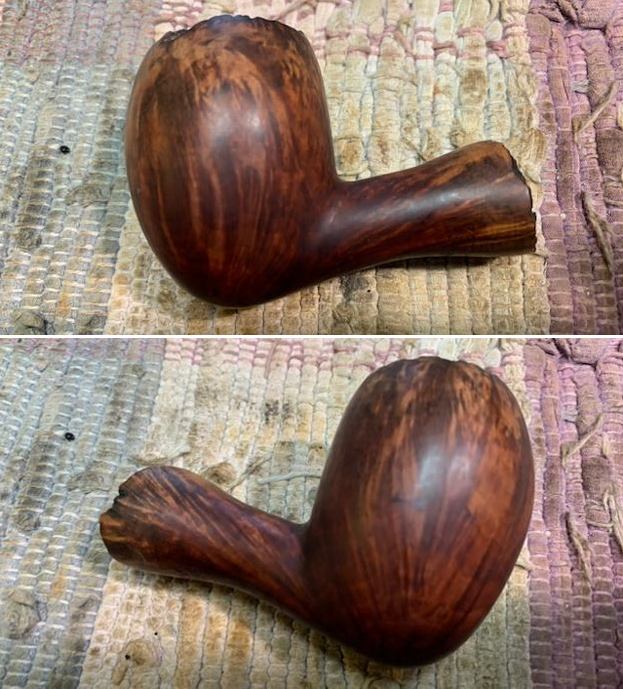
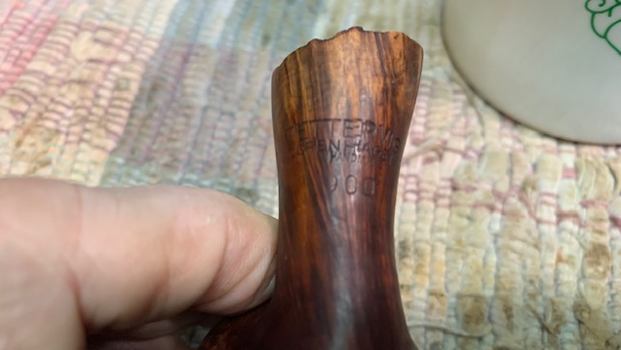
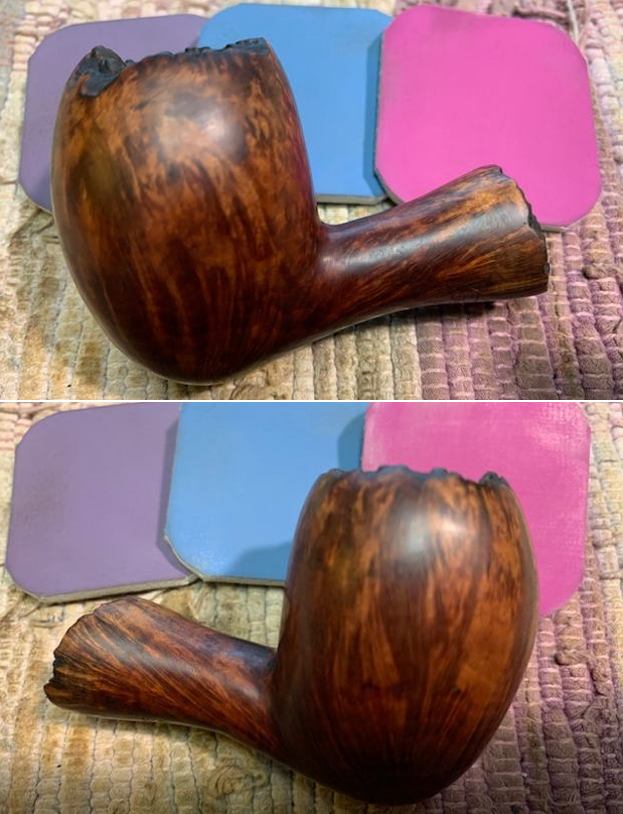
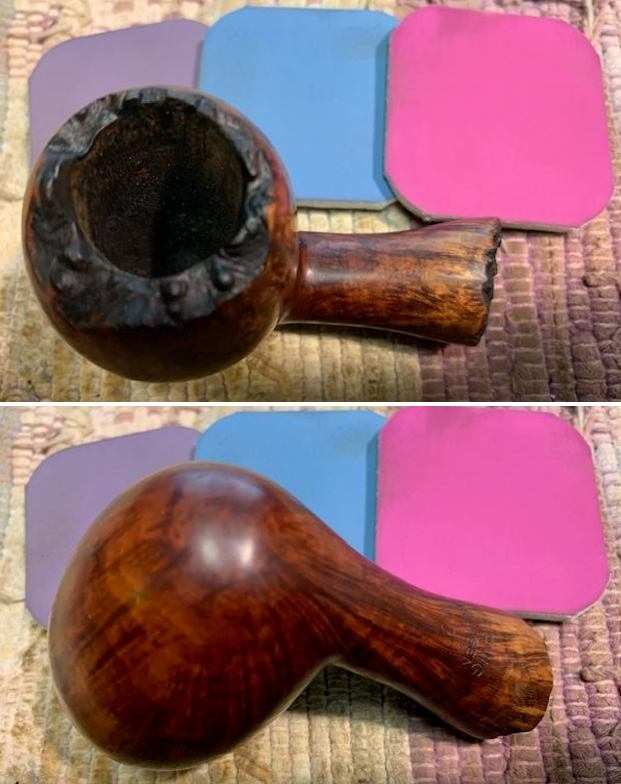
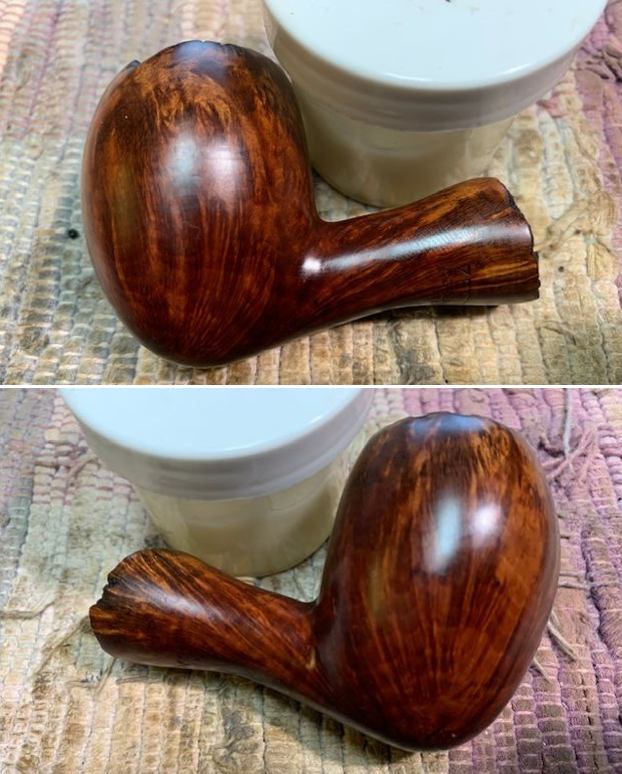
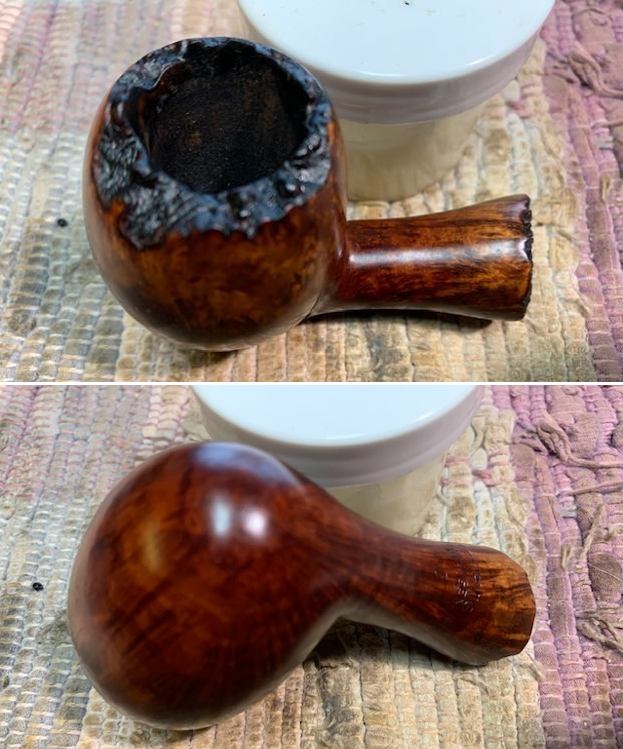
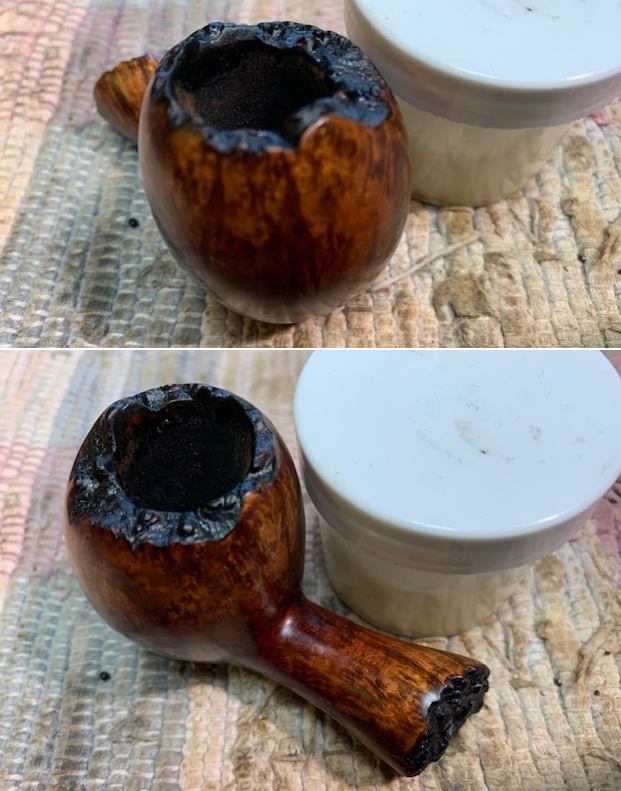
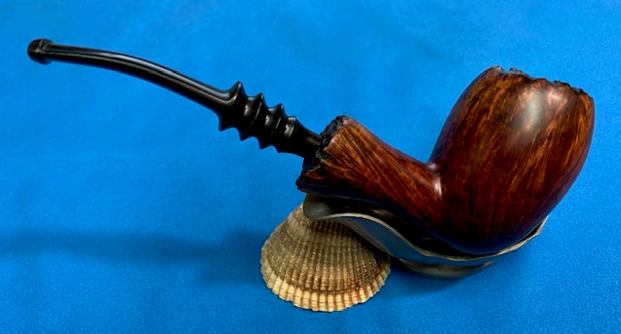
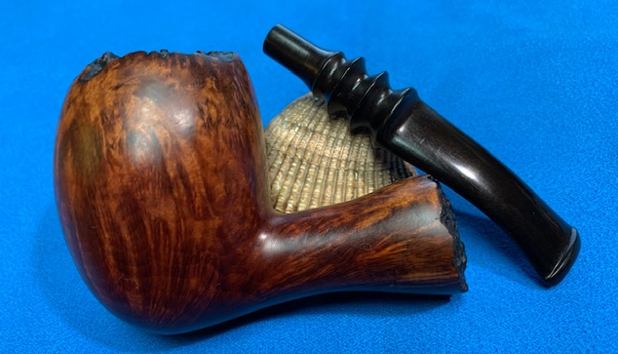
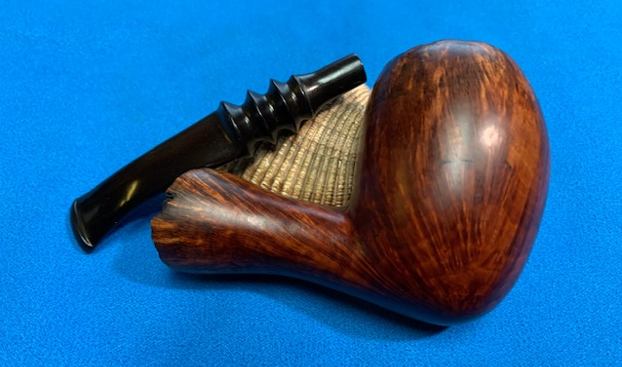
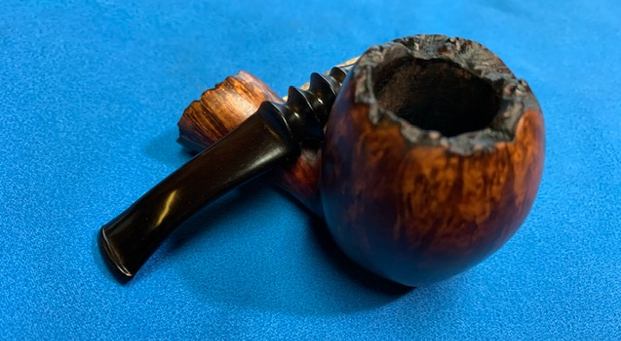
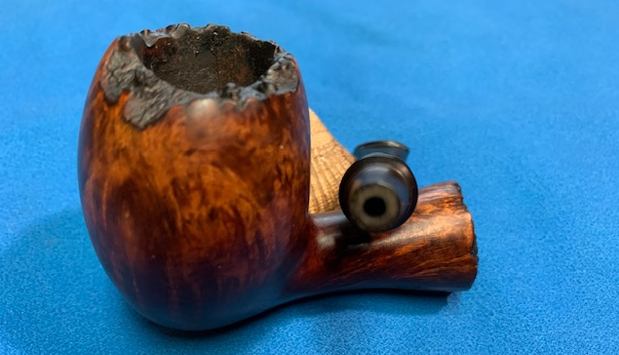
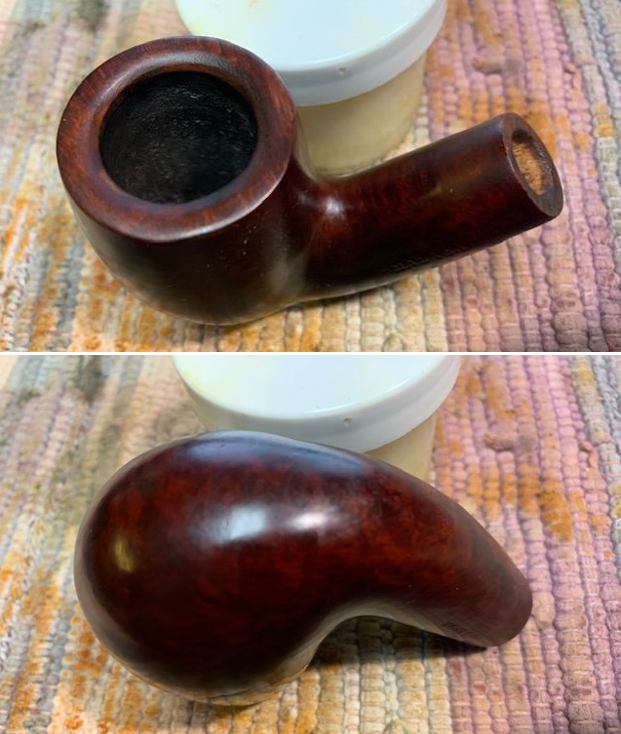
Sometimes the repetitive work on similar pipes and stems gets tiring to me and to alleviate the inevitable boredom I change things up a bit to refresh me. I have a box of stummels (bowls) here that I periodically go through and see if I have a potential stem that would fit them. This morning when I finished the last old timer I went through the box and picked out three bowls and found workable stems for them. All were in different states of need but all had been thoroughly cleaned before I boxed them up. The first of these was an interesting egg shaped freehand. It is stamped on the underside of the shank and reads ZETTERVIG (double stamped) [over] Copenhagen (also double stamped) [over] Handmade [over] 900. It had some great grain around the bowl and plateau on the rim top and shank end that was interesting.  I have worked on other Zettervig pipes in the past so I am not a stranger to the brand. I have included links to two different pipes that I worked on (https://rebornpipes.com/2013/12/05/a-complete-reworking-of-a-zettervig-freehand/)(https://rebornpipes.com/2018/07/28/restoring-and-restemming-a-zettervig-handmade-351-freehand/).

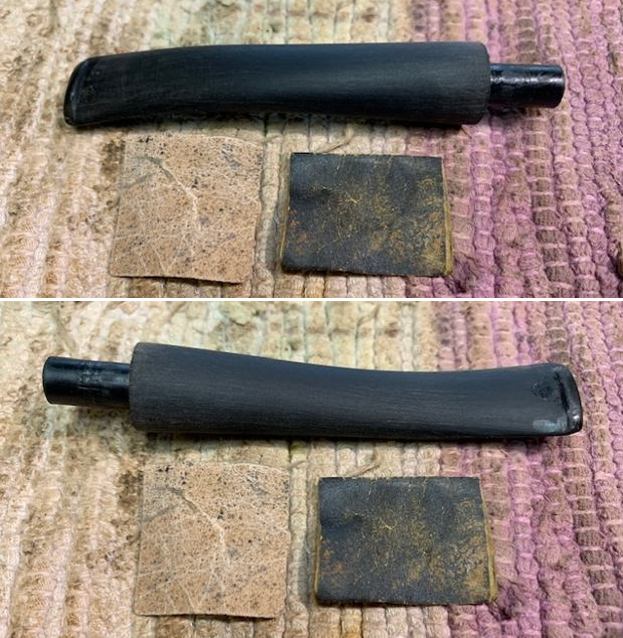
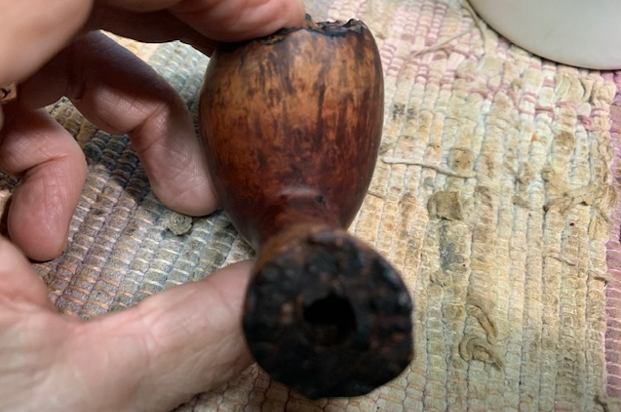
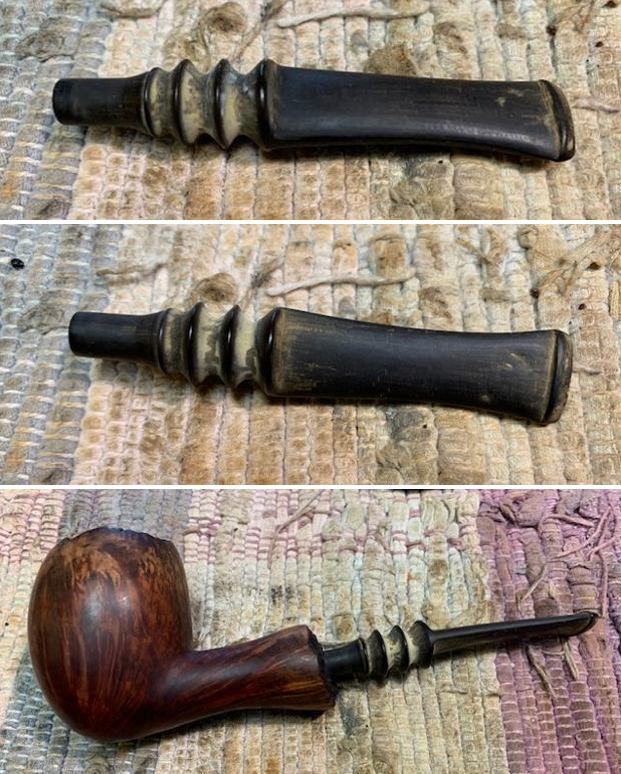
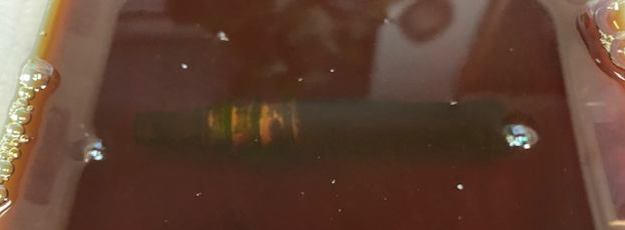
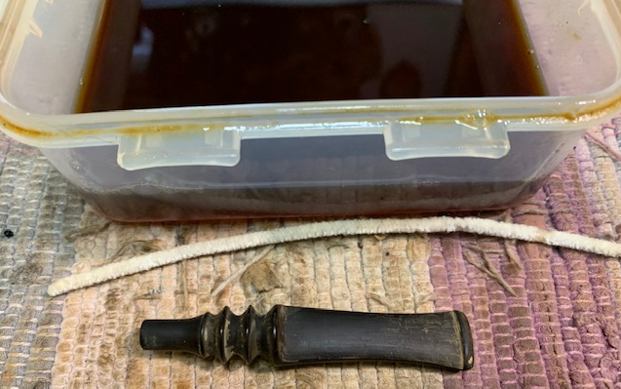
The bowl looked very good. The grain around the sides was quite nice and a mix of flame and straight grain. The plateau on the rim top and shank end looked good but the rim top was faded and worn. The shank end was black and looked very good. The bowl was clean and there were not any chips, cracks or checking on the walls. Examining the mortise it was clean and well drilled with no issues. The finish was washed out a bit and tired but still quite redeemable. I took some photos of the bowl before I started to work on it. I took a photo of the double stamping on the underside of the shank. It reads as noted above and is surprisingly clear and readable.I went through some of the fancy, turned freehand style stems and found this old timer. It is quite heavily oxidized and has some deep tooth marks but I think it will work with the Zettervig. I put the stem in place and took a photo to have a look at it in situation. What do you think? With the stem chosen I dropped it in a bath of Briarville’s Pipe Stem Deoxidizer that I have here. It is getting a bit tired but it still works. I let it sit while I worked on the bowl.While the stem soaked in the bath and before I started to work on the bowl I decided that I would look up some information on the Zettervig brand before I started the clean up on the pipe. I looked up information on two of my favourite sites. The first was Pipedia. Here is the link: https://pipedia.org/wiki/Zettervig. I quote in full:
In the 1960’s and into the early 1970’s Ole Zettervig had a shop in Copenhagen, Denmark where he was carving high quality pipes equal to Stanwell, Larsen, Anne Julie, Thurmann, Bang and others. These early pipes were marked “Copenhagen” and are very collectible. He sold his shop at some point in the 70’s and moved to Kolding and continued to produce pipes as a hobby, but the quality of briar and workmanship is said to not equal the early production. The later pipes he now marked as Kobenhaven rather than Copenhagen, and these were sold by Ole at flea markets throughout Europe.

That information told me I was working on an early one of his pipes from the 1960s to early 1970s as it is stamped Copenhagen.

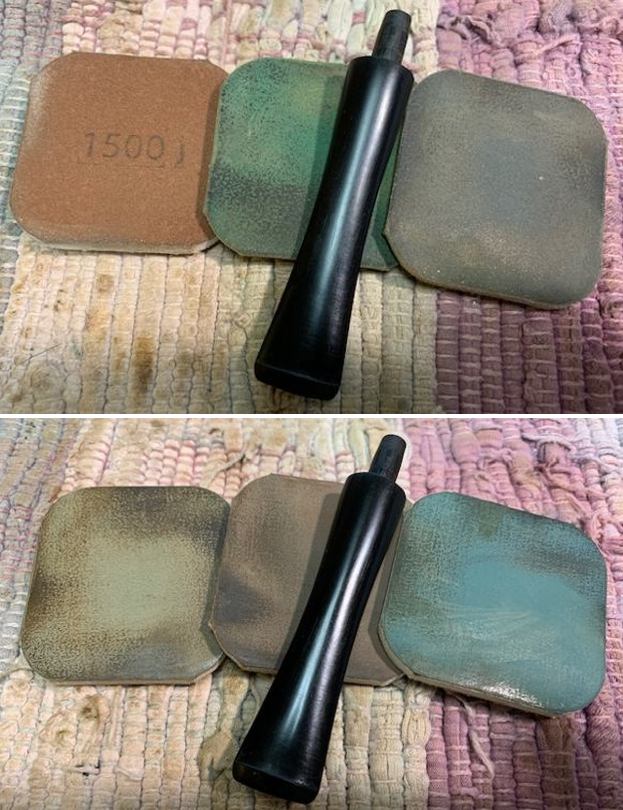
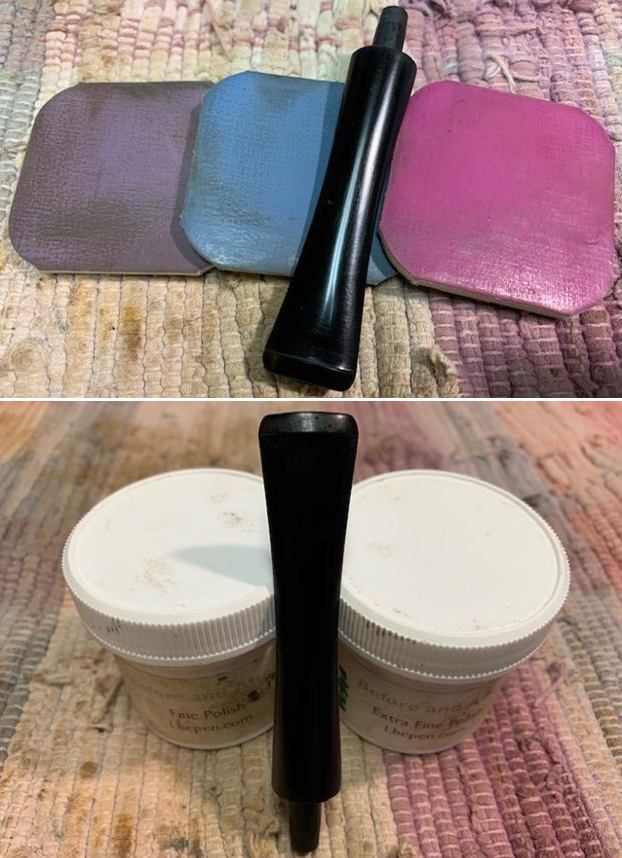
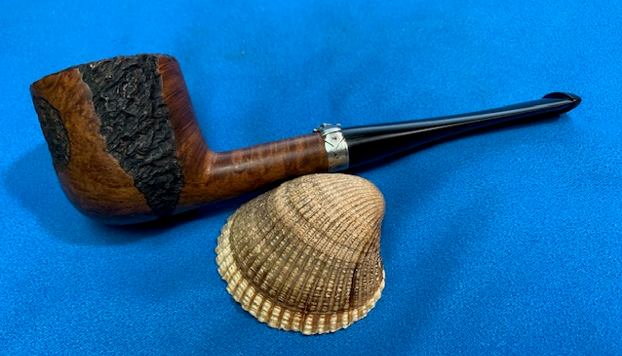
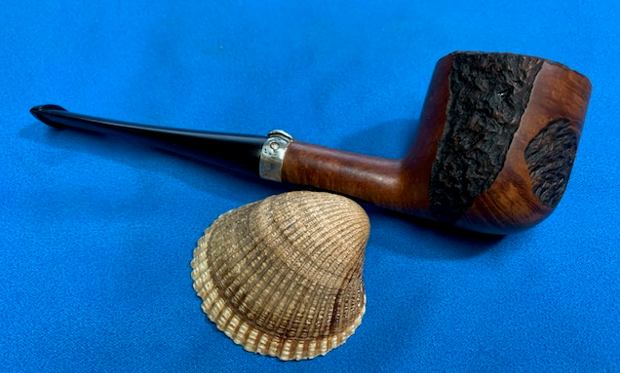
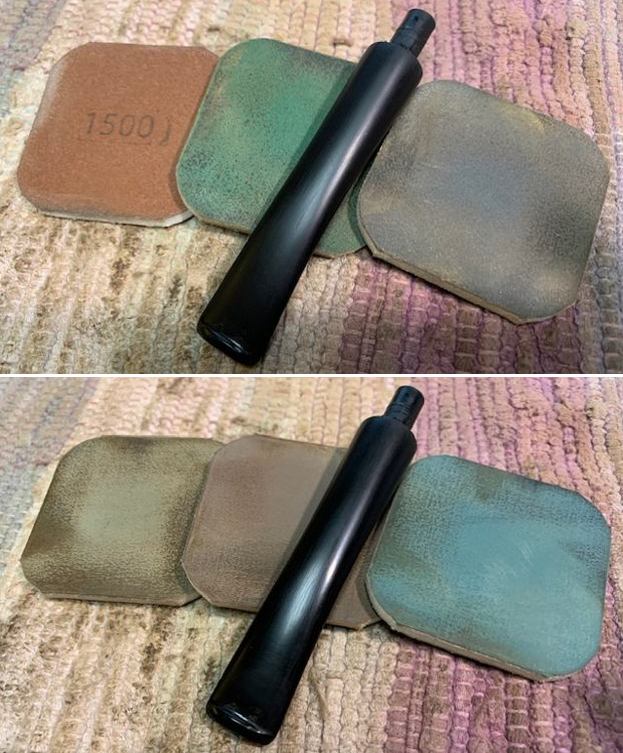
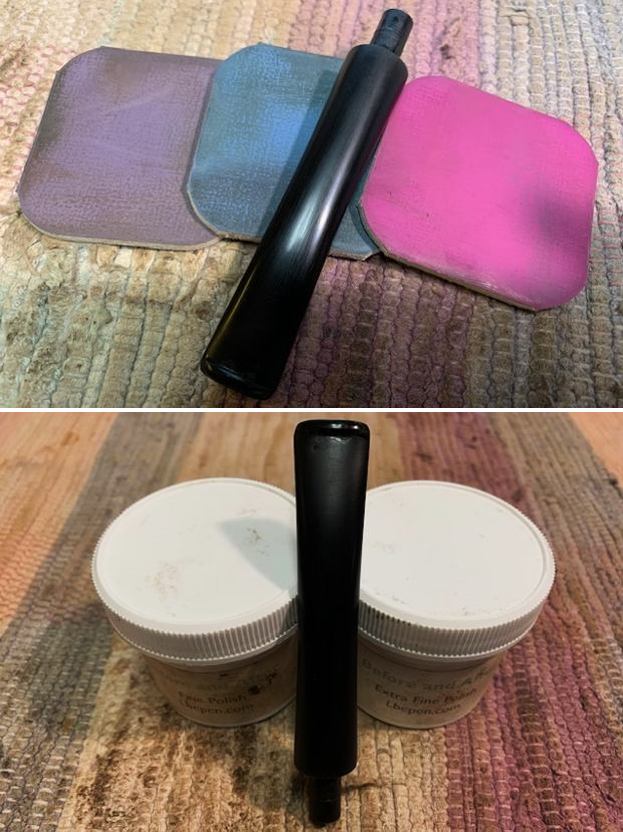
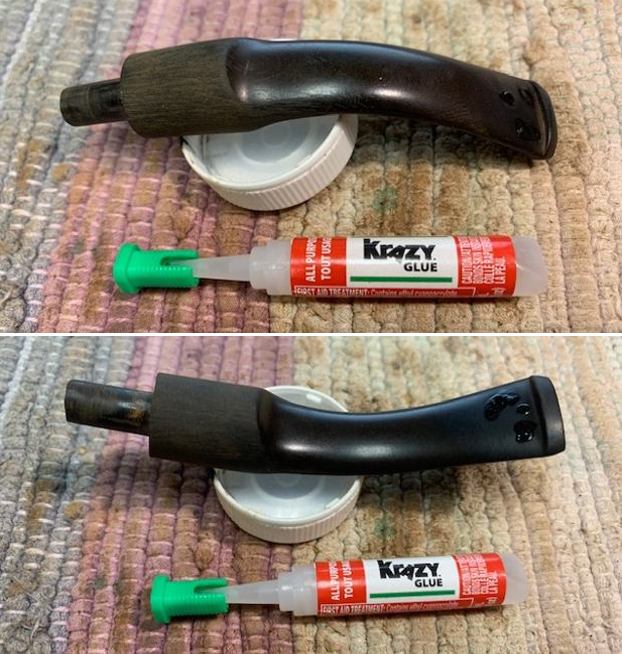
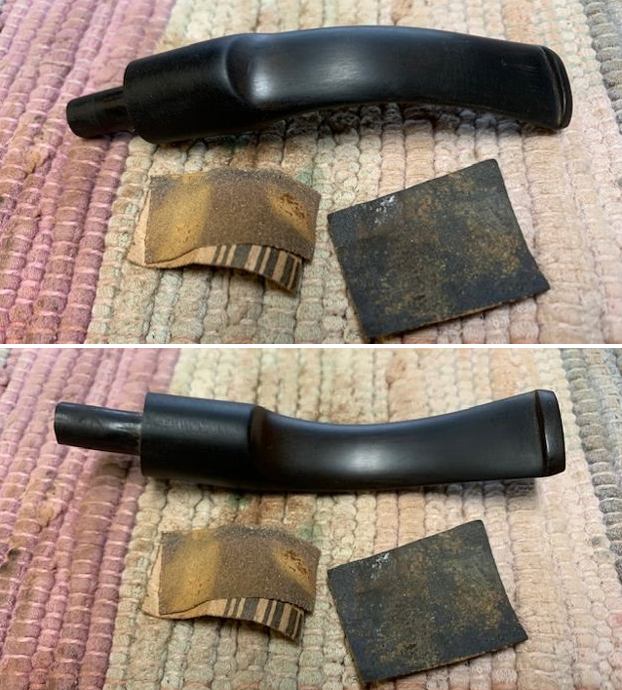
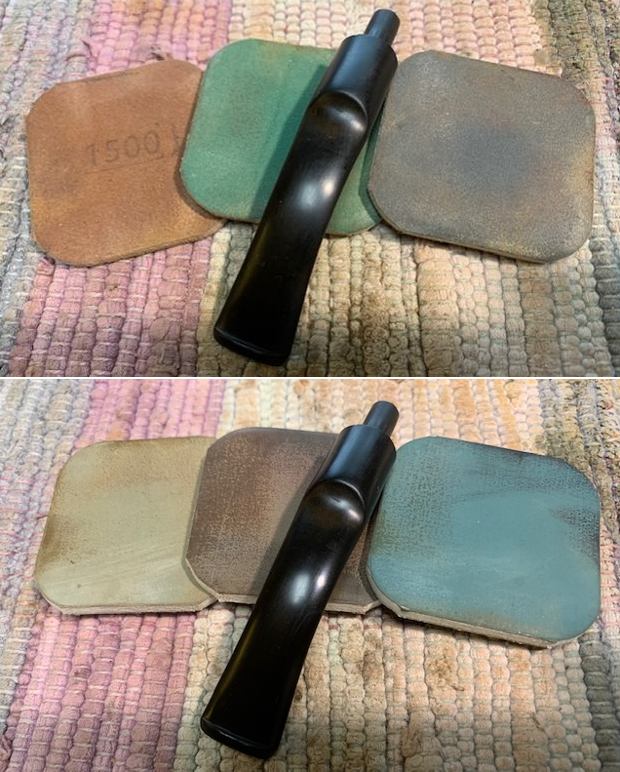
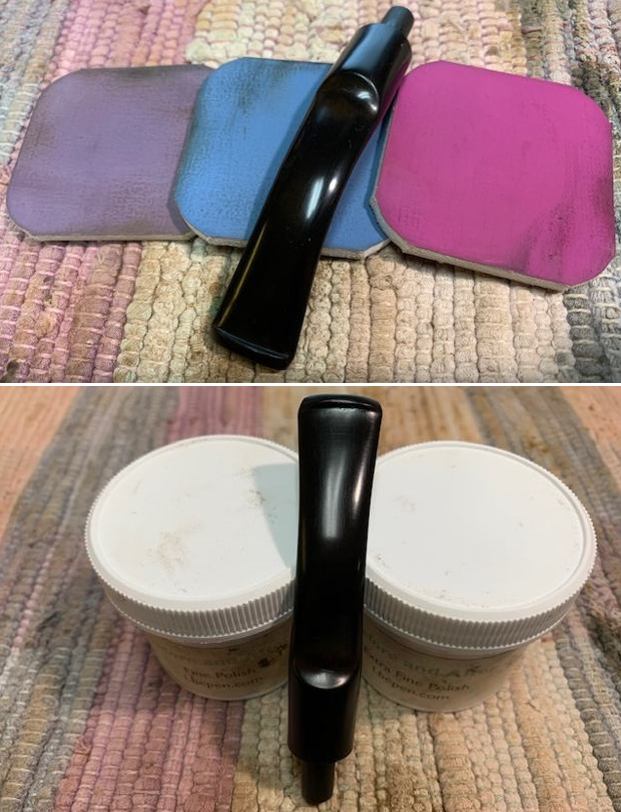
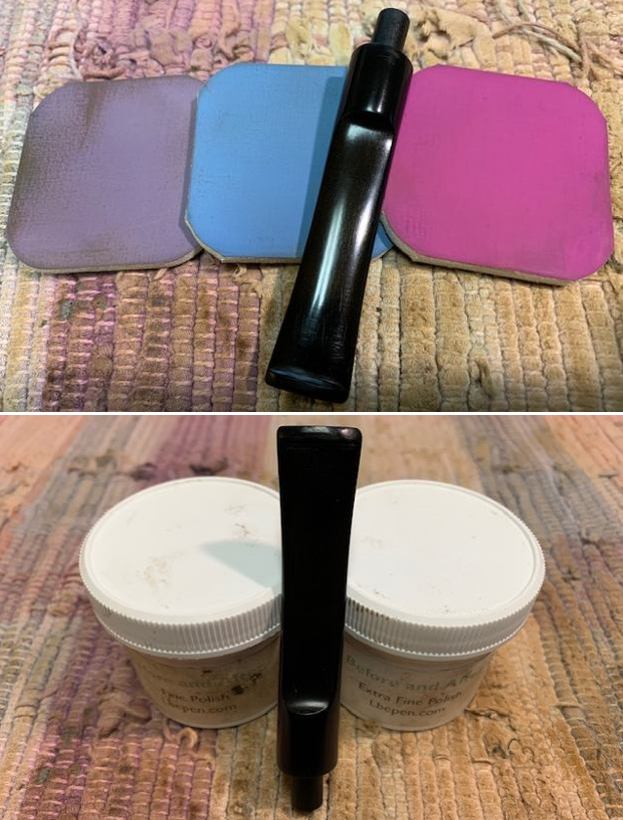
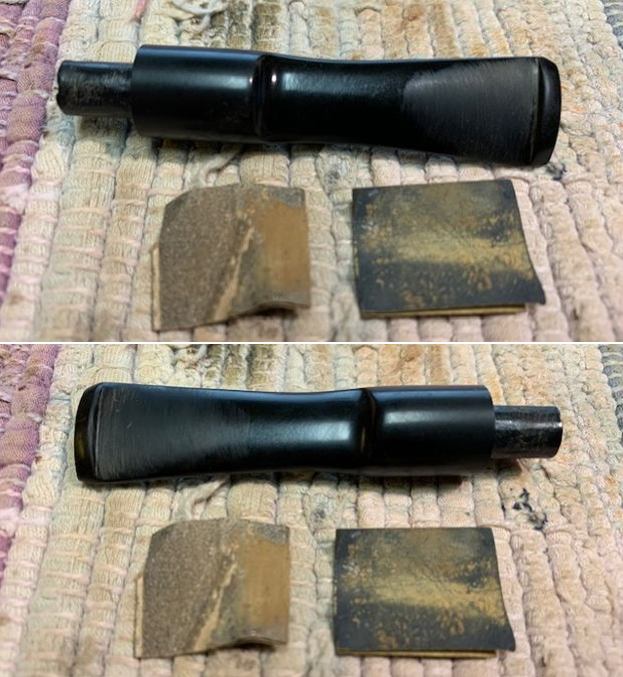
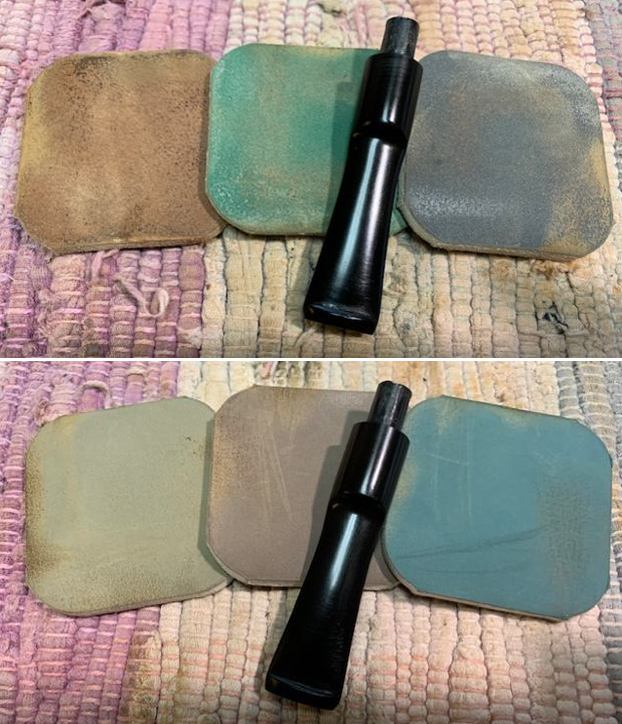
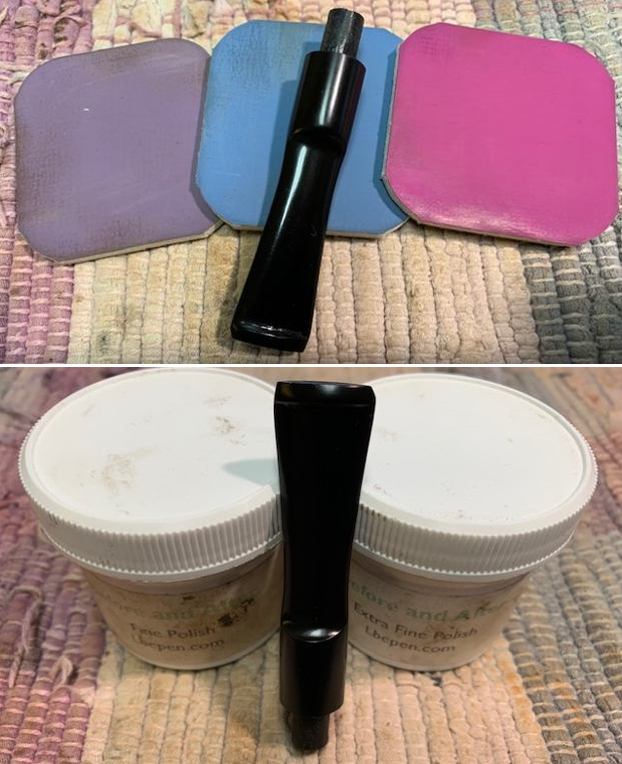
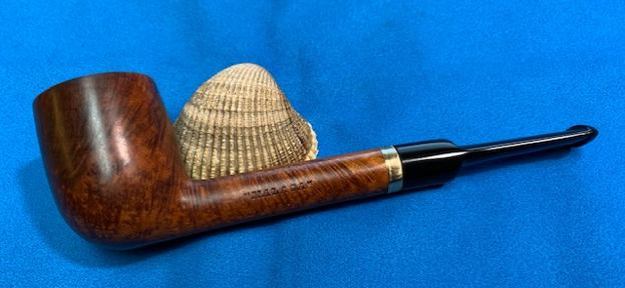
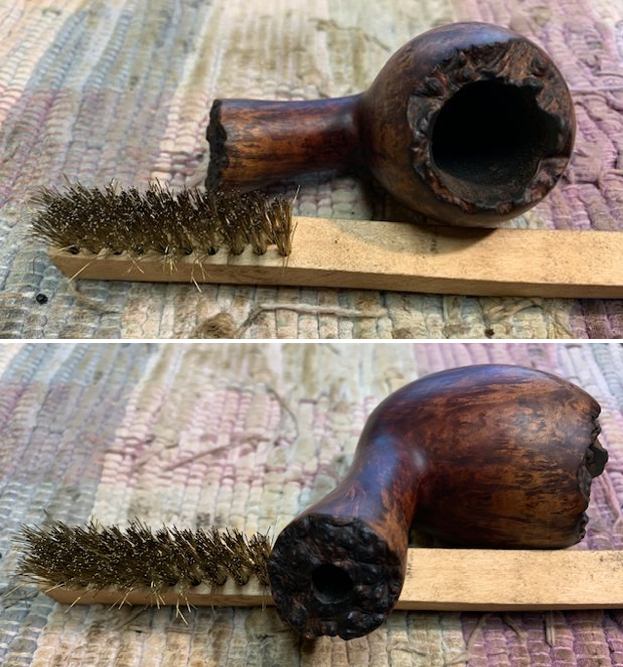
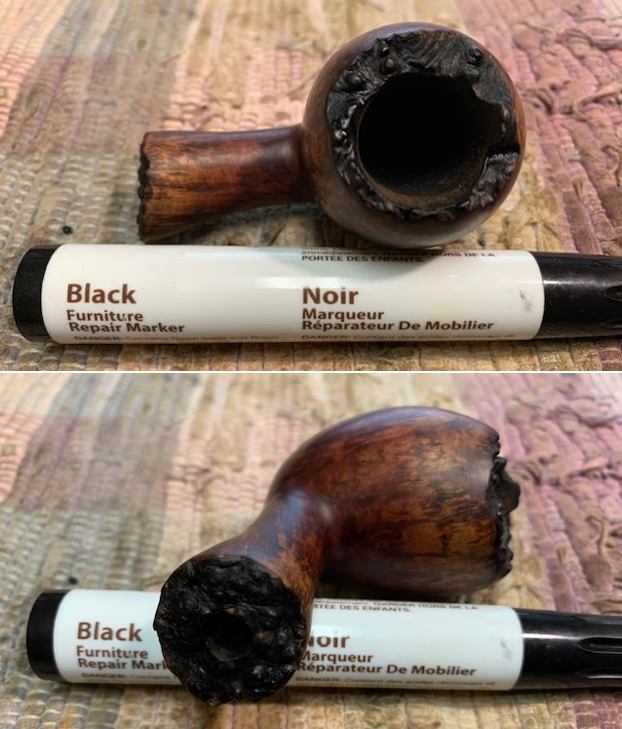
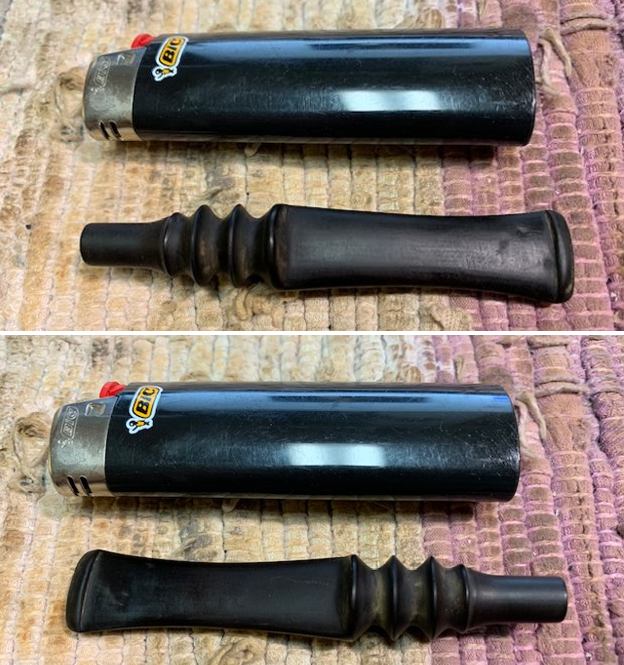
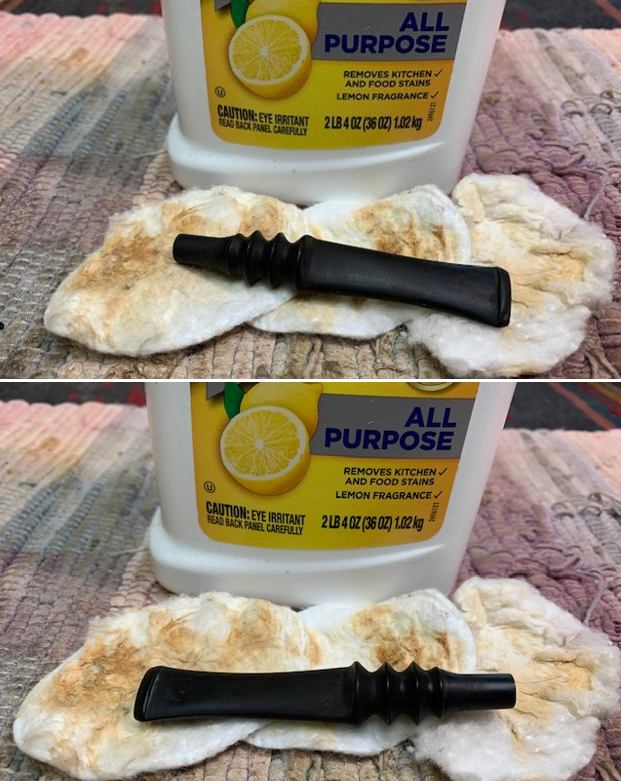
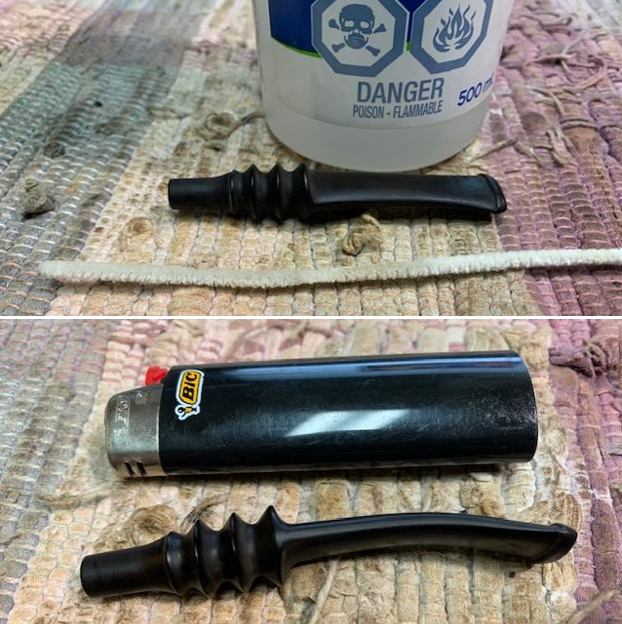
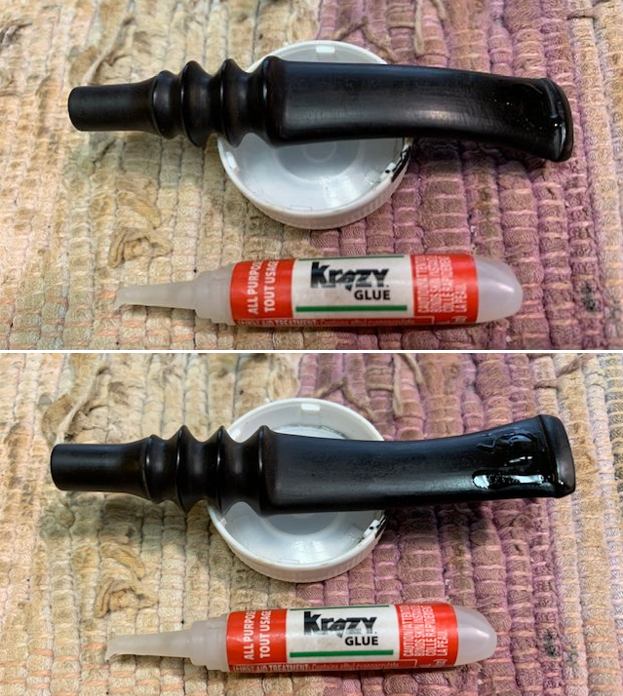
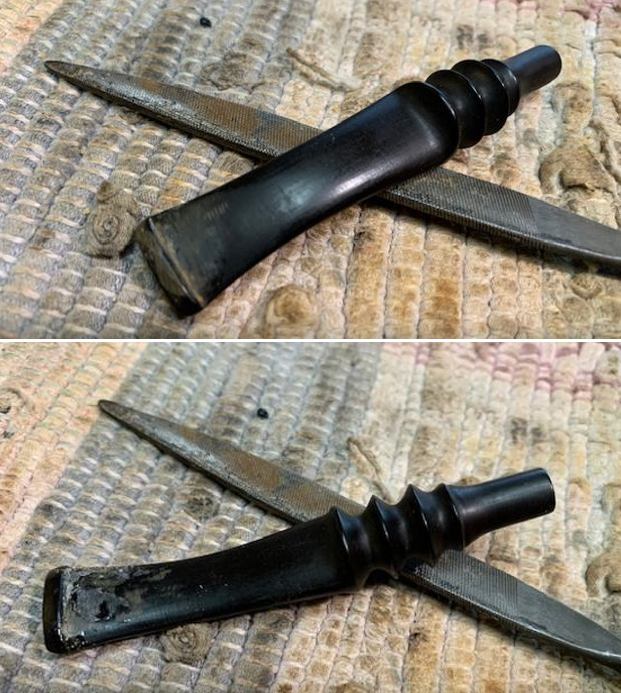
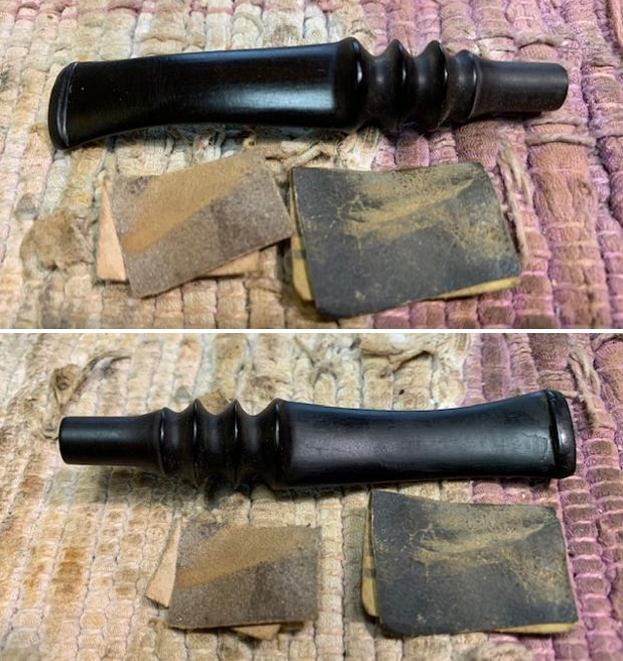
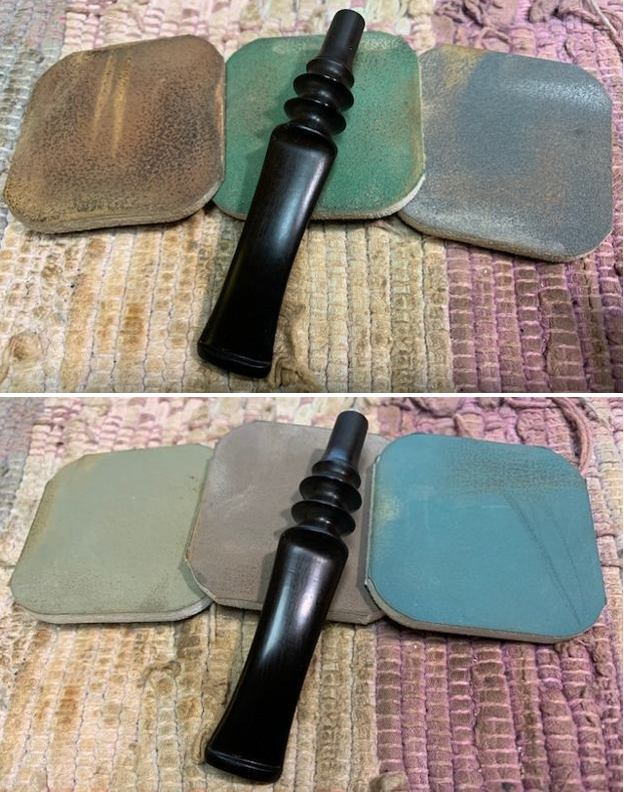
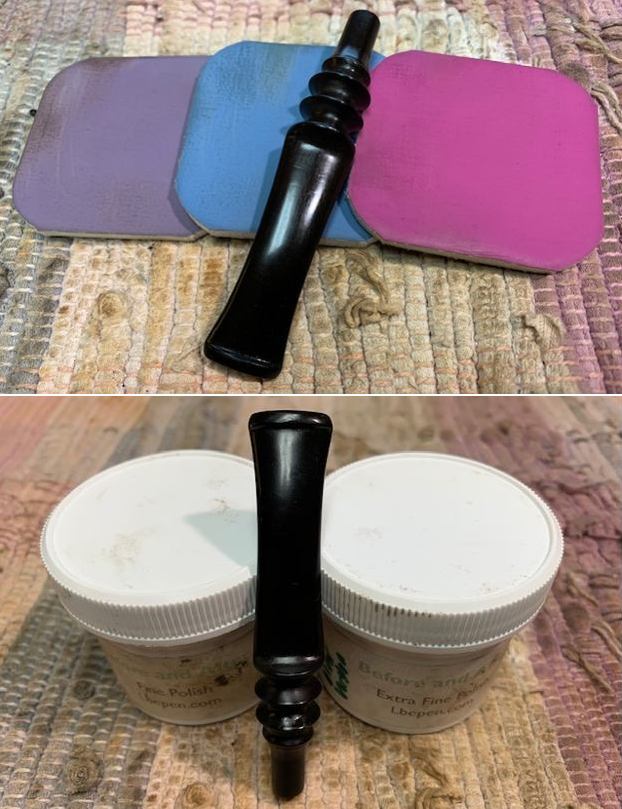
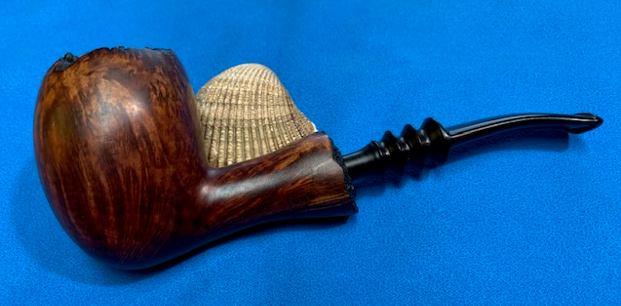
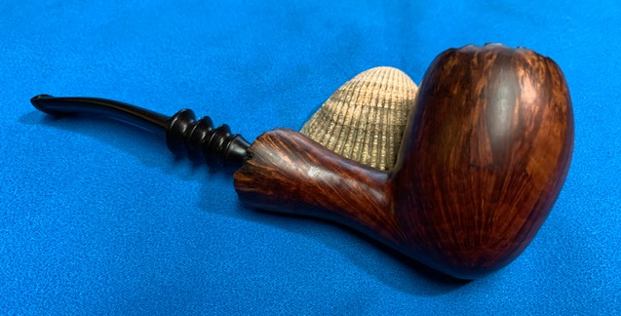
I turned to Pipephil’s site and did a screen capture of the information that was there. There was no addition info but it did show one of the pipes (http://www.pipephil.eu/logos/en/logo-z.html). You can also see the style of the stem and the Z on the top of the stem. The one I have chosen is very different but I think it will still work.With that information in hand I turned to work on the bowl. I used a brass bristle wire brush to clean out the remaining debris and lava in the grooves of the plateau rim top and to remove the dust from the plateau shank end. Once it was clean I used a Black Stain Pen to stain it black as it was originally. I polished the briar with micromesh sanding pads – dry sanding with 1500-12000 grit pads and wiping it down with a damp cloth after each pad. It really began to shine. I worked some Before & After Restoration Balm into the surface of the smooth briar with my finger tips and into the plateau rim top and shank end with a horsehair shoe brush. The product is amazing and works to clean, enliven and protect the briar. I let it sit on the briar for 10 or more minutes and then buff it off with a soft cloth. It really makes the grain sing. With the bowl finished I turned my attention to the stem. It had been sitting in the bath for several hours. I removed it and ran a pipe cleaner and alcohol through the airway to remove any remaining soak. I wiped the stem down with a paper towel to remove the oxidation that had been loosened. It looked much better than when I put it in the bath.I “painted” the stem surface with a Bic lighter flame to raise the tooth marks. I was able to lift many of them to the surface. What remained I would fill in later. I scrubbed the stem surface with cotton pads and Soft Scrub to remove the remaining oxidation. The stem was really starting to look very good. I cleaned out the ends of the stem and button with a pipe cleaner and alcohol to remove the bits of Soft Scrub that had gotten into the airway. I heated the stem and gave it a slight bend to fit the flow of the pipe better.I filled in the remaining divots and marks in the stem with clear CA glue. Once it had cured used a small file to flatten the repair and sharpen the edge of the button. I sanded it smooth with 220 grit sandpaper to blend it into the stem. I started the polishing with 400 grit wet dry sandpaper. I polished the stem with micromesh sanding pads – dry sanding with 1500-12000 grit pads. I wiped the stem down after each pad with a cloth and Obsidian Oil. I finished the polishing with Before & After Pipe Stem Polish – both Fine and Extra Fine. I gave it a final coat of Obsidian Oil. I put the pipe back together – the bowl with its new stem. This restored Zettervig Copenhagen Handmade 900 Egg is a real beauty and I think the chosen stem works well with it. The grain on the bowl came alive with the buffing. I used Blue Diamond on the buffing wheel on both the bowl and stem. I gave both multiple coats of carnauba wax on the wheel then buffed it with a clean buffing pad to raise the shine. I hand buffed it with a microfibre cloth to deepen the shine. The Zettervig Freehand Egg feels great in the hand. It is lightweight and the contrast in the blacks of the plateau and the polished vulcanite stem with the popping grain on the mixed brown stained bowl is quite amazing. The dimensions of the pipe are Length: 5 ¾ inches, Height: 2 inches, Outer diameter of the bowl: 1 ½ inches, Chamber diameter: ¾ of an inch. The weight of the pipe is 2.05 ounces/59 grams. It really is a beauty. I will be putting it on the rebornpipes store in the Danish Pipe Makers section shortly if you are interested in adding it to your collection. Thanks for walking through the restemming and the restoration with me. Cheers.

It is about time to Breath Life into a new Frankenpipe


Blog by Steve Laug

I have not created a Frankenpipe for a long time. I call them Frankenpipes with a tip of the hat to Mary Shelley’s grand creation Frankenstein. These remind me of her story what with the gathering of parts, “stitching” them together and breathing life into them. It is a thoroughly creative process I enjoy and I suppose there is always the possibility of crafting of a monster. Over the years I have crafted quite a few of these pipes and they tend to stay in my collection. You can search on the blog and see the variety of Frankenpipes that have come together. I find them incredibly enjoyable because they are very different from a restoration. Truly it is looking at a bunch of parts and imagining combining them into something that reflects the parts but as a whole it very different from any of them.

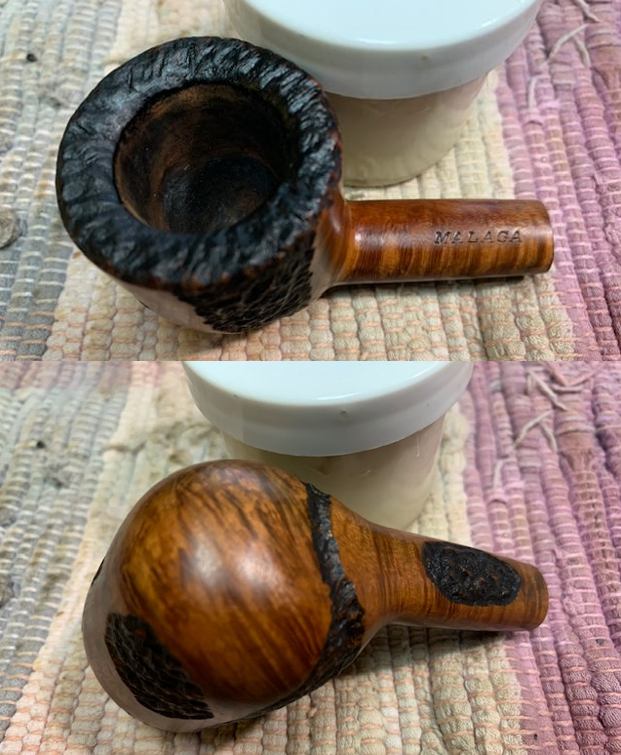
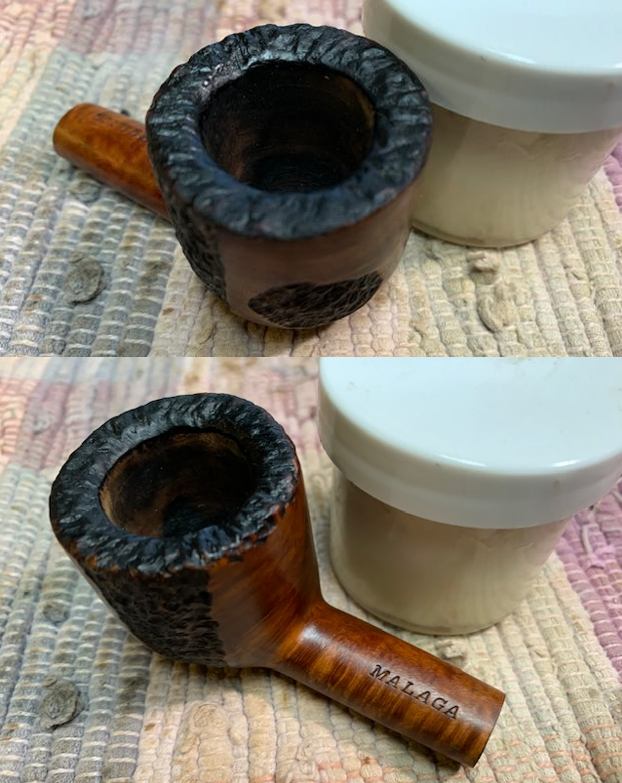
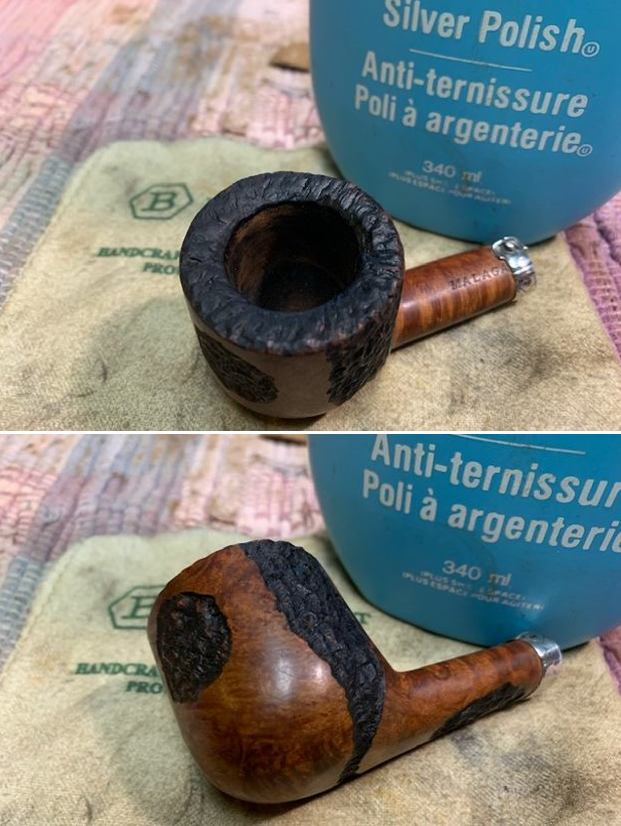
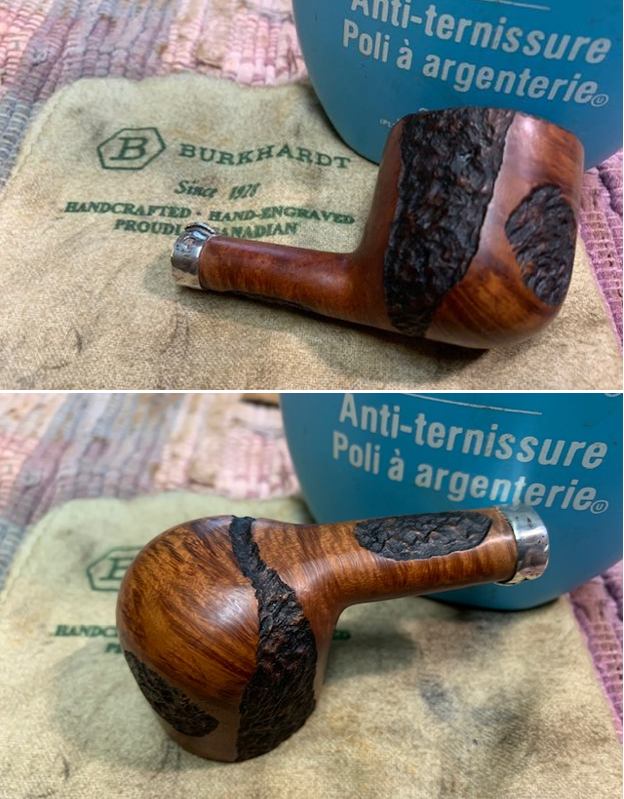
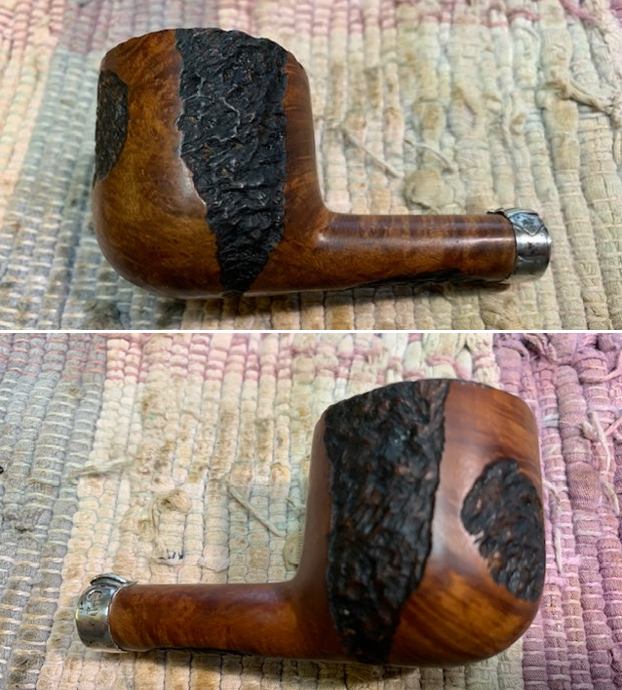
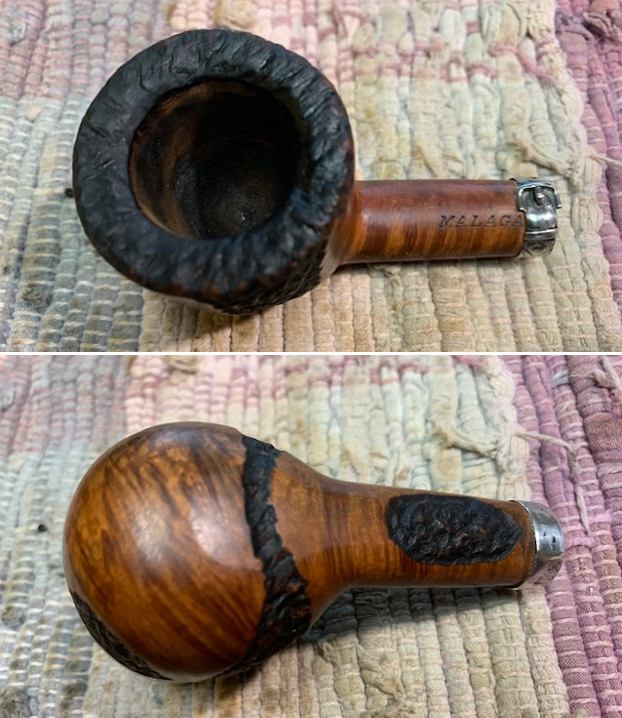
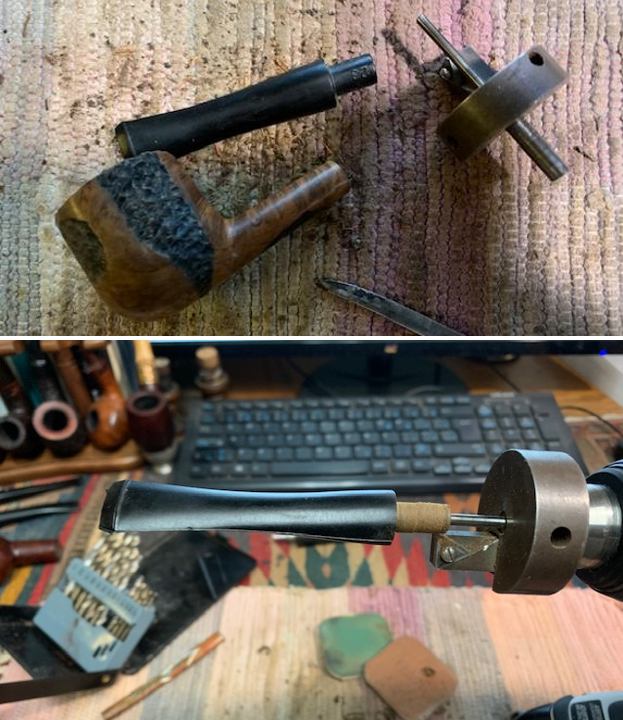
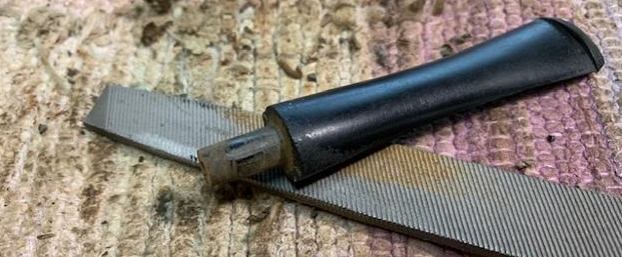
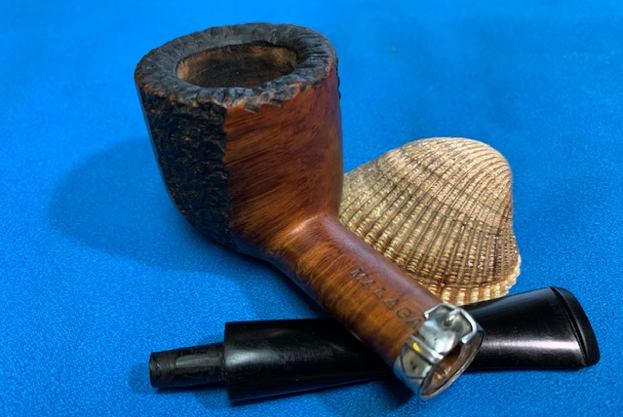
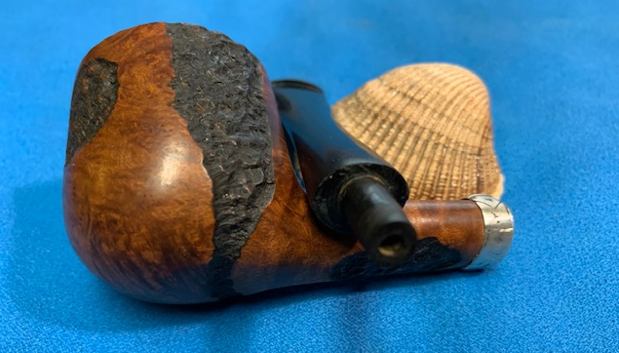
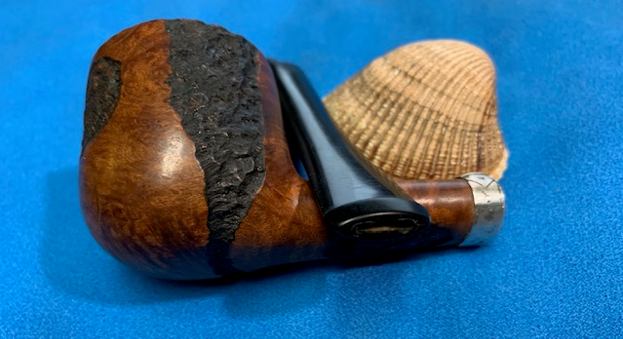
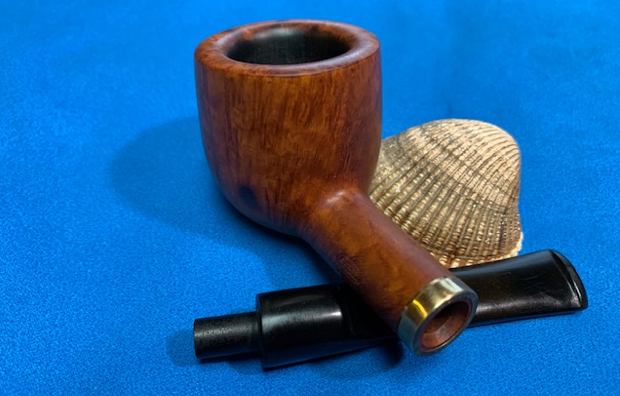
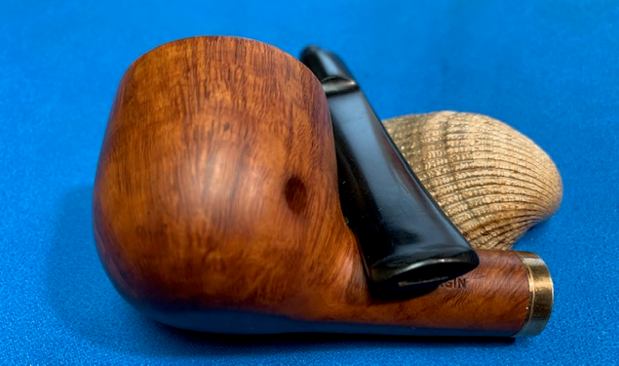
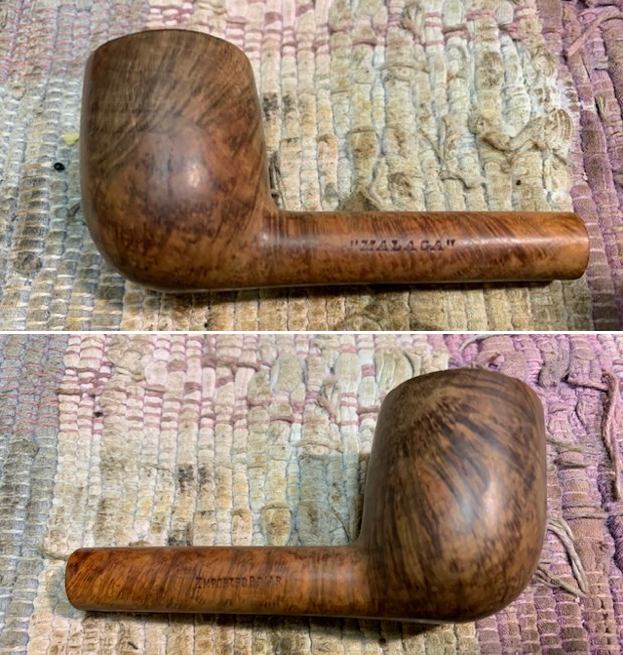
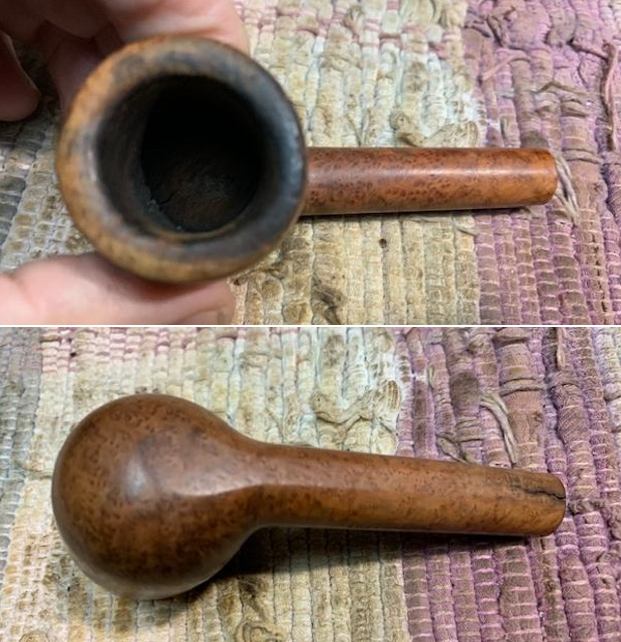
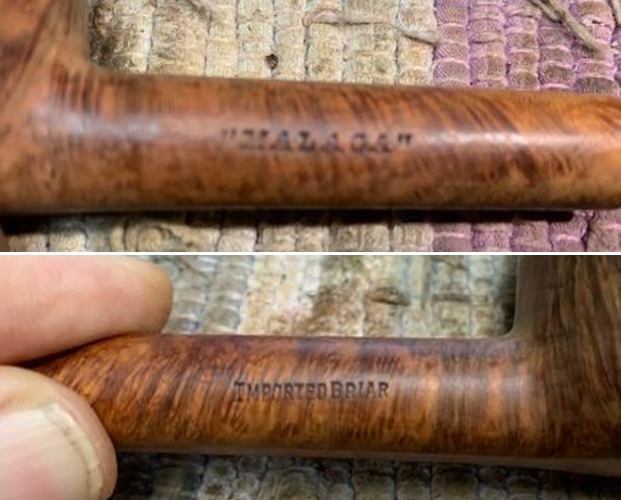
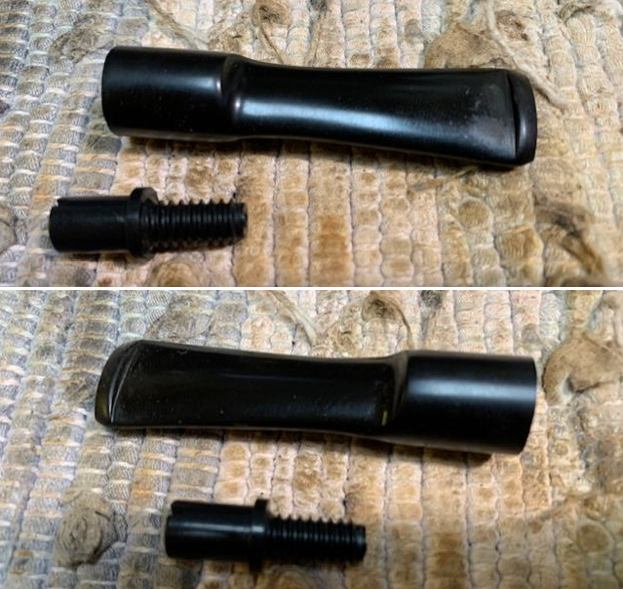
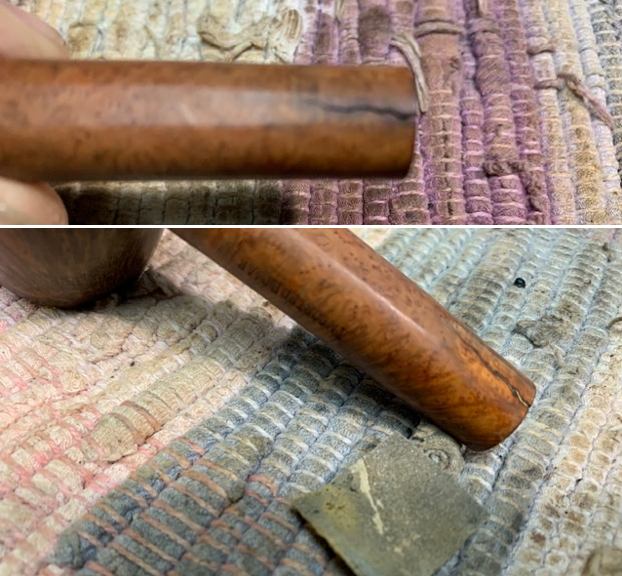
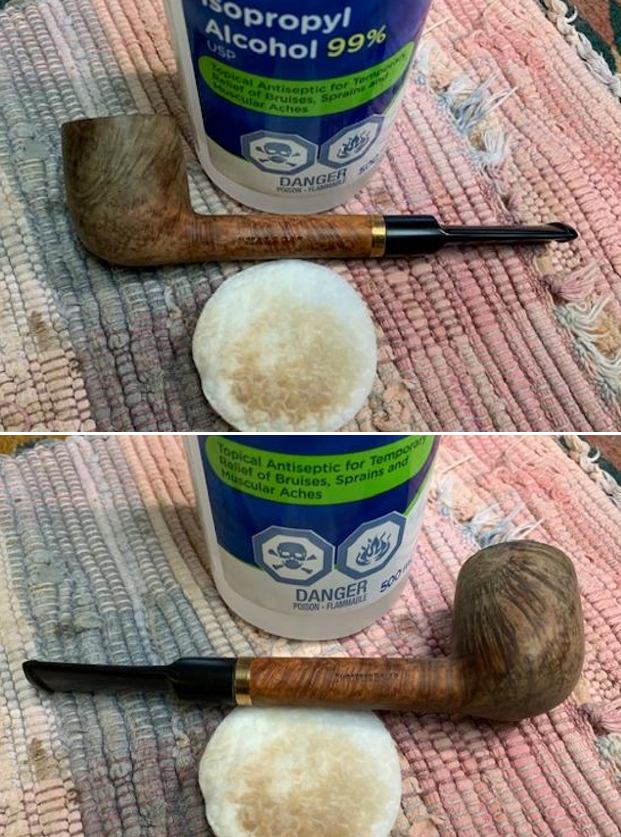
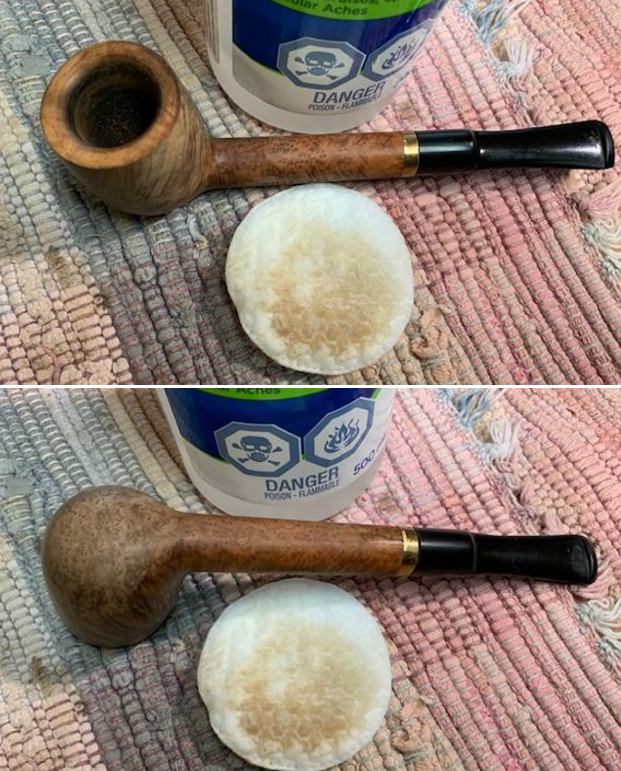
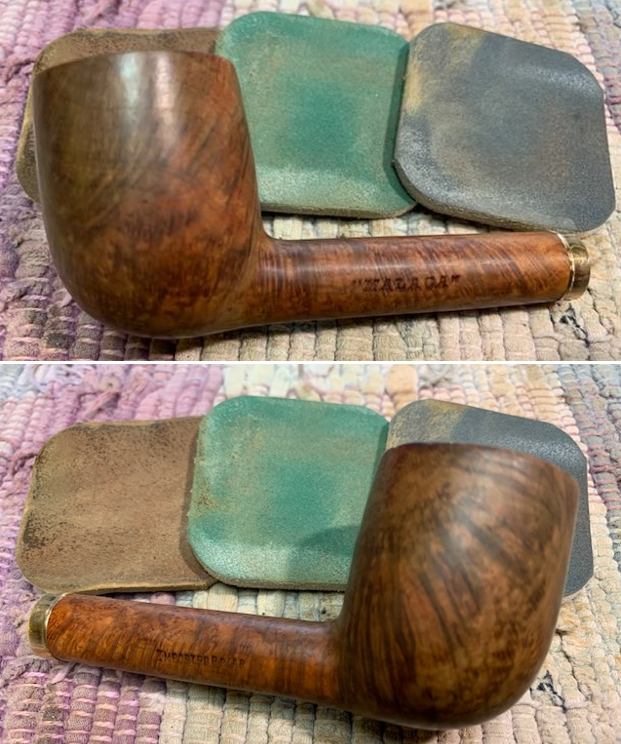
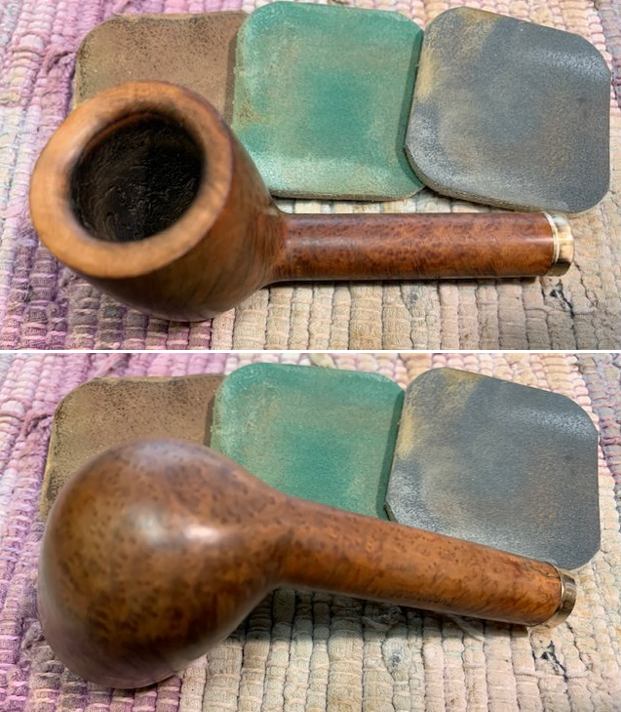
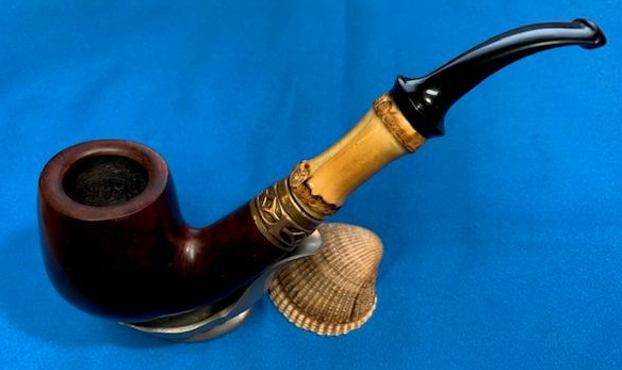
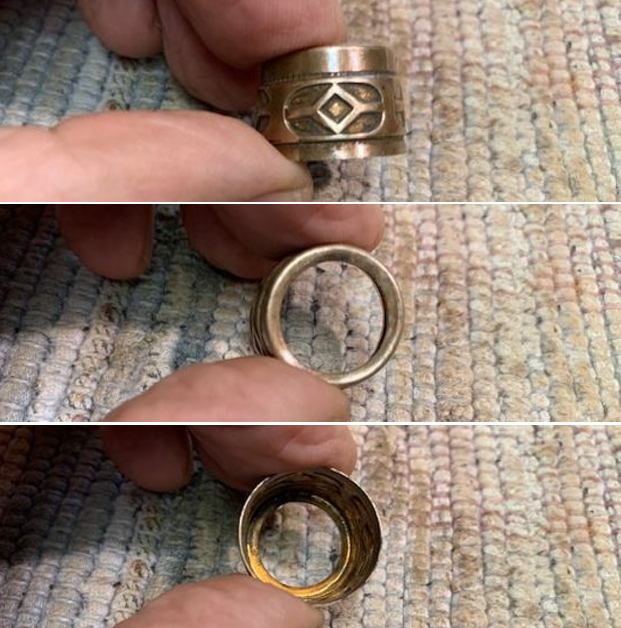
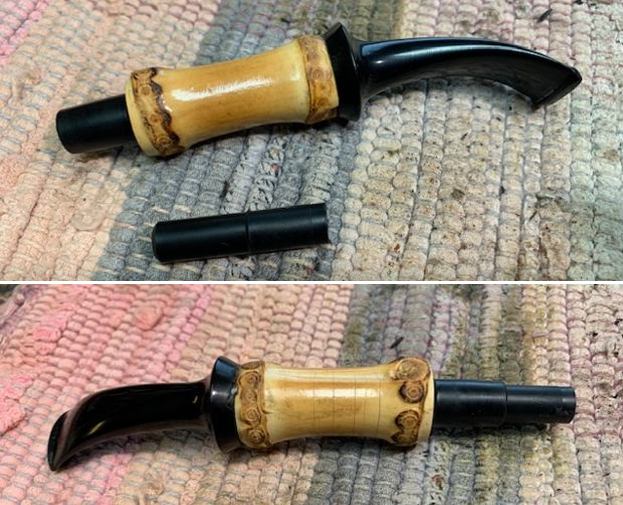
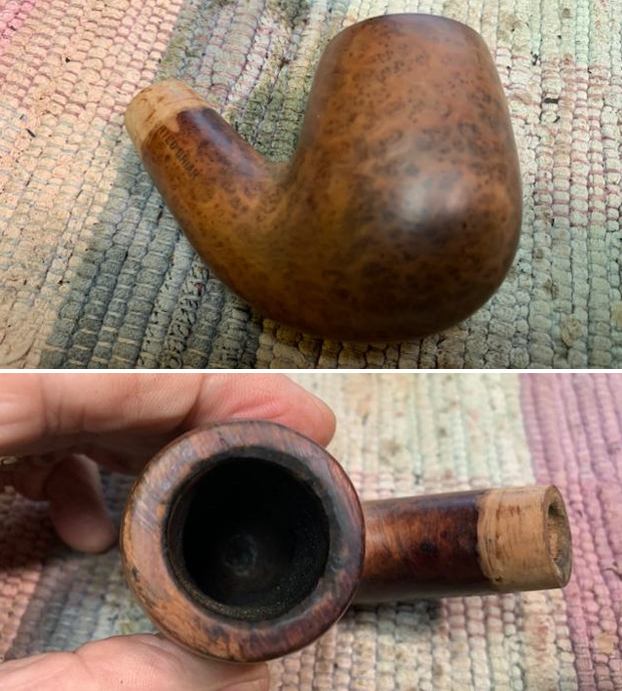
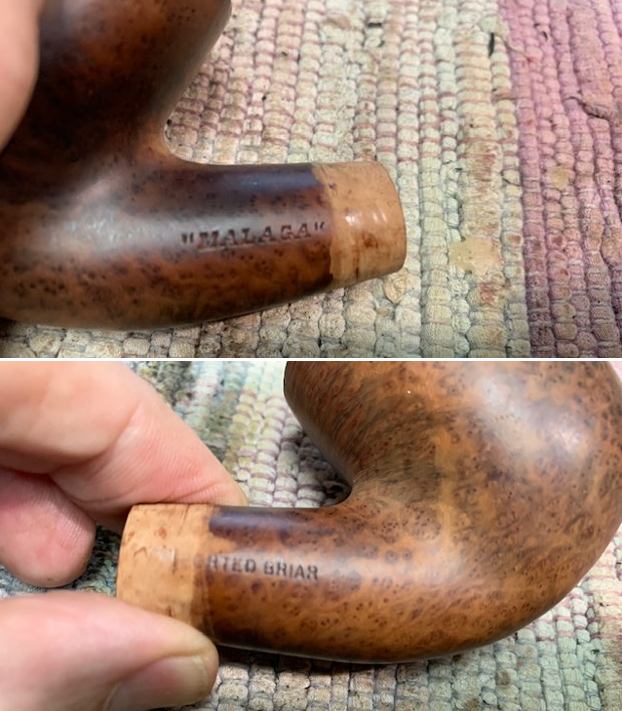
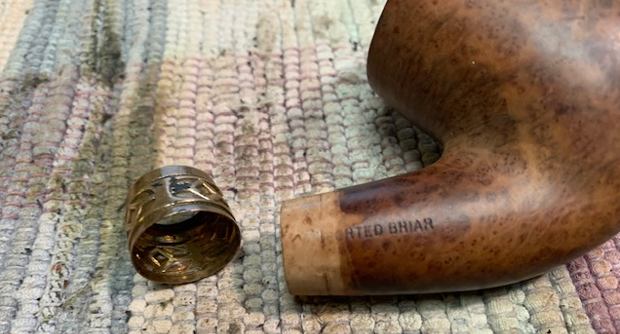
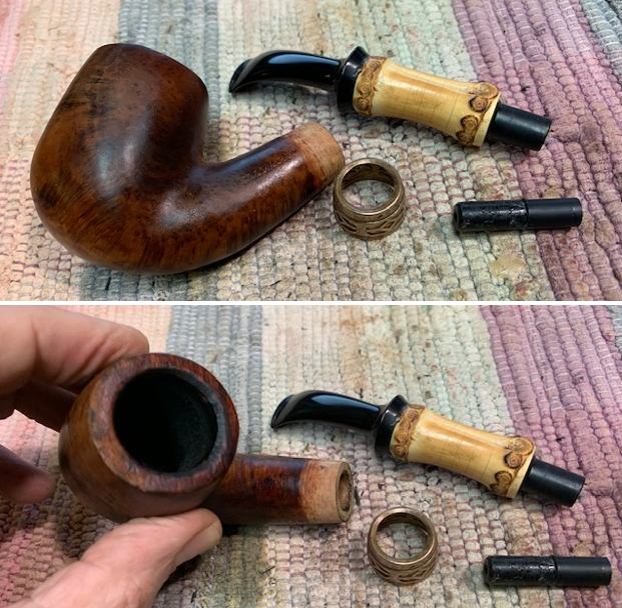
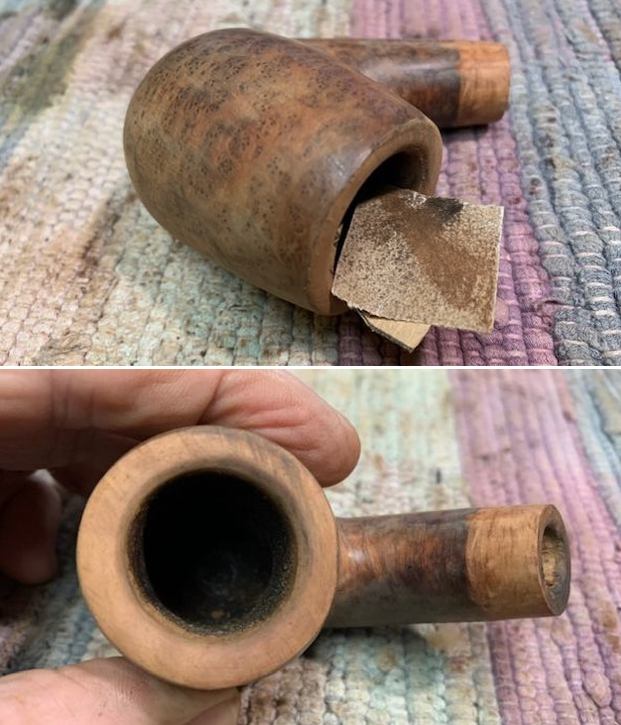
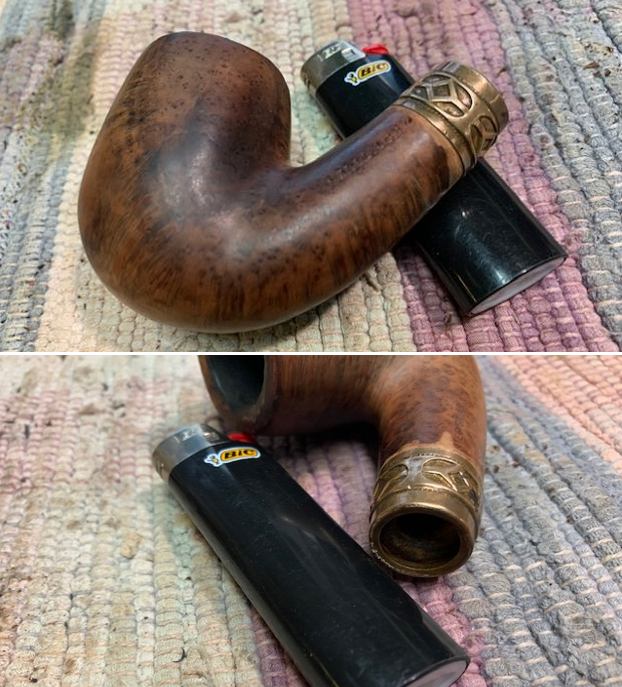
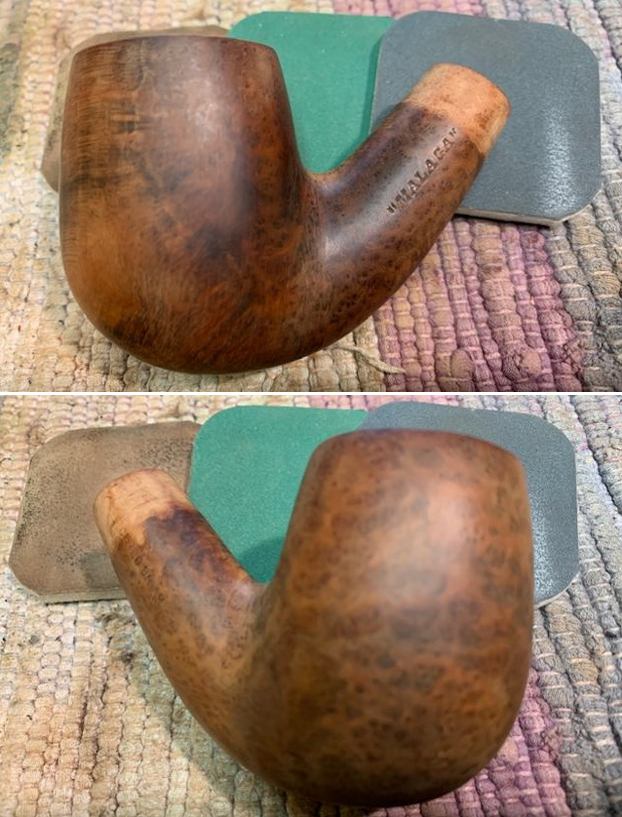
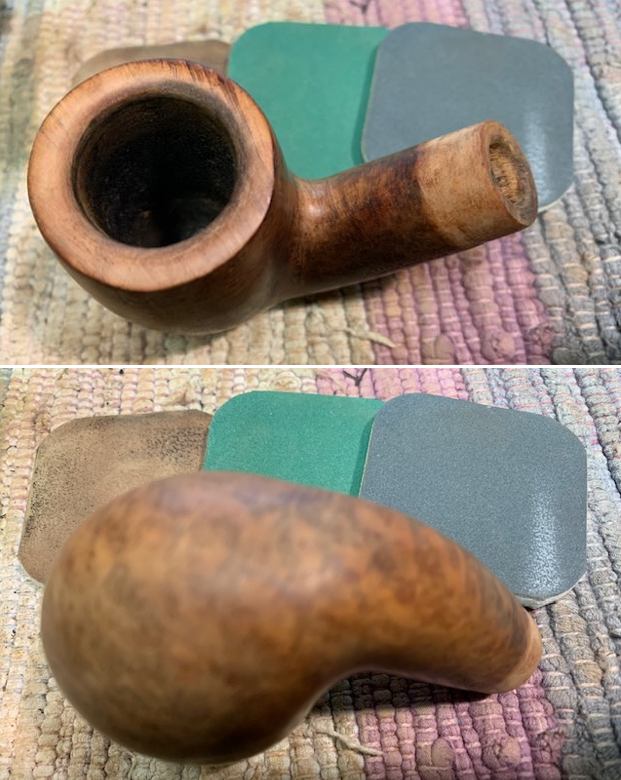
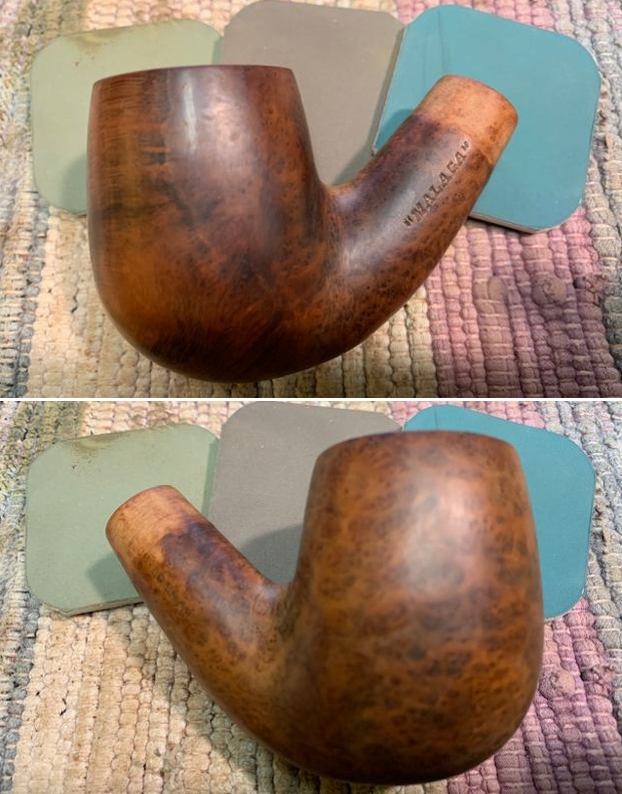
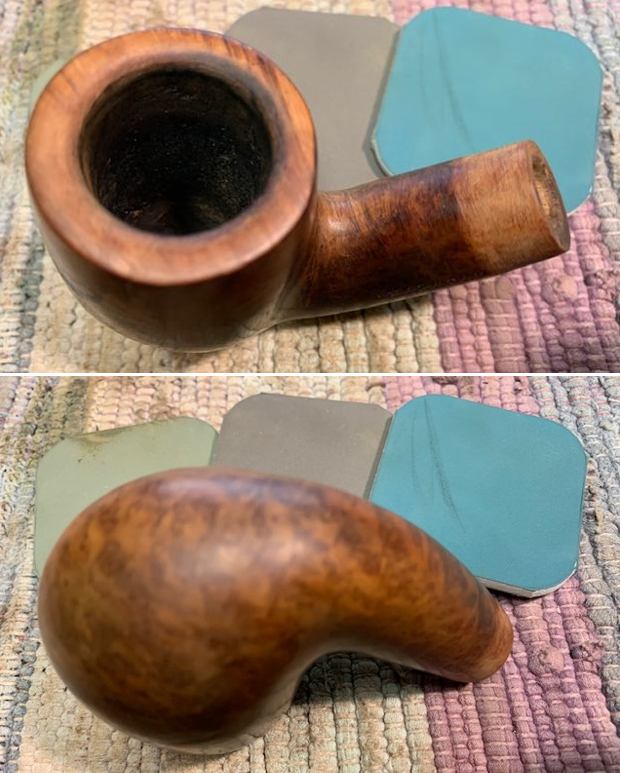
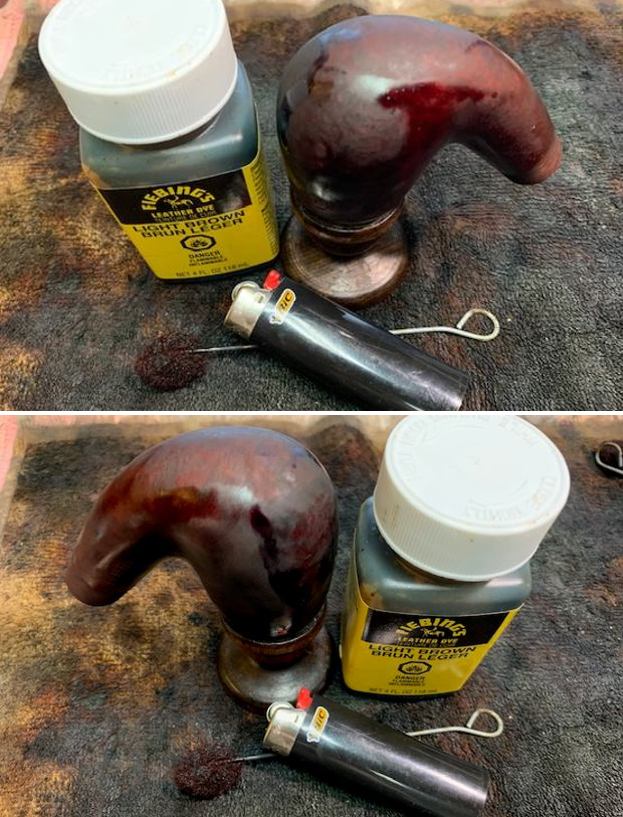
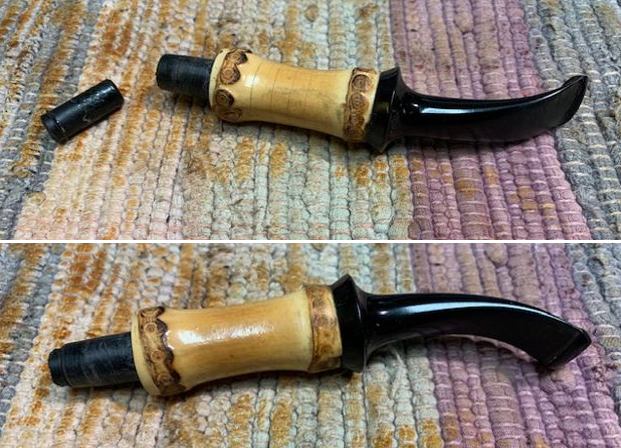
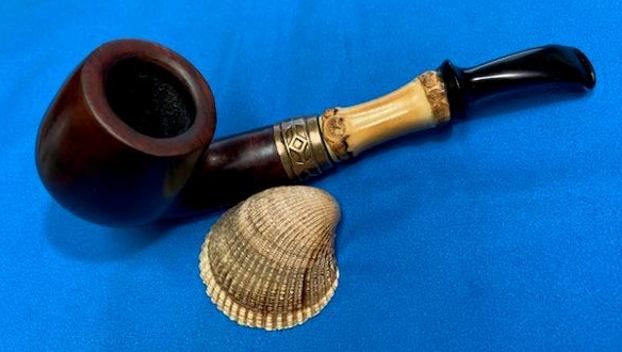
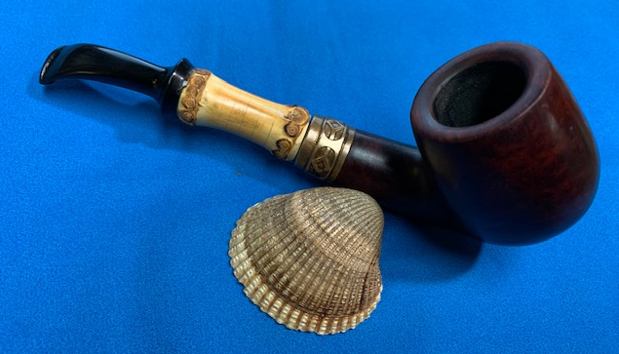
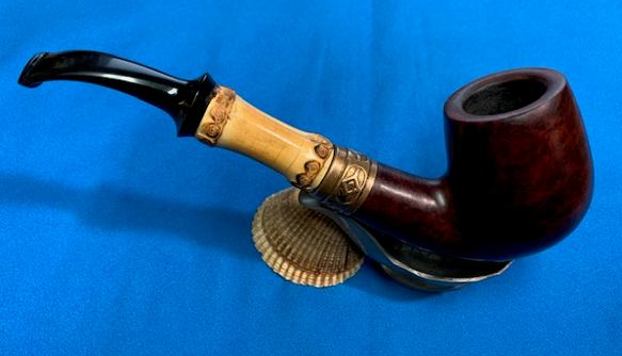
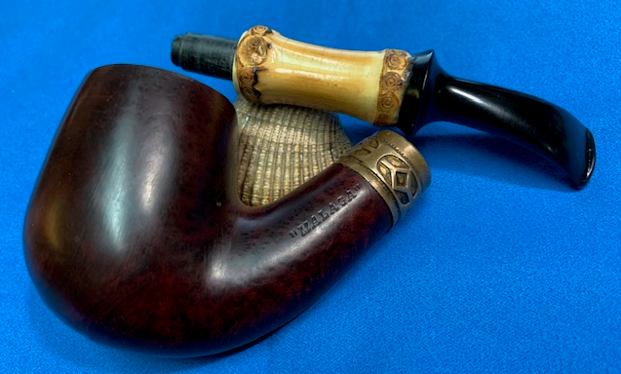
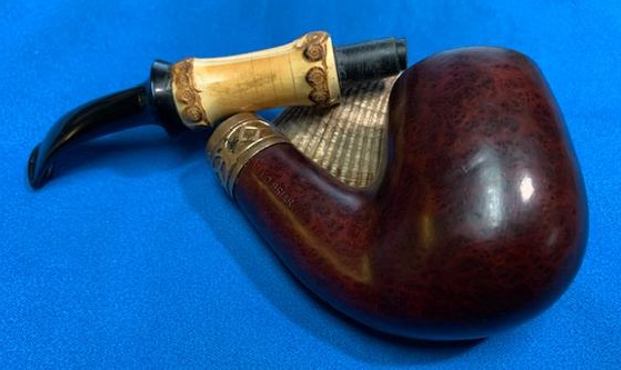
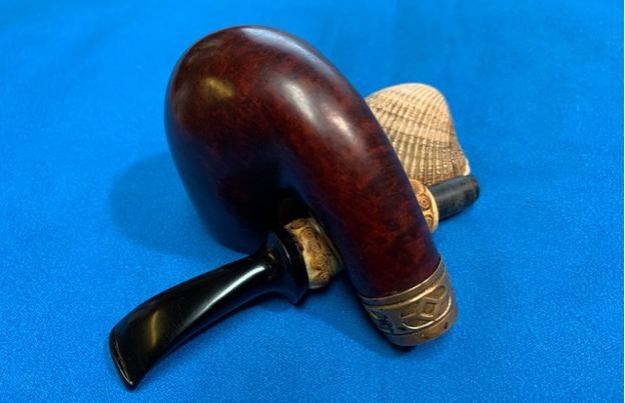
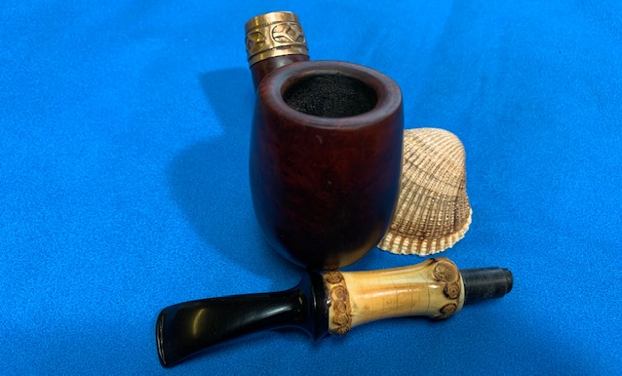
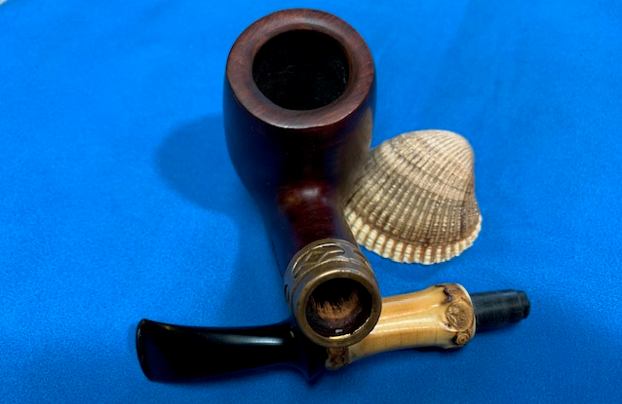
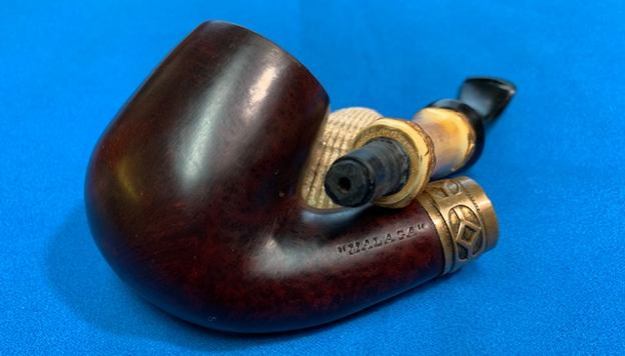
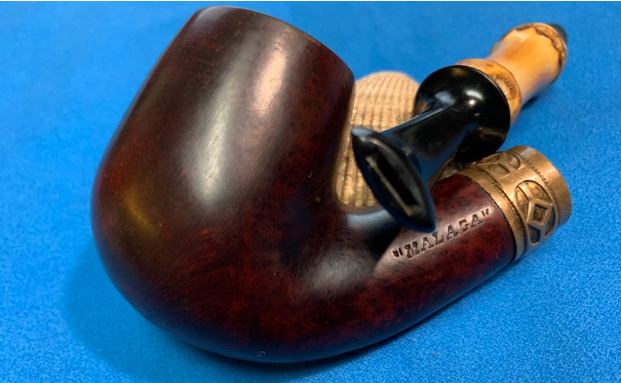
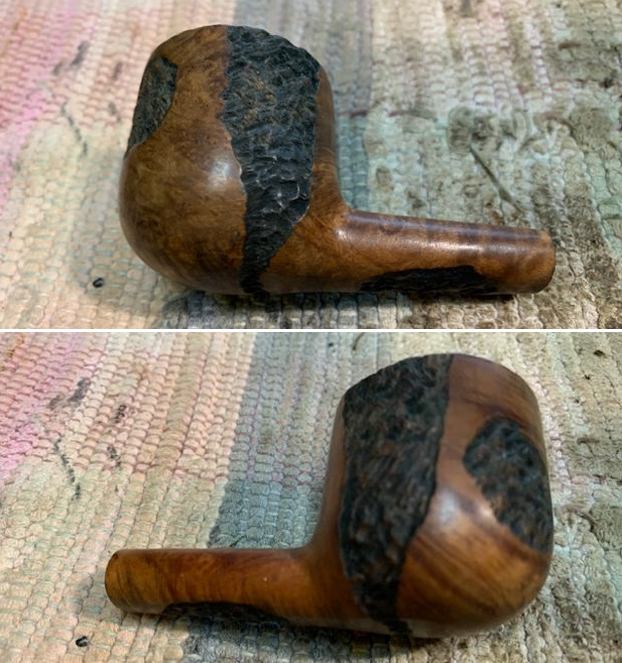
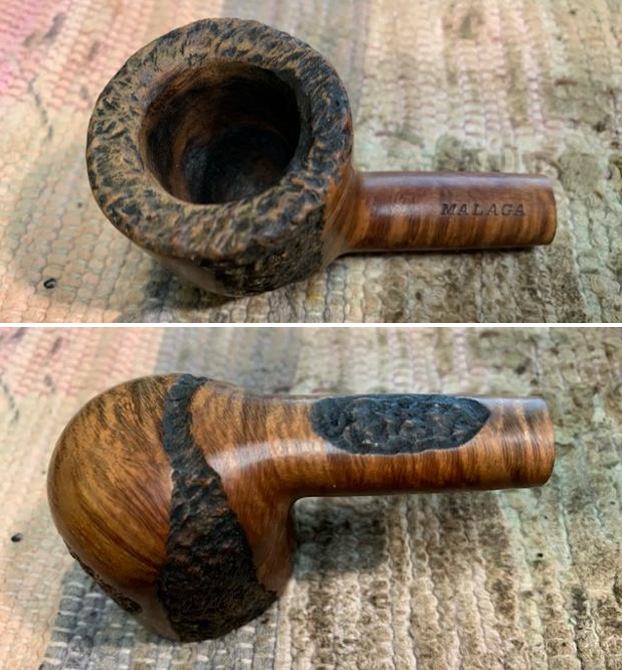
This afternoon I had an urge to make a Frankenpipe so after work I went through my parts. I found some parts that with some imagination could make an interesting looking pipe – at least in my mind’s eye. The parts for this Frankenpipe have all been around for a long time. The bowl is one I have had in a box here that had a snapped tenon in the shank. The stem had disappeared a long time ago and I did not have a stem for it that interested me. It is a large magnum sized “Malaga” bowl. It is far from a perfect piece of briar with a bald spot on the front left of the bowl. The rim top has burn marks and the bowl is out of round – thicker on the front side of the bowl than either side of the back of the bowl. The inner edge had a burned in “bevel” on the back right. The finish was worn and tired with black streaks over the bald spot on the left front of the bowl. It needed some serious TLC to bring life to it. Jeff had done his thorough clean up on the bowl so it was ready to work on. Here is what I saw with the bowl! As I stared at the bowl I thought that a band might look interesting on it. Don’t ask me why because as yet I had not chosen a stem for the bowl. I just thought a band would work. I went through my box of bands and nothing turned my crank or caught my eye. Then I remembered a bag of parts that I have from the mid to late 1800s. In that bag were several unique and original bands. There was one that caught my eye and I really thought it had promise. I took it out of the bag and found that it was in excellent condition and was probably never used. Here are some pictures of the decorative brass band.At that point I had an aha moment. I remembered an odd stem that I had in my collection of stems that just might be the thing that I was looking for on this Frankenpipe. It was unique and one that Jeff had picked up and save for me. I had never found a use for it but now I thought I might have. The two knuckle bamboo shank and acrylic stem is a single that has bend bonded together. The stem is thus a unit with the bamboo and the Delrin tenon on the other end is also integrated. It is drilled for a filter so I found a repair tenon that I could craft into an adapter to convert the tenon to a regular pipe sans filter. It would be removable if needed. Here is what it looked like with and without the tenon adapter. (The adapter would need to be shortened but you get the idea.)All of the parts have been here for quite a while. All of them give silent testimony to my crazy propensity to collect parts!! And all of them would finally come together to form a new Frankenpipe that was more than the sum of its parts. Read along as I walk through my process.

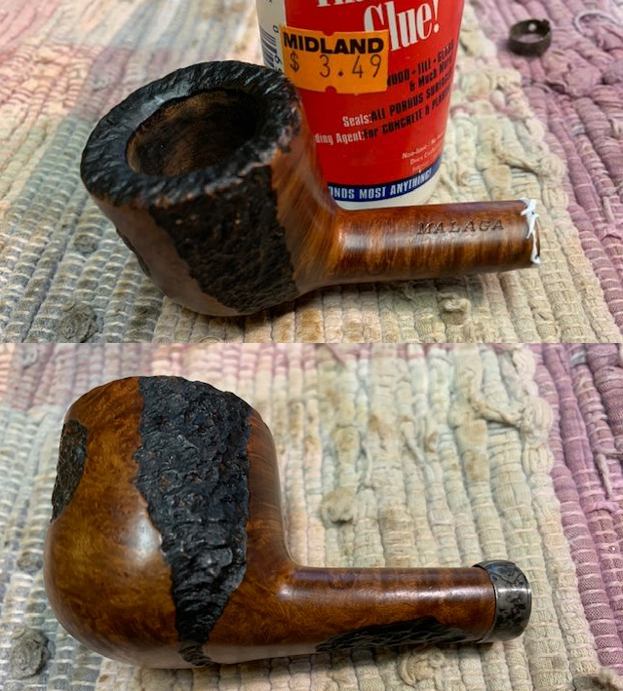
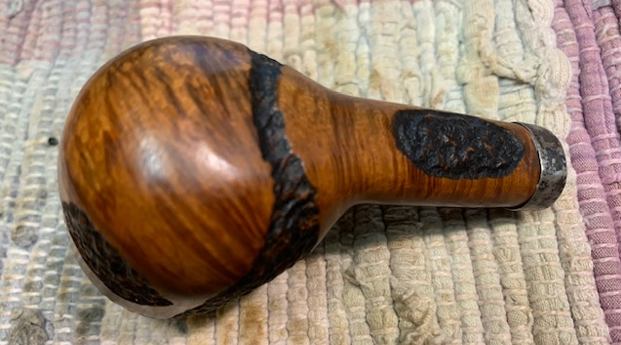
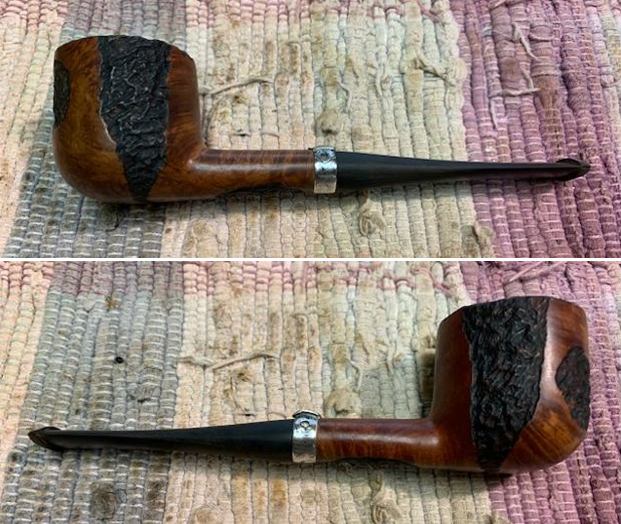
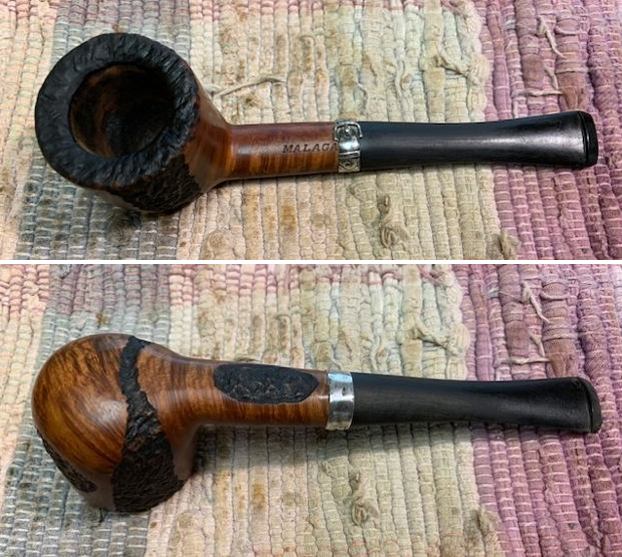
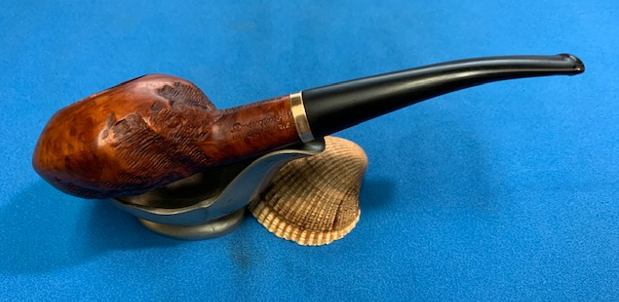
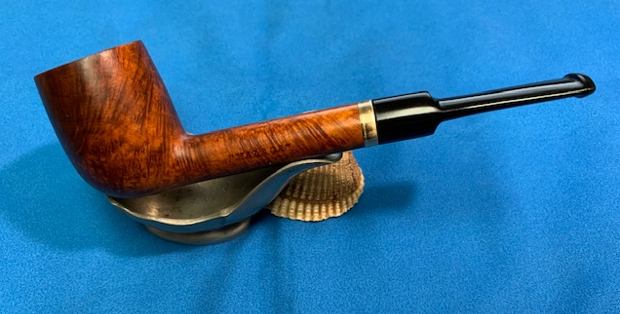
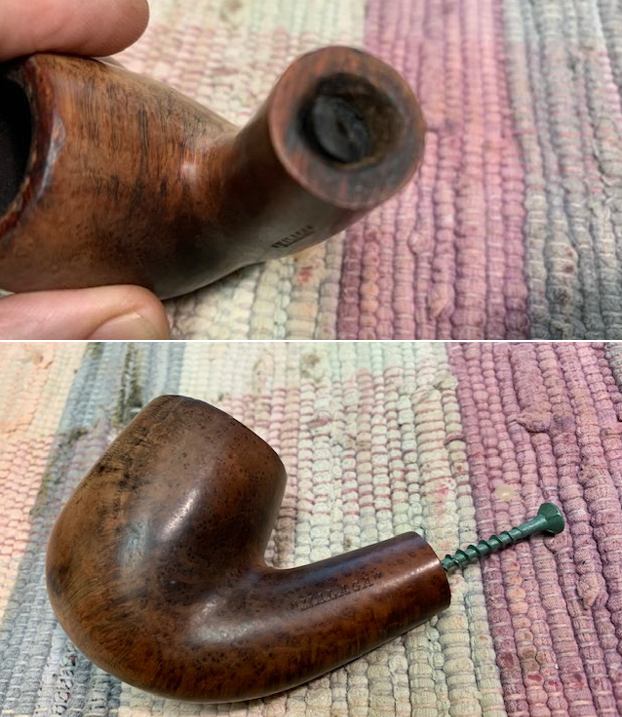
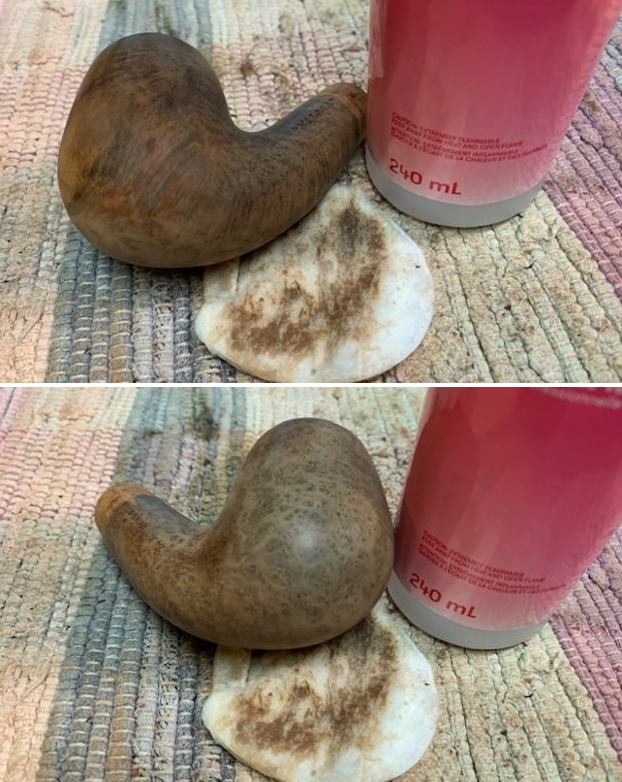
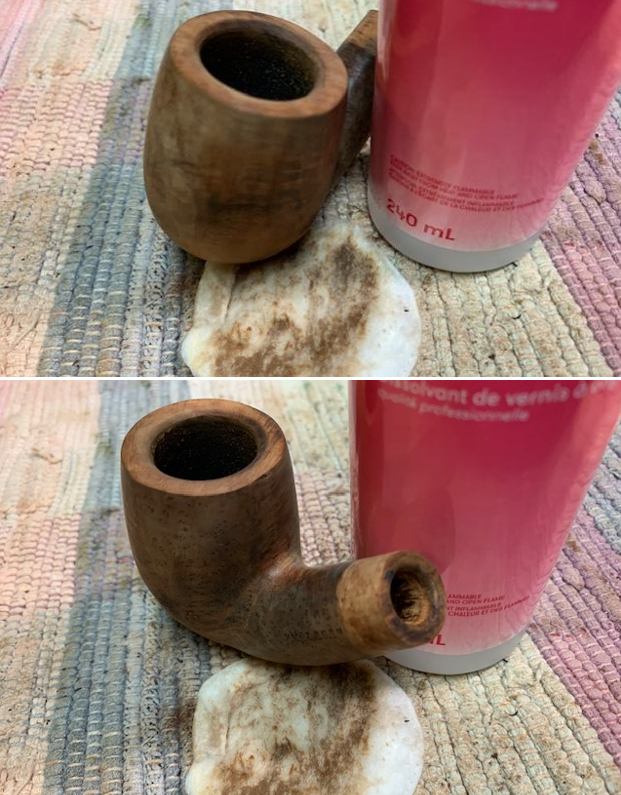
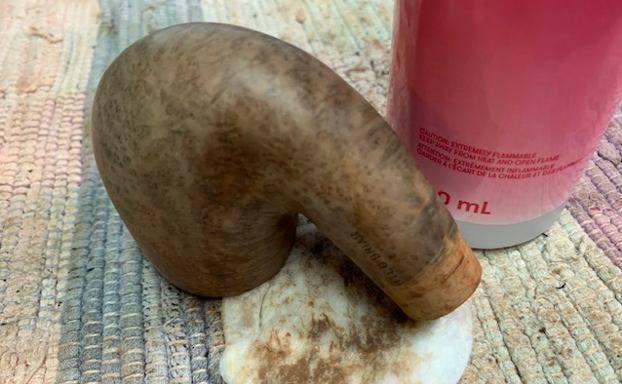
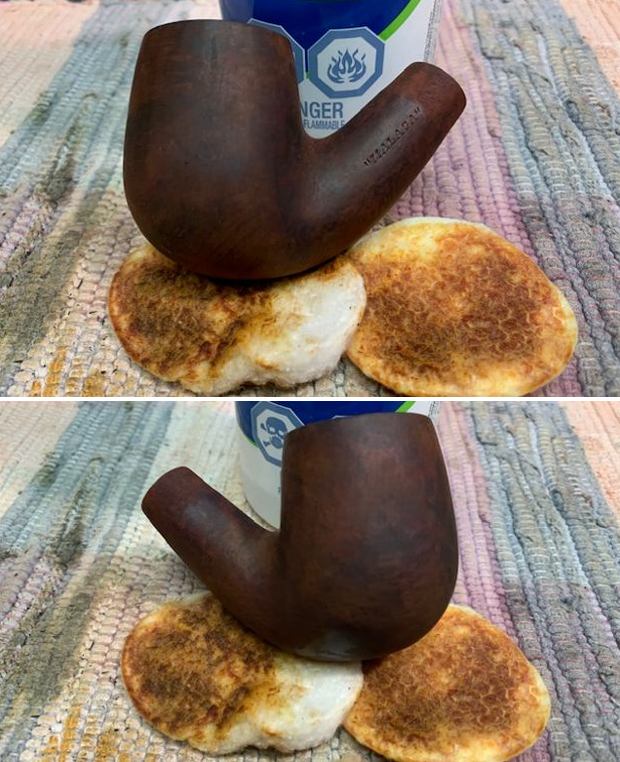
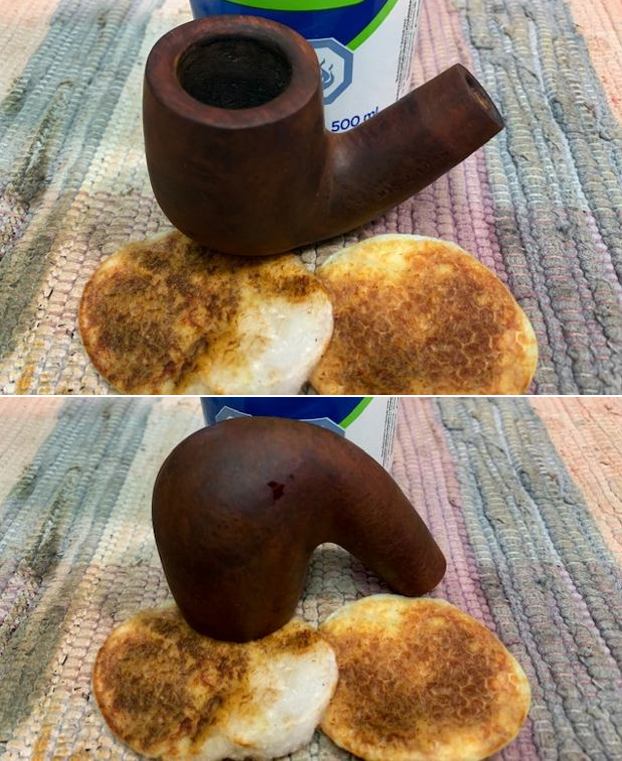
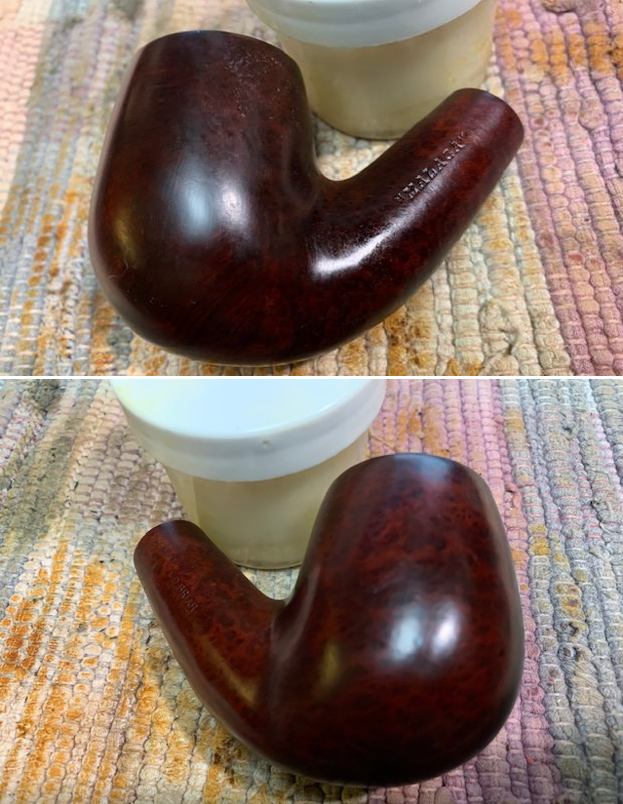
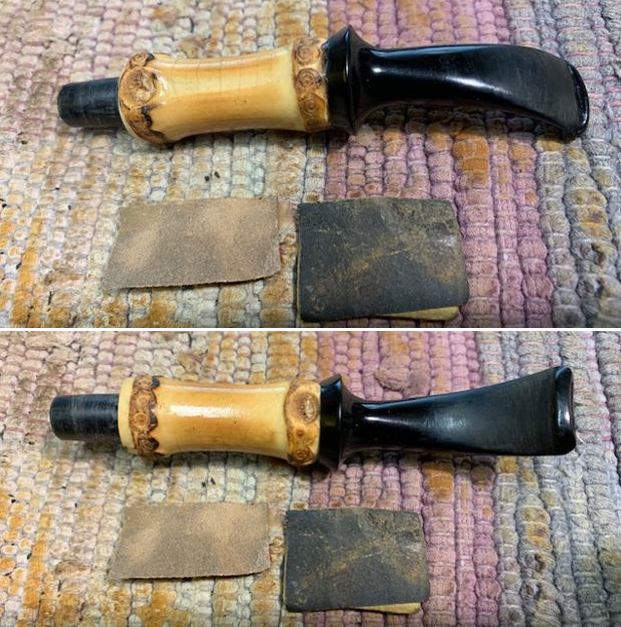
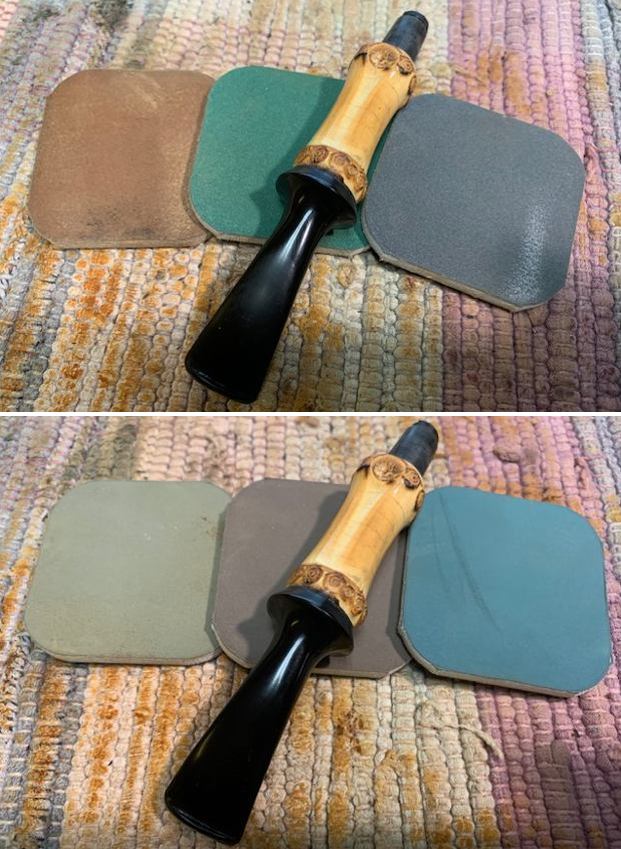
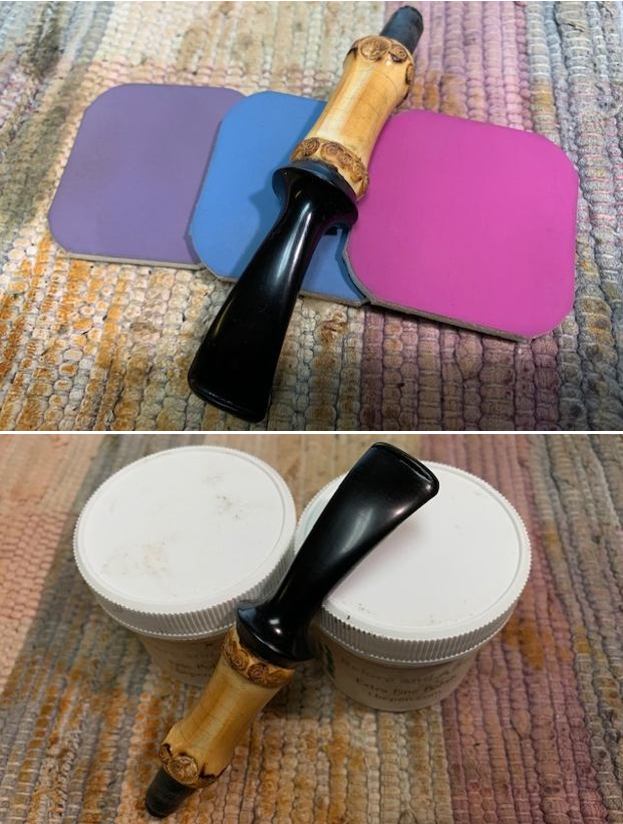
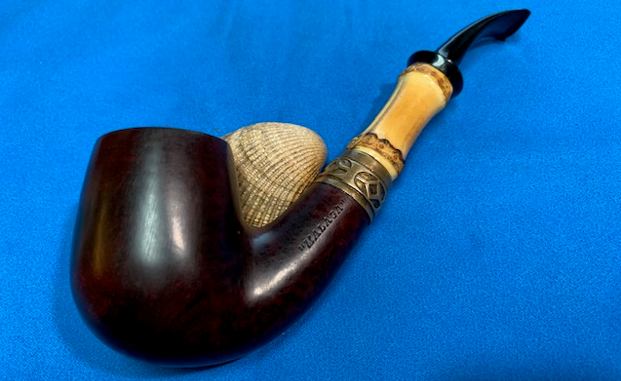
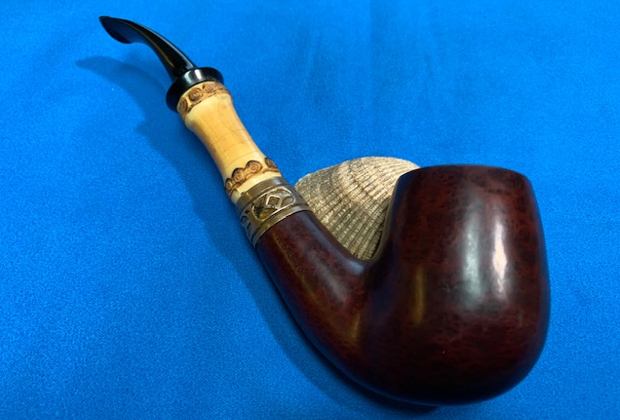
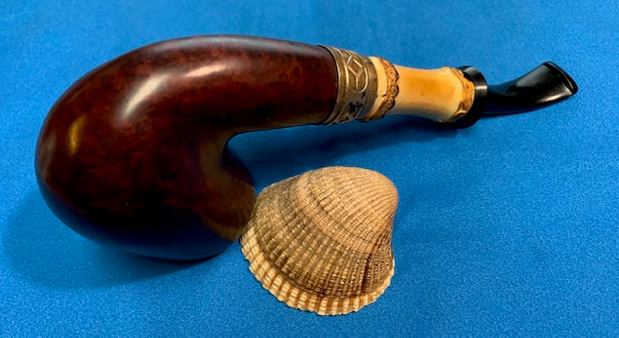
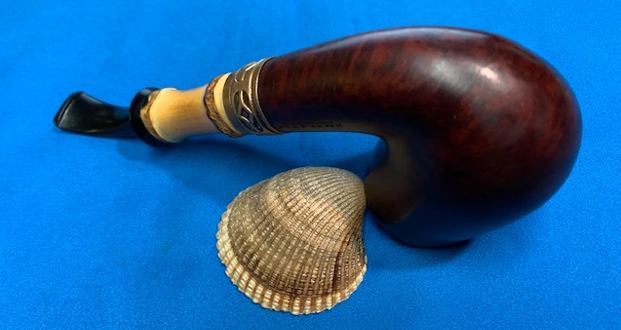
I began the work by addressing the issues with the bowl. I tried to pull the broken tenon with a screw. It was stuck so I put the bowl in the freezer for a little while. After about 10 minutes I tried again and was successful pulling the tenon out of the shank.With that finished I need to address the shank of the pipe to fit the conical ferrule/band that I had chosen. In the next photos you can see that I have chosen to shape the shank end to match the flow of the band. I did this with a Dremel and sanding drum and smooth it out with files and sandpaper. I was careful to leave the original Malaga stamp intact. I was not as concerned with the Imported Briar stamp on the right side of the shank. Progress is being made.I did a bit more shaping on the shank end. The decorative band now fit it quite well. I put the parts side by side and took some photos of the parts of the pipe. I took photos from various angles and sides. Can you begin to see what I am seeing with this pipe? I think it is going to work. Do you? Now back to work on the bowl! I decided to deal with the rim top damage by topping the bowl. It was in rough shape so I used 150 grit sandpaper on a topping board and remove the damaged parts of the rim top. It looked better. I worked over the inner edge of the rim with a folded piece of 150 sandpaper to give it all a bevel to match the burn damage at the back of the bowl. At this point I wanted to try the fit of the band on the shank. I heated it slightly with a lighter and pressed in place. I like what I am seeing. I removed the band once it cooled and went to work some more on the bowl. It needed to be polished and stained before I set the band in place but I wanted to have a look. Didn’t you? I wiped the bowl and shank down with acetone on a cotton pad to try to remove the dark patches and the remnants of the stain. All of this was in preparation for the future staining of the bowl. I polished the bowl with micromesh sanding pads – dry sanding with 1500-12000 grit pads to prepare it for staining. I wiped it down with a damp cloth to remove the debris after each pad. I stained the polished bowl with Fiebings Light Brown aniline stain. I applied the stain, flamed it and repeated the process until I was happy with the coverage. I set it aside to dry.Once the stain dried I wiped the bowl down with alcohol to make the stain more transparent. I buffed the pipe on the buffer with both Red Tripoli and Blue Diamond to further reduce the heaviness of the colour. I worked some Before & After Restoration Balm into the surface of the briar with my finger tips. The product works to clean, enliven and protect the briar. I let it sit on the briar for 10 minutes then buffed it off with a soft cloth. With the bowl finished and the stain cured it was time to press the band in place. I gave it a thin layer of white all purpose glue on the inside of the band and pressed it onto the shank end. It looks quite fetching to me. I set it aside to let the glue cure but I like it! I set the bowl aside and worked on the tenon adapter and the stem surface. I used the Dremel and sanding drum to shorten the adapter until the fit in the tenon allowed the shank to fit snug against the shank end.With the internals finished it was time to work on the tooth marks and chatter on the surface of the acrylic stem. I sanded them smooth with a folded piece of 220 grit sandpaper. I started polishing the stem surface with 400 grit wet dry sandpaper.I polished the stem with micromesh sanding pads – 1500-12000 grit pads. I dry sanded the stem with the pads and wiped it down with a damp cloth after each pad. I finished the polishing with Before & After Pipe Stem Polish – both Fine and Extra Fine. I gave it a final buff with a cloth and Obsidian Oil. I put the parts of the Frankenpipe together and took the pipe to the buffer. I buffed it with Blue Diamond and really like the way the brass and bamboo polished up. They looked great after buffing. The bowl and stem also shone but I expected that really. The combination of the darker stain on the bowl, the antique brass band, the 2 knuckle bamboo with developing patina and the black acrylic stem came together even better than expected. I gave the pipe several coats of carnauba wax on the buffing wheel. I buffed it with a clean buffing pad to raise the shine and hand buffed it with a microfibre cloth to deepen the shine. The finished pipe really shone with rich hues. The dimensions of this Frankenpipe are Length: 5 ½ inches from the front of the bowl to tip of the stem, Height: 2 inches, Outer diameter of the bowl: 1 ¾ inches, Chamber diameter: 7/8 of an inch. The weight of the pipe is 69 grams/ 2.47 ounces. It really surprised me as it looks to be a much bigger pipe than it is. I would say it is Dunhill Group 5 pipe at least in terms of bowl size. It really is a beautiful pipe in person and it will be staying with me along with the other Frankenpipes I have crafted. I am looking forward to enjoying a bowl shortly. It was a fun pipe to work on. I hope you enjoyed the process as you read about it. Thank you for taking time to read about it. As Paresh says – Stay safe/Stay healthy.

Restoring and Repairing a Cracked Shank & Broken Tenon on a Portland oval shank 60 Egg


Blog by Steve Laug

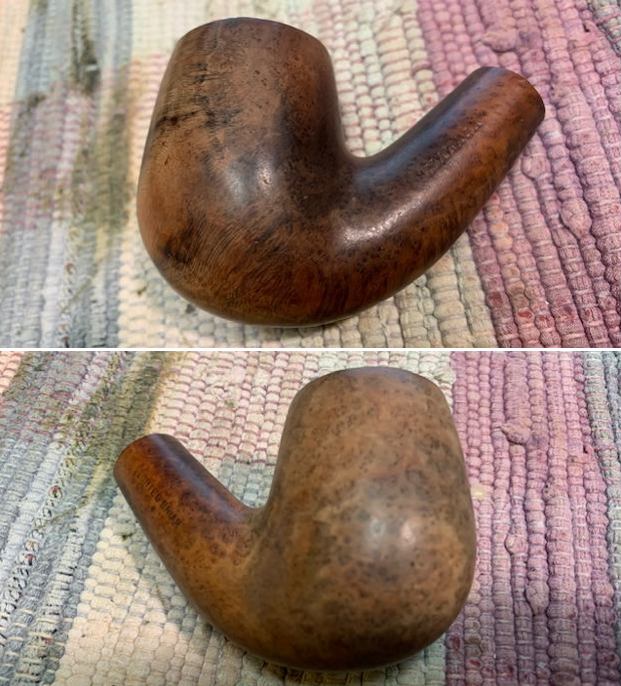
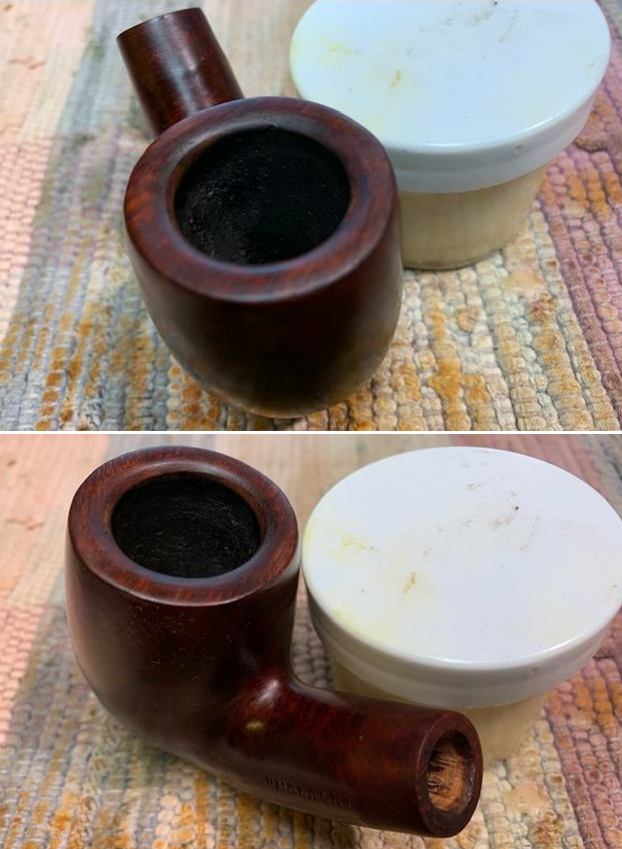
I am still doing some repairs for a local pipe shop and this one came from a referral from them. I have fixed several pipes for this particular pipeman in Vancouver including banding, restoring and fitting a new stem. He stopped by last weekend and dropped off a pipe to be reamed and cleaned and also this relatively new pipe that he had dropped. It is an interesting looking pipe with mix of nice grain around the bowl sides. It was stamped on the underside of the shank and read Portland [over] Bruyere Garantie followed by the shape number 60 near the shank/stem junction. He had only smoked it a couple of times before he dropped it. The stem snapped off leaving the tenon in the shank. When I looked it over there were also cracks on the top of the shank that happened at the same time. The stem was dirtier than the bowl but overall it was in good condition. I took some photos of the pipe before I started working on it. I took photos of the rim top and the stem surfaces to chronicle the condition. The rim had some darkening from his lighter toward the right front of the bowl and on the back side. There was not any cake in the bowl as it was still quite new. The stem was just dirty with light tooth marks on both sides near the button. The tenon had snapped off very close to the stem so it would be a simple process to add a new tenon.I took a photo of the stamping on the shank underside. It is clear and readable.I took a photo of the parallel cracks on the top of the shank. These were hairline but they were present and though you cannot see it they go to the end of the shank.I began my work on this pipe by pulling the broken tenon. I always use a coarse threaded screw and gently turn it into the airway in the broken tenon. I carefully wiggle it free. If it is tight a short 10 minutes in the freezer takes care of that. I went through my box of tenons and found a threaded one that was close to the diameter of the older broken tenon. It would need to be shaped but it would work.Before working on the stem I decided to put the band on the shank and repair the crack and protect it from going further. They are very fine cracks and I decided not to drill it as the hole would be bigger than the cracks. A tight fitting band would pull it together. I reduced the depth of the band with a topping board to make it thin and give a daintier look than the big clunky band. It is a thin brass band and it is pressure fit in place on the shank. I heated the band with a lighter and pressed it onto the shank. I like the look of the banded shank in the photos below.With the band fitted it was time to work on the tenon and the stem. I used my Dremel and sanding drum to make the tenon smaller in diameter to match the shank. I worked on it until the fit in the shank was snug but not tight.With that finished it was time to drill out the stem. I used the Dremel and sanding drum to flatten out the broken tenon end on the face of the stem. I started drilling with a bit slightly larger than the airway and finished with a bit that would allow the threaded tenon to fit the stem.I do not tap the drilled hole in the stem. Rather I flatten out the threads slightly as they provided the grip for the glue when I insert the tenon in the stem. I coated the threaded tenon end with black superglue which dries more slowly than the regular glue and allows me to make adjustments in the fit. I checked the fit in the shank and was pleased with it. I set the stem aside so the glue could cure.I turned my attention to polishing the bowl. I polished it with micromesh sanding pads – dry sanding it with 1500-12000 grit pads. I wiped the briar down with a damp cloth after each sanding pad. The pipe really began to take on a shine as I worked through the pads. I rubbed the briar down with some Before & After Restoration Balm. It works to protect, clean and enliven the briar. I rub it in with my finger tips and let it sit for 10 minutes. I buff it off with a cotton cloth to remove the excess and give the bowl a shine. I polished the stem and new tenon with micromesh sanding pads – 1500-12000 grit pads. I dry sanded with the pads and wiped the stem down with Obsidian Oil after each sanding pad. I finished the polishing with Before & After Pipe Stem Polish – both Fine and Extra Fine. I gave it a final rubdown with Obsidian Oil.I put the stem back on the bowl and polished the pipe with Blue Diamond on the buffing wheel to give it a shine. I gave it multiple coats of carnauba wax and buffed it with a clean buffing pad. I hand buffed it with a microfiber cloth to deepen the shine. I took some photos of the pipe before calling the pipeman to pick up his pipe. I am pleased with the look of the Portland Bruyere Garantie 60 Egg and the fit of the repair band and the stem to the shank. I think it will meet his expectations when he picks it up later today. Thanks for walking through the repair with me in this blog. Cheers.

Restemming a Stanwell Design Choice 892 Ukelele with a proper stem


Blog by Steve Laug

The next pipe on the work table is one that was purchased in 2020 from an auction in Bloomingdale, New York, USA. It has been here for a while and I am just now getting to it. Work has been demanding so it is slowing down my restoration work a bit. This flat bowled volcano shaped pipe obviously has a a poorly fit replacement stem that has made it into an odd shaped churchwarden. I don’t think that it looked like this when it came out but I had no idea what it would have looked like before. It has a really mix of grains around the bowl and shank. It was stamped on the underside of the shank and it reads Stanwell [over] Design [over] Choice [over] Made in Denmark. To the left of this it is stamped with the shape numbers 892. The pipe was dirty with grime ground into the finish. There was a moderate cake in the bowl and lava overflow on the rim top. The inner edge of the rim was covered in lava it was hard to know what was underneath. The vulcanite shank extension was oxidized and worn. The churchwarden stem is overly bent and the fit in the shank extension is not quite right – just a few of several reasons that I knew it was a replacement stem. Jeff took some photos of the pipe before he started to work on cleaning it up for us. Jeff took photos of the rim top and the stem to show the condition of the pipe when we received it. You can see the cake in the bowl and the lava on the rim top and inner edge of the bowl. The oxidized and replacement churchwarden vulcanite stem was over bent and would need to be straightened or replaced with a more original stem. This one has chatter and deep tooth marks on both sides near the button. He took photos of the sides of the bowl and the heel to give an idea of the shape and the condition of the briar around the bowl. It really is a nicely shaped pipe with some great grain. There are some flaws in briar on the bottom of the bowl. The next photo Jeff took shows the stamping on the underside of the shank. It is clear and readable as noted above. I Googled the Stanwell shape 892 Design Choice pipe to see if I could find photos of what the pipe looked like when it was made and to see if I could see if there was information on who had made the pipe originally. I found a link to the shape on smokingpipes.com to the shape number (https://www.smokingpipes.com/pipes/estate/denmark/moreinfo.cfm?product_id=238398). I have included the description from the site below as well as a photo of one of the pipes.

A shape designed for Stanwell by Sixten Ivarsson, this is a take on the Ukelele, with plenty of plump curvature and low-slung charm on display. This example is still in good condition overall, though it has picked up some light scratches around the bowl, and the chamber is slightly out of round.Now I knew that I was dealing with a shape designed by Sixten Ivarrson called a Ukelele that had a short fancy saddle stem and there was no reference anywhere I looked for a churchwarden stemmed Ukelele. I would need to fashion a new stem for the pipe to give the pipe a similar look to the one above.

Jeff had cleaned up the pipe following his normal cleaning process. In short, he reamed the bowl with a PipNet pipe reamer and cleaned up the reaming with a Savinelli Fitsall Pipe Knife.  He scrubbed the smooth bowl with undiluted Murphy’s Oil Soap with a tooth brush. He worked over the lava and debris on the rim top and was able to remove it. He rinsed it under running warm water to remove the soap and grime. He cleaned out the inside of the shank and the airway in the stem with alcohol, cotton swabs and pipe cleaners. He scrubbed the stem with Soft Scrub and cotton pads to remove the debris and oils on the stem. He soaked it in a bath of Briarville’s Pipe Stem Deoxidizer to remove the oxidation. He rinsed it with warm water and dried it off. I took photos of the pipe once I received it. It really looked good but I was more convinced than ever that a new stem was needed. I decided that I would work on this stem while I was looking for a new stem.I took close up photos of the stem and the rim top to show both how clean they were and what needed to be addresses with both. The rim top and bowl look good. The edge was clean but there was some damage on the rim top at the front of the bowl. The Churchwarden stem looked better and the tooth marks and chatter were still present. I took a photo of the stamping on the underside of the shank. You can see from the photo that it is readable.I removed the stem from the bowl and took a photo of the parts to give a sense of the beauty of the pipe. I started my work on the pipe by addressing the flaws in the bottom of the bowl. Under a lens there were small sand pits along the line of the CA glue that I filled them with in the photo below. Once the repair cured I sanded it smooth with a folded piece of 220 grit sandpaper to blend it into the surrounding briar. I polished the smooth briar and the vulcanite shank extension with micromesh sanding pads – dry sanding with 1500-4000 grit pads to smooth out the surface of the briar and the repair on the bottom of the bowl. I wiped the bowl down after each sanding pad with a damp cloth to remove the sanding dust. The briar began to take on a shine. I paused after polishing the bowl with the 4000 grit micromesh pad to stain the repair on the bottom of the bowl. I used a Maple stain pen to match the surrounding briar. Once the stain cured I finished polishing the bowl with 6000-12000 grit micromesh sanding pads. The bowl really did begin to shine. I rubbed the bowl down with Before & After Restoration Balm working it into the briar with my finger tips. The product works to clean, revive and protect the briar. I let it sit on the pipe for 10 minutes then buffed it off with a soft cloth.   I set the bowl aside and turned my attention to the stem. I decided to deal with the stem even though I would replace it on the finished pipe. I straightened the churchwarden stem with a heat gun to get the angle more in keeping with the angles of the shank. I sanded out the tooth marks on both sides of the stem at the button with 220 grit sandpaper and started the polishing with 400 grit sandpaper.I polished the stem with micromesh sanding pads – wet sanding it 1500-12000 pads. I wiped it down with some Obsidian Oil each pad to remove the dust and polishing debris. I polished it with Before After Pipe Polish – both Fine and Extra Fine. I gave it a final coat of Obsidian Oil and set it aside to dry. Now that the churchwarden stem was finished I turned my attention to a shorter stem that I shaped to match the one in the photo from smokingpipes.com. I used a stem blank that I shaped with a Dremel and sanding drum. I shaped the saddle above the tenon to flow into the blade of the stem. I also shaped the tenon area to also have the same slope. I wanted  the slope on both sides to match. I used 220 grit sandpaper to smooth out the angles. I took photos of the newly shaped stem in place in the bowl. I like the looks of the pipe with the new stem. I heated the vulcanite with the flame of a lighter to soften the stem and give it a slight bend. The bend fit the angles of the shank and allowed it to sit on the desktop.I put the stem on the pipe and took photos of the pipe with its new stem. I looked very good and the angles were perfect. I liked the way the pipe looked at this point.I polished the new stem with micromesh sanding pads – wet sanding it 1500-12000 pads. I wiped it down with some Obsidian Oil each pad to remove the dust and polishing debris. I polished it with Before After Pipe Polish – both Fine and Extra Fine. I gave it a final coat of Obsidian Oil and set it aside to dry. This is another pipe that I am really happy about the finished restoration. This reborn Stanwell Ivarrson Designed Ukelele turned out really well. I used a blank to shape and craft a new stem for it as the churchwarden stem just did not work well. After restemming I think that it really is a great looking pipe with a great shape and grain. The bowl is flattened volcano shape and the vulcanite shank extension goes well with it. The new vulcanite saddle stem is very close to the original stem that would have come with the pipe when it was new. The polished black of the stem works well with the briar. The briar really came alive with the buffing. The rich brown stains of the finish make the grain really pop with the polishing and waxing. I put the stem back on the bowl and buffed the pipe with Blue Diamond on the buffing wheel. I gave the bowl and the stem multiple coats of carnauba wax on the buffing wheel. I buffed the pipe with a clean buffing pad to raise the shine. I hand buffed the pipe with a microfiber cloth to deepen the shine. The finished Stanwell Design Choice Ukelele really has a unique beauty and feels great in the hand. It looks very good. Give the finished pipe a look in the photos below. The dimensions of the pipe are Length: 6 ¼ inches, Height: 1 ¼ inches, Outside diameter of the bowl: 1 ½ inches, Chamber diameter: 7/8 of an inch. The weight of the pipe is 55 grams/1.98 oz. The pipe will be going on the rebornpipes store soon. It will be in the section on Danish Pipe Makers if you would like to add it to your collection. Thanks for reading this blog and my reflections on the pipe while I worked on it. It was a fun one to work on!

Resurrecting an Abdulla Dribaccy Shark Skin Chubby Billiard


Blog by Steve Laug

The next pipe on the work table came to me from friend who picked it up because of the name and the description. He liked the look of the pipe and sent me an email to see what I thought of it. He included a link to the eBay sale so I could check it out myself.

Steve, I’m asking if you would take a look at this listing and tell me what you think, as it certainly needs stem work. https://www.ebay.com/itm/RARE-Early-Vintage-ABDULLA-DRIBACCY-SHARK-SKIN-Briar-Pipe-London-Made-/193674187402?_trksid=p2349624.m46890.l49292

I’m a storyteller by profession (a business writer) and this one just has a great story to tell. I keep going back to it. And I’d be sorry to see it with a replacement stem. Is it salvageable? And is it something you’d be willing to do? Just let me know what you think. Any advice is appreciated.

(I think the asking price is high, but I think he’ll budge.)

Best regards, Baker

I clicked on the link and followed it to the listing. The seller described the pipe and its stamping as follows:

RARE Early Vintage ABDULLA DRIBACCY SHARK SKIN Briar Pipe. This early Shark Skin model is early vintage, my research while not conclusive would put it at 1940s or earlier and made in London. An old French ad in the photos suggests it is Shark Skin #2418. The pipe is in very good condition limited darkening of the rim or tar build up in the bowl. Stem has no visible chatter with rubber tip, see photo of tip with a minor chip of the vulcanite under the rubber tip. (I have included that old French Ad below).I went through all of the photos that were included in the listing on eBay and saved them. They tell the story of the current state of the pipe. It is a chubby billiard with a nice sandblast finish. As I looked it over it was clear to me that the stem was a replacement and a bit more oval than the shank. Whoever had replaced the stem had reduced the diameter of the shank and shouldered it down in size to match the stem. They had then rusticated the shank end coning to look better than a smooth finish. The stem itself was rustic to say the least with file marks on the top and underside that left it rough. There was a rubber Softee Bit on the end of the stem to cover up something that was not clear to me. As you scroll through the photos you can see the  poor shaping to the shank end that was done to fit a smaller stem.  The seller also included photos of the rim top and bowl to give a clear picture of the condition of the rim top and bowl. It was in very good condition with a light cake in the bowl. He also took photos of the stem that was on the pipe. You can see that the shank and stem have different diameters. You can also see the chip off the end of the stem in rubber Softee Bit. The seller included photos of the sides and heel of the bowl to give a picture of what the briar looked like. There is some nice grain showing through the sandblast around the sides. You can also see the way the shank has been sanded to meet the stem… it is quite obviously a poor fit. The stamping on the underside of the shank was also shown in the seller’s photos. It was clear and readable – ABDULLA [over] Dribaccy Pipe [over] Shank Skin.He also took a photo of the bowl with the stem removed. The stem has a very short filter tenon that has been cut down and shortened to fit. I sent Baker my assessment of the pipe. I let him know what I saw in terms of the bowl and the stem and my thoughts about it being a poorly fit replacement. I also told him about the way that I thought the stem was reshaped and tapered to match the stem diameter. I also mentioned what I thought about the button being broken off and the rubber Softee Bit covering the damaged stem. Baker thanked me and said he was reconsidering about the pipe. Not long after that I received another email from him that I have included below.

Hey Steve…

I received the Abdulla pipe today and have enclosed a few additional photos that may give you a closer look at the suspect areas. The bowl is in good shape but doesn’t show much of a cake. I’m wondering if the original stem wasn’t lost or broken. It’s a filter pipe, which I hadn’t realized but that doesn’t surprise me either.

Are you willing to tackle it? I don’t have a lot invested here. I’d just like to give it a rescue and spend some enjoyable time with it if I can.

Best regards, Baker I wrote back and told him I would take it on and see what I could do. Before it arrived I did a bit of research on the brand and have included that below.

I turned to Pipephil (http://pipephil.eu/logos/en/logo-a1.html) to find if there as any information included on the brand. There was very little information listed. It states that it is a brand of the Abdulla & Co. Ltd. I have included a screen capture of the listing for the brand.I turned then to Pipedia (https://pipedia.org/wiki/British_Pipe_Brands_%26_Makers_A_-_D).   There was limited information there on the brand. It stated that it was “A brand of Abdulla & Co Ltd.”

I googled Abdulla & Company Ltd to see what I could find. There were several links that gave some interesting information. The first of these includes some information on the company. It seems to have existed from 1917-1927 when it was purchased by Godfrey Phillips which kept the company name. (http://www.cigarettespedia.com/index.php/ManufacturerAbdulla_&_Co._Ltd).

Abdulla & Company, Ltd. — The company was founded in London, England, in 1902, and were most famous for their eponymous cigarette brand, which they made in various blends (Egyptian, Virginian, and Turkish). In 1917, Abdulla moved their headquarters to 173 New Bond Street in Mayfair (formerly the location of the Fabergé shop, and currently home to Chanel), and opened a branch in the Netherlands in 1923.

Around 1927, Abdulla & Company was purchased by a larger competitor, Godfrey Phillips, which kept the company name and brands going. In 1968, Godfrey Phillips U.K. was purchased by Philip Morris International.

I also found a short listing from the UK National Archives stating that the brand was known as Cigarette Specialists and was at 173 New Bond Street in London, England. (https://discovery.nationalarchives.gov.uk/details/r/ae36e330-54d9-4988-bd5a-ffc87ab77e20).

Abdulla & Co. Ltd. (cigarette-specialists; 173, New Bond St., London, W.1).

Reference:       PA/101/12/680

Title:   Abdulla & Co. Ltd. (cigarette-specialists; 173, New Bond St., London, W.1).

Date:   28th June, 1929

Finally I found an interesting photo of one of their cigarette boxes that say it is and always has been an Entirely British Firm (https://collection.sciencemuseumgroup.org.uk/objects/co8102857/packet-of-ten-abdulla-cigarettes-cigarette-packet).

Now it was time to work on the pipe itself. The pipe arrived this week. It was quite clean on the outside but smelled strongly of English tobaccos (which I think smells good!). The bowl had a light cake in it and the fit of stem was even more obviously wrong when I examined it. The coned end of the shank was odd for this pipe. The stem was in rough condition with a lot of file marks on the flat sides and scratching around the sides. I am always suspicious of rubber Softee Bits as they tend to be a quick fix to a bigger problem underneath. Once I removed it I would have a better idea. I took photos of the pipe when I received it.  I took a close up of the bowl and rim top to give a picture of the condition and the light cake in the bowl. I also included photos of the stem that came with it for reference as I was planning on replacing it.    I took a photo of the stamping on the shank that also showed the sanded shank end.I removed the stem from the shank and took a photo of the short tenon and the poor cut that left it at an angle.I decided to address the coned shank end but applying a thin brass band that would square it up again and get rid of that damage. I went through my bands and had a perfect one that was brass and thin profile. I went through my stems for a stem that was chunky and tapered and would work with this pipe. I took a photo of the new parts.Now it was time to set the new band on the shank. I used a dental spatula to apply all purpose glue to the end of the shank and spread it around. I pressed the band in place and wiped off the excess glue. Once the glue cured I took photos of the banded shank to show the change. The coned end had disappeared and the line of the shank was now flat once again from the back of the bowl to the shank end.  Now it was time to clean the bowl and shank. I reamed out the light cake with a Savinelli Fitsall Pipe Knife and took it back to bare briar. I cleaned out the shank and airway to the bowl with pipe cleaners, cotton swabs and alcohol to remove the tars and oils.   With the internals finished I turned to the exterior of the bowl and shank. I worked Before & After Restoration Balm into the surface of the bowl sides and shank with my fingertips and a horsehair shoe brush to clean, enliven and protect the briar. I let the balm sit for a little while and then buffed with a cotton cloth to raise the shine. The grain came alive and the fills while visible look better than when I began.    I set the bowl aside and turned to work on the stem. I decided that before I started on the new stem I wanted to see what was hidden under the Softee Bit. I slipped it off the end of the stem and low and behold I found a broken off stem. No telling if the seller knew this or not but it was clearly not the original stem and definitely needed to be replaced.The news stem was definitely going to take a bit of work to get a smooth transition between the shank and the stem. The stem is significantly bigger in diameter than the shank (first picture below). I used a Dremel and sanding drum to start the process of removing the excess diameter of the stem. I also did a bit of step down on the tenon so it would fit the end of the mortise more smoothly (second and third photo below). It was getting there but there was still a lot of work to do to get the fit right! I used a file to further remove the excess diameter and to shape the stem for smooth flow down the length of the sides. It is too easy to get a great fit at the shank end and then have the stem balloon out on the length of the sides… I was aiming to avoid that. Once I had the transition smooth with the file I finished shaping it with 150 grit sandpaper. Once I had finished the pipe was looking very good. I sent Baker a message with photos asking about the bend in the stem suggesting that we leave it and he was fine with that.I took some photos of the pipe as it stood before I polished the stem. I liked what I saw and the fit was perfect. The transition was smooth and flawless. I polished the brass band on the shank end with micromesh sanding pads. I used 1500-2400 to remove the scratching in the brass. Once I buffed the pipe it would polish the band the rest of the way. At this point it is looking very good.  I moved on to polishing the stem with micromesh sanding pads. I dry sanded it with 1500-12000 grit pads to polish it and bring out a shine in the rubber. I wiped it down with Obsidian Oil after each pad. I polished it with Before & After Fine and Extra Fine polishes and gave it a final coat of Obsidian Oil at the end. I was pleased with the look of the stem.   This Abdulla British Made Drybaccy Shark Skin Billiard is a great looking pipe now that it has been restored, restemmed and banded. It really is a piece of pipe history of a little known brand that was quite well known in its day. The shark skin finish (sandblast) around the bowl is quite beautiful and highlights the grain and works well with the new polished hard rubber taper stem. I put the stem back on the bowl and carefully buffed the pipe with Blue Diamond on the buffing wheel using a light touch on the briar. I gave the bowl multiple coats of Conservator’s Wax and the stem multiple coats of carnauba wax on the buffing wheel and followed that by buffing the entire pipe with a clean buffing pad. I hand buffed the pipe with a microfiber cloth to deepen the shine. The finished Abdulla Billiard fits nicely in the hand and feels great. Give the finished pipe a look in the photos below. The dimensions of the pipe are Length: 5 ½ inches, Height: 1 ¾ inches, Outside diameter of the bowl: 1 ¼ inches, Chamber diameter: ¾ of an inch. The weight of the pipe is 57 grams/ 2.01 ounces. I have one more pipe to restore for Baker and then will be sending them back to him to enjoy! Thanks for reading this blog and my reflections on the pipe while I worked on it. There are many more to come!

Restemming and Transforming a “Hialeah” Pipe From My Inherited Lot


Blog by Paresh Deshpande

After I had completed the Butz- Choquin A Metz No. 2 pipe (Restoring An Early Butz Choquin “A Metz” No. 2 | rebornpipes), I rummaged through the fast dwindling pile of 40 odd pipes that Abha, my wife, had cleaned up for me to complete my part of further repairs and restoration work.

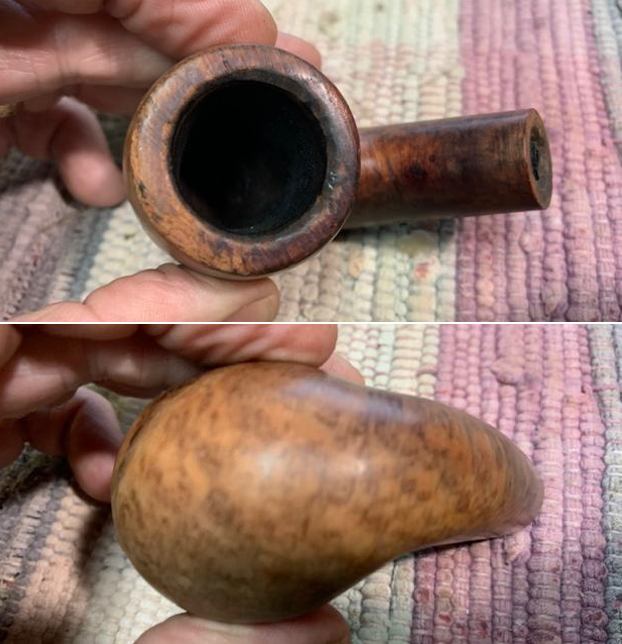
The pipe that I have selected is one from the huge lot of my grandfather’s pipes that I had inherited. This pipe had always caught my fancy on account of the wonderfully thin, tightly packed straight grains that are seen all around the stummel and shank and also due to its peculiar shape, a rather tall bowl (but not a stack!) with a longish shank and an equally long saddle stem. Overall, it definitely looked quirky to say the least, it’s a LOVAT shape on account of the round shank and a saddle bit but not a classic LOVAT since the stem is as long as the shank!! It’s the carver’s take on a classic shape, I guess. However, there was something about the stem that seemed wrong at the first glance. It was for this reason that the pipe always fell out of favor in the lineup of pipes for restoration. Here are a couple of pictures of the pipe that shows the pipe before Abha, my wife, had done the initial cleaning. From the pictures below, it is amply evident that the stem is not aligned straight in reference to the shank, but is skewed more towards the left (evidenced in the second picture).This pipe has some beautiful densely packed thin straight, also referred to as “Angel hair” grains all around the tall bowl and over the long shank surface. The only stampings seen on this pipe are over the left shank surface and is stamped as “HIALEAH” over “ALGERIAN BRIAR”. These stampings are crisp and clear. The long saddle vulcanite stem is devoid of any stampings.I looked for information on this brand on rebornpipes.com. Unfortunately the search yielded no results (a surprise for sure!!). Next I turned to pipedia.org to understand and establish the provenance of the pipe brand. There is not much information that was noted in the article, but was sufficient to give me an idea of the brand and period of operations. Here is the link to the webpage:-

Hialeah – Pipedia  I quote from the article; “From what I’ve found on the web HIALEAH pipes were sold by Whitehall Products Co. (a division of Helme Products) prior to 1975. Whitehall was in Wheeling, West Virginia, and Helme somewhere in New Jersey. All I’ve seen have been made of Algerian Briar and are reported to be great smokers”.

Thus, this pipe definitely dates to pre-1975

Initial Visual Inspection
Abha, in a deviation from her thumb rule of not taking any “BEFORE” pictures, had taken a few pictures of the pipe to highlight the condition of the pipe before she commenced her initial clean up for me.

The chamber had a thick layer of cake with heavy overflow of lava over the rim top surface. The inner rim edge appears to be uneven while the outer rim edge appears sans any damage. The exact condition of the edges will be ascertained once the lava overflow from the rim top surface is removed and the surface is cleaned up. The draught hole is in the dead center and at the bottom of the chamber and this construction should make it a great smoke.The stummel surface was covered in dust and grime of years of usage and subsequent storage. The stummel has developed dark hues of browns and has scratches and dings over the surface, most notably to the heel and front of the stummel. However under all the dust and grime, beautiful tight Angel hair grains are awaiting to be brought to the fore. There are a couple of fills, one to the front of the stummel and another to the shank very close to the stampings. The mortise has traces of old oils and tars, restricting the air flow through the mortise. Whether to refresh the fills or let them be will be decided once the stummel is cleaned and the fills are checked for softness thereafter.  The long vulcanite saddle stem is heavily oxidized with minor tooth chatter in the bite zone. The stem is skewed to the left immediately after the saddle portion of the stem. This flaw makes me believe it to be a shaping issue more than anything and further points to the likelihood of the stem to be handmade. Steve also concurred with my assumptions when we discussed the restoration during one of our video calls. He also pointed out that there was no way to right this wrong other than replacing the stem.Initial Cleaning By Abha…
The initial cleaning on this pipe was done by Abha, my wife (she has cleaned up around 40-50 pipes and these have now reached me for further restoration). She reamed out the complete cake and further smoothed out the chamber walls with a folded piece of 220 grit sand paper. She further cleaned out the internals of the shank with pipe cleaners and alcohol and cotton buds. She followed the internal cleaning of the shank with external cleaning of the stummel using Murphy’s Oil soap and hard bristled tooth brush and dried it with paper napkins and cotton cloth.

Next she cleaned out the internals of the stem air way and immersed it in “Before and After Deoxidizer” solution along with the stem of other pipes in line for restoration. Once the stem had soaked overnight, she cleaned the stem under running warm water and scrubbed the raised oxidation from the stem surface using Scotch Brite pad. She further removed the oxidation by scrubbing the stem with 0000 grade steel wool and applied a little olive oil to rehydrate the stem.

Once The Pipe Is On My Work Table…
The cleaned up pipes presents a very clear picture of what needs to be done to restore this pipe to a decent and smokable condition. I really cannot thank Abha enough for all the help and support that she extends me in my pursuance of this hobby. I proceed to carry out my appreciation of the work that needs to be done on this pipe to restore it.

As with all the cleaned pipes that Abha packs, there was a note in the zip lock pouch with issues that she had observed in the pipe. The first point was that the chamber has developed heat fissures. The second point was that she was not happy with the shape of the stem and it appeared odd. Also the seating of the stem in to the mortise was very loose. Here are the pictures of the pipe as I had received. The chamber does appear to have developed heat fissures (indicated with red arrows). The rim top surface is darkened all around, more so at the back of the rim surface. The inner rim edge is uneven while the outer edge is slightly charred in 1 o’clock direction and is encircled in yellow. Close scrutiny of the chamber walls made me realize that there is still a very thin layer of cake in the chamber and it is my experience that this gives an appearance of heat fissures! Only after the cake has been completely removed will I be able to confirm presence of heat fissures or otherwise.The stummel is nice and clean but would benefit from polishing to rejuvenate and bring a nice shine over the briar surface. There is a large fill over the left shank surface and very close to the stampings (encircled in yellow). The fill is solid and I wouldn’t take the risk of refreshing it due to its proximity to the stampings. There are a few dings to the front of the bowl (encircled in red) that would need to be addressed. The mortise has no chips or cracks to the shank face/ shank. There are a few minor pockets of old oils and tars that are seen on the walls of the mortise and would require some invasive measures to eliminate completely.Since the stem would be replaced, I shall not dwell in detail about the stem condition, but am including a few pictures of the stem to show its condition as well as give the readers a perspective about the incorrect shape imparted to the stem at the time it was crafted.The Process
The first issue to be addressed in this project was to replace the original poorly crafted stem. Steve and I went through my small stash of spare stems and selected a small bent saddle stem that was stamped on the left as “ROPP” on a steel roundel. This stem would impart a classic Lovat shape to the pipe and vastly improve the aesthetics of the pipe, or so we thought. Here is how the pipe looks with this bent saddle stem. The tenon would need to be sanded down for it to seat in to the mortise and this would be the trickiest part of this stem replacement. I would have to be very careful to sand the tenon evenly and equally from all around, frequently checking for a snug fit in to the mortise. The replacement vulcanite saddle stem is in perfect condition with no damage to the button or in the bite zone, save for some minor oxidation and very light tooth chatter. I would need to first straighten out the stem followed by sanding the tenon for a snug fit in to the mortise. Only once these issues are addressed would I be progressing to removing the “ROPP” stamped steel plate and filling the area left behind by the removal of the steel plate.

I began the restoration of this pipe by first addressing the suspected heat fissures in the chamber walls. I worked on the stummel by reaming the chamber with a PipNet pipe reamer using the size 3 head. With my fabricated knife, I removed the remaining carbon deposit. Once the cake was reamed back to the bare briar, I used a 150 grit sand paper followed by 220 grit sand paper to remove all the traces of remaining cake and also to smooth out the inner walls of the chamber surface. Finally, to remove the residual carbon dust, I wiped the chamber with a cotton pad wetted with 99.9% pure isopropyl alcohol. I was very pleased to note that the chamber walls are sans any damage.With the bowl internals clean, I move to clean the exterior of the stummel, specially the rim top surface. I used a hard bristled tooth brush and Murphy’s Oil soap to scrub the stummel and rim top. After the scrub with oil soap, I washed the stummel under running warm water with anti oil dish washing detergent till the stummel surface was clean and dried it using paper towels and soft cotton cloth. I simultaneously cleaned the shank internals with the detergent and hard bristled shank brush and set the stummel aside to dry out naturally. The smooth stummel surface has cleaned up nicely with the beautiful Angel hair grain patterns on full display. There are two major fills that are now plainly visible (encircled in green), but they are solid and I shall avoid refreshing them. The darkening and unevenness of the inner rim edge is evident and over reamed in the 1 o’clock direction (encircled in yellow). The ghost smells are completely eliminated and the pipe now smells fresh, odorless and clean. The shank air way is nice and open. I am sure that the pipe will turn out to be a fantastic smoker with a full wide and open draw. Now that I had a fair idea of the extent of topping required to the rim surface, I top the rim on a piece of 220 grit sand paper to address the rim surface darkening, dents and dings. I addressed the uneven inner edge by creating a light bevel to inner edge with a folded piece of 220 grit sand paper pinched between my thumb and index finger. To further smooth out the scratches left behind by the abrasive 220 girt sand paper, I top the rim surface on a piece of 400 grit sand paper. I am very happy at the way the chamber and rim top surface appears at this point in restoration. Next, I decided to address the dents and dings on the stummel surface, notably to the front of the bowl (encircled in pastel blue). Using a whitener pen, I marked all the major areas with dents and dings as I had decided to leave the minor ones as they were. I heated my fabricated knife over the flame of a candle, placed a wet Turkish hand towel over the marked areas and steamed out the dents by placing the heated knife over the towel. The steam generated by placing a hot knife on the wet towel helps the briar to expand within these dents and dings, making for a smooth and even surface. To further even out the remaining dings, I lightly sand the entire stummel with a folded piece of worn out 180 grit sand paper. The stummel appears much better and smooth at this juncture. With the stummel repairs completed, I turned my attention to the replacement stem. The first thing that needed to be done was to straighten the stem. I cleaned the stem internals first and inserted a regular pipe cleaner through the stem airway. This prevents the airway from collapsing when the stem is heated to straighten it. With a heat gun, I heated the stem at the point where the stem was bent, rotating the stem frequently to ensure even heating. Once the stem was pliable, I straightened the stem with my hands by placing it on the flat table. After the stem had cooled down sufficiently, I held it under cold running water to set the straightened shape. Now that the stem was straightened, the next step was to ensure a snug fit of the tenon in to the mortise. Since the tenon was not too large as compared to the mortise, I got down to the arduous and time consuming task of manually sanding down the tenon with a folded piece of 180 grit sandpaper till I had achieved a perfect seating of the tenon in to the mortise. My previous experience had taught me an invaluable lesson; “SAND ONCE AND CHECK TWICE”!! Here I was extra careful and vigilant while sanding the sides of the tenon and frequently checked the alignment of the stem airway, the shank airway and finally, the draught hole. Excess sanding of any one side of the tenon disturbs this alignment even though the seating may appear to be snug and seamless. I gave a final check to the progress being made and the seating was perfectly snug with all the airways perfectly aligned. I am very happy with the progress up to this point!!Close scrutiny of the seating of the tenon in to the mortise under camera magnification revealed a slight gap at the stem and shank face junction. With a folded piece of 180 grit sandpaper, I sand the base of the tenon until I had achieved a seamless and flushed seating of the stem. Discerning Readers must have noticed a dark line starting from the shank end and extending for about an inch and a half towards the bowl (indicated with green arrows). I too thought (with a cringe) that the shank had cracked in the process, but let me assure you that the shank is not cracked and is in fact a dark strand of straight grain…that was really a big relief!!Once I had achieved a snug fit of the tenon in to the mortise, I checked for the flush seating of the stem face with that of the shank and realized that the stem diameter is larger than that of the shank and the extent of sanding that would be required. This would need to be addressed.   But before I could address this issue, it was necessary that the metal plate bearing the ROPP stamping be removed and the cavity created, be filled out. Once this was done, matching the entire saddle portion with the shank face would be accurate and time saving. Using dental pick and a sharp, thin paper cutter, I removed the steel plate and cleaned the gouged out surface with a cotton pad and isopropyl alcohol. I evened out the surrounding area with a worn out piece of 180 grit sand paper and filled the cavity with a mix of CA superglue and black charcoal powder. I set the fill to cure overnight.The next day, I sand the filled cavity with a piece of 180 grit sand paper till I had achieved a rough match with the surrounding saddle surface of the stem. The filled area would be perfectly matched when I sand the entire saddle portion to match the shank face.Now, to match the stem face with the shank face, I unite the stem and the shank. With a sanding drum mounted on to my hand held rotary tool, I sand the saddle portion of the stem till I had achieved a near perfect matching of the stem face with that of the shank face. I further fine tune the match perfectly by sanding it with a 220 followed by 400 grit sand paper. The match is perfect and the pipe as a whole is now looking very nice with the new stem. It still looks very plain and would need a dash of a little bling to complete the transformation!! Also, there is a need to refill the cavity left behind by the steel plate as I noticed a few ugly air pockets. I refilled it with CA superglue and charcoal powder and set it aside for the fill to cure. To add a little bling to the appearance of the pipe, I decided to attach a brass band at the shank end. I selected a band that was a perfect fit and glued it over the shank end with CA superglue and set it aside to cure.I subjected the stummel to a complete cycle of micromesh polish, dry sanding with 1500 to 12000 grit pads. I paid greater attention to polish the rim top surface and the bevel created on the inner rim edge. I wiped the stummel with a moist cloth after every grit pad to remove the sanding dust left behind by the pads. I am happy with the progress being made till now. Just look at the beautiful grain on this piece of briar!! The briar has taken on a nice deep shine with brown of the stummel and the darker brown stains to the grain contrasting beautifully. I really like the patina that is seen over the stummel surface. However, the rim top surface appears lighter than the rest of the stummel due to the topping. I stained the lighter hued rim top surface with a combination of Dark Brown over Chestnut stain pens. I set the stummel aside for the stain to set. The stain combination has helped in perfect blending of the rim top with the rest of the stummel.Next, I turned my attention back to the stem. I began the process of final fine tuning of matching the stem face with the shank face, shaping the saddle for a sharper match with the shank flow, sanding the refill in the saddle and bringing a nice shine to the stem surface by sanding with 320, 400, 600, 800 and 1000 grit sandpapers. I had attached the stem to the shank during the entire sanding job so that I do not end up shouldering the stem face. The closer I came to the perfect match, the higher grit sand paper I used. A lot of patient and diligent work, I reached the point where I felt “no more sanding… this is the perfect seating and perfect Lovat profile!!”. My mantra “LESS IS MORE” was also playing at the back of my mind. I was very pleased with my efforts of transforming the stem as I had achieved a perfect snug seating of the stem in to the mortise and a perfectly matching shank and stem face!!

To bring a deep shine to the vulcanite stem, I went through the complete set of sand papers and micromesh pads, wet sanding with 1500 to 12000 grit micromesh pads. I wiped the stem with moist cloth after each pad. At the end of micromesh cycle, I polished the stem with “Before and After Fine & Extra Fine” paste. The finished stem is shown below.Turning back to the stummel, I rubbed a small quantity of “Before and After Restoration Balm” deep in to the briar with my finger tips and let it rest for a few minutes. The balm almost immediately works its magic and the briar now has a nice vibrant appearance with the Angel hair grain patterns displayed in their complete splendor. I further buffed it with a horse hair brush. The contrast of the natural lighter brown patina of the stummel with the dark browns of the grain adds an interesting dimension to the appearance of the stummel. To check and verify the correctness of the alignment of the stem airway, the tenon opening, shank/mortise airway and finally through the draught hole, I did the PIPE CLEANER TEST.  The pipe cleaner passed through cleanly and without any obstruction from the slot end right through the draught hole. I checked the draw and though it was smooth, it felt a tad bit constricted. I further opened the draw by funneling the tenon end with a thin sanding drum mounted on the hand held rotary tool. The draw is now silky smooth and effortless!! Unfortunately, I missed out on taking pictures of the process, but I am sure the readers have a general idea of what had been done.I have now reached the homestretch in this restoration project. To complete the restoration, I mount a cotton cloth buffing wheel on to my hand held rotary tool and polished the stummel and stem with Blue Diamond compound. This compound helps to remove the minor scratch marks from the stem surface that remain from the sanding. I mounted another cotton buffing wheel that I have earmarked for carnauba wax and applied several coats of the wax. I finished the restoration by giving the entire pipe a rigorous hand buffing using a microfiber cloth to raise the shine further. The finished pipe with a new brass band looks amazingly beautiful and is ready for its new innings with me and be enjoyed for a long time.

Restemming and Restoring a Stone Age K11 609 Italian Freehand Bowl


Blog by Steve Laug

The next pipe I chose to work on was a bowl sans stem that is interestingly rusticated and reads Stone Age K11 [over] shape number 609 followed by Italy on a smooth panel on the underside of the shank. The shape number reminded me of a Savinelli number but I was not certain. It was purchased in November, 2018 from a fellow in Scottsdale, Arizona, USA. It has been sitting in my box of bowls since that time. Jeff cleaned it up and mailed it to me. It is another pipe that I have been postponing restemming for a while. This morning while going through my collection of stem I found one that fit the pipe. At least it works for me! When I found the stem I pulled the bowl out of the box and set aside to be the next pipe to work on. It has a very unique rustication that is quite different – both rugged and spun that reminds me of a honey swizzle stick. The flared shank and rim top both look like rusticated plateau – faux or real, I am unsure. Overall it is a pretty pipe. The bowl had thick cake in the bowl and the rim top had a coat of lava on the inner edge of the bowl and in the grooves of the rim top. The finish had a lot of dust and debris in the valleys of the rustication. I have no idea who made it but it is definitely interesting. Jeff took some photos of the bowl before he cleaned it up. The next two close up photos show the condition of the bowl and rim top. You can see the thick lava coat on the inner edge of the bowl and in the rustication of the rim top. Jeff took a photo of the stamping on the underside of the shank. It read as noted above and is  clear and readable.I decided to see if could confirm my thinking that the pipe was connected with Savinelli. I turned to Pipephil’s site and found nothing connecting the Stone Age K11 609 to the brand. However I was not convinced as I am sure the shape number 609 is a Savinelli number.

I turned to Pipedia (https://pipedia.org/images/4/41/Sav_Shape_Chart_2017.jpg) and found a shape chart and indeed for the 609 listed as a shape for a bent billiard. I am pretty sure that with a bit of imagination this freehand that I am working on could possibly be construed as a Freehand in a Bent Billiard shape. But I am uncertain. I have included the chart below.I found pipes with a similar rustication on several sites on the internet. Worthpoint, an online auction site (https://www.worthpoint.com/worthopedia/stone-age-italy-k11-603-tobacco-428555927) listed a 603 with the same rustication style and stamping on the underside of the shank. Smokingpipes.com also listed a Stone Age K11 613 Volcano sitter with the same rustication and stamping on the shank that they had sold in the past (possibly as early as 2010 from the photo (https://www.smokingpipes.com/pipes/estate/italy/moreinfo.cfm?product_id=73396).

With those photos and the shape numbers that at least appear to be made by Savinelli it leaves me wondering. The shapes really do not match the shape chart above but the numbers are present. Ah well another mystery!

I turned to work on the pipe itself. Jeff had carried out his usual thorough cleanup of the pipe. He had reamed it with a PipNet reamer to remove the cake and cleaned the reaming up with a Savinelli Fitsall Pipe Knife. He scrubbed the internals of the bowl and stem with alcohol, cotton swabs and pipe cleaners. He scrubbed the externals with undiluted Murphy’s Oil Soap and rinsed the bowl off with running water. The pipe looked very clean when I received it. I went through my can of stems and found turned freehand style vulcanite stem that I thought would work well with the bowl and shank. I took a photo of the combination below. The stem fit the mortise perfectly though the bend to much to work well with the pipe. There were tooth marks in surface of the top and underside of the stem at the button that would need to be dealt with in the restoration. I put the stem in the shank and took some photos of the pipe. The rim top and shank end cleaned up really well as can be seen in the close up photos below. There appeared to be some debris in the grooves of the plateau top of the rim that would need to be dealt with but without the lava coat it was impressively cleaned. The stem looked like it belonged. I already noted the tooth marks and chatter on both sides near the button.I took a photo of the stamping on the underside of the shank. It really is clear and readable. I decided to start my work on restoring the pipe by addressing the debris and darkening on the rim top. I used a brass bristle brush and scrubbed the surface of the rim top and shank end working on removing debris and darkening from the grooves of the plateau and rustication. It looked much better than when I started.I rubbed the briar down with Before & After Restoration Balm. I worked it into the briar and the the grooves around the bowl and shank with my fingertips and a horsehair shoe brush. The product works to clean, enliven and preserve the briar. I let it sit for 15 minutes while I worked on the stem. After the time passed I buffed it with a cotton cloth to deepen the shine. The briar really comes alive with the balm.   Now it was time to straighten the bend I the stem to match the flow of the pipe. Instead of using my heat gun I painted the stem surface with the flame of a Bic lighter until the vulcanite became flexible. I straightened it out to the angles I wanted for the pipe. I took photos of the pipe at this point in the process. I removed the stem from the bowl and set the bowl aside. I turned my attention to the stem. I “painted” the tooth marks on both sides of the stem with the flame of a lighter to lift them as much as possible. They all lifted but one on the topside. I filled in the remaining tooth mark with clear super glue and set it aside to cure. Once cured, I blended the repairs into the surface of the vulcanite with 220 grit sandpaper. I started polishing the stem with 400 grit wet dry sandpaper. The stem was looking much better. I polished the vulcanite with micromesh sanding pads – 1500-12000 grit pads. I wiped it down with Obsidian Oil after each sanding pad. I used Before & After Pipe Polish – both Fine and Extra Fine to further polish the stem. This restemmed, rusticated Stone Age K11 609 Italian Freehand is a beautiful looking pipe that combines a rusticated finish with a unique shaped. I may never know for sure if Savinelli made it but I think so! The brown stains on the bowl work well to highlight the finish. The polished turned fancy black vulcanite stem adds to the mix. I put the finished stem on the bowl and buffed it with Blue Diamond on the buffing wheel being careful to not buff the stamping. I gave the bowl multiple coats of Conservator’s Wax and the stem multiple coats of carnauba wax on the buffing wheel and followed that by buffing it with a clean buffing pad. I hand buffed the pipe with a microfiber cloth to deepen the shine. The finished pipe is quite nice and feels great in the hand. Give the finished pipe a look in the photos below. I can only tell you that like the other pipes I am working that it is much prettier in person than the photos capture. The dimensions of the pipe are Length: 6 inches, Height: 2 inches, Outside diameter of the bowl: 1 ½ inches, Chamber diameter: ¾ of an inch. The weight of the pipe is 54grams/1.90oz. It will soon be added to the Italian Pipe Makers section on the rebornpipes store. Thanks for walking through the restoration with me as I worked over another beautiful pipe. Remember we are not pipe owners; we are pipemen and women who hold our pipes in trust until they pass on into the trust of the next generation.
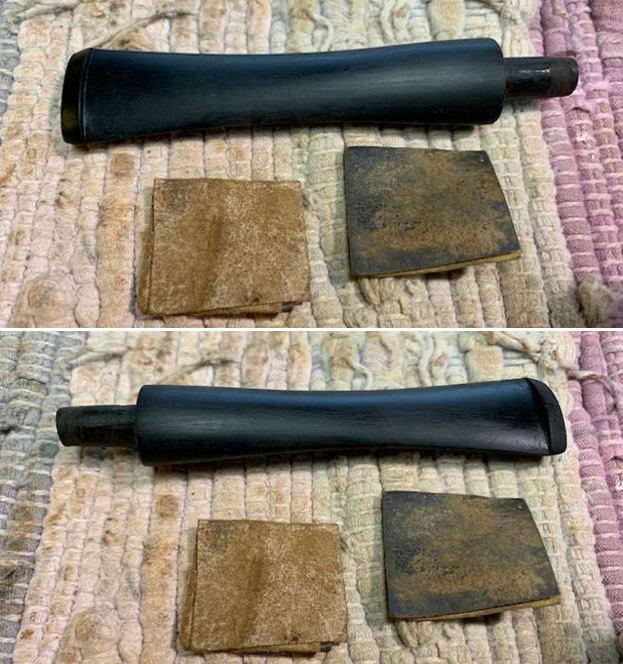
Restemming and Restoring a Sasieni Windsor London Made Oom Paul 80


Blog by Steve Laug

The next pipe I chose to work on was a Sasieni Windsor Sandblast |Bowl sans stem that was purchased from a shop in Oregon when Irene and I visited my brother on the coast there. It has been sitting in my box of bowls since that time. Jeff cleaned it up and mailed it to me. I have been postponing restemming any of the pipes for a while now but after restemming that little gourd calabash a couple of days ago I was ready to do a few more. I pulled this one out of the box and set aside to be the next pipe to work on. It has a very deep sandblast that is quite stunning on the full bent pipe. Overall it is a pretty pipe. The bowl had thick cake in the bowl and there was a coat of lava in the grooves of the rim top. The finish had a lot of dust and debris in the valleys of the blast. The stamping on the smooth panel on the underside of the shank was clear and readable. It was stamped Sasieni [over] Windsor [over] London Made. To the right of that it was stamped with the shape number 80. To the left of the Sasieni stamp on the heel of the bowl it is stamped Made in England in a rugby ball shaped stamp. Jeff took some photos of the bowl before he cleaned it up. The next three close up photos show the condition of the bowl and rim top. You can see the lava coat on the inner edge of the bowl and the debris in the rustication of the rim top. Jeff took a photo of the stamping on the underside of the shank. It read as noted above and is  faint and readable.I turned to Pipephil’s site to get a read on the Sasieni Windsor line to see if I could find out more about the stamping (http://pipephil.eu/logos/en/logo-sasieni2.html). The pipe was in the section on the site as a Sasieni seconds and sub-brands. The pipe in the second photo had very similar stamping to the bowl I was working on. I did a screen capture of the section on Pipephil. I have included it below.  There were also photos that were included on Pipephil of what the sandblast looked like on the Sasieni Windsor originally.The third photo of the underside of the shank shows a similar stamping to the pipe I am working on. The pipe originally had a saddle vulcanite stem. The stem was long gone when Jeff and I picked it up so I had some decisions to make about the stem I would use to restem it.I turned to work on the pipe itself. Jeff had carried out his usual thorough cleanup of the pipe. He had reamed it with a PipNet reamer to remove the cake and cleaned the reaming up with a Savinelli Fitsall Pipe Knife. He scrubbed the internals of the bowl and stem with alcohol, cotton swabs and pipe cleaners. He scrubbed the externals with undiluted Murphy’s Oil Soap and rinsed the bowl off with running water. The pipe looked very clean when I received it. The rim top cleaned up really well as can be seen in the close up photos below. I took a photo of the stamping on the underside of the shank. It really is faint but readable. I went through my can of stems and found turned freehand style vulcanite stem that would work well with the bowl and shank. The bend in it was a little too high and would need to be heated and bent for the Oom Paul shape. There were tooth marks in surface of the top and underside of the stem at the button that would need to be dealt with in the restoration.   I took a photo of the stem and bowl together to give a sense of the look of the pipe and the proportion of the stem. I put the stem in place on the shank and took photos of combination of the bowl and stem. It is going to look very good once it is cleaned up. I rubbed the briar down with Before & After Restoration Balm. I worked it into the briar with my fingertips and a horsehair shoe brush. The product works to clean, enliven and preserve the briar. I let it sit for 15 minutes while I worked on the stem. After the time passed I buffed it with a cotton cloth to deepen the shine. The briar really comes alive with the balm.   I set the bowl aside and turned my attention to the stem. I put a pipe cleaner in the stem and then heated the stem with my heat gun until the vulcanite was supple. I bent it to the angle that matched the bowl. I filled in the tooth marks and rebuilt the button top with black super glue and set it aside to cure. Once it had cured I used files to reshape the edge of the button and flatten the repairs on the stem surface. I blended the repairs into the surface of the vulcanite with 220 grit sandpaper. I started polishing the stem with 400 grit wet dry sandpaper. The stem was looking much better. I polished the vulcanite with micromesh sanding pads – 1500-12000 grit pads. I wiped it down with Obsidian Oil after each sanding pad. I used Before & After Pipe Polish – both Fine and Extra Fine to further polish the stem. This restemmed, sandblasted Sasieni Windsor 80 Oom Paul is a beautiful looking pipe. The brown stains on the bowl work well to highlight the finish. The polished black vulcanite saddle stem adds to the mix. I put the finished stem on the bowl and buffed it with Blue Diamond on the buffing wheel being careful to not buff the stamping. I gave the bowl multiple coats of Conservator’s Wax and the stem multiple coats of carnauba wax on the buffing wheel and followed that by buffing it with a clean buffing pad. I hand buffed the pipe with a microfiber cloth to deepen the shine. The finished Sasieni Windsor 80 is quite nice and feels great in the hand. Give the finished Oom Paul a look in the photos below. I can only tell you that it is much prettier in person than the photos capture. The dimensions of the pipe are Length: 5 ½ inches, Height: 2 inches, Outside diameter of the bowl: 1 ¼ inches, Chamber diameter: ¾ of an inch. The weight of the pipe is 46grams/1.62oz. It will soon be added to the British Pipe Makers section on the rebornpipes store. Thanks for walking through the restoration with me as I worked over another beautiful pipe. Remember we are not pipe owners; we are pipemen and women who hold our pipes in trust until they pass on into the trust of the next generation.
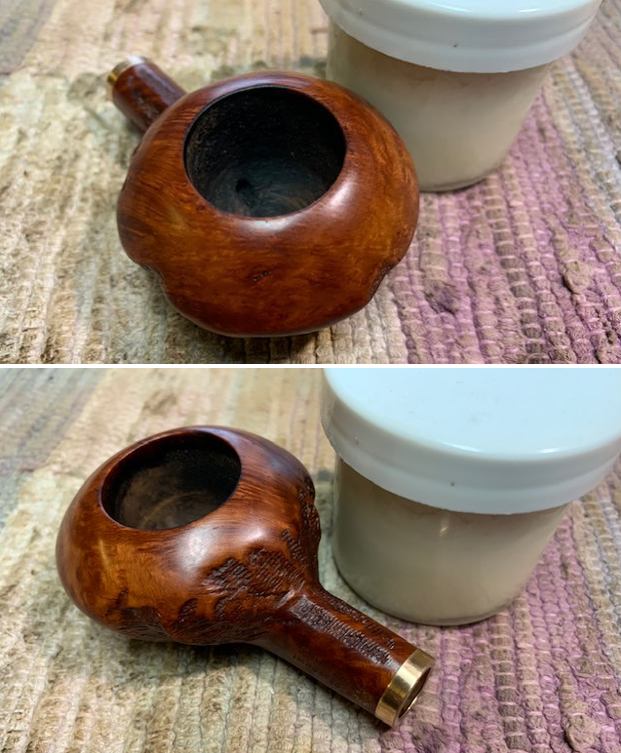
 

Restemming and Restoring a Monte Verde Hand Made Freehand Bowl


Blog by Steve Laug

The next pipe I chose to work on was a Monte Verde bowl sans stem that was purchased from an online auction on 03/06/18 from Nampa, Idaho, USA. It has been sitting in my box of bowls since that time. Jeff cleaned it up and mailed it to me. I have been postponing restemming any of the pipes for a while now but after restemming that little gourd calabash a couple of days ago I was ready to do a few more. I pulled this one out of the box first and set aside to be the next pipe to work on. It has a very craggy rustication that is quite stunning and a square flared shank. Overall it is a pretty pipe. The bowl had thick cake in the bowl and the rim top had a coat of lava on the inner edge of the bowl and in the grooves of the rim top. The finish had a lot of dust and debris in the valleys of the rustication. The stamping on the smooth panel on the underside of the shank was clear and readable. It was stamped Monte Verdi [over] Made in Denmark [over] By Hand [over] Golden Tan in script. I knew that the Monte Verdi line was made by Preben Holm of Ben Wade and Preben Holm Freehand fame. Jeff took some photos of the bowl before he cleaned it up. The next two close up photos show the condition of the bowl and rim top. You can see the lava coat on the inner edge of the bowl and the debris in the rustication of the rim top. Jeff took a photo of the stamping on the underside of the shank. It read as noted above and is  clear and readable.I decided to confirm my thinking that the pipe was connected with Preben Holm/Ben Wade. I turned to Pipephil’s site to get a read on the brand (http://pipephil.eu/logos/en/logo-m6.html). Sure enough the Monte Verdi line was made by Preben Holm. The pipe in the photo had a very similar rustication to the Monte Verdi bowl I was working on. I did a screen capture of the section on Pipephil. I have included it below.  There were also photos that were included on Pipephil of what this particular pipe looked like when it had left Denmark. The rustication around the bowl and shank is very similar. The pipe I have does not have a shank extension but otherwise the finish is much the same.The pipe originally had a fancy turned vulcanite stem. The stem was long gone when Jeff picked it up so I had some decisions to make about the stem I would use to restem it.I turned to work on the pipe itself. Jeff had carried out his usual thorough cleanup of the pipe. He had reamed it with a PipNet reamer to remove the cake and cleaned the reaming up with a Savinelli Fitsall Pipe Knife. He scrubbed the internals of the bowl and stem with alcohol, cotton swabs and pipe cleaners. He scrubbed the externals with undiluted Murphy’s Oil Soap and rinsed the bowl off with running water. The pipe looked very clean when I received it. The rim top and shank end cleaned up really well as can be seen in the close up photos below.I took a photo of the stamping on the underside of the shank. It really is clear and readable.I went through my can of stems and found turned freehand style vulcanite stem that would work well with the bowl and shank. The bend in it was perfect. There were tooth marks in surface of the top and underside of the stem at the button that would need to be dealt with in the restoration. I took a photo of the stem and bowl together to give a sense of the look of the pipe and the proportion of the stem. I shortened the length of the tenon with my Dremel and sanding drum and smoothed out the tenon with 220 grit sandpaper and fit the stem in the shank and took pictures of the pipe and stem. I removed the stem and rubbed the briar down with Before & After Restoration Balm. I worked it into the briar with my fingertips and a horsehair shoe brush. The product works to clean, enliven and preserve the briar. I let it sit for 15 minutes while I worked on the stem. After the time passed I buffed it with a cotton cloth to deepen the shine. The briar really comes alive with the balm.   I set the bowl aside and turned my attention to the stem. I “painted” the tooth marks on both sides of the stem with the flame of a lighter to lift them as much as possible. I filled in the tooth marks that remaining with clear super glue and set it aside to cure. Once it had cured I used a flat file to reshape the edge of the button and flatten the repairs on the stem surface. I blended the repairs into the surface of the vulcanite with 220 grit sandpaper. I started polishing the stem with 400 grit wet dry sandpaper. The stem was looking much better. I polished the vulcanite with micromesh sanding pads – 1500-12000 grit pads. I wiped it down with Obsidian Oil after each sanding pad. I used Before & After Pipe Polish – both Fine and Extra Fine to further polish the stem. In speaking with Kenneth yesterday I remembered that I had used a product in the past called Meguiar’s Scratch X2.0 to polish the surface of the stem after all of the previous polishing I had done. I took photos of the stem after polishing with the compound and did give a rich shine.   This restemmed, rusticated Preben Holm Hand Made Monte Verdi Golden Tan Freehand is a beautiful looking pipe that combines a rusticated finish with a unique shaped. The brown stains on the bowl work well to highlight the finish. The polished turned fancy black vulcanite stem adds to the mix. I put the finished stem on the bowl and buffed it with Blue Diamond on the buffing wheel being careful to not buff the stamping. I gave the bowl multiple coats of Conservator’s Wax and the stem multiple coats of carnauba wax on the buffing wheel and followed that by buffing it with a clean buffing pad. I hand buffed the pipe with a microfiber cloth to deepen the shine. The finished pipe is quite nice and feels great in the hand. Give the finished pipe a look in the photos below. I can only tell you that like the other pipes I am working that it is much prettier in person than the photos capture. The dimensions of the pipe are Length: 7 inches, Height: 2 inches, Outside diameter of the bowl: 1 ¾ inches, Chamber diameter: 7/8 of an inch. The weight of the pipe is 63grams/2.22oz. It will soon be added to the Danish Pipe Makers section on the rebornpipes store. Thanks for walking through the restoration with me as I worked over another beautiful pipe. Remember we are not pipe owners; we are pipemen and women who hold our pipes in trust until they pass on into the trust of the next generation.
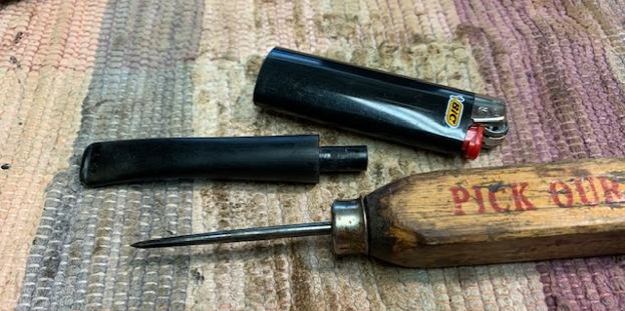
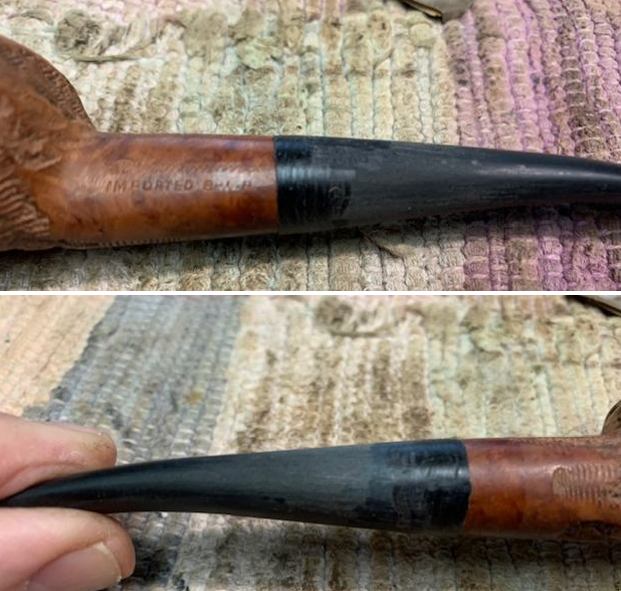
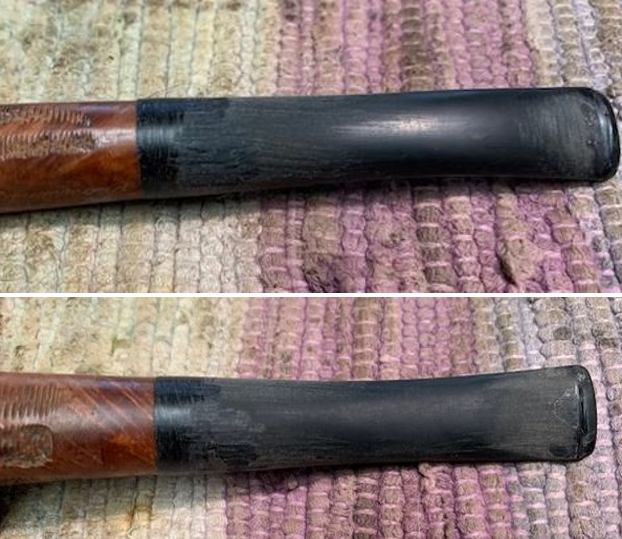
Restemming and Restoring a Gepetto 303 Rusticated Bowl


Blog by Steve Laug

The next pipe I chose to work on came to us from an antique shop in Houston, Texas, USA that Jeff visited in 2018. It has been sitting in my box of bowls since that time. Jeff cleaned it up and mailed it to me. I have been postponing restemming any of the pipes for a while now but after restemming that little gourd calabash a couple of days ago I was ready to do a few more. I pulled this one out of the box first and set aside to be the next pipe to work on. It has a very craggy rustication that is quite stunning and it has a smooth rim cap and ring  that make me call it a Rhodesian. It also has a smooth band on the shank end. Overall it is a pretty pipe. The bowl had been reamed before Jeff purchased it and was pretty clean. The rim top had a coat of lava that covered the majority of the cap. The finish had a lot of dust and debris in the valleys of the rustication. The stamping on the smooth panel on the underside of the shank was clear and readable. It had a J in circle [over] the shape number 303. That is followed by Gepetto [arched over] Italy [over] Hand Made. The J stamp made me immediately think of a connection to Ser Jacopo but I would look into that later in the blog. The next two close up photos show the condition of the bowl and rim top. You can see the thick lava coat on the top and you can see the reamed bowl sides on the left rear. It would need to be cleaned up but it was surprisingly clean for the condition of the rim top. Jeff took a photo of the stamping on the underside of the shank. It read as noted above and is clear and readable.I decided to confirm my thinking that the pipe was connected with Ser Jacopo. I turned to Pipephil’s site to get a read on the brand (http://pipephil.eu/logos/en/logo-g2.html). Sure enough the Gepetto line is called a second of Ser Jacopo. I did a screen capture of the section on Pipephil on both the Gepetto line and the informative side bar from the Ser Jacopo section that also states that the line is a second. I have included them below.  There were also photos that were included on Pipephil of what this particular pipe looked like when it had left Italy. The rustication around the bowl and shank is very similar though the stain on this one is darker and the grain on the smooth rim cap much more prominent. The pipe originally had an acrylic saddle stem with a silver inlaid Pinnochio on the top of the stem. The stem was long gone when Jeff picked it up so I had some decisions to make about the stem I would use to restem it. I turned to work on the pipe itself. Jeff had carried out his usual thorough cleanup of the pipe. He had reamed it with a PipNet reamer to remove the cake and cleaned the reaming up with a Savinelli Fitsall Pipe Knife. He scrubbed the internals of the bowl and stem with alcohol, cotton swabs and pipe cleaners. He scrubbed the externals with undiluted Murphy’s Oil Soap and rinsed the bowl off with running water. The pipe looked very clean when I received it. The rim top looked better but still needed a lot of work. I went through my can of stems and found an acrylic one that had the right colour combination of browns and golds to work with the finish on the bowl. It was a little too bent but that would not be an issue. There were also tooth marks in the top and underside of the stem at the button that would need to be dealt with in the restoration. I fit the stem in the shank and took a picture of the pipe. The stem is a little larger in diameter than the shank. I will need to sand it down to match the shank. I will also need to straighten the stem. I took a close up photo of the rim top. You can see the cleanness of the bowl and rim. There is darkening around inner edge of the rim and crown top. You can also see the stem is a little larger in diameter than the shank in the photos below. You can also see the tooth marks in the second and third photos below.I straightened the stem over my heat gun. I put a pipe cleaner in the shank and heated it until the stem was flexible and I was able to straighten it to match the bend in the stem. I took photos of the pipe and stem after the straightening.I set the stem aside and worked on the rim edges and top with a folded piece of 220 grit sandpaper. I was able to remove the damage to the rim edges and top.I polished the rim top with micromesh sanding pads and wiped it down with a damp cloth to remove the sanding dust. The crown took on a rich shine. I stained the rim top with a Maple and Cherry stain pen to match the finish on the smooth portions on the bowl.With the repair completed I rubbed the briar down with Before & After Restoration Balm. I worked it into the briar with my fingertips and a horsehair shoe brush. The product works to clean, enliven and preserve the briar. I let it sit for 15 minutes while I worked on the stem. After the time passed I buffed it with a cotton cloth to deepen the shine. The briar really comes alive with the balm.   In the process of rubbing the bowl down with Before & After Balm I noticed a hairline crack in the underside of shank that needed to be addressed. I don’t know if it was present or if it cracked when I fitted the new stem. Either way it needed to be repaired. I sanded the smooth area on the shank end down with 220 grit sandpaper in  preparation for the band I wanted to put on it. I found a nice brass band that was grooved to look like a double band. I heated the band and pressed it in place. The band looked very good on the shank. I filled in the tooth marks on the stem with clear super glue and set it aside to cure. Once it had cured I sanded it down with 220 grit sandpaper. I also sanded the diameter of the stem to match the diameter of the shank. I set the bowl aside and turned my attention to the stem. I polished the acrylic stem with micromesh sanding pads – 1500-12000 grit pads. I wiped it down with Obsidian Oil after each sanding pad. I used Before & After Pipe Polish – both Fine and Extra Fine to further polish the stem.   This restemmed, rusticated Gepetto 303 Rhodesian is a beautiful looking pipe that combines a smooth rim cap and rusticated bowl and shank. The brown stains on the bowl work well to highlight the grain. The polished variegated brown/gold half saddle acrylic stem adds to the mix. I put the finished stem on the bowl and buffed the pipe with Blue Diamond on the buffing wheel being careful to not buff the stamping. I gave the bowl multiple coats of Conservator’s Wax and the stem multiple coats of carnauba wax on the buffing wheel and followed that by buffing it with a clean buffing pad. I hand buffed the pipe with a microfiber cloth to deepen the shine. The rusticated pipe is quite nice and feels great in the hand. Give the finished pipe a look in the photos below. I can only tell you that like the other pipes I am working that it is much prettier in person than the photos capture. The dimensions of the pipe are Length: 6 ½ inches, Height: 2 inches, Outside diameter of the bowl: 2 inches, Chamber diameter: 7/8 of an inch. The weight of the pipe is 57grams/2.05oz. It will soon be added to the Italian Pipe Makers section on the rebornpipes store. Thanks for walking through the restoration with me as I worked over another beautiful pipe. Remember we are not pipe owners; we are pipemen and women who hold our pipes in trust until they pass on into the trust of the next generation.