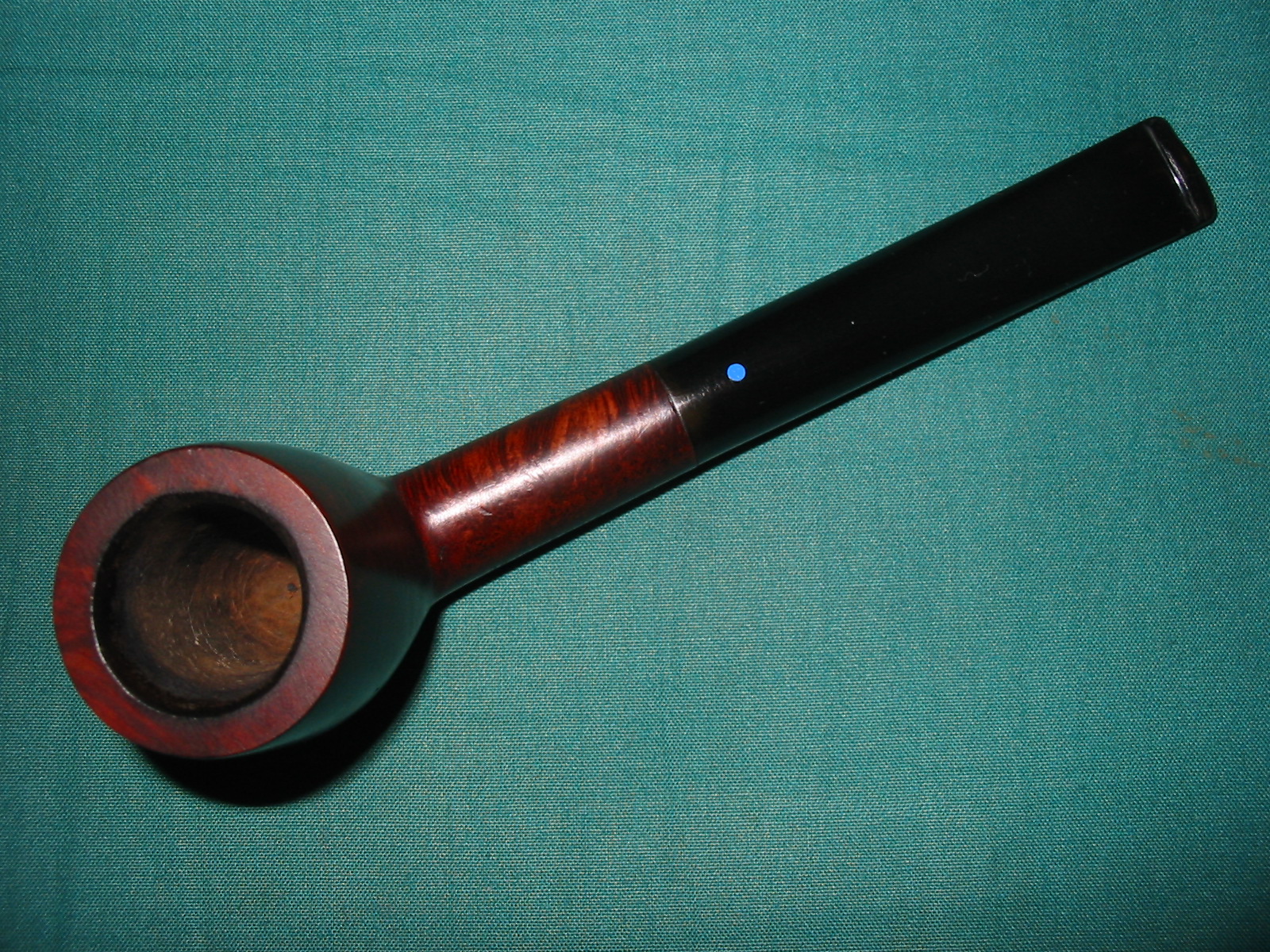
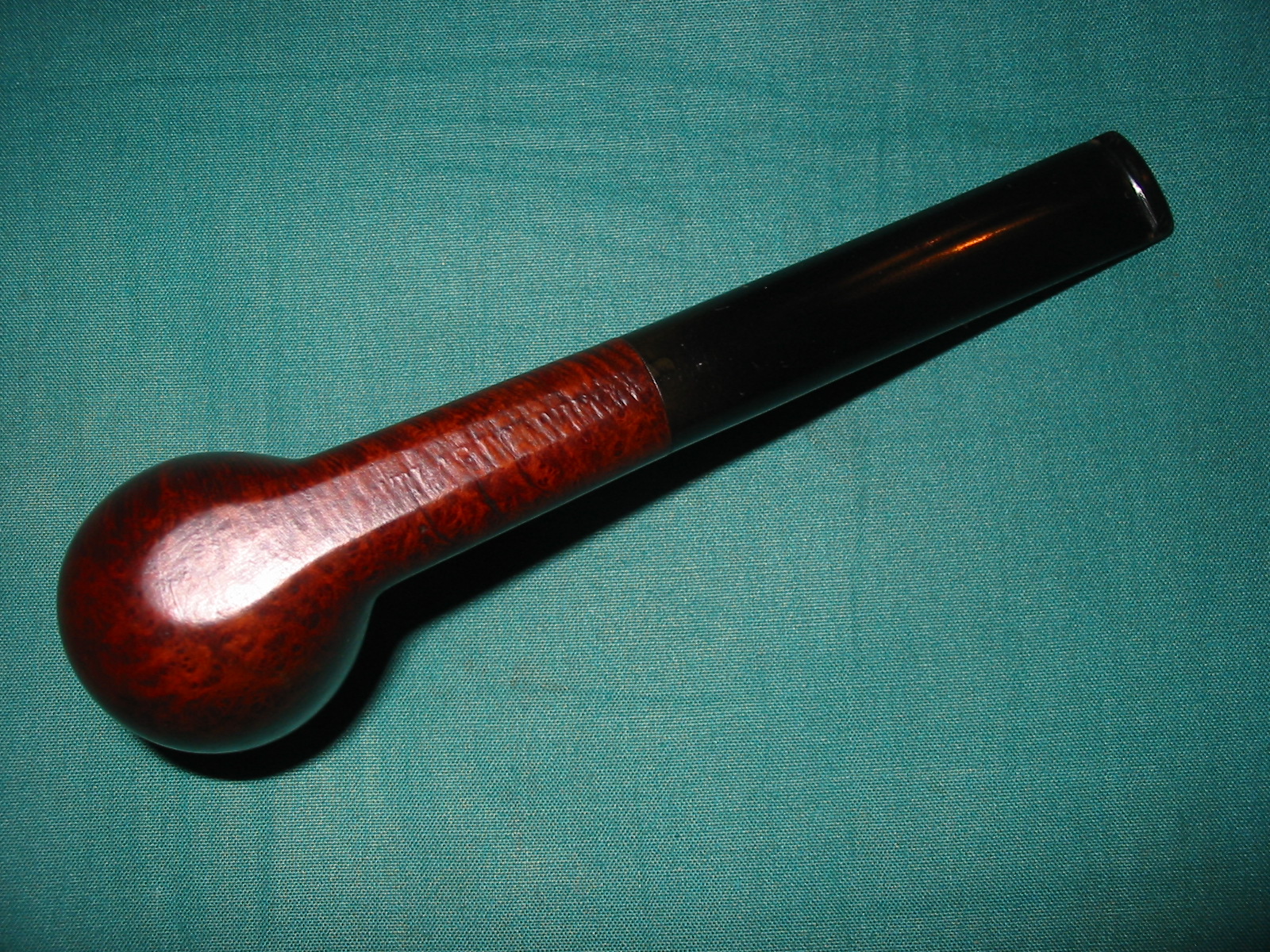
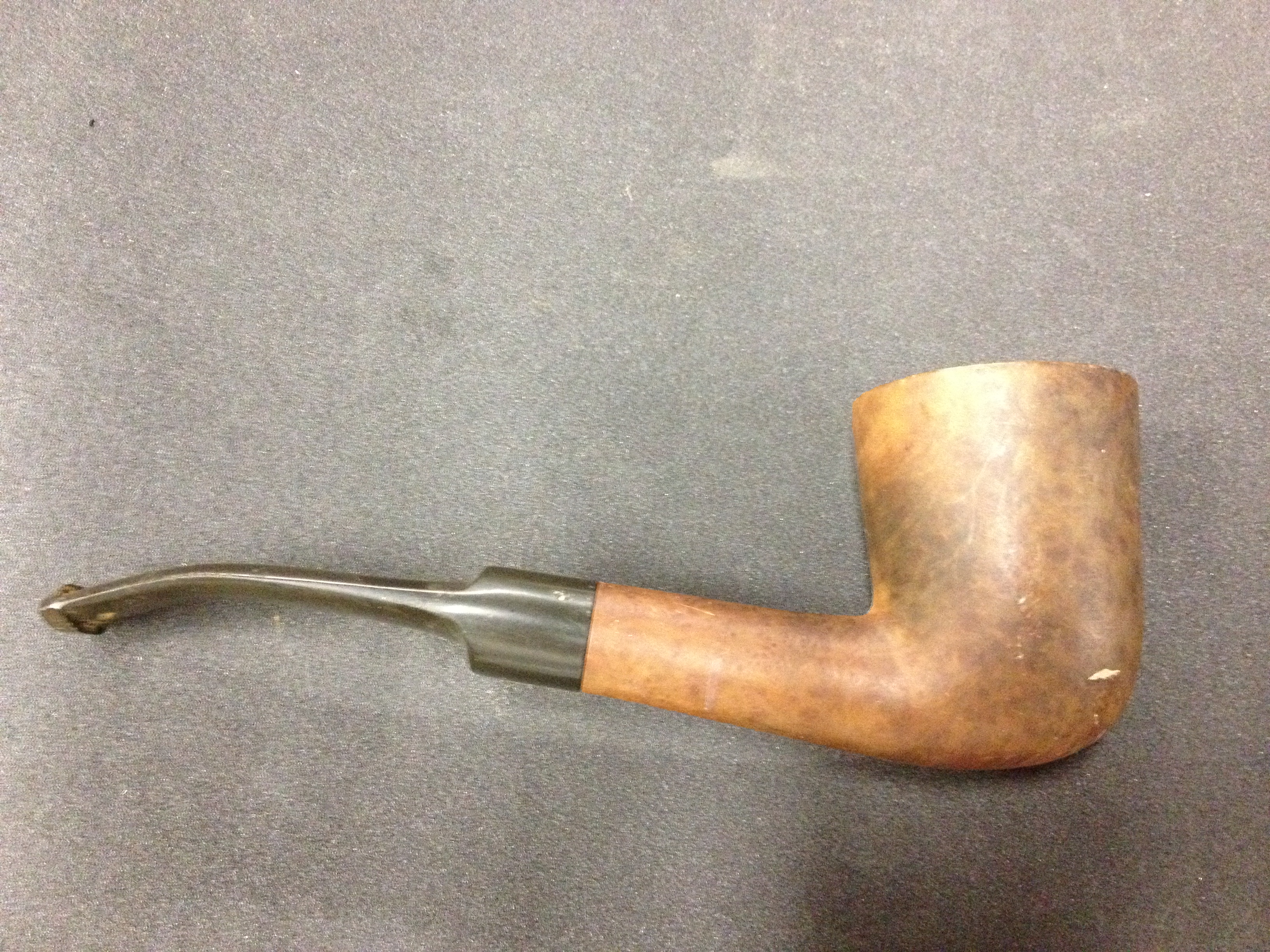
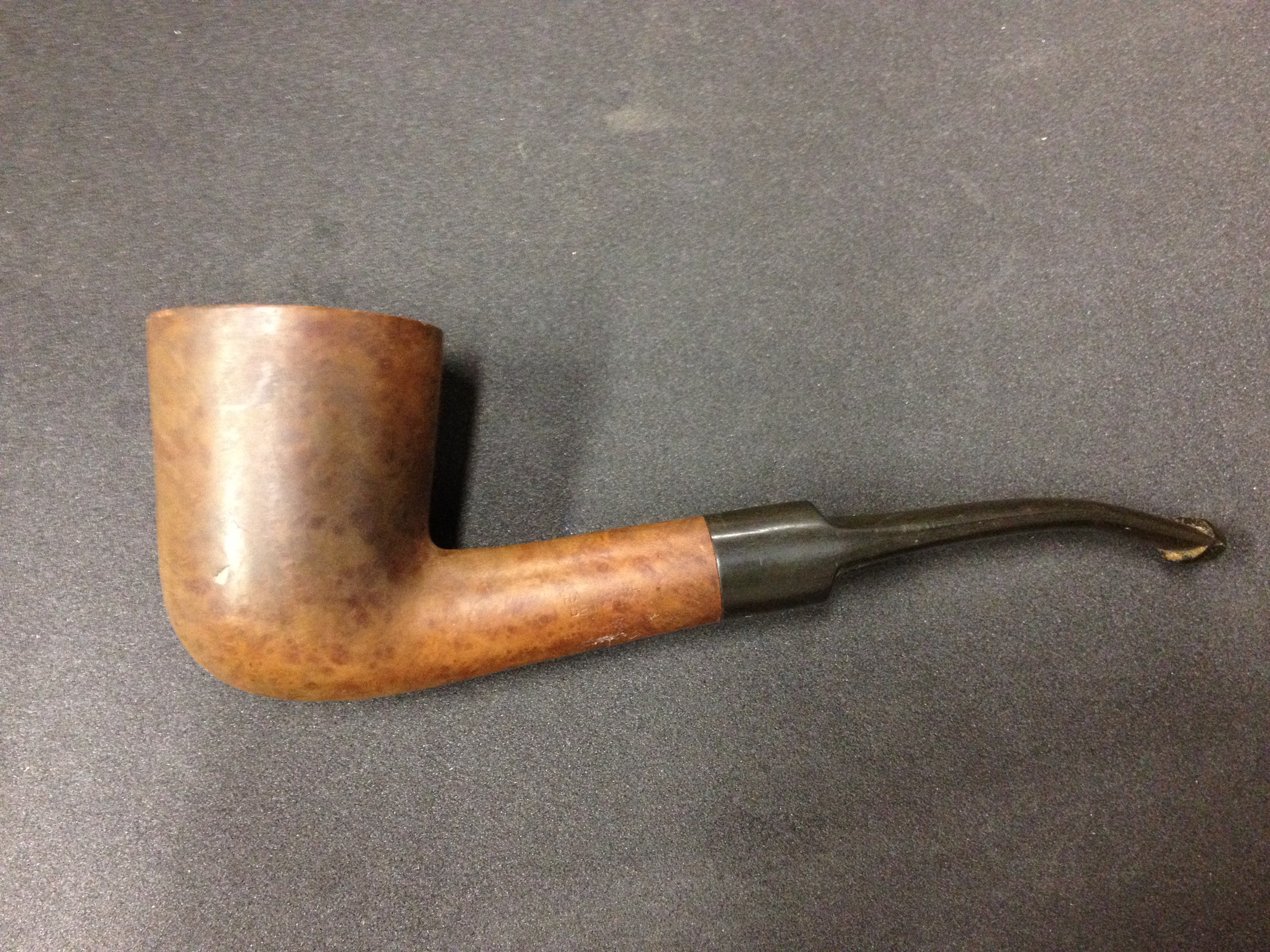
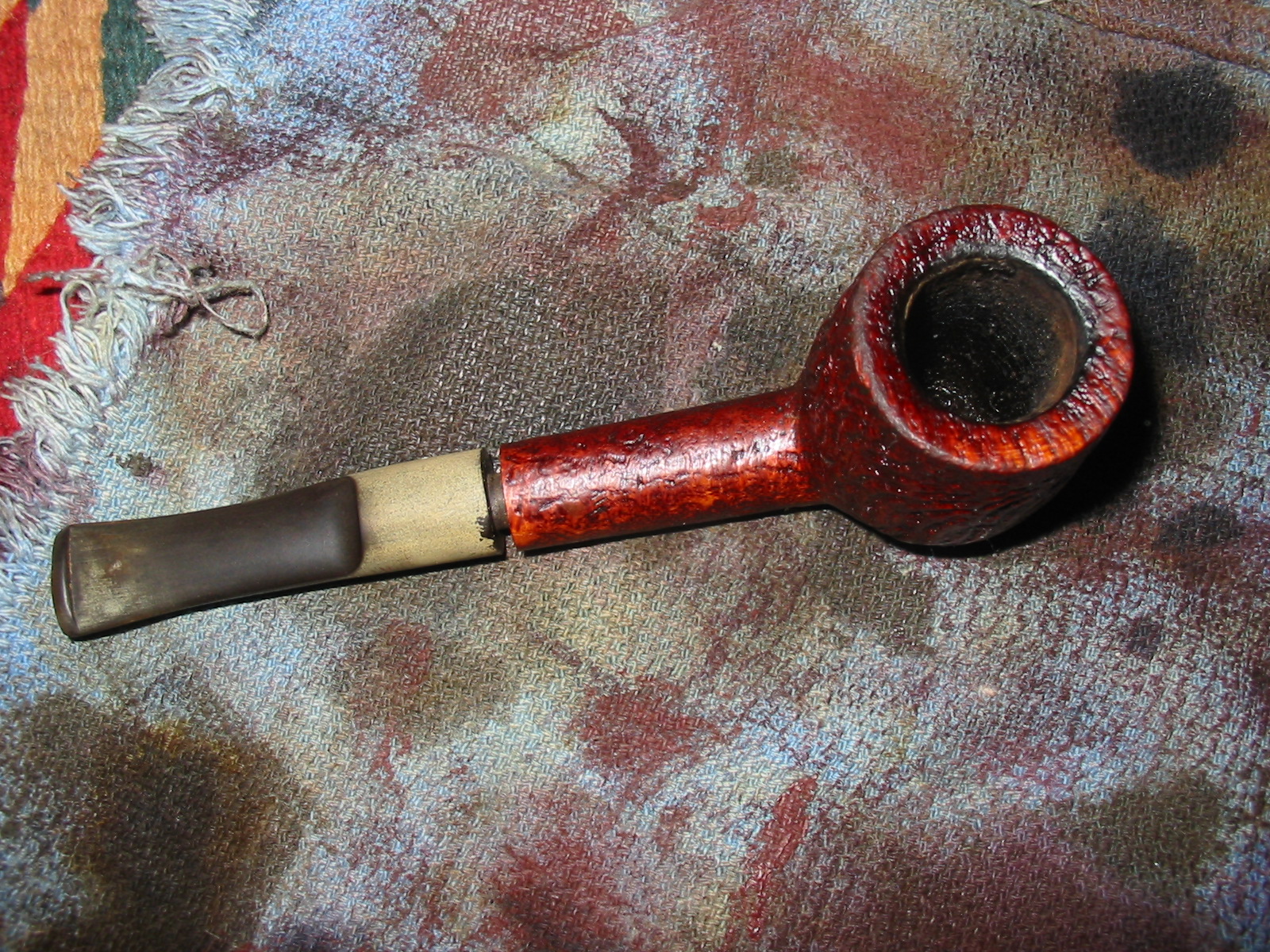
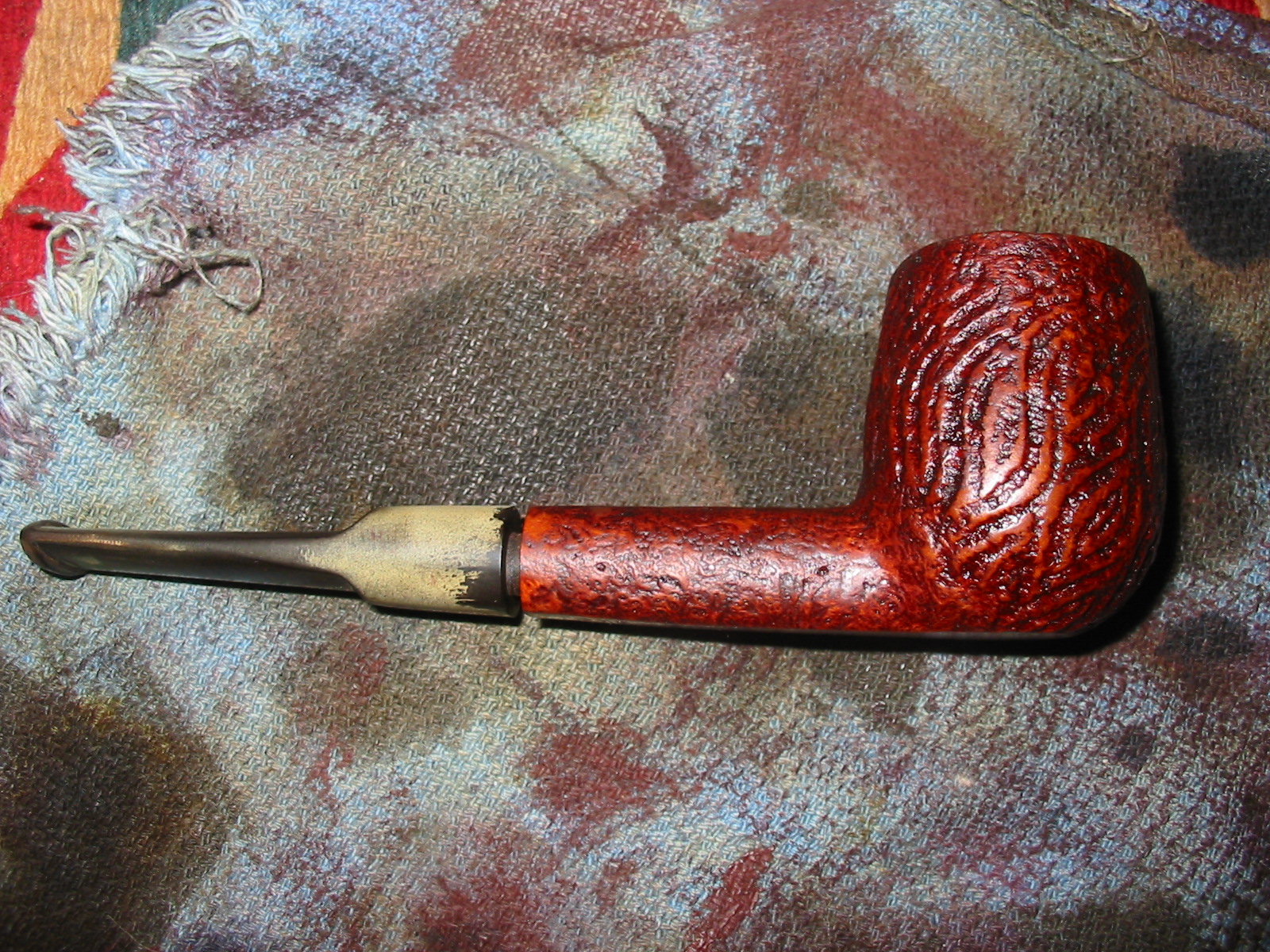
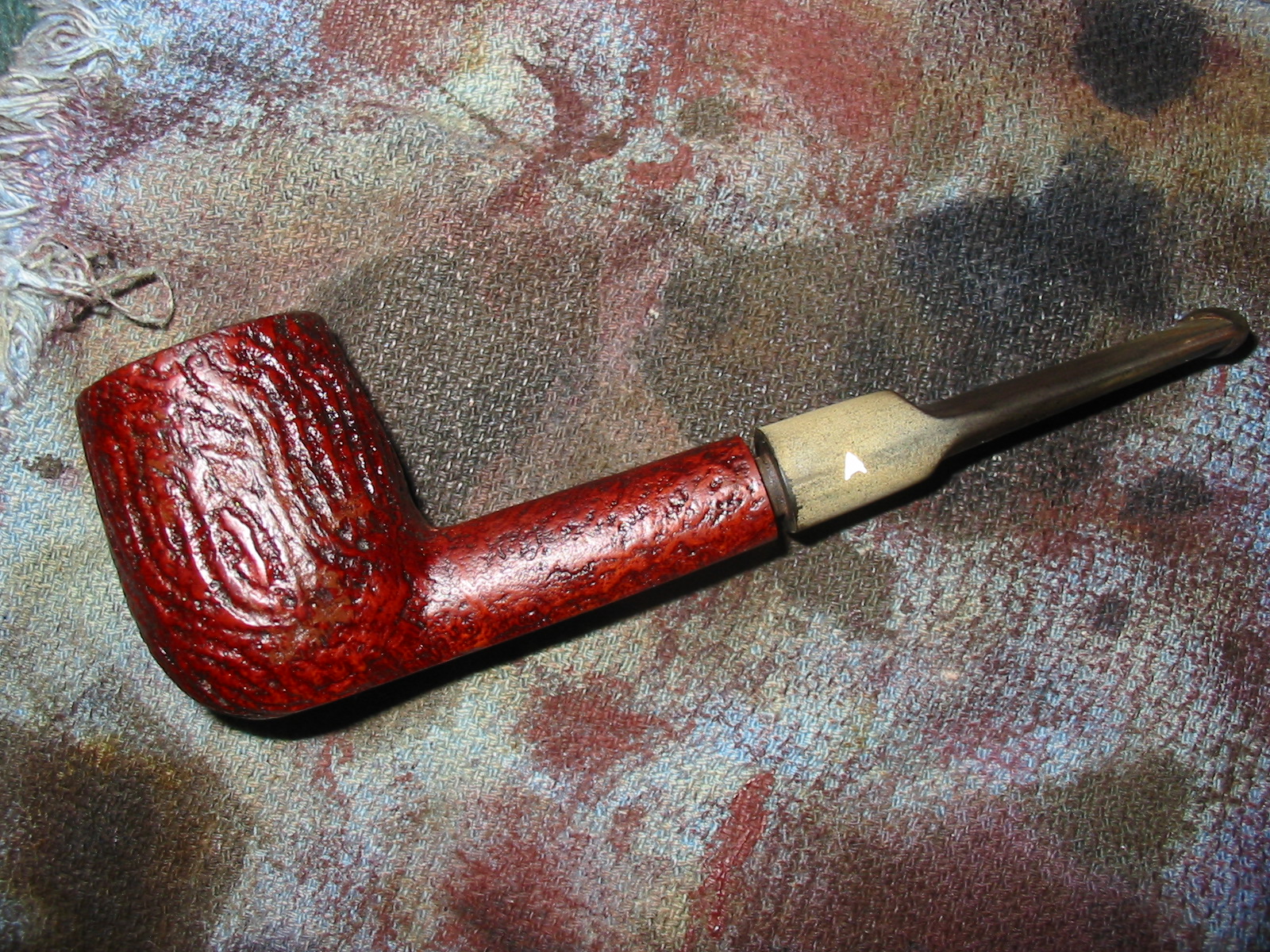
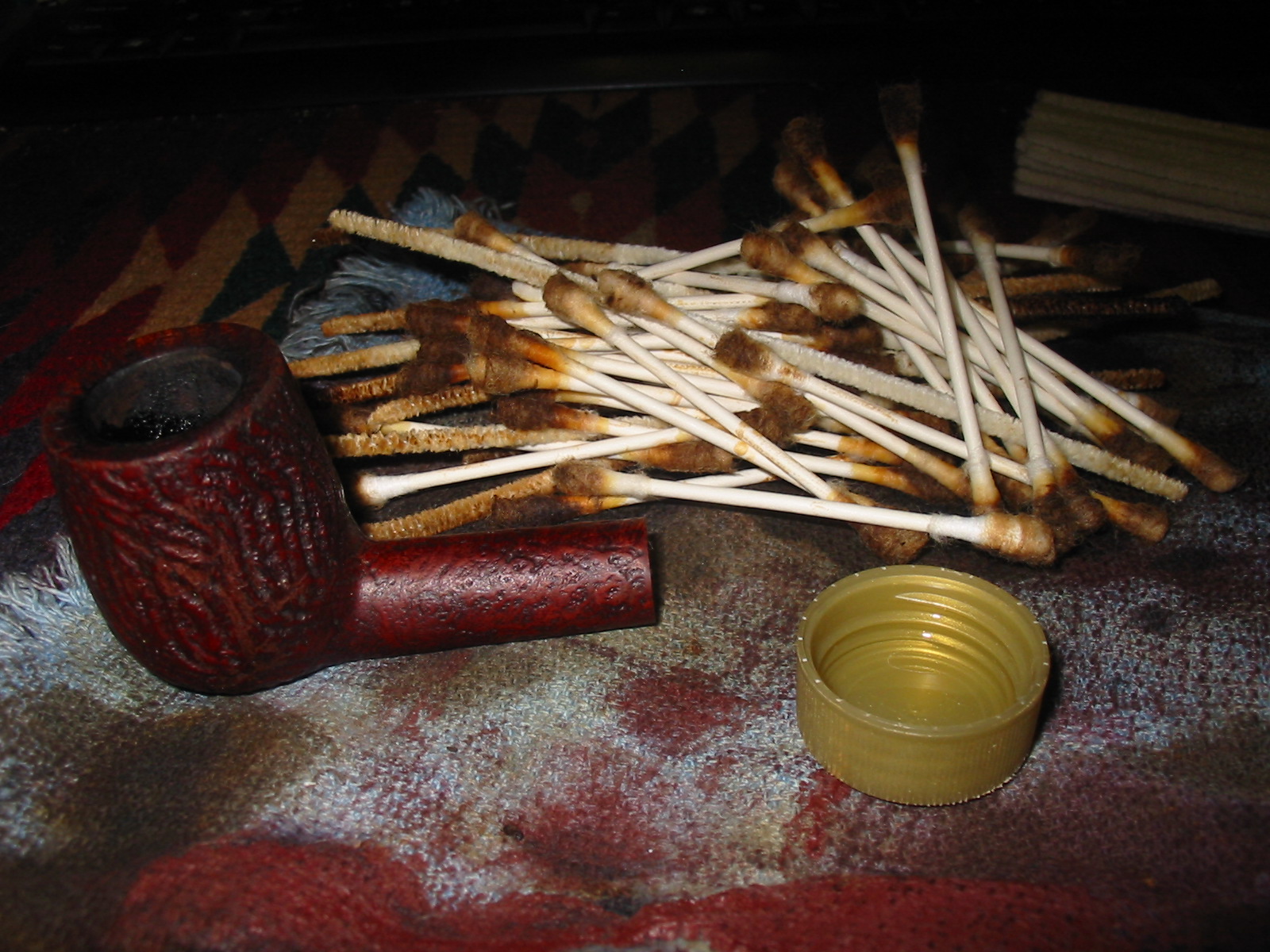
Tag Archives: Oxidation

Restemming a Bruyere Krone Billiard


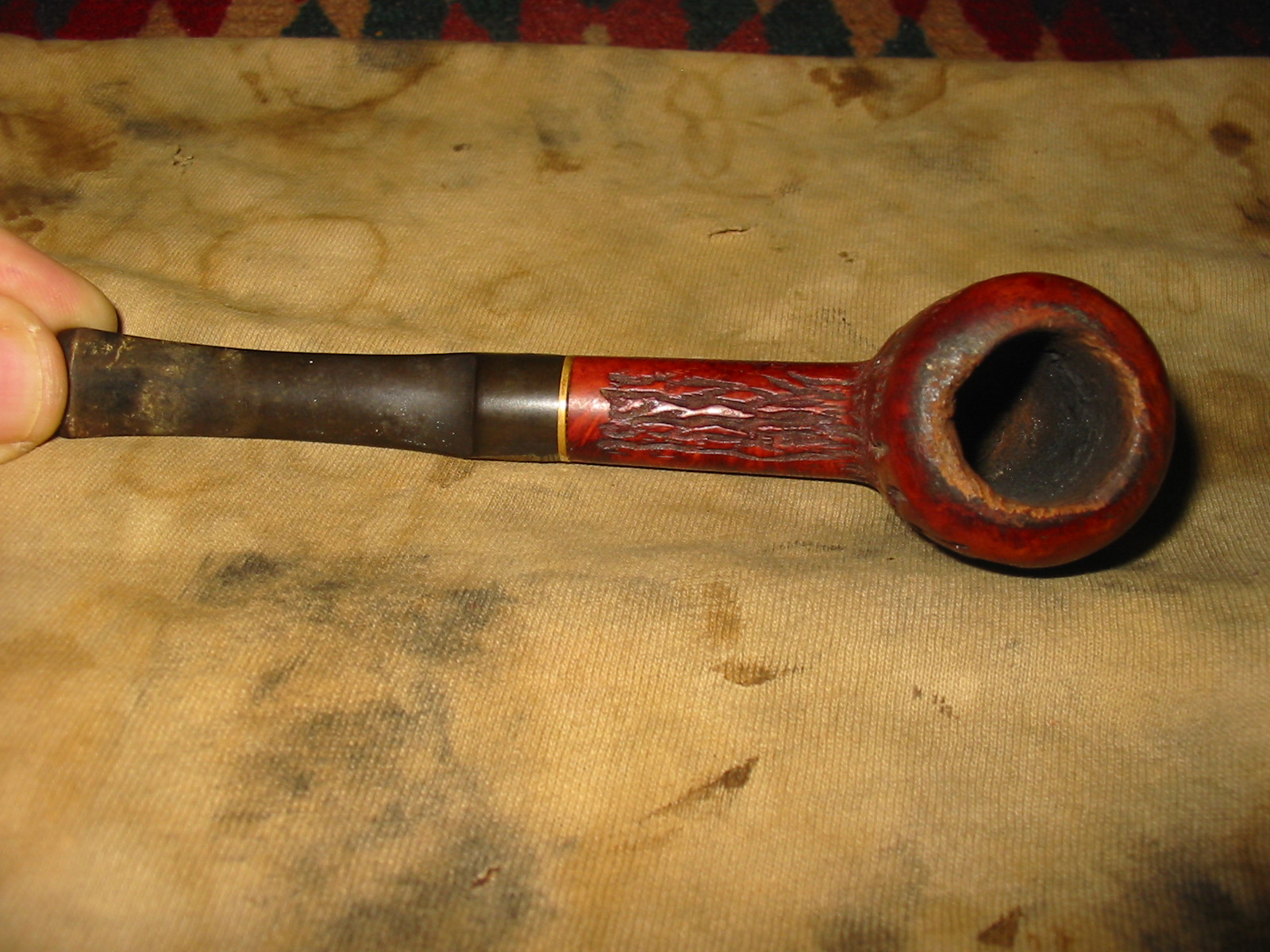
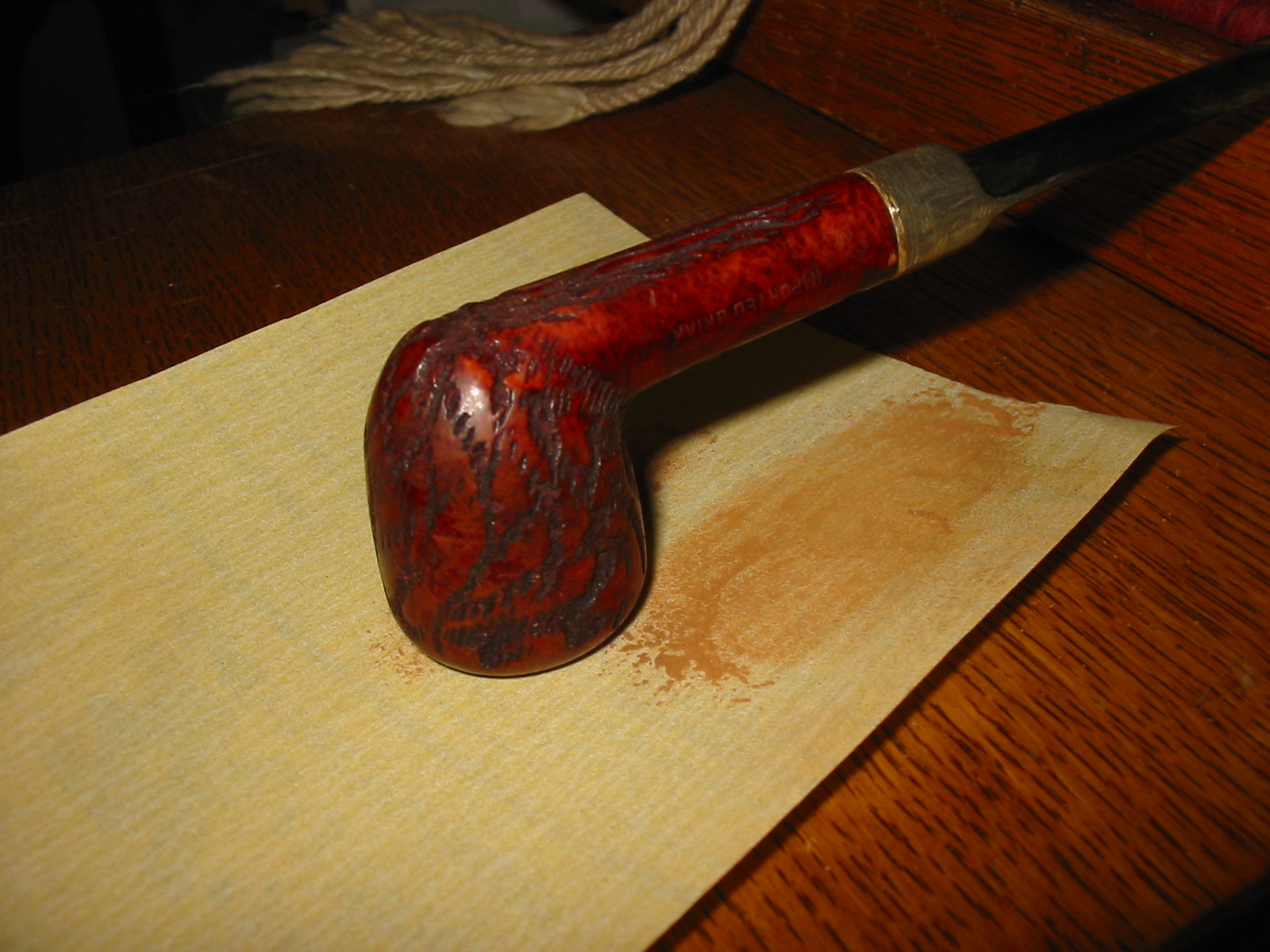
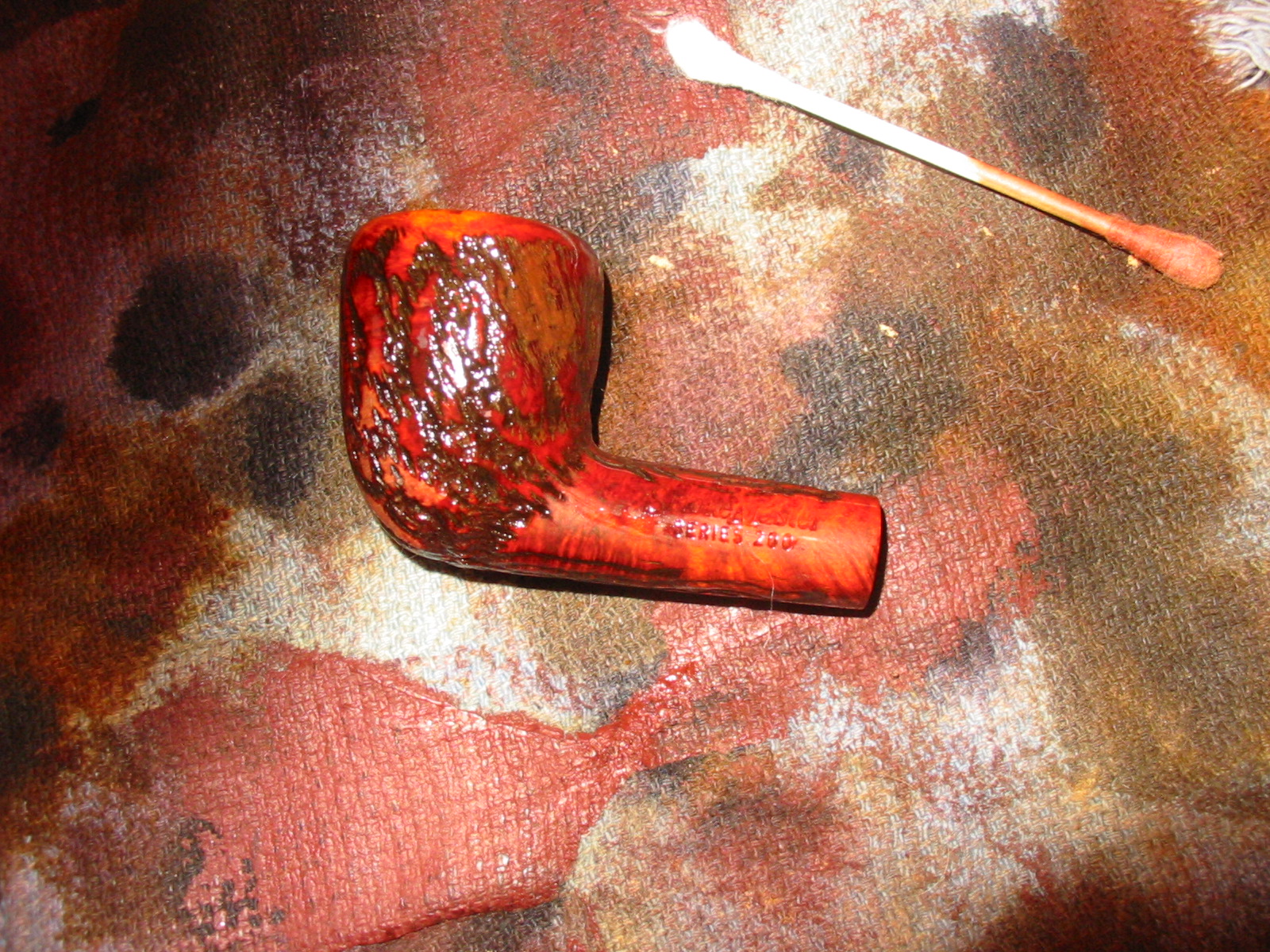
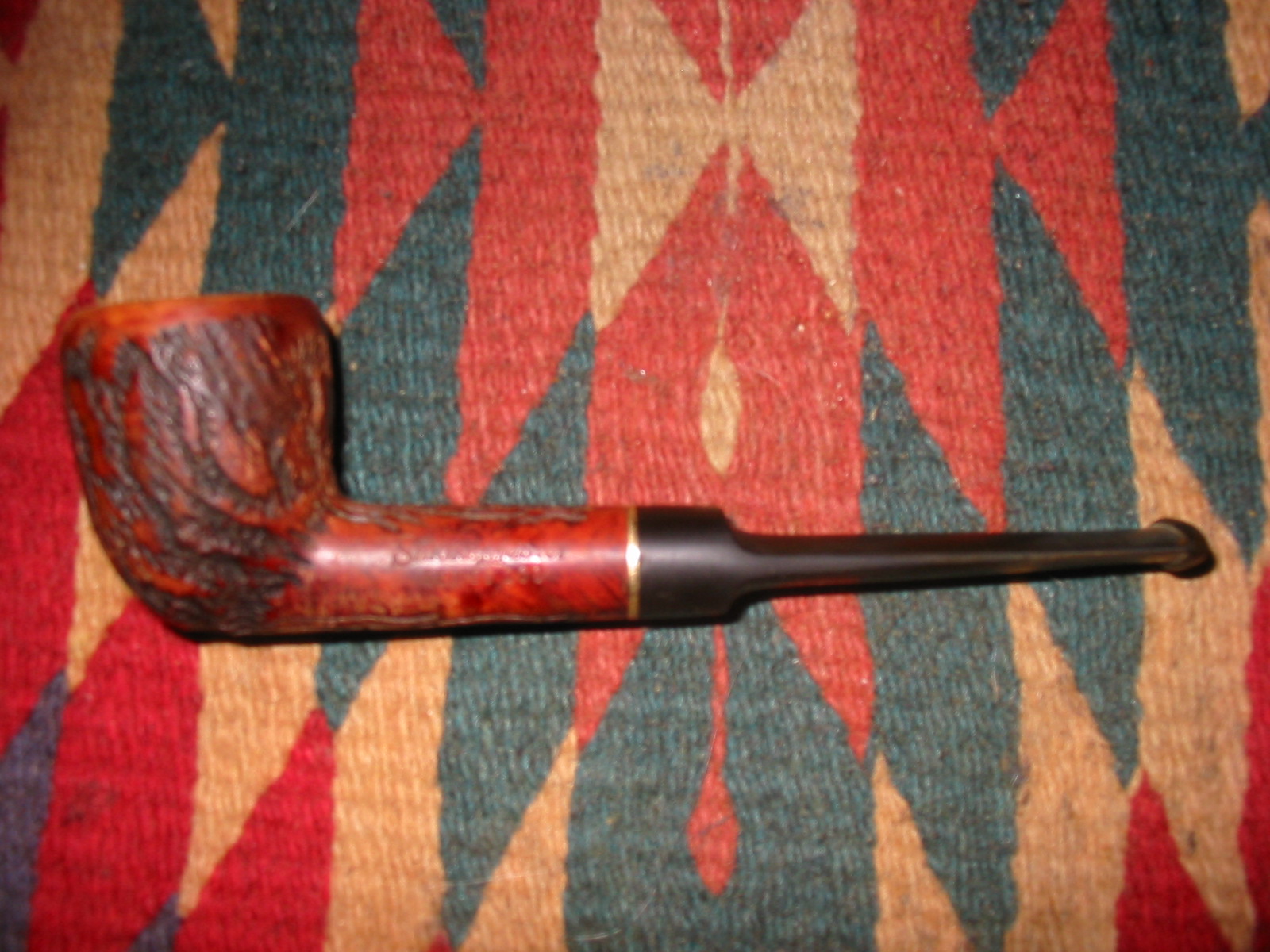
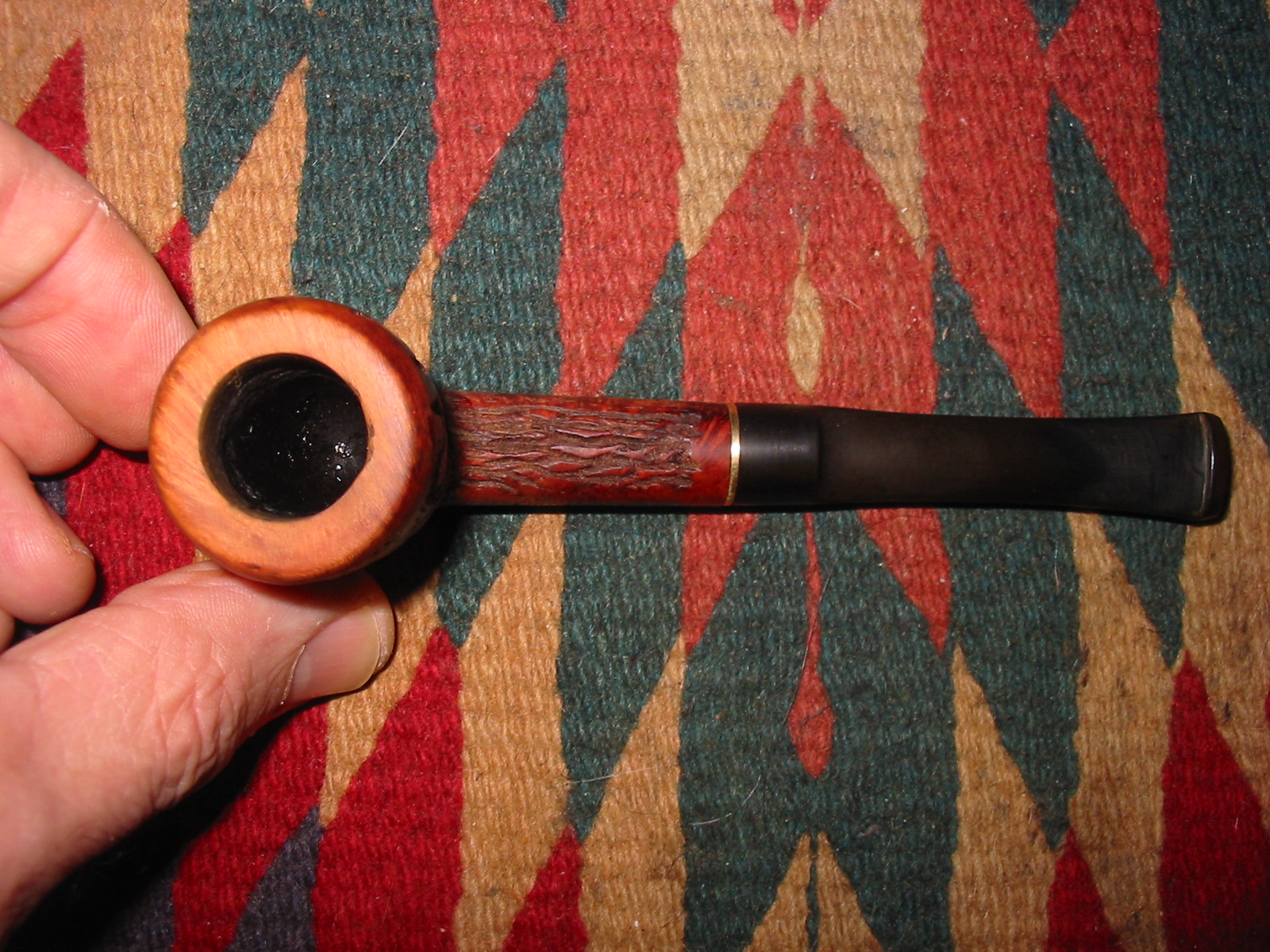
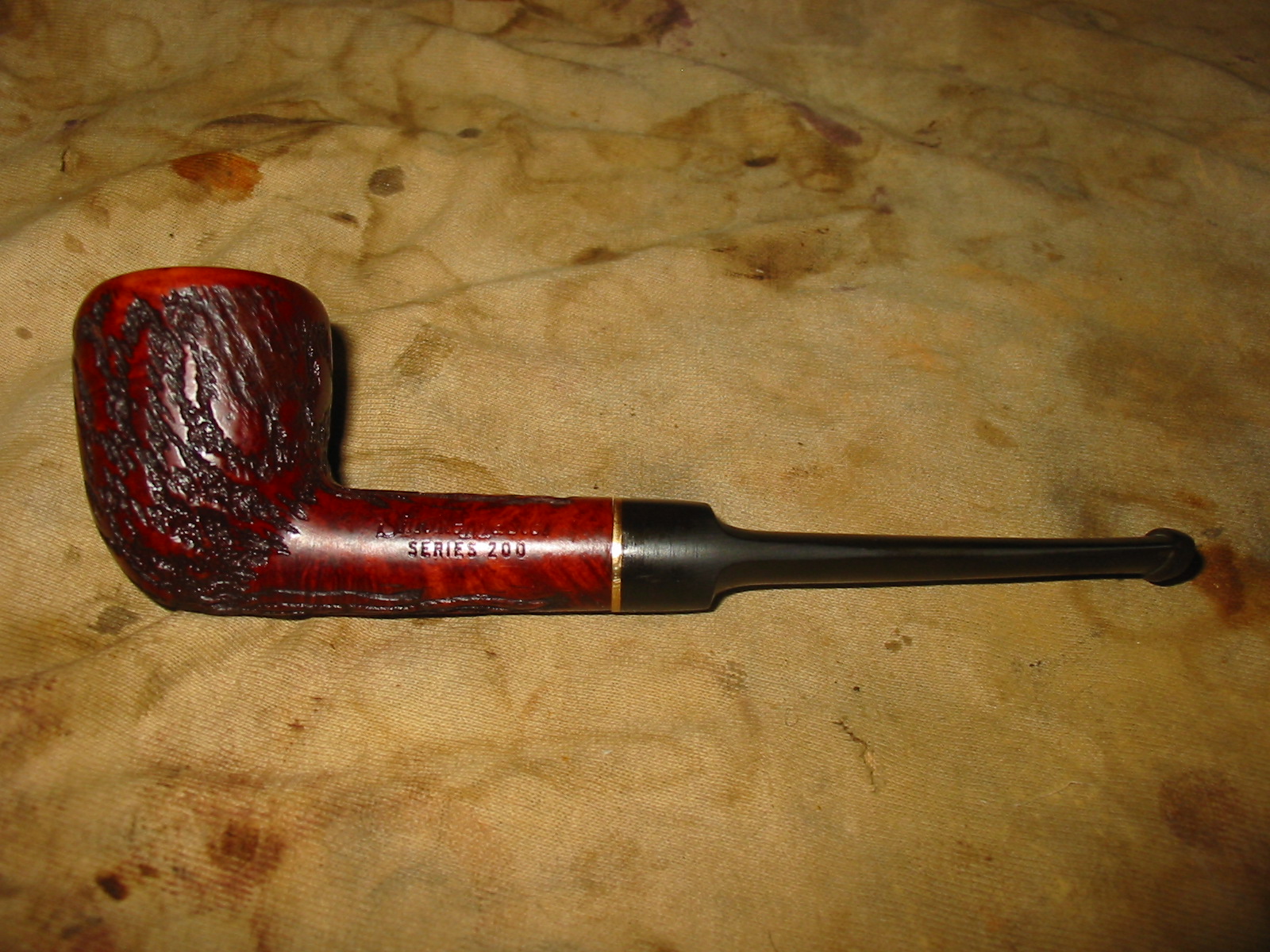
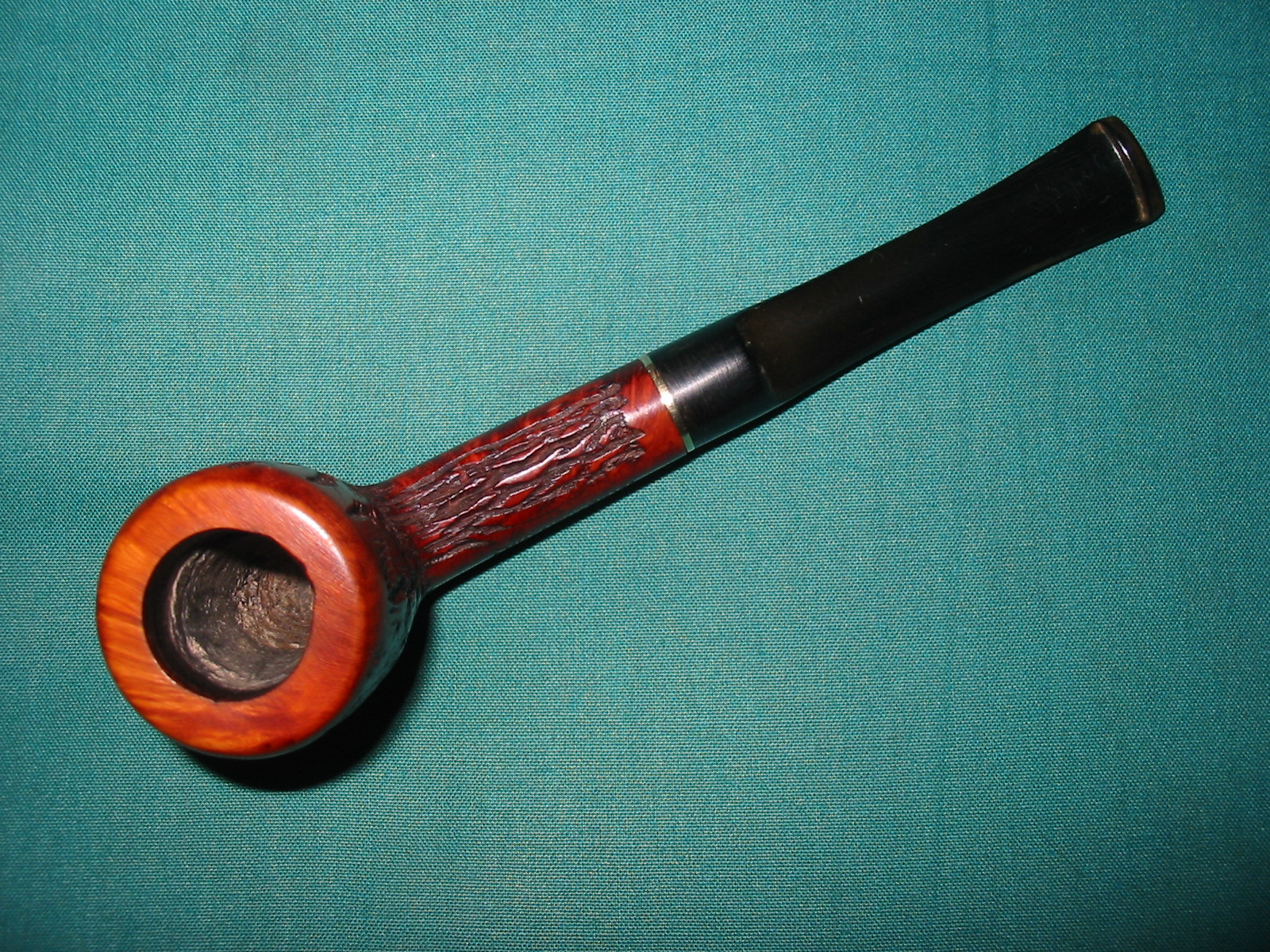
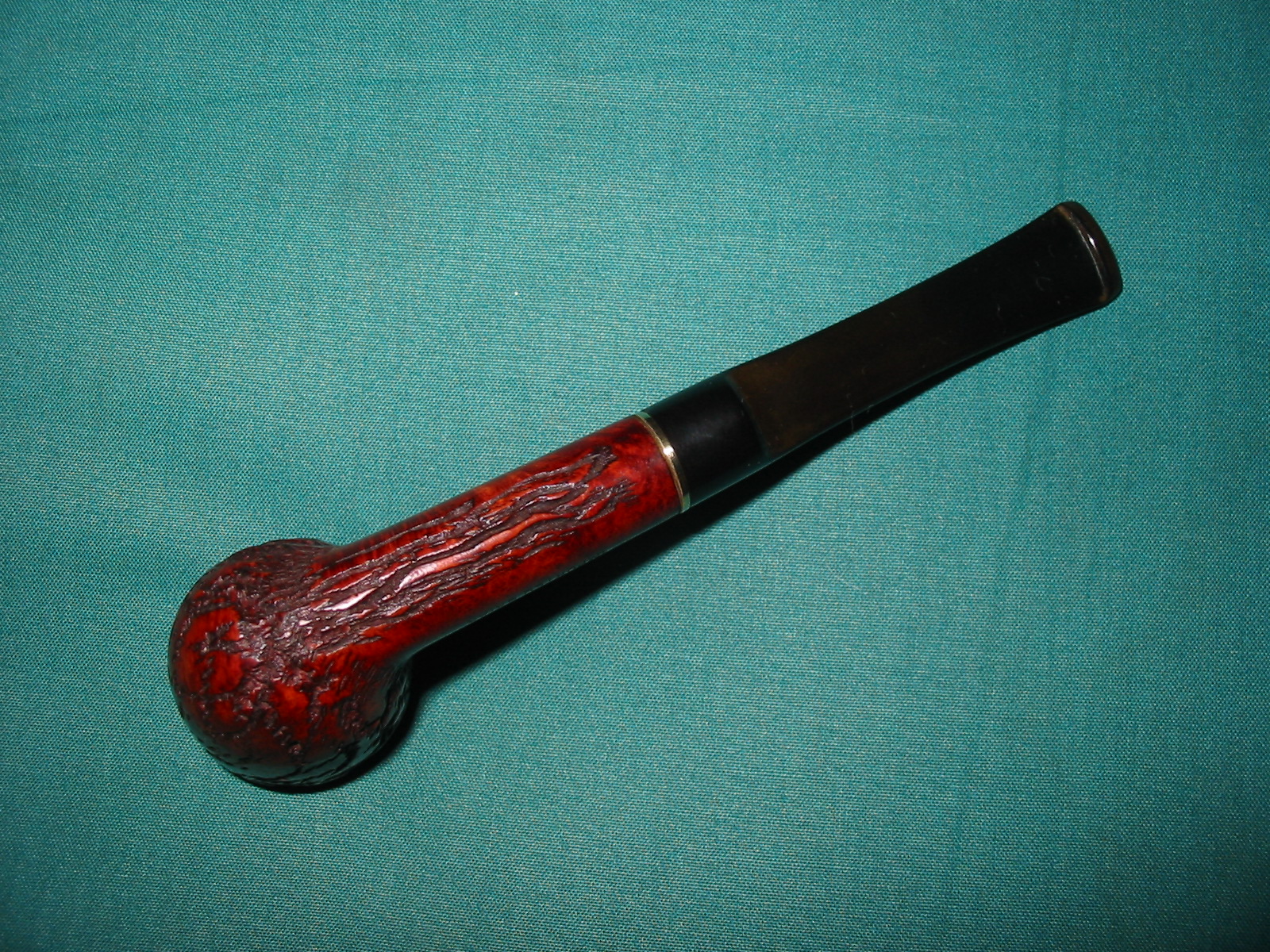
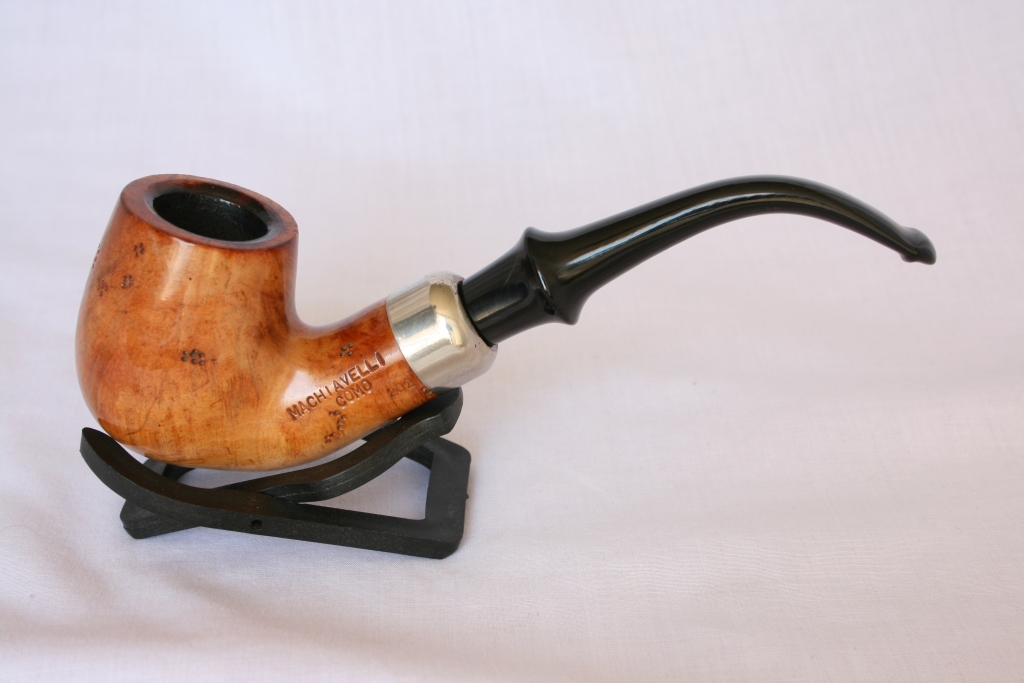
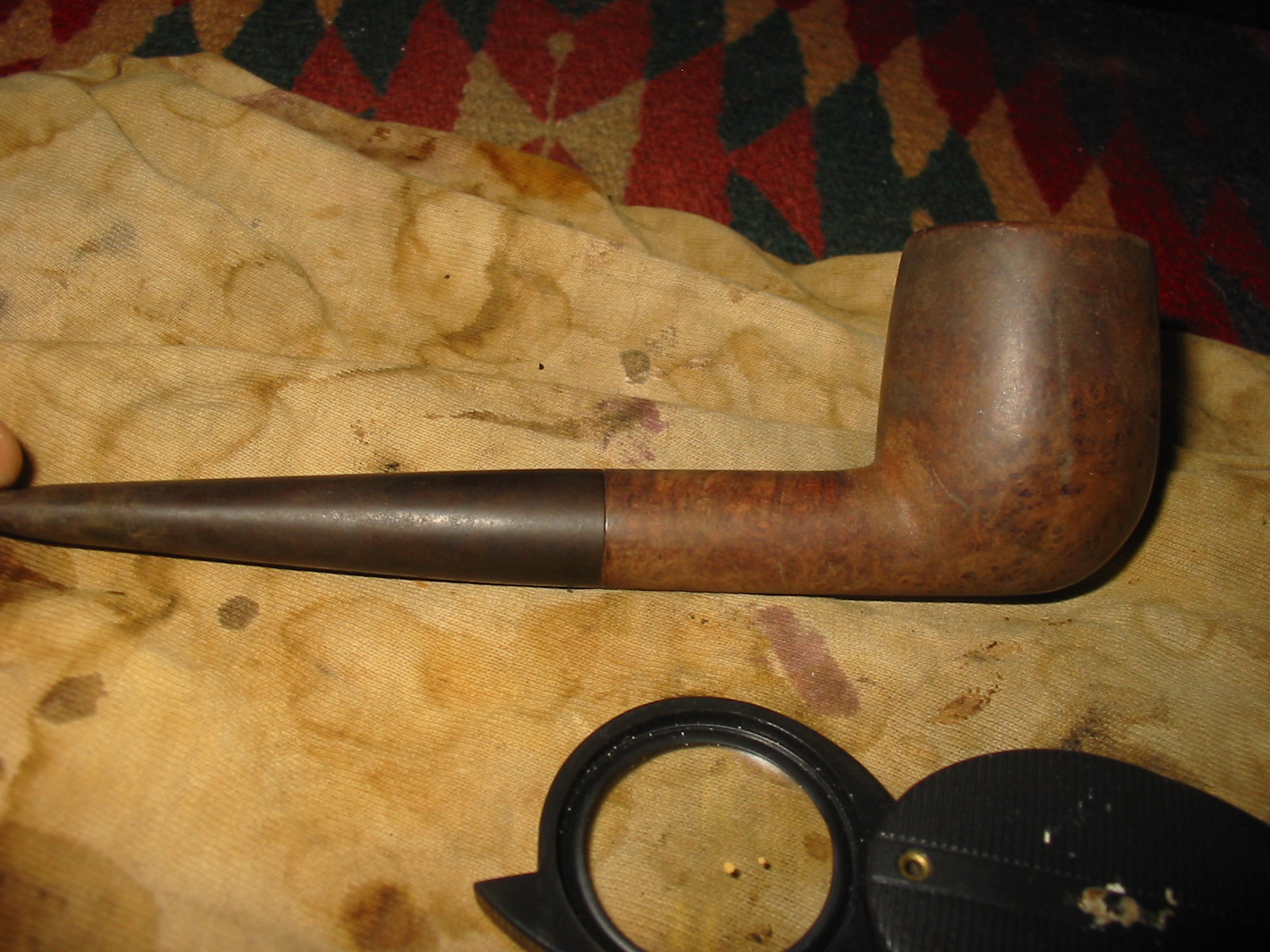
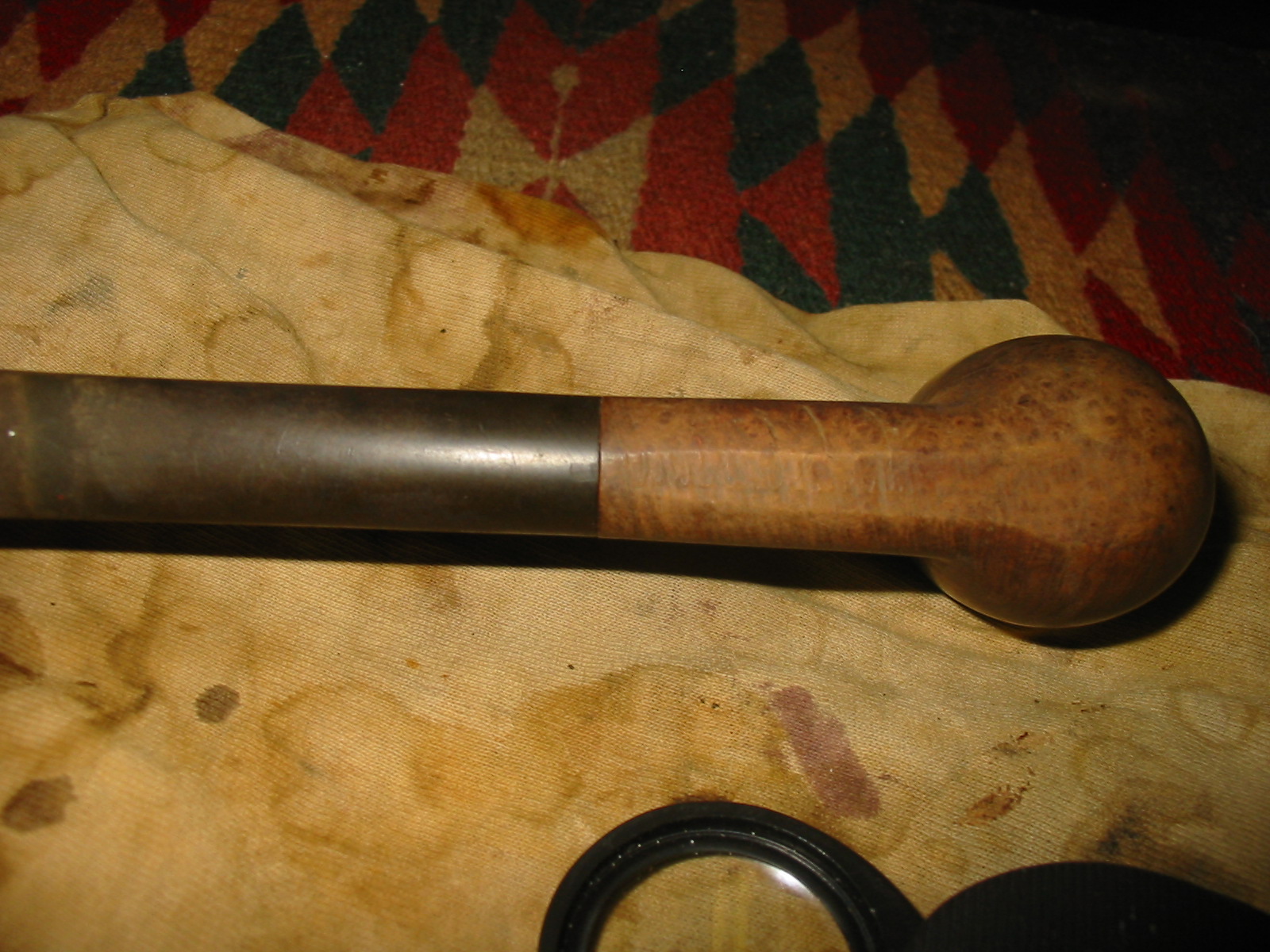
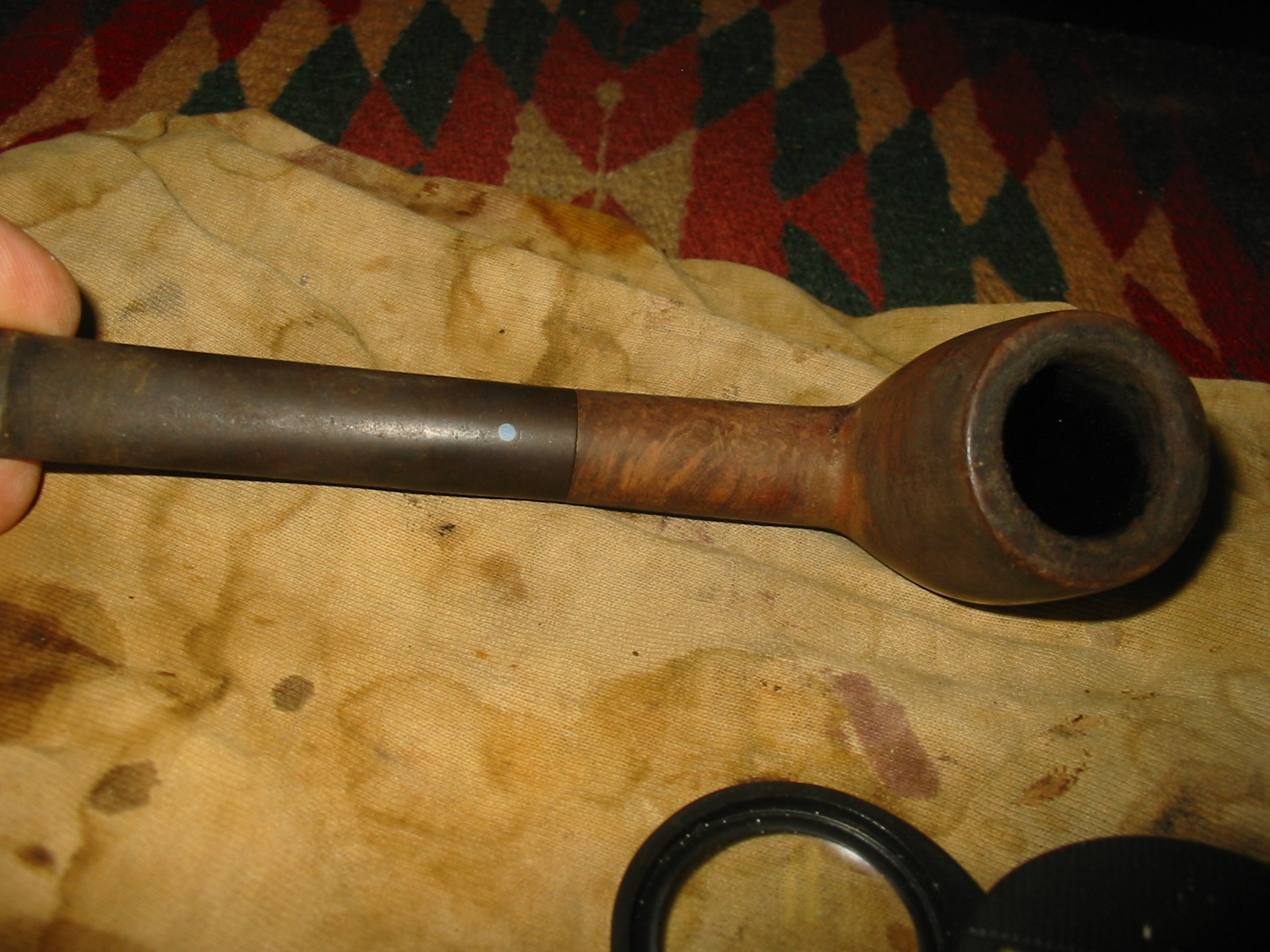
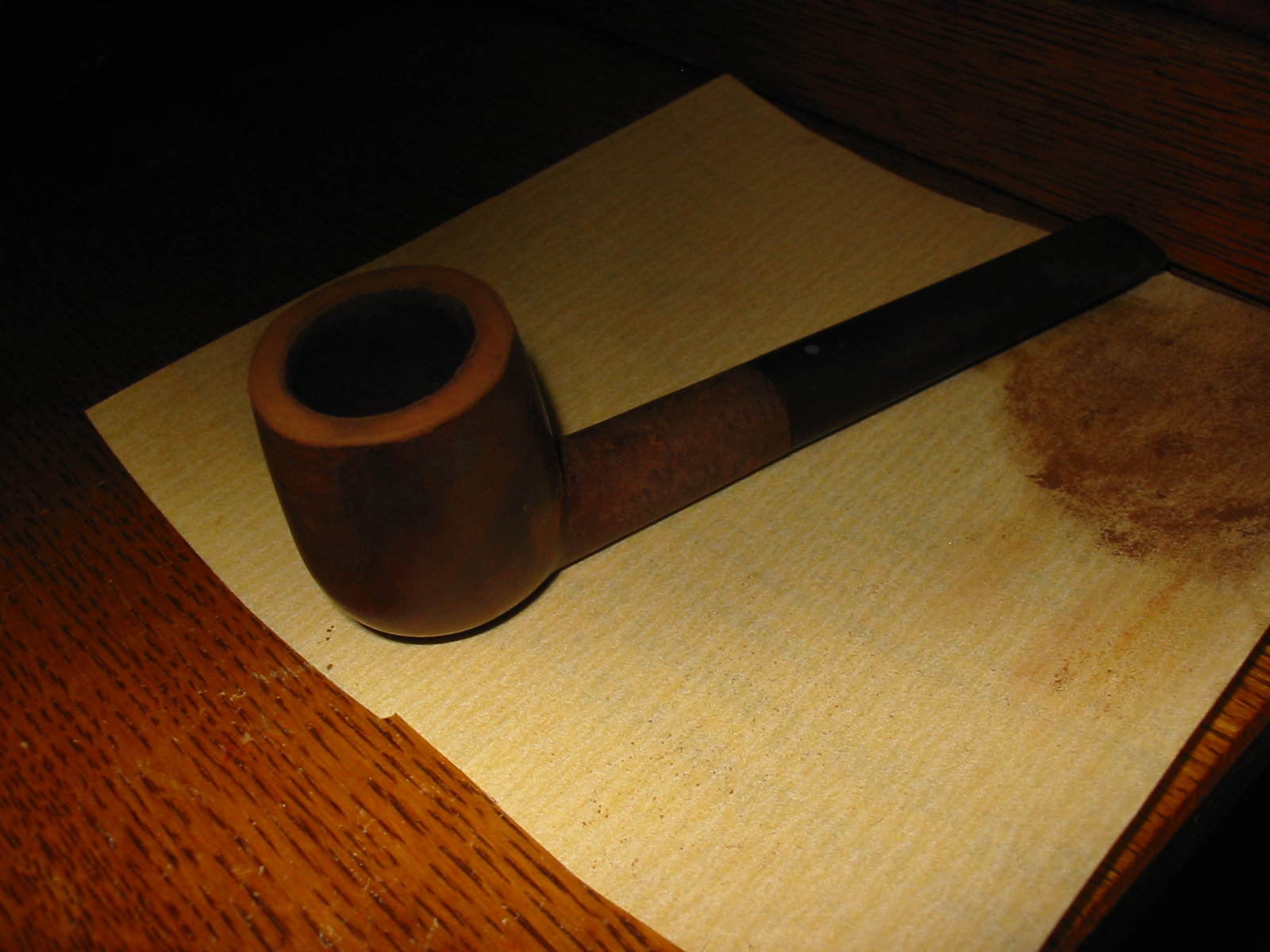
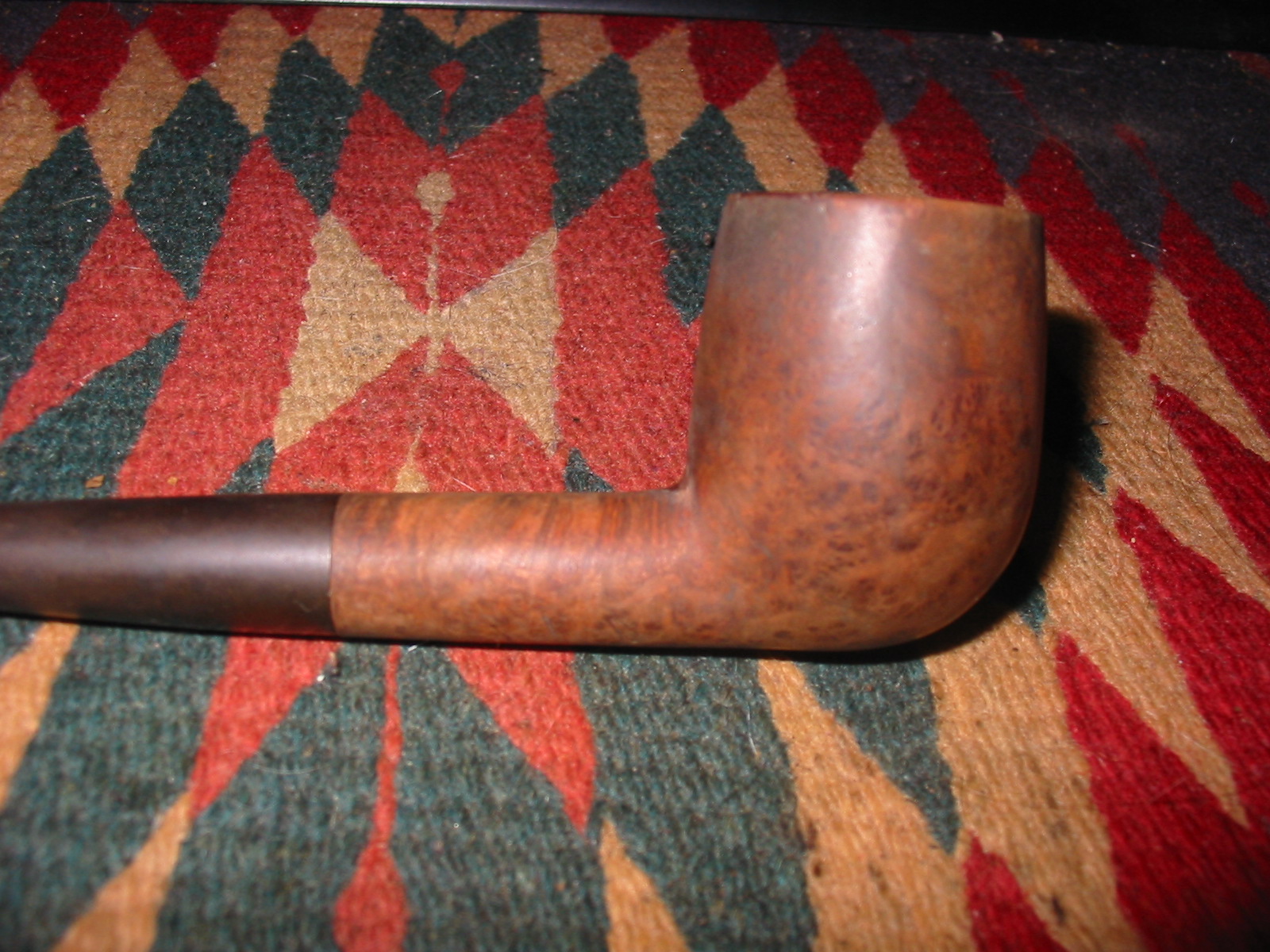
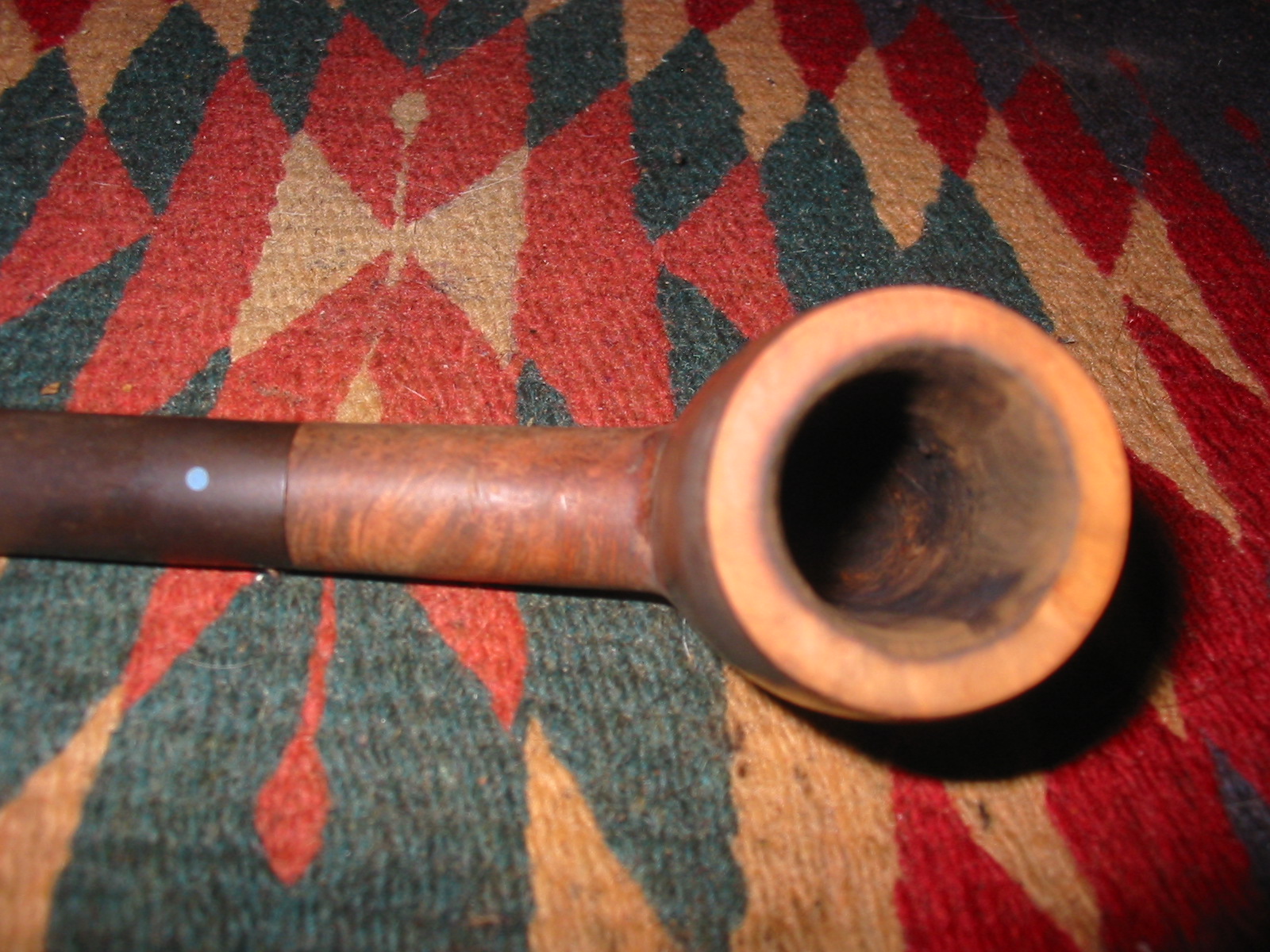
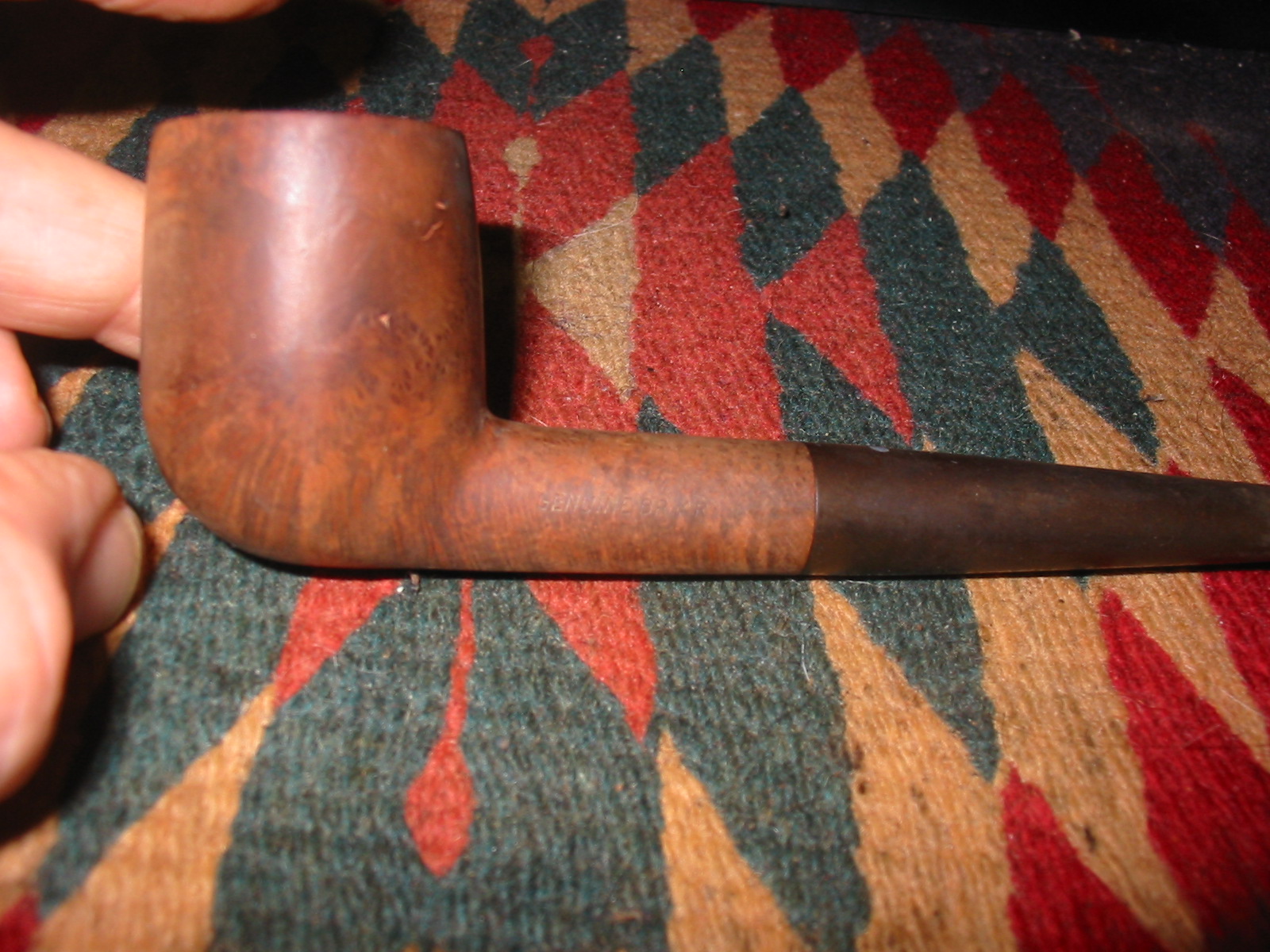
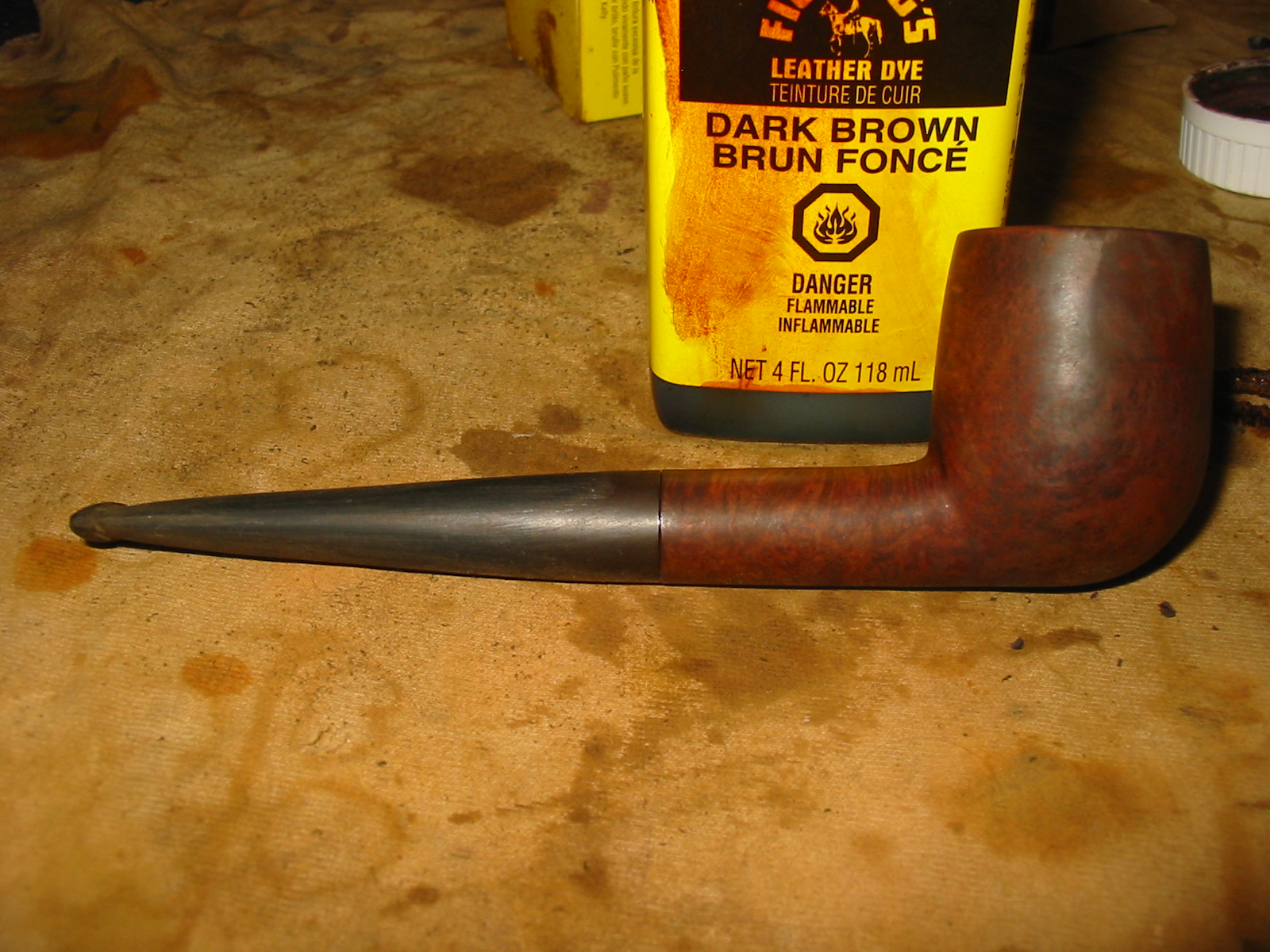
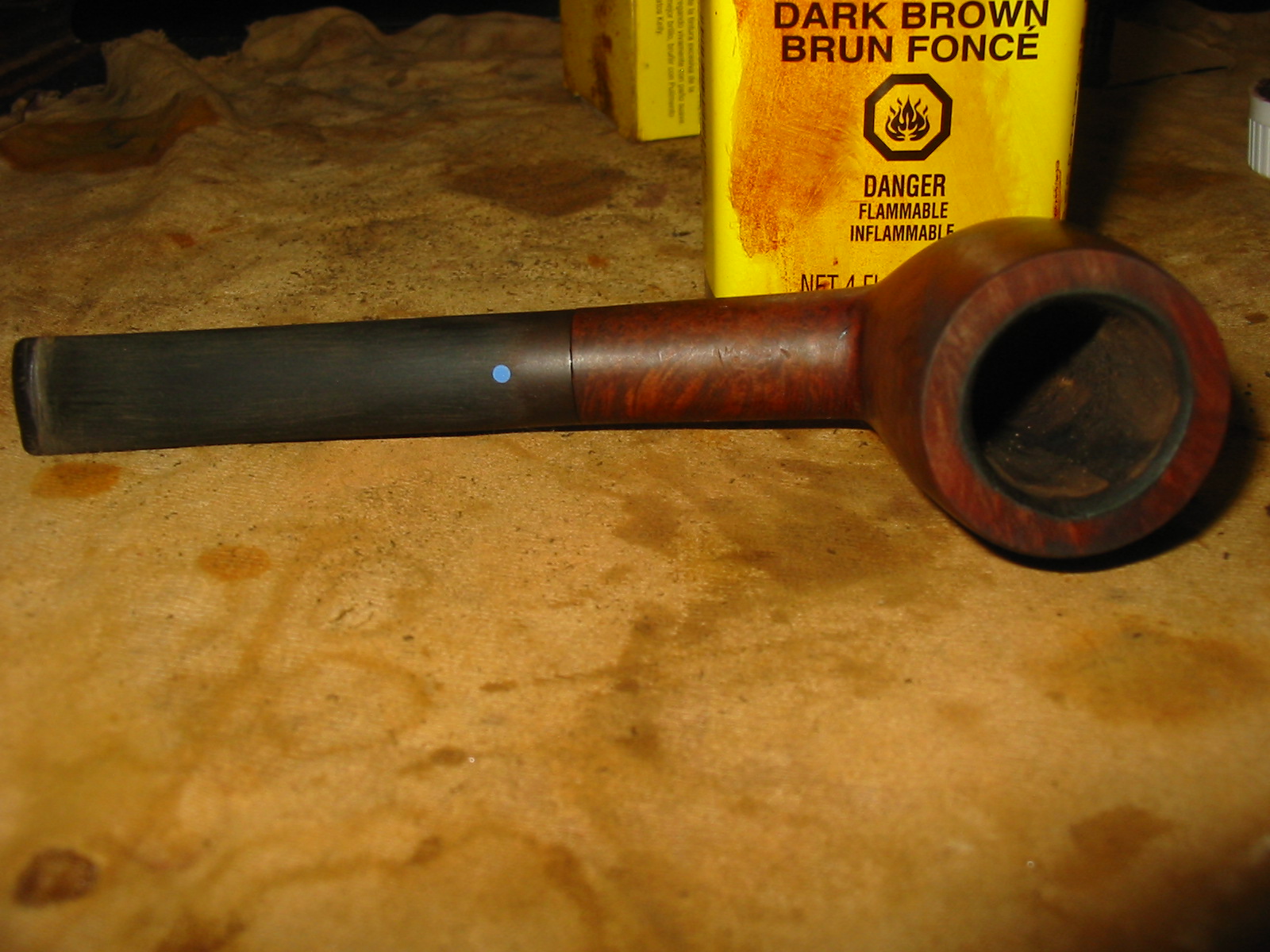
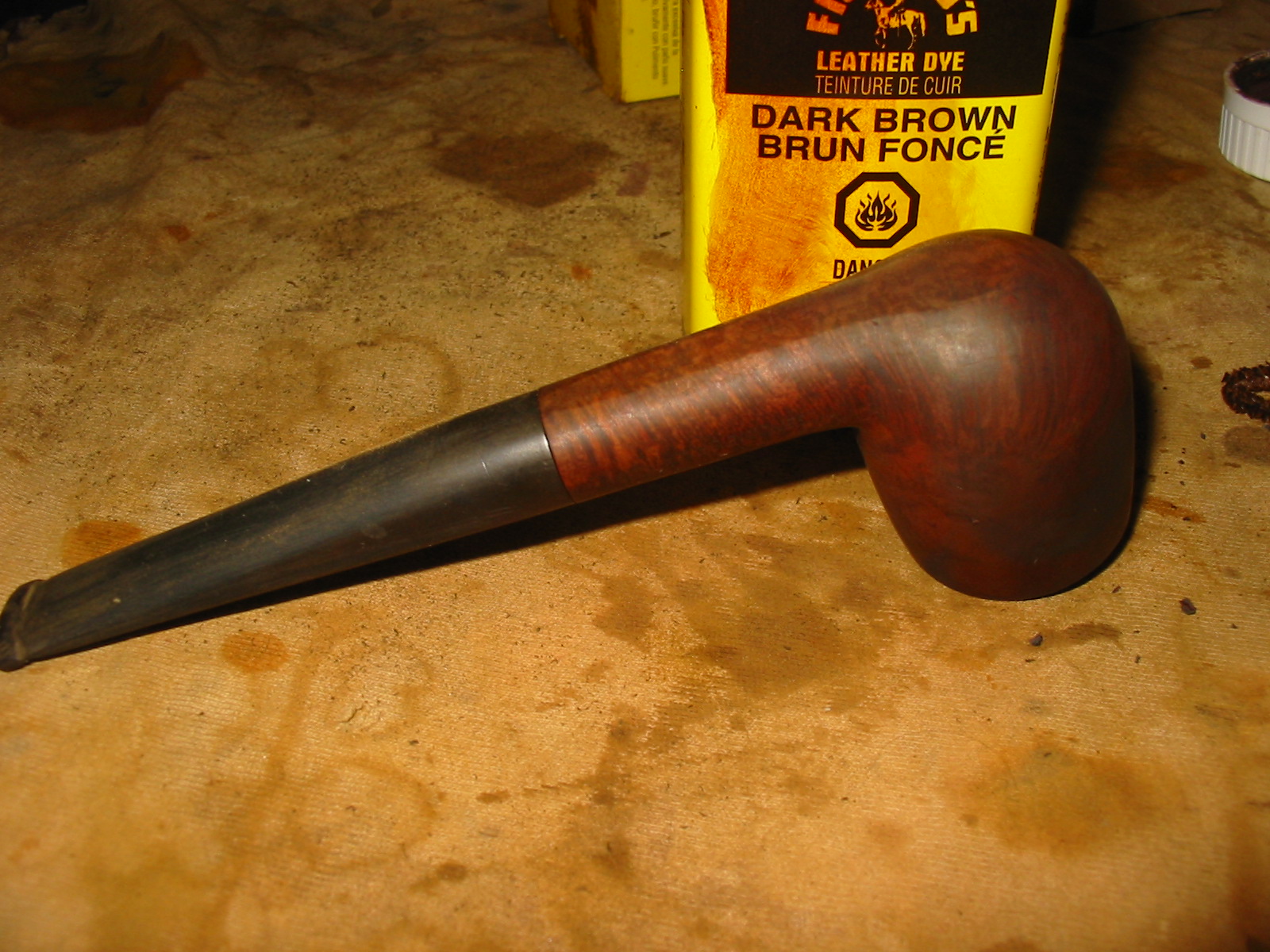
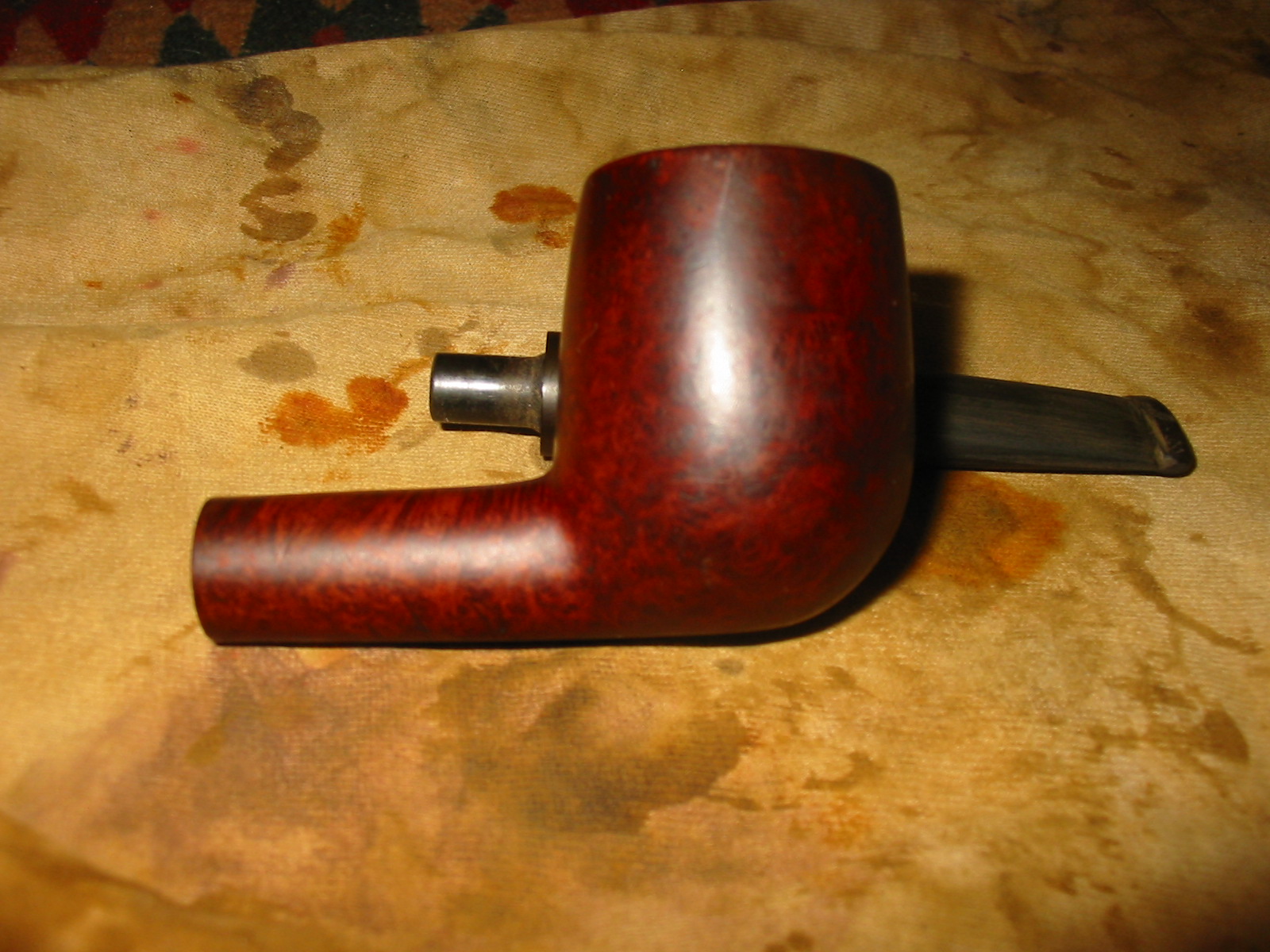
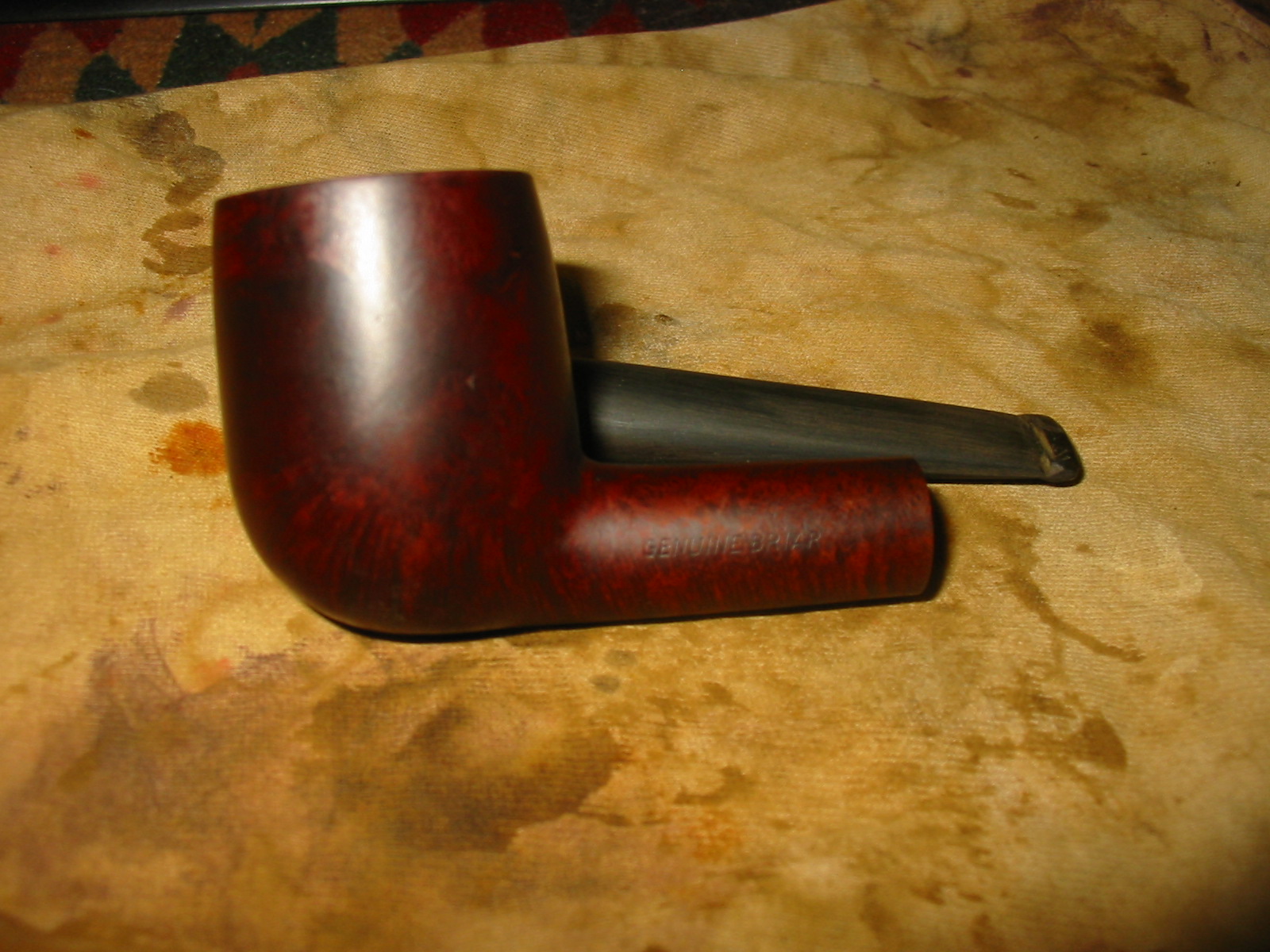
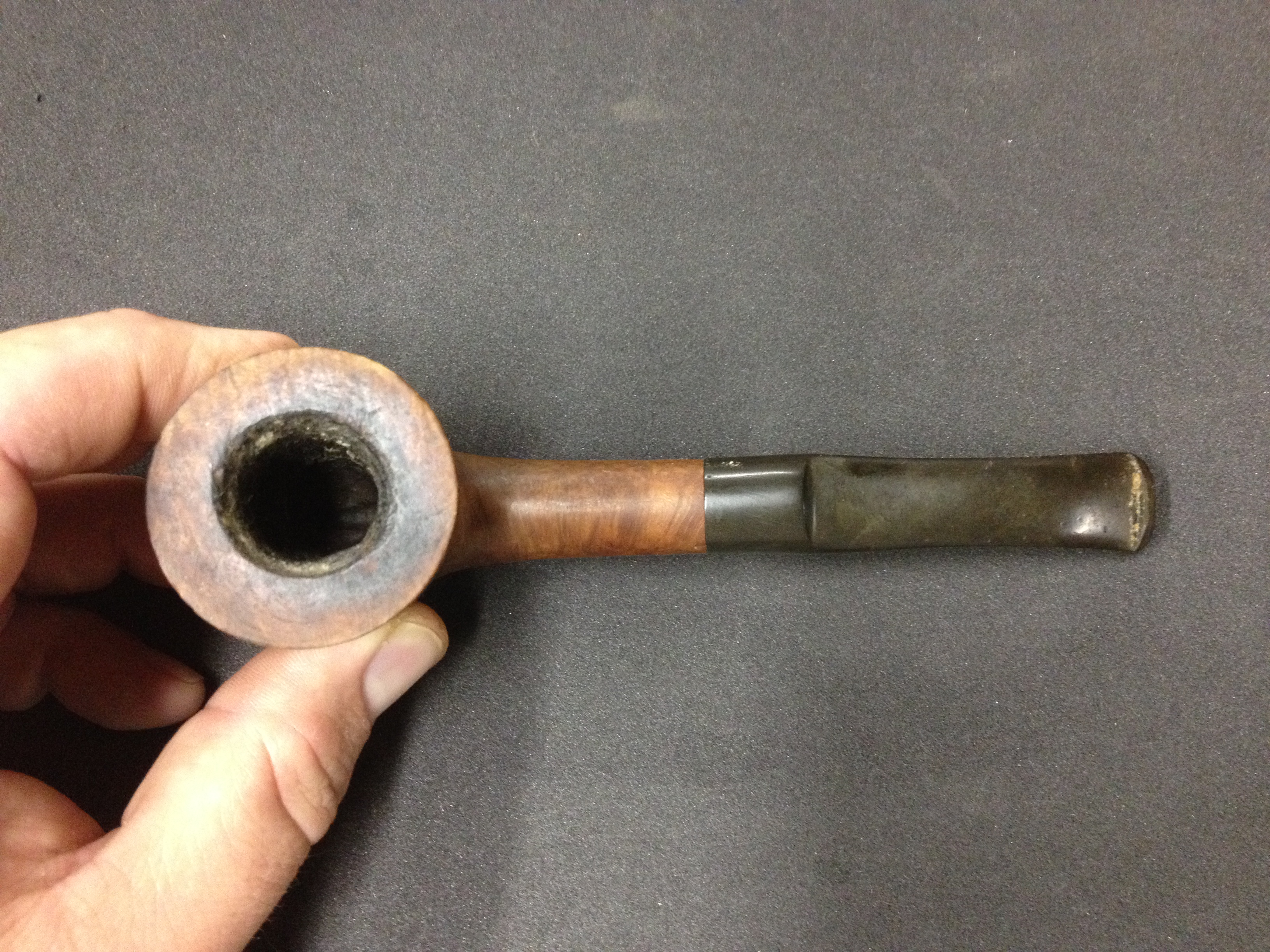
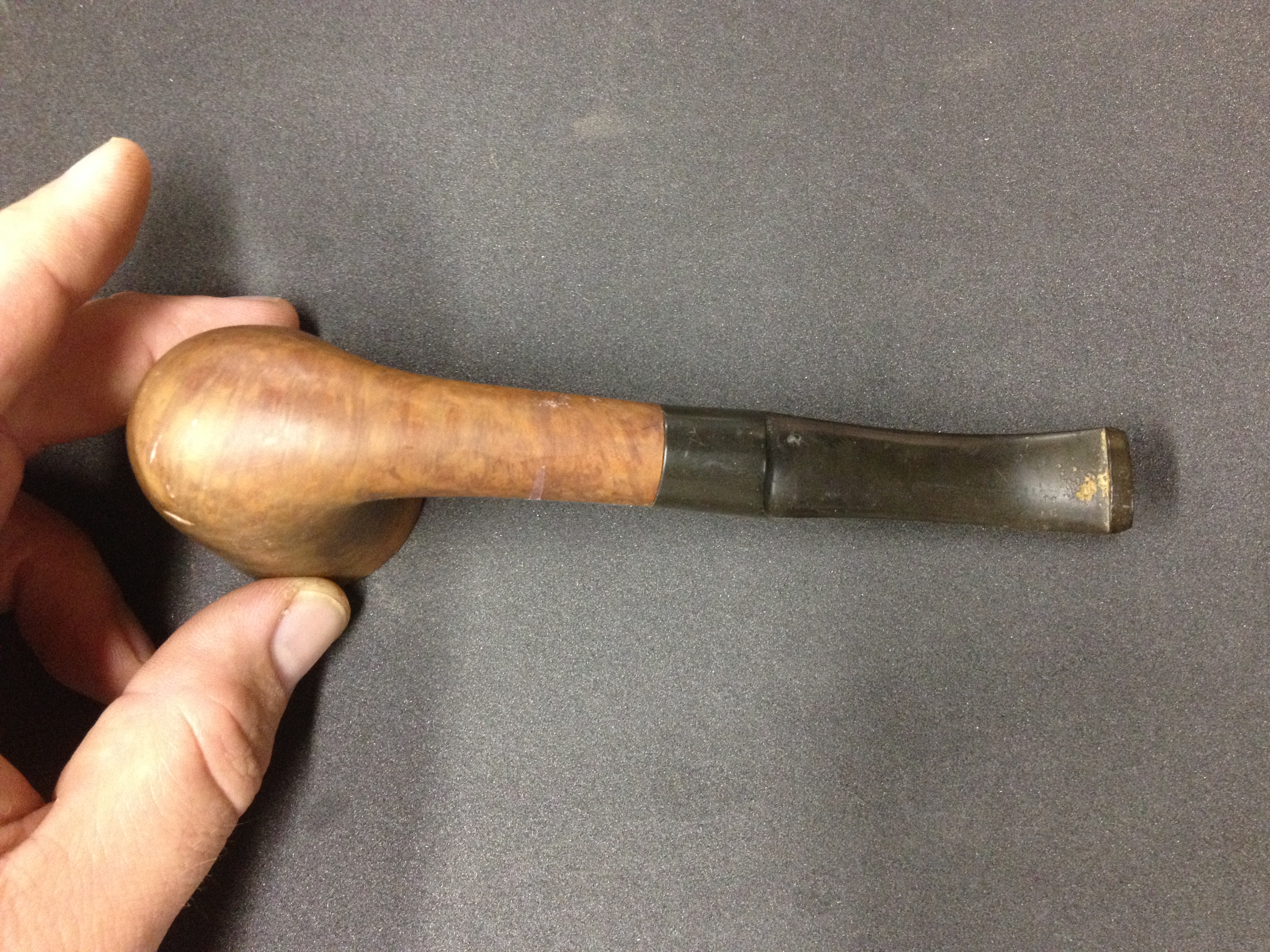
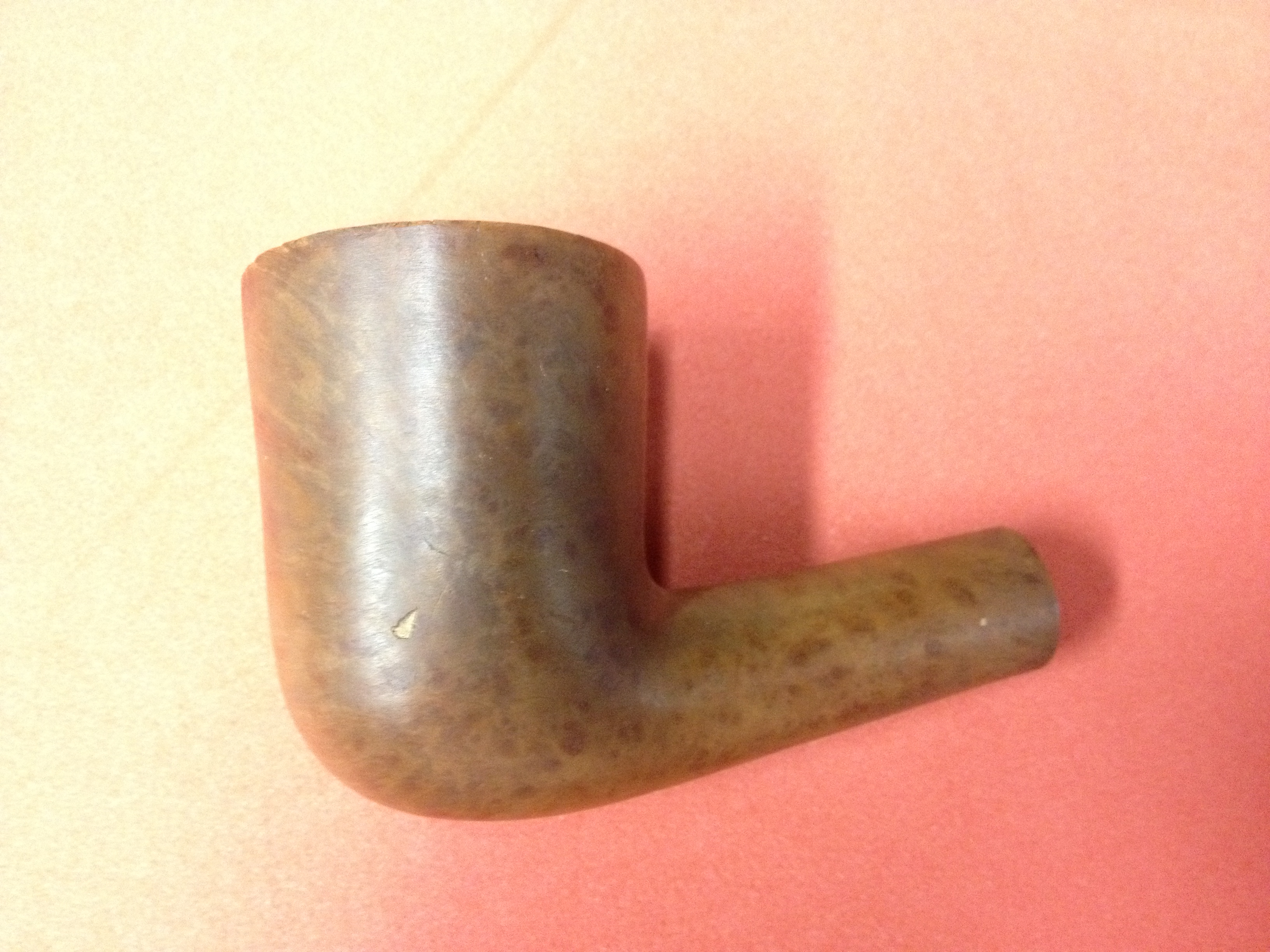
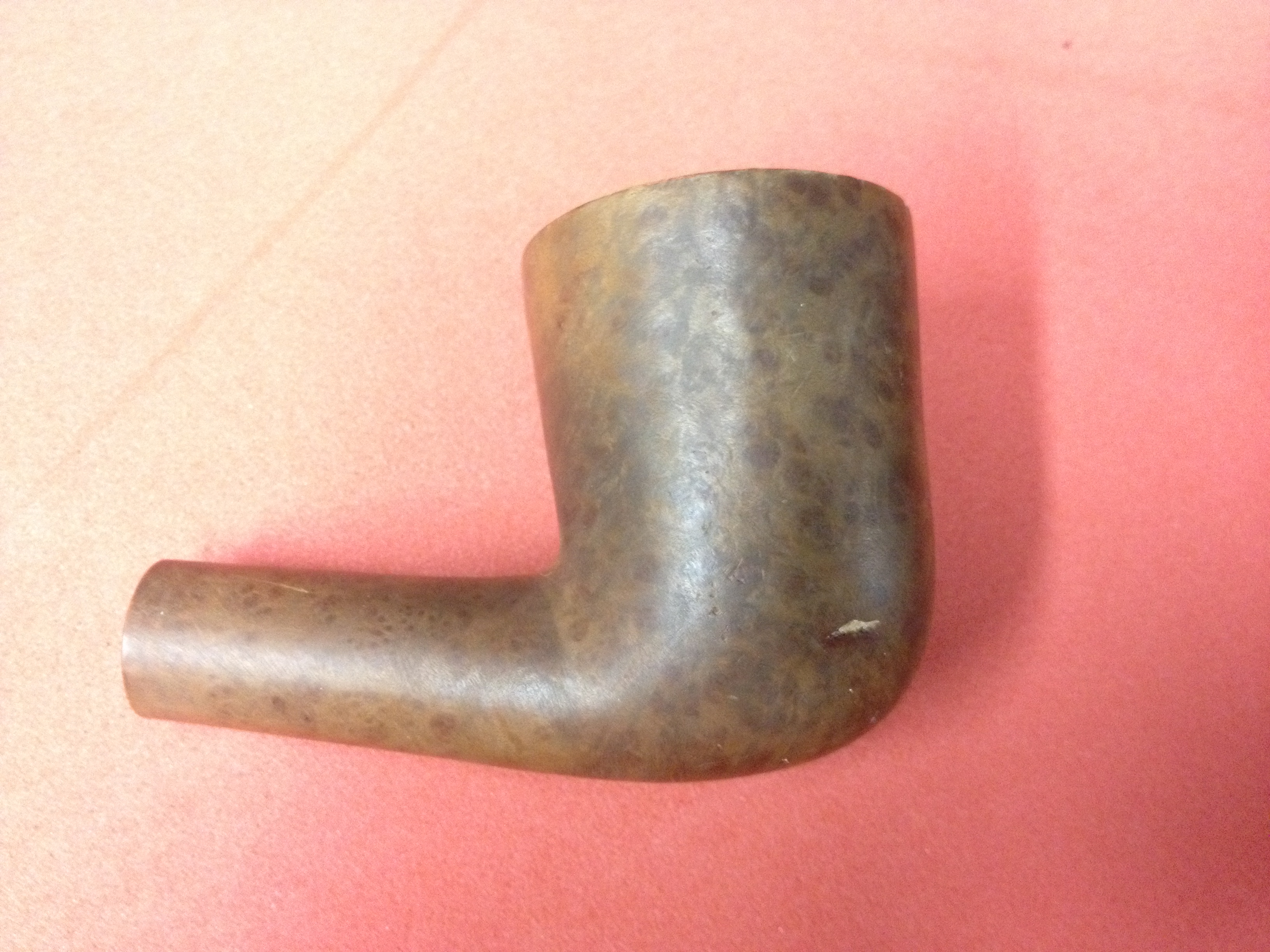
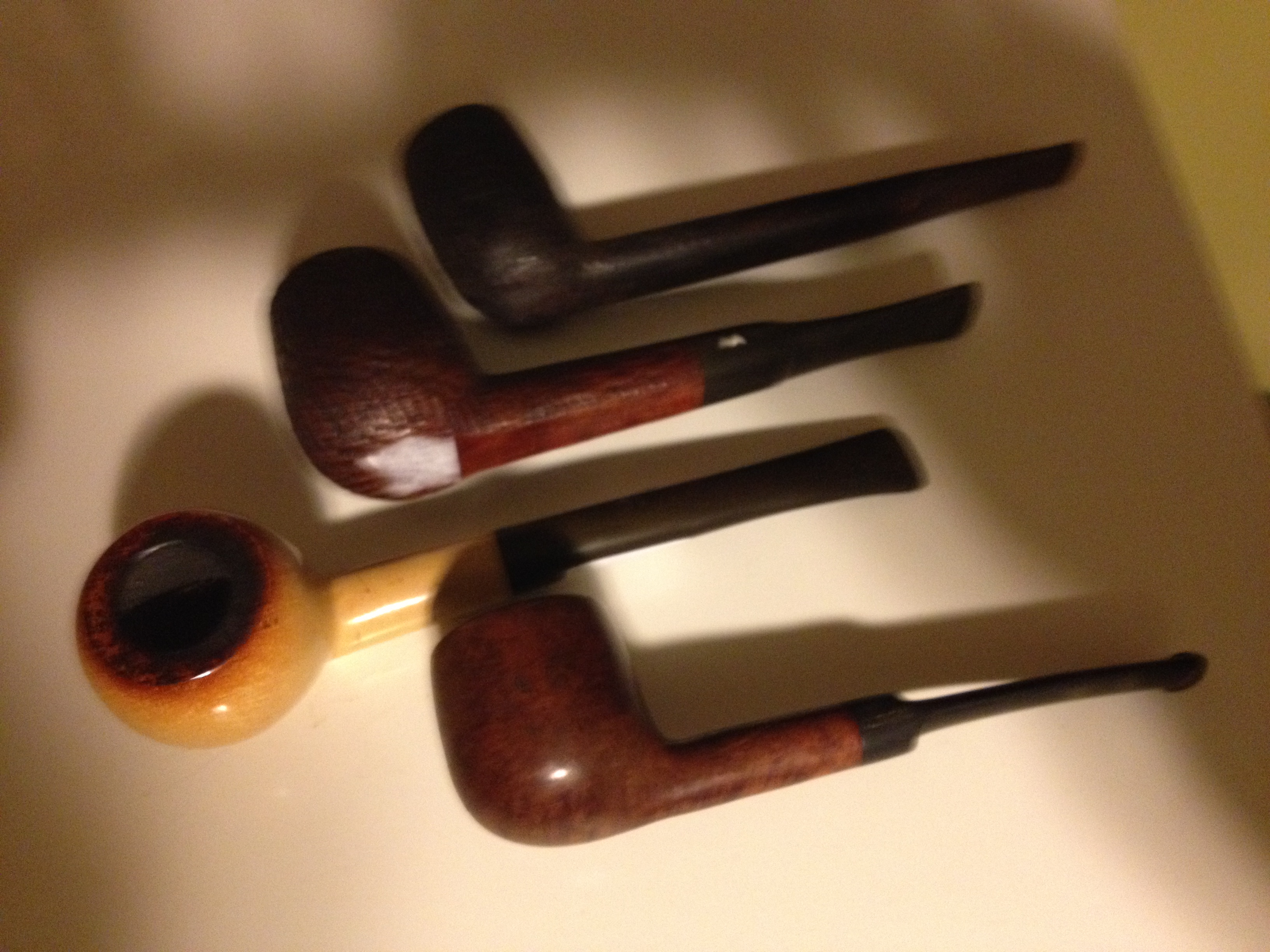
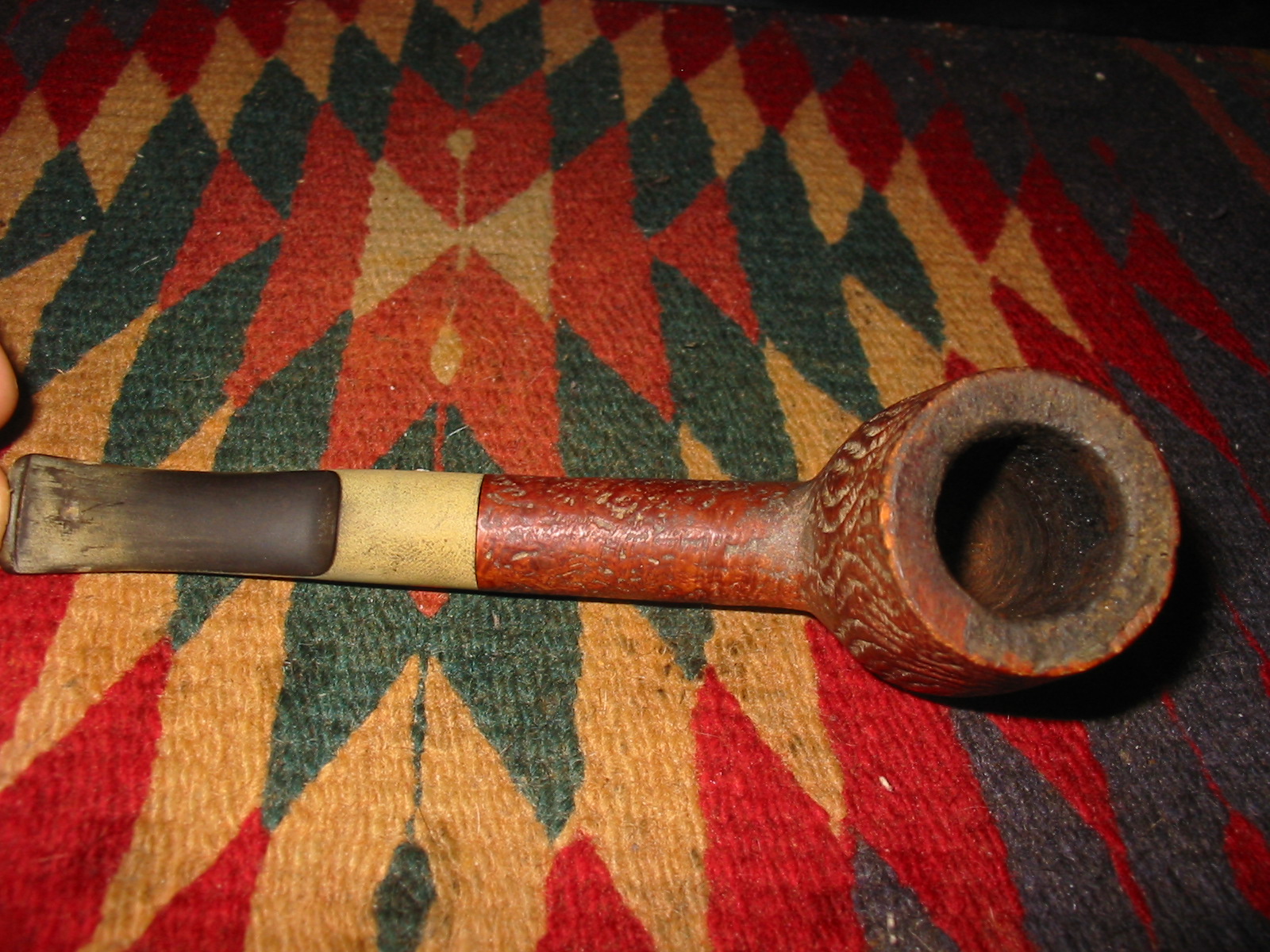
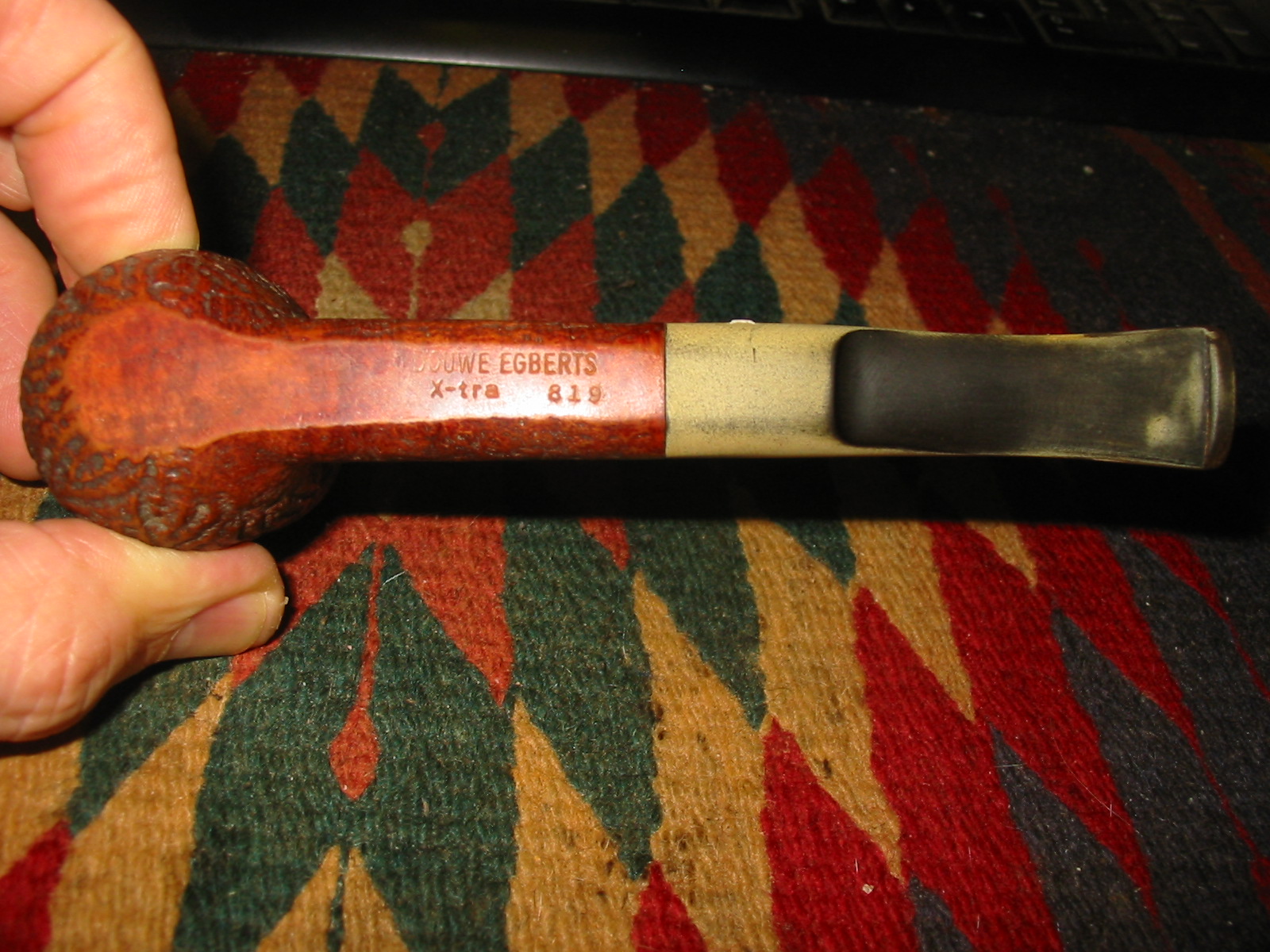
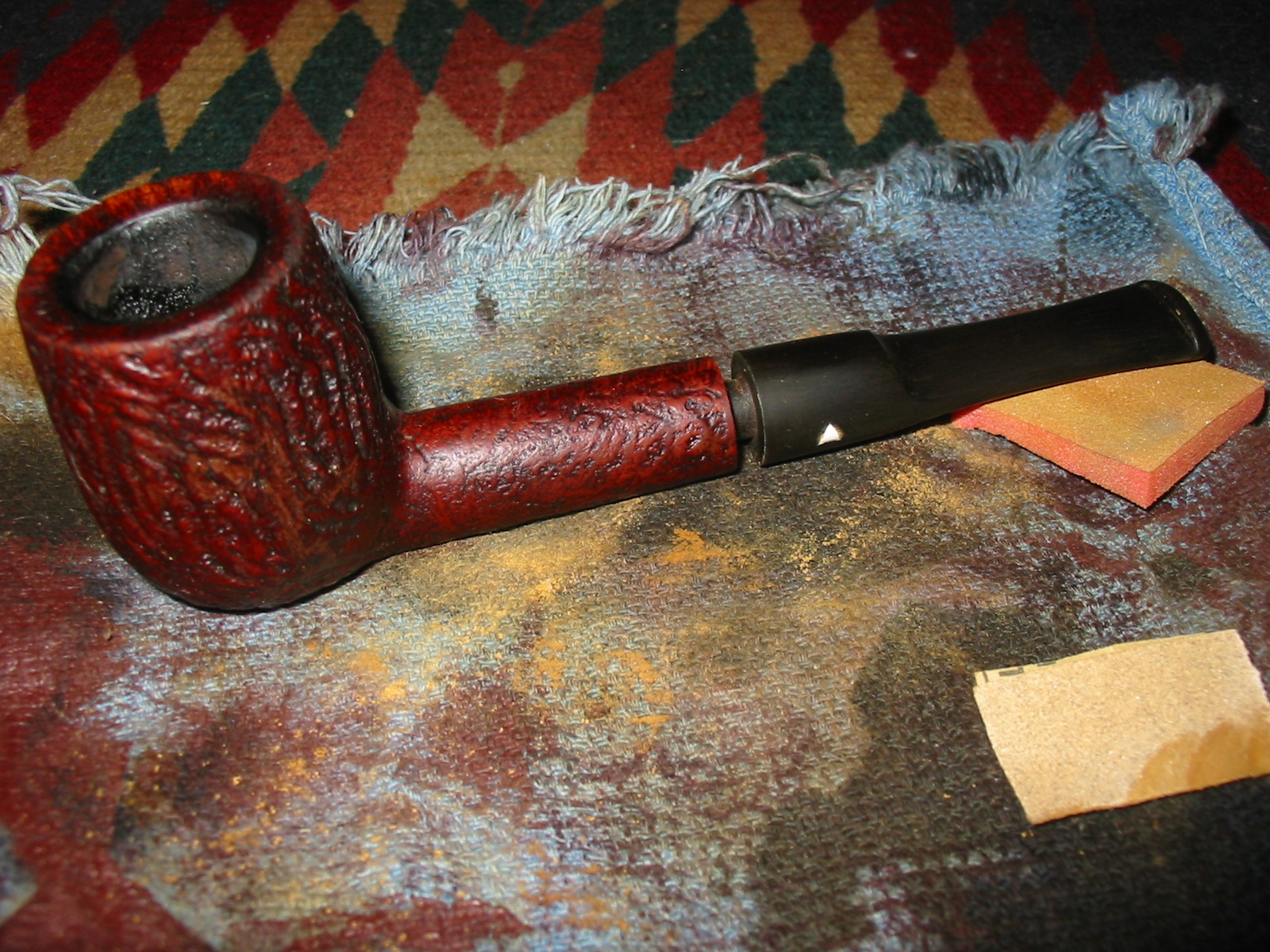
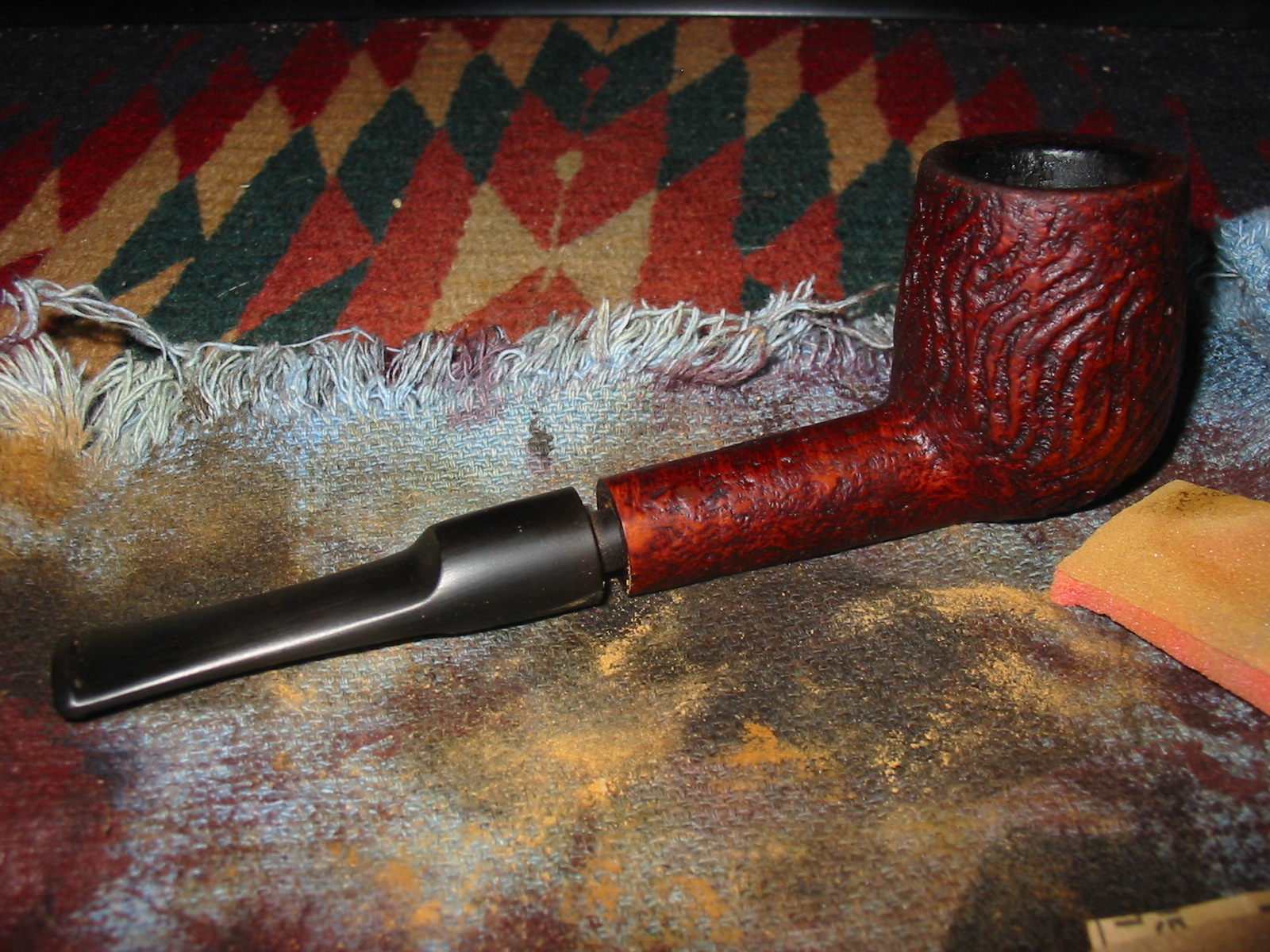
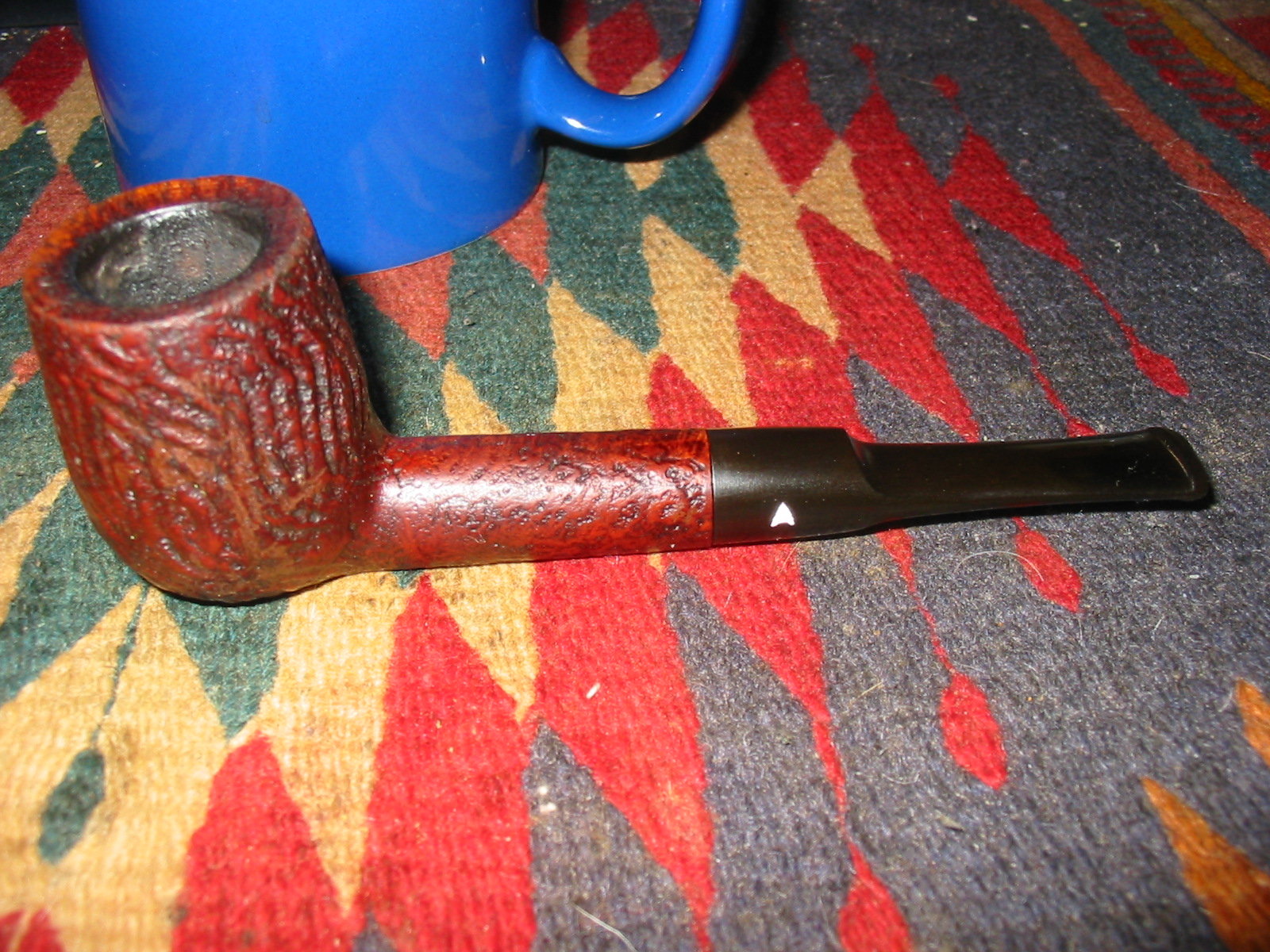
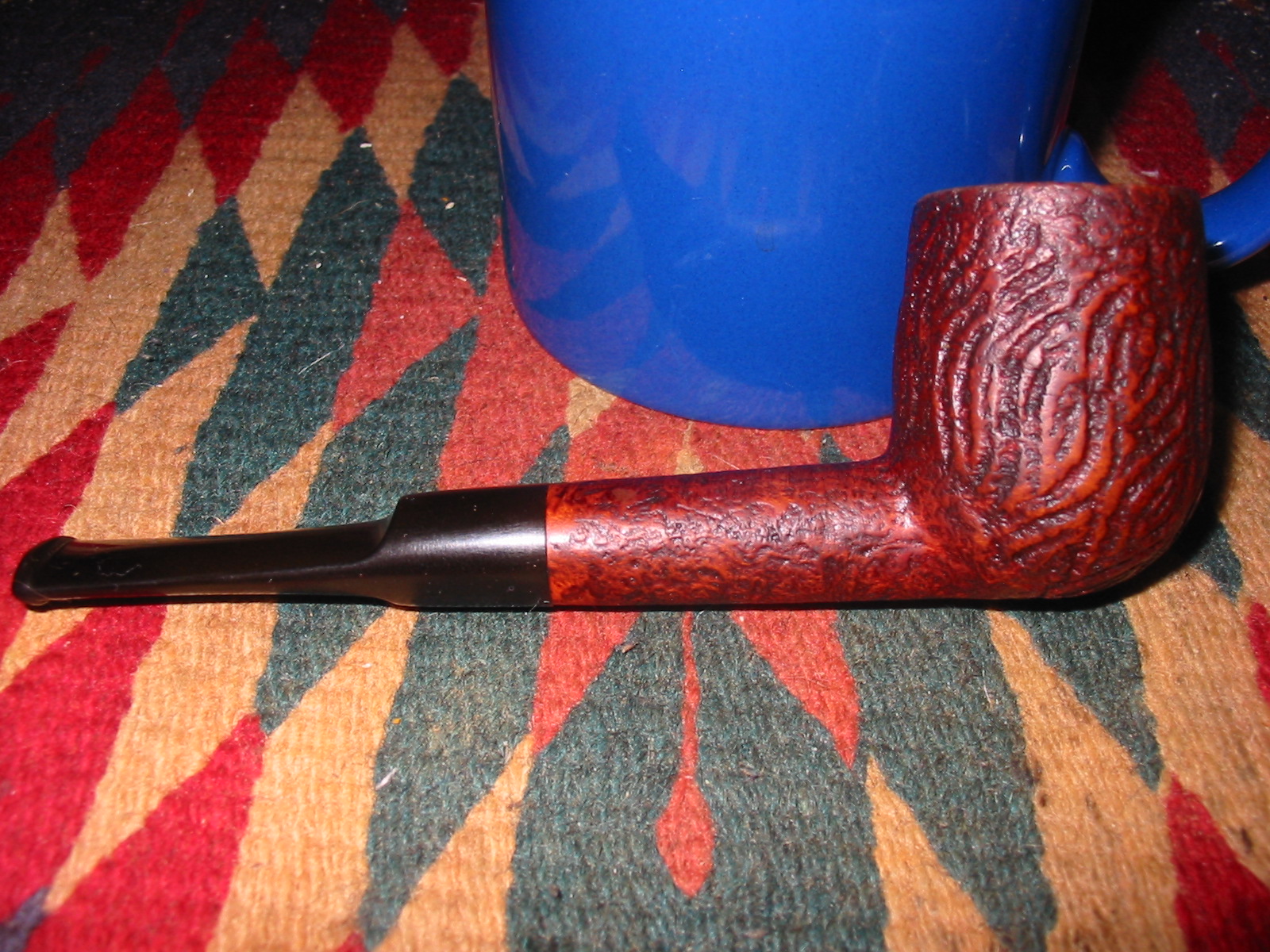
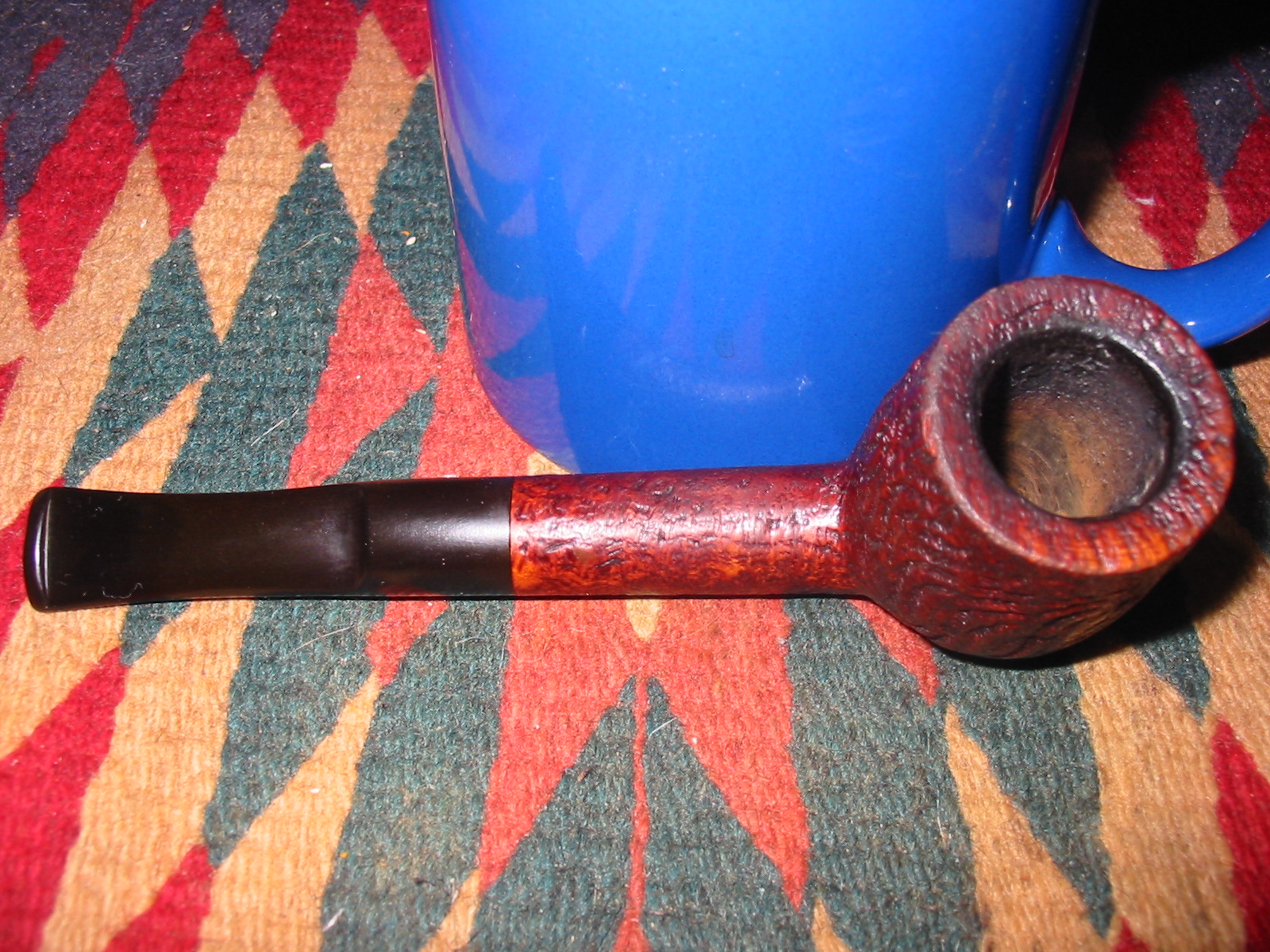
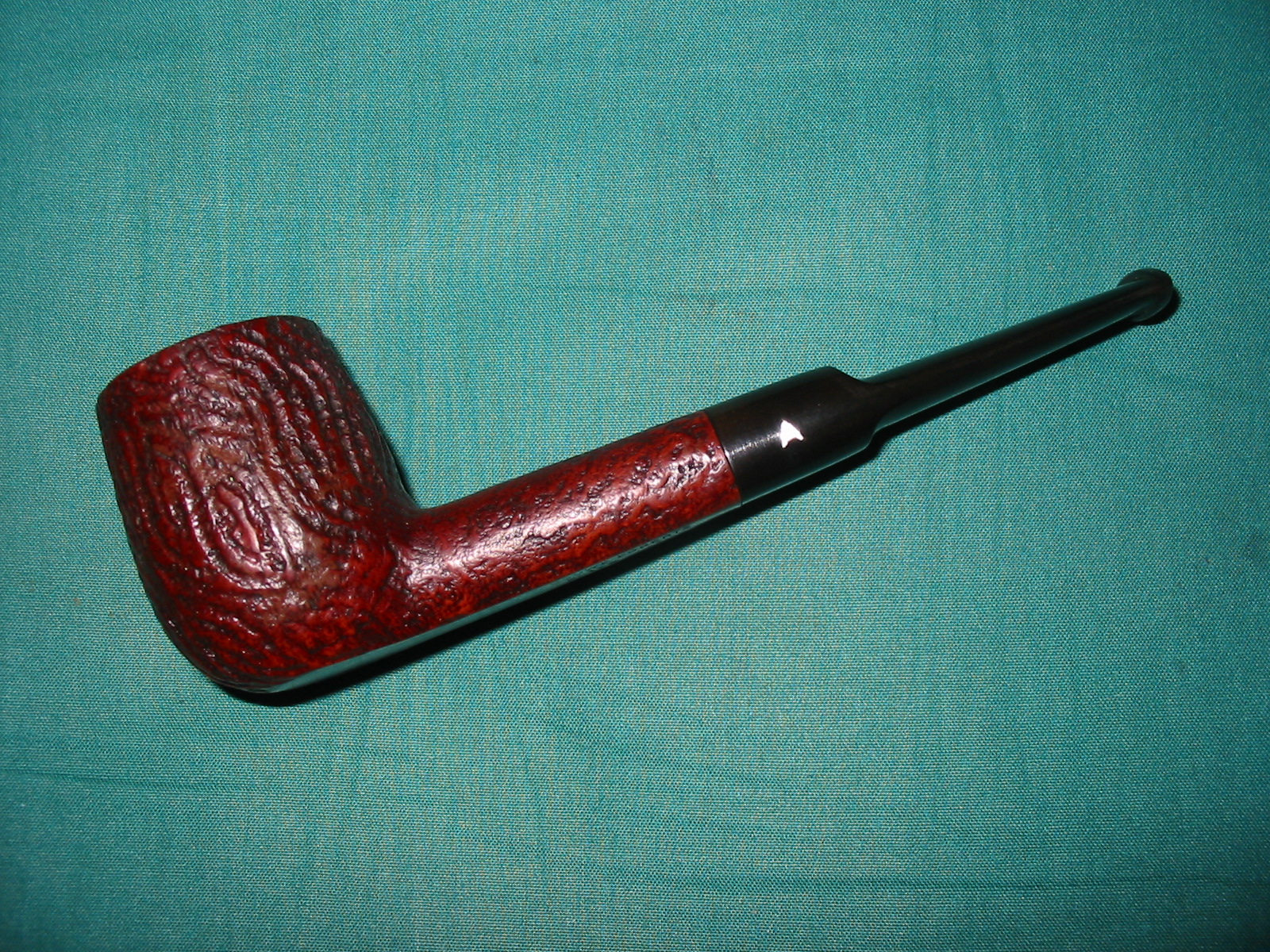
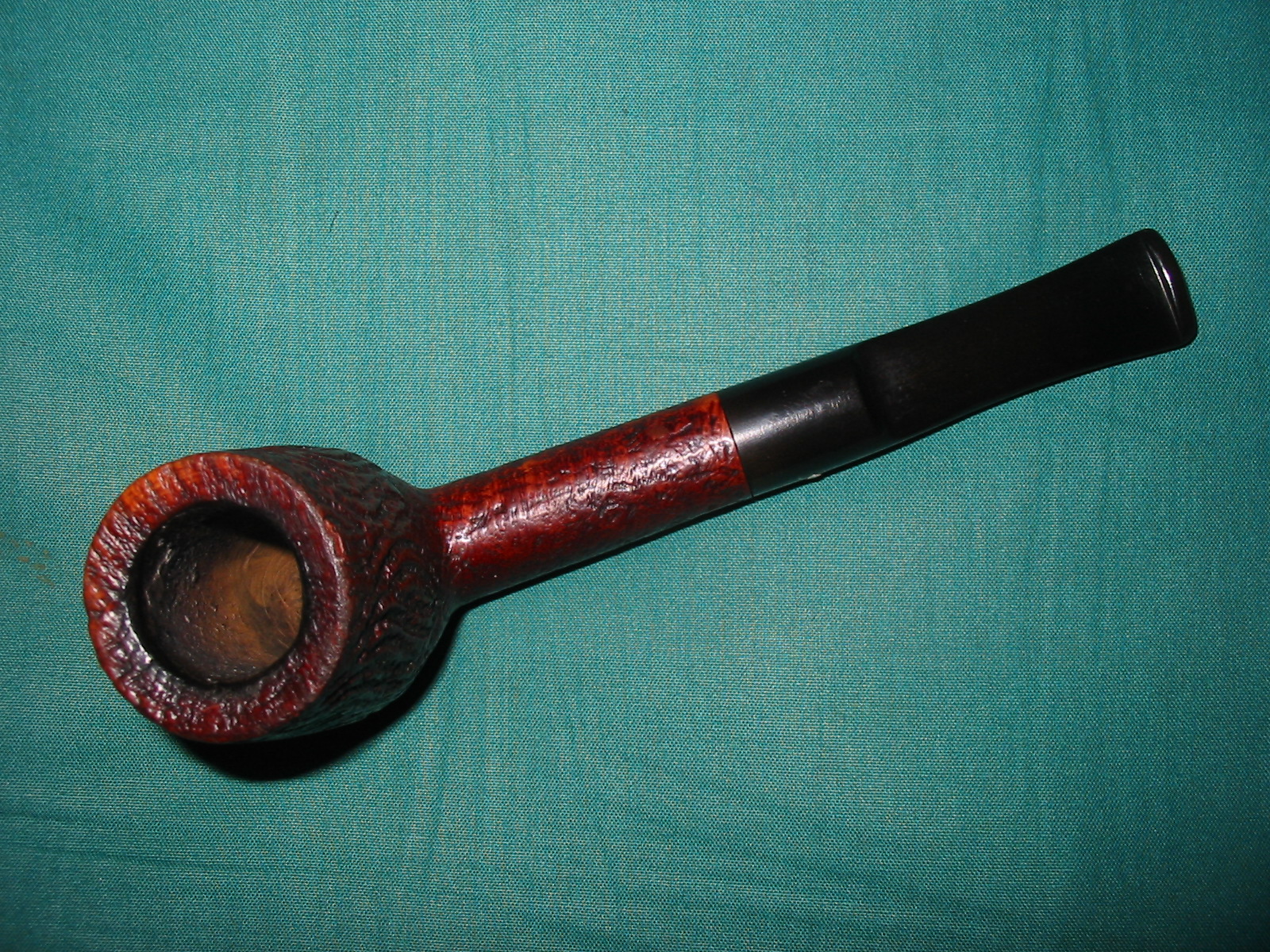
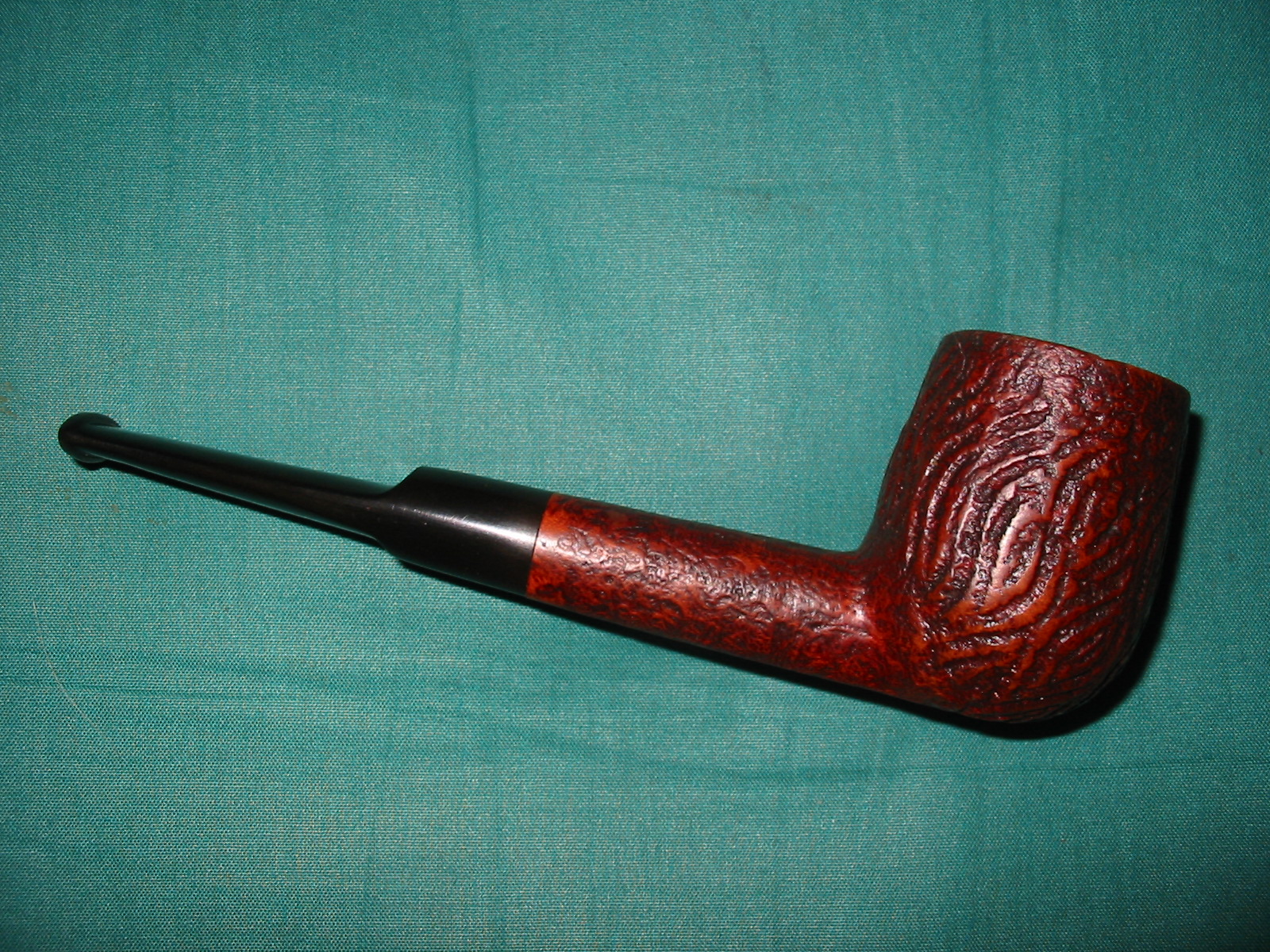
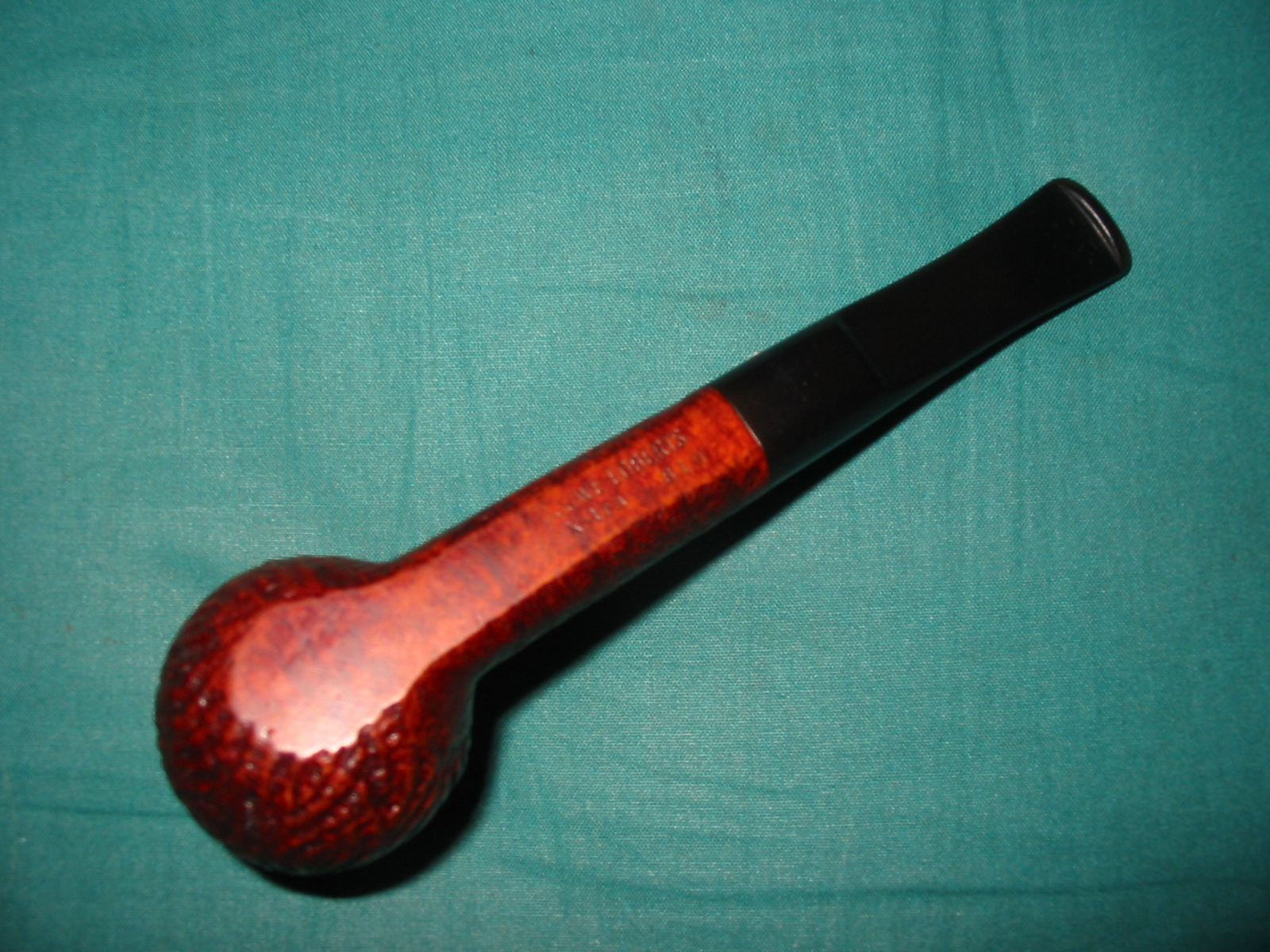
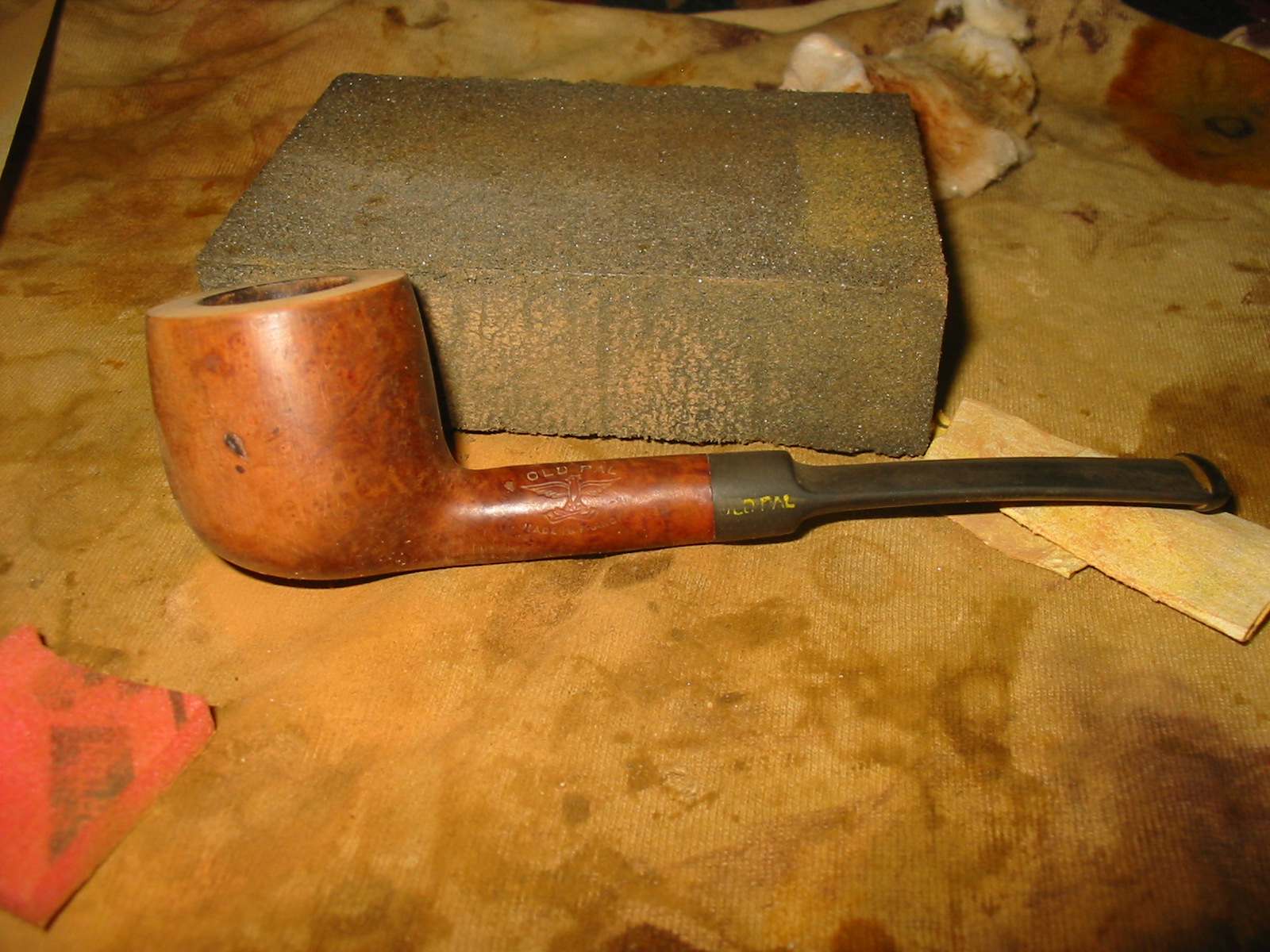
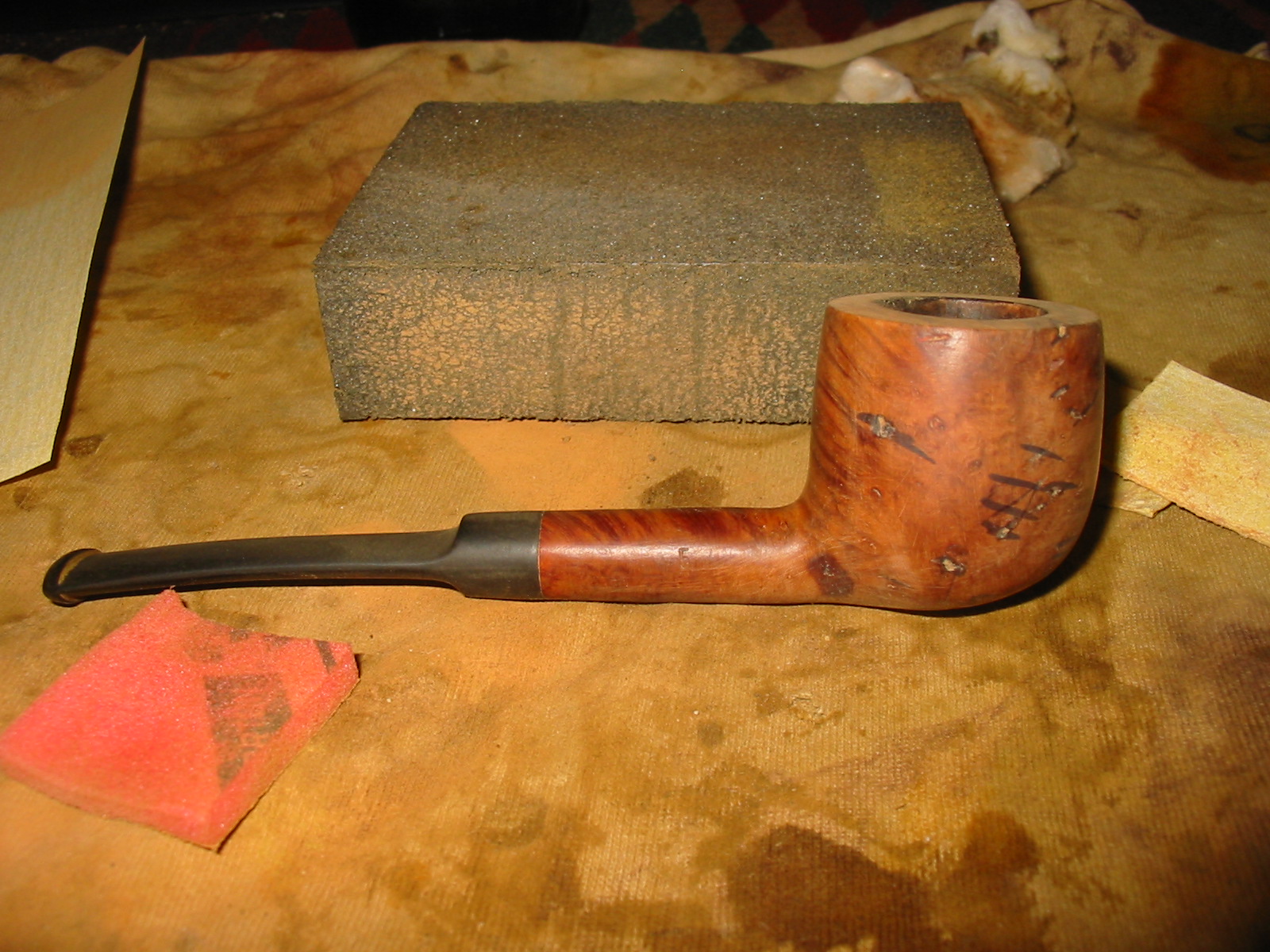
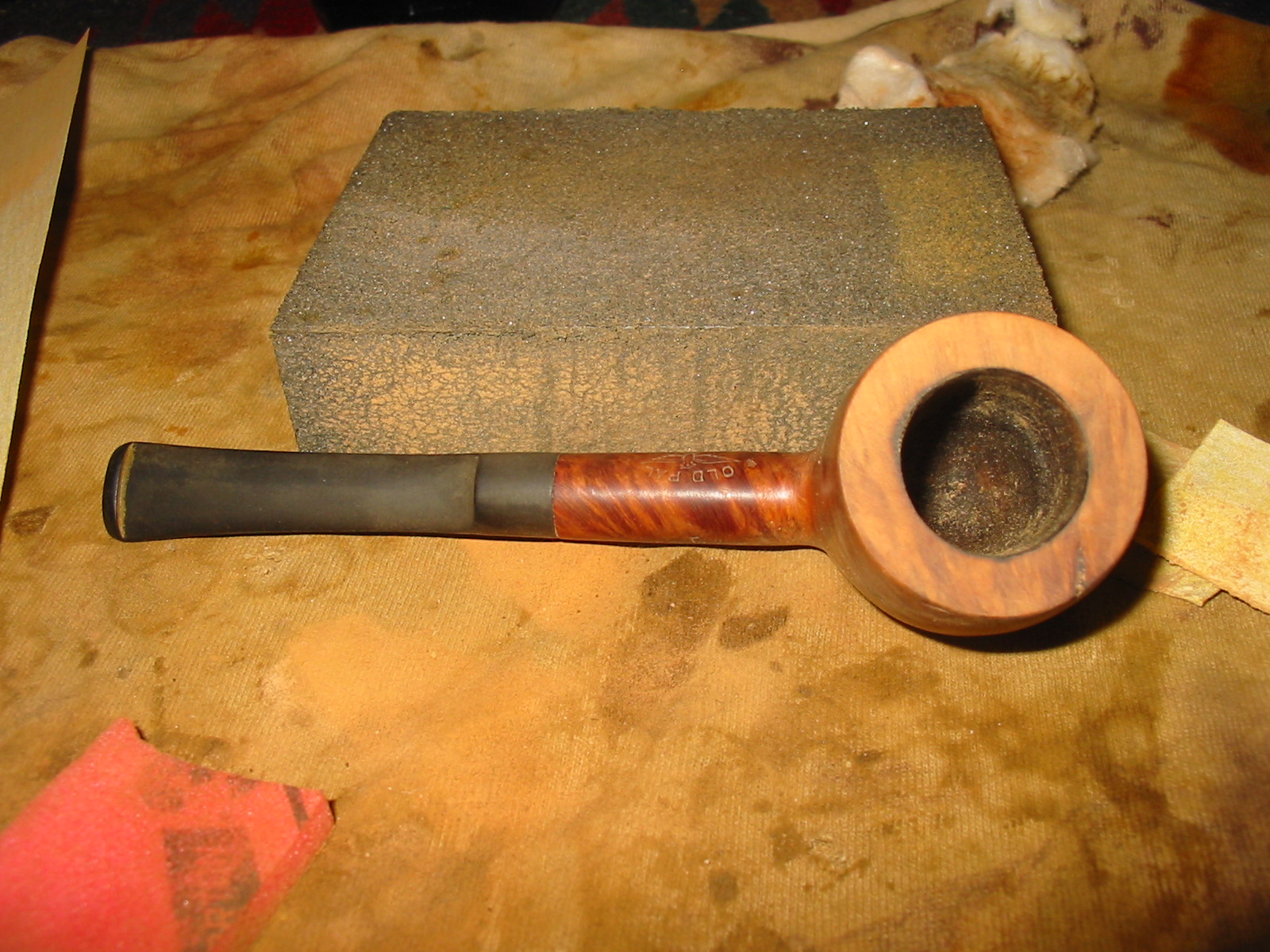
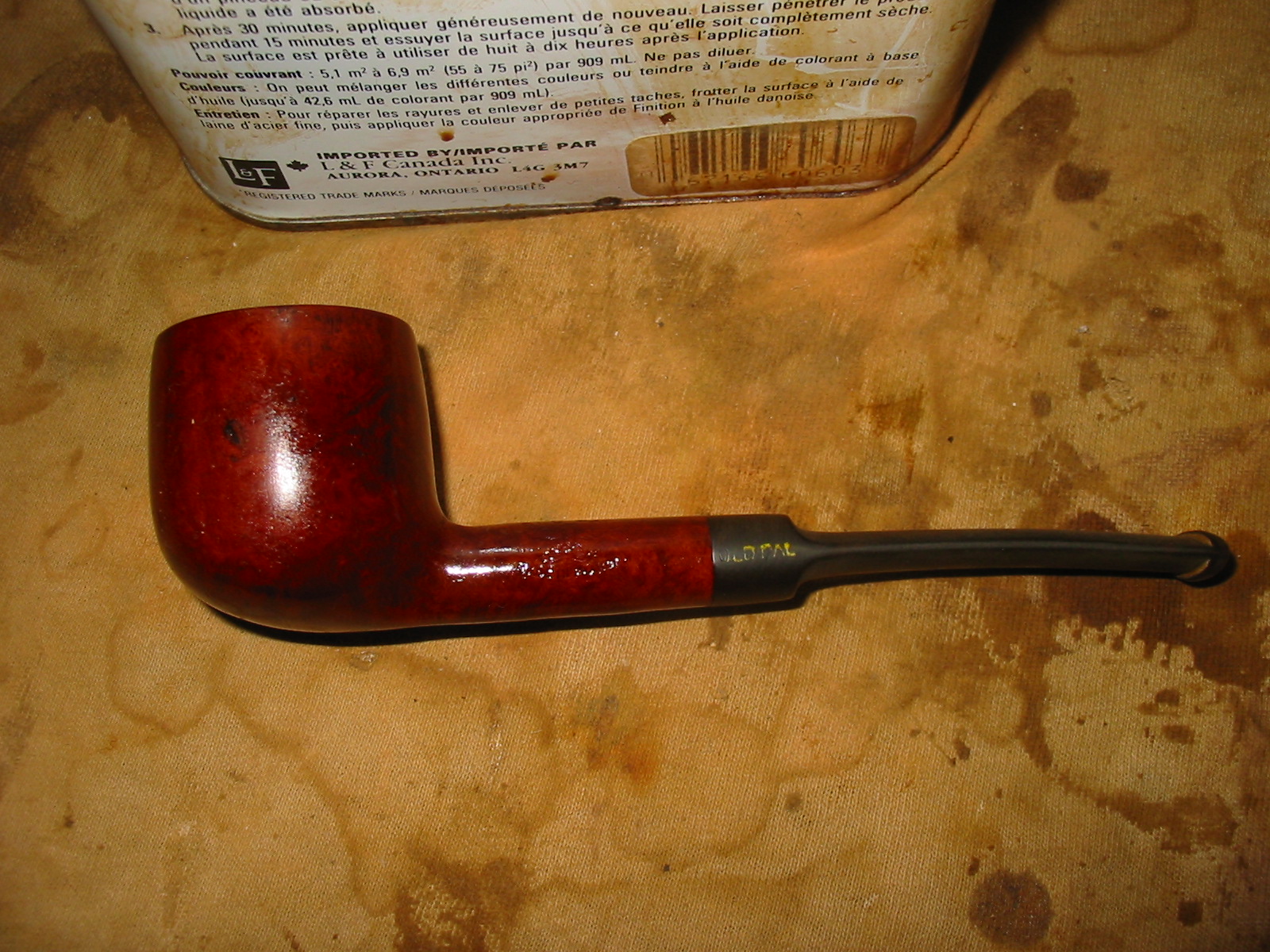
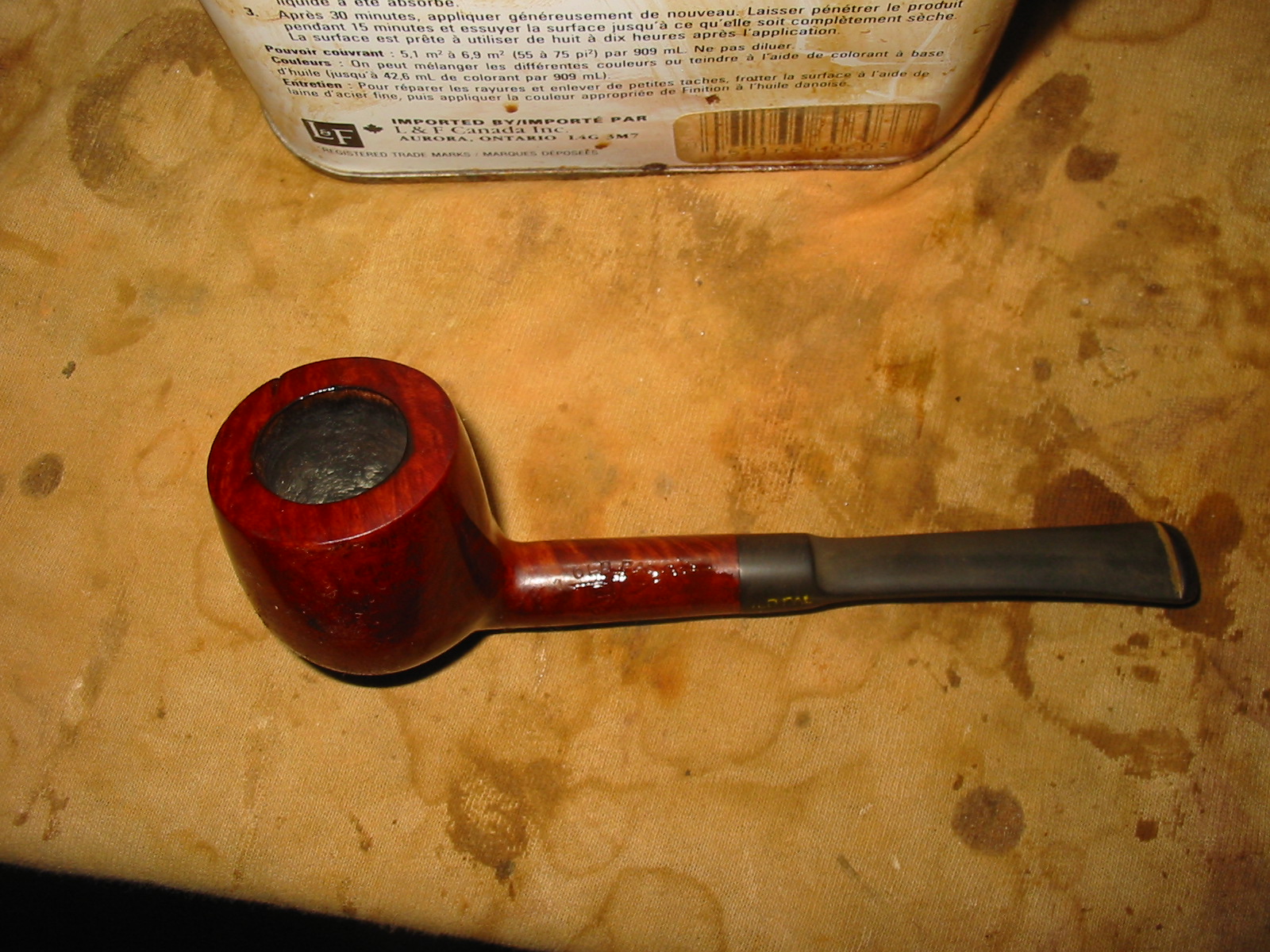
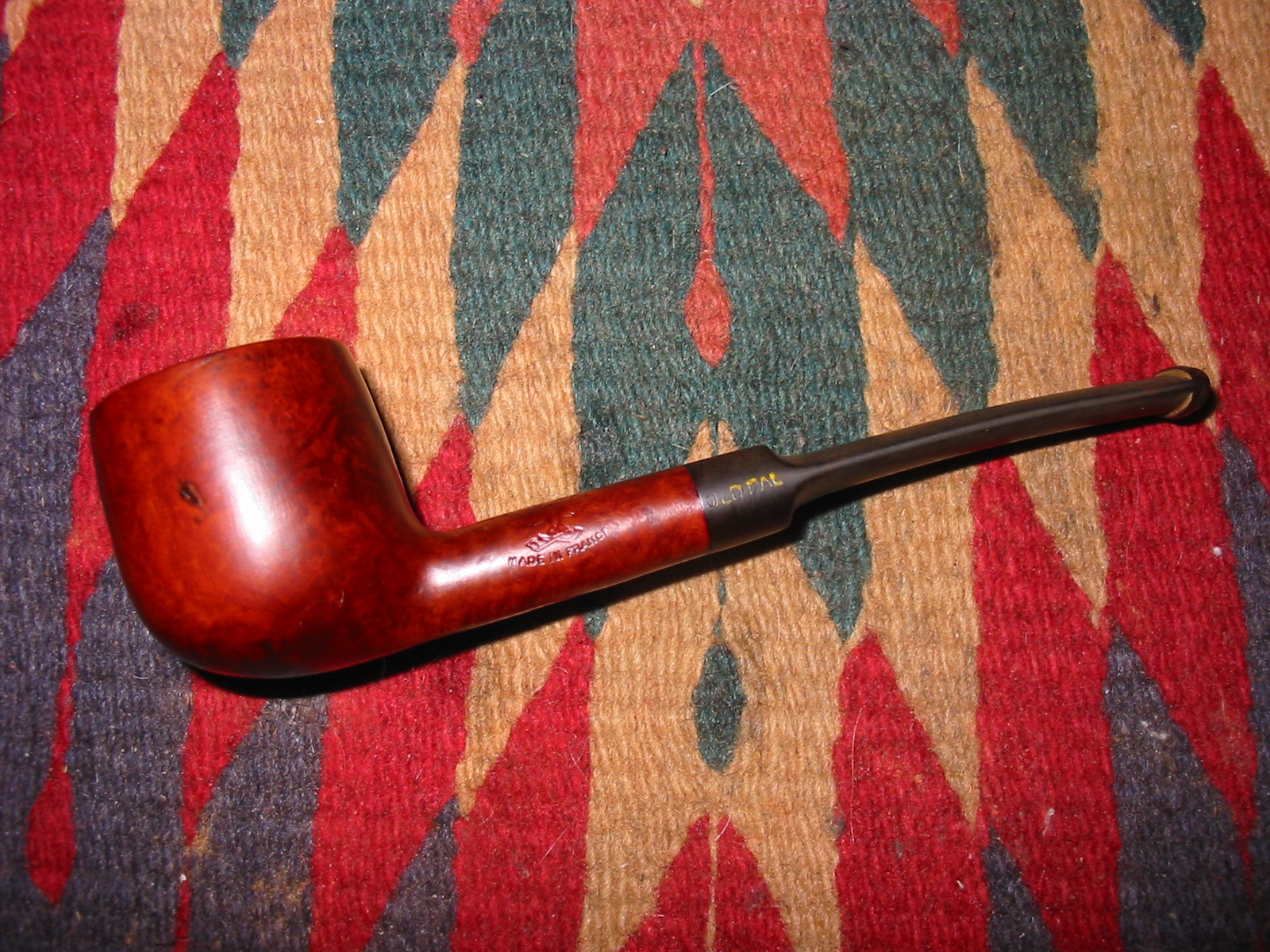
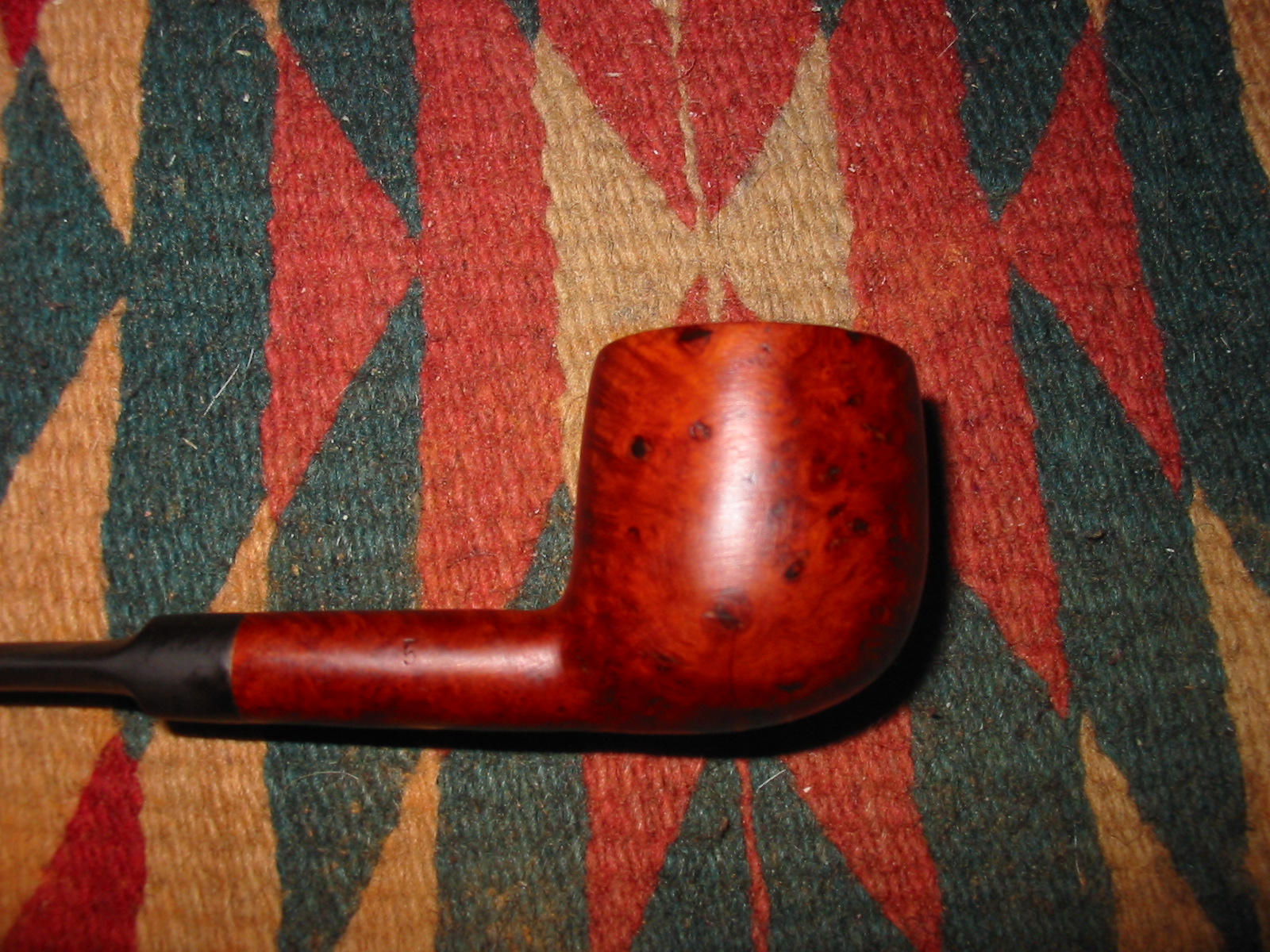
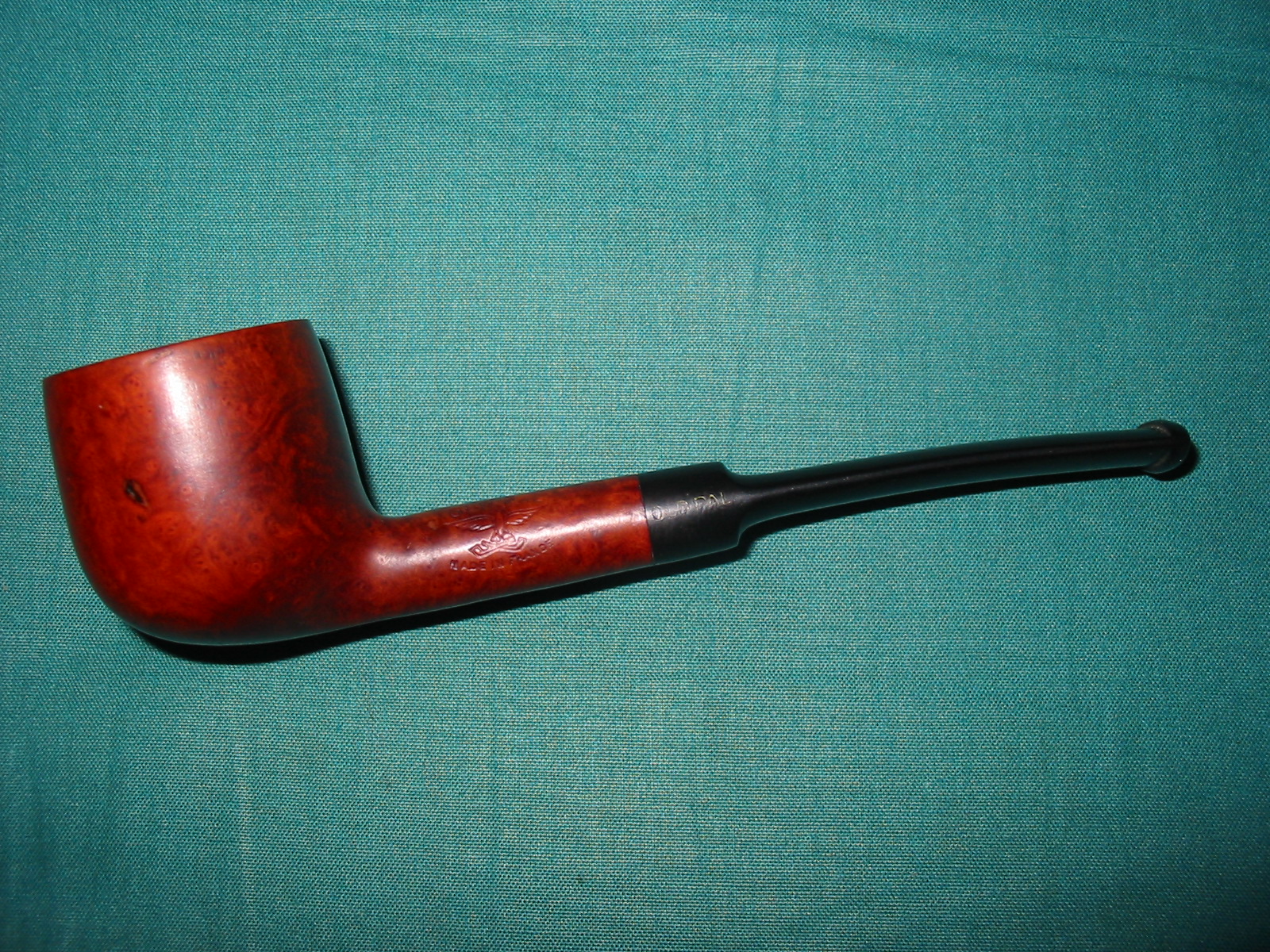
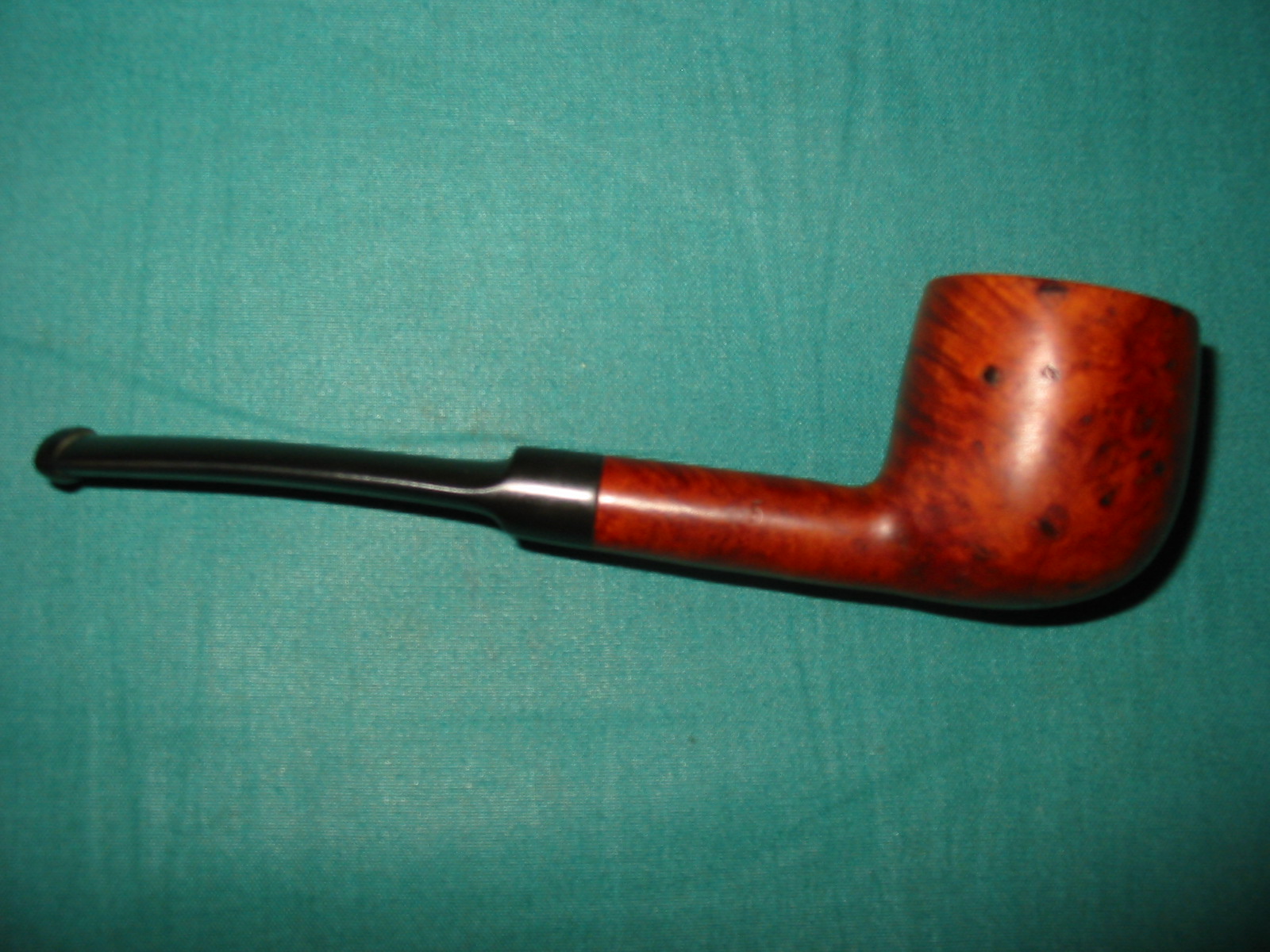
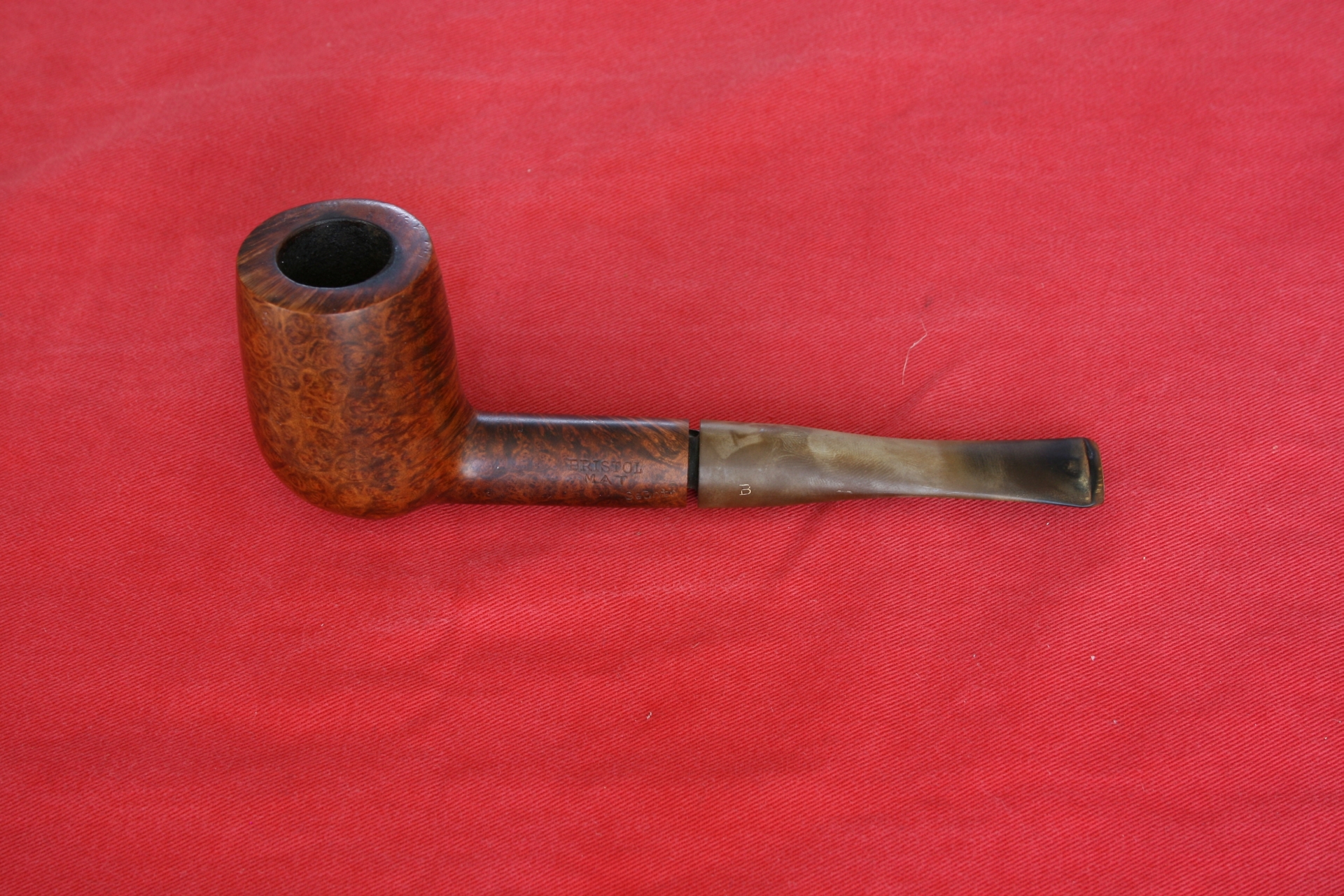
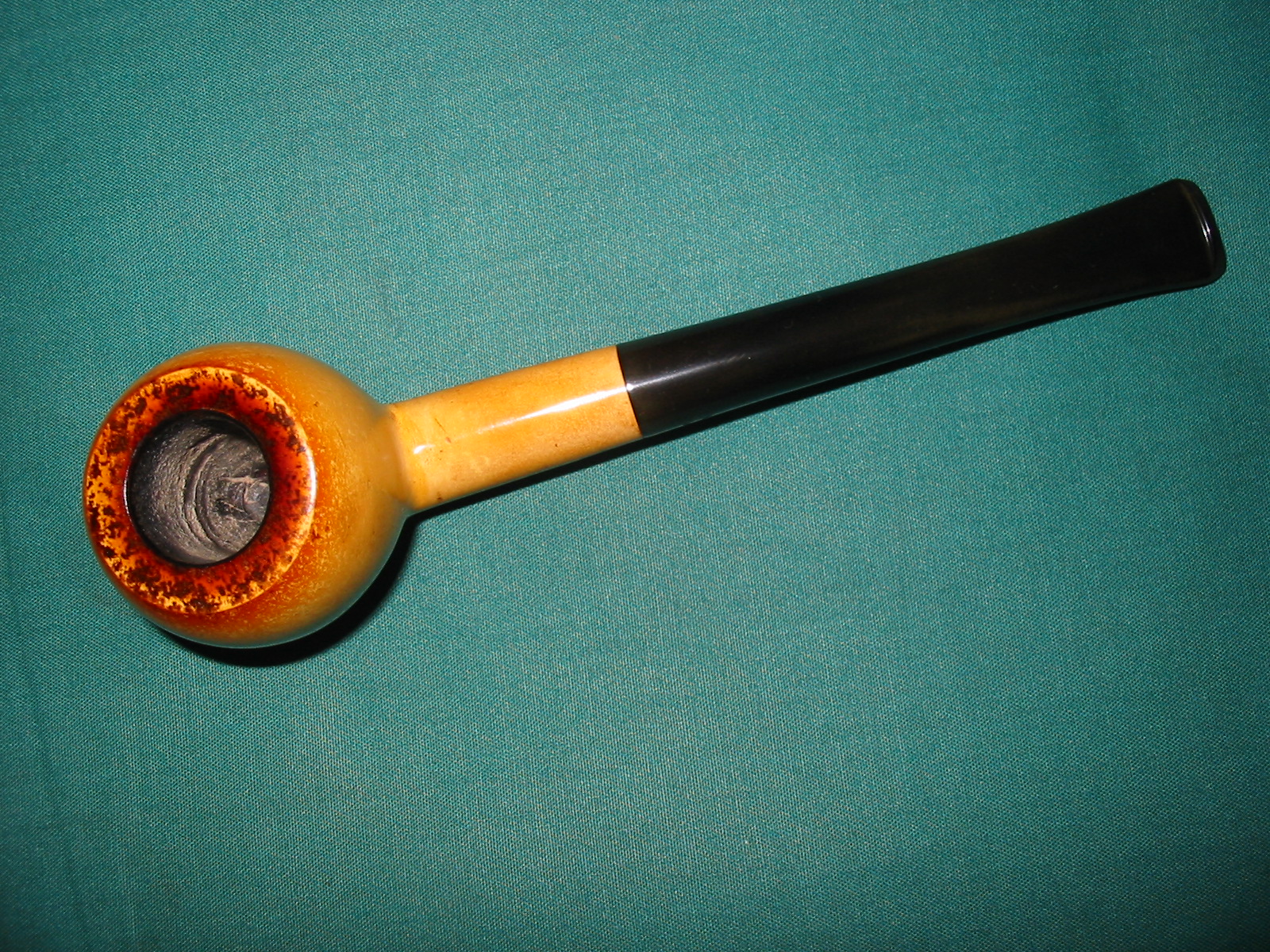
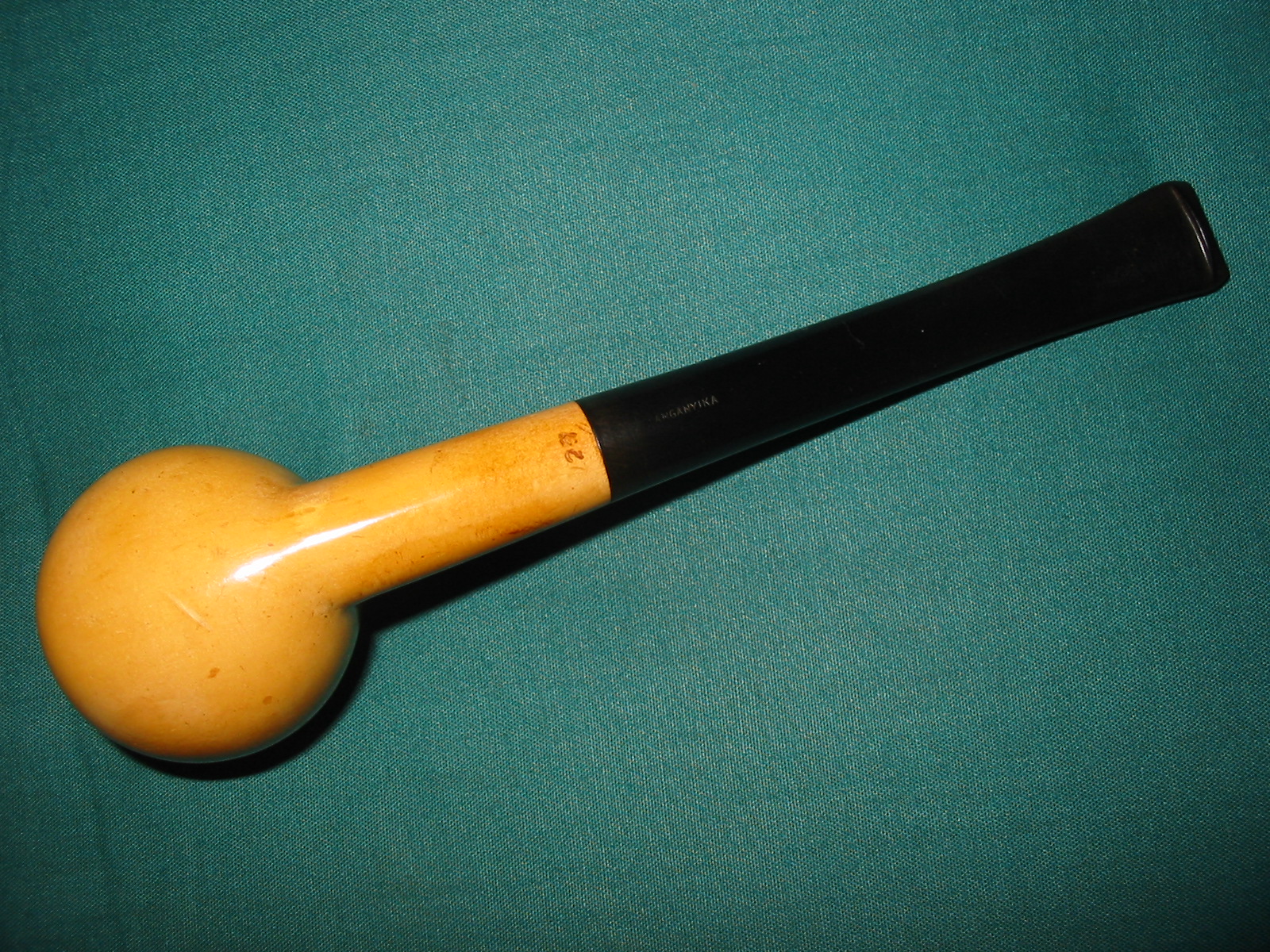
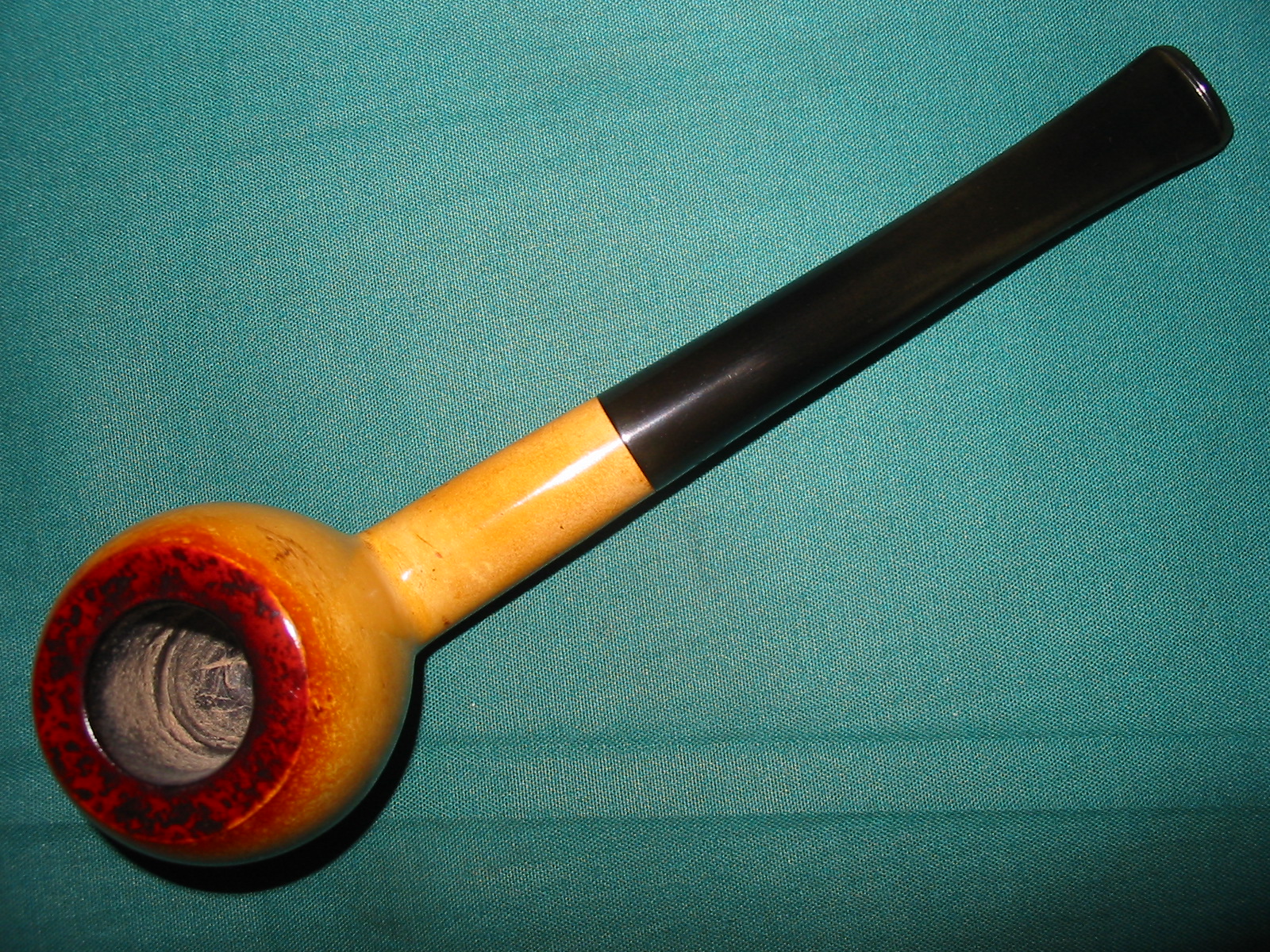
I am just about finished restemming the lot of pipe bowls I picked up on EBay. This is one of the last two pipes that I have left in the lot below. It is the fourth pipe down in the left column. It has an interesting rustication pattern that reminds of one that is done on Saseini pipes. It is striated around the bowl and then tapers up from the bottom to a striated pattern around the shank. It has a flat bottom on the shank that is smooth and stamped Bruyere in a crown with a large R in the centre of the band on the crown. Underneath the crown is an unfurled banner that is stamped K R O N E. I have no idea of who the maker is or when and where it was made. The stamping is faint so I may be missing a few letters but I think this is an accurate rendering of what is stamped. The finish was pretty dirty with grime in the grooves on the bowl and shank. The rim was caked with a tarry buildup and the grooving on the rim was not visible. There were also place on the finish where the stain was missing and the briar underneath exposed. The inside of the bowl had dust and cob webs and a pretty large cake buildup that would need to be removed. The bowl came without a stem and fitting one would take flattening of the stem on the underside to match the shank.

bowls1

sas

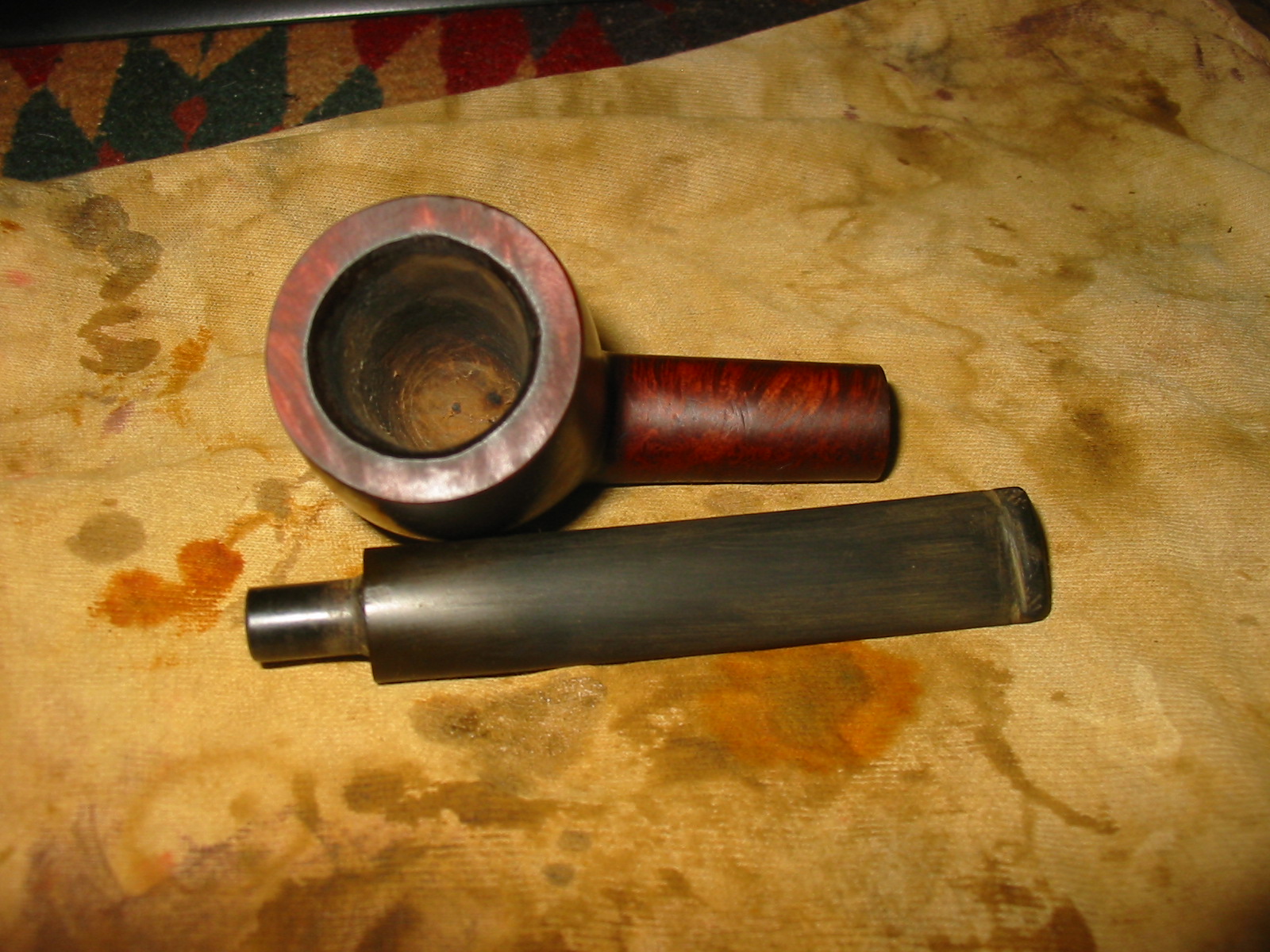
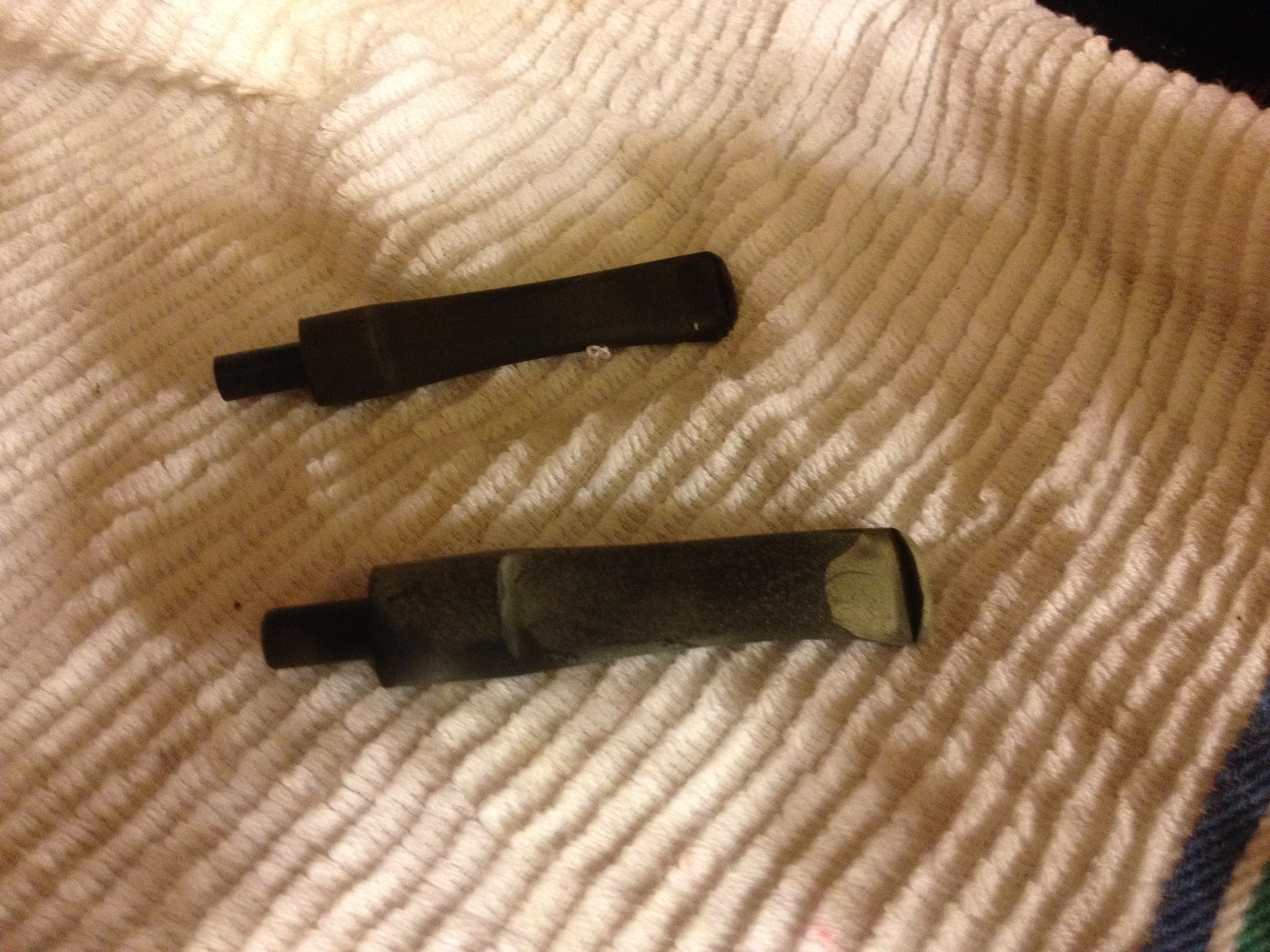
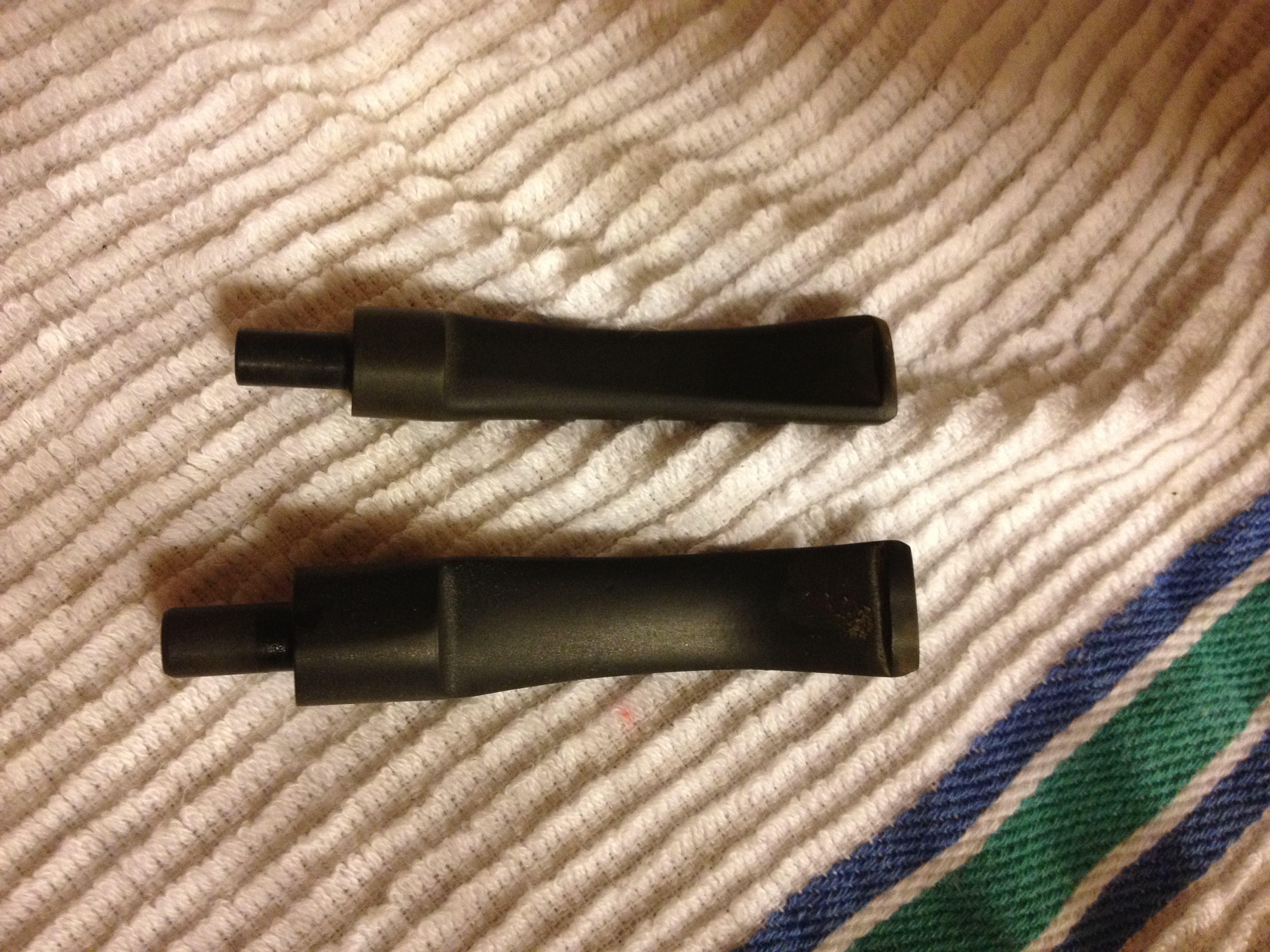
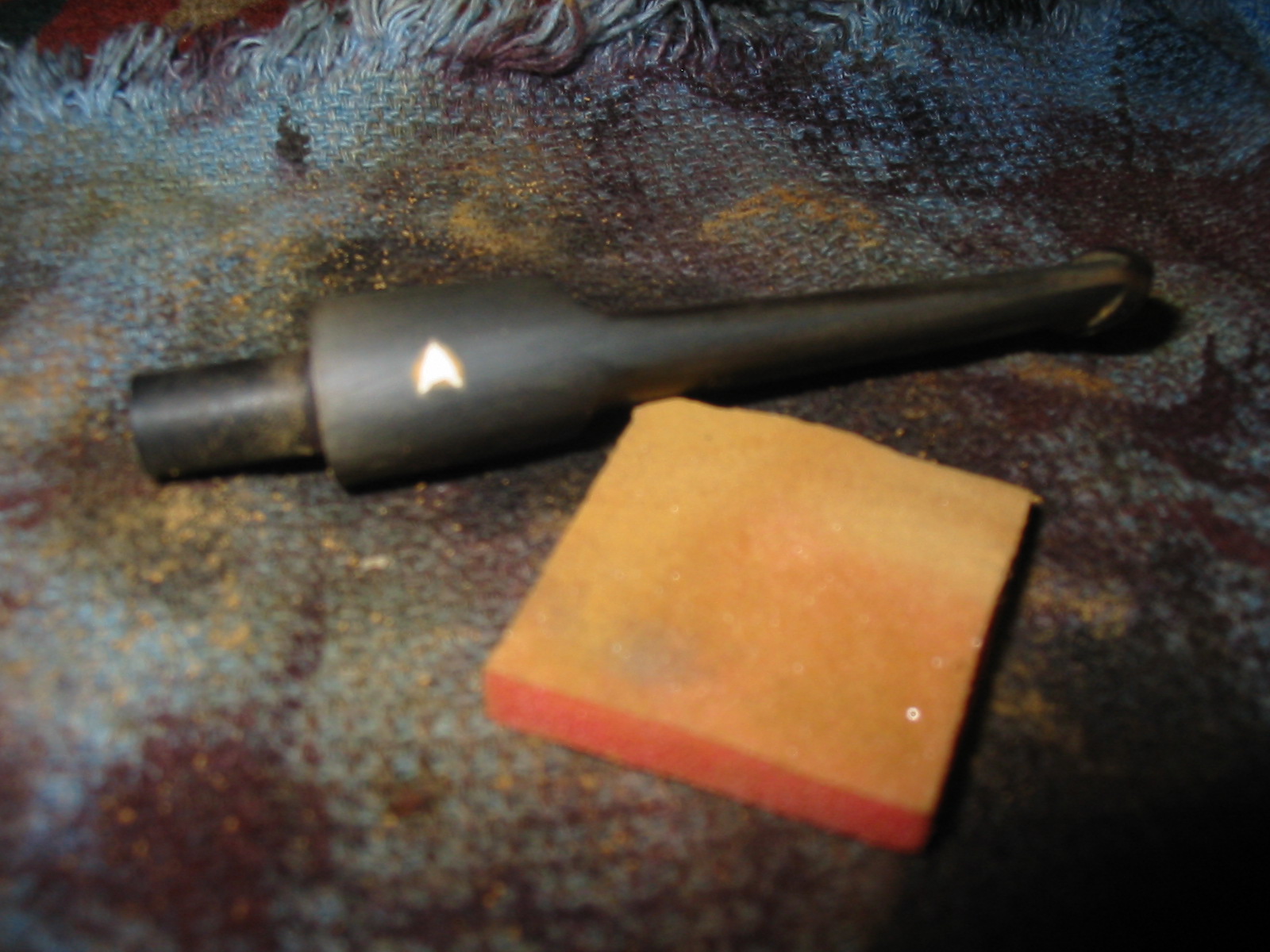
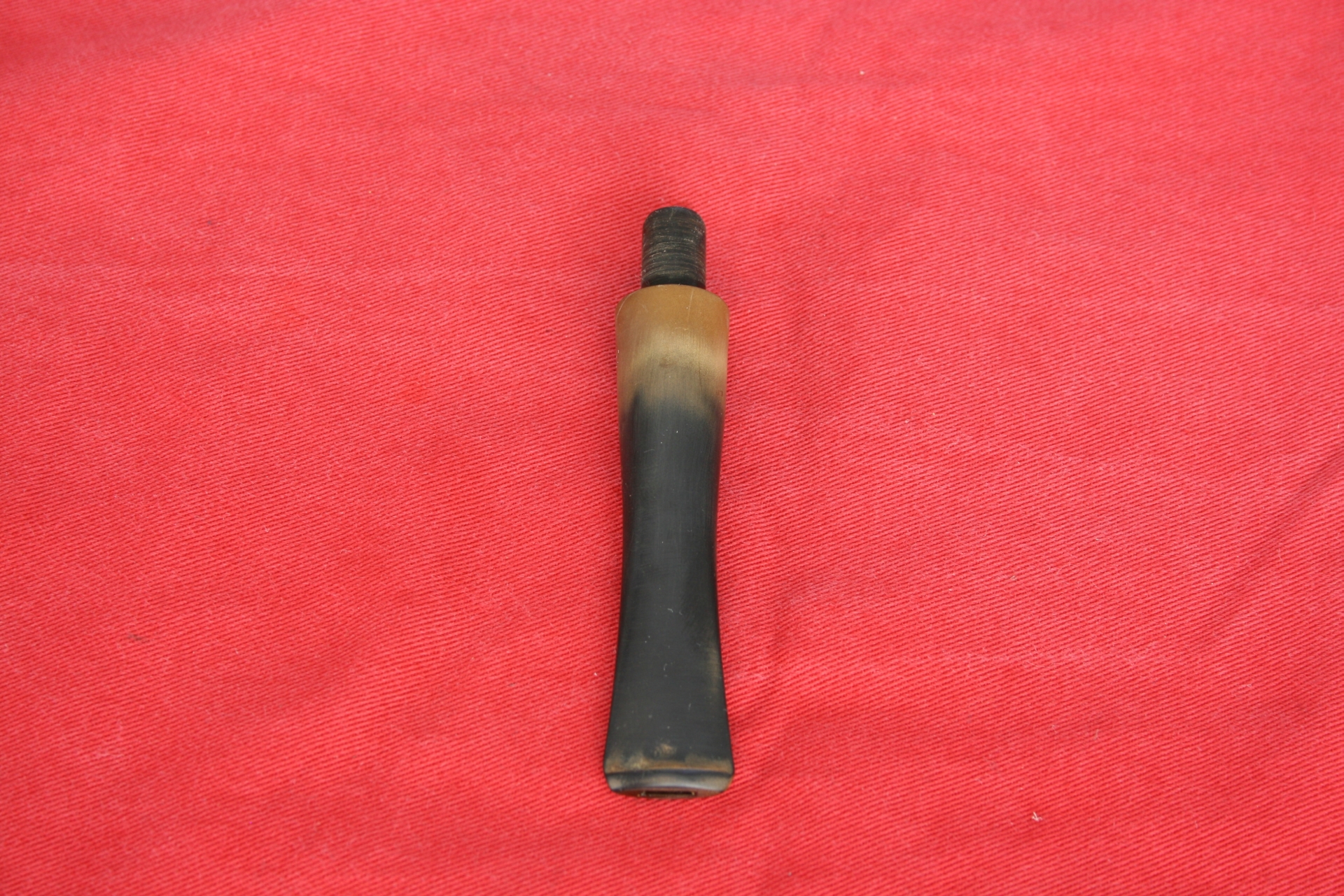
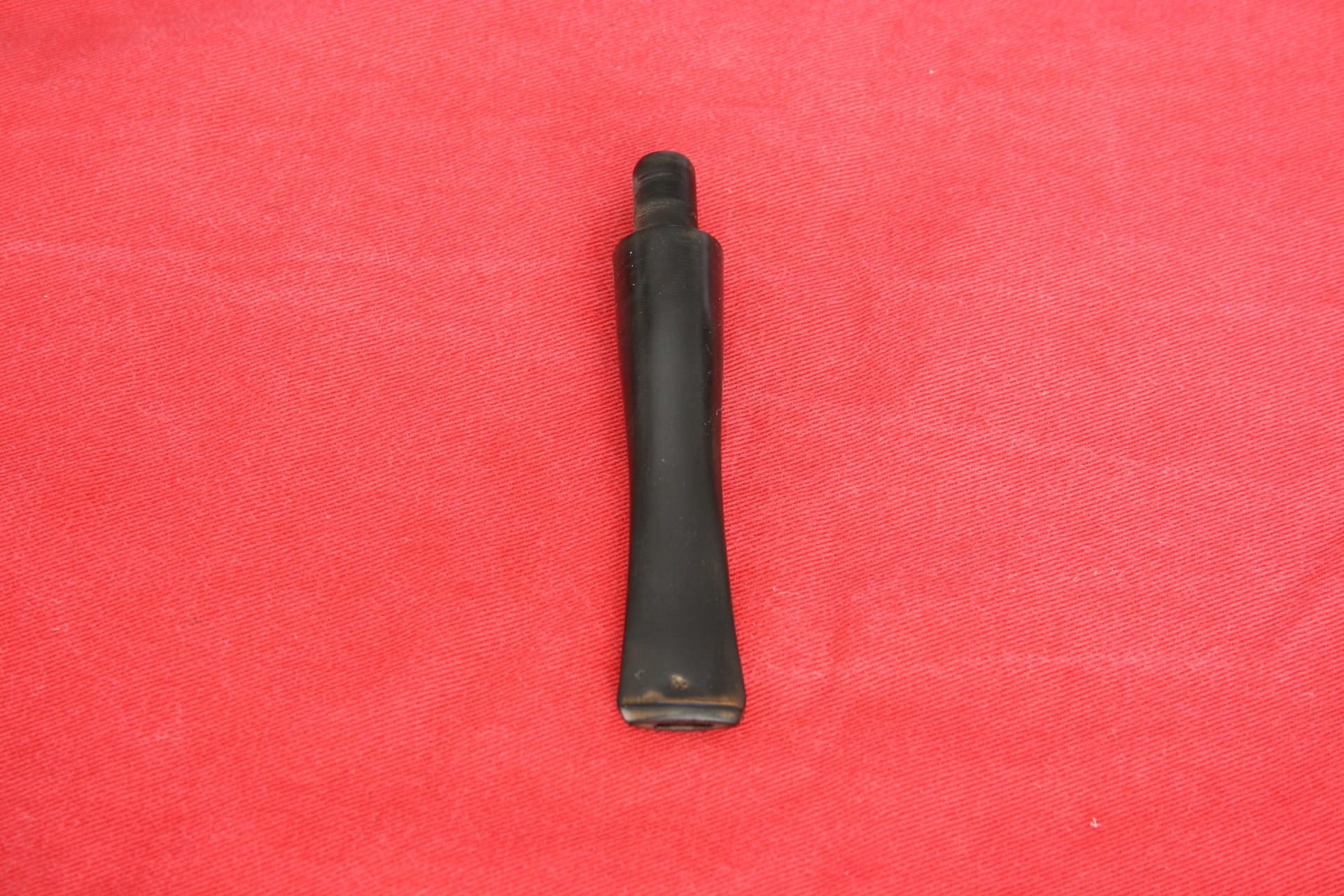
I went through my box of estate stems and found one that was a good fit to the shank. Once the cleanup of the stem was done and a flattening of the underside of the stem the pipe would look like it came with that stem. The stem had a calcified buildup around the button and some tooth marks as well. The oxidation was not too bad but was present.

IMG_1492

IMG_1493

IMG_1494

IMG_1495

IMG_1496

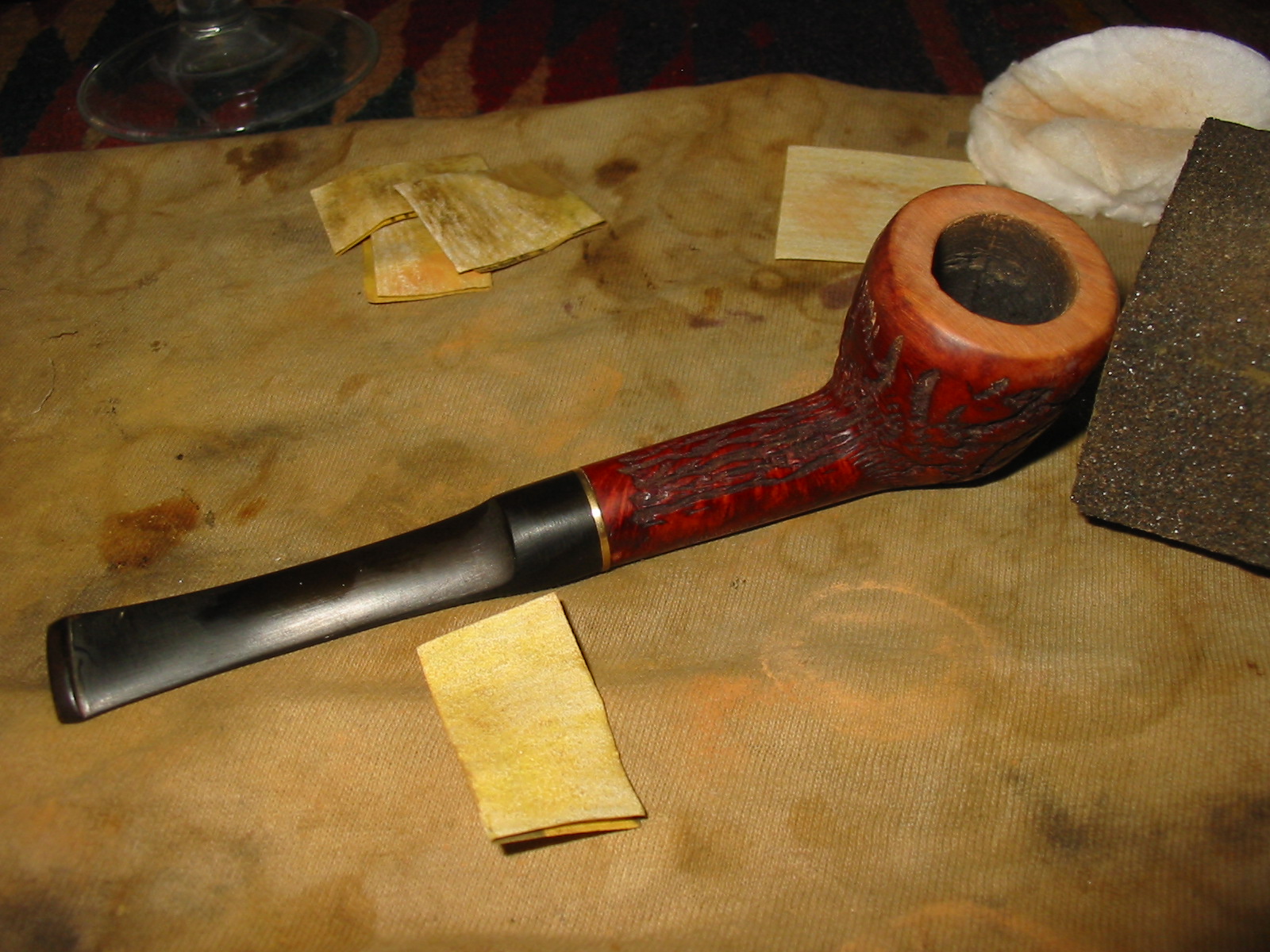
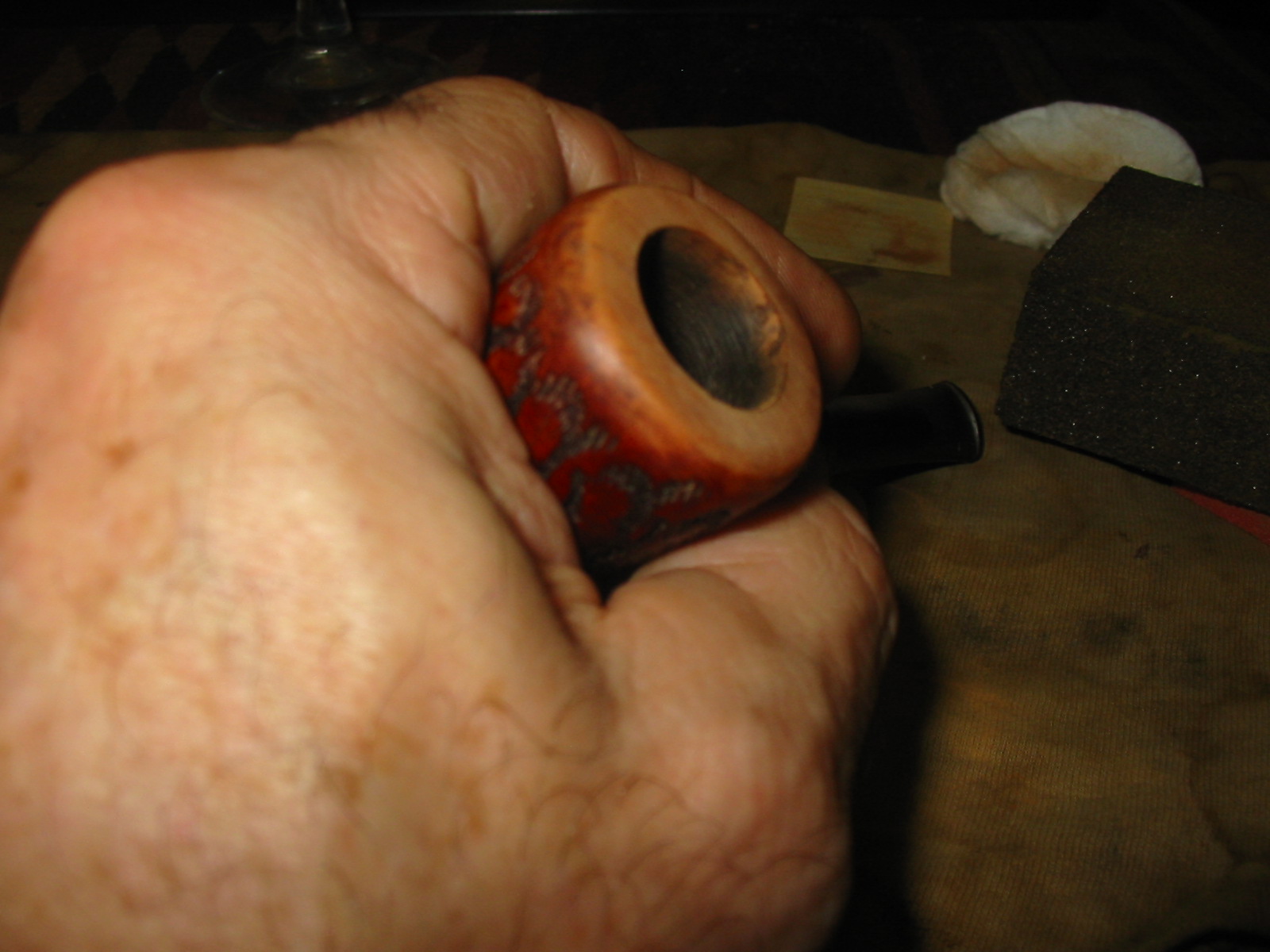
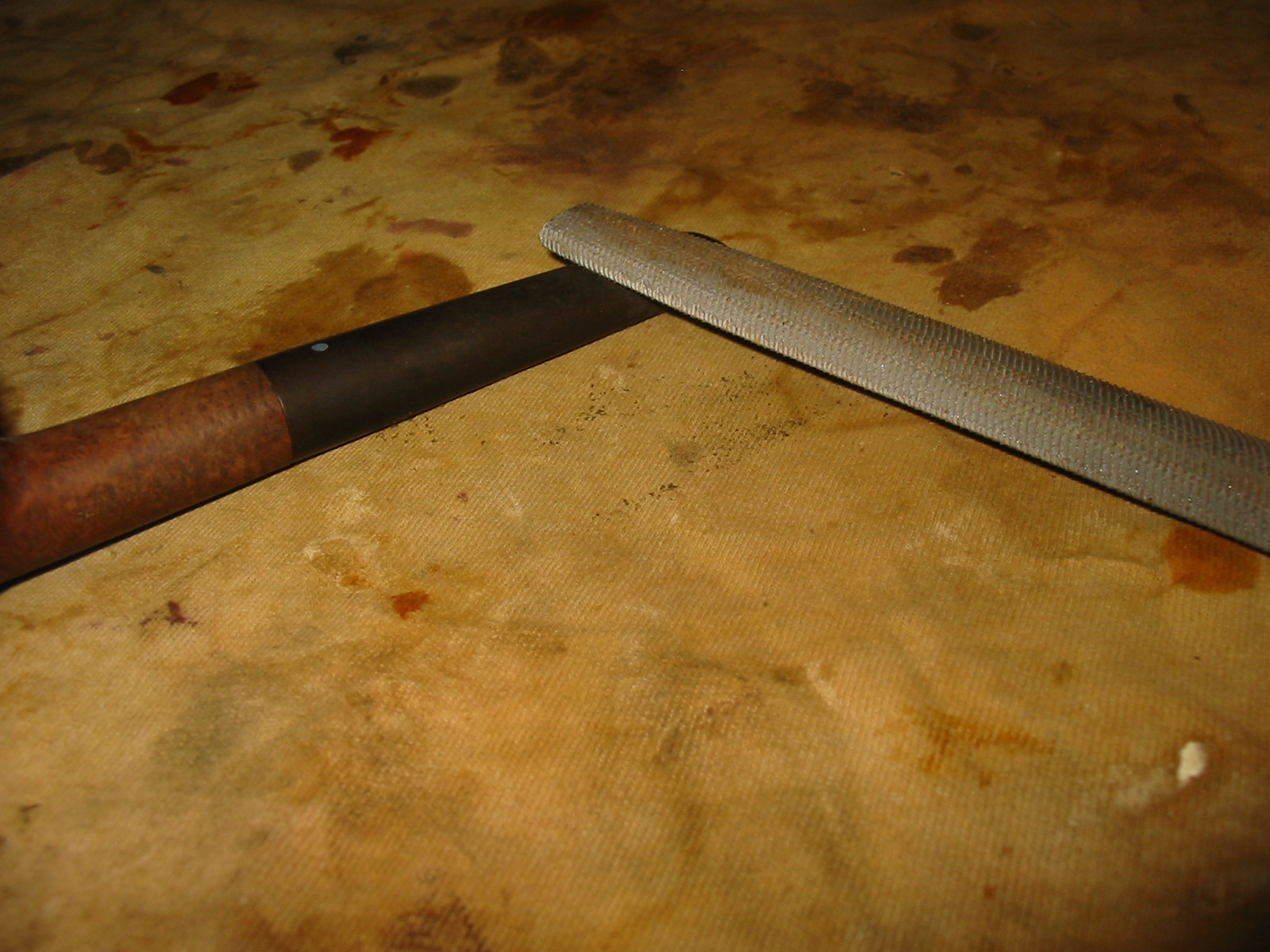
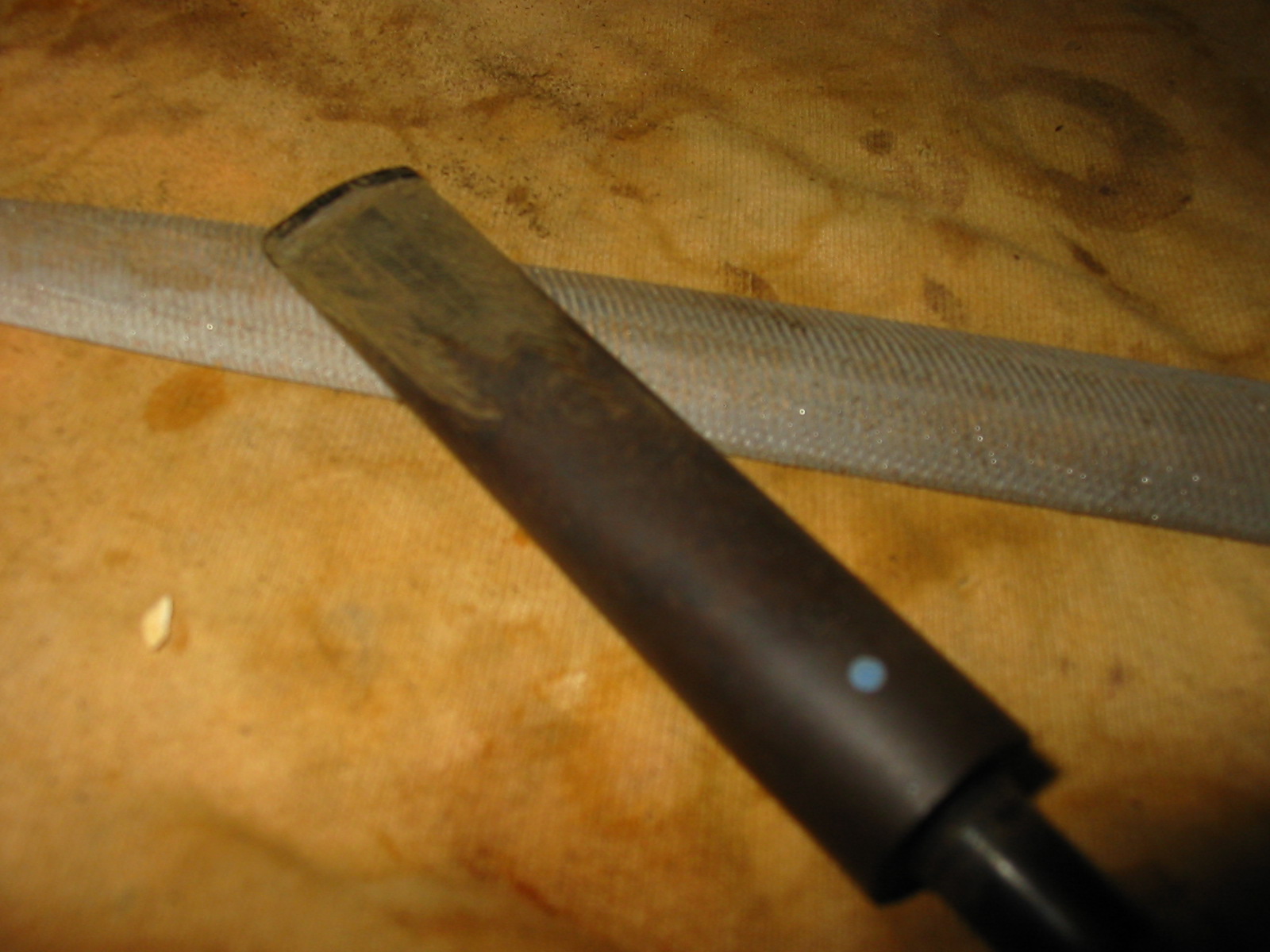
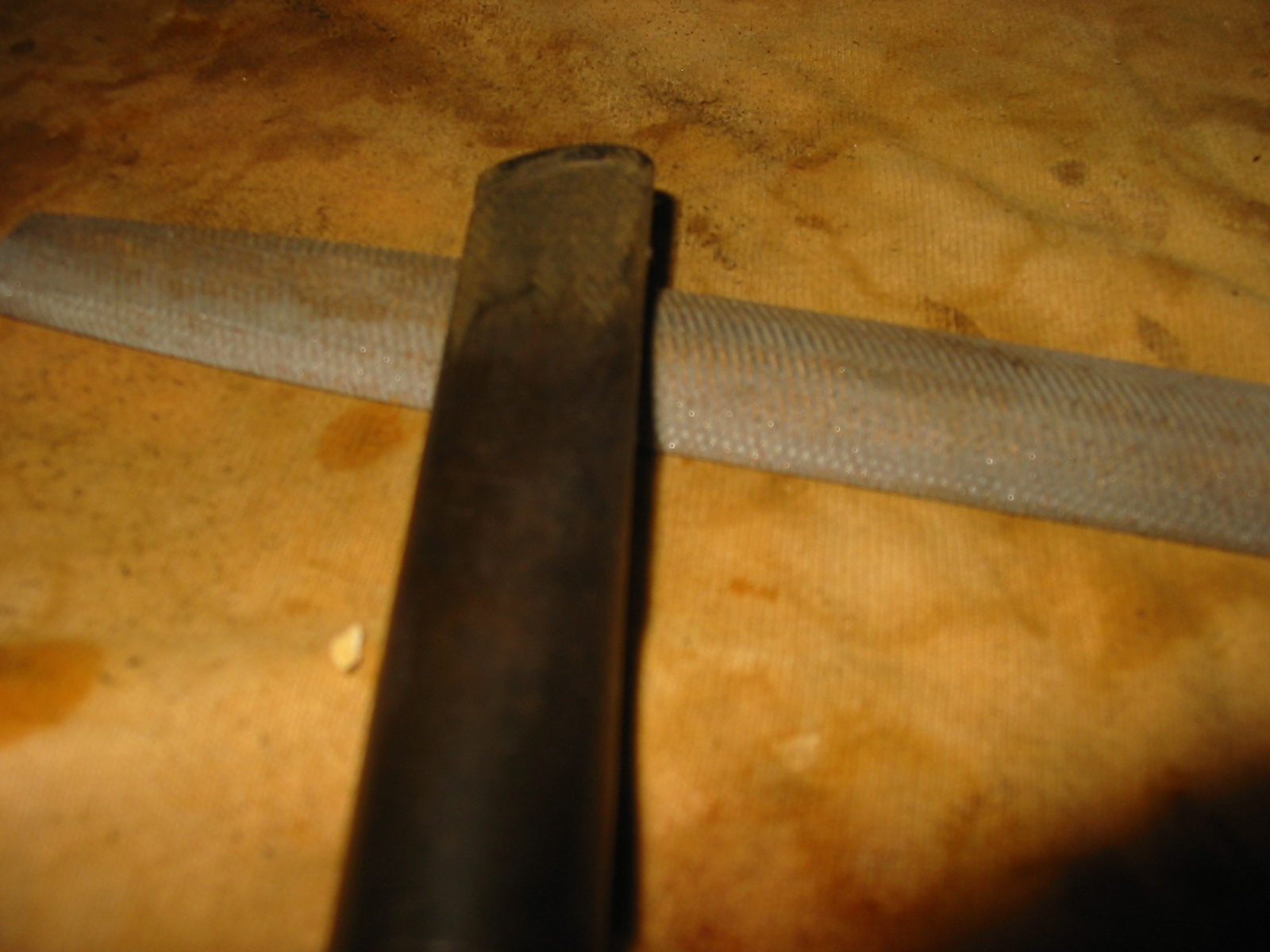
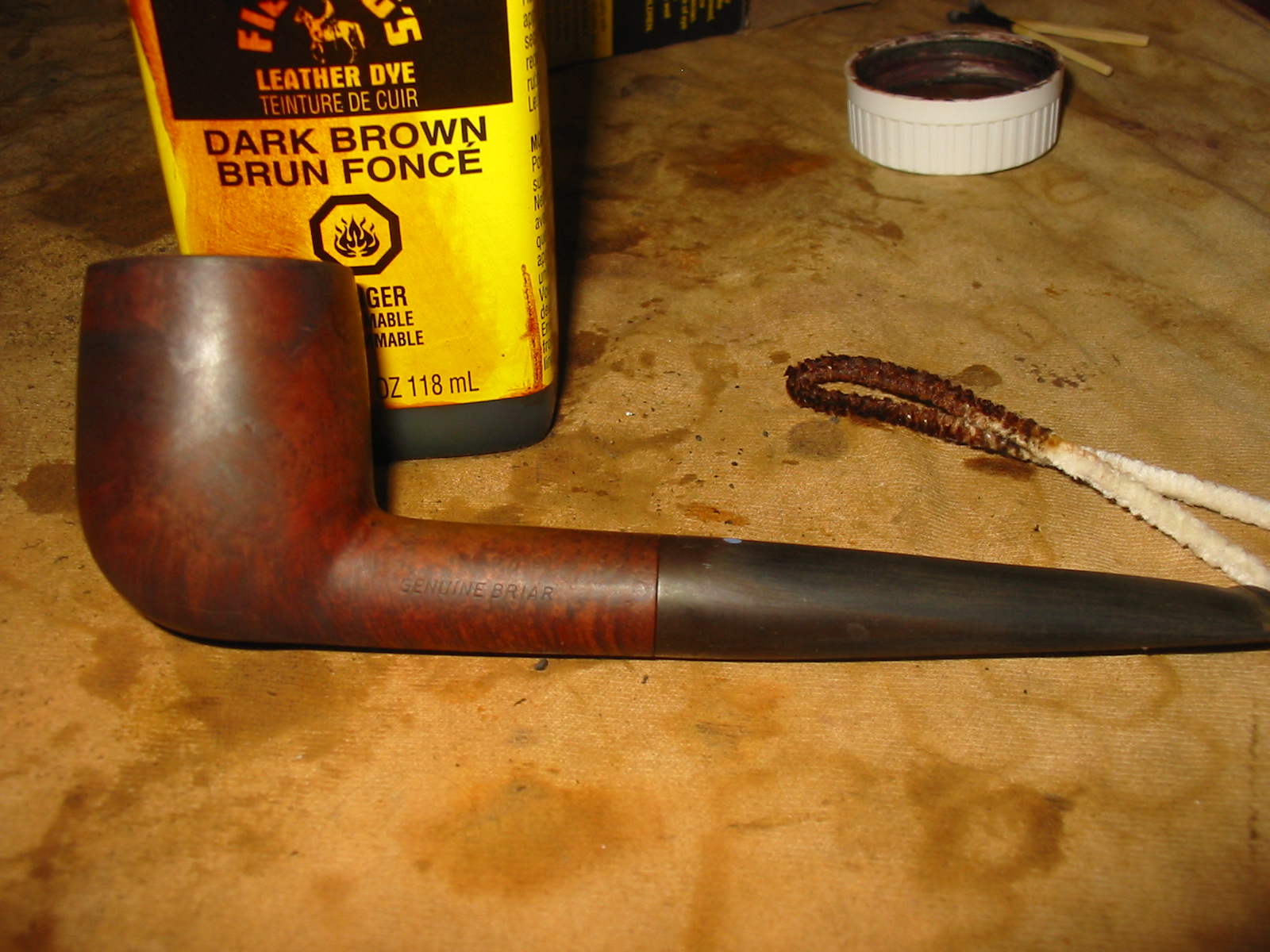
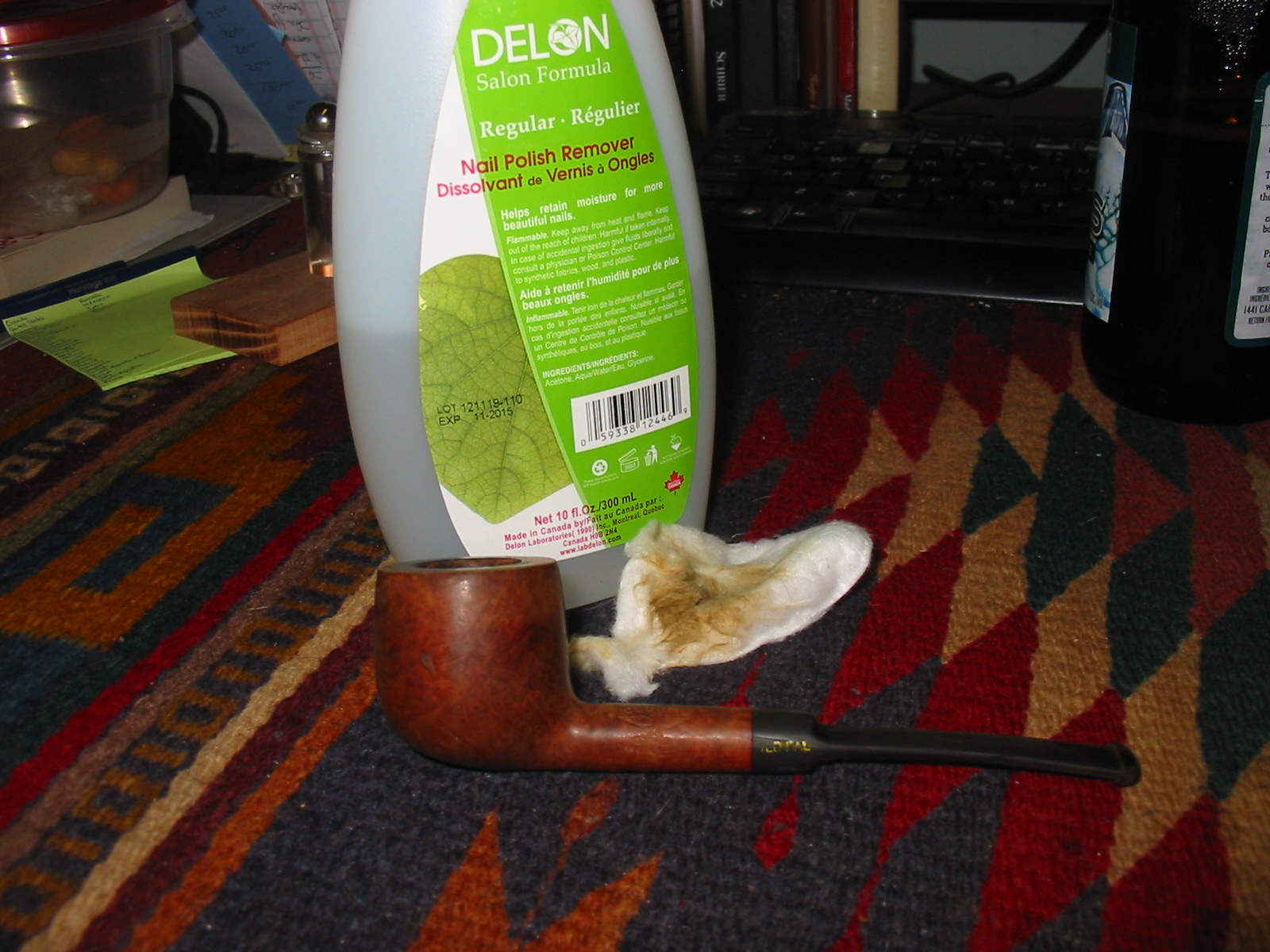
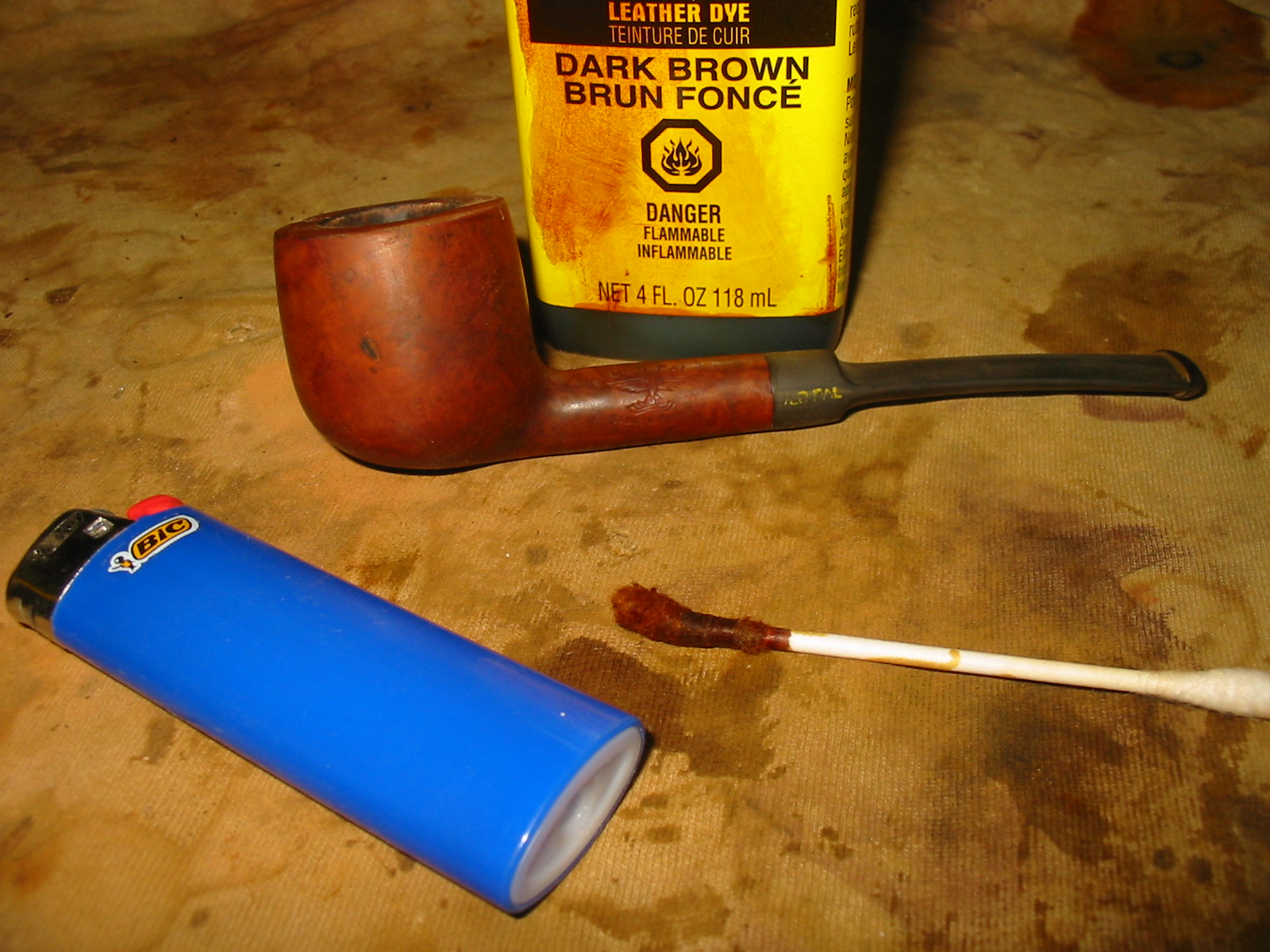
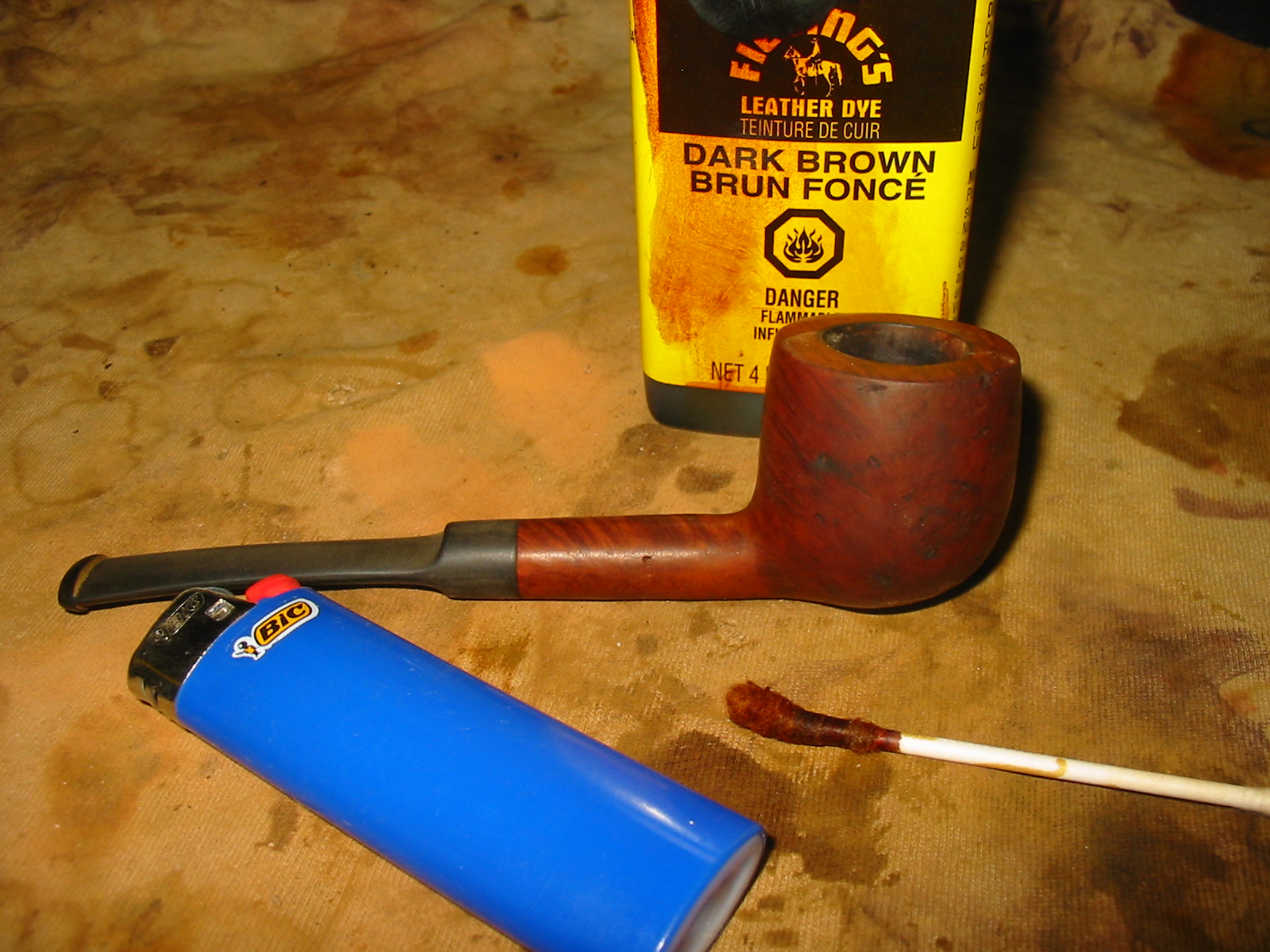
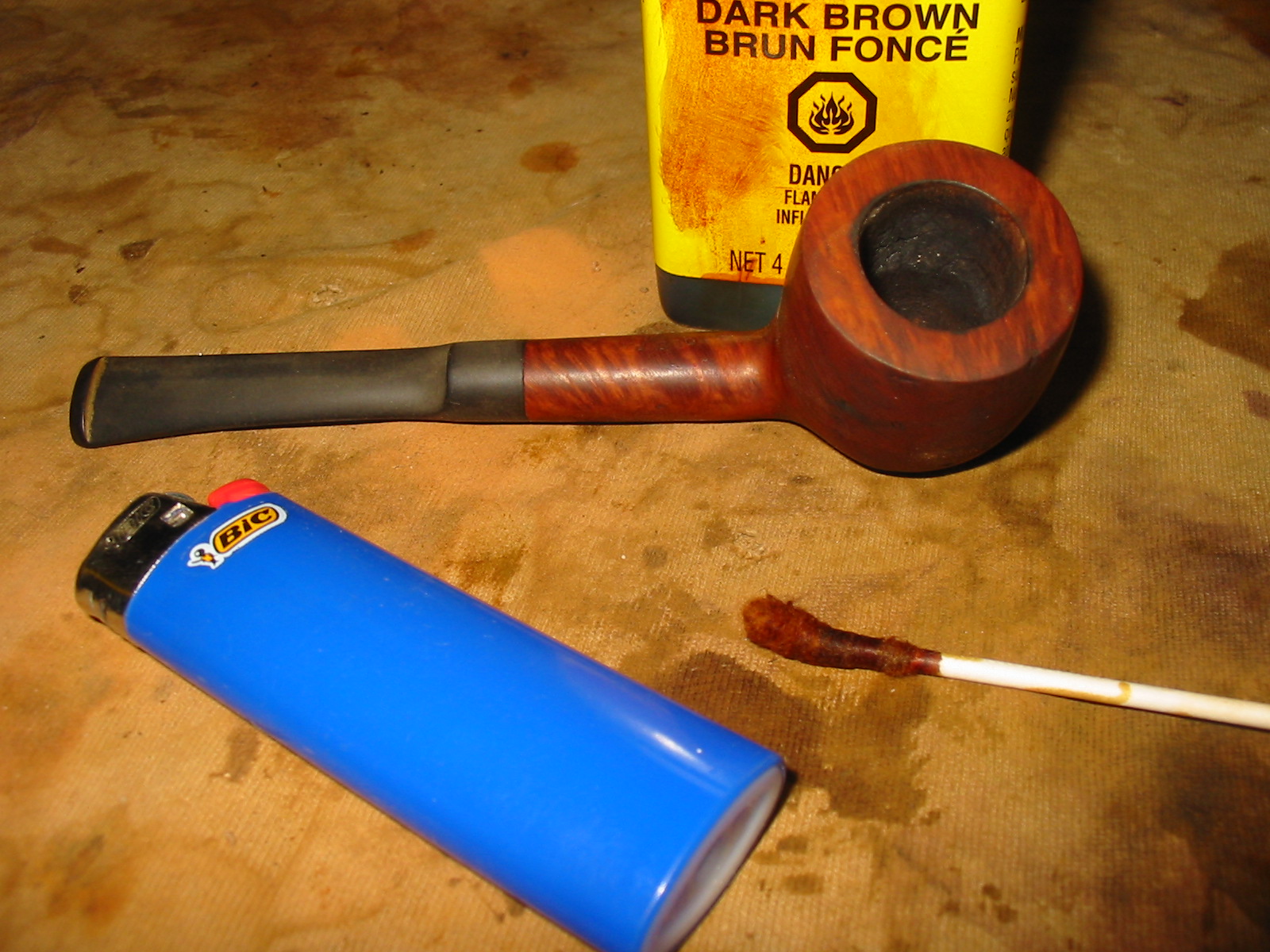
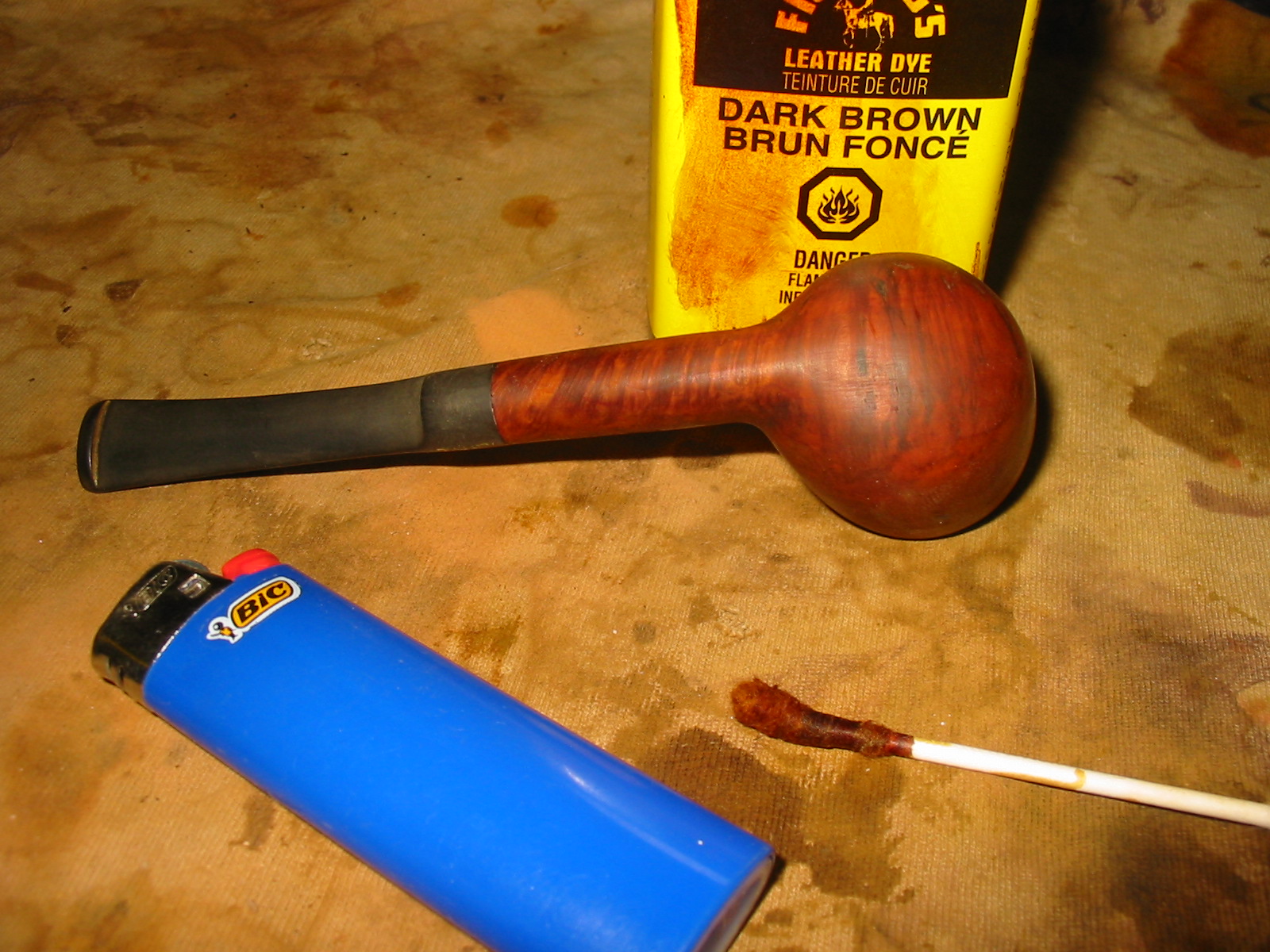
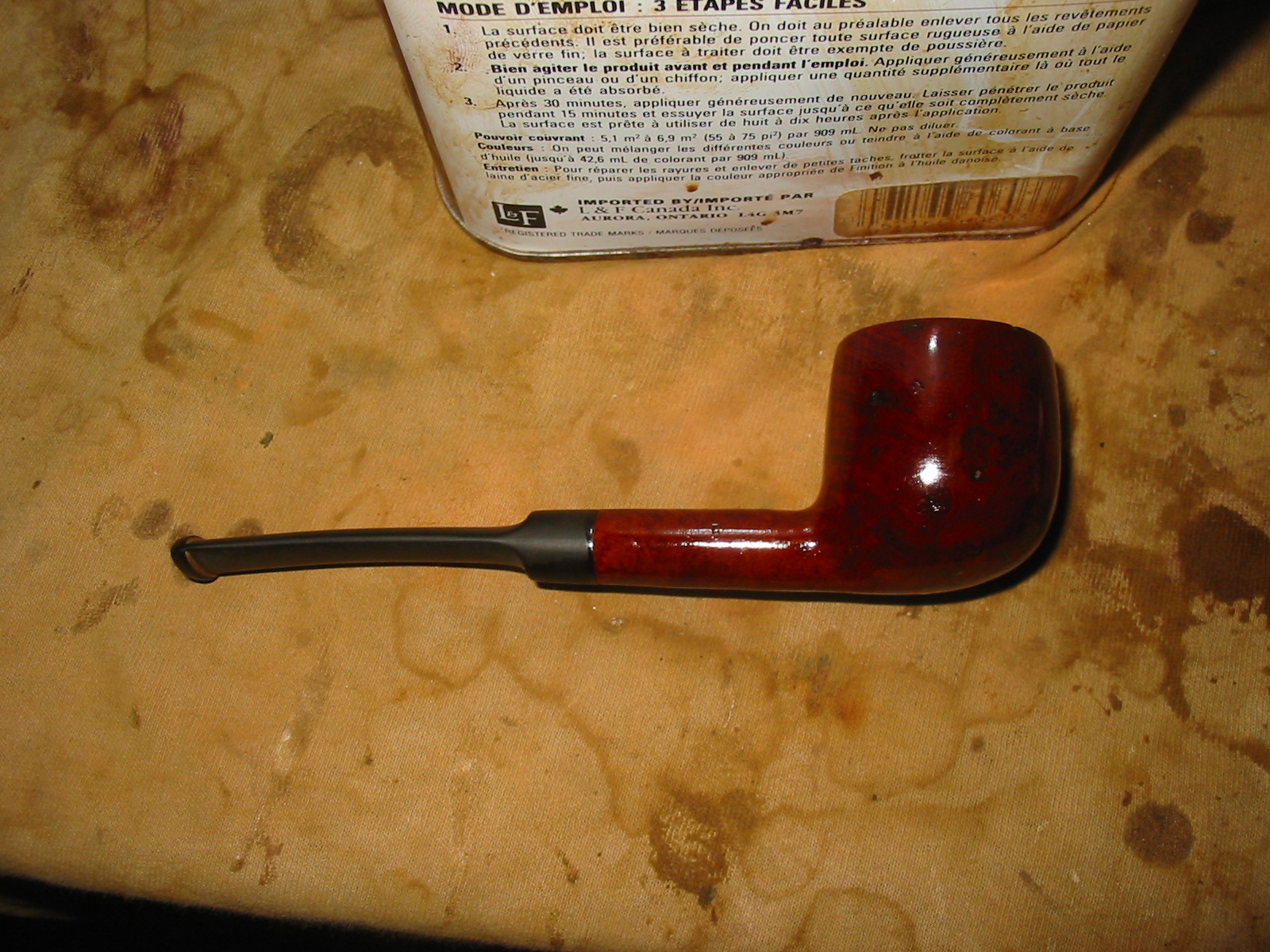
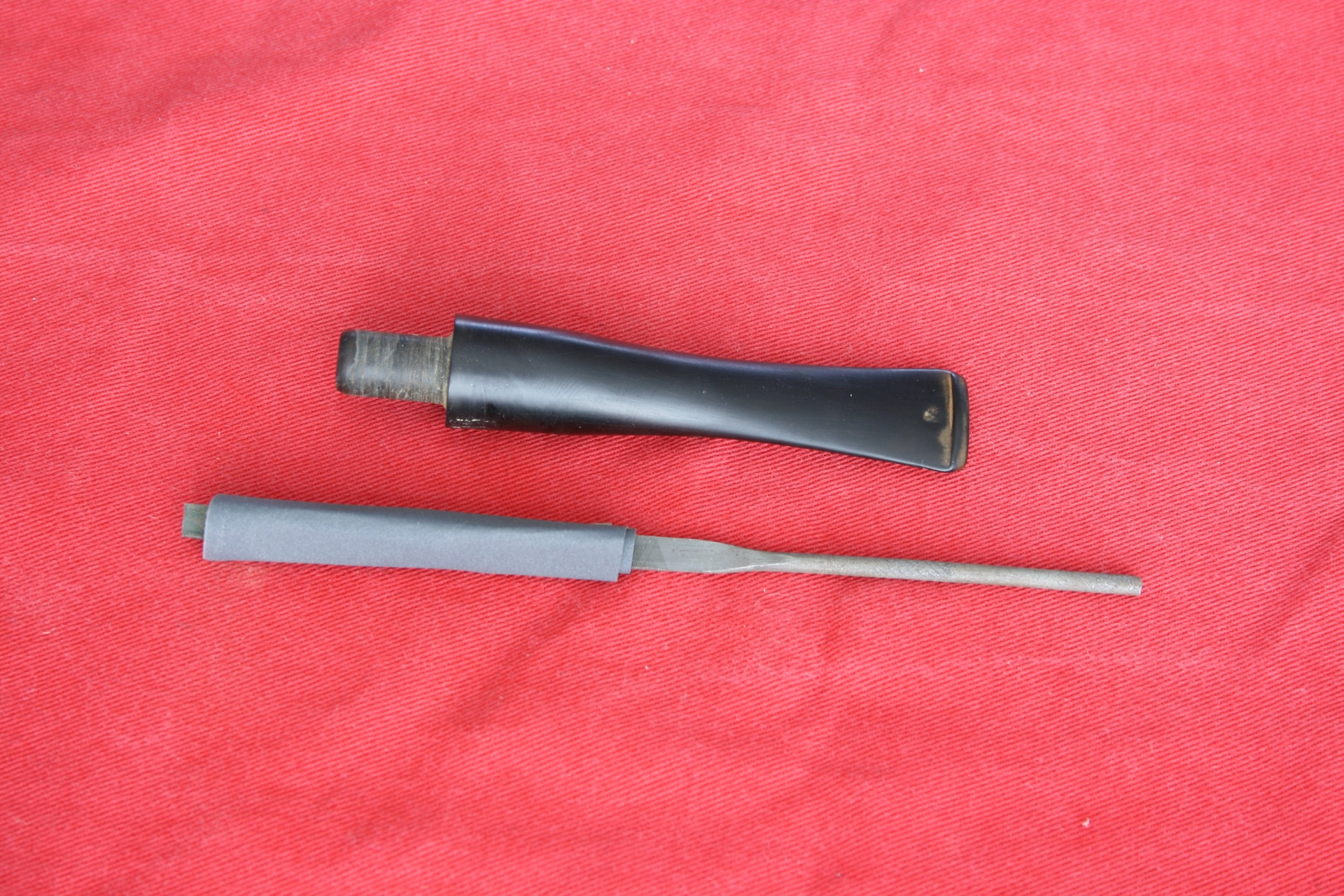
The clean angles of the button against the stem were gone so I recut them with needle files to clean up the edge. I reamed the bowl back to bare briar with a PipNet reamer starting with the smallest cutting head and progressing to the one that was the diameter of the bowl without the cake. Once it was cleaned out I scrubbed down the bowl with Murphy’s Oil Soap and a soft bristle tooth brush to remove the grime. I scrubbed the buildup on the rim with a soft bristle brass tire brush to remove the tars. Once I had scrubbed it I rinsed it with warm water to remove the soap and dried it off with a cotton towel. I wiped down the bowl with acetone on a cotton pad and prepared it to be stained. After heating it with a heat gun I stained it with a dark brown aniline stain. I used a permanent black marker to touch up the raw briar areas where it was scratched or damaged. I reapplied the stain and flamed it. The newly stained pipe is shown in photos 2 and 3 below.

IMG_1497

IMG_1498

IMG_1499

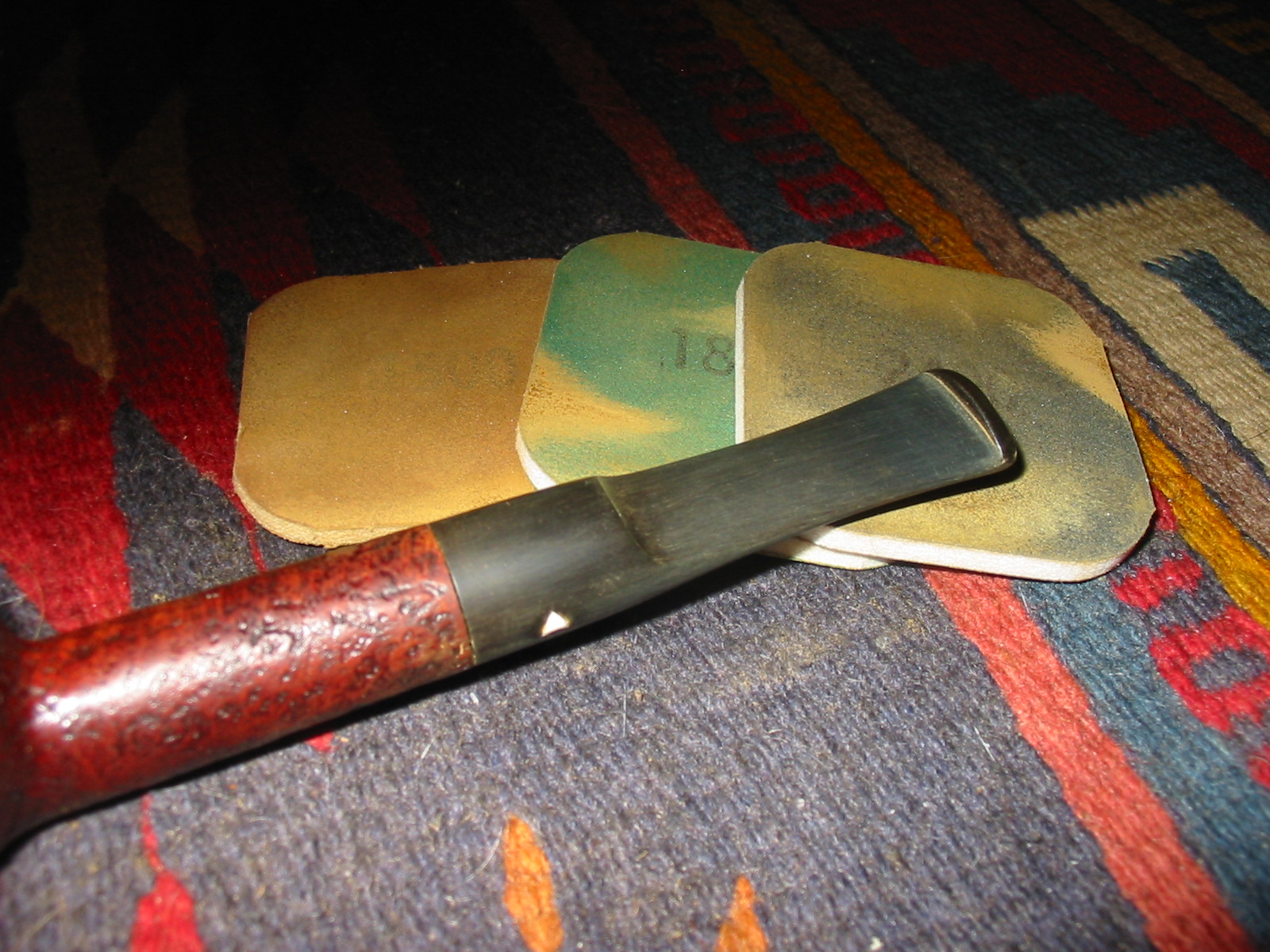
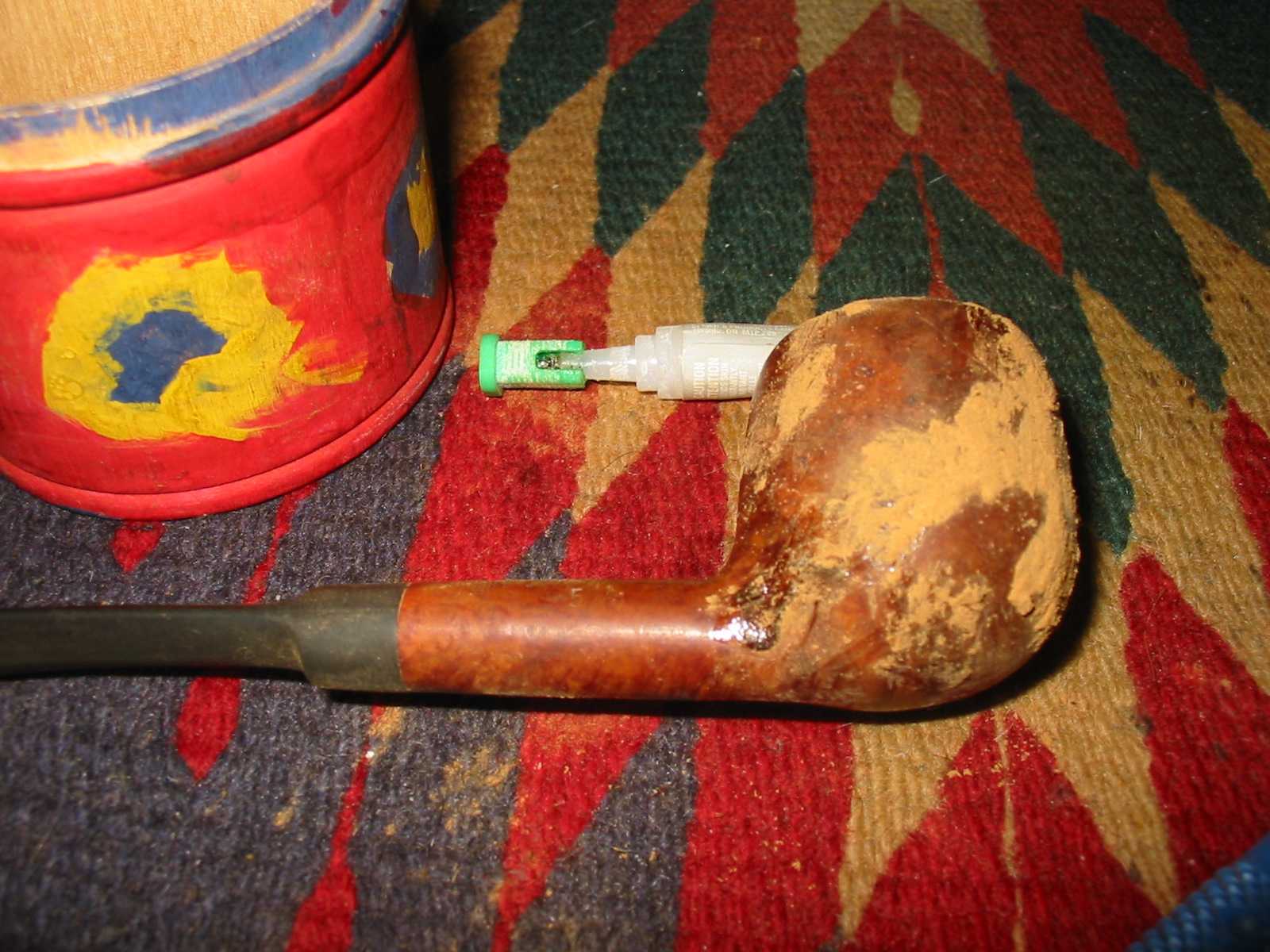
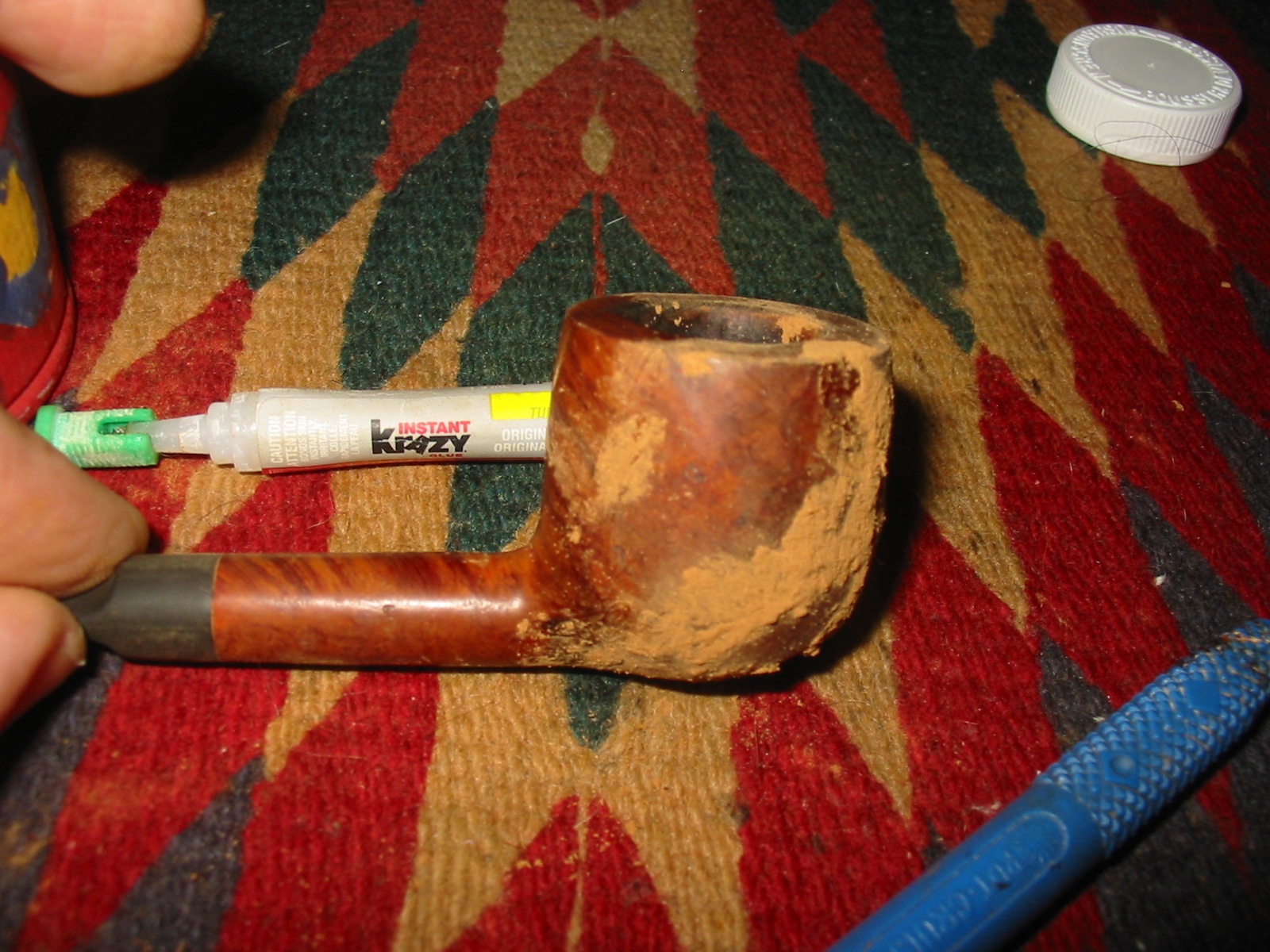
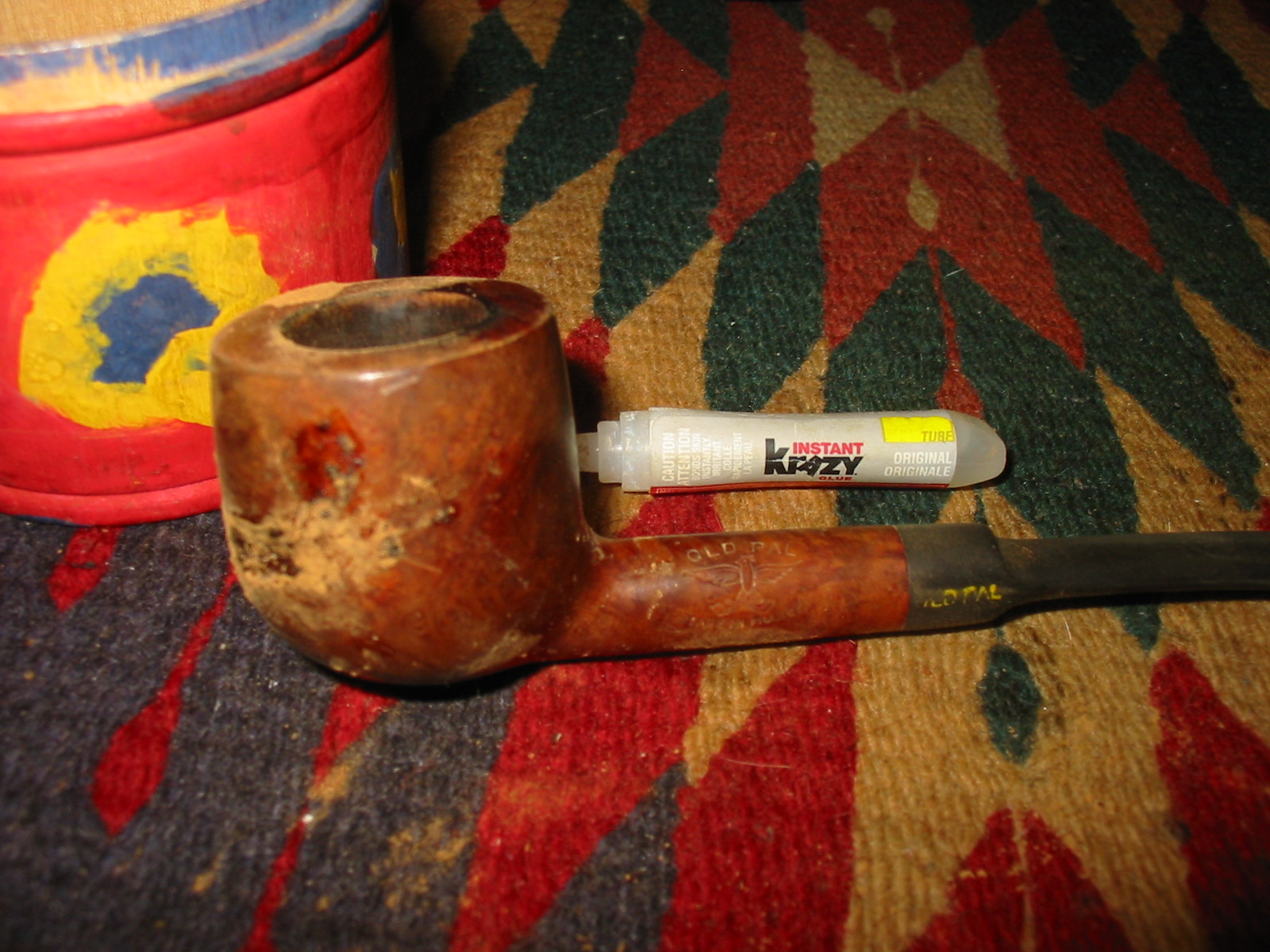
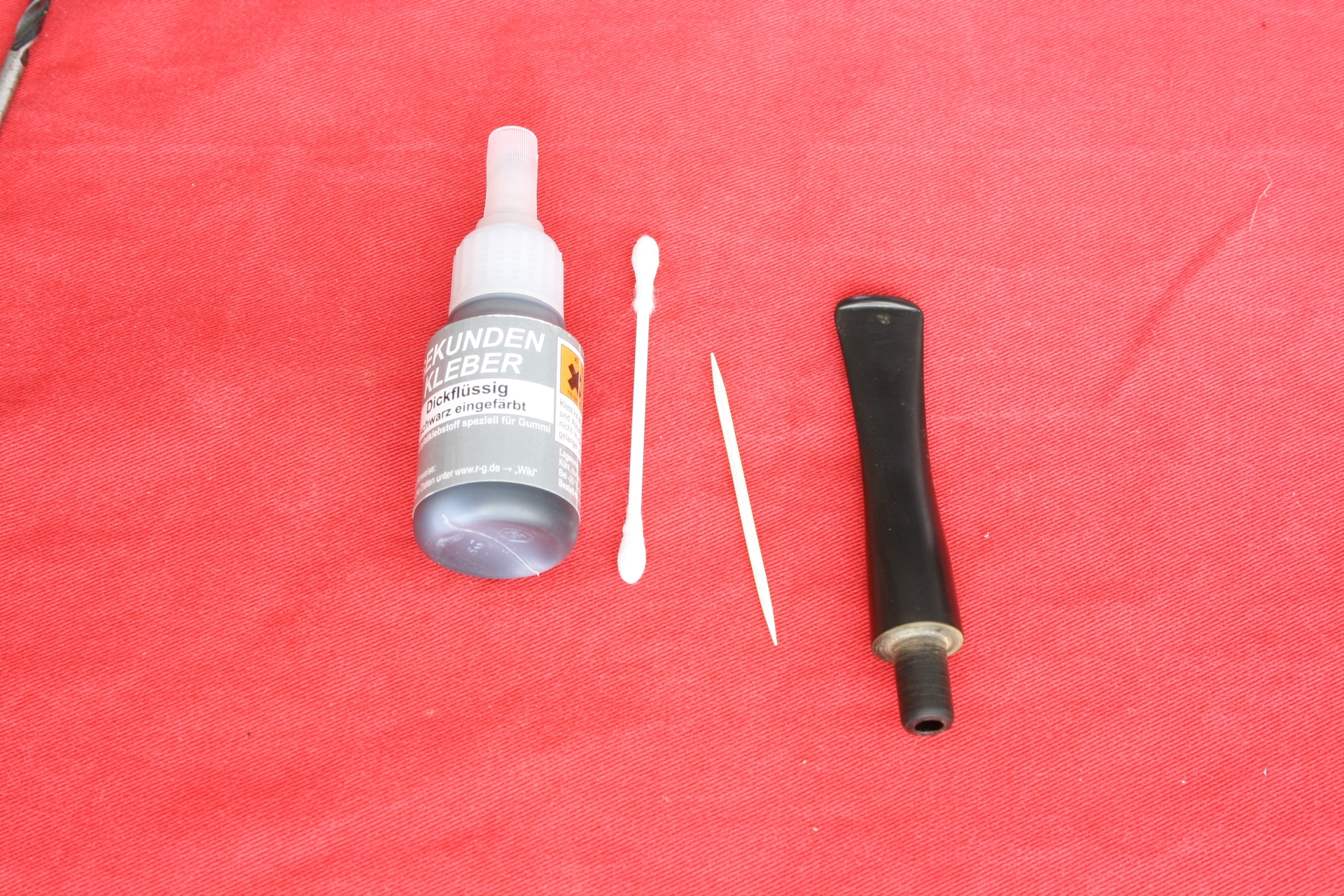
I sanded the stem with medium grit emery paper to remove the calcification around the button and also heated the tooth marks with a Bic lighter to lift them as much as possible. I “painted” the surface of the stem with the flame to burn off the sulfur of the oxidation that I had loosened by sanding. I repaired the tooth marks on both sides of the stem with black superglue and set it aside to dry overnight.

IMG_1500

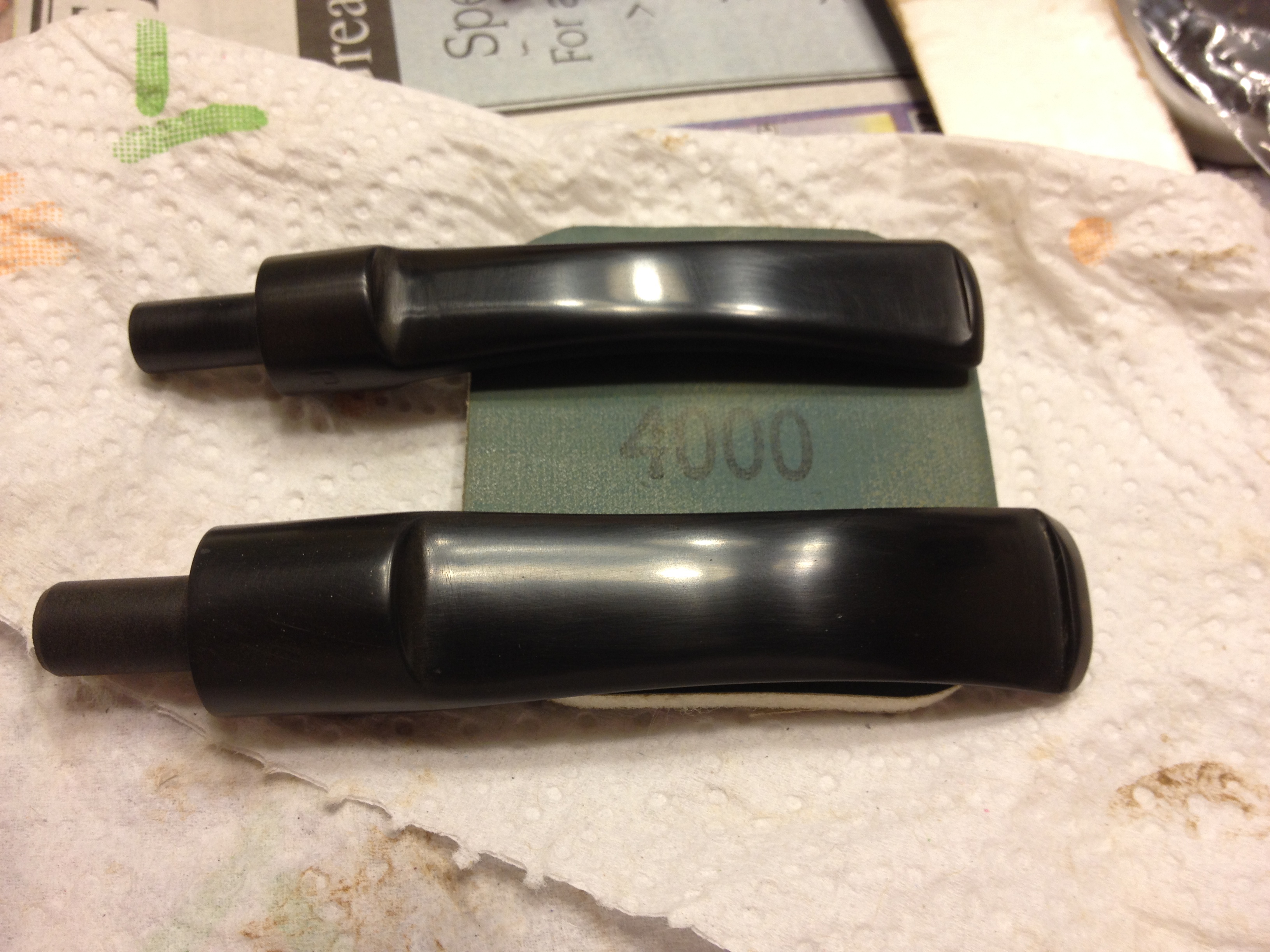
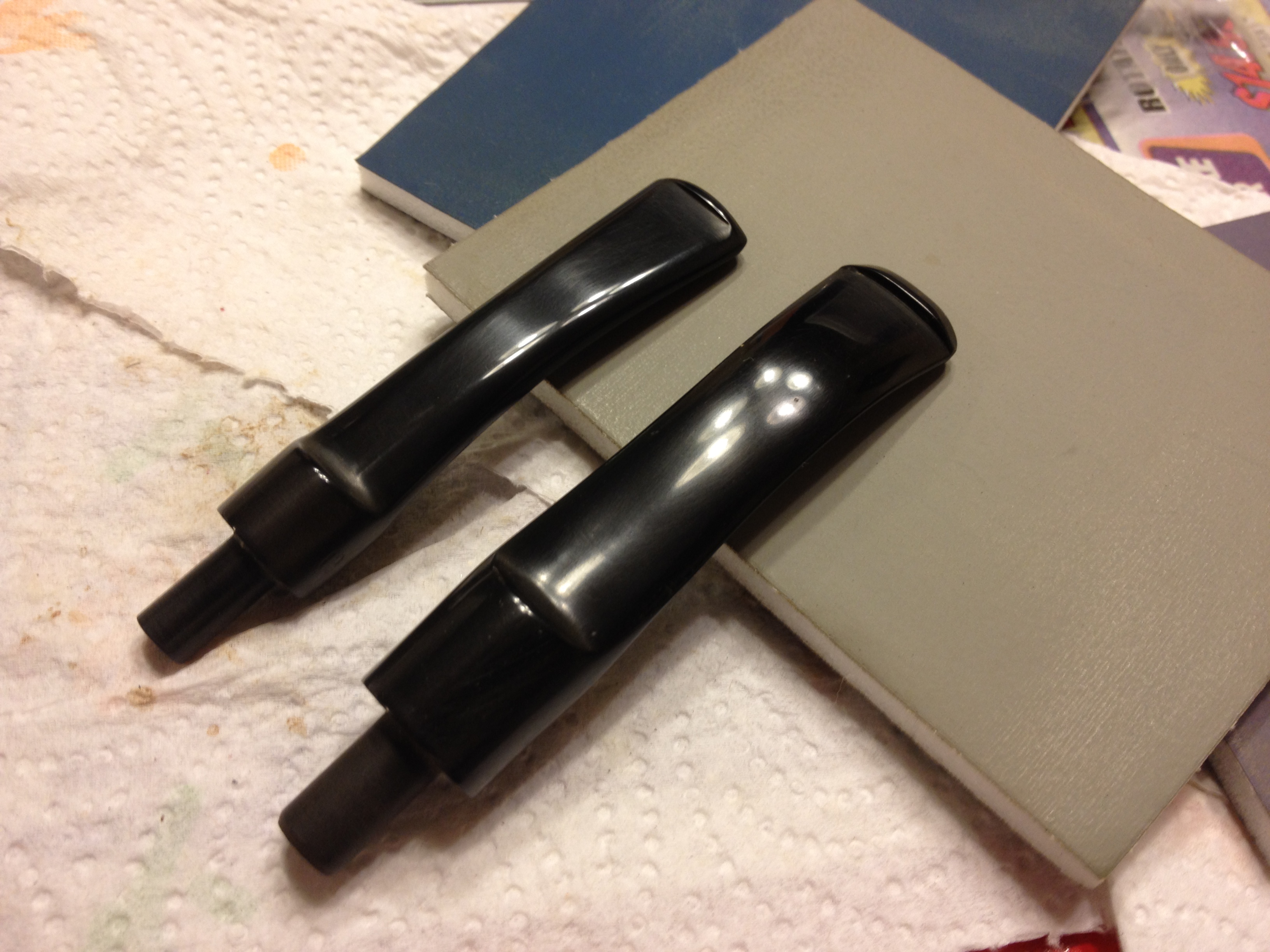
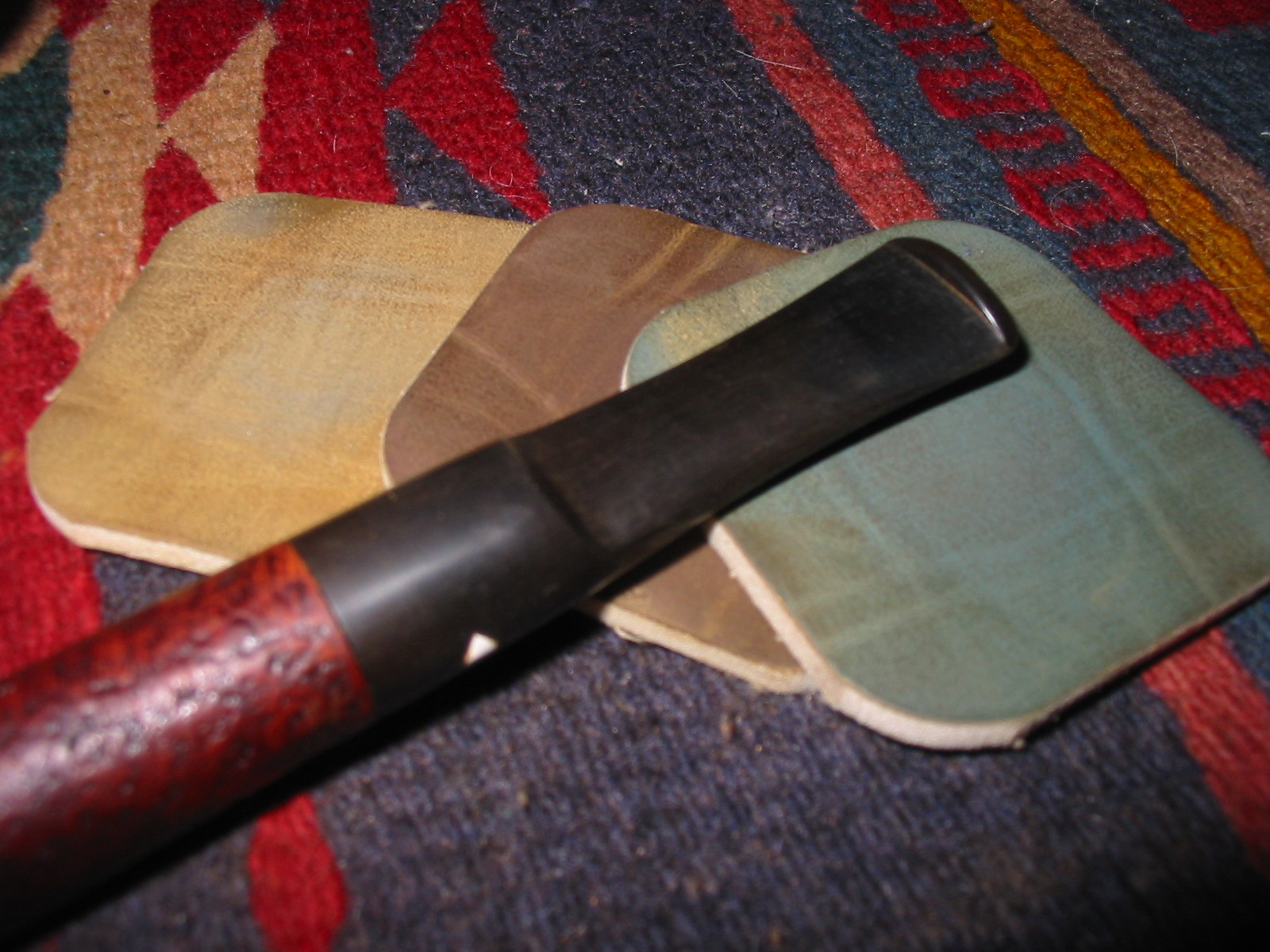
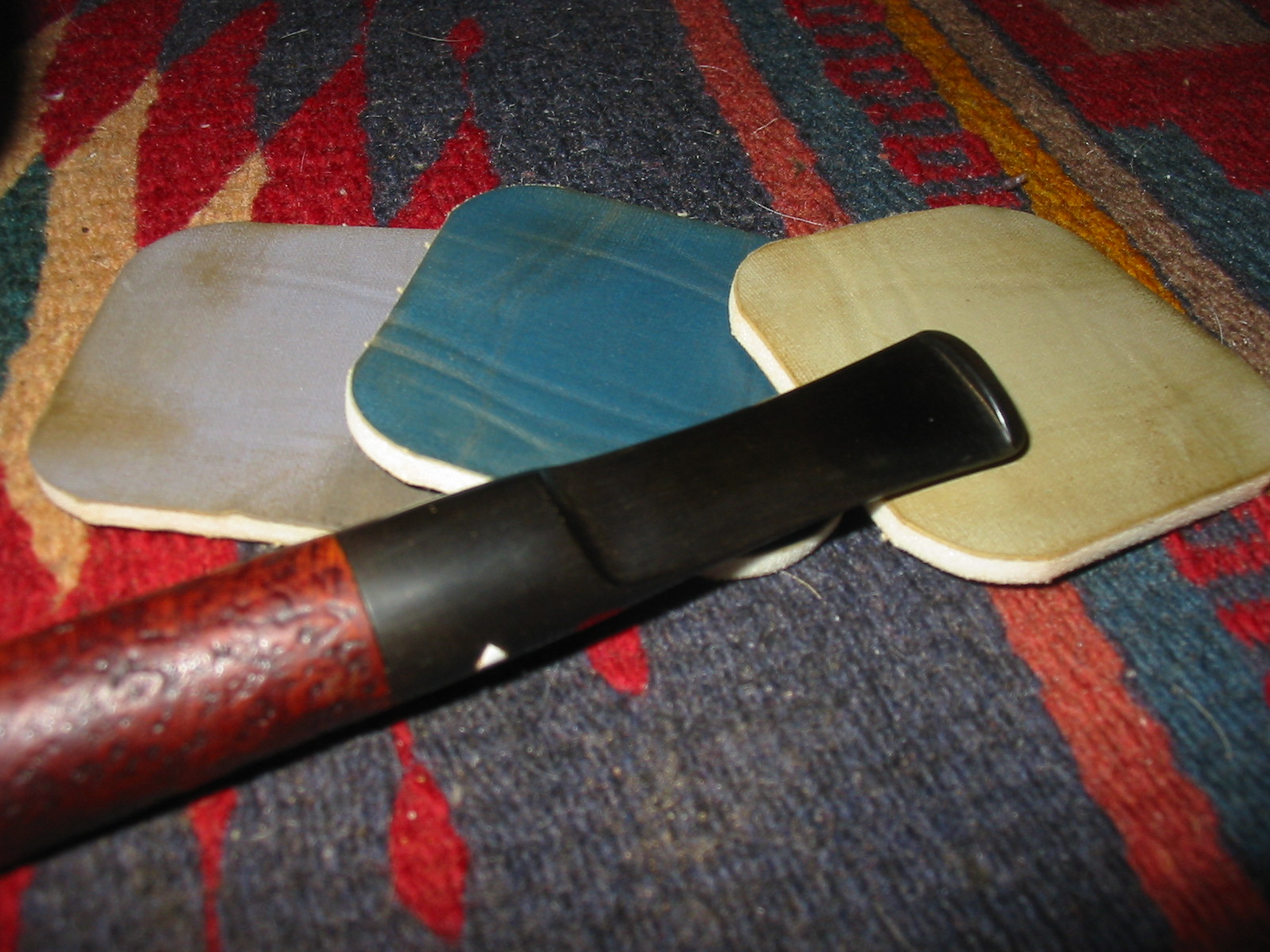
The next morning I cleaned out the bowl and shank with pipe cleaners, cotton swabs and Everclear. I sanded the stem and the superglue patch with 220 grit sandpaper and then with a medium grit sanding sponge to clean up the scratches in the finish. I put it back on the bowl to get an idea of the overall look of the pipe and see if the diameters of the stem fit the shank. I needed to flatten the bottom of the stem some more to match the bottom of the shank and also removed some more of the material on the diameter of both sides to bring it into line with the shank. Once the stem was well fitted I moved on to sanding with micromesh sanding pads from 1500-12,000 grit.

IMG_1501

IMG_1502

IMG_1503

IMG_1504

IMG_1505

IMG_1506

IMG_1507

I buffed the stem with White Diamond and a Blue polish. I gave the bowl a light buff with White Diamond to bring up the shine. I gave the bowl a coat of Halcyon II wax and buffed it by hand with a shoe brush. I gave the stem multiple coats of carnauba and buffed it on the buffer with a clean flannel buff. I think the pipe came out well. Does anyone know anything about the brand?

IMG_1508

IMG_1509

IMG_1510

IMG_1511

Reborn Huckster Pipe – Is It a GBD 9438?


When I hear the word Huckster I think of an aggressive salesperson or a promoter, a snake oil salesman or someone not to be trusted. The definition from the dictionary is one who uses aggressive, showy, and sometimes devious methods to promote or sell a product. The stamping on this pipe is HUCKSTER on the left side of the shank. On the right side of the shank it is stamped LONDON ENGLAND. The pipe is clearly either made by GBD or by someone doing an amazing copy of the GBD 9438 shape. The shape is perfect in comparison with my GBDs of this shape number. I have been researching on the internet to see if I can find out who the pipe was made by/for and develop some background on it but so far I have found nothing.

Hukster5

The five pictures below were included in the EBay sale by the seller of the pipe. While they are out of focus they gave me a clear enough picture to place the bid. I was one of a few bidders on this one so I picked it up for a very good price in comparison to that of GBD 9438s. When it arrived I was happy to see that the seller’s photos actually were poor in comparison to the pipe that I held in my hand. The grain is extremely nice – the left side and the bottom of the shank and bowl have some beautiful birdseye grain. The right side has great flame grain. The front of the bowl has a bald spot with a well hidden fill in the grain (In the photos it is just above the lighter spot on the front of the bowl. There were a few dents that would need to be steamed out of the finish but the stain and finish was impeccable. The rim was unblemished with no burn marks. There were a few small sand pits in the bowl above the double rings. The bowl had a slight cake in the bottom half but the shank is clean and spotless with some raw briar that has not been stained with smoking. If it weren’t for the slight cake in the bottom of the bowl it would appear to be unsmoked. The stem was badly oxidized and did have one slight tooth dent on the underside near the button. I think that the seller must have cleaned up the pipe before selling as there were also scratches from sanding on the stem – top and bottom sides.

Hukster1

Hukster3

Hukster4

Hukster6

When it arrived I took the next four photos to show what the pipe looked like before I worked on it. My description above formulated by and large from the photos online was accurate though in fact the pipe was very clean.

IMG_1416

IMG_1417

IMG_1418

IMG_1419

The bowl did not require any work other than a quick cleaning of the shank – more by habit than necessity. The stem on the other hand required a lot of work. I sanded it with a medium grit sanding sponge to break up the oxidation. I also used the flame of a Bic lighter to paint the surface of the stem. The flame from the lighter also raised the slight tooth indent next to the button. This combination of methods removed a large portion of the oxidation as can be seen in the next four photos below.

IMG_1421

IMG_1422

IMG_1423

IMG_1424

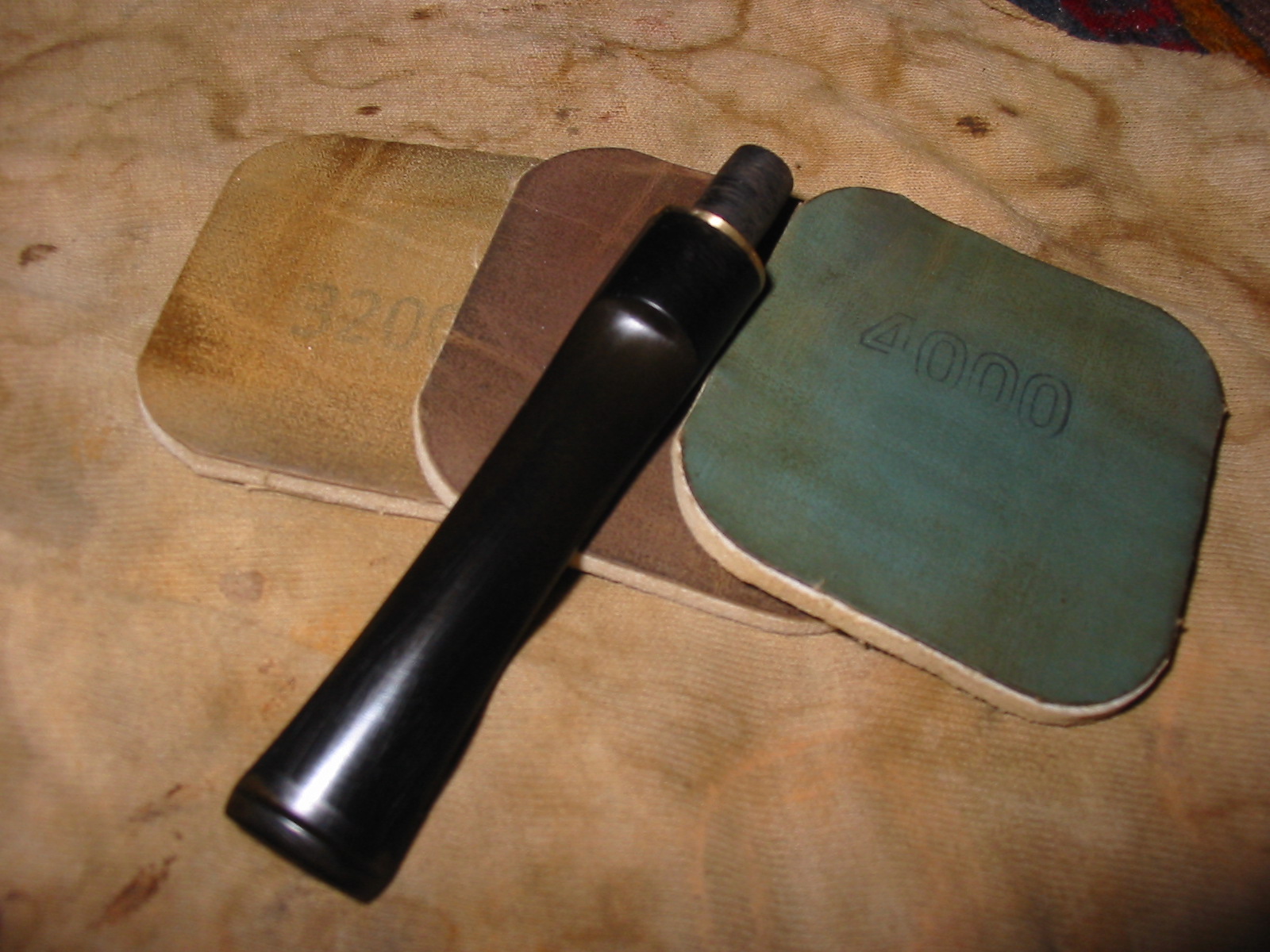
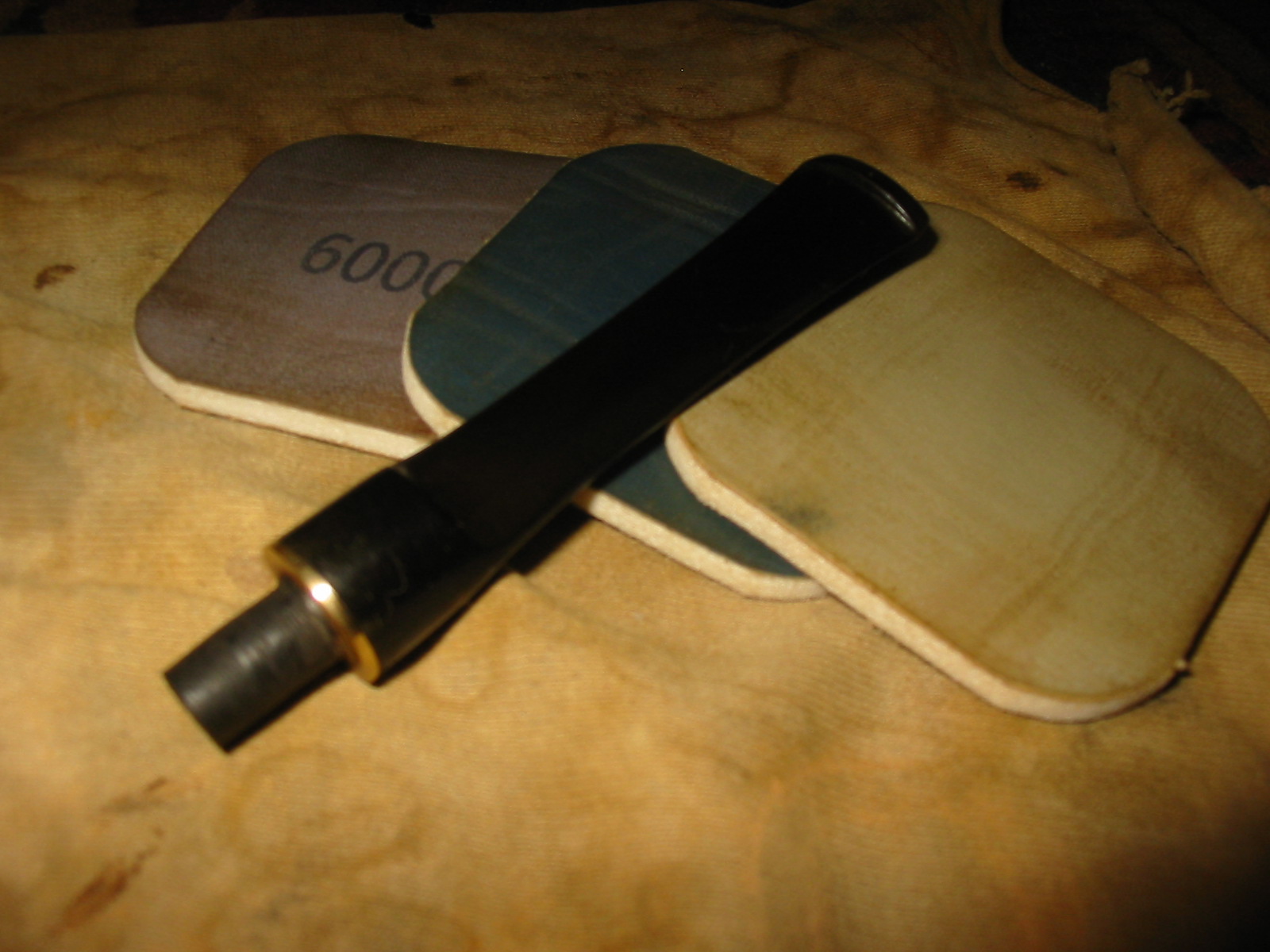
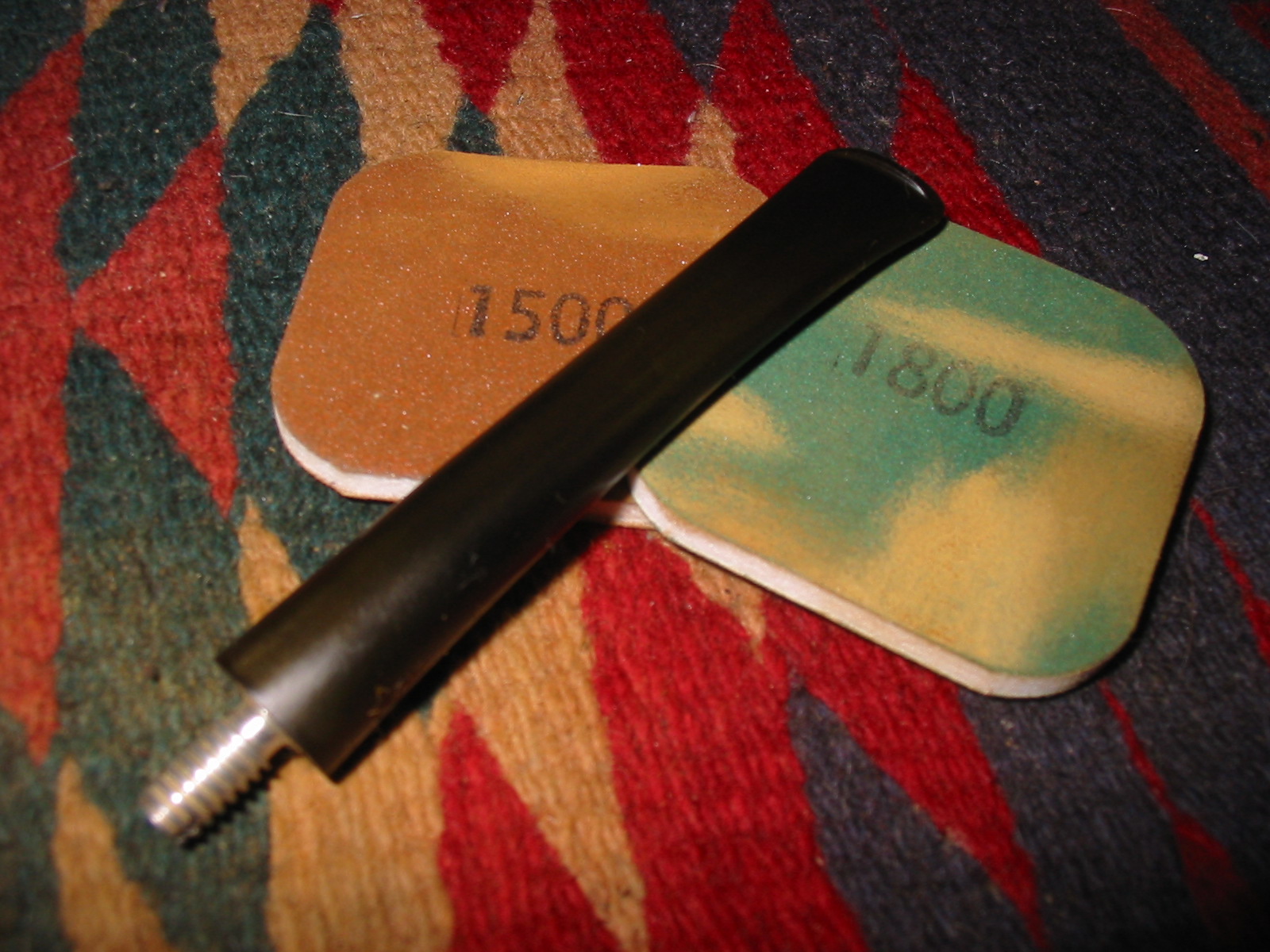
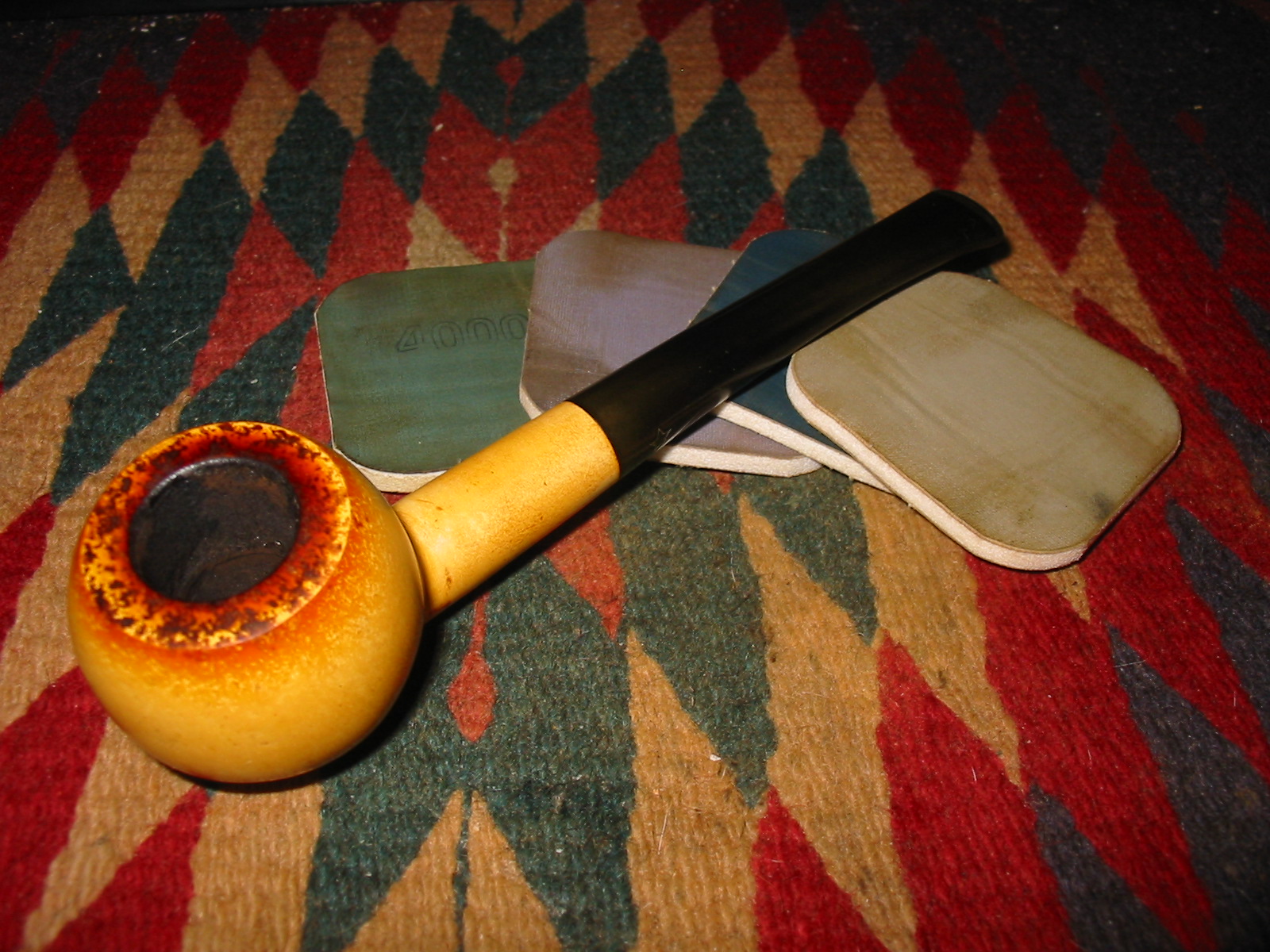
I then sanded the stem with micromesh sanding pads. I wet sanded with 1500, 1800 and 2400 grit sanding pads. I wet the pad by dipping it in a bowl of water and then sand the stem with it. Once I had wet sanded with those grits of micromesh I followed by dry sanding with 3200-12,000 grit micromesh pads. The next series of five photos show the progress of the sanding. I took it to the buffer after the wet sanding and buffed it with Tripoli to get an idea of where I stood with the oxidation. I also ran the flame over the hard to get angles on the saddle and against the button to further remove hard to get oxidation.

IMG_1425

IMG_1426

IMG_1430

IMG_1431

IMG_1432

After I was finished sanding with the final grit of micromesh I rubbed the stem down with Obsidian Oil and once it was dry buffed it with White Diamond. I then buffed a final time with a blue plastic polishing bar. I gave the bowl and stem multiple coats of carnauba wax and buffed it with a soft, clean flannel buff to raise the shine on the bowl and stem. The next four photos show the finished pipe.

IMG_1455

IMG_1457

IMG_1458

IMG_1459

Here are a few more shots with a different background
Huckster1

Huckster2

Huckster3

Huckster4

Restoration – The Guildhall 284


By Al Jones

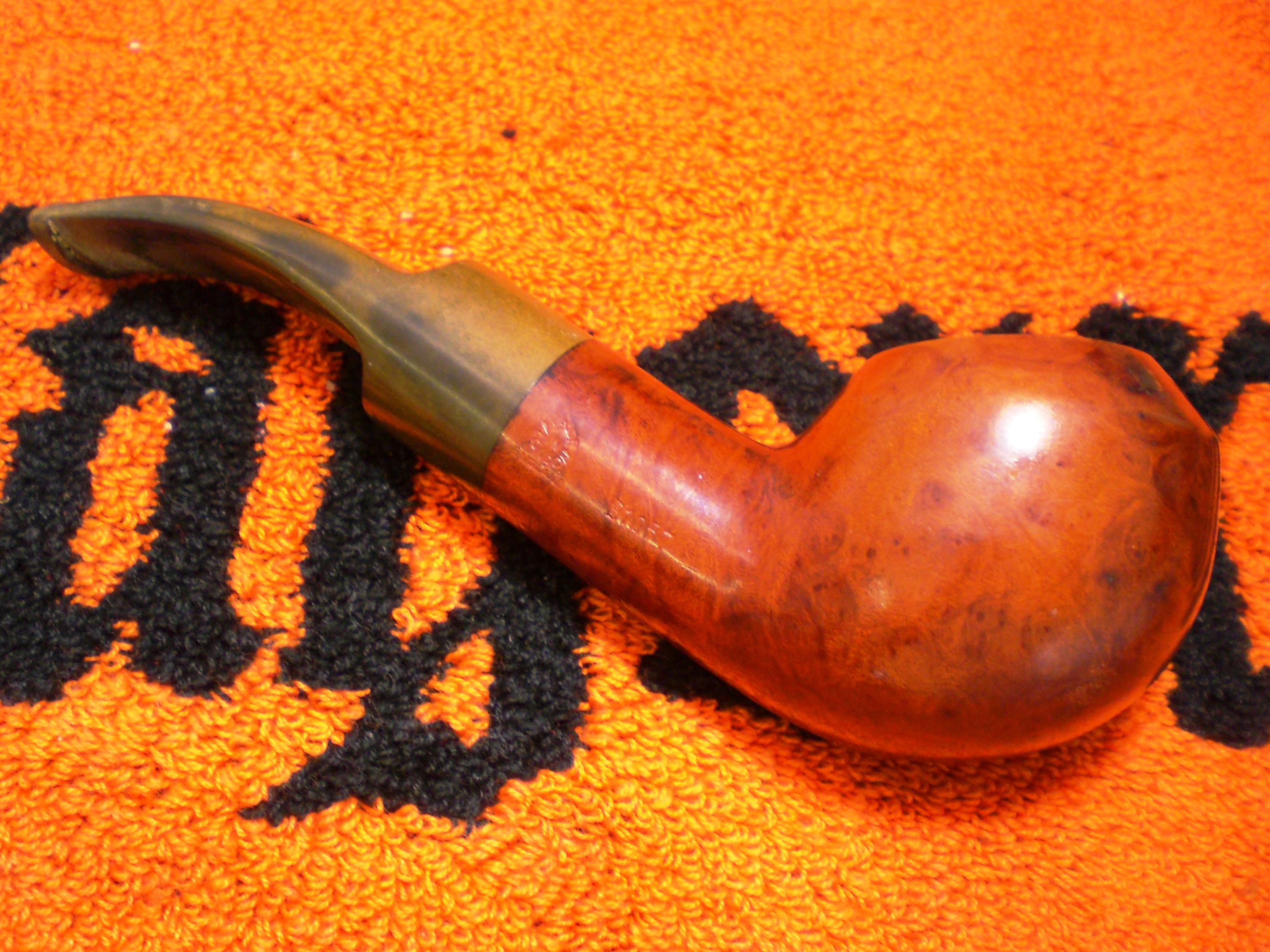
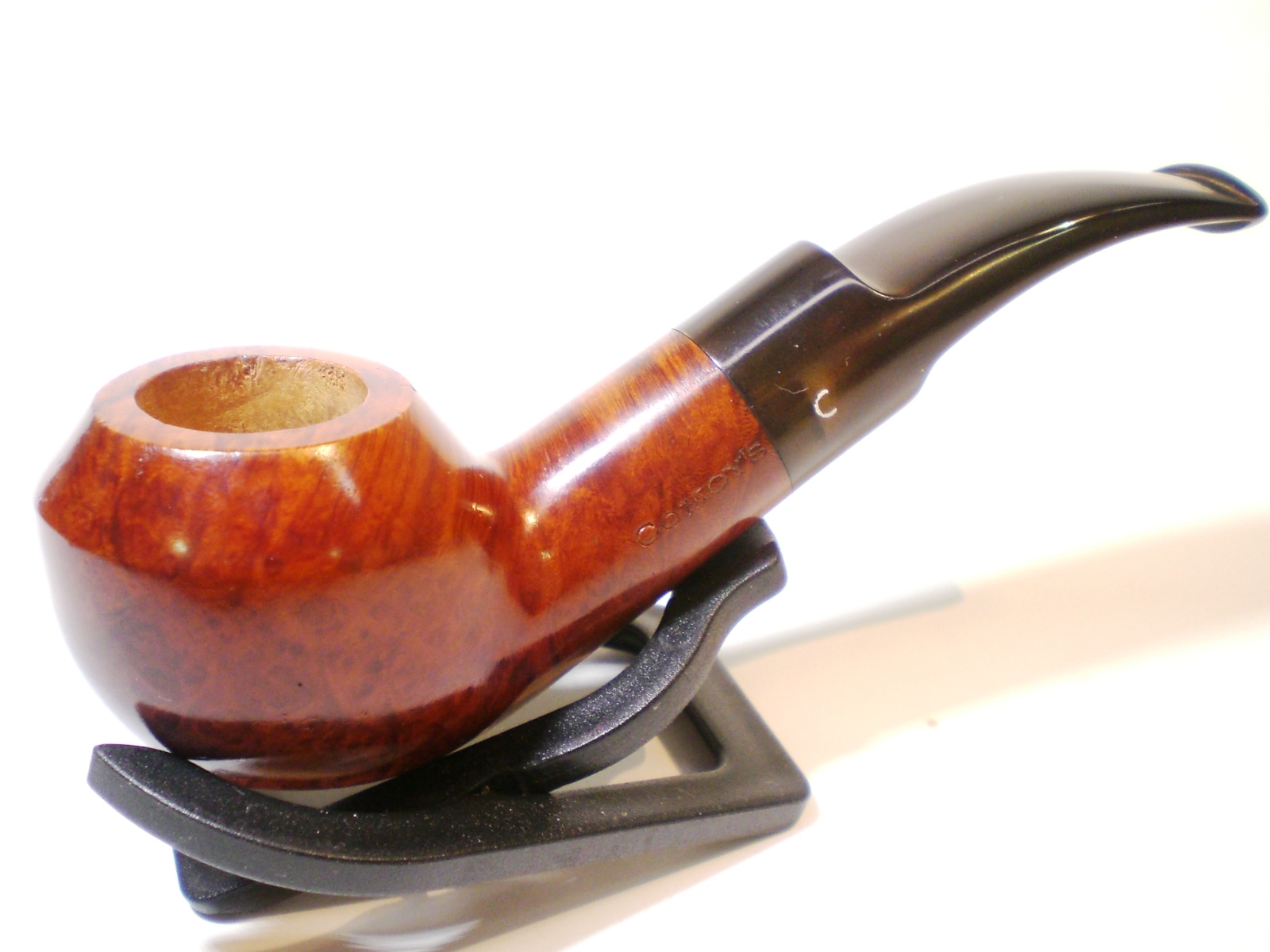
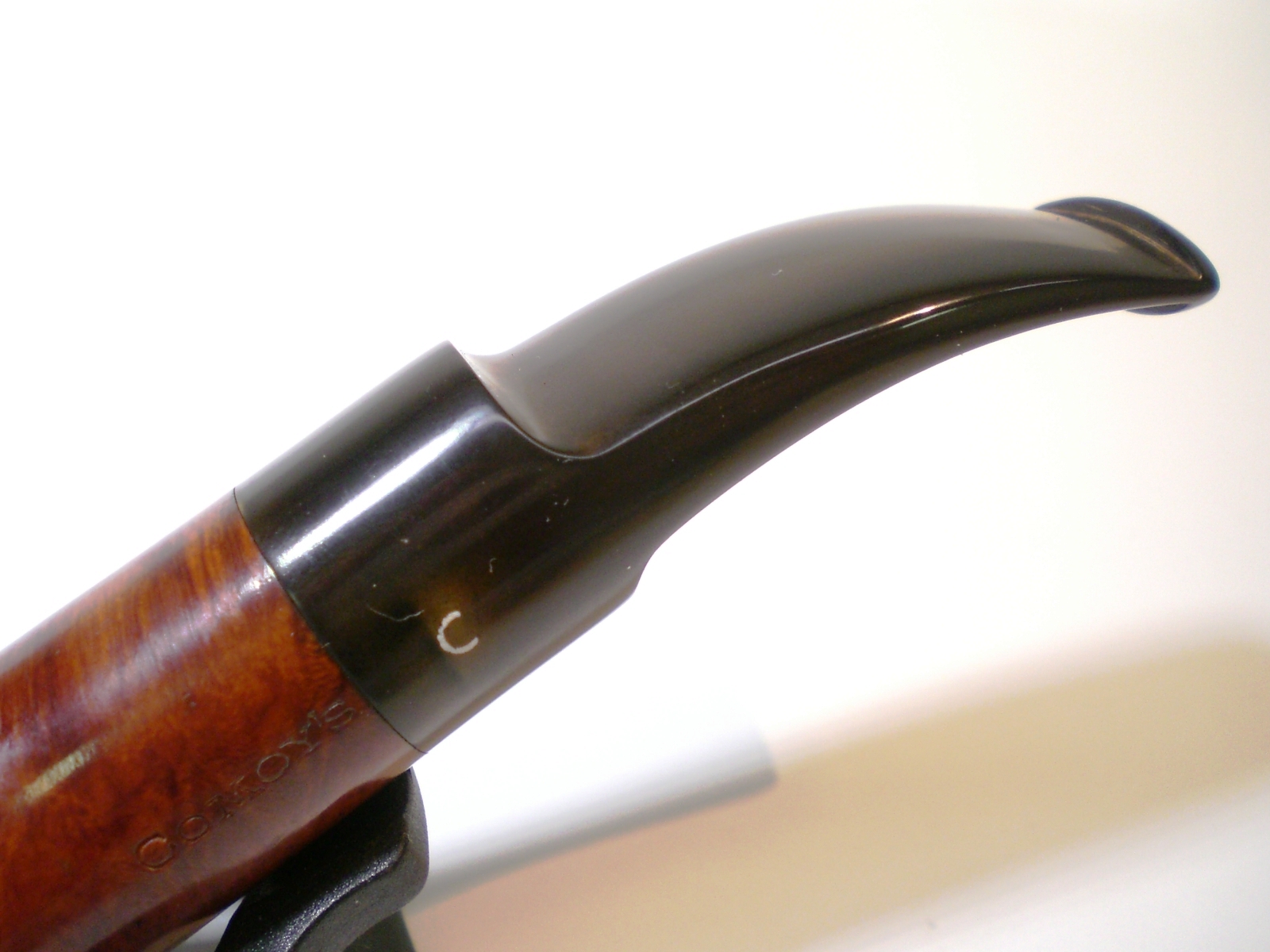
I am an admirer of the Rhodesian shape and the Comoy’s Shape 284, a compact Rhodesian, is one of my favorites. Unfortunately that shape doesn’t show up that often and when it does there is strong competition. I found this “The Guidall” shape 284 on Ebay but it was not in great shape, so I took a chance on it. “The Guildhall London Pipe” is a Comoy’s second line with a distinctive three-metal bar stem logo.

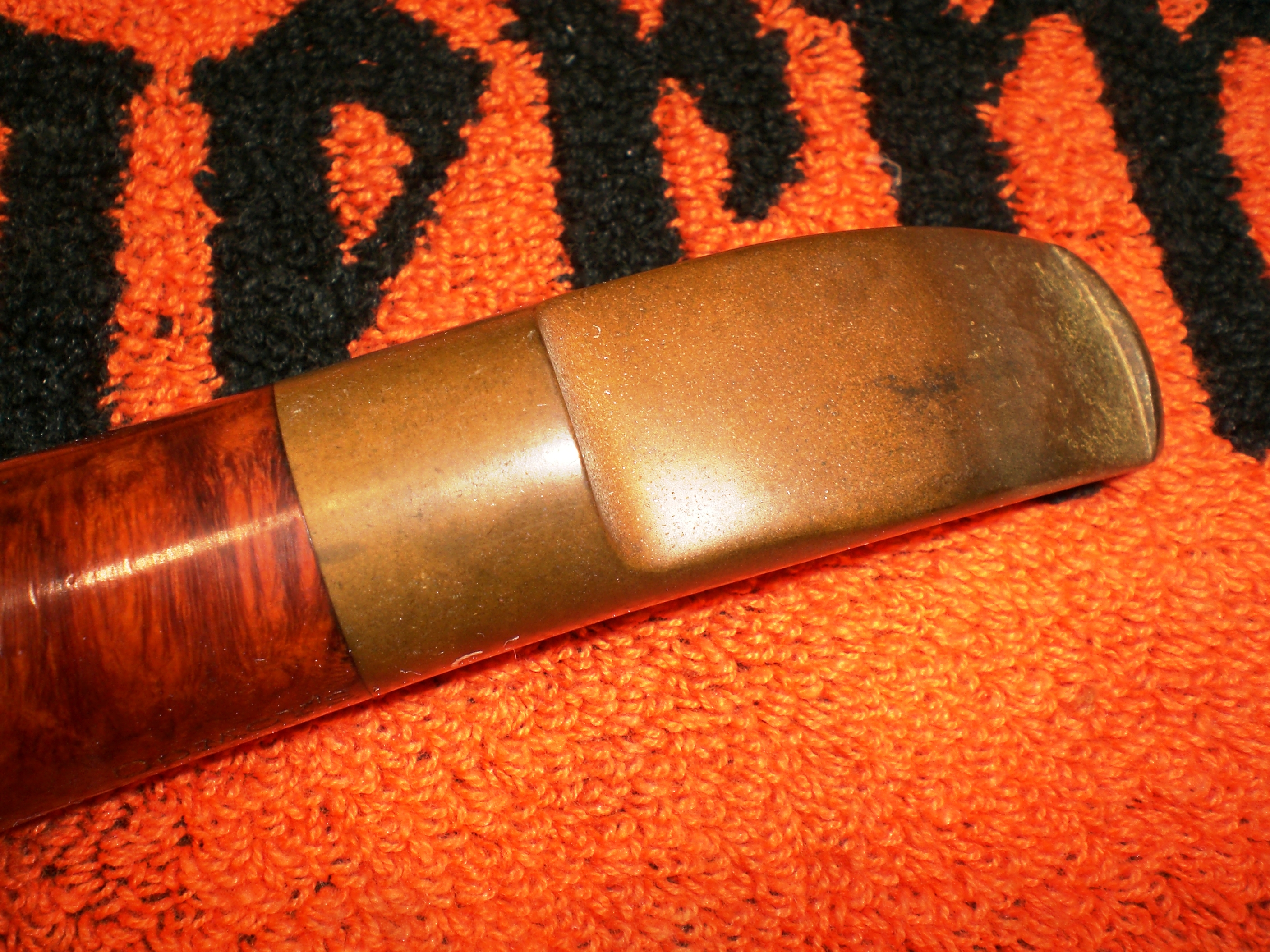
As you can see from these photos, the stem was heavily oxidized but it didn’t appear to have any tooth marks. The bowl top was a little misshapen and it had a very heavy cake build-up. Mike, the “Streets of London” social group administrator on the SmokersForums.uk tells me that The Guidall used pre-made stems. This one had a large stinger. I’m not a fan of stingers, so I warmed the metal end of the stinger and pulled it out.

Guidall_284_Before (4)

Guidall_284_Before

Guidall_284_Before (1)

Guidall_284_Before (2)

Guidall_284_Before (3)

I reamed the bowl starting with my smallest Castleford bit and gradually worked up to the full bowl size. There was some damage at the bottom of the bowl that I will have to repair with some “pipe mud” (cigar ash & water). I soaked the bowl overnight with some sea salt and alcohol to remove the tars and residue. The stem was soaked in a mild Oxyclean and water solution. The metal stem logo looked pretty durable, so I didn’t do anything to protect it.

After the bowl soak was completed, I polished the briar on my buffer with some Tripoli and then White Diamond rouge. The briar was in remarkably good condition, considering the way the rest of the pipe was treated over its life. I didn’t detect any fills or other imperfections. You can see the burned out area on the bottom of the bowl, but when I filled it with pipe mud, it wasn’t as deep as it appeared.

Guidall_284_Work (2)

The stem took quite a bit of work to remove the heavy layer of oxidation, which was also in the draft hole. I started with 800 wet grit paper, then progressed to 1500 and 200 grits. I then moved to the micro-mesh paper, with 8000 and finally 12000 grit papers used. The stem was then buffed on the machine with White Diamond rouge. I always use an automotive plastic polish as a final prep. The end of the stem where it meets the briar still has a little oxidation but I was reluctant to sand further for fear of rounding the stem. I may go back and retouch this area. I mixed up some cigar ash I save with just a few drops of water to make a paste called “pipe mud”. I used the spoon on a Czech tool to ladle in the mixture and a small button head bolt to tamp it into shape.

The premade stem feels all right in my mouth, but I have to wait until the pipe mud dries to smoke it. I need a compact pipe for travel use and carry in my one-pipe bag and I’m hoping this one can fit that requirement.

Here is the finished pipe.

Guidall_284_Finished (7)

Guidall_284_Finished

Guidall_284_Finished (1)

Guidall_284_Finished (2)

Guidall_284_Finished (3)

Guidall_284_Finished (4)

Guidall_284_Finished (6)

A Surprise in this Lot of Pipe Bowls – a BBB Virgin Own Make Billiard


Blog by Steve Laug

This package of pipe bowls to restem arrived this week. There were several surprises in the lot but one that the seller had listed as London Made turned out to be a BBB Virgin Own Make. The stamping had been buffed and was fairly faint but it indeed read BBB under the loupe. The left side of the shank is stamped London Made and the shape number 638. In the photo below it is in the center column the third pipe in the column. It came with a heavy cake and tar buildup on the rim. The bowl had been reamed in the past with a knife but was still fairly round. The chamfer/bevel on the inner rim is what had suffered the damage. The finish was dirty but would clean up fairly easily. Under the grime it appeared to be a beautiful cross grain – birdseye on the front and back of the bowl, on the top and bottom of the shank and cross grain on the sides of the bowl and the shank. It was going to be a beauty once it was cleaned up. The edges on the shank end were clean and undamaged and there were no cracks in the shank. The inside of the shank was also very tarry and caked.

Figure 1 Assorted pipe bowls for restemming

Figure 1 Assorted pipe bowls for restemming

I used a PipNet reamer to ream the bowl and remove the heavy cake build up. I reamed it with a smaller cutting head first and then used the correct size to finish. I wanted to ream it back to bare briar so I patiently worked with the cutting heads until the bowl was clean. The next series of three photos show the reamer in place and the result of the reaming. Look closely at the top of the bowl in the third photo and you will see the damage to the chamfer/bevel on the inner edge of the rim. Also in the photos is the stem I picked out of my can of stems for this pipe. The great thing is that I had a BBB stem in the can that fit well with minimal work on the tenon.

BBB Virgin bowl

IMG_1188

IMG_1189

IMG_1190

The next photo shows a side view of the pipe. I took this photo because of the great cross grain that is visible on the bowl.

IMG_1191

I sanded the tenon with 220 grit sandpaper to remove a thin layer of the vulcanite and make a good fit on the stem. The next two photos show the fit of the stem. I was unable to push it into the shank due to the tar buildup in the shank. Once I cleaned out the shank I would be able to tell if I needed to do a bit more sanding on the tenon.

IMG_1192

IMG_1193

I cleaned out the shank with cotton swabs and Everclear. While I worked on that I also swabbed out the inside of the bowl and the rim with Everclear as well. It took many cotton swabs and pipe cleaners to get the shank clean and ready for the new stem.

IMG_1194

IMG_1195

When the shank was clean I tried to fit the stem again. It was still a little tight so I set it aside to work on when it was thoroughly dry. I have learned that if I fit it when the shank is wet the fit will be too loose once it dries out. The photo below shows how the stem fit after the cleaning of the shank.

IMG_1196

When I returned from work the stem fit perfectly. I did not need to do any more sanding on the tenon. I wiped down the exterior of the bowl and shank with acetone on cotton pads to remove the finish and grime from the top of the bowl. I also did some minor adjustments to the shank/stem union as the shank was slightly out of round and needed to have briar removed on the top and left edges to smooth out the union. I used 220 grit sandpaper and a medium grit sanding sponge to even out the fit of the stem. The next three photos show the fit of the stem and shank after the work.

IMG_1197

IMG_1198

IMG_1199

I sanded the chamfer/bevel on the inner rim of the bowl with a folded piece of 220 grit sandpaper. I wanted to repair and minimize the damage to the rim from the reaming that had been done with a knife. I have found that I can set the folded sandpaper at a set angle and work my way around the inner rim of the bowl repairing the bevel. It takes careful work to get the angles to even out and give a finished look to the repair. The photo below shows the finished chamfer/bevel.

IMG_1200

Once the bevel was completed and the shank/stem fit fine-tuned I needed to remove the rest of the finish from the pipe so that I could easily restain it and have a good match on the sanded areas. I sanded the rim and the shank with a fine grit sanding sponge and also with 1500-2400 micromesh. I then wiped the bowl down with acetone wetted cotton pads to remove the finish. The next three photos show the pipe after the wash with acetone. The finish stained acetone cotton pads are in the background.

IMG_1201

IMG_1202

IMG_1203

I sanded the stem and the bowl with a fine grit sanding sponge after the wash to even out the look of the finish and to prepare it for staining. The next three photos show how the sanded portions now blend in with the finish of the bowl and shank. The scratches have been removed and the bowl and shank are ready to be stained.

IMG_1204

IMG_1205

IMG_1206

I decided to begin working on the stem before I stained the bowl. I wet sanded the stem with micromesh sanding pads from 1500-1800 grit. Once I had it started as pictured in the first photo below I changed my mind about sanding the stem further at this point. I restained the bowl with a dark brown aniline stain thinned 2:1 with isopropyl alcohol. I applied the stain with a cotton swab and then flamed it with my lighter, reapplied the stain and reflamed it until I had the colour and coverage I wanted. Photos 2-4 below show the pipe after staining. I am happy with the blend of the stain on the rim and the sanded area of the shank. The coverage is heavy enough to give a good colour and yet it is not too heavy so that the grain really shines through. I had not buffed the pipe at this point merely stained it and let it sit while I went back to working on the stem.

IMG_1207

IMG_1208

IMG_1209

IMG_1210

I went back to sanding the stem with the micromesh sanding pads. I worked through the remaining grits of pad from 2400-12,000. Each successive grit of pad deepened the shine on the stem and progressed to a deep black look. I also sanded the bowl with the micromesh pads. The hardest area to remove the oxidation was around the brass BBB diamond insert. To clean that up I used a Bic lighter and passed the flame over the stem surface quickly and the oxidation burned. I also wet sanded the area with the edge of the sanding pads. To finish that area I also used the Scratch X2.0 plastic polish and then rubbed the stem down with Obsidian Oil and let it dry. The next three photos show the stem after sanding with the pads.

IMG_1212

IMG_1213

IMG_1214

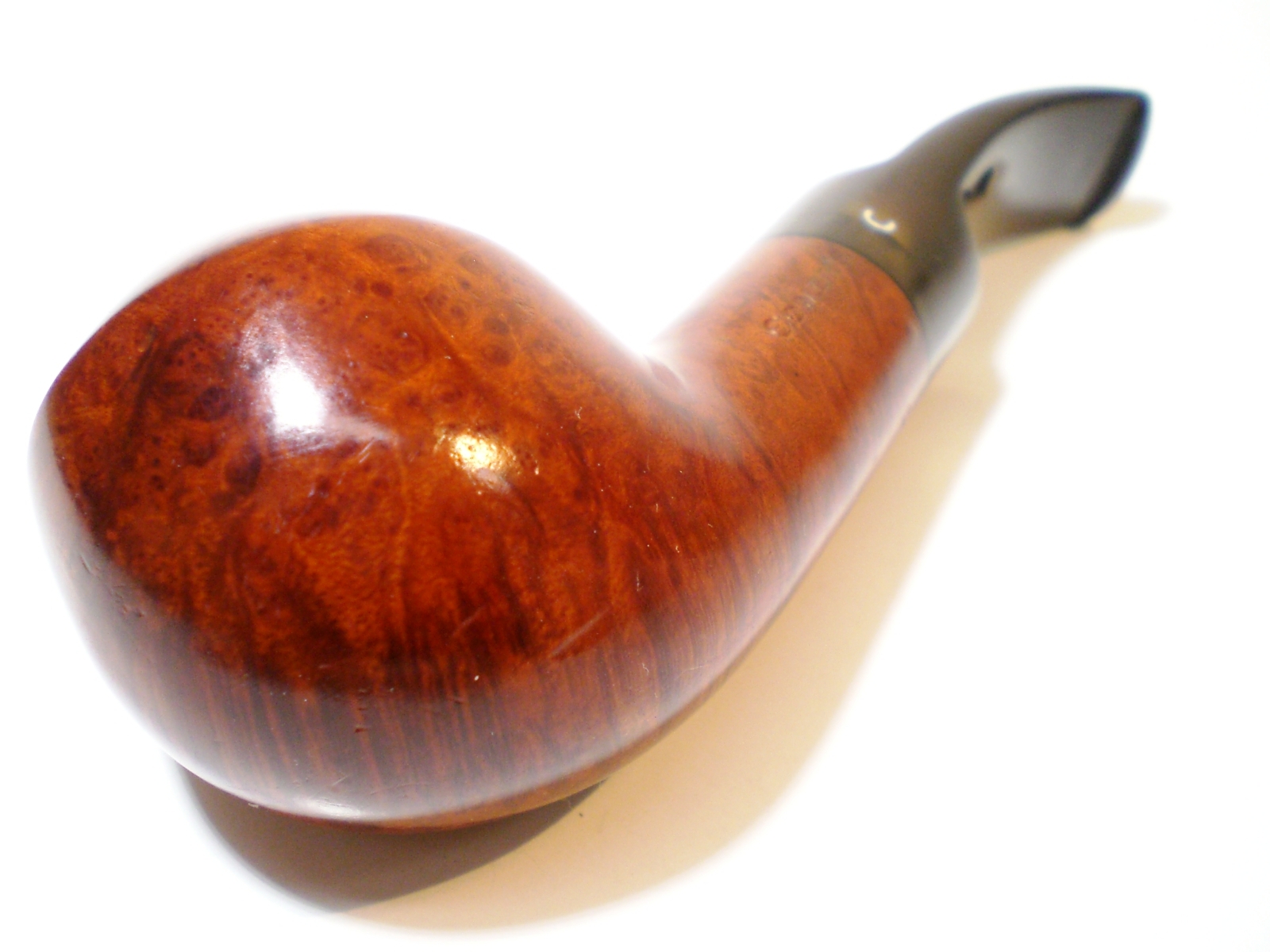
The final four photos show the finished pipe. There are some dents remaining in the side of the bowl that I steamed to lift but they still show. I tend to leave these on older pipes as signs of their age and character. I love the way the grain stands out on this pipe. The sides show the cross grain. I did not take photos of the ends of the bowl to show the birdseye grain that is situated on them but you can imagine the look from the straight lines of the cross grain. The rim and sanded areas on the shank look well blended in and the bowl smells fresh and ready to use. I am well pleased with how this old beauty turned out and know that it is ready for a life of service.
IMG_1219

IMG_1220

IMG_1221

IMG_1222

Not So “Mint” Danish Sovereign Reborn


Blog by Greg Wolford

I picked up this Danish Sovereign off eBay for my son as a gift. I have one in a different shape and he has admired it since I got it. I knew that he had been wanting a Danish pipe and when I was this one it looked to be right up his style-alley.

This pipe came described as in “mint condition” from an eBay seller. It was a Father’s Day gift for my son, his first Father’s Day pipe actually; he took up the pipe only about 8 months ago. The photos the seller provided were not good and none of the problems were shown/disclosed; I could see some oxidation but didn’t expect the chatter and dents.

The seller shipped it not as expediently as I had hoped so the pipe didn’t arrive in time for Father’s Day; it came yesterday. I spent the evening getting it cleaned up for him, not doing anything to alter the originality of the pipe, which is what he wanted. If he decides he wants me to, I may end up sanding it down and re-staining it, filling the dents as needed, to make it much more like new. But that’ll be his call since it’s his gift.

I thought I would try something, actually a few things, different for this project: I used a few new things/processes, yes, but mainly the difference is I took video as I went instead of photos and will show the steps/progress in the video rather than writing it all out. This is something I have been wanting to try and so, now I have! Since it is the first time doing a resto-video I’m sure there will be things that could’ve been done better. And hopefully with time and practice, if this idea seems to “fly”, they will in the next projects.

Reworking a Mastercraft Custom Deluxe Billiard and Removing Mold


Blog by Steve Laug

This old Mastercraft billiard is the second pipe of the threesome that was sent to me last week as a gift. In his email asking if I wanted them he said they were either going to the rubbish bin or to me so I was not surprised when I opened the box and unpacked them. It had some nice looking grain underneath all of the grime and peeling varnish. But this one was in very rough shape. The stem was chewed in half so there was not enough to save. The inner tube apparatus inserted into the stem looked like it had been destroyed and then somebody bent it close to shape and cut a X cut in the end of the tenon so that it would fit into the stem. The shank was grimy and dark with a white mold residing inside both the bowl and the shank. The pipe reeked of mold. The bowl itself had a heavy but broken cake underneath the mold. It had a coat of varnish that was spotty and peeling where it was worn off the briar. In those worn spots the briar was almost black. The rim was also in very bad shape. The front was burned down from repeatedly lighting the pipe in the same spot with a torch. The back side of the rim looked like it had been scraped on concrete or hammered out on concrete because it was worn and broken down. The three photos below (I apologize for the poor quality – still getting used to this new camera!) show the state of the bowl and stem.

IMG_1009

IMG_1010

IMG_1011

I sorted through my stems and found two options that I thought might work on the pipe. The first one was an acrylic saddle stem that I thought might look good with the bowl (pictured in the first photo below). I turned the tenon and fit it to the pipe but did not like the proportion of the stem and shank length. I then took the second stem – a shorter, straight tapered stem and fit it to the pipe (pictured in the second – fourth photo below). It looked like it belonged on the pipe so my choice was made. It was an old previously used vulcanite stem from my collection of old pre-used stems that I collect. This one would take some work as it was oxidized and had a calcified buildup around the button area. It was also clogged and the slot was plugged to a small pin hole. But it had the right look so it would be worth cleaning up.

IMG_1020

IMG_1049

IMG_1050

IMG_1051

I set the stem aside and worked on the bowl. I reamed the pipe with a PipNet reamer to get rid of the cake and the mold. I cleaned the reamer with alcohol before putting it away. I cleaned the bowl and the shank with cotton swabs, pipe cleaners and Everclear to remove as much of the tars and oils and moldy smell as possible.

IMG_1021

IMG_1022

IMG_1023

When I finished it still smelled moldy, but I had several plans in mind for addressing that. But first I topped the bowl with my usual flat board and 220 grit sandpaper. I place the bowl rim down flat against the sandpaper and work in it a circle to remove the damage on the rim. This one took quite a bit of work to even out the top and get rid of the damage from the burn on the front side of the rim and the roughened back edge done by beating the pipe against concrete. I sanded it, repeatedly checking to see if I was removing enough of the damage to get a sharp edge on the bowl. On the outer rim next to the shank there was a chunk of briar missing that I would try to minimize after topping the bowl. I was able to remove all of the damage of the burned area and most of the damage of the battering the old pipe had taken. The rim looked good. I used a folded piece of sand paper to work on the inside edge of the rim and clean up the damage that was done there and keep the bowl in round.

IMG_1053

IMG_1054

IMG_1055

IMG_1056

IMG_1057

IMG_1058

I wiped the exterior of the bowl down with acetone on a cotton pad to remove the grime and the finish that remained. I repeated this until I could not remove any more finish or grime. The next two photos show the wipe downed bowl.

IMG_1059

IMG_1060

I placed the bowl in an alcohol bath for several hours while I worked on the stem and worked on several other old pipes that I have on the go. When I took it out of the bath, I dried it off with a cotton cloth and scrubbed it with a tooth-brush dipped in alcohol from the bath. I dried it again to check on the finish. There were still several spots where the varnish remained – the shank and the bottom of the bowl. One benefit of the bath was that the glue softened on the over pressed band and I was able to remove it from the shank. I sanded and scrubbed the old glue off the shank and sanded the bowl with a fine grit sanding sponge. I wiped it down with another acetone cotton pad. It still needed to soak a bit longer to finish breaking down the varnish that remained. While it soaked I cleaned up the silver band with silver polish and the jeweler’s polishing cloth. Under all the tarnish I found that the band was stamped Sterling.
I removed the bowl from the alcohol soak and dried it off. I used a lighter to burn off the alcohol from inside the bowl and the shank. I then recleaned the inside of the bowl and the shank with Everclear and many more pipe cleaners and cotton swabs. The amount of tars and sticky oils and grit that came out of the shank was incredible. It was no wonder that the pipe still reeked like mold. The next series of three photos show the pipe after soaking and sanding.

IMG_1061

IMG_1062

IMG_1063

I scoured the shank until it was fairly clean and then set up a retort to do a more thorough clean. The retort sends vaporized alcohol into the bowl and shank and in essence boils out the grime with hot alcohol. As the alcohol cools it returns to the tube and with it the grime and oils from the pipe. I repeated the retort three times on the pipe until the alcohol came out clean. I then took apart the pipe and cleaned out the shank with pipe cleaners and cotton swabs a third time. There was even more oil and grime that came out of the shank. I cleaned off the surface with an acetone wipe and then reset the silver band with Weldbond glue. I turned it so that the Sterling stamp was on the top of the shank and pressed it on to the shank until it was even with the edge of the shank. Weldbond dries fairly quickly to touch so that the band would not be loosened when I went on to the next step in my cleaning process.

IMG_1064

IMG_1065

IMG_1071

After removing the retort I cleaned the bowl and shank. Yet even more grime came out. I put the stem back on and took the four photos below to show the state of the pipe at this point. I did this more for an encouragement to me as this one was proving a difficult rework. The photos gave me a picture of what I was aiming for in cleaning this one up. If I lose sight of that it will end up in the bin as rubbish.

IMG_1066

IMG_1067

IMG_1068

IMG_1069

When the alcohol dried in the bowl and the visual showed a clean bowl and shank I took a sniff of the bowl. After all of this work the moldy smell still was present in the bowl and shank. This called for more drastic measures. I used the Dremel with a sanding drum on it and sanded the inside of the bowl until the briar was bare and clean. Then I filled the bowl with salt and alcohol to leach out the oil from the inside of the bowl and shank. My hope was that in doing this I would also kill the stench. I plugged the shank with a cork, filled the bowl with kosher rock salt (I was out of my normal cotton bolls) and set it up on an old ice-cube tray. I used an ear syringe to fill the bowl with 99% isopropyl alcohol. I set it aside and went to bed to let the treatment do its work while I was sleeping. The two photos below show the bowl after filling with alcohol.

IMG_1072

IMG_1073

In the morning the salt was a dark brown as pictured below. I emptied the now darkened salt and dried out the inside of the bowl by flaming the alcohol with my lighter. It still smelled like mold though the smell was definitely losing strength.

IMG_1070

I cleaned out the button area of the stem with the dental pick and then ran several bristle pipe cleaners through it and then followed up with regular pipe cleaners. I soak both in Everclear to clean out the stem. I then sanded the stem with 220 grit sandpaper to remove the calcification that was all over the stem. I also gave the stem a quick sand all over with the 220 grit to remove the top oxidation. I ran the flame from the Bic lighter over the surface to burn off the oxidation. It did a great job of removing what I had loosened with the sandpaper. I continued sanding it with a fine grit sanding sponge to remove the remaining oxidation. I rubbed down with Obsidian Oil and set it aside with the bowl while I went off to work. The Obsidian Oil sat on the stem and soaked in for the 9 hours I was at work.

IMG_1074

IMG_1075

IMG_1076

IMG_1077

I refilled the bowl with salt and put a cork in the shank. I again used the ear syringe to fill the bowl with alcohol and set it aside to work on the stem. It too sat for the nine hours I was at work.

IMG_1072

When I got home from work the stem looked quite good. It was significantly more black and the oxidation was gone except around the stem shank union. More work to do there. The salt was a dark brown, but slightly lighter than the first treatment. I dumped out the salt and cleaned out the bowl and shank with cotton swabs again. When I finished the smell was better but present nonetheless. I cleaned out the bowl with alcohol and cotton swabs again.

IMG_1078

I needed another bit of encouragement at this point so I decided to stain the pipe with a dark brown aniline stain cut 2:1 with isopropyl alcohol. I applied the stain, flamed it and then buffed it on with Tripoli and White Diamond (photos 1-4 below). The brown did a fair job of coverage but I would need to give it a second coat of stain using a oxblood colour to do some blending with the dark areas on the bowl.

IMG_1083

IMG_1084

IMG_1085

IMG_1086

I worked on the stem with fine grit sanding sponges and 1500-2400 grit micromesh sanding pads. There were some minor tooth dents that still showed up so I passed over them with a Bic lighter and was able to raise them. More sanding was needed and I repeated the sanding described above.

IMG_1079

IMG_1080

IMG_1081

IMG_1082

Once the bowl dried out it still smelled so I decided to repeat the salt and alcohol treatment a third time. I filled the bowl with salt and isopropyl and set it aside over night (photo 1 below). In the morning the salt was little lighter brown this time (photos 2-3 below). I dumped the salt out and cleaned the bowl and shank again. This time the cotton swabs came out fairly clean. I flamed the inside of the bowl. Once the bowl dried out it still smelled so I decided to repeat the salt and alcohol treatment again. I filled the bowl with salt and isopropyl and set it aside over night. In the morning the salt was once again a dark brown. I dumped the salt out and cleaned the bowl and shank again. This time the cotton swabs came out fairly clean. I flamed the inside of the bowl. Though the inside of the bowl and the shank was very clean the musty smell still remained, though less prevalent. This was one stubborn pipe bowl to clean.

IMG_1087

IMG_1088

IMG_1089

While the inside of the bowl dried out I decided to restain the bowl. For the second/top coat I used a oxblood stain. I applied it and wiped it off (first photo below). The coverage this time was much better. The dark reddish stain blended well and covered the dark areas of the bowl. The finished colour is a nice older deep reddish brown look (second-fourth photos below).

IMG_1090

IMG_1091

IMG_1092

IMG_1093

I decided to sand back the inside of the bowl yet again. I used the Dremel with the sanding drum a second time. When I was finished the inside of the bowl was very clean and fresh looking. The smell was still there. I stuffed the bowl with cotton bolls and then used an ear syringe to fill it with white vinegar and set it in the ice-cube tray to let it work. I have used that in the past to remove stubborn ghosts so I thought I would give it a try on this one.

IMG_1094

While the bowl soaked I worked on the stem with the remaining grits of micromesh sanding pads – 3200-12,000 to bring back the deep shine on the stem. Sanding them with the higher grits of micromesh really gives a deep shine to the stem. It is amazing to see the difference between each of the successive grits of micromesh. I did not take photos of the steps as almost all of my refurbishing posts have shown the polishing process with the micromesh. The next two photos show the finished stem. Once the bowl is finished I will buff the bowl and stem with White Diamond and then give the whole a buff with multiple coats of carnauba wax to polish.

IMG_1141

IMG_1142

Once the vinegar had soaked in the bowl for several hours I removed the cotton boll and dried out the bowl. I then used a Dremel with a sanding drum to sand back the sides of the bowl yet again. This time I extended the diameter of the bowl to get rid of the surface area of the bowl interior. Once I was finished with the Dremel I hand sanded the bowl with 220 grit sandpaper to smooth out the small ridges left behind by the drum sanding. The last two photos in this sequence show the newly sanded bowl.

IMG_1126

IMG_1127

IMG_1119

IMG_1120

I took the bowl outside and put it in the bright sun on my patio. I wanted to let the heat and the UV rays from the sun do more work on the potential mold in the bowl. The evening is cooling down and the sun is no longer as warm. I brought in the bowl and wiped down the inside of the bowl and shank with an alcohol based anti bacterial wipe. I took it to the buffer and gave the whole pipe a buff with White Diamond. I then gave it several coats of carnauba wax and buffed it with a clean flannel buff. The pipe is like new and it SMELLS GREAT. I finally beat the moldy smell. The final four photos show the finished pipe.
IMG_1143

IMG_1144

IMG_1145

IMG_1146

GBD Midnight 9456


Blog by Greg Wolford

The last few months have been extremely busy for me. It is amazing how much a disabled, non-working person can be obligated to do; I think I had more “free time” when I was working full time in the car business! Ah, but I digress …

By chance, I found myself today with no obligations, no chores, no appointments, just a day to myself. Unfortunately it also stormed badly which flared up my arthritic joints but I was able, finally, to get to a project, if only a simple one.

I picked up this GBD Midnight about two weeks ago. It was a fair price and an interesting pipe to me; all of the Midnight models I had seen before had acrylic stems and this one had vulcanite. Some later research led me to believe that there were at least two productions of this line: the first with vulcanite stems shortly after the merger and another some time later with acrylic stems.

Although I forgot to take “before” photos the seller’s were quite accurate except for the oxidation was a bit more than I anticipated: it wasn’t thick or heavy but was even, all over brown. The seller said he had only smoked it a few times over the years and didn’t like it; he prefers a 9 mm filter pipe. He said there were a few tooth dents but not bad ones and that he had cleaned it; these things were accurate, if he meant cleaned the inside.

The too had a fair amount if tar build up but not thick. The stummel was dirty but not in bad shape at all. And the dents were mild as be had said.

I began with an alcohol soaked pad, wiping down the stummel, paying extra attention to the rim’s build up. It didn’t take a lot to get it cleaned up and the rim smoothed out. I then reamed the bowl, which needed it but wasn’t badly caked. I set the stummel aside and began to work on the stem.

I started by rubbing the entire stem well with Back-to-Black, which removed a lot of oxidation. Then I took some automotive rubbing compound and cotton pads and polished away almost all of the remaining oxidation. After the rubbing compound I took the stem to the heat gun to raise the dents. They came up pretty well but not completely. But they were now slight enough I decided to not sand them smooth; I wanted to finish this pipe and write this blog tonight, those things and the small dents left made this decision for me easy. I did wet sand the stem with 400 grit wet/dry paper to remove the last of the oxidation and the few scratches I saw.

I reassembled the pipe and went to the buffing wheel. I like to buff the shank-stem union together so as to keep a nice fit. I began with black buffing compound, about an 800-grit I believe. After the union was buffed I took the stem and stummel apart and buffed each piece. I moved onto brown tripoli, then white diamond doing the same process.

I had a small deviation at the end of the white diamond buffing: the wheel grabbed the stummel and bounced it off my table. It left two dents, the bounce across the garage, that totally irritated me. I then had to steam the the dents out; thankfully the dents weren’t bad and came out. I went back to the white diamond and re-buffed the stummel.

I reassembled the pipe and gave it several coats of carnauba wax, buffed it on a soft, clean wheel and, finally, hand buffed it wearing a pair of linen gloves I bought just for that purpose.

The pipe came out quite well I think. After cleaning and buffing it is a bit lighter on color, which I am very happy with; the grain, especially the Birdseye on the front of the bowl really pops now.

Hopefully the frantic pace of life will slow some over the coming weeks; I have many more wonderful old pipes that are patiently awaiting being brought back to life. And I am anxious to do the work an share it with you.

20130613-222006.jpg

20130613-222015.jpg

20130613-222023.jpg

20130613-222030.jpg

20130613-222040.jpg

20130613-222049.jpg

20130613-222056.jpg

20130613-222105.jpg

20130613-222111.jpg

20130613-222119.jpg

20130613-222126.jpg

20130613-222132.jpg

Breathing New Life into a Dr. Grabow Riviera


Blog by Steve Laug

When I am refurbishing pipes I take the same care on older factory made pipes as I do on the more collectible ones. To me this is part of the stewardship of refurbishing. It does not matter what the original price of the pipe was – it is worth redeeming and bringing back to life. The refurbishing of the next pipe is one of those. It is an older Dr. Grabow Riviera. It was given to me by a good friend in Ponoka, Alberta. He gave it to me as a gift when I visited him recently. It is stamped Riviera over Dr. Grabow on the left side of the shank and Imported Briar over Adjustomatic over a patent number – PAT. 2461905 on the right side of the shank. The stinger apparatus in this one is an insert into the metal tenon. It is tube with a scooped portion on top that has a hole in the bottom of the scoop. The air/smoke circulates in the shank and is drawn into the stem by the smoker. The surface area of the apparatus acts as a condenser and filter. The beauty of this design is that it can be removed. The stem was badly oxidized and also had tooth dents on the top and bottom near the button. The finish was shot and the varnish was peeling from the bowl and shank. The rim was darkened and dirty and had a small crack on the top left side. The four photos below show the state of the pipe when I brought it home.

IMG_0846

IMG_0847

IMG_0848

IMG_0849

I love doing research on old patents and with US made pipes it is very simple. The following website is a simple way to find data and diagrams. http://patft.uspto.gov/netahtml/PTO/srchnum.htm In the search parameters you enter the patent number from the pipe and click on the search button. Generally, these older patents have been made into PDF files that can be downloaded. Here is a copy of the information I found there. It is a patent for the Adjustomatic connector. I always find reading through these patent application documents gives me a feel for why the designer came up with invention. This proved true of this application as well.

Grabow Patent1

Grabow Patent2

Grabow Patent3

Grabow Patent4

After reading through the patent information I was ready to restore this old pipe. It appeared to be made somewhere around the time of the Patent as it had the patent number stamped on it. That dated it somewhere around 1949 after the patent was given. I began by reaming the bowl with the PipNet reaming set to clear up the uneven and broken cake. I decided to work on the externals first. I wiped down the bowl and shank with acetone on a cotton makeup pad to remove the finish. There was some very nice grain poking through the mottled finish and very few tiny fills that made it even more attractive to me. The acetone removed the varnish very well and also took away the dirt and filth on the exterior. The first two photos below show the process of wiping down the bowl. The old finish is visible on the cotton pad.

IMG_0850

IMG_0851

Once the finish was removed from the bowl as much as possible with the acetone, I sanded it down with 340 grit sandpaper and a fine grit sanding sponge to further remove the finish. The next series of four photos show the bowl after the acetone wash and the sanding. The grain on this one is very nice. The inner rim would need to have some attention to smooth out the rough edges and the darkening.

IMG_0852

IMG_0853

IMG_0854

IMG_0855

I sanded the metal shank band as it had some deep scratches and gouges in it. I could not remove the damage but I minimized its look. I worked on the tooth marks in the topside and the underside of the stem surface. I heated the stem with a Bic lighter – passing the flame over the tooth marks to lift them to the surface. I then sanded the stem with 220 grit sandpaper to remove the remaining marks that were present (Photos 1 – 4 below). I followed that by sanding with a fine grit sanding sponge to remove the scratches left behind by the 220 grit sandpaper (Photos 5 – 6 below).

IMG_0856

IMG_0857

IMG_0859

IMG_0860

IMG_0861

IMG_0862

I sanded the entire stem with the sanding sponge to remove the oxidation from the vulcanite. I took the pipe apart and cleaned the stinger apparatus with a cotton swab and alcohol. The next two photos show that design of the stinger. It is a two part piece and the extended tube can be removed from the screw in metal tenon. I cleaned the inside of the stem and also the inside of the stinger to remove the buildup of tars and oils inside.

IMG_0863

IMG_0864

I sanded the bowl with 1500 – 12,000 grit micromesh sanding pads, being careful around the stamping on the shank. Once the scratches were removed and the bowl was smooth I restained it with a dark brown aniline stain thinned 2:1 with isopropyl alcohol. Doing this makes the stain less opaque and also several shades lighter. I wanted to highlight the grain not hide it so this was the perfect mix to do that. I applied the stain with a cotton swab, flamed it with a lighter to set the stain and then repeated the process a second time. The next three photos show that process. You will note that I also cleaned up the inner edge of the rim with the sanding process noted above. Most of the roughness is removed. A small crack remains on the top of the left side of the bowl rim.

IMG_0948

IMG_0949

IMG_0950

I set the bowl aside and worked on finishing the stem. I sanded it with 1500 – 12,000 grit micromesh sanding pads until it was smooth and finished. I rubbed down the stem with Obsidian Oil to protect and remove the oxidation. I reattached it to the bowl and buffed the stem and bowl with White Diamond on the buffer. I gave the entirety several coats of carnauba wax to bring out the shine and protect it. The final four photos show the finished pipe – cleaned, restored and ready to smoke. The photos show tinges of brown/oxidation still remaining in the stem under the flash of the camera. To deal with that I polished the stem some more and gave it another coat of Obsidian Oil and let it soak in. Upon finishing I buffed it again with carnauba.

IMG_0951

IMG_0952

IMG_0953

IMG_0954

Comoy’s The Guildhall London Pipe Liverpool Renewed


Blog by Steve Laug

The Comoy’s pipe pictured below was one of the pipes I picked up at an Antique Mall in Edmonton, Alberta. It was by far in the best condition of the three pipes I purchased that day. It also had the highest price tag – $30 of the three. It is stamped on the left side of the shank The Guildhall over London Pipe and on the right side it is stamped Made in London in a circle over England. The shape is stamped as 30. The grain on it is very nice with a few bald spots on the sides and front on the lower portions of the bowl. The contrast stain that is on these older Comoy’s pipes is extremely well done and it is what always draws me to them. The top of the bowl rim was covered with a little tar. The bowl itself was partially caked and a few tobacco remnants sat in the bottom of the bowl. The stem had tooth chatter and slight oxidation. When I picked it up the stem was on upside down so the three metal lines that were stem logos on these pipes was not visible. I was able to rotate the stem but it was tightly stuck in the shank. I did not want to damage the shank so I left it until I got home.
IMG_0302

IMG_0304
When I returned home from my trip and things settled down I took the pipe to the work table to refurbish it. I decided to take it apart to begin the process of cleaning it. The stem was tight in the shank and I needed to use the freezer technique to loosen it easily. The tenon is often easily snapped if you try to turn it when it is stuck. I put it in the freezer for 15 minutes and then it came out very easily. When I pulled it out of the shank it brought a lot of chunks of tar and oily buildup with it. The cloth on my worktable was littered with the black pieces that fell out of the shank. Once I had it out of the shank there was a stinger contraption that I have found is common in the older Everyman and Guildhall pipes. This one was covered thickly with tar and oil. It was pressure fit into the tenon but was tightly bonded to the vulcanite. I used a pipe cleaner with alcohol to scrub the inside of the stem and to also work around the exterior of the stinger. I scraped at the gunk that held it to the tenon and was able to remove much of the grit with a dental pick. I grabbed it with a piece of cloth and twisted and pulled at the same time. I kept the stem level during this process as I did not want to damage the tenon by pulling up as I tried to remove it. It finally broke free of the tenon and I laid it aside on the table top. I do not put the stinger back into a pipe that I intend to use. I tag the stingers and save them should I decide to sell the pipe in the future.
IMG_0757
I then cleaned out the shank and the stem with pipe cleaners and Everclear. It took a lot of pipe cleaners to remove the oils and tar from the stem and the shank. I cleaned it until they came out only stained but not covered in grime. I intended to use a retort on this pipe so my purpose was only to remove the heavy buildup on the surface in the stem and shank.
IMG_0758

IMG_0759

IMG_0760

IMG_0761
Once I had the interior relatively clean I took out my retort and hooked it up to the pipe. The retort is made up of a test tube and stopper with a permanently inserted brass tube to which a piece of surgical tubing is fitted on the end of the brass tube. The tubing fits over the stem. I put about ¾ of an inch to 1 inch of isopropyl alcohol in the test tube. I stuffed the bowl of the pipe with a cotton boll to stop the alcohol from coming out of the top of the pipe when I heated the alcohol. I lit a candle to heat the alcohol and boil it into the stem and shank. I began with a large candle to do the heating. The next series of seven photos show the first boil of the alcohol through the pipe. I let it boil for several minutes and then removed the test tube from the heat. As it cooled the alcohol was drawn back into the test tube. It was dark amber in colour and smelled strongly of old burned tobacco.
IMG_0762

IMG_0763

IMG_0764

IMG_0765

IMG_1109

IMG_1110

IMG_1111
I removed the tube from the flame, and once it had cooled I emptied the alcohol from the test tube, rinsed and refilled it. This time I chose to use a small tea light to heat the tube. It gave a better angle on the test tube and pipe. I boiled it again and when it cooled let the alcohol return to the tube. The series of five photos below shows the second boil and the amber fluid that filled the tube. I ran the retort a third and fourth time until the alcohol came out clear and then I knew the shank and stem were clean. I continue to boil the alcohol through the pipe until it is clean. The retort leaves a pipe smelling brand new once the alcohol smell has dissipated and the pipe dried out.
IMG_1112

IMG_1113

IMG_1114

IMG_1115

IMG_1116
I removed the retort from the stem and the cotton boll from the bowl of the pipe. Once it was removed I ran pipe cleaners through the shank and stem to remove any of moisture that may have been left behind and the pipe quickly dried out. It was time to clean the top of the rim of the pipe. Early on in the process I had examined it and found that the tars on the top were on the surface and that a good scrub with saliva on a cotton pad would remove the buildup quite easily. The next two photos show the cleaning of the rim with the cotton pads.
IMG_1117

IMG_1118
Once the rim was clean I buffed the pipe with White Diamond and gave the bowl and shank a first coat of carnauba wax. It was then time to work on the stem. I sanded the stem with 340 grit sandpaper to remove the tooth chatter and small dents in the surface of the vulcanite. I then wet sanded the stem with 1500-2400 grit micromesh sanding pads. The next two photos show the stem after the initial sanding with the 340 grit sandpaper.
IMG_1119

IMG_1120
The next two photos are randomly taken after I had sanded with the micromesh sanding pads 3200-12,000 grit. I dry sanded with these grits and the stem developed a shine and a depth to the blackness of the vulcanite. When I had finished sanding the stem I rubbed it down with Obsidian Oil to preserve the finish and then buffed it with White Diamond and finally multiple coats of carnauba wax.
IMG_1121

IMG_1122
The final four photos in this essay show the finished pipe. There is a bit of ghosting around the three bars in the photo that appear to be oxidation. The oxidation is gone. Rather what is happening is a reflection off the metal bars. In natural light the stem is a deep and rich black.
IMG_0778

IMG_0779

IMG_0780

IMG_0781

Restoring a GBD 730 Toreador Volcano


I picked this old-timer up at an antique mall in Edmonton, Alberta two weeks ago. It was part of the threesome of pipes and tobacco and pipe cleaners that I purchased at the mall that day. In the photo below it is the pipe on the bottom of the picture.
IMG_0302
I had never seen the stamping on a GBD nor had I seen the shape number. It is not listed on any of the GBD name or shape charts that I have on my computer. I wrote to a friend who works with a lot of GBDs and he replied as follows: “I have not heard of a “Toreador” line, but nothing surprises me on GBD lines. They had a seemingly endless array of model lines. The 730 shape isn’t listed on my shape charts, but they are full of holes and I constantly see shape new shape numbers pop up. The pre-Cadogan key is the “London, England” stamp coupled with a metal rondel. “Made in London England” in a circle is Cadogan era, even with a metal rondell”. From my research and his I looked at the stampings on this pipe. It is stamped GBD in an oval over Toreador on the top of the shank. On the underside it is stamped London, England over 730. This would seem to put the date of this pipe in the pre-Cadogan era.

The next series of six photos show the pipe as it was when I found it. The first picture was taken at the antique mall with my iPhone. The remaining five photos were taken at my work bench before beginning to work on the pipe. The bowl was thickly caked with a hard buildup of carbon. The rim was coated with tars and buildup as well. The stem was upside down when I picked it up and very tight. I was able to turn it and straighten it out for the picture. It was oxidized and there was a line across the stem that showed where it had a rubber bite guard in place on it. There were two tooth marks on the top of the stem visible below and also two on the underside of the stem near the button. The slot in the end of the button was closed off with tar and the shank and inside of the stem were filthy.
IMG_0303

IMG_0595

IMG_0596

IMG_0597

IMG_0598

IMG_0599
I decided to use my PipNet reaming set on the bowl. I started with the smallest bit and worked it around. Once I dumped out the cuttings I used the next size up to take the cake back to the briar. I like to start over and build my own cake in the bowl. I find that I can develop a hard cake when I work at it slowly.
IMG_0600

IMG_0601

IMG_0602
Once I reamed the bowl out to the way I like it I worked on the rim of the bowl. I used some fine grit emery cloth to start breaking up the hard tars and then a fine grit sanding sponge to remove what remained. I work to keep the sharp inner and outer edge of the rim. I do not like it when it is rounded. This rim was also chamfered in toward the bowl and I wanted to keep the angles on that even when I was finished working it over. The next two photos show the cleaned rim. It has been sanded and the buildup is removed. There is a bit of rim darkening that will come off with a bit more work.
IMG_0603

IMG_0607
The next four photos show the bowl after I have wiped it down with acetone on a cotton pad. The darkening on the rim is growing fainter with each wipe. The pads are coloured from the dirt and grime as well as the stain from the pipe. I have found that the dark and medium brown wipe off and leave a yellow colour on the pads. I repeated the wipe down several times until the surfaces were clean.
IMG_0608

IMG_0609

IMG_0610

IMG_0611
After wiping the bowl down I cleaned out the stem and the shank. I used pipe cleaners and Everclear to scrub out the insides of the stem and shank. I scrubbed until they came out clean. I worked on the area of the button slot to clean out the tar buildup in that area. Then I decided to work on the stem. I sanded out the calcification on the stem from the rubber stem bite protector. It leaves a white sediment buildup that is rock hard so I sand it with medium grit emery paper. Removing this buildup also reveals the depth and nature of the tooth marks in the stem. The first picture below shows the topside of the stem and the tooth marks. The second picture shows the underside of the stem and the two tooth marks next to the button.
IMG_0612

IMG_0613
I then sanded the stem with 240 grit sandpaper and the medium grit sanding sponge to further remove the scratches and clean up around the tooth marks. Once I had the stem cleaned up of the white buildup and the scratches reduced I wiped down the stem with Everclear. I heated the surface of the stem with a lighter to lift the tooth marks as much as possible and then I picked out the grit and grime in the tooth marks with a dental pick to provide a clean surface for the superglue repair. The first two photos show the sanded stem and cleaned surface. The third and fourth photos below show the superglue patch. On this stem I chose to use clear superglue rather than the black glue. I often use them interchangeably.
IMG_0614

IMG_0615

IMG_0616

IMG_0617
I set the stem aside to dry and worked on the bowl again. I wiped it down a final time with acetone on a cotton pad. I chose to stain it with a dark brown aniline stain, thinned 2:1 with isopropyl alcohol. I did not want to darken the colour of the pipe but merely bring it back to its original colour as determined from several other smooth GBD pipes of this era. I gave it a coat of stain and flamed it with a lighter. I reapplied the stain and also flamed it a second time. The next series of four photos show the pipe after it has been stain. I wiped it down with a soft cloth. It had not been buffed at this point.
IMG_0618

IMG_0619

IMG_0620

IMG_0621
After the initial staining the colour was a bit dark and opaque to my liking so I use a cotton pad and wiped the bowl down with Everclear to lighten it and make the grain stand out a bit more. The next four photos show the bowl after wiping it down.
IMG_0624

IMG_0625

IMG_0626

IMG_0627
With the bowl finished it was time to work on the stem once again. The superglue was dry and it was time to do some sanding. The next two photos below show the stem after sanding on the patches. The topside and the underside tooth marks are repaired and even with the surface of the stem at this point. Now the stem needed to be worked on with further sandpapers and the micromesh sanding pads.
IMG_0622

IMG_0623
I wet sanded the stem with 1500 and 1800 grit micromesh sanding pads to remove the scratches left by the other sandpapers. I wet the sanding pads and then sanded the stem, wiped off the grime and water and resanded it until the majority of the scratches were removed from the surface of the stem. I worked the pads around the GBD rondel so as not to sand it and remove surface or stain in the metal. The next two photos show the stem after sanding with these two grits.
IMG_0632

IMG_0633
I had read much about using the Barkeepers Friend cleaner to remove oxidation so I mixed up a paste of the powder and scoured the stem with a tooth-brush. The paste worked very well to remove the oxidation around the rondel and around the sharp edges of the button. It really took care of the remaining oxidation. I applied the paste, wiped it off, rinsed, reapplied and repeated the process until I was satisfied with the results. The next two photos show the stem after polishing with the paste.
IMG_0634

IMG_0635
I then sanded the stem with 2400 and 3200 grit micromesh sanding pads to begin to bring out the shine. I also applied a coat of Obsidian Oil to the stem, rubbed it in and let it dry. The first two photos below show the stem after this treatment. Photos three and four show the stem after I had dry sanded it 3600 grit micromesh sanding pads. Photos five and six show the stem after I had finished sanding it with the remaining 4000 – 12,000 grits of micromesh sanding pads. I gave it another coat of Obsidian Oil before I took the pipe to the buffer and gave it a final buff with White Diamond.
IMG_0636

IMG_0637

IMG_0638

IMG_0639

IMG_0645

IMG_0646
The final series of four photos show the finished pipe. There are some dents remaining in the surface of the rim that show up under the light of the flash. They are not nearly as visible in normal light. The pipe is ready to be put to use. It came a long way from the shelf of the Edmonton Antique Mall to the finished pipe it is now.
IMG_0640

IMG_0641

IMG_0642

IMG_0643