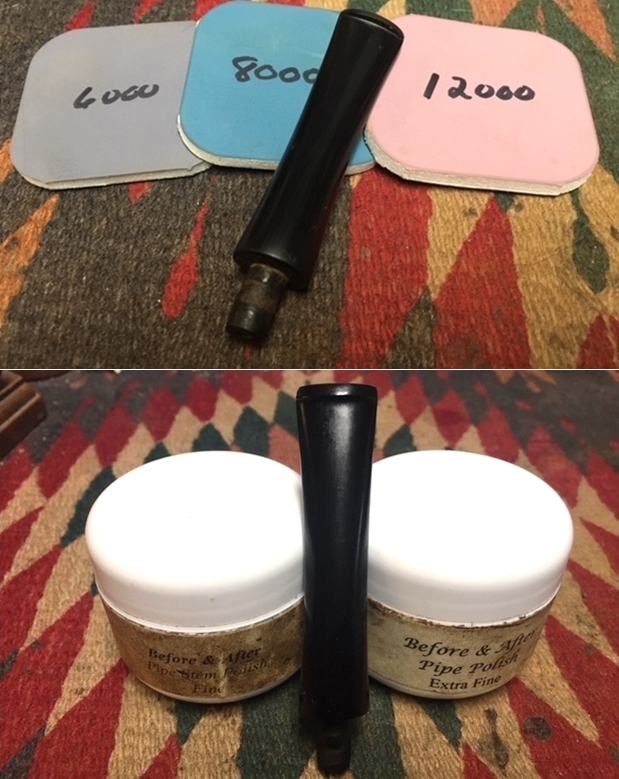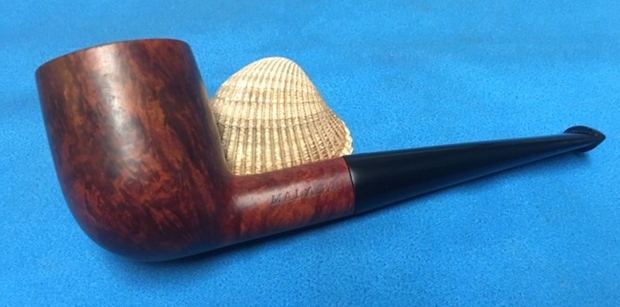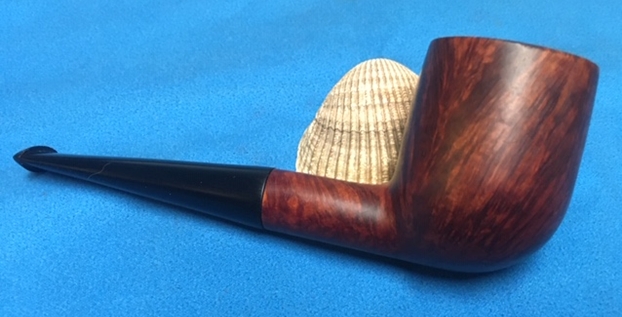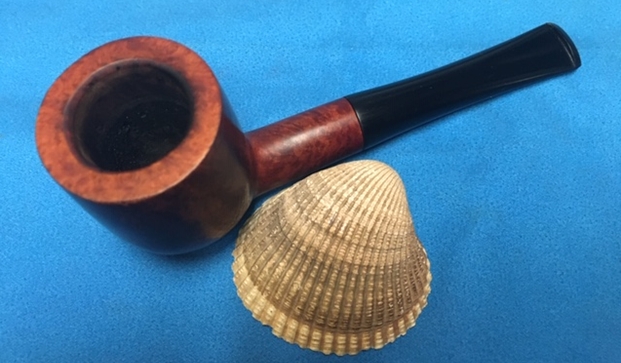
Tag Archives: fitting a stem

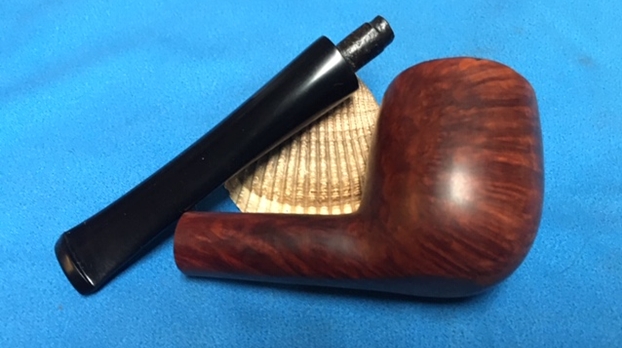
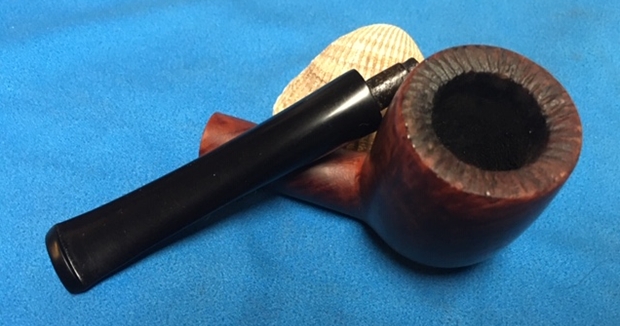
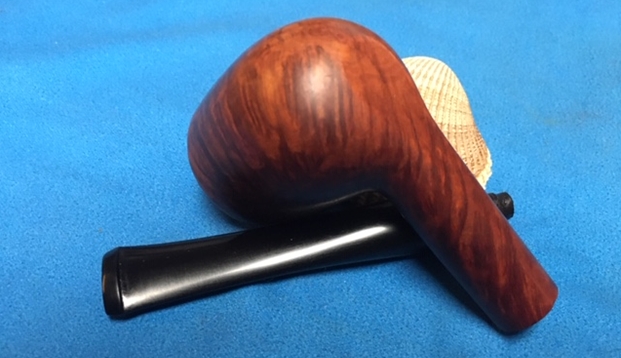
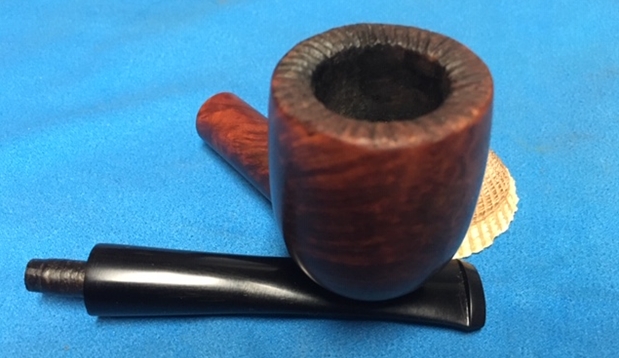
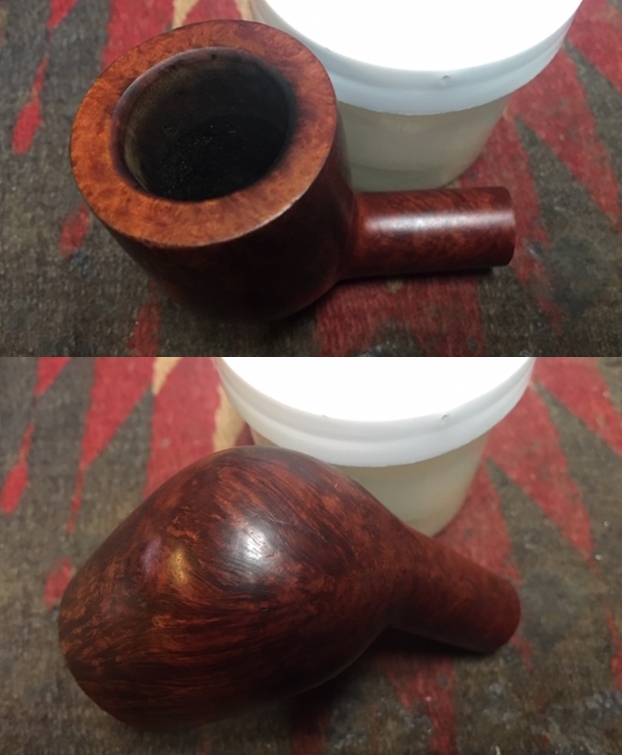
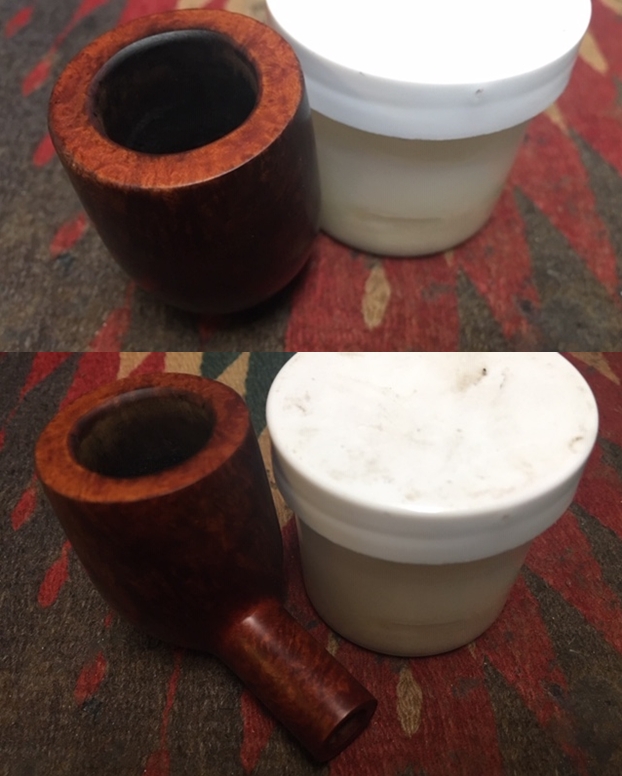
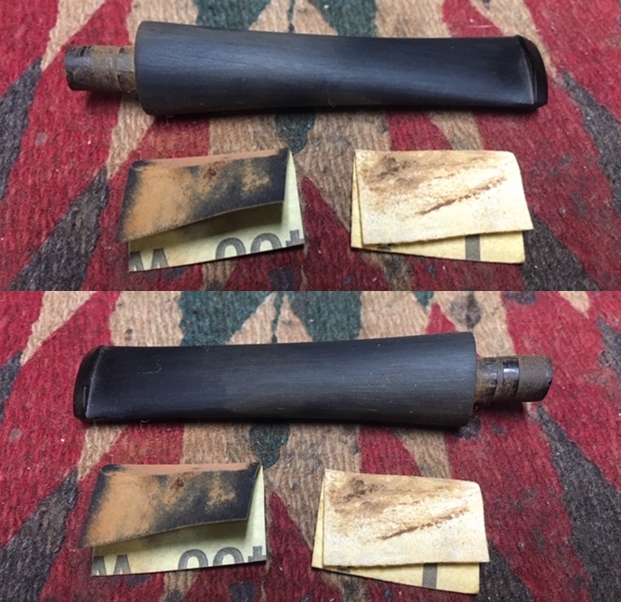
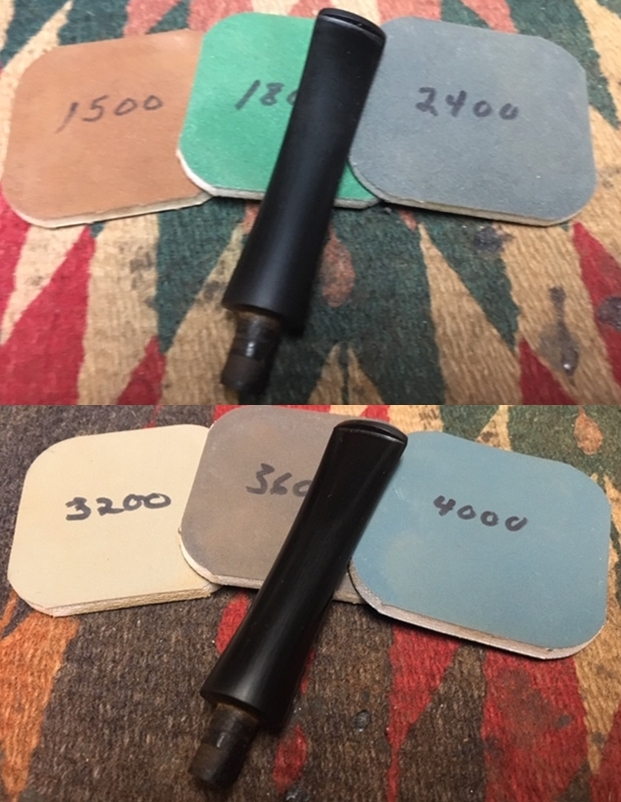
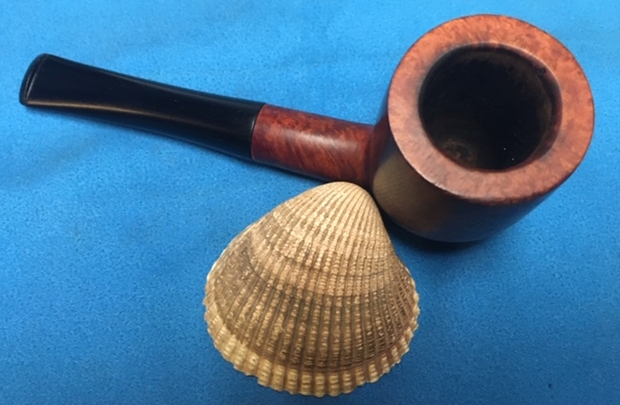
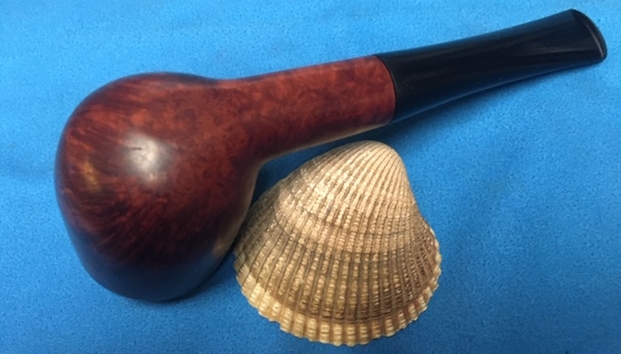
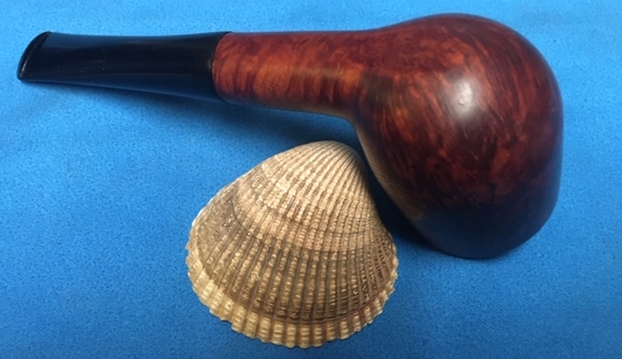
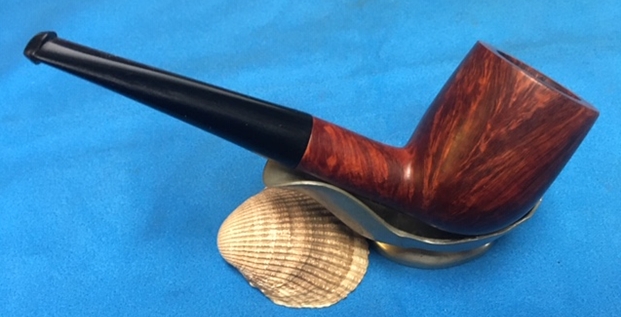
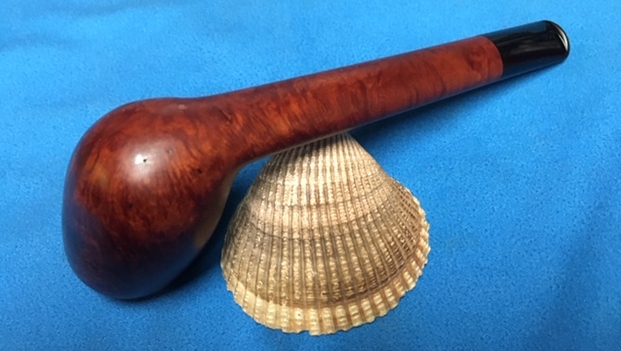
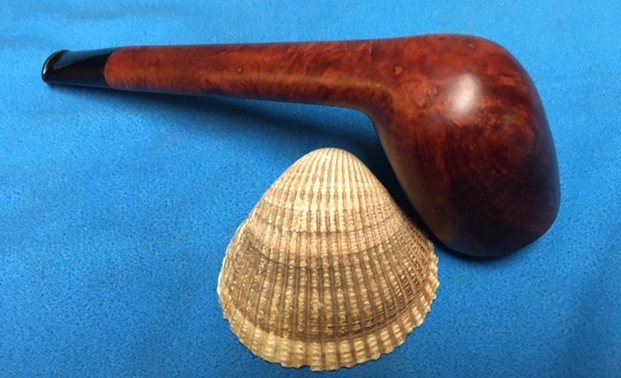
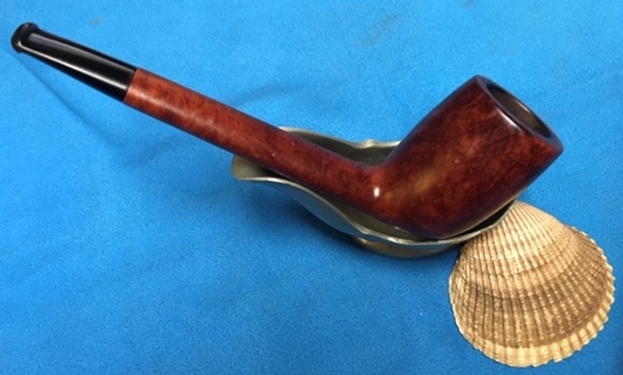
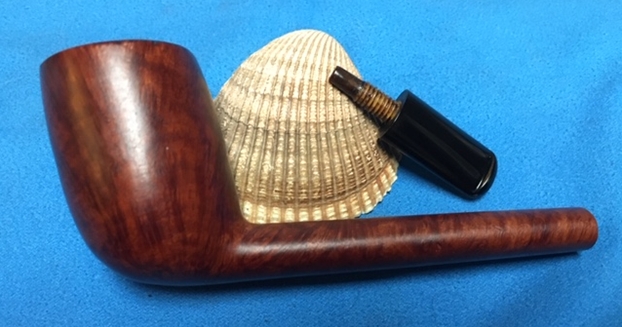
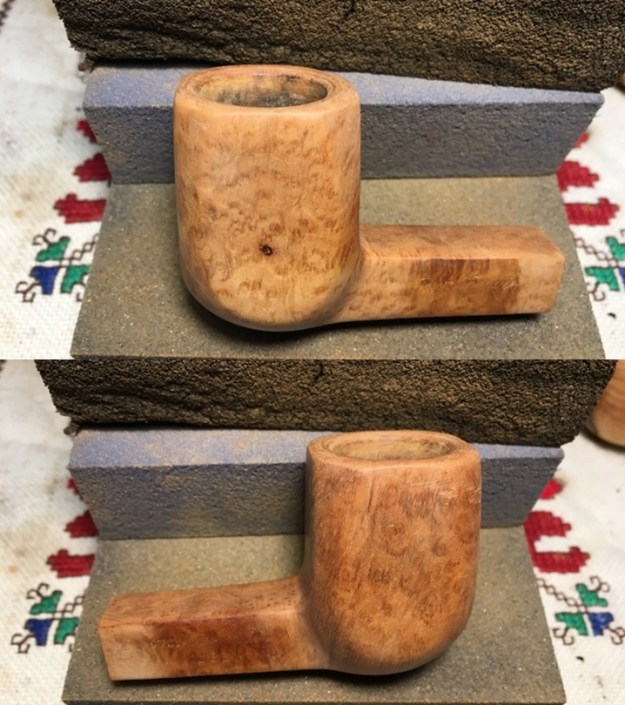
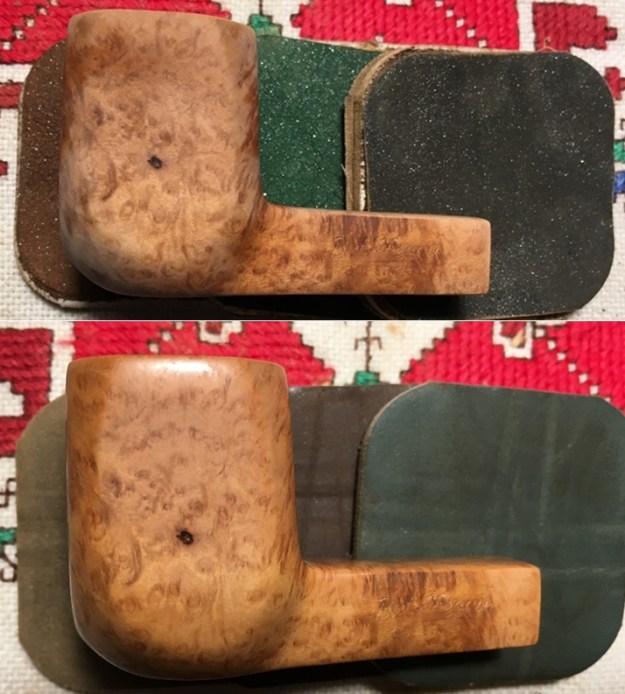
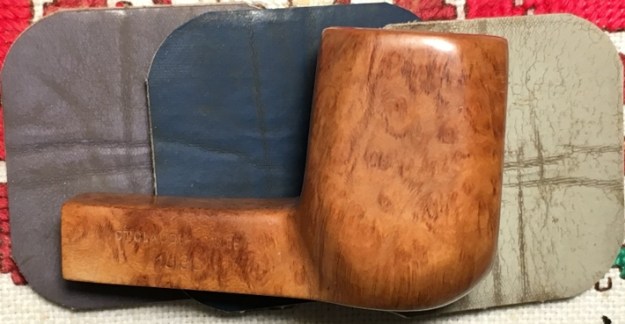
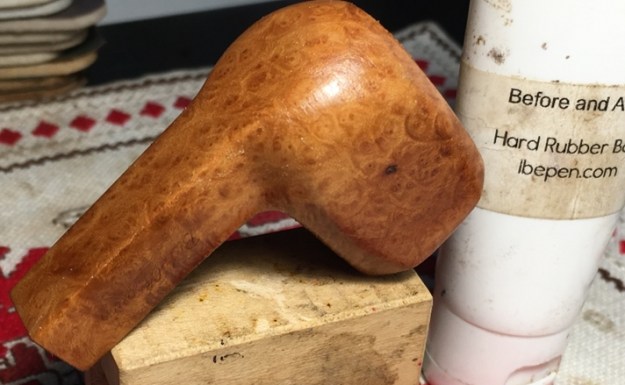
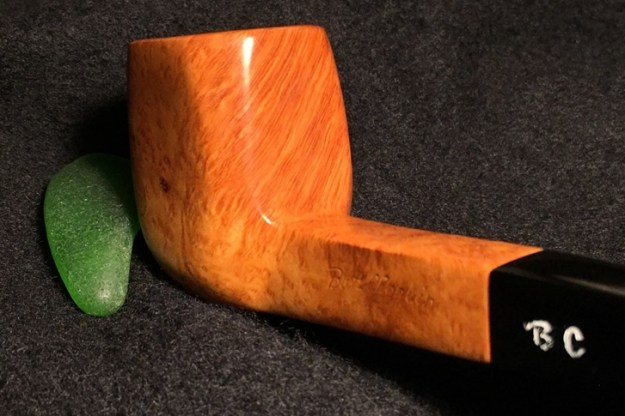
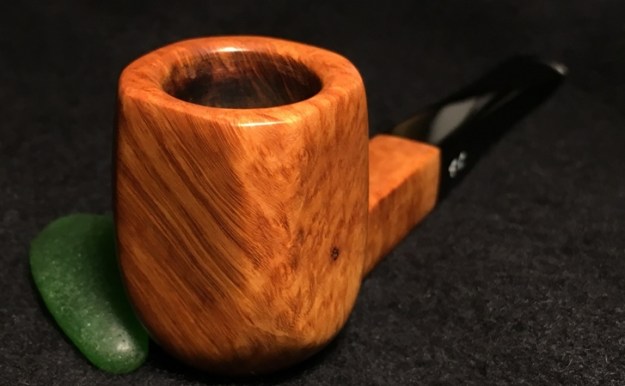
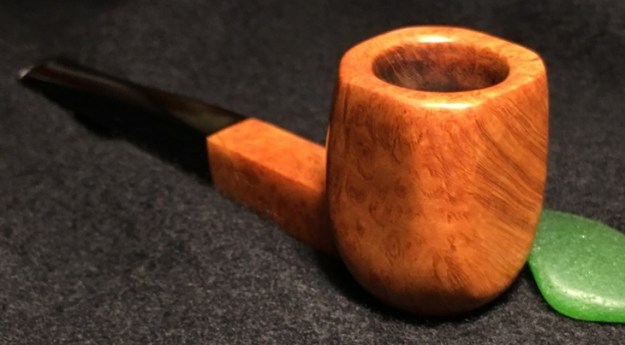
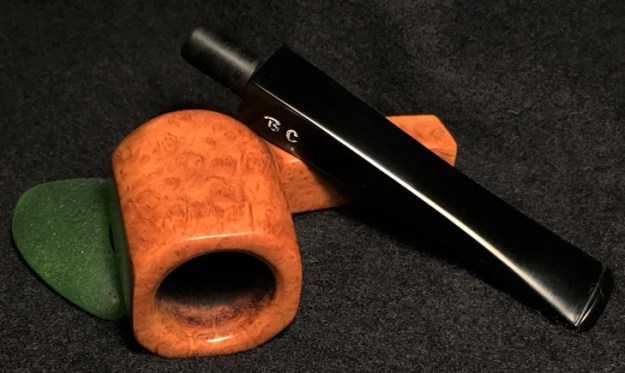
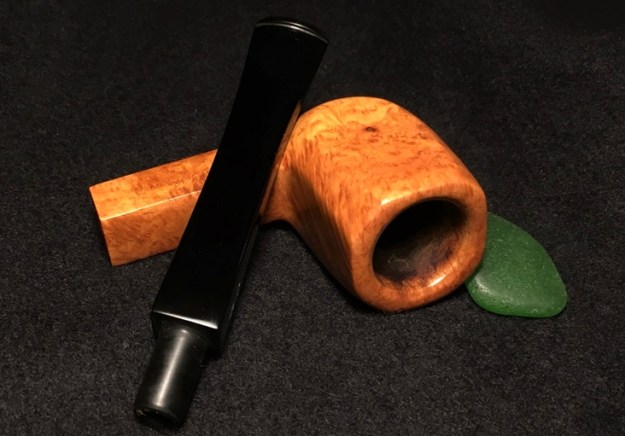
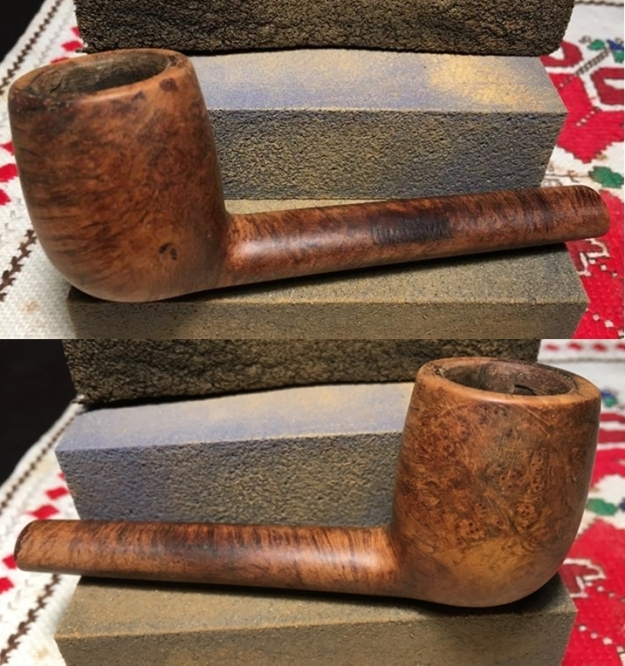
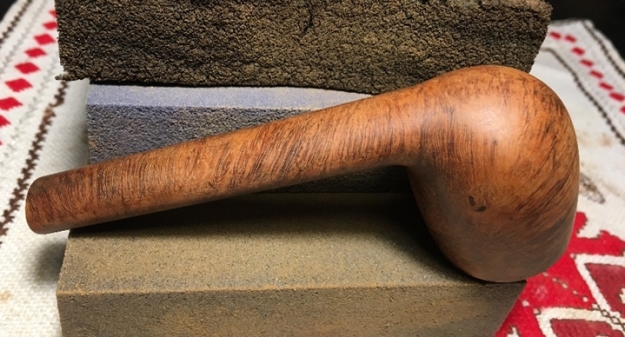
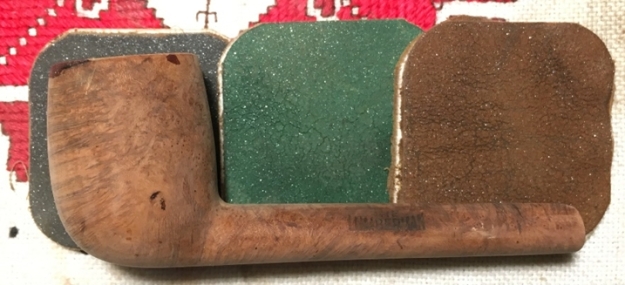
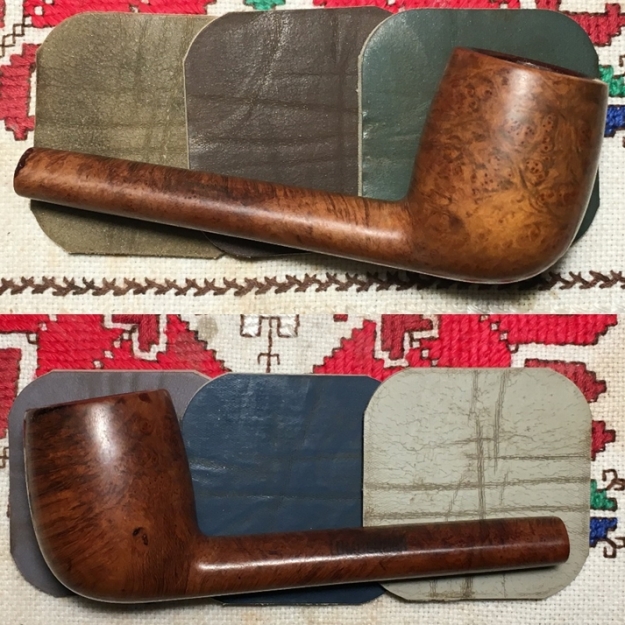
Sprucing Up an Attractive Butz Choquin Supermate 1596 Panel


Blog by Dal Stanton

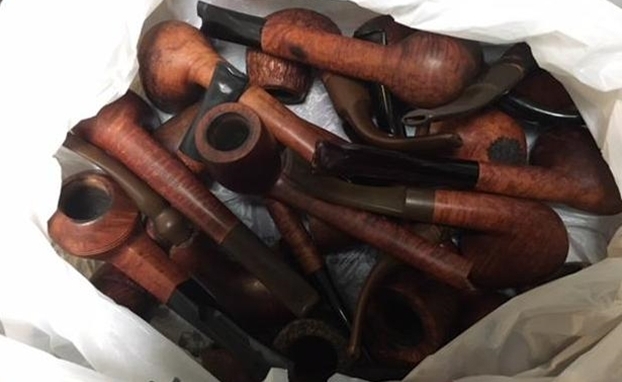
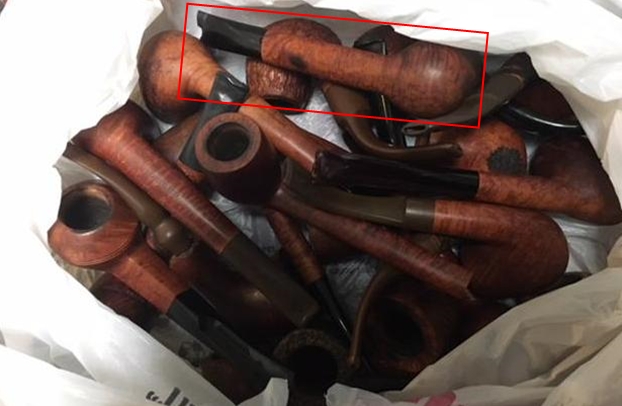
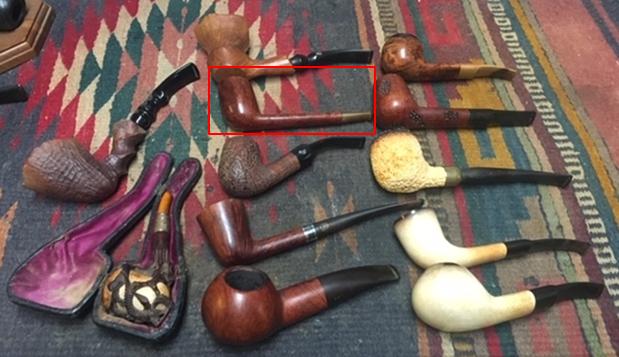
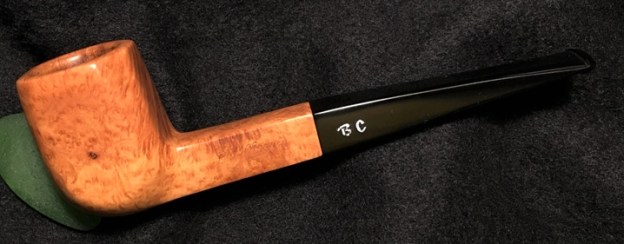
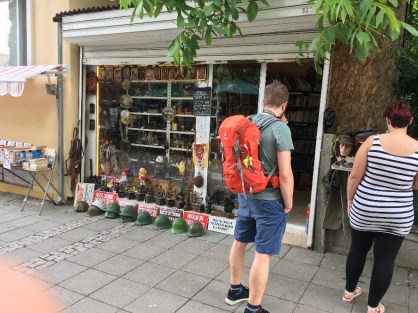
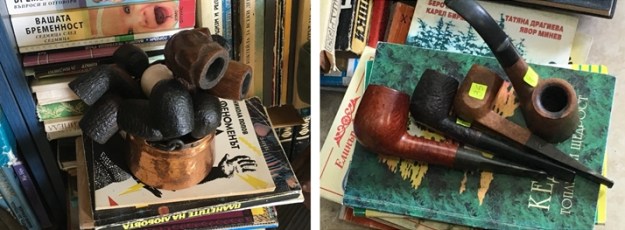
Without doubt, one of my favorite pastimes is go pipe picking!  My wife and I were on the Black Sea coast in the Bulgarian city of Burgas returning to an antique shop I had visited before on the main walking street very near the Black Sea coast.  I was not disappointed when I spied the copper pot full of pipes waiting for someone like me to come along.  The Butz Choquin Supermate now on my worktable was in the bunch that I pulled out to get a closer look.  To the left of the BC (pictured below) were a Oldo Billiard and Lincoln London Made with the Lindburgh Select Poker to the right.  Not pictured below that also came home with me is a Harvey Meer Lined Rusticated Dublin Rustified LONDON PARIS NEW YORK.  A very nice haul!

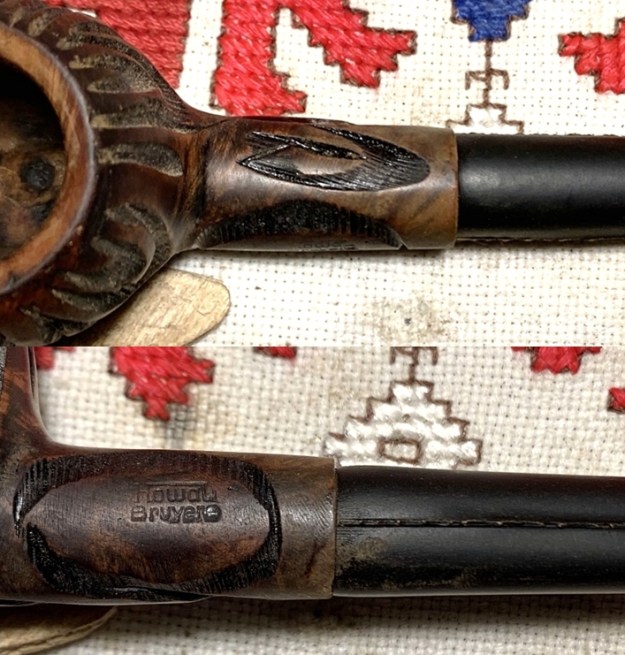
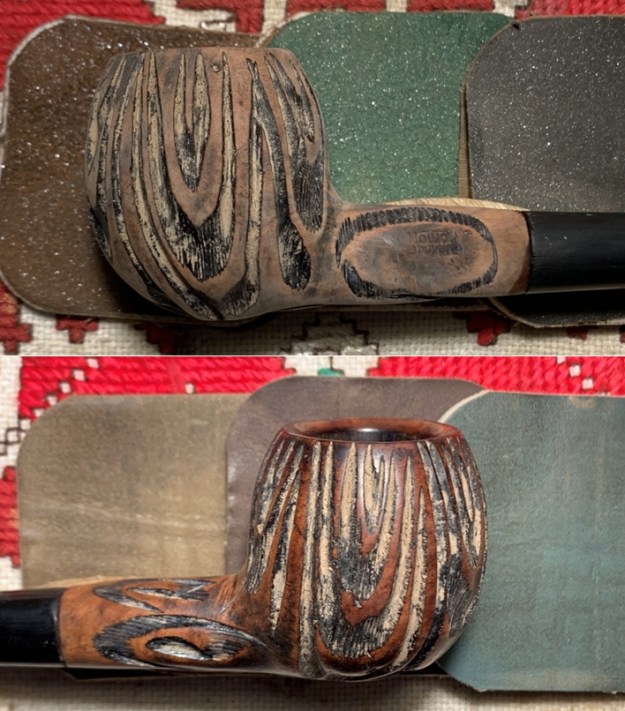
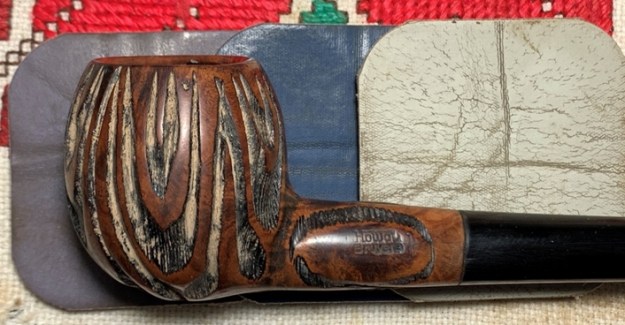
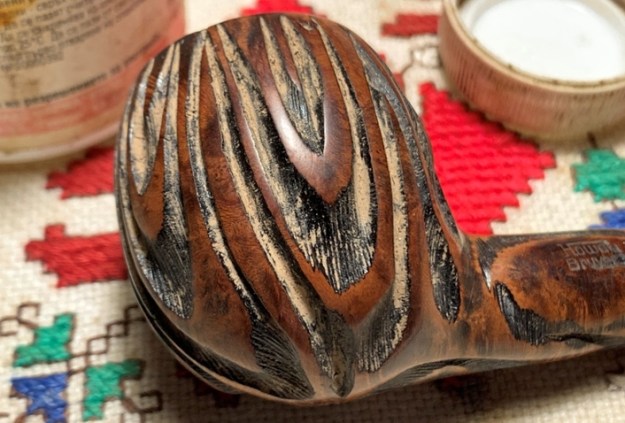
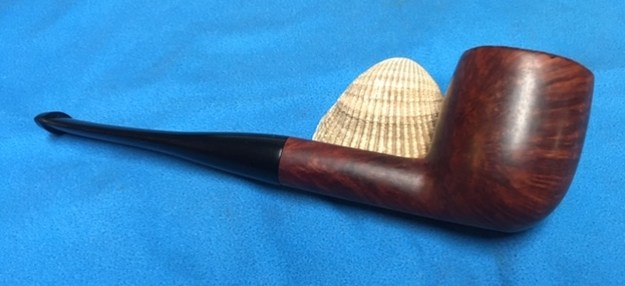
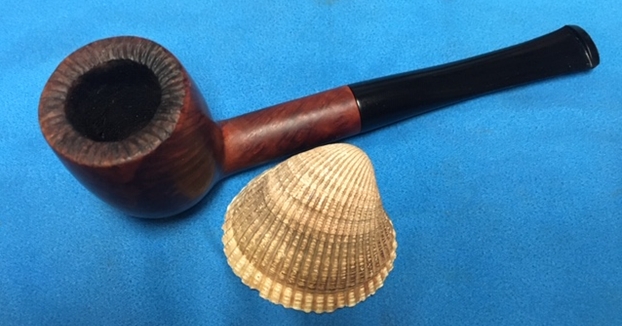
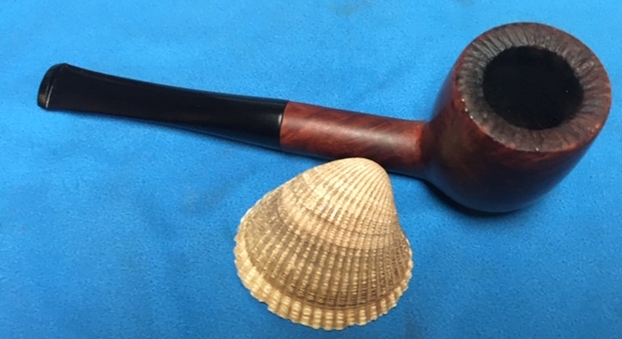
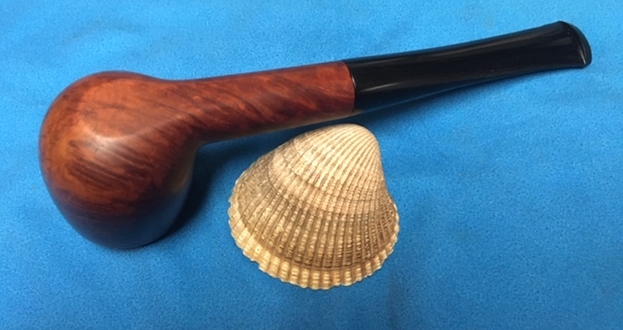
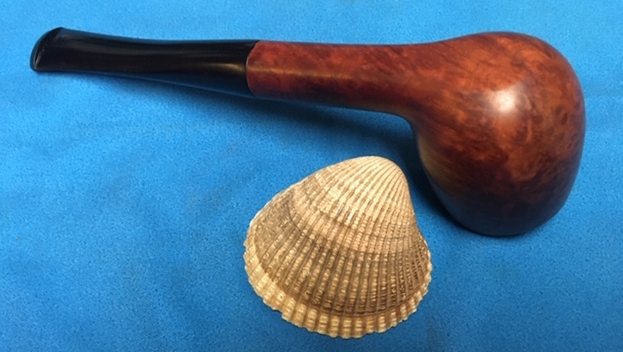
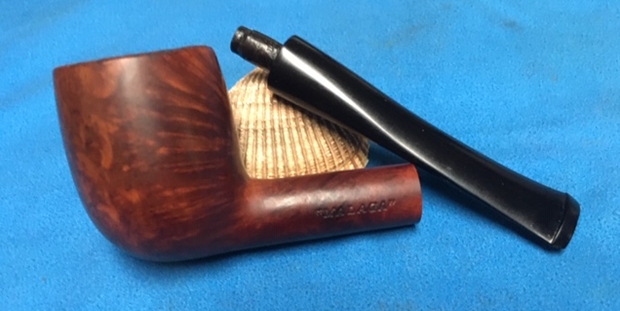
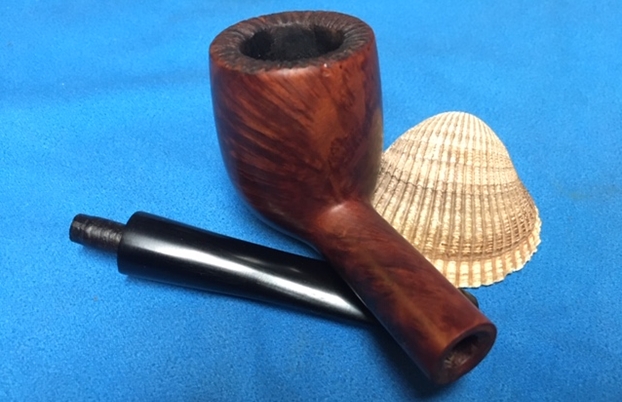
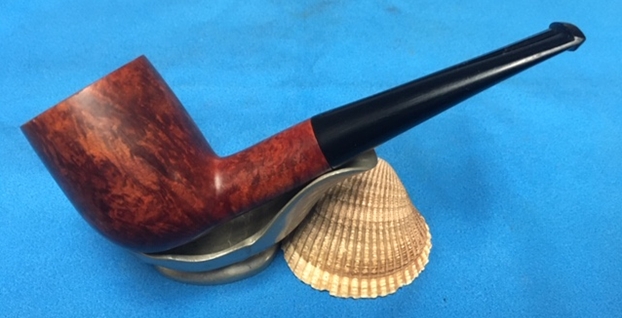
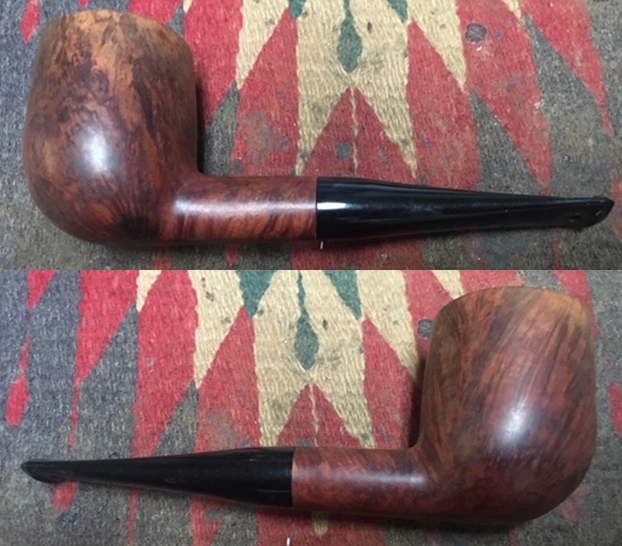
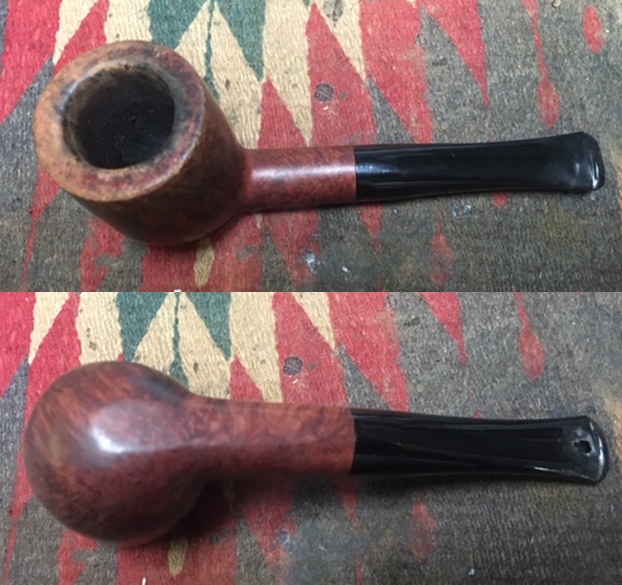
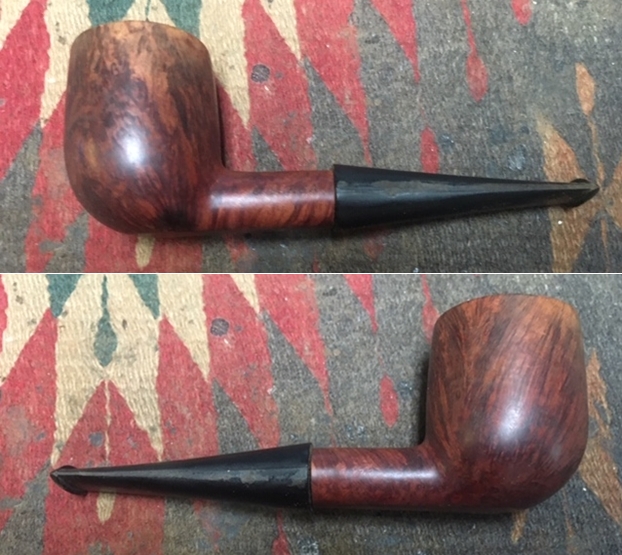
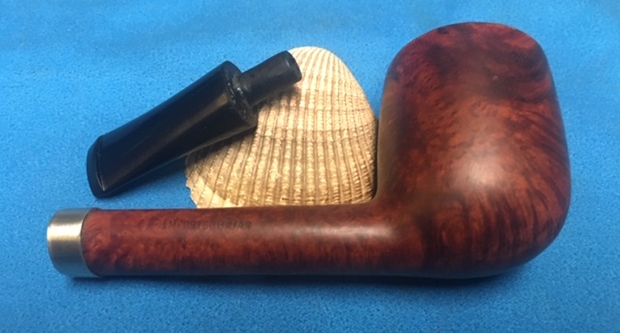
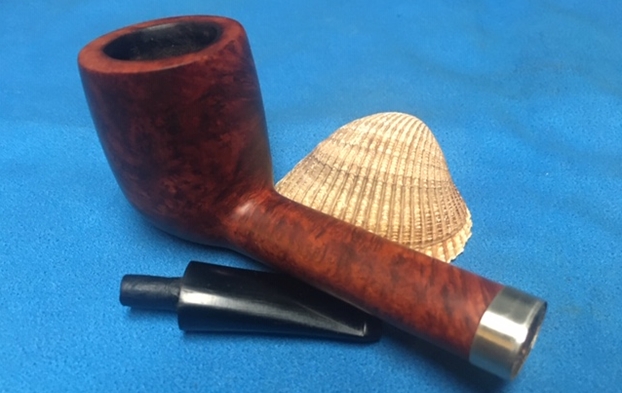
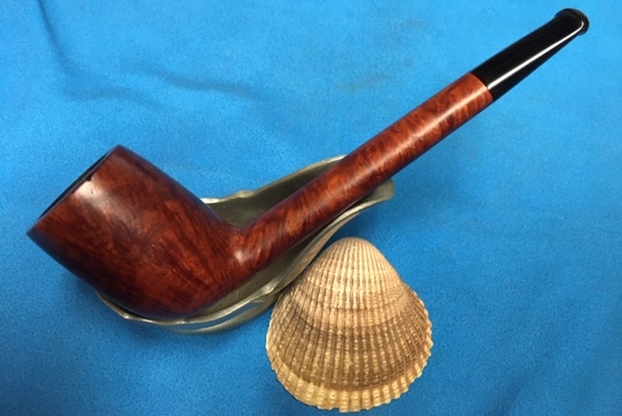
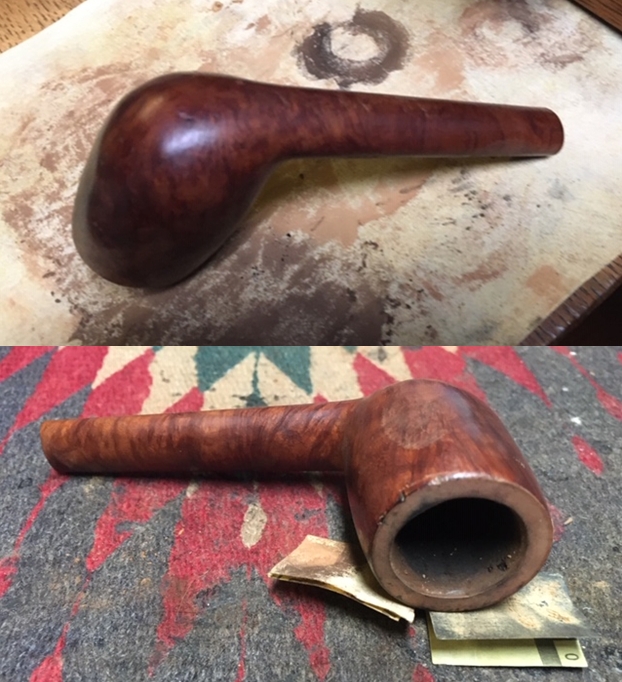
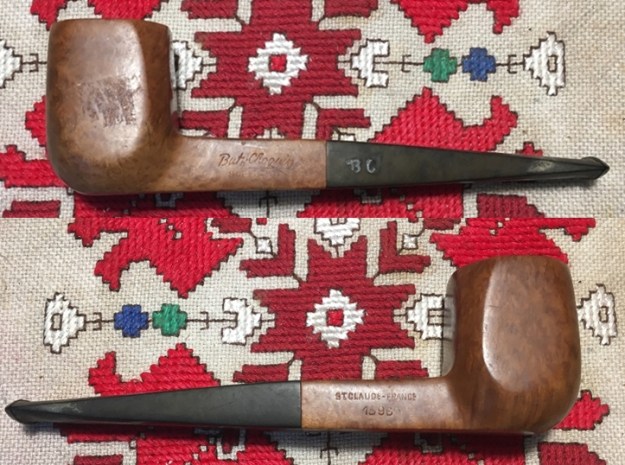
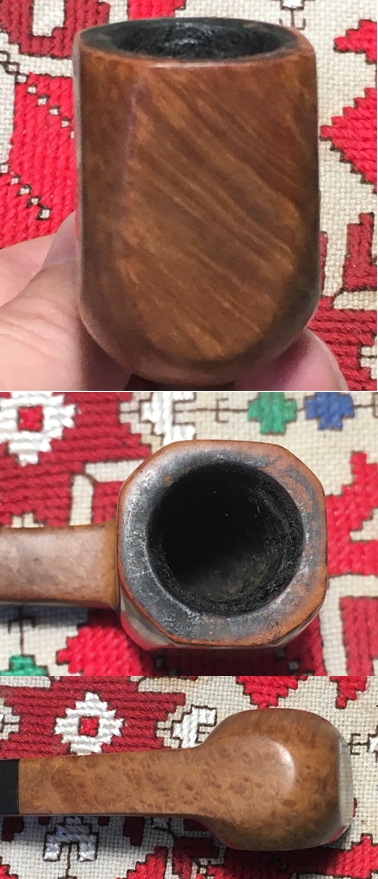
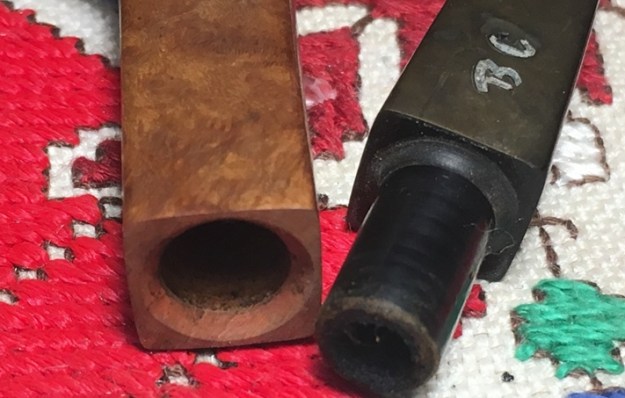
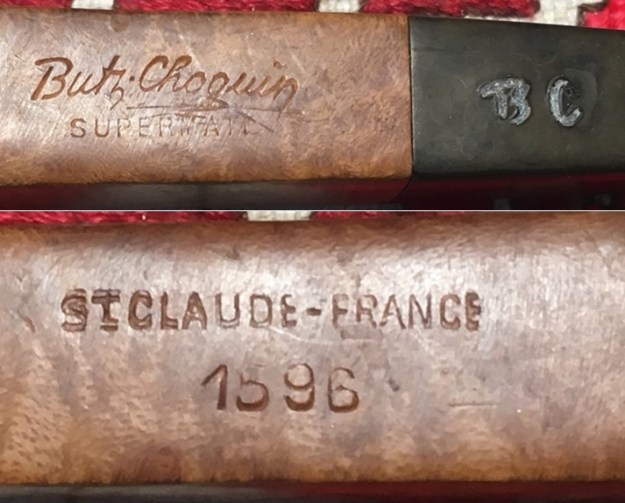
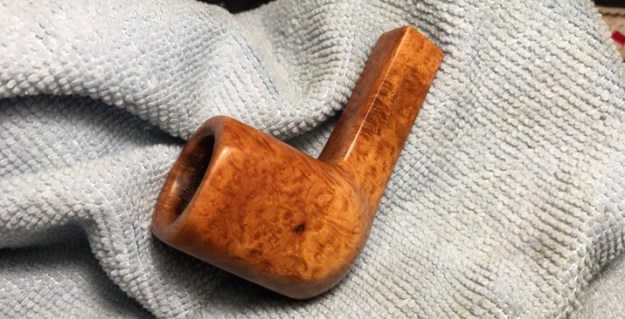
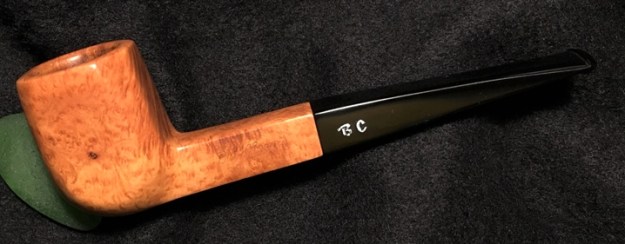
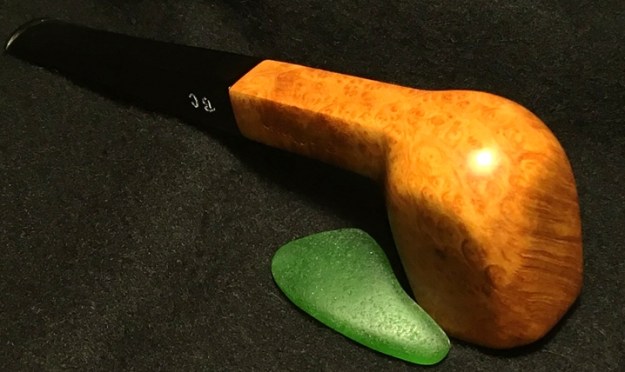
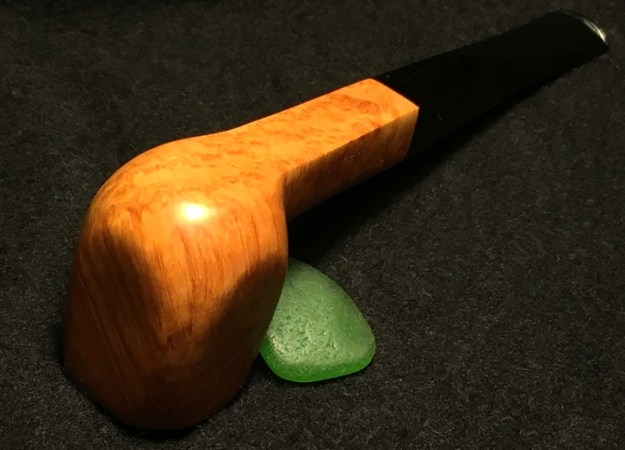
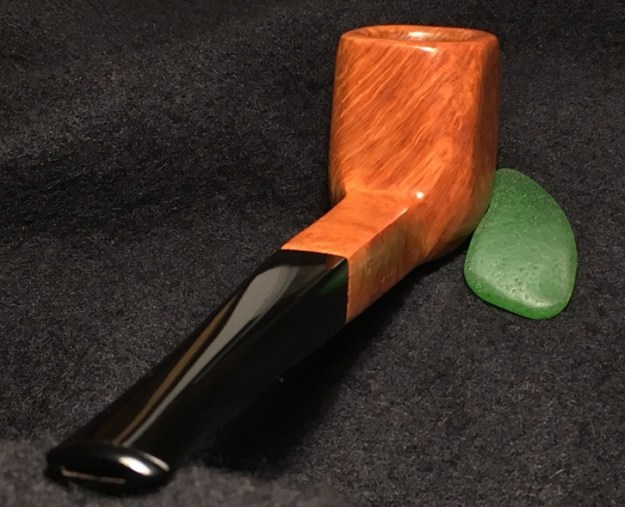
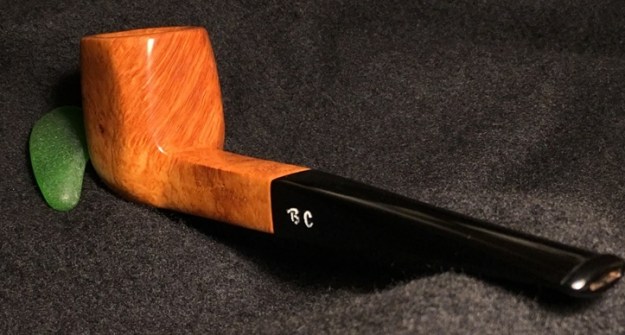
Jim saw the BC Supermate in the online ‘For “Pipe Dreamers” ONLY!’ collection along with a ‘Nightmare’ Canadian that was not needing a restoration but a resurrection!  In my communications with Jim, I discovered that he was from Pennsylvania and an engineer who has several hobbies that where he works with his hands and expressed appreciation for the restorations that he had seen posted from my worktable.  It was for that reason he looked at ThePipeSteward website and found two pipes that called his name and he commissioned them.  He also expressed appreciation for our work with the Daughters of Bulgaria – women and girls who have been trafficked and sexually exploited.  All the pipes commissioned by potential stewards benefit this cause. Here are pictures of this nice Paneled Butz Choquin 1596 now on my worktable.  The nomenclature on the left side of the shank is the BC fancy script ‘Butz-Choquin’ [over] ‘SUPERMATE’.  To the right, the stem is stamped with the traditional ‘BC’.  On the right shank side is the COM and shape number: ‘STCLAUDE – FRANCE’ [over] 1596.   I have heard on FB group postings that the long-time French pipe manufacturer is closing its doors.  I went to the main website of Butz Choquin and it was active, and I saw no notifications.  I’ll continue to investigate.  One of my first research projects with a French pipe, Jeantet, connected me with the history of St. Claude, France, the place that most say represent the birthplace of modern pipe manufacturing.  The BC name is among the earliest residents of St. Claude.  Pipedia provides this information about the origins of Butz Choquin:

Jean-Baptiste Choquin of Metz started out as a tobacconist. This enterprise was prosperous; he had several employees. Among those, there was a certain Gustave Butz who was its first workman and who became his son-in-law by marrying Choquin’s daughter Marie in 1858.  In 1858 Jean-Baptiste Choquin created, in collaboration with Gustave Butz, the Choquin pipe. This bent pipe with a flat-bottomed bowl was finished with an albatross-bone mouthpiece, fixed with silver rings.  In 1858, still in Metz, Gustave Butz built an establishment for the manufacture of the Choquin pipe which took the name of [Butz-Chochin]. In 1951, the Berrod-Regad company bought the trademark, continuing manufacture until 2002. Departing from Metz, the workshop was relocated to Saint-Claude, then also called ‘the world capital of the briar pipe,’ under the Berrod-Regad group. The Berrod-Regad group would go on to completely rebuild the network of representatives until finally entering the export market in 1960 and has since won several prizes, as well as the Gold Cup of French good taste.

In a few years, the brand’s collection increased from ten to seventy series. 135 years after it was founded, the pipe is still well-known not only in France but throughout the world. In 2002, the Berrod family, wishing to preserve manufacture of pipes in Saint-Claude, handed over the company to Fabien Guichon, a native of the area, who will continue to develop the brand during the 21st century.

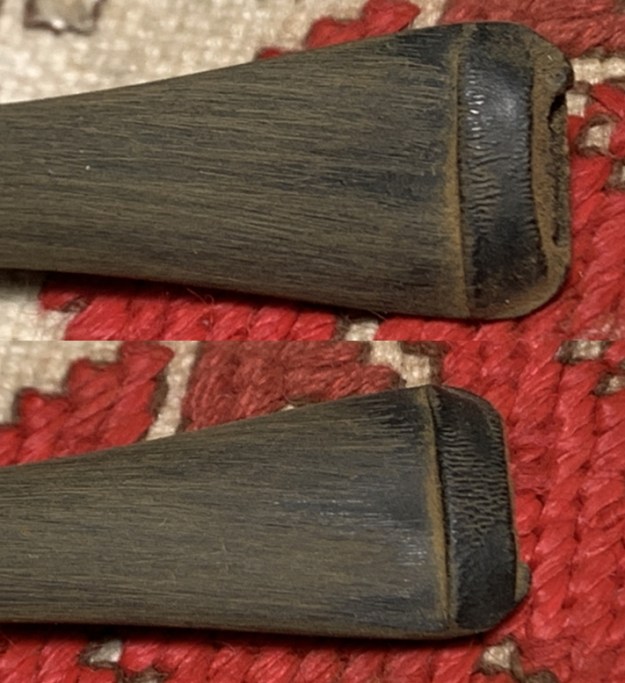
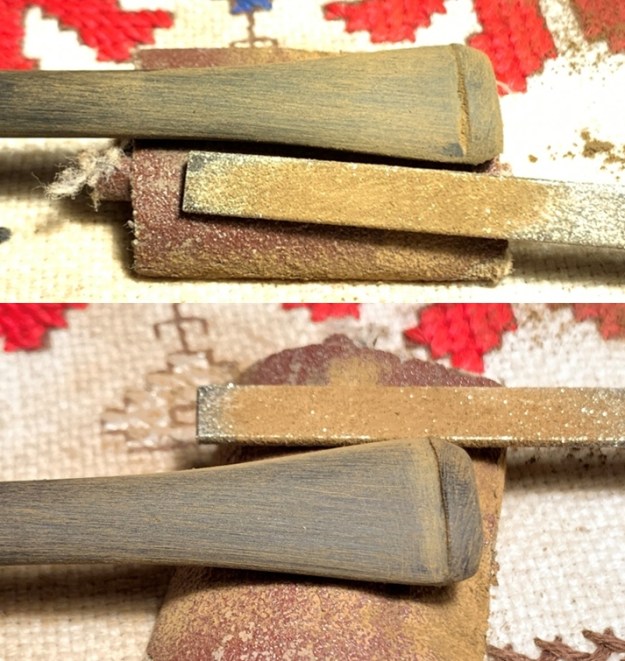
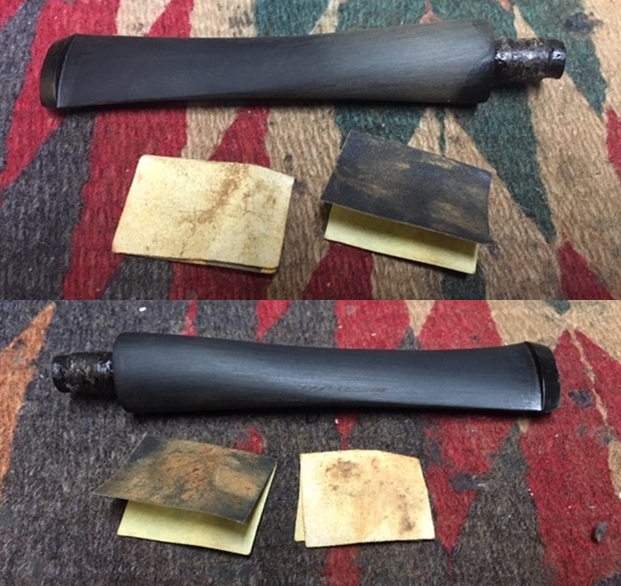
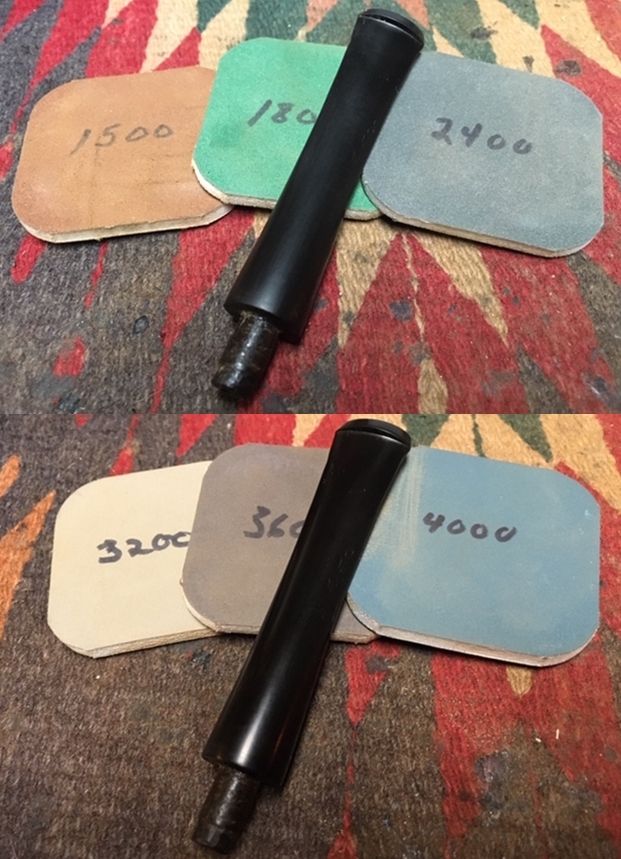
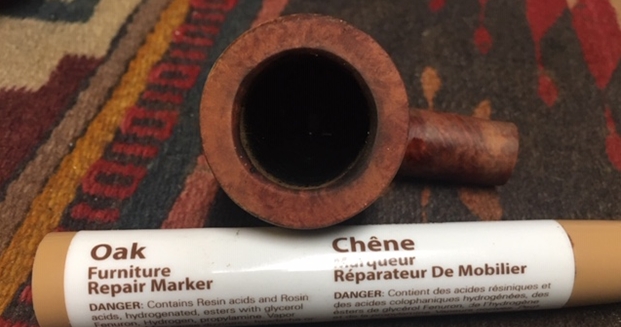
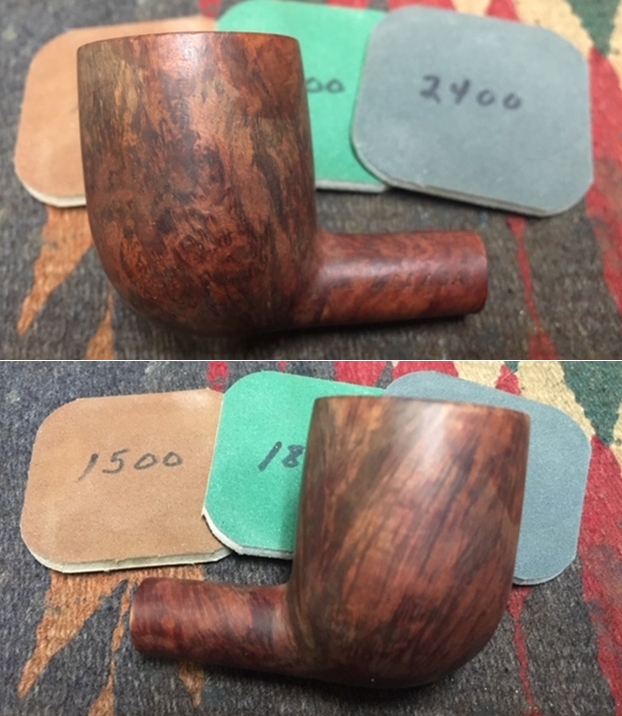
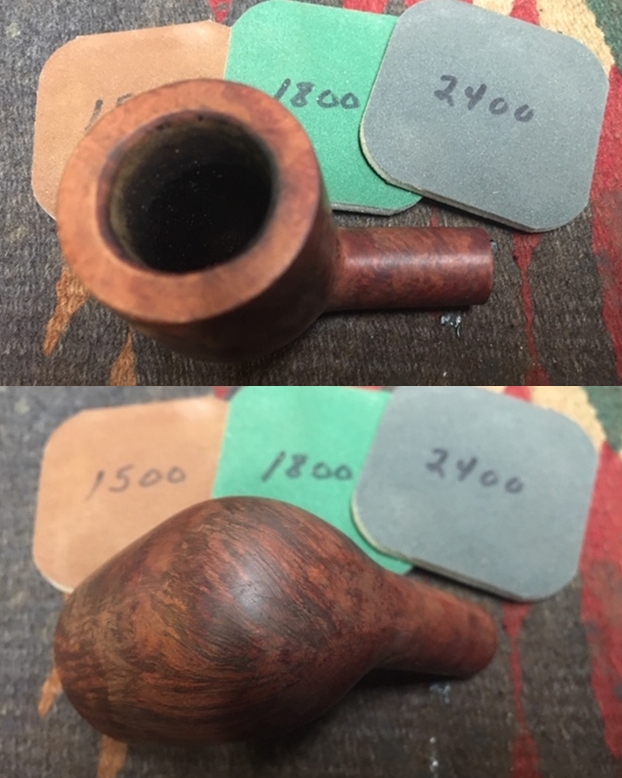
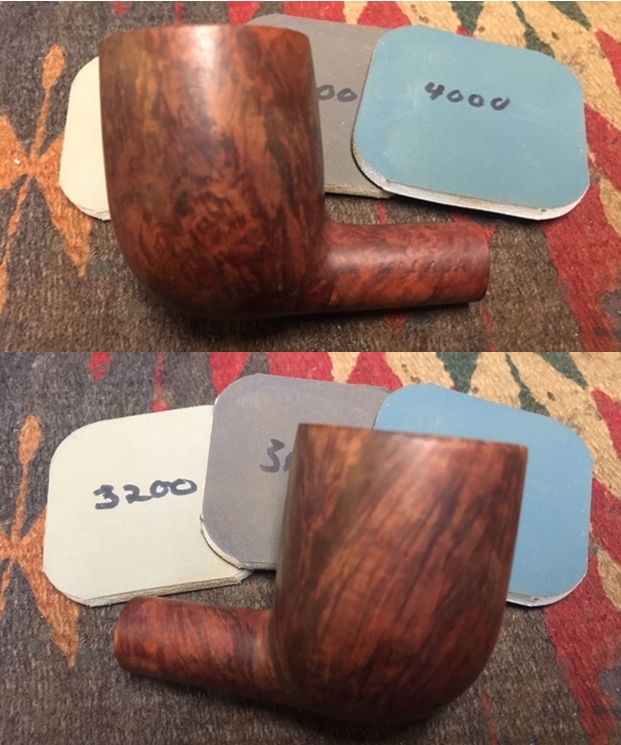
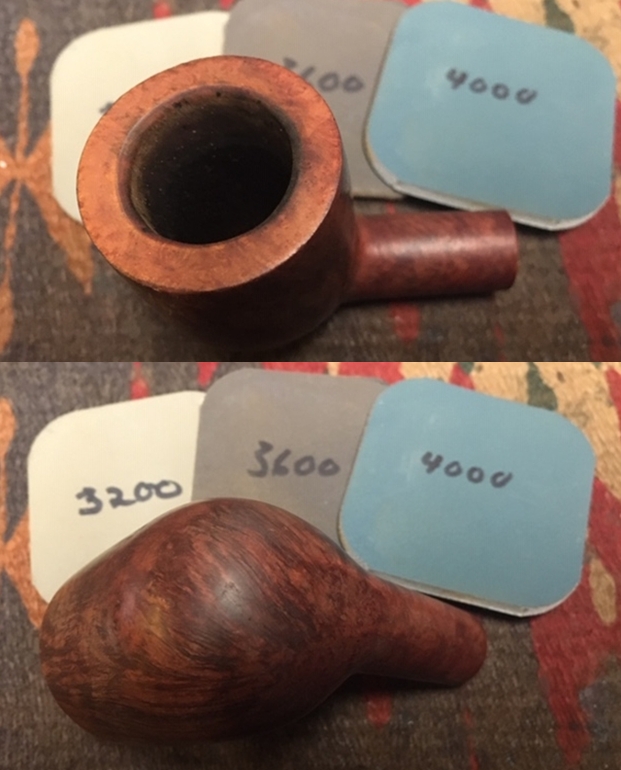
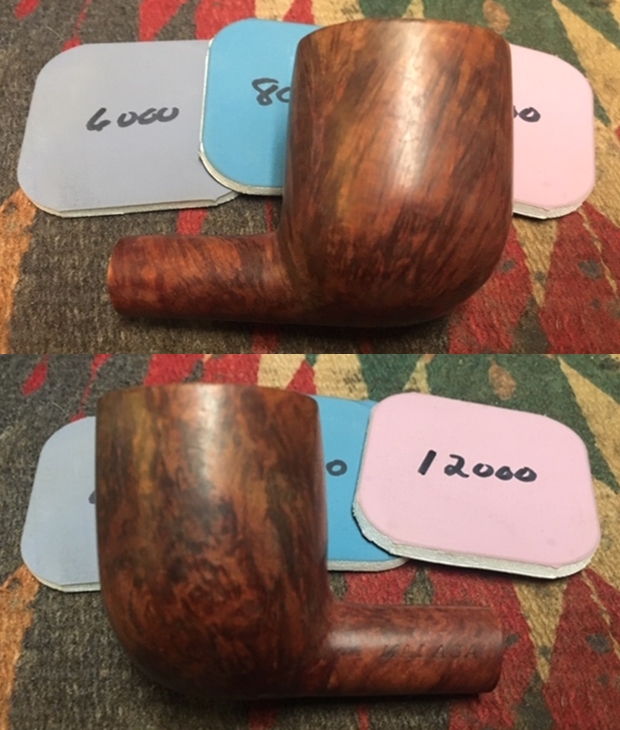
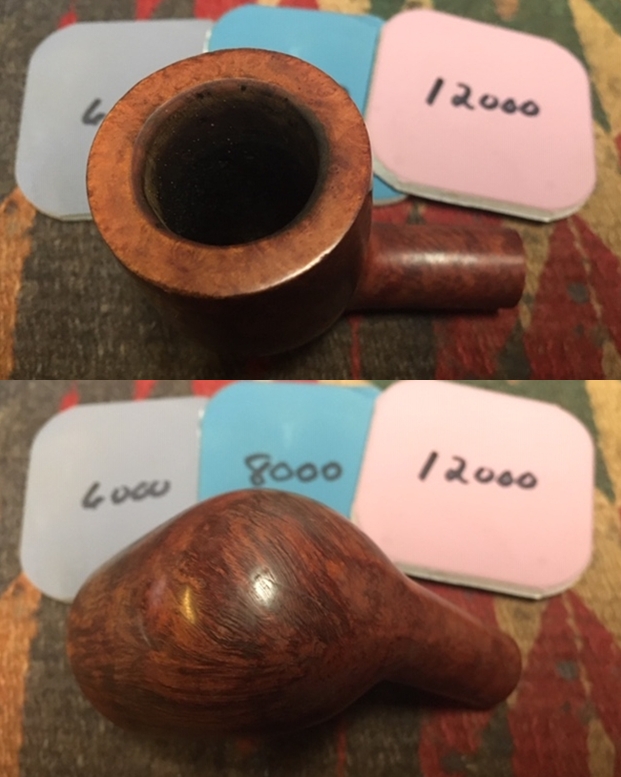
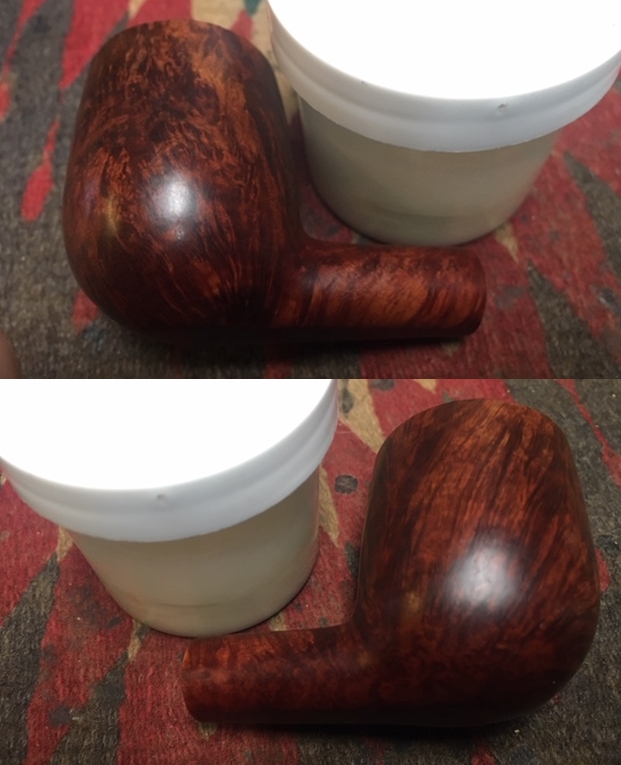
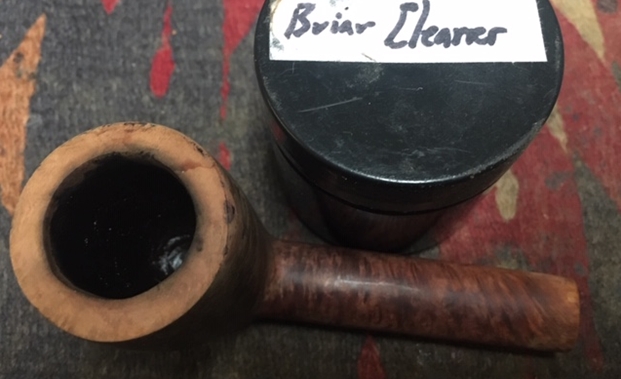
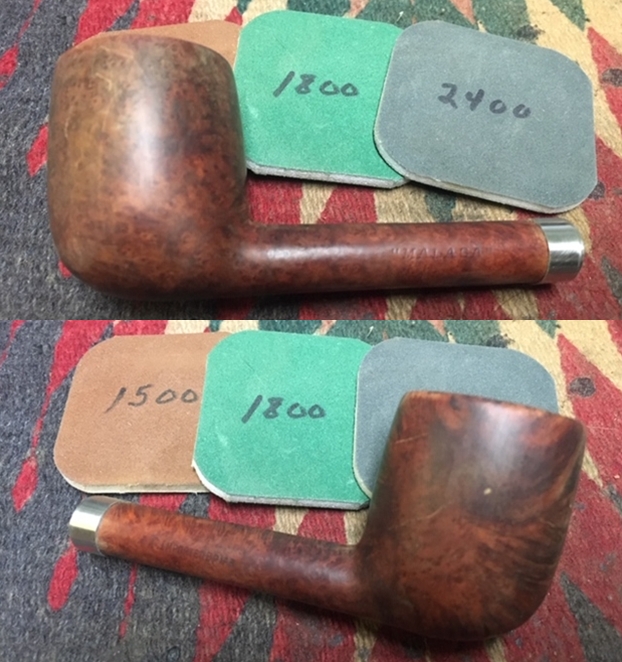
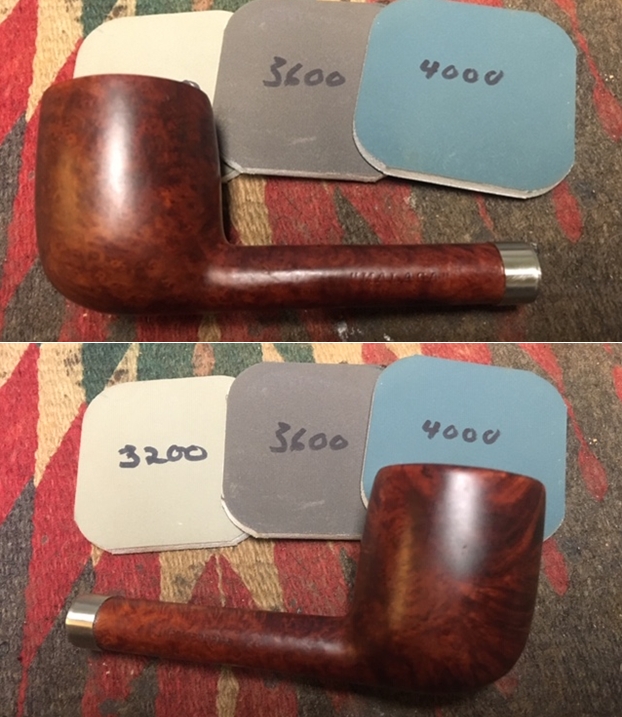
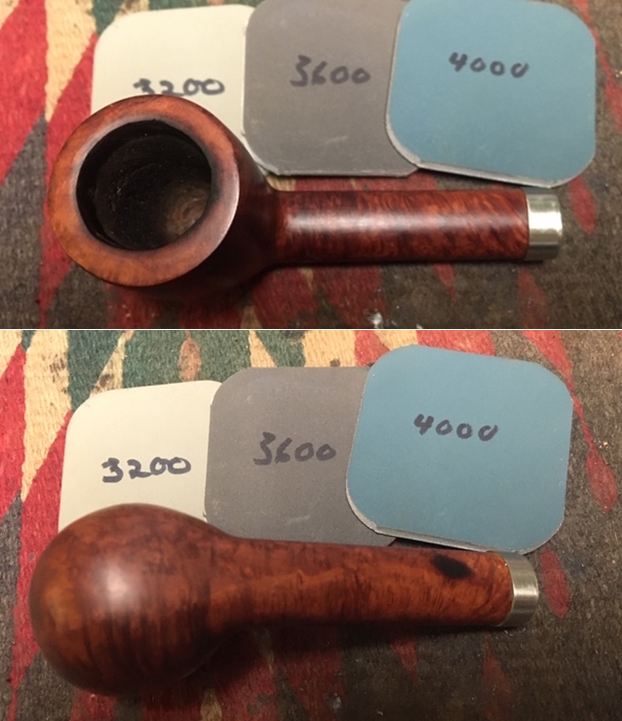
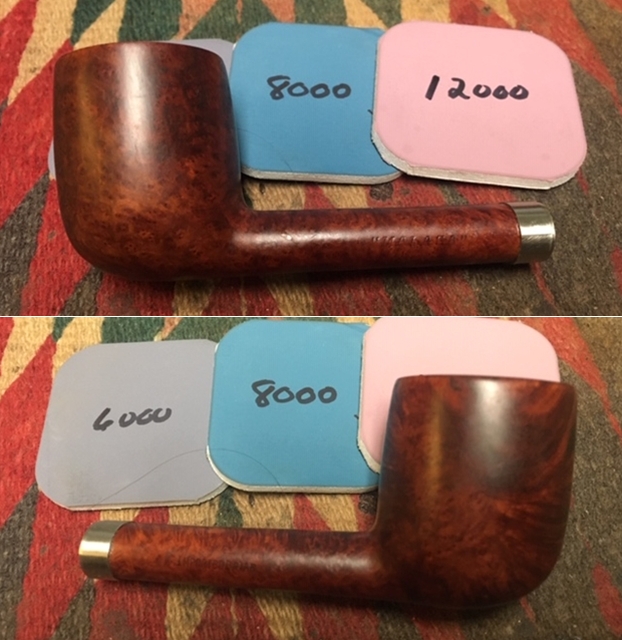
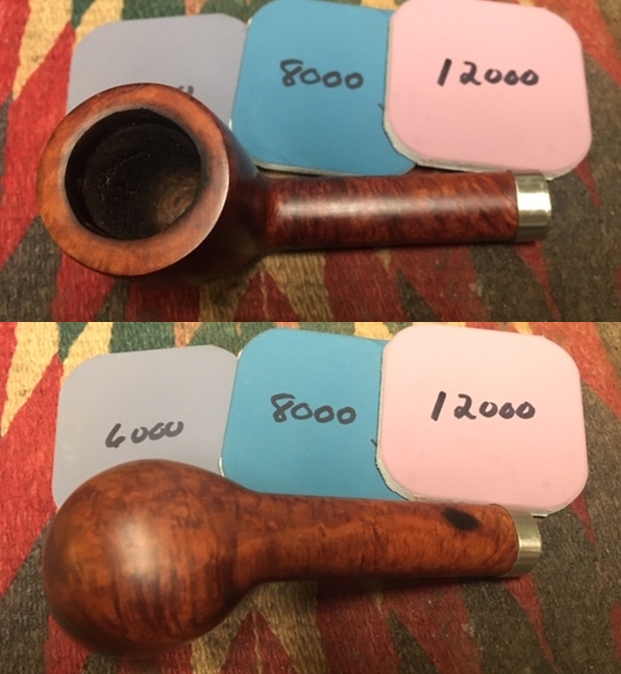
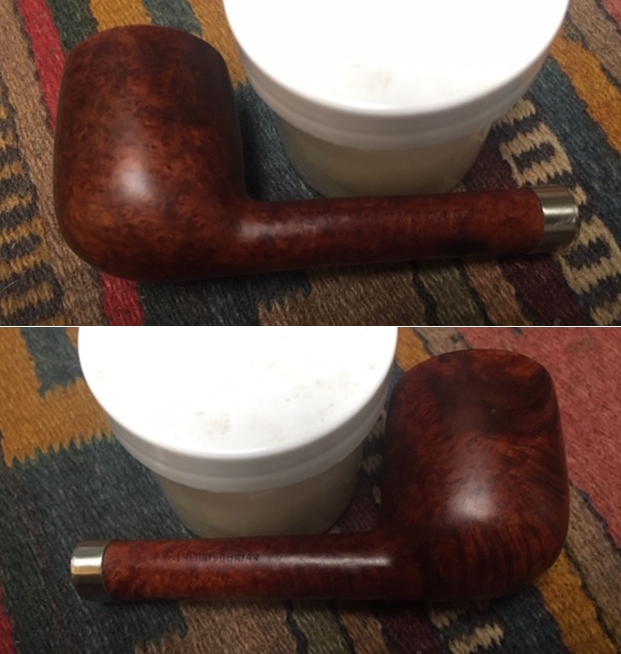
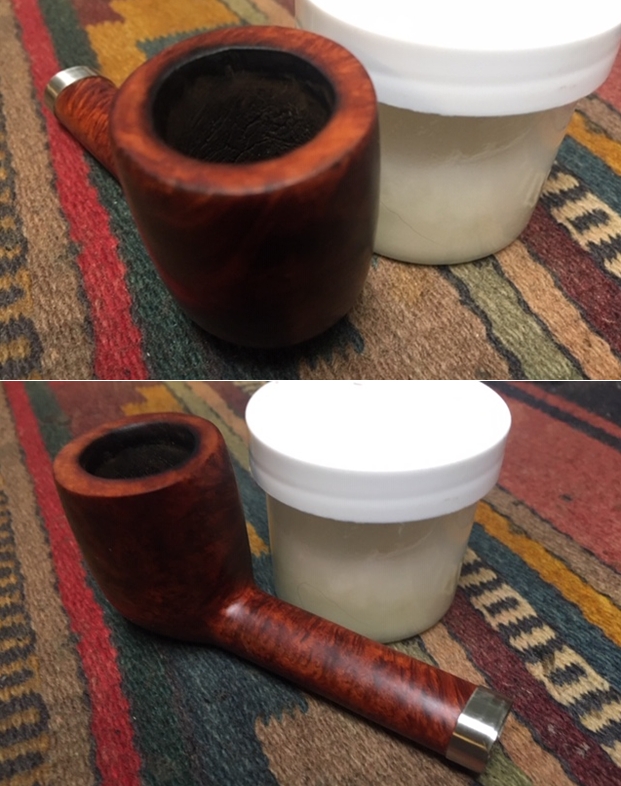
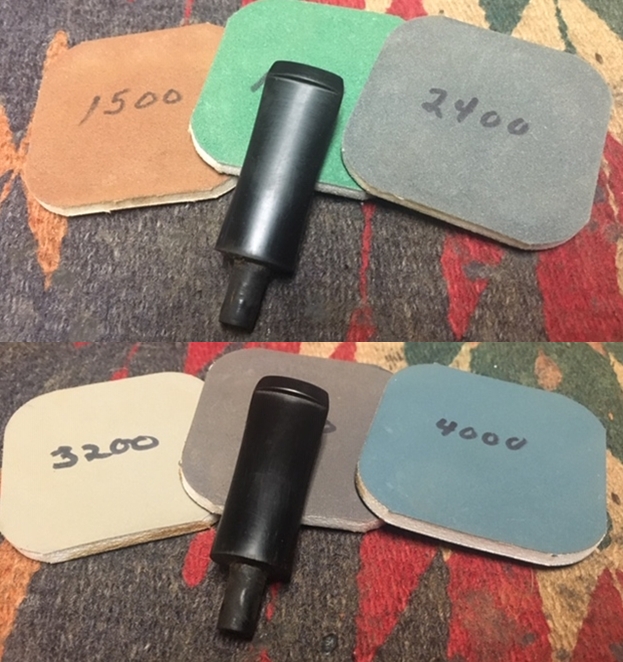
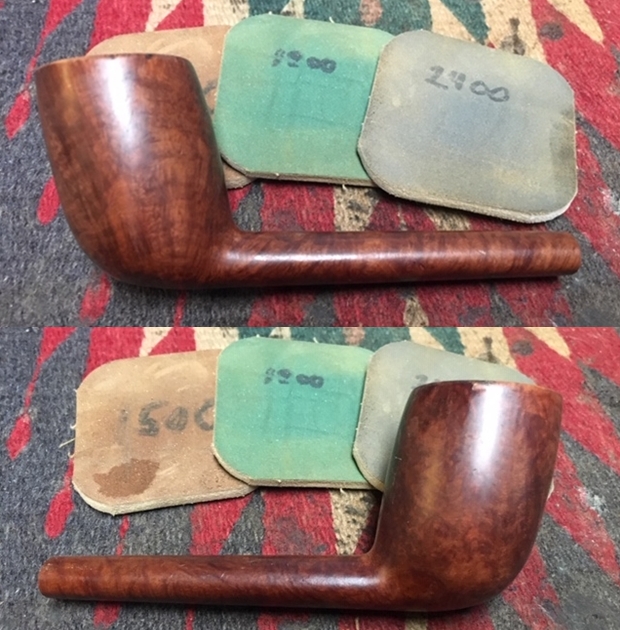
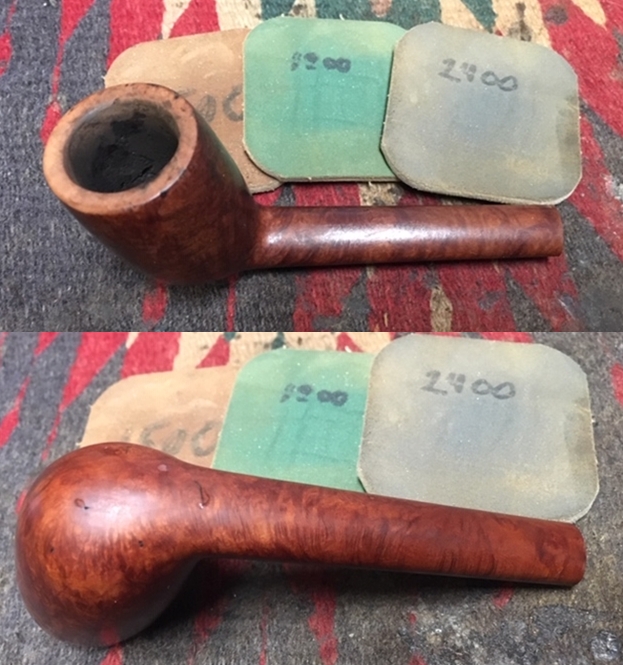
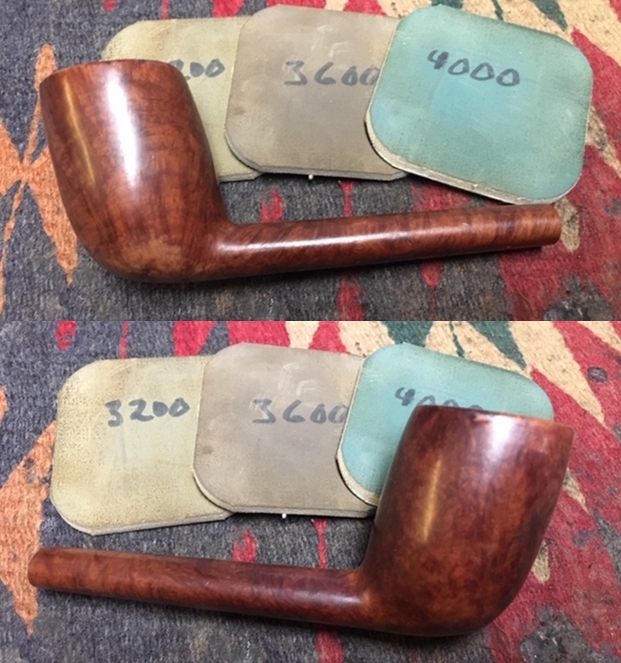
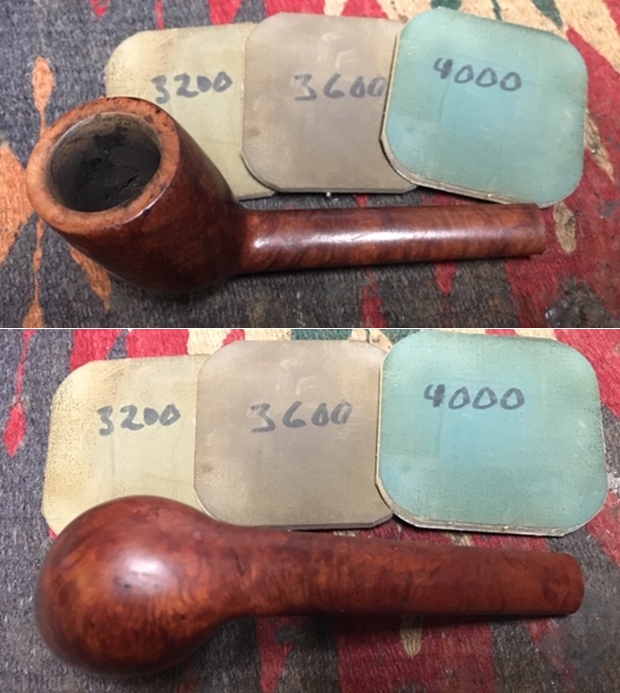
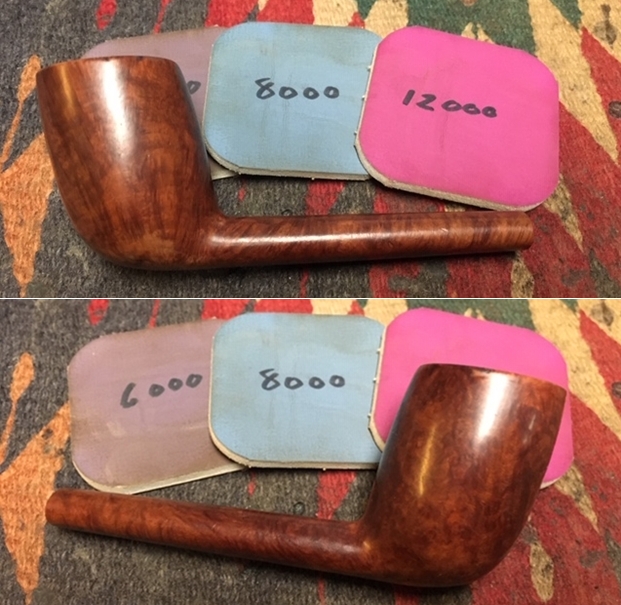
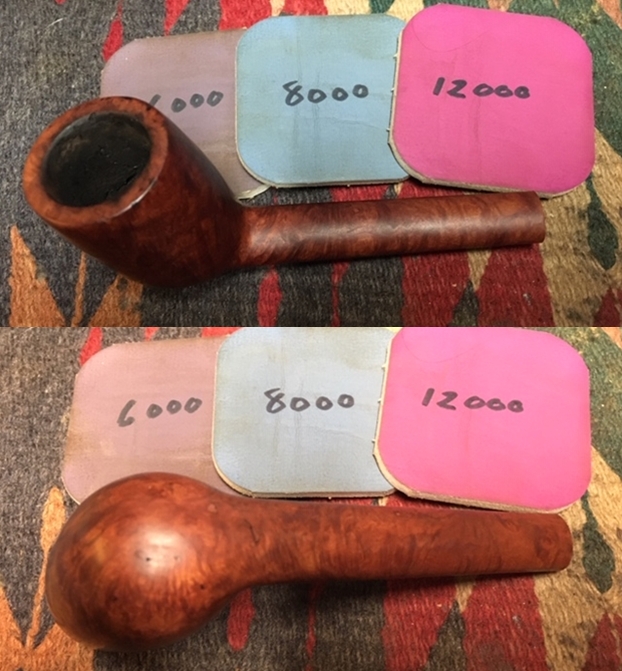
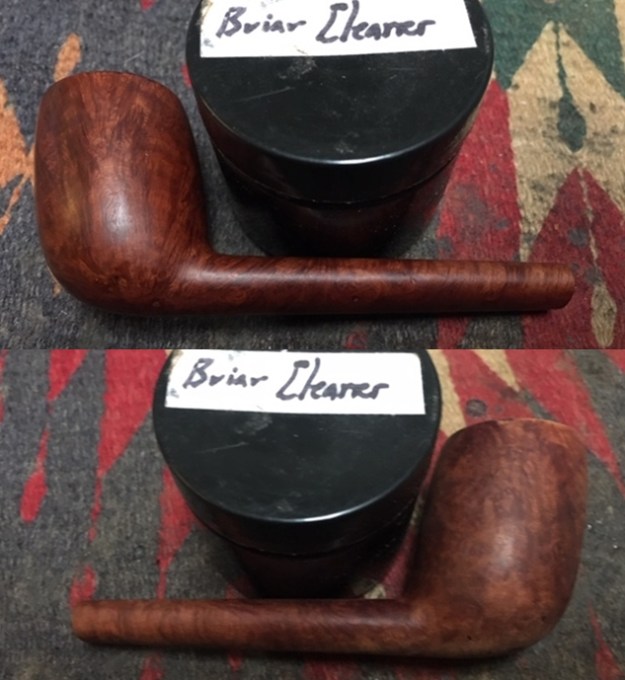
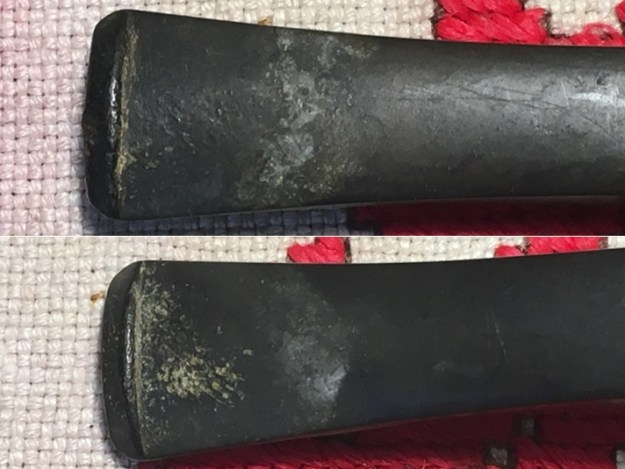
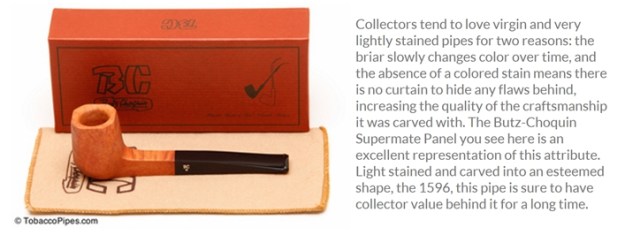
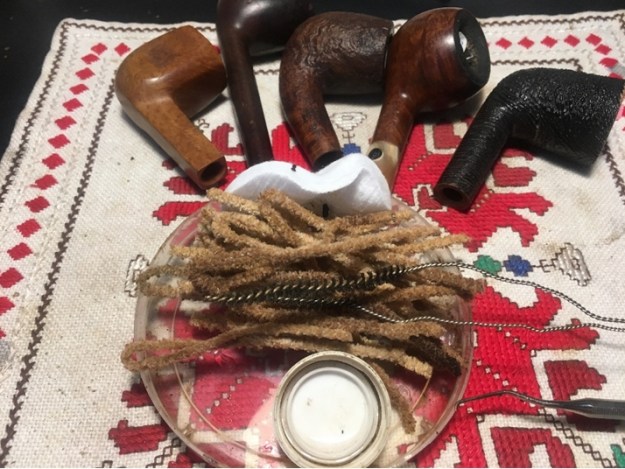
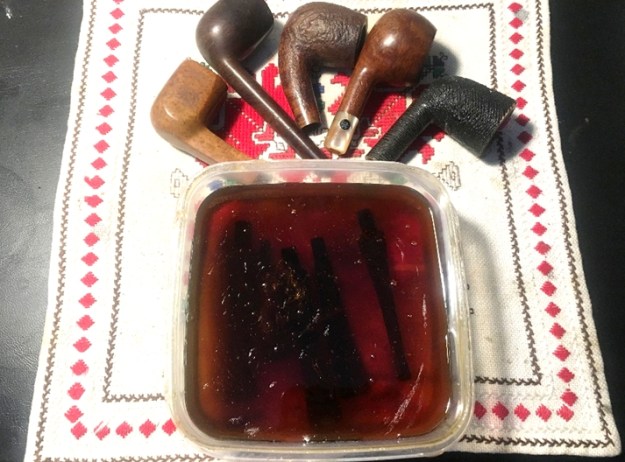
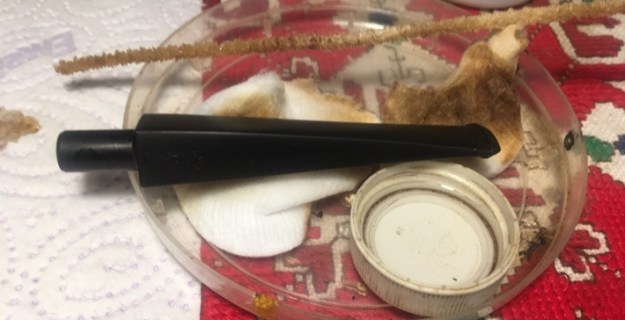
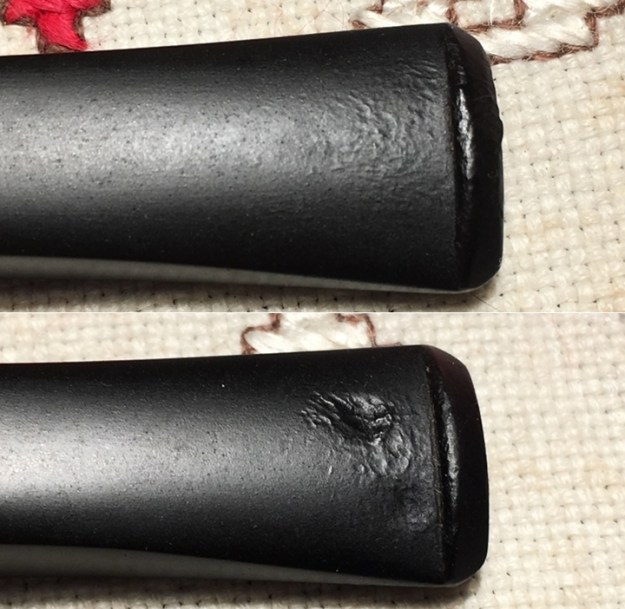
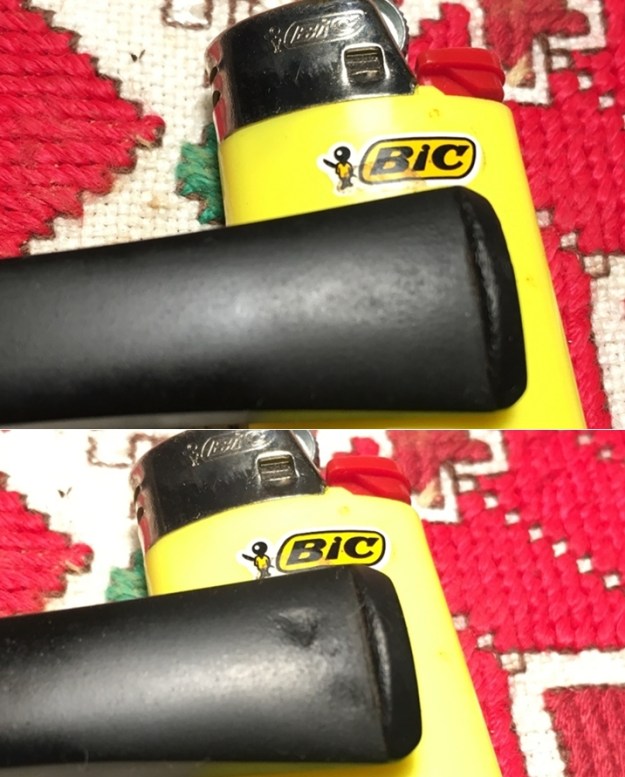
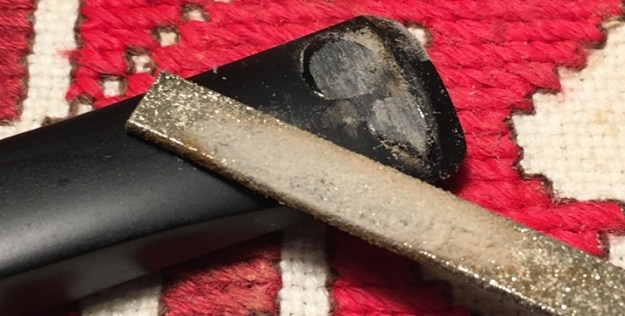
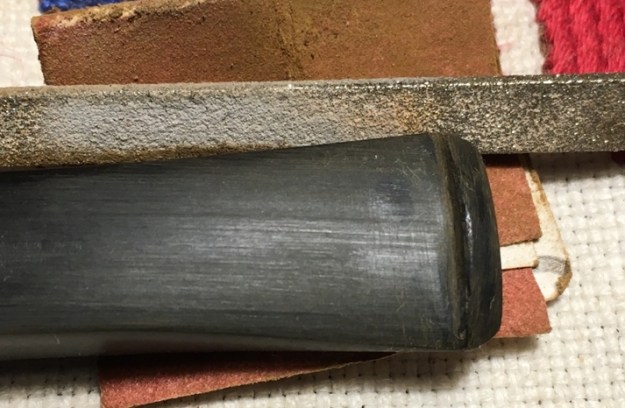
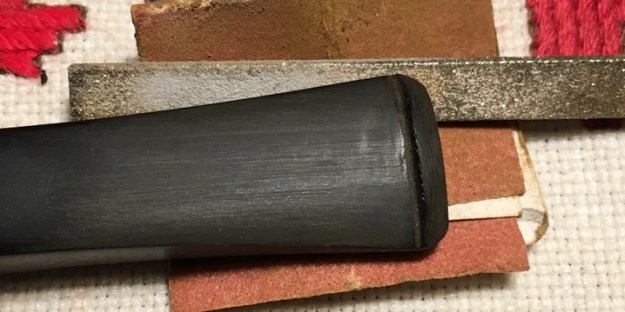
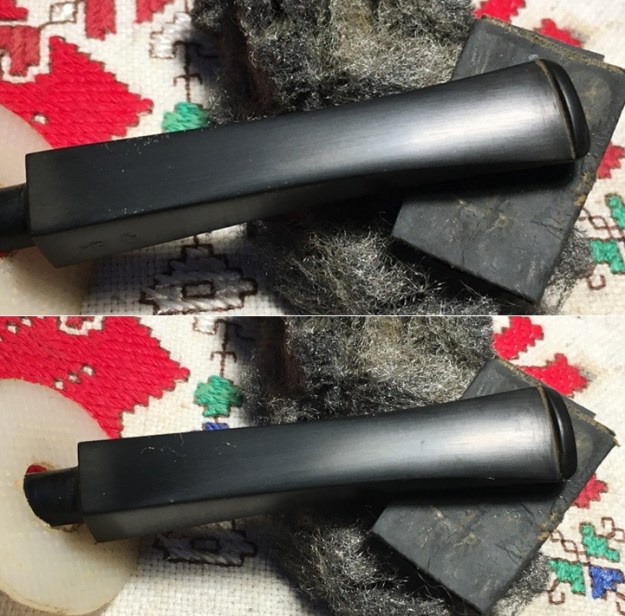
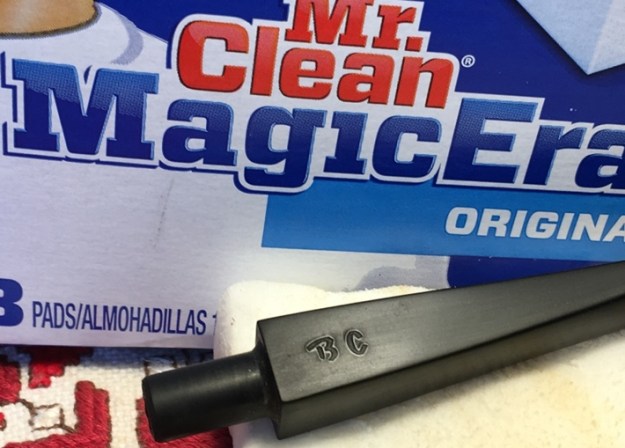
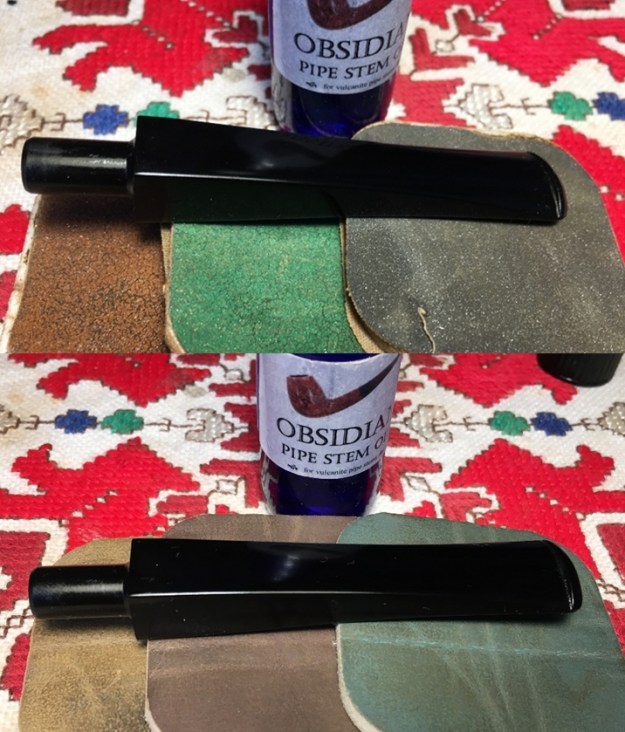
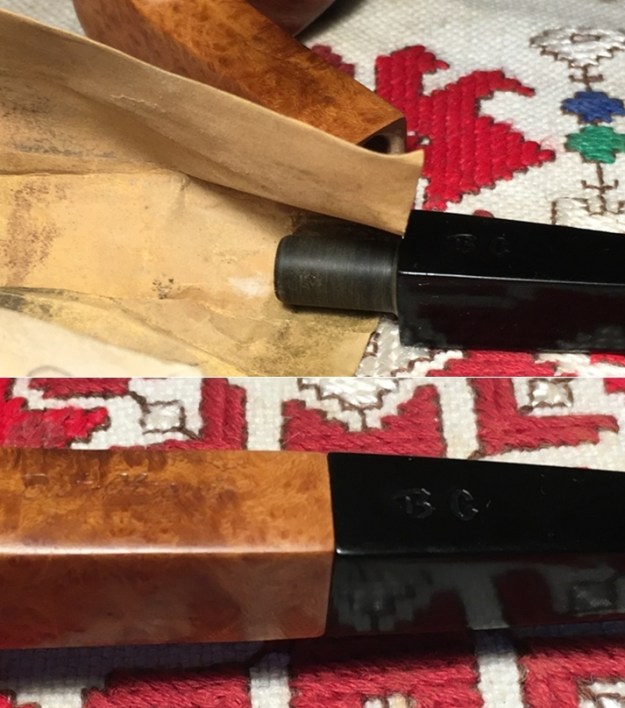
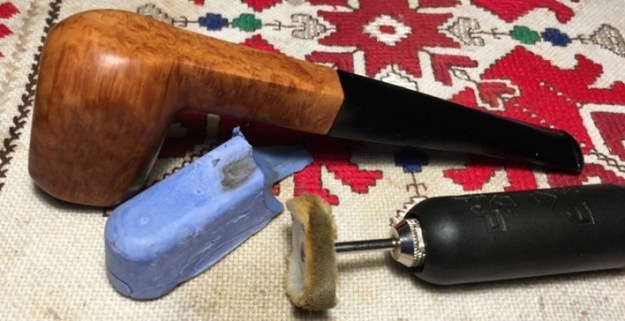
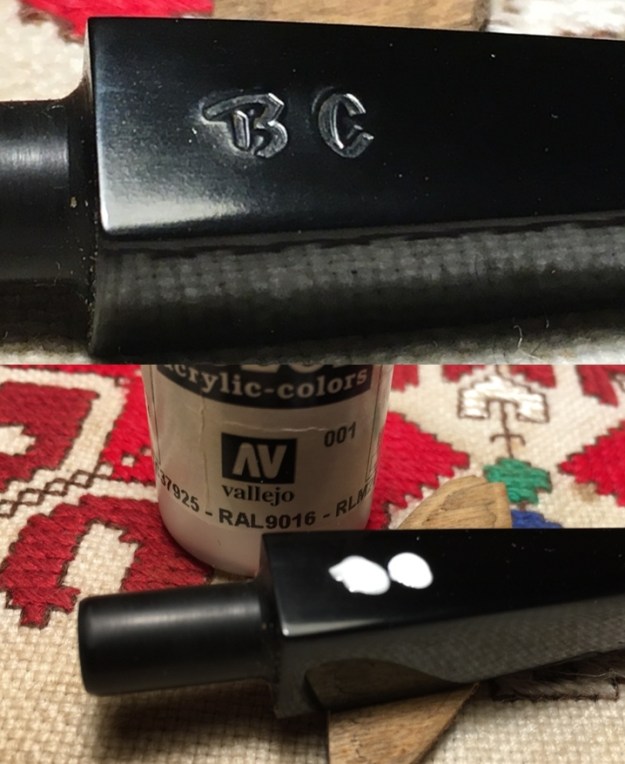
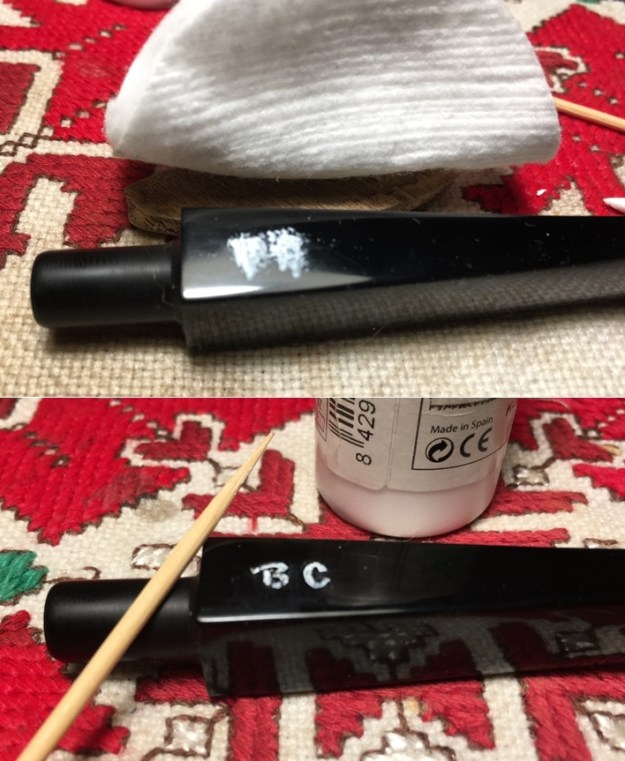
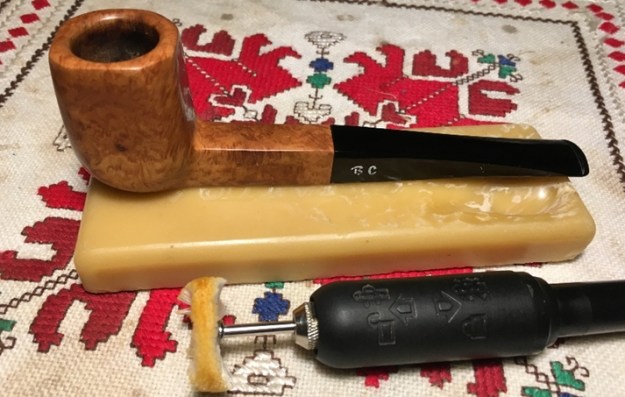
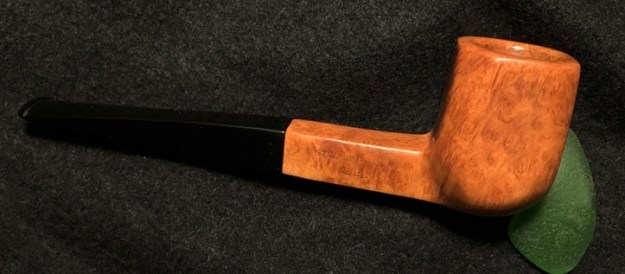
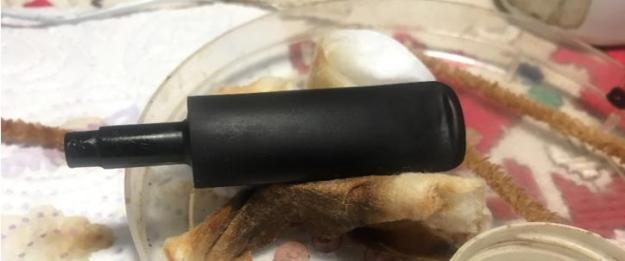
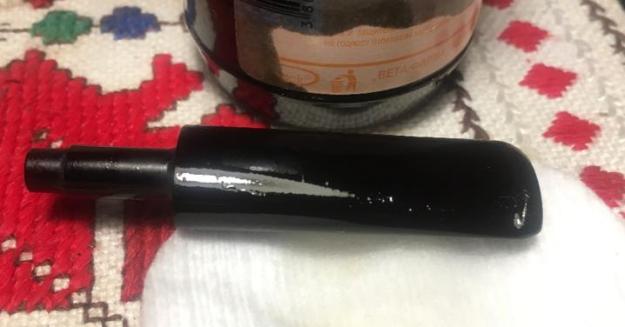
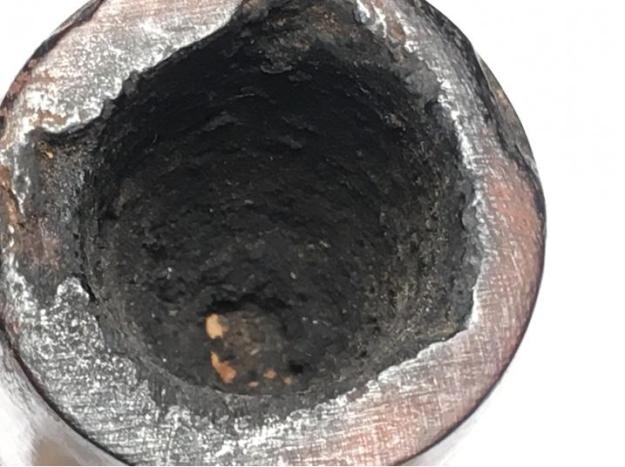
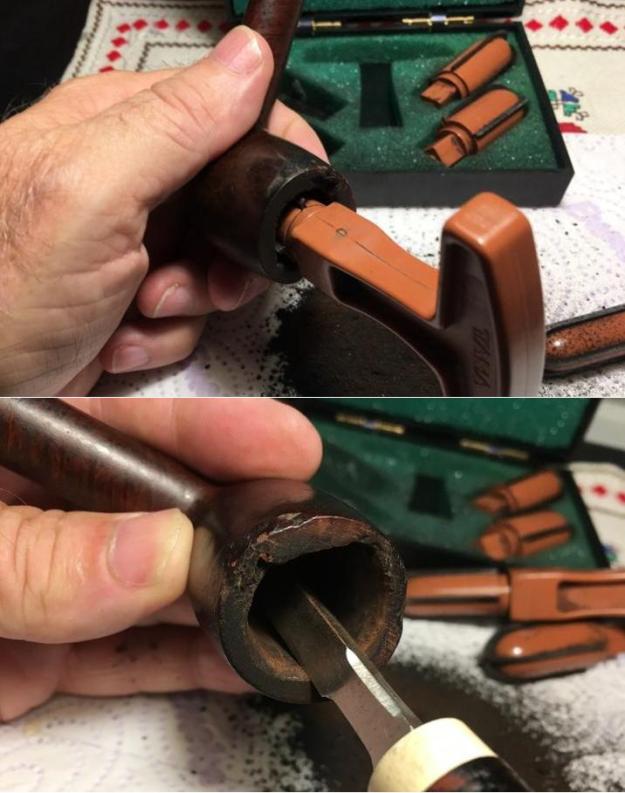
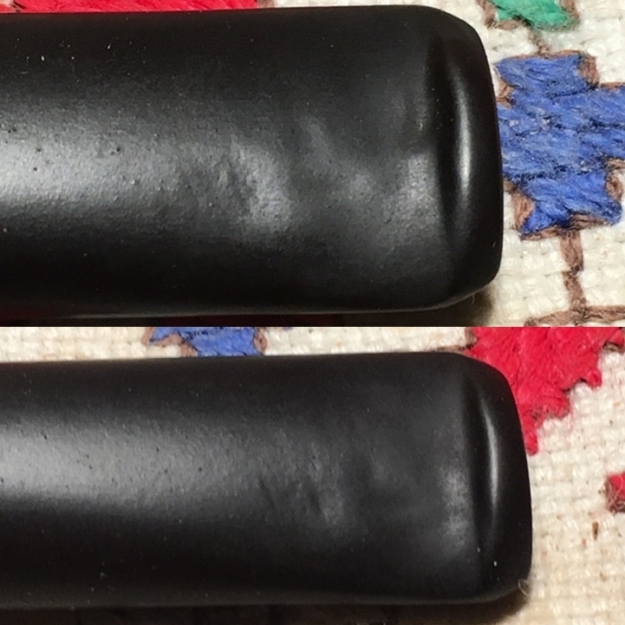
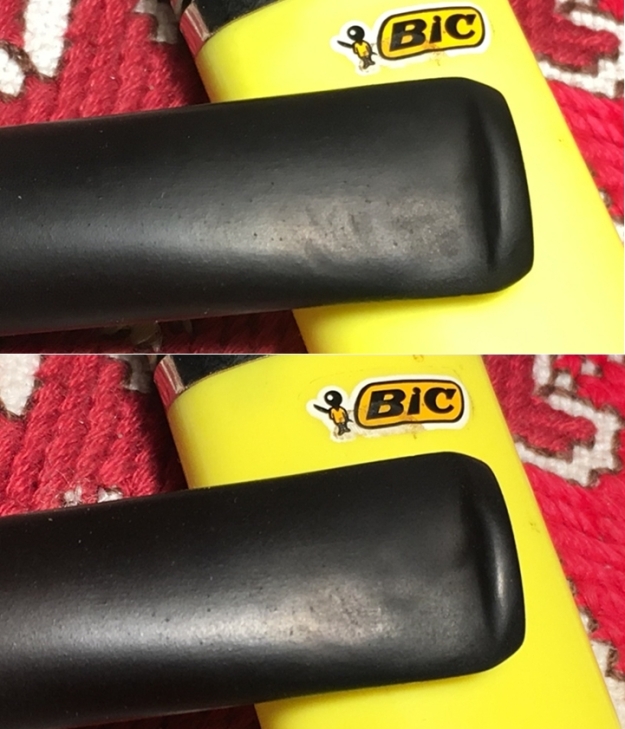
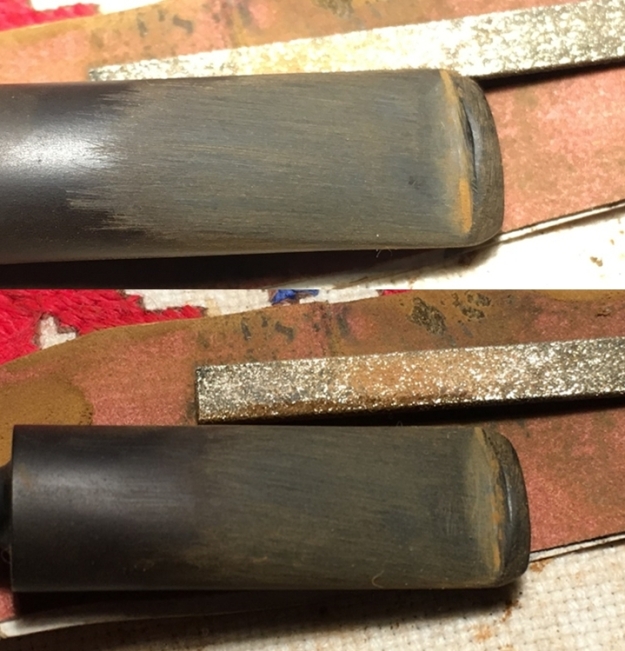
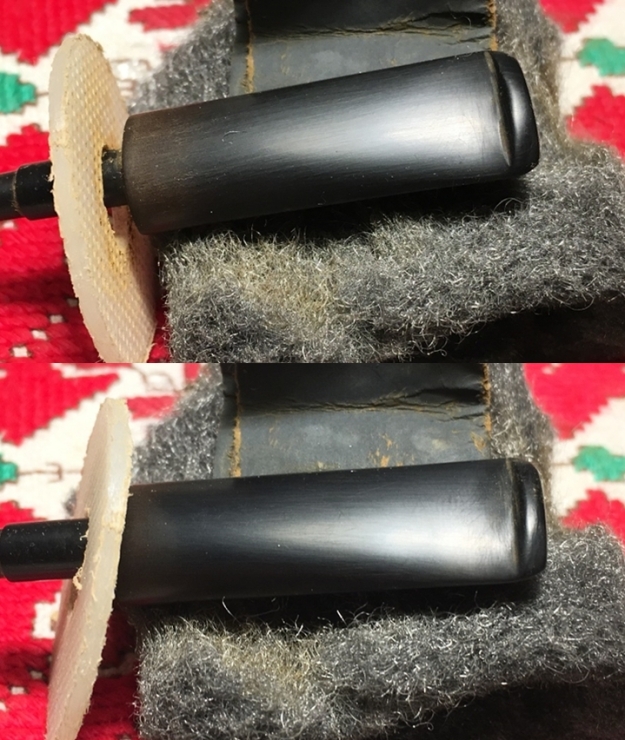
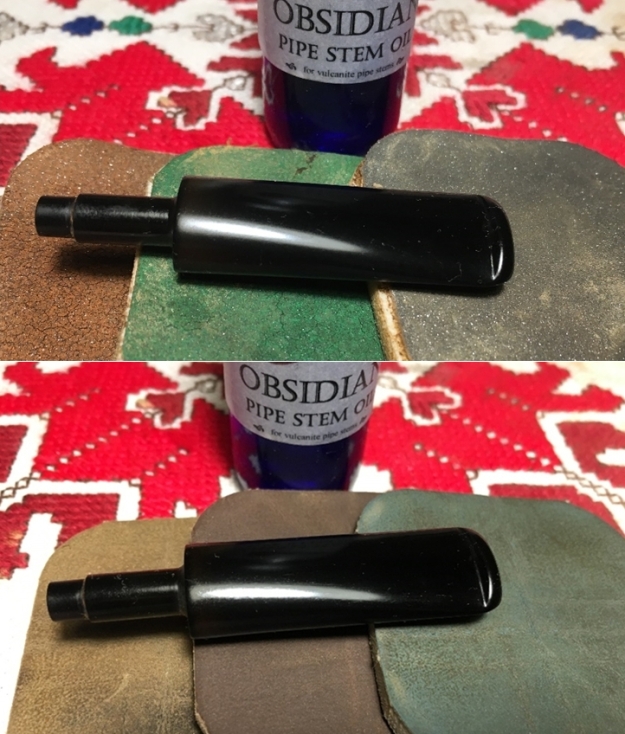
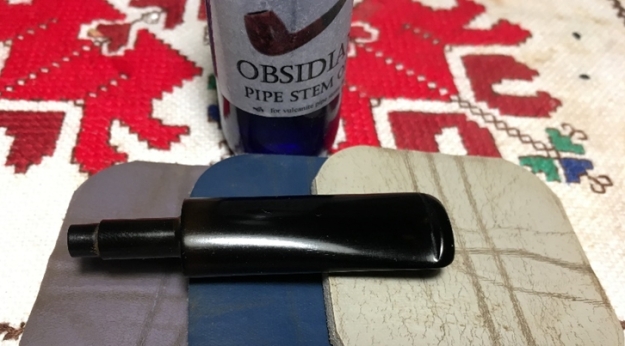
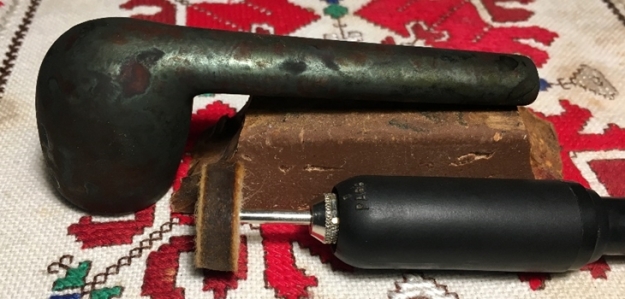
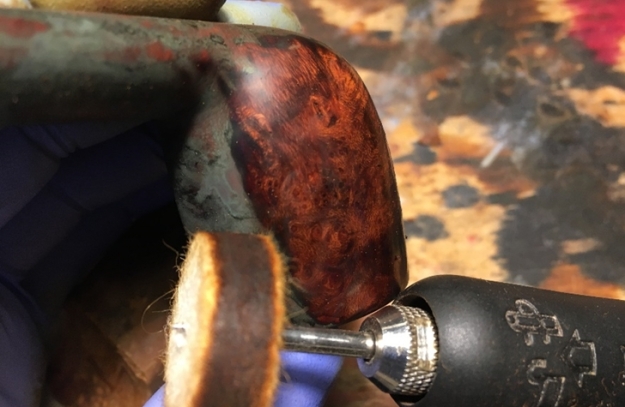
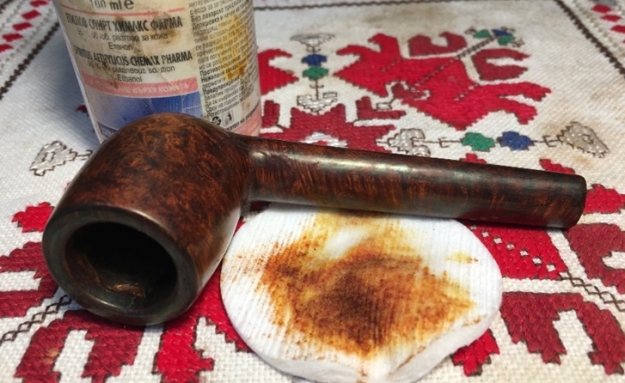
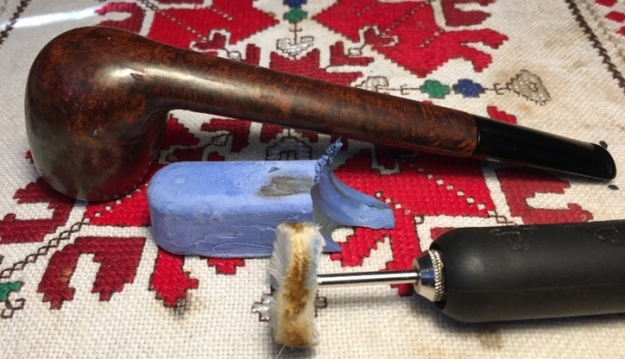
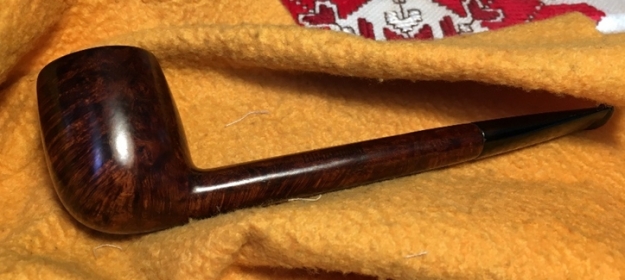
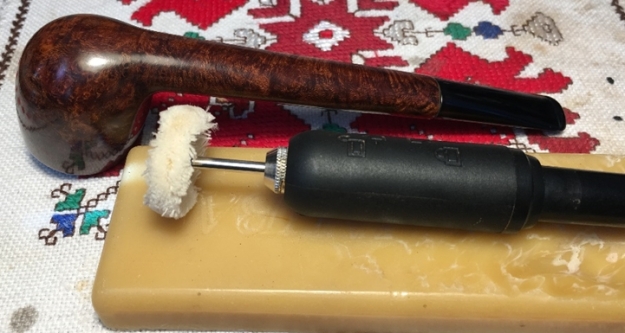
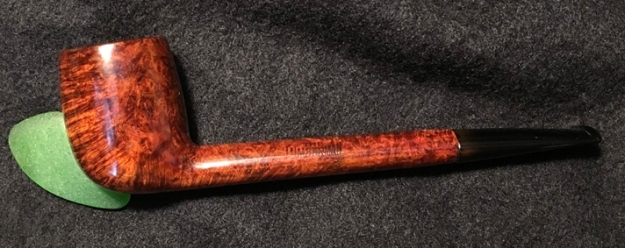
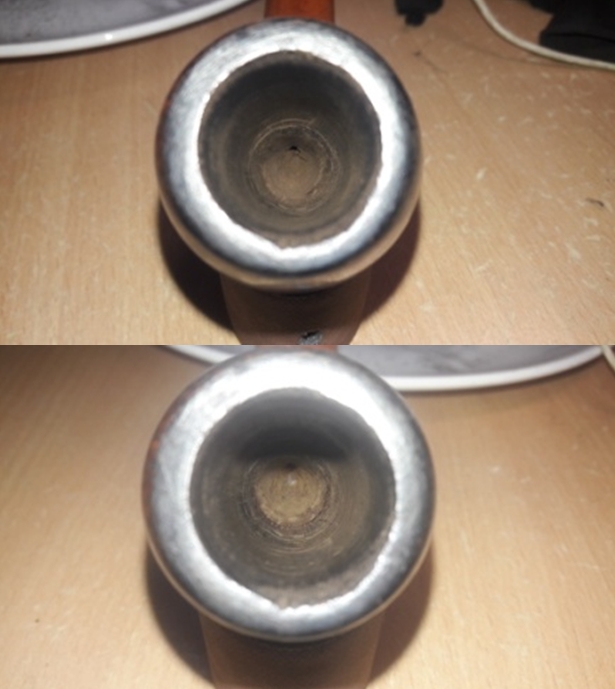
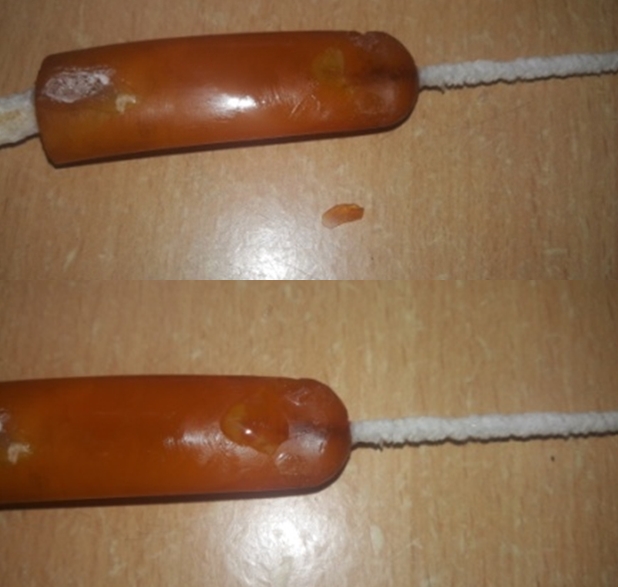
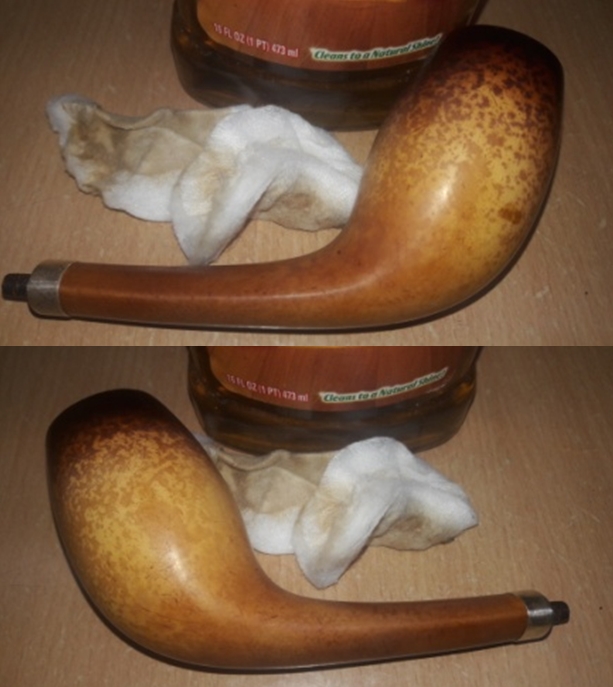
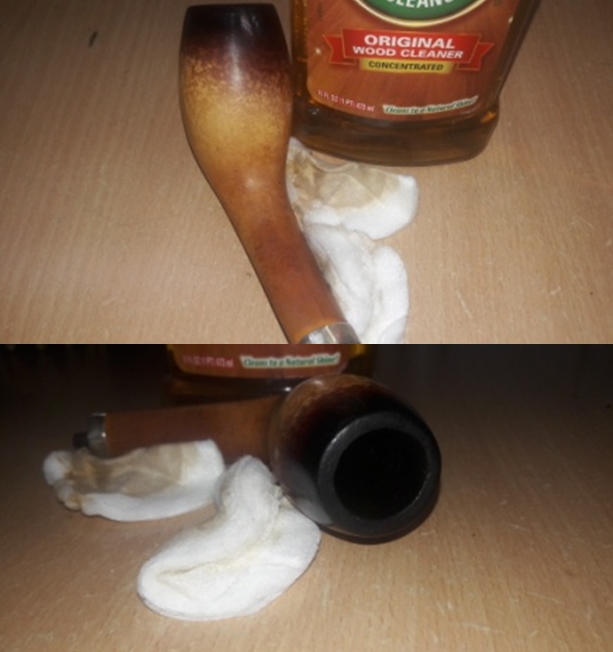
I found this great picture of the Butz Choquin Supermate Panel in an ad on TobaccoPipe.com.  The box is classic, and I wish I had the pipe sock to go along!  I found the text along with the picture to be interesting as well in its description of the finish and the collectibility of this 1596 shape.The condition of the pipe on my table is a far cry from the other pipe that Jim commissioned, the Comoy’s The Lumberman!  While the chamber has moderately thick cake and the rim shows lava flow, the pipe generally is in very good shape. Cleaning and working on the stem’s tooth chatter and oxidation do not appear to offer any surprises.  To begin the sprucing of this BC Supermate, the stem is removed and cleaned with a pipe cleaner wetted with isopropyl 95% and added to a soak of Before & After Deoxidizer with other stems in the queue.After several hours of being in the soak, I take out the BC stem and clean the airway with a pipe cleaner dipped in isopropyl 95% to remove the Deoxidizer.  I also wipe off the raised oxidation using cotton pads also wetted with alcohol.To revitalize the stem, paraffin oil is applied with a cotton pad.Next, I tackle the stummel cleaning.  The cake in the chamber is moderately thick.To remove the cake, I use 2 of the 4 blade heads that come in the Pipnet Reaming Kit.  Following this, using the Savinelli Fitsall Tool to scrape the chamber walls, helps to fine tune the removal of carbon cake. Finally, sanding the chamber walls with 240 grade paper wrapped around a Sharpie Pen provides further cleaning of the chamber and I then wipe the carbon dust remaining with a cotton pad wetted with alcohol.Inspection of the chamber afterwards reveals healthy briar.  I move on.The picture above shows the lava buildup on the rim.  I turn now to cleaning the external briar surface using undiluted Murphy’s Oil Soap and a cotton pad. I also utilize my Winchester pocketknife carefully to scrape the rim. I take the stummel to the sink and continue the cleaning the internals with bristled shank brushes and anti-oil dish liquid soap.  After a thorough rinsing, back to the worktable to continue.  The rim cleaned off well and the stummel surface looks good. Next, targeting the internal cleaning further, pipe cleaners and cotton buds wetted with isopropyl 95% are used.  Tar and oils are excavated from the mortise walls by scraping with a small dental spoon.  After much effort, the pipe cleaners and buds start lightening and I decide to save the rest of the cleaning for later by employing a kosher salt and alcohol soak.After inspecting the briar surface, I find one old fill that I dig out with a dental probe and refill using clear CA glue.  I spot drop the glue on the small pit and use an accelerator to quicken the curing time. With 240 then 600 grade papers, I sand off the excess glue.The rim is still discolored with a dark ring around the inner rim edge.  I use a piece of 240 grade paper very lightly to sand the rim as well as the dark ring.After lightly sanding, it is apparent that there was a bevel on the inside edge of the rim which I decide to fresh. Using 240 grade paper with a hard surface pressing behind helps to form the bevel. The bevel looks classy!  I like it.There are minor nicks and cuts on the stummel surface which I use sanding sponges to address.  Beginning with the coarse sponge and following with the medium and light grade sponges the nicks and cuts are cleaned up.  I like sanding sponges as they are not as invasive as sanding papers but clean up minor problems on the surface.Next, I use micromesh pads to clean and smooth the stummel.  Starting with pads 1500 to 2400, I wet sand followed by dry sanding with pads 3200 to 4000 and 6000 to 12000.  I stay clear of the shank panels holding the nomenclatures.  Using Before & After Restoration Balm brings out the natural hues of the briar with a subtlety that I find attractive.  To apply it to the surface, I put some of the Balm on my fingers and work the Balm into the briar.  The consistency of the Balm starts with a cream-like texture and then thickens into a waxy substance.  After the Balm is fully worked in, I put the stummel aside to allow the Balm to do its things.  I take a picture during this stage.After 20 to 30 minutes, I remove the excess Balm with a cloth and then buff it up some with a microfiber cloth dedicated to the post-Balm buffing.  As hoped and expected, the deepening of the natural hues is very attractive – it looks great.  Moving on.The stem repairs are waiting, and I take a closer look at the tooth chatter and compressions on the upper and lower bit.The first step is to use the heating method by painting the damaged areas with the flame of a Bic lighter.  As the vulcanite heats, physics take over and the rubber expands.  The chatter and indentations hopefully will also expand to regain the original condition, or closer to it.  After using the flame, the upper bit’s tooth chatter all but disappeared.  The lower bit compressions lessened but are still evident.Addressing the remaining compressions on the lower bit, I use Starbond Black Medium-Thick CA glue to fill the indentations.  I first wipe the area with a cotton pad wetted with alcohol to clean the area.  Carefully, I spot drop glue on each compression.  I set the stem aside for the CA glue to cure.After the Black CA glue cures, I go to work removing the excess patch material using a flat needle file.  I also work on the button to refresh the lines.Following the filing, 240 grade sanding paper is employed to erase the file marks and to smooth the lower bit. Also using the file to freshen the button lip and 240 grade paper on the upper bit, tooth chatter sands out with no problems.Next, wet sanding with 600 grade paper followed by 000 grade steel wool smooths further – the upper then the lower bit pictured. I’m careful to avoid sanding the BC stem stamping on the left stem panel.  In the second picture, a close look at the shiny reflection reveals the subtle lines of the patch.  It looks great!Even though the ‘BC’ stem stamp is healthy, which is nice for a change(!), I avoid direct sanding over it.  To clean around the stamping and to remove residual oxidation, I use a Mr. Clean Magic Eraser sponge which is less abrasive than sanding paper.  It helps to darken and clean the vulcanite around the stamping.On a roll, I move forward with the full regimen of 9 micromesh pads.  Starting with pads 1500 to 2400, wet sanding is employed.  Following this, using pads 3200 to 4000 and 6000 to 12000, I dry sand.  Between each set of 3 pads, Obsidian Oil is used to revitalize the vulcanite stem.  The pads and Oil do the job – nice! After attempting to rejoin the stem and the stummel to apply compound, as is the case sometimes, the tenon fit is too tight.  With the cleaning process, the briar expands, and this sometimes results in the fit being too tight.  It is best not to force the fit and risk cracking the shank.  I use a half round needle file to lightly file the mortise surface – very lightly.  After another try and discovering that it is still too tight, I use 470 grade paper wrapped around the tenon and rotate the stem while the paper hugs the tenon.  After a few attempts to fit, the tenon finally seats well.With the stem and stummel rejoined, a cotton cloth buffing wheel is mounted to the Dremel with the speed set at 40% full power.  Blue Diamond is then applied methodically to both stem and stummel.  After finishing with applying the compound, a felt cloth buffing helps to remove the residual compound dust in preparation for applying wax.Before applying the wax, one project awaits: the ‘BC’ stem stamp.  To refresh the ‘BC’ stamping on the stem I dab white acrylic paint on the lettering.  Then the excess paint is absorbed using a cotton pad.  It doesn’t take long for the paint to fully dry.  After it dries, I carefully remove the excess paint using the point of a toothpick.  I also use the flat edge of the toothpick to scrape over the top of the stamp to sharpen the lines.  It looks great! After changing the cotton cloth buffing wheel on the Dremel, maintaining the same speed, carnauba wax is applied to the entire stem.  After applying a few rounds of wax to the pipe, I follow by giving the pipe a serious buffing with a microfiber cloth to raise the shine.Earlier, the ad described this pipe shape as ‘esteemed’. This description fits well.  I have a square shank Peretti Billiard that I like a lot.  This Butz Choquin Supermate 1596’s square shank transitioning to a tapered square stem is very attractive – the lines draw the eye in for a closer look.  Added to this, the Panel shape alignment compliments the flow of the shank and stem to give an overall solid or full look.  The light hues of the briar grain also add to this ensemble.  Jim commissioned this BC Supermate and will have the first opportunity to acquire it in The Pipe Steward Store.  This pipe benefits our work here in Bulgaria with the Daughters of Bulgaria – women and girls who have been trafficked and sexually exploited.  Thanks for joining me!
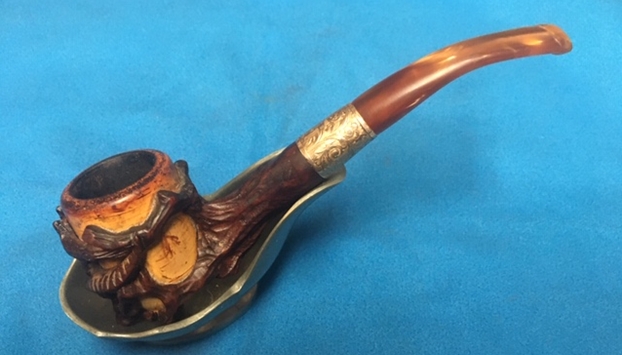
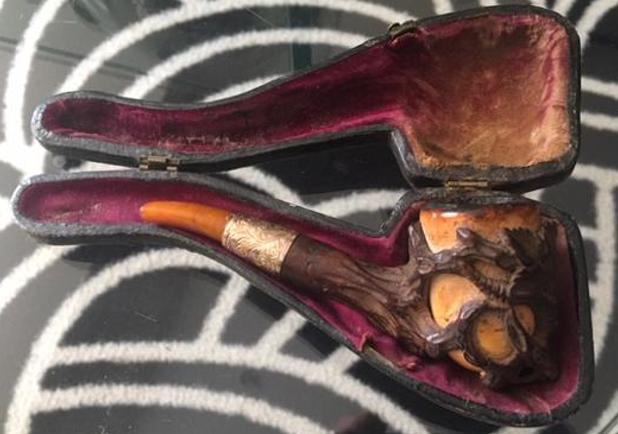
Redemption for an Old Pipe – a Briar Basket Holding a Meerschaum Egg Bowl


Blog by Steve Laug

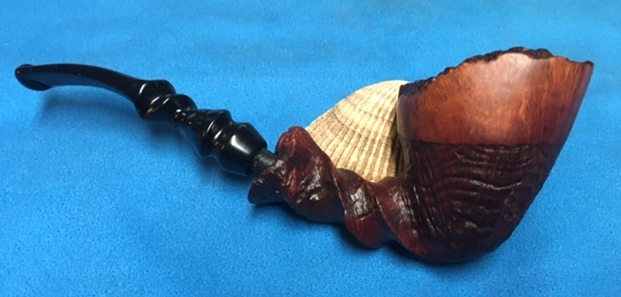
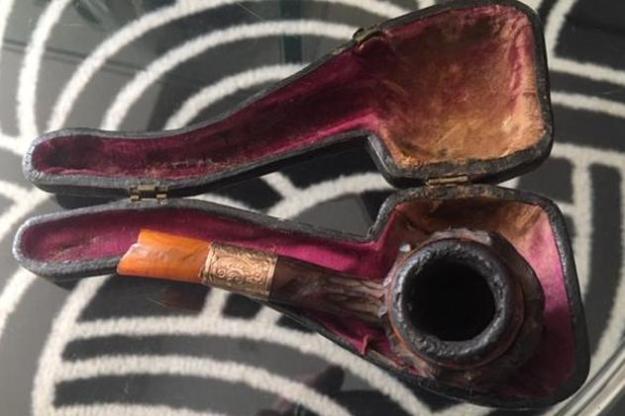
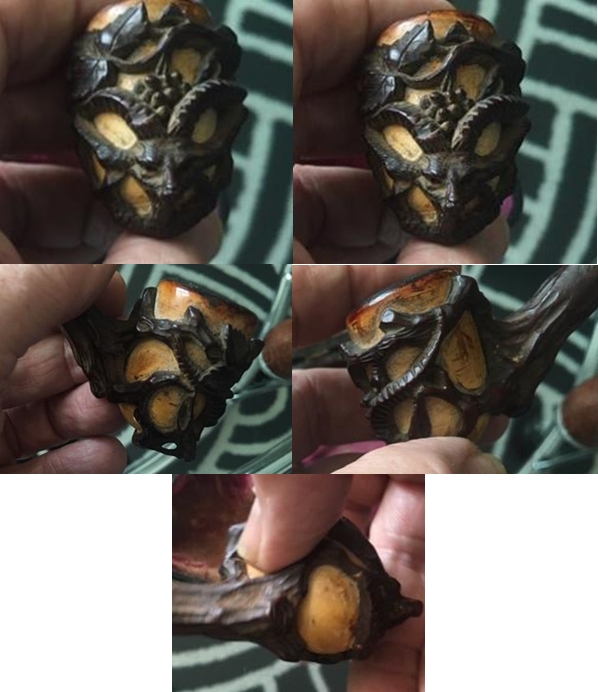
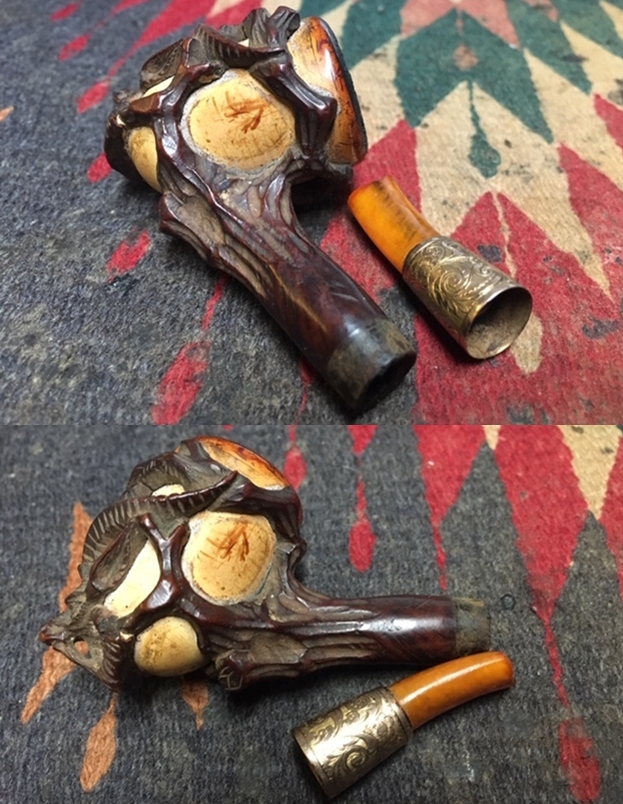
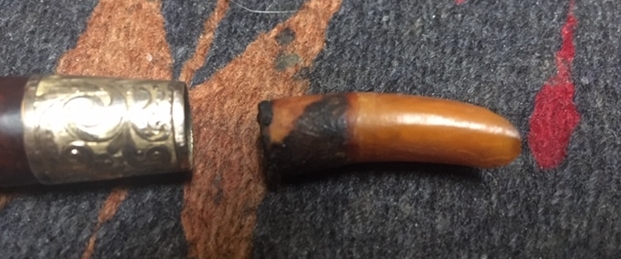
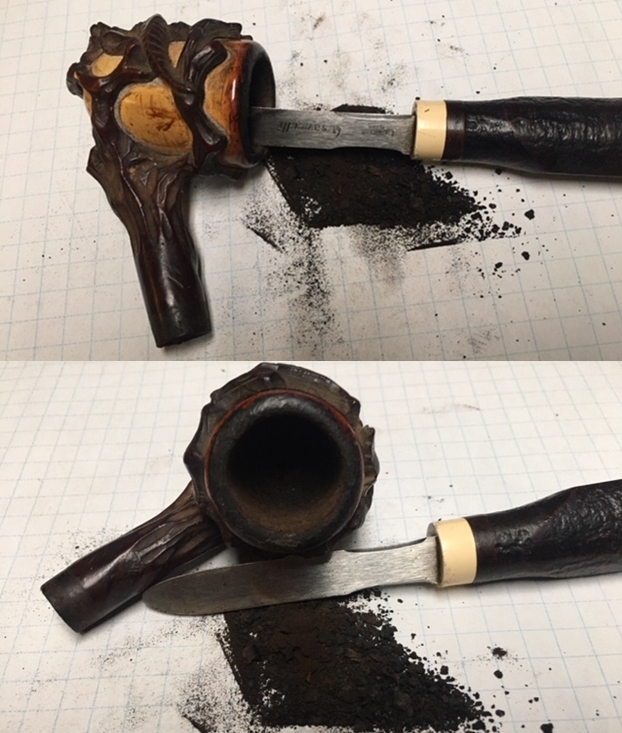
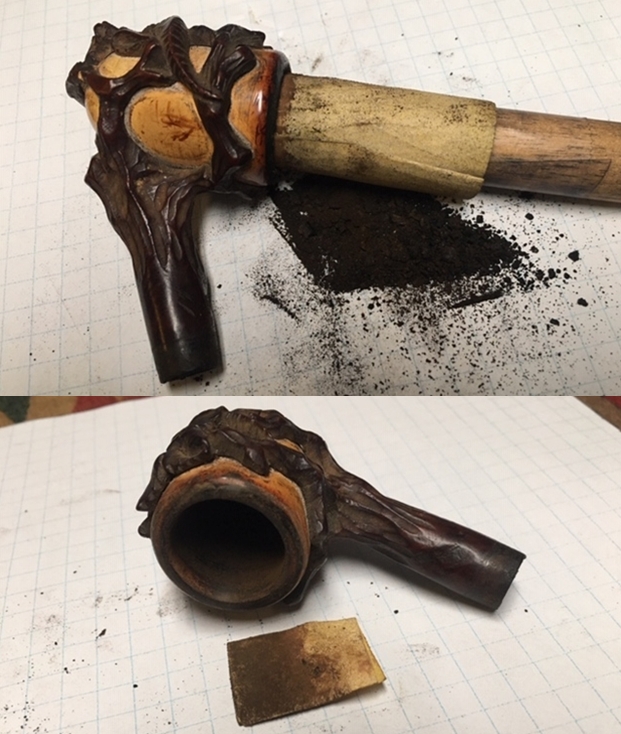
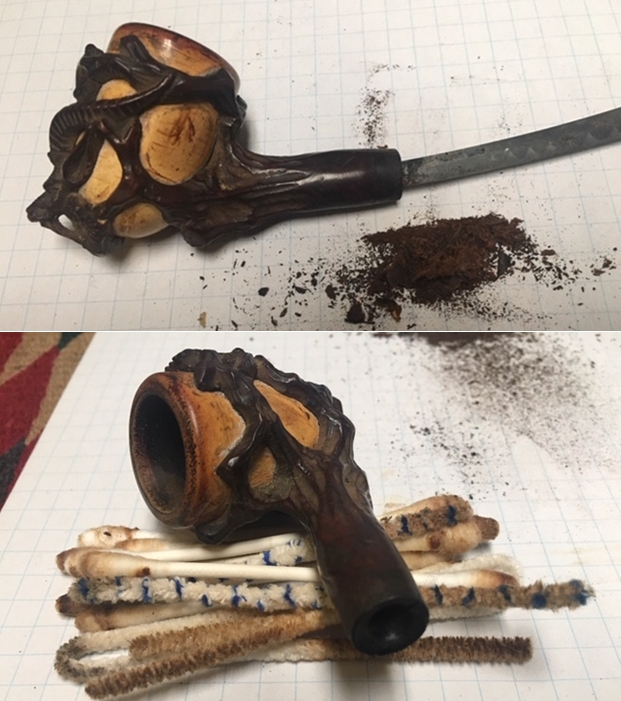
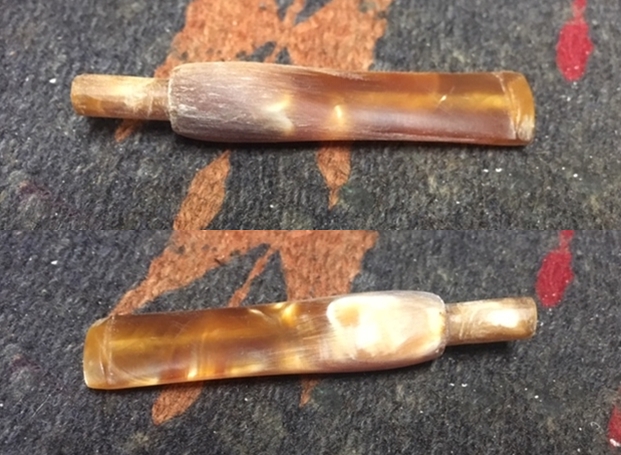
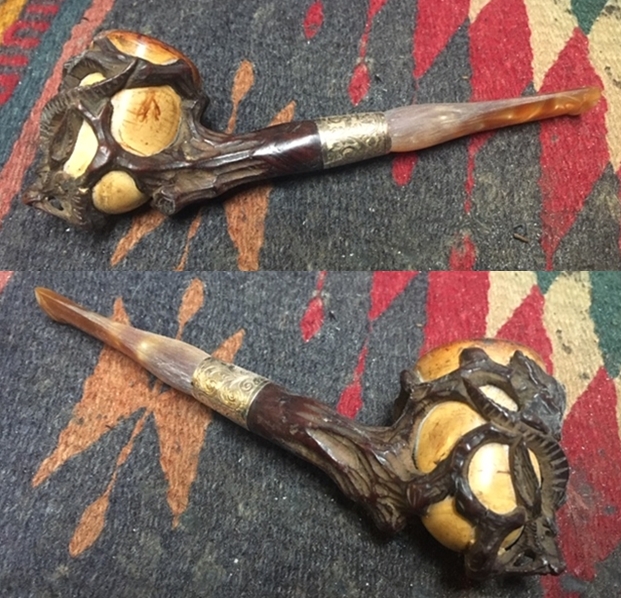
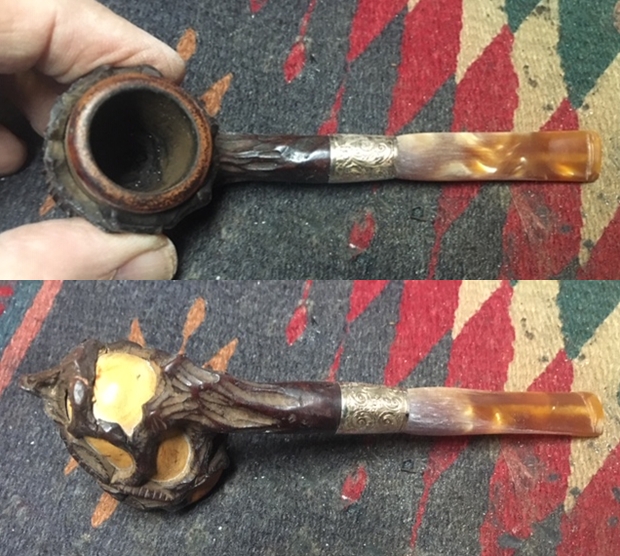
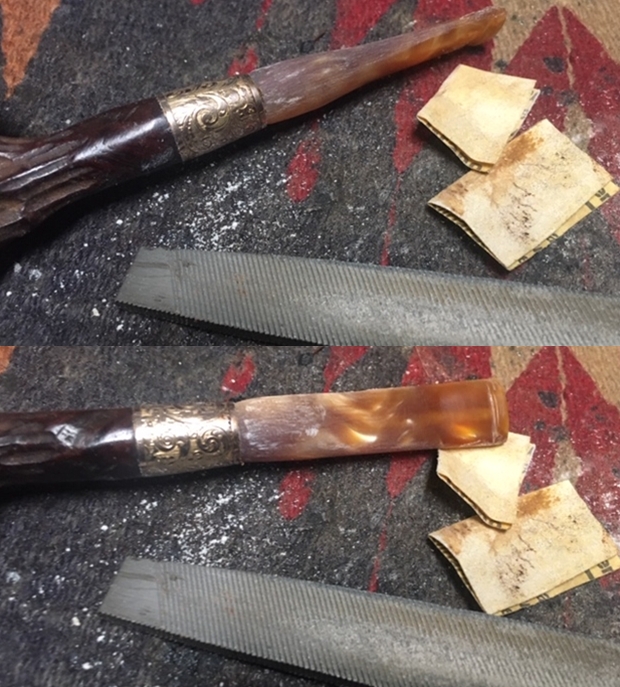
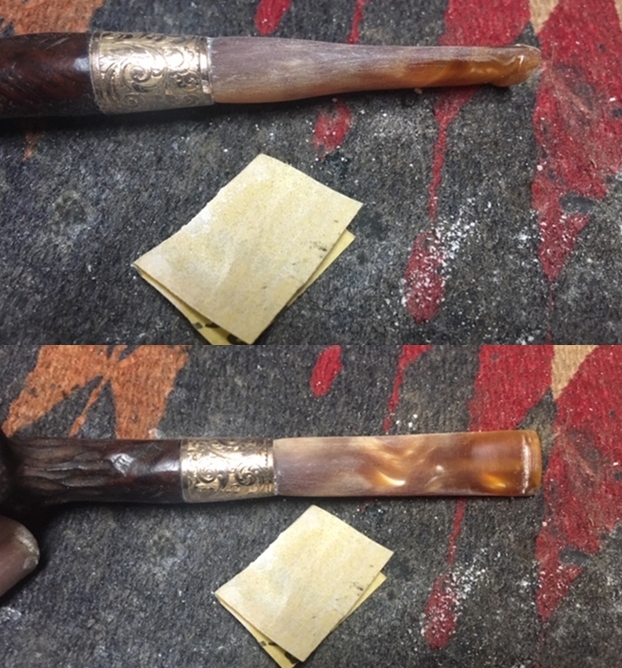
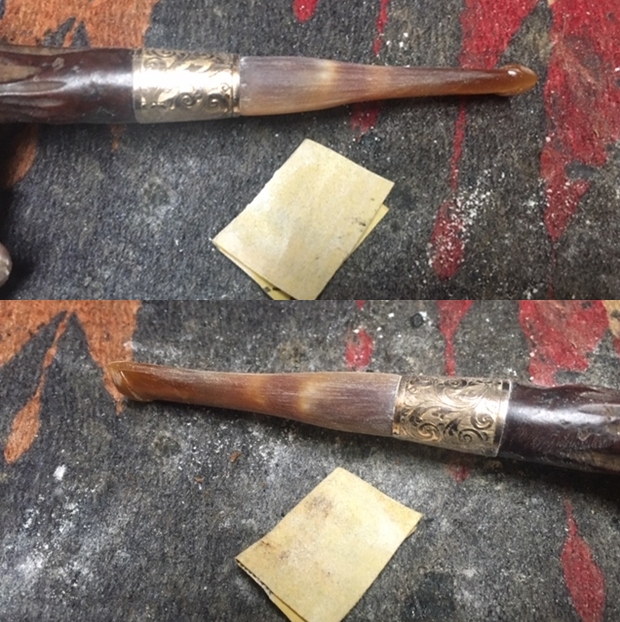
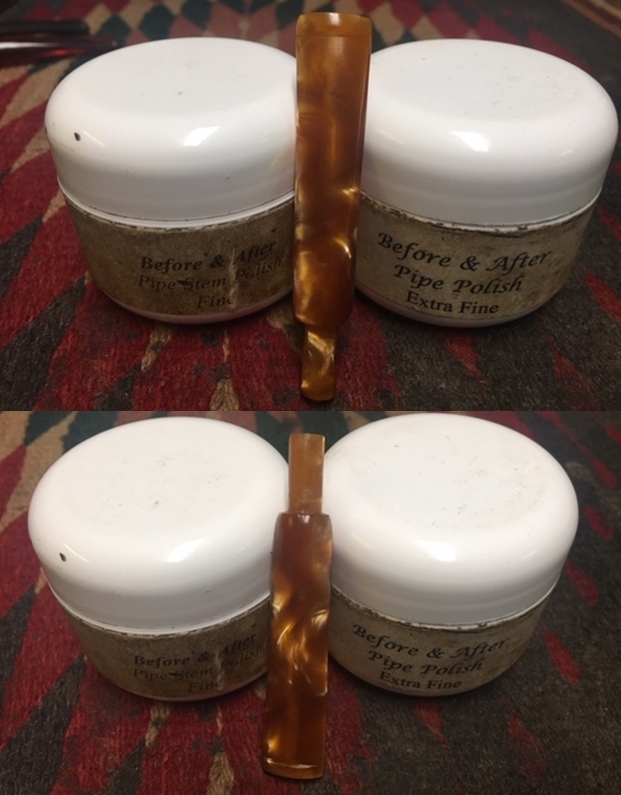
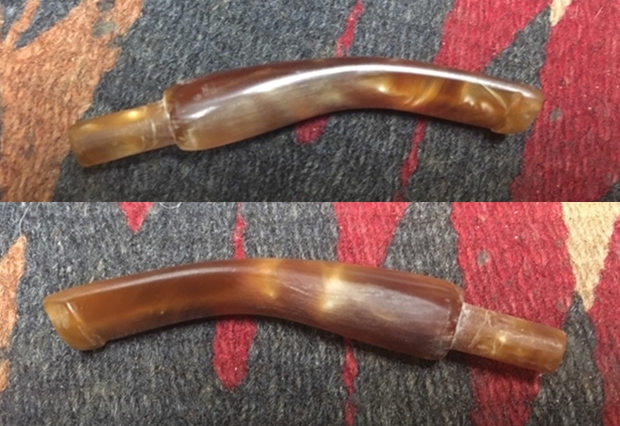
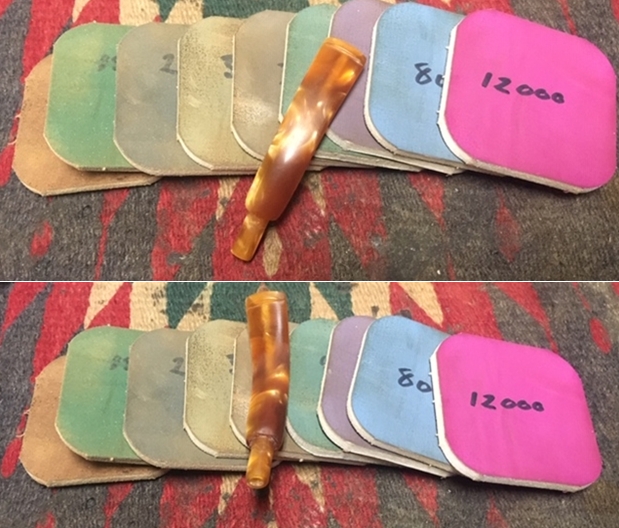
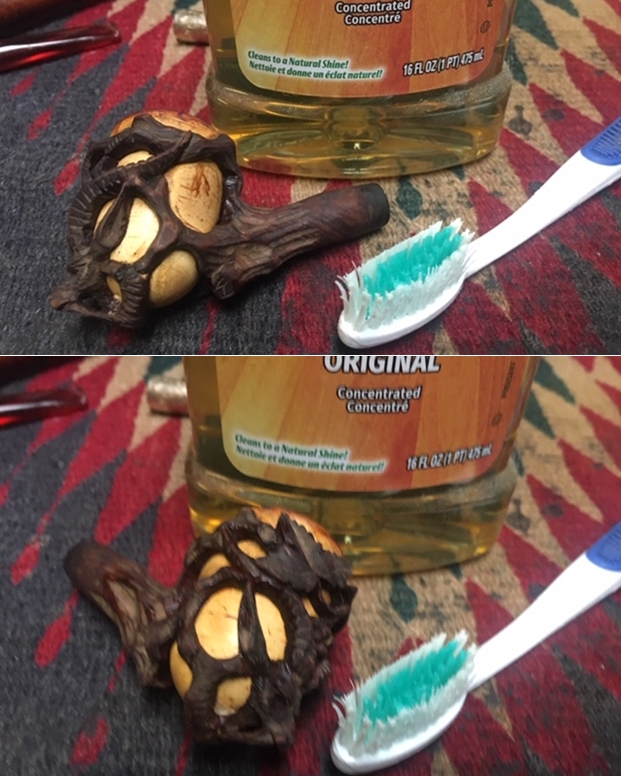
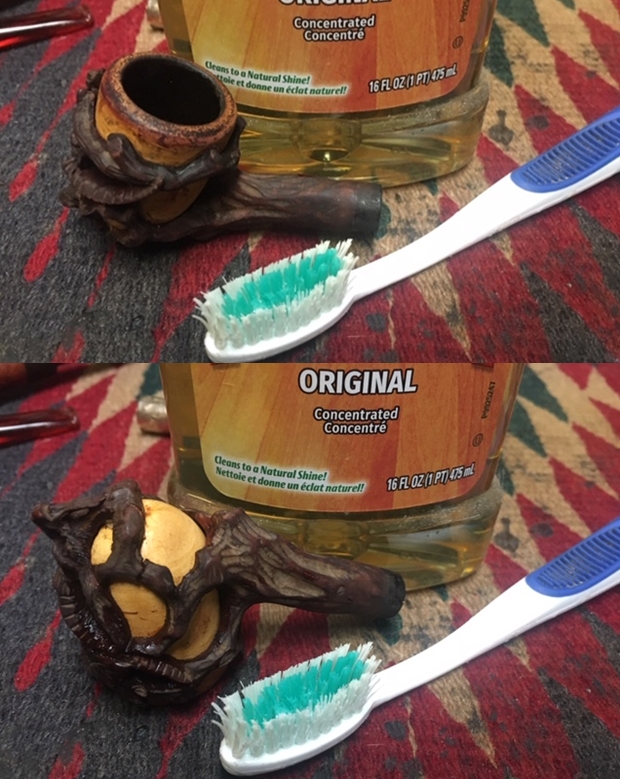
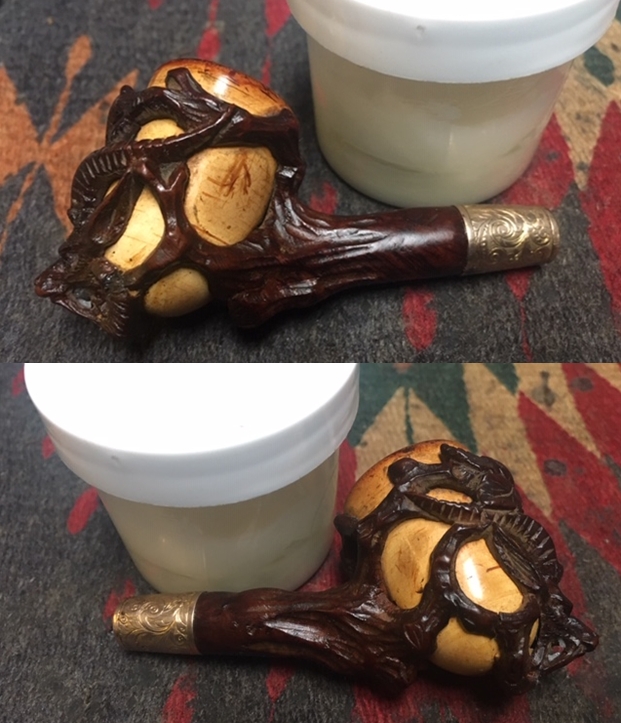
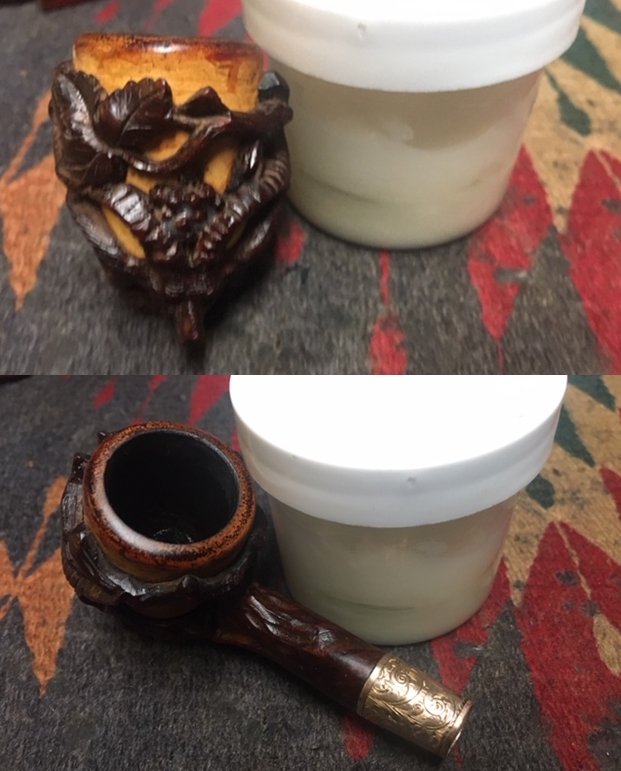
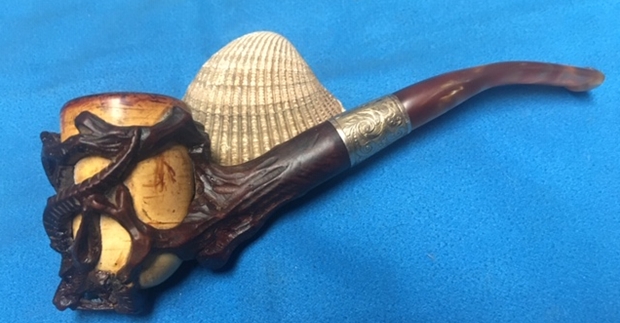
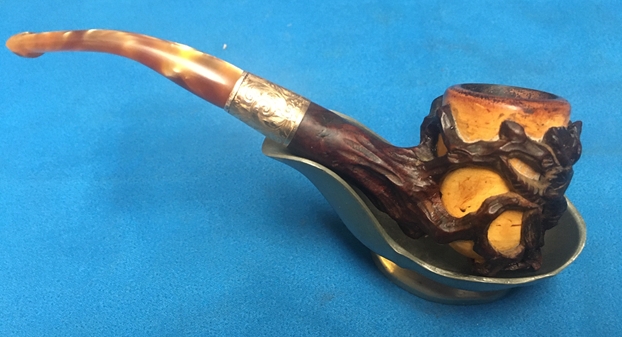
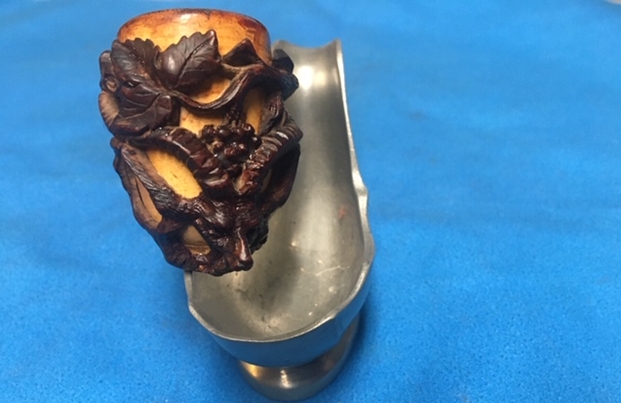
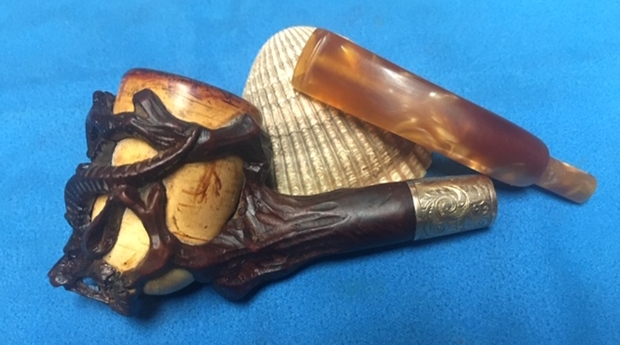
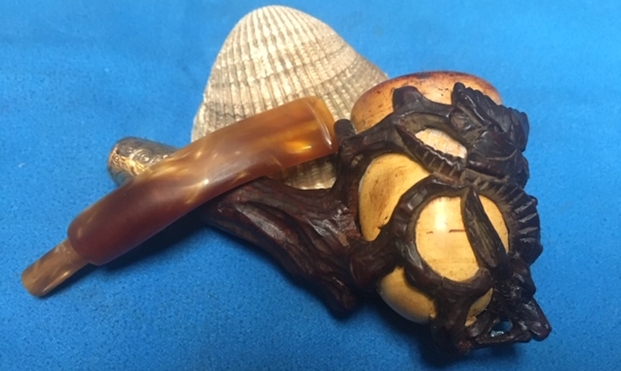
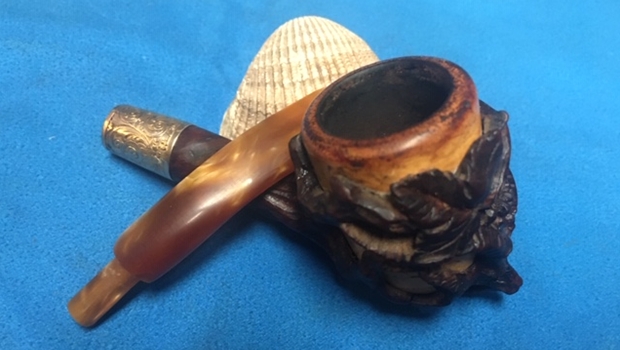
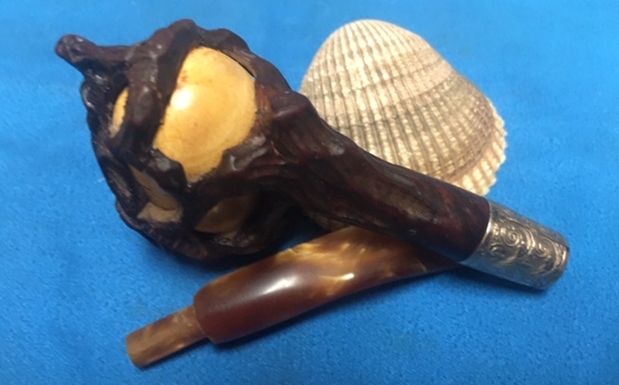
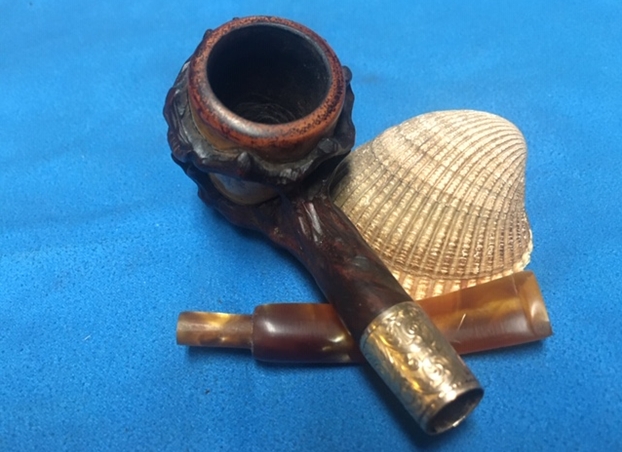
One of my favourite finds from Jeff and my recent trip to Alberta was this old timer. It is in its original case with a broken amber stem and a brass filigreed band. The thing that made me buy this pipe was not the age or even the case. What made it stand out to me was the uniquely carved entangled vines and stump forming a basket for the egg shaped meerschaum bowl that sat inside of it. We found it in a little shop in in Innisfail, Alberta that had some interesting antiques but only this one pipe. The case is in decent condition though the hinges and clasp are shaken and will need to be repaired. There is no stamping on the shank that is readily visible and there is no logo that I can see on the faded lining of the case. I will need to inspect it more closely to be sure. The pipe was dirty and caked when we picked it up. The rim top had a thick buildup of lava flowing over from the thick cake in the bowl. It was hard and dense. The exterior of the bowl and shank are very dirty with grime and oils from prolonged use. The grooves of the intertwining vines of the briar were filled with dust and were dull and lifeless.  The meerschaum bowl insert had some patina to it but was also scratched and nicked in the spots where it showed through the vine. The stem that was with the pipe was amber and broken. The shape of the stem made me wonder about it as it was oval rather than round like the shank. The band was conical and held the stem end against the shank end. There was no tenon in the shank or stem piece. I took photos of the pipe before I started the cleanup. I took some close up photos of the briar exterior bowl to show the details in the carving. It is wrapped by vines and leaves and on the front of the bowl is ram’s head with a cluster of grapes between the horns. The shank is the thick vine from which the vines around the bowl flow. The briar and the meerschaum are dirty and dust is deep in the grooves of the briar and in the spaces around the connection to the bowl.I carefully removed the band from the shank and could see that there was no tenon in the shank. The shank itself was clogged up with tars and oils. The stem was fit into the filigreed band with wraps of paper that had locked into the band. I carefully wiggled the broken amber stem out of the band and was surprised by the mess that came out with it. The wraps of paper lined the band and needed to be scraped out and the stem itself was oval! This was definitely not the correct stem for this pipe. The band and the shank were both round and a oval stem without a tenon did not work with the original design of the pipe. With the band removed from the shank and the bowl freed of the stem it was time to work on the cake in the bowl. Because of the delicate nature of this inserted bowl I decided to scrape out the cake with a Savinelli Fitsall pipe knife. I took the cake back to bare walls on the meer bowl. I sanded out the bowl with 220 grit sandpaper wrapped around a piece of dowel. I scraped the rim top with the knife and then sanded off the lava build up with a folded piece of 220 grit sandpaper. I wanted to remove the grime without removing the patina that was underneath. I scraped out the inside of the shank with a pen knife to clean out the build up of tars and oils on the inside. There was a lot of buildup in the shank that needed to be removed. Once it was scraped clean I cleaned it out with pipe cleaners, cotton swabs and alcohol to remove the remainder of buildup and open the airway in the shank. Once I was finished, the pipe not only smelled clean but was very clean. The airflow in the shank was clear and draw was perfect.I went through my can of stems to see if I could find one that could possibly work. I knew that I did not have an amber one but I probably had an acrylic one that I could shape. It was not long before I found one that would work for this pipe. I would need to reduce the diameter of the tenon to get a good fit and to shape the diameter of the stem at the tenon make it fit with the filigreed shank band.Once I had the tenon reduced I put the band on the shank and inserted the stem to get an idea of what I needed to do to adjust and adapt the stem. I took photos of the pipe and stem from various angles to see what needed to be done. You can see the bulging around the band that I will need to take down. My brother Jeff called it a belly!I used a rasp to remove the excess material on the “hips” of the stem. I sanded it smooth and put it in the shank to see the progress. The photos below show the progress! I used a Dremel and sanding drum to take off more material and to smooth out the marks left behind by the rasp. I sanded the stem with a folded piece of 220 grit sandpaper to smooth it out further and inserted the stem in the shank to check the progress. I further sanded the “hips” until I was happy with the overall look of the stem at this point. I polished the sanding marks on the stem with 400 grit wet dry sandpaper. I wanted to remove as much of the scratching as I could before using micromesh sanding pads.I polished the stem with micromesh sanding pads – wet sanding with 1500-12000 grit sanding pads. I wiped the stem down after each sanding pad with a damp cloth. I polished it with Before & After Pipe Stem Polish – both Fine and Extra Fine and buffed it with a cotton pad. I heated water in a cup in the microwave to bend the stem. Once the water was boiling I put the Lucite stem in the water and let it sit until the stem was pliable. I carefully bent it to match angle of the case.I wet sanded the stem once again with the full range of micromesh sanding pads from 1500-12000 grit and wiped it down after each pad with a damp cloth. The stem was finished after this regimen.I set the stem aside and turned my attention to cleaning up the externals of the bowl. I scrubbed the briar and meerschaum with Murphy’s Oil Soap and a tooth brush to get in to all the nooks and crannies of the twisted vine and ram’s heard. I rinsed it in warm water and dried it off with a soft cotton cloth. I worked Before & After Restoration Balm into the briar with my fingertips and a horse hair shoe brush. I made sure to get it into all the nooks and crannies of the briar. I buffed it with a soft cotton cloth to raise a shine. This newly restemmed old timer looks really good to me. The new Lucite stem approximates the look of amber without the fragility. It fits the pipe well and has a great look and feel. The shape is very tactile with the vines and leaves wrapped around the meerschaum bole. It feels great in the hand and should be very nice as it warms up with a bowl of tobacco inside. I gave the bowl multiple coats of Conservator’s Wax and the stem multiple coats of carnauba wax. I buffed the pipe with a soft cotton cloth to raise the shine. I hand buffed it with a microfiber cloth to deepen the shine. The pipe polished up pretty nicely. The grain on the vines and leaves entwining the bowl came alive with the buffing. The rich contrasting browns and patina on the meerschaum works well with the polished acrylic stem. The finished pipe has a rich look that is quite catching. Have a look at it with the photos below. The shape, finish and flow of the pipe and stem are very well done. The dimensions are Length: 5 ½ inches, Height: 1 ¾ inches, Outside diameter of the bowl: 1 1/8 inches, Chamber diameter: ¾ of an inch. Thanks for walking through the restoration with me as I worked over the next of the finds of Jeff and my Alberta pipe hunt. It is an old timer that is unlike anything that I have ever seen before. The combination of briar and meerschaum is catching and unique. Give the blog a read and if any of you have seen one like this let me know in the comments below. Any help will be appreciated.

A Nightmare Resurrecting from ‘Pipe Dreamers ONLY!’ – Comoy’s The Lumberman Special Canadian


Blog by Dal Stanton

There is no other way to describe this Canadian – a Nightmare.  I created the ‘For “Pipe Dreamers” ONLY!’ section on ThePipeSteward site to encourage people to see the hidden potential of a sad, neglected pipe BEFORE the restoration process.  So much of life and relationships we have are shaped by our ability to see what people can become and treat them in this manner.  Jim saw The Lumberman and commissioned him along with a very attractive Butz Choquin Supermate Panel.  In corresponding with Jim, I learned that he’s from Pennsylvania and an engineer by trade working at Pennsylvania State University as a research staff assistant writing software for all kinds of research efforts.  What interested me also was that he, like me, enjoys working with his hands – models, woodworking and Jim has his own shop where he works.  He also builds dioramas – models representing a scene with three-dimensional figures, usually in miniature or as a large-scale museum exhibit (had to look this up!).  In his initial email, Jim assessed The Lumberman that he said he wanted me to restore:

I realize that restoring the Canadian is going to be quite a tall order — it’s former owner seeming to have smoked it hard and hung it up wet — but I can’t help but look at the hints of cross-grain on the shank and think that there is still a solid pipe left underneath all of that dirty exterior.

My response to Jim was a bit more realistic and, let me be honest, skeptical(!):

Oh my.  The Lumberman is in bad shape.  I showed my wife the pipe and that someone had requested to restore it and her response was, ‘Why?’  Your description is an understatement.  He needs a lot of TLC.  The shank chip will probably need to be planed off to reseat the stem/tenon – losing about 1/16 inch of the shank length – doable.  The rim is an ICU inhabitant.  There’s no pretty way to deal with this.  I would clean the chamber to make sure all the briar is exposed.  I would then build up the rim as much as possible with briar dust putty and then sand/top it down until it looked acceptable.  Honestly, Jim, I can’t say how much top I’ll need to remove from the bowl – as little as possible, but he’s not in good shape.  I understand what you see in the grain underneath the years of dirt and grime.  Without a doubt, you are awarded the Pipe Dreamer of the Year award!  It’s difficult for me to put an estimate on it at this point because it will definitely qualify as a resurrection and not a restoration.  I’m game if you are game.  I love the challenge and with this guy, I’m not sure how I’ll value him, but the same applies.  If you’re not satisfied, you’re not obligated to purchase.  As I said before, the sale of these pipes benefit the Daughters of Bulgaria and I appreciate your desire to support that.

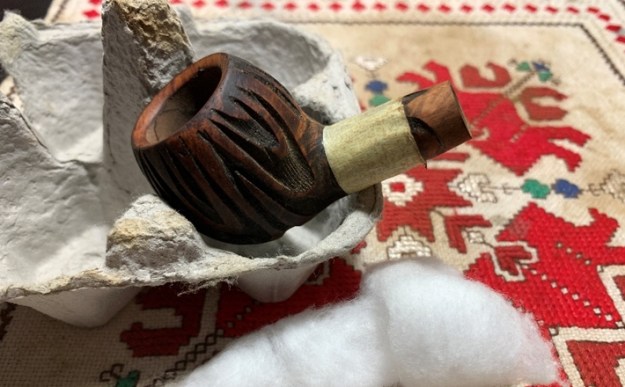
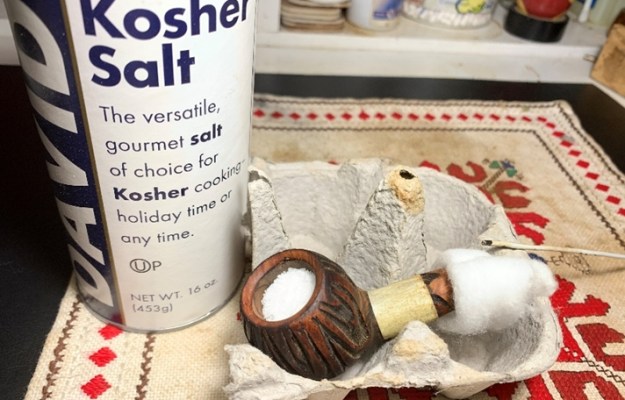
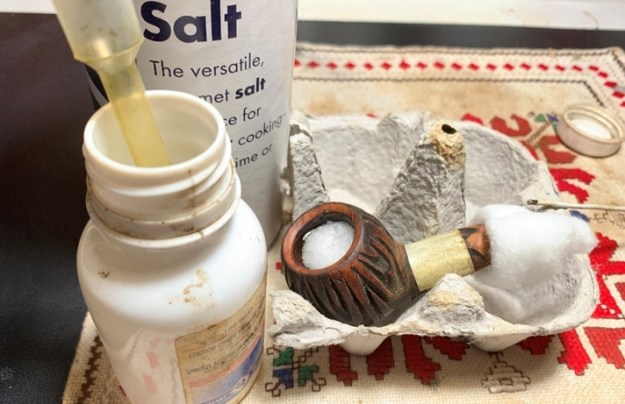
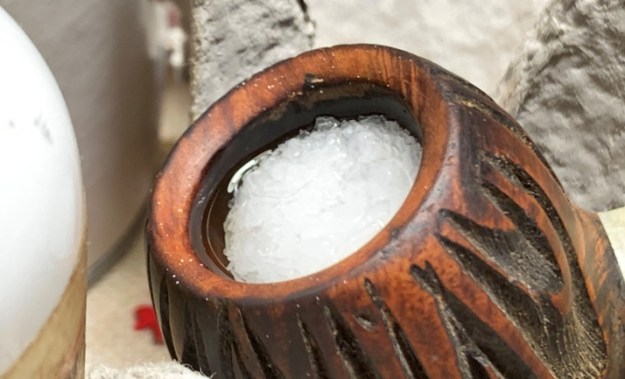
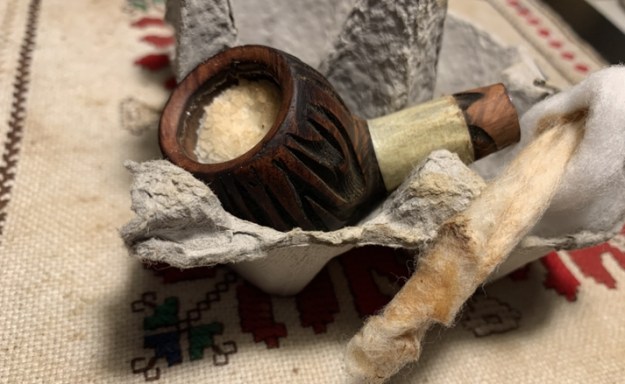
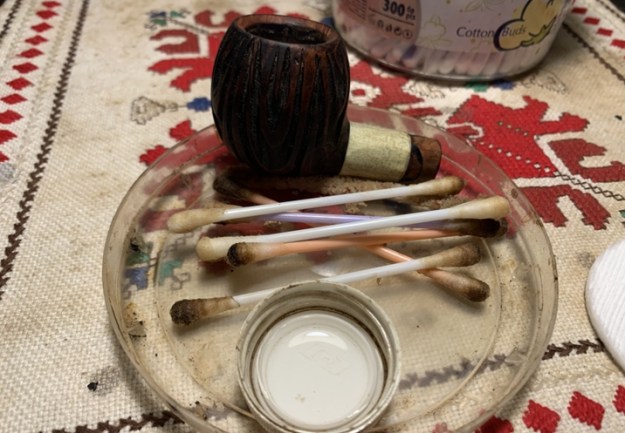
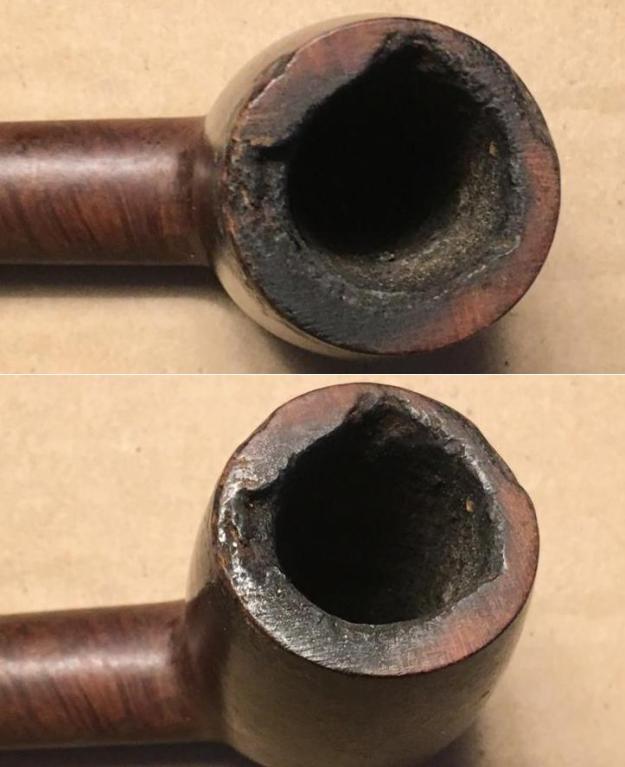
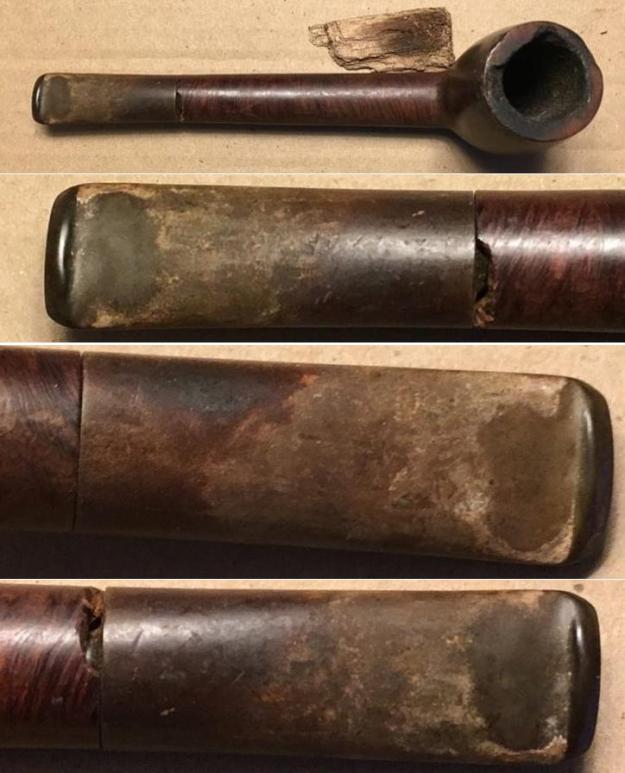
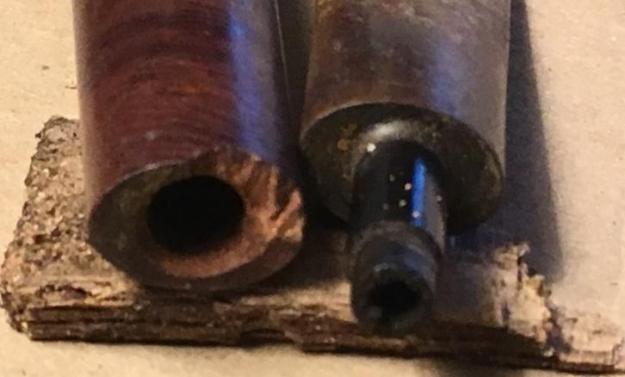
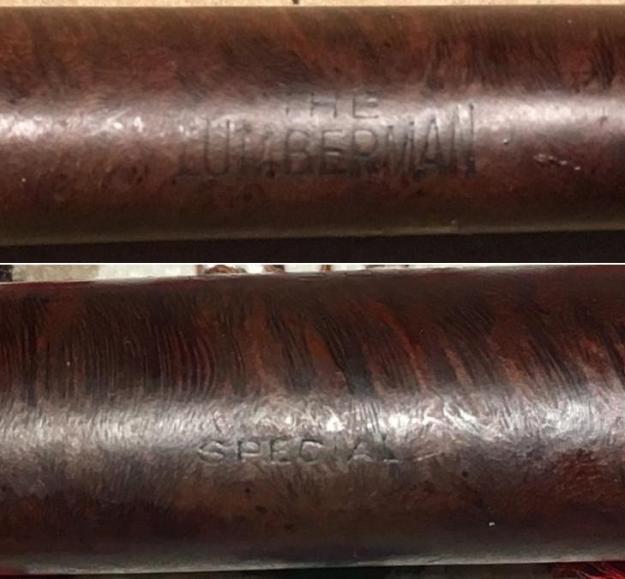
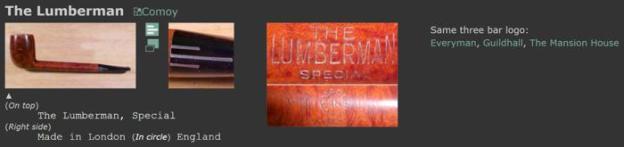
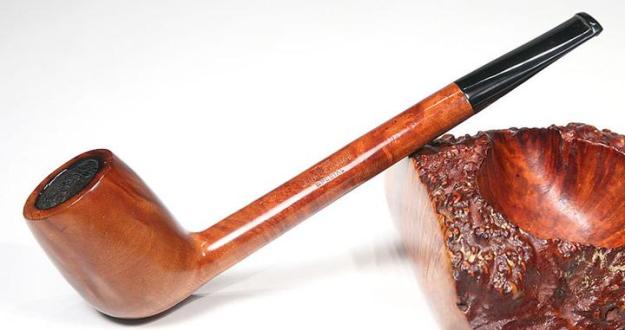
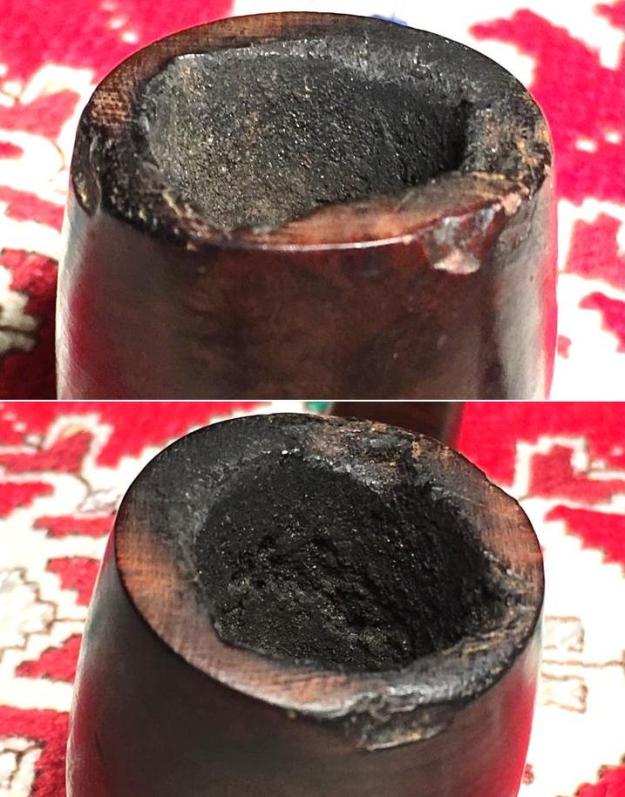
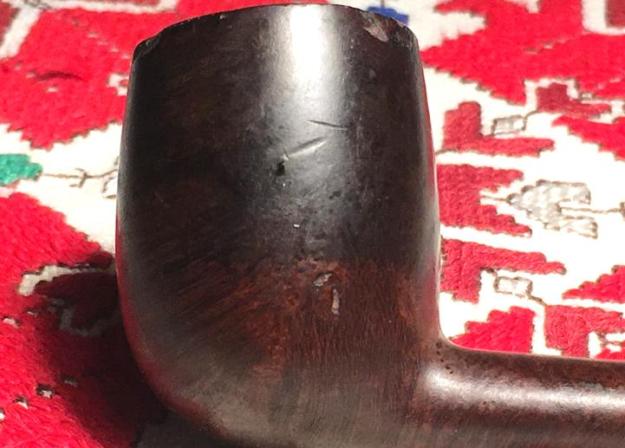
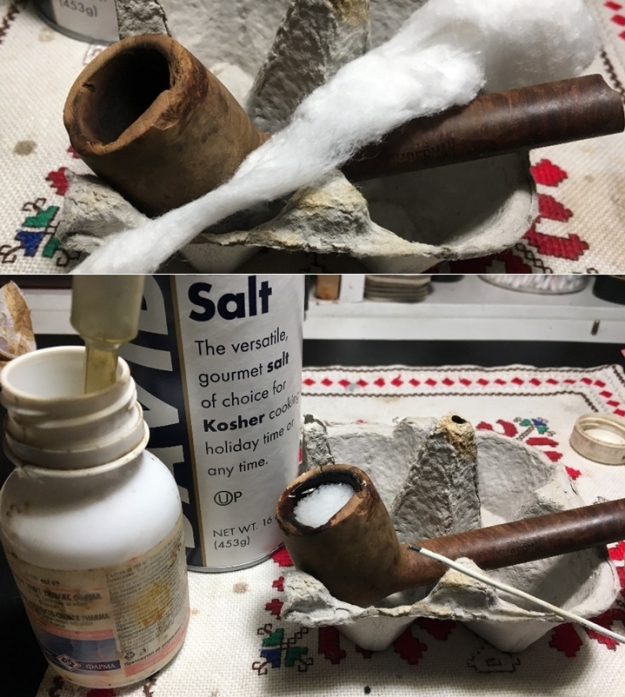
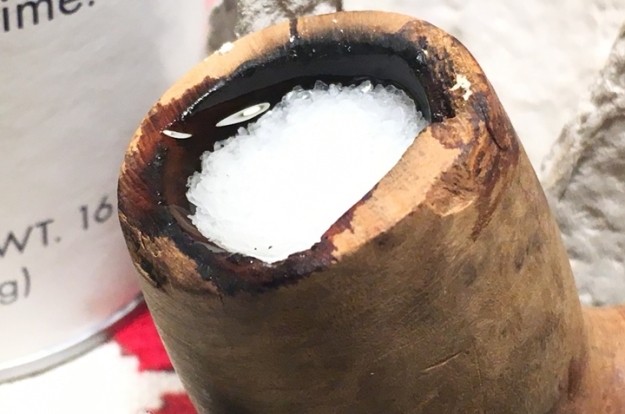
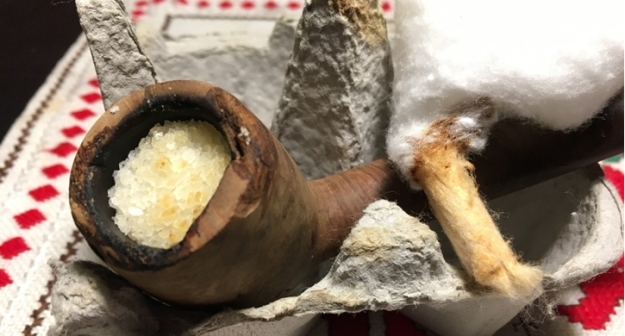
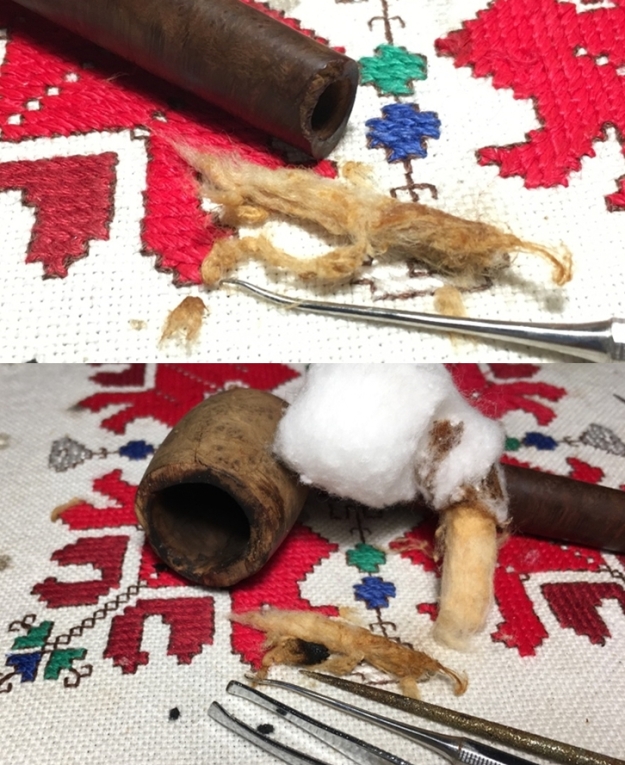
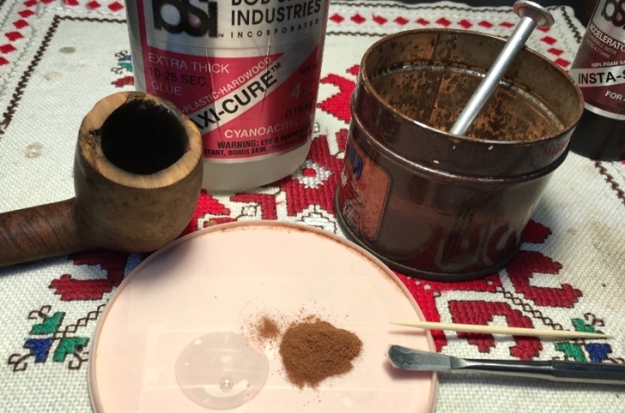
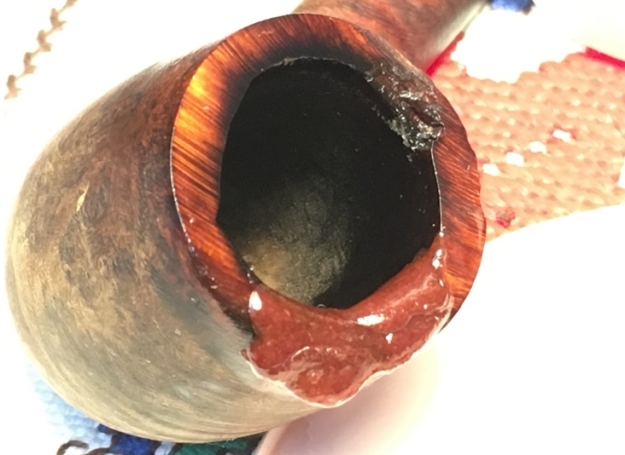
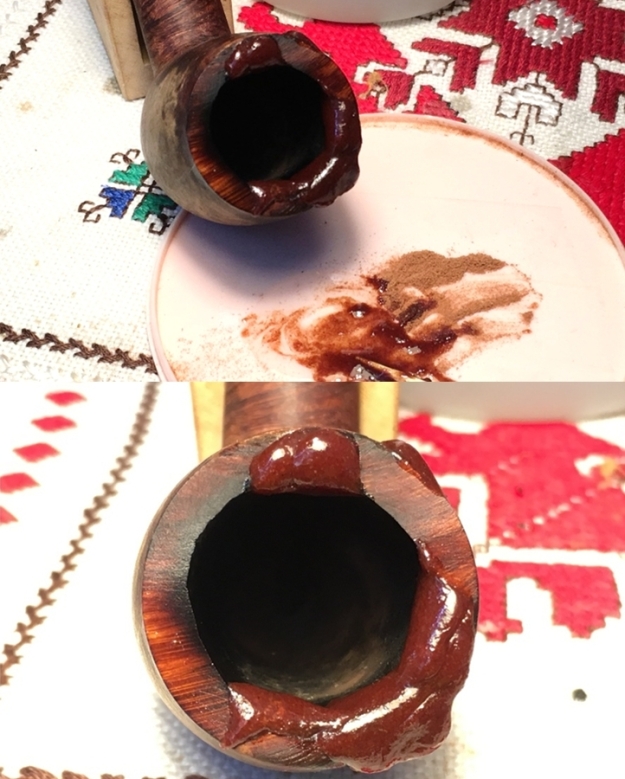
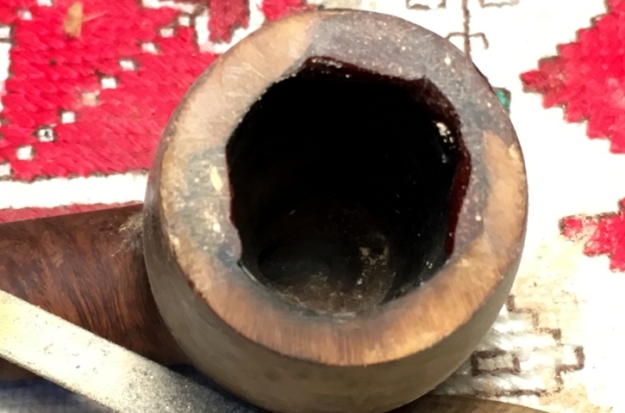
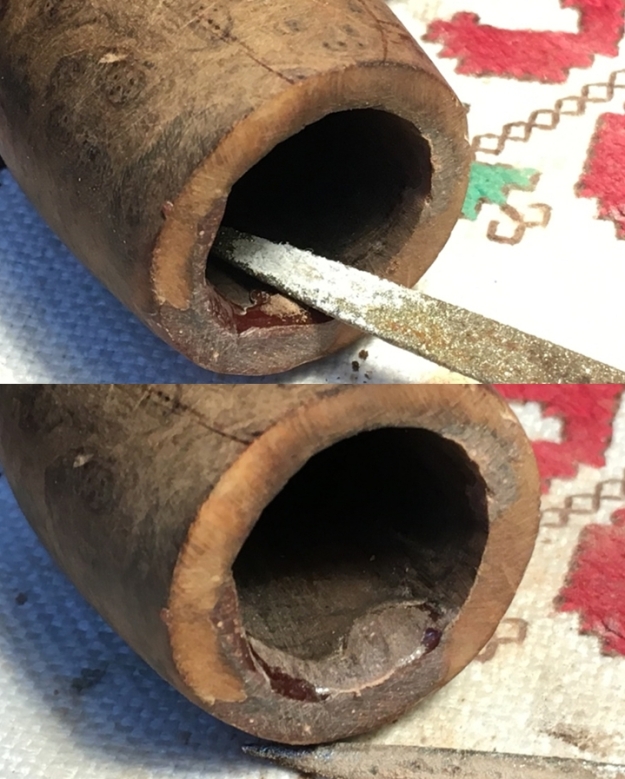
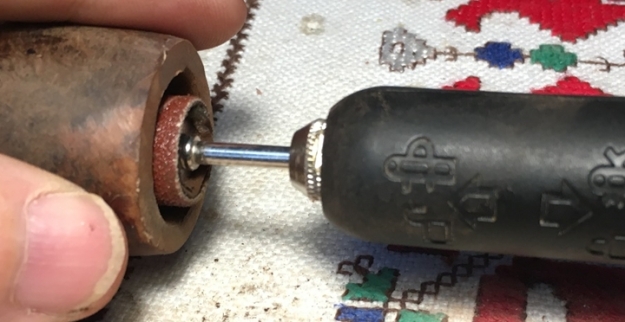
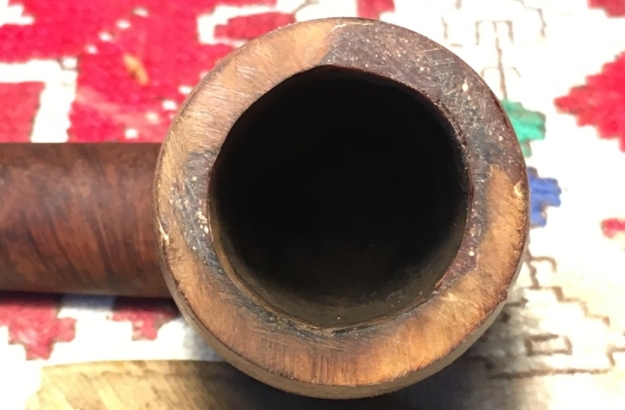
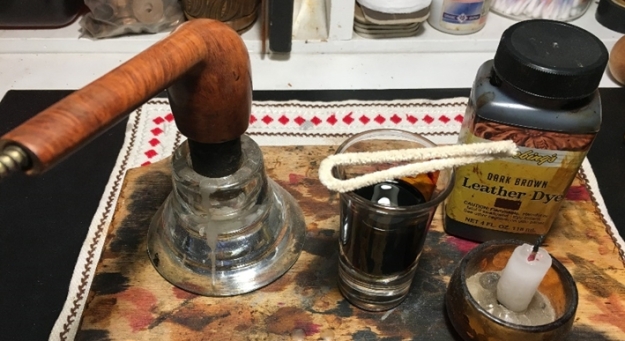
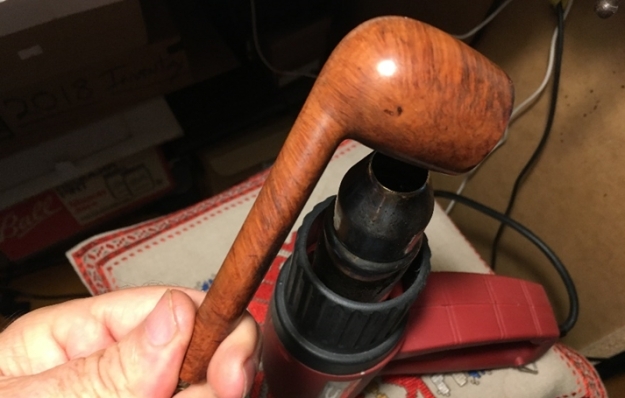
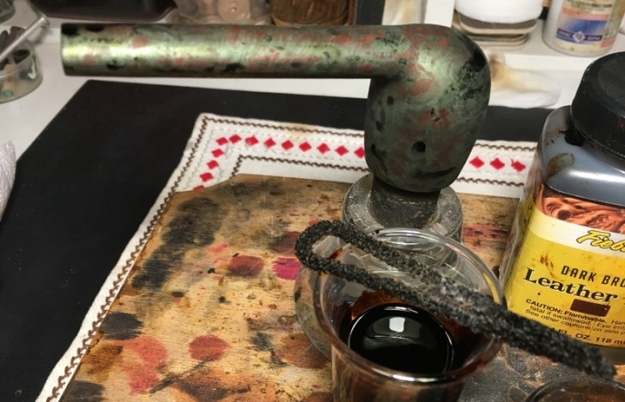
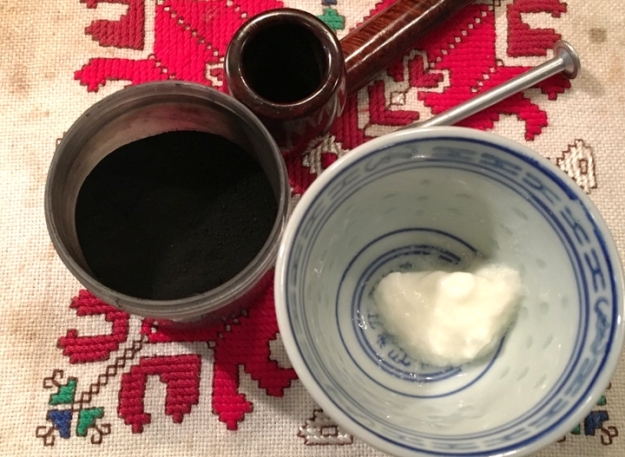
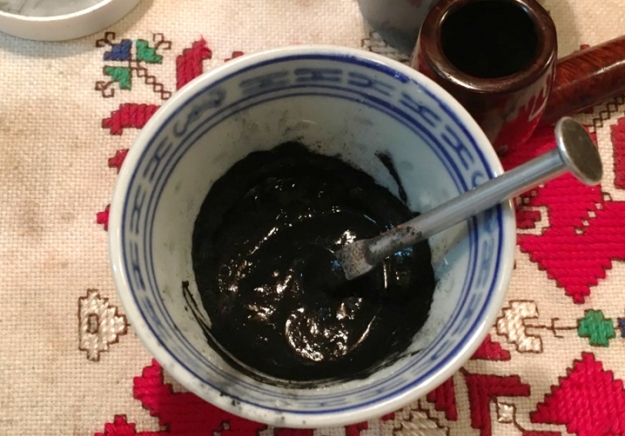
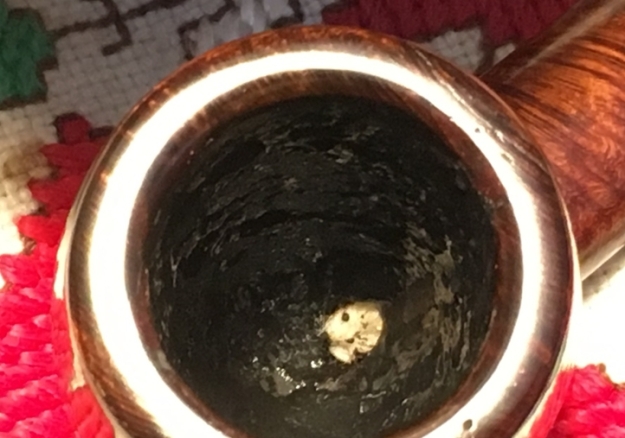
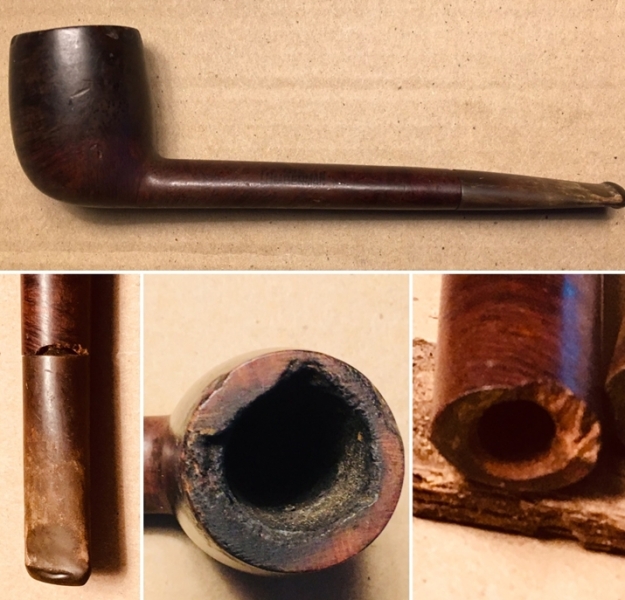
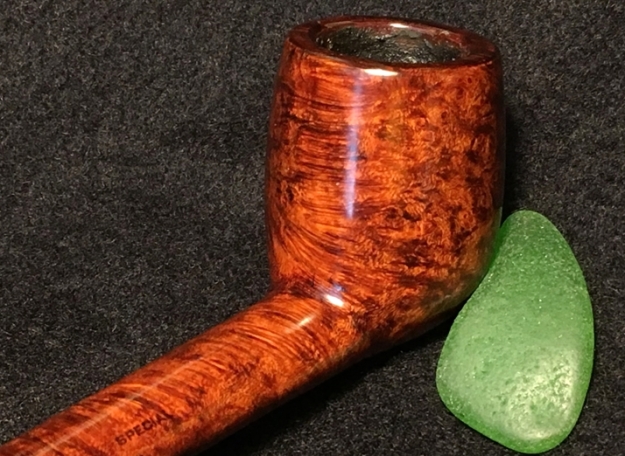
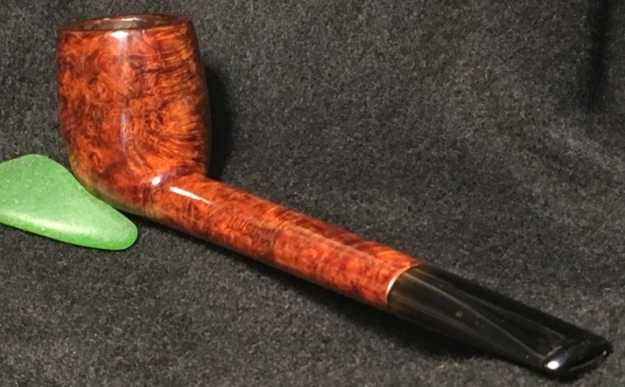
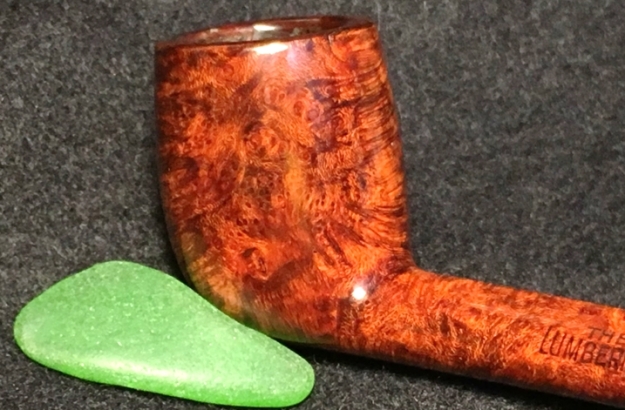
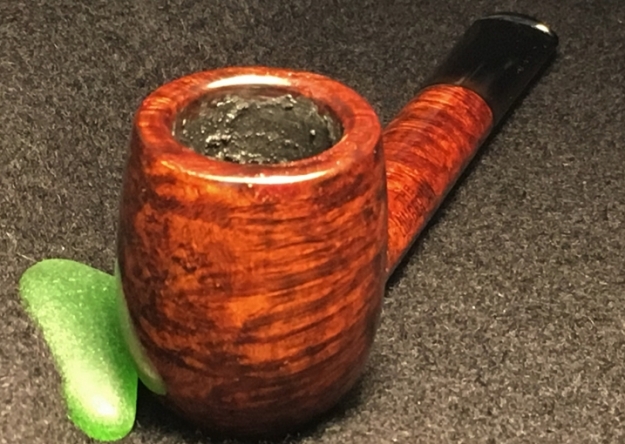
The ’Nightmare’ Canadian that Jim commissioned will be a challenge!  Here are pictures of The Lumberman before he reached my worktable as I took pictures to post in the ‘For “Pipe Dreamers” ONLY!’ online collection: The nomenclature found on the left flank of the long Canadian shank is THE [over an arched] LUMBERMAN.  Not until later, after starting the research, did I discover that on the shank’s right side is stamped, SPECIAL.I acquired The Lumberman in what I have called, ‘The Lot of 66’ which has produced many pipes for new stewards benefiting the Daughters of Bulgaria.  Honestly, in every ‘lot’ purchase, there are always pipes that are considered ‘throw aways’ and this pipe was included in that category!  Doing a quick search in Pipephil.eu, I find The Lumberman Special listed as a Comoy’s second.  Here is the panel:The ‘The Lumberman’ lettering is identical to the Canadian on my worktable.  What is distinctly different is that the SPECIAL stamping is not joined as in the example above.  The pipe on my table has the stamping separated on the right shank side.  Another difference is the COM – the example is stamped ‘Made in London England’.  I find no COM on our pipe, nor do I find the same three bar stem logo shown, which is also on other Comoy’s second brands.  A quick look at Pipedia’s Comoy’s article confirms that The Lumberman Special is a Comoy’s second.  Also included is a picture (Second examples, details, and nomenclature, courtesy Doug Valitchka) of a pristine example – a very attractive pipe.  This example of The Lumberman also seems to be without the three bar stem logo.Looking at the example of this pipe in pristine condition above and then gazing at the ‘Nightmare’ version on my table now, lets me know that this will be a grand challenge!  Yet, there’s absolutely nothing to lose.  This pipe was done.  He was no longer the object of anyone’s love or attention.  Now, with the challenge to see what it can become with some TLC (OK, LOTS of TLC) makes me thankful for the challenge Jim has made possible.  My approach generally will be to clean, patch and sand.  The chamber and the rim are the most daunting challenges.  I’ll be surprised if I don’t find heating issues in the chamber after clearing away the thick cake.  The rim is a total mess – charring has deteriorated most of the rim.  The chamber wall has eroded, and the rim plane is wobbled and uneven.  The outer edge of the rim is chipped and gouged.  The bowl is full of scratches and a few fills here and there with pitting as well.  A huge chip has taken almost a quarter of the shank facing.  The good news is that the Canadian short stem has heavy oxidation and nominal tooth and clamping compressions on the upper and lower bit.  I add a few more pictures now from my worktable complimenting the pictures above. To begin the restoration (or, resurrection?) of this Comoy’s The Lumberman Special, after cleaning the airway with a pipe cleaner wetted with isopropyl 95%, the stem joins other stems in the queue for a soak in Mark Hoover’s product (ibepen.com) Before & After Deoxidizer to address the thick, scaly oxidation. I just communicated with Mark to order more Deoxidizer and Restoration Balm which I’ll pick up on a trip to the US I will be leaving for soon.  I leave the stem in the soak for a few hours.  I include pictures from above to mark the starting point. After soaking for a few hours, I fish the stem out and run a pipe cleaner through the airway to remove the liquid.  I then wipe the oxidation off the stem using a cotton pad wetted with isopropyl 95%.  The B&A Deoxidizer has done a good job removing oxidation. Paraffin oil is then applied to the stem to revitalize and hydrate the vulcanite.  I put the stem on the side to absorb the oil.The starting point for working on the hurting stummel is simple cleaning to unmask as much as possible the plethora of issues underneath the cake in the chamber and the grime on the stummel surface.  To clear the chamber of cake, the Pipnet Reaming kit is used.  I take a picture of the chamber to mark the starting point. Not a happy view!After putting paper towel down to save on clean up, using the smallest of the Pipnet blade heads I go to work.  I use 2 of the 4 blade heads available to me and then transition to using the Savinelli Fitsall Tool to scrape the chamber walls further.  Finally, I finish by sanding the chamber with 240 grade paper wrapped around a Sharpie Pen and then wipe the chamber with a cotton pad wetted with alcohol to clear the carbon dust. The inspection of the now cleaned chamber shows the chamber wall proper to be in great condition!  This indeed was good news.  The briar is healthy and now it has a fresh start.Next, using undiluted Murphy’s Oil Soap the rim and external briar surface is cleaned using a cotton pad. A brass wire brush also proves useful in cleaning the charred rim.  After cleaning the surface, the stummel is transferred to the kitchen sink where it is rinsed in warm water and using wired shank brushes and anti-oil dish soap, I clean the internal mortise and airway. After rinsing thoroughly, I bring the stummel back to the worktable and clean the internals further using pipe cleaners and cotton buds dipped in isopropyl 95%.  I use a dental spoon to scrape the sides of the mortise as well as using shank brushes to work on the long Canadian shank. After a good bit of effort, progress has been made and since the hour is late, I will continue the cleaning using kosher salt and isopropyl 95% to soak through the night.  This methodology not only continues the internal cleaning but freshens the pipe for a new steward.  First, a cotton ball is pulled and twisted to form a wick that is used to push down the mortise and airway to serve as a ‘wick’ to draw out the residual tars and oils.  Using a stiff wire, the cotton wick is guided down the airway and after the stummel is placed in an egg carton to provide stability.  I then fill the bowl with kosher salt, which leaves no aftertaste unlike iodized salt.  Using a large eyedropper, I fill the bowl with isopropyl 95% until it surfaces over the salt.  With the longer Canadian shank, it takes longer for the alcohol to seep into the longer airway.  After topping it off with alcohol one last time, I turn out the lights and call it a day. The next morning, the salt is mildly soiled showing that it did its job through the night.  When I tug on the cotton wick, unfortunately, it doesn’t come out whole.  I must employ the use of a dental probe and tweezers to pull the remainder out.  Finally, I was able to push the rest through to the bowl with the help of the pointed needle file. To be sure the internals are finally cleaned, I deploy a few more pipe cleaners and cotton buds wetted with isopropyl 95% to clean up any residue.  After a short time, it is apparent that things look good and I move on.With the internal cleaning completed, my attention shifts now to the primary issue – the rim re-build.  From the picture below looking down on the rim, the remnants of the rim top are at 4 to 5 o’clock and at 9 to 1 o’clock.  These surfaces give me an idea of where the rim was and provide a target for a re-built rim – at least in an ideal world.  The inner rim edge is out of round from charring and…, who knows.  One thing for sure, this Canadian was loved and used, but rode into the ground! Looking now from the side, from both directions, the uneven plane is evident.  The challenge is how to save as much briar as possible off the top of the bowl to have a flat plane?  To top it until this happens will turn the Canadian into a long shank Pot! My path forward, after considering the options, is to start with a very minimal topping to even out the remaining rim plane to see more clearly the areas that will be targeted for patching.  The default option is to lose briar through topping, but I will seek to build the rim up with the patch material – briar dust putty, and top, shape and sand the rebuilt rim until it has a semblance of normality!  At least, this is the hope.  I take out the chopping board which becomes my topping board after placing a sheet of 240 grade paper on it.  The goal is to lightly top to establish the boundaries.Instead of rotating the first round, I drag the stummel across the board.  I do this because I want to stay on top of the remnant rim surface and not dip down into the damaged areas which will be softer.  Keeping the pressure on the high wood was easier this way.  The result shows the emerging boundaries.Next, this time, after rotating the stummel a few more times on the board, I come to the place of diminishing returns for topping.  I’ll apply briar dust putty to the damaged areas – on the rim and along the internal and external edges to fill in the gaps.  It will require a lot of patching, but the patch areas will provide the excess for sanding and shaping.The next area to prep for briar dust patch material is the large chip of the shank facing.  I insert a drill bit into the mortise which forms the boundary for the patch.  I’ll apply a bit of petroleum jelly to the bit to assure the briar putty patch will not stick to the bit.  Earlier, when communicating with Jim, my thinking was that I would simply plane the facing to remove the damage.  With this always being an option, my thinking now is to start with a patch, sand and shape – go from this point with the value on keeping as much briar as possible.The final prep area is a few small pits on the stummel surface that have old fill material in them.  I dig the old material out with a dental probe which will be refilled with briar putty.I clean all the patch areas with a cotton pad and alcohol in preparation for applying the briar putty.Using BSI Maxi Cure Extra Thick CA glue, I mix it with briar dust to form the putty.  I use a plastic disc as a mixing palette and place Scotch Tape on that simply to aid in cleaning.  I’m not sure if I can apply patch to the 3 areas in one batch, but I’ll start with the rim – the largest project.  I place a pile of briar dust on the palette and then a larger dollop of Extra Thick CA glue next to it.Using a toothpick, I gradually mix the briar dust into the glue until it thickens.  When it reaches the viscosity of molasses, I use the toothpick to apply the putty to the rim allowing for excess to be sanded and shaped later. What the following pictures show is that I was only able to address the rim patching with the first batch of briar dust putty.  As I applied the briar dust putty to the rim, I went in stages using an accelerator to quicken the curing and to hold the putty in place. I mix another batch of briar dust putty on the palette and again apply the putty to the shank facing and the pits.  As before, the use of an accelerator quickens the curing and holds the patch material in place. With a little nudge and twist the bit comes out easily with the help of some petroleum jelly.  The mortise circumference looks good though the patch needs to be sanded and shaped.The obvious next step is a lot of filing and sanding.  I start with filing.  I use both a flat and half circle pointed needle files to work on the excess putty.  I start with the rim by first filing down on the rim top to flatten the plane.  The pictures chronicle the progress. With the top rough filing completed, I move to the outer edge of the rim.The repairs are starting to show some promise!  Now to the inner rim edge.  This is critical in seeking to establish an even circumference.  I start with the slow approach of filing to get it right.  I finish up by loading a sanding drum onto the Dremel and fine-tune the edge and to smooth the transitions in the chamber from the patch material to the chamber wall.  I don’t want to leave ridges. Wow!  I showed this finished rough of the rim to my wife and she said with lessening skepticism that this pipe might just come back to life!Next, I quickly dispatch the two small fills under one glob of putty patch with the flat needle file.Finally, the filing is almost finished.  The flat needle file also goes to work on the shank facing and on the outer edge.  I’m very careful with filing the shank facing because too much removed can offset the proper seating of the tenon and create gaps between shank and stem. I also use the half-rounded needle file to create the sharp bevel on the edge of the mortise which accommodates the tenon’s base. After filing, I join the stem with the stummel to see how well the stem seats.  With some gaps, I do a bit more filing and finally I have the fit as good as I can get it.  It looks good!Now, back to the rim.  To even the rim, I take the stummel back to the topping board with 240 grade paper and give the stummel a few more rotations.  This helps blend the filing.The speckling of the putty patches is expected.  I’ll address this later when applying stain to the stummel which should take care of the contrast.  I want to smooth the inner and outer edges of the rim by applying a bevel. For the internal bevel, a hard bevel is the aim so a hard surface is used behind the 240 grade paper to provide a uniform edge.The internal bevel looks great.In addition to the internal bevel, I do a light sanding of the external rim edge simply to soften the edge and to remove any nicks and cuts.Next, I take the stummel back to the topping board covered now with 600 grade paper and rotate the stummel several times.Using both 240 and 600 grade papers, I sand both patches – the two fills and the shank facing.Now, to address the cuts, nicks and small pits of the very worn stummel surface, I’m hopeful that sanding sponges will be adequate to clean and smooth the briar surface so that I won’t need to employ more coarse sanding papers. I take the first 2 pictures to mark the start for comparison. I use first the coarse grade sponge followed by medium and light grades.  I’m careful throughout to guard the nomenclature on both sides of the shank.  Wow!  The grain underneath the old dark finish starts to make an appearance! On a roll, I continue the stummel sanding with the full regimen of 9 micromesh pads.  To begin, using pads 1500 to 2400, wet sanding is employed.  Following this, I dry sand using pads 3200 to 4000 and 6000 to 12000.  I’m amazed at the emergence of very nice grain – a horizontal grain on the fore of the bowl with large swirls of bird’s eye grain occupying the flanks.  Nice! There is no question regarding the next step.  Applying Fiebing’s Dark Brown Leather Dye to the stummel should do a good job of masking the rather large patches on the rim and shank facing.  Another benefit of using dye is to utilize the technique I’ve developed with the use of the Dremel using felt cloth buffing wheels to bring out the grain in striking ways.  I assemble the desktop staining station.After wiping the stummel down with a cotton pad wetted with alcohol to clean the surface, I heat the stummel with the use of a hot air gun.  This step is important as it expands the briar grain as the bowl heats, and this helps the wood to be more receptive to the dye.After the stummel is warmed, I use a folded over pipe cleaner to apply the dye which I’ve poured into a shot glass.  As I paint sections of the stummel with the dye-saturated pipe cleaner, I immediately ‘flame’ the dye with the lit candle.  This immediately combusts the alcohol in the aniline dye leaving behind the hue.  I work over the entire stummel thoroughly by applying dye and firing until the surface is fully covered.  I then put the stummel aside to ‘rest’ for several hours – till tomorrow in this case.  This ‘resting’ helps the dye to set more securely in the briar with less chance of the dye coming off on the hands of the new steward who fires the pipe up for the inauguration.With the newly stained bowl ‘resting’ I turn to the stem.  I take a closer look at the upper and lower bit.  There are bite compressions on both sides that need to be addressed.I first use the heating method.  Using a Bic lighter, I paint the upper and lower bit with flame to heat the vulcanite.  As the vulcanite heats it expands and hopefully the compressions will expand to the original condition – or closer to it.  The flame method did help but the compressions are still visible but lessened.Next, I utilize a flat needle file to freshen the button and with 240 paper sand out the compressions.Following the 240 sanding, with the help of a plastic disk to prevent shouldering, I wet sand the entire stem with 600 grade paper and follow with 000 grade steel wool.Next, the full set of nine micromesh pads are used.  With pads 1500 to 2400, wet sanding is applied.  Then dry sanding with pads 3200 to 4000 and 6000 to 12000.  Between each set of 3 pads, Obsidian Oil is applied to rejuvenate the vulcanite.  I like the pop of newly micromeshed stems! The morning has come, and the dye has set in the grain of the Comoy’s The Lumberman.  Time to ‘unwrap’ the crusted shell that now encases the pipe.  To do this, a felt cloth buffing wheel is mounted on the Dremel with the speed reduced to the lowest.  The decreases the heating factor of the rougher felt material. To unwrap I use Tripoli compound applying it with the felt wheel methodically over the stummel surface. The felt buffing wheel needs purging often to remove the ‘crust’ buildup.  I take a picture to show the unwrapping process which reveals a beautiful grain underneath! – and yes, during the staining and unwrapping process I wear surgical gloves! After completing the stummel proper with the felt wheel, I briefly change to a cotton cloth wheel to reach into the crook of the bowl and shank junction with Tripoli which the felt wheel was not able to reach.After the unwrapping process is completed, a very light wipe with a cotton pad wetted with alcohol helps to blend the newly stained surface.  With the aniline dye, if I wanted to lighten the finish, I could have applied more wiping.  This I do not do because I’m liking the dark brown finish very much and how well it is masking the repairs!With the Tripoli completed, another cotton cloth buffing wheel is mounted onto the Dremel, the speed is increased to about 40% full power, and after reuniting the Canadian stem and stummel, Blue Diamond compound is applied to the entire pipe.To clean the surface of leftover compound dust, which tends to cake up, I give the pipe a buffing with a felt cloth preparing the surface for the application of wax.After replacing the cotton buffing wheel used for applying Blue Diamond, another is mounted dedicated to the application of carnauba wax.  With the speed remaining the same at about 40% full power, carnauba wax is applied to both stem and stummel.  After completed, using a microfiber cloth, the shine is raised through a rigorous buffing.One more step and this Comoy’s The Lumberman Special will be completed.  To provide a ‘cake-starter’ for the new chamber and to provide a buffer for the patch repair work, which is on the upper rim level, a layer of a mixture of natural, non-flavored Bulgarian yogurt and charcoal dust does the job.  This mixture hardens like a rock providing a surface to start a new protective layer of carbon cake.  The thickness of this cake should be no more than the thickness of a US dime to provide optimal performance.  After placing a dollop of yogurt in a small Chinese rice cup, some charcoal dust is added until it thickens somewhat – not running off the pipe nail.  After pushing a pipe cleaner through the draft hole to protect it from being blocked, using the pipe nail as a trowel, I very carefully apply the mixture evenly over the chamber walls – avoiding drippage on the freshly waxed external surface!  It looks good! I am amazed.  I initially described this sorry pipe as a Nightmare without any expectations that it could again be described as hedging on pristine.  Yet, that is exactly what I am seeing – a very attractive Comoy’s The Lumberman Special Canadian.  What are also amazing to witness, even if I’m watching the work of my own hands, are the step by step logical, mechanical and artistic processes woven together toward certain micro outcomes resulting in a restored pipe.  Yet, this pipe wasn’t restored, but resurrected to be sure.  The rim repair, both with the fills and the reconstruction of a round presentation, is satisfying to behold. The grain now revealed from underneath the grime and years of use is striking.  Jim commissioned the ‘Nightmare’ from the ‘For “Pipe Dreamers” ONLY! collection and that itself was pretty amazing that he could see the potential.  As the commissioner, Jim will have the first opportunity to claim the Comoy’s The Lumberman Special from The Pipe Steward Store benefiting the Daughters of Bulgaria – women and girls who have been trafficked and sexually exploited.  Lest we forget, I start with a few ‘before’ pictures. Thanks for joining me!


COMPLICATING A SIMPLE RESTORATION OF A CUTTY MEERSCHAUM!!


Blog by Paresh Deshpande

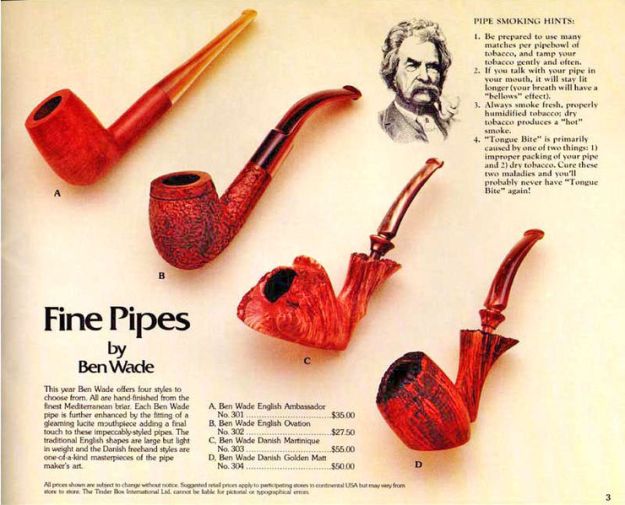
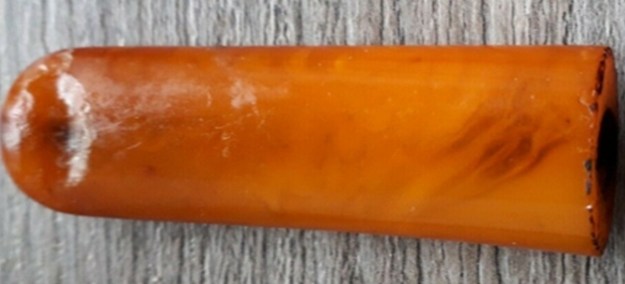
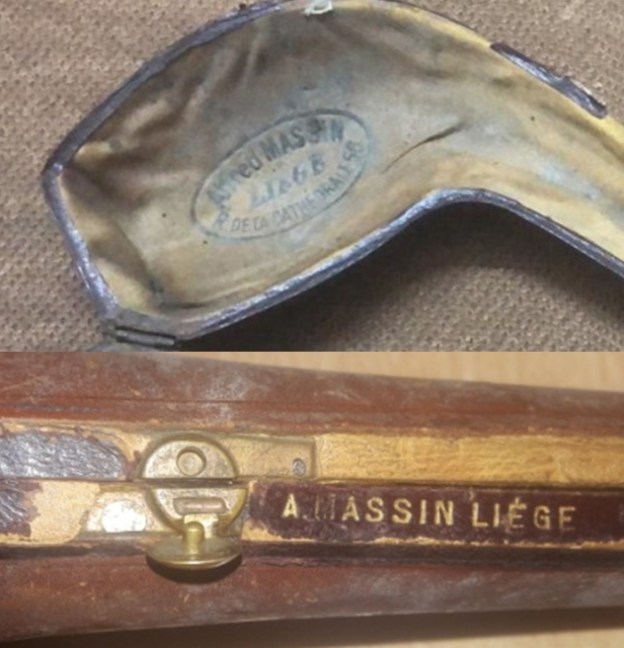
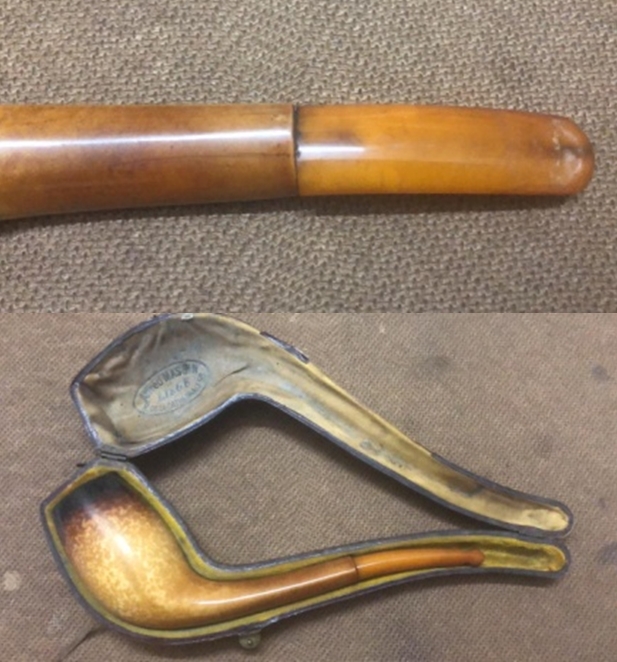
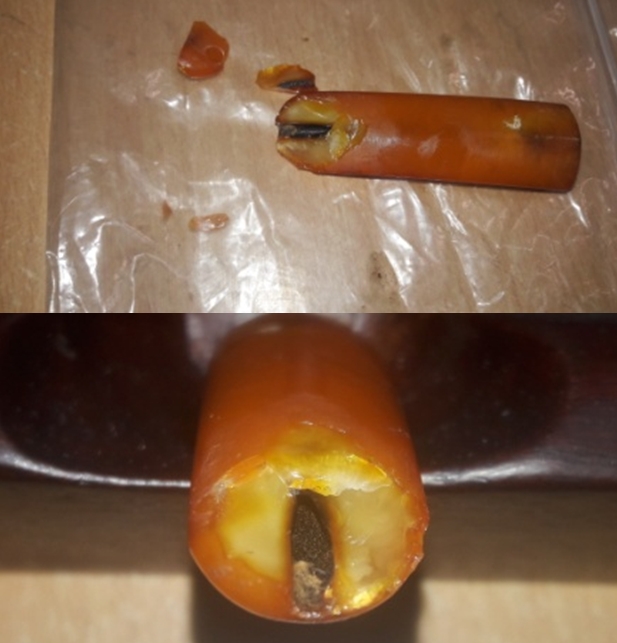
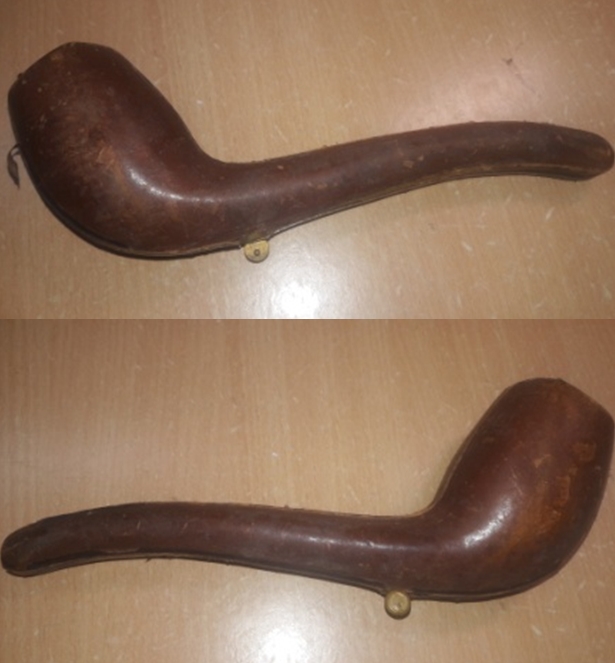
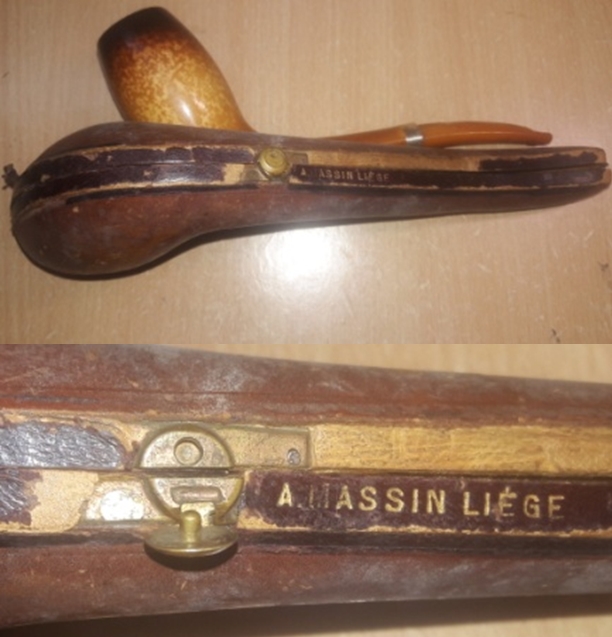
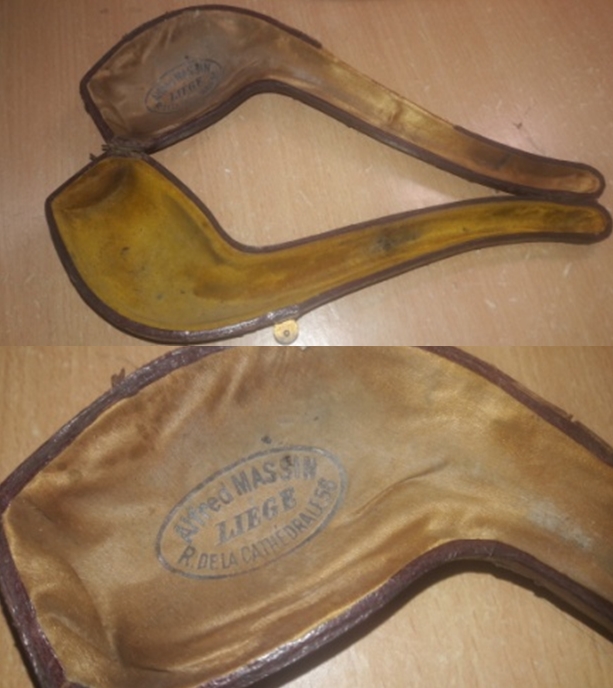
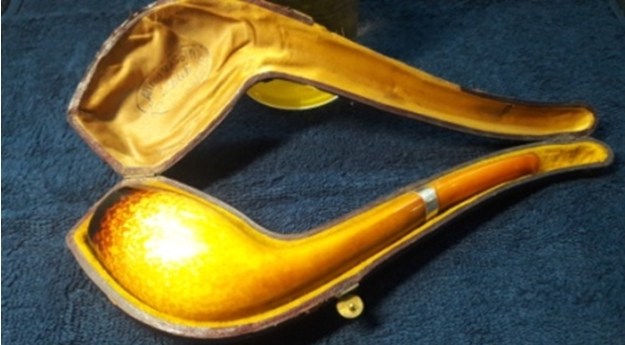
Truth be told, this project which started while my friend and mentor Steve, Jeff and Dal Stanton were visiting us here in May of 2019, had become a mental block for me to work on. I had this meerschaum pipe that came without a stem and I had requested Steve if he could get me one when he came visiting. He brought along a potential stem for either the meerschaum currently on my work table or for an early Ben Wade Fancy cutty, again from my inheritance. In the course of our time here we looked over the stem that he had brought along and tried it on the meerschaum and the Ben Wade. We chose not to use the stem on the meerschaum and it was too large in diameter for the Ben Wade. It was decided that Steve would take the Ben Wade back home to find a suitable stem from his bag of spares (https://rebornpipes.com/2019/05/20/restoring-restemming-an-1851-ben-wade-silver-clad-cutty/) while an amber stem from my spares of odds and ends would be used for the meerschaum. The selected replacement amber stem is shown below.This meerschaum pipe in a Cutty shape, with a forward canted bowl that flows in to the shank, is in its original leather case. In looks alone, it has unparalleled beauty with nice deep egg yolk yellow coloration to the stummel and shank with a black flume to the rim top which extends ½ inch down. The shank is devoid of any stampings and the only stamp seen is on the case. The leather covered wood case is stamped on the inside of the top lid in an oval as “Alfred MASSIN” over “LIEGE” over “R. DELA CATHEDRALE, 56”. On the lower lid, on the outer edge, it is stamped as “A MASSIN, LIEGE”Other than a known fact that Liege is an important economic hub of Belgium, there was no information found on the internet to establish the provenance of this pipe. The only guess that I can afford is that Alfred Massin was/is a tobacconist in Liege, Belgium who either made or bought pipes to be sold under his name. In all probability, the later holds true and this could be a Vienna made meer (famous for making meerschaum pipes).

PART I
Since my esteemed guests were to leave in next couple of days, we prioritized the work that would need to be done while Steve was in town and thus I have departed from my usual process of initial visual inspection. This, I shall be carrying out before I start the Part II of the process.

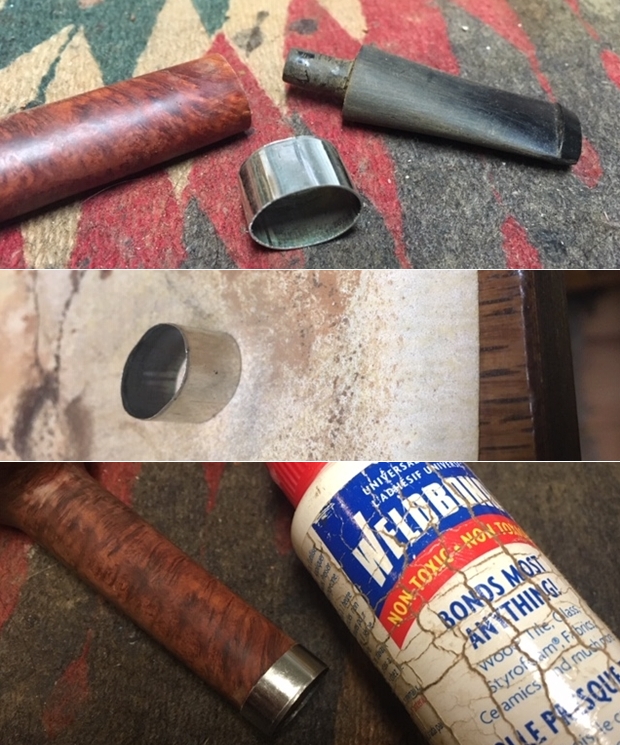
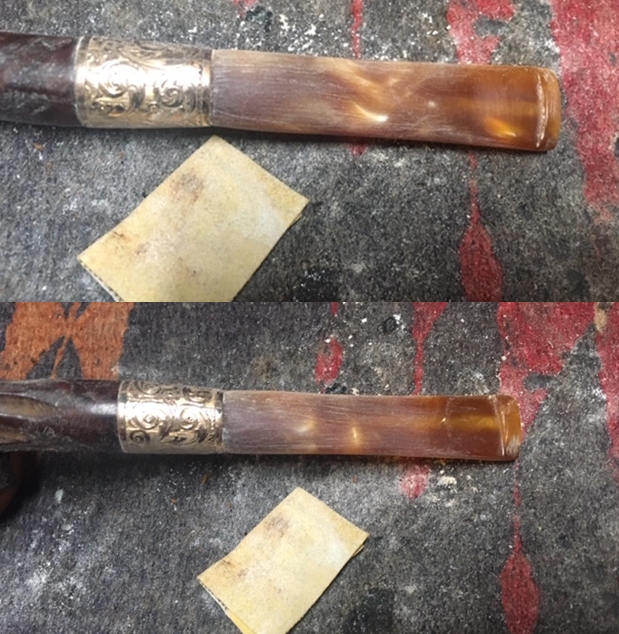
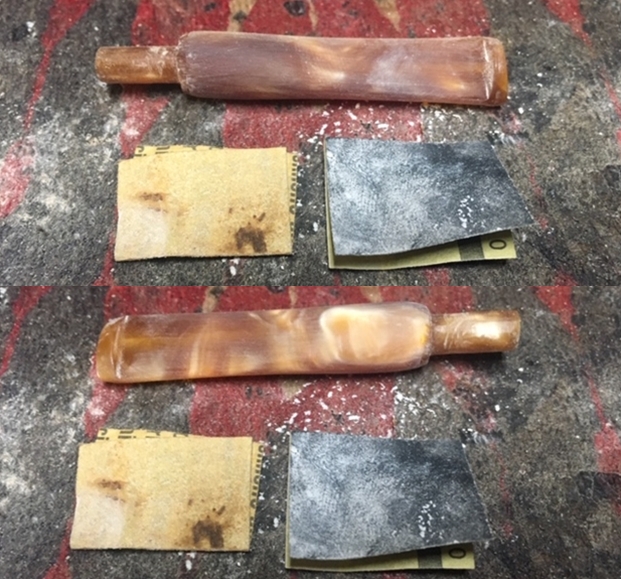
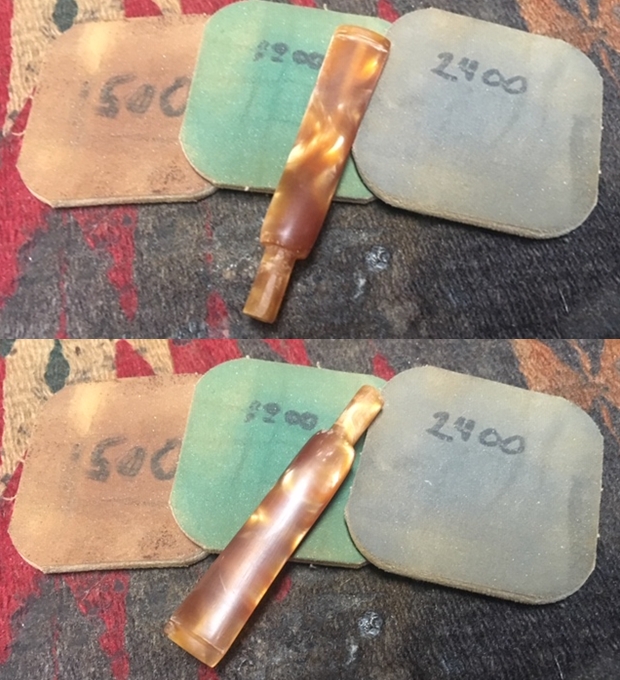
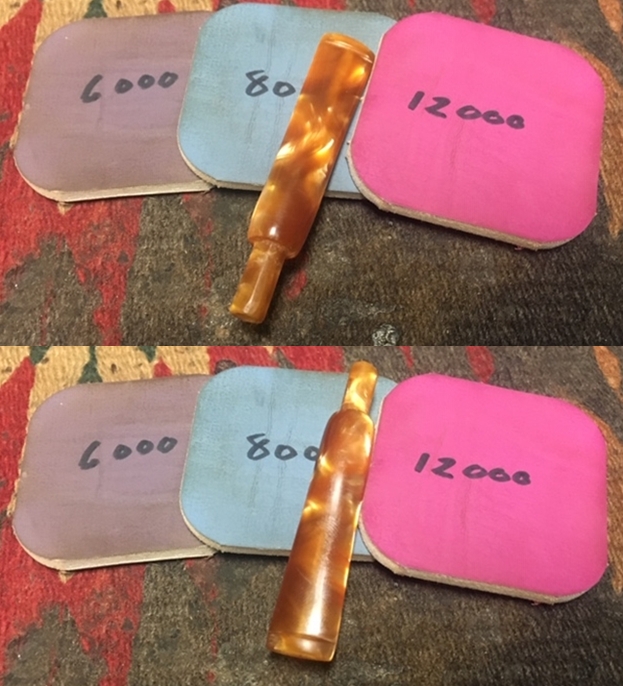
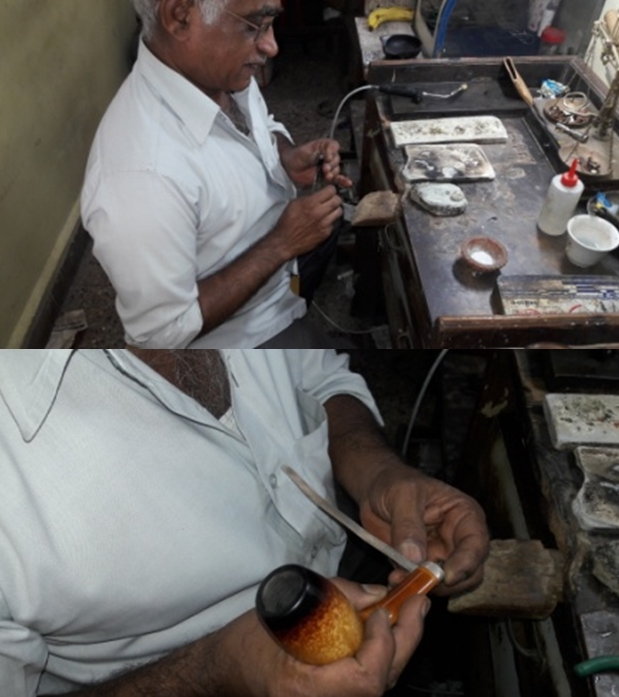
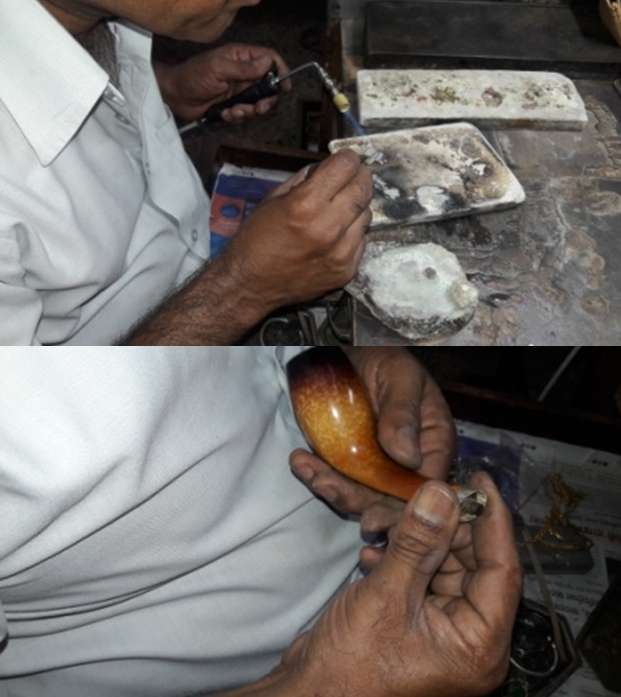
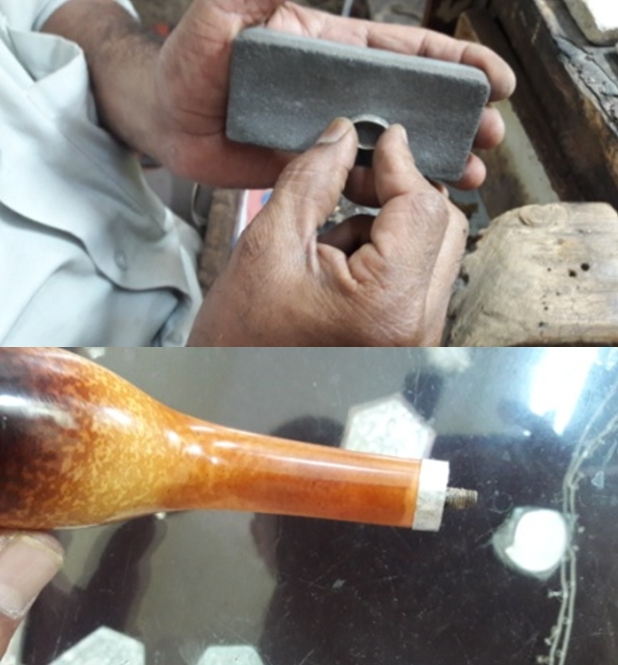
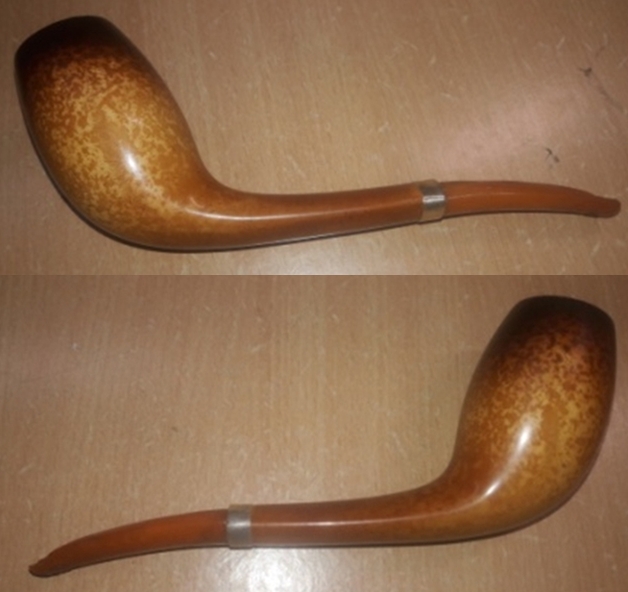
As brought out earlier, the chosen replacement amber stem, though not a perfect fit, had a nice flowing profile that matched the flow of the meerschaum cutty.  More importantly, it sat over the threaded bone tenon in the mortise with an acceptable flawed flush which could be addressed during the course of restoring this beauty. There was a slight difference in the shoulder size of this stem as compared to that of the shank end. It was shorter too, but nothing could be done about it!! The least we could attempt was to make it smoke worthy again and that is what we set about to achieve.Steve suggested that a sterling silver ring should help masking this gap while adding a nice bling to the monotonous profile of the pipe (which by itself is eye catching!!). Steve, Jeff, Abha and I visited many of our city jewelers on a hunt for one such sterling silver ring without any success. At one of the jeweler’s shop, we got a lead to a person who would fabricate one such ring for us and when we reached this shop, it was primitive, small, dingy and not confidence inspiring for sure. But when we saw him work, it was amazing and he excelled in his work. He did not have any complicated and sophisticated instruments for measurements or for fabricating or welding, but he sure made us the perfect ring for the oval shank end at an astonishingly low cost!! And the fit was excellent. His workmanship and skills did leave Steve and Jeff highly impressed. Here are some pictures of the Silversmith in action and the end result. At this stage, Steve and Jeff had to bid farewell to us as their stay had come to an end and I would have to continue this restoration alone.

DISASTER STRIKES AND HOW!!
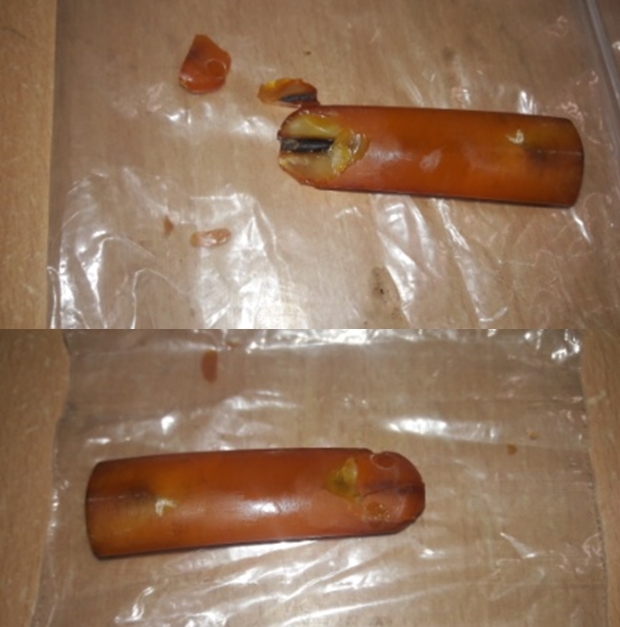
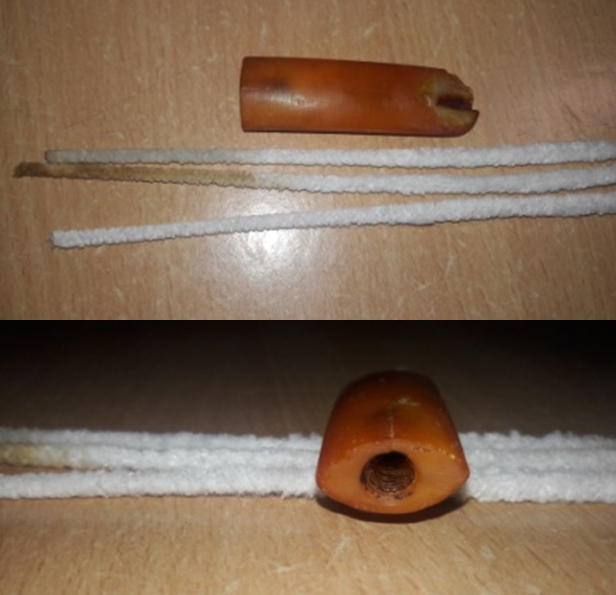
After we had dropped Steve and Jeff at the airport, I came back to a void as suddenly there was nothing to do, nothing to look forward to!! I decided to continue my work on this pipe by cleaning the internals of the replacement amber stem. But the moment I started to clean, DISASTER struck! I dropped the amber stem to the floor. Everyone in my house looked on with stunned silence as it hit the tiled floor…the stem chipped at the slot end!! Luckily, even though the chip was a large chunk of amber, the stem had not shattered!! It could still be repaired by gluing the piece back. I took a deep breath and tried to insert a pipe cleaner to clean the air way. And lo!! I managed to drop the stem again on the hard floor!! There was a moment of silence followed by a pandemonium with every member in the family contributing to my agony with their barbed comments and advice!! The damage was still controllable with another large chip to the button end, the stem still being intact. I could work on the stem no further and set it aside and called it a day, carefully packing the chipped chunks in a zip lock pouch. I am sure that none of the readers of rebornpipes.com expected me to take pictures of this disaster and if any one does, I am sorry, I did not take any!!

I did not touch the stem or pipe the entire next day.

A new dawn and I did think of working the stem again deciding to glue all the chipped chunks back together. Steve had brought me a few tubes of superglue that he uses and I was looking forward to using it. I requested Abha, my wife, to work her magic and clean out the chamber and shank internals. While she was at it, I carefully removed the chunks from the pouch and got the stem out and laid it out on the dining table. I opened the container and removed the glue. As I was unscrewing the tube cap, my hand slipped, pushed the stem over the table and further crashing down to the floor!! Not a single word from anyone at the table as they simply left save for Pavni, my youngest daughter’s remark, “BUTTER FINGERS!!” She is not the one who would let such a golden opportunity pass by!! I too sat in stunned silence as I couldn’t vent my anger on anyone, but me!! There was nothing that I could do, but assess the damage. The stem was still intact; the damage was again localized to the slot end, albeit this time the breakage was akin to shattering and I could see the beginnings of a fault line on the top surface near the tenon end!! Another crash and the stem will most likely shatter along this fault line. I picked up the stem and the pieces of broken amber (as many as I could collect) and packed them in a zip lock bag and put the pouch away with no further desire to work on this pipe!! Abha, on her part, flatly refused to even touch the pipe and so back it went in to its case where it would be safer than in our hands (read that as my hands!!)

I DID NOT TOUCH THIS PIPE THEREAFTER FOR THE ENTIRE DURATION OF MY LEAVE, TO THE EXTENT, THAT I DID NOT EVEN GET IT BACK TO MY PLACE OF WORK ALONG WITH THE OTHER PIPES!!

PART II

In the month of July 2019, Abha had sent me a huge lot of 40 pipes that she had cleaned up and there at right at the top of the pile was this meerschaum pipe in its case!! I further procrastinated for another 3 months before working on this pipe.

INITIAL VISUAL INSPECTION

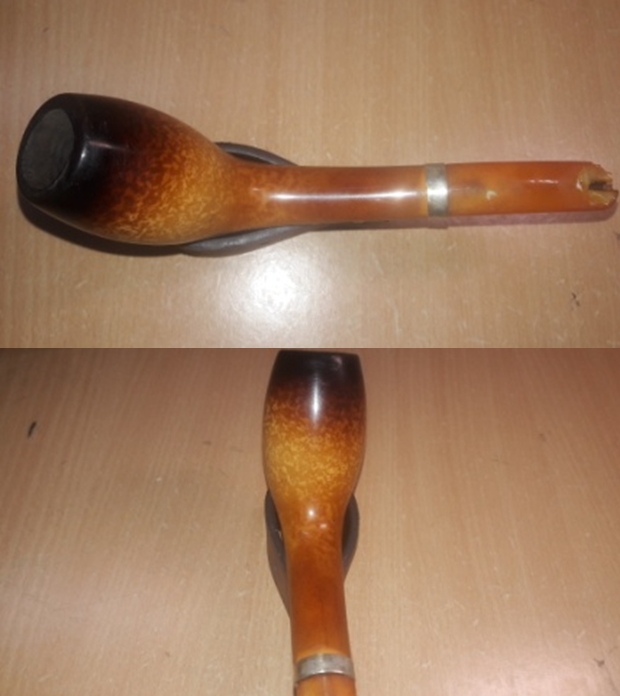
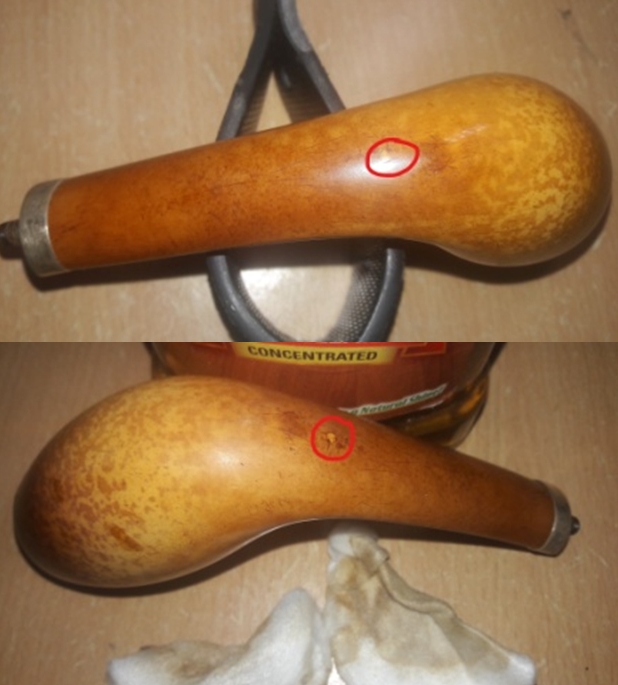
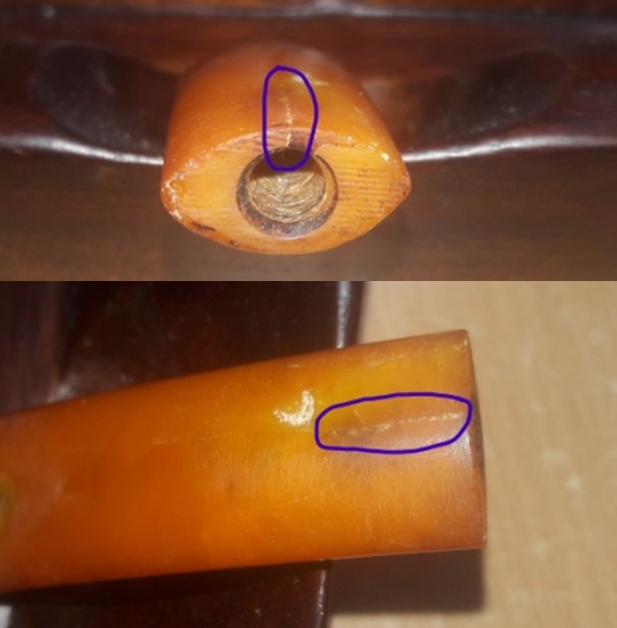
This is how the pipe was received by me. Oh my!! Do I really want to work on it, not really!! My expert workmanship is gloriously on display if you observe closely at the slot end of the stem….LOL!, me and my butter fingers!! Before the above disaster struck and we finally put the pipe aside, Abha had partially reamed out the thick layer of cake from the chamber. Now on my work table, I would need to completely ream the chamber and clean out the little remaining cake. Unfortunately the rim of this pipe too appears to have been subjected to being banged on the edge of the table to remove the dottle, albeit with a little gentleness, as can be seen from the damage to the inner edge of the rim. The chamber is out-of-round towards the left side in 9 o’clock direction. Overflow of lava can be seen on the rim top surface. In my appreciation, these are not major issues to address.  The stummel surface has developed a glorious patina over the years of smoking and I need to preserve it. However, the surface is covered in dust and grime. Numerous scratches can be seen to the front, back and sides of the stummel. The shank top and bottom surface too has numerous scratches. The bottom of the shank appears to have a small fill which has been circled in red. This fill/flaw in meerschaum felt solid on light probing with my pointed dental pick. The threaded bone tenon is fixed in to the shank end over which the replaced Amber stem will get attached. This bone tenon is covered in oils and tars and the shank internals are heavily clogged with accumulation of old and dried gunk making airflow through it laborious and restricted. The stem is where my patience, diligence and skills are going to be tested. The following pictures tell the story themselves. The reader will now get a picture as to why this project has been kept pending for the last 5 months! The fault line or beginnings of a crack that I had mentioned earlier are marked in blue circle. Amber stem repair is the most delicate and difficult of all stem repairs and is sure to test my patience and mental robustness. I need to arm myself with as much information on these repairs as possible. The air way can be seen through the broken portion of the stem surface is covered in dried gunk. This will have to be cleaned. The leather covered wooden case is solid with all the hinges and locking mechanism in excellent working condition. The dark brown lining along the edges has come off at certain places and at some places has been completely torn off. The leather covering is in excellent condition, save for heavy accumulation of dust, dirt and grime. The leather has dulled under all this grime and dirt. This should clean up nicely. The satin lining inside the box lid cover has become dirty and stained over the years. However, the markings are still crisp and shining. The gold velvet lining which houses the pipe too has dulled and covered in dirt and grime. The insides and outside of this case should clean up nicely. THE PROCESS PART II
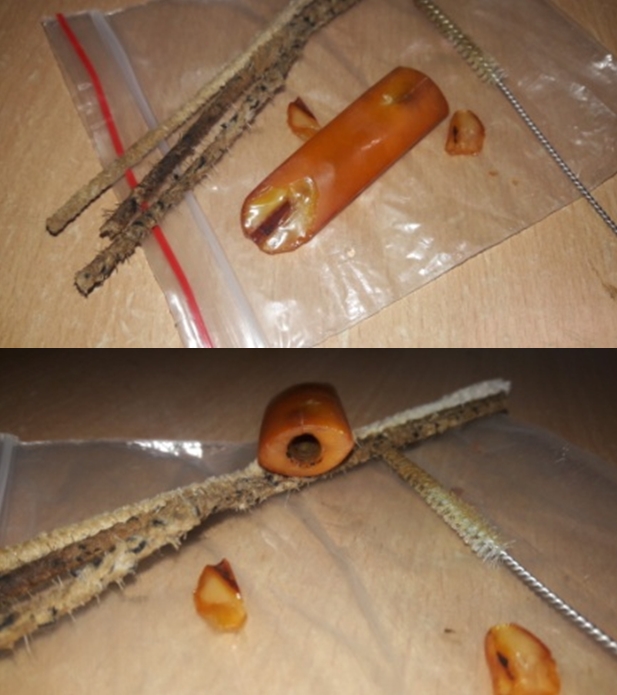
I decided to restart this restoration with the stem repairs. Actually, I wanted to fight the demons in my head as far as this stem repair is concerned. I first discussed this repair with Steve and read all the write ups on Amber stem repairs on rebornpipes.com. This helped me get a fair idea as to how I should be generally going about this project. I carefully removed all the broken bits and pieces of the stem from the zip lock pouch and meticulously laid them out over the broken stem surface, something akin to solving a jigsaw puzzle. I made a mental map of all the pieces and also of the pieces that were missing. The second picture shows the placement of broken pieces of amber, the missing parts and overall intended repairs required.Once this mental map was ready, I moved ahead with first cleaning out the internals of the stem airway. Now, I was cautioned by Steve not to use alcohol to clean the amber stem and so I used plain warm water with pipe cleaners and shank brush. I was cautious when I cleaned tenon end of the stem so as not to stress the developing crack. Steve also had given me a Mantra of going about this project; LESS IS MORE!! Well, this shall be my guideline as I go about repairing the stem and further restoring this pipe. With the stem internals as clean as I could possibly get, I insert a petroleum jelly smeared pipe cleaner in to the stem airway. This prevents the CA superglue from flowing in to it and subsequently clogging the airway. I applied CA superglue over the broken surface of the stem with a toothpick and stuck the broken portions of the stem making sure that they are aligned perfectly. The portion that had missing parts was filled with clear CA superglue. I applied the superglue over the developing crack at the tenon end so it would permeate in to the crack and stabilize it. I set the stem aside for the repairs to cure.Next I worked on the stummel clearing out all the remaining cake from the chamber using PipNet reamer size head 1 and 2. I used my fabricated smaller knife to remove the cake from areas not reached by the reamer head. To remove the last traces of old cake and even out the chamber walls, I sand the entire chamber with folded piece of 180 grit sand paper. I gently scraped off the lava overflow from the rim top surface with my fabricated knife.

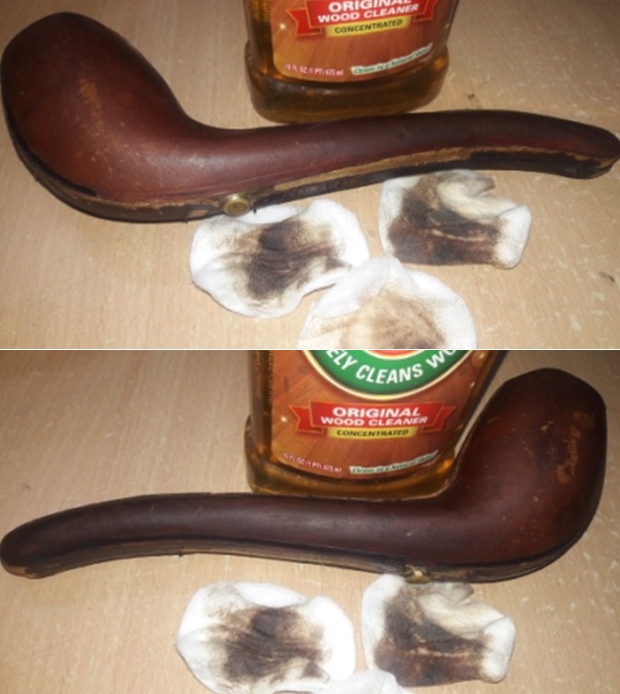
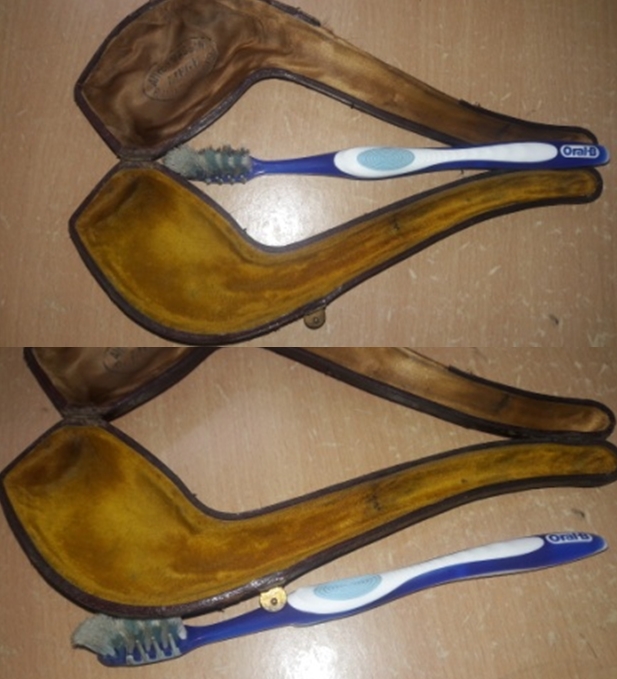
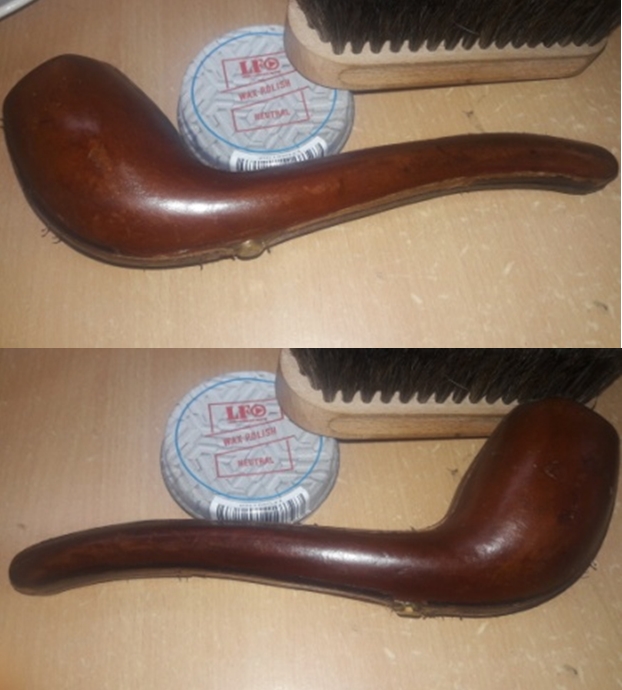
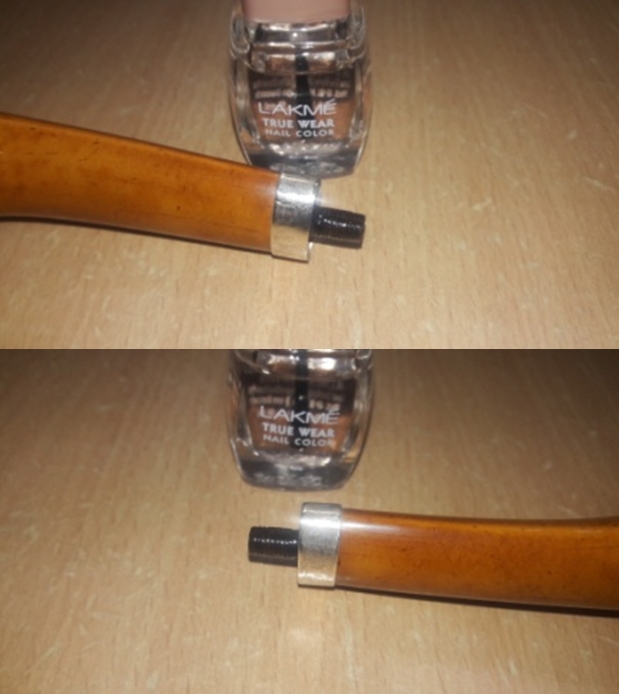
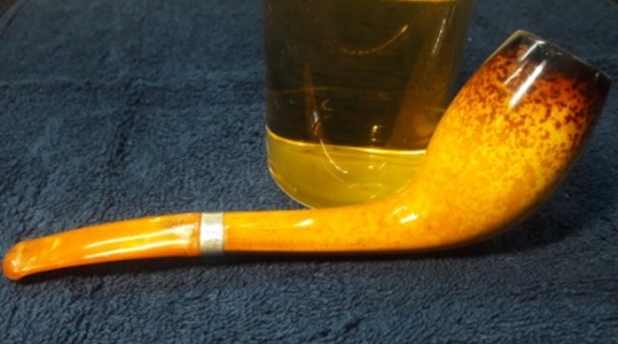
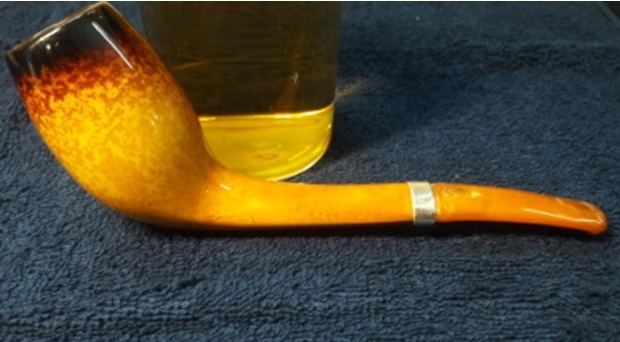
Continuing with internal cleaning, I cleaned out the shank internals and the mortise using hard bristled and regular pipe cleaners dipped in 99.9% isopropyl alcohol. The shank internals were so clogged and dirty that while cleaning at one point I thought that I would never get a pipe cleaner to come out clean!! But eventually I did manage to get a few pipe cleaners to come clean and the shank internals are now nice and clean and fresh. I wiped the threaded bone tenon with a cotton swab and alcohol to remove the dried gunk from the surface. Slowly and surely, progress is being made and I am happy with it.The stem repairs had cured nicely by the next afternoon and so I decided to work the stem. I sand the repairs with a flat head needle file, huge mistake that was!! A small chunk came off the stem. The demons came back to haunt me again. Muttering a prayer for divine intervention, I set about gluing the chunk back on to the stem surface. I again aligned the broken chunk with the surface and applied generous coat of super glue over the complete repairs, including the tenon end repairs and set it aside.  While the stem repairs were set aside to cure, I wiped the stummel surface with a cotton swab and Murphy’s Oil soap. The stummel surface is now free of all the dust and grime. I also cleaned out the last traces of lava from the rim top surface. The stummel and rim top surface now looks dull, but it is clean. I shall bring back the rich shine when I polish it further.    I followed up the external cleaning of the stummel with addressing the issue of uneven and out of round inner rim edge. I created a bevel to the inner edge with a folded piece of 220 grit sand paper. This helps to mask the out of round chamber while addressing the uneven inner rim edge. I could still see one major dent within this freshly created bevel and the only way to address this without further compromising the thickness of the rim was to sand it down at the cost of altering the profile of the beautifully shaped stummel. This was not acceptable to me and I decided to let it be. It shall remain as part of this pipe’s journey till date! Back to the stem repairs!! The glue had shrunk while curing and not wanting to take any more chances, I apply another coat of superglue over the repairs on both upper and lower surfaces of the stem. I set it aside for the night to cure.Reaching back for the stummel, I was caught in a conflict; should I sand the stummel with 220 grit sand paper to remove all the scratches to make it look pristine and loose the patina that has developed over the years or preserve the coloration and patina. I decided on the later, after all it is the coloration taken on by the meer over the years which is more important and the existing scratches are a part of its journey through the years, is how I convinced myself!! I polished the stummel surface by dry sanding it with 1500 to 12000 grit micromesh pads. Some minor scratches were also addressed while imparting a nice deep shine to the stummel. The patina was also preserved. All in all, I am pleased with the appearance of the stummel at this stage. Even though the black flume has been lost at places from the rim top surface, it is an easy fix and I shall address it next. I painted the discolored flume from the rim top surface and adjoining areas with a permanent marker and shall blend it further subsequently.Other than final polish using Blue Diamond followed by Wax, the stummel work is complete. I need to concentrate only on the stem repair now. What followed over next two days and nights is fill, cure and thereafter sand!! I did not get a needle file anywhere near the stem. For sanding, I used 400, 600 and 800 grit sand papers only and completely avoided the coarser grades.   I still found the repairs did show themselves in all their ugliness and sought Steve’s advice on the same. He put my mind to rest by appreciating the repairs while commenting that it’s a repair and can never look like original!! He also suggested I take a look at all the amber stem repairs he had done so far and that in all cases the repairs do show. Such is the humility of this gentleman!! Well, truth be told, I too had no heart to work any further on the repairs and moved ahead with polishing the stem. I wet sand the stem with 1500 to 12000 grit micromesh pads, frequently wiping it with a moist cloth to monitor the progress made. I am satisfied with the appearance of the stem at this stage. Remember the mantra for this restoration…Less is more!! Stummel done, stem done!! All that remained was the original case that housed this pipe. Firstly, I reattached all the dark brown linings that had come loose with superglue. I wiped the brown leather cover with Murphy’s Oil soap on a cotton swab. The color on the swabs should give the readers an idea of how dirty the surface was!! I wanted to further scrub the leather surface, but unsure that I was as to how the leather would hold up to all the scrubbing, I left it at that (remember my mantra… Less is more!!). I cleaned the inner satin and velvet linings of the lid and bottom respectively, with a mild soap in warm water and a soft bristled tooth brush. I was very gentle with this as I had no intention of either tearing the lining or messing up the stampings. I completely dried the lining using paper towels. It now does look nice and rich. With the externals and internals of the case all cleaned up, it remained to rejuvenate the leather. I applied a generous coat of neutral color shoe polish (it is basically wax!) on either surfaces and kept it aside to be absorbed by the leather. Prevalent heat in my part of the country also kept the polish in a semi-liquid state which further helped in absorption. I polished it with a horse hair shoe brush to a nice shine and gave a final buffing with a microfiber cloth.This project was finally nearing completion!! When I attached the stem to the stummel, I realized that the fit is overturned due to all the cleaning of the tenon and the stem. I applied a thick coat of clear nail polish over the threaded tenon and after it had dried, I turned the stem over the tenon. The fit was snug and aligned perfectly. Thank God for such mercies!!To finish, I re-attach the stem with the stummel. I mount a cotton cloth buffing wheel on to my hand held rotary tool.  I set the speed at lowest power and applied Blue Diamond compound over the stummel and the stem surface. I wiped/ buffed the pipe with a soft cotton cloth to clear it of any leftover compound dust. I then mounted another cotton cloth wheel on to the polishing machine and applied several coats of carnauba wax over the stummel and the stem of the pipe. I finished the restoration by giving the pipe a rigorous hand buffing using a microfiber cloth to raise the shine further. The completed pipe, with its golden hues and aged patina and a dark egg yolk colored amber stem, looks lovely, fresh and vibrant; the photographs speak for themselves. The beauty, size and shape of this pipe, not to mention the challenges and time it took me to get around restoring it, make it one of my favorites and will find a place of pride in my modest collection. If only the pipe could tell some of the stories of its provenance and experiences gathered on the way as it found me…Cheers!! P.S. I did smoke this pipe and enjoyed the fruits of my labor. It’s a fantastic smoke to say the least.
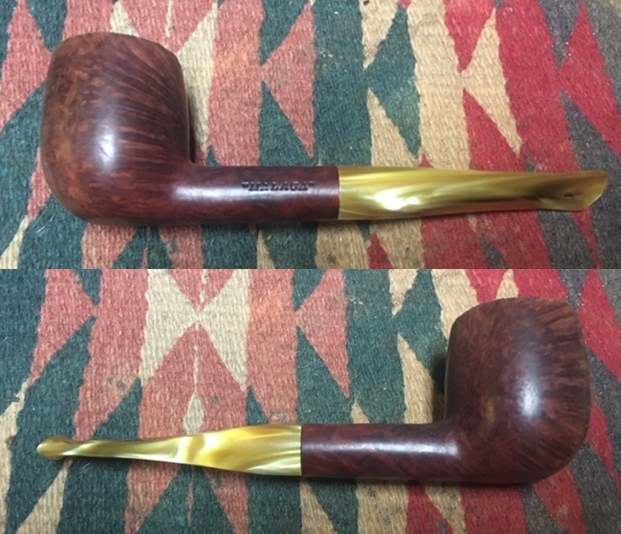
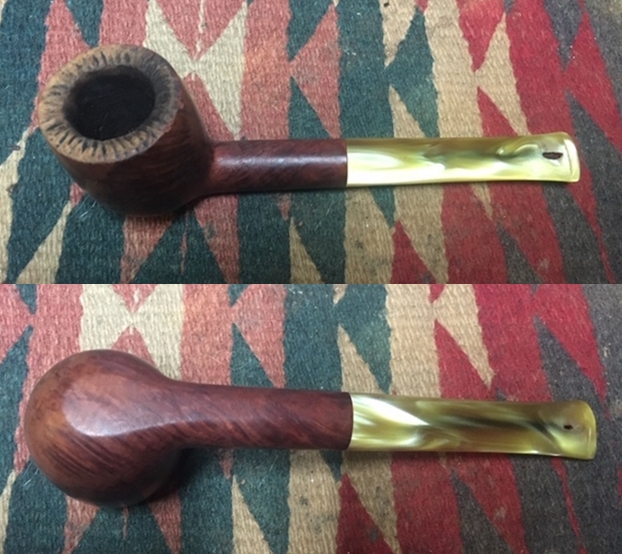
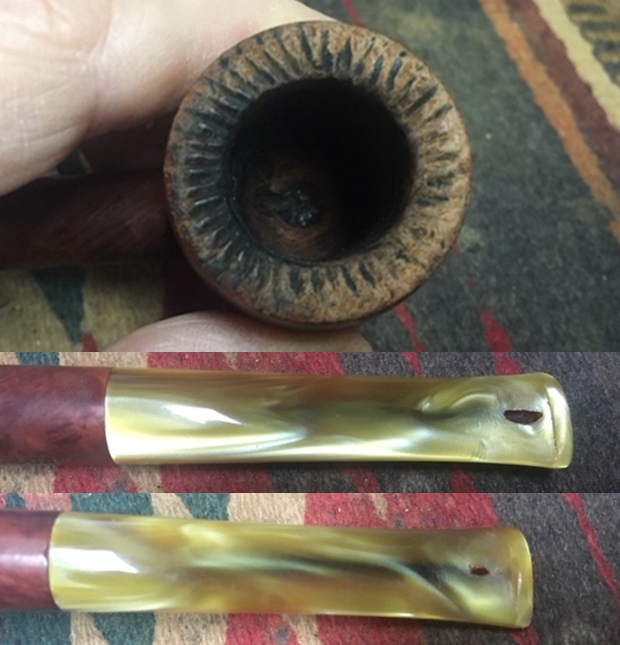
Redeeming a Malaga Bent Volcano from Kathy’s Dad’s Pipes


Blog by Steve Laug

I have been working on a lot of different estate pipes and selling them for different families. Once in a while it is good to change things up a bit. Not long ago Alex came by and went through the Malaga pipes from George Koch’s estate. Alex added the newly chosen pipes to the box that I have of pipes for him. There are quite a few of them to work on so I decided to continue to work on them. The next of these Malaga pipes is a shape I would define as a volcano. It has some mixed grain and a Lucite stem. The mix of grain styles around the bowl and shank combined with the stem make it a stunning pipe. It is one of the many Malaga pipes that came to my brother and me in several shipments of pipes from George’s daughter Kathy. When Jeff got each box the pipes were well wrapped and packed. Jeff unwrapped them and took the following photo to give an idea of the volume of the pipes that we purchased. This Malaga came in mixed in a box of pipes much like the one below.In each of the previous blogs that I have written on the restoration of George’s pipes I have told his story. If you have followed the restorations you will have read the information and the background piece that Kathy did on her father. Here is a link to one of the previous blogs on his Malaga pipes where I included her tribute in full (https://rebornpipes.com/2019/01/26/back-to-kathys-dads-pipes-restoring-a-%c2%bc-bent-malaga-author/). You can also read the bio on her Dad, George Koch. It is an interesting read and one that shows just how far our pipe collecting passion can go when we find a brand of pipes that we enjoy. I am going to only include the portion on the Malagas at this point. If you wish to read the rest follow the link above.

Kathy writes…We lived in Livonia, and that’s where his love for Malaga pipes began. After a few years he returned to Allis Chalmers and we moved back to Springfield. I remember that when we went back to Michigan to visit friends, Dad had to go to the Malaga store and acquire a few new pipes. Many a year I wrote to Malaga and they picked out a pipe for me to purchase that I could give Dad for a Christmas or birthday present. He was always pleased. His favorites were the straight stemmed medium sized bowl pipes, but he liked them all. 

He had some other pipes, but the Malagas were his favorites. I remember him smoking them sitting in his easy chair after work, with feet up on the ledge by the fire burning in the fireplace.  Growing up it was my job to clean them and he liked the inner bowl and stem coated with Watkins vanilla, leaving a little of that liquid in the bowl to soak in when I put them back on the rack…I’m very happy they are being restored by you and your brother and hope they find homes who enjoy them as much as Dad did. Thank-you for your care and interest. — Kathy, the oldest daughter

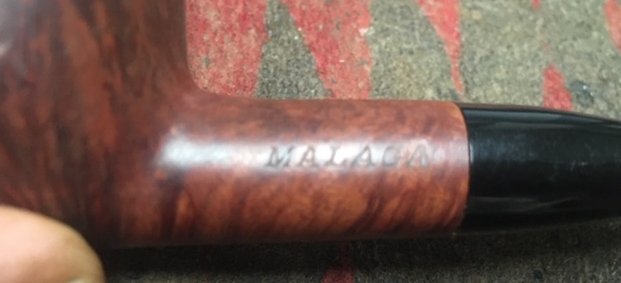
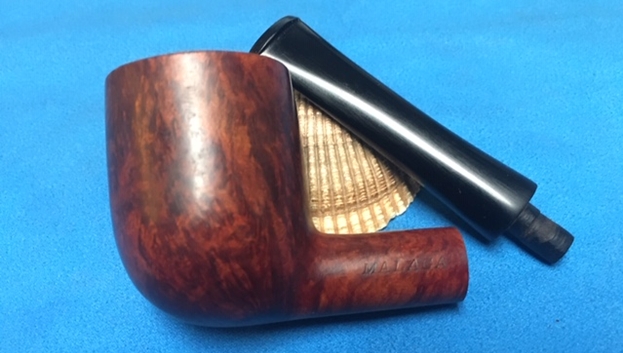
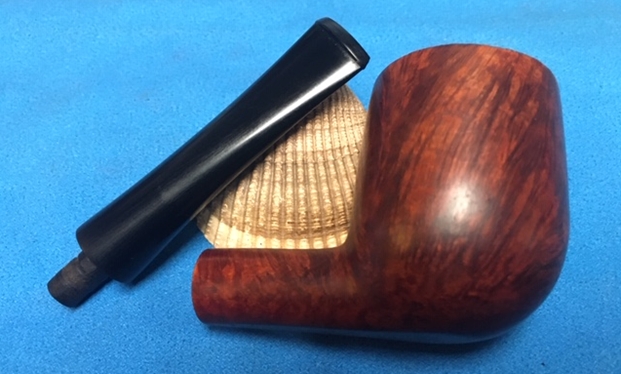
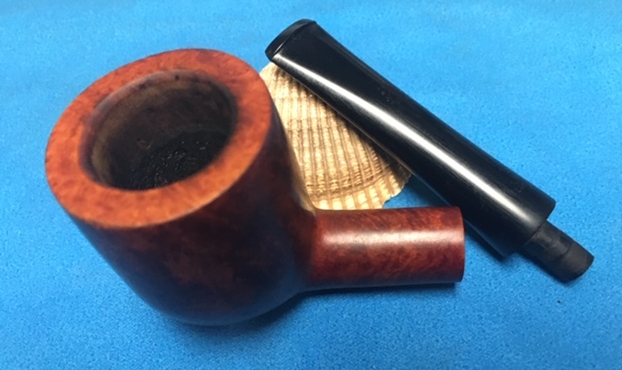
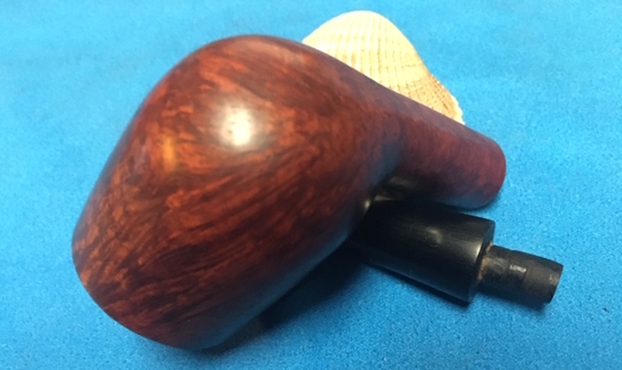
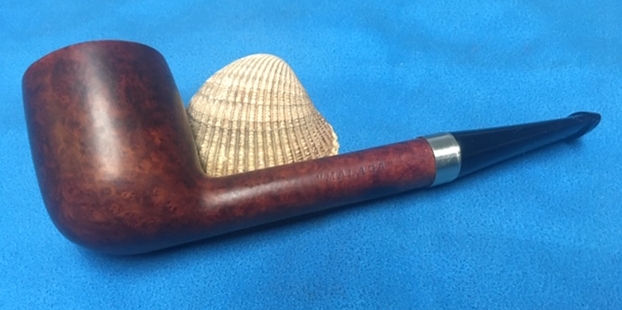
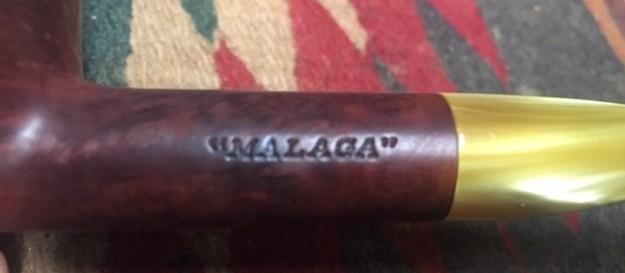
The Malaga Bent Volcano with a rounded bottom and carving around the bowl is next on the table. The carver did a great job of shaping the pipe to follow the grain on the briar. The large bowl, chubby shank and bent tapered acrylic stem look very good. The bowl had a thick cake that overflowed with lava onto the rim so that it was impossible to see if there was damage on the inner edges. The sides of the bowl and shank are very dirty with grime and oils from prolonged use. The stamping on the left side of the shank read MALAGA. The acrylic stem had tooth dents and chatter on the top and the underside of the stem. Jeff took these photos before he started the cleanup work on the pipe. Jeff took close up photos of the bowl and rim to capture the condition of the pipe before he started his cleanup work. The rim top had some lava overflow and darkening on the back of the bowl. There appeared to be deep gouges in the outer edge on the right of the grimy pipe.He also took photos of the sides and bottom of the bowl and shank to show the beautiful grain and unique carvings around the bowl. The photos show the general condition of the bowl and wear on the finish. It is very dirty but this is another beautiful pipe. Jeff took a photo to capture the stamping on the top side of the shank. The photos show the stamping MALAGA on the left side of the shank. The stamping is very readable.The next photos show the stem surface. There are tooth marks and chatter on both sides near the button and wear on the button surface and edges.I am also including the link to a blog that I wrote that gives some of the history of the Malaga brand and the Malaga Pipe Shop in Royal Oak, Michigan in the USA. I have written an earlier blog to give a little history of the Malaga Brand and the pipemaker, George Khoubesser. Here is the link – https://rebornpipes.com/tag/malaga-pipes/.That blog also includes links to a catalogue and the history of the pipemaker George Khoubesser. Follow the link to get a feel for the brand and the pipemaker.

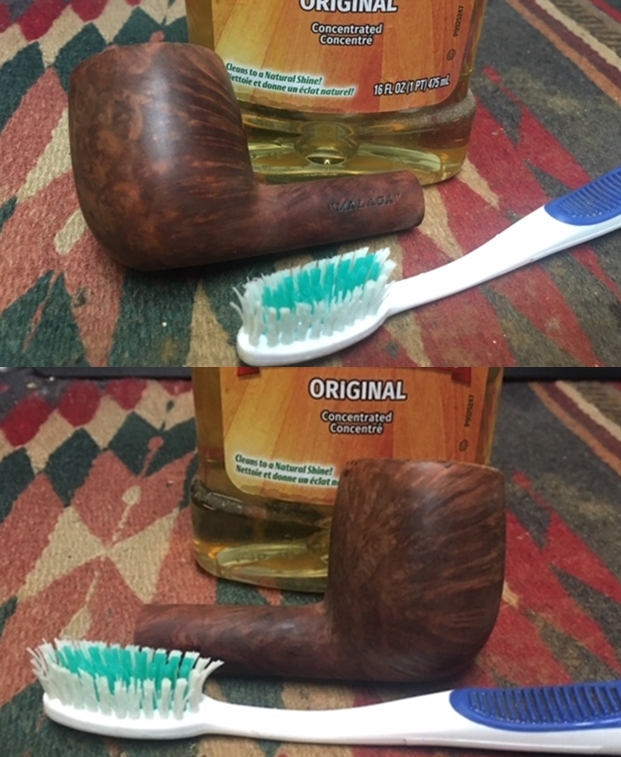
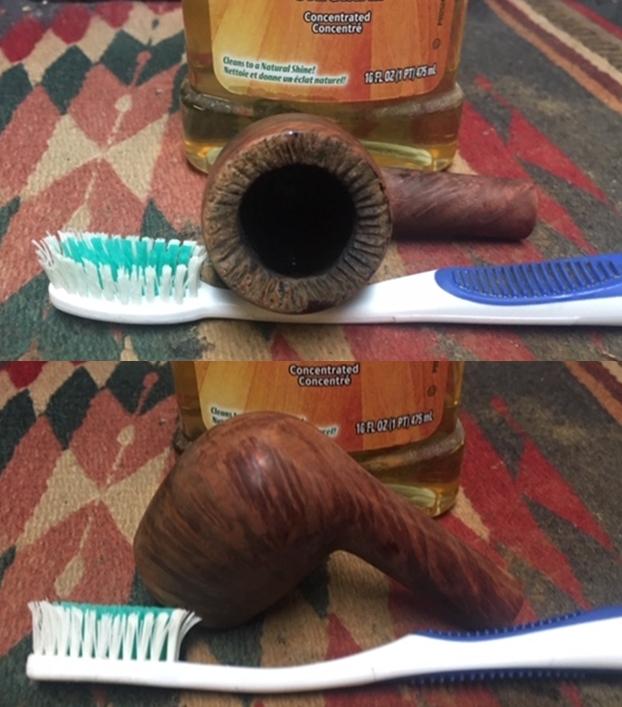
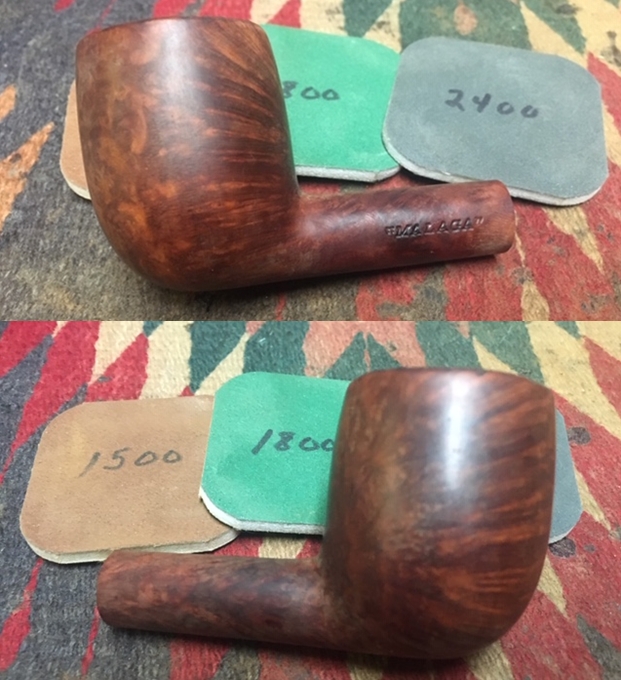
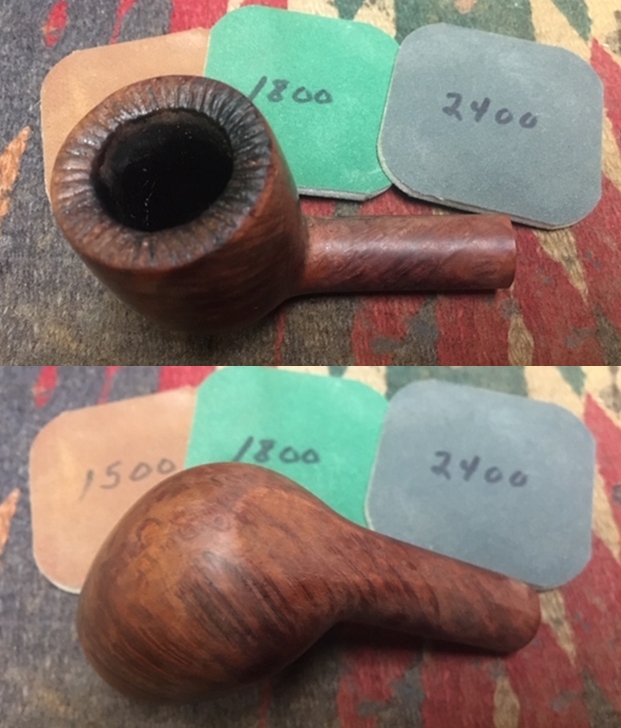
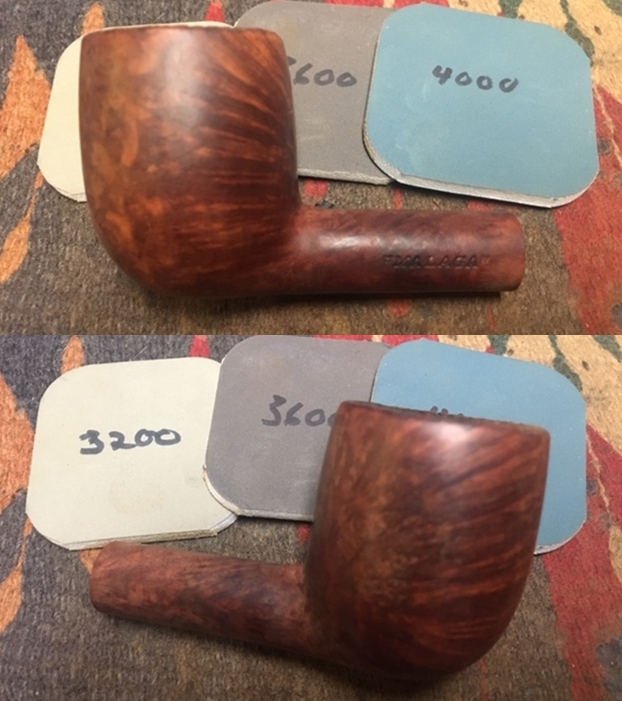
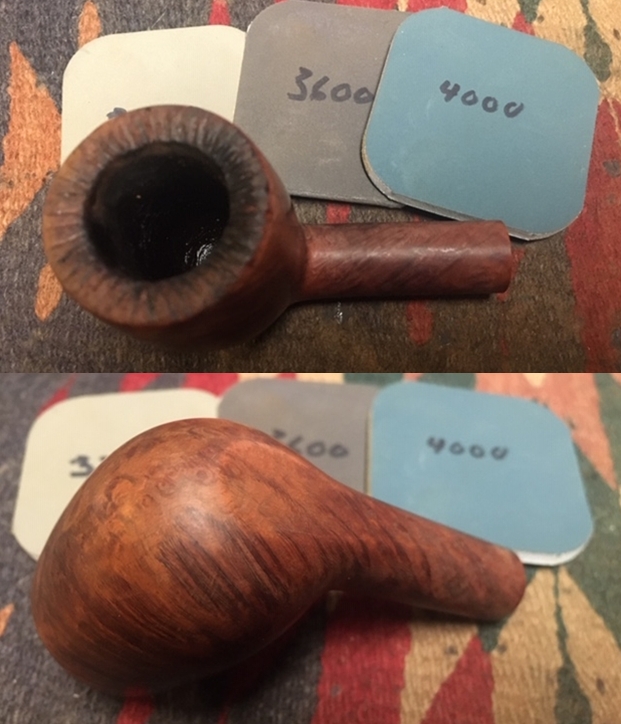
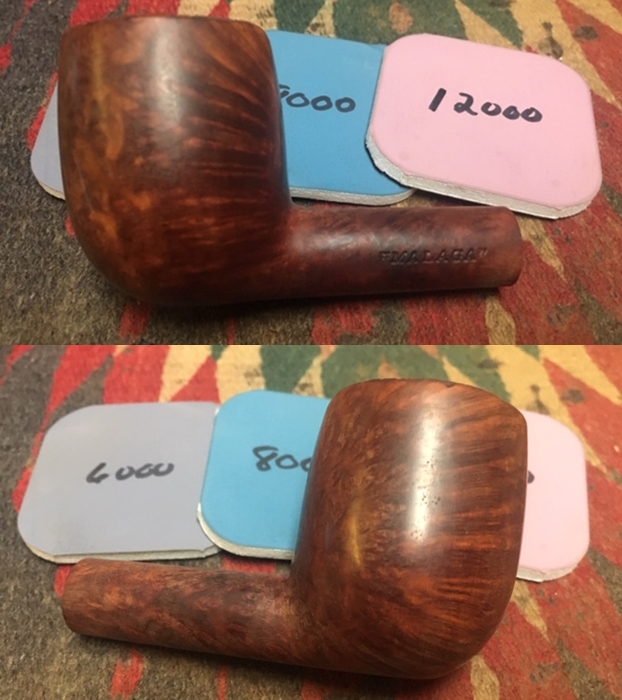
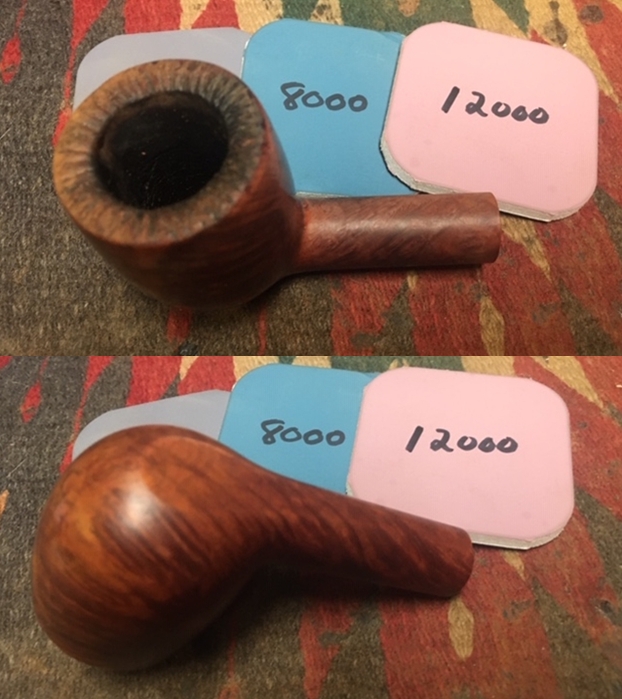
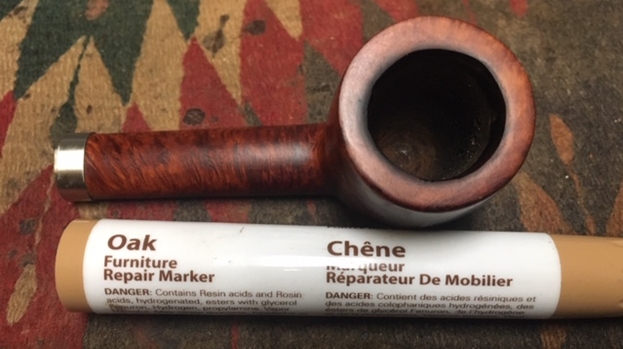
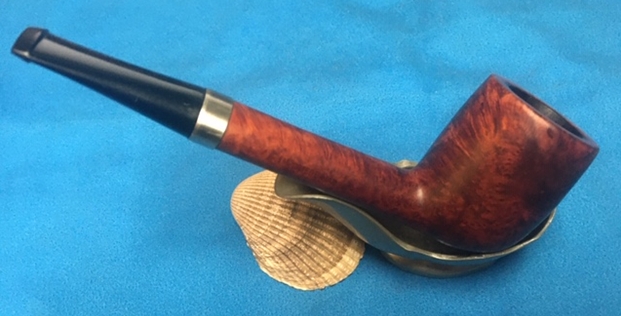
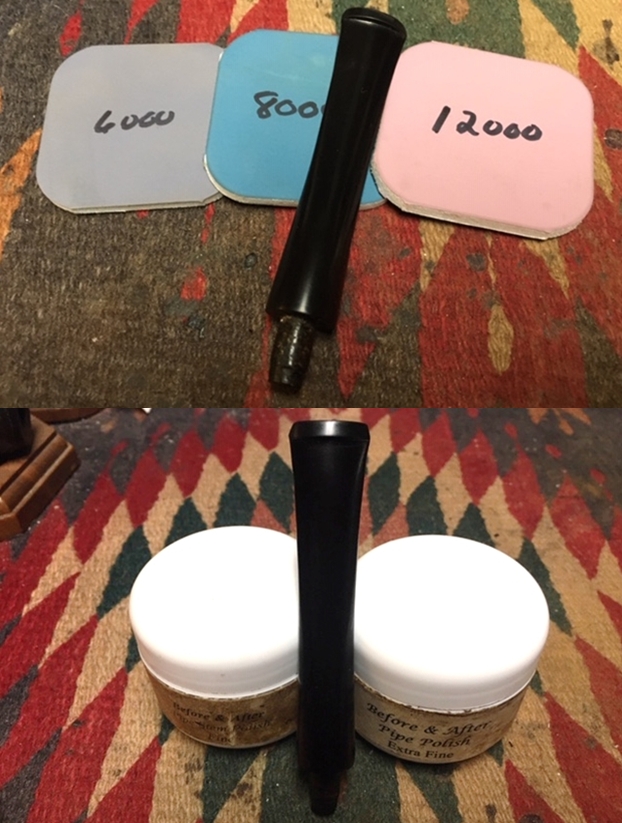
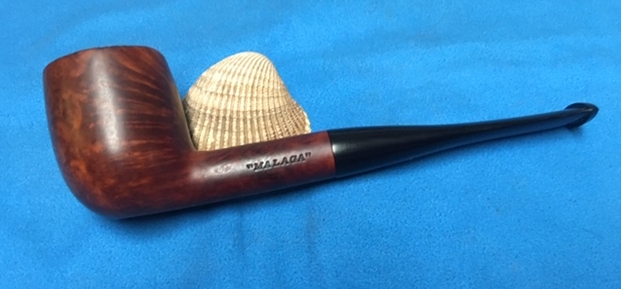
Jeff reamed the bowl with a PipNet pipe reamer and followed up with a Savinelli Fitsall pipe knife to remove the cake. He scrubbed out the mortise and the airway in the shank and the stem with alcohol, cotton swabs and pipe cleaners. He scrubbed the exterior of the bowl, rim, shank and stem with a tooth brush and Murphy’s Oil Soap to remove the oils and tars on the rim and the grime on the finish of the bowl. He rinsed it under running water. He dried it off with a soft cloth. He was able to remove the lava build up on the rim top and the flat surface of the rim looked very good. The inner edge of the rim has some serious burn damage on the front right side. The outer edge looked very good. I took photos of the pipe to show its condition before I started my work on it. I took close up photos of the bowl and rim top as well as the stem. You can see the condition of the rim top and bowl in the first photo. Jeff was able to remove all of the tar and oils but you can now see the damage on the inside rim edge. The edge is out of round. There is a burn mark that extends across back edge of the rim top at that point. The acrylic stem had tooth chatter on both sides near and on the button surface there was also a large deep bite mark on the underside of the stem.I took photos of the grain and carving around the bowl. The pipe looked really good. Just some work to do on the rim top and edges. I took a photo of the stamping on the shank to show how good the condition is. It shows the MALAGA stamp and it is very legible.I decided to address the rim top first. The first photo shows the rim top before I cleaned it up and reworked the damage. I lightly topped the bowl on a topping board with 220 grit sandpaper. I wanted to minimize the damage on the top, remove the darkening and clean up the damage on the front outer edge of the bowl. I used a folded piece of 220 grit sandpaper to clean up the damage on the right rear inner edge of the bowl. I gave the inner edge a slight bevel to repair the damage. I polished the edge with 400 grit wet dry sandpaper. The rim top and edges really looked better.I polished the rim top and the briar with micromesh sanding pads. I wet sanded the bowl with 1500-12000 grit sanding pads. I wiped the bowl down after each pad with a damp cloth to remove the sanding dust. I scrubbed the briar with Before & After Briar Cleaner and a tooth brush. I rubbed it into the surface of the briar with my finger tips and let it sit for about 10 minutes then rinsed it off with running water. I dried it off with a soft cloth. I restained the rim top and edges with an Oak Stain Pen. I was able to blend it into the rest of the bowl.I worked some Before & After Restoration Balm into the surface of the briar with my fingertips to clean, enliven and protect it. I let the balm sit for a little while and then buffed with a cotton cloth to raise the shine. The following photos show the bowl at this point in the restoration process. I am very happy with the results. I turned to the stem to address the issues on the surface of both sides at the button. I sanded both sides smooth with 220 grit sandpaper and 400 grit sandpaper to blend the tooth chatter and the repair into the surface of the stem. As I sanded and reshaped the button and stem surface the repaired areas and the tooth chatter disappeared.I polished the stem with micromesh sanding pads – wet sanding with 1500-12000 grit sanding pads. I wiped it down after each sanding pad Obsidian Oil. I finished by polishing it with Before & After Pipe Stem Polish both fine and extra Fine and then wiped it down with a final coat of Obsidian Oil. This is a Malaga Bent Volcano with a Lucite/acrylic tapered stem. It has a great look and feel. The shape of the bowl, the beveled rim top and the cut of the briar work well to highlight the grain around the bowl sides. The carved streaks and boxes look very good around the sides and bottom of the bowl. I polished stem and the bowl with Blue Diamond polish on the buffing wheel. I gave the bowl and the stem multiple coats of carnauba wax. I buffed the pipe with a clean buffing pad to raise the shine. I hand buffed it with a microfiber cloth to deepen the shine. The pipe polished up pretty nicely. The grain took on life with the buffing. The rich oil cured colour works well with the polished acrylic stem. The finished pipe has a rich look that is quite catching. Have a look at it with the photos below. The shape, finish and flow of the pipe and stem are very well done. The dimensions are Length: 6 inches, Height: 1 ¾ inches, Outside diameter of the bowl: 1 ¼ inches, Chamber diameter: ¾ of an inch. I will be adding the pipe to the finished Malaga pipes that I have set aside for Alex. I am glad that he is carrying on the trust for George Koch. Thanks for walking through the restoration with me as I worked over another one of Kathy’s Dad’s Pipes.


The Wreck of an Unknown Turned Lion’s Head Meer


Blog by Robert M. Boughton
Copyright © Reborn Pipes and the Author except as cited
https://www.roadrunnerpipes2k.com/
https://www.facebook.com/roadrunnerpipes/
Member, North American Society of Pipe Collectors

There’s an old saying in Tennessee, I know it’s in Texas, probably in Tennessee, it says, ‘Fool me once [long pause, forgetting where he’s going; laughter from the audience; continues, trying to recover] shame on — shame on you.  [More laughter] Fool me, you can’t get fooled again!”

— George W. Bush, 43rd president of the United States, September 17, 2002, before an audience of schoolchildren, parents and teachers in Nashville

INTRODUCTION
The vicarious embarrassment experienced by rational Americans who were alive and old enough to witness the poignant catalog of Bushisms (and it was longer than any forgiving person would care to remember) was at once painful and hilarious to behold, providing a sort of release valve for the intense pressures of events that were still fresh, burning sores on our collective psyche.  The list needs no new punditry.  It’s all been said, after all, but I would like to make one note of commiseration relevant to the above quote and this blog.  I was going to begin my account of this restoration with the words the president no doubt meant to use in his speech: “Fool me once, shame on you.  Fool me twice, shame on me.”*  Then I flashed on the great gaff from the turn of the millennium and decided to go with it, as the president’s graceful attempt to regain his oratory footing, reminiscent of a cornered badger, mirrors my own feelings after helping my roommate to choose a lion’s head meerschaum online.

You see, my roommate, Howard, is computer and cyber illiterate.  I mean no disrespect, it’s just a fact.  He’s the first to admit it, to everyone with whom he has business contact, going so far as denying having an email address until I signal him to tell the truth because it makes everything so much easier.  I’m the one who has to figure out and fix his problems, and I don’t mind that either.  In the interest of equal disclosure, I have my own deficiencies, including, it seems, not taking into consideration the one veritable litmus test of a problematic pipe and advocating its purchase anyway.  When my searches found eBay didn’t have anything the day I looked for a lion’s head meerschaum Howard would like, there were several choices from Etsy sellers.  All of them looked nice, but one stood out.  The title was “Genuine Meerschaum Warrantied Antique 19th Century Lion Head Pipe,” and the photo looked more or less like the following, which I took after it arrived.Two key points may already be obvious: that I indicated there was only one picture of the pipe, and, considering again that I took the shot above, my roommate bought it anyway.  The only explanation I can offer is the distracting pleasure and surprise I felt at Howard’s unusual excitement from the prospect of making his first pipe purchase that was a) online, b) from someone other than me and c) meerschaum.  Then there was his repeated instruction to me to order the pipe.  As I’m sure you can imagine, when Howard received his awaited package in the mail, soon after I placed the order, and discovered certain – well, for now I’ll just call them short-fallings – I was quick to point a finger of blame.  After all, the Etsy seller was culpable for the rather shabby way that the “short-fallings” were, no doubt on purpose, concealed and not mentioned anywhere in the description.

Still, I have to accept the blame not only because I should know by now never to order a pipe based on one photo, all the more so with someone else’s money, but I also made a close enough inspection of the single picture to question whether the pipe might be constructed of wood.  Ornate pipes, after all, were not limited to meerschaum.  I have a briar CPF tiger’s head medium churchwarden made from a very dark form of briar, and something about the shiny, deep, complete uniformity of the lion’s brown color was wrong.  I just didn’t yet get what it is, a subject to which I will return in a moment.  The most striking oddity was the clean and smooth chamber, which was the exact same brown as the outside of the stummel.  I mentioned to Howard the possibility the pipe was wood, but we agreed the overall quality appeared good enough that it didn’t matter.  Final examination of the lone photo revealed the perfect fit of the pipe in the case and the fading words “Genuine Meerschaum Warrantied” on the lining.  I take those words as a legal stipulation to the quality of the pipe’s main material rather than the name of an importer, although clever scammers abounded in the good old days as they do now.  But to me, the best, rarest detail is what appears to be the apparent original, hand-written price tag for $2.95 on a tiny scrap of paper preserved within the narrow curve of the case where the shank meets the stem.In hindsight, the lack of any grain, at least along the smooth shank, should have been the only sign needed that the lion’s head isn’t wood, but at last month’s meeting of my pipe club, one of two of my well-known pipe maker friends suggested the extreme, shellac- or varnish-like shininess made the stummel appear to be cast resin of some sort while the other said it resembled a precise kind of synthetic plastic the name of which I forget.  They both pointed out the obvious, that I could determine if the pipe was meerschaum by making a small test cut somewhere safe.  In most cases, no such location exists, but I chose the top stem end of the shank since it needed to be banded, which is a magnanimous way of describing the situation upon which I’m about to expand.  With my pen knife, I made a small scrape that revealed bright white meerschaum.  So that was the end of that unpleasant but necessary question to resolve.

Now, returning to the subject of what this pipe, which indeed is meerschaum, represents, and what my mind could not grasp because I had never seen an example of the phenomenon before.  It is a perfect example of the practice called “aging” meerschaum pipes by artificial means, a contradiction in terms of the vilest type.  I will never forget reading on one leading if self-styled meerschaum “ager’s” website of his special and so-called safe method of transferring a good, healthy, normal meerschaum pipe into one that, in his mind if no knowledgeable person’s, appears to have been colored to its fullest “antique” condition.  The rationale, to paraphrase with complete accuracy, was that all serious meerschaum collectors prize the rich colors that are produced over time by smoking meerschaum pipes, so why wait?  Well, there’s the rub!  Every serious collector I’ve ever known or heard from online cherishes above all else the slow, personal process of coloring the pipe that starts out bright white and turns yellow, gold, brown and, after many years of much use, a deep burgundy color.  The meerschaum ager fellow must have gotten his hands on the pipe that is now Howard’s.  That is the only explanation I can imagine why I thought of wood and my two well-known pipe-maker friends saw cast resin or synthetic plastic.  [NOTE THAT I DO NOT INCLUDE IN MY DISTASTE THE USE OF COLORING BOWLS, WHICH HAVE BEEN AROUND SINCE AT LEAST 1892, ALTHOUGH I HAVEN’T TRIED ONE YET, TO HELP MAKE THE PROCESS EVEN.  SEE THE LAST LINK IN SOURCES BELOW.]

For a description of a very old method of faking the color of antique pipes, see the chart at the end of the second link in Sources.

The opening shots of the meerschaum as it looked upon arrival will show both the slick attempt by its seller to hide the grave visible problems, not to mention the internal damage, and the actual outer calamities inflicted upon the still lovely pipe.  The list of damages I tallied with a quick look-see at the lion’s head  involved:

  • The broken red amber stem and bone tenon, with the stem face roughened by whatever accident caused the damage
  • A perfect, seamless break on the bottom of the shank extending from the opening most of the way to the draught hole and somehow stayed in place until the pipe was fully removed from its case
  • An old break in the bottom of the bowl that looked to be well-patched
  • Assorted white spots on the lion’s head where the meerschaum showed from chips
  • An adamant blockage of the draught hole from an unknown source I suspected was 100+ years of solidified bone tenon bits, tar, saliva and other nasty detritus (all of it hidden and absent from the seller’s description)

To determine that the stem is amber rather than Bakelite, or Redmanol, I used the simple two-step method described at the link in the Sources below: the material is warm to the touch and is luminescent when held under a black light.

That the pipe in this blog is antique is certain.  My belief that it dates to the late 19th century because of the intricacy of the carving and my personal observation that animals such as lions were on their way out by the turn of the 20th century, as well as the stem material being amber, is just that.

I will end this intro with the admission that, despite my stated certainty I could repair all of the problems with the pipe, Howard was the one of us who really believed it.

* The first known written record read, “When a man deceives me once, says the Italian proverb, it is his fault; when twice, it is mine.”  George Home, 1786, in the Pennsylvania Gazette, quoted in Breig, James, “Out, Damn’d Proverbs,” Colonial Williamsburg Journal, Winter 2002-2003. https://www.history.org/foundation/journal/winter02-03/proverbs.cfm.

RESTORATION I snapped the last shot above, showing the broken shank, after wheedling out the antique bone tenon.

To remove the extreme blockage in the vicinity of the draught hole, I tried an old trick of straightening a paper clip, then bending an end and working it into the entrance of the draught hole at the bottom of the chamber.  Alternating that approach with assaults from the other side (meaning through the shank) using various very thin metal objects, I realized I was getting nowhere.  And so I began this phase in earnest by diluting about one part isopropyl alcohol with five parts purified water and pouring the solution into the pipe chamber with the shank plugged. I let it soak a couple of hours and turned to my bizarre set of tools.  Some of the tools and other devices I employed for the extraction were a thin screw driver, the shank-clearing part of a three-piece pipe tool, the paper clip again and, taking a cue from Laurence Olivier’s evil Nazi dentist in The Marathon Man, some wicked-looking implements that could pass at a glance for dental tools.  In fact, as many of you will recognize, they are for carving, although the broken bits of bullheaded bone resembled rotted teeth.   However, the final push in the process was another alcohol-water soak of the chamber, but overnight that time.  After that, the metal shank part of the pipe tool pushed on through to the other side, dislodging one small chunk of dark old bone.  A good, strong blow through the shank with my fingers covering the rim sent the last five scraps blasting free with a whistle.

“This shank is clear,” I said to Howard, doing my best Zelda Rubinstein.  Howard, sitting across the living room table from me, smiled at the joke, but really, it was one of the most rewarding moments of my pipe cleaning life.  Here are the pieces from the stem, shank and, much later but included now as a sort of class photo, the remains I had to use way more force than I ever imagined possible on a meerschaum to dislodge from their long-held stronghold in the draught hole.  The extraction took about a week, but until it was accomplished – if I could pull it off without shattering the meerschaum into perhaps a thousand fragments – I wasn’t about to pend any more time on restoring this sorely abused work of art.I had come to the green light for reattaching the broken piece of the shank.  Pouring a small amount of shaved wood onto a business card, I added a few drops of Gorilla Super Glue and, using the spoon of my pipe tool to mix the two as fast as possible before they set, applied a thin layer to the exposed white meerschaum on the shank and returned the separated piece to its place with a firm push.  Somehow I didn’t get a pic of this step, but it looked just as natural as it did when it arrived held together by the forces of nature.  I stained the bottom of the lion’s mane black as it had been.  A lucky guess of moccasin brown for the shank and various white spots on the rest of the stummel was right on.  I flamed those areas with a Bic.The char buffed off without problem using 4000-12000 micro mesh pads.  I decided to carpe diem, and used super fine “0000” steel wool to remove the respiratory inhibiting coat of shellac or varnish or whatever was used to make the natural beauty of the meerschaum abnormally shiny everywhere except for the lion’s proud face and the underside.  I experienced an intense wave of relief.

One good thing about this pipe is that the threads of the stem and shank remained intact throughout more than a century of outrages perpetrated against the other limbs and sinews of its intricate feline features.  From an assortment of new bone tenons I have, and which seem well-named for this feral example of pipe carving, I chose one that screwed into the shank just right but needed to be glued into the stem.  For chemical reasons of which I have no understanding but do possess some practical experience with briar and meerschaum, sinking a loose tenon into a shank is best accomplished with an Epoxy/wood shavings mixture.  The one drawback to this method is the necessary full setting period of at least two days and sometimes more, depending on the gap in the shank.  On the other hand, sinking a tenon that is barely loose into a stem works fine with a Super Glue/shavings mix and of course dries far faster – so fast, in fact, that the difficulty with that path is mixing, applying and inserting the tenon into the stem before the mix dries.  Isn’t it just God’s honest truth that everything comes with a test?

My next task was to sink a crisp new bone tenon into the well-preserved amber stem that was a close enough fit to feel the grooves of the tenon and stem trying to connect.  I did so with the Super Glue/shavings mix.  For anyone who has never done anything like this before, I ran a pipe cleaner through the stem and tenon before stirring together the ingredients and applying the mix to the tenon, then inserting into the stem, again, all as fast as possible to avoid drying before the whole process was done. As soon as the tenon was in place, I wiggled the cleaner back and forth a little to assure it wasn’t sticky with glue and pulled it out.  This can take a little practice.  At least it did in my case, which was another benefit of using the Epoxy/shaving mix that takes longer to solidify.As I noted, the stem was in great shape for any pipe that has been used even for a short time, much less more than a century ago before moving it around, hiding it away in attics, storage spaces or wherever and of course taking it out of its case now and then to show off to friends without having a clue about its value to collectors.  As a result, I only needed to sand with 400- to 1000-grit paper before micro meshing from 1500-12000.  I finished the stem by buffing on the electric wheels with Red Tripoli and Carnauba wax.The last part of the official job was to fit a sterling silver band, per Howard’s specification, to support the crack.  What the photo of that particular damage doesn’t show is the length, which extended in a half-oval- about three-quarters of an inch.  That’s an impossible chunk to cover with anything but a home- or custom-made band.  Maybe if I had the skill of some I would have cut off the violated space and replaced it with a fancy ferrule, but as I’ve written in the past, shoulda-coulda-woulda.  I’ll save that procedure for another operation sometime in the future.

For the time being, I satisfied myself by measuring the shank and finding that between the stem opening and the far end of the crack it tapered from 15-15.5mm in diameter.  Vermont Freehand had sterling bands at half-millimeter intervals.  I decided 16mm would be too big and the exact fit of 15.5mm would require an adjustment to the shank.   Based on a gold band I ordered from the same source not long ago for another meerschaum repair, I also had reason to suspect the automatic length would be a quarter-inch.  Therefore, I ordered the 15.5mm band (as well as a tenon turning tool for my new drill press) and emailed Steve Norse, owner of VF, that I’d like a half-inch or even longer band if possible.  He came through with a half-incher that covered two-thirds of the crack, and if I could give him a BBB rating, it would be AAA.   When the band arrived, as predicted, I had to take a little meerschaum off the shank opening end using a 180-grit pad.After gluing the band onto the shank, which was still a very tight fit, I sanded the outer edge of the band with a 220-grit pad to even it as much as possible without off-setting the stem fit.  Someday I’ll develop my eyes to spot the alignment problem before I Super Glue a new band onto the shank so I can even the shank instead! Instead of crying over spilt milk, I touched up the uncovered sanded area with more moccasin brown stain, flamed and micro meshed.  The last third of the wicked crack is visible in the shot below.I would have been finished, except that Howard decided he wanted the dull black and scuffed pipe case cleaned up – meaning stained.  Being perhaps a bit old fashioned, my initial silent reaction was opposed to the idea of altering the natural aged look of the case.  After a moment’s thought, however, I realized not only that the pipe and its case didn’t belong to me, but that I could indeed make the case look much better than it did.  Besides, I had never restored a case before.  Here it was before.And here’s the case after staining with black leather dye and flaming with a Bic.That’s it, other than the finished pipe. And finally, the case is closed – buffed with Carnauba.  The sides where it clasps shut are flaking, so I didn’t stain them brown.CONCLUSION
I have faults like everyone, but honesty isn’t one of them.  If anything, my openness has been to my detriment.  That said, as I admitted my responsibility for Howard’s purchase of this challenged but nevertheless wonderful pipe that is a series of contradictions – complex and straight-forward, delicate but powerful, strengthened by its injuries, beautiful in part from its rough-weathered time in our world – I also admit my restoration has flaws.  At least I am confident I returned some pride to the old lion as another winter approaches and made him of use and value again.  Howard loves the venerable example of old world carving skill because of its quality and freshness of taste but also its longness of tooth and attendant need for care.  He wouldn’t object in the least if it were made of wood, even a kind other than briar.  All Howard knows is that it looks good, feels rugged and fits right in his hand and even makes his tobacco taste better.

What more could anyone want?

SOURCES
https://preadored.com/the-notebook/how-to-test-amber-and-bakelite/

http://tobaccopipeartistory.blogspot.com/p/collecting.html

https://www.paykocimports.com/blog/how-your-meerschaum-pipe-was-created-and-what-makes-it-better-than-other-pipes/

https://www.smokingpipes.com/smokingpipesblog/single.cfm/post/meerschaum-coloring


New Life for a Malaga Egg Shaped Oom Paul for Alex


Blog by Steve Laug

I have been working on a lot of different estate pipes and selling them for different families. I am continuing to work on the Malaga pipes that Alex put aside for restoration. He also brought other pipes to add to his box. I have a box of pipes from Alex that I am always working away at. He periodically drops more Malaga pipes into his box. There are quite a few of them to work on so I decided work on a few of them. The next one of these was another Malaga pipe. It is a beautiful Egg shaped Oom Paul that has a very tight grain pattern. It also has a fancy turned vulcanite stem. The pipe was dirty and caked when arrived. The rim top has a little lava and some small nicks on the left and front of the outer edge of the bowl. The bowl had a thin cake in it that was hard and dense. The exterior of the bowl and shank are very dirty with grime and oils from prolonged use. The stamping on the underside of the shank below the shank/stem junction was faint but readable and read MALAGA. The vulcanite stem was had tooth chatter on the top and the underside of the stem. There were tooth marks on both sides as well and the button was worn. I took photos of the pipe before I started the cleanup work. I took close up photos of the bowl and rim to capture the condition of the pipe before I started my cleanup work. The rim top had some lava and a few nicks on the outer front and left edge. The inner edge was slightly worn on the right inner edge where the rest of the inner edges was smooth and unbeveled. Other than being so dirty it was in great condition. The stem was dirty and there was tooth chatter on the top and underside near the button. There were tooth marks on the topside and underside ahead of the button and the sharp edge of the button was worn and damaged. The stem was also lightly oxidized.I took a photo to capture the stamping on a smooth panel on the underside of the shank near the stem/shank joint. The photo shows the stamping MALAGA on the underside of the shank is very readable.If this is the first of the Malaga restorations that you have read about then you should know the backstory of the brand. I am including the link to a blog that I wrote that gives some of the history of the Malaga brand and the Malaga Pipe Shop in Royal Oak, Michigan in the USA. I have written an earlier blog to give a little history of the Malaga Brand and the pipemaker, George Khoubesser. Here is the link – https://rebornpipes.com/tag/malaga-pipes/.That blog also includes links to a catalogue and the history of the pipemaker George Khoubesser. Follow the link to get a feel for the brand and the pipemaker.

I decided to start with the issues with the rim top first. I wiped down the rim top of the bowl with a damp cloth to remove the tars and lava. I topped the bowl with 220 grit sandpaper on a topping board to remove the damaged areas. Once the top was smoothed out I filled in the holes on the front and left outer edge with clear super glue. Once the repairs cured I sanded the top and edge smooth with a folded piece of 220 grit sandpaper and 400 grit wet dry sandpaper. I followed our regular regimen for cleaning estates. I reamed the bowl with a PipNet pipe reamer and followed up with a Savinelli Fitsall pipe knife to remove the cake. I sanded the bowl with 220 grit sandpaper wrapped around a piece of dowel to smooth out the inside walls of the bowl. I scrubbed out the mortise and the airway in the shank and the stem with alcohol, cotton swabs and pipe cleaners. I restained the top of the rim and inner edge with an oak coloured stain pen to match the colour of the rest of the bowl. Once it had dried the match was very good.I polished the briar with micromesh sanding pads – 1500-12000 grit pads. I wiped the bowl down after each sanding pad with a damp cloth to wipe of the dust. I scrubbed the briar with Before & After Briar Cleaner. I rubbed it into the surface of the briar with my finger tips and let it sit for about 10 minutes then rinsed it off with running water. I dried it off with a soft cloth. I worked some Before & After Restoration Balm into the surface of the briar with my fingertips and a horsehair shoe brush to clean, enliven and protect it. I let the balm sit for a little while and then buffed with a cotton cloth to raise the shine. The photos show the bowl at this point in the restoration process. I set the bowl aside and turned my attention to the stem. I wiped down the stem with alcohol and cleaned out the tooth marks and deep dents in the vulcanite. I filled them in with clear super glue and also built up the surface of the button on the top and underside. I set it aside and let the repair cure.Once the repairs had cured I used a needle file to cut button edge, reshape the button and also smooth out the repaired areas. I sanded out the tooth chatter with 220 grit sand paper and started to polish it with a folded piece of 400 wet dry sandpaper. Once it was finished it began to shine.I polished the stem with micromesh sanding pads – wet sanding with 1500-12000 grit sanding pads. I wiped it down after each sanding pad with a damp cloth. I polished it with Before & After Pipe Stem Polish – both Fine and Extra Fine and buffed it off with a cotton cloth. This is a beautiful Malaga Egg shaped Oom Paul with a fancy black vulcanite turned stem. It has a great look and feel. The shape is very tactile and is a beauty. I polished stem and the bowl with Blue Diamond polish on the buffing wheel. I gave the bowl and the stem multiple coats of carnauba wax. I buffed the pipe with a clean buffing pad to raise the shine. I hand buffed it with a microfiber cloth to deepen the shine. The pipe polished up pretty nicely. The rich oil cured briar took on life with the buffing. The rich brown colour of the briar works well with the polished vulcanite stem. The finished pipe has a rich look that is quite catching. Have a look at it with the photos below. The shape, finish and flow of the pipe and stem are very well done. The dimensions are Length: 6 ½ inches, Height: 2 1/8 inches, Outside diameter of the bowl: 1 ¼ inches, Chamber diameter: 3/4 of an inch. I will be adding the pipe to the finished Malaga pipes that I have set aside for Alex. This will be a great addition to his collection of Malaga pipe. Thanks for walking through the restoration with me as I worked over another Malaga.

New Life for a Malaga Rusticated Canadian for Alex


Blog by Steve Laug

I have been working on a lot of different estate pipes and selling them for different families. Once in a while it is good to change things up a bit. Alex came by and went through the Malaga pipes I have awaiting restoration. He also brought other pipes to add to his box. I have a box of pipes from Alex that I am always working away at. He periodically drops more Malaga pipes into his box. There are quite a few of them to work on so I decided work on a few of them. The next one of these was another Malaga pipe. It is a beautiful oval shank Rusticated Canadian that has a very tight pattern of rustication. It also has a long striated grey/silver/black acrylic stem. The Malaga Canadian that Alex picked up from EBay. It had been mislabeled a Hungarian and the price was right. The pipe was dirty and caked when arrived. The rusticated rim top has a little lava filled but otherwise looked good. The bowl had a thin cake in it that was hard and dense. The exterior of the bowl and shank are very dirty with grime and oils from prolonged use. The stamping on the left side of the shank was in a smooth band on the thin shank. It read MALAGA. There was a thin band of smooth briar around the shank end. The acrylic stem was had tooth chatter on the top and the underside of the stem. I took photos of the pipe before I started the cleanup work. I took close up photos of the bowl and rim to capture the condition of the pipe before I started my cleanup work. The rim top had some lava embedded in the rusticated finish and was heavier on the back side. The outer and inner edges of the bowl were not too bad. The inside edge was clean and the outside looked very good. Other than being so dirty that it was in great condition. The stem was dirty and there was tooth chatter on the top and underside near the button and on the flat surfaces of the stem.I took a photo to capture the stamping on a smooth panel on the left side of the shank near the stem/shank joint. The photo shows the stamping MALAGA on the left side of the shank is very readable. If this is the first of the Malaga restorations that you have read about then you should know the backstory of the brand. I am including the link to a blog that I wrote that gives some of the history of the Malaga brand and the Malaga Pipe Shop in Royal Oak, Michigan in the USA. I have written an earlier blog to give a little history of the Malaga Brand and the pipemaker, George Khoubesser. Here is the link – https://rebornpipes.com/tag/malaga-pipes/.That blog also includes links to a catalogue and the history of the pipemaker George Khoubesser. Follow the link to get a feel for the brand and the pipemaker.

I followed our regular regimen for cleaning estates. I reamed the bowl with a PipNet pipe reamer and followed up with a Savinelli Fitsall pipe knife to remove the cake. I scraped out the dried tars and oils with a pen knife and then scrubbed out the mortise and the airway in the shank and the stem with alcohol, cotton swabs and pipe cleaners.I scrubbed the briar with Before & After Briar Cleaner. I rubbed it into the surface of the briar with my finger tips and let it sit for about 10 minutes then rinsed it off with running water. I dried it off with a soft cloth. I touched up the edges of the rim with a walnut stain pen to take care of the damage there. Then I worked some Before & After Restoration Balm into the surface of the briar with my fingertips and a horsehair shoe brush to clean, enliven and protect it. I let the balm sit for a little while and then buffed with a cotton cloth to raise the shine. The photos show the bowl at this point in the restoration process. The stem was in excellent condition but there was some light tooth chatter and no deep marks. It was well cut stem and had a great look and feel. I sanded out the tooth chatter with 220 grit sand paper and polished it with 400 wet dry sand paper. Once it was finished it began to shine.I polished the stem with micromesh sanding pads – wet sanding with 1500-12000 grit sanding pads. I wiped it down after each sanding pad with a damp cloth. I polished it with Before & After Pipe Stem Polish – both Fine and Extra Fine and buffed it off with a cotton cloth. This is a beautiful Malaga Rusticated Canadian with a variegated grey/black/silver acrylic stem. It has a great look and feel. The rustication is very tactile but also the pattern is well done and a tight pattern. It is a beauty. I polished stem and the bowl with Blue Diamond polish on the buffing wheel. I gave the bowl multiple coats of Conservator’s Wax and the stem multiple coats of carnauba wax. I buffed the pipe with a clean buffing pad to raise the shine. I hand buffed it with a microfiber cloth to deepen the shine. The pipe polished up pretty nicely. The rustication took on life with the buffing. The rich brown colours work well with the polished acrylic stem. The finished pipe has a rich look that is quite catching. Have a look at it with the photos below. The shape, finish and flow of the pipe and stem are very well done. The dimensions are Length: 7 inches, Height: 1 7/8 inches, Outside diameter of the bowl: 1 3/8 inches, Chamber diameter: 3/4 of an inch. I will be adding the pipe to the finished Malaga pipes that I have set aside for Alex. This will be a great addition to his collection of Malaga pipe. Thanks for walking through the restoration with me as I worked over another Malaga.

Replacing a Broken Tenon and Restoring a Harcourt Hand Carved S Freehand


Blog by Steve Laug

About a month ago I received a phone call from a guy from Nova Scotia who was visiting in Vancouver and had made a stop at City Cigar on 4th Ave. W. and asked about having a pipe repaired. He told me that he had a freehand pipe that had been sitting in a bag for years with a broken tenon. He was going to leave it with his brother in law and they would get in touch with me about repairing it. Earlier this week I received a text from his brother in law with photos of the pipe that needed the repair. I have included those photos below. It was a nice looking Freehand with a fancy turned stem. The tenon was snapped off in the shank and was stuck from the look of the photos. The shape and the look of the pipe reminded me of other freehands I have worked on that were made by Preben Holm. We made arrangements and we booked a time for him to drop the pipe off. Today I had the day off and I received a text that he was dropping the pipe by today for a repair. I took some photos of the pipe before I started working on it. The tenon was stuck in the shank and was not moveable. The finish was dusty but in excellent condition. The rim top and edges were in excellent condition. There was a light cake in the bowl and the pipe smelled of a strong vanilla aromatic in the bowl. The stem was lightly oxidized and was snapped very close to the square/diamond turned piece on the fancy stem. I took a photo of the plateau on the rim top and the shank end. The pipe was dusty but otherwise the finish was in great condition. I took a photo of the stem surfaces. Other than being lightly oxidized there were no tooth marks or chatter on the stem surface. I took a photo of the stamping on the underside of the shank. It had a uppercase S at the top of the stamping. Under that it read Harcourt over Hand Carved in Denmark.After I took the photos I put the bowl in the freezer so that I would be able to pull the broken tenon from the shank. The time in the freezer causes the briar to release the broken tenon that was stuck.  After a half hour in the freezer I took it out and the broken tenon easily came out of the shank. I took photos of the parts.I decided to refresh my memory about the brand before I started working on it. I did a quick search on rebornpipes to read the posts that I had there. The first of these was by Charles Lemon of Dad’s pipes (https://dadspipes.com/2016/10/20/in-praise-of-international-cooperation-cleaning-up-a-large-harcourt-grade-d-freehand-by-preben-holm-for-dunhill/). I quote the pertinent part of Charles piece.

By all accounts, the Danish Fancy pipe boom of the 1960s and 1970s caught the great English pipe house of Dunhill unprepared. Dunhill was unable to produce the new Freehand shapes in-house, so if the firm was to capitalize on the surging demand for Danish pipes, it would have to look elsewhere. The answer came in the form of a contract with the Preben Holm factory for the production of what became the Harcourt brand of pipes, destined for distribution through Dunhill’s network of principal pipe dealers.

The Harcourt on my worktable arrived in excellent estate condition. It is easily one of the largest pipes I’ve worked on – its overall length is just 5.75 inches, but the stummel is a real fistful of briar measuring 2.5 inches tall by 1.6 inches wide with a copious tobacco chamber of nearly one inch in diameter and 2.25 inches deep! Despite its size, the pipe weighs only 2.3 ounces or 64 grams.

That helped me confirm the connection to Preben Holm that I remembered. It connected Preben Holm with Dunhill as well. The other blog was one that had written on a Harcourt that I restored (https://rebornpipes.com/2018/06/29/a-harcourt-hand-carved-freehand-7-of-anthonys-dads-pipes/). I quote a portion of the blog and include one of the photos that I had used in that blog:

I had some vague memory about the Harcourt brand that had a connection to Preben Holm and the stamping seemed a lot like the way that he stamped his pipes. I did a bit of research on the brand to see the connection. The first place I looked was on Pipedia at the following link: https://pipedia.org/wiki/Harcourt. There I found the following information which I quote in full.

The brand Harcourt was produced by Preben Holm (†) for Dunhill to secure a share of the Danish fancy boom for Dunhill’s principal pipe dealers. Later Erik Nørding made Harcourt pipes for a shorter period. These pipe are sometimes (partially) rusticated.

It had been reported that the second generation of Harcourt pipes were sold exclusively through Dunhill stores, but we now know through Rich Mervin that the Brick Church Pipe Shop, a chain of 3 stores in NJ sold Danish freehands in the 1970s and 80s including Knute, Ben Wade, and Harcourt. They were also an authorized Charatan and Dunhill retailer. So, apparently Harcourt freehands were sold through at least some Dunhill dealers as well as the Dunhill stores.

I then turned to the pipephil site at this link and found out some more information on the brand. http://www.pipephil.eu/logos/en/infos/harcourt1.html. I followed the links there to some photos of a boxed pipe and the stamping on the shank.

This box contains a pipe carved for Dunhill in the 1970s. Harcourt pipes were Dunhill’s answer to the passion Danish style raised during this period.From my previous research I confirmed the connection between the pipe I am working on and the Harcourt pipes that were made by Preben Holm. The connection between Preben Holm and Dunhill’s desire to tap into the Danish Freehand market in the US was also helpful as it gave me a potential date for the pipe. It was made in the 1970s – the height of the Danish period in the US. Now it was time to replace the broken tenon.

I used the Dremel and sanding drum to smooth out the face of the stem and remove the damaged portion of the broken tenon. I also went through my box of tenons and found one that would be a good replacement for the broken one. It was a threaded tenon that was a Jobey replacement tenon. It had the correct diameter and with a bit of work the threaded portion would anchor well in the stem.    I used my cordless drill to open the airway in the stem to the diameter of the threaded portion of the new tenon. I started with a bit slightly larger than the current airway. I drilled it to the depth of the threaded portion of the tenon. I worked my way through various drill bits until I had one that was slightly larger than the new tenon.I took a photo of the open airway on the stem. I roughed up the threads on the tenon replacement and removed the ridge in the middle with the Dremel and sanding drum. I coated the end of the tenon with super glue and pressed it into the open airway on the stem. Once the glue cured I took photos of the stem in the pipe. Once the glue cured I took photos of the stem in the pipe. The pipe still needed to be cleaned up but the look was very good and the feel in the hand and mouth was perfect. I took a photo of the stem out of the shank to show the finished tenon replacement. The stem and tenon needed to be polished but the fit and shape is perfect.With the stem repaired it was time to do the restoration on the pipe as a whole. I started with the bowl. I reamed the bowl with a Savinelli Fitsall Pipe Knife, scraping the light cake from the bowl. I sanded the inside of the bowl to remove the rest of the cake with 220 grit sandpaper wrapped around a piece of dowel.I cleaned out the inside of the shank and the airway to the bowl with alcohol, pipe cleaners and cotton swabs. I cleaned the inside of the airway in the stem at the same time.I rubbed the bowl down with Before & After Restoration Balm. I worked it into the surface of the briar with my fingertips and a horsehair shoe brush to clean, enliven and protect it. I let the balm sit for a little while and then buffed with a cotton cloth to raise the shine. Mark Hoover’s Balm is a product that I have come to appreciate and one I use on every pipe I have been working on.  I set the bowl aside and turned my attention to the stem. I sanded the stem with 220 grit sandpaper to break up the oxidation. I started the polishing with 400 grit wet dry sandpaper to remove the scratching. It is starting to look good.     I have one more tin of Denicare Mouthpiece Polish left from a few that I have picked up over the years. It is a coarse red pasted that serves to help remove oxidation. I polished the stem with that to further smooth out the surface of the vulcanite (and to be honest – to use it up). I polished the stem with micromesh sanding pads – wet sanding with 1500-12000 grit pads. I wiped the stem down after each sanding pad with Obsidian Oil. I polished it with Before & After Pipe Stem Polish – both Fine and Extra Fine. Once I had finished the polishing I gave it final coat of oil and set it aside to dry. When this pipe was dropped off yesterday I told the fellow that it would be a couple of weeks before I got to work on it. However, yesterday afternoon I felt like doing something a bit different in the restoration process. I finished the repair yesterday and finished the polishing it today. With every pipe I work on, I look forward to when it all comes back together, polished and waxed. I put the bowl and stem back together. I polished the bowl and stem with Blue Diamond to polish out the scratches in the briar and the vulcanite. I gave the bowl multiple coats of Conservator’s Wax and the stem multiple coats of carnauba wax. I buffed the pipe with a clean buffing pad to raise the shine. I hand buffed it with a microfiber cloth to deepen the shine. The pipe polished up pretty nicely. The sandblast finish looked really good with the polished black vulcanite. This Harcourt Hand Carved Preben Holm Freehand was another fun pipe to work on. It really has a great Freehand look that catches the eye. The combination of various oxblood, black and brown stains really makes the pipe look attractive. It is another comfortable pipe to hold in the hand. The finished pipe is shown in the photos below. The dimensions of the pipe are Length: 6 inches, Height: 3 inches, Outside diameter of the bowl: 2 inches, Chamber diameter: ¾ of an inch. I look forward to when the fellow picks it up and I get to hear what he thinks of the pipe. Thanks for reading this blog and my reflections on the pipe while I worked on it. This is an interesting estate to bring back to life.

Restoring a Second Custom-Bilt, a Large Billiard from My Inheritance


Blog by Paresh Deshpande

I have decided that I would now first complete all the Custom-Bilt pipes from my inheritance that I had got along with me to my place of work place and the remaining ones at my home town will be done later. I had professed my appreciation and liking for Custom-Bilt pipes for their large size, shape, hand feel and the rustic looks. The next pipe from the collection which I decided to work on was a huge Custom-Bilt briar pipe. The large size of the bowl, thick shank and large saddle stem, lends this pipe a weight which I particularly enjoy holding in my hand.

The pipe has deep and large vertical worm rustications along the entire length of the shank and height of the bowl. Within these large vertical rustications are very thin, closely stacked horizontal lines which give this pipe its unique appearance and are its trademark!! I absolutely love these pipes. These large rustications continue right up to the outer rim of the bowl. The thick rim top is covered with the same thin, closely stacked lines as seen between the vertical rustications. The worm rustications on the shank are much thin and precise as compared to the ones on the bowl and end about ¾ inch before the shank end giving a semblance of a shank end ring. These thin worm rustications can be seen at the foot of the stummel with smooth portions in between them. It is stamped on the left side of the shank as “Custom-Bilt” with a hyphen between the two words, in cursive hand. The “IMPORTED BRIAR”, a commonly observed stamp on these pipes, is seen in the smooth surface towards the front on the foot of the stummel followed by the number “3038” in the next portion towards the shank end.Having worked on a few Custom Bilt pipes in the past and researched this brand and based on the stampings seen on this pipe, I can say with an amount of certitude, that this pipe is from the period 1938-46. Here is the proof in determining the vintage based on stampings as researched by William E. Unger, Jr., PhD, which deals with the study of Custom-Bilt pipes.With this confirmation as regards to the vintage of this pipe, I move ahead with the initial visual inspection of this pipe.

INITIAL VISUAL INSPECTION
The pipe, as I received in the box, was carefully wrapped in a soft cotton cloth, stummel and stem separate!!! The condition of the stem and the stummel made me wonder if this pipe had been received after restoration/ repair work; it appears in such great condition. I thoroughly checked the entire pipe for any signs of repairs or damages. Fortunately there were none!! Only the stem appears brand new. Could it be a new replacement stem from an authorized store? No way to determine this as there are neither any receipts or documents nor any person in my family who could have confirmed this aspect.

The chamber has a thin layer of cake and does not appear to have been smoked much, may be a few bowls at the max. The condition of the inner walls of the chamber can be determined only after the cake has been completely reamed out down to the bare briar. The draught hole is dead center and at the bottom of the chamber. This should be a fantastic smoker. The thin worm rusticated rim top surface is covered in dust and grime all these years of storage. The outer and inner edges of the rim are in good condition with no damage. The craggy large vertical worm rustication with its horizontal thin line rustications within makes for a visual treat. The large vertical rustications are filled with dust and grime to such an extent that the horizontal lines lying within are barely visible. Same goes for the rim top. Though covered in dust and grime of all these years of storage, these should clean up nicely. I have seen an aluminum shank/ mortise extension fixed inside of the mortise on another very similarly sized and shaped Custom-Bilt from my Grandfather’s collection which I had restored about a year back!! This aluminum shank/ mortise extension (or should it be called a tenon?), was also seen on the previous Custom-Bilt Pot that I had restored just a couple of days back. However, this pipe has no such extension, just regular mortise and stem tenon construction. The mortise shows slight accumulation of oils and crud which has resulted in a slight gap between the stem and the shank end when seated. A thorough cleaning of the shank should address this issue. The wide straight saddle vulcanite stem is in pristine condition and seats with a slight gap in to the mortise with all the right noises. The tenon and the slot are also very clean. A polish with Blue diamond and coat of carnauba wax should suffice to deepen the shine on the stem. THE PROCESS
I started the restoration of this beautiful pipe by first reaming the chamber with my fabricated knife. I followed this reaming with sanding the chamber walls with a folded piece of 220 grit sand paper to completely remove any residual cake. This also helps to smooth the walls of the chamber. How I miss the help of Abha, my wife and Pavni, my youngest daughter who specializes in sanding the chamber walls to a smooth and even surface. I wiped the chamber with a cotton swab and alcohol to get rid of all the carbon dust and expose the bare briar of the chamber. As expected, the chamber is sans of any heat fissures/ lines. I followed up the cleaning of the chamber with that of the shank internals. With a bent dental spatula, I scrapped out the dried gunk from the mortise. Using hard and regular pipe cleaners and alcohol, I cleaned the mortise and the shank internals. A number of attempts and pipe cleaners later, the shank internals are clean and the draw is nice, smooth and even. I tried the seating of the stem in to the mortise and was pleased to note that the fit is now perfect and without any gaps. The internal cleaning was followed by external cleaning of the stummel surface using Murphy’s Oil soap and a hard bristled tooth brush. I also used a brass wired brush to diligently clean out all the dirt and grime from within the worm rustications. With a shank brush and dish washing soap, I thoroughly cleaned the shank internals and the mortise. I dried the bowl with paper napkins and soft cotton cloth and set it aside to dry out completely. With the stummel set aside to dry out naturally, it was time to move ahead with the stem restoration. I cleaned the stem internals with pipe cleaners and alcohol. With the bent flat end of a dental tool, I scrubbed the dried out oils and tars from the tenon of the stem and cleaned it with a cotton swab and alcohol. I wiped the stem with a small amount of Extra Virgin Olive oil and set it aside to be absorbed by the stem surface.While the stem was set aside to hydrate, I worked the stummel, micromesh polishing of the smooth raised surfaces on the stummel. I polished the stummel by wet sanding with 1500 to 12000 micromesh pads. With a moist cotton swab, I carefully wiped off all the sanding dust from within the worm rustications. I am pretty happy with the results!! Next, I rub a small quantity of “Before and After Restoration Balm” in to the briar with my finger tips and let it rest for a few minutes. The balm almost immediately works its magic and the briar now has a nice vibrant appearance with the beautiful worm rustication patterns on full display. I have been using this balm ever since I embarked on this journey and it is this part of restoration that I always look forward to. I further buff it with a horse hair shoe brush. On to the homestretch!! I mount a cotton cloth buffing wheel on to my hand held rotary tool and apply a coat of Blue Diamond to the stummel and the stem to polish out the minor scratches. With a cotton buffing wheel that I use for carnauba wax, I apply a coat of carnauba wax and continue to work on it till the complete coat of wax had been polished out. I mount a clean cotton cloth buffing wheel and give the entire pipe a once over buff. I finished the restoration by giving the entire pipe a rigorous hand buffing using a microfiber cloth to raise the shine further. The finished pipe looks amazingly beautiful and is now ready for its long second innings with me. I only wish it could share with me its life story of the past 70 plus years… Cheers!! P.S. These old Custom-Bilts may not be as elegant, delicate and quaint looking as most of the British pipes like say, Charatan’s, Barling’s, Comoy’s or an old Ben Wade, but there is a certain rustic charm about these pipes that appeals to me the most and of course, not to mention the size!! I am not sure if there are any serious Custom-Bilt collectors in our pipe world, but if any reader of rebornpipes.com is, I would definitely like to connect and share our common love for these magnificent pipes.

As usual, your comments and advice is requested as these will help me in my learning and improvements in future. I express my sincere gratitude to all readers who have dedicated their time to read through the write up and for being part of this journey.