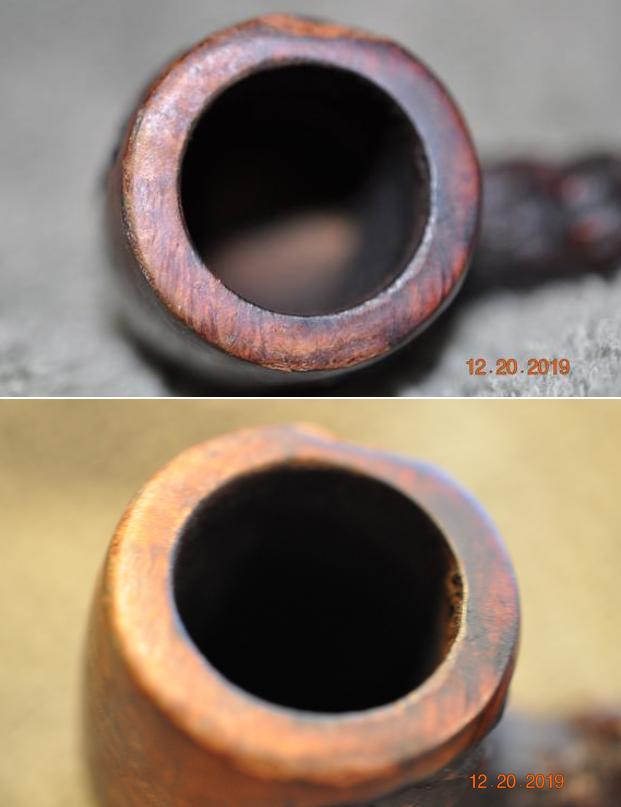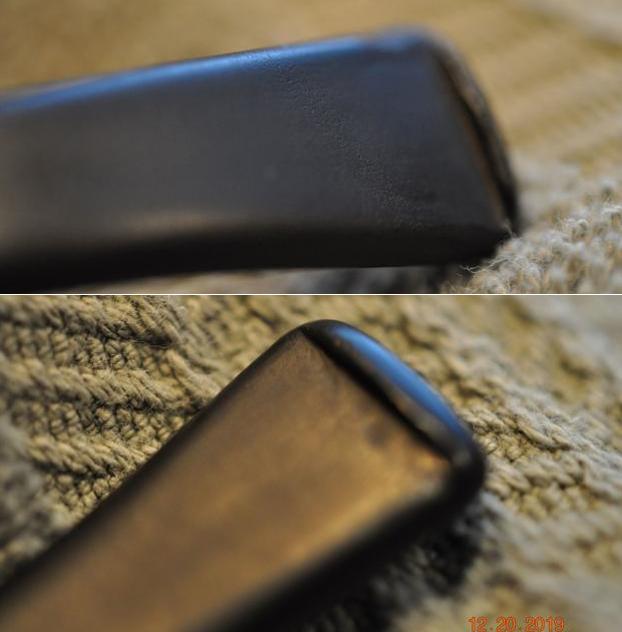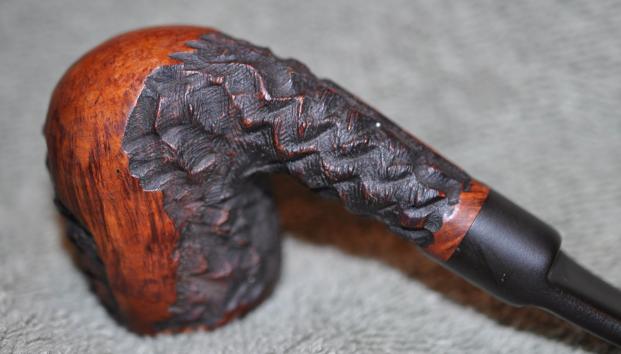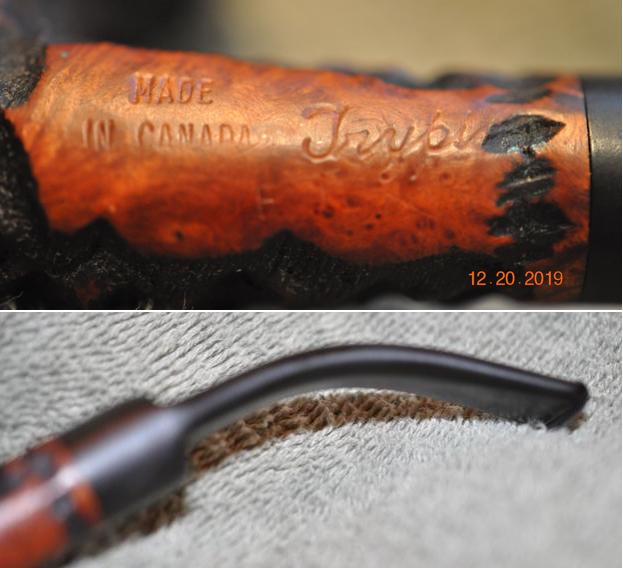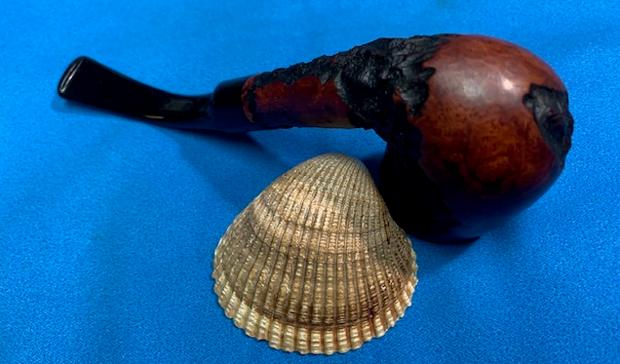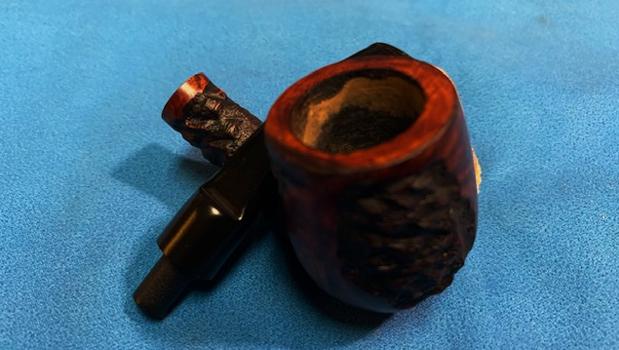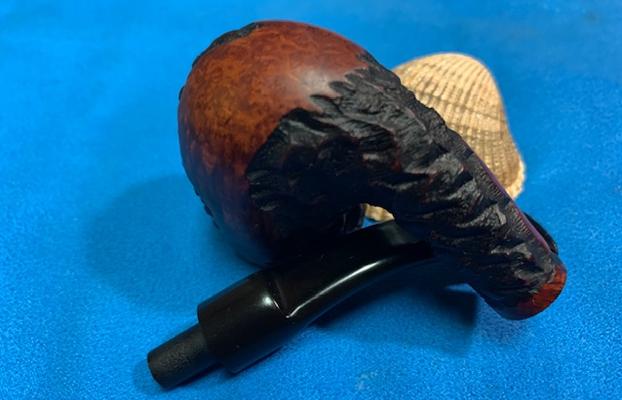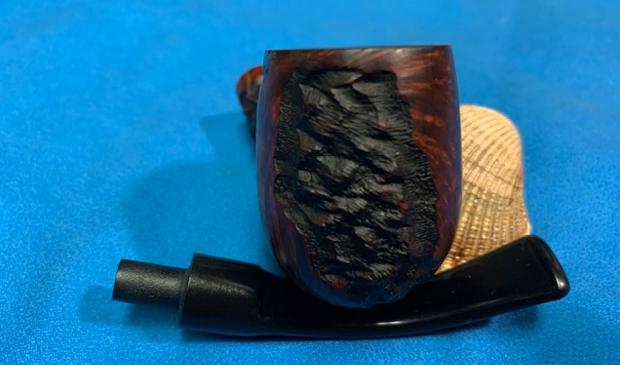
Tag Archives: Stem repairs

The Volkswagen Beetle of Pipes

Blog by Kenneth Lieblich

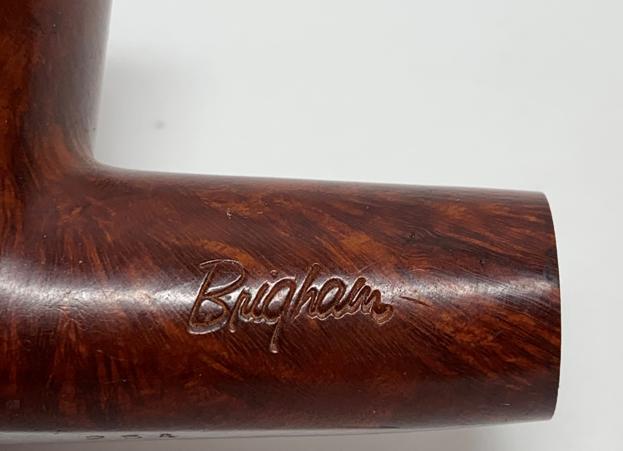
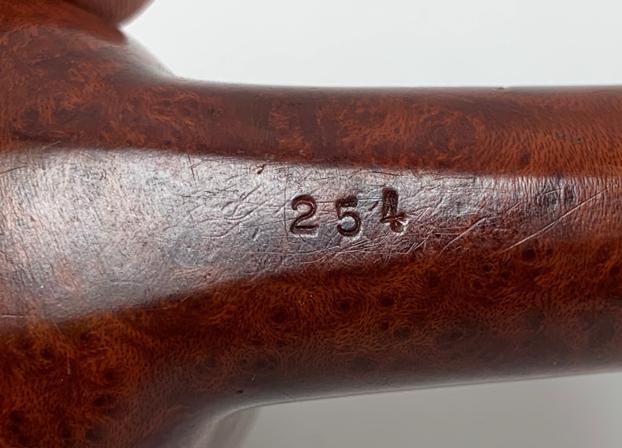
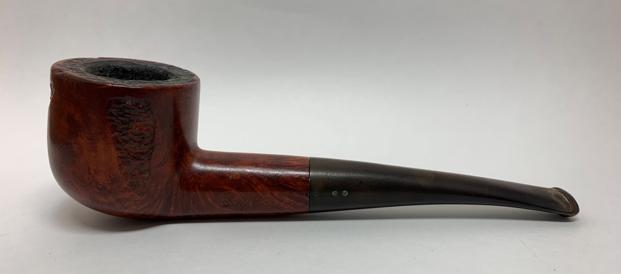
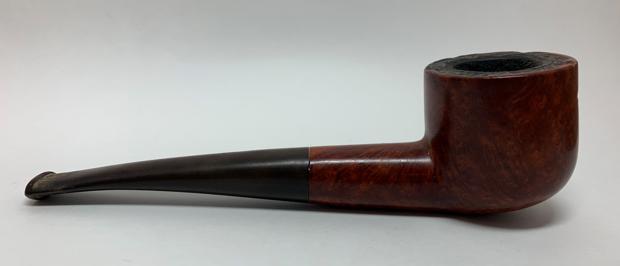
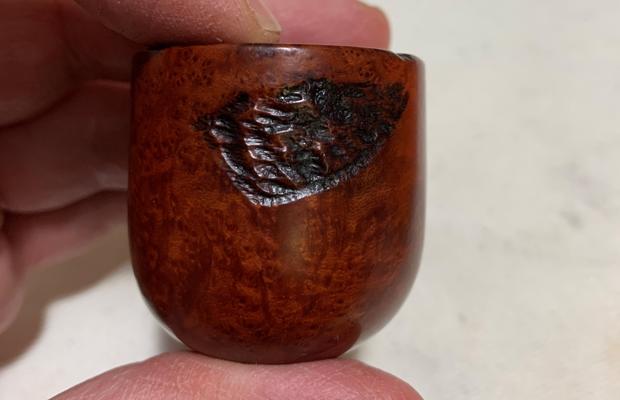
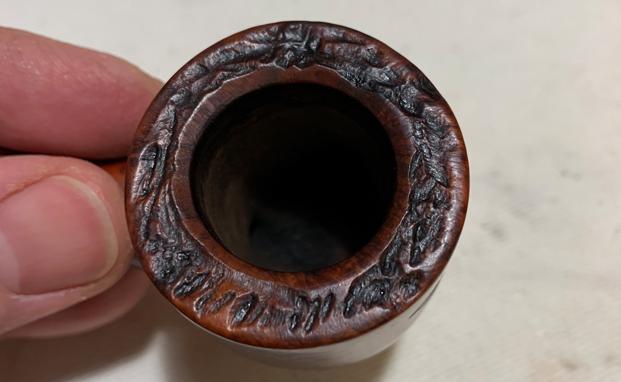
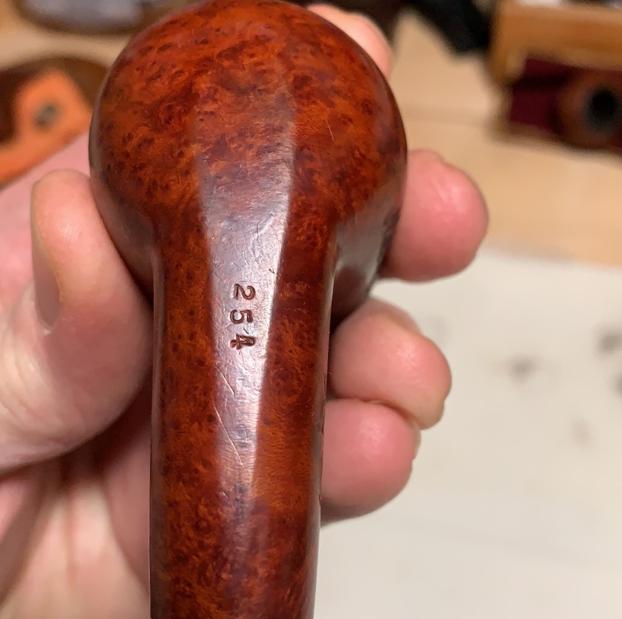
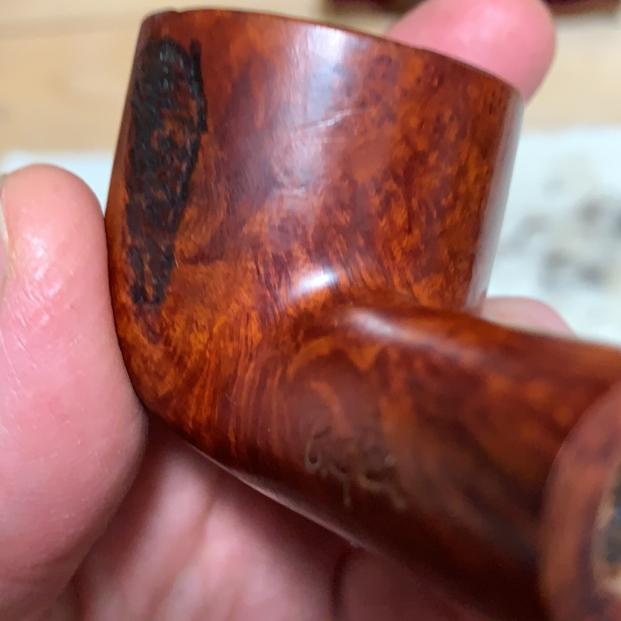
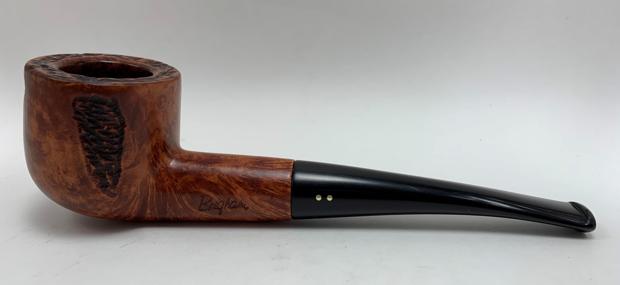
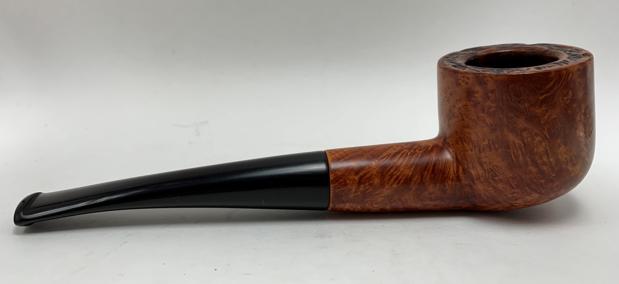
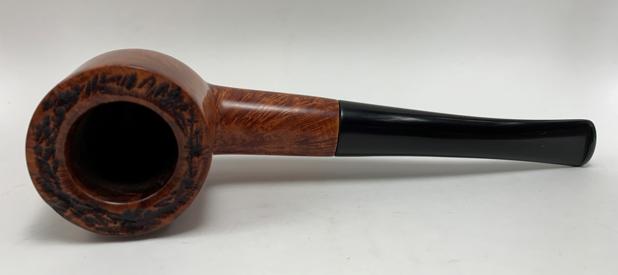
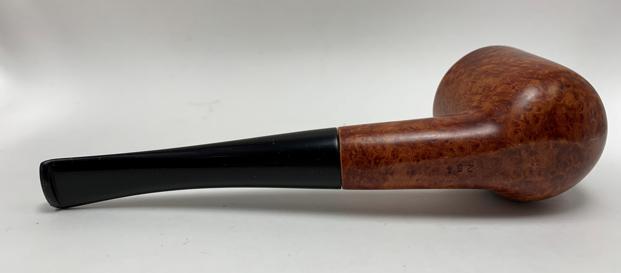
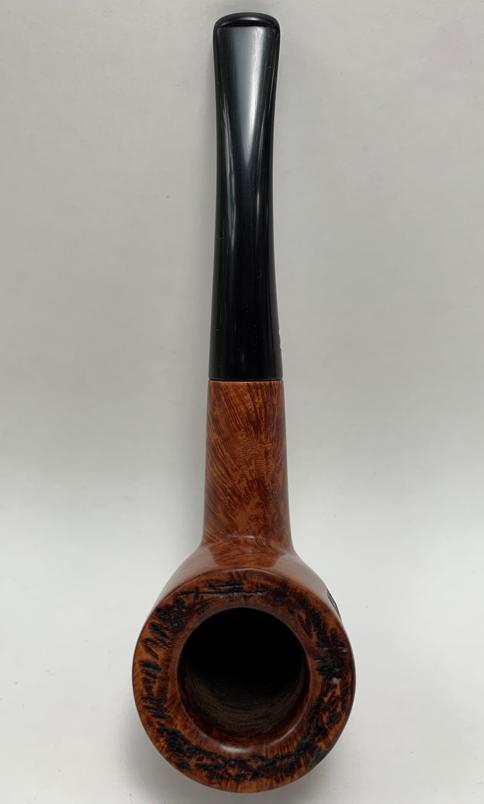
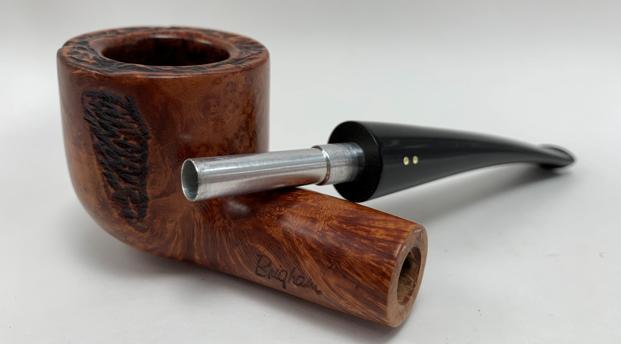
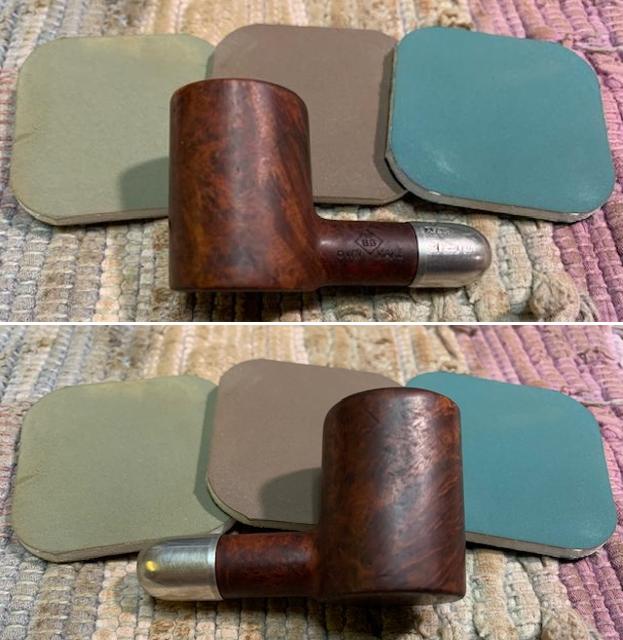
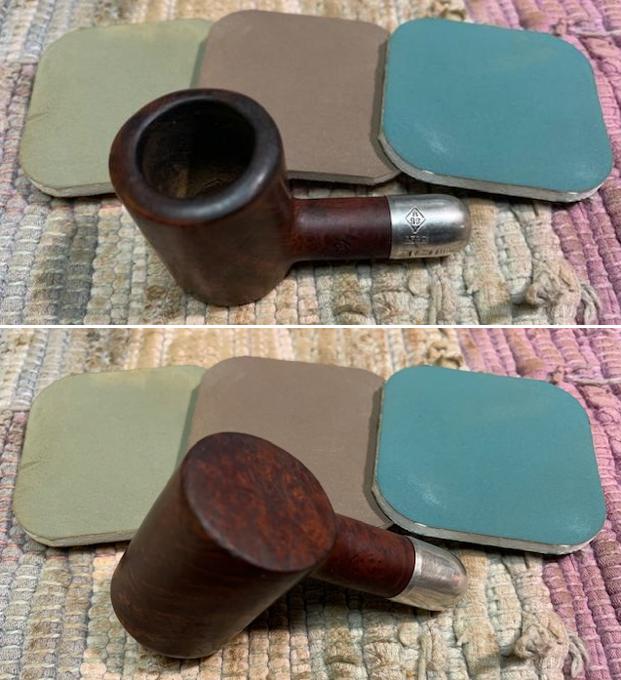
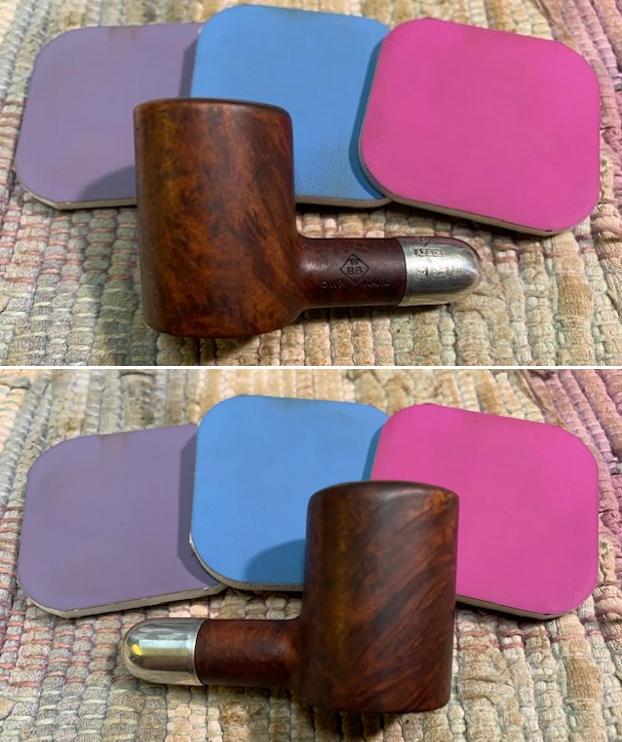
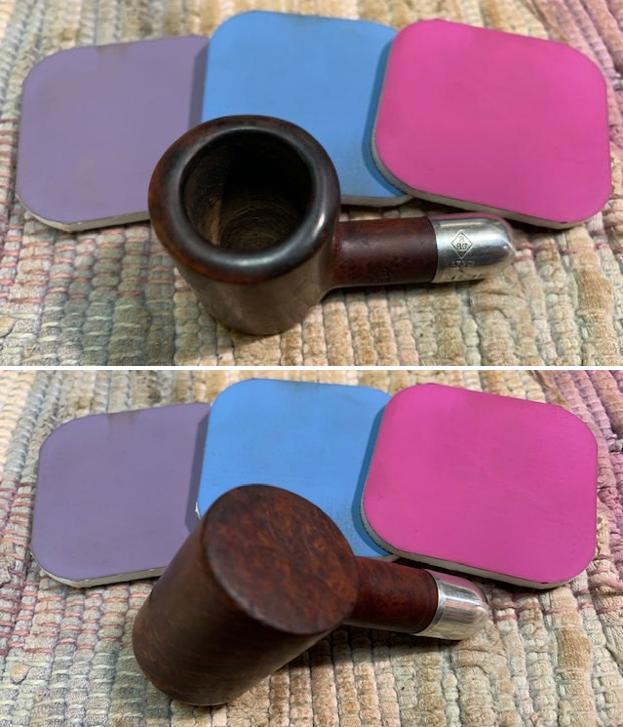
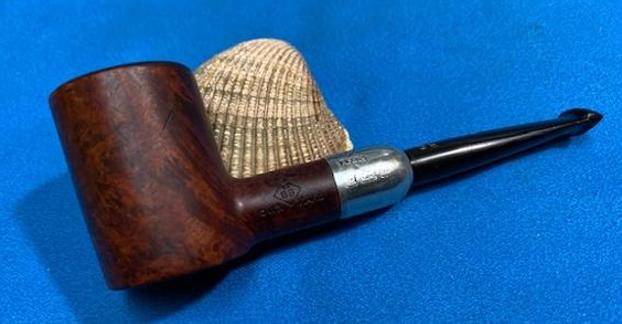
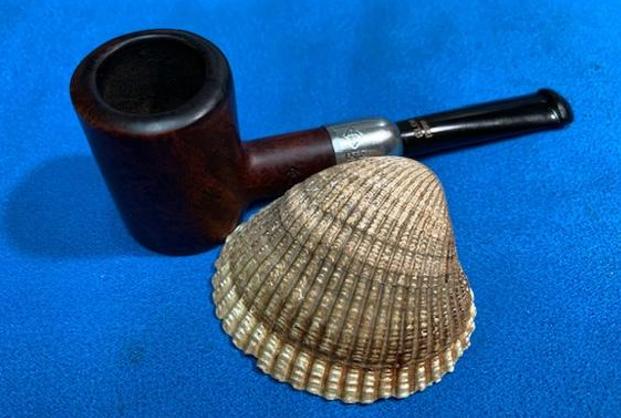
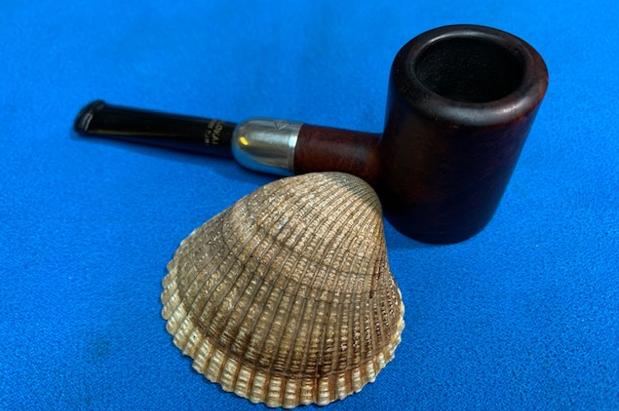
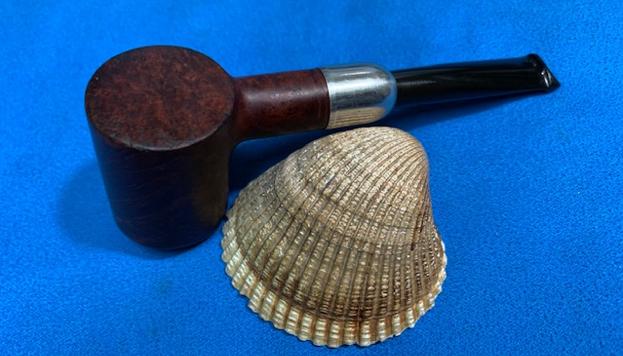
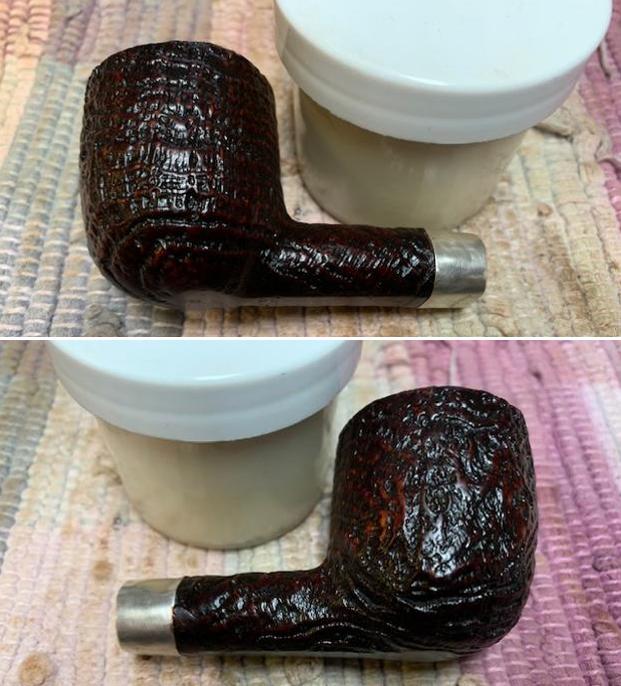
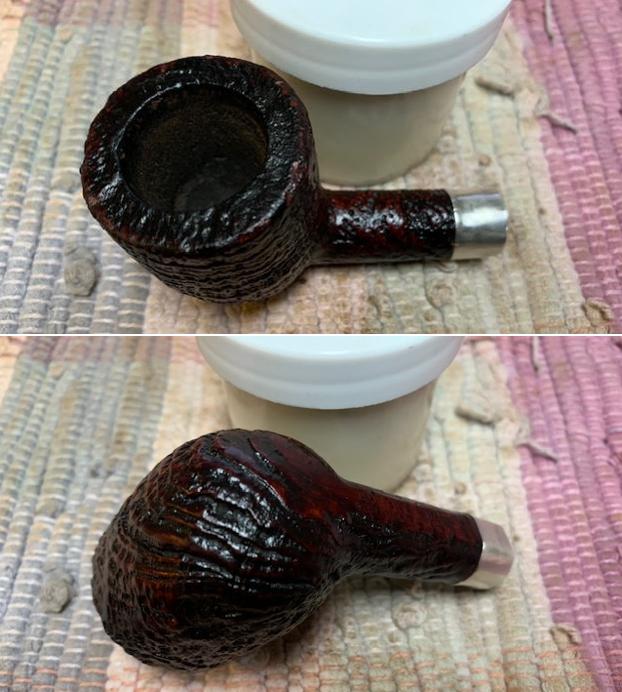
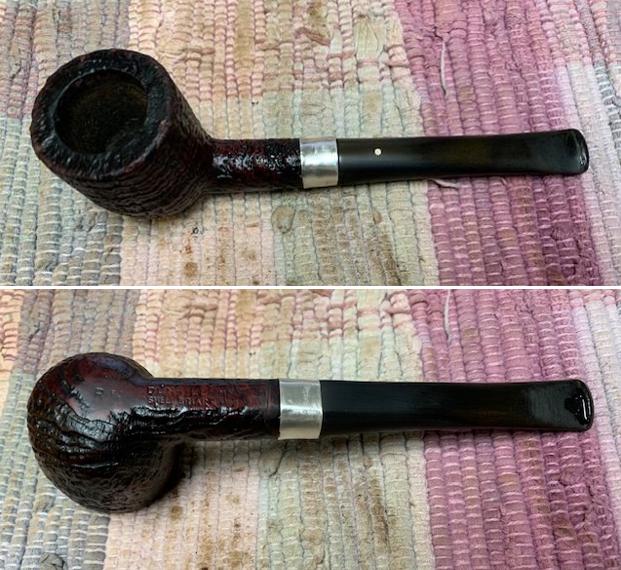
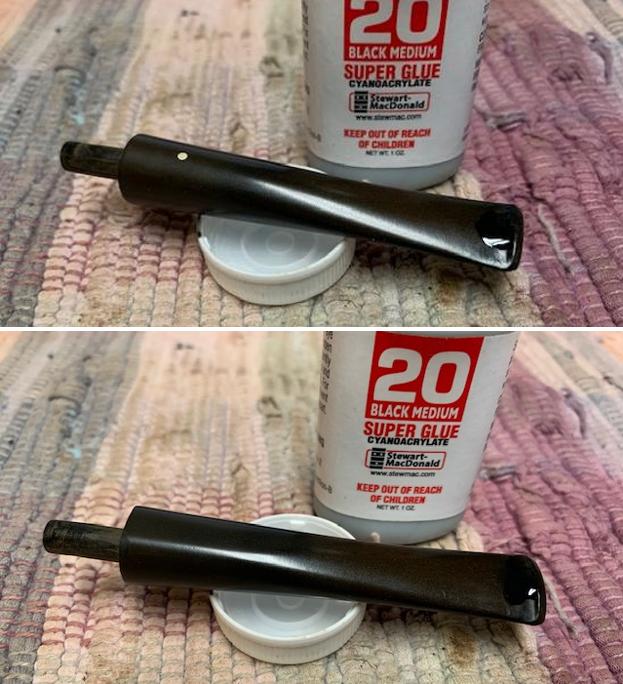
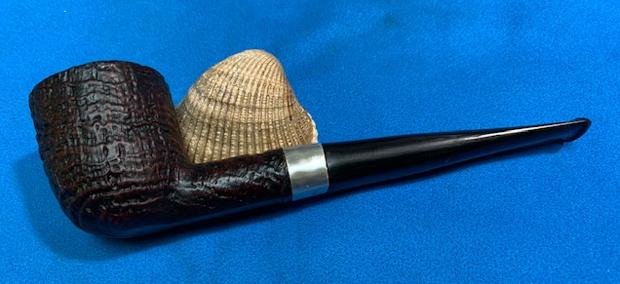
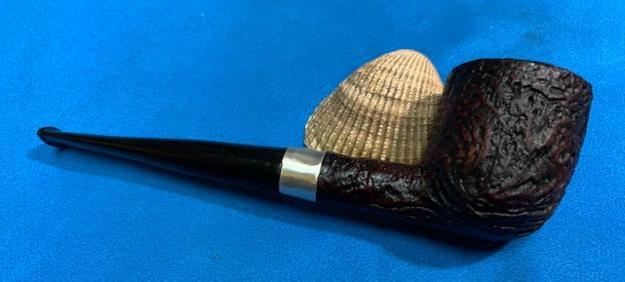
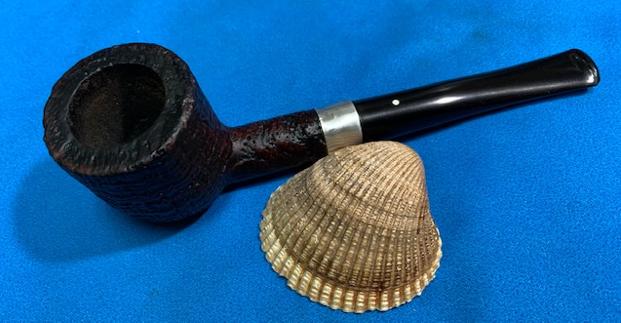
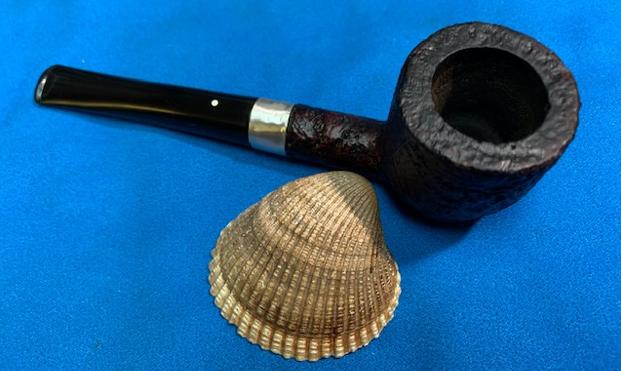
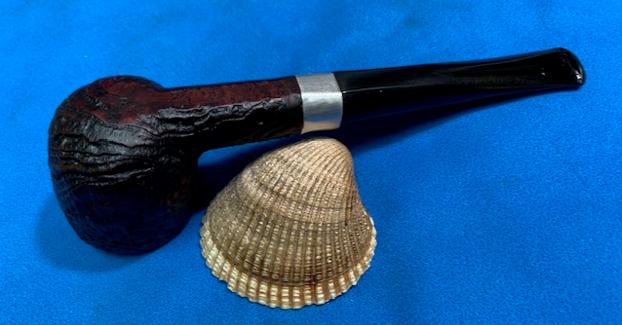
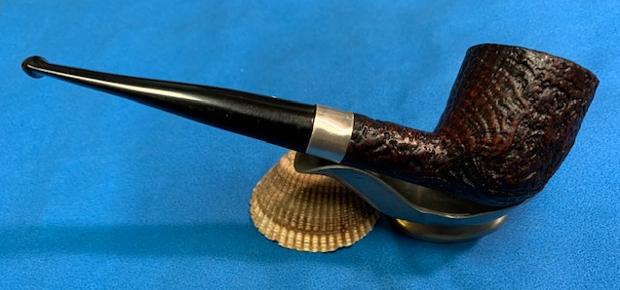
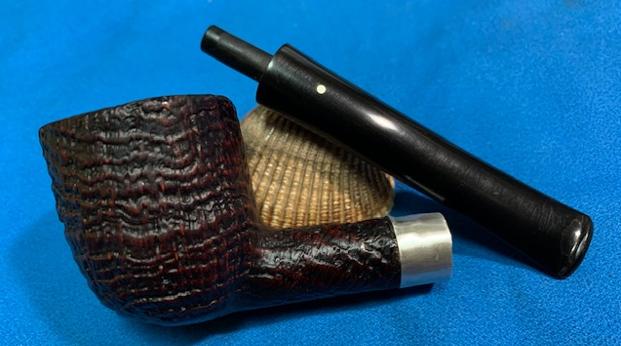
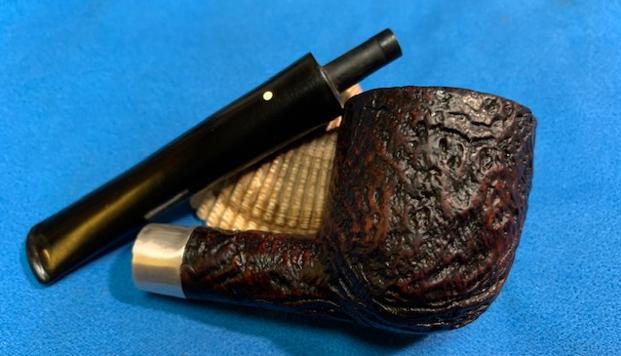
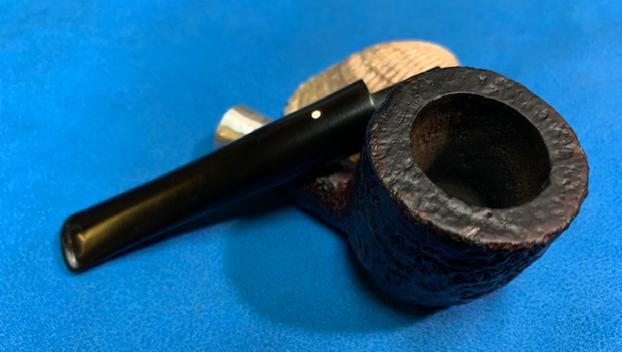
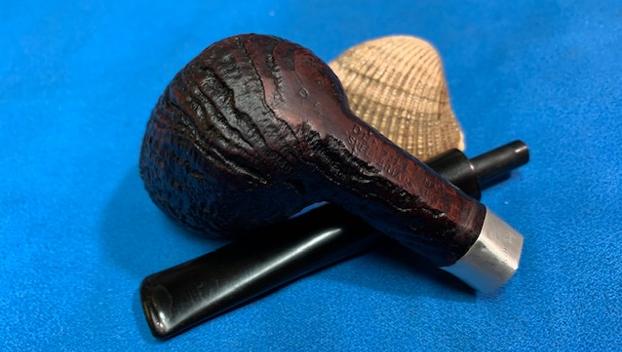
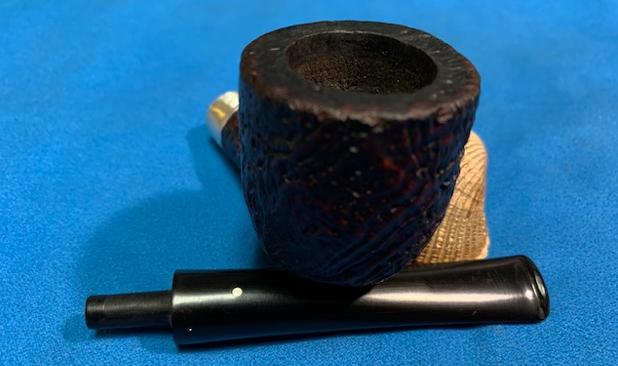
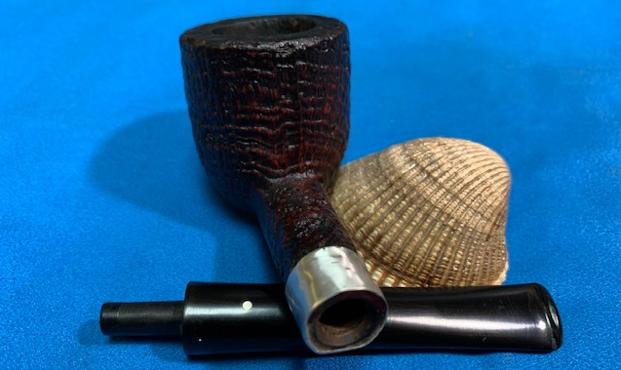
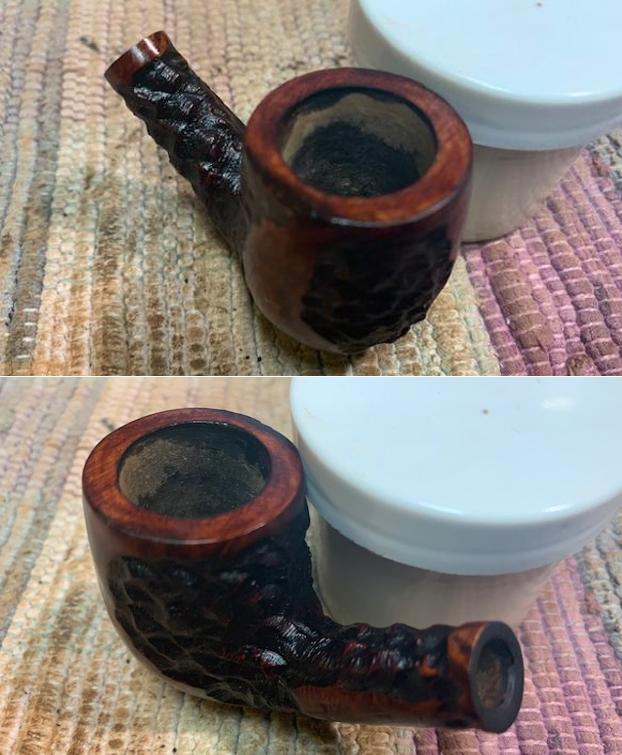
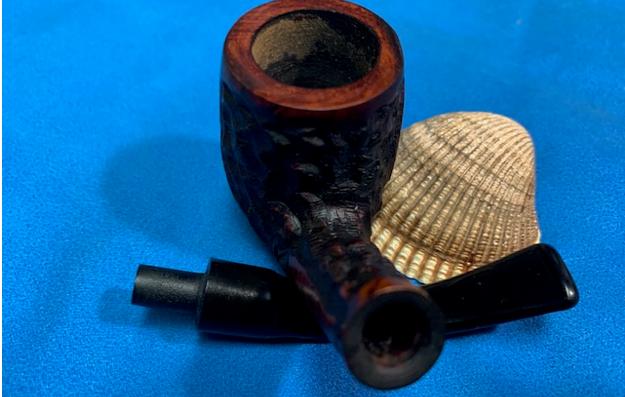
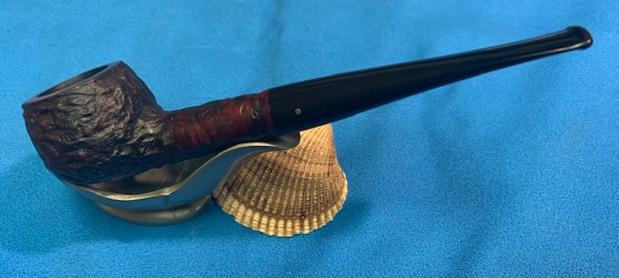
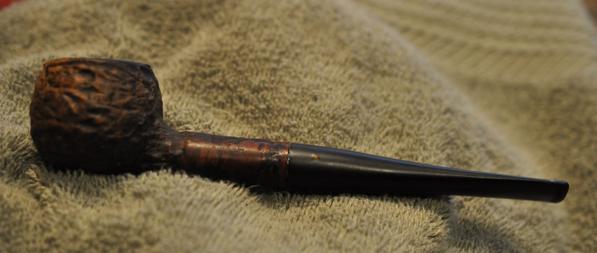
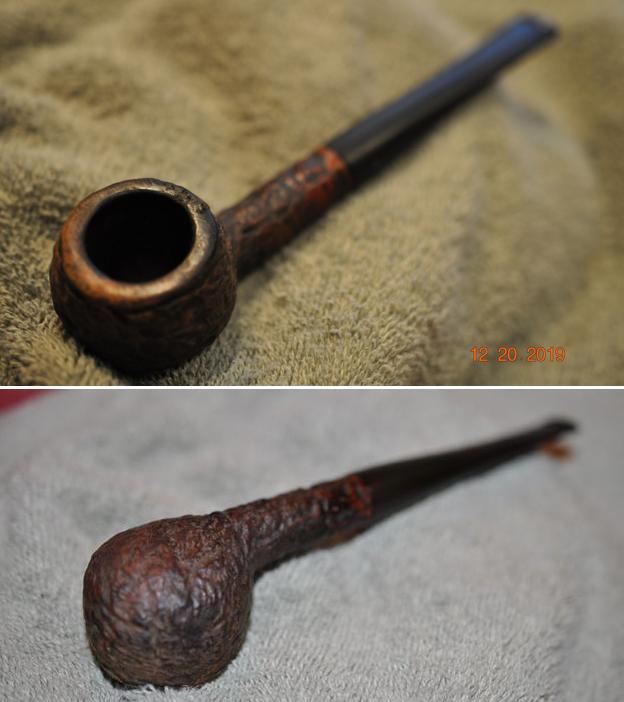
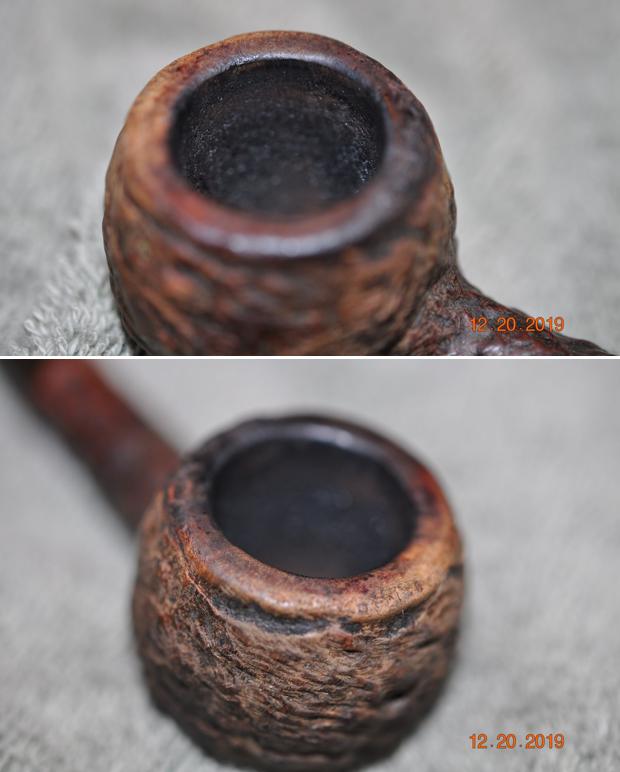
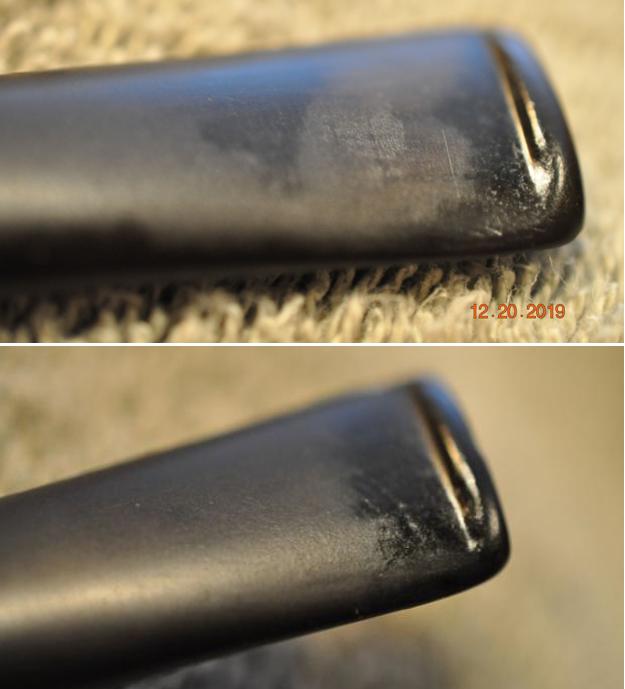
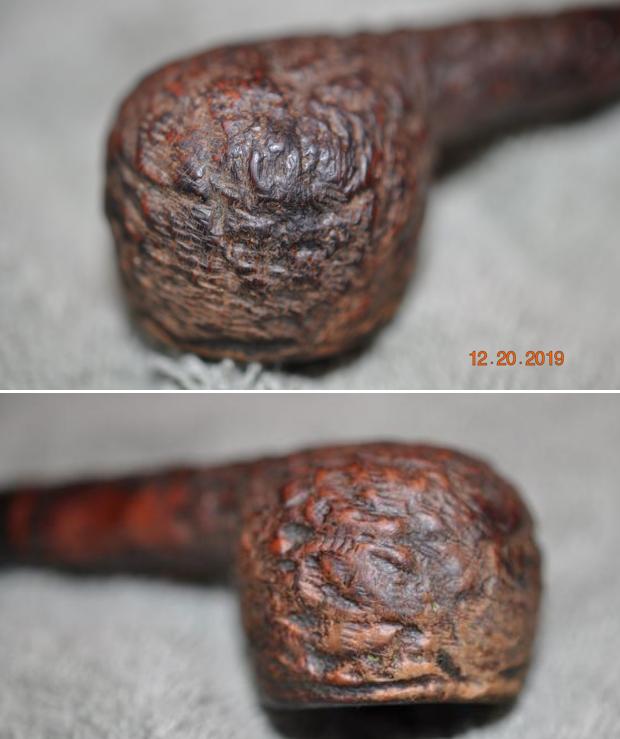
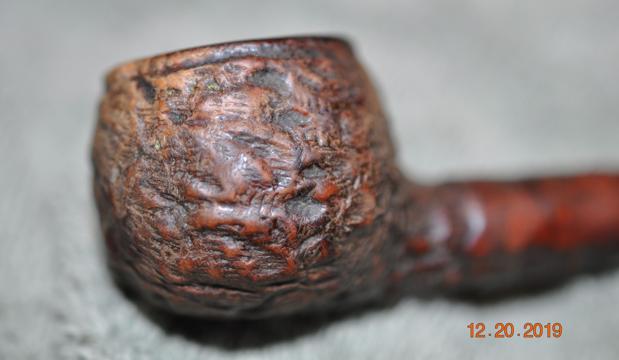
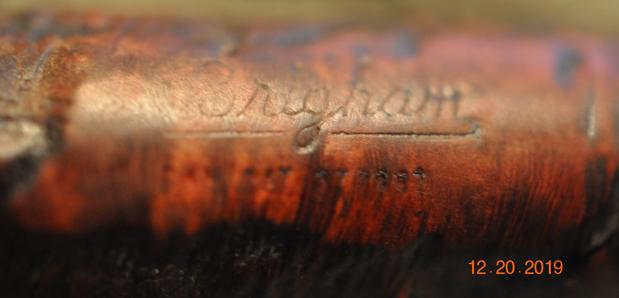
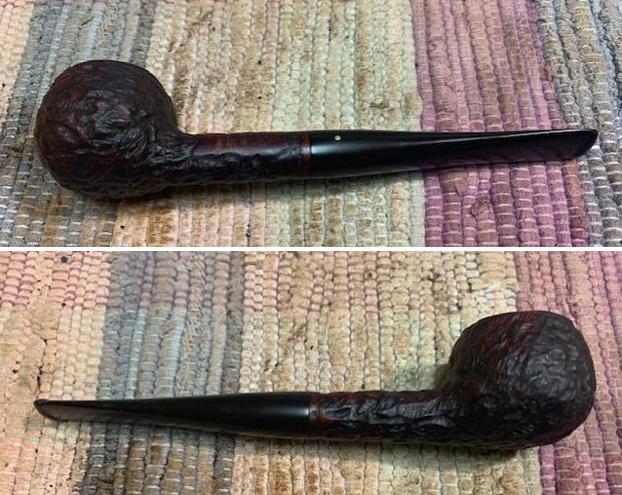
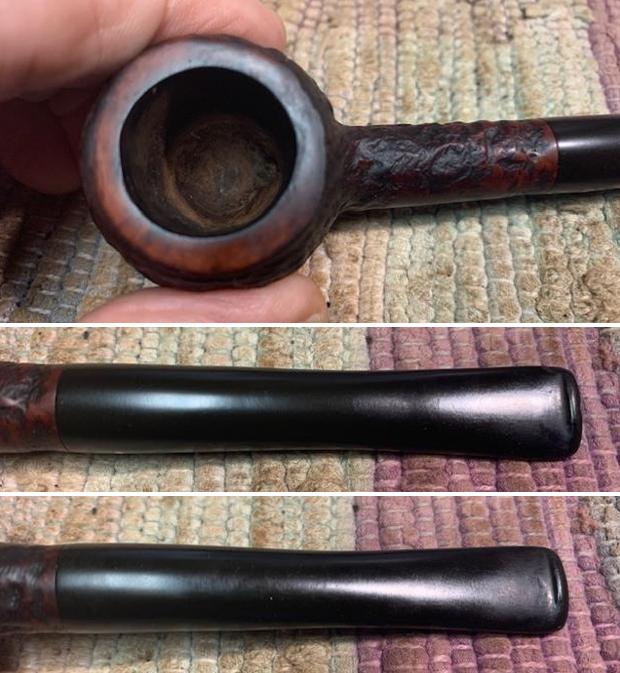
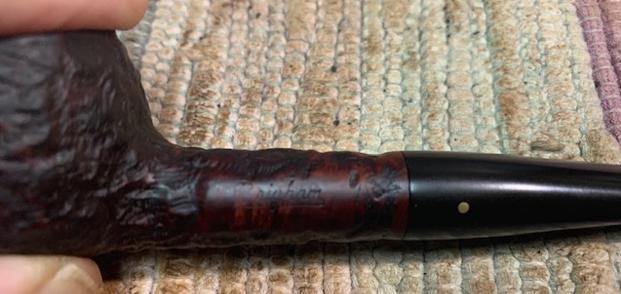
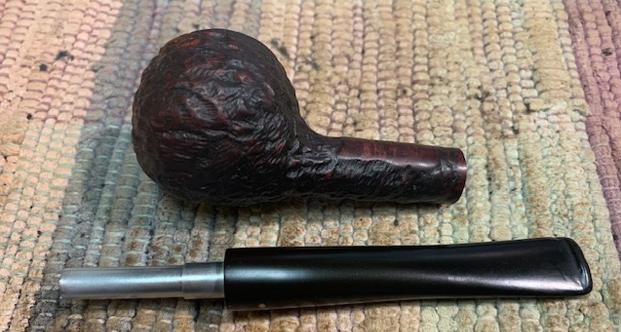
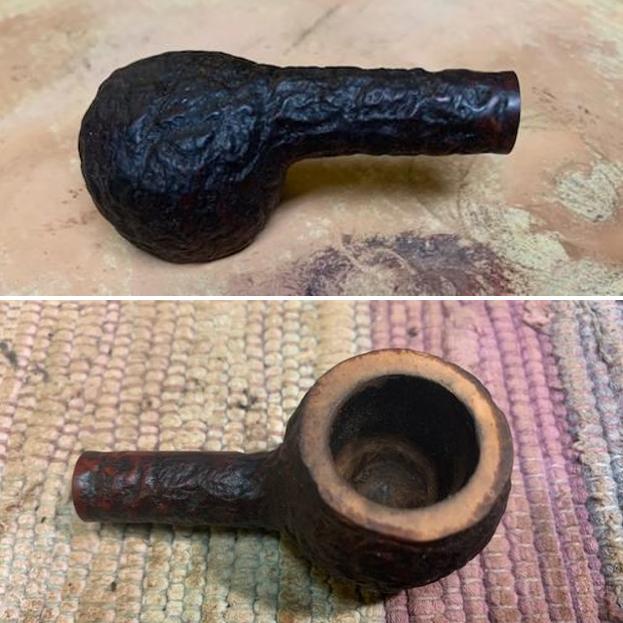
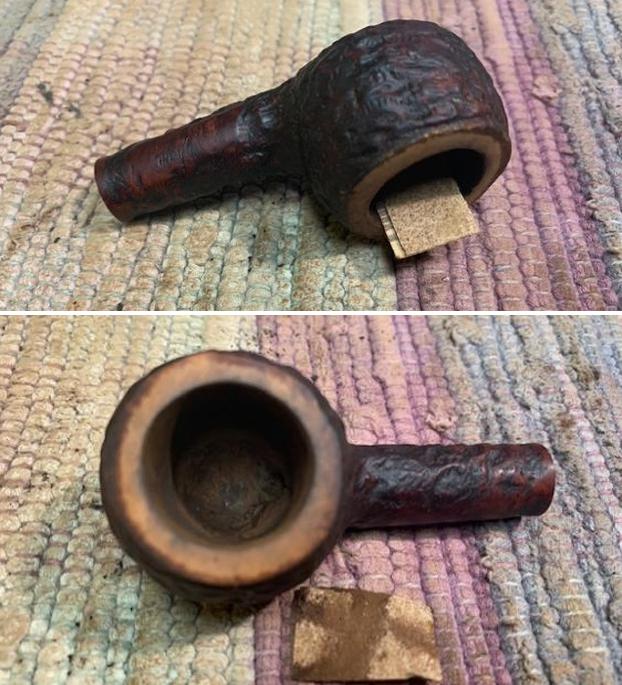
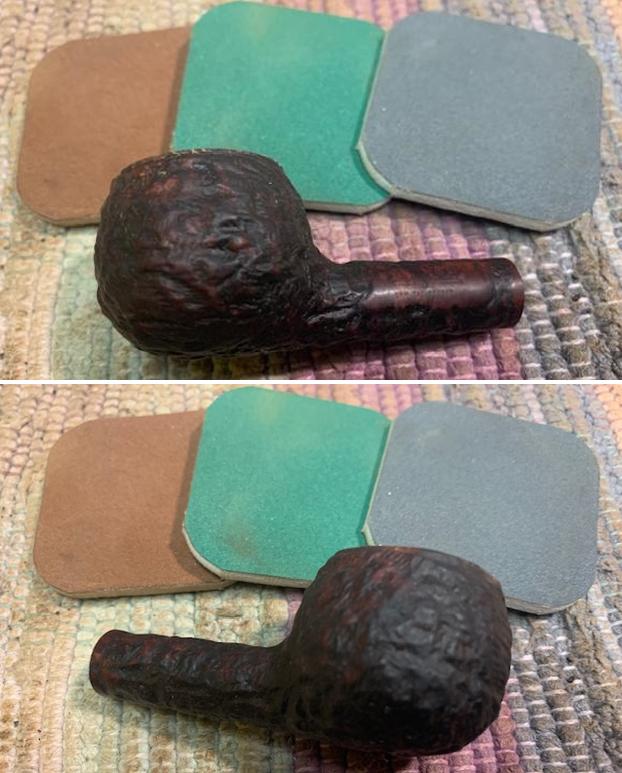
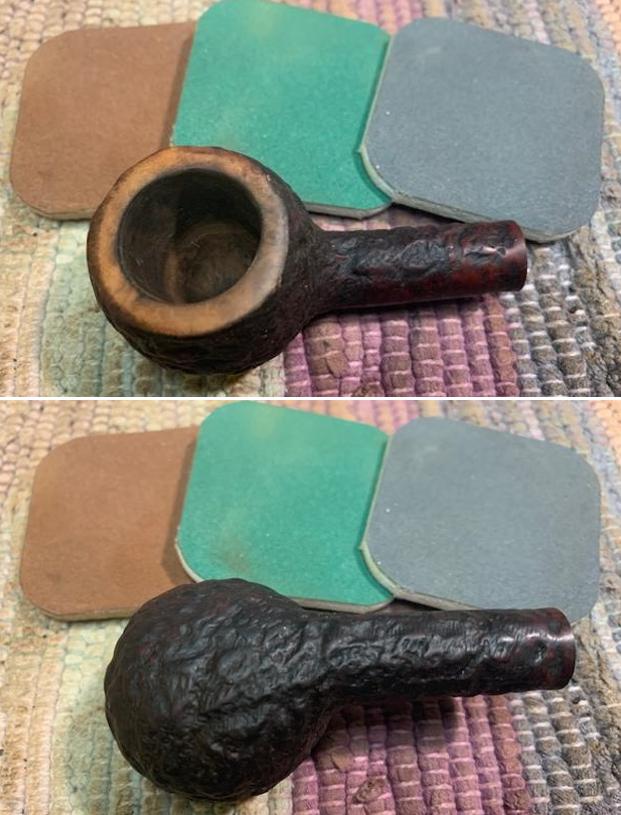
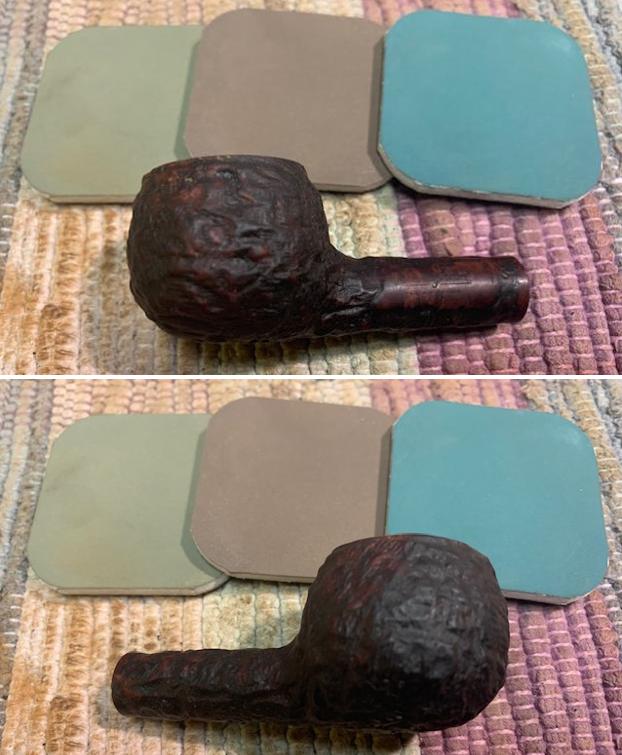
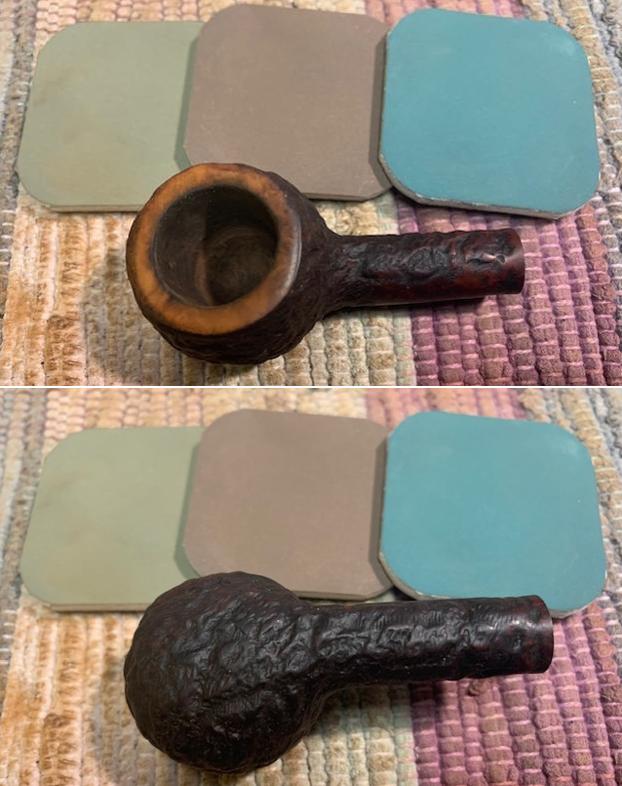
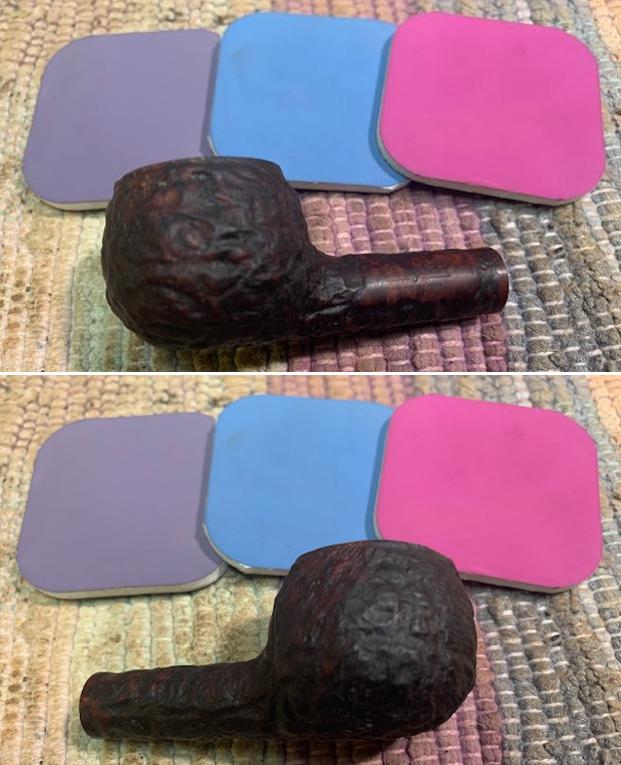
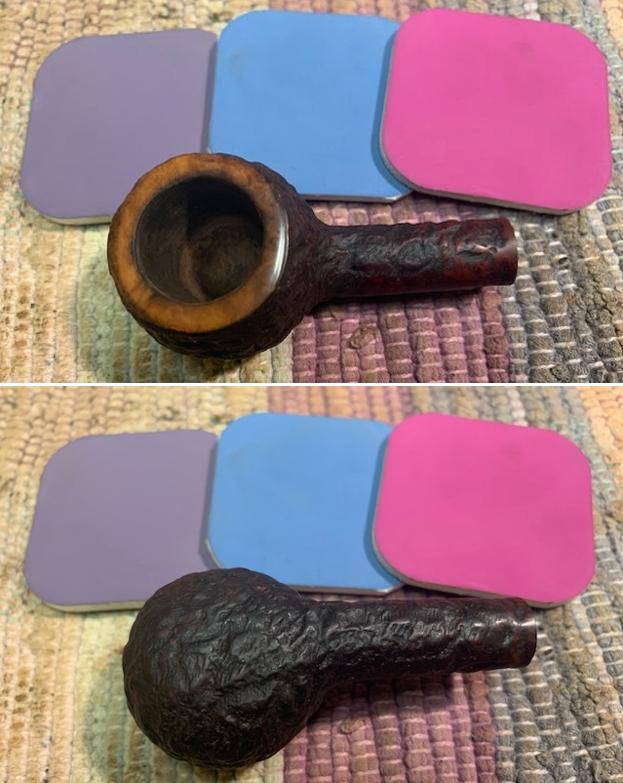
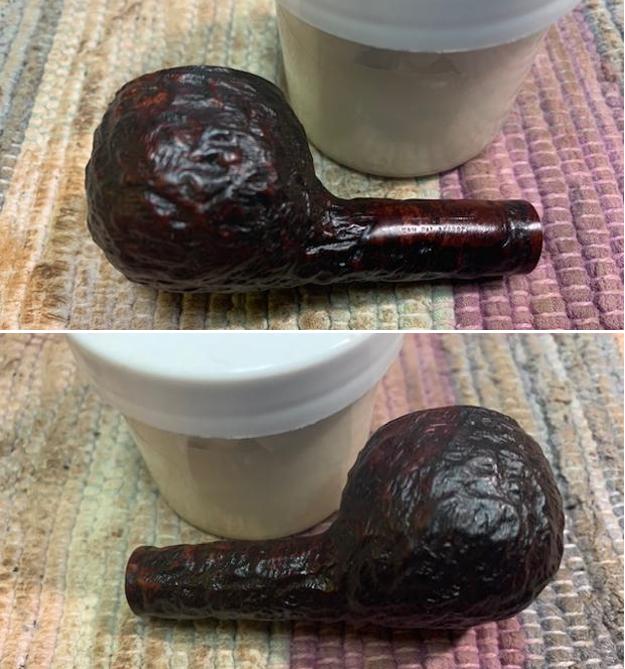
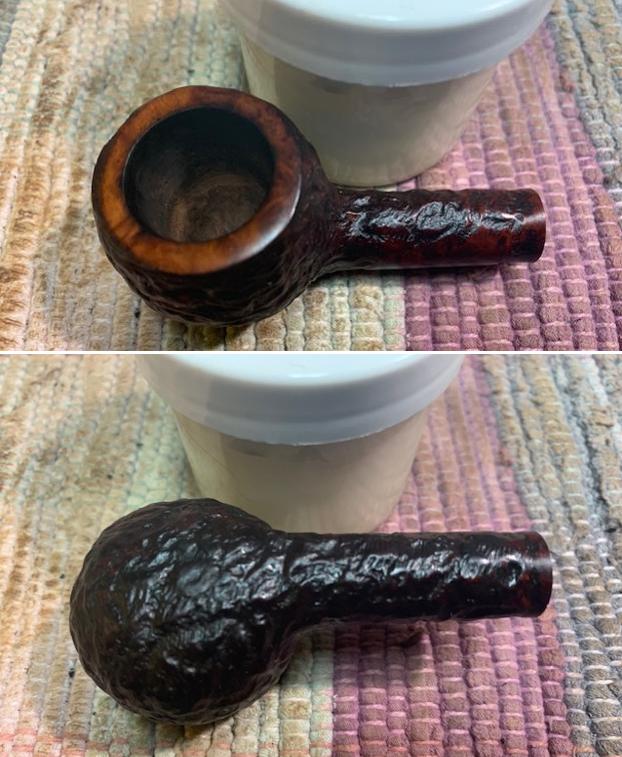
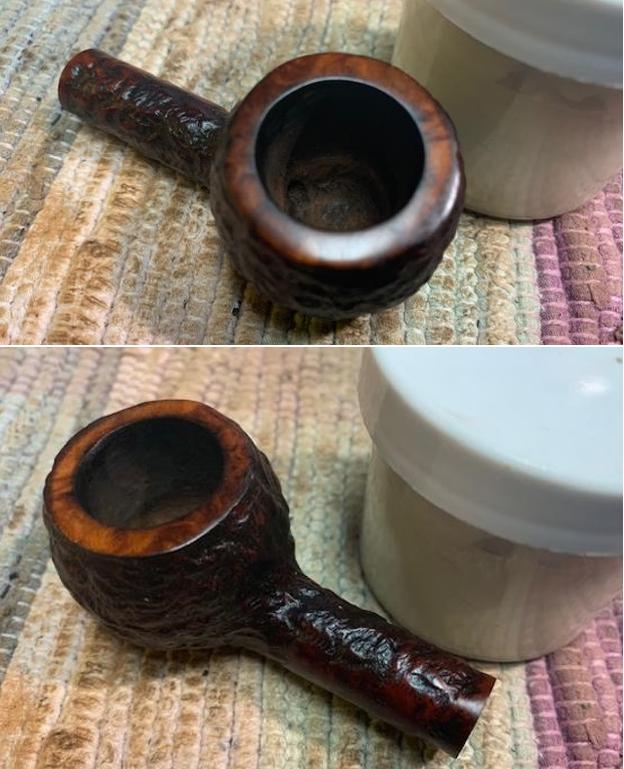
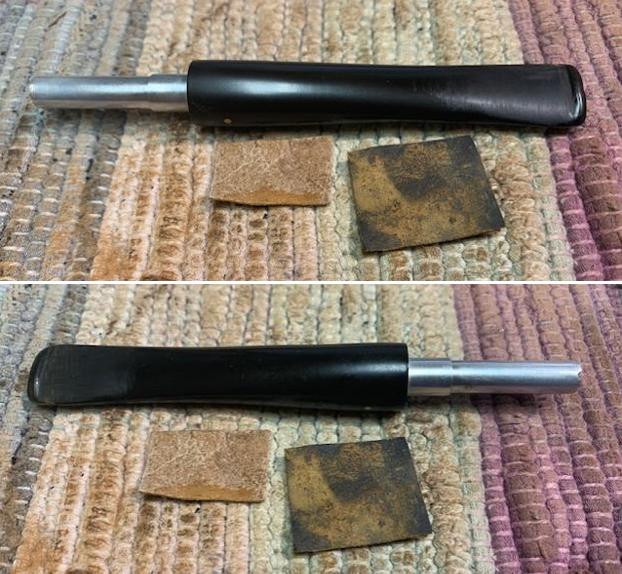
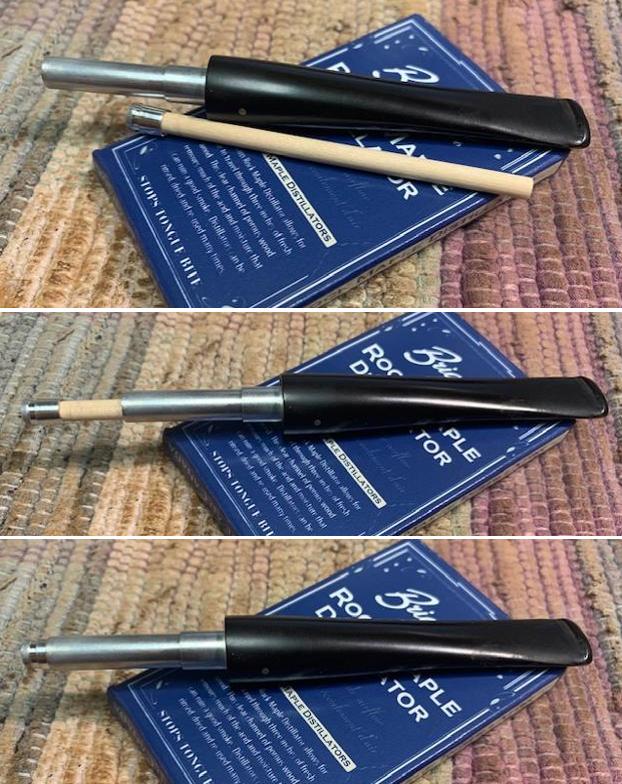
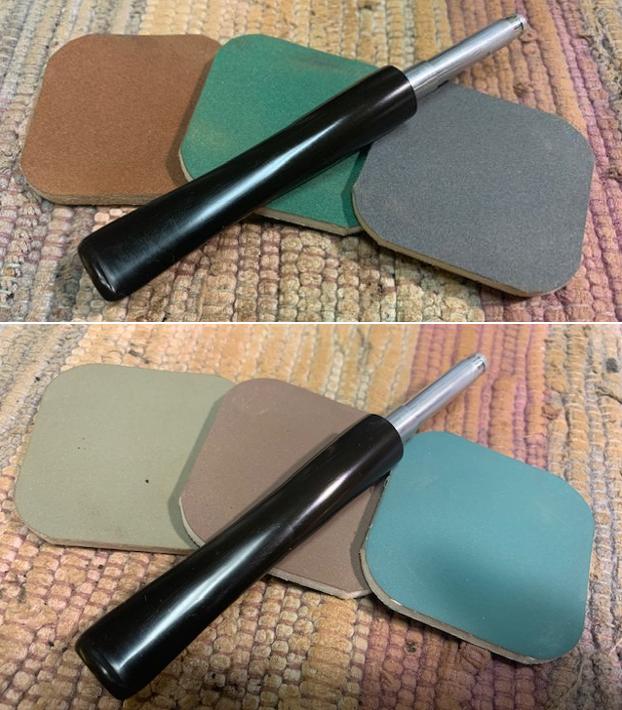
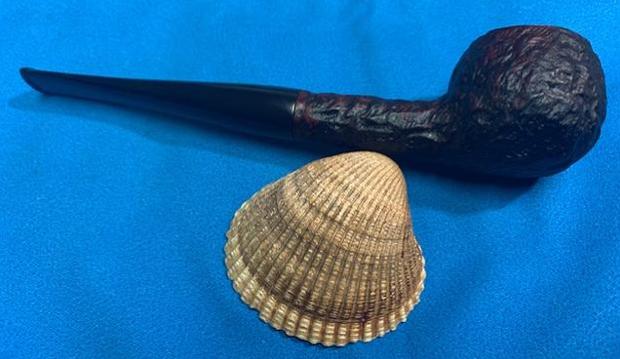
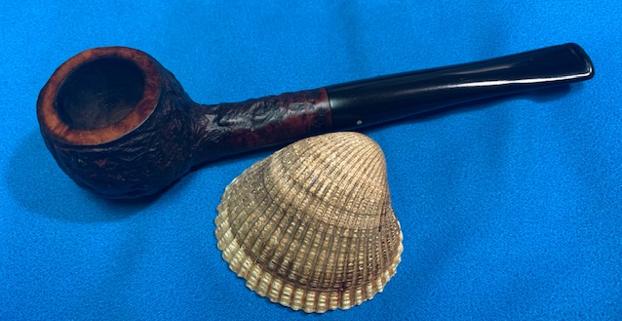
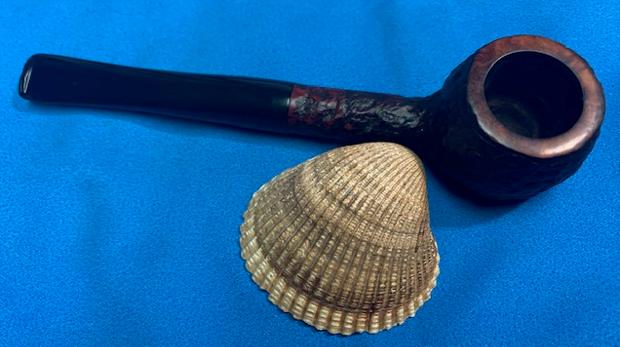
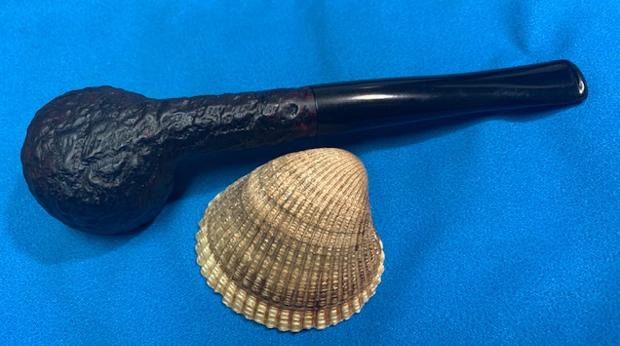
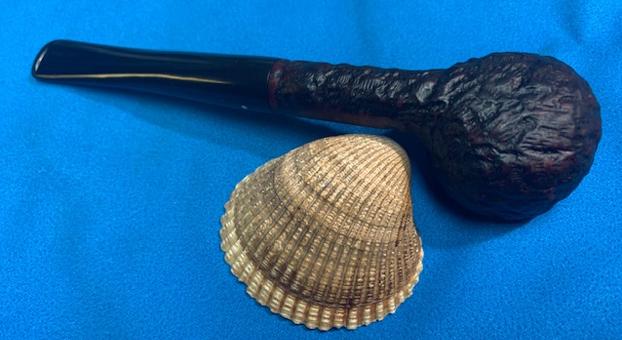
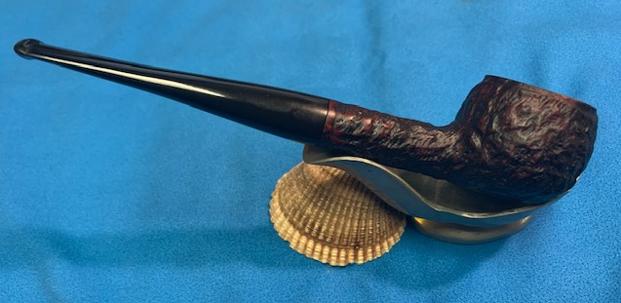
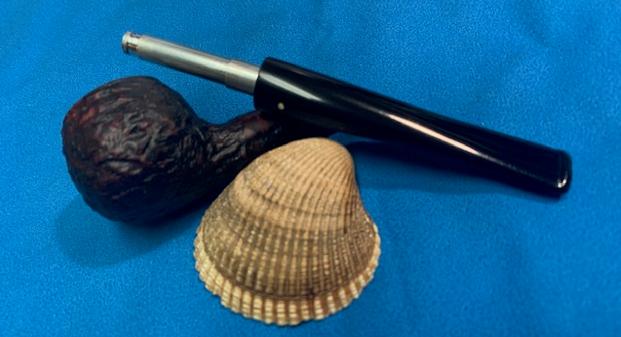
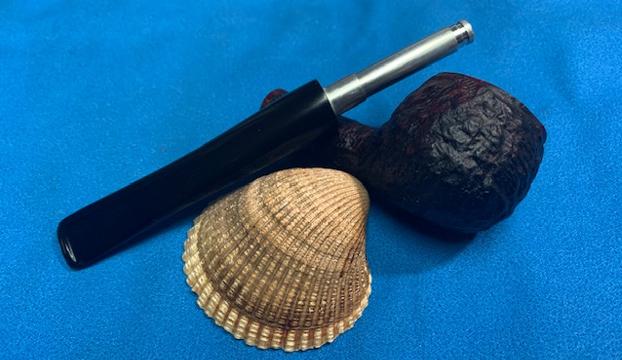
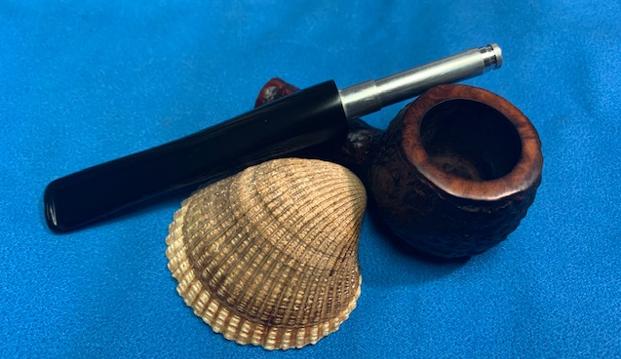
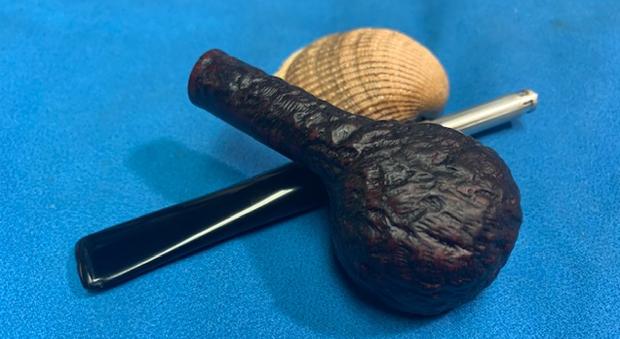
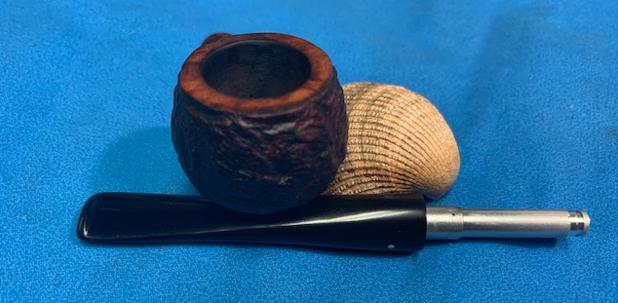
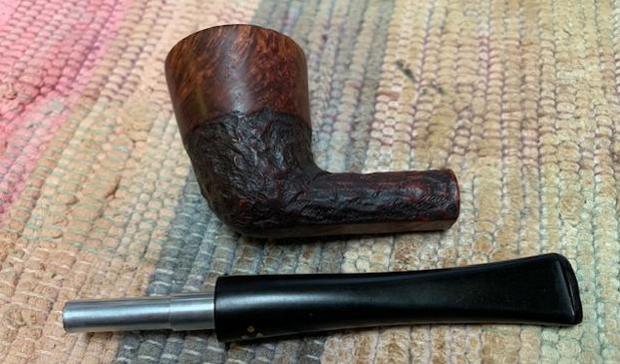
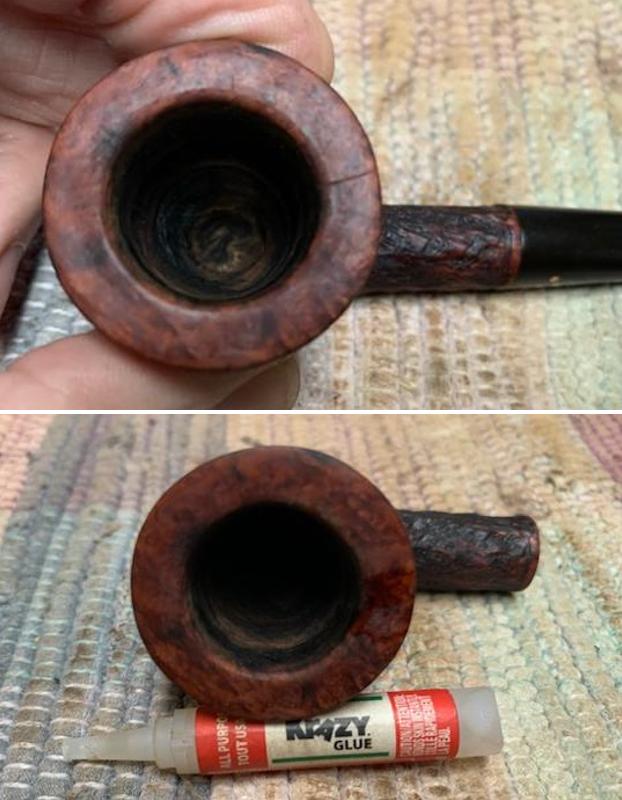
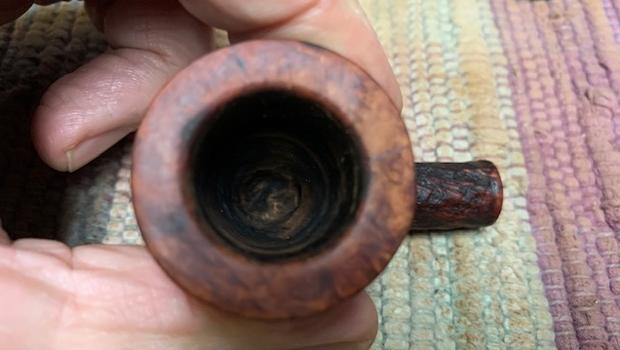
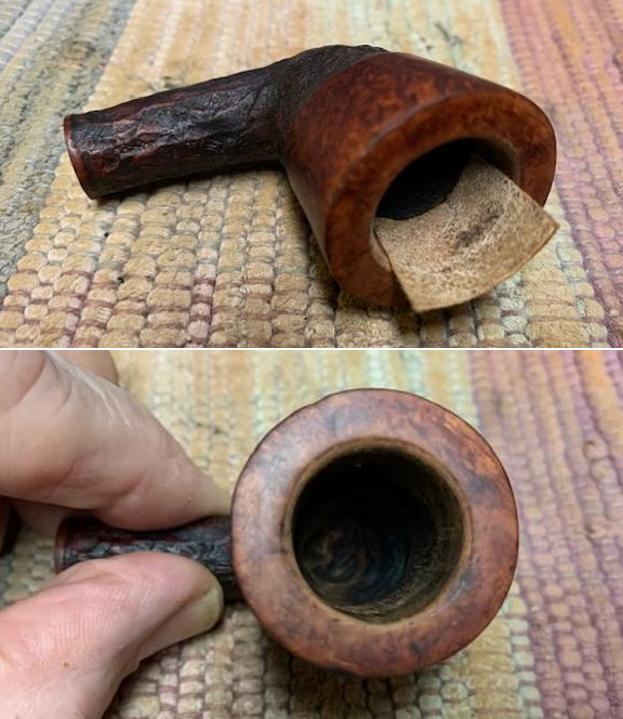
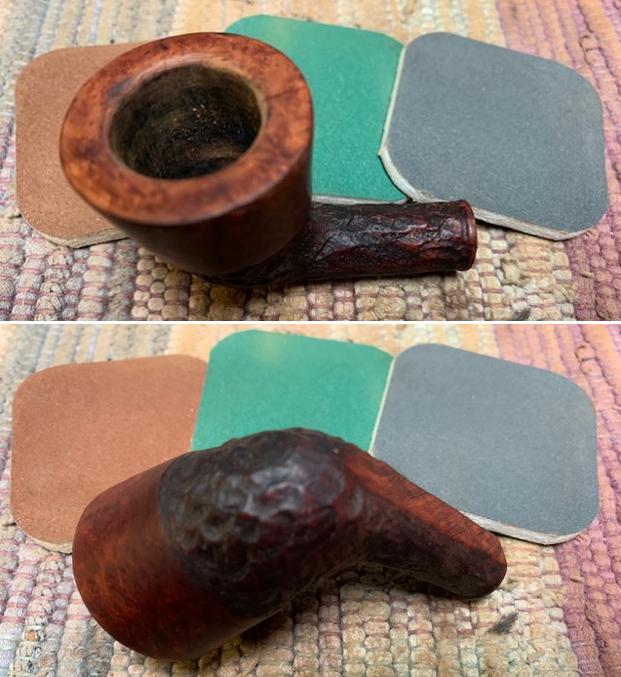
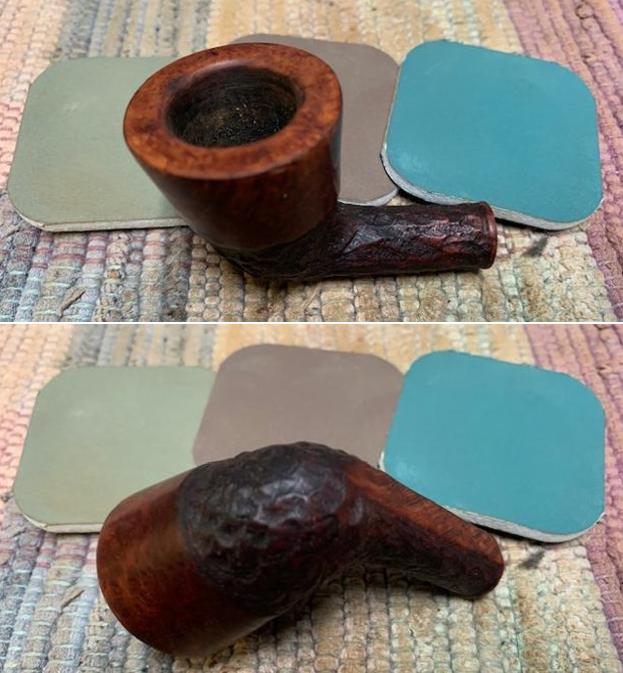
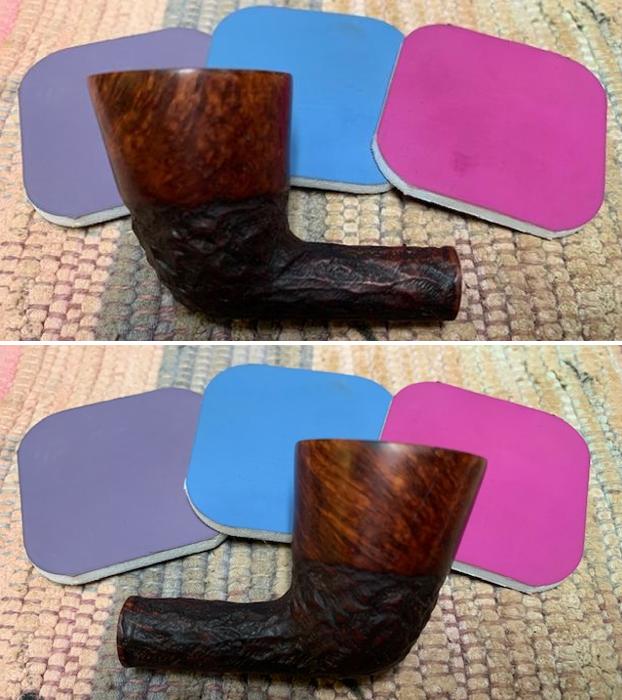
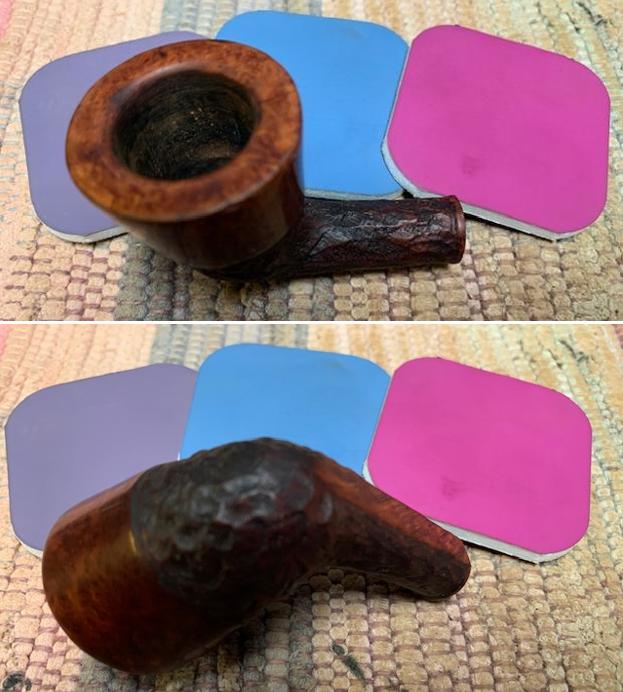
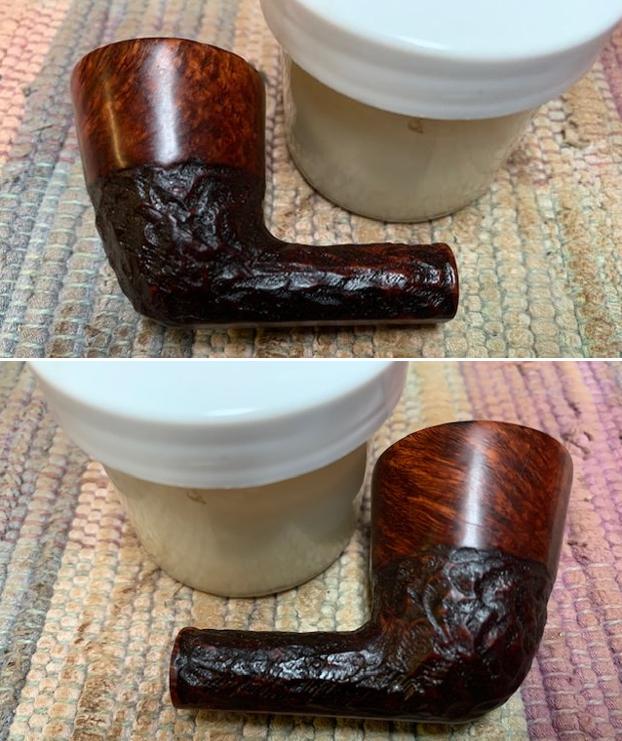
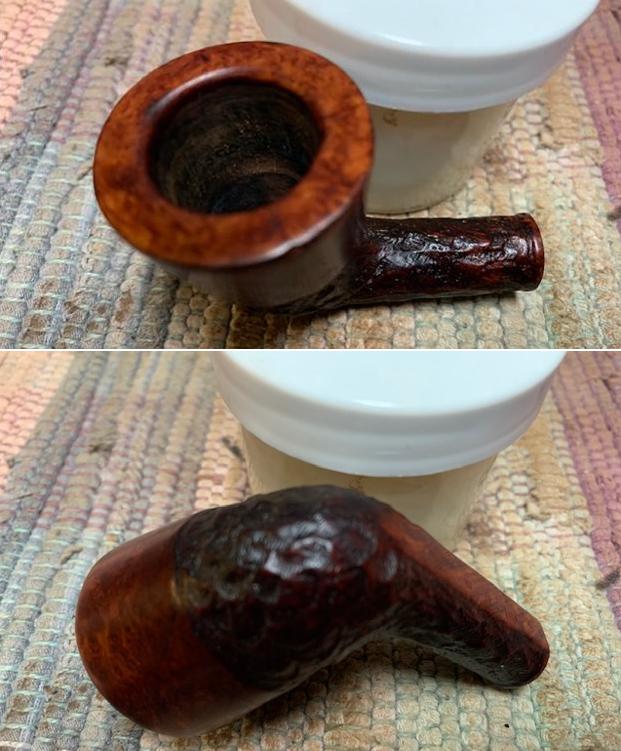
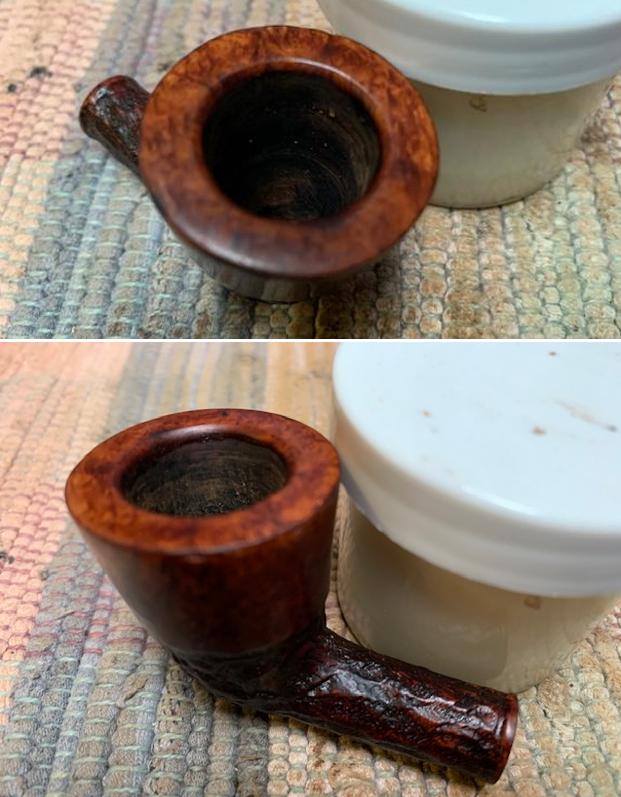
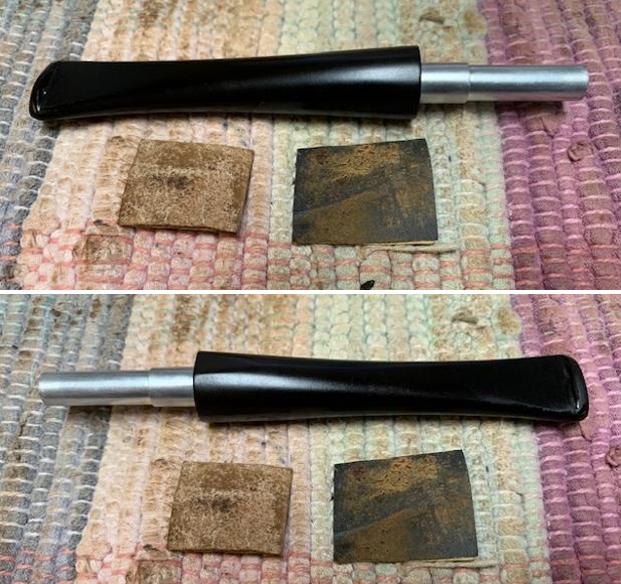
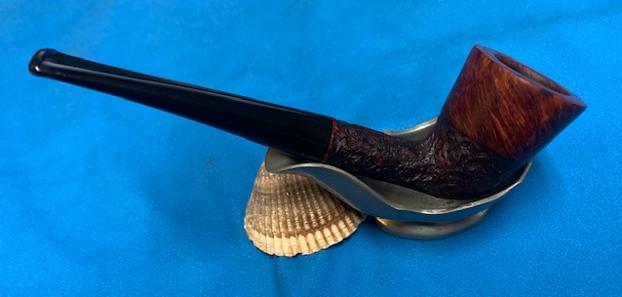
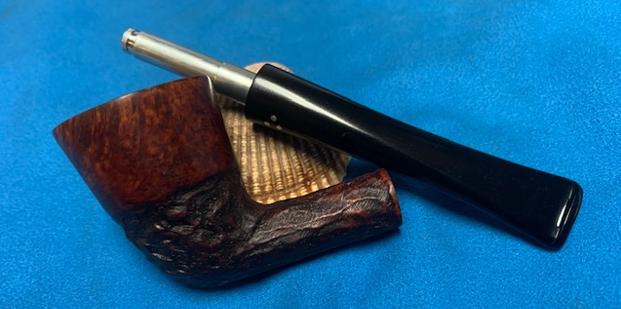
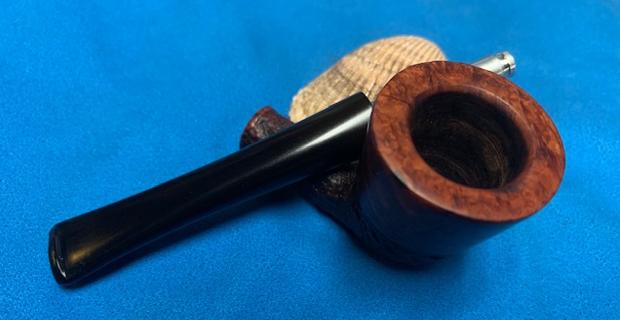
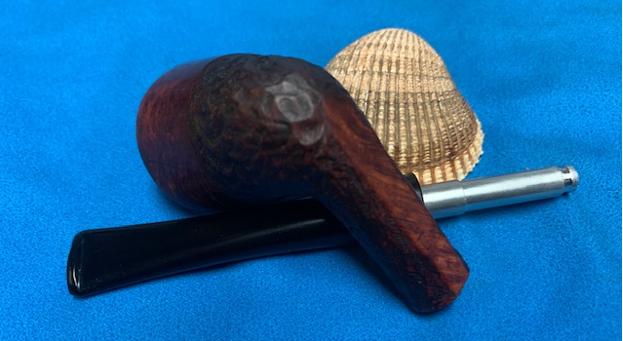
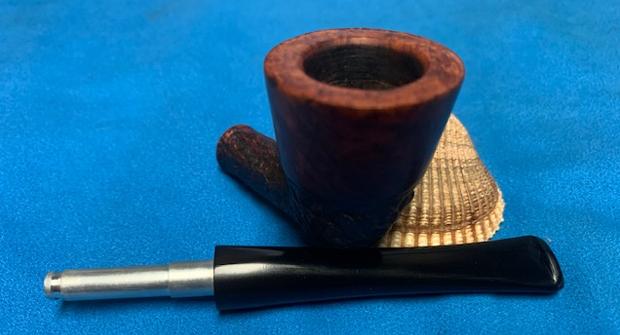
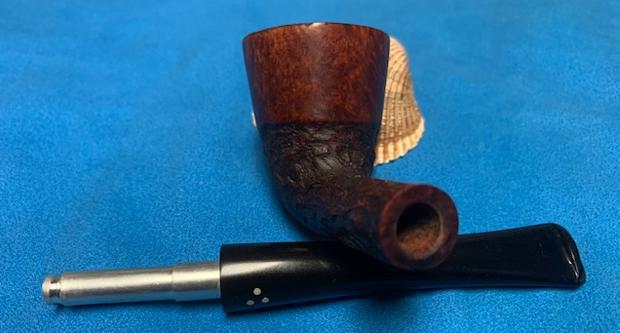
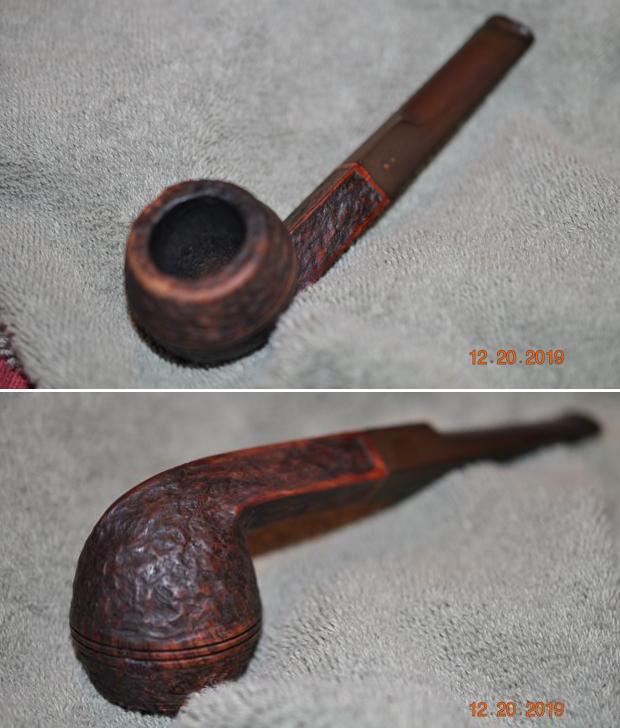
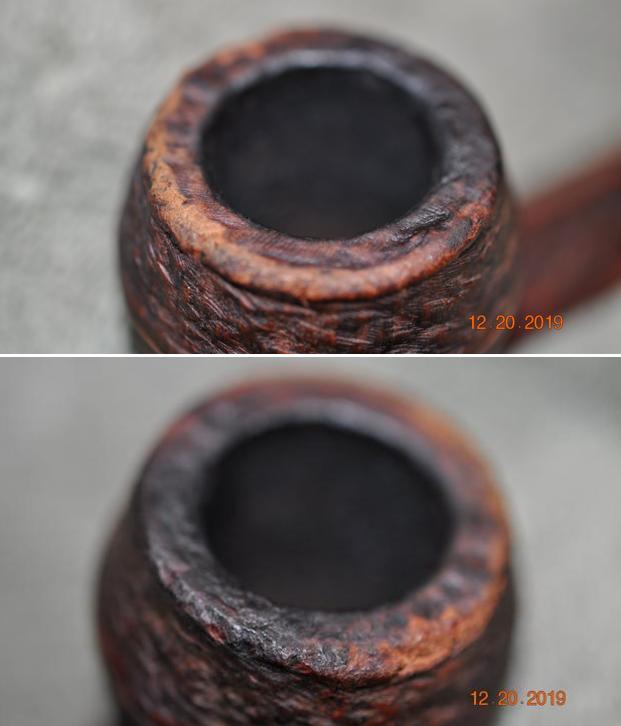
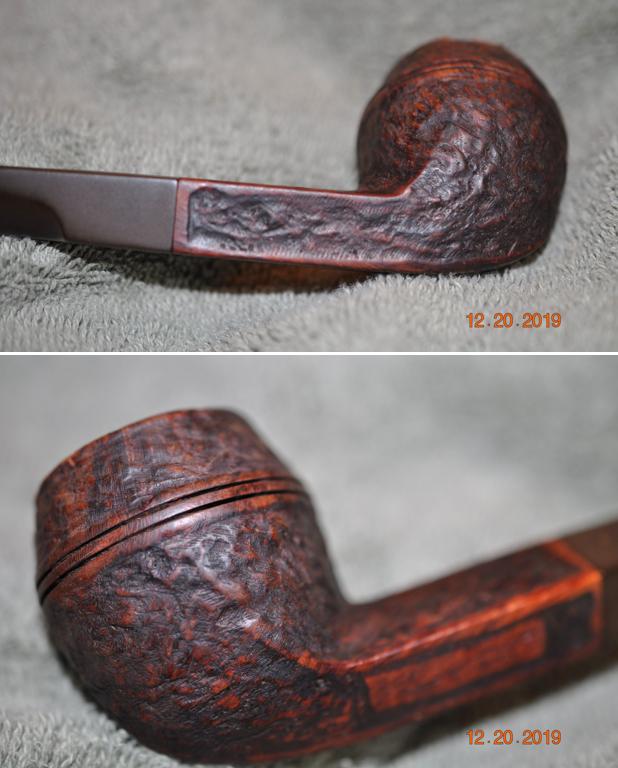
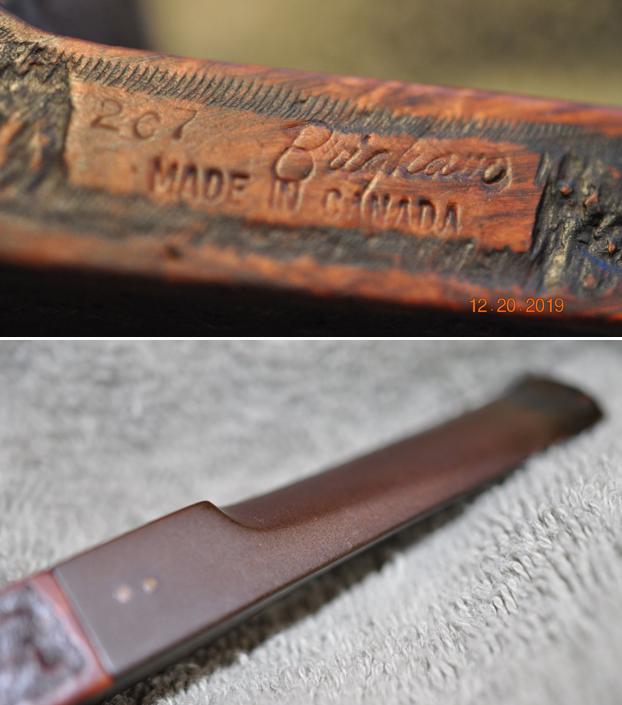
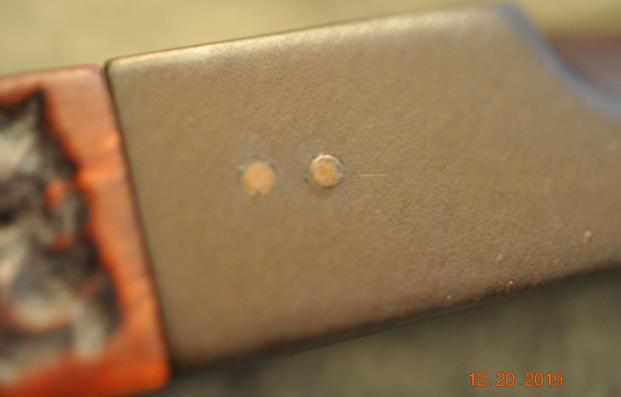
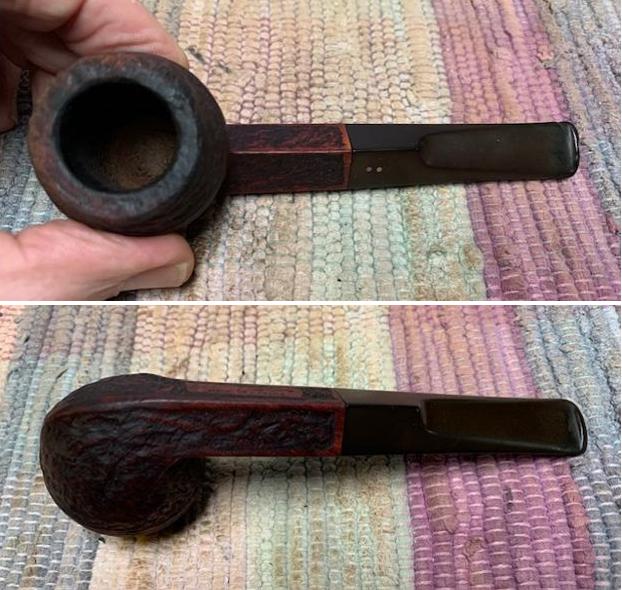
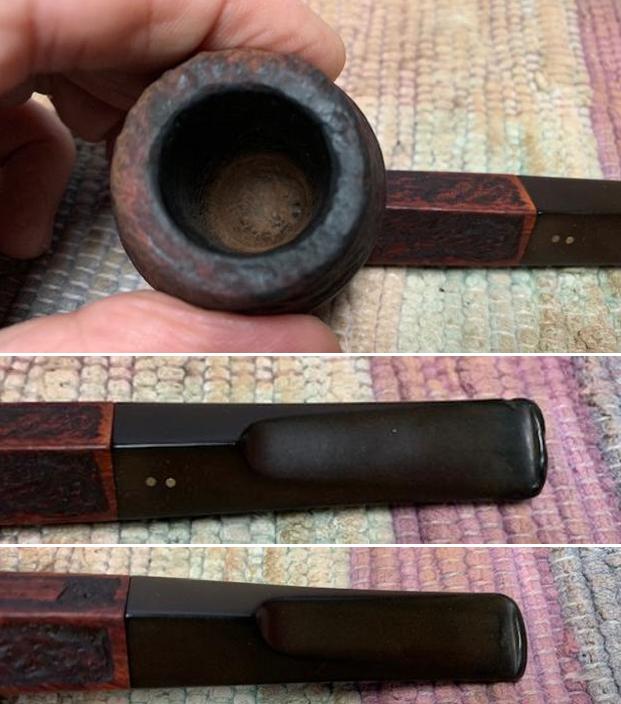
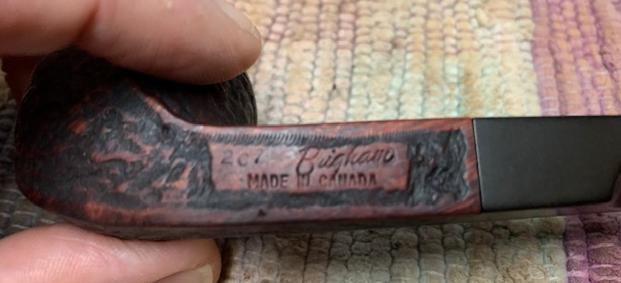
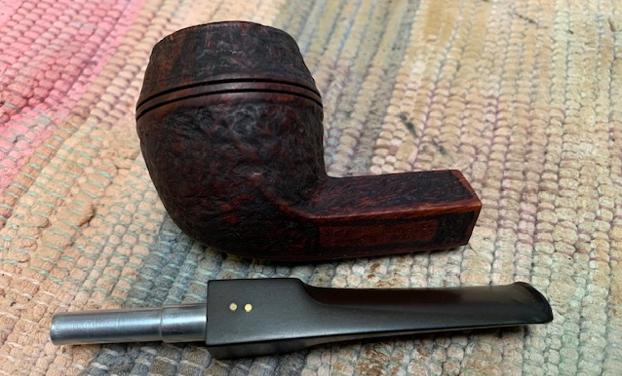
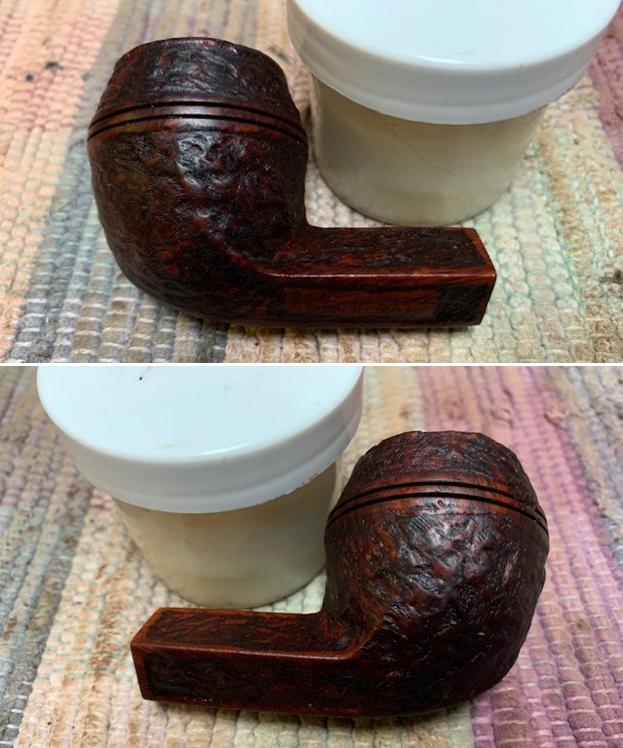
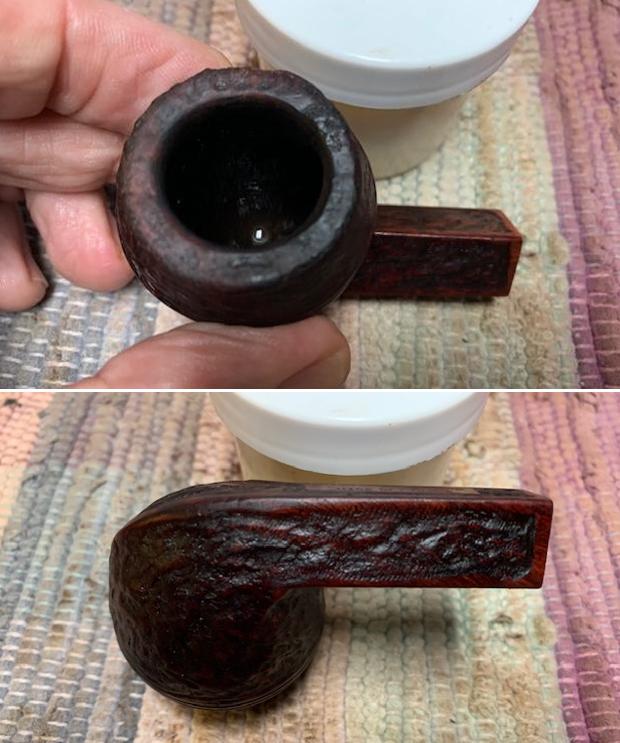
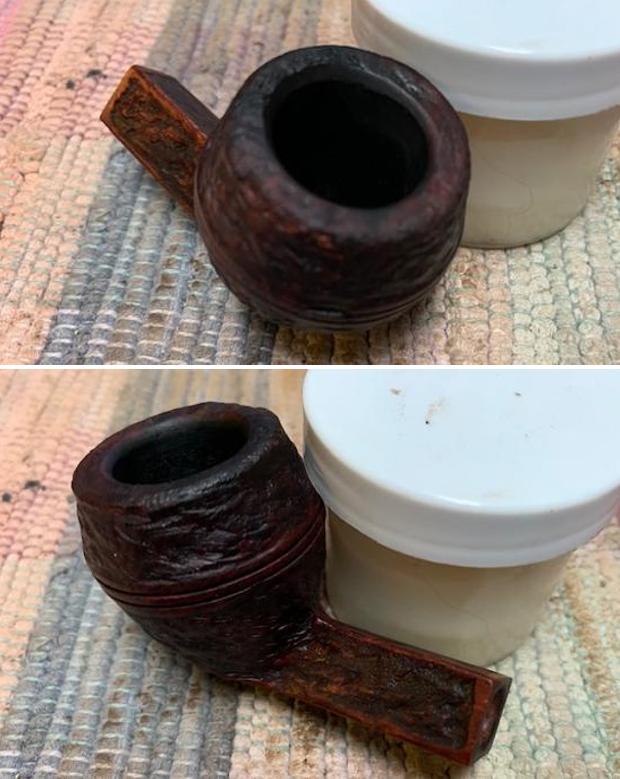
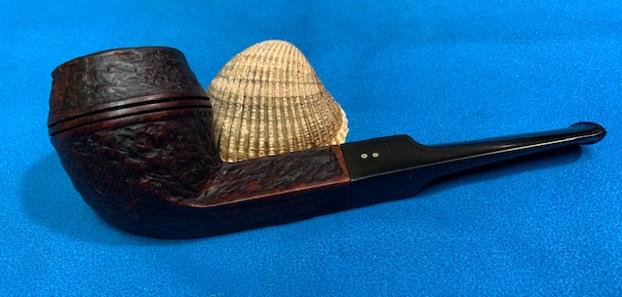
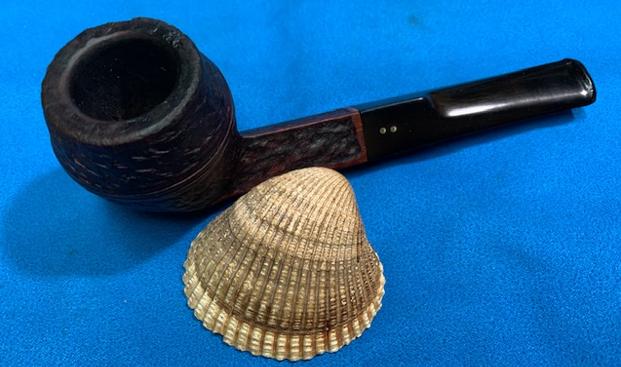
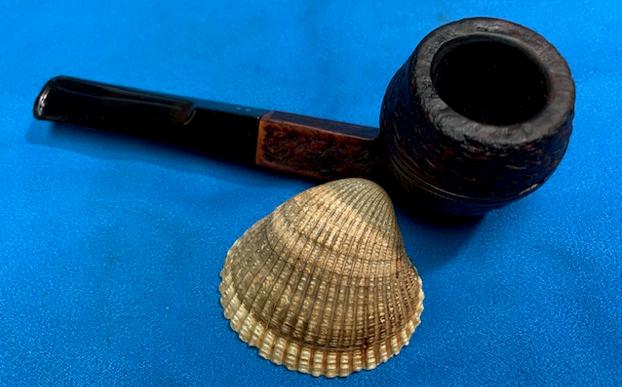
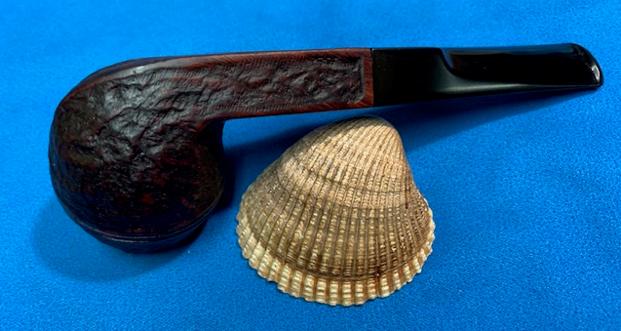
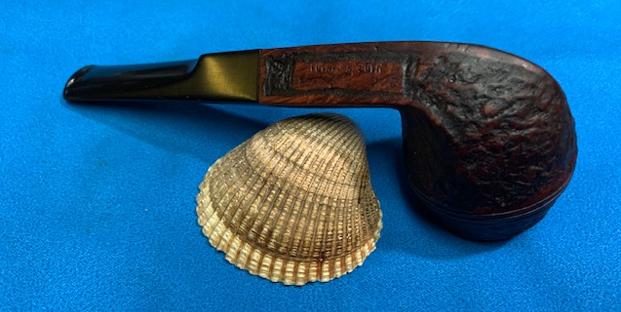
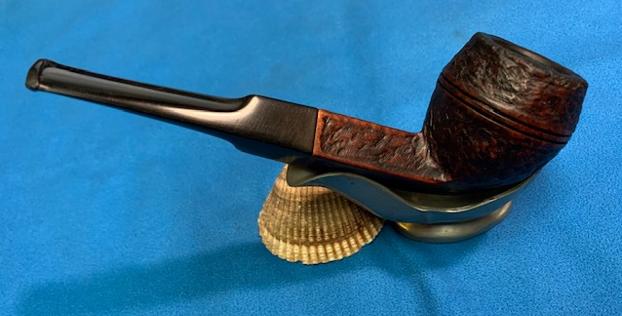
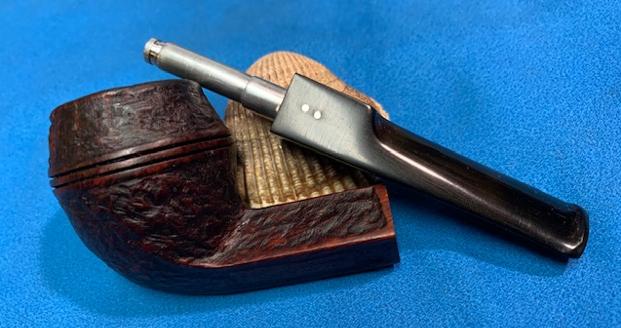
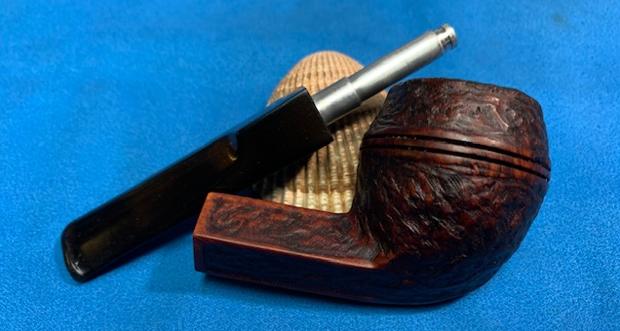
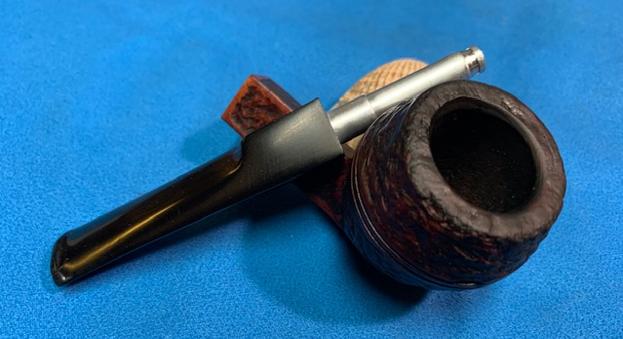
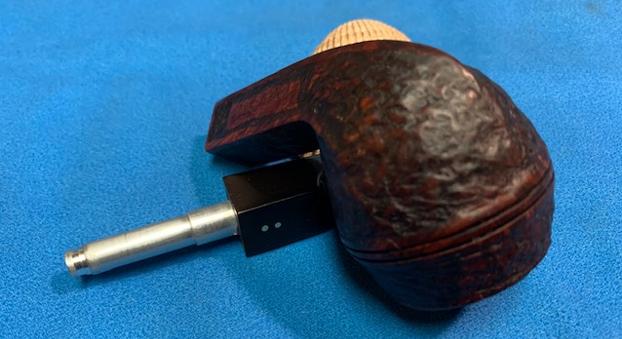
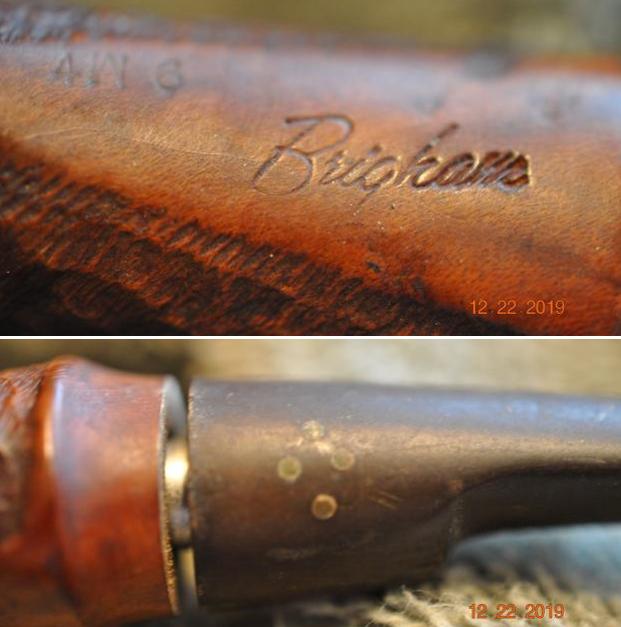
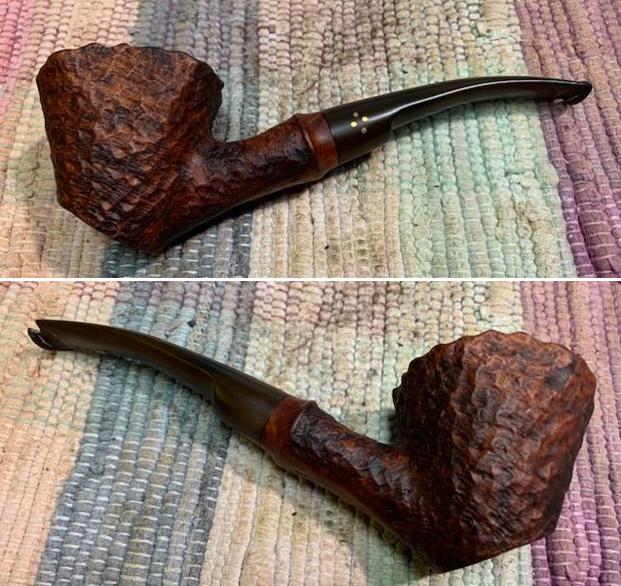
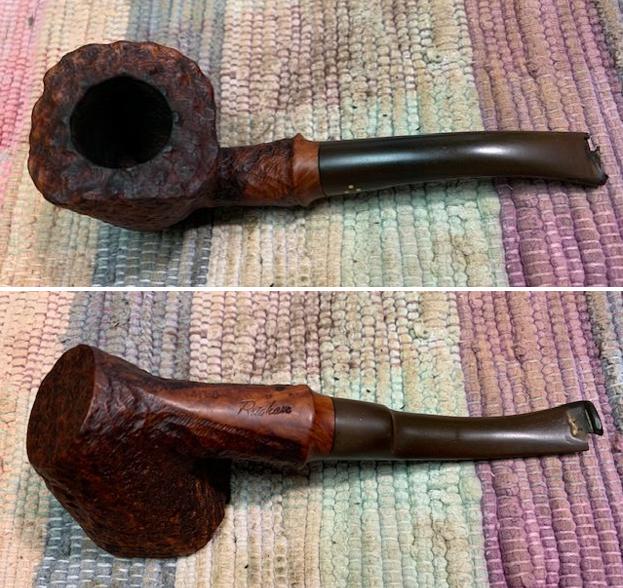
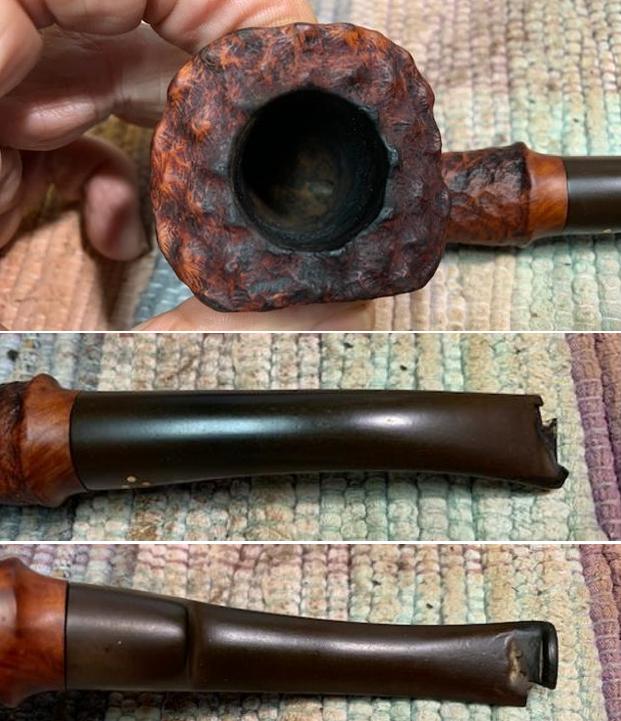
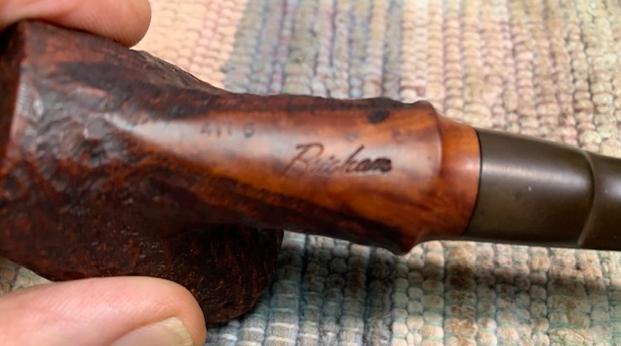
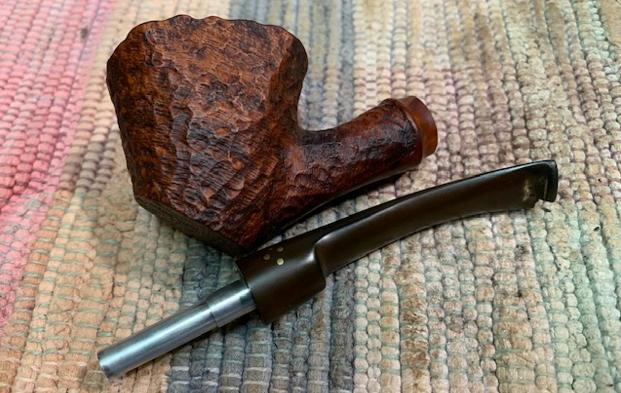
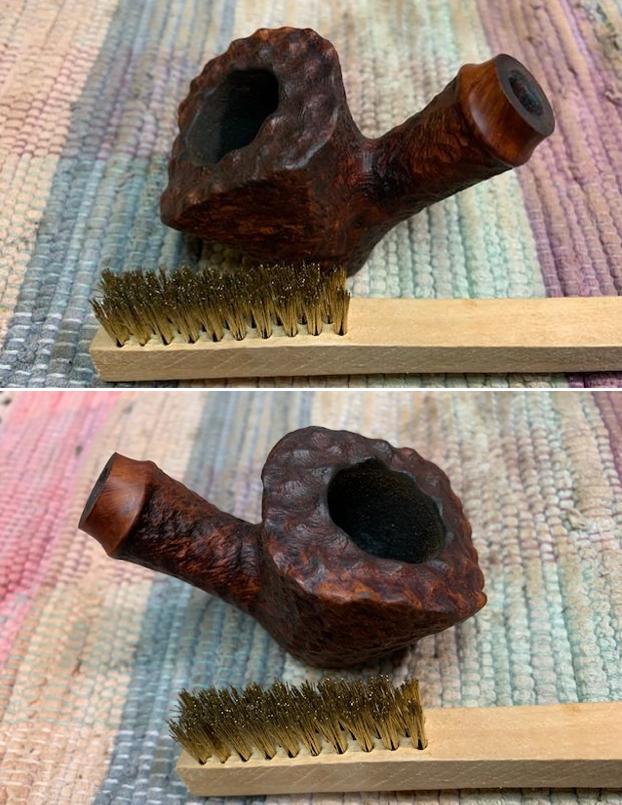
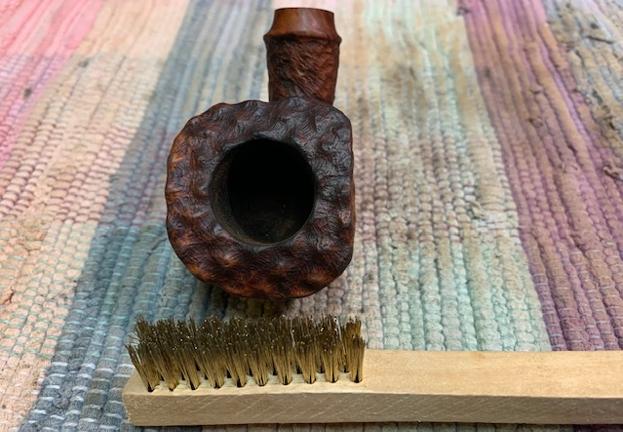
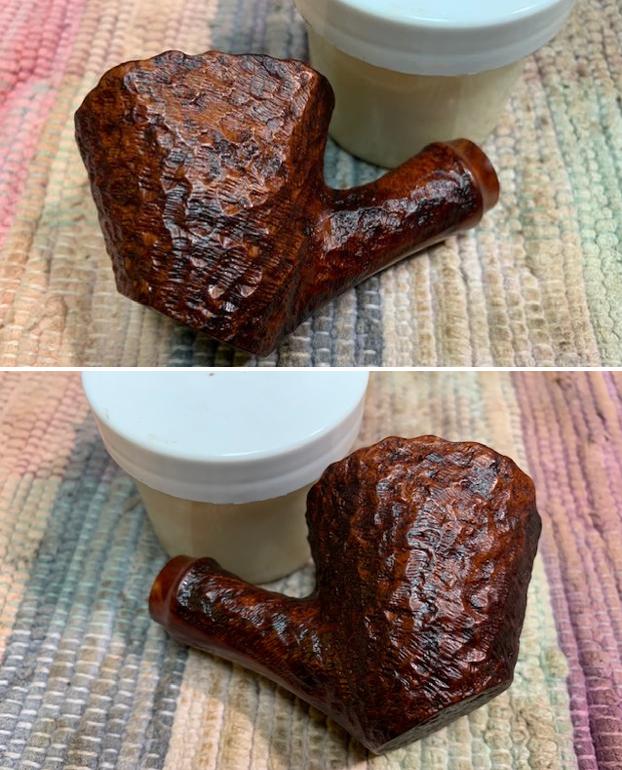
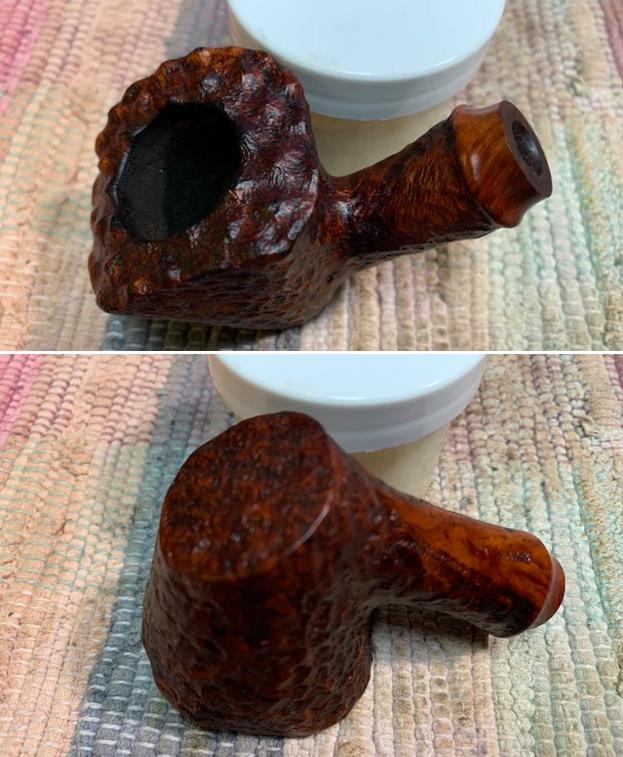
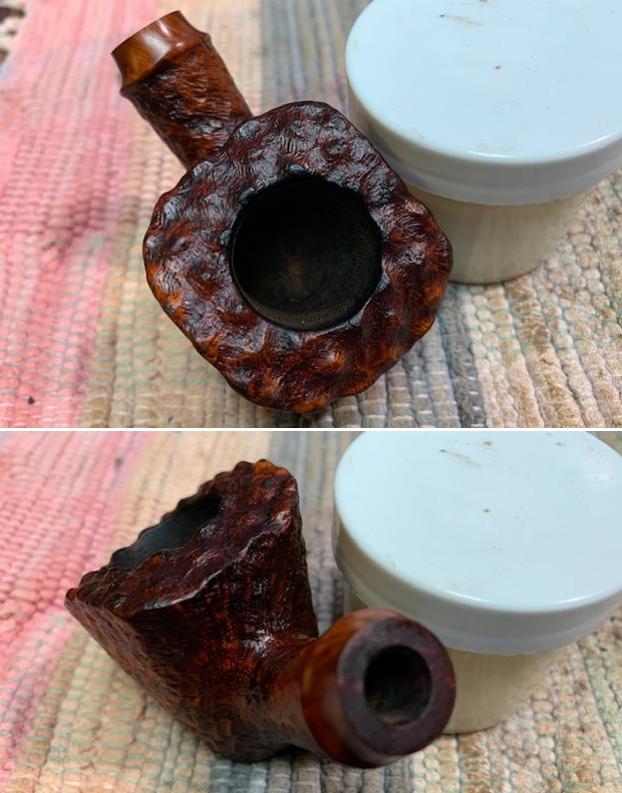
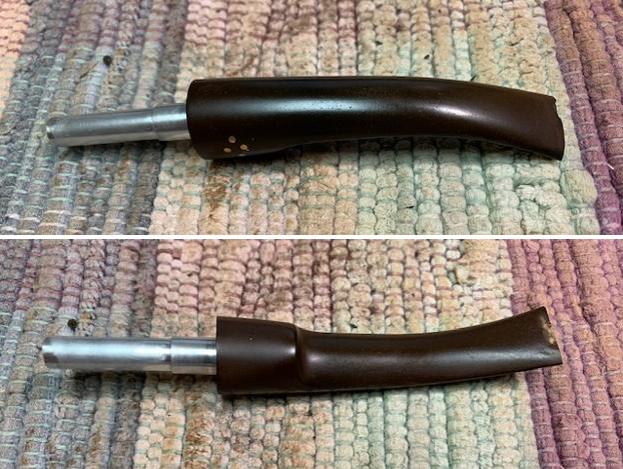
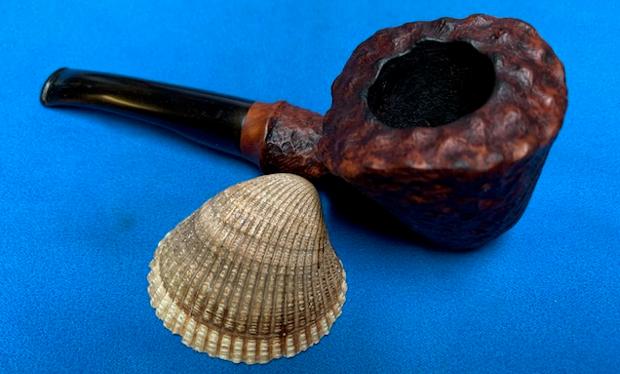
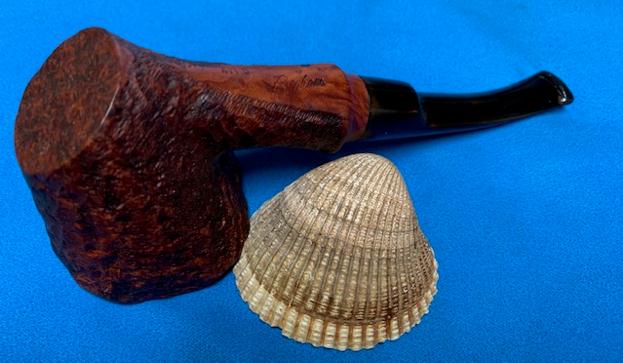
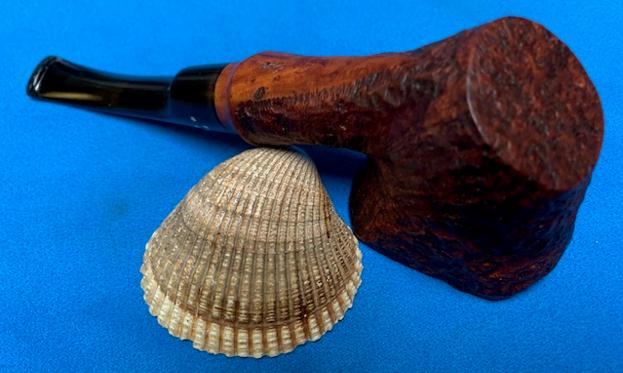
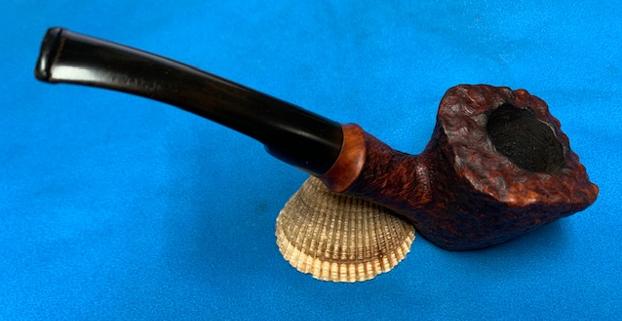
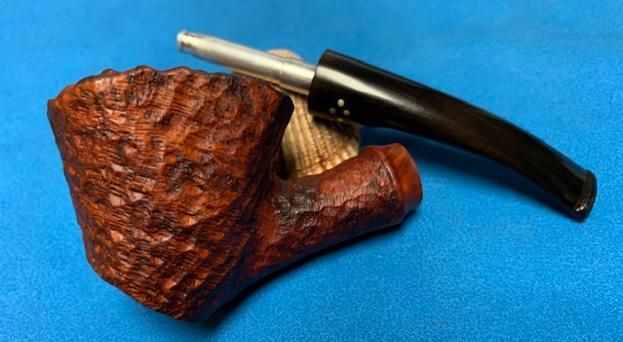
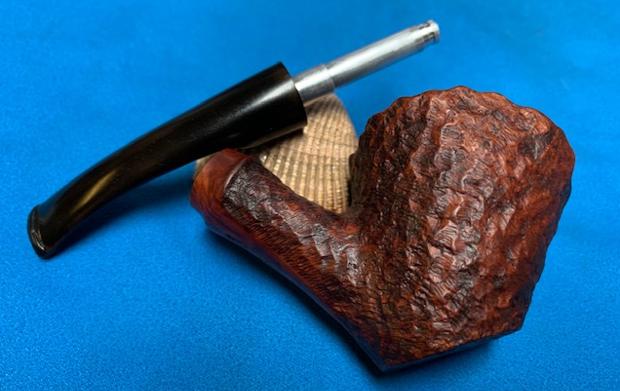
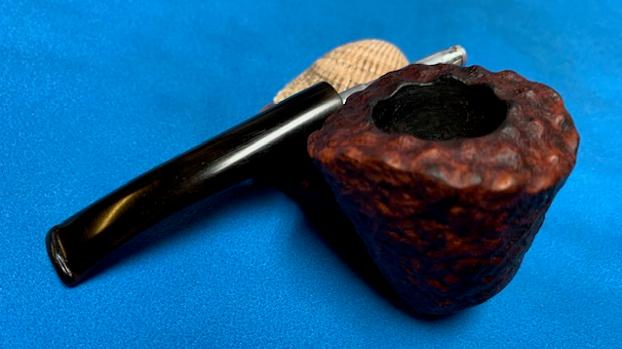
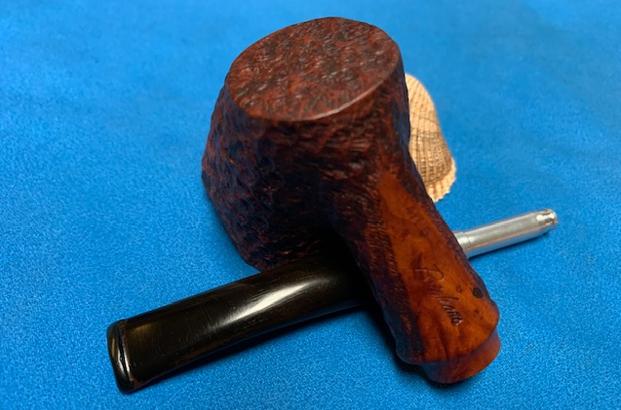
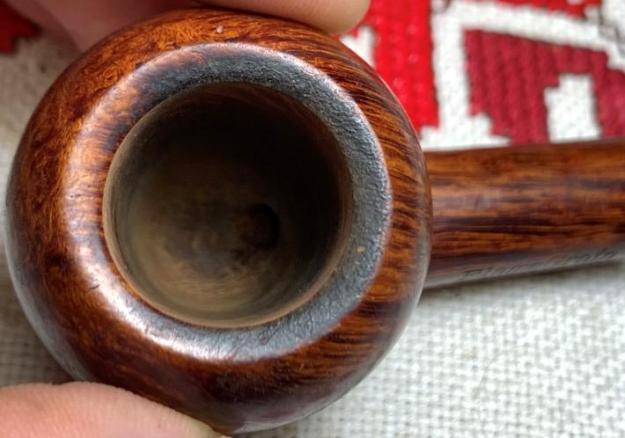
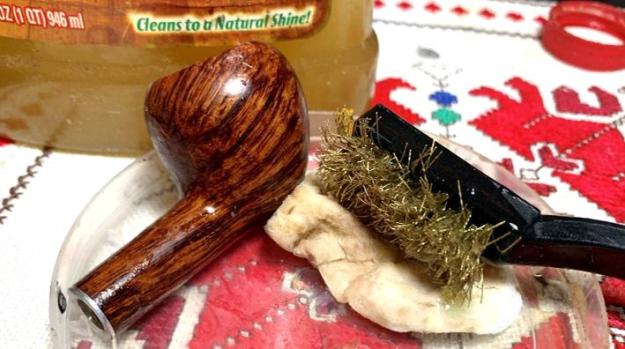
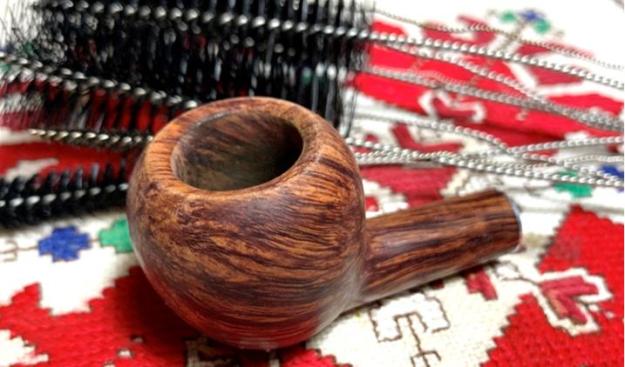
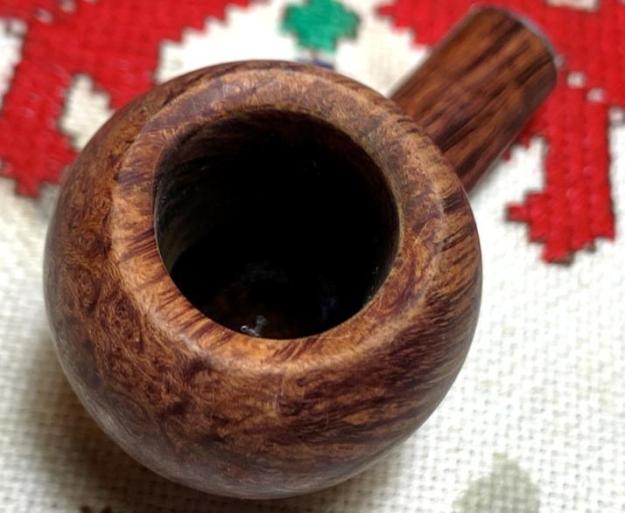
I was very flattered by all the attention that the first restoration of my grandfather’s Dunhill received on this blog. Your kind words gave me the encouragement to carry on publishing the stories of my pipe restorations. Indeed, I will be posting restorations of my grandfather’s other pipes in the weeks ahead. Today’s pipe is not from my grandfather, but from eBay. This Brigham Two-Dot Algonquin (254) is a straight-stemmed pot billiard. It is much more modest than my grandfather’s Dunhill, but it is a charming pipe with its own story to tell. As usual, Steve’s advice was invaluable and – also as usual – any compliments on this restoration are for him; any criticisms are for me. I gave this story the title that I did because this pipe reminds me of the old Volkswagen Beetle: solid, hard-working, reliable, practical – but not very pretty. The very first lot of pipes that I purchased on eBay came from Sudbury, Ontario – the nickel capital of the world. This group of pipes had a little bit of everything in it (you will see some others in the coming weeks), but the one thing these pipes had in common was their filth. Perhaps they all sat at the bottom of a nickel mine and accumulated this filth over the years. Who knows? I started with this pipe because it was the least dirty and least blemished of the bunch. I figured this might be a relatively straightforward restoration – and so it was. The pictures you see here do not do justice to the filth. I may have wiped this pipe down a bit before starting, so you will just have to take my word for it. Fortunately, there were no major structural problems with this pipe. There were scratches on the stummel, some lava on the rim, plenty of cake in the bowl, lots of tooth marks on the stem, and an overall sense of fatigue. The pipe just felt lethargic somehow. By the way, I apologize for the lack of variety of photographs on this pipe. It was being restored while my mind was on other things and I did not snap the pictures quite as often as I should have.

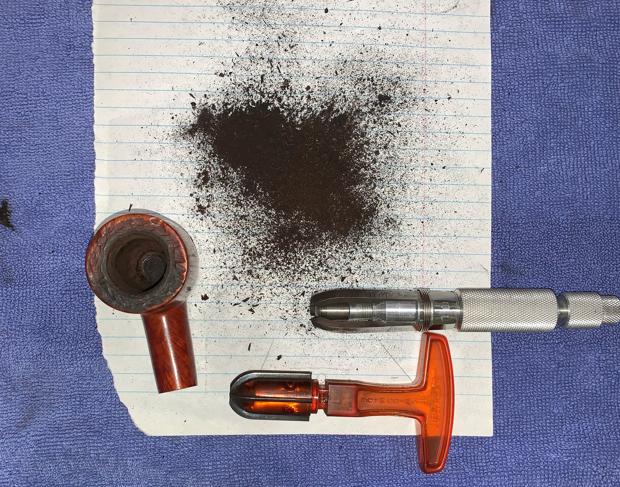
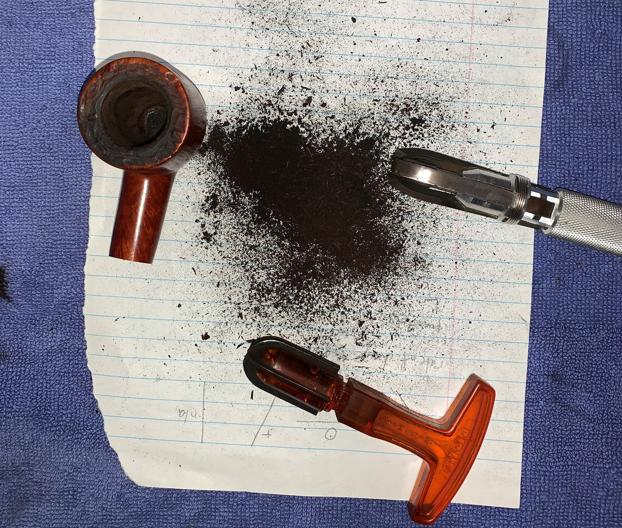
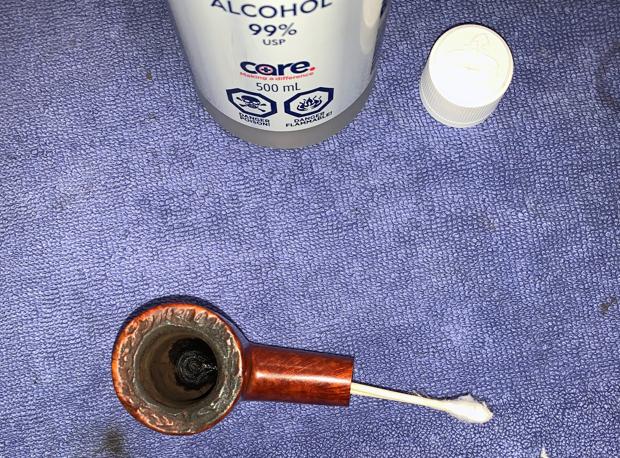
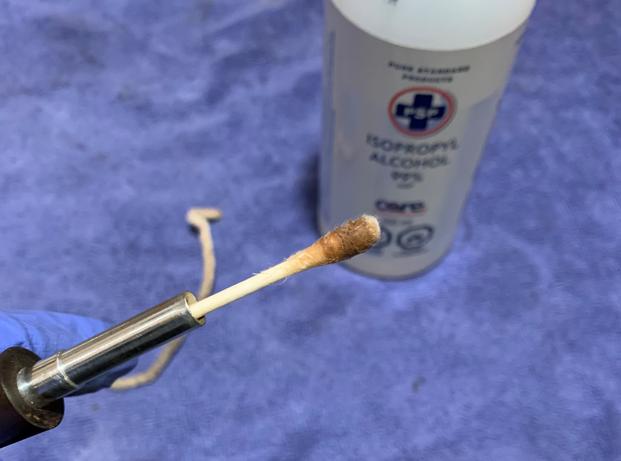
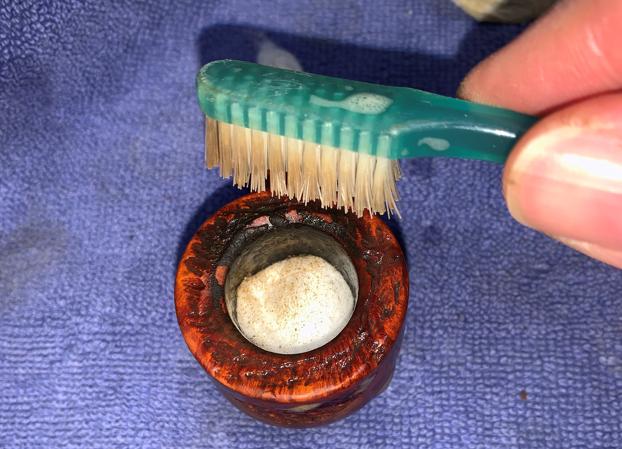
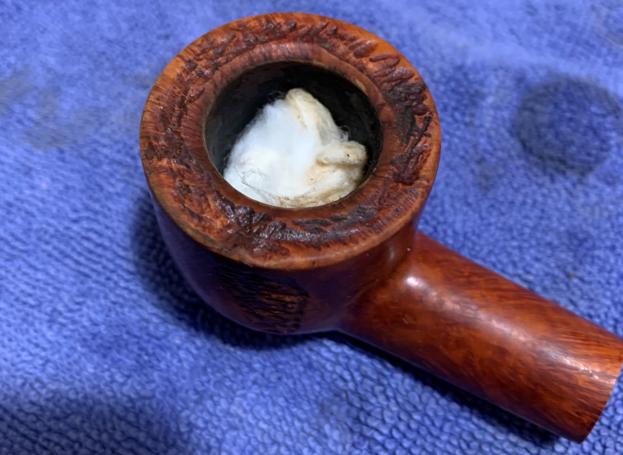
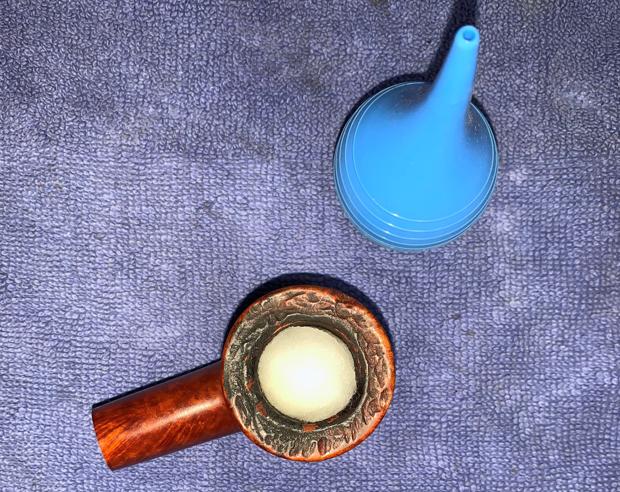
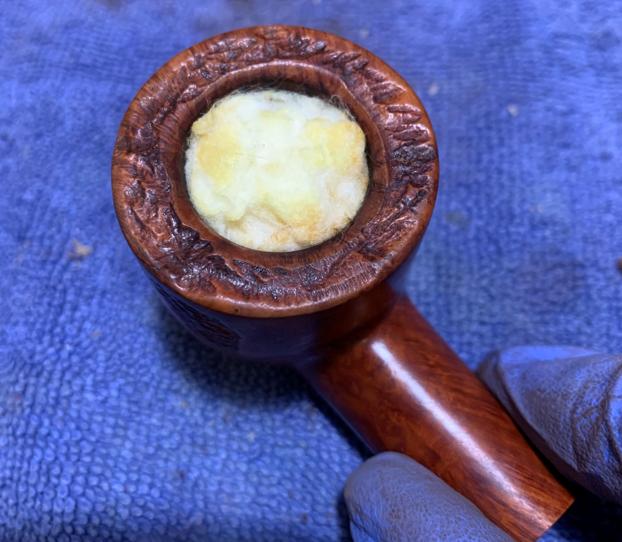
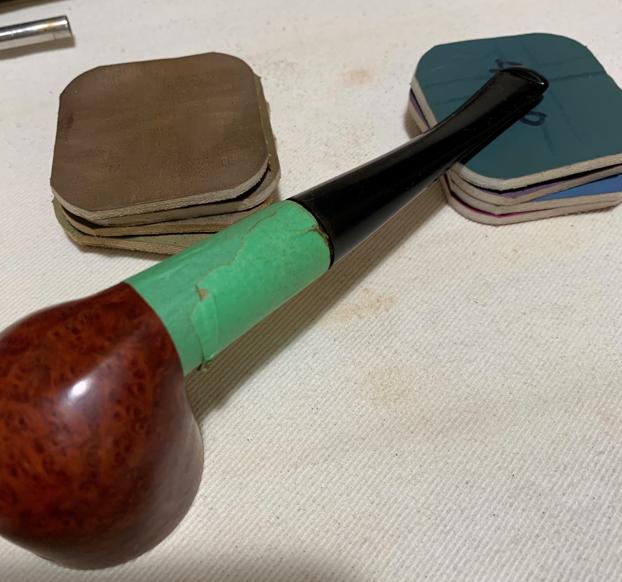
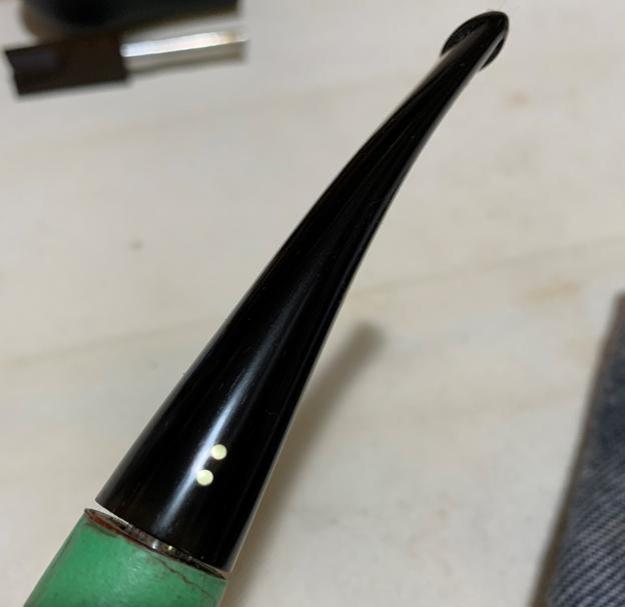
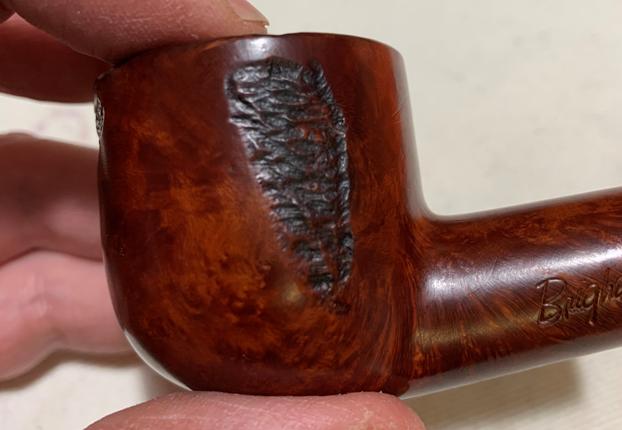
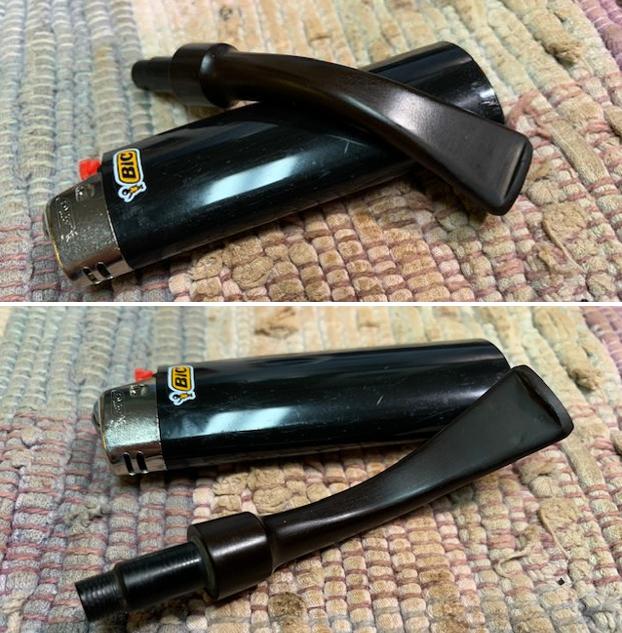
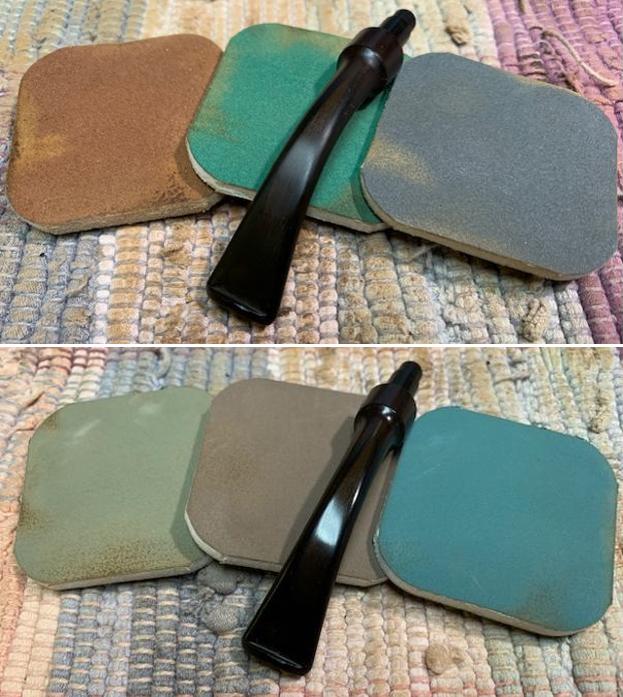
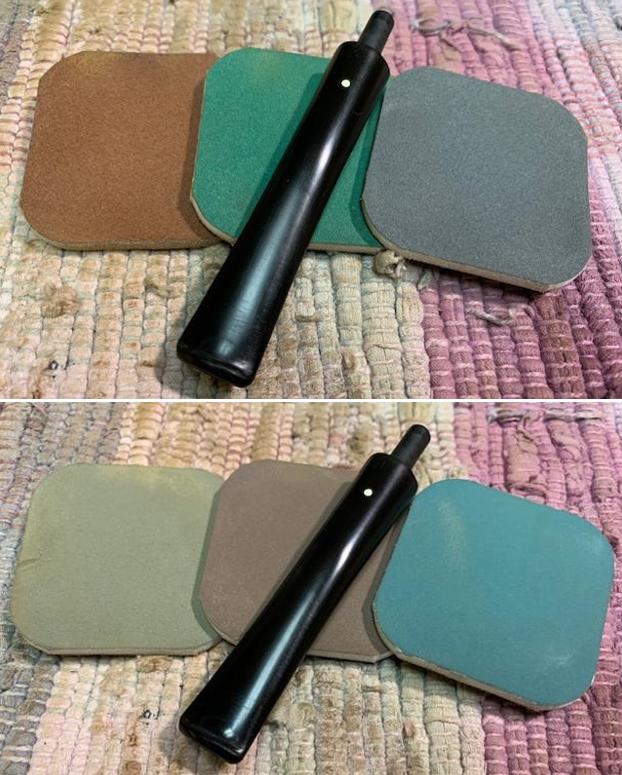
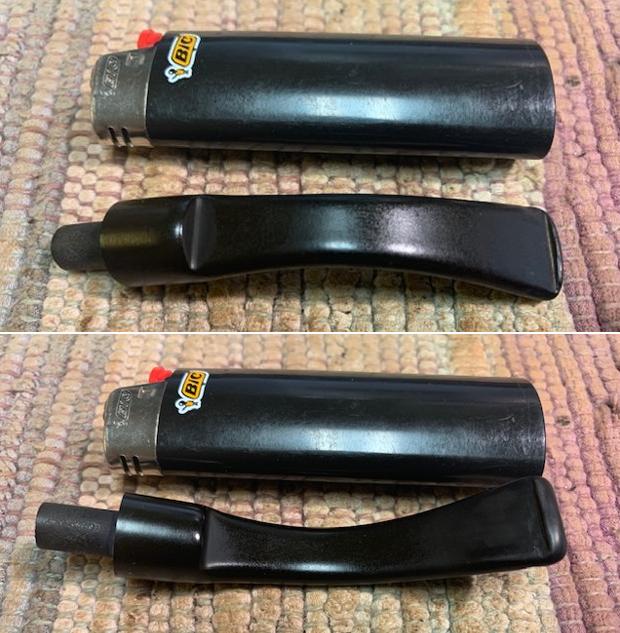
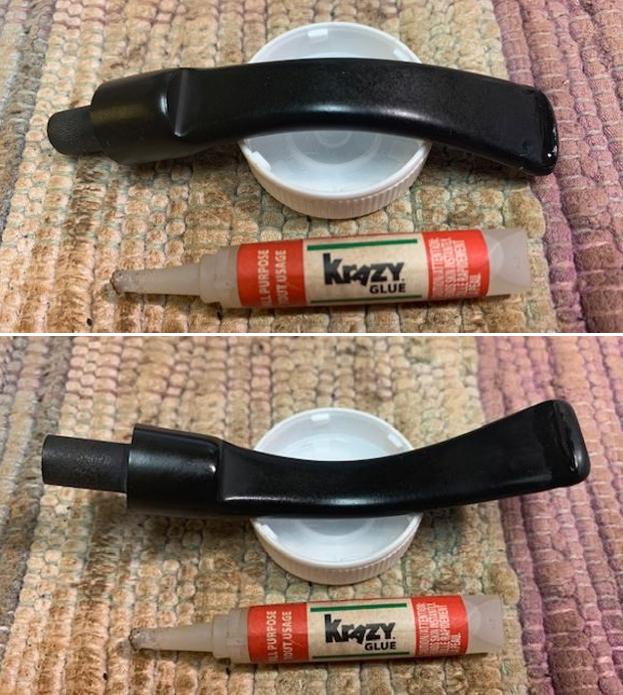
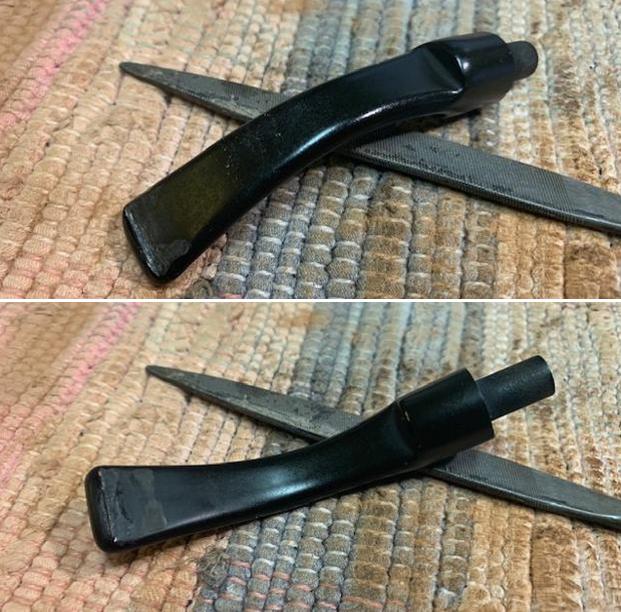
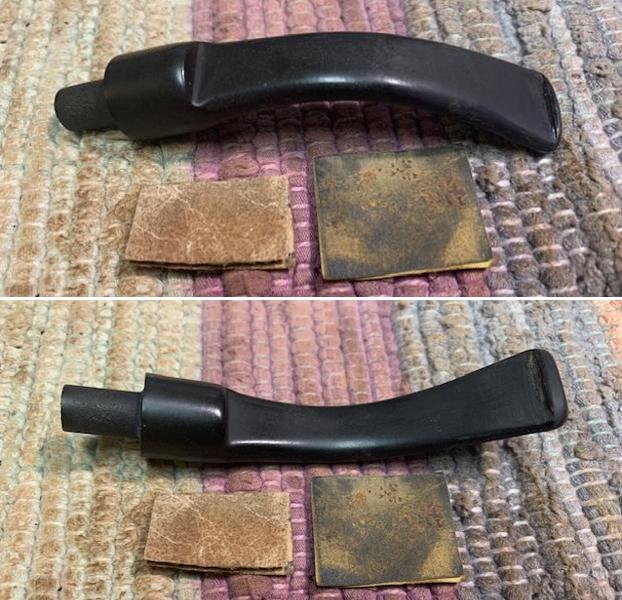
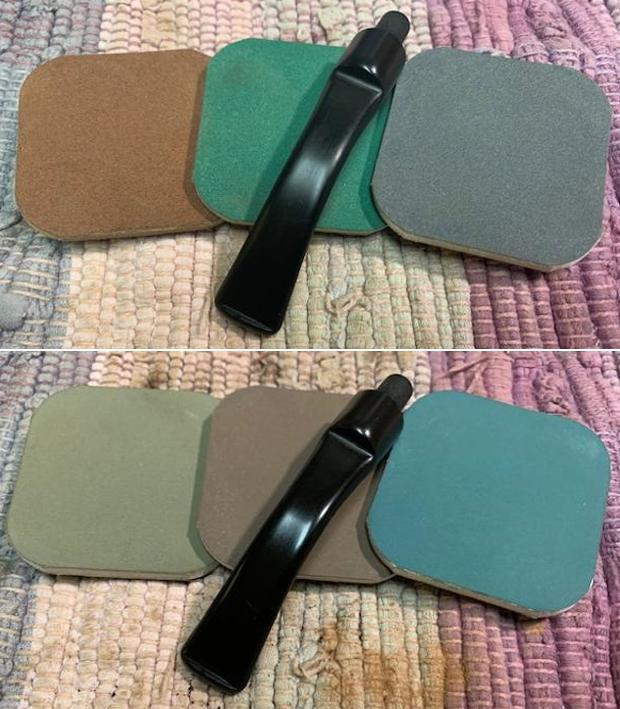
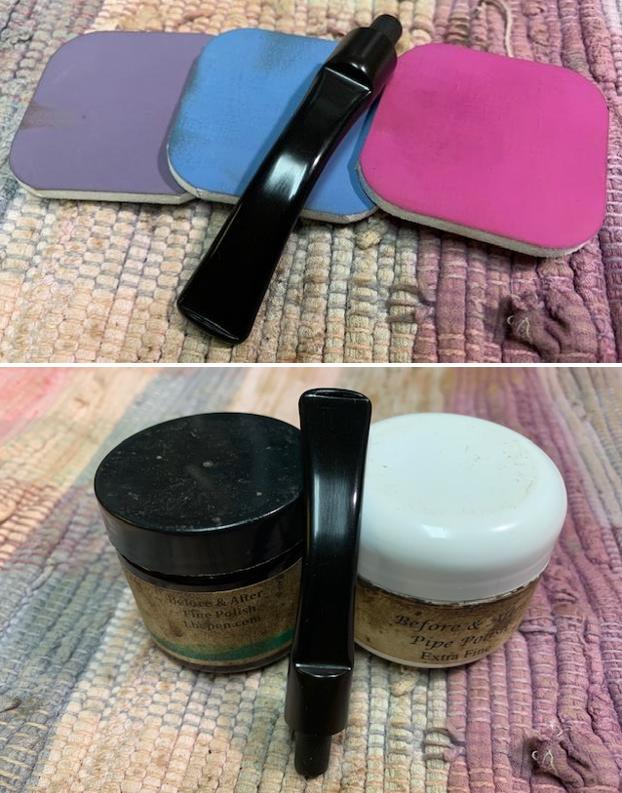
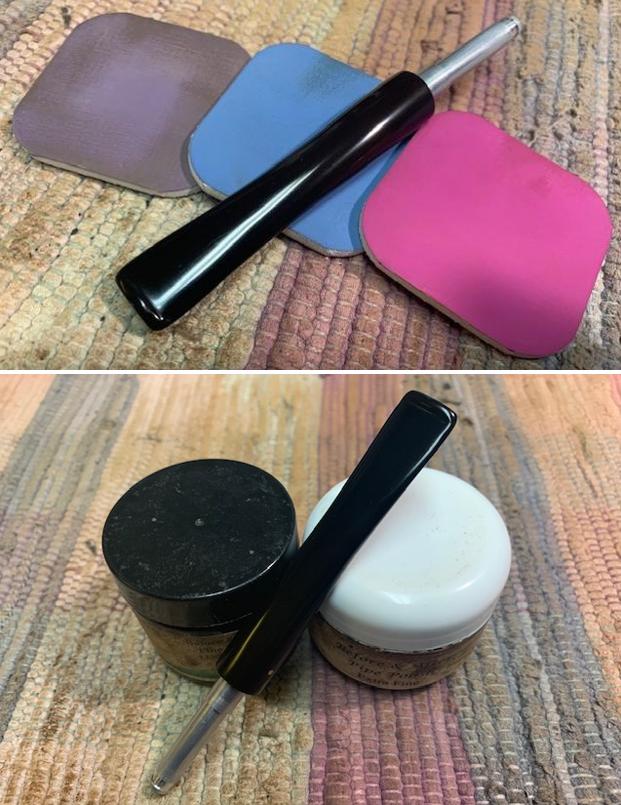
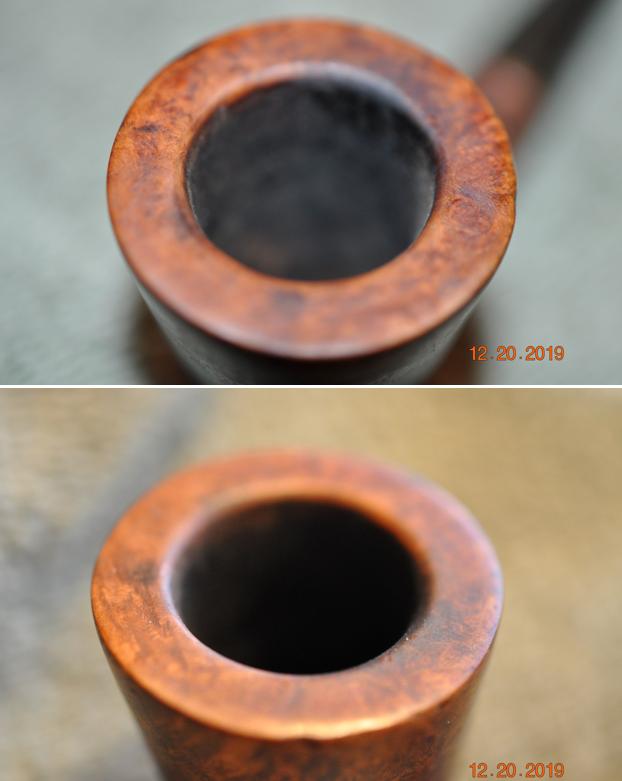
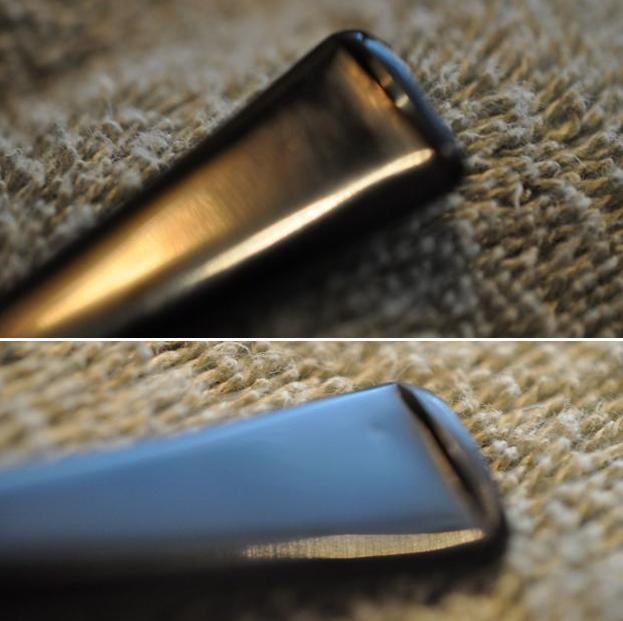
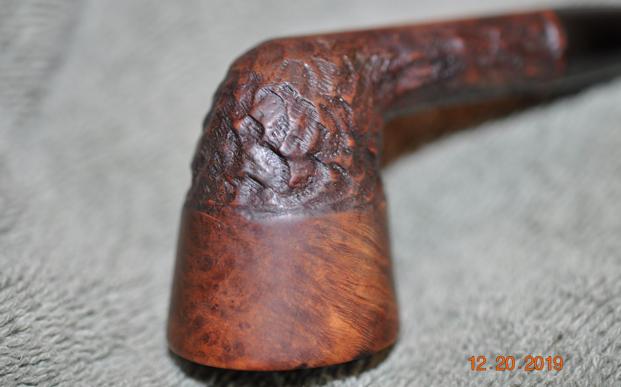
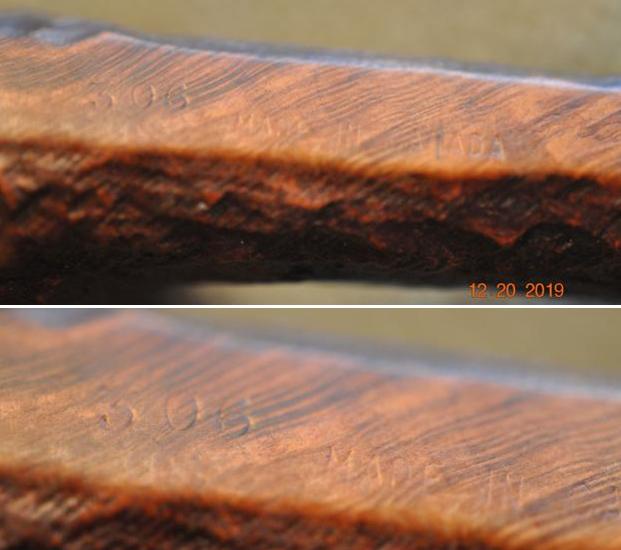
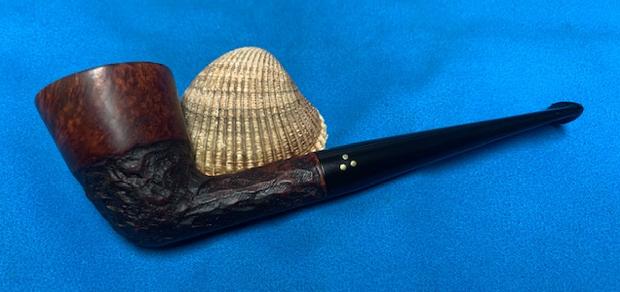
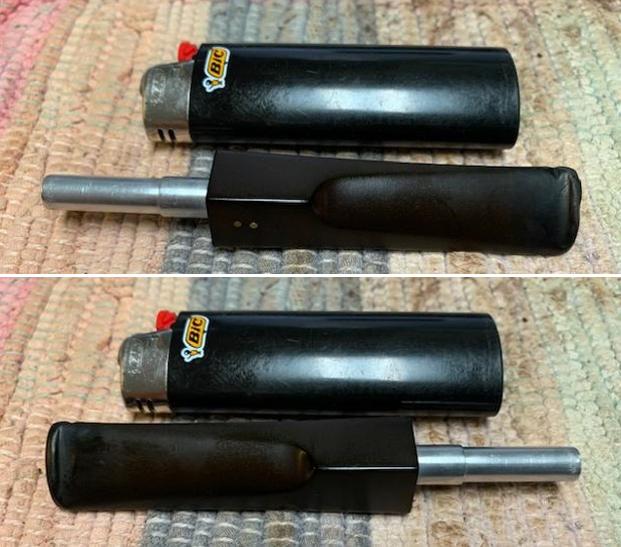
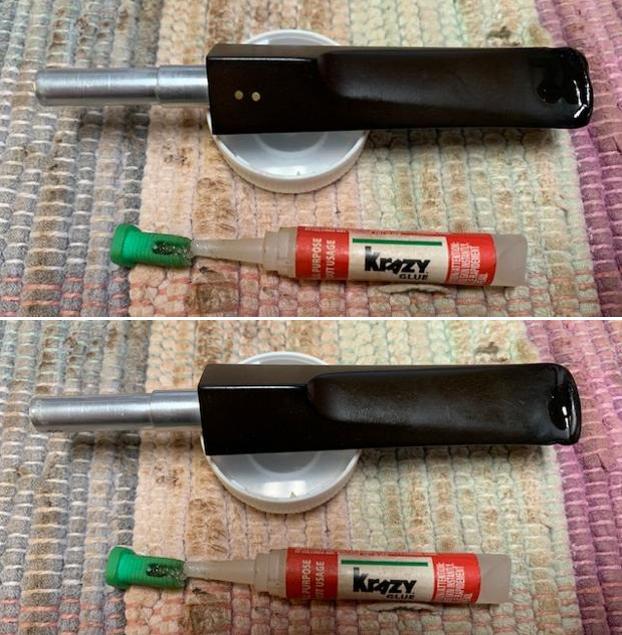
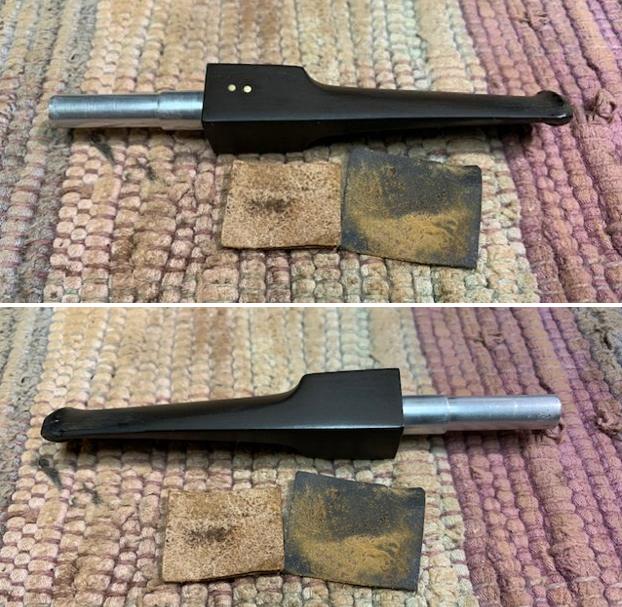
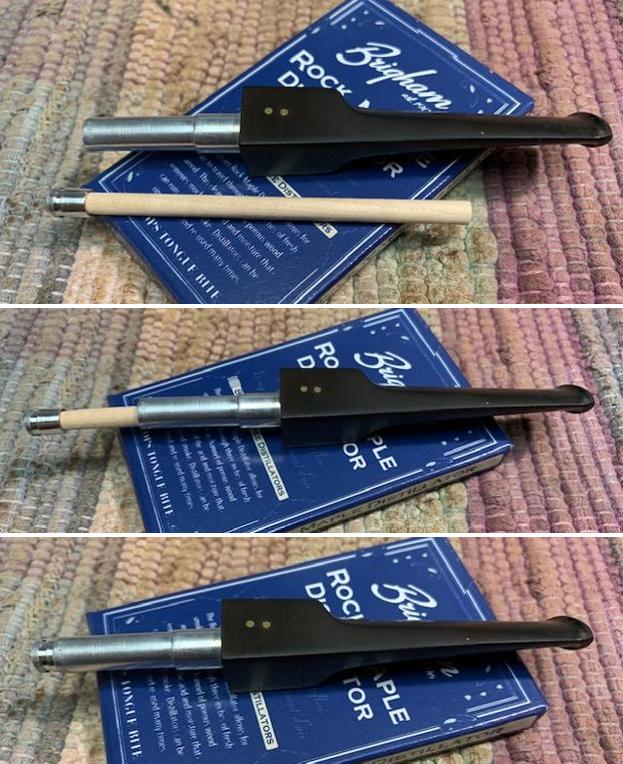
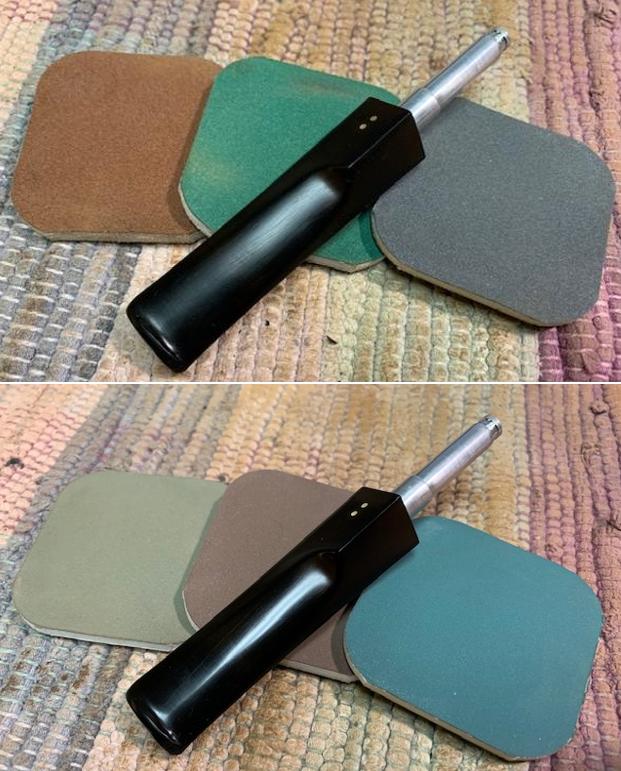
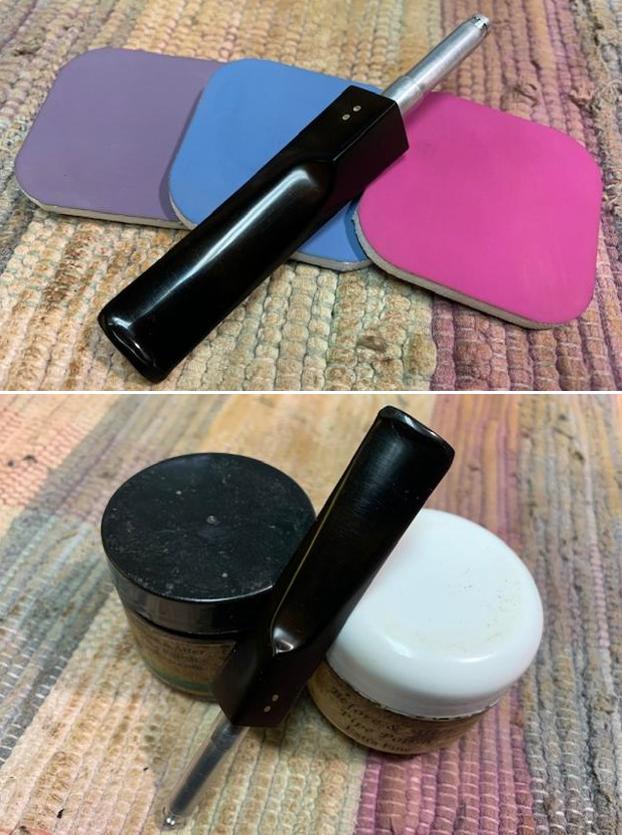
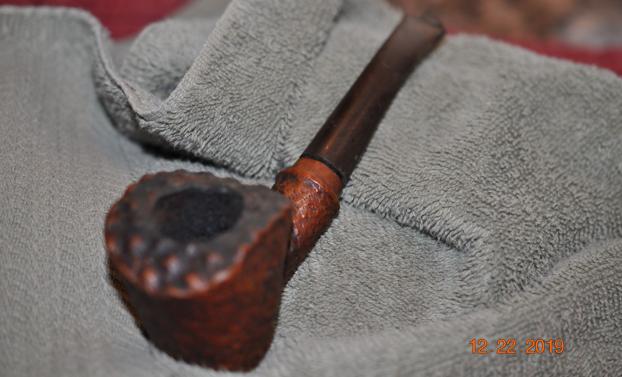
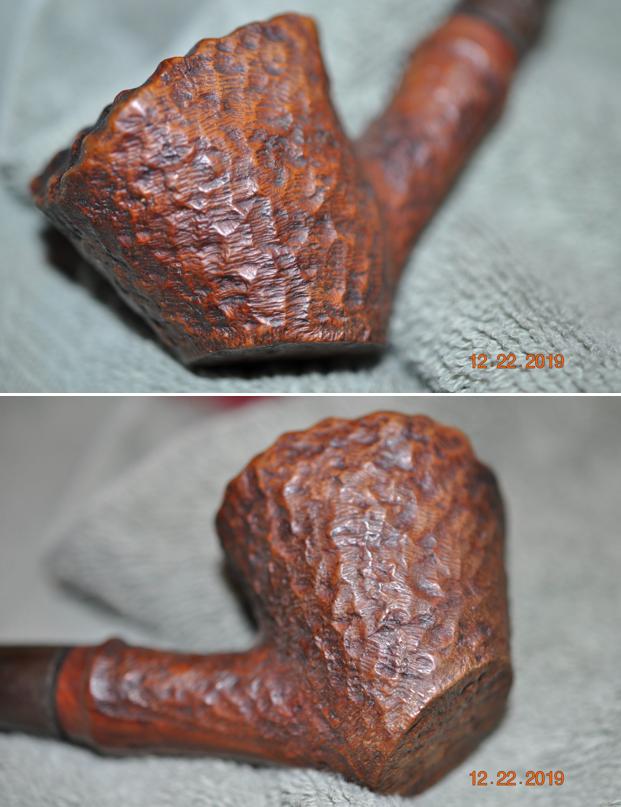
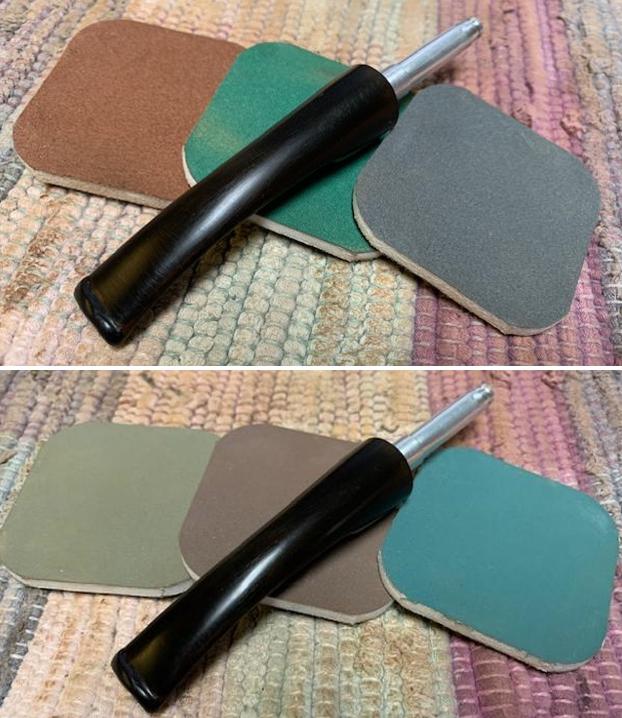
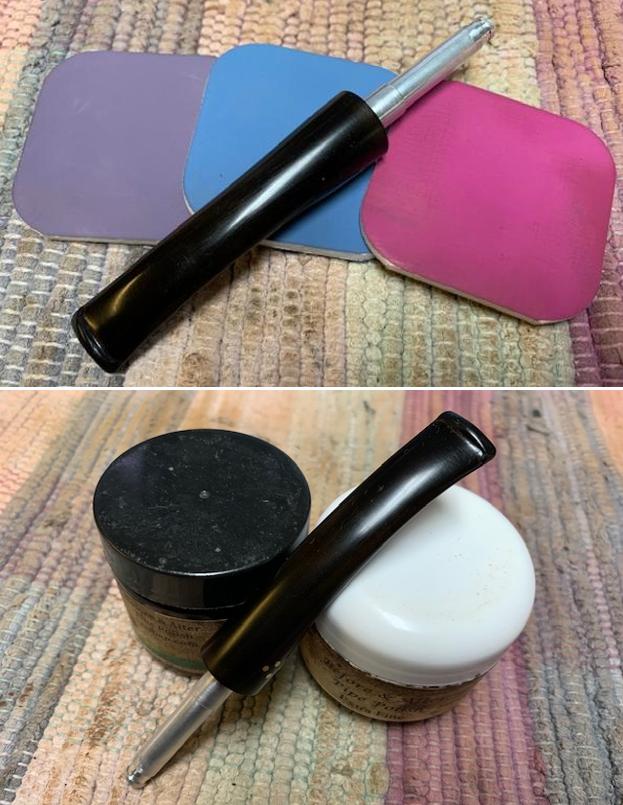
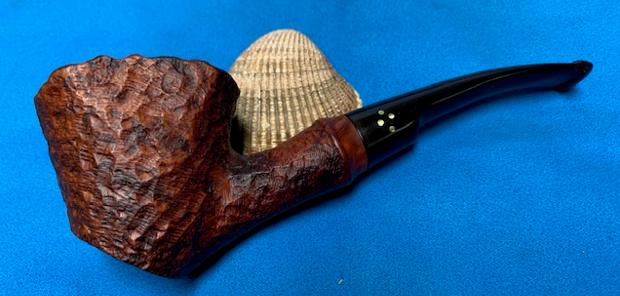
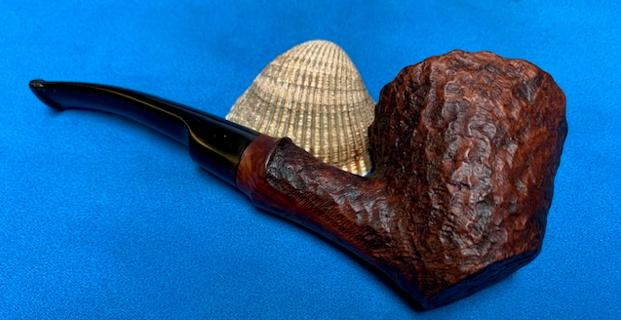
Anyway, to work! Naturally, the first steps involved reaming out the pipe. This pipe has quite a wide bowl and it required both the PipNet Reamer and the KleenReem. I took it down to bare briar, as I wanted to ensure there were no hidden flaws in the walls of the bowl. Fortunately, there were none. I then proceeded to clean out the insides of both the shank and stem with Q-tips, pipe cleaners, and a lemon-infused isopropyl alcohol. Now, I know that sounds more like something you would find in a ladies’ beauty salon, but, in fact, it is a pretty impressive cleaner (more about that perhaps in a future post). I took a BIC lighter and (to quote Steve) ‘painted’ the stem with its flame. This was fairly successful in raising some of the dents. One dent remained, but I dealt with that later. Once this process was done, the stem went for an overnight soak in the Before & After Hard Rubber Deoxidizer. I then moved on to cleaning the outside of the stummel with Murphy’s Oil Soap and an old toothbrush. My father is a dentist, so I know I have a good place from which to source my dental supplies! Actually, that cleaning with the brush tipped the balance of this pipe from a sorry, Sudbury sojourner to a pipe with character and purpose. I followed that up with a smear of Before & After Restoration Balm. That always makes everything look better – even a Volkswagen Beetle pipe. Perhaps applying some on my ugly mug would help, but I digress… The time had come to deal with this pipe’s biggest problem – a problem that pictures will not convey: the stench. The previous owner had clearly enjoyed a very floral, perfumy aromatic tobacco. How shall I put this delicately? It was not to my taste. It took four (or maybe even five) de-ghosting sessions to rid this pipe of the aromatic fetor. This de-ghosting consisted of thrusting cotton balls in the bowl and the shank, and saturating them with 99% isopropyl alcohol. This causes the tars and dreadful smells to leech out into the cotton. Finally, a relatively clean and fresh-smelling bowl emerged. I went back to the stem and cleaned all of the de-oxidizing goop (technical term) off with alcohol, pipe cleaners, et cetera. The oxidation had migrated to the surface and would be fairly easy to remove. Following in the footsteps of Steve the Master, I used 220, 400, and 600 grit sandpapers to address this issue. Before I moved on to the Micromesh pads, I filled the remaining tooth dent in the stem with cyanoacrylate adhesive, let it fully cure, and then sanded it down to meld seamlessly into the stem. Once complete, I used all nine Micromesh pads (1,500 through 12,000 grit) to bring out the lovely lustre on the stem. Naturally, I used Obsidian Pipe Stem Oil in between each pad. I was particularly pleased with how nicely the two Brigham dots gleamed after the Micromesh pads. Back to the stummel. The three patches of rustication (on the rim and the outside) needed a little attention. They did not look quite like Brigham rustication would have looked. I took some stain and applied it to the crevasses of the rustication, carefully avoiding the high spots wherever possible. I also applied some Before & After Restoration Balm to help blend everything together. This looked a lot better and restored a real ‘Brigham’ look to the stummel. The Before & After Restoration Balm had really brought out the best of the wood, but the little nicks and scratches that occur over time had removed some of the charm from this pipe. Lazy Me was hoping that I could get away with just buffing the thing and leaving it at that, but Perfectionist Me knew that that was not going to happen. So, I pulled out all nine Micromesh pads again and went from proverbial stem to stern over the stummel to try and coax some beauty out of this Volkswagen Beetle. It worked! Some beauty was found! I applied more Before & After Restoration Balm and Paragon II Wax. I polished it by hand with a microfibre cloth (deliberately avoiding an electric buffer) and voilà! I now have a Brigham pipe of my very own. This Algonquin Two-Dot pot billiard is never going to win a swimsuit competition, but that does not matter. It is a good, solid pipe that does what it is supposed to do. What more can you ask for? The dimensions of the pipe are as follows: length 6 inches (15.5 cm); height 1¾ inches (4.2 cm); bowl diameter 1½ inches (4 cm); chamber diameter: ⅞ of an inch (2.3 cm). The weight of the pipe is 1⅝ ounces (or 48 grams of mass).

Thank you very much for reading and, once again, I welcome and encourage your comments.

Revitalizing a Venerable Kaywoodie Flame Grain 09B Pear

Blog by Dal Stanton

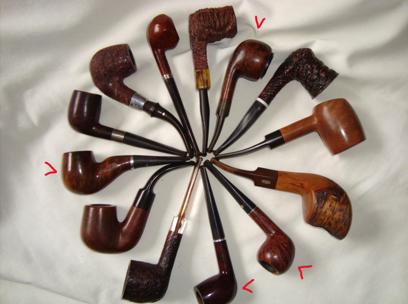
The Kaywoodie now on the worktable is the second of 3 pipes that Skeet commissioned after seeing them in the virtual ‘Help Me Baskets’ in the ‘For “Pipe Dreamers” Only!’ collection.  This large collection of pipes I’ve acquired from antique/secondhand shops, antique malls, and from online sellers – and some have been gifts.  The Kaywoodie was part of a lot of 13 pipes that caught my eye from a seller in Nevada a few years back.  There were some interesting shapes and system pipes that I had not seen before – a LHS Purex (9 o’clock), a Demuth SnapKleen 34 (5:30 o’clock) and a Cyclone London England (1 o’clock).  These specific pipes were new to me.  The Kaywoodie that beckoned Skeet  is situated at the 4:30 o’clock place on the pipe dial.

The first pipe Skeet commissioned benefiting the Daughters of Bulgaria came out well.  The grain on the French Jeantet Superior (see: LINK) was striking and met with Skeets approval.    Here is a picture of the Jeantet that Skeet commissioned after its completion.I was moved by Skeet’s appreciative words after reading the Jeantet’s writeup and seeing the results.  He wrote:
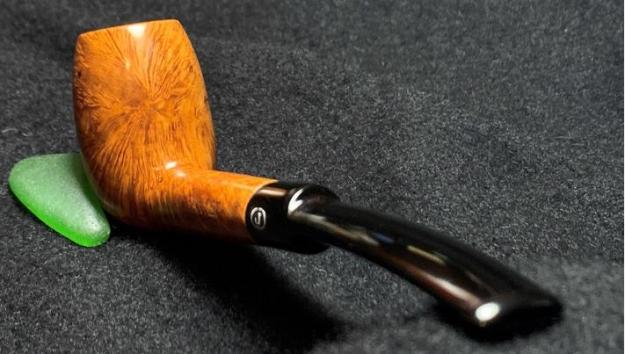
Dear friend Dal,

I just read the write up and saw the pictures!  There are tears in my eyes!  How beautiful it is! Thank you and most assuredly YES! I want to take possession!  (I suppose I use too many exclamation points but I’m extremely excited!) Thank you so much for your beautiful work and also your faithful stewardship you the Daughters of Bulgaria!  As long as I can I will continue to support you in that work. Thank you so much!

Skeet

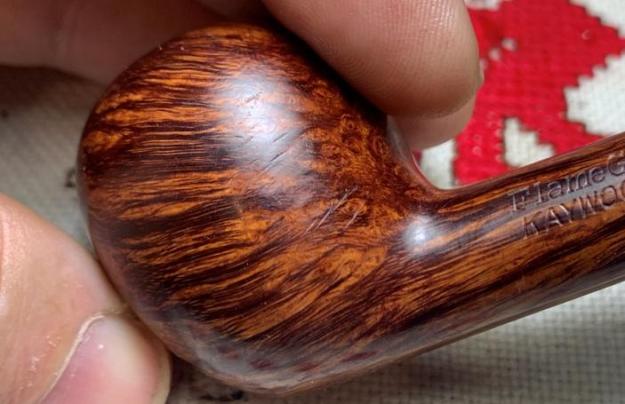
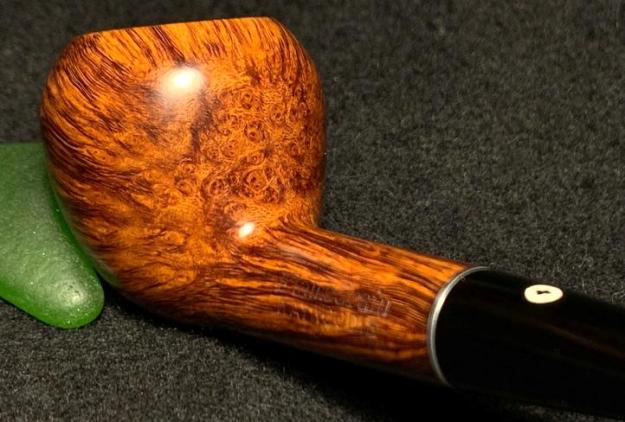
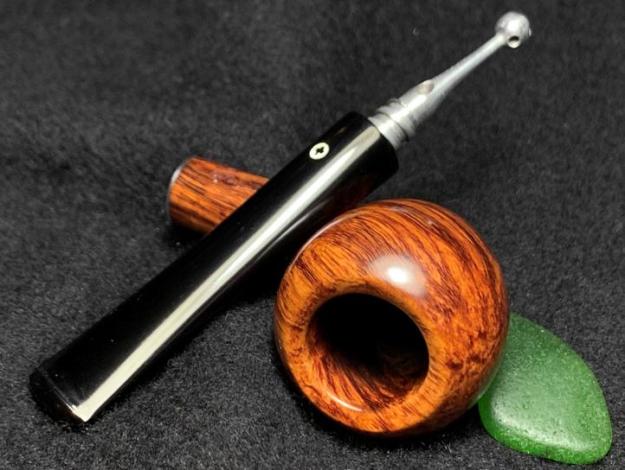
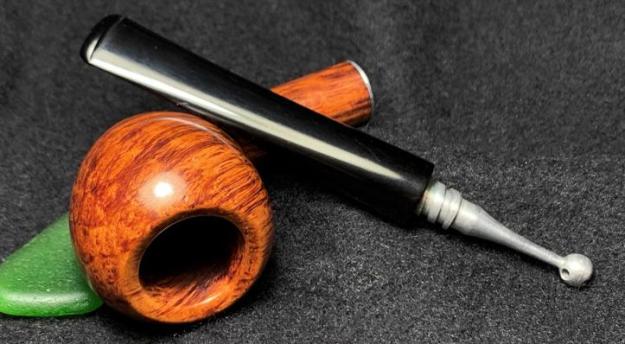
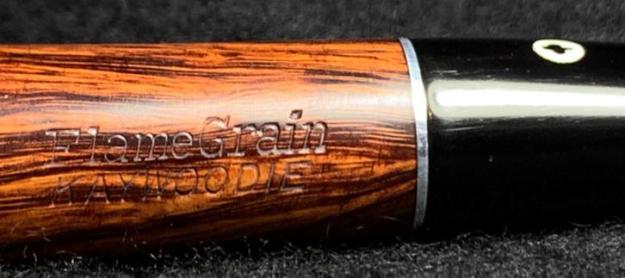
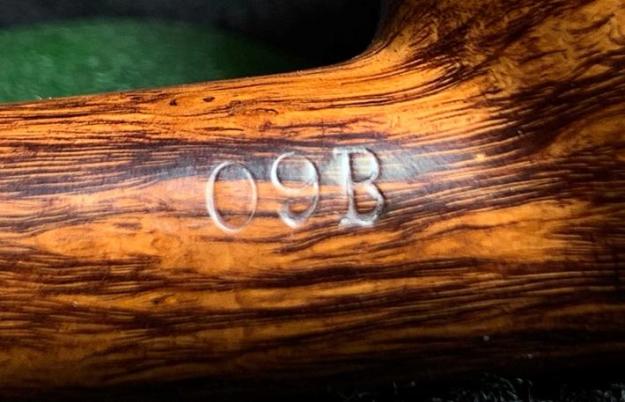
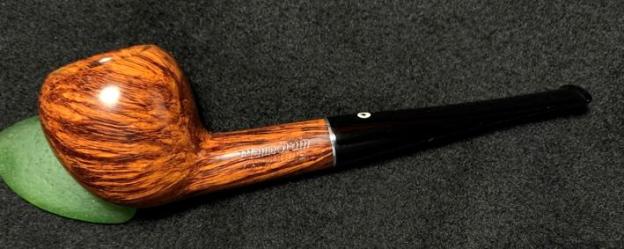
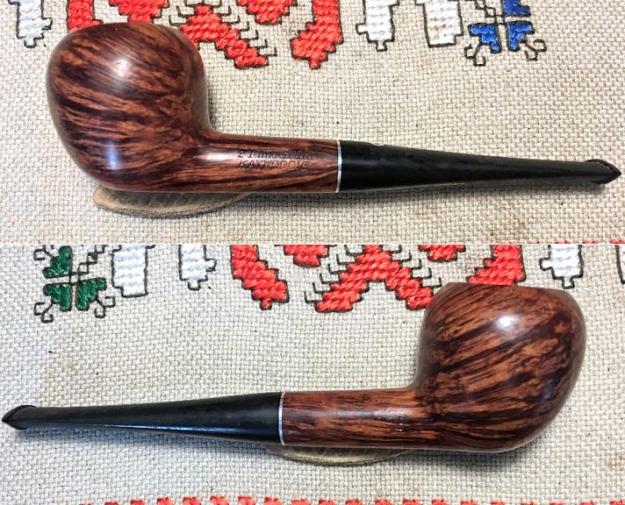
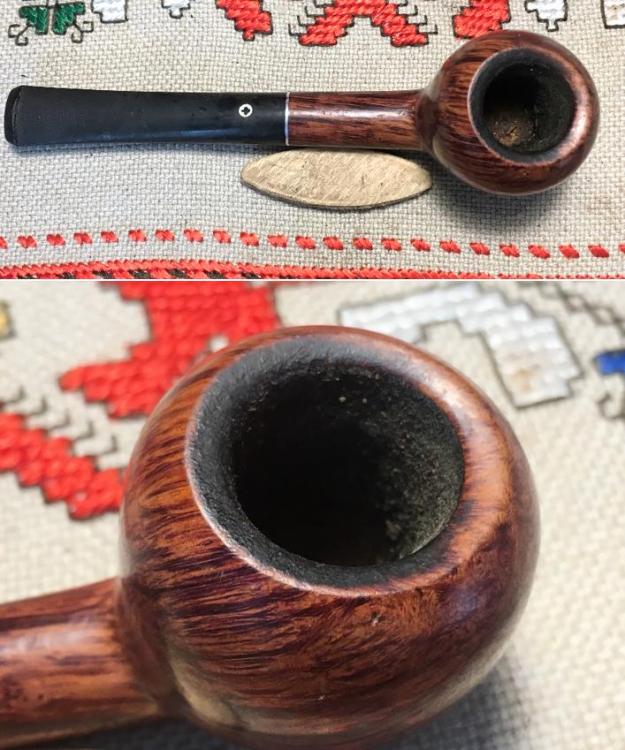
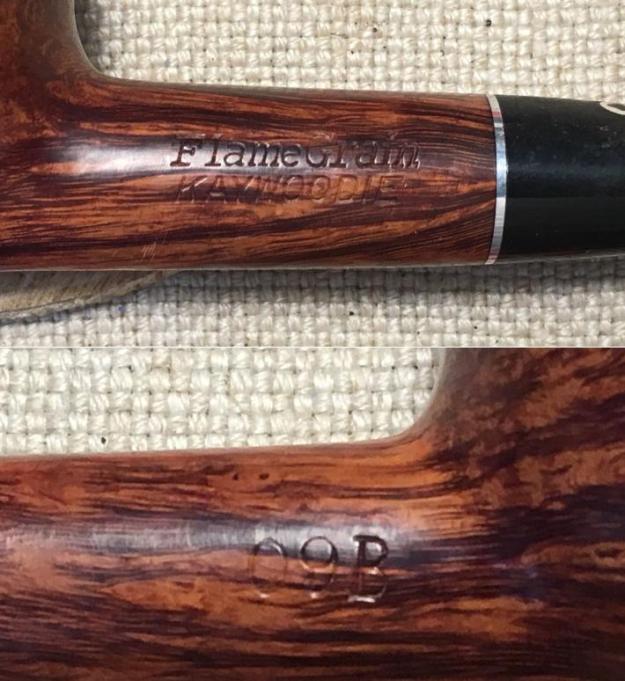
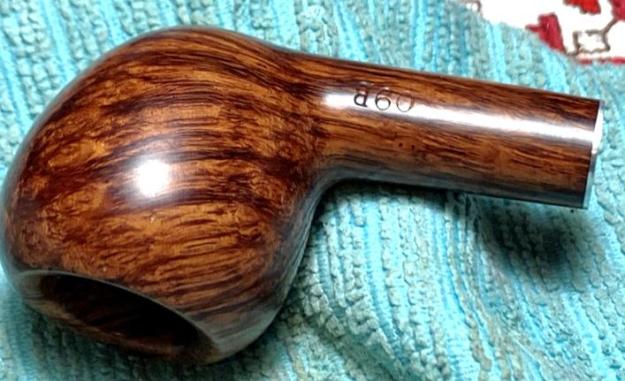
Thank you, Skeet!  Through our communications back and forth, I have learned a bit about Skeet.  He resides in my birth state, Illinois.  He also drives a school bus with children under his care.  He is a man of faith, pastoring a small church with the care of souls under his charge during times which have unique challenges to us all.  He and I also share the experience of being close to the same stage of life – having a greater awareness that there are statistically fewer days awaiting us to walk tomorrow than the days we have already traveled.  Like us, the vintage Kaywoodie now on the worktable has also traversed many days.  Here are a few pictures to look at this Kaywoodie ‘ole timer’ that Skeet commissioned. The nomenclature stamped on the left shank flank is, FlameGrain [over] KAYWOODIE.  The right side of the shank holds the shape number, 09B.  The shape number described in the Kaywoodie Pipe Shapes listing from the Kaywoodie Forum posted in 2013 by the kwguy, Bill Feuerbach, of the S. M. Frank & Co., is that the 09B is a Medium Pear shape that was produced during the broad period of 1936 to 1972.  The goal will be to hone in on this span by looking for other factors and clues that help date Kaywoodie pipes.Other distinct markers helping to date the Kaywoodie are there.  In another posting on Kaywoodie shapes in 2014 on the Kaywoodie Forum, Bill Feuerbach provides additional information about the history of shape numbering comparing the ‘New 3 digit #’, the ‘Kaywoodie 2 digit #’ and the ‘Original Medico #’.  He wrote:
Maybe a little background is in order.  In 1972, we closed the West New York factory having completed construction of our new 197,000 square foot factory in Yapank on Long Island.  The plan was to move all pipe production there, but in the interim, the Medico factory in Richmond Hill Queens would handle the final sanding and finishing of all of the Kaywoodie, Yello-Bole and Medico pipes.  The thought was eventually those operations would also shift to Yapank as skilled workers could be trained to handle those operations.  (A down turn in the pipe market in the seventies doomed the new plant, but that’s another story) 

Having the three lines being finished in one building, would create confusion if there were two shape numbering systems.  So a new 3 digit system was adopted.  The Medico 3 digit system was also changed at this time.  This list will have three columns of numbers.  The first will be the “new” three digit number, used on all Kaywoodie and Medico pipes from 1972-1980.  (We stopped stamping shape numbers in 1980) The second column is the Kaywoodie two-digit number and the third column is the original Medico 3 digit number, all of which refer to the same shape. 

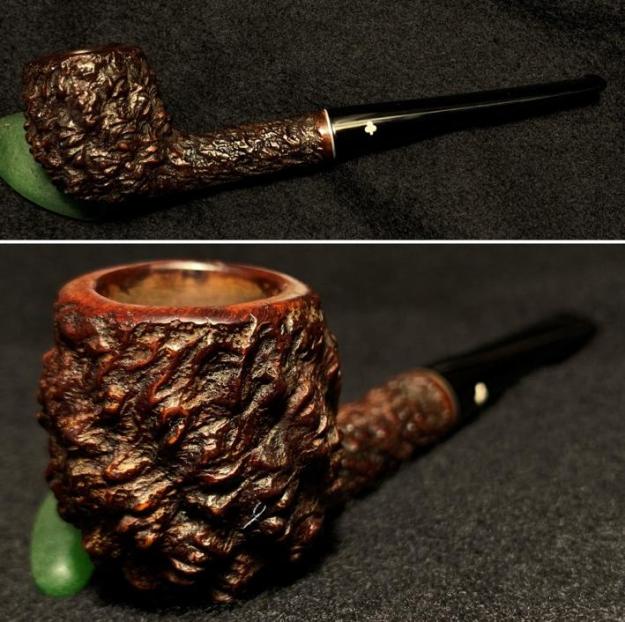
In this chart the ‘09B’ is in the ‘Kaywoodie 2 digit #’ column and is described as a “Standard Pear” produced between 1927 and 1972.  I do not know what the ‘B’ attached to the shape number indicates.  It hasn’t come up in anything I’ve read thus far.  With this question in mind, I decide to send a quick email to Bill Feuerbach, aka ‘kwguy’ in the Kaywoodie Forums and the head of Kaywoodie.  Bill helped me last year with information when I was restoring a striking Kaywoodie Natural Burl which came out great.  He dug into plastic tubs in his own home looking for relevant printed information to help with my research!  To read about this special Kaywoodie go to this link: Bringing to Life a Unique Kaywoodie Natural Burl 33 – Another Legacy Pipe of a Great Grandfather.   Two additional dating factors of the Flame Grain Pear are first, the inlaid white dot with the black clover inside situated on top of the stem and secondly, the 4 holed stinger.   These point to an earlier period dating of this Kaywoodie.  Generally, 4-holed stingers were phased out by the 1960s (with exceptions) replaced by the more common, 3 holed stingers.Looking to Pipephil.eu I find additional information looking at Kaywoodie’s ‘Flame Grain’ line which is listed among the several examples of Kaywoodie offerings over the years.   The following Flame Grain panel was clipped.From this additional information, the nomenclature points to an earlier period of production.  The Kaywoodie on the worktable is stamped Flame Grain over Kaywoodie – on earlier Flame Grains.  Interestingly, there is no ‘Imported Briar’ on our pipe as well, which was never the case before 1935, but after 1935 this designation was sporadic.  One more indicator of dating comes from Pipephil’s information about the Kaywoodie cloverleaf logo.The genesis of the inlaid white dot with the black clover coincides with when the Flame Grain line started.  This logo was used on all ‘upper grade’ pipes up to the late 40s.  Another important indicator is the clover being on top of the stem.  This is the final piece of information that helps put dating brackets around this Kaywoodie Flame Grain.  With the clover being on the top of the stem, the latest dating for this Kaywoodie would be the early 50s.  We can say then that the dating of the Kaywoodie Flame Grain on the worktable is most probable between 1937 and the late 40s, but perhaps to the early 50s – 1953?
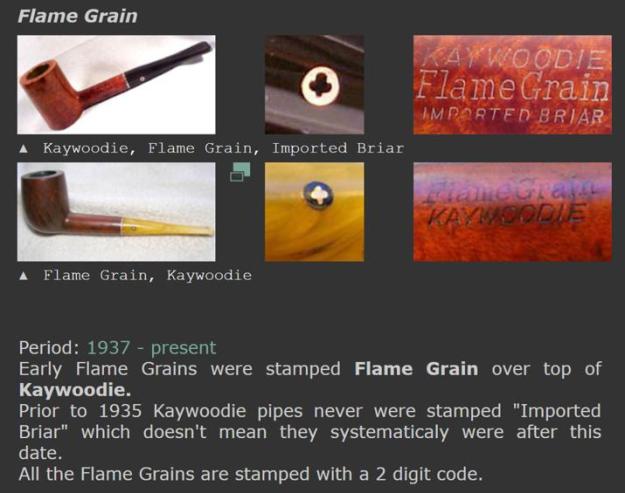
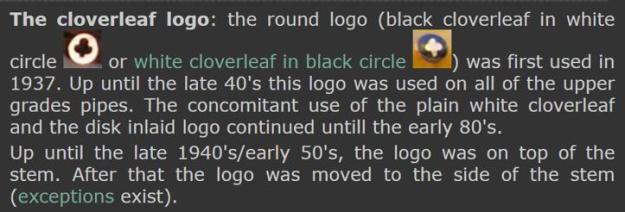
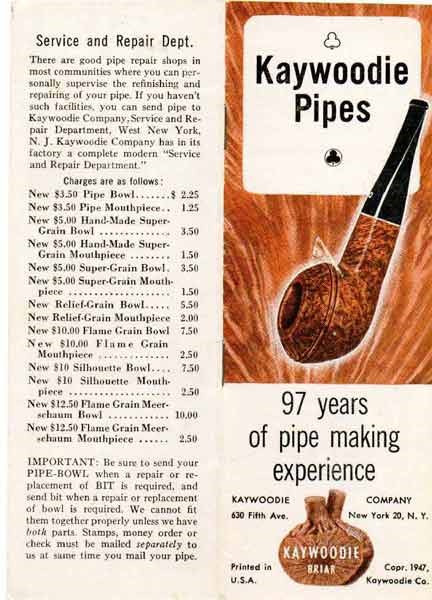
Armed with this dating information, I look through the old Kaywoodie catalogs and flyers from the jpeg repository of the defunct Chris Keene’s, ‘PipePages’ website.  This poking and digging proved helpful! I find a ‘Kaywoodie Pipes’ flyer dated 1947 – the correct period.  It contains Flame Grain listings for both briar and Meerschaum lined pipes.   I found interesting also in the front/back panels below are the charges for repairs and replacement parts Kaywoodie was asking in 1947!  This next page of the flyer shows the Flame Grain offerings with the briars marked with a $10 price tag. Curious about what that Kaywoodie might do to my pocket book new today, I went to a site that computes the value of $10 in 1947 to the value it would have today. Amazingly, in 1947 $10 would have the purchasing power of $116.80 today according to this site!  I would consider this a high-end pipe!  The Flame Grain Apple example below also carries the cloverleaf logo on the top of the stem like our Pear.
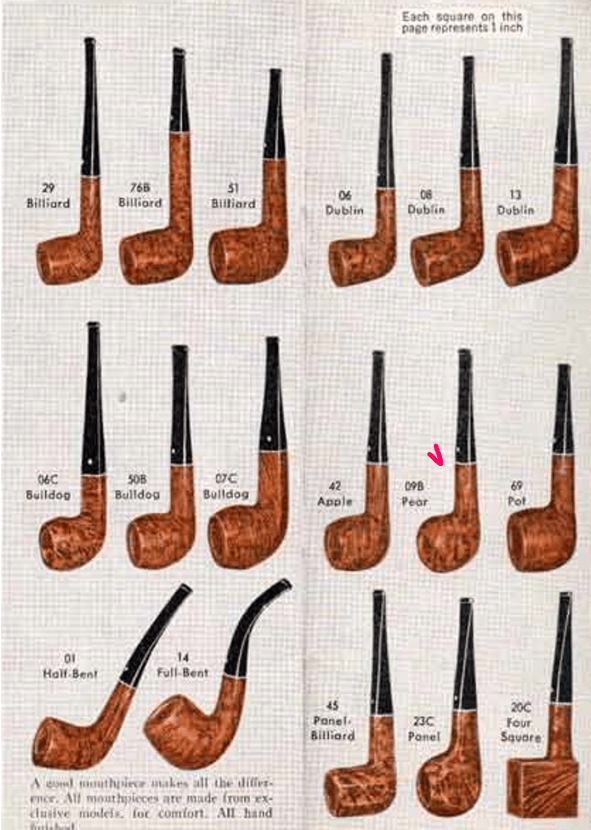
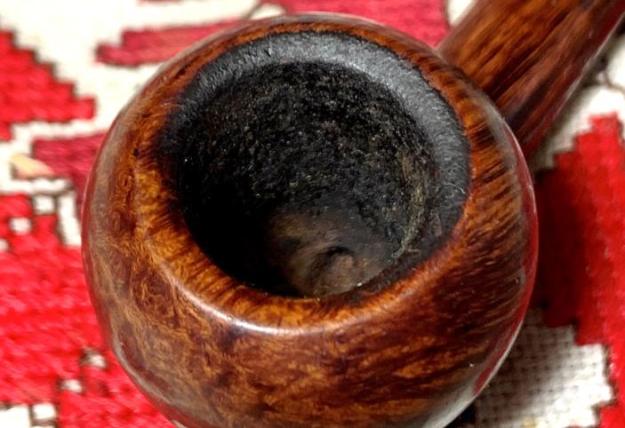
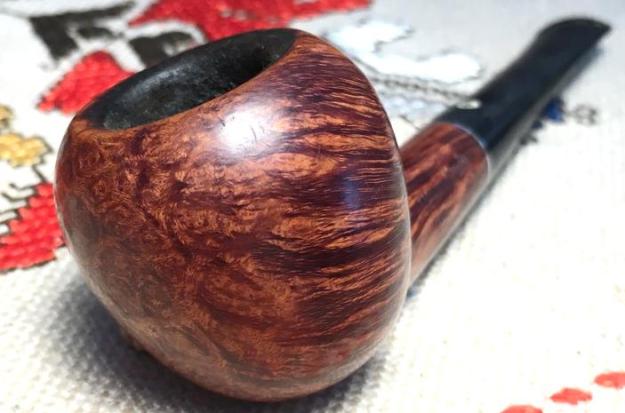
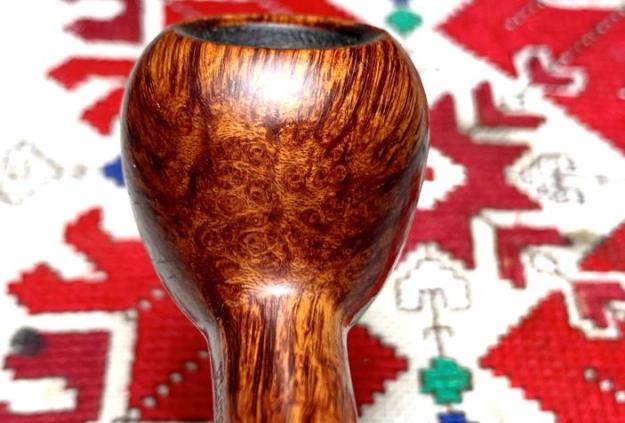
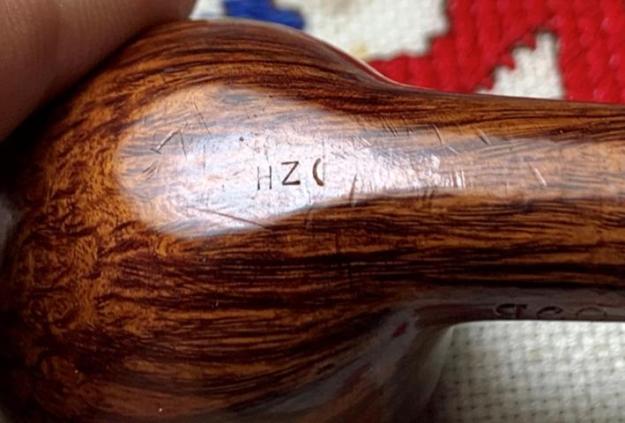
One final contribution from this 1947 Kaywoodie flyer is in the final pages of the flier showing all the possible shapes available.  The 09B is pictured and labeled, ‘Pear’.  The small text box on the top right side of the page below gives a guide for the dimensions – ‘Each square on the page represents 1 inch’.  The reproduction of the page does not show this 1-inch marker – I can’t see it, but it encourages me to provide the dimensions of the Kaywoodie Pear –   Length: 5 3/16 inches, Height: 1 1/4 inches, Bowl width: 1 3/8 inches, Chamber width: 3/4 inches, Chamber depth: 1 1/4 inches.With a greater appreciation for the vintage Kaywoodie Flame Grain Pear on the worktable, I take a closer look at the issues.  The pipe is in exceptionally good shape – surprisingly for an ole timer!  The chamber has some cake buildup, and the internally beveled rim is darkened from lava flow from lighting practices on the back side of the rim.The stummel has spectacular horizontal flame grain on the sides of the bowl reaching through the shank.  When I first looked at this pipe seriously when it reached the worktable, the grain struck me as so distinctive that it was fake!  It reminded me of adhesive vinyl wood print contact paper that looks too good to be the real deal – like artificial plants and flowers!  Well, this fire grain is the real deal. As one would expect with such distinctive horizontal grain, very defined bird’s eye grain emerges on the front and aft side of the bowl.  Bird’s eye grain is the cross-cut perspective of linear grain pattern.  After inspecting the briar surface, I find no fills.  There are nicks and small scratches from normal wear and after cleaning the stummel, we’ll see how things look. While I was inspecting the stummel, I had not seen this before.  On the flattened heel of the bowl there appears to be a random stamping: ‘H Z (‘.  I’ve never seen this before and I decide to send a picture to Steve to get his take on these hieroglyphs!  I decide to send another note out seeking information, but this time to Steve to find out if he has an idea what these ‘glyphs’ are?  Steve’s response came quickly:
I have seen odd stamping but it’s generally on the underside of the shank. Never could figure it out. You might check with Bill Feuerbach at Kaywoodie. He is a wealth of info and does not seem to hesitate to help. I contact him through the website.

When trying to unlock the mysteries surrounding Kaywoodie pipes, Bill Feuerbach is the holder of the keys.  Without having received a reply from my first inquiry, I launch another with glyph pictures included to kwguy.  Amazingly, within minutes after launching my second inquiry for a ‘double intrusion’, I received a reply from Bill.  This is what he wrote:
Dal 

No worries about any double intrusion. Always glad to attempt an answer. First the easy one regarding the shape number 09B. Letters following the two digit number were necessary because of the sheer volume of shapes that were produced in the early years and not wanting to duplicate shape numbers if one had been used previously and discontinued. Although sometimes that happened.

The second question regarding those other characters on the bottom of the flat on the shank are a mystery to me I am afraid. Clearly an H and a Z and what looks like half of an O or a C but I don’t know their meaning.  I’m sorry I couldn’t help you out with this. Could have been an aftermarket addition denoting the original selling shop out there or original owners initials, I just don’t know.

Best regards 

Bill

Two mysteries resolved.  The ‘B’ attached to the Pear 09 shape number was simply to distinguish and not duplicate other “09” shapes produced through the years.  Solved.  The glyph question is resolved but not solved.  Bill’s explanation of the markings of a specific shop selling the Kaywoodie or a steward putting his mark on the pipe – both seem very possible and only this Kaywoodie Flame Grain knows for sure – if he could only talk!  My thanks again to Bill Feuerbach for his help!

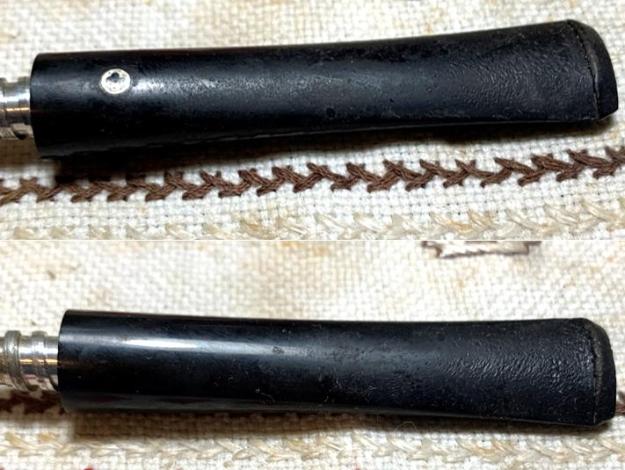
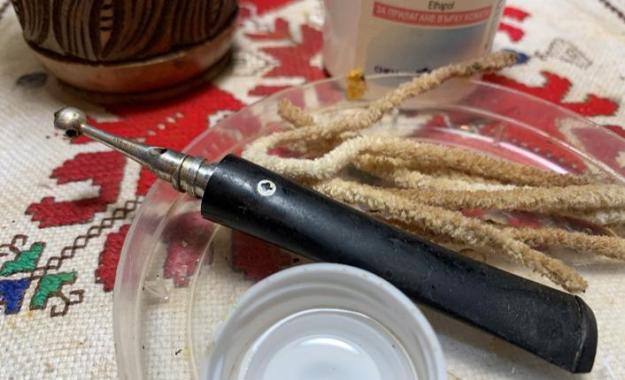
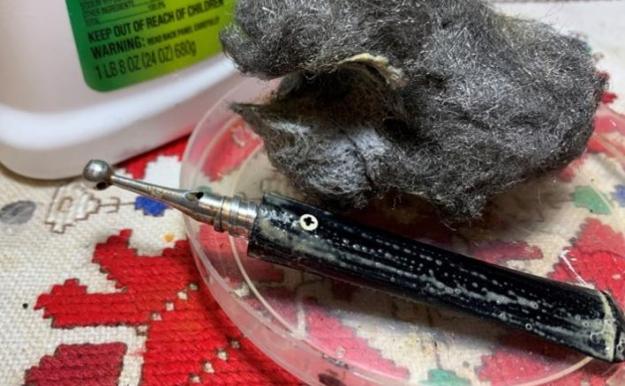
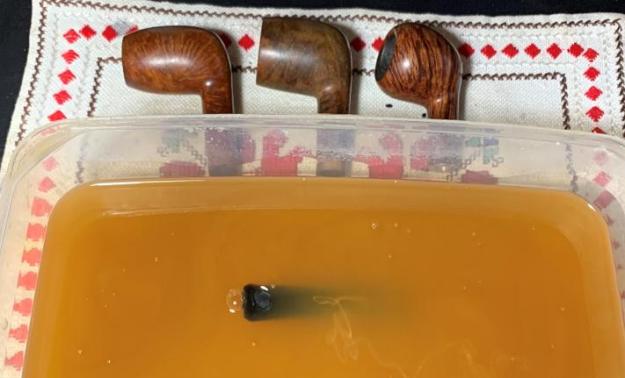
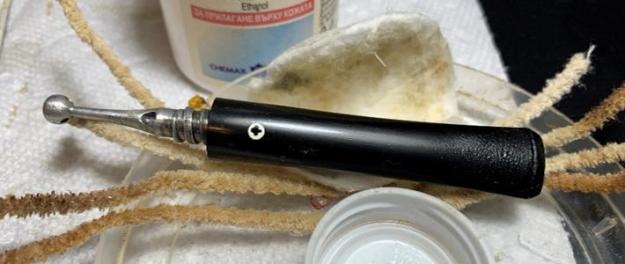
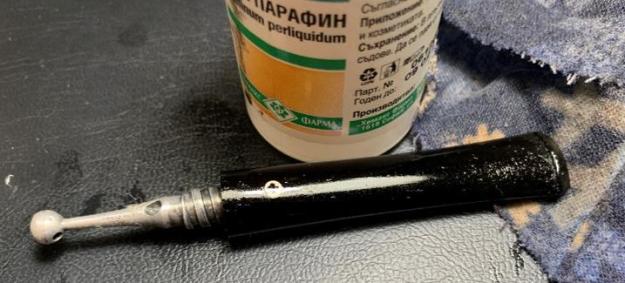
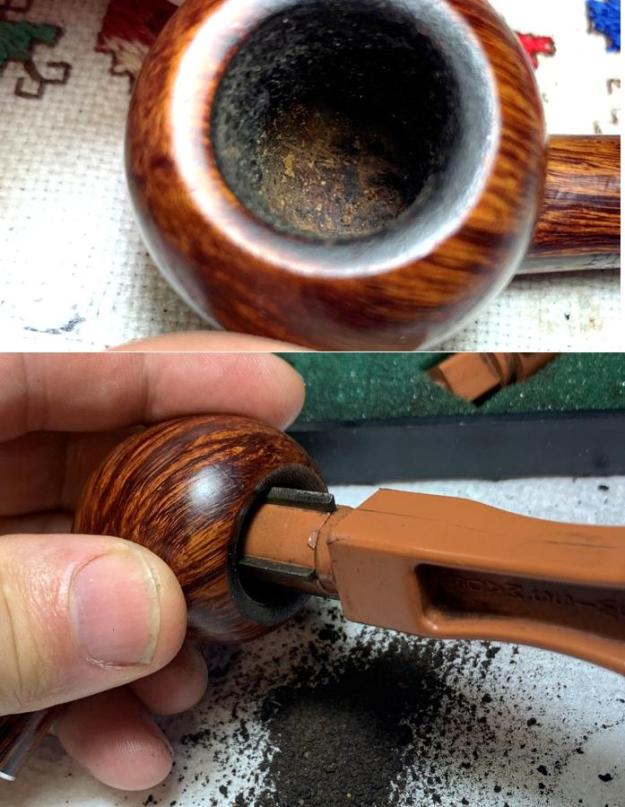
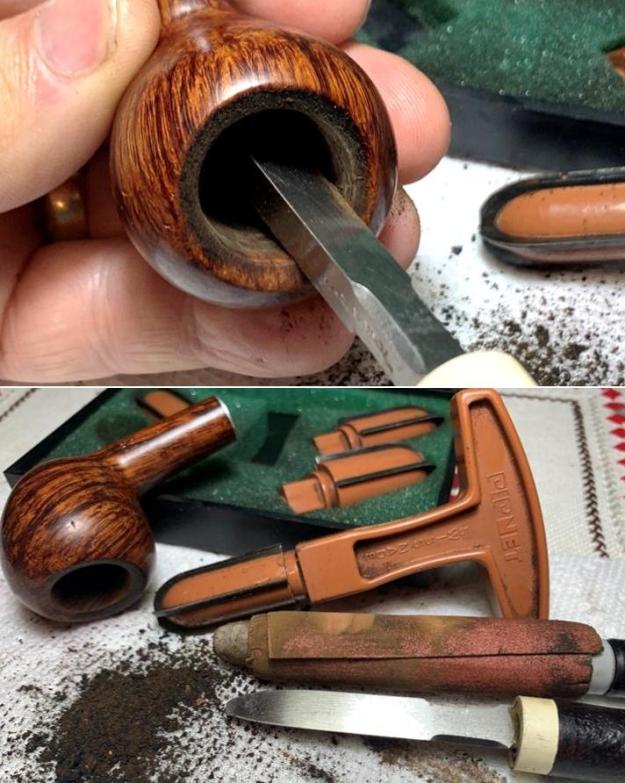
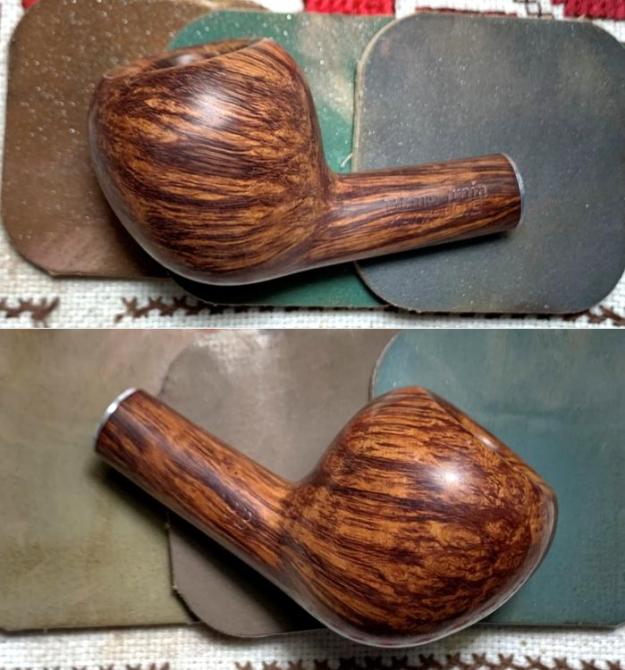
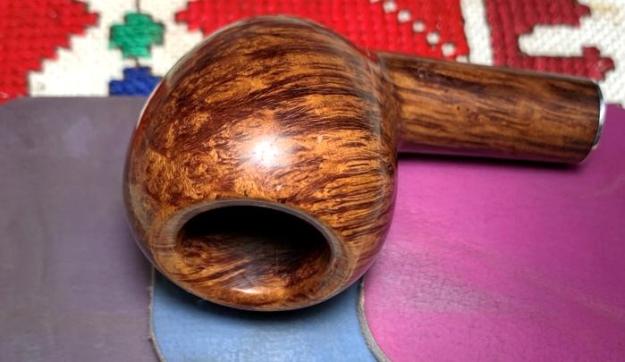
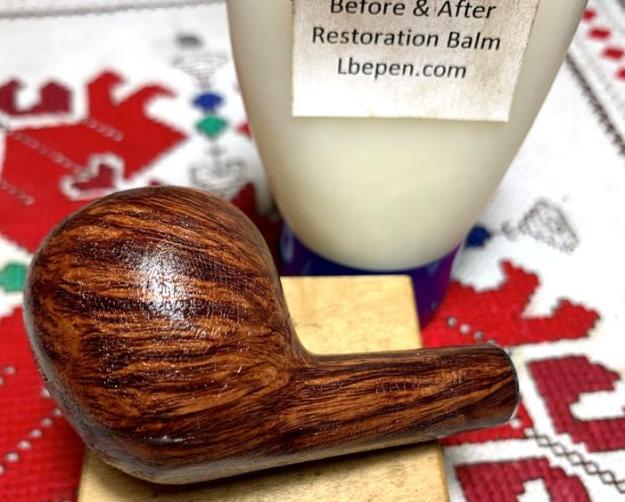
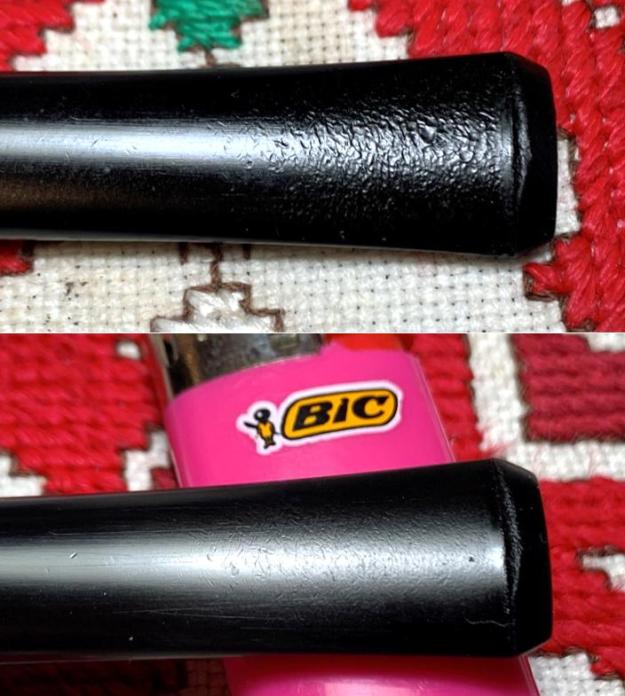
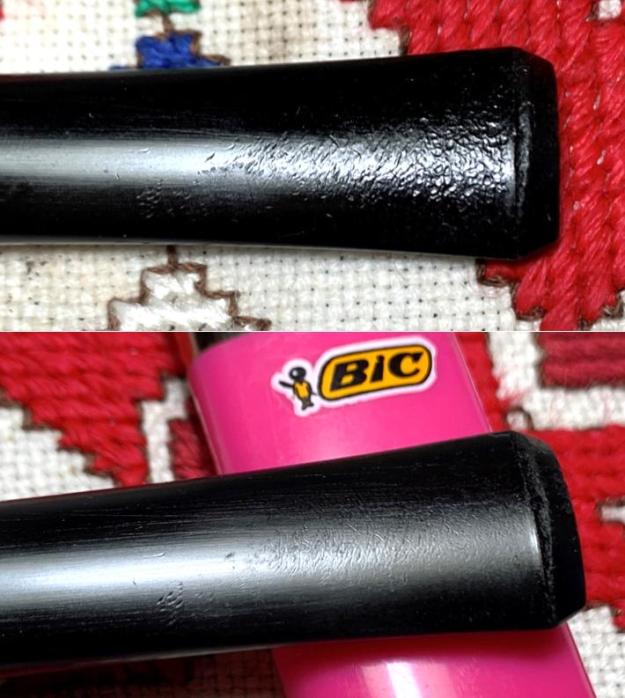
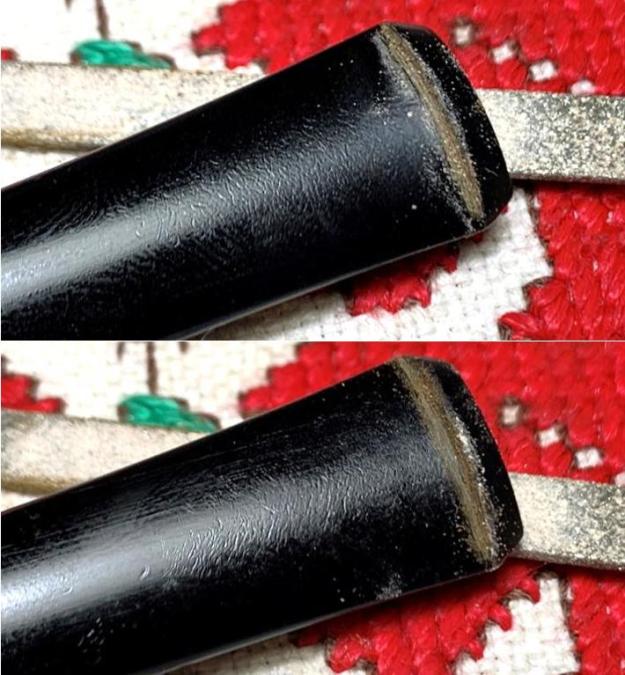
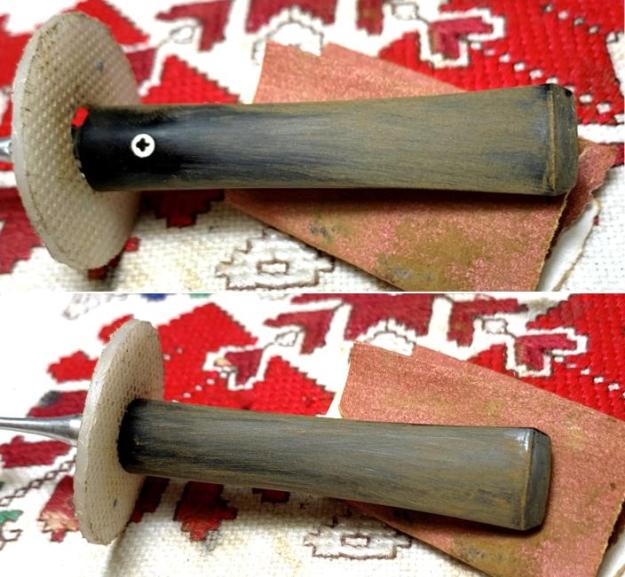
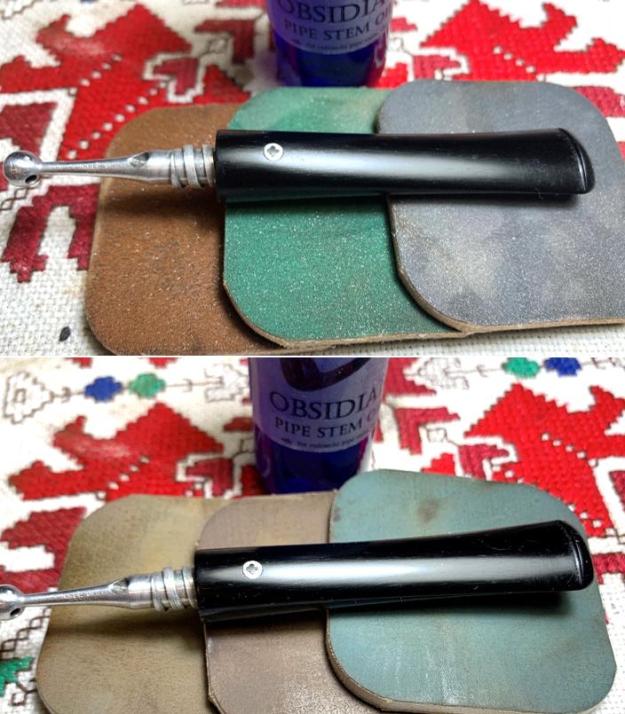
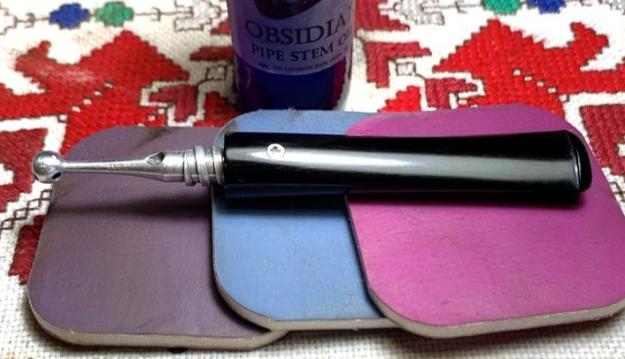
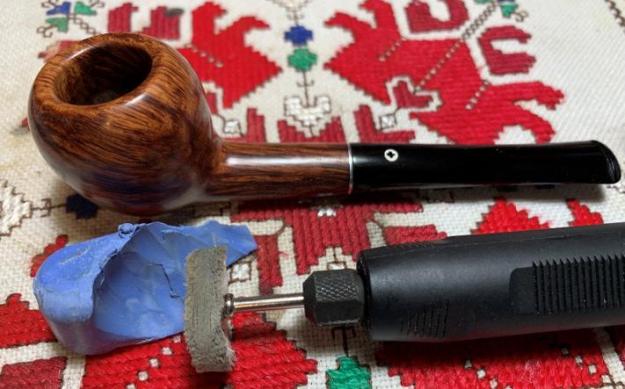
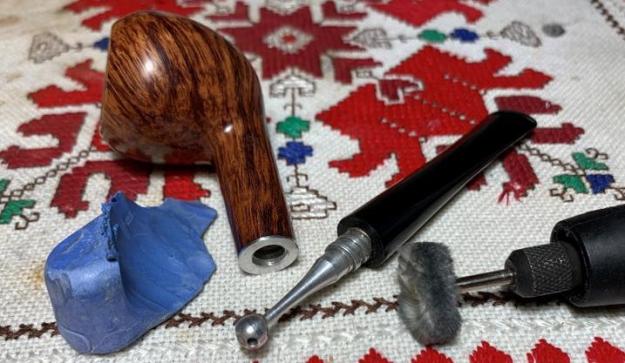
After all the mysteries and communications, my survey of the Kaywoodie’s condition continues.  The stem has minor oxidation, and the vulcanite is rough.  There is a good bit of light tooth chatter on the bit – upper and lower.  This will need to be addressed. With the evaluation completed, the revitalization of this venerable Kaywoodie starts with the stem.  The airway is cleaned with pipe cleaners dipped in isopropyl 99%.  It’s not easy cleaning through the 4-holed stinger with the small air slot, and this, therefore, is why many stewards cut off the Kaywoodie stinger.  Navigating with pipe cleaners is difficult but is possible.Next, to address the minor oxidation, in preparation of putting the stem in a soak of Before & After Deoxidizer, 0000 grade steel wool wetted with Soft Scrub is applied to the stem.  This hopefully helps to break up the oxidation and to smooth the rough vulcanite surface.  During the scrubbing with steel wool, I’m careful to be a bit gentler over the cloverleaf logo.  The nickel stinger also enjoys some attention from the steel wool to clean it.After rinsing the stem, it joins other of Skeet’s commissioned pipes in a soak of Before & After Deoxidizer.  I leave the Kaywoodie stem soaking for several hours allowing the Deoxidizer to do its thing.After several hours – actually, the next day, the Kaywoodie stem is fished out of the Deoxidizer and drained.  I help the draining process by squeegeeing the pipe with my fingers and inserting pipe cleaners wetted with alcohol through the airway to clear the Deoxidizer.  Cotton pads wetted with alcohol are used to scrub the surface to remove raised oxidation.To further condition the stem paraffin oil is applied.  The vulcanite already looks healthier. Turning now to the stummel, the Pipnet Reaming Kit is utilized to ream the chamber to give the briar a fresh start and to inspect the chamber condition.  A starting picture is taken and only the smallest of the 4 blade heads is accommodated by the chamber. Next, the Savinelli Fits All Tool is used to scrape the chamber walls removing additional carbon cake buildup.  Finally, 240 grade sanding paper wrapped around a Sharpie Pen is used to sand the chamber.An inspection of the chamber reveals healthy briar – no heating problems or cracking.  I move on.To continue the cleaning, the external surface is cleaned with undiluted Murphy’s Oil Soap using a cotton pad to do the scrubbing.  A brass bristled brush is especially helpful in addressing the crusted lava flow over the back side of the rim.  It does a good job of cleaning but not adversely impacting the briar.The stummel is then taken to the sink in the laundry room to continue the cleaning using shank brushes and anti-oil liquid dish soap.  Using warm to hottish water, the internal mortise is scrubbed with the shank brushes.  After scrubbing, the stummel is thoroughly rinsed to remove soap and taken back to the worktable.  Wow!  The rim looks great and the Flame Grain continues to be sharp and distinct. Next, I use micromesh pads to clean further the surface of the minor nicks and scratches from normal wear over the years.  Dry sanding with the micromesh pads, which are less abrasive and contribute to the polishing, will help avoid  losing the patina the briar has.  With the first 3 pads, 1500 to 2400, I avoid the nomenclature on both sides of the shank as they are more abrasive.  With pads 3200 to 4000 and pads 6000 to 12000, the entire stummel is sanded.  As I started this phase, I had decided that whatever nicks and scratches might survive the micromesh process would remain as a badge of the years this Kaywoodie has served.  When the micromesh pads were completed, I was amazed at the beauty of the grain that emerged. Before turning to the stem, Before & After Restoration Balm is applied to the Kaywoodie Flame Grain briar surface.  This product of Mark Hoover is especially useful in teasing out the deeper, natural hues of the briar.  After putting some of the Balm on my fingers, I rub it into the briar surface.  As I’ve described previously, the cream-like consistency of the Balm when first applied gradually transforms to a wax-like consistency as it’s worked into the briar.  After thoroughly applying the Balm, the stummel is put aside for 20 or so minutes for the Balm to be absorbed and do its work (pictured below).  Whenever I apply the Balm to a pipe I’m working on, I never wipe off my fingers with the excess Balm!  I run over to my collection and grab a pipe and apply the excess Balm to it – no wasting this liquid gold 😊.After the minutes accumulate, I use a dedicated microfiber cloth for the initial wiping off of the excess Restoration Balm then follow with another dedicated microfiber cloth, same color, that buffs up the surface.  As expected, the Restoration Balm deepened an already impressive patch of briar.The stem is waiting for attention.  The earlier treatment for oxidation seems to have done well.  The bit, both upper and lower, has significant light tooth chatter.  My approach to rectify this is using a Bic lighter and paint the bit with flames.  The flame is moved rapidly, back and forth, over the surface.  To hold the flame too still can burn the rubber and if this happens, it becomes brittle without luster – I’ve learned this from experience.  As the vulcanite heats it expands and reclaims all or some of its original condition.  Pictures are taken before starting to compare the results after heating.  The results are good!  It’s interesting that different stems respond to the heating method differently.  Not all vulcanite is the same.  This stem responded very well whereas others, seemingly not at all or little.  The pictures show the comparison. Only minor sanding will be necessary, along with refreshing the button.   Starting with a flat needle file, with the flat edge against the lip of the button, the file refreshes and sharpens the bite ledge.  I’m careful to keep the file off the stem surface while doing this on the upper and lower button.Next, 240 grade paper removes the roughness left from the tooth chatter and smooths the button.  The sanding is expanded to remove small nicks on the rest of the stem staying clear of the cloverleaf on the upper side of the stem.  A plastic disk is used on the stinger side of the stem to keep the end of the stem facing sharp – to avoid shouldering.With the heaviest sanding done, wet sanding with 600 grade paper follows and then 0000 grade steel wool is applied to smooth the stem surface further.After completing the steel wool polishing, I notice a pit in the middle of the lower lip of the button – ugh…I return to the flat needle file to file down a bit more the lip edge without impacting the surrounding vulcanite.  The pit is erased.As before, the file is followed by 240, 600 and 0000 steel wool – detour completed and did not take too long.Next, the stem receives sanding from all the micromesh pads starting with wet sanding with pads 1500 to 2400.  This is followed with dry sanding with pads 3200 to 4000 and 6000 to 12000.  Between each set of 3 pads, Obsidian Oil is applied.  Obsidian Oil does not remove oxidation if it already is present in the stem but helps prevent oxidation from developing. Now the home stretch.  A cotton cloth buffing wheel is mounted on the rotary tool with speed set at about 40% full power.  The fine abrasive, Blue diamond compound, is then applied to both stem and stummel.Changing again to another cotton cloth buffing wheel dedicated to metals, Blue Diamond compound is also applied to the nickel Kaywoodie 4-holed stinger as well as to the shank facing.  This shines these fitments nicely.Next, again changing the buffing wheel to another wheel dedicated to wax, maintaining the same speed, carnauba wax is applied to the pipe.  When thoroughly applied, a microfiber cloth provides a rigorous hand buffing to remove excess wax and to raise the shine.This Kaywoodie Flame Grain 09B Pear is striking.  It’s vintage spans from 1937 to probably the late 40s.  The quality of the grain is amazing – the bold, distinct flame grain flowing laterally through the bowl is complemented by remarkable bird’s eye pattern.  This bird’s eye grain forms a kaleidoscope of cross-cut veins on the fore and aft of the bowl.  This Kaywoodie Flame Grain is certainly a collectable pipe and a treasure to add to one’s collection.  Skeet commissioned this pipe and will have the first opportunity to acquire it in The Pipe Steward Store benefiting the Daughters of Bulgaria.  Thanks for joining me!
Restoring a Peterson’s Dublin (London Made England) 21 Calabash

Blog by Steve Laug

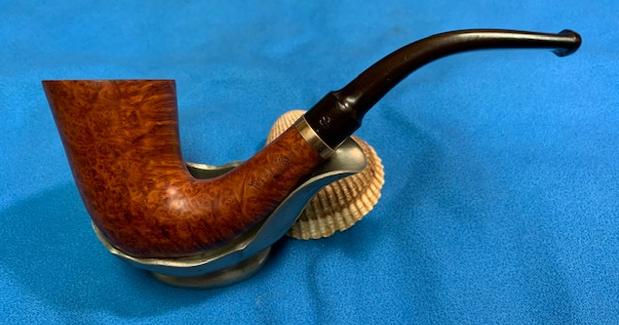
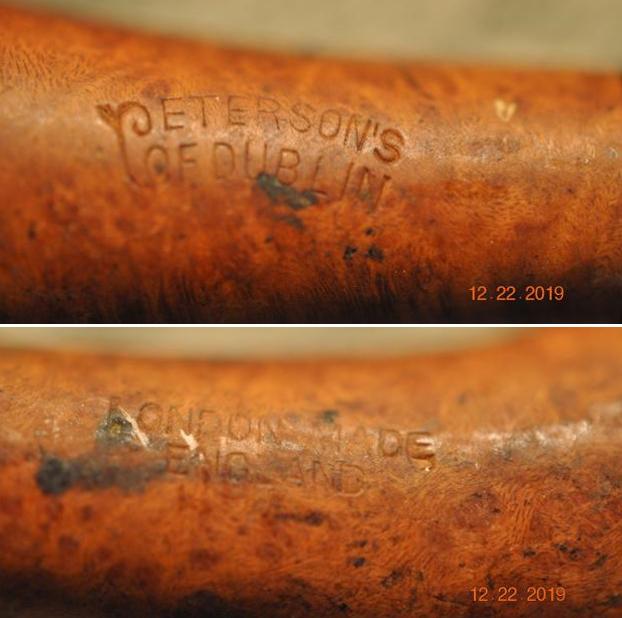
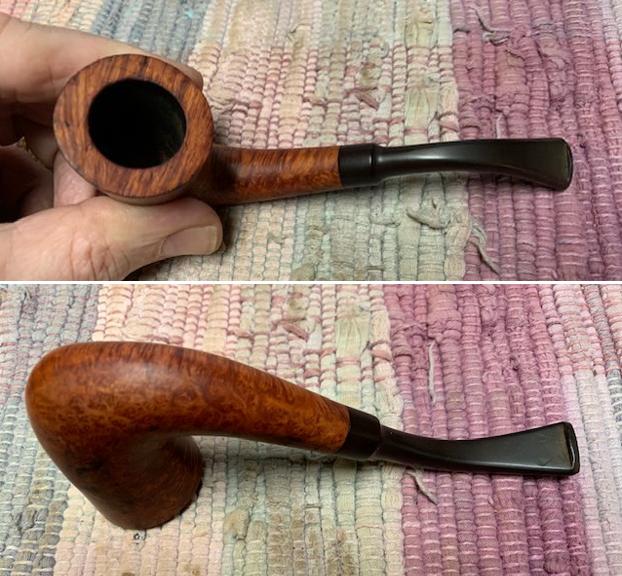
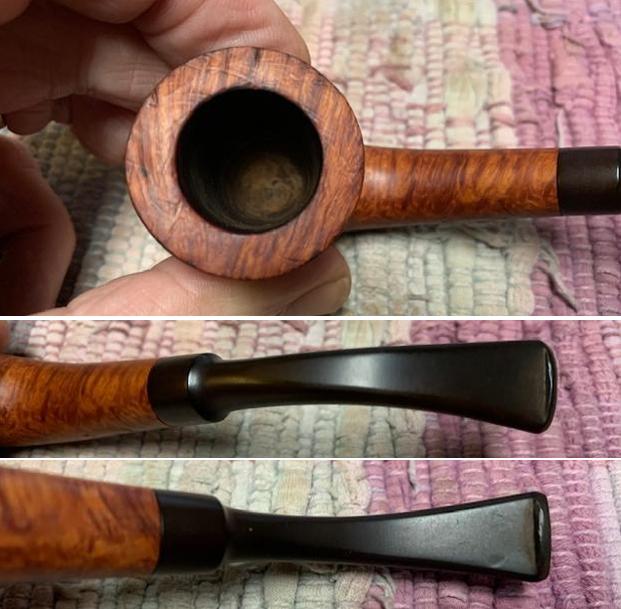
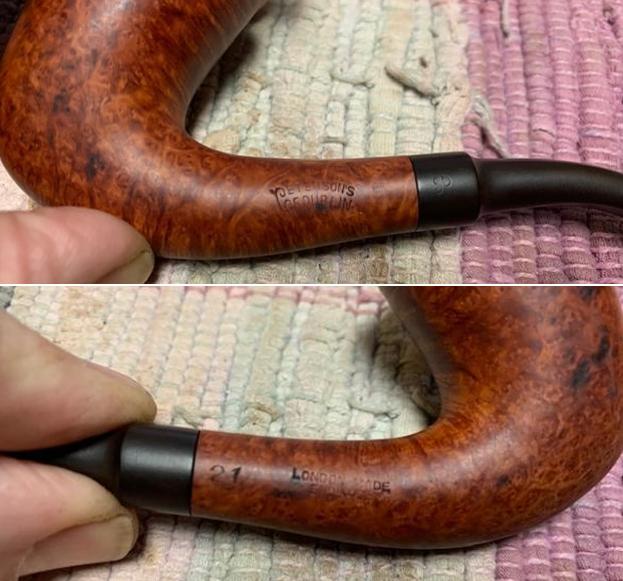
The next pipe I have chosen is smooth finished Peterson’s Dublin Calabash pipe that had a bit of a bland looking finish but had some good looking grain around the bowl sides and shank. It came to us in a group of pipes we bought from a fellow in Los Angeles, California, USA. This Calabash was stamped on the left side of the shank and read Peterson’s [arched over] Dublin. It was stamped on the right side and read London Made [over] England. On the left of that next to the stem it is stamped 21. The pipe was in filthy condition when he brought it to the table. The finish was dirty with grime ground into the briar sides and rim. There were black spots on the briar around the bowl and shank. There was a thick cake in the bowl and a light coat of lava on the rim top but the edges of the bowl and top actually looked to be in good condition. The stem was oxidized, calcified and had tooth marks and chatter on the top and underside on and near the button. It had a stamped P on the left side of the saddle. Jeff took photos of the pipe before his cleanup work. They tell the story and give a glimpse of the promise that we see in this pipe. Jeff took photos of the rim top and stem to show the general condition of the pipe. The bowl is thickly caked and the rim top and edges look pretty good under the light lava coat. The photos of the stem show some oxidation and light tooth marks on both sides near the button. Jeff took some photos of the bowl sides and heel to show the amazing grain that was around this bowl. It is a nice looking pipe.     He took photos of the sides of the shank to show the stamping. The stamping is readable in the photos below and is as noted above.    I am including the link to the Pipedia’s article on Peterson pipes. It is a great read in terms of the history of the brand (https://pipedia.org/wiki/Peterson).

I turned to “The Peterson Pipe” by Mark Irwin and Gary Malmberg to get some background on the Peterson’s London Made England line. On page 296-297 it had the following information.

MADE IN over ENGLAND and variations shown below (1936-62) Peterson maintained a factory in England for about a quarter of a century, from the late 1930s to ’62. Corporate transcripts and London business periodicals suggest the London operation on White Lion Street was about to get underway in ’37. Only a handful of London hallmarked Petersons are documented, stamped with date marks of 1936 and 1939, and these have no COM stamp. Their output would be limited by the onset of the Battle of Britain in July 1940, but it seems reasonable to suppose pipes were made in the London factory during WWII, inasmuch as the K&P Staff Register lists twelve employees earning wages there in January ’44. London hallmarked Petersons have been identified with dates of 1949-54. Most London made Petersons in a collector’s inventory were made in these postwar years, from 1949 until the closing of the factory in ’62. This narrow range  of dates is probably the most reliable indicator of years when the stamp and the variations listed below were employed. The presence of one variation or another on a pipe is not by itself a reliable indicator of age.

Made In over England

Made In England forming a circle

Made In England forming an ellipse

Made in England in a line

A “Peterson’s Product” over Made In England

A Peterson’s Product over Made In England

A Peterson Product over Made in England

Made In over Great Britain

Great Britain

London Made over England

London Made

Now I knew a date range for the pipe I was working on – 1949-1962. I have underlined and made the text bold in the above list to show the stamping on the pipe I am working on. Now it was time to work on the pipe.

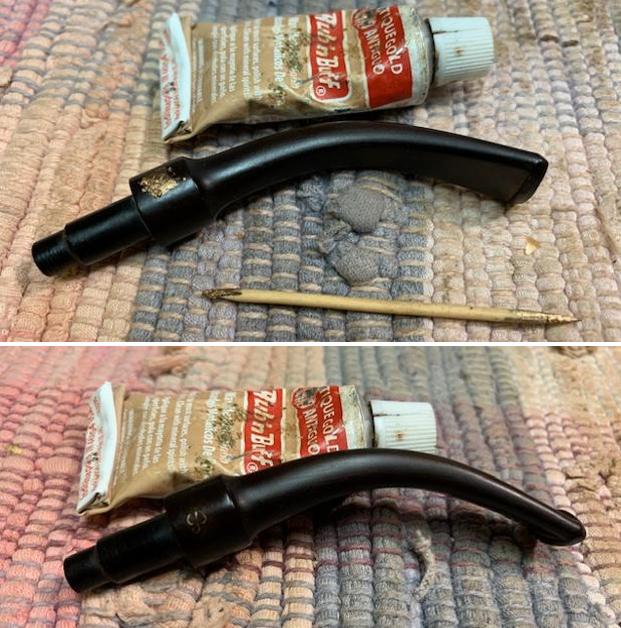
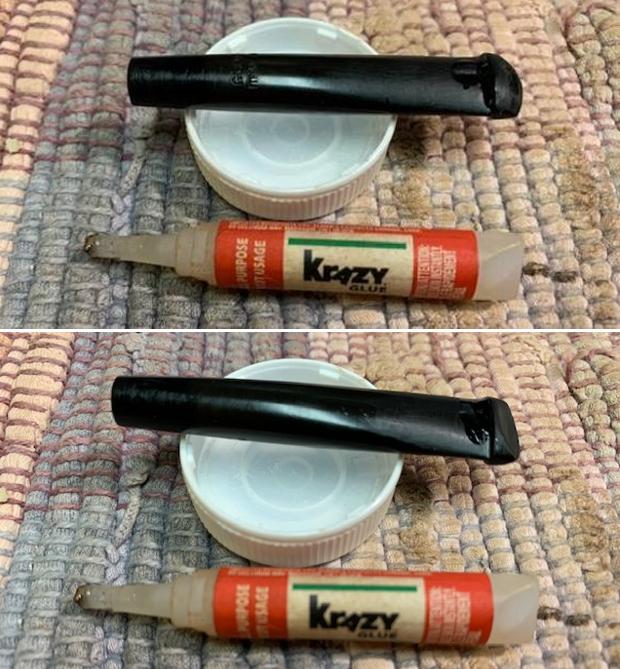
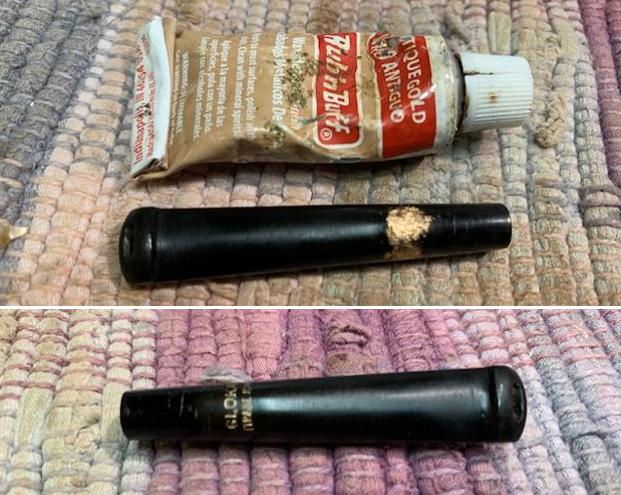
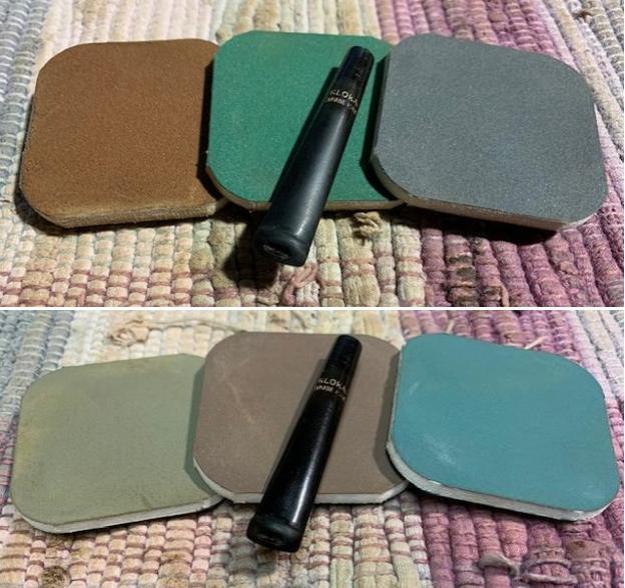
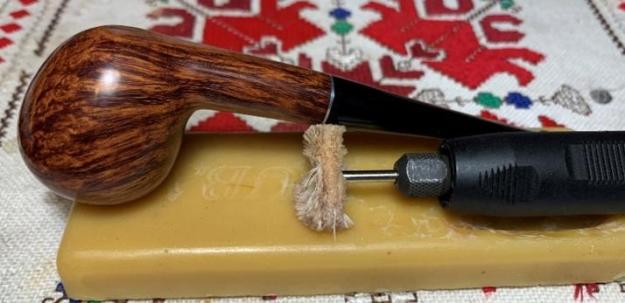
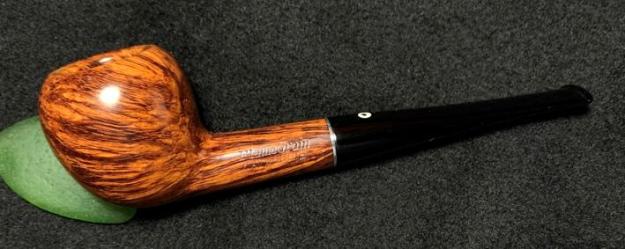
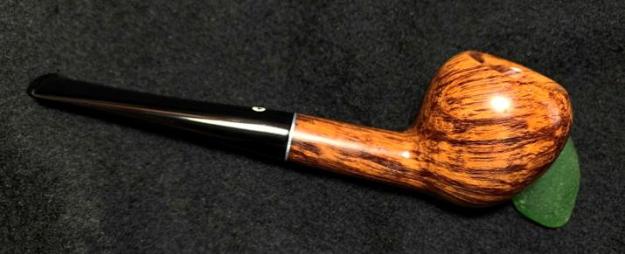
Jeff had done a great job cleaning up the pipe as usual. He reamed the pipe with a PipNet reamer and cut back the cake back to the bare briar. He cleaned up the walls with a Savinelli Fitsall Pipe Knife. He scrubbed the interior of the bowl and shank with pipe cleaners, cotton swabs and alcohol to remove the tars and oils. He scrubbed the exterior of the pipe with Murphy’s Oil Soap and a tooth brush to remove the grime from the finish. He worked on the rim top lava and the darkened spots with the soap and tooth brush. He scrubbed the inside of the stem with alcohol and pipe cleaners. He scrubbed the exterior with Soft Scrub and then soaked it in Before & After Deoxidizer. He washed it off with warm water to remove the Deoxidizer. The pipe looked far better when it arrived. I took some close up photos of the rim top and also of the stem surface. I wanted to show how well it had cleaned up. The rim top had some looked quite good and the inner edge had some darkening and damage. It should clean up really well. I also took close up photos of the stem to show the tooth marks on the surface near the button.     I took photos of the stamping on the sides of the shank. You can see that it is stamped as noted above. It is clear and readable.     I removed the stem and took a photo of the pipe to have a look at the parts and overall look. I decided to address the spots around the bowl sides first. I was pretty sure I could remove them with micromesh sanding pads. I sanded it with 1500-2400 grit pads and was able to remove and minimize those that remained with the micromesh.    In the process of sanding the shank I found a small hairline crack in the underside of the shank that extended straight up the shank for about ½ inch. I checked out the stability of the crack and it was still quite tight. I decided the best course for this kind of crack was to bind it together with a thin brass band. I topped the band edge off and removed some of it so that it did not interfere with the number stamp on the right side and would still do the job it was intended to do. I drew a red rectangle around the crack in the shank and took two pictures to capture it. There is some darkening around the crack and that was what caught my eye.  I went through my bands and found one that was the proper fit for the shank diameter. It was a bit too deep and covered some of the shape number stamp on the right shank so I used a topping board and 220 grit sandpaper to reduce the depth so that it did not cover the number. Once I had the depth correct I put some all purpose glue on the shank end and pressed the band in place on the shank. I wiped off the excess glue with a damp pad. I finished polishing the briar with the remaining micromesh sanding pads – dry sanding with 3200-12000 grit sanding pads. I wiped the bowl down with a damp cloth after each sanding pad. I worked some Before & After Restoration Balm into the surface of the bowl and shank with my fingertips to clean, enliven and protect the briar. I let the balm sit for 15 minutes and then buffed with a cotton cloth to raise the shine. The photos show the bowl at this point in the restoration process.    I set the bowl aside and “painted” the stem surface with the flame of a “Bic” lighter to lift the tooth marks. I was able to raise most of them I filled in the remaining tooth marks with clear super glue. Once the glue cured I sanded the repairs smooth to blend them into the surface of the surrounding vulcanite.  I touched up the P stamp on the left side of the saddle stem with Rub’n Buff  Antique Gold. I rubbed it on with a tooth pick and worked it into the stamp. I buffed it off with a soft cloth. While the stamping is faint it is still readable.     I polished the stem with micromesh sanding pads – wet sanding with 1500-12000 grit sanding pads. I wiped it down after each sanding pad with Obsidian Oil. I polished it with Before & After Pipe Stem Polish – both Fine and Extra Fine.    I am excited to finish this London Made English Peterson’s Dublin, Calabash 21. I put the pipe back together and buffed it with Blue Diamond on the buffing wheel. I gave the bowl and the stem multiple coats of carnauba wax. I hand buffed the pipe with a clean buffing pad to raise the shine. It is fun to see what the polished bowl looks like with beautiful mixed grain all around it. Added to that the polished black vulcanite stem combined with the bowl and brass band on the shank and made a stunning pipe. This smooth Classic Older Peterson’s Dublin English Made Calabash is great looking and the pipe feels great in my hand. It is light and well balanced. Have a look at it with the photos below. The dimensions are Length: 5 ½ inches, Height: 2 inches, Outside diameter of the bowl: 1 ¼ inches, Chamber diameter: ¾ of an inch. The weight of the pipe is 34grams/1.20oz. It is a beautiful pipe that I will soon be putting on the rebornpipes store in the Irish Pipe Makers section. If you are interested in adding it to your collection send me an email or a message. Thanks for walking through the restoration with me as I worked over this pipe. Thanks to each of you who are reading this blog.

Yet Another Treasure – a 1911 BBB Own Make Glokar Poker

Blog by Steve Laug

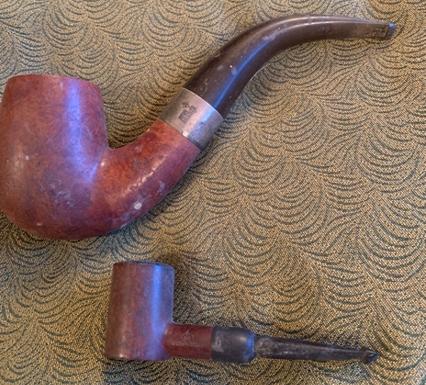
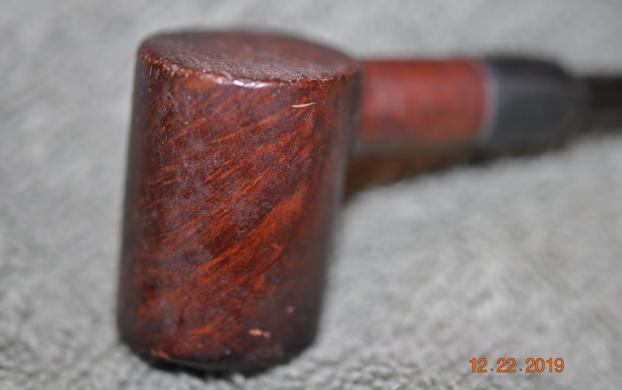
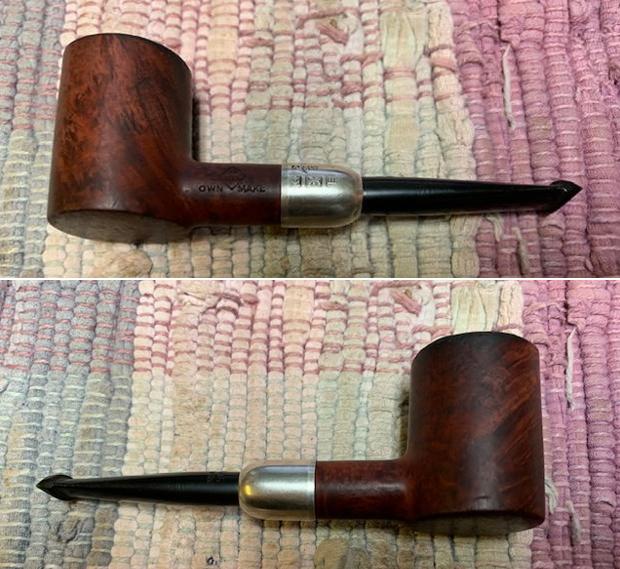
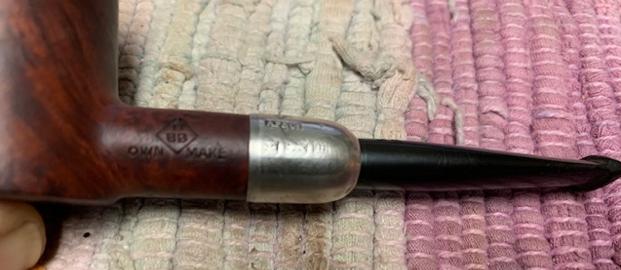
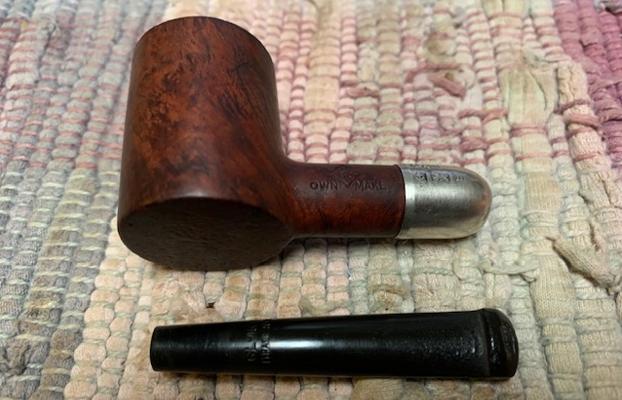
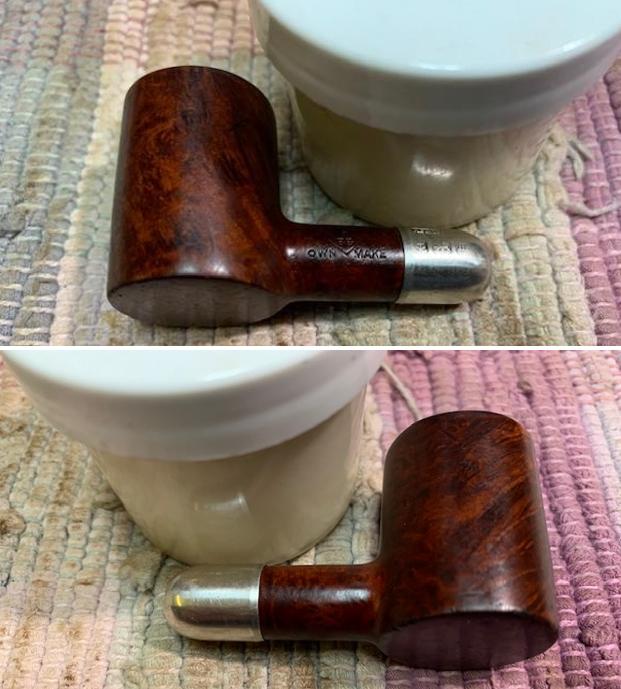
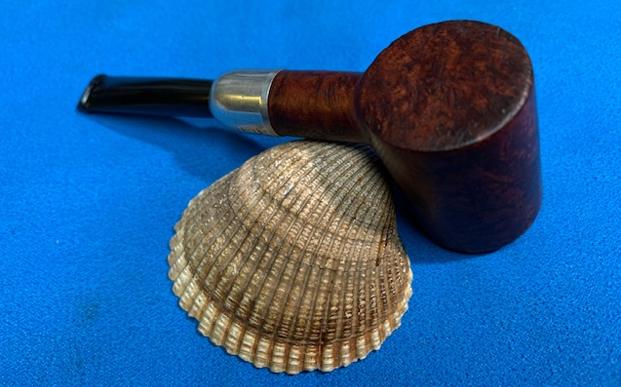
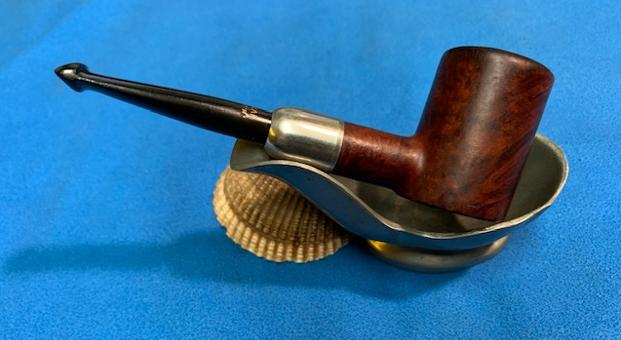
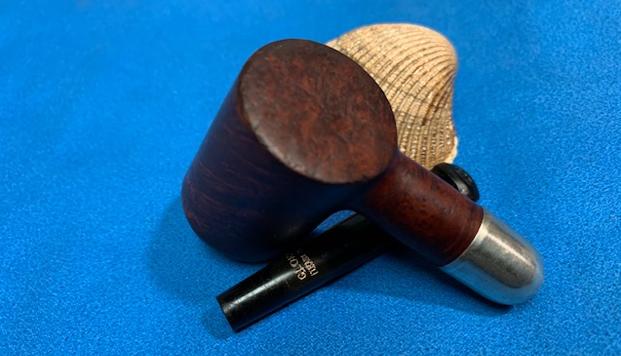
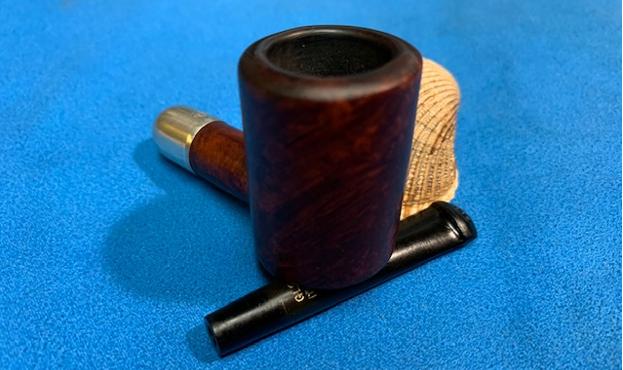
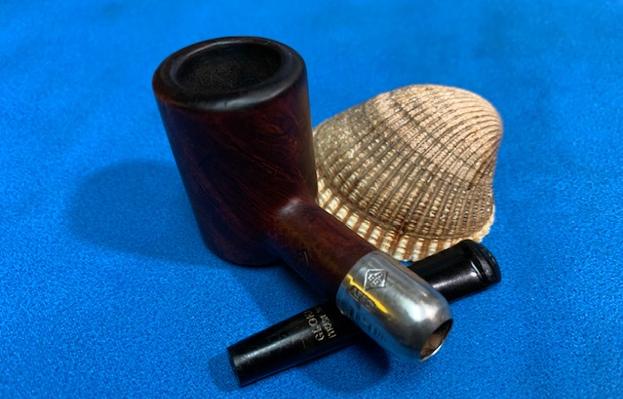
It seems like just a few weeks ago I was contacted by an older gentleman about purchasing his pipe collection. He sent me the photos and I was amazed at what I saw. It had Dunhill pipes, BBB pipes, Orlik pipes, Barclay Rex Pipes, a couple of Meerschaums and a whole lot of other pipes. All I could say as I looked at the pipes was what a collection it was. We negotiated a deal and I think we both walked away quite happy with the exchange. But I have to tell you there was another very interesting pipe caught my interest when I looked at pictures of it. It was a beautiful older BBB Poker/Cherrywood sitter. It was a mess but there was something charming about  it. It is shown in the photo to the left. The larger pipe in the photo is also a BBB and from what I can gather it is on the larger side but not to degree it looks in the photo with the poker. This poker is tiny. It is only 4 ¼ inches long and 1 ½ inches tall. The black band on the shank is oxidized/tarnished Sterling Silver. I could not wait to get it in hand and figure out the age of the pipe. From the looks of it I could tell it was older. The stem was also very unique looking so I was looking forward to checking that out.

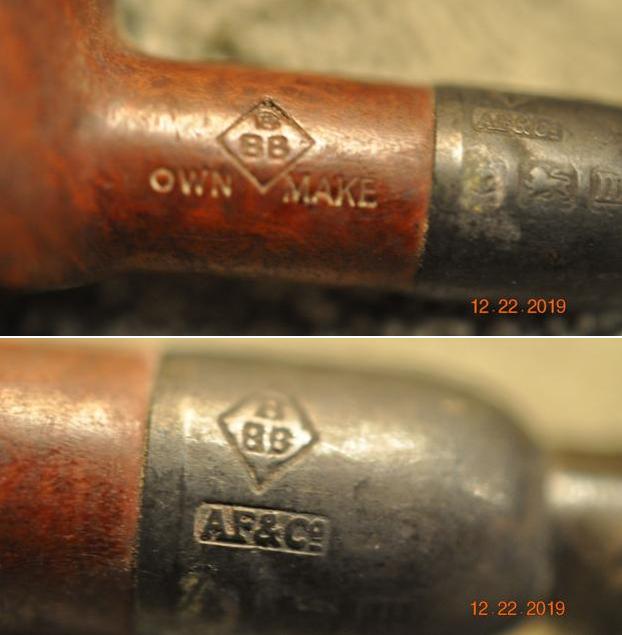
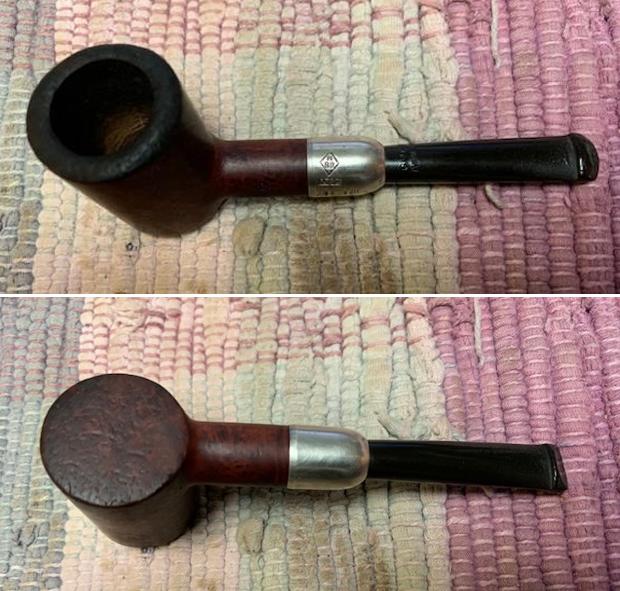
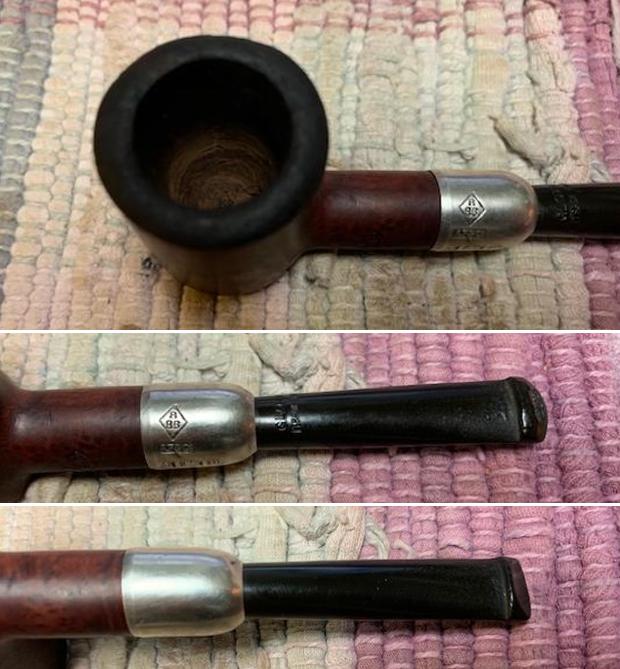
I have worked on a lot of BBB pipes over the years and never had the opportunity to work on one like this. It would be a great addition to my collection of older BBB pipes. From the photos the pipe appeared to be in good condition from the photo he sent me. He said that the pipe was stamped on the left side of the silver ferrule and read AF & Co over three hallmarks. The hallmarks are as follows: an anchor (Birmingham, England), a rampant lion (the symbol for quality of the silver) and the final one is a lower case “m” (the date stamp). I had him ship it to Jeff for cleanup so it would be a while before I held in hand.

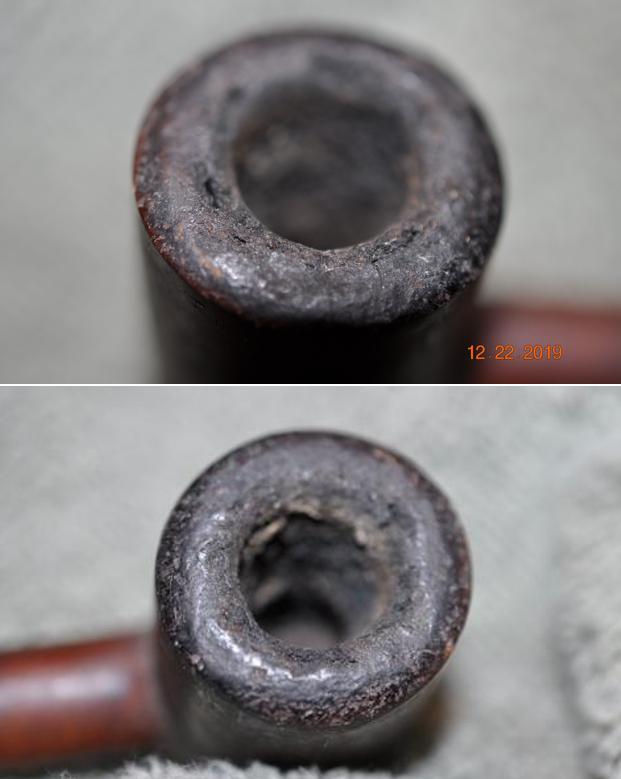
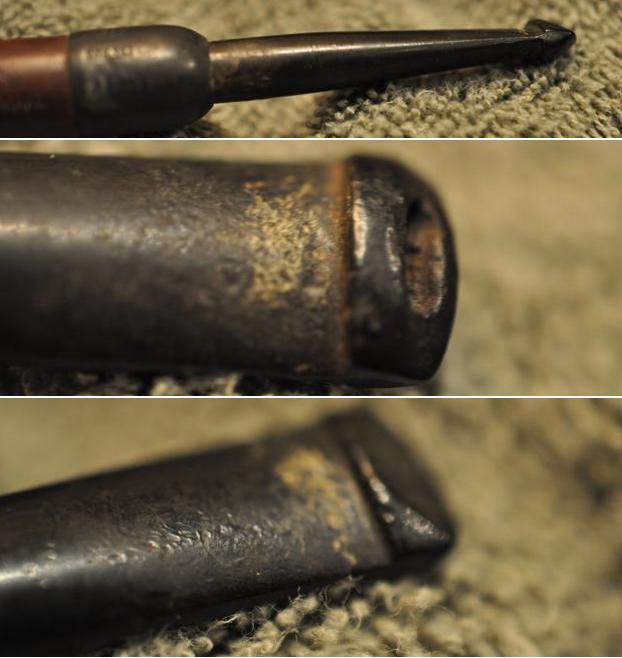
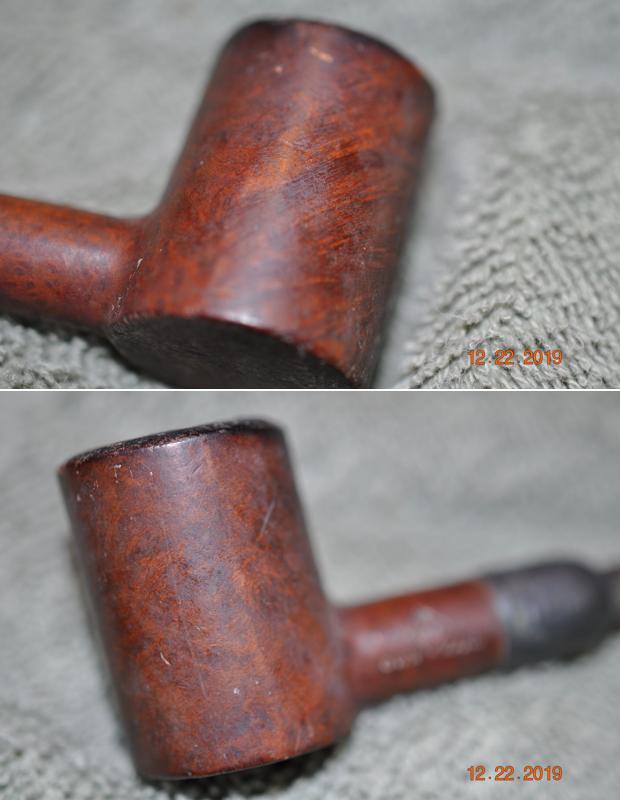
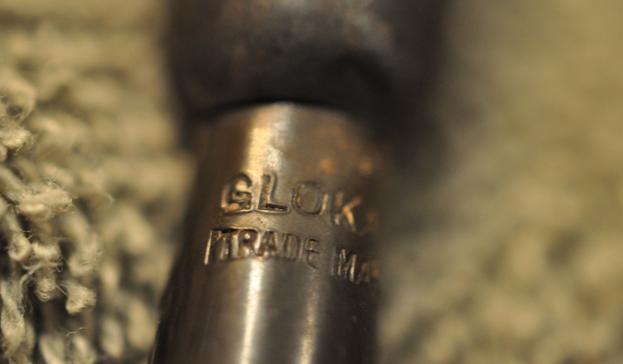
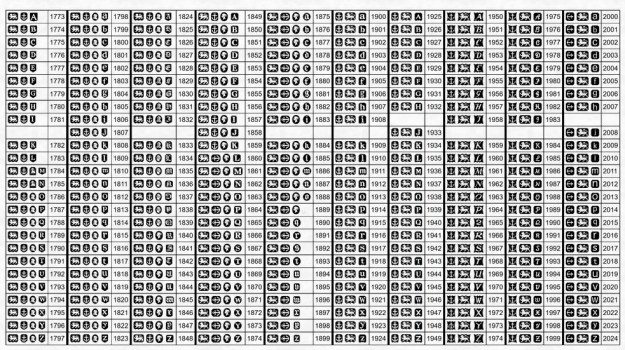
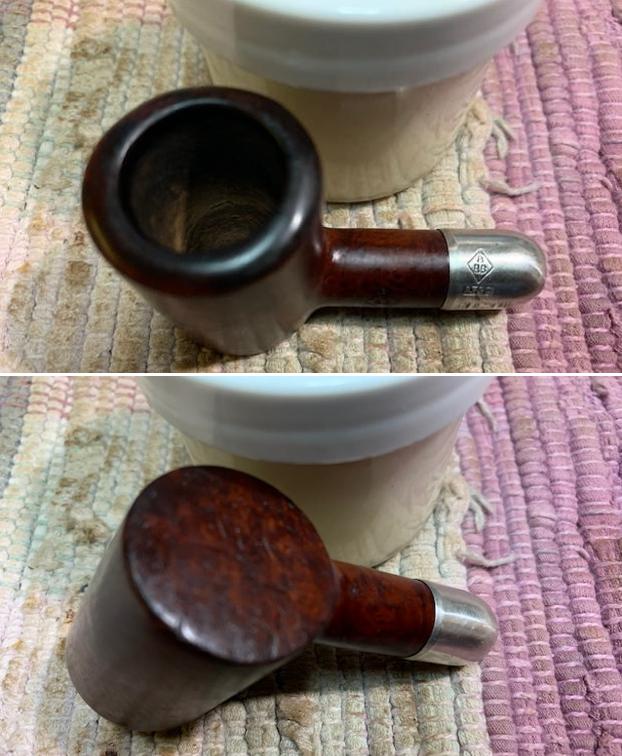
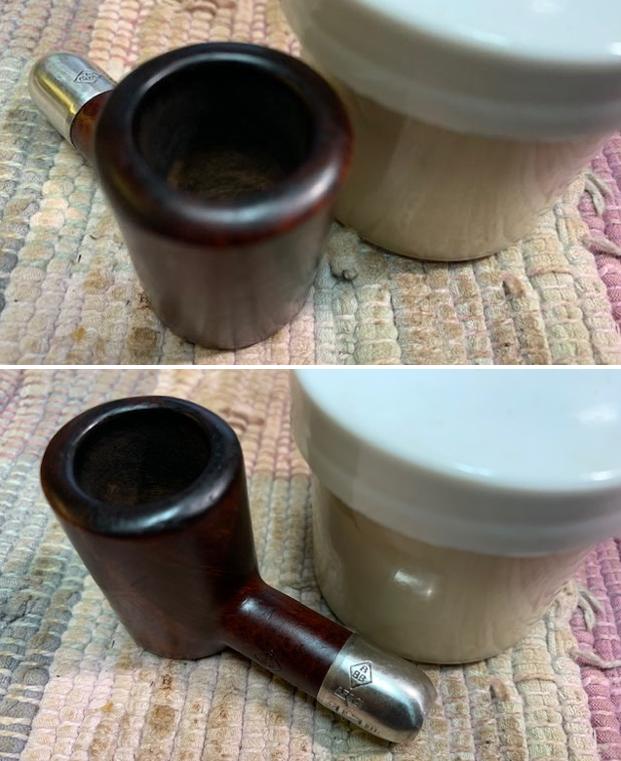
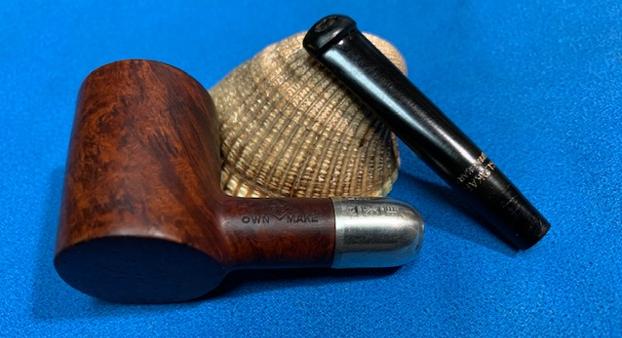
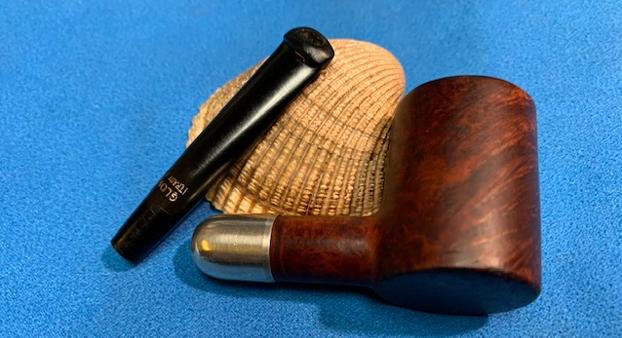
When the package arrived at Jeff’s place in Idaho he waited for me and opened the box with me on Facetime to look at the collection of pipes as he removed them from the box. It is an amazing collection and one that I am going to enjoy working on over the months ahead. Jeff took some photos of the BBB Tiny Poker with a Sterling Silver Ferrule and a Peterson like system stem and internals for me to look at while he worked his magic in cleaning up the pipe. It is a an interesting pipe with a lot of potential and what appears to be some great grain under the grime and debris of the years.  Jeff took photos of the bowl, rim top to show the thickness of the cake in the bowl and the lava on the rim top. It was obviously a great smoking pipe and a favourite. I am hoping that the thick lava coat on the crowned rim top protected things underneath it from damage to the edges and top. Cleaning it would make that clear! He took photos of the top and underside of the stem showing the tooth chatter, scratching and oxidation on the stem surface and wear on the edges of the button.  The photos of the stem also show the unique design and shape of the stem. I am looking forward to doing some research on the GLOKAR to figure out all I can about it.  Jeff took photos of the sides and heel of the bowl to show the condition of the briar. You can see the beautiful shape and the grain on the bowl even through the dirt and debris of 110 years. At this point in the process it certainly looks its age.  The stamping on the pipe was on the left side of the shank and read BBB in a diamond separating OWN MAKE on each side of the diamond. There was no other stamping on the shank sides. On the silver ferrule on the shank of the pipe it is stamped top and left side and it has the BBB diamond logo and underneath that is AF&Co (which is the Adolph Frankau & Company logo). After his death, the BBB gradually became known as Britain’s Best Briars. It is one of the oldest, if not the oldest, English trademark in current use and the first pipe ever to have a registered trade mark. Underneath the AF&Co it is stamped with three hallmarks – an anchor, a lion and a lower case “m”.  The anchor identifies the city of origin of the silversmith (Birmingham, England), the rampant lion (the symbol for quality of the silver) and the final one is a lower case “m” (the date stamp). The silver is badly oxidized but you can see the hallmarks in the first photo below. The stamping is clear and readable.The hard rubber stem is also stamped and reads GLOKAR over TRADE MARK. It is very readable as can be seen in the photo below. Since the hallmarks were so clear, I turned to one of the numerous silver hallmark charts on line for the city of Birmingham, England to see what I could find out about the “m” date stamp and pin down and age for the pipe (https://www.silvermakersmarks.co.uk/Dates/Birmingham.html). I clicked on the section that applied to the date stamp on this pipe. The first chart below is the chart from 1773-2024.I am also including screen capture of the enlarged section on the Birmingham dates for the letter M. This chart covers pipes made in 1778-1986. I have drawn a read box around the hallmark pattern that matches the one on the BBB Silver ferrule. You can see that it dates the pipe to 1911. That means that this little pipe is roughly 110 years old.

With the information from the hallmark site I had a clear date for the manufacture of the pipe. It was definitely an old timer and really was another stellar acquisition.

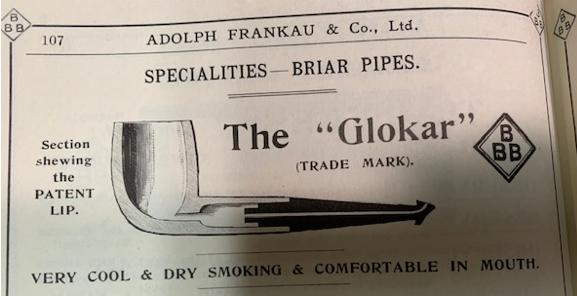
I wanted know more about the GLOKAR stamp and what it signified. I had an inkling that I was dealing with a BBB system pipe not unlike the Peterson’s System pipes but I wanted to see what I could find out about that. I have a facsimile of a 1912 BBB Catalogue No. 20 that has a section dedicated to the Glokar. On page 107-110 there is information about the pipe and the various versions available. Interestingly it does not include a picture/drawing of my Poker. I quote the description of the Trademarked Glokar below.

The “Glokar” Mouthpiece does away with the great drawback of all ordinary pipes, viz., the unpleasant and possibly injurious, effect of the smoke upon the tongue, as the end of the stem  has a smooth, concave surface, which while forming a pleasant rest for the tongue, acts as a barrier between it and the smoke. Instead of pressing through an ordinary round bore, the smoke leaves the mouthpiece through a fan-shaped slot, which is drilled in and upward direction – thus preventing saliva from entering the bore of the pipe.

Advantages:

  1. The bore, being kept dry, requires less cleaning than that of an ordinary pipe.
  2. As no saliva can reach the bowl, the tobacco can be consumed to the last particle.
  3. The shape of the mouthpiece affords the perfection of comfort for the mouth, tongue ad lips.

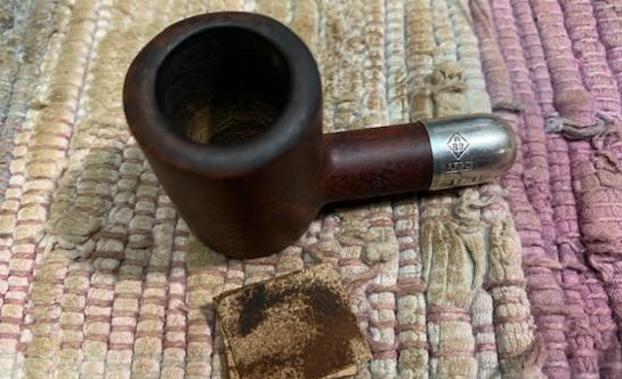
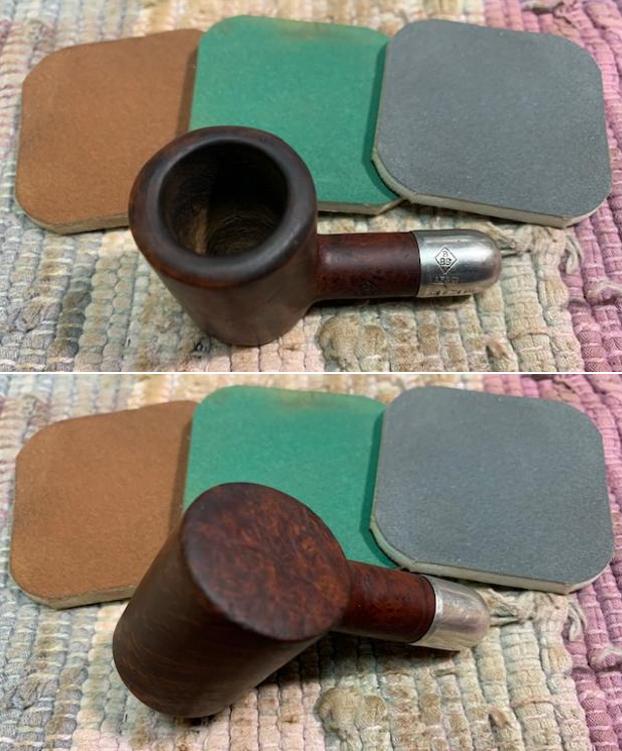
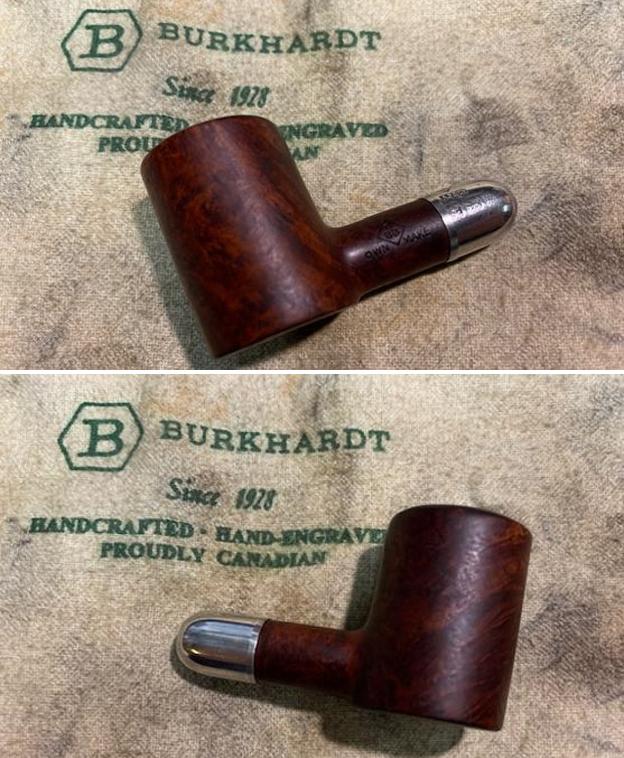
I took a photo of the picture that was included in the catalogue for the “GLOKAR” and have included it below. The cutaway diagram shows the system in the bowl and shank as well a the patented lip design. It is remarkably like a Peterson’s system pipe. One of the differences is the shape of the exit of the air way in the button. This one is a slot rather than a round hole.Now it was time to work on the pipe. Jeff carefully cleaned the pipe from top to stern. He reamed it with a PipNet pipe reamer and then cleaned up the reaming with a Savinelli Fitsall Pipe Knife. He scrubbed out the internals of the shank, stem and shank extension with alcohol, pipe cleaners and cotton swabs until the pipe was clean. He scrubbed the exterior of the bowl with Murphy’s Oil Soap and a tooth brush to remove the grime and grit on the calabash and the tarnish and lava on the rim top. The finish looks much better and has a deep richness in the colour that highlights grain of the briar. The rim top looked good with some darkening on the top and outer edge of the bowl. Jeff soaked the stem in bath of Before & After Deoxidizer to remove the oxidation on the rubber. He worked it over with Soft Scrub All Purpose Cleaner to remove any remnants of oxidation. When the pipe arrived here in Vancouver I was amazed it looked so good. Here are some photos of what I saw. I took some close up photos of the rim top and the stem surface. The rim top  was darkened but did not look otherwise damaged. There was also some darkening around the outer edge of the bowl that would need to be worked on. The silver ferrule was in great condition. I took close up photos of the stem to show the condition of the surface and button. I took a picture of the stamping on the shank. The reflection on the silver did not capture the stamping on the ferrule but it was all clear and readable as noted above.I took the pipe apart and took a photo of the pipe with the short stem. It is a good looking pipe and very unique. I started my work on the pipe by addressing the darkening on the edges and rim top. I used a folded piece of 220 grit sandpaper to work over the edges (inner and outer) and the crowned rim top to try to minimize the darkening. While not flawless I was happy with the results.I polished the rim top and the rest of the briar with micromesh sanding pads – dry sanding it with 1500-12000 grit pads. After each pad I wiped the briar down with a damp cloth.  I was able to give a shine to the bowl and remove some of the surface scratches in the process.  I worked some Before & After Restoration Balm into the surface of the bowl and shank with my fingertips to clean, enliven and protect the briar. I let the balm sit for 15 minutes and then buffed with a cotton cloth to raise the shine. The photos show the bowl at this point in the restoration process. I polished the silver ferrule with a jewelers cloth to remove any residual tarnish and also to protect it from future tarnish (at least for awhile). With that done the bowl was finished other than the final buffing. I set the bowl aside and turned my attention to the stem. I filled in the deep tooth marks against the button edge with clear super glue. Once it cured I sanded out the repairs and the tooth chatter on the stem with 220 grit sandpaper. I started the polishing with 400 grit wet dry sandpaper.    I filled in the Glokar Trademark stamping on the stem with Rub’n Buff Antique Gold to highlight the stamping. I rubbed it on and worked it into the stamp with a toothpick. I buffed it off with a cotton pad. The stamp looks really good at this point.I polished the stem with micromesh sanding pads – dry sanding with 1500-12000 grit sanding pads. I wiped it down after each sanding pad with Obsidian Oil. I polished it with Before & After Pipe Stem Polish – both Fine and Extra Fine.    With the bowl and the stem finished I put the pipe back together and buffed it on the wheel using Blue Diamond to give it a shine. I gave the bowl and stem multiple coats of carnauba wax on the wheel and then buffed it with a clean buffing pad to raise the shine. I hand buffed it with a microfiber cloth to deepen the shine. It really is an amazing little pipe. The dimensions of this part of the pipe are – Length: 4 ¼ inches, Height: 1 ½ inches, Outside diameter of the bowl: 1 inches, Chamber diameter: ¾ of an inch. The weight of this tiny pipe is .71 ounces /20 grams. This unique find – a 1911 BBB Glokar Poker with a silver ferrule is joining the other pipes in my collection of BBB pipes and will hold a place of honour while it is in my trust. This is another pipe that one day soon I will enjoy a special bowl of tobacco in it and be transported to a slower paced time in history where I can enjoy a respite. Thanks for walking through the restoration with me.


Previous Repairs Can Wreak Havoc in a Restoration – Dunhill Shell Briar R F/T 1962 Pot

Blog by Steve Laug

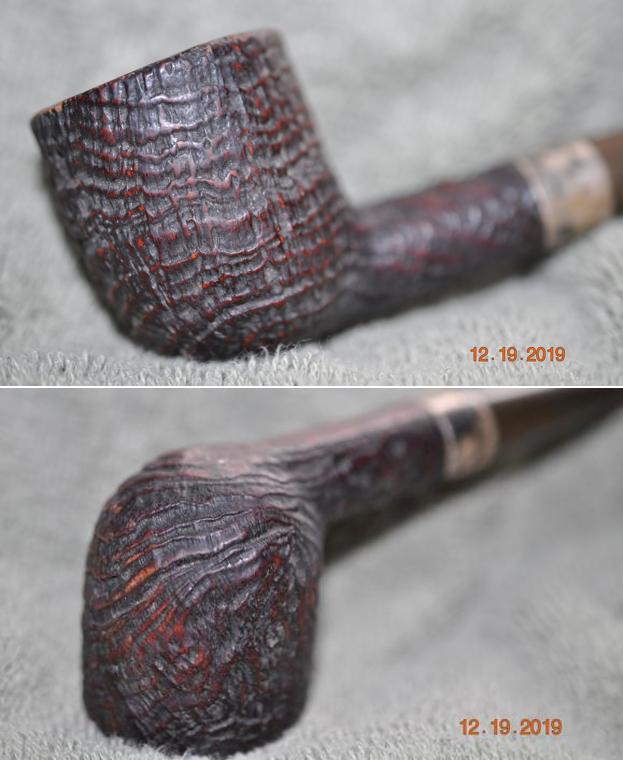
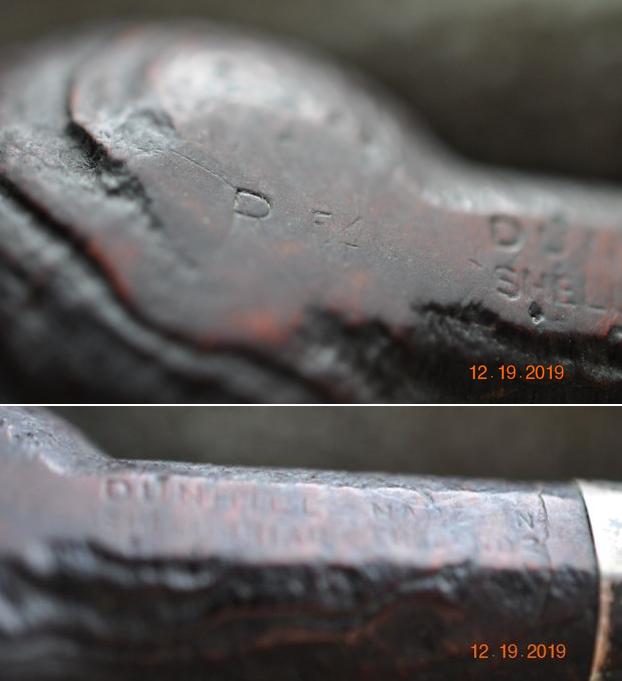
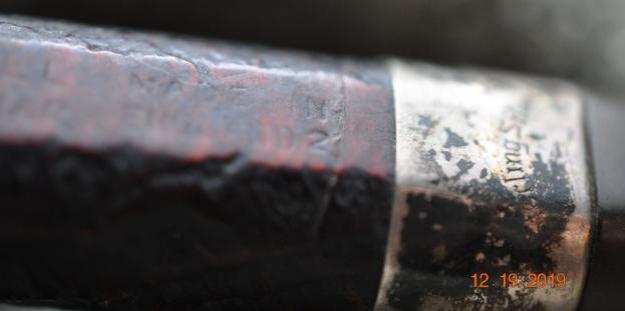
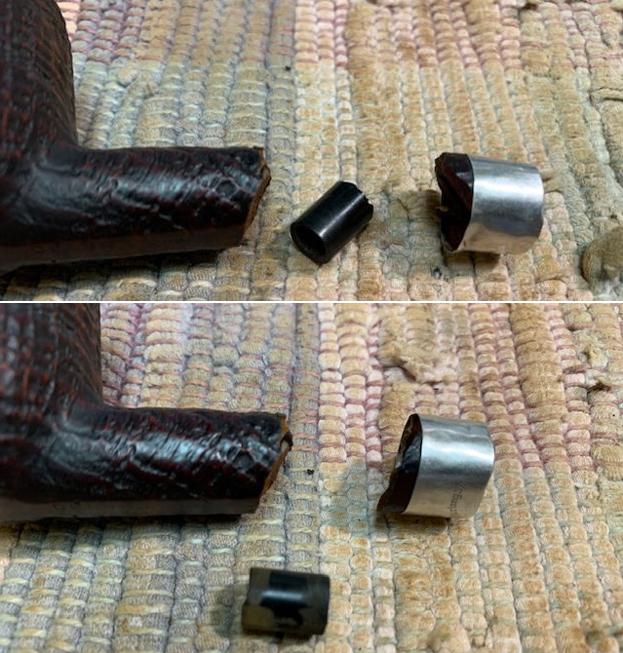
This Dunhill came to us in the same lot of pipes as the 1922 Dunhill Bruyere Reading Pipe and the BBB Calabash Reading Pipe that I have already restored and written blogs on. It was a great looking blast on this pipe that caught our attention. The silver band on the shank was definitely an aftermarket addition to repair a cracked shank. It was made out of Sterling Silver so that was not a big deal to us when we purchased the lot. It was a filthy pipe with a thick cake in the bowl and a heavy lava overflow on the rim top. The stem was oxidized, calcified and had deep tooth marks on both sides next to the button. It is hard to see until the close up photos but the shank was seriously crack about 1/8 of an inch ahead of the band on the underside of the shank and from the shank end you could see two large crack at 3 and 9 o’clock. Jeff took photos of the pipe as it stood when we received it.  He took photos of the bowl and rim to give a picture of the depth of the cake and lava on the rim top. You can also see the nicks around the outer edge of the rim. Even the stem was pretty normal fare – tooth marks with a small hole in the underside and heavy wear and tear on the rest of the stem. Everything was pretty common in terms of the restorations that we work on at least we thought so at this point! He took some photos of the sides of the bowl to show the beautiful (and filthy), rugged sandblast around the bowl. It really was a magnificent looking bowl. It took a few photos to try to capture the stamping on the underside of the shank. There are deep scratches in the smooth portion of the shank and heel of the bowl. On the heel it is stamped R F/T. That is followed by Dunhill [over] Shell Briar followed by Made In [over] England with a 2 following the D in England. You can also see the repaired cracked shank in the photos below. The silver band is stamped Sterling Silver on the underside. If we had stopped here a lot of pain could have been avoided! If we just left is dirty and did a cursory clean up and just smoked it we could have avoided a multitude of issues. But that is not the way we work. Jeff attacked the cleanup by trying to take the pipe apart. The stem was stuck in the shank. He tried heat, cold and even pouring alcohol down the shank to try and loosen what we assumed was the grime and grit that held the stem firmly in the shank. Nothing worked. He even heated the band area to try to loosen the stem from the shank but nothing work. Finally after a combination of all of the above he felt what he thought was a bit of give in the stem and gave it a very careful twist…. Here is where all went horribly wrong. Remember that crack in the shank shown in the above photos? That is what gave and the shank came off in his hand! Now what to do. We talked and he was sick with what had happened but there was nothing to be done. And do you know what the worst part was? The stem was still stuck! He went back through all of the methods we all use to loosen a stem and finally it came free! BUT the band had been epoxied on the shank and it was not removable!

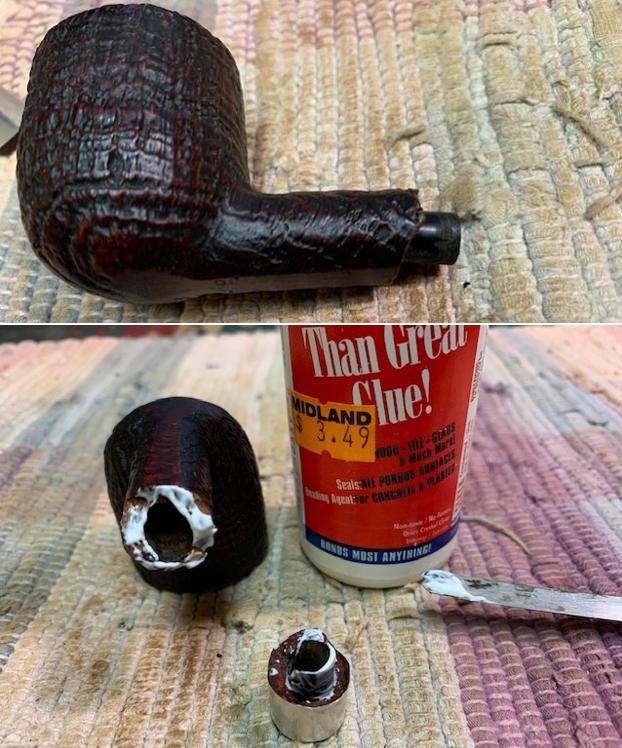
It was in this state that the pipe came to me in a bag. Now it was my turn to try to see if I could loosen the band. I took the broken shank and band and filled up a small jar with enough acetone to cover the band and let the piece soak for two days in the bath. I replenished the acetone as it evaporated. The incredible thing for me was that this had absolutely no effect on the band and briar. It was permanently bonded! Time to come up with a new plan of attack.I let the broken shank sit on my desk in pieces for several days – probably about a week while I worked on other pipes. Finally after recently repairing the broken shank on the Butz-Choquin for Randy (https://rebornpipes.com/2021/01/16/a-badly-broken-butz-choquin-pipe-makes-its-way-back-to-me-for-repair-and-restoration/) I had an idea for fixing this one. Give that blog a read if you want to know the difference.

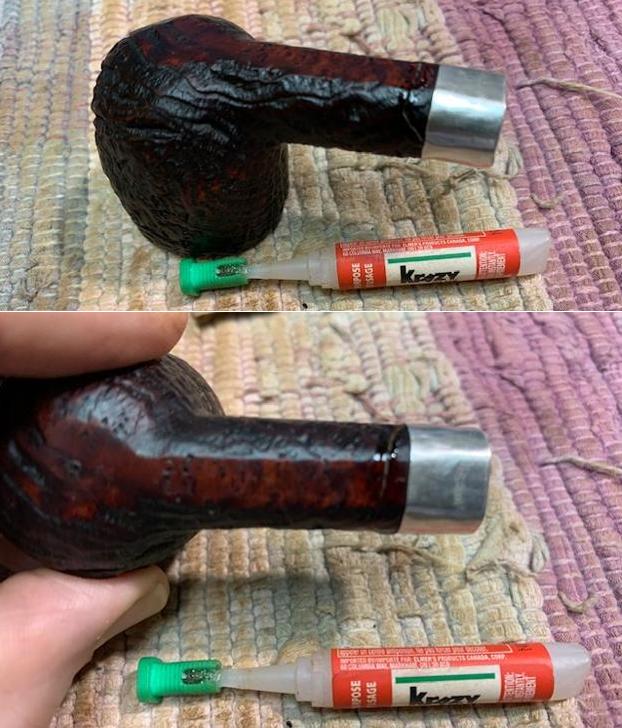
In this case there was already a band and the break was further down the shank making it a bit more problematic to address. I cut a short piece of Delrin that would extend far enough into the bowl side of the broken shank to provide some stability and into the shank end to tie it together. I decided to leave the mortise the depth it was to add stability to the shank rather than drill it out and extend the tube in further. I would need to drill out the Delrin a bit and reduce the diameter of the tenon to fit inside the tube I the shank. It just might work and was certainly worth a try. I roughened up the Delrin with a sanding drum on the Dremel to provide a rough surface of the glue to bind to in the shank.I fit the Delrin piece in the bowl end of the broken shank to make sure it fit. I then painted the surface of the Delrin with super glue and pressed into the banded shank end. I coated the briar ends with an all purpose glue and joined the pieces together. I clamped them until the glue set. Once it had I filled in the gaps in the crack with clear CA glue and set it aside to cure. I used a corner of 220 sandpaper to carefully smooth out the glue on the crack repair. I was able to make it smooth and not ruin the sandblast! That alone was an accomplishment. The repair obscured the 2 on the date stamp. It is still present but now blurred.

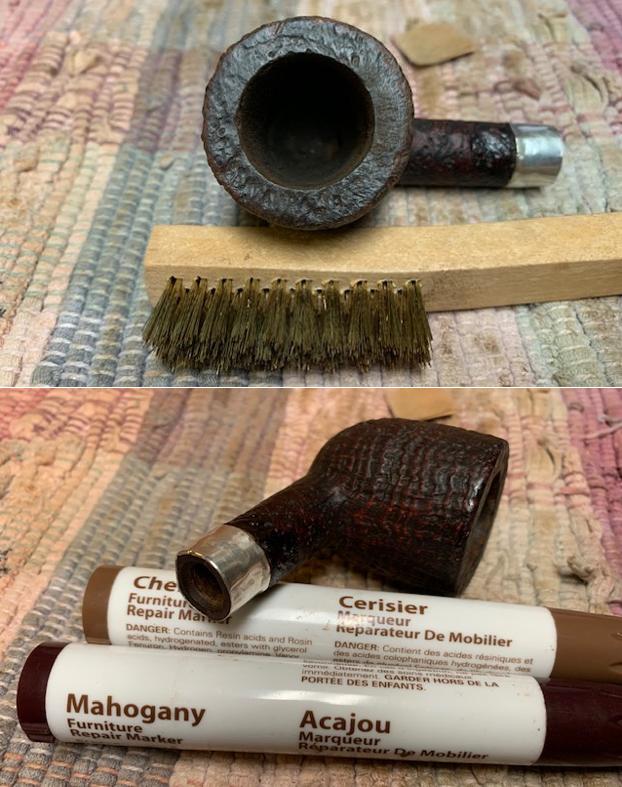
I used a brass bristle wire brush to clean up a bit more of the sandblast on the rim top and then used a combination of Cherry and Mahogany stain pens to restain the rim edges and the repaired area of the shank and blend it into the rest of the bowl. With the repair completed and the briar restained I rubbed the briar down with Before & After Restoration Balm. I worked it into the briar with my fingertips and a horsehair shoe brush. The product works to clean, enliven and preserve the briar. I let it sit for 15 minutes while I worked on the stem. After the time passed I buffed it with a cotton cloth to deepen the shine. The briar really comes alive with the balm.     Now it was time to deal with the fit of the stem in the newly lined shank! I had a couple of options here. I could either drill out the tube and open the shank up a bit more or I could reduce the diameter of the tenon and make it fit that way. Since the shank was already fragile and twice repaired I opted for reducing the diameter of the tenon. I took it down with a Dremel and sanding drum until it was a close fit in the shank. I worked on it with 220 grit sandpaper to get it even closer. Once I had the tenon end in I could see that things were slightly off. So instead of continuing to reduce the diameter of the tenon I used a needle file to even out the inside of the shank and get as close to an equal fit on all sides of the tube. That was more of a job that I make it sound and actually took a fair bit of time.Once I had a good fit to the shank I put the stem and bowl together and took some photos of the pipe at this point in the process. I still needed to work on the fit of the stem to the shank and alignment and gaps but the tenon fit well. I also need to work on repairing the tooth marks. You will see in the last photo of the underside of the stem that I had already started the process.   With the fit of the stem taken care of I worked on the repairs necessary to make it fully functional. I took a bit of excess stem material off the flattened bottom of the stem at the shank to make the fit seamless. I also filled in the tooth marks and pin prick with black super glue and set the stem aside to cure.  Once the repairs cured I smoothed them out with a 1500 grit micromesh sanding pad until they blended in well with the surrounding vulcanite. I used a small flat needle file to clean up the sharp edge of the button but forgot to take photos of that! Once the repair was smoothed out I polished the stem with micromesh sanding pads – dry sanding with 1500-12000 grit pads and wiping the stem down after each pad with Obsidian Oil. I finished by polishing the stem with Before & After Stem Polish – both fine and extra fine and gave the stem a final wipe down with Obsidian Oil.    I am really happy to be finished with the rescue of this beautifully grained sandblast 1962 Dunhill Shell Briar R Pot. The grain is quite stunning and the blast is rugged. The repair to the broken shank while not a total thing of beauty worked very well and makes the pipe usable once again. The permanently affixed Sterling Silver band is useful reinforcement externally for the tube in the shank. The refit stem came out looking very good. The pipe should be a good smoking pipe and outlast all of us as it moves through the hands of the pipe men and women who take on the trust. The dimensions of this pipe are Length: 5 ¾ inches, Height: 1 ¾ inches, Outside diameter of the bowl: 1 ½ inches, Chamber diameter: 7/8 of an inch. The weight of the pipe is 1.48 ounces/41 grams. Because of the repairs to the pipe I will soon be adding it to the rebornpipes store in the British Pipe Makers section at a price that is significantly lower than it would have been had it not been repaired.   It might be a chance for one of you to add it to your collection for a good price. Thanks for following the work on this pipe in the blog.


Working on a Trypis Bent Billiard with a Saddle Stem

Blog by Steve Laug

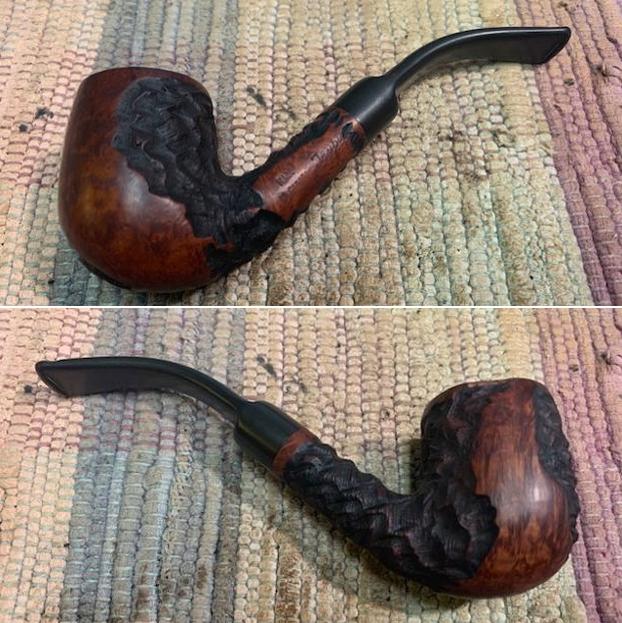
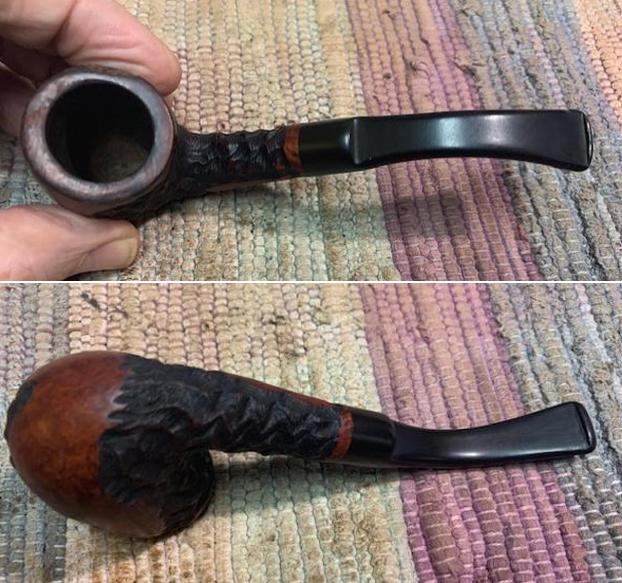
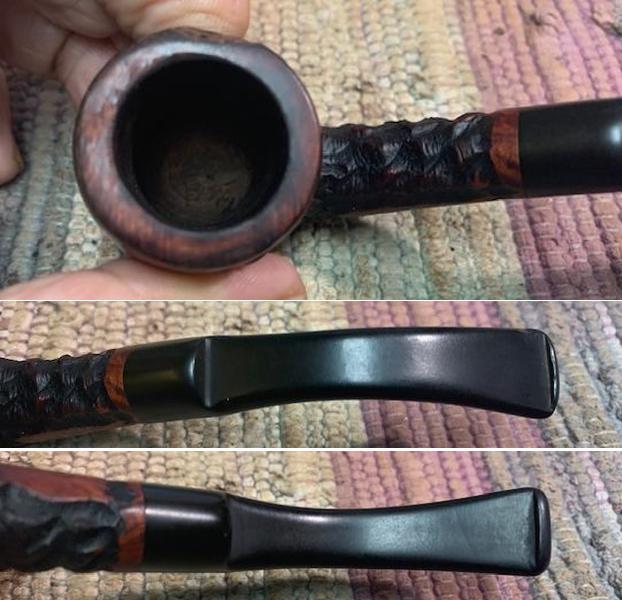
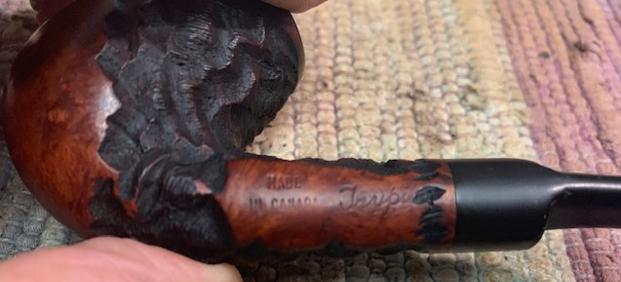
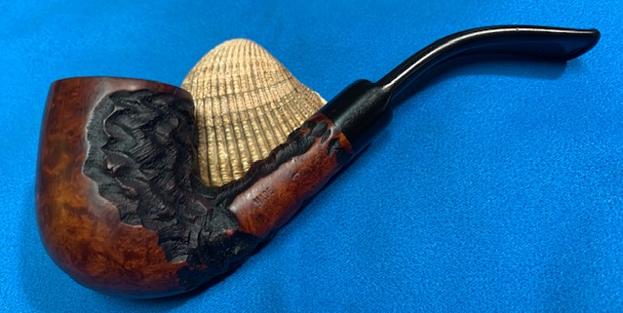
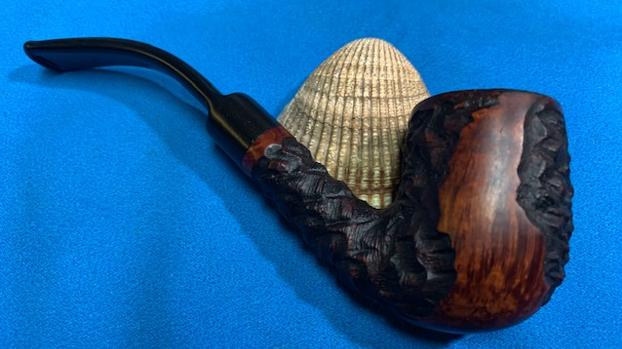
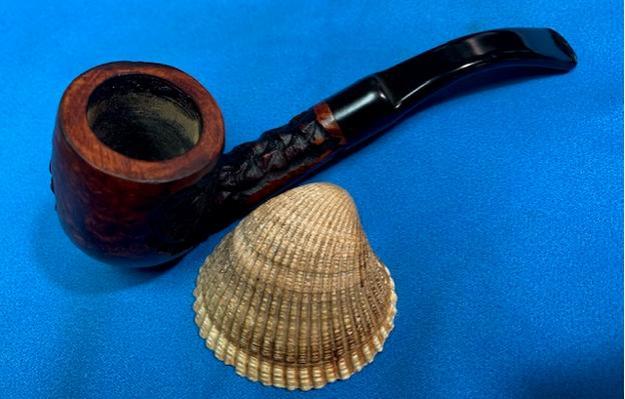
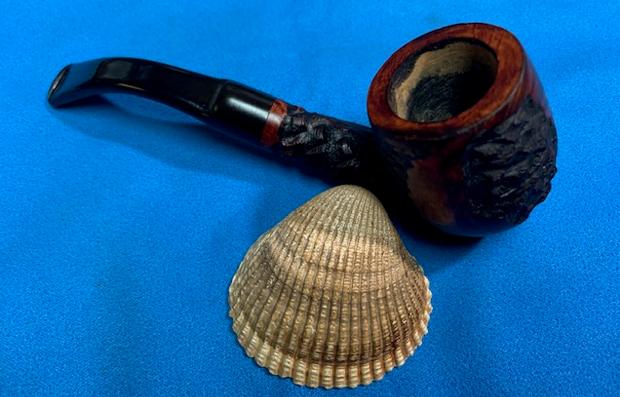
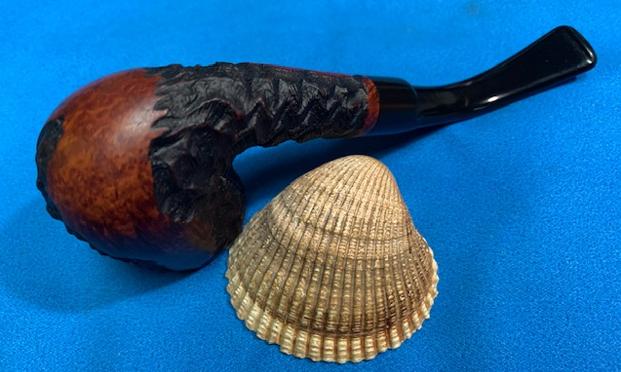
I finished the Brigham pipes and have one more Canadian Made pipe to work on. This one is a partially rusticated bent Billiard, stamped on a smooth panel on the left side of the shank with that reads Made in Canada next to the bowl and that is followed by Trypis. There is no shape number stamped on the pipe. There was a thick cake in the bowl with remnants of tobacco stuck on the walls. There was a lava overflow on the rim. The smooth rim top and edges appear to have some damage on the right side. It looks like the pipe had been dropped and the outer edge of the bowl was out of round. The smooth finish looks great but is dull with grime ground into the surface. The rustication is rugged and unique to Trypis pipes and while similar to Brigham Pipes it is uniquely his design. There was a beautiful pipe underneath all of the buildup of years of use. The thin saddle stem was oxidized and calcified toward the end with some tooth marks and chatter on both sides ahead of the button. Jeff took photos of the pipe before he started his cleanup work on it. Jeff took photos of the bowl and rim top to show the cake in the bowl. The smooth rim top showed some darkening and damage as did the inner and outer edges of the bowl. He took photos of the top and underside of the stem showing the tooth chatter, scratching and oxidation on the stem surface and wear on the edges of the button.   Jeff took a photo of the side and heel of the bowl to show the condition of the finish. You can see the well done and rugged rustication that I have seen on other Trypis pipes. Even under the dirt and debris of the years it looked very good. You can see the damage on the outer edge of the rim on the right side in the first photo below. The stamping is clear and readable as noted above. The flow of the stem is well done but there is no identifying marks on the stem side.I turned to Pipephil and looked up the brand for a quick summary of the detail on the brand (http://pipephil.eu/logos/en/logo-t8.html). I have included a photo of Phillip Trypis and a short summary of what was written in the side bar of the section. I quote in full below.

Phillip Trypis first worked for Brigham as production manager. He continued to supply the Canadian brand when he was established on his own with his own Trypis label. Phillip Trypis had a pipe shop in Toronto.

I then turned to Pipedia for more information (https://pipedia.org/wiki/Trypis_Pipes). There was a great quote from Stefan Seles. I have included that in full below.
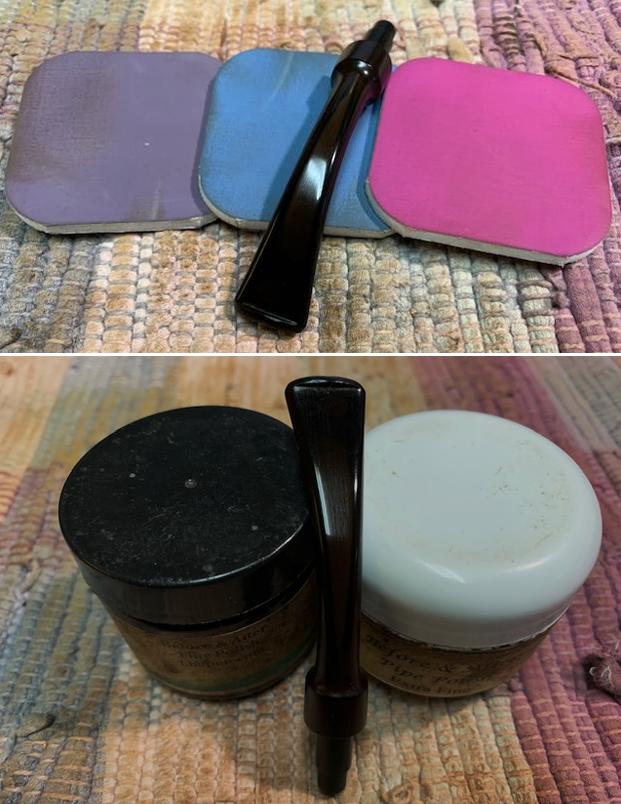
“Phillip Trypis has been a pipe maker in Canada for well over 40 years. Originally from Greece, his experience ranges from cutting burls in a briar mill to making literally thousands of pipes out of his home in the hamlet of Oakwood, Ontario. Brigham pipes benefited from Phillip’s skills where he worked for a number of years. There he directed the pipe production of the company when it was producing over 50,000 a year. Even though he left to start his own pipe shop, he still imported briar and turned tens of thousands of bowls for Brigham not to mention produce a large number of his own branded pipes.

Just over a year ago, Phillip had a serious fall and although he is back making pipes, he is unable to travel around to sell them as he once did. He has asked me to help him in that effort.

The pipes listed below are some of his best work made from decades old MF and R ebuchauns as well as some recently purchased Italian plateau. The prices are excellent, especially given the age and quality of the briar used. In fact, I would venture to say that these pipes have no peers, especially below the $100.00 price. You must be the judge.

Many of the styles are traditional in form although Phillip has a number of freehand styles that are both familiar and off the beaten path. The vast majority of the higher priced pipes are very large pieces to be sure.”

With the information from the two sites I had the background on the pipe maker that I really enjoy to know when working on the pipe. This was a beauty and though I did not have any idea of when it was made it was a beauty. Now it was time to work on the pipe.

I am really happy to have Jeff’s help on cleaning up the pipes that we pick up along the way. He cleaned this filthy pipe with his usual penchant for thoroughness that I really appreciate. This one was a real mess and I did not know what to expect when I unwrapped it from his box. He reamed it with a PipNet pipe reamer and cleaned up the reaming with a Savinelli Fitsall Pipe Knife. He scrubbed out the internals with alcohol, pipe cleaners and cotton swabs until the pipe was clean. He scrubbed the exterior of the bowl with Murphy’s Oil Soap and a tooth brush to remove the grime and grit on the briar and the lava on the rim top. The finish looks much better and the great rustication on the bowl and shank had greatly improved. The rim top still was a mess. Jeff soaked the stem in Before & After Deoxidizer to remove the oxidation on the rubber. He scrubbed it with Soft Scrub All Purpose Cleaner to remove the majority of the oxidation. When the pipe arrived here in Vancouver for the second stop of its restoration tour I was amazed it looked so good. I took some close up photos of the rim top and the stem surface. The rim top had a large chip out of the right outer edge that affected the look of the bowl. I would need to work on that edge of the bowl to bring it back to round. I took close up photos of the stem to show the condition of the surface and button. I took a photo of the stamping on the left side of the shank. You can see that it is stamped as noted above. It is faint but readable.  I took the pipe apart and took a photo of the pipe. It is a good looking pipe and has some great looking rustication on the bowl and shank. I decided to start my restoration work on this one by dealing with the damaged rim top and edges. I topped the bowl on a topping board with 220 grit sandpaper to remove the darkening and damage. I filled in the damaged right outer edge of the rim with briar dust and clear super glue to bring it back to round. I topped the bowl once again to smooth out the repair and blend it into the rim top of the bowl. It looked a lot better than when I started.    I polished the smooth rim top and sides of the bowl with micromesh sanding pads – wet sanding it with 1500-12000 grit pads. After each pad I wiped the briar down with a damp cloth.   I stained the rim top with a combination of Cherry and Walnut stain pens. With that combination I was able to match the colour on the rest of the bowl.I worked some Before & After Restoration Balm into the surface of the briar with my fingertips and a horsehair shoe brush on the rustication to clean, enliven and protect the briar. I let the balm sit for 15 minutes and then buffed with a cotton cloth to raise the shine. The photos show the bowl at this point in the restoration process.    With that done the bowl was finished other than the final buffing. I set it aside and turned my attention to the stem. I “painted” the surface of the vulcanite with the flame of a lighter to lift the tooth marks. While some of them came out nicely there were several against the edge of the button that would not life. I filled them in with clear super glue. Once the repairs cured I used a file to flatten them out and then sanded the stem with 220 grit sandpaper. I started the polishing with 400 grit wet dry sandpaper.       I polished the stem with micromesh sanding pads – wet sanding with 1500-12000 grit sanding pads. I wiped it down after each sanding pad with Obsidian Oil. I polished it with Before & After Pipe Stem Polish – both Fine and Extra Fine. I am excited to finish this Trypis Bent Billiard as it is the last of Canadian Made pipes that I had in my to do box. It turned out to be a nice looking Bent Billiard. It has a combined finish with a smooth rim top and sides with a deep rustication on the front and back of the bowl and around the shank. I put the pipe back together and buffed it with Blue Diamond on the buffing wheel. I gave the bowl and the stem multiple coats of carnauba wax. I hand buffed the pipe with a clean buffing pad to raise the shine. It is fun to see what the polished bowl looks like with the grain popping through on the rim top, smooth panels and the rustication on the rest of the bowl and shank. Added to that the polished black vulcanite saddle stem was beautiful. This semi-rusticated Bent Billiard is nice looking and the pipe feels great in my hand. It is light and well balanced. Have a look at it with the photos below. The dimensions are Length: 5 ½ inches, Height: 2 inches, Outside diameter of the bowl: 1 ¼ inches, Chamber diameter: ¾ of an inch. The weight of the pipe is 37grams/1.31ounces. It is a beautiful pipe and one that will be on the rebornpipes store soon. If you are interested in adding it to your collection let me know. Thanks for walking through the restoration with me as I worked over this pipe. Thanks to each of you who are reading this blog. Remember we are not pipe owners; we are pipemen and women who hold our pipes in trust until they pass on into the trust of the next pipeman or woman. 

Breathing Life into a Patented Brigham Standard (1-Dot) Prince

Blog by Steve Laug

With this Canadian Made Brigham on the table I am finishing the last of the Brigham pipes I had waiting for me to complete. This one is a rusticated Prince, stamped on a smooth panel on the left side of the shank with faint stamping visible with a lens under light. It reads Can. Pat. 372982 followed by Brigham underlined and in script. There is no shape number stamped on the pipe. There was a thick cake in the bowl with remnants of tobacco stuck on the walls. There was a lava overflow on the rim. The smooth rim top and edges appear to have some damage. There is damage all the way around the outside edges of the bowl. The finish is tired and dried out looking and the rustication lacks the look of dimensionality that Brigham rustications seem to capture so well. Once again, I am hoping at this point that there was a beautiful pipe underneath all of the buildup of years of use. The stem was oxidized and calcified toward the end with some tooth chatter. There were also some tooth marks on both sides of the stem ahead of the button and on the button surface itself. There was a single brass dot on the left side of the taper stem. Jeff took photos of the pipe before he started his cleanup work on it. Jeff took photos of the bowl and rim top to show the cake in the bowl. The smooth rim top showed some darkening and damage as did the inner and outer edges of the bowl. He took photos of the top and underside of the stem showing the tooth chatter, scratching and oxidation on the stem surface and wear on the edges of the button. Jeff took a photo of the side and heel of the bowl to show the condition of the finish. You can see the well done and rugged rustication that is typical of Brigham pipes. Even under the dirt and debris of the years it looked very good. The stamping is faint but readable as noted above. He included a pic of the one brass dot on the stem. For historical background for those unfamiliar with the brand I am including the information from Pipedia on Brigham pipes. It is a great read in terms of the history and background on the pipes (https://pipedia.org/wiki/Brigham_Pipes). Charles Lemon (Dadspipes) is currently working on a book on the history of the brand. Until that is complete this article is a good summary. I have included it below.

Roy Brigham, after serving an apprenticeship under an Austrian pipesmith, started his own pipe repair shop in Toronto, in 1906. By 1918 the business had grown to include five other craftsmen and had developed a reputation across Canada for the high quality of workmanship. After repairing many different brands of pipes over the years, Roy noted certain recurring complaints by pipe smokers, the most common referred to as “tongue bite”. Tongue bite is a burning sensation on the smoker’s tongue, previously thought to be due to the heat of the smoke (i.e. a “hot smoking pipe”).

He soon began manufacturing his own pipes, which were lightweight, yet featured a more rugged construction, strengthening the weak points observed in other pipes. The problem of tongue bite intrigued him, and he decided to make overcoming it a future goal.

About 1938, Roy’s son Herb joined him to assist in the business. The business barely survived the great depression because pipes were considered to be a luxury, not a necessity, and selling pipes was difficult indeed. In approximately 1937 [1], after some experimentation, Roy and Herb discovered that tongue bite was in fact a form of mild chemical burn to the tongue, caused by tars and acids in the smoke. They found that by filtering the smoke, it was possible to retain the flavour of the tobacco and yet remove these impurities and thereby stop the tongue bite.

Just as Thomas Edison had searched far and wide for the perfect material from which to make the first electric light bulb filaments, Roy & Herb began experimenting with many materials, both common and exotic, in the quest for the perfect pipe filter. Results varied wildly. Most of the materials didn’t work at all and some actually imparted their own flavour into the smoke. They eventually found just two materials that were satisfactory in pipes: bamboo and rock maple. As bamboo was obviously not as readily available, rock maple then became the logical choice.

They were able to manufacture a replaceable hollow wooden tube made from rock maple dowelling, which when inserted into a specially made pipe, caused absolutely no restriction to the draw of the pipe, yet extracted many of the impurities which had caused tongue bite. The result was indeed a truly better smoking pipe…

I have written to Charles Lemon (Dadspipes) previously about Patent Number pipes and since this was another one, I referred to a previous blog I had written about the stamping on a 2199 Lovat shaped pipe. He responded with information that I am including in part below.

Hey Steve! Good to hear from you.

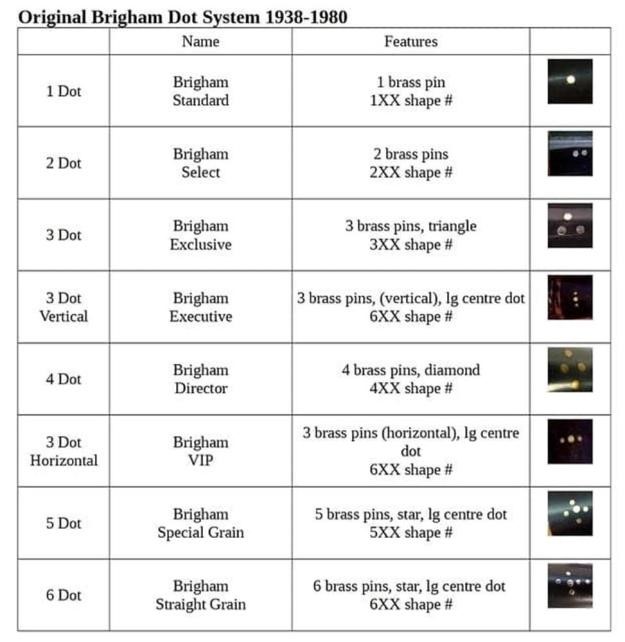
Shape 2199 is what most would call a Lovat. Brigham called it a Club for whatever reason- just to be different, perhaps!…As these are all Patent pipes, it’s more accurate to refer to their grade by name (the post 1980 grading scheme refers to Dots). Here is the original scheme: I also wrote Charles about this specific pipe and he sent me the reply below. It is fascinating information regarding this older Canadian made pipe.
Patent Prince – the Straight Prince is a Shape 13. I can’t tell from the pic how many Dots it has on the stem (1?). Dating will again be 1938-55.
With the information from Charles’ message and the chart above that he included I knew what I was dealing with in terms of the stamping and the age of this pipe. The pipe was made between 1938-1955 because of the Patent number and also that the 1 dot pipe was a Brigham Standard. Now it was time to work on the pipe.

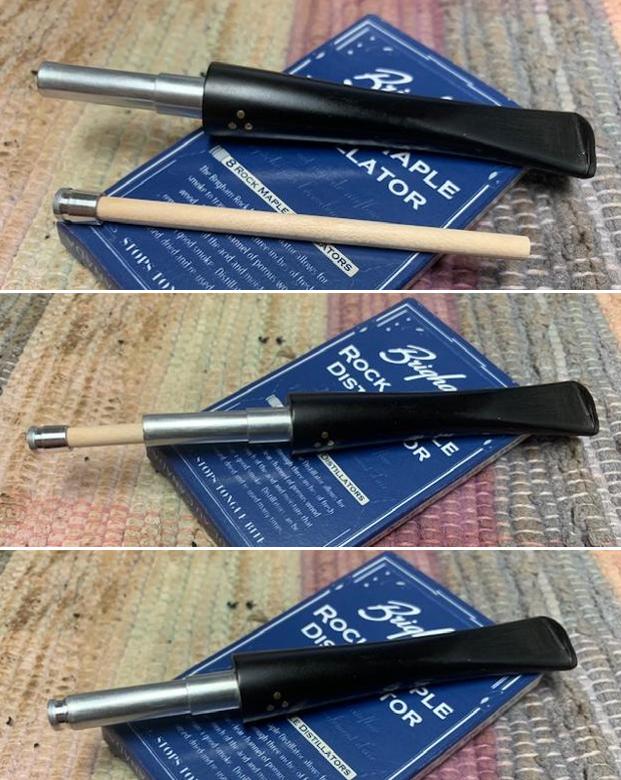
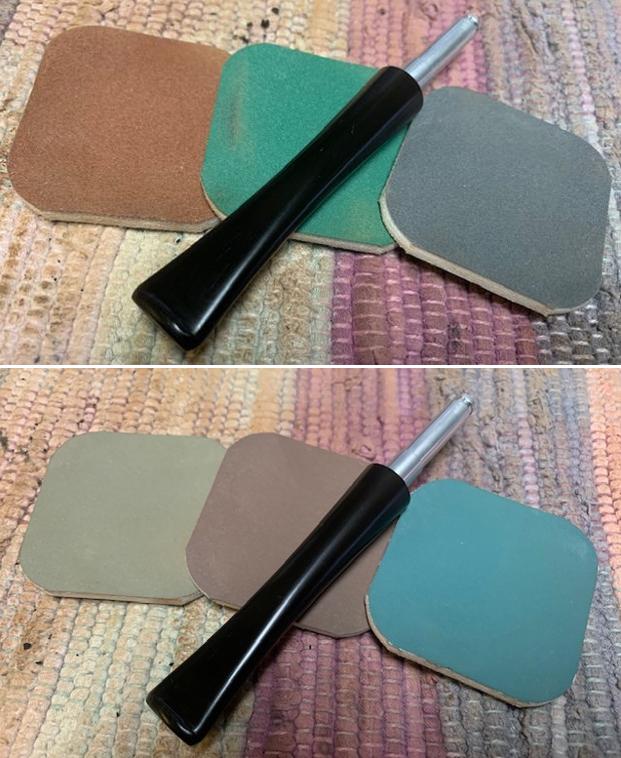
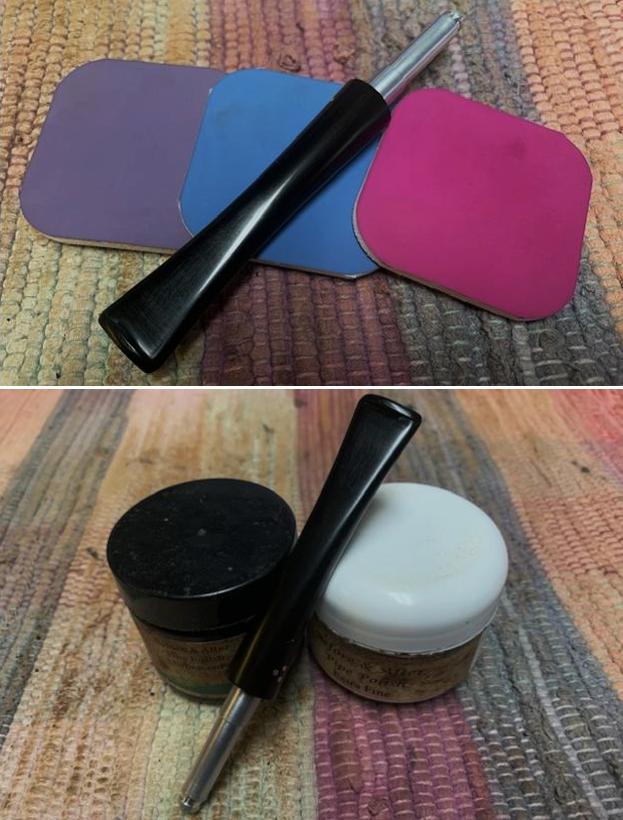
I am really happy to have Jeff’s help on cleaning up the pipes that we pick up along the way. He cleaned this filthy pipe with his usual penchant for thoroughness that I really appreciate. This one was a real mess and I did not know what to expect when I unwrapped it from his box. He reamed it with a PipNet pipe reamer and cleaned up the reaming with a Savinelli Fitsall Pipe Knife. He scrubbed out the internals with alcohol, pipe cleaners and cotton swabs until the pipe was clean. He scrubbed the exterior of the bowl with Murphy’s Oil Soap and a tooth brush to remove the grime and grit on the briar and the lava on the rim top. The finish looks much better and the great rustication on the bowl and shank had greatly improved. The rim top still was a mess. Jeff soaked the stem in Before & After Deoxidizer to remove the oxidation on the rubber. He scrubbed it with Soft Scrub All Purpose Cleaner to remove the majority of the oxidation. When the pipe arrived here in Vancouver for the second stop of its restoration tour I was amazed it looked so good. (This was the last pipe I worked on late last evening and I honestly forgot to take some before photos!! Must have been tired. I did a fair bit of work on the pipe and the this morning took the “before” photos. Sorry about that.)  I took some close up photos of the rim top and the stem surface. I had already started working on the rim top last evening. I lightly topped it and gave it a coat of stain to see the look. Lots more work to do on it but it is getting there. I took close up photos of the stem to show the condition of the surface and button. I took a photo of the stamping on the left side of the shank. You can see that it is stamped as noted above. It is faint but readable.I took the pipe apart and took a photo of the pipe. It is a good looking pipe and has some great looking rustication on the bowl and shank. I decided to start my restoration work on this one by dealing with the damaged rim top and edges. I topped the bowl on a topping board with 220 grit sandpaper to remove the darkening and damage. I worked over the inner edge of the bowl with a folded piece of 220 grit sandpaper. The rim top and edges looked much better at this point. I polished the smooth rim top with micromesh sanding pads – wet sanding it with 1500-12000 grit pads. After each pad I wiped the briar down with a damp cloth. I worked some Before & After Restoration Balm into the surface of the briar with my fingertips and a horsehair shoe brush to clean, enliven and protect the briar. I let the balm sit for 15 minutes and then buffed with a cotton cloth to raise the shine. The photos show the bowl at this point in the restoration process. With that done the bowl was finished other than the final buffing. I set it aside and turned my attention to the stem. I sanded out the tooth marks with 220 grit sandpaper and started the polishing with 400 grit wet dry sandpaper.   Before polishing the stem further I decided to fit the clean stem with a new Rock Maple Distillator.I polished the stem with micromesh sanding pads – wet sanding with 1500-12000 grit sanding pads. I wiped it down after each sanding pad with Obsidian Oil. I polished it with Before & After Pipe Stem Polish – both Fine and Extra Fine. I am excited to finish this Brigham Prince as it is the last of the lot that I have been restoring of this brand. It turned out to be a nice looking Standard 13 Rusticated Prince. It has a combined finish with a smooth rim top and the rest of the bowl and shank rusticated with the normal Brigham rustication. I put the pipe back together and buffed it with Blue Diamond on the buffing wheel. I gave the bowl and the stem multiple coats of carnauba wax. I hand buffed the pipe with a clean buffing pad to raise the shine. It is fun to see what the polished bowl looks like with the grain popping through on the rim top and the rustication on the rest of the bowl and shank. Added to that the polished black vulcanite stem with four shining brass pins was beautiful. This rusticated Brigham Standard (1 Dot) Prince is nice looking and the pipe feels great in my hand. It is light and well balanced. Have a look at it with the photos below. The dimensions are Length: 6 inches, Height: 1 ¼ inches, Outside diameter of the bowl: 1 ¼ inches, Chamber diameter: ¾ of an inch. The weight of the pipe is 32grams/1.13ounces. It is a beautiful pipe and one that will be on the rebornpipes store soon. If you are interested in adding it to your collection let me know. Thanks for walking through the restoration with me as I worked over this pipe. Thanks to each of you who are reading this blog. Remember we are not pipe owners; we are pipemen and women who hold our pipes in trust until they pass on into the trust of the next pipeman or woman. 

A Lovely Brigham Exclusive 306 Medium Straight Dublin

Blog by Steve Laug

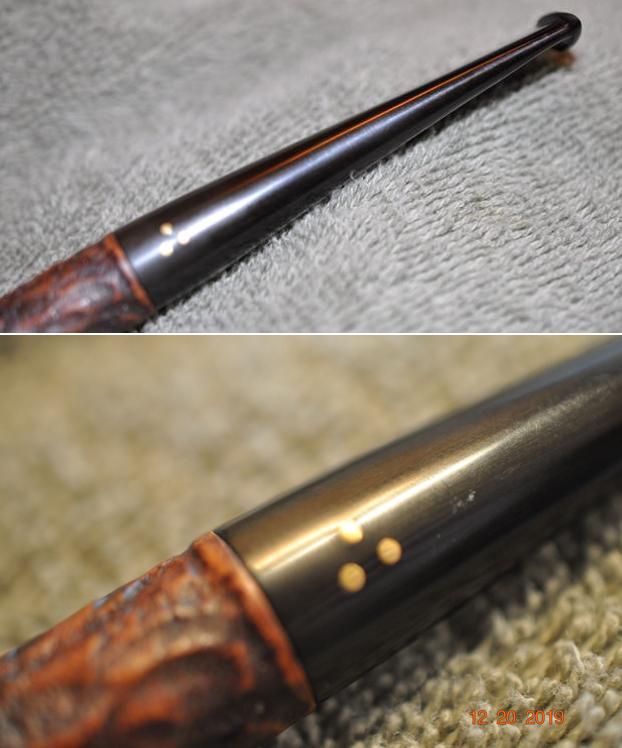
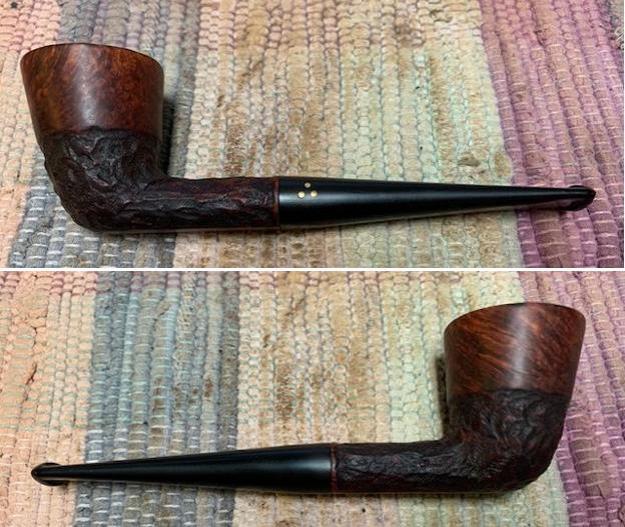
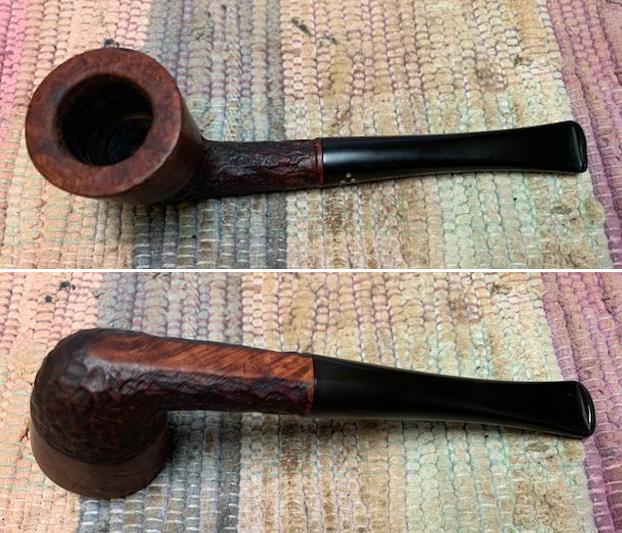
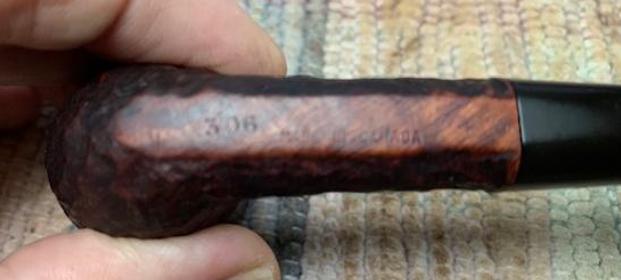
I have two more Brighams left to restore so I chose to work on the Dublin shaped 306 next. The pipe is a medium sized straight Dublin with a taper stem. It is a neat looking pipe with real character. The upper half of the bowl is smooth and highlights some nice grain. The rest of the bowl and shank bear the classic Brigham rustication pattern. It is stamped Brigham over and to the right of MADE IN CANADA on the underside of the shank and has the shape number 306 stamped to the left of that. The stem has three brass pins on the left side of the taper. There was a moderate cake in the bowl and a spattering of lave on the rim top and edges. The rim top is scratched but otherwise clear. The inner and outer edges of the bowl look very good. There is a small burn mark on the outer edge on the right side near the top. There was a beautiful pipe underneath all of the buildup of years of use. The stem was oxidized and had light tooth marks and chatter both sides ahead of the button and on the button surface itself. Jeff took photos of the pipe before he started his cleanup work on it. Jeff took photos of the bowl and rim top to show the condition of the bowl with the thick cake in the bowl and the damage and darkening on the rim top. He took photos of the top and underside of the stem showing the condition of the stem.    Jeff took a photo of the side and heel of the bowl to show the smooth/rustic style of the rustication. Even under the dirt and debris of the years it looked very good.The stamping is faint but reads as noted above. He included pics of the 2 brass dots on the stem.   For the needed background I am including the information from Pipedia on Brigham pipes. It is a great read in terms of the history of the brand (https://pipedia.org/wiki/Brigham_Pipes). Charles Lemon (Dadspipes) is currently working on a book on the history of the brand. Until that is complete this article is a good summary. I have included it below.

Roy Brigham, after serving an apprenticeship under an Austrian pipesmith, started his own pipe repair shop in Toronto, in 1906. By 1918 the business had grown to include five other craftsmen and had developed a reputation across Canada for the high quality of workmanship. After repairing many different brands of pipes over the years, Roy noted certain recurring complaints by pipe smokers, the most common referred to as “tongue bite”. Tongue bite is a burning sensation on the smoker’s tongue, previously thought to be due to the heat of the smoke (i.e. a “hot smoking pipe”).

He soon began manufacturing his own pipes, which were lightweight, yet featured a more rugged construction, strengthening the weak points observed in other pipes. The problem of tongue bite intrigued him, and he decided to make overcoming it a future goal.

About 1938, Roy’s son Herb joined him to assist in the business. The business barely survived the great depression because pipes were considered to be a luxury, not a necessity, and selling pipes was difficult indeed. In approximately 1937 [1], after some experimentation, Roy and Herb discovered that tongue bite was in fact a form of mild chemical burn to the tongue, caused by tars and acids in the smoke. They found that by filtering the smoke, it was possible to retain the flavour of the tobacco and yet remove these impurities and thereby stop the tongue bite.

Just as Thomas Edison had searched far and wide for the perfect material from which to make the first electric light bulb filaments, Roy & Herb began experimenting with many materials, both common and exotic, in the quest for the perfect pipe filter. Results varied wildly. Most of the materials didn’t work at all and some actually imparted their own flavour into the smoke. They eventually found just two materials that were satisfactory in pipes: bamboo and rock maple. As bamboo was obviously not as readily available, rock maple then became the logical choice.

They were able to manufacture a replaceable hollow wooden tube made from rock maple dowelling, which when inserted into a specially made pipe, caused absolutely no restriction to the draw of the pipe, yet extracted many of the impurities which had caused tongue bite. The result was indeed a truly better smoking pipe…

I sent Charles a quick email asking him about this pipe and sent along a photo of the Dublin pipe. I have included his response below.

306 Dublin – there were three sizes of Straight Dublin pipes in the original Brigham lineup -Shapes 5, 6 and 7, with 5 being the smallest and 7 the largest. Your 306, then, is a Medium Straight Dublin in what was then called the “Exclusive” grade. If the “Made in Canada” stamp is block letters in a single line separate from the Brigham logo, the pipe dates from between 1955 to about 1970. If the COM stamp is smaller and positioned under the Brigham logo, it will be a later production, made sometime in the 1970s. The Brigham lineup expanded to 6 grades from the mid-1950s to the early 1960s, and again to 8 grades by the mid-1960s. 

With the information from Charles I knew what I was dealing with in terms of the stamping and the age of this pipe. I learned that the pipe was originally made between 1955 and 1970 (approximately) because of the stamping on the shank. Now it was time to work on the pipe.

I am really happy to have Jeff’s help on cleaning up the pipes that we pick up along the way. He cleaned this filthy pipe with his usual penchant for thoroughness that I really appreciate. This one was a real mess and I did not know what to expect when I unwrapped it from his box. He reamed it with a PipNet pipe reamer and cleaned up the reaming with a Savinelli Fitsall Pipe Knife. He scrubbed out the internals with alcohol, pipe cleaners and cotton swabs until the pipe was clean. He scrubbed the exterior of the bowl with Murphy’s Oil Soap and a tooth brush to remove the grime and grit on the briar and the lava on the rim top. The finish looks very good with the combined smooth bowl top half and the great looking rustication on the rest of the bowl and shank. Jeff soaked the stem in Before & After Deoxidizer to remove the oxidation on the rubber. He scrubbed it with Soft Scrub All Purpose Cleaner to remove the majority of the oxidation. When the pipe arrived here in Vancouver it looked very good. I took some close up photos of the pipe before I started my part of the restoration. I took photos of the bowl and rim top as well as both sides of the stem to show its condition. The rim top and edges looked good. There was a large scratch on the rim top just to the right of the rear of the bowl. It looks like a crack but it is actually a scratch I the surface. I took close up photos of the stem to show the tooth marks on the top and underside ahead of the button and on the top edge of the button as well.I took a photo of the stamping on the smooth underside of the shank. You can see that it is stamped as noted above. It is faint but readable.I took the pipe apart and took a photo of the pipe. It is an interesting pipe that you can see the smooth  portion of the bowl and the rustic finish on in the photo below. The combination of finishes makes this a beautiful pipe.I decided to start my restoration work on this one by cleaning up the rim top and edges of the bowl. I filled in the deep scratch on the rim top with clear CA. Once the repair cured I sanded it smooth to blend it into the rest of the rim top. I sanded the inner edge with a folded piece of 220 grit sandpaper and gave it a slight bevel to take care of the burn marks on the edge. The bowl looks much better once I had finished.    I polished the rim top and smooth portions on the bowl with micromesh sanding pads. I dry sanded it with 1500-12000 grit sanding pads. I wiped the finish down after each sanding pad with a damp cloth to remove the debris from sanding. The bowl started to really take on a shine as I worked it over. I worked some Before & After Restoration Balm into the surface of the briar with my fingertips and a horse hair shoe brush to clean, enliven and protect the briar. I let the balm sit for 15 minutes and then buffed with a cotton cloth to raise the shine. The photos show the bowl at this point in the restoration process. With that done the bowl was finished other than the final buffing. I filled the small marks in with CA and set the stem aside to cure. Once the repairs cured I sanded them with 220 grit sand paper to blend them into the rest of the stem surface. I started to polish it with a folded piece of 400 wet dry sandpaper.  Before I finished the polishing stem I fit the clean stem with a new Rock Maple Distillator.    I polished the stem with micromesh sanding pads – wet sanding with 1500-12000 grit sanding pads. I wiped it down after each sanding pad with Obsidian Oil. I polished it with Before & After Pipe Stem Polish – both Fine and Extra Fine. I am glad to finish this Brigham Exclusive Dublin 306 – a substantial feeling pipe that Brigham made in a large line of various shapes and sizes of Dublin’s. It has a unique Brigham look that is different from any other pipe making company. In this case it adds the touch of smooth top half of the bowl and the rustication on the rest of the bowl and shank. I put the pipe back together and buffed it with Blue Diamond on the buffing wheel. I gave the bowl and the stem multiple coats of carnauba wax. I buffed it with a clean buffing pad to raise the shine. I hand buffed the pipe with a microfiber cloth to deepen it. It is fun to see what the polished bowl looks like with the mix of smooth lines and hard rustication around the bowl and shank. Added to that the polished, rebuilt black, vulcanite saddle stem with two shining brass pins was beautiful. This Brigham Exclusive Dublin 306 is nice looking and the pipe feels great in my hand. It is light and well balanced. Have a look at it with the photos below. The dimensions are Length: 5 ½ inches, Height: 1 ¾ inches, Outside diameter of the bowl: 1 ¼ inches, Chamber diameter: ¾ of an inch. The weight of the pipe is 27grams/.95ounces. It is a beautiful pipe and one that will be on the rebornpipes store soon. If you are interested in adding it to your collection let me know. Thanks for walking through the restoration with me as I worked over this pipe. Thanks to each of you who are reading this blog.


New Life for a Brigham 267 Tall Saddle Stem Bulldog

Blog by Steve Laug

I chose to work another Canadian Made Brigham to work on next. The pipe is a large straight Bulldog with a saddle stem. It is a neat looking pipe with real character. It is stamped Brigham over MADE IN CANADA on the left underside of the shank and has the shape number 267 stamped to the left of that. The stem has two brass pins on the top left side of the saddle. There was a heavy cake in the bowl and darkening on the rim top and edges. The rim top has a classic Brigham rustication matching that around the bowl and shank. There is some damage on the front and right outer edge of the bowl. I think that there was a beautiful pipe underneath all of the buildup of years of use. The stem was oxidized and had tooth marks and chatter both sides ahead of the button and on the button surface itself. Jeff took photos of the pipe before he started his cleanup work on it. Jeff took photos of the bowl and rim top to show the condition of the bowl with the thick cake in the bowl and the damage and darkening on the rim top. He took photos of the top and underside of the stem showing the condition of the stem.     Jeff took photos of the sides and heel of the bowl to show the rustic condition of the finish. The rustication is well done and rugged in the spots on the bowl and rim. Even under the dirt and debris of the years it looked very good.     The stamping is very clear and reads as noted above. He included pics of the 2 brass dots on the stem. For the needed background I am including the information from Pipedia on Brigham pipes. It is a great read in terms of the history of the brand (https://pipedia.org/wiki/Brigham_Pipes). Charles Lemon (Dadspipes) is currently working on a book on the history of the brand. Until that is complete this article is a good summary. I have included it below.

Roy Brigham, after serving an apprenticeship under an Austrian pipesmith, started his own pipe repair shop in Toronto, in 1906. By 1918 the business had grown to include five other craftsmen and had developed a reputation across Canada for the high quality of workmanship. After repairing many different brands of pipes over the years, Roy noted certain recurring complaints by pipe smokers, the most common referred to as “tongue bite”. Tongue bite is a burning sensation on the smoker’s tongue, previously thought to be due to the heat of the smoke (i.e. a “hot smoking pipe”).

He soon began manufacturing his own pipes, which were lightweight, yet featured a more rugged construction, strengthening the weak points observed in other pipes. The problem of tongue bite intrigued him, and he decided to make overcoming it a future goal.

About 1938, Roy’s son Herb joined him to assist in the business. The business barely survived the great depression because pipes were considered to be a luxury, not a necessity, and selling pipes was difficult indeed. In approximately 1937 [1], after some experimentation, Roy and Herb discovered that tongue bite was in fact a form of mild chemical burn to the tongue, caused by tars and acids in the smoke. They found that by filtering the smoke, it was possible to retain the flavour of the tobacco and yet remove these impurities and thereby stop the tongue bite.

Just as Thomas Edison had searched far and wide for the perfect material from which to make the first electric light bulb filaments, Roy & Herb began experimenting with many materials, both common and exotic, in the quest for the perfect pipe filter. Results varied wildly. Most of the materials didn’t work at all and some actually imparted their own flavour into the smoke. They eventually found just two materials that were satisfactory in pipes: bamboo and rock maple. As bamboo was obviously not as readily available, rock maple then became the logical choice.

They were able to manufacture a replaceable hollow wooden tube made from rock maple dowelling, which when inserted into a specially made pipe, caused absolutely no restriction to the draw of the pipe, yet extracted many of the impurities which had caused tongue bite. The result was indeed a truly better smoking pipe…

I sent Charles a quick email asking him about this pipe and sent along a photo of the Bulldog pipe. I have included his response below.

267 Bulldog – this is a “Tall Bulldog”, one of 4 or 5 Bulldog shapes from the original Brigham lineup. The 267 came with a diamond saddle stem (from what I can tell, Shape 66 was also a Bulldog but with a taper stem). Dating will be similar to the 306 Dublin… If the “Made in Canada” stamp is block letters in a single line separate from the Brigham logo, the pipe dates from between 1955 to about 1970…

With the information from Charles’ I knew what I was dealing with in terms of the stamping and the age of this pipe. I learned that the pipe was originally made between 1955 and 1970 (approximately) because of the stamping on the shank. Now it was time to work on the pipe.

I am really happy to have Jeff’s help on cleaning up the pipes that we pick up along the way. He cleaned this filthy pipe with his usual penchant for thoroughness that I really appreciate. This one was a real mess and I did not know what to expect when I unwrapped it from his box. He reamed it with a PipNet pipe reamer and cleaned up the reaming with a Savinelli Fitsall Pipe Knife. He scrubbed out the internals with alcohol, pipe cleaners and cotton swabs until the pipe was clean. He scrubbed the exterior of the bowl with Murphy’s Oil Soap and a tooth brush to remove the grime and grit on the briar and the lava on the rim top. The finish looks very good with great looking rustication on the bowl and shank. Jeff soaked the stem in Before & After Deoxidizer to remove the oxidation on the rubber. He scrubbed it with Soft Scrub All Purpose Cleaner to remove the majority of the oxidation. When the pipe arrived here in Vancouver it looked very good. I took some close up photos of the pipe before I started my part of the restoration.   I took photos of the bowl and rim top as well as both sides of the stem to show its condition. The rim top and edges show a darkening and the damage on the inner edge. The roughening to the outer edge on the front and the right side seemed to have been minimized during the scrub and the briar swelled with the wetting of the bowl and it looked very good.  I took close up photos of the stem to show the tooth marks on the top and underside ahead of the button and on the top edge of the button as well.    I took a photo of the stamping on the left underside of the shank. You can see that it is stamped as noted above. It is clear and readable. I took the pipe apart and took a photo of the pipe. It is an interesting pipe that you can see the rustic finish on in the photo below. The twin rings around the bowl cap and the sharp angles of the pipe are smooth and give the pipe a nice look.I decided to start my restoration work on this one by cleaning up the rim top and edges of the bowl. I sanded the inner edge with a folded piece of 220 grit sandpaper and gave it a slight bevel to take care of the burn marks and roughness of the edge. The bowl looks much better once I had finished.I worked some Before & After Restoration Balm into the surface of the briar with my fingertips and a horse hair shoe brush to clean, enliven and protect the briar. I let the balm sit for 15 minutes and then buffed with a cotton cloth to raise the shine. The photos show the bowl at this point in the restoration process. With that done the bowl was finished other than the final buffing. I set it aside and turned my attention to the stem. I “painted” the tooth marks on the stem surface with the flame of a lighter to raise them. I was able to lift many of the marks other than those you can see in the photos below. I filled those marks in with CA and set the stem aside to cure. Once the repairs cured I sanded them with 220 grit sand paper to blend them into the rest of the stem surface. I started to polish it with a folded piece of 400 wet dry sandpaper.  Before I finished the polishing stem I fit the clean stem with a new Rock Maple Distillator.     I polished the stem with micromesh sanding pads – wet sanding with 1500-12000 grit sanding pads. I wiped it down after each sanding pad with Obsidian Oil. I polished it with Before & After Pipe Stem Polish – both Fine and Extra Fine.    I am glad to finish this Brigham 267 Tall Bulldog – an substantial feeling pipe that Brigham made in a large line of various shapes and sizes of Bulldogs. It is the first one of this style that I have worked on. It has a unique Brigham look that is different from any other pipe making company. In this case it adds the touch of smooth twin rings around the bowl cap and on all of the sharp edges of the diamond shank. I put the pipe back together and buffed it with Blue Diamond on the buffing wheel. I gave the bowl and the stem multiple coats of carnauba wax. I buffed it with a clean buffing pad to raise the shine. I hand buffed the pipe with a microfiber cloth to deepen it. It is fun to see what the polished bowl looks like with the mix of smooth lines and hard rustication around the bowl and shank. Added to that the polished, rebuilt black, vulcanite saddle stem with two shining brass pins was beautiful. This Brigham Tall Bulldog 267 is nice looking and the pipe feels great in my hand. It is light and well balanced. Have a look at it with the photos below. The dimensions are Length: 5 ½ inches, Height: 2 inches, Outside diameter of the bowl: 1 ½ inches, Chamber diameter: 7/8 of an inch. The weight of the pipe is 24grams/.99ounces. It is a beautiful pipe and one that will be on the rebornpipes store soon. If you are interested in adding it to your collection let me know. Thanks for walking through the restoration with me as I worked over this pipe. Thanks to each of you who are reading this blog.

Breathing Life into a Brigham 4W6 Freehand

Blog by Steve Laug

I chose to work another Canadian Made Brigham to work on next. The pipe is a paneled sitter with a rustication finish and a faux plateau rim top. It is a neat looking pipe with real character. The shape of the bowl reminded me of the Norseman Line from Brigham but I would know more once I did the research on it. It is stamped Brigham on the underside of the shank and has the shape number 4W6 stamped to the left of that. The stem has four brass pins on the left side of the half saddle. There was a heavy cake in the bowl and a lot of lava overflow on the rim top and edges. The rustication on the rim top is a faux plateau look and it has the classic Brigham rustication around the bowl and shank. I think that there was a beautiful pipe underneath all of the buildup of years of use. The stem was oxidized and had almost half of the button broken off on the right side. It was a mess. Jeff took photos of the pipe before he started his cleanup work on it. Jeff took photos of the bowl and rim top to show the condition of the bowl with the thick cake in the bowl and a thick overflow of lava on the rim top. He took photos of the top and underside of the stem showing the broken portion of the stem on the right side.   Jeff took photos of the sides and heel of the bowl to show the rustic condition of the finish. The rustication is well done and rugged in the spots on the bowl and rim. Even under the dirt and debris of the years it looked very good. The stamping is very clear and reads as noted above. He included a pic of the 4 brass dots on the stem. For the needed background I am including the information from Pipedia on Brigham pipes. It is a great read in terms of the history of the brand (https://pipedia.org/wiki/Brigham_Pipes). Charles Lemon (Dadspipes) is currently working on a book on the history of the brand. Until that is complete this article is a good summary. I have included it below.

Roy Brigham, after serving an apprenticeship under an Austrian pipesmith, started his own pipe repair shop in Toronto, in 1906. By 1918 the business had grown to include five other craftsmen and had developed a reputation across Canada for the high quality of workmanship. After repairing many different brands of pipes over the years, Roy noted certain recurring complaints by pipe smokers, the most common referred to as “tongue bite”. Tongue bite is a burning sensation on the smoker’s tongue, previously thought to be due to the heat of the smoke (i.e. a “hot smoking pipe”).

He soon began manufacturing his own pipes, which were lightweight, yet featured a more rugged construction, strengthening the weak points observed in other pipes. The problem of tongue bite intrigued him, and he decided to make overcoming it a future goal.

About 1938, Roy’s son Herb joined him to assist in the business. The business barely survived the great depression because pipes were considered to be a luxury, not a necessity, and selling pipes was difficult indeed. In approximately 1937 [1], after some experimentation, Roy and Herb discovered that tongue bite was in fact a form of mild chemical burn to the tongue, caused by tars and acids in the smoke. They found that by filtering the smoke, it was possible to retain the flavour of the tobacco and yet remove these impurities and thereby stop the tongue bite.

Just as Thomas Edison had searched far and wide for the perfect material from which to make the first electric light bulb filaments, Roy & Herb began experimenting with many materials, both common and exotic, in the quest for the perfect pipe filter. Results varied wildly. Most of the materials didn’t work at all and some actually imparted their own flavour into the smoke. They eventually found just two materials that were satisfactory in pipes: bamboo and rock maple. As bamboo was obviously not as readily available, rock maple then became the logical choice.

They were able to manufacture a replaceable hollow wooden tube made from rock maple dowelling, which when inserted into a specially made pipe, caused absolutely no restriction to the draw of the pipe, yet extracted many of the impurities which had caused tongue bite. The result was indeed a truly better smoking pipe…

I sent Charles a quick email asking him about this pipe and sent along a photo of the pipe. I have included his response below.

Brigham Freehand 4W6 – this is an example of a pipe made from surplus stummels left over when the Norseman and Valhalla lines were discontinued in about 1980, using a variation on the Norseman shape stamp. In this case, “4W6” indicates a 4-Dot grade in a Norseman shape 6, which was a sort of a Bent Dublin-ish sitter. Many were fitted with a standard taper stem or a half-saddle stem like your pipe and pinned as 4 Dot or 5-Dot pipes. These pipes were not really part of the standard Brigham products at the time. but were an effective way to move old stock. My guess is that it is stamped with either “Brigham” over “Canada” (indicating a roughly 1980s production)  or simply “Brigham” (used in the 1990s).

With the information from Charles’ I knew what I was dealing with in terms of the stamping and the age of this pipe. I learned that the pipe was originally carved from surplus stummels left over from the Norseman and Valhalla lines. It was made in the 1990s because of the stamping on the shank. Now it was time to work on the pipe.

I am really happy to have Jeff’s help on cleaning up the pipes that we pick up along the way. He cleaned this filthy pipe with his usual penchant for thoroughness that I really appreciate. This one was a real mess and I did not know what to expect when I unwrapped it from his box. He reamed it with a PipNet pipe reamer and cleaned up the reaming with a Savinelli Fitsall Pipe Knife. He scrubbed out the internals with alcohol, pipe cleaners and cotton swabs until the pipe was clean. He scrubbed the exterior of the bowl with Murphy’s Oil Soap and a tooth brush to remove the grime and grit on the briar and the lava on the rim top. The finish looks very good with great looking grain around the top half of the bowl and great rustication on the rest of the bowl and shank. Jeff soaked the stem in Before & After Deoxidizer to remove the oxidation on the rubber. He scrubbed it with Soft Scrub All Purpose Cleaner to remove the majority of the oxidation. When the pipe arrived here in Vancouver it looked very good. I took some close up photos of the pipe before I started my part of the restoration. I took photos of the bowl and rim top as well as both sides of the stem to show its condition. The rim top and edges show a darkening and the damage on the inner edge. I took close up photos of the stem to show the damage on the right side of the button top and bottom.   I took a photo of the stamping on the underside of the shank. You can see that it is stamped as noted above. It is messy but still readable.I took the pipe apart and took a photo of the pipe. It is an interesting pipe that you can see the rustic finish on in the photo below. I decided to start my restoration work on this one by cleaning up the rim top and edges of the bowl with a brass bristle wire brush. I scrubbed it to remove more of the debris and darkening. When I had finished it looked much better.   I worked some Before & After Restoration Balm into the surface of the briar with my fingertips and a horse hair shoe brush to clean, enliven and protect the briar. I let the balm sit for 15 minutes and then buffed with a cotton cloth to raise the shine. The photos show the bowl at this point in the restoration process.    With that done the bowl was finished other than the final buffing. I set it aside and turned my attention to the stem. The extent of the damage to the stem surface and button was equivalent of over half of it missing. I decided to remove the damage and start over. I cut off the damaged portion of the stem with a Dremel and sanding drum. I cut off a little less than a ¼ inch to get to the solid vulcanite.   I rebuilt the button with black super glue. I started with Stewart MacDonald Black but it was too brittle and it quickly chipped as I was shaping it. So I reworked it with Loctite 380 which is a CA glue mixed with rubber to make it more flexible and stronger. I should have started with that in the first place but live and learn. I have often rebuilt the button with charcoal powder and super glue but have found that this extensive of a repair often dries brittle and chips easily. I have also found the air bubbles in the repair tedious to deal with and clean up. Thus I am experimenting with the rubberized CA. Once the repair cured I reshaped the slot with a small clay saw and a needle file. I would need to do some more work on it but it was workable. I also recut the edge of the button and flatten the end of the button with a file.   I shaped the button and slot edges with 220 grit sandpaper to give it clear definition. I started the polishing of the stem with 400 grit wet dry sandpaper. The button is taking shape. More work to do but it is looking quite good.   Before I finished the polishing stem I fit the clean stem with a new Rock Maple Distillator.I polished the stem with micromesh sanding pads – wet sanding with 1500-12000 grit sanding pads. I wiped it down after each sanding pad with Obsidian Oil. I polished it with Before & After Pipe Stem Polish – both Fine and Extra Fine. I am excited to finish this Brigham 4W6 – an interesting looking pipe that was on the market as a means of using up extra stummels from the Norseman and Vahalla lines that Brigham made. It has a unique Brigham look that is different from any other pipe making company. I put the pipe back together and buffed it with Blue Diamond on the buffing wheel. I gave the bowl and the stem multiple coats of carnauba wax. I buffed it with a clean buffing pad to raise the shine. I hand buffed the pipe with a microfiber cloth to deepen it. It is fun to see what the polished bowl looks like with the grain popping through on the bowl and shank. Added to that the polished, rebuilt black vulcanite stem with four shining brass pins was beautiful. This Brigham 4W6 Freehand Sitter is nice looking and the pipe feels great in my hand. It is light and well balanced. Have a look at it with the photos below. The dimensions are Length: 6 inches, Height: 2 inches, Outside diameter of the bowl: 1 ¾ inches wide x 2 inches long, Chamber diameter: 7/8 of an inch. The weight of the pipe is 64grams/2.26ounces. It is a beautiful pipe and one that will be on the rebornpipes store soon. If you are interested in adding it to your collection let me know. Thanks for walking through the restoration with me as I worked over this pipe. Thanks to each of you who are reading this blog.