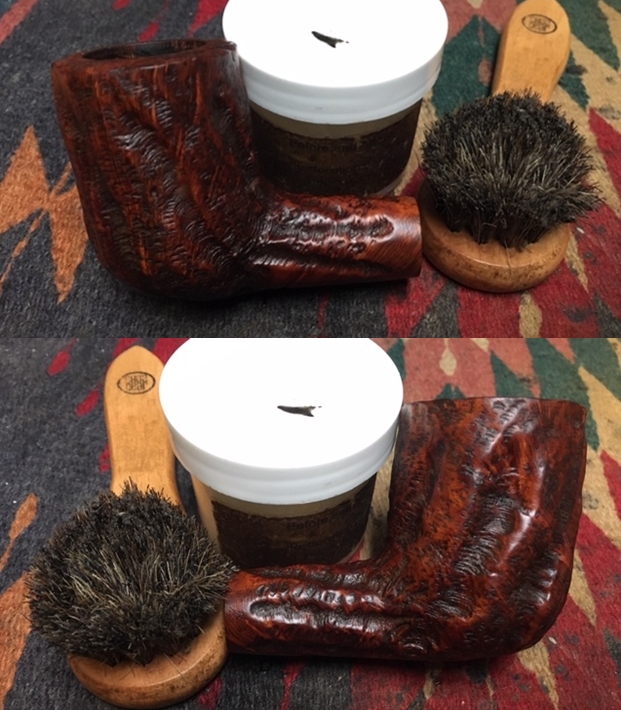
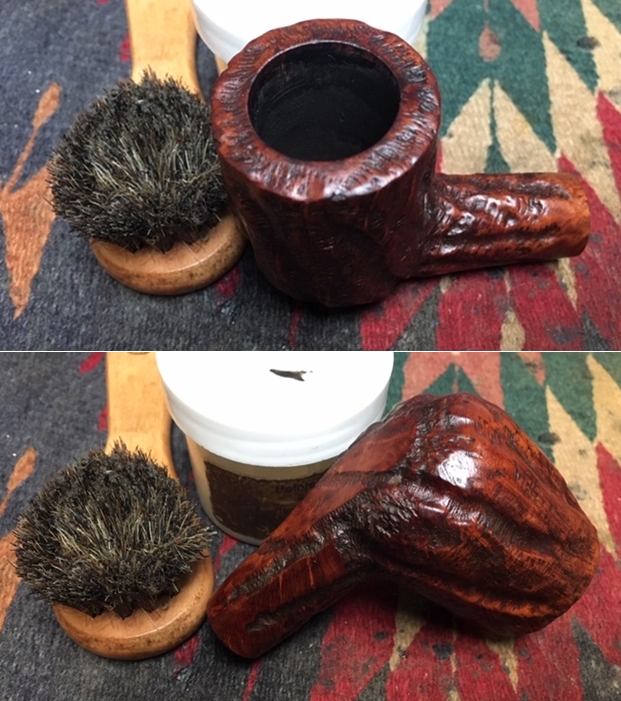
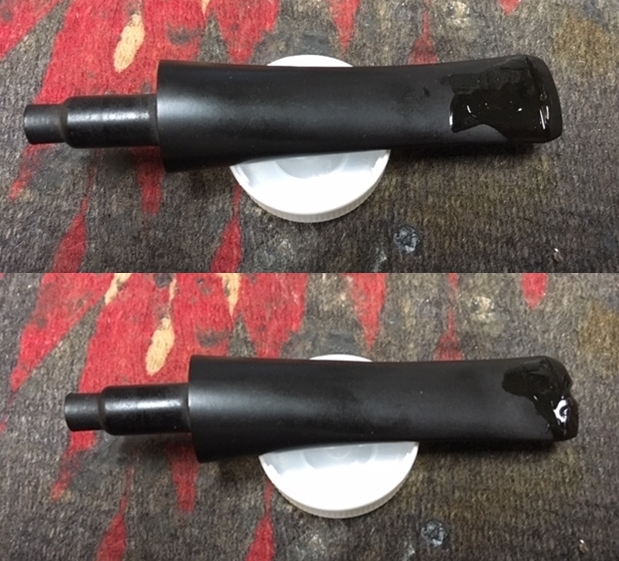
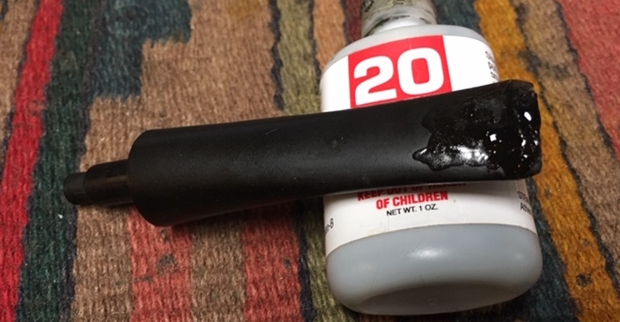
Tag Archives: repairing tooth marks

Recommissioning a Vintage French Paul Viou Churchwarden of St. Claude


Blog by Dal Stanton

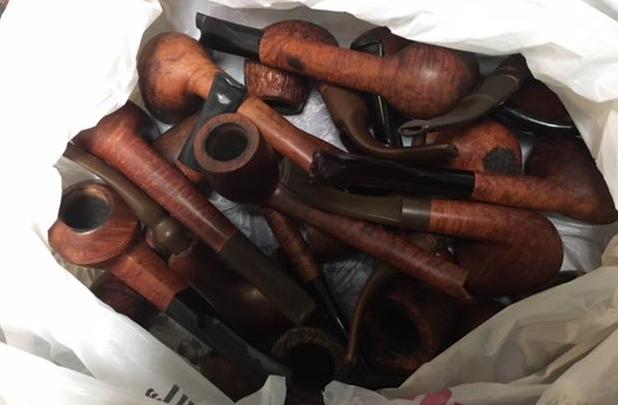
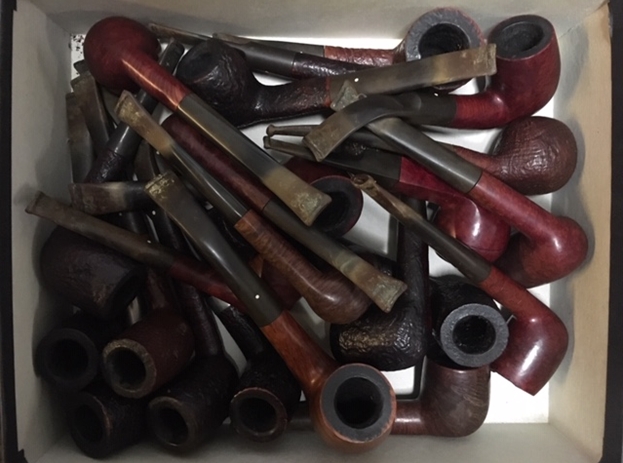
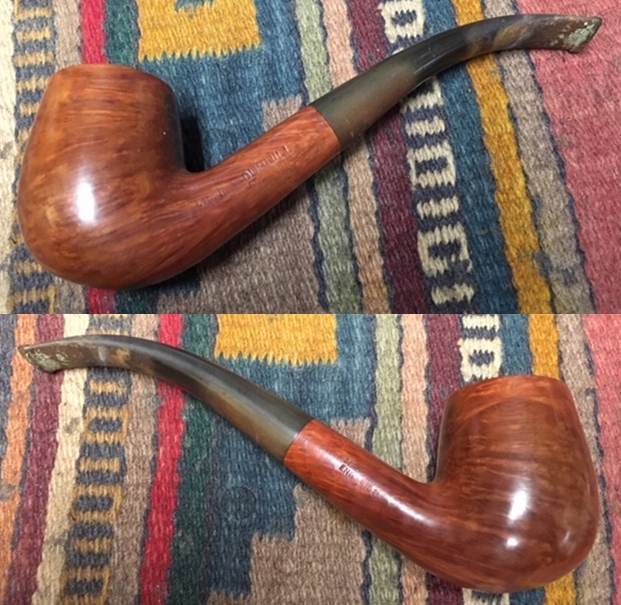
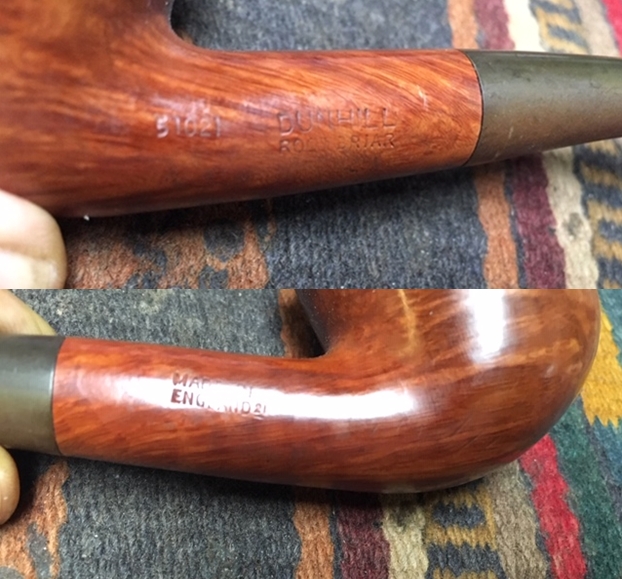
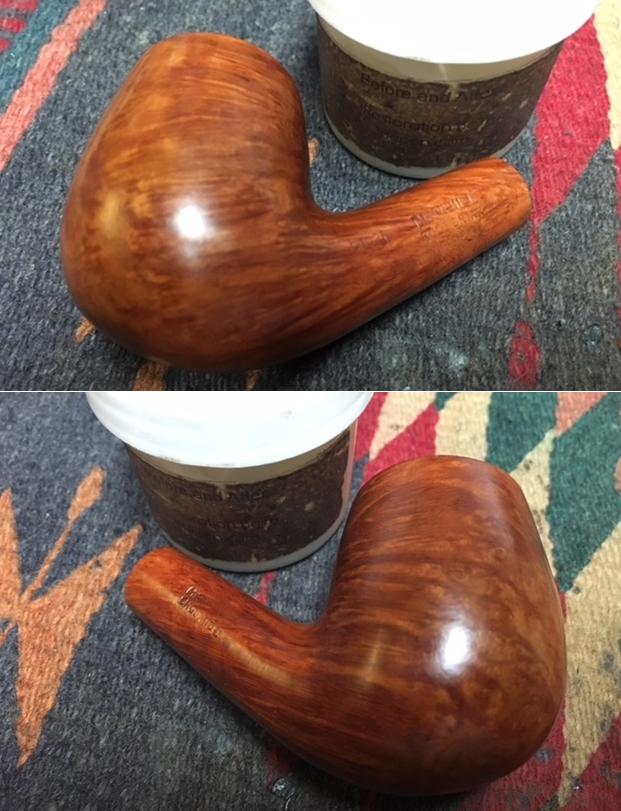
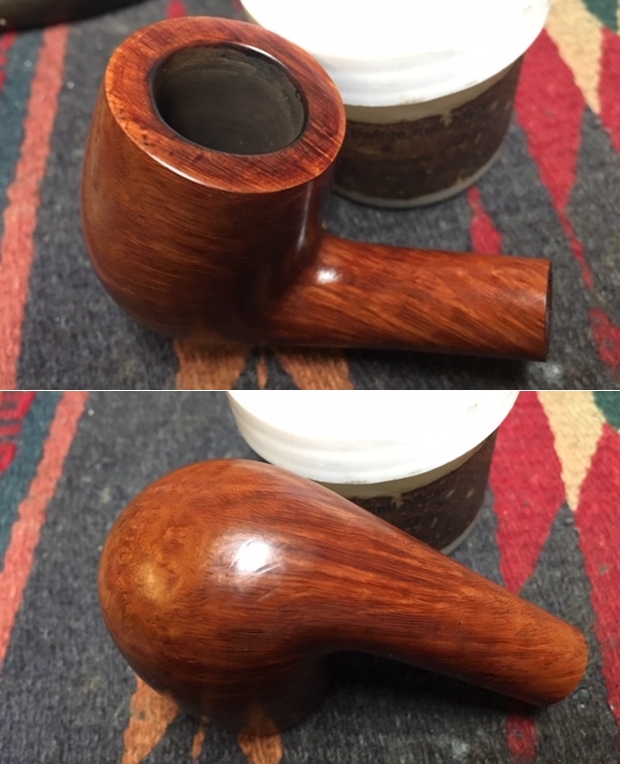
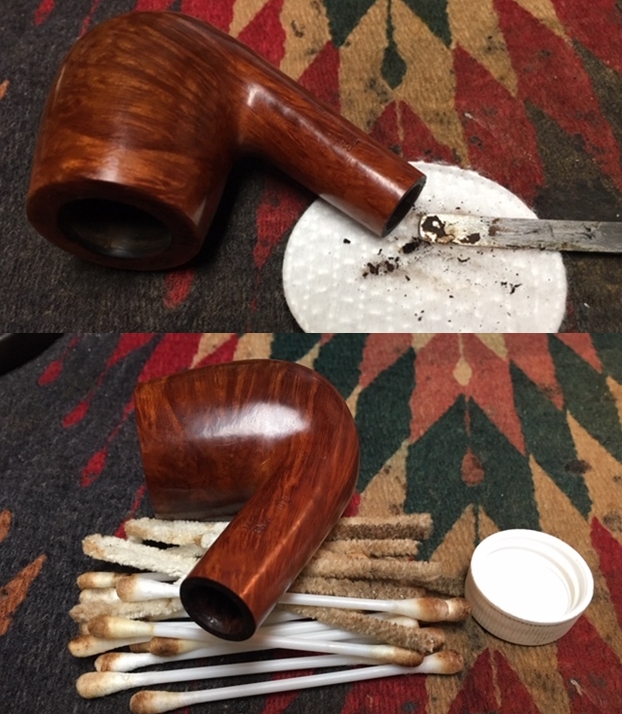
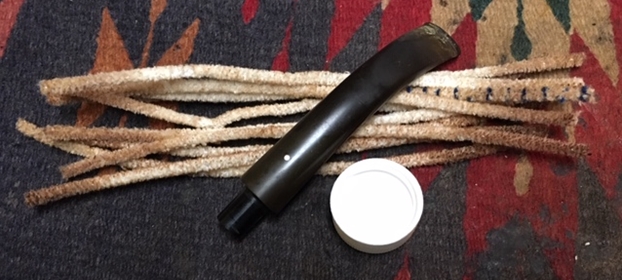
There’s nothing like a Lot picture on the eBay auction block that makes a pipe man salivate with the question, “Are there any treasures in the beautiful, intertwined, chaotic mass of briar, rubber, horn, and acrylic?”  I received a message from my good pipe man friend to the north of Bulgaria in Romania, Codruț (aka: Piper O’Beard on FB), a happy steward of a Peretti Oom Paul Sitter I restored (Recommissioning Another L. J. Peretti of Boston: An Oom Paul Sitter).  Codruț  sent me some links of Lots on the French eBay auction block.  With piqued curiosity I looked.  Codruț was considering getting into the hunt – he had never purchased a Lot before and he wanted to try his had and restoring.  When I saw the French Lot below, I started salivating a bit(!), and asked Codruț if he minded if I went after it.  With his blessing, I placed a bid and was fortunate to land the French Lot of 50 and bring it to Bulgaria.  What drew my attention to this Lot of 50 initially were all the horn stems that caught my eye.  The second was the classy Pencil Stem Cutty Tavern Pipe laying across the top (unbelievably, still available as I write in the For “Pipe Dreamers” Only! collection!!) and the modernistic, deep blue/white Billiard with a fiery blue acrylic stem lying next to the Pencil Stem Cutty Tavern Pipe (available in The Pipe Steward Store as I write!).  Then I saw the Churchwarden.  All pipe picking scavenging requires one to see through the mass to put together the clues of what is hidden.  The P. Viou Warden’s upside-down bowl starts on the left side (just above a horn stem) and you can trace the long stem underneath the mass where it emerges on the far right, upturned – somewhat masked by the star on the print below.  Aw!  My excitement when the bell rang, and the winning bid was mine!When the French Lot of 50 finally made it to Bulgaria, I opened the box like a young boy opening a treasure!  With all my acquisitions, so that I can keep track of everything, I picture and record every pipe and eventually upload them to the ‘For “Pipe Dreamers” Only!’ collection for pipe men and women to see and commission if a pipe happens to choose them.  Here are some of the cataloging pictures I took of the French Lot of 50 with a better look at the 3 pipes that hooked me as well as the plethora of horn! It didn’t take long for the Churchwarden to find a suitor after he was put online in the ‘For “Pipe Dreamers” Only!’ collection.  A new acquaintance, Josh, who visited Bulgaria last summer, saw the Churchwarden and commissioned him and has been waiting so patiently!  The Paul Viou Churchwarden finally made it to my worktable, and I take more pictures to get a closer look. The reach of the P. Viou’s Churchwarden is 10 1/2 inches (even with an inappropriately tucked stem!) and the height of the bowl is 1 7/8 inches.  The nomenclature is a cursive, P. Viou with a flared underline on the left flank of the shank.  On the right, is the well-known stamping of ‘ST.CLAUDE’, the French birthplace of the production of briar pipes and historically, the mega-center of French pipe manufacturing with a plethora of names calling it home.  There is scant information about the Paul Viou name on the internet that I could find.  Pipedia’s article of Paul Viou is brief:

From Pipes, Artisans and Trademarks, by José Manuel Lopes’

Paul Viou was the brand and name of a French artisan who sold his pipes by correspondence and then he was a pipe supplier for military institutions. He also made sculpted pipes and sometime used horn stems.

The brand is currently sold by Jacques Craen and made by Genod in Saint-Claude, after having also belonged to Paul Guilland and Vuillard. They are stamped P. Viou and made primarily for export.

This information is confirmed by Pipephil.eu with the addition of the date of the current holder of the Paul Viou name, Beaud, happening in 2006: Whether the Churchwarden before me was made under the original artisan or under one of the other eventual holding companies (Guilland, Vuillard, or Genod), I’m not sure how to say with certainty.  I have a few other P. Viou pipes in the French Lot of 50, so perhaps I’ll discover more information as I go!

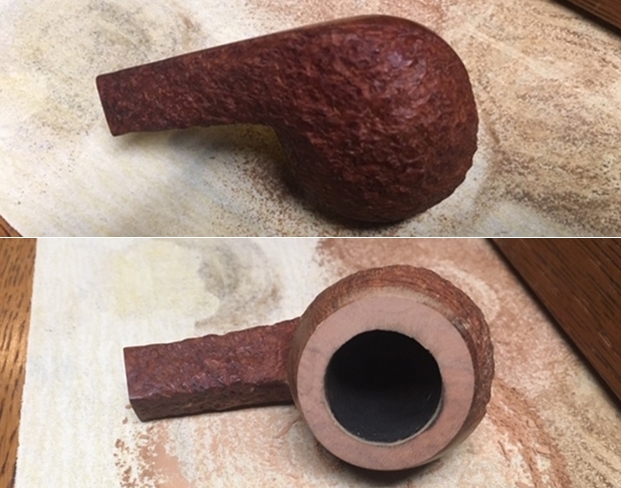
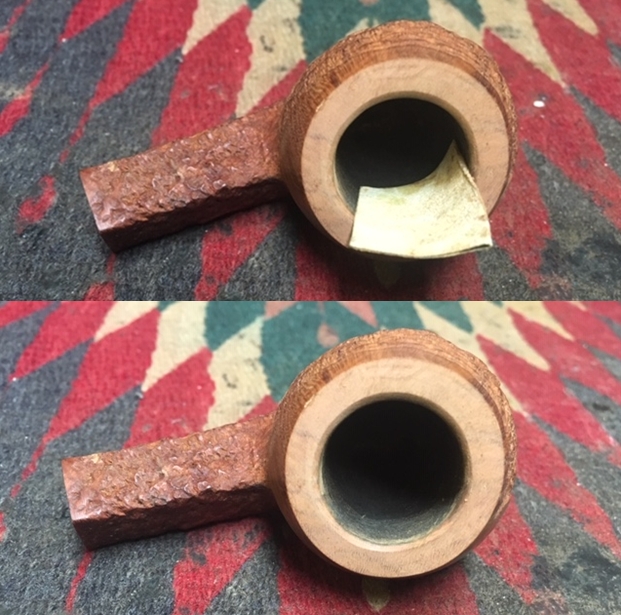
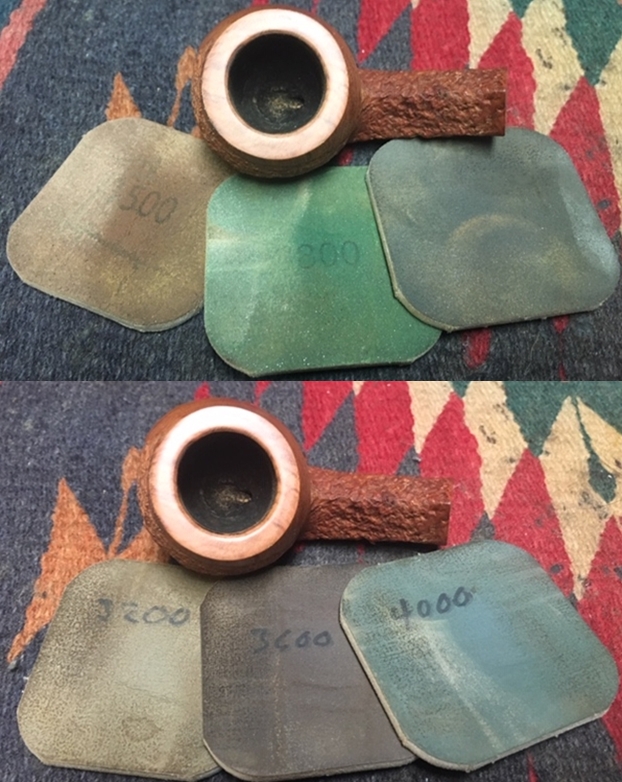
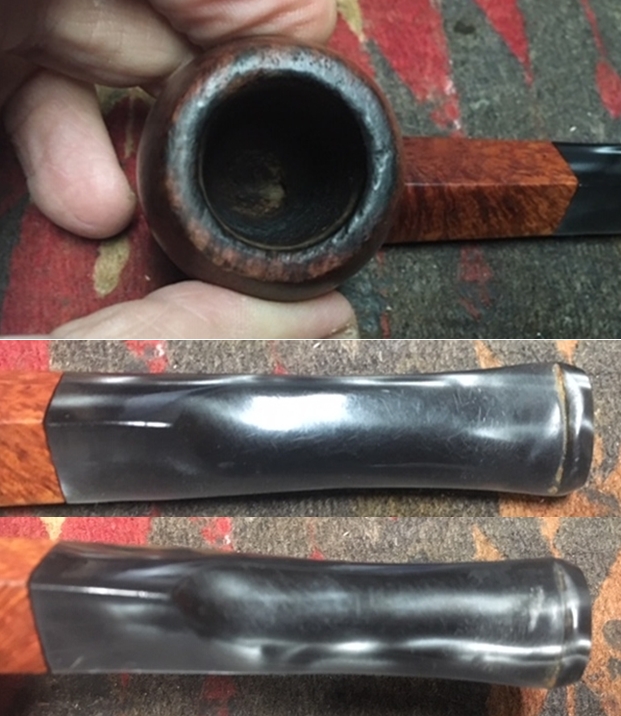
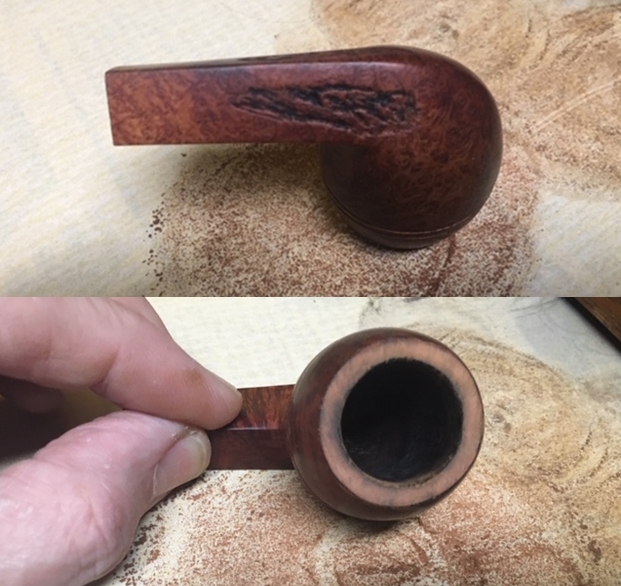
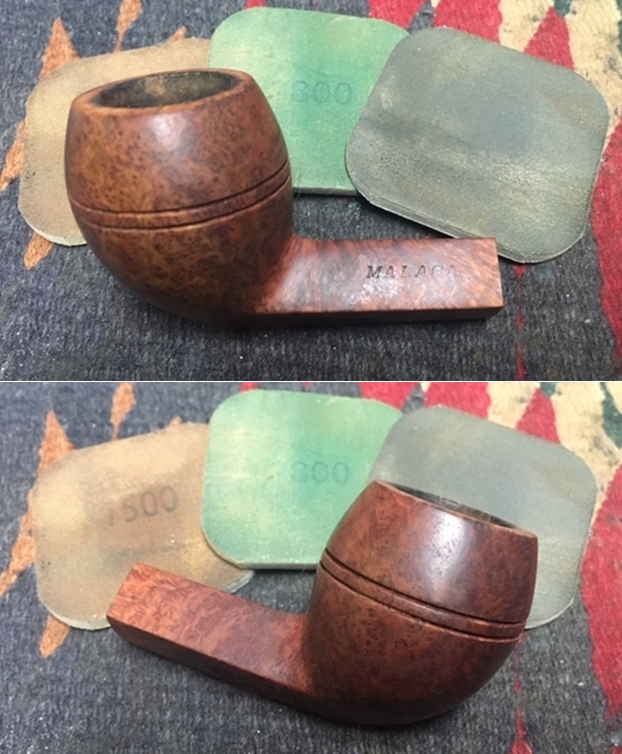
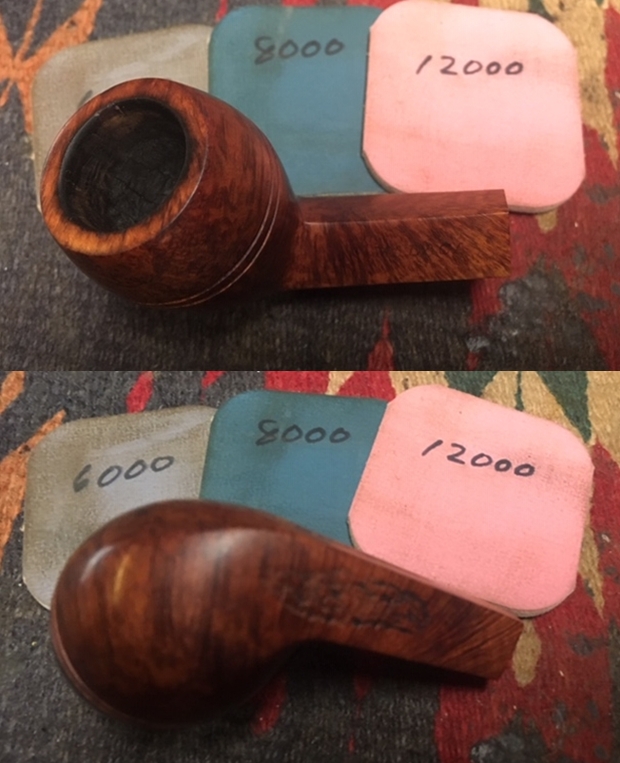
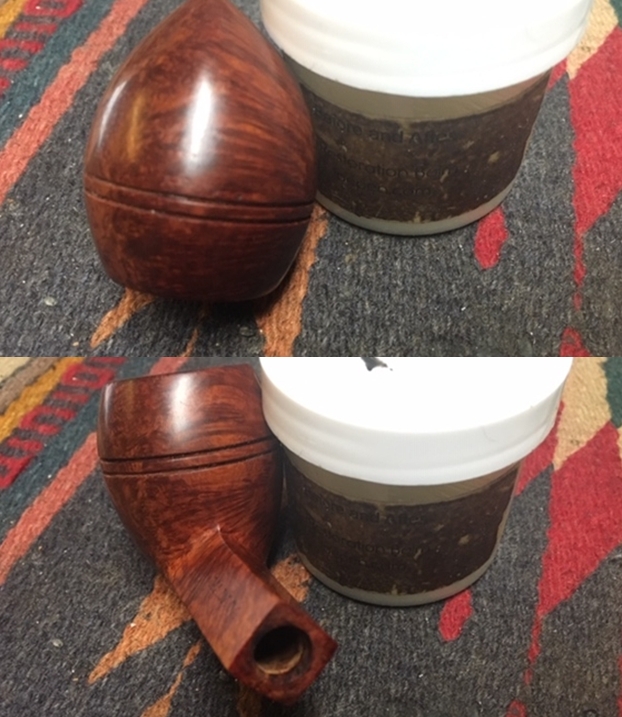
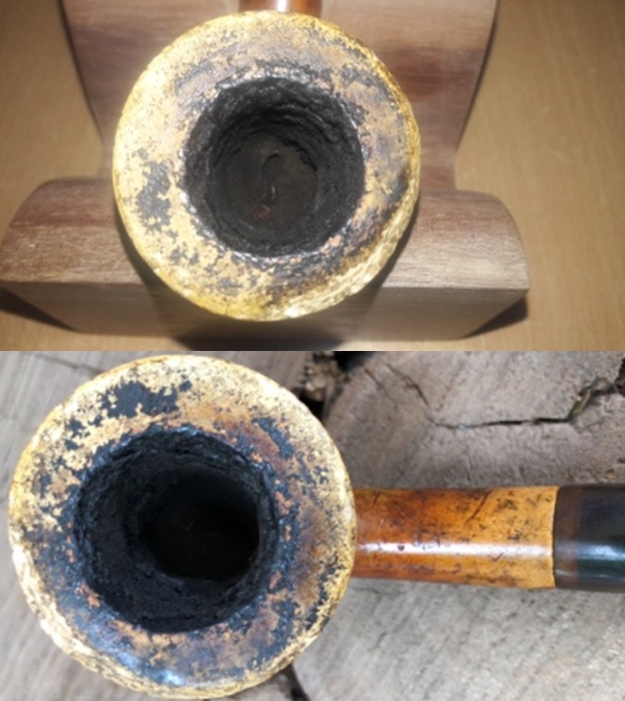
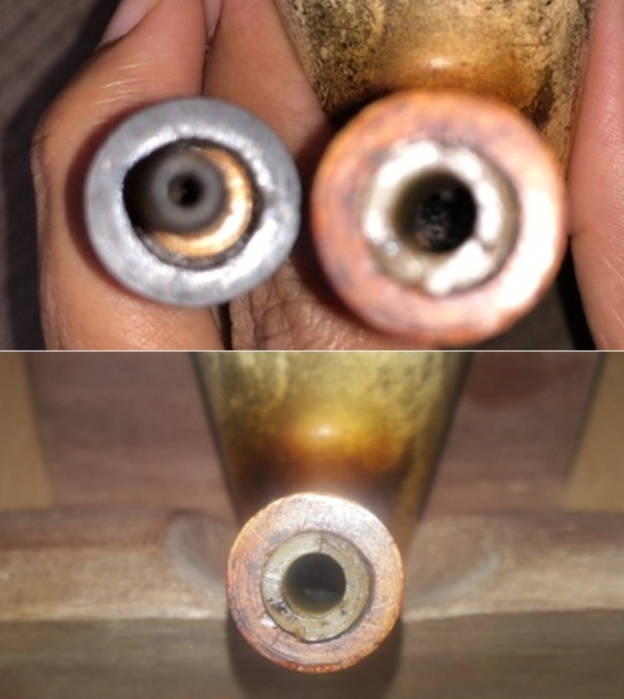
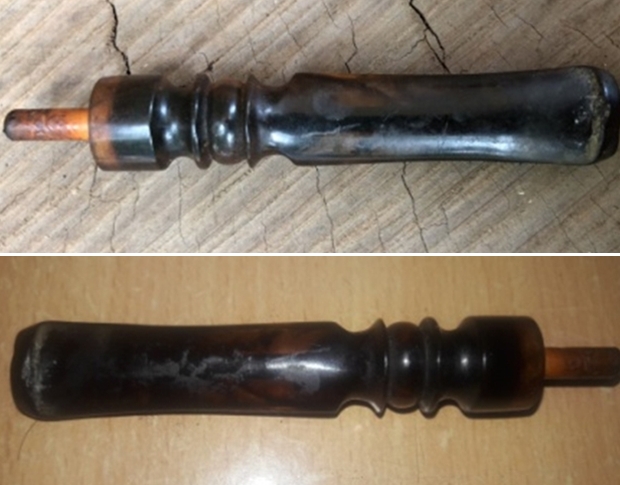
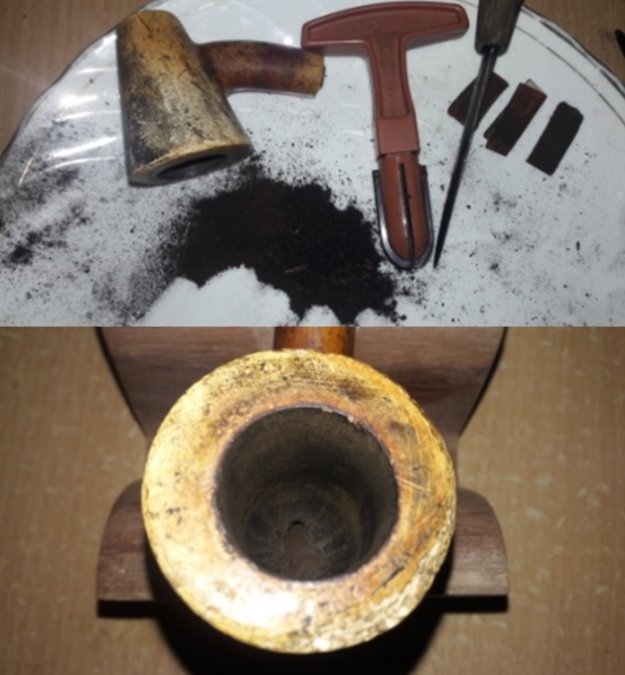
The condition of the overall pipe is good. The bowl is darkened from time and the normal buildup of oils and grime.  The chamber has some cake buildup but not much.  The Warden stem has some oxidation and the bit is in good condition.  I notice also (picture above) that there’s a gap between the stem and shank.  Often, a simple cleaning will restore a flush seating of the stem, but I’ll keep my eye on this.  The main thing that grabbed my attention when I first held the pipe in my hand was the orientation of the stem.  To me, it is over-bent and almost you could say, tucked.  Wardens, I’ve found, have different kinds of bends.  Most often I’ve observed a sweeping bend where almost the entire stem is engaged in the bend.  This P. Viou has a straight extension until it reaches the very end of the stem and then is bent.  I like it, but the final orientation of the bend should more closely reflect a parallel orientation with the plane of the rim.  For a didactic moment, I trace this concept on a piece of paper to illustrate.Before beginning the cleaning process with the stem, I make this adjustment to the stem.  First, just to be on the cautious side, I insert a pipe cleaner into the bit side of the stem to guard the integrity of the airway, which usually isn’t an issue if the bend is being opened instead of tightened. I also trace the original stem orientation on the paper I used above so that when I bend the stem, I can lay it on the flat surface for a straighter result.  I then heat the end of the stem with a hot air gun.  As it heats, the vulcanite becomes supple and the bend gradually starts straightening on its own.  When it expands enough as I eyeball it, holding the stem in place, I take it to the sink and run cold tap water on it to set the bend.  After the first attempt, the bend is still too tight, so I repeat the process again and the second time is enough.  The pictures show the progression.  I like this orientation much better. Before cleaning the stem, I remove the stinger to aid in the cleaning. I heat the stinger with a Bic lighter and after it heats, the vulcanite holding it loosens its grip.  I gently extract it with the help of pliers.  I personally don’t have a lot of affection for stingers and their role in the smoking experience.  I’ll clean the stinger and include it with the finished pipe and allow the future steward to make the call!  I don’t have long pipe cleaners, but I do have a selection of shank brushes that easily reach through the stem.  I use these dipped in isopropyl 95% to clean the internals of the stem. I also use regular pipe cleaners inserting them from both sides.  Well, it didn’t take long after starting to know that this Warden stem had not been cleaned in some time – if ever!  The reality of the less than optimal situation was confirmed when my wife came in and said that something was stinking…. I should have had gloves and my apron on, but hindsight!  After some cleaning, things are looking better but still not pristine! This nastiness helps me decide the next course of action.  I use an OxiClean bath to work on the oxidation in the vulcanite, but it also serves to further sanitize the internals, yes!  I pour the OxiClean into a larger plastic container that will accommodate the stem.  Before putting the stem in the OxiClean bath, I put a little petroleum jelly over the ‘P.Viou’ stamping to protect it and then let the OxiClean to its thing with both internal and external. With the stem in the bath, I turn now to the Paul Viou bowl by reaming the chamber with the Pipnet Reaming kit using two smaller blades.  I then fine tune by scraping the chamber with the Savinelli Fitsall tool and follow by sanding the chamber with 240 grit paper wrapped around a Sharpie Pen.  After wiping the chamber with a cotton pad and alcohol, I look at the cleaned chamber and it looks good – no signs of heating damage. Next, I use undiluted Murphy’s Oil Soap on the external briar surface to work on the bowl and lava flow on the rim. I also use a bristled tooth brush and a brass wire brush on the rim that will not damage the briar.  The cleaning reveals two thing.  First, by looking at the cotton pad in the picture, the old dye came off during the cleaning.  The rim cleaned up well but revealed burn damage from pulling the flame over the rim instead of being over the tobacco!  Lighting a Churchwarden can be a bit more difficult, especially the way the stem was originally bent on this Paul Viou – I doubt if the steward could see the top of the bowl with the way it was tucked under.  Here are the pictures. To complete the general cleaning regimen, I use cotton buds and pipe cleaners dipped in isopropyl 95% to do the job.  With the grungy condition of the stem, it shouldn’t have surprised me to find the mortise and airway internals sharing the same grungy condition.  Oh my, with the help dental probes and spatulas to scrape the mortise and shank brushes coming in to reinforce the cotton buds and rank and file pipe cleaners, some victory was achieved in this skirmish.  With confidence of having total victory, I will later continue the struggle by giving the internals a kosher salt and alcohol bath to further draw the oils and tars out of the internal briar and to remove any lingering odor.  The picture shows the carnage and the arsenal of this war. Next, I take a closer look at the rim damage.  The lighting practice has scorched the forward left side of the bowl resulting in the thinning of the rim at that point.  I’ve had a lot of experience with this when I restored several L.J. Peretti Oom Pauls from the former steward who was a serial burner and discarder (See for an example: Another LJ Peretti Oom Paul Sitter Recommissioned).  My approach is two-fold with the driving value of always trying to save as much briar as possible!  First, I will minimally top the stummel to remove as much damage as possible.  Then, to blend the internal rim lip damage, I introduce an internal bevel, which in my view, looks good anyway.  With the chopping board on my table, I cover it with a sheet of 240 paper.  The following pictures show the graduated progress.  First, the starting point.Interestingly, the topping process reveals a slight inward dropping pitch of the rim.  This is shown by the outer portion only making contact with the flat topping board. When I decide the 240 grit paper has removed enough of the top, I switch the paper to 600 grit and give the topping a few more rotations to smooth out the rim.Now, step two is introducing a bevel to the internal lip to remove more damaged briar and to blend.  I start with a tightly rolled piece of coarser 120 grit paper to cut the initial bevel.  I follow in succession with 240 and 600 grit papers tightly rolled. To soften the sharp outer edge of the rim and to soften the entire rim presentation, I create an external bevel, but a very small bevel using the same progression of sanding papers.  I think it looks good.  The darkened part of the damage is still visible, but it will be mitigated when the rim is dyed and darkened.The condition of the stummel is good.  I don’t see any problem fills or pitting.  I go with the original finish and aim to match the rim to the bowl. What seems to be a good match is the Mahogany dye stick.  After applying it over the rim, I then blend the dye stick coating by wiping it with a cotton pad wetted with alcohol.  I think it looks good at this stage. The Warden stem has been in the OxiClean bath for several hours.  I take a few close-up pictures to show the oxidation which had surfaced.  I wet sand using 600 grade paper to remove the oxidation.  I’m careful to stay clear of the ‘P.Viou’ stamp.  I follow this with Magic Eraser over the entire stem, including the stamping.  The low abrasion of the sponge works well with cleaning up this area.In order to hydrate the vulcanite, I then apply a coat of paraffin oil (a mineral oil) over the stem and set it aside.Next, using micromesh pads 1500 to 2400, I wet sand the stummel to clean it and begin the fine polishing sanding. 

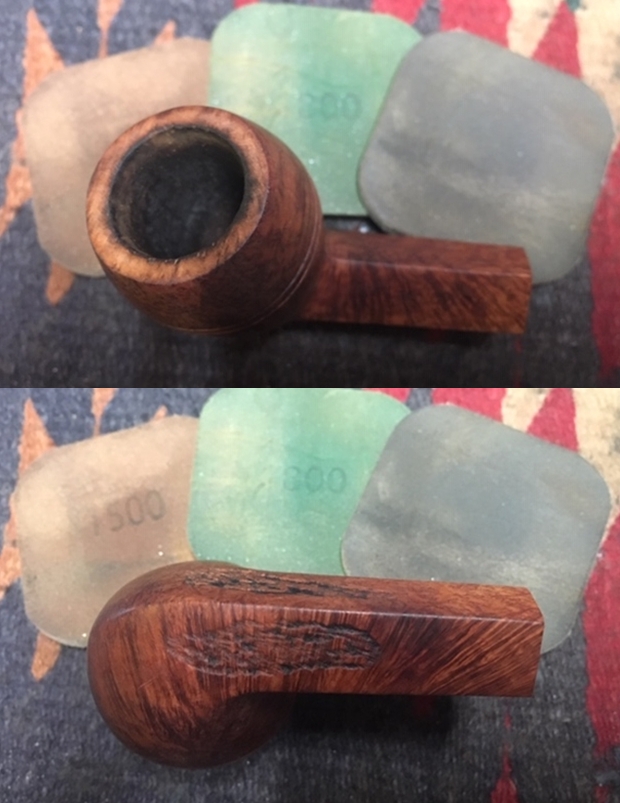
Following the first set of 3 pads, I begin dry sanding with the next set of 3 pads and after finishing with the first of these, I don’t like the way the stummel looks.  After the wet sanding cycles, the stummel has a pink or mauve hue to it – mauve to me, is sick pink.  Just in case you’re wondering what mauve is, from a quick Google search followed by my mauve toned stummel.  This doesn’t work for me! I placed too much trust in the old stain which is not holding up and leaving behind a less than attractive briar presentation – at least as I look at it.  I wipe the stummel with a cotton pad and alcohol and my thoughts are confirmed.  Even after wiping with isopropyl 95%, the stummel has the mauve residue in the grain.  The reality is, I’m not losing too much traction in the process of this restoration except I will take a detour and put the stummel in an acetone soak to make sure I’m proceeding with the natural briar.  This soak in acetone will also preempt the need to do a kosher salt and alcohol soak.  I put the stummel in the acetone soak and turn out the lights.  Another day is done.The next morning, I fish the stummel out of the acetone soak and it is evident that all the remnant finish is gone. I return to the micromesh sanding process and start again by wet sanding with the initial set of 3, 1500 to 2400.  Following this, using pads 3200 to 4000 and 6000 to 12000, I dry sand the stummel, throughout avoiding the stamped areas on the left and right flanks of the shank.  Wow, without the distraction of the finish, the grain I see emerge is nice.  I see an eclectic blend of large bird’s eye on the sides of the bowl and the horizontal ‘connector’ grains of the bird’s eye displayed on the foreside of the bowl. I still have the Warden stem waiting in the wings for fine tuning, but I want to move forward with the stummel so that it can be ‘resting’ during the stem work.  The grain that has emerged is beautiful and to create a little more ‘pop’ to the grain with more contrast between the darker and lighter grain – harder and softer wood, after debating between Dark Brown and Light Brown, I decide to use Fiebing’s Light Brown Leather Dye to provide the base hue in the grain and then through the use of Tripoli compound applied with a felt buffing wheel, the grain is teased out leaving greater contrast.  I can lighten as well by wiping the bowl with a cotton pad and alcohol since I’m using an aniline dye.

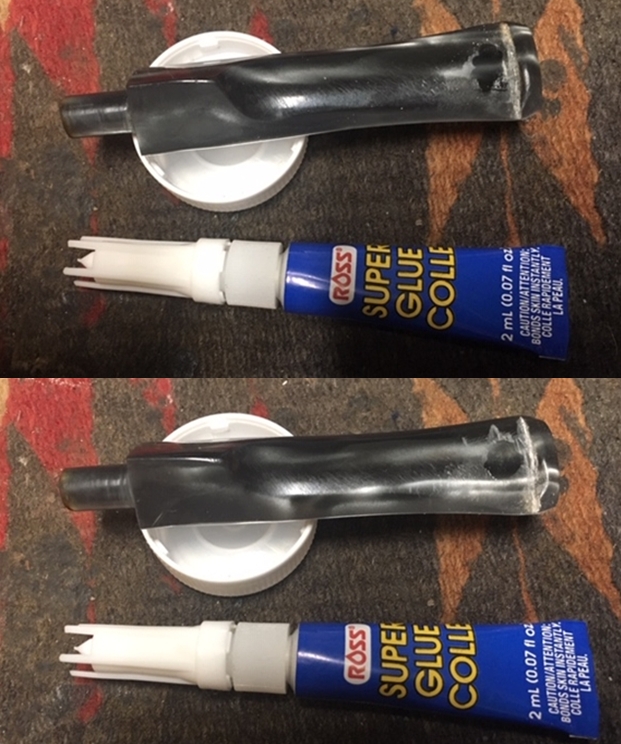
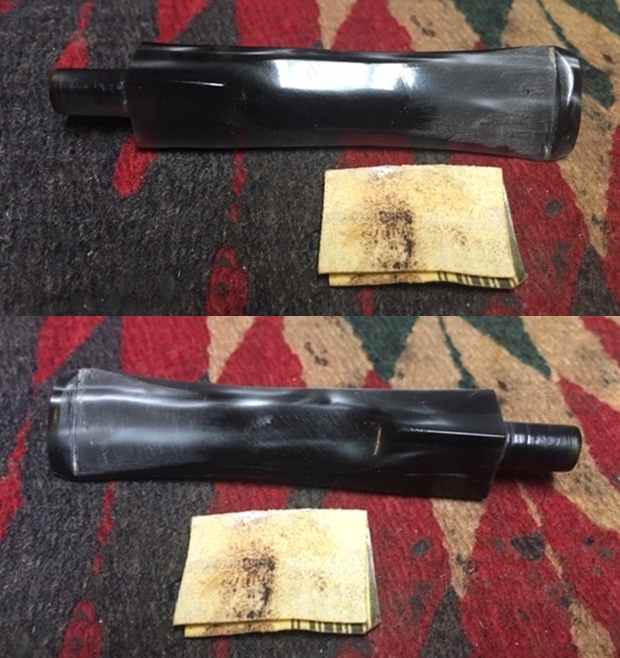
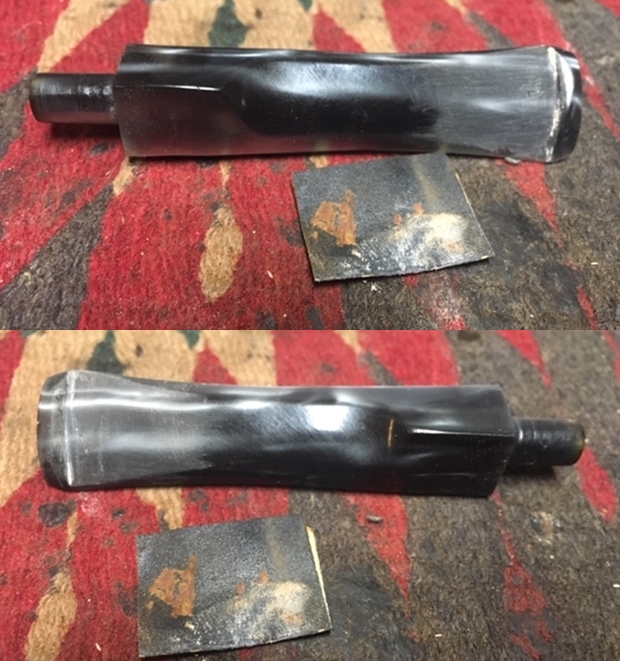
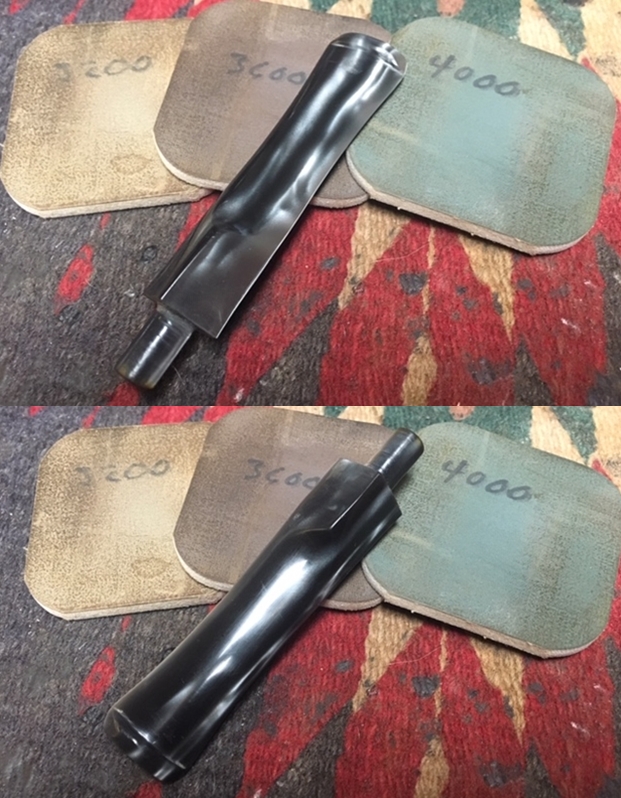
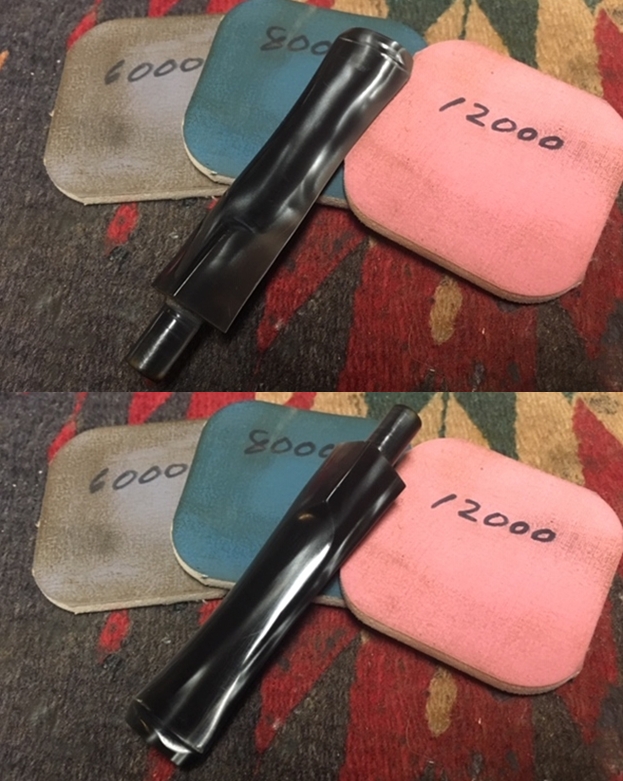
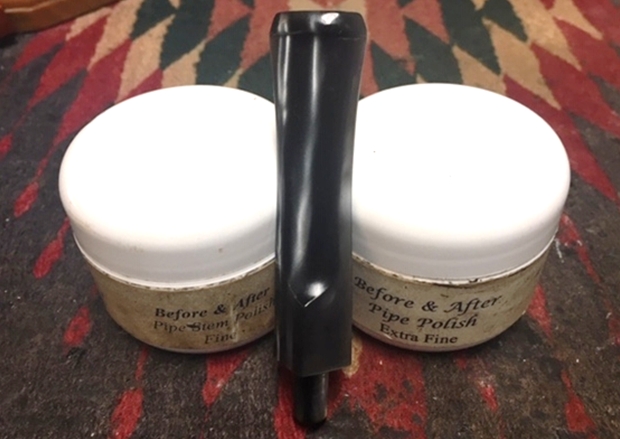
I assemble all the components of my desktop dying station. I first assure that the stummel is clean by wiping it with a cotton pad wetted with alcohol.  After inserting a fashioned cork into the shank to act as a handle, I heat the stummel with a hot air gun to heat the briar and by this, expanding the briar to enable the dye to be absorbed more efficiently.  After heated, I apply Fiebing’s Light Brown Leather Dye over the briar surface with a folded over pipe cleaner.  When fully covered, I fire the aniline dye with a lit candle which immediately combusts the alcohol and sets the pigment in the grain.  After a few minutes I repeat the process and put the fired stummel aside to allow the dye to rest.  I discovered that this ‘resting’ process helps to aid the dye to set and not come off on the hands when the pipe initially goes into service and the bowl is heated.Now that I completed the staining, I turn my attention to the Warden stem.  Taking another close look at the bit area reveals that the sanding to remove the oxidation with 600 grit paper, all but erased any tooth chatter on the bit!  On the lower bit (second picture) I do see one very small dimple that I dispatch quickly with 470 then 600 grade papers.  I then follow by using 0000 steel wool on the entire stem.  I like the results – progress. Before moving on to the micromesh phase, I go the extra mile with the Paul Viou Warden stem.  Using Before & After Fine and Extra Fine Polish, in succession, I apply some of the polish on my fingers and then rub the polish into the vulcanite surface.  The Fine polish has more of a gritty feel to it.  With both polishes, they revitalize the vulcanite as well as continue to extract remnants of oxidation from the rubber compound.  I take a picture while the Extra Fine Polish was doing its thing.  After the application of each polish, I use a cotton pad to wipe off the excess polish.Just when everything was going so well….  After I wipe off the Before & After Extra Fine Polish and was admiring the results, I see a pit on the forward third of the stem…ugh.  Just to make sure I was seeing what my eyes were seeing and my brain was arguing that I wasn’t seeing what I was seeing – I took a sharp dental probe and tested. Well, sometimes you simply must punt the ball – American football slang for just doing what you need to do.  So, using Hyper Bond 12000cps Black CA glue, with a toothpick as my drop guidance system, I spot drop some glue on the pit and wait.After the patch cures, I gingerly use the flat needle file to file down the patch mound – trying not to slip off and produce more patch work!  After the filing, I further remove the excess with 240 grit paper followed by 600 and 0000 steel wool.  Finally, in the locale of the patch I again apply Before & After Fine and Extra Fine Polish.  Well, the pit is filled, but the coloring of the fill is not black-black so it doesn’t blend with 100% satisfaction.  Yet, if one doesn’t know the fill is there, he probably would not see it!  Restoration is not perfection, though we try!  The pictures show the detour. Undaunted, moving forward with the micromesh process, I wet sand with pads 1500 to 2400 and follow by dry sanding with pads 3200 to 4000 and 6000 to 12000.  After each set of 3 pads, I apply Obsidian Oil to continue the revitalization of the vulcanite Warden stem.  Admittedly, taking distance pictures of a Churchwarden stem is less than satisfying, but what I’m seeing close-up is looking good!With the stem on the side, I’m looking forward to ‘unwrapping’ the fired stummel.  Using a felt cloth buffing wheel mounted on the Dremel, I set the speed to the slowest setting, so it doesn’t get too hot with friction.  I then begin the process of removing the fired shell revealing the grain below. My wife helps record the process – my hands are full!  I must purge the felt wheel often as it collects the dye crust.  I do this quickly by running the wheel along the edge of the cutting board which is my lap desk as I work.  The process of using Tripoli compound, which is coarser, and with the felt wheel, which creates more friction than a cotton cloth wheel, is that it can buff off much of the dye that is excess and on softer wood – the lighter part of the grain.  The dye pigment tends to be held by the darker grain.  The effect is that the grain almost looks luminescent with the contrasting hues in the grains. After completing the application of Tripoli, I wet a cotton pad with isopropyl 95% and wipe down the stummel – not really to lighten the color, but to help blend the dye.I then mount a cotton cloth buffing wheel to the Dremel, increase the speed to about 40% full power and apply Blue Diamond to stem and stummel.  As I attempt to reunite the stem and stummel, I discover that the fit of the tenon in the shank is too tight – cracking a shank isn’t anything I want to be contemplating now!  It’s not surprising that after soaking the stummel in acetone the wood absorbs and expand somewhat.  To remedy this, I wrap a piece of 240 grit paper around the tenon and rotate the paper, sanding down the tenon a bit.  I follow by doing the same with 600 grit paper.  After a few tries, the tenon finds a good, snug seating.  I then apply Blue Diamond compound to both stem and stummel.  After finishing with the Blue Diamond, I wipe the pipe down well with a felt cloth to clean the compound dust off the surface.Before applying carnauba wax, I will freshen the ‘P.Viou’ stem stamping.  The condition of the stamp imprint seems good so the paint should hold without problem.  Using white acrylic paint, I put some paint over the stamp and then lightly dab the paint with a cotton pad.  This absorbs the excess paint so that the thinned layer left on the stem dries quickly.  I then scrape the excess paint off by gently scraping with the side of a toothpick.  I finish by gently buffing the newly painted stamp with a cotton pad.  The pictures show the progression. As I said I would do earlier, I clean the stinger with a brass brush and alcohol and a dental probe and give it a quick buff with the Dremel using Blue Diamond compound.  I then reinsert it into the tenon.I mount another cotton cloth wheel onto the Dremel, set speed at 40%, and apply a few coats of carnauba wax to the Warden stem and stummel.  After finishing, I hand buff the pipe with a microfiber cloth to raise the shine.

When one first sizes up a Churchwarden, one usually is drawn to the ‘olde world’ sweep of the long, flowing stem with images of Gandalf smoking and blowing magical smoke rings.  Secondarily, one is drawn to the bowl attached to the stem.  But with this Churchwarden, the bowl is drawing attention as well!  The beautiful, distinctive bird’s eye grain interacting with the other grain patterns is mesmerizing.  The correction to the stem’s bend was strategic and the rim repair is now invisible.  This Churchwarden would be a nice addition to anyone’s collection, and since  Josh commissioned the Paul Viou Churchwarden and has the first opportunity to acquire it from The Pipe Steward Store.  This pipe, as well as all pipes commissioned from the For “Pipe Dreamers” Only! collection benefit the Daughters of Bulgaria – women and girls who have been trafficked and sexually exploited.  Thanks for joining me!

A Unique Malaga from Kathy’s Dad’s Pipes –a ¼ Bent Bulldog


Blog by Steve Laug

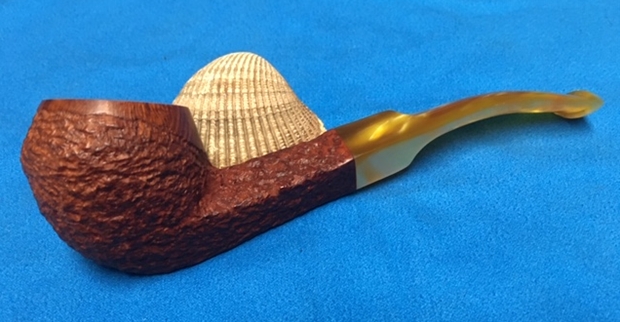
The next pipe on the work table is also from George Koch’s estate. It is another one of George’s Malaga pipes – this time a ¼ bent Bulldog with a golden acrylic stem. It is quite a stunning pipe and caught my eye when I was going through the bag of Malaga pipes that I still have to work on. The Bulldog was just one of the many Malaga pipes that came to my brother and me in several shipments of pipes from George’s daughter Kathy. When Jeff got each box the pipes were well wrapped and packed. Jeff unwrapped them and took the following photo to give an idea of the volume of the pipes that we purchased. The next Malaga came in mixed in a box of pipes much like the one below.In each of the previous blogs that I have written on the restoration of George’s pipes I have told his story. If you have followed the restorations you will have read the information and the background piece that Kathy did on her father. Here is a link to the last Malaga where that is included in full (https://rebornpipes.com/2019/01/26/back-to-kathys-dads-pipes-restoring-a-%c2%bc-bent-malaga-author/). You can also read the bio on her Dad, George Koch. It is an interesting read and one that shows just how far our pipe collecting passion can go when we find a brand of pipes that we enjoy. I am going to only include the portion on the Malagas at this point. If you wish to read the rest follow the link above.

Kathy writes…We lived in Livonia, and that’s where his love for Malaga pipes began. After a few years he returned to Allis Chalmers and we moved back to Springfield. I remember that when we went back to Michigan to visit friends, Dad had to go to the Malaga store and acquire a few new pipes. Many a year I wrote to Malaga and they picked out a pipe for me to purchase that I could give Dad for a Christmas or birthday present. He was always pleased. His favorites were the straight stemmed medium sized bowl pipes, but he liked them all. 

He had some other pipes, but the Malagas were his favorites. I remember him smoking them sitting in his easy chair after work, with feet up on the ledge by the fire burning in the fireplace.  Growing up it was my job to clean them and he liked the inner bowl and stem coated with Watkins vanilla, leaving a little of that liquid in the bowl to soak in when I put them back on the rack…I’m very happy they are being restored by you and your brother and hope they find homes who enjoy them as much as Dad did. Thank-you for your care and interest. — Kathy, the oldest daughter

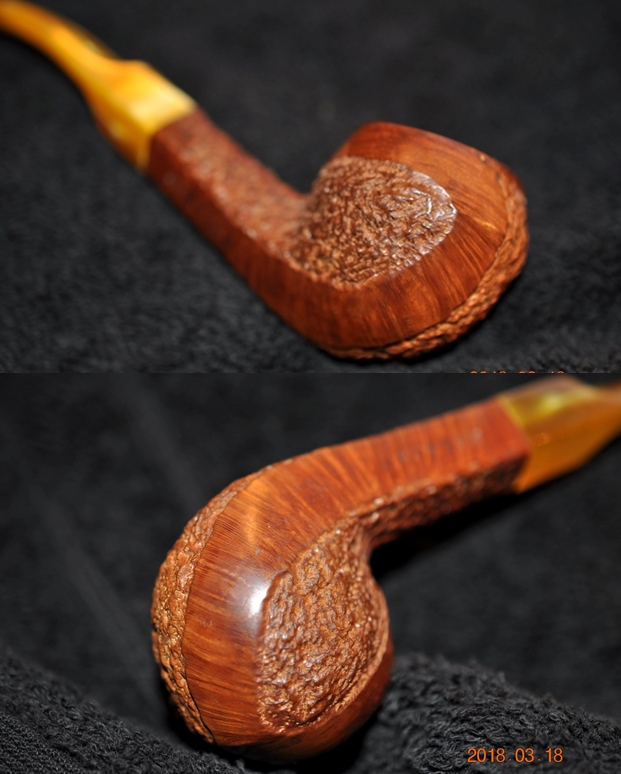
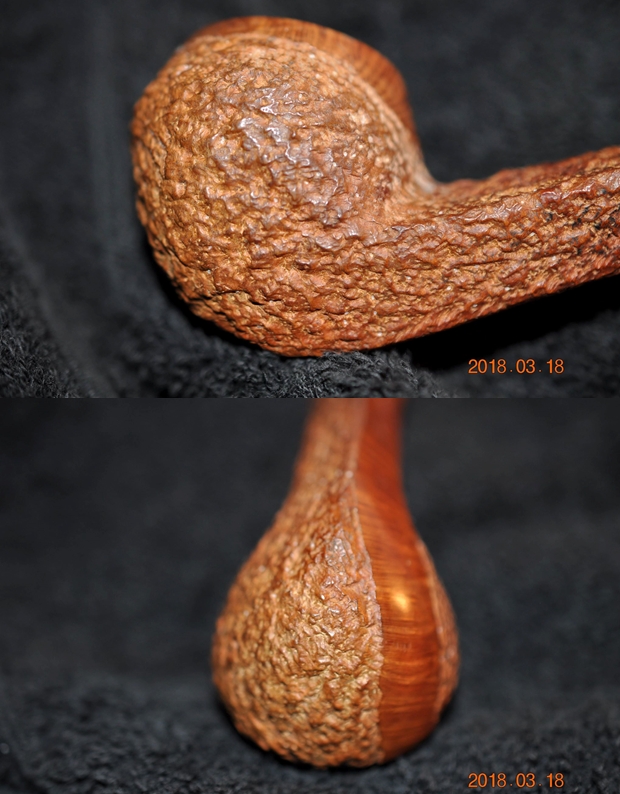
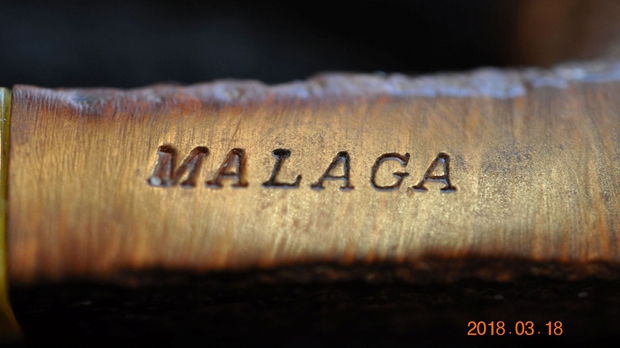
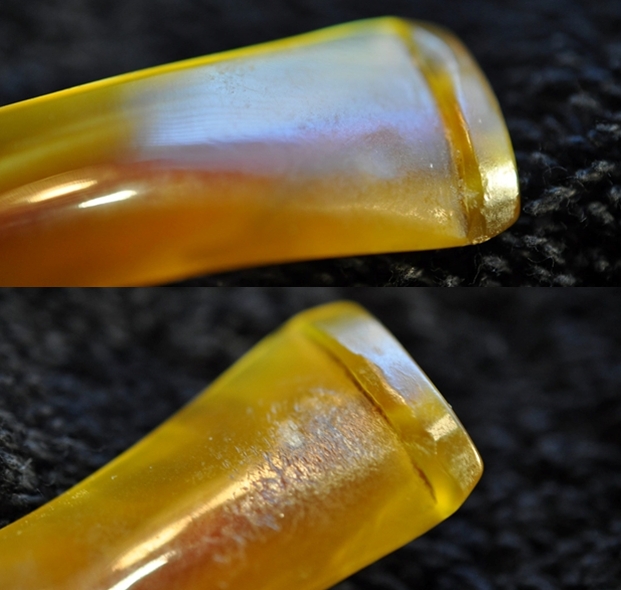
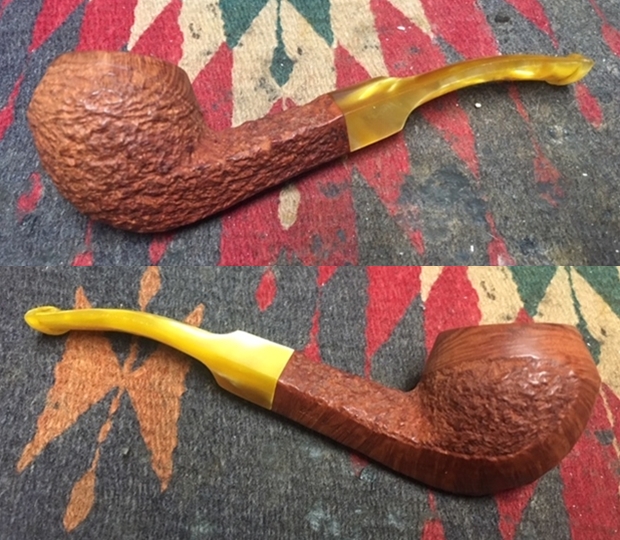
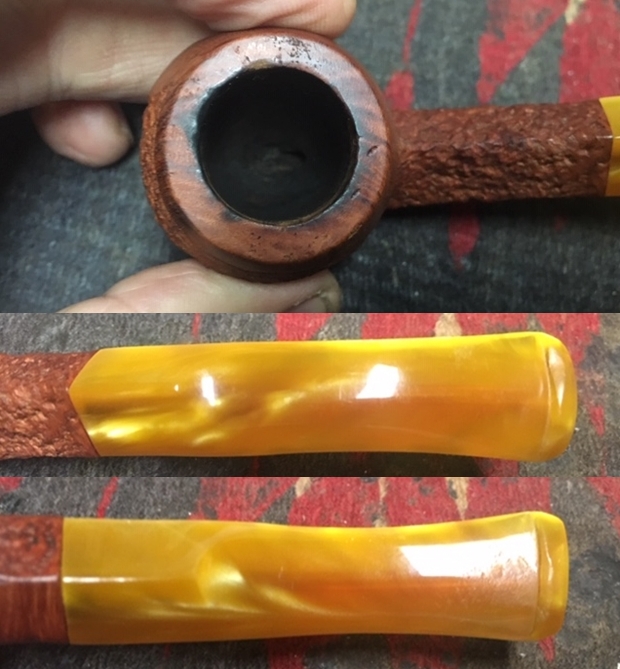
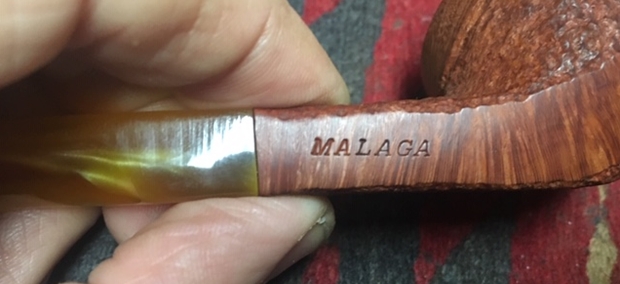
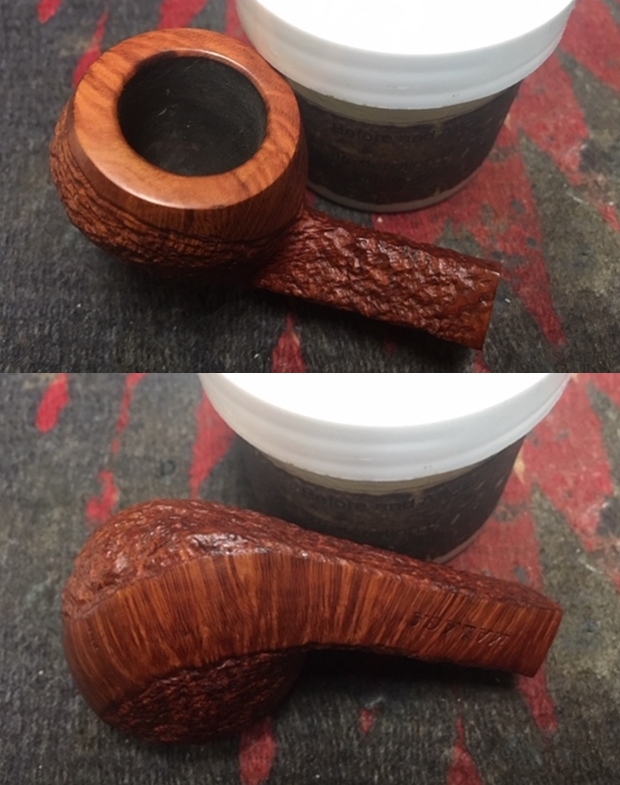
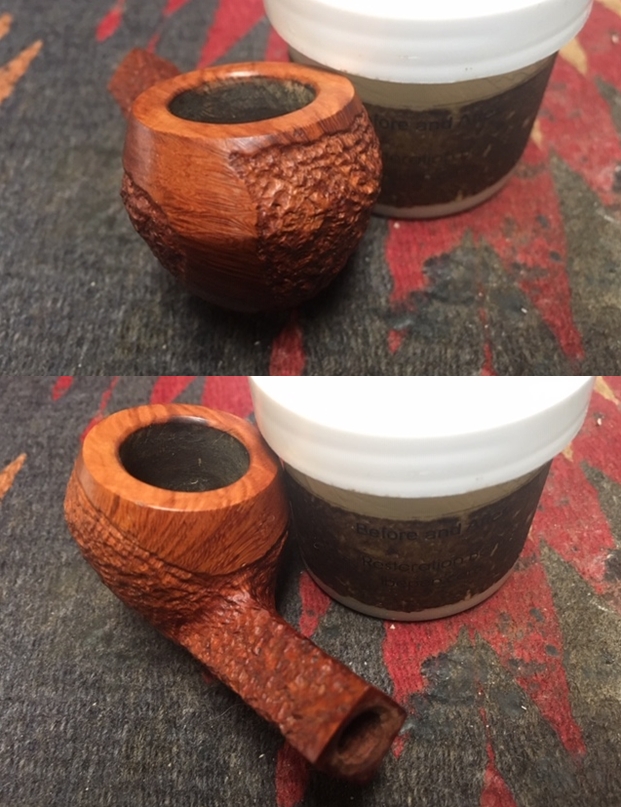
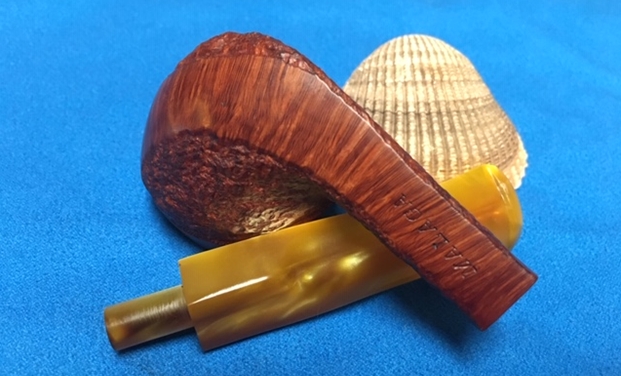
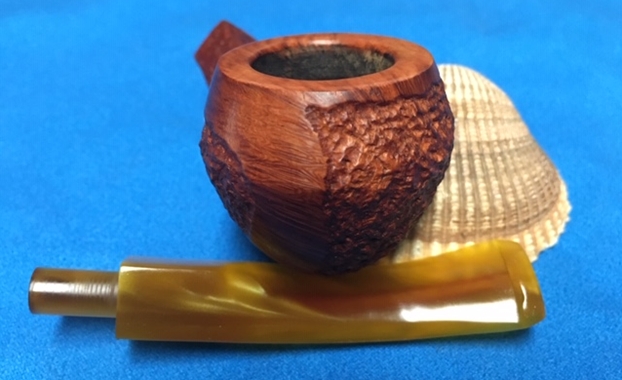
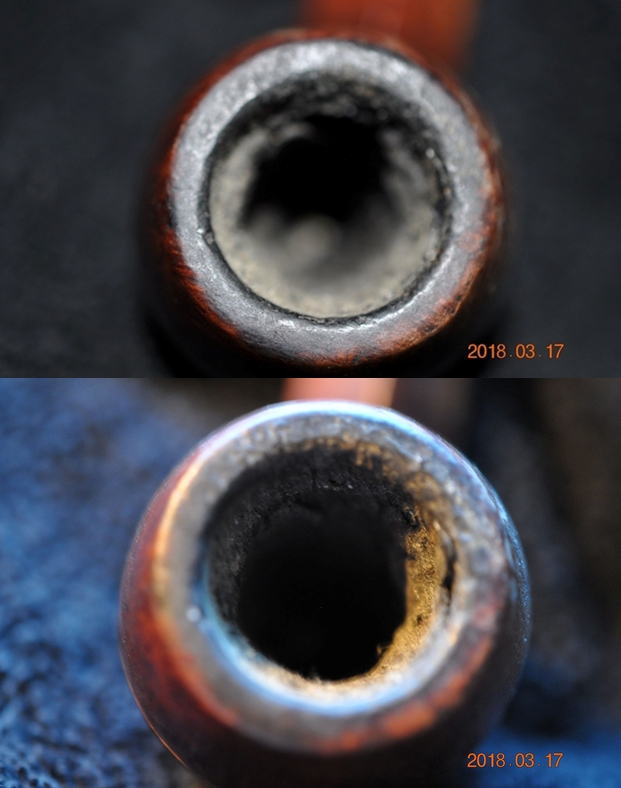
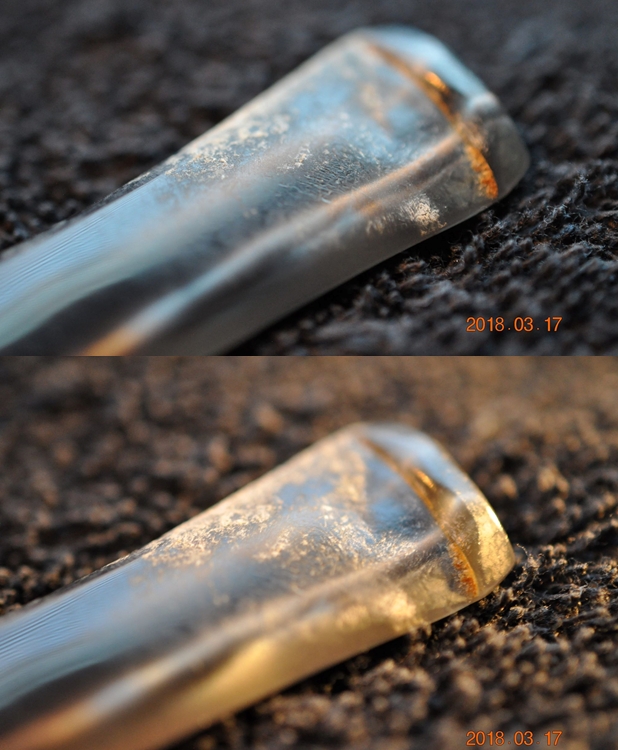
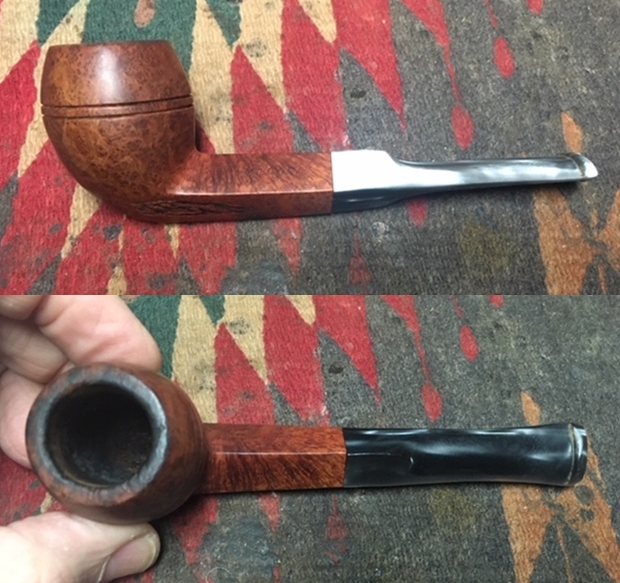
The Malaga ¼ Bent Bulldog with a variegated gold/yellow acrylic stem is next on the table. The carver combined rustication with a smooth stripe of cross grain up the right underside of the diamond shank and a portion of the right side of the bowl. There is a band of smooth briar around the shank end and the bowl top as well as a smooth rim top. There are no rings around the cap of the bowl. It is a well-shaped pipe that captures the cross grain in the stripe and adds the tactile feature of the rustication. The top of the bowl has some damage on the top and inner edge. The bowl had a very thick cake and cobwebs in the bowl. There was an overflow of lava onto the thin rim top. The stamping on the smooth underside of the diamond shank read MALAGA. The gold/yellow swirled acrylic stem had tooth dents and chatter on the top and the underside of the stem. Jeff took these photos before he started the cleanup work on the pipe. Jeff took two close up photos of the bowl and rim with different lighting to capture the condition of the pipe before he started his cleanup work. The rim top had some lava overflow and some darkening. There appeared to be some rim damage on the inner edge at the front of the bowl. You can see the wear on the rim top, the cake and cobwebs in the bowl. The pipe is dirty. He also took photos of the sides and bottom of the bowl and shank to show the beautiful cross grain on the stripe, around the rim and the rim itself. The photos also show the rugged rustication that gives the pipe a tactile sense as well.The finish is very dirty but this is another beautiful pipe. Jeff took a photo to capture the stamping on the top left side of the diamond shank. The photo shows stamping MALAGA. The stamping does not have the quotation marks that I have seen on some of the pipes.The next two photos show the stem surface. There are tooth marks and chatter on both sides near the button. There is also some wear on the sharp edge of the button.I am also including the link to a blog that I wrote that gives some of the history of the Malaga brand and the Malaga Pipe Shop in Royal Oak, Michigan in the USA. I have written an earlier blog to give a little history of the Malaga Brand and the pipemaker, George Khoubesser. Here is the link – https://rebornpipes.com/tag/malaga-pipes/.That blog also includes links to a catalogue and the history of the pipemaker George Khoubesser. Follow the link to get a feel for the brand and the pipemaker.

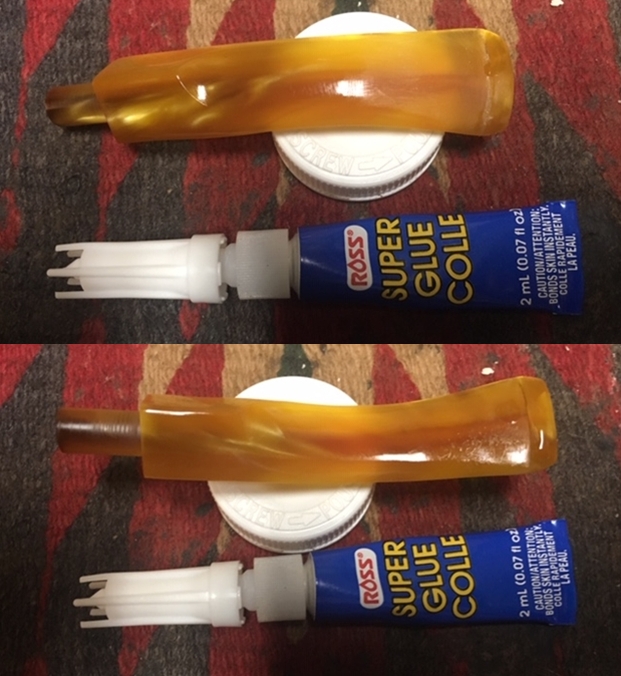
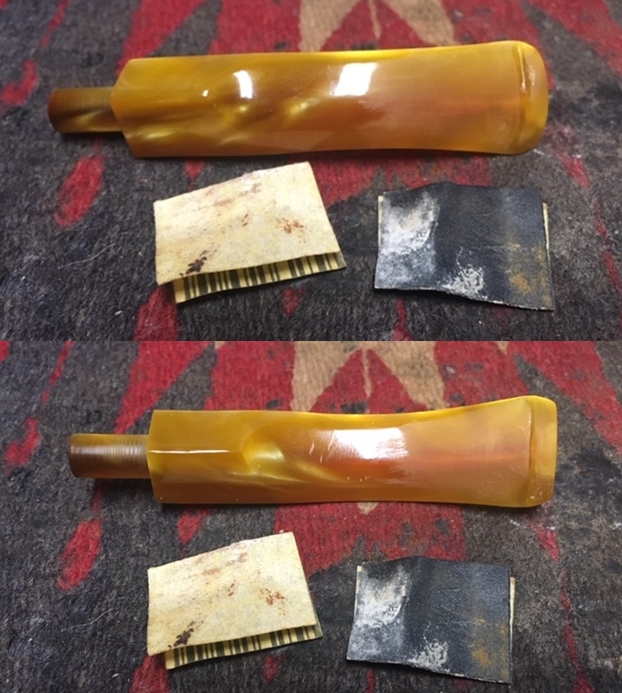
It has become a habitual pattern now for both Jeff and I when we work on pipes to follow the same procedure. I include it here so you have a sense of that pattern. Jeff reamed the bowl with a PipNet pipe reamer and followed up with a Savinelli Fitsall pipe knife to remove the cake. He scrubbed out the mortise and the airway in the shank and the stem with alcohol, cotton swabs and pipe cleaners. He scrubbed the exterior of the bowl, rim, shank and stem with a tooth brush and Murphy’s Oil Soap to remove the oils and tars on the rim and the grime on the finish of the bowl. He rinsed it under running water. He dried it off with a soft cloth. He was able to remove the lava build up on the rim top and you could see the damage to the flat surface of the rim and the inner edge on the right side and toward the front of the bowl. I took photos of the pipe to show its condition before I started my work on it. I took close up photos of the bowl and rim top as well as the stem. You can see the condition of the rim top and bowl in the first photo. Jeff was able to remove all of the tar and oils but you can now see the damaged areas on the surface clearly. There are damaged spots all around the top surface and on the right side and front of the inner edge of the bowl. The acrylic/Lucite stem had tooth chatter and some tooth marks on the top and underside of the stem near and on the button surface.I took a photo of the stamping on the shank to show how good the condition is. The stamp is deep and legible on the lower right side.I decided to address the damage to the rim top first. I topped the bowl with 220 grit sandpaper on a topping board to remove the damage to the flat surface of the rim top and also to try and minimize the damage to the inner edge of the rim.I worked over the inner edge of the rim with a folded piece of 220 grit sandpaper to smooth out the damage. I gave it a slight bevel to hide the burn damage on the front edge of the rim. The photos tell the story. The damage to the rim top is gone and the inner edge looks far better with the light bevel. The damage to the front edge is quite hidden.I polished the rim top and edge with micromesh sanding pads – wet sanding with 1500-2400 grit pads and dry sanding with 3200-12000 grit pads. I wiped the rim off after each sanding pad to remove the dust. The damage on the rim is pretty much invisible after polishing and the rim top really looked good. I worked some Before & After Restoration Balm into the rusticated and the smooth surface of the briar with my fingertips to clean, enliven and protect it. It took some time to really get it into the grooves and valleys of the rustication but I was able to work it in. I let the balm sit for a little wall and then buffed with a cotton cloth to raise the shine. The following photos show the bowl at this point in the restoration process. The reworked rim top looks really good and matches the colour of the rest of the pipe. I am very happy with the results. I set the bowl aside and worked on the stem. There were some tooth marks on the top and underside at the button that needed to be addressed. I also needed to do some work on the surface of the button on both sides. I filled the damaged areas in and build up the surface with clear super glue and set the stem aside until the repairs cured. I sanded both sides smooth with 220 grit sandpaper and 400 grit sandpaper to blend the tooth chatter and the repair into the surface of the stem. As I sanded and reshaped the button and stem surface the repaired areas and the tooth chatter disappeared.I polished the acrylic stem with micromesh sanding pads – wet sanding with 1500-2400 grit sanding pads and dry sanding it with 3200-12000 grit sanding pads. I wiped it down after each sanding pad with a damp cloth. I polished it with Before & After Pipe Stem Polish and wiped it down with a last coat of Obsidian Oil. This is one of the more unique Malaga pipes that I have worked from George’s collection. The combination of rustication and smooth is really nicely done and the shape flows with the grain. I polished stem and the bowl with Blue Diamond polish on the buffing wheel. I gave the bowl multiple coats of Conservator’s Wax and the stem multiple coats of carnauba wax. I buffed the pipe with a clean buffing pad to raise the shine. I hand buffed it with a microfiber cloth to deepen the shine. The pipe polished up pretty nicely. The cross grain and the rustication took on life with the buffing. The rich oil cured colour works well with the polished variegated gold/yellow acrylic stem. The finished pipe has a rich look that is quite catching. Have a look at it with the photos below. The shape, finish and flow of the pipe and stem are very well done. The dimensions are Length: 5 1/2 inches, Height: 1 5/8 inches, Outside diameter of the bowl: 1 3/8 inches, Chamber diameter: 3/4 of an inch. I will be putting this newly finished Malaga pipe on the rebornpipes store shortly if you are interested in adding it to your collection and carrying on the trust. Thanks for walking through the restoration with me as I worked over another one of Kathy’s Dad’s Pipes.

Restoring a Jobey Florentine Canadian that weary and worn


Blog by Steve Laug

Along with the recent Kaywoodie Original (https://rebornpipes.com/2019/01/25/new-life-for-a-kaywoodie-original-imported-briar-freehand-stack/) and the Royal Danish 984R Canadian (https://rebornpipes.com/2019/01/26/an-easy-restore-a-royal-danish-984r-canadian/) that I worked on, my brother Jeff sent me an interesting Jobey Canadian. The pipe has a Sea Rock style finish. The underside of the shank is stamped Jobey over Florentine in script followed by EXTRA and finally by PATENT PENDING. That helps to date this to the time after the patent was filed in 1970. Like the other pipes that came from this Idaho auction the pipe was in good condition – dirty but really not too bad. The finish was very dirty with grime worked into the grooves and valleys of the rustication. The bowl had a thick cake that flowed over the rim top leaving a thick coat of lava. It was hard to know what the inner and outer edges of the bowl looked like until the pipe was reamed and cleaned. The stem looked good but had deep tooth marks on both sides of the stem. Jeff took these pictures of the pipe to show its condition before he started his cleanup work. Jeff took a close up of the bowl and rim. The bowl thick cake and the photos show the lava overflow onto the rim top. It was thick and had filled in the crevices and valleys of the rustication.On the underside of the shank the stamping was very clear and readable. It is stamped in a smooth panel that runs from the heel of the bowl to end of the shank. It is evidently an early Jobey that is stamped Patent Pending. I am sure that the Patent refers to the Jobey Link in the shank.He took photos of the stem to show the oxidation on the stem. The first photo shows the faint/light Royal Danish Crown on the top side of the taper near the shank. The second and third photo show the oxidation and the otherwise pristine stem surface.On the topside of the tapered stem there is a brass Jobey insert that is pressed into the vulcanite. It was readable but dirty.Jeff followed his usual regimen of cleaning an estate pipe. He had reamed the bowl with a PipNet pipe reamer and followed up with a Savinelli Fitsall pipe knife to remove the cake. He scrubbed out the mortise and the airway in the shank and the stem with alcohol, cotton swabs and pipe cleaners. He scrubbed the exterior of the bowl, rim, shank and stem with a tooth brush and Murphy’s Oil Soap to remove the oils and tars on the bowl, rim and shank. He rinsed it under running water and dried it off with a soft cloth. It looked a lot better but the rim was still dirty. The stem had deep tooth marks on both sides from the button forward. I took photos of the pipe to show its condition before I started my work on it. I took close up photos of the rim top that shows the clean bowl and the remaining hard coat of lava in the grooves at the front right side of the rim top. The stem was clean and Jeff had used Before & After Deoxidizer to soak and remove much of the oxidation. He rinsed out the inside of the stem and rinsed off the exterior as well. It is hard to see the rippling tooth marks in the photos but they are on both sides of the stem.I removed the stem from the shank to show the Jobey Link that screwed into the shank and the smooth end that the stem sat on.I used a brass bristle wire brush to clean up the rim top of the bowl and loosen the remaining debris and dust in the grooves in the rustication toward the front of the bowl.I rubbed the bowl down with Before & After Restoration Balm into the coral rusticated finish of the bowl and the shank to deep clean the briar. I worked it into the smooth portions the sides and the bottom of the bowl. The product works to clean, enliven and protect the briar. I hand rubbed it with my fingers and wiped it off with a soft cloth. I buffed the bowl with a horsehair shoe brush to polish it. The briar really began to have a rich shine. I took some photos of the bowl at this point to mark the progress in the restoration. I sanded the stem down with a folded piece of 220 grit sandpaper to smooth out the tooth marks and waves in the surface of both sides. I used a piece of 400 grit wet dry sandpaper to polish out the scratches in the stem. I polished the stem with micromesh sanding pads – wet sanding it with 1500-2400 grit pads and dry sanding it with 3200-12000 grit pads. I wiped the stem down after each pad with a damp cloth to remove the sanding dust. I used the Before & After Pipe Polish to remove the small minute scratches left in the vulcanite. I finished by wiping the stem down with a final coat of Obsidian Oil and set it aside to dry.   I polished the stem with Blue Diamond to polish out the remaining small scratches and gave it several coats of carnauba. I polished the bowl and shank with Conservator’s Wax and buffed it with a shoe brush. I buffed the pipe with a clean buffing pad to raise the shine. I hand buffed it with a microfiber cloth to deepen the shine. The pipe polished up pretty nicely. The finished pipe is shown in the photos below. The dimensions are Length: 6 3/4 inches, Height: 1 3/4 inches, Outside diameter of the bowl: 1 1/4 inches, Chamber diameter: ¾ of an inch. I will be adding it to the rebornpipes store shortly. If you are interested in adding it to your collection email me at slaug@uniserve.com or send me a message on Facebook. Thanks for walking through the restoration with me as I worked over this rusticated Patent Pending Jobey made Canadian.

Back to Kathy’s Dad’s Pipes – Restoring a Malaga Straight Bulldog


Blog by Steve Laug

The next pipe on the work table is also from George Koch’s estate. It is another one of George’s Malaga pipes – a straight Bulldog with an acrylic stem. The pipe was one of many that came to my brother and me in several shipments of pipes from George’s daughter Kathy. When Jeff got each box the pipes were well wrapped and packed. Jeff unwrapped them and took the following photo to give an idea of the volume of the pipes that we purchased. The next Malaga came in mixed in a box of pipes much like the one below.In each of the previous blogs that I have written on the restoration of George’s pipes I have told his story. It has been awhile since I worked on one of his pipes so I want to remind you of his story. To me it is important to keep the story attached to the pipes that came from his collection. Each pipe I work on I remind myself of the man and in the work give a remembrance to the pipeman who owned these pipes. Having held a large number of his pipes in my hand and having a pretty good feel for the shapes, colour and stems that he liked, I can almost imagine George picking out each pipe in his collection at the Malaga shop in Michigan. I am including Kathy’s brief bio of her father and a photo of her Dad enjoying his “Malagas”. Here is George’s bio written by his daughter.

Dad was born in 1926 and lived almost all his life in Springfield, Illinois. He was the youngest son of German immigrants and started grade school knowing no English. His father was a coal miner who died when Dad was about seven and his sixteen year old brother quit school to go to work to support the family. There was not much money, but that doesn’t ruin a good childhood, and dad had a good one, working many odd jobs, as a newspaper carrier, at a dairy, and at the newspaper printing press among others.

He learned to fly even before he got his automobile driver’s license and carried his love of flying with him through life, recertifying his license in retirement and getting his instrumental license in his seventies and flying until he was grounded by the FAA in his early eighties due to their strict health requirements. (He was never happy with them about that.) He was in the Army Air Corps during World War II, trained to be a bomber, but the war ended before he was sent overseas. He ended service with them as a photographer and then earned his engineering degree from University of Illinois. He worked for Allis Chalmers manufacturing in Springfield until the early sixties, when he took a job at Massey Ferguson in Detroit, Michigan.

We lived in Livonia, and that’s where his love for Malaga pipes began. After a few years he returned to Allis Chalmers and we moved back to Springfield. I remember that when we went back to Michigan to visit friends, Dad had to go to the Malaga store and acquire a few new pipes. Many a year I wrote to Malaga and they picked out a pipe for me to purchase that I could give Dad for a Christmas or birthday present. He was always pleased. His favorites were the straight stemmed medium sized bowl pipes, but he liked them all. 

He had some other pipes, but the Malagas were his favorites. I remember him smoking them sitting in his easy chair after work, with feet up on the ledge by the fire burning in the fireplace.  Growing up it was my job to clean them and he liked the inner bowl and stem coated with Watkins vanilla, leaving a little of that liquid in the bowl to soak in when I put them back on the rack. Dad quit smoking later in life and so they’ve sat on the racks for many years unattended, a part of his area by his easy chair and fireplace. Dad passed when he was 89 years old and it finally is time for the pipes to move on. I’m very happy they are being restored by you and your brother and hope they find homes who enjoy them as much as Dad did. Thank-you for your care and interest. — Kathy, the oldest daughter

Thank you Kathy for providing this beautiful tribute to your Dad. Jeff and I appreciate your trust in allowing us to clean and restore these pipes. We are also trusting that those of you who are reading this might carry on the legacy of her Dad’s pipes as they will be added to the rebornpipes store once they are finished.

The next the pipe is a nicely shaped Malaga Bulldog with a variegated grey acrylic stem. It has beautiful grain all around the bowl – cross grain and birdseye grain that is highlighted by the natural oil finish on the pipe. The top of the bowl is had some damage on the top and inner and outer edges. The bowl had a very thick cake that had overflowed in lava onto the rim top. The stamping on the top left side of the shank read MALAGA. On the underside of the shank (both right and left) has a carved leaf pattern. The grey and silver, swirled, pearlized acrylic stem had tooth dents and chatter on the top and the underside of the stem. Jeff took these photos before he started the cleanup work on the pipe. Jeff took a close up photo of the bowl and rim to show the condition of the pipe before he started his cleanup work. The rim top had some lava overflow and some darkening. There appeared to be some rim damage on the inner edge toward the front of the bowl. You can see the wear on the rim top, the cake and remnants of tobacco in the bowl. The pipe is dirty but in good condition. He also took photos of the sides and bottom of the bowl and shank from the side to show the grain and the carved leaf patterns on this pipe. The finish is very dirty but this is a beautiful pipe. Jeff took some photos to capture the stamping on the top left side of the diamond shank. The photo shows stamping MALAGA. The stamping does not have the quotation marks that I have seen on some of the pipes. The next two photos show the stem surface. There are tooth marks and chatter on both sides near the button. There is also some wear on the sharp edge of the button.

Jeff has picked up quite pipes of this brand over the past year along with the ones from Kathy’s Dad’s estate. All of the pipes were made by the Malaga Pipe Shop in Royal Oak, Michigan in the USA. The more I work on the brand the more I am impressed by the quality of the craftsmanship and beauty of the pipes that came from the shop. I have written an earlier blog to give a little history of the Malaga Brand if you are interested: https://rebornpipes.com/tag/malaga-pipes/. That blog also includes links to a catalogue and the history of the pipemaker George Khoubesser). Follow the link to get a feel for the brand and the pipemaker.

Jeff had reamed the bowl with a PipNet pipe reamer and followed up with a Savinelli Fitsall pipe knife to remove the cake. He scrubbed out the mortise and the airway in the shank and the stem with alcohol, cotton swabs and pipe cleaners. He scrubbed the exterior of the bowl, rim, shank and stem with a tooth brush and Murphy’s Oil Soap to remove the oils and tars on the rim and the grime on the finish of the bowl. He rinsed it under running water. He dried it off with a soft cloth. The rim was thoroughly cleaned and the damage was very clear. Without the grime the finish looked really good. The bowl looked very clean and was unchecked or damaged. The acrylic saddle stem would need to be worked on but I really like the profile it cast. I took photos of the pipe to show its condition before I started my work on it. profile it cast. I took photos of the pipe to show its condition before I started my work on it. I took close up photos of the bowl and rim top as well as the stem. You can see the condition of the rim top and bowl in the first photo. Jeff was able to remove all of the tar and oils but you can now see the damaged areas on the surface clearly. There are damaged spots on the front inner edge and the back inner edge. There are also some deep dents and nicks in the flat surface of the rim. The acrylic/Lucite stem had tooth chatter and some light tooth marks on the top and underside of the stem just ahead of the button. There were deeper tooth marks on both the top and underside near the button. I decided to address the damage to the rim top first. I topped the bowl on a topping board using 220 grit sandpaper. I removed the damaged surface of the rim and made it smooth once again. I cleaned up the inner edge of the rim with a folded piece of 220 grit sandpaper.I polished the rim top with micromesh sanding pads – wet sanding with 1500-2400 grit pads and dry sanding with 3200-12000 grit pads. I wiped the rim off after each sanding pad to remove the dust. The rim really shone once it was polished. I rubbed down the briar with Before & After Restoration Balm. I worked it into the smooth surface of the briar with my fingertips to clean, enliven and protect it. I let the balm sit for a little wall and then buffed with a cotton cloth to raise the shine. The following photos show the bowl at this point in the restoration process. The rim matches well but still needs to be polished and buffed to raise a shine on it. I set the bowl aside and worked on the stem. There were some deep tooth marks on the top and underside of the acrylic stem at the button. I cleaned off the surface of the stem with alcohol and filled in the deep tooth mark with clear super glue.Once it cured, I sanded both sides smooth with 220 grit sandpaper and 400 grit sandpaper to blend the tooth chatter and the repair into the surface of the stem. When it was sanded it was smooth and the marks were gone. I polished the acrylic stem with micromesh sanding pads – wet sanding with 1500-2400 grit sanding pads and dry sanding it with 3200-12000 grit sanding pads. I wiped it down after each sanding pad with a damp cloth. I polished stem and the bowl with Blue Diamond polish on the buffing wheel. I gave the bowl and the stem multiple coats of carnauba wax. I buffed the pipe with a clean buffing pad to raise the shine. I hand buffed it with a microfiber cloth to deepen the shine. The pipe polished up pretty nicely. The grain really came alive in both the carved leaves on the shank sides and the rest of the smooth briar with the buffing. The rich oil cured colour works well with the polished variegated grey/silver acrylic stem. Together the pipe looks much better than when I began and has a rich look. The finished pipe is shown in the photos below. The shape, finish and flow of the pipe and stem are very well done. The dimensions are Length: 5 1/2 inches, Height: 2 inches, Outside diameter of the bowl: 1 ¼ inches, Chamber diameter: 3/4 of an inch. I will be putting this newly finished Malaga pipe on the rebornpipes store shortly if you are interested in adding it to your collection and carrying on the trust. Thanks for walking through the restoration with me as I worked over another one of Kathy’s Dad’s Pipes.

New Life for an old Custombilt Apple


Blog by Steve Laug

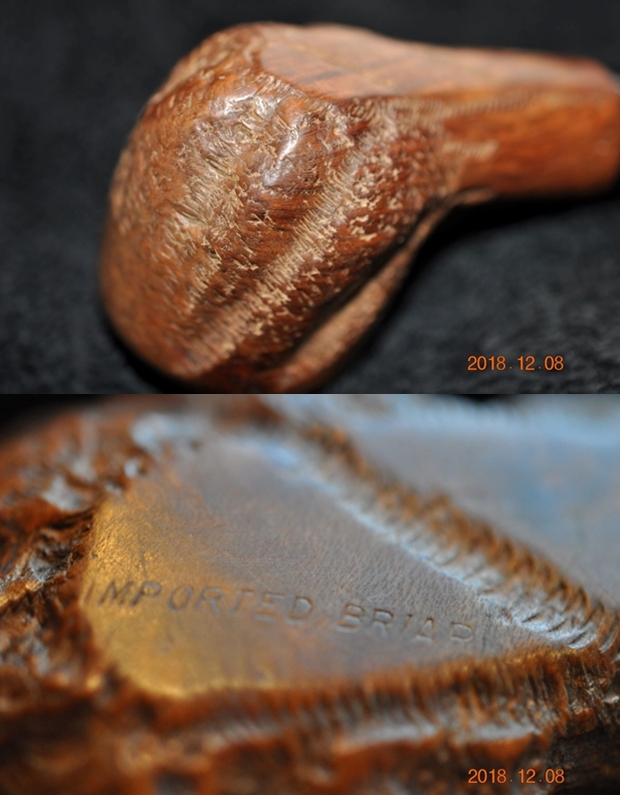
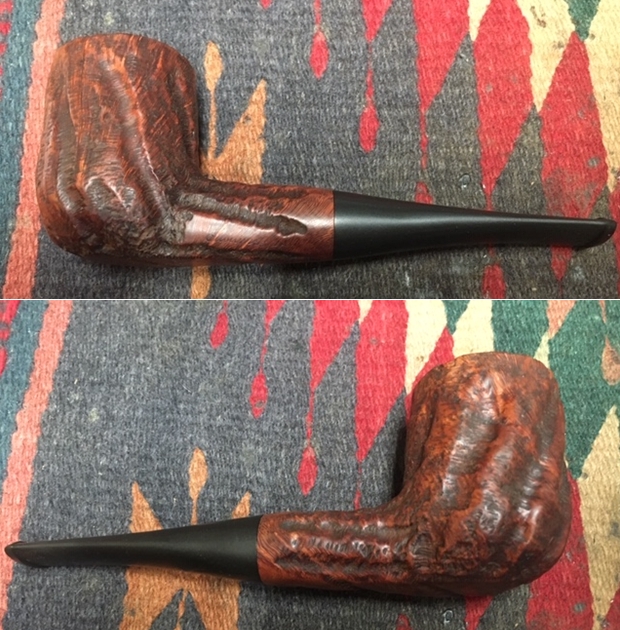
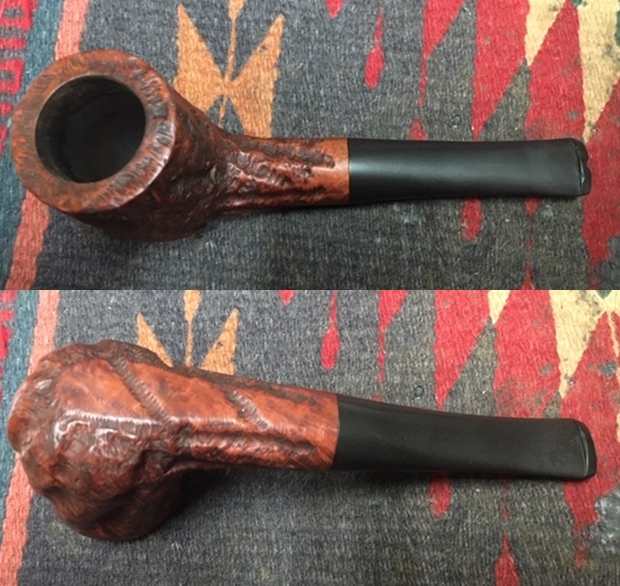
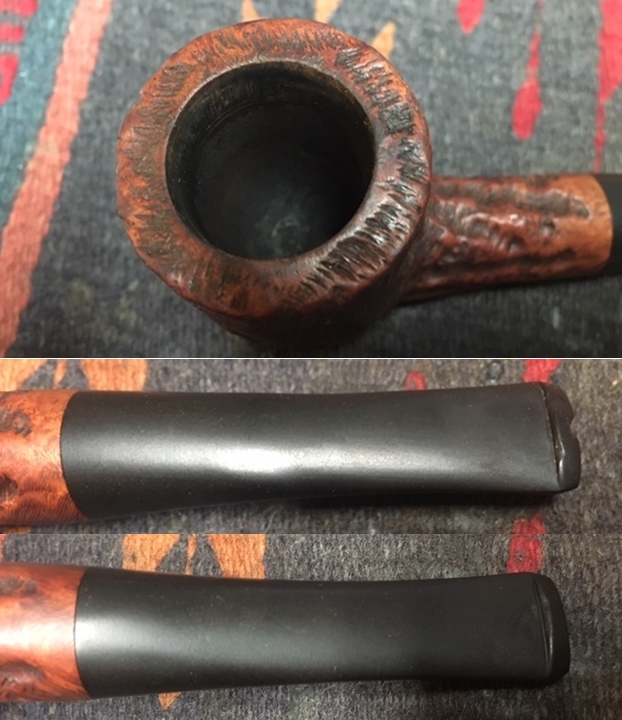
I have always been intrigued by Tracy Mincer and his Custom-Bilt pipes and even his Custombilt pipes like this one. There is something about the rugged carving and appearance of the pipes that gets my attention. I have a few of them in my collection and always enjoy the tactile nature of the pipe when it is being smoked. This old apple has the Custombilt stamp and I had reacquainted myself with the eras of the various spellings of the brand so that I can place it along with the previous billiard within the Rich Era. The pipe was in pretty decent condition when Jeff received it – dirty but really not too bad. The finish was dusty and dirty in the worm trail carvings. The bowl had a thick cake in it that flowed over the rim top into the rustication. The inner edge of the bowl appeared have some damage toward to the front but that would not be clear until it was reamed. The rim top had some deep scratches and gouges toward the right front. The stem had some deep tooth marks on both sides at the button but otherwise was in decent condition. The smooth part of the shank stamped Custombilt in script on the left side. On a smooth panel on the heel of the bowl it is stamped Imported Briar. Jeff took these pictures of the pipe to show its condition before he started his cleanup work. He took close up photos of the rim top and the side and bottom of the bowl to show the condition of the briar and the bowl. You can see the cake in the bowl and the lava overflowing onto the top of the rim. The worm trail rustication is quite dusty and dirty. He took a photo of the stamping on the left shank side and the heel of the bowl.The photos of the stem show the tooth chatter and marks on both sides of the stem near the button and the wear on the button itself.I did the research on the brand when I worked on the previous Custombilt that I restored earlier today (https://rebornpipes.com/2019/01/18/bringing-an-old-custombilt-billiard-to-back-to-life/). I have included much of that here for you to read. It comes from a great article on Pipedia that helps understand the brand and give a sense of what the various stamping looks like on the pipes (https://pipedia.org/wiki/Custom-Bilt). I cite from that article to give a feel for the brand:

In 1946, the name was changed to Custombilt after Mincer began an association with Eugene J. Rich, Inc. There were some big changes in advertising and distribution. The slogan “AS INDIVIDUAL AS A THUMBPRINT” began at this time as well.

In 1953, Leonard Rodgers bought the company and emphasized tobacco pouches and butane lighters. (However, it appears Mincer was working on his new pipe, the Doodler.) In 1968, Rodgers sold the Company to Consolidated Cigars. In the early 1970s, Wally Frank Co. bought the Custombilt trademark and began to produce their version of the pipe in 1974 or 1975. Hollco Rohr owned the Weber pipe factory, located in New Jersey, and produced the Custombilt pipes there. In 1987, the pipes were made out of the Butz-Choquin factory (France) and then Mexico until the late 1990s. Currently, the Custombilt name is owned by Tobacalera of Spain.

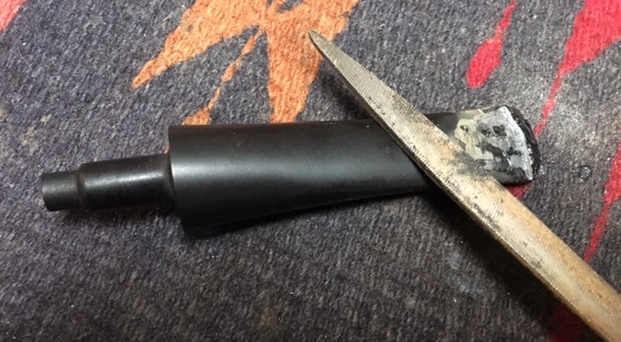
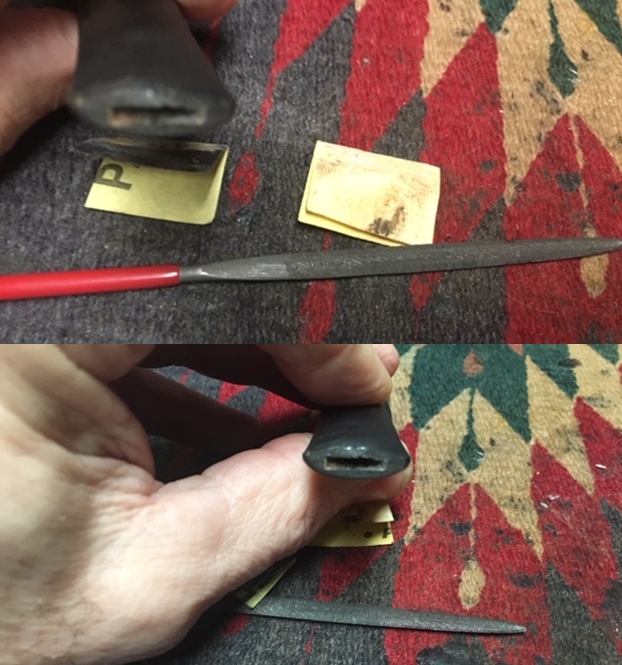
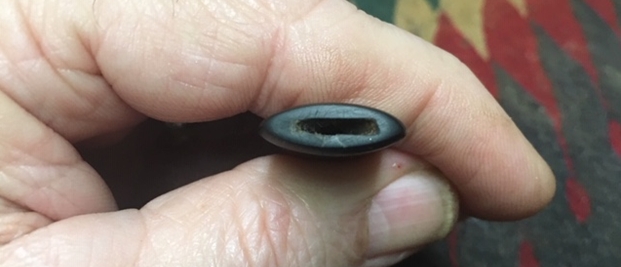
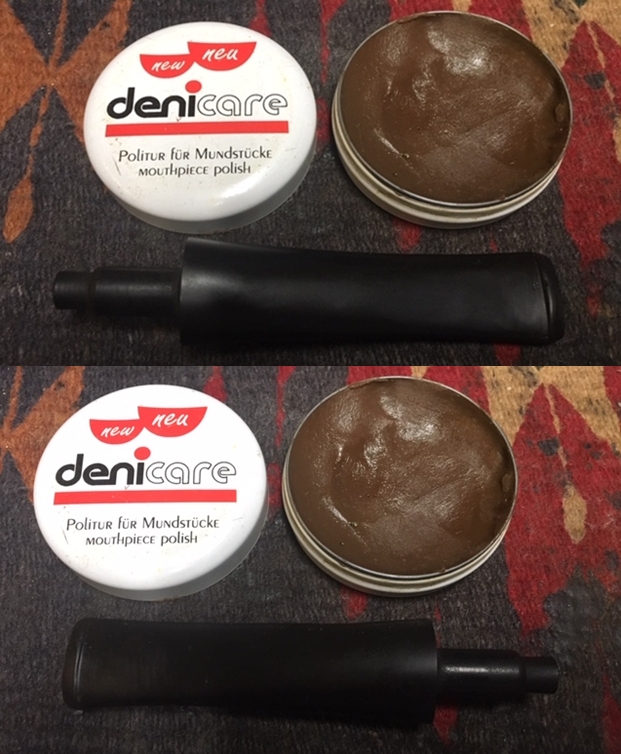
Along with the information above I found that the stamping that is on this pipe is identical to that identified in the article as Stamp Number Five. I have included that graphic because of the information that it included. It brings some of the issues in identifying the maker and the time period of the brand. In my mind the pipe I have in hand is very much like the Rich era pipes that I have seen and the note below says that. Interestingly the author also says he has seen the same stamping on the Wally Frank era pipes. It is a fascinating piece of history and a beautifully made old pipe.Armed with that information I turned to working on the pipe. Jeff had cleaned the pipe with his usual thoroughness – reaming the bowl with a PipNet pipe reamer and cleaning up the remnants with a Savinelli Fitsall Pipe Knife. He scrubbed the internals of the bowl, shank and stem with alcohol, cotton swabs and pipe cleaners. He scrubbed the exterior with Murphy’s Oil Soap to clean off the dust and grime on the finish. The rim top looked very good under the thick lava coat. I love the way the grain of the briar shows through the rustication. There were just a few nicks and scratches to deal with. The inside of the bowl itself looked great. The stem was in great condition other than the tooth marks on both sides near the button. I took photos of the pipe before I started working on it. I took some close up photos of the rim top, bowl and stem to show what they looked like after Jeff’s cleanup. The rim top has some darkening around the top and the edges. There is also some nicks and scratches on the surface ant the edges. Some are quite deep looking. The stem was in good shape other than the tooth marks and chatter on both sides near the button.  I took some photos of the stamping which seemed far more visible after Jeff’s cleanup than before.I worked on the  rim top and inner edge damage first. I gently topped the bowl to remove the deep cuts and gouges and smooth out the damage. I used a folded piece of 220 grit sandpaper to  further clean up the inner edge and leave it smooth. I polished the sanded rim top with micromesh sanding pads – wet sanding with 1500-2400 and dry sanding with 3200-12000 grit pads. I wiped it down with a damp cloth after each sanding pad. You can see the progress in the photos below. I stained the rim with three different stain pens – Cherry, Walnut and Mahogany. It still needed to be blended in a bit but the match of colour is perfect. I buffed it on the buffing wheel with Blue Diamond polish. The second photo shows the polished rim top. The match is good.Since the briar was in such good condition I started with rejuvenating the wood. I worked some Before & After Restoration Balm into the rustication and worm trails on the bowl and the rim top. I worked it into the surface of the briar with my fingertips to clean, enliven and protect the wood. Once the bowl was covered with the balm I let it sit for about 20 minutes and buffed it off with a soft cotton cloth and then polished it with a microfiber cloth. I took photos of the pipe at this point in the process to show what the bowl looked like at this point. I set the bowl aside and turned my attention to the stem. I decided to address the deep tooth marks on both sides of the stem ahead of the button. I filled in the tooth marks on the both sides of the stem with a clear super glue (Jeff had already cleaned the stem very well so it was not an issue). I set the stem aside to let the repairs cure.Once the repair had cured I used a flat blade needle file to sharpen the edge of the button on both sides of the stem. I also used it to flatten out the repairs. I worked on the remaining repaired areas with 220 grit sandpaper to blend them into the surface of the stem. I polished the stem with Denicare Mouthpiece Polish to take out the oxidation at the button edge and on the end of the mouthpiece. I also worked hard to scrub it from the surface of the stem at the tenon end.I polished repaired areas on the stem, button and blade with micromesh sanding pads – wet sanding with 1500-2400 grit pads and dry sanding with 3200-12000 grit pads. I wiped the stem down after each sanding pad with Obsidian Oil. I polished it with Before & After Pipe Stem Polish – both Fine and Extra Fine. Once I had finished the polishing I gave it a final coat of oil and set it aside to dry. I put the bowl and stem back together. I buffed the bowl and stem with Blue Diamond to polish out any light scratches that remained in the briar and the vulcanite. I gave the bowl and the stem multiple coats of carnauba wax. I buffed the pipe with a clean buffing pad to raise the shine. I hand buffed it with a microfiber cloth to deepen the shine. The pipe polished up pretty nicely. The worm trail rusticated finish on this Rich era Custombilt and the smooth portion around the cap on the rim and shank turned out very nice and shows the grain shining through. It has the kind of rustic beauty that draws collectors to them after all of these years. The contrast of the worm trails with the grain swirling through them looked good with the polished black vulcanite. This Custombilt Apple will soon be joining the other pipes I have on the rebornpipes store. The finished pipe is shown in the photos below. The dimensions of the pipe are Length: 5 1/2 inches, Height: 1 7/8 inches, Outside diameter of the bowl: 1 ½ inches, Chamber diameter: 7/8 of an inch. If you are interested in adding it to your collection let me know. Thanks for reading this blog and my reflections on the pipe while I worked on it.

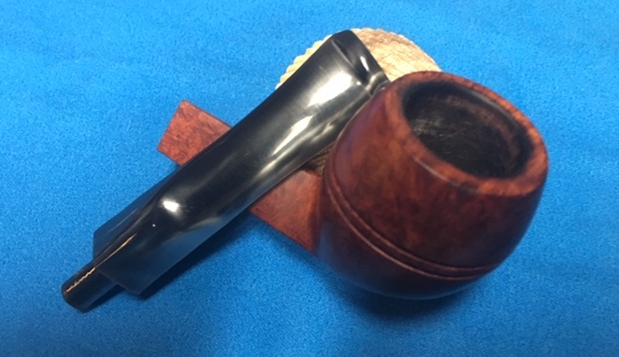
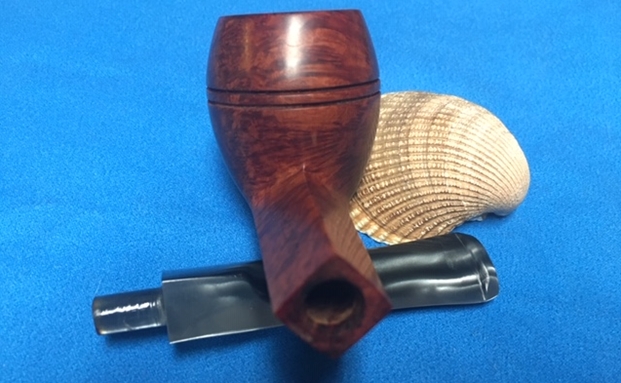
Sprucing up the first of my WDC; a Demuth Gold Dot #77 Bulldog


Blog by Paresh Deshpande

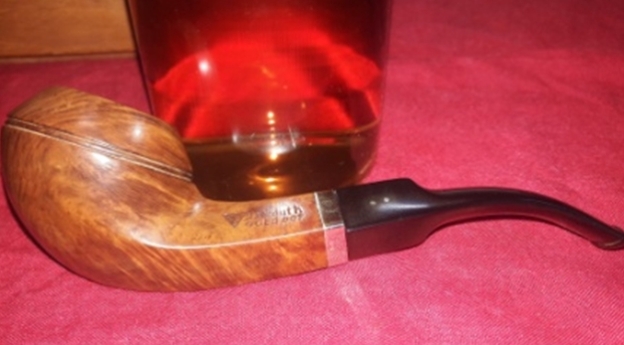
There a quite a few WDCs that I have inherited from my old man and the one on my table now is a “Demuth, Gold Dot”. I love the classic Bulldog and Rhodesian shape in pipes and am naturally attracted to pipes with this shape. Thus, no surprise here that I chose to work on this WDC Demuth Gold Dot in a classic Bulldog shape!!

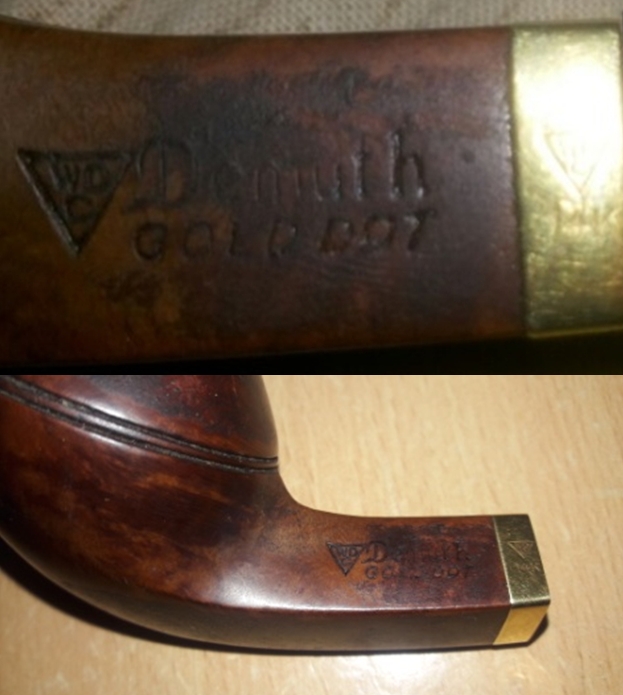
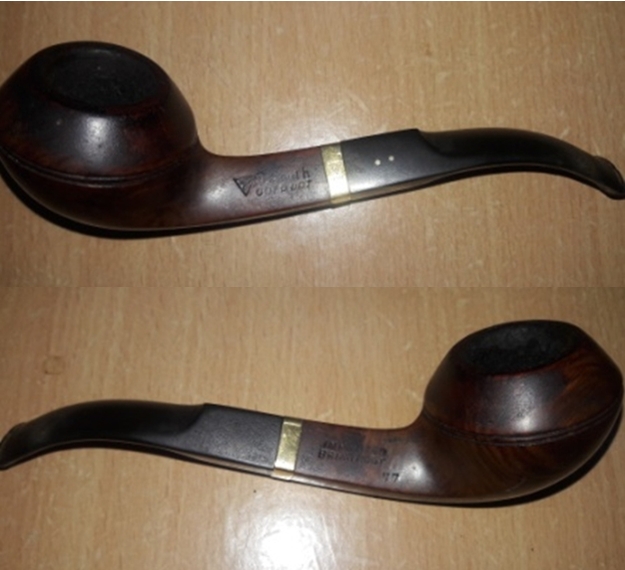
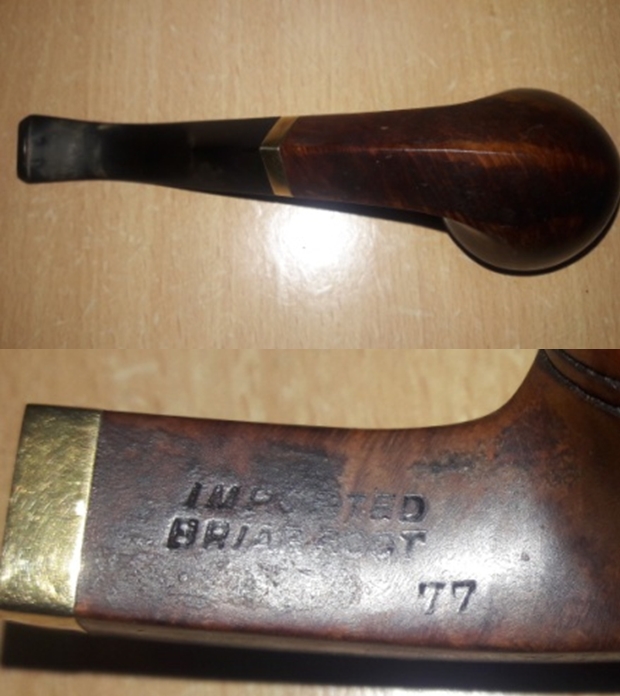
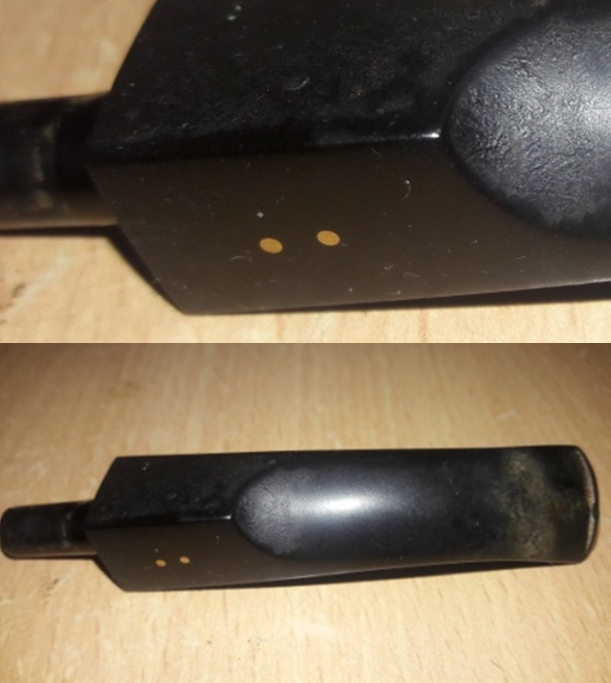
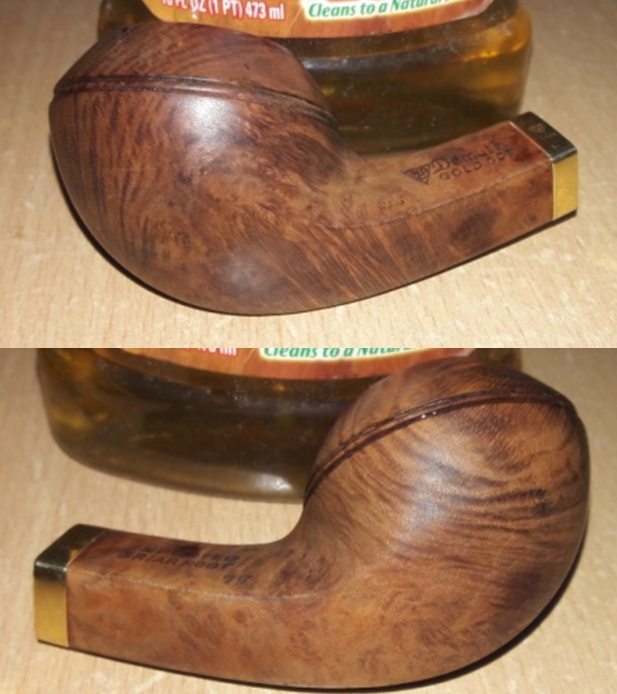
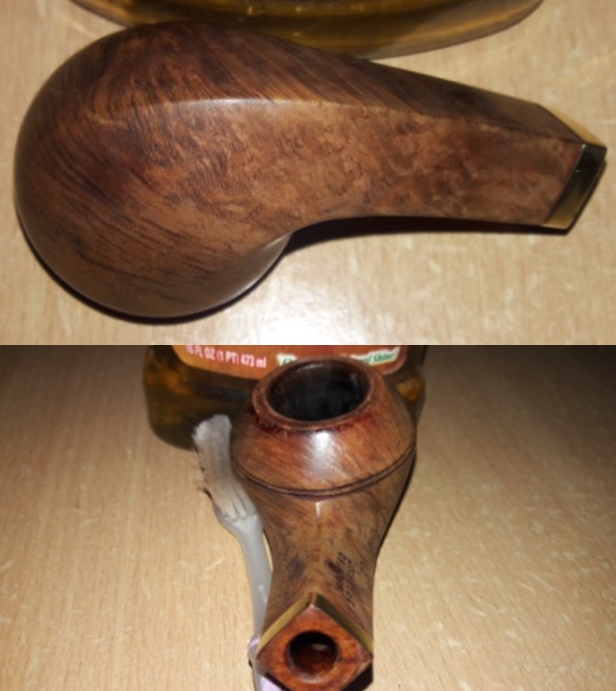
This is the first WDC from my grandfather’s collection, a smooth Gold Dot in an impressive Bulldog shape. The beautiful straight grain follow a circular pattern on the right and front of the bowl while linear pattern adorns the left side of the bowl and along the diamond shank, neatly divided by the spine on either side. The shank is stamped on the left with the trademark inverted equilateral triangle with letters “WDC” enclosed in it. This is followed by “Demuth” over “GOLD DOT” in block capital letters. On the right, the shank is stamped “IMPORTED” over “BRIAR ROOT” followed by the shape number “77” towards the bowl and shank joint. A half inch thick gold band adorns the shank end and is stamped on the left with the trademark WDC triangle over “14 K”, indicating the purity of the gold band. The ¾ bent saddle stem has two gold filled dots in the center of the saddle portion of the stem on the left side. I searched pipedia.com for more information on this pipe and attempt at estimating the vintage of this pipe. Here is what I have found on pipedia:-

William Demuth. (Wilhelm C. Demuth, 1835-1911), a native of Germany, entered the United States at the age of 16 as a penniless immigrant. After a series of odd jobs he found work as a clerk in the import business of a tobacco tradesman in New York City. In 1862 William established his own company. The William Demuth Company specialized in pipes, smoker’s requisites, cigar-store figures, canes and other carved objects.

The Demuth Company is probably well known for the famous trademark, WDC in an inverted equilateral triangle. William commissioned the figurative meerschaum Presidential series, 29 precision-carved likenesses of John Adams, the second president of the United States (1797-1801) to Herbert Hoover, the 30th president (1929-1933), and “Columbus Landing in America,” a 32-inch-long centennial meerschaum masterpiece that took two years to complete and was exhibited at the World’s Columbian Exposition in Chicago in 1893.

The Presidential series was the result of Demuth’s friendship with President James A. Garfield, a connoisseur of meerschaum pipes. Demuth presented two pipes to Garfield at his inauguration in 1881, one in his likeness, the other in the likeness of the President’s wife. Later, Demuth arranged for another figurative matching the others to be added to the collection as each new president acceded to the White House, terminating with President Hoover.

In early 1937, the City of New York notified S.M. Frank & Co. of their intent to take by eminent domain, part of the land on which the companies pipe factory was located. This was being done to widen two of the adjacent streets. As a result of this, Frank entered into negotiations to purchase the Wm. Demuth Co.’s pipe factory in the Richmond Hill section of Queens. It was agreed upon that Demuth would become a subsidiary of S.M. Frank and all pipe production of the two companies would be moved to DeMuth factory. New Corporate offices were located at 133 Fifth Avenue, NYC.

Demuth pipes continued to be made at the Richmond Hill plant till December 31. 1972. Then the Wm. Demuth Company met its official end as a subsidiary company by liquidation.

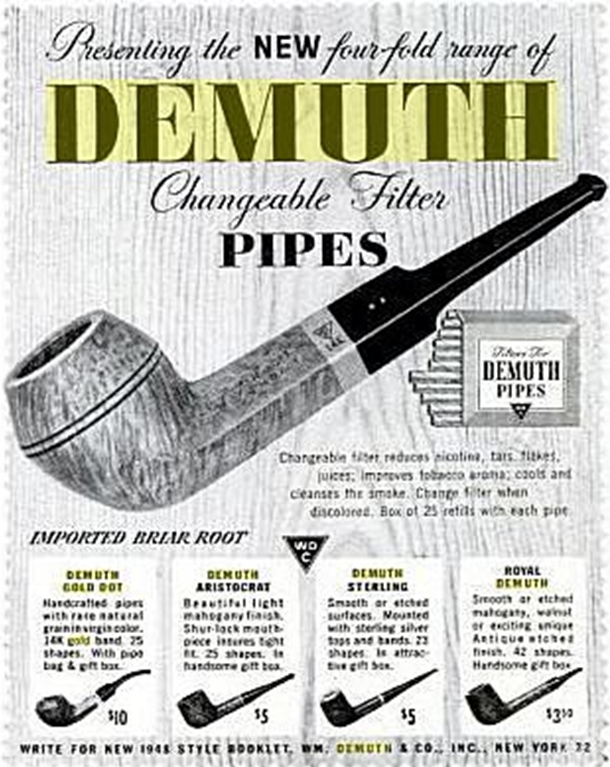
I came across an interesting advertisement on the same page on pipedia.com which shows the exact same pipe that I am now working on. It is the same pipe as the first pipe on the left. A close scrutiny of the picture confirms the following:

(a) The Gold Dot line of WDC pipes was offered sometime before 1941 as inferred from the bottom line of this flyer which encourages readers to “WRITE FOR NEW 1941 STYLE BOOKLET”, implying that this flyer was published prior to 1941!!!!!

(b) The Gold Dot line of WDC pipes was at the time their top of the line product as it is the most expensive of all the pipes advertised in the flyer, retailing at $10!!!Pipephil.eu too has the same pipe shown with shape # 77. Here is the link; http://www.pipephil.eu/logos/en/logo-w1.html

From the above gleaned information, it is safe to conclude that the pipe now on my worktable is of 1940s vintage and at that point in time was WDC’s top-of-the-line offering!!!!

INITIAL VISUAL INSPECTION
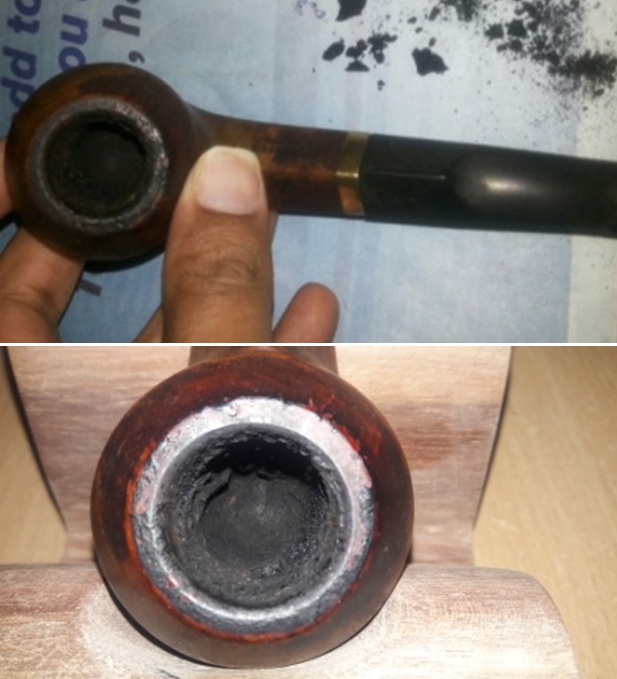
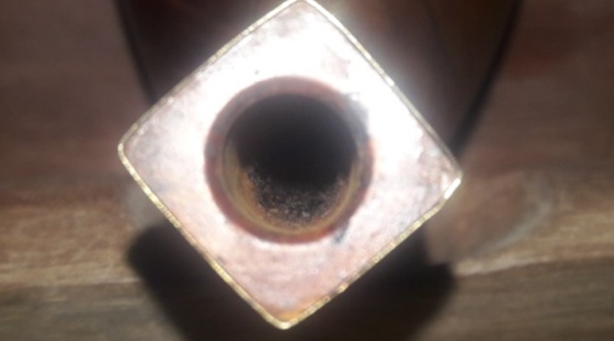
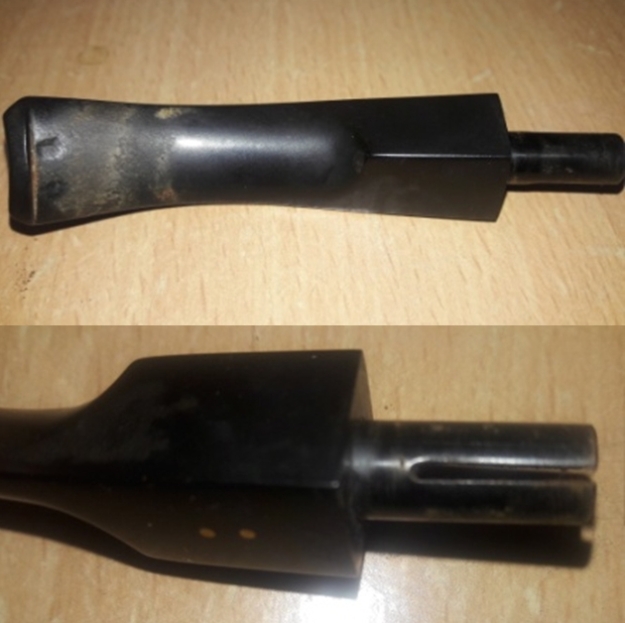
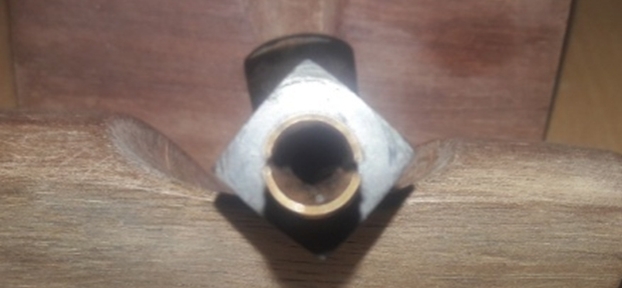
Age definitely shows on the stummel surface!!! The briar is dull and lifeless and has taken on a layer of aged patina, through which one can make out the beautiful straight grain patterns all around. There is a heavy overflow of lava all over the entire stummel surface. The bowl cap, bowl, shank and even the stem is covered in oils, tars and grime accumulated over the years of storage and is sticky to the touch. To be honest, the stummel is filthy to say the least. A thorough cleaning of the stummel followed by polish should accentuate the beautiful straight grain pattern seen on the stummel through all the dirt. The double ring that separates the cap from the rest of the bowl is even and undamaged; however, it is filled with dust, dirt and grime. The chamber exudes a strong, but not definitely unpleasant, smell. I hope that this will be addressed once the chamber has been reamed and internals of the shank and mortise is cleaned with isopropyl alcohol. There is heavy buildup of cake with a thick layer in the chamber. The buildup is such that I am barely able to squeeze my little finger in to the bowl. The condition of the inner walls of the chamber can be ascertained only after the cake has been removed completely and taken down to bare briar. The bowl however, feels robust and solid to the touch from the outside. The rim top has a thick layer of overflowing lava. The condition of the beveled inner and outer edge and rim top can be commented upon once the overflow of lava is removed and the chamber is reamed. The shank end of the pipe is clean. However, the mortise does show signs of accumulated dried oils, tars and remnants of ash, greatly restricting the air flow, or dare I say, completely restricting air flow. These issues should be a breeze to address, unless some hidden gremlins present themselves!! The vulcanite stem has deep tooth indentations and minor tooth chatter on the upper and lower surface. It is heavily oxidized and has traces of overflowing lava, dust, oils and tars on the saddle portion of the stem. The opening of the tenon is filled with dried oils and tars. The air flow through the stem is greatly restricted to say the least. The fit of the stem in to the mortise is very tight, which will loosen further after the mortise and tenon have been cleaned. The metal tenon has a slot like groove extending more than half way towards the stem end on either side; probably to securely seat the “changeable filter” as advertised in the flyer above (actually I was wondering the purpose of the metal tenon, which as it is, was new to me, with slots on either side. This doubt was cleared by the flyer!!). The overall condition of the pipe, with the thick build-up of cake in the chamber, clogged mortises and stem airway, overflowing of lava covering the entire stummel, makes me believe that this would have been one of my grandfather’s favorite pipes.

THE PROCESS
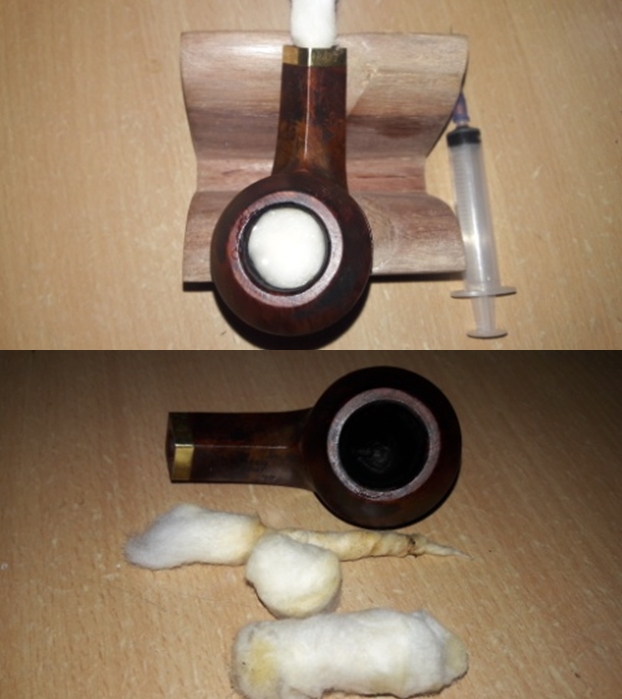
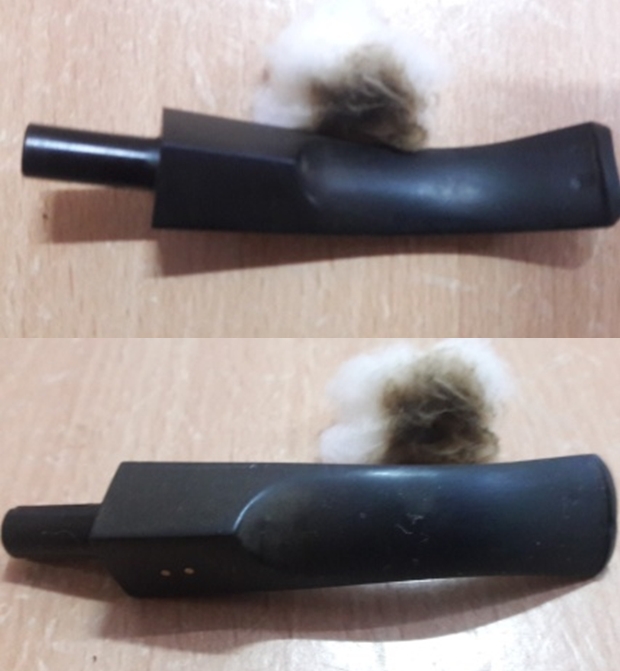
I started this project by reaming the chamber with size 2 and followed it up with size 3 head of PipNet reamer. I used a 220 grit sand paper, pinched between my thumb and forefinger, to sand the inner walls of the chamber of the pipe. Once I had reached the bare briar, I wiped the chamber with a cotton pad dipped in isopropyl alcohol. This removed all the residual carbon dust from the chamber. The walls of the chamber are nice and solid with no signs of heat fissures or cracks. I scrapped out the overflowing lava from the rim top with my fabricated knife. The inner and outer rim edges are pristine and that was a big relief.This was followed by cleaning the mortise and air way of the pipe using hard bristled and regular pipe cleaners, q-tips dipped in alcohol. The mortise and the draught hole were given a final clean with shank brushes dipped in alcohol. I dried the mortise with a rolled paper napkin. The shank internals and the draught hole are now nice and clean with an open and full draw. The gunk in the mortise had hardened to such an extent that I had to resort to using all the tools of the trade to get rid of the accumulated gunk, not to mention the time spent on cleaning it. The crud that was extracted from the mortise can be seen in the picture below. I had expected that the ghosting would be history by this stage. However, that was not to be the case. I had to resort to alcohol treatment to get rid of all the ghosting. I packed a few cotton balls in to the chamber. Drawing out a wick from one cotton ball, I inserted it in to the mortise of the pipe. Using a syringe, I topped the chamber with isopropyl alcohol and set it aside. Half hour later, I topped the chamber again with isopropyl alcohol as the level of alcohol had gone down from spreading inside the stummel. This process is usually done using Kosher salt as it leaves no aftertaste or smells. But here, in my part of the world, Kosher salts costs a huge bomb and from my personal experience, I have realized that cotton works equally well in drawing out all the oils and tars from the internals of the stummel exactly as Kosher salt does, but at a very economical cost. I set the stummel aside overnight to allow the alcohol to do its intended task. Next morning, I discard the wick and cotton balls from the stummel and wipe the bowl clean. Though the cotton balls and the cotton wick did not turn a dirty color as usual, the old smells were completely eliminated. While the stummel was soaking in the alcohol bath, I cleaned out the internals of the stem using hard bristled and regular pipe cleaners dipped in alcohol. Well, that sounds easier than actually done. From the amount of overflowing lava deposits on the stem, I had anticipated a difficult time in cleaning the stem internals. But what really confronted me was a nightmare of a time cleaning it. For starters, the pipe cleaners would not move an inch in to the airway from either ends!!! I soak the internals of the stem, after packing the slot with a pipe cleaner, by filling it with isopropyl alcohol using a syringe. This helped in loosening the hardened oils and tars in the air way. Thereafter began the tedious process of cleaning the stem internals with a straightened paper clip and scrubbing the aluminum tenon with the fabricated dental spatula. The blobs of accumulated gunk removed from the air way could not be photographed as my table and tray was cleaned out by my helper before I could take a few pictures!!!! After a great deal of struggle, time and lots of pipe cleaners, the air way is finally clean with an open draw.The deep bite marks on the stem were flamed using a Bic lighter. However, this did not work. From my experience, I have learnt that getting rid of the oxidation from and around the surface to be filled helps in subsequent better blending of the fill with the stem surface. With a folded piece of used 220 grit sand paper, I sand the area that is required to be filled. I cleaned the sanded portion of the stem with cotton pad dipped in alcohol and spot filled the damaged area with a mixture of activated charcoal and clear superglue. I set the stem aside for the fill to cure. Now, it was the turn of the stummel to get cleaned up. Using a hard bristled tooth brush dipped in undiluted Murphy’s oil soap, I very deliberately scrubbed the stummel, cleaning the surface thoroughly. I was very deliberate on the surface areas which were covered in overflowed lava over which dirt and grime had accumulated over the years. I rinsed the stummel under tap water, taking care that water does not enter the mortise or the chamber. I dried the stummel using cotton cloth and paper napkins. On close inspection, I observed a couple of dents and ding on the front portion of the crown. These would need to be addressed. Other than this, the stummel is now clean and devoid of any grime and dirt. It is really surprising that the rim top, inner bevel and edges and the stummel is in such pristine condition after so many years of storage and without a single fill. Speaks volumes about the quality of this line of pipes from WDC!! I addressed the dents and dings to the front portion of the crown by the steaming process. I heated my fabricated knife over a candle. I placed a soaked Turkish hand towel over the dents and placed the hot knife over the wet towel. The steam that was generated pulled the dents to the surface. The stummel is now without any blemishes.To further clean and highlight the grains, I sand the stummel with micromesh pads, wet sanding with 1500 to 2400 grit pads and dry sanding with 3200 to 12000 grit pads. I wiped the stummel after each wet pad with a moist cloth to remove the resulting dust. I rub a small quantity of “Before and After Restoration Balm” in to briar and let it rest for a few minutes. The balm almost immediately works its magic and the briar now has a nice vibrant appearance. I further buff it with a horse hair shoe brush. The pipe now looks lovely with beautiful grains showing off their beauty in all glory!! With the stummel nice and clean and attractive, I worked the stem of the “GOLD DOT” by sanding the fills with a flat heat needle to achieve a rough match with the surrounding stem surface. I sharpened the lip edges using a needle file and sand the entire stem with 220 followed by 400, 800 and 1000 grit sand paper to perfectly blend the filled surface with the rest of the stem surface. This helps to reduce the sanding marks left behind by the more abrasive 220 grit paper. By mere sanding itself, the minor tooth marks seen on stem surfaces were completely addressed. This process also eliminated the deep oxidation seen on the vulcanite stem. To bring a deep shine to the vulcanite stem, I went through the complete set of micromesh pads, wet sanding with 1500 to 2400 grit pads and dry sanding with 3200 to 12000 grit pads. I rubbed the stem down with Extra Virgin Olive oil after every three pads. I completed the restoration of the stummel by cleaning the grooves between the twin rings separating the crown from the rest of the stummel, of all the dust, grime and polishing compounds accumulated during the restoration process. Lucky me, there is no damage to the rings, which would have been a challenge to restore.To finish, I re-attach the stem with the stummel. I mount a cotton cloth buffing wheel on to my local machine which is similar to a Dremel.  I set the speed at about half of the full power and polished the entire pipe with White Diamond compound. I wiped/ buffed the pipe with a soft cotton cloth to clear it of any leftover compound dust. I then mounted another cotton cloth wheel on to the polishing machine and applied several coats of carnauba wax over the stummel and the stem. I finished the restoration by giving the pipe a rigorous hand buffing using a microfiber cloth to raise the shine further. The completed pipe, with the dark brown hues of the grains on the stummel contrasting with the shiny black stem, looks lovely, fresh and vibrant; the photographs speak for themselves. If only the pipe could tell some of my grand Old man’s stories and recount incidents witnessed while being smoked.…Cheers!! I am grateful to all the readers for their valuable time spent in reading this write up and joining me on this part of the journey in to the world of pipe restoration while I attempt to preserve a heritage and past memories of a part of me. 

Bringing an old Custombilt Billiard to back to life


Blog by Steve Laug

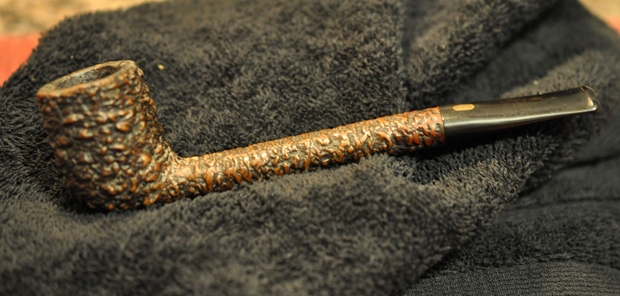
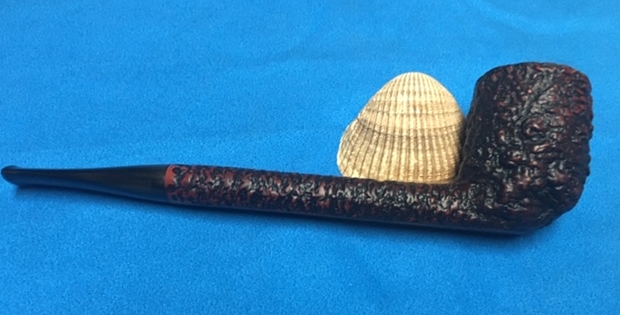
I have always been intrigued by Tracy Mincer and his Custom-Bilt pipes and even his Custombilt pipes like this one. There is something about the rugged carving and appearance of the pipes that gets my attention. I have a few of them in my collection and always enjoy the tactile nature of the pipe when it is being smoked. This old billiard has the Custombilt stamp and I will need to reacquaint myself with the eras of the various spellings of the brand so that I can place it in the hierarchy. The pipe was in pretty decent condition when Jeff received it – dirty but really not too bad. The finish was dusty and dirty in the worm trail carvings. The bowl had a decent cake in it that was lightly flowing over the rim top into the rustication. The inner and outer edge of the bowl appeared to be in great condition. The stem had a chip out of the edge of the button on the topside and tooth marks in the stem just ahead of the button on the underside. The smooth part of the shank, between the worm trails is stamped Custombilt in script on the left side. On a smooth panel on the heel of the bowl it is stamped Imported Briar. Jeff took these pictures of the pipe to show its condition before he started his cleanup work. He took close up photos of the rim top and the side and bottom of the bowl to show the condition of the briar and the bowl. You can see the cake in the bowl and the lava overflowing onto the top of the rim. The worm trail rustication is quite dusty and dirty. The photos of the stem show the tooth chatter and marks as well as the chip out of the topside of the button.When I brought the pipe to my worktable I did some reading on Pipedia to before starting the restoration. I have learned that it is important to keep the variations in spelling of this brand clear in mind when trying to put these on a timeline. The names Custom-Bilt, Custombilt, and other variations help place the pipes in the history of the Company.

There is a great article on Pipedia that helps understand the brand and give a sense of what the various stamping looks like on the pipes (https://pipedia.org/wiki/Custom-Bilt). I cite from that article to give a feel for the brand:

In 1946, the name was changed to Custombilt after Mincer began an association with Eugene J. Rich, Inc. There were some big changes in advertising and distribution. The slogan “AS INDIVIDUAL AS A THUMBPRINT” began at this time as well.

In 1953, Leonard Rodgers bought the company and emphasized tobacco pouches and butane lighters. (However, it appears Mincer was working on his new pipe, the Doodler.) In 1968, Rodgers sold the Company to Consolidated Cigars. In the early 1970s, Wally Frank Co. bought the Custombilt trademark and began to produce their version of the pipe in 1974 or 1975. Hollco Rohr owned the Weber pipe factory, located in New Jersey, and produced the Custombilt pipes there. In 1987, the pipes were made out of the Butz-Choquin factory (France) and then Mexico until the late 1990s. Currently, the Custombilt name is owned by Tobacalera of Spain.

Along with the information above I found that the stamping that is on this pipe is identical to that identified in the article as Stamp Number Five. I have included that graphic because of the information that it included. It brings some of the issues in identifying the maker and the time period of the brand. In my mind the pipe I have in hand is very much like the Rich era pipes that I have seen and the note below says that. Interestingly the author also says he has seen the same stamping on the Wally Frank era pipes. It is a fascinating piece of history and a beautifully made old pipe.Armed with that information I turned to working on the pipe. Jeff had cleaned the pipe with his usual thoroughness – reaming the bowl with a PipNet pipe reamer and cleaning up the remnants with a Savinelli Fitsall Pipe Knife. He scrubbed the internals of the bowl, shank and stem with alcohol, cotton swabs and pipe cleaners. He scrubbed the exterior with Murphy’s Oil Soap to clean off the dust and grime on the finish. The rim top looked very good under the thick lava coat. I love the way the grain of the briar shows through the rustication. There were just a few nicks and scratches to deal with. The inside of the bowl itself looked great. The stem was in great shape other than a bit of tooth marks and the chip out of the top of the button. I took photos of the pipe before I started working on it. I took some close up photos of the rim top, bowl and stem to show what they looked like after Jeff’s cleanup. It is a startling difference. The rim top looked very good and the edges were clean and undamaged. The stem was in good shape other than the chipped button and the tooth marks and chatter on both sides near the button.I took some photos of the stamping which seemed far more visible after Jeff’s cleanup than before.Since the briar was in such good condition I started with rejuvenating the wood. I worked some Before & After Restoration Balm into the rustications and worm trails on the bowl and the rim top. I worked it into the surface of the briar with my fingertips and a shoe brush to clean, enliven and protect the wood. Once the bowl was covered with the balm I let it sit for about 20 minutes and buffed it off with a soft cotton cloth and then polished it with a microfiber cloth. I took photos of the pipe at this point in the process to show what the bowl looked like at this point. I set the bowl aside and turned my attention to the stem. I decided to address the deep tooth mark on the underside of the stem and the chip in the top edge of the button. I filled in the tooth mark on the underside of the stem with a clear super glue (Jeff had already cleaned the stem very well so it was not an issue). I used the clear superglue to fill in the chipped area and build it up. I did this by layering the super glue until the surface was filled in with the glue. The last coat of glue that I applied was black super glue. I set the stem aside to let the repairs cure. Once the repair had cured I used a flat blade needle file to sharpen the edge of the button on both sides of the stem. I also used it to flatten out the repairs. I worked on the remaining repaired areas with 220 grit sandpaper to blend them into the surface of the stem. I smoothed out the slotted edge of the button with 220 grit sandpaper on the topping board. I reworked the edges of the slot with a needle file to clean up the repair. I shaped and polished the button with 400 grit wet dry sandpaper. The repaired area looks very good and will look even better as the stem and repairs are polished with micromesh sanding pads. I polished the stem with Denicare Mouthpiece Polish to take out the oxidation at the button edge and on the end of the mouthpiece. I also worked hard to scrub it from the surface of the stem at the tenon end. I polished repaired areas on the stem, button and blade with micromesh sanding pads – wet sanding with 1500-2400 grit pads and dry sanding with 3200-12000 grit pads. I wiped the stem down after each sanding pad with Obsidian Oil. I polished it with Before & After Pipe Stem Polish – both Fine and Extra Fine. Once I had finished the polishing I gave it a final coat of oil and set it aside to dry. I put the bowl and stem back together. I buffed the bowl and stem with Blue Diamond to polish out the light scratches that remained in the briar and the vulcanite. I gave the bowl and the stem multiple coats of carnauba wax. I buffed the pipe with a clean buffing pad to raise the shine. I hand buffed it with a microfiber cloth to deepen the shine. The pipe polished up pretty nicely. The worm trail rusticated finish on this Rich era Custombilt turned out very nice and shows the grain shining through. It has the kind of rustic beauty that draws collectors to them after all of these years. The contrast of the worm trails with the grain swirling through them looked good with the polished black vulcanite. This Custombilt billiard will soon be joining the other pipes I have on the rebornpipes store. The finished pipe is shown in the photos below. The dimensions of the pipe are Length: 5 3/4 inches, Height: 2 ¼ inches, Outside diameter of the bowl: 1 ½ inches, Chamber diameter: 7/8 of an inch. If you are interested in adding it to your collection let me know. Thanks for reading this blog and my reflections on the pipe while I worked on it.

…and the Old Warrior Survives for another Fight!!


Blog by Paresh Deshpande

I had two meerschaum pipes in my grandfather’s collection that I have inherited. One, an antique Kalmasch meerschaum pipe, was restored by my Guru, Mr. Steve. For those interested in the read, here is the link to that write up; https://rebornpipes.com/2018/04/17/pareshs-grandfathers-pipe-4-an-antique-kalmasch-meerschaum-pipe/

The second is a block meerschaum Kaywoodie in classic Dublin shape with a four holed aluminum stinger, which I want to restore. I had never restored a meer before and as such had no desire to ruin this inheritance piece. Thus began my earnest search for a cheap meer, with an equally lesser costs of shipping (which at times is more than the cost of the item itself!! LOL!). I came across this “Meerschaum Sitter” pipe on auction block on eBay. The cost of shipping was the lowest that I have ever come across on the site. The condition of the pipe in the pictures, advertised as a “No Name Meerschaum Sitter”, uploaded by the seller was convincing enough for me to be the only bidder and I won this pipe for a single digit!! A prolonged wait followed and the pipe arrived after two months.

As advertised, there were no marks of identification on the pipe and it was in a demoralizing condition (Abha, my wife, absolutely detested the shape and appearance of this pipe!!). But there was something about this pipe that stopped me from completely discarding it. Mr. Dal Stanton, a gentleman and a fellow pipe restore who also guides me, has a page “For Pipe Dreamers only” on his site https://thepipesteward.com/. I have commissioned pipes from this page and they received a 360 degree makeover at the expert hands of Mr. Dal and have turned out to be beautiful masterpieces. He did encourage me to look beyond the present condition and dream about its future potential!! And this no name meerschaum sitter pipe did have loads of potential. What remains to be seen is whether I could do justice to it while gaining hands on experience in restoring a meerschaum pipe.

INITIAL VISUAL INSPECTION
The following pictures show the condition of the pipe when it arrived at my door step. The surface of the meer stummel is covered in dirt and grime. There is overflow of lava which is seen as blackened portions of the stummel. There is not a single patch on the stummel which is not scarred with scratches, gouges, dents and dings. The grime has accumulated on these gouges and resembles the battle wounds which have healed over the years. The stummel has developed a beautiful coloration on the bottom of the bowl half way up to the rim and the shank.There is heavy buildup of cake in the chamber with a thicker layer seen at the bottom half of the chamber. The cake has dried and is crumbly due to prolonged storage. The condition of the inner walls of the chamber can be ascertained only after the cake has been removed completely. No apparent cracks or damage to the stummel surface is seen from the outside. The rim top has darkened due to thick overflow of lava. There are a large number of dings and chips to the rim top which are visible through the lava overflow. This will be a challenge to address. The entire left side of the outer edge of the rim is severely damaged, the result of striking the edge against a hard surface to remove dottle, presenting lop sided appearance to the rim on to the left. The inner edge of the rim is dented in a number of places and combined with the damaged left outer edge gives the appearance of out of round chamber. This issue can be ascertained only after the chamber has been reamed and the rim top is cleaned.The shank end has a Delrin tube insert which seats the push-pull Delrin tenon on the stem. The mortise does show signs of accumulated dried oils, tars and remnants of ash, greatly restricting the air flow. This should be easy to address.The brown translucent acrylic stem has beautiful swirls that can be seen on either side of the airway. The airway itself is a very dark brown/ black color. Is it due to accumulation of oils and tars needs to be ascertained? However, I was unable to blow through the stem. Both the upper and lower surfaces of the stem show deep tooth indentations and minor tooth chatter. The buttons on both surfaces has been chewed and with deep bite marks. The entire stem is covered in dirt and grime over which dust and dirt has accumulated and hardened. The fit of the stem in to the mortise is snug; however, the Delrin tenon has tooth marks, which was surprising. Why anyone would bite on the tenon, is a very perplexing question that comes to my mind? These issues will need to be addressed. Though the seller had advertised this pipe as a sitter but being top heavy with a narrow circular base, it is anything but a sitter. Looking at the condition of the rim top, rim edges, proliferation of the scratches, lacerations, dents and dings over the stummel and shank, blocked airways, and stem condition, to me, it appears as if the pipe has been through a war zone with its previous owner and then discarded as it had become unsmokable. Once cleaned up and restored, I am confident that it will turn out to be beautiful and functional pipe.

THE PROCESS
I started this project by reaming the chamber with size 1 followed by size 2 head of PipNet reamer. With my smaller fabricated knife, I scraped out all the carbon from difficult to reach areas. I used a 220 grit sand paper, pinched between my thumb and forefinger, to sand the inner walls of the chamber of the pipe. Once I had reached the bare walls, I wiped the chamber with a cotton pad dipped in isopropyl alcohol. This removed all the residual carbon dust and also rid the chamber of all ghost smells. The walls of the chamber are nice and solid with no signs of cracks. Using a sharp knife, I gently scraped out the overflow of lava from the rim top. The dents and chips on the rim surface are now clearly visible and so is the extent of damage to the outer edge of the rim. The inner rim edge too shows a few chipped spots along the edge.I followed up the reaming by cleaning the stummel surface. I sand the stummel with a folded piece of 220 grit sandpaper followed by 600 and 800 grit papers. This was done with utmost care and diligence as I did not want to sand away a lot of meerschaum material from the surface and also wanted to preserve the nice golden hued color taken on by the meer from being smoked. A few deeper lacerations and gouges were left unaddressed as it would have led to loss of lot of bowl material. Also these dents and dings appear like a soldier’s battle scars to be worn with pride!! Similarly, I worked the rim top and addressed the dents and scratches from the surface to an extent that was possible. I attempted to address the chipped inner and severely damaged outer edge was leveled by creating a bevel on either edge with 220 grit sandpaper. I realized that if attempted to top the rim to match the surface, there would be a significant loss of meerschaum material, greatly altering the stummel profile and size. I decide to let it be. This old warrior will limp, but walk he will and that is all that matters to me. I followed up the sanding of the external stummel surface by cleaning the mortise and air way of the pipe using hard bristled and regular pipe cleaners, q-tips dipped in alcohol. The mortise and the draught hole were given a final clean with shank brushes dipped in alcohol. I dried the mortise with a rolled paper napkin. The shank internals and the draught hole are now nice and clean with an open and full draw. This was easier said than done. The pipe cleaners would not pass through the draught hole for the love of money!! A great deal of poking and prodding with a straightened paper clip and drill bit got me there.I polished the top of the bowl and rim edges with micromesh sanding pads to remove all of the tar and lava that was on the surface. I wet sanded it with 1500-2400 grit pads and dry sanded with 3200-12000 grit pads. I wiped the bowl down with a damp cloth to remove the dust that was left behind by the sanding. While I was working on the bowl top I also worked over the sides and bottom of the bowl to polish them as well. I wanted to minimize the scratching but not necessarily remove them all. These lacerations and dings must have had a history and I wanted to preserve it. I set the stummel aside and worked on the stem. The acrylic stem was so chock-a-block with hardened oils and tars that a pipe cleaner would just not pass through. Even a straightened paper clip could not make any head way in to the airway!!!!! I decided to soak the airway in isopropyl alcohol. I inserted a folded pipe cleaner in to airway from lip end, to the extent possible and folded the pipe cleaner upwards. Using a syringe filled with alcohol, I filled the airway from the tenon end and set it aside to soak.Couple of hours later, I removed the pipe cleaner and wiped the stem clean. I tried to clean the saddle of the stem when suddenly the Delrin tenon turned in my hands. I carefully turned the tenon further until it came free. It was indeed a threaded Delrin tenon and the previous owner had tried to unscrew it while holding it between his teeth. Hence the bite marks on the tenon!! A mystery solved…. A closer inspection of the saddle churned my stomach; it was completely filled with hardened tars and gunk. Even the threads on the tenon were smeared in the now jelly like gunk due to soaking. Here is what I saw. What followed next were the most excruciating 6-8 hours of backbreaking and laborious time spent on cleaning the internals of this stem. It was a battle of will between the stem and self. A couple of more soaks and later, use of all the cleaning weaponry in my arsenal, I emerged victorious. I was able to pass a hard bristled pipe cleaner dipped in alcohol from one end through the other. I further cleaned out the internals of the stem using hard bristled and regular pipe cleaners dipped in alcohol. However, the dark coloration of the airway persisted. I consulted with my mentor, Mr. Steve and he suggested using a scouring cleanser like Vim paste or Comet cleaner.  I tried the Vim powder, but without success. He then suggested using toothpaste applied on a moist pipe cleaner and worked inside the air way till clean. Well, this did not work either and the dark coloration remained. This one is a true warrior and a fighter to the core; bugger would just never give up without a fight!!!! I thought I was missing some trick here; ideas, methods and tricks suggested by Mr. Steve never fail, and yet in this case, nothing seemed to work. I closely observed the entire stem under my table lamp and then it suddenly dawned on me. It was like Eureka moment for me!!!! It appeared that the Delrin screw-in tenon is seated in to the stem in a dark brown tube extending to the stem end slat and is covered in lighter shade of brown acrylic casing. What a relief. I can finally progress ahead and address the deep tooth marks.From my experience, I have learnt that getting rid of the oxidation from and around the surface to be filled helps in subsequent better blending of the fill with the stem surface. With a folded piece of used 150 grit sand paper, I sand the area that is required to be filled. I cleaned the sanded portion of the stem with cotton pad dipped in alcohol and spot filled the damaged area with clear superglue. I set the stem aside for the fill to cure.Once the fill had cured, I sand the fills to match the surrounding stem surface with a flat head needle file. I sharpened the lip edges using a needle file and sand the entire stem with 220 followed by 400, 800 and 1000 grit sand paper to achieve an exact match. This also helps to reduce the sanding marks left behind by the more abrasive 220 grit paper as well as eliminated the oxidation seen on the stem. I was so engrossed and preoccupied with the task at hand that I missed out on taking pictures of this process. To bring a deep shine to the stem, I went through the complete set of micromesh pads, wet sanding with 1500 to 2400 grit pads and dry sanding with 3200 to 12000 grit pads. I wiped the stem with alcohol after each pad and rubbed it down with Extra Virgin Olive oil.To finish, I re-attach the stem with the stummel. I mount a cotton cloth buffing wheel on to my local machine which is similar to a Dremel.  I set the speed at about half of the full power and applied White Diamond compound to each of the three pipes. I wiped/ buffed the pipe with a soft cotton cloth to clear it of any leftover compound dust. I then mounted another cotton cloth wheel on to the polishing machine and applied several coats of carnauba wax over the stummel and the stem. I finished the restoration by giving the pipe a rigorous hand buffing using a microfiber cloth to raise the shine further. The completed pipe, with the shining white and golden hued meerschaum stummel, contrasting with the shiny brown acrylic stem with swirls inside, looks lovely, fresh and vibrant; the photographs speak for themselves. Admiring the pipe, it made me wonder, did he really have a spirit which kept him ticking after having suffered the kind of abuse which was evident from all the lacerations, dents and dings and chips. But he has survived his past nonetheless and will continue on his warpath with me………..Cheers!!

Restoring a Kaywoodie Meerschaum Dublin


Blog by Paresh Deshpande

Another surprise pick from my grandfather’s collection is this pipe which I have selected to work on. John Bessai in Rhodesian shape, which I had recently restored, was also a surprise pick in his collection since he had never been to USA, let alone Cleveland, Ohio and this is where most of the Bessai pipes were sold. Well, this pipe now on my work table is a Kaywoodie made from block meerschaum!! I was aware that KBB made briar pipes with meerschaum insert, but block meerschaum pipes, that I was not aware of.

The meerschaum on my work table is a classic Dublin with a stout meerschaum shank and a vulcanite stem. The stummel is sans any stampings and the only way it can be identified as being a Kaywoodie is the trademark cloverleaf insert on the stem and the four holed stinger tenon. However, the cloverleaf insert in this stem differed from the other Kaywoodie stems that I have previously worked on in that here the stem is marked with a “black cloverleaf inside a white dot” as against the white cloverleaf in other Kaywoodie pipes.I searched the internet for more information on Meerschaum line of Kaywoodie pipes. I visited the website, brothersofbriar.com and came across this valuable piece of information from one member, kwguy, who probably, from his comment, appears to have worked for KBB. I have extracted below, the relevant portion of the thread.

“Kaywoodie Block Meerschaums were made from 1938 to the mid 1960’s. The meerschaum pipe business by Kaywoodie was revitalized when Paul Fischer was hired and emigrated from Austria to run the meerschaum pipe department. Kaywoodie meerschaums were available in earlier years but not as prominently as when Paul Fischer came on board. He left in 1960 to make meerschaums under his own name. We continued to make them for several years after he left until we could no longer import meerschaum from Turkey”. (http://www.brothersofbriar.com/t21079-kaywoodie-block-meerschaum)

Another piece of information was available on pipedia.com which I have reproduced below.

HINTS ON COLLECTING, DATING AND PRICING KAYWOODIES
Examine Logo, Stampings and Fitment. The pre-WWII Kaywoodies had elongated white cloverleaf logos and large screw-in fitments (with the possible exception of the pre-1925 and “export” Kaywoodies, which had no fitments). Some of the pre-1936 Kaywoodies were stamped (on the shank) with a cloverleaf around KBB. Sometime between 1936 and 1947, the better pipes were marked with a black cloverleaf inside a white dot. However, because many of the pipes in the 1968-69 catalog still show this type of logo, the black-in-white logo merely indicates a “post 1936” vintage.

Based on the information gleaned from the above sources, it is safely concluded that the Kaywoodie meerschaum pipe presently on my work table is from the period between 1936 to late 1960s.

INITIAL VISUAL INSPECTION
The stummel has developed a nice coloration on the surface, darker on the lower half of the stummel and darkest on the shank. The entire stummel is covered in minor nicks and scratches with slightly deeper ones seen on the front and behind the bowl. There is a patch, similar to what would be seen on a briar when exposed to water, on the front of the bowl. Since this would be my first inherited meerschaum pipe restoration, I shall tread very carefully in addressing these issues. There is thick build up of cake in the chamber with a thicker layer at the bottom half of the chamber. The condition of the inner walls of the chamber can be ascertained only after the cake has been removed completely. No apparent cracks or damage to the stummel surface is seen from the outside, save for a few scratches and nicks/ dents. The rim top has darkened due to thick overflow of lava. There are a large number of dings and chips to the rim top which are visible through the lava overflow. This will be a challenge to address. The inner and outer edge shows minor chips, the result of striking the edges against a hard surface to remove dottle. The shank end of the pipe has an aluminum threaded spacer ring which extends in to the mortise, separating the shank end from the stem end when threaded in. This spacer ring is in pristine condition. The mortise is blocked due to accumulated dried oils, tars and remnants of ash, greatly restricting the air flow.The vulcanite stem has deep tooth indentations and minor tooth chatter on upper and lower surfaces as well on both the button edges. The stem shows minimal signs of oxidation which really is surprising. The air flow through the stems is laborious to say the least. The four holed metal stinger tenon is covered in dried oils and tars with a blocked breather hole near the threads. The alignment of the stem logo and stummel is off center when the stem is fully threaded in to the mortise with a slight overturn. These issues will need to be addressed.THE PROCESS
I started this project by reaming the chamber with size 1 followed by size 2 head of PipNet reamer. With my smaller fabricated knife, I scraped out all the carbon from difficult to reach areas. I used a 220 grit sand paper, pinched between my thumb and forefinger, to sand the inner walls of the chamber of the pipe. Once I had reached the bare walls, I wiped the chamber with a cotton pad dipped in isopropyl alcohol. This removed all the residual carbon dust and also rid the chamber of all ghost smells. The walls of the chamber are nice and solid with no signs of heat fissures or cracks. Using a sharp knife, I gently scraped out the overflow of lava from the rim top. The dents and chips on the rim surface are now clearly visible.I followed up the reaming by cleaning the stummel surface. I sand the stummel with a folded piece of 220 grit sandpaper followed by 600 and 800 grit papers. This was done with utmost care and diligence as I did not want to sand away a lot of meerschaum material from the surface and also wanted to preserve the nice golden hued color taken on by the meer from being smoked. A few deeper chips and gouges were left unaddressed as it would have led to loss of lot of meerschaum material. Also these dents and dings appear like a soldier’s battle scars and worn with pride!! Similarly, I worked the rim top and addressed the dents and scratches from the surface. The chipped inner and outer edge was leveled by creating a slight bevel on either edge with 220 grit sandpaper. I cleaned the mortise and air way of the pipe using hard bristled and regular pipe cleaners, q-tips dipped in alcohol. The mortise and the draught hole were given a final clean with shank brushes dipped in alcohol. I dried the mortise with a rolled paper napkin. The shank internals and the draught hole are now nice and clean with an open and full draw.I polished the top of the bowl and rim edges with micromesh sanding pads to remove all of the tar and lava that was on the surface. I wet sanded it with 1500-2400 grit pads and dry sanded with 3200-12000 grit pads. I wiped the bowl down with a damp cloth to remove the dust that was left behind by the sanding. While I was working on the bowl top I also worked over the sides and bottom of the bowl to polish them as well. I wanted to minimize the scratching but not necessarily remove them all. I cleaned out the internals of the stem using hard bristled and regular pipe cleaners dipped in alcohol. The deep bite marks on the stem were flamed using a Bic lighter. However, this did not work. From my experience, I have learnt that getting rid of the oxidation from and around the surface to be filled helps in subsequent better blending of the fill with the stem surface. With a folded piece of used 150 grit sand paper, I sand the area that is required to be filled. I cleaned the sanded portion of the stem with cotton pad dipped in alcohol and spot filled the damaged area with a mixture of activated charcoal and clear superglue. I set the stem aside for the fill to cure. Once the fill had cured, I sand the fills to match the surrounding stem surface with a flat head needle file. I sharpened the lip edges using a needle file and sand the entire stem with 220 followed by 400, 800 and 1000 grit sand paper to achieve an exact match. This also helps to reduce the sanding marks left behind by the more abrasive 220 grit paper as well as eliminated the oxidation seen on the stem. I was so engrossed and preoccupied with the task at hand that I missed out on taking pictures of this process.

To bring a deep shine to the stem, I went through the complete set of micromesh pads, wet sanding with 1500 to 2400 grit pads and dry sanding with 3200 to 12000 grit pads. I wiped the stem with alcohol after each pad and rubbed it down with Extra Virgin Olive oil. It was at this stage that I addressed the issue of overturned four holed stinger by heating it with the flame of a Bic lighter. This loosens the glue and I under-turn the stinger. I let the stinger cool down and re-harden the glue. I re-heated the stinger and fitted the stem in to the mortise, tightening it till the stem and shank were perfectly aligned. I let the stinger sit in this position till it had cooled down and the glue had hardened again. Now the fit of the stem and the shank is perfectly aligned. To finish, I re-attach the stem with the stummel. I mount a cotton cloth buffing wheel on to my local machine which is similar to a Dremel.  I set the speed at about half of the full power and applied White Diamond compound to each of the three pipes. I wiped/ buffed the pipe with a soft cotton cloth to clear it of any leftover compound dust. I then mounted another cotton cloth wheel on to the polishing machine and applied several coats of carnauba wax over the stummel and the stem. I finished the restoration by giving the pipe a rigorous hand buffing using a microfiber cloth to raise the shine further. The completed pipe, with the shining white and golden hued meerschaum stummel, contrasting with the shiny black stem, looks lovely, fresh and vibrant; the photographs speak for themselves. Thanks for the read…………..Cheers!!

Restoring Pipe #15 from Bob Kerr’s Estate – A Dunhill Root Briar 51021 Bent Billiard


Blog by Steve Laug

With this Dunhill Root Briar my ongoing work on Bob Kerr’s is taking a turn to the smooth finished pipes in the collection. This is the first of the smooth pipes in his Dunhill Collection. I am cleaning them for the family and moving them out into the hands of pipemen and women who will carry on the trust that began with Bob and in some pipes was carried on by Bob. In the collection along with the Dunhills are a good bevy of Petersons, some Comoy’s and Barlings as well as a lot of other pipes – a total of 125 pipes along with a box of parts. This is the largest estate that I have had the opportunity to work on. I put together a spread sheet of the pipes and stampings to create an invoice. I was taking on what would take me a fair amount of time to clean up. I could not pass up the opportunity to work on these pipes though. They were just too tempting.

I sorted the pipes into groups of the various brands and had a box of 25 different Dunhill pipes in different shapes, styles and sizes. I decided to work on the Dunhills first. It was a great chance to see the shape variety up close and personal. The photo below shows the box of Dunhill pipes.With the completion of the restoration on this one there are only 11 more Dunhills of the original 25 left to work on – all smooth finished pipes in a variety of shapes. I went through the box of the remaining smooth Dunhills shown above and chose the 15th and first smooth finish pipe to work on – a smooth Root Briar Bent Billiard. It is stamped on the left side of the shank with the shape number 51021 followed by Dunhill over Root Briar. On the right side of the shank it is stamped Made in England 21 which tells me it is made in 1982. The 5 digit stamping gives a lot of pertinent information about the pipe. The first digit, 5 says that the size of the pipe is a Group 5. The second digit 1 identifies the pipe as having a tapered stem. The 02 identifies it as a bent pipe and the final 1 says it is a billiard. The bent round shank flows into a tapered stem that is oxidized and has tooth marks and chatter near the button. There is some calcification on the first inch of the stem ahead of the button and there is some light damage to the top of the button. The smooth Root Briar finish is dirty but like the other pipes in Bob’s collection there is something quite beautiful about the cross grain on the pipe. The bowl had a thick cake and thick lava overflow on the rim top. The bowl appears to be a little out of round with slight damage on the front inner edge of the rim. After cleaning I will know more. I took pictures of the pipe before I started working on it. I took some close up photos of the rim top and the stem to show what I was dealing with. This Root Briar Bent Billiard had some damage on the inner edge of the bowl toward the front as can be seen in the photo. The cake in the bowl was quite thick and the lava on the rim top was also thick. You can see the cake and tobacco in the bowl. The stem was dirty, oxidized, calcified and had a lot of tooth chatter on the top and underside for about an inch ahead of the button.I took a photo of the stamping on both sides of the shank. Part of the stamping was very sharp and readable and other parts were fainter and needed bright light.Since this is the 15th pipe from Bob’s estate I am sure you have read at least some of the other restoration work that has been done on the 14 previous pipes. You have also read what I have included about Bob Kerr, the pipeman who held these pipes in trust before I came to work on them. Also, if you have followed the blog for long you will already know that I like to include background information on the pipeman whose pipes I am restoring. For me, when I am working on an estate I really like to have a sense of the person who held the pipes in trust before I worked on them. It gives me another dimension of the restoration work. I asked Brian if he or his wife would like to write a brief biographical tribute to her father, Bob. His daughter worked on it and I received the following short write up on him and some pictures to go along with the words. Once again I thank you Brian and tell your wife thank you as well.

I am delighted to pass on these beloved pipes of my father’s. I hope each user gets many hours of contemplative pleasure as he did. I remember the aroma of tobacco in the rec room, as he put up his feet on his lazy boy. He’d be first at the paper then, no one could touch it before him. Maybe there would be a movie on with an actor smoking a pipe. He would have very definite opinions on whether the performer was a ‘real’ smoker or not, a distinction which I could never see but it would be very clear to him. He worked by day as a sales manager of a paper products company, a job he hated. What he longed for was the life of an artist, so on the weekends and sometimes mid-week evenings he would journey to his workshop and come out with wood sculptures, all of which he declared as crap but every one of them treasured by my sister and myself. Enjoy the pipes, and maybe a little of his creative spirit will enter you!

I have included one of Bob’s wood carvings to give you an idea of what he daughter wrote about above. You can see his artistry in the carving that is patterned after British Columbia’s Coastal First Nations people. To me this is a sea otter but perhaps a reader may enlighten us.

Having already worked on 15 other pipes from Bob’s estate I think I understood how he used and viewed his pipes. I am just starting my work on the smooth finished pipes with this Root Briar. I had learned to tell which pipes were his favoured ones and which were his work horses. He really loved his billiards. I could get a sense of the ones that accompanied him into his carving shop. I think this would have been one of his resting pipes – not a shop pipe. In many ways it was as if he was standing over my shoulder while I cleaned up his pipes.

With that in mind I turned to work on the 15th pipe. I reamed the bowl to remove the cake on the walls and the debris of tobacco shards that still remained. I used a PipNet pipe reamer to start the process. I followed that with a Savinelli Fitsall Pipe Knife to clean up the remaining cake in the conical bottom of the bowl. I sanded the bowl with 220 grit sandpaper wrapped around a piece of dowel. It smooths out the walls and also helps bring the inner edges back to round. I cleaned up the rim top and removed the thick lava coat in the rim. I used the Savinelli Fitsall knife to scrape away the high spots of lava and some worn 220 grit sandpaper and a 1500 grit micromesh pad to work on the rim top and remove the buildup there. I worked over the damaged inner edge of the rim with 220 grit sandpaper to bring the bowl back to round and remove the damage. I polished the rim top with micromesh sanding pads – wet sanding with 1500-2400 grit pads and dry sanding with 3200-12000 grit pads. Each successive pad brought more shine to the rim top. I wiped the rim down with a damp cotton pad after each sanding pad. I used an Oak coloured stain pen to blend the polished rim top into the rest of the briar. The oak colour was a perfect match for the colour of the bowl.I worked some Before & After Restoration Balm into the finish of the bowl and the rim top. I worked it into the surface with my fingertips to clean, enliven and protect the wood. I let the balm sit for about 20 minutes and buffed it off with a soft cotton cloth. I took photos of the pipe at this point in the process to show what the bowl looked like at this point. I scraped out the inside of the mortise with a dental spatula to break away the tarry buildup on the walls of the shank. (Sometimes I use a pen knife and sometimes a dental spatula depending on the diameter of the mortise.) I cleaned out the internals of the bowl, shank and the airway in the shank and the stem with alcohol, pipe cleaners and cotton swabs until they came out clean. It was very dirty in the shank and stem but now it not only looks clean but smells clean.  I set the bowl aside and turned my attention to the stem. I cleaned off the stem with a light sanding to remove the oxidation near the tooth marks. I filled in the deep tooth marks on the topside next to the button and the one on the underside as well with black super glue and set the stem aside so the glue could cure.When the repair had cured I used a needle file to redefine the sharp edge of the button and flatten out the patches. I sanded the repaired areas to blend them into the surface of the stem. I also sanded out the tooth marks and chatter on the surface of the vulcanite with a folded piece of 220 grit sandpaper. I followed the 220 grit sandpaper with 400 grit wet dry sandpaper to minimize the scratching. The two papers combined did a pretty decent job of getting rid of the tooth marks and chatter as well as the oxidation and calcification. I polished the stem with Denicare Mouthpiece Polish to take out the oxidation at the button edge and on the end of the mouthpiece. I also worked hard to scrub it from the surface of the stem at the tenon end.  I polished out the scratches with micromesh sanding pads – wet sanding with 1500-2400 grit pads and dry sanding with 3200-12000 grit pads. I wiped the stem down after each sanding pad with Obsidian Oil. I polished it with Before & After Pipe Stem Polish – both Fine and Extra Fine. Once I had finished the polishing I gave it a final coat of oil and set it aside to dry. I put the bowl and stem back together. I polished the bowl and stem with Blue Diamond to polish out the scratches in the briar and the vulcanite. I gave the bowl and the stem multiple coats of carnauba wax. I buffed the pipe with a clean buffing pad to raise the shine. I hand buffed it with a microfiber cloth to deepen the shine. The pipe polished up pretty nicely. The cross grain and birdseye grain that show up in the polished bowl looked good with the polished black vulcanite. This Dunhill Root Briar 51021 Bent Billiard will soon heading off to India to join Paresh’s rotation. It really has that classic Dunhill Bent Billiard look that catches the eye. The finished pipe is shown in the photos below. The dimensions of the pipe are Length: 6 1/2 inches, Height: 2 1/8 inches, Outside diameter of the bowl: 1 ¼ inches, Chamber diameter: 3/4 of an inch. This is the 15th Dunhill Briar from the many pipes that will be coming onto the work table from the estate. With this one I have begun my work on the smooth Dunhill Pipes. What will follow is 10 more smooth finished Dunhills – Root Briar, Bruyere etc. Thanks for reading this blog and my reflections on the pipe while I worked on it. I am having fun working on this estate.