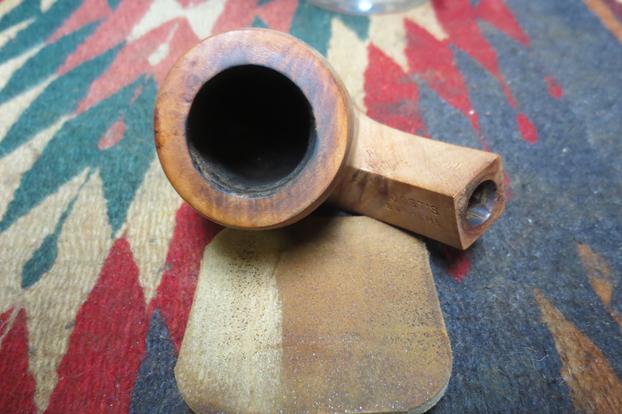
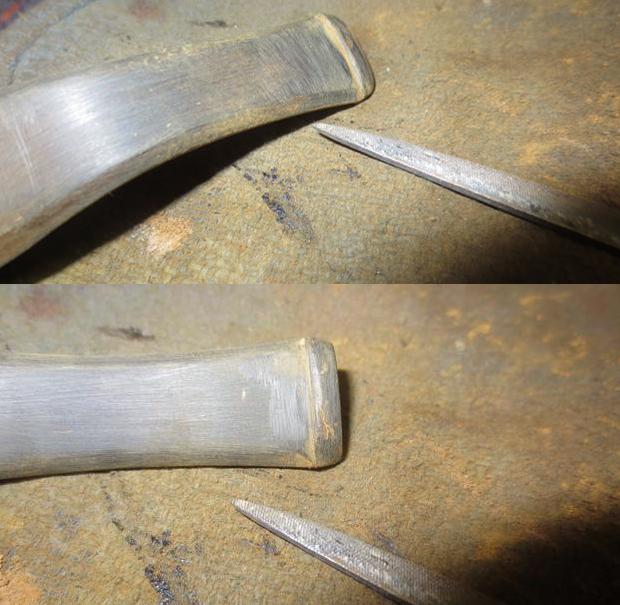
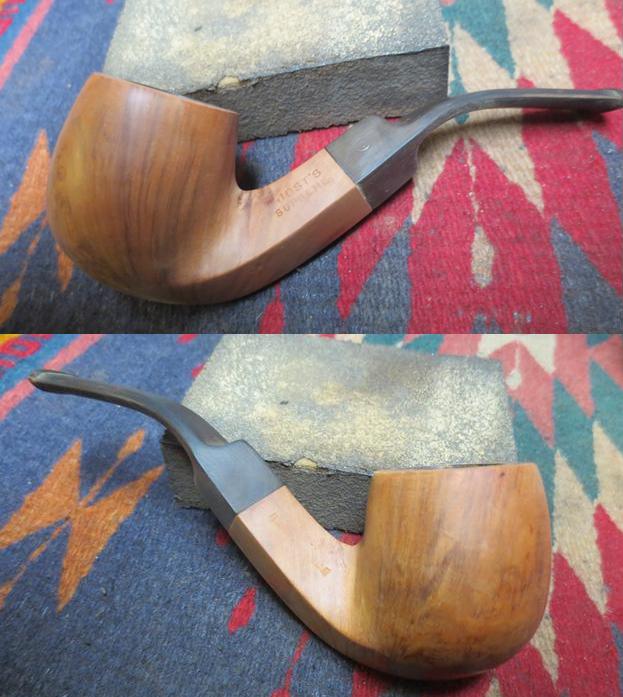
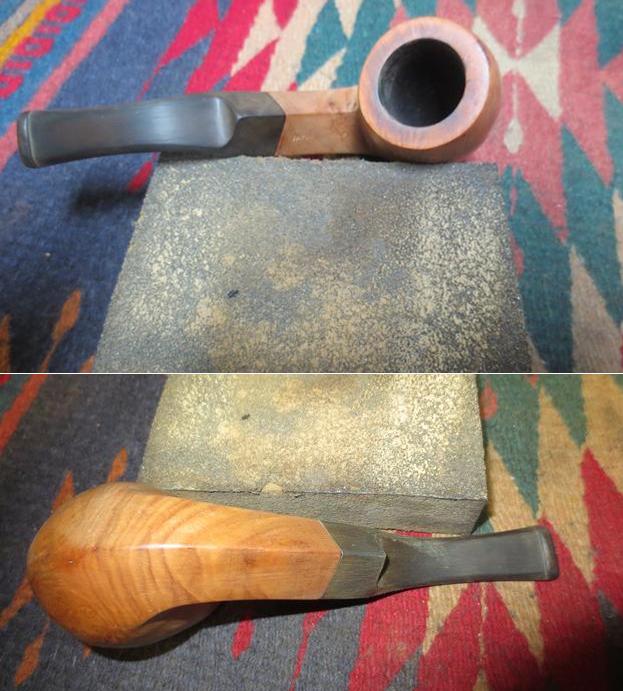
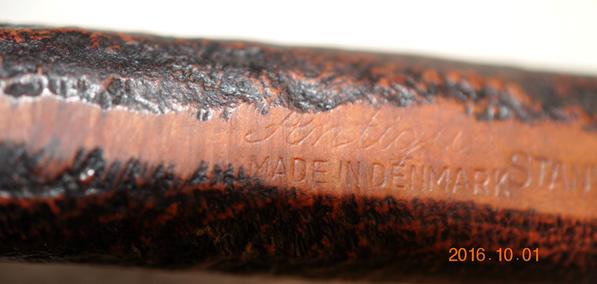
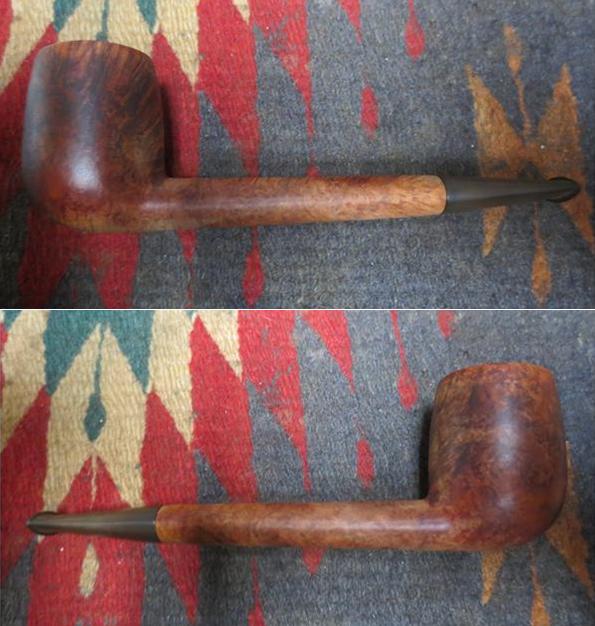
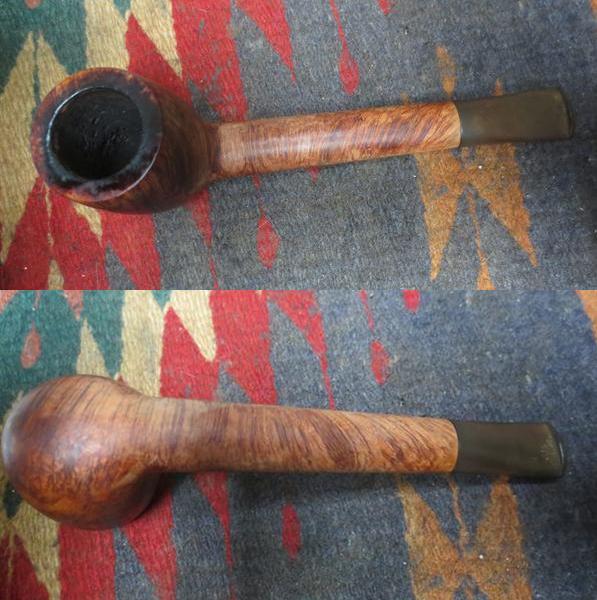
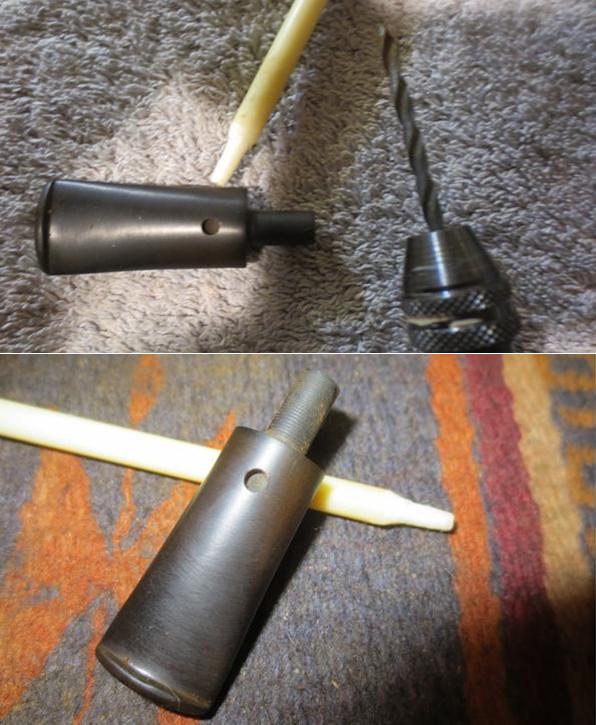
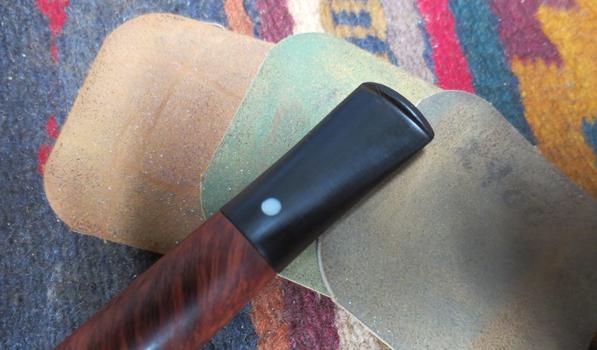
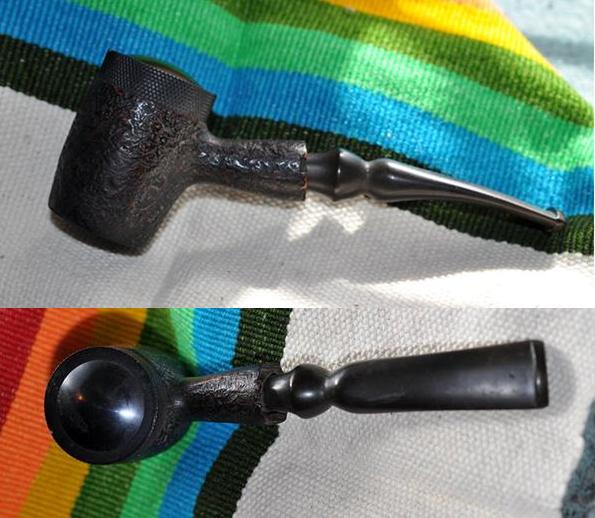
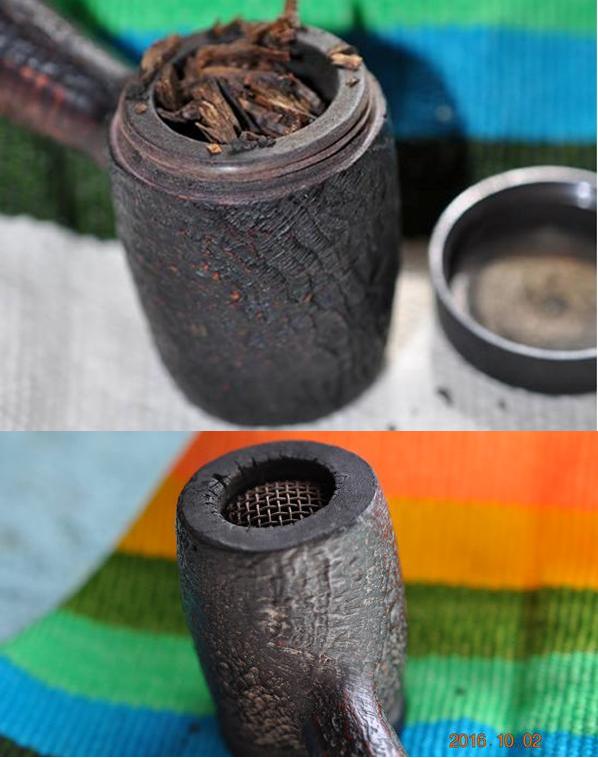
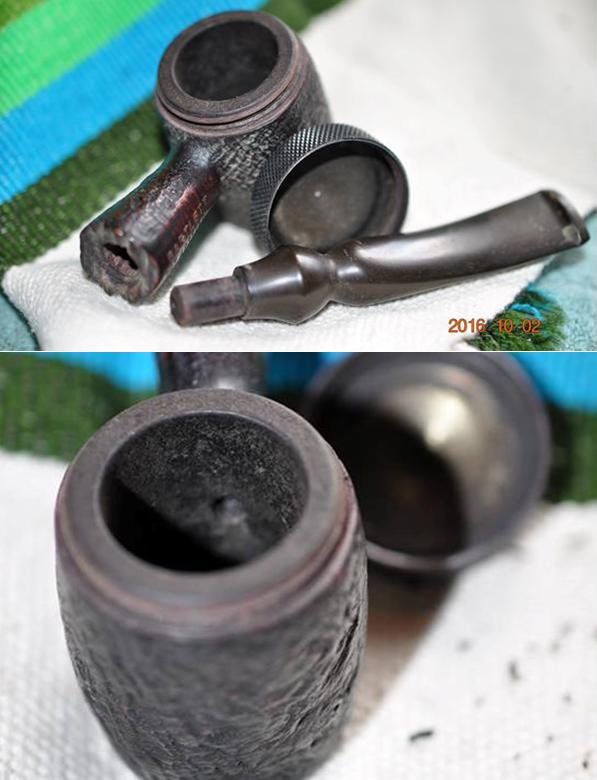
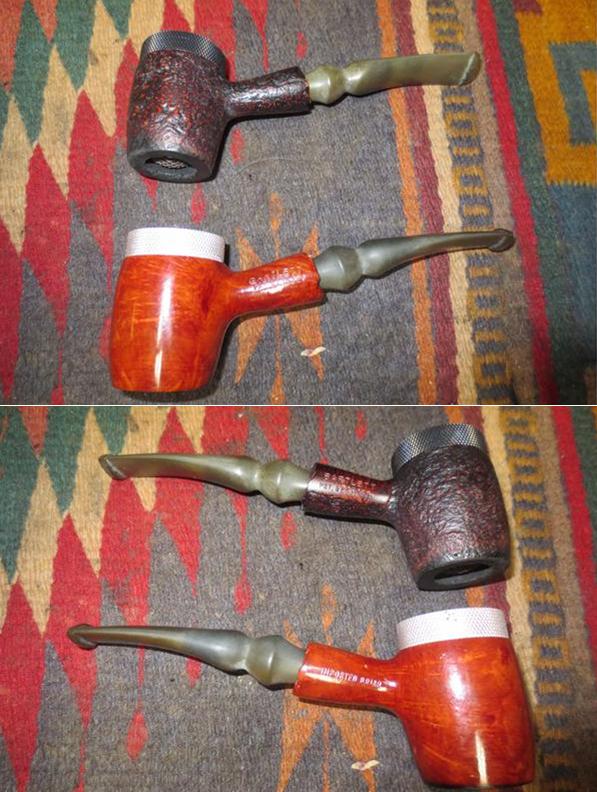
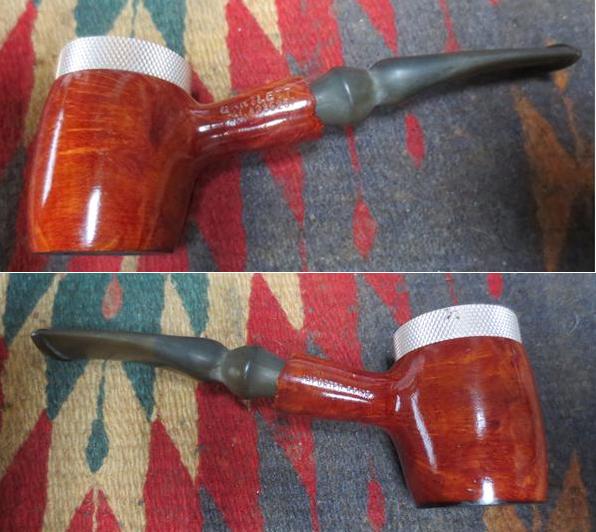
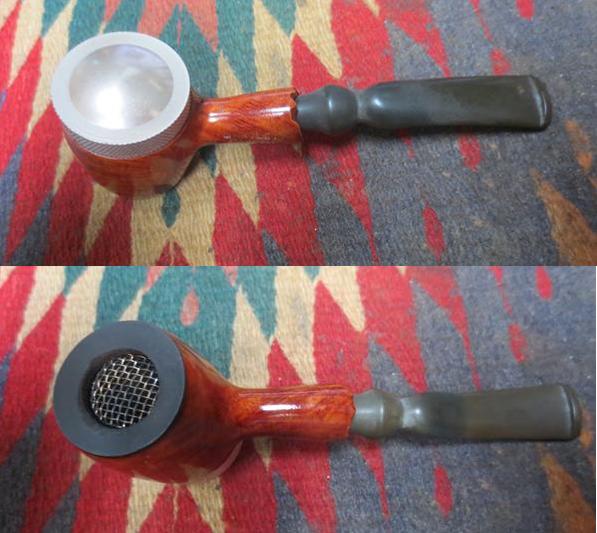
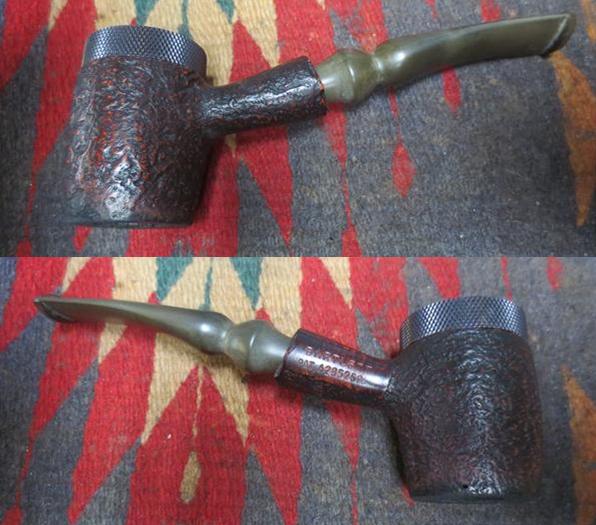
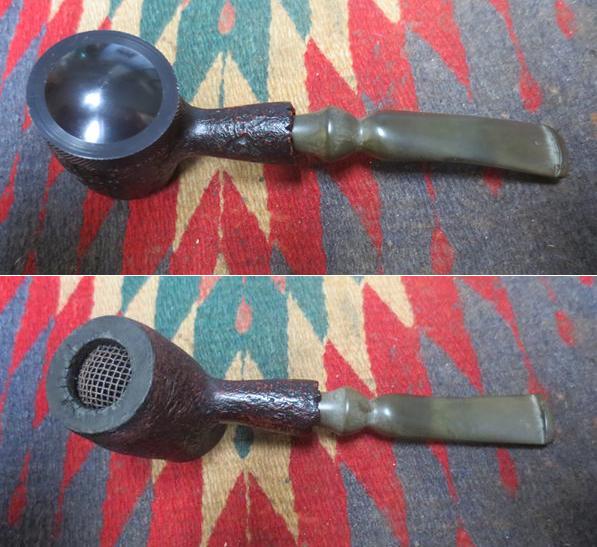
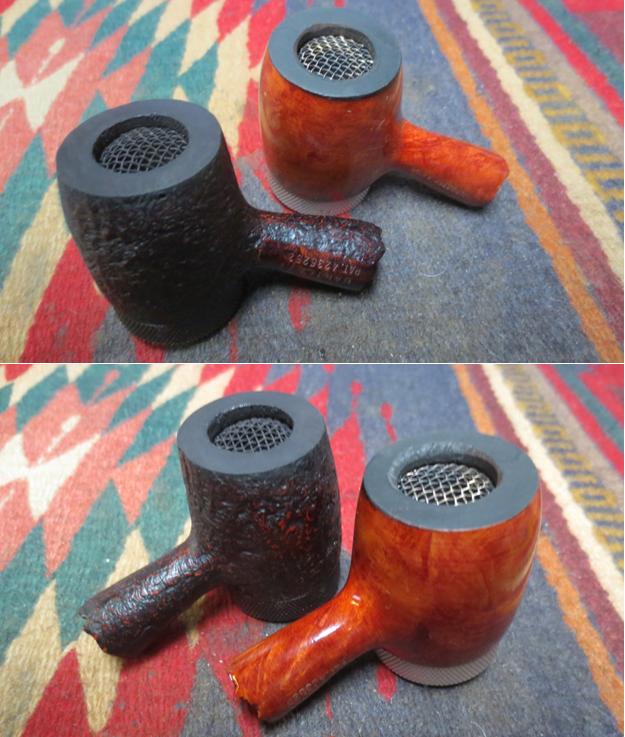
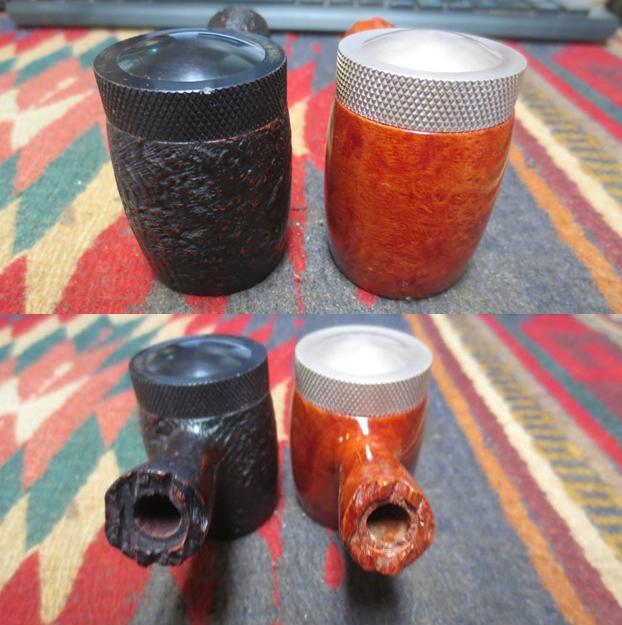
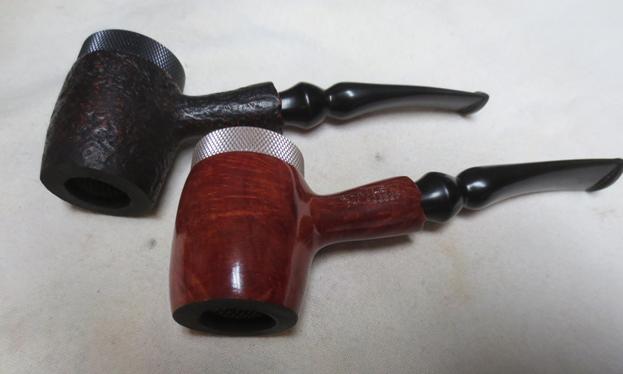
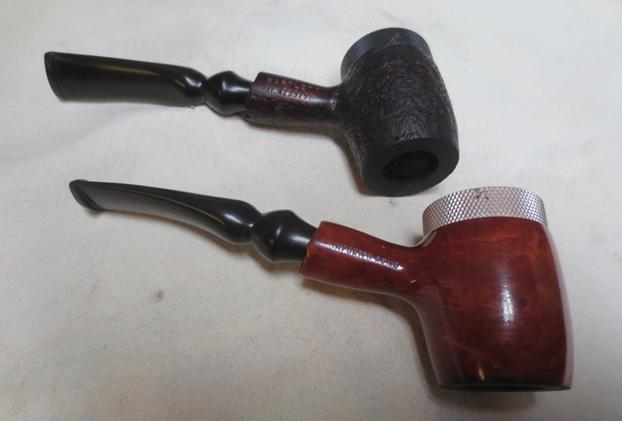
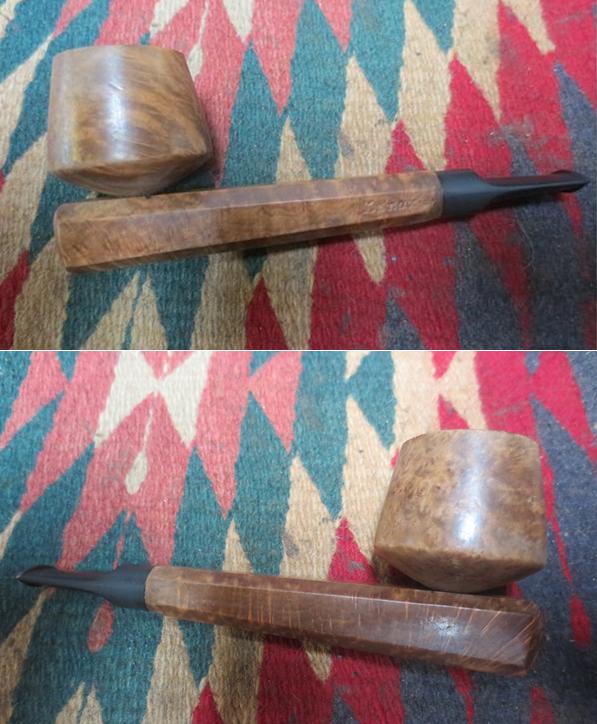
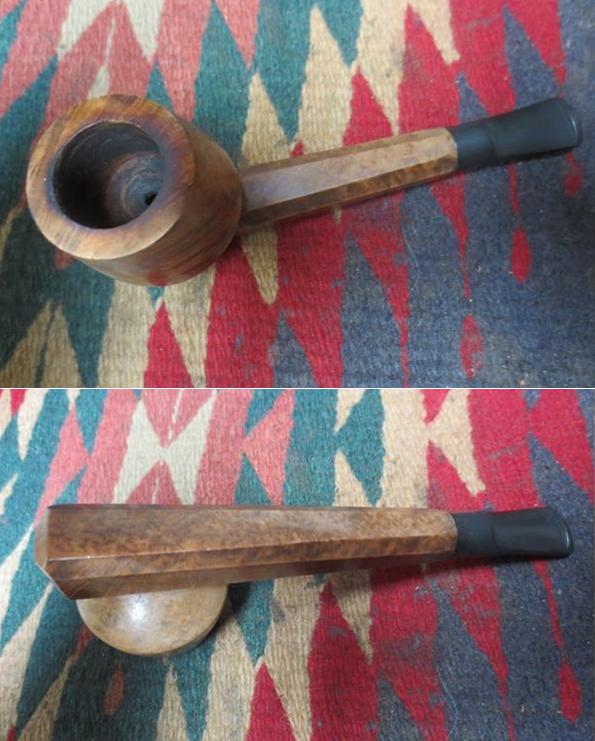
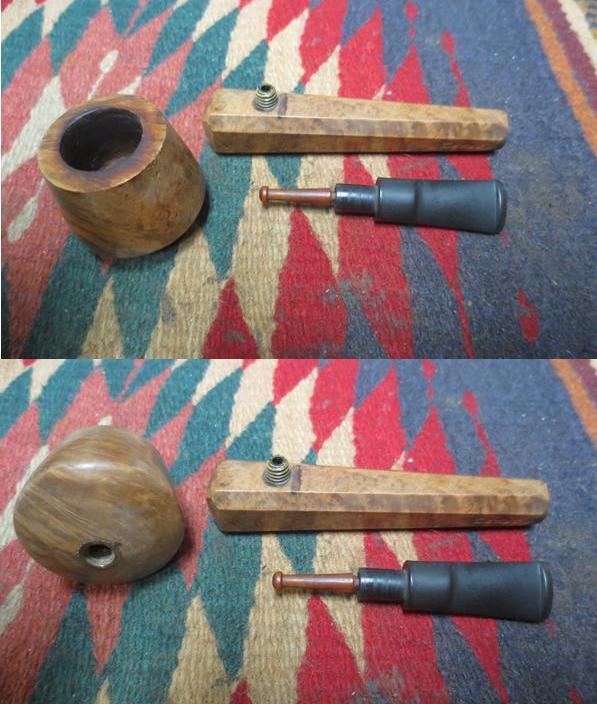
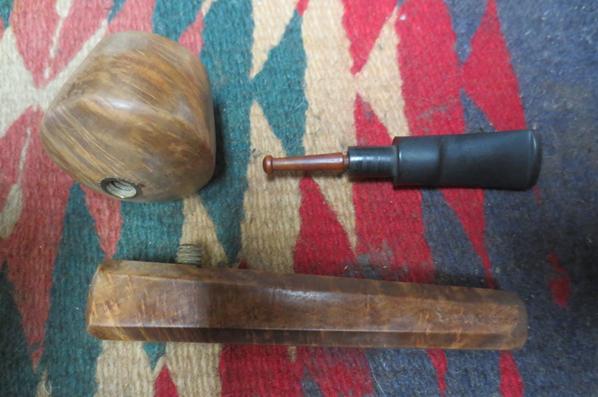
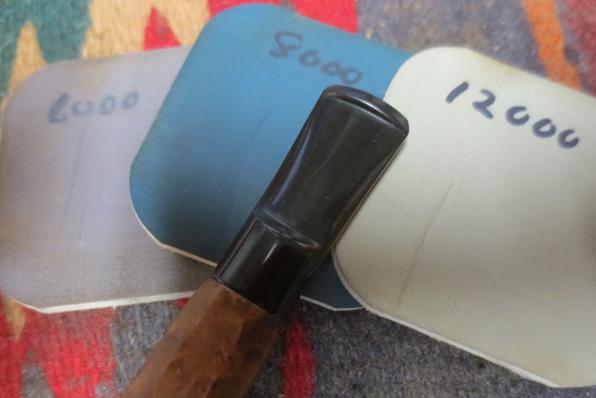
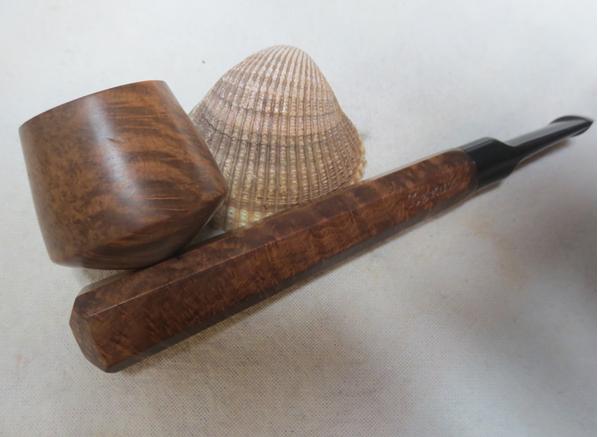
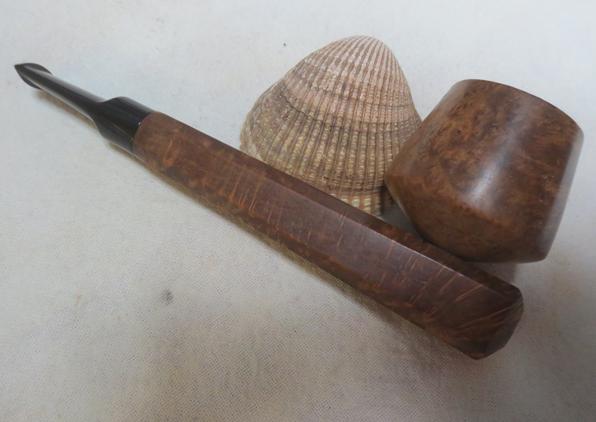
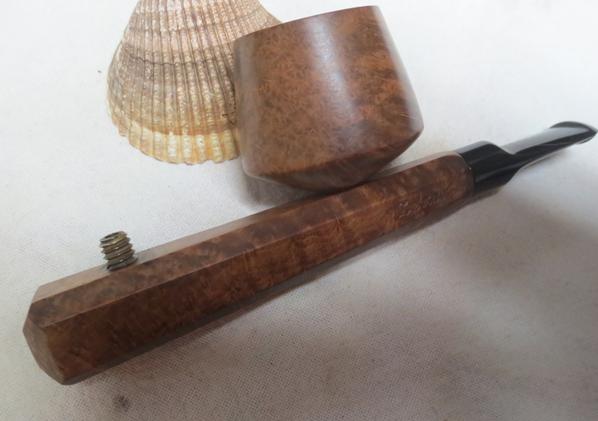
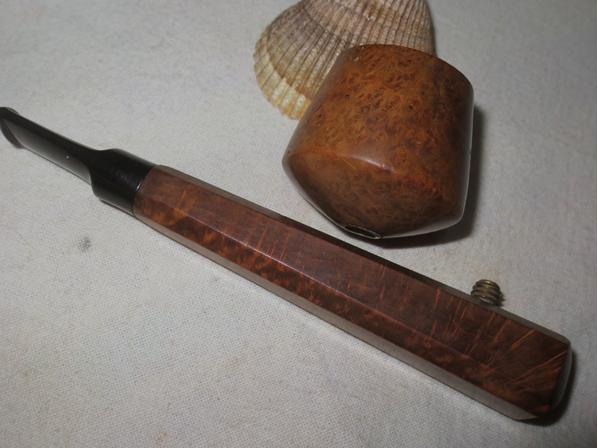
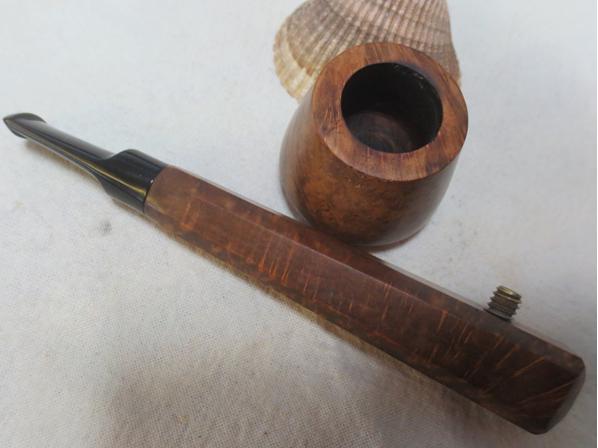
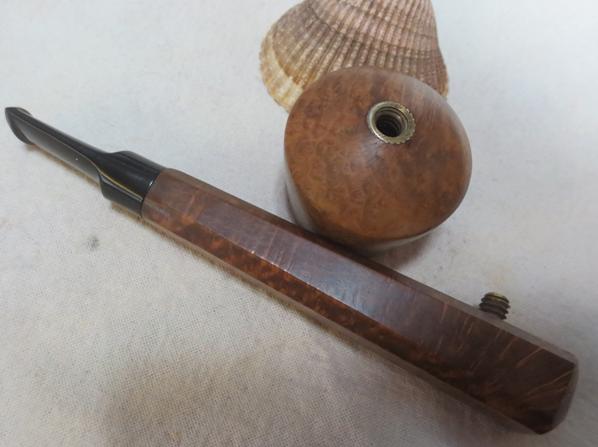
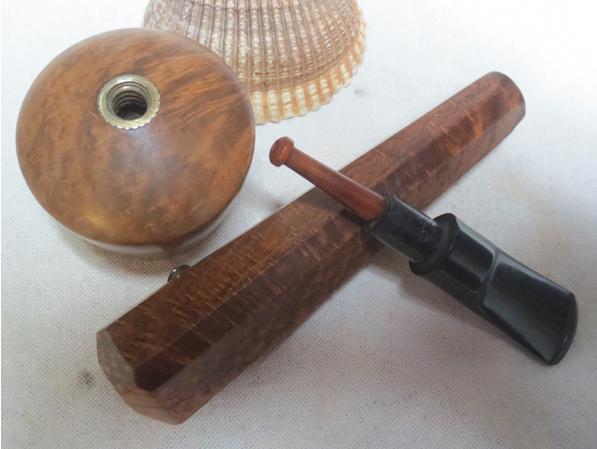
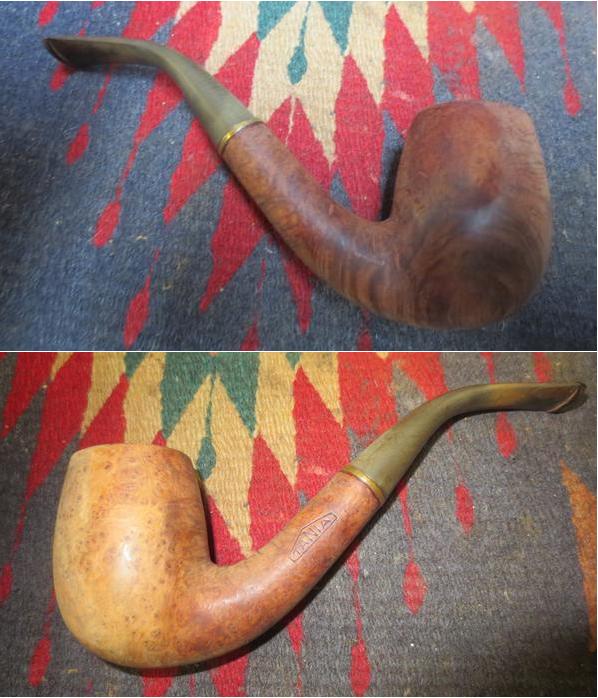
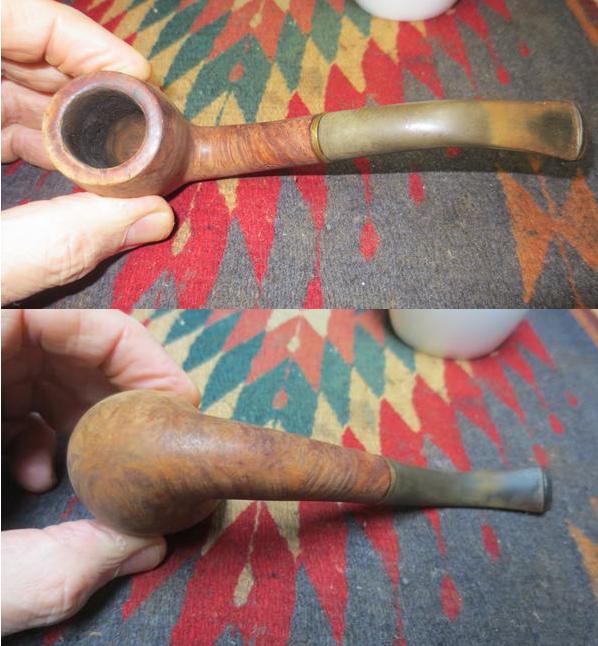
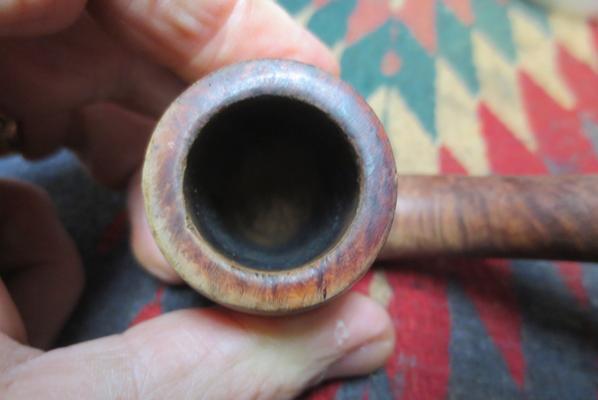
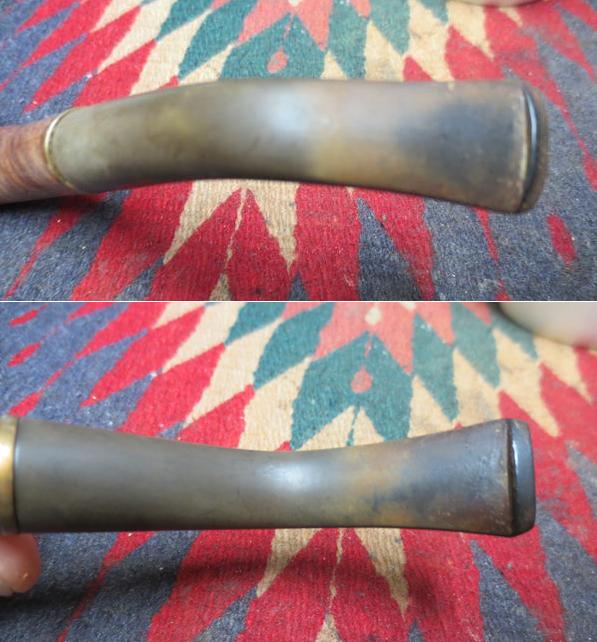
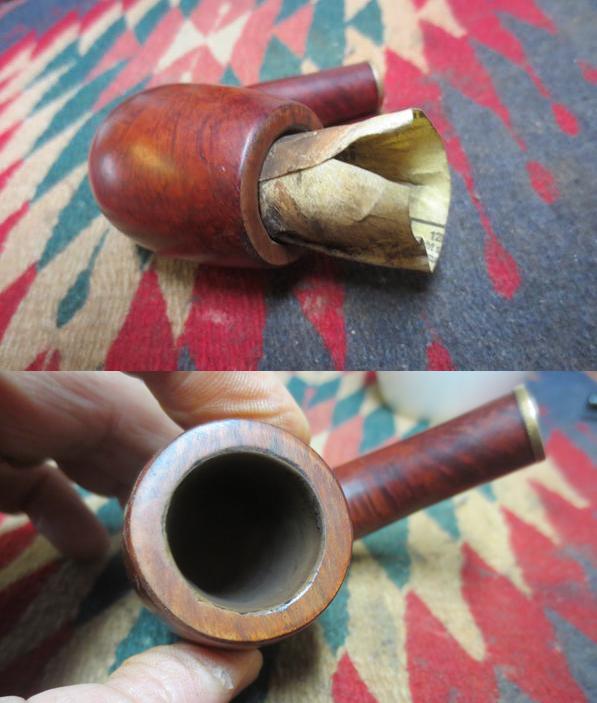
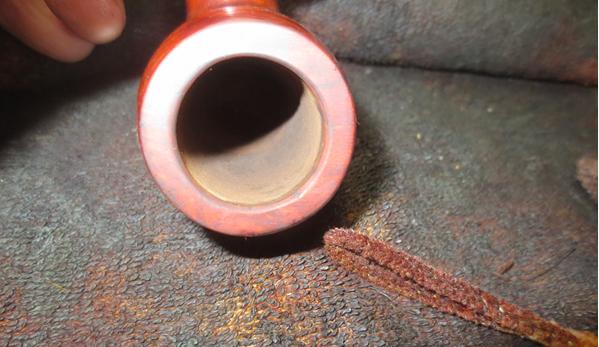
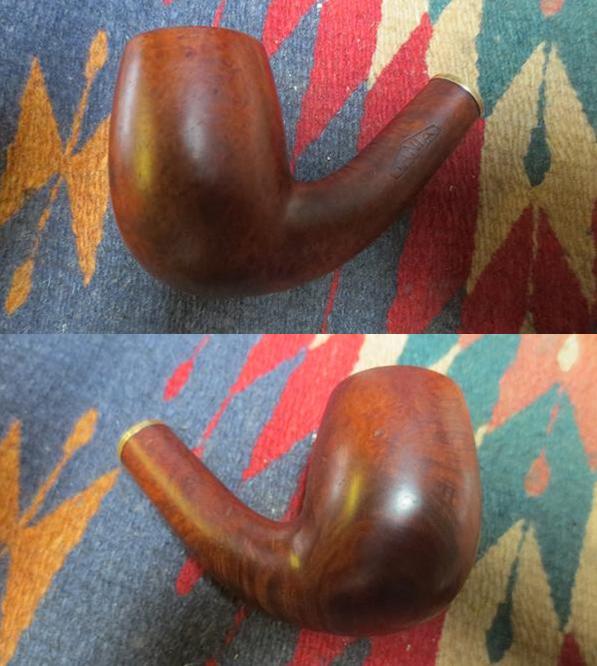
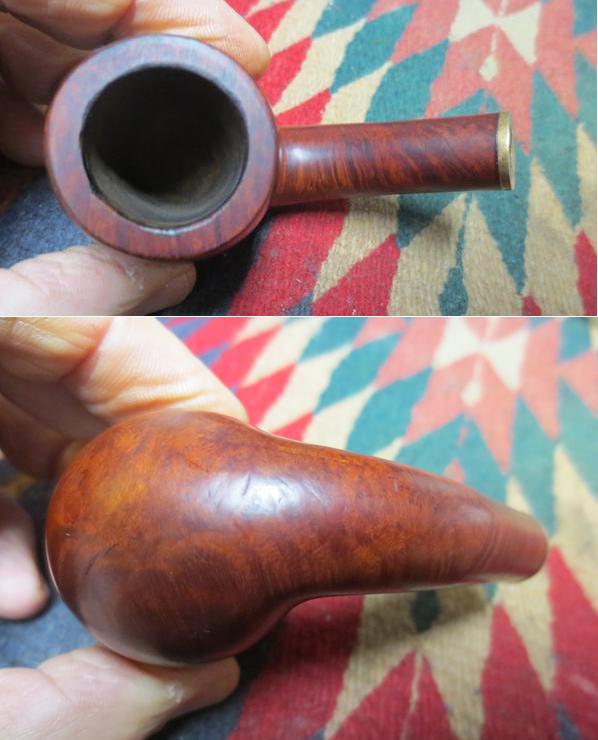
Tag Archives: polishing

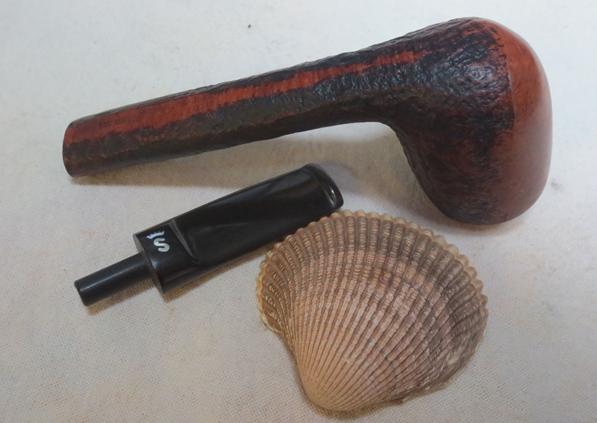
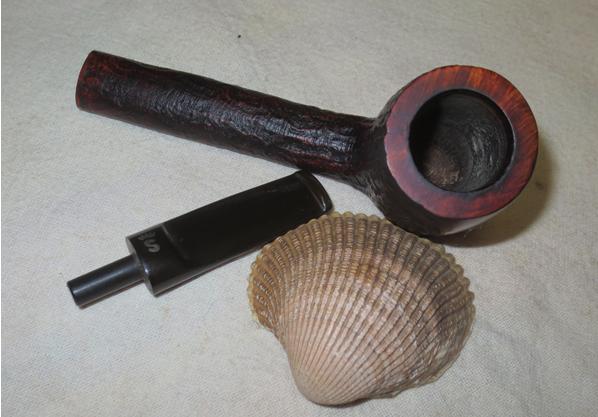
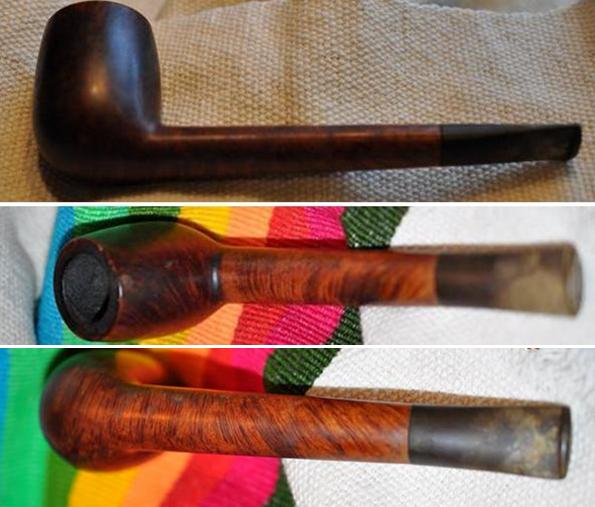
A Berkeley Club 7118 Billiard that turns out to be Sasieni Made


Blog by Steve Laug

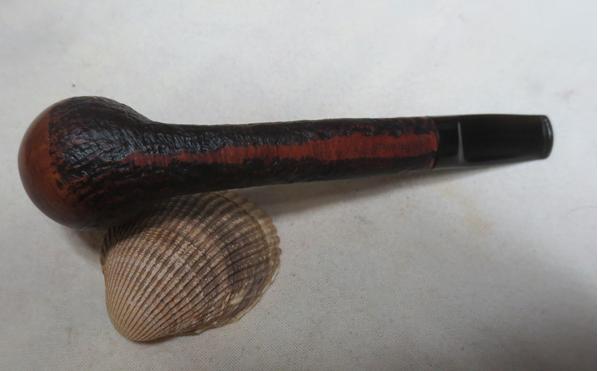
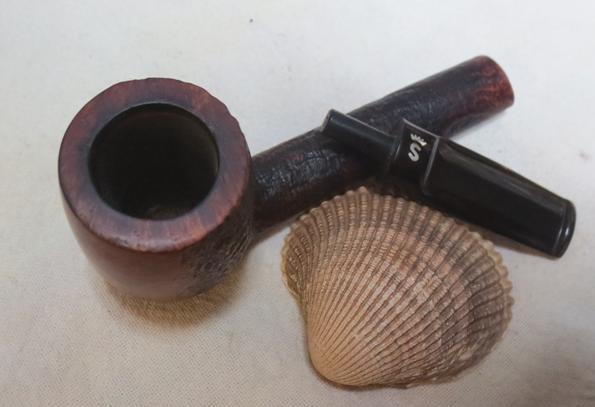
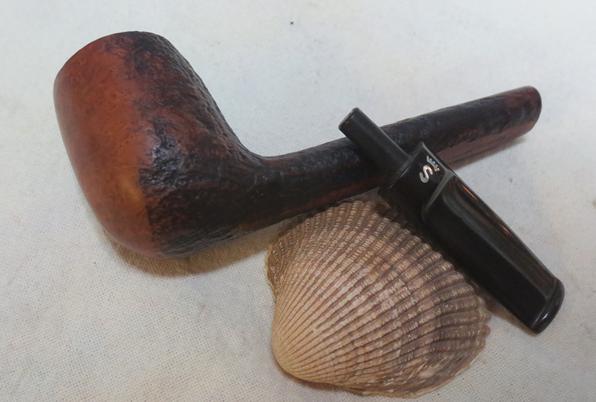
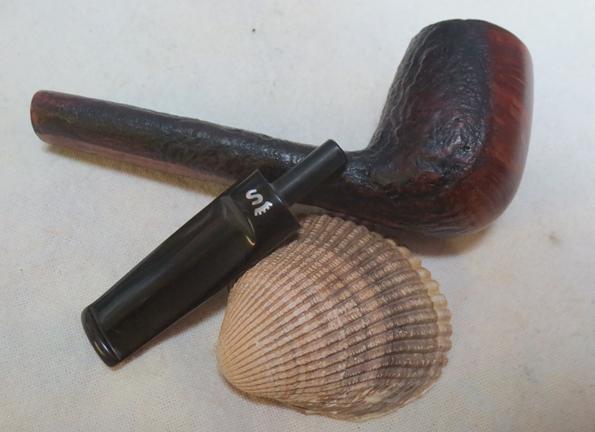
Inside the first boxed set of Picadilly Brand Genuine French Rustique Briar pipes that my brother picked up was a straight billiard that did not bear the markings that were on the bent billiard or on the other complete set of Picadilly pipes. This one had a familiar finish to me but I could not put my finger on it and identify it. It was stamped on the underside of the shank with the following: 7118 over Berkeley Club over London Made. The bowl end of the smooth bottom of the shank it was stamped England in an arch. The finish on the bowl sides was very clean. The rim was a bit beaten. The front edge of bowl had been knocked out on a hard surface repeatedly and left a rash. The entire top of the rim was also beaten up and pitted. It was the only part of the bowl that was in rough shape. The stem had some tooth chatter and some light tooth marks on the top and bottom sides near the button. There was some oxidation and a faded stamp with what looked like a B partially circled by a C.Berk2 Berk3I took a close up photo of the bowl and rim to show the cake on the bowl and the damage to the rim surface. I also took a close up photo of the stamping on the underside of the shank.Berk4I went online to Pipephil’s site Logos and Stampings (http://www.pipephil.eu/logos/en/logo-b4.html) and found the brand and the reminder that had niggled at the back of mind. The Berkeley Club with this stamping was made by Sasieni. The photo below came from that website and shows the same finish and the same stamping on both the shank and the stem.Berk1With that in mind I took the pipe apart to have a look at it. I was expecting the pipe to have an inner tube in the tenon. I looked in the bowl and the point extended into the bowl showing a glint of metal. However when I took the pipe apart there was no inner tube. I shined a light down the mortise and airway in the shank and sure enough the tube had broken off in the airway leaving the mortise unobstructed. I looked at the stem and saw the same – broken off slightly inside the tenon leaving it also unobstructed.

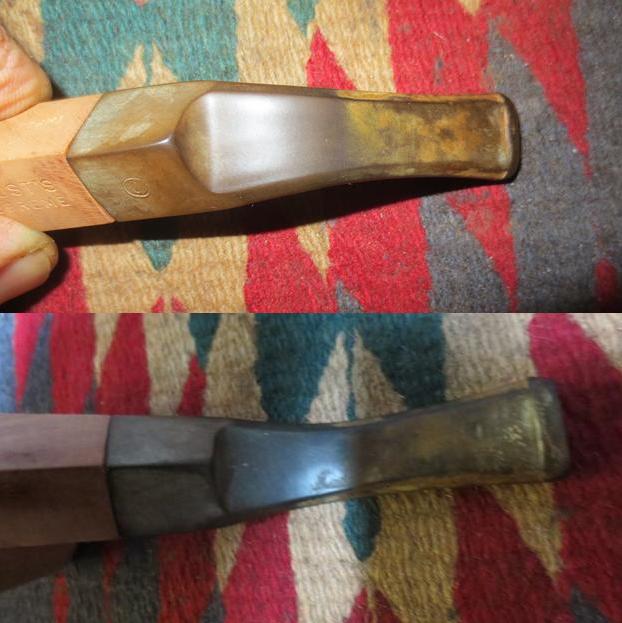
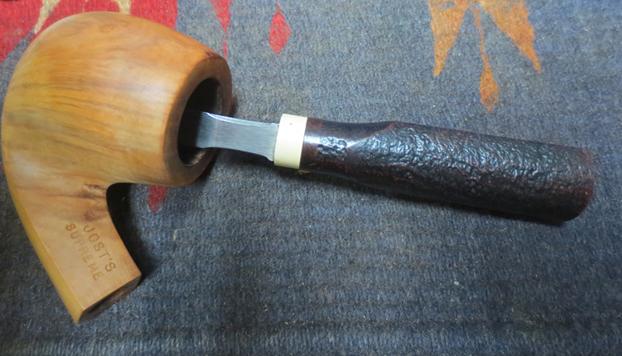
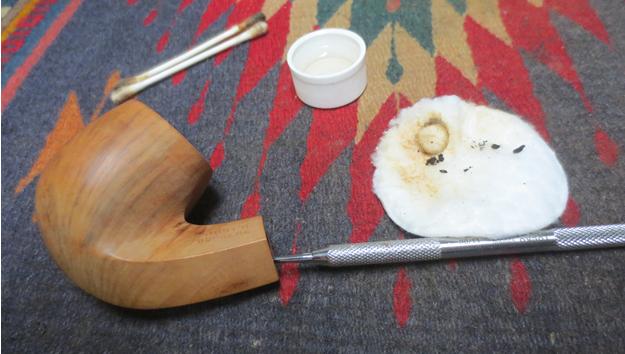
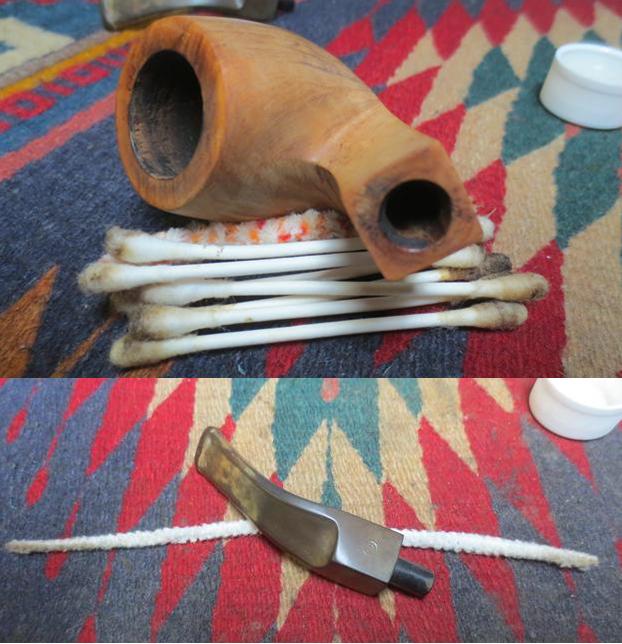
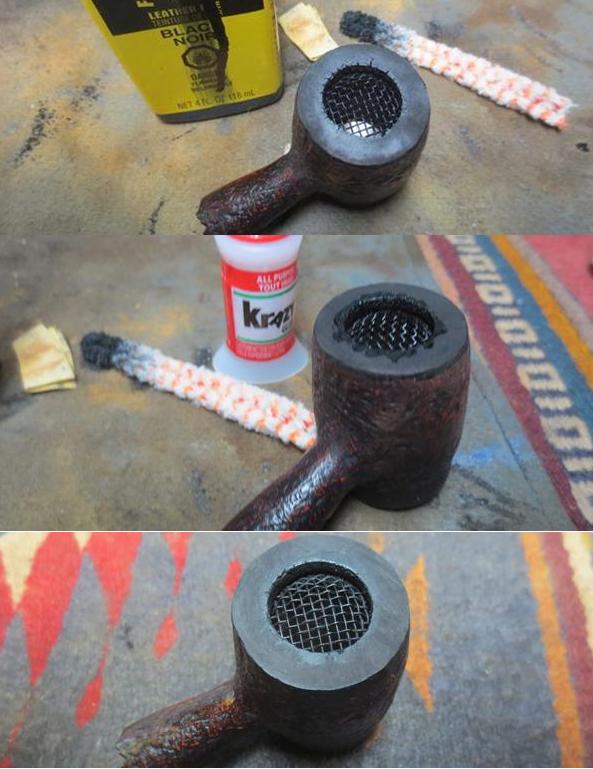
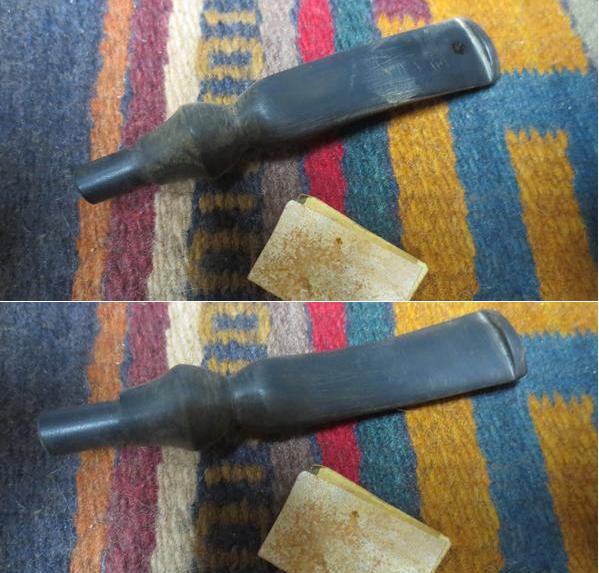
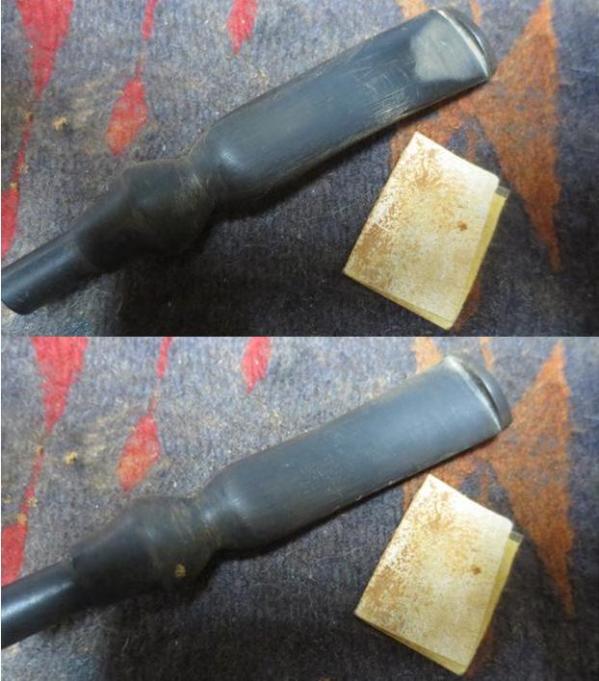
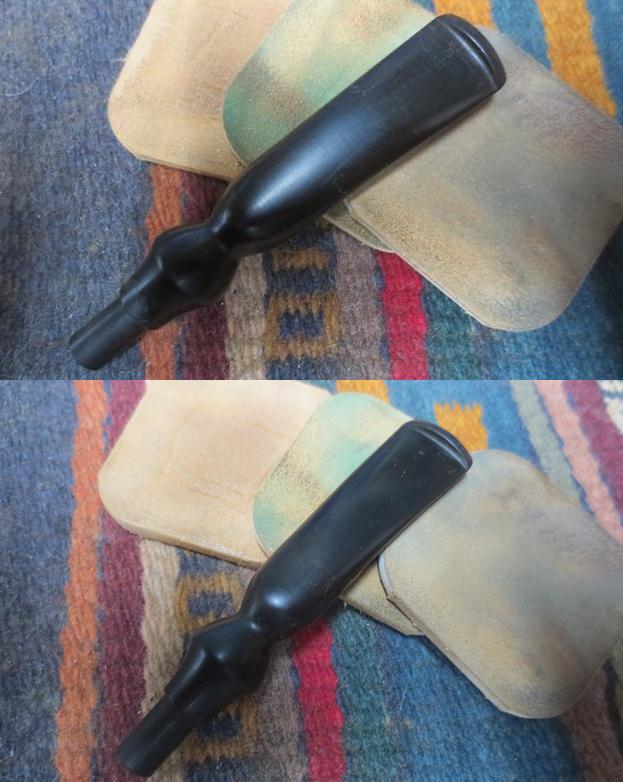
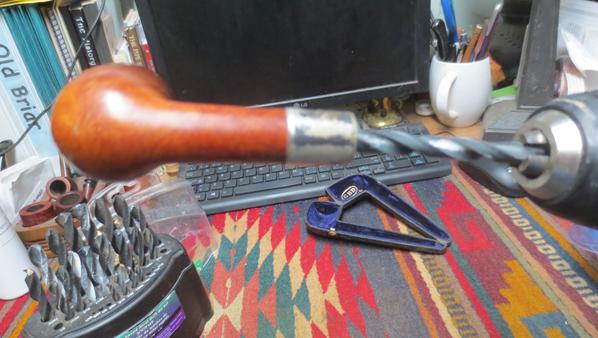
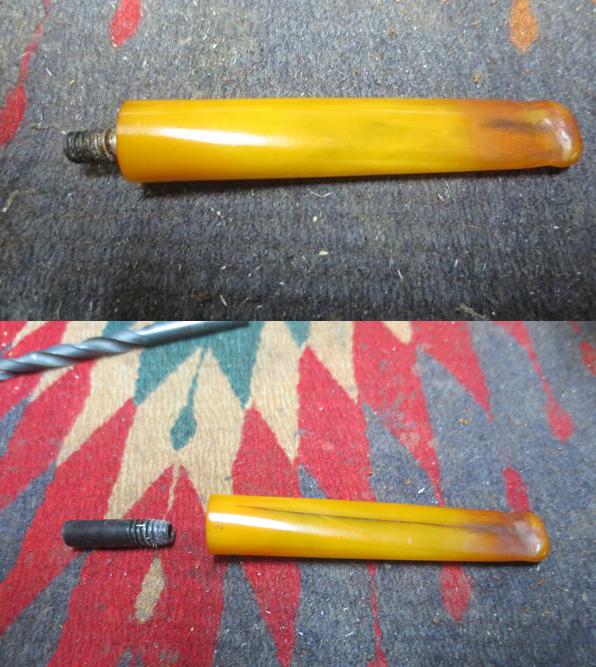
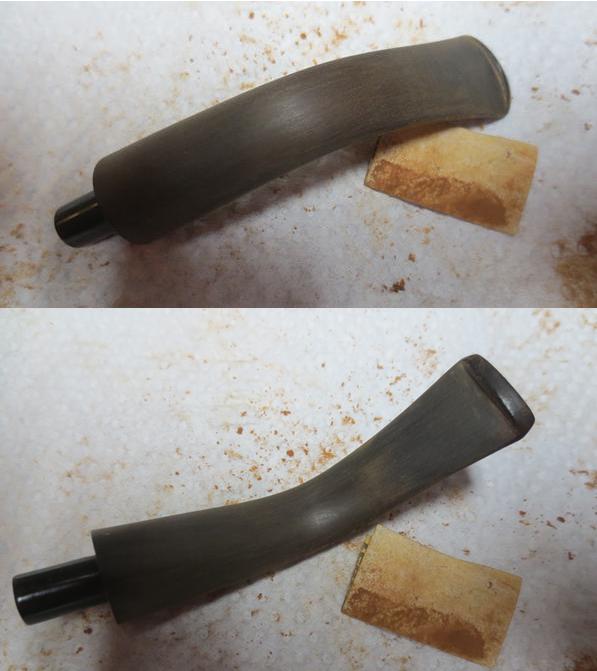
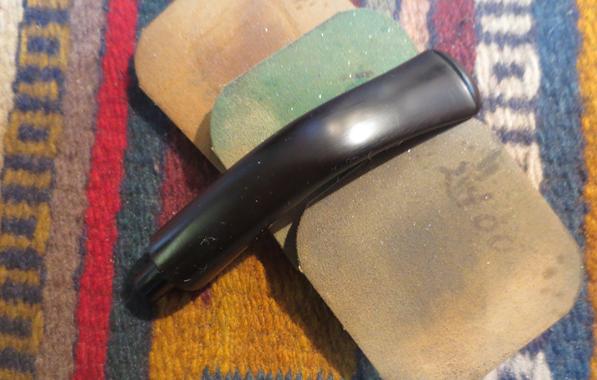
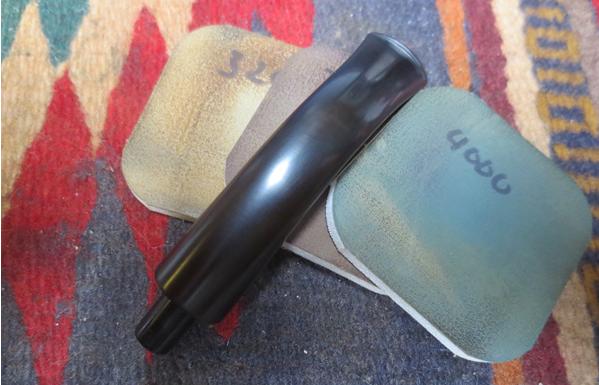
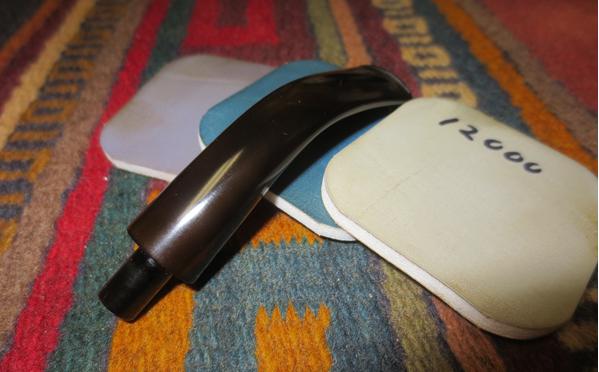
I decided to work on the rim top damage by topping the bowl with 220 grit sandpaper on a topping board. It took some work to remove the damaged portion of the rim. The second photo shows the initial sanding and the third photo shows the finished topping. You can also see the chips in the cake at 12 o’clock in the third photo.Berk5I used the Savinelli Pipe Knife to clean out the cake in the bowl and work on the inside edge of the rim. I was able to remove all of the cake and smooth out the rim edge while keeping it in round in the process.Berk6With that completed I decided to drill out the broken inner tube in the shank of the pipe. I used a drill bit almost the same size as the airway in the inner tube. I increased the size of the bit until it was the same size as the airway and drilled out the broken tube. I never use a power drill when I am doing this – rather I use a cordless drill sans battery (I don’t want to inadvertently hit the trigger and regret it). I turned the shank onto the drill bit until it grabbed onto the tube and I was able to pull it out on the end of the bit. While I was pulling I also used the end of the Savinelli Pipe Knife to push on the end of the inner tube in the bowl. It takes patience but the result leaves behind no damage to the airway or the bowl.Berk7I scrubbed the rustication on the bowl with a tooth brush and Murphy’s Oil Soap until it was clean. I rinsed it under running water to remove the soap and the debris. I dried it off with a soft cotton towel.Berk8I took some photos of the cleaned and dried pipe to get an idea of what I needed to do with the finish on the bowl and shank. The pipe looks really good other than the top of the rim that I will need to restain and polish.Berk9 Berk10I cleaned out the mortise in the shank and the airway in the shank and the stem. The airway was quite clean thanks to the broken inner tube. The mortise had some tars and oils that took a few cotton swabs, pipe cleaners and alcohol to remove. The stem was dirty on the inside and took considerably more pipe cleaners than the shank. I used pipe cleaners and alcohol to clean out the stem airway.Berk11To match the stain on the bowl sides I used a black Sharpie Marker and a dark brown stain pen to restain the rim top and the outer edges of the bowl.Berk12I cleaned up the inner edge of the bowl with a piece of sandpaper wrapped around my finger to smooth out the rough edges of the inner rim. It took a few passes to smooth out the edge but when it was done it looked much better.Berk13I gave the bowl a coat of Conservator’s Wax and buffed the bowl with a shoe brush to bring up the shine.Berk14I used the same method that I spelled out above – a stationary drill and drill bits to remove the broken tube in the tenon. I drilled until the bit caught a hold of the tube and then pulled the tube out of the tenon.Berk15I used some European Gold Rub ‘n Buff to fill in the logo on the stem. I applied it with a cotton swab and then rubbed off the excess. The finished logo is shown in the photo below.Berk16I wet sanded the stem with 1500-2400 grit micromesh sanding pads. I rubbed it down with Obsidian Oil. I dry sanded it with 3200-4000 grit pads and gave it another coat of oil. I finished sanding with 6000-12000 grit pads. I gave it a final coat of Obsidian Oil and set it aside to dry.Berk17 Berk18 Berk19I buffed the stem with Blue Diamond polish on the buffing wheel and then gave it multiple coats of carnauba wax. I buffed the bowl and the stem with a clean buffing pad to raise the shine and polish the wax. I buffed it again by hand with a microfibre cloth. The finished pipe is shown in the photos below. It came out looking really good. This one will eventually be listed for sale on the store. You can send me an email or a message any time if you would like to add it to your collection. Thanks for looking.Berk20 Berk21 Berk22 Berk23 Berk24 Berk25 Berk26

Another ‘Hole in the Wall’ Find – BBB Banker Bent Volcano


Blog by Dal Stanton

Last April, during one of my earlier visits to what I have affectionately named, ‘The Hole in the Wall’ antique store near the Zhenski Pazar (Women’s Market) in downtown Sofia, Bulgaria, my eyes locked on to a very handsome pipe that called out to me resolutely – “Take me home!”  The pipe was a slightly bent volcano shape, brandishing a broad flattened oval shank and stem that drew my attention.  In my small collection of pipes then, and even today, I have nothing like it.  After taking in the unique shape, the briar grain, obscured by layers of grime and old wax, gave me an internal ‘wow!’ that I carefully kept hidden from the shop owner who would see my excitement as potential greater profit for him – so I played it cool.  I looked at how the grain moves horizontally across the bowl and shank giving the appearance of a tiger pattern looking down on the shank.  Looking straight at the bowl the grain looked like horizontal flames terminating on the sides of the bowl with Birdseye patterns – I was anxious to work on this pipe.  The top of the shank was imprinted with the classic BBB diamond mark over Banker.  Underneath the shank had London, England over 739.  The stem top also had the white diamond BBB mark.  I also spied another pipe in the basket that looked like a good candidate to bundle with the BBB Banker, a French Jeantet Fleuron 70-7 which helped me negotiate 30 Bulgarian Leva for the pair – about 16US.  Not a bad deal at $8 a pipe!  The first picture is the Jeantet followed by the BBB Banker after I arrived home from the ‘Hole in the Wall’ with my newest acquisitions:Bank1 Bank2 bank3 Bank4 Bank5 Bank6 Bank7 Bank8 Bank9I found a lot on the internet about the BBB name.  The small blurb in Pipehill describes the evolution of the BBB moniker:

BBB: ” Best British Briar” is now a brand of the Cadogan Company (Oppenheimer group). American rights to use the brand name were sold to Wally Frank in 1980.

Founder of the brand in 1847: Louis Blumfeld. The oldest pipe brand name in the UK has been registered in 1876 (Blumfeld Best Briar).

Steve also posted a blog on the history of BBB pipes a few years ago using the French article:

https://rebornpipes.com/2012/08/05/history-of-bbb-pipes/

I discovered that there are many BBB collectors and enthusiasts in my research.  Unfortunately, I could find nothing helping me to date or place my BBB Banker except some informed guesses comparing to the BBB stamps (pictured below) depicted in the French article Steve posted above which would probably date the Banker at the earliest in 1989 when the Cadogan Company consolidated manufacturing its various pipe lines at Southend-on-the-Sea, but more likely in the 2000s – not a terribly old pipe (Can anyone help me on that?):Bank10The condition of the Banker is generally good.  There is some cake build up in the chamber but I still want to ream the bowl down to the briar for a fresh start and to be able to make sure there are no problems lurking beneath – which I really don’t expect.  The rim has light grime and lava on it, but a significant wearing down of the front lip so that bare briar is exposed.  The stummel looks to be in good shape – I detect one fill underneath but it looks to be solid and will blend well.  The stummel grain is dulled and obscured by grime and oil build up.  The stem is in good shape – showing almost no oxidation, but has a tooth dent on the lower side of the bit.  I take a fresh close up of the rim to mark the progress.  I begin with reaming the bowl with my Pipnet reaming kit.  As I’ve become accustomed, I try to do the dirtier part of the cleanup on the 10th floor balcony adjoining our bedroom where my work-station is here in Sofia, Bulgaria.  Sometimes I wish I had a basement work area, but we do what we must!  I use only the two smaller blades of the four blades available to ream the cake down to the briar.  I follow the use of the reaming blades with 120 grit sanding paper to clean the cake further and finish with 240 grit on the chamber wall.  The bowl looks good.  True confession – while I was reaming the bowl my thoughts drifted off to a Savinelli reaming knife – on the eBay block, that I’ve had my eye on – one like Steve often employs.  There are still a few days left in the auction and I’m hopeful that I might add it to the arsenal!  I’ll let you know!  In order to get a better idea of the rim’s condition, I clean the external stummel with Murphy Oil Soap and work on the grime covering the rim.  I use cotton pads with undiluted Murphy’s.  I also employ a brass brush to work on the rim.  After the cleaning, I take the stummel to the sink and rinse it with cool tap water.  The pictures show the progress.Bank11 Bank12 Bank13 bank14Ok, for you who have years of restorations under your belts, here are some newbie musings – your patience appreciated!  At this point I realize I need to top the bowl to repair the front lip of the rim – it won’t take much but it is needed.  When one takes the rim down to the bare briar, I’ve learned that one also must have a plan for matching the hue of the old stain if one desires to keep the old stain tone matching the bowl.  I like the color scheme of the BBB Banker and I desire to keep it.  To keep it, I need to match the rim color tone with the rest of the stummel AND I need to address the very minor scratches and wear marks on the stummel surface BUT NOT sand it aggressively to remove the stain.  It is in some ways much easier to take the briar down to the wood with acetone and sanding and then apply new stain and voila!  New surface and color all blended and ready to go.  I know this situation calls for use of polishing compounds and such, which is a more passive approach to dealing with the surface – more opportunity to learn new things!  So, I move forward with topping the bowl with the aim of maintaining the current rich, deep red tones – we’ll see how it goes.  I took the BBB Banker to the topping board – 240 grit paper on a chopping block and rotated it on the paper in a gentle clockwise circle not applying too much pressure – letting the grit do its work.  To make sure I wasn’t leaning into the damaged lip area as I rotated, I eyeballed that the damaged area was untouched during the early rotations which meant the topping was true – I took a picture at this point (second picture).  I took off only enough to clear out the front lip problems.  I think it went well and the bowl looks perfectly round.  As I often like to do, to add a classy touch to the rim I bevel the inside lip.  I make the initial cut of the bevel with 120 grit sanding paper followed by 240 grit.  I’m satisfied with the bevel – not too much but just an accent.  I use micromesh on the rim from 1500-12000 to complete the rim repair preparing it for stain later.Bank15 Bank16 Bank17 Bank18 Bank19Now, the stummel surface.  I have questions rolling through my mind regarding how aggressive I can be to remove small scratches and wear blemishes but maintain the original patina of the briar as it came to me.  I elect to micromesh the stummel surface and leave the small blemishes.  I do not start with the coarsest pad (1500) but at 2400 – gentle approach (though the first picture below shows the 1500 it was not used).  I’m not sure this is the best plan but I can always back up to a more aggressive posture if I’m not satisfied with the results.  After a quick email with Steve, I feel better about the course of action.  I continue on the stummel with micromesh pads 3200-4000 and 6000-12000.  I am loving the briar grain popping out through the micromesh process – one of God’s small creations each piece of briar.  The pictures show the progress:Bank20 Bank21 Bank22As I put the stummel aside to work on the stem, I realized that I was so involved in working on the externals that I forgot that I hadn’t cleaned the internal of the stummel nor stem.  Before working on finishing the stem I decide to use the retort to clean the internals.  Last time I used the retort, an alcohol saturated cotton ball was launched from the bowl during the process.  I was gun-shy of the retort to begin with when I first acquired it – the launch didn’t help.  Notwithstanding, I unwrap the retort, get out the vodka, and proceed to let the retort do its work.  The pipe was surprisingly clean.  After two retort cycles, I finished off with cleaning the internals of stummel and stem with Qtips and pipe cleaners dipped in alcohol.  I think it’s better to clean internals earlier in the process….Bank23 Bank24 Bank25Now to the stem externals.  Earlier, I applied black super glue to two significant tooth dents on the underside of the bit (visible in picture above).  I use 240 grit sanding paper to remove the excess super glue removing traces of the dents as  well as file marks after using a needle file to fine tune the shape of the button. There was very little oxidation on the stem or teeth chatter so I proceed to wet sand with micromesh 1500-2400 and apply Obsidian Oil to the stem.  I follow by dry sanding using 3200-4000 micromesh pads and then the same with 6000-12000 and apply Obsidian Oil and set the stem aside to dry.  I’m pleased with the vulcanite ‘pop’ – that wet reflective look is great.Bank26 Bank27 Bank28 Bank29Well, I mentioned earlier that I was hopeful to add a Savinelli pipe knife to my tool box.  Steve speaks highly of this tool and has increasingly put it to good use in his restoration work.  He also posted a blog describing it when it arrived on his work table in Vancouver.  When I saw one on the block in the eBay’s estate pipes in tobacciana listings a few days ago, I decided to watch the auction and see if I could snag it – it seemed to be calling out to me: “I want to live in Bulgaria!”  As you would guess, others were watching too.  I’m thankful that my bid was sufficient and my new Savinelli pipe knife will be delivered to my daughter and son-in-law who live in Denver.  They will carry it with them to Bulgaria (along with some other supplies I’ve ordered including 32 oz. of Lane BCA Cavendish tobacco which I discovered with great enjoyment on my last trip to the US) when they visit in September!  My son-in-law had no problem agreeing to find space in the suitcases when I bribed him with sharing bowls together of the Lane BCA!  So, I’ll look forward to their arrival for the additional reasons that they will be packing new supplies and my new pipe knife!Bank30The BBB Banker slightly bent volcano is now in the home stretch.  After topping and sanding the rim with micromesh, I left the rim the bare wood until I finished the sanding of the stummel. I did this so that the stain I would eventually apply to the rim would be more closely matched.  Using an Italian brand stick, I applied a dark Mahogany stain to the rim and before it dried, lightly wiped it with a dry cotton pad to remove uneven stain application – the first two pictures below show before and after application of the stick.  I’m very satisfied with the match up of stummel and rim and am anxious to finish the stummel.  Living on the 10th floor of a former Communist block apartment building and with my work station in my bedroom (shared with my gracious and understanding wife!) space is at a premium.  My Dremel high speed tool is my workhorse when it comes to the polishing wheel.  Starting with a felt wheel, I first purge the engaged wheel by using the flat edge of the Dremel’s metal tightening wrench against it.  This softens the wheel and rids it of residue Tripoli caking from previous jobs.  With the newly purged wheel, I begin the final polish of the BBB Banker applying Tripoli to the surface addressing the minor pits and scratches on the bowl surface that I did not sand out aggressively to guard the beautiful patina of this piece of briar.  Bank31 Bank32 Bank33Finished with the Tripoli and Blue Diamond, I change to a cotton cloth wheel for the Dremel and apply several coats of carnauba wax.  I use the slowest setting for the Dremel and keep a continuous circular rotation over the briar surface – oh my, does the grain pop!  I cannot say exactly when this pipe was made, but if it’s been since 1989, someone employed by Cadogan Company’s Southend-on-the-Sea pipe making plant did an amazing job with the choice of this piece of briar and the volcano shape it became.  The grain is beautifully showcased in horizontal movements laterally across the stummel so that one can see the horizontal flame grain facing the stummel straight on and then move to the sides of the stummel and see the grain emerge in Birdseye perspective and swirls.  In the beginning I described the top-down view of the broad, flattened oval shank as reminiscent of tiger fir to me – now as I look at it zebra also comes to mind.  Another example of the beautifully showcased briar grain in the Volcano shape is the broad landscape of its underside – from across the broad shank to the front lip of the volcano base, runs a robust dissecting flow of grain that is majestic from my vantage point.  Yes, I confess, I’m a briar grain junkie.  Its beauty reminds me of its Maker.  With my last application of carnauba wax on stem and stummel, I change to a clean cotton cloth wheel and buff the entire stummel and stem.  Then I give the BBB Banker bent volcano a brisk buffing with microfiber cloth to bring out the richness of this briar even more.  I’ve enjoyed this restoration and look forward to loading the BBB Banker with its first bowl of tobacco in my hands.  Thanks for joining me!Bank34 Bank35 Bank36 Bank37 Bank38 Bank39 Bank40 Bank41 Bank42
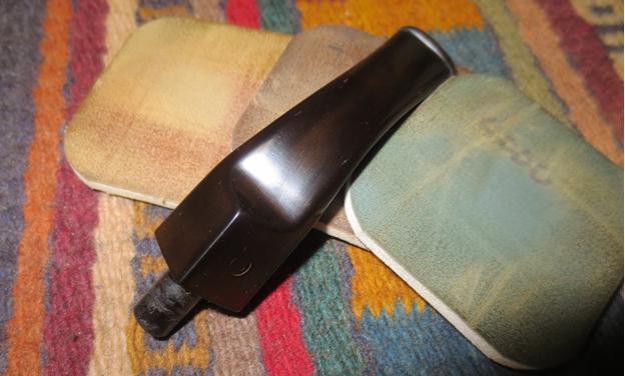
 

Restemming and Restoring a Made in Denmark Apple


Blog by Steve Laug

I got an email from a fellow in Dawson Creek, British Columbia asking if I would be willing to work on a pipe that he had that was one of his favourites. It was an apple that he really liked and he liked the patina on it as well. This is what he wrote to me: Sir, I have a pipe in need of your skills. I was visiting City Cigar on a trip to Vancouver and William recommended you. I’ve inherited a pipe from my dad that needs to be refurbished. I wish to add a new curved stem. The old stem’s very loose. I will mail, or ship the pipe to you, as I live in Dawson Creek, BC. Once we discuss price & details. After leaving City Cigar, I was left with the impression that you’re “the guy” for the job.” 

I asked him to send some photos of the pipe and give me a look at the pipe. The next two photos are the ones that he sent to me. The saddle stem looked like a replacement to me. I had him send the pipe to me for a closer look.apple1When it arrived I could see that my assumption about a replacement stem was correct. Whoever had added the new stem had sanded the shank and removed half of the stamping on the shank. I could read that it said Made in Denmark and that there were no other stampings. The shank was significantly lighter in colour than the bowl. The rim was dirty and had a chip out of it and its top was damaged. There was some concrete rash on the back side below the chip where the bowl had been knocked on concrete.apple2 apple3I took a close up photo of the bowl top to show the extent of the damage and the uneven cake on the bowl sides. I also took photos of the stem and shank junction to show how the shank had been sanded to meet the stem diameter.apple4

I also took a photo of the back side of the bowl showing the horizontal line across the bowl. That line was a large fill that bulged and stuck out the surface of the bowl.apple5The bowl was covered with a thick grime and sticky material. I wiped it down with a cotton pad and alcohol to remove the grime and get back to the finish. The grain really began to shine through once I had removed the gummy buildup. The left and right sides of the bowl showed some nice birdseye. The front and back showed cross grain that ran along the top and bottom of the shank. The birdseye ran along both sides of the shank.apple6I topped the bowl on a piece of 220 grit sandpaper to remove the damaged portions of the rim.apple7I sanded the backside of the bowl to smooth out the bulging fill that ran across the bowl.apple8I sanded down the outer edge of the rim to remove the rim damage and also the burn and darkening on the edges. I scrubbed the bowl down with acetone and cotton pads to remove the finish so that once it was clean I could blend in the lighter portions with the rest of the bowl.apple9 apple10The owner wanted a new stem for the pipe so I went through my can of stems until I found one that would fit. He wanted a taper stem and the one I found would suit the bill. He also wanted it to have a slight bend in the end. This sharply tapered stem would make that an easy fit and fix. The stem was slightly larger in diameter than the shank so I would need to reduce it to match.apple11I took off the excess vulcanite with a Dremel and sanding drum. I worked on it until it match the shank diameter.apple12 apple13I took it back to the work table to hand sand it. I used 180 grit sandpaper and took back the excess stem material.apple14I sanded the stem further with 220 grit sandpaper until the transition between the stem and shank was smooth to the touch. I heated water in the microwave until it was boiling and put the stem in the water to soften it enough to put the bend in it. I bent it just enough to give it a jaunty look.apple15 apple16I used the medium and the dark stain pen to touch up the shank. The combination of colours matches the rest of the bowl colour.apple17 apple18I wet sanded the stem with 1500-2400 grit micromesh sanding pads to begin polishing it and to begin to remove the scratches. I rubbed it down with Obsidian Oil. I dry sanded it with 3200-4000 grit pads and gave it another coat of oil. I finished sanding it with 6000-12000 grit pads and gave it a final coat of Obsidian Oil. I set it aside to dry.apple19 apple20 apple21I buffed the bowl and stem with Blue Diamond on the buffing wheel and polished the briar and the stem. The polishing took out the last of the scratches in the vulcanite stem. The fill on the back of the bowl blends in perfectly now and it is smooth to the touch. The transition from the stem to the shank is also smooth. The slight bend in the stem works well with the pipe. It is finished and ready to go back to Dawson Creek. Hopefully the owner will enjoy the new stem and the virtually “new pipe”. It still carries with it the memories of his dad giving it to him. It still as some of the marks of its story but the look and the feel of the pipe are better than when we began the journey. Thanks for looking.apple22 apple23 apple24 apple25 apple26 apple27 apple28 apple29

Three Cleanups for a Friend


Guest Blog by Robert M. Boughton

Member, International Society of Codgers
Member, North American Society of Pipe Collectors
http://www.naspc.org
http://www.roadrunnerpipes21.biz  under construction
http://about.me/boughtonrobert
Photos © the Author except as noted

How shall not the ministration of the spirit be rather glorious?
— 2 Corinthians 3:8

INTRODUCTION

As Chuck Richards, my good friend and mentor, has now worked his last official day at the local tobacconist where we enjoyed our pipes together on so many occasions – each of us often absorbed by our own thoughts – his presence is missed by many.  Almost every time I visit the shop, I see customers come in, eager to pick Chuck’s mind on one thing or another concerning pipes, only to learn that he is no longer there.  Then a young emeritus member of our pipe club, who moved away a couple of years ago to study engineering at Purdue, called a mutual friend and said he had some pipes that needed cleaning.  When he asked for Chuck, our common friend referred him to me.

Soon after, I received an email from the young man, Joe Allen, who no doubt still looks too young to be smoking a pipe by the day’s legal standards.  I found out Joe was concerned with three pipes he described as having excess cake and some rim burn and other typical problems he wanted cleaned up by someone he knows and trusts.  I made him an offer he couldn’t refuse.  No, I didn’t have to kill my friend’s horse and put its head in his bed; I have trouble picturing Joe atop that amazing species of animal, although for all I in fact know about him he could be a country boy who grew up on a farm with horses and cows and all the rest, and be outraged at the suggestion that he is in any way equestrian challenged.

All I knew about Joe’s present whereabouts was that he changed his major from engineering (thank God) and moved to Missouri to go to med school and become a surgeon.  Now, that’s more the speed of the Joe Allen I remember.Joe1For Joe, I was tempted to tell him to send them to me with a return label so I could do the work for free.  But then my senses returned.  I just can’t keep cleaning and fixing my friends’ pipes without getting something in return other than the pleasure of working on their beautiful prizes!  So we settled on $10 each, which included return postage.  I didn’t even have a clue as to the kind of pipes Joe was sending me, except of course that they were designed for tobacco.

For that and other reasons, I was excited when the insured box arrived at my Post Office several days later, $30 in cash tucked with a note in an envelope stashed inside.  When I got to my car, I used my handy flip knife to open the well-wrapped package that was padded with the exceptional care for the precious cargo one would expect from a future surgeon.  I knew from the layers of bubble wrap that stuffed the small USPS Priority Mail box, and in particular upon finding the three pipes in question wrapped in smaller taped pieces of the same material, that they were cherished and adored by Joe.  I was honored that he entrusted his treasures to me and determined not to disappoint him.

Anyone who knows me, even if only from my blogs here, might have guessed that I had to get a look at the pipes right then and there.  With complete respect and care for the contents, I removed each of the neat little bubble-wrapped pipes one at a time.  I was surprised and pleased by the variety.

The first was a Hardcastle of London rustic bent billiard #45 of a beautiful, dark red color.  There are two stamps on the bit, an H on the left side and, in capital letters across the underside where it meets the shank, the word France.  I can find no mention of French made Hardcastles and suspect this may have been from a convenient bit supplier.  Steve confirms my guess.  But the fine briar smoker was in excellent, almost new condition that appeared to present no problems, although of course one popped up that I will describe later.

The second was a very nice Dr. Grabow smooth straight billiard with the name Bucko and a yellow spade on the left side of the bit.   My first impression of the Bucko, other than its wonderful vertical grain around both sides and the back and a nice birds-eye on the front, was that the bit seemed to be a replacement, as it was not flush with the shank opening.  I was happy, though, to see the bit rather than the shank was too big in places, just right on both sides and only extended too far on the top and bottom.  I knew I could fix that.

Then came the last pipe, and I even guessed the brand from feeling the shape through the bubble wrap: a classic K&P Peterson of Dublin System Standard smooth bent billiard.  Admiring it, I was startled when the bit popped out in one of my hands holding it with reverence.  Giving it an easy slight twist back into the nickel banded shank, it did it again.  And again.  Well, I ventured to guess, this little beauty was going to be an interesting challenge.Joe2I could not wait to get to work on them, having estimated a two-day turn-around.  First, of course, I had to stop by the tobacconist for a little relaxation and contemplation while I puffed one of my own pipes and studied Joe’s excellent set awaiting my gentle ministrations.  All of them, which were nowhere near as dirty or caked-up as Joe indicated, presented interesting challenges nevertheless.

RESTORATIONS – DR. GRABOW BUCKOJoe3 Joe4 Joe5 Joe6For all the nasty talk about the brand, I have to admire the appealing visual twists on classic shapes that Dr. Grabow will throw into some of its designs, in particular the older ones.  Take this billiard, for example, with the unusual oblong aspect of the tapering shank.  At a glance, the problems that presented with the stout little Bucko were all minor.  There was slight rim darkening, far less than average chamber char, and a small amount of the original stain on the top of the shank that appeared to have been applied with some haste resulting in a shiny patch where heat drew out the liquid, which then re-dried.  Then again, perhaps the Bucko’s stummel had faded everywhere else, and that little area was all that remained of the factory finish.  Another possibility is that whoever chose the replacement bit prepped the wood for a refinish that for whatever reason was never applied.Joe7Closer inspection reaffirmed the theory of a replacement bit that was added without quite enough attention to detail, although the sides were perfect.  Again, only the top and bottom were misaligned. Joe8I began with the rim, which came clean after firmer than usual rubbing with superfine “0000” steel wool, and went for my usual approach on the chamber:  I used my Senior Reamer before sanding, first with 150-grit paper, then 180, 220 and 320.Joe9 Joe10I decided I might as well get the only real challenge with the Bucko out of the way and regarded the bit.Joe11I started with 220-grit paper to take off the excess Vulcanite on the top and bottom, but that got me nowhere.  I reached for the 180, and about a half-hour later was done with the fitting task.  I tossed the scratched bit in a preliminary OxiClean wash.  The scratches came off with wet micro meshing from 1500-12000. Joe13 Joe14 Joe15I took a close look at the scratches on the stummel.Joe16 Joe17With only the steel wool and the full range of micro mesh, wiping the wood with a soft cotton cloth between each grade, I was able to give the briar a nice, even smoothness.Joe18 Joe19Joe20 Joe21I retorted the pipe with Everclear.

Joe22After using the electric buffers to apply red and white Tripoli, White Diamond and carnauba to the bit and all of the same except for the red Tripoli to the stummel, here is the finished Bucko.Joe23 Joe24 Joe25 Joe26 Joe27 Joe28PETERSON SYSTEM STANDARDJoe29 Joe30 Joe31 Joe32 Joe33 Joe34I started by reaming and sanding the chamber and dispensing with the light rim char.  After giving my Senior Reamer a few turns in the chamber, I used 150-, 180-, 220- and 320-grit papers to make it ultra-smooth, but the steel wool was not enough to do the trick with the rim so I used a light touch of 320-git paper for the rest of the burns there.  As the second photo below shows, it turned out quite well. Joe35 Joe36There were some scratches and light pocks on the stummel that I eliminated by lightening the color of the stummel somewhat with steel wool.Joe37 Joe38Then I applied Fiebing’s Brown boot treatment to the stummel, let it cool and removed the thin layer of residue with 12000 micromesh.Joe39 Joe40The bit that appeared at first to be loose worked itself out somehow, maybe with the retort I did next.  And that was it, other than buffing the wood with white Tripoli, White Diamond and carnauba.  This was the only time I didn’t need to do anything to the bit.Joe41 Joe42 Joe43 Joe44 Joe45 Joe46HARDCASTLE OF LONDONJoe47 Joe48 Joe49 Joe50 Joe51 Joe52 Joe53 Joe54 Joe55Just to shake things up a bit, as I never start with the bit, that’s what I’m going to do.  Besides, this one is so easy, I might as well get the hardest part out of the way.

When I removed the bit the first time, I noticed it was so tight it wouldn’t budge.  Afraid of breaking either the tenon or part of the shank, I followed one of Chuck’s first lessons to me. Grasping the bit firmly in one hand – prepared to stop if I felt one more hint that a foreign substance was making the two parts stick – I turned the stummel with my other hand.  The sound was awful, but the parts came loose with a slowness I didn’t rush.  All that was needed to loosen the bit so it was easy to turn into the shank was a couple of tight turns of steel wool around the tenon.

The discoloration is shown just as it in fact appeared with my own eyes for once, rather than the camera’s POV.  In my opinion, just as a camera will add a few unwanted and unfair pounds to humans, so will it give a more flattering gloss to Vulcanite than the material often deserves. I gave it an OxiClean bath for about a half-hour.Joe56 Joe57And here it is after the bath and a brisk rub down with a soft cotton cloth.Joe58After wet micro meshing from 1500-12000, buffing on the wheel with red and white Tripoli, White Diamond and carnauba, and re-filling the empty H with a white china marker, this is the final result.Joe59I reamed and sanded the chamber and rid the rim of dark marks.  I used the same approach as the first two pipes on the chamber, and again, only steel wool was needed for the rim.Joe60 Joe61All that was left before the final buff was to retort the pipe, and as always, I was glad I did.Joe62Coating the already beautiful, rusticated red briar with Halcyon II wax, I set it aside to dry before wiping it down with a soft cotton cloth.Joe63 Joe64I was almost sad to be finished.Joe65 Joe66 Joe67 Joe68 Joe69 Joe70 Joe71CONCLUSION

Now I have to return these three fine pipes to their owner.

SOURCES

http://www.pipephil.eu/logos/en/logo-hardcastle.html

https://pipedia.org/wiki/Hardcastle


A Liverpool stamped Tobacconist Inc.


Blog by Steve Laug

I was looking through the box of pipes that I have to refurbish to see what struck my fancy this time around. It may sound like an easy process but my brother has been filling the box faster than I can clear it out… no complaint there however as he has great tasted in pipes and he has found some amazing pipes. The one that stood out to me this time was a Liverpool that has a rustication that was so tight that it looked like a sandblast. On closer inspection it was clear that it was a rusticated pipe. The bowl and long shank were at dark brown with a flat smooth strip on the bottom of the shank and the bowl where it was stamped Tobacconist Inc. That was a brand I had not heard of but I figured that it must have been a shop pipe for a tobacco shop somewhere. The bowl had a light cake and the beveled inner edge of the rim was flawless. The rim was pretty clean with just a little buildup in the rustication. The stem was oxidized but there were no bite marks or tooth chatter.Tob3 Tob4I took a close-up photo of the rim and bowl to show the cake and the condition of the rim surface. It was a pretty clean old pipe. I also took some photos of the stem top and bottom to show the oxidation and lack of damage. I was fortunate with that.Tob5I googled the Tobacconist Inc. stamp to see if I could find any information on the brand. There was no information in Who Made that Pipe and I could find nothing on Pipedia. The name Tobacconist Inc. came up shop a tobacco shop in Chicago. It is called Tobacconist Inc. and is located at 3524 W. Irving Park Rd. Chicago, Illinois. The phone number is 773-463-8468. I have included two photos of the sign and the shop. The sign says the shop has “Everything for the Smoker” and has been in existence since 1946. Sounds like a place I need to visit one day. I may have to call them and see if they have any information about the pipe.Tob2Tob1I started working on the pipe by reaming the bowl with the Savinelli Pipe Knife. I took the cake back to bare briar.Tob6I used a brass bristle brush to clean up the rustication on the top of the rim. It did not take too much work to clean off the tars and dirt.Tob7I scrubbed the bowl with Murphy’s Oil Soap and a soft bristle tooth brush to remove all of the dust and debris from the rustication.Tob8I rinsed the bowl off with running water and dried it off with a soft towel. The clean pipe is shown in the photos below.Tob9 Tob10I sanded the stem with 220 grit sandpaper to remove the oxidation on the surface. In the cleanup I found a small tooth mark on the top left side of the stem. I was able to remove the tooth mark with sanding.Tob11I cleaned the mortise and airway in the shank and stem with pipe cleaners, cotton swabs and alcohol. I was surprised on how clean the pipe was. It did not take too much to clean out the airways.Tob12I wet sanded the stem with 1500-2400 grit micromesh sanding pads and followed my usual routine. You can probably recite it by now if you have been a long time reader of the blog. Sand and Obsidian Oil repeated until finished. I dry sanded with 3200-4000 grit pads, gave it another coat of oil and sanded it with 6000-12000 grit pads. I gave it a final coat of Obsidian Oil and set the stem aside to dry.Tob13 Tob14 Tob15I buffed the pipe with Blue Diamond on the wheel and then gave it multiple coats of carnauba wax. I used a light touch on the bowl so as not to get waxy buildup in the rustication. I buffed it with a clean buffing pad to raise the shine. The final touch I use is a microfibre cloth and a rubdown on the entire pipe to deepen the shine. The finished pipe is shown in the photos below. Thanks for looking.Tob16 Tob17 Tob18 Tob19 Tob20 Tob21 Tob22


Cleaning up a no name Vineyard Meerschaum Billiard


Blog by Steve Laug

I received a second meerschaum pipe in a leatherette or vinyl covered case. This one was a straight billiard. The bowl was lightly carved with grape vines and clusters of grapes all around the bowl. There were two rings carved around the top of the bowl to set off the vines and grapes. The bowl has begun to colour – especially around the shank and on the lower portion of the bowl. The rim had some dark marks and a coat tar that was stuck on the top. The stem is made of a dark acrylic and has some tooth marks and chatter on the top and the bottom sides near the button. The nylon/Delrin threaded tenon has some darkening but is in excellent condition. The stem sits perfectly on the shank. The case is lined with white satin like material.G1 G2 G3 G4I took a close-up photo of the rim top to show the damage. There was darkening and tar but there were also some nicks in the surface that had retained the oil. I also took some photos of the top and bottom side of the stem to show the tooth chatter and tooth marks.G5 G6I wiped down the surface of the meerschaum with soft scrub to remove some of the marks and oils from handling that were on the bowl sides, front and back.G7I scrubbed the bowl top with the soft scrub and wet sanded the rim top with 1500-2400 grit micromesh sanding pads. I followed that up with 3200-4000 grit sanding pads. I wiped the top of the bowl down with the cotton pad. I was able to remove all of the damage and all of the buildup.G8I scraped out the light cake with the Savinelli Pipe Knife. I did not want any cake build up in the bowl. I wiped the bowl down on the inside with a damp cotton pad.G9I scrubbed out the shank and the airway in the tenon and the shank with pipe cleaners and cotton swabs and light alcohol. I was surprised that the internals were not too dirty. I scrubbed out airway in the stem with alcohol, cotton swabs and pipe clean cleaners. I worked on the area that the tenon screwed into in the stem.G10I sanded the tooth marks and tooth chatter with 220 grit sandpaper until they were no longer visible. I wet sanded it with 1500-2400 grit micromesh sanding pads and rubbed it down with Obsidian Oil. I dry sanded it with 3200-4000 grit sanding pads and gave it another coat of oil. I finished sanding it with 6000-12000 grit pads. I gave it a final coat of Obsidian Oil and set it aside to dry.G11 G12 G13I buffed the stem with Blue Diamond and hand buffed bowl. I gave the stem several coats of carnauba wax and buffed it with a clean buffing pad. I hand buffed the entire pipe with a microfibre cloth. The finished pipe is shown in the photos below. This one is also available for anyone who is interested in adding it to their rack. Just send me a message on Facebook or leave a message in the response box below the blog. Thanks for looking.G14 G15 G16 G17 G18 G19 G20 G21

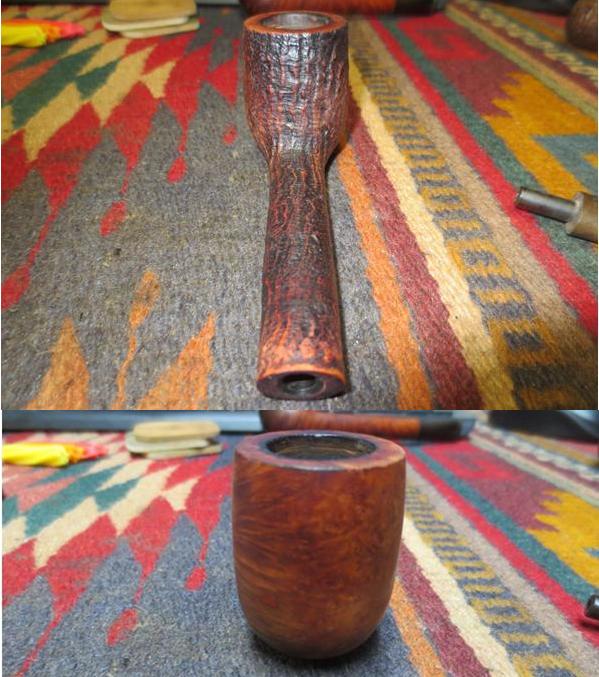
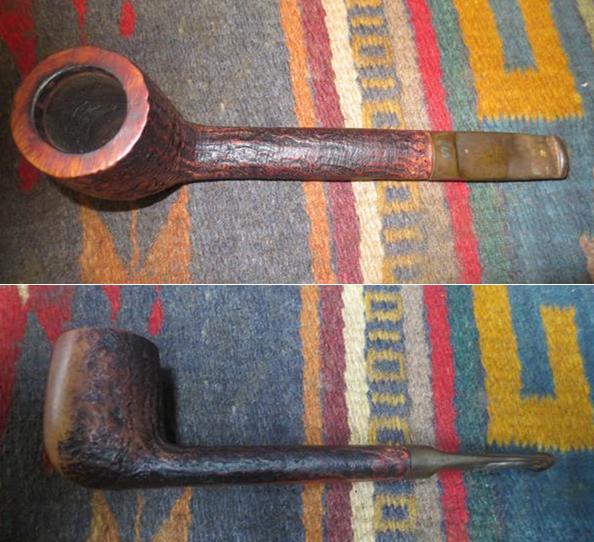
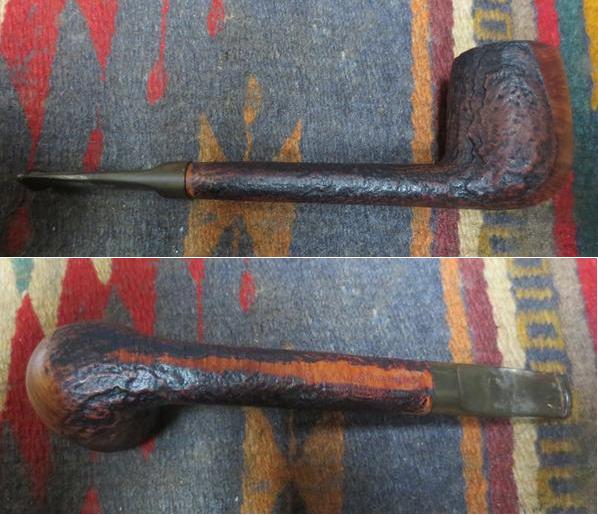
Restoring a Tom Howard Rhodesian Scoop


Blog by Steve Laug

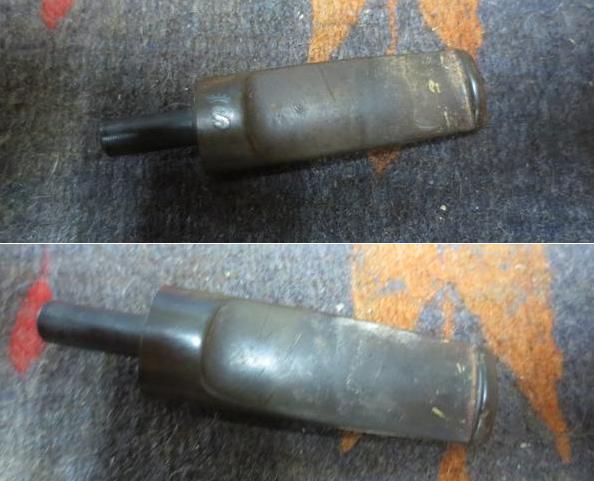
This pipe is stamped Tom Howard on the left side of the shank and Imported Briar on the right side. A friend of mine emailed me and asked if I would clean it up for him and bring it back to life. He said the stem tasted awful. He said he had tried to clean it up a bit but was not happy with the results. He dropped it by the house before he left on a short trip. Here is what it looked like when it arrived.H1 H2There was a pretty thick cake in the bowl and the rim had overflow on the top. The grooves and worm trails were pretty much filled in with grime. The stem was badly oxidized and there were some deep scratches in the surface. There was tooth chatter on the top and bottom of the stem near the button.H3H4I reamed the bowl in stages. I began with a Savinelli Pipe Knife to take back the inner edge of the bowl.H5I used a brass bristle wire brush to clean off the top of the rim and get rid of the buildup.H6I scrubbed the bowl with a tooth brush and Murphy’s Oil Soap to remove the buildup of tars and oils that darkened the bowl and shank. It did not take too much to get the briar clean. I rinsed the bowl with running water and dried it off with a towel. The cleaned exterior is shown in the photos below.H7 H8I did the second stage of reaming the bowl with a PipNet Reamer and took the cake back to bare briar. I cleaned up that reaming with the Pipe Knife again.H9I used the dental spatula to scrape out the mortise and then scrubbed it with pipe cleaners, cotton swabs and alcohol until it was clean.H10I decided to scrub the surface some more with a cotton pad and acetone. I was able to remove more of the finish on the bowl and lighten it even more.H11 H12I used a folded piece of 220 grit sandpaper to clean up the inner edge of the rim and smooth out some of the damage that was there.H13I cleaned out the inside of the stem with pipe cleaners and alcohol.H14I sanded the stem with 220 grit sandpaper to remove the oxidation that was on the surface of the saddle, the groove where the saddle joined the bowl and the area around the button.H15Before continuing on the stem I stuffed a cotton ball in the bowl of the pipe and also the bowl of a second one I was working on and filled it with alcohol. The alcohol pulled the tars and residue from the bowl and shank into cotton ball.H16I let it sit in the bowl for several hours while I worked on the stem. You can see the oils and tars that are being drawn into the cotton ball in the next photo.H17The underside of the stem near the button had one deep tooth mark in the surface that I was unable to sand out. I cleaned it up and then filled it with some black super glue. Once the glue had dried I sanded the patch back to blend it into the surface of the stem.H18I wet sanded the stem with 1500-2400 grit micromesh sanding pads. I sanded and polished the stem. I rubbed it down with Obsidian Oil. I dry sanded it with 3200-4000 grit pads and gave it another coat of oil. I finished sanding it with 6000-12000 grit pads and gave it a final coat of Obsidian Oil. I set it aside to dry.H19 H20 H21I stained the bowl with some medium walnut Danish Oil and then buffed it with Blue Diamond on the wheel. I gave the bowl several coats of Conservator’s Wax and the stem several coats of carnauba wax. I buffed the pipe with a clean buffing pad and then hand buffed it with a microfibre cloth. The pipe is clean, the smell and bad taste are gone and to me the pipe looks better than when I started the process. The bowl smelled clean. The pipe is ready to go back to its owner once I get the second pipe finished. Thanks for looking. Theo if you see this – your first pipe is ready for you when you return.H22 H23 H24 H25 H26 H27 H28
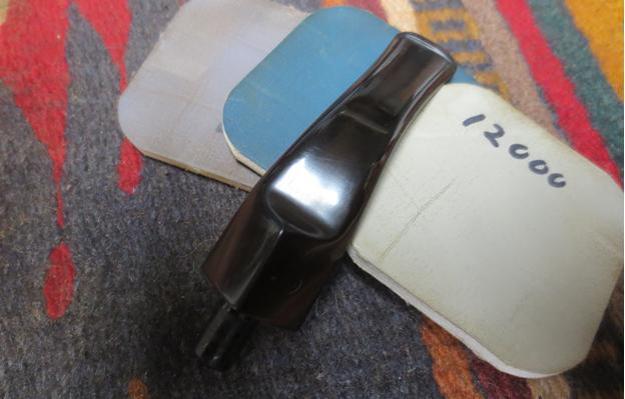
Sofia Hole in the Wall #3: A Butz-Choquin Rocamar with a Cumberland stem


Blog by Dal Stanton

This is my third restoration from what I called the ‘Bag of 4’ that Steve and I saw at the ‘Hole in the Wall’ antique store during his visit to Sofia, Bulgaria.  Thanks again for indulging my ‘newbie’ offerings. My favorite of the bunch was a Savinelli Tortuga (https://rebornpipes.com/2016/06/18/sofia-hole-in-the-wall-find-savinelli-tortuga/).  The second, which I didn’t write up, was a beautiful Danske Club Vario, which I discovered on Pipedia is a Stanwell second.  Behind the Tortuga, the Vario was a close second. It is now next to my Tortuga in regular rotation – a great addition to my growing collection. Take a look at a few pictures of the finished Danish Danske Club Vario. I’m drawn to the blended smooth and sandblasted briar finishes on this pipe:Dal1 Dal2The markings I found on pipe #3 on the left side is Butz-Choquin over Rocamar with a ‘Filter 9’ diagonal imprint.  On the right side, St. Claude, France 1333, which I assume is the BC shape or series number.  The Cumberland stem has the BC imprinted marking.  From Pipedia I discovered a bit of the early history of the name from Pipedia:

“Jean-Baptiste Choquin of Metz started out as a tobacconist. This enterprise was prosperous; he had several employees. Among those, there was a certain Gustave Butz who was its first workman and who became his son-in-law by marrying Choquin’s daughter Marie in 1858.  In 1858 Jean-Baptiste Choquin created, in collaboration with Gustave Butz, the Choquin pipe. This bent pipe with a flat-bottomed bowl was finished with an albatross-bone mouthpiece, fixed with silver rings.  In 1858, still in Metz, Gustave Butz built an establishment for the manufacture of the Choquin pipe which took the name of -. In 1951, the Berrod-Regad company bought the trademark, continuing manufacture until 2002. Departing from Metz, the workshop was relocated to Saint-Claude, then also called ‘the world capital of the briar pipe,’ under the Berrod-Regad group.”

I could find nothing specific about the series name Rocamar so I decided to send an email to Butz-Choquin using their info contact from their current website which is under construction (http://www.butzchoquin.com/).  We’ll see where that goes.

The BC Rocamar has an attractive fiery grain and the bent billiard chimney is tall and elegant to me – perhaps tending toward an egg shaped bowl.  What I’m drawn to also is the bent Cumberland stem – my first to work on.  Not quite knowing what kind of stem it was I did a bit of research and discovered pipesmokersforum.com a thread discussing this stem:

“Cumberland proper is a vulcanite rod made up from red and black rods, melted and swirled together for the brown/red marble effect. It is very soft, and oxydizes fairly quickly if the protective wax coating is scraped off. There is a harder version in ebonite, which has a higher sulfur content if I understand these things correctly, but the color combos are not quite as subdued as the vulcanite version. It’s a bit more “brick” colored.”  Another comment I read was that if one found a Cumberland stem it was most likely hand cut – to me that is cool.  Helpful information.  Here are pictures of the BC Rocamar when it arrived home from the Hole in the Wall:Dal3 Dal4 Dal5 Dal6 Dal7The briar is in great shape and will need basic clean-up.  The rim shows a burn scar about 2 o’clock and lava build up.  As the comments about Cumberland stems and oxidation stated, this one had its share.  The bit has significant teeth chatter and some significant divots that will need repair.  Yet, I see the potential of the color swirl of the Cumberland being a very nice augmentation to the fiery briar stummel.  The filter casing had dislodged from the stem and that will need to be reattached.  I decide to drop the stem in an Oxyclean bath to start working on the oxidation while I turn my attention to the bowl – whoops, that is after I retrieved the stem from underneath the bed – I forgot it was on my lap when I stood to head for the Oxyclean!  I took a close-up of the rim and bowl before I go to work.  I moved from the bedroom work table to the 10th floor balcony mobile work station with Pipnet reaming kit in hand.  I want to minimize pipe soot being released into the bedroom atmosphere resulting in a happier wife.  I use only the two smallest blades from the reaming kit to take the cake down to the wood.  I finish the fire chamber by rubbing it with 120 then 240 grit sanding paper to smooth and clean the chamber walls even more.  Turning to the rim, I clean it with isopropyl 95% and a brass brush which will not scratch the surface of the bowl. I want to see the rim wood clearly before I top the bowl to repair the burn scar and reveal the briar.  With the sunshine helping I can see the rim (and holding tightly not to lose it over the edge!).  I note that the rim circumference is small as the sloping shape of the bowl culminates. Dal8 Dal9 Dal10 Dal11I move to top the bowl but with a view to take off as little as possible to preserve the dimensions of the slender egg-peeked chimney of the bowl.  With the stem soaking in the Oxyclean bath I’m not able to reattach it to the stummel to help make sure I’m maintaining a true perpendicular top and not leaning into the softer burned area.  Before rotating the bowl to top it, I let it free stand and gently rotated the pitch of the bowl so that I could ‘feel’ the low spot where the rim was burned.  By doing this I was able to acclimate to the ‘healthy’ flat part of the rim during the sanding rotation.  It worked well!  I took a picture after only a few rotations on the topping board.  It revealed that I wasn’t fudging into the low spot as it was not yet impacted by the sanding but the other ¾ of the rim was.  I’m careful to keep eyeballing the progress.  I use 240 grit paper on a chop board as my topping table. Moving in a circular, even motion I remove only what is needed.  Satisfied with the topping, I made a small bevel on the inside of the rim using 120 and 240 grit paper.  I did this to take out a bit of inner rim damage and a small bevel is always nice and gives a classy touch. I followed this by using micromesh (1500-12000) on the rim to remove all scratches.  The pictures tell the story.Dal12 Dal13 Dal14 Dal15I decided to wait on staining the rim using a stain-stick and move to the cleaning of the internal and external of the bowl.  The reason I did this was I was able to differentiate the actual unstained color of the briar by looking at the newly repaired rim and compare it to the bowl color.  The rim briar leaned brown whereas the bowl, to the reds.  With cleaning with Murphy’s Soap of the external bowl, I expect there to be a slight change in the color of the bowl briar.  At that point I would go to work again on the color of the rim aiming for the best match.  I decided at this point to move to cleaning the internals of the stummel with Q-tips and pipe cleaners dipped in isopropyl 95%.  I found the internals to be amazingly free of muck and it was not long before Q-tips and pipe cleaners were coming out clean.  Turning to the external cleaning, I used Murphy’s Soap undiluted with cotton pads to remove the wax and grime on the bowl.  The bowl itself is in great shape – no significant scratches or fills.Dal16 Dal17At this point, I came to a road block which necessitated a quick email to ‘Master Obi-wan Steve’ for his input.  After the Murphy’s Soap cleaning I was expecting/hoping the high gloss finish on the bowl to have been dulled – getting to a more natural grain look not competing so much with the bared rim – at least this is what was in my mind.  My hesitations were not wanting to be too aggressive with the bowl finish and mess up the patina that is under the gloss….  With the time difference between Sofia and Vancouver, I put the stummel aside and turn to the much anticipated work on the Cumberland stem – what to me is the unique part of this BC stummel/stem ensemble.  After I extract the stem from the Oxyclean bath, I take some pictures to chronicle the progress.  After an initial buff with 000 steel wool to remove the surfaced oxidation, I take a closer look at the significant teeth divots on the bit and decide to apply super glue to the top and bottom to be able to redefine the button and cover the chatter damage. I want the superglue patches in place before beginning the sanding of the stem.Dal18 Dal19 Dal20 Dal21With the superglue curing, Steve’s reply came about my bowl conundrum and it is now decision time. He suspects that I’m dealing with a urethane finish much like he just dealt with in a Jobey restore (https://rebornpipes.com/2016/06/29/i-thought-this-one-would-be-easy-boy-was-i-wrong/) that was a bear to remove. The options before me are to either come up with a high gloss finish for the rim seeking to match up with the bowl or to aggressively remove the plastic, gloss finish and rescue the beautiful briar beneath.  The close-up picture below revealing the bare briar in rim repair sealed my decision – I put the bowl in an overnight alcohol bath hopefully to soften the glossy finish to be revisited tomorrow.  The time had come to watch some European football – Portugal and Poland – on my widescreen HDTV in my favorite recliner.Dal22The next day, with Poland and Portugal playing to a 1-1 tie the night before, I was anxious to see if the alcohol bath made a dent on the glossy finish.  Upon inspection (picture 1) it was still pretty shiny so I took a light grit sanding sponge to loosen the finish.  I was careful to lightly work around the nomenclature.  This did the trick.  The alcohol bath undoubtedly softened things up.  After the sponge sanding, I followed with rubbing the bowl with acetone with cotton pads to draw the stain out of the grain.  I finished with wiping down the stummel with isopropyl 95% to make sure all was cleaned and no grit left behind.Dal23 Dal24 Dal25I feel like I’m on a roll and I’m anxious to see the grain of this piece of briar unveiled.  I use micromesh pads from 1500 to 2400, 3200 to 4000, and 6000 to 12000.  The pictures below show the progress.  I have to be honest, this is perhaps my favorite part of the restoration process – each set of micromesh pads brings out more of the grain revealing the profoundly unique ‘fingerprint’ of each piece of briar we handle.  I euphemistically think of micromesh pads as ‘magicmesh’ pads – they bring the wood to life.  In my opinion, the grain that I’m now enjoying is much more satisfying than looking through the plastic shiny sheen of the original Butz-Choquin design.Dal26 Dal27 Dal28I decide to put the bowl aside and focus now on completing the Cumberland stem clean up and restoration.  I want to have an idea of the colors of the finished stem before I decide on the best finish for the stummel.  I like working on a clean stem so I first clean the airway using pipe cleaners and Q-tips dipped in isopropyl 95%.  During the cleaning, I saw something that I had missed before.  The button airway opening has a divot – I’ll need to add that to the list.  The superglue applications on the bit and button have had plenty of time to dry.  I use 240 grit sanding paper and needle files to work on the bit and button repair.  The bit repair looks good so I move to micromesh and the homestretch.  I wet sand using 1500-2400 and then apply Obsidian oil to the stem.  At this point, I inspect the repair work on the bit to make sure there are no scratches that I’ve missed before proceeding.  I’ve learned that often scratches are covered by the rough vulcanite.  With the Obsidian oil on the stem I dry-sand using micromesh pads 3200-4000 and apply more Obsidian oil.  I do the same with the last set of three – 6000-12000 and give a good coat of oil and put it aside to dry.  The pictures show the progress rejuvenating the Cumberland stem.  I like what I’m seeing.Dal29 Dal30 Dal31 Dal32 Dal33 Dal34 Dal35I had one undone job – re-attach the filter casing to the stem.  My assumption is that it was initially glued and after inspecting the inside of the stem, I detected residue that I assume was the glue previously used.  I clean the old gunk off the housing and the inside of the stem with alcohol and cotton pad and reattach the housing with superglue.  To get the job done I used my Winchester pocket knife and a dental pick to dig out the old glue.  With the filter housing reattached, the stem is complete.  I really like the rich color of the Cumberland stem.Dal36 Dal37After allowing the filter housing glue to dry I want to see the lay of the land, I rejoin the Cumberland stem to the stummel (picture #1 below).  I decide to stain the bowl with a new stain I found at the German owned ‘Mr. Prakteker’ –  like Home Depot in the US.  Finding alcohol-based stains in Bulgaria has been a challenge so I’ve been mixing my own batches up to this point. The brand is Italian and the cost was a bit more – I’m hoping that translates into better quality. When I opened the tin, a whiff of the stain revealed alcohol.  With the help of Google Translate, the flavor of the stain is Dark Nut.  The Bulgarian stick-on information tag said Dark Walnut.  My thinking is to aim for a darker stummel to blend with the darker hues of the stem.  If this succeeds, then I’m hoping the reds of the Cumberland stem ‘pop’ more instead of competing with the stummel.  We’ll see!   I can use alcohol-dipped cotton pads to lighten the stain after application if I choose.   After setting the stummel up on the cork/candle stand I apply the stain undiluted with a cotton swab to see how it goes.  I liberally allow stain to move over the inverted stummel – making sure of coverage over the inverted rim.  After a good covering I use a lighter to fire the stain which is a quick-combustion of the alcohol leaving the stain to set well into the grain.  The Italian stain ‘fired’ as hoped!  I repeated the procedure and then used the alcohol dipped pads to clean off the burn layer of the stain revealing how the grain received the stain – it’s never the same!  I take a picture to do a quick compare of stummel and stem.  After comparing I’m thinking that I like the dark hue but it needs some reds so I decide to add a layer of Cheren stain – red which I will mix with alcohol as it is a water based stain.  In my mind I’m thinking of the ‘Ox Blood’ depth that Steve uses – which is not found in Bulgaria!  I think the addition of the red stain does the trick (last picture) though it’s difficult to see the difference comparing the last two pictures.Dal38 Dal39 Dal40 Dal41 Dal42Next, I apply several layers of carnauba wax to the stummel and stem with Dremel and cotton wheels.  I’m careful to keep the Dremel wheel moving in rotation over the wood and use the lowest speed so not to overheat the wood. The buffing brings out the grain and the luster of the Cumberland stem.  I continue the buffing with a clean cotton wheel over the entire stummel and stem surface.  I finished with a thorough vigorous buffing with microfiber cloth to bring out the grain depth while watching Germany and Italy’s World Cup match.  The recommissioning of this Butz-Choquin Rocamar was more of a project than I was expecting.  I prefer the finish now before me to the shiny finish I started with.  I like the new color scheme for the bowl and Cumberland stem – I believe it works well.  The reds in the Cumberland stem match the grain amazingly well and the grain swirl in the rim has the appearance of continuing in the stem – a neat effect.  I’m very pleased with the color blends.  Another project done with new things learned to draw upon for the next candidate brought back to life!  Thanks for joining me!Dal43 Dal44 Dal45 Dal46 Dal47 Dal48 Dal49 Dal50
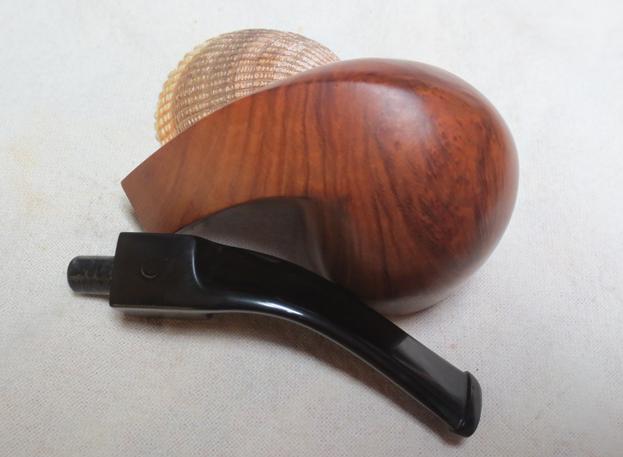
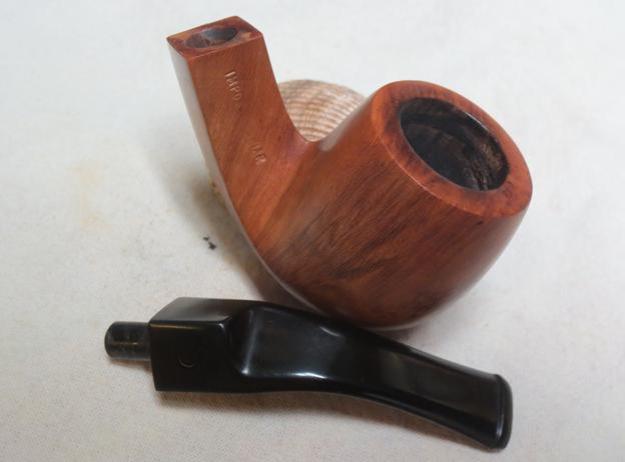
Bringing a FILTO SYSTEM Pipe Back to Life


Blog by Steve Laug

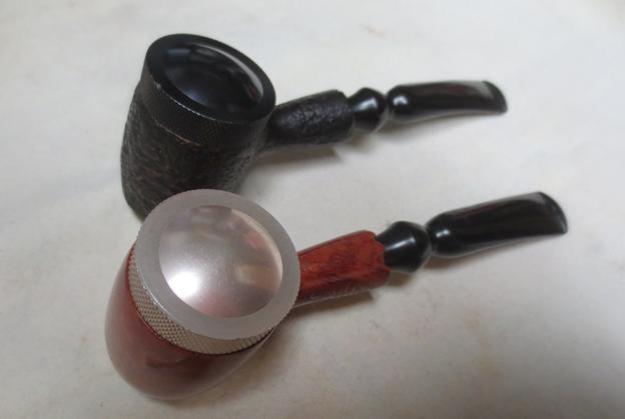
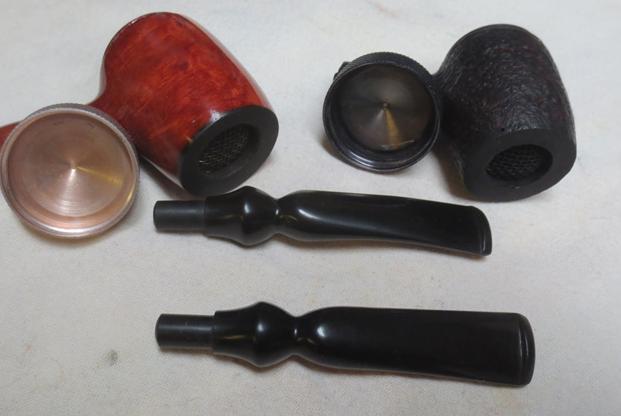
I have had this pipe sitting in a parts box for a while now. It was missing a few parts – notably the end plug. It had a copper coloured barrel and a black vulcanite mouthpiece that was oxidized. There were no tooth marks on the stem. The bowl was painted with a dark brown paint and had a shine. The rim was dirty with lava from the overflow of the bowl. The bowl had a thin, uneven cake on the walls. There was a screw in the bottom of the bowl that was similar to Kirsten screws. It had a hole in the centre that allowed the air to be pulled from the bowl into the barrel. It was stuck in the bottom under the cake that held it in place. The inside of the barrel on the end that was missing the end plug was thickly caked with tars and oils. There appeared to be something in the barrel part way down that closed off the barrel. The side of the barrel is stamped FILTO over Burgaw, NC over PAT. MADE IN USA.Filto1Filto2

I took the pipe apart so that I could look at the pieces. The next photos show the barrel, bowl, stem and screw. The screw is interesting in that it had a collar that kept it lifted above the bottom of the bowl. There seemed to be a build-up of something on the top of the barrel where the bowl sat.Filto3

I did a bit of hunting on the web to see if I could figure out what was missing in the barrel. I knew that the end cap was missing and that it was a pressure fit. I also wanted to know what the card board piece was that seemed to be in the middle of the barrel. When I took the above photo I had not removed it from inside the barrel as I did not know what it was and did not want to damage it. I checked the Smoking Metal Website which is my first stop when seeking information on metal pipes. The site not only had the pipe listed but a variety of photos of the internals and of the models that were available. I have included the link and the short text that was included on the site.  http://www.smokingmetal.co.uk/pipe.php?page=213

“Made by Filto Pipes Inc. of Burgaw, North Carolina, inventor Robert L. Smith, US Patent #33170468 23rd Feb. 1965. The stem, sealing ring and filter holder design mentioned in design by Aristocob. The bowl and stem are in a great variety of colours, all interchangeable.The spring clip in the bit assists in holding the filter in place. There are two version of the stem one with a spun front end and more common with a plastic push fit end cap.”

The photo below shows the parts that are enumerated in the above quote. There are two different barrel designs shown as well. The top one seems to show that the end is rounded and closed like a cigar cap. The red pipe below shows a plastic ridged endcap. The close up of the two bowls at the bottom show both ends. It is obvious that the one I had was like the pipe on the left side. Filto4

The photo below shows many different models of the same pipe. There are obviously two different styles of stems – a saddle stem like the one I have and a tapered stem.Filto5

Now I understood the shape of the end cap and also what the cardboard in the barrel was. I took a photo of the stamping on the barrel. It is clear and easy to read.Filto6

I reamed the bowl with the PipNet reamer and took the cake back to bare briar. I cleaned up the reaming with the Savinelli Pipe Knife.Filto7

I pushed the cardboard out of the barrel and it was marked FILTO filter. The cardboard was a filter that allowed the air to flow around the edges and caught the tars and oils on the end of the filter. This one was unused.Filto8

I cleaned out the inside of the barrel by pushing rolled cotton pads soaked in alcohol through the shank. I also used cotton swabs and alcohol to further clean out the barrel. I scraped the cardboard gasket from the top of the barrel where the bowl sat using the dental spatula. I cleaned the outside of the barrel with alcohol and cotton pads.Filto9

I cleaned out the inside of the tenon on the mouthpiece insert with cotton swabs and alcohol. I ran alcohol soaked pipe cleaners through the mouth piece and tenon to clean out the tars and oils.Filto10

I decided to make and end cap or plug out of briar. I had a piece of briar that was next to the bowl. I had cut it off a while back to use for other purposes. Since it was drilled with an airway I needed to also make a round plug for the airway in the centre of the briar piece. I rounded out the shank piece and the small chip with a Dremel and sanding drum to make the end cap/plug. I round the chip until it fit perfectly into the drilled airway on the briar. I pushed it into the airway and glued it in place with super glue. I used the Dremel and sanding drum to smooth out the end that would go inside the barrel and the end that would stick out.Filto11

I used the Dremel and sanding drum to shape the end of the plug to be shaped like a cone. It continued to shape it until it would pressure fit into the end of the barrel.Filto12

I shaped it like a cone and rounded the end. I cut a small band around the diameter of the end that would sit in the barrel. There was a step down inside that the cap sat against. I pressed it into place and continue to shape it with 180 and 220 grit sandpaper.Filto13

Once I had it shaped correctly I stained it dark brown with a stain pen and buffed it until it shone. I sanded it with 3200-4000 grit micromesh to give it some polish and thin down the opacity of the stain.Filto14

Looking at the spring clip that held the filter in place in the shank I made one that was similarly shaped out of a paper clip. I bent it to fit into the cardboard filter and to sit in the metal tenon of the stem.Filto15

I sanded the stem with 220 grit sandpaper to remove the calcification that was built up on the mouth piece at the button. There was some light oxidation on the saddle portion as well. I wet sanded it with 1500-2400 grit micromesh sanding pads and gave it a coat of Obsidian Oil. I dry sanded it with 3200-4000 grit sanding pads and gave it another coat of oil. I finished sanding it with 6000-12000 grit pads and gave it a final coat of Obsidian Oil.Filto16Filto17Filto18

I buffed the stem with Blue Diamond on the wheel and gave it several coats of carnauba wax. I buffed it with a clean buffing pad to raise the shine and hand buffed it with a microfibre cloth. I put the bent paperclip in the filter and in the end of the tenon.Filto19

I lightly polished the bowl and barrel on the buffer using Blue Diamond. I gave both a coat of carnauba wax and buffed it with a clean pad to polish it. The bowl had a few dents and dings that I left as I found them because of the painted finish. I hand buffed the pipe with a microfibre cloth to deepen the shine. The finished pipe is shown in the photos below. The first four photos show the finished pipe as a whole. The last three show it in pieces.Filto20Filto21Filto22Filto23Filto24Filto25Filto26


Breathing new life into a Kirsten S with a Unique Bell Bowl


Blog by Steve Laug

My brother picked up this Kirsten because he really liked the look of the bowl. I have never seen a Kirsten bowl this shape so I don’t know if it is an aftermarket bowl or one of Kirsten’s own. In the long run it does not matter because not only is the shape attractive but the briar is stunning. The rim has a slight bevel inward and the curve into the metal base cap looks great and feels great in the hand. The bowl had a heavy cake and the screw mount in the bottom of the bowl was caked over to the point that it was stuck in the bowl. The metal barrel was oxidized and pitted. It had no shine left but looked like a well-worn pipe. The stem was oxidized but there were no tooth marks or chatter on the stem. The rod that ran through the barrel was dirty and coated with tars and oils that had harden. The adjustable valve on the end of the barrel was stuck and could not be turn or adjusted. It was actually stuck closed so there was no airflow through the barrel.Kirsten1 Kirsten2I put the pipe in an alcohol bath to let it soak for a day while I was at work. When I came home in the evening I was able to take it apart. The alcohol had softened the tars and the stem came out easily and I was able to use a screw driver and a light tap on the handle to knock out the stuck valve. The bowl came off the barrel but the screw was still stuck in the bottom of the bowl. When I had it apart I realized I was dealing with a Generation 2 Kirsten. It was made between 1958-1985. I quote from a previous blog on the site with the information that leads me to the conclusion that I was dealing with a Generation 2. “Markings on underside of metal shank “Made in USA XL” (or app. size) and “Pat. & Pats. Pending”. The presence of O rings on both the valve and the mouthpiece and the metal cup spacer under bowl are the biggest thing that separates the Generation 1 from the Generation 2 pipes. These O rings help provide a tighter seal when the stem and apparatus are inserted into the radiator stem. Instead of “O” rings, the machining of the Generation 1 pipes was so precise the fit was exact.”  https://rebornpipes.com/2012/11/03/kirsten-generation-1-1-5-2-3/ The blog also identifies the S stamp on the bottom of the shank as the Sportsman Model from that era.

So I knew that the pipe I had, came from the time period of 1958-1985 and that the O rings on both the valve and the mouthpiece confirmed that. The S stamp also fits the pipe squarely within that date range. Armed with that information I began to work on refurbishing the Kirsten.Kirsten3I reamed the bowl with the Savinelli Pipe Knife and was able to clean out the cake enough that I could use a flat blade screwdriver to loosen the screw from the bottom of the bowl. Once the screw was removed I cleaned out the bowl with sandpaper to take the cake back to bare briar.Kirsten4I scrubbed the rim with a cotton pad and saliva and was able to remove the majority of the tars and oils. I used micromesh sanding pads to further clean up the rim top. The briar was beautiful once the grime was removed. I wiped down the outside of the bowl and rim with alcohol and the finish was in very decent shape.Kirsten5I scrubbed the oxidized finish with Meguiar’s Scratch X2.0 and cotton pads and cotton swabs and was able to remove the worn and oxidized build up on the surface. Underneath the oxidation was a shiny metal finish. It would not take too much scrubbing to remove all of the damage.Kirsten6I soaked some cotton pads in alcohol and pushed them through the barrel and also scrubbed the inside of the barrel with cotton swabs and alcohol to remove the tars and oils there. I cleaned out the inside of the valve and the outside of the insert end. Kirsten7I cleaned out the airway in the stem with alcohol and pipe cleaners. I sanded the metal rod with micromesh sanding pads to remove the build up and tars on the metal surface. I scrubbed it with alcohol to clean it and polished it with the Meguiar’s.Kirsten8With the internals cleaned, the bowl reamed and cleaned, the barrel polished and cleaned it was time to polish the stem. I scrubbed it with Soft Scrub cleanser to remove the oxidation. Once I broke through it I used the Meguiar’s Scratch X2.0 to further polish the stem. I decided to try to see if I could successfully use Charles’ method of cleaning oxidation with the Meguiar’s.Kirsten9 Kirsten10I was pretty amazed with the results. The finish glowed and the polish actually removed all of the oxidation. It just took repeated scrubbings and polishing until finally no more oxidation came off with the polish. I buffed the pipe with Blue Diamond on the wheel to polish the briar, barrel and the stem. I gave the pipe multiple coats of carnauba wax and buffed it with a clean buffing pad to polish it. I hand buffed it with a microfibre cloth to deepen the shine. The finished pipe looks like new and it just glows with warmth and a shine that must have originally graced the pipe. It is a beautiful Kirsten and should grace someone’s pipe rack for years to come. The finished pipe is shown in the photos below. If you are interested in this pipe let me know. Thanks for looking. Kirsten11 Kirsten12 Kirsten13 Kirsten14 Kirsten15 Kirsten16 Kirsten17