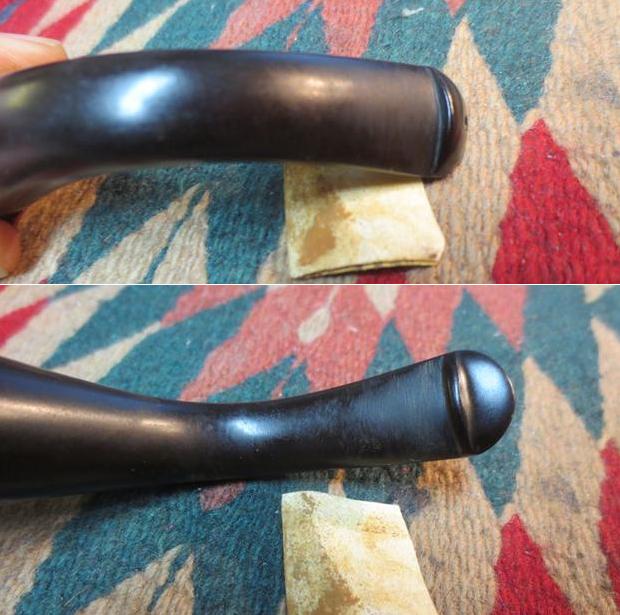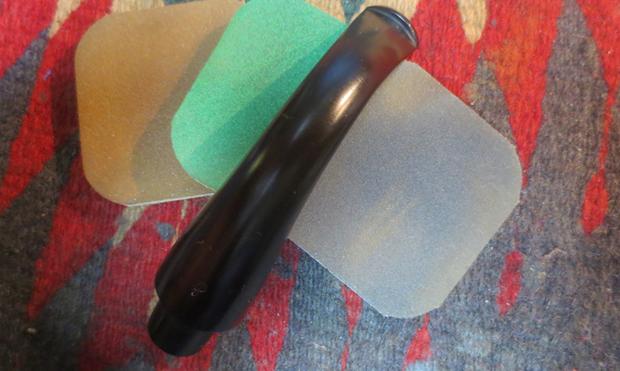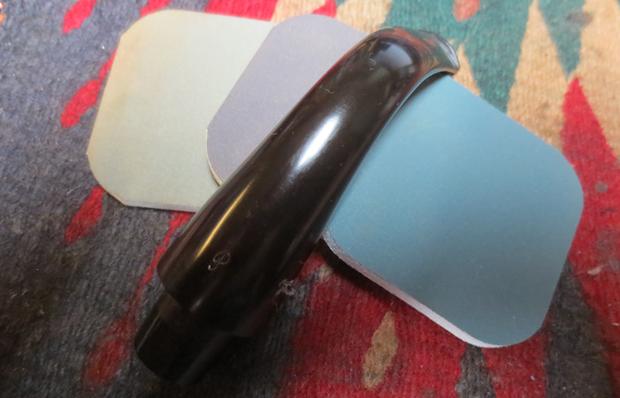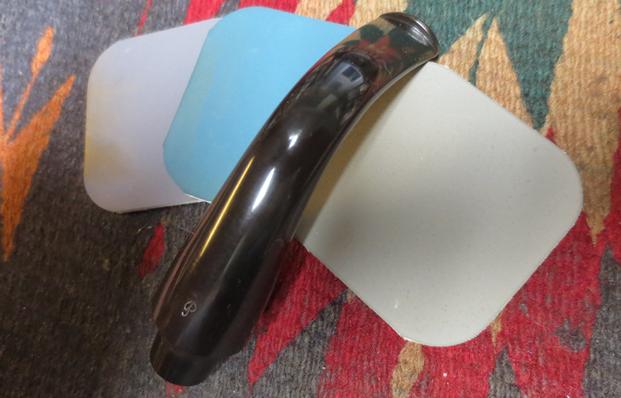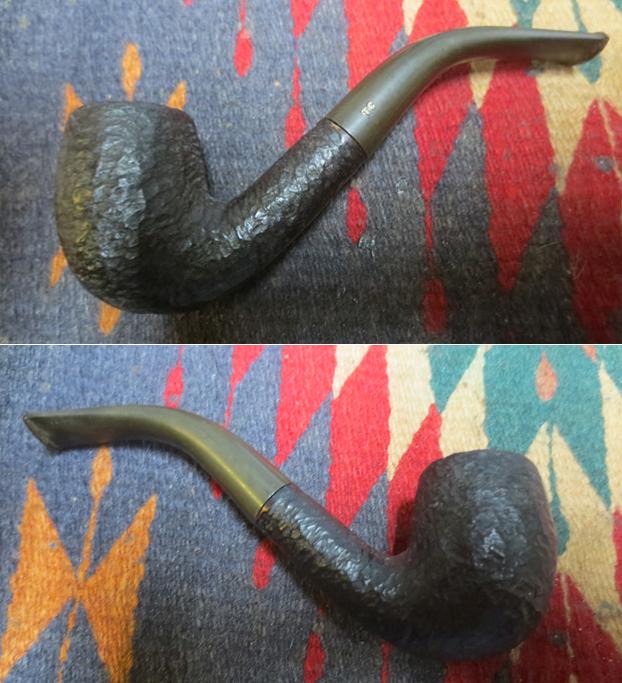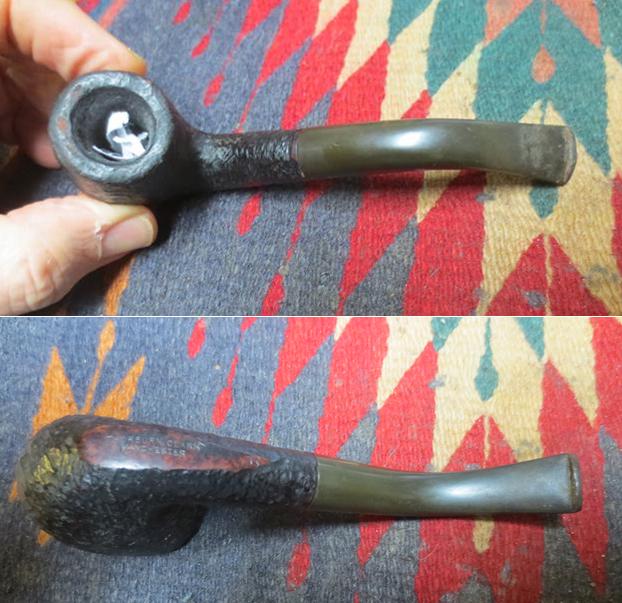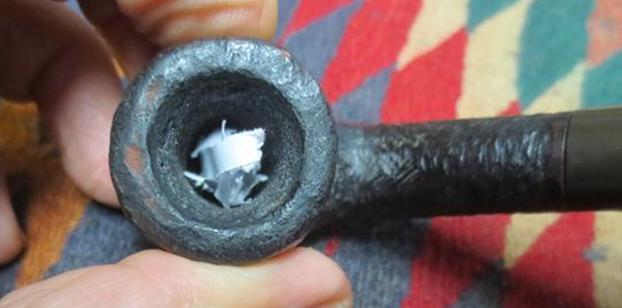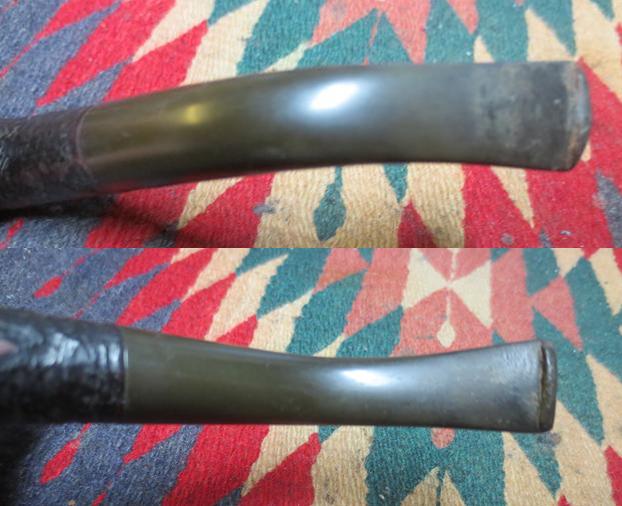
Tag Archives: polishing stems

Cleaning up the last of the five Gourd Calabashes


Blog by Steve Laug

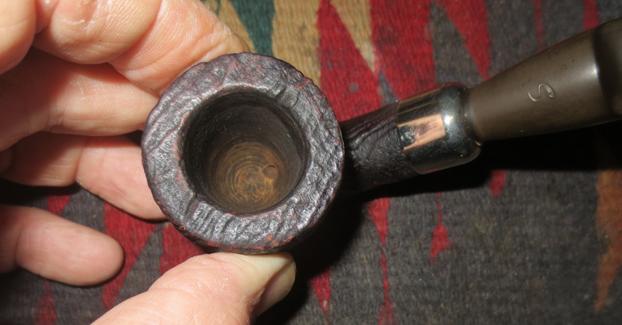
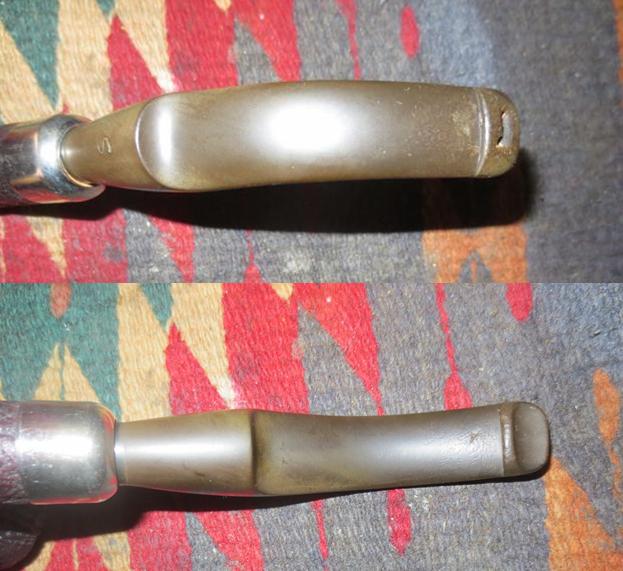
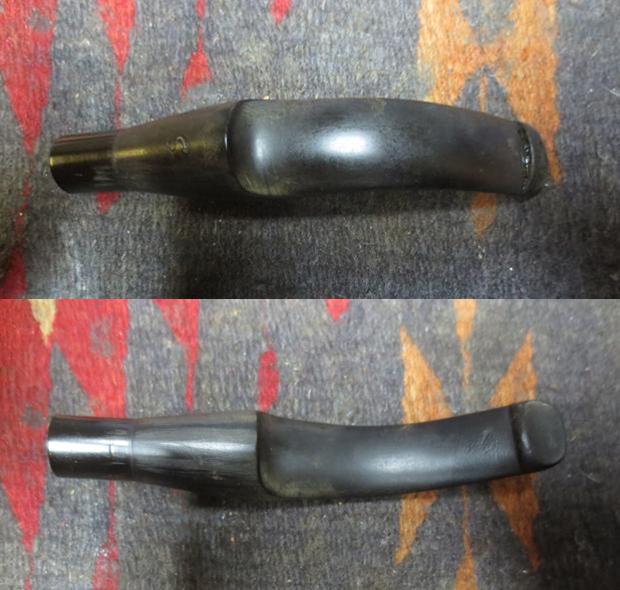
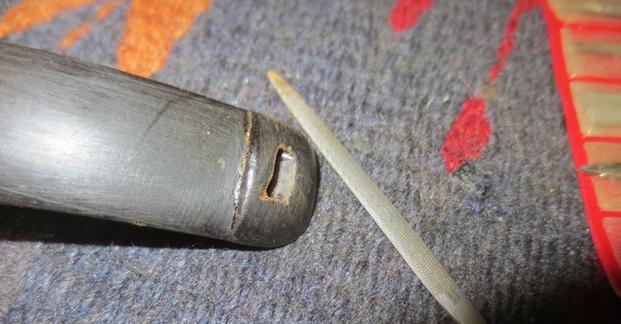
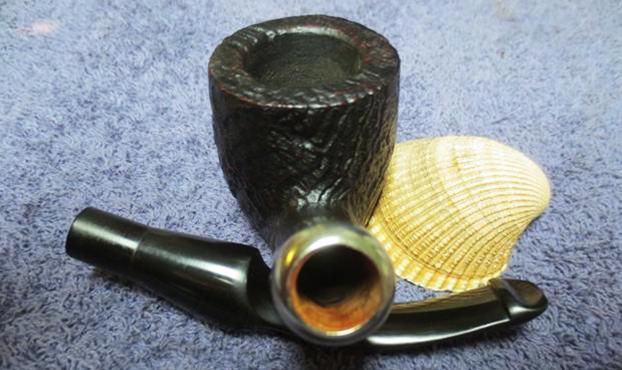
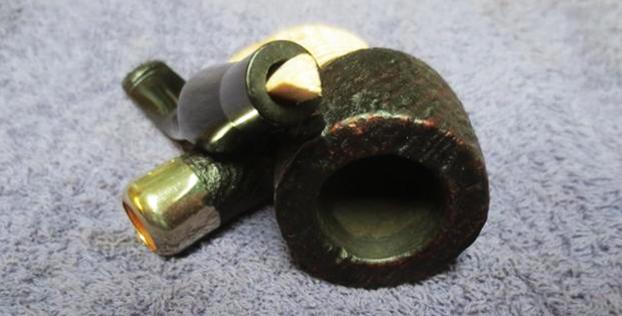
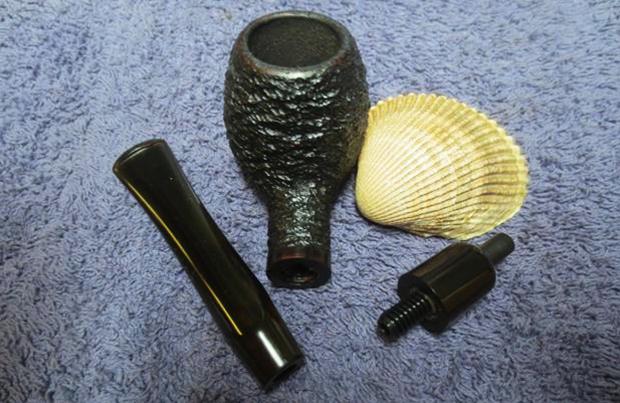
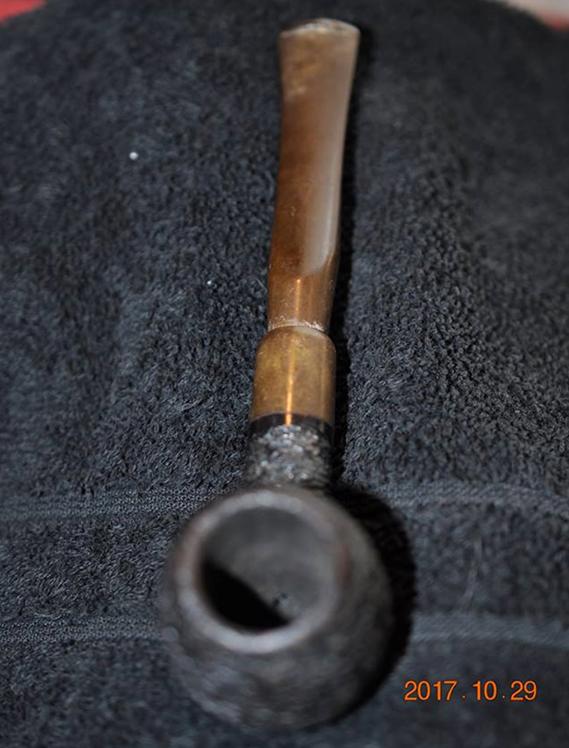
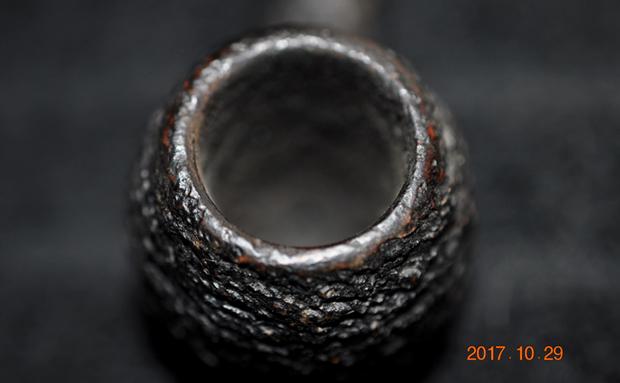
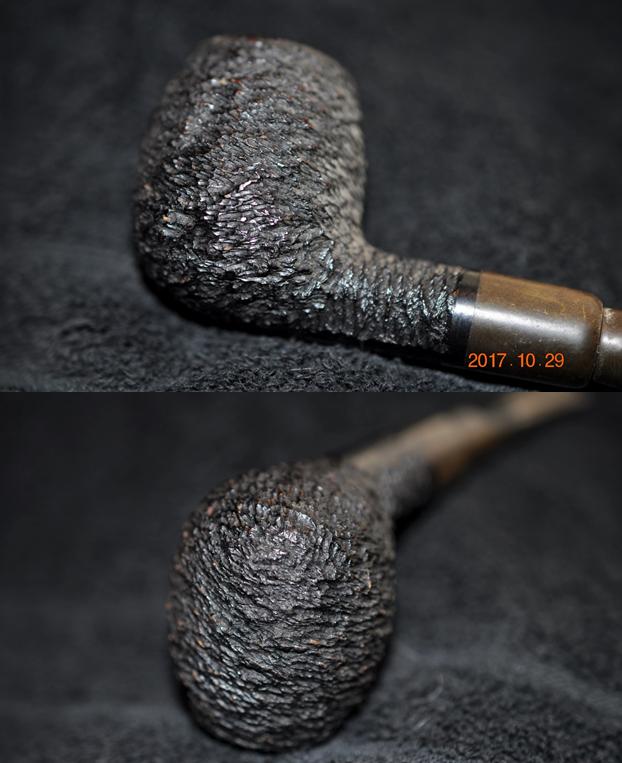
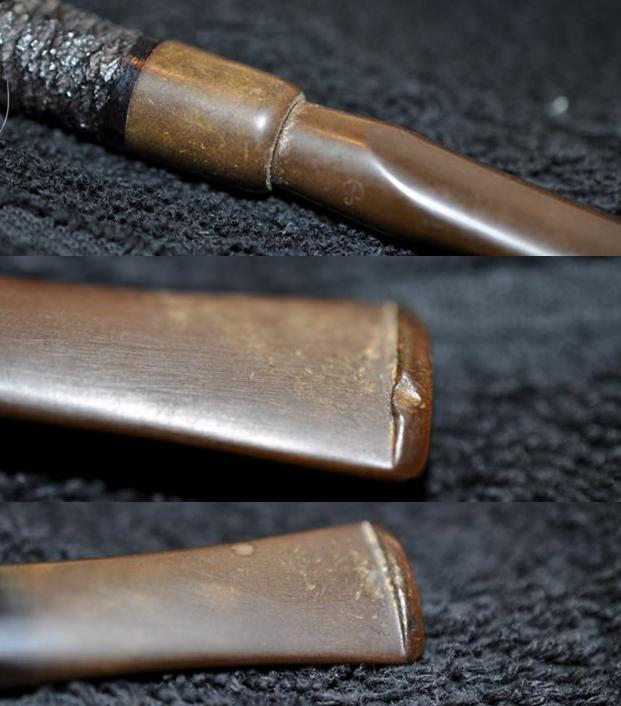
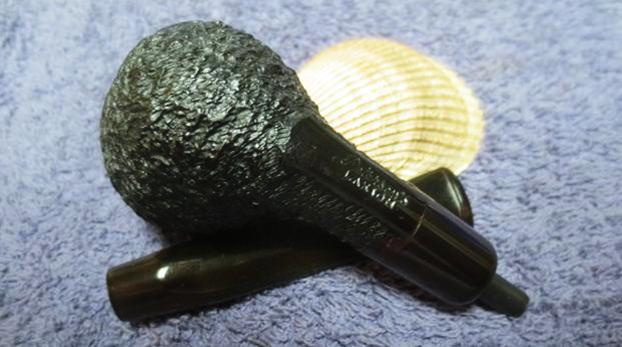
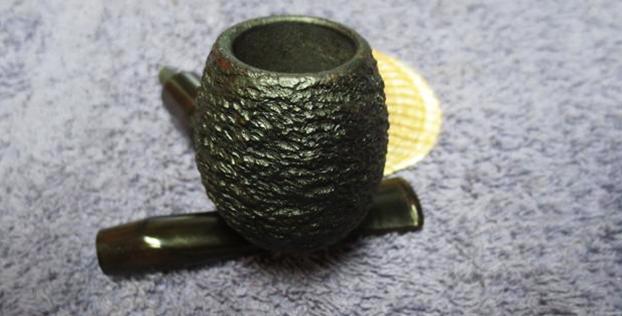
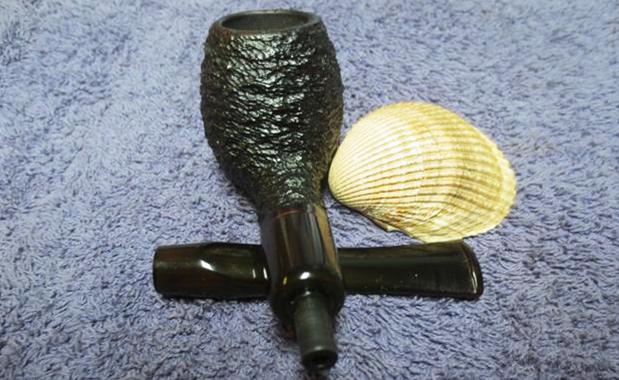
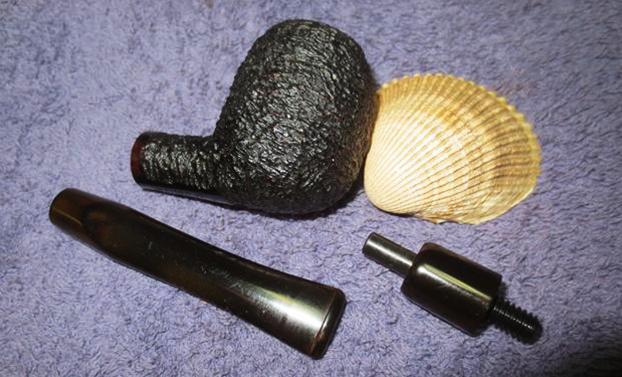
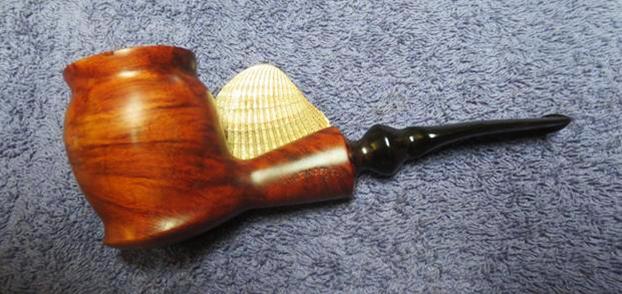
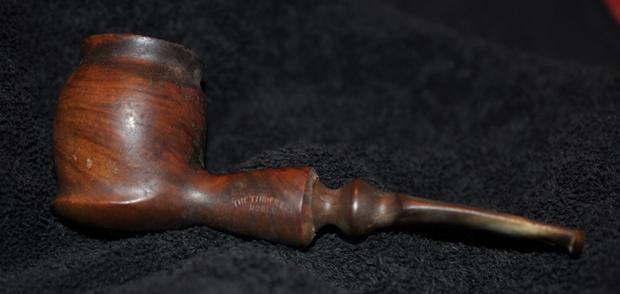
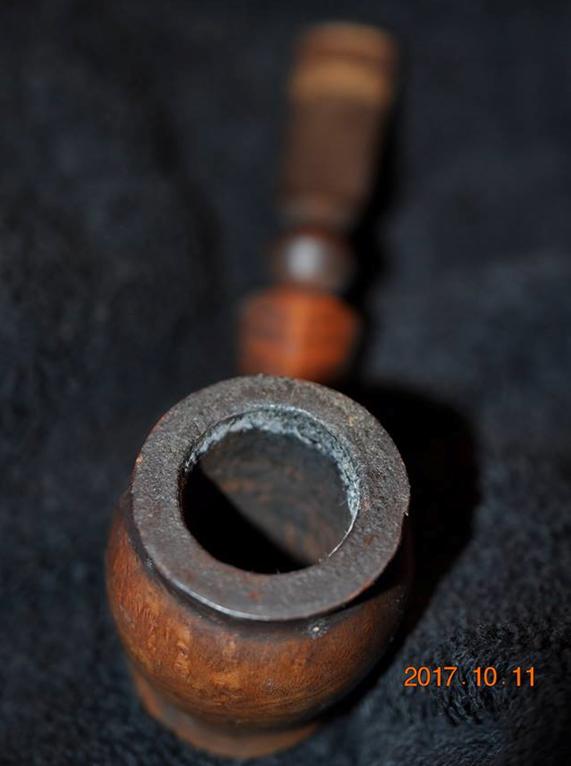
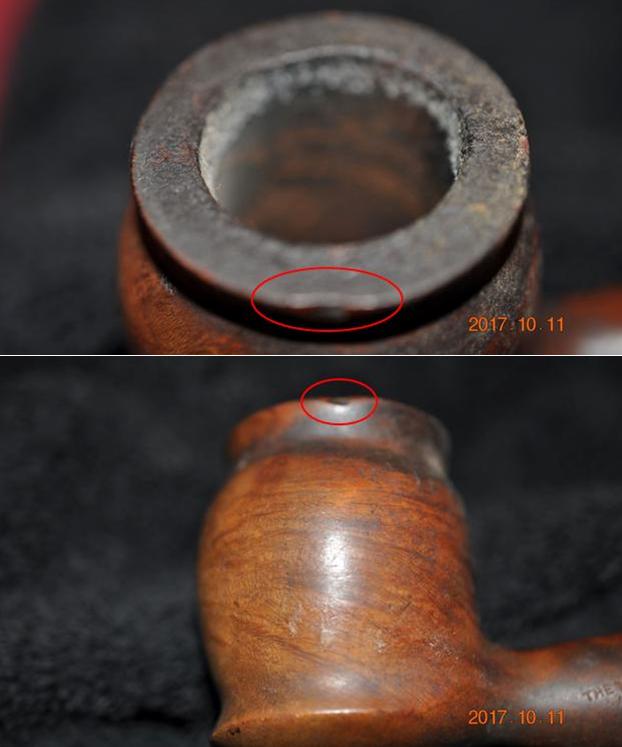
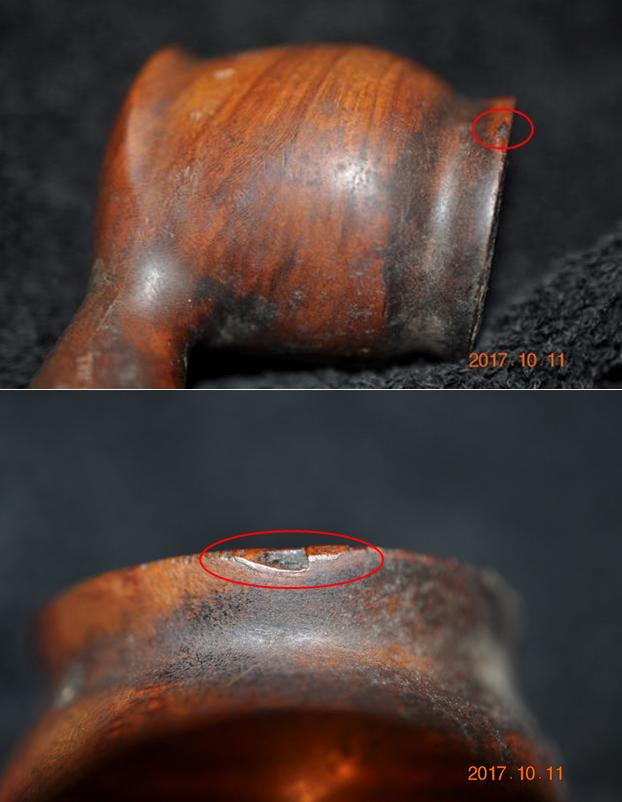
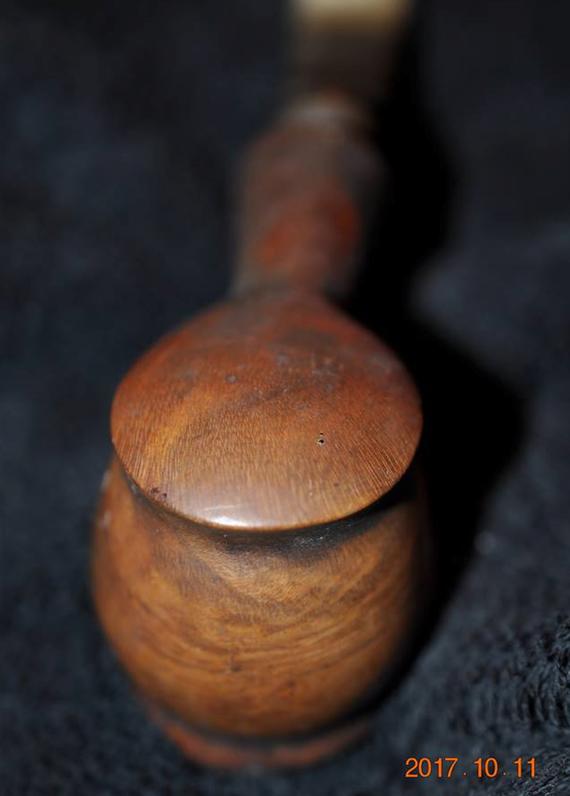
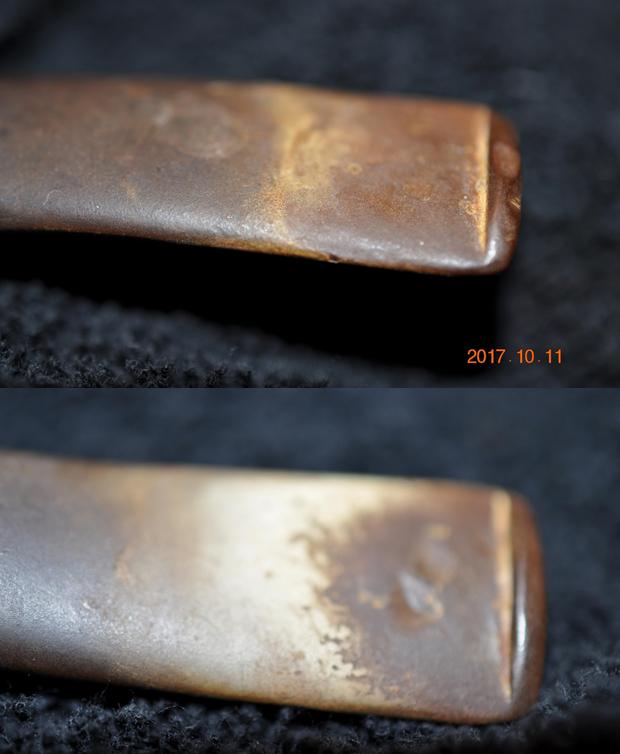
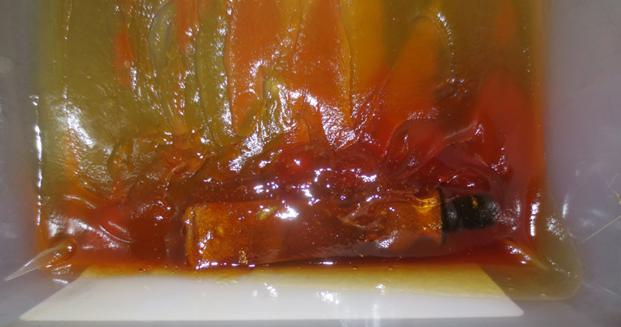
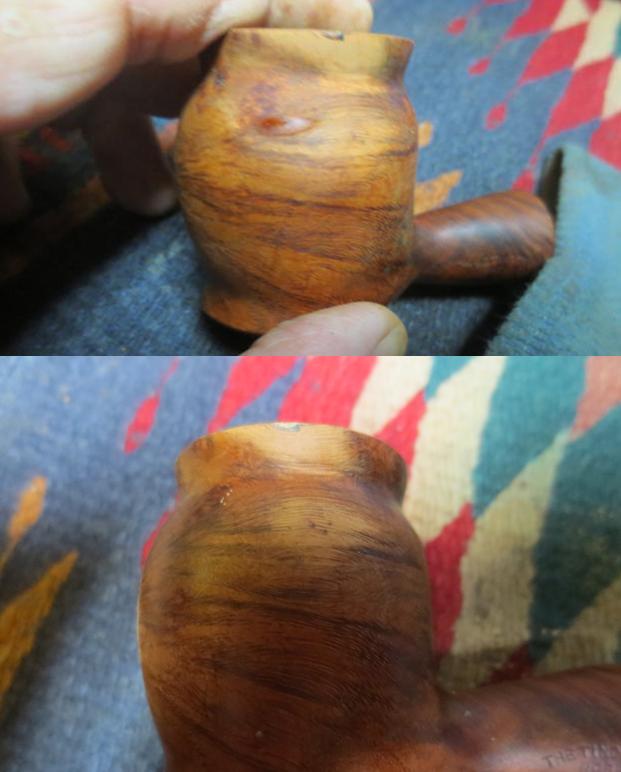
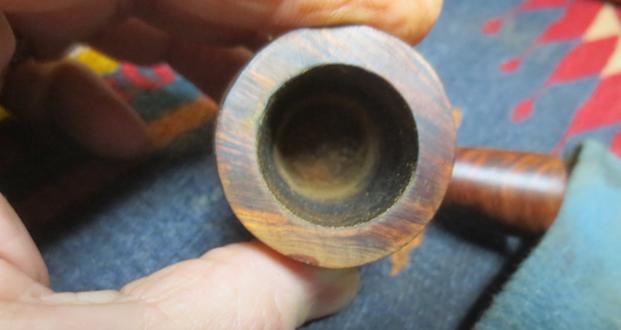
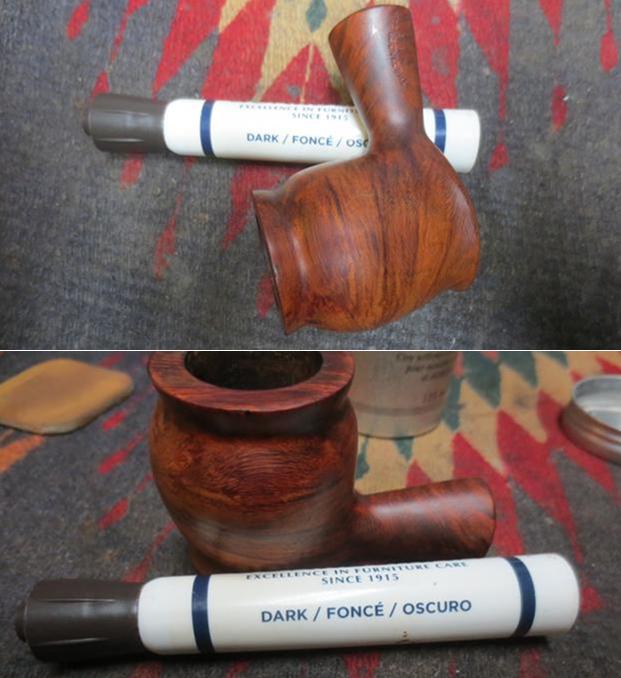
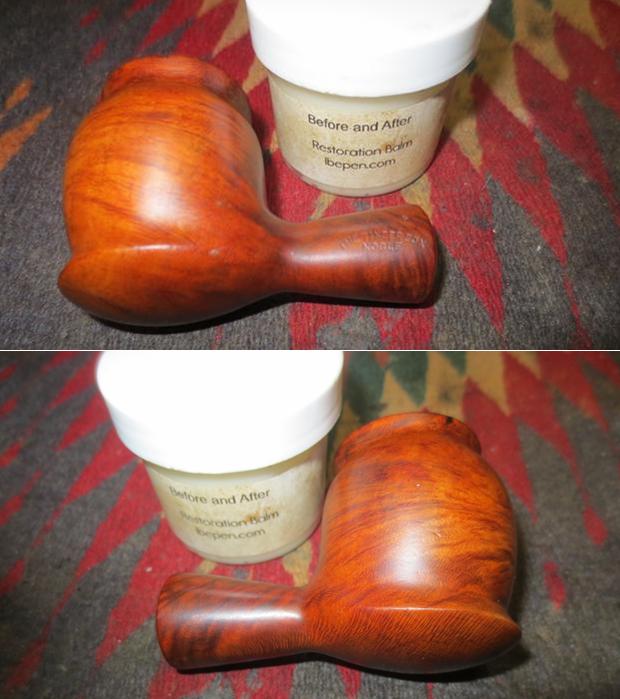
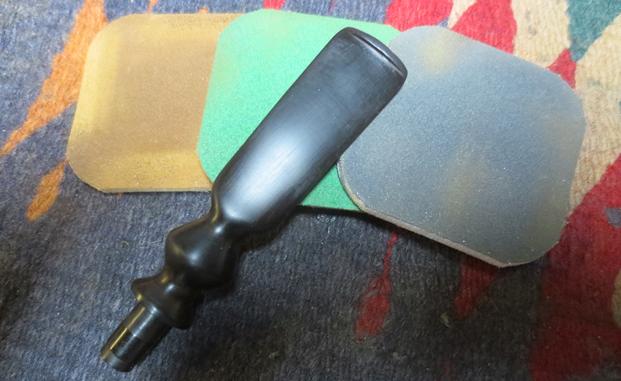
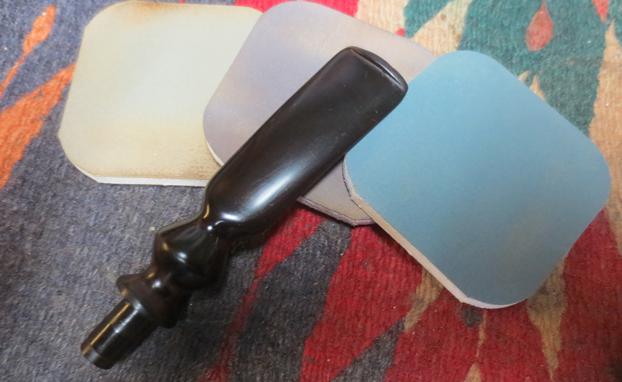
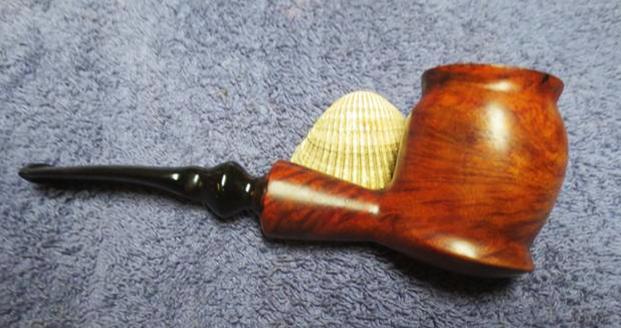
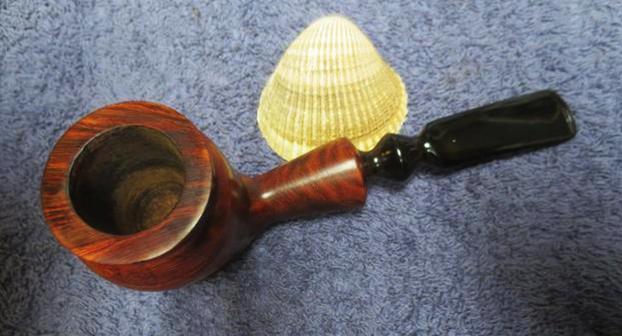
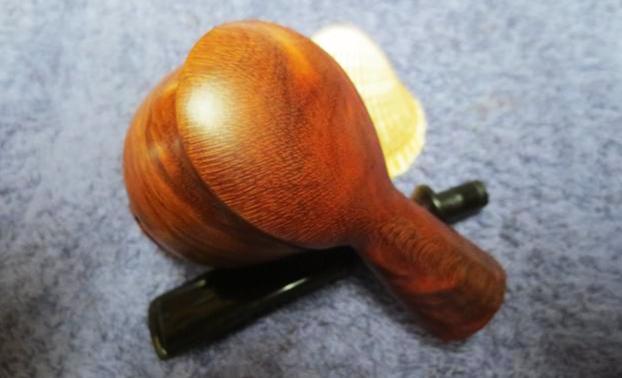
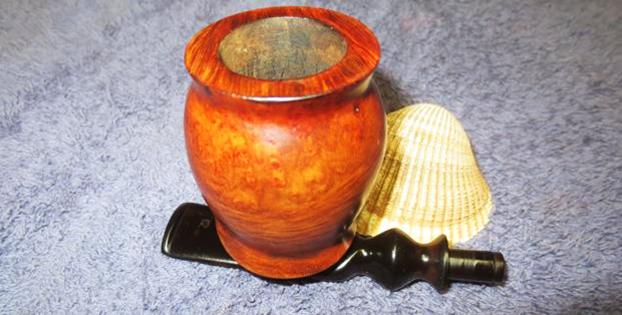
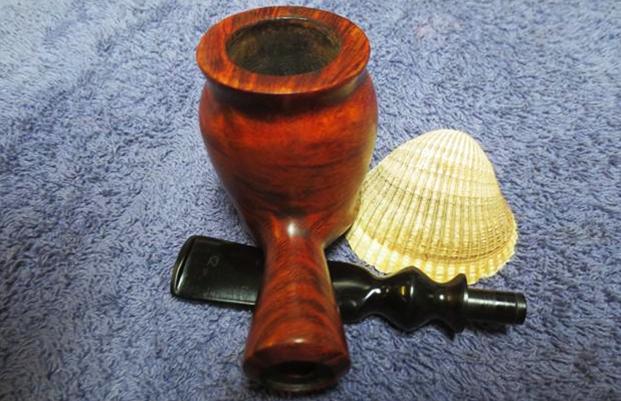
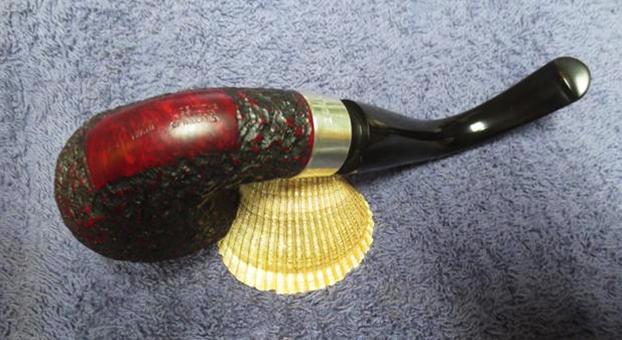
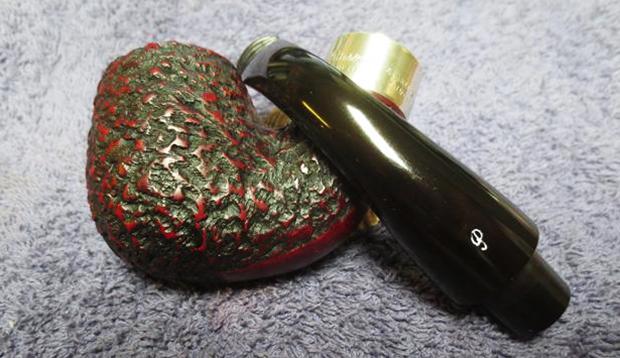
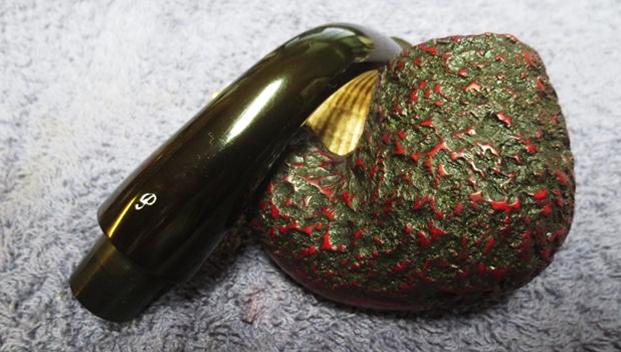
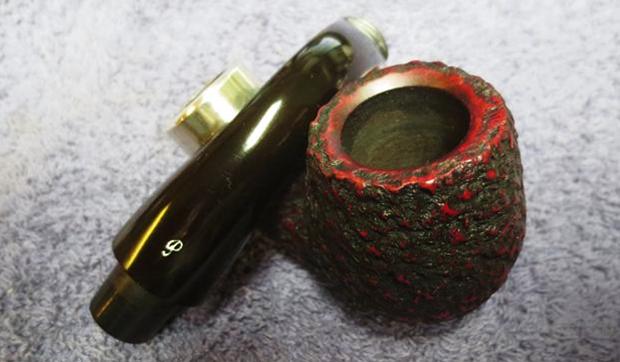
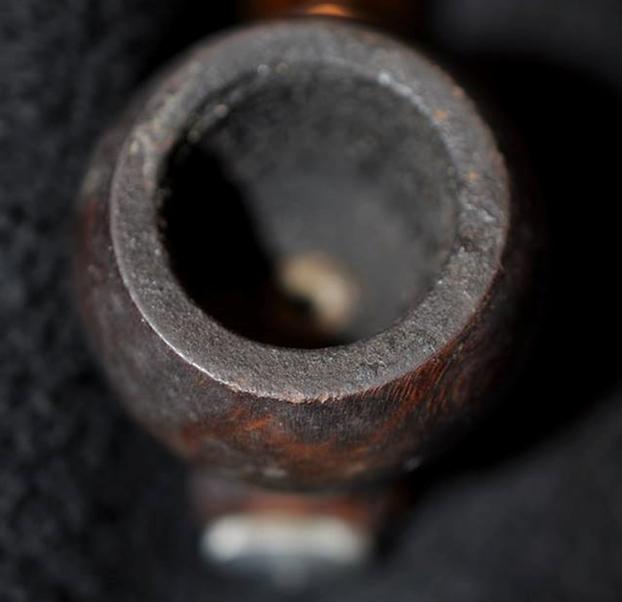
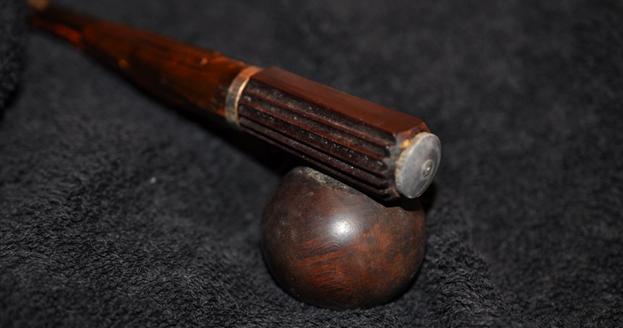
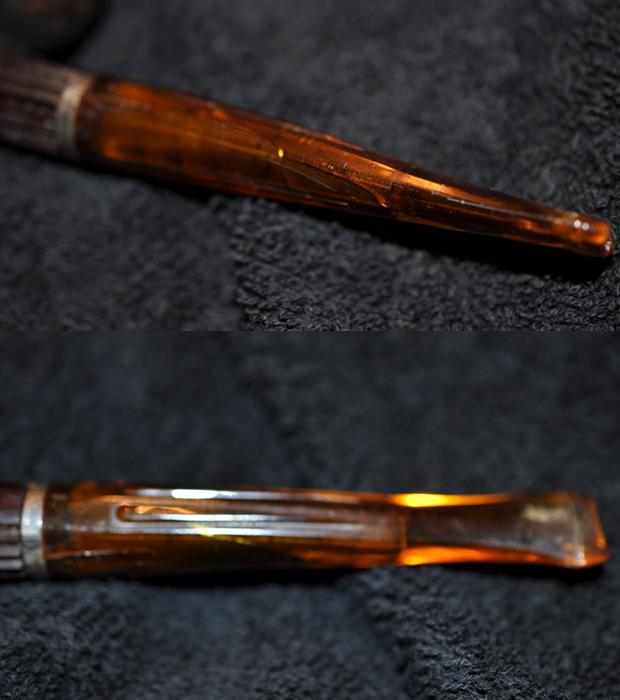
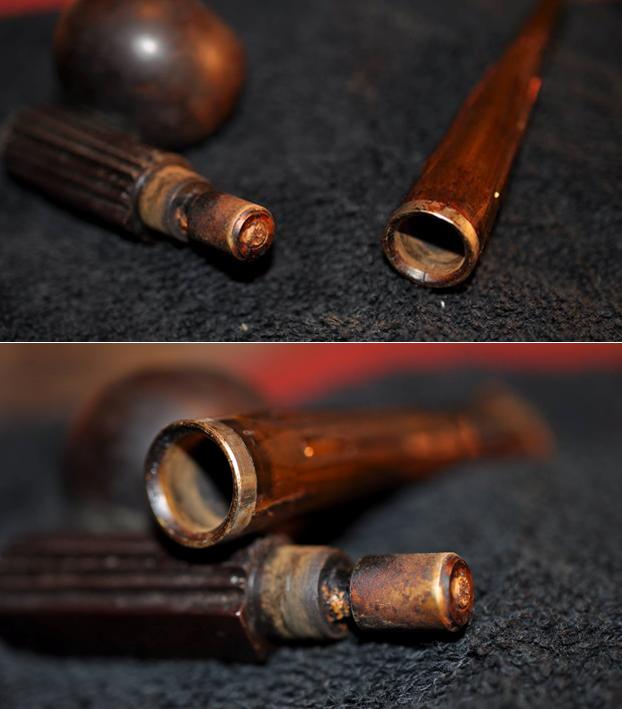
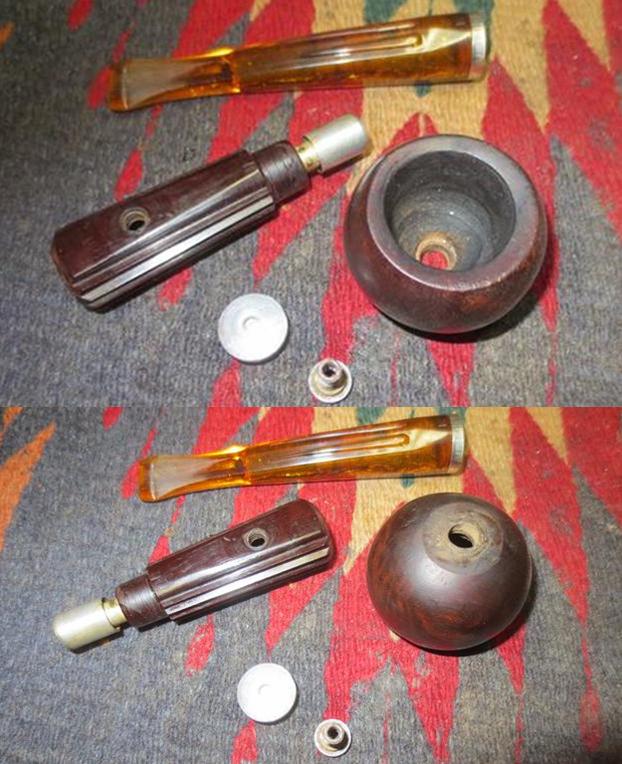
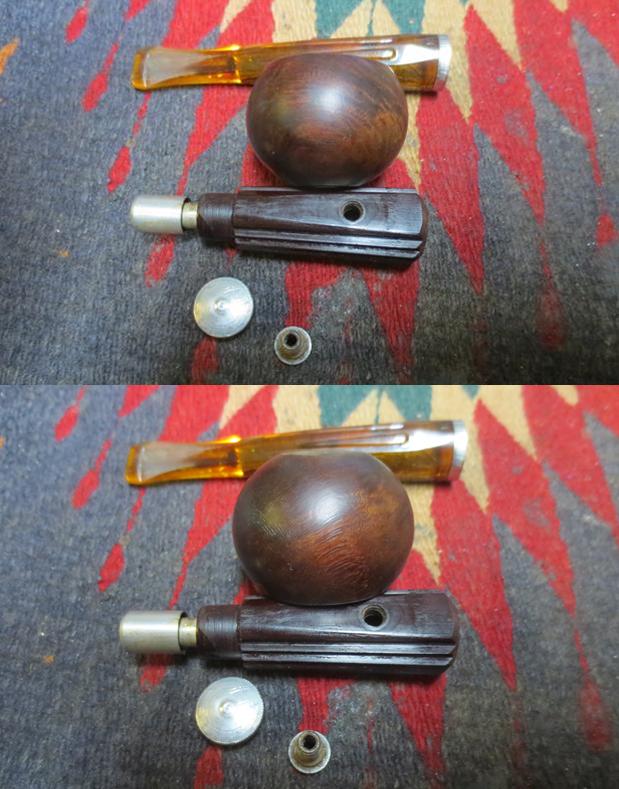
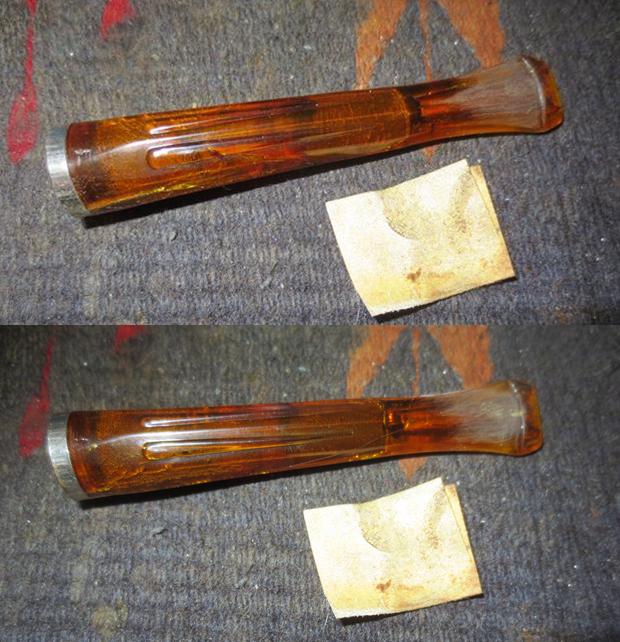
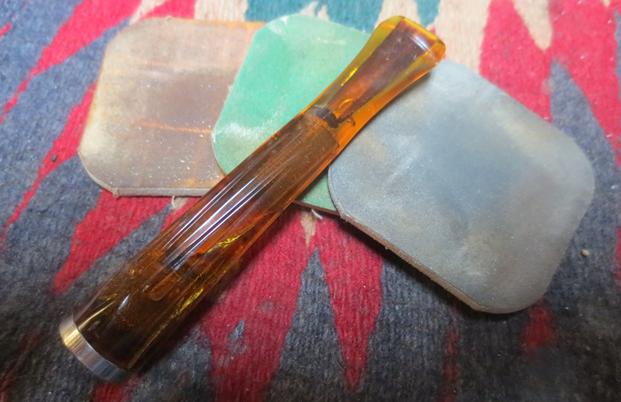
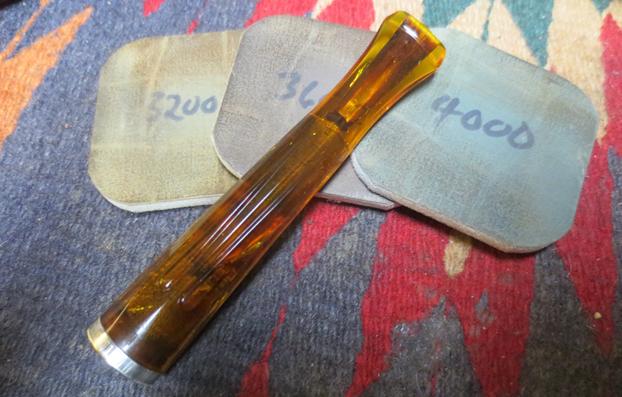
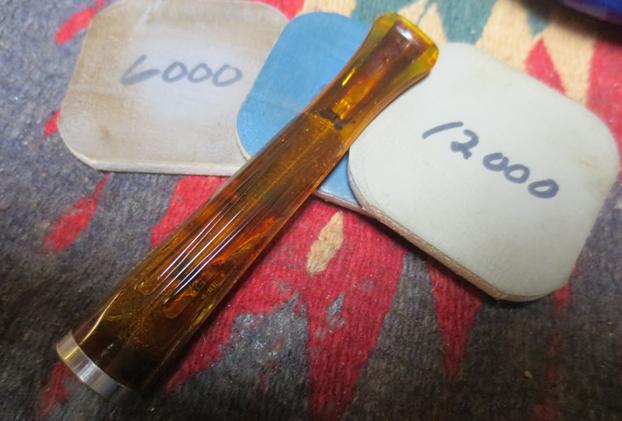
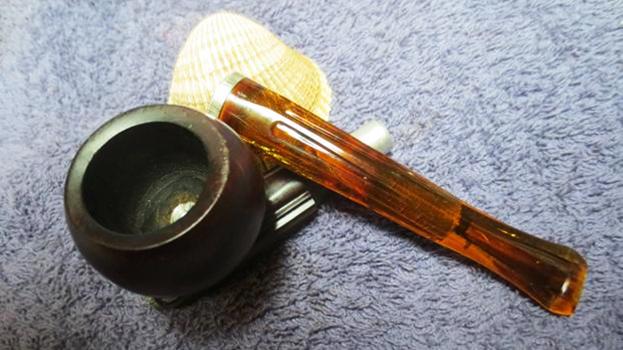
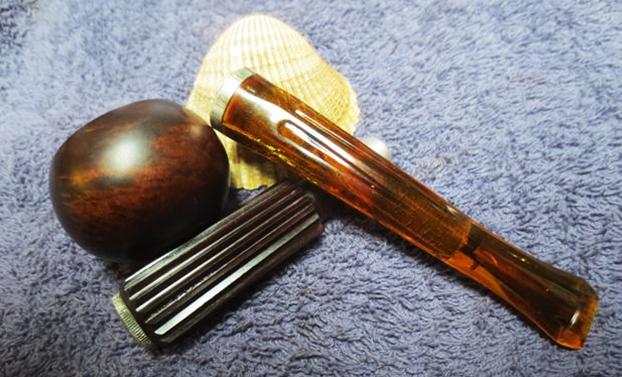
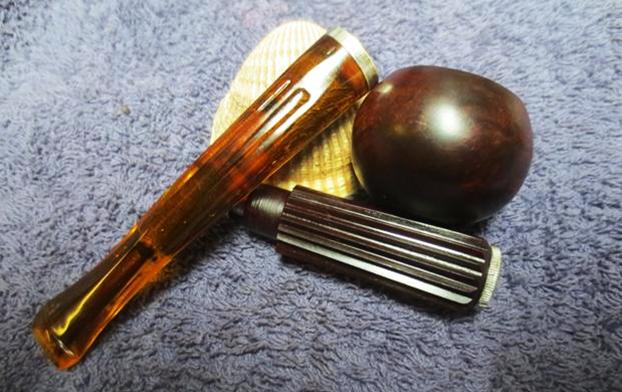
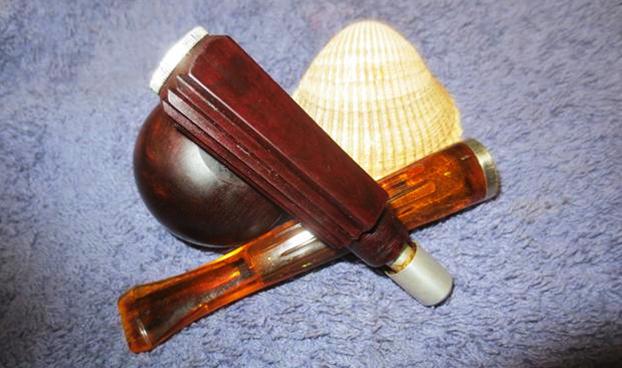
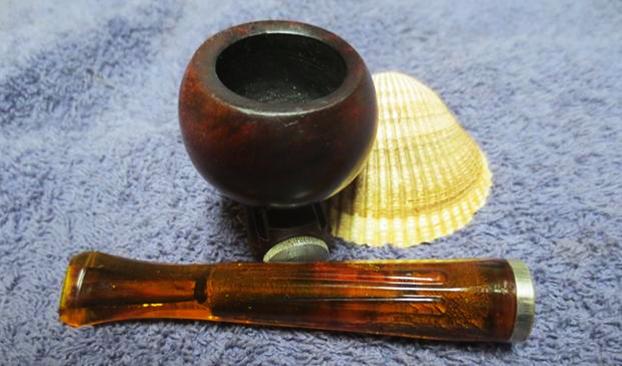
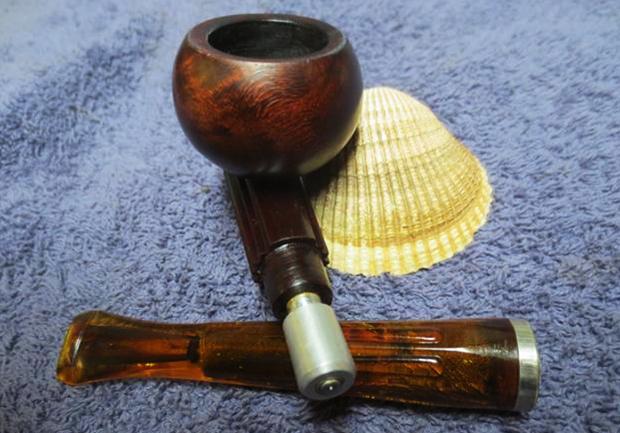
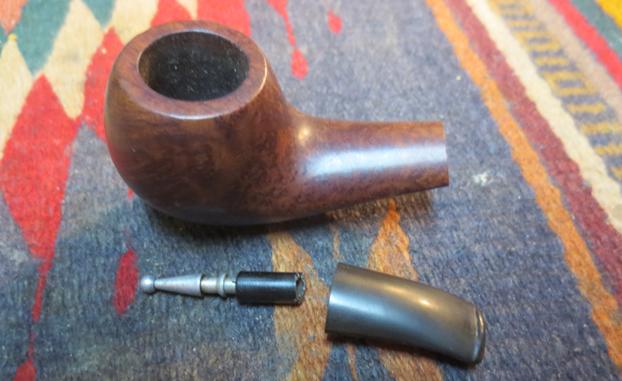
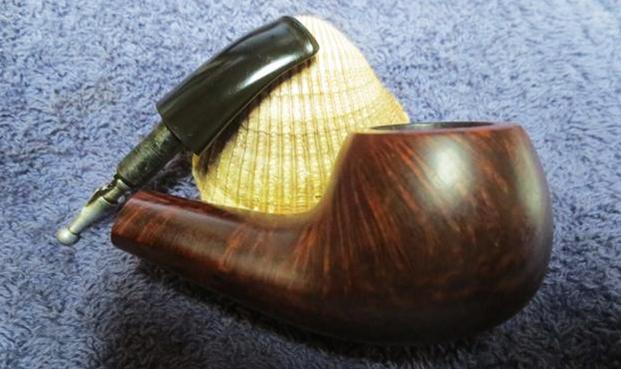
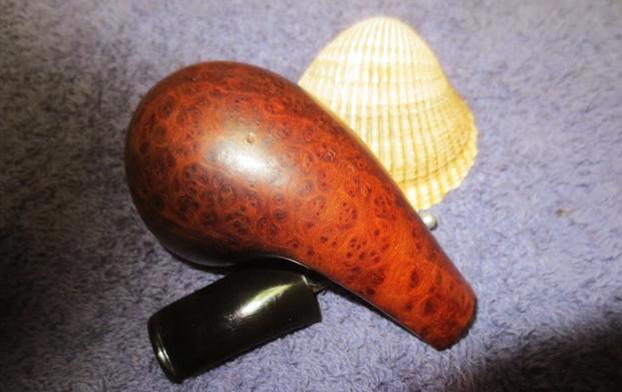
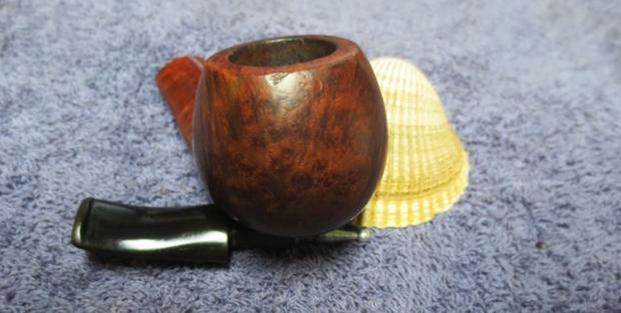
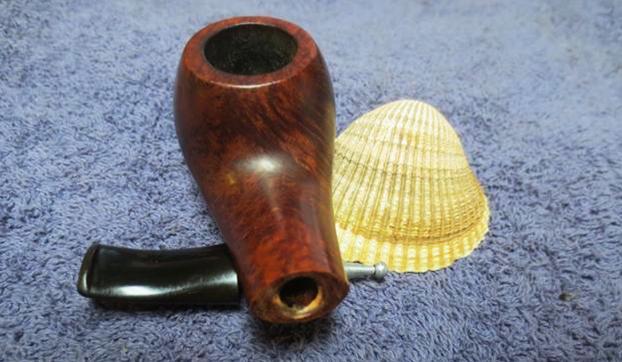
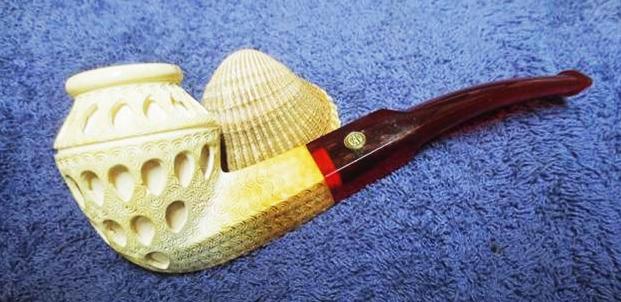
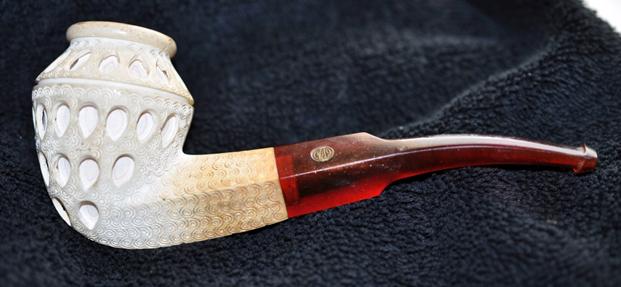
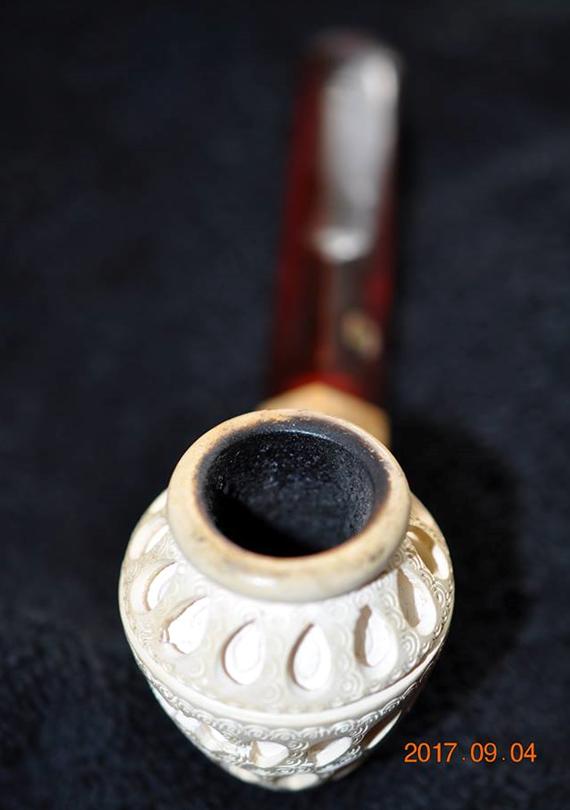
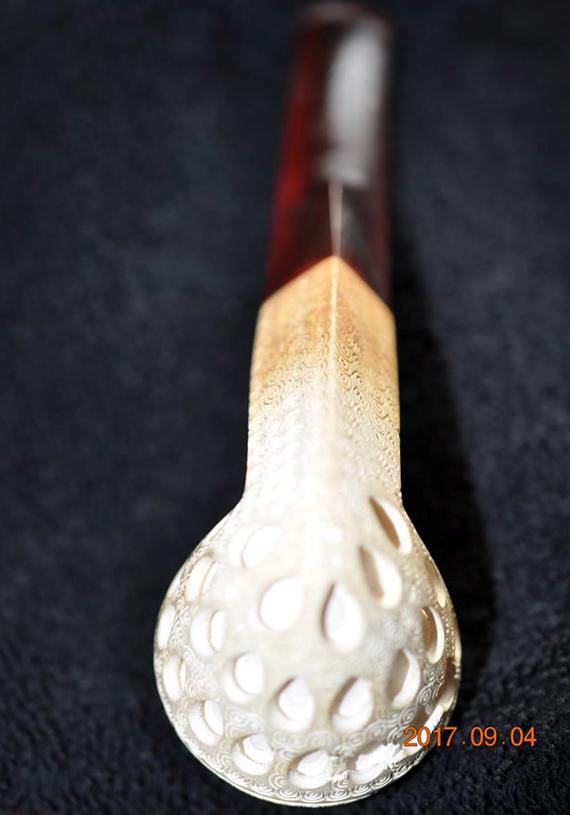
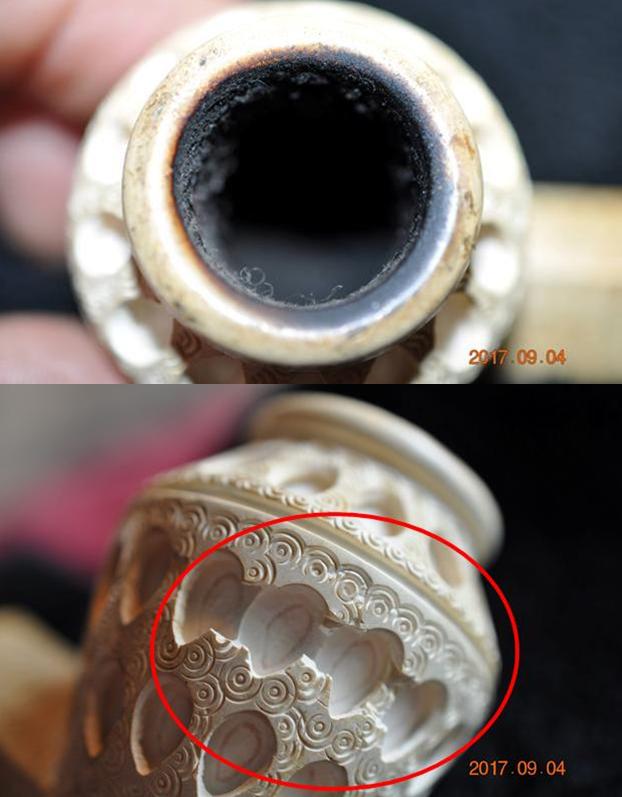
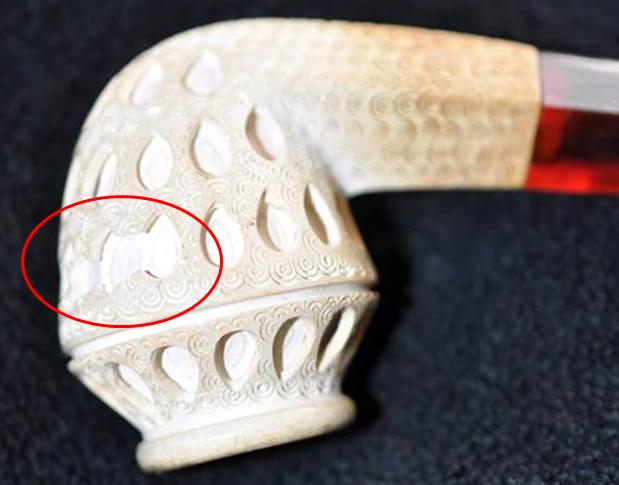
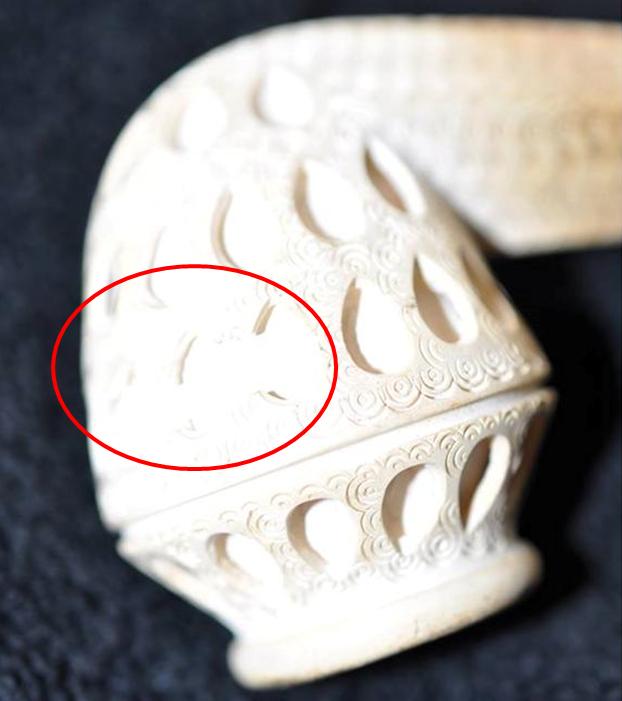
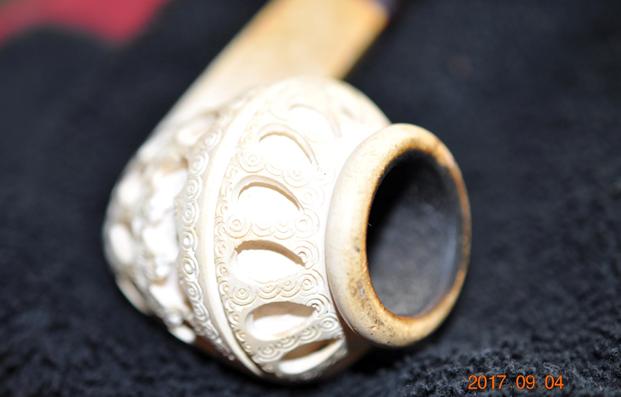
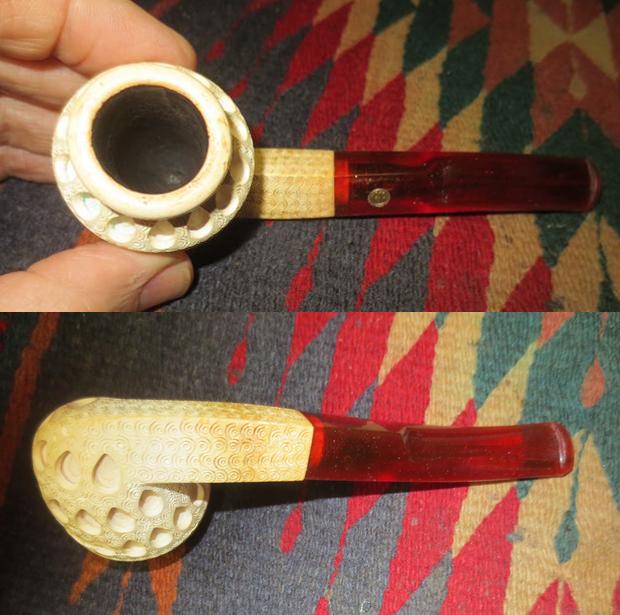
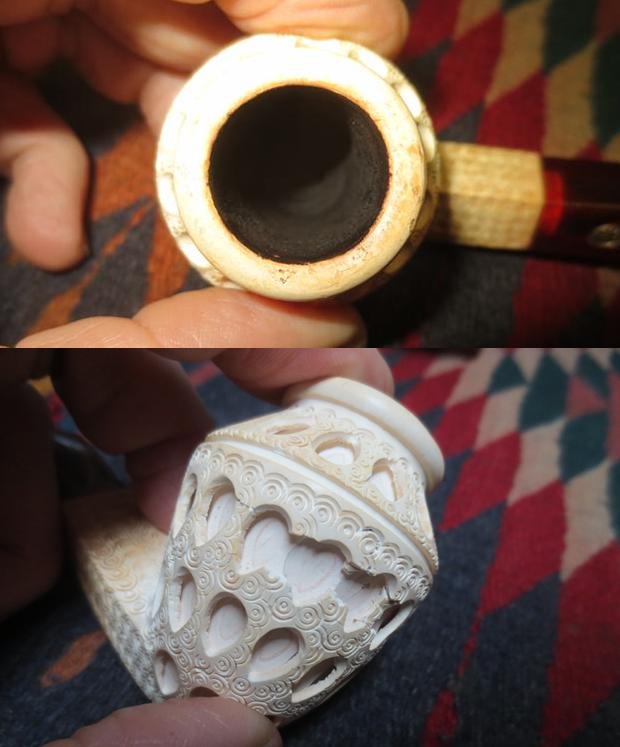
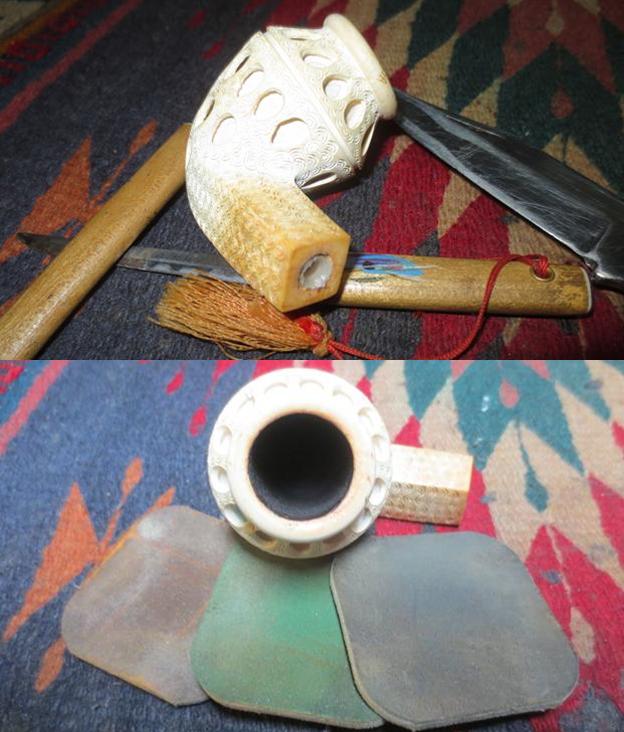
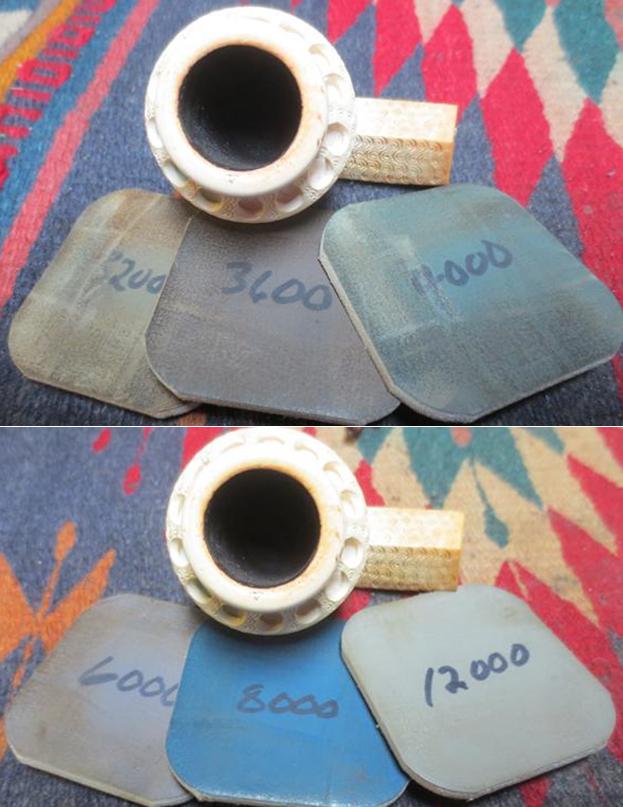
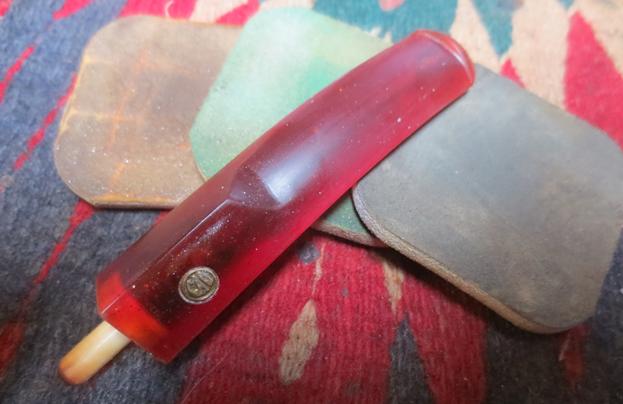
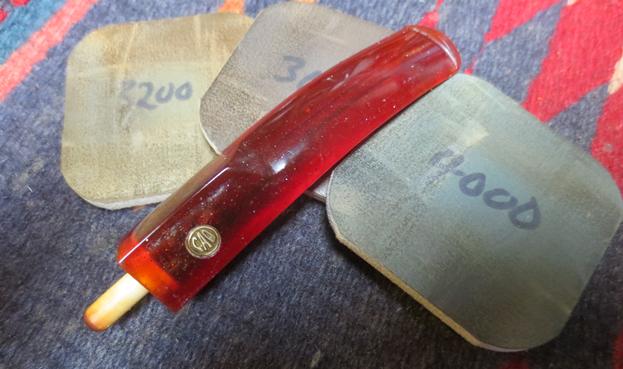
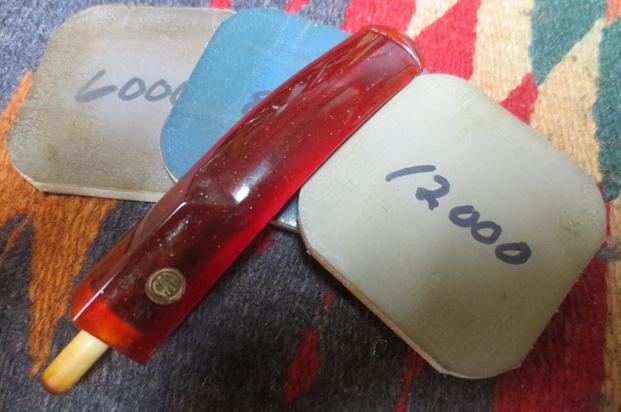
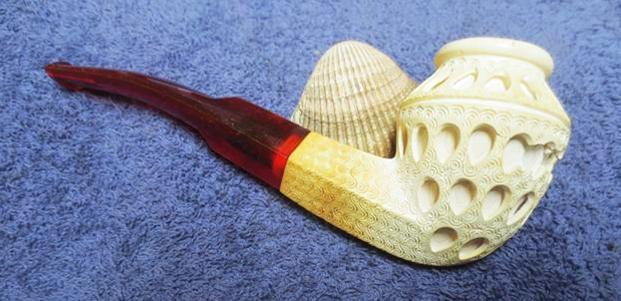
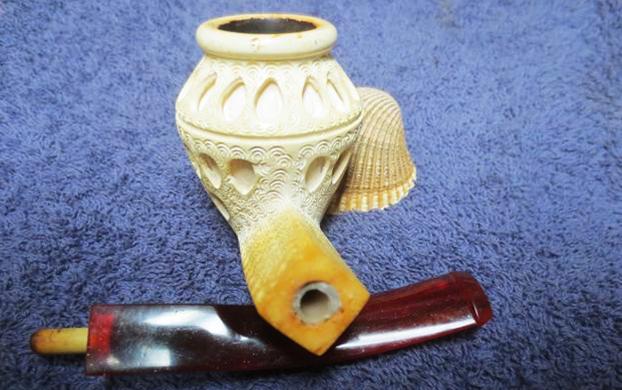
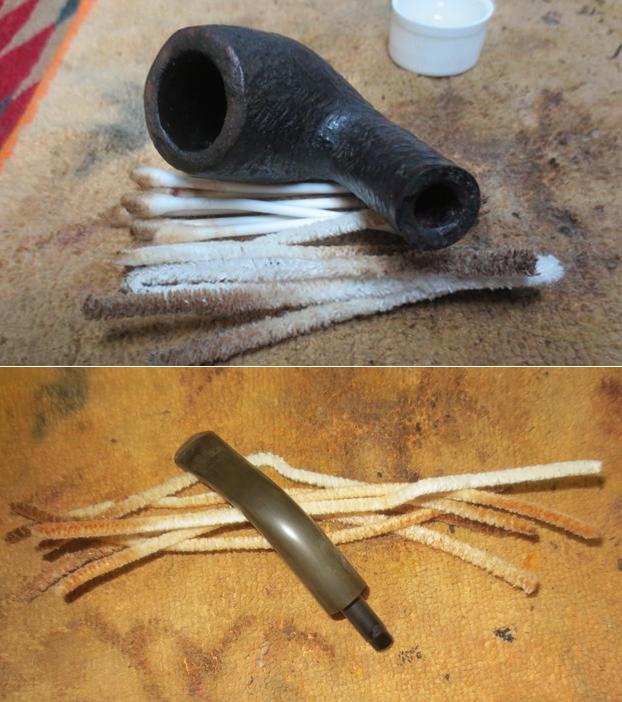
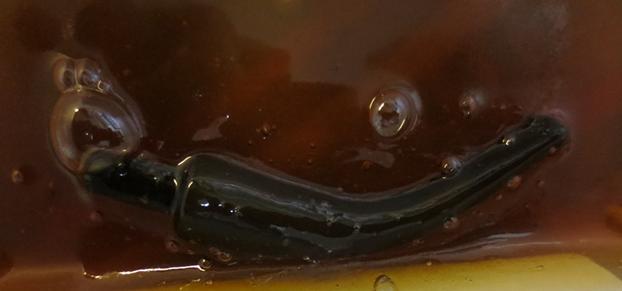
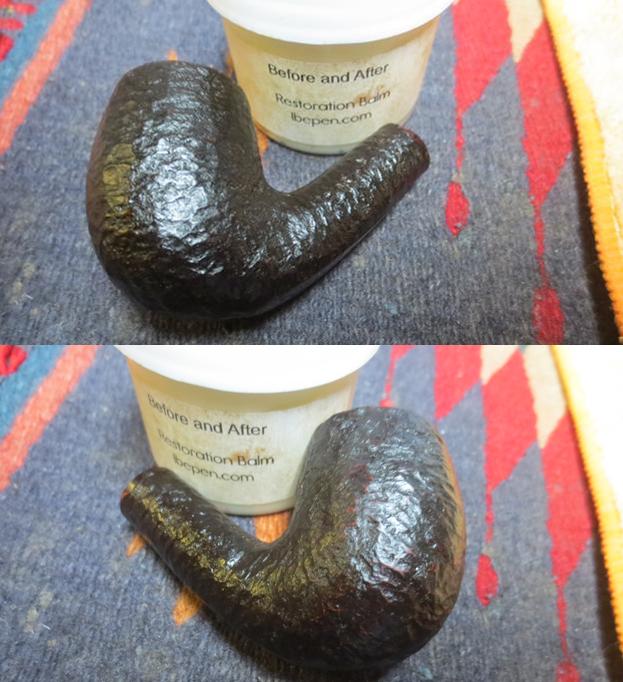
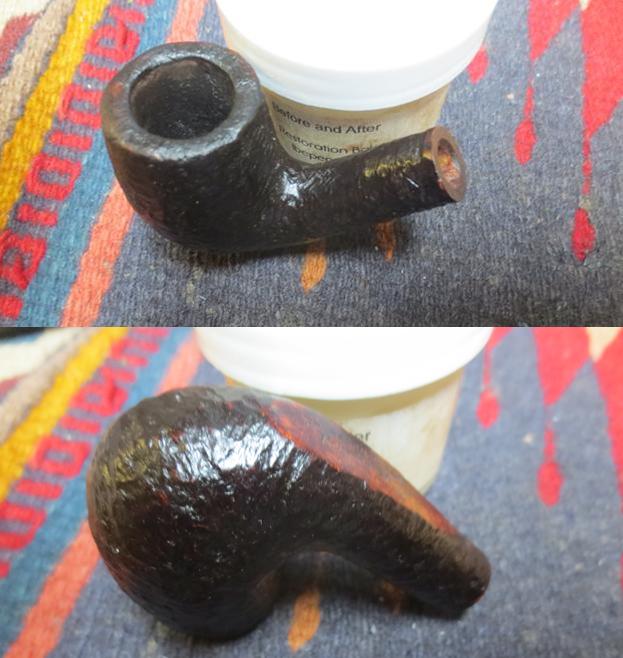
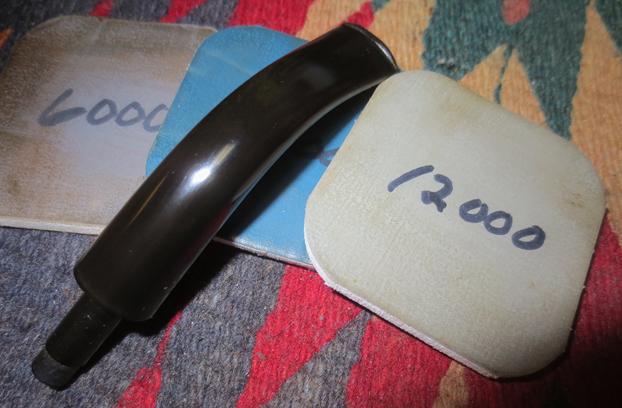
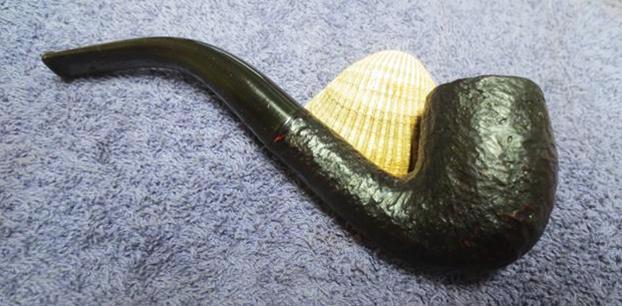
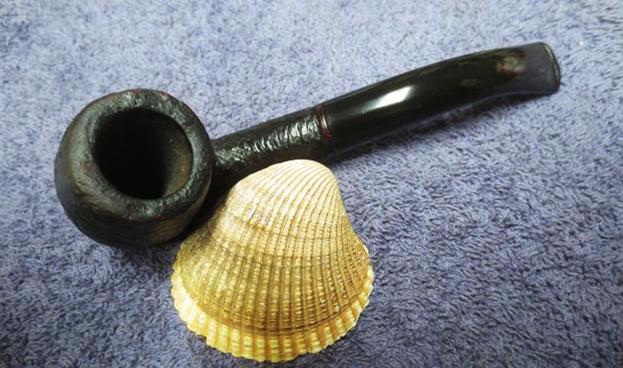
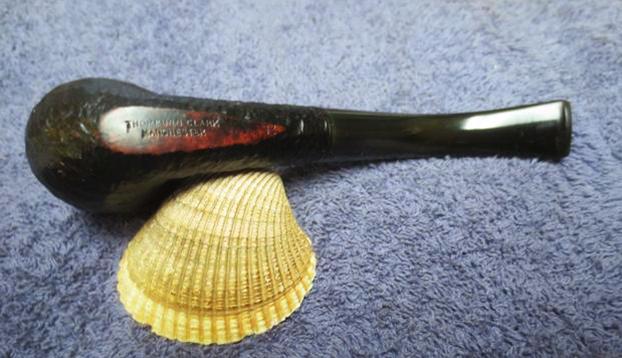
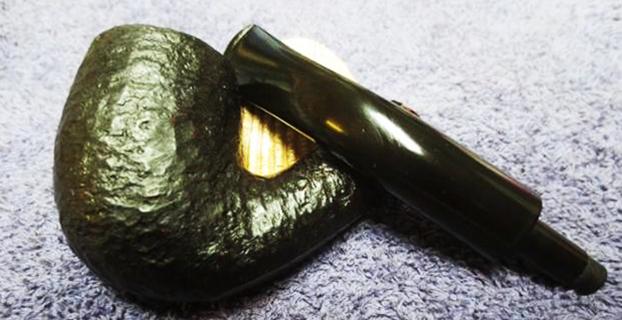
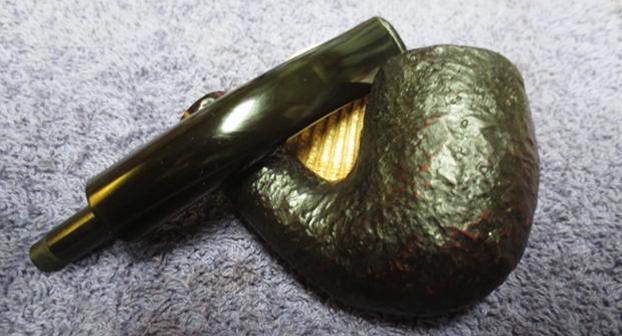
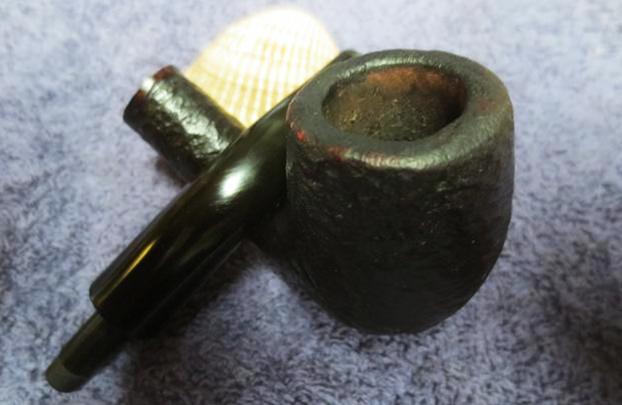
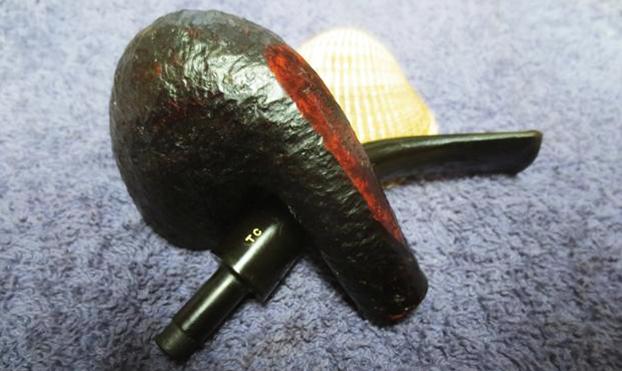
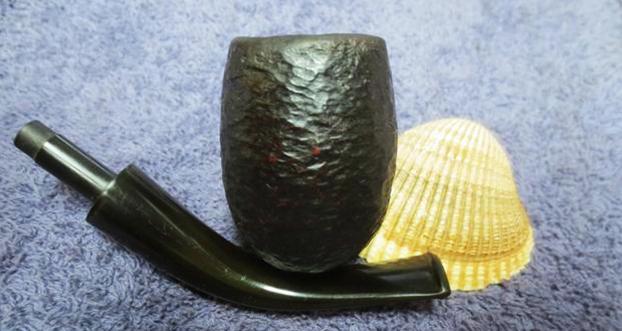
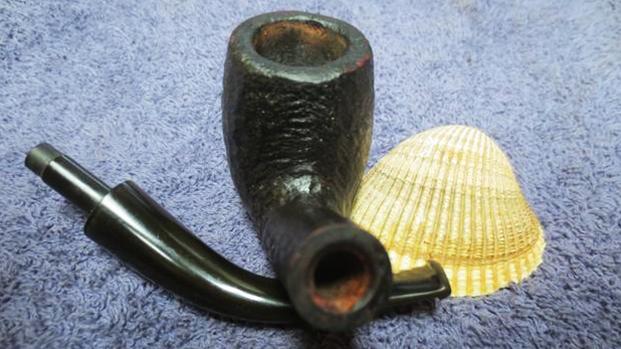
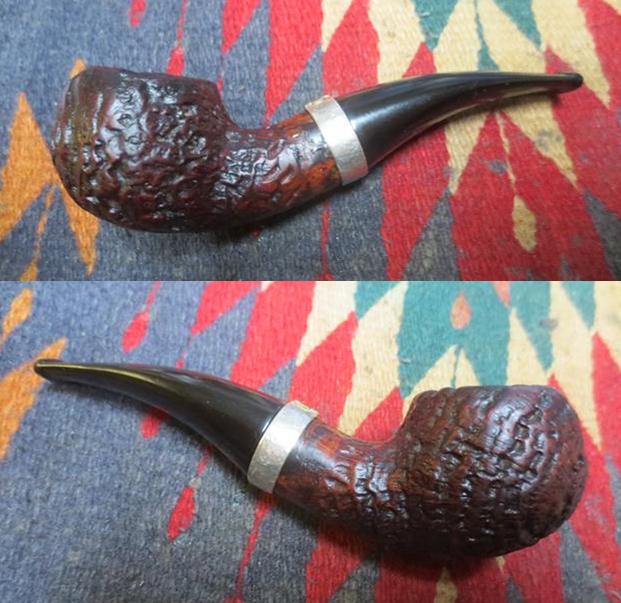
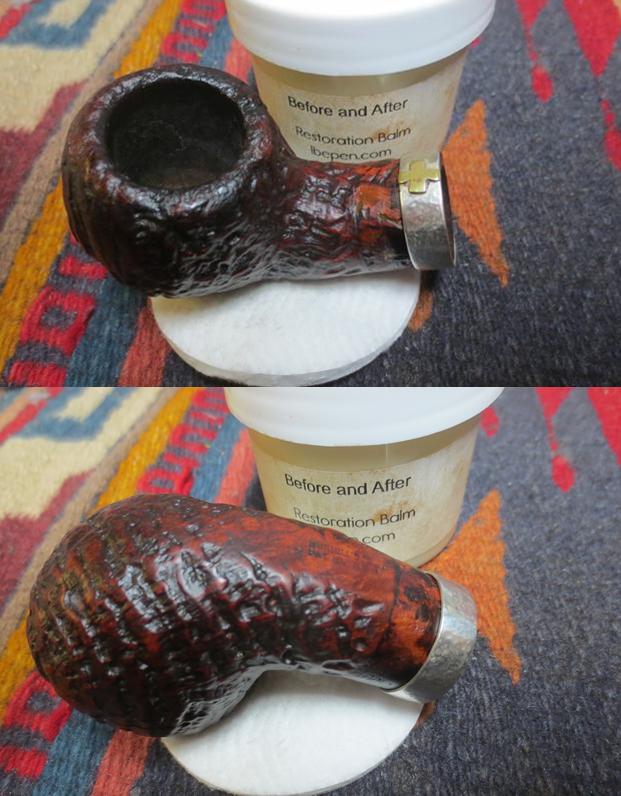
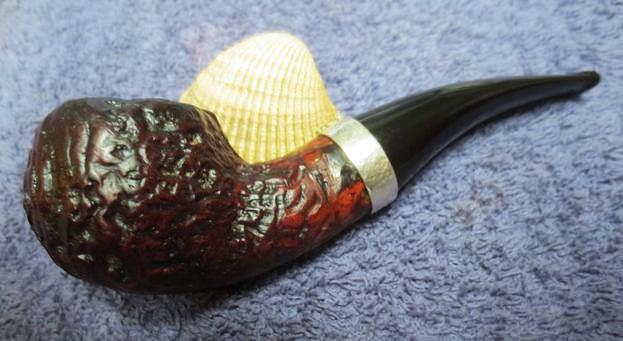
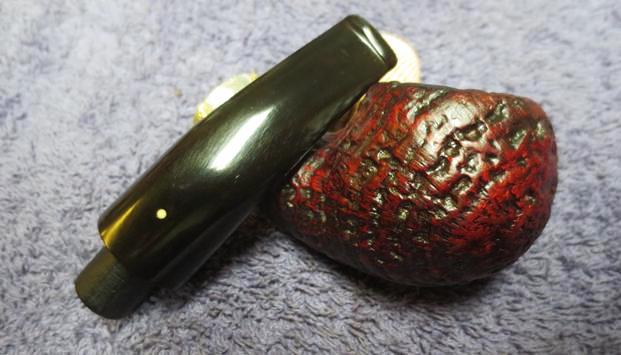
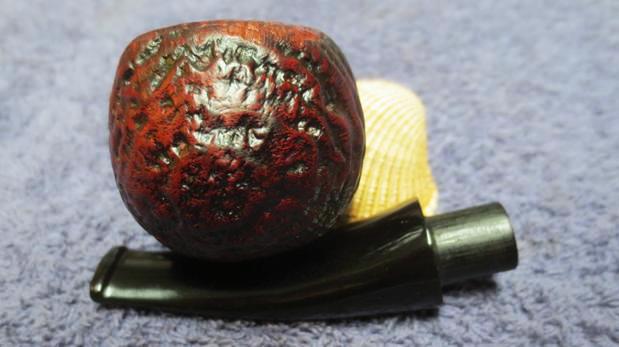
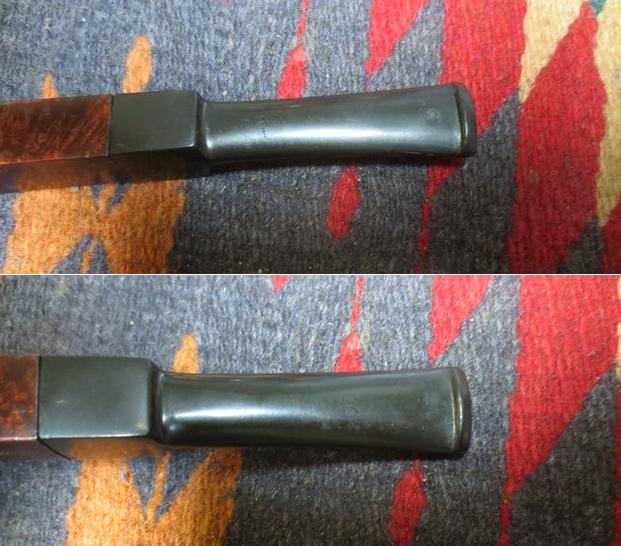
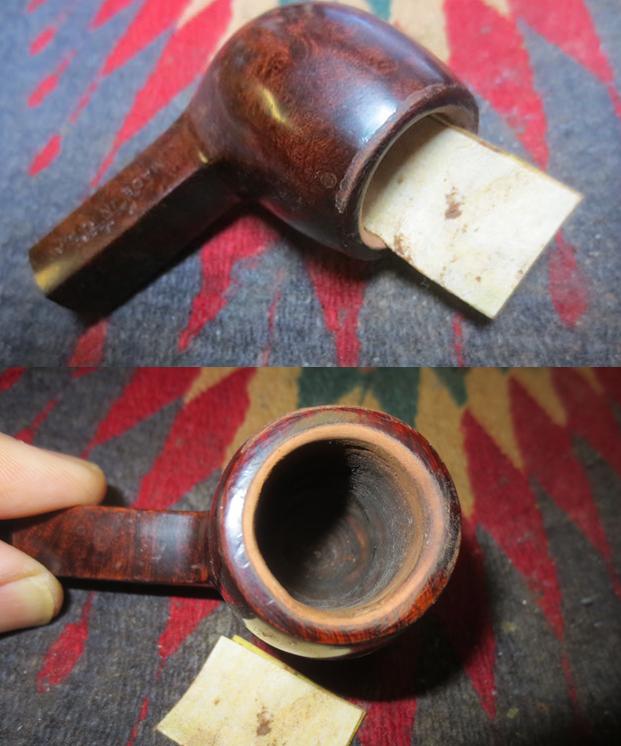
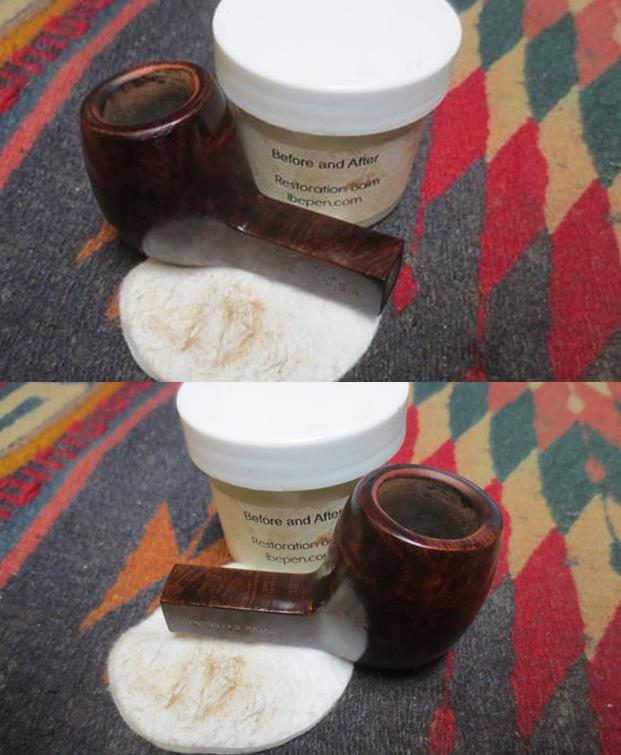
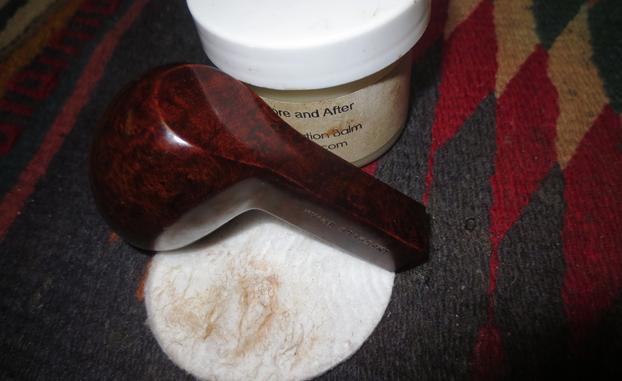
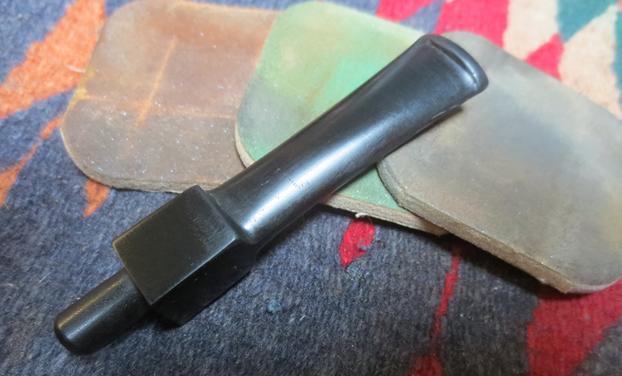
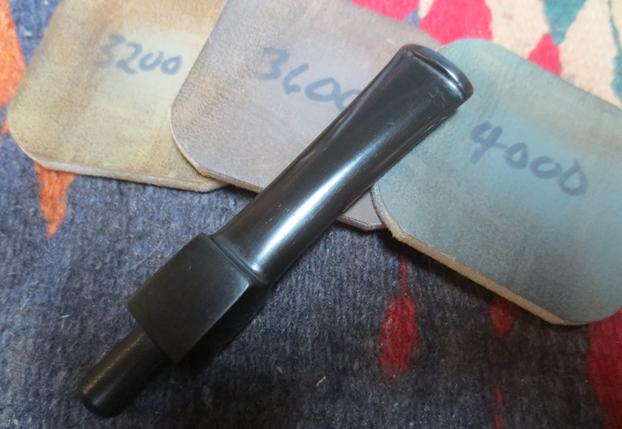
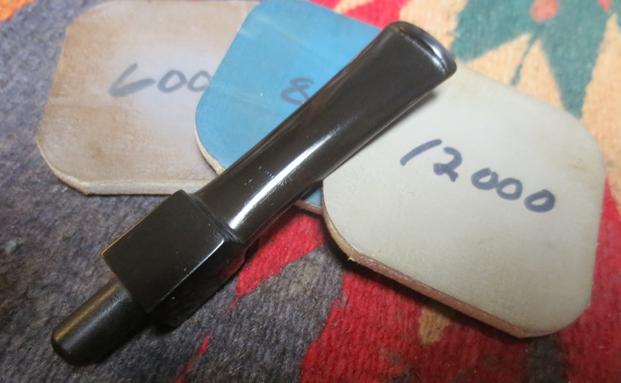
Well, I have come to the end of restoring the five gourd calabashes that my brother and I picked up on my recent trip to Idaho. This final one is very similar to the previous one that I cleaned up. I think it may also be a Pioneer Gourd Calabash but I have no way of proving it one way or another. The gourd on this one is a bit longer and has a slightly different bend than the previous one. The shank cap and extension is identical. The stem is different and it may well be a replacement. The pipe had been lightly smoked as is evidenced by the internals of the bowl and shank. However, it has been roughly handled. The bowl was darkened and scratched and there were chips missing on the outside edge. Fortunately they were not too deep and could be addressed but they were present nonetheless. This calabash was externally in the worst shape of the five but as I looked it over I could see that there was a lot of promise left in it and the bowl could be polished and smoothed out. The next four photos show the condition of the pipe when I brought it to the work table. I took the pipe apart to get a look at the parts. The inside of the gourd was surprisingly clean. In fact it looked barely smoked. This made me wonder if the bowl was not a used replacement bowl from another pipe. The cork gasket was also new and had been replaced. It was dry and hardened but still had not cracked or broken. The top of the bowl was in rough shape. There were some scratches and the burn marks were all around the inner edge of the bowl. I took a close up photo of the bowl top and edges to show more clearly the kind of damage that would need to be addressed in cleaning this one up. You can see the nicks on the inner edge of the bowl and on the top. The burn marks went all the way around and out into the surface of the bowl. The scratches on the top are visible and many. The second and third photo below show the nicks in the out edge of the bowl. It looked to me that the bowl had been dropped some time in its life. There were two missing pieces and there were also a lot of scratches all the way around the outer edge of the bowl. I sanded out the as many of the scratches as possible with 220 grit sandpaper. I smooth out the missing chips on the edge of the bowl and reshaped the rounded edge of the bowl so that the chips were no long visible. I polished the meerschaum with micromesh sanding pads – wet sanding with 1500-2400 grit pads and dry sanding with 3200-12000 grit pads. I buffed the bowl with Blue Diamond to polish it to a shine. By the time I was finished most of the scratches and damage had been repaired and the bowl looked far better. I greased the cork with Vaseline to revitalize it and soften it. I rubbed it down and let it absorb before giving it another coat. Once it had been absorbed the cork was softer and more flexible. The bowl seated very well when pressed into place.I waxed the gourd with Conservator’s Wax and buffed it by hand with a soft cloth. I repeated the process and after buffing it with the cloth hand buffed it a final time with a microfibre cloth.I pressed the bowl into the gourd and it fit really well. The next two photos show the polished bowl and gourd. The pipe is already looking far better than it did when I started the refurbish on it. There is a shine to it now.I cleaned out the shank, the mortise and the airway in the stem with pipe cleaners, cotton swabs and alcohol. It was remarkably clean which made me more certain that the pipe itself was unsmoked and a used replacement bowl had been added later.I polished the unused stem with micromesh sanding pads – wet sanding with 1500-2400 grit pads. I buffed the stem with red Tripoli to remove the light oxidation and then finished dry sanding with 3200-12000 grit pads. I gave the stem repeated coats of Obsidian Oil after the first set of pads and the buffing and after each set of three pads after that. I gave it a final coat after the sanding with the 12000 grit pad and then set it aside to dry. I gave the stem multiple coats of carnauba wax and buffed it with a clean buffing pad to raise the shine. I removed the bowl and carefully buffed the gourd with a clean buffing pad to raise the wax shine on it as well. I put the pipe back together and hand buffed it with a microfiber cloth to deepen the shine. The pipe looks really good now that it is finished. You would be hard pressed to find the damaged areas on the bowl sides and the scratches on the rim top look really quite good. The bowl has a light patina that remained after I waxed it with beeswax. It is a beauty and will serve someone well. It will be available on the rebornpipes store shortly. If you have been looking for a gourd calabash this one may well fit the bill. Thanks for looking.

Refreshing a New Old Stock (NOS) Mastercraft De Luxe Chubby Billiard


Blog by Steve Laug

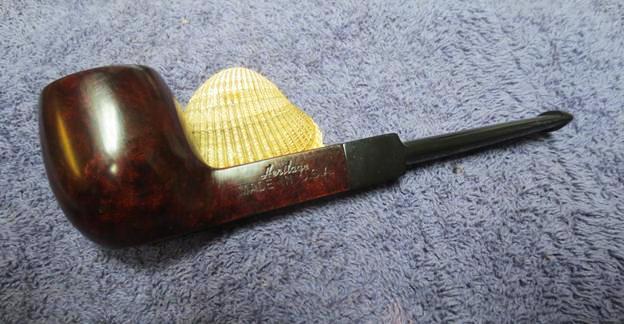
My brother found this pipe on one of his pipe hunts not long ago. It is a beautiful unsmoked, new old stock (NOS) chubby billiard. The briar is in great shape. The rim, the pristine bowl and the finish on the pipe all spoke of new pipe. I did a bit of reading on the brand to see if I could possibly date this pipe. I copied a section from Pipedia. It gives a flow of the history of the brand. Here is the link: https://pipedia.org/wiki/Mastercraft in it the text comes from a posting made by “Ted” on the Grabow Collectors Forum. He was the former Exec VP of Grabow/Mastercraft.

It doesn’t appear that Mastercraft was ever a manufacturer and bought pipes from multiple factories — mostly French and English. It survived briefly the post war recovery and then was acquired by Grabow. Ted writes:

“First a confession. From 1974 till 1984 I had several positions with Mastercraft including Executive Vice President. I also worked for Grabow from 66 till 74 and from 84 till I retired in 91. In 91, with retirement, I was President and COO for the corporation that was called “Sparta Industries”. I have seen both sides of the “fence”, and even though I never left the “employ” of Grabow, My loyalties for 10 years were with M/C.”

“United States Tobacco(UST)(Skoal and Copenhagen) bought Grabow in 69′ from the Lavietes family. In 74′ they bought M/C from Bernard Hochstein and moved it into the EXACT facility Grabow occupied. I was named “operations manager” and we were in the basement of a 4 story building in Sparta, NC.”

“M/C was STRICTLY an importer of pipes and pipe related merchandise. In 74′ when M/C moved from NYC to NC the inventory of finished goods was stored in a facility in Winston Salem, NC. Lentz Moving and Storage. Stacked 10 feet high the inventory covered 180,000 square feet….FINISHED. In my time at Grabow I had never seen that much finished stock, and the shapes, manufacturers,finishes. Heaven for a pipe smoker…..Damn right. You would have had to slap me really hard to get the grin off my face.”

“I’ll just list a few Manufacturers/names of the inventory. England:Parker/Hardcastle(Dunhill), Orlik…France: Jeantet…Jima…Cherrywoods. Italy: GIGI pipe…Radica….Rossi…Federico Rovera….Emilio Rovera….Santambrogio. Brebbia. Meerschaums from Austria: Strambach. Lighters from Japan….Pouches and accessories from Hong Kong…and the Israeli pipes from Mr. Hochstein’s sons. Trust me…This is only a small sample of the things M/C had, and bought into inventory.”

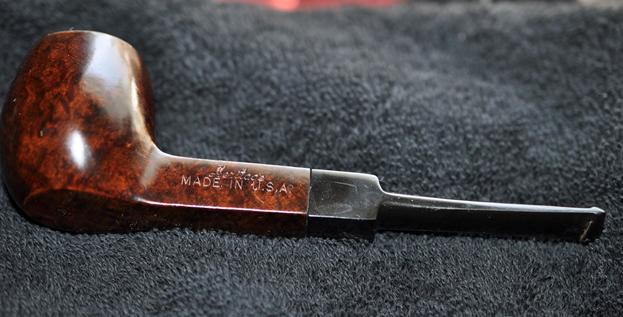
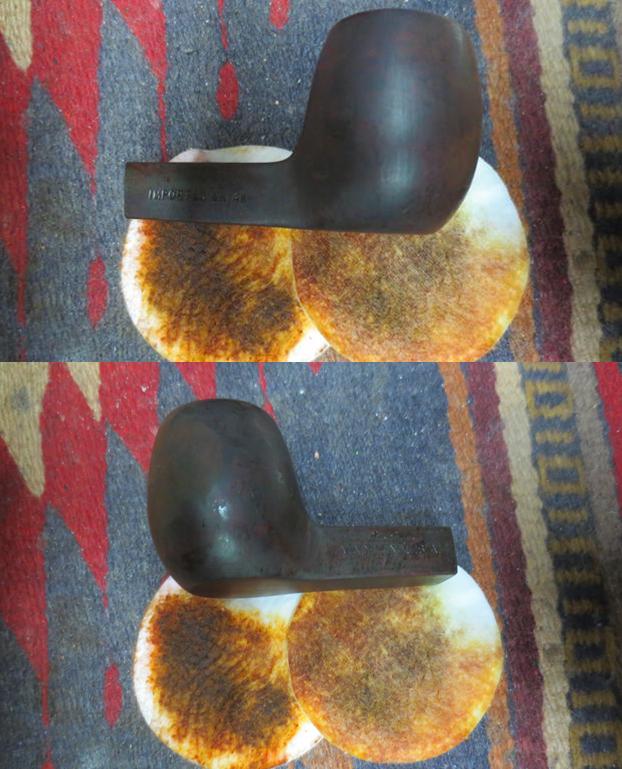
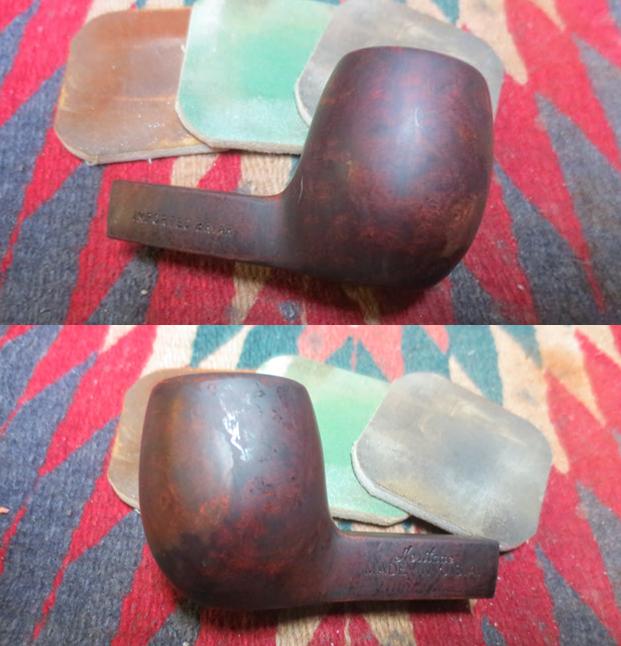
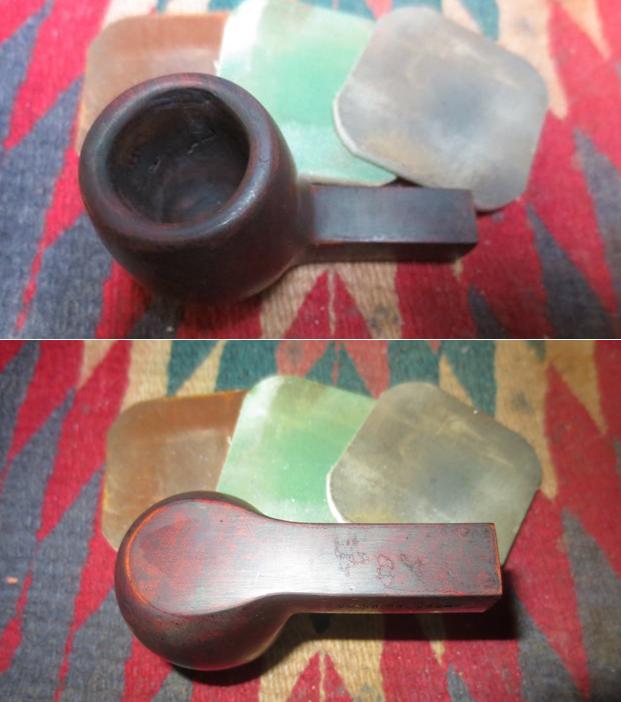
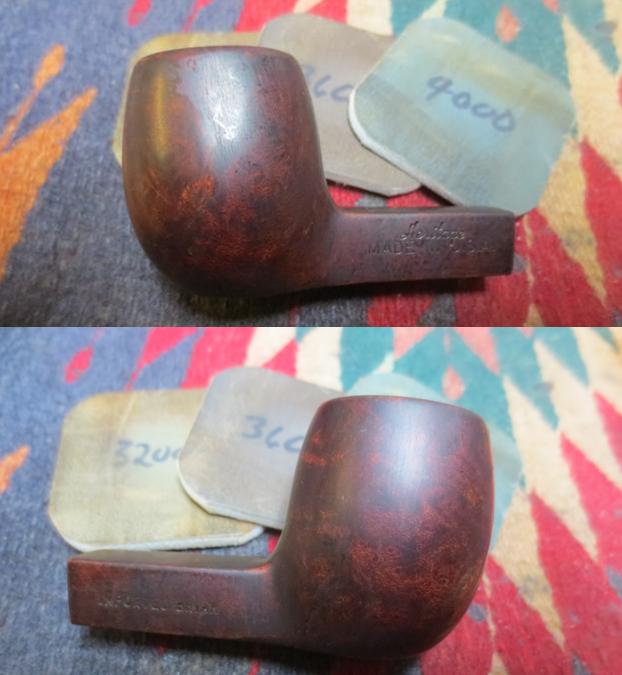
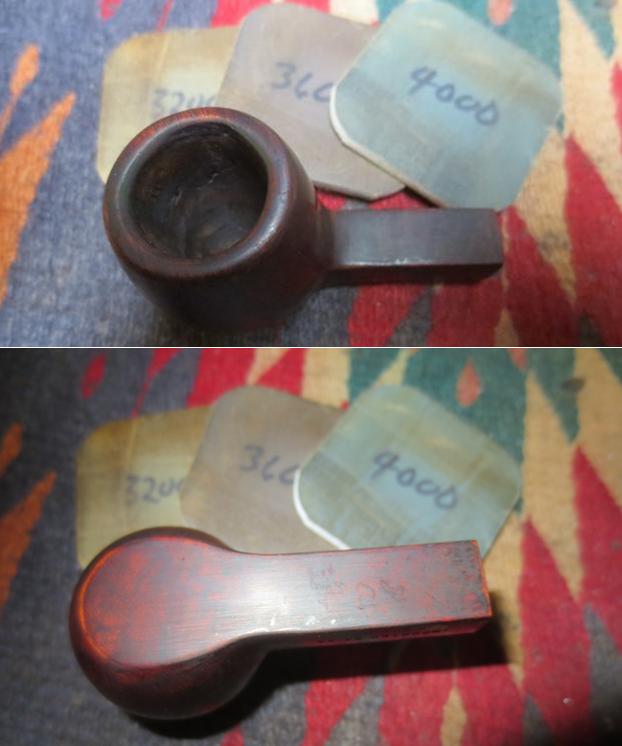
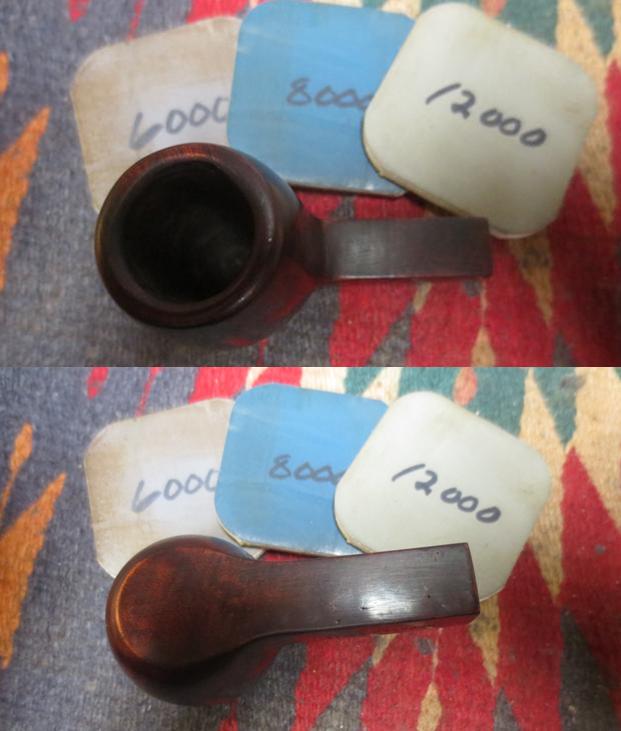
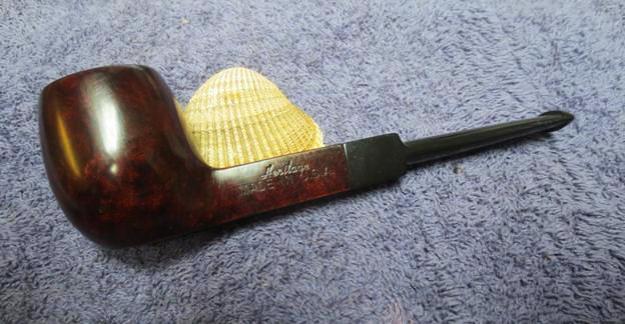
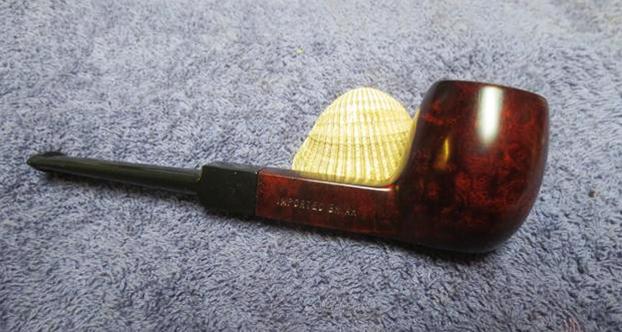
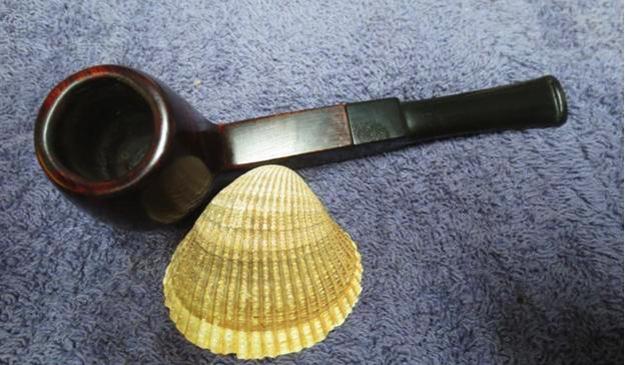
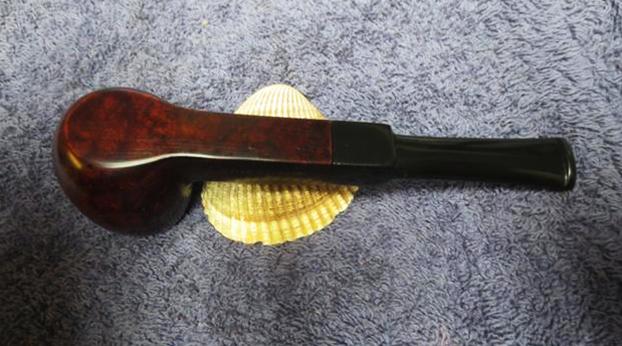
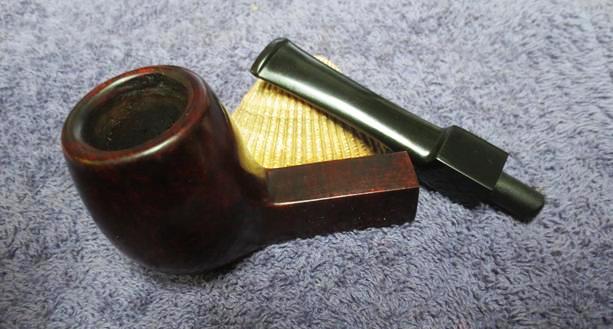
With that bit of history I know that the pipe was made prior to the buyout by Grabow in 1974. That makes the pipe at least 43 years old at this time. This one is French made probably by Jeantet. The stamping reads on the left: Mastercraft in the normal shield over De Luxe. The shield hangs from a branch like a sign. On the right side of the shank it is stamped Corsican Briar over France. I took a close up photo of the bowl and rim to show the unsmoked condition of it when I received it. The briar is quite beautiful though there are a few fills on the top and right side of the shank that are expertly blended into the finish. I also took a photo of the internals of the mortise and airway to show the raw briar that shines there.The stem showed signs of wear from sitting for the long years in a display case of cabinet. There were scratches, nicks and marks in the rubber that are shown in the photos below. There was a gummy substance from a label on the underside of the stem.The polished aluminum stinger apparatus in the tenon was unmarked and a shine of a new pipe.The finish on the pipe has a shiny topcoat of varnish. I took some photos of the stamping on the shank sides. The next two photos show what that looked like.I worked on the stem to polish out the scratches and nicks in the surface. I wet sanded it with 1500-2400 grit micromesh sanding pads and dry sanded it with 3200-12000 grit pads. I was able to polish out all of the nicks and scratches without resorting to more invasive methods. I buffed the stem with Blue Diamond on the buffing wheel to further polish out the scratches. I gave the stem multiple coats of carnauba wax and buffed it with a clean buffing pad to raise the shine back to the surface. I hand buffed it with a microfibre cloth to deepen the shine. The finished pipe is shown in the photos below. It is a great piece of pipe history and one that will be available on the rebornpipes store soon. If you want to beat the traffic and add it to your collection just send me an email and it can be yours. Thanks for looking.

Renewing and restemming a La Strada Staccato Bent Pot


Blog by Steve Laug

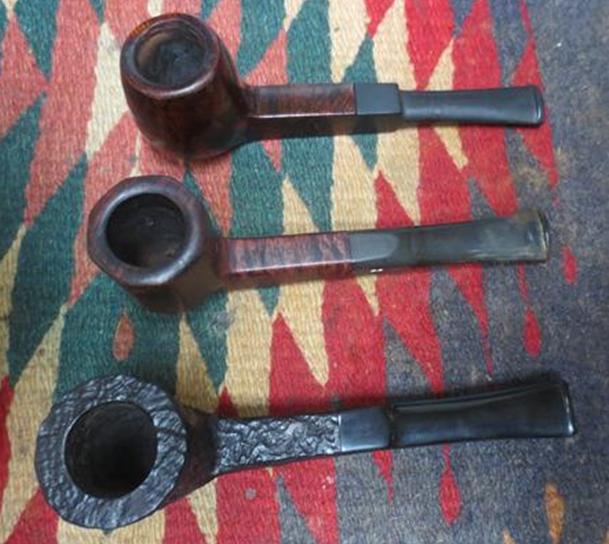
This tired old La Strada came to me for repairs. It was in rough shape. The stem had been gnawed, broken and gnawed again. The finish was shot and covered in oils and grease to the point that it was hard to see the rope rustication around the bowl. The bowl had a thick crumbling cake and smelled heavily or aromatics. The lava from the bowl had flowed over the top of the rim and darkened the finish there. The outer edge of the rim was heavily damaged on the front left side and looked as if the bowl had been dropped. There were dents on the underside of the bowl as well from a similar event. The shank was so dirty that the stem would not fit into the mortise. I was able to get it in but the fit was not tight against the shank. The shank is slightly off round so the stem was slightly different.la1 la2The next photo is out of focus but the road rash on the bowl bottom is visible.la3I took a series of close up photos of the bowl and rim and the stem to show the condition of the pipe when I started. In the first photo you can see the thick crumbly cake and the damage to the rim surface and edges. It was hard to tell if the inner edge of the bowl was damaged and only after reaming would I be able to know for certain. The stem was a write off as the damage was too extensive to repair. The fit against the shank also warranted a new stem.la4 la5I reamed the bowl with a PipNet reamer and went through the various cutting heads. I cleaned up the remaining cake in the bowl bottom with the Savinelli Pipe Knife. I took the cake completely out of the bowl and reamed it back to bare briar.la6I wiped down the surface of the bowl with acetone on cotton pads to remove the finish. It came off with a bit of scrubbing but there were places where it did not come off with the acetone. It would take some sanding to remove the totality of the finish.la7 la8The damage to the bowl top and outer edges required that I top the bowl. I gently topped it on the topping board so as not to remove too much and remove the smooth portion above the rope rustication on the top edge.la9I sanded the bowl and rim top with a medium and a fine grit sanding sponge and took the following photos.la10 la11I cleaned out the internals of the shank and the replacement stem that I fit to the shank with alcohol, pipe cleaners and cotton swabs. It took a lot of scrubbing to get the mortise and the airway clean in the shank. The stem was in decent shape so it did not take too much work on it.la12I took some photos of the pipe at this point to get a feel for the look with the new stem in place.la13 la14I wrapped some sandpaper around a dowel and sanded the walls and bottom of the bowl. There was a ring at the bowl bottom that was grooved and needed to be smoothed out. It did not take a lot of sanding before the inside walls were smooth.la15I restained the bowl with a dark brown aniline stain mixed 50/50 with isopropyl alcohol to approximate the original colour of the pipe and to highlight the grain on the pipe. I flamed the stain and repeated the process until the coverage was even around the bowl and rim.la16I buffed the bowl with White Diamond on the buffing wheel to even out the new finish and give it a bit of a shine. I took photos of the bowl at this point to give a clear picture of the new look.la17 la18Now all that remained was to finish the fit and polishing of the stem. I sanded it with 220 grit sandpaper until it fit the shank well. It took some adjusting of the diameter of the stem to match the slightly out of round shank. In the end it fit well. I polished the stem with micromesh sanding pads – wet sanding it with 1500-2400 grit pads and dry sanding with 3200-12000 grit pads to give it a deep shine.la19 la20 la21I buffed the bowl and stem with Blue Diamond on the buffing wheel to polish the minute scratches on the vulcanite and on the briar. I buffed them both until the stem and briar glowed. I gave the bowl and stem multiple coats of carnauba wax. I buffed the bowl and stem with a clean buffing pad to raise the shine. I hand buffed it with a microfibre cloth to deepen the shine. The finished pipe is shown in the photos below. It is ready to go back to the pipe man who sent it to me for restemming and refurbishing. I think he will enjoy it and it will deliver a life time of good smokes to him. la22 la23 la24 la25 la26 la27 la28 la29 la30

Love the shape of this Savinelli Classica 904KS Horn


Blog by Steve Laug

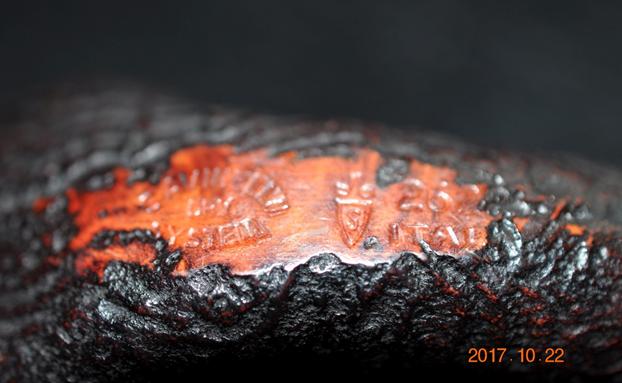
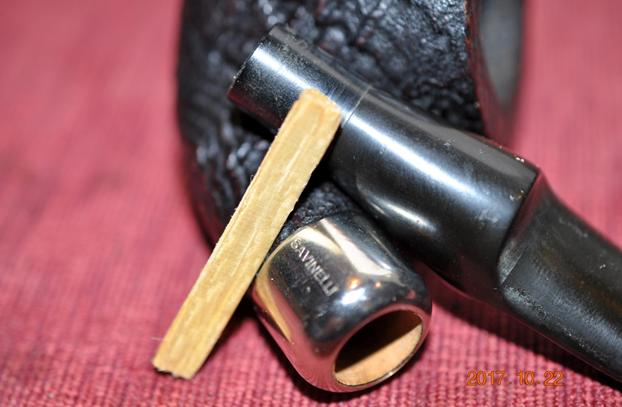
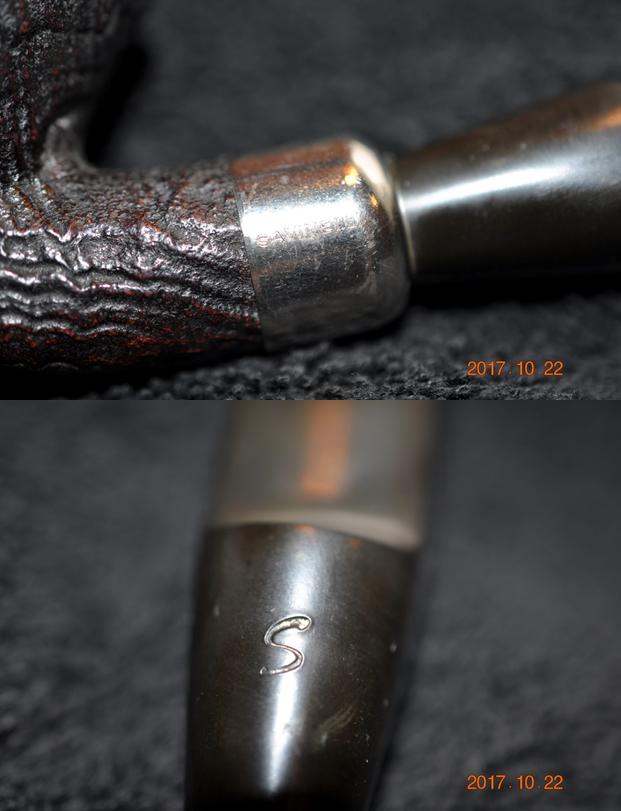
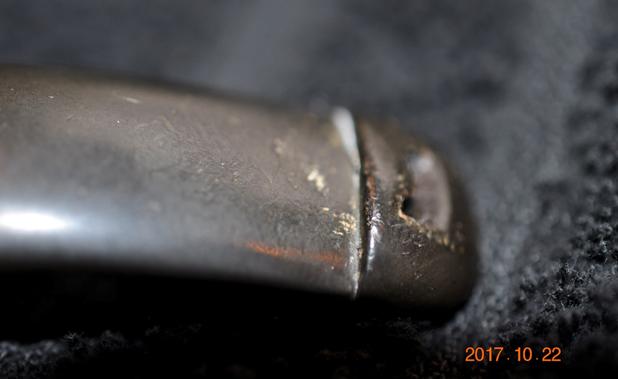
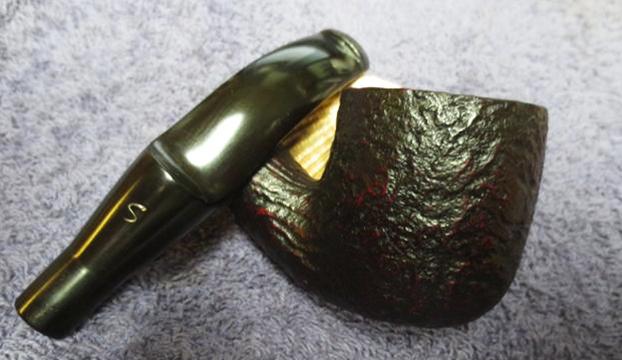
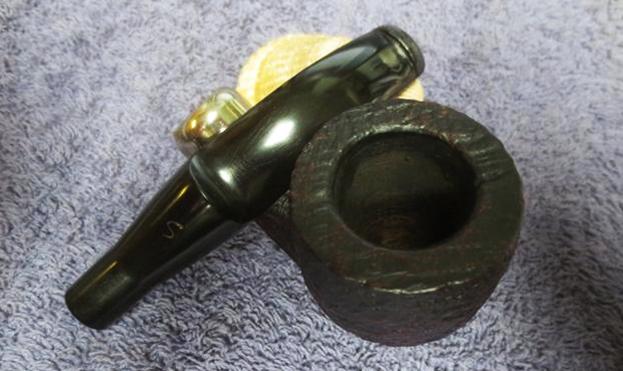
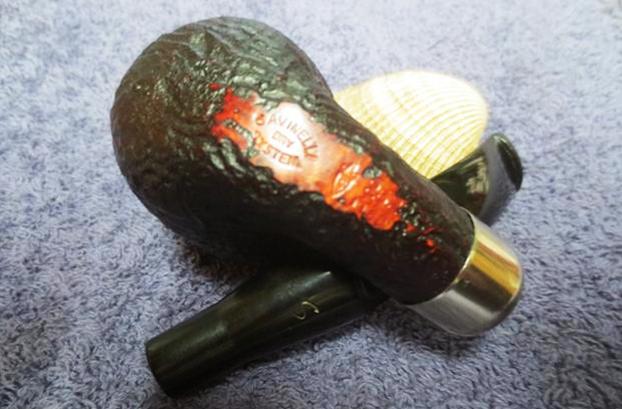
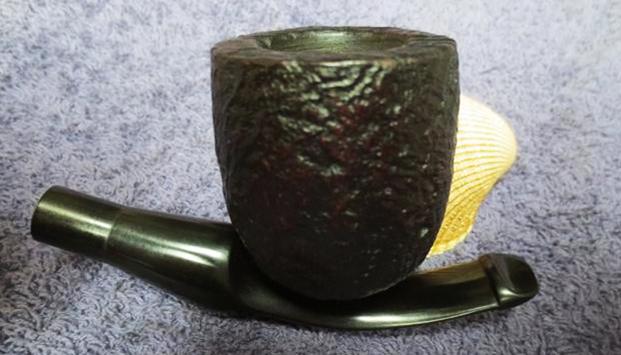
I have been cleaning up and restoring quite a few pipes over the holidays. I have had some free time and needed the space to relax and pipe refurbishing has always done that for me. Tomorrow I go back to the normal work week and then do some more traveling so my pipe work time will slow down considerably. I am hoping to finish a couple of more pipes this afternoon but we shall see. My brother picked up another interesting pipe for me to work on. The box he sent me before Christmas had a lot of unique and interesting pipes. This one is no exception to the pipes he sent me. I would call the shape of this Savinelli pipe a horn. It is a sandblast version that had a dirty finish and some overflow of cake and darkening on the rim. The pipe is stamped on a smooth part of the underside of the shank. It reads Savinelli in an oval over Classica. Next to that is the Savinelli S in a shield and next to that it is stamped 904KS over Italy. The stem is oxidized and there are tooth marks and chatter on the top and underside near the button. There is a crown logo stamped on the left side of the saddle shank. My brother took photos of the pipe when it arrived in Idaho Falls and before he cleaned it. The first four photos show the overall condition of the pipe.  class1class2He took a close up photo of the bowl and rim. Note the light cake in the bowl and the tars and oils built up on the back side of the rim top. The crevices of the sandblast are filled in but the inner and outer edge of the bowl look to be in good condition.class3The next three close up photos, show the stamping on the underside of the shank. The stamping is clear and readable. The S shield and the Italy stamp are the most hard to read but they are still readable. The fourth photo shows the gold crown on the side of the stem is also very clear.class4 class5The last two photos he sent to me show the tooth marks and chatter on the stem near the button. The oxidation is light but in the curves of the saddle they are darker.class6My brother scrubbed the exterior of the pipe and stem with Murphy’s Oil Soap and rinsed it with running water. He scrubbed the rim top to remove the oils and tars from the grooves and crevices. He reamed the bowl, cleaned out the inside of the shank, mortise and airway in the stem with alcohol, pipe cleaners and cotton swabs. When I received the pipe in Vancouver I took photos of what it looked like. The oxidation came to the surface of the stem and the finish looked washed out.class7 class8I took a close up of the rim top and the bowl. The bowl was very clean and my brother had been able to clean up the crevices in the sandblast. The stain was worn on the sides and top of the rim.class9I took close up photos of the stem. There are some dents in the top edge of the button and along the sharp edge of the button. There were tooth marks on both sides of the stem and some tooth chatter.class10I started the restoration process by working on the bowl. I wiped it down with alcohol and cotton pads to remove and dirt or grime. After it was cleaned off I restained it with brown aniline stain, flamed it and repeated the process until the coverage and colour were even and what I was looking for on this particular blast.class11 class12When the finish was dry I lightly buffed it with a shoe brush. I took photos of the bowl after the staining.class13 class14I hand waxed the bowl with Conservator’s Wax and buffed it harder with a shoe brush. I was able to raise the shine on the bowl and it was beginning to look better and better.class15 class16I sanded out the tooth marks and chatter with 220 grit sandpaper. I sanded the remainder of the stem at the same time to break up the oxidation. I was careful around the crown logo on the stem side. While the gold stamp was light the stamping itself was deep in the vulcanite and would be easy to restore once the stem was clean.class17I decided to scrub the stem with the Before & After Stem Deoxidizer and pipe stem polish starting with gritty DeniCare polish and then using Before & After’s Fine and Extra Fine Stem polish. While it cut through the oxidation on the flat and round portion of the stem it did not work as well in the curves of the saddle. I took photos of the stem after spending about an hour scrubbing the stem with the polishes. You can see the shadows of oxidation that still needed to be dealt with.class18 class19I used Rub’n Buff European Gold to rework the stamping in the crown on the side of the stem.class20I worked over the stem with micromesh sanding pads – wet sanding with 1500-2400 grit pads and dry sanding with 3200-12000 grit pads. I rubbed the stem down with Obsidian Oil after each set of three pads. After the last set of pads I gave it a final coat of oil and set it aside to dry.class21 class22 class23I buffed the stem with Blue Diamond on the buffing wheel and gave the stem several coats of carnauba wax. I gave the bowl another coat of Conservator’s Wax and buffed the bowl and stem with a clean buffing pad to raise the shine. I hand buffed it with a microfiber cloth to deepen the shine. The finished pipe is shown in the photos below. It is a great looking pipe that has a lot of life in it. It should be a good addition to someone’s rack and provide years of good smokes. Thanks for looking.class24 class25 class26 class27 class28 class29 class30 class31 class32
Replacing a Stem on a Stanwell Antique 156 Bulldog


Blog by Steve Laug

The next pipe I brought to my work table is another Stanwell Antique. This one is stamped on the underside of the shank with the words Stanwell over the script Antique and over the top of them both is the number 156 which is the shape number. This one came in the same lot as the two victims of Jaws that I have already written about on the blog – the Estella and the GBD Midnight (https://rebornpipes.com/2016/12/06/jaws-and-an-estella-non-pareil-%c2%bc-bent-9606-stack-by-savinelli/ and https://rebornpipes.com/2016/12/09/another-jaws-victim-a-gbd-midnight-788-oval-shank-apple/). This Stanwell Antique Bulldog had a poorly fit replacement stem – a diamond shaped stem from a classic bulldog shape. The stem had many deep tooth marks on both the top and the underside of the stem. anti1The finish on the bowl was in decent shape though the rim had some tarry buildup and there was a thick cake in the bowl. The first photo shows the mixture of sandblast and smooth on this pipe was a nice contrast. The front of the pipe was smooth and joined the smooth rim. The second photo shows that the front outer edge had nicks and dents in it as did the surface of the rim. The close up photo of the rim shows the condition of the pipe when my brother received it.anti2The Lucite shank extension is amber coloured. The thickness of the extension makes it hard for the light to shine through it. The mortise had been damaged – it is my thought that whoever put the new stem in place redrilled the mortise and damaged the inner edge and the bottom of the mortise. anti3The stamping on the underside of the shank is better than the stamping on the previous Antique I just finished. The shape number is very clear and sharp. The Stanwell logo is lighter on the left side and the Antique stamping is also very clear and sharp.anti4The next photo shows the transition from the smooth front of the bowl to the sandblast on the rest of the bowl. You can see some of the grit in the grooves and crevices of the blast and the grime on the smooth portion.anti5The last photo that my brother sent me shows the bite marks on the diamond stem. They are identical in pattern to the ones on the previous two “Jaws” pipes.anti6My brother cleaned up the pipe with his usual thoroughness. When the pipe arrived in Vancouver the finish was clean and the grooves and crevices clean. The rim was better though it show the damage to the front edge and the dents to the top of the rim. He had reamed and cleaned the mortise and the airway in the replacement stem so the pipe was very clean and ready for me to work on.

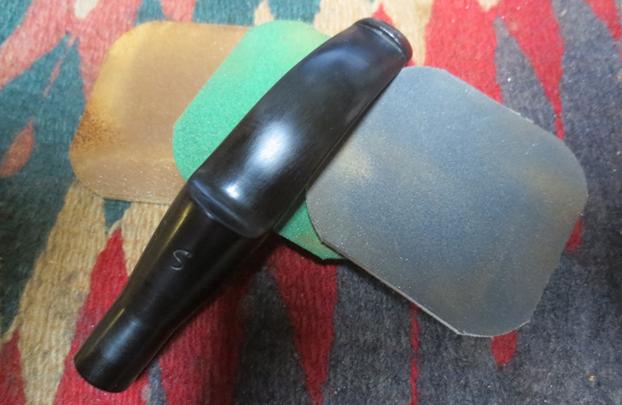
I cleaned up the shank extension end and used clear super glue to rebuild the damage portion of the Lucite. I sanded it with 180 grit sandpaper and also with 220 grit sandpaper to smooth out the repairs. I cleaned out the shank with a cotton swab and warm water to remove the debris in the shank. I took photos of the bowl after I cleaned it up and scrubbed it with Murphy’s Oil Soap.anti7 anti8The rim shows some damage to the top and the back edge in the photo below.anti9The stem was an obvious replacement so I put it in my can of stems and looked for a stem that would be a good candidate for a replacement. I had one in a lot of stems that my brother sent me. It was a Danish looking freehand stem that had a long tenon and a step up toward the ring in the middle. I forgot to take a photo of the stem before I worked on it but I had another example of one that was similarly shaped that is shown in the next photo.anti10I sanded the stem with a Dremel and sanding drum to shorten and remove the step down area. I wanted to have a smooth transition from the tenon end to the mid ring. I also wanted to make the slope to the ring more abrupt that it was in the one above. The stem was in pretty rough shape. There was deep tooth mark on the topside of the stem from the damaged button forward. There was also some tooth damage on the underside of the stem in the middle and on one side. The button was also damaged on the underside. There was a missing chunk of vulcanite on the button edge. I filled in the damaged areas with black superglue to build them up. I let the glue dry and once it was dry I sanded it smooth to match the surface of the rest of the stem. I filled in the damaged button and built up the edge on the top and bottom sides. I sanded the button as well once it had cured and reshaped it.anti11I sanded the diameter of the tenon area on the new stem until the fit in the mortise was correct. The stem still looked a little long but I would take care of that shortly. I put it in the mortise and took photos of the pipe with the new stem.anti12 anti13I sanded the stem with 180 grit and 220 grit sandpaper to smooth out the repairs and reshape the stem to match the rest of the stem.anti14I polished the stem with micromesh sanding pads – wet sanding with 1500-2400 grit sanding pads and rubbed it down with Obsidian Oil and dry sanding with 3200-12000 grit sanding pads and rubbing it down with the oil after each set of three pads. After the final set I gave it a final coat of the oil and set the stem aside to dry.anti15 anti16 anti17To remove the damage to the front edge and the top of the rim I topped the bowl with 220 grit sandpaper on the topping board. I sanded it with 1500-6000 grit micromesh sanding pads to sand out the scratches in the rim surface. I restained the rim to match the front of the bowl using a dark brown stain pen. I buffed it lightly with a microfibre cloth.anti18I sanded the smooth portions of the bowl face and the rim with 1500-6000 grit micromesh sanding pads to polish them.anti19 anti20I buffed the rim and smooth part of the bowl and the stem with Blue Diamond polish on the wheel. I gave the stem multiple coats of carnauba wax and gave the bowl several coats of Conservator’s Wax. I buffed the pipe with a clean buffing pad and hand buffed it with a microfibre cloth to deepen the shine. The finished pipe is shown in the photos below. The repairs on the stem show under the bright lights of the flash but in person they are pretty well blended into the surface of the stem. Thanks for walking through the restoration with me.anti21 anti22 anti23 anti24 anti25 anti26 anti27 anti28

Restemming a Savinelli Capri Root Briar 320 and giving it a new look


Blog by Steve Laug

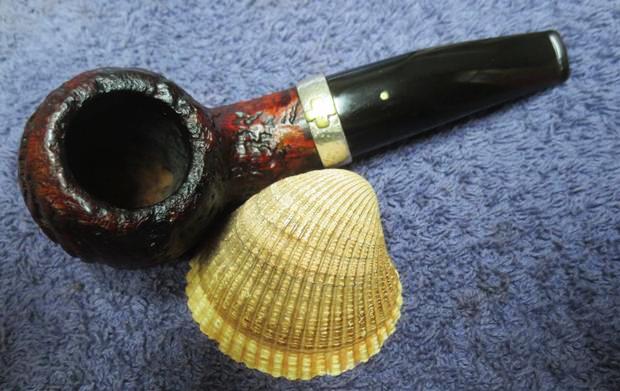
I have always liked the looks of the Savinelli 320 shape. I have one of them here and it is a 320EX so it is quite large. When my brother Jeff sent me photos of one that he was looking at I was interested. He bid on it and won. It is stamped on the underside of the shank on a smooth spot with the words Savinelli Capri over Root Briar. Next to the stamping was the Savinelli shield and to the right of that it reads 320 over Italy. The finish on the bowl looked really good. I really like the Capri rustication and the roughness of the feel in the hand.sav1My brother sent me the photos above as well as these close up photos. The rim was actually in very good shape, surprisingly. The there was a thick rough ca,e in the bowl and some of the lava had overflowed on to the rim top grooves.sav2The underside of the shank was in excellent shape though there were some scratches on the smooth area. The pebble cut rustication was in excellent condition. The contrast stain on the pebble finish other than being dirty was undamaged.sav3The real issue with the pipe lay with the stem. The stem had been gnawed to the point that there was almost an inch or more of the stem missing. It was missing a large portion of the vulcanite on the top and the underside of the stem. It is ironic that the stem logo was the only thing about the stem that was left undamaged.sav4 sav5My brother is getting really good at his cleanup process and this pipe was no exception. I am getting spoiled when I get a pipe that I have to ream and clean. When he sends them they have been reamed, scrubbed with Murphy’s Oil Soap on the exterior and cleaned thoroughly with alcohol, cotton swabs and pipe cleaners on the inside. I took some photos of the pipe to show the condition it was in when it arrived in Vancouver. You can see that the finish is clean and you can see the horrible damage to the stem.sav6 sav7I took a close up photo of the rim and the bowl. He had reamed back the cake to bare briar and also scrubbed the rustication on the rim and removed all of the tars and oils that had filled in portions of it on the back side of the bowl.sav8The original stem was a lost cause at this point. To shorten and reshape a new button I would have had to cut off almost another ½ inch. To my mind that would have made the pipe too short for my liking. I went through my can of stems and found a stem that had potential. The diameter of the stem at the tenon end was slightly larger than the Savinelli stem but it had room for adjustments. It had some file marks on the top and the tenon was a little large in diameter for the shank of the 320 but with a little work it would work. It had some paint on the top of the saddle and was deeply oxidized. There was not any tooth chatter or tooth marks on it. It would certainly work for the 320 but it would change the appearance. Once I had finished the fit I would take some pictures and make a decision.sav9I scraped out the mortise with a dental spatula to remove the hard tarry build up that had accumulated there. Once I had scraped it clean I scoured out the inside of mortise and airways in the shank and the stem with alcohol, pipe cleaners and cotton swabs.sav10I sanded the tenon with a Dremel and a sanding drum to fine tune the fit in the shank. I also adjusted the diameter of the saddle with the Dremel and sanding drum until it was a close fit to the diameter of the shank. I fine-tuned the fit with 220 grit sandpaper until the saddle portion was free of the sanding marks left behind by the Dremel. I sanded the tenon with 220 grit sandpaper to adjust the fit in the mortise. I finished by sanding the remainder of the stem as well to break up the oxidation.sav11Once the fit in the mortise and to the shank was correct I pushed the stem in place and took photos of the new look of the pipe. Part of this was to mark the progress but it was also an opportunity for me to see it from the eye of the camera and assess whether I would keep working on the stem or just wait until I came across another Savinelli tapered stem. As I studied the photos I was pleased with the look. There was something catching about the new slim stem flowing from the saddle. I liked the looks of it.sav12 sav13I sanded the stem with the 220 grit sandpaper until I had removed the oxidation and then rubbed the bowl down with a light coat of olive oil to rejuvenate the briar. I rubbed the stem down with Obsidian Oil and took the next set of pictures. The pipe was beginning to look really good.sav15 sav16I polished the stem with micromesh sanding pads – wet sanding with 1500-2400 grit pads and dry sanding with 3200-12000 grit pads. I rubbed the stem down with Obsidian Oil after each set of three pads. I gave the stem a final coat of Obsidian Oil after the last micromesh pad and set it aside to dry.sav17 sav18 sav19I buffed the stem with Blue Diamond polish on the buffing wheel to polish it further. I gave the stem multiple coats of carnauba wax and gave the bowl several coats of Conservator’s Wax. I buffed the bowl and stem with a clean buffing pad to raise the shine. I finished the pipe by buffing it by hand with a microfibre cloth. The finished pipe is shown in the photos below. It took some work to fit the new stem to the shank but the new look of the saddle stem gives this pipe a fresh appearance to me that works well with the pebble rustication of the Capri Root Briar finish.sav20 sav21 sav22 sav23 sav24 sav25 sav26 sav27


Restoring the third Classic Find – a Charatan’s Make 0120 Canadian


Blog by Steve Laug

My brother and I recently purchased some pipes from an estate sale from an old pipeman named Gene in Pocatello, Idaho. There were a lot of great pipes in the lot. I have written about the pipes on a previous blog: (https://rebornpipes.com/2016/10/07/a-good-day-hunting-orchestrated-between-british-columbia-and-idaho/). I wrote of how he had stopped at an antique shop and four found prestigious finds. These included a Four Dot Sasieni Pembroke with a patent number, Pat.No. 150221/20, a Dunhill Root Briar Canadian EC 4R, a Charatan’s Make Canadian Sandblast 0121 and a Jost’s Supreme Diamond Shank bent billiard. I wrote about the restoration of the Sasieni and the Dunhill earlier in two other blogs: (https://rebornpipes.com/2016/11/05/restoring-a-classic-find-a-sasieni-four-dot-london-made-pembroke/) (https://rebornpipes.com/2016/11/06/restoring-another-classic-find-a-dunhill-4r-root-briar-canadian-ec/). The third pipe that I have chosen to restore is the sandblast Charatan’s Make 0120 Canadian.

The Charatan pipe also had a replacement stem as there was no sign of a CP logo stamp on the top side. The stamping was on the smooth underside of the shank and it read Charatan’s Make and underneath it read London, England. At the end of the brand stamping was the number 0120 which is the shape number of a Canadian. I did some searching online and read the Charatan’s entry in Pipedia (https://pipedia.org/wiki/Dating_of_Charatans). I quote from there: “Pipes that belong to eras till the 1960 have the engraving ‘CHARATAN’S MAKE LONDON, ENGLAND’ in two lines, the shape code is composed by numbers only. The X and the DC appear only on pipes after 1960.

My brother had found another good one. The stamping gave me information about the time frame it was made. I knew that it was made prior to 1960 by the style of the stamping. It came from what the article identified as the Reuben era of Charatans that went from 1910-1960.  Like the Dunhill the only thing that would have been better was if it had come with the original stem. My brother took the photos that follow. They show the pipe before he cleaned it up and sent it to me. It had a nice sandblast that deep and craggy on the bowl and shank. From mid shank back to the stem it appeared that the pipe had been rusticated to match the blast pattern. He took some photos of the pipe to give a feel for the overall look of it when he received it. These photos show the pipe before he cleaned and reamed it.char1He took some close up photos of the bowl and sandblast on the bottom of the bowl. The bowl had a thick cake that had flowed over the top of the rim in hard tarry lava. It was thick but it appeared that the outer rim was undamaged and with any luck the inner one would be as well. The blast is interesting in that it also has a rustication pattern on the bowl bottom and also on the shank. It follows the pattern of the grain on the bowl.char2The next photo shows the clear and sharp stamping on smooth underside of the shank. It reads as noted above – Charatan’s Make over London England with the shape number 0120 on the stem end of the shank.char3The stem had a lot of tooth chatter and some shallow tooth dents. There was oxidation and also calcification.char4My brother did his normal thorough job of cleaning the pipe. He scrubbed it with a tooth brush and Murphy’s Oil Soap. He cleaned out all of the dust and debris in the grooves and crevices of the “blastication”. The stem does not fit tightly against the shank at this point. The next photos below show the pipe as it looked when I brought it to my work table.char5 char6I took some close up photos of the rim to show how well it cleaned up. My brother was able to get the lava out of the grooves on the rim and also on the underside of the shank. The stamping was still very clear.char7He cleaned out a lot of the gunk in the shank but the stem still did fit tightly against the shank end. He did get the calcification and some of the oxidation off the stem. You can clearly see the tooth chatter and the tooth dents now that the stem was clean.char8I scraped out the inside of the mortise with a dental pick with a flattened blade end. I scraped the stepped down area of the mortise as it entered the airway in the shank. I took a lot of tar and gunk out the shank area.char9I scrubbed the mortise, the airway in the shank and the stem with cotton swabs, pipe cleaners and alcohol. Once it was clean the stem fit more closely against the end of the shank.char10I scrubbed down the bowl and shank with acetone on cotton pads to remove the finish that remained on the pipe.char11 char12I restained the pipe with a dark brown aniline stain thinned 50/50 with isopropyl alcohol. I flamed the stain and repeated the process until the coverage was even.char13I put the stem in the shank and took the pipe to the buffer. I buffed it to polish the stain. When I was just about finished I could not believe what happened. It is that moment when you are buffing a pipe where you get a sick feeling. The wheel grabbed the pipe out of my hand, off my finger and threw it against the table top under the buffer. It was not far – a mere 2 inches but I heard the snap as the tenon broke. I was sick to my stomach. I was almost finished with the pipe and then this had to happen. I took a photo of the broken tenon once I had pulled it from the shank. It was almost a clean break at the end of the stem. Oh the frustration.

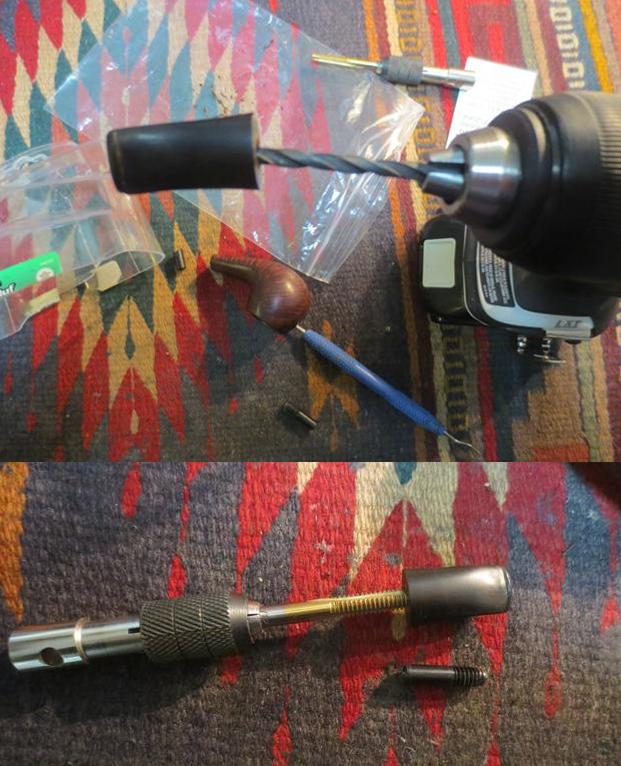
I used a Dremel to flatten the broken edge of the tenon against the face of the shank. It took a few moments to smooth out the broken part. I used the topping board with 220 grit sandpaper to face the end of the stem. I went through my box of threaded tenons and actually had one left in the box that was not a Jobey Link system tenon. It was the same diameter as the broken tenon.char14I chucked a drill bit in the cordless drill that was just a little larger than the air way in the stem. I turned the stem onto the drill bit the length of the threaded portion of the replacement tenon. I put two more drill bits in the drill and turned the stem onto the bits. Once it was the same diameter as the threaded portion I shortened the threaded end slightly so that it would fit tight against the stem. I roughed up the threads with the Dremel and a sanding drum. I left the threads in place so that I could turn it into the stem.char15I screwed it into the stem as far as it would go by hand and then used a pair of pliers to finish turning it tight against the stem face.char16I put the stem in place in the shank and the fit was tight against the shank. I polished the stem with micromesh sanding pads – wet sanding with 1500-2400 grit pads and dry sanding with 3200-12000 grit pads. I rubbed it down with Obsidian Oil after each set of three pads. After the final set I rubbed it down with a last coat of oil. I set the stem aside to dry. (In the photos below of the shank and stem I did not push the stem in against the shank so it shows a small gap at that point. You will notice in the final photos that I pushed it back in place.)char17 char18 char19With fear and trepidation I took the pipe back to the buffer. I did not want to repeat the broken tenon so I was very careful. I worked the pipe against the buffing wheel that had been charged with Blue Diamond polish. I buffed it until the stem shone. I lightly buffed the bowl with the polish as well – being careful to not let it build up in the grooves. I polished the stem with carnauba wax and put Conservator’s Wax on the sandblast finish of the bowl and shank. I buffed the pipe with a clean buffing pad to raise the shine. I hand buffed it with a microfibre cloth to deepen the shine. The finished pipe is shown in the photos below. The fit of the stem against the shank was better than when I started. Thanks for walking through the restoration with me and also through the frustrating need to replace the tenon.char20 char21 char22 char23 char24 char25 char26 char27

Cleaning and Restoring a Stanwell Antique 56 Canadian


Blob by Steve Laug

One of the first pipes I chose to restore from the estate lot my brother and I purchased in Idaho from an older pipeman, Gene was this Stanwell Canadian. It was a nice looking contrast stained pipe that was sandblasted over most of the surface area – the shank and ¾ of the bowl. The underside of the shank and the front of the bowl were smooth and stained a medium brown. The rim top was also smooth and had a matching stain. The stem was a replacement and while it fit the mortise well it did not fit against the shank. It was well chewed by what Gene called a beaver. The tooth marks were deep and many. Fortunately the stem did not match the shank of the pipe so it would not be a loss. I would need to look for a stem in my can of stems and see if I could find one that matched the stem. Maybe I would even find one that bore the Stanwell logo and worked with the pipe. My brother Jeff took some photos of the pipe before he cleaned it up. The next photos show the pipe when he received it.stanwell1Jeff took close up photos – the first shows the cake in the bowl and the overflow of tars and lava over the top of the rim. The outer and inner rims were in great shape. The bowl was still in round and the outer edge is smooth where the smooth portion is and rougher where the sandblast portion of the bowl was. The underside of the shank was stamped Antique in script over Made in Denmark. Next to that it was stamped Stanwell. Next to the shank/stem junction it bore the shape number 56 which is the shape number for a long Canadian.stanwell2 stanwell3He also took some photos of the stem top and bottom. I have included them as they show the chewed surface of the stem on the top and the bottom side. It was a mess and the button was chewed down as well.stanwell4When the pipe arrived in Vancouver I took a photo of the pipe with the stem that came with it. I went through my can of stems and found a stem that bore the silver Stanwell logo on the top side of the saddle. It fit the shank well and with a little cleanup it would work very well. It was oxidized and had some light tooth chatter on both sides. It was almost straight from the shank to the edge of the button.stanwell5I removed the stem and took photos of the bowl without a stem to give you an idea of the condition of the bowl and shank of the pipe. You can see from the photos that my brother had cleaned up the exterior of the pipe with Murphy’s Oil Soap and a tooth brush and removed the grime that was in the grooves and crevices of the sandblast finish. There was also a small fill on the front of the bowl on the smooth portion of the bowl front. He was also able to remove much of the tars and lava on the rim top.stanwell6 stanwell7I took a close up photo of the stem – both top and bottom sides in order to show the general condition. You can see the crown S on the top of the saddle portion of the stem.stanwell8The tenon was the perfect size to fit the mortise on the Canadian. The width of the stem was the same as the shank. The height was slightly larger than the height of the shank. It would need to be sanded lightly to bring about a match. The photos show what the pipe looked like with the new stem.stanwell9 stanwell10I took a close up photo of the bowl rim and the underside of the shank. It was in great shape. The stamping on the shank underside was clear and readable.stanwell11 stanwell12I also took a close up photo of the stem top and underside with it in place in the shank. You can see from the photos that the stem fit nicely in the shank and looked like it belonged on the pipe.stanwell13I sanded the stem with 220 grit sandpaper to remove the tooth chatter and the tarnishing to the crown S logo. I worked on the height of the stem so that it was more in line with the thickness of the shank.stanwell14Once I had the stem fit better I polished it with micromesh sanding pads – wet sanding with 1500-2400 grit sanding pads and dry sanding with 3200-12000 grit sanding pads. I rubbed the stem down with Obsidian Oil after each set of three sanding pads. I gave it a final coat of oil after the last set of three pads and set it aside to dry.stanwell15 stanwell16 stanwell17I rubbed the bowl down with a light coat of olive oil and hand buffed it with a shoe brush. I gave it several coats of Conservator’s Wax and buffed it with the shoe brush. I buffed the smooth portions on the bowl and rim with Blue Diamond and buffed the stem as well to polish it. I gave the stem and smooth portions of the bowl with carnauba wax. I buffed the entire pipe with a clean buffing pad to raise the shine. I hand buffed it with a microfibre cloth to deepen the shine. The finished pipe is shown in the photos below. The shine and the contrast finish and stains make the pipe a unique looking pipe. The new stem looks right with the pipe. Together they combine to make a good looking pipe. Thanks for walking through the restoration with me.stanwell18 stanwell19 stanwell20 stanwell21 stanwell22 stanwell23 stanwell24 stanwell25 stanwell26

“Chinrester” Pipe stamped Screwball would be an interesting restoration project


Blog by Steve Laug

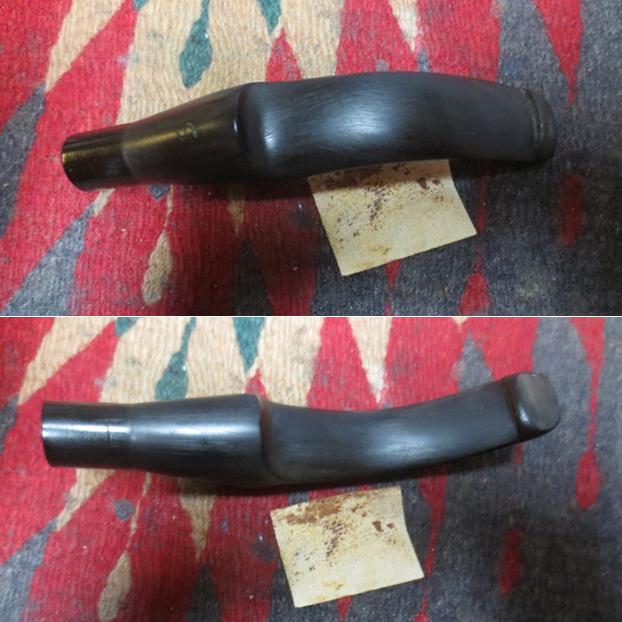
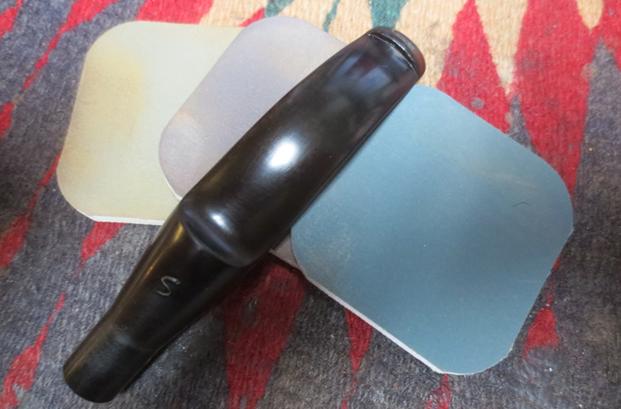
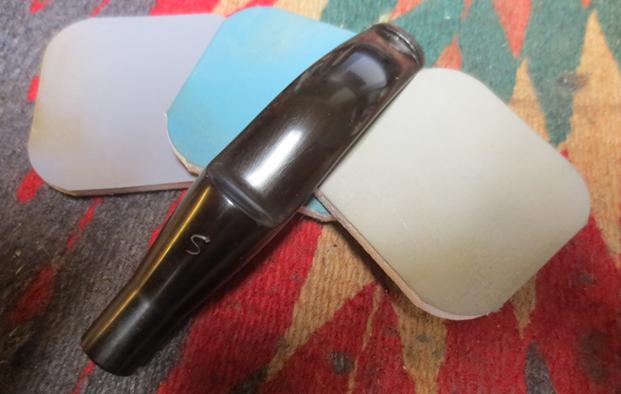
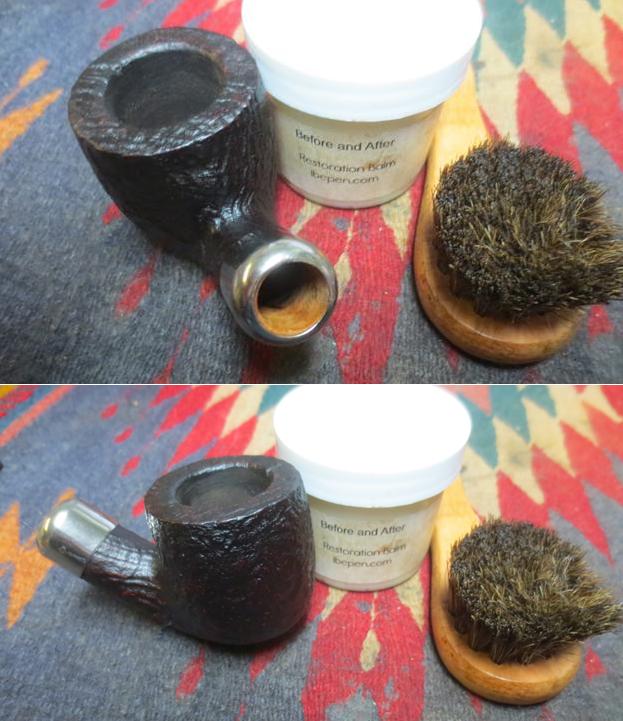
Over the years I have seen photos of the strangely shaped pipes with the long almost tortuously bent stems but I had never seen one close up. Then my brother sent me photos of one that he had picked up for me to restore. It was stamped Screwball on the left side of the shank and 6044 over Italy on the right side. It had a tarnished silver coloured band on the shank that covered what appeared to be a cracked shank. The finish had been sanded free of the area that was banded but the rest of the bowl was still covered with a shiny plastic coat finish that seemed impermeable. The stem was intact which was interesting as many of the ones I have seen were either twisted or bent or broken. The bowl was a unique shape as well. At a side glance it was a combination of a prince and pot but there was a ring around the top of the rim that divided the rim into two enclosed circles. It is a large pipe – 11 inches long, 1 ¼ tall, 1 ¾ inches diameter and a ¾ inch chamber diameter.chin1The stem was oxidized and slightly brown. The silver band was tarnished but the pipe still had a glossy shine in the photos he sent me.chin2The rim showed darkening and some lava over flow on the top of the bowl. There was a light cake in the bowl. The ring around the top was filled with grit and grime. chin3My brother took some close up photos of the pipe. The first of these shows the rim top and the cake and overflow on the rim. The second shows the stamping. The name of the pipe as it appears in the photo is SCREW. Underneath the band is the second half of the name BALL.chin4The next two photos show the stamping on the shank and the imprint of Sterling Silver on the band. They also show the grain peeking out of the shiny topcoat on the underside of the bowl.chin5Here are a couple more shots of the bowl – you can see that the shiny coat has some scrapes in the surface and the almost painted on look that makes me wonder if it is not a later coat of varathane.chin6When my brother received the pipe the band was loose so he slid it off the shank and revealed not only the complete stamping on the pipe but a large cracked area that had been repaired. The cracked area looks like a large chunk of briar had broken free. It had been glued in place and then a band slid over the repair. The glue had dried and long since let the band fall loose.chin7 chin8My brother did the clean up and took off the rim burn on the top and scrubbed the exterior with Murphy’s Oil Soap and the interior with pipe cleaners, cotton swabs and alcohol. When I received the oxidation on the stem was on the surface and the pipe was ready to restore. I have to be honest with you all it was not a restoration that I was looking forward to. The long and curved stem just spelled trouble to me. Trying to run pipe cleaners through it and also polishing and cleaning the oxidation seemed a daunting task. But finally I brought it to the table. Here are some photos of the pipe before I started.chin10 chin11I took the pipe apart and took photos of the parts. With the band removed you can see where the repair person had sanded the shank and done the crack repair before banding the shank.chin12 chin13Trying to scrub off the shiny topcoat with acetone was next to useless. The only place it came off was in the area that had already been sanded. I lightly sanded the bowl with 220 grit sandpaper to break up the surface of the shiny coat. Once that was done I was able to scrub it off with acetone quite easily. In the next photos you can see the repaired crack. It was quite large.chin14 chin15I took photos of the repaired crack to show the extent of it. The band fortunately covered the entire cracked area so it provided stability to the glued crack. Unfortunately it also covered up half of the stamping on the left side of the shank.chin16I used some Weldbond white all-purpose glue to glue the band in place on the shank. I applied it with the tip of the bottle and spread it around with my finger tip to get good coverage. I pressed the band in place on the shank.chin17While the band repair was drying I worked on the stem. I broke up the oxidation on the surface by wet sanding with 1500-2400 grit micromesh sanding pads. I wiped the stem down with a damp cloth. I scrubbed the stem with Before & After Pipe Stem Deoxidizer and was able to remove more of the oxidation. This was a labour intensive effort and took a lot of scrubbing with the solution and paper towels. When there was no more brown coming off the stem I scrubbed it with Before & After Pipe Polish – both Fine and Extra Fine to further address the oxidation.chin18 chin19You can see from the above photos that much of the oxidation had been removed but under a bright light such as the camera flash the oxidation still showed. At this point I had a decision to make – either scrub the stem with more of the deoxidizer or use my tried and true method of micromesh sanding pads. I chose to use the pads. I wet sanded it again with 1500-2400 grit pads and rubbed it down with Obsidian Oil. I dry sanded it with 3200-12000 grit pads and gave it a coat of Obsidian Oil after each set of three pads. After the final set and another coat of oil I set the stem aside to dry.chin20 chin21 chin22While the stem dried I sanded the bowl with the micromesh sanding pads to polish the briar. I had decided not to stain the bowl but leave it natural with a light oil finish and a good buffing. I cleaned off the tarnish on the band with a jeweler’s cloth and polished it to a shine.chin23 chin24With the bowl and stem both hand polished I took the pipe to the buffer and buffed it with Blue Diamond on the wheel. I was able to raise more of a shine with the buffing on both the bowl and stem. Buffing the stem was a real interesting challenge – lots of twisting and turning to get the entire stem buffed. At one point I removed it from the bowl to make it easier to maneuver on the wheel. I gave the bowl and stem several coats of carnauba wax to protect it and buffed it with a clean buffing pad. I finished by hand buffing it with a microfibre cloth. It turned out pretty decent considering where it started. I don’t know if I would call it a chinrester or a shoulder rester as it is a big pipe. I do know that the original design to make it easier on the teeth of the pipeman may not apply here. In the original design the stem rested against the chin of the smoker. In this design unless the smoker has a jutting jaw there is no way that it can rest against the chin. Anyway, the finished pipe is shown in the photos below. Thanks for looking.chin25 chin26 chin27 chin28

A Great Looking Wimbledon 810 Author showing promise


Blog by Steve Laug

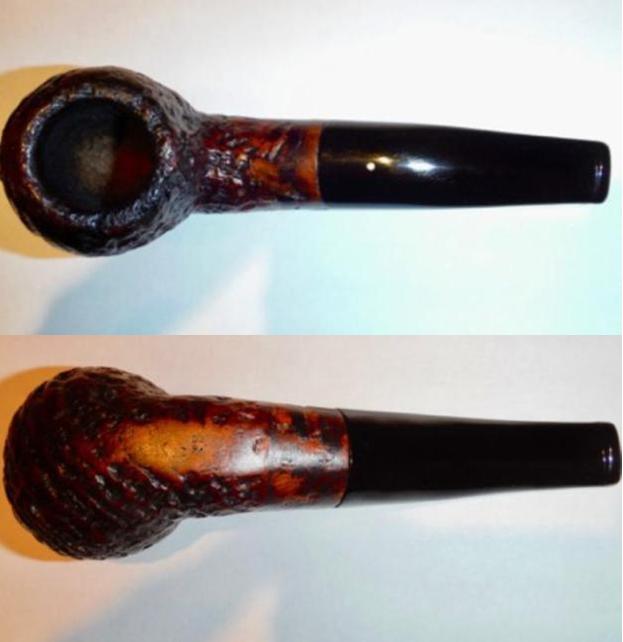
The pipe pictured below is a Wimbledon Author. It is stamped on the underside of the shank on a smooth patch, WIMBLEDON over the shape number 810. The sandblast finish is craggy and the contrast of dark brown and reddish-brown give it even more depth. My brother took the following photos when he received it from the EBay seller. The finish looked to be in excellent shape. There were no worn spots on the bowl. The rim had some tars in the grooves but it was quite clean. The bowl had a thin cake but nothing too thick. The stem did not seat in the mortise properly and there was a gap between the end of the shank and the stem. The stem was oxidized though it had no tooth marks or chatter.briar1I had seen the brand before but could not remember what I had read about it. I turned to pipephil’s site and found a picture of the same pipe – the same finish, the same stem logo and the same stamping on the underside. The site said that the pipe was crafted by Briarcraft as established by the stem logo. I have included a photo of the listing on the pipephil site.wim1That led me to look on pipedia.org to do some digging on Briarcraft pipes. Here is the link: https://pipedia.org/wiki/Briarcraft. There I found the following information. I have included the part of it here that includes a reference to the Wimbledon line.

Briarcraft Pipe Company was very prosperous between 1920 and 1940 and their pipes usually feature a diamond shield logo. They also produced a line of seconds under the following names: Airo, Arcadian, Briarmeer, Smokemaster, Cavalcade, Hallmark, Sterling Hall, and Wimbledon (emphasis mine). They closed their doors in 1950. Briarcraft was started by Richard Kliethermes Sr. and located on Pipetown Hill Rd, Spring Valley, NY. It received its power from a dam on Hyenga Lake, later it moved to 66 Central Ave., Spring Valley, NY. At first it was housed in a 2 story frame building and later a 2 story stone building was added. Upon the death of RK Sr., business was run by Richard Jr, between 1920 and 1940 it was second in size to Frank Medico pipes. All the briar root was imported from Africa, with the start of WWII, imports stopped and a briar like root was imported from S. Carolina. Richard Kliethermes Jr. was the inventor of a pipe known as Smokemaster, which used a doubled up pipe cleaner in the bit to absorb tobacco juice. With the decline in business during WWII and the following 5 years it closed its doors 1950.

Jeff took the following close up photos to show the bowl and rim condition and the stamping on the underside of the shank. The third photo below shows the oxidation on the otherwise clean stem.briar2 briar3Jeff did his usual great clean up on the mortise and airways in the shank and stem. He reamed the bowl back to briar and scrubbed the externals with a tooth brush and Murphy’s Oil Soap. He rinsed it under running water. When the pipe arrived in Vancouver in the last box I received it looked like the photos below.briar4 briar5There was some rim darkening around the inner edge of the bowl but the briar was solid with no crumbling or burning. The finish had lightened with the scrubbing but would be easy to bring back to the original colour.briar6The oxidation on the button end of the stem was pretty light but on the tenon end was quite heavy. For some reason it rose to the surface and was almost white in colour.briar7I wiped down the rim with some alcohol on a cotton pad to clean it up and prepare it for restaining to match the bowl. I stained it with a dark brown stain pen.The colour of the stain pen was a perfect match to the bowl.briar8I wetsanded the stem with 1500-2400 grit micromesh sanding pads to cut through the surface oxidation. I dry sanded with 3200-12000 grit pads to further polish it. I rubbed it down with Obsidian Oil after each set of three pads and with the final pad set the stem aside to dry. I took the following photos of the stem and in them you can still see the residual oxidation under the flash of the camera.briar9 briar10 briar11I decided to use some more of the Before & After Pipe Stem Deoxidizer and Fine and Extra Fine Pipe Polish and see if I could draw out further oxidation. I am still experimenting with the product to check out its effectiveness so this seemed like another good test. I rubbed it down with the deoxidizer and a paper towel and was able to remove even more oxidation from the stem. I was impressed by what it brought out of the vulcanite.briar12I rubbed the stem down with the Fine and Extra Fine Pipe Polish and saw the shine on the stem increase and the oxidation disappear. So far so good.briar13I buffed the stem with Blue Diamond on the buffing wheel to futher polish it. The oxidation was gone. I gave the bowl several coats of Conservator’s Wax and the stem several coats of carnauba on the buffing wheel. I buffed the pipe with a clean buffing pad to raise the shine. I hand buffed the pipe with a microfibre cloth to deepen the shine on the pipe. The finished pipe is shown in the photos below. It is a great looking pipe and one that has great feel in the hand. This one will also make its way to the rebornpipes store soon. If you are interested let me know – send me an email at slaug@uniserve.com or a message on Facebook. Thanks for looking.briar14 briar15 briar16 briar17 briar18 briar19 briar20 briar21