Tag Archives: Oxidation

Restoring a Native American Hand Carved from Italy – the ‘Chief of Pipes’


Blog by Dal Stanton

One of the great things about restoring pipes and making them available to pipe men and women world-wide is that I have met very interesting people as they commission pipes and I correspond with them.  Toby is a returning customer from Germany.  He previously commissioned two Churchwarden creation projects where he intended one as a gift for his friend and the other was for himself.  I had fun with the write up, “A Tale of Three Churchwardens”, where I spun a story weaving in folklore, J.R. R. Tolkien and of course, a bit of Middle Earth and Gandalf.  Two of the three Churchwardens went to Toby and after he gifted his friend with his Churchwarden, Toby sent me a selfie of him and his friend blowing inspired smoke rings, each nursing a bowl in their Churchwardens together!  I’ve learned that Toby is a great guy and loves to gift people with special gifts!  That was not the last I heard from Toby.  He desired to find another gift.  Here is his note:

Hey Dal!
Having been so happy with your work I would like to commission the bearded sailor pipe for my future brother-in-law from New Zealand and I think it will be a nice fit. He is getting married in July of next year, do you think that would be possible?
Blessings,
Toby

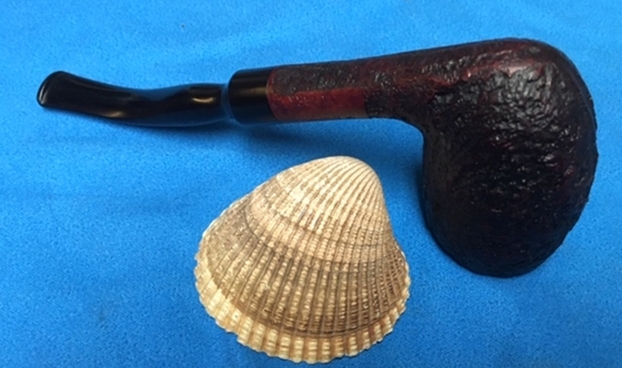
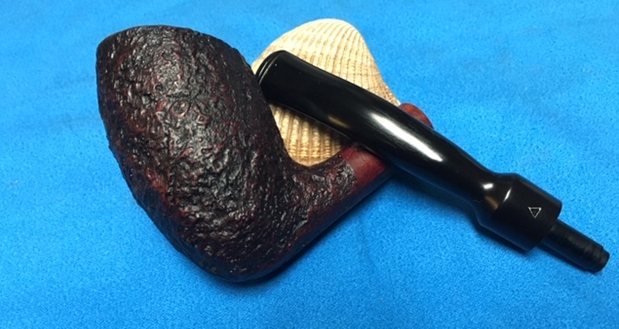
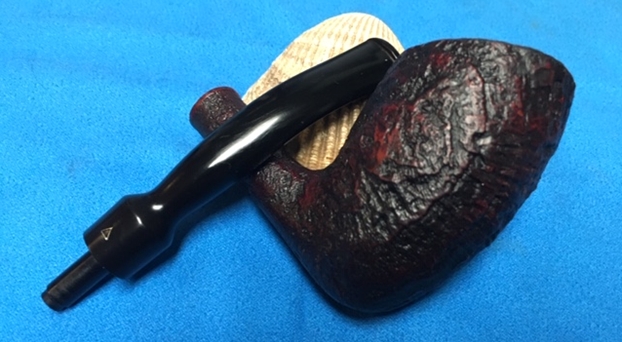
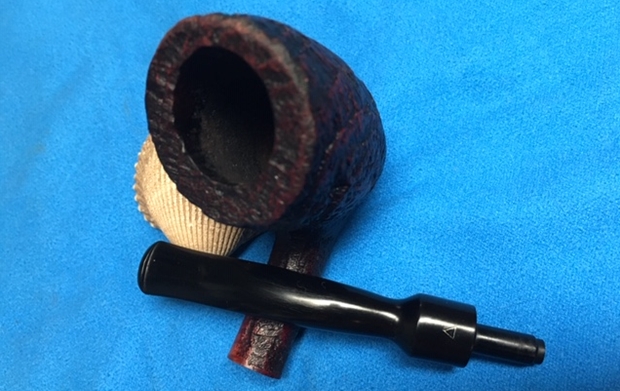
Unfortunately, the pipe he saw in the For “Pipe Dreamers” Only! collection had just been commissioned and I hadn’t had time to mark it as such on the website.  Toby had a good eye for an interesting pipe, which I just restored and published not long ago, A Carved Bearded Sailor – Ole Crusty – also intended as a gift! I’m glad that Toby continued to look for an alternative that would meet his desires to be a special wedding gift for his brother-in-law.  Another email came and Toby had chosen the Indian Chief as an alternative and called it the “Chief of Pipes”!  This worked for me and ‘Chief’ went into the queue with a tag reminder of the wedding coming in July.  Here are pictures of ‘Chief’ acquired from the original eBay seller now on my worktable: The pipe was advertised as having never been smoked and this was an accurate assessment.  The interesting thing about this carved Native American Chieftain pipe is that it was crafted in Italy.  I take a picture of the nomenclature located on the left side of the squat shank and the lettering is juxtaposed to wrap around the shank.  The stamping is ‘HAND CARVED’ [over] ‘IMPORTED BRIAR’ [over] ‘ITALY’.  There are no other identifying marks on the pipe that I can see.  As is the case here in Bulgaria, the native North American (in both Canada and the United States) population first called ‘Indians’ from mistaken European explorers, are seen somewhat as an exotic people.  Certainly, Hollywood’s depictions of the ‘Cowboys & Indians’ movie genre has contributed to this.  Yet, somewhere in Italy, a pipe maker and a carver (or it could be one person!) decided to craft a unique pipe with the full native American headdress which were always full of  great symbolism and meaning for those who wore them in different tribes.

I was fascinated by the information I found in this article from Wikipedia about the War Bonnet:

Muscogee war bonnet Wolfgang Sauber – Own work

War bonnets (also called warbonnets or headdresses) are feathered headgear traditionally worn by male leaders of the American Plains Indians Nations who have earned a place of great respect in their tribe. Originally they were sometimes worn into battle, but they are now primarily used for ceremonial occasions. In the Native American and First Nations communities that traditionally have these items of regalia, they are seen as items of great spiritual and political importance, only to be worn by those who have earned the right and honour through formal recognition by their people.[1][2]

The article goes on to describe the ceremonial importance of feathers:

Many Native American tribes consider the presentation of an eagle feather to be one of the highest marks of respect. An honored person must have earned their feather through selfless acts of courage and honour, or been gifted them in gratitude for their work or service to their community or Nation. Traditional deeds that bring honour can include acts of valor in battle (including contemporary military service), but also political and diplomatic gains, or acts that helped their community survive and prosper. The esteem attached to eagle feathers is traditionally so high that in many cases, such as a warrior (e.g. Dog Soldiers of the Cheyenne), only two or three honour feathers might be awarded in a person’s whole lifetime. Historically, the warrior who was the first to touch an enemy in battle and escape unscathed received an eagle feather. When enough feathers were collected, they might be incorporated into a headdress or some other form of worn regalia. Historically, headdresses were usually reserved exclusively for the tribe’s chosen political and spiritual leaders.

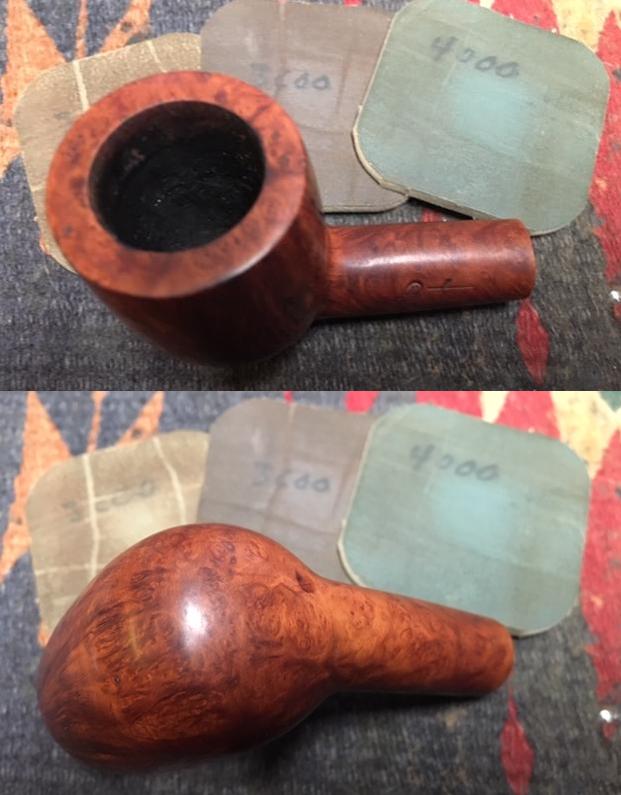
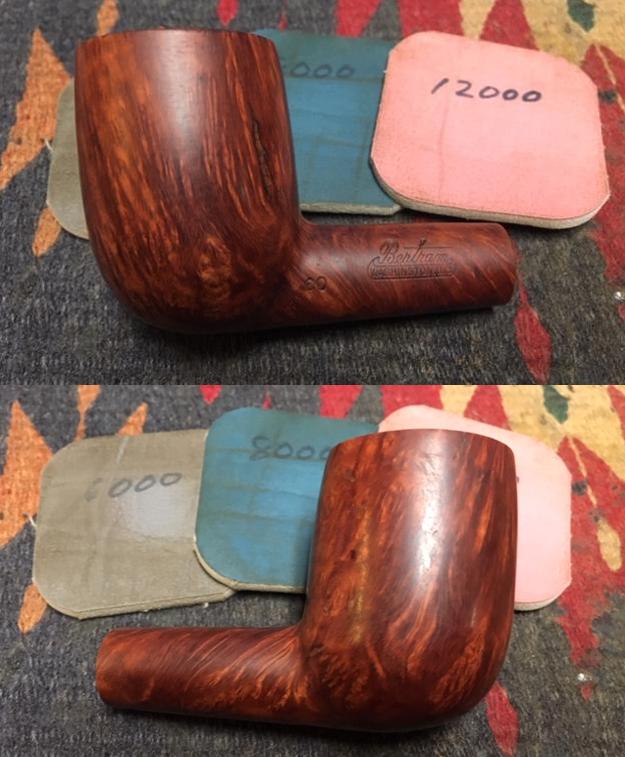
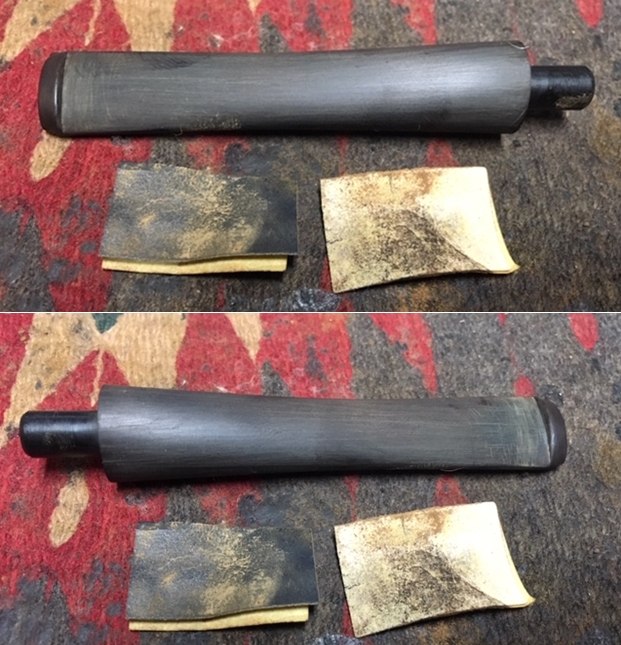
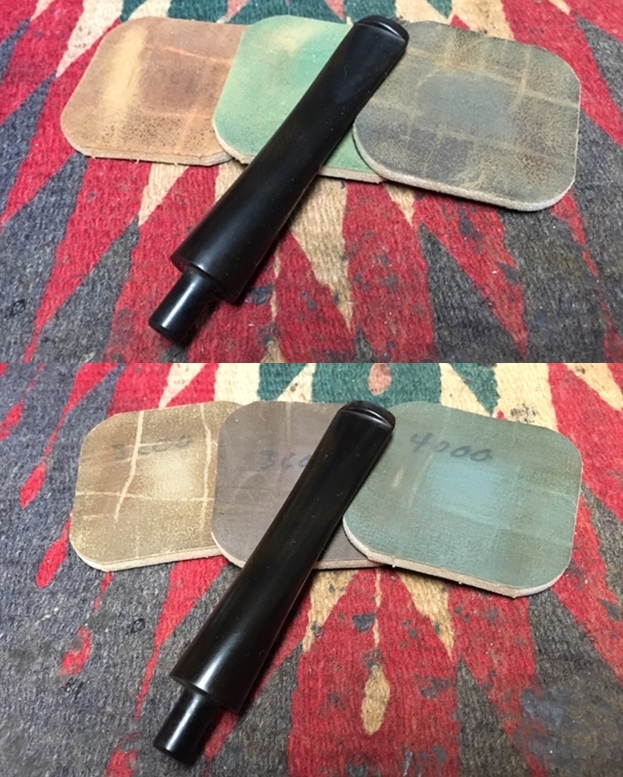
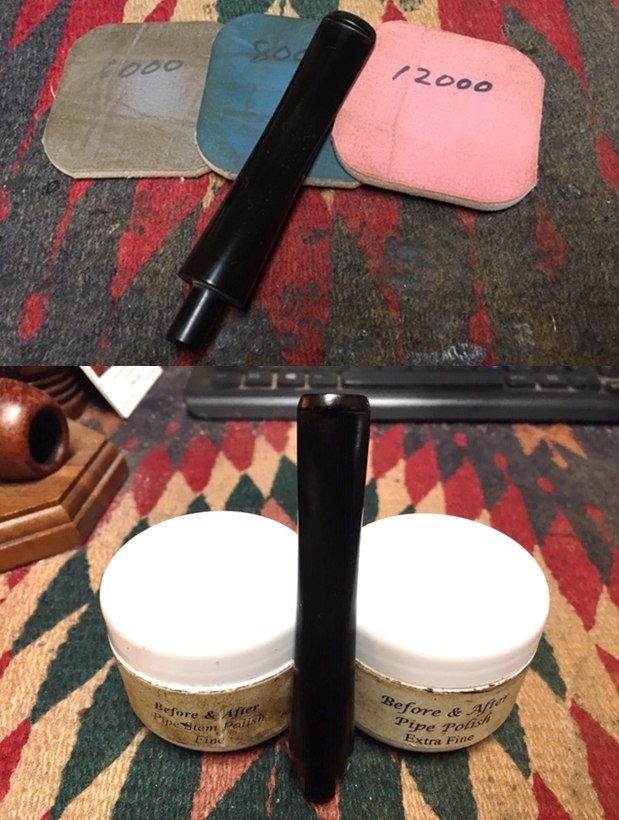
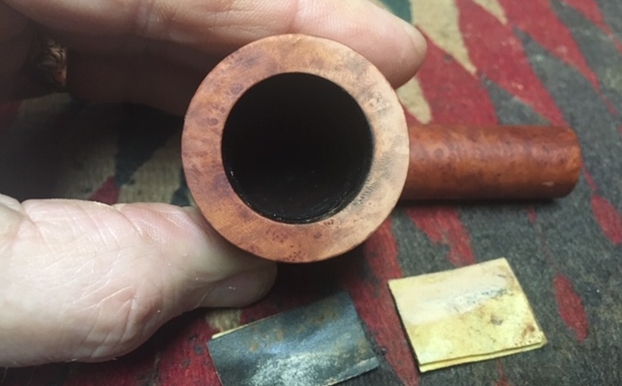
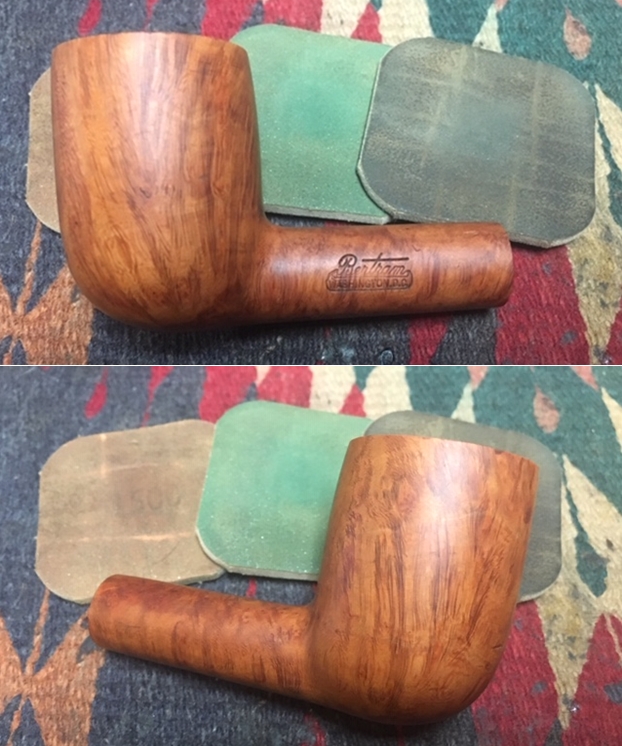
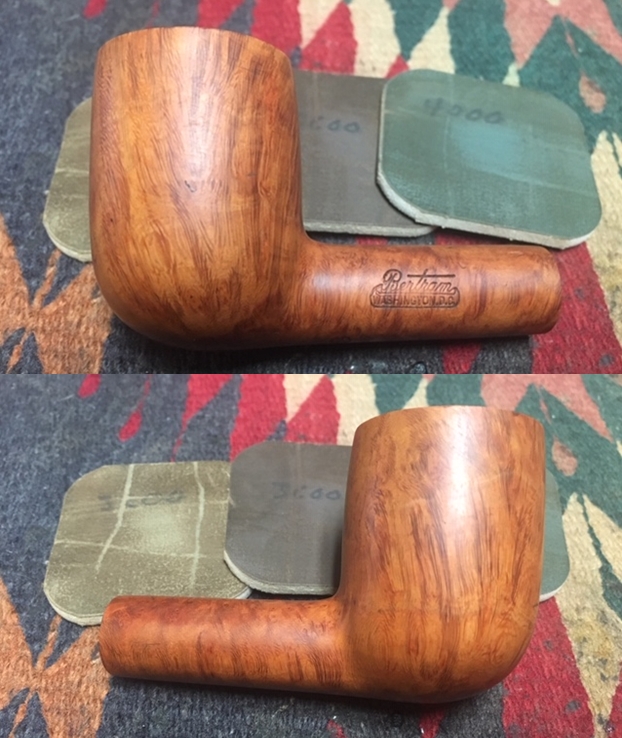
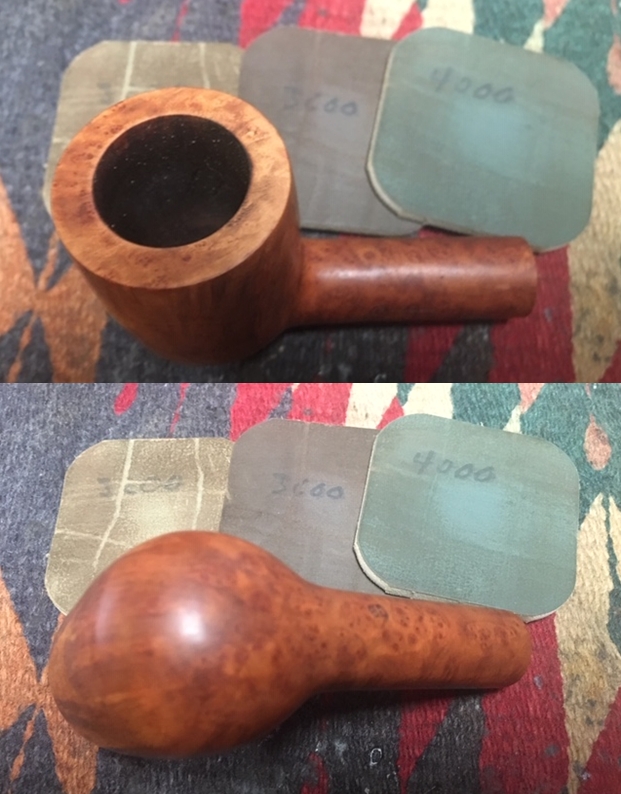
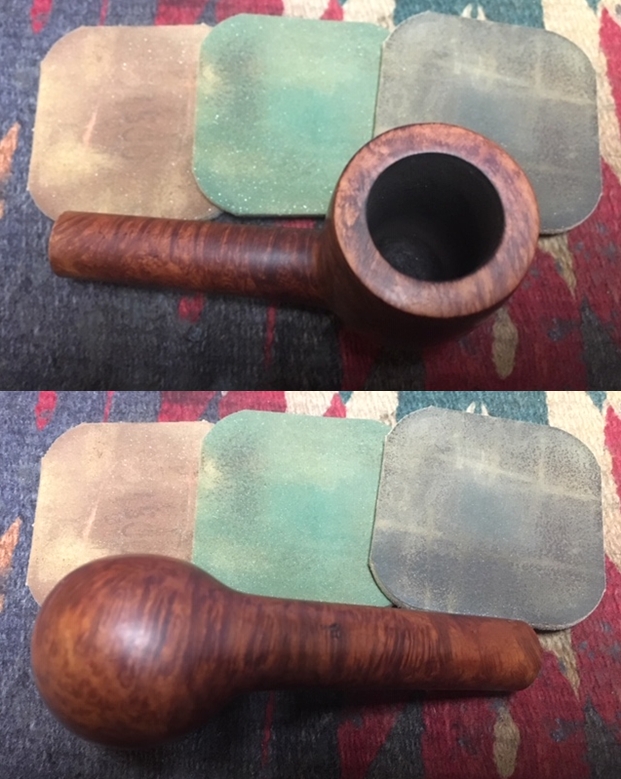
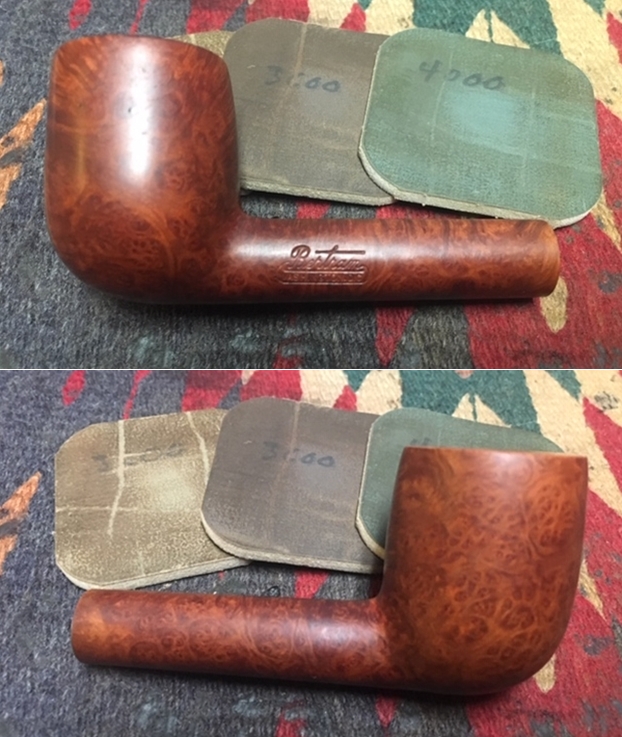
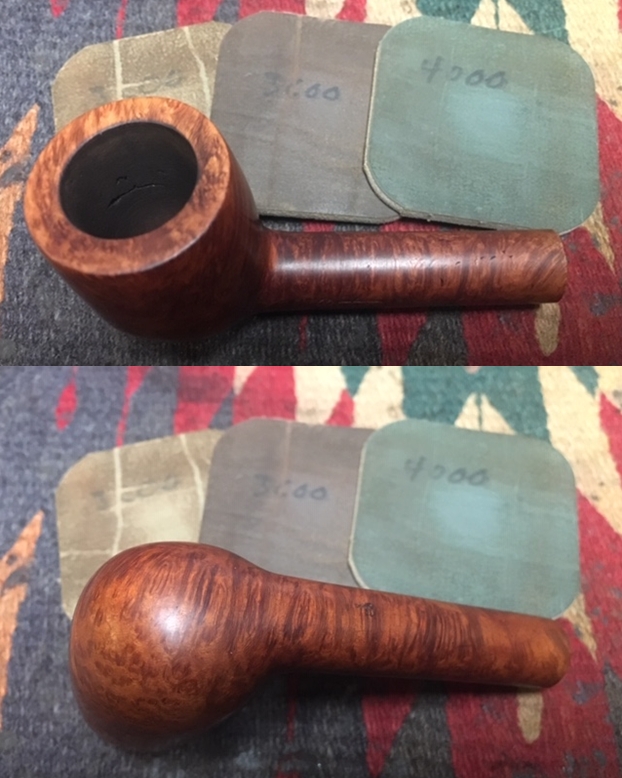
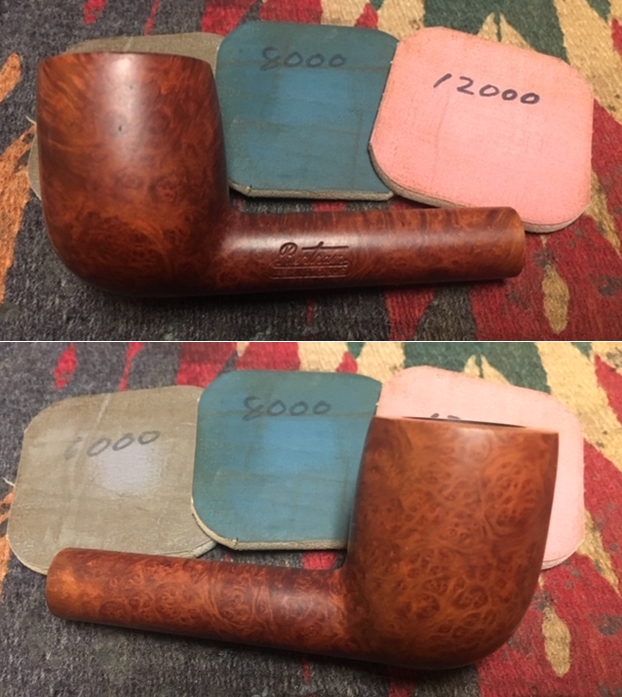
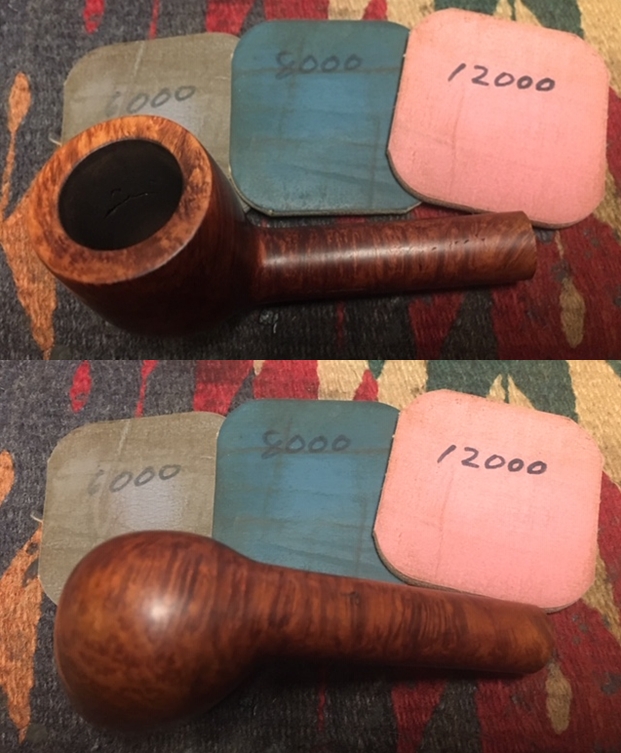
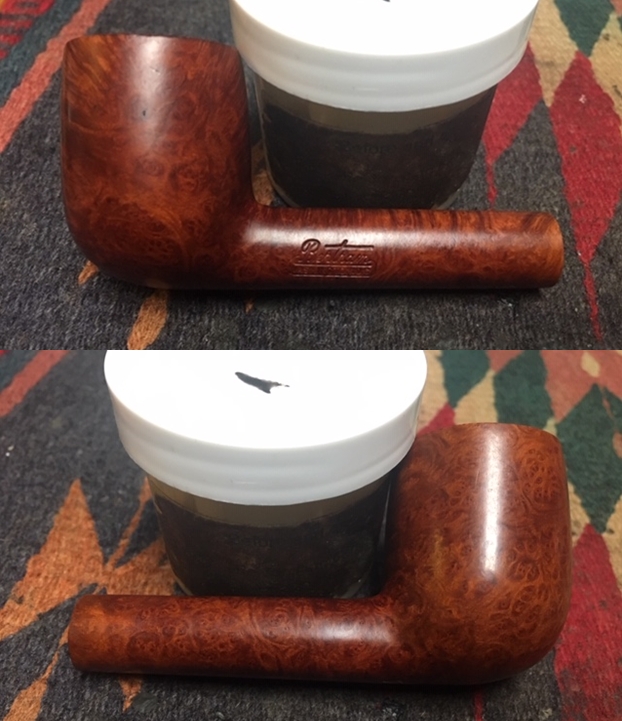
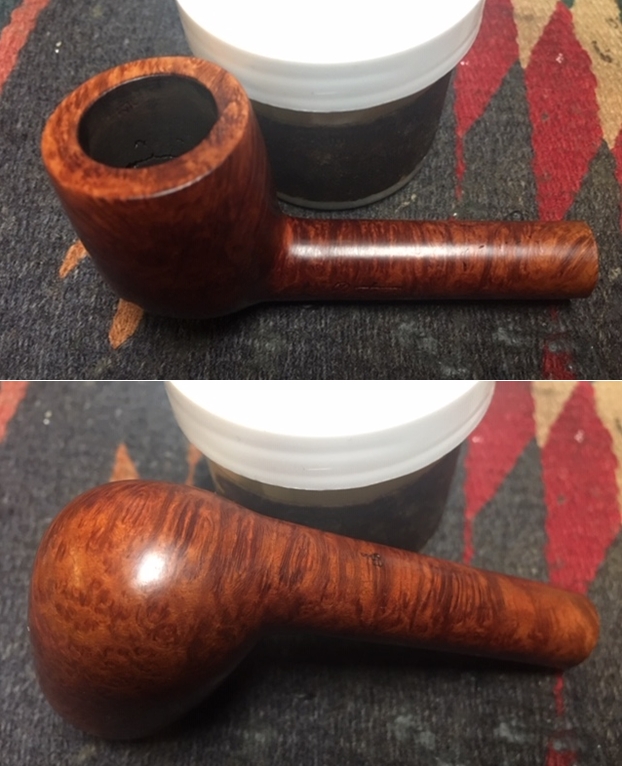
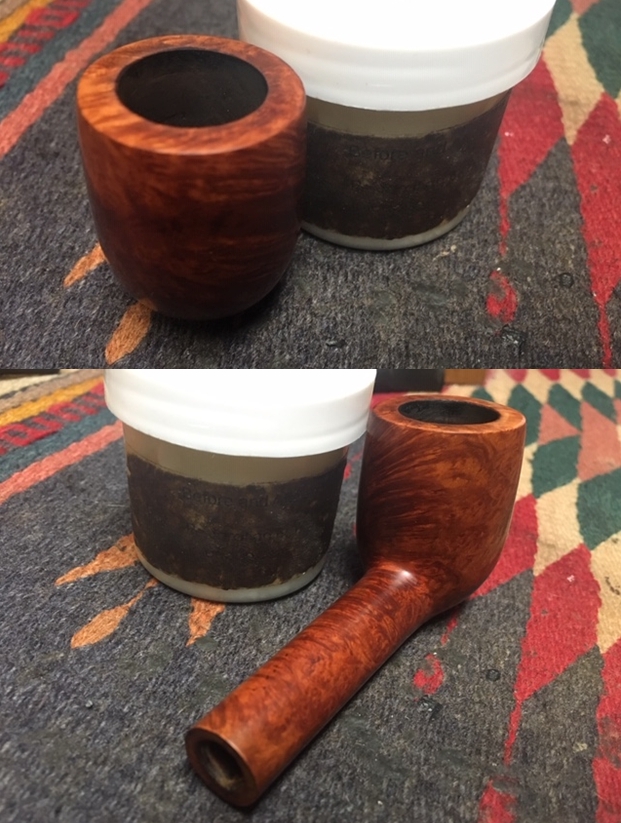
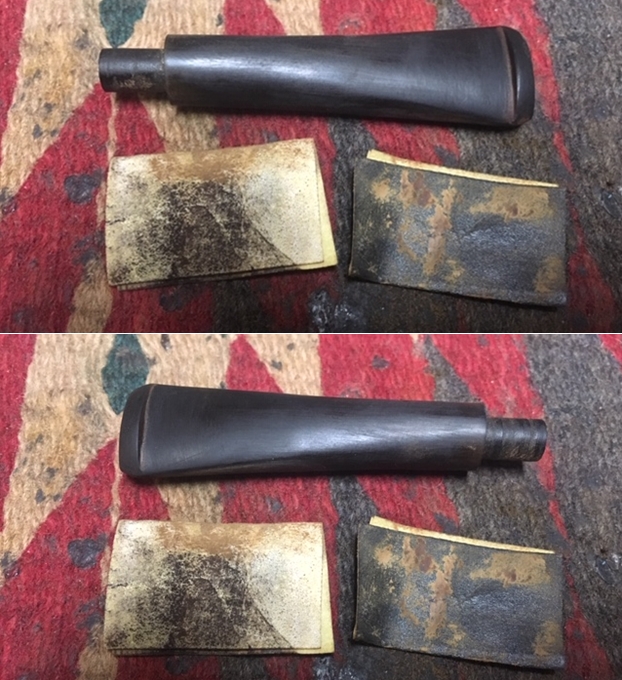
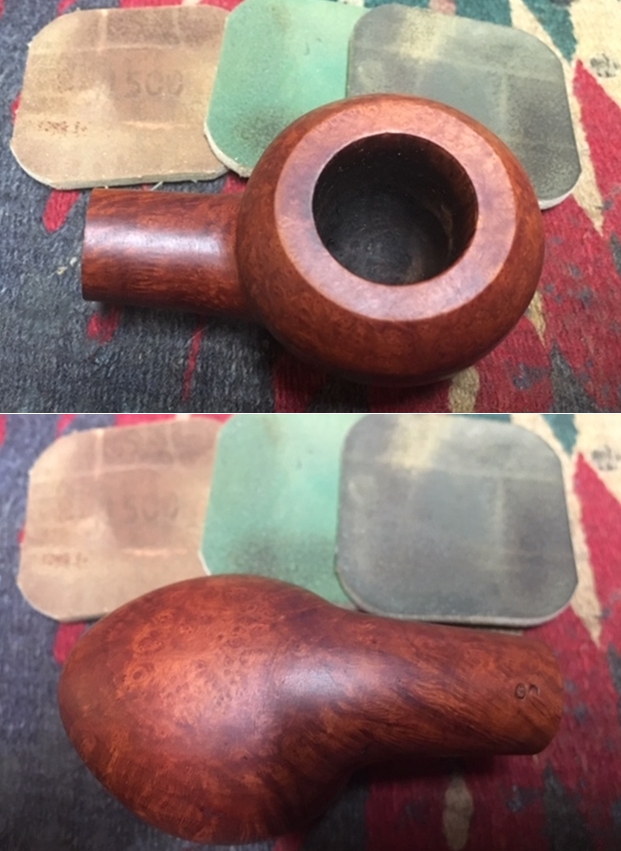
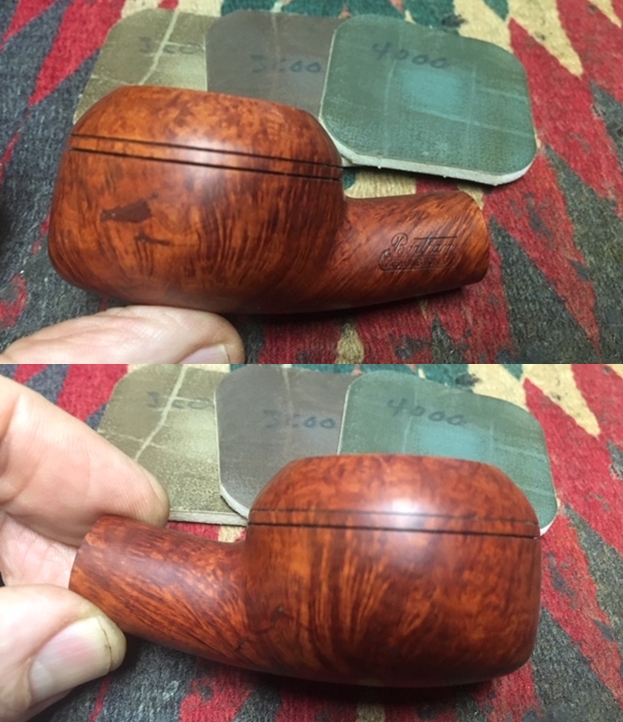
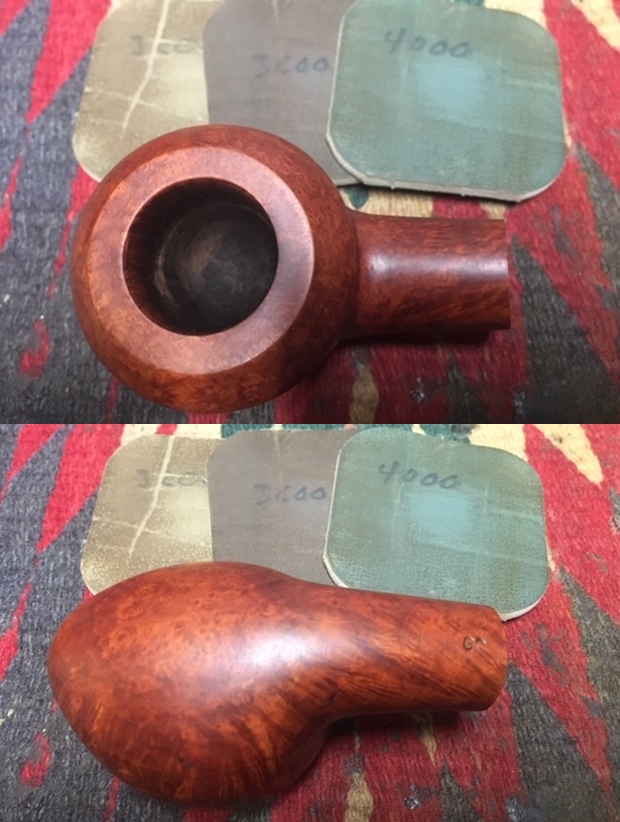
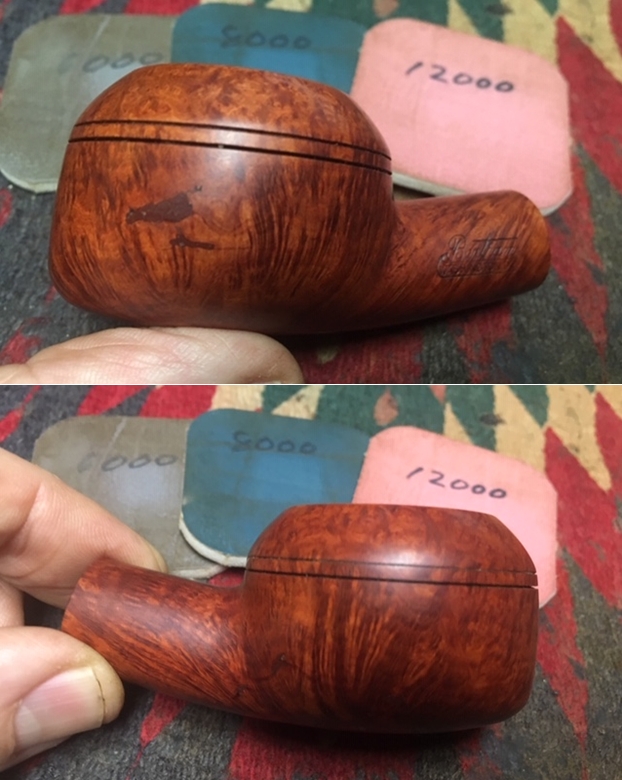
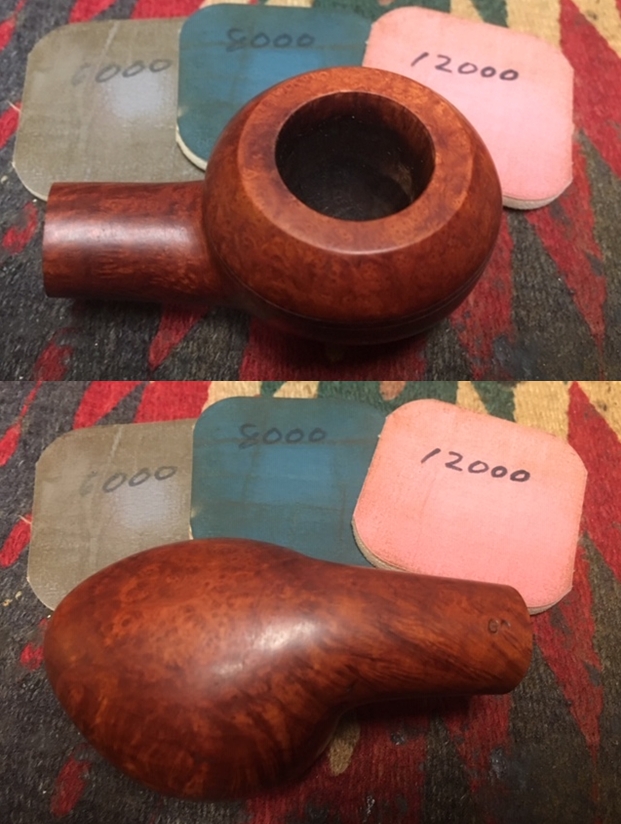
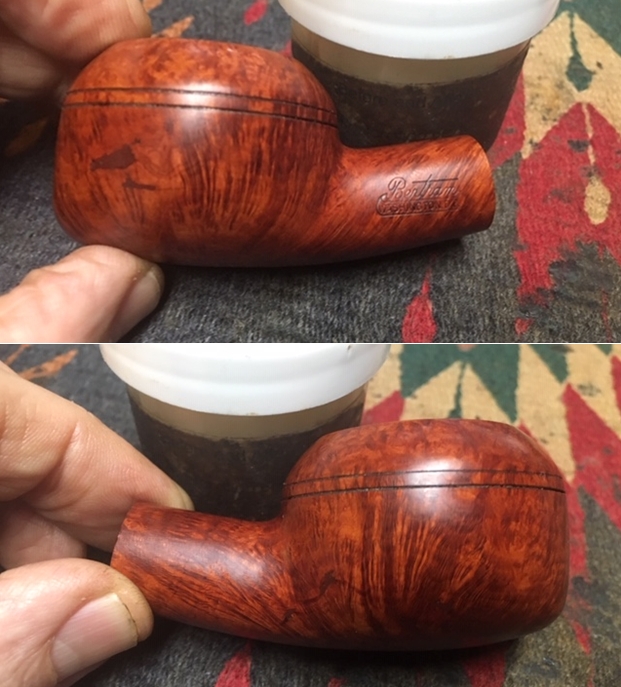
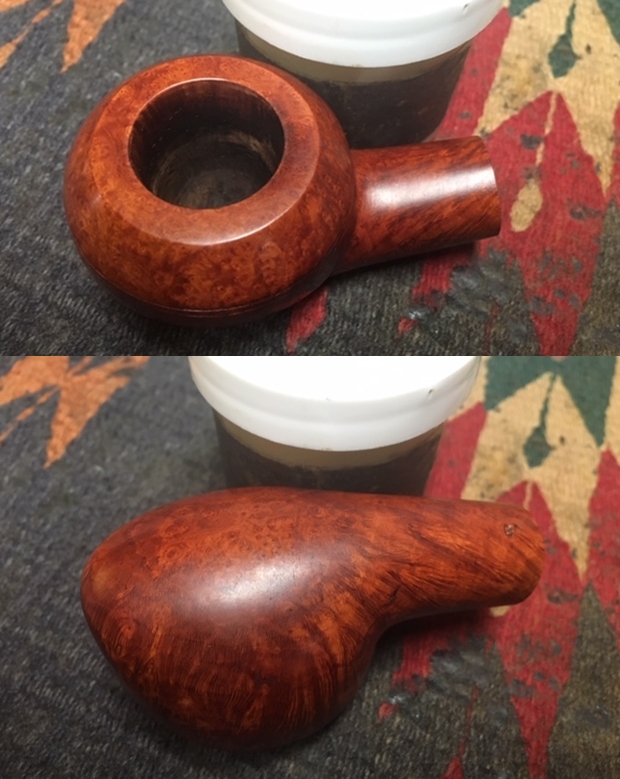
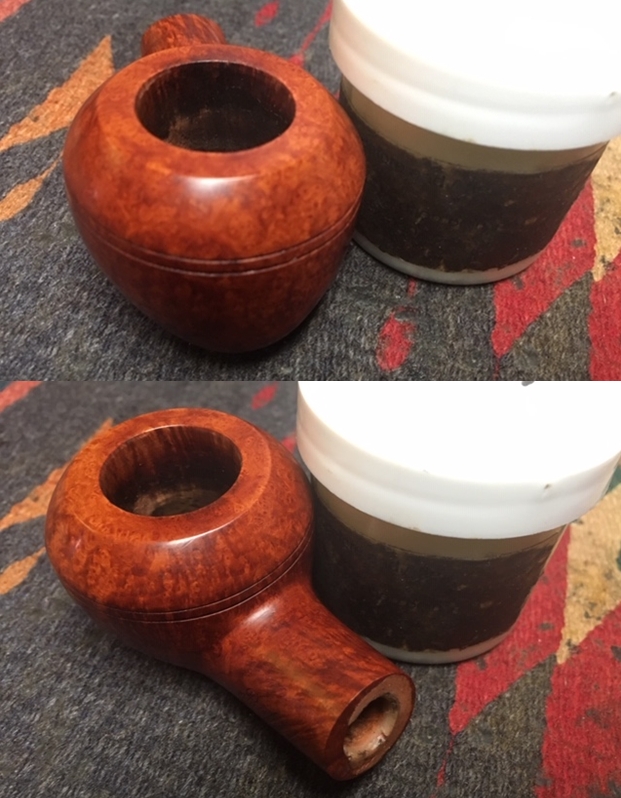
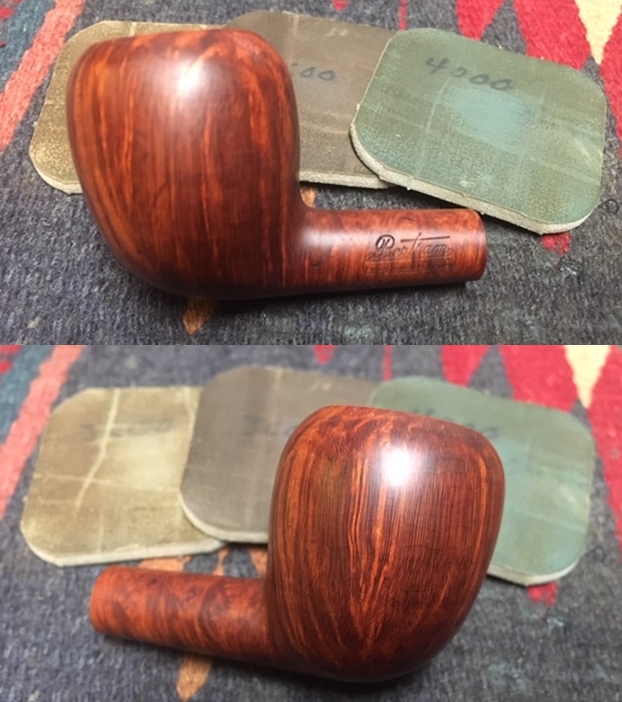
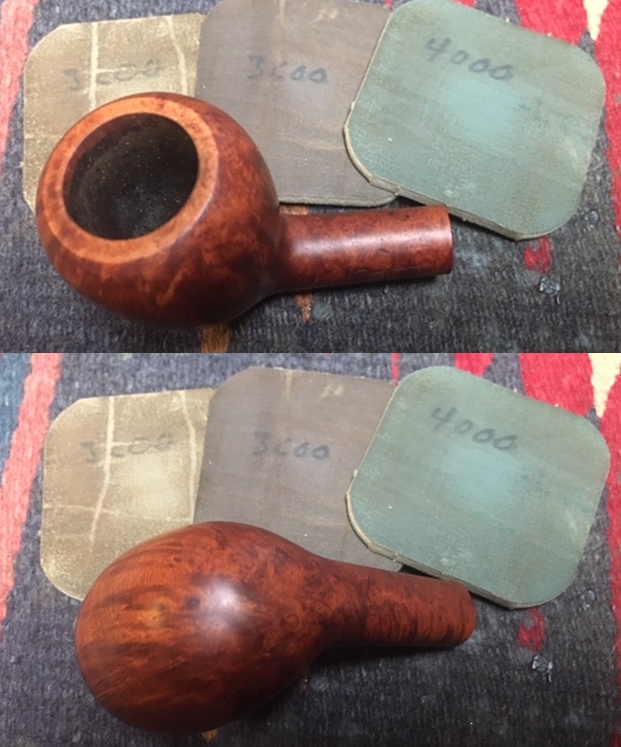
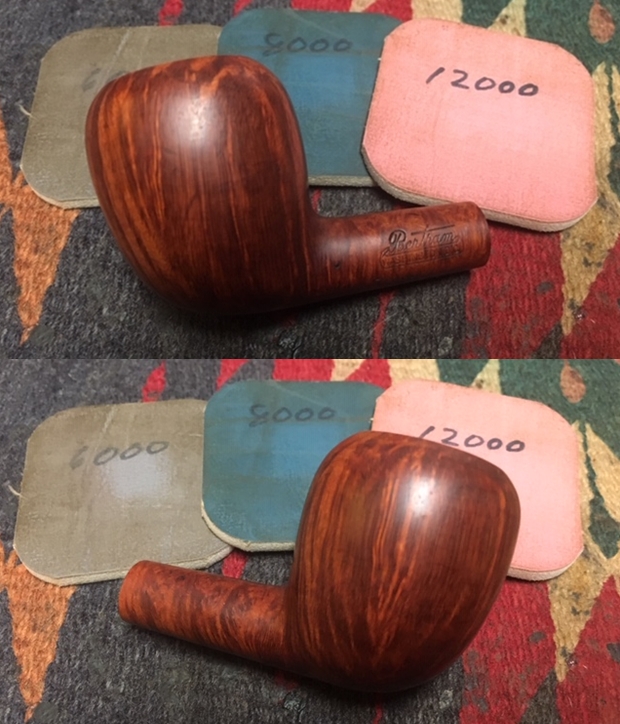
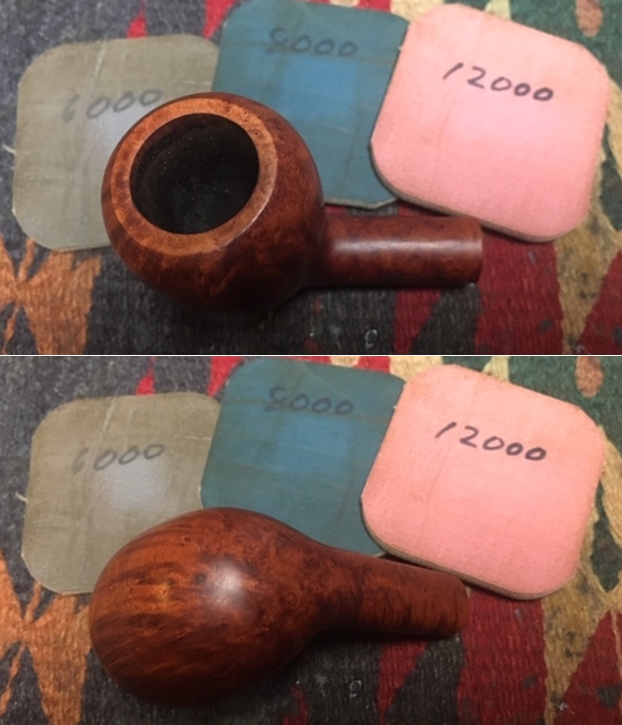
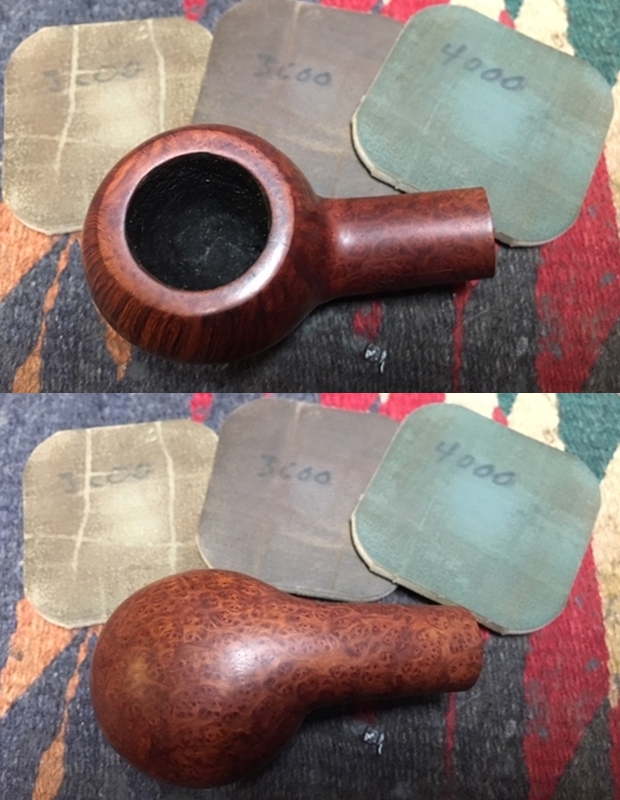
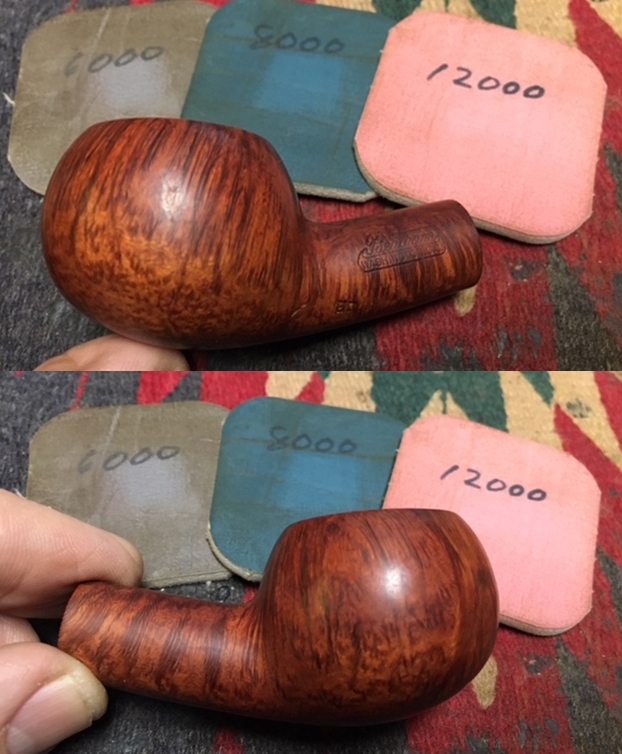
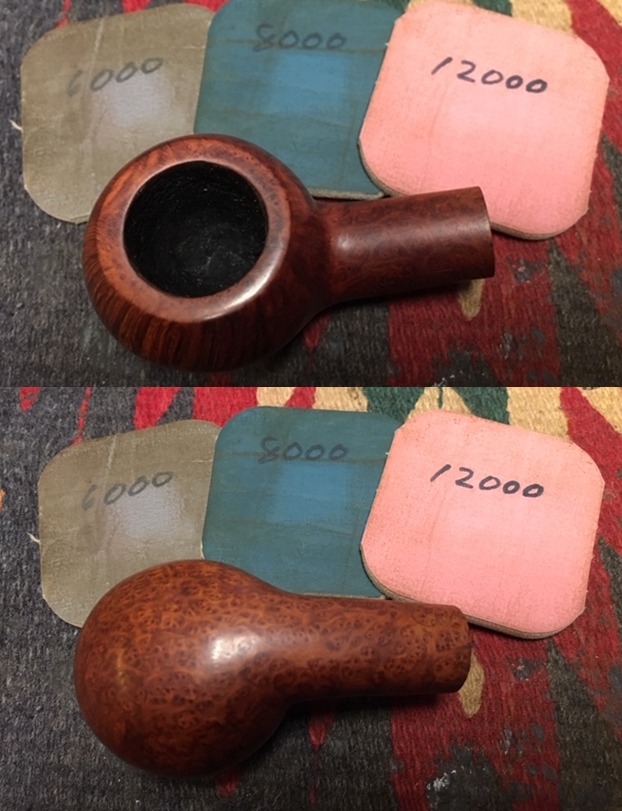
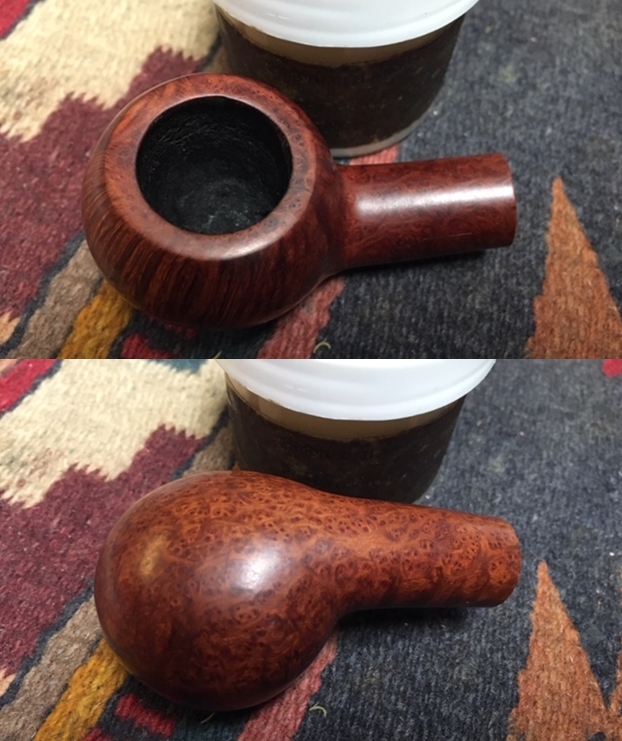
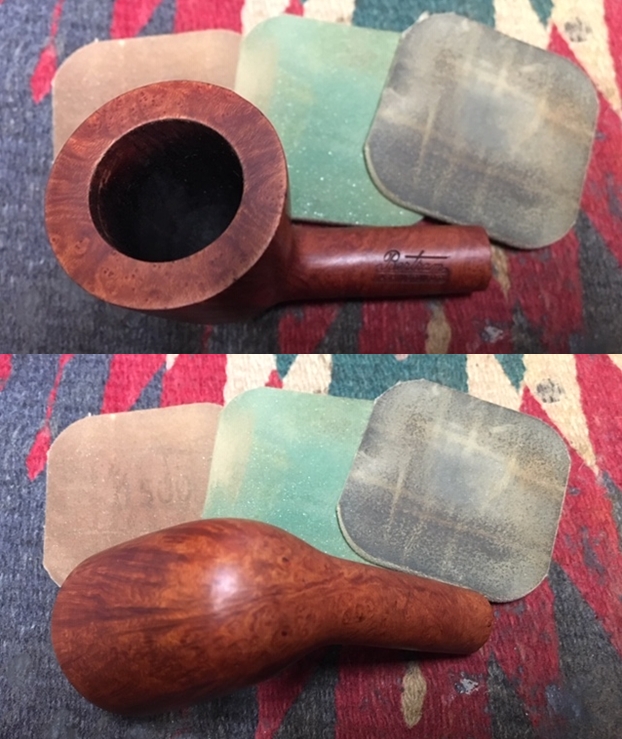
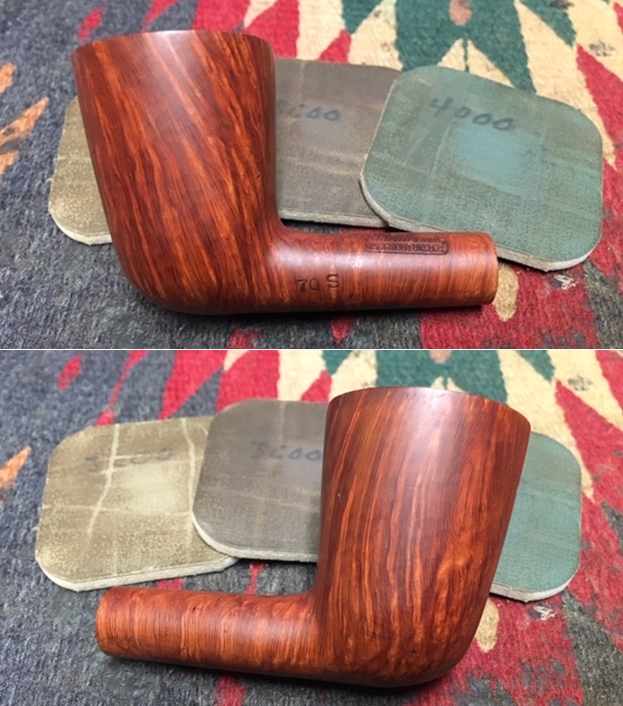
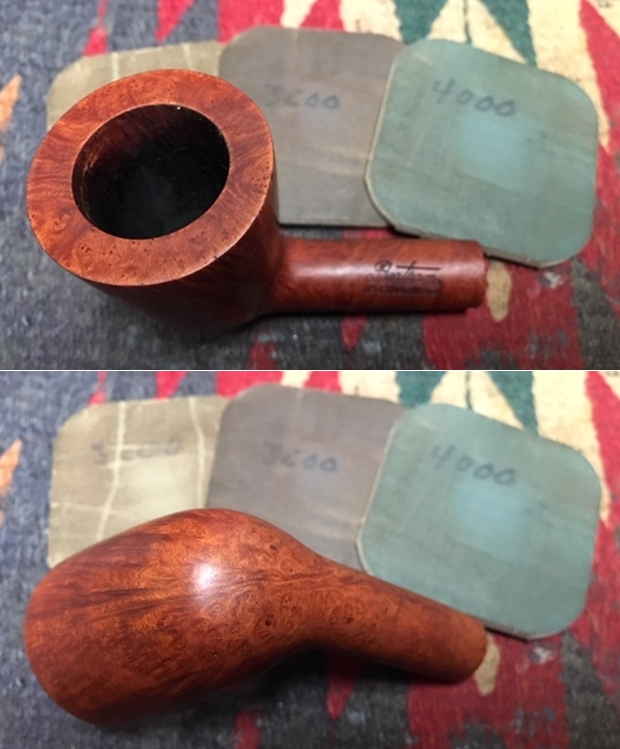
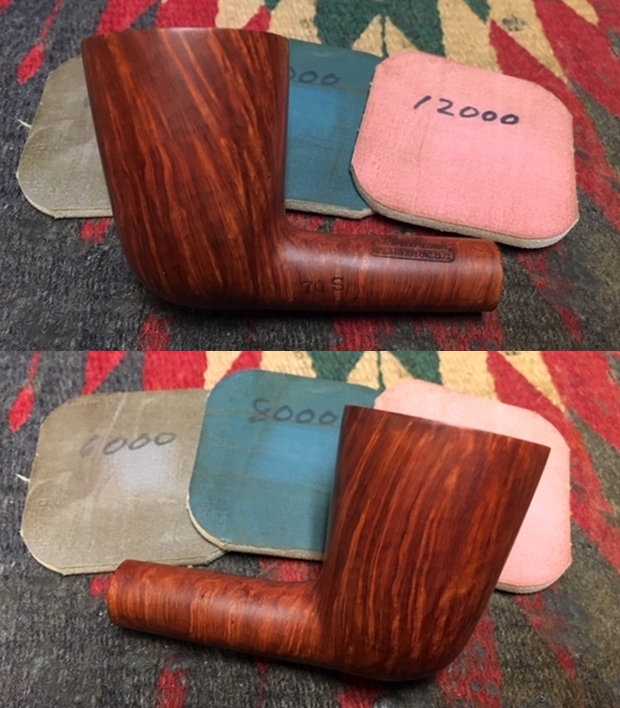
I believe the carving does justice to the importance of the headdress or war bonnet as it forms a spiraling movement of feathers encasing the proud image of a warrior.  What’s interesting is that this spiraling movement of feathers forms the image of a larger, dominant feather.  I take a picture to show the feather I’m seeing in the carved war bonnet.  This is very cool!My challenge, as with Old Crusty, the Bearded Sailor, is to guard the rustic roughness of the carved image but to clean it up so it becomes more expressive.  The stem is in good shape except for some minor tooth chatter and oxidation. Even though the pipe is unsmoked, the condition of the finish shows some wear and tear.  The chamber is totally pristine.  The top side or top of the headdress, encompasses the chamber and slopes toward the squat shank.  This area appears to be in good shape with only small nicks.  A beautiful showcase for the grain with this much smooth briar exposed.However, it is apparent that the top, right of the headdress, as I look at the image from the front, has sustained some damage. It appears that Chief took a head dive some time ago.  The top edges of the feathers have chipped.  I take another picture on the opposite side that has not sustained this damage to show the comparison of the healthy bridge across the top.  The question is, is this damage too minuscule to bother with and is there enough wood for a patch to cling to if I were to attempt a repair?  The damage is noticeable. Looking straight on at the image, expected nicks are evident amid the intended roughness of the carving.  The crevasses, especially to the left and right of the face, are full of dirt and grime.The large heel of the pipe which enables it to serve as a sitter, reveals 2 daunting fills that will need attention on the far left and right of the picture.  Though, like the top plateau headdress, the heel provides a large plat of briar landscape that will show off the grain.I think that ‘Chief’ serves as a great nickname for this Native North American Hand Carved of Italy. It is evident from his serious expression he is a proud man!  I begin his clean up and restoration for Toby’s future brothers-in-law’s wedding gift, by removing the stem from the stummel to clean it.  I discover that the tenon is mounted with a small, useless stinger which I promptly remove and put it in my growing stinger collection.  After running a pipe cleaner wetted from isopropyl 95% through the stem to clean the airway, I add the stem to a bath of Before & After Deoxidizer along with other pipes and stems in the queue. After several hours in the B&A Deoxidizer soak, I remove Chief’s stem and run another pipe cleaner wetted with isopropyl 95% through airway to clear and clean the Deoxidizer from the airway.  I then wipe the stem with cotton pads wetted with isopropyl 95% to remove the raised oxidation. The oxidation is thick but came off very nicely.The B&A Deoxidizer did a great job and I follow by applying paraffin oil, a mineral oil I can get here in Bulgaria, to the stem which aids the rejuvenation of the vulcanite, rubber compound.  I then set the stem aside to dry and absorb the oil.With nothing in the chamber to clean, I move directly to cleaning the external briar surface using undiluted Murphy’s Oil Soap and cotton pads.  To clean deeply in the crevasses of the carving I also use a bristled tooth brush and a sharp dental probe to run down the length of the crevasses. The finish on the stummel is very thin and the scrubbing with Murphy’s almost totally removed the finish except for small patches here and there.  The following pictures show the cleaned stummel. As I suspected, the fills made simply of wood glue, has softened after the cleaning process and the fills have also shrunk so that the hole ridges are easily detected.  Without much thought, I use a sharp dental probe to dig out the old material. To remove the patches of left-over finish and to clean the heel where I removed the fill material, I use a cotton pad wetted with alcohol to wipe the surface. This does a good job.A moment of decision has arrived concerning repairs on the stummel surface.  There is no question regarding the holes left on the heel of the pipe.  These will be filled.  The question is how perfectionistic will I be about the feather tips on the upper right of the war bonnet?  I’ve been thinking about how I would approach the fine patching of a carving.  Filling a hole is one thing, recasting an image is quite another!  Without question, if I use briar dust putty made with mixing briar dust and CA glue, the result will be darker for both the heel fills and the feather repair – darker than the raw briar currently shows.  This possibly would mean utilizing a dye later in order to mask and blend the patching but it’s also possible that the natural briar will darken as it sanded, treated and polished and this can possibly mask the repairs enough.  Another question that I mentioned earlier was whether there was enough wood for the patch material to ‘grab’ in order to be a solid repair?Well, as I look at the mangled war bonnet and wondering if I could live with it, an idea started to formulate in my mind, and then started to take shape with my hands.  I snipped the ends of some toothpicks to create crevasse wedges that would form the boundaries around which I could apply patch material.I circled the war bonnet with masking tape that would hold the toothpick wedges in place.  I expect the tape to flex some, but the goal is to hold the wedges in place so that briar putty will not seep into the crevasses.Next, I gently insert the wedges into the crevasses and are held in place by the resistance provided by the tape.I reinforce the masking tape to keep things where then need to be!I decide to start with the heel fills and to employ an accelerator so that the patch would cure quickly, enabling me to flip the stummel and apply patch to the feather repairs. I mix briar dust with a thick CA glue until it reaches the consistency of molasses – that’s my subjective standard – not too thin so that it runs and not so thick that the CA glue hardens too quickly.  I apply the briar dust putty to the holes and then spray with an accelerator.  The putty hardens very quickly. I then flip the stummel and apply briar putty on top of the feathers in need of repair.  I make sure there is excess so that I can file and sand down to form a new flat bride across the top.  I apply the putty carefully but quickly and spray it also with an accelerator so that the putty remains in place and not seep down the crevasses.  I expect some seepage but I’m hoping to ward off a lot because that would not be fun sanding it out! After a time, I unwrap the tape and one toothpick wedge came out with the tape – didn’t put any putty on it at all!  Oh well.  I look at the area and I think it will easily sand.  The three wedges remain with the cured putty holding them in.  I’m hopeful – the plan seems to be working!Using a flat needle file and a triangular needle file that fits very nicely in the crevasses, I begin the slow process of filing over and around the toothpick wedges.  I don’t try pulling the wedges out because I’ll simply file around them until they are loosened from the grip of the putty.  I don’t pull them out risking pulling the patch material off!  The wedge on the right comes out next. As I continue to carefully file, there is now only one wedge remaining.I’m liking how the putty is strong and sturdy as I file on the top as well as in the crevasses vacated by the wedges.  The repair zone still looks pretty rough.I come to the point where I’ve filed the briar putty patch down to almost the briar surface but not quite. I use the triangular file to create a pointed notch at the top of the crevasse.  It looks good!  Time to switch to 240 grade sanding paper to fine tune the sanding.I finish sanding and shaping with 240 grade paper.  Wow! I’m very pleased with the initial results of this reconstruction project on the feathers of the war bonnet.  I will continue to fine tune the results as I go.  I wanted to restore a straight bridge across the top of the feathers to match the healthy feathers. Turning now to the heel repairs, I use a flat needle file on both patch mounds.  I file the mound down until close to the briar surface then I switch to 240 grade sanding paper to bring the patches flush with the briar surface. As sometimes is the case, the fill located to the front of the stummel has a pocket in the briar dust putty patch.  A pocket of air was trapped, and sanding revealed it.I clean out the patch pit and wipe it with a cotton pad wetted with alcohol to clean it.  I then apply clear CA glue to the pit and then spray it with an accelerator to quicken the curing process.Again, I file the patch with the flat needle file and sand with 240 grade paper and the patch is patched!Looking at the stummel, I still see what look like patches where the old finish is still hanging on.  Old finish is evident because it will look a bit shiny compared to the raw briar around it. The reason it is important to dispatch old finish in this case is that will affect the final look if old finish is still in play whether I leave it as natural briar or apply another dye.  In order to continue with a clean briar canvas, I wipe the stummel with acetone using a cotton pad.  This does the trick nicely. The shiny spots are gone. I move on. Next, I see in each of the crevasses of the carving, dark grime and surface discoloration probably from old finish collected in the gaps. Patience is the key here!  First, using a piece of 240 grade sanding paper, I fold into a knife edge and run the paper through every crevasse.  I clean the gaps as well as sand out rough edges and snags as much as I can.After finishing going through all the crevasses with the 240 grade paper, I do the same thing with 600 grade paper. The carving is still maintaining that appropriate rustic roughness, but I like the results of the sanding with the additional cleaning and smoothing. I now use sanding sponges to sand the entire stummel using first a coarse grade sponge, then medium, and finishing with a light grade sponge.  With both the coarse and medium grade sponges, I can run the edge of the sponges through the crevasses.  This is nice to further smooth these rough edges. From the sanding sponges I go straightaway to sanding the stummel with the full micromesh pad regimen.  First, I wet sand using pads 1500 to 2400 then follow dry sanding with pads 3200 to 4000 and 6000 to 12000.  I take a different angled picture after each set of the pads.  The grain in being teased out and I like that. The deep tone of the natural briar is what I was looking for from the micromesh process.  With a carved pipe like this, I would much rather stay with the natural briar if the briar presentation needs no masking to hide and blend repairs.  The heel fills look almost natural and the feather war bonnet repair is invisible.  For this reason, I stay with the beautiful natural briar that has emerged on Chief and apply Before & After Restoration Balm to enrich and deepen the natural hues of the briar.  I apply the Balm after squeezing some onto my fingers and then I meticulously work the Balm into the briar.  I take special care working it into the carving – each crevasse receives individual attention sometimes with the help of toothpick to push the Balm into the gaps. It takes a bit of time.  After applying the Balm, I wait about 15 minutes for the Balm to fully absorb then I wipe the excess off with a microfiber cloth.  Again, the process is meticulous as I clear, wipe and buff each detailed crevasse.  Chief is looking good!  I take a picture of the Balm absorbing period.Next, I return to the stem that has been waiting for attention.  Before starting the sanding the stem, I test the fit of the tenon/mortise union.  As I detected earlier, it is tight.  To provide a more comfortable fit, I wrap a piece of 240 grade paper around the tenon and while pressing it with my fingers and thumb, I give the paper a few rotations around the tenon and again test the fit.  Works like a charm!  The tenon seats well, with an appropriate snug fit. Turning now to the stem, the bit is in good condition.  The upper bit looks almost pristine, the lower shows just one small dent on the button.  Since this pipe is unsmoked, the only wear and tear on the stem is from living in a drawer or perhaps in a box with special keepsakes.  The vulcanite surface also is rough. To make sure the entire stem is pristine, I mount the stem again, but I use a disc to divide the stem and stummel so that I can sand without concern for shouldering the stem’s shank facing.  I use 240 grade paper on the entire stem, followed by wet sanding with 600 grade paper.  I finish this phase by using 000 grade steel wool to buff up the shine. Now to the micromesh regimen.  I begin by wet sanding with pads 1500 to 2400, then dry sanding with pads 3200 to 4000 and 6000 to 12000.  Between each set of three pads I apply a coat of Obsidian Oil to continue vitalizing the vulcanite. I like that new glassy, glossy pop of polished vulcanite! Now, on the homestretch.  After rejoining stem and stummel, I mount a cotton cloth buffing wheel to the Dremel, set the speed to about 40% full power and apply Blue Diamond compound to the entire pipe.  I take special care to work the crevasses of the Native American carving.  Afterwards, I wipe the pipe with a felt cloth to remove compound dust in preparation for applying carnauba wax.  I change to another cotton cloth wheel on the Dremel, maintain the same speed and apply the wax to the pipe.  I apply a couple of coats of wax and after completing this, I give the pipe a rigorous hand buffing with a microfiber cloth to polish more and raise the shine of the stem and stummel.
I’m pleased with the results of the restoration of this Native American Hand Carved of Italy – Chief.  He’s still rough looking, which I think is appropriate, but the lines and edges have been smoothed through the detailed sanding and the Chief’s image carved on this stummel has come alive.  I really am amazed.  The large smooth heel and plateau came out beautifully with distinct grain profiles.  The repair to the feathers on the war bonnet came out well, too.  When I started, I didn’t know if the repair would work or not.  It worked!  Toby commissioned this Hand Carved Chief from the For “Pipe Dreamers” Only! collection as a wedding present for his future brother-in-law.  He will have the first opportunity to acquire this pipe in The Pipe Steward Store.  This pipe benefits our effort here in Bulgaria working with women and girls who have been trafficked and sexually exploited – the Daughters of Bulgaria .  Thanks for joining me!

Restemming a London Made Pencil Shank Crosby


Blog by Steve Laug

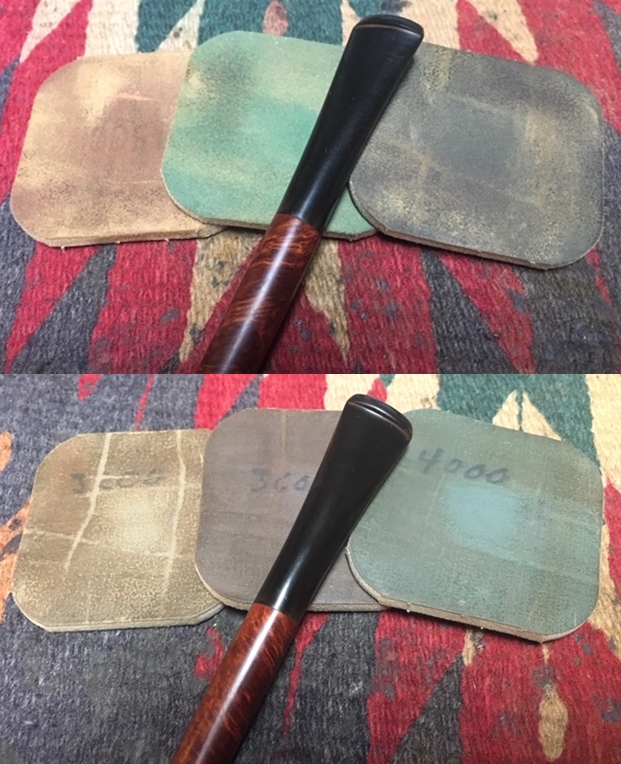
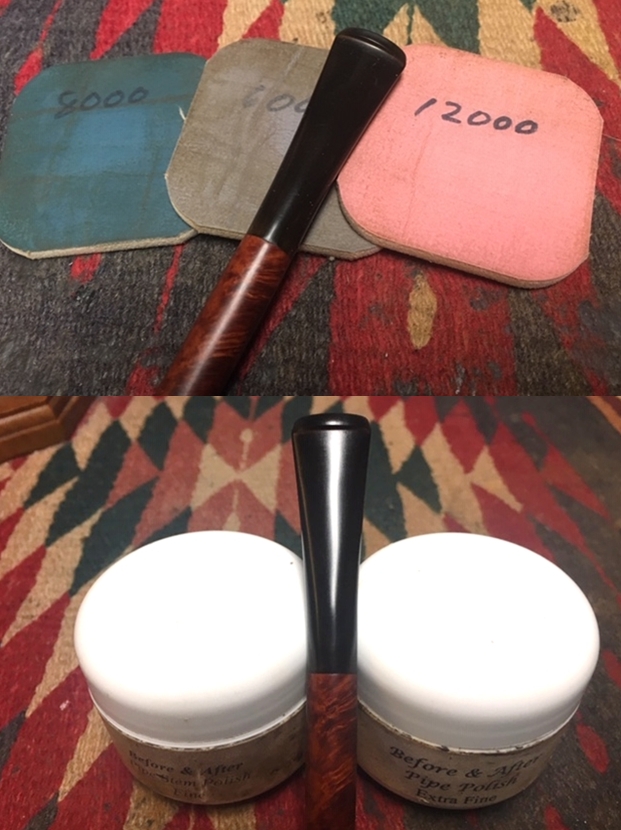
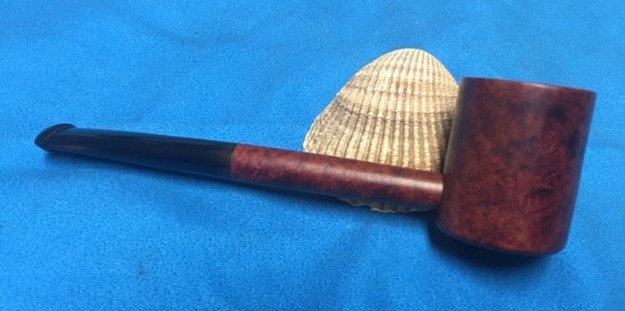
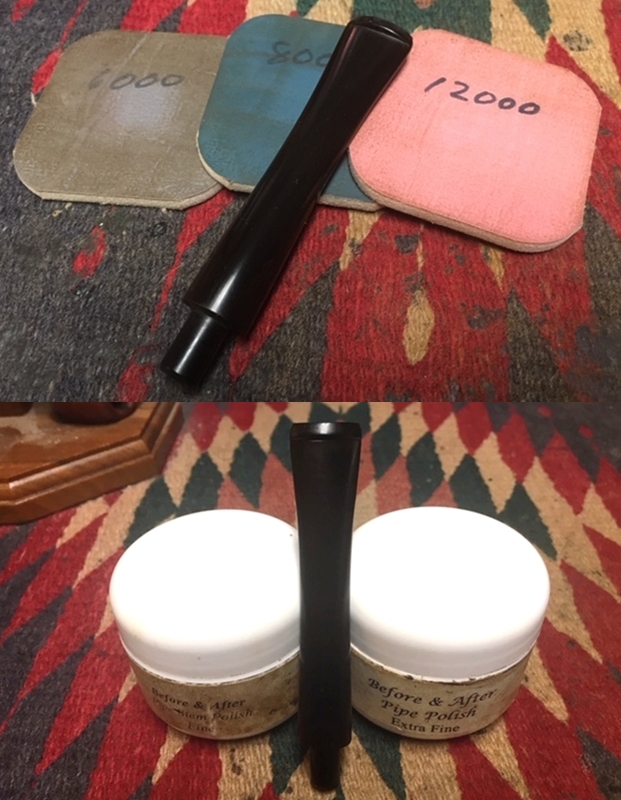
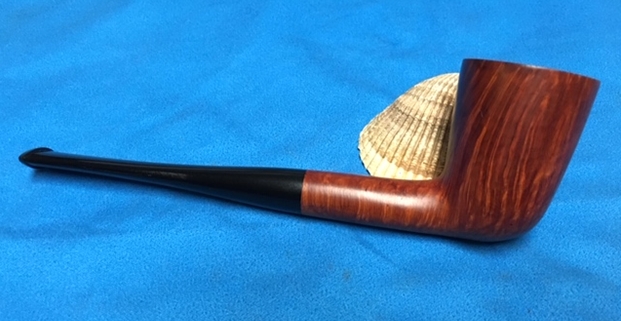
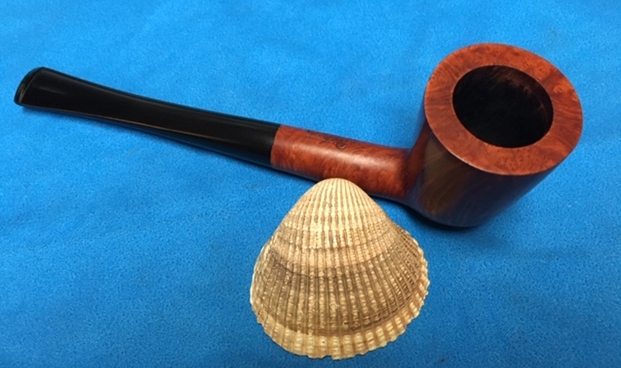
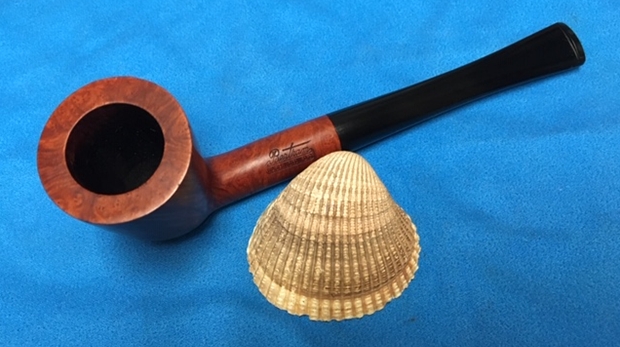
Sometimes restoring pipes can be very frustrating. This evening I was working on an estate Dunhill Tanshell Zulu and the tenon broke off in the shank. I don’t know if it was cracked but I do know that I did very little and the stem was in one hand and the bowl in the other. It is at times like that when a repair person feels like packing it in and doing something else. But that is really not optional so I turned to do something else… still pipe repair related but still something different. I have a box of pipes that my brother sent me recently and in that was a very nice looking long, pencil shank billiard bowl without a stem. I had a cracked shank but otherwise it was a pretty piece of briar and it needed some TLC – a band and a new stem. It seemed like just the thing to take my mind off the frustrating Dunhill. I wrote Jeff about it and he sent me the following photos of what it looked like before he cleaned it. It was a frustrating piece for him even in the clean up. The stem was with it but the tenon had snapped off in the shank. In removing the tenon from the shank the pencil shank had snapped. Maybe I was moving from one frustration to another! The first photos is the parts grave yard – a snapped shank, a chunk of briar, a broken tenon and a broken stem…oh my.Jeff took a couple of photos of the snapped shank and the piece of briar that had come off. At least it was a very clean break. After cleaning the pipe Jeff glued the piece of briar back on the shank and when it arrived it was tight.The bowl and rim were in awful condition. There was a thick lava coat on the rim top and a thick cake in the bowl. There was tobacco debris in the cake and the lava on the rim it was a mess. It was obviously a great smoking pipe and someone’s favourite – though it always surprises me how far some pipemen and women let their pipes go.Even the exterior of the bowl was a mess with spots of grime and tar on the outside of the bowl as can be seen in the following photos. There were nicks and dents in the bowl but beside all that it was a beautiful piece of briar.Jeff took a photo of the only stamping on the pipe – London Made was stamped on the right side of the shank.He had done a great job cleaning up the pipe. When I took it out of the box it did not look much like the pipe pictured above. The bowl had been reamed and cleaned (Jeff followed his usual regimen of reaming and cleaning). The exterior had been scrubbed and the internals were spotless. The piece of briar had been glued in place and the repair was solid. The broken stem/tenon was gone. It was a clean and beautifully grained stummel when brought it to the worktable and took the following photos. I took a photo of the bowl and rim to capture the condition of the pipe before I started my part of the restoration work. The rim was clean but there was some nicks and dents in the top. The inner and outer edge were in excellent condition and there was darkening toward the back side of the rim top.The shank had a crack in it but had been glued. It would need to be banded. The photo is a little blurry but I have circle the crack in red so that you can identify it.I went through my can of straight stems and found two that had possibilities as well as taking out a band that would fit the shank. I took a couple of photos of my options at this point. I decided to go with the tapered stem as I liked the look of the pipe with that stem.I decided to band the shank first. I rubbed some all-purpose white glue on the shank end and pressed band onto the shank. I cleaned off the excess glue with a damp cloth. The glue would dry and bind the pieces together and hold the band onto the shank end. Once the glue had cured I would fit a new stem. I took some photos of the newly banded shank to show the progress at this point. While the glue on the band was curing I use a needle file to reduce the diameter of the tenon. I had measured previously so I knew what I needed to remove. I sanded it with a piece of 220 grit sandpaper to smooth out the tenon.I fit the stem to the shank and took a few photos to show what the pipe would look like with the new stem. The diameter of the stem at the shank was a little off so it would need to be sanded to reduce it to fit and there were a few tooth marks and some chatter on the stem but otherwise it was looking good. I sanded the rim top with a folded piece of 220 grit sandpaper to remove the damage and to minimize the darkening. I polished the rim and the bowl with micromesh sanding pads – wet sanding with 1500-2400 grit pads and dry sanding with 3200-12000 grit pads. I wiped the rim down with a damp cloth after each pad. The photos show the progress. I worked some Before & After Restoration Balm into the surface of the briar with my fingertips to clean, enliven and protect it. I let the balm sit for a little while and then buffed with a cotton cloth to raise the shine. The following photos show the bowl at this point in the restoration process. The bowl and the rim top look very good with the beautiful grain popping around the rim and sides of the bowl. With the bowl finished I set it aside and turned my attention to the stem. I sanded the stem and button surface with 220 grit sandpaper to smooth out the tooth marks and chatter on the surface of the stem and the button. The stem surface looks better at that point. I forgot to take photos of the process of removing the excess material on the diameter of the stem so that the fit against the band and shank looked better. Once that was done then I started the polishing of the surface with 400 grit wet dry sandpaper.I polished the stem with micromesh sanding pads – wet sanding it with 1500-2400 grit pads and dry sanding it with 3200-12000 grit pads. I wiped the stem down with a damp cloth after each pad. I further polished it with Before & After Pipe Polish – both Fine and Extra Fine. I wiped it down with a coat of Obsidian Oil and set it aside to dry. With both parts of the pipe finished I put it back together. I carefully polished the bowl and the stem with Blue Diamond polish on the buffing wheel. I carefully worked around the band so I would not get the polishing from the band get on the shank. I gave the bowl and the stem multiple coats of carnauba wax. I buffed the pipe with a clean buffing pad to raise the shine. I hand buffed it with a microfiber cloth to deepen the shine. The pipe polished up pretty nicely. The beautiful natural finish and the grain came alive with the buffing. The rich finish on the briar works well with the polished nickel band and new black vulcanite stem. The finished pipe is very light weight and looks quite stunning with its slender shank and stem. Have a look at it with the photos below. The dimensions are Length: 6 1/2 inches, Height: 1 3/4 inches, Outside diameter of the bowl: 1 1/4 inches, Chamber diameter: 7/8 of an inch. This one will be going onto the rebornpipes online store soon. It is a nice one for sure and one that will fit well into someone’s collection. Thanks for walking through the restoration and restemming with me on this thin, pencil shank Crosby billiard. It should be a great smoker!

Restoring a Malaga Hand Made Freehand Sitter


Blog by Steve Laug

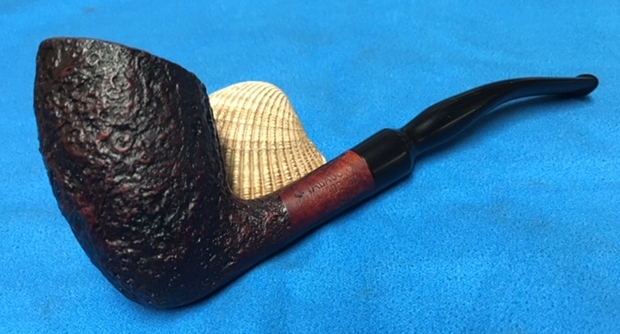
The next pipe in the queue is from the batch of pipes I am cleaning up for Alex – this one is a Hand Made Malaga Freehand Sitter with plateau on the rim top and shank end. The entire pipe had been sandblasted but some beautiful straight grain around the bowl and birdseye grain on bottom showed through the blast.The pipe has a dark under coat of stain in the blast and a top coat of brown that really makes the grain shine through the blast. The carver did a great job utilizing the block of briar to maximize the grain. The pipe is stamped on the underside of the shank. It reads “MALAGA” (over) Hand Made. The saddle stem is fancy, turned vulcanite and has no marking or stamping. This is another nice looking piece much like many of the pipes Alex is picking up. There was a thick cake in the bowl and some lava overflowing onto the plateau rim top. The exterior of the briar was dusty with grime in the crevices of the blast. The stem is dirty and there were tooth marks on both sides of the stem at the button edge and some wear on the button edge itself. The photos below tell the story and give a glimpse of the pipe before clean up. I took a photo of the bowl and rim to capture the condition of the pipe before I started my cleanup work. There was a lava on the rim and the cake in the bowl. The inner and outer edges of the bowl appeared to be in excellent condition. The plateau top had a lot of grime in the crevices. The stem was in decent condition. There was some light oxidation and there was wear on the button surfaces on both sides of the stem. There were tooth marks and chatter on the underside of the stem but otherwise it was not too bad.I also took a photo of the underside of the shank to show the sandblast and the stamping on the smooth panel on the end. The stamping is readable in the photo below – MALAGA over Hand Made.For those of you who are unfamiliar with the brand, I am also including the link to a blog that I wrote that gives some of the history of the Malaga brand and the Malaga Pipe Shop in Royal Oak, Michigan in the USA. Here is the link – https://rebornpipes.com/tag/malaga-pipes/. That blog also includes links to a catalogue and the history of the pipemaker George Khoubesser. If you are interested to learn more, then I invite you to follow the link to get a feel for the brand and the pipemaker.

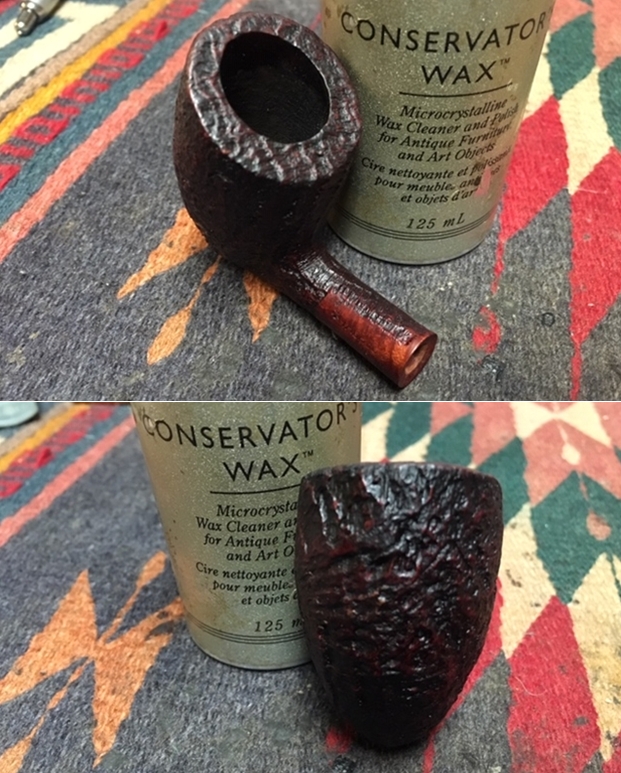
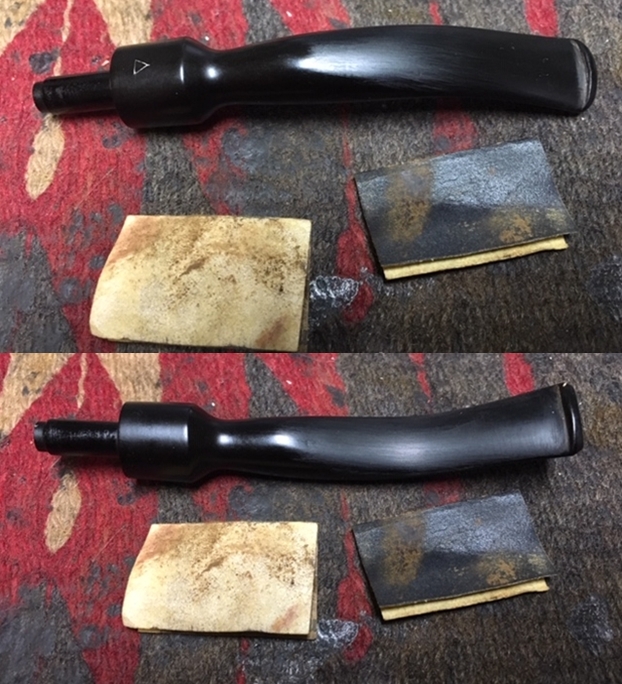
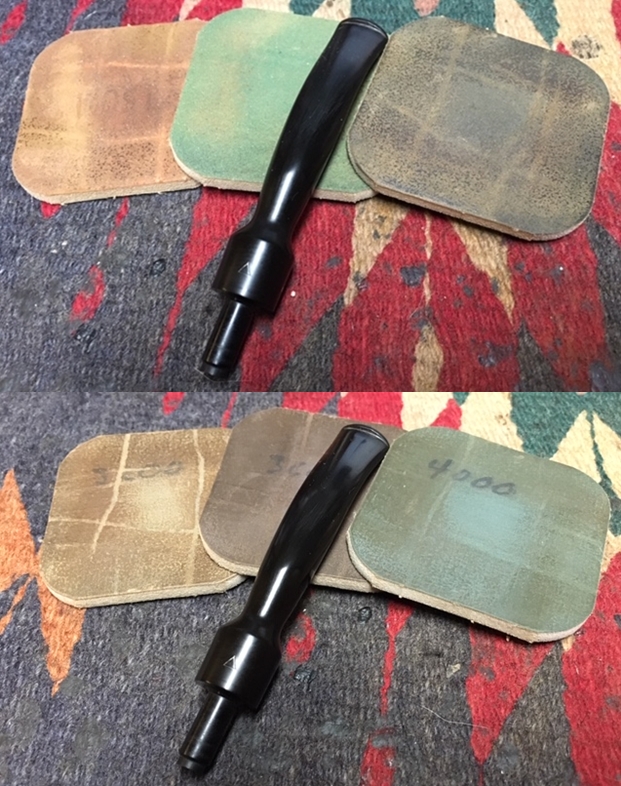
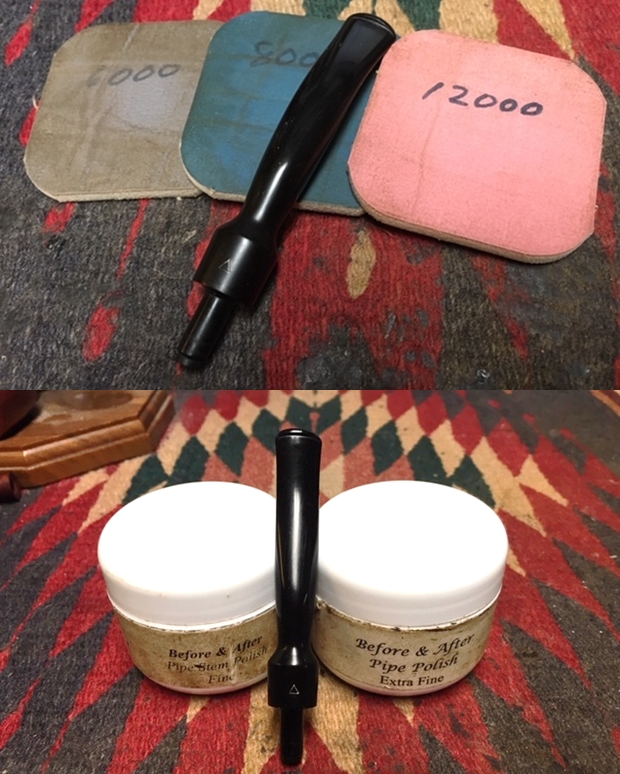
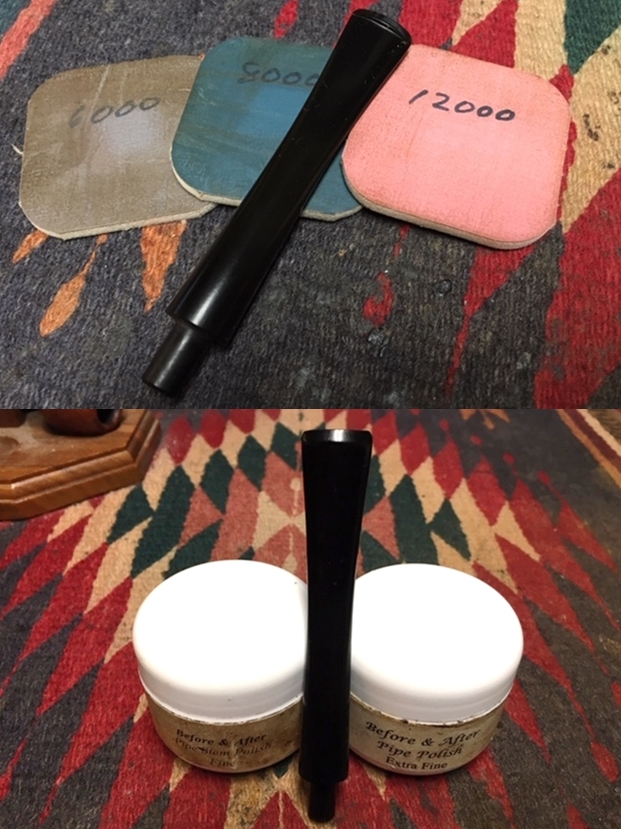
I started the process of the restoration by cleaning out the grooves in the plateau with a brass bristle tire brush. Once I finished I scrubbed the bowl with a tooth brush and undiluted Murphy’s Oil Soap. I rinsed the bowl under running water to wash off the soap and the grime that the tooth brush had loosened. I reamed the bowl with a PipNet pipe reamer and followed up with a Savinelli Fitsall pipe knife to remove the remnants of cake. I sanded the inside of the walls with a dowel wrapped with 220 grit sandpaper. I worked some Before & After Restoration Balm into the surface of the briar and the plateau with my fingertips and a horsehair shoe brush to clean, enliven and protect it. I let the balm sit for a little while and then buffed with a cotton cloth to raise the shine. I buffed the rim top with a shoe brush to make sure that the nooks and crannies had the conditioner deep in them. The following photos show the bowl at this point in the restoration process. The bowl and the rim top look very good with rich contrasting stains. I scraped the mortise with a dental spatula to remove the hardened tars and oils on the walls. I then scrubbed out the mortise and the airway in the shank and the stem with alcohol, cotton swabs and pipe cleaners. With the bowl finished I set it aside and turned my attention to the stem. I filled in the deep tooth marks and dents on the both the top and underside of the stem and on the edges of the button on both sides with clear super glue. When the repairs had cured I used a needle file to flatten the repaired spots in preparation for sanding. I sanded the stem surface with 220 grit sandpaper to smooth out the repairs the tooth marks on the surface of the button. I am happy with the stem surface once that was done. I started the polishing of the surface with 400 grit wet dry sandpaper.I polished the stem with micromesh sanding pads – wet sanding it with 1500-2400 grit pads and dry sanding it with 3200-12000 grit pads. I wiped the stem down with a damp cloth after each pad. I further polished it with Before & After Pipe Polish – both Fine and Extra Fine. I wiped it down with a coat of Obsidian Oil and set it aside to dry. With both parts of the pipe finished, I polished the bowl and the stem with Blue Diamond polish on the buffing wheel. I gave the bowl multiple coats of Conservator’s Wax and the stem multiple coats of carnauba wax. I buffed the pipe with a clean buffing pad to raise the shine. I hand buffed it with a microfiber cloth to deepen the shine. The pipe polished up pretty nicely. The sandblast finish and the grain came alive with the buffing. The rich contrasting colour finish on the briar works well with the polished black vulcanite stem. The finished pipe is a beauty and feels great in the hand. Have a look at it with the photos below. The dimensions are Length: 6 inches, Height: 2 1/2 inches, Outside diameter of the bowl: 2 inches, Chamber diameter: 7/8 of an inch. This one will be going back to Alex to add to his rack of Malaga pipes that are in his collection. Thanks for walking through the restoration with me on this uniquely carved Malaga Hand Made Freehand Sitter.

Getting Rid of a Foul Smell in a fourth pipe – a Schulte’s Canadian


Blog by Steve Laug

This is the last of the foursome of pipes that I have from a box of some 25 pipes that I am working through for a friend here in Vancouver. This last of the four came to me in a sour, stinky condition. With this one I am finishing the last of them. Alex had smoked them once or twice each and found that as he smoked them each became fouler. From my experience this happens when a pipe has not been thoroughly cleaned in the process of restoration. Sometimes even if it has been cleaned, the first few smokes draw out a foul taste and in this case an odor that made me put the four pipes in a zip lock bad to keep the odor contained. They really stunk! On Sunday evening I decided to give the foursome a cotton ball and alcohol treatment to draw out the oils and tars in the briar. I pushed cotton balls into the bowl and a folded pipe cleaner in the shank and used an ear syringe to fill the bowl with isopropyl alcohol. I set the pipes aside to let the alcohol do its work overnight. I know many of you use kosher salt and alcohol and that certainly is your choice. For me however the cotton balls work just as effectively in providing a medium for the foul juices drawn out of a pipe to be deposited. They are also easier to clean up and they do not leave residual salts in the briar. In the morning I took a photo of the finished work. You can see the effectiveness of the treatment.I took the cotton out of the bowls of the pipes and wiped the bowl down with pipe cleaners and cotton swabs to dry them out. The last pipe I decided to work on is the beautifully grained Canadian, the first pipe on the right in the photo above. It is stamped on the topside of the shank SCHULTE’S and on the underside of the shank it is stamped BCER. I know something about Howard Schulte who is a pipe repairman in Florida but could not remember much about the brand. It was another pipe that the seller said was clean but after several smokes Alex deemed it unsmokable. It was now up to me to figure out what was going on.
I examined the pipe when I took out the cotton balls and alcohol and I learned a few things about it that would need to be addressed. The rim top and inner and outer edges of the rim were in excellent condition and would not require a lot of work. The finish was spotty but the pipe had some beautiful grain. The biggest issue was that there was a crack on the heel of the bowl where it looked like the pipe had been dropped. Fortunately it did not go all the way into the interior of the bowl so it would be a pretty straightforward repair. The bowl was the cleanest of the lot with a very light cake inside that could easily be reamed out. The stem was lightly oxidized near the stem/shank junction but it was clean and was free of tooth marks or chatter. I wondered what the airway was like but that is an easy clean up. I took some photos of the pipe at this point. I took a close up photo of the bowl and rim to capture the condition of the rim top and light cake in the bowl. The rim top was in excellent condition and free of damage to the inner and outer edges. The cotton ball alcohol treatment had rid the pipe of the rank smell. The stem was in excellent condition with light oxidation near the shank end. At least it did not have tooth chatter or marks.I took a photo to capture the stamping on the top and underside of the shank. The first photo shows Schulte’s on the topside of the shank. The second photo shows the stamping on the underside and reads BCER. It is clear and readable.The pipe has some amazing grain! BUT…. Here is the real issue after the stench of the bowl and shank.There was a crack running across the heel of the bowl. It looked a lot worse than it actually was fortunately. This kind of crack generally comes when a bowl is dropped. In this case it did not go deep in the briar. Upon examination with a light there was no sign of it in the interior of the bowl. I probed the crack with a sharp pick and it did not go too deep in the briar.I needed to refresh my memory about brand so I turned to Pipephil’s site and did not find anything. On Pipedia I was more successful. The article had a series of comments from former customers that gave a sense of the shop and the pipes (https://pipedia.org/wiki/). I quote in part from that article.

Max Schulte – the name is sometimes misspelled “Shulte” – operated a pipe & tobacco shop in Newark and later in Maplewood, NJ. A customer remembers:

“My first pipes and tobaccos came from Max’s shop in Maplewood (I think it was on Bloomfield Avenue near Hy’s Cheesecake) back around 1965. The smell on entering either of these stores was sublime. I remember him well standing at the polishing wheel just off the counter, wearing a long workman’s apron, working on one of his characteristic classic shapes. The wall behind his tobacco counter was filled with rubber clips holding these as well as Savinellis, Sasienis, and Stanwells. I think he was actually on the front edge of the Danish trend. Max could polish a pipe in five minutes & have it come out looking new. He also blended an Oriental/Balkan blend (I think) called “Maritza” that was the finest of its kind (that I ever encountered) in those days. Max was always willing to share his extensive knowledge of pipes and tobaccos with any customer, even a young know-nothing like me, and seemed genuinely glad of the company. BTW, the going price for a half-pound of Maritza in those days was about seven dollars. It was worth every single cent.”

Now that the stink was gone once again I did not even think of cleaning the shank and airway I just immediately went to the most irritating part of this pipe – crack on the heel of the bowl. I used a microdrill to drill small pin holes at the end of each of the cracks. I did the drilling under a bright light so I could see the extent of the damage and make sure put a small hole at the end of each line of the crack. The large crack had a small crack branching of each end. I put a pin hole at the end of the main crack and one on the end of each small branching crack. I used a sharp point to trace the crack and give me some surface to fill with the repair of briar dust and super glue. The first photo shows the groove I carved. I filled in the groove and crack (along with the pin holes) with super glue then used a dental spatula to put briar dust on top of the glue and press it into the groove.Once the repair cured I sanded it smooth with a folded piece of 220 grit sandpaper to blend it into the surface of the surround briar. The photos below show the repaired scar on the heel. I sanded it further with 400 grit wet dry sandpaper to polish out the scratches. I polished the repaired heel and the rest of the bowl with micromesh sanding pads – wet sanding with 1500-2400 grit pads and dry sanding with 3200-12000 grit pads. I used the wet sanding on the first three pads to give me the traction to remove the scratches in the briar and the dry sanding to polish the briar. I wiped the bowl down after each pad with a damp cloth. It was beginning to look really good. The scar on the bottom of the bowl was very obvious so I would probably need to stain the bowl to blend it into the finish but the polishing would make that clear for me. The finish was looking pretty good but I knew that I would need to do more to blend the repair into the rest of the bowl. In preparation for staining the bowl I decided to wipe it down with isopropyl alcohol to remove the uneven finish. This way when I put a stain coat on at least the undercoat will be even. I looked through my Feibing’s stains to find one that would help to hide the repair but also let the grain shine through. I have found that the tan stain brings out the reds in the briar and once polished allow the grain to shine through. I stained it with the tan stain, flamed it and repeated the process until the coverage was even. I set the pipe aside for the night to let the stain cure. In the morning I wiped it down with alcohol on cotton pads to remove the heavy top coat and begin the process of unveiling the grain. I was also anxious to see how the repair scar looked on the heel of the bowl. I was pleased with how it blended in. It was not invisible but it did not stick out either. I buffed the bowl on the wheel with Blue Diamond to polish the new stain and get a feel for what the grain and the scar would look like. I was pretty happy with the results. I took it back to the worktable and worked some Before & After Restoration Balm into the bowl and shank with my fingertips to clean, enliven and protect it. I let the balm sit for a little while and then buffed with a cotton cloth to raise the shine. The following photos show the bowl at this point in the restoration process. Once again it was at this point that I realized that I had not reamed the bowl or done any cleaning of the internals after the cotton ball and alcohol treatment. I had been so intent on cleaning up the damaged rim that I totally skipped my normal pattern of work. So I went back to ream the bowl with a Savinelli Fitsall Pipe Knife. I was surprised at how clean it was. There was no carbon on the walls and what I had seen as a light cake was not. I turned then to clean out the internals. I cleaned out the airway in the shank and stem with cotton swabs, pipe cleaners and isopropyl alcohol. I cleaned out the mortise in the shank with cotton swabs and alcohol until the mortise walls were clean and looked bare. The pipe smelled clean and fresh.The stem on this Schulte’s was flawless. There were no tooth marks and no chatter. There was some oxidation near where the stem sat against the shank. I polished it with micromesh sanding pads – wet sanding with 1500-2400 grit pads and dry sanding with 3200-12000 grit pads. I wiped it down with Obsidian Oil after each pad. I polished it further with Before & After Pipe Stem Polish – both Fine and Extra Fine. I gave it one more final coat of Obsidian Oil to protect and deepen the shine. I put the stem back on the bowl and polished the pipe with Blue Diamond polish on the buffing wheel. I gave the bowl and the stem multiple coats of carnauba wax. I buffed the pipe with a clean buffing pad to raise the shine. I hand buffed it with a microfiber cloth to deepen the shine. The pipe polished up pretty nicely. The grain came alive with the buffing. The rich brown finish on the briar works well with the polished black vulcanite stem. The finished pipe is a beauty and feels great in the hand. Have a look at it with the photos below. The dimensions are Length: 6 inches, Height: 2 inches, Outside diameter of the bowl: 1 3/8 inches, Chamber diameter: 3/4 of an inch. This one will be going back to Alex to join the other three foul pipes that I had given back to him. Thanks for walking through the restoration on this now great looking Schulte’s Canadian. The repaired crack on the heel came out well and is blended into the darker colour of the pipe. It is really a beauty. I think Alex will enjoy it and he should get a better smoke from it now as that is ultimately what is most important to me. Aesthetics is important but if it does not smoke well it fails for me.

Getting Rid of a Foul Smell in a Tobaccobowl Canadian


Blog by Steve Laug

I have a box of some 25 pipes that I am working through for a friend here in Vancouver. The next batch I am working on came to me in a sour, stinky condition. Alex had smoked them and found that as he smoked them each one became fouler. From my experience this happens when a pipe has not been thoroughly cleaned in the process of restoration. Sometimes even if it has the first few smokes draw out a foul taste and in this case an odor that made me put the four pipes in a zip lock bad to keep the odor contained. They really stunk! On Sunday evening I decided to give the foursome a cotton ball and alcohol treatment to draw out the oils and tars in the briar. I pushed cotton balls into the bowl and a folded pipe cleaner in the shank and used an ear syringe to fill the bowl with isopropyl alcohol. I set the pipes aside to let the alcohol do its work overnight. I know many of you use kosher salt and alcohol and that certainly is your choice. For me however the cotton balls work just as effectively in providing a medium for the foul juices drawn out of a pipe to be deposited. They are also easier to clean up and they do not leave residual salts in the briar. In the morning I took a photo of the finished work. You can see the effectiveness of the treatment.I took the cotton out of the bowls of the pipes and wiped the bowl down with pipe cleaners and cotton swabs to dry them out. The first pipe I decided to work on is the Canadian on the far right of the photo above. It is stamped on the top of the shank TOBACCOBOWL which I am assuming is a pipe shop. The underside of the shank is stamped Imported Briar which tells me that the pipe is American made. There are no identifying shape numbers of other stamps on the pipe so that is the extent of my information. Alex had picked it up eBay and was drawn to the grain and the shape which were very nice. It was purported to be clean by the seller but after his first smoke Alex deemed it unsmokable. It was now up to me to figure out what was going on. I examined the pipe when I took out the cotton balls and alcohol and I learned a few things about it that would need to be addressed. The outside of the bowl was oily and dirty – a thin film of oils was all over the bowl surface and had darkened the rim and the right side of the bowl. The rim top had some burn damage and some lava on the inward beveled top. It was messy. The stem, though it was said to be clean, had a lot of junk in the slot at the button. The airway entered the bowl toward the right side rather than the center and the shank was black with tars and oils. The bowl had a light cake that was oily to touch and would need to be reamed out. I took some photos of the pipe at this point. I took a close up photo of the bowl and rim to capture the damage to the rim top and light and the lava on the right side. The bowl had a malformed cake that needed to be cut back. It needed some more work to clean it up but at least the cotton ball alcohol treatment had rid the pipe of the rank smell. The stem itself was an interesting mess. It had been shinned and polished but there was still some light tooth marks and chatter on the top and underside just ahead of the button. I took a photo to capture the stamping on the top and underside of the shank. The first photo shows TOBACCOBOWL stamping as noted above. The photo is slightly out of focus but it was hard to capture the stamping. On the underside it reads Imported Briar. The stamping on this pipe is readable. I started my work on the pipe by dealing with the damage to the beveled rim top. Because of the bevel I could not use a topping board so I had to work on the damage with a folded piece of 220 grit sandpaper to remove the damage and smooth out the rim top. I had to be careful not to damage the rim top and make it uneven but I wanted to get it back to bare briar so I could polish it and restain it.I polished the rim top that I had sanded and the rest of the bowl with micromesh sanding pads. I wet sanded with 1500-2400 grit pads and dry sanded it with 3200-12000 grit pads. I wiped the rim and bowl down after each pad with a damp cloth to remove the grime and sanding dust. Each successive grit of micromesh removed more of the darkening and started bringing the grain to the surface. The rim top looked considerably better but it was slightly lighter in colour than the rest of the briar so I stained it with an Oak coloured stain pen to match the colour of the bowl and shank.Once the stain was dry I worked some Before & After Restoration Balm into the rim top and the rest of the bowl and shank with my fingertips to clean, enliven and protect it. I let the balm sit for a little while and then buffed with a cotton cloth to raise the shine. The following photos show the bowl at this point in the restoration process. The bowl and the rim top look really good and the darkening is gone. The finish looks very good with the rich oil finish on the bowl and rim. I am very happy with the results. With the externals cleaned and well on the way to being finished I turned my attention to the internals. I reamed the bowl with a PipNet reamer to get rid of the cake and cleaned up the reaming with a Savinelli Fitsall Pipe Knife. I sanded the inside of the bowl with a piece of dowel wrapped with 220 grit sandpaper to remove all remnants of the cake. When I was finished the bowl walls were smooth and clean. I cleaned out the airway in the shank and stem with cotton swabs, pipe cleaners and isopropyl alcohol. I cleaned out the mortise in the shank with cotton swabs and alcohol until the mortise walls were clean and looked bare. At this point in the process the stink was gone.With the bowl finished I set it aside and turned my attention to the stem. I polished the stem with micromesh sanding pads – wet sanding it with 1500-2400 grit pads and dry sanding it with 3200-12000 grit pads. I wiped the stem down with a damp cloth after each pad. The micromesh pads took care of the light tooth chatter and light tooth marks. I further polished it with Before & After Pipe Polish – both Fine and Extra Fine. I wiped it down with a coat of Obsidian Oil and set it aside to dry. Now with both parts of the pipe finished, I polished the bowl and the stem with Blue Diamond polish on the buffing wheel. I gave the bowl and the stem multiple coats of carnauba wax. I buffed the pipe with a clean buffing pad to raise the shine. I hand buffed it with a microfiber cloth to deepen the shine. The pipe polished up pretty nicely. The grain came alive with the buffing. The rich brown finish on the briar works well with the polished black vulcanite stem. The finished pipe is a beauty and feels great in the hand. Have a look at it with the photos below. The dimensions are Length: 5 3/4 inches, Height: 1 ¾ inches, Outside diameter of the bowl: 1 1/4 inches, Chamber diameter: 3/4 of an inch. This one will be going back to Alex with the rest of his pipes that I am working on. Thanks for walking through the restoration on this interesting TOBACCOBOWL Canadian.
 

RESTORING MY GRANDFATHER’S PIPE; “THE DOODLER”


Blog by Paresh Deshpande

The early Transition Era Barling #2639 that was recently restored was a breeze to work on and finished in real quick time, including the write up. The next pipe now on my work table has a lot of similarities to the Barling #2639; it is cleaned and spruced up by Abha, comes from my inheritance of pipes, has no serious issues to address (apparently) and in this instance too, she has not taken pictures before she commenced her cleaning regimen!!

“The Doodler” pipe on my work table is definitely not a looker by any stretch of imagination!!!! It is a simple straightforward billiard with a vulcanite saddle stem. What is unique though, is its design contribution in the ever progressing quest in the pipe world for a cool smoke and the man behind its design and development. The characteristic features of this pipe are a Custom-Bilt like worm rustications on the heel and shank, even and equally spaced out drilled holes and vertical slats which can be seen through the three rings of briar. From the design itself, it is apparent that all these features that have been incorporated in construction is with one and only purpose and that is to increase the dissipation of heat from the chamber while providing a nice cool smoke. The only stamping seen on this pipe is “THE DOODLER” in fancy block letters over “IMPORTED BRIAR”, on the right side of the shank. The saddle straight vulcanite stem is devoid of any logo.While restoring one of the 5 (or 6) Custom-Bilt from my inherited pipes, I had read about the legendary pipe maker from America, Mr. Tracy Mincer and his second innings after Custom-Bilt, The Doodler!!! To refresh my memory, I revisited rebornpipes.com and pipedia.org. These sites have all the information that one is looking for on “THE DOODLER”. Here are the links from these sites; https://rebornpipes.com/2013/05/22/a-unique-piece-of-pipe-design-history-doodlers-by-tracy-mincer/

https://pipedia.org/wiki/The_Doodler

From both the above articles, it is amply evident that the pipe that is on my work table is from the 1953 to 1960s era and is an integral part of history in mankind’s eternal quest for a cool smoke!!!!

INITIAL VISUAL INSPECTION
This pipe is another that Abha, my wife had sent me after she had reamed the cake back to the bare briar and cleaned the stummel exterior and rim top surface with Murphy’s oil soap. She had also cleaned out all the nooks and crevices resulting from the design of the pipe. She followed it up with cleaning the mortise and the shank using regular and hard bristled pipe cleaners dipped in isopropyl alcohol. The cleaned up pipe on my work table now, can be seen in the following pictures. It really feels nice to work on a clean pipe; I must admit and cannot help but thank her for doing all the dirty work. Unfortunately, she did not click any pictures of the condition of the pipe before she worked her magic on them. When I inquired about the condition before she had cleaned it, her one line reply was “surprisingly different from his (grandfather’s) other pipes!!!” For those who have been reading my previous write ups would recollect that my grandfather never really believed in cleaning his pipes, he would rather buy new ones when the old pipes clogged up and became unsmokable. However, in this case, there was a very thin layer of cake and the stem was in good condition. From the present condition of the pipe, there are only two issues that I would need to address on the stummel; a heat fissure on the wall of the chamber and the heel has thinned out (or so it appears to me). To err on the positive, I intend to coat the chamber wall and heel with a mix of activated charcoal and yogurt. This coat will not only protect the chamber wall from direct heat, but will also aid in faster build up of the cake.

The vulcanite stem is surprisingly clean with only a slight damage to the lip on the upper surface. This issue should not be a major headache to address. The lip edge on both sides is distinct but will have to be sharpened. Also, the upper surface of the slot has thinned out. Why, I fail to comprehend!! The quality of vulcanite is good. The fit of the tenon in to the mortise is slightly loose. This is usually observed in pipes where the mortise wall has dried out due to non usage for a long time. THE PROCESS
Since in this project, the stem has the most number of issues to be addressed, it is where I start the restoration. I wiped the stem surface clean with a cotton pad dipped in alcohol to remove all the dust and dirt from the surface. To address the issue of thinned out upper surface of the slot, I layered the upper lip edge with a mix of activated charcoal and clear CA superglue and I set it aside to cure overnight. I applied a layer of this mix to the lower lip edge to ensure an even thickness on both surfaces.Once the filling of charcoal and CA superglue had cured and I was satisfied with the thickness, using a needle file, I sand the layers of the fill to match the surface of the stem. For a better blending, I further sand the entire stem with 220 followed by 600 and 800 grit sandpaper. This helps to reduce the sanding marks left behind by the more abrasive 220 grit paper. To bring a deep shine to the vulcanite stem, I went through the complete set of micromesh pads, wet sanding with 1500 to 2400 grit pads and dry sanding with 3200 to 12000 grit pads. I wiped the stem with alcohol after each pad and rubbed it down with Extra Virgin Olive oil. The internals of the stem was cleaned out using alcohol and pipe cleaners. The finished stem is shown below. I rub a small quantity of “Before and After Restoration Balm” in to briar and let it rest for a few minutes. The balm almost immediately works its magic and the briar now has a nice vibrant appearance. I further buff it with a horse hair shoe brush. To finish the restoration, I re-attach the stem with the stummel. I mounted a cotton cloth buffing wheel to the Dremel (actually it is not the brand machine, but a local machine which is similar).  I set the speed at about half of the full power and applied White Diamond compound to the entire pipe. I wiped/ buffed the pipe with a soft cotton cloth to clear it of any leftover compound dust. I then mounted another cotton cloth wheel on to the polishing machine and applied several coats of carnauba wax. I finished the restoration by giving the entire pipe a rigorous hand buffing using a microfiber cloth to raise the shine further.The completed pipe looks fresh, vibrant and ready for its next innings with me. This piece of briar will find a place of pride in my collection, if not as part of rotation, as a part of history of pipes. If only it could tell me stories it had witnessed and why did my grandfather not smoke it as heavily as his other pipes?!!!! Thank you for having the patience to reach this far while reading the write up. PS:  The only issue that needed to be addressed was that of the thin line of heat fissure. I mixed activated charcoal and yogurt to a consistency where the mix is thin enough to spread evenly but thick to the point that it is not runny at all. Using my fabricated bamboo frond, I apply an even coat all along the chamber wall and drop a thick blob of the mix over the heel. I tap the foot of the stummel with my fingers to ensure an even spread of the mix over the heel and expel air bubbles.


Restoring the 2nd of Jennifer’s Dad’s Pipes – A 1960 Dunhill Shell Briar FE Prince


Blog by Steve Laug

The next pipe on the worktable is another one from the estate of George Rex Leghorn. I received an email from his daughter Jennifer who is a little older than my 64+ years about whether I would be interested in his estate. My brother Jeff and I have been picking up a few estates here and there, so I was interested. Here is the catch – she did not want to sell them to me but to give them to me to clean up, restore and resell. The only requirement she had was that we give a portion of the sales of the pipes to a charity serving women and children. We talked about the organization I work for that deals with trafficking and sexual exploitation of women and their children and she decided that would be a great way to carry on the charitable aspect of her Dad’s character. With some great conversation back and forth she sent the pipes to Jeff and he started the cleanup process on them. Once he had finished cleaning them all he sent them to me to do my work on them.

The second pipe I chose to work on from the lot was a craggy looking Dunhill Shell Briar Prince. It had a beautiful sandblast on the bowl sides and shank. It had the Dunhill Shell Briar rich brown stain. The stem was badly oxidized with tooth marks and chatter on the top and underside near the button. The transition to the button was worn to almost an angle. There was a thick cake in the bowl and it was dirty and tired looking. It had been sitting in boxes for a lot of years and it was time to move ahead with the restoration. Jennifer took photos of the pipes she was sending. I have included the two she included from this pipe.When the box arrived from Jennifer Jeff opened it and took photos of each pipe before he started his cleanup work on them. This rugged looking Dunhill Prince appeared to be in great condition underneath the grime and oxidation on the bowl and stem. The finish looked intact under the grime. The bowl had a thick cake that had hardened with time. The lava overflow on the rim could very well have protected the rim from damage. We won’t know what is under it until Jeff had cleaned it off. The stem was worn looking with a lot of deep oxidation and some tooth chatter and bite marks on both sides at the button. As mentioned above the button was worn. The danger of working on so many estates is the overwhelming desire to add yet another to my own collection. We shall see. Jeff took a photo of the bowl and rim top to show the cake in the bowl and the lava build up on the edges of the bowl. It was thick and hard but hopefully it had protected the rim and edges from damage. You can also see the grime down the sides of the bowl.The sandblast grain around the bowl sides and heel was quite beautiful. Lots of interesting patterns in the blast that would clean up very nicely. It was a beautiful pipe. Jeff took photos of the stamping on the underside of the shank. The stamping was clear and readable. It read FE on the heel of the bowl which is the marking for the Prince shape. That was followed by Dunhill over Shell Briar. Next to that it read Made in England with a superscript 0 after the D making this a 1960 pipe. The final stamping was a circle 4 followed by an S which gave the size of the pipe and the fact that it is a Shell Briar.Jeff took photos of the stem – first the White Spot on the top side and then the top and underside of the stem at the button. You can see the tooth damage to the stem surface and the wear to the edge and top of the button. I am once again including the tribute that Jennifer consented to her Dad for the blog. She is also sending along some photos and an article that her Dad wrote for Jeff and me to be able to get a feel for him. When it arrives I will post the photo with the other blogs on his pipes and will add it to this one as well. In the meantime I asked her to also send me an email with a brief tribute that I can use until then. Here is her email to me.

Steve, I want to thank you again for accepting my dad’s pipes.  They were so much a part of my dad’s life that I could not simply discard them. But as his daughter, I was not about to take up smoking them either. *laughing* I think my dad would like knowing that they will bring pleasure to others.  I know that I do.

I’m not sure what to say about his pipes.   I always remember Daddy smoking pipes and cigars.

First a bit about my dad. Though my father, George Rex Leghorn, was American (growing up in Alaska), he managed to join the Canadian Army at the beginning of WWII, but in doing so lost his American citizenship.  He was fortunate to meet a Canadian recruiting officer who told him the alphabet began with “A” and ended with “Zed” not “Zee”, and also told him to say that he was born in a specific town that had all its records destroyed in a fire.  When the US joined the war my dad, and thousands of other Americans who had made the same choice*(see the link below for the article), were given the opportunity to transfer to the US military, and regain their citizenship.

After WWII, my dad, earned his degree at the University of California Berkeley and became a metallurgist. There is even a bit about him on the internet.

He loved taking the family out for a drive, and he smoked his cigars on those trips. (As a child, those were troubling times for my stomach.)

I most remember my father relaxing in his favorite chair with a science fiction book in one hand and a pipe in the other… Sir Walter Raleigh being his favorite tobacco… and the pipes themselves remind me of him in that contented way.  If I interrupted his repose, he’d look up, with a smile on his face, to answer me.

It seemed he smoked his Briarwood pipes the most, though he had others.  At the time, it was only the Briarwood I knew by name because of its distinctive rough shaped bowl.  And it was the Anderson Free Hand Burl Briar, made in Israel, which I chose for his birthday one year, because I thought he might like that particular texture in his hand.

At least two of his pipes, he inherited from his son-in-law, Joe Marino, a retired medical laboratory researcher (my sister Lesley’s late husband)… the long stemmed Jarl (made in Denmark), and the large, white-bowled, Sherlock Holmes style pipe.  I believe Joe had others that went to my dad, but Lesley was only sure about those two.

The Buescher, corncob pipe my older sister Lesley bought for Daddy while on one of her travels around the States.

A note on the spelling of my sister’s name…

My dad met my mother, Regina, during WWII and they married in Omagh, Ireland.  My mother was English and in the military herself.  The English spelling of Lesley is feminine, and Leslie masculine, in the UK… just the opposite of here in the United States.  I guess my mom won out when it came to the spelling of the name.

I’ll send you photos of my dad soon, along with his WWII experience story.

Jennifer

*https://www.thestar.com/news/world/2013/10/22/the_americans_who_died_for_canada_in_wwii.html

Once again Jeff cleaned the pipe with his usual penchant for thoroughness that I really appreciate. He reamed it with a PipNet pipe reamer and cleaned up the reaming with a Savinelli Fitsall Pipe Knife. He scrubbed out the internals with alcohol, pipe cleaners and cotton swabs until the pipe was clean. He scrubbed the exterior of the bowl with Murphy’s Oil Soap and a tooth brush to remove the grime and grit on the briar and the lava on the rim top. He soaked the stem in Before & After Deoxidizer to remove the oxidation on the rubber. When the pipe arrived here in Vancouver for the second stop of its restoration tour it looked very good. I took photos before I started my part of the work. I took some close up photos of the rim top and stem surface. I wanted to show what an amazing job Jeff did in the cleanup of the rim top and the great condition it was in under the thick lava coat. I also took close up photos of the stem to show the tooth marks and chatter in front of the button on both sides. I also took a photo of the stamping on the pipe – to capture the stamp in one photo. It read as noted above.I worked some Before & After Restoration Balm into the briar with my fingertips to clean, enliven and protect it. I worked it deep into the sandblast finish with a horsehair shoe brush. I find that the balm really makes the briar come alive again. The contrasts in the layers of the blast really stand out. I let the balm sit for a little while and then buffed with a cotton cloth to raise the shine. The pipe really looks good at this point. I am very happy with the results. I set the bowl aside at this point and turned back to address the damage on the stem surface. I used a needle file to redefine the sharp edge of the button and in doing so was able to remove much of the tooth damage. I followed that by sanding the stem with 220 grit sandpaper to blend the file marks and tooth chatter into surface of the rubber and also to remove the oxidation that remained after Jeff’s cleanup. I polished it with 400 grit sandpaper to smooth out some of the scratching that was left behind by the earlier sanding. I polished the stem with micromesh sanding pads – wet sanding it with 1500-2400 grit pads and dry sanding it with 3200-12000 grit pads. I wiped the stem down with Obsidian Oil after each pad. I polished it with Before & After Pipe Stem Polish – both Fine and Extra Fine polishes. I wiped it down with a final coat of Obsidian Oil and set it aside to dry. I put the stem back on the bowl and polished the bowl and stem with Blue Diamond polish on the buffing wheel. I gave the bowl multiple coats of Conservator’s Wax and the stem multiple coats of carnauba wax. I buffed the pipe with a clean buffing pad to raise the shine. I hand buffed it with a microfiber cloth to deepen the shine. The Shell Briar sandblast finish on this briar is absolutely beautiful and the shine on it makes the variations of colour really pop. The pipe polished up really well. The wax and the contrasting stain on the bowl made the grain just pop on the briar. The polished black vulcanite seemed to truly come alive with the buffing. The pipe is perfect in my hand and when it warms with smoking I think it will be about perfect. Have a look at it with the photos below. The dimensions are Length: 6 inches, Height: 1 3/8 inches, Outside diameter of the bowl: 1 1/4 inches, Chamber diameter: ¾ of an inch. This is one that will likely go on the rebornpipes online store shortly. If you want to carry on the pipe trust of George Leghorn let me know. Thank you Jennifer for trusting us with his pipes. Thanks to each of you who are reading this blog. Remember we are not pipe owners, we are pipemen who hold our pipes in trust until they pass on into the trust of the next pipeman or woman.

A Simple Restoration of an Early Transition Era Barling 2639


Blog by Paresh Deshpande

Having worked on a few difficult projects from my Mumbai Bonanza, involving major stem reconstruction and addressing flaws in the stummel (read refreshing fills!!) taking a lot of time and heartburn and efforts which had left me drained, I decided to work on something simple and relatively quick refurbishing of pipes from my inherited collection.

The Barling pipe on my work table is an exquisite bent billiards with beautiful and very tightly packed bird’s eye grains on either side of the bowl and shank, extending over to more than half of the front of the stummel. Equally tightly packed cross grains are seen on the front left and back of the bowl and also on the upper and bottom surface of the shank. It is stamped on the left side of the shank as “BARLING” in script hand over the numeral “2639” over “LONDON ENGLAND”. There is no other stamping seen on the stummel. The double bore vulcanite saddle stem bears the trademark Barling stamped in cross on the upper surface of the saddle.Even though there are quite a few Barlings in my grandfather’s collection, this beauty is the second of the Barling’s that I shall be restoring. During my reading while working on my first Barling, I had read about this brand, its passage through times and pointers towards their dating. To refresh my memory about the brand, the lines offered by the maker and attempt to date this particular pipe, I visited Pipedia which has a wealth of neatly cataloged heading-wise information on Barling’s pipes. From the stamping seen on this pipe and correlating it with my information, it was immediately apparent that this one is definitely not a Family Era pipe, but a later era pipe. Luckily, on the same page, towards the end, there is a link to 1962 Barling catalog, courtesy Yuriy Novikov. This catalog, on page 7 shows the pipe which is on my work table, here is the link to this catalog: https://pipedia.org/images/d/d9/BARLING_CATALOG_1962.pdf

From the above information, it is conclusive that this piece is a size 2, flat bent billiard from the Transition period/ Corporate era and was made during 1962. The minimalist stamping and the double bore stem indicate that this pipe was intended to be sold in the local markets.

INITIAL VISUAL INSPECTION
This pipe was one of the pipes that Abha, my wife had sent me after she had reamed out complete cake back to the bare briar and cleaned the stummel exterior and rim top surface with Murphy’s oil soap. She had also cleaned out the mortise and the shank using regular and hard bristled pipe cleaners dipped in isopropyl alcohol. The cleaned up pipe on my work table now, can be seen in the following pictures. It really feels nice to work on a clean pipe; I must admit and cannot help but thank her for doing all the dirty work and saving me time while sharing my hobby. Unfortunately, she did not click any pictures of the condition of the pipe before she worked her magic on them. When I inquired about the condition before she had cleaned it, her one line reply was “no different from his (grandfather’s) other pipes!!!” For those who have been reading my previous write ups would recollect that my grandfather never really believed in cleaning his pipes, he would rather buy new ones when the old pipes chocked up and became unsmokable. From the present condition of the pipe, there are only two issues that I would need to address on the stummel; one is the darkened rim top surface with an uneven inner rim edge and the other is slightly deep gouges on the chamber walls. The vulcanite stem is heavily scratched and shows deep oxidation on the surface. Some heavy tooth chatter is seen on both surfaces of the stem towards the lip with few deep bite marks on the upper and lower surfaces. This issue should not be a major headache to address. The lip edge on both sides is distinct but damaged showing tooth marks. The quality of vulcanite is good.THE PROCESS
I flamed the surface of the stem with a Bic lighter to raise the tooth indentations and scratches on the stem. The heat from the flame of Bic lighter causes the vulcanite to expand and regain its natural shape, reducing the marks. I followed it up by sanding the entire stem surface with a folded piece of 220 grit sand paper to reduce the tooth chatter while removing the oxidation from the area to be filled. I wiped the stem surface clean with a cotton pad dipped in alcohol to remove all the dust and dirt from the surface. The tooth marks which were visible after the flaming and sanding were filled with a mix of activated charcoal and clear CA superglue and I set it aside to cure overnight. While the stem fill was set aside for curing, I decided to address the darkened rim top surface and the uneven inner rim edge issue observed on the stummel. I did not resort to topping straight away, but decided to try scrubbing the rim top with Murphy’s oil soap and scotch brite pad. The result of this scrubbing far exceeded my expectations. The rim top is now clean and there are no traces of rim darkening. To address the issue of an uneven inner rim edges, with a folded piece of 220 grit sand paper, I created a slight bevel to the inner edge. The rim top and inner edge issues are now pristine. The next step in the process was to bring out the shine and highlight the beautiful grain on the stummel. I had an option of using more abrasive 220 grit sandpaper followed by micromesh pad cycle and loose the patina or straight away go to the micromesh cycle. Using the more abrasive sand paper, minor dents and dings would be further addressed but I would lose out the old sheen which the briar has taken over the years.  I decided on keeping the old sheen and went straight for the micromesh cycle. I wet sand the stummel with 1500 to 2400 grit pads and follow it up by dry sanding with 3200 to 12000 grit pads. The stummel, at this stage, looks absolutely stunning with the grain popping out from every inch. I rub a small quantity of “Before and After Restoration Balm” in to briar and let it rest for a few minutes. The balm almost immediately works its magic and the briar now has a nice vibrant appearance. I further buff it with a horse hair shoe brush. Turning my attention to the stem, I first covered the stamping on the stem with whitener using a whitener pen. The filling of charcoal and CA superglue had cured and using a needle file, I sand the filling to match the surface of the stem. For a better blending, I further sanded the entire stem with 220 followed by 400, 600 and 800 grit sandpapers. This helps to reduce the sanding marks left behind by the more abrasive 220 grit paper. To bring a deep shine to the vulcanite stem, I went through the complete set of micromesh pads, wet sanding with 1500 to 2400 grit pads and dry sanding with 3200 to 12000 grit pads. I wiped the stem with alcohol after each pad and rubbed it down with Extra Virgin Olive oil. The internals of the stem was cleaned out using alcohol and pipe cleaners. The finished stem is shown below. To finish, I re-attach the stem with the stummel. I mounted a cotton cloth buffing wheel to the Dremel (actually it is not the brand machine, but a local machine which is similar).  I set the speed at about half of the full power and applied White Diamond compound to the entire pipe. I wiped/ buffed the pipe with a soft cotton cloth to clear it of any leftover compound dust. I then mounted another cotton cloth wheel on to the polishing machine and applied several coats of carnauba wax. I finished the restoration by giving the entire pipe a rigorous hand buffing using a microfiber cloth to raise the shine further. The completed pipe looks lovely, fresh and vibrant; the photographs in this case, do not do justice to the appearance of this beautiful little pipe. This beautiful piece of briar, without a single blemish to the stummel, will find a place of pride in my collection. If only it could tell me stories it had witnessed and experiences, trials and tribulations and joyous moments in my grandfather’s life journey!!!! Thank you for having the patience to reach this far while reading the write up. PS: This project was a welcome break from the previous difficult stem reconstruction and stummel restoration projects that had posed a challenging obstacle at every stage in the process. I must thank my wife, Abha, who had done all the dirty work and presented a simple and quick refurbishing project.


Refreshing a Leather Clad Classic Billiard


Blog by Dal Stanton

I acquired this Leather Wrapped Classic Billiard as part of what I call the French Lot of 50.  I landed 50 pipes which included some long-forgotten treasures dating back to before WWII as well as a plethora of pipes mounted with horn stems.  In this French Lot of 50 I discovered French pipe manufacturers that were all but forgotten within the pipe world.  My restoration of the petite EPC Majestic Bent Horn Stem Billiard which earned me my first contribution to the repository of pipe information on Pipedia with the research on the A. Pandevant & Roy Co. of Paris.

The next pipe to catch the eye of someone searching through the ‘Help Me!’ baskets in my For “Pipe Dreamers” Only! collection is a nice looking Leather Wrapped Classic Billiard shape which I’ve targeted with an arrow in the picture of the French Lot of 50.  Tina chose this pipe along with 2 others from the ‘Help Me!’ baskets to commission for special men in her life and to benefit our effort here in Bulgaria, Daughters of Bulgaria – women and girls who have been trafficked and sexually exploited not only here in Bulgaria but throughout Europe.  Tina was visiting us from Birmingham, Alabama, USA, with a group of other ladies.  This Leather Wrapped Billiard was chosen with her son, Matthew, in mind who’ll be graduating from college in May and has plans to utilize his degree in Landscape Design and Turf Management by moving to Big Sky, Montana working at the Moonlight Basin Resort. Tina said that he will be over a team that keeps the golf course in tip-top shape! I’m thinking that this Leather Wrapped Billiard will be a perfect partner for Mathew on the golf course!  A special gift from a proud mother for a special son soon to graduate.  I love it!  Here are pictures of the Leather Wrapped Billiard now on my work table. There is no nomenclature stamped on the pipe or identifying marks on the stem.  As with the most the other pipes that came with the French Lot of 50, there is a very good chance that this Leather Wrap also is French.  The practice of wrapping briar bowls with leather started in France as a creative and economically savvy way to sell sub-par bowls that were part and parcel of France’s austerity measures during WWII.  Pipedia’s article uncovers this bit of pipe history in the article devoted to Longchamp:

In 1948 Jean Cassegrain inherited a small shop near the French Theater on the Boulevard Poissonnière in Paris, called “Au Sultan”. Articles for smokers and fountain pens were offered there. Now, the absolute bulk of the pipes Cassegrain found in the inventory was from war-time production and due to the sharp restrictions on pipe production the French government had enforced in 1940, these pipes were of very poor quality and showed large fills. Strictly speaking, they were not marketable now that the French pipe industry produced pipes of pre-war standards again. In this situation Cassegrain had the probably most enlightened moment in his life: he took some of these pipes to a leather worker who clad bowls and shanks in leather. Only the rims of the bowls and the shanks’ faces remained blank.

E voila – the pipes looked pretty good now and were eye-catching enough to become an instant success in sale. Above all among the thousands of Allied soldiers who populated Paris in those days. The thing worked well, and even unexperieceid pipesters liked the covered pipes very much for they did not transmit the heat to the hand. Very soon Cassegrain had sold the old stock of pipes, and the leather-clad pipes became his only product. He began to place orders with renowned firms like Ropp or Butz-Choquin.

I love stories of innovation like the story of Jean Cassegrain and the creation of the Longchamp name which came from the name of a horse racing park near Paris.  Pipedia concludes the article with this comment:

After 1970 the interest in leather-clad pipes slowly diminished. The Longchamp pipes were offered for the last time in the 1978 catalog though previously placed orders were delivered until 1980.

The splendid success inspired many other renowned producers to offer their own lines RoppButz-ChoquinGubbelsGBD… Maybe Savinelli was the very last producing them for the label of the famous designer Etienne Aigner.

Without identifying markings, it’s not easily determined the origins of the Leather Wrapped Billiard on my worktable.  Yet, the origins of this type of pipe are French and it seems likely that this pipe shares this origin, but a manufacturer remains a mystery.  The pipe itself is in good shape and for this reason I’m calling it a refresher. The chamber barely has any cake build up, but the rim shows some discoloration and is need of a cleaning.  The condition of the leather wrapping the bowl looks great.  The stem has minor oxidation and negligible tooth chatter on the stem.  I do notice that the stem is a bit tight in the mortise.  We’ll see how this snugness progresses during the cleaning.  To begin refreshing the Leather Wrapped Classic Billiard, I use pipe cleaners dipped in isopropyl 95% to clean the stem’s airway.  I then add the stem to a soak of Before & After Deoxidizer along with other pipes in the queue.After several hours I fish out the Leather Wrap’s stem and I push another pipe cleaner through the airway wetted with isopropyl 95% to clear the Deoxidizer from the airway.  I then wipe off the oxidation that has surfaced through the soak using cotton pads wet with isopropyl 95%.  The Deoxidizer does a good job and much oxidation is removed.To begin the stem rejuvenation, I apply paraffin oil with a cotton pad and set the stem aside to dry and to absorb the mineral oil.Now, turning to the stummel, I first clean the chamber using the Pipnet Reaming kit I jump to the second smallest and work up to the largest blade head as I ream the chamber followed by using the Savinelli Fitsall tool.  After scraping the chamber walls with the Fitsall tool, I sand the chamber using 240 grade paper wrapped around a Sharpie Pen to give leverage and reach as I sand.  Finally, I wipe the chamber with a cotton pad wetted with isopropyl 95% to remove the carbon dust.  I inspect the chamber and it looks great – no cracks or heat fissures. Next, I clean the rim using undiluted Murphy’s Oil Soap and a cotton pad.  To work more directly on the lava flow I employ a brass wire brush and scrape the area carefully with a Buck pocket knife. I’m careful to keep the soap and work with the brush on the rim.  I don’t want to damage the leather wrap. I then rinse the rim with cool tap water. The general results of the cleaning are good, but there remains discoloration which I will address later.Now to the internals. Using pipe cleaners and cotton buds wetted with isopropyl 95%, I scrub the internal mortise and airway.  It doesn’t take long, and the buds are emerging lighter.  I’m thankful for a small skirmish!I start cleaning the stem by wet sanding using grade 600 paper and follow using 000 grade steel wool.I move directly to the micromesh regimen by wet sanding with pads 1500 to 2400 and dry sanding with pads 3200 to 4000 and pads 6000 to 12000. After each set of 3 pads I apply Obsidian Oil to condition the vulcanite.  The pop on this stem is nice. With the stem now waiting in the wings, I turn back to the stummel.  To address the residual dark area on the rim, I will give the stummel a very light topping.  I’m hopeful that this will erase the lion’s share of the scorching and refresh the rim.  I take out the chopping board and put 240 grade paper on it.  Keeping the inverted stummel firm and steady, I rotate the rim a few times on the paper. When it seems enough is taken off, I switch the paper to 600 grade paper and smooth out the 240 sanding.  There is just a bit of the darkening remaining after the topping.To dispatch the remainder of the scorched rim briar, I introduce a very mild bevel on the internal rim.  I first use a tightly rolled piece of 120 paper to cut the initial bevel.  I then follow with 240 then 600 grade papers in succession.  In each case, I pinch the tightly rolled piece of sanding paper between my thumb and the internal rim and rotate evenly around the circumference.  The result is exactly what I wanted – the rim is now clean.Next, to bring out the grain on the rim, I wet sand with micromesh pads 1500 to 2400 and follow by dry sanding with pads 3200 to 4000 and 6000 to 12000.  I’m anxious to see how the grain is teased out. As you can see in the picture immediately above, the lip of the upper leather encasing is packed with dust after the micromesh sanding.  I take a narrow dental spatula and clean the dust out by gently sliding the spatula under the leather lip.The next step is to reunite the stem and stummel to apply Blue Diamond compound.  As I noticed before, the tenon/mortise fit is too tight – taking too much pressure to seat the tenon.To address this, I sand down the tenon by wrapping it with a piece of 240 sanding paper and rotate the paper evenly around the tenon.  I sand and then test a few times to make sure I’m not taking off too much.  When the fit is appropriately snug and the tenon seats, I then switch to 600 grade paper to smooth the tenon.  Now it fits perfectly with a good snug fit, but not too tight.I now mount a cotton cloth buffing wheel to the Dremel, set at 40% of full power and I apply Blue Diamond compound to the rim and the stem.Next, I’ve been thinking about how to clean and condition the leather wrap encasing the stummel.  I use Weiman Leather Wipes to do the job.  I follow the directions by using the wipe that cleans and applies the preservative and then I buff the leather with a microfiber cloth.  Wow!  It’s looks great.  The leather darkened to a newer looking richness – very nice.  The pictures show before and after. Since my day is closing, I want to further the internal mortise cleaning by giving the bowl a kosher salt and alcohol bath.  I use the highest grade isopropyl 95% available here in Bulgaria.  I first create a ‘wick’ from twisting and stretching a cotton ball.  The wick serves to draw out the remnant of tars and oils.  I use a stiff wire to help push the end of the cotton wick down the mortise.  I then fill the bowl with kosher salt, set it in an egg carton and fill it with isopropyl 95% until it surfaces over the salt.  In a few minutes I top off the alcohol that has absorbed and set it aside and turn out the lights! The next morning, the salt and wick are soiled – the wick not as much which is good if it shows that the mortise is already clean.  I clean the chamber of the salt, wiping it out with paper towel and blowing through the mortise.  To make sure all is clean, I use one cotton bud wetted with alcohol and it demonstrates that the mortise is clean.  Moving on. I rejoin stem and stummel and mount another cotton cloth buffing wheel on the Dremel, maintain 40% speed and apply carnauba wax to the rim and stem.  To further condition the leather wrapping one more time, I apply a very light coat of paraffin oil and then rub it in well.  I follow by buffing the entire pipe with a microfiber cloth to bring out the shine of stem, leather stummel and the briar rim.

Perhaps, I should have done this before waxing the rim, but to add a starter for a new protective cake and for aesthetic reasons, I coat the chamber walls with a mixture of natural yogurt and activated charcoal.  When cured, the mixture provides a very durable surface providing a buffer for the fresh briar until a natural cake develops.  The new steward just needs to be careful not to scrape the chamber with a metal tool, but simply to rub the chamber with a folded pipe cleaner will be sufficient to clean after use.  I mix the activated charcoal and the natural yogurt until it thickens enough to not run – being too liquid. I then use the pipe nail to spread it on the chamber wall.  I then set the stummel aside for a few hours for the mix to cure. This Leather Wrapped Classic Billiard cleaned up well.  The leather is dark and rich looking and the butterscotch colored rim pops in contrast to the leather.  The fine, delicate grain of the rim is pleasing to the eye as the leather is to the touch.  This is Tina’s third commissioned pipe which she chose for her son who is soon to graduate from college.  She will have the first opportunity to acquire the pipe from The Pipe Steward Store.  This pipe benefits the Daughters of Bulgaria – women and girls who have been trafficked and sexually exploited.  Thanks for joining me!

The Restoration of the First of Jennifer’s Dad’s Estate Pipes – A Comoy’s Deluxe 78


Blog by Steve Laug

The next pipe on the worktable came from the estate of George Rex Leghorn. I received an email from his daughter Jennifer who is a little older than my 64+ years about whether I would be interested in his estate. My brother Jeff and I have been picking up a few estates here and there, so I was interested. Here is the catch – she did not want to sell them to me but to give them to me to clean up, restore and resell. The only requirement she had was that we give a portion of the sales of the pipes to a charity serving women and children. We talked about the organization I work for that deals with trafficking and sexual exploitation of women and their children and she decided that would be a great way to carry on the charitable aspect of her Dad’s character. With some great conversation back and forth she sent the pipes to Jeff and he started the cleanup process on them. Once he had finished cleaning them all he sent them to me to do my work on them.

The first pipe I chose to work on from the lot was a Comoy’s De Luxe 78 Military Bit Apple. It had some amazing grain on the bowl sides and shank. It had a Sterling Silver ferrule on the shank end that was oxidized and blackened. It had a badly oxidized stem with tooth marks and chatter on the top and underside near the button. There was a thick cake in the bowl and it was dirty and tired looking. It had been sitting in boxes for a lot of years and it was time to move ahead with the restoration. Jennifer took photos of the pipes she was sending. I have included the three she included from this pipe. When the box arrived from Jennifer Jeff opened it and took photos of each pipe before he started his cleanup work on them. This Comoy’s was a real beauty underneath the grime, tarnish and oxidation on the bowl and stem. The finish looked intact under the grime. The bowl had a thick cake that had hardened with time. The lava overflow on the rim could very well have protected the rim from damage. We won’t know what is under it until Jeff had cleaned it off. The silver work was tarnished but still looked classy on this old timer. The ferrule was undamaged with no dents of dings that are often found on these pipes. The stem was worn looking with a lot of deep oxidation and some tooth chatter and bite marks on both sides at the button. The overall look of the pipe made me think seriously about adding it to my own collection. Jeff took photos of the bowl and rim top to show the cake in the bowl and the lava build up on the edges of the bowl. It was thick and hard but hopefully it had protected the rim and edges from damage.The grain around the bowl sides and heel was quite beautiful. Lots of cross grain and birdseye that would clean up very nicely. It was a beautiful pipe.Jeff took photos of the stamping on both sides of the shank. The left side was stamped Comoy’s De Luxe and the right side had the Comoy’s COM stamp and shape number. The COM stamp is a circle with Made and London arching around “in” in the centre. Underneath it read England. The shape number is 78. I am not overly familiar with this line of Comoy’s and will need to do some work to get an idea of both age and value in the hierarchy of the lines.He also took photos of the stamping on the ferrule and the three circle inlay of the C on the left side of the stem. The ferrule read HC in a box over STERLING LONDON. There were no hallmarks on the silver so I could not use those to help date the pipe. The C inlay looked very good and did not show damage to any of the three circles. Jeff did not take photos of the stem at this point. It is so easy to miss some photos in the processing of pipes.Jennifer consented to write a short tribute to her Dad for the blog. She is also sending along some photos and an article that her Dad wrote for Jeff and me to be able to get a feel for him. When it arrives I will post the photo with the other blogs on his pipes and will add it to this one as well. In the meantime I asked her to also send me an email with a brief tribute that I can use until then. Here is her email to me.

Steve, I want to thank you again for accepting my dad’s pipes.  They were so much a part of my dad’s life that I could not simply discard them. But as his daughter, I was not about to take up smoking them either. *laughing* I think my dad would like knowing that they will bring pleasure to others.  I know that I do.

I’m not sure what to say about his pipes.   I always remember Daddy smoking pipes and cigars.

First a bit about my dad. Though my father, George Rex Leghorn, was American (growing up in Alaska), he managed to join the Canadian Army at the beginning of WWII, but in doing so lost his American citizenship.  He was fortunate to meet a Canadian recruiting officer who told him the alphabet began with “A” and ended with “Zed” not “Zee”, and also told him to say that he was born in a specific town that had all its records destroyed in a fire.  When the US joined the war my dad, and thousands of other Americans who had made the same choice*(see the link below for the article), were given the opportunity to transfer to the US military, and regain their citizenship.

After WWII, my dad, earned his degree at the University of California Berkeley and became a metallurgist. There is even a bit about him on the internet.

He loved taking the family out for a drive, and he smoked his cigars on those trips. (As a child, those were troubling times for my stomach.)

I most remember my father relaxing in his favorite chair with a science fiction book in one hand and a pipe in the other… Sir Walter Raleigh being his favorite tobacco… and the pipes themselves remind me of him in that contented way.  If I interrupted his repose, he’d look up, with a smile on his face, to answer me.

It seemed he smoked his Briarwood pipes the most, though he had others.  At the time, it was only the Briarwood I knew by name because of its distinctive rough shaped bowl.  And it was the Anderson Free Hand Burl Briar, made in Israel, which I chose for his birthday one year, because I thought he might like that particular texture in his hand.

At least two of his pipes, he inherited from his son-in-law, Joe Marino, a retired medical laboratory researcher (my sister Lesley’s late husband)… the long stemmed Jarl (made in Denmark), and the large, white-bowled, Sherlock Holmes style pipe.  I believe Joe had others that went to my dad, but Lesley was only sure about those two.

The Buescher, corncob pipe my older sister Lesley bought for Daddy while on one of her travels around the States.

A note on the spelling of my sister’s name…

My dad met my mother, Regina, during WWII and they married in Omagh, Ireland.  My mother was English and in the military herself.  The English spelling of Lesley is feminine, and Leslie masculine, in the UK… just the opposite of here in the United States.  I guess my mom won out when it came to the spelling of the name.

I’ll send you photos of my dad soon, along with his WWII experience story.

Jennifer

*https://www.thestar.com/news/world/2013/10/22/the_americans_who_died_for_canada_in_wwii.html

I turned to my usual sources for information about the De Luxe line of Comoy’s and found nothing on the pipephil website. On the Pipedia site there was nothing clearly written identifying the brand but there was a page from a Comoy’s Catalogue advertising Specialty pipes from Comoy’s that included the De Luxe (https://pipedia.org/wiki/File:Comoy-Specialty.jpg). I have included a screen capture of the page for you to have a look.It describes the De Luxe as being available in 14 Army styles in walnut and sandblast finishes. These fine pipes have their beauty enhanced by heavy gauge sterling silver bands hand fitted by silversmiths. It is also available in Blue Riband and London Pride on special order. So it seems that it is a specialty item and a beautiful one at that. Does anyone know anything else about the line?

Jeff cleaned the pipe with his usual penchant for thoroughness that I really appreciate. He reamed it with a PipNet pipe reamer and cleaned up the reaming with a Savinelli Fitsall Pipe Knife. He scrubbed out the internals with alcohol, pipe cleaners and cotton swabs until the pipe was clean. He scrubbed the exterior of the bowl with Murphy’s Oil Soap and a tooth brush to remove the grime and grit on the briar and the lava on the rim top. He was able to get most of the oxidation off of the silver ferrule as well. He soaked the stem in Before & After Deoxidizer to remove the oxidation on the rubber. When the pipe arrived here in Vancouver for the second stop of its restoration tour it looked very good. I took photos before I started my part of the work. I took some close up photos of the rim top and stem surface. I wanted to show what an amazing job Jeff did in the cleanup of the rim top and the great condition it was in under the thick lava coat. I also took close up photos of the stem to show the tooth marks and chatter in front of the button on both sides.I also took some photos of the stamping on the pipe – both sides of the shank and the Sterling ferrule. You can see the three part C in the stem as well. The ferrule is loose and will need to be glued in place again. You can see in the third photo below that it is on the top of the shank instead of aligned on the left side with the stamping on the briar.I decided to repair the tooth marks on the top and underside of the stem so it could be drying while I worked on the bowl. I cleaned the tooth marks with a cotton swab and alcohol and dried it off. I filled in the deep divots with black super glue and set the stem aside so the repairs could cure.I turned my attention to the bowl. I painted some white all-purpose glue on the shank end and carefully pressed the ferrule onto the end of the shank. I turned it on the shank to align the HC Sterling London stamp on the ferrule with the Comoy’s stamp on the briar shank. I let the glue dry on the ferrule and once it had set I polished the briar with micromesh sanding pads. I wet sanded with 1500-2400 grit pads and dry sanded it with 3200-12000 grit pads. I wiped the bowl down after each pad with a damp cloth. The grain really began to stand out. I worked some Before & After Restoration Balm into the briar with my fingertips to clean, enliven and protect it. I find that the balm really makes the briar come alive again. The grain shines through and really stands out. I let the balm sit for a little while and then buffed with a cotton cloth to raise the shine. The pipe really looks good at this point. I am very happy with the results. I used some silver polish to remove the remaining oxidation on the Sterling Silver ferrule. I rubbed it in with a cotton pad and polished it once it had dried. It took some time to polish out the scratches in the silver and give it a shine. I followed that up by polishing the ferrule with a jeweler’s polishing cloth. The photos show the shine.I set the bowl aside at this point and turned back to address the cured repairs on the stem surface. I sanded the stem with 220 grit sandpaper to blend the repairs into the surface of the rubber and also to remove the oxidation that remained after Jeff’s cleanup. I polished it with 400 grit sandpaper to smooth out some of the scratching that was left behind by the earlier sanding.I polished the stem with micromesh sanding pads – wet sanding it with 1500-2400 grit pads and dry sanding it with 3200-12000 grit pads. I wiped the stem down with Obsidian Oil after each pad. I polished it with Before & After Pipe Stem Polish – both Fine and Extra Fine polishes. I wiped it down with a final coat of Obsidian Oil and set it aside to dry. I put the stem back on the bowl and polished the bowl and stem with Blue Diamond polish on the buffing wheel. I carefully worked around the Sterling Silver ferrule so I would not damage it. I gave the bowl and the stem multiple coats of carnauba wax. I buffed the pipe with a clean buffing pad to raise the shine. I hand buffed it with a microfiber cloth to deepen the shine. The grain on this briar is absolutely beautiful and the shine on it makes the grain really shine. The pipe polished up really well. The wax and the contrasting stain on the bowl made the grain just pop on the briar. The polished black vulcanite seemed to truly come alive with the buffing. Comoy’s really captured this shape in a way that no one else has in my opinion. The pipe is perfect in my hand and when it warms with smoking I think it will be about perfect. Have a look at it with the photos below. The dimensions are Length: 5 1/2 inches, Height: 1 3/4 inches, Outside diameter of the bowl: 1 1/4 inches, Chamber diameter: ¾ of an inch. This is one that will remain in my collection. Once I figure out the value of the pipe I will make a donation on behalf of Jennifer’s Dad to the organization that I work for. It is a pipe like no other Comoy’s that I have seen before. I want to carry on the pipe trust of George Leghorn. Thank you Jennifer for trusting us with his pipes. Thanks to each of you who are reading this blog. Remember we are not pipe owners, we are pipemen hold our pipes in trust until they pass on into the trust of the next pipeman or woman.