by Kenneth Lieblich
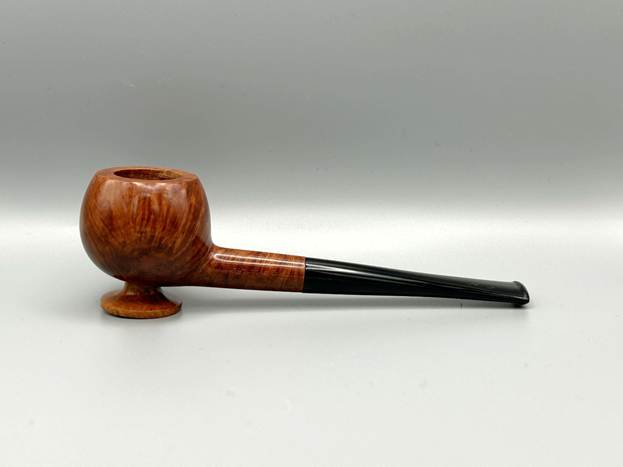
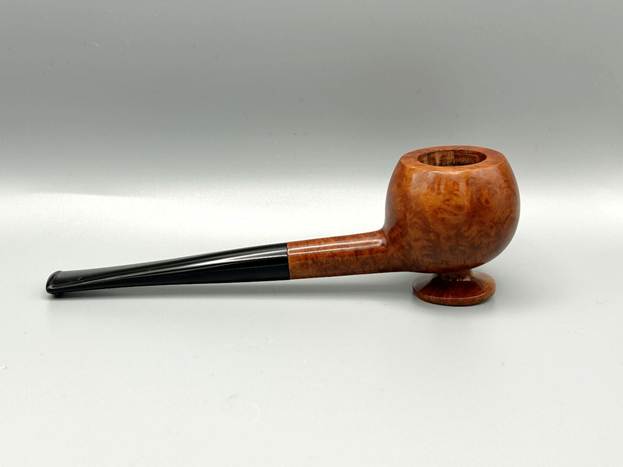
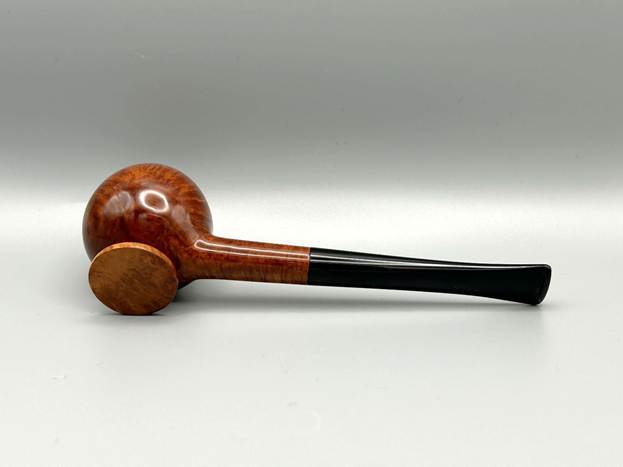
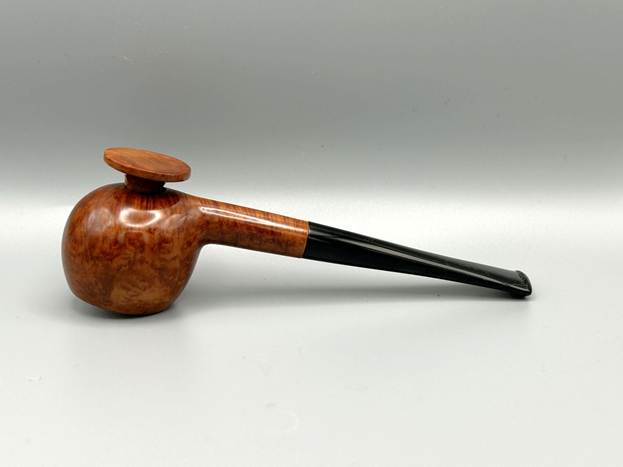
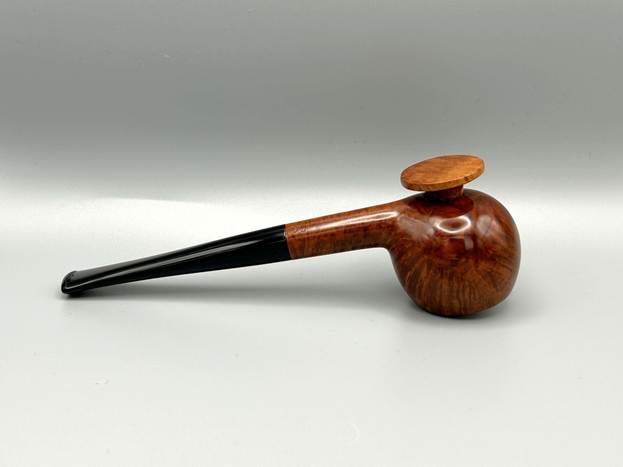
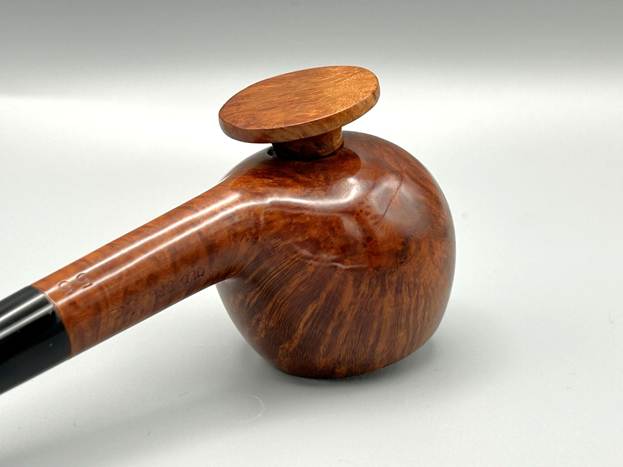
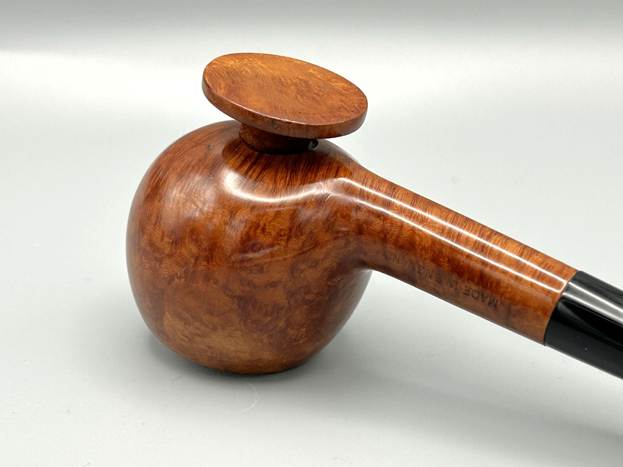
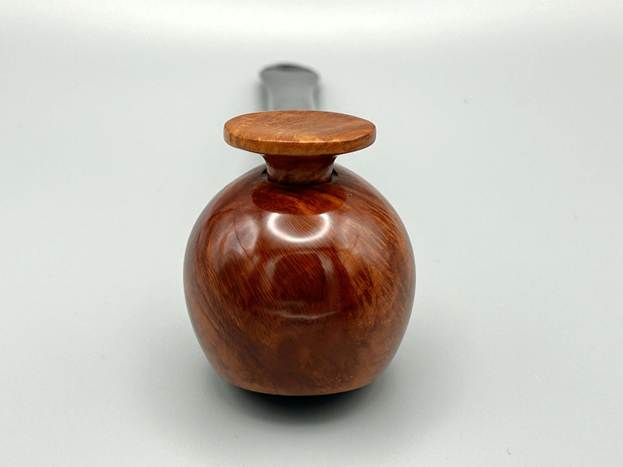
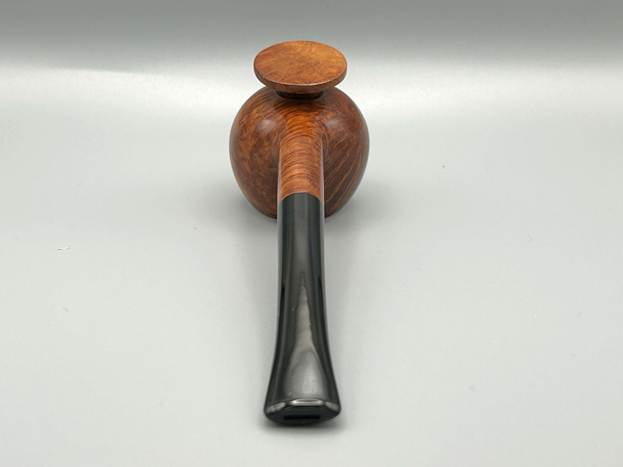
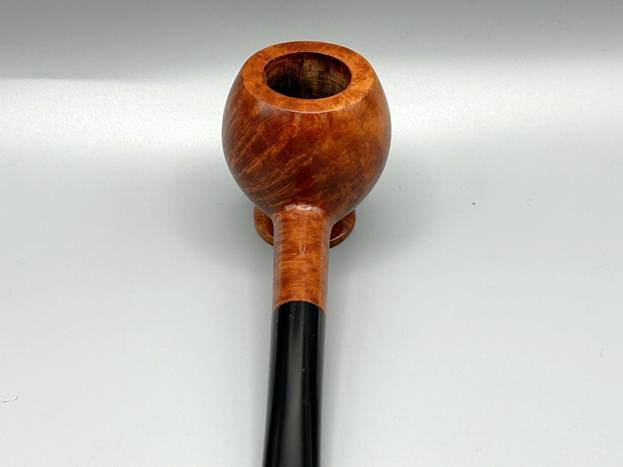
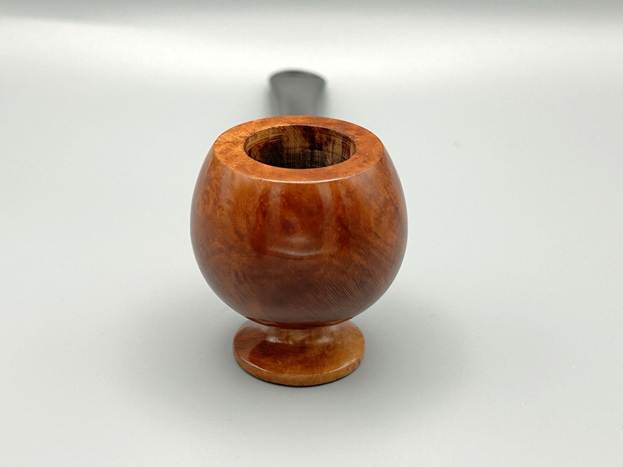
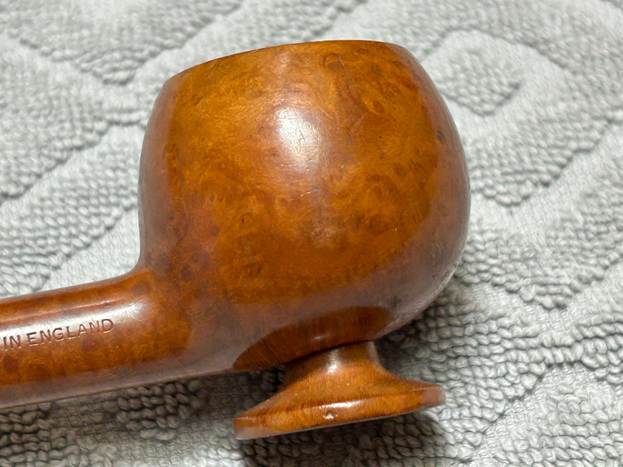
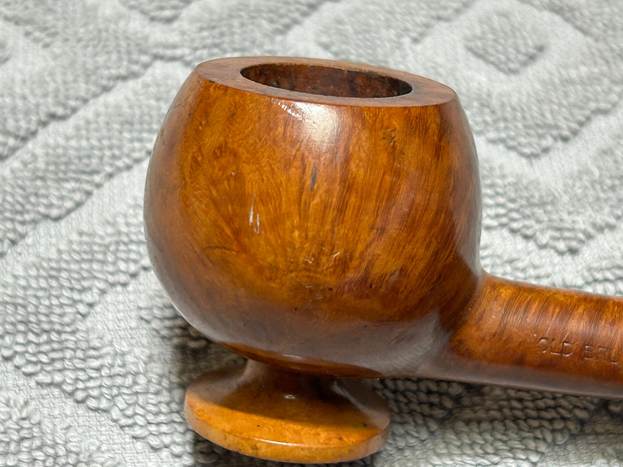
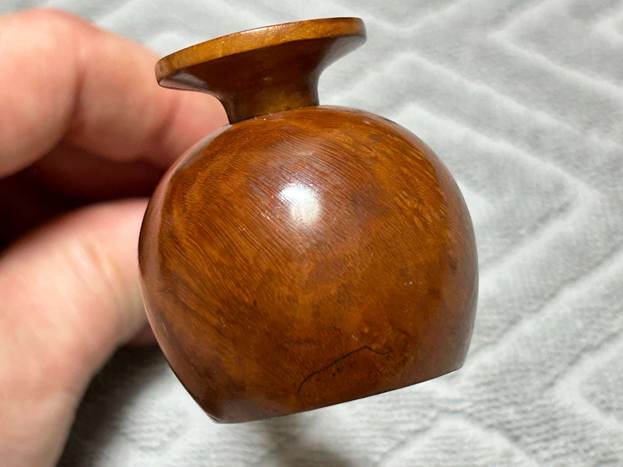
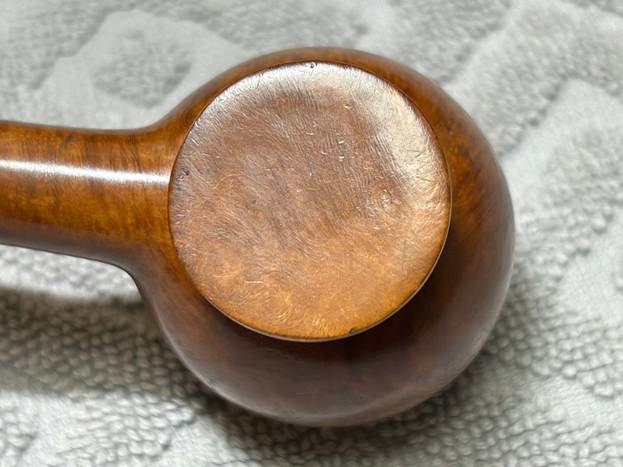
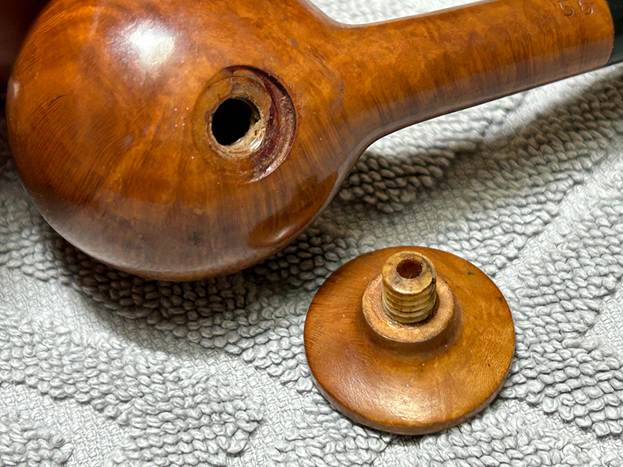
This pipe is quite fascinating and quite delightful, as it has a highly unusual feature. We don’t normally associate the prince pipe shape with the function of being a ‘sitter’, but this one has that feature – and with a screw-in base. Really nifty! I found it at one of those ‘antique’ fairs. You know the sort: the stuff they are selling makes the word ‘antique’ do an awful lot of heavy lifting. Anyway, I saw the pipe, thought it was good-looking, and then turned it over. Wow. It has a base that screws into the bottom of the bowl with a bone tenon. I thought that this one was really interesting – I hope you will too. This is a great pipe for the collector of unusual pieces.
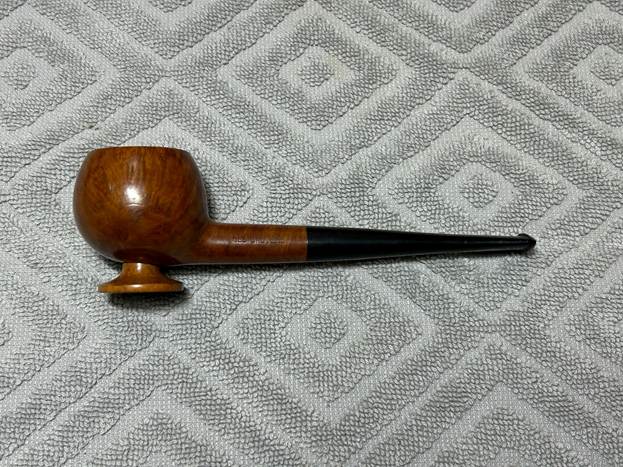
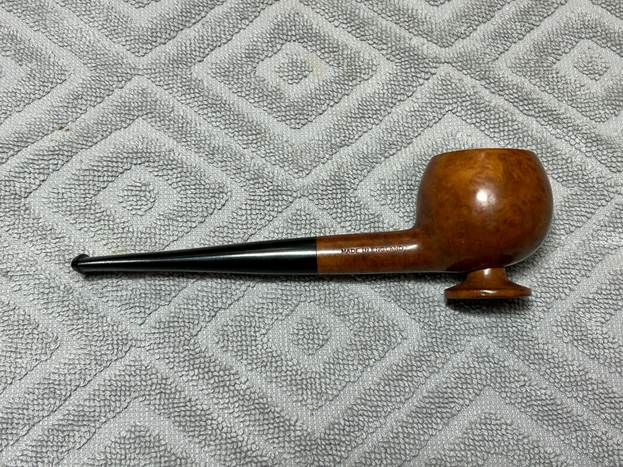
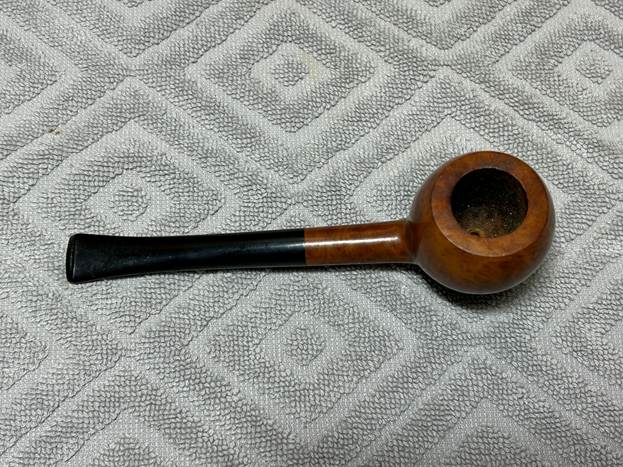
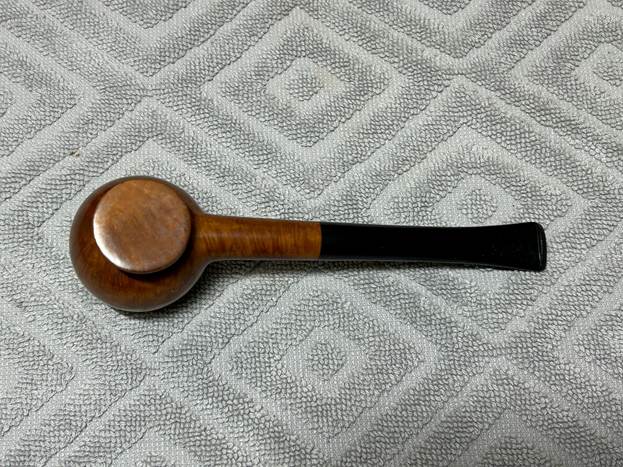
Let’s look at the markings, because the origins of this pipe are a bit mysterious. Hopefully, the markings can help us. On the left side of the shank, we see Old Bruyere. On the right side of the shank, we see Made in England. Finally, on the underside of the shank, we see the shape number 56.
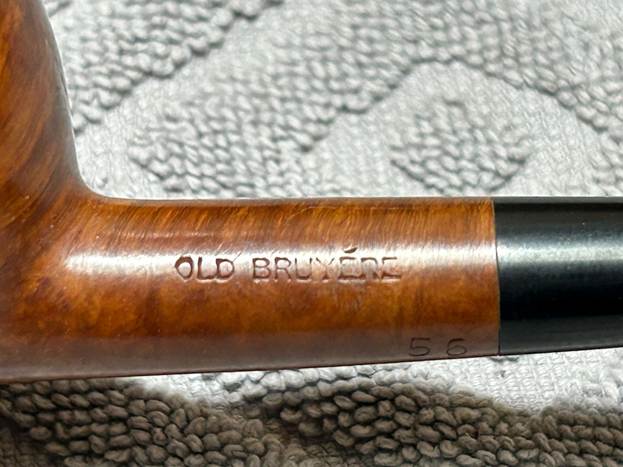
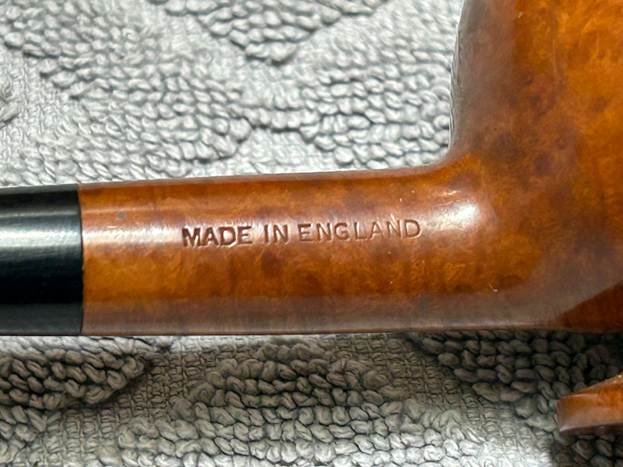
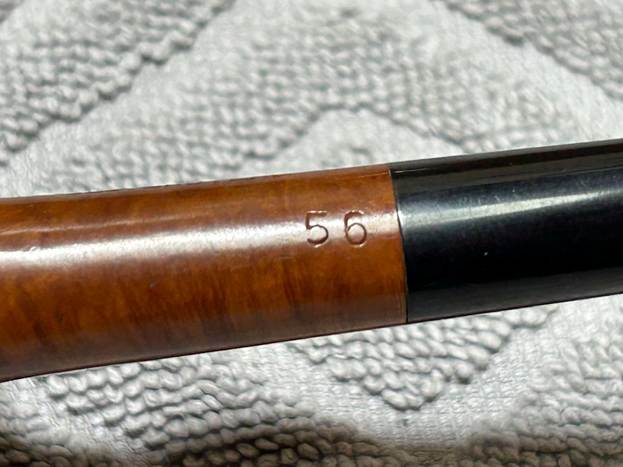
It seemed to me that this pipe was likely made by one of the big English makers. Comoy and Hardcastle do use the phrase ‘Old Bruyere’ on some of their pipes, but that isn’t convincing evidence. The shape number doesn’t correspond to Barling, Bewlay, Charatan, Comoy, Hardcastle, or Sasieni – but Orlik does fit. They do have a prince shape that is numbered 56. I can’t guarantee it, but I think this is likely to have been made by Orlik. My only hesitation is that the Orlik 56 is a quarter-bent prince – the straight prince is 55. Who knows? Alas, I haven’t worked it out. I suspect that this pipe is an experiment – and a really neat one, at that.
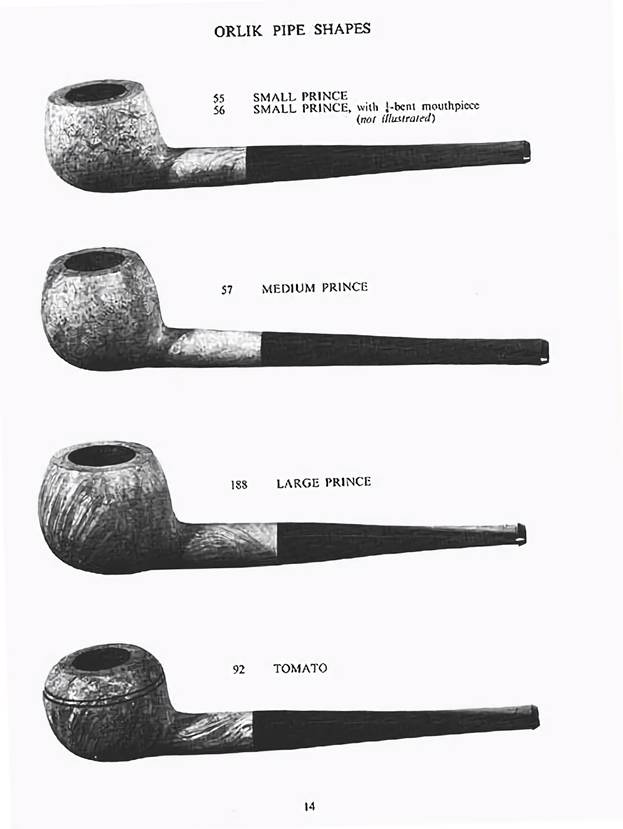
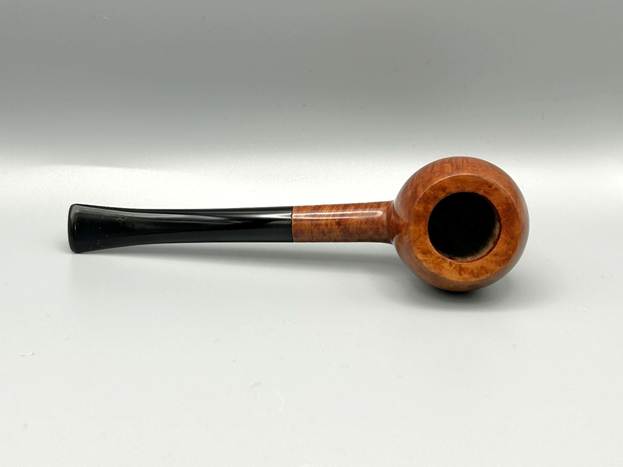
The condition of the pipe is great. The pipe has hardly been smoked. The bowl is clean and the briar is lovely. There are some very slight dents, but I can deal with those. The stem is also in good shape. There are more tooth marks than one would expect of a pipe that has been seldom smoked, but no big deal. The tenon in the base looks sound, clean, and firm.
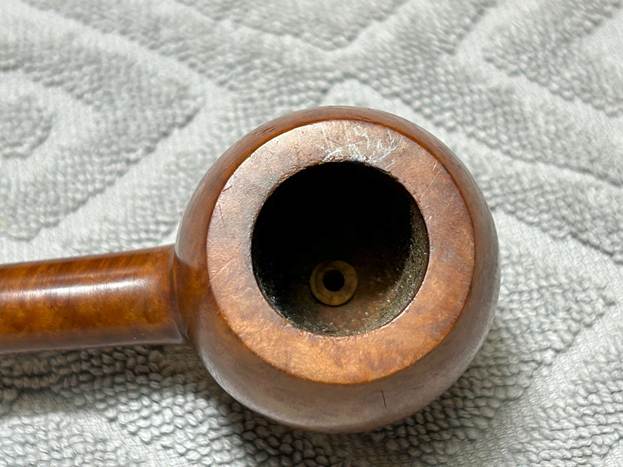
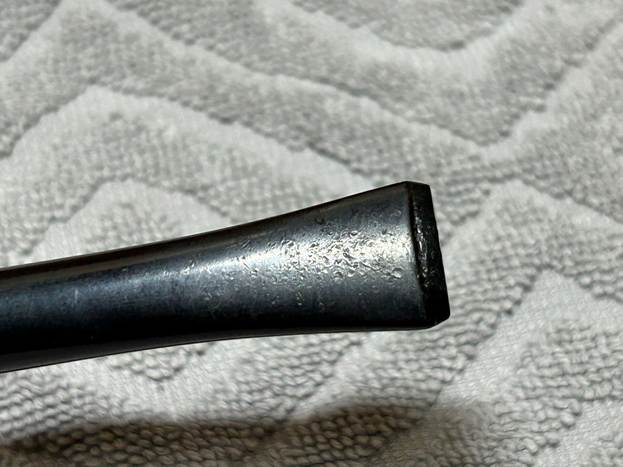
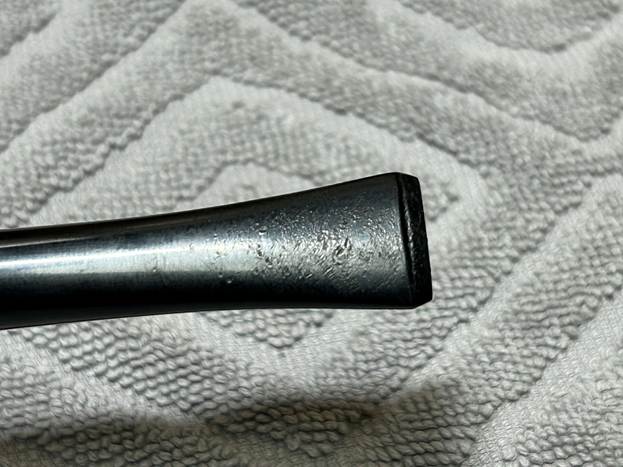
I used isopropyl alcohol on a few cotton rounds and wiped down the stem to provide an initial cleaning before moving on to the next steps. The primary cleaning came next. I disinfected the inside of the stem with both pipe cleaners and cotton swabs dipped in lemon-infused 99% isopropyl alcohol. I scrubbed thoroughly to make sure the interior was very clean.
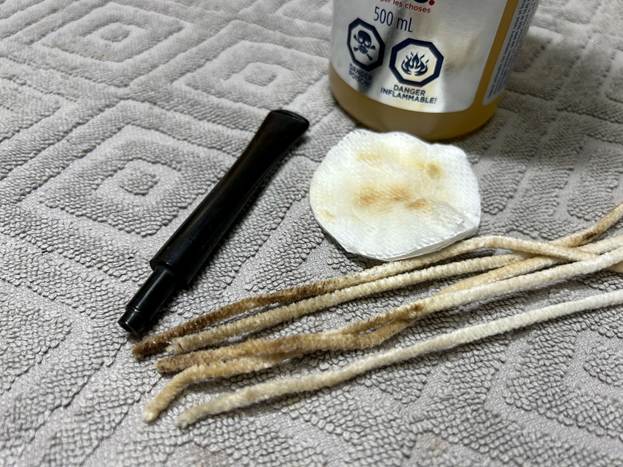
The goal of the next step is the removal (or minimization) of oxidation. Going to my sink, I used cream cleanser, cotton rounds, and a toothbrush, and scoured the stem to remove as much surface oxidation as possible. As the photos show, the result was a hideous, ochre-coloured mess – but better off the stem than on it.
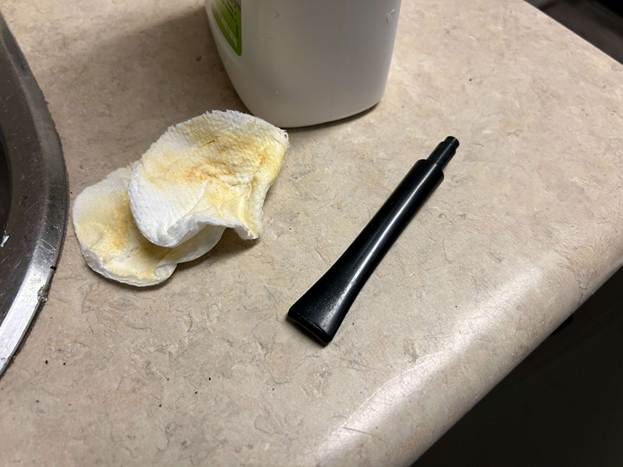
As the stem was now clean and dry, I set about fixing the marks in the vulcanite. This was done by filling those divots with black cyanoacrylate adhesive, impregnated with carbon and rubber. I left this to cure and moved on.
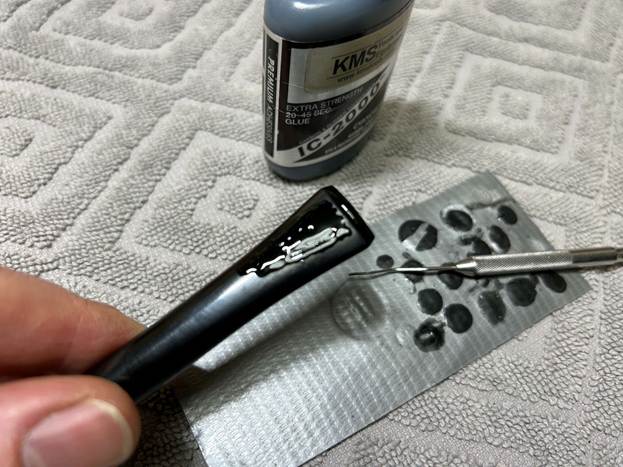
The penultimate step for the stem is sanding. First, with my set of needle files, I reduced the bulk of the cyanoacrylate repairs. I removed the excess adhesive as near to the surface as possible, without cutting into the vulcanite. Following that, I used all nine of the micromesh sanding pads (1,500 through 12,000 grit) to sand out flaws, even out the vulcanite, and provide gentle polishing of the finished surface. I also applied pipe-stem oil while using the last five micromesh pads. There was a wonderful, deep black shine to the stem when I was done.
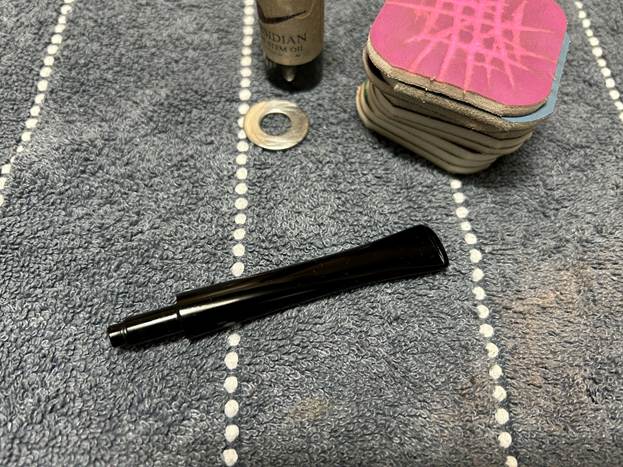
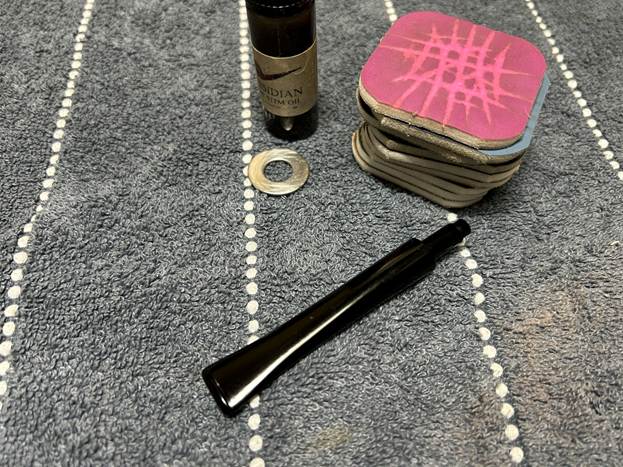
As the stem was (nearly) complete, I moved on to the stummel. The first step was to ream out the bowl – that is to say, remove all the cake inside the bowl. Of course, there wasn’t really much. I used a piece of sandpaper taped to a wooden dowel to clean the inside.
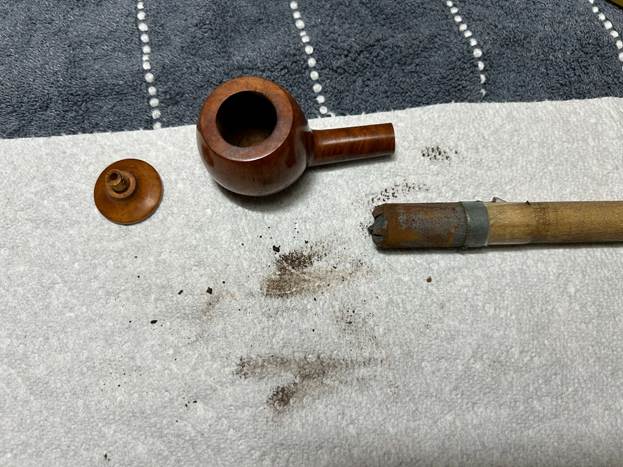
Similar to the stem, I then cleaned the stummel with both pipe cleaners and cotton swabs dipped in lemon-infused 99% isopropyl alcohol. Again, not too much here.
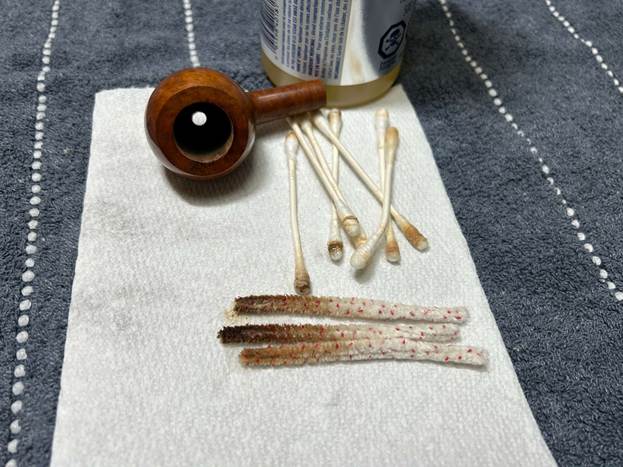
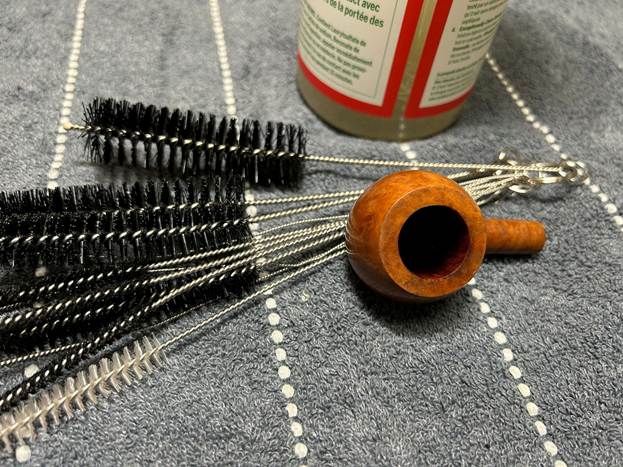
To tidy up the briar, I wiped down the outside, using a solution of a pH-neutral detergent and some distilled water, with cotton rounds. I also used a toothbrush in the crevices. This did a good job of cleaning any latent dirt on the surface of the briar. The last step of the cleaning process was to scour the inside of the stummel with the same mild detergent and tube brushes. This was the culmination of a lot of hard work in getting the pipe clean.
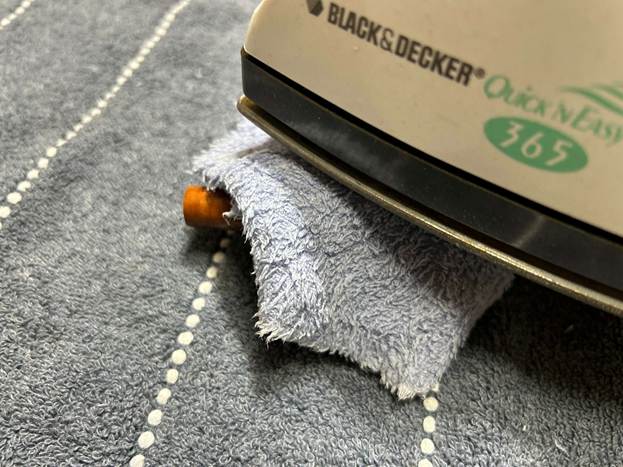
Having completed that, I was able to address the nicks on the rim and the bowl. I dug out my iron and a damp cotton flannel cloth. By laying the cloth over the affected areas and applying the iron to it, the hot and moist steam can cause the wood to swell slightly and return to shape. There was considerable improvement!
I used all nine micromesh pads (1,500 through 12,000 grit) to sand the outside of the stummel and finish it off. This sanding minimizes flaws in the briar and provides a beautiful smoothness to the wood. I rubbed some LBE Before & After Restoration Balm into the briar and let it sit for 30 minutes or so. The balm moisturizes the wood and gives a beautiful depth to the briar. I then buffed the stummel with a microfibre cloth.
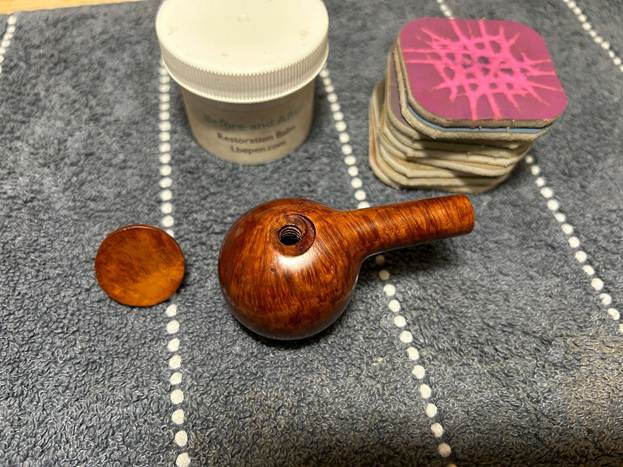
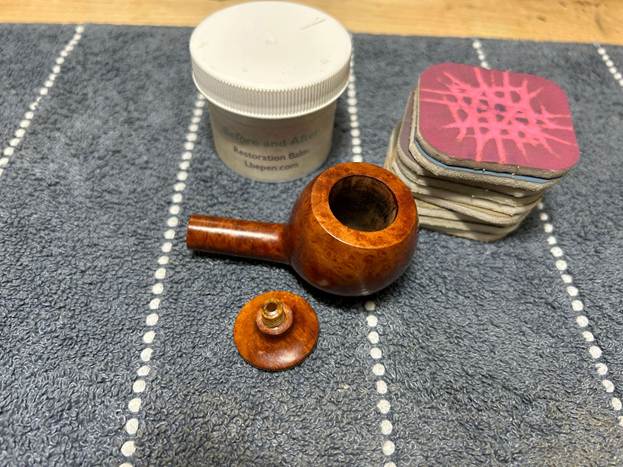
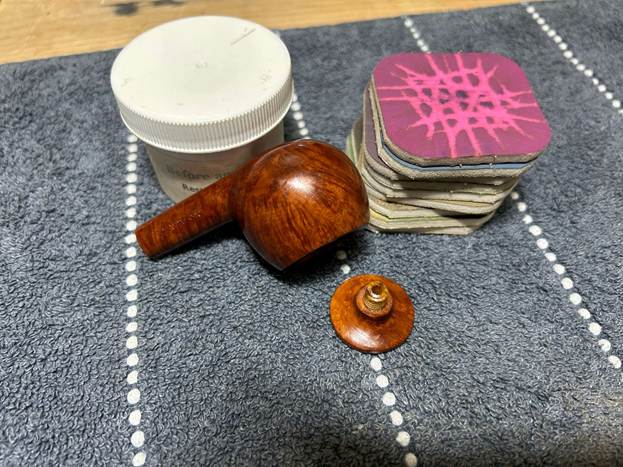
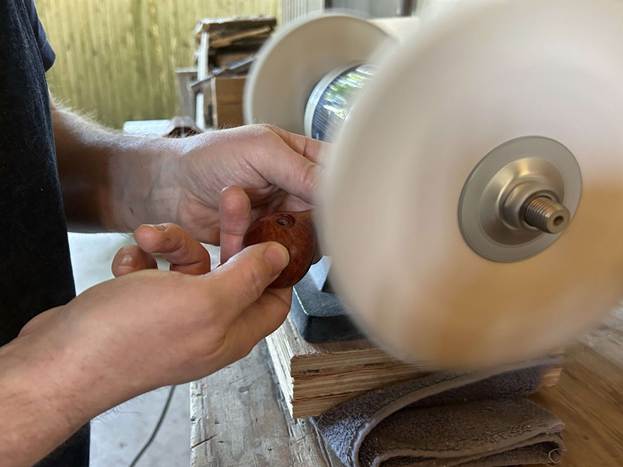
For the final step, I took the pipe to my bench polisher and carefully buffed it – first with a blue diamond compound, then with three coats of carnauba wax. This procedure makes the pipe look its best – the stummel sings and the stem glows.
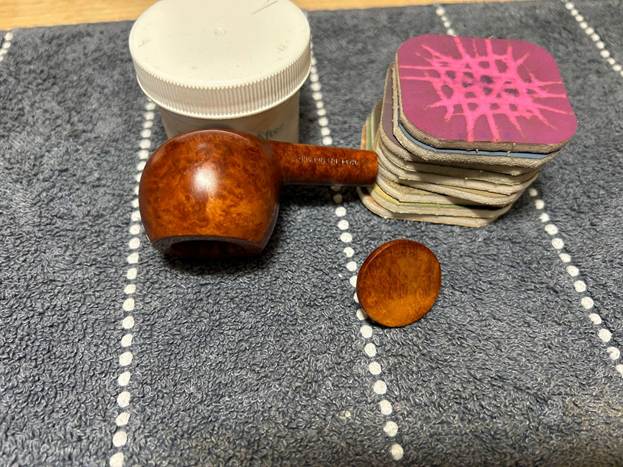
All done! This Old Bruyere 56 prince sitter with a screw-in base looks fantastic again and is ready to be enjoyed by its next owner. I am pleased to announce that this pipe is for sale! If you are interested in acquiring it for your collection, please have a look in the ‘British’ section of the store here on Steve’s website. You can also email me directly at kenneth@knightsofthepipe.com. The approximate dimensions of the pipe are as follows: length 5⅞ in. (149 mm); height 1¾ in. (45 mm); bowl diameter 1⅝ in. (41 mm); chamber diameter ¾ in. (20 mm). The weight of the pipe is 1¼ oz. (36 g). I hope you enjoyed reading the story of this pipe’s restoration as much as I enjoyed restoring it. If you are interested in more of my work, please follow me here on Steve’s website or send me an email. Thank you very much for reading and, as always, I welcome and encourage your comments.