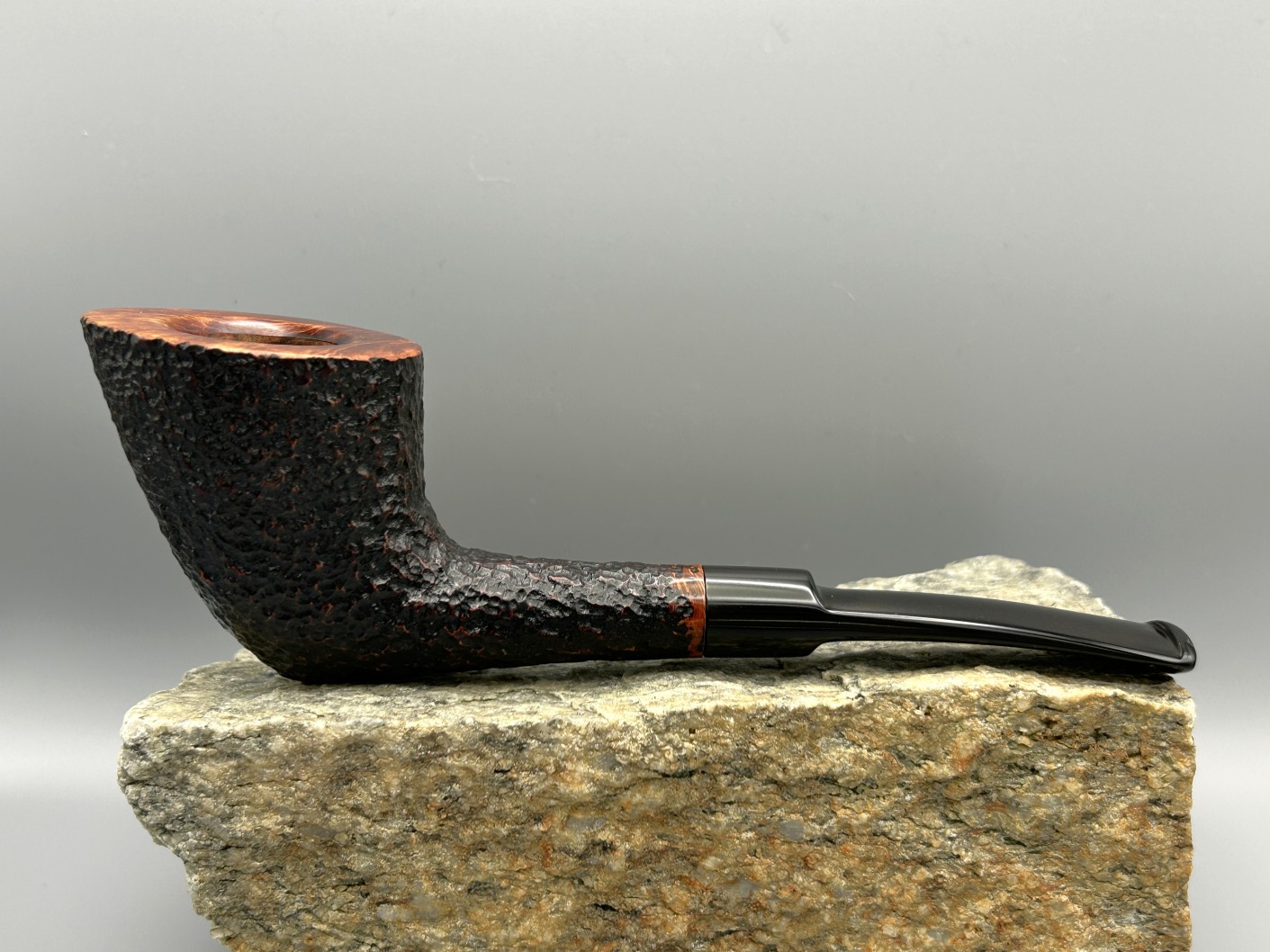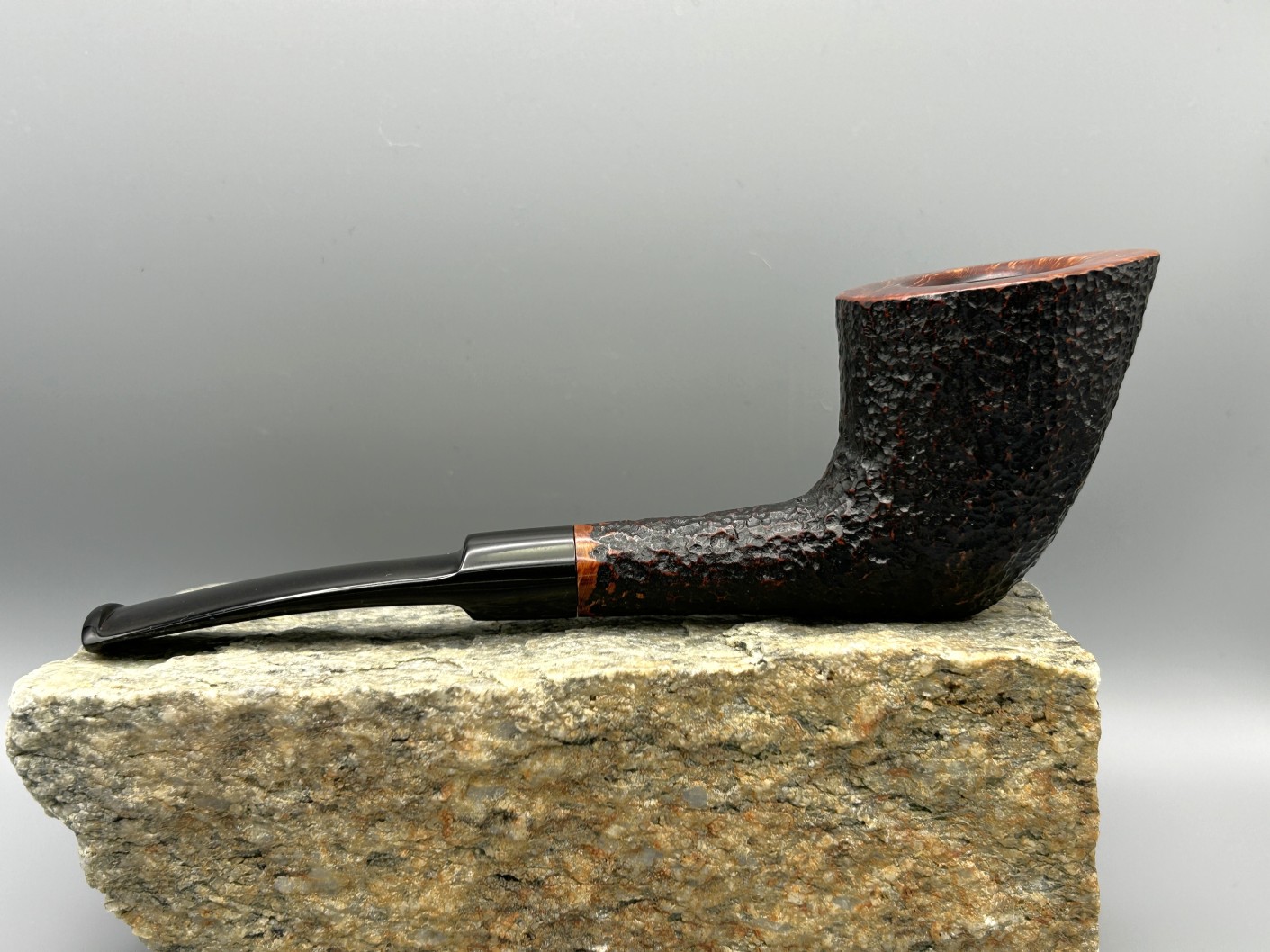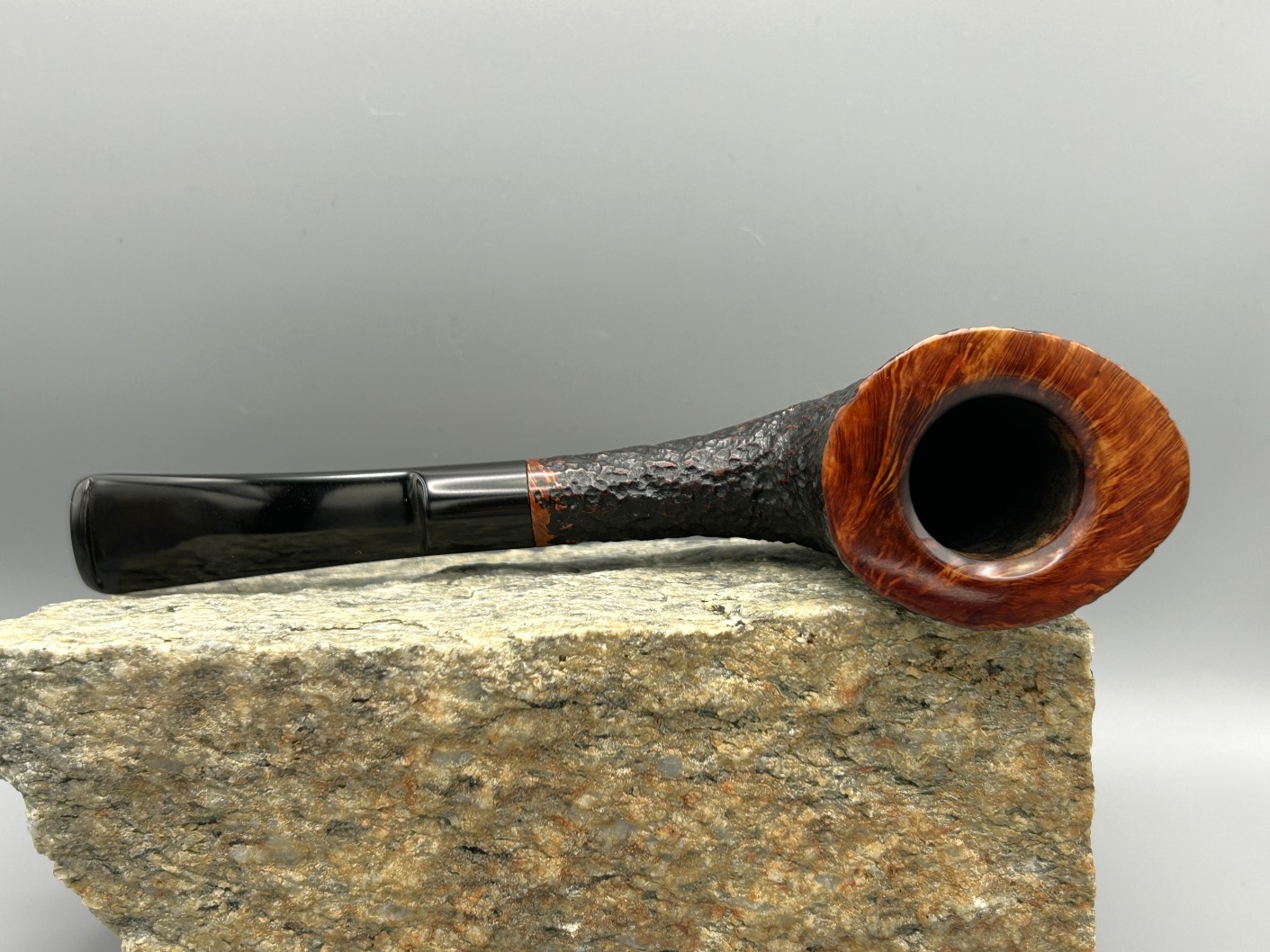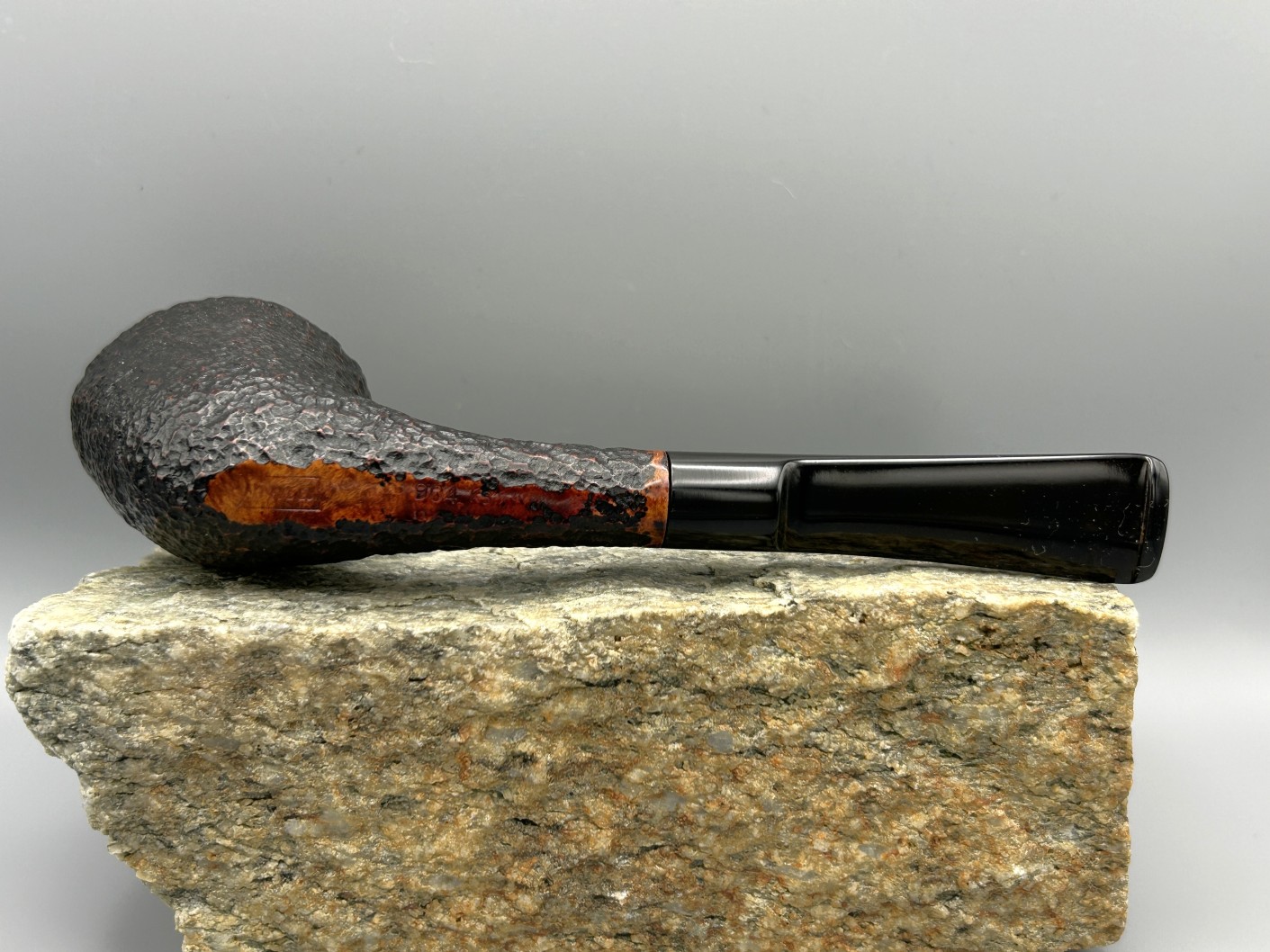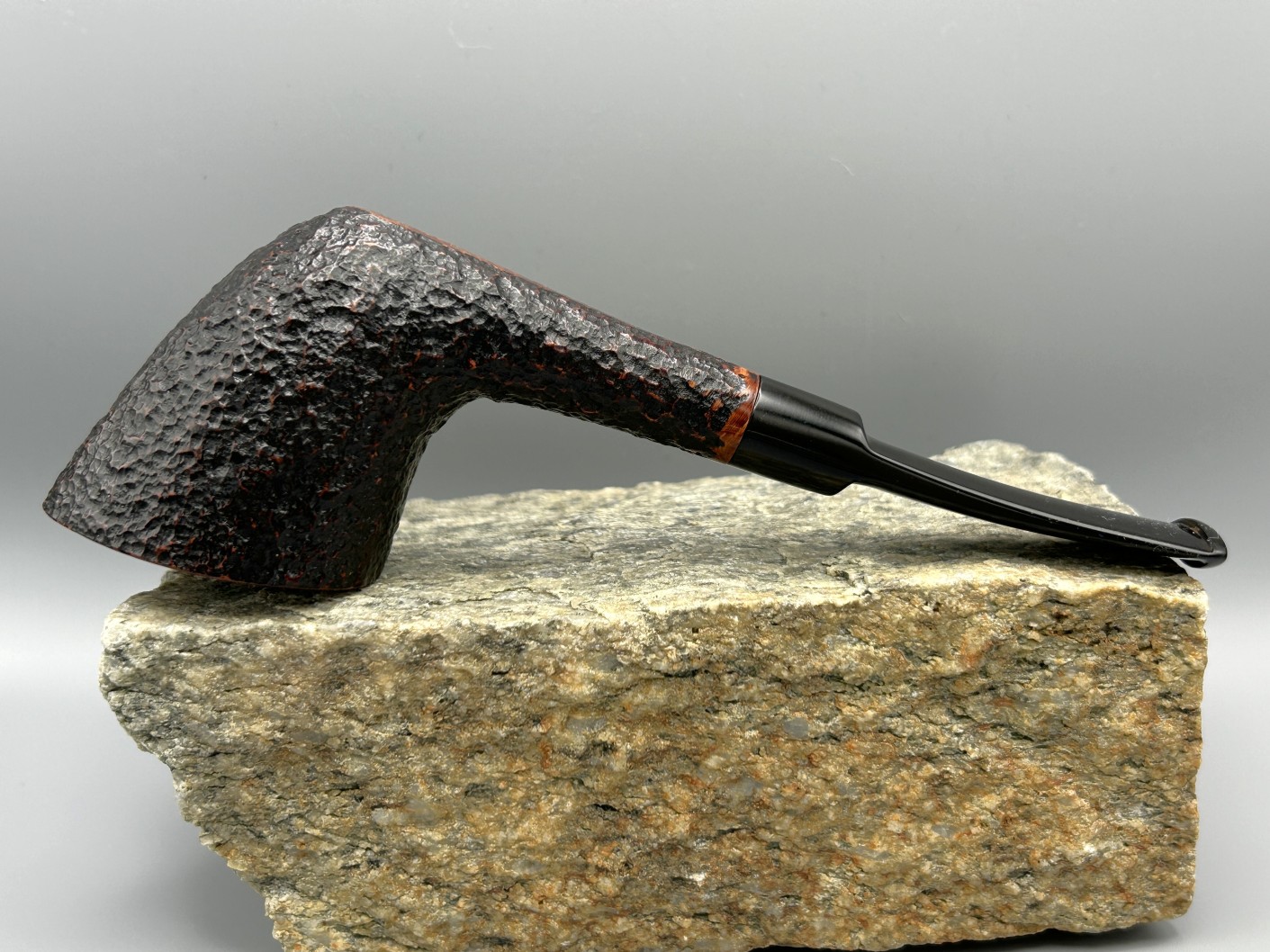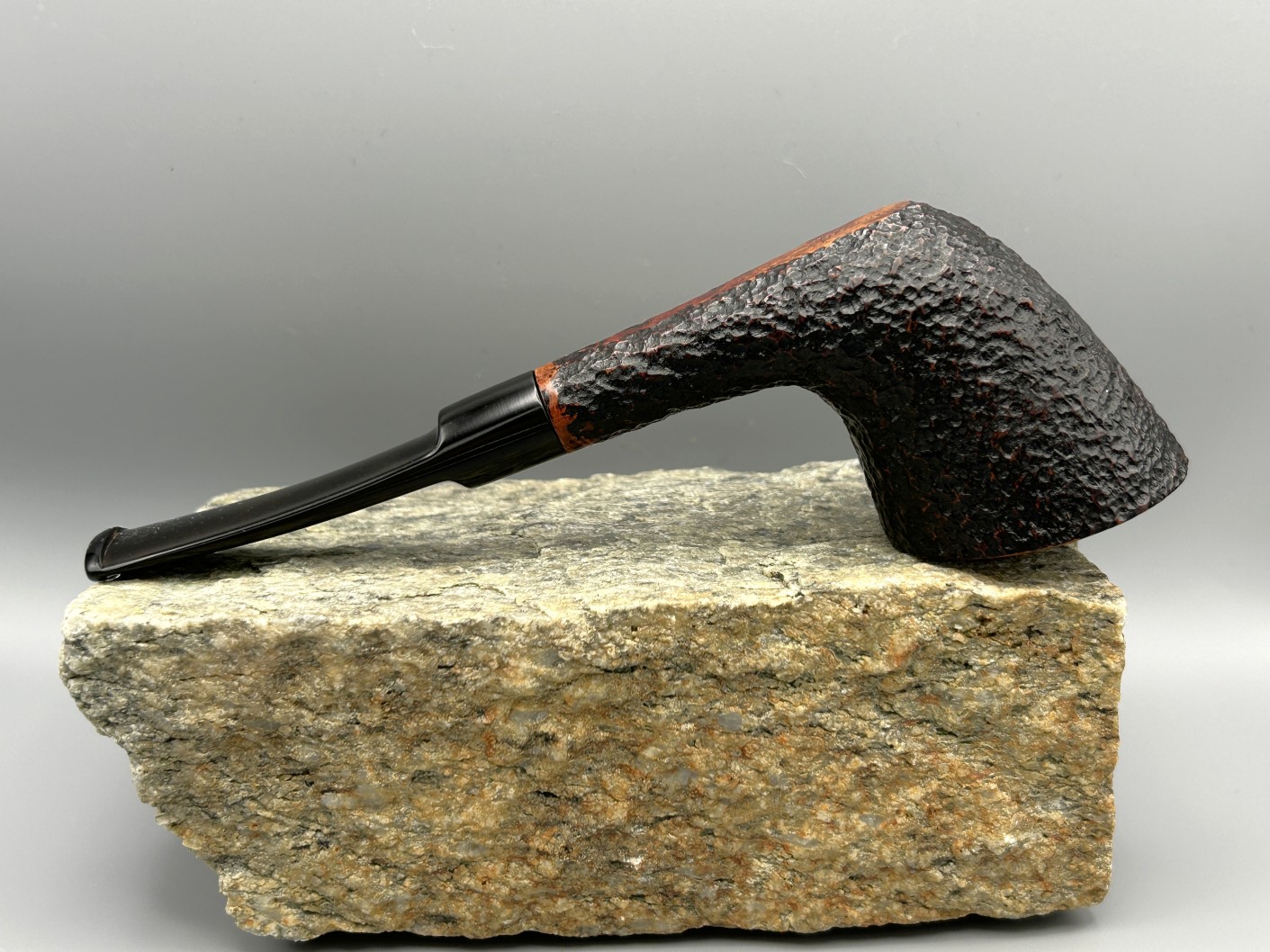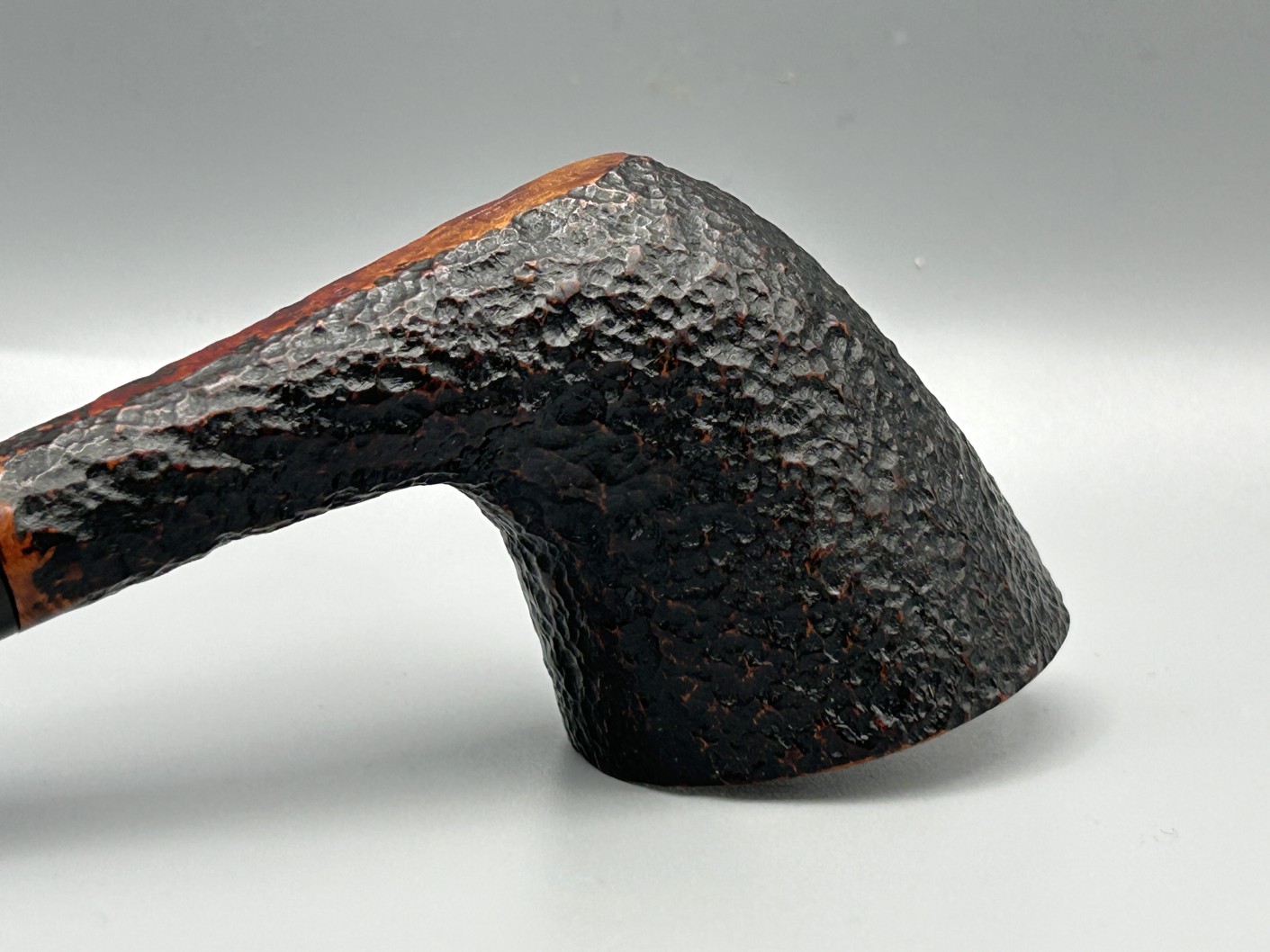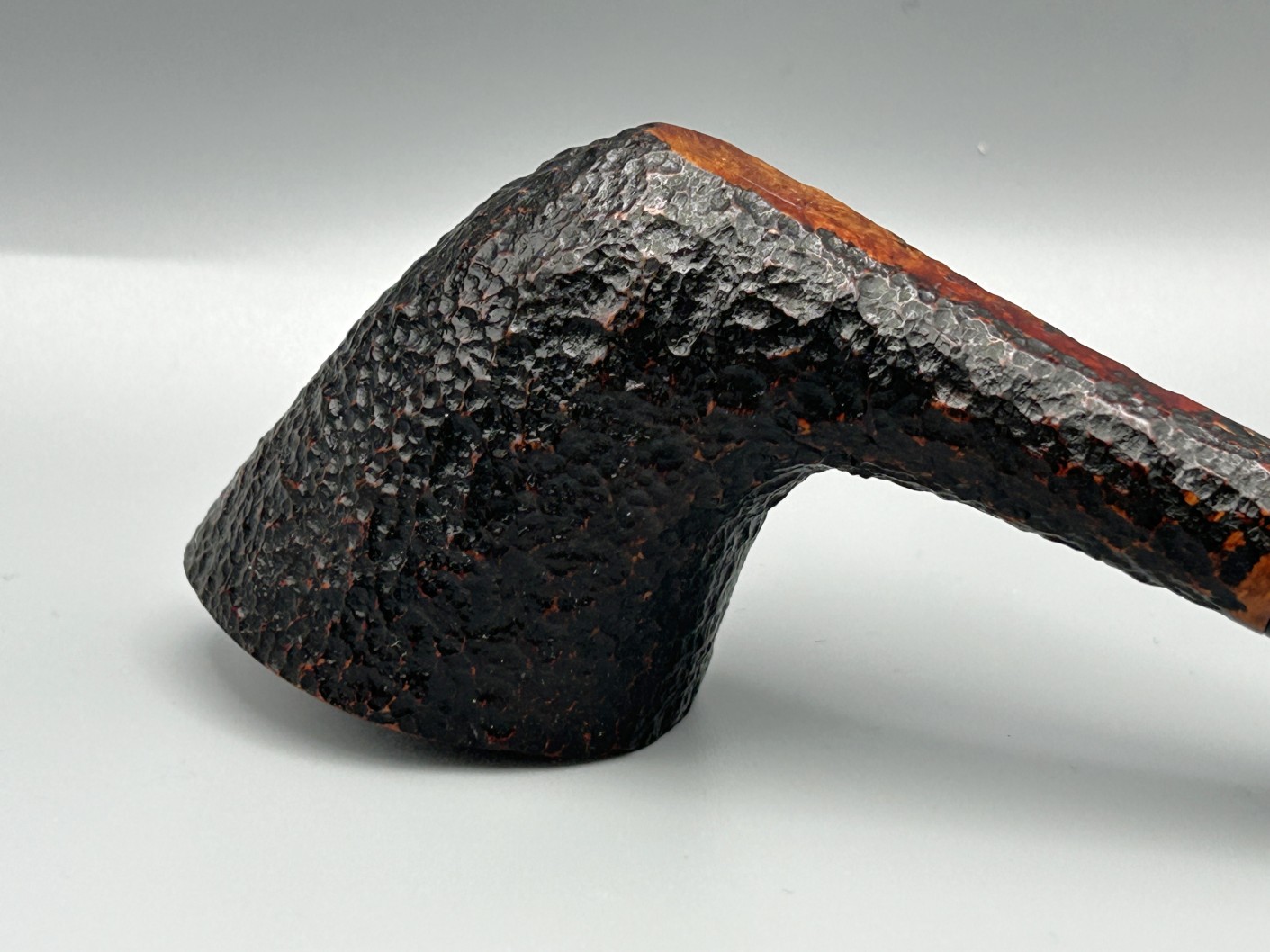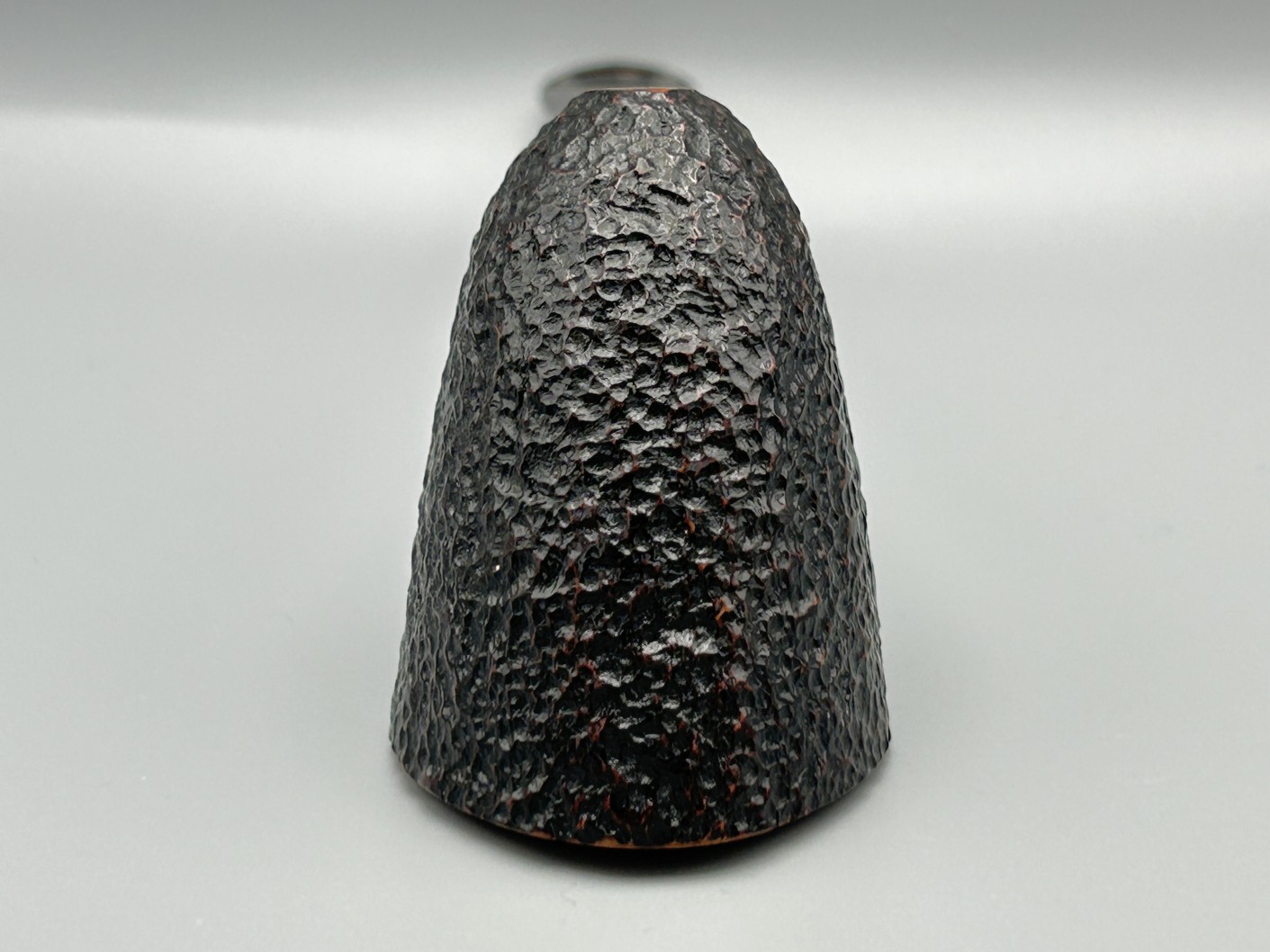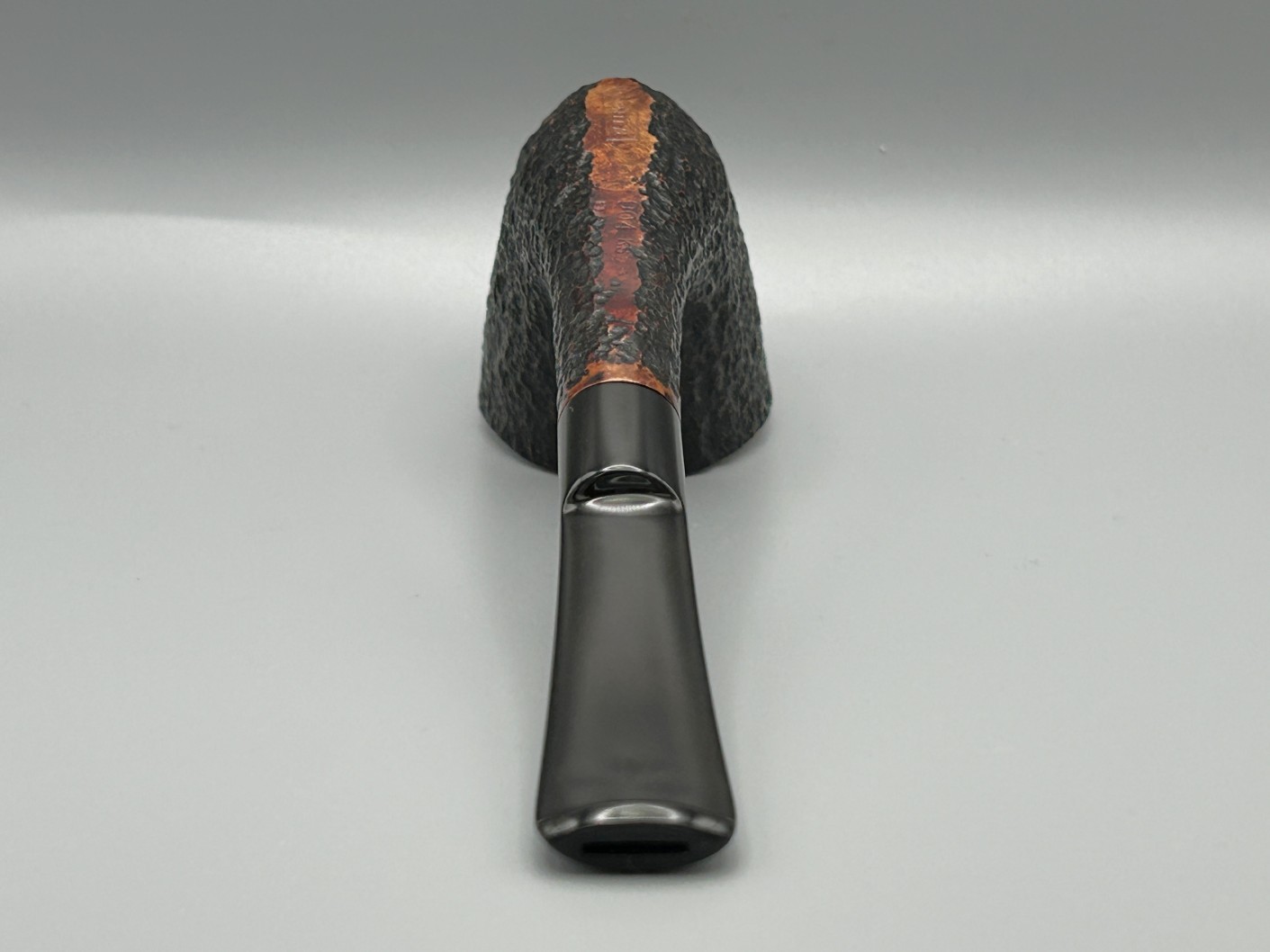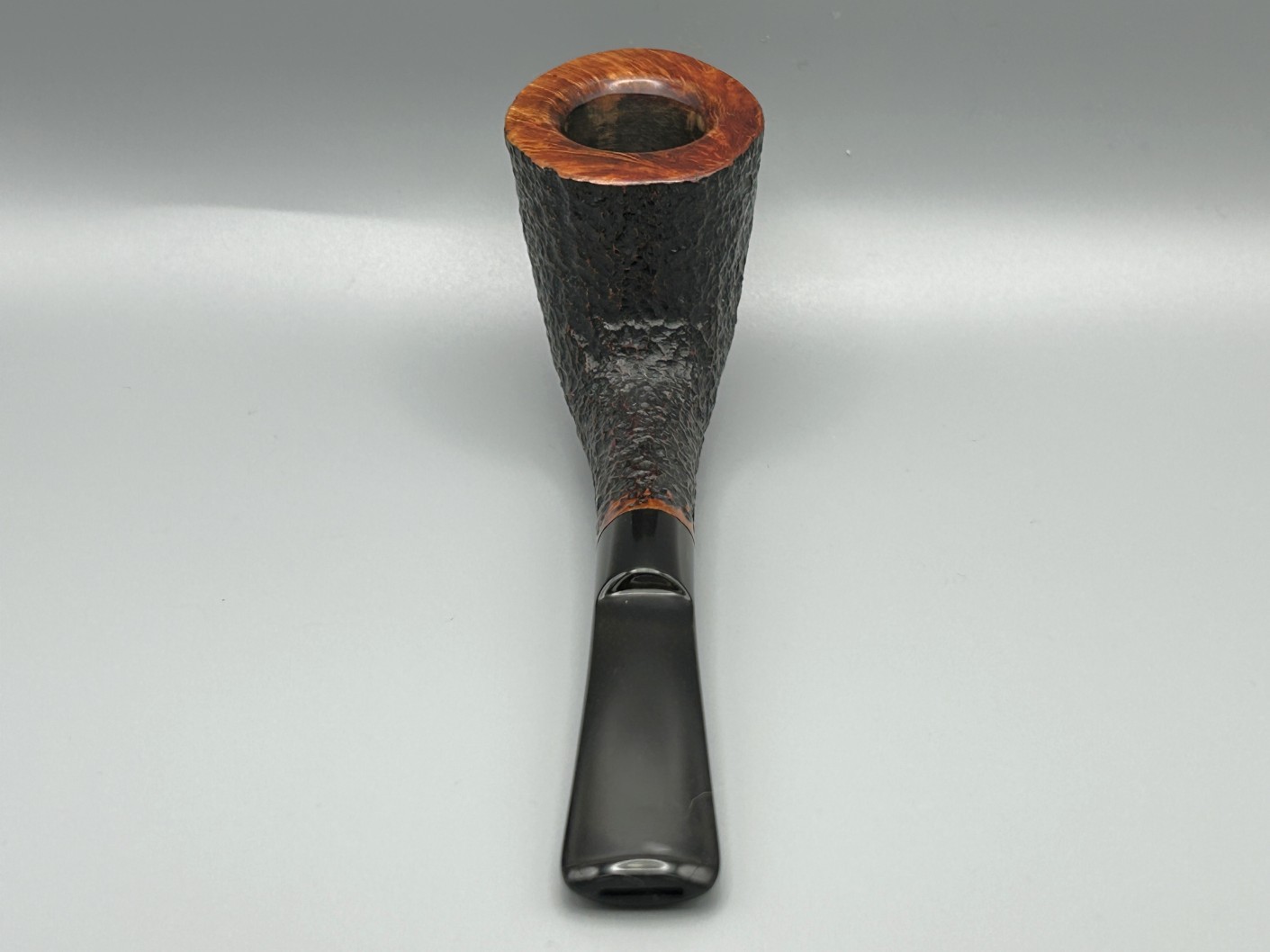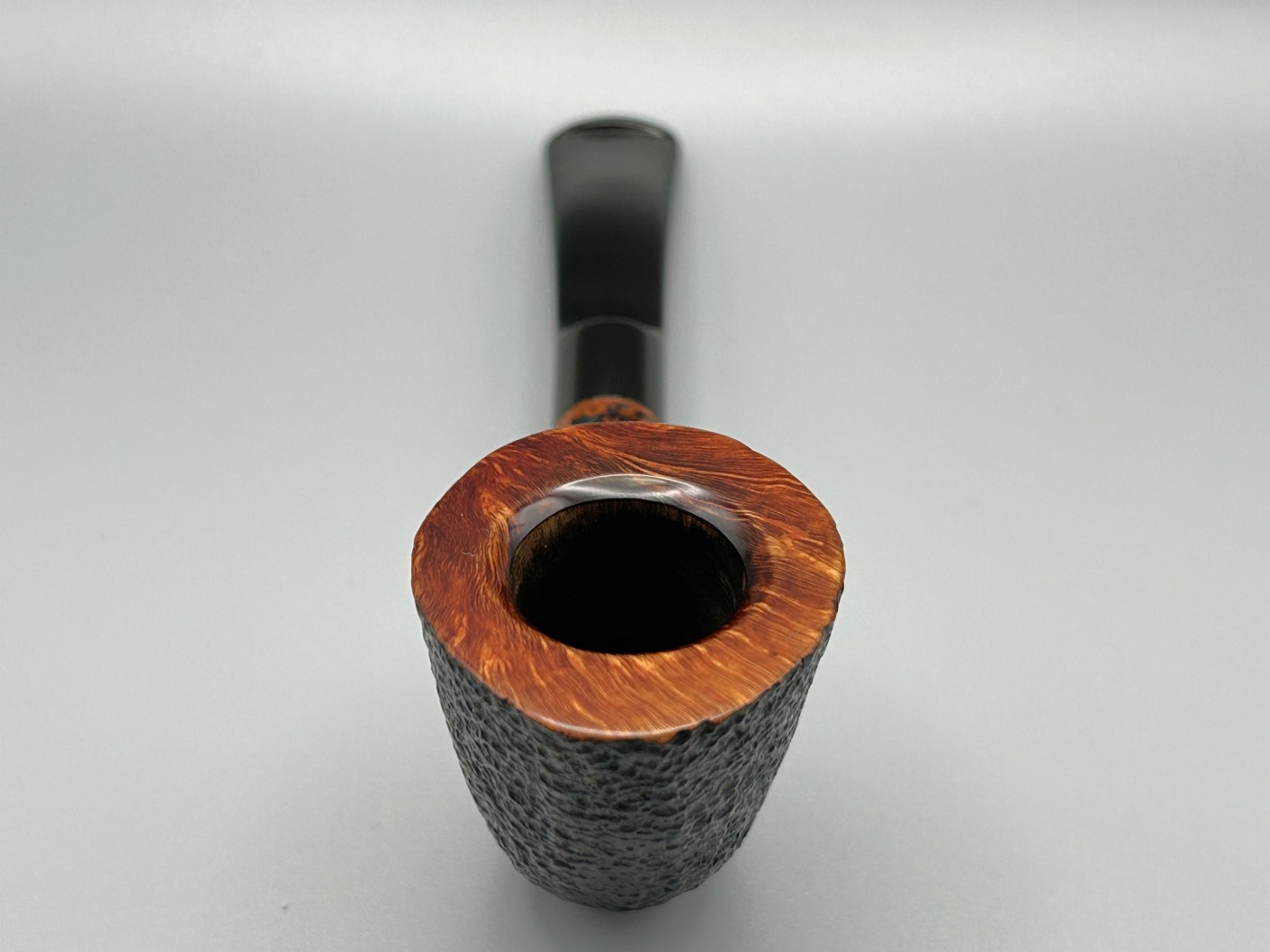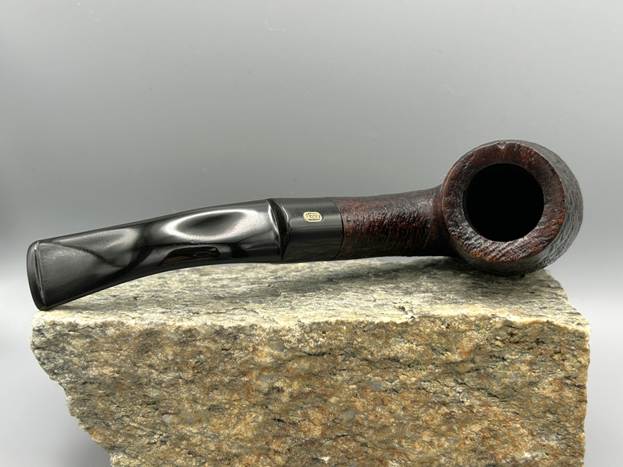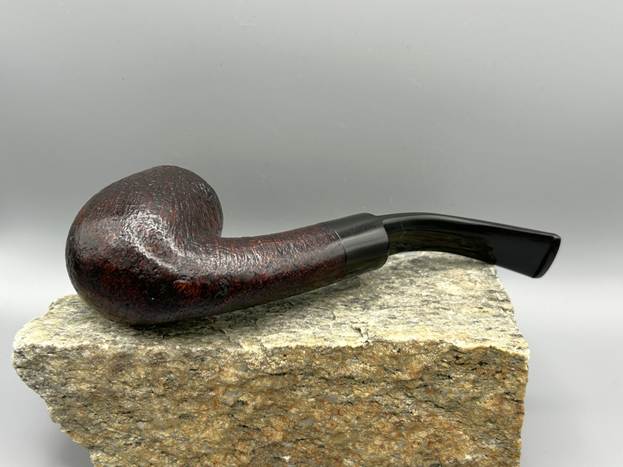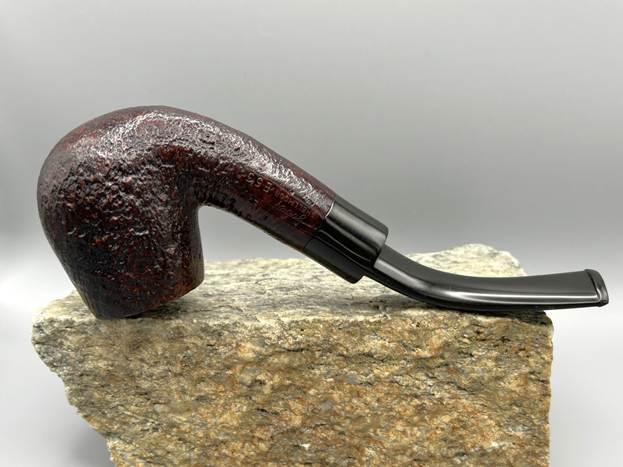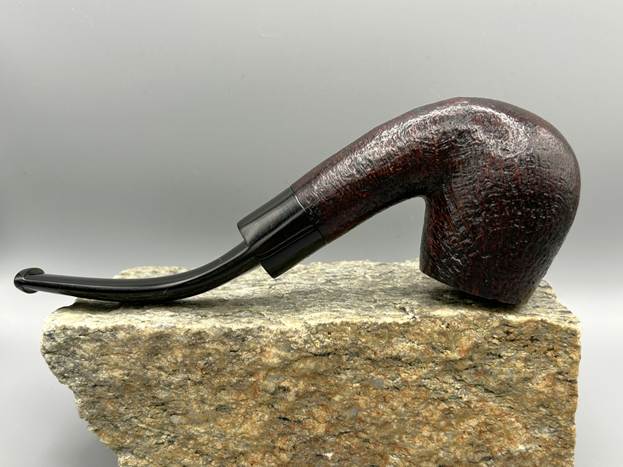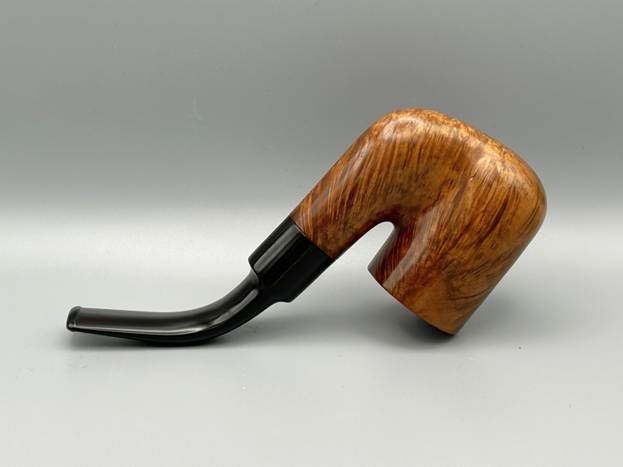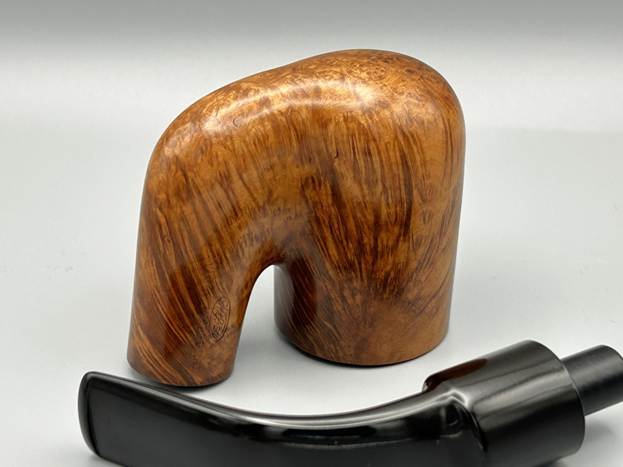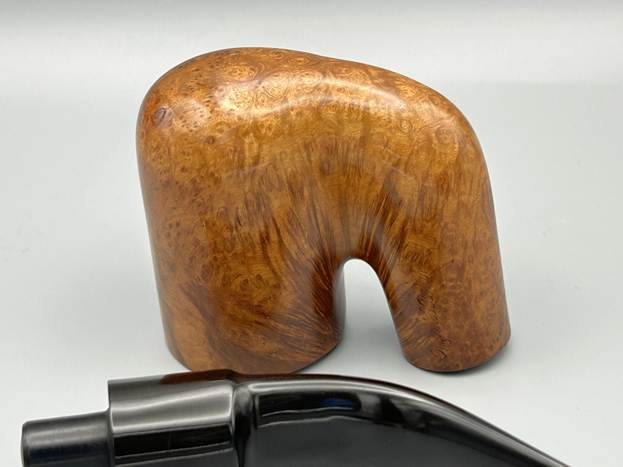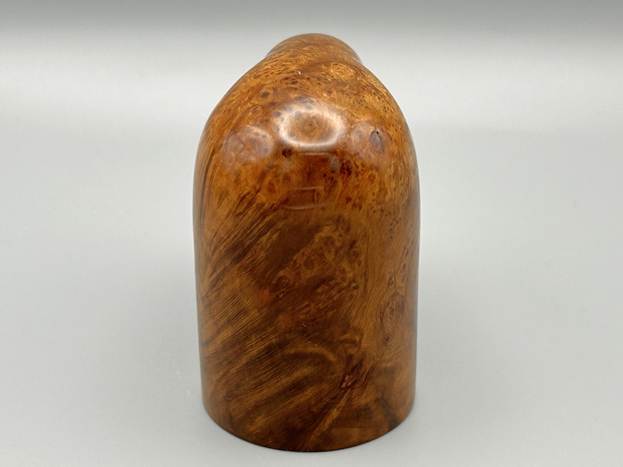
Tag Archives: briar pipe

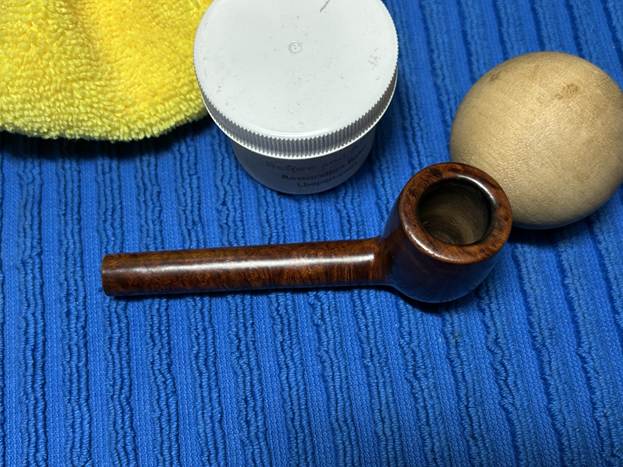
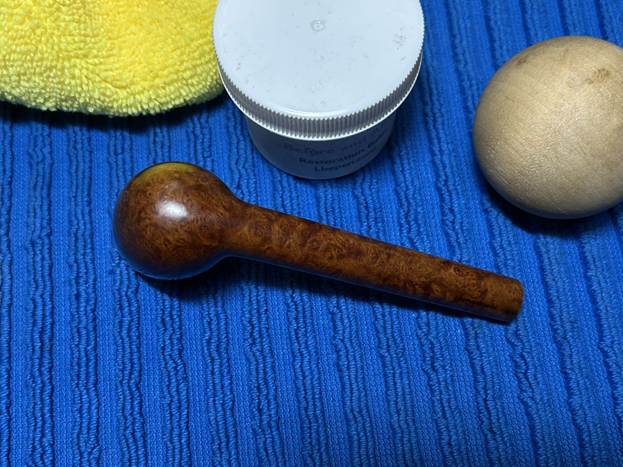
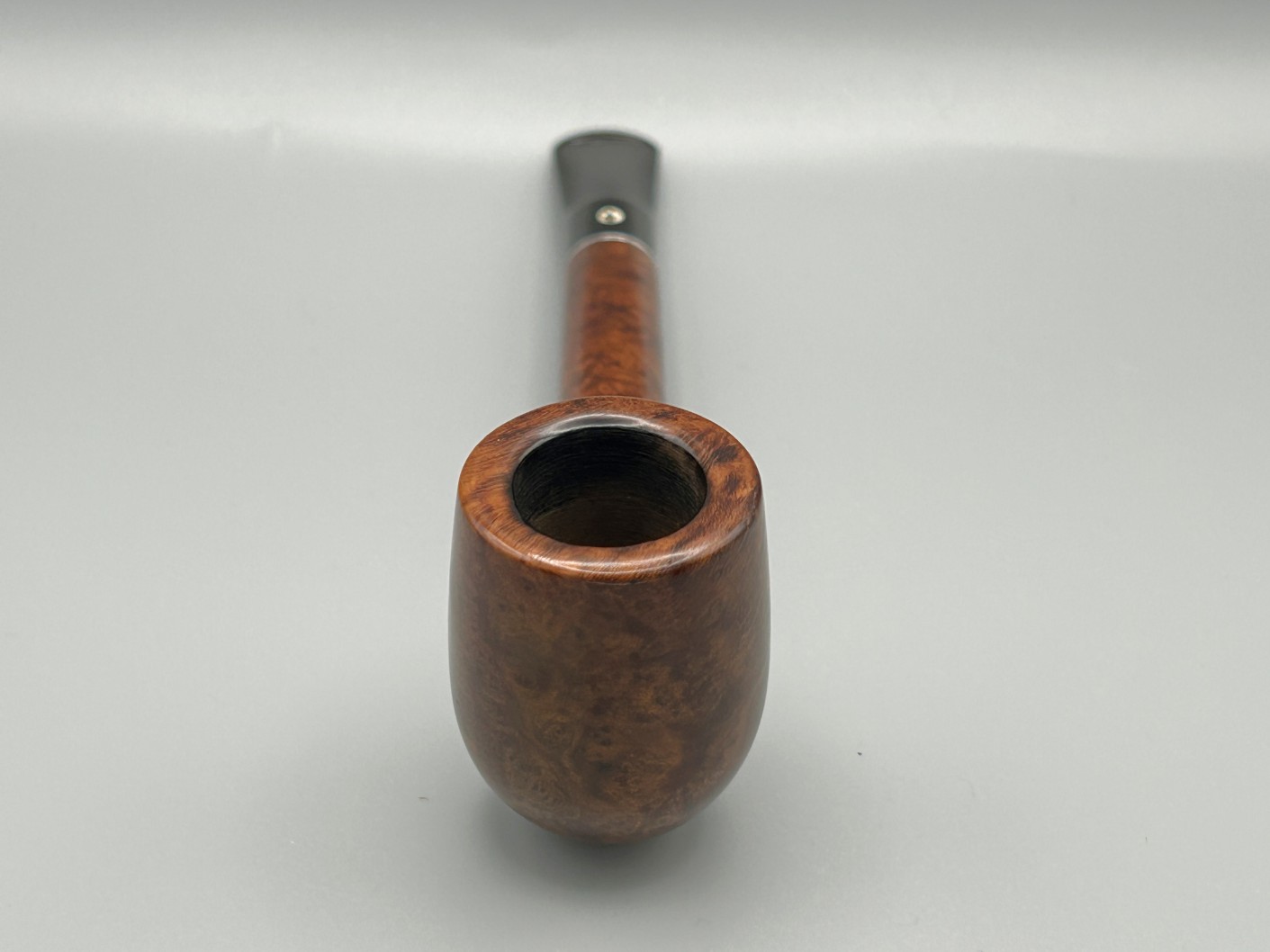
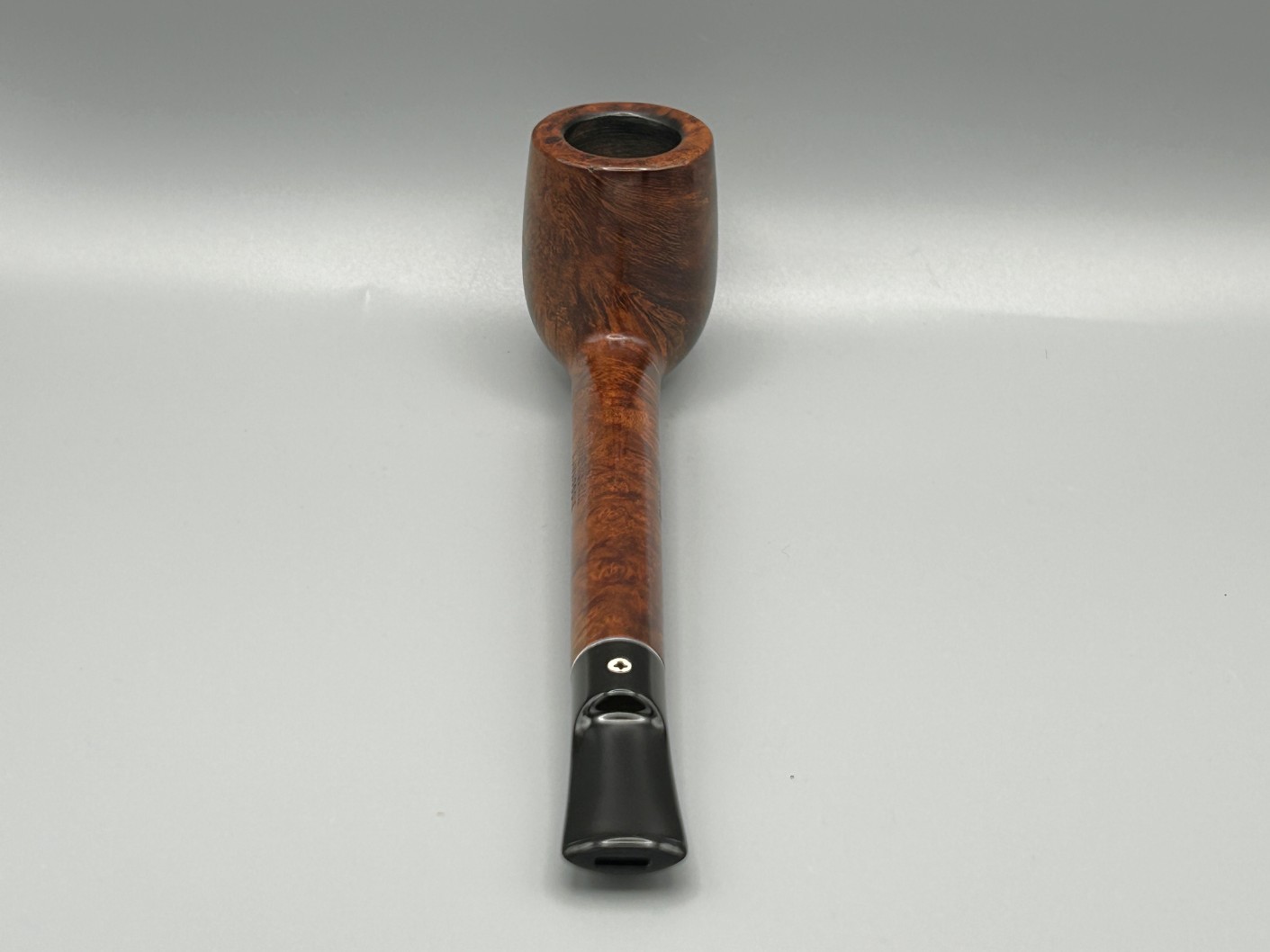
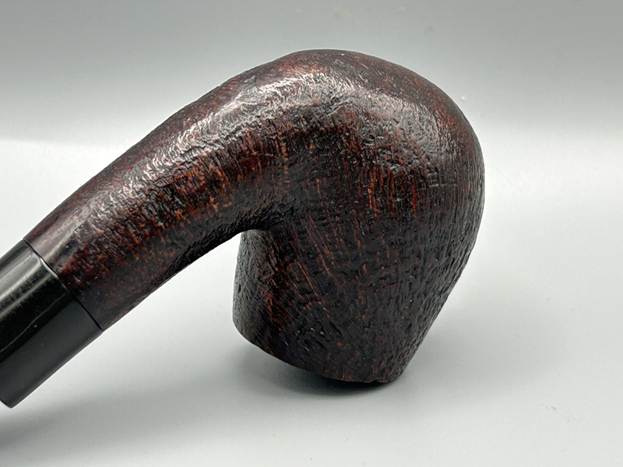
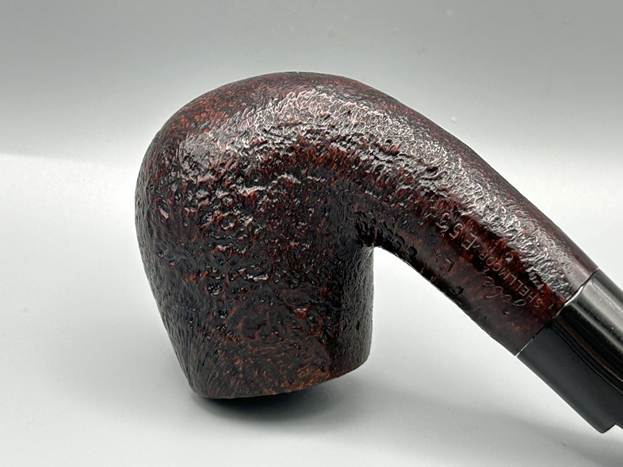
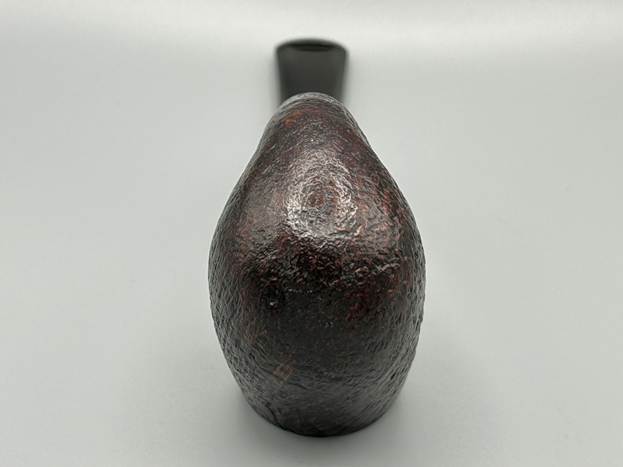
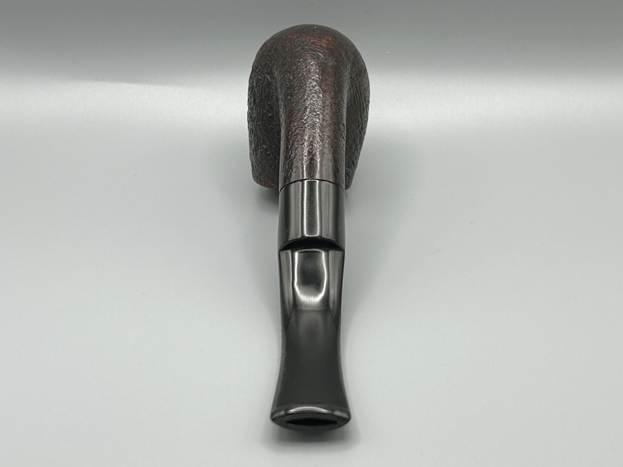
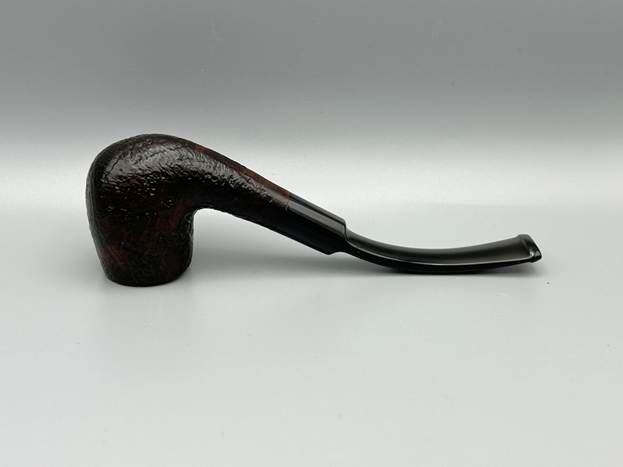
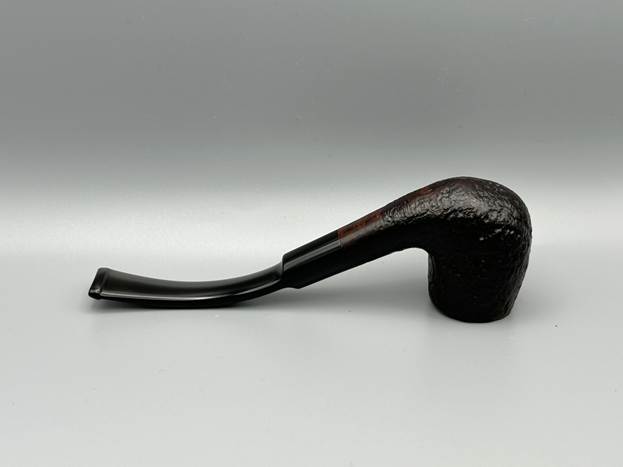
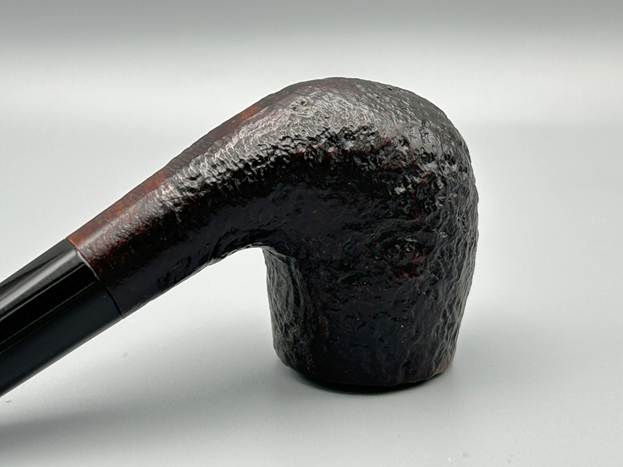
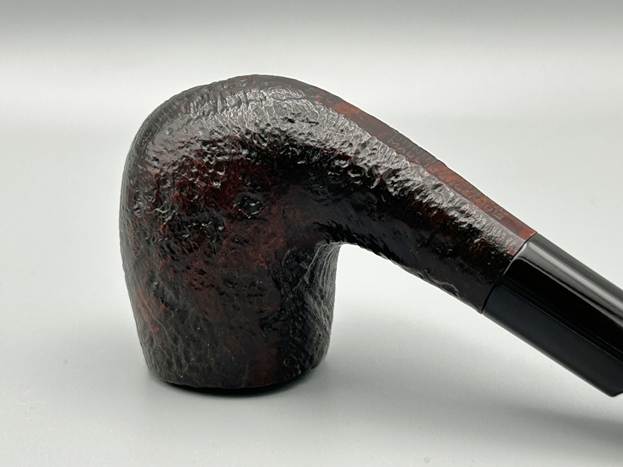
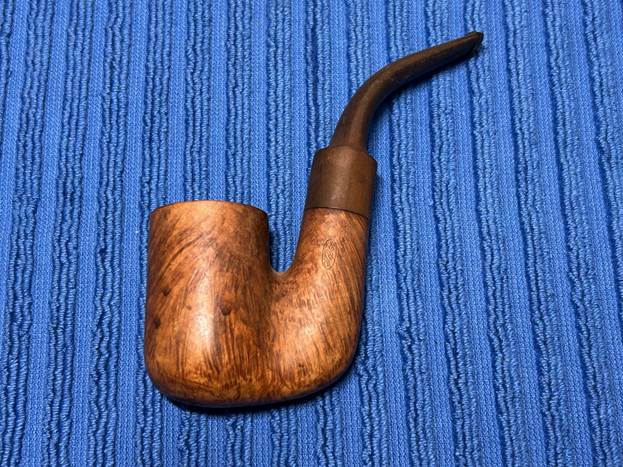
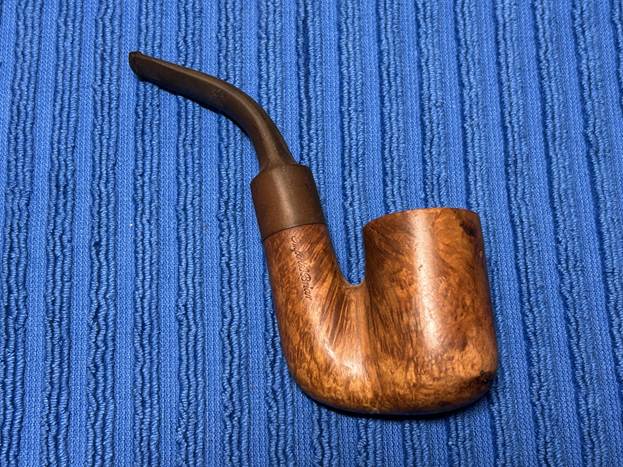
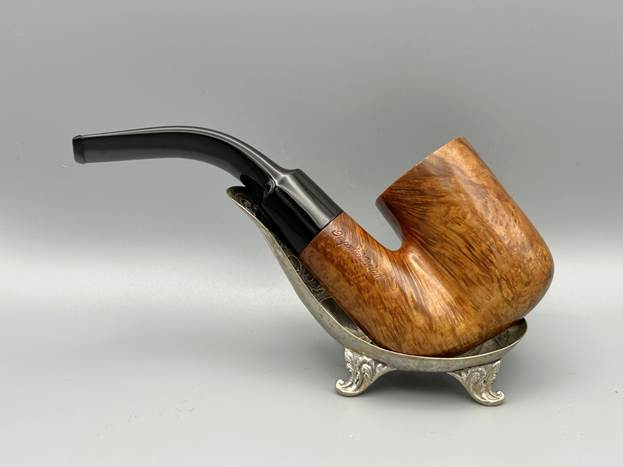
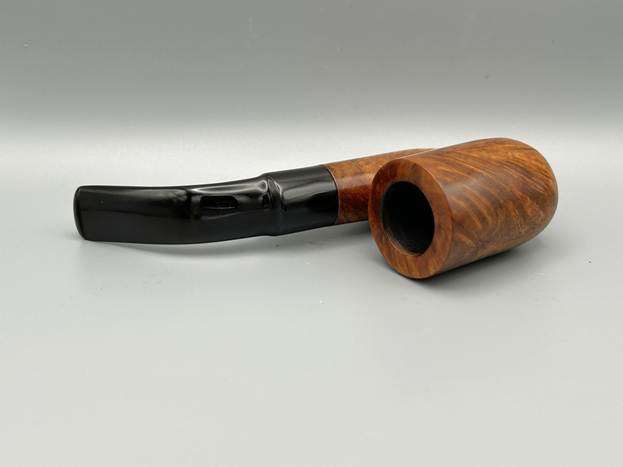
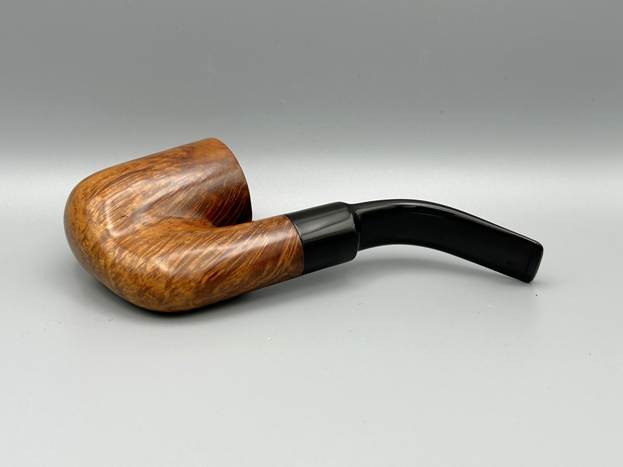
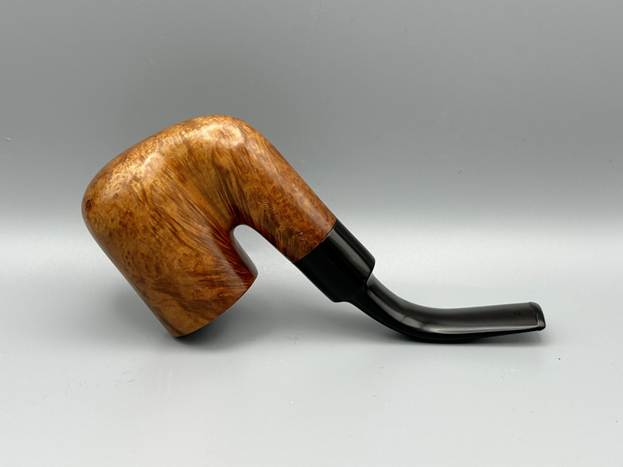
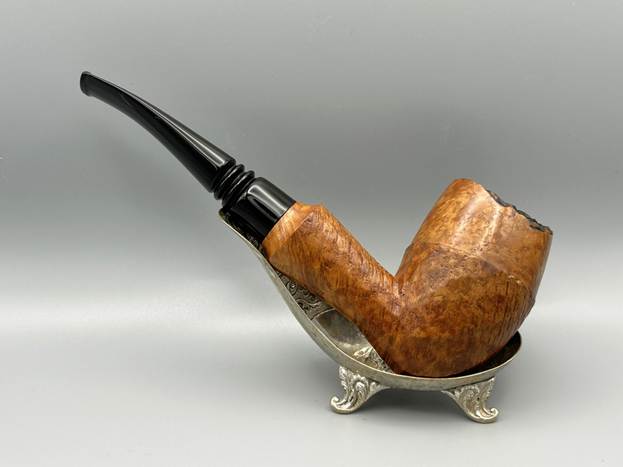
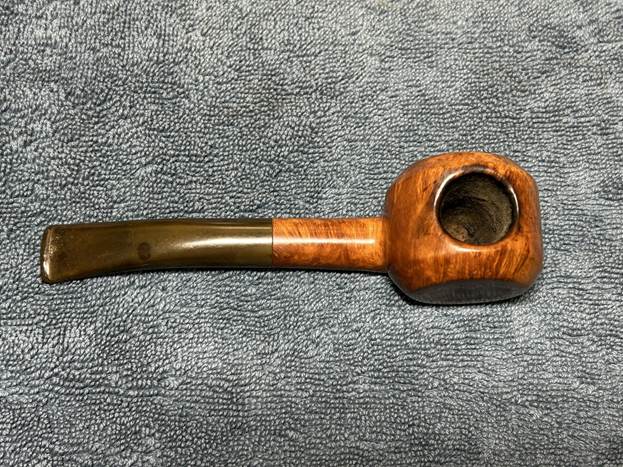
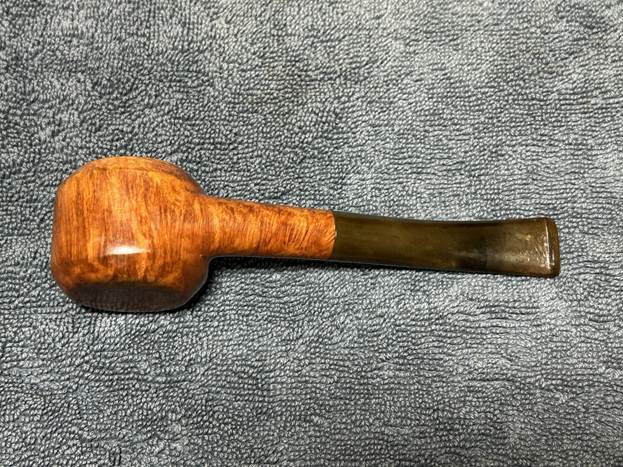
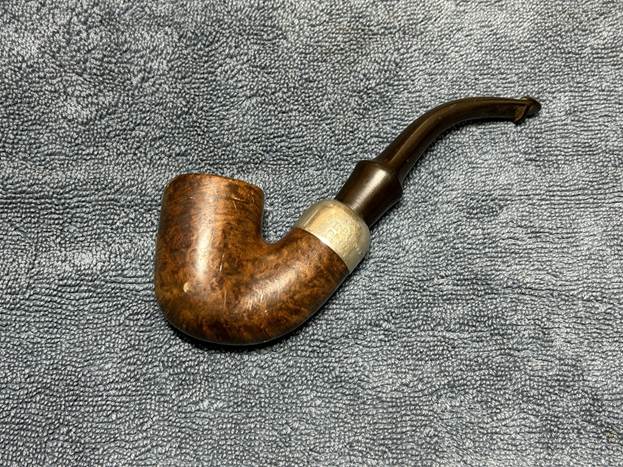
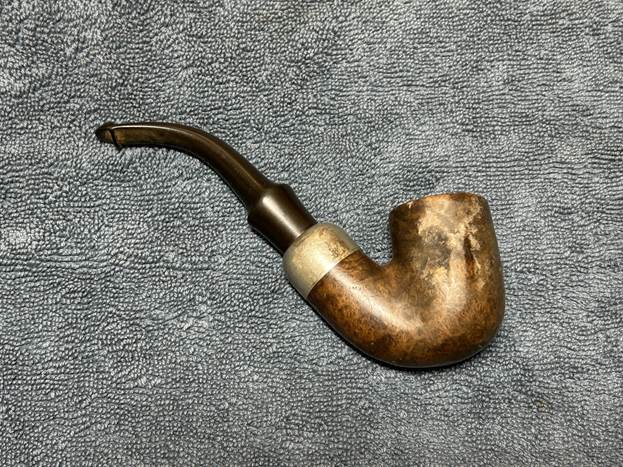
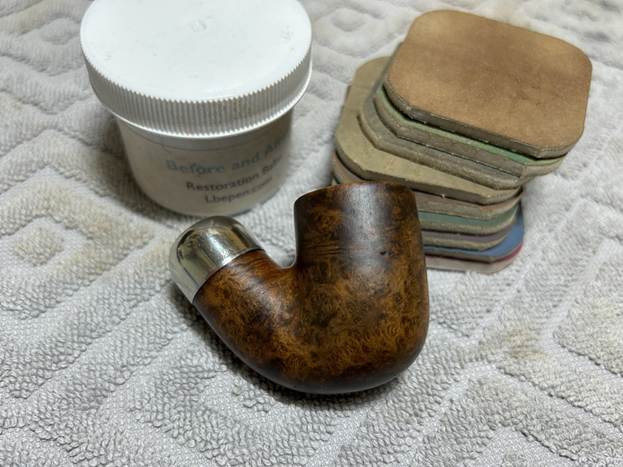
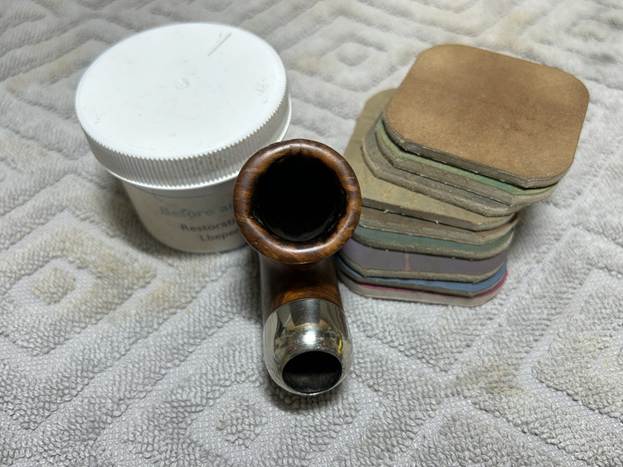
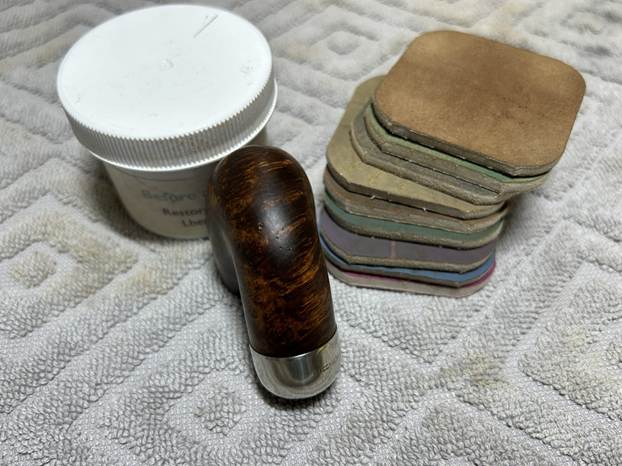
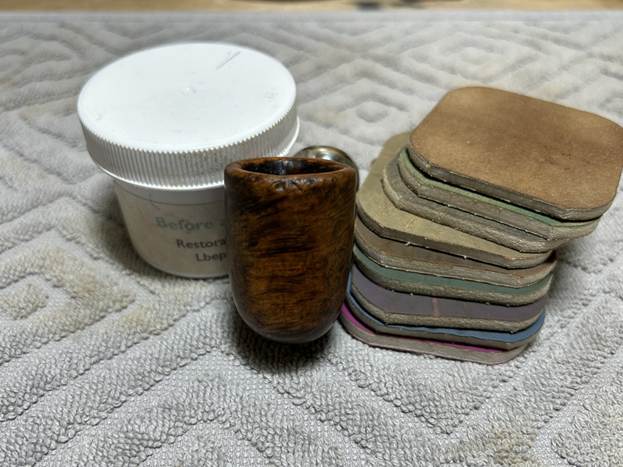
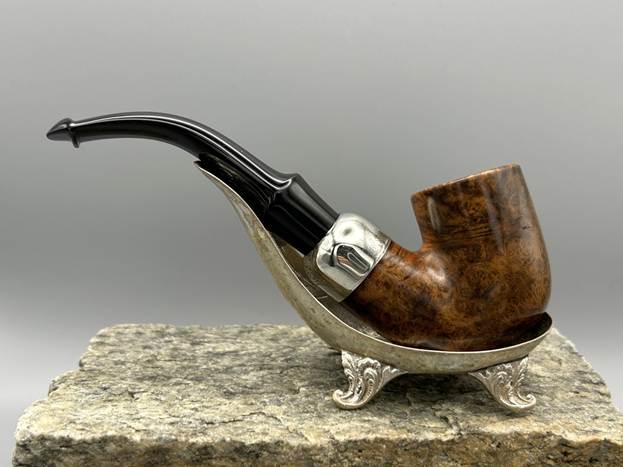
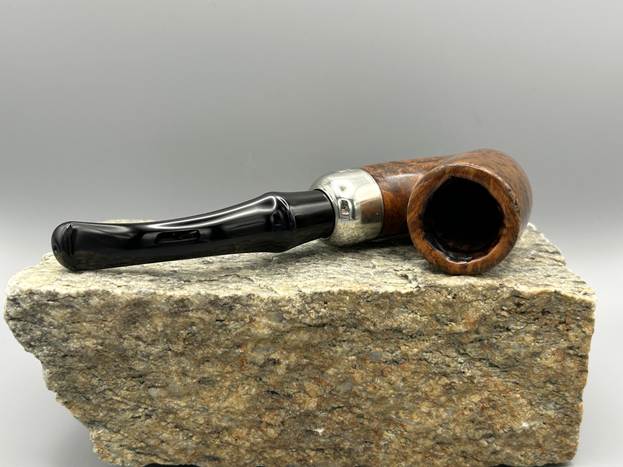
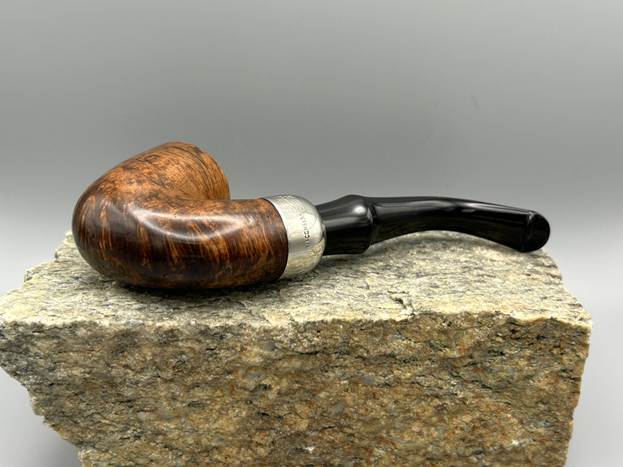
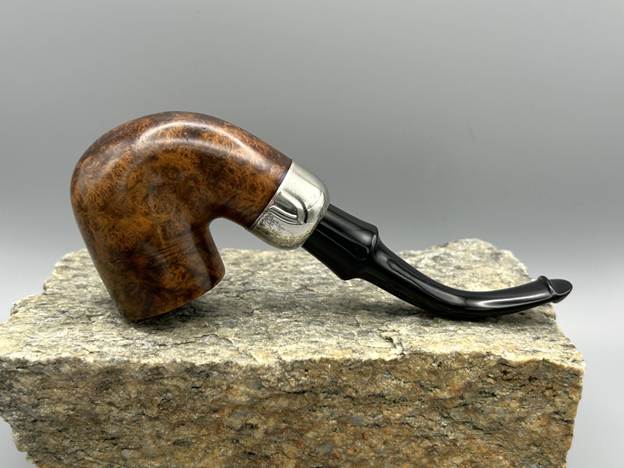
A Handsome Old Bruyere 56 Prince with a Special ‘Sitter’ Feature


by Kenneth Lieblich

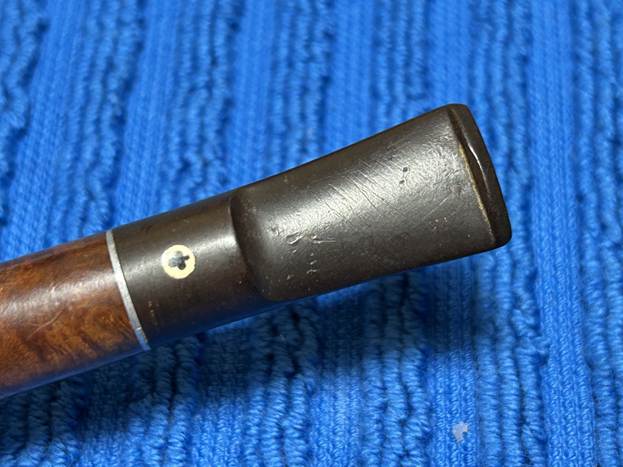
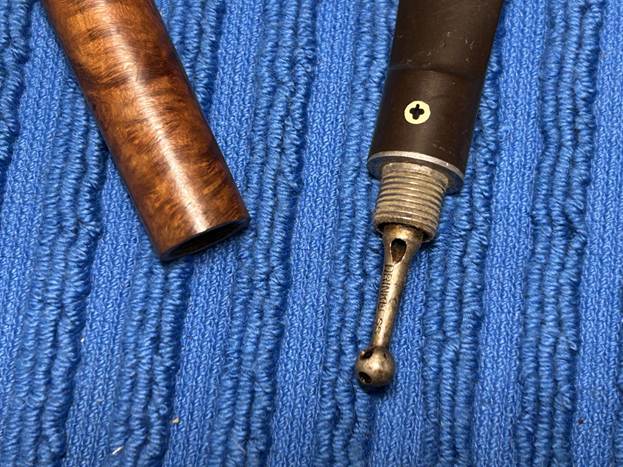
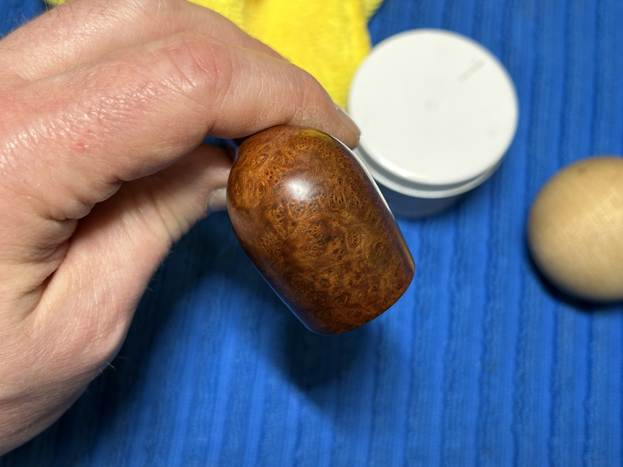
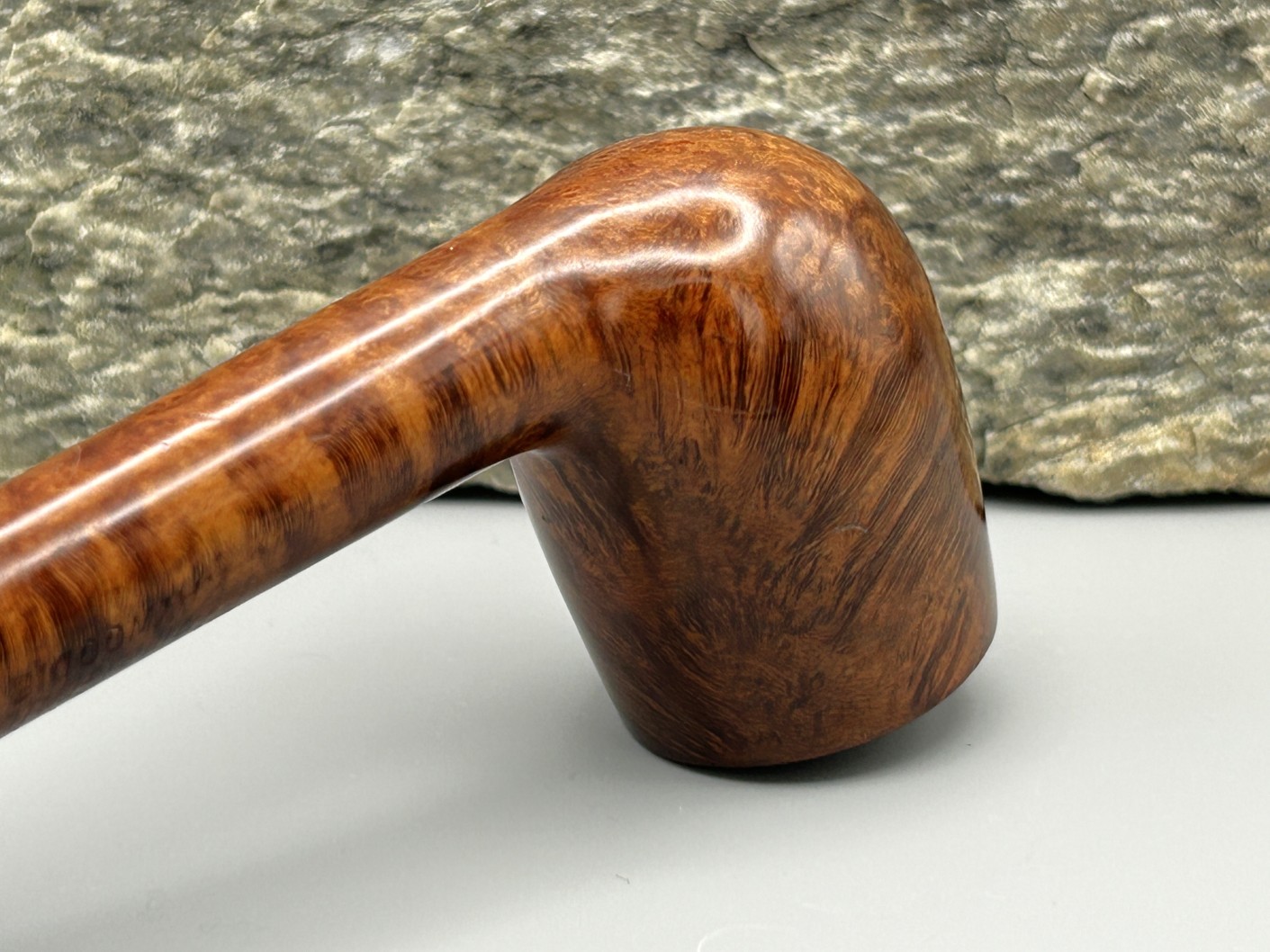
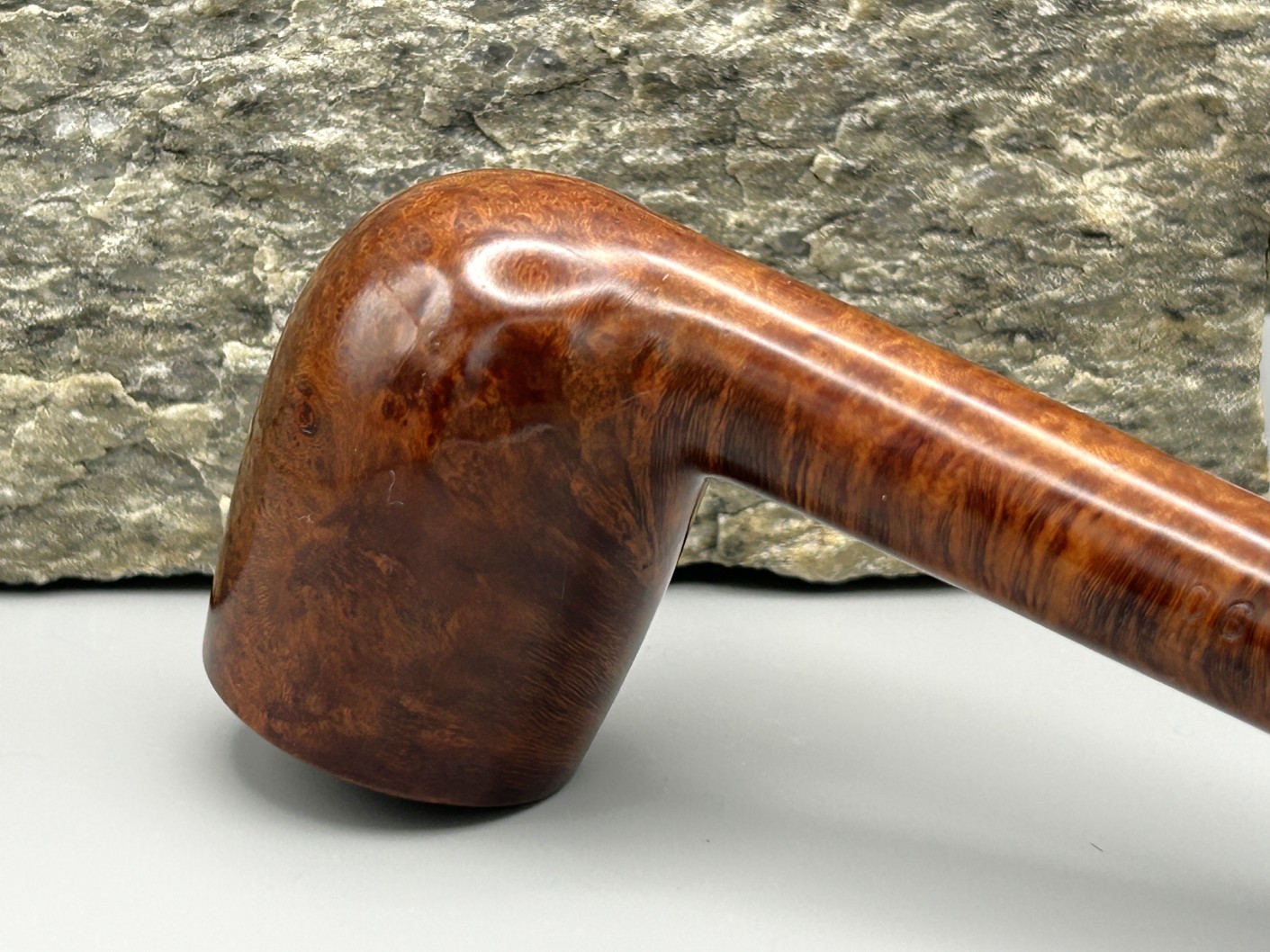
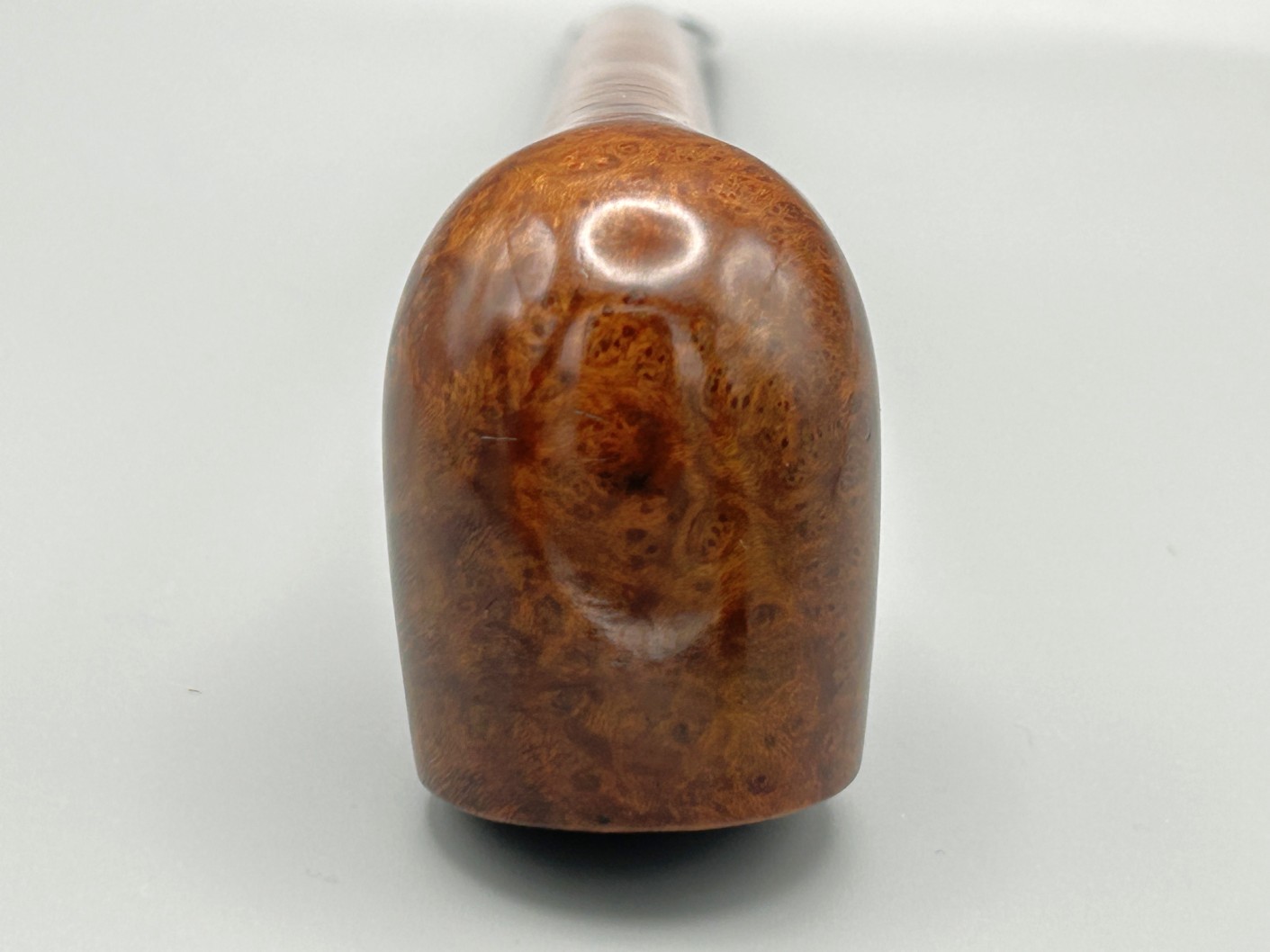
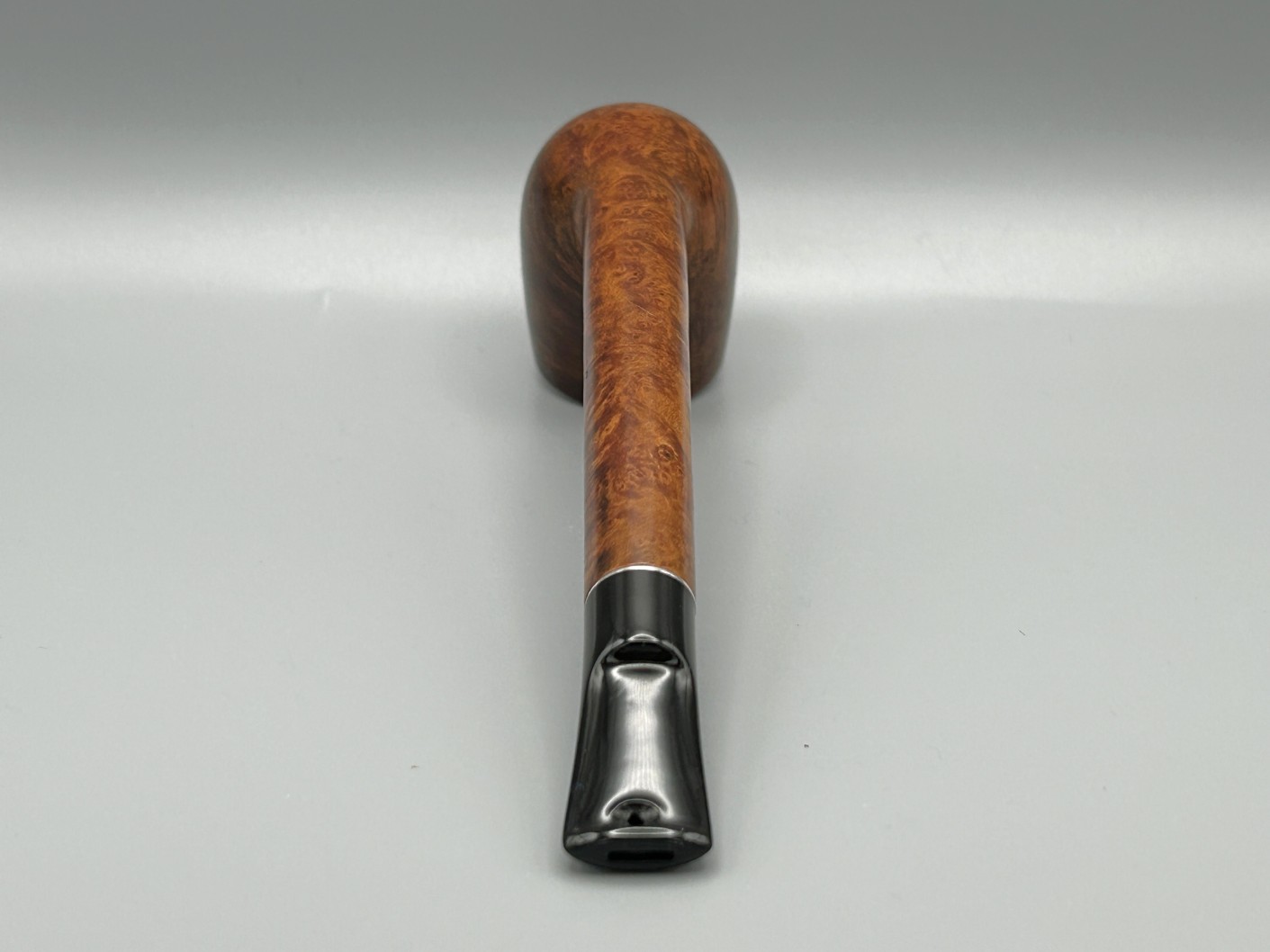
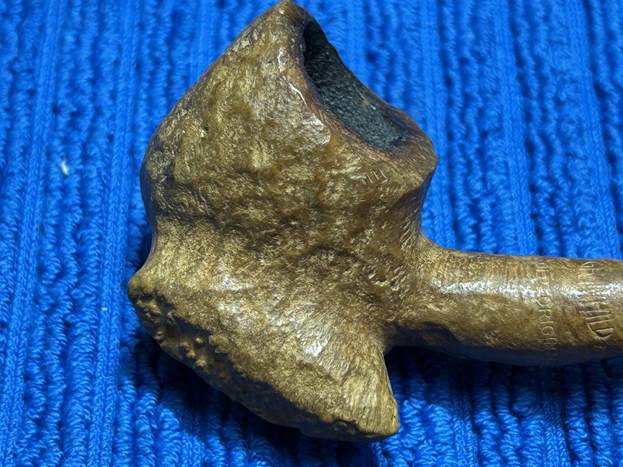
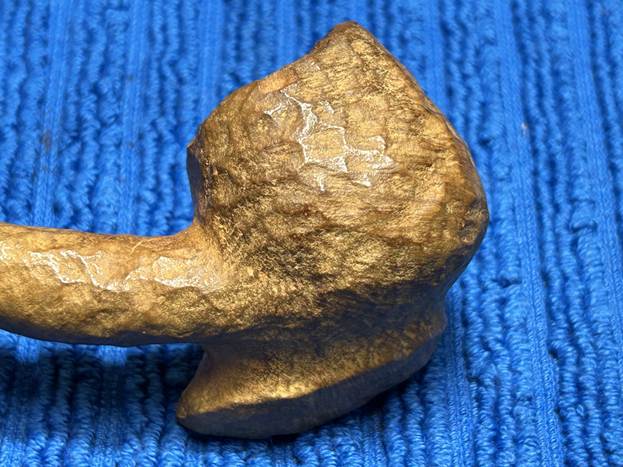
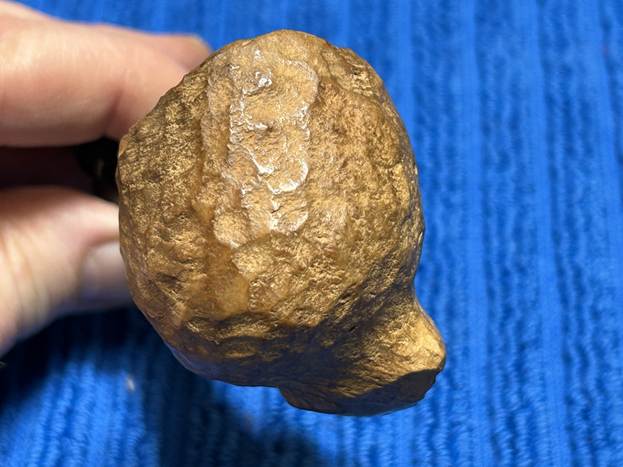
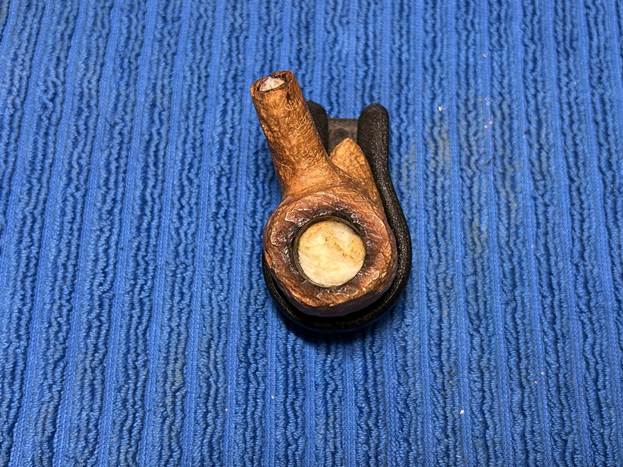
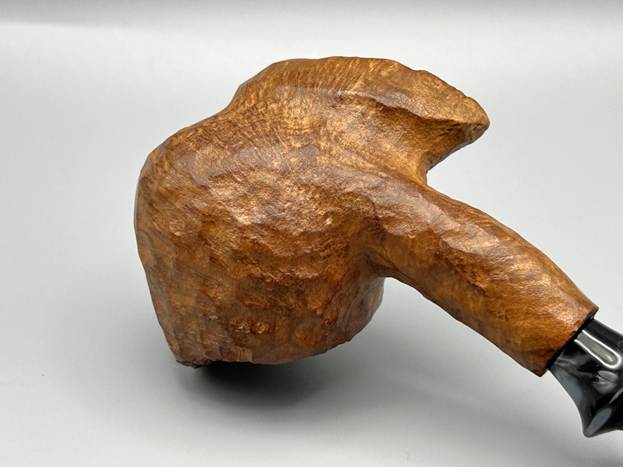
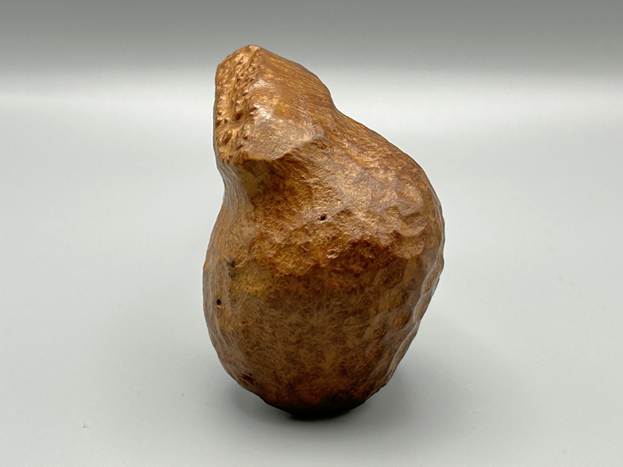
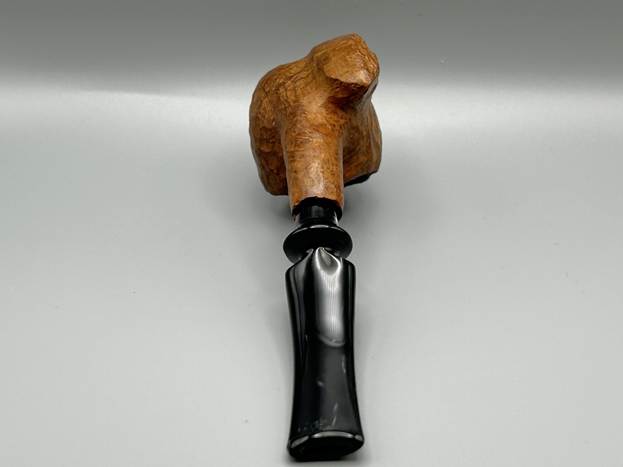
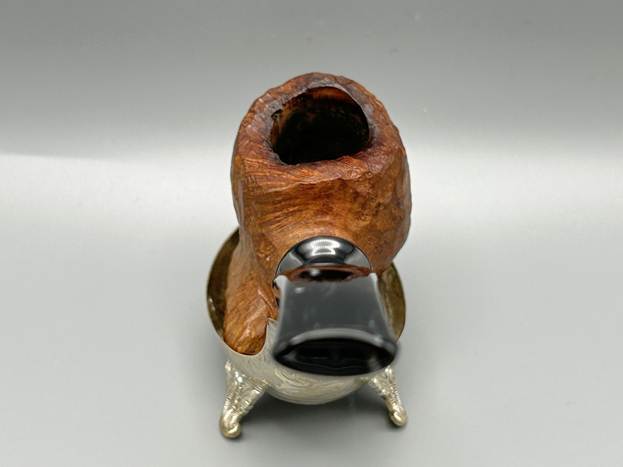
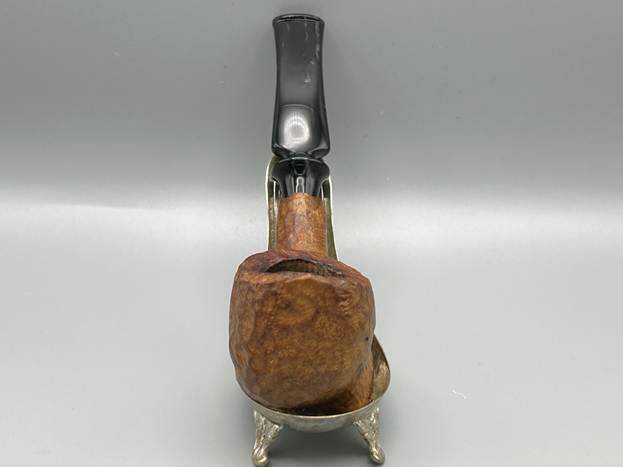
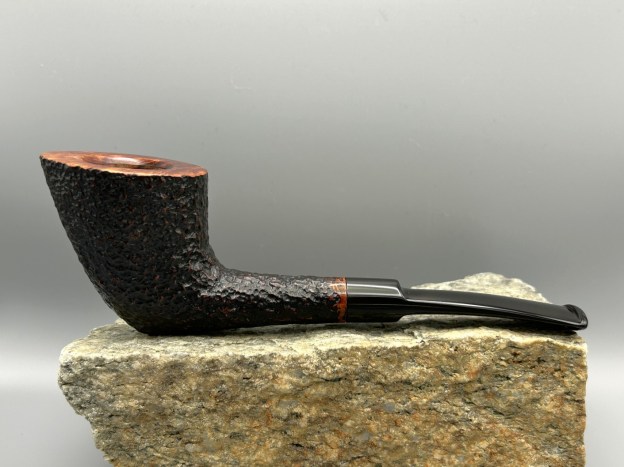
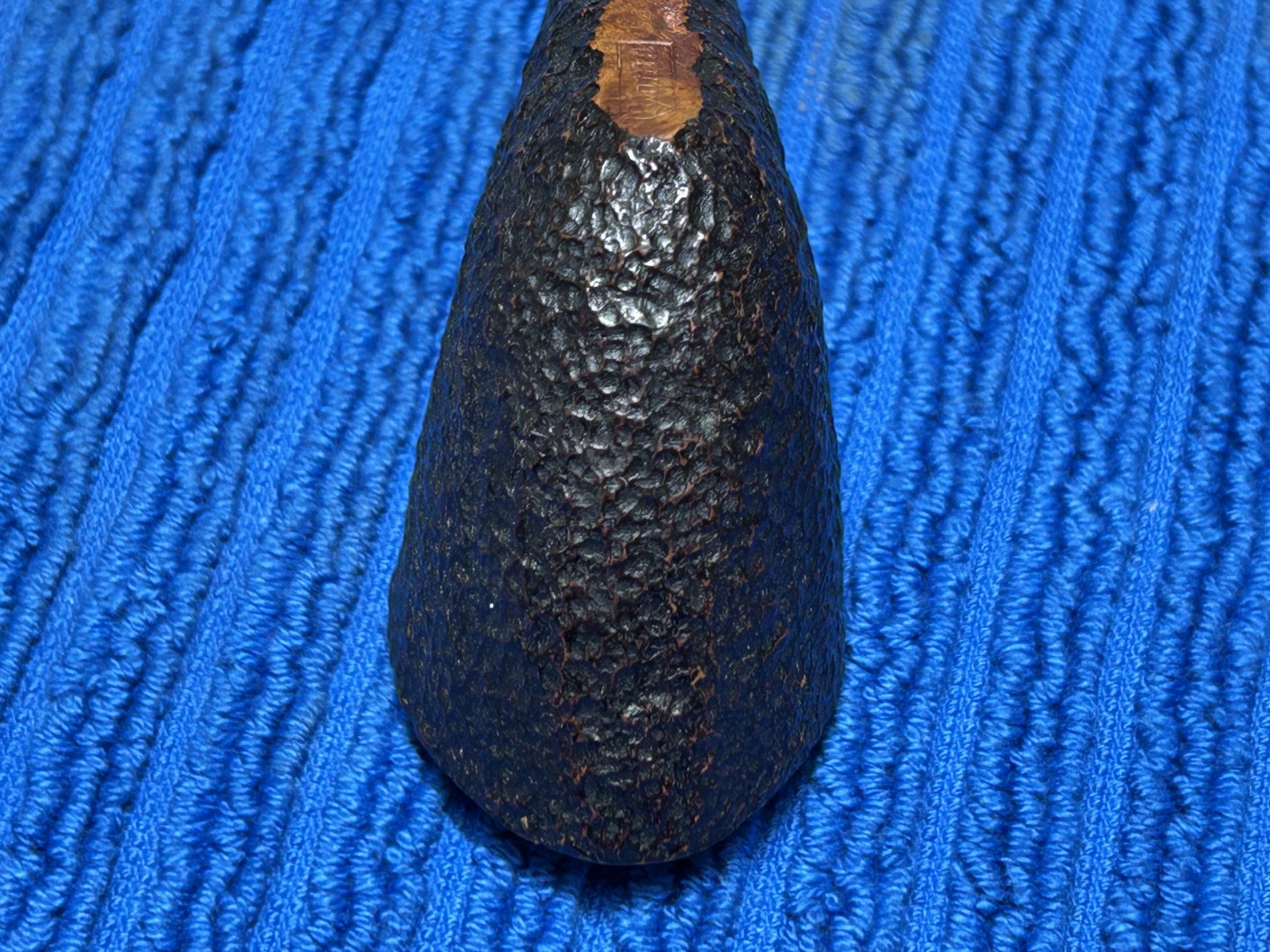
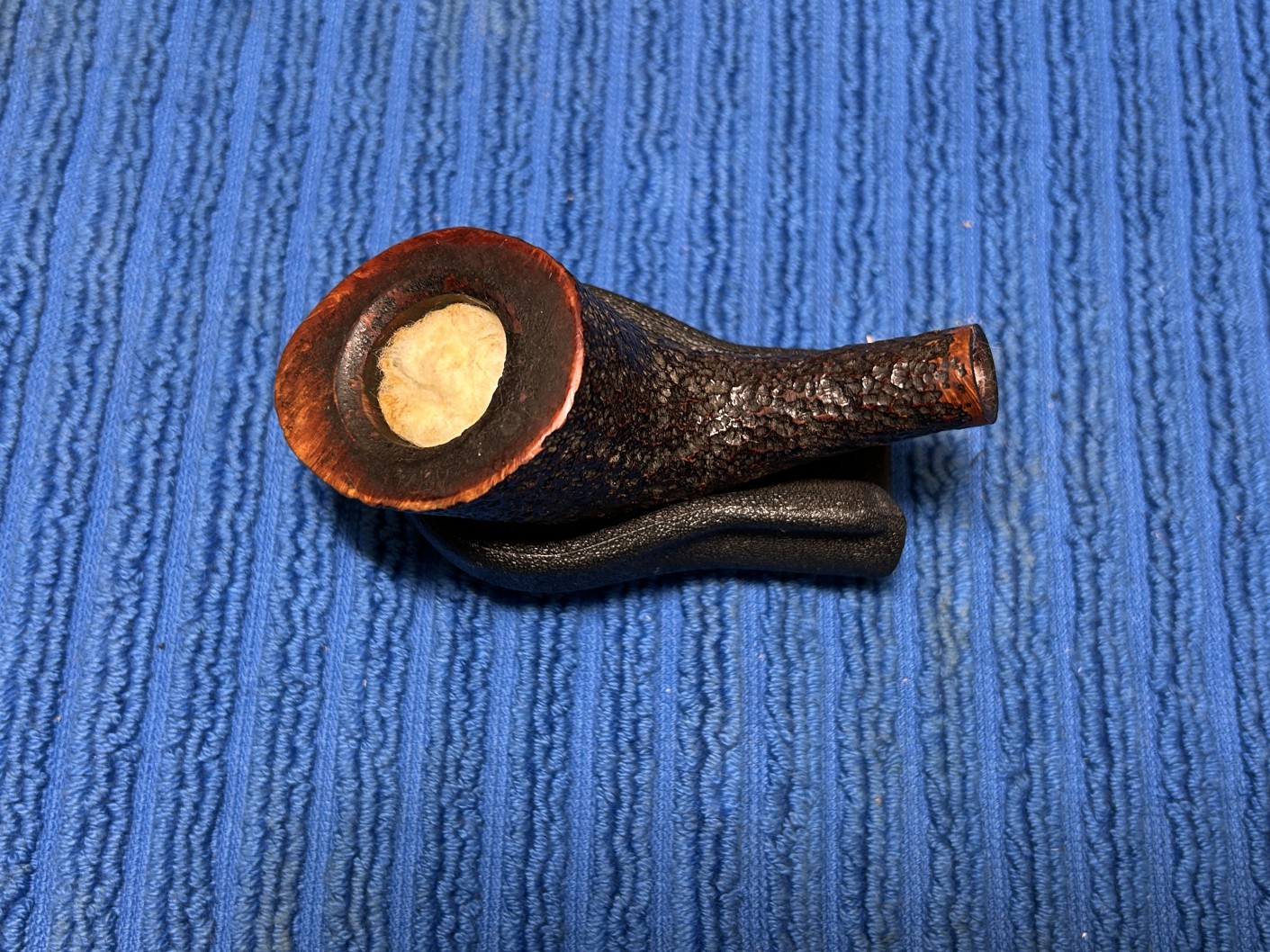
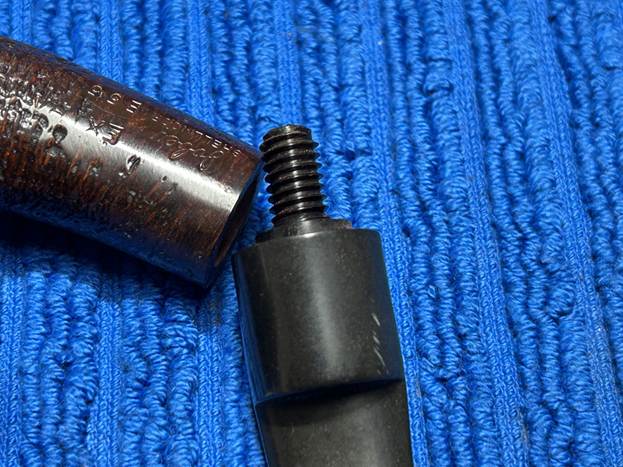
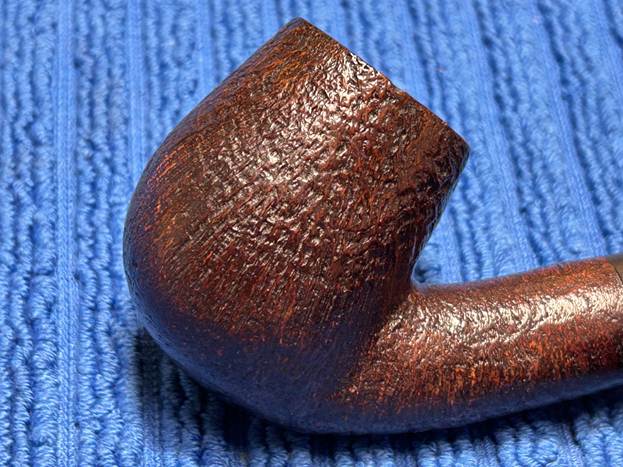
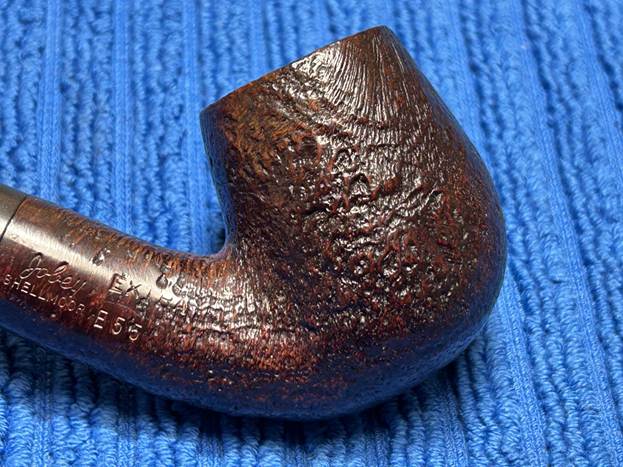
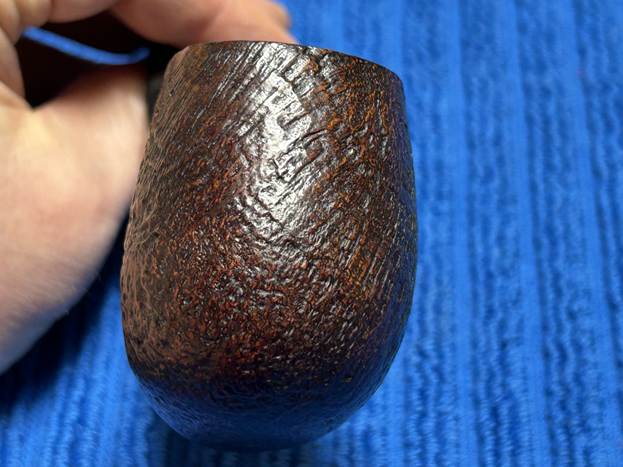
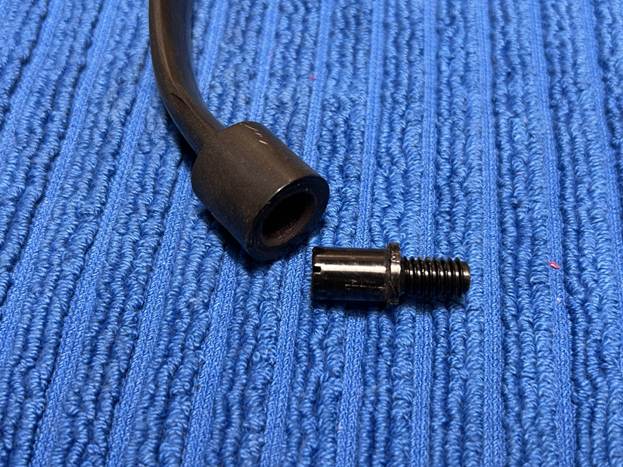
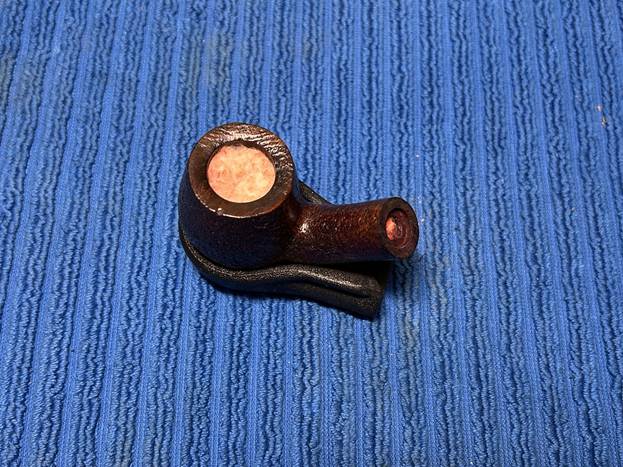
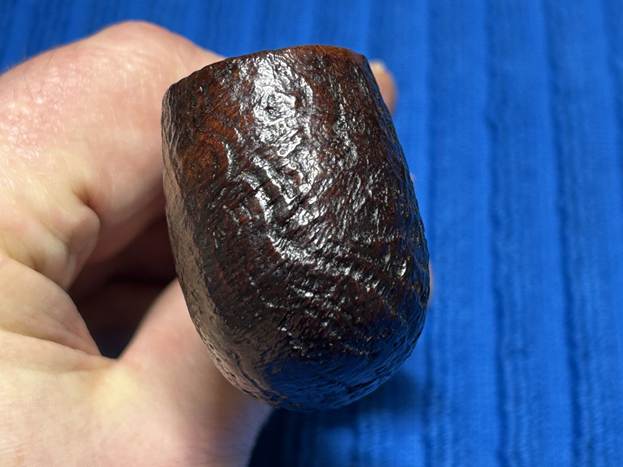
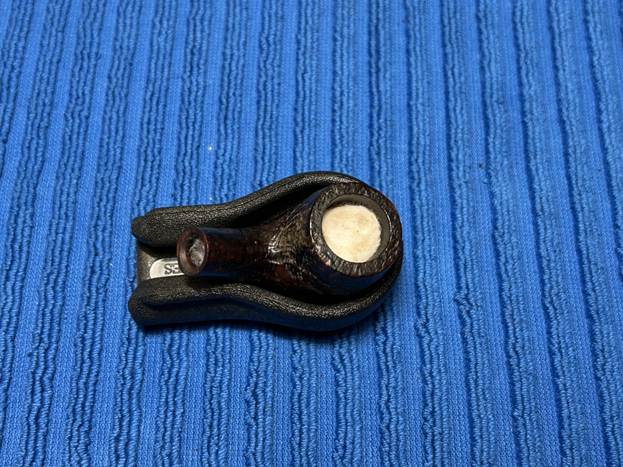
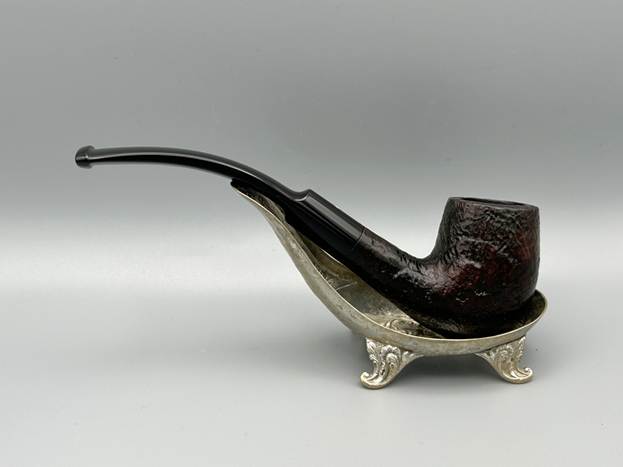
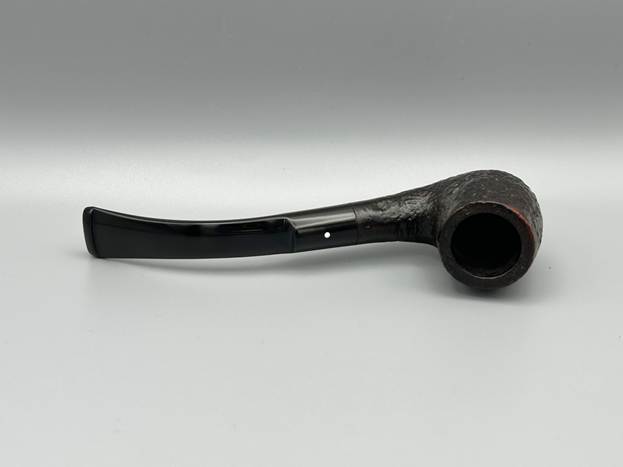
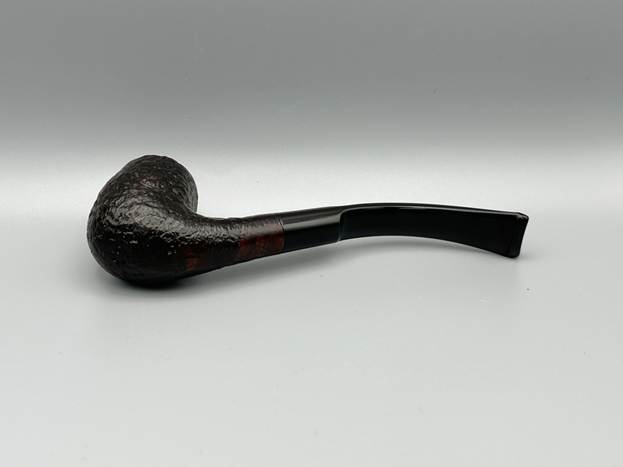
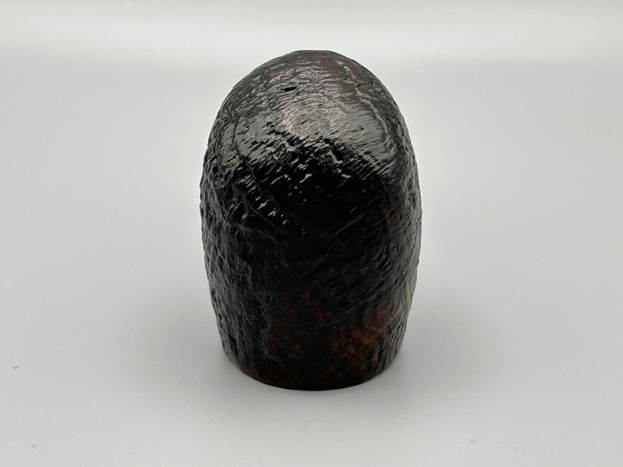
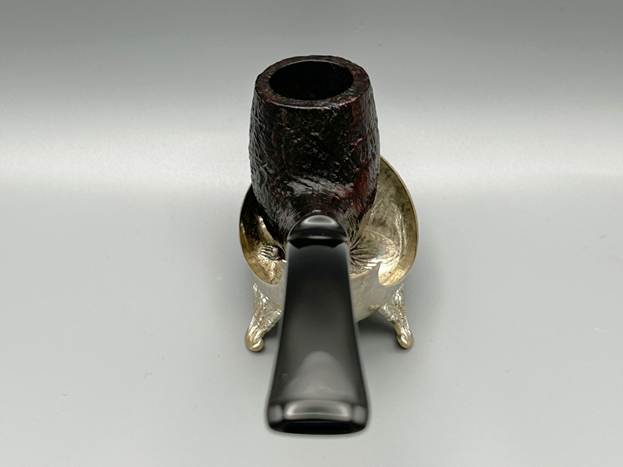
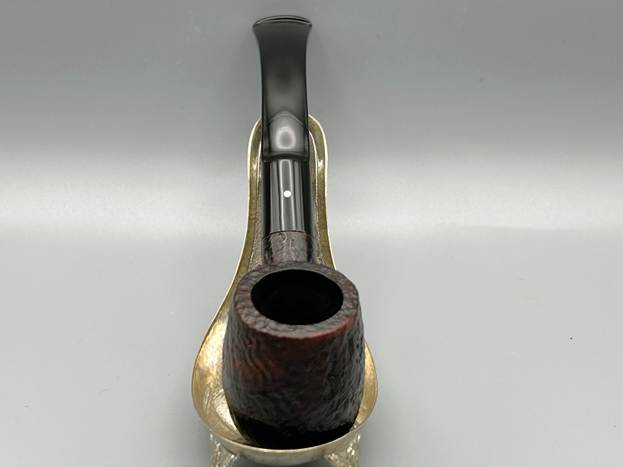
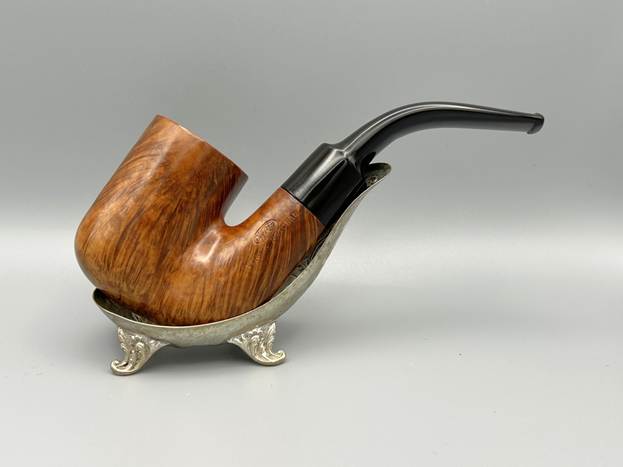
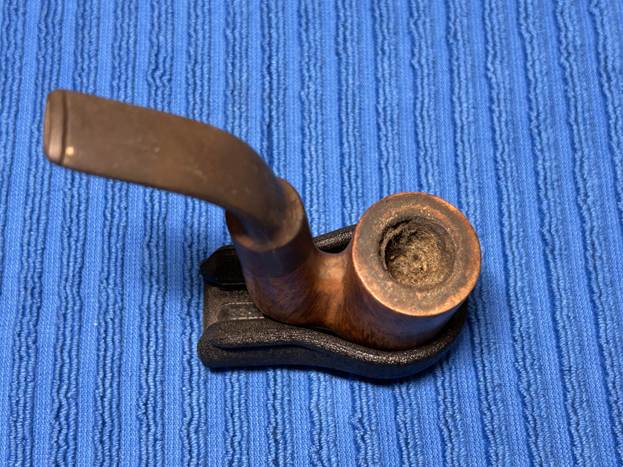
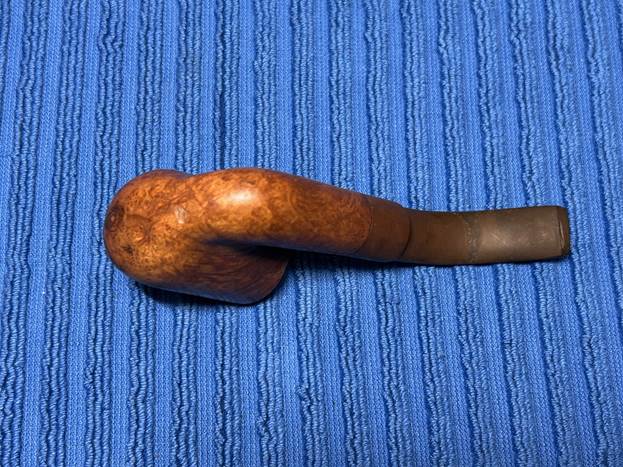
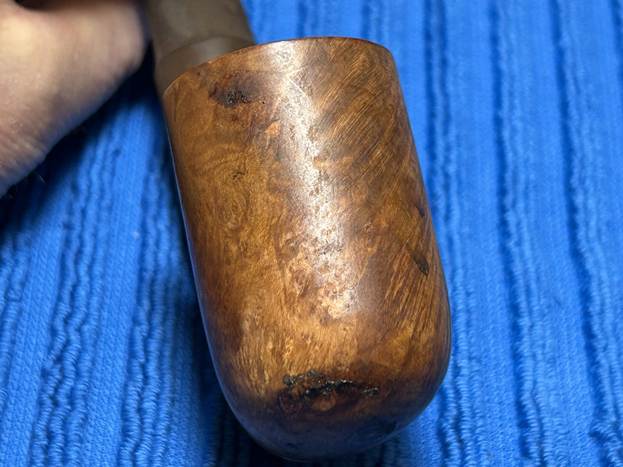
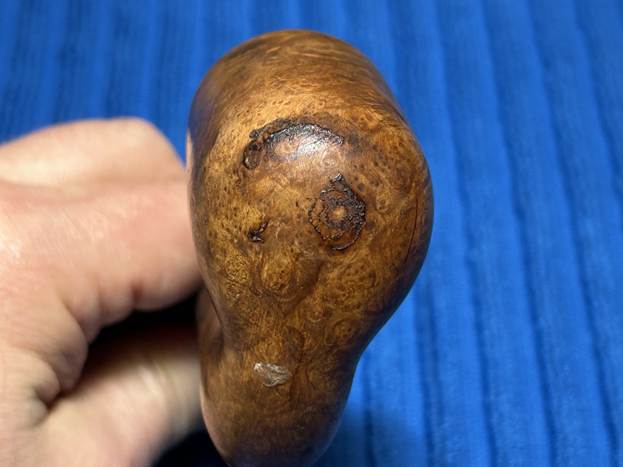
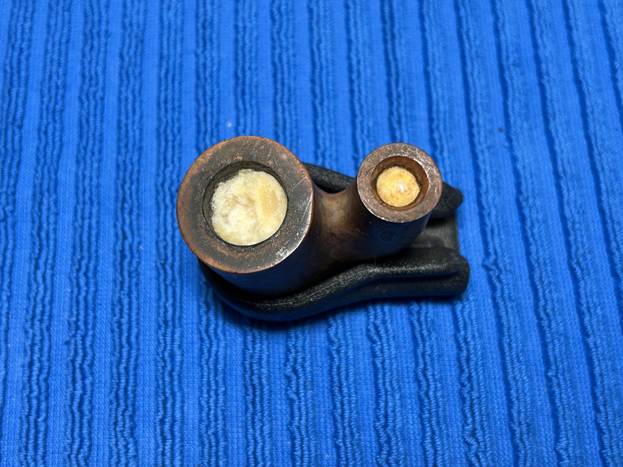
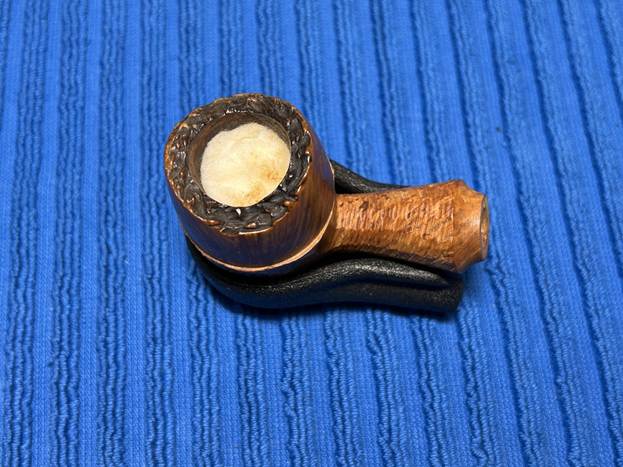
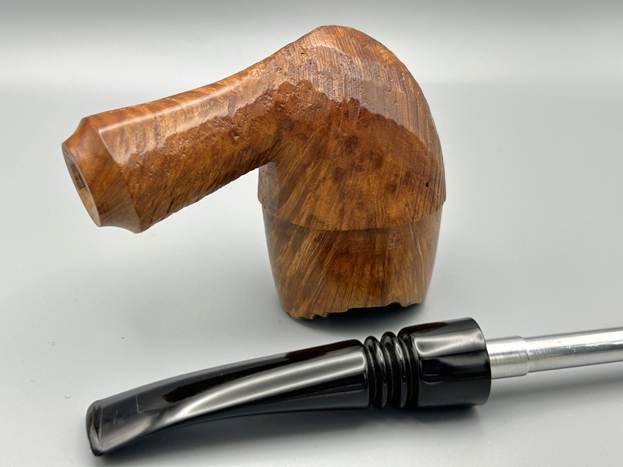
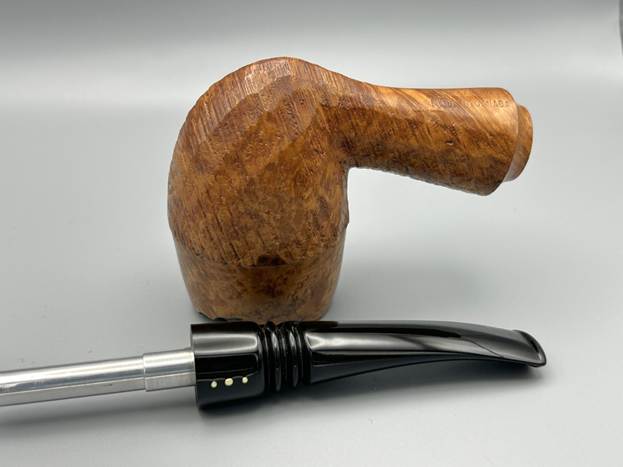
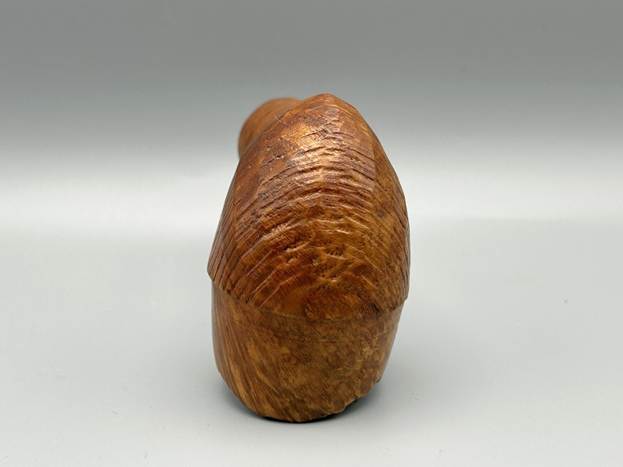
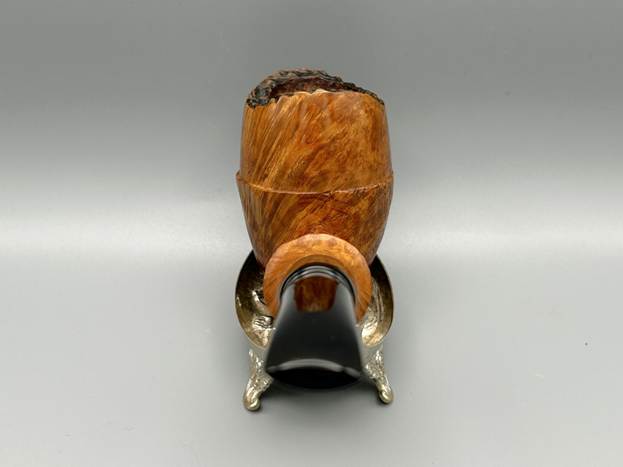
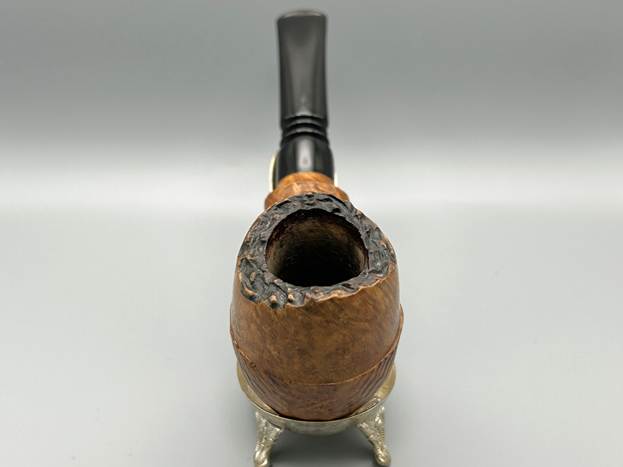
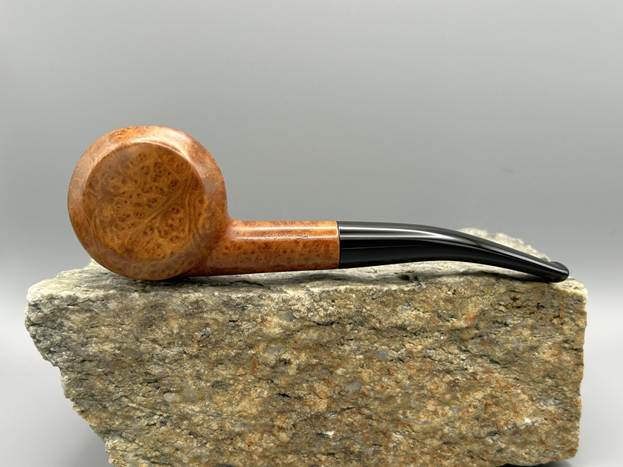
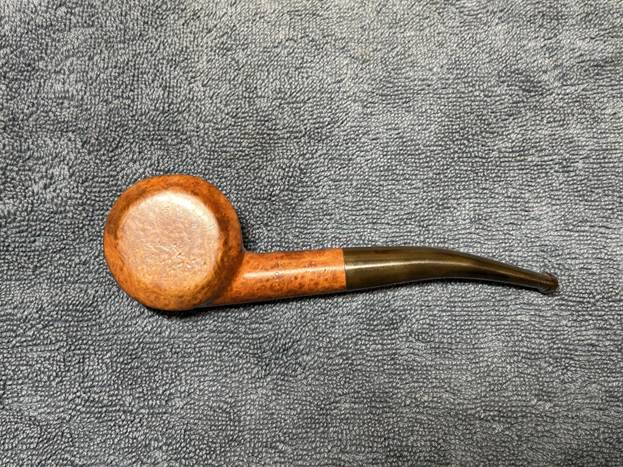
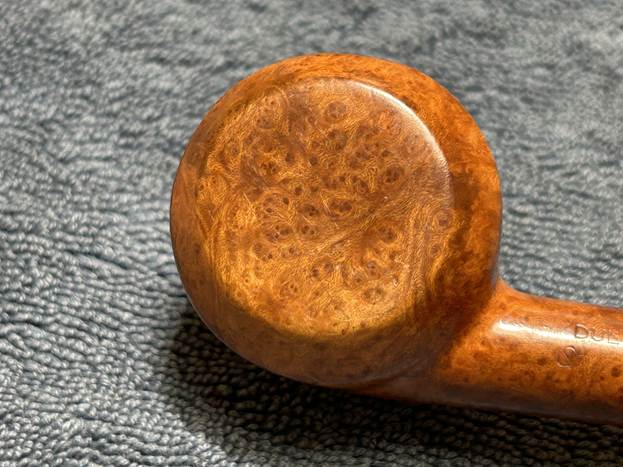
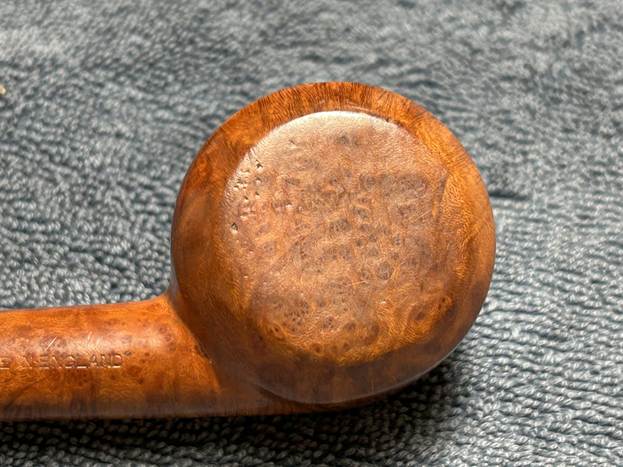
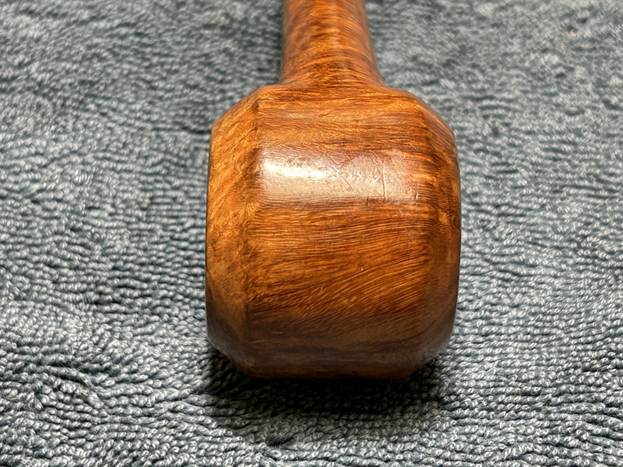
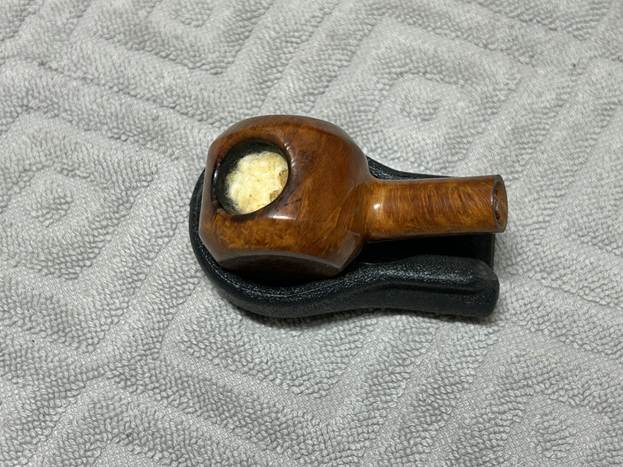
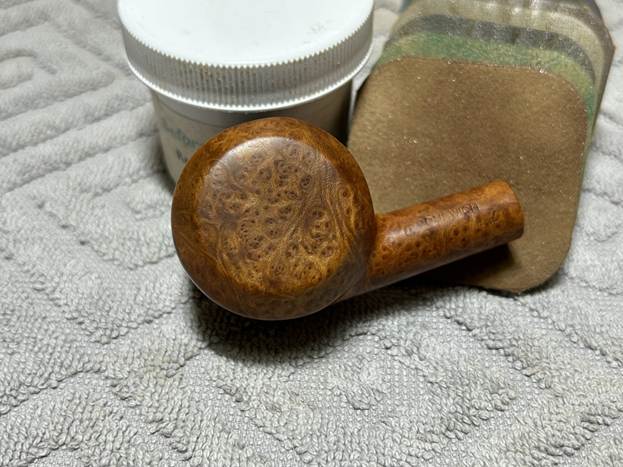
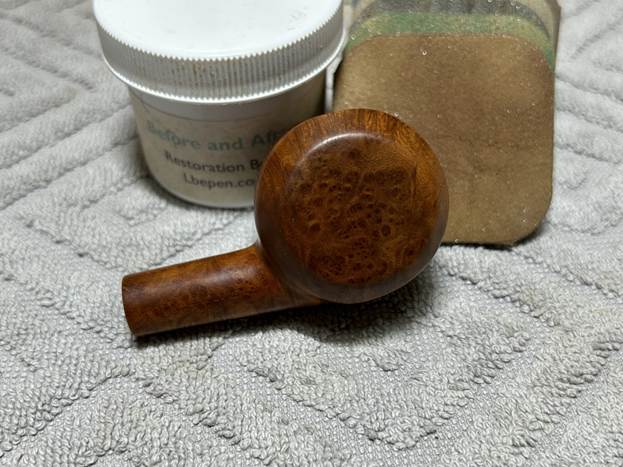
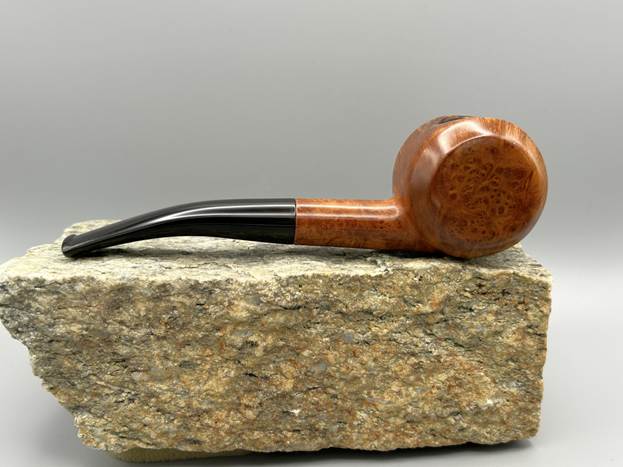
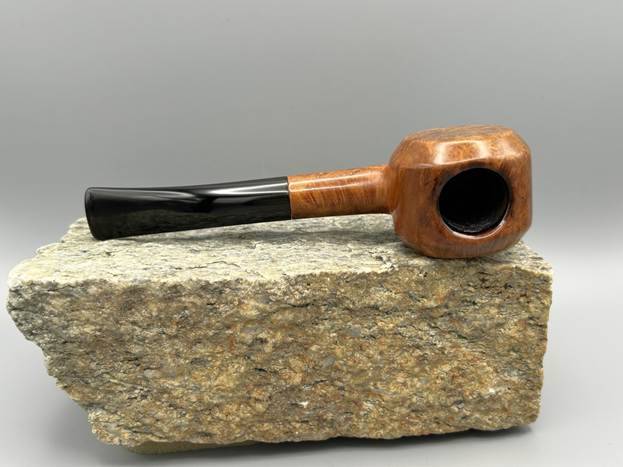
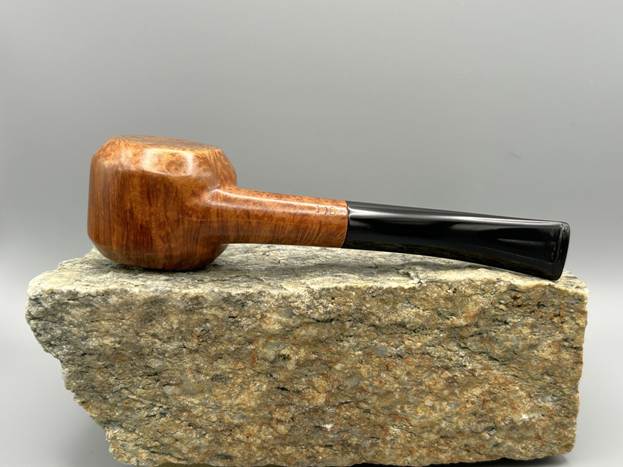
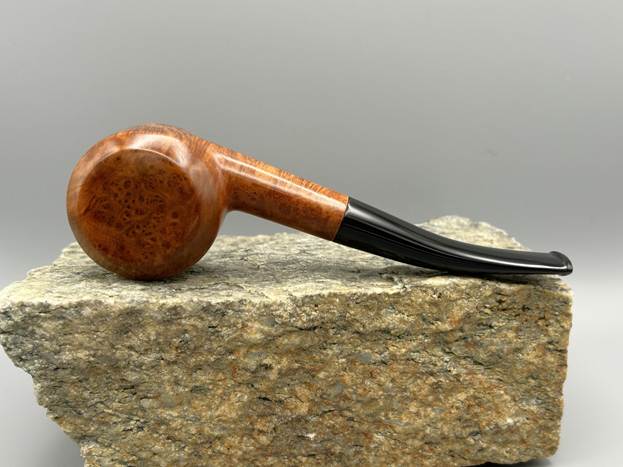
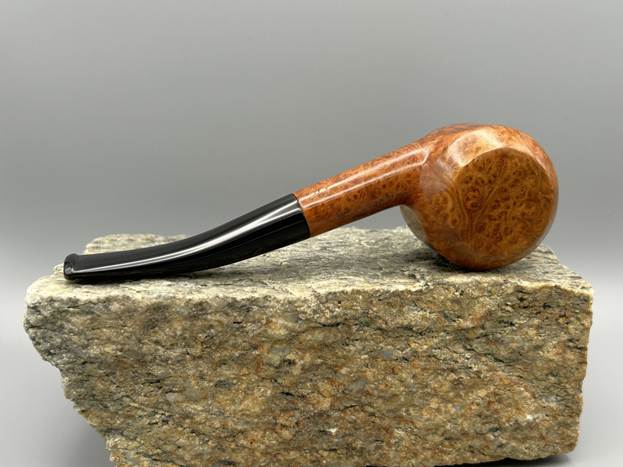
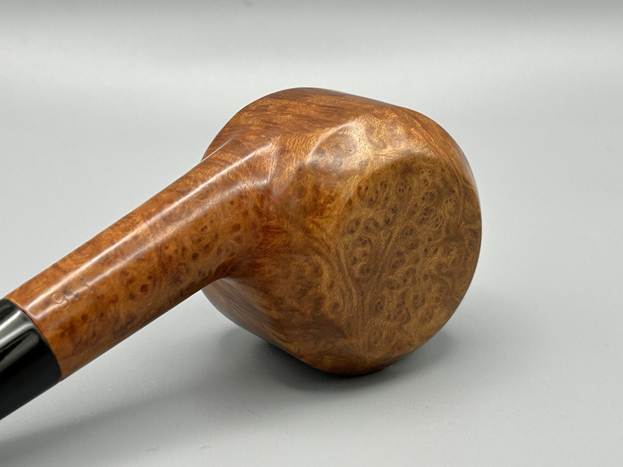
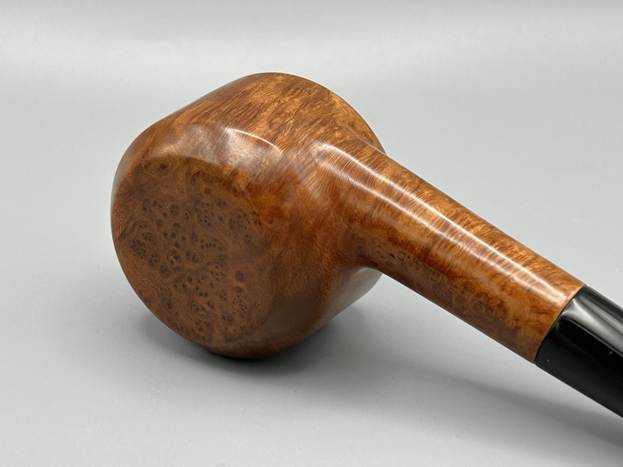
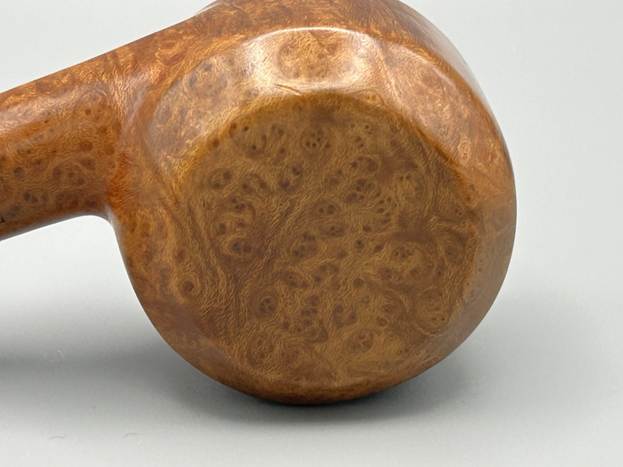
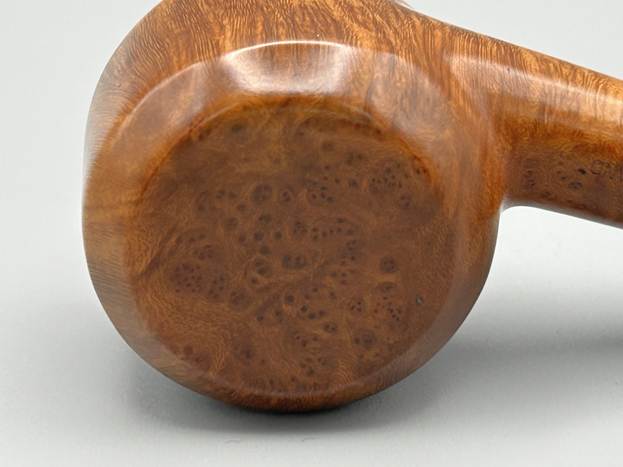
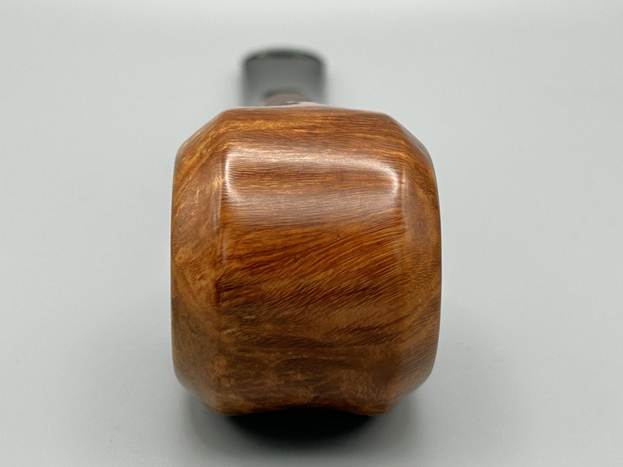
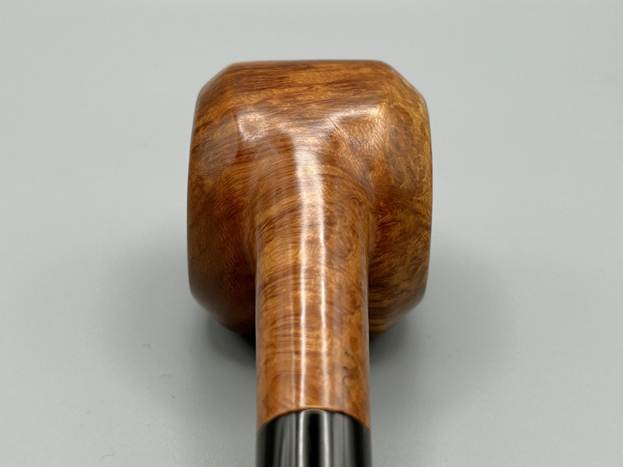
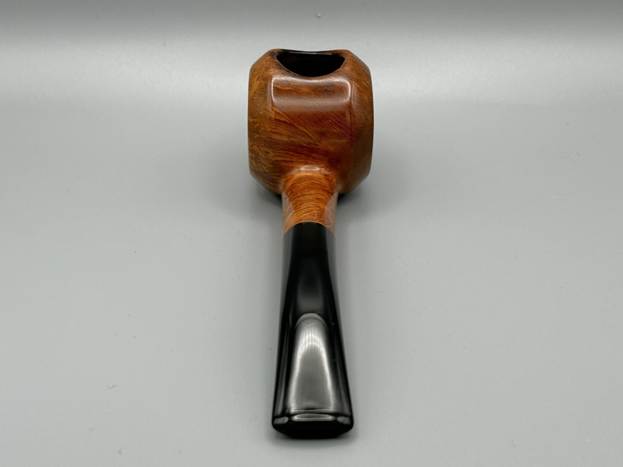
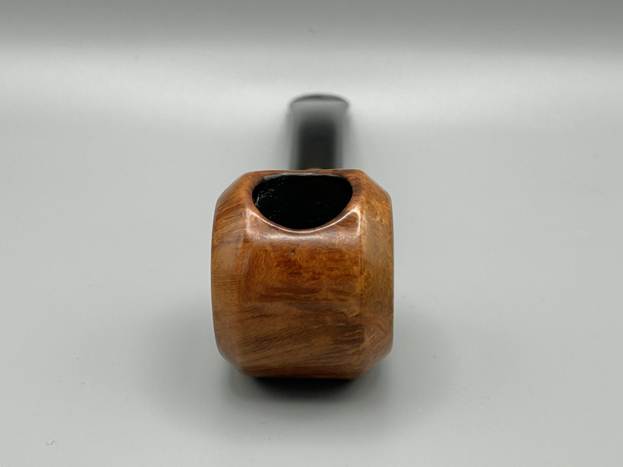
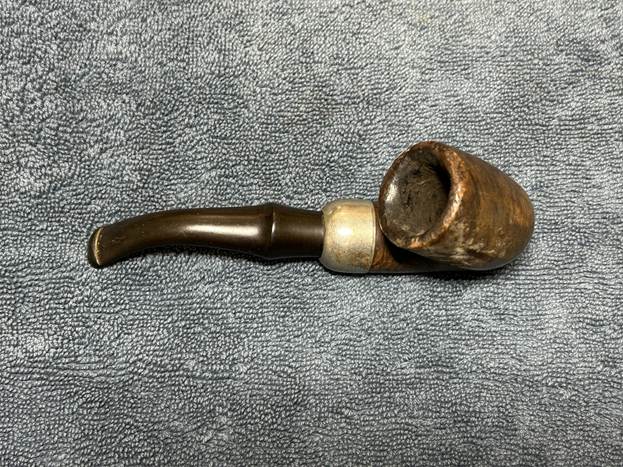
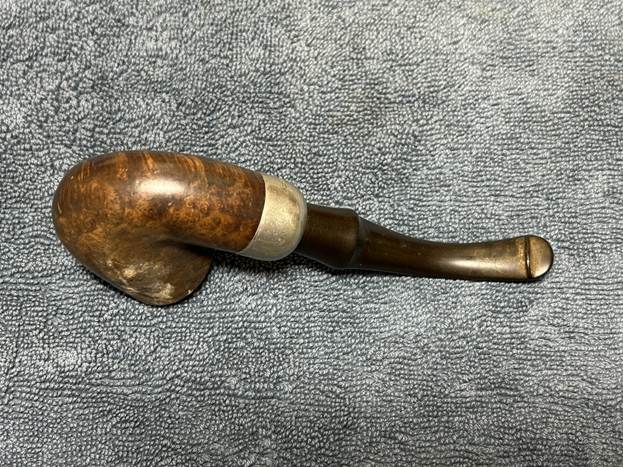
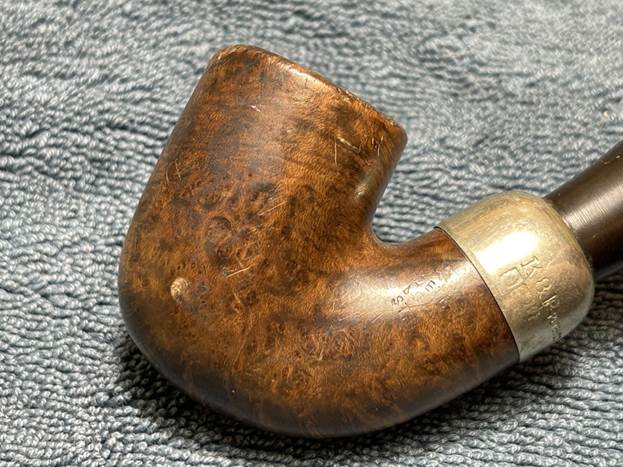
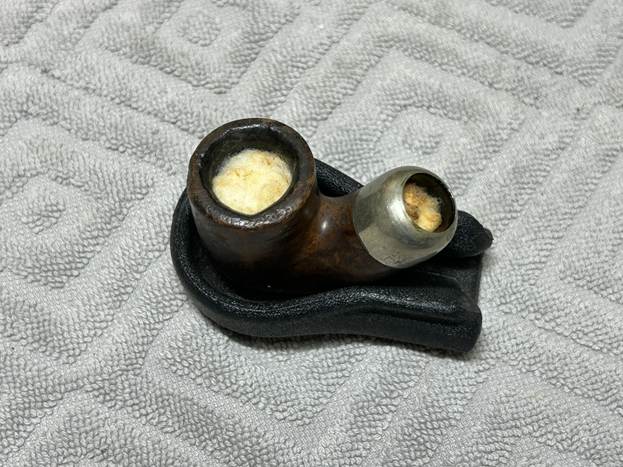
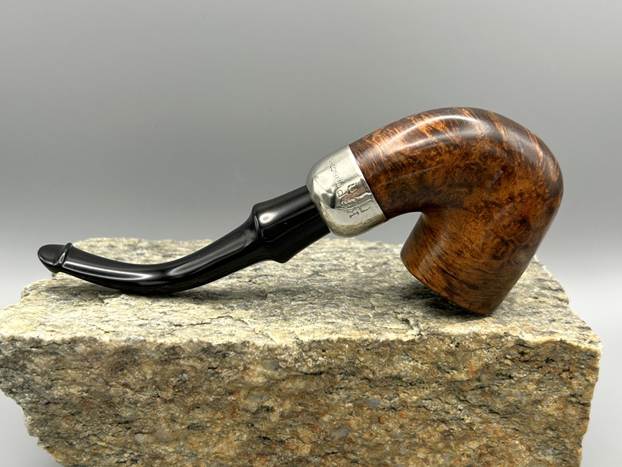
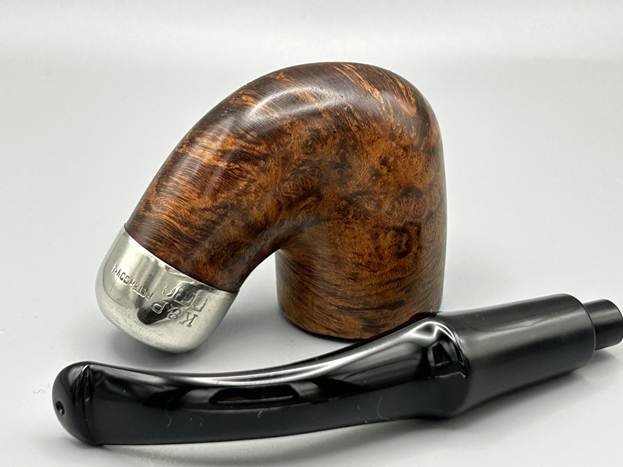
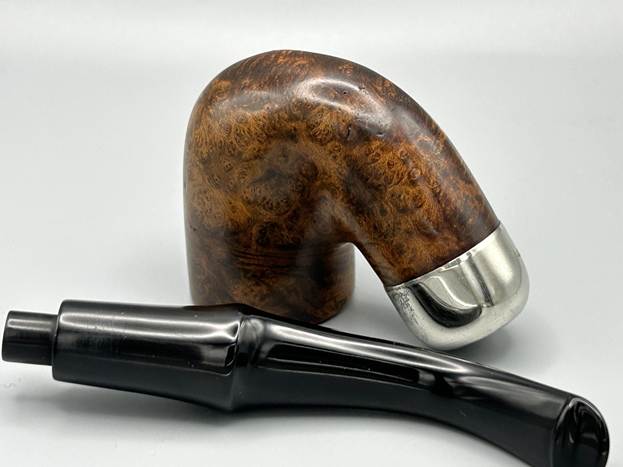
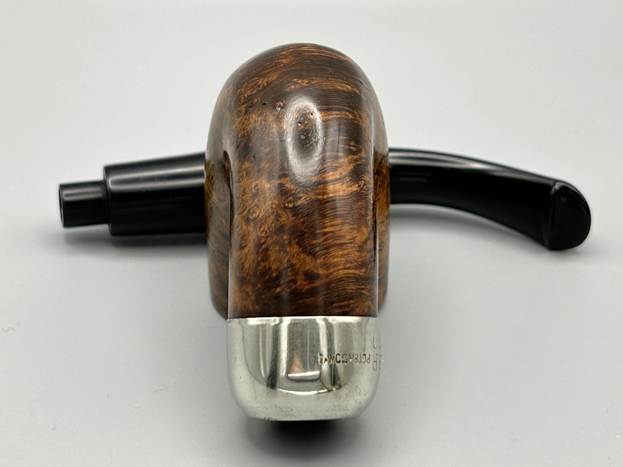
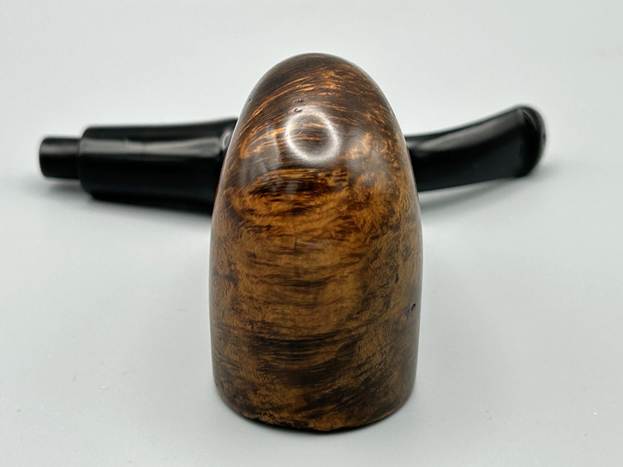
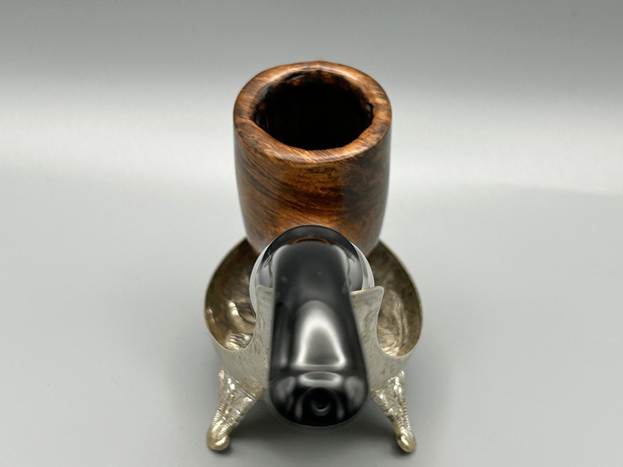
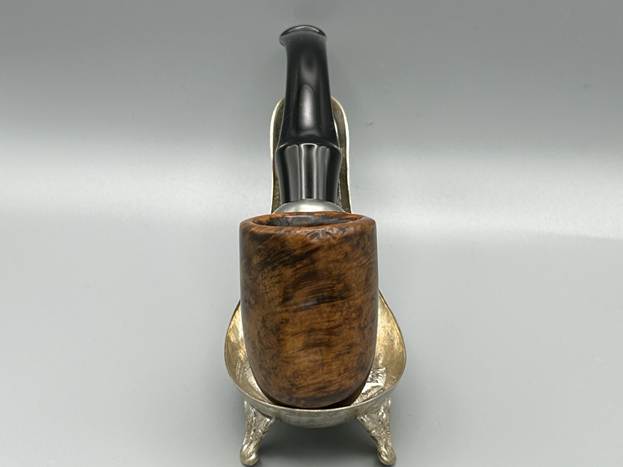
This pipe is quite fascinating and quite delightful, as it has a highly unusual feature. We don’t normally associate the prince pipe shape with the function of being a ‘sitter’, but this one has that feature – and with a screw-in base. Really nifty! I found it at one of those ‘antique’ fairs. You know the sort: the stuff they are selling makes the word ‘antique’ do an awful lot of heavy lifting. Anyway, I saw the pipe, thought it was good-looking, and then turned it over. Wow. It has a base that screws into the bottom of the bowl with a bone tenon. I thought that this one was really interesting – I hope you will too. This is a great pipe for the collector of unusual pieces.

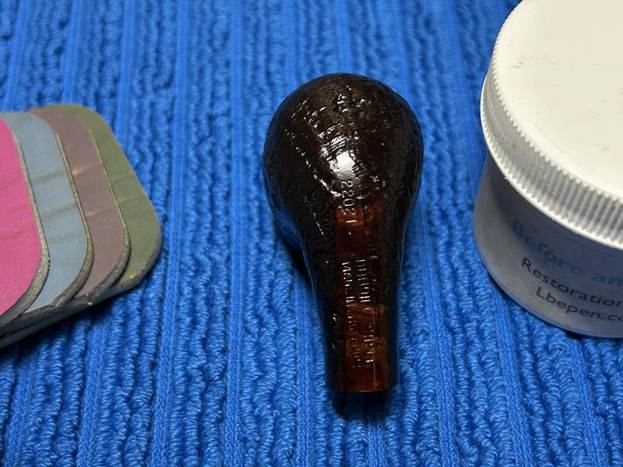
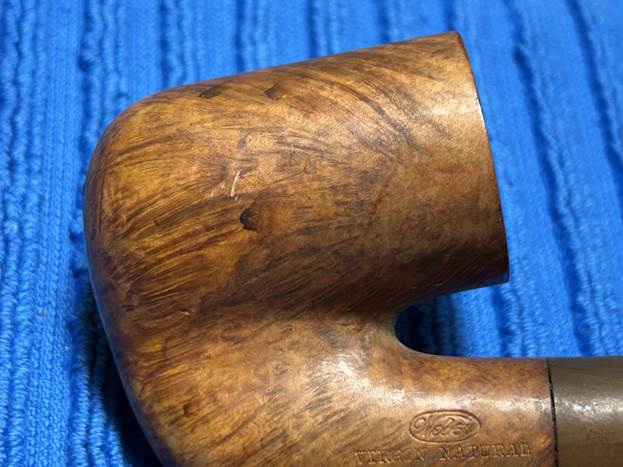
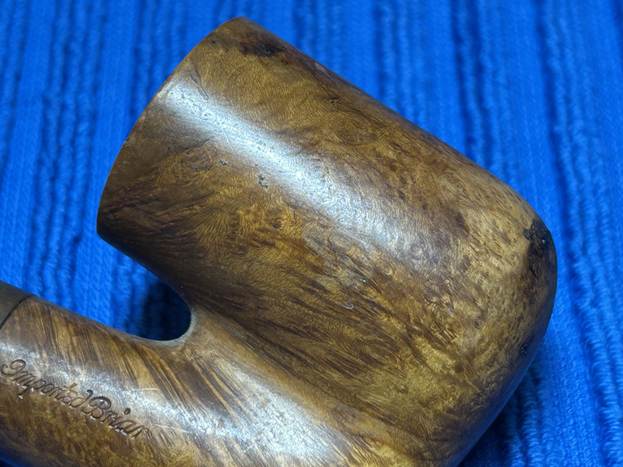
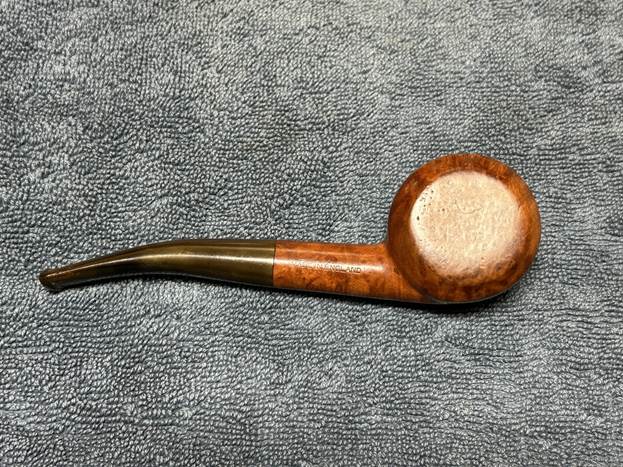
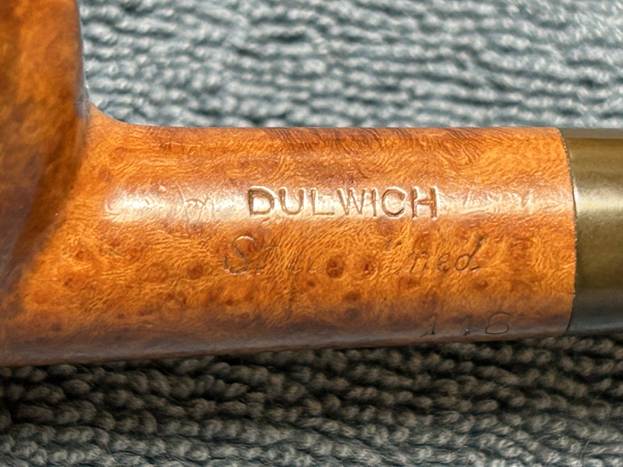
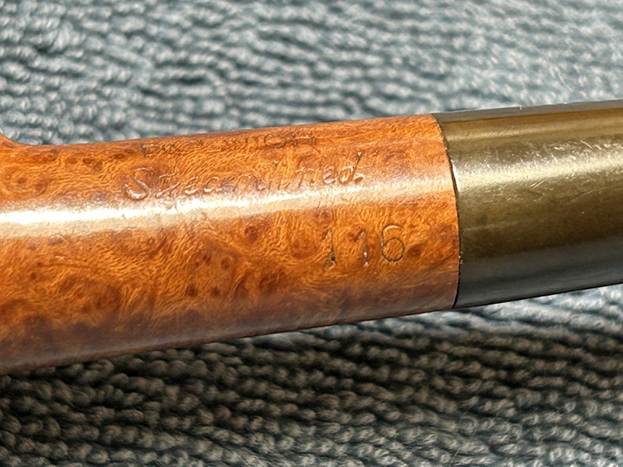
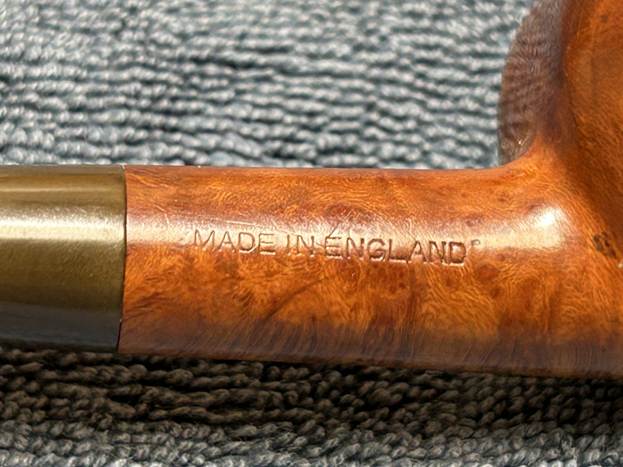
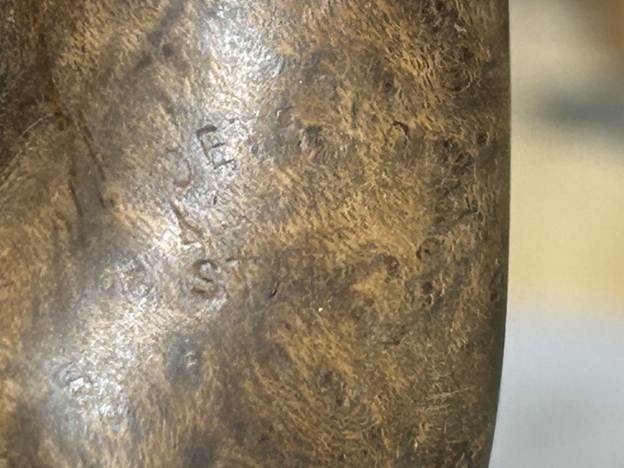
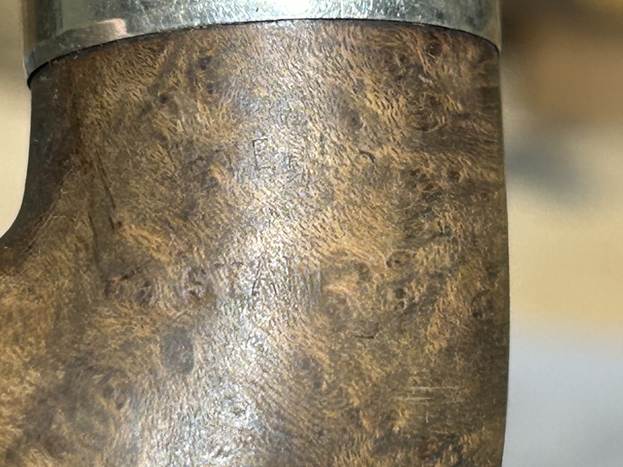
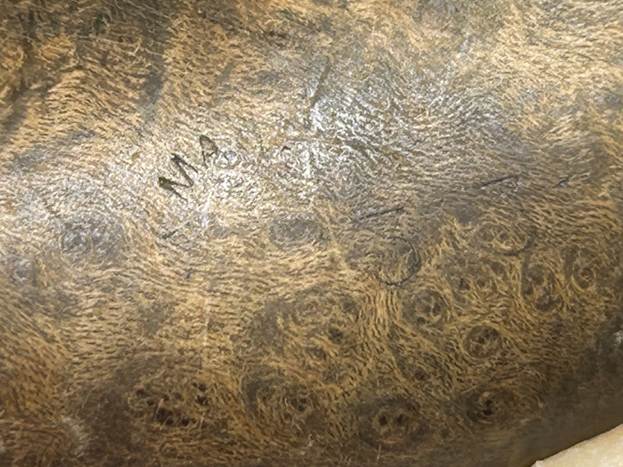
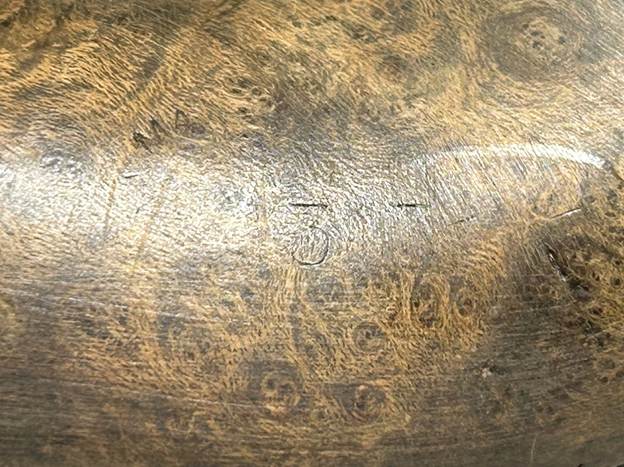
Let’s look at the markings, because the origins of this pipe are a bit mysterious. Hopefully, the markings can help us. On the left side of the shank, we see Old Bruyere. On the right side of the shank, we see Made in England. Finally, on the underside of the shank, we see the shape number 56.

It seemed to me that this pipe was likely made by one of the big English makers. Comoy and Hardcastle do use the phrase ‘Old Bruyere’ on some of their pipes, but that isn’t convincing evidence. The shape number doesn’t correspond to Barling, Bewlay, Charatan, Comoy, Hardcastle, or Sasieni – but Orlik does fit. They do have a prince shape that is numbered 56. I can’t guarantee it, but I think this is likely to have been made by Orlik. My only hesitation is that the Orlik 56 is a quarter-bent prince – the straight prince is 55. Who knows? Alas, I haven’t worked it out. I suspect that this pipe is an experiment – and a really neat one, at that.

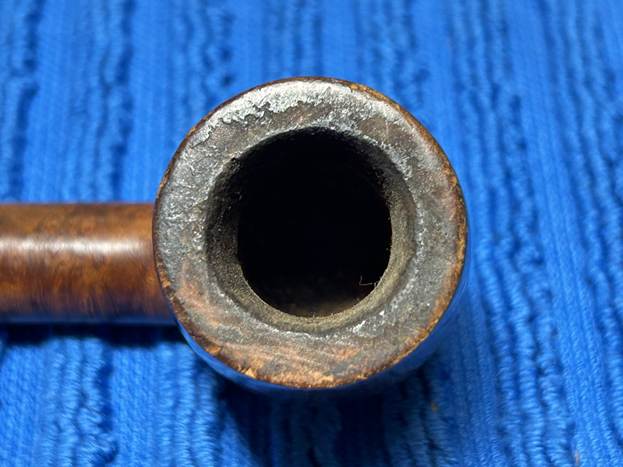
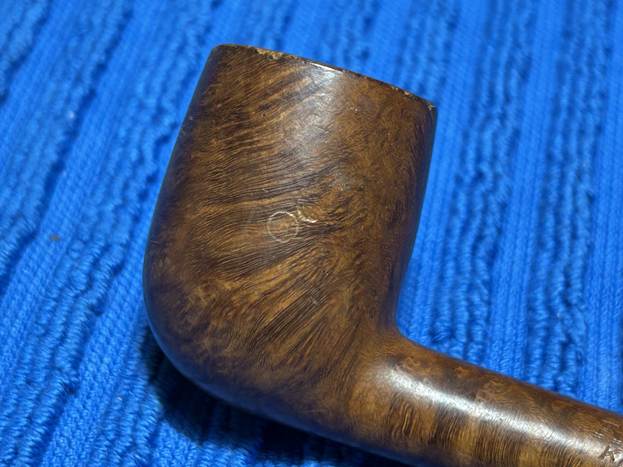
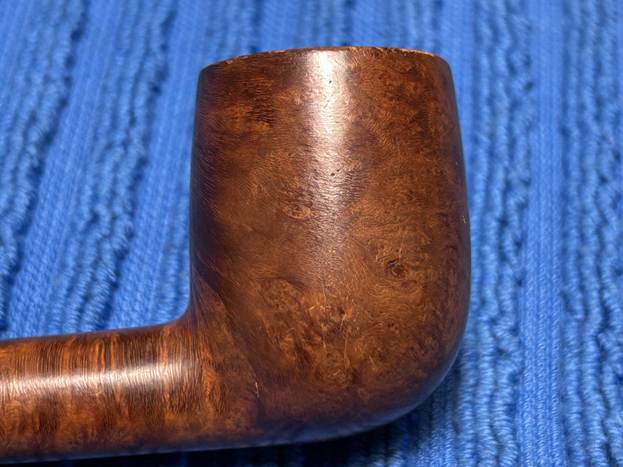
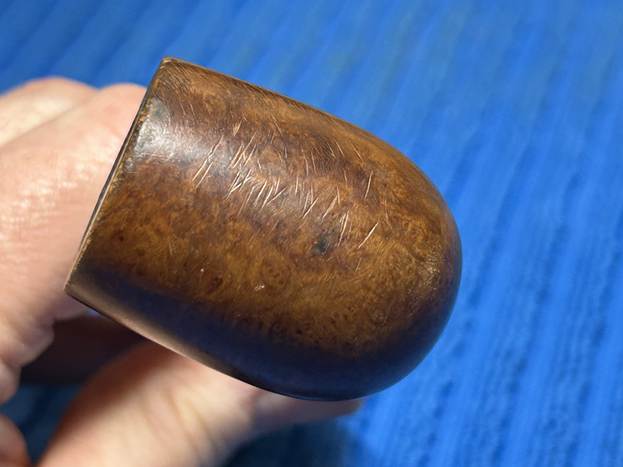
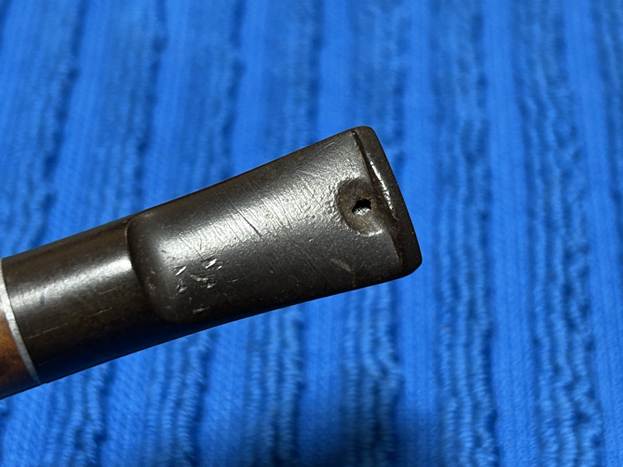
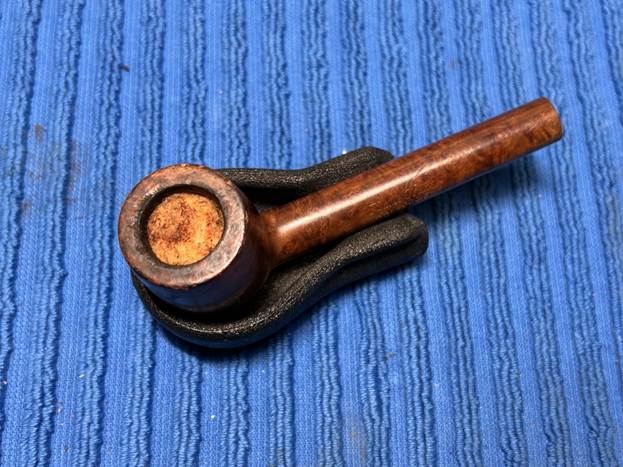
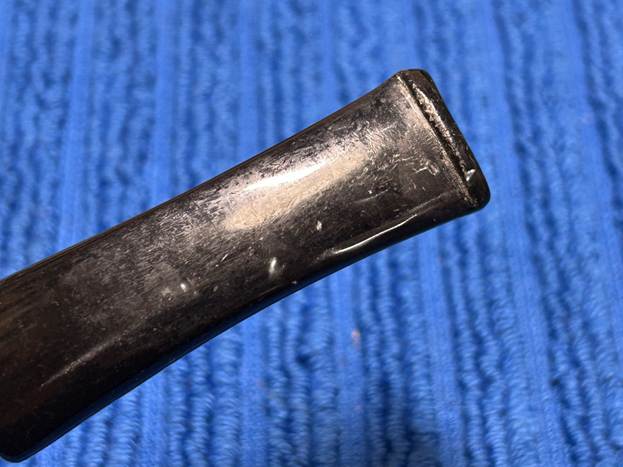
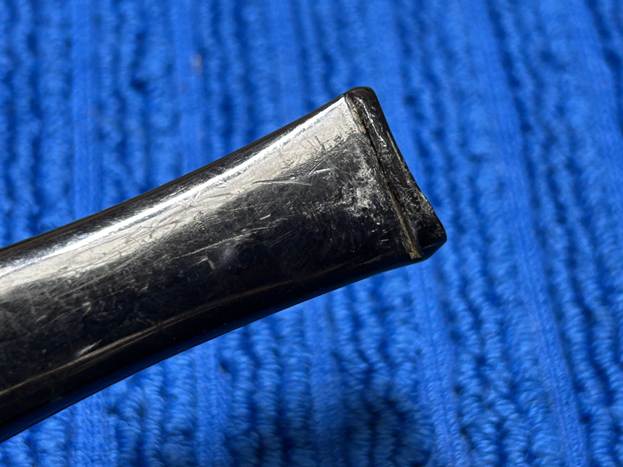
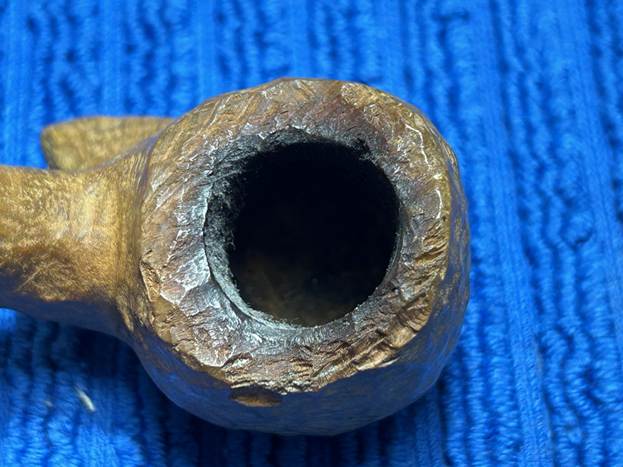
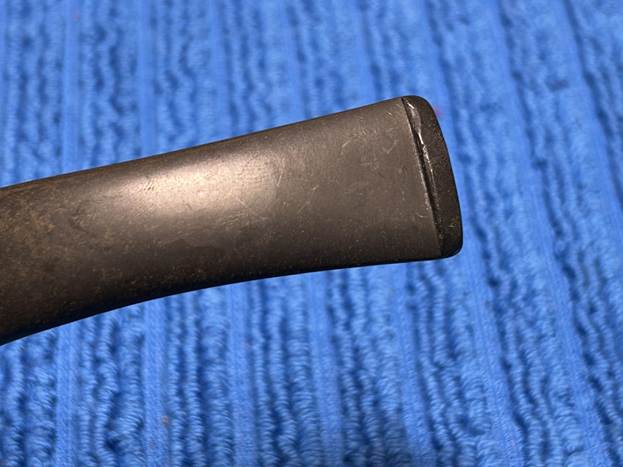
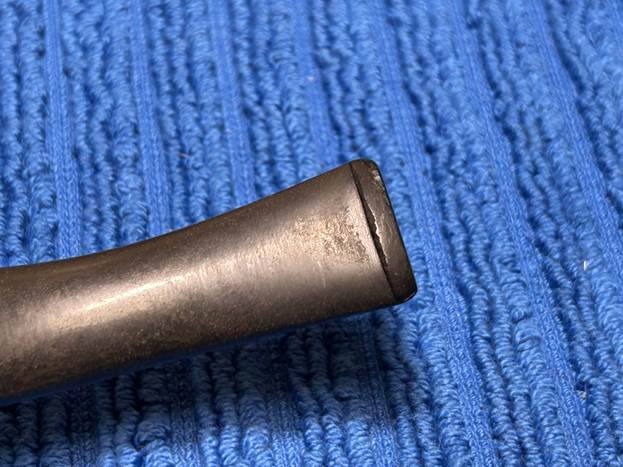
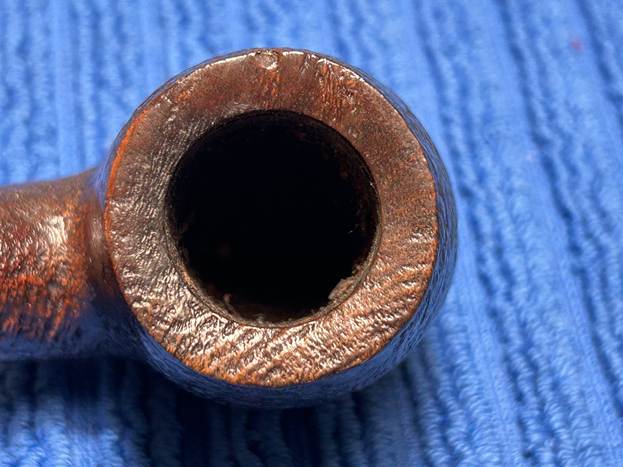
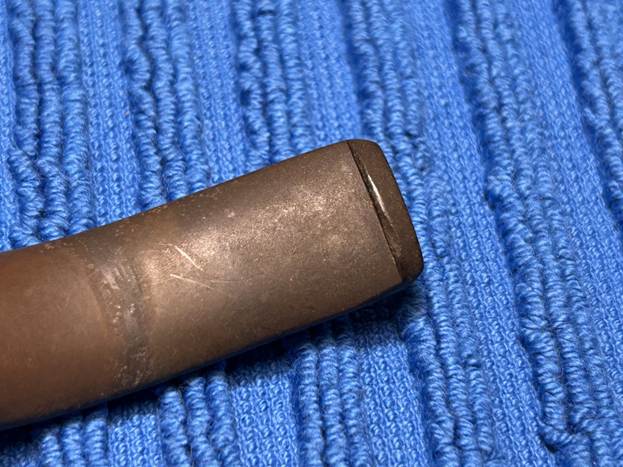
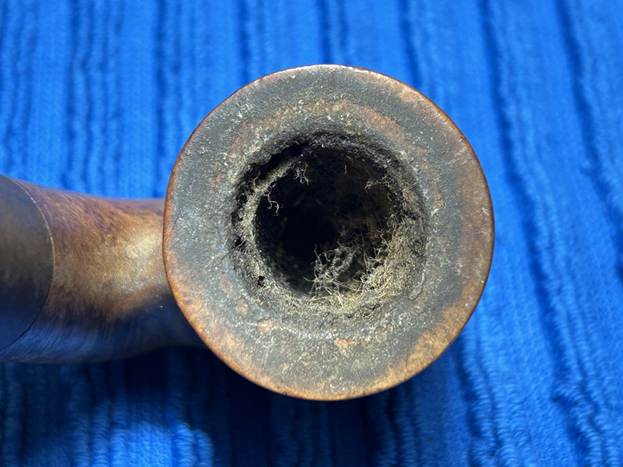
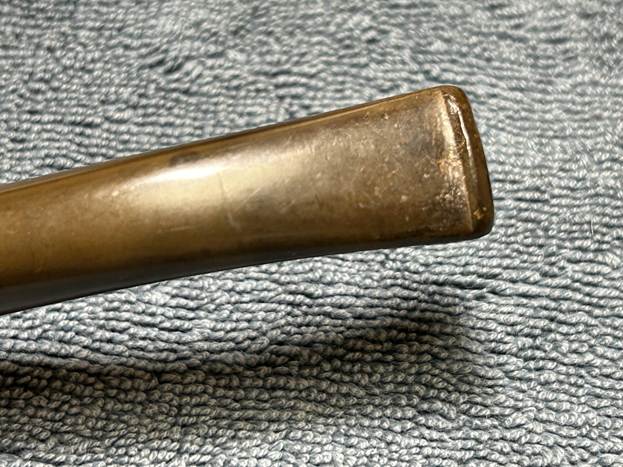
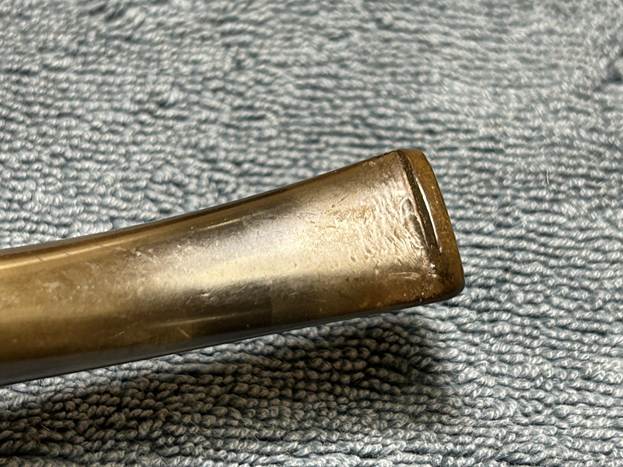
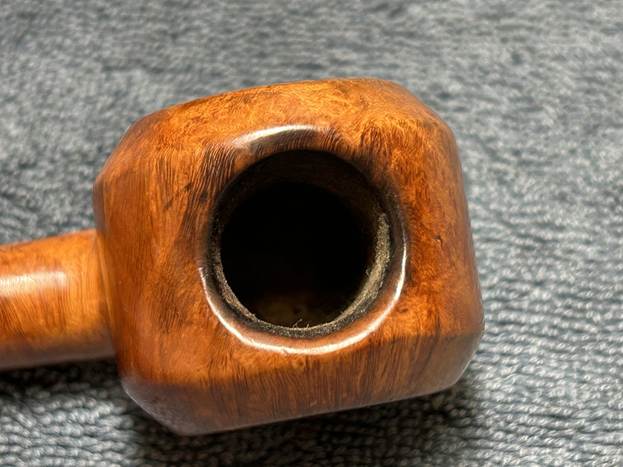
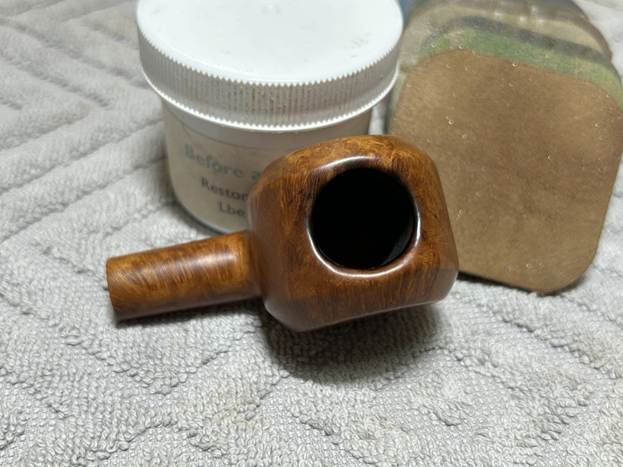
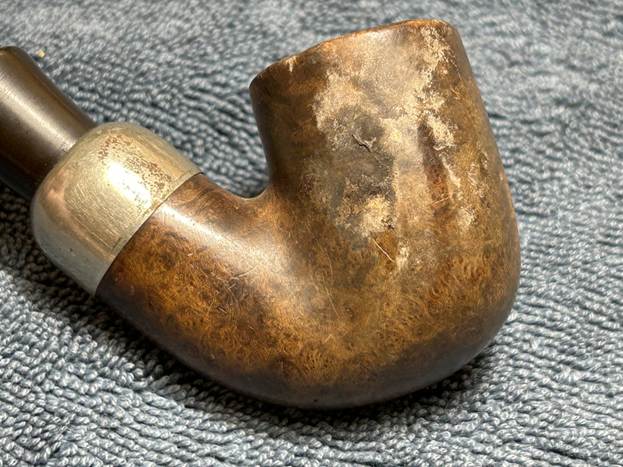
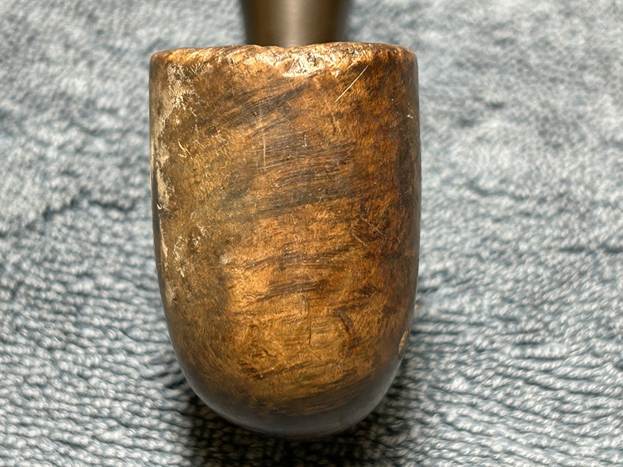
The condition of the pipe is great. The pipe has hardly been smoked. The bowl is clean and the briar is lovely. There are some very slight dents, but I can deal with those. The stem is also in good shape. There are more tooth marks than one would expect of a pipe that has been seldom smoked, but no big deal. The tenon in the base looks sound, clean, and firm.

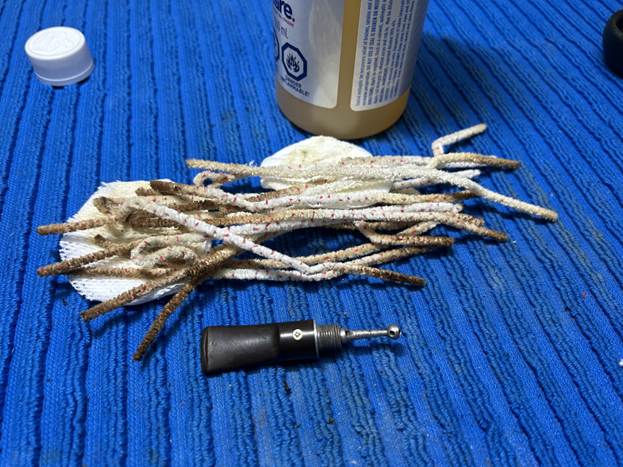
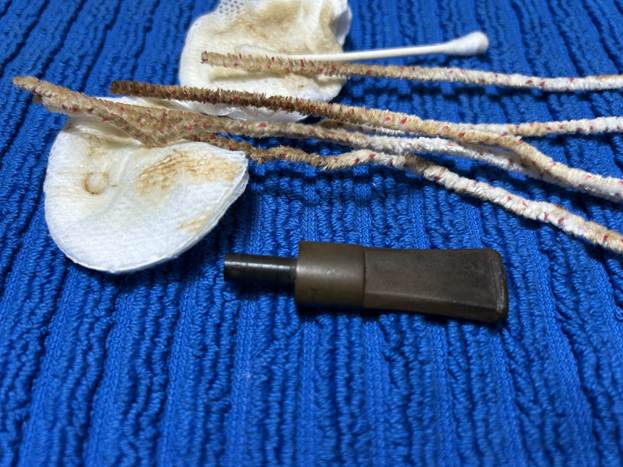
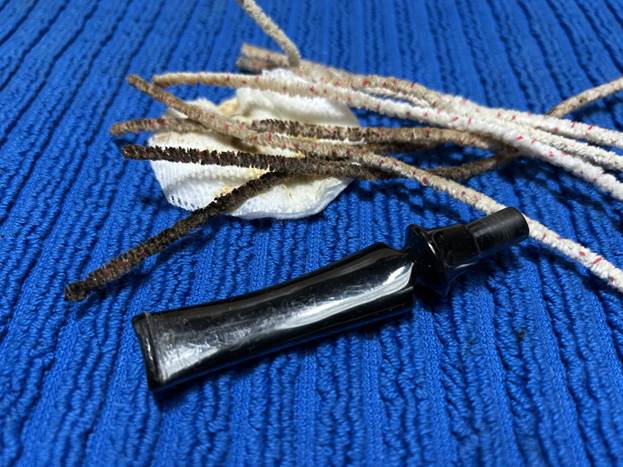
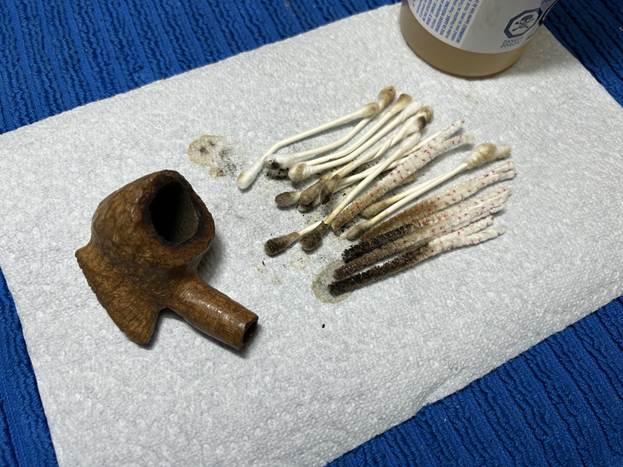
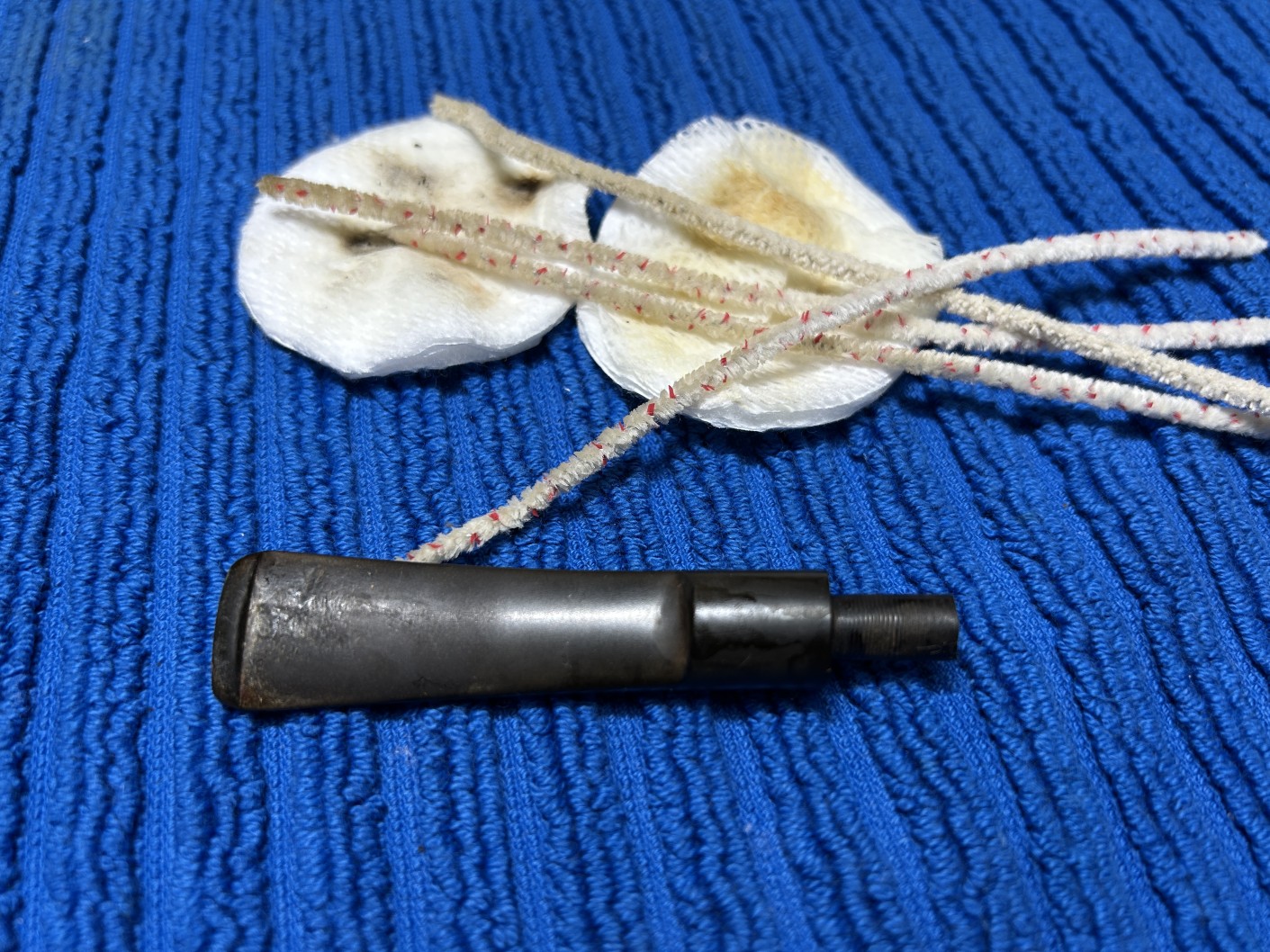
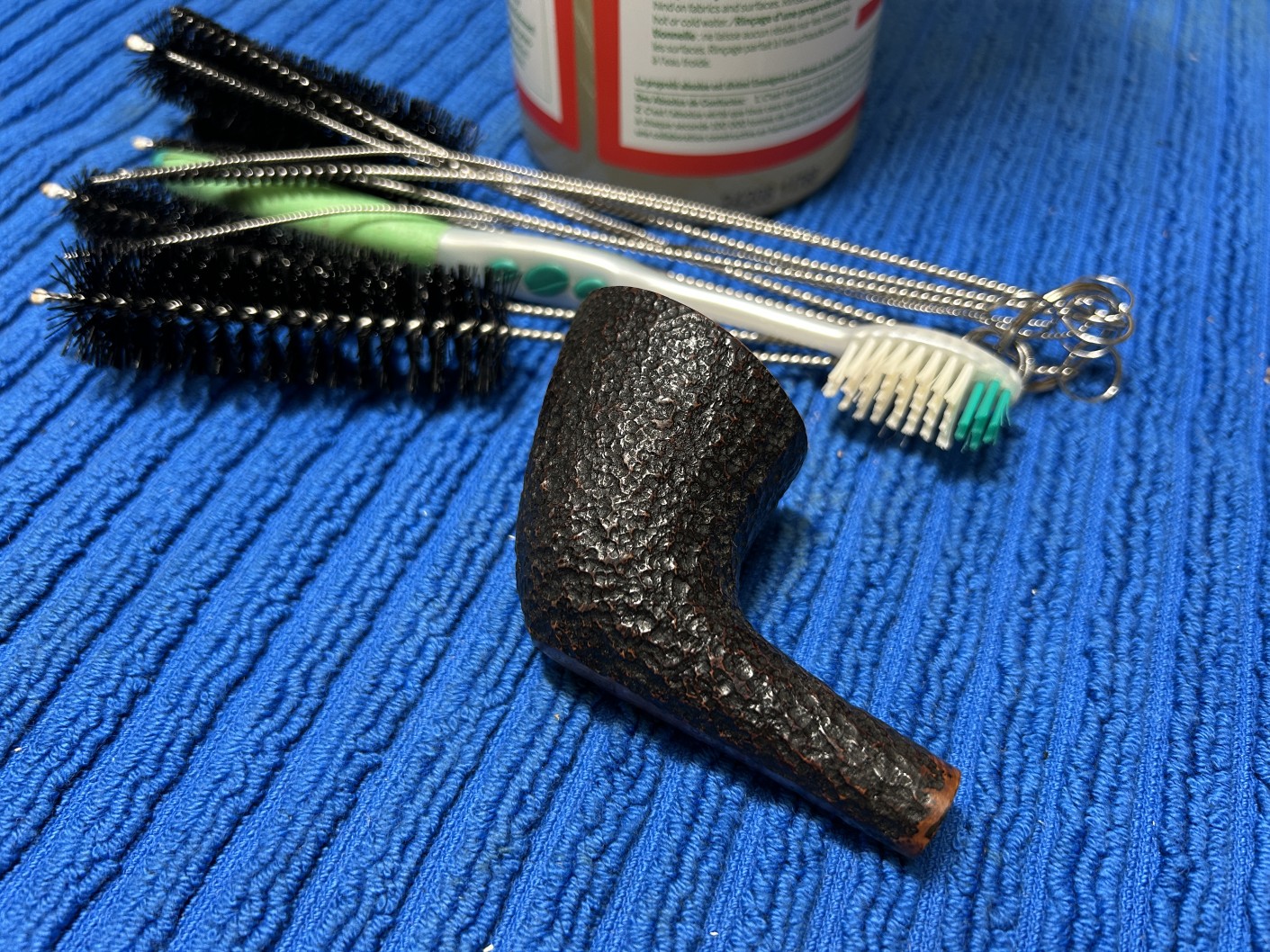
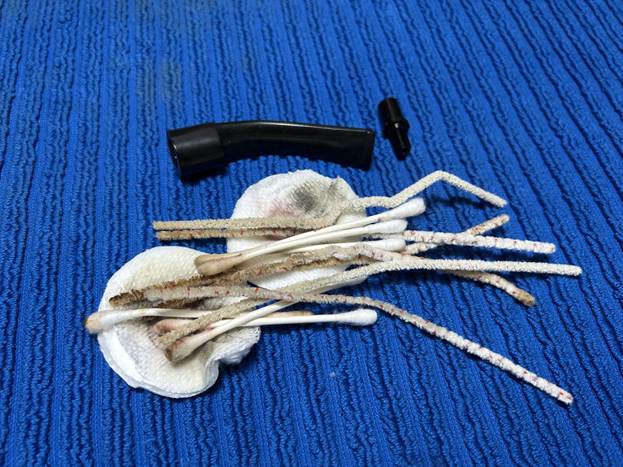
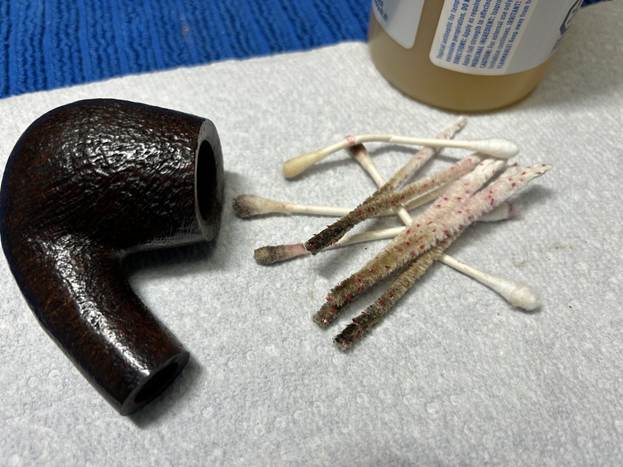
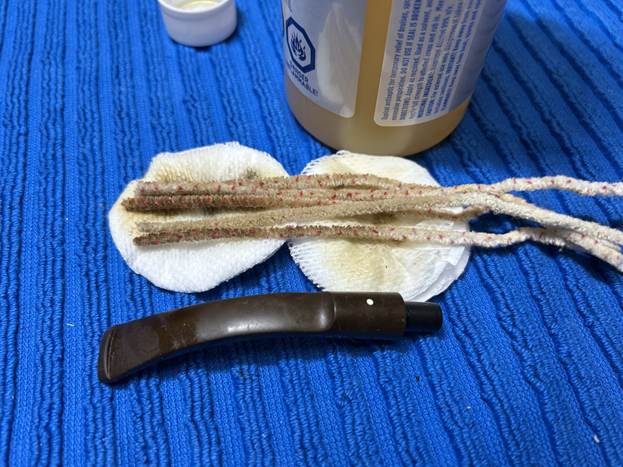
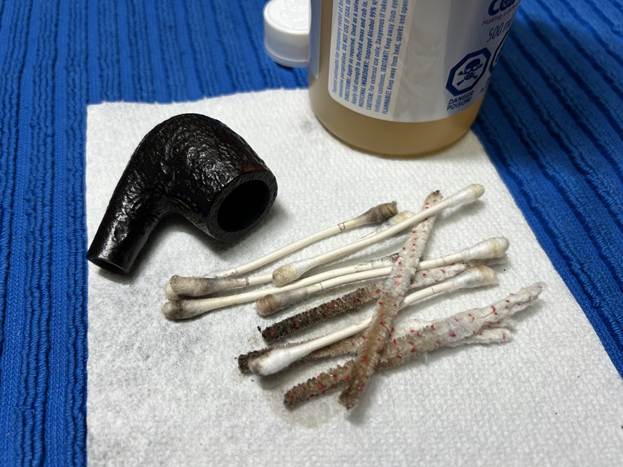
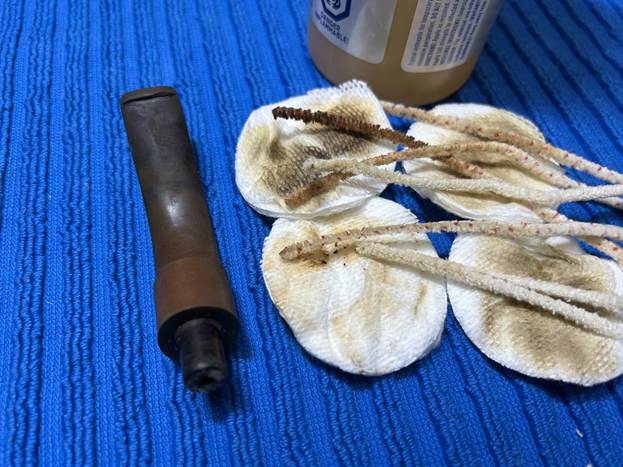
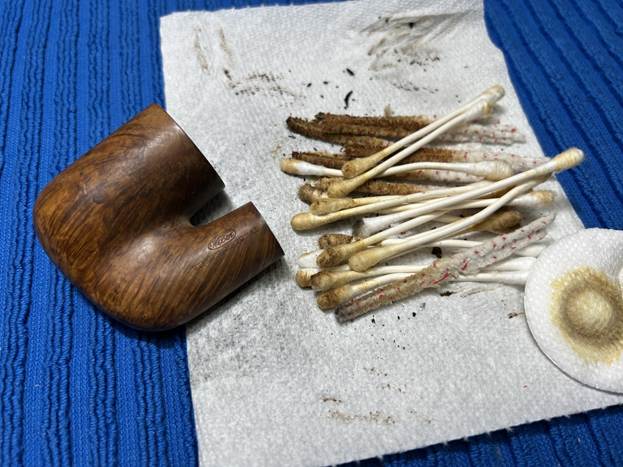
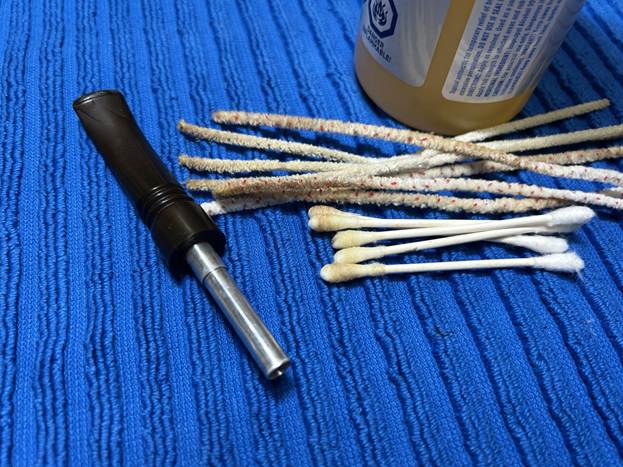
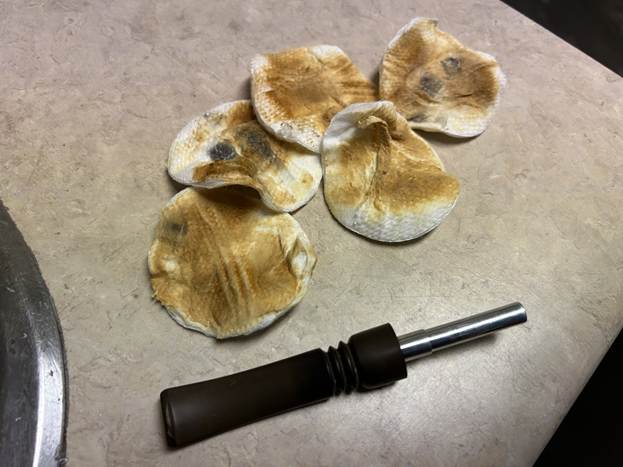
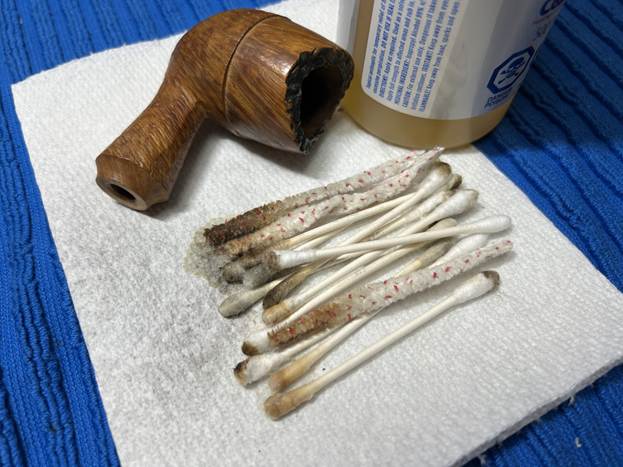
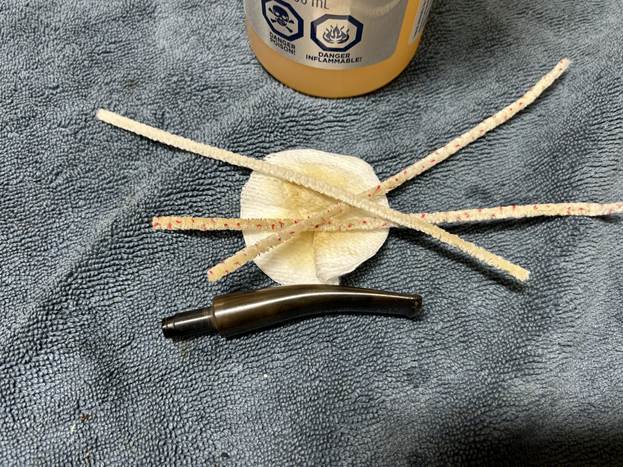
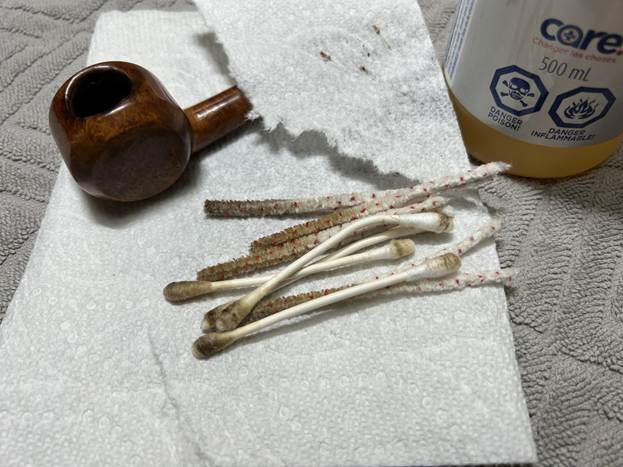
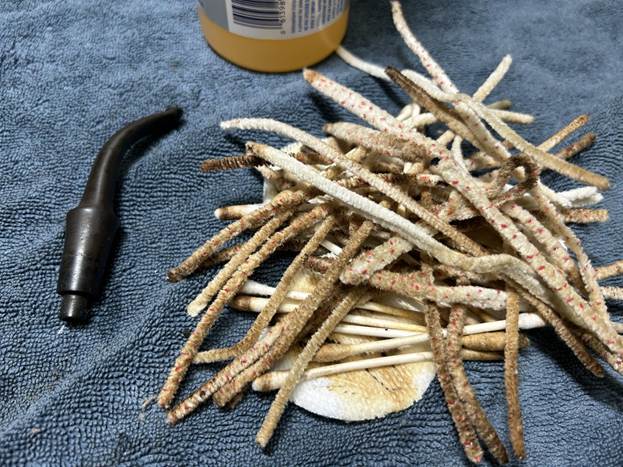
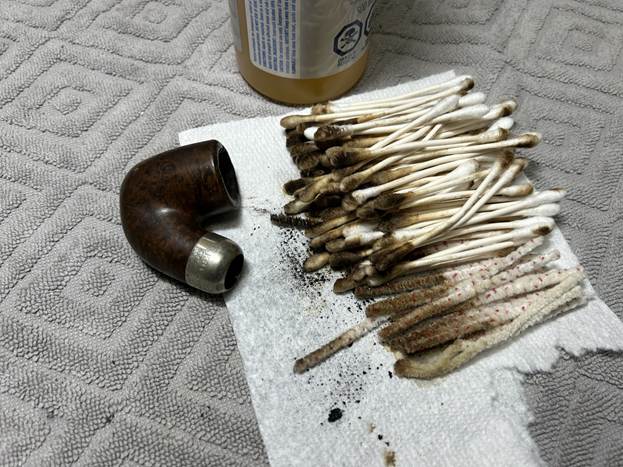
I used isopropyl alcohol on a few cotton rounds and wiped down the stem to provide an initial cleaning before moving on to the next steps. The primary cleaning came next. I disinfected the inside of the stem with both pipe cleaners and cotton swabs dipped in lemon-infused 99% isopropyl alcohol. I scrubbed thoroughly to make sure the interior was very clean.

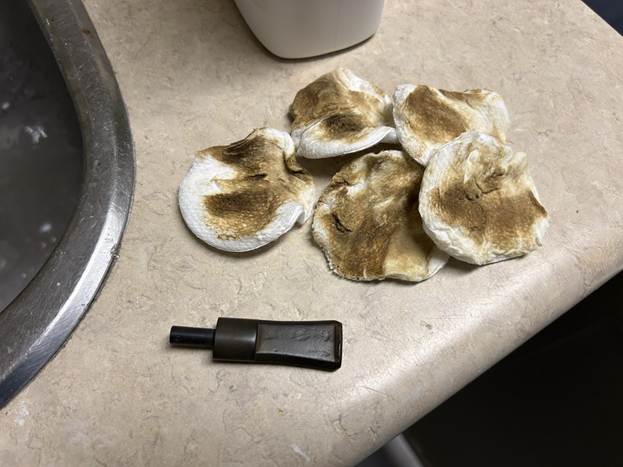
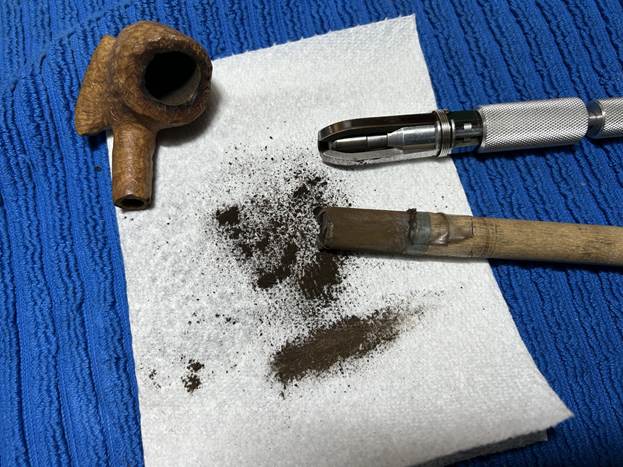
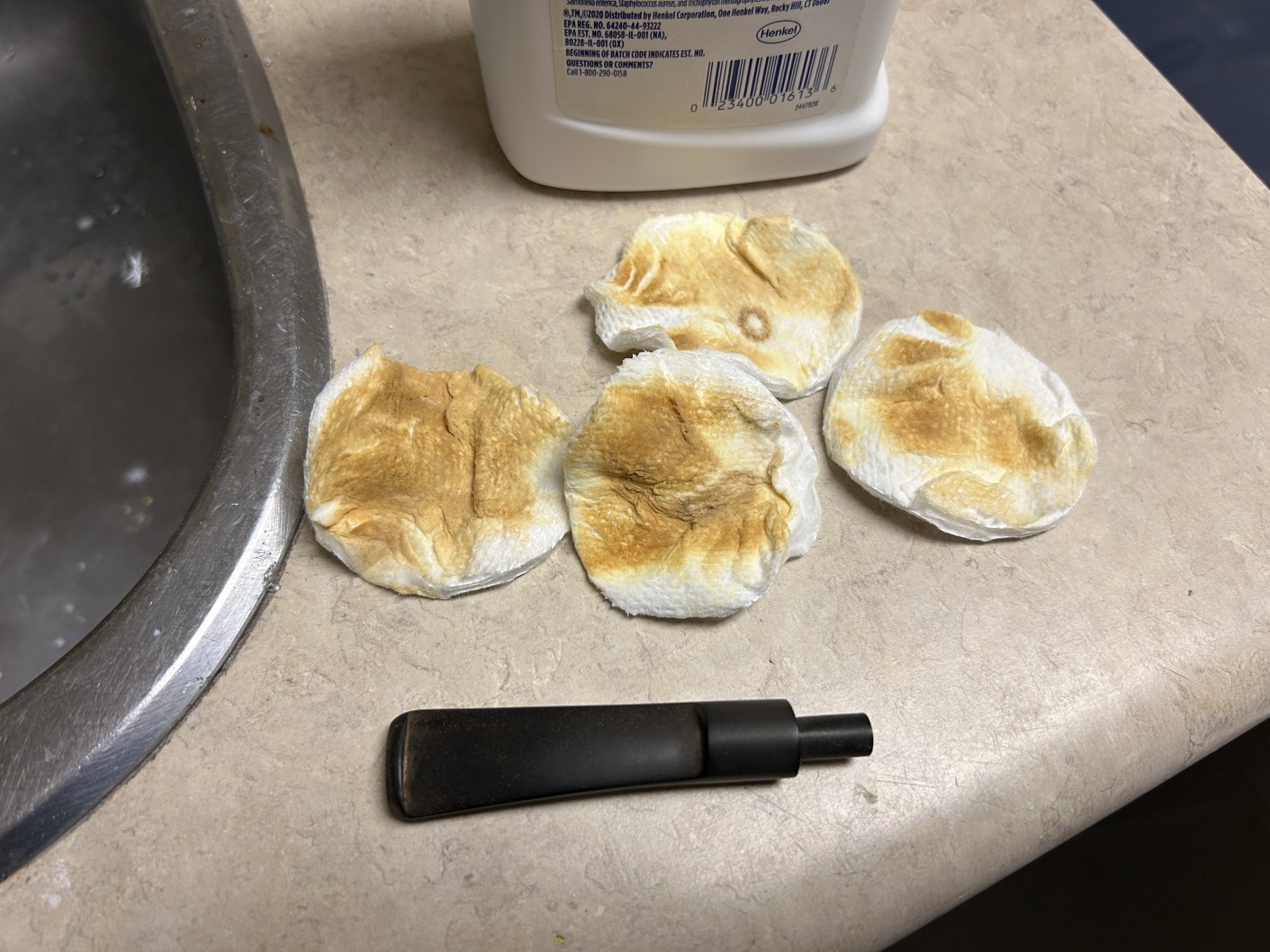
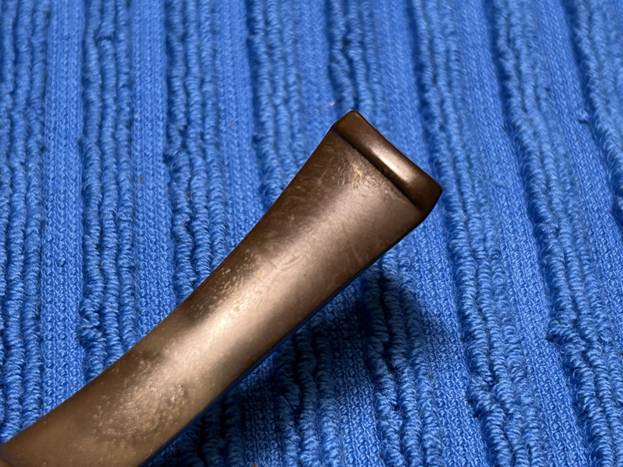
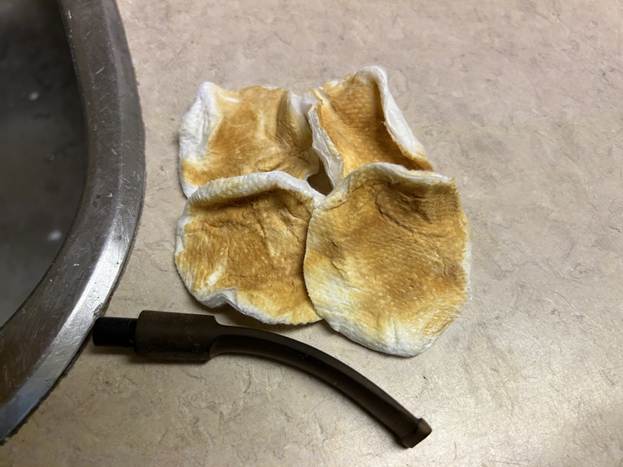
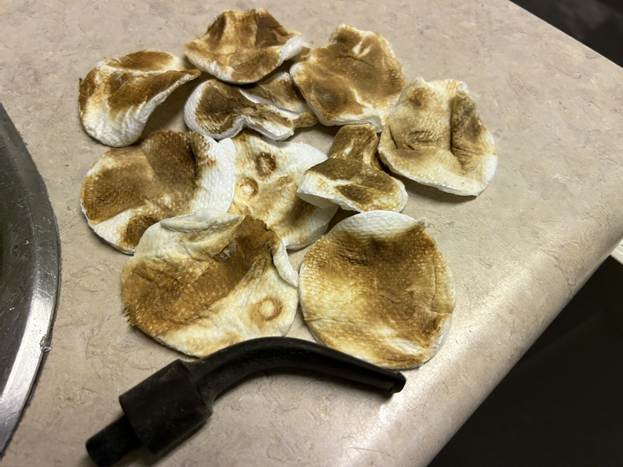
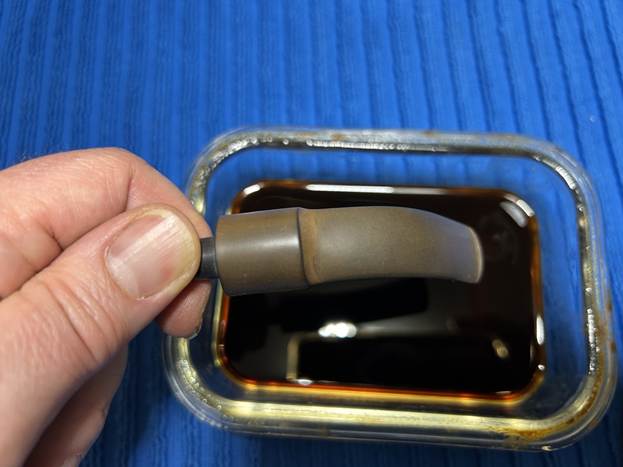
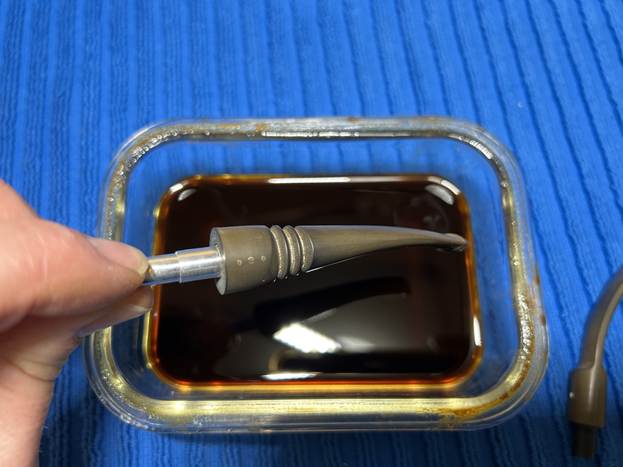
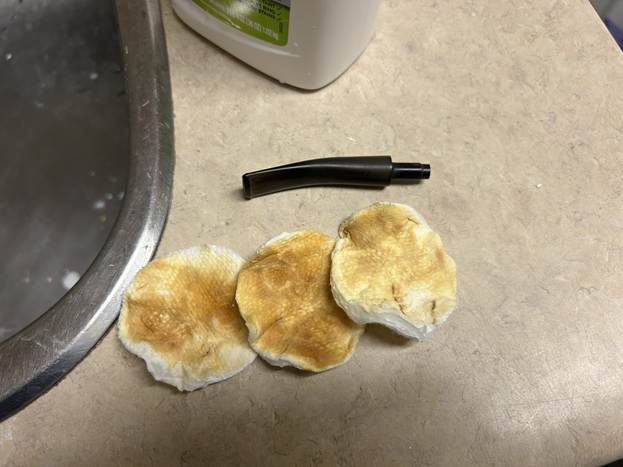
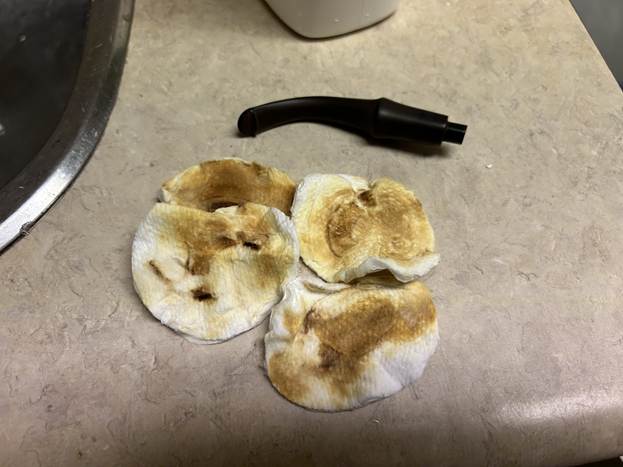
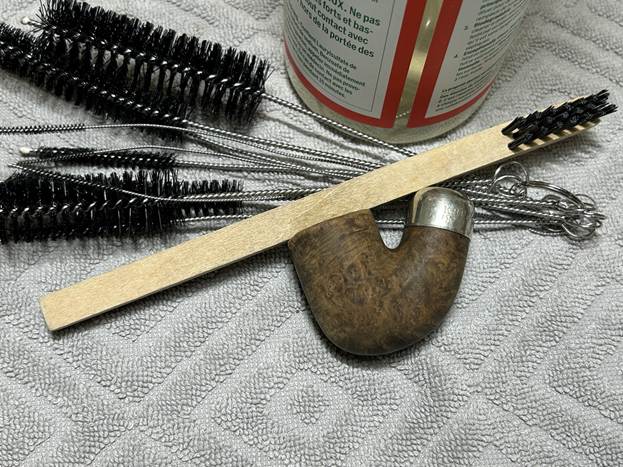
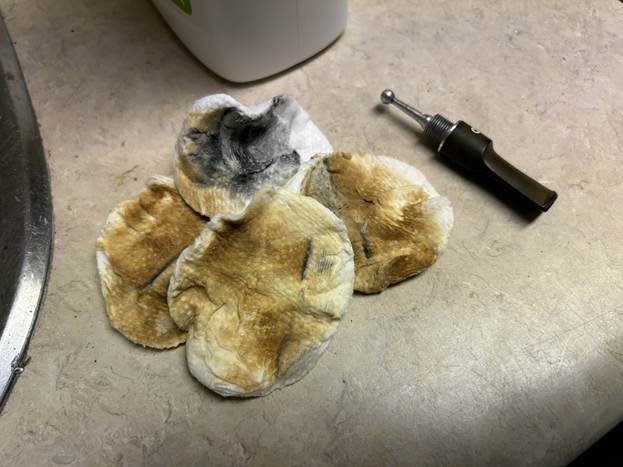
The goal of the next step is the removal (or minimization) of oxidation. Going to my sink, I used cream cleanser, cotton rounds, and a toothbrush, and scoured the stem to remove as much surface oxidation as possible. As the photos show, the result was a hideous, ochre-coloured mess – but better off the stem than on it.
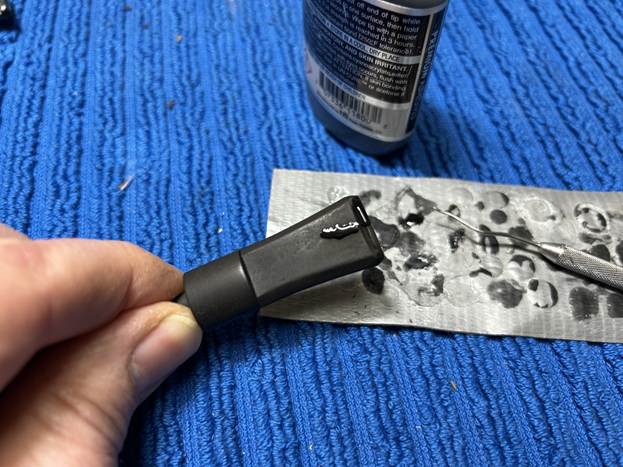
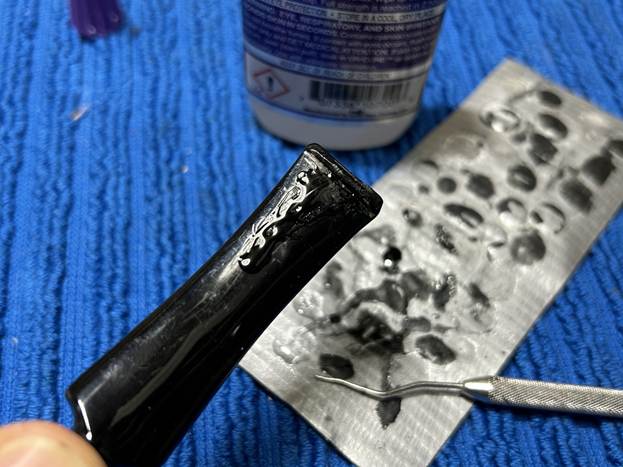
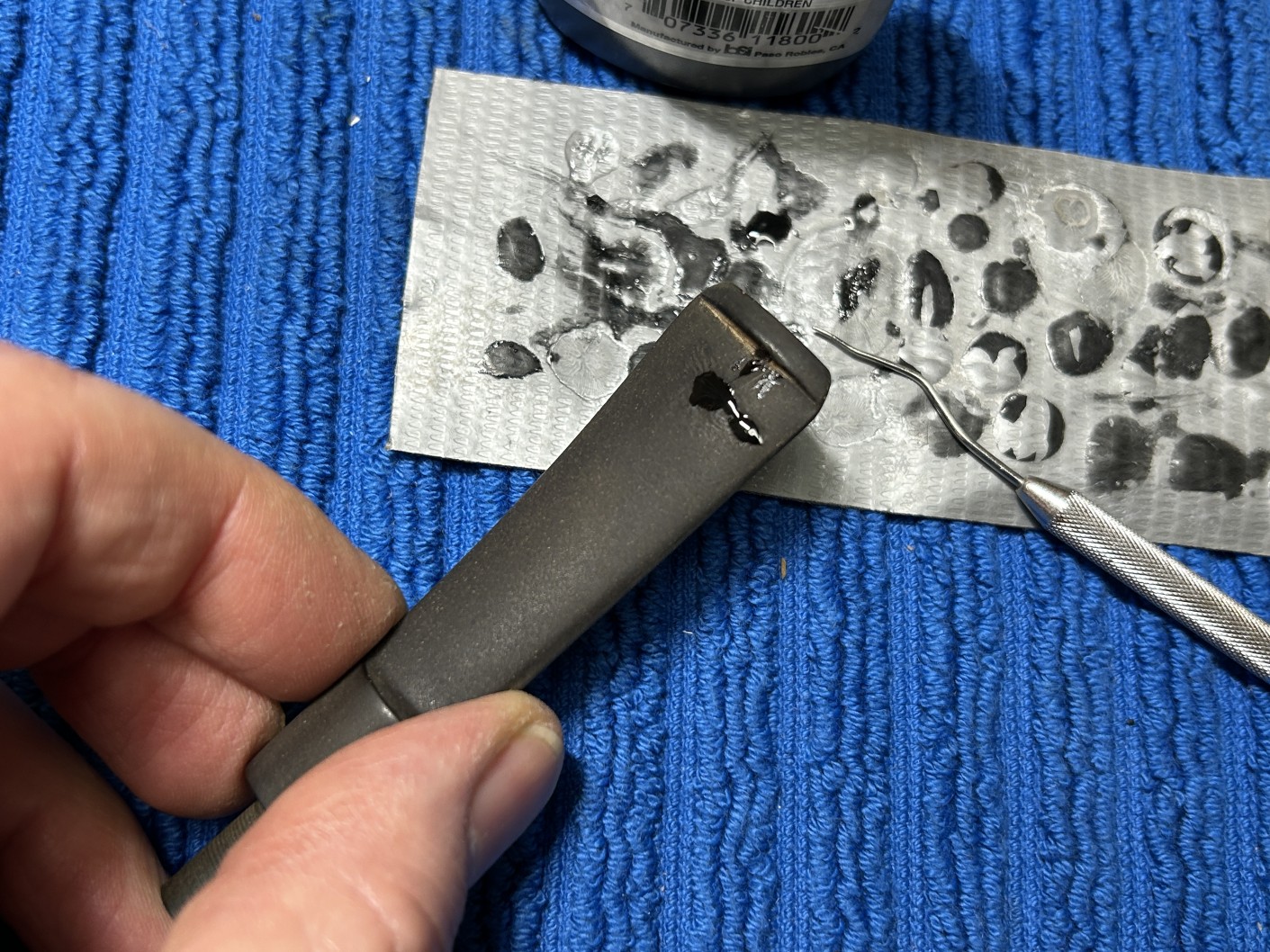
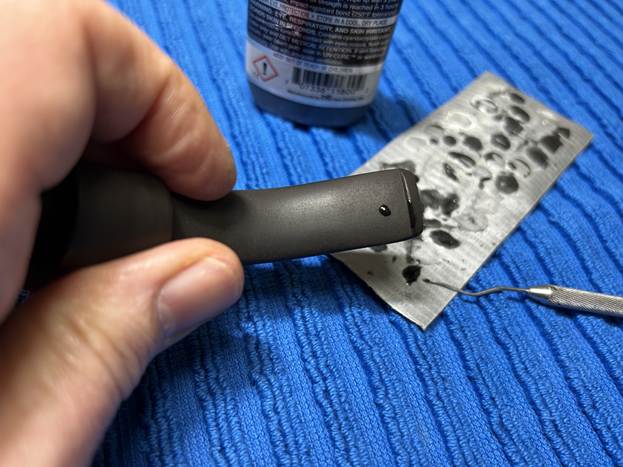
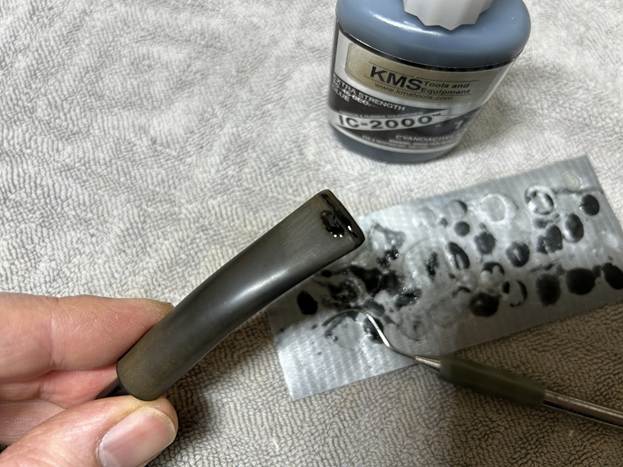
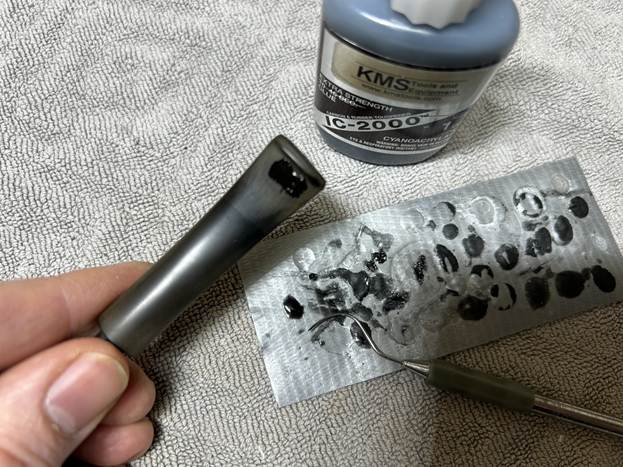
As the stem was now clean and dry, I set about fixing the marks in the vulcanite. This was done by filling those divots with black cyanoacrylate adhesive, impregnated with carbon and rubber. I left this to cure and moved on.

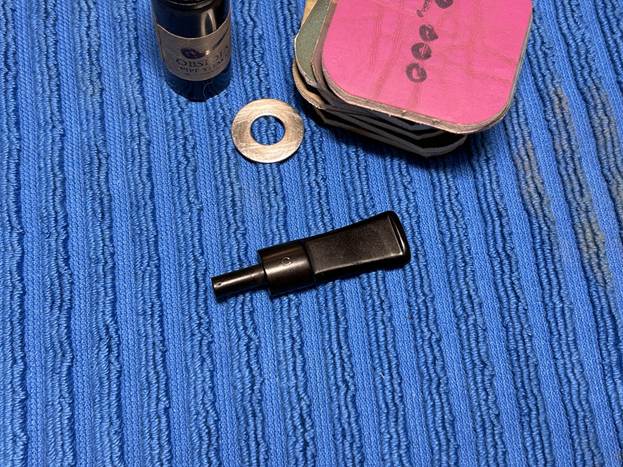
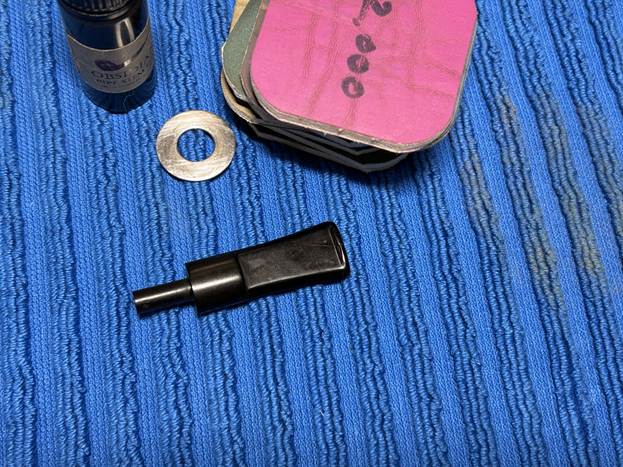
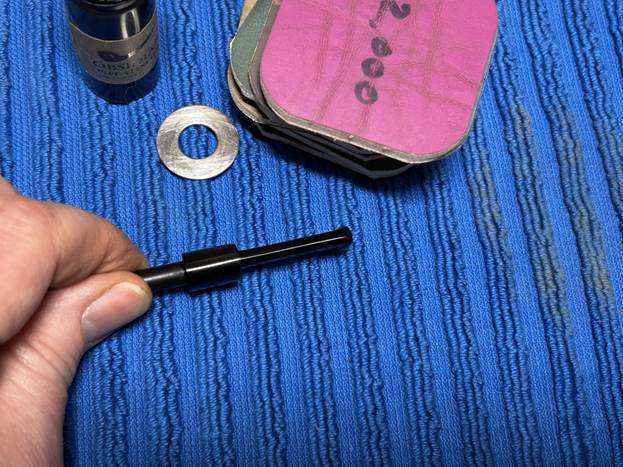
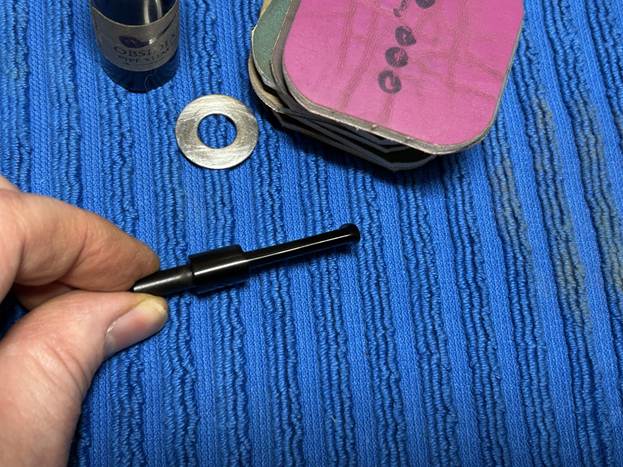
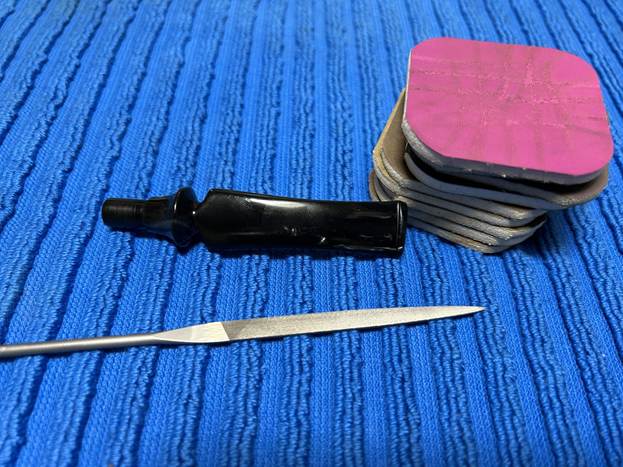
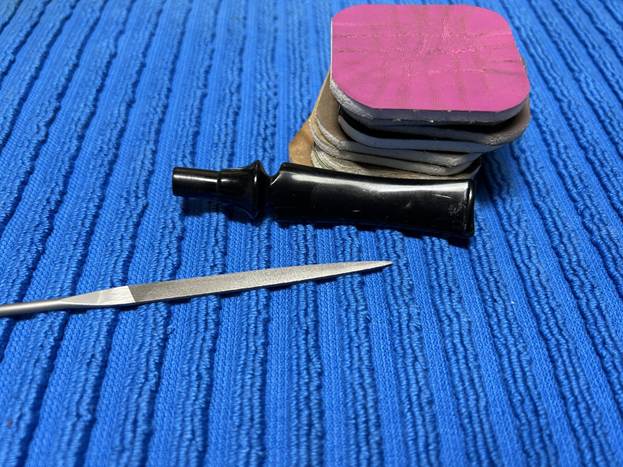
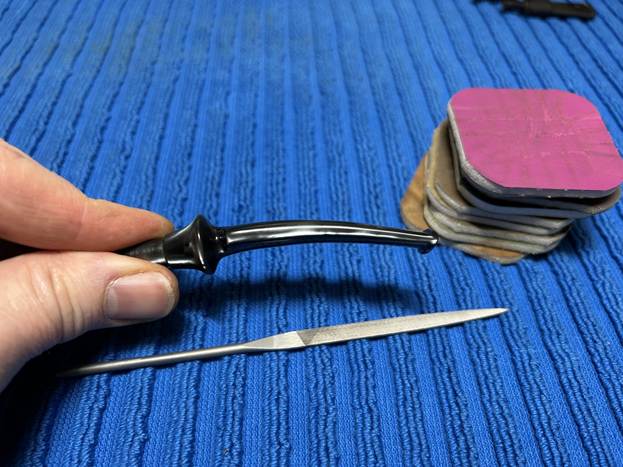
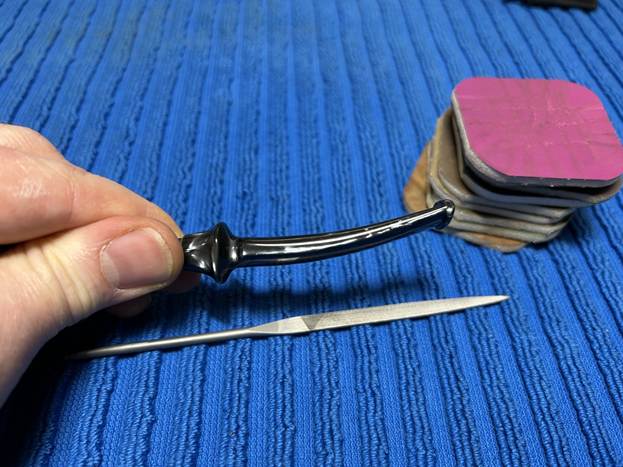
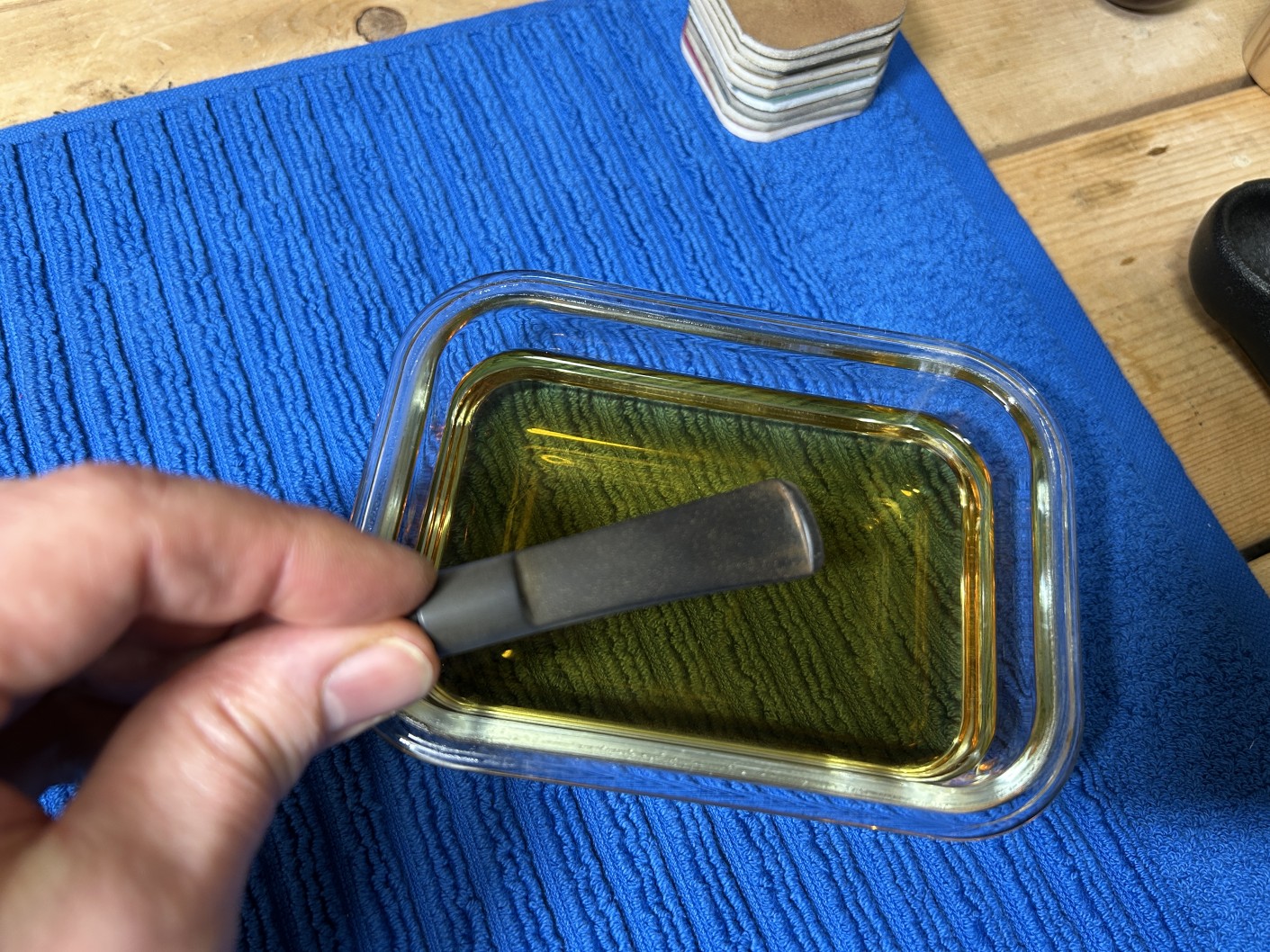
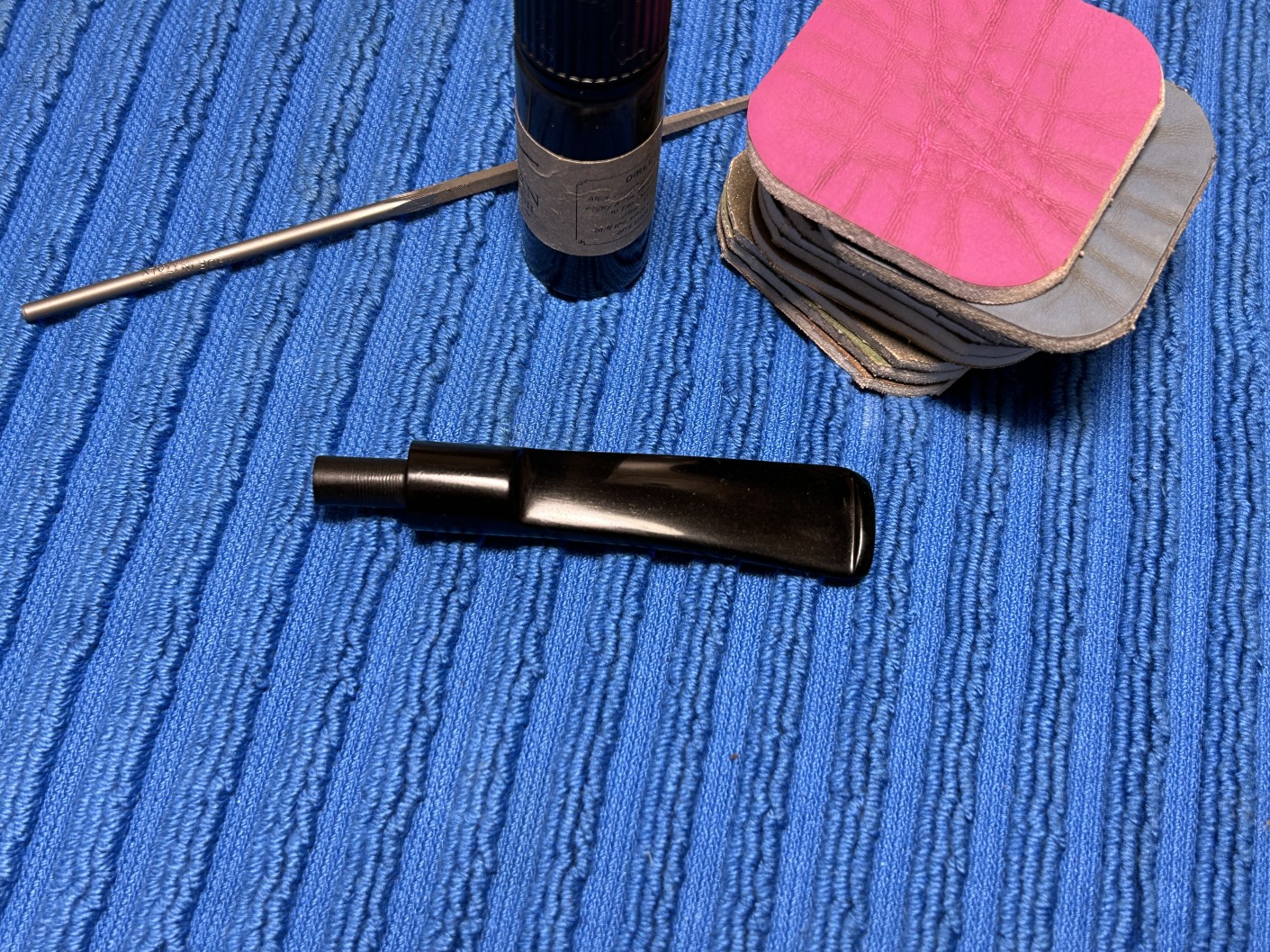
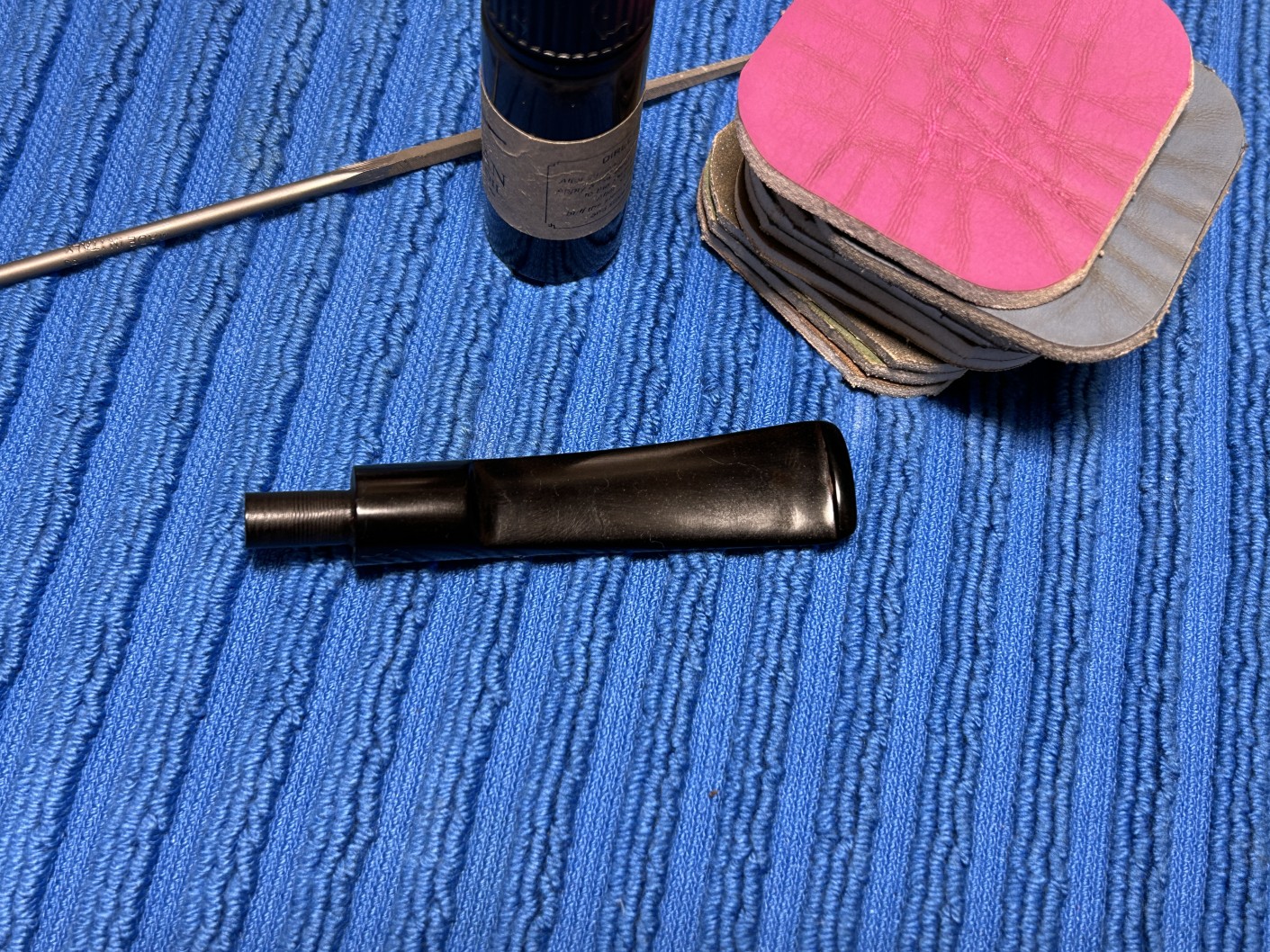
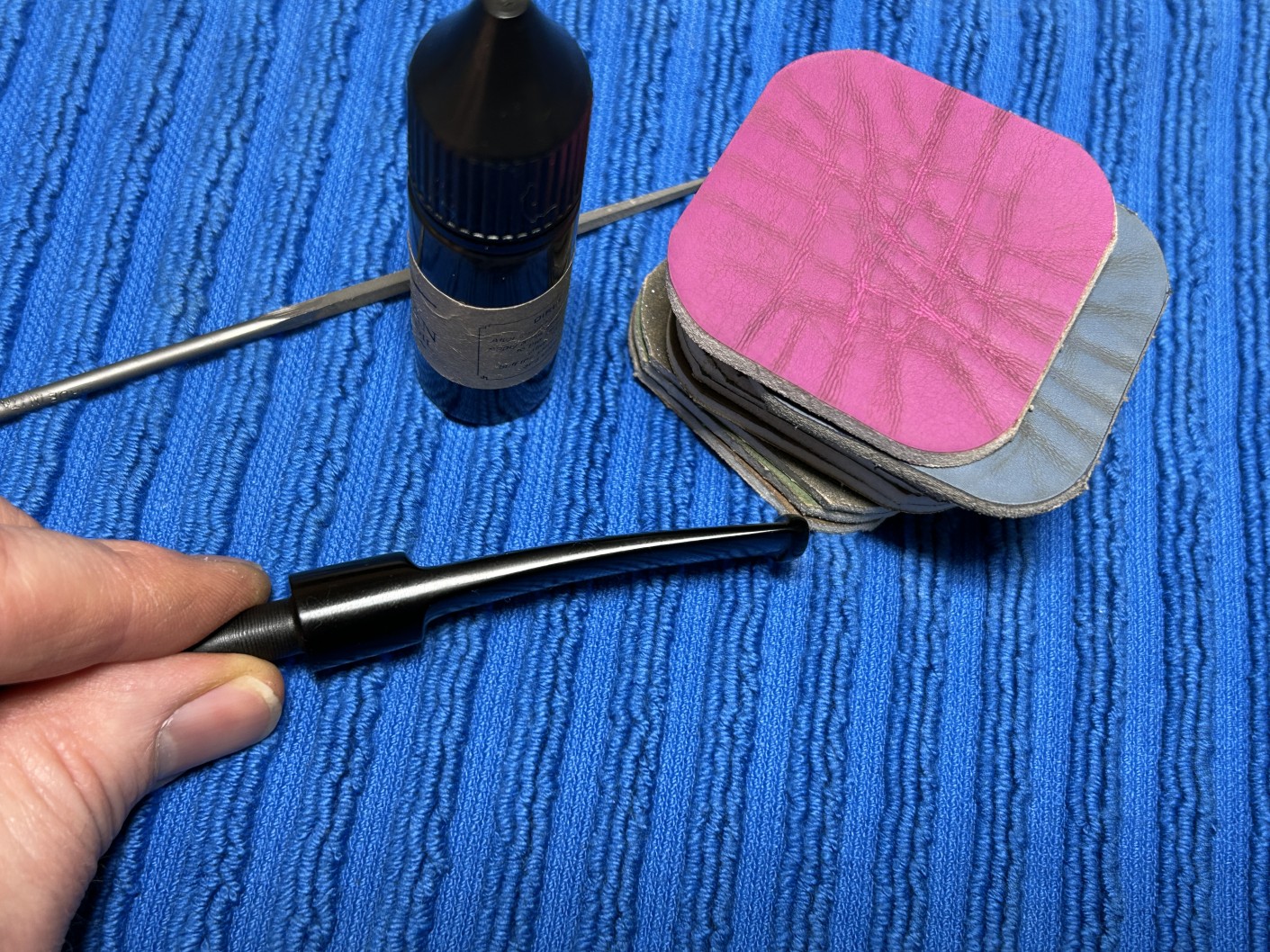
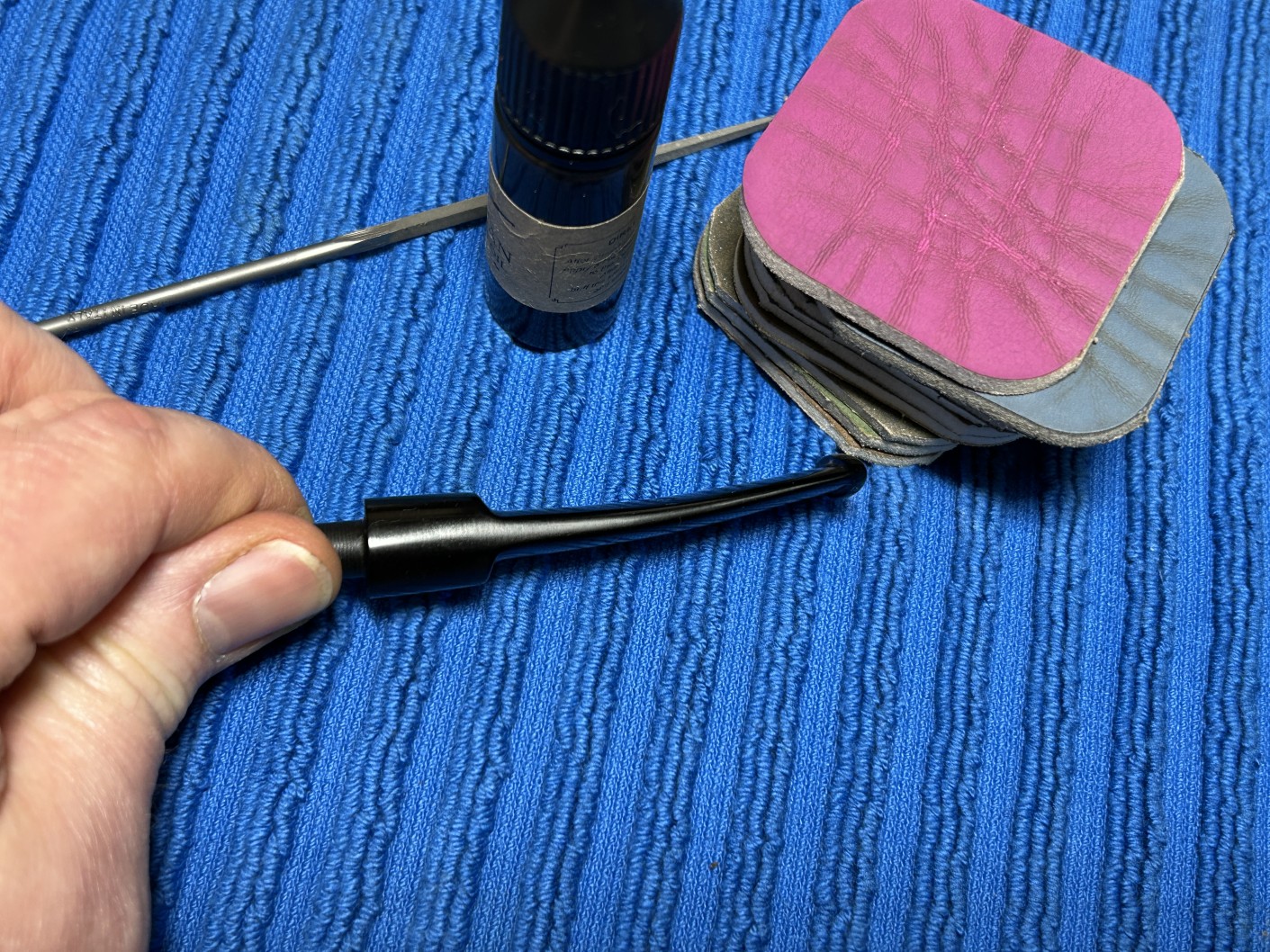
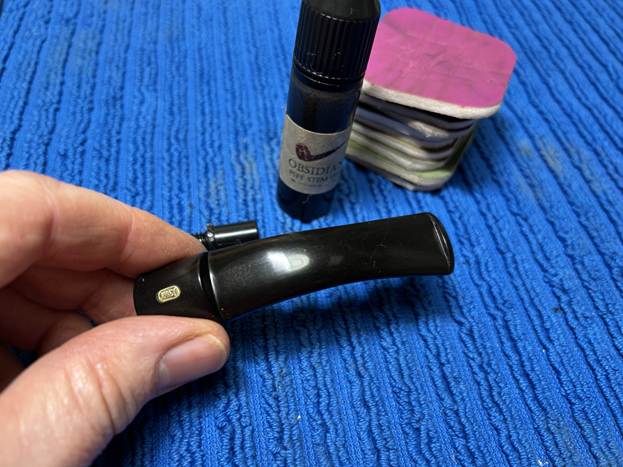
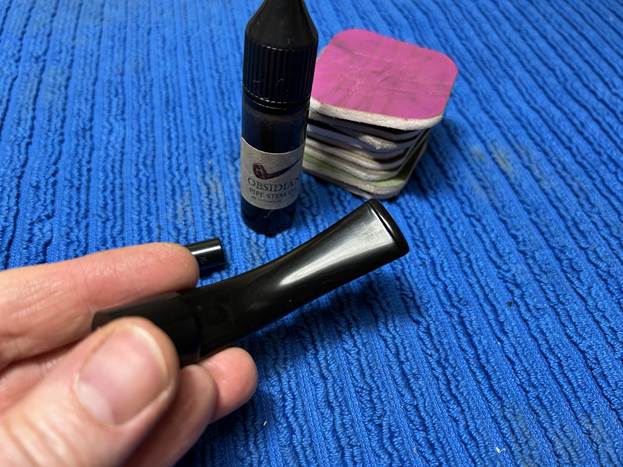
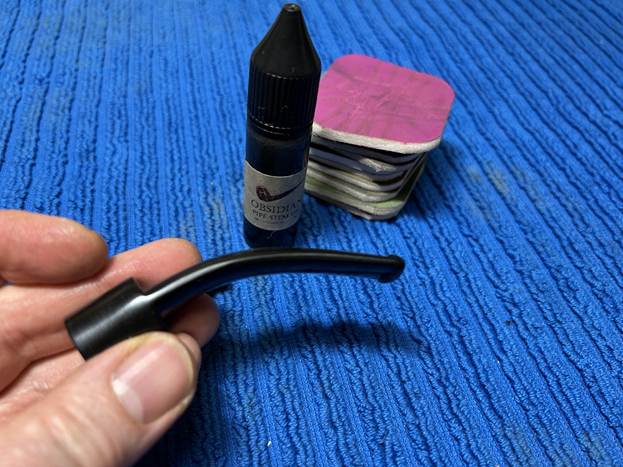
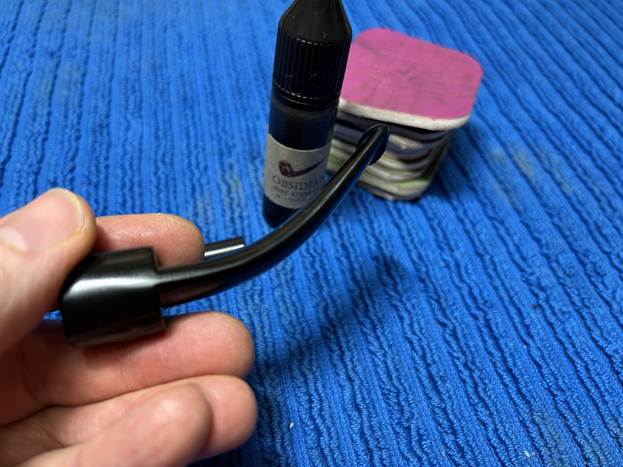
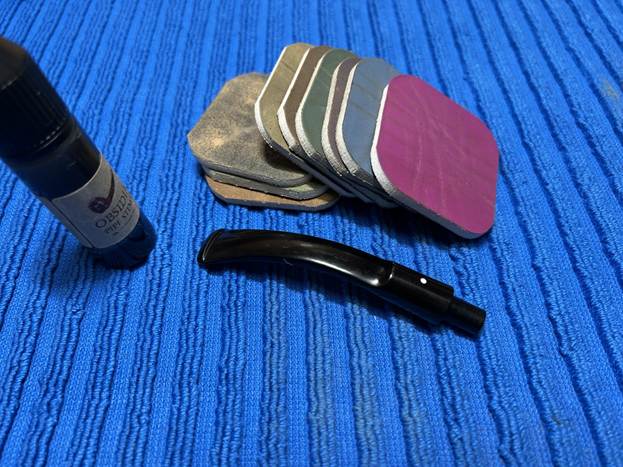
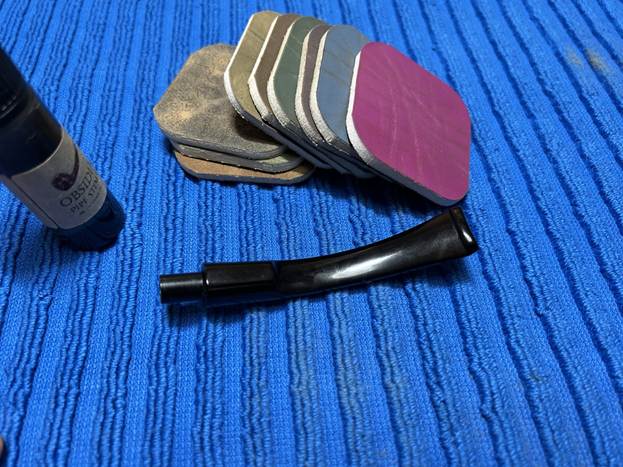
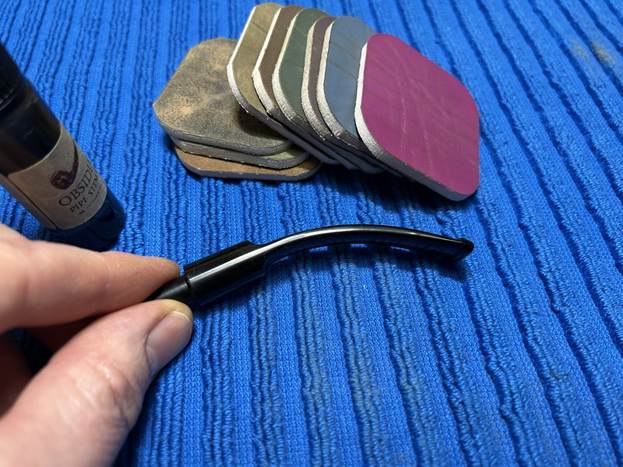
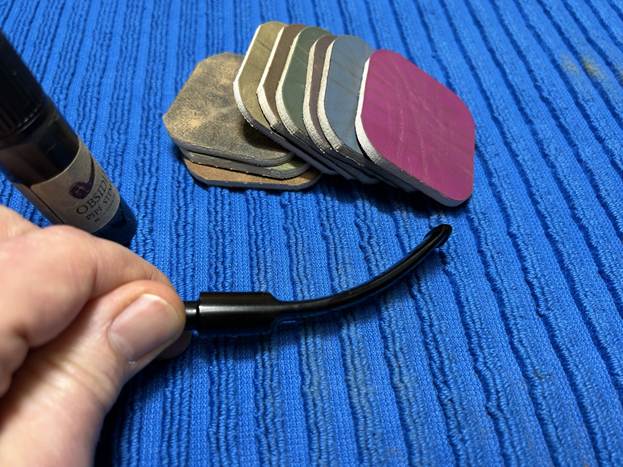
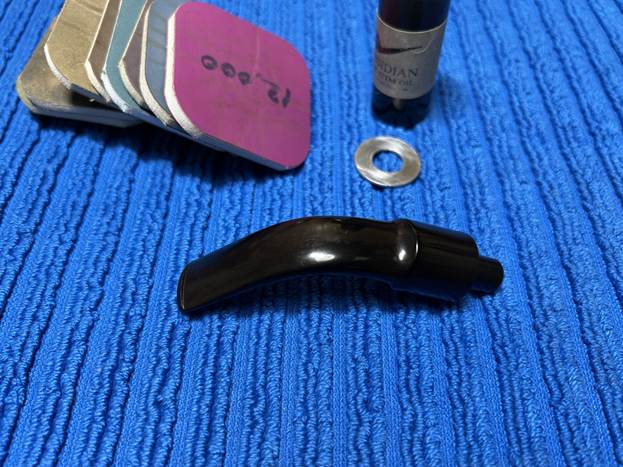
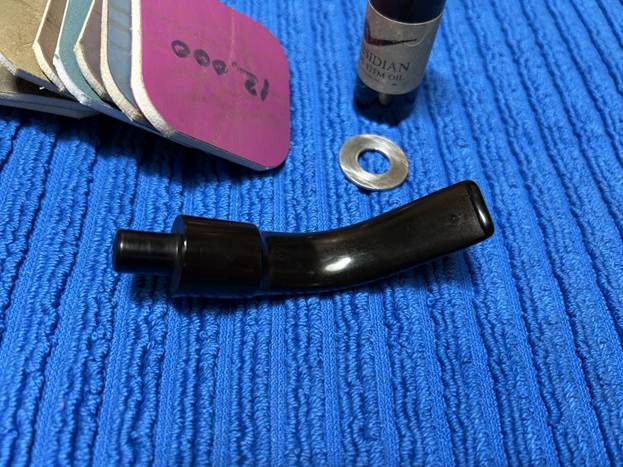
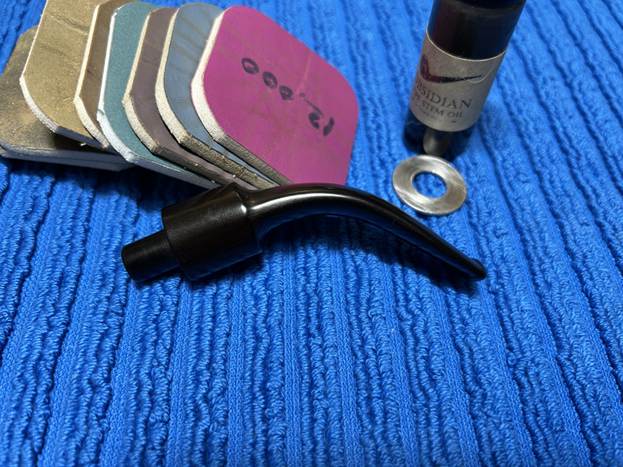
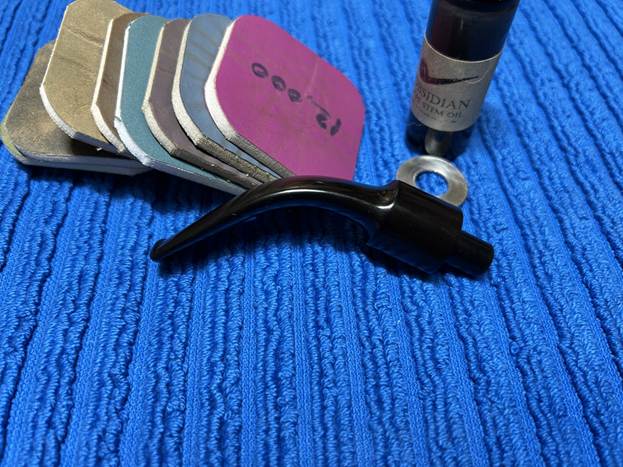
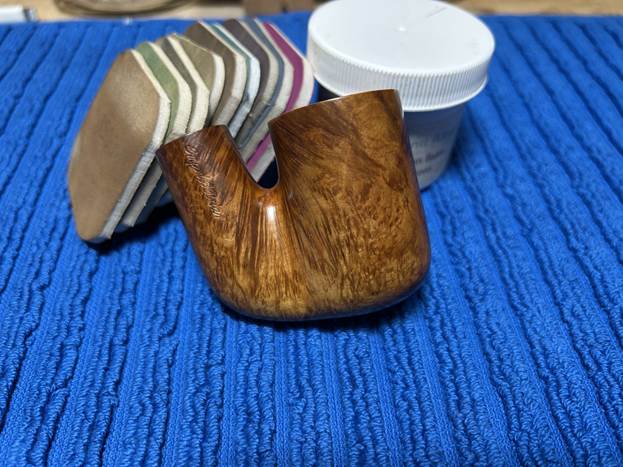
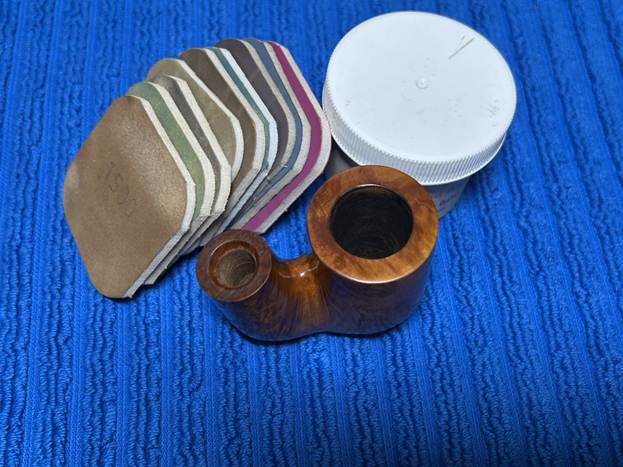
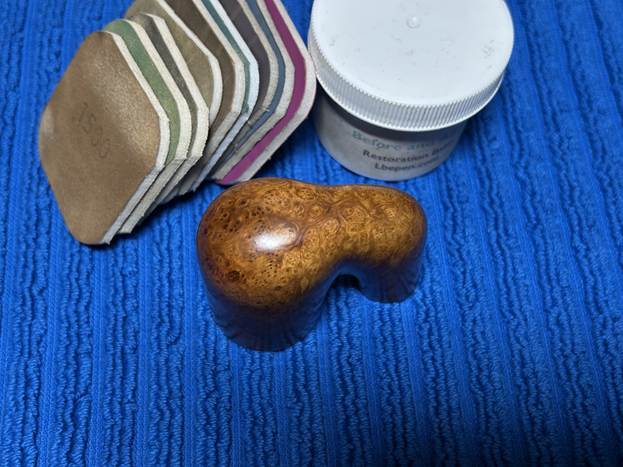
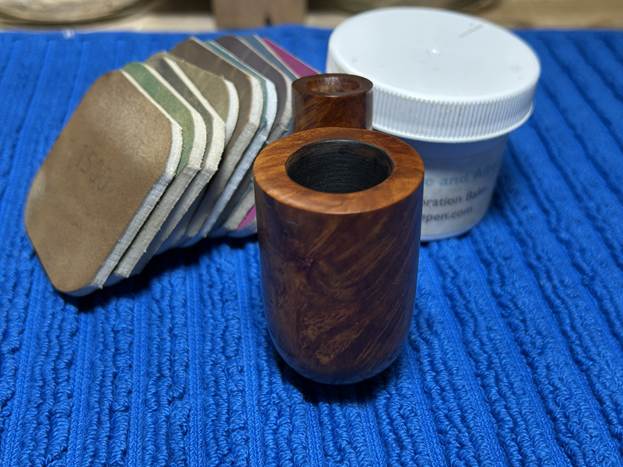
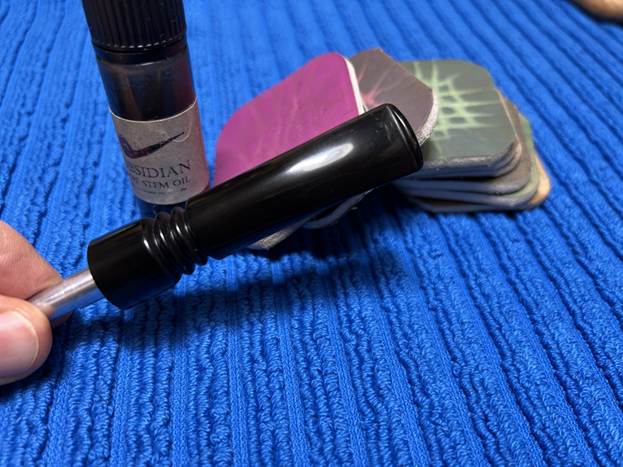
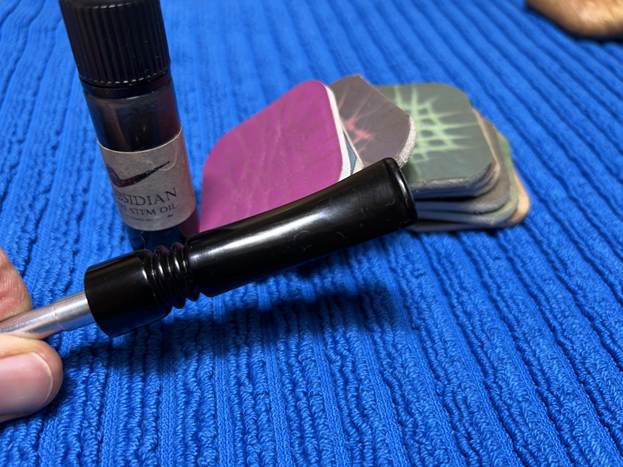
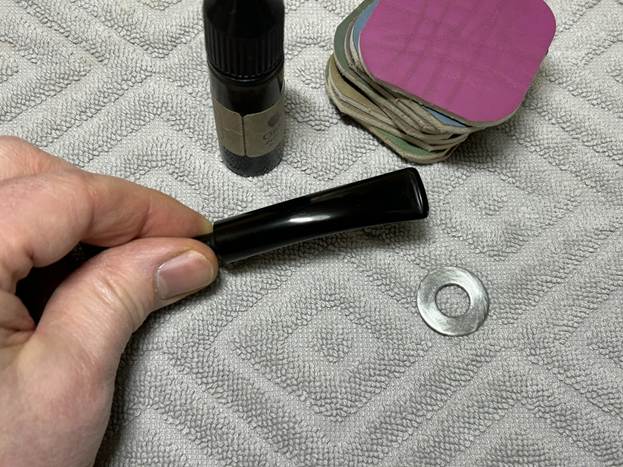
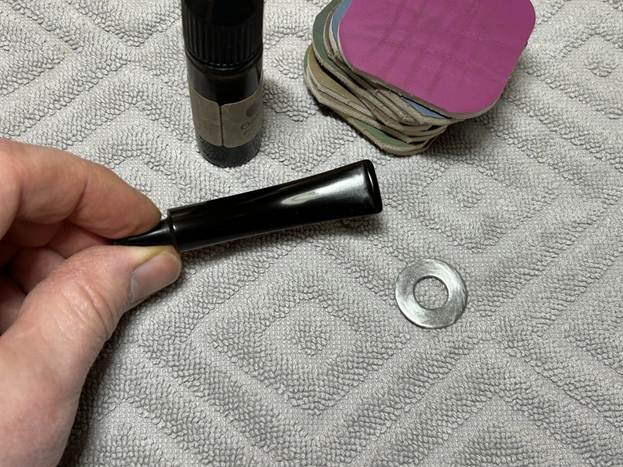
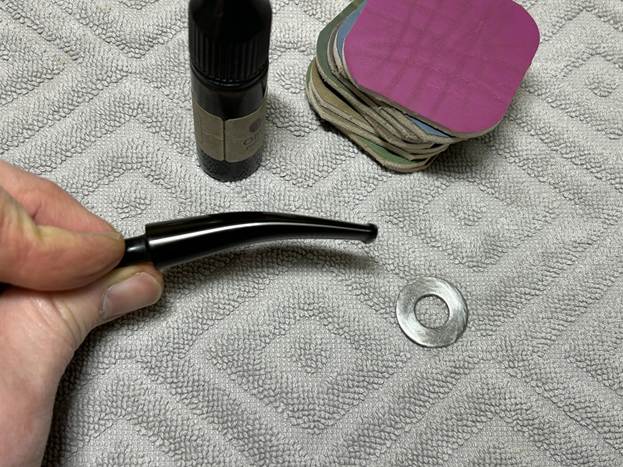
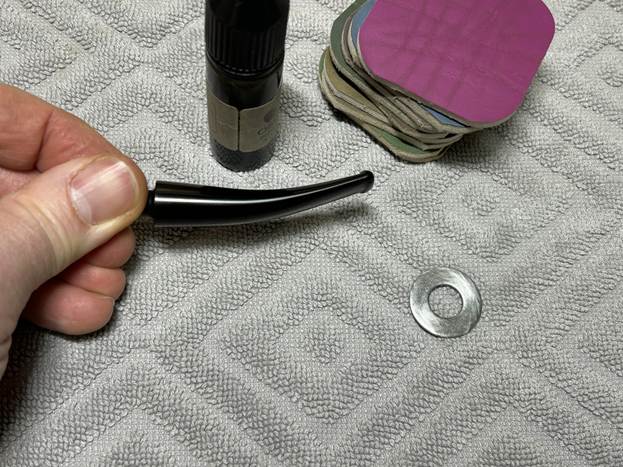
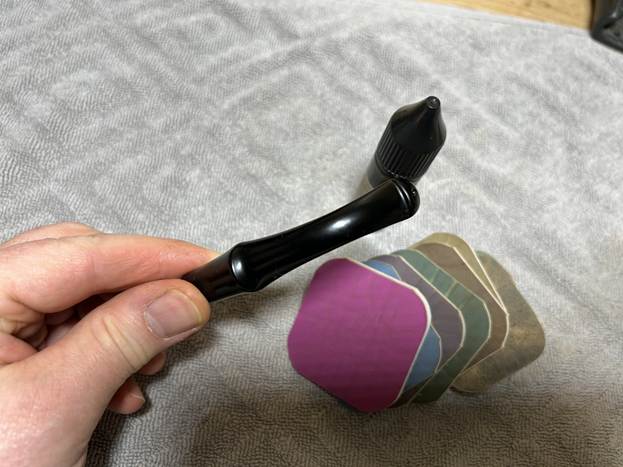
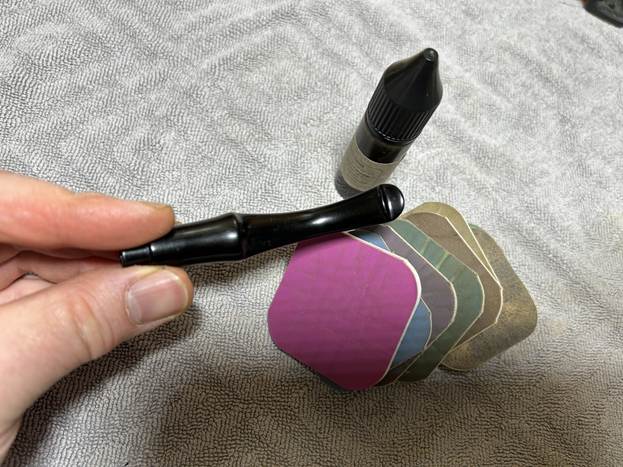
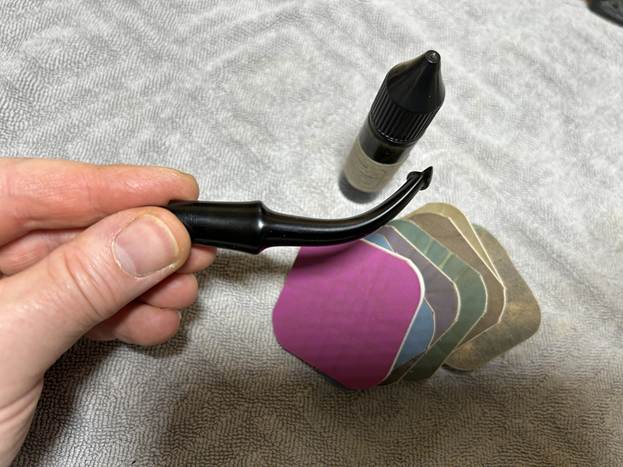
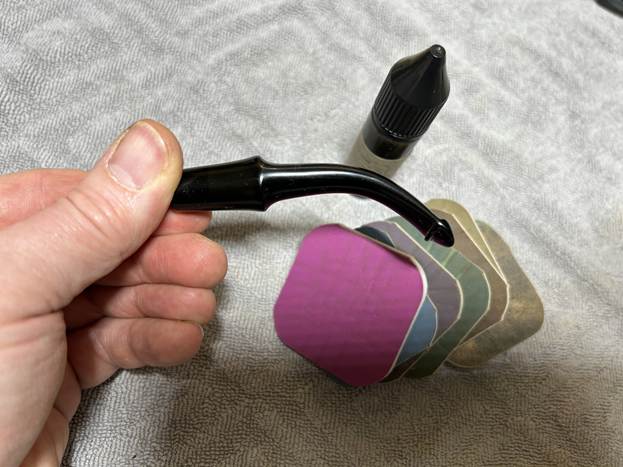
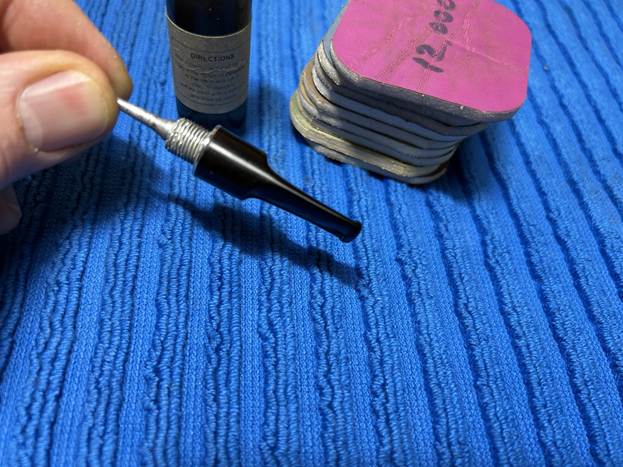
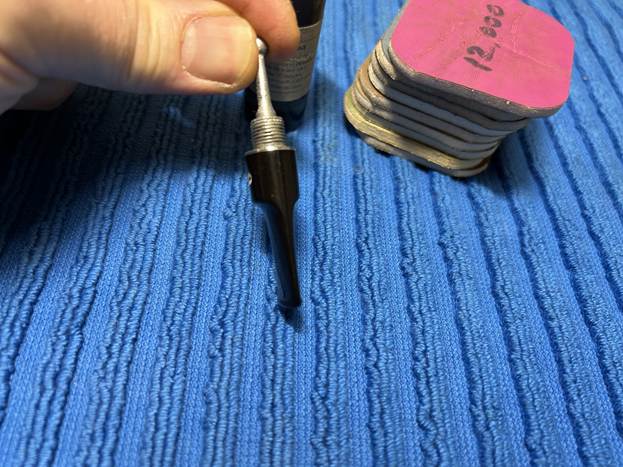
The penultimate step for the stem is sanding. First, with my set of needle files, I reduced the bulk of the cyanoacrylate repairs. I removed the excess adhesive as near to the surface as possible, without cutting into the vulcanite. Following that, I used all nine of the micromesh sanding pads (1,500 through 12,000 grit) to sand out flaws, even out the vulcanite, and provide gentle polishing of the finished surface. I also applied pipe-stem oil while using the last five micromesh pads. There was a wonderful, deep black shine to the stem when I was done.

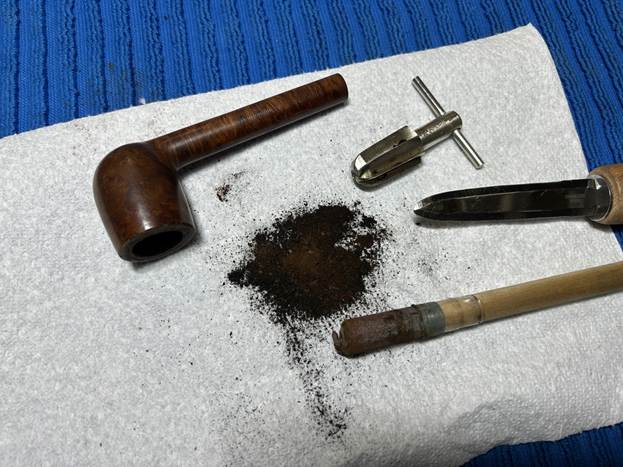
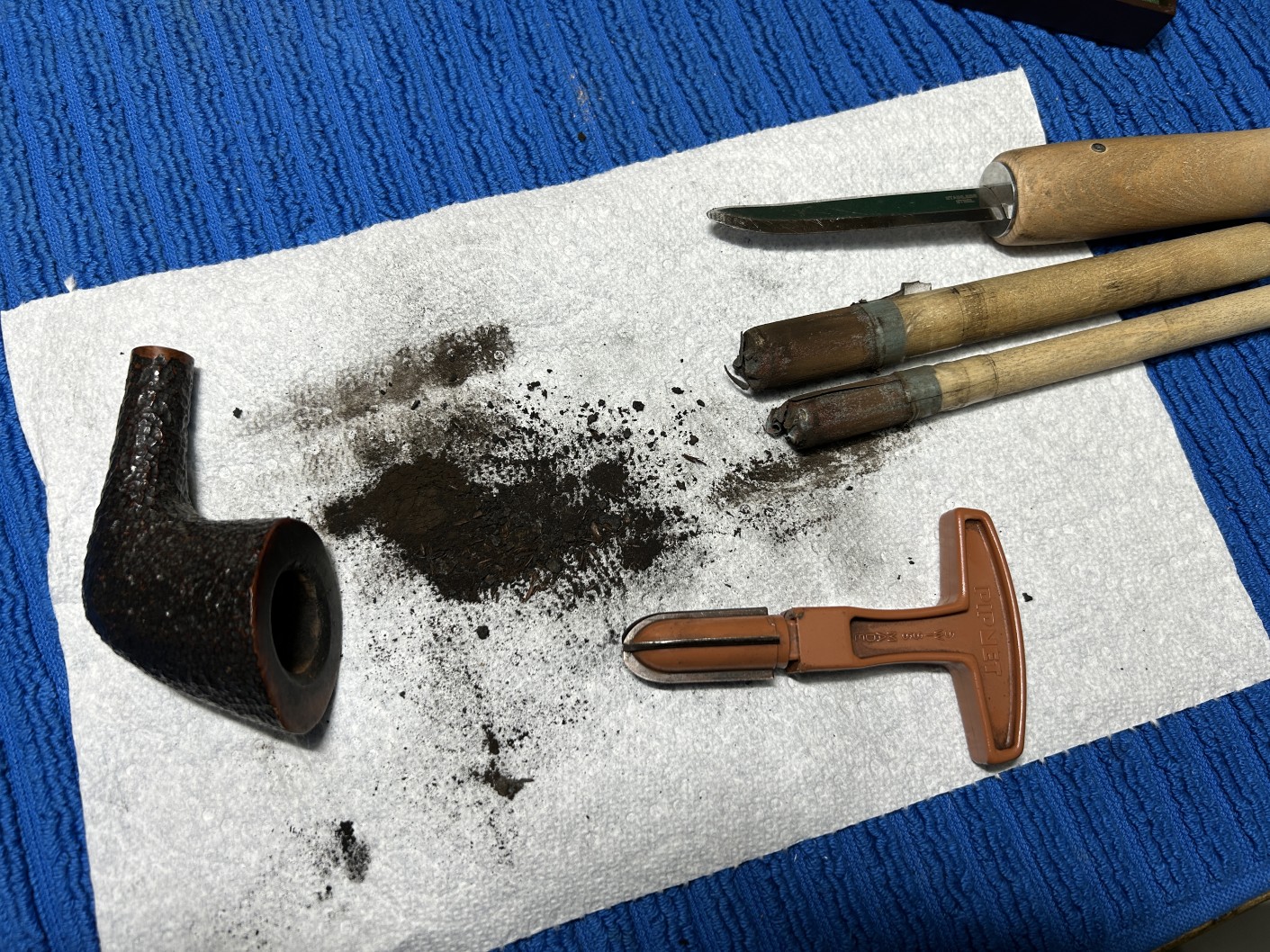
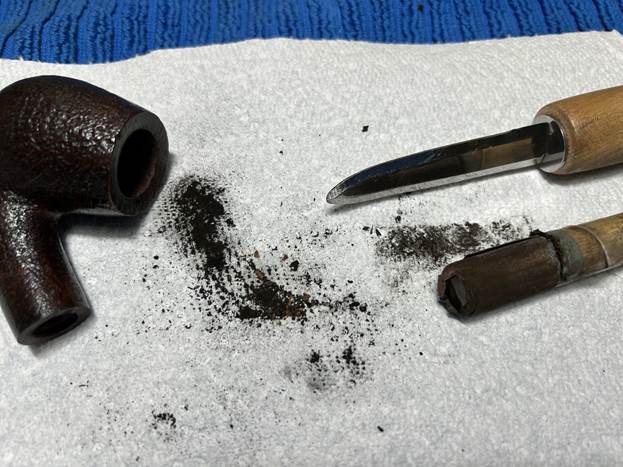
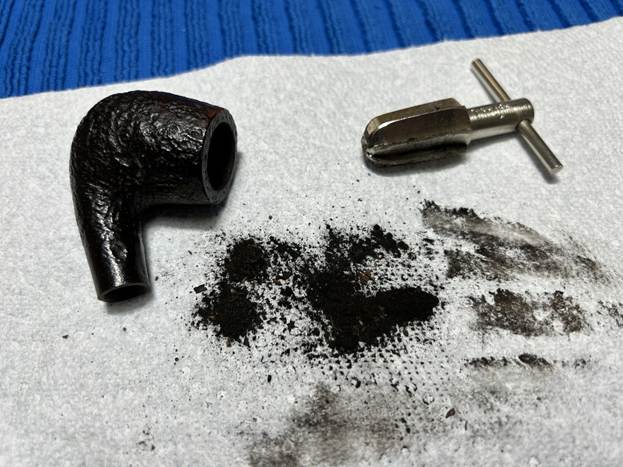
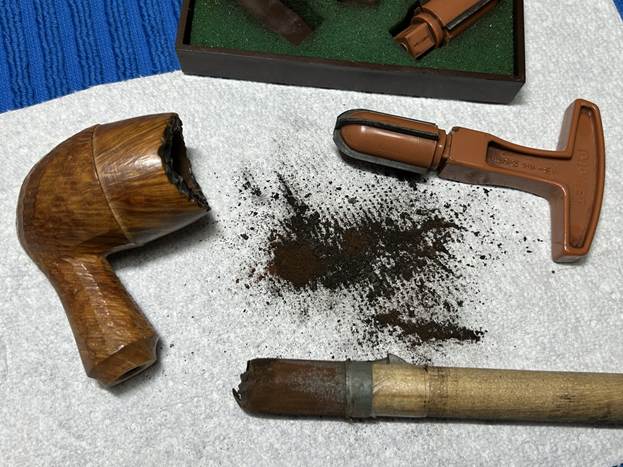
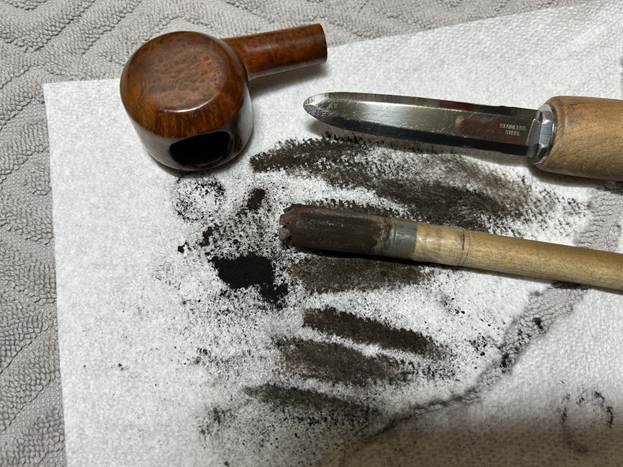
As the stem was (nearly) complete, I moved on to the stummel. The first step was to ream out the bowl – that is to say, remove all the cake inside the bowl. Of course, there wasn’t really much. I used a piece of sandpaper taped to a wooden dowel to clean the inside.

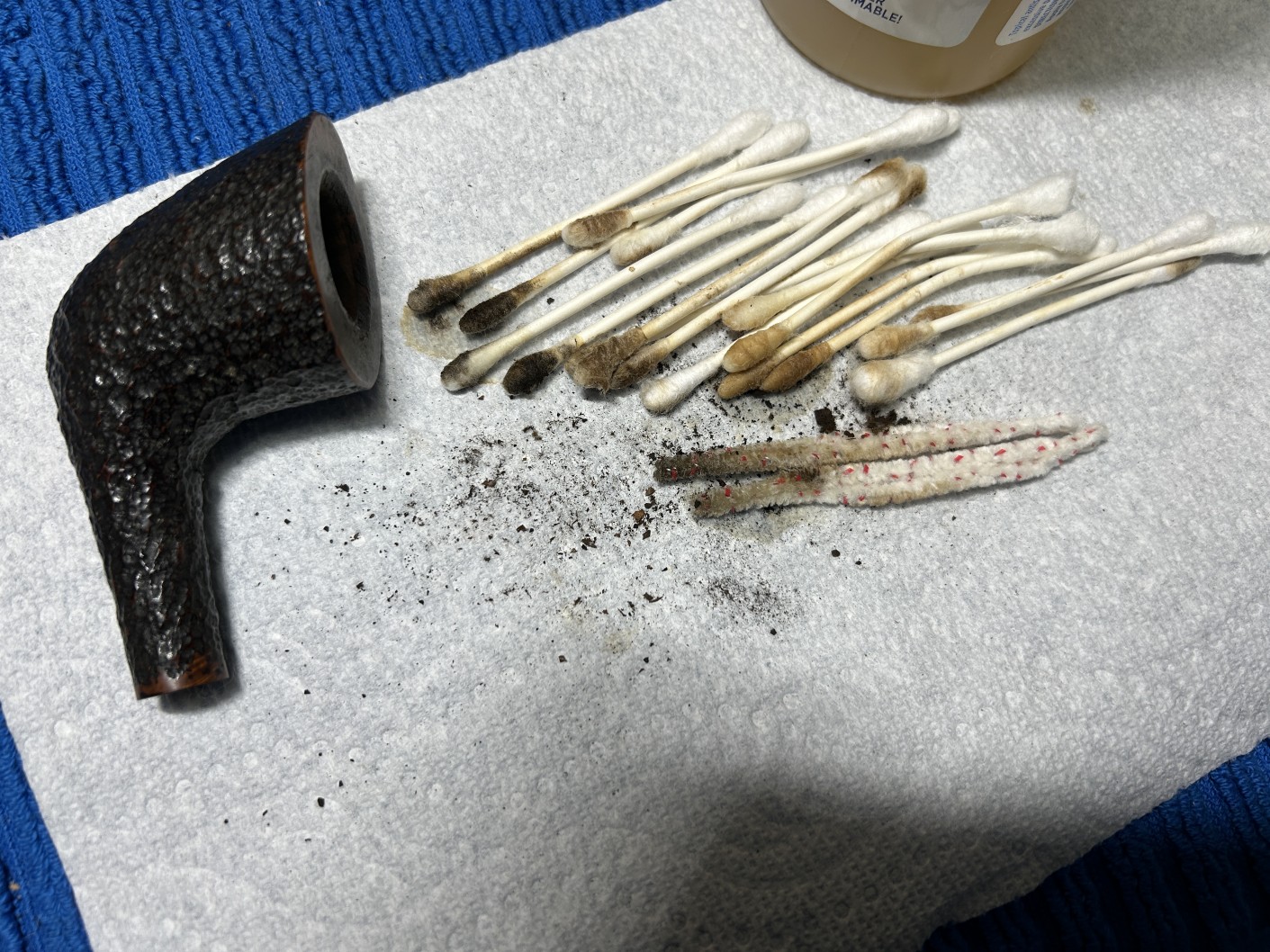
Similar to the stem, I then cleaned the stummel with both pipe cleaners and cotton swabs dipped in lemon-infused 99% isopropyl alcohol. Again, not too much here.

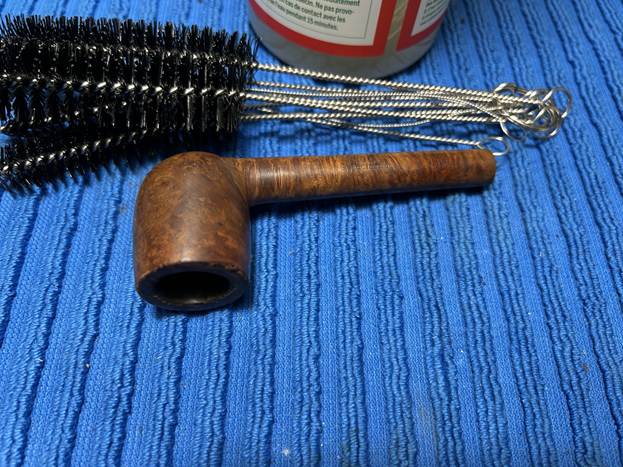
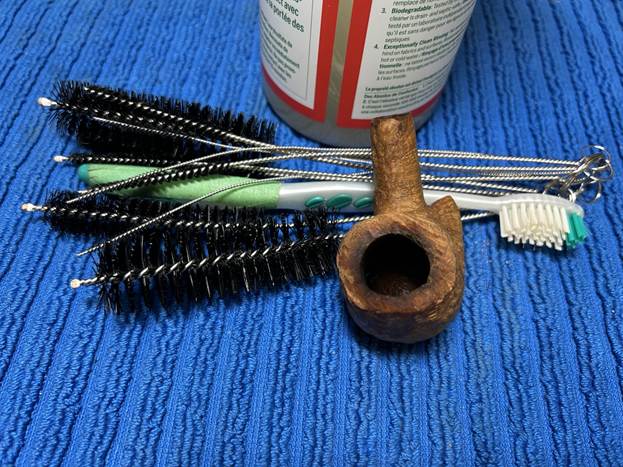
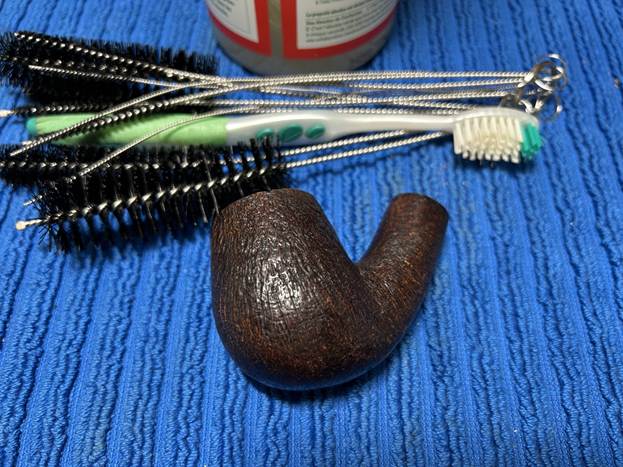
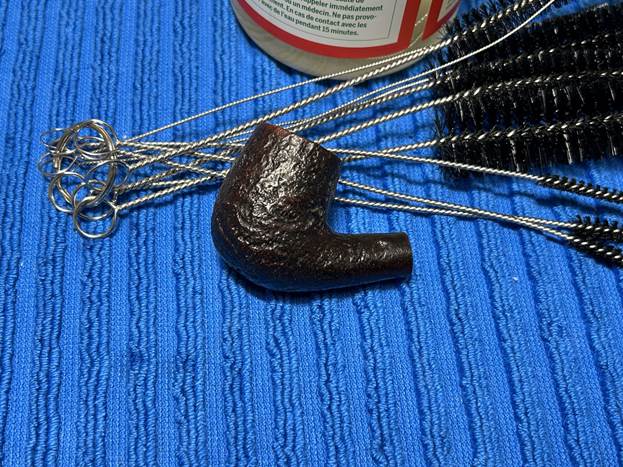
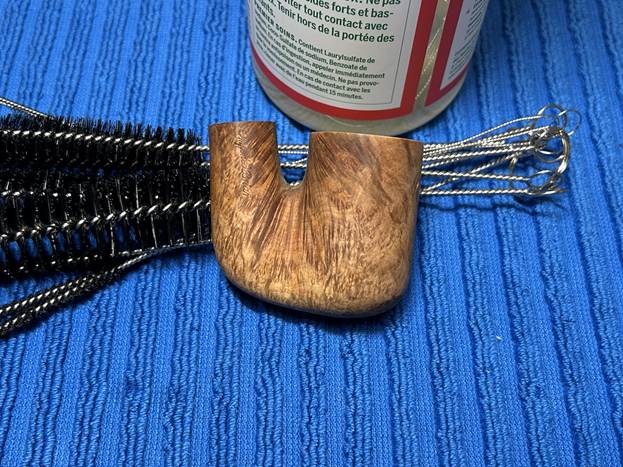
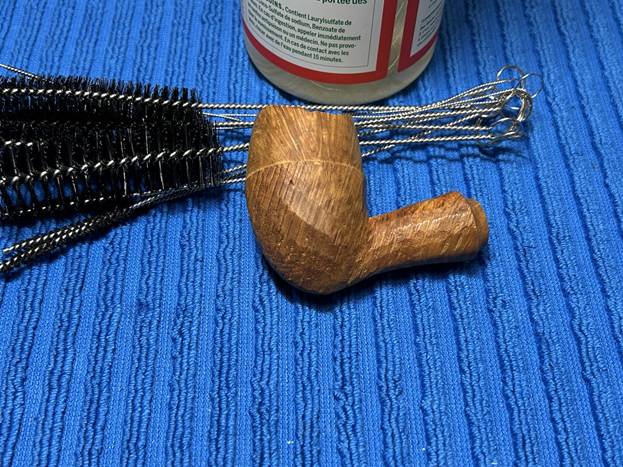
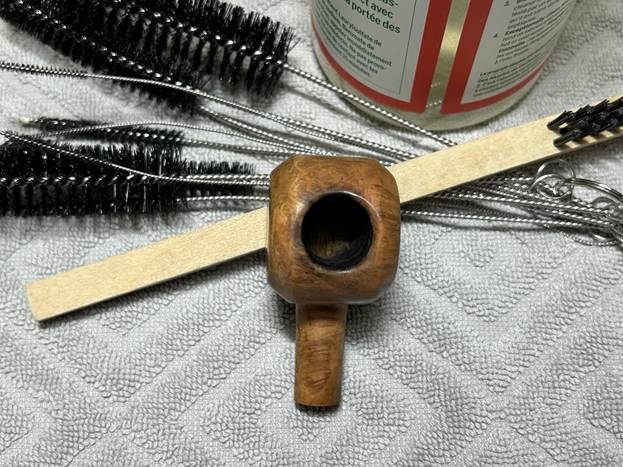
To tidy up the briar, I wiped down the outside, using a solution of a pH-neutral detergent and some distilled water, with cotton rounds. I also used a toothbrush in the crevices. This did a good job of cleaning any latent dirt on the surface of the briar. The last step of the cleaning process was to scour the inside of the stummel with the same mild detergent and tube brushes. This was the culmination of a lot of hard work in getting the pipe clean.

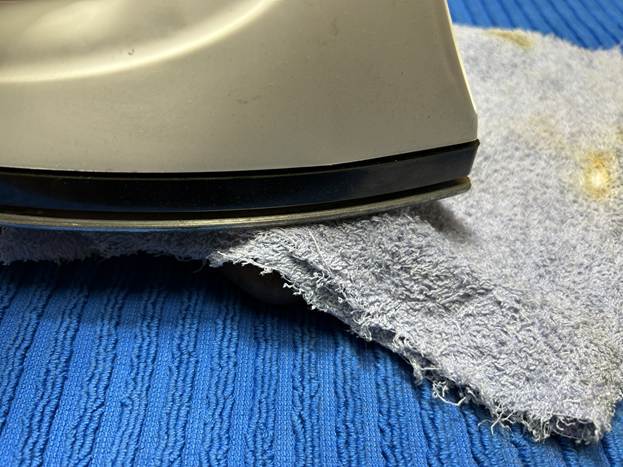
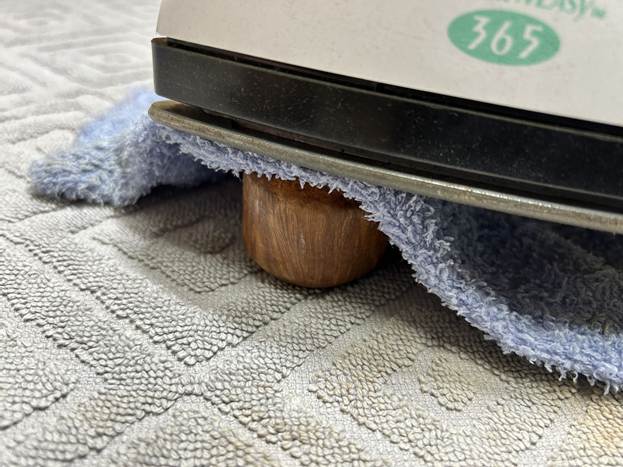
Having completed that, I was able to address the nicks on the rim and the bowl. I dug out my iron and a damp cotton flannel cloth. By laying the cloth over the affected areas and applying the iron to it, the hot and moist steam can cause the wood to swell slightly and return to shape. There was considerable improvement!

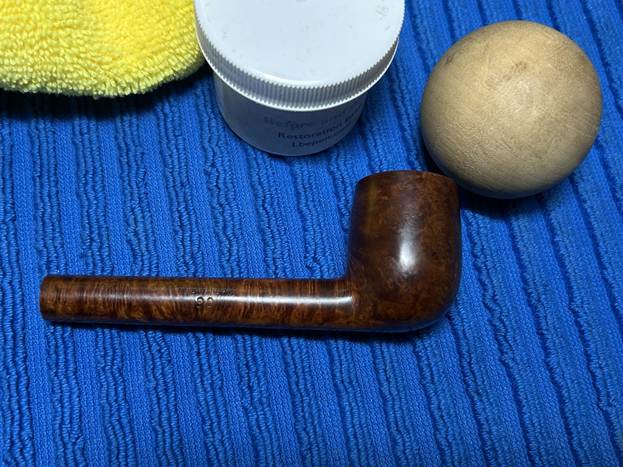
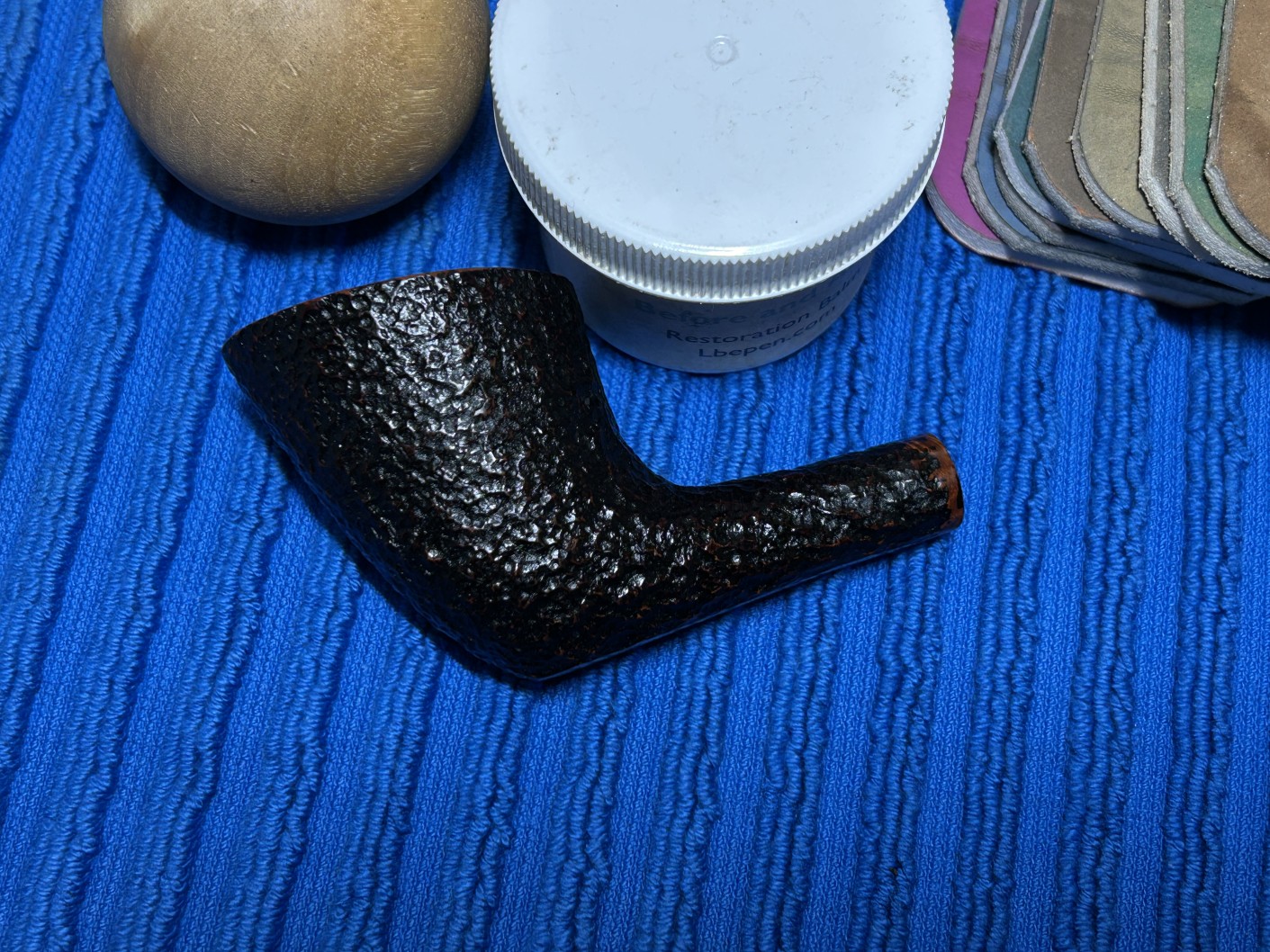
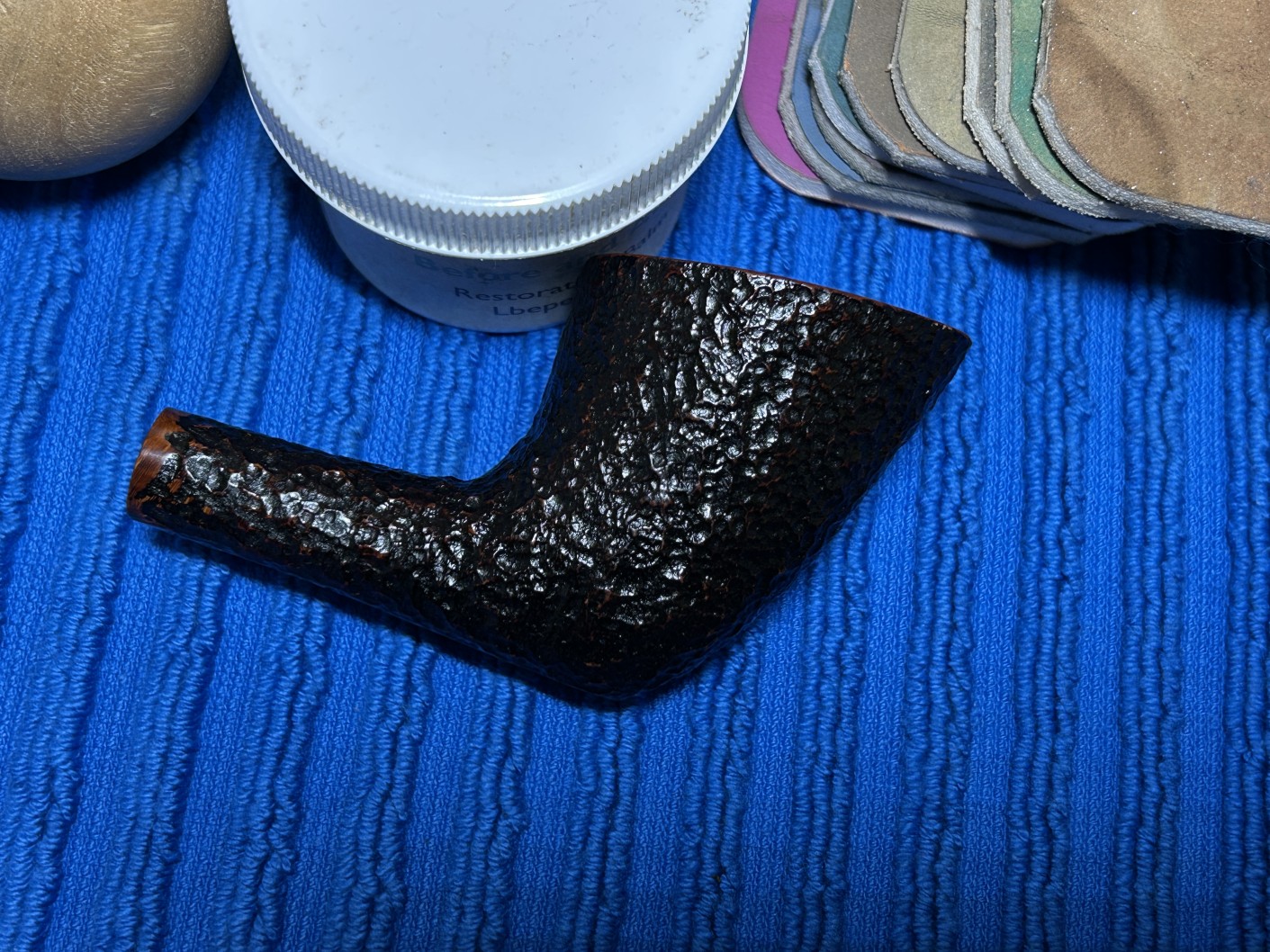
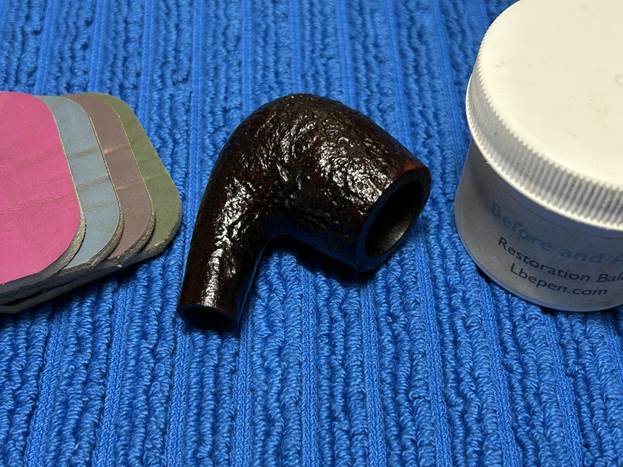
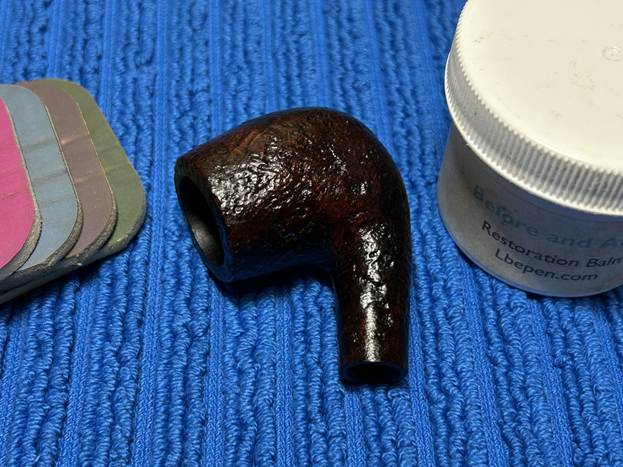
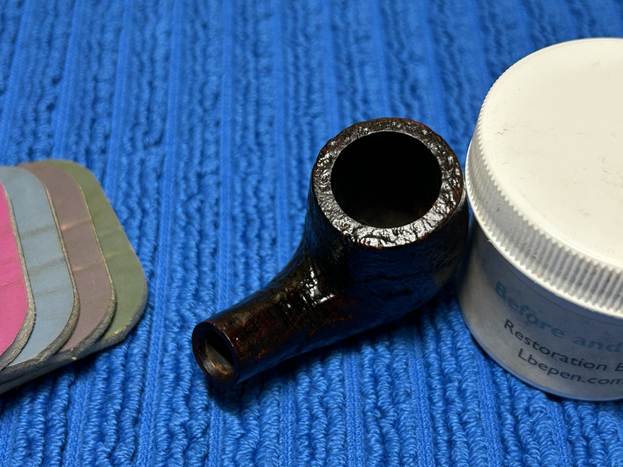
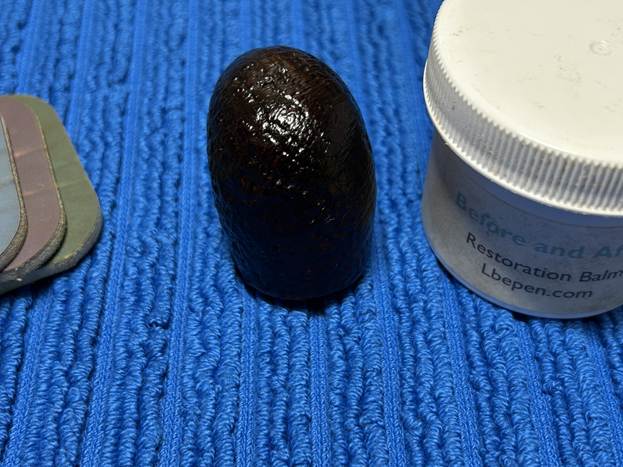
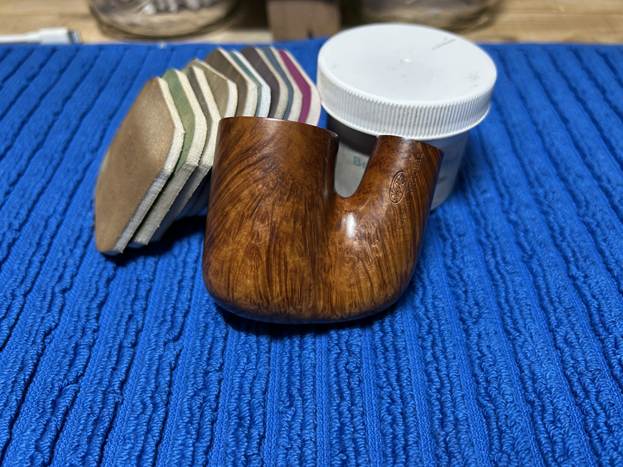
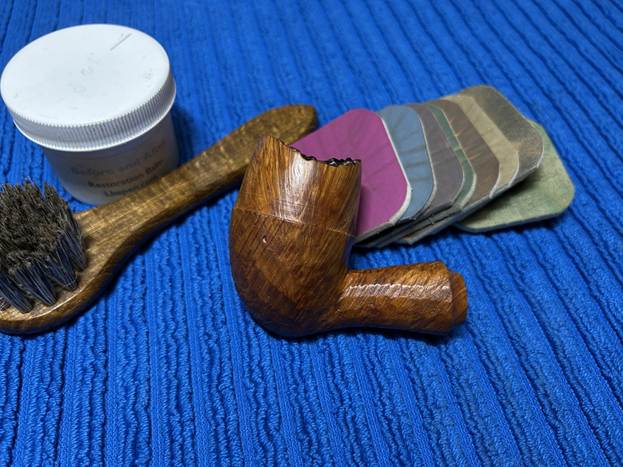
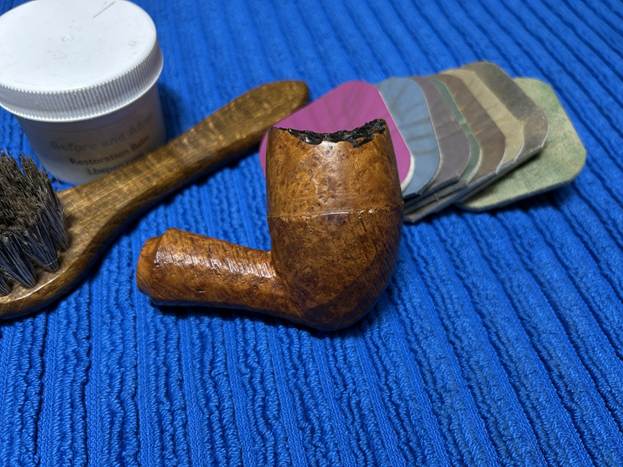
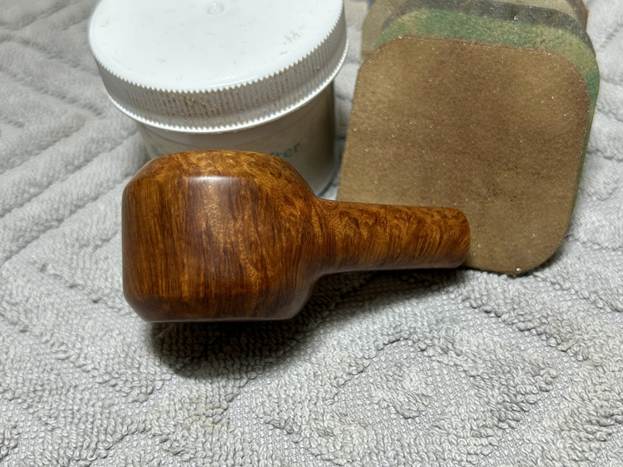
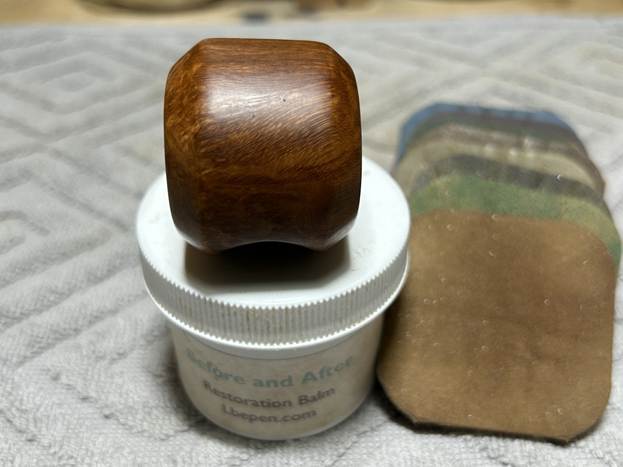
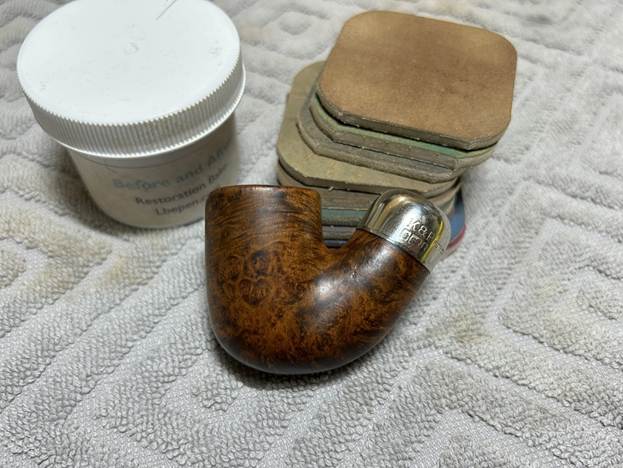
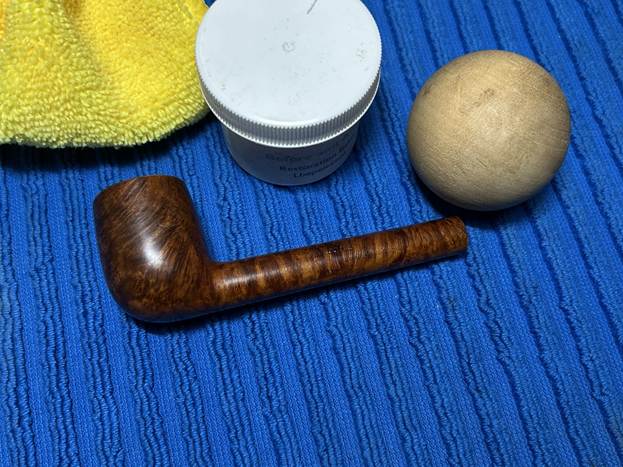
I used all nine micromesh pads (1,500 through 12,000 grit) to sand the outside of the stummel and finish it off. This sanding minimizes flaws in the briar and provides a beautiful smoothness to the wood. I rubbed some LBE Before & After Restoration Balm into the briar and let it sit for 30 minutes or so. The balm moisturizes the wood and gives a beautiful depth to the briar. I then buffed the stummel with a microfibre cloth.

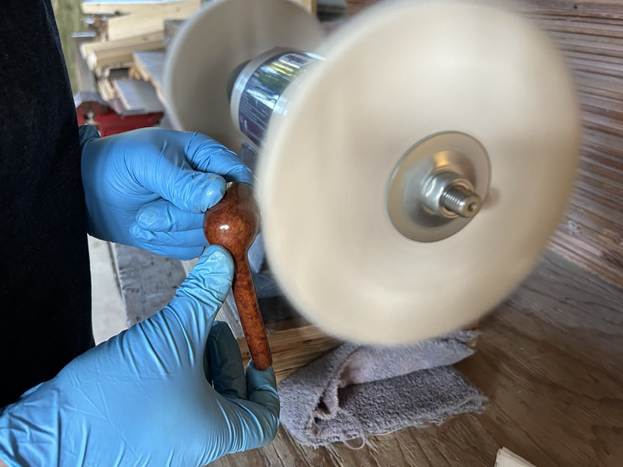
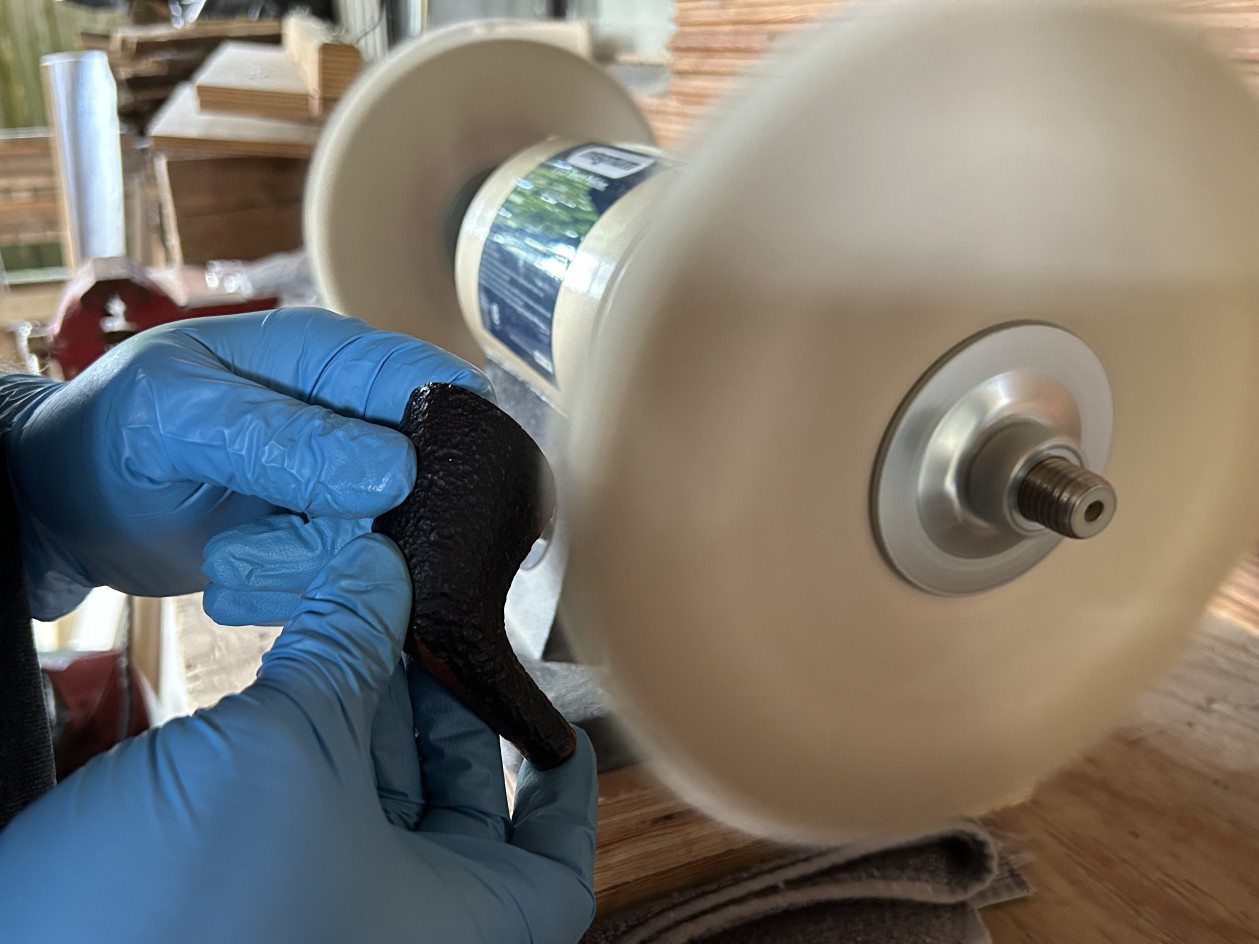
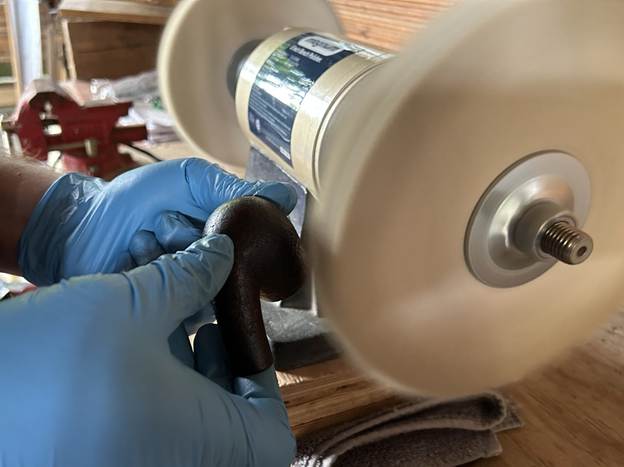
For the final step, I took the pipe to my bench polisher and carefully buffed it – first with a blue diamond compound, then with three coats of carnauba wax. This procedure makes the pipe look its best – the stummel sings and the stem glows.

All done! This Old Bruyere 56 prince sitter with a screw-in base looks fantastic again and is ready to be enjoyed by its next owner. I am pleased to announce that this pipe is for sale! If you are interested in acquiring it for your collection, please have a look in the ‘British’ section of the store here on Steve’s website. You can also email me directly at kenneth@knightsofthepipe.com. The approximate dimensions of the pipe are as follows: length 5⅞ in. (149 mm); height 1¾ in. (45 mm); bowl diameter 1⅝ in. (41 mm); chamber diameter ¾ in. (20 mm). The weight of the pipe is 1¼ oz. (36 g). I hope you enjoyed reading the story of this pipe’s restoration as much as I enjoyed restoring it. If you are interested in more of my work, please follow me here on Steve’s website or send me an email. Thank you very much for reading and, as always, I welcome and encourage your comments.

Giving Three Old Pipes New Life


by Kenneth Lieblich

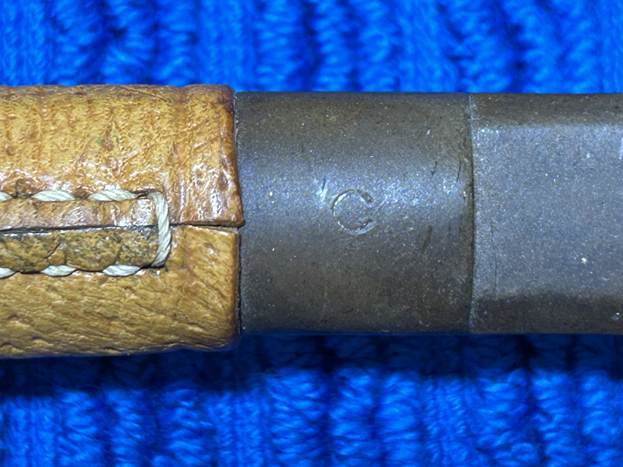
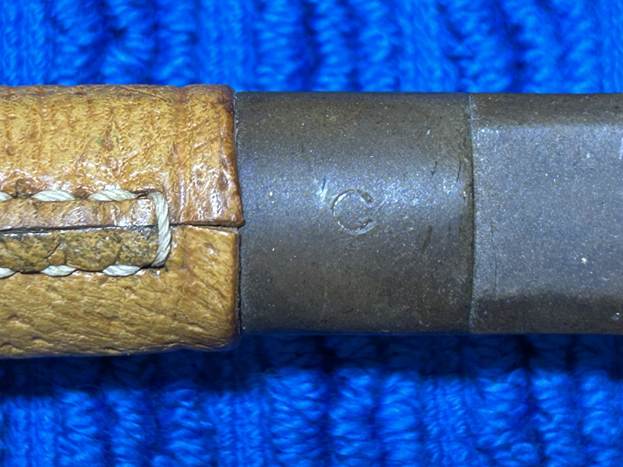
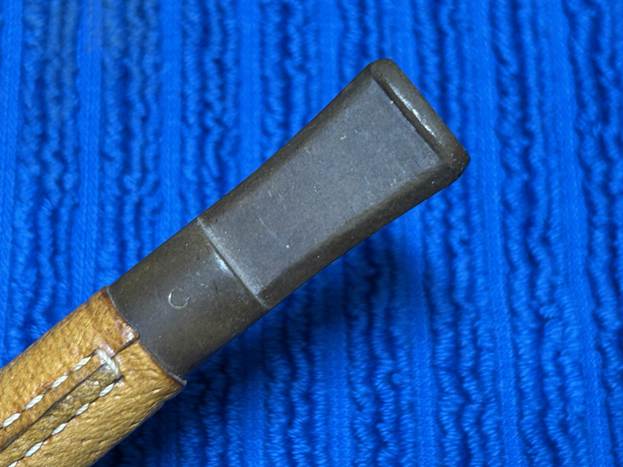
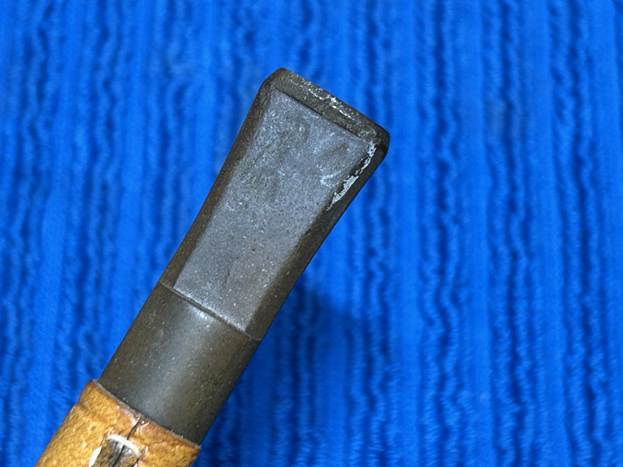
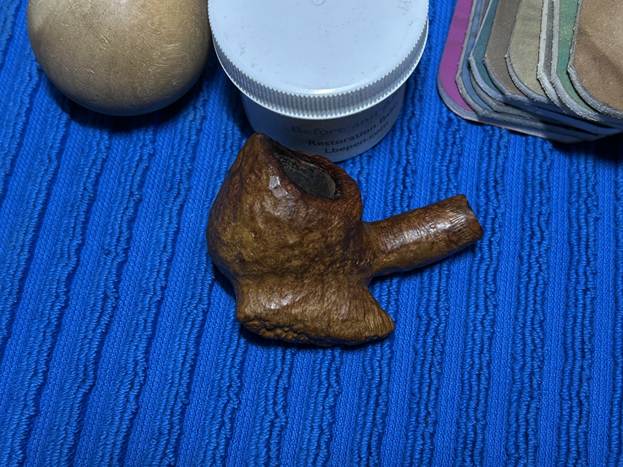
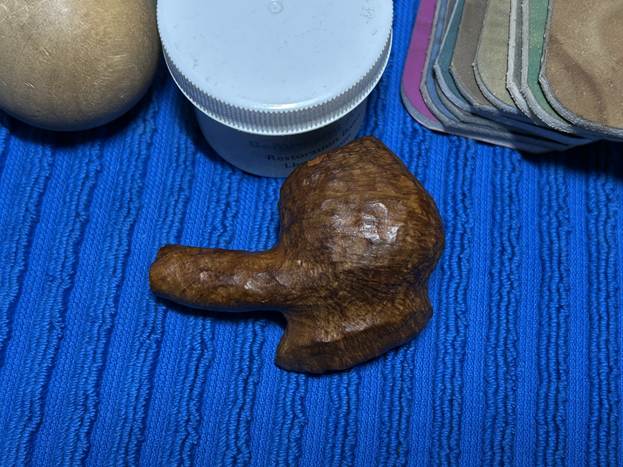
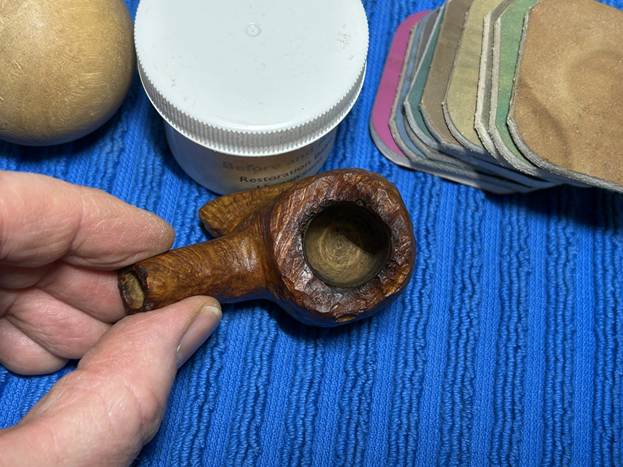
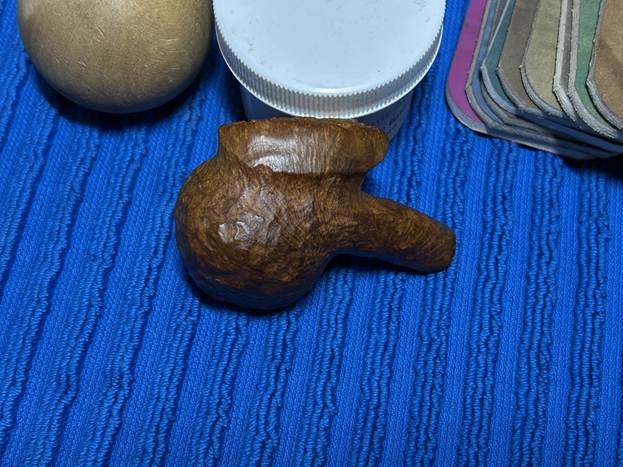
I recently received a package of three pipes from a fine gentleman in Texas. These old pipes belonged to his father-in-law and he was hoping to bring them back to working order. He wanted to get them smoking again after 20+ years of inactivity. I was happy to receive them and happy to work on them. I decided to do a blog about all three at once, so here we go. The three pipes are quite handsome. One is a little Savinelli 105 (probably a Petite) with a military tenon and acrylic shank extension. The second is a Dr Grabow bent billiard with a filter system and acrylic stem. Third is a large, round meerschaum with a variegated acrylic stem. You can see from the photos that they are attractive, very serviceable pipes.

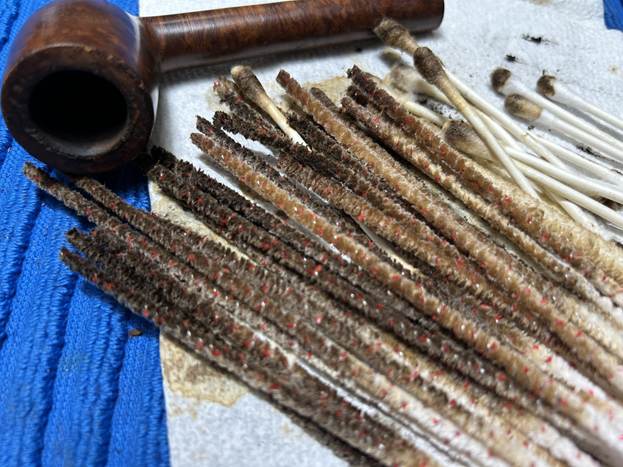
Let’s get started. I used isopropyl alcohol on a few cotton rounds and wiped down the three stems to provide an initial cleaning of filth before moving on to the next steps. The primary cleaning came next. I disinfected the inside of the stems with both pipe cleaners and cotton swabs dipped in lemon-infused 99% isopropyl alcohol. I scrubbed thoroughly to make sure the interior was very clean. I used lots and lots pipe cleaners and cotton swabs.

The goal of the next step is the removal (or minimization) of oxidation. There was only one stem (the Savinelli) that was made of vulcanite and, therefore, in need of de-oxidation. Going to my sink, I used cream cleanser, cotton rounds, and a toothbrush, and scoured the stem to remove as much surface oxidation as possible. As the photos show, the result was a hideous, ochre-coloured mess – but better off the stem than on it.

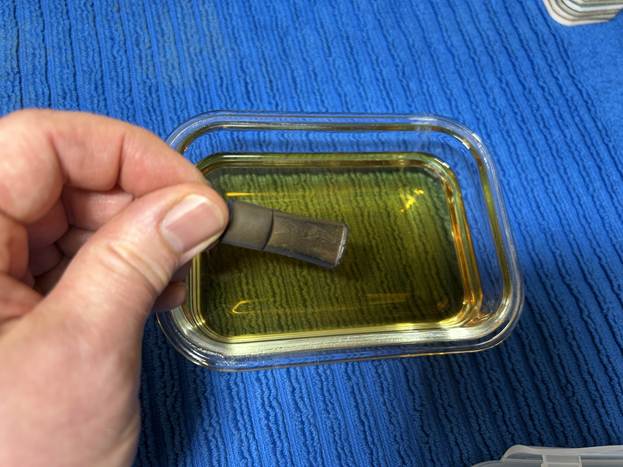
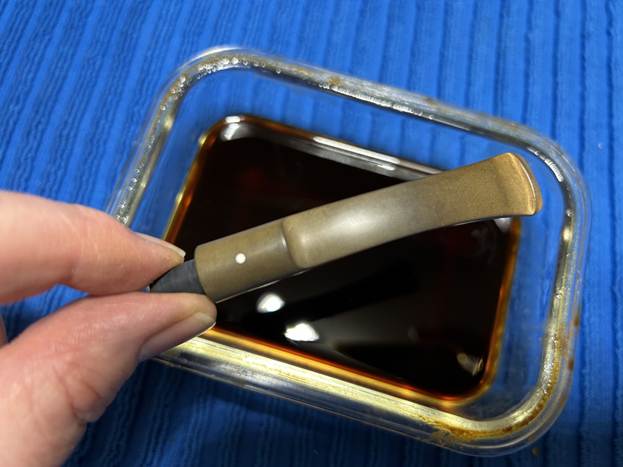
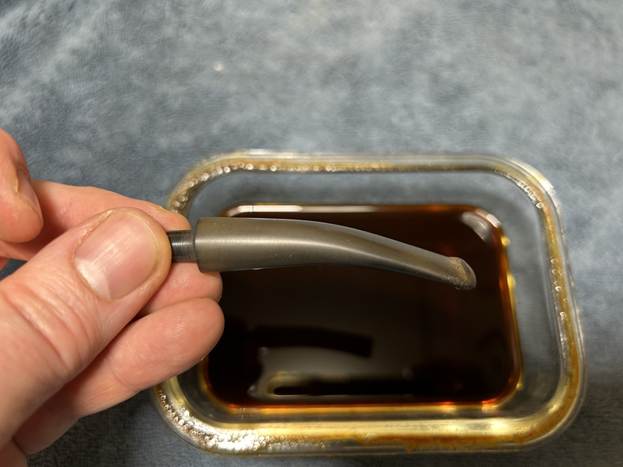
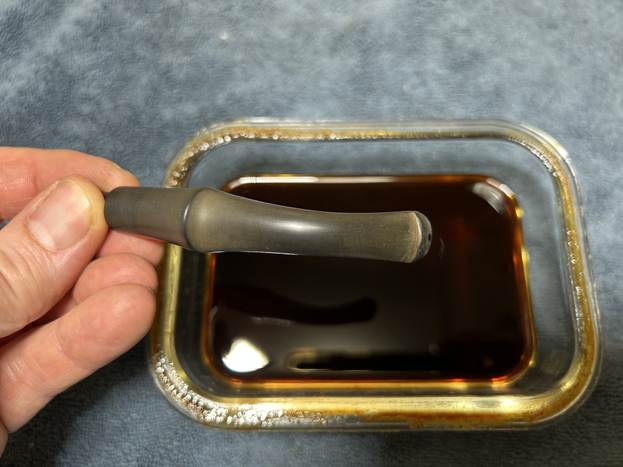
Once the stem was reasonably clean, I soaked it overnight in some Briarville Stem Oxidation Remover. This solution works to draw oxidation in the stem to the surface of the vulcanite. This is a major aid and an important step in ensuring a clean stem. The following day, I drew out the stem from its bath and scrubbed the lingering fluid with a toothbrush. The oxidation was very deep on this pipe and there will always be some remnants of it.
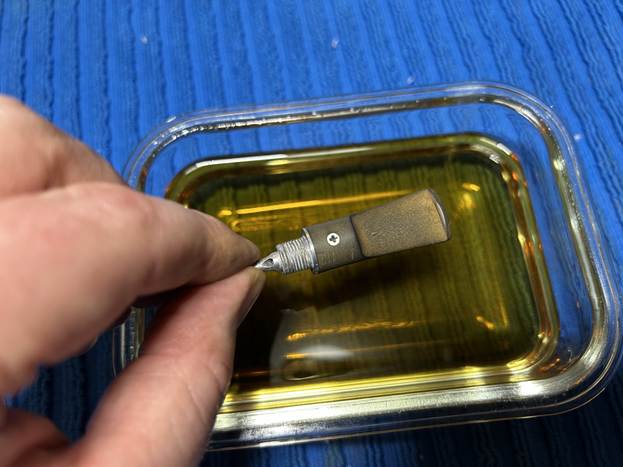
After this, I painted the Savinelli logo on the stem with some enamel nail polish. I restored the logo carefully and let it fully set before proceeding.

As the stems were now clean and dry, I set about fixing the marks and dents. This was done by filling those divots with black cyanoacrylate adhesive (impregnated with carbon and rubber) on the Dr Grabow stem and clear cyanoacrylate adhesive on the meerschaum stem. I left them to cure and moved on. The Savinelli stem didn’t need this treatment. The photos don’t show this very well, but the meer’s stem had very deep dents that required quite a bit of attention.

The penultimate step for the stems is sanding. First, with my set of needle files, I reduced the bulk of the cyanoacrylate repairs. I removed the excess adhesive as near to the surface as possible, without cutting into the stems. Following that, I used all nine of the micromesh sanding pads (1,500 through 12,000 grit) to sand out flaws, even things out, and provide gentle polishing of the finished surface. I also applied pipe-stem oil while using the last five micromesh pads. There was a wonderful, deep shine to all three stems when I was done. I am embarrassed to say that I forgot to take any photos of this step. You’ll just have to take my word for it.

As the stem were (nearly) complete, I moved on to the two briar stummels. The first step was to ream out the bowls – that is to say, remove all the cake. This accomplished a couple of things. First (and most obviously), it cleaned the bowl and provided a refurbished chamber for future smoking. Second, when the old cake was removed, I could inspect the interior walls of the bowls and determine if there was damage or not. I used a reamer, a pipe knife, and a piece of sandpaper taped to a wooden dowel. Collectively, these ensured that all the debris was removed.

Same sort of thing (kind of) for the meerschaum bowl. Normally, as above, I would use a reamer to remove the built-up cake inside the bowl, but meerschaum has the potential to crack in those circumstances. Instead, I used just the pipe knife and the sandpaper/dowel. There wasn’t too much.

Similar to the stems, I then cleaned the stummels with both pipe cleaners and cotton swabs dipped in lemon-infused 99% isopropyl alcohol. With pipes this dirty, it took quite a while and much cotton to clean. With the meer, I did this carefully because too much soaking can cause meerschaum to soften. In this case, I moved quickly, nothing softened, and everything turned out well.

I then decided to ‘de-ghost’ the two briar pipes – that is to say, exorcize the remaining filth from the briar. I filled the bowls and the shanks with cotton balls, then saturated them with 99% isopropyl alcohol. I let the stummels sit overnight. This caused the remaining oils, tars and smells to leach out into the cotton. However, I didn’t use this treatment on meerschaum for the aforementioned reasons.

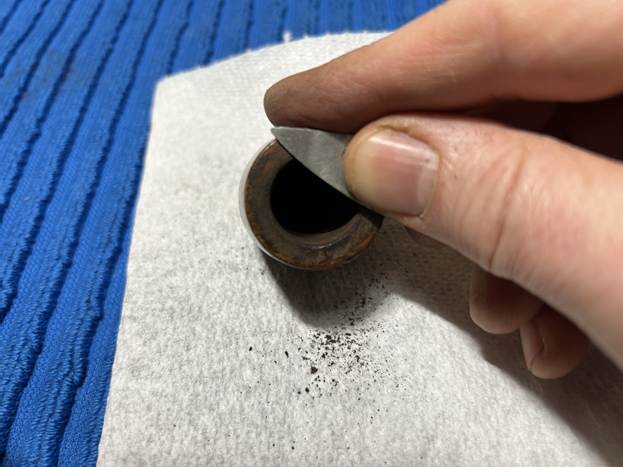
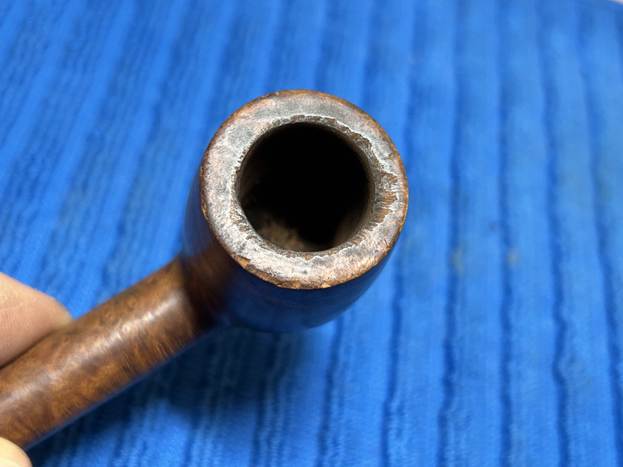
My next step was to remove the lava on the rims of the two briar pipes. For this, I took a piece of machine steel and gently scraped the lava away. The metal’s edge is sharp enough to remove what I need, but not so sharp that it damages the rims.

To tidy up the briar pipes, I wiped down the outsides, using a solution of a pH-neutral detergent and some distilled water, with cotton rounds. I also used a toothbrush in the crevices. This did a good job of cleaning any latent dirt on the surface of the briar. The last step of the cleaning process was to scour the inside of the stummels with the same mild detergent and tube brushes. This was the culmination of a lot of hard work in getting the pipes clean. Again, this was only done on the briar pipes.

The Dr Grabow had a serious nick at the end of the shank. I filled this in with CA glue. Worked perfectly.

I used all nine micromesh pads (1,500 through 12,000 grit) to sand the outside of all three stummels and finish them off. This sanding minimizes flaws in the briar (and meerschaum) and provides a beautiful smoothness to the surfaces. I rubbed some LBE Before & After Restoration Balm into the two briar pipes and let them sit for 30 minutes or so. The balm moisturizes the wood and gives a beautiful depth to the briar. I then buffed the stummels with a microfibre cloth.

I then applied some Clapham’s Beeswax Finish to the meerschaum and also let it sit for about 30 minutes. As meerschaum pipes don’t do well on a bench-polisher, I then buffed it with a microfibre cloth. I repeated this process and left it – it sure was pretty!

For the final step, I took the two briar pipes (only) to my bench polisher and carefully buffed them – first with a blue diamond compound, then with three coats of carnauba wax. This procedure makes the pipes look their best – the stummels sing and the stems glow.

All done! These three handsome pipes look fantastic again and I am delighted with the results. I’m sure the Texan gentleman will be too. Stupidly, I forgot to take measurements of the pipes before I returned them. However, I hope you enjoyed reading the story of the pipes’ restoration as much as I enjoyed restoring them. If you are interested in more of my work, please follow me here on Steve’s website or send me an email at kenneth@knightsofthepipe.com. Thank you very much for reading and, as always, I welcome and encourage your comments.

Restoring a WDC Demuth Aristocrat 88 Churchwarden


by Kenneth Lieblich

Here is a beautiful, early-twentieth century churchwarden for your perusal. I’ve had it sitting around for a little while, and now it’s time to get it cleaned up. It’s got the typical elegant shape and feel of a regular churchwarden, but this one is a full twelve inches long. This is an old timer and I can’t wait to get it into the hands of its next owner.

As the title tells you, this pipe is from WDC – the William Demuth Company, a venerable American pipe maker. The markings are as follows: on the left side of the shank are the letters WDC inside an inverted triangle, next to Demuth [over] Aristocrat. On the right side of the shank, we read Imported [over] Briar Root. And next to those, the shape number 88. Finally, the top of the stem shows a metal representation of the invested triangle – the logo for the WDC company. The Aristocrat was one of WDC’s better lines and, indeed, this is a handsome pipe.

Pipedia has some great information on the history of the company and I encourage you to read it here. In the meantime, here is a quotation from their article:

William Demuth. (Wilhelm C. Demuth, 1835-1911), a native of Germany, entered the United States at the age of 16 as a penniless immigrant. After a series of odd jobs he found work as a clerk in the import business of a tobacco tradesman in New York City. In 1862 William established his own company. The William Demuth Company specialized in pipes, smoker’s requisites, cigar-store figures, canes and other carved objects. The Demuth Company is probably well known for the famous trademark, WDC in an inverted equilateral triangle. In 1897 Ferdinand Feuerbach joined the Demuth company and by 1903 had become the production manager. Feuerbach is credited with developing Demuth’s popular Royal Demuth and Hesson Guard Milano pipelines. He left in 1919, when Sam Frank Sr. needed an experienced pipe man to run his pipe factory, located at 168 Southern Blvd., in the Bronx. Feuerbach and Frank had been close friends since Frank started his own business in 1900 and was closely associated with the sales staff of WDC, selling their line of pipes.

The pipe is in good condition. There are some dark marks on the rim of the briar and a bit of cake in the bowl. Nothing serious. The stem is just fine, aside from some tooth chatter.

I used isopropyl alcohol on a few cotton rounds and wiped down the stem to provide an initial cleaning of filth before moving on to the next steps. The primary cleaning came next. I disinfected the inside of the stem with both pipe cleaners and cotton swabs dipped in lemon-infused 99% isopropyl alcohol. I scrubbed thoroughly to make sure the interior was very clean.

The goal of the next step is the removal (or minimization) of oxidation. Going to my sink, I used cream cleanser, cotton rounds, and a toothbrush, and scoured the stem to remove as much surface oxidation as possible. As the photos show, the result was a hideous, ochre-coloured mess – but better off the stem than on it.

As the stem was now clean and dry, I set about fixing the marks and dents in the vulcanite. This was done by filling those divots with black cyanoacrylate adhesive, impregnated with carbon and rubber. I left this to cure and moved on.

The penultimate step for the stem is sanding. First, with my set of needle files, I reduced the bulk of the cyanoacrylate repairs. I removed the excess adhesive as near to the surface as possible, without cutting into the vulcanite. Following that, I used all nine of the micromesh sanding pads (1,500 through 12,000 grit) to sand out flaws, even out the vulcanite, and provide gentle polishing of the finished surface. I also applied pipe-stem oil while using the last five micromesh pads. There was a wonderful, deep black shine to the stem when I was done.
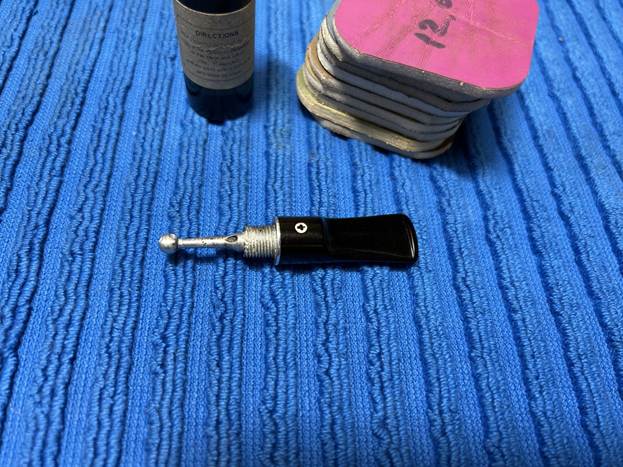
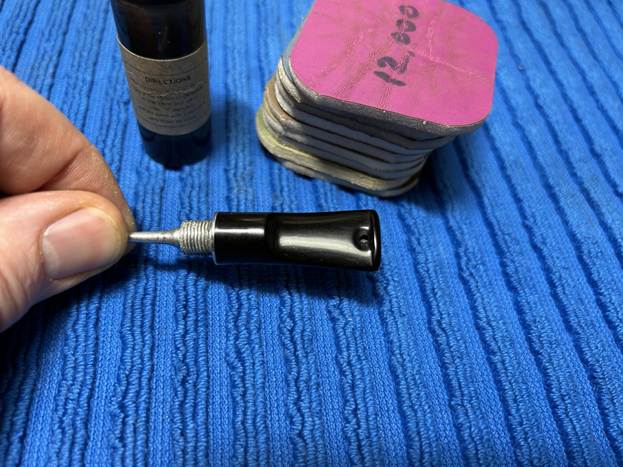
As the stem was (nearly) complete, I moved on to the stummel. The first step was to ream out the bowl – that is to say, remove all the cake inside the bowl. This accomplished a couple of things. First (and most obviously), it cleaned the bowl and provided a refurbished chamber for future smoking. Second, when the old cake was removed, I could inspect the interior walls of the bowl and determine if there was damage or not. I used a reamer and a piece of sandpaper taped to a wooden dowel. Collectively, these ensured that all the debris was removed.

Similar to the stem, I then cleaned the stummel with both pipe cleaners and cotton swabs dipped in lemon-infused 99% isopropyl alcohol. With a pipe this dirty, it took quite a while and much cotton to clean. It was pretty darn dirty.

I then decided to ‘de-ghost’ the pipe – that is to say, exorcize the remaining filth from the briar. I filled the bowl and the shank with cotton balls, then saturated them with 99% isopropyl alcohol. I let the stummel sit overnight. This caused the remaining oils, tars and smells to leach out into the cotton.

To tidy up the briar, I wiped down the outside, using a solution of a pH-neutral detergent and some distilled water, with cotton rounds. This did a good job of cleaning any latent dirt on the surface of the briar. The last step of the cleaning process was to scour the inside of the stummel with the same mild detergent and tube brushes. This was the culmination of a lot of hard work in getting the pipe clean.

I used all nine micromesh pads (1,500 through 12,000 grit) to sand the outside of the stummel and finish it off. This sanding minimizes flaws in the briar and provides a beautiful smoothness to the wood. I rubbed some LBE Before & After Restoration Balm into the briar and let it sit for 30 minutes or so. The balm moisturizes the wood and gives a beautiful depth to the briar. I then buffed the stummel with a microfibre cloth.

For the final step, I took the pipe to my bench polisher and carefully buffed it – first with a blue diamond compound, then with three coats of carnauba wax. This procedure makes the pipe look its best – the stummel sings and the stem glows.

All done! This WDC Demuth Aristocrat 88 churchwarden looks fantastic again and is ready to be enjoyed by its next owner. I am pleased to announce that this pipe is for sale! If you are interested in acquiring it for your collection, please have a look in the ‘American’ section of the store here on Steve’s website. You can also email me directly at kenneth@knightsofthepipe.com. The approximate dimensions of the pipe are as follows: length 12 in. (305 mm); height 1⅔ in. (42 mm); bowl diameter 1⅓ in. (33 mm); chamber diameter ¾ in. (20 mm). The weight of the pipe is 1¼ oz. (38 g). I hope you enjoyed reading the story of this pipe’s restoration as much as I enjoyed restoring it. If you are interested in more of my work, please follow me here on Steve’s website or send me an email. Thank you very much for reading and, as always, I welcome and encourage your comments.

Another Wonderful Hand-Carved Søren Freehand Bent Egg


by Kenneth Lieblich

The last few weeks have been an extraordinarily busy time for me, so I haven’t posted in a bit, but this pipe is from the same lot as the one I posted last time. I recently acquired a collection from a gentleman, now deceased, who clearly loved his pipes. They were all well used and, according to his family, he had a pipe hanging out of his mouth at all times. They were all interesting pipes, but this one called to me. It’s a Søren Hand-Carved Freehand Bent Egg, with a beautiful look and feel, by master carver, Søren Refbjerg Rasmussen. It also has an attractive plateau on the rim and the end of the shank. This one deserves to be back in someone’s collection – maybe yours! On the underside of the shank, we read Søren [over] Hand-Carved [over] Made in Denmark. Those are all the markings we can see.Pipedia has an article on Mr Rasmussen and I quote a part of it here:

Søren Refbjerg Rasmussen founded a company in 1969, which employed an average of 8 – 12 craftsmen in the 1970’s. The semi-freehands they produced were traded under his prename Søren. Rasmussen himself finished only the very best pipes. So his way of pipemaking closely resembled the ways of Preben Holm, Karl Erik Ottendahl or Erik Nørding. Altogether more than 1,000,000 pipes were sold. Today he works alone as Refbjerg and manufactures only a small number of pipes in his workshop in DK-2860 Søborg, which are considered to be tremendously precisely executed. The dimensions mostly range from small to medium sized, corresponding to his personal preferences. The shapes adhere to the classical models, but often he gives them a touch of Danish flair. Refbjerg accepts minor faults but never uses any fillings. “Straight Grain” is the only grading, used for his very best pieces. He likes stem decorations made of exotic woods or metal rings.Meanwhile, over at Pipephil, there is the following entry:And, finally, scandinavianpipes.com includes these details about him:

Søren Refbjerg was born 1943 in the city of Søborg where he still lives and has been a full time pipe-maker since 1969. In the 70´s Søren had his own small factory with 10 employees producing a huge number of pipes mainly for the US market. Søren has indeed been one of the most productive Danish pipe-makers and for many years he also produced pipes for W.Ø. Larsen For the last decades Søren has been making pipes by himself, always using briar from Corsica. Søren derive much relaxation from being on the coast while angling for Sea Trout with his own hand-tied flies and find this environment to be a great inspiration for making pipes. Many times Søren say to himself: “Inspired by nature, made by me”.

He died in 2021. Let’s take a closer look at the pipe. It is in very nice shape. The stem is remarkably clean – a little bit of tooth chatter, but very little oxidation or calcification. The stummel is very nice – some cake in the bowl and a bit of darkening on the rim. I used isopropyl alcohol on a few cotton rounds and wiped down the stem to provide an initial cleaning of filth before moving on to the next steps. The primary cleaning came next. I disinfected the inside of the stem with both pipe cleaners and cotton swabs dipped in lemon-infused 99% isopropyl alcohol. I scrubbed thoroughly to make sure the interior was very clean.The goal of the next step is the removal (or minimization) of oxidation. Going to my sink, I used cream cleanser, cotton rounds, and a toothbrush, and scoured the stem to remove as much surface oxidation as possible. As the photos show, the result was a nasty, black mess – but better off the stem than on it.The penultimate step for the stem is sanding. I used all nine of the micromesh sanding pads (1,500 through 12,000 grit) to sand out flaws, even out the vulcanite, and provide gentle polishing of the finished surface. I also applied pipe-stem oil while using the last five micromesh pads. There was a wonderful, deep black shine to the stem when I was done.As the stem was (nearly) complete, I moved on to the stummel. The first step was to ream out the bowl – that is to say, remove all the cake inside the bowl. This accomplished a couple of things. First (and most obviously), it cleaned the bowl and provided a refurbished chamber for future smoking. Second, when the old cake was removed, I could inspect the interior walls of the bowl and determine if there was damage or not. I used a pipe knife and a piece of sandpaper taped to a wooden dowel. Collectively, these ensured that all the debris was removed.Similar to the stem, I then cleaned the stummel with both pipe cleaners and cotton swabs dipped in lemon-infused 99% isopropyl alcohol.I then decided to ‘de-ghost’ the pipe – that is to say, exorcize the remaining filth from the briar. I filled the bowl and the shank with cotton balls, then saturated them with 99% isopropyl alcohol. I let the stummel sit overnight. This caused the remaining oils, tars and smells to leach out into the cotton.To tidy up the briar, I wiped down the outside, using a solution of a pH-neutral detergent and some distilled water, with cotton rounds. I also used a brush in the grooves of the plateau. This did a good job of cleaning any latent dirt on the surface of the briar. The last step of the cleaning process was to scour the inside of the stummel with the same mild detergent and tube brushes. This was the culmination of a lot of hard work in getting the pipe clean.Some darkening remained on the rim, so I took some crystalized oxalic acid and dissolved it in warm water. I took some cotton swaps, dipped in the solution, and rubbed the burned spot vigorously. The weak acid works very nicely to alleviate superficial burns (where the integrity of the wood is still sound).I then used all nine micromesh pads (1,500 through 12,000 grit) to sand the outside of the stummel and finish it off. This sanding minimizes flaws in the briar and provides a beautiful smoothness to the wood. I rubbed some LBE Before & After Restoration Balm into the briar and let it sit for 30 minutes or so. The balm moisturizes the wood and gives a beautiful depth to the briar. I then buffed the stummel with a microfibre cloth. For the final step, I took the pipe to my bench polisher and carefully buffed it – first with a blue diamond compound, then with three coats of carnauba wax. This procedure makes the pipe look its best – the stummel sings and the stem glows.This Søren Hand-Carved Freehand Bent Egg looks fantastic again and is ready to be enjoyed by its next owner. I am pleased to announce that this pipe is for sale! If you are interested in acquiring it for your collection, please have a look in the ‘Danish’ section of the store here on Steve’s website. You can also email me directly at kenneth@knightsofthepipe.com. The approximate dimensions of the pipe are as follows: length 6⅛ in. (155 mm); height 2⅓ in. (60 mm); bowl diameter 1⅔ in. (43 mm); chamber diameter ⅞ in. (22 mm). The weight of the pipe is 1¾ oz. (52 g). I hope you enjoyed reading the story of this pipe’s restoration as much as I enjoyed restoring it. If you are interested in more of my work, please follow me here on Steve’s website or send me an email. Thank you very much for reading and, as always, I welcome and encourage your comments.

Amazing Grain on a Hand-Carved Søren Freehand


by Kenneth Lieblich

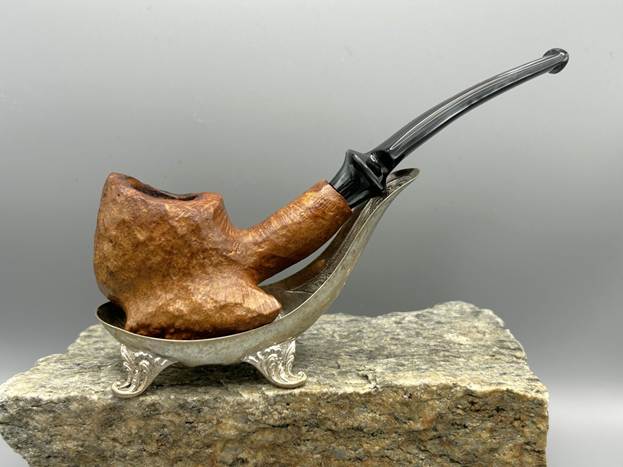
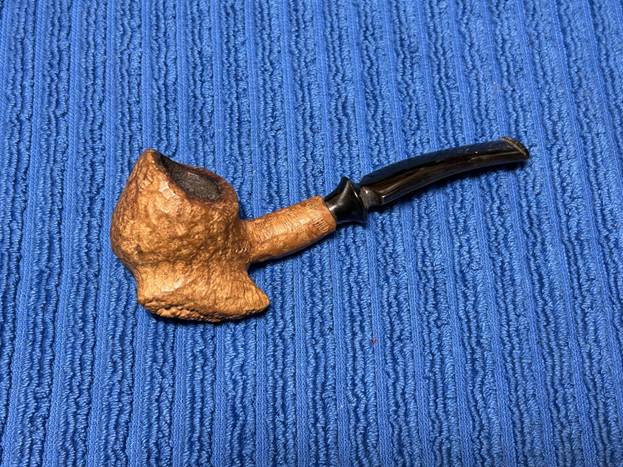
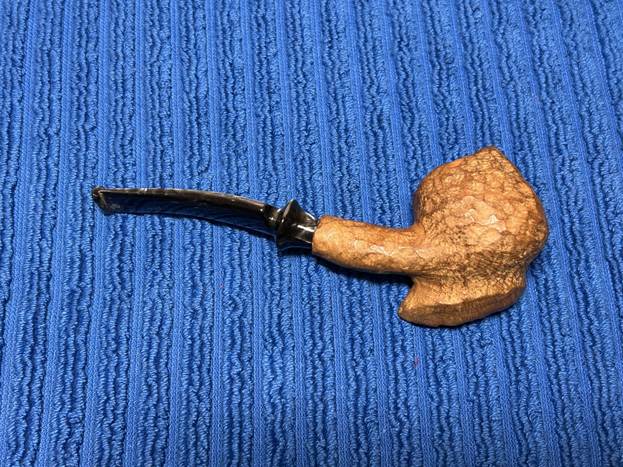
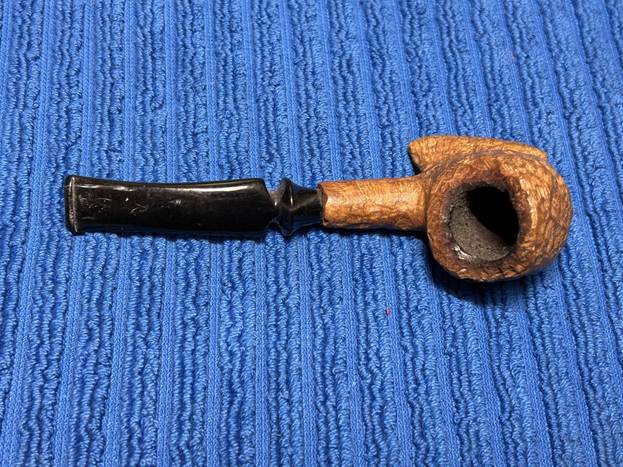
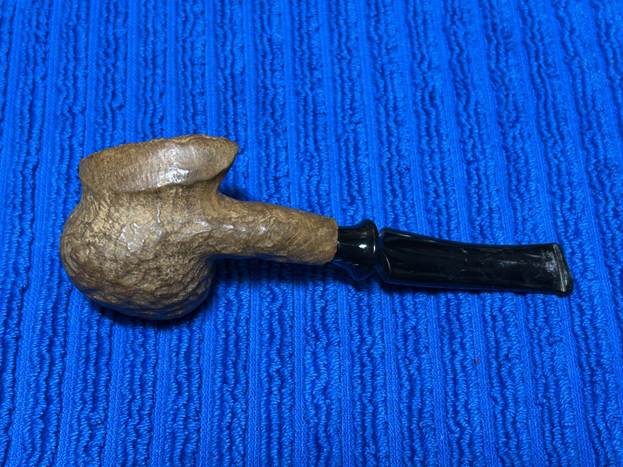
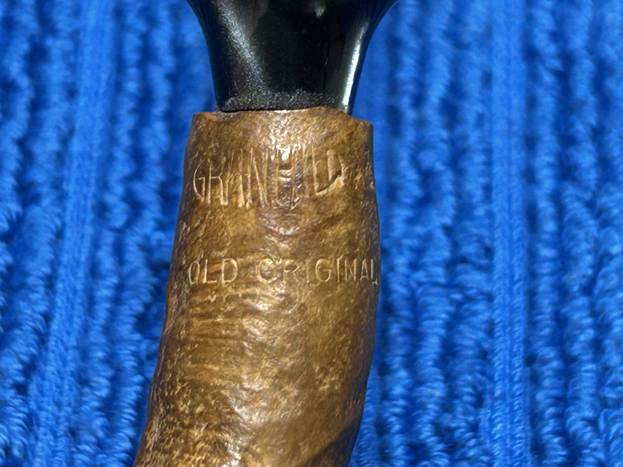
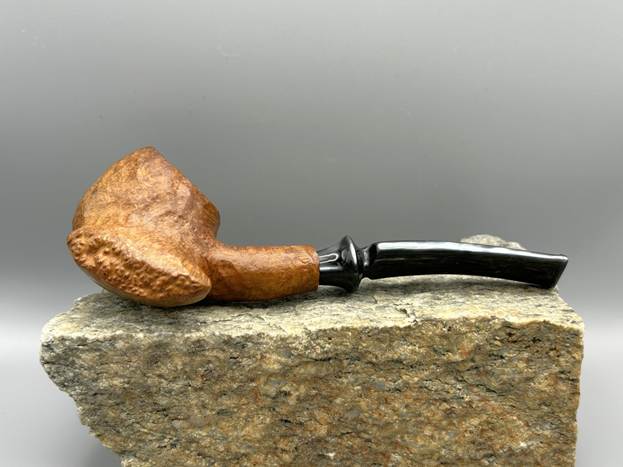
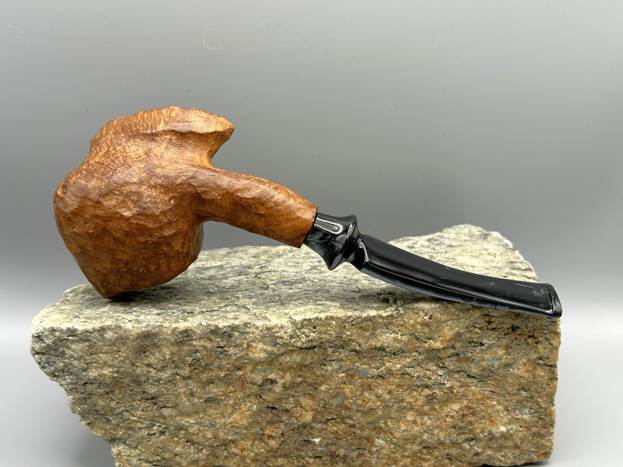
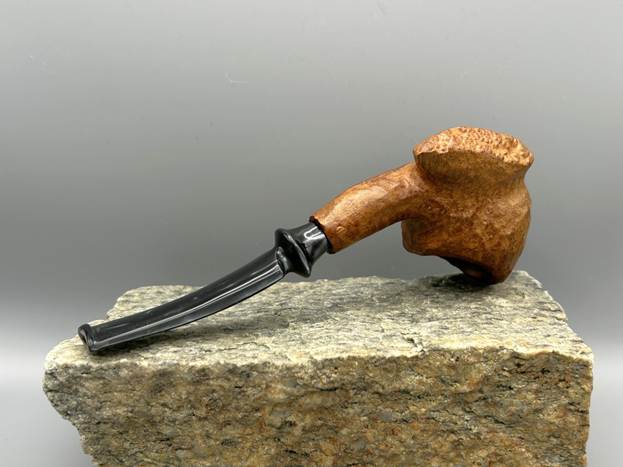
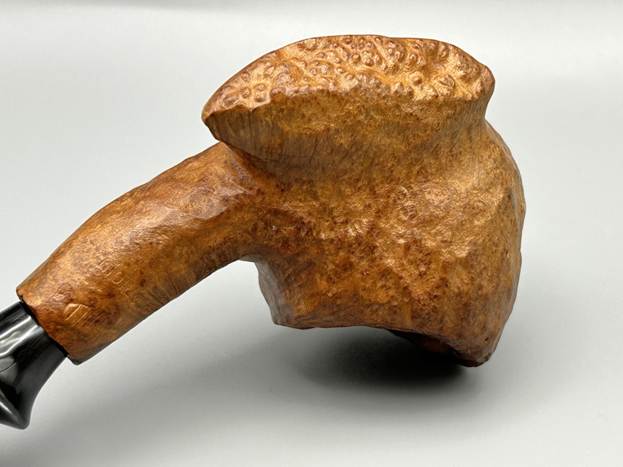
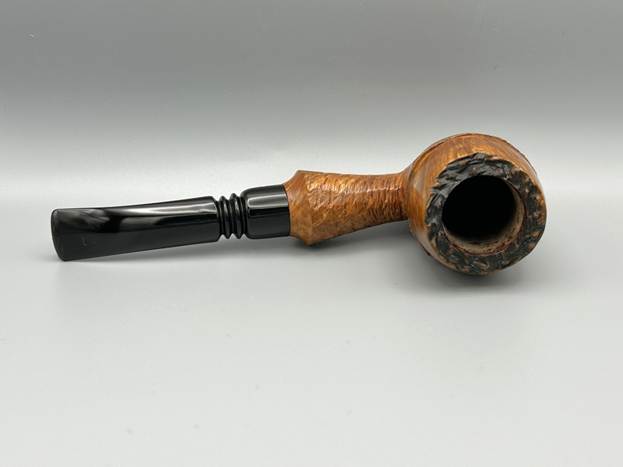
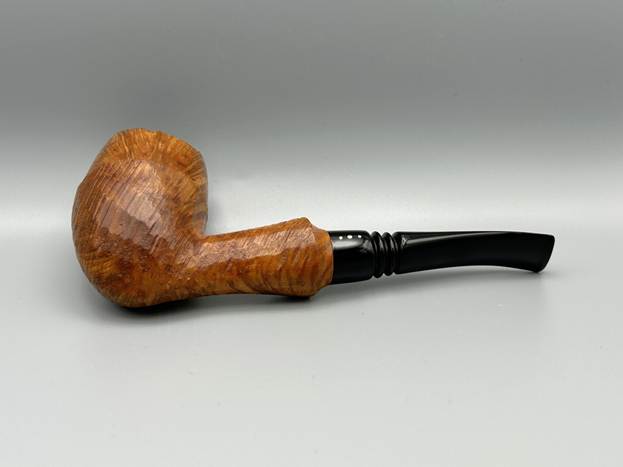
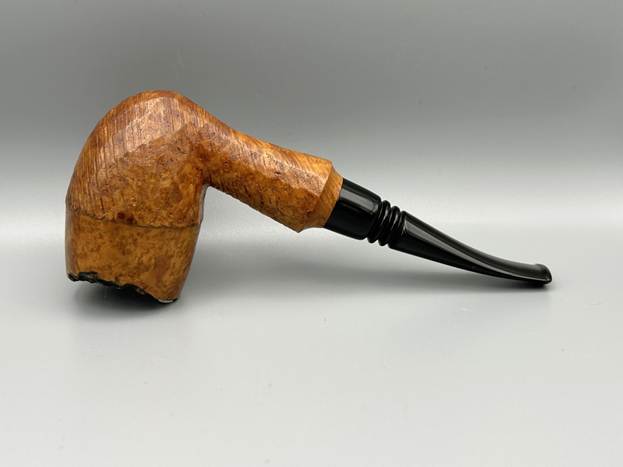
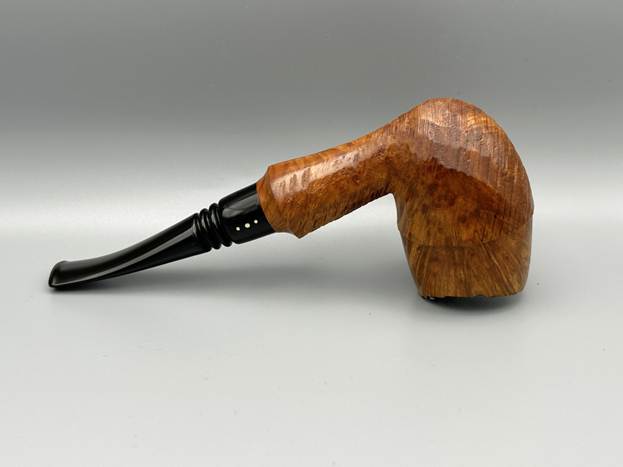
Well, now, this is quite the pipe! I recently acquired a collection from a gentleman, now deceased, who clearly loved his pipes. They were all well used and, according to his family, he had a pipe hanging out of his mouth at all times. As I was looking through them, this particular one caught my attention. It’s an interesting one, isn’t it? It’s a Søren Hand-Carved Freehand, with some stunning grain, by master carver, Søren Refbjerg Rasmussen. It also has an attractive plateau on the rim and the end of the shank. This one is really worth restoring. It’s a remarkable pipe and deserves to be back in someone’s collection. It promises to be a great smoker. On the underside of the shank, we read Søren [over] Hand-Carved [over] Made in Denmark. Those are all the markings we can see. Pipedia has an article on Mr Rasmussen and I quote a part of it here:

Søren Refbjerg Rasmussen founded a company in 1969, which employed an average of 8 – 12 craftsmen in the 1970’s. The semi-freehands they produced were traded under his prename Søren. Rasmussen himself finished only the very best pipes. So his way of pipemaking closely resembled the ways of Preben Holm, Karl Erik Ottendahl or Erik Nørding. Altogether more than 1,000,000 pipes were sold. Today he works alone as Refbjerg and manufactures only a small number of pipes in his workshop in DK-2860 Søborg, which are considered to be tremendously precisely executed. The dimensions mostly range from small to medium sized, corresponding to his personal preferences. The shapes adhere to the classical models, but often he gives them a touch of Danish flair. Refbjerg accepts minor faults but never uses any fillings. “Straight Grain” is the only grading, used for his very best pieces. He likes stem decorations made of exotic woods or metal rings.Meanwhile, over at Pipephil, there is the following entry:And, finally, scandinavianpipes.com includes these details about him:

Søren Refbjerg was born 1943 in the city of Søborg where he still lives and has been a full time pipe-maker since 1969. In the 70´s Søren had his own small factory with 10 employees producing a huge number of pipes mainly for the US market. Søren has indeed been one of the most productive Danish pipe-makers and for many years he also produced pipes for W.Ø. Larsen For the last decades Søren has been making pipes by himself, always using briar from Corsica. Søren derive much relaxation from being on the coast while angling for Sea Trout with his own hand-tied flies and find this environment to be a great inspiration for making pipes. Many times Søren say to himself: “Inspired by nature, made by me”.

He died in 2021. Let’s take a closer look at the pipe. It is in very nice shape. The stem is thoroughly oxidized (and has a few bite marks), but isn’t damaged. The stummel is lovely! Wonderful condition, with only a little bit of cake in the bowl. It doesn’t look like it was smoked much. I used isopropyl alcohol on a few cotton rounds and wiped down the stem to provide an initial cleaning of filth before moving on to the next steps. The primary cleaning came next. I disinfected the inside of the stem with both pipe cleaners and cotton swabs dipped in lemon-infused 99% isopropyl alcohol. I scrubbed thoroughly to make sure the interior was very clean.The goal of the next step is the removal (or minimization) of oxidation. Going to my sink, I used cream cleanser, cotton rounds, and a toothbrush, and scoured the stem to remove as much surface oxidation as possible. As the photos show, the result was a hideous, ochre-coloured mess – but better off the stem than on it.Once the stem was reasonably clean, I soaked it overnight in some Briarville Stem Oxidation Remover. This solution works to draw oxidation in the stem to the surface of the vulcanite. This is a major aid and an important step in ensuring a clean stem. The following day, I drew out the stem from its bath and scrubbed the lingering fluid with a toothbrush. Due to the severity of the oxidation, I then repeated the scrubbing with the cream cleanser for maximum effect. There will always be a hint of the oxidation in the vulcanite, but that is just fine: it is part of the history of the pipe.As the stem was now clean and dry, I set about fixing the marks and dents in the vulcanite. This was done by filling those divots with black cyanoacrylate adhesive, impregnated with carbon and rubber. I left this to cure and moved on.The penultimate step for the stem is sanding. First, with my set of needle files, I reduced the bulk of the cyanoacrylate repairs. I removed the excess adhesive as near to the surface as possible, without cutting into the vulcanite. Following that, I used all nine of the micromesh sanding pads (1,500 through 12,000 grit) to sand out flaws, even out the vulcanite, and provide gentle polishing of the finished surface. I also applied pipe-stem oil while using the last five micromesh pads. There was a wonderful, deep black shine to the stem when I was done. As the stem was (nearly) complete, I moved on to the stummel. The first step was to ream out the bowl – that is to say, remove all the cake inside the bowl. This accomplished a couple of things. First (and most obviously), it cleaned the bowl and provided a refurbished chamber for future smoking. Second, when the old cake was removed, I could inspect the interior walls of the bowl and determine if there was damage or not. I used a pipe knife and a piece of sandpaper taped to a wooden dowel. Collectively, these ensured that all the debris was removed.Similar to the stem, I then cleaned the stummel with both pipe cleaners and cotton swabs dipped in lemon-infused 99% isopropyl alcohol.I then decided to ‘de-ghost’ the pipe – that is to say, exorcize the remaining filth from the briar. I filled the bowl and the shank with cotton balls, then saturated them with 99% isopropyl alcohol. I let the stummel sit overnight. This caused the remaining oils, tars and smells to leach out into the cotton.To tidy up the briar, I wiped down the outside, using a solution of a pH-neutral detergent and some distilled water, with cotton rounds. I also used a brush in the grooves of the plateau. This did a good job of cleaning any latent dirt on the surface of the briar. The last step of the cleaning process was to scour the inside of the stummel with the same mild detergent and tube brushes. This was the culmination of a lot of hard work in getting the pipe clean.I used all nine micromesh pads (1,500 through 12,000 grit) to sand the outside of the stummel and finish it off. This sanding minimizes flaws in the briar and provides a beautiful smoothness to the wood. I rubbed some LBE Before & After Restoration Balm into the briar and let it sit for 30 minutes or so. The balm moisturizes the wood and gives a beautiful depth to the briar. I then buffed the stummel with a microfibre cloth. For the final step, I took the pipe to my bench polisher and carefully buffed it – first with a blue diamond compound, then with three coats of carnauba wax. This procedure makes the pipe look its best – the stummel sings and the stem glows.This Søren Hand-Carved Freehand looks fantastic again and is ready to be enjoyed by its next owner. I am pleased to announce that this pipe is for sale! If you are interested in acquiring it for your collection, please have a look in the ‘Danish’ section of the store here on Steve’s website. You can also email me directly at kenneth@knightsofthepipe.com. The approximate dimensions of the pipe are as follows: length 6½ in. (165 mm); height 3 in. (66 mm); bowl diameter 1⅞ in. (49 mm); chamber diameter ⅞ in. (22 mm). The weight of the pipe is 2⅝ oz. (75 g). I hope you enjoyed reading the story of this pipe’s restoration as much as I enjoyed restoring it. If you are interested in more of my work, please follow me here on Steve’s website or send me an email. Thank you very much for reading and, as always, I welcome and encourage your comments.
Incredible Sandblast on a Hilson Avanti 11 Canadian


by Kenneth Lieblich

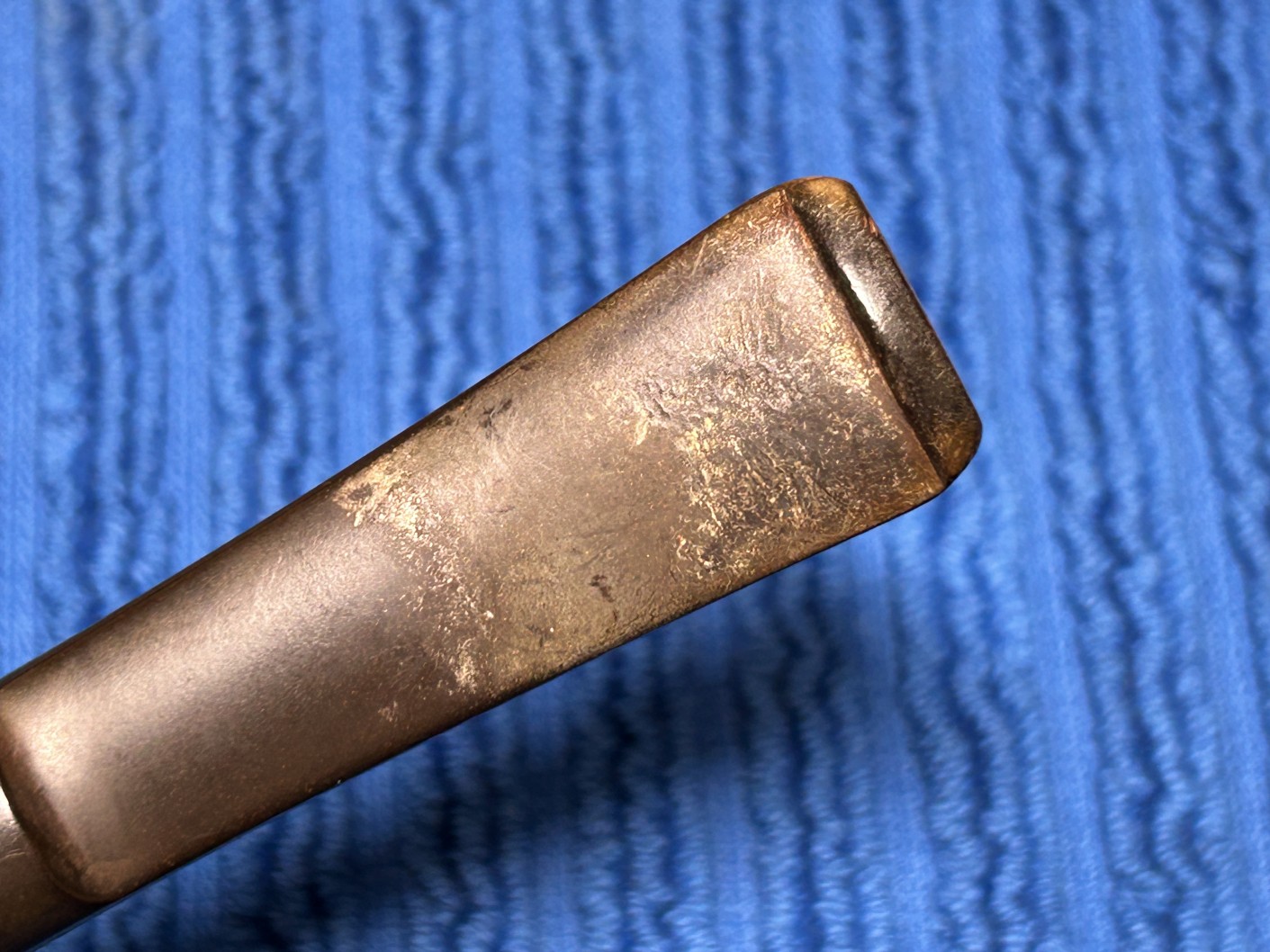
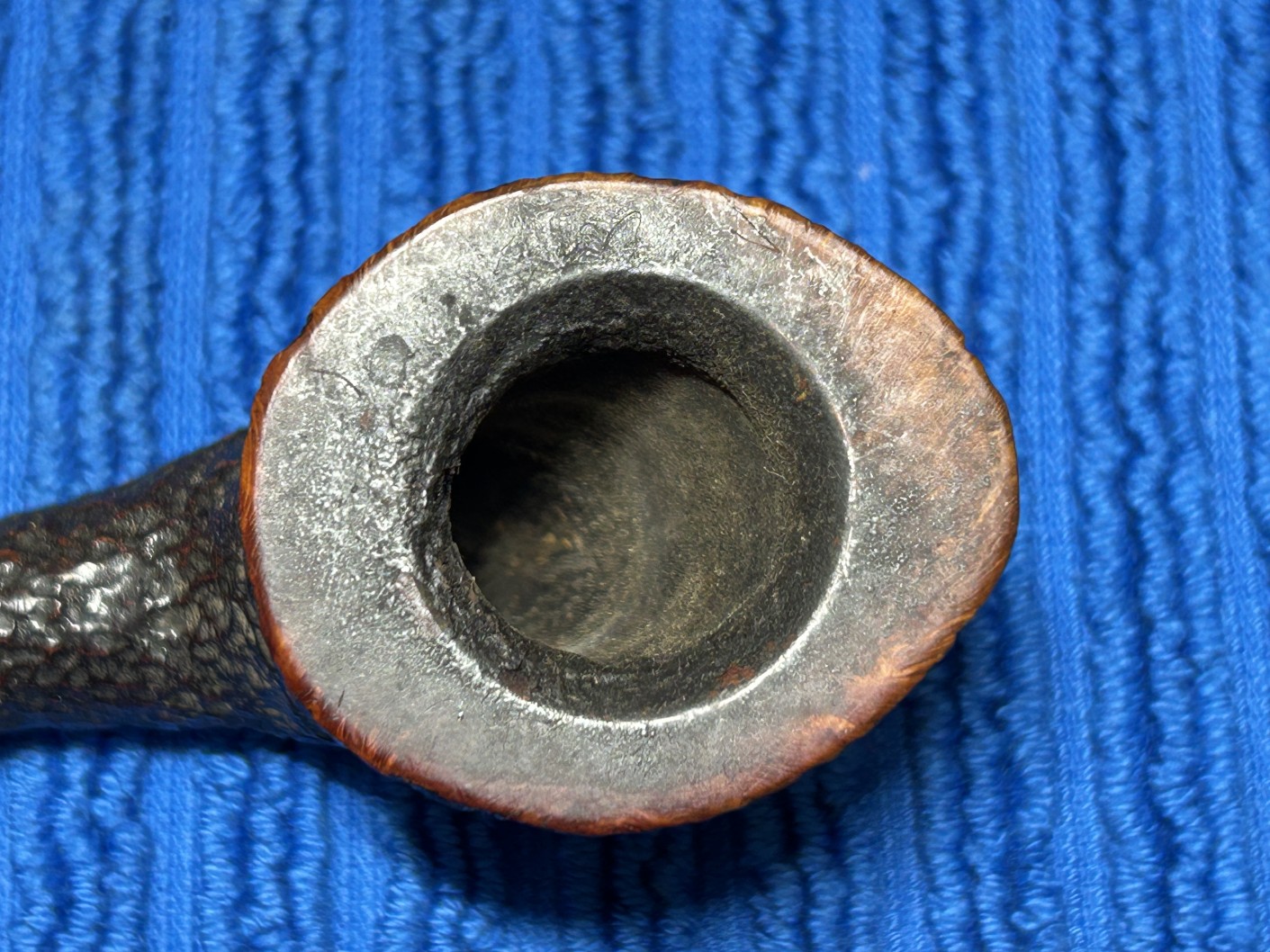
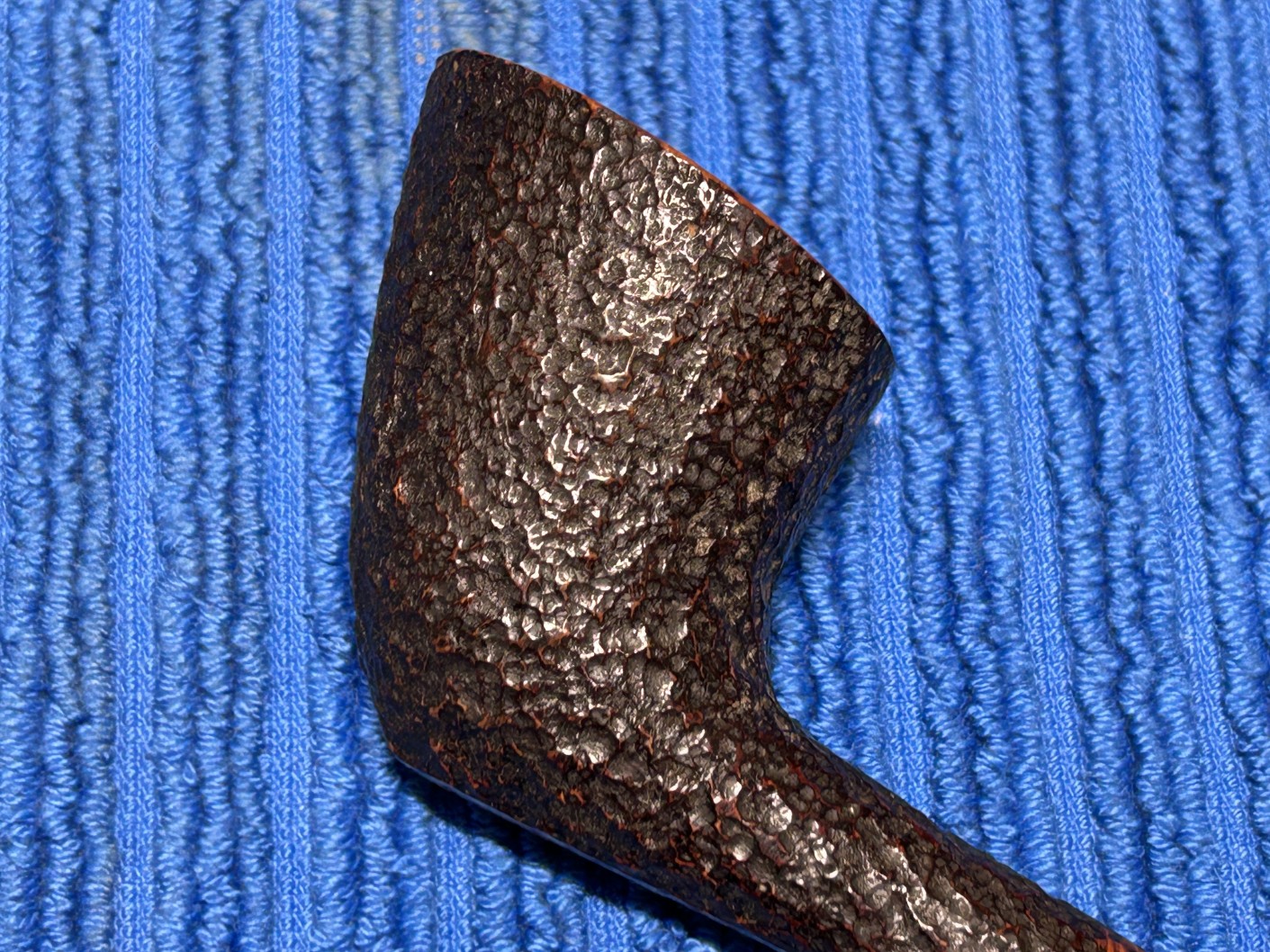
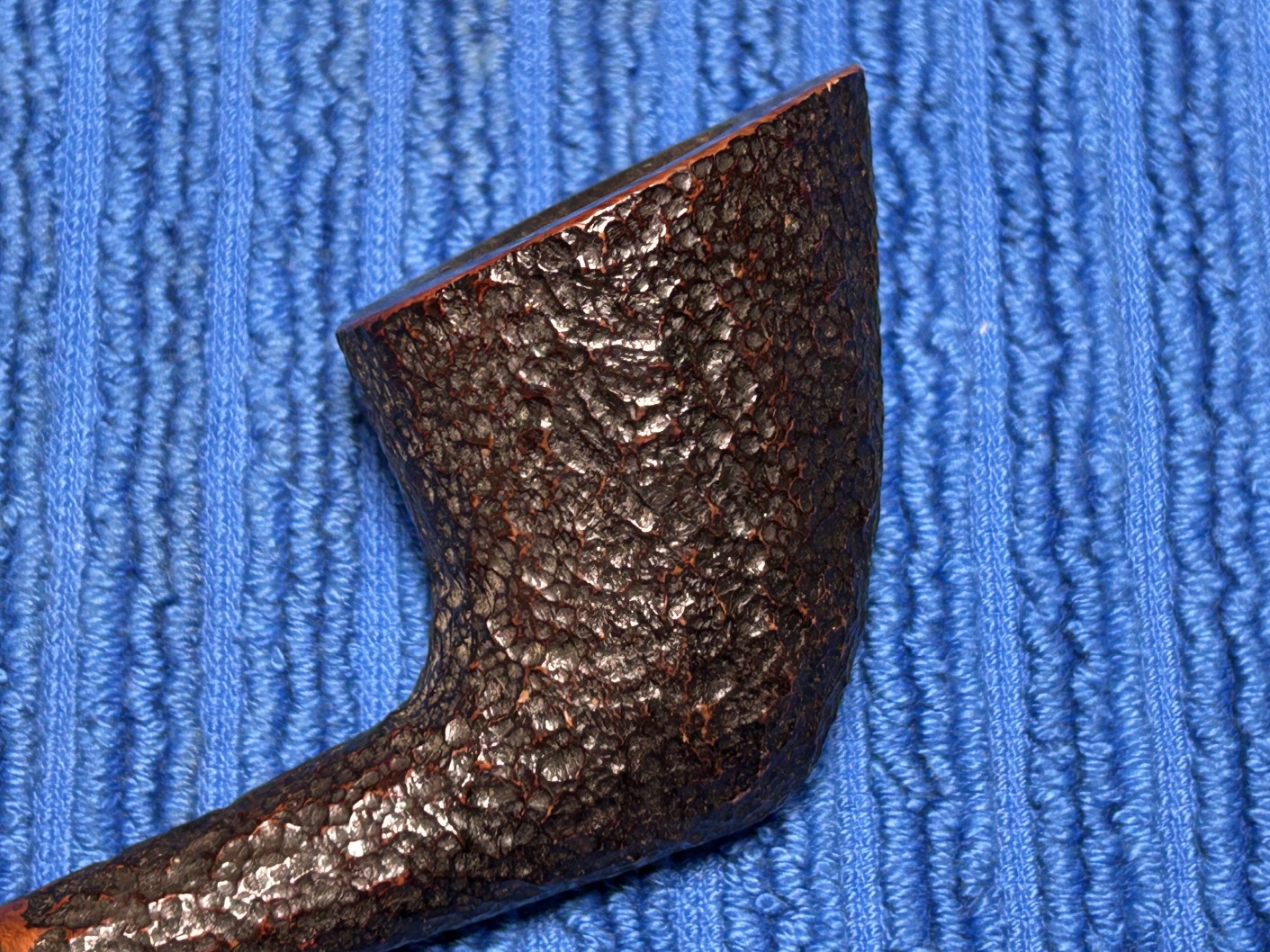
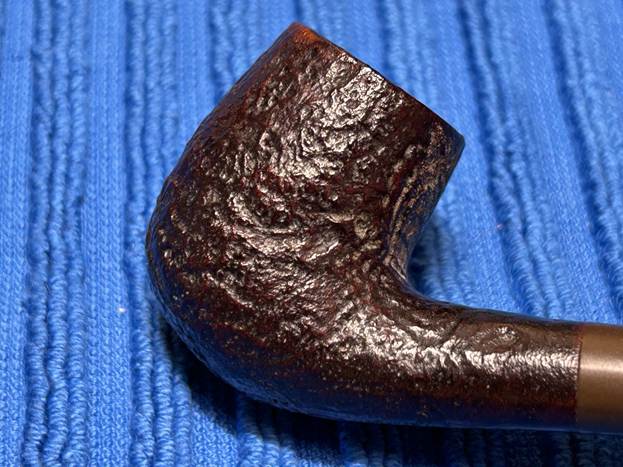
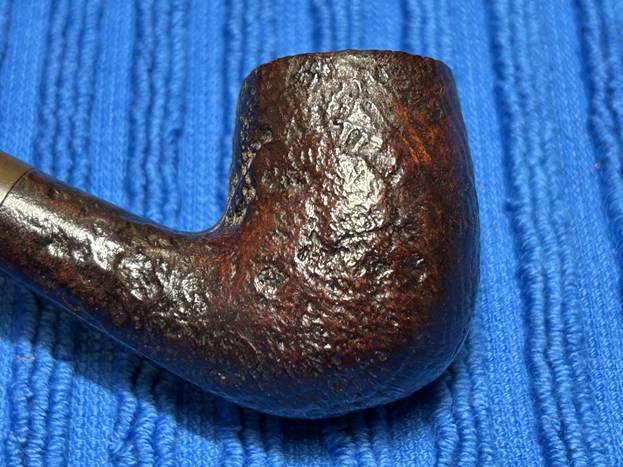
Greetings, one and all! It’s been a challenge getting pipe work done recently, as my home is undergoing renovations and, to quote Heroclitus, ‘All is flux, nothing stays still’. It is a delight to finally get another blog posted! I’m back with a beautiful pipe that put a smile on my face and I’m sure it’ll do the same for you. It’s been sitting in my boxes for a while, but it’s a great pipe and deserves to be back out in the world. It’s a handsome Hilson Avanti sandblasted Canadian. Normally, when I think of Hilson, my mind meanders to resin (or ‘pipenite’, as they called it) stylings from the Fantasia line – but not today! This is a pure briar pipe, with a lovely vulcanite stem. The pipe conveys a feeling of confidence: the thick, briar walls, the rugged blast, etc. It’s just a solid pipe. I acquired it a while back, but I don’t know the pipe’s individual history. It is in lovely condition and doesn’t appear to have been smoked much. What do the markings say? The underside of the shank shows, first, the words Hilson Avanti [over] Canadian (although Avanti is a bit obscured by the blast). To the right of that are the words Made in Belgium. Again, further to the right is the shape number, 11. Finally, the stem has a stylized H, indicating the Hilson company. Let’s check Pipedia to see what they have to say about the Hilson brand:

Jean-Claude Hillen (other sources: Jean-Paul) founded a trading company in the City of Bree in 1846. He soon turned his main interest on pipes and other tobacco related goods. Particularly in the 1960’s and still throughout the 1970’s the brand Hilson of Broers Hillen B.V. (Hillen Bros. Co.) was quite successful in many European countries. They produced large numbers of machine-made pipes covering the whole range of shapes and finishes. The pipes were well respected for good quality and craftsmanship at very moderate prices. Rarely seen there are also nice freehands from this era stamped MASTRO and signed by A.M. Sanoul, who is otherwise completely unknown as a pipemaker. All the same, in 1980 Hillen faced major financial problems. At this time there was only a second manufacturer of briars pipes in the Benelux countries, the Elbert Gubbels & Zonen B.V. in the Netherlands. The Belgian competitor being in trouble, Gubbels used the favour of the hour and bought up the company. The reason is plausible: in some countries, particularly in Germany, Hilson held larger market shares than Gubbels’ mainstay brand Big Ben. The Hillen plant in Bree was closed down shortly after and ever since then Hilson pipes are manufactured in Roermond, NL.Likewise, there is a bit more to be found from our friends over at Pipephil:

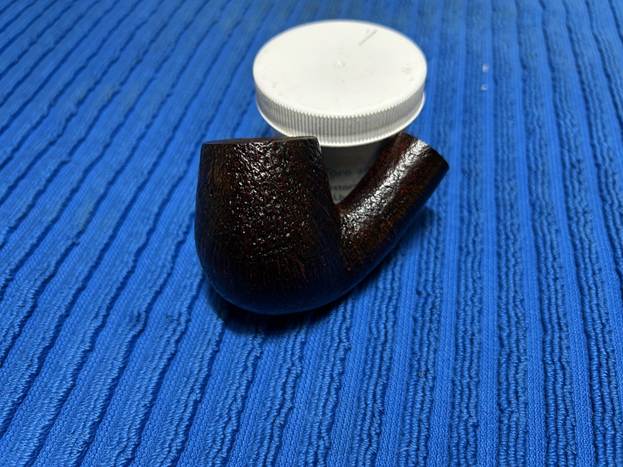
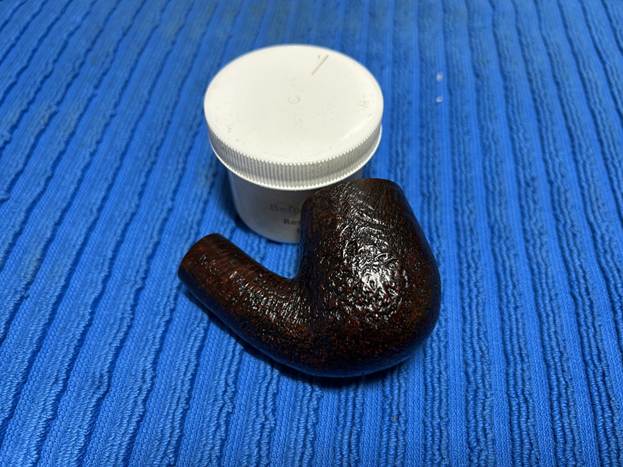
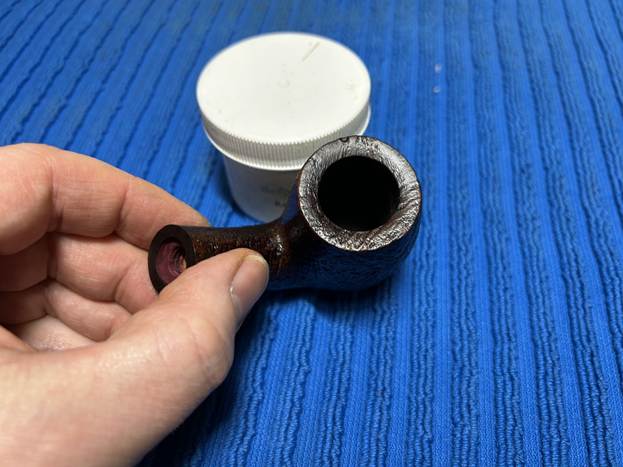
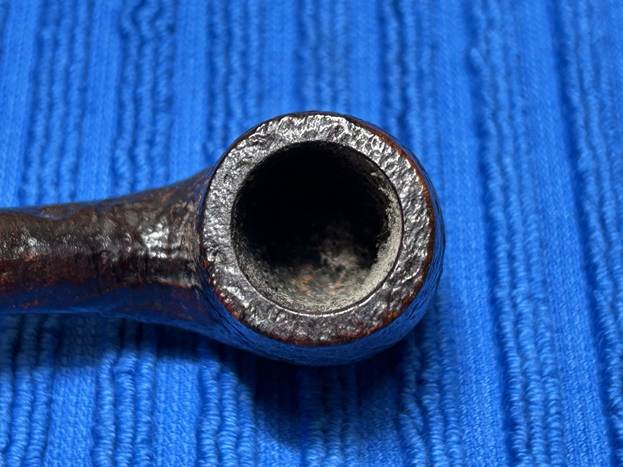
In 1846 a German named Jean Knödgen started to produce clay pipe in Belgium. In the late 19th century Jean Hillen who married into the Knödgen family took over the company and changed the firm in order to manufacture briar pipe. Jean Hillen had 2 sons: Jos Hillen was responsible for sales and Albert Hillen was responsible for the production. After WWII Albert founded the HILSON brand (Hillen and Son) and exported his pipes all over the world. In 1980 after having gone bankrupt, the Belgian brand from Bree (Limburg) was taken over by the Royal Dutch Pipe Factory.It’s also worth noting that I’ve seen several posts over at the PipeMagazine forums that state that the older (and better) Hilsons are marked “Made in Belgium”, as this one is.The pipe is in very nice shape. The stem had some minor tooth scratches, plus it was coated with a lot of oxidation. There were no significant issues with the stummel: it had only a bit of lava on the rim and a bit of cake in the bowl. I used isopropyl alcohol on a few cotton rounds and wiped down the stem to provide an initial cleaning of filth before moving on to the next steps. The primary cleaning came next. I disinfected the inside of the stem with both pipe cleaners and cotton swabs dipped in lemon-infused 99% isopropyl alcohol. I scrubbed thoroughly to make sure the interior was very clean.The goal of the next step is the removal (or minimization) of oxidation. Going to my sink, I used cream cleanser, cotton rounds, and a toothbrush, and scoured the stem to remove as much surface oxidation as possible. As the photos show, the result was a hideous, ochre-coloured mess – but better off the stem than on it.Once the stem was reasonably clean, I soaked it overnight in some Briarville Stem Oxidation Remover. This solution works to draw oxidation in the stem to the surface of the vulcanite. This is a major aid and an important step in ensuring a clean stem. The following day, I drew out the stem from its bath and scrubbed the lingering fluid with a toothbrush.As the stem was now clean and dry, I set about fixing the marks and dents in the vulcanite. This was done by filling those divots with black cyanoacrylate adhesive, impregnated with carbon and rubber. I left this to cure and moved on. After this, I painted the logo on the stem with some enamel nail polish. I restored the logo carefully and let it fully set before proceeding.The penultimate step for the stem is sanding. First, with my set of needle files, I reduced the bulk of the cyanoacrylate repairs. I removed the excess adhesive as near to the surface as possible, without cutting into the vulcanite. Following that, I used all nine of the micromesh sanding pads (1,500 through 12,000 grit) to sand out flaws, even out the vulcanite, and provide gentle polishing of the finished surface. I also applied pipe-stem oil while using the last five micromesh pads. There was a wonderful, deep black shine to the stem when I was done.As the stem was (nearly) complete, I moved on to the stummel. The first step was to ream out the bowl – that is to say, remove all the cake inside the bowl. This accomplished a couple of things. First (and most obviously), it cleaned the bowl and provided a refurbished chamber for future smoking. Second, when the old cake was removed, I could inspect the interior walls of the bowl and determine if there was damage or not. I used a reamer, a pipe knife, and a piece of sandpaper taped to a wooden dowel. Collectively, these ensured that all the debris was removed.Similar to the stem, I then cleaned the stummel with both pipe cleaners and cotton swabs dipped in lemon-infused 99% isopropyl alcohol.I then decided to ‘de-ghost’ the pipe – that is to say, exorcize the remaining filth from the briar. I filled the bowl and the shank with cotton balls, then saturated them with 99% isopropyl alcohol. I let the stummel sit overnight. This caused the remaining oils, tars and smells to leach out into the cotton.To tidy up the briar, I wiped down the outside, using a solution of a pH-neutral detergent and some distilled water, with cotton rounds. I also used a toothbrush in the crevices. This did a good job of cleaning any latent dirt on the surface of the briar. The last step of the cleaning process was to scour the inside of the stummel with the same mild detergent and tube brushes. This was the culmination of a lot of hard work in getting the pipe clean.Since the stummel is sandblasted, I only micromeshed the smooth part of the underside on the briar. I rubbed some LBE Before & After Restoration Balm into the briar and let it sit for 30 minutes or so. The balm moisturizes the wood and gives a beautiful depth to the briar. I then buffed the stummel with a microfibre cloth. For the final step, I took the pipe to my bench polisher and carefully buffed it – first the stem with a blue diamond compound, then the stummel with three coats of conservators’ wax. This procedure makes the pipe look its best – the stummel sings and the stem glows.

All done! This Hilson Avanti 11 Canadian looks fantastic again and is ready to be enjoyed by its next owner. I am pleased to announce that this pipe is for sale! If you are interested in acquiring it for your collection, please have a look in the ‘Various Makers’ section of the store here on Steve’s website. You can also email me directly at kenneth@knightsofthepipe.com. The approximate dimensions of the pipe are as follows: length 6 in. (154 mm); height 1⅞ in. (47 mm); bowl diameter 1½ in. (38 mm); chamber diameter ⅞ in. (22 mm). The weight of the pipe is 1⅛ oz. (34 g). I hope you enjoyed reading the story of this pipe’s restoration as much as I enjoyed restoring it. If you are interested in more of my work, please follow me here on Steve’s website or send me an email. Thank you very much for reading and, as always, I welcome and encourage your comments.

Cleaning Up an Aged Algerian Churchwarden


by Kenneth Lieblich

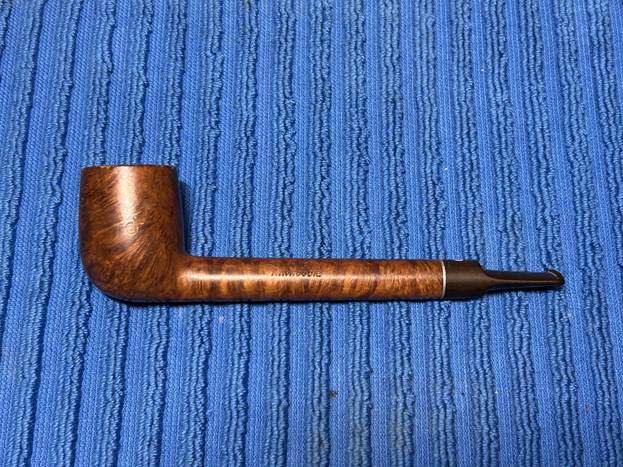
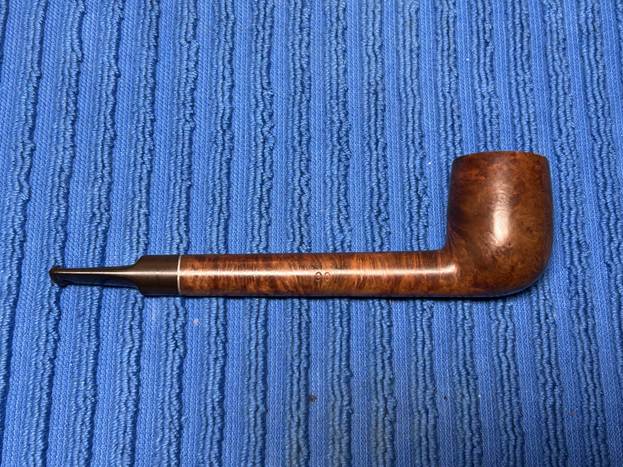
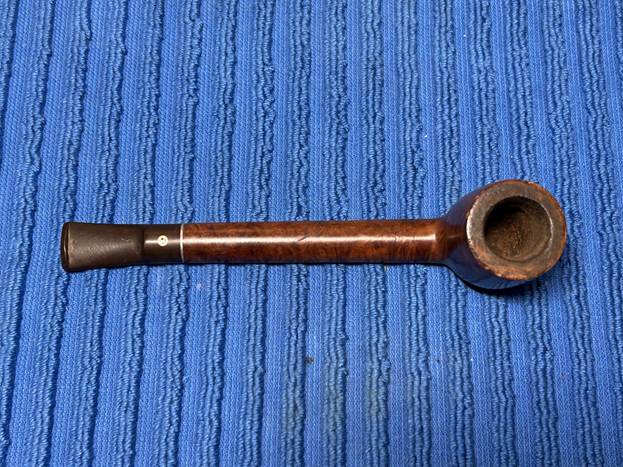
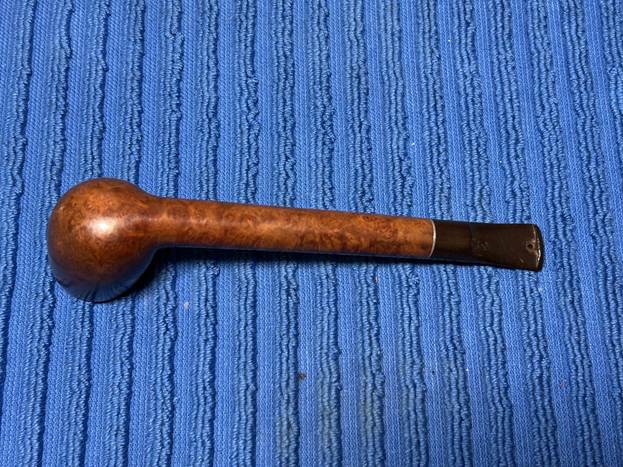
Next up is a charming billiard churchwarden that I found in one of my bins and it piqued my interest. It’s got the typical shape and feel of a regular churchwarden, but this one is a full-length one – a full twelve inches. It’s hard to know how old this one is, but it feels like it’s been around for a few decades. I’m looking forward to cleaning this one. Frankly, this one didn’t look like it had been smoked much. It was certainly dirty, but that seemed to be from questionable storage rather than much smoking. The only markings were on the left side of the shank: Aged Algerian. There is also a nice sterling silver band on the shank which reads, appropriately, Sterling Silver. Those weren’t exactly helpful in identifying the origins of the pipe, but Steve said that it looked American and could have been made by an outfit like Bertram’s or Ansell’s, in Washington, DC. Having looked at their respective markings, it seems quite similar to an Ansell. So maybe that is it.The pipe is in good condition. There are some dark marks on the briar of the stummel and a bit of cake in the bowl. Nothing serious. The stem is just fine, aside from some tooth chatter. Let’s get on with it. I used isopropyl alcohol on a few cotton rounds and wiped down the stem to provide an initial cleaning of filth before moving on to the next steps. The primary cleaning came next. I disinfected the inside of the stem with both pipe cleaners and cotton swabs dipped in lemon-infused 99% isopropyl alcohol. I scrubbed thoroughly to make sure the interior was very clean.The goal of the next step is the removal (or minimization) of oxidation. Going to my sink, I used cream cleanser, cotton rounds, and a toothbrush, and scoured the stem to remove as much surface oxidation as possible. As the photos show, the result was a hideous, ochre-coloured mess – but better off the stem than on it.As the stem was now clean and dry, I set about fixing the marks and dents in the vulcanite. This was done by filling those divots with black cyanoacrylate adhesive, impregnated with carbon and rubber. I left this to cure and moved on.The penultimate step for the stem is sanding. First, with my set of needle files, I reduced the bulk of the cyanoacrylate repairs. I removed the excess adhesive as near to the surface as possible, without cutting into the vulcanite. Following that, I used all nine of the micromesh sanding pads (1,500 through 12,000 grit) to sand out flaws, even out the vulcanite, and provide gentle polishing of the finished surface. I also applied pipe-stem oil while using the last five micromesh pads. There was a wonderful, deep black shine to the stem when I was done.As the stem was (nearly) complete, I moved on to the stummel. The first step was to ream out the bowl – that is to say, remove all the cake inside the bowl. This accomplished a couple of things. First (and most obviously), it cleaned the bowl and provided a refurbished chamber for future smoking. Second, when the old cake was removed, I could inspect the interior walls of the bowl and determine if there was damage or not. I used a pipe knife and a piece of sandpaper taped to a wooden dowel. Collectively, these ensured that all the debris was removed. But I took the silver band off first.Similar to the stem, I then cleaned the stummel with both pipe cleaners and cotton swabs dipped in lemon-infused 99% isopropyl alcohol. With a pipe this dirty, it took quite a while and much cotton to clean.I then decided to ‘de-ghost’ the pipe – that is to say, exorcize the remaining filth from the briar. I filled the bowl and the shank with cotton balls, then saturated them with 99% isopropyl alcohol. I let the stummel sit overnight. This caused the remaining oils, tars and smells to leach out into the cotton.To tidy up the briar, I wiped down the outside, using a solution of a pH-neutral detergent and some distilled water, with cotton rounds. This did a good job of cleaning any latent dirt on the surface of the briar. The last step of the cleaning process was to scour the inside of the stummel with the same mild detergent and tube brushes. This was the culmination of a lot of hard work in getting the pipe clean. I used all nine micromesh pads (1,500 through 12,000 grit) to sand the outside of the stummel and finish it off. This sanding minimizes flaws in the briar and provides a beautiful smoothness to the wood.I rubbed some LBE Before & After Restoration Balm into the briar and let it sit for 30 minutes or so. The balm moisturizes the wood and gives a beautiful depth to the briar. I then buffed the stummel with a microfibre cloth. I also glued the silver band back in place and gave it a polish with my jewellery cloth. For the final step, I took the pipe to my bench polisher and carefully buffed it – first with a blue diamond compound, then with three coats of carnauba wax. This procedure makes the pipe look its best – the stummel sings and the stem glows.All done! This Aged Algerian churchwarden looks fantastic again and is ready to be enjoyed by its next owner. I am pleased to announce that this pipe is for sale! If you are interested in acquiring it for your collection, please have a look in the ‘American’ section of the store here on Steve’s website. You can also email me directly at kenneth@knightsofthepipe.com. The approximate dimensions of the pipe are as follows: length 12 in. (305 mm); height 1⅞ in. (47 mm); bowl diameter 1⅜ in. (36 mm); chamber diameter ¾ in. (20 mm). The weight of the pipe is 1½ oz. (43 g). I hope you enjoyed reading the story of this pipe’s restoration as much as I enjoyed restoring it. If you are interested in more of my work, please follow me here on Steve’s website or send me an email. Thank you very much for reading and, as always, I welcome and encourage your comments.

A New Home for a Dunhill Bruyere 127 Billiard


by Kenneth Lieblich

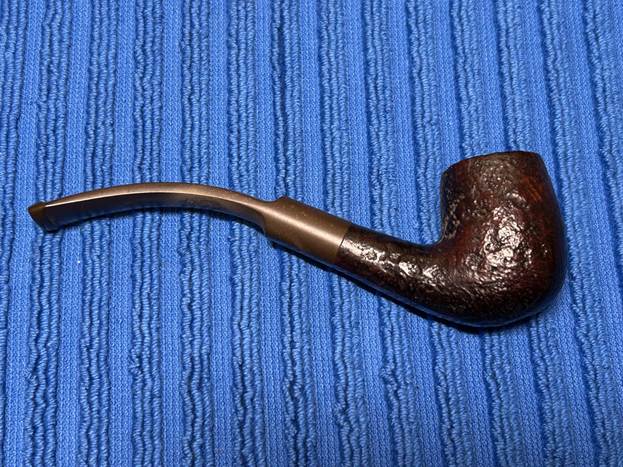
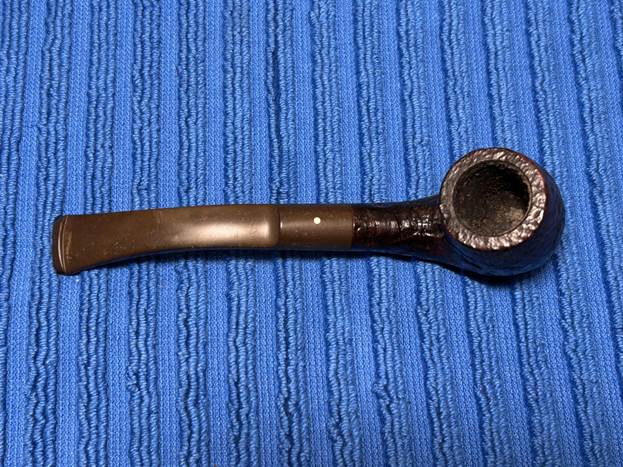
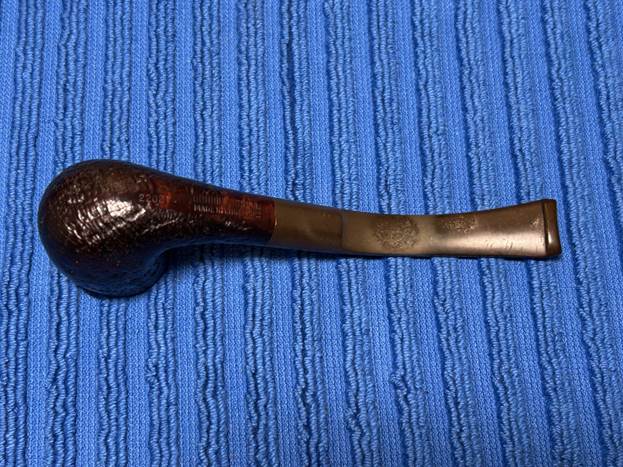
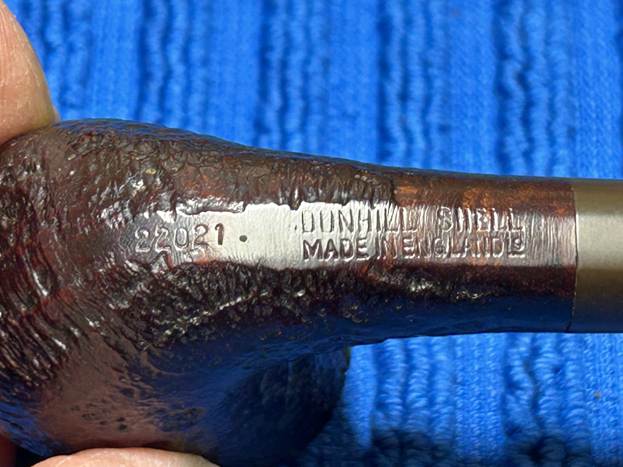
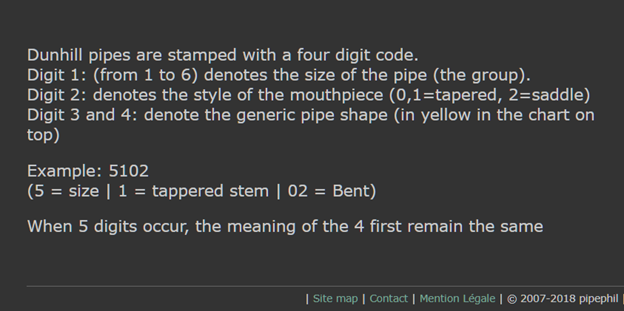
I thought I might take a moment to show you a Dunhill that recently came into my possession and, for the time being, is staying in my possession. This handsome Dunhill Bruyere 127 billiard was smoked quite heavily, demonstrating its status as a favourite of whoever owned it in the past. When I saw it, I really liked the thick shank and well-proportioned billiard bowl. There is some beautiful briar here and, despite the pipe’s portly appearance, it is light and comfortable to hold. I am pleased to report that the markings are very clear and well-cut on the shank. On the left-hand side is the model number, 127. Immediately to the right of this are the letters F/T. Then, to the right of that, is Dunhill [over] Bruyere. On the right side of the shank is Made in [over] England9. To the right of that is an encircled 4, followed by an A. Finally, the stem, of course, has the iconic white spot of Alfred Dunhill’s company. Here is a photo of Alfred, followed by the markings. Let’s have a closer look at what all of these markings mean. The model number 127 is one of the classic Dunhill billiard shapes. The ‘F/T’, as John Loring states in his book The Dunhill Briar Pipe, ‘is a stamping after the shape number indicating that the pipe has a fish tail bit’. The markings Dunhill [over] Bruyere refer (obviously and respectively) to the company that produced the pipe and the finish. The history of Alfred Dunhill, his company, and his family is fascinating. If you are interested in learning more, have a read of this article from Pipedia. The Bruyere finish is described by Pipedia as follows:

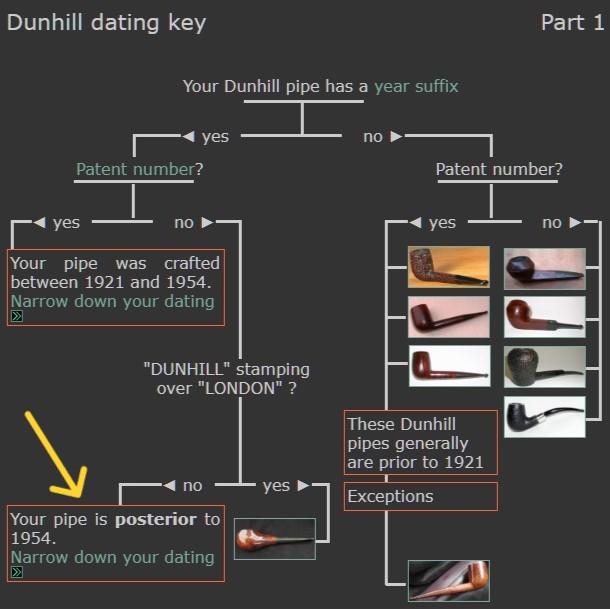
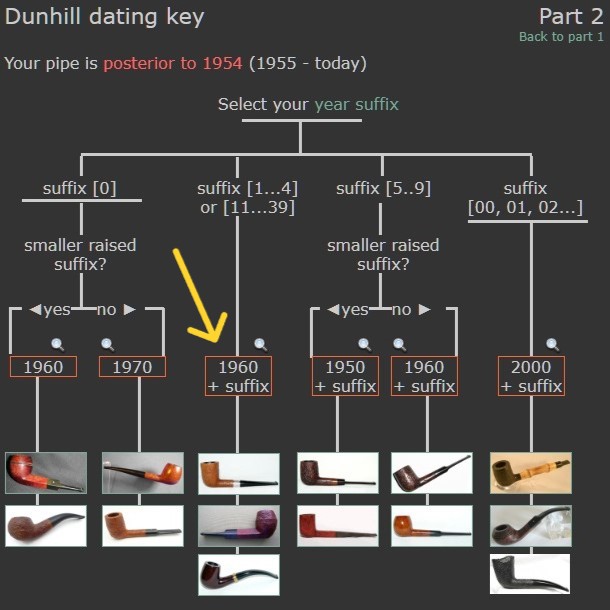
The Bruyère stands as Dunhill’s foundational pipe finish, introduced with the commencement of the company’s pipe manufacturing in 1910. It remained the sole finish available until the introduction of the Shell in 1917. The Bruyère is characterized by its smooth texture and a deep reddish stain, often described as ‘plum-coloured’. This distinctive appearance was achieved through a two-coat staining process, which involved a brown understain followed by the final deep red. The briar selected for this finish after 1920 was the ‘dead root’ of the Tree Heath, (Erica Arborea), sourced primarily from Calabria, Italy. This material was prized for its density and superior smoking characteristics, having been seasoned by nature itself. Positioned as a premium product from the outset, a Bruyère pipe in 1910 was priced at seven shillings and sixpence, more than double the cost of an average pipe of the era.The markings Made in [over] England9 give us an indication of when this pipe was manufactured. The number is the date suffix and provides us the information we need to figure out the date. I already knew the answer, but allow me to walk you through the process. I went to Pipephil’s Dunhill Dating Key (which you can find here) and I have reproduced (below) the two charts they use to date Dunhills. In the first image below, we are asked if our pipe has a date suffix. It does, so we follow the arrow and the chart asks if our pipe has a patent number. It does not, so we proceed. Then we are asked if our pipe reads Dunhill [over] London – again, it does not. As a result, we know that our pipe dates from after 1954.On to the second chart – and it is a bit more straightforward. The chart asks for the digit in our date suffix. In our case, it is 9. Then it asks if the digit in question is raised (in other words, is it a superscript). The answer is definitely ‘no’, so we know that the date of our pipe is the result of simple addition: 1960 + 9 = 1969. Now we know that the year of manufacture is 1969! The pipe is older than I am!Next, the encircled 4 and the capital A. This tells us about the size and finish of the pipe. Pipedia says:

The encircled group number indicates the size of the bowl (1, for example, is the smaller bowl). It is usually followed by a letter corresponding to the pipe finish. This number/letter code has been introduced about 1950 and was discontinued about 1976 replaced by a 4 or 5 digits code. They were reintroduced in March 2012, but only for commemorative versions.

In this case, the 4 indicates a medium/large size bowl and the A refers to Bruyere. As to why the letter A represents Bruyere, we again refer to Loring’s book: ‘When the Root finish was introduced in 1931 the “A” came to mean Bruyere but initially the “A” probably denoted that the pipe was of first quality’.Finally, the white spot. Have you ever wondered about it? Well, very briefly, here is the origin of the famous white spot (from Pipedia):

In 1912, the famous white spot was introduced for very practical concerns. With straight pipes, customers had trouble knowing which way to insert the handmade vulcanite mouthpieces. So Alfred Dunhill ordered white spots to be placed on the upper side of the stem. This very practical solution would become a definitive trademark of Dunhill pipes. The “white spot” soon became known as a symbol of quality.

Now let’s get on with restoring this beautiful pipe!

The pipe was, indeed, lovely, but – boy – was it dirty! The rim of the bowl had mounds of lava on it and the interior walls were coated in cake. I’m pleased to say that the exterior briar was in great shape. No problems at all. Meanwhile, the stem was quite oxidized and heavily calcified. It also had some tooth dents, but nothing too serious. I used a disposable lighter and ‘painted’ the stem with its flame. The gentle heat of the flame can cause the dents in the vulcanite of the stem to expand back into shape. This certainly helped, but did not completely correct the situation. The stem’s calcification was quite substantial. I used an old butter knife and gently scraped some of the thicker accretion off. Doing this now helps later in removing the oxidation.I used isopropyl alcohol on a few cotton rounds and wiped down the stem to provide an initial cleaning of filth before moving on to the next steps. The primary cleaning came next. I disinfected the inside of the stem with both pipe cleaners and cotton swabs dipped in lemon-infused 99% isopropyl alcohol. I scrubbed thoroughly to make sure the interior was very clean.The goal of the next step is the removal (or minimization) of oxidation. Going to my sink, I used cream cleanser, cotton rounds, and a toothbrush, and scoured the stem to remove as much surface oxidation as possible. As the photos show, the result was a hideous, ochre-coloured mess – but better off the stem than on it.Once the stem was reasonably clean, I soaked it overnight in some Briarville Stem Oxidation Remover. This solution works to draw oxidation in the stem to the surface of the vulcanite. This is a major aid and an important step in ensuring a clean stem. The following day, I drew out the stem from its bath and scrubbed the lingering fluid with a toothbrush.As the stem was now clean and dry, I set about fixing the marks and dents in the vulcanite. This was done by filling those divots with black cyanoacrylate adhesive, impregnated with carbon and rubber. I left this to cure and moved on.

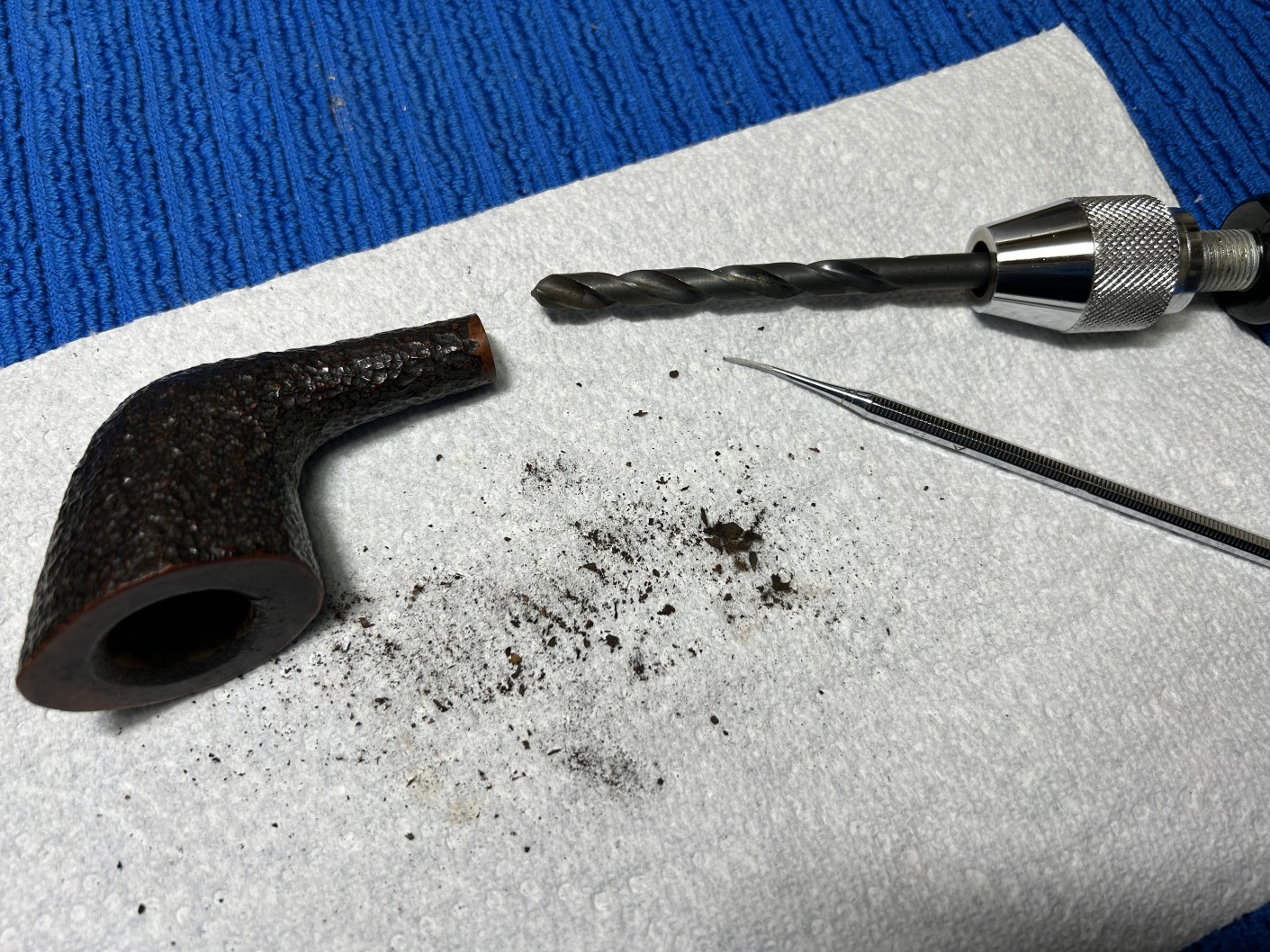
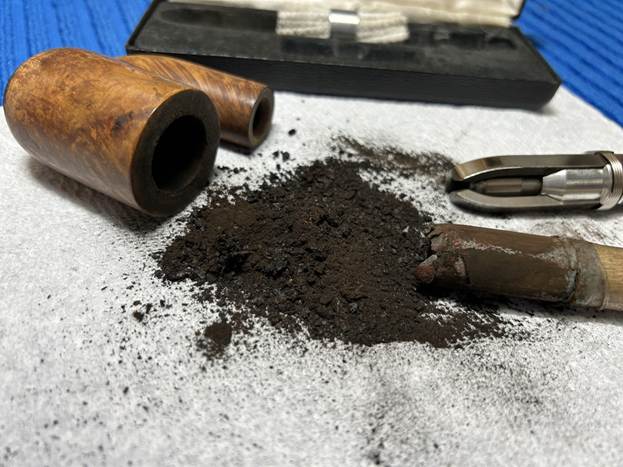
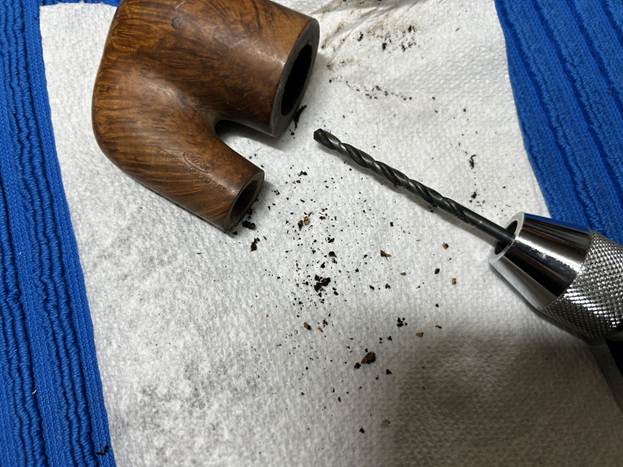
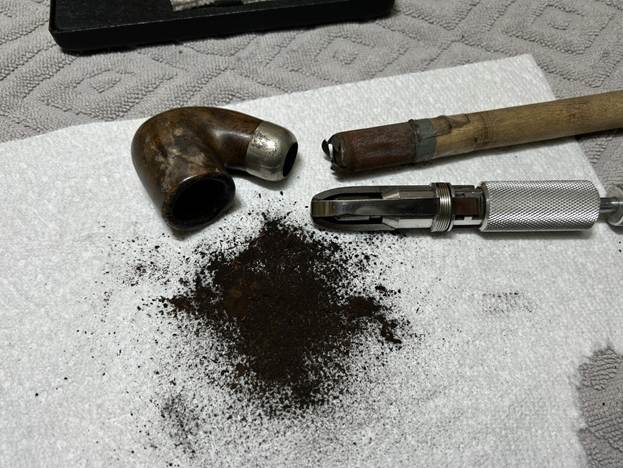
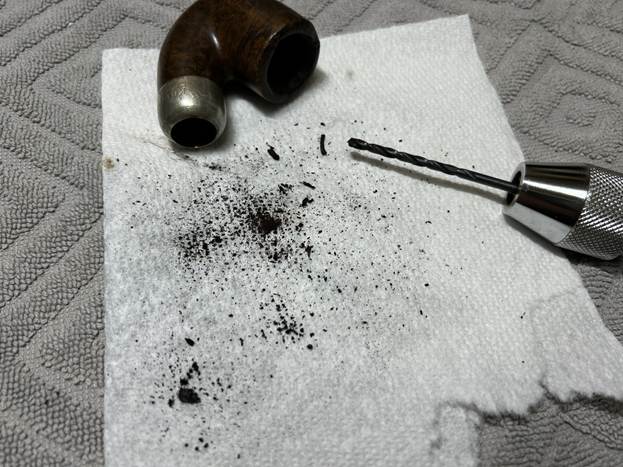
The penultimate step for the stem is sanding. First, with my set of needle files, I reduced the bulk of the cyanoacrylate repairs. I removed the excess adhesive as near to the surface as possible, without cutting into the vulcanite. Following that, I used all nine of the micromesh sanding pads (1,500 through 12,000 grit) to sand out flaws, even out the vulcanite, and provide gentle polishing of the finished surface. I also applied pipe-stem oil while using the last five micromesh pads. There was a wonderful, deep black shine to the stem when I was done.As the stem was (nearly) complete, I moved on to the stummel. The first step was to remove the lava on the rim. For this, I took a piece of machine steel and gently scraped the lava away. The metal’s edge is sharp enough to remove what I need, but not so sharp that it damages the rim. This work revealed some minor wear and a little burn on the rim. Nothing serious – and all part of this pipe’s history.My next step was to ream out the bowl – that is to say, remove all the cake inside the bowl. This accomplished a couple of things. First (and most obviously), it cleaned the bowl and provided a refurbished chamber for future smoking. Second, when the old cake was removed, I could inspect the interior walls of the bowl and determine if there was damage or not. I used a reamer, a pipe knife, and a piece of sandpaper taped to a wooden dowel. Collectively, these ensured that all the debris was removed. I was pleased to see that the walls were in good condition, despite the heavy smoking.The inside of the stummel needed to be cleaned thoroughly. However, this pipe was so clogged, that I first needed to open the horribly occluded airway. So, I took a long drill bit, held in a drill chuck, and hand-cranked it to dislodge the dreadful detritus inside. Hand cranking is essential because it provides a precision and caution that a power drill cannot provide. Similar to the stem, I then cleaned the stummel with both pipe cleaners and cotton swabs dipped in lemon-infused 99% isopropyl alcohol. With a pipe this dirty, it took quite a while and much cotton to clean.I then decided to ‘de-ghost’ the pipe – that is to say, exorcize the remaining filth from the briar. I filled the bowl and the shank with cotton balls, then saturated them with 99% isopropyl alcohol. I let the stummel sit overnight. This caused the remaining oils, tars and smells to leach out into the cotton.To tidy up the briar, I wiped down the outside, using a solution of a pH-neutral detergent and some distilled water, with cotton rounds. This did a good job of cleaning any latent dirt on the surface of the briar. The last step of the cleaning process was to scour the inside of the stummel with the same mild detergent and tube brushes. This was the culmination of a lot of hard work in getting the pipe clean.I used all nine micromesh pads (1,500 through 12,000 grit) to sand the outside of the stummel and finish it off. This sanding minimizes flaws in the briar and provides a beautiful smoothness to the wood. I rubbed some LBE Before & After Restoration Balm into the briar and let it sit for 30 minutes or so. The balm moisturizes the wood and gives a beautiful depth to the briar. I then buffed the stummel with a microfibre cloth. For the final step, I took the pipe to my bench polisher and carefully buffed it – first with a blue diamond compound, then with three coats of carnauba wax. This procedure makes the pipe look its best – the stummel sings and the stem glows.

All done! This Dunhill Bruyere 127 billiard looks fantastic again and I am delighted with the results. This is one pipe that I am going to be adding to my collection – at least for now. The approximate dimensions of the pipe are as follows: length 5½ in. (138 mm); height 1⅞ in. (48 mm); bowl diameter 1½ in. (39 mm); chamber diameter ¾ in. (20 mm). The weight of the pipe is 1½ oz. (43 g). I hope you enjoyed reading the story of this pipe’s restoration as much as I enjoyed restoring it. If you are interested in more of my work, please follow me here on Steve’s website or send me an email at kenneth@knightsofthepipe.com. Thank you very much for reading and, as always, I welcome and encourage your comments.

Cleaning Up a Beautiful Refbjerg Hand-Carved Bent Egg


by Kenneth Lieblich

The proceeds of a recent auction lot included this lovely Danish pipe. It really caught my eye and I’m sure it will catch yours too. This is a sort of freehand, hand-carved, bent egg by master carver, Søren Refbjerg Rasmussen. There is some wonderful grain in this pipe and it feels so good to hold. It is light and comfortable. It promises to be a great smoker. On the underside of the shank, we read Refbjerg [over] Hand-Carved [over] Made in Denmark. On the stem, there is a cursive letter R, representing his name, Refbjerg.Pipedia has an article on Mr Rasmussen and I quote a part of it here:

Søren Refbjerg Rasmussen founded a company in 1969, which employed an average of 8 – 12 craftsmen in the 1970’s. The semi-freehands they produced were traded under his prename Søren. Rasmussen himself finished only the very best pipes. So his way of pipemaking closely resembled the ways of Preben Holm, Karl Erik Ottendahl or Erik Nørding. Altogether more than 1,000,000 pipes were sold. Today he works alone as Refbjerg and manufactures only a small number of pipes in his workshop in DK-2860 Søborg, which are considered to be tremendously precisely executed. The dimensions mostly range from small to medium sized, corresponding to his personal preferences. The shapes adhere to the classical models, but often he gives them a touch of Danish flair. Refbjerg accepts minor faults but never uses any fillings. “Straight Grain” is the only grading, used for his very best pieces. He likes stem decorations made of exotic woods or metal rings.Meanwhile, over at Pipephil, there is the following entry:And, finally, scandinavianpipes.com includes these details about him:

Søren Refbjerg was born 1943 in the city of Søborg where he still lives and has been a full time pipe-maker since 1969. In the 70´s Søren had his own small factory with 10 employees producing a huge number of pipes mainly for the US market. Søren has indeed been one of the most productive Danish pipe-makers and for many years he also produced pipes for W.Ø. Larsen For the last decades Søren has been making pipes by himself, always using briar from Corsica. Søren derive much relaxation from being on the coast while angling for Sea Trout with his own hand-tied flies and find this environment to be a great inspiration for making pipes. Many times Søren say to himself: “Inspired by nature, made by me”.

He died in 2021. Let’s take a closer look at the pipe. It is in very nice shape. The stem is thoroughly calcified (and has a bit of oxidation), but isn’t damaged. Its stylized R is a bit thin/faded, but there are no notable tooth marks. The stummel is lovely! Wonderful condition, with only slight marks to the rim. The stem’s calcification was quite substantial. I used an old butter knife and gently scraped some of the thicker accretion off. Doing this now helps later in removing the oxidation.I used isopropyl alcohol on a few cotton rounds and wiped down the stem to provide an initial cleaning of filth before moving on to the next steps. The primary cleaning came next. I disinfected the inside of the stem with both pipe cleaners and cotton swabs dipped in lemon-infused 99% isopropyl alcohol. I scrubbed thoroughly to make sure the interior was very clean.The goal of the next step is the removal (or minimization) of oxidation. Going to my sink, I used cream cleanser, cotton rounds, and a toothbrush, and scoured the stem to remove as much surface oxidation as possible. As the photos show, the result was a hideous, ochre-coloured mess – but better off the stem than on it.Once the stem was reasonably clean, I soaked it overnight in some Briarville Stem Oxidation Remover. This solution works to draw oxidation in the stem to the surface of the vulcanite. This is a major aid and an important step in ensuring a clean stem. The following day, I drew out the stem from its bath and scrubbed the lingering fluid with a toothbrush.After this, I painted the logo on the stem with some enamel nail polish. I restored the logo carefully and let it fully set before proceeding. This didn’t work ideally, but came out fairly well.

The penultimate step for the stem is sanding. First, with my set of needle files, I reduced the bulk of the cyanoacrylate repairs. I removed the excess adhesive as near to the surface as possible, without cutting into the vulcanite. Following that, I used all nine of the micromesh sanding pads (1,500 through 12,000 grit) to sand out flaws, even out the vulcanite, and provide gentle polishing of the finished surface. I also applied pipe-stem oil while using the last five micromesh pads. There was a wonderful, deep black shine to the stem when I was done. As the stem was (nearly) complete, I moved on to the stummel. The first step was to ream out the bowl – that is to say, remove all the cake inside the bowl. This accomplished a couple of things. First (and most obviously), it cleaned the bowl and provided a refurbished chamber for future smoking. Second, when the old cake was removed, I could inspect the interior walls of the bowl and determine if there was damage or not. I used a pipe knife and a piece of sandpaper taped to a wooden dowel. Collectively, these ensured that all the debris was removed.Similar to the stem, I then cleaned the stummel with both pipe cleaners and cotton swabs dipped in lemon-infused 99% isopropyl alcohol.I then decided to ‘de-ghost’ the pipe – that is to say, exorcize the remaining filth from the briar. I filled the bowl and the shank with cotton balls, then saturated them with 99% isopropyl alcohol. I let the stummel sit overnight. This caused the remaining oils, tars and smells to leach out into the cotton.To tidy up the briar, I wiped down the outside, using a solution of a pH-neutral detergent and some distilled water, with cotton rounds. I also used a toothbrush in the crevices. This did a good job of cleaning any latent dirt on the surface of the briar. The last step of the cleaning process was to scour the inside of the stummel with the same mild detergent and tube brushes. This was the culmination of a lot of hard work in getting the pipe clean.I used all nine micromesh pads (1,500 through 12,000 grit) to sand the outside of the stummel and finish it off. This sanding minimizes flaws in the briar and provides a beautiful smoothness to the wood. I rubbed some LBE Before & After Restoration Balm into the briar and let it sit for 30 minutes or so. The balm moisturizes the wood and gives a beautiful depth to the briar. I then buffed the stummel with a microfibre cloth. For the final step, I took the pipe to my bench polisher and carefully buffed it – first with a blue diamond compound, then with three coats of carnauba wax. This procedure makes the pipe look its best – the stummel sings and the stem glows.This Refbjerg Hand-Carved Bent Egg looks fantastic again and is ready to be enjoyed by its next owner. I am pleased to announce that this pipe is for sale! If you are interested in acquiring it for your collection, please have a look in the ‘Danish’ section of the store here on Steve’s website. You can also email me directly at kenneth@knightsofthepipe.com. The approximate dimensions of the pipe are as follows: length 5½ in. (139 mm); height 1⅞ in. (46 mm); bowl diameter 1⅔ in. (41 mm); chamber diameter ⅞ in. (22 mm). The weight of the pipe is 1¼ oz. (37 g). I hope you enjoyed reading the story of this pipe’s restoration as much as I enjoyed restoring it. If you are interested in more of my work, please follow me here on Steve’s website or send me an email. Thank you very much for reading and, as always, I welcome and encourage your comments.
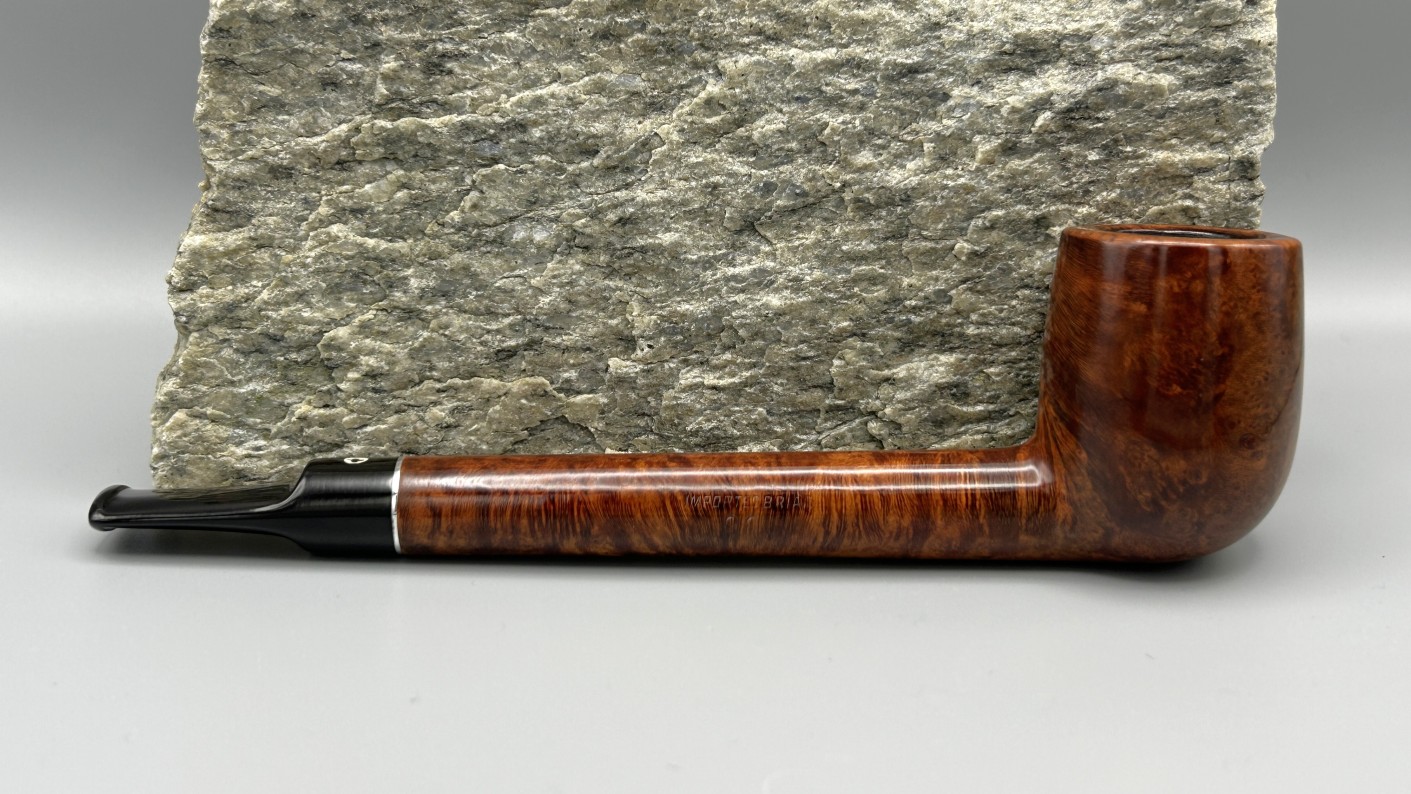
Savinelli Nonpareil 9604 Oom Paul


by Kenneth Lieblich

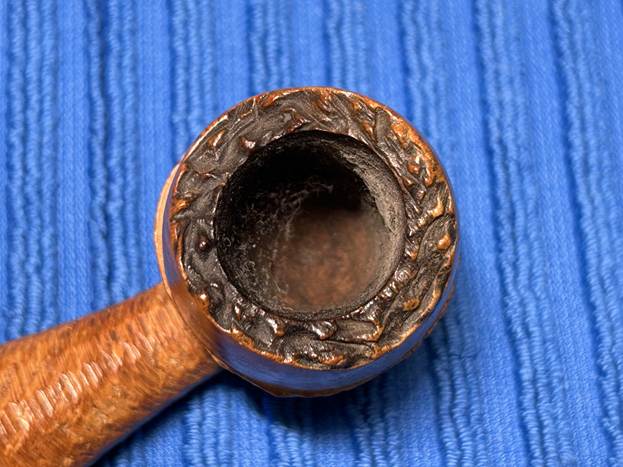
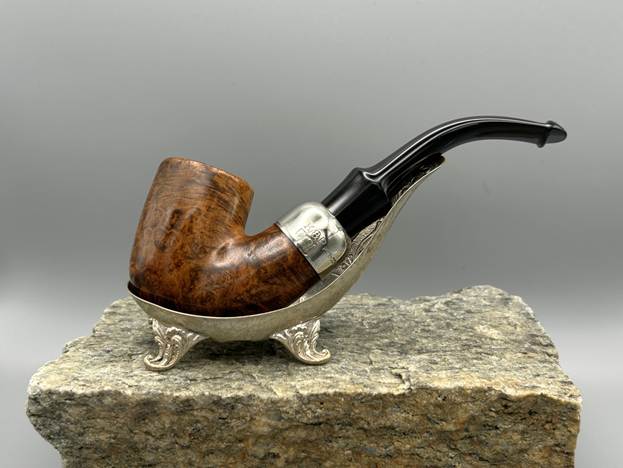
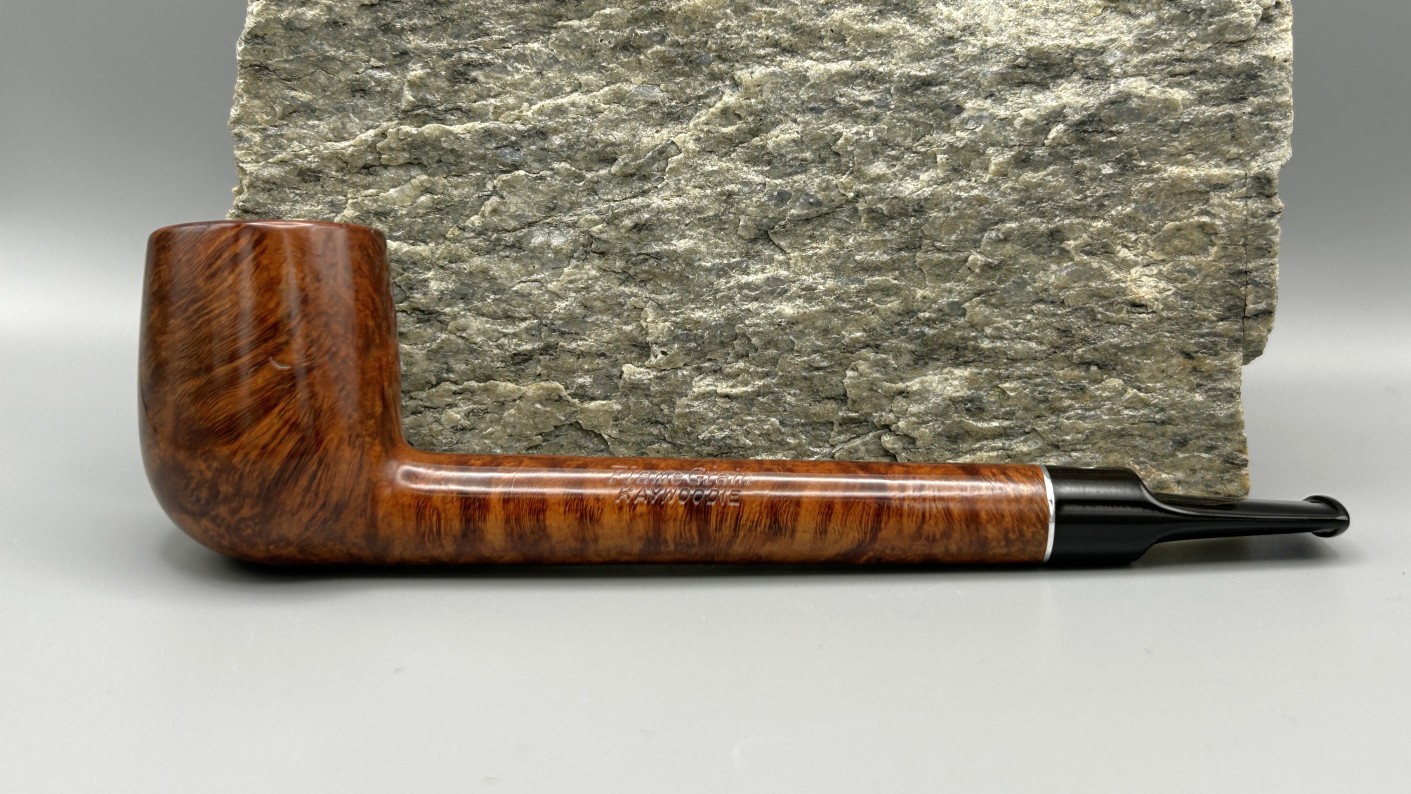
Say hello to this beautiful Savinelli Nonpareil 9604 Oom Paul! I have had this pipe in my collection for a while, but it’s time to let it go. It’s a gorgeous piece of briar with a handsome horn shank extension. This Oom Paul is very attractive, but I need to send it out into the world. You can now buy this pipe for your collection and enjoy it. No restoration story this time, but a quick view of a lovely pipe. This pipe promises to be a great smoker.

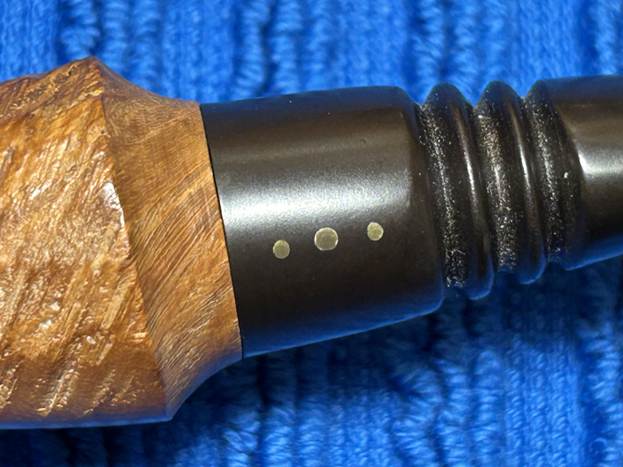
Let’s look at the markings. The left side of the shank reads Savinelli [over] Nonpareil. Despite Savinelli being an Italian company, the word nonpareil is French and means “without equal” – literally, “not the same”. On the left side of the shank is the lovely Savinelli crown, next to which are the marks 9604 [over] Italy. Finally, there are two brass dots on the left side of the stem – a very nice touch.
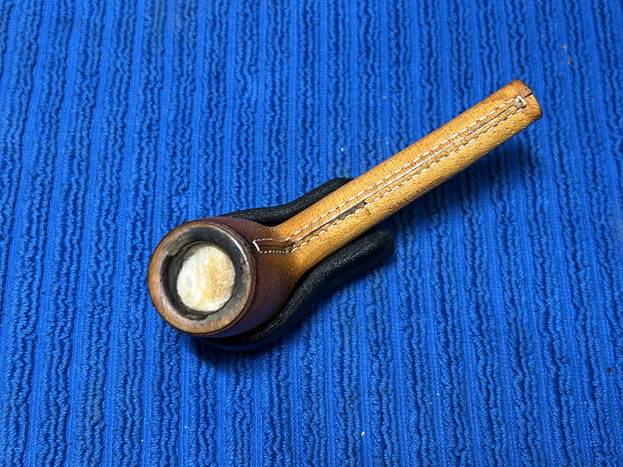
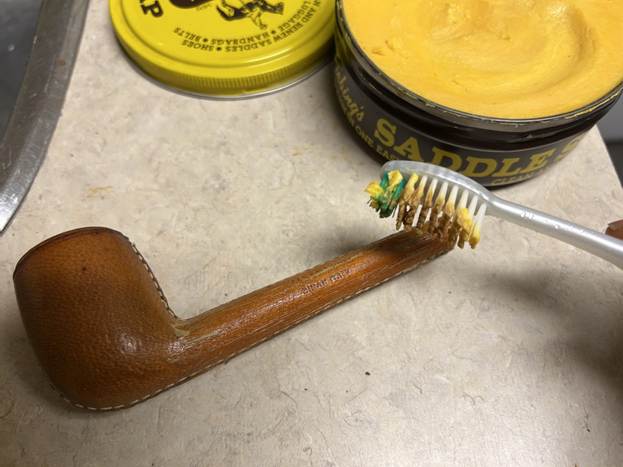
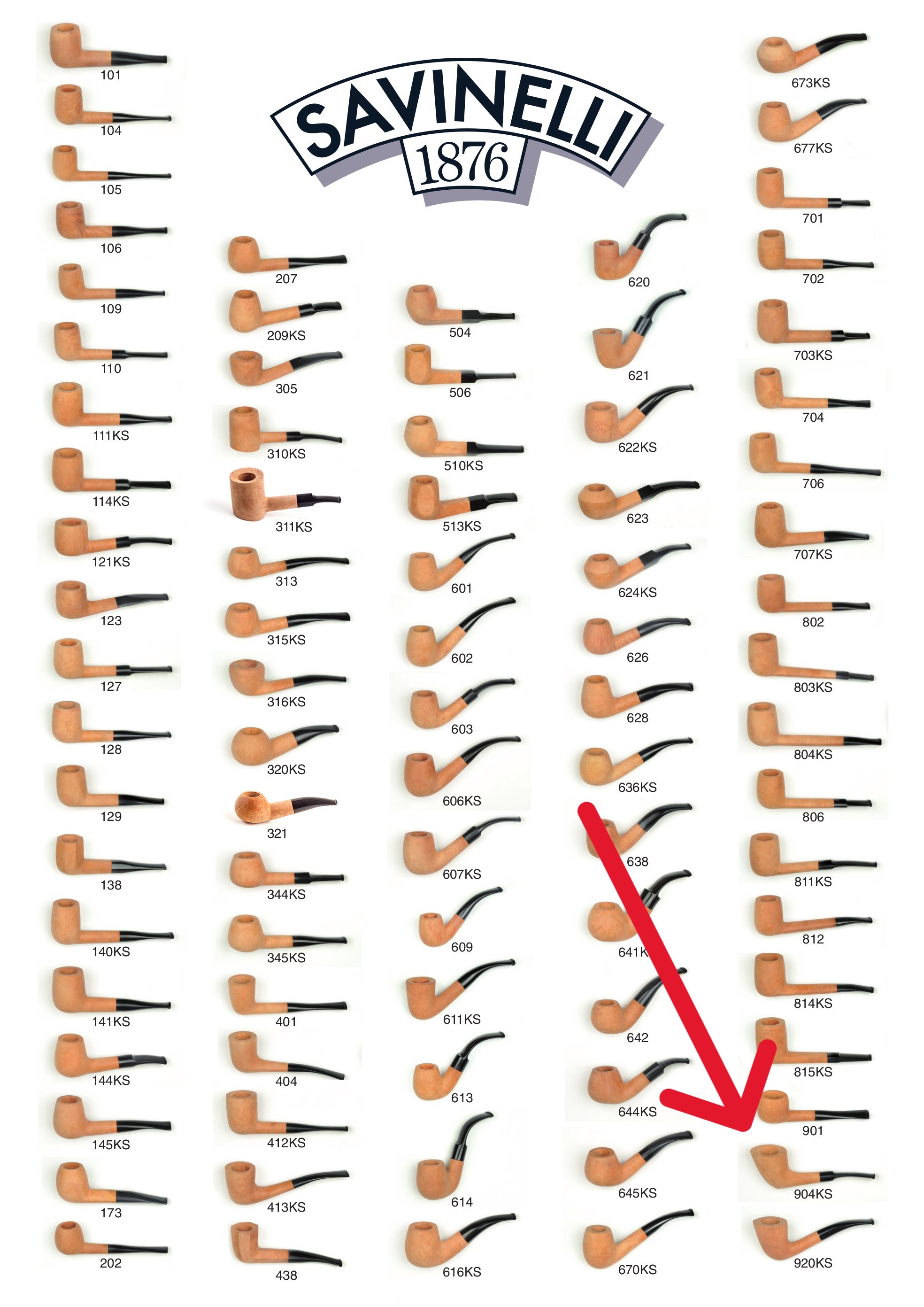
Savinelli is one of the most recognized names in pipe smoking and they have a long and storied history. You can read about them from their own website or from Pipedia’s article about them. I was particularly interested in learning more about the Nonpareil line. I checked with Pipephil and they did have a bit of information, which I display below. I learned from Pipephil that old Savinellis used to have four-digit shape numbers, newer ones three. The exceptions to this rule, however, are the Nonpareil and Dry System lines.This Savinelli Nonpareil 9604 Oom Paul is ready to be enjoyed by its next owner. I am pleased to announce that this pipe is for sale! If you are interested in acquiring it for your collection, please have a look in the ‘Italian’ section of the store here on Steve’s website. You can also email me directly at kenneth@knightsofthepipe.com. The approximate dimensions of the pipe are as follows: length 4⅜ in. (159 mm); height 4¾ in. (120 mm); bowl diameter 1½ in. (37 mm); chamber diameter ¾ in. (20 mm). The weight of the pipe is 2½ oz. (71 g). I hope you enjoyed reading the story of this pipe’s restoration as much as I enjoyed restoring it. If you are interested in more of my work, please follow me here on Steve’s website or send me an email. Thank you very much for reading and, as always, I welcome and encourage your comments.