Tag Archives: meerschaum pipe

Giving Three Old Pipes New Life


by Kenneth Lieblich

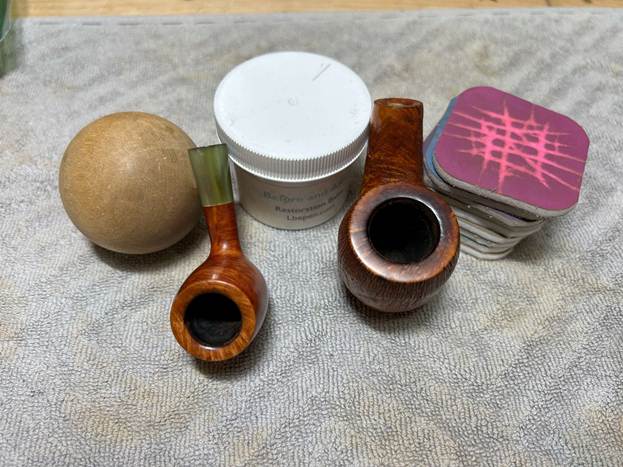
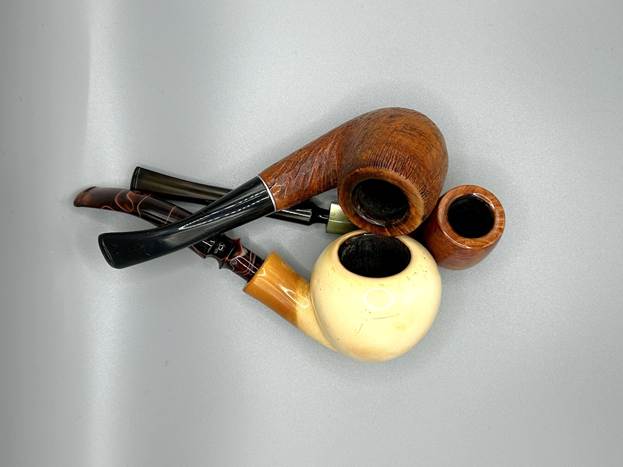
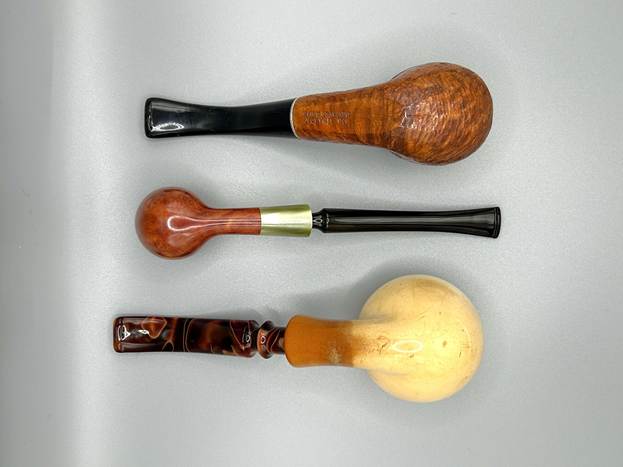
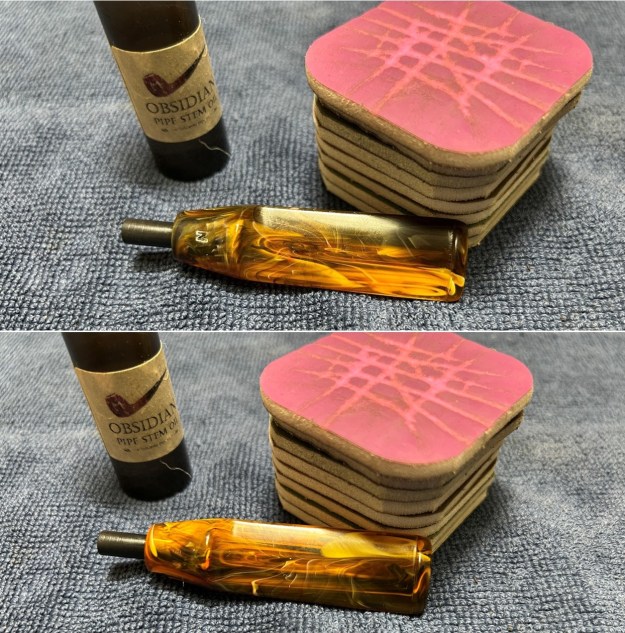
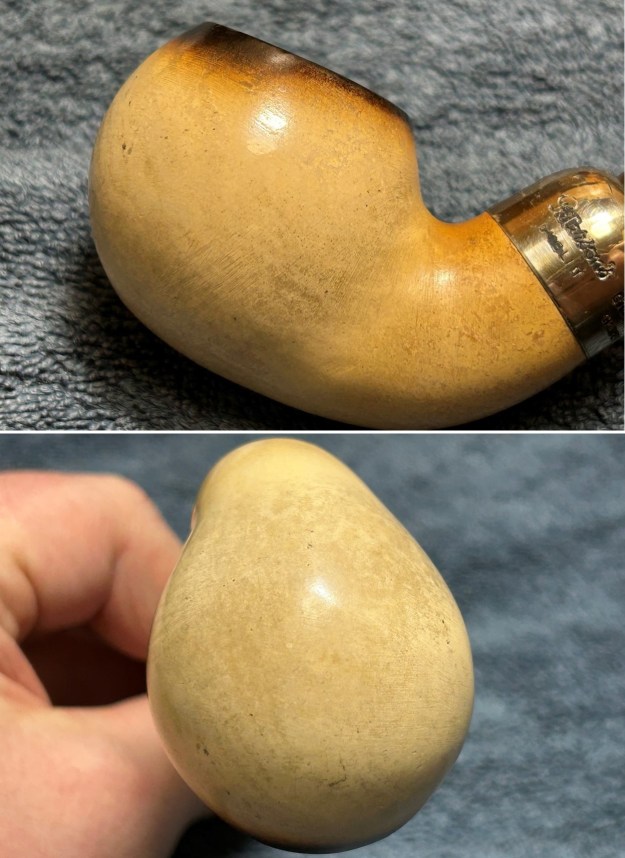
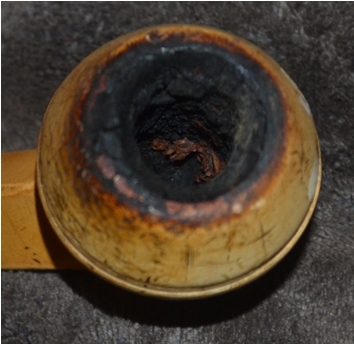
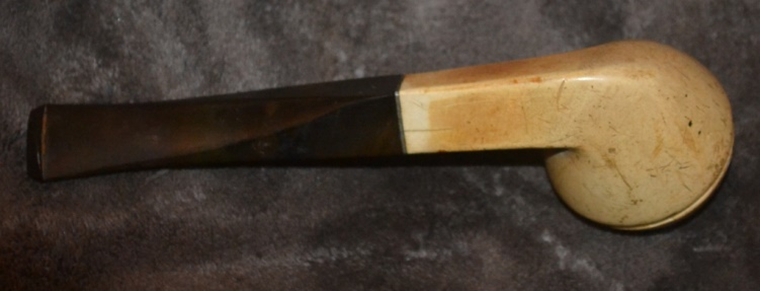
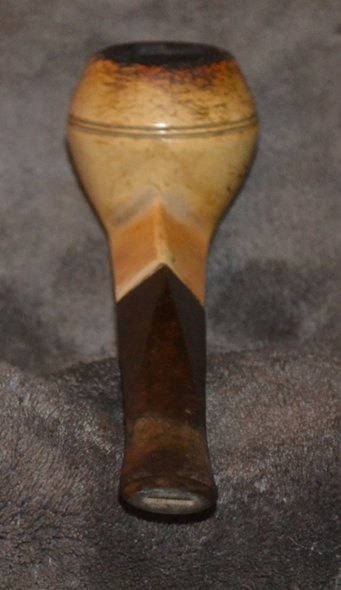
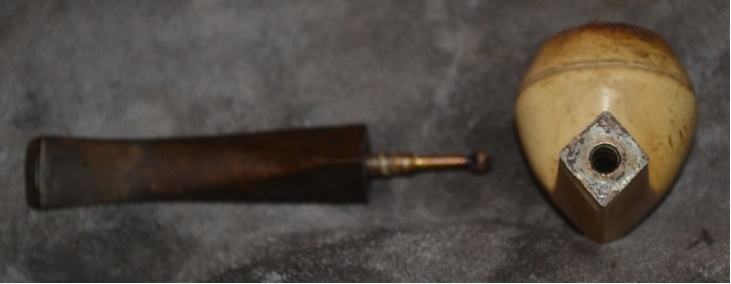
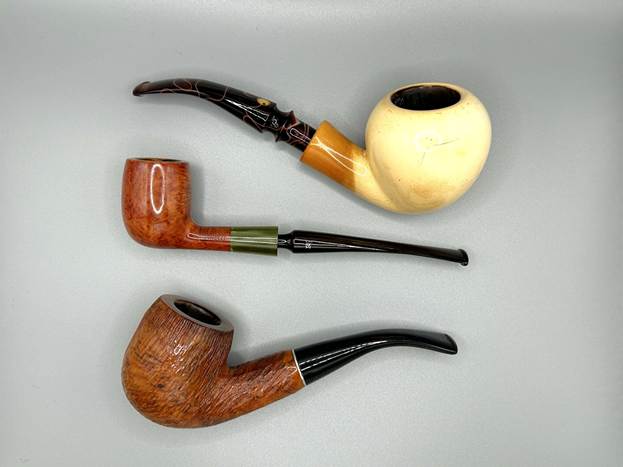
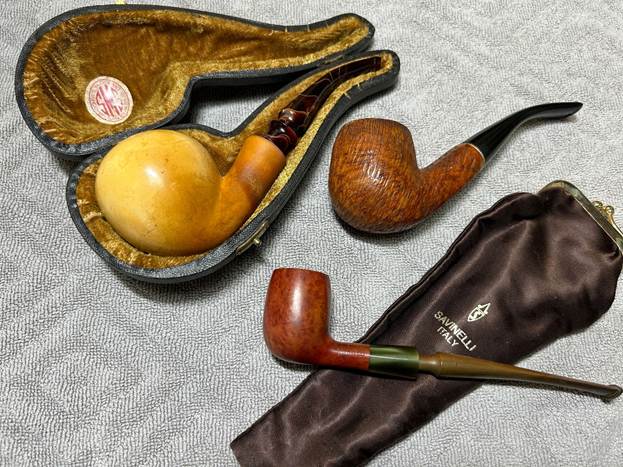
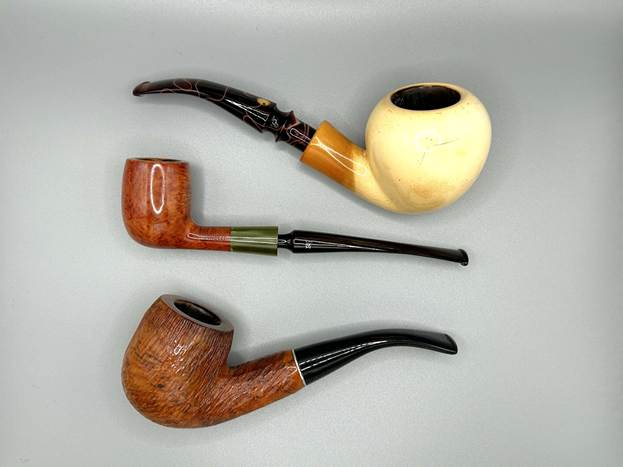
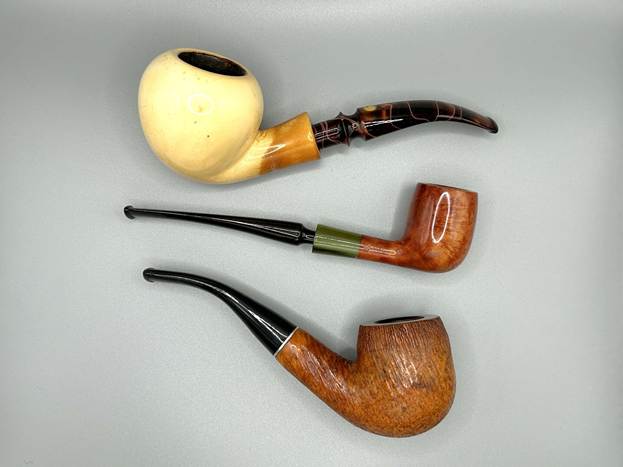
I recently received a package of three pipes from a fine gentleman in Texas. These old pipes belonged to his father-in-law and he was hoping to bring them back to working order. He wanted to get them smoking again after 20+ years of inactivity. I was happy to receive them and happy to work on them. I decided to do a blog about all three at once, so here we go. The three pipes are quite handsome. One is a little Savinelli 105 (probably a Petite) with a military tenon and acrylic shank extension. The second is a Dr Grabow bent billiard with a filter system and acrylic stem. Third is a large, round meerschaum with a variegated acrylic stem. You can see from the photos that they are attractive, very serviceable pipes.
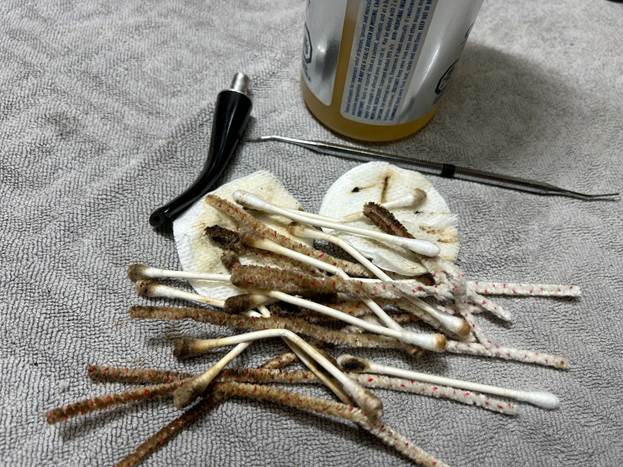
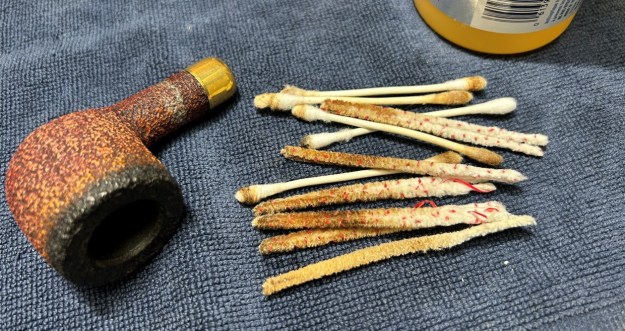
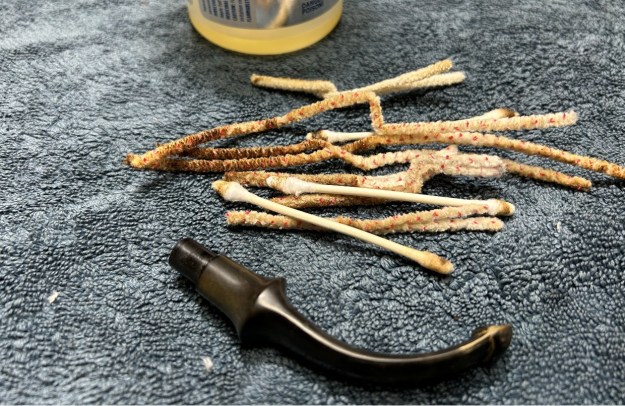
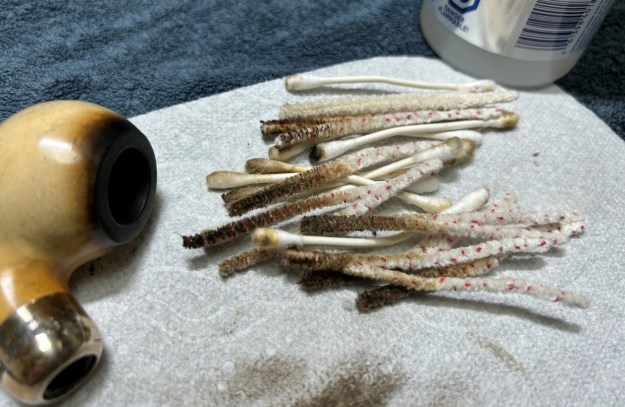
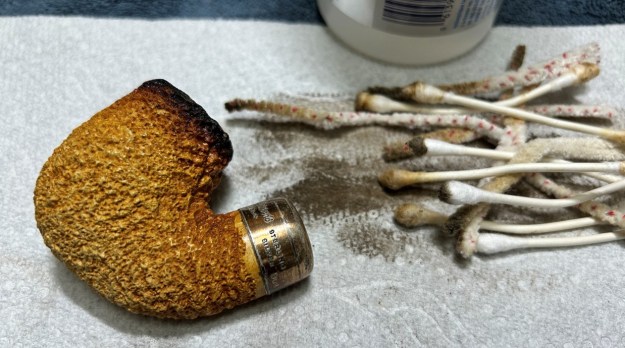
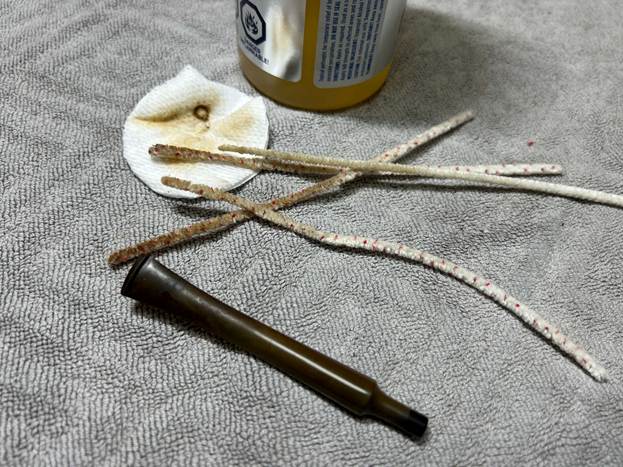
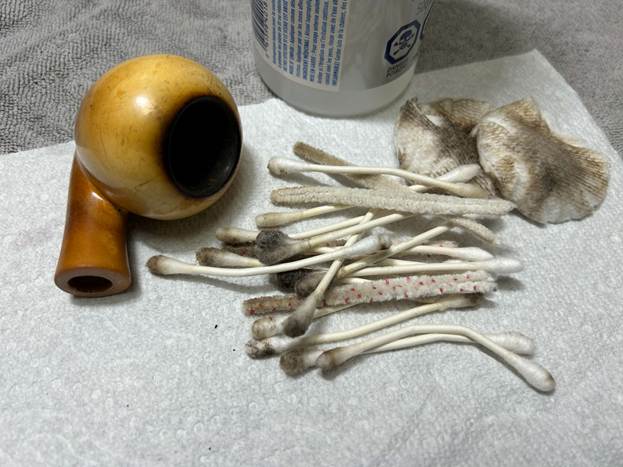
Let’s get started. I used isopropyl alcohol on a few cotton rounds and wiped down the three stems to provide an initial cleaning of filth before moving on to the next steps. The primary cleaning came next. I disinfected the inside of the stems with both pipe cleaners and cotton swabs dipped in lemon-infused 99% isopropyl alcohol. I scrubbed thoroughly to make sure the interior was very clean. I used lots and lots pipe cleaners and cotton swabs.
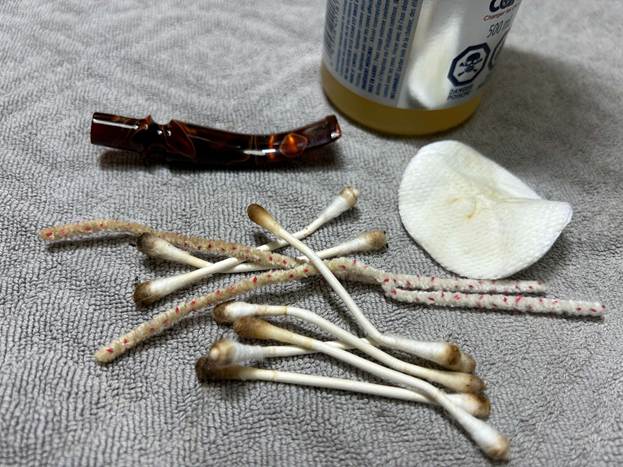
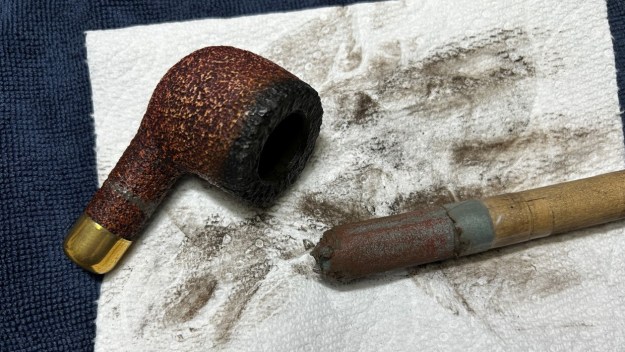
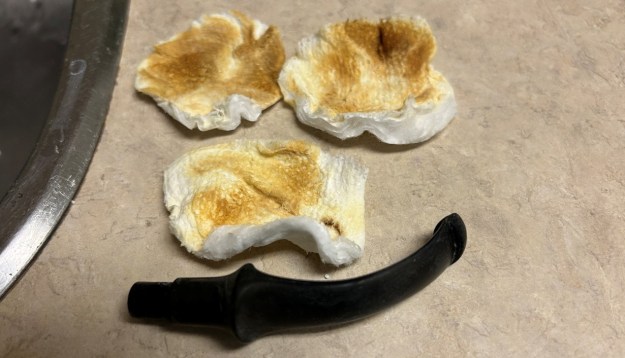
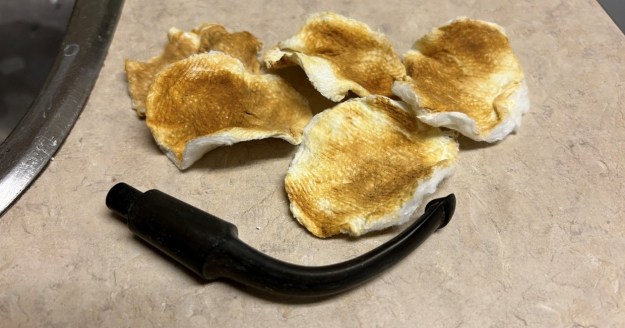
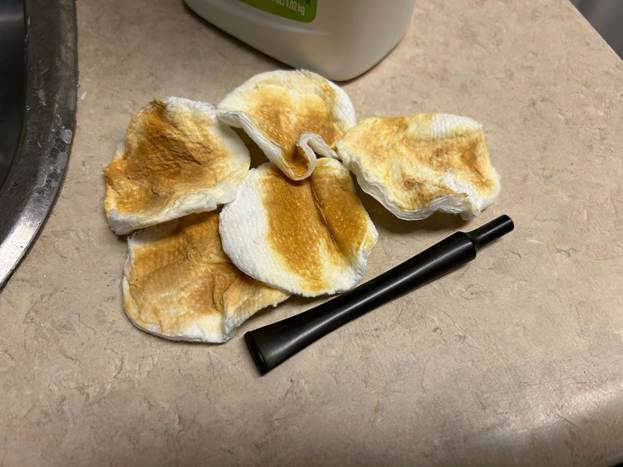
The goal of the next step is the removal (or minimization) of oxidation. There was only one stem (the Savinelli) that was made of vulcanite and, therefore, in need of de-oxidation. Going to my sink, I used cream cleanser, cotton rounds, and a toothbrush, and scoured the stem to remove as much surface oxidation as possible. As the photos show, the result was a hideous, ochre-coloured mess – but better off the stem than on it.
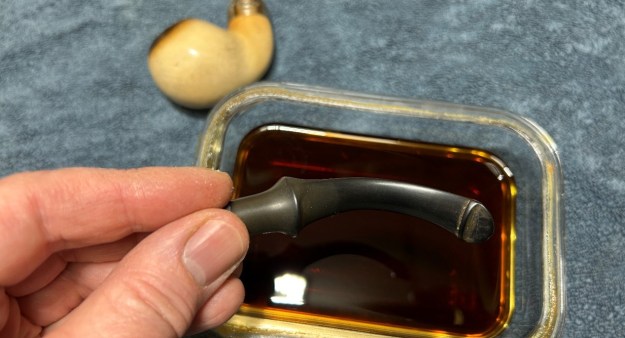
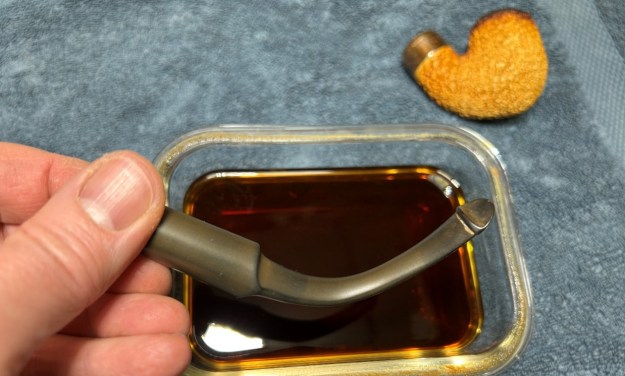
Once the stem was reasonably clean, I soaked it overnight in some Briarville Stem Oxidation Remover. This solution works to draw oxidation in the stem to the surface of the vulcanite. This is a major aid and an important step in ensuring a clean stem. The following day, I drew out the stem from its bath and scrubbed the lingering fluid with a toothbrush. The oxidation was very deep on this pipe and there will always be some remnants of it.
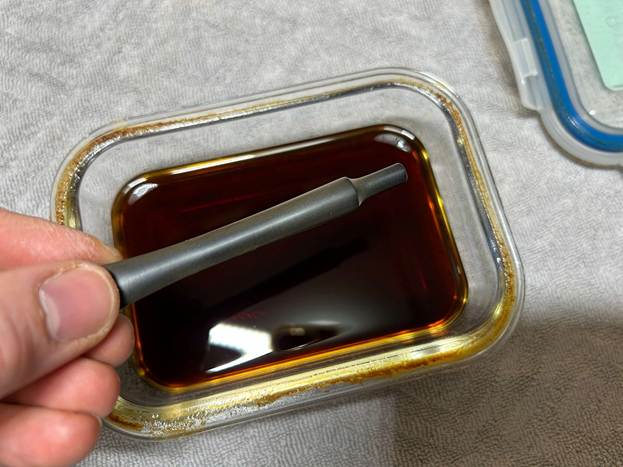
After this, I painted the Savinelli logo on the stem with some enamel nail polish. I restored the logo carefully and let it fully set before proceeding.

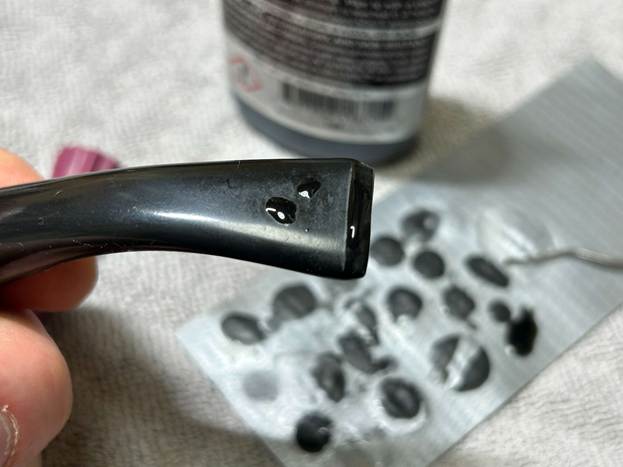
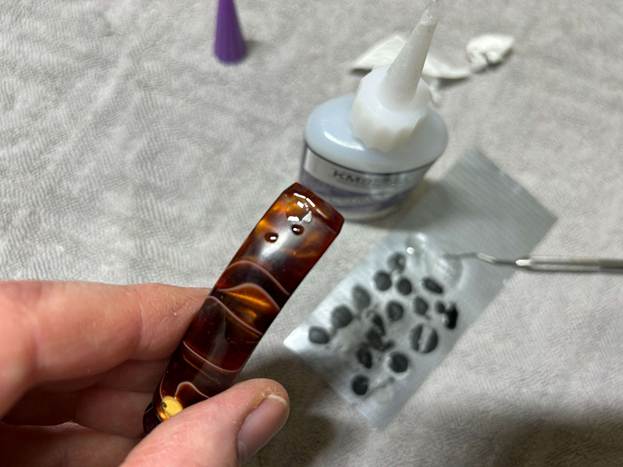
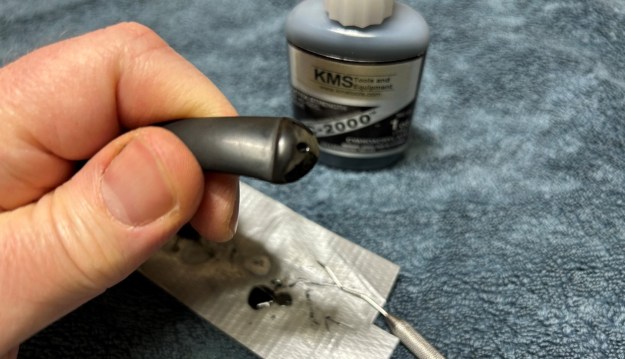
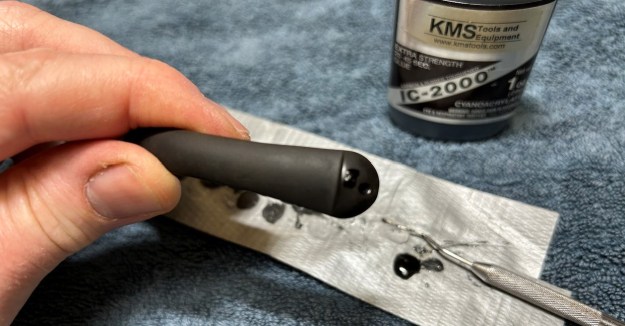
As the stems were now clean and dry, I set about fixing the marks and dents. This was done by filling those divots with black cyanoacrylate adhesive (impregnated with carbon and rubber) on the Dr Grabow stem and clear cyanoacrylate adhesive on the meerschaum stem. I left them to cure and moved on. The Savinelli stem didn’t need this treatment. The photos don’t show this very well, but the meer’s stem had very deep dents that required quite a bit of attention.
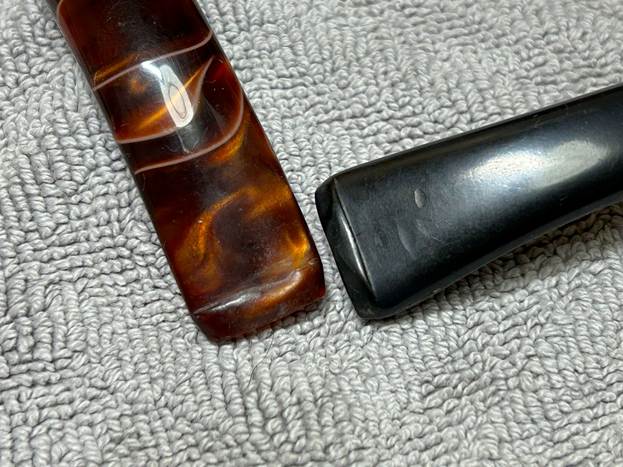
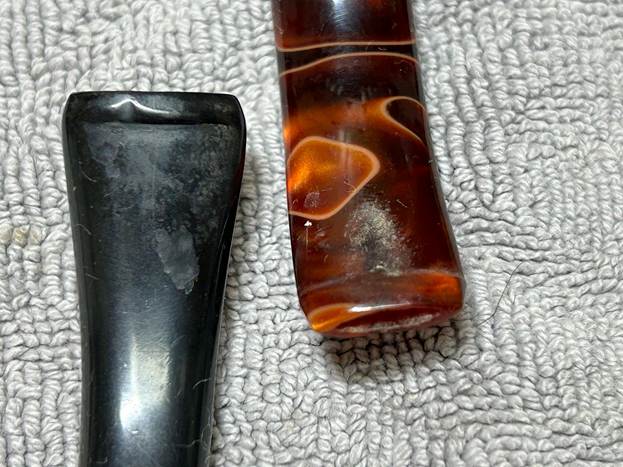
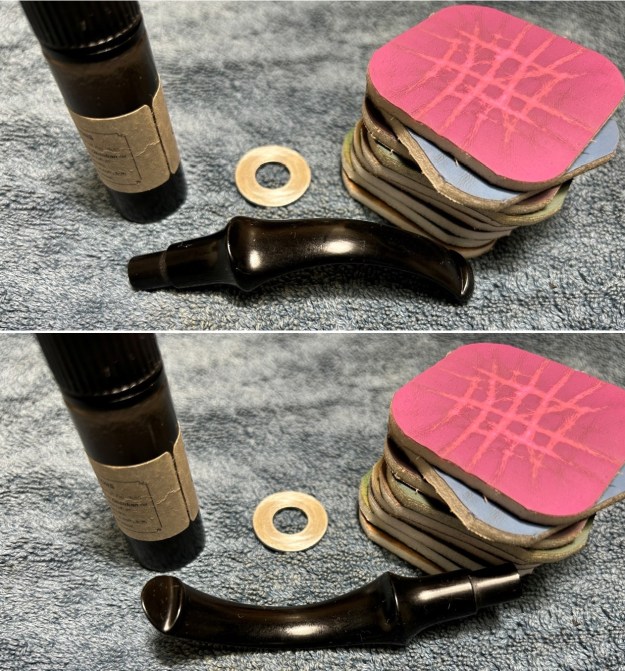
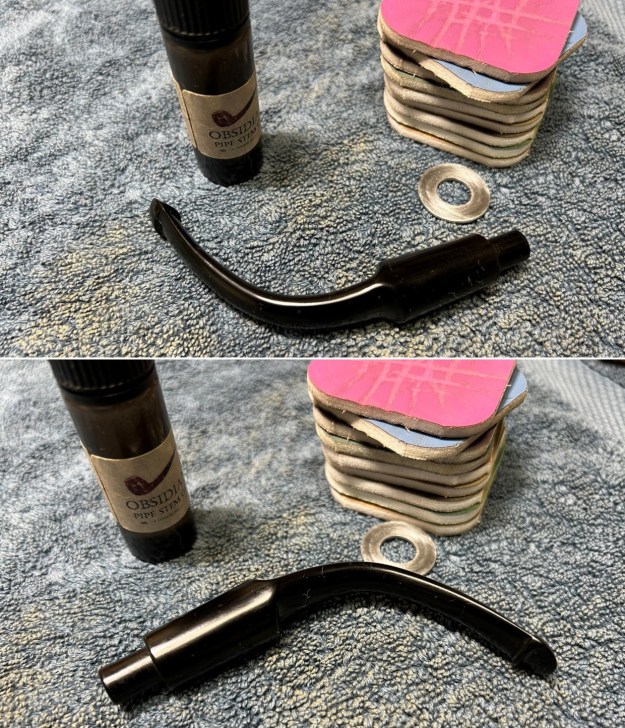
The penultimate step for the stems is sanding. First, with my set of needle files, I reduced the bulk of the cyanoacrylate repairs. I removed the excess adhesive as near to the surface as possible, without cutting into the stems. Following that, I used all nine of the micromesh sanding pads (1,500 through 12,000 grit) to sand out flaws, even things out, and provide gentle polishing of the finished surface. I also applied pipe-stem oil while using the last five micromesh pads. There was a wonderful, deep shine to all three stems when I was done. I am embarrassed to say that I forgot to take any photos of this step. You’ll just have to take my word for it.

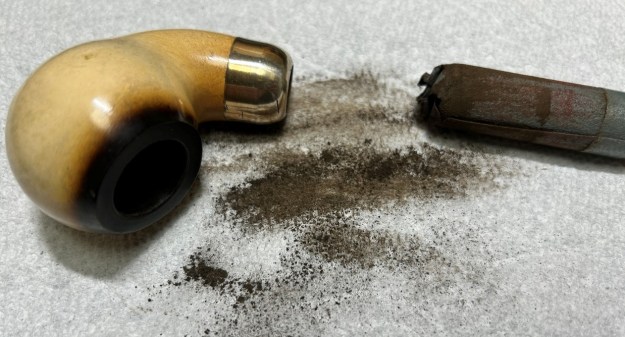
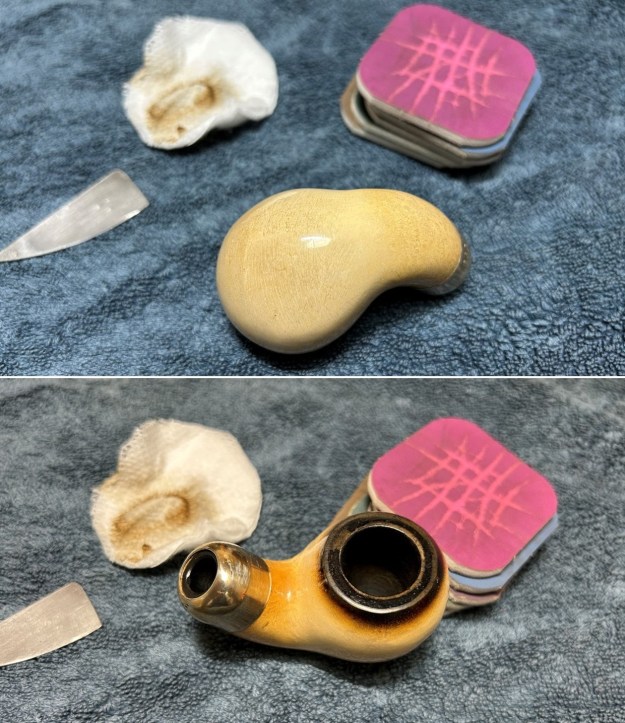
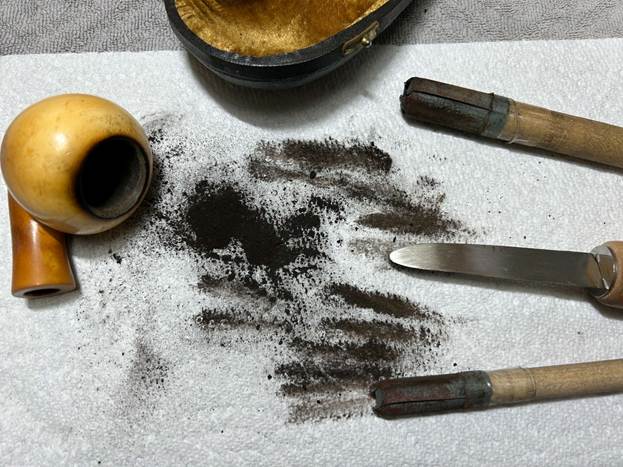
As the stem were (nearly) complete, I moved on to the two briar stummels. The first step was to ream out the bowls – that is to say, remove all the cake. This accomplished a couple of things. First (and most obviously), it cleaned the bowl and provided a refurbished chamber for future smoking. Second, when the old cake was removed, I could inspect the interior walls of the bowls and determine if there was damage or not. I used a reamer, a pipe knife, and a piece of sandpaper taped to a wooden dowel. Collectively, these ensured that all the debris was removed.
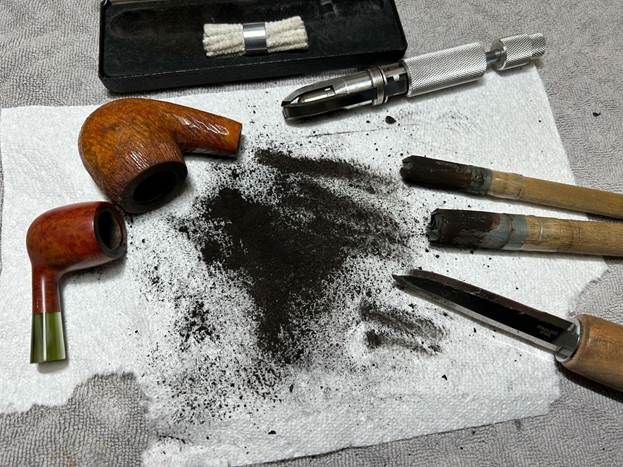
Same sort of thing (kind of) for the meerschaum bowl. Normally, as above, I would use a reamer to remove the built-up cake inside the bowl, but meerschaum has the potential to crack in those circumstances. Instead, I used just the pipe knife and the sandpaper/dowel. There wasn’t too much.
Similar to the stems, I then cleaned the stummels with both pipe cleaners and cotton swabs dipped in lemon-infused 99% isopropyl alcohol. With pipes this dirty, it took quite a while and much cotton to clean. With the meer, I did this carefully because too much soaking can cause meerschaum to soften. In this case, I moved quickly, nothing softened, and everything turned out well.
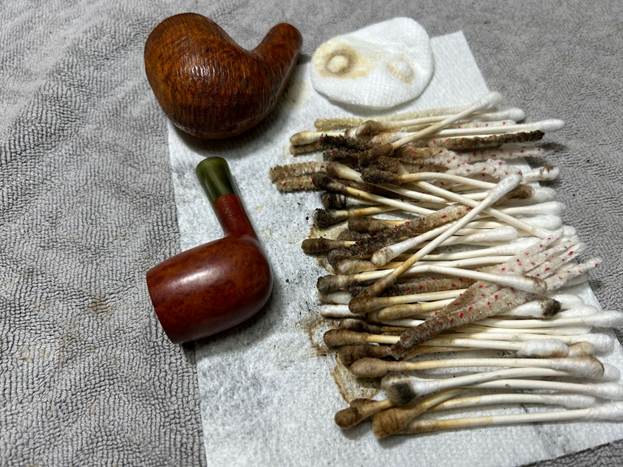
I then decided to ‘de-ghost’ the two briar pipes – that is to say, exorcize the remaining filth from the briar. I filled the bowls and the shanks with cotton balls, then saturated them with 99% isopropyl alcohol. I let the stummels sit overnight. This caused the remaining oils, tars and smells to leach out into the cotton. However, I didn’t use this treatment on meerschaum for the aforementioned reasons.
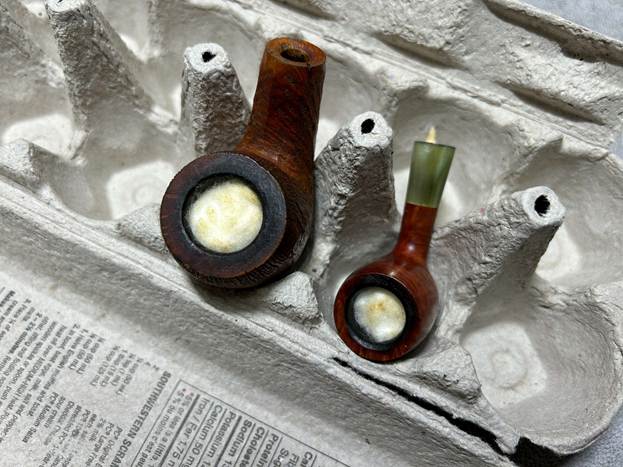
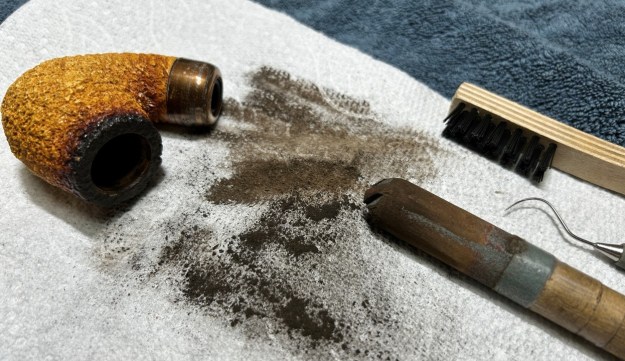
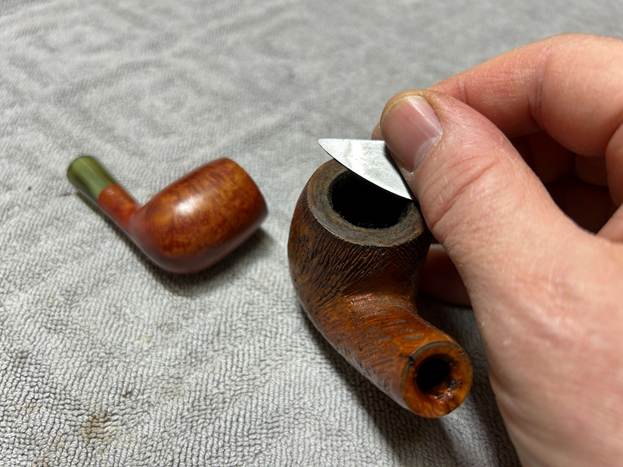
My next step was to remove the lava on the rims of the two briar pipes. For this, I took a piece of machine steel and gently scraped the lava away. The metal’s edge is sharp enough to remove what I need, but not so sharp that it damages the rims.
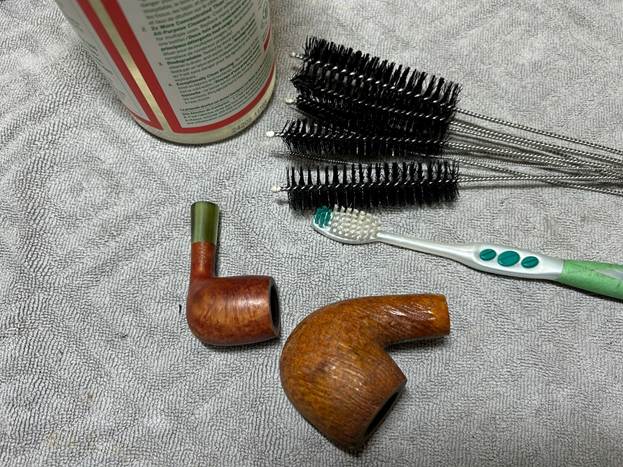
To tidy up the briar pipes, I wiped down the outsides, using a solution of a pH-neutral detergent and some distilled water, with cotton rounds. I also used a toothbrush in the crevices. This did a good job of cleaning any latent dirt on the surface of the briar. The last step of the cleaning process was to scour the inside of the stummels with the same mild detergent and tube brushes. This was the culmination of a lot of hard work in getting the pipes clean. Again, this was only done on the briar pipes.
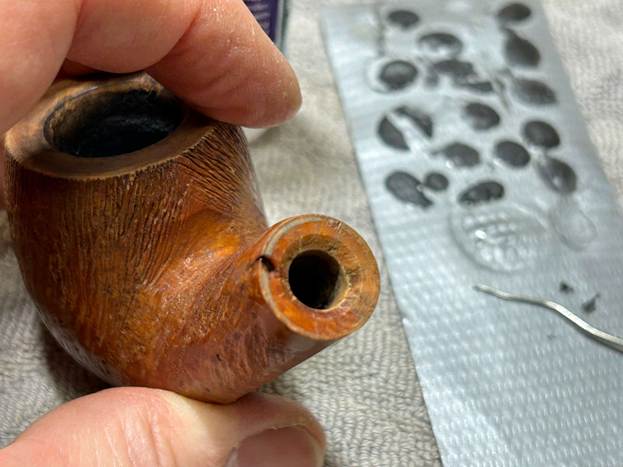
The Dr Grabow had a serious nick at the end of the shank. I filled this in with CA glue. Worked perfectly.
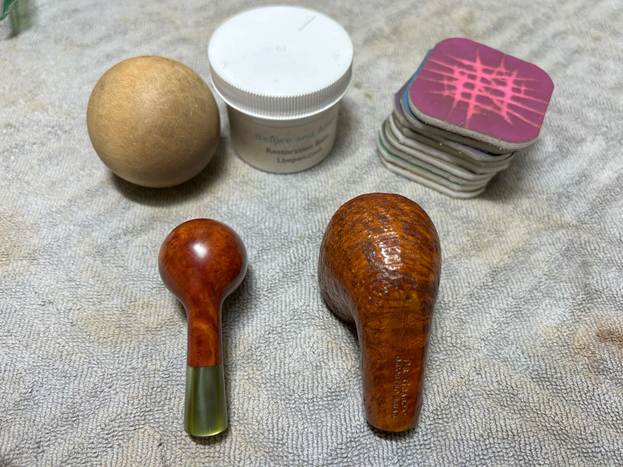
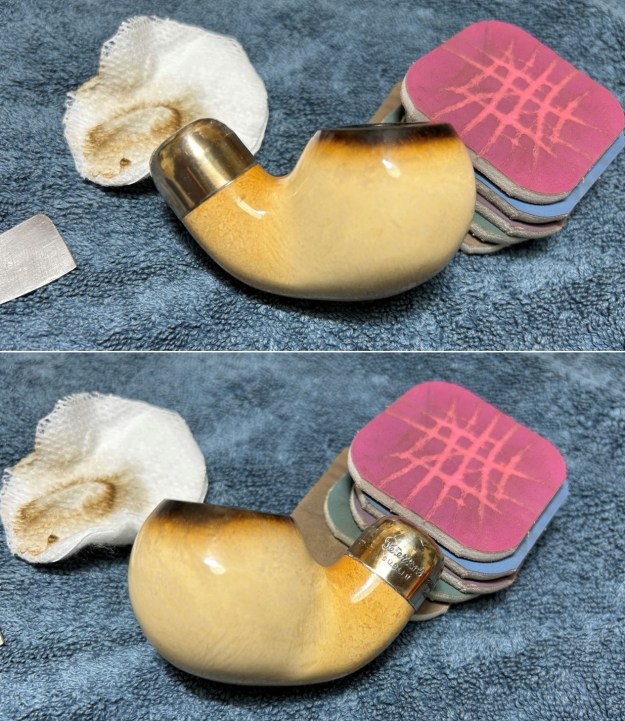
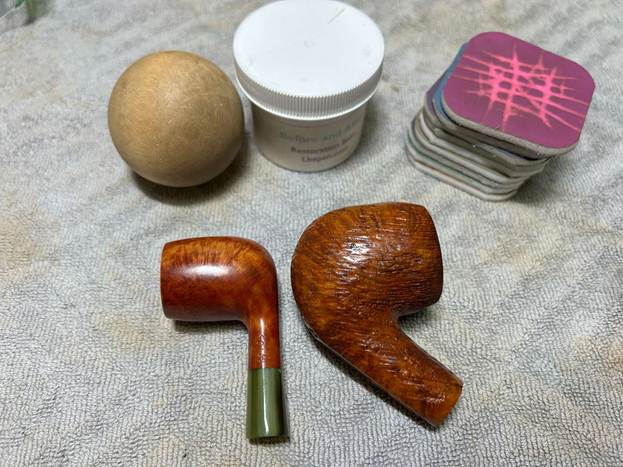
I used all nine micromesh pads (1,500 through 12,000 grit) to sand the outside of all three stummels and finish them off. This sanding minimizes flaws in the briar (and meerschaum) and provides a beautiful smoothness to the surfaces. I rubbed some LBE Before & After Restoration Balm into the two briar pipes and let them sit for 30 minutes or so. The balm moisturizes the wood and gives a beautiful depth to the briar. I then buffed the stummels with a microfibre cloth.
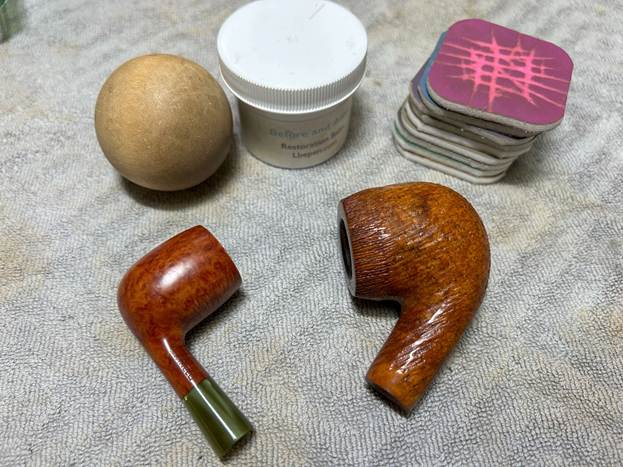
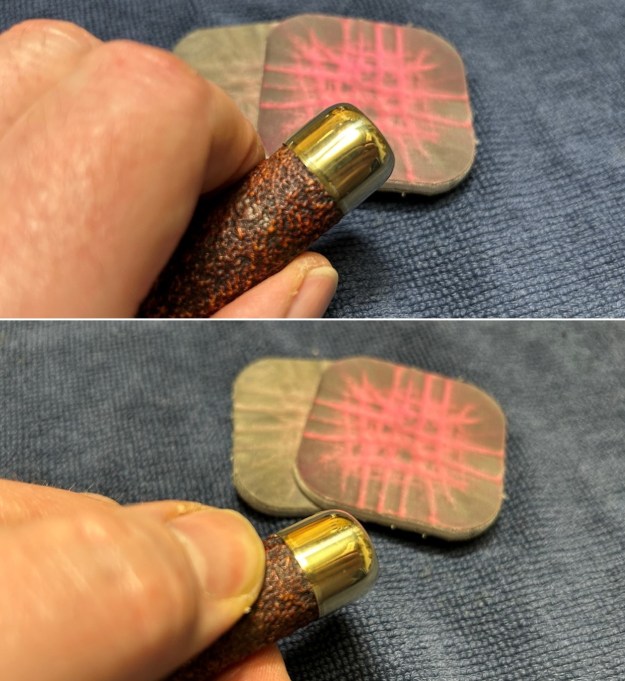
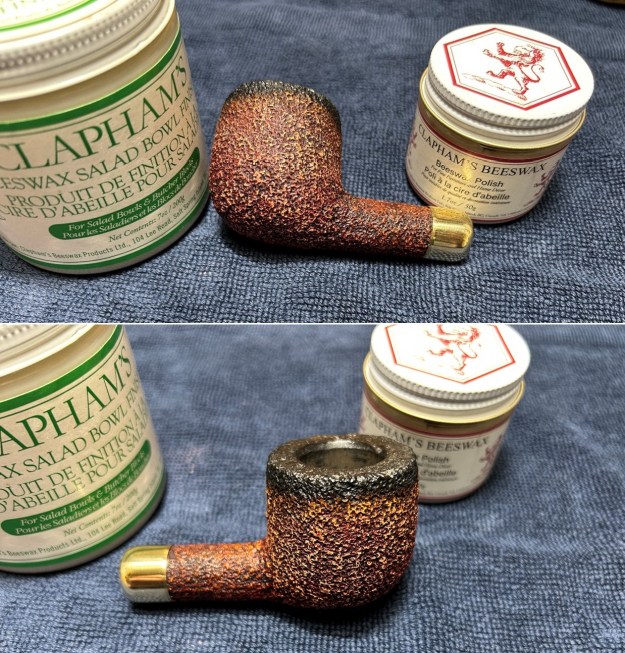
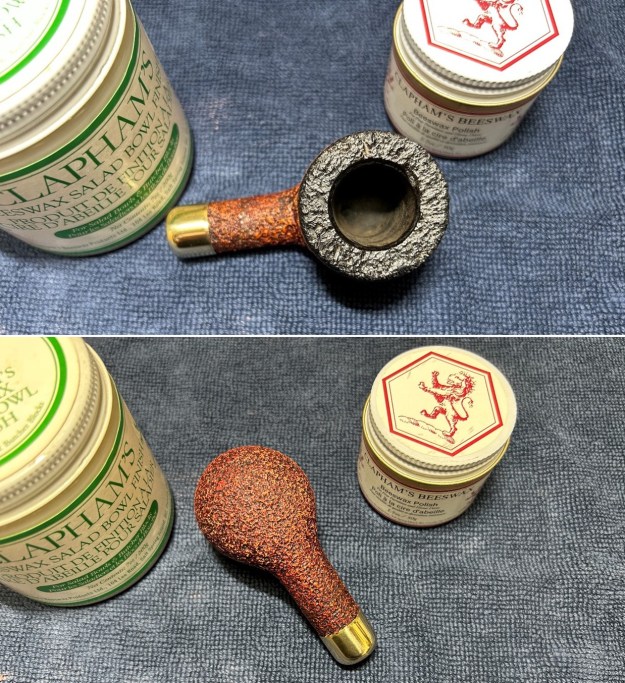
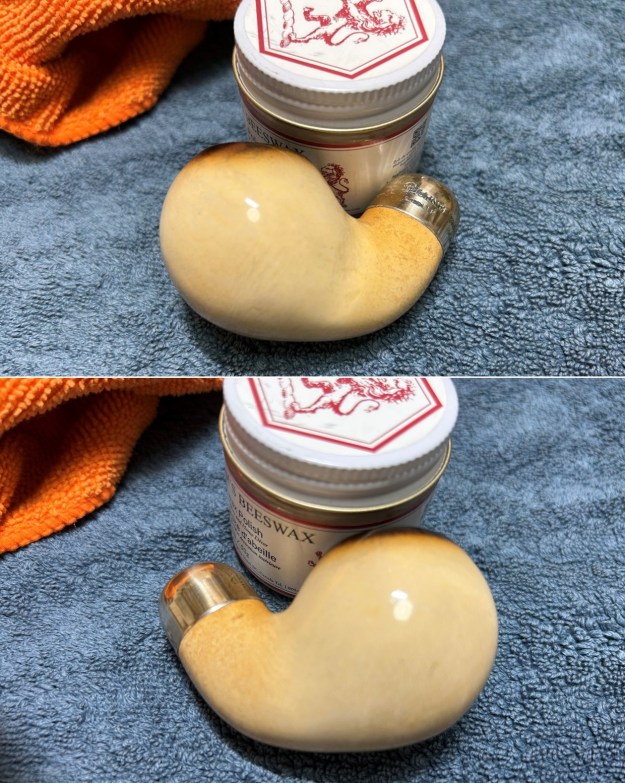
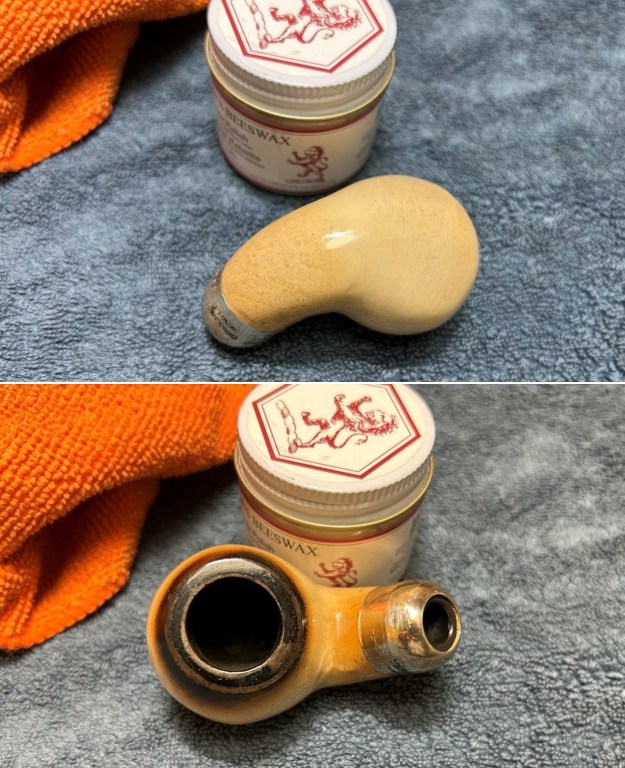
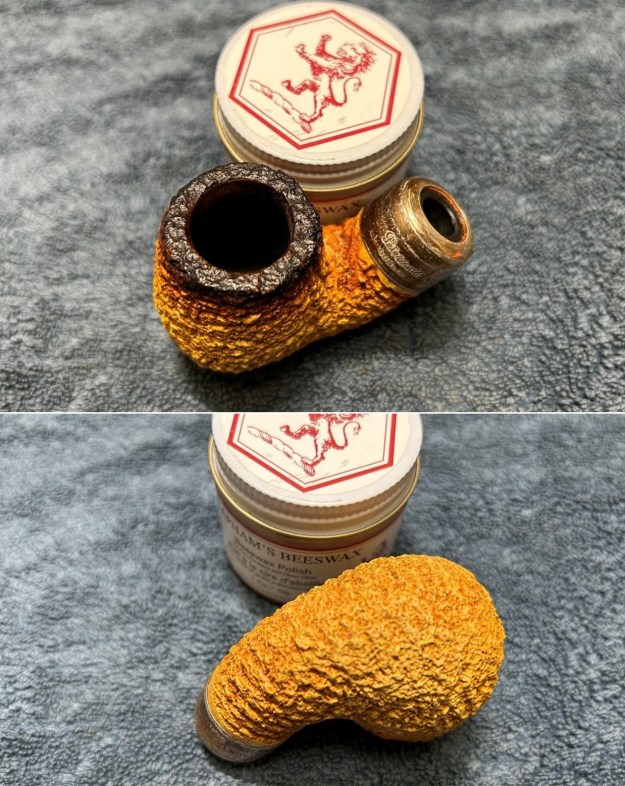
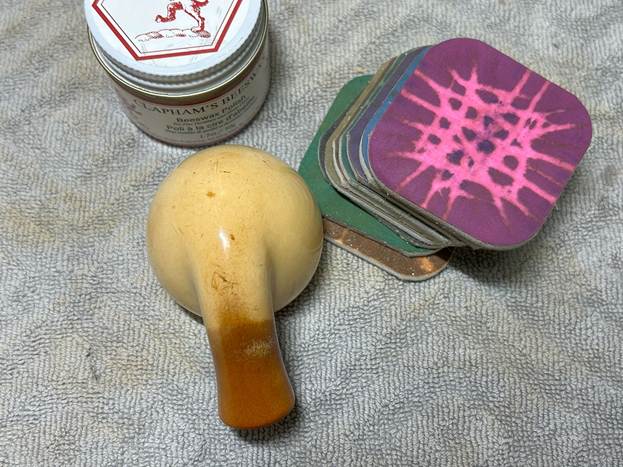
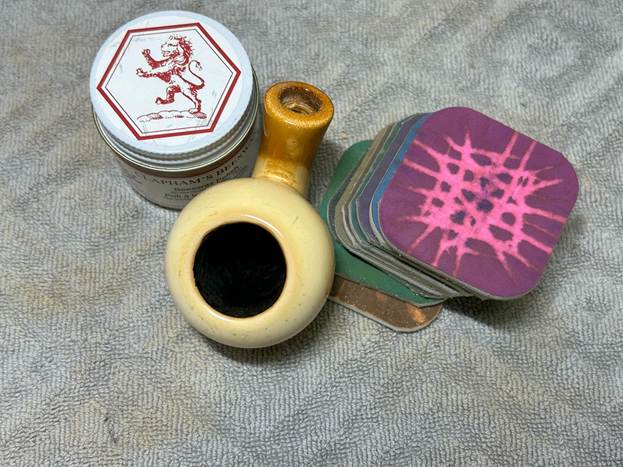
I then applied some Clapham’s Beeswax Finish to the meerschaum and also let it sit for about 30 minutes. As meerschaum pipes don’t do well on a bench-polisher, I then buffed it with a microfibre cloth. I repeated this process and left it – it sure was pretty!
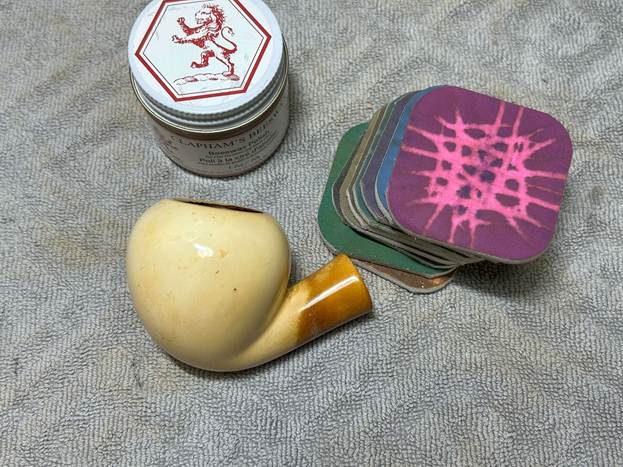
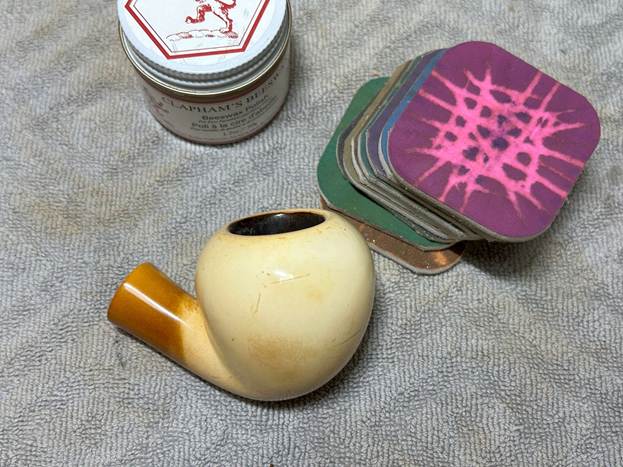
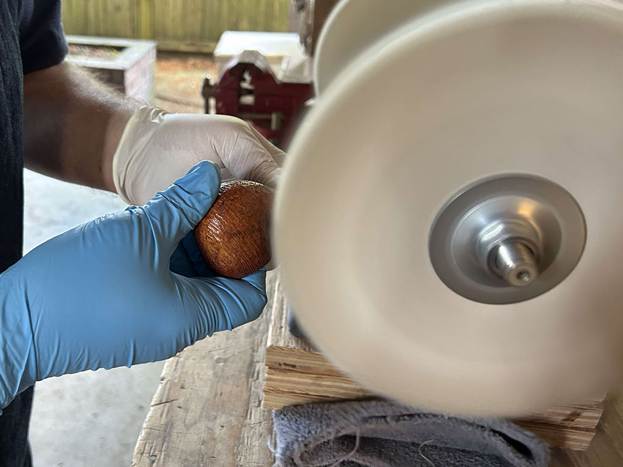
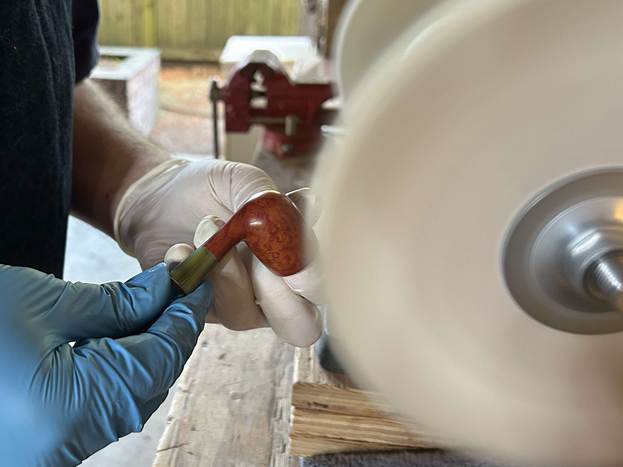
For the final step, I took the two briar pipes (only) to my bench polisher and carefully buffed them – first with a blue diamond compound, then with three coats of carnauba wax. This procedure makes the pipes look their best – the stummels sing and the stems glow.

All done! These three handsome pipes look fantastic again and I am delighted with the results. I’m sure the Texan gentleman will be too. Stupidly, I forgot to take measurements of the pipes before I returned them. However, I hope you enjoyed reading the story of the pipes’ restoration as much as I enjoyed restoring them. If you are interested in more of my work, please follow me here on Steve’s website or send me an email at kenneth@knightsofthepipe.com. Thank you very much for reading and, as always, I welcome and encourage your comments.

A Sound Repair for a Suave Nørding Meerschaum Pot


by Kenneth Lieblich

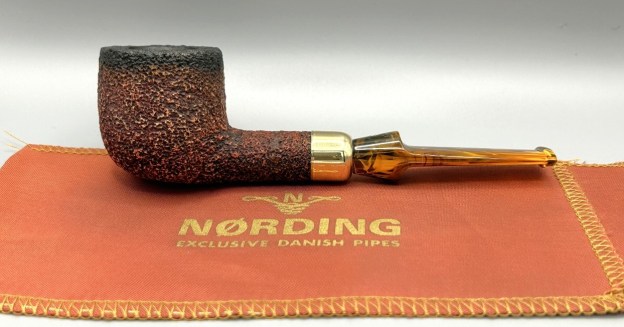
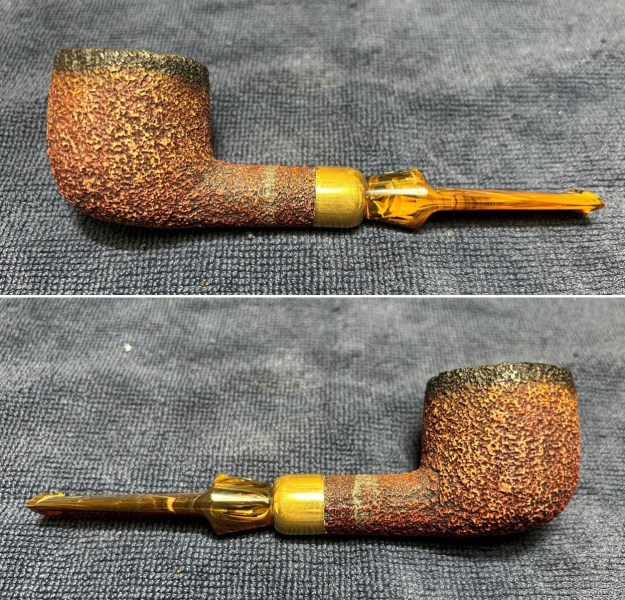
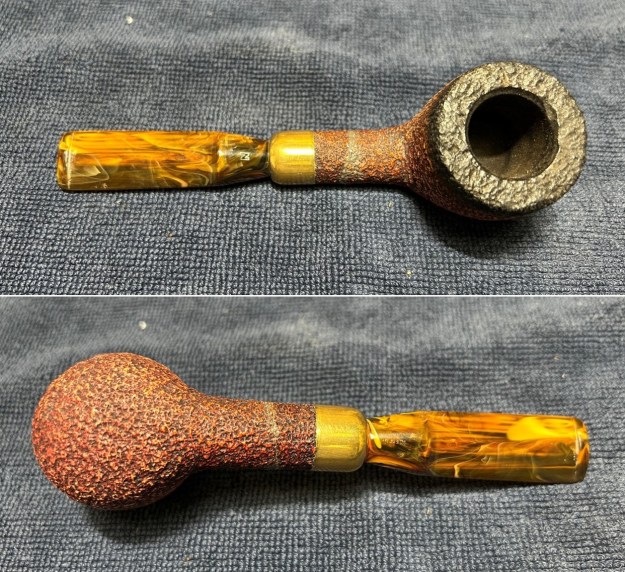
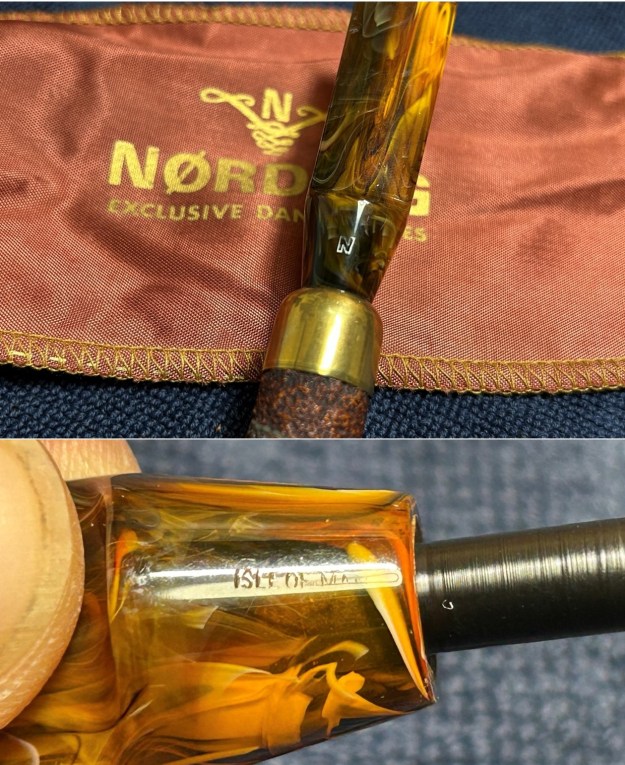
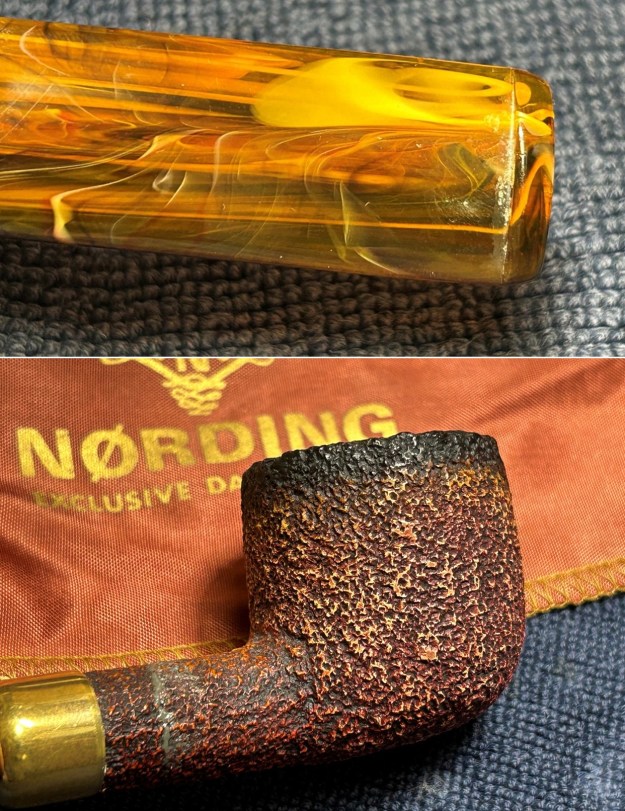
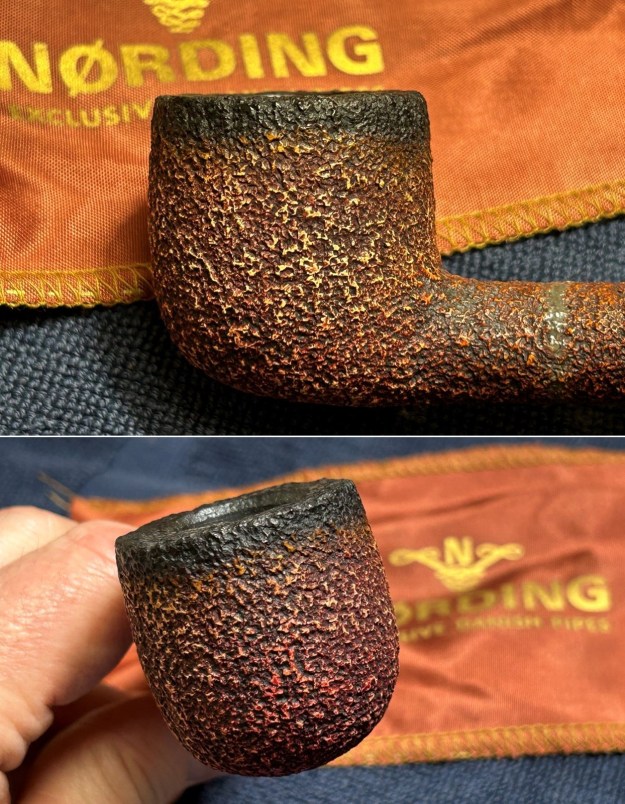
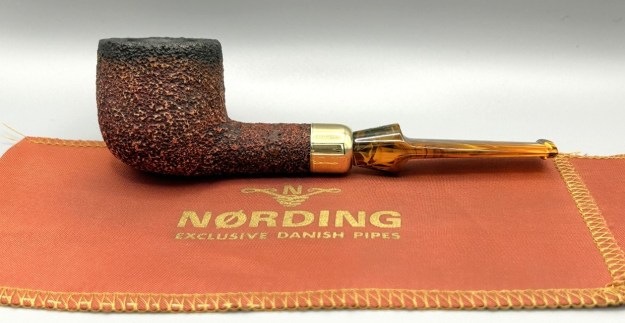
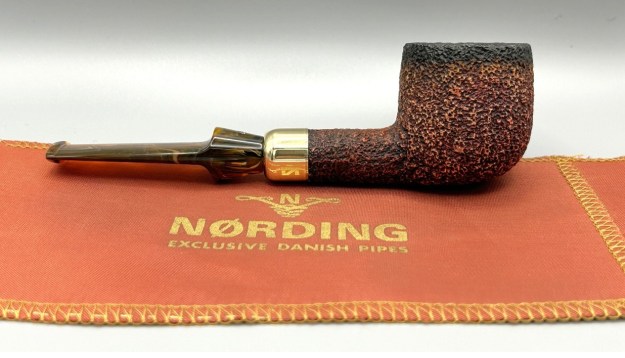
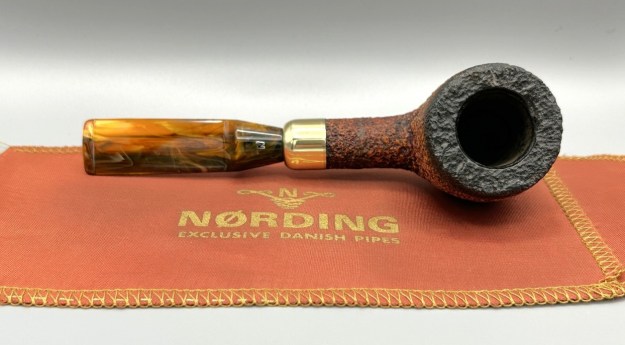
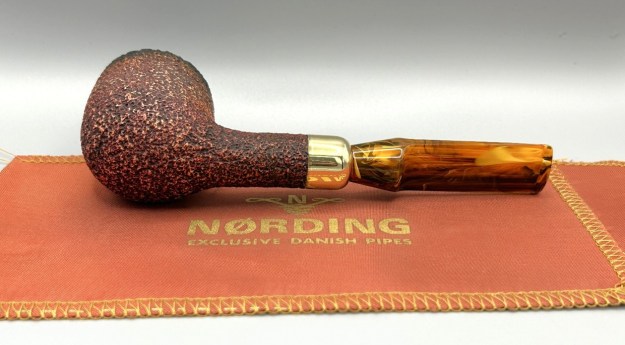
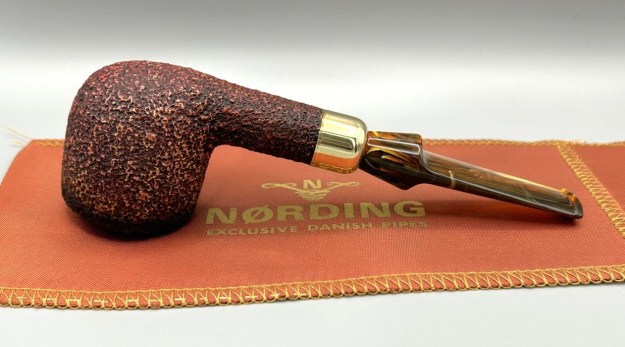
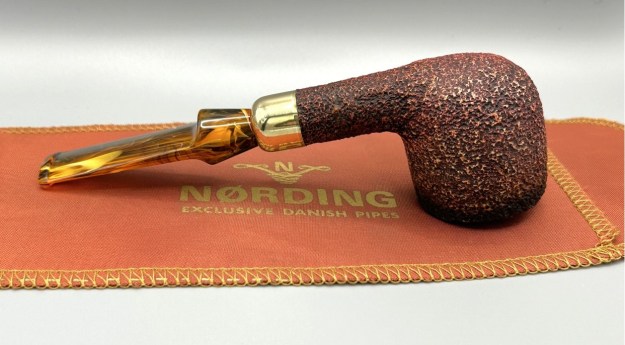
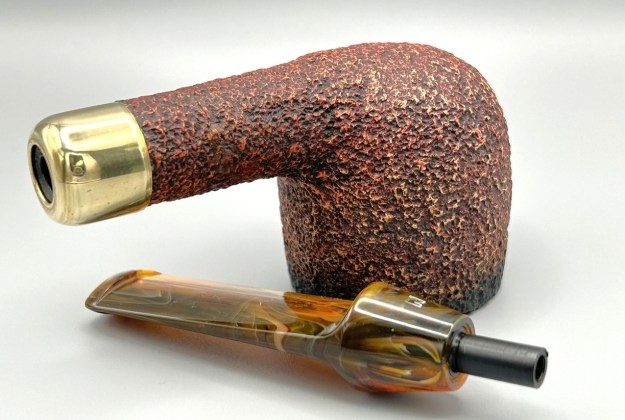
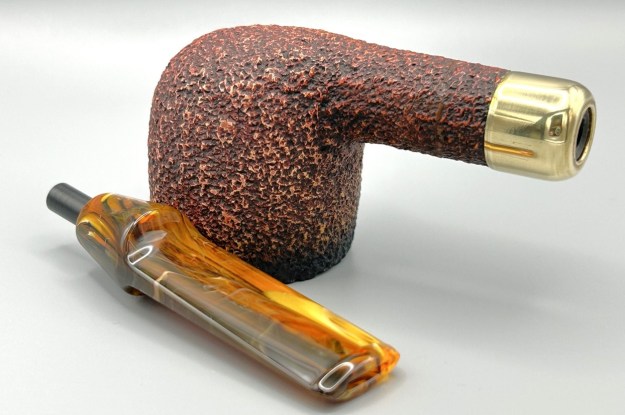
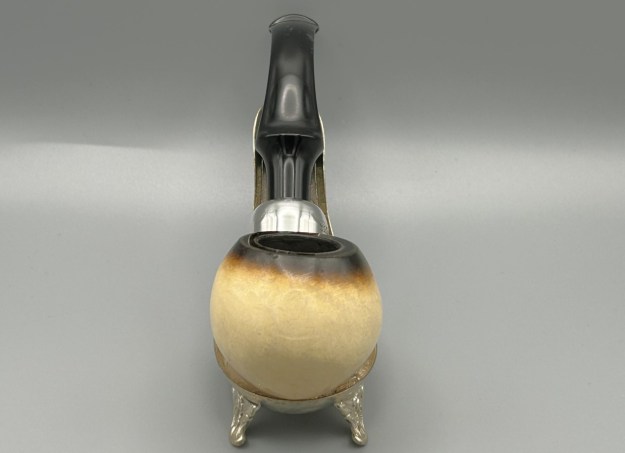
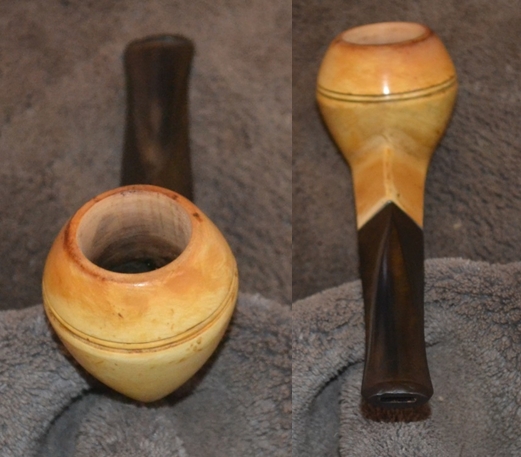
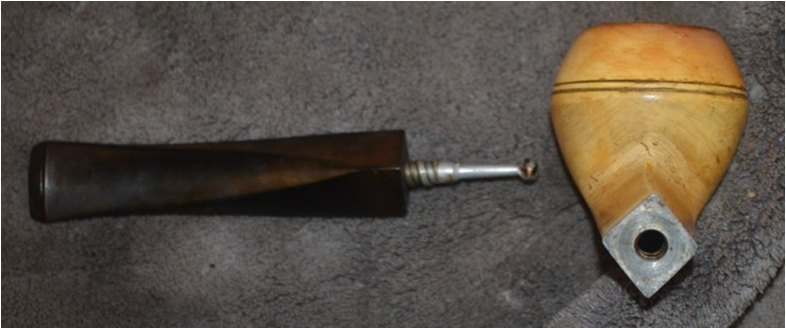
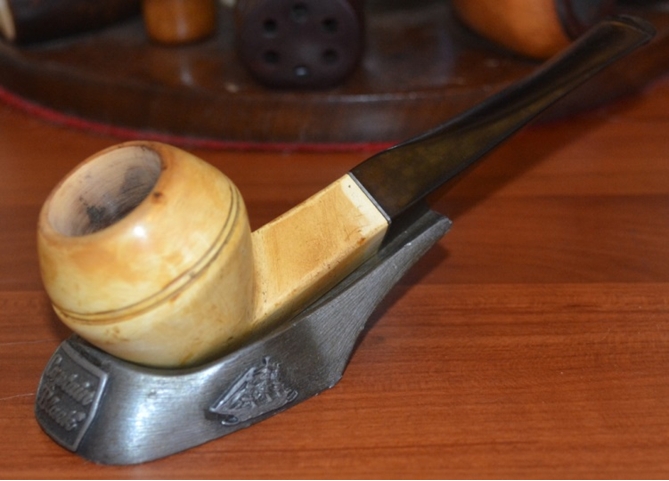
I don’t know about you, but this pipe immediately reminded me of similar Peterson meerschaum pipes. It bears a certain resemblance, and no wonder – it was made in the same place as the Pete meers. This Nørding is very attractive, both in its construction and in its aesthetics. As you can see, this Nørding is a pot shape, with a metal cap over the shank and a lovely, variegated acrylic stem. It also comes with its own original pipe sock – a very fine detail. Before the pipe came into my possession, it had been repaired – very well, I must say – and I will talk more about the repair below. For the time being, it was my job to clean it up, beautify it, and send it back out into the world. Please take the time to see how this one turned out: I think you will be impressed. The pipe itself has few markings, but the pipe sock certainly helps with identification! Anyway, the top of the stem has the letter N of the Nørding pipe works. This mark is slightly faded, but still completely readable. Underneath the stem, we see the words, Isle of Man. This tells us where the pipe was made.Erik Nørding is well-known in the pipe world and his pipes are highly regarded. You can visit his website here to view some of what he has to offer. The site offers a bit of background information, including the fact that he is 87 years old in 2026! Pipedia has a long entry on him, and I encourage you to read it here. These are the first few lines:

Erik Nørding was born in Copenhagen, Denmark. Originally educated in engineering. Pipe carving began as a hobby, but as time went by, he became more interested in pipe making as a profession. During the last 40 years Erik Nørding has built his own business, which today produces approximately 50.000 pipes a year, 90% of which are for the export market. From pipe design innovations to knife making to custom machinery and barbecue cookery, Erik Nørding’s inventiveness keeps expanding. A blacksmith and engineer, Nørding knows his way around pipe making machinery. Strangely, it was not his love for woodworking that propelled Erik Nørding into the pipe making field — it was his terrific facility with machines.

The information on Nørding over at Pipephil is scant, but it does confirm what I indicated earlier: his meerschaum pipes were made on the Isle of Man. Here is some information from Pipedia about meerschaum production on the Isle of Man:

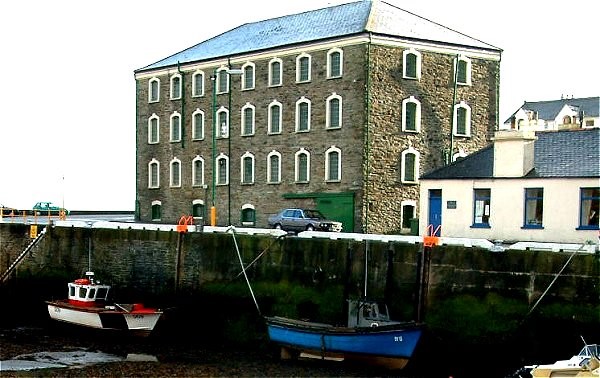
Laxey Pipes Ltd. resided in a historical 19th century four-storey Man stone building at The Quay, Old Laxey, Isle of Man, which thankfully has been preserved.

The company specialised in the production of meerschaum pipes using the Meerschaum mined by the Tanganyika Meerschaum Corporation in the Amboseli basin in Tanganyika (since 1964 part of the United Republic of Tanzania).

Please note: you may often find names like “Manx Pipes Ltd.”, “Man Pipe Co.” and others more, but there is no indication of another Isle of Man pipe producer other than Laxey Pipe Ltd. at any time!

Laxey Pipes Ltd. marketed own brands like “Manxpipe”, “Manxman”, “Manxland” e.c. Names like “John Bull”, “White Knight” (unwaxed), “Domino” (black, or lined) indicated some shapes / colours of Laxey’s own series. The stems either showed the astronomical sign for “male” or “man” (circle + arrow), or the crest of the Isle of Man, the 3-legged X in a circle. Manxpipes and Laxey’s other brands were available through pipe retailers in general, but also were sold (mainly) to tourists through their own shop in Laxey.

Furthermore Laxey Pipes Ltd. manufactured the meer bowls for Peterson, Barling, Nørding and others from the later 1960’s until 2001. Man Pipe e.g. was a brand distributed by Comoy’s. The bowls usually showed no nomenclature indicating the orderer. “Genuine Block Meerschaum” was engraved frequently. Often, just the stems were different, while bowls were the same.

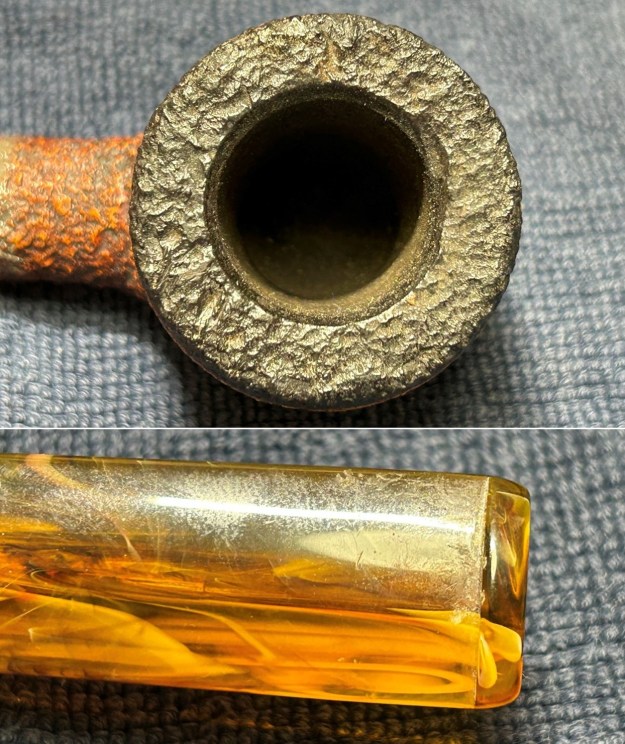
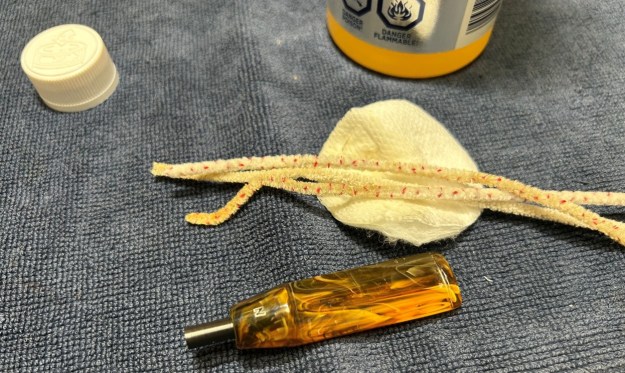
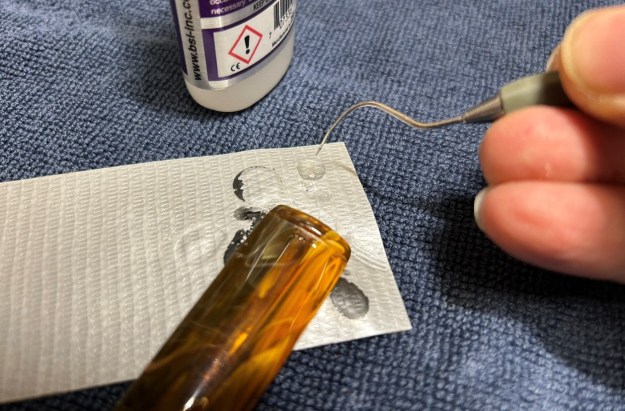
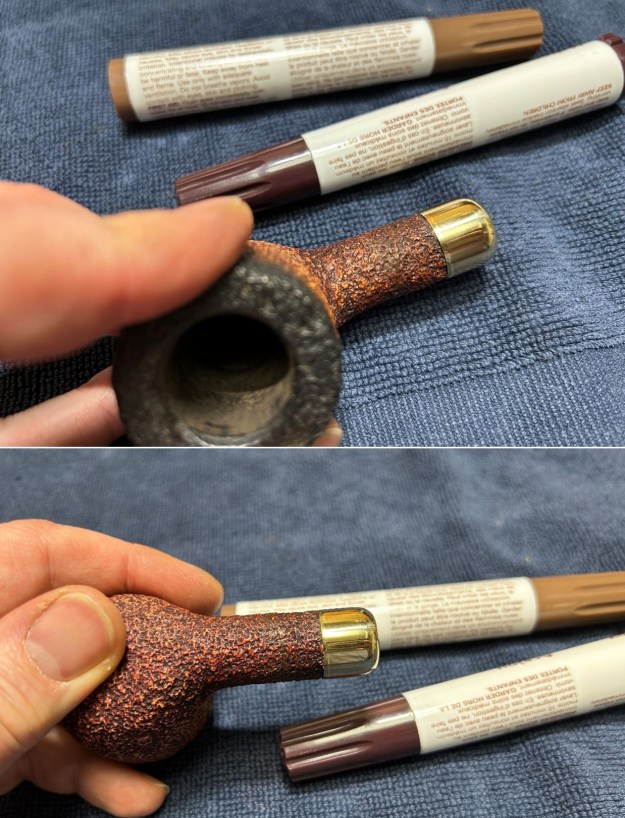
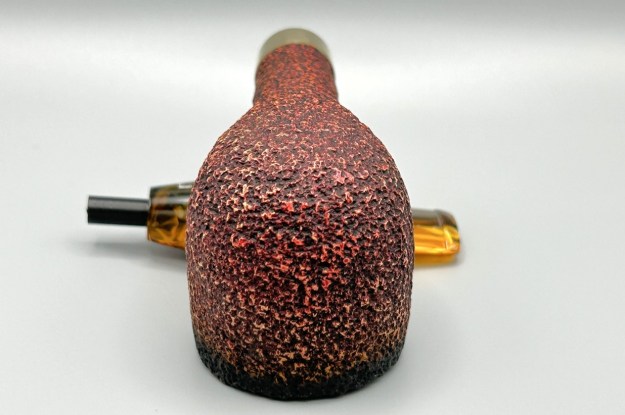
Supply of meerschaum from East Africa run out (Kenya / Tanzania exhausted, Somalia inaccessible), and thus the last Laxey meers were supplied to trade in May, 2001. Laxey Pipes Ltd. tried to survive continuing with briar pipes – mainly in the Danish style -, but to no success. It closed down business in July, 2002.So, let’s take a closer look at this very handsome pipe. The first thing to note is that this pipe’s shank was cracked at some point in the past. I don’t know any details of this incident or of who repaired the pipe. However, I performed a detailed and thorough inspection of the repair, and it is excellent. It was repaired with an epoxy and, although there was more squeeze-out than I would have left, I was quite impressed with the quality of the work. I have no qualms about it at all. Other than that, the bowl has a bit of cake inside, but not much. It is in lovely condition. Same with the stem, which has only minor tooth marks. Let’s get this pipe back to its best. I used isopropyl alcohol on a few cotton rounds and wiped down the stem to provide an initial cleaning before moving on to the next steps. The primary cleaning came next. I disinfected the inside of the stem with both pipe cleaners and cotton swabs dipped in lemon-infused 99% isopropyl alcohol. I scrubbed thoroughly to make sure the interior was very clean. Fortunately, it wasn’t very dirty at all.As the stem was made of acrylic, no deoxidation procedure was needed. Instead, I went straight into fixing the marks in the acrylic. This was done by filling those divots with clear cyanoacrylate adhesive. I left this to cure and moved on.The penultimate step for the stem is sanding. First, with my set of needle files, I reduced the bulk of the cyanoacrylate repairs. I removed the excess adhesive as near to the surface as possible, without cutting into the acrylic. Following that, I used all nine of the micromesh sanding pads (1,500 through 12,000 grit) to sand out flaws, even out the acrylic, and provide gentle polishing of the finished surface. I also applied pipe-stem oil while using the last five micromesh pads. There was a wonderful shine to the stem when I was done.As the stem was (nearly) complete, I moved on to the stummel. The first step was to ream out the bowl – that is to say, remove all the cake inside the bowl. This accomplished a couple of things. First (and most obviously), it cleaned the bowl and provided a refurbished chamber for future smoking. Second, when the old cake was removed, I could inspect the interior walls of the bowl and determine if there was damage or not. Normally, at this point, I would use a reamer to remove the built-up cake inside the bowl, but meerschaum has the potential to crack in those circumstances. Instead, I used a pipe knife, and a piece of sandpaper taped to a wooden dowel. Collectively, these ensured that all the debris was removed. There wasn’t too much.Similar to the stem, I then cleaned the stummel with both pipe cleaners and cotton swabs dipped in lemon-infused 99% isopropyl alcohol. I did it carefully because too much soaking can cause meerschaum to soften. In this case, I moved quickly, nothing softened, and everything turned out well. I also took a brush to the rusticated surface of the bowl. There were a few bits and pieces of debris and my brushing removed them. It looked much better.It was at this point that I used all my nous (as the Brits would say) to improve the look of the repair. I stared a lot; I pondered a lot; I harrumphed a lot. Eventually, I used a combination of some of my furniture pens (which is simply dye in pen form) to match the colours. I was very pleased with the results – from some angles, the repair is essentially invisible.I took some very fine micromesh pads and buffed up the metal cap on the shank. I also polished it with my jeweller’s cloth and made it shine.I then applied some Clapham’s Beeswax Finishes to the meerschaum and let it sit for about 30 minutes. As meerschaum pipes don’t do well on a bench-polisher, I then buffed it with a microfibre cloth. I repeated this process and left it – it sure was pretty! For the final step, I took the stem to my bench polisher and carefully buffed it with a blue diamond compound.
All done! This Nørding Meerschaum pot looks fantastic again and is ready to be enjoyed by its next owner. I am pleased to announce that this pipe is for sale! If you are interested in acquiring it for your collection, please have a look in the ‘Danish’ section of the store here on Steve’s website. You can also email me directly at kenneth@knightsofthepipe.com. The approximate dimensions of the pipe are as follows: length 5⅞ in. (149 mm); height 1¾ in. (45 mm); bowl diameter 1⅝ in. (41 mm); chamber diameter ⅞ in. (85 mm). The weight of the pipe is 1¾ oz. (53 g). I hope you enjoyed reading the story of this pipe’s restoration as much as I enjoyed restoring it. If you are interested in more of my work, please follow me here on Steve’s website or send me an email. Thank you very much for reading and, as always, I welcome and encourage your comments.

Smooth Moves on a Peterson 303 Sterling Silver Meerschaum


by Kenneth Lieblich

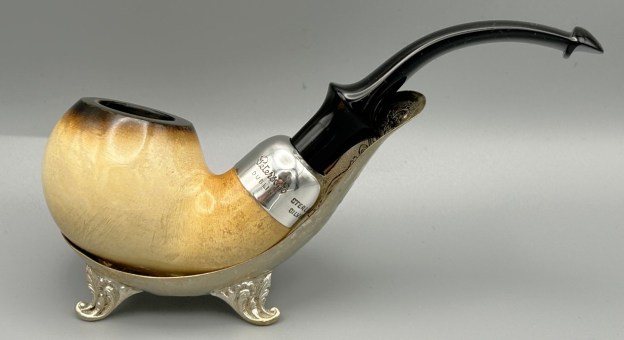
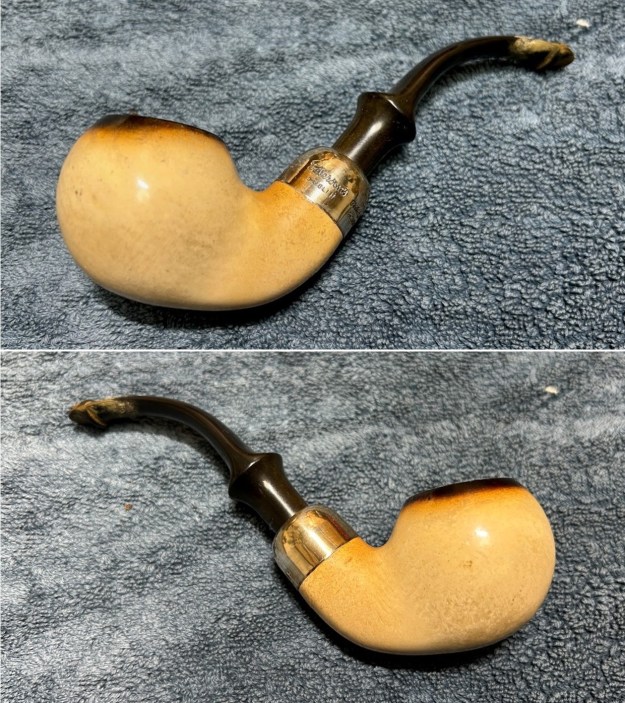
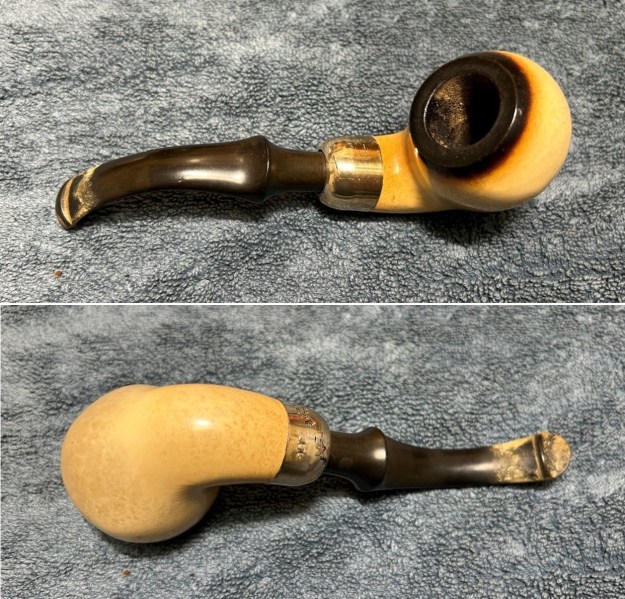
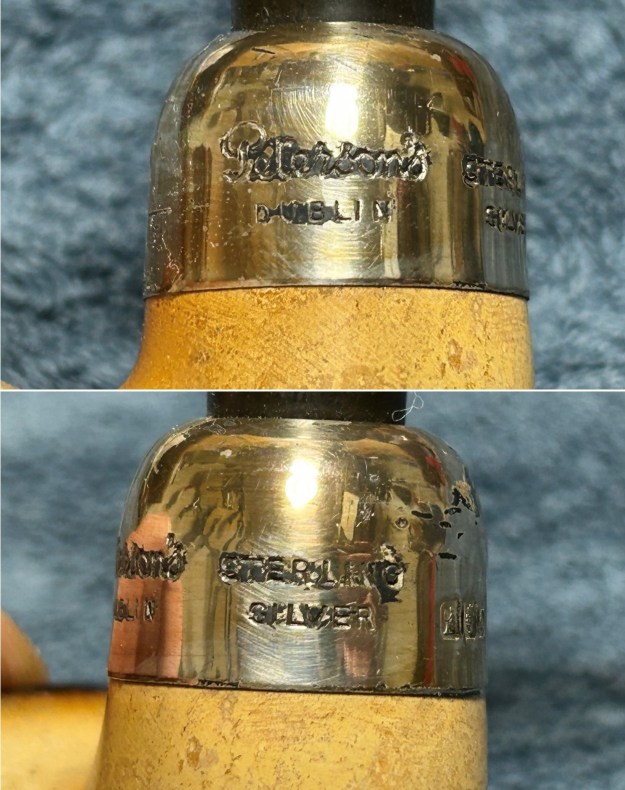
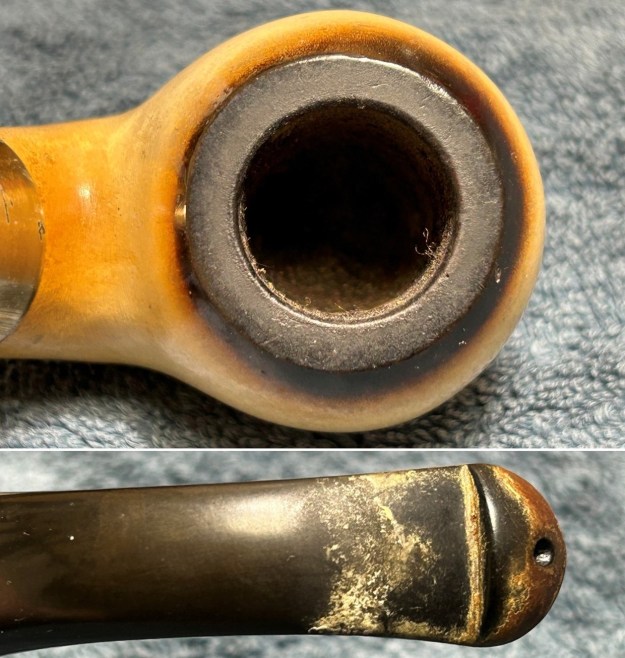
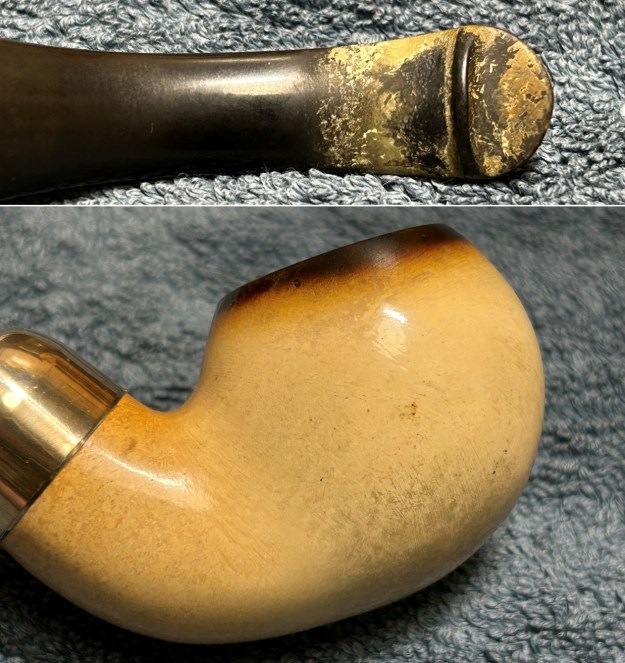
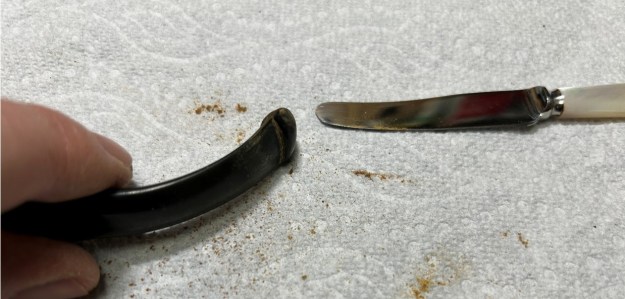
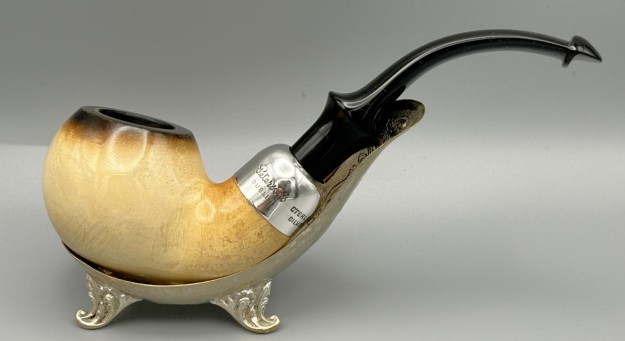
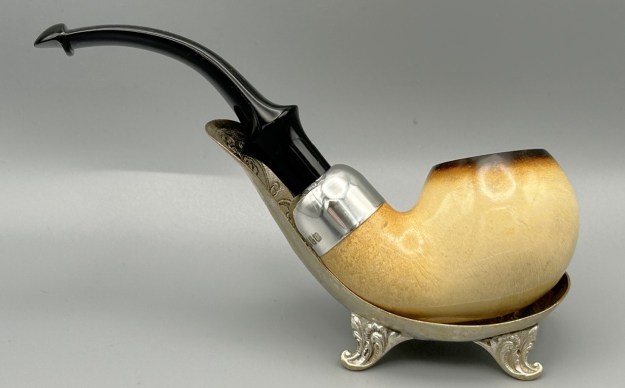
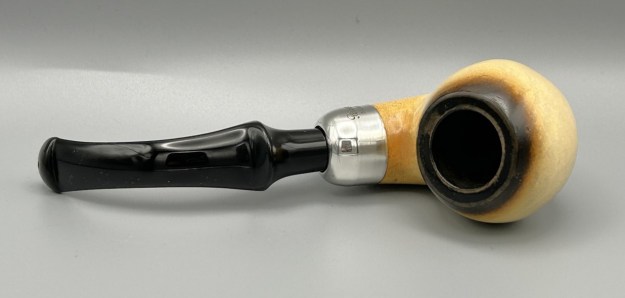
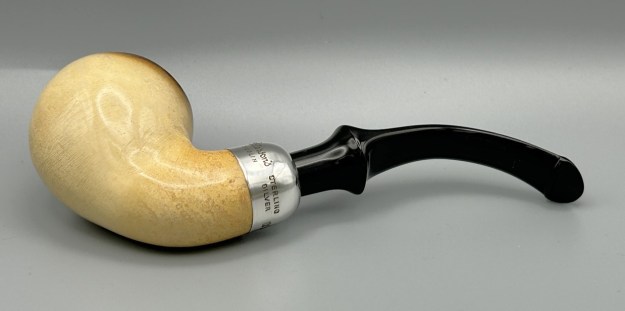
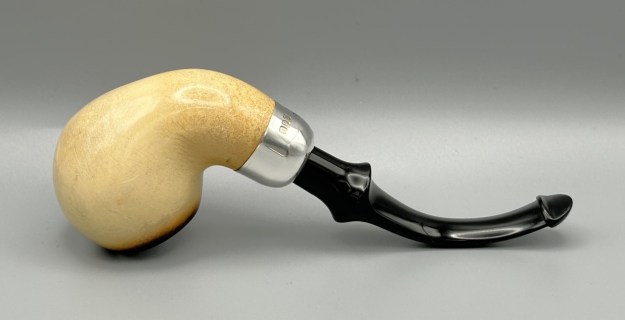
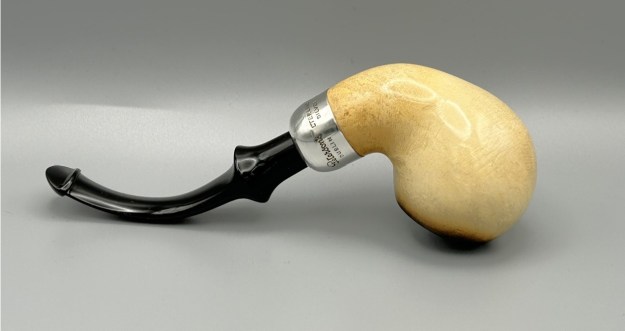
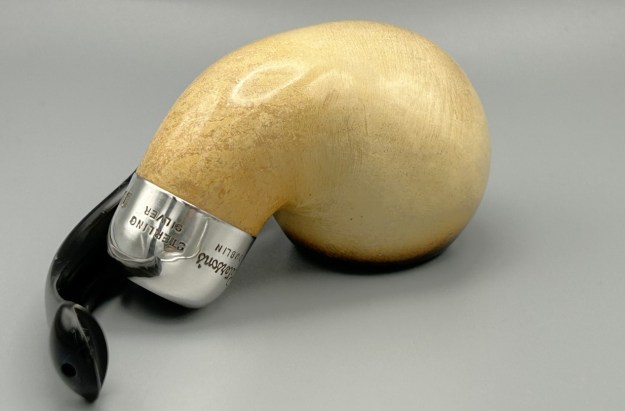
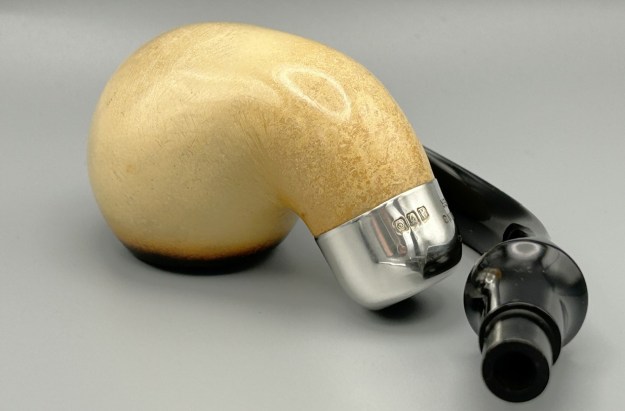
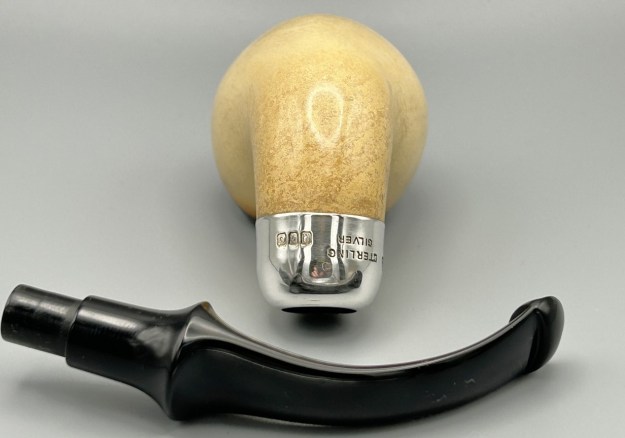
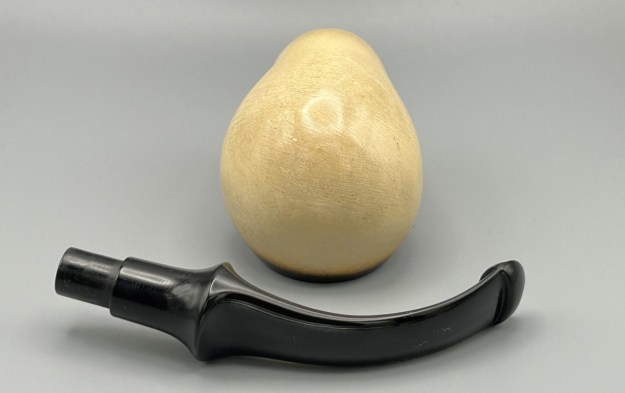
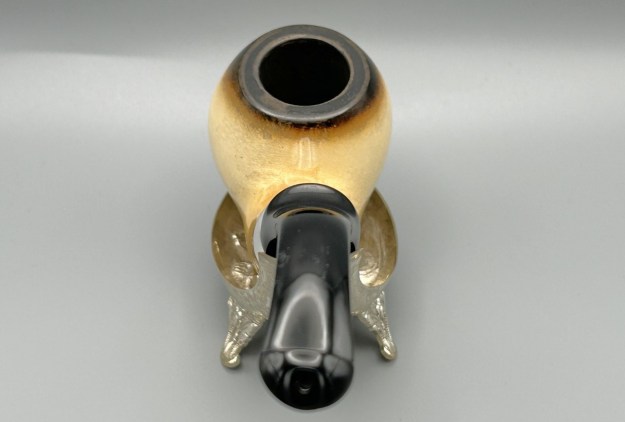
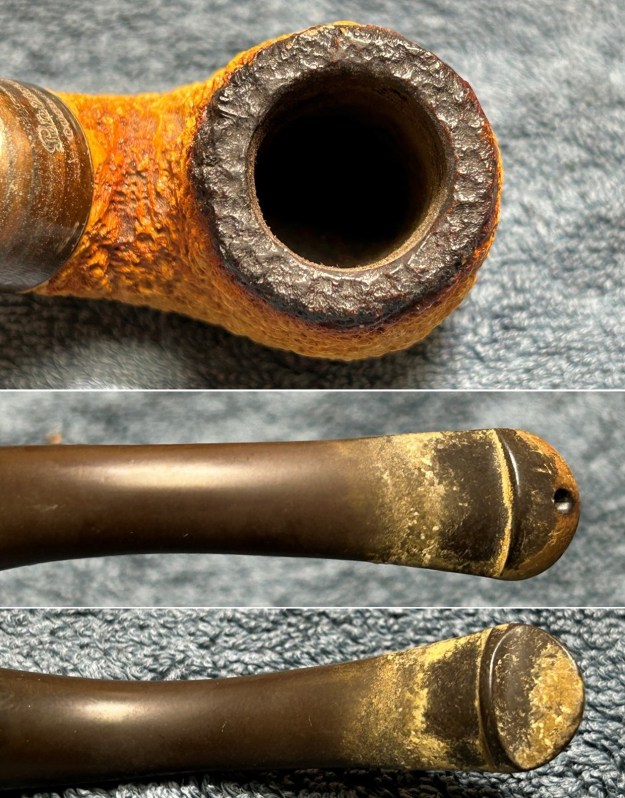
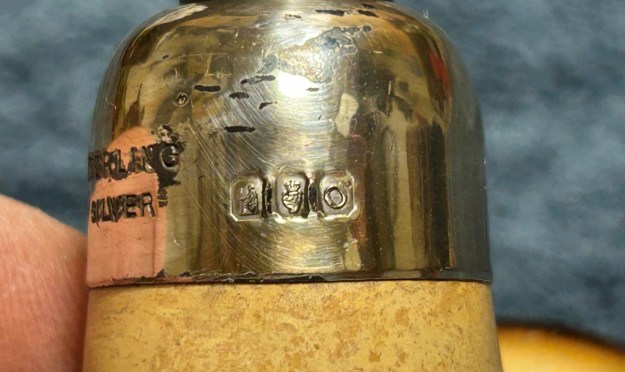
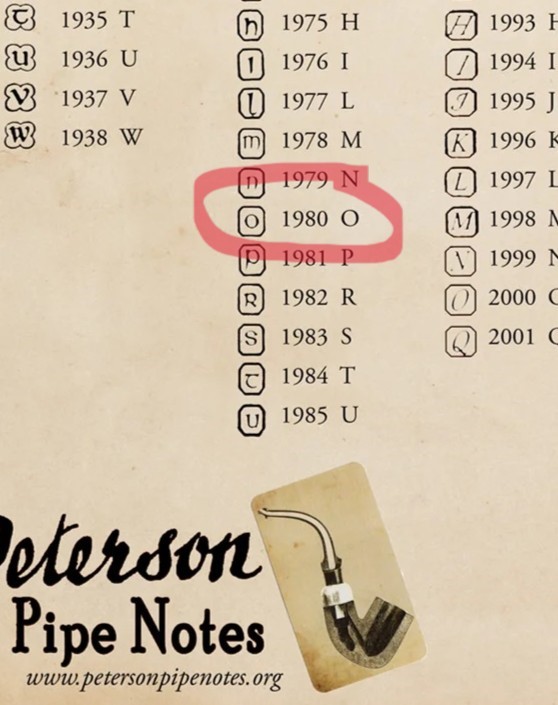
Following on from the rusticated Peterson meer the other day, I have now completed a really good-looking, smooth block meerschaum pipe from Peterson. It is a shape 303, medium bent apple. It doesn’t have the number marked on it, but it’s obviously a 303. Like the other Pete, this one was acquired by auction. It was a pleasure to work on it and I hope you will enjoy reading about it. There are many similarities in the two pipes. The band or cap around the shank is made in sterling silver, and that certainly adds a touch of class. The stem, as expected, has the traditional P-lip of the Peterson brand. The pipe was very well cared for by its previous owner, and it even comes with its own Peterson-branded pipe sock. The meerschaum itself doesn’t hold any markings – nor does the stem. All the markings are on the sterling silver band. To start, the band says Peterson’s [over] Dublin. To the right of that, it reads Sterling [over] Silver. To the right of that, it has a set of proper silver hallmarks: Hibernia, which indicates that it was made in Dublin. Next is the Harp Crowned, which indicates sterling silver. Third is the date letter. In this case, it’s a stylized letter O. Checking the Irish hallmarks chart tells me that this pipe dates from 1980. Moving on. The stummel was in nice shape. The outside had only seen some minor wear-and-tear, but there were no major issues. It was a bit dirty inside, but nothing more than what would be expected. Meanwhile, the stem was also in good condition. It was oxidized and calcified, but the tooth marks were very minor. The sterling silver band was fine – just heavily tarnished. The stem’s calcification was notable. I used an old butter knife and gently scraped some of the thicker accretion off. Doing this now helps later in removing the oxidation.I used isopropyl alcohol on a few cotton rounds and wiped down the stem to provide an initial cleaning of filth before moving on to the next steps. The primary cleaning came next. I disinfected the inside of the stem with both pipe cleaners and cotton swabs dipped in lemon-infused 99% isopropyl alcohol. I scrubbed thoroughly to make sure the interior was very clean.The goal of the next step is the removal (or minimization) of oxidation. Going to my sink, I used cream cleanser, cotton rounds, and a toothbrush, and scoured the stem to remove as much surface oxidation as possible. As the photos show, the result was a hideous, ochre-coloured mess – but better off the stem than on it.Once the stem was reasonably clean, I soaked it overnight in some Briarville Stem Oxidation Remover. This solution works to draw oxidation in the stem to the surface of the vulcanite. This is a major aid and an important step in ensuring a clean stem. The following day, I drew out the stem from its bath and scrubbed the lingering fluid with a toothbrush.As the stem was now clean and dry, I set about fixing the marks and dents in the vulcanite. This was done by filling those divots with black cyanoacrylate adhesive, impregnated with carbon and rubber. I left this to cure and moved on.The penultimate step for the stem is sanding. First, with my set of needle files, I reduced the bulk of the cyanoacrylate repairs. I removed the excess adhesive as near to the surface as possible, without cutting into the vulcanite. Following that, I used all nine of the micromesh sanding pads (1,500 through 12,000 grit) to sand out flaws, even out the vulcanite, and provide gentle polishing of the finished surface. I also applied pipe-stem oil while using the last five micromesh pads. There was a wonderful, deep black shine to the stem when I was done.As the stem was (nearly) complete, I moved on to the stummel. The first step was to ream out the bowl – that is to say, remove all the cake inside the bowl. This accomplished a couple of things. First (and most obviously), it cleaned the bowl and provided a refurbished chamber for future smoking. Second, when the old cake was removed, I could inspect the interior walls of the bowl and determine if there was damage or not. Normally, at this point, I would use a reamer to remove the built-up cake inside the bowl, but meerschaum has the potential to crack in those circumstances. Instead, I used a pipe knife, and a piece of sandpaper taped to a wooden dowel. Collectively, these ensured that all the debris was removed.Similar to the stem, I then cleaned the stummel with both pipe cleaners and cotton swabs dipped in lemon-infused 99% isopropyl alcohol. I did it carefully because too much soaking can cause meerschaum to soften. In this case, I moved quickly, nothing softened, and everything turned out well.To tidy up the bowl, I wiped down the outside, using a solution of a pH-neutral detergent and some distilled water, with cotton rounds. I used my micromesh pads to sand the outside of the stummel and finish it off. This sanding minimizes flaws in the meerschaum and provides a beautiful smoothness to the surface. I then applied some Clapham’s Beeswax Finish to the meerschaum and let it sit for about 30 minutes. As meerschaum pipes don’t do well on a bench-polisher, I then buffed it with a microfibre cloth. I repeated this process and left it – it sure was pretty! I also polished the silver with my jeweller’s cloth and made it shine. For the final step, I took the stem to my bench polisher and carefully buffed it with a blue diamond compound.
All done! This Peterson 303 Sterling Silver Meerschaum bent apple looks fantastic again and is ready to be enjoyed by its next owner. I am pleased to announce that this pipe is for sale! If you are interested in acquiring it for your collection, please have a look in the ‘Irish’ section of the store here on Steve’s website. You can also email me directly at kenneth@knightsofthepipe.com. The approximate dimensions of the pipe are as follows: length 5 in. (127 mm); height 3⅜ in. (87 mm); bowl diameter 1⅔ in. (42 mm); chamber diameter ¾ in. (18 mm). The weight of the pipe is 1⅝ oz. (49 g). I hope you enjoyed reading the story of this pipe’s restoration as much as I enjoyed restoring it. If you are interested in more of my work, please follow me here on Steve’s website or send me an email. Thank you very much for reading and, as always, I welcome and encourage your comments.
Cleaning Up a Beautiful Peterson 314 Sterling Silver Meerschaum


by Kenneth Lieblich

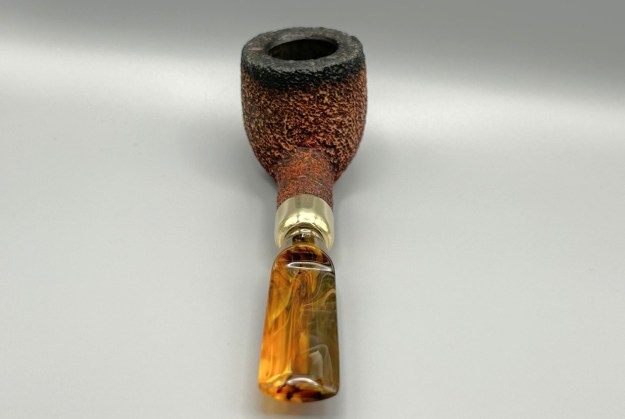
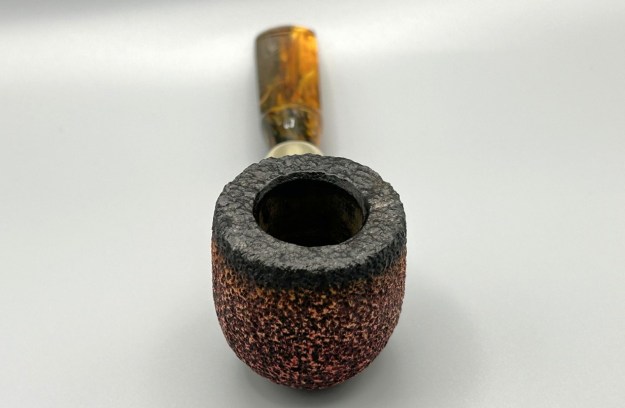
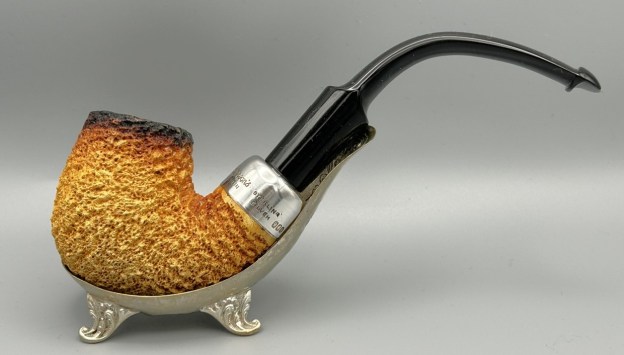
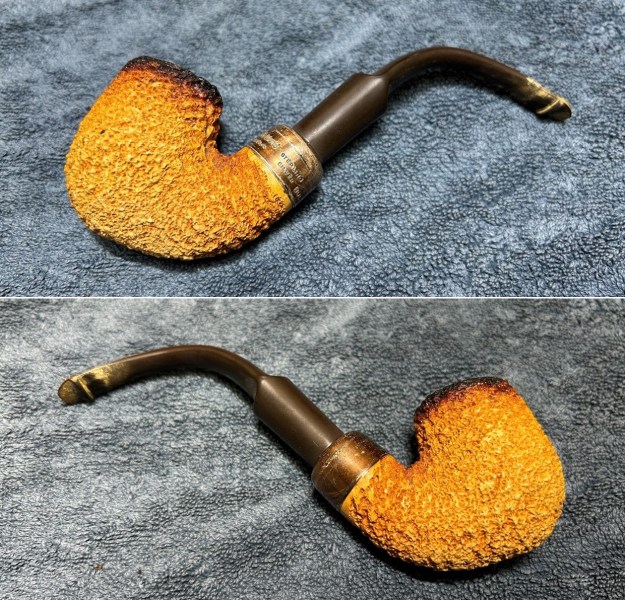
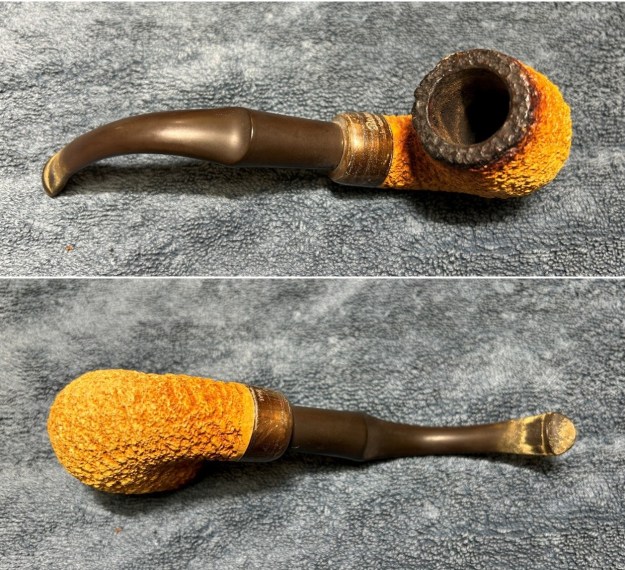
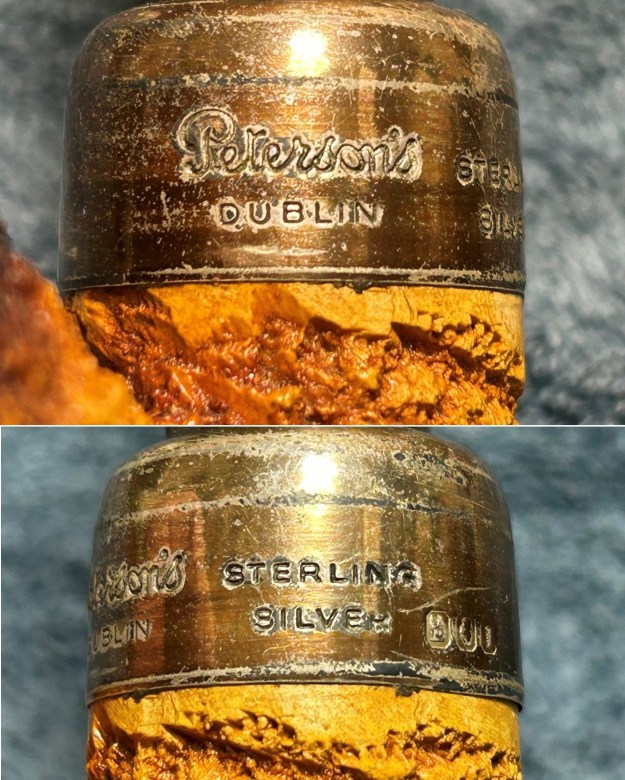
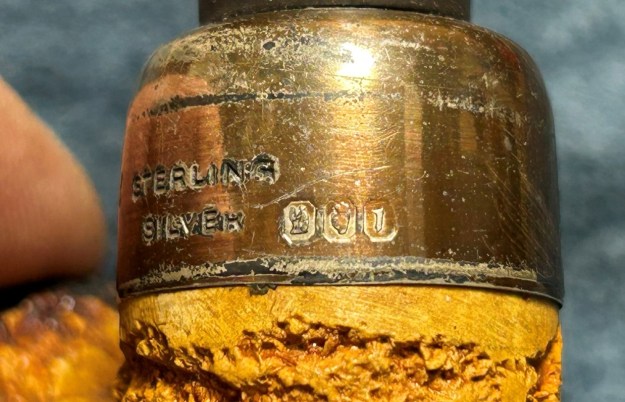
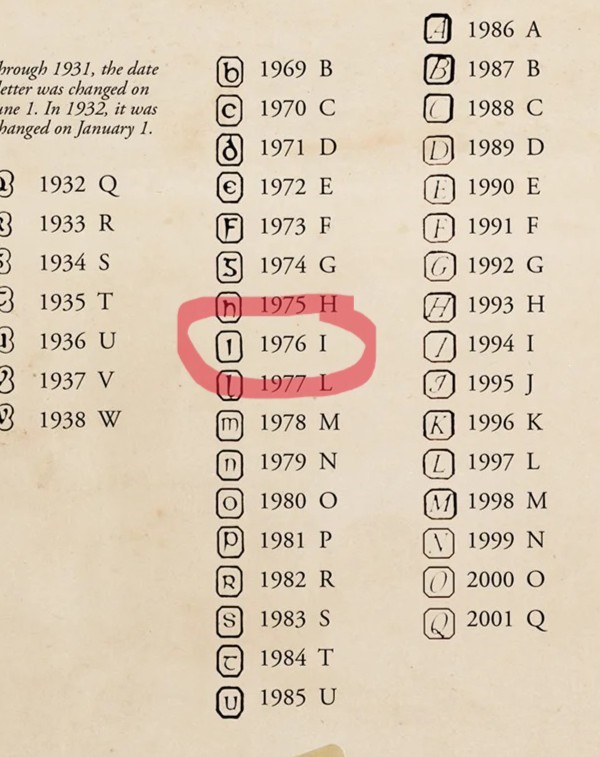
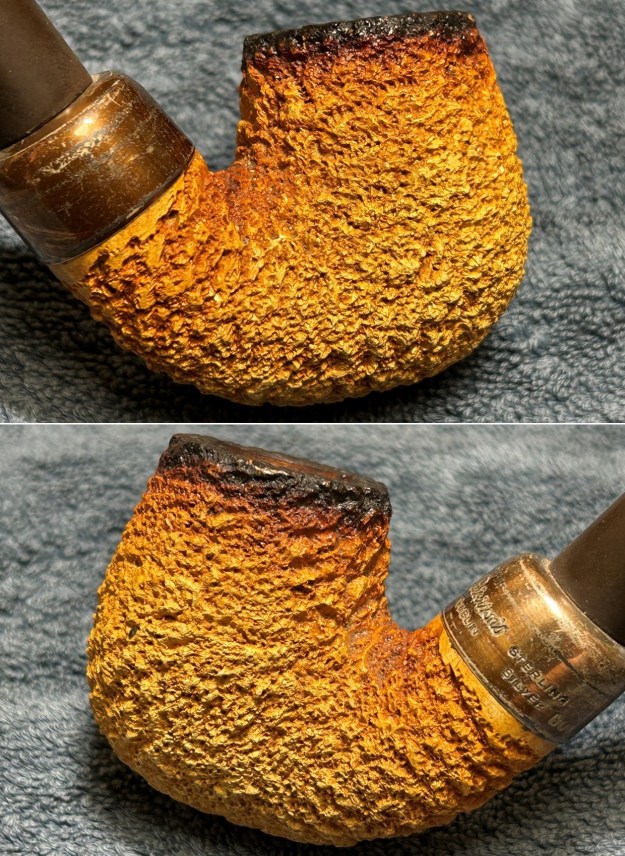
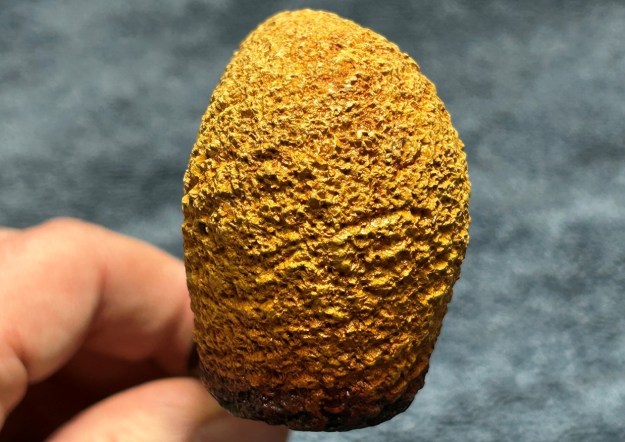
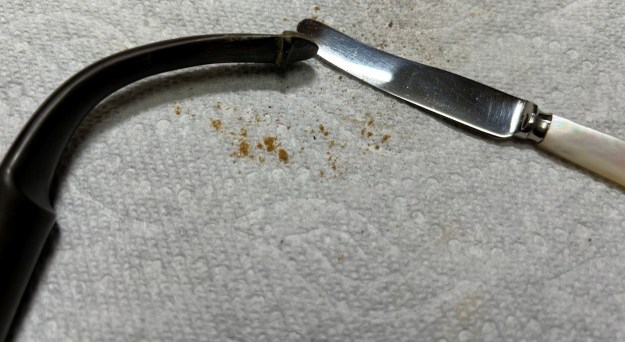
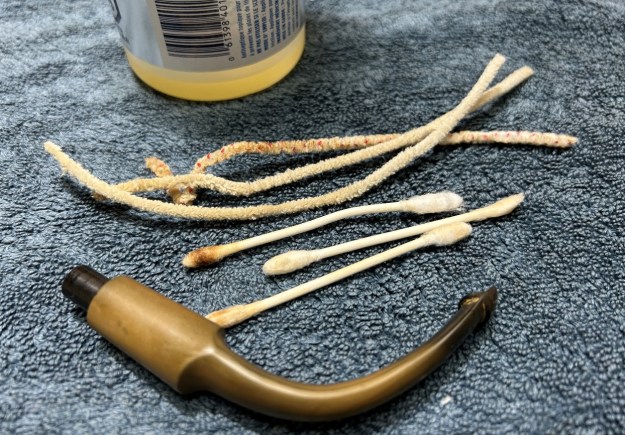
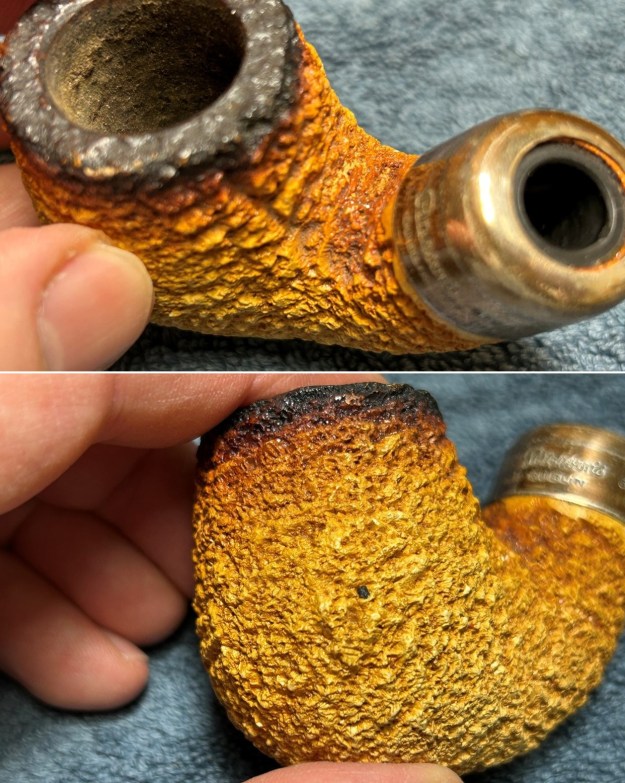
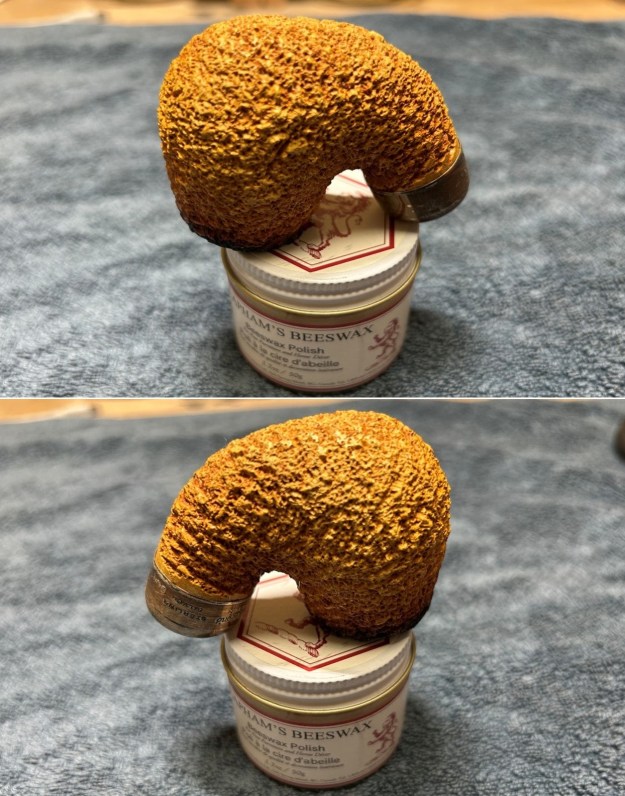
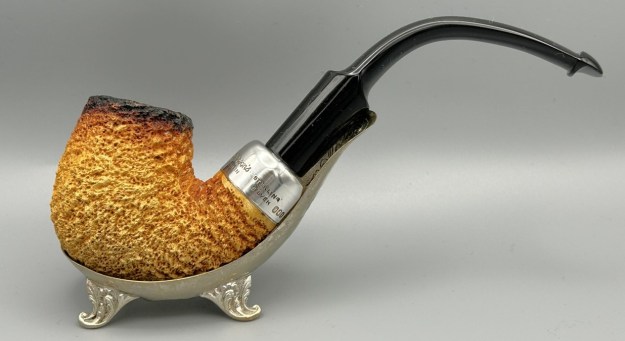
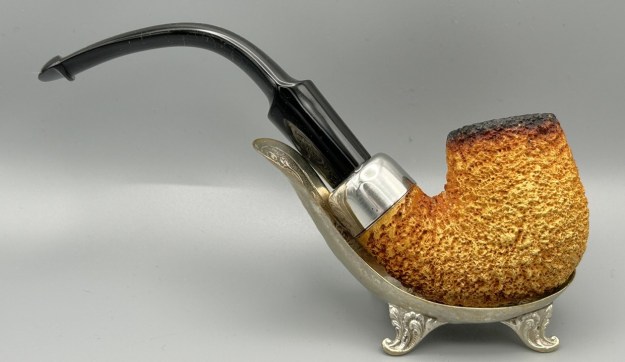
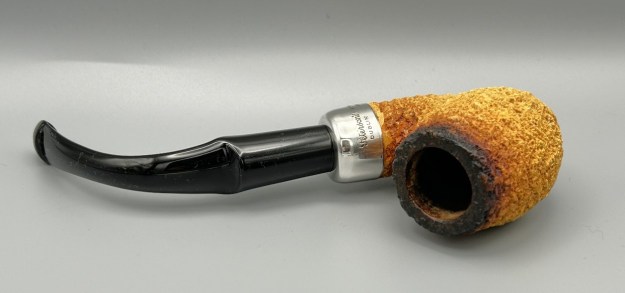
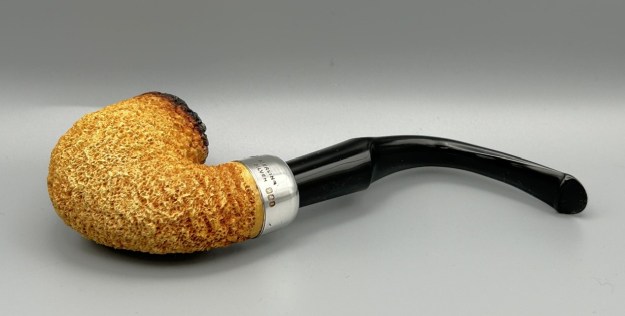
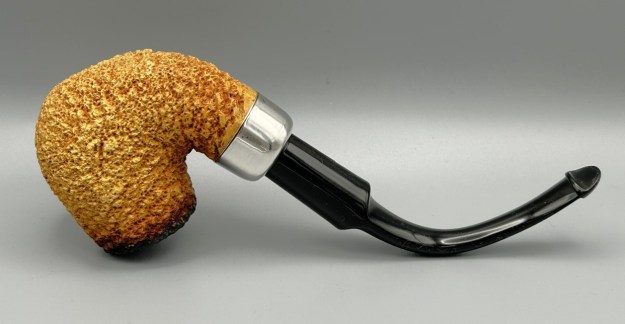
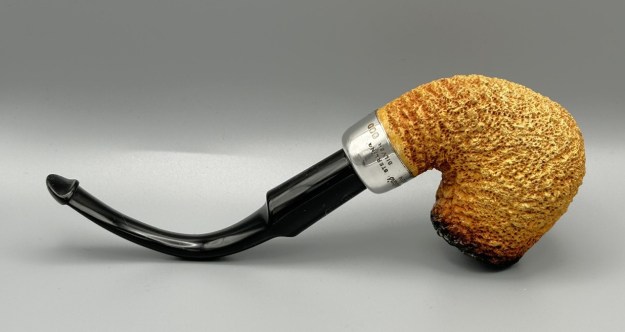
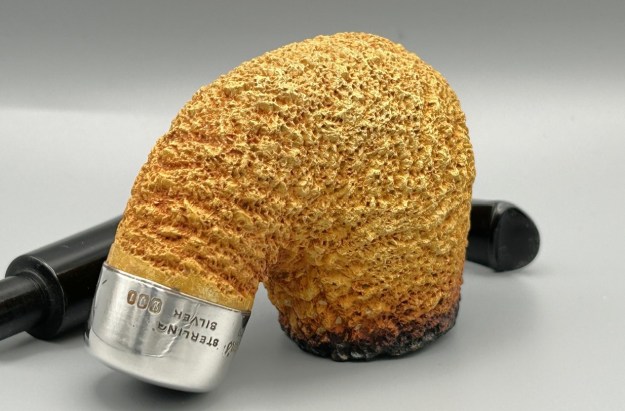
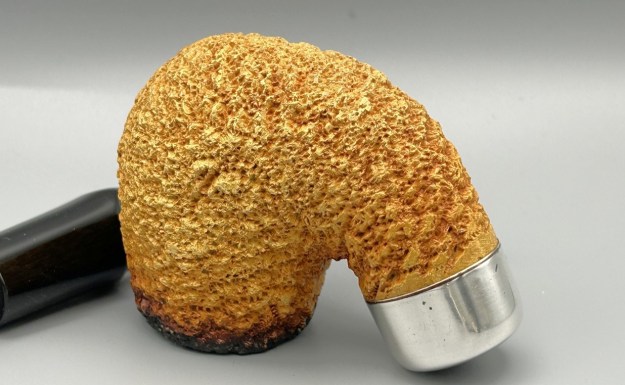
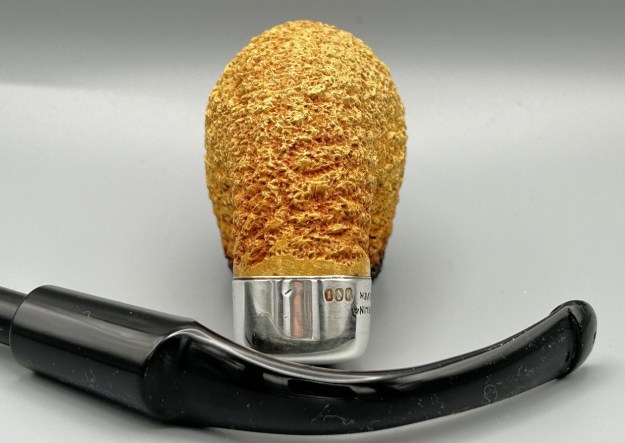
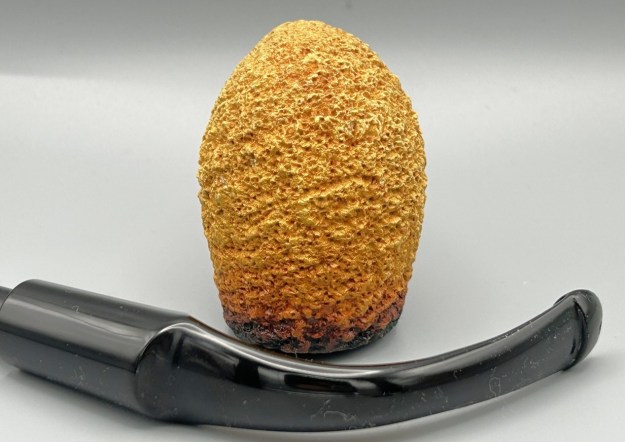
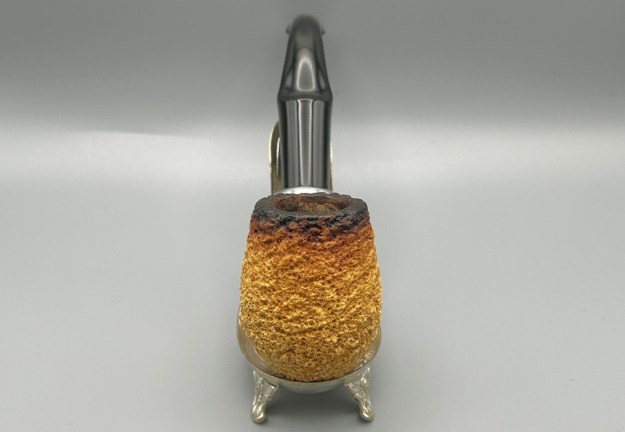
Next on my workbench is a very attractive pipe, which I recently acquired by auction. It was a pleasure to work on it and I hope you will enjoy it. This is a ruggedly-rusticated block meerschaum pipe from Peterson. It is a shape 314, medium bent billiard, although it doesn’t include that number on the pipe. The band or cap around the shank is made in sterling silver, and that certainly adds a touch of class. The stem, as expected, has the traditional P-lip of the Peterson brand. The pipe was very well cared for by its previous owner, and it even comes with its own Peterson-branded pipe sock. The meerschaum itself doesn’t hold any markings – nor does the stem. All the markings are on the sterling silver band. To start, the band says Peterson’s [over] Dublin. To the right of that, it reads Sterling [over] Silver. To the right of that, it has a set of proper silver hallmarks: Hibernia, which indicates that it was made in Dublin. Next is the Harp Crowned, which indicates sterling silver. Third is the date letter. In this case, it’s a stylized letter I. Checking the Irish hallmarks chart tells me that this pipe dates from 1976. This pipe is celebrating its 50th anniversary this year! Moving on. The stummel was in nice shape. The outside had only seen some minor wear-and-tear, but there were no major issues. Sure, it was a bit dirty inside, but nothing more than what would be expected. Meanwhile, the stem was also in good condition. It was oxidized and calcified, but the tooth marks were very minor. The sterling silver band was fine – just heavily tarnished. The stem’s calcification was notable. I used an old butter knife and gently scraped some of the thicker accretion off. Doing this now helps later in removing the oxidation.I used isopropyl alcohol on a few cotton rounds and wiped down the stem to provide an initial cleaning of filth before moving on to the next steps. The primary cleaning came next. I disinfected the inside of the stem with both pipe cleaners and cotton swabs dipped in lemon-infused 99% isopropyl alcohol. I scrubbed thoroughly to make sure the interior was very clean.The goal of the next step is the removal (or minimization) of oxidation. Going to my sink, I used cream cleanser, cotton rounds, and a toothbrush, and scoured the stem to remove as much surface oxidation as possible. As the photos show, the result was a hideous, ochre-coloured mess – but better off the stem than on it.Once the stem was reasonably clean, I soaked it overnight in some Briarville Stem Oxidation Remover. This solution works to draw oxidation in the stem to the surface of the vulcanite. This is a major aid and an important step in ensuring a clean stem. The following day, I drew out the stem from its bath and scrubbed the lingering fluid with a toothbrush.As the stem was now clean and dry, I set about fixing the marks and dents in the vulcanite. This was done by filling those divots with black cyanoacrylate adhesive, impregnated with carbon and rubber. I left this to cure and moved on.The penultimate step for the stem is sanding. First, with my set of needle files, I reduced the bulk of the cyanoacrylate repairs. I removed the excess adhesive as near to the surface as possible, without cutting into the vulcanite. Following that, I used all nine of the micromesh sanding pads (1,500 through 12,000 grit) to sand out flaws, even out the vulcanite, and provide gentle polishing of the finished surface. I also applied pipe-stem oil while using the last five micromesh pads. There was a wonderful, deep black shine to the stem when I was done. As the stem was (nearly) complete, I moved on to the stummel. The first step was to ream out the bowl – that is to say, remove all the cake inside the bowl. This accomplished a couple of things. First (and most obviously), it cleaned the bowl and provided a refurbished chamber for future smoking. Second, when the old cake was removed, I could inspect the interior walls of the bowl and determine if there was damage or not. Normally, at this point, I would use a reamer to remove the built-up cake inside the bowl, but meerschaum has the potential to crack in those circumstances. Instead, I used a pipe knife, and a piece of sandpaper taped to a wooden dowel. Collectively, these ensured that all the debris was removed.Similar to the stem, I then cleaned the stummel with both pipe cleaners and cotton swabs dipped in lemon-infused 99% isopropyl alcohol. I did it carefully because too much soaking can cause meerschaum to soften. In this case, I moved quickly, nothing softened, and everything turned out well.I also took a brush to the rusticated surface of the bowl. There were a few bits and pieces of debris and my brushing removed them. It looked much better. I then applied some Clapham’s Beeswax Finish to the meerschaum and let it sit for about 30 minutes. As meerschaum pipes don’t do well on a bench-polisher, I then buffed it with a microfibre cloth. I repeated this process and left it – it sure was pretty! I also polished the silver with my jeweller’s cloth and made it shine. For the final step, I took the stem to my bench polisher and carefully buffed it with a blue diamond compound.

All done! This Peterson 314 Sterling Silver Meerschaum bent billiard looks fantastic again and is ready to be enjoyed by its next owner. I am pleased to announce that this pipe is for sale! If you are interested in acquiring it for your collection, please have a look in the ‘Irish’ section of the store here on Steve’s website. You can also email me directly at kenneth@knightsofthepipe.com. The approximate dimensions of the pipe are as follows: length 5¾ in. (147 mm); height 3⅞ in. (97 mm); bowl diameter 1½ in. (38 mm); chamber diameter ¾ in. (18 mm). The weight of the pipe is 1⅞ oz. (54 g). I hope you enjoyed reading the story of this pipe’s restoration as much as I enjoyed restoring it. If you are interested in more of my work, please follow me here on Steve’s website or send me an email. Thank you very much for reading and, as always, I welcome and encourage your comments.
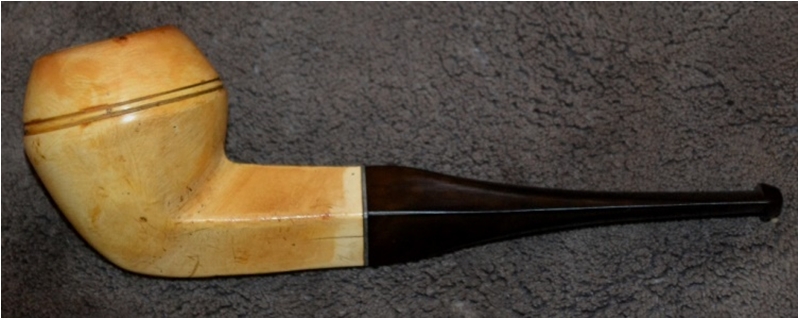
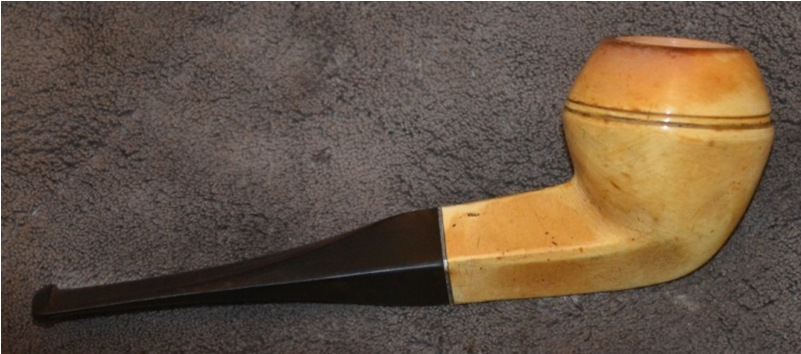
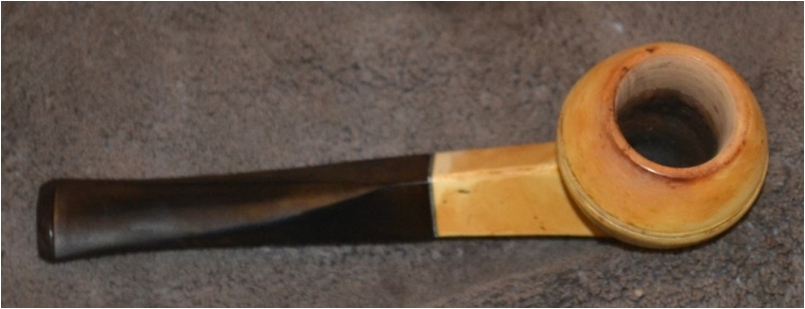
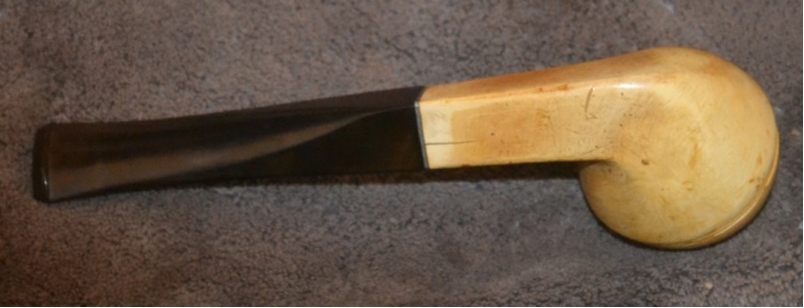
A Face Lift for a Battered Old Meerschaum Bulldog – Robert M. Boughton


Guest Blog by Robert M. Boughton
Member, North American Society of Pipe Collectors
http://www.roadrunnerpipes.com
http://about.me/boughtonrobert
Photos © the Author

“Age should not have its face lifted, but it should rather teach the world to admire wrinkles as the etchings of experience and the firm line of character.”
— U.S. author Clarence Day, 1874-1937

INTRODUCTION
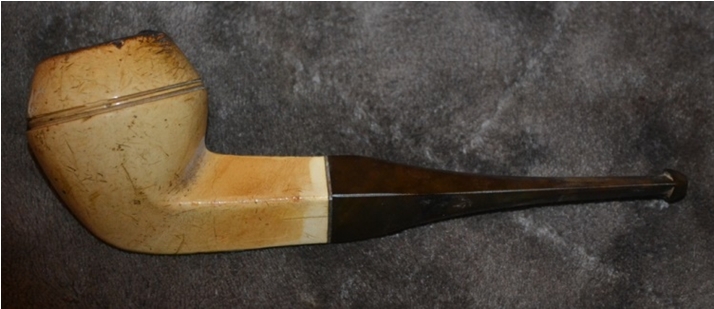
I agree that facelifts in most cases are attempts, nothing more than vain at best and narcissistic at worst, by those with money to burn to avoid the inevitable, and often enough have undesired effects the recipients deserve. However, in the case of a very battered and generally abused meerschaum pipe, as with some people who have suffered at the hands of others, at least a bit of a makeover is in order. This holds true with a bulldog, the animal breed of which many coarse or misguided folks think lacks beauty in the first place.

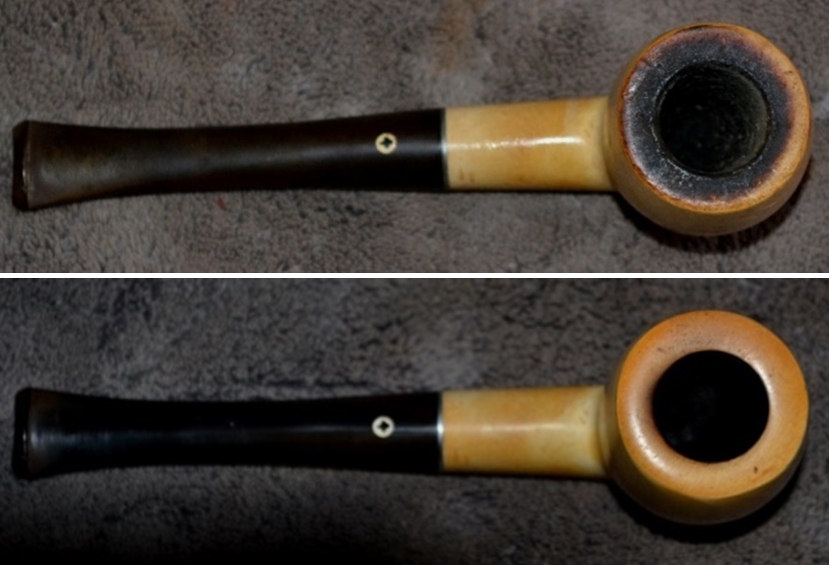
The unknown brand I will discuss, clearly a fine Turkish block example, is one of those exceptions. For reasons which will be obvious it resembled a dog that had been in a fight. I received it as part of a lot of eight from eBay that I purchased in large part because I saw the poor bulldog alone among all of the briars, and upon closer scrutiny with the magnifier observed it was filthy and somewhat oddly colored and had horrible scratches all over its once smooth, white, pristine body. Some unknown carver trying to eke out a living as his father and generations before him had done likely made it without even a signature of any sort, as is unfortunately all too common among Turkish crafters due to the central nature of humility in Islamic beliefs.
THE RESTORATION
This unfortunate meerschaum was in about as bad shape as I had ever seen any pipe I still wanted to buy. I thought, if not I, then who? There were others of more merit in the lot, but that one cried out to me. Then again, I do have a sizable collection of meerschaums and knew I would be more than happy to keep that one if things didn’t work out restoration-wise. A former roommate told me many years ago that I am attracted to strays, and although he said it with sarcasm I told him he was right. I see nothing wrong with that trait. By the way, I also tend to root for the underdog – although not as often in organized sports– such as the bull versus the matador. Nothing pleases me more than seeing a jerk in a pompous outfit, with all kinds of helpers, gang up on a bull and find himself gored and bleeding out. But that’s just a dark part of me.
THE PIPE RESTORATION

I have had fair success restoring meerschaums, including the following befores and afters: Robert1 Robert2 Robert3 Robert4And so I figured I would give this poor ol’ dog a shot:Robert5 Robert6 Robert7 Robert8 Robert9 Robert10 Robert11Despite the deplorable condition of the bowl and rim, I knew from the past that they would be the easy part of this job, so I tackled them first. I reamed the bowl and then used #800 micromesh to smooth it out. Surprisingly, with a light touch and a piece of 400-grit paper, I took the blackness right off of the rim and didn’t hurt the coloring at all. There were a few dings that rubbed out easily with #1000 micromesh.

The hard part, I knew and remember already indicating, but it bears repeating, was to remove as many of the scratches and other blemishes as I could with a minimum of damage to the nice if oddly distributed color on the outside of the bowl and shank. The spread of yellow and orange, not to mention the lack of any shine to the meerschaum, suggested over-hot smoking of this delicate if strongly shaped and named pipe. That conclusion would seem to be a no-brainer given horrendous caking within the bowl and cooking of the rim. And somehow I doubt the maker never treated it with beeswax or something else, yet it was as flat as could be.

My experience with washing the outside of a pipe with distilled water in general is that it seems to give a brighter light on the job at hand by removing all of the filth that has built up over time smoking any pipe. I could see this one was going to be worse than most, but nothing prepared me for the indefensible groping with dirty hands by whatever anti-aficionado of pipe smoking who had abused the bulldog with apparent joyful perversity. Why, I even had to scrub the muck out of the trademark groove beneath the rim! The result was not one or two, but three small pieces of cotton cloth spent and blackened with the physical dirtiness of some variety of pipe lecher.

Therefore, with the highest care, I applied stronger use of the #1000 micromesh to the seemingly endless scratches and other stray marks, like signs of skin cancer, that were everywhere. When I had stopped and resumed again time after time, finding more and more marks upon this wonderful pipe, I was at last as satisfied with the results as I knew I would ever be.

Then I used more stem cleaners and pipe freshener than I had ever expended on a single pipe, let me just say that, to sanitize the stem, shank and bowl, and by the end of it I have to admit only the stem came out perfectly clean. But I knew it was sanitized and ready to smoke one good bowl of tobacco, so I chose my own blend of burleys, Oriental, perique, a touch of Cavendishes and a bit of Virginias including red cake that I call Sneaky Rabbit (and which will soon be a house blend at my favorite tobacconist) to smoke the pipe once.
True enough, I wanted to know how this unusual bulldog smoked, but my main reason for lighting up a pipe I intend to sell and therefore knew I would have to give another quick clean was to heat the meerschaum enough to melt beeswax from a bar evenly over the outer area. I swear to it! I had researched online different processes for accomplishing this necessary completion for previous restorations, and the method I described had worked before so I knew it would again.

And so, once the smoking enjoyment had reached a high enough degree, I began applying the beeswax as described, and it worked just as well as I was certain it would. I took my last puffs of the pipe and cleared out the ash with care quickly before rubbing the beeswax vigorously into the meerschaum with a big soft cotton cloth.

The stem, despite the awful damage inflicted on the meerschaum, to my great surprise was in okay shape and only need some sanding and micro-meshing to prep it for a spin on the wax wheels.

Here are the final results:Robert12 Robert13 Robert14 Robert15 Robert16 Robert17 Robert18CONCLUSION
This was a work of love, and I know the results are a little rough around the edges. But I was determined throughout the process to assure that no more damage than had already been perpetrated against this pipe be made. It is already up for sale, but if nobody ever buys it, I know it is safe in my possession.