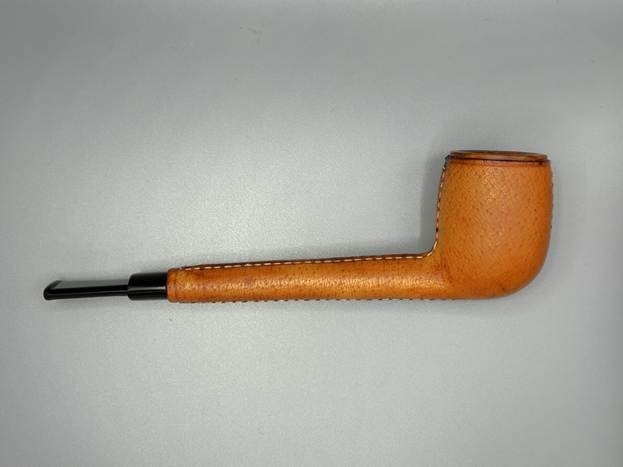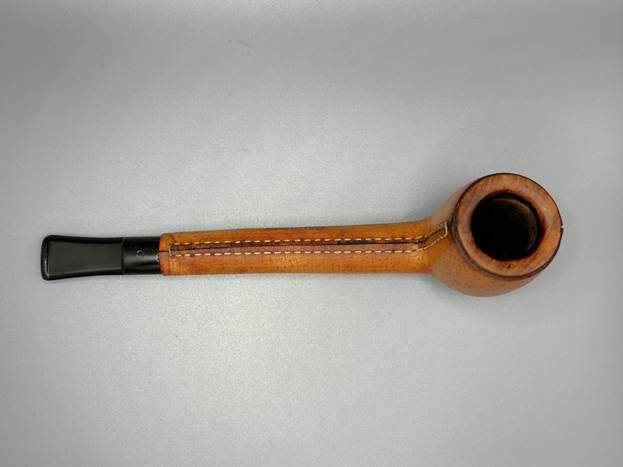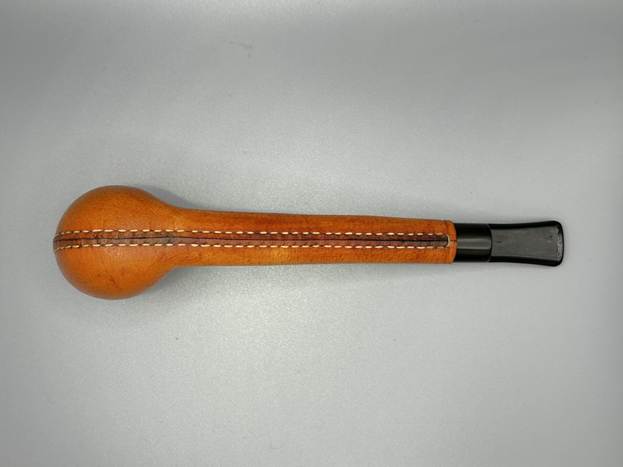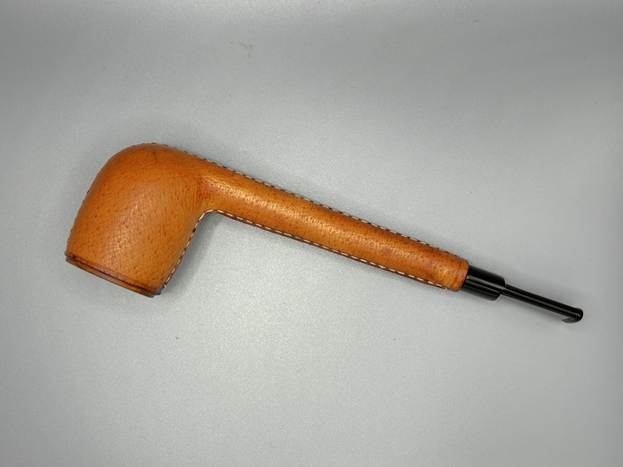
by Kenneth Lieblich
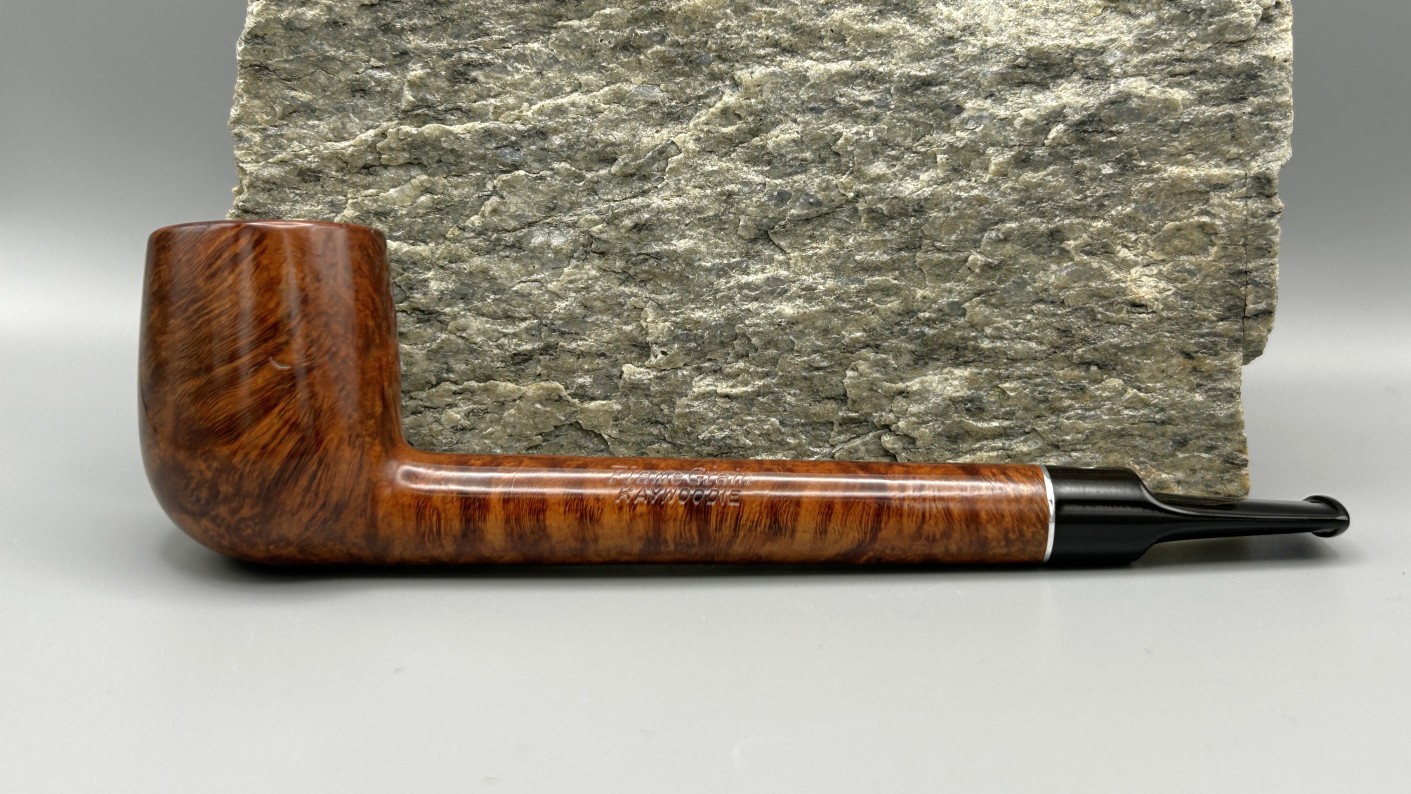
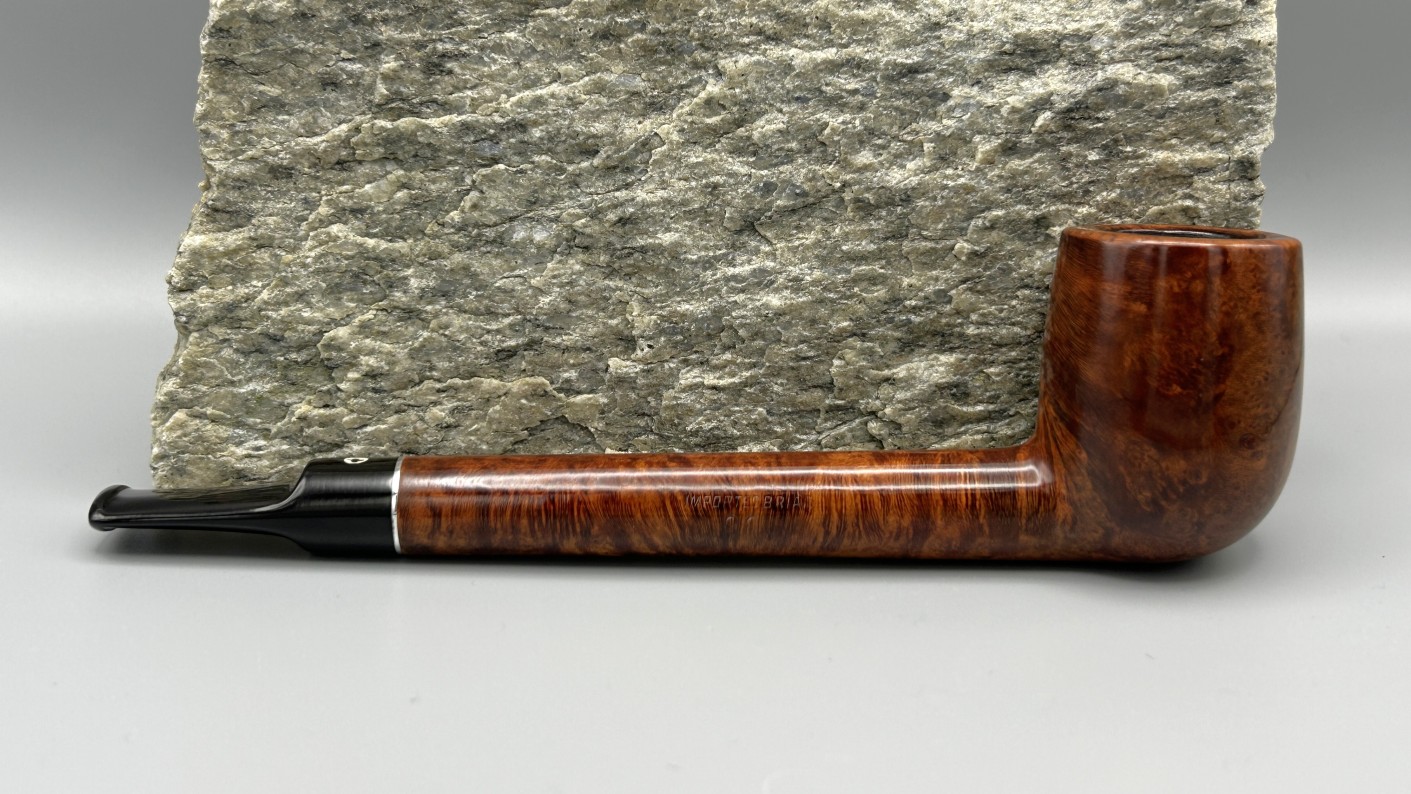
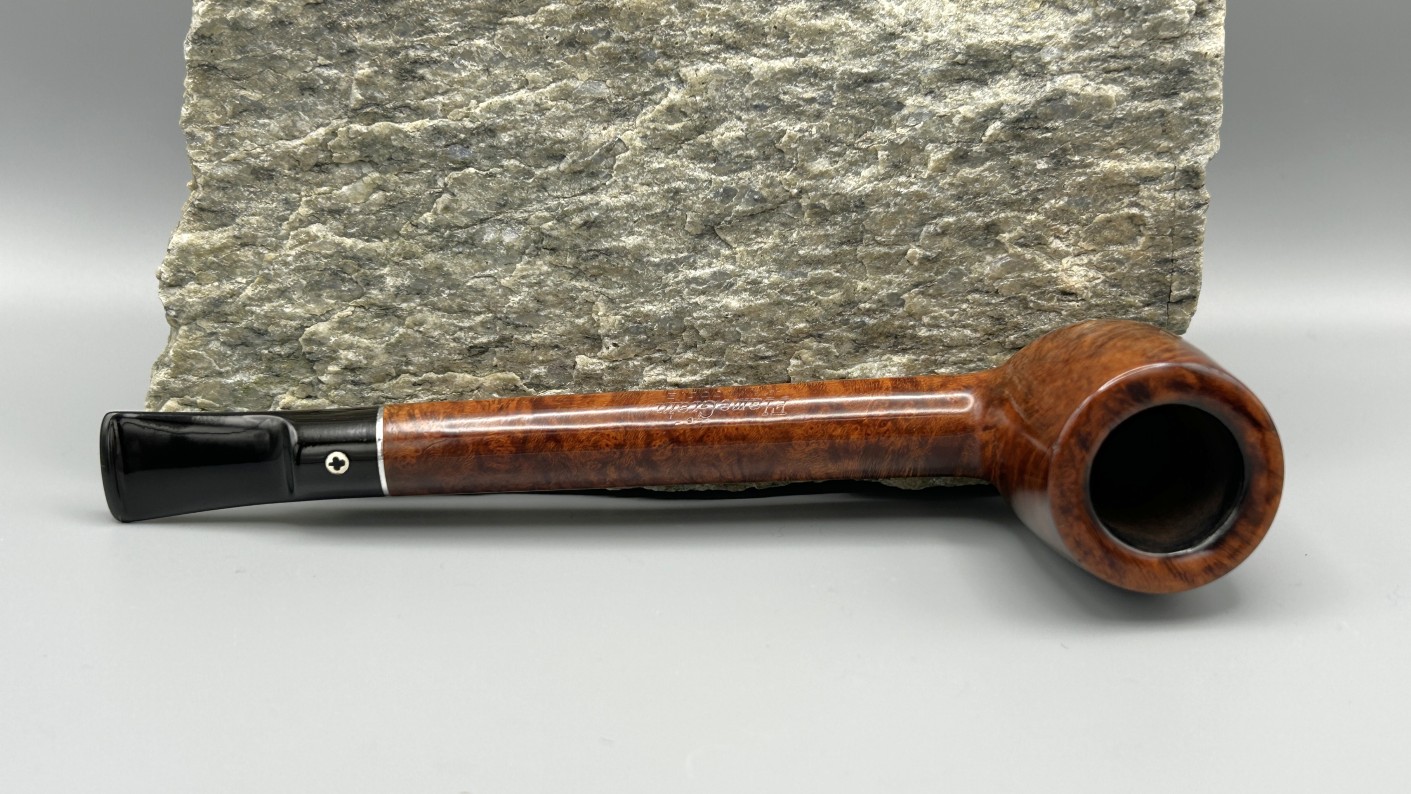
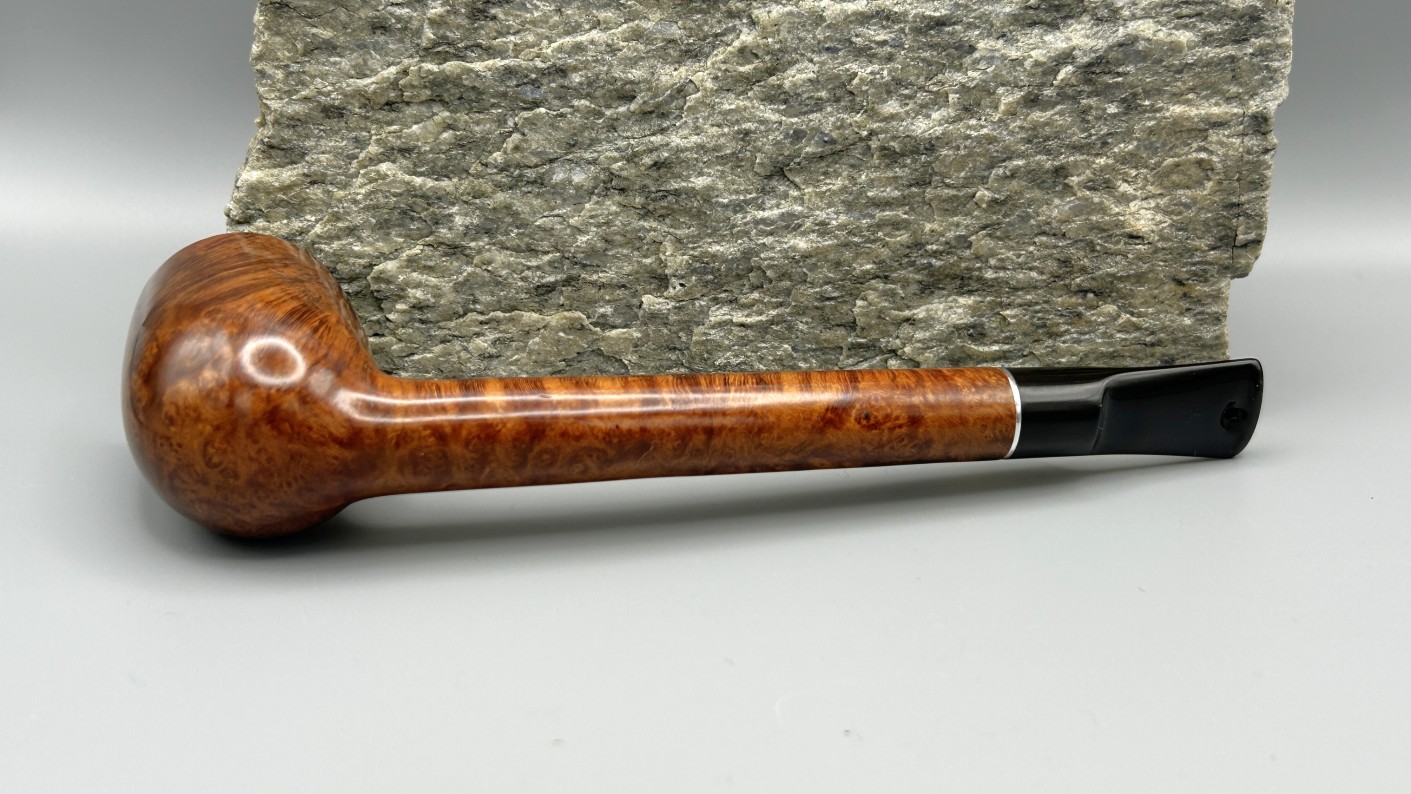
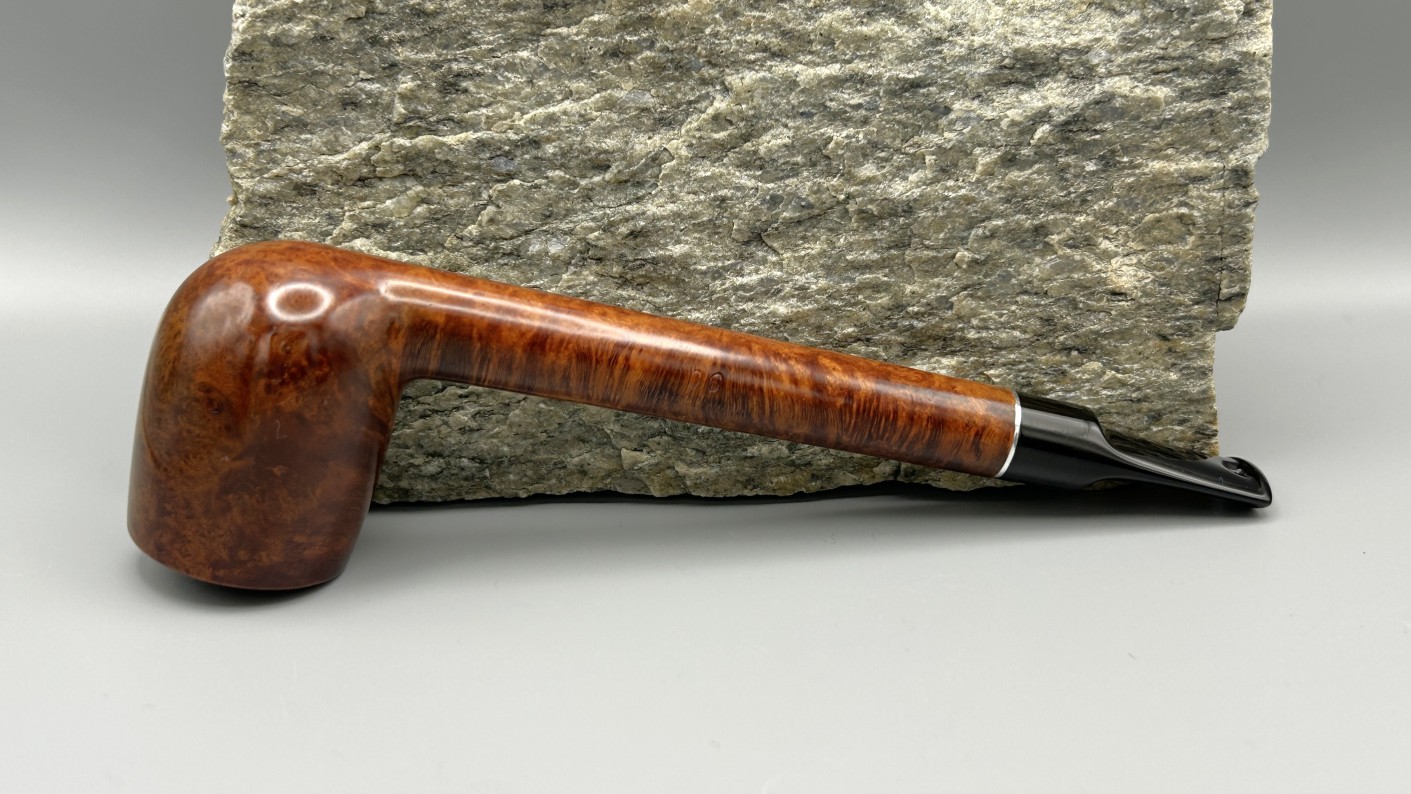
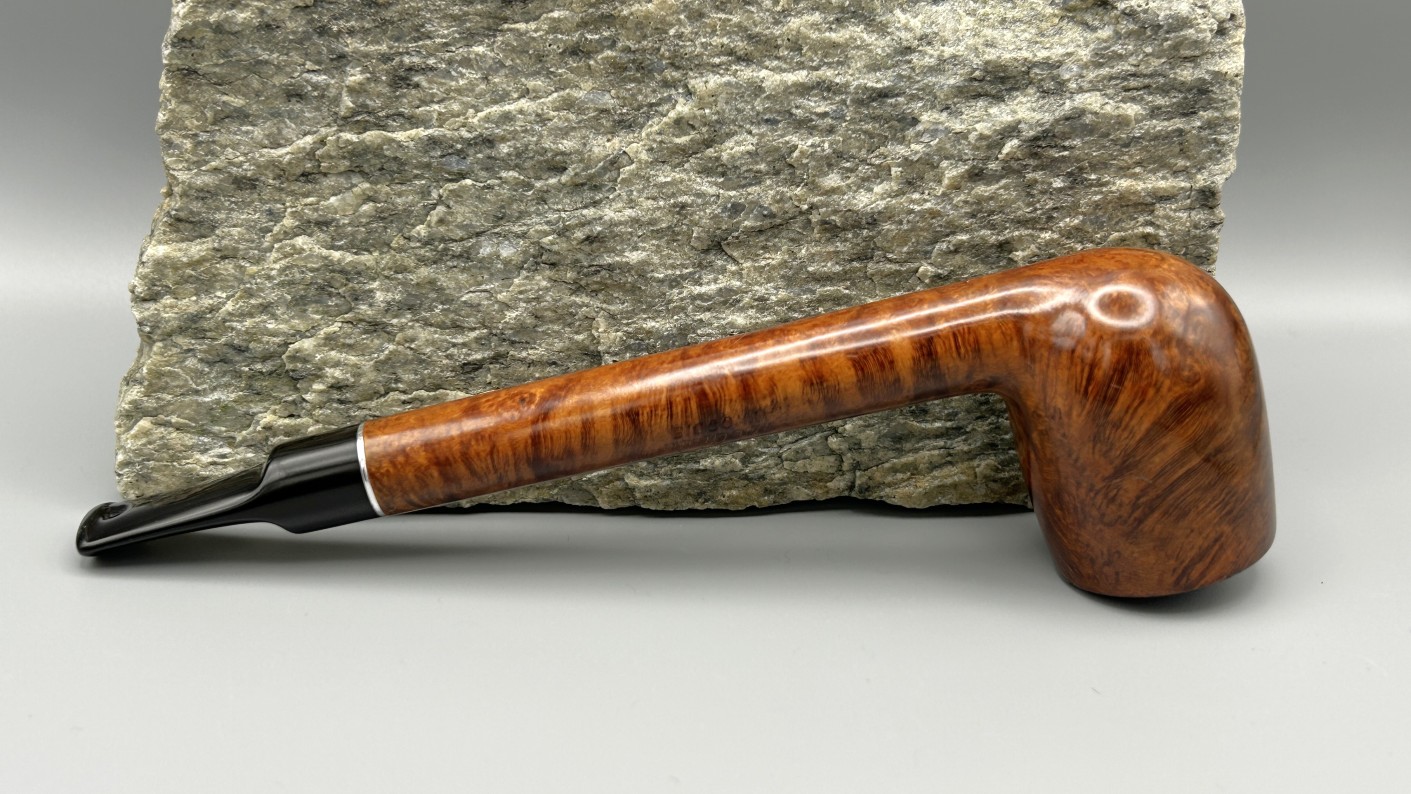
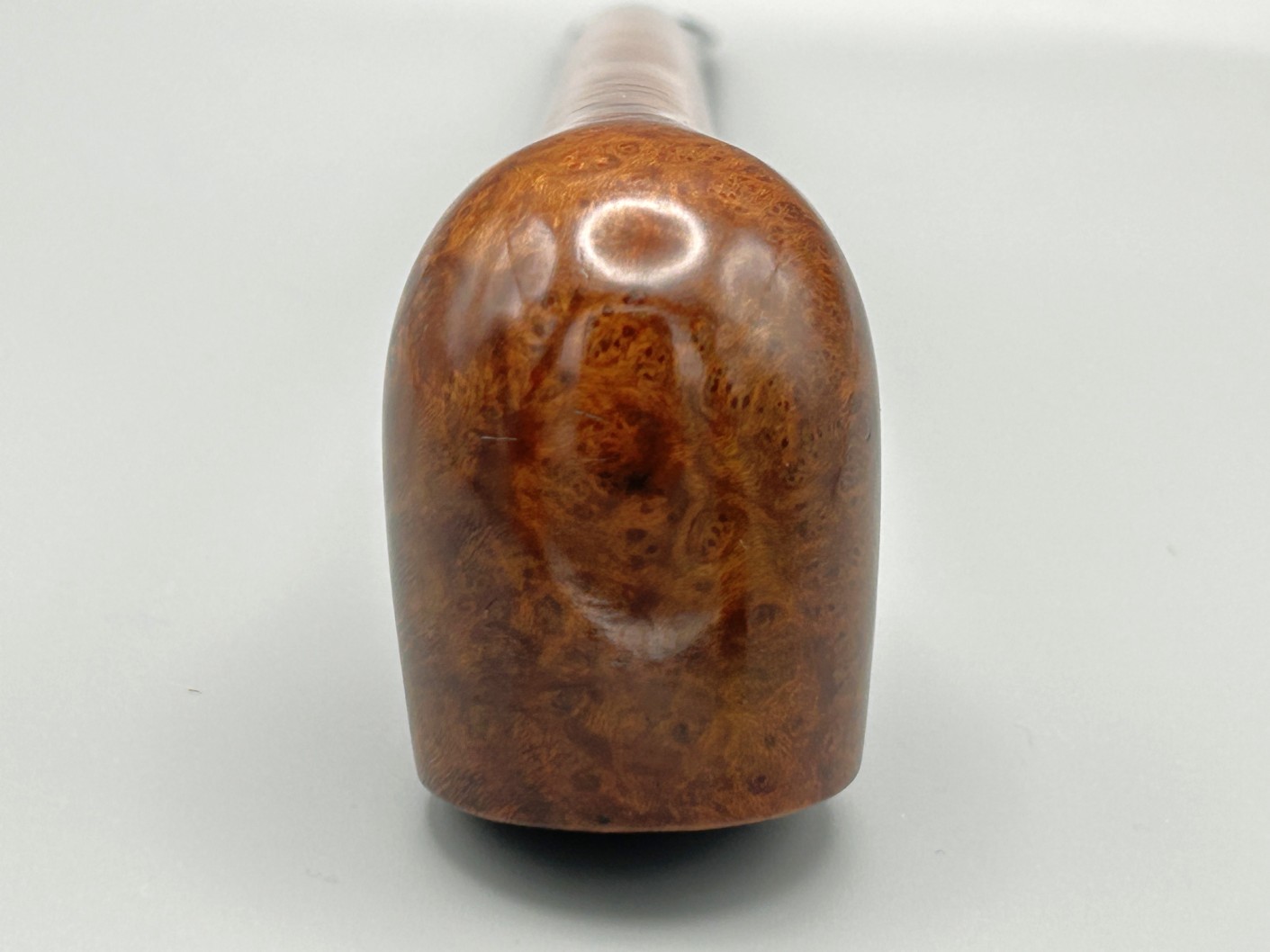
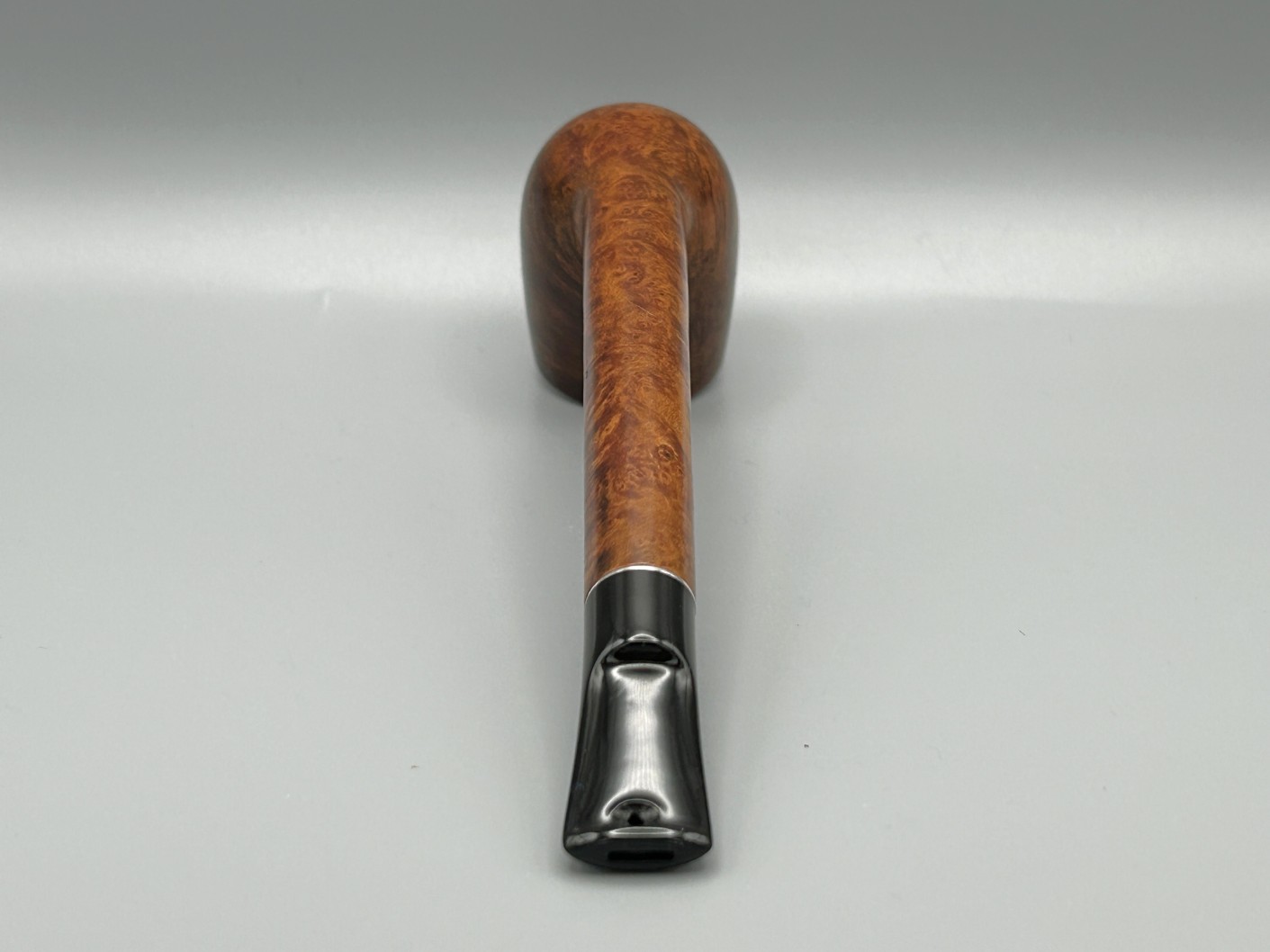
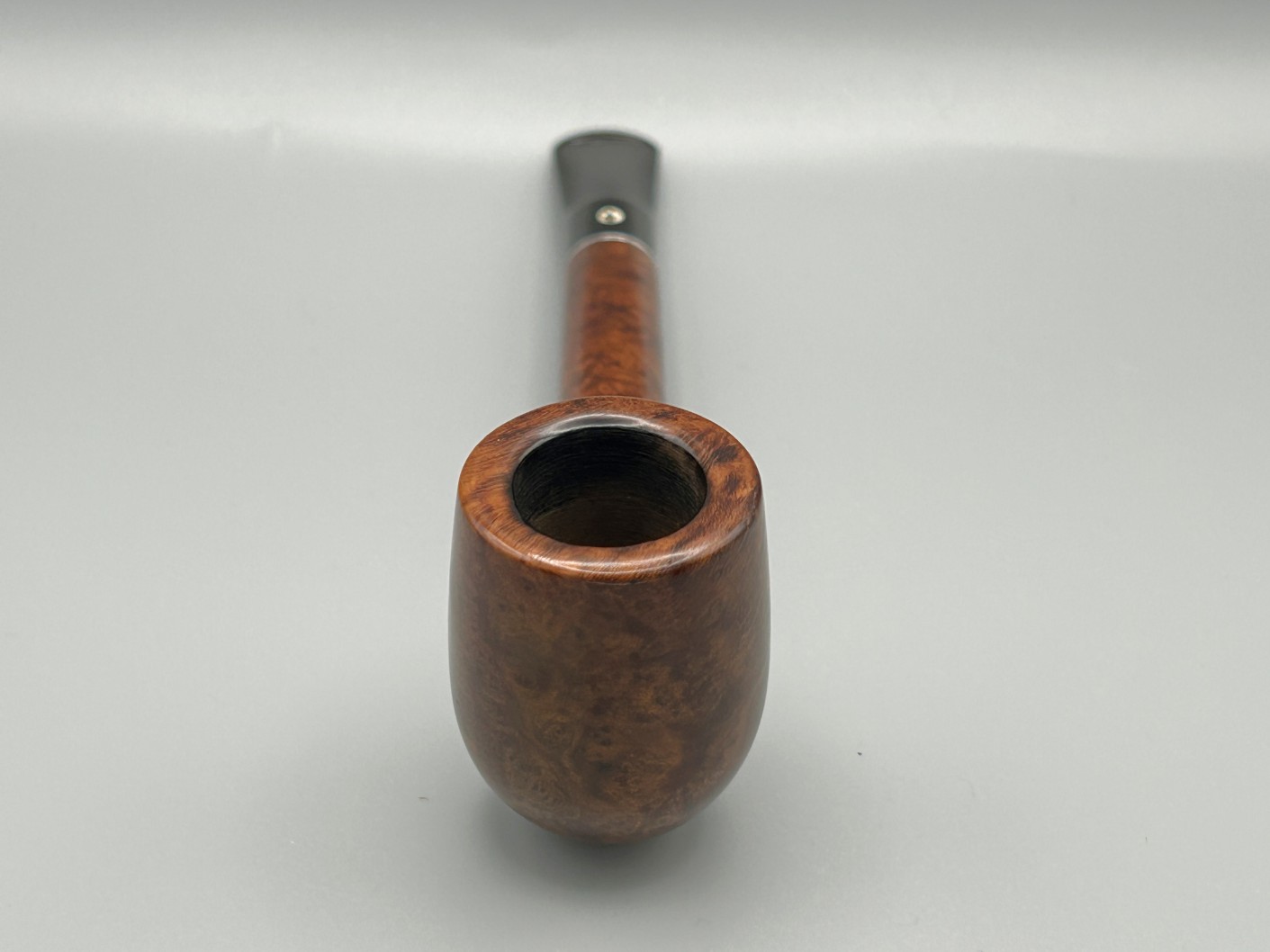
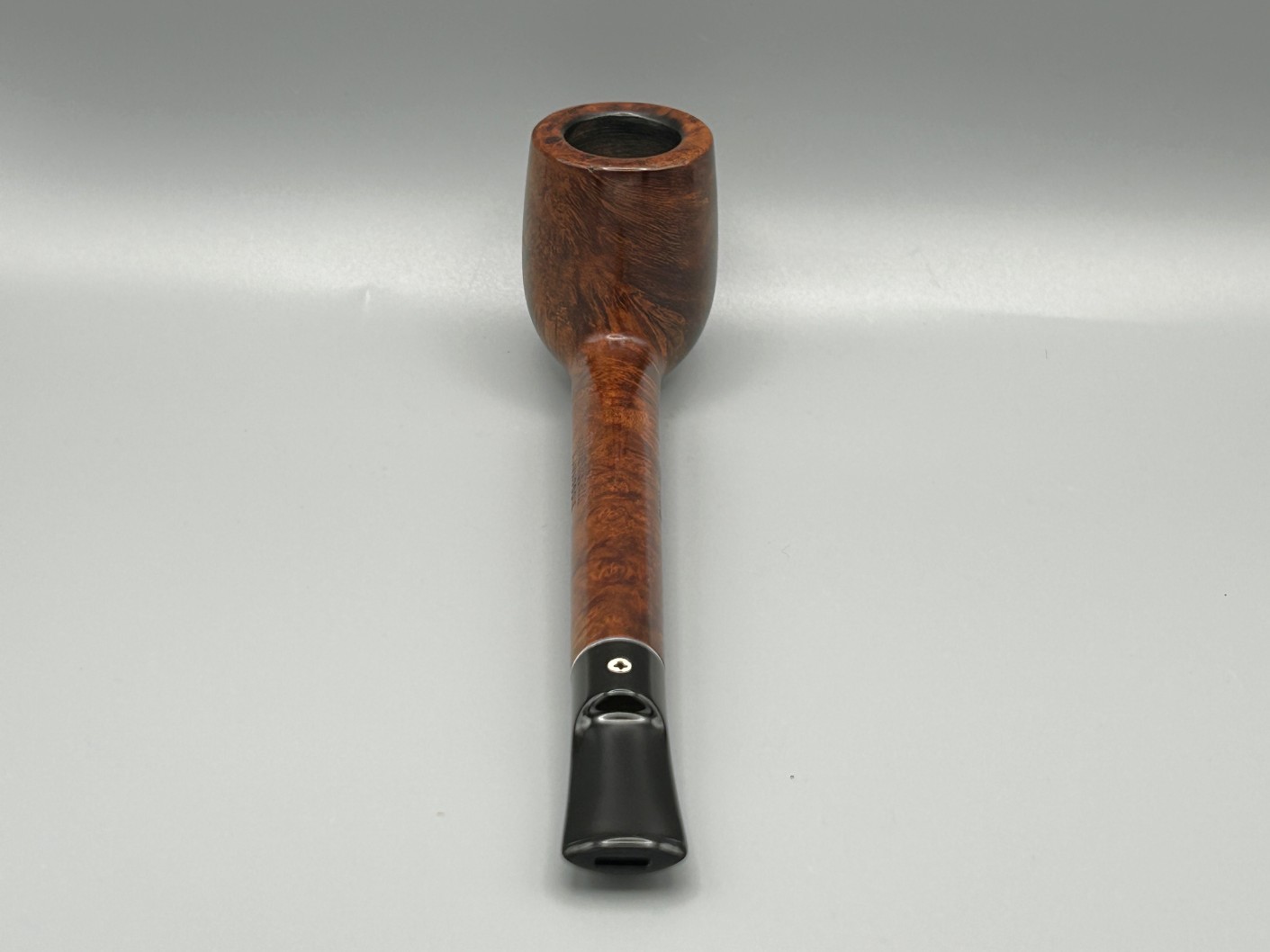
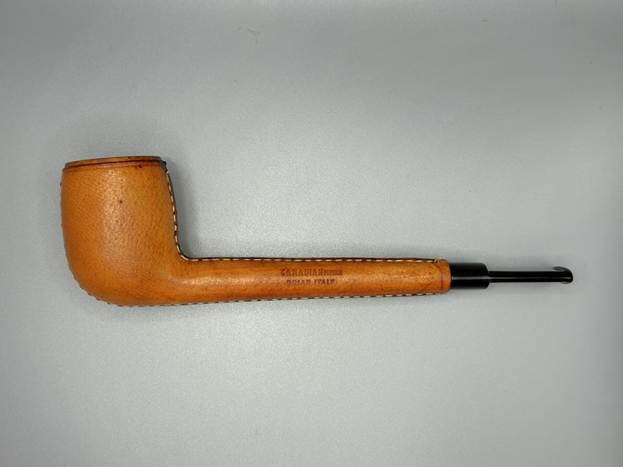
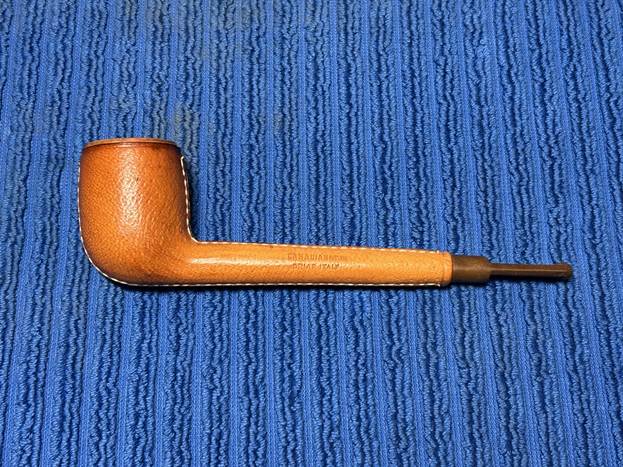
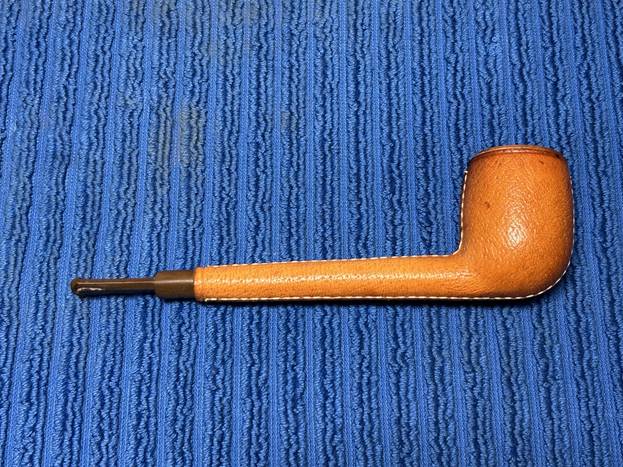
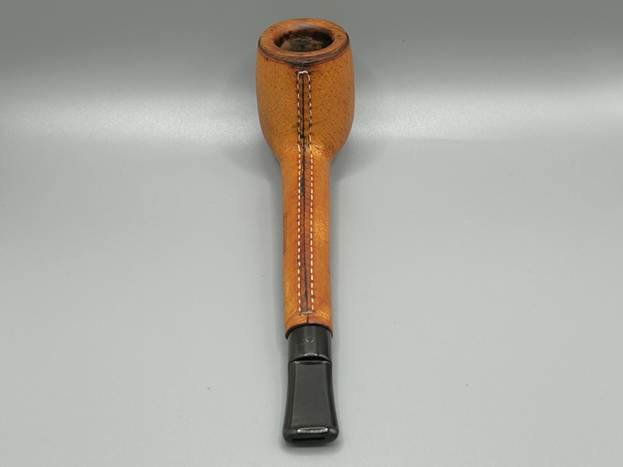
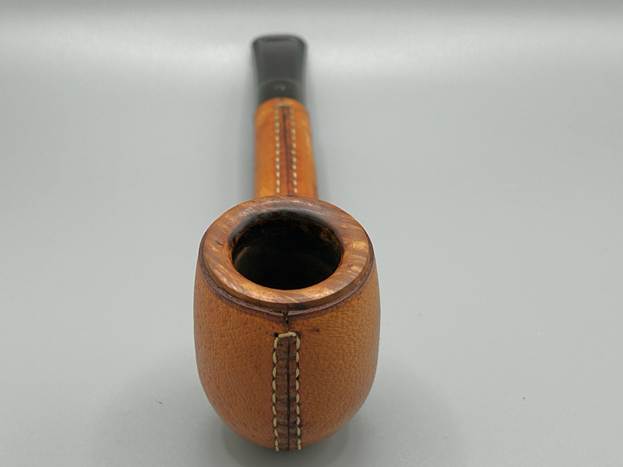
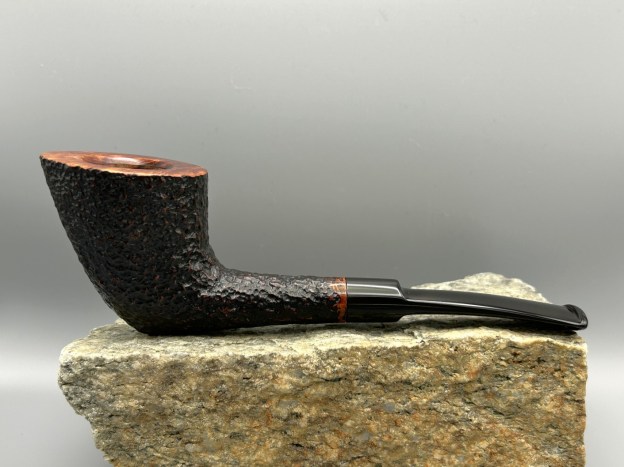
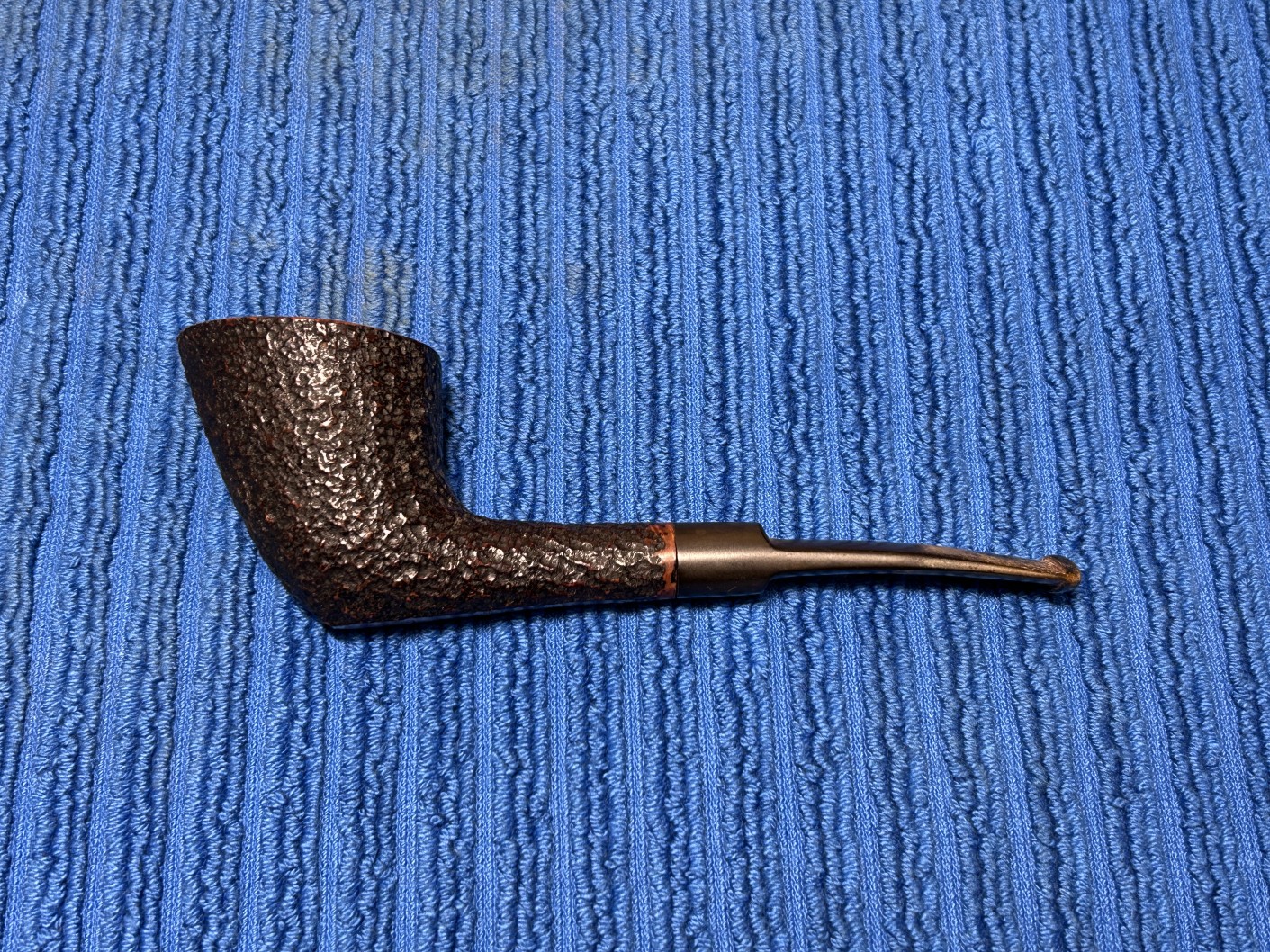
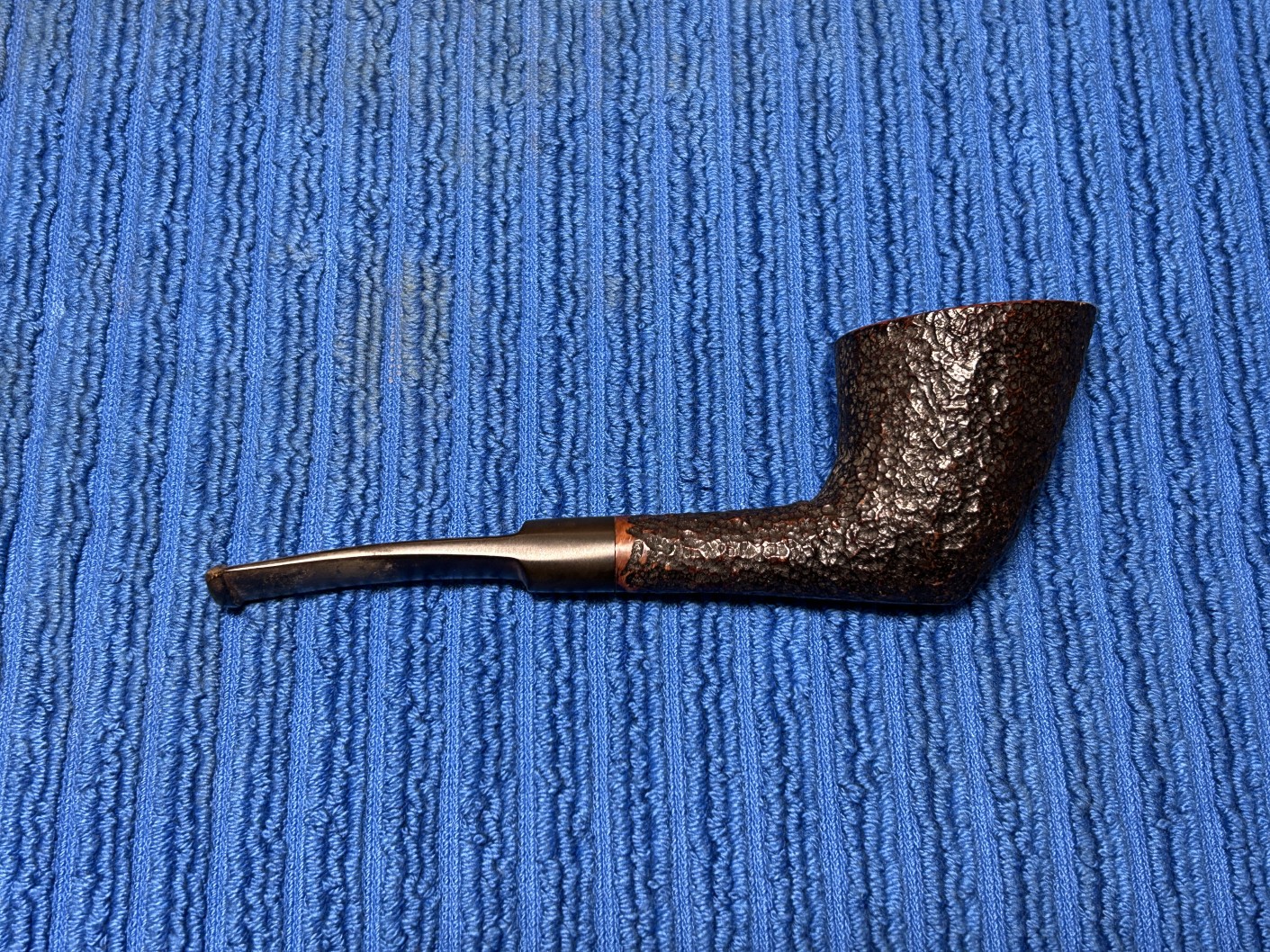
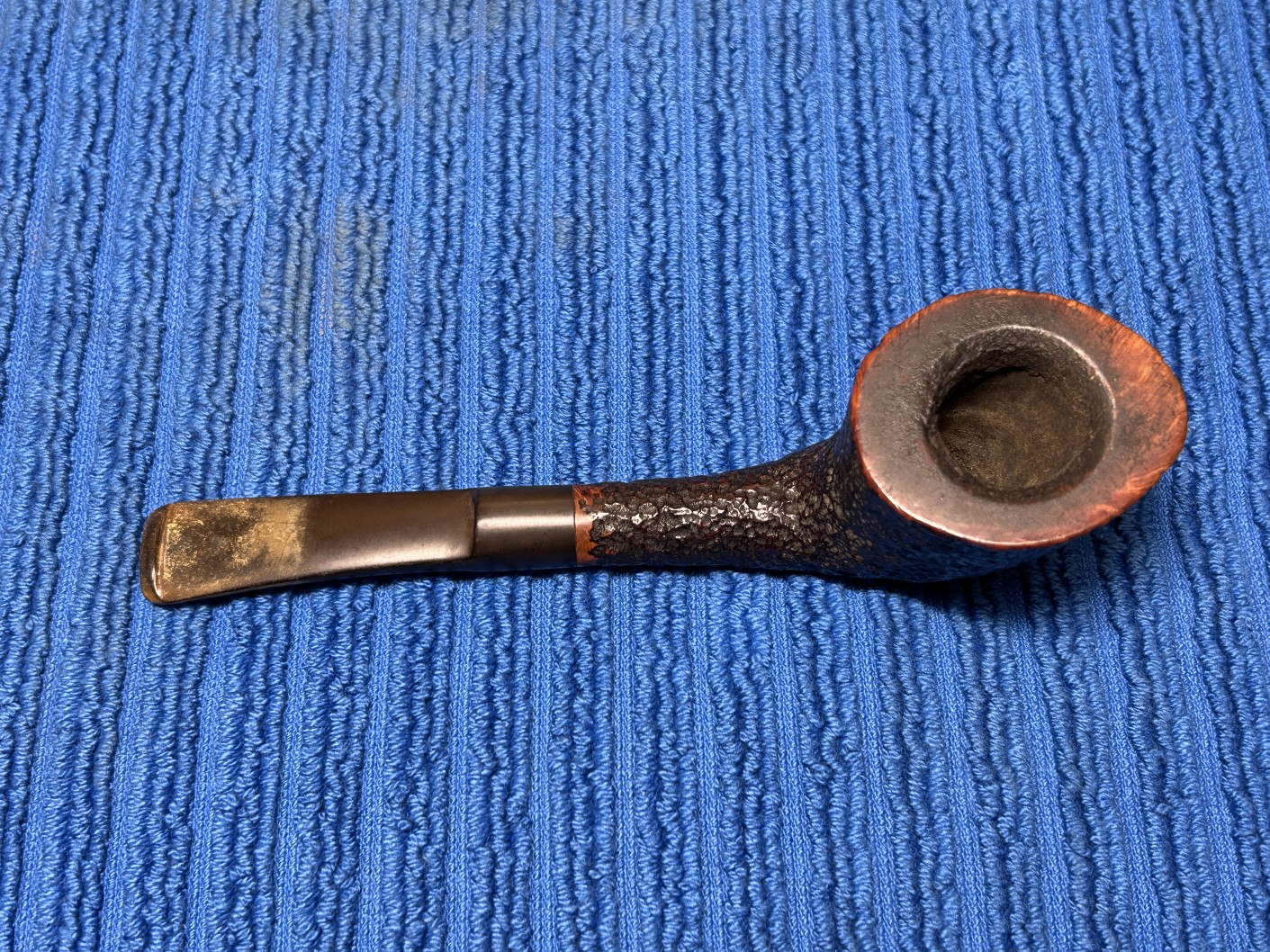
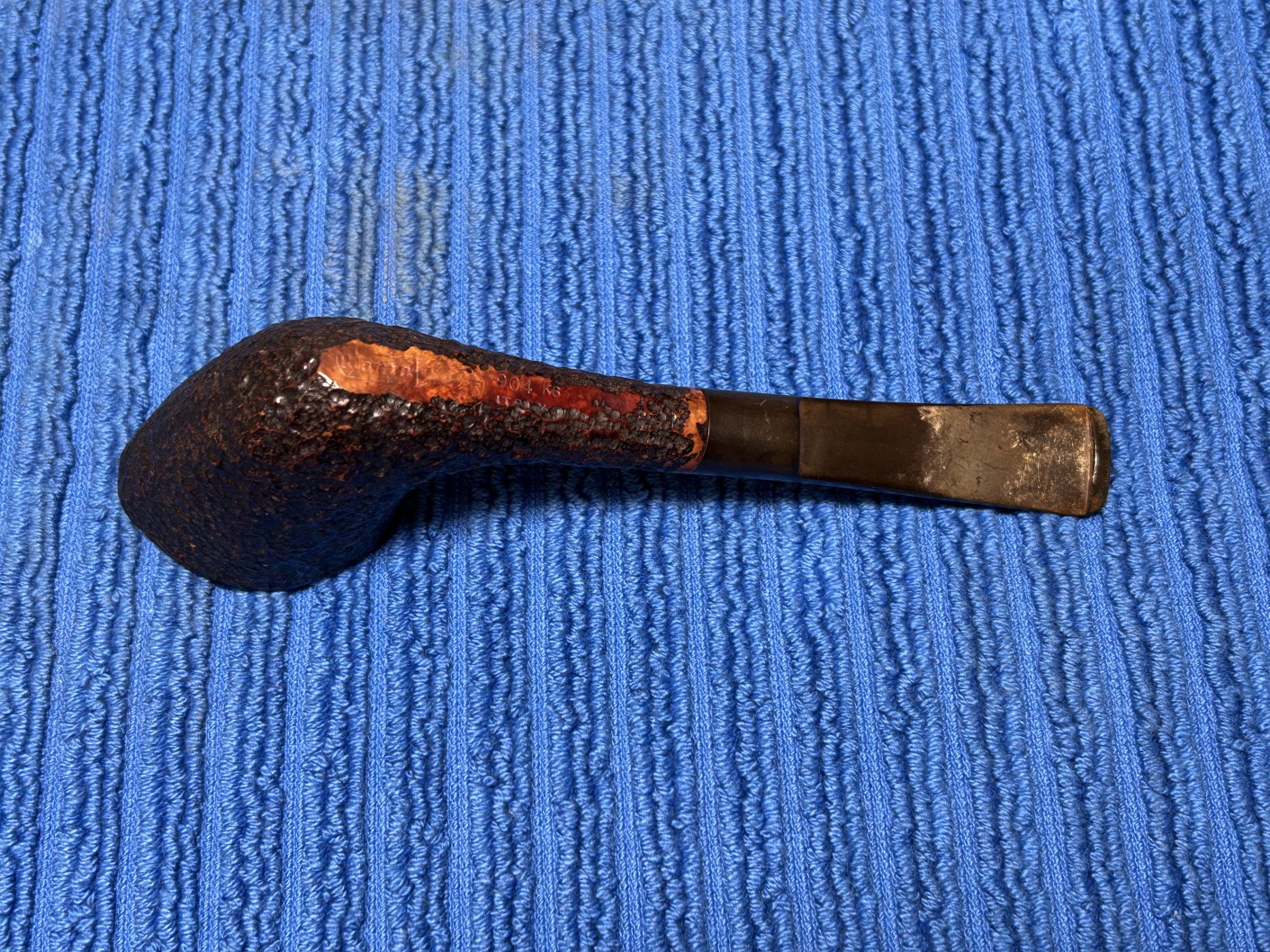
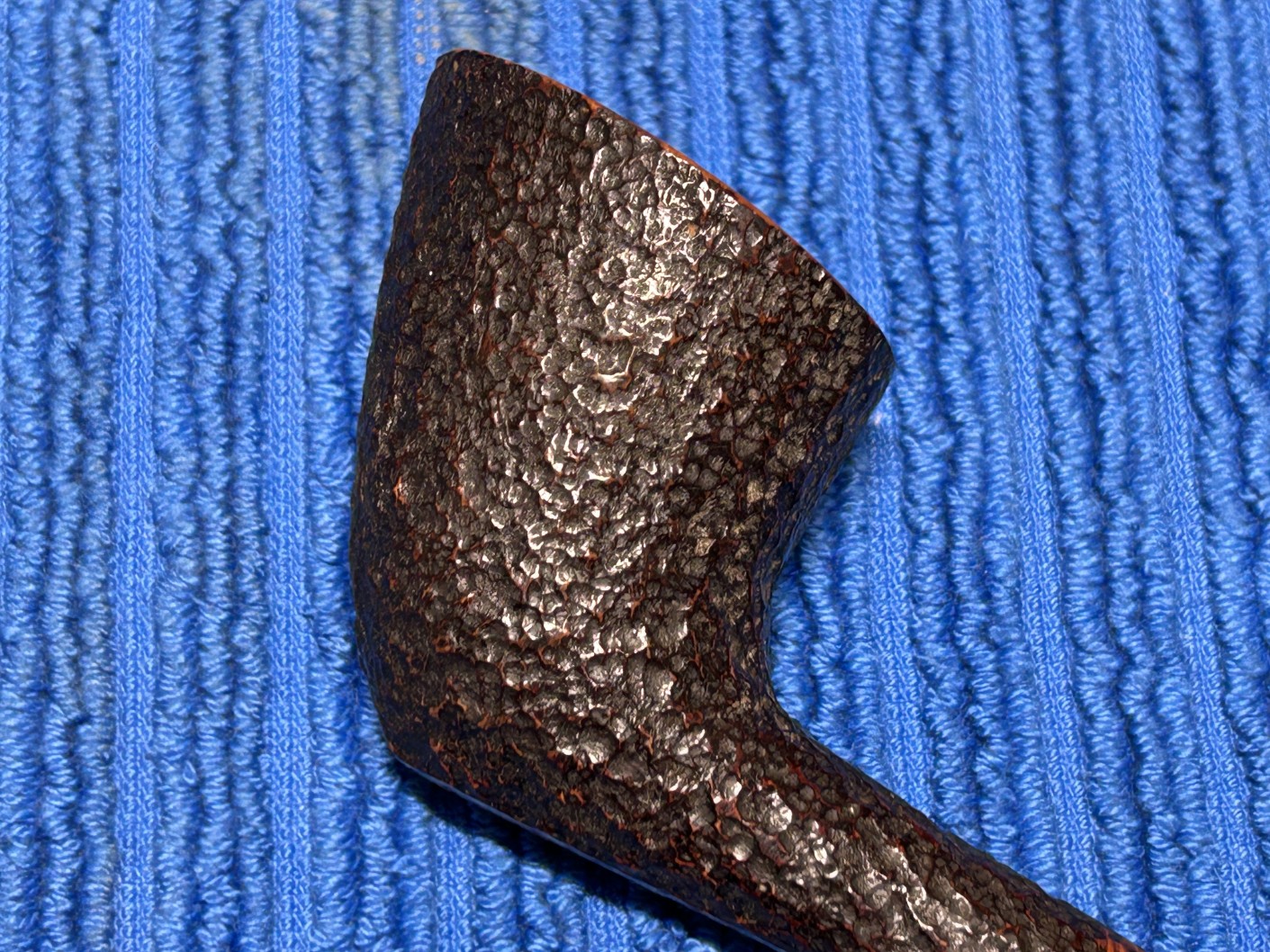
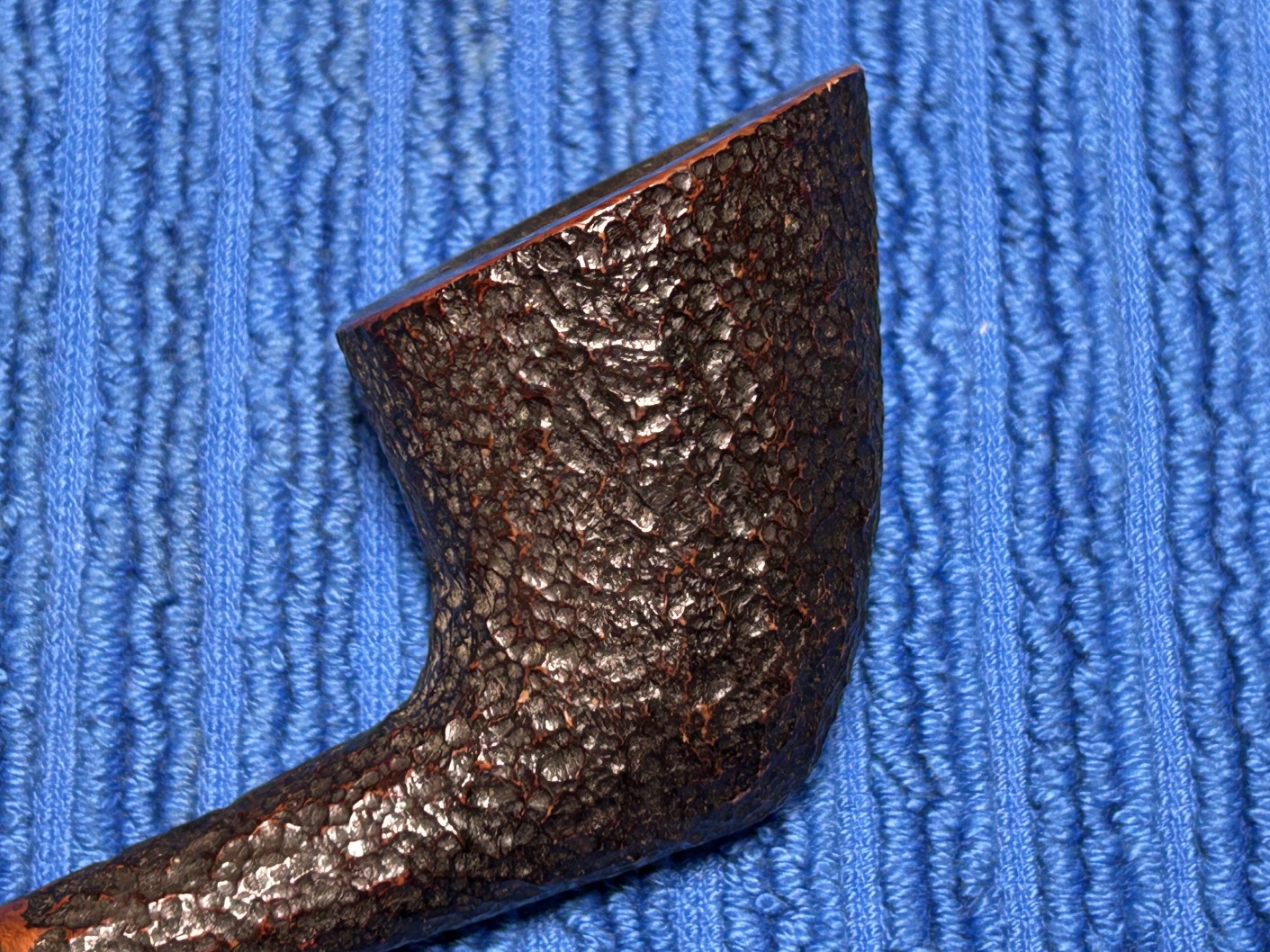
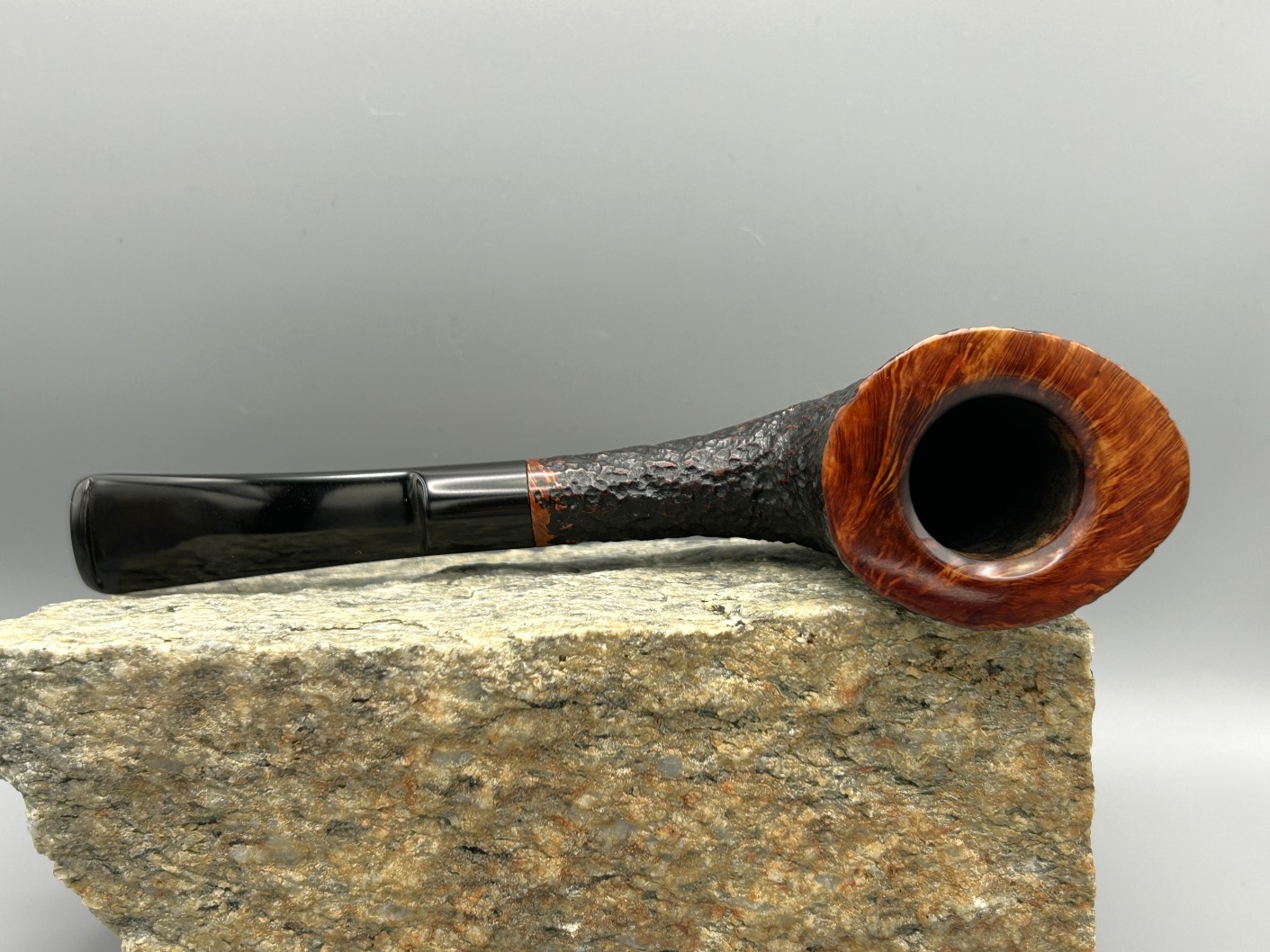
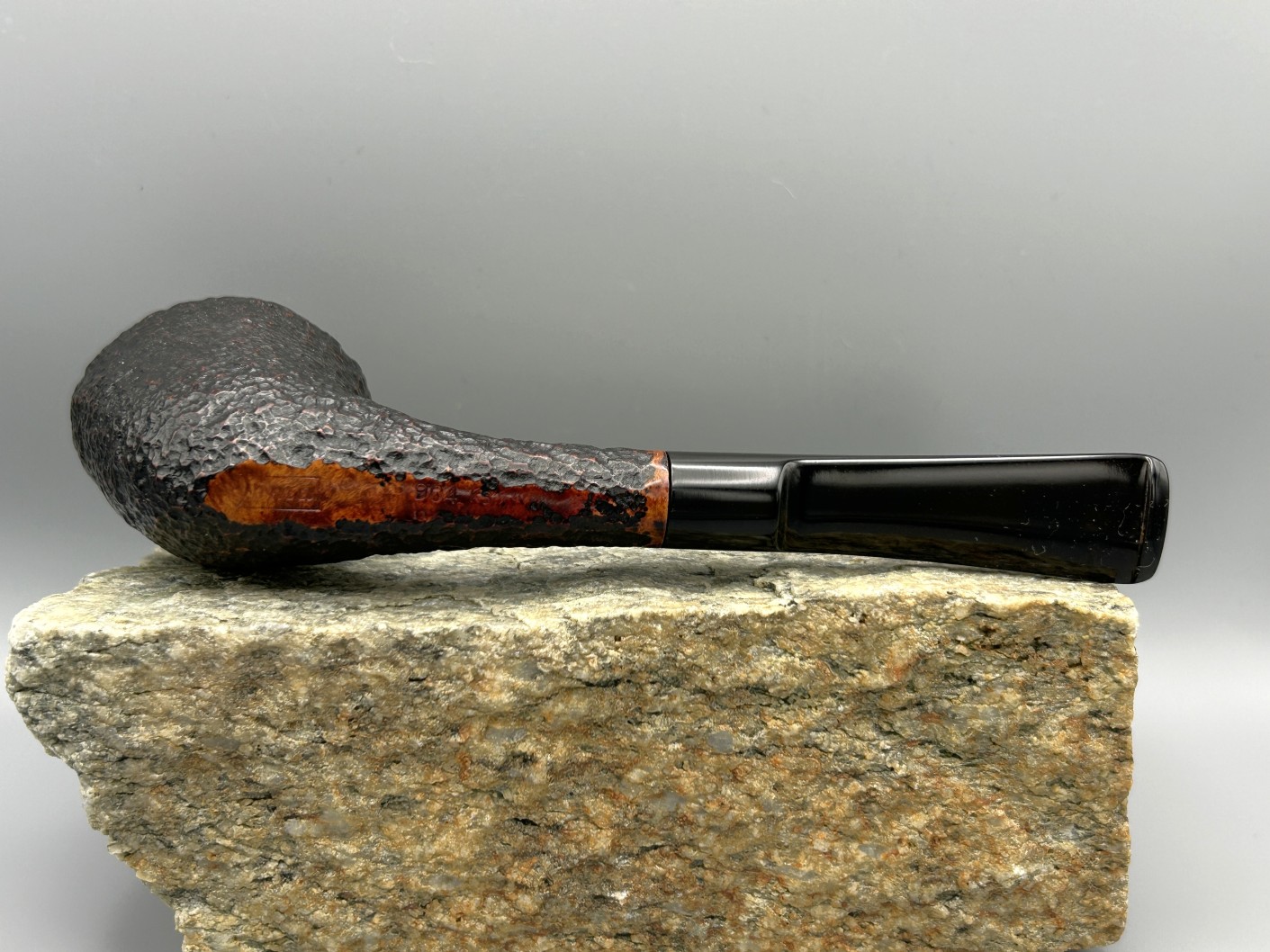
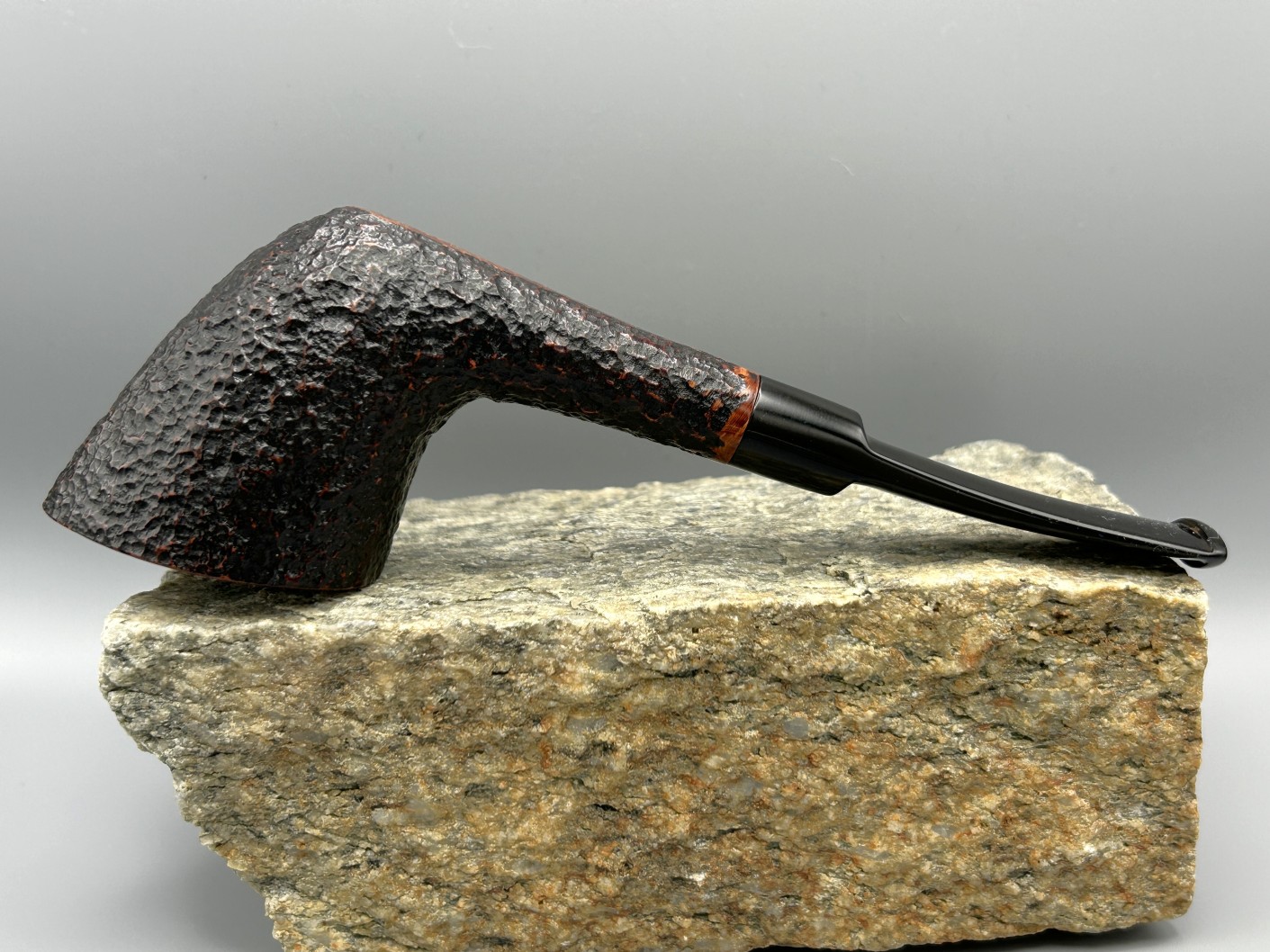
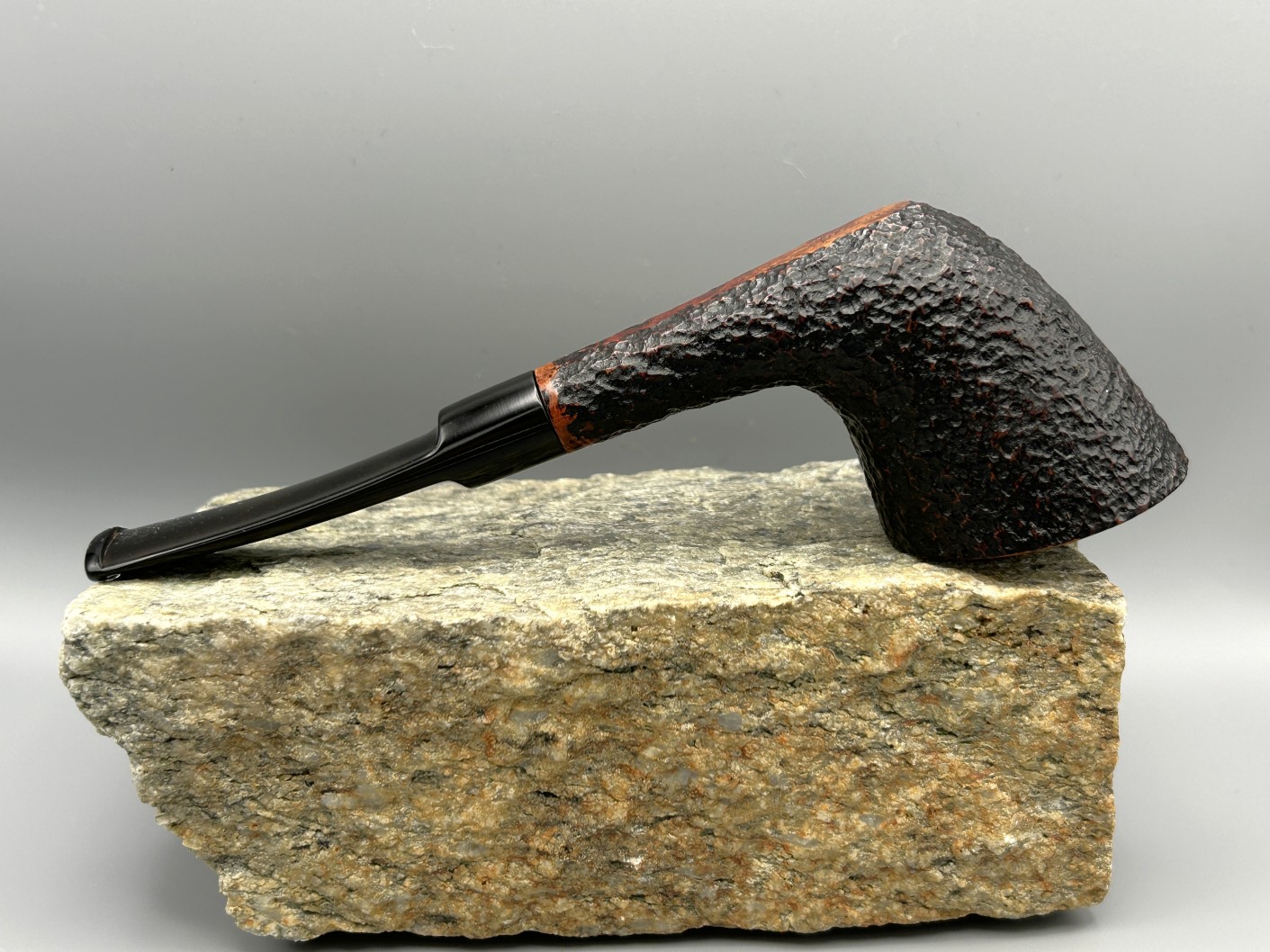
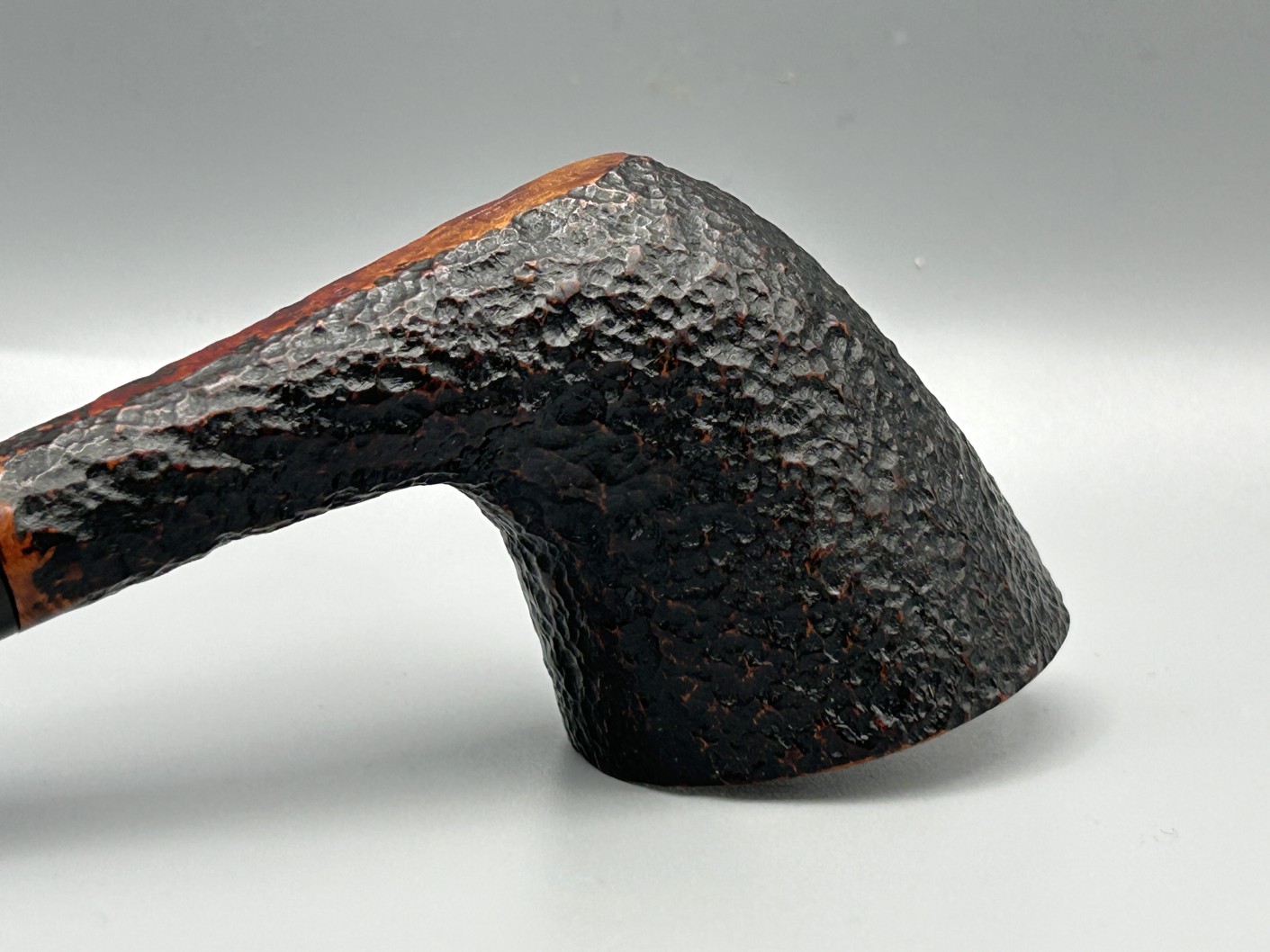
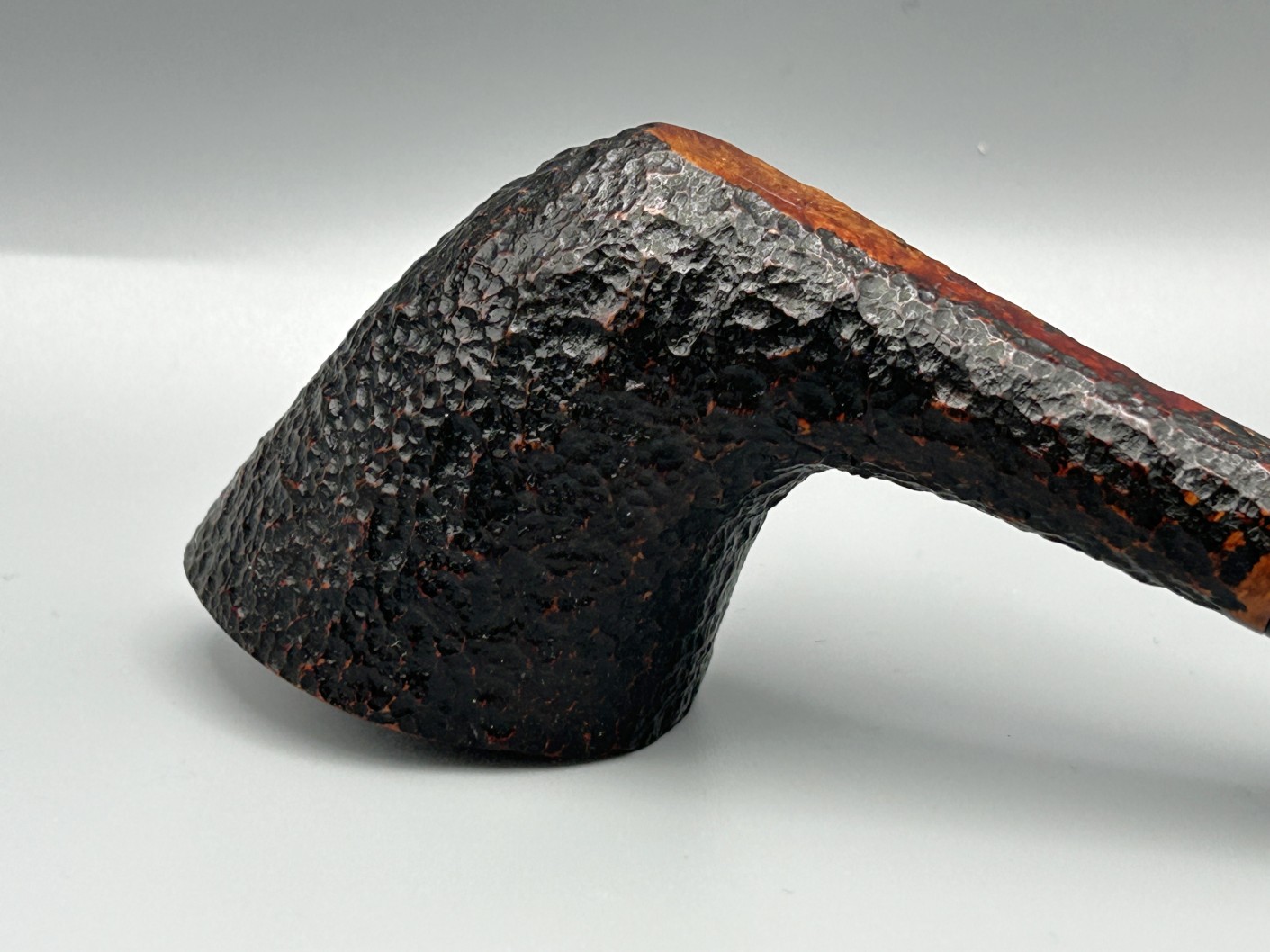
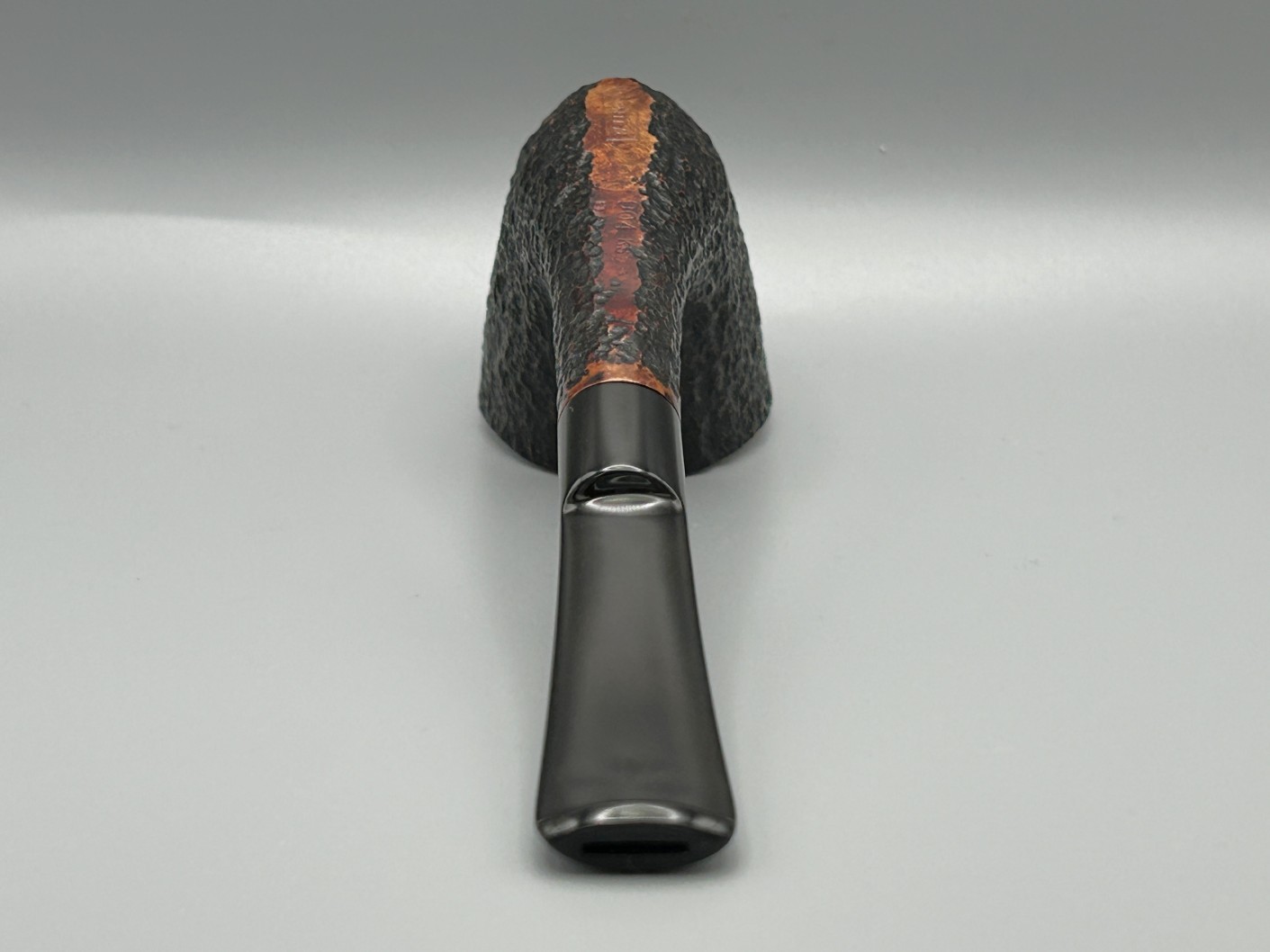
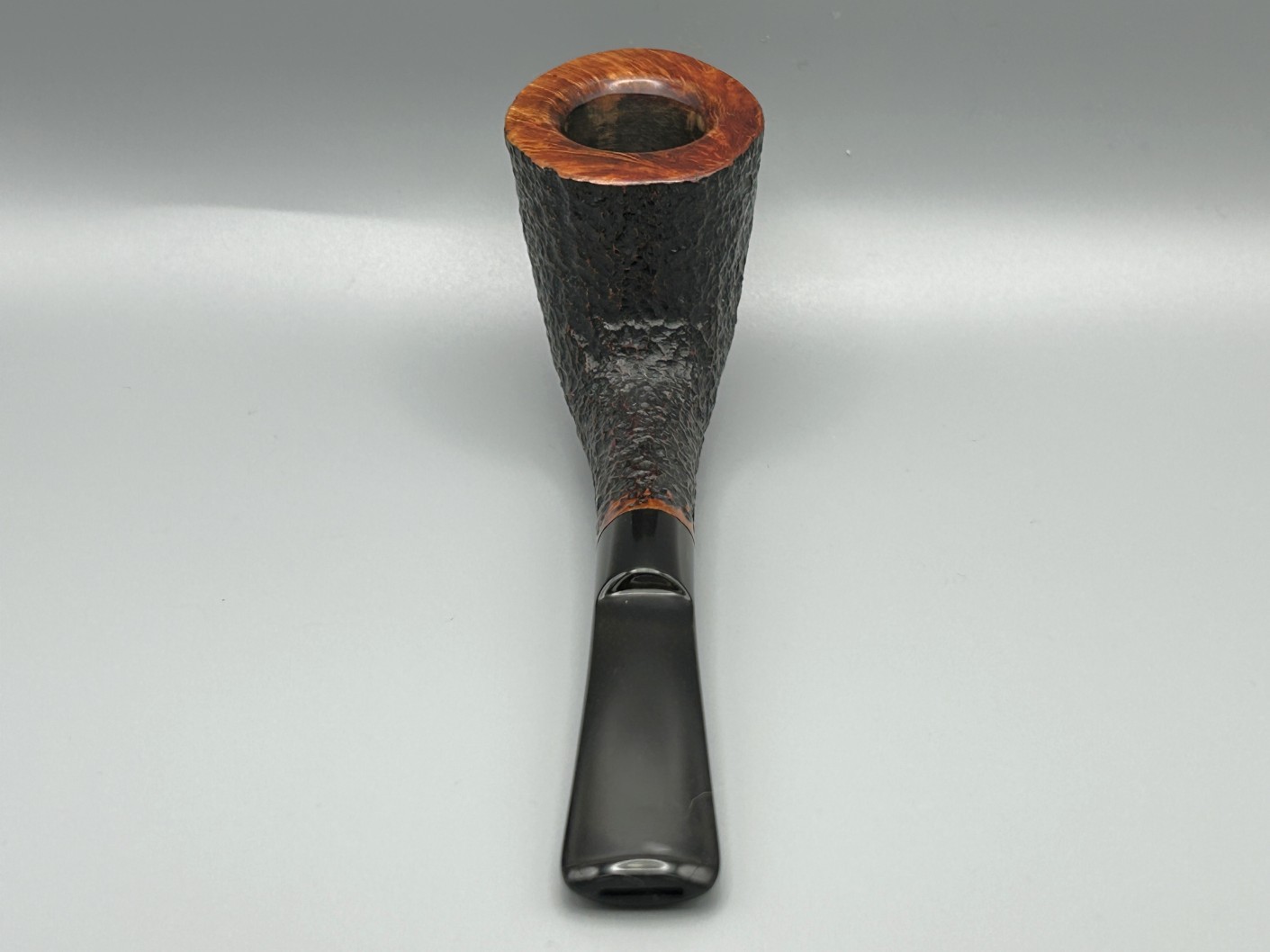
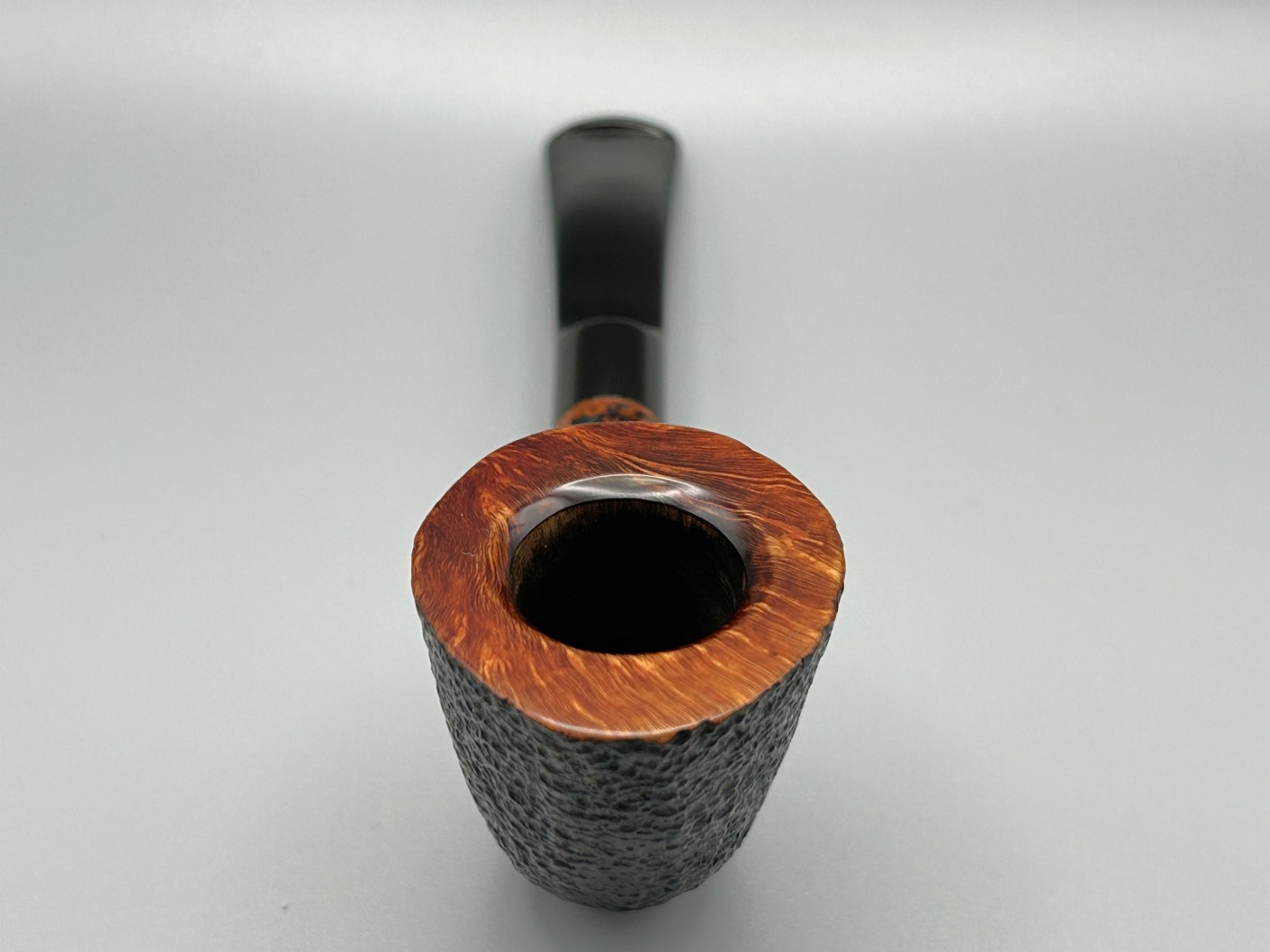
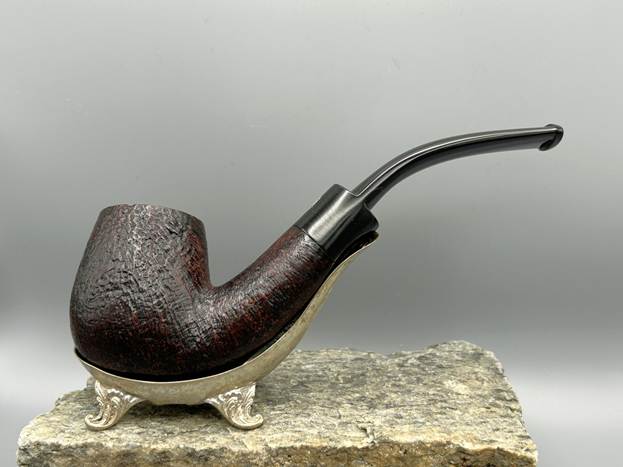
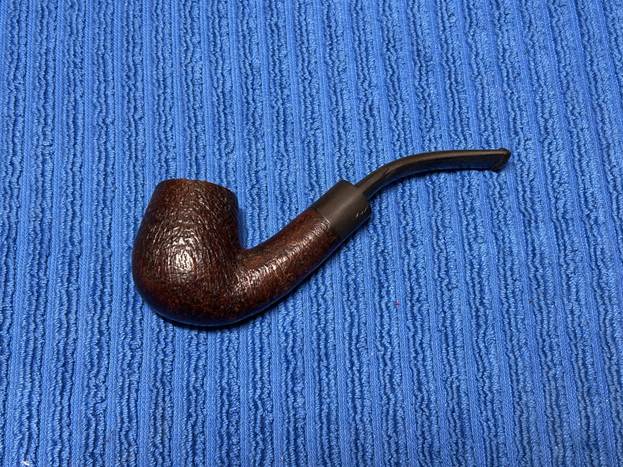
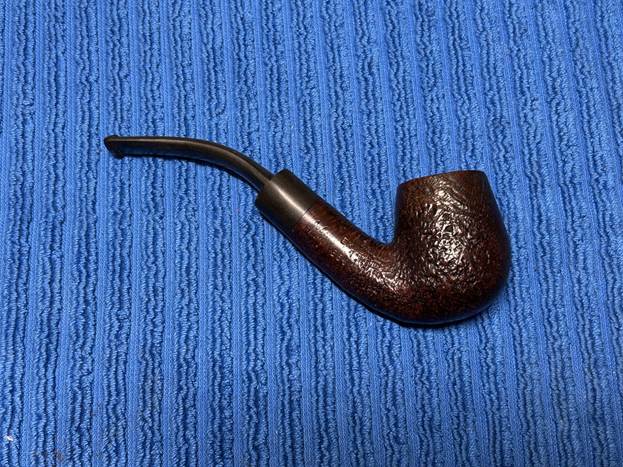
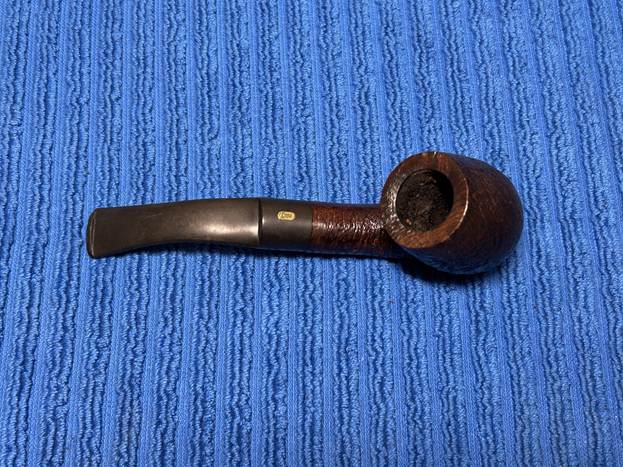
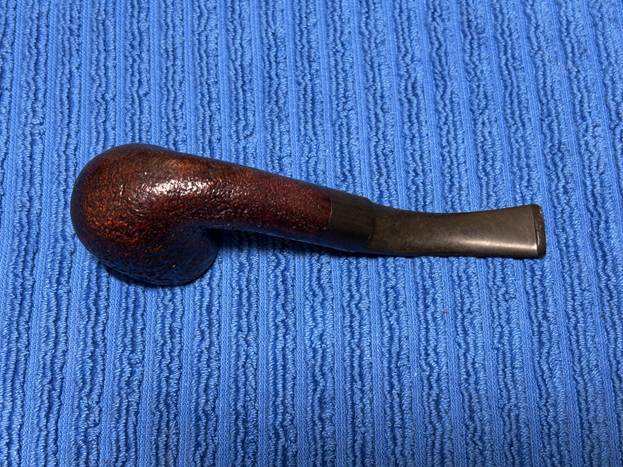
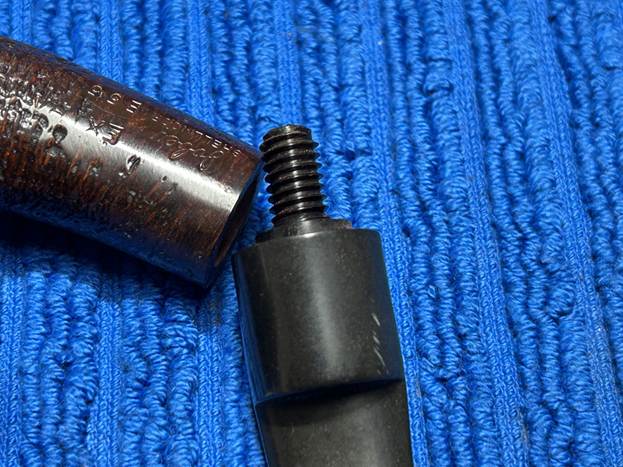
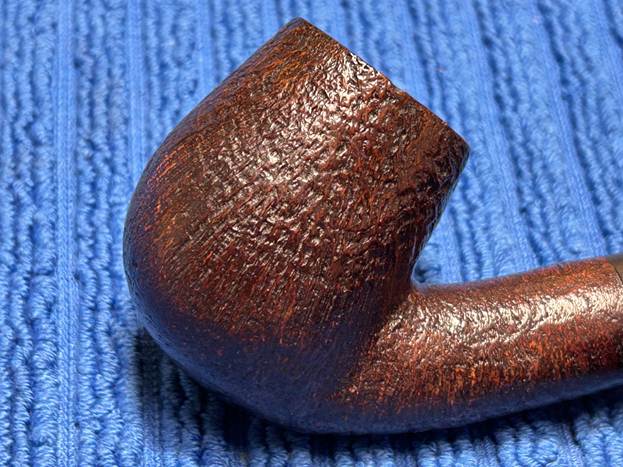
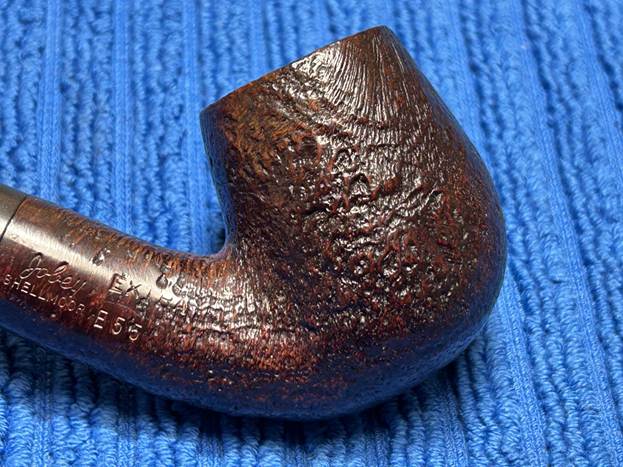
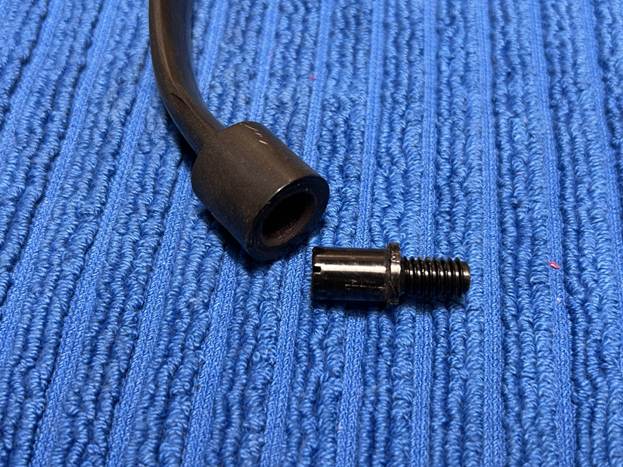
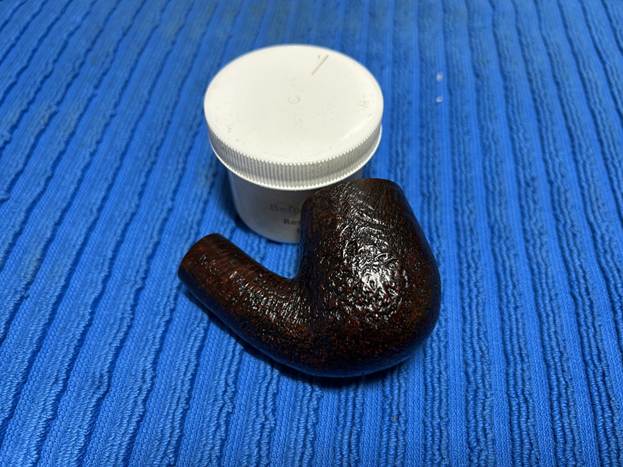
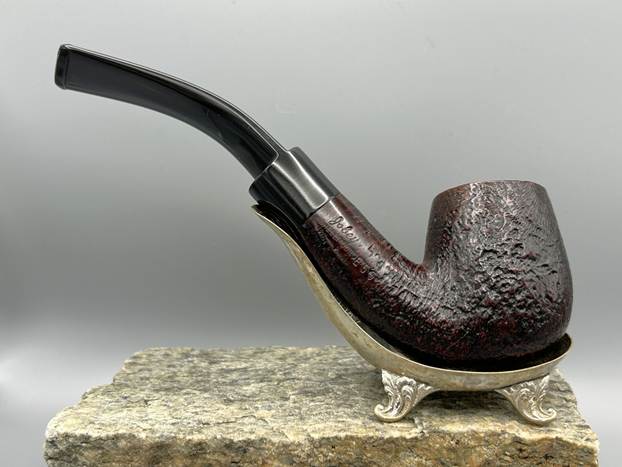
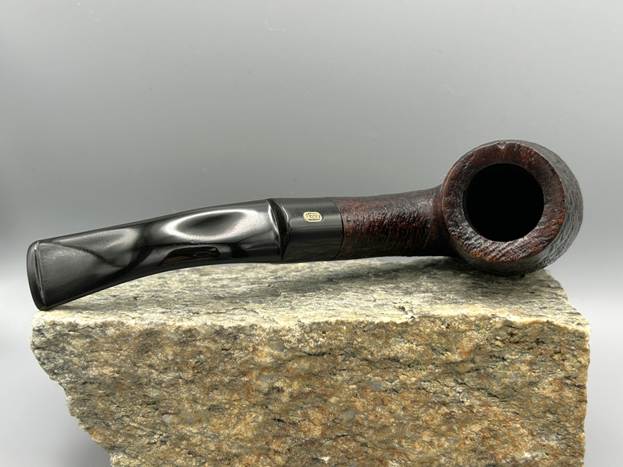
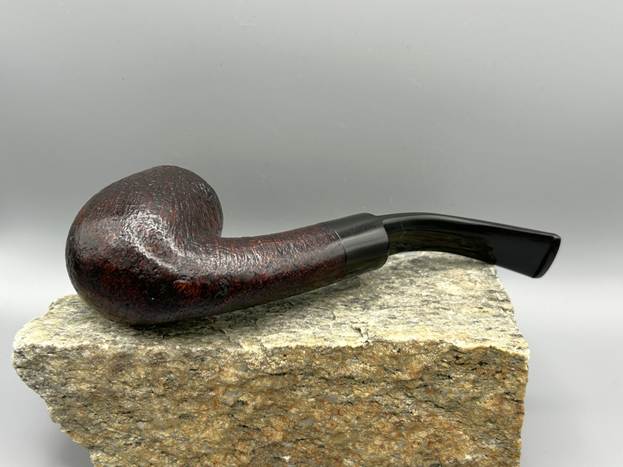
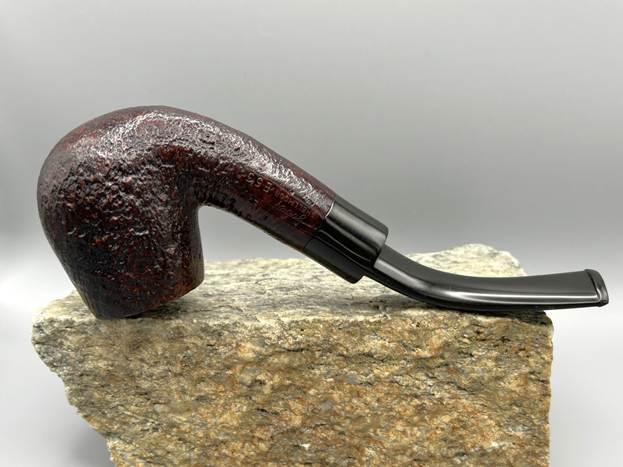
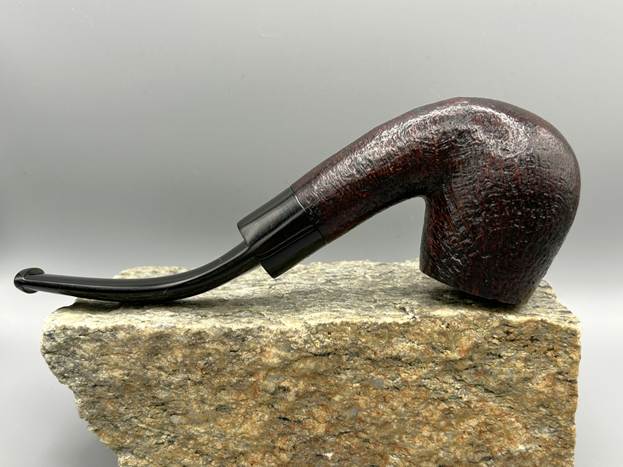
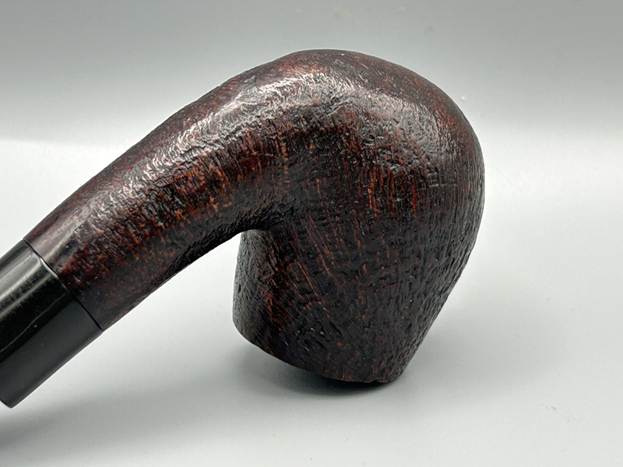
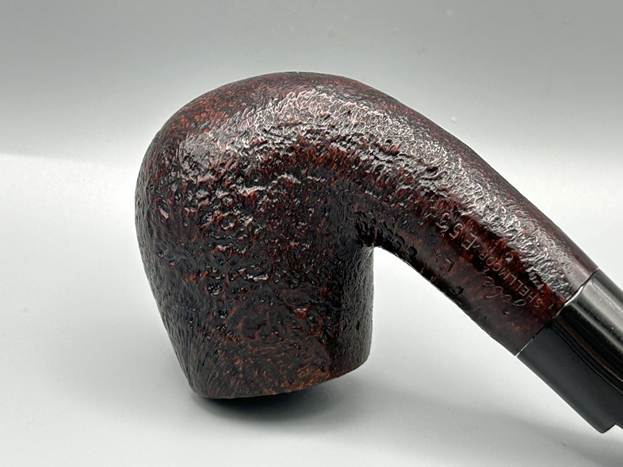
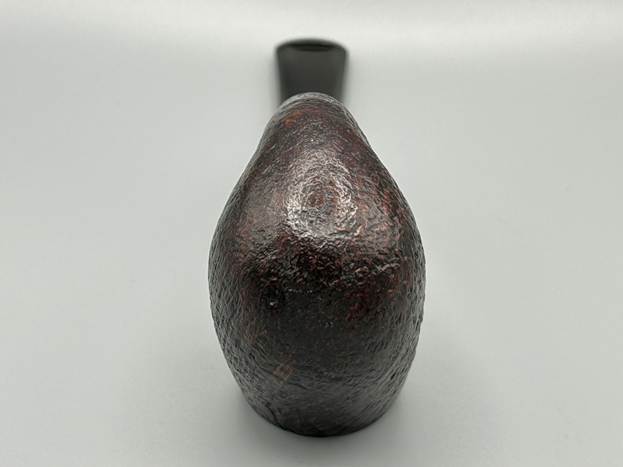
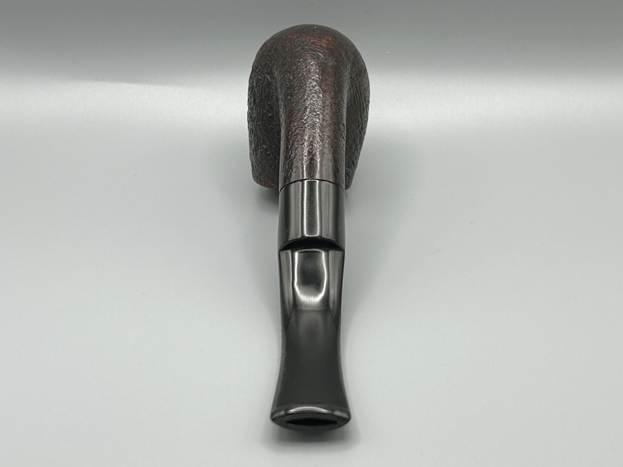
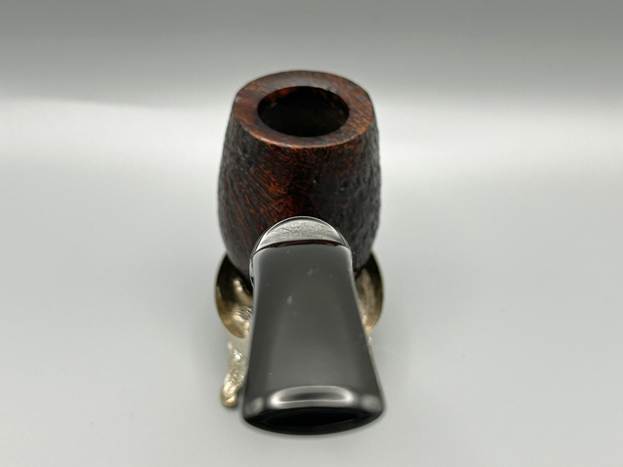
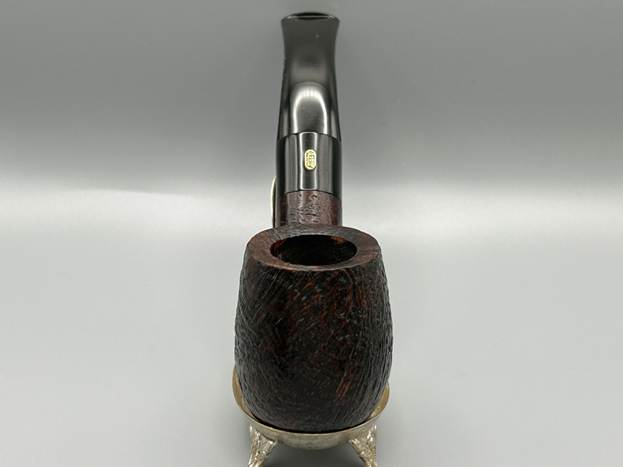
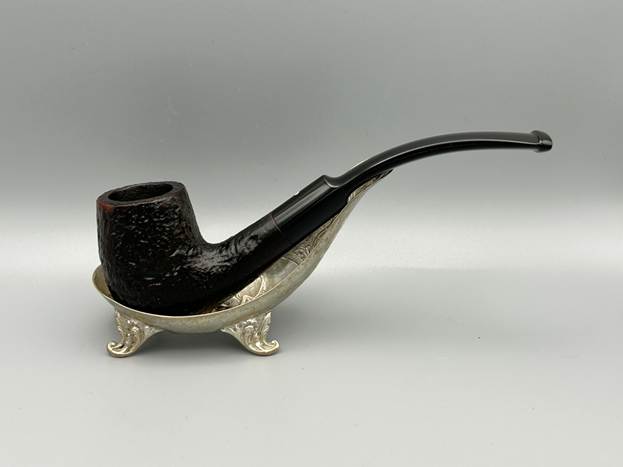
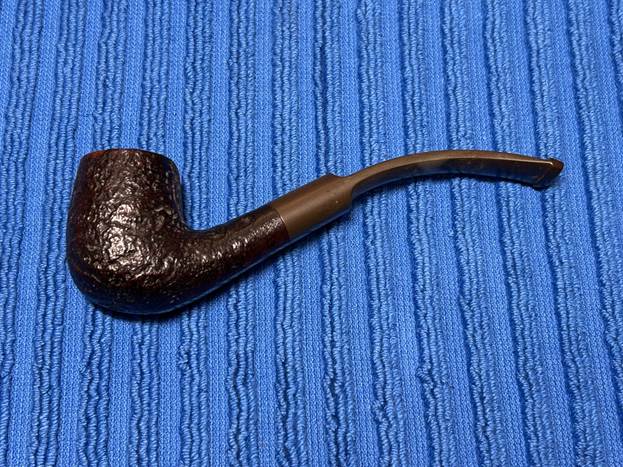
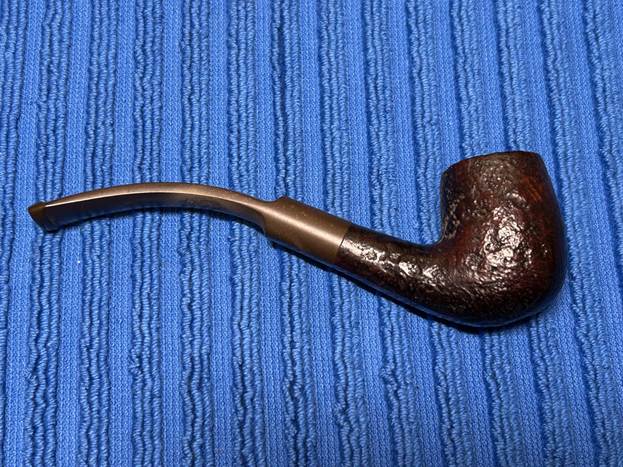
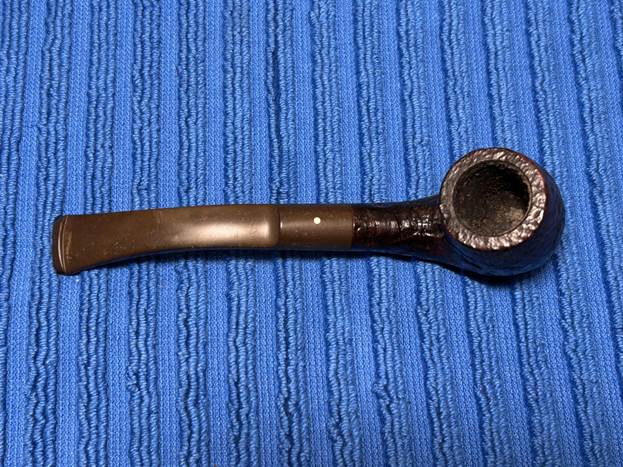
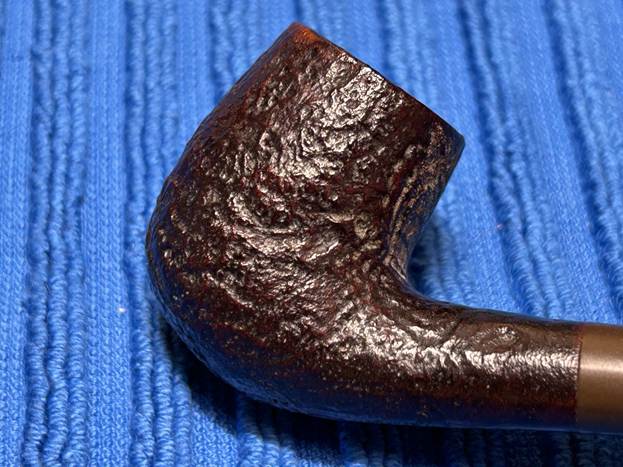
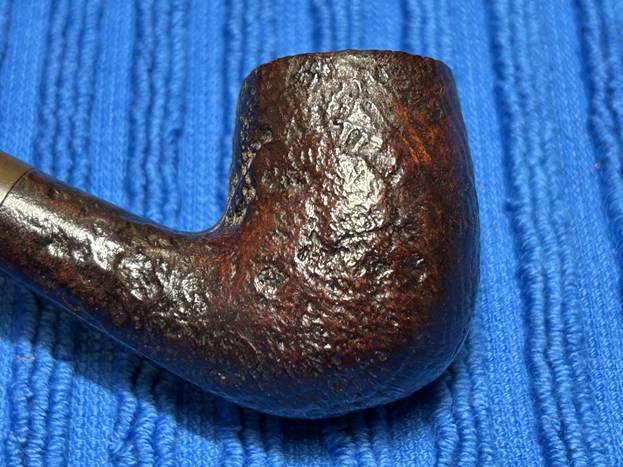
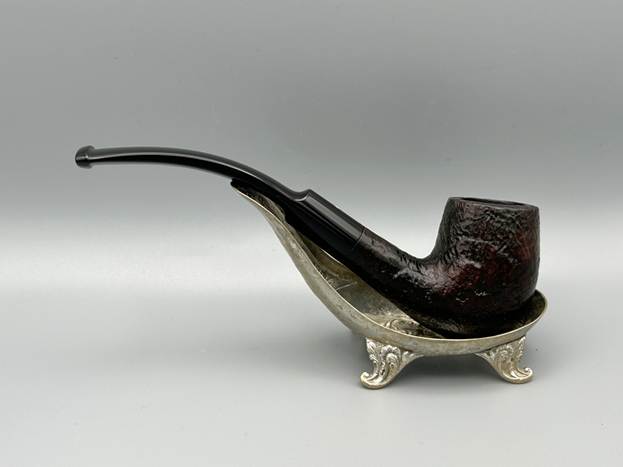
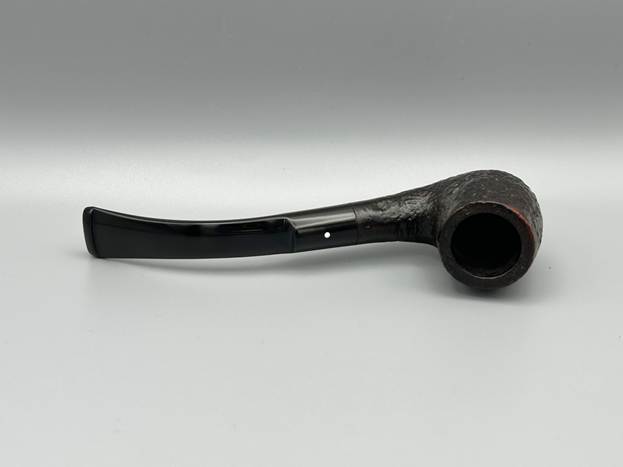
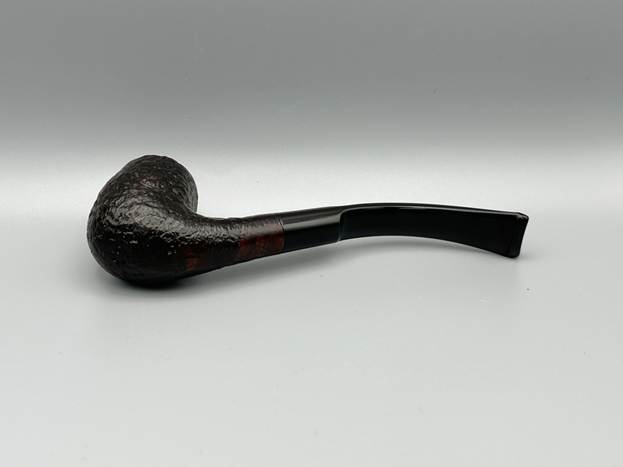
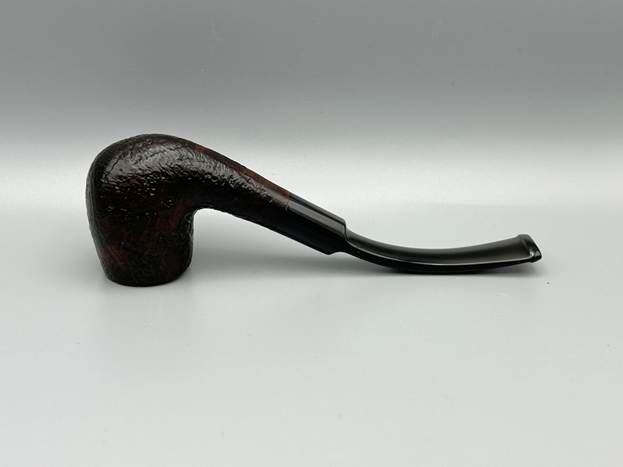
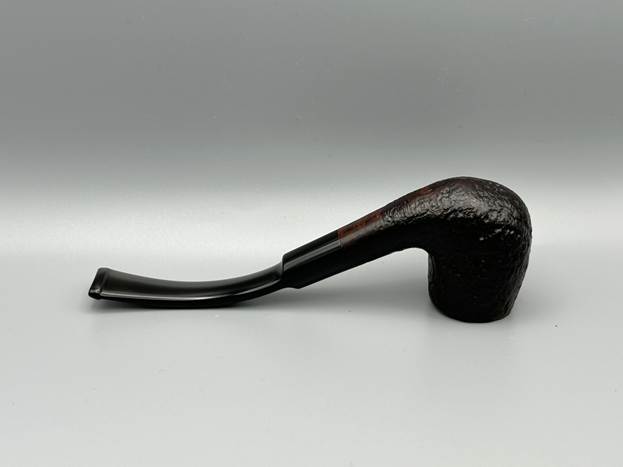
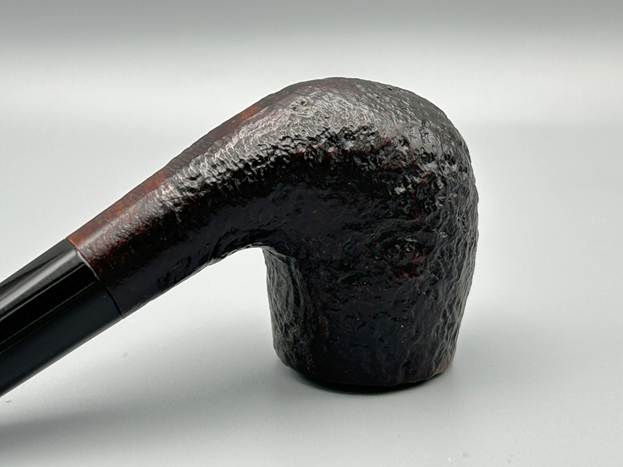
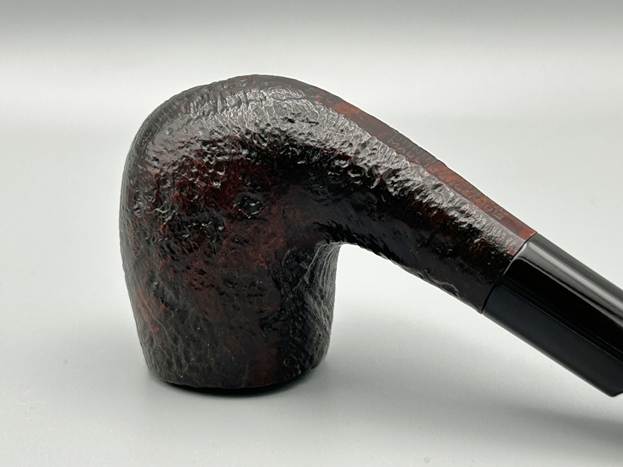
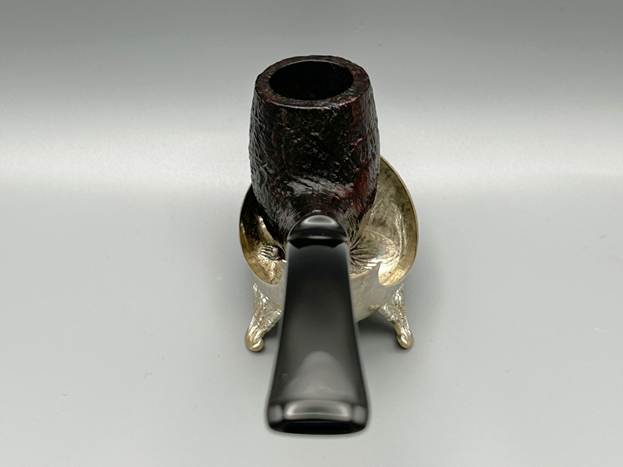
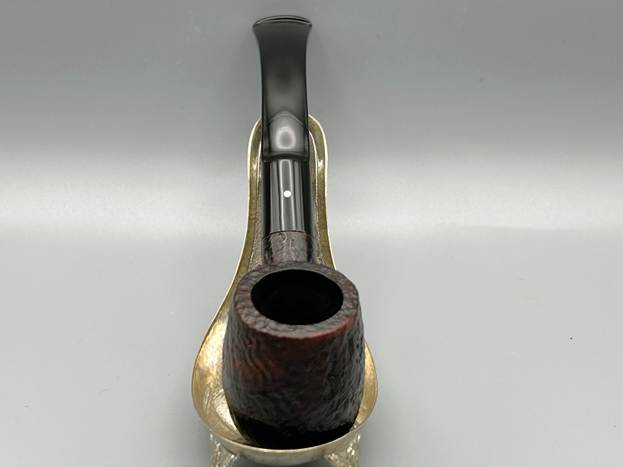
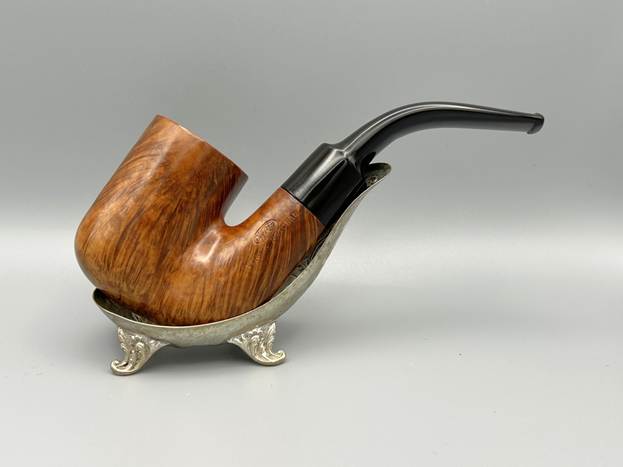
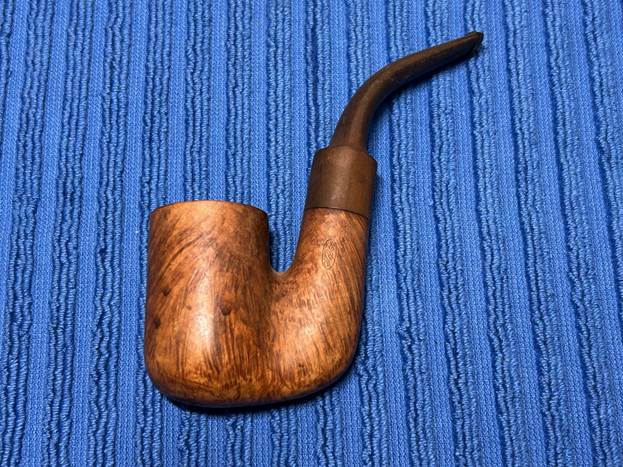
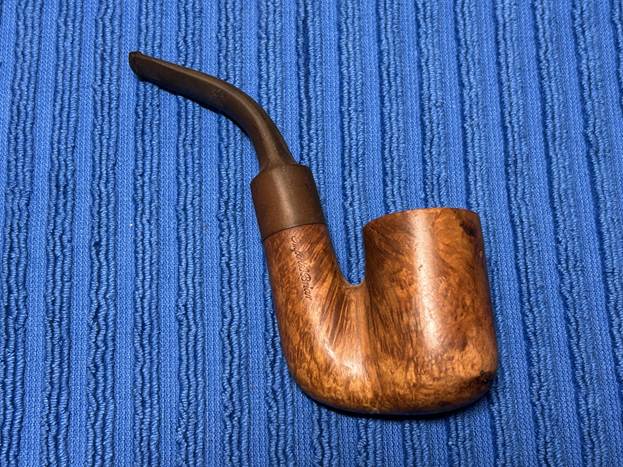
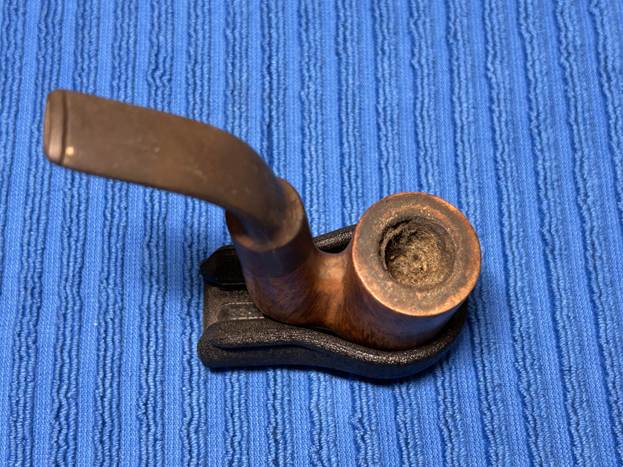
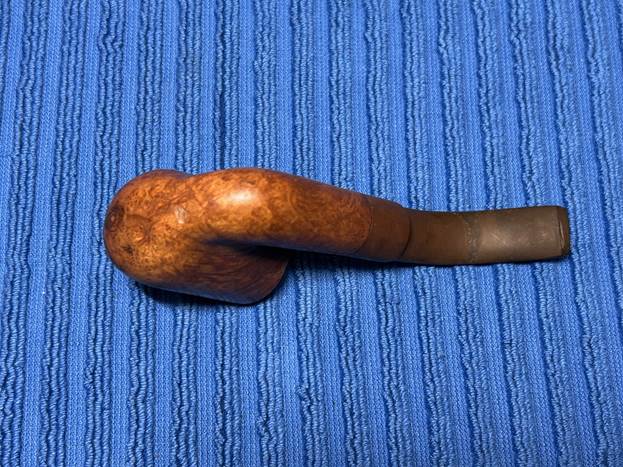
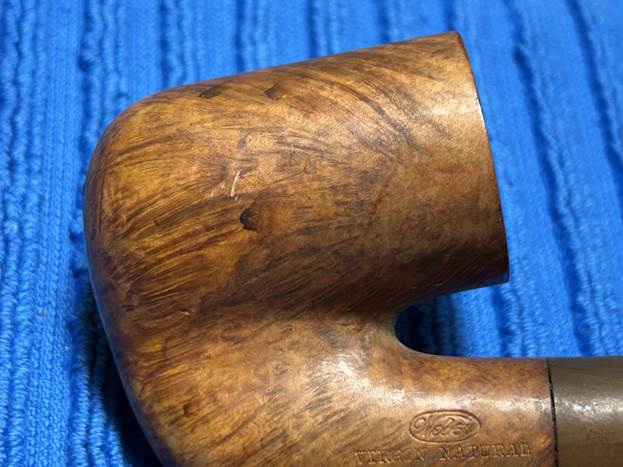
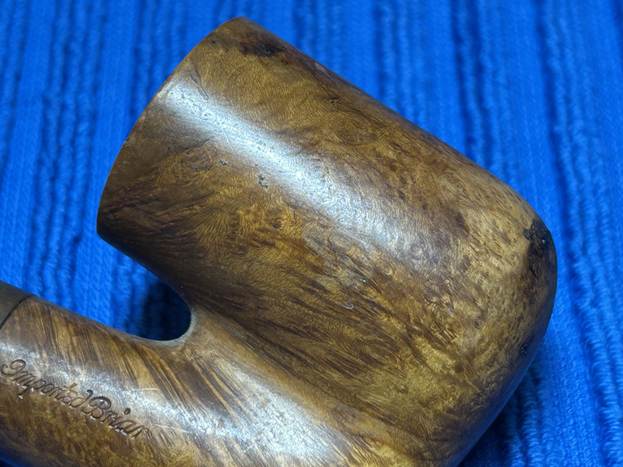
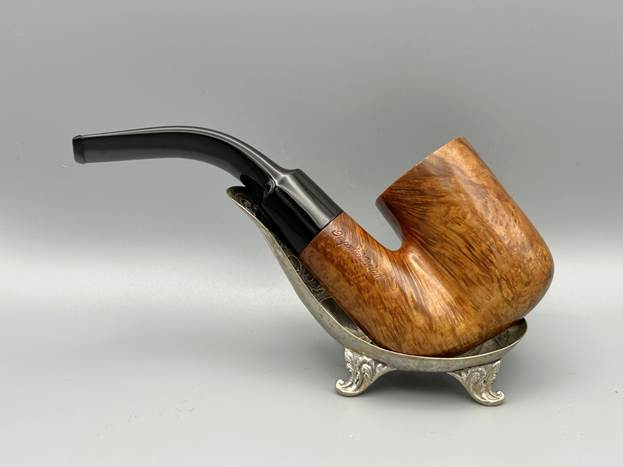
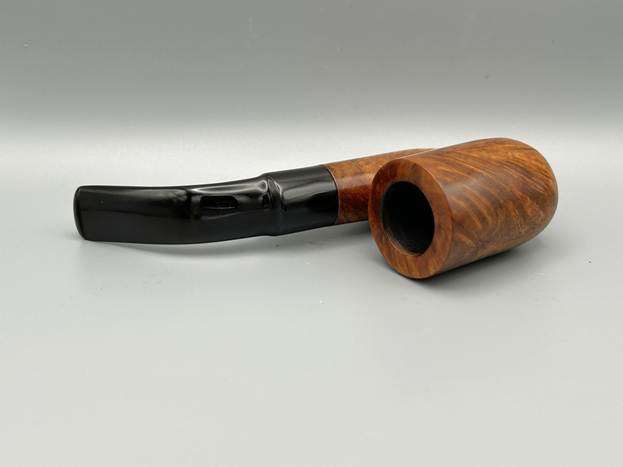
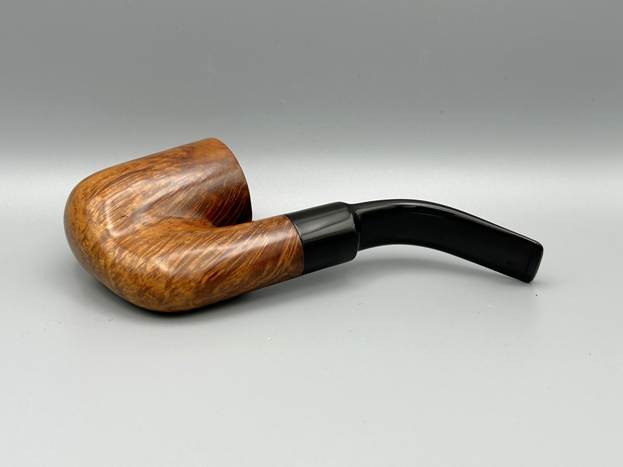
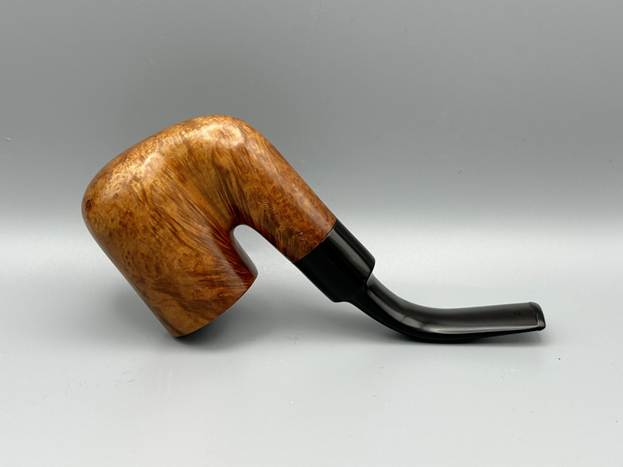
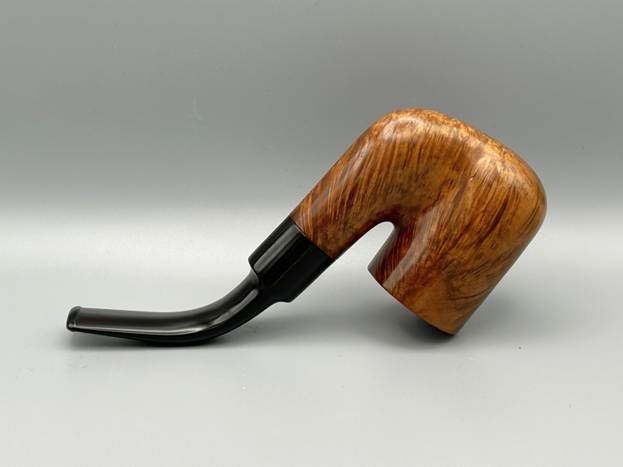
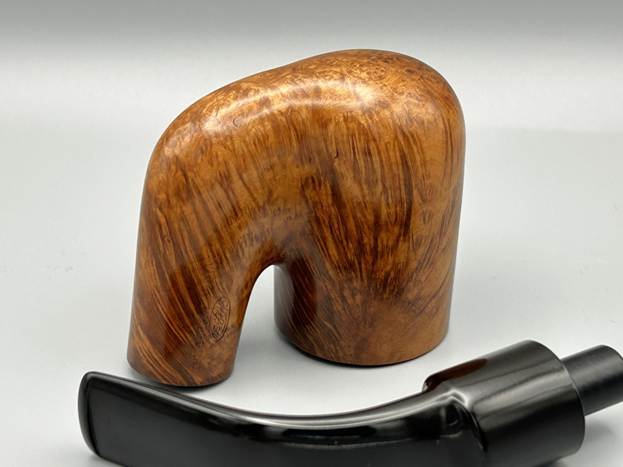
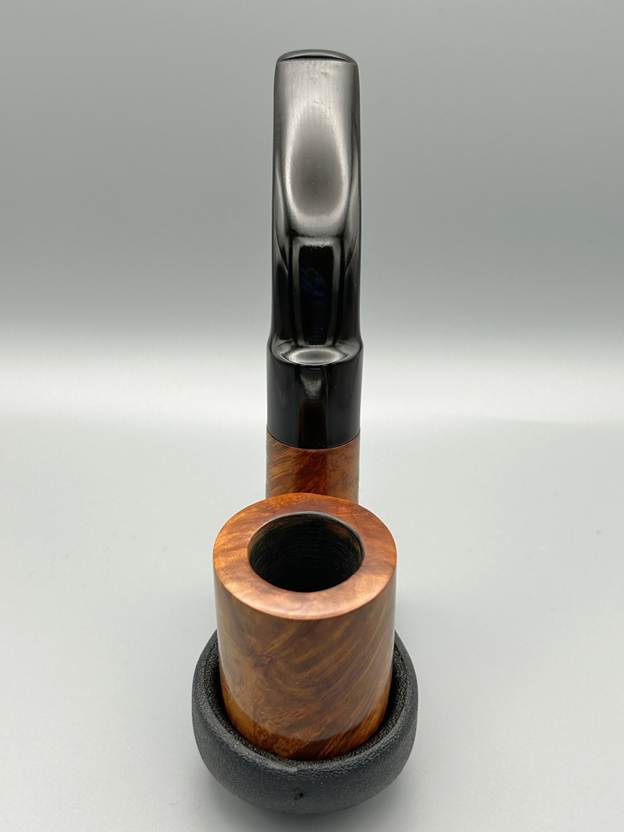
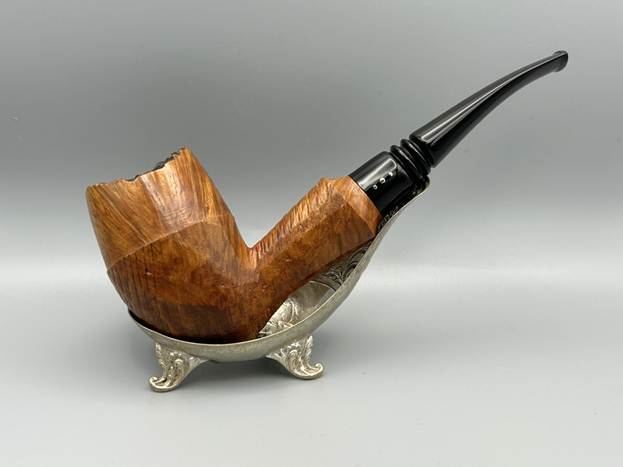
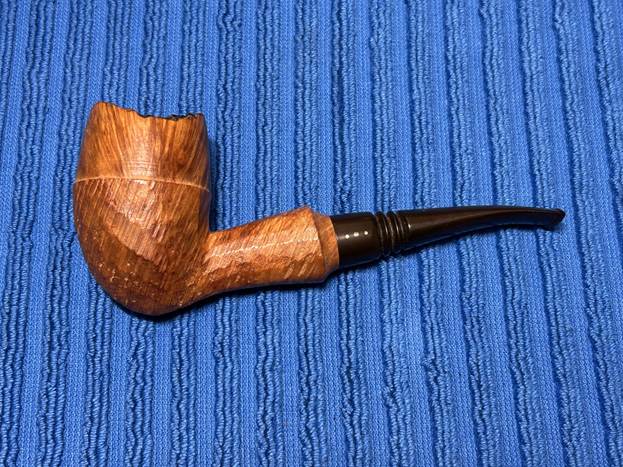
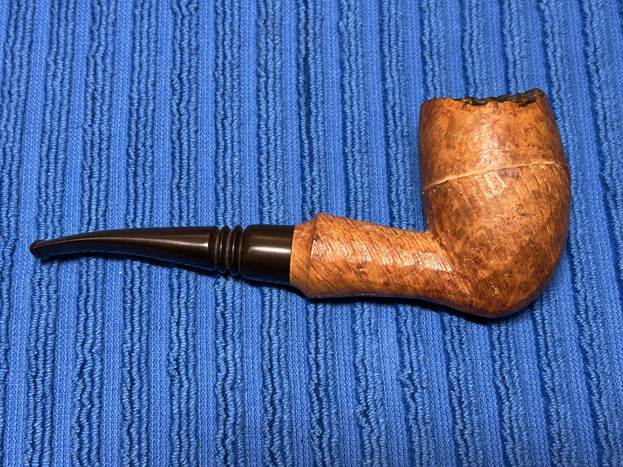
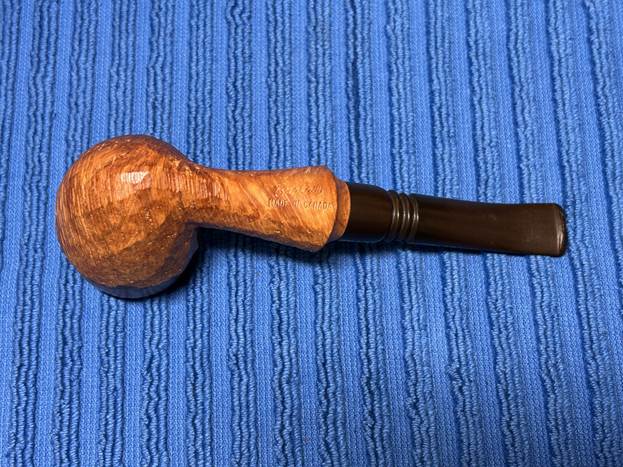
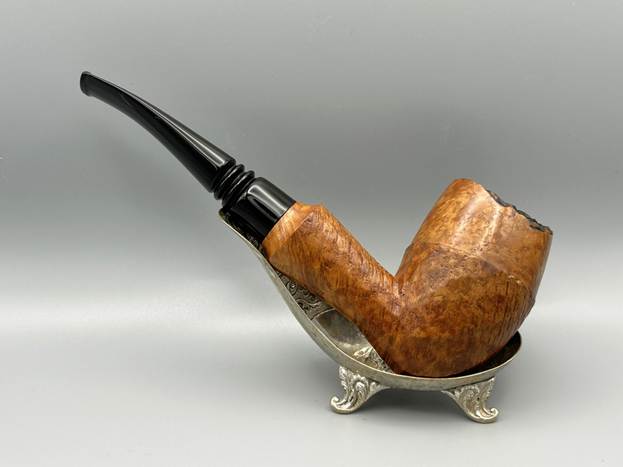
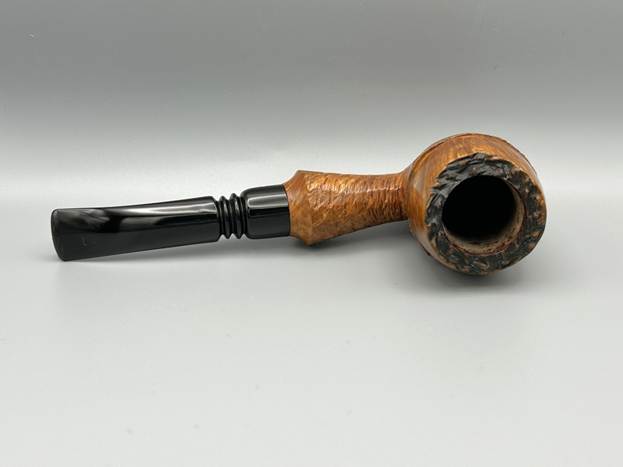
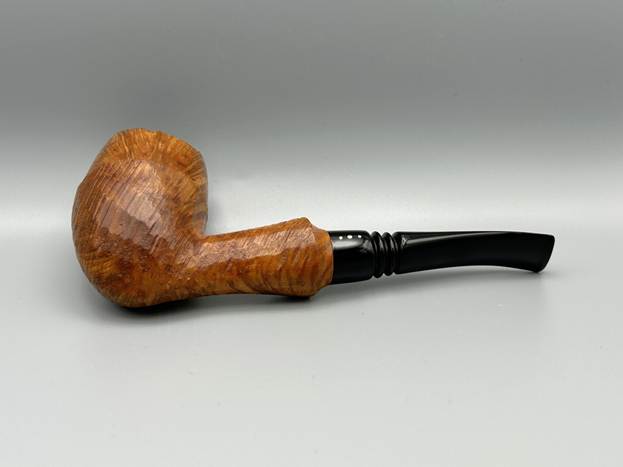
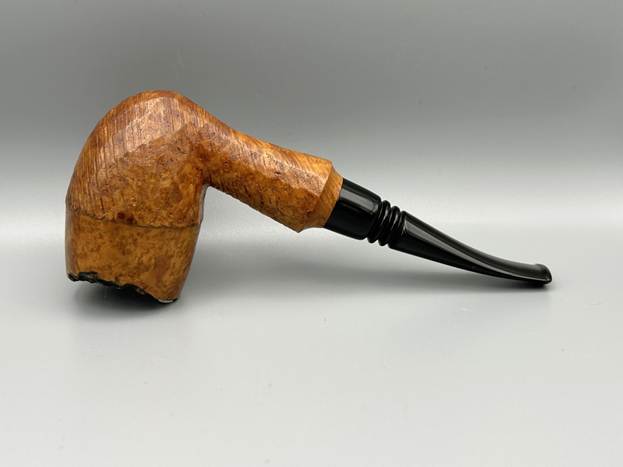
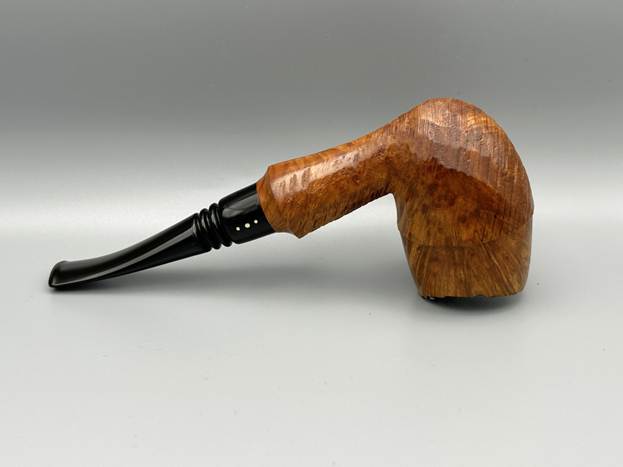
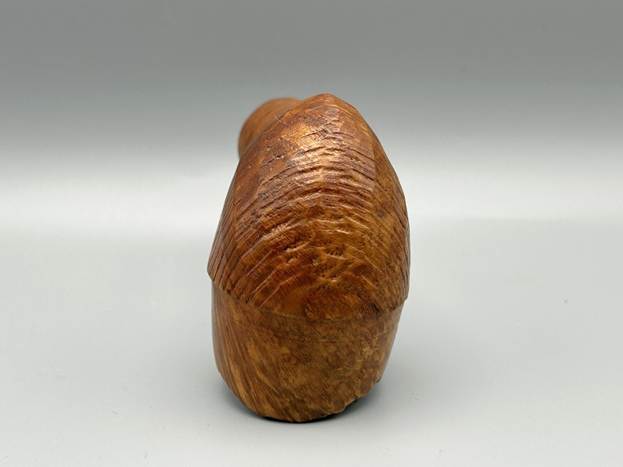
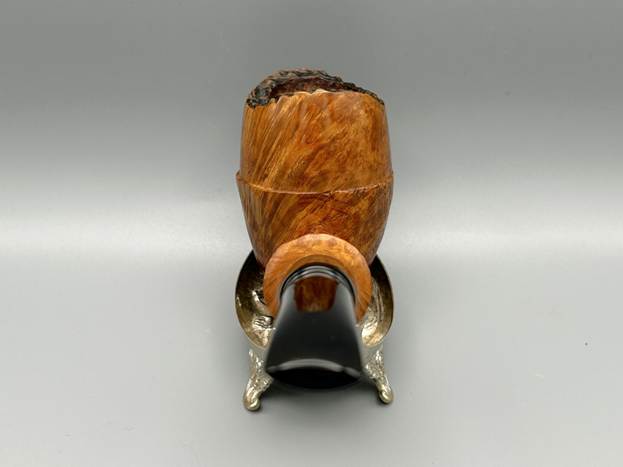
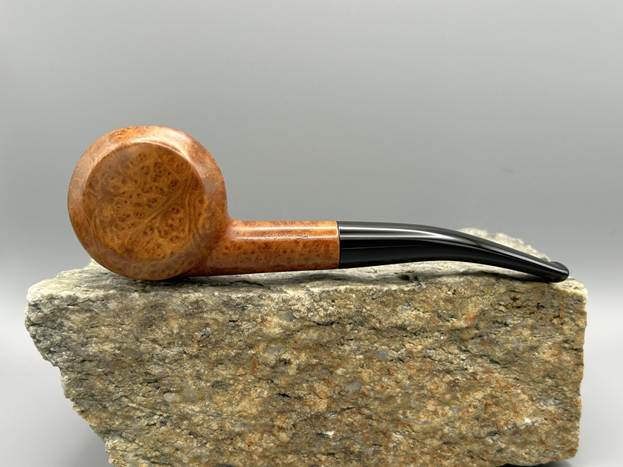
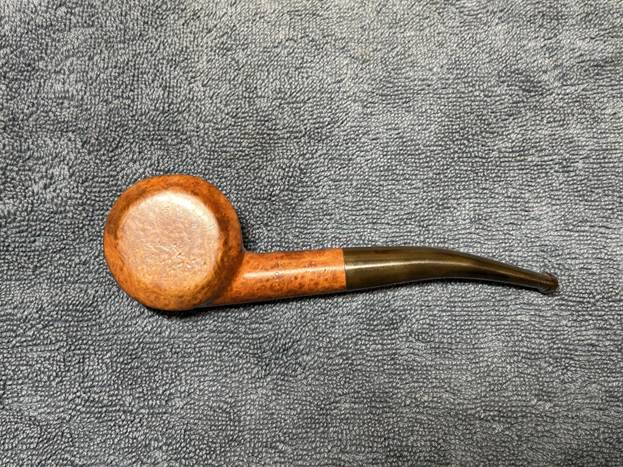
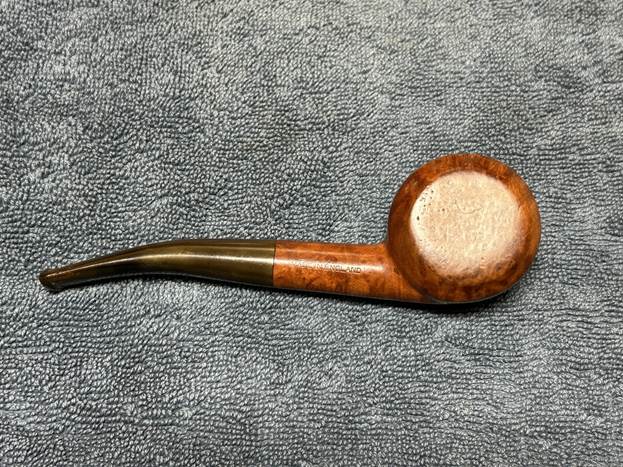
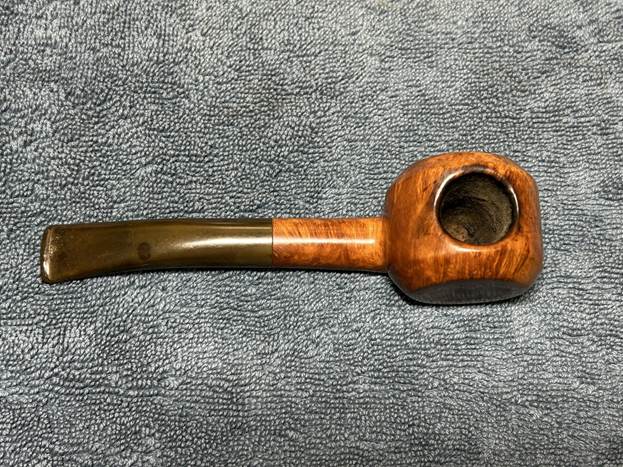
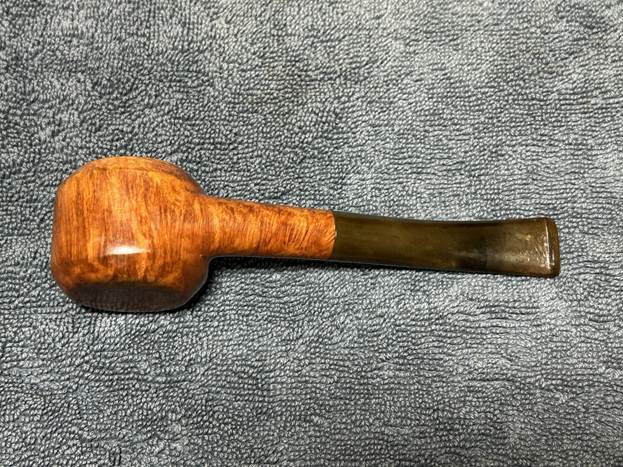
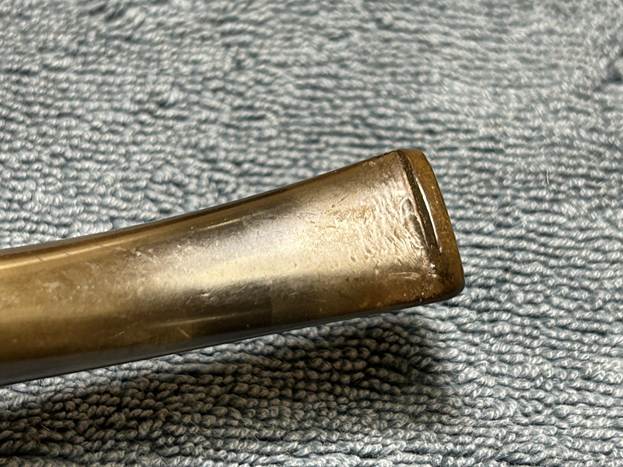
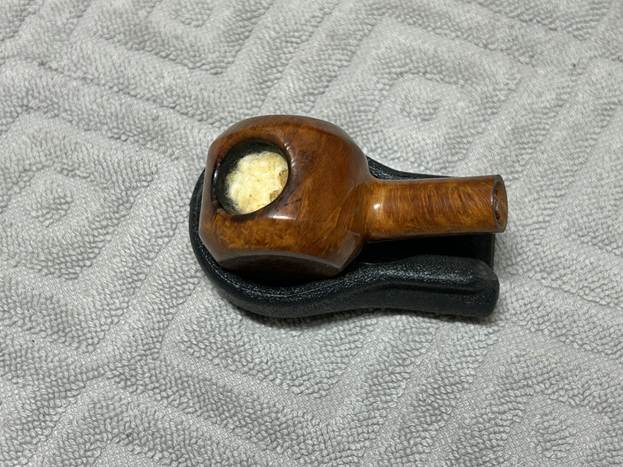
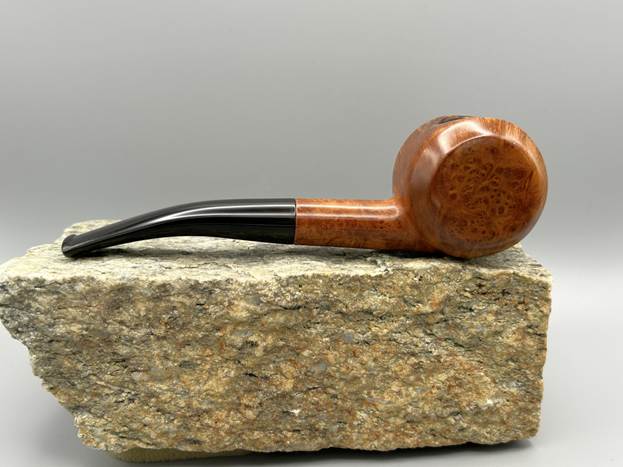
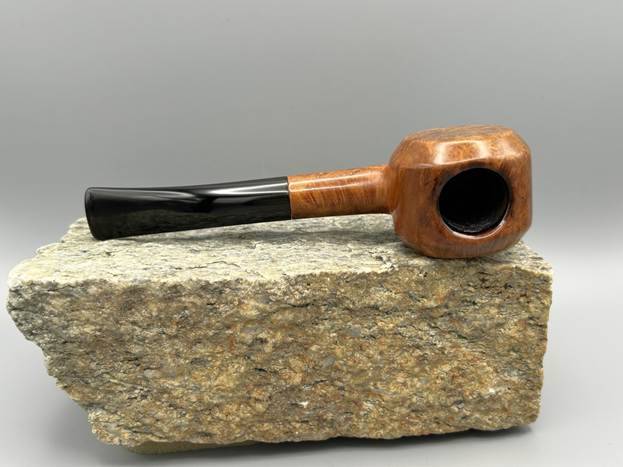
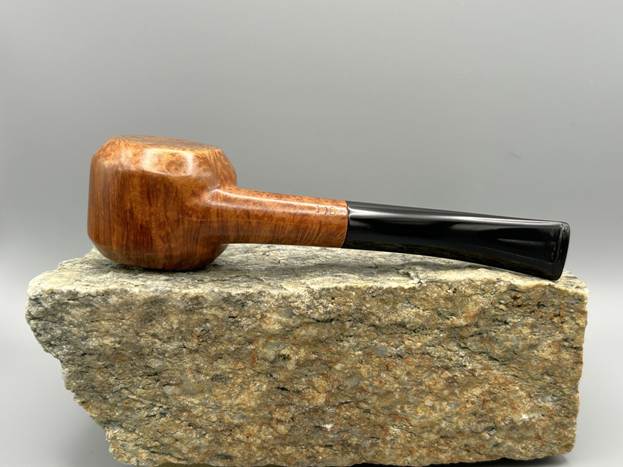
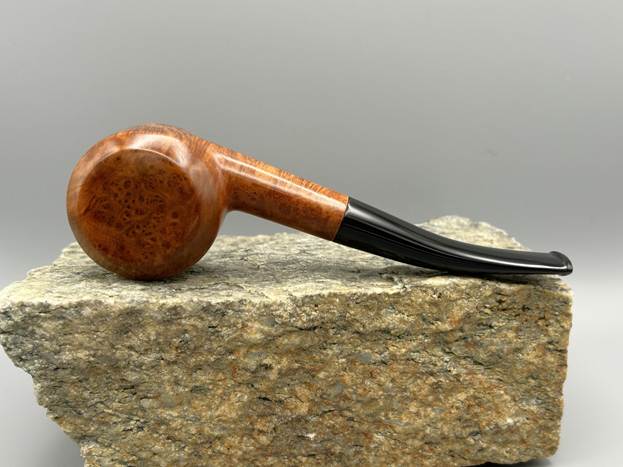
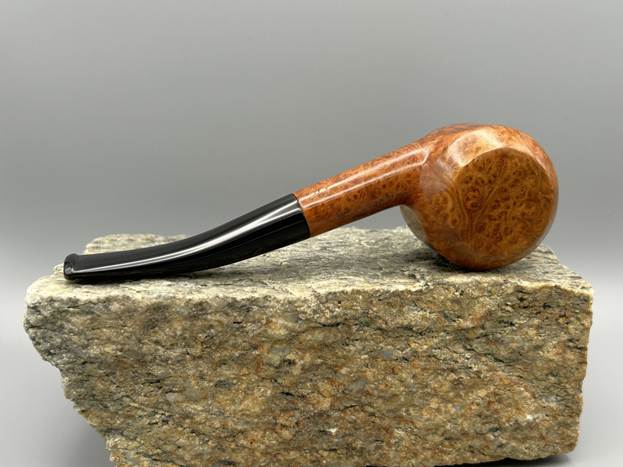
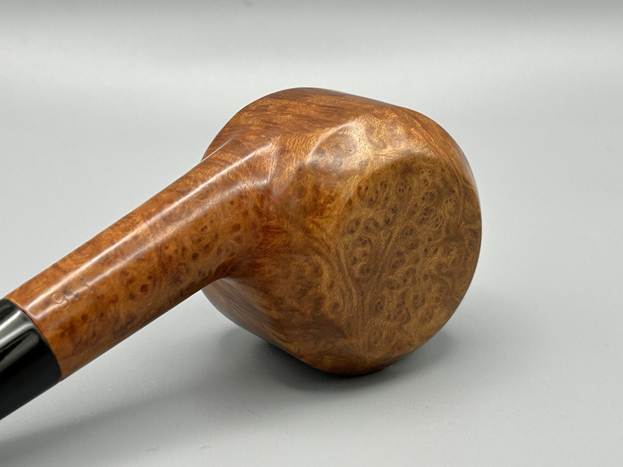
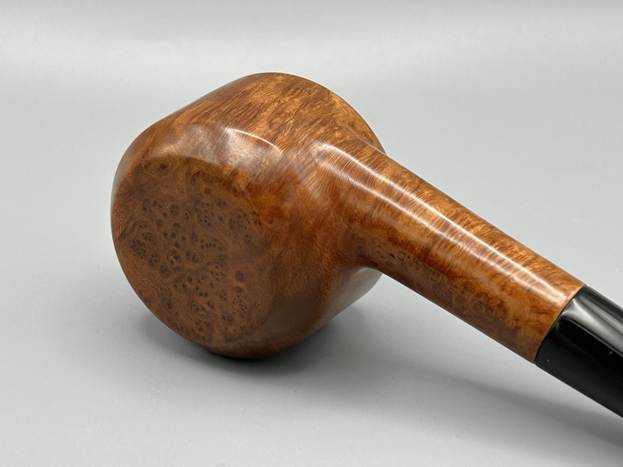
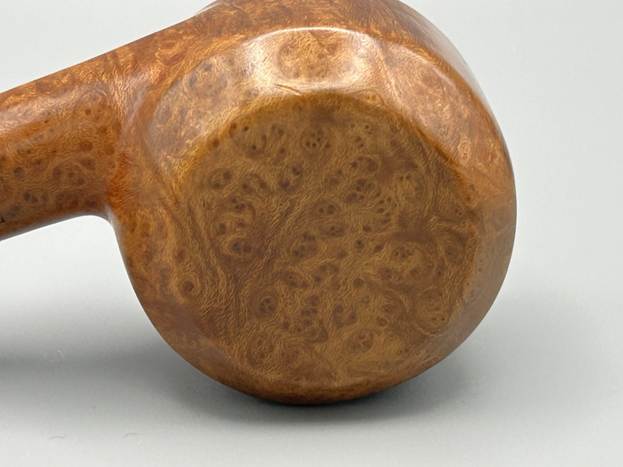
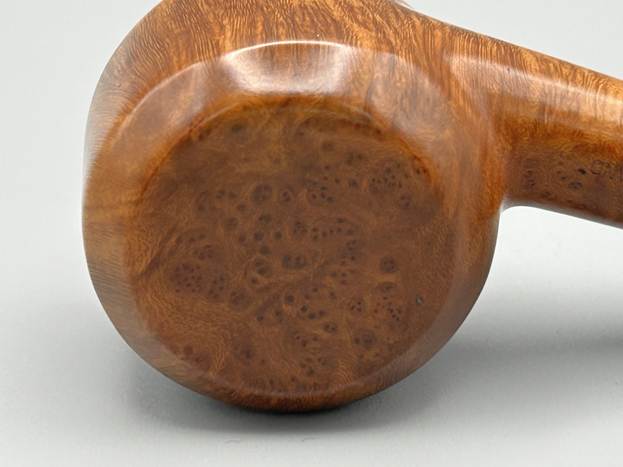
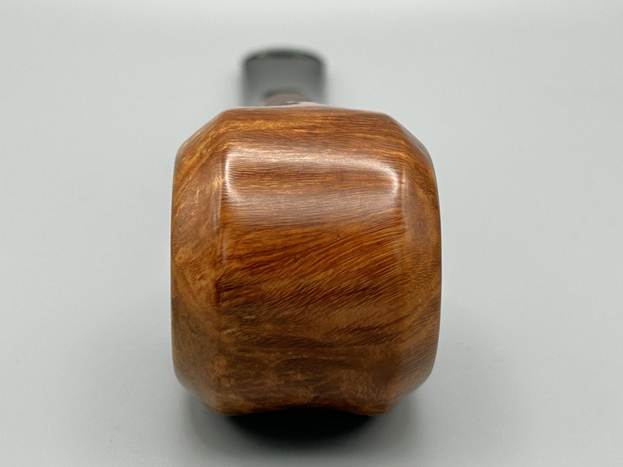
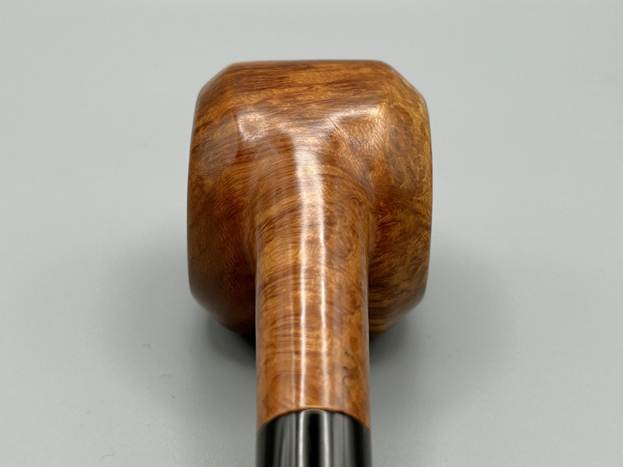
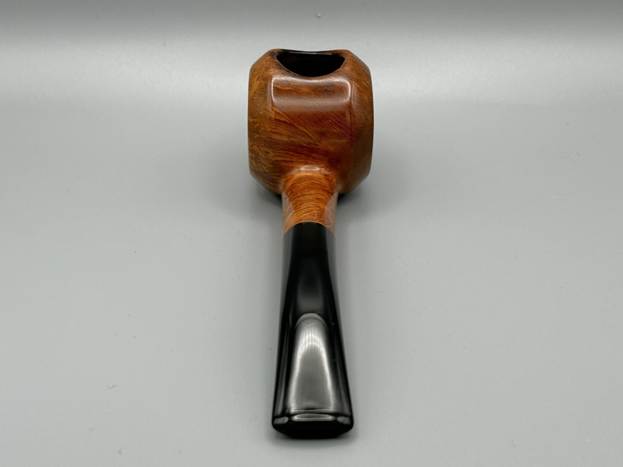
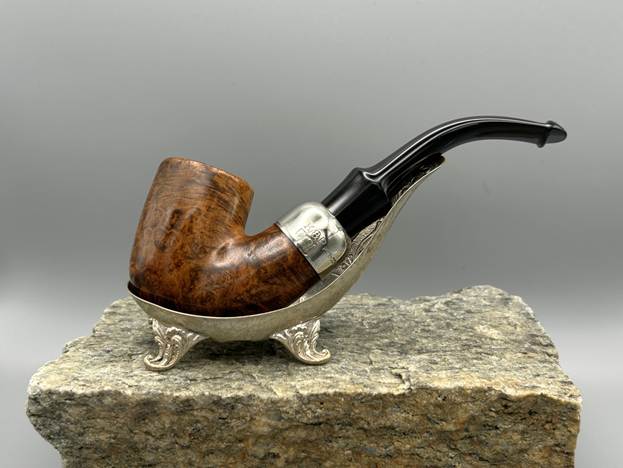
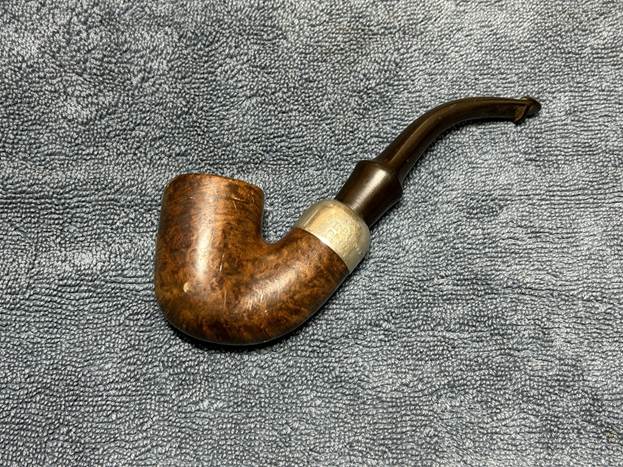
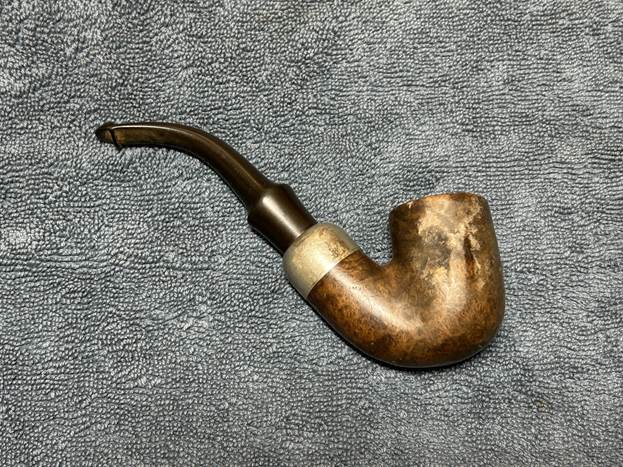
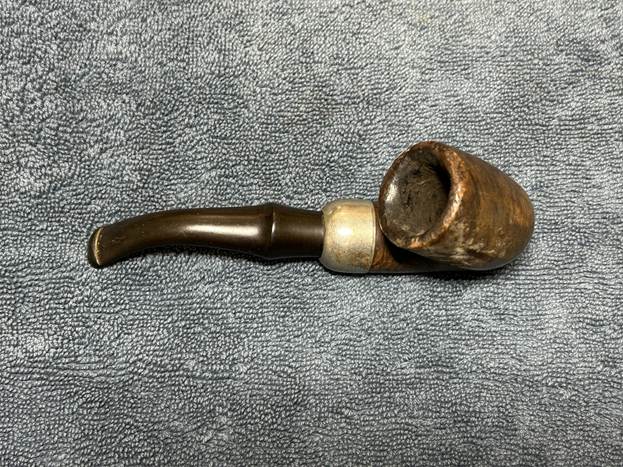
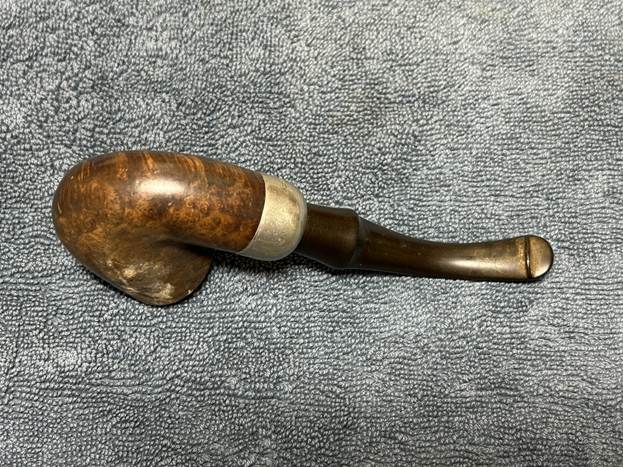
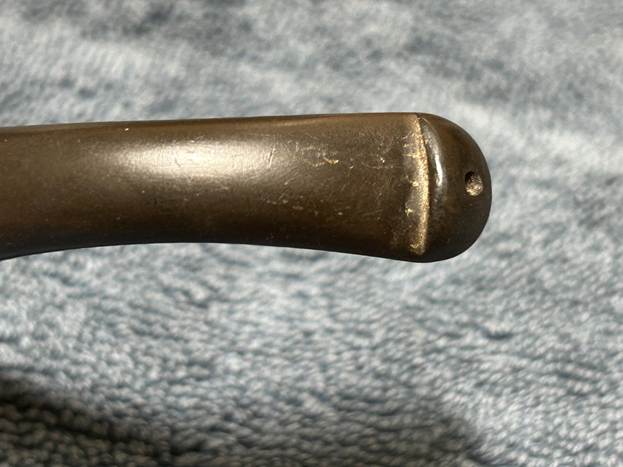
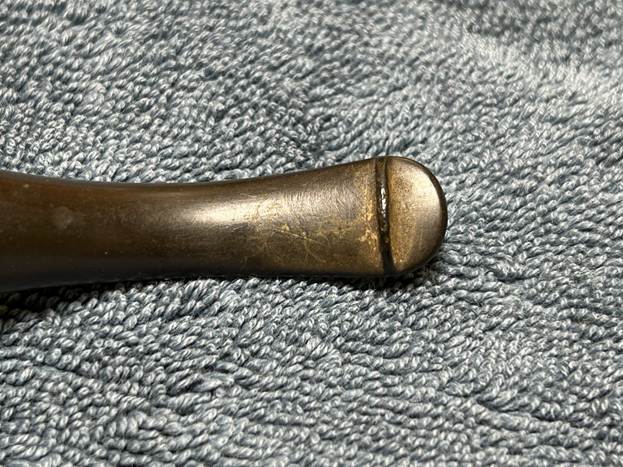
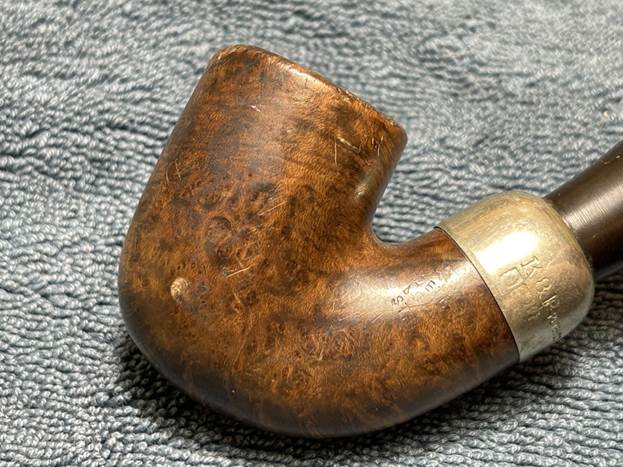
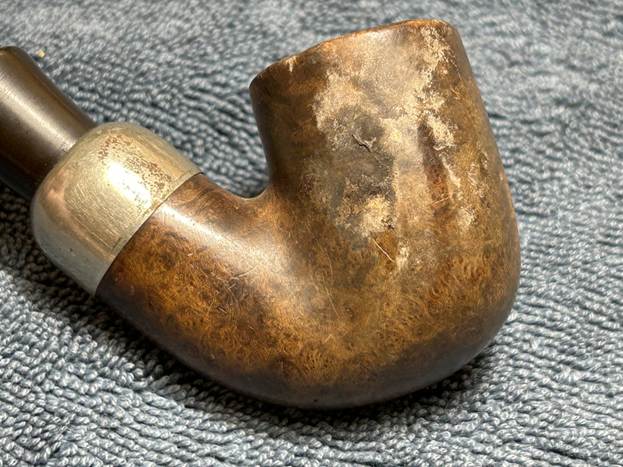
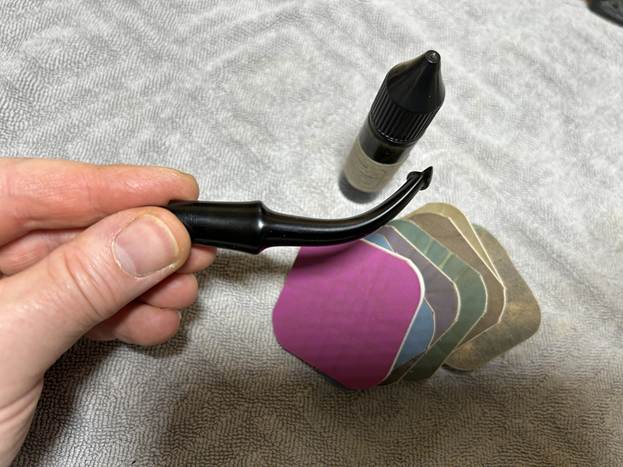
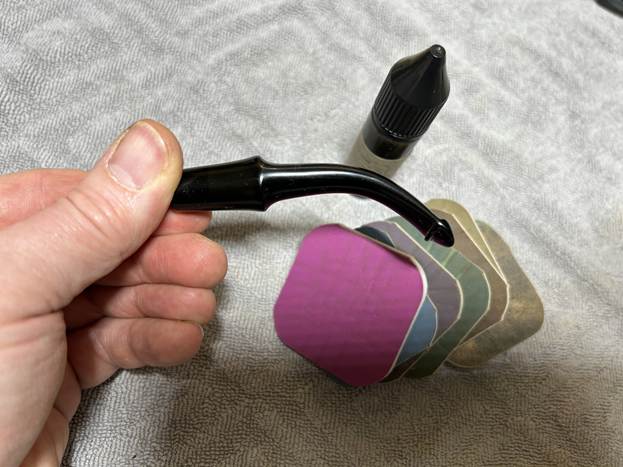
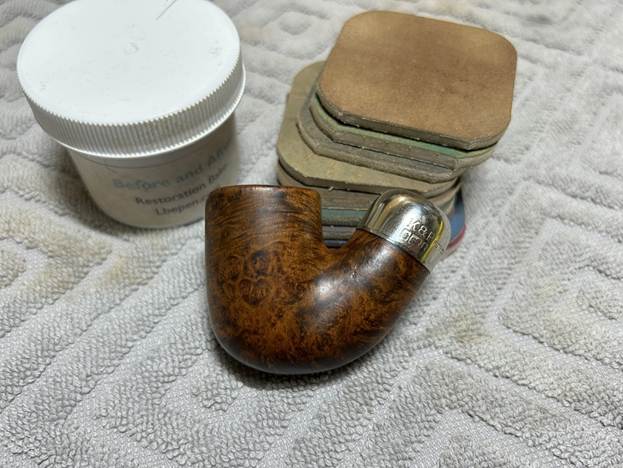
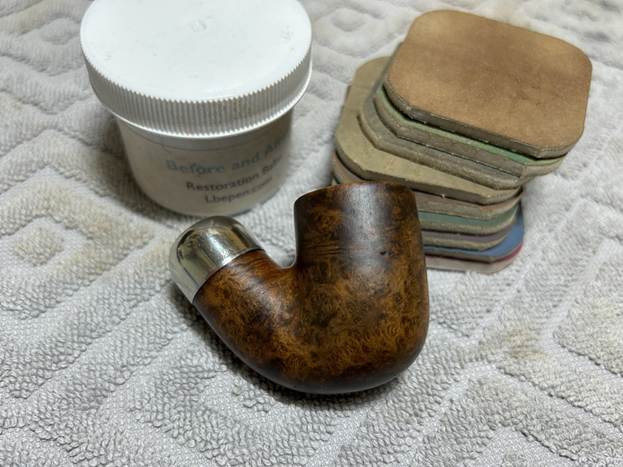
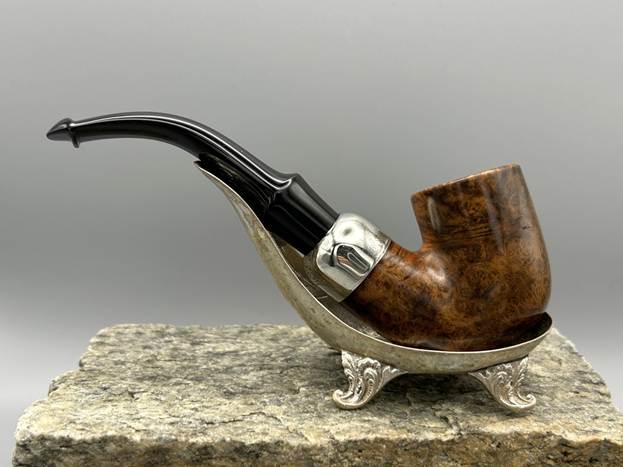
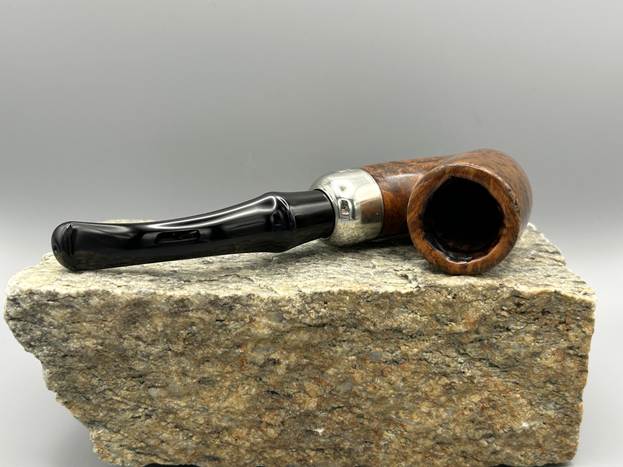
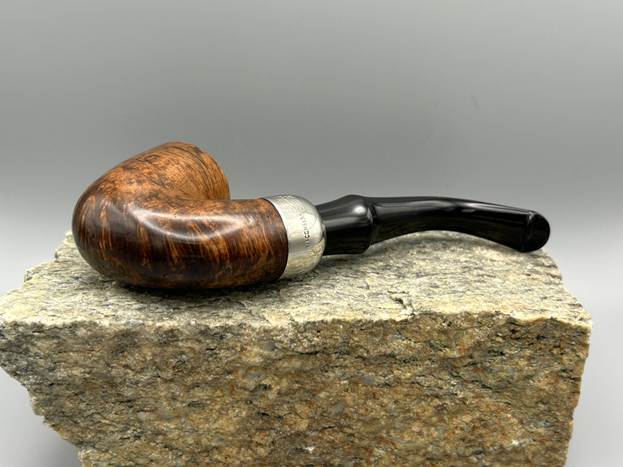
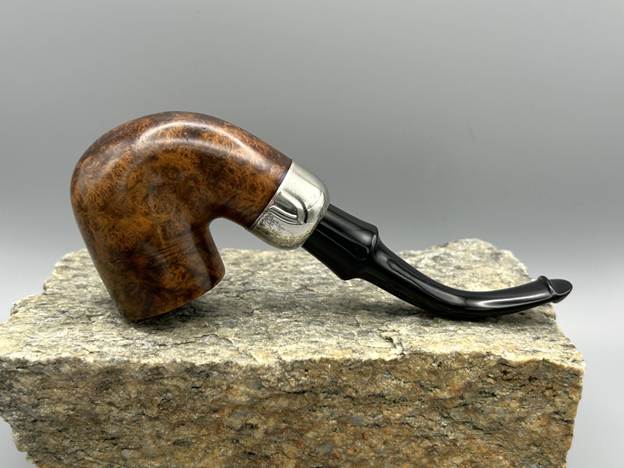
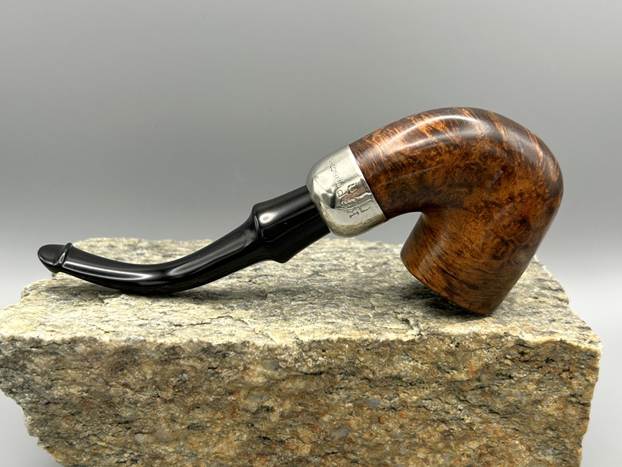
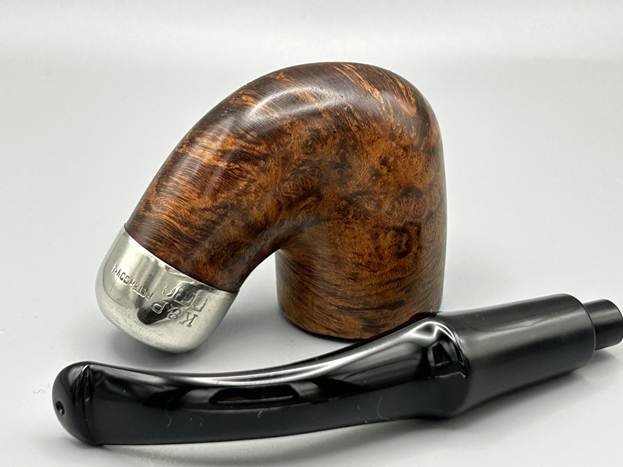
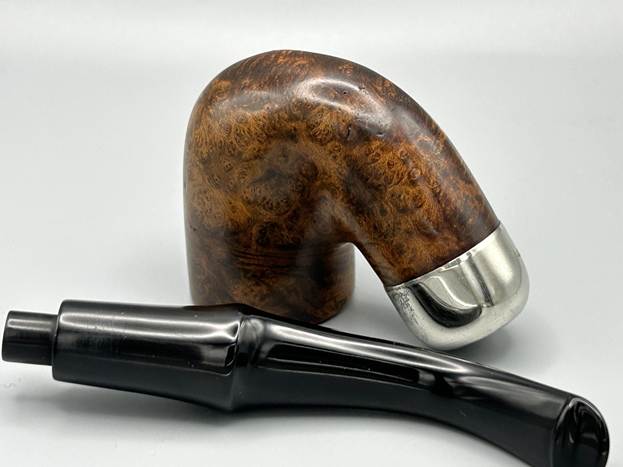
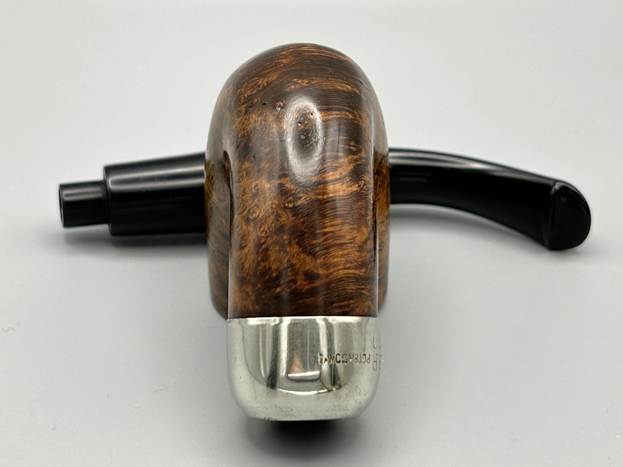
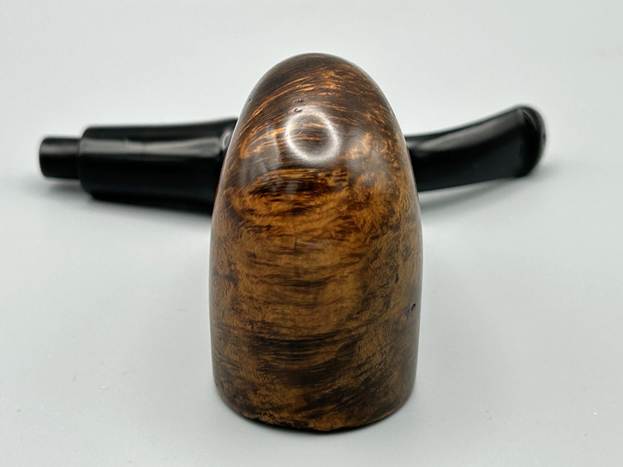
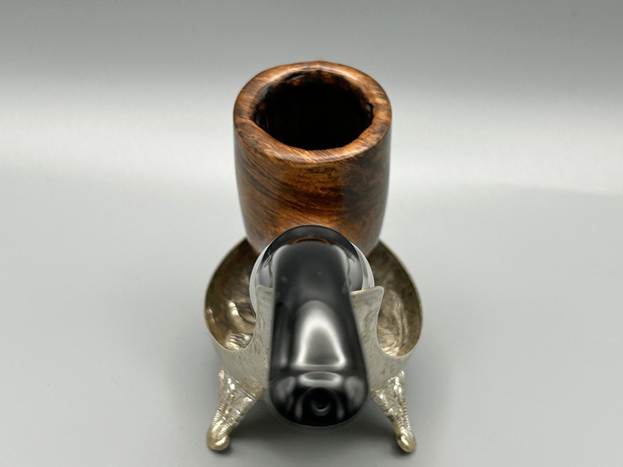
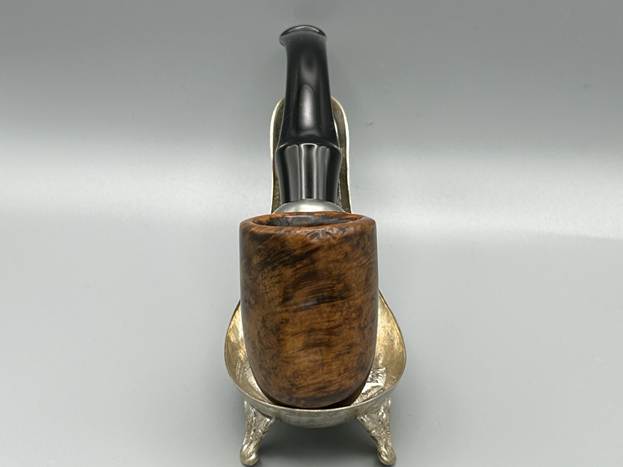
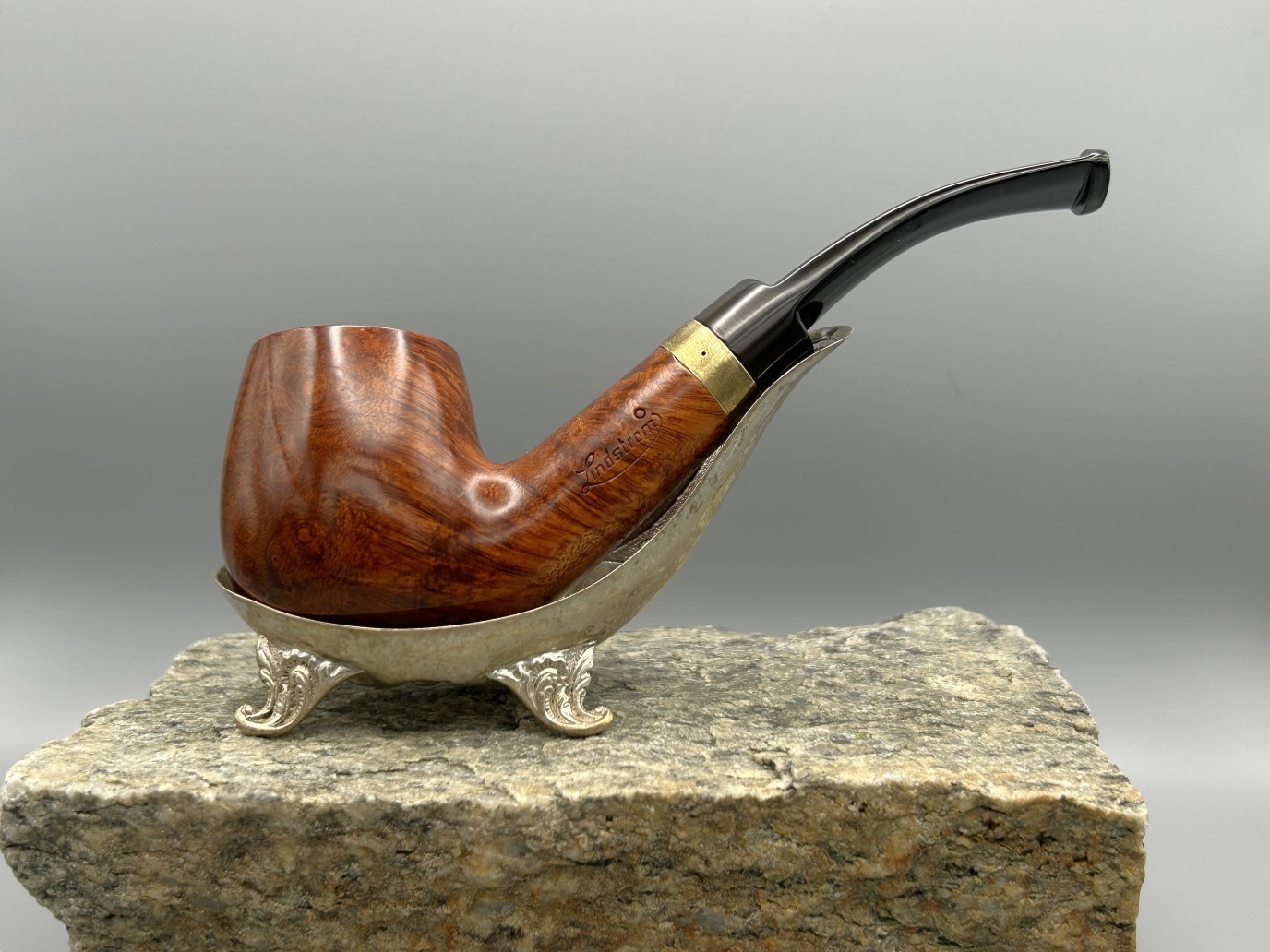
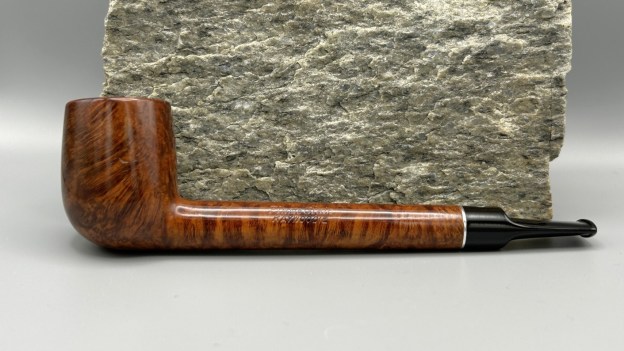
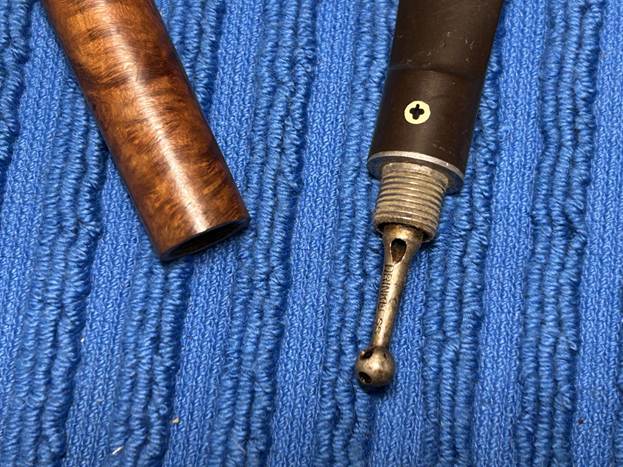
I’ve had this old timer for quite a while, but where and how I got it have been lost to my memory. I’ve been looking at it, admiringly, for a long time. This is a very attractive Kaywoodie Flame Grain 90 Lovat. Officially, Kaywoodie calls it a Canadian. It’s a nice piece of briar with a great vulcanite saddle stem with a screw tenon. The stem also has the ‘drinkless’ stinger with four holes on it – more about that later. You will also notice that the pipe has a ‘stembiter’ bit. The hole near the button is original – it is not a flaw, it’s a feature! This Kaywoodie really has a good look to it, and it is time to get it cleaned up.
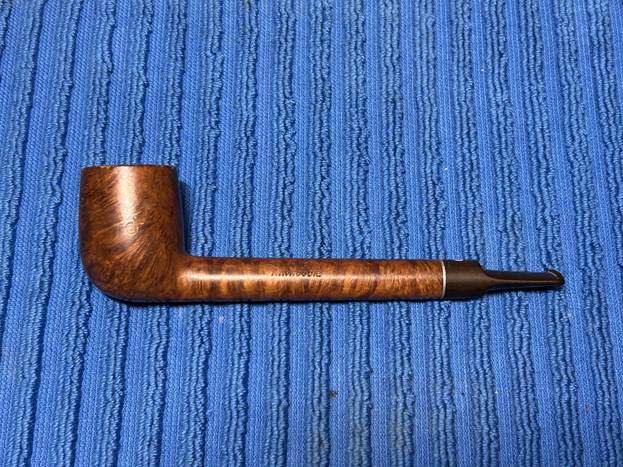
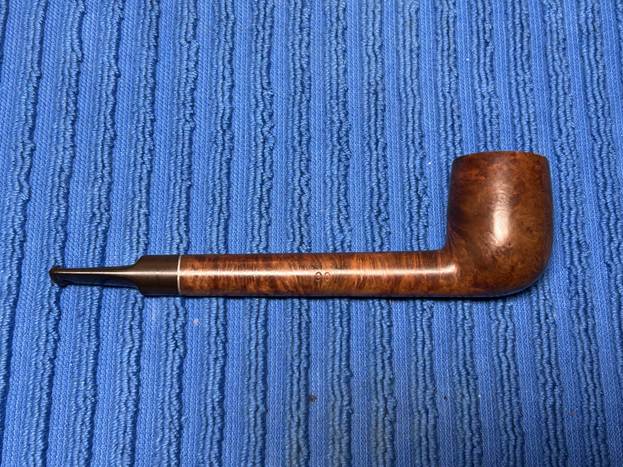
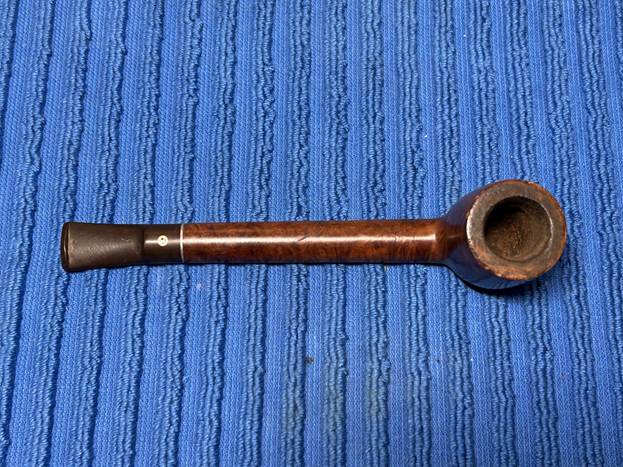
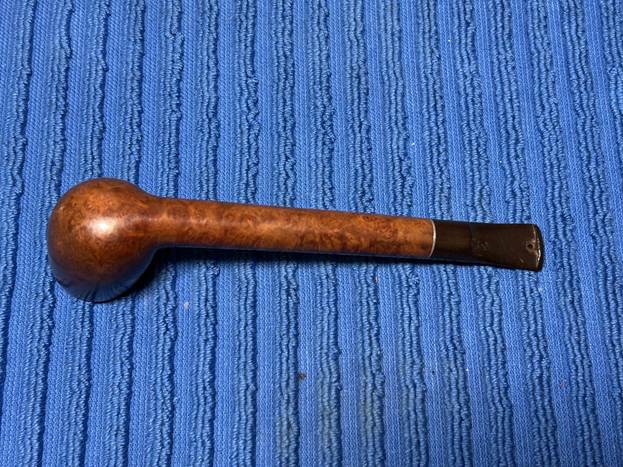
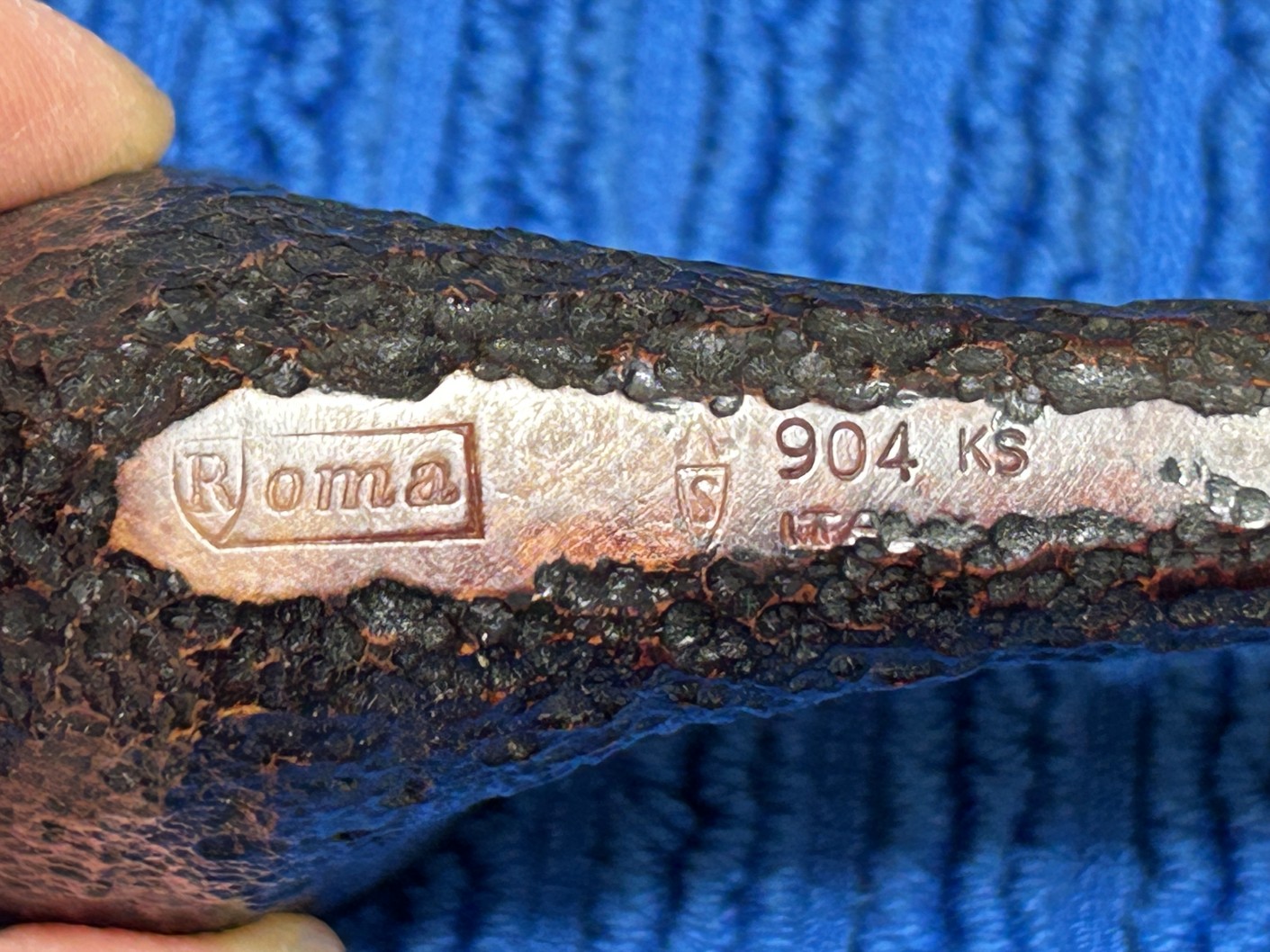
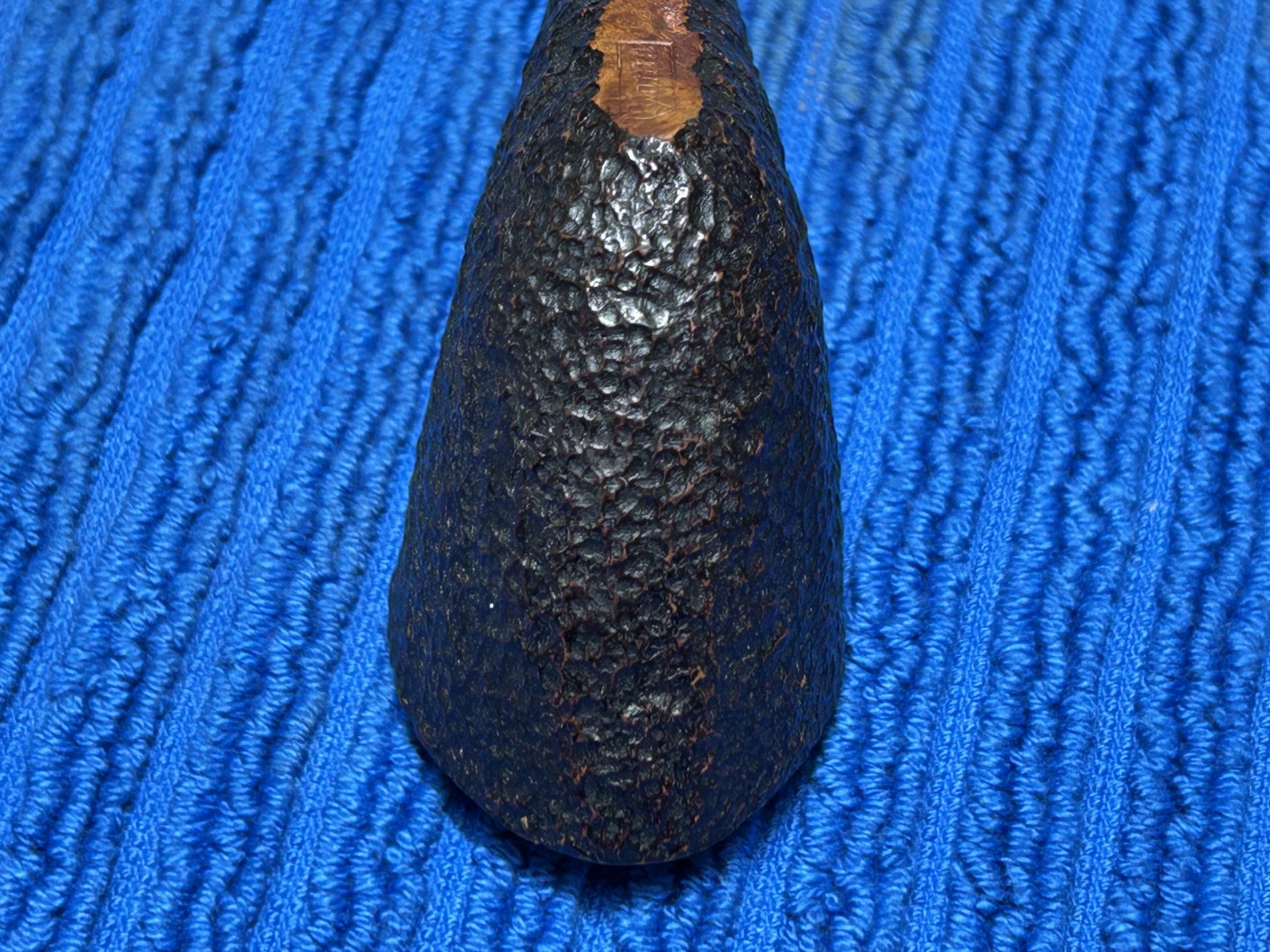
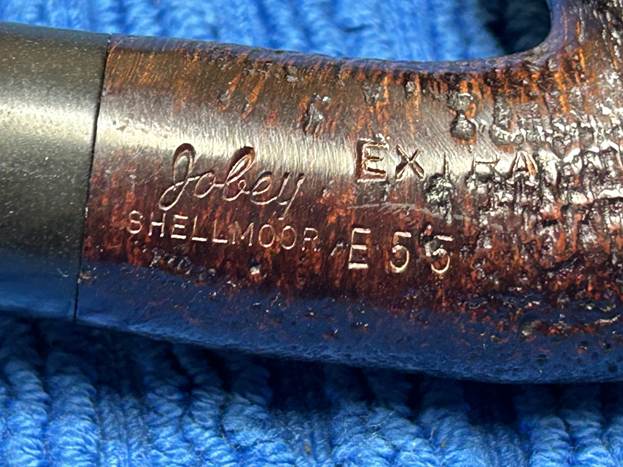
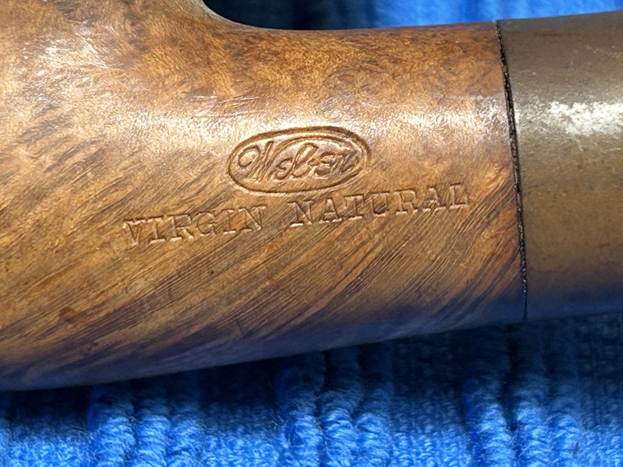
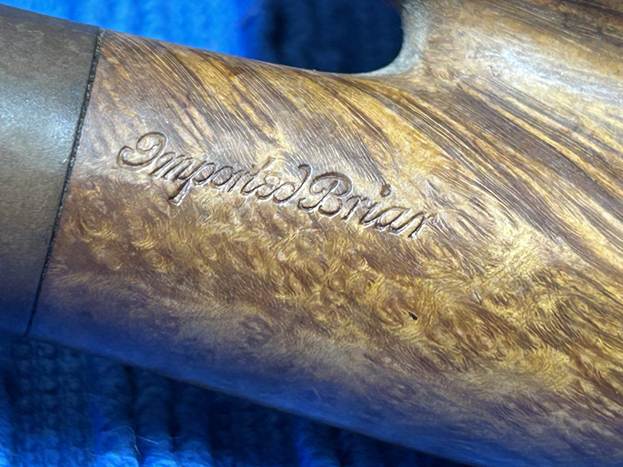
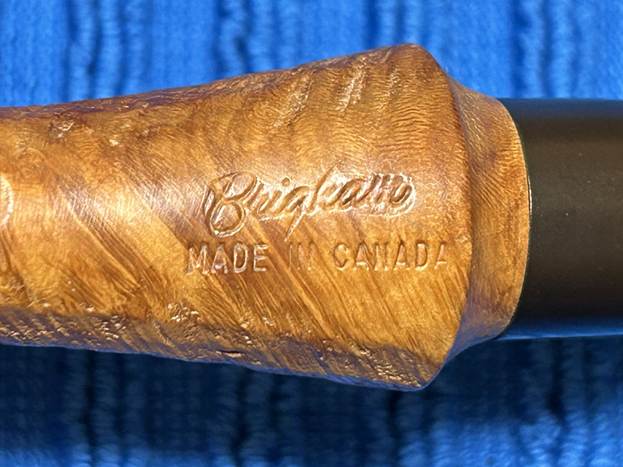
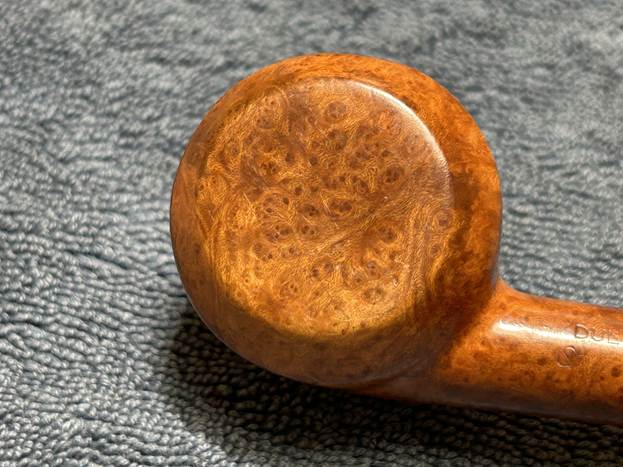
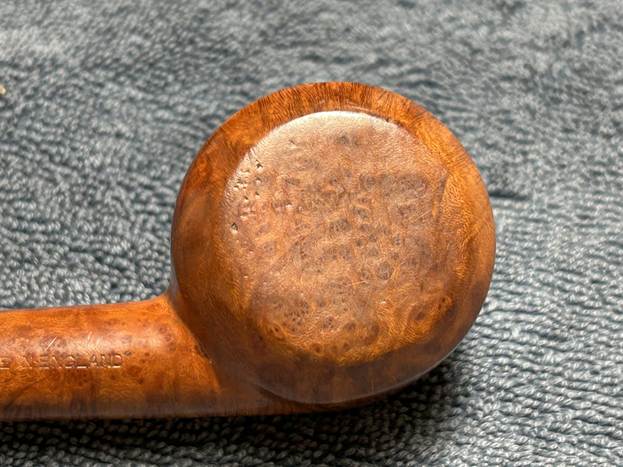
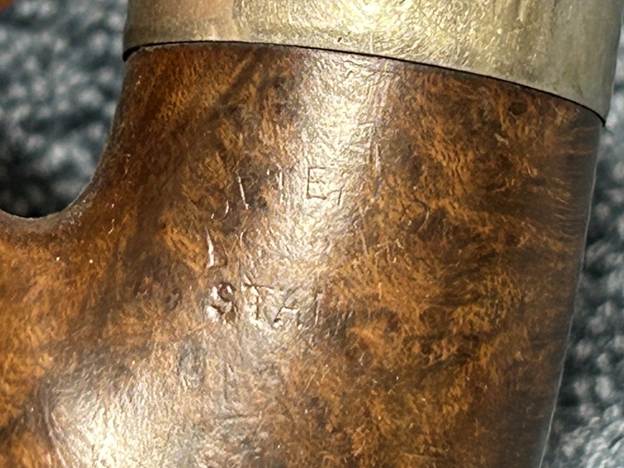
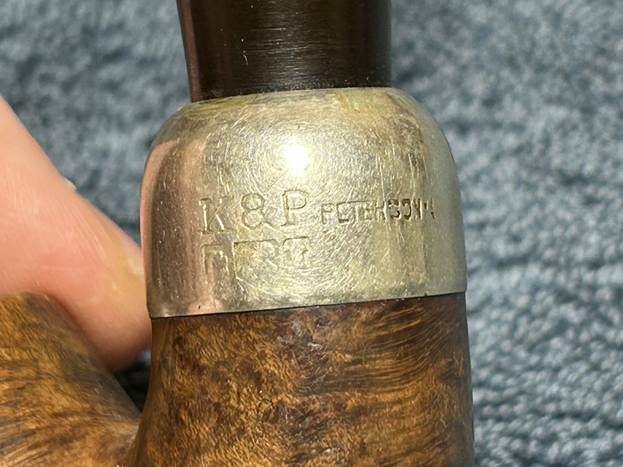
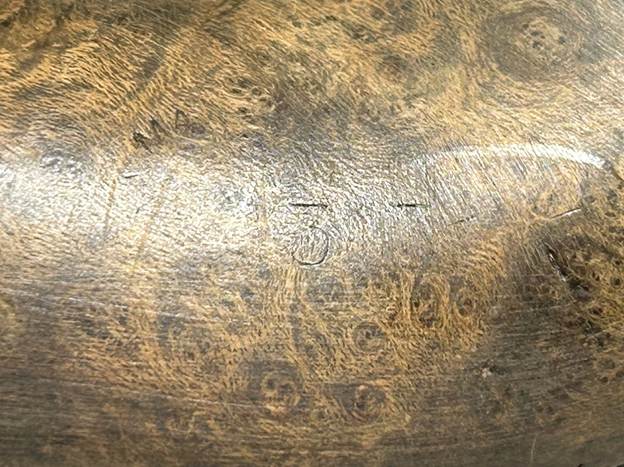
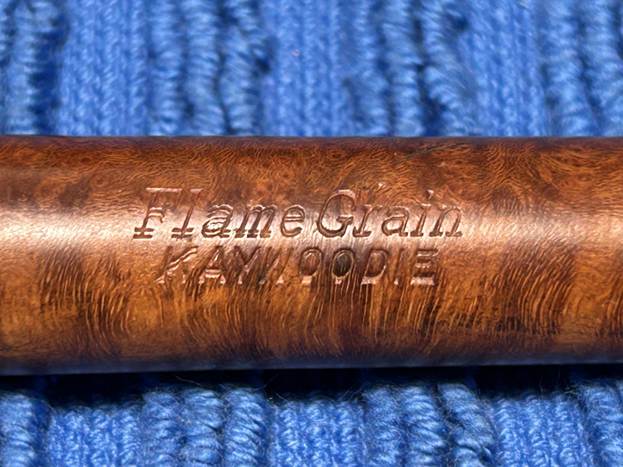
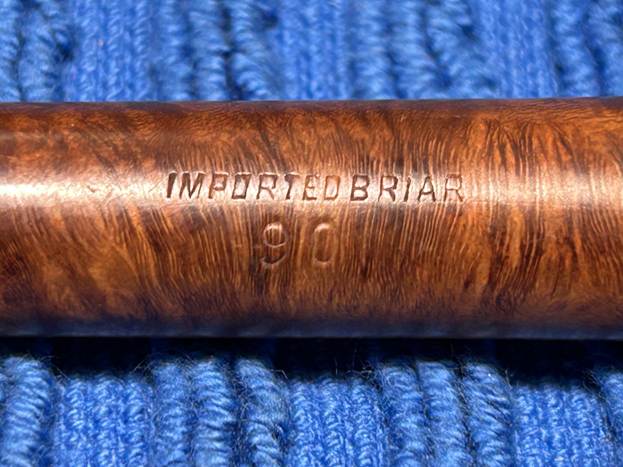
The markings on the pipe are clear and quite helpful. On the left side of the shank, we see Flame Grain [over] Kaywoodie. On the right side of the shank, we see Imported Briar [over] 90. On the top of the stem, we see the famous cloverleaf logo. On the stinger of the stem, we see the word Drinkless – but no patent or registration number. Let’s see if we can narrow down a time period for this pipe. Kaywoodie pipes take a bit of work to figure out, but I think we can do it.
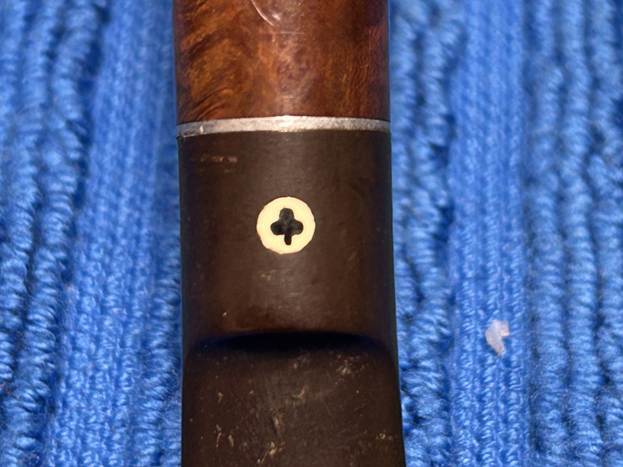
First, let’s use the cloverleaf logo on the stem to help us date this. Pipephil says:
The cloverleaf logo: the round logo (black cloverleaf in white circle or white cloverleaf in black circle) was first used in 1937. Up until the late 40’s this logo was used on all of the upper-grade pipes. The concomitant use of the plain white cloverleaf and the disk inlaid logo continued until the early 80’s. Up until the late 1940’s/early 50’s, the logo was on top of the stem. After that the logo was moved to the side of the stem (exceptions exist).
The emboldened text above is my emphasis. To begin, we have a range of late-1930s to early-1950s. So far, so good. What about the ‘stembiter’ bit? This was a head-scratcher. The ‘stembiter’ bit was introduced in 1955 (according to Pipedia and Pipephil), but that date doesn’t jive with the information above. I ended up finding a footnote on Pipedia which may offer the answer:
The Stembiter pipe was shown in a 1938 Yello-Bole catalog and … may have been in the Kaywoodie line before 1955.

I suspect that this is one of the earlier versions – because this stembiter has only one hole, not two. This would also seem to fit with what I found concerning the Flame Grain line. Here is a screen capture from Pipephil:
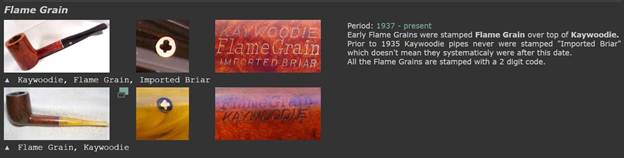
Note that it says that ‘Early Flame Grains were stamped Flame Grain over top of Kaywoodie.’ – and that’s what we see on this pipe. So, a picture is starting to form. Let’s examine the ‘drinkless’ stinger. As previously mentioned, this pipe has a stinger with four holes. This is a significant detail. Quoting Pipephil:
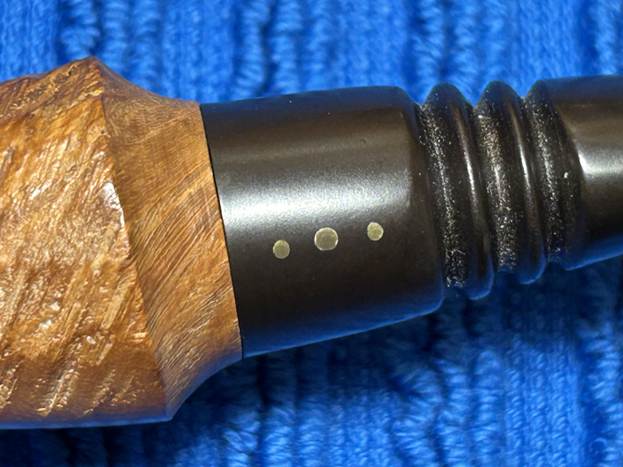
The early Drinkless Kaywoodies (Patent # 213598) from 1924 through 1931 had push bit stems. The Drinkless stinger with its four hole ball will keep this characteristic when integrated to the SynchroStem fitting. Pipes with screw-in attachment were produced from late 1929 with the “PAT. APPL FOR” stampings. A test of the design was conducted until 1931 when the SynchroStem patent was granted. This stamping (allways on the underside of the pipe) easily dates the pipe to a very narrow timeframe: 1929 – 1931. The Synchro-Stem patent for Kaywoodie’s Drinkless pipes was applied for in 1929 and granted in 1932. The system consists of a screw-in attachment combined with the earlier Drinkless patent. The stinger’s length is variable in order to fit the length of the shank. This flexibility was facilitated by the manufacture of the aluminium attachment at Kaywoodie’s plant. The Drinkless patent references were etched on the stinger. Kaywoodie reduced from 4 to 3 the number of holes in the Drinkless filter at an indeterminate date.
The phrase ‘at an indeterminate date’ is not very helpful, but I found some help on a thread over at the PipesMagazine forums. Here’s what I found:
… until about 1950 the Kaywoodie still featured a ball on the end of the stinger with four holes drilled through.
And later, in the same thread:
But around 1948 or so, instead of two holes drilled diagonally to make a four hole stinger, the system was changed to one hole drilled horizontally all the [way] through and one more on top drilled down vertically, for a three hole stinger.
I think the images of the shape number 90 in three different Kaywoodie catalogues (1936, 1947, and 1955) will bring this all to a close. Here is the image from the 1936 catalogue:
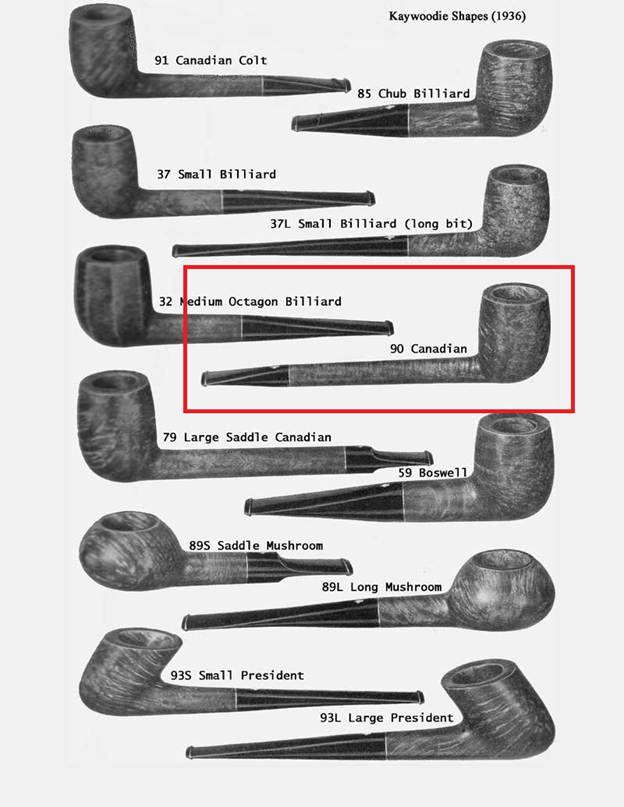
There is a shape number 90, but it doesn’t match ours – the one from 1936 has a taper stem, not a saddle. Let’s look at the image from the 1947 catalogue:
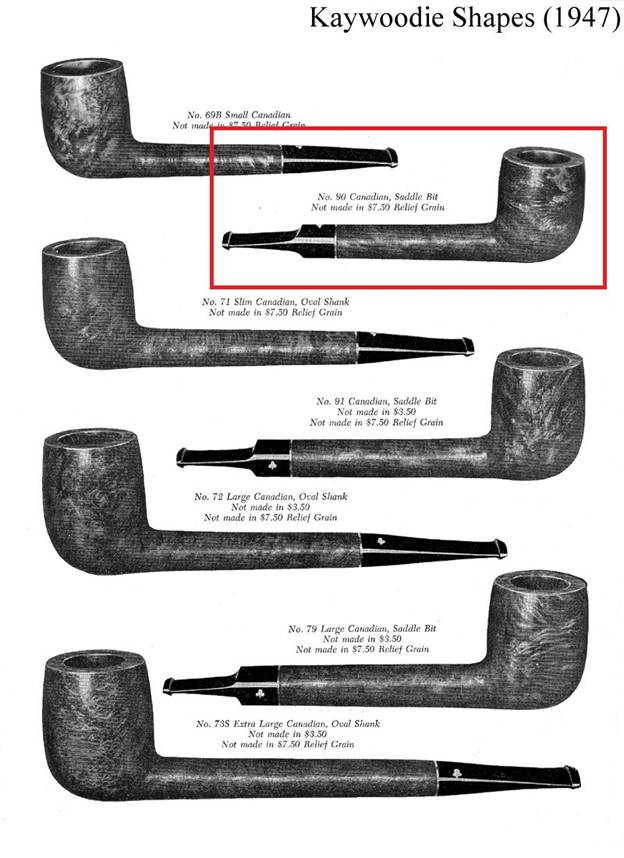
Bingo. That’s the one: right shape, right number, right logo position. And for comparison, here is the image from the 1955 catalogue:
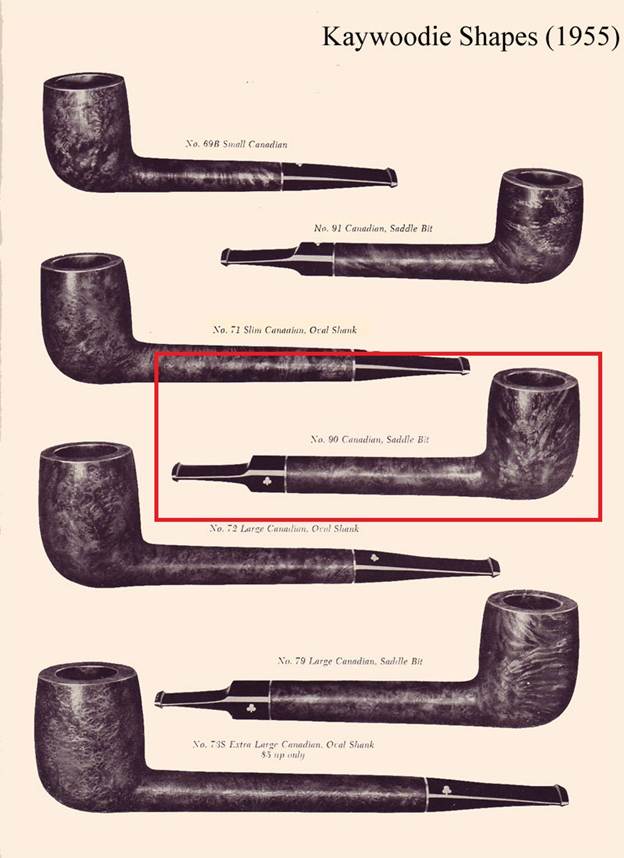
Once again, there is a shape number 90, but it doesn’t match – the logo is on the side of the stem, not the top. After all of that research, I think we can safely conclude that this pipe dates around 1947.

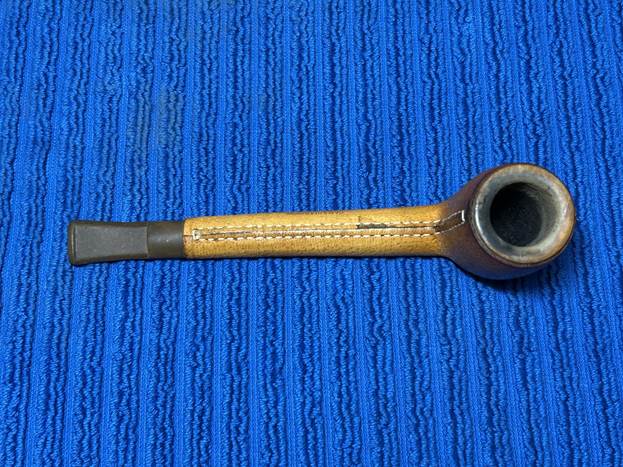
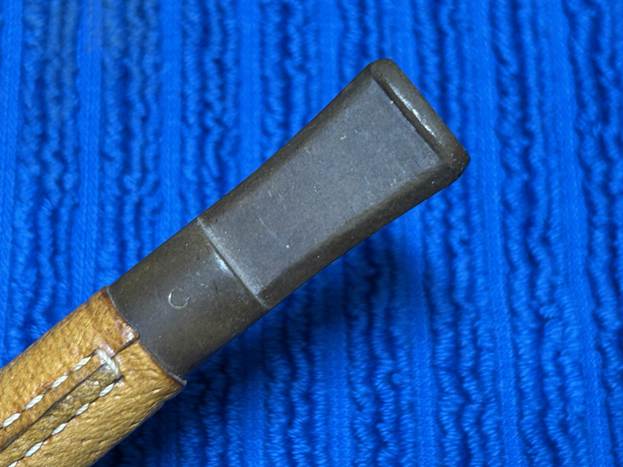
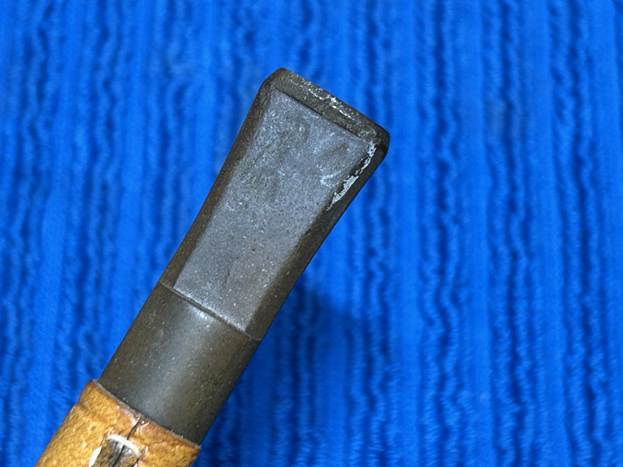
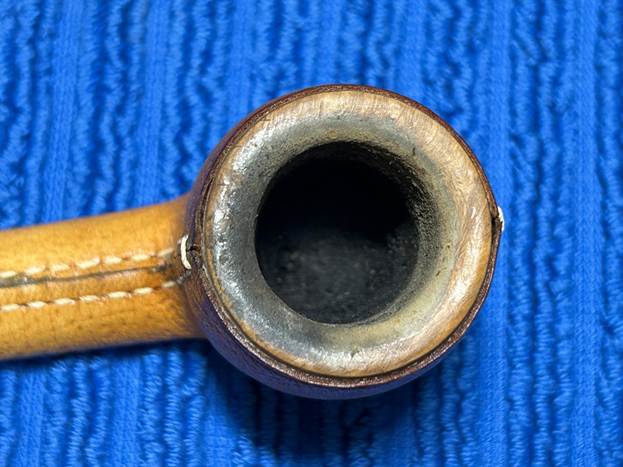
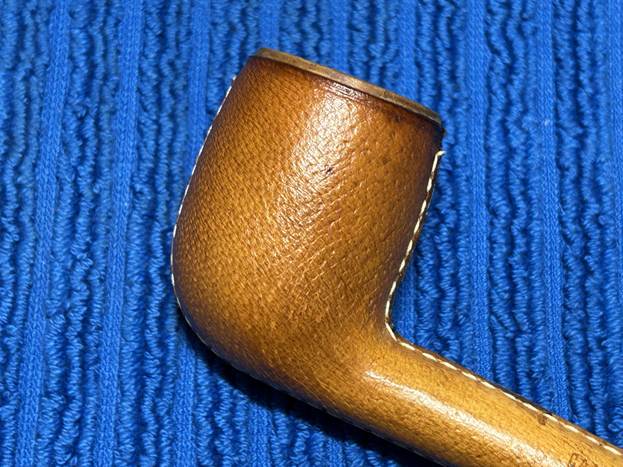
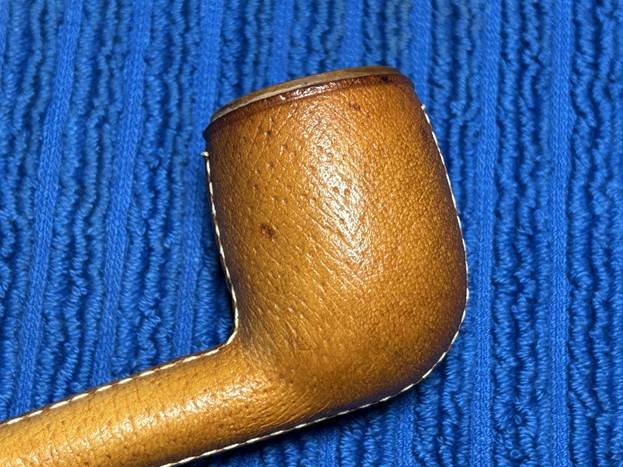
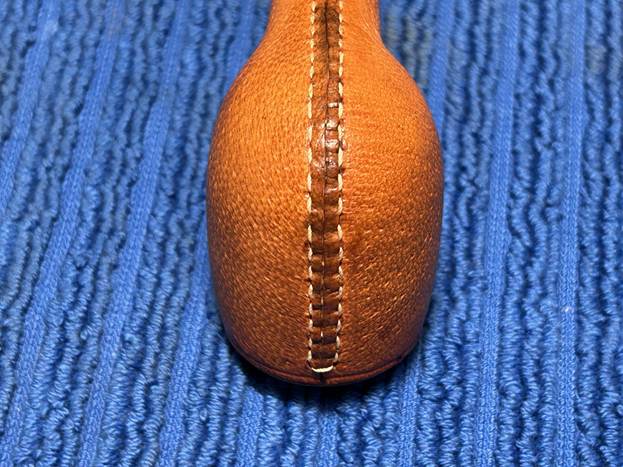
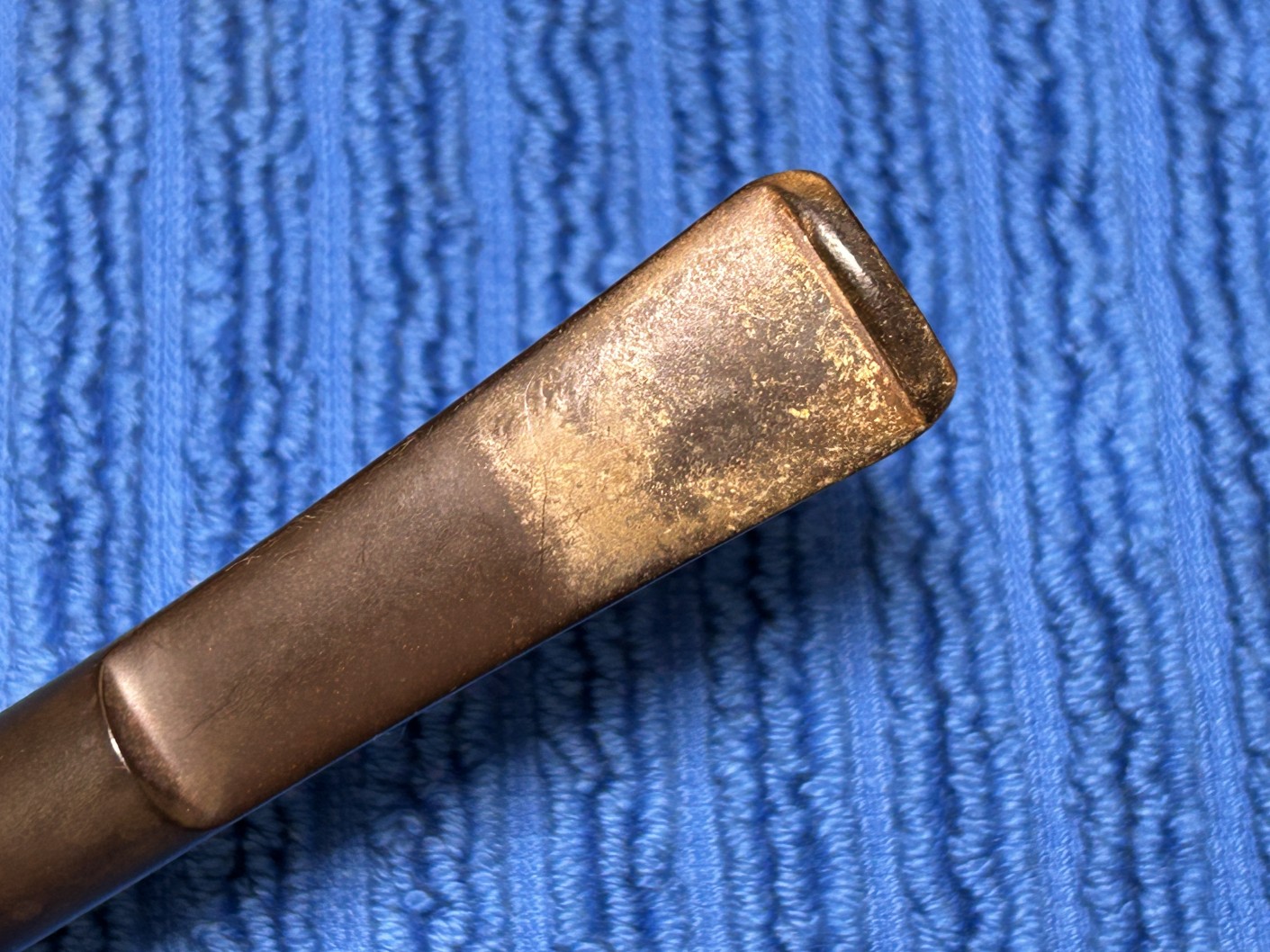
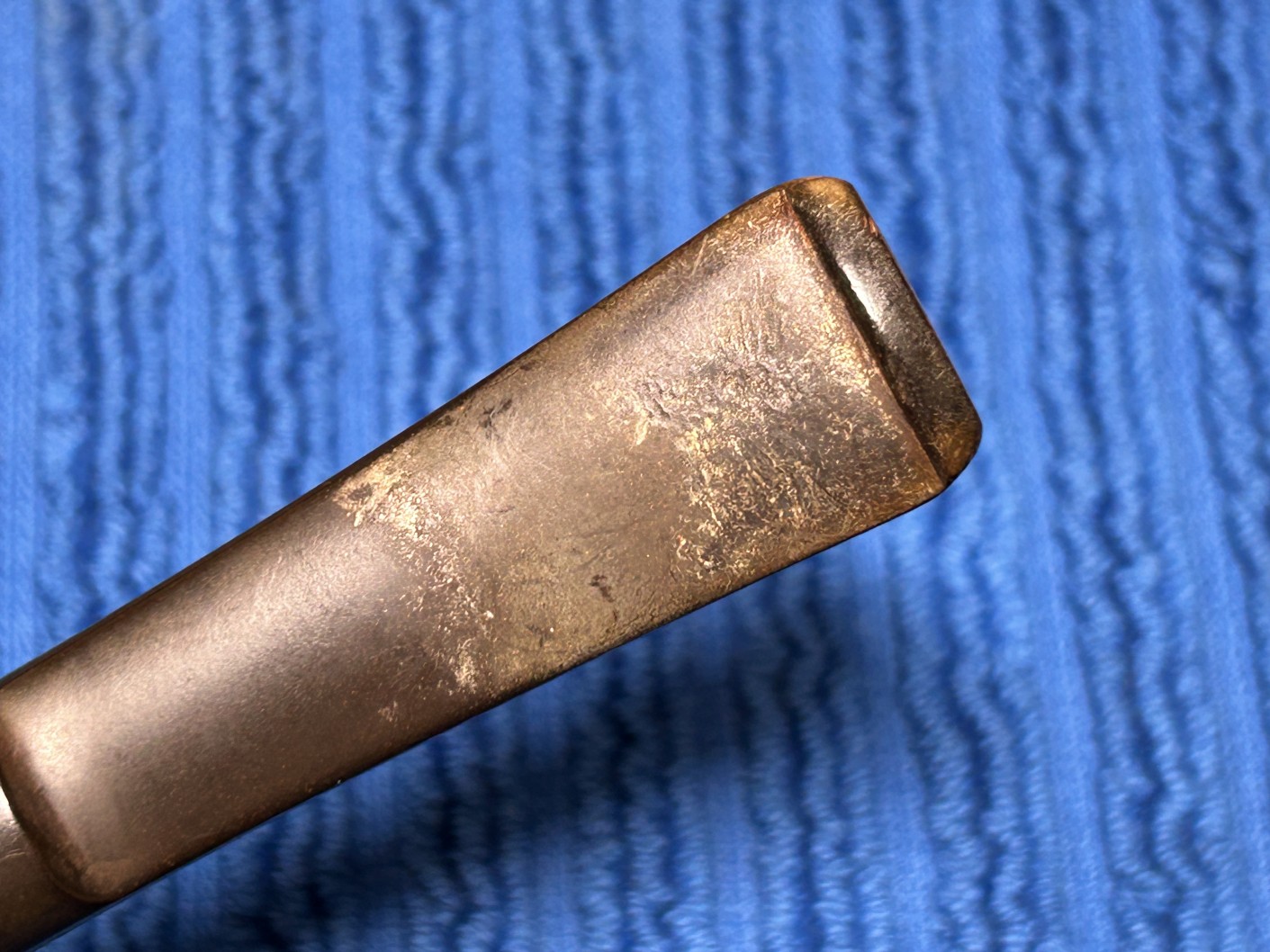
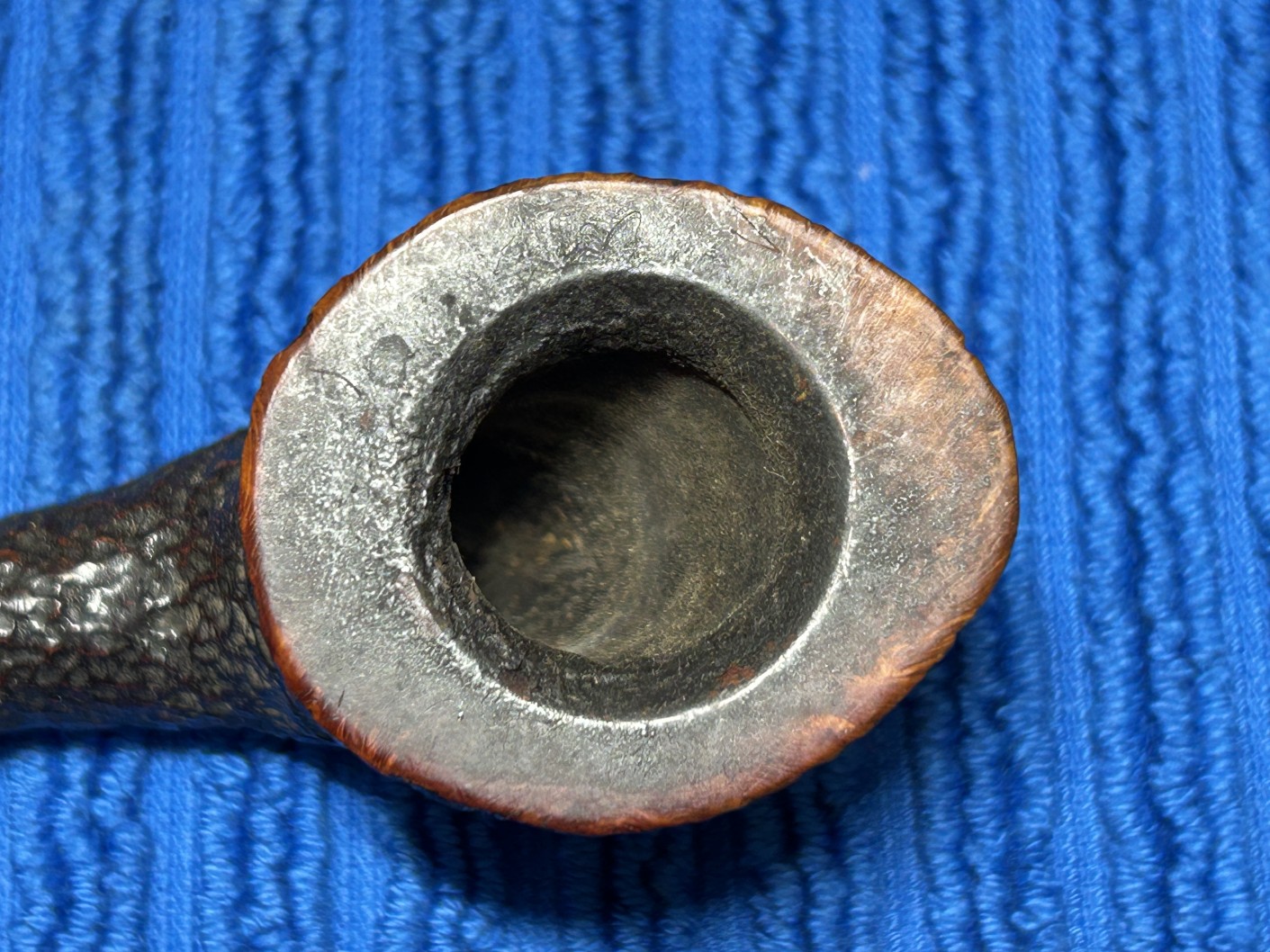
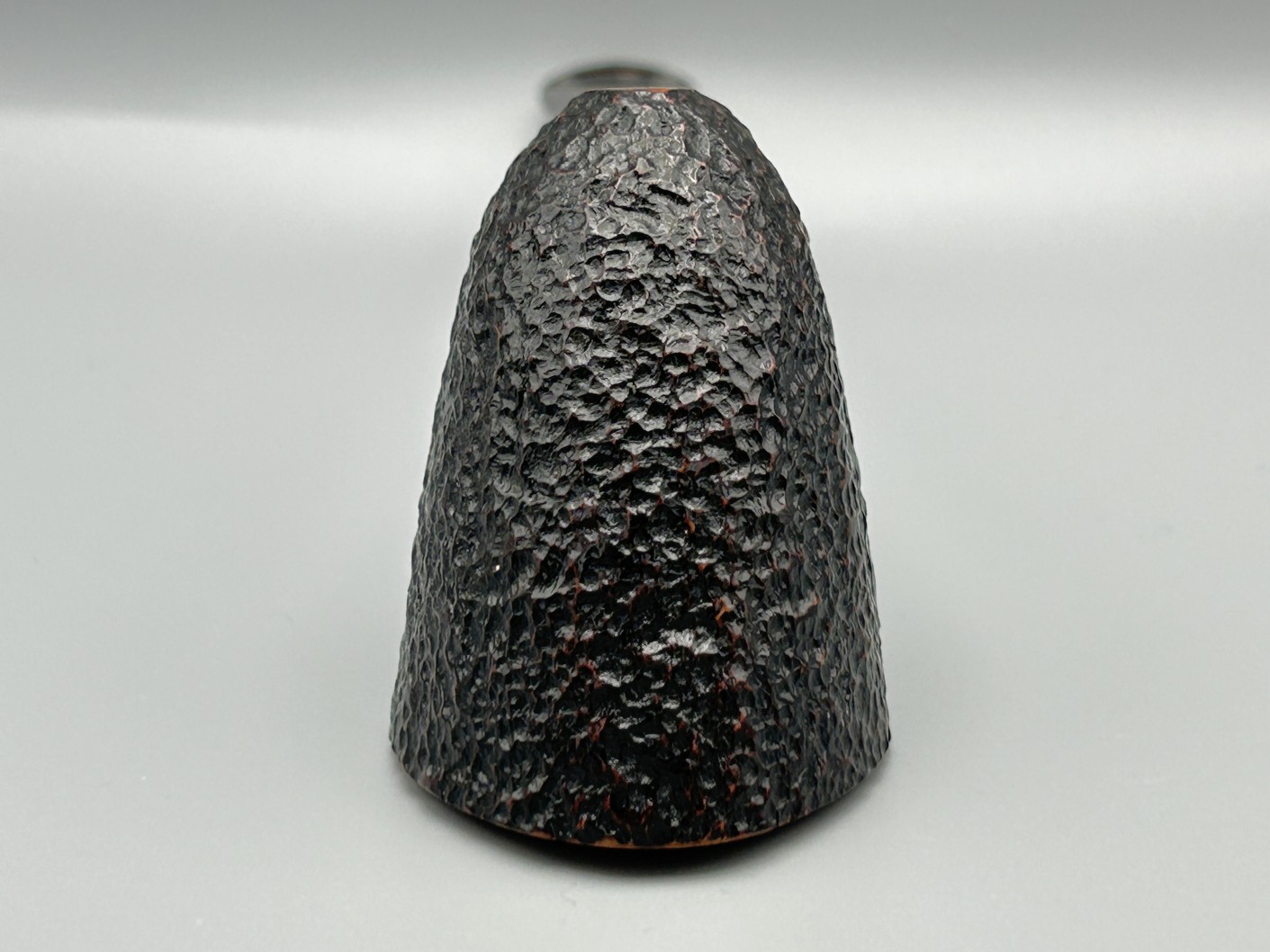
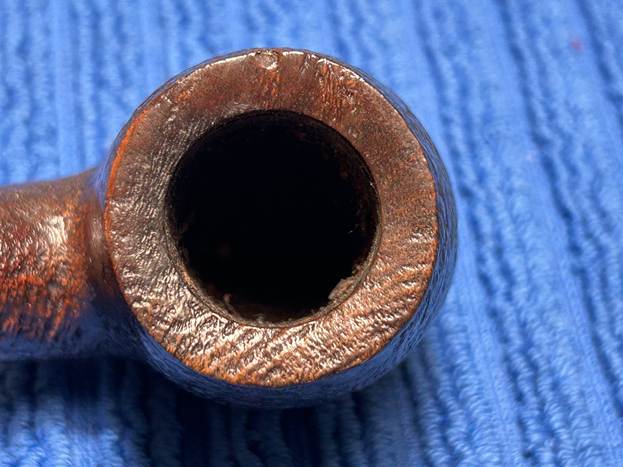
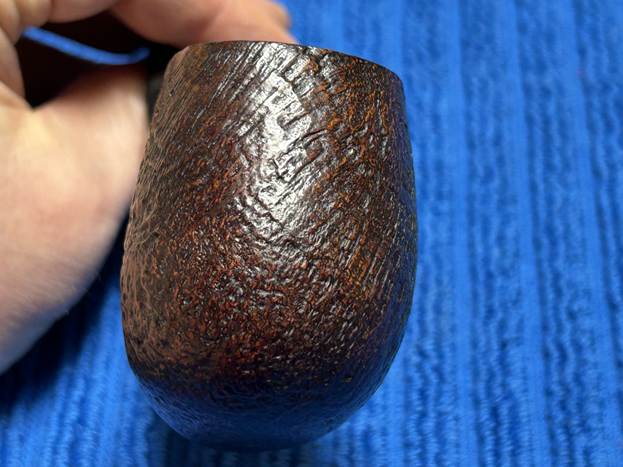
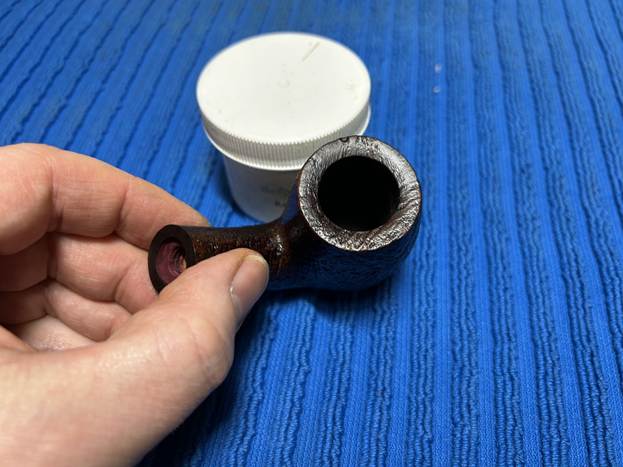
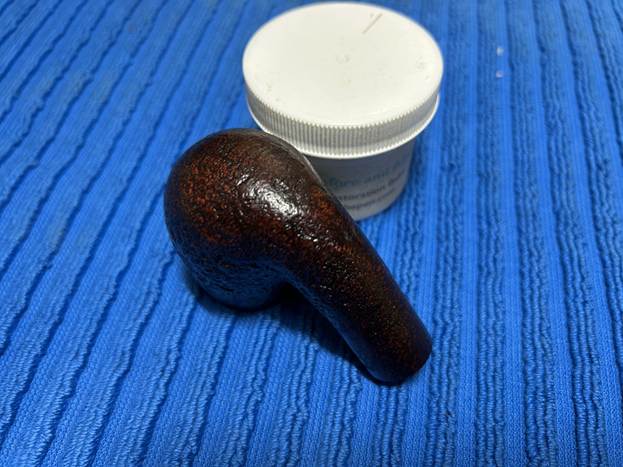
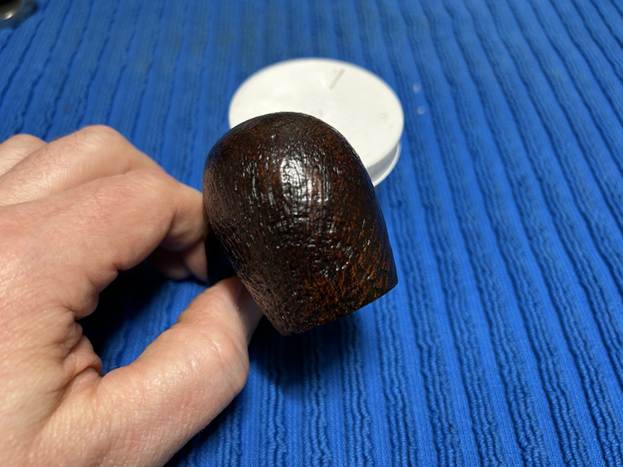
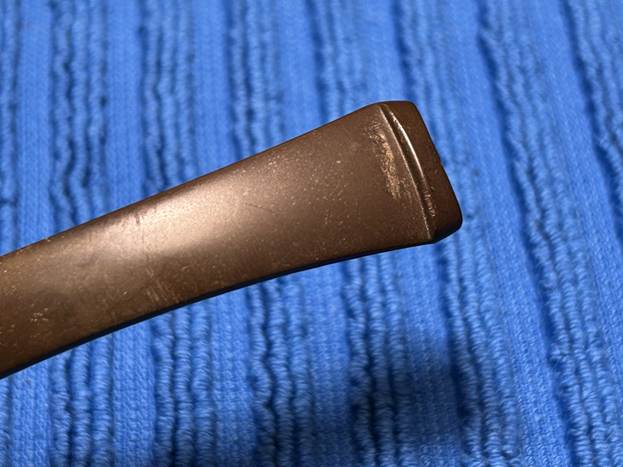
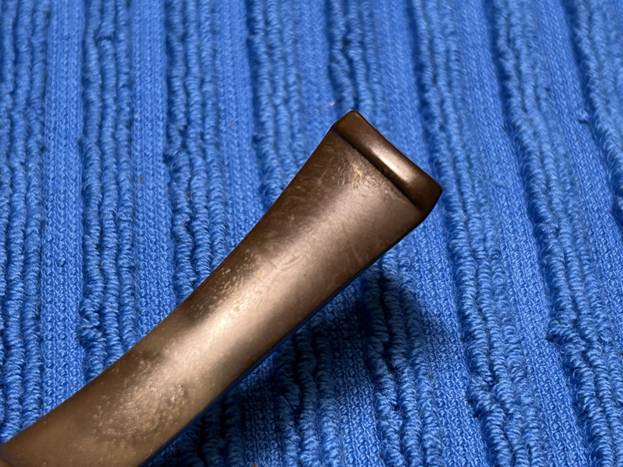
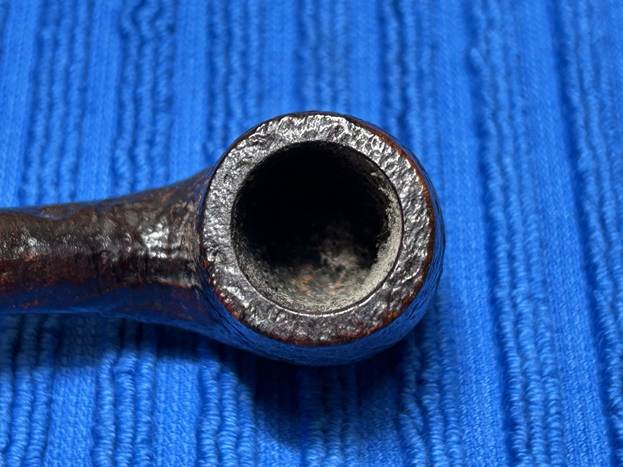
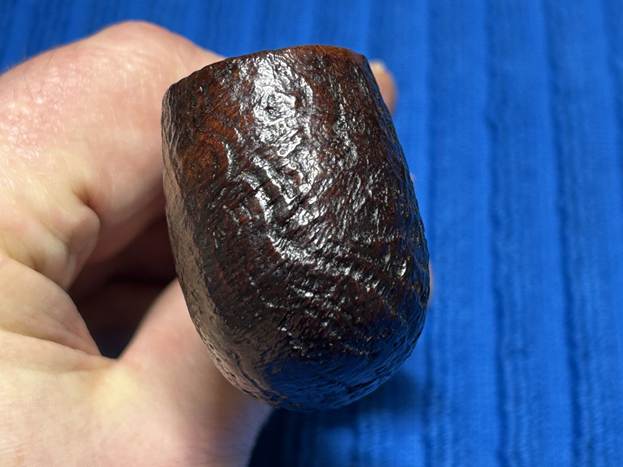
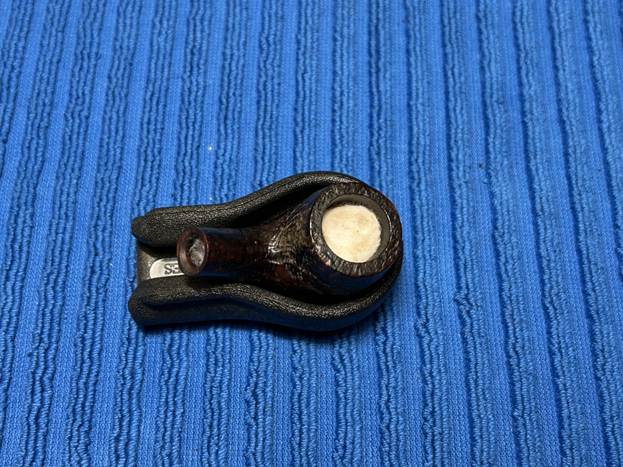
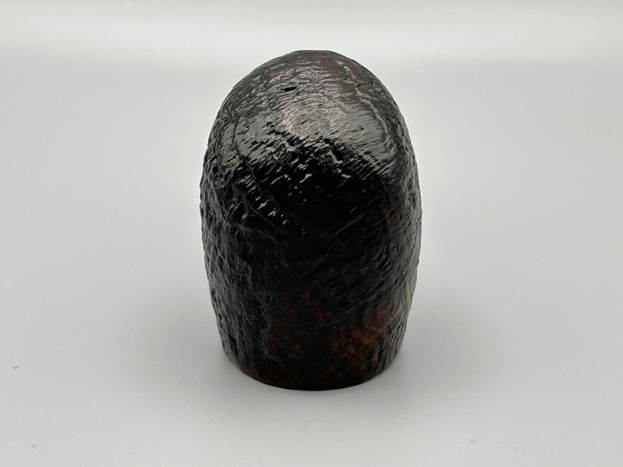
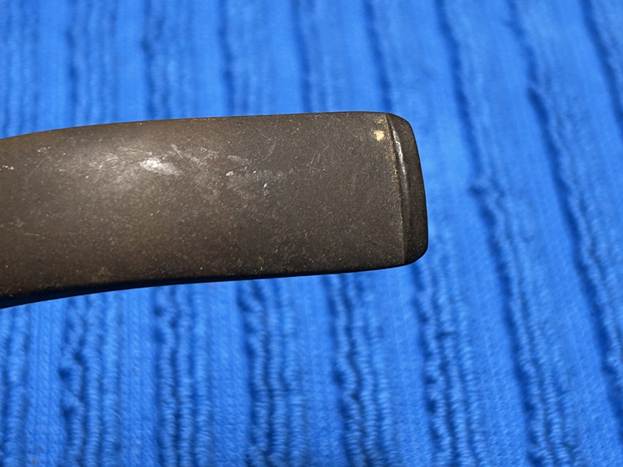
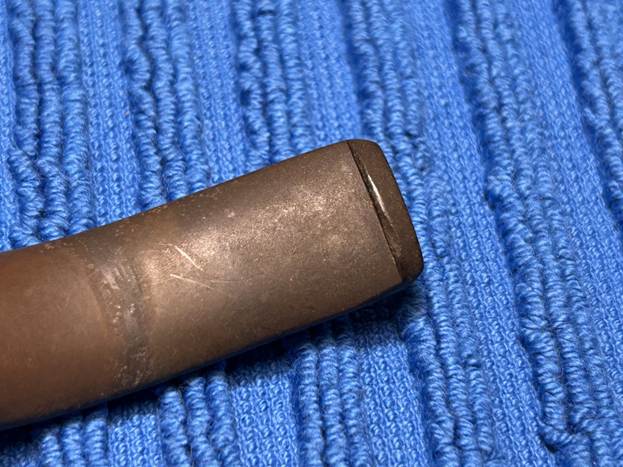
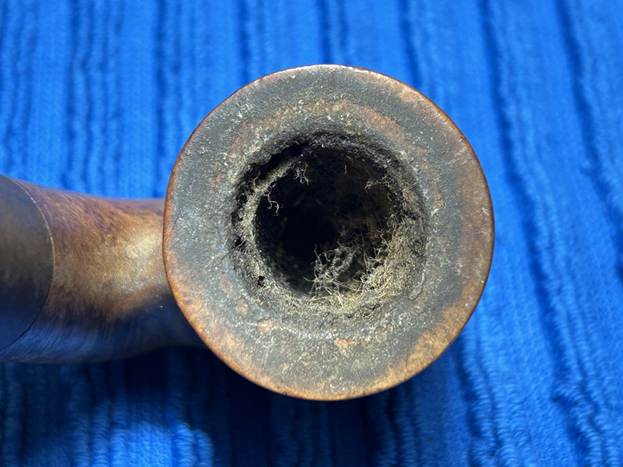
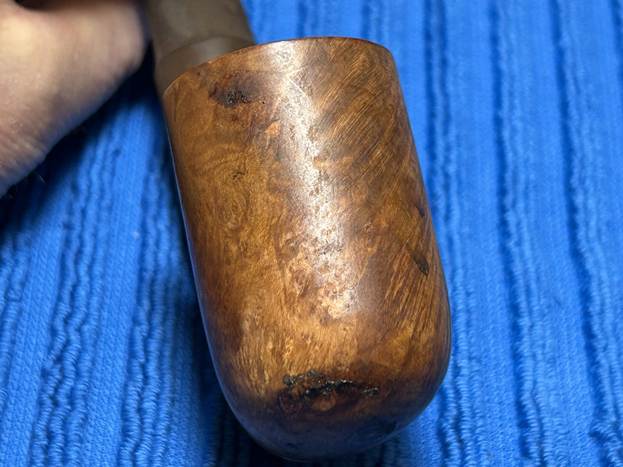
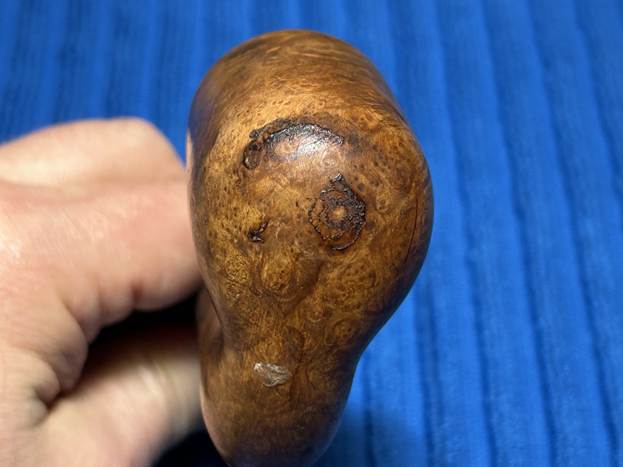
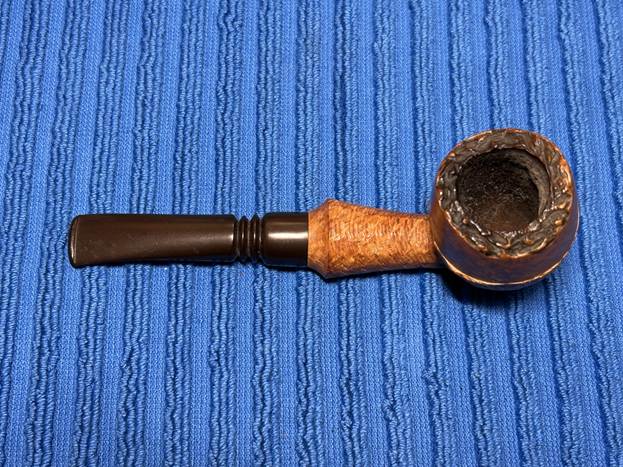
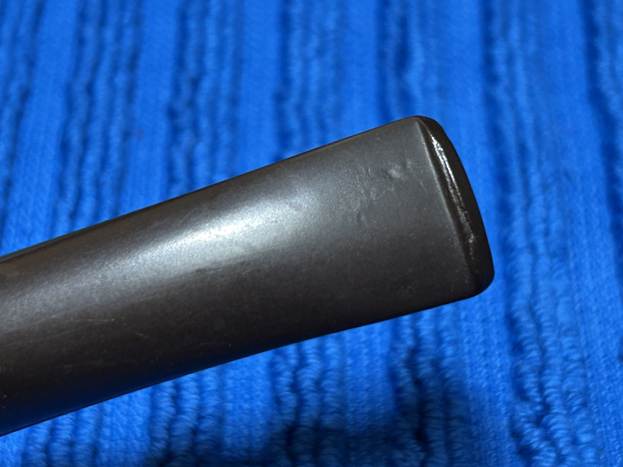
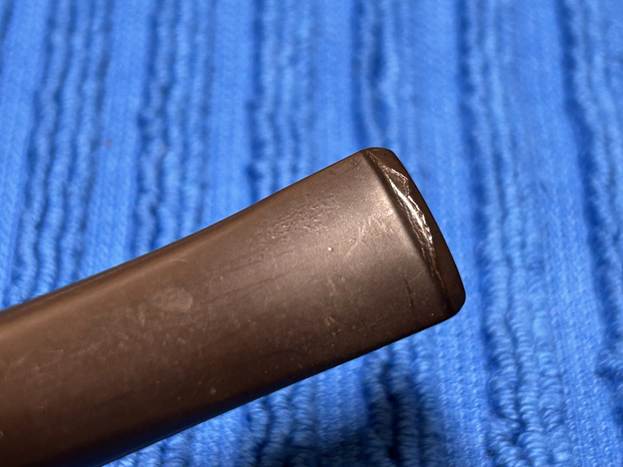
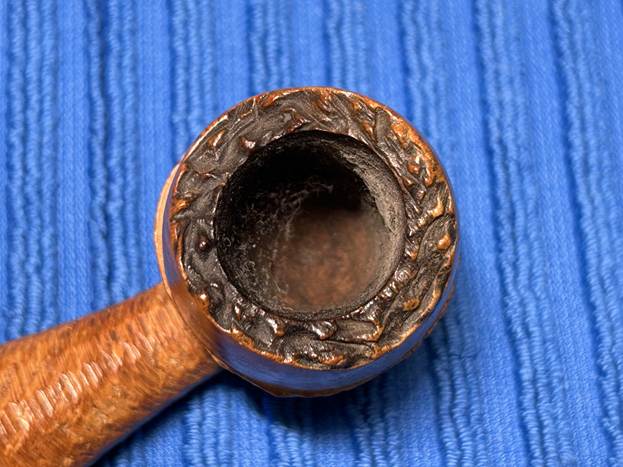
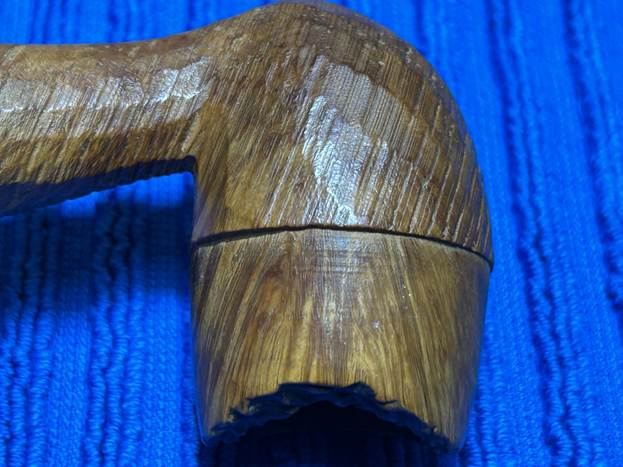
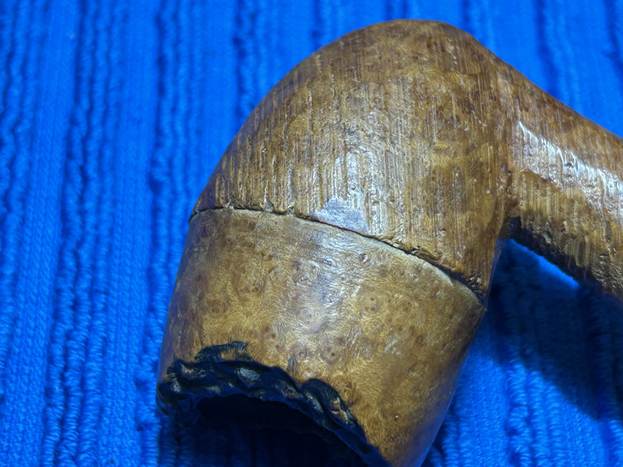
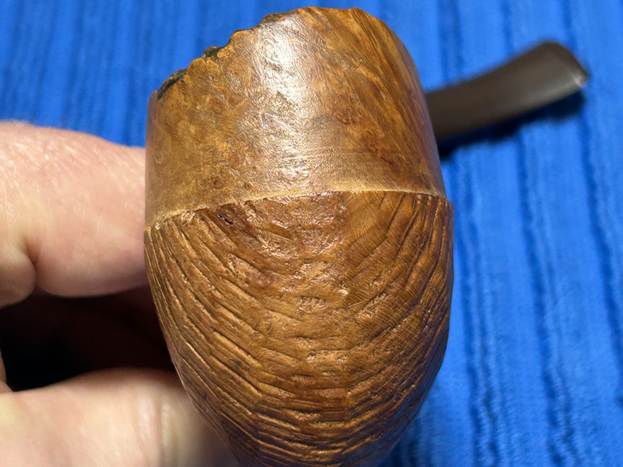
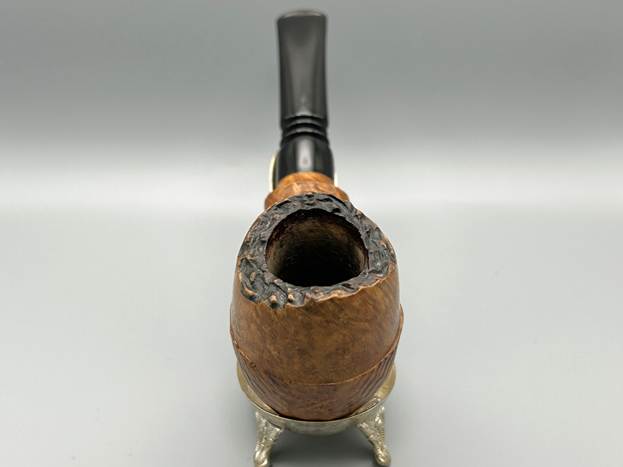
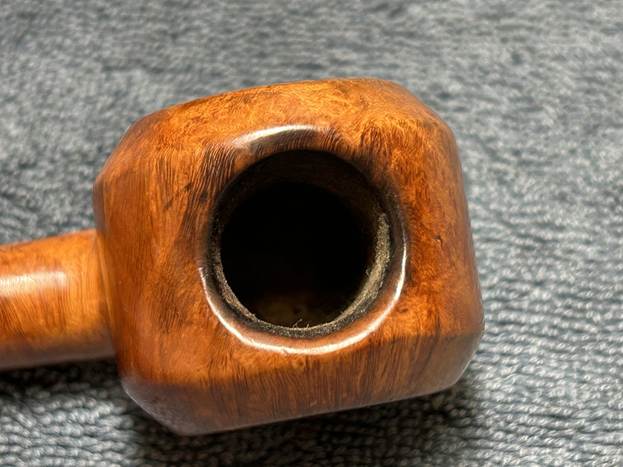
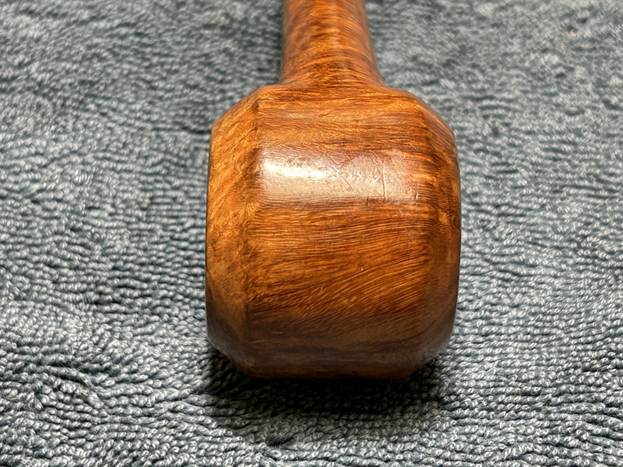
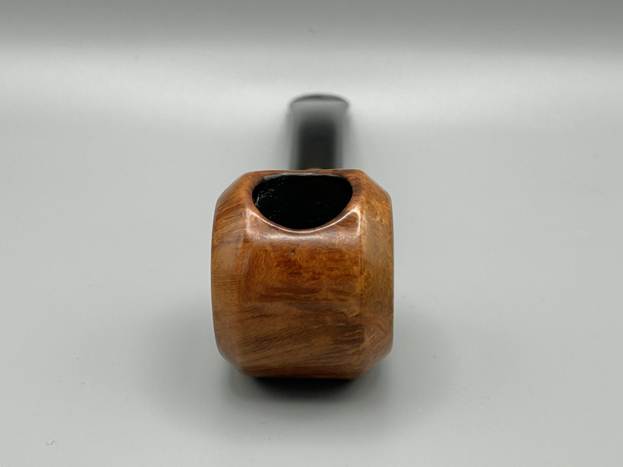
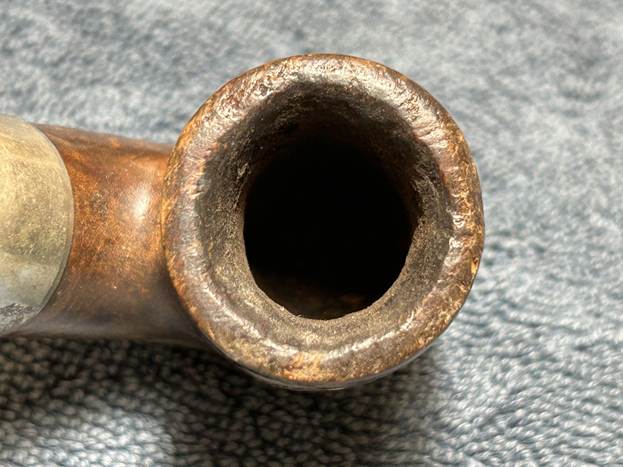
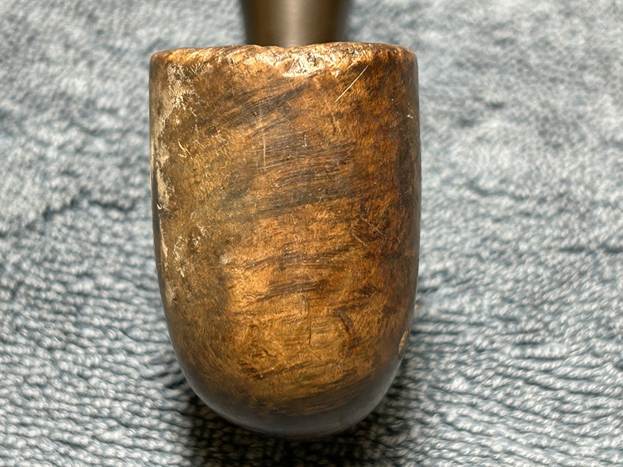
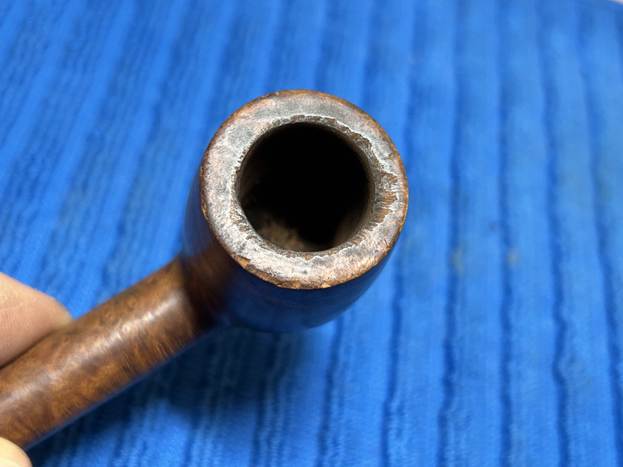
Let’s move on and have a look at the pipe’s condition. The bowl is in good shape: no major issues in the briar; some lava on the rim; some cake in the bowl; and general sense of dirtiness. Similarly, the stem was in decent shape: a few knicks in the vulcanite; a bit of oxidation; a bit of calcification, but nothing significant.
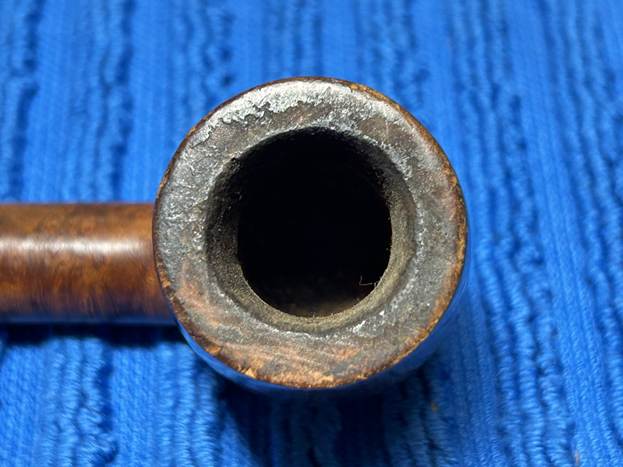
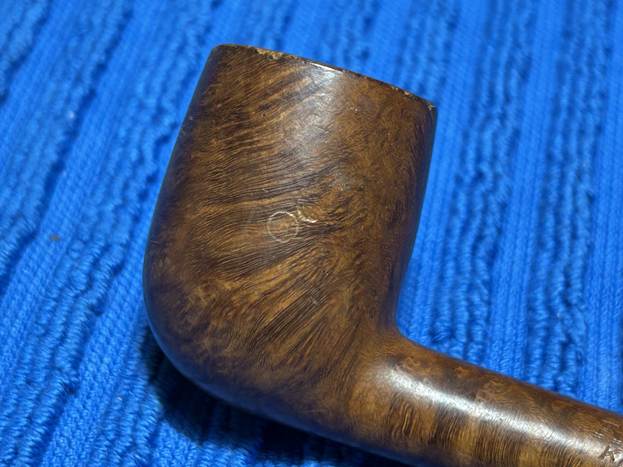
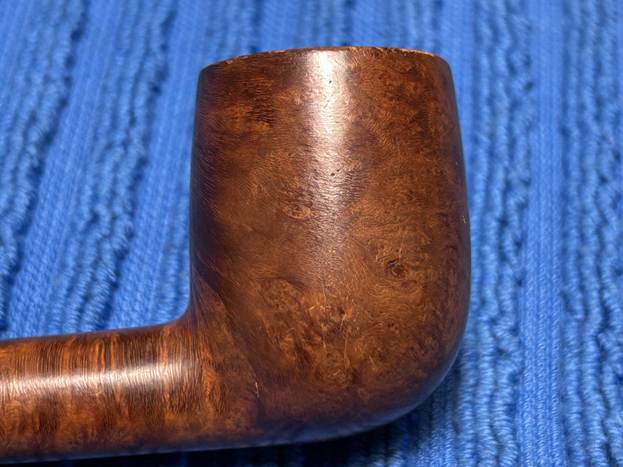
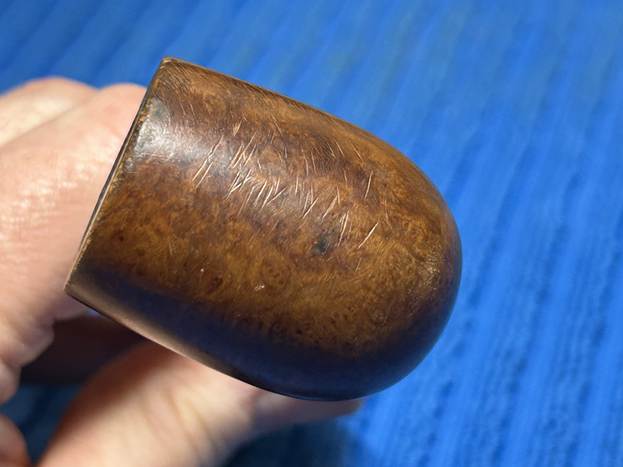
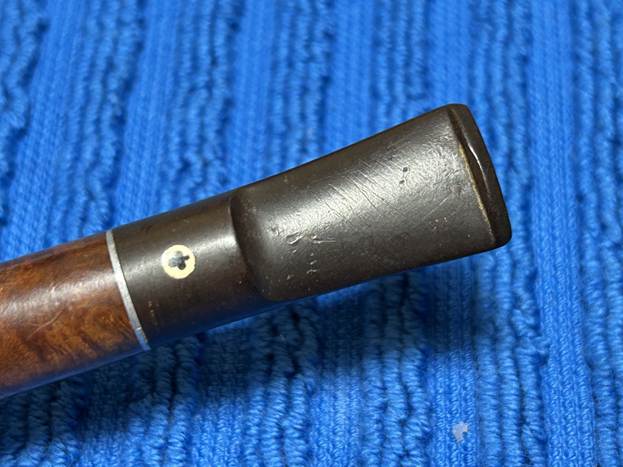
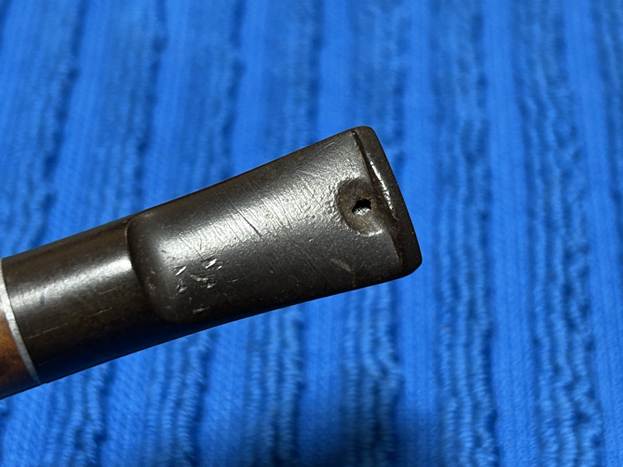
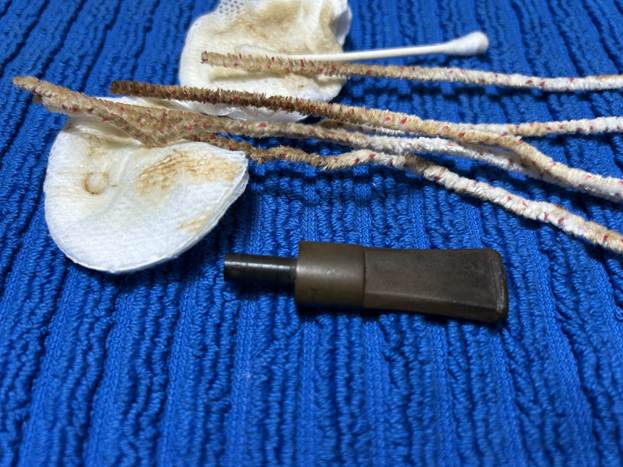
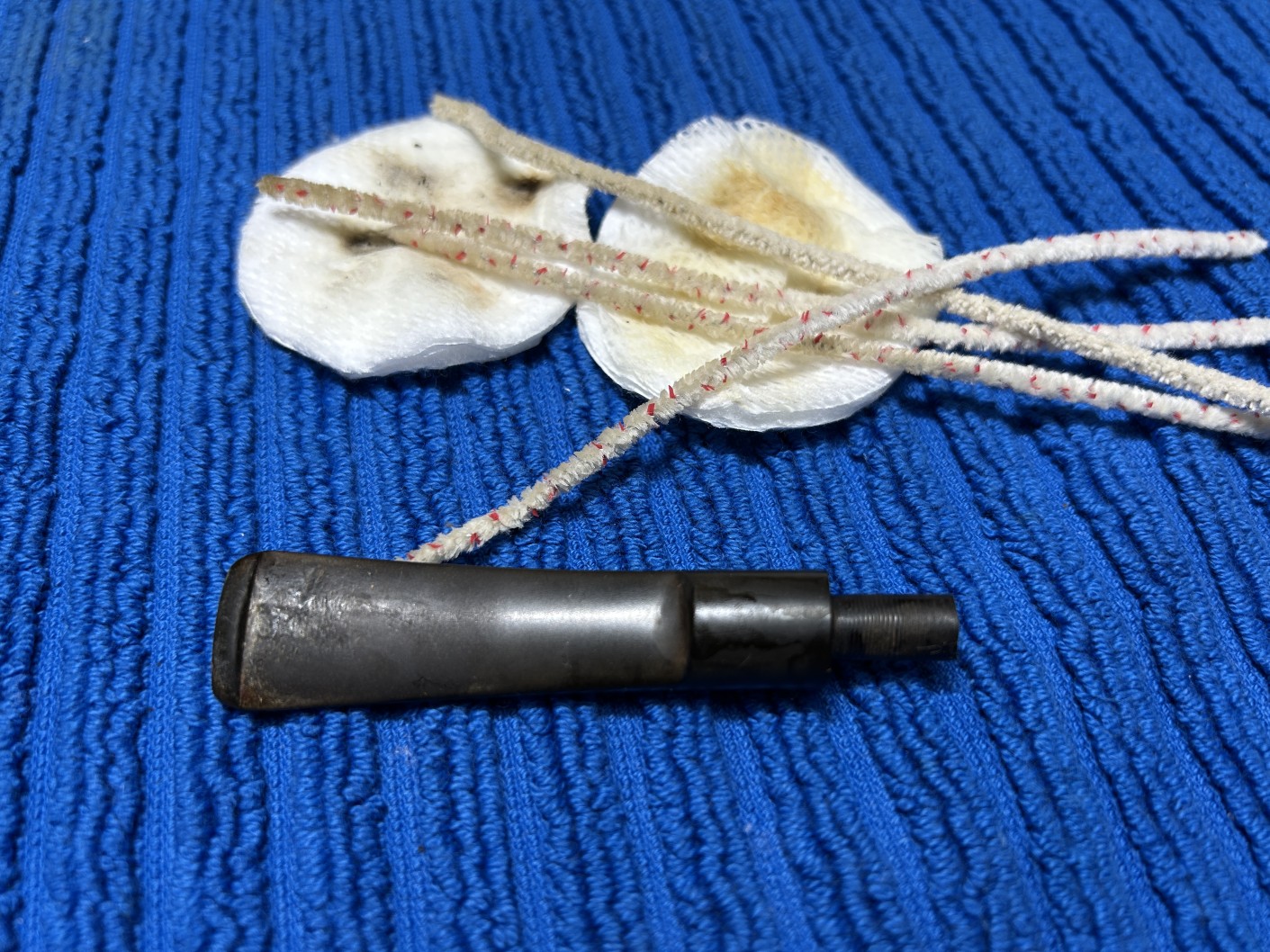
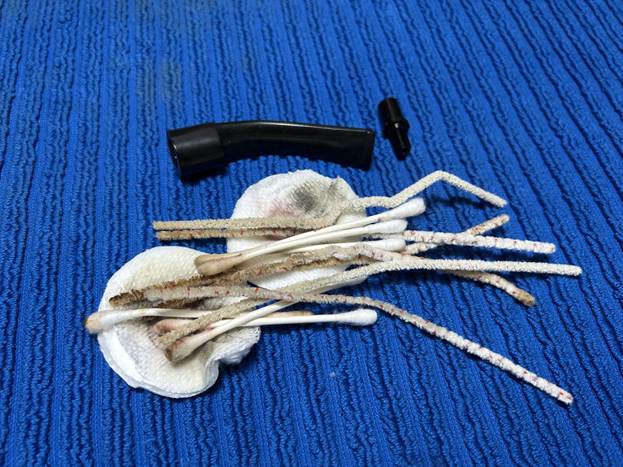
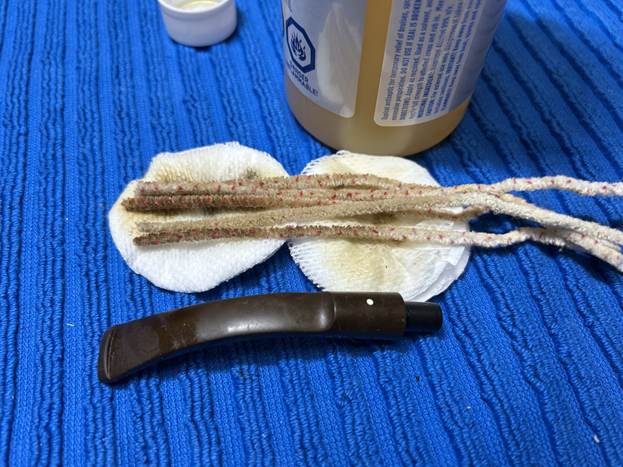
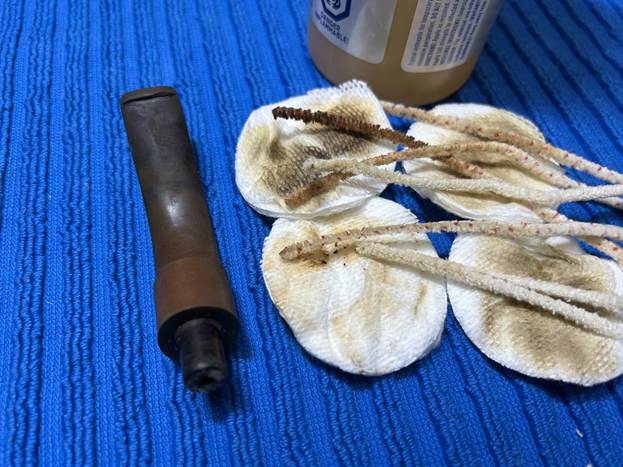
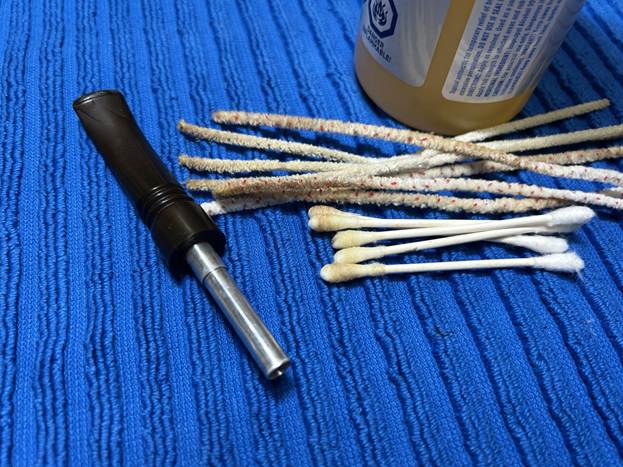
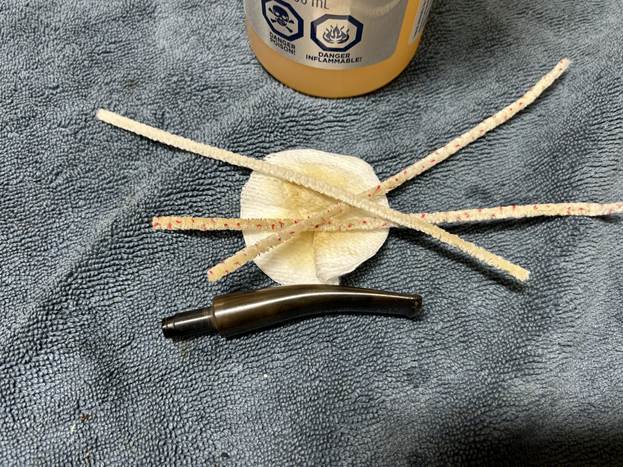
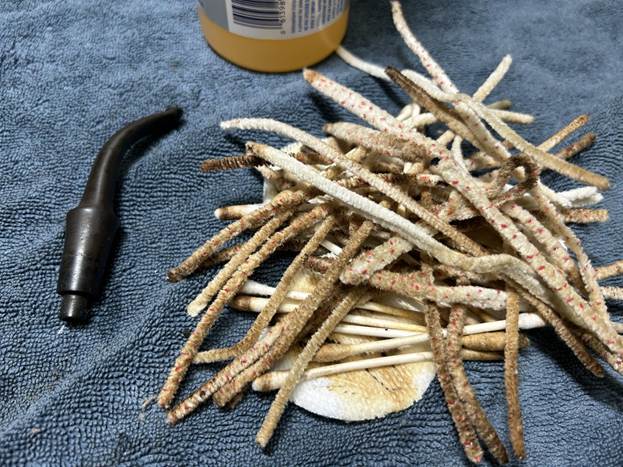
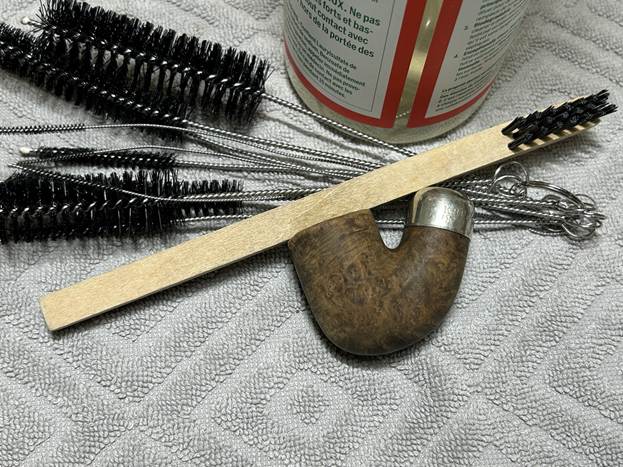
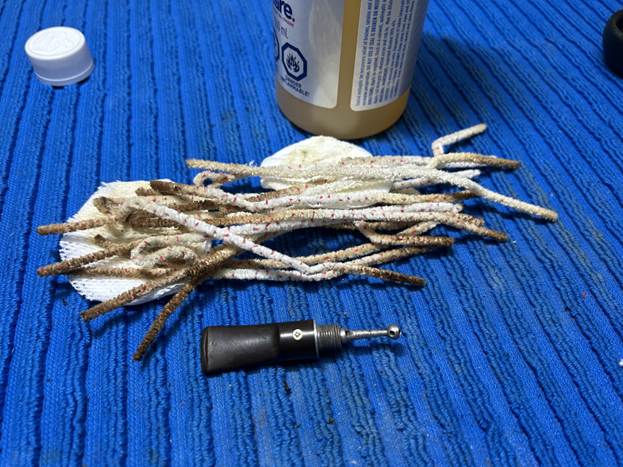
I used isopropyl alcohol on a few cotton rounds and wiped down the stem to provide an initial cleaning of filth before moving on to the next steps. The primary cleaning came next. I disinfected the inside of the stem with pipe cleaners dipped in lemon-infused 99% isopropyl alcohol. I scrubbed thoroughly to make sure the interior was very clean. I used quite a few pipe cleaners.
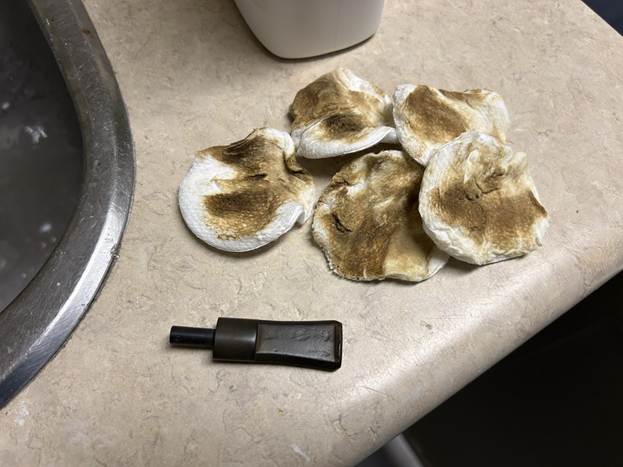
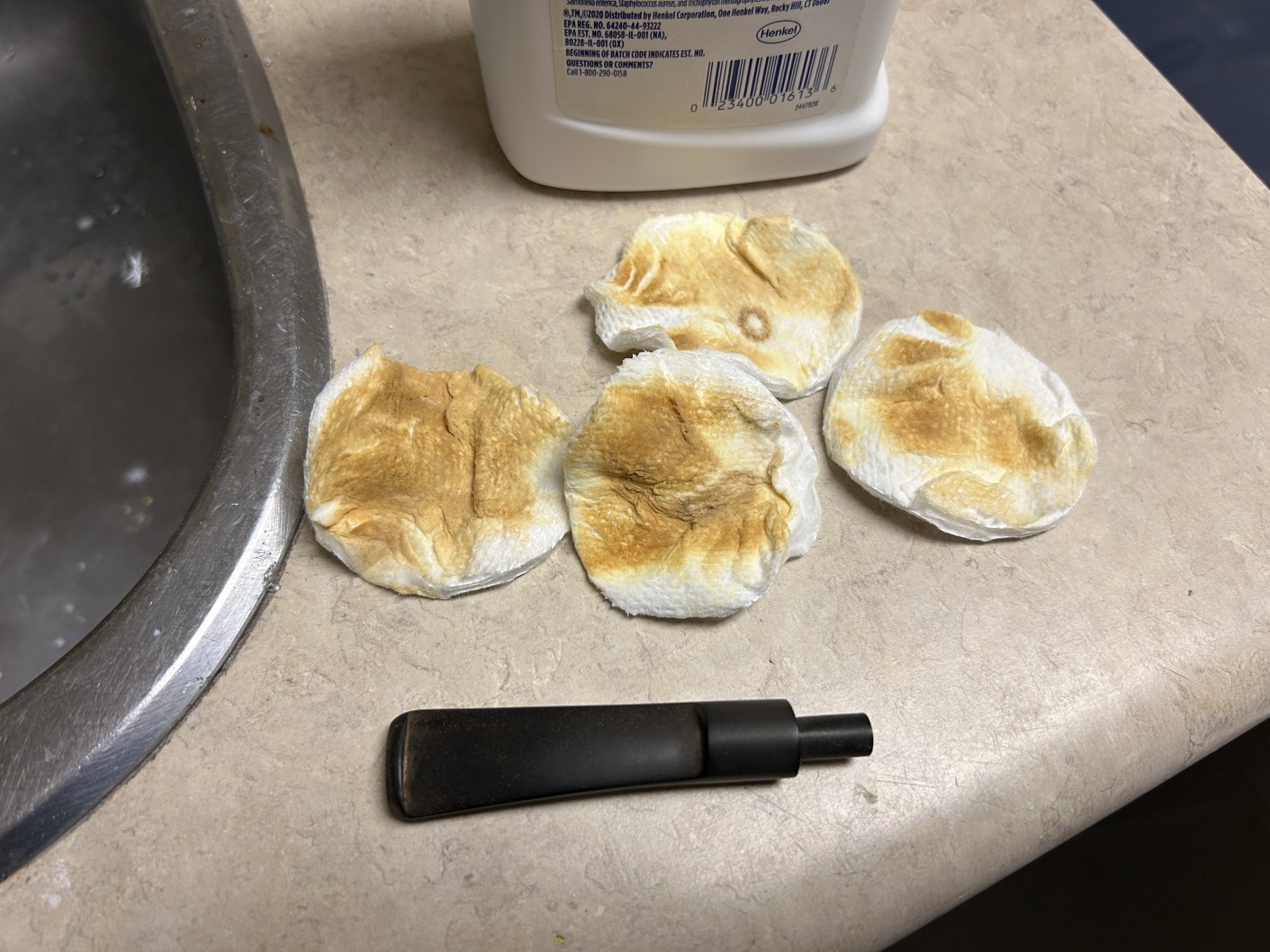
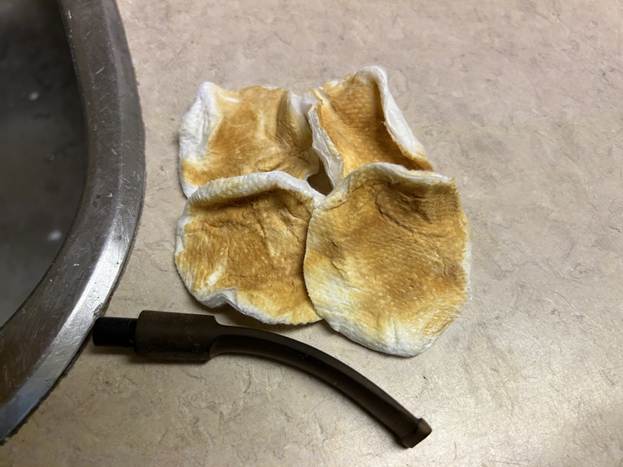
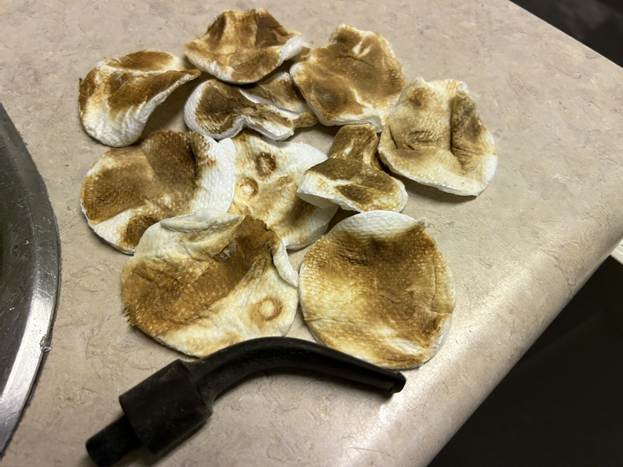
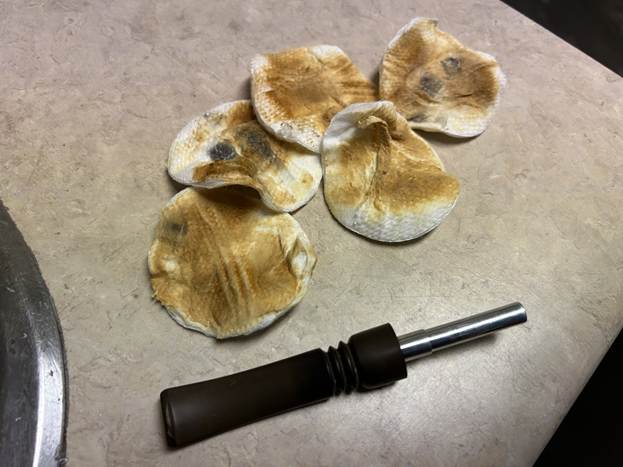
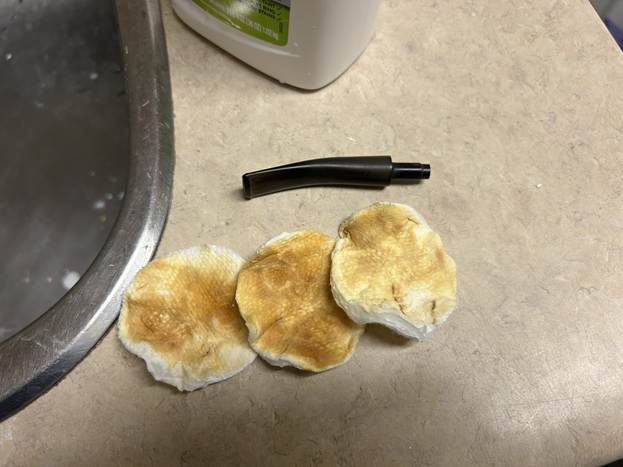
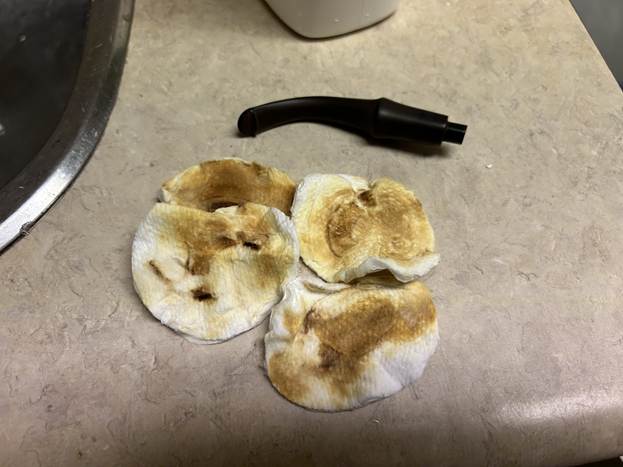
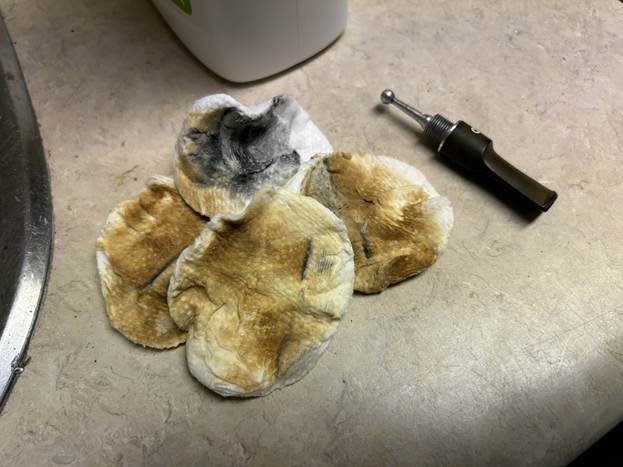
The goal of the next step is the removal (or minimization) of oxidation. Going to my sink, I used cream cleanser, cotton rounds, and a toothbrush, and scoured the stem to remove as much surface oxidation as possible. As the photos show, the result was a hideous, ochre-coloured mess – but better off the stem than on it.
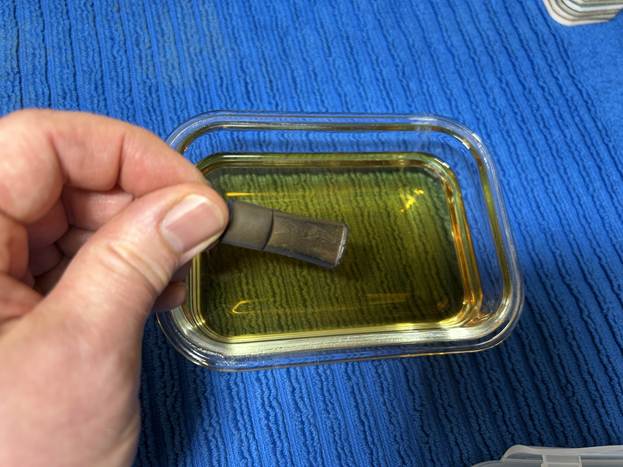
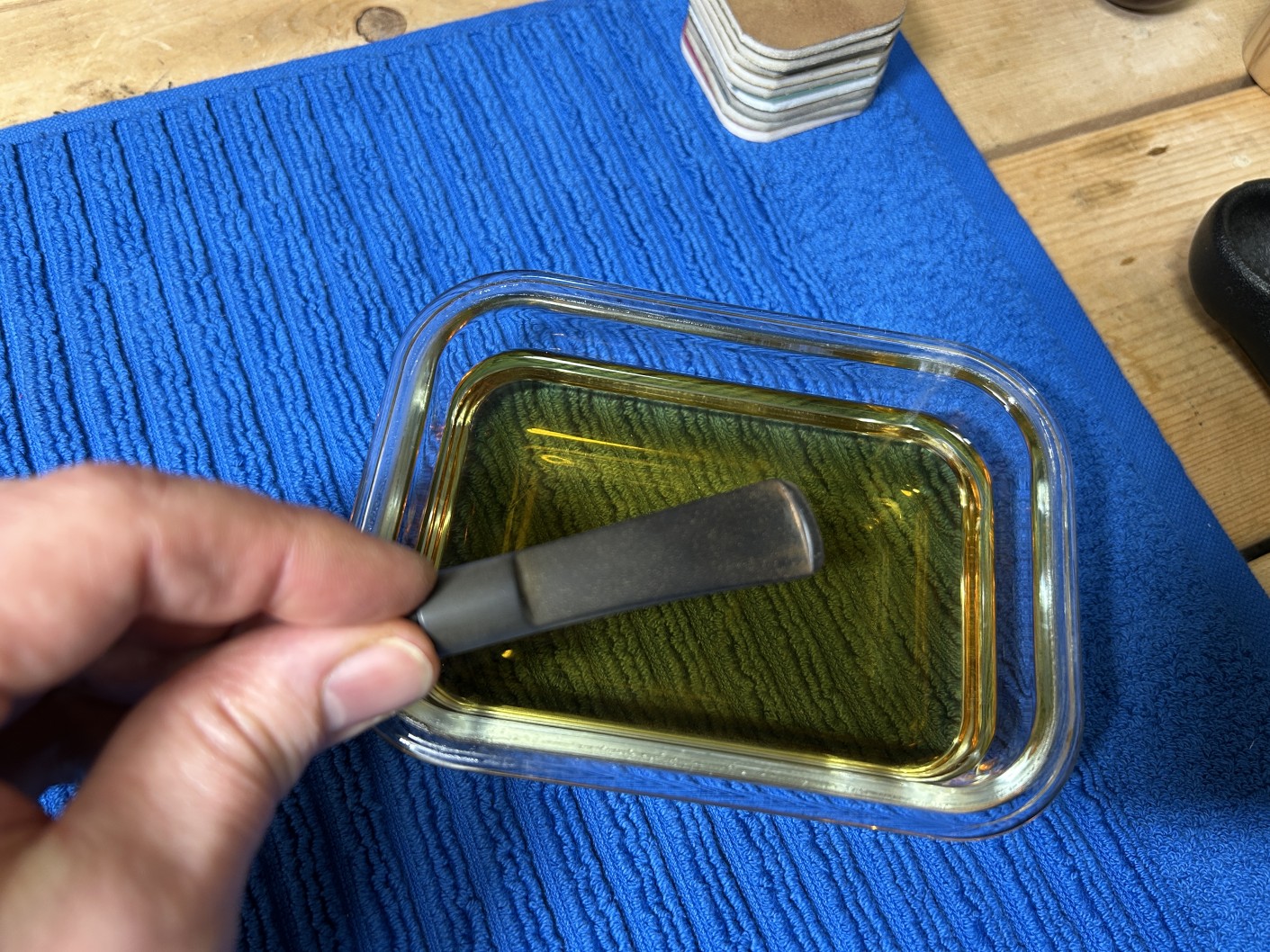
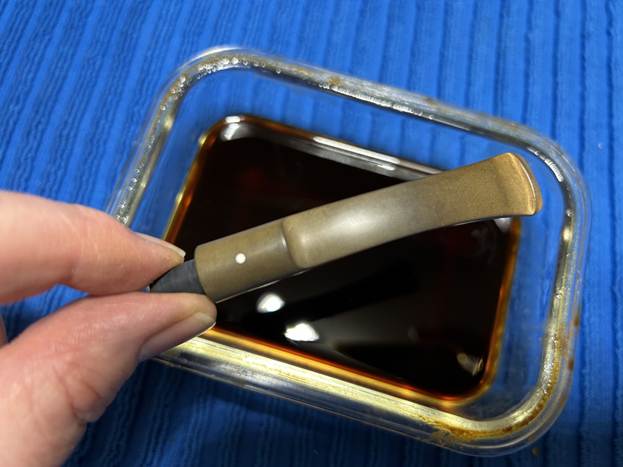
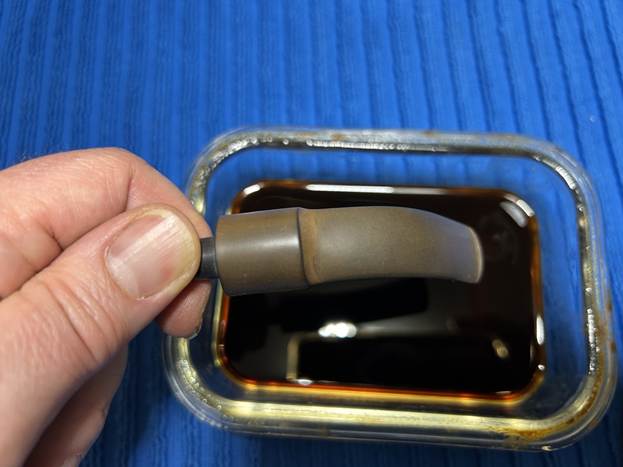
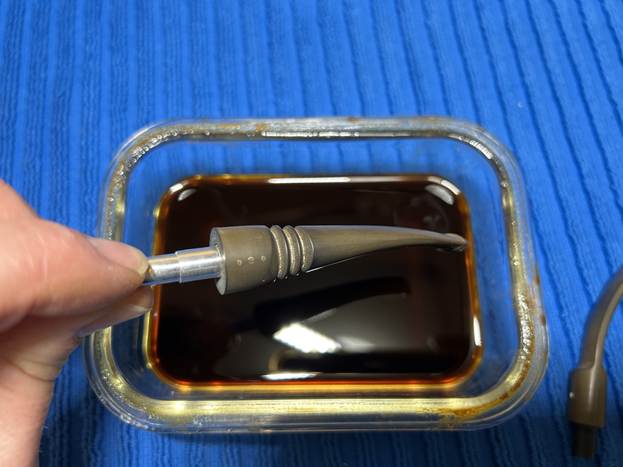
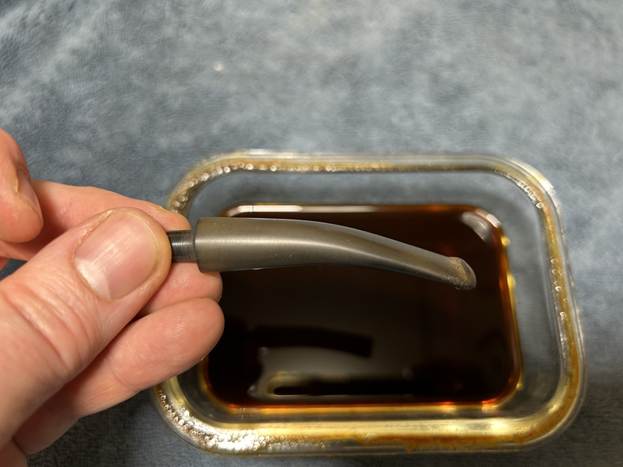
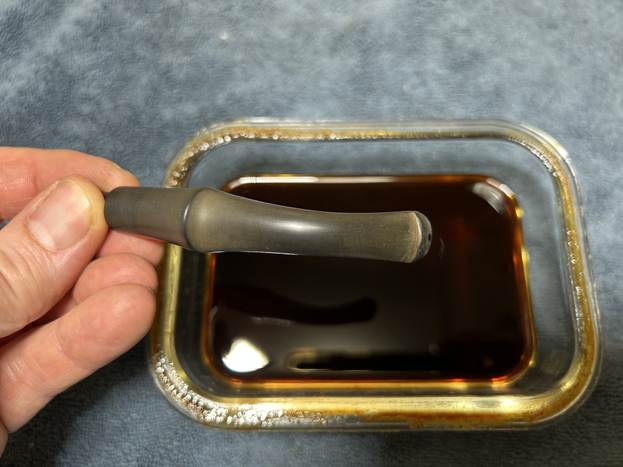
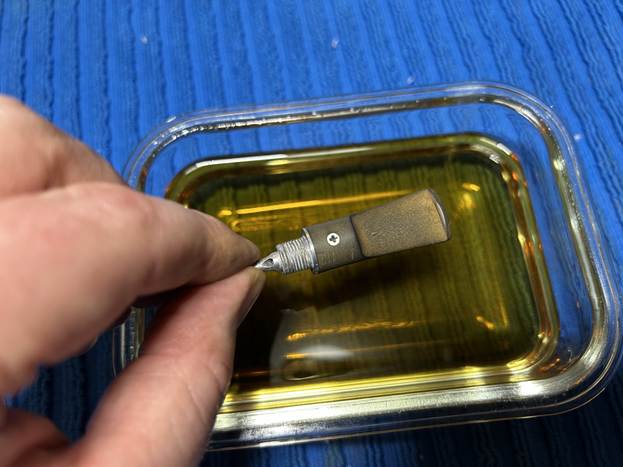
Once the stem was reasonably clean, I soaked it overnight in some Briarville Stem Oxidation Remover. This solution works to draw oxidation in the stem to the surface of the vulcanite. This is a major aid and an important step in ensuring a clean stem. The following day, I drew out the stem from its bath and scrubbed the lingering fluid with a toothbrush.
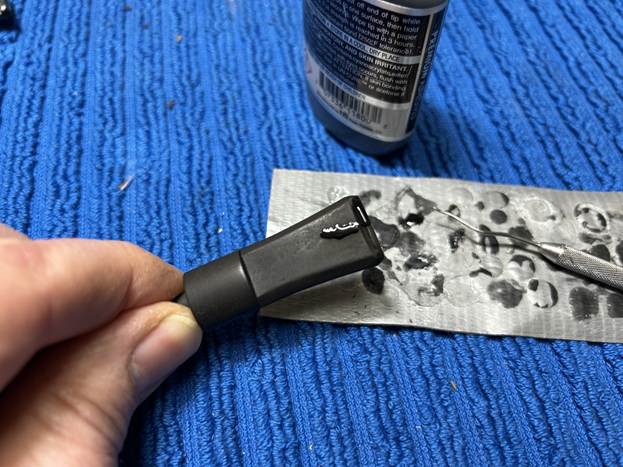
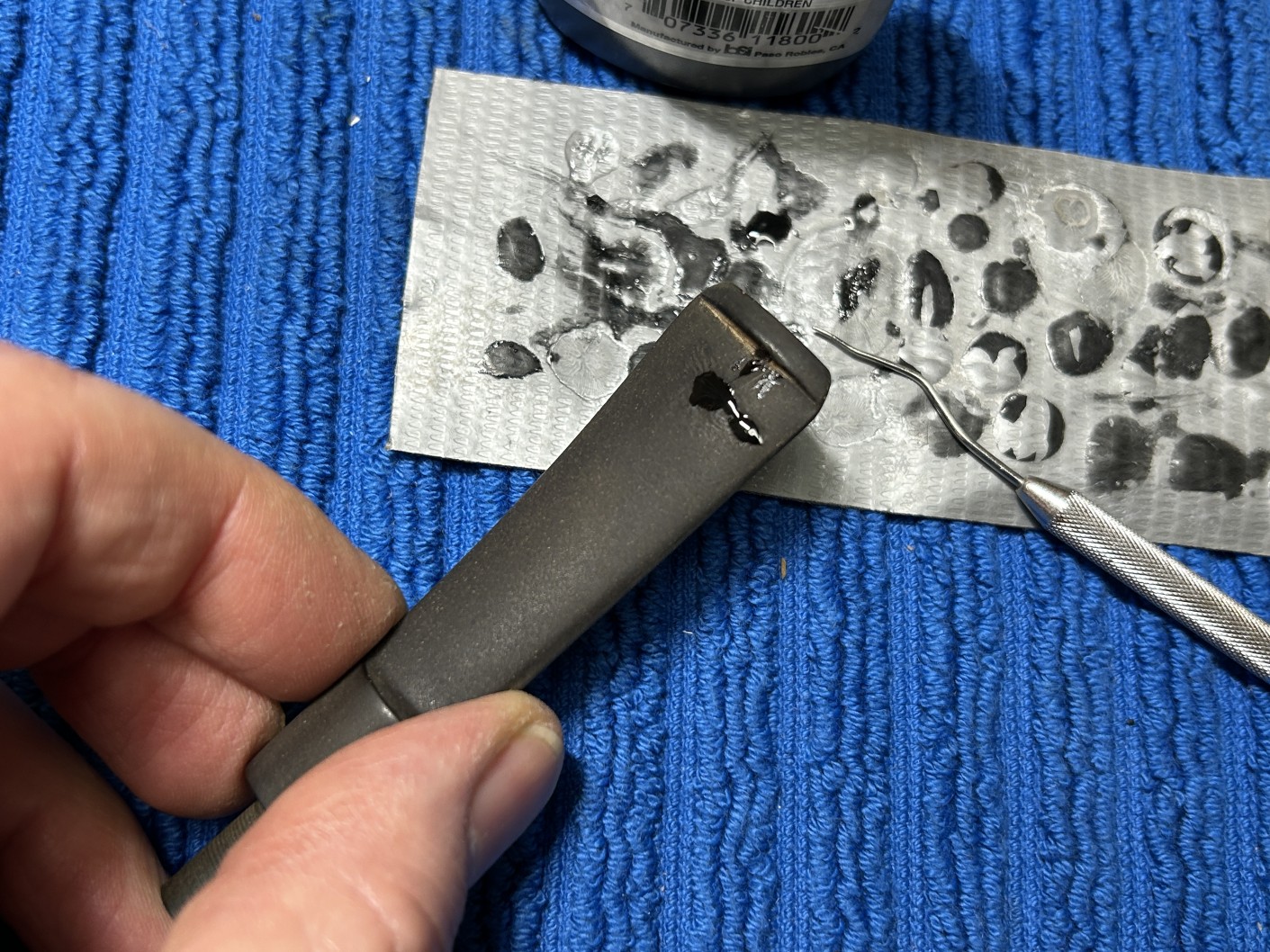
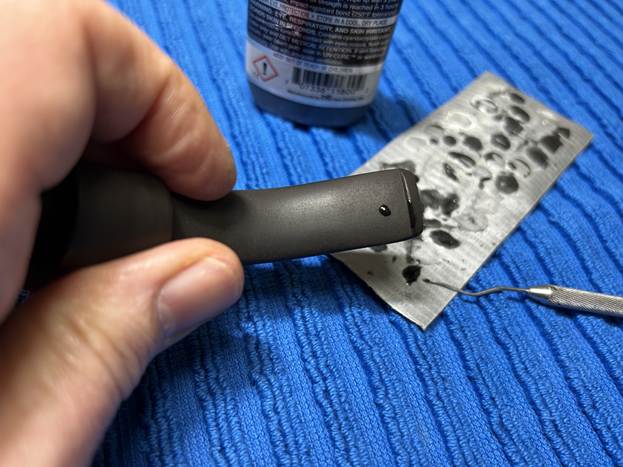
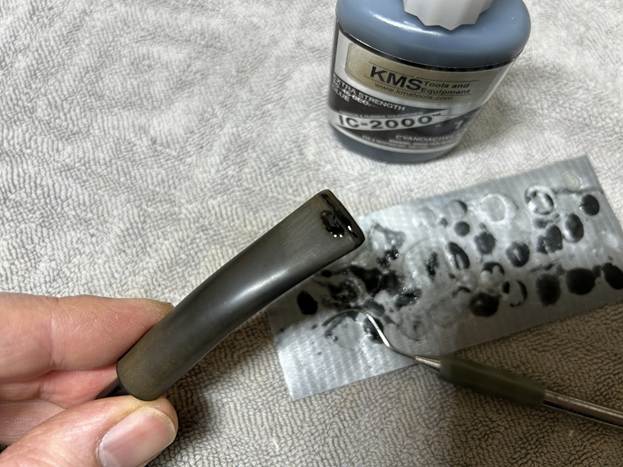
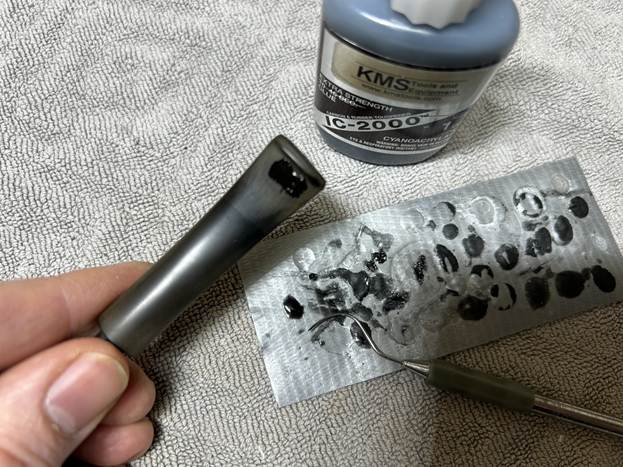
As the stem was now clean and dry, I set about fixing the marks and dents in the vulcanite. This was done by filling those divots with black cyanoacrylate adhesive, impregnated with carbon and rubber. I left this to cure and moved on.
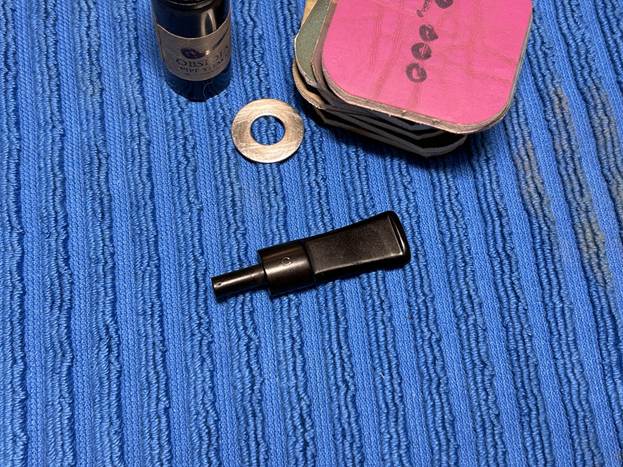
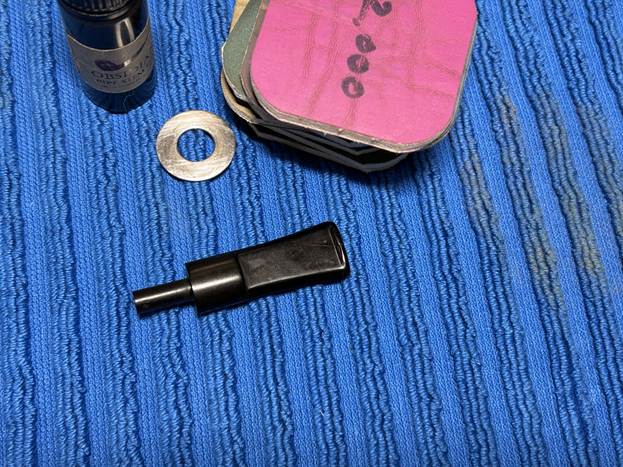
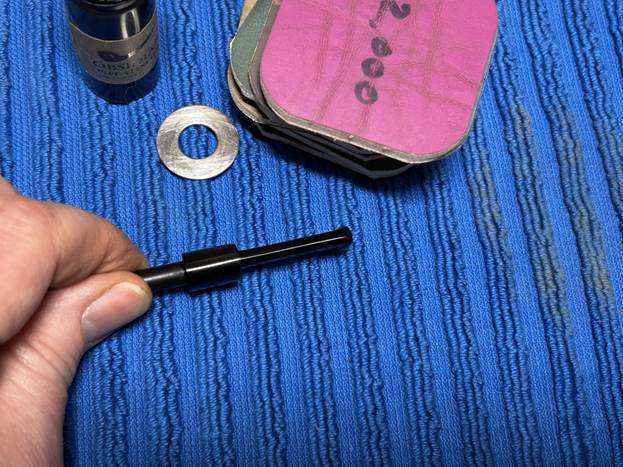
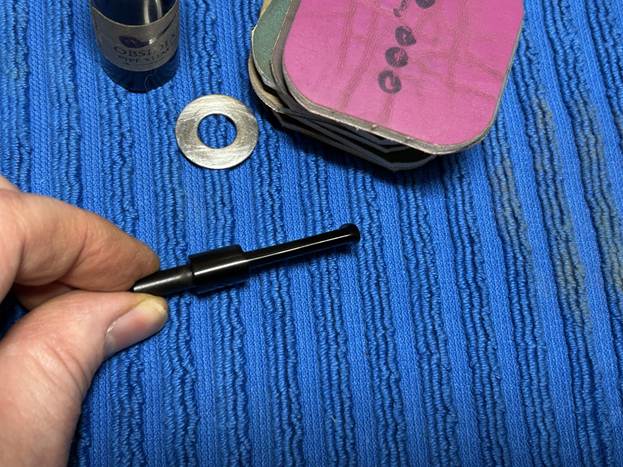
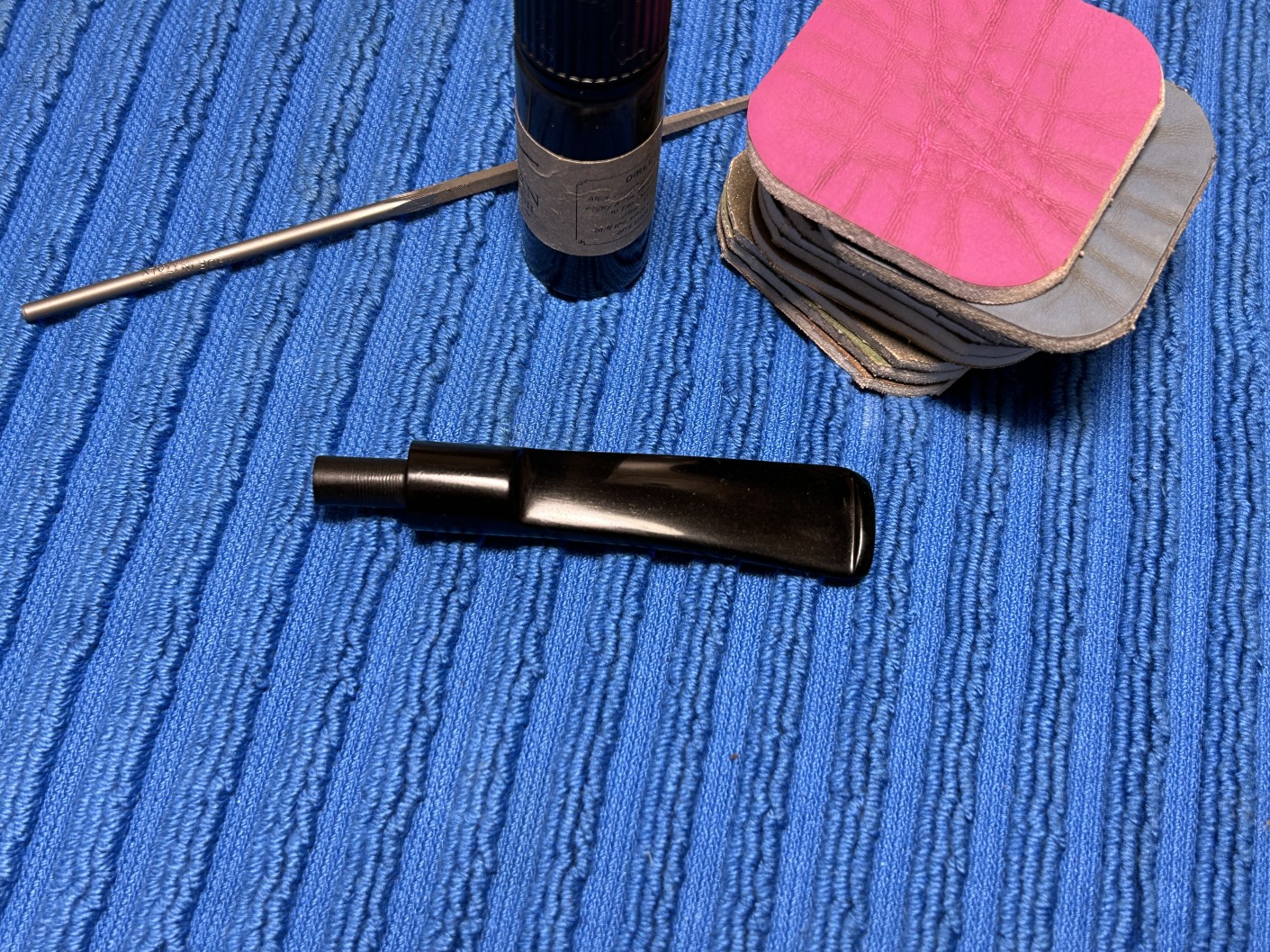
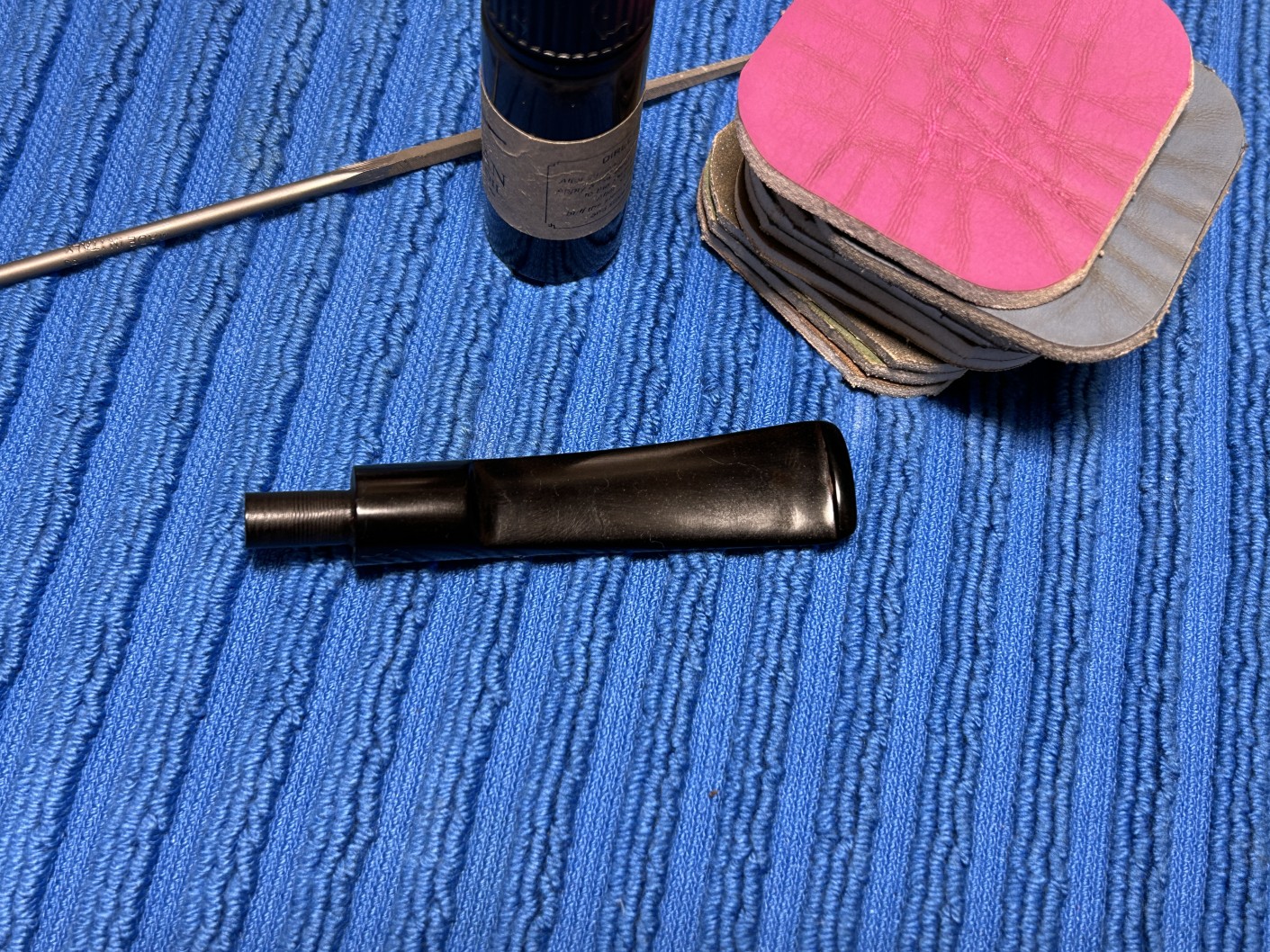
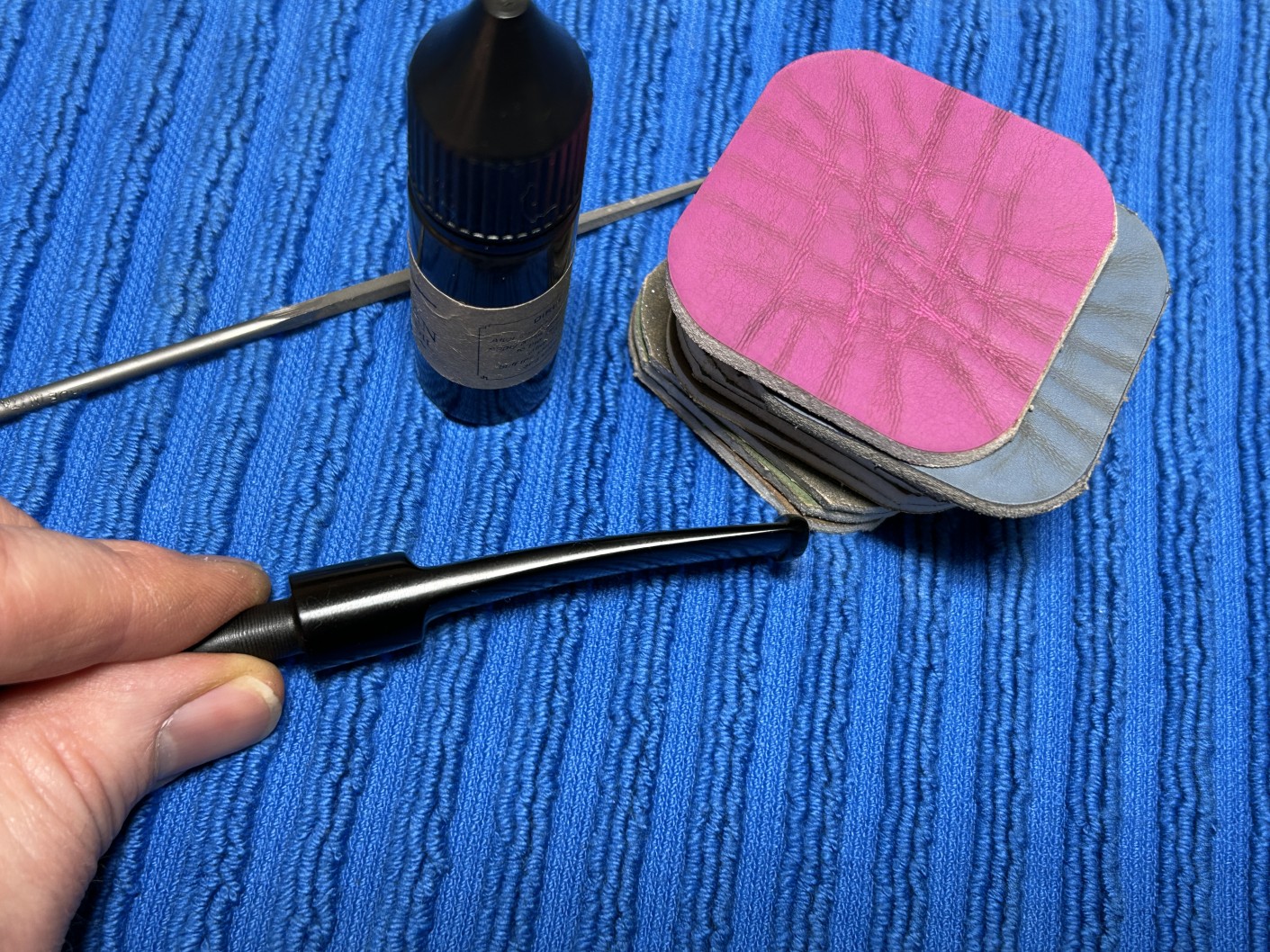
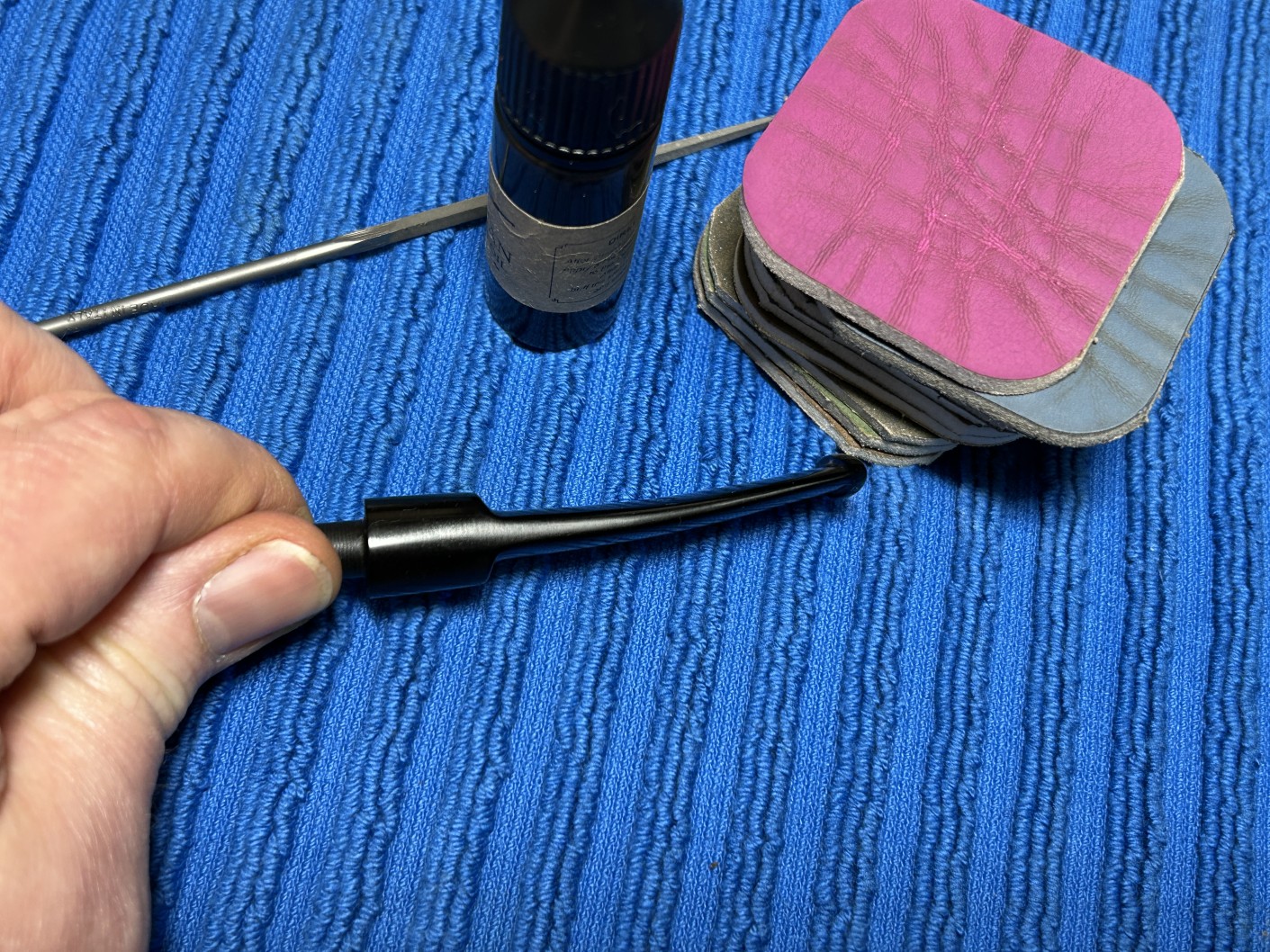
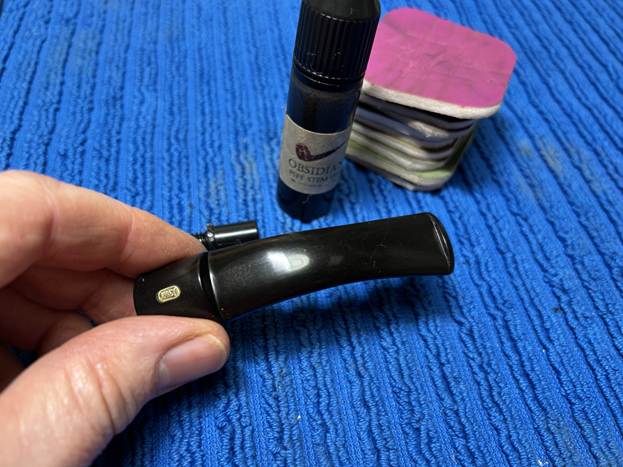
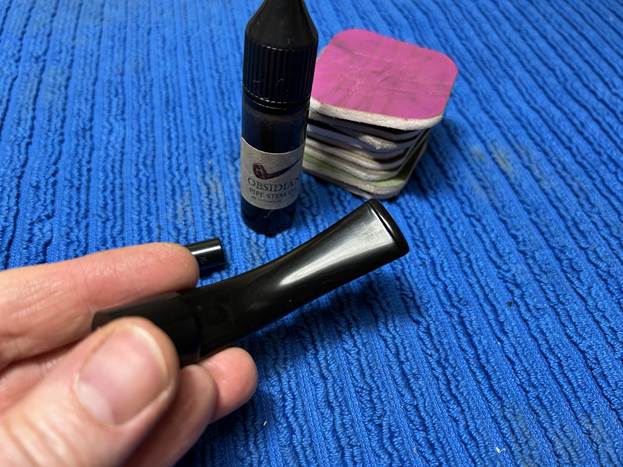
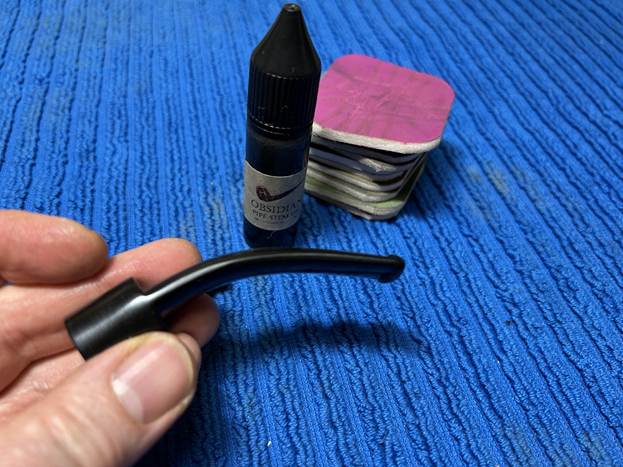
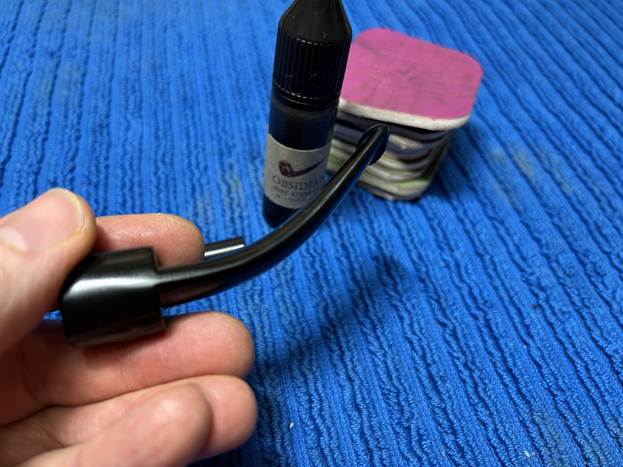
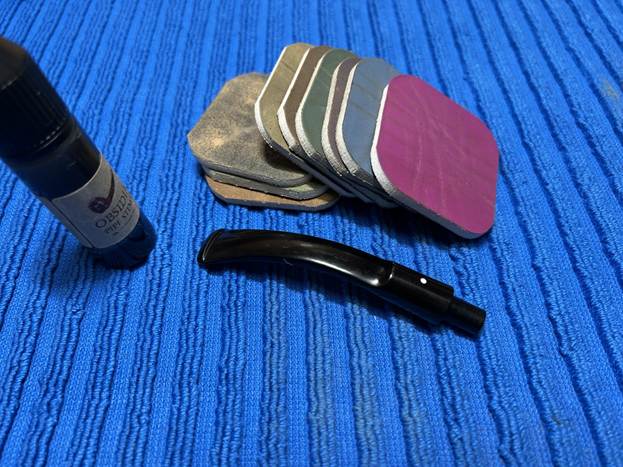
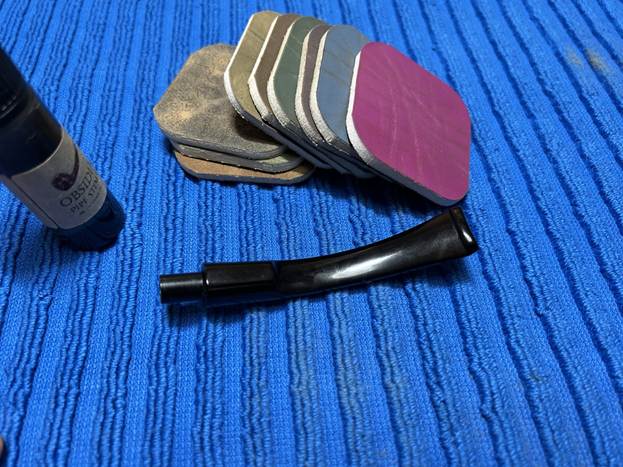
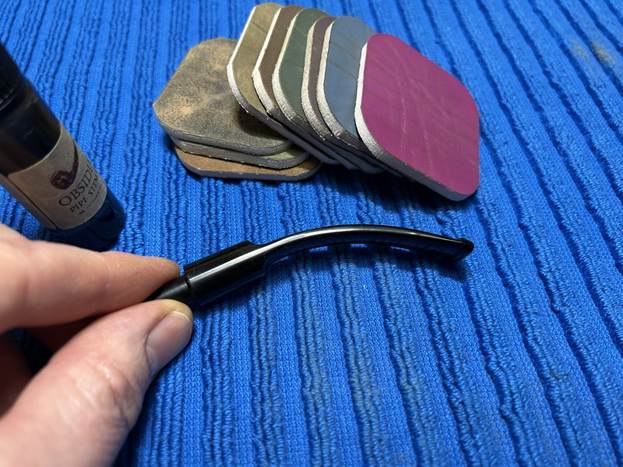
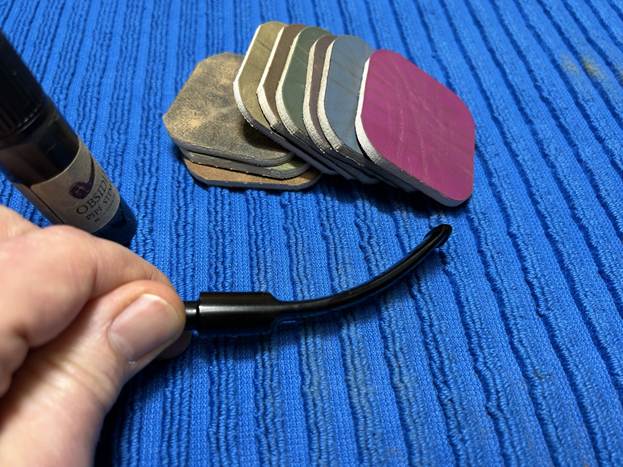
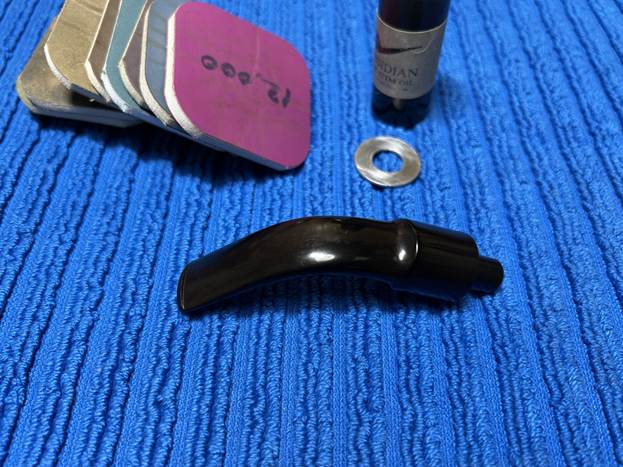
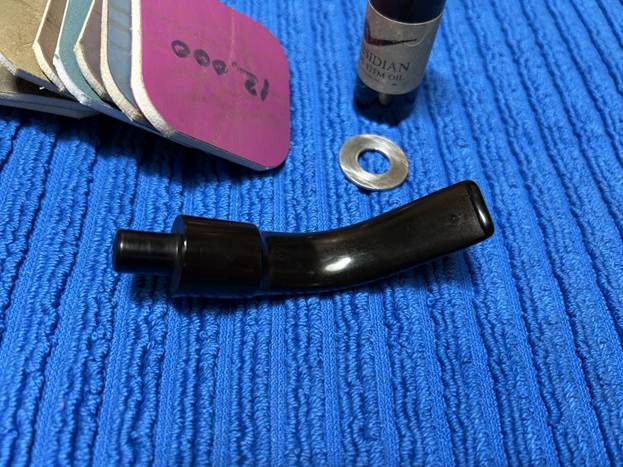
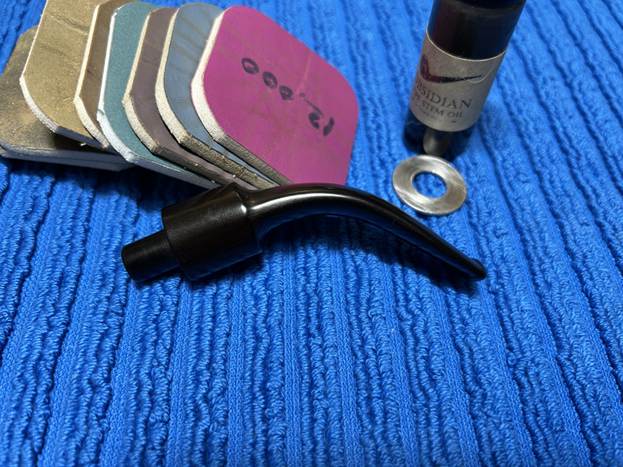
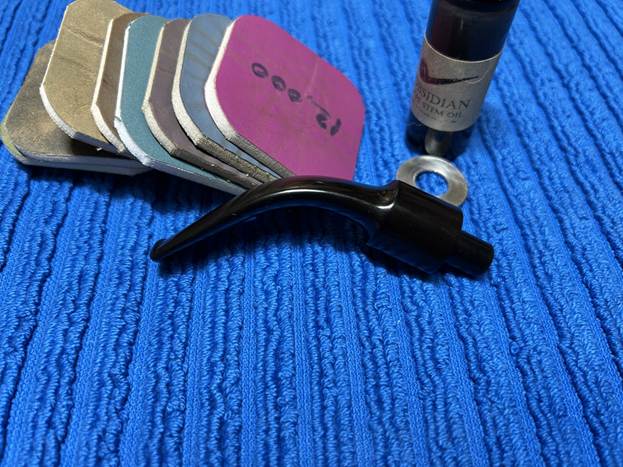
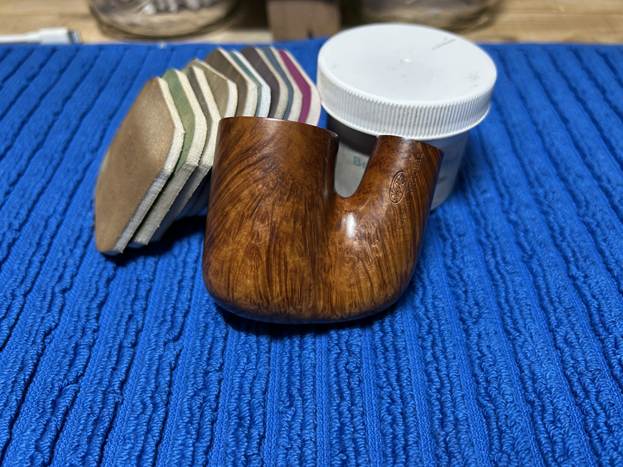
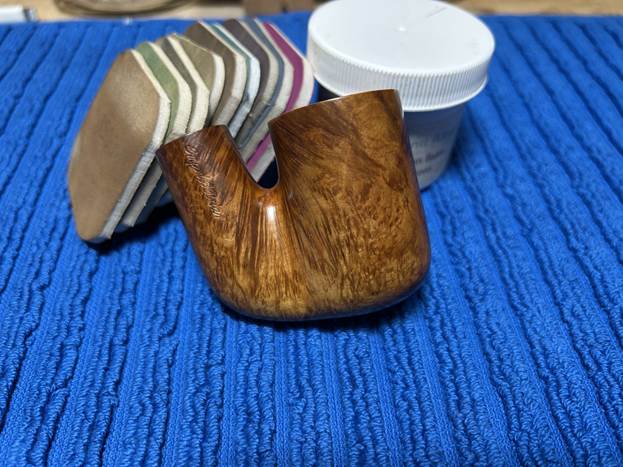
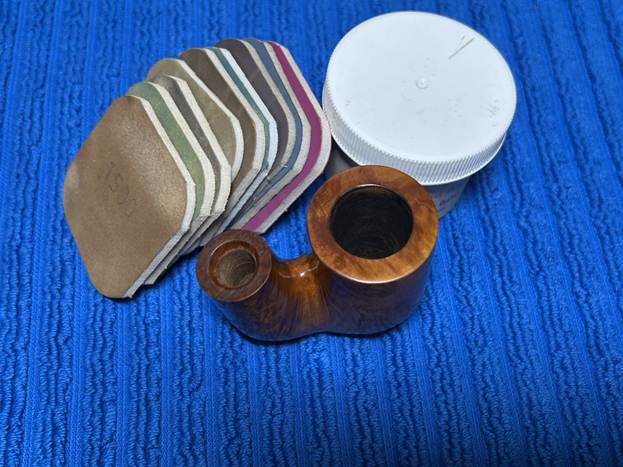
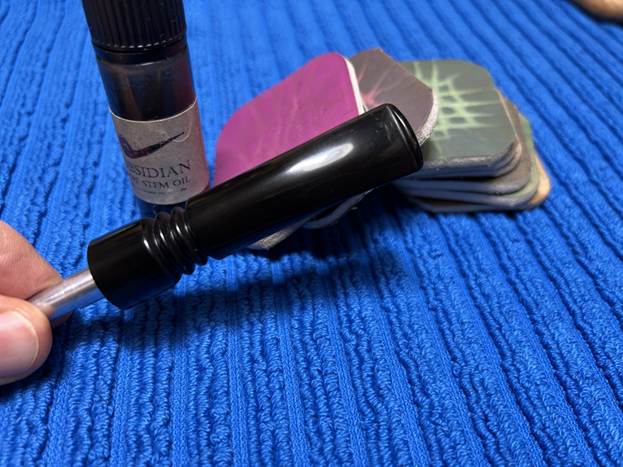
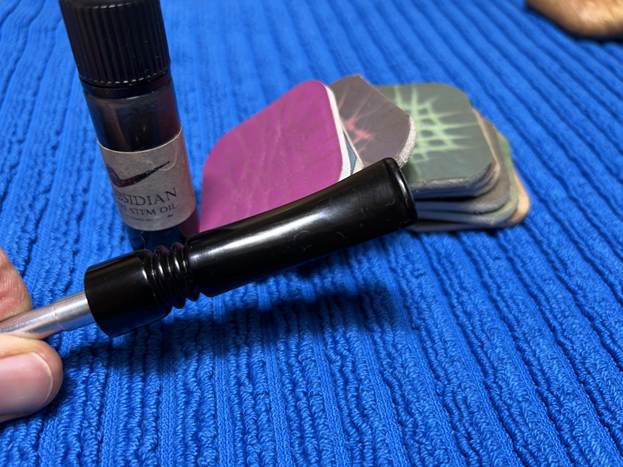
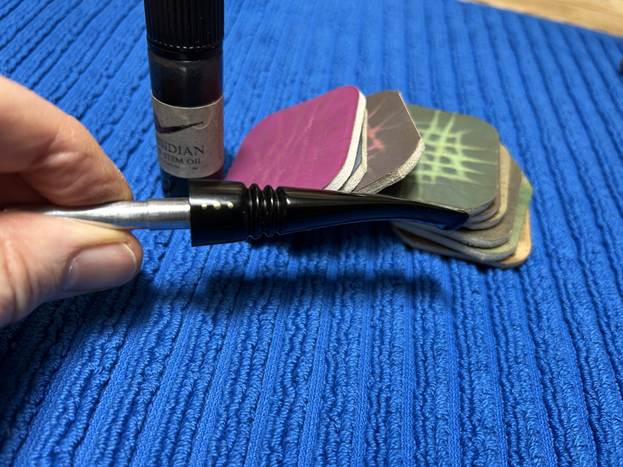
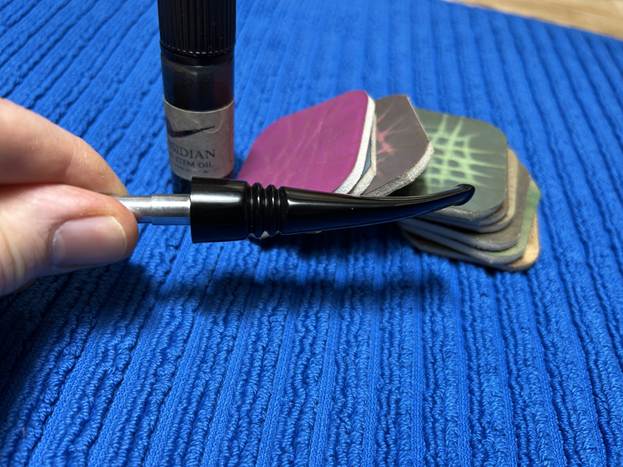
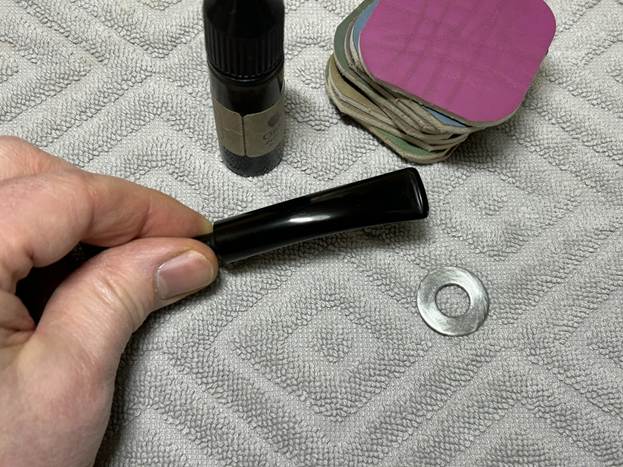
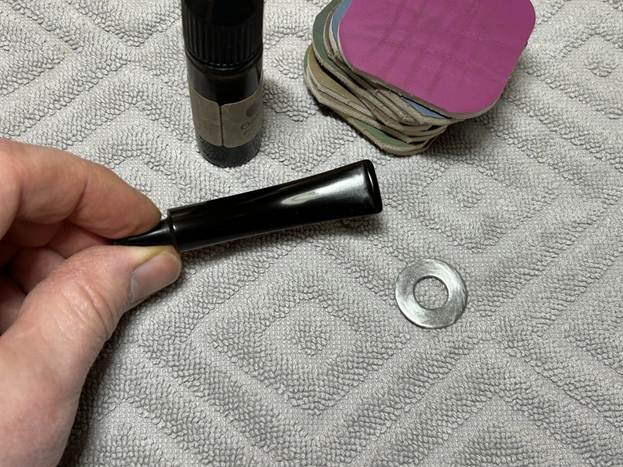
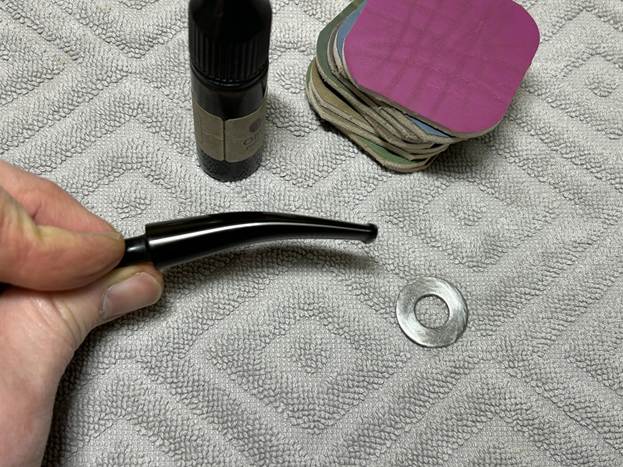
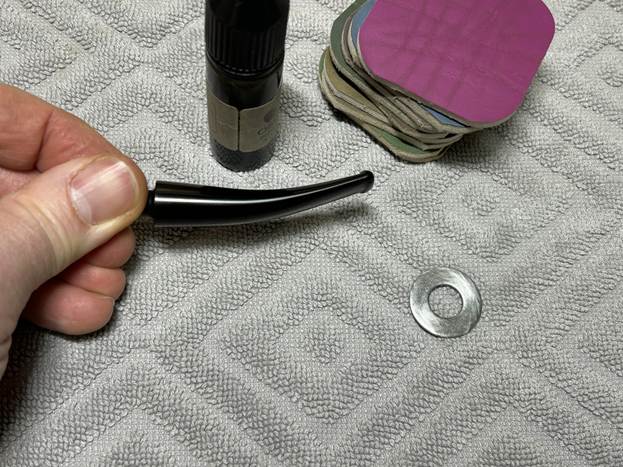
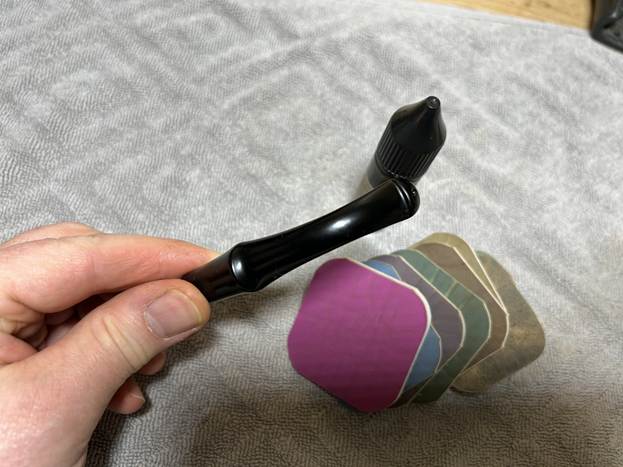
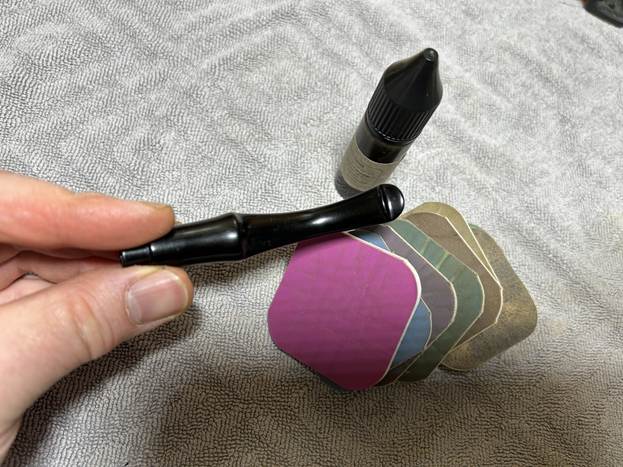
The penultimate step for the stem is sanding. First, with my set of needle files, I reduced the bulk of the cyanoacrylate repairs. I removed the excess adhesive as near to the surface as possible, without cutting into the vulcanite. Following that, I used all nine of the micromesh sanding pads (1,500 through 12,000 grit) to sand out flaws, even out the vulcanite, and provide gentle polishing of the finished surface. I also applied pipe-stem oil while using the last five micromesh pads. There was a wonderful, deep black shine to the stem when I was done.
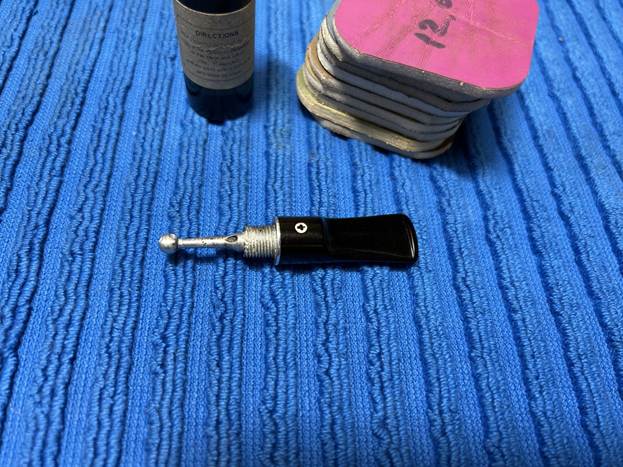
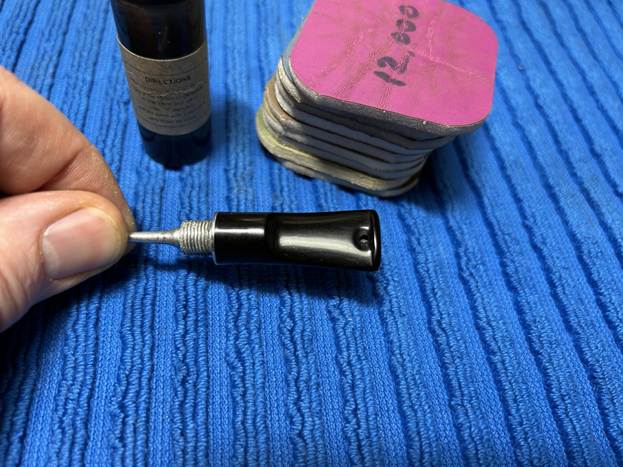
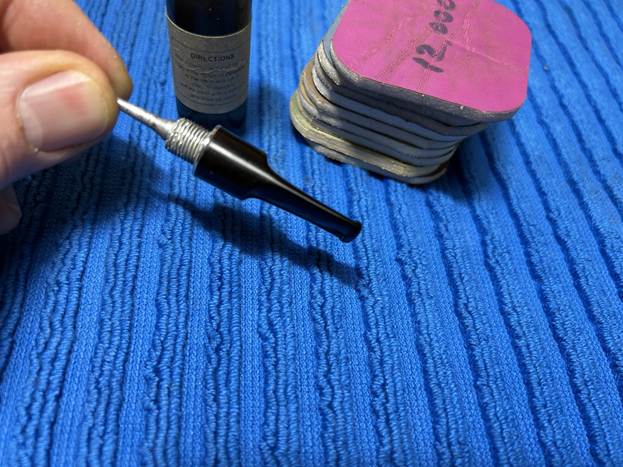
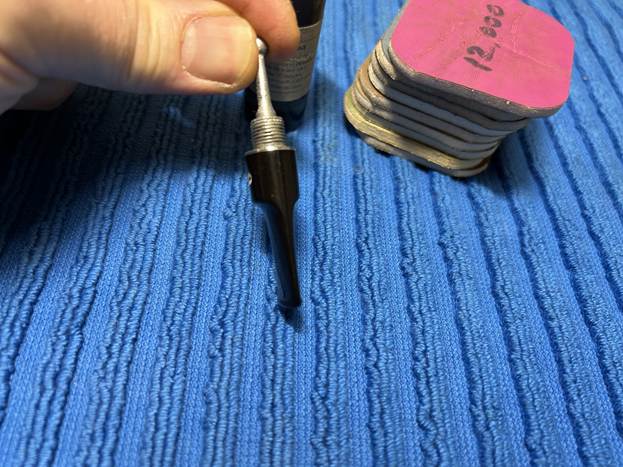
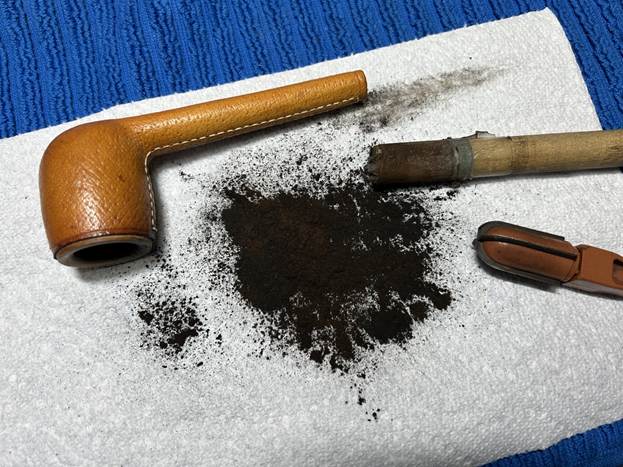
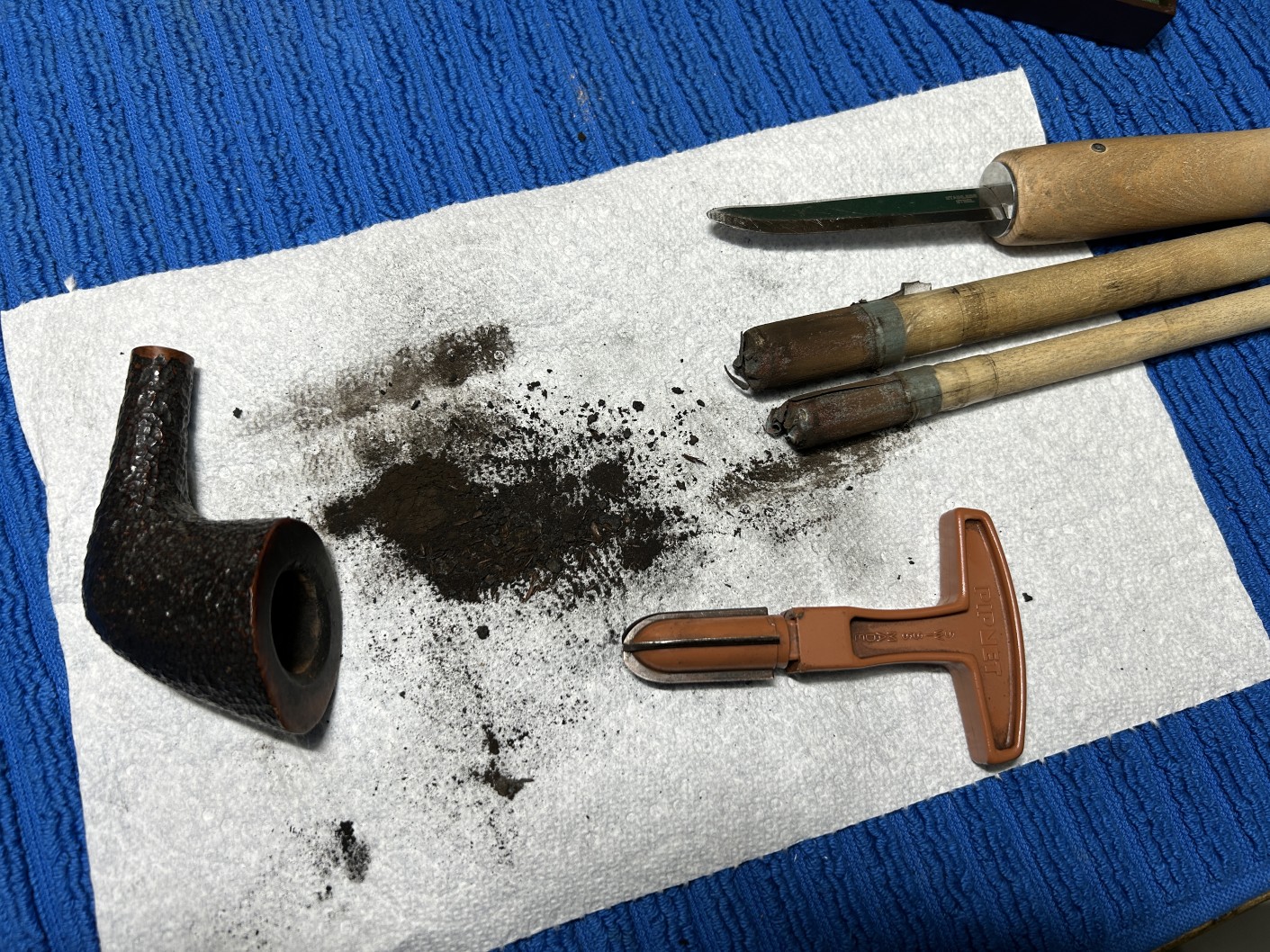
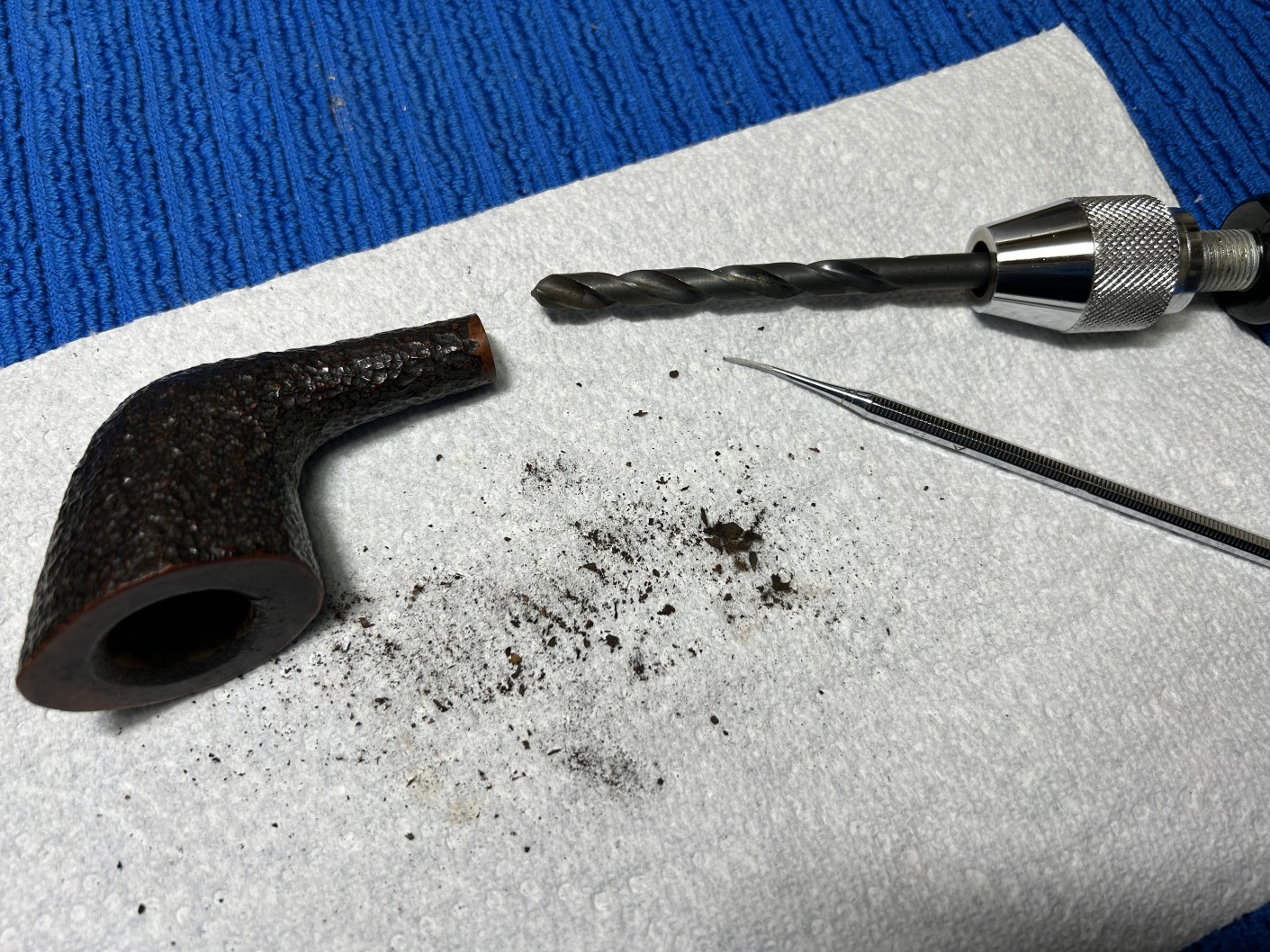
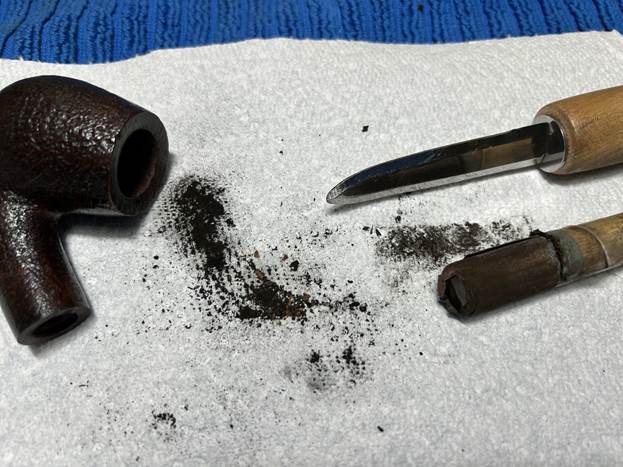
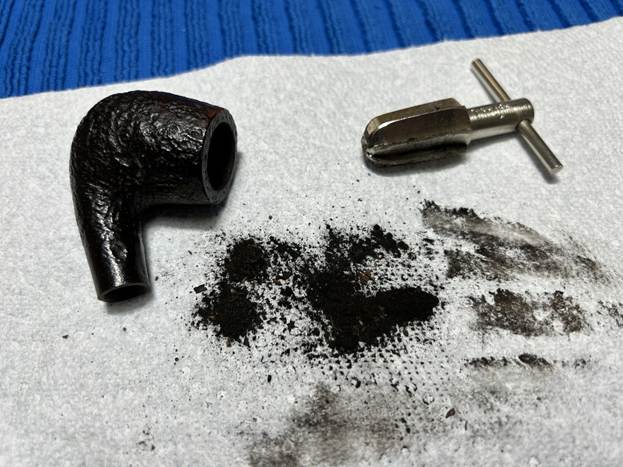
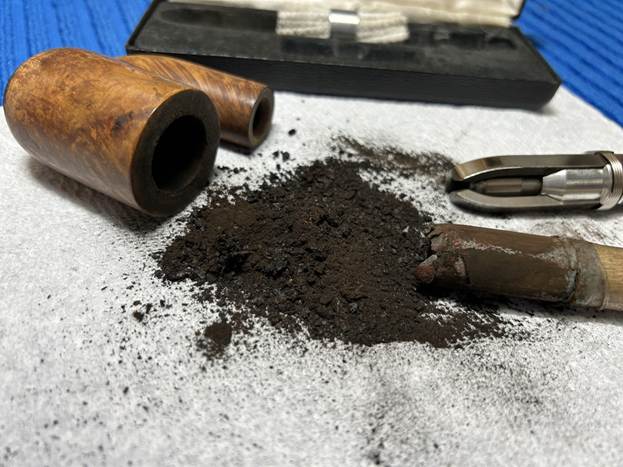
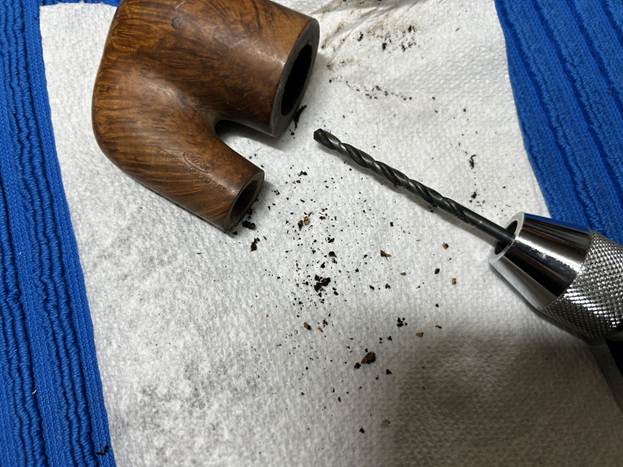
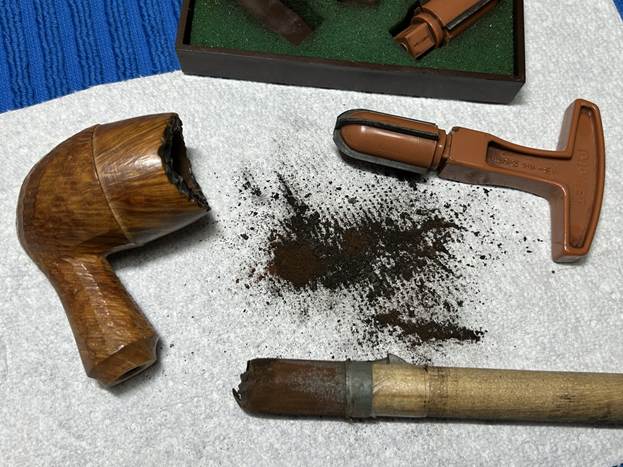
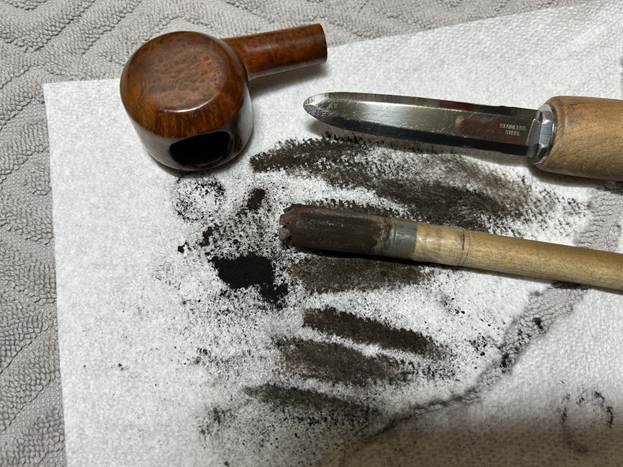
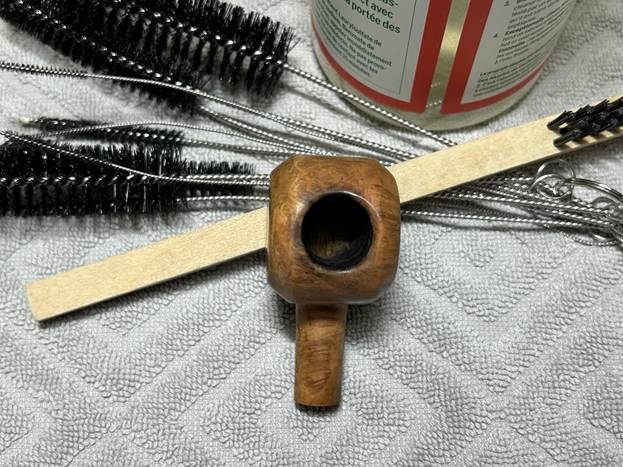
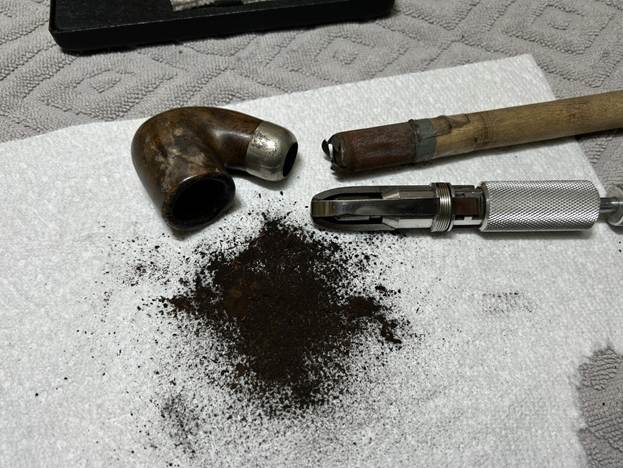
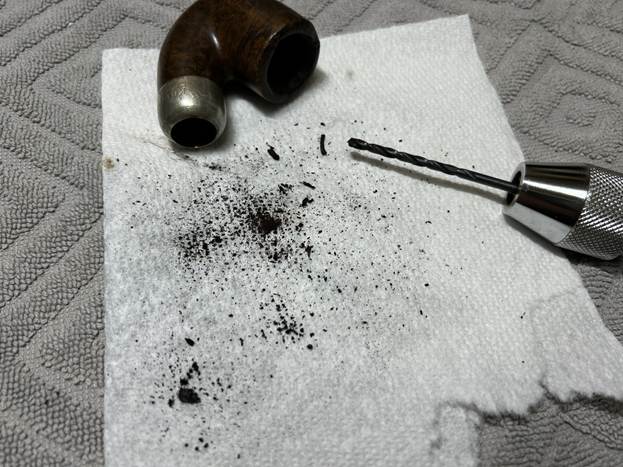
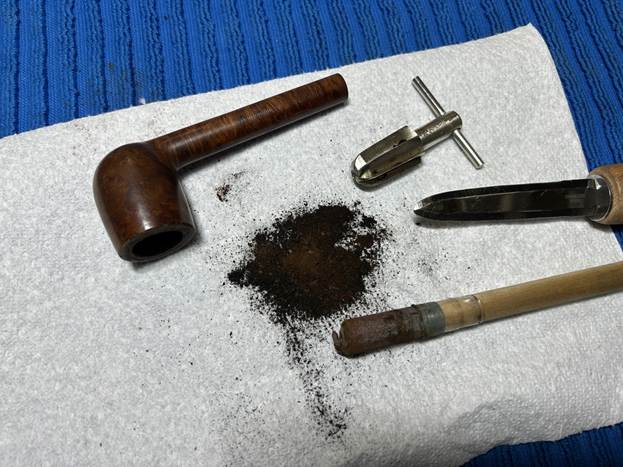
As the stem was (nearly) complete, I moved on to the stummel. The first step was to ream out the bowl – that is to say, remove all the cake inside the bowl. This accomplished a couple of things. First (and most obviously), it cleaned the bowl and provided a refurbished chamber for future smoking. Second, when the old cake was removed, I could inspect the interior walls of the bowl and determine if there was damage or not. I used a reamer, a pipe knife, and a piece of sandpaper taped to a wooden dowel. Collectively, these ensured that all the debris was removed.
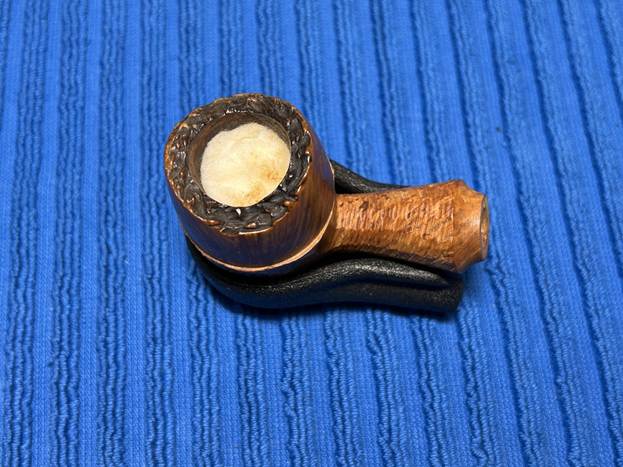
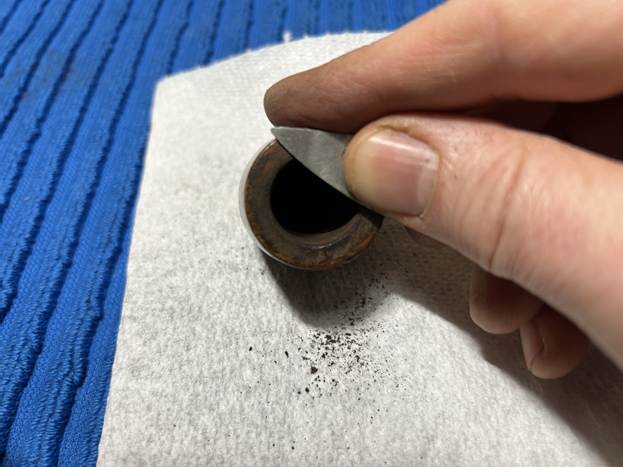
My next step was to remove the lava on the rim. For this, I took a piece of machine steel and gently scraped the lava away. The metal’s edge is sharp enough to remove what I need, but not so sharp that it damages the rim. There was some minor damage to the rim, but that would be resolved when sanding later.
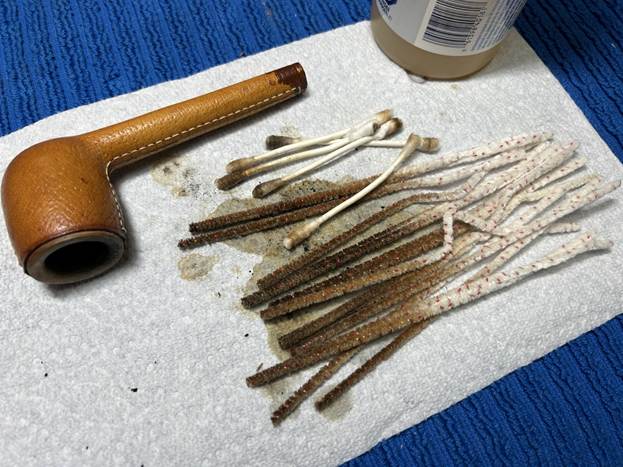
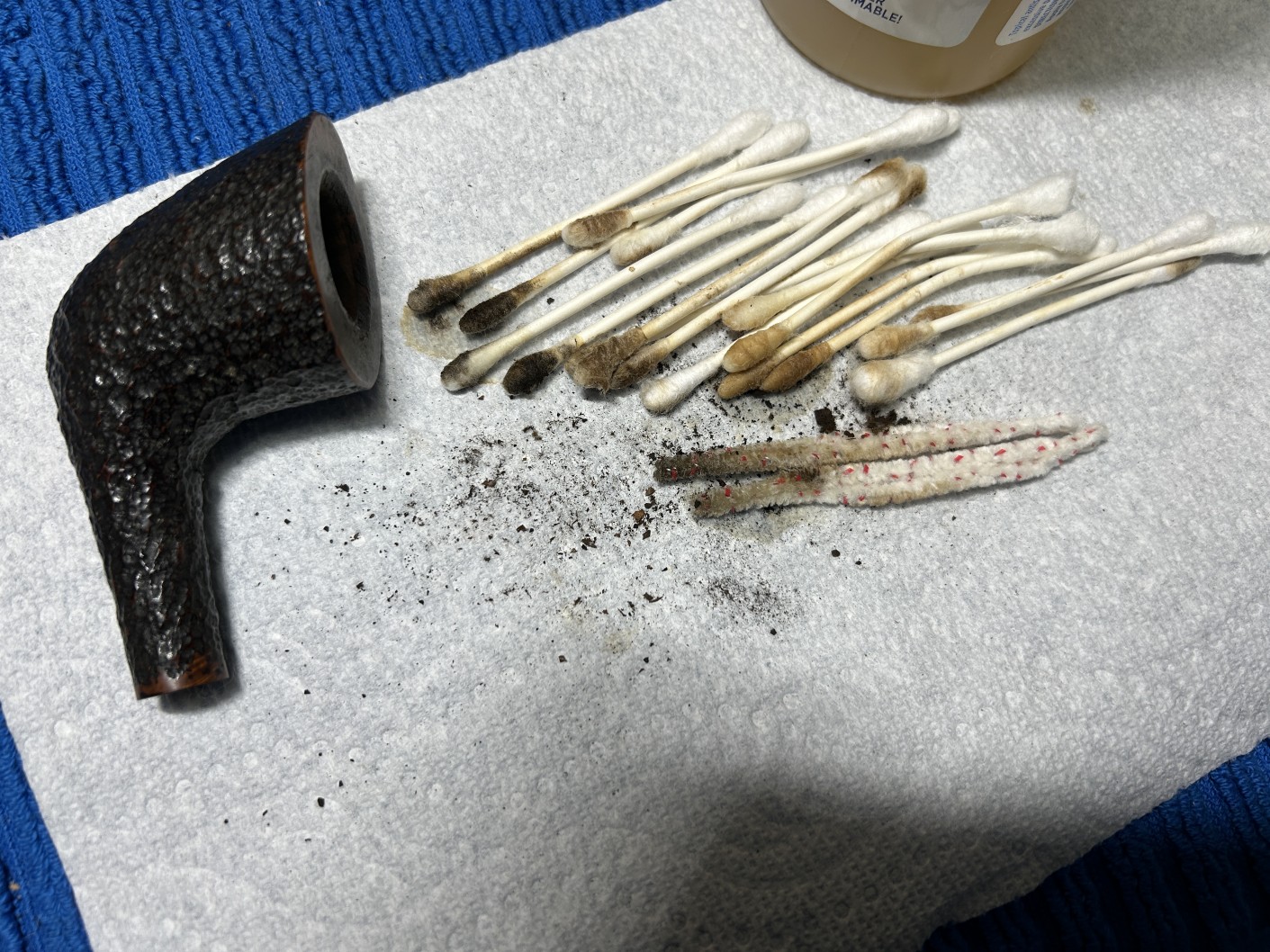
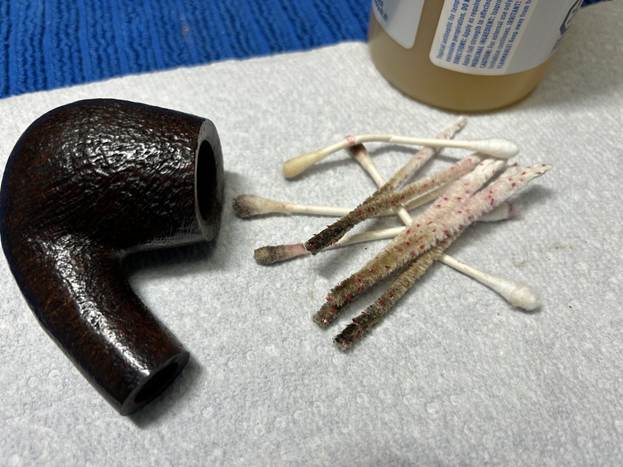
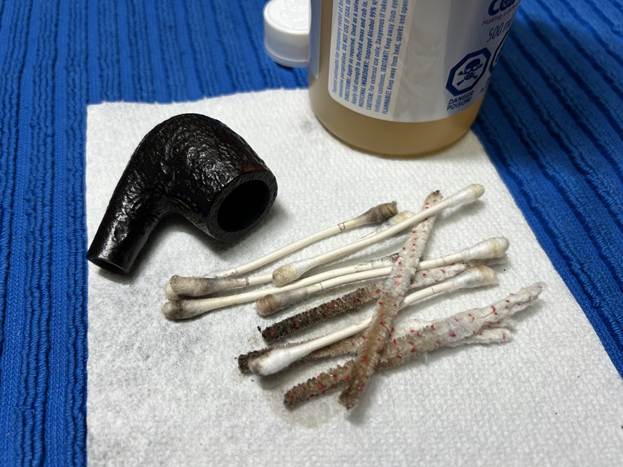
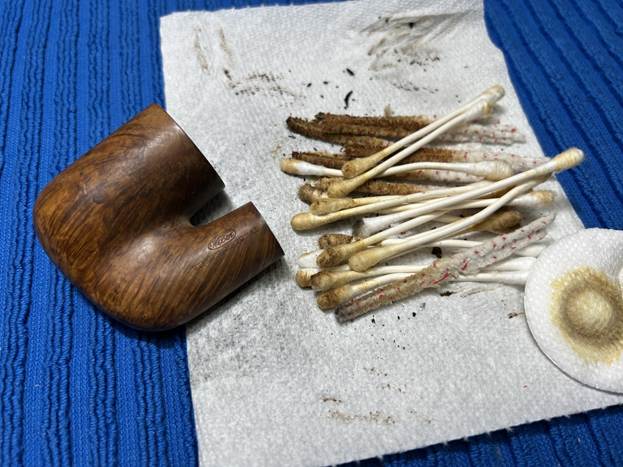
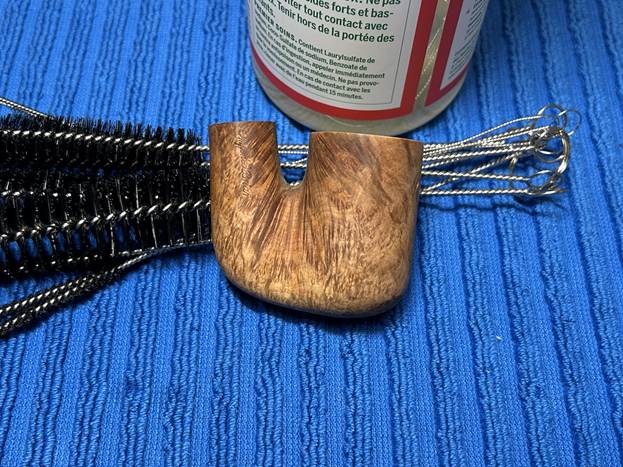
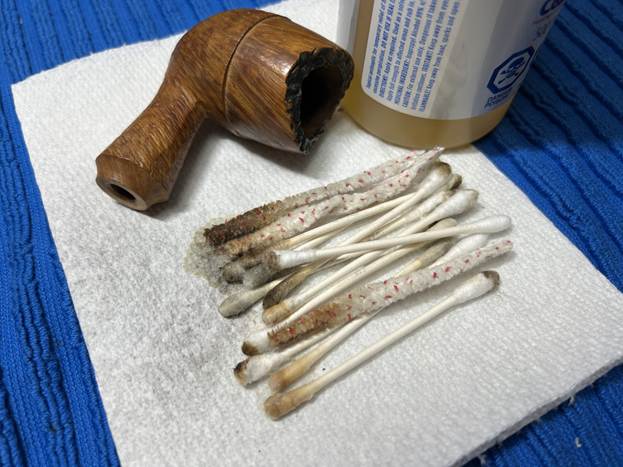
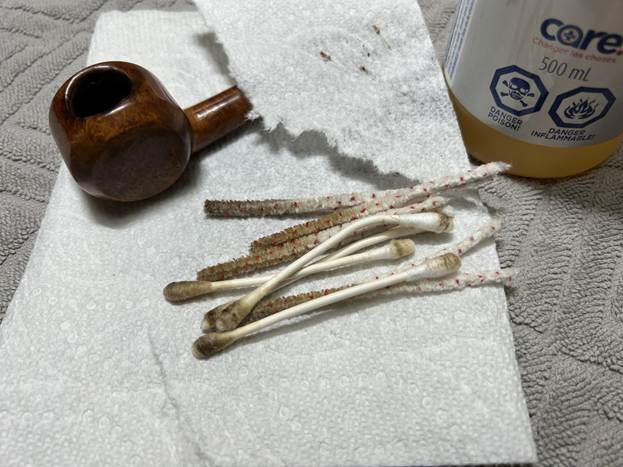
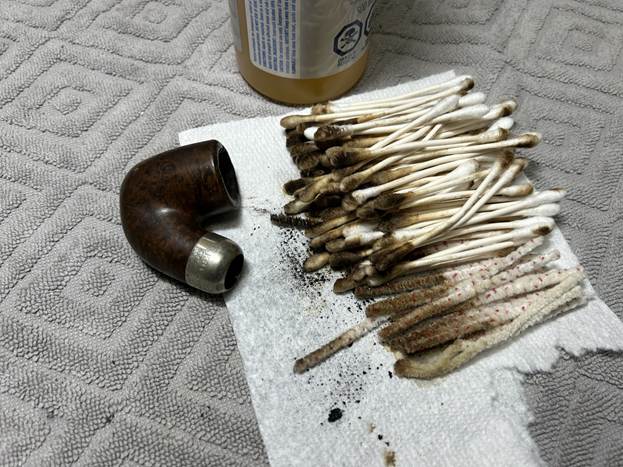
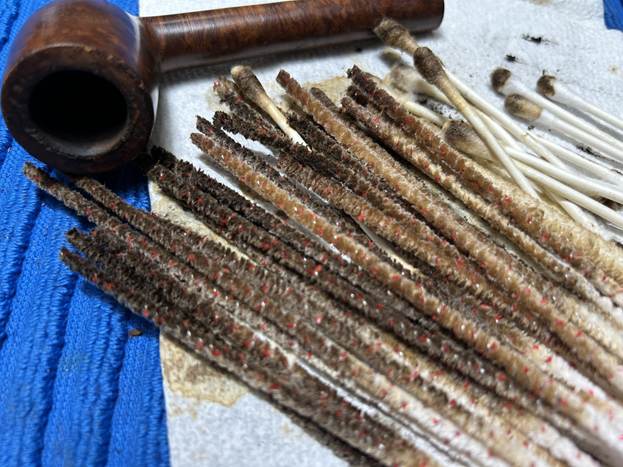
Similar to the stem, I then cleaned the stummel with both pipe cleaners and cotton swabs dipped in lemon-infused 99% isopropyl alcohol. With a pipe this dirty, it took quite a while and much cotton to clean. This pipe was incredibly dirty – it took forever.
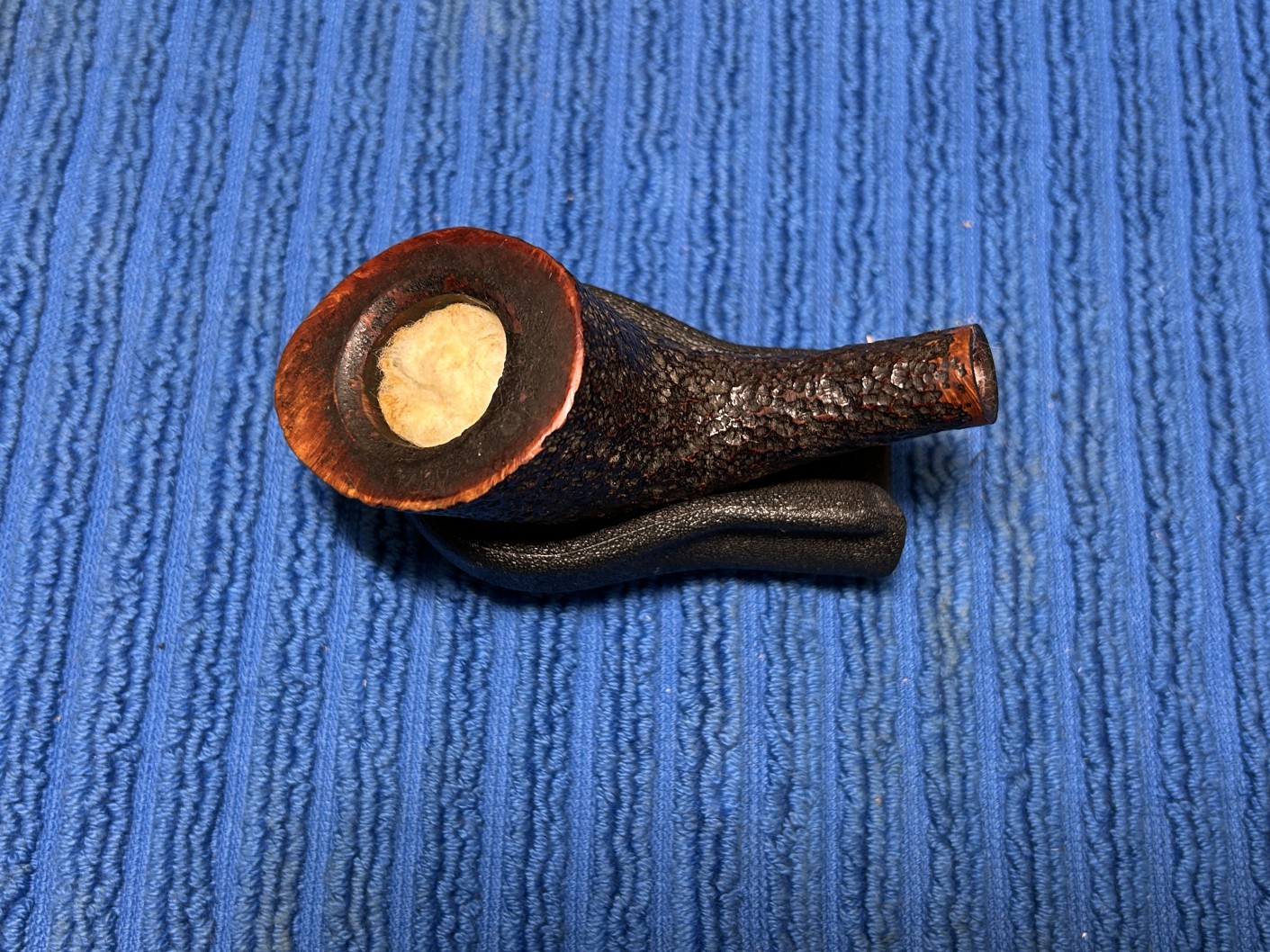
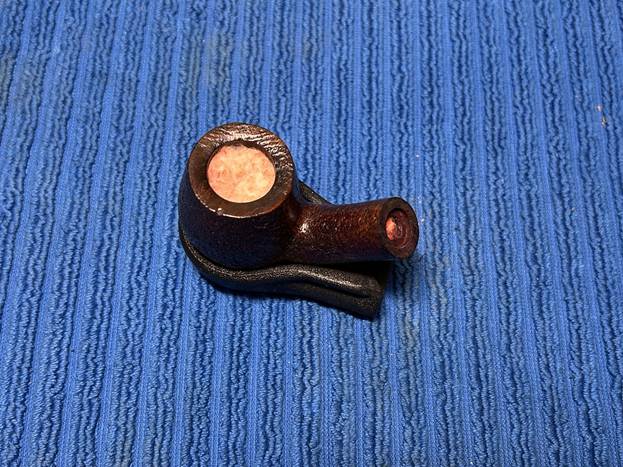
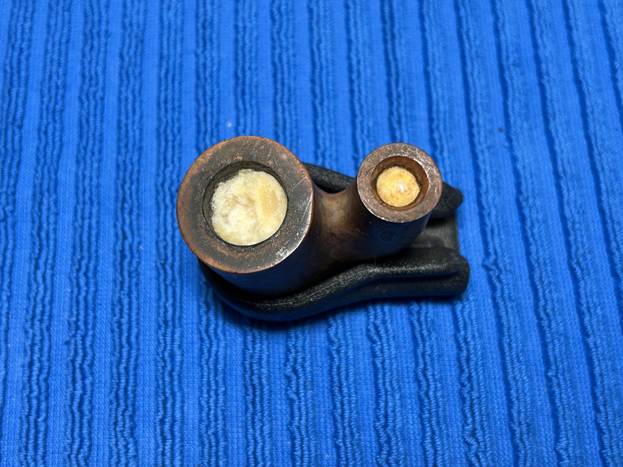
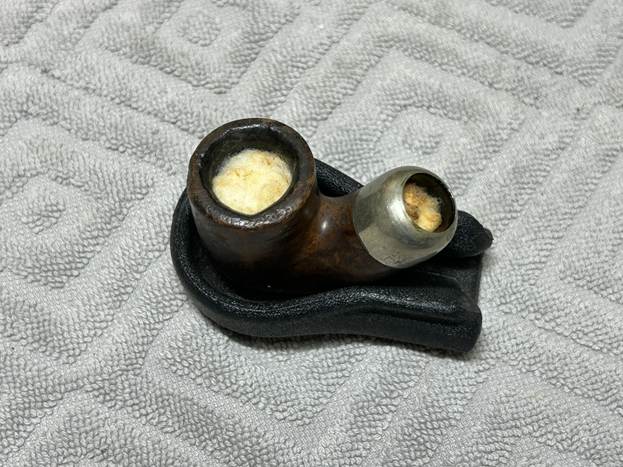
I then decided to ‘de-ghost’ the pipe – that is to say, exorcize the remaining filth from the briar. I filled the bowl and the shank with cotton balls, then saturated them with 99% isopropyl alcohol. I let the stummel sit overnight. This caused the remaining oils, tars and smells to leach out into the cotton.
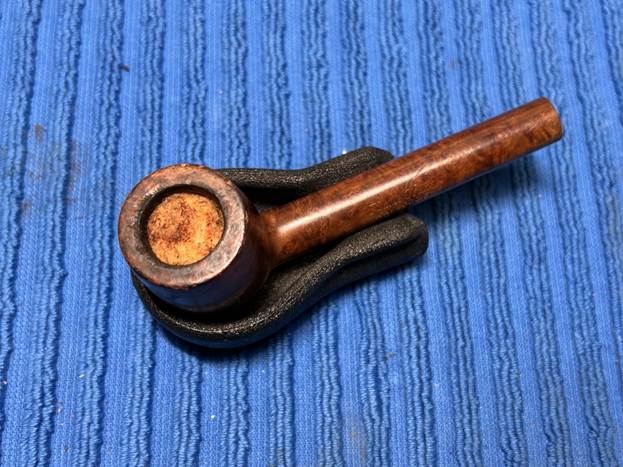
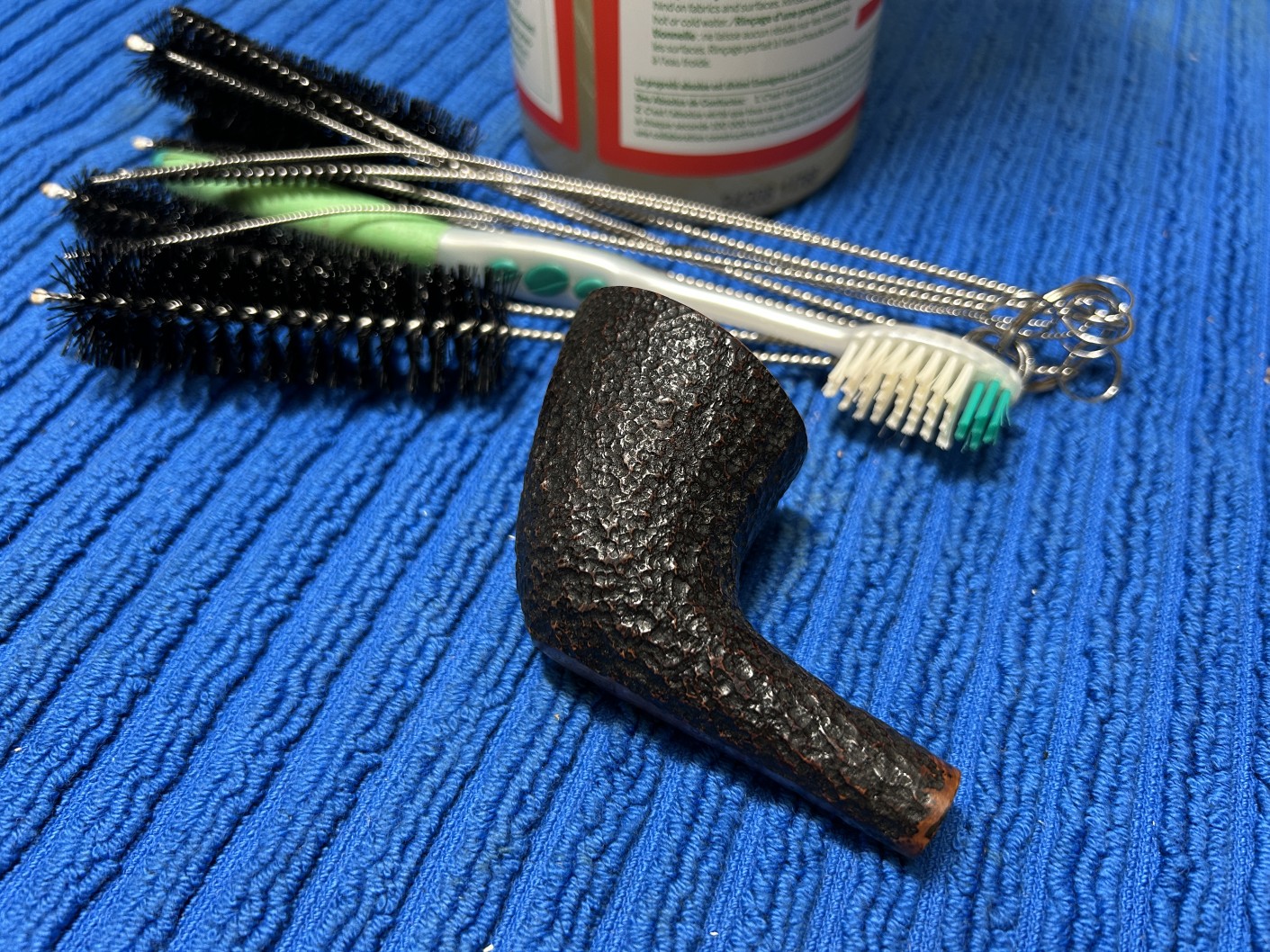
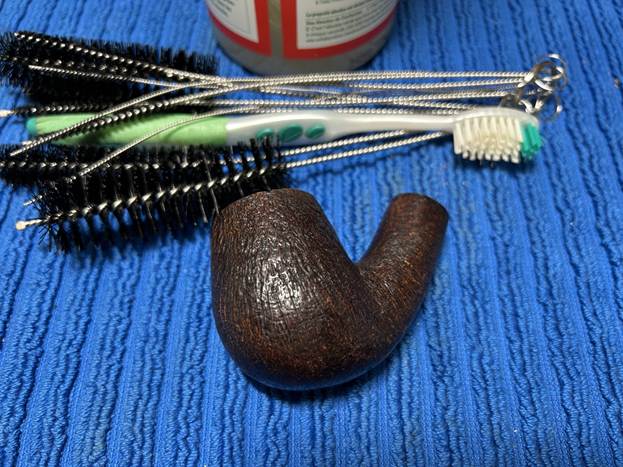
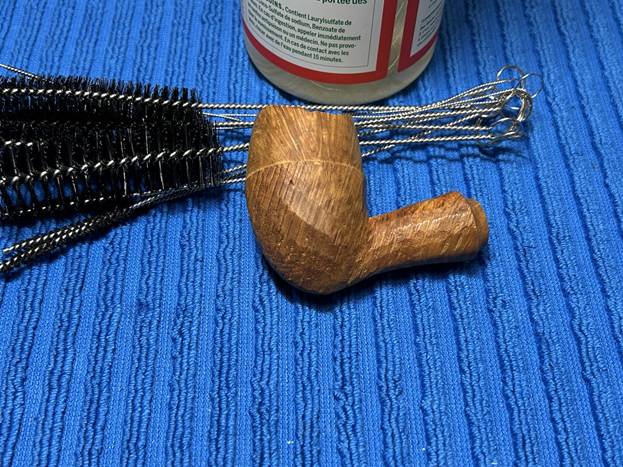
To tidy up the briar, I wiped down the outside, using a solution of a pH-neutral detergent and some distilled water, with cotton rounds. I also used a toothbrush in the crevices. This did a good job of cleaning any latent dirt on the surface of the briar. The last step of the cleaning process was to scour the inside of the stummel with the same mild detergent and tube brushes. This was the culmination of a lot of hard work in getting the pipe clean.
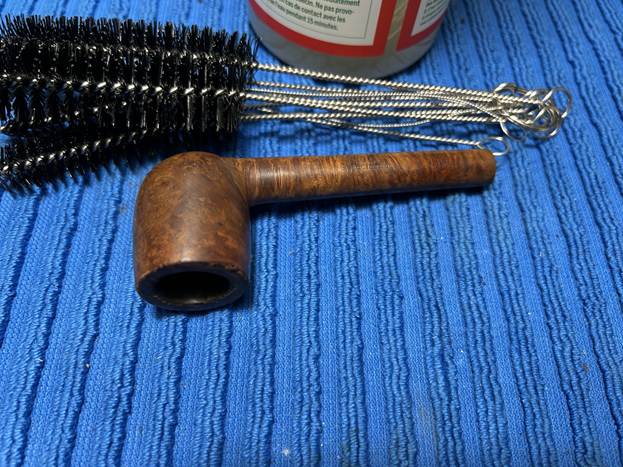
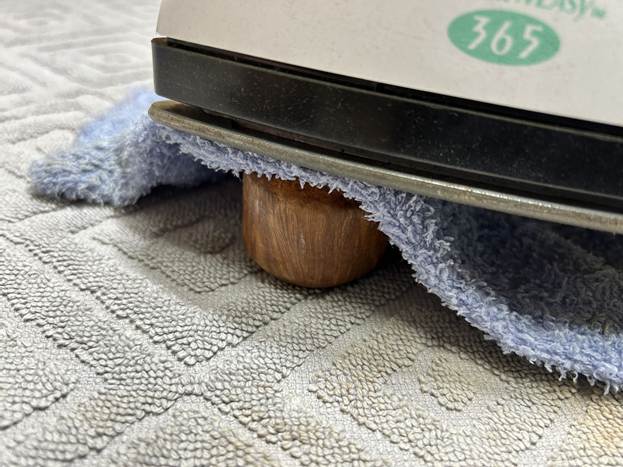
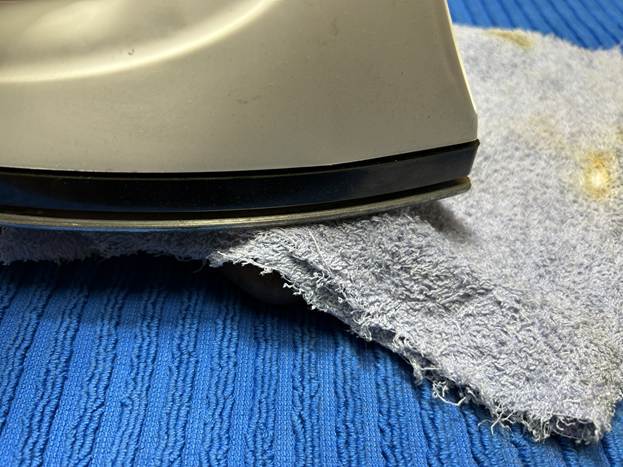
Having completed that, I was able to address the tiny nicks on the bowl. I dug out my iron and a damp cotton flannel cloth. By laying the cloth over the affected areas and applying the iron to it, the hot and moist steam can cause the wood to swell slightly and return to shape. There was some improvement – not a lot, but it was better than doing nothing.
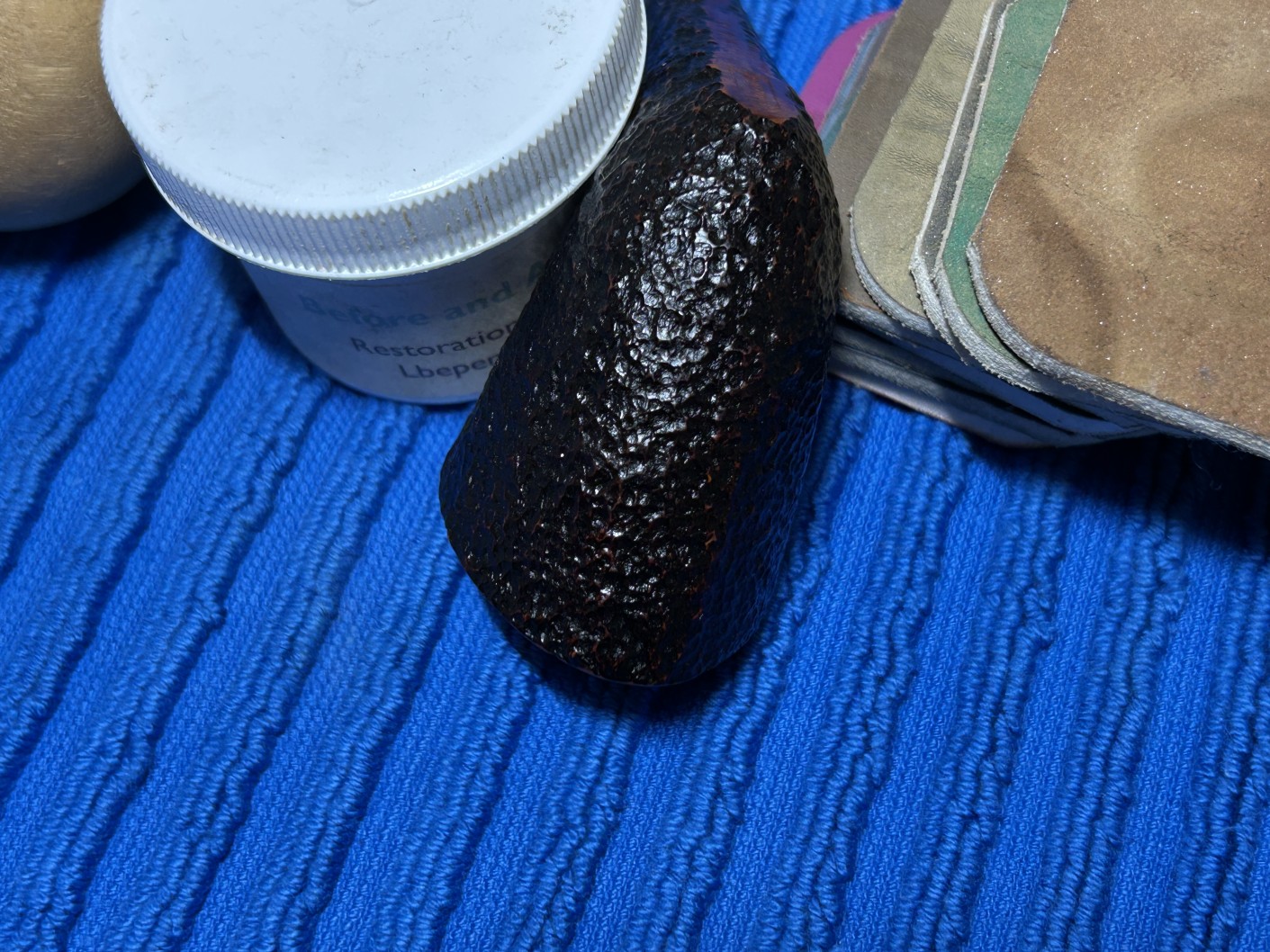
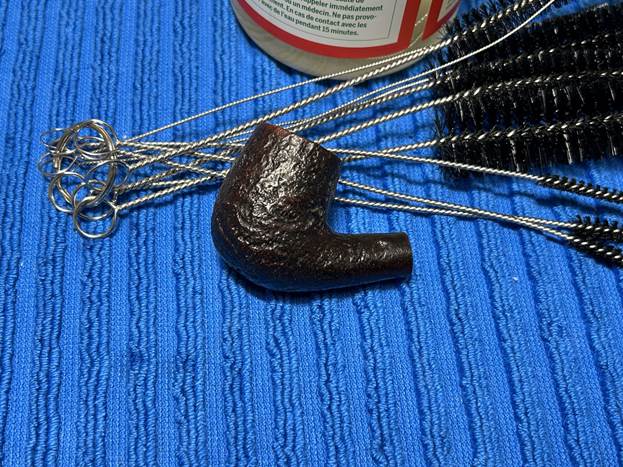
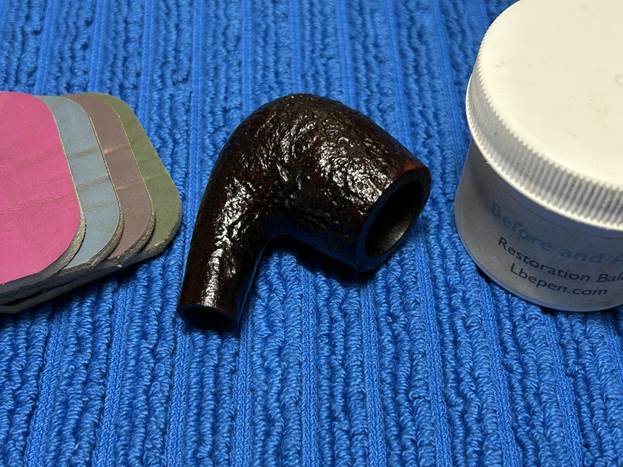
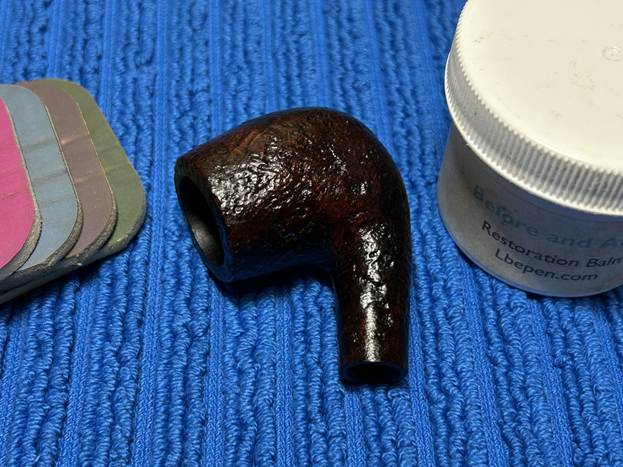
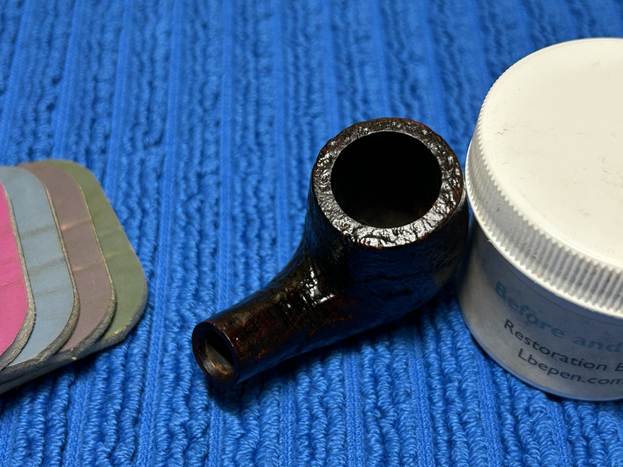
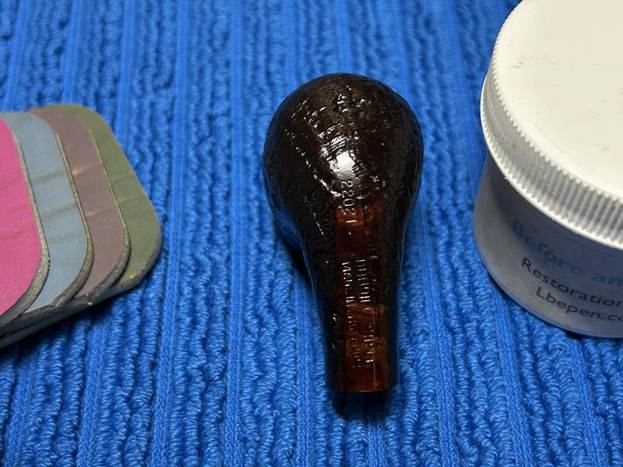
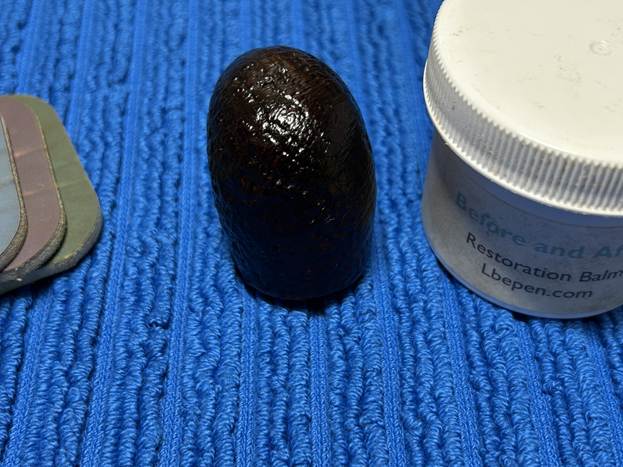
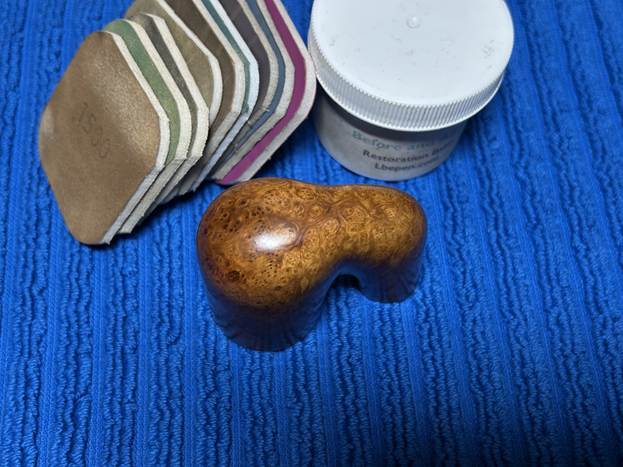
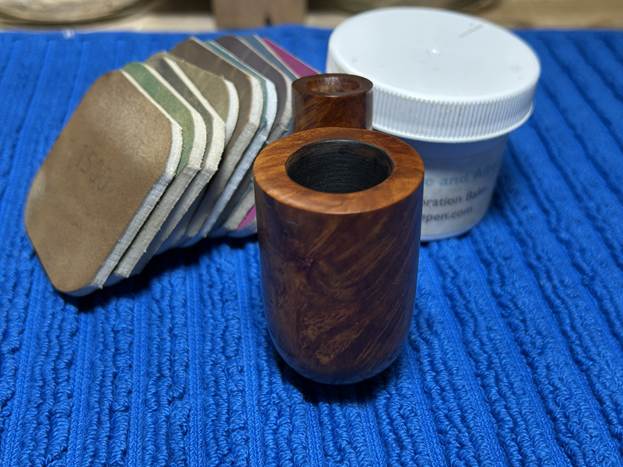
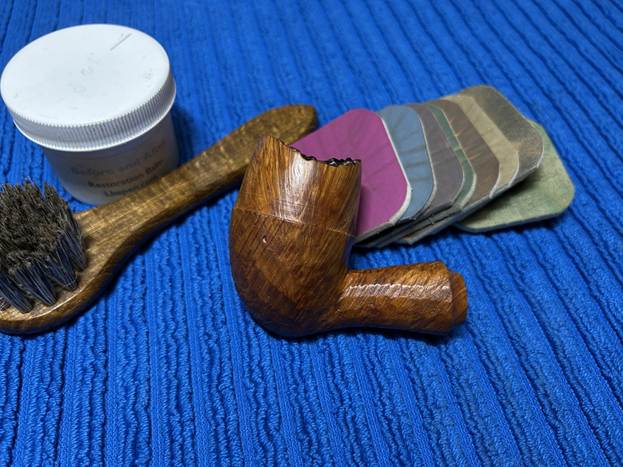
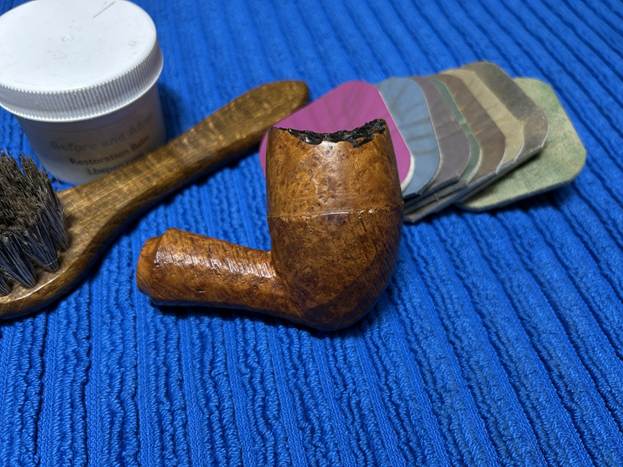
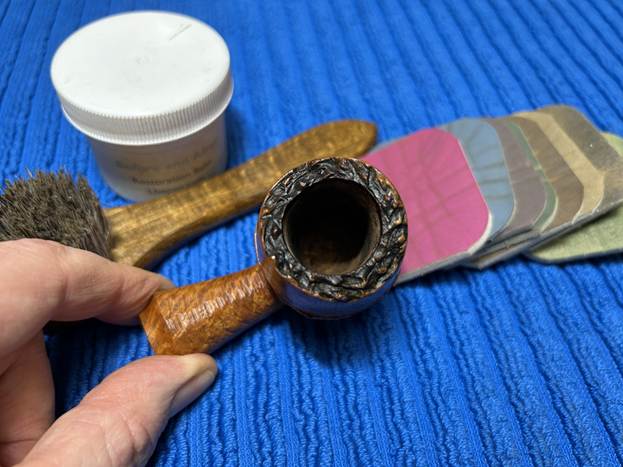
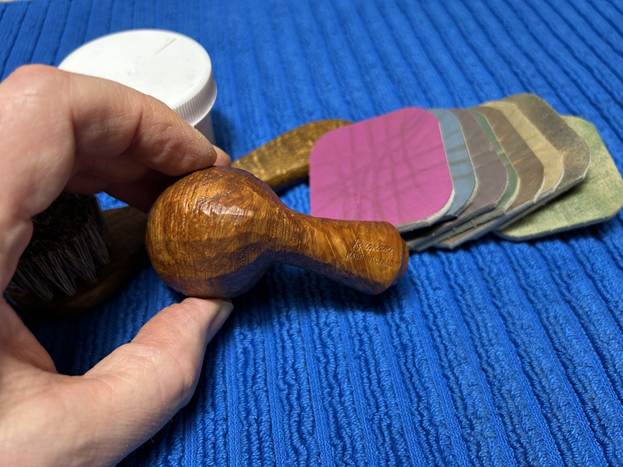
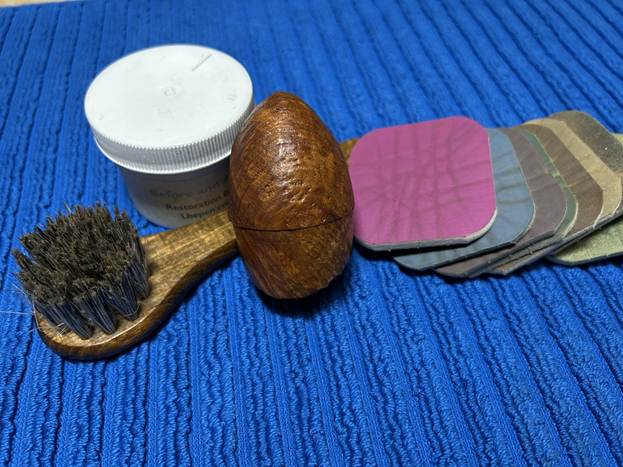
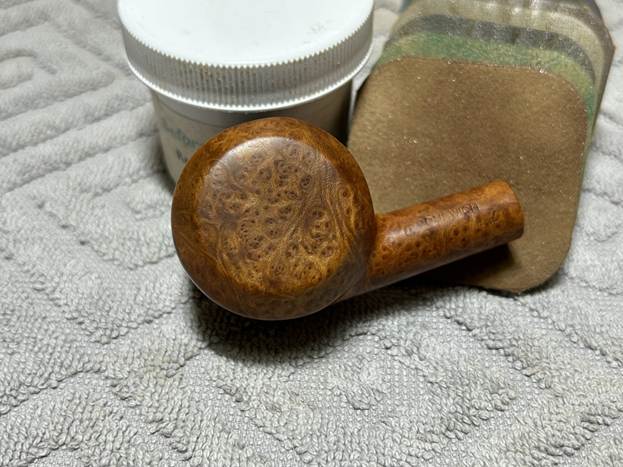
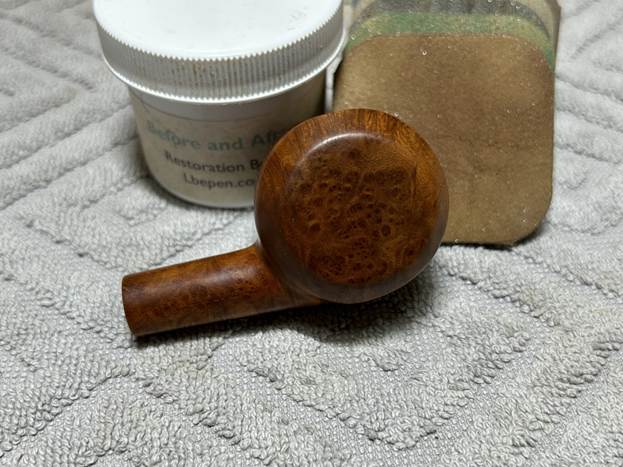
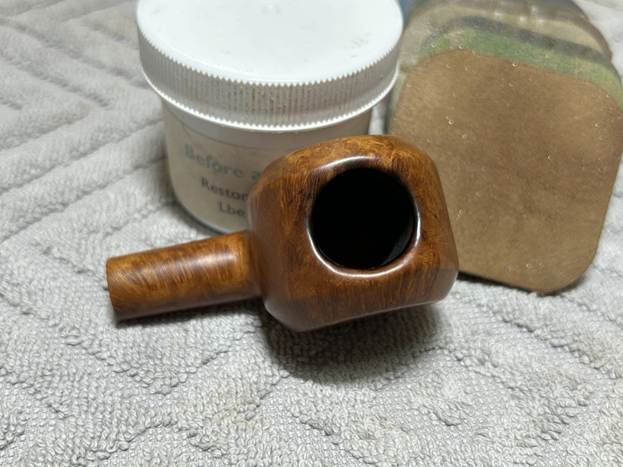
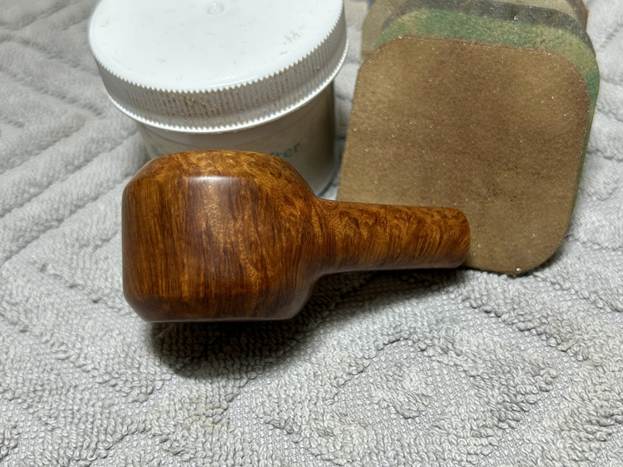
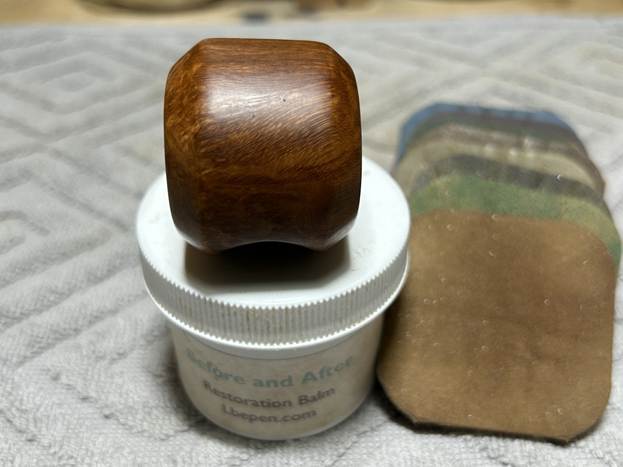
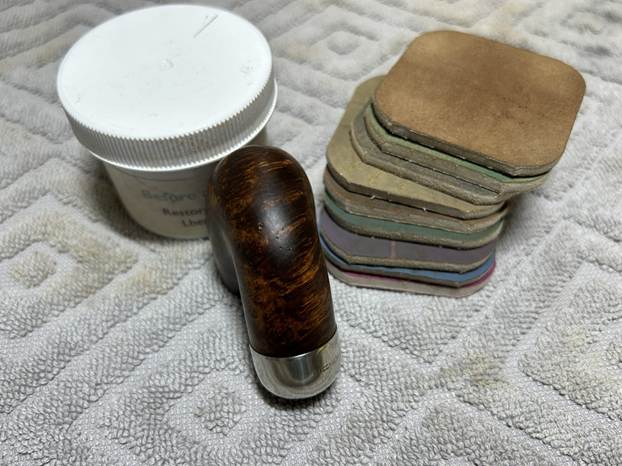
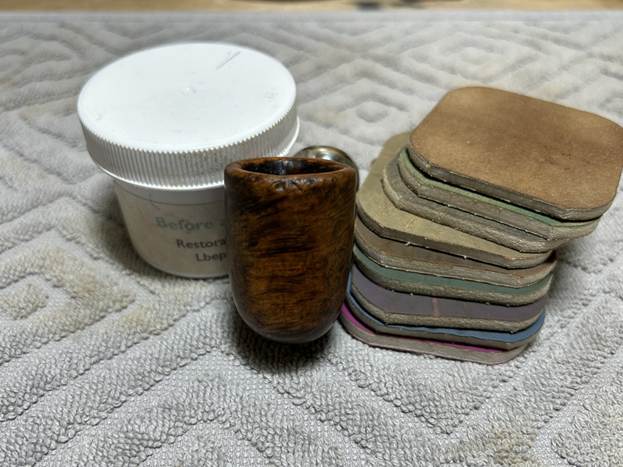
I used all nine micromesh pads (1,500 through 12,000 grit) to sand the outside of the stummel and finish it off. This sanding minimizes flaws in the briar and provides a beautiful smoothness to the wood. I rubbed some LBE Before & After Restoration Balm into the briar and let it sit for an hour or so. The balm moisturizes the wood and gives a beautiful depth to the briar. I then buffed the stummel with a microfibre cloth.
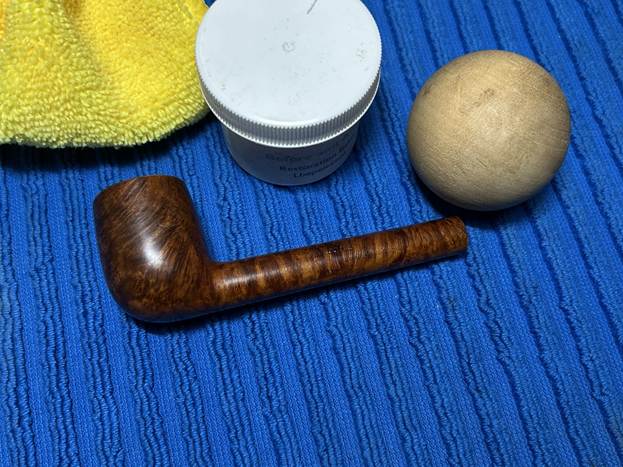
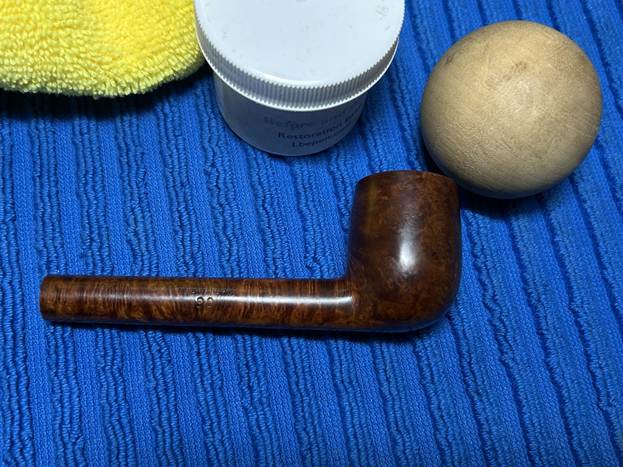
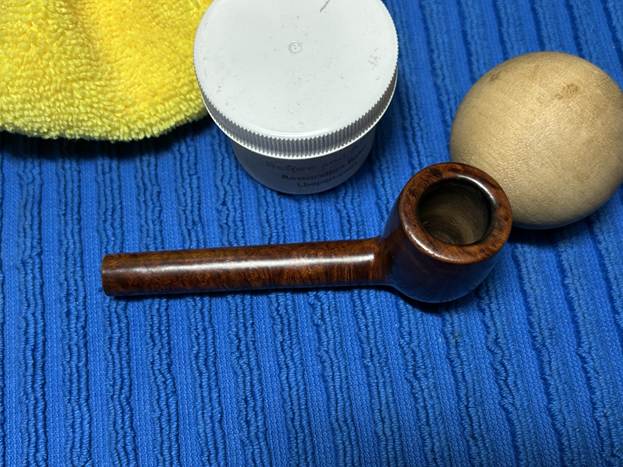
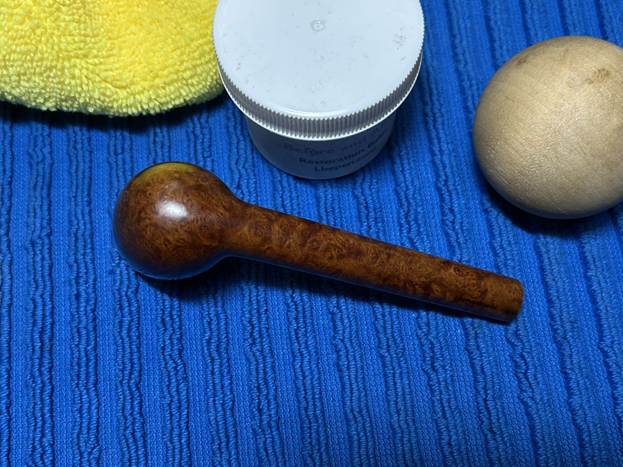
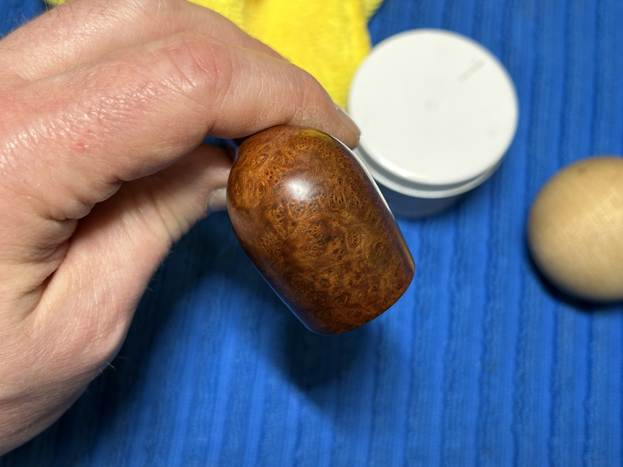
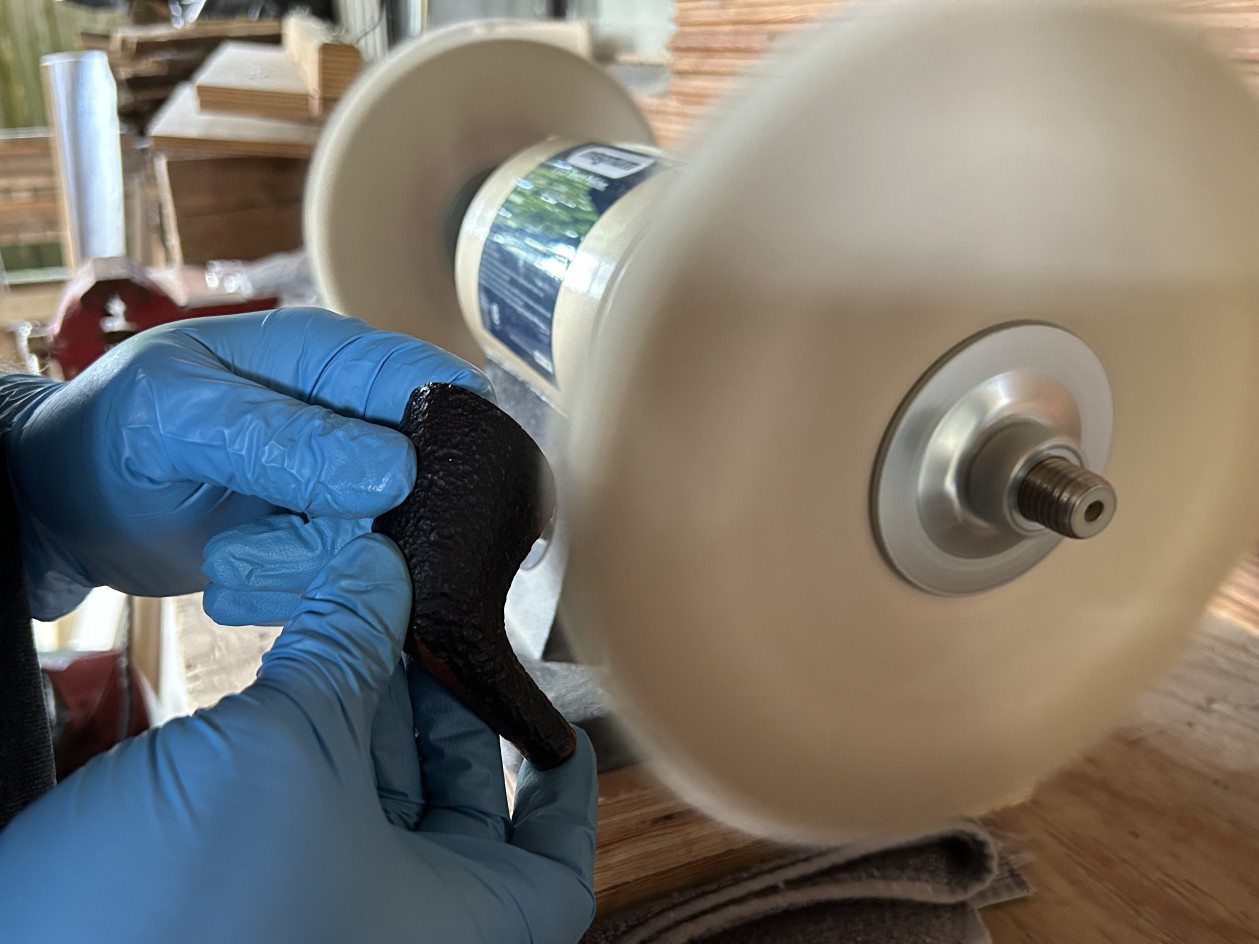
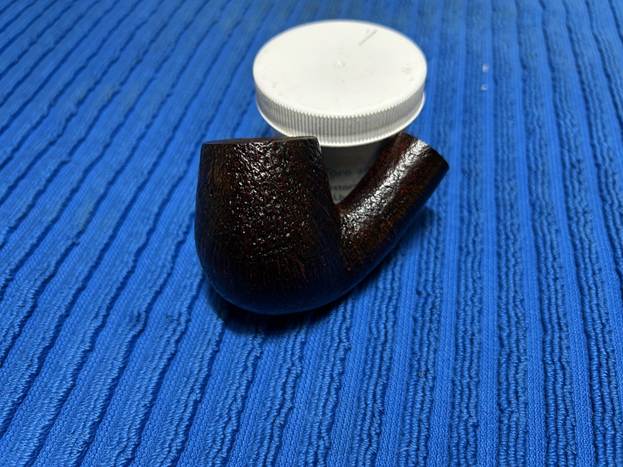
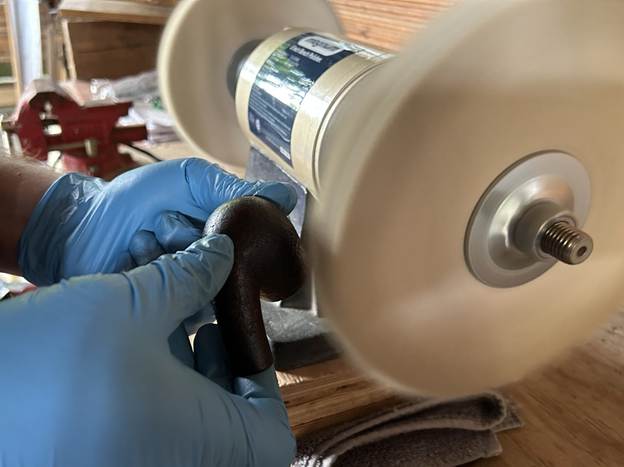
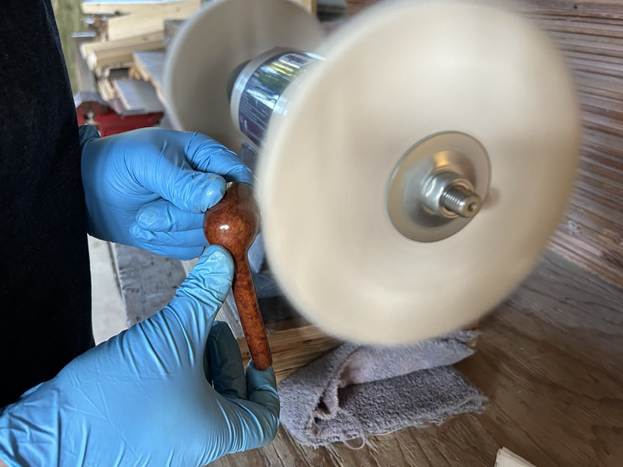
For the final step, I took the pipe to my bench polisher and carefully buffed it – first with a blue diamond compound, then with some carnauba wax. This procedure makes the pipe look its best: the stummel is smart and dapper and the stem is lithe and lustrous.
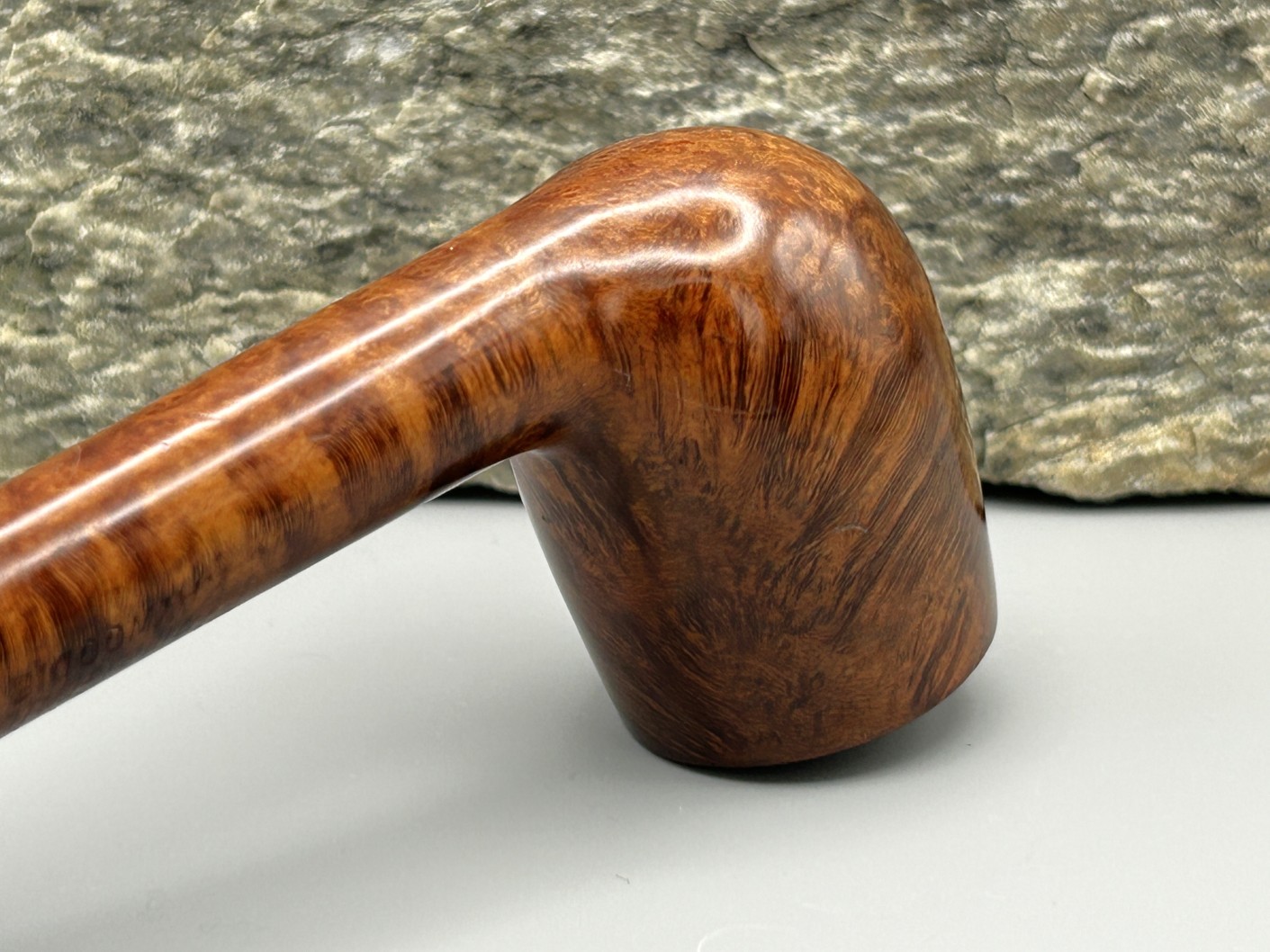
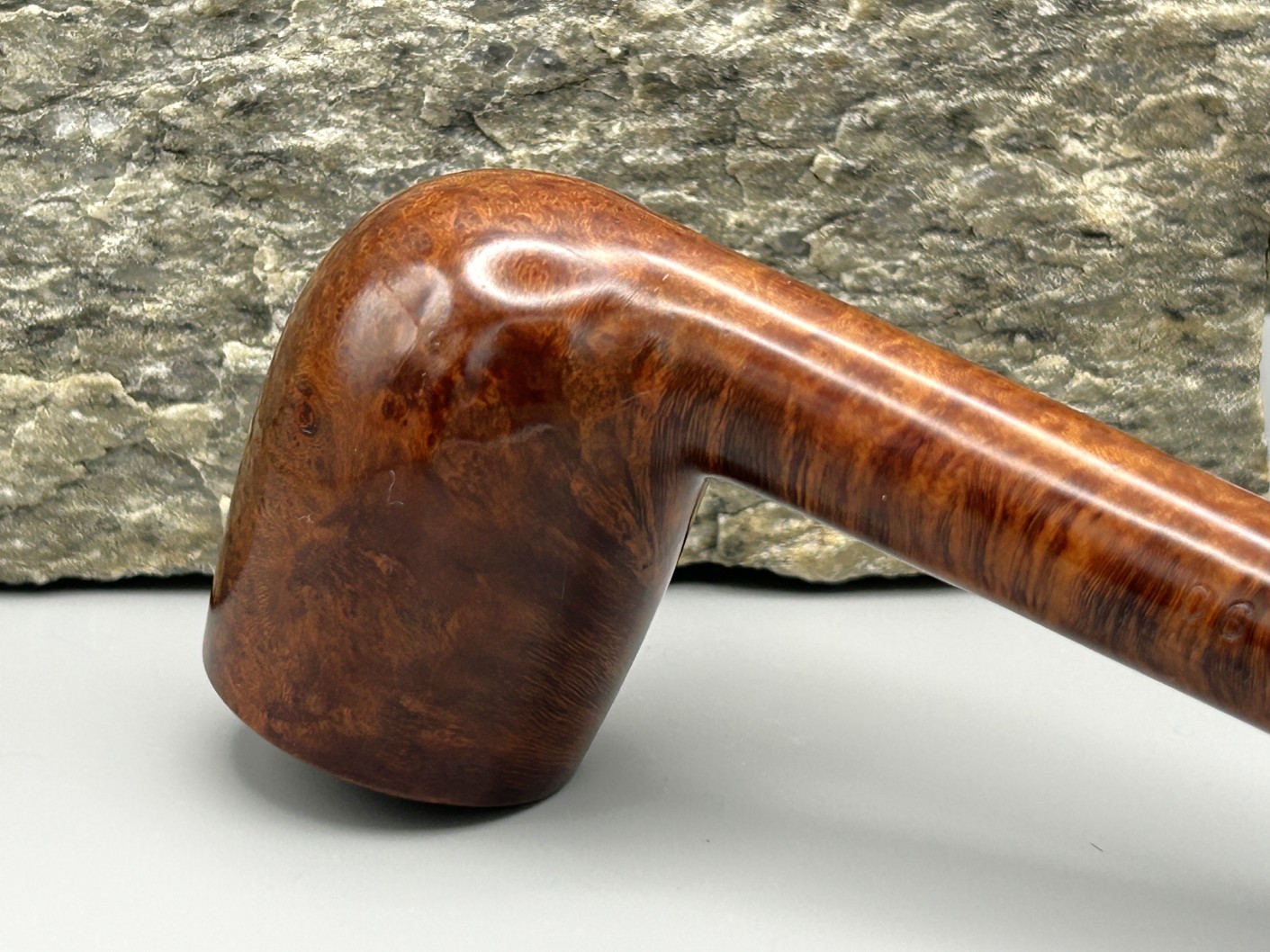
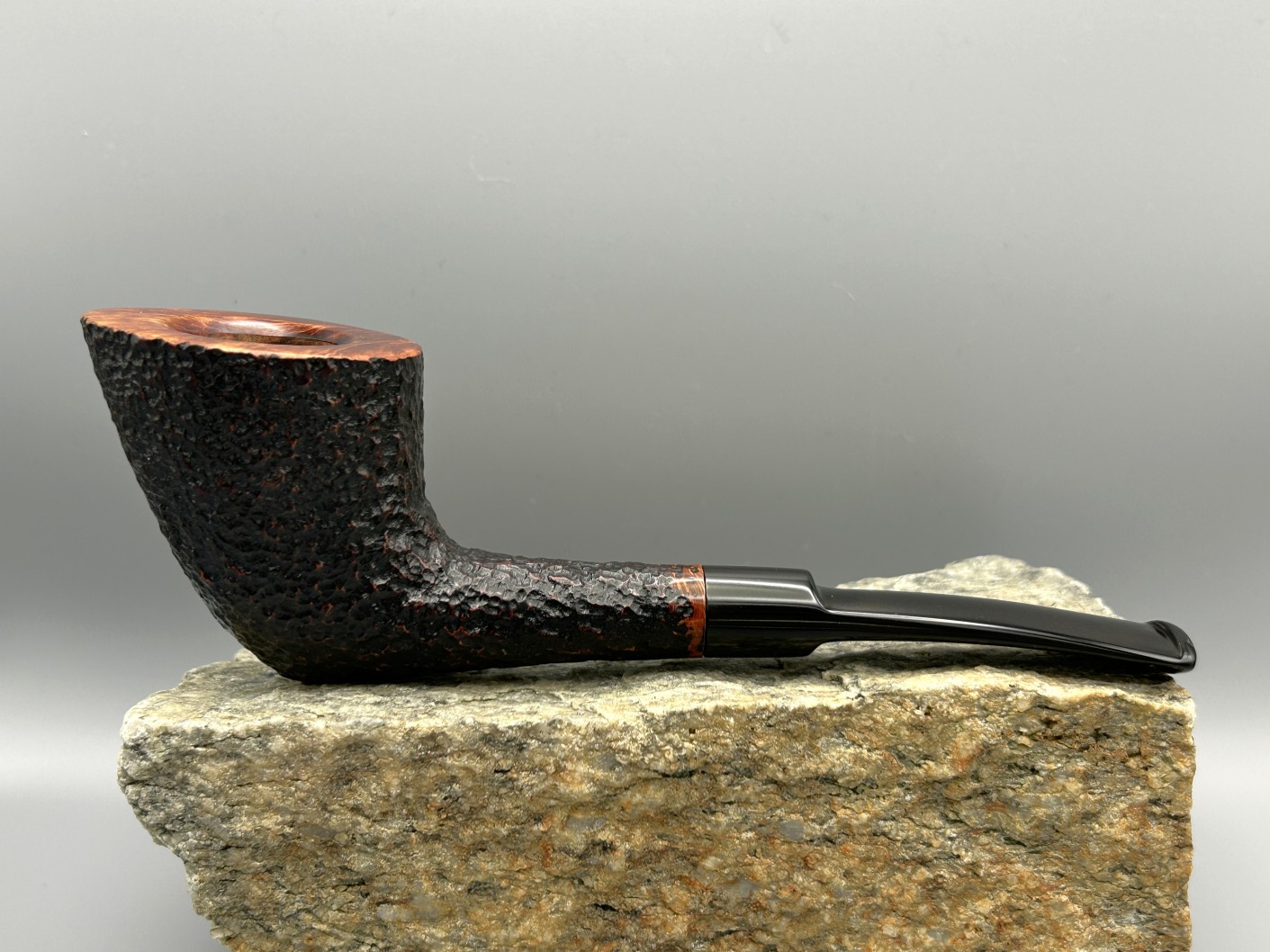
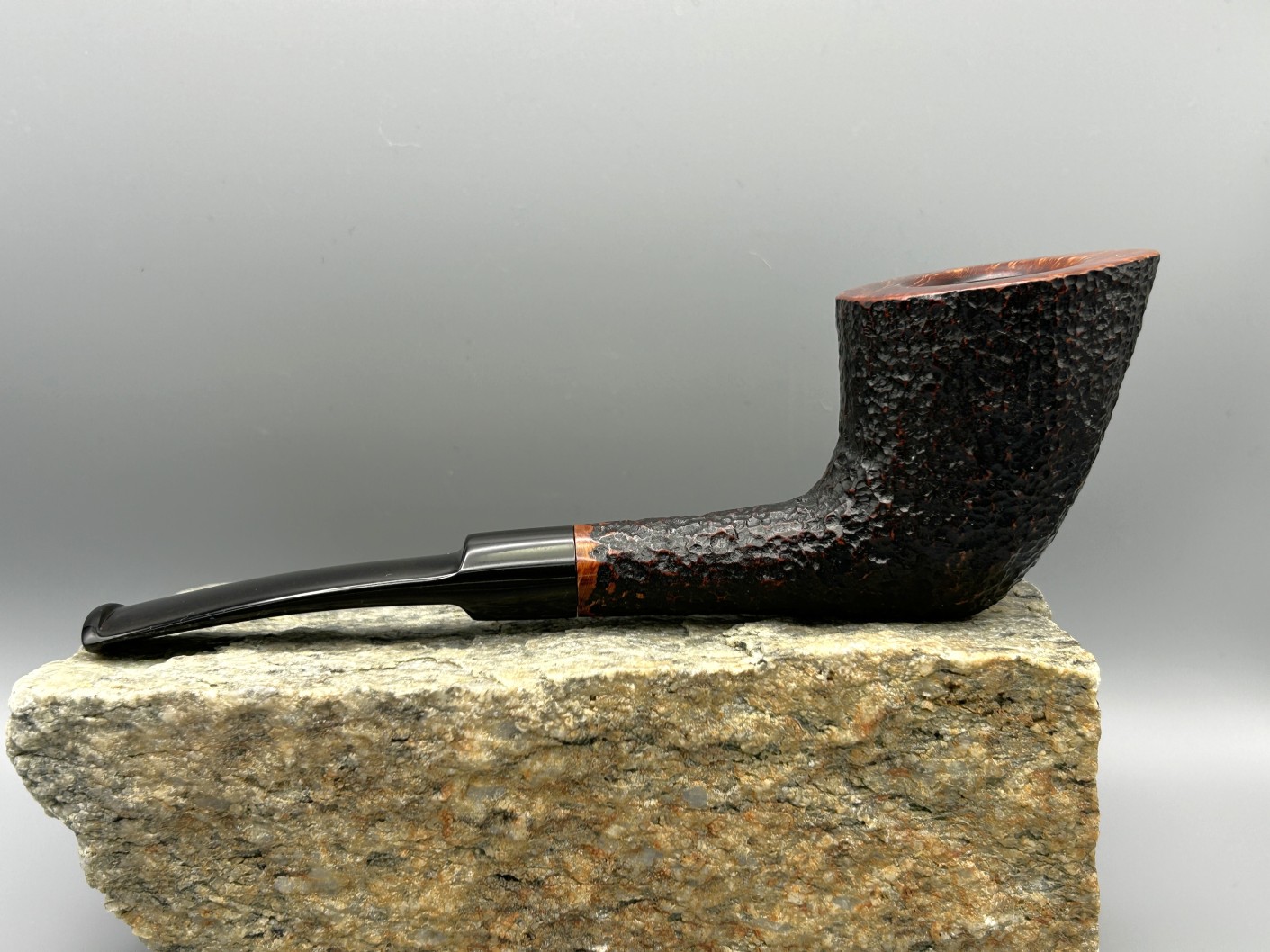
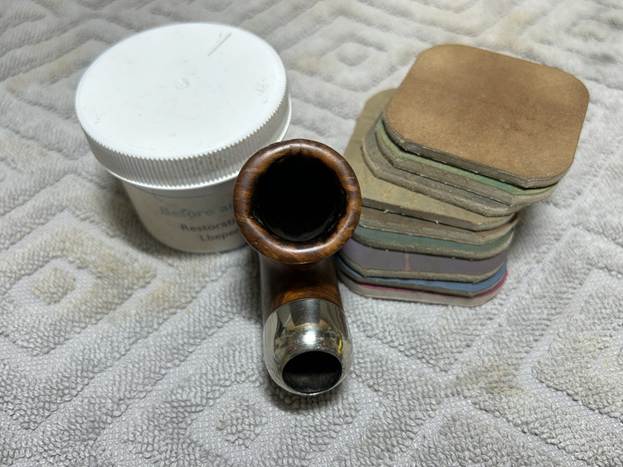
All done! This Kaywoodie Flame Grain 90 looks fantastic again and is ready to be enjoyed by its next owner. I am pleased to announce that this pipe is for sale! If you are interested in acquiring it for your collection, please have a look in the ‘American’ section of the store here on Steve’s website. You can also email me directly at kenneth@knightsofthepipe.com. The approximate dimensions of the pipe are as follows: length 6 in. (153 mm); height 1⅔ in. (43 mm); bowl diameter 1¼ in. (32 mm); chamber diameter ⅔ in. (18 mm). The weight of the pipe is 1⅛ oz. (33 g). I hope you enjoyed reading the story of this pipe’s restoration as much as I enjoyed restoring it. If you are interested in more of my work, please follow me here on Steve’s website or send me an email. Thank you very much for reading and, as always, I welcome and encourage your comments.