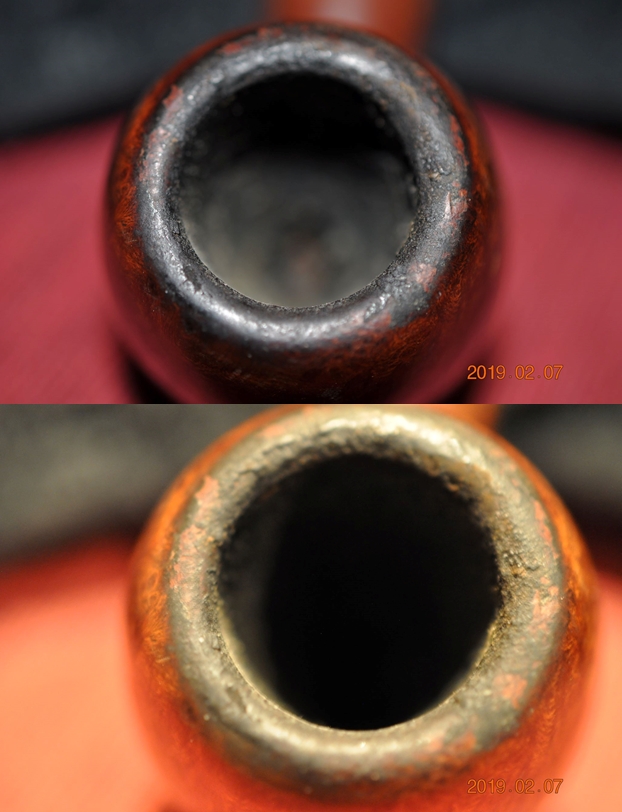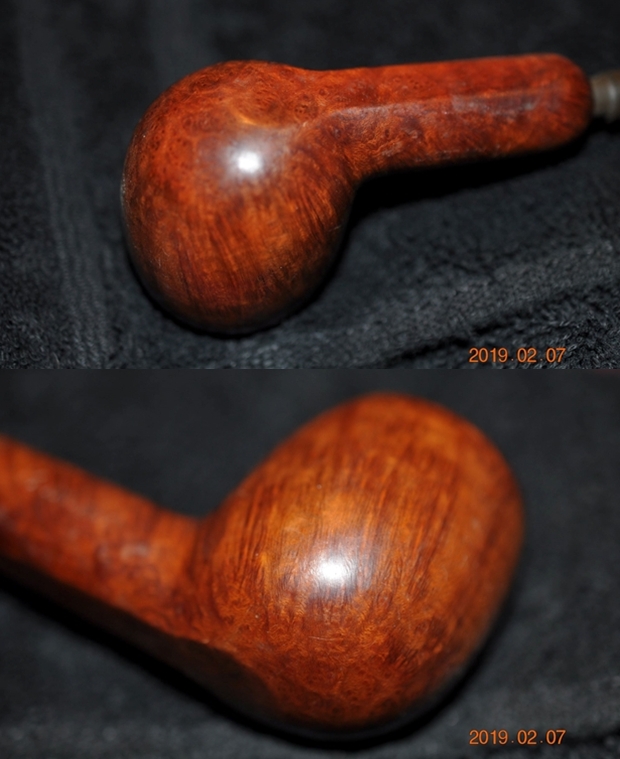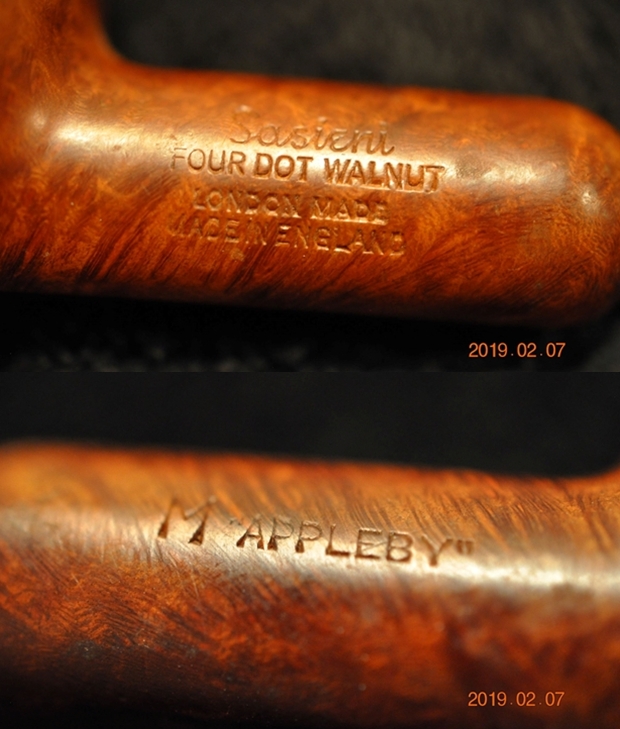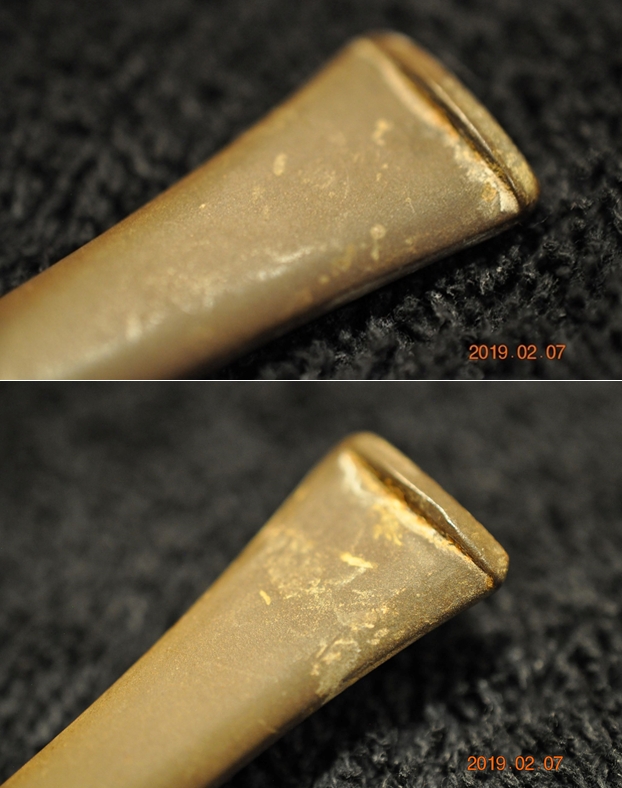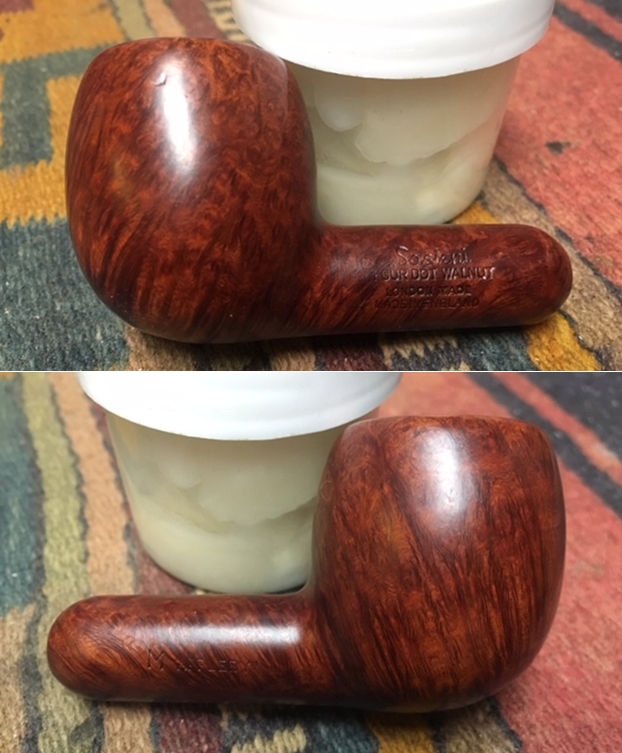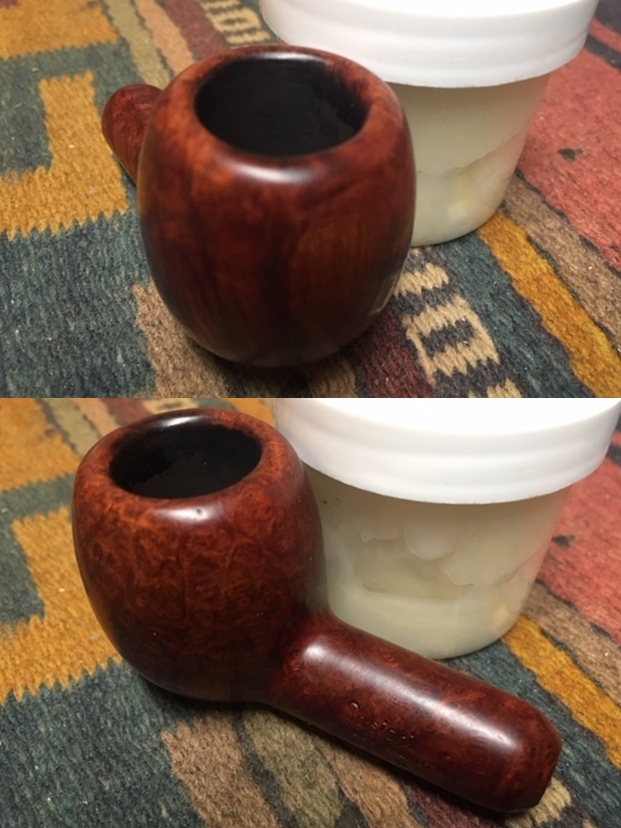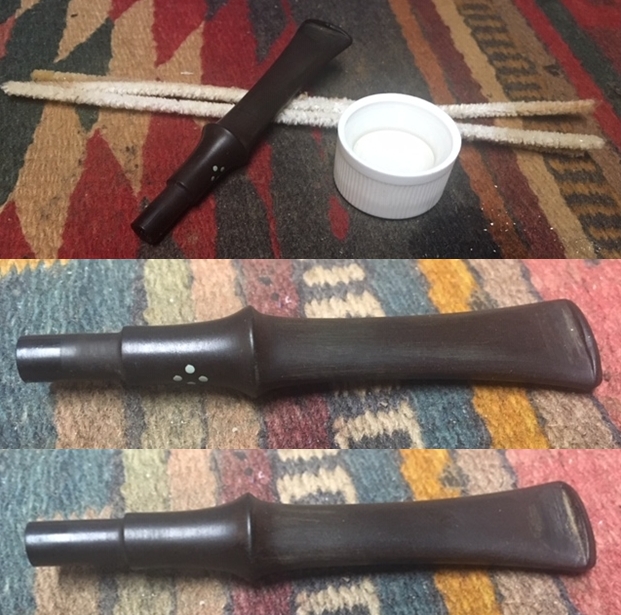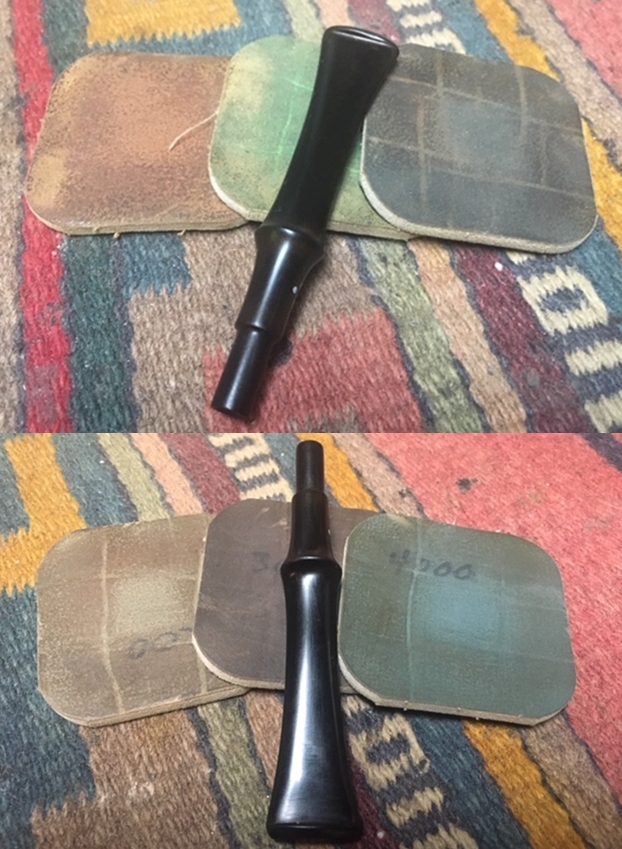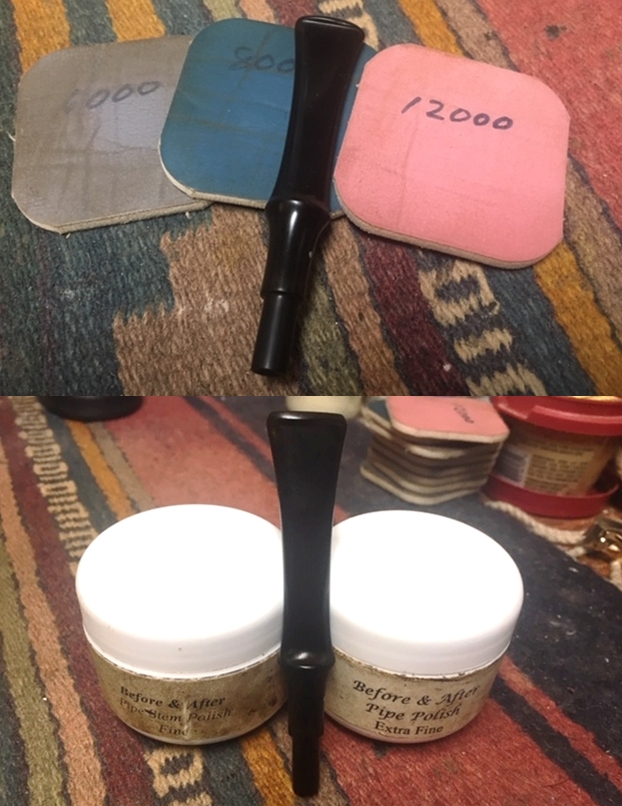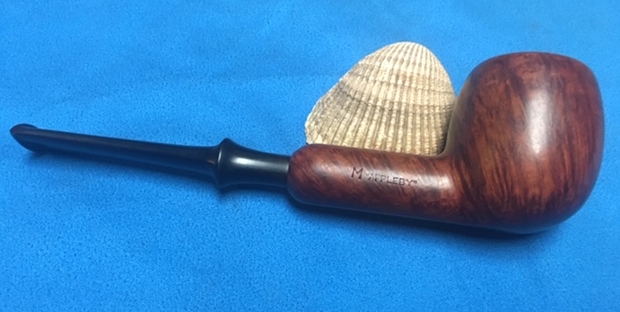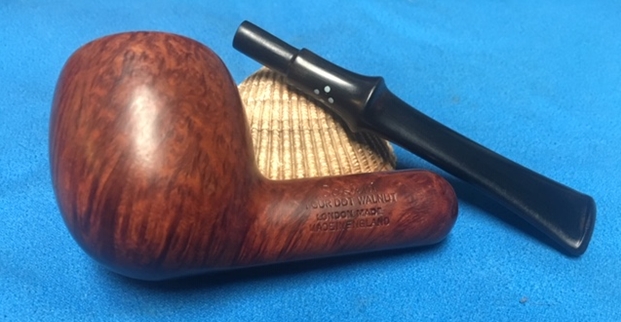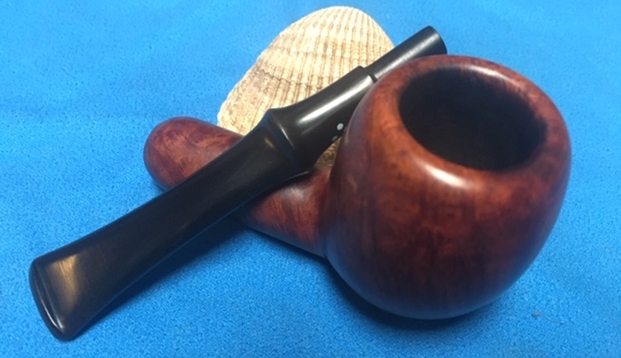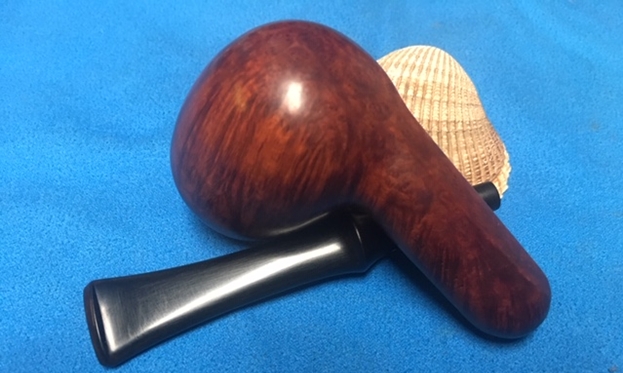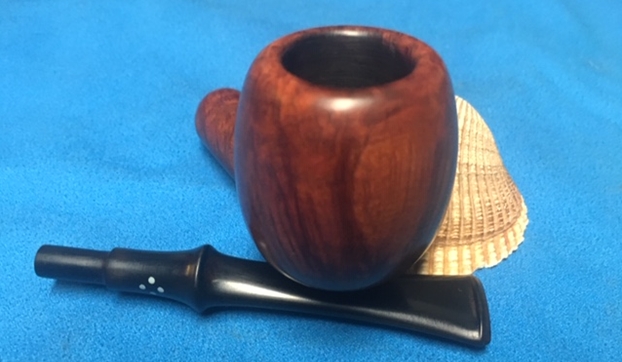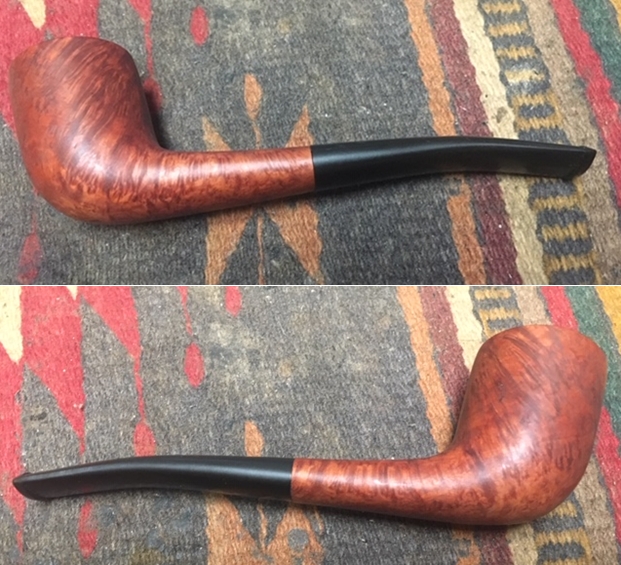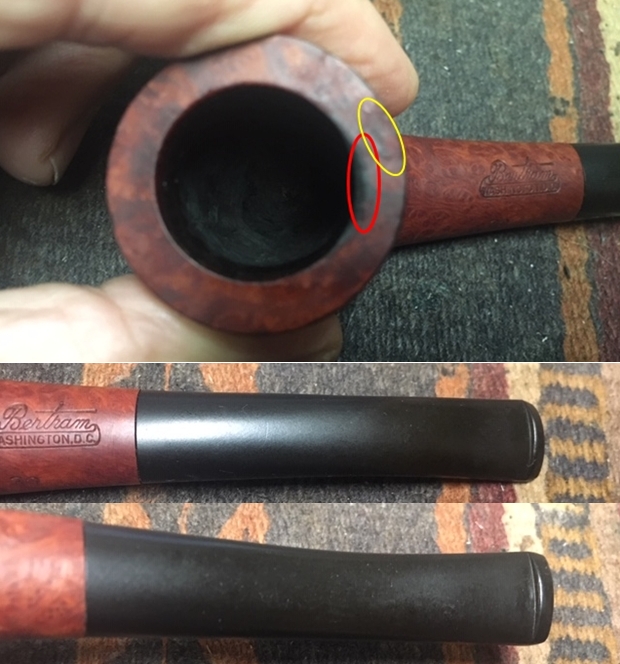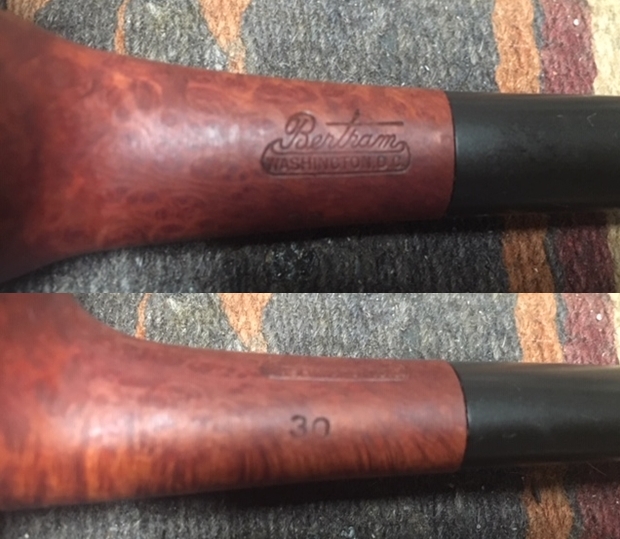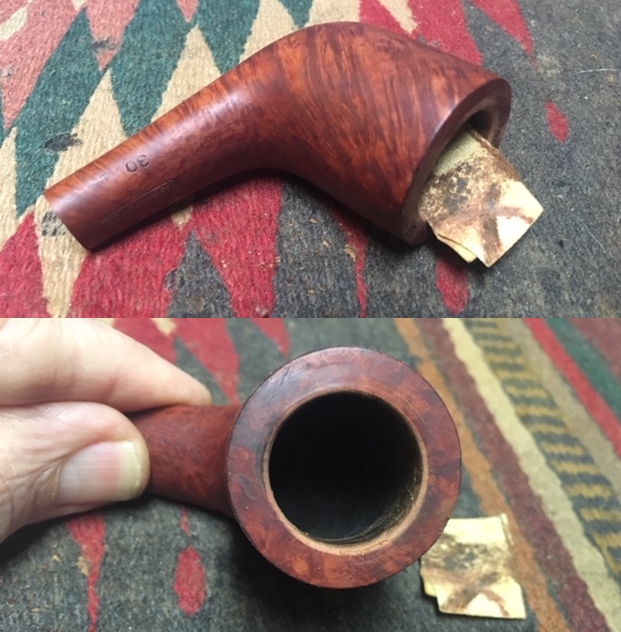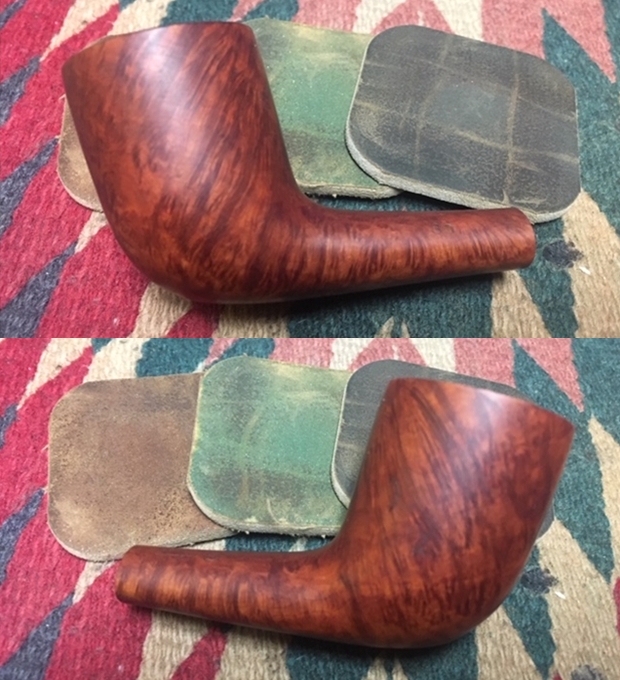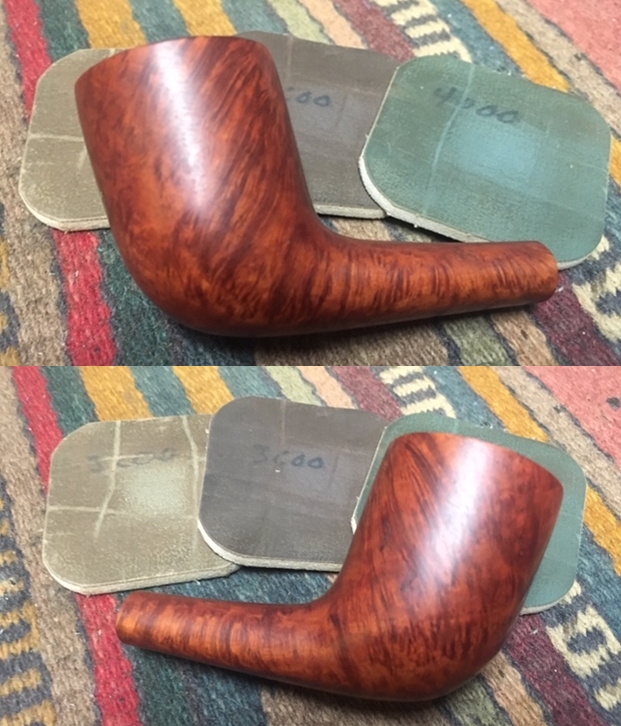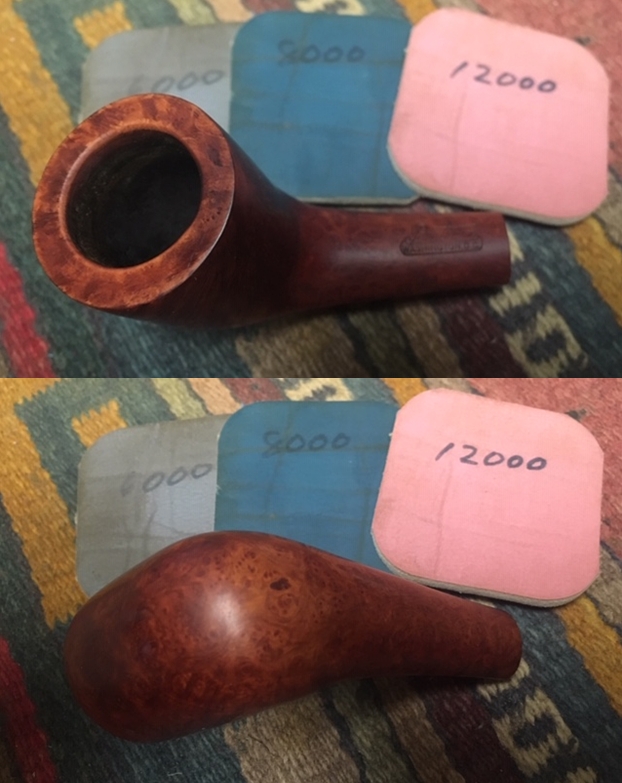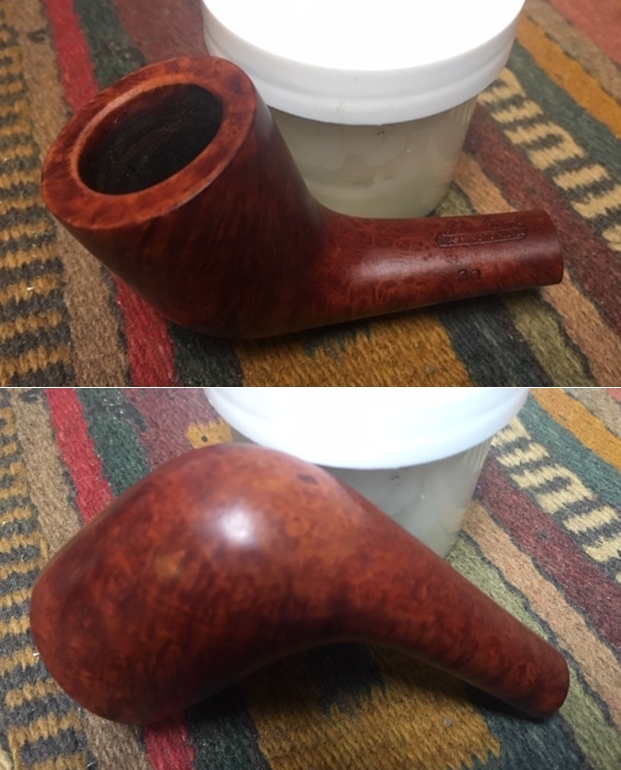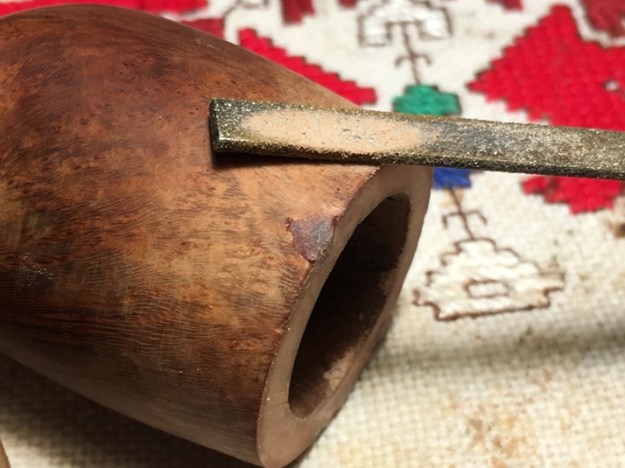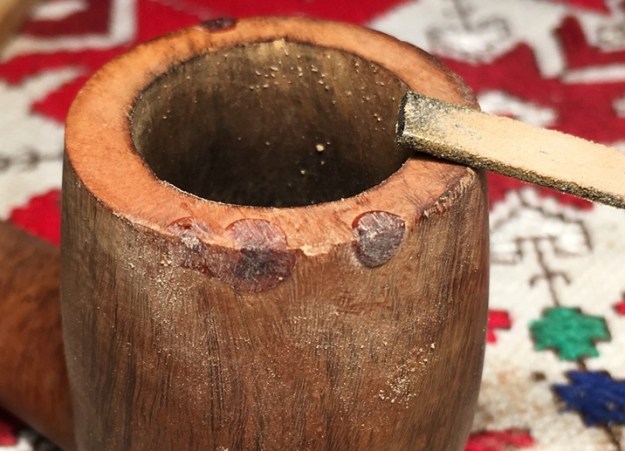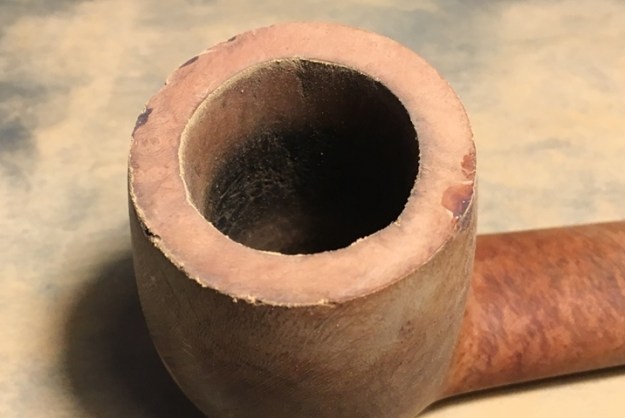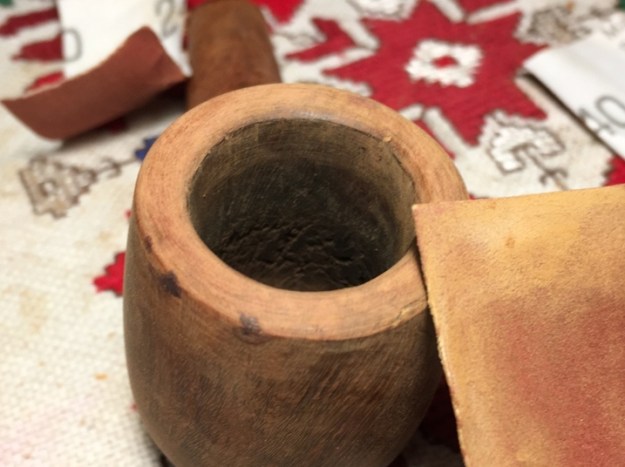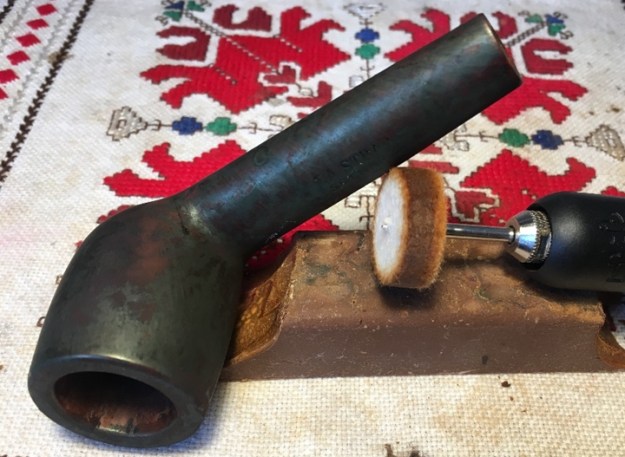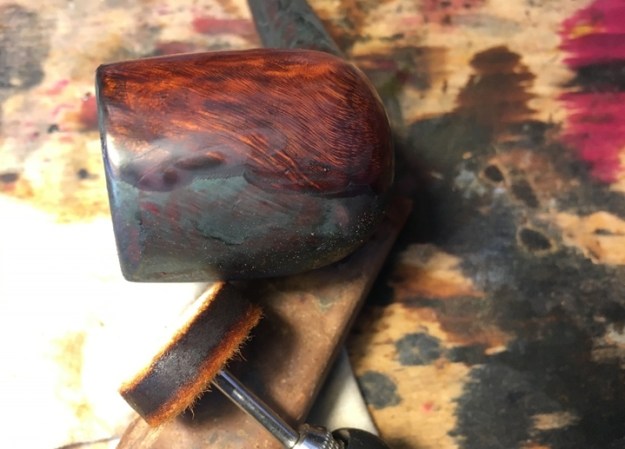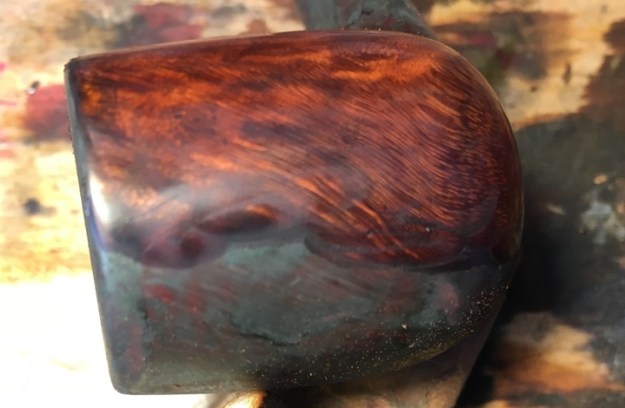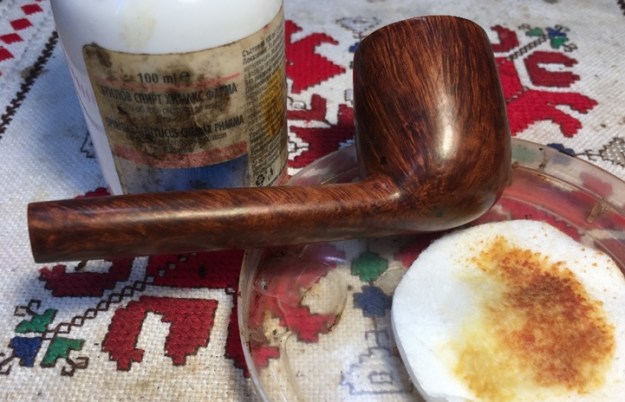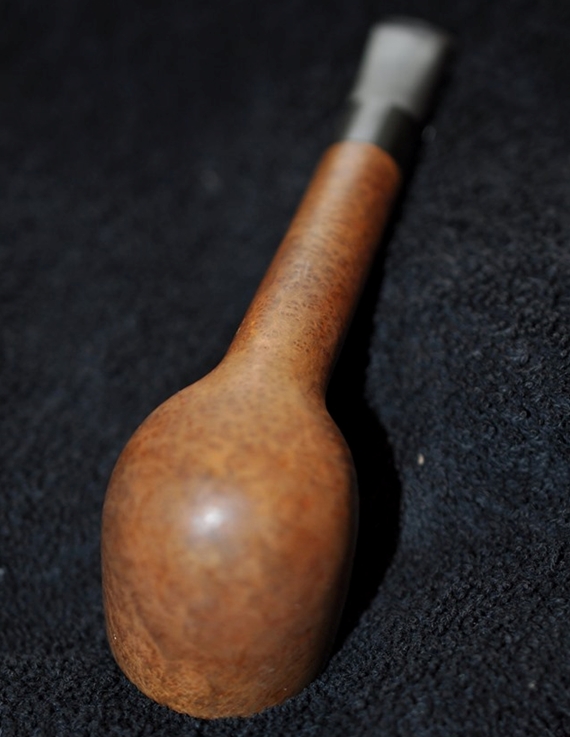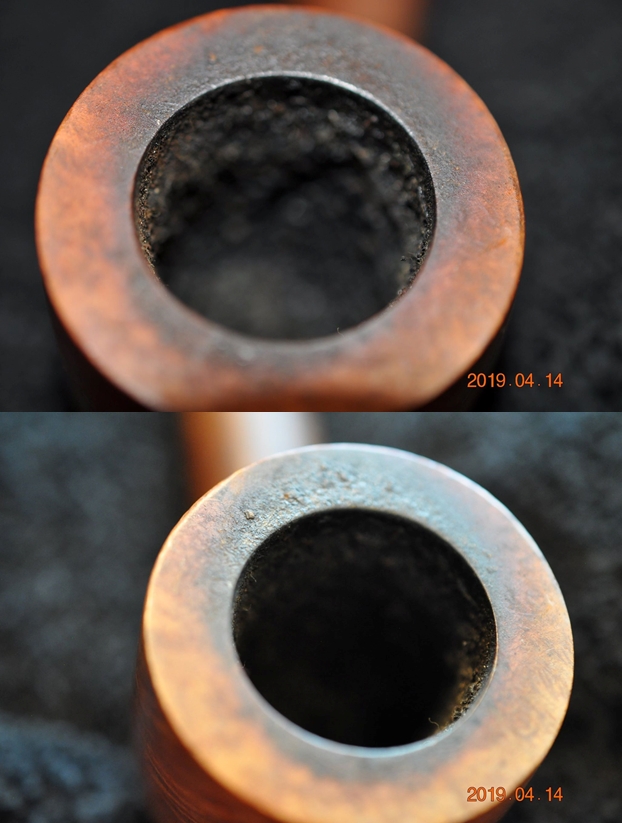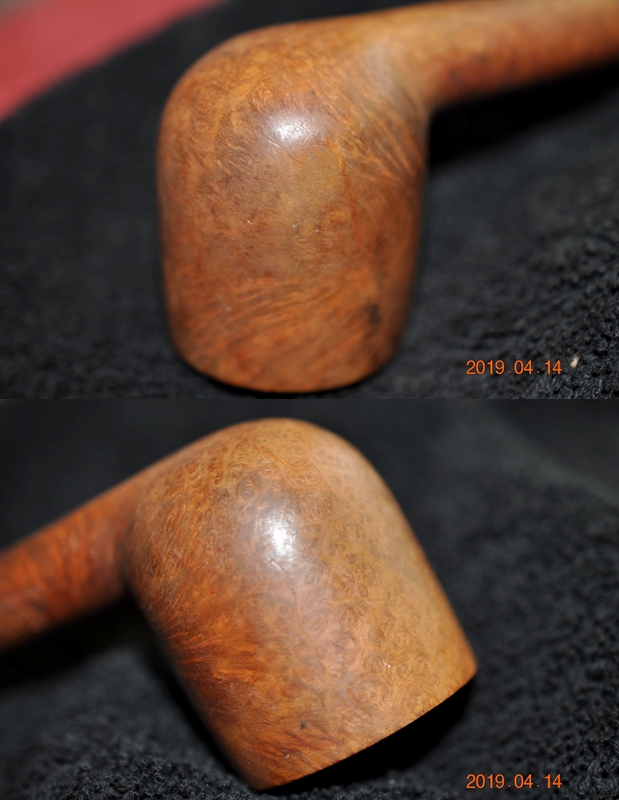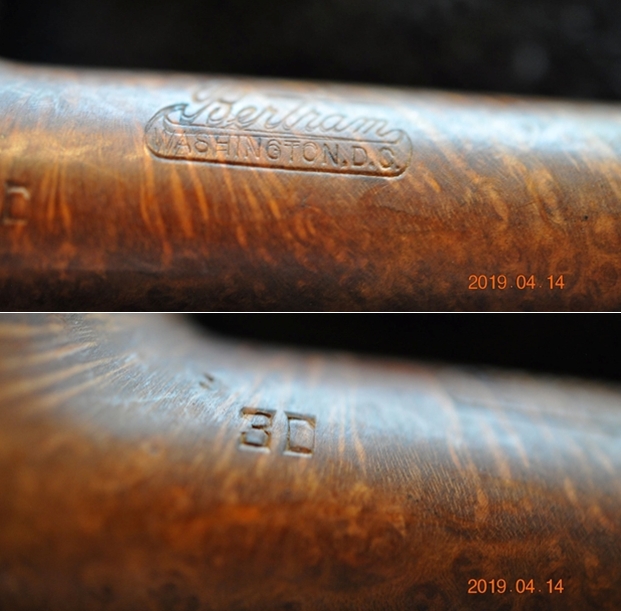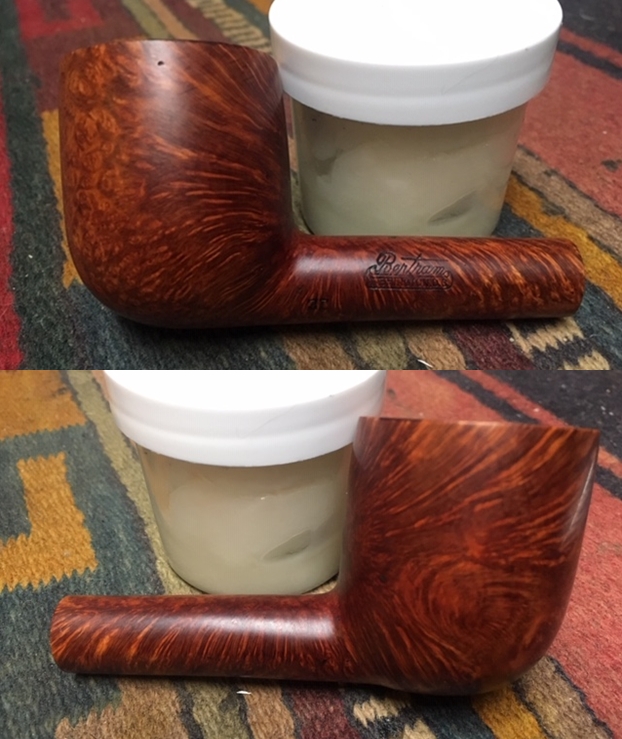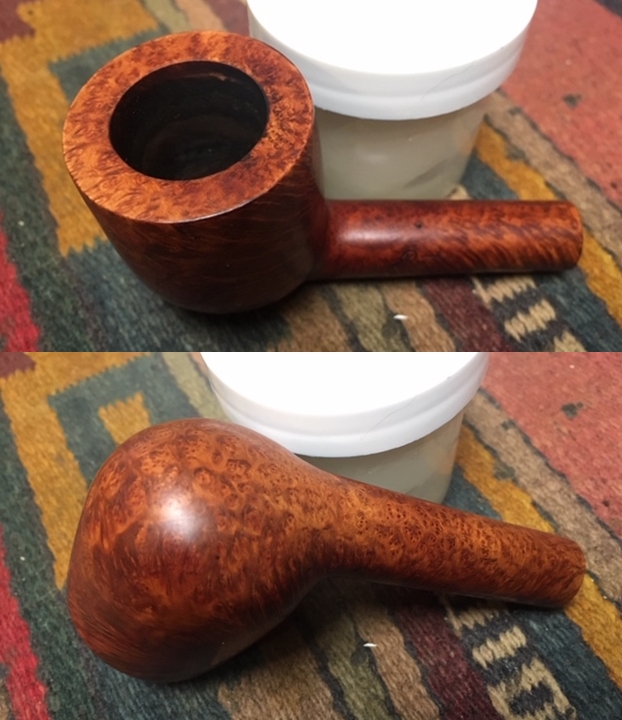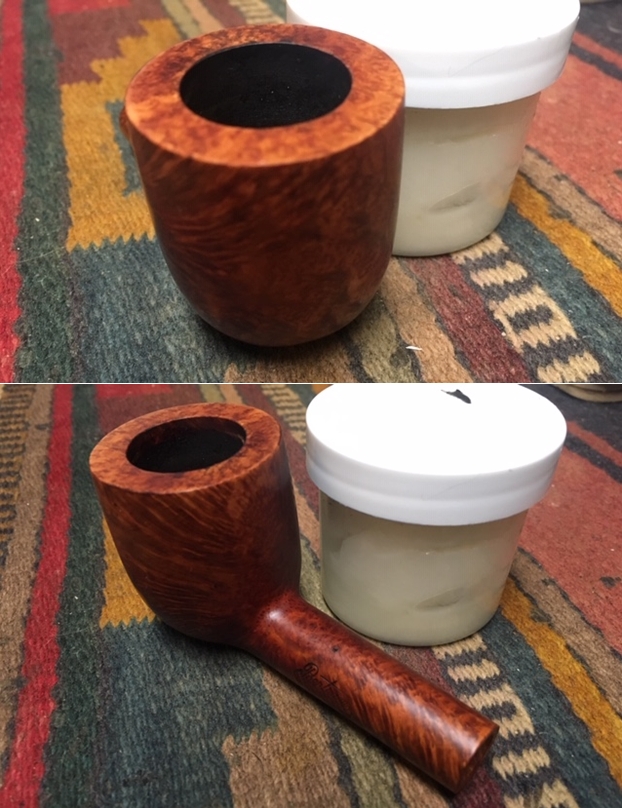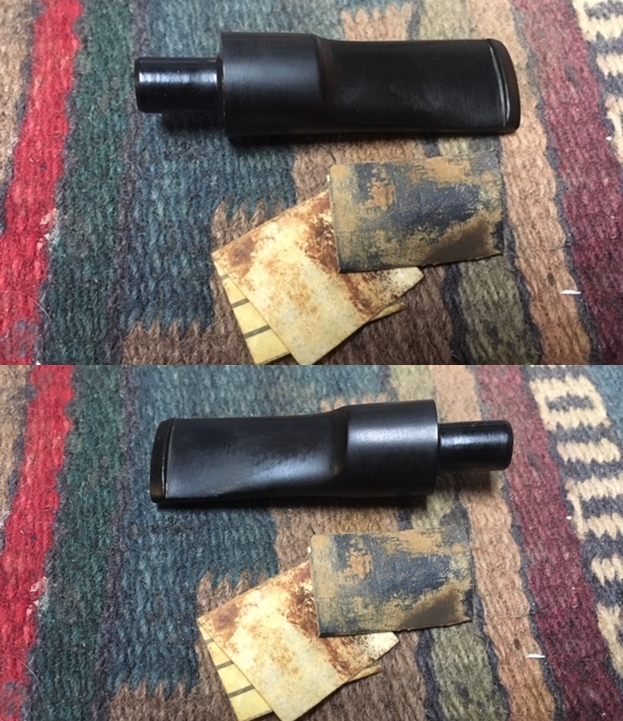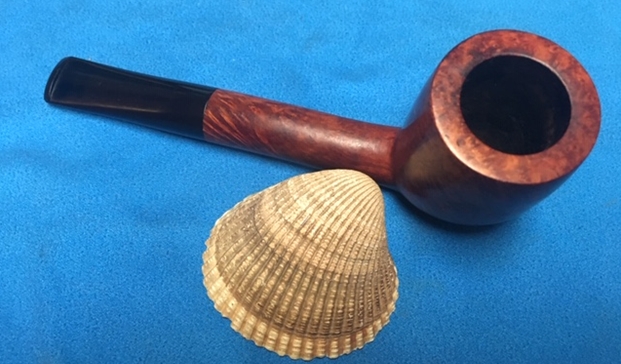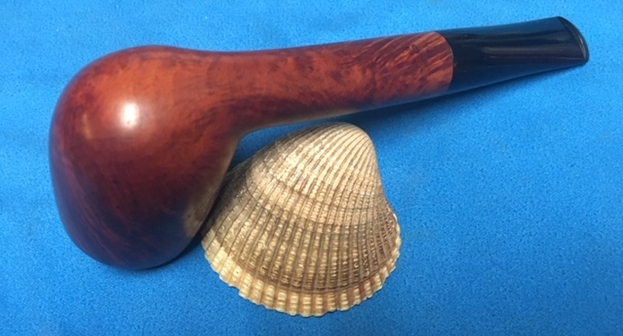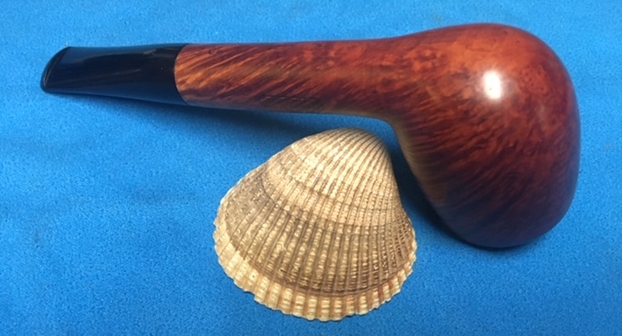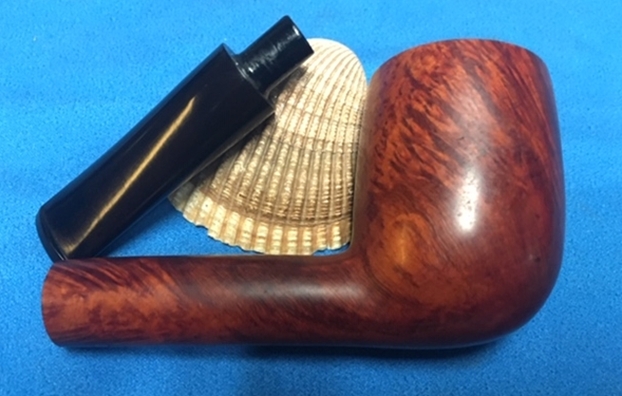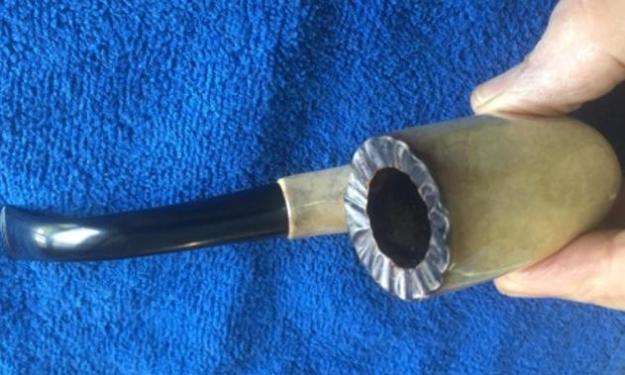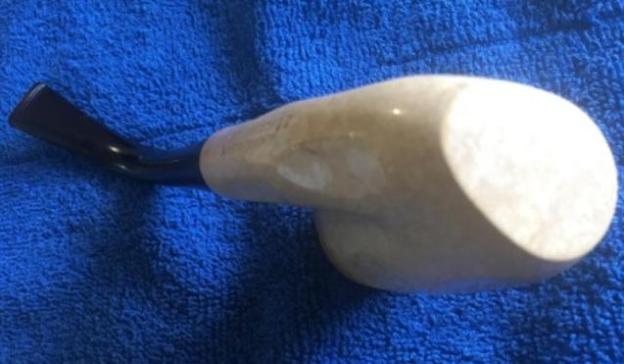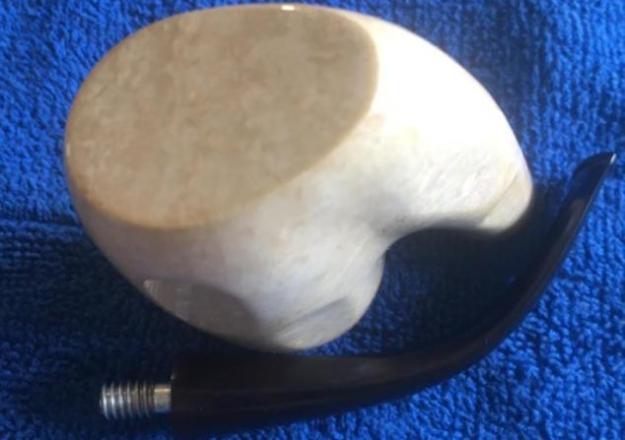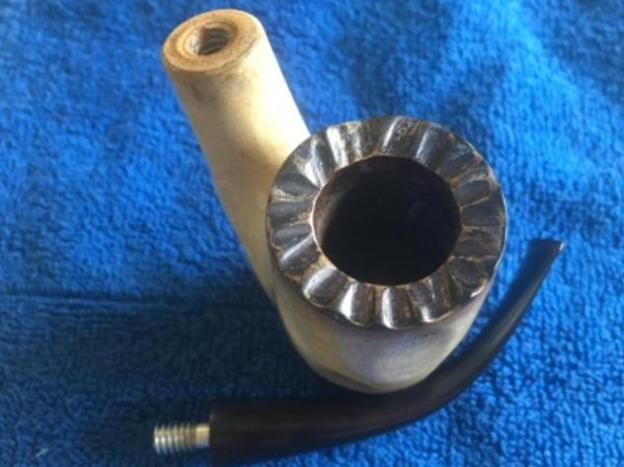
Tag Archives: Oxidation

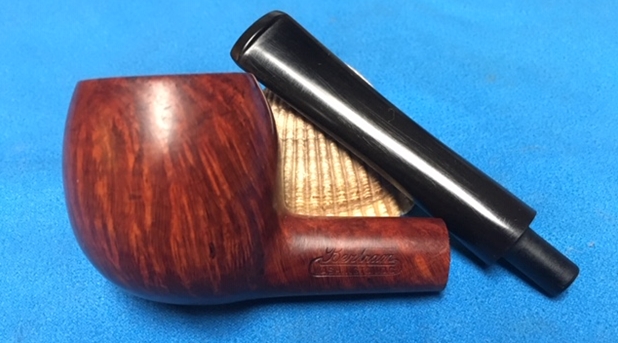
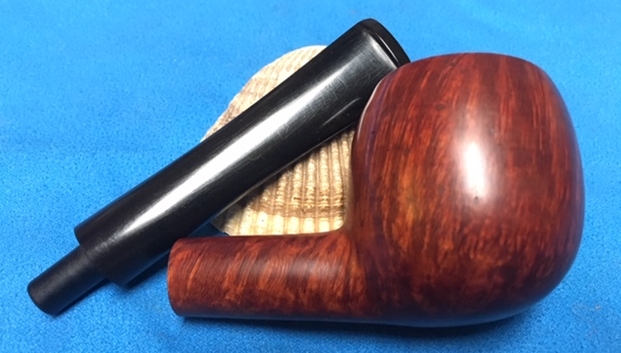
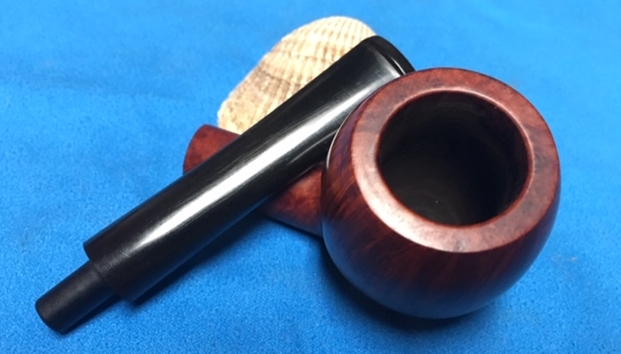
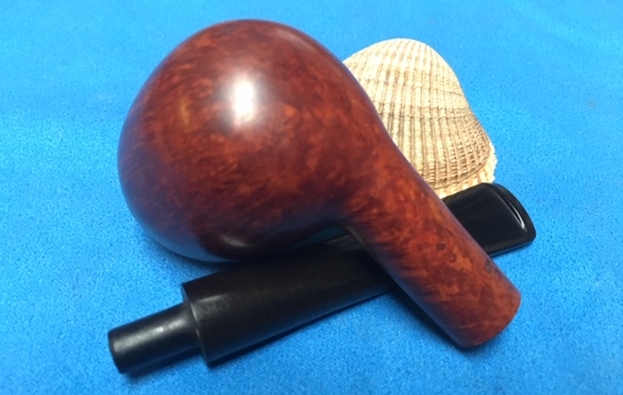
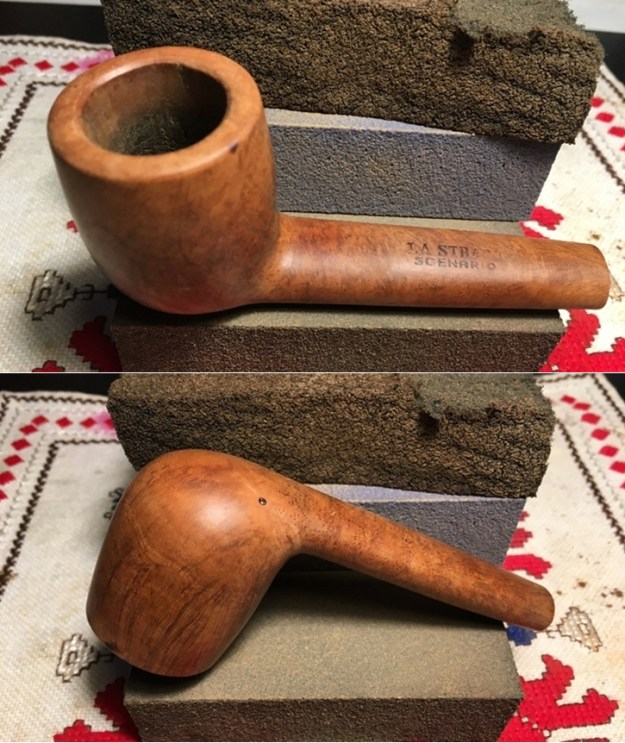
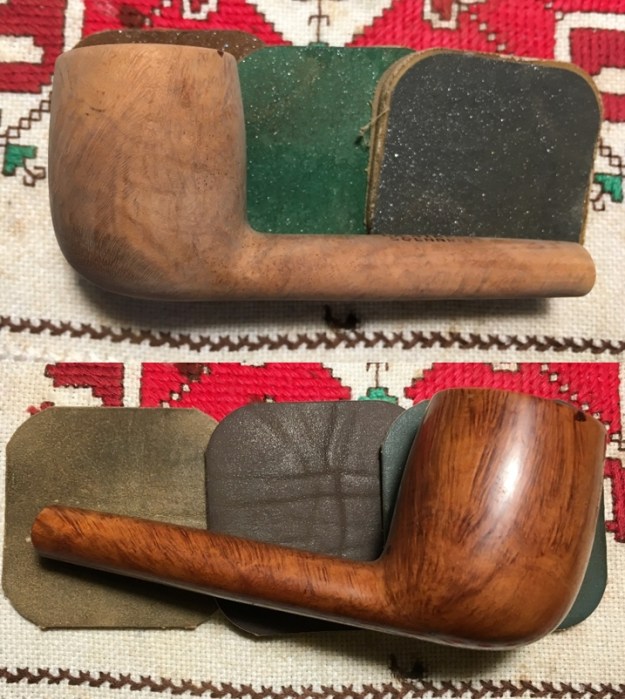
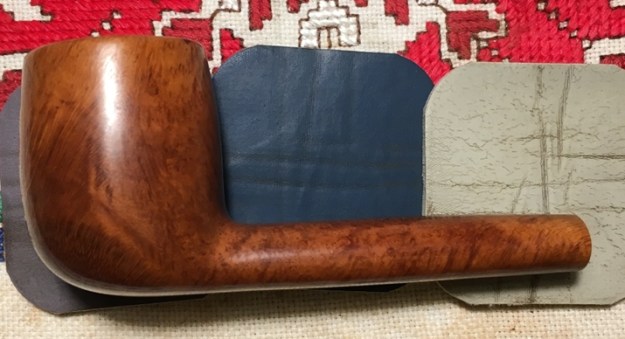
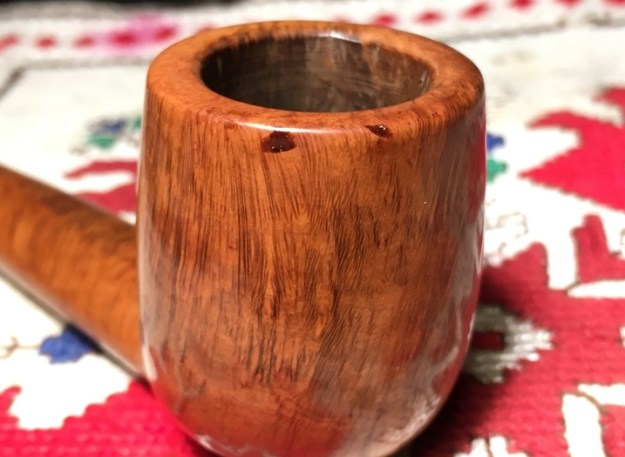
Restoring an Algerian Briar Lovat from the Bertram Lot


Blog by Steve Laug

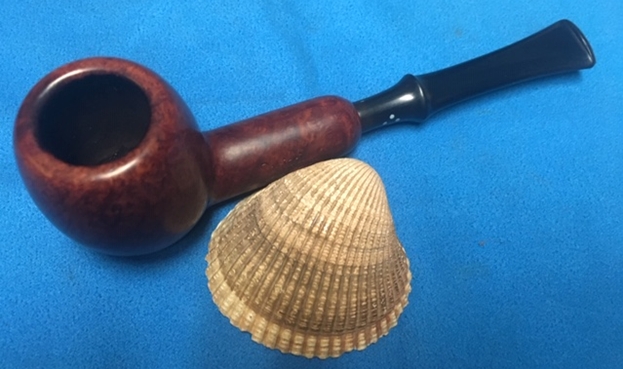
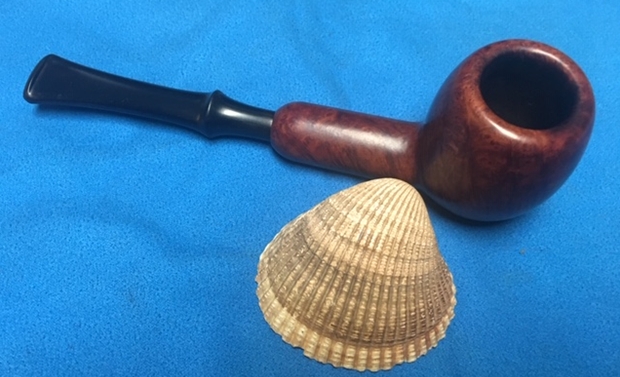
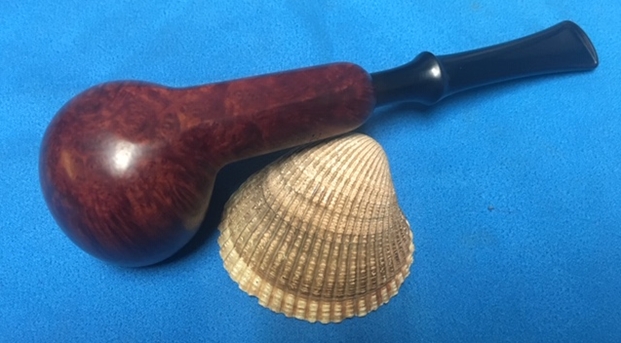
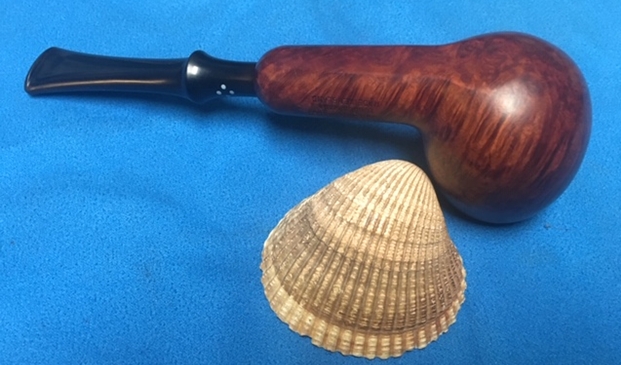
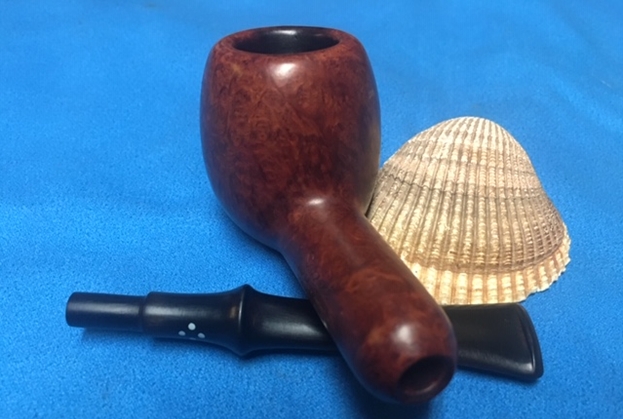
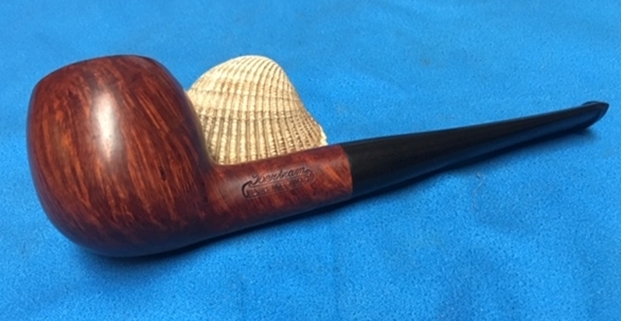
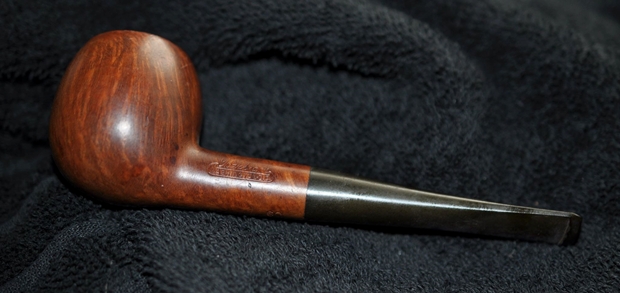
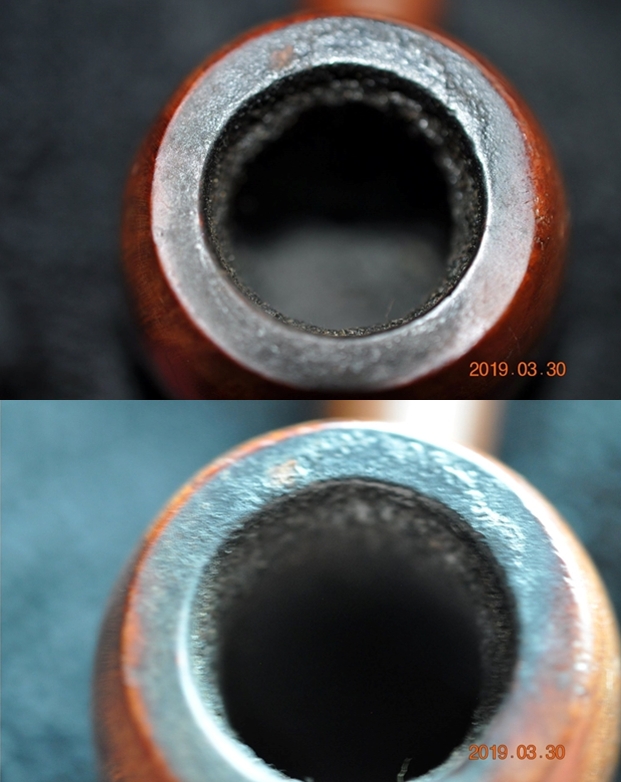
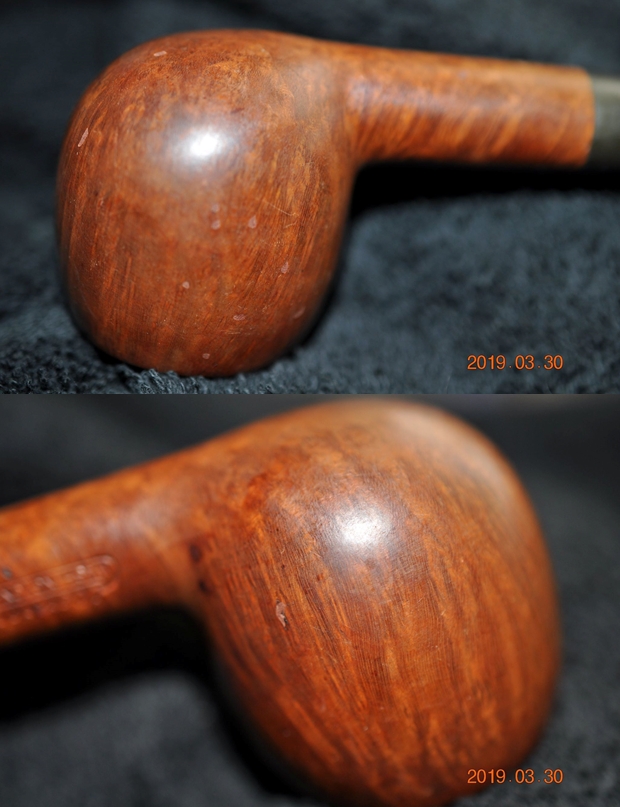
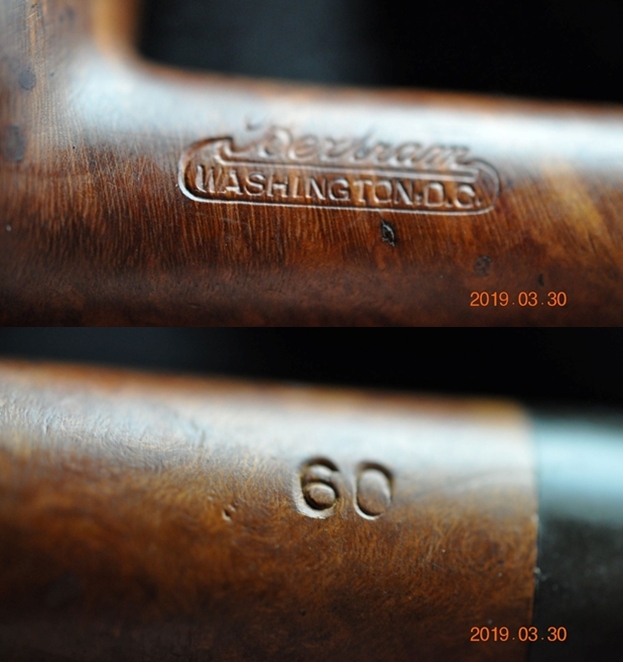
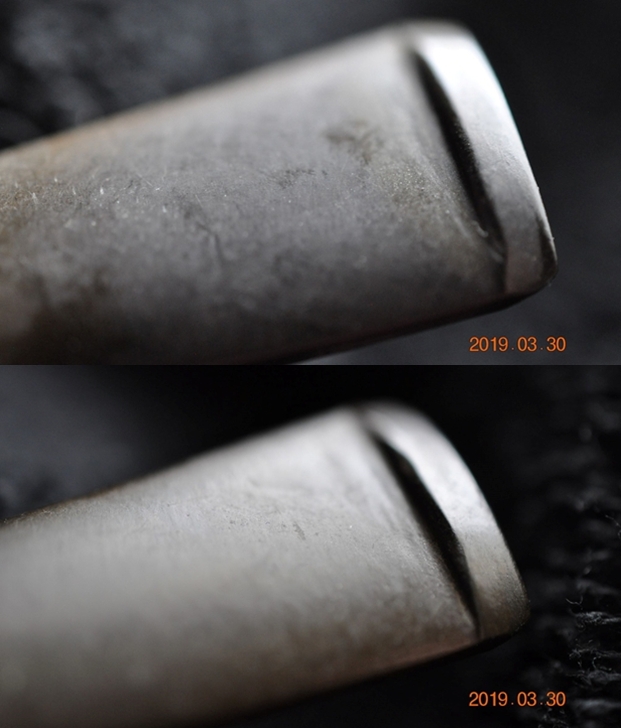
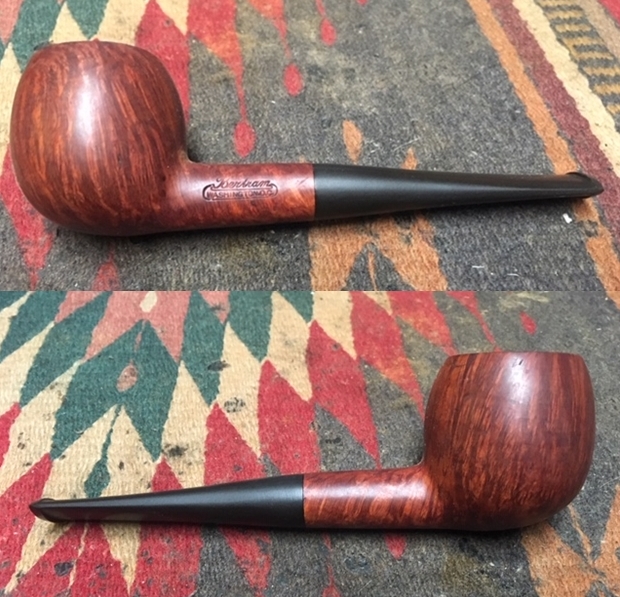
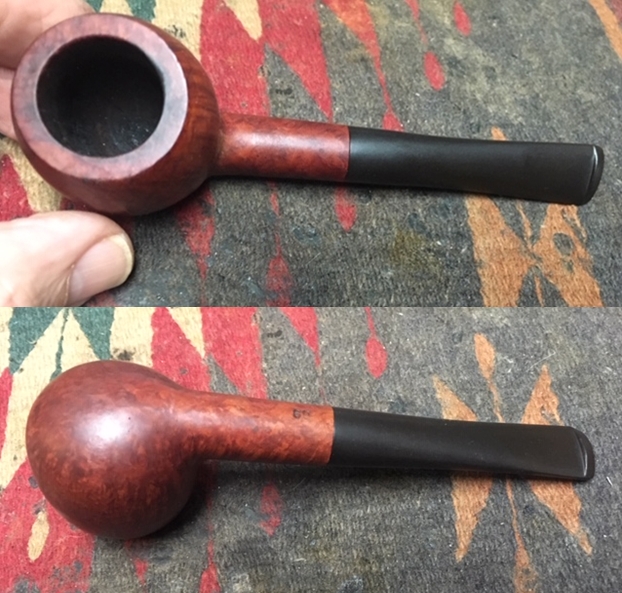
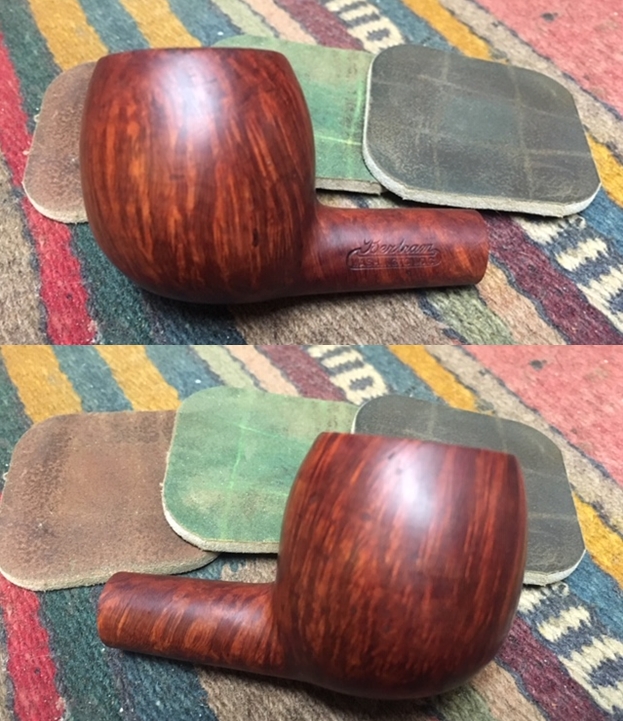
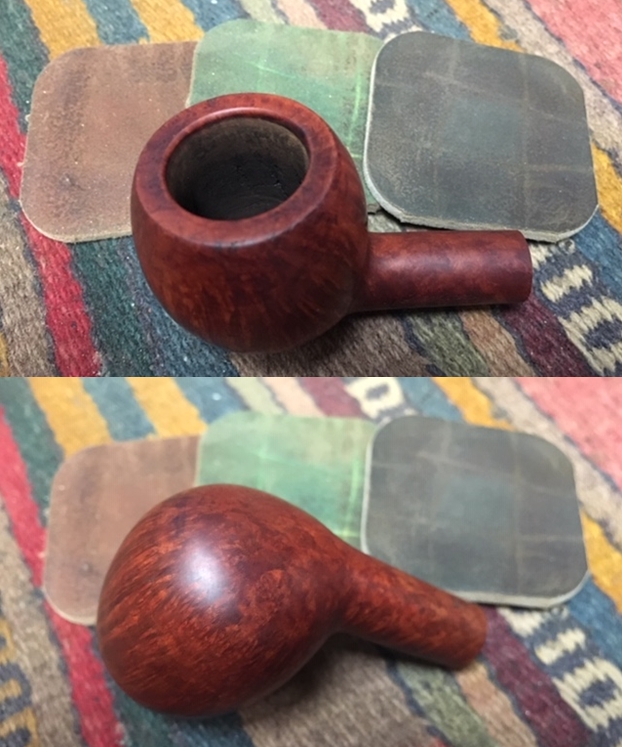
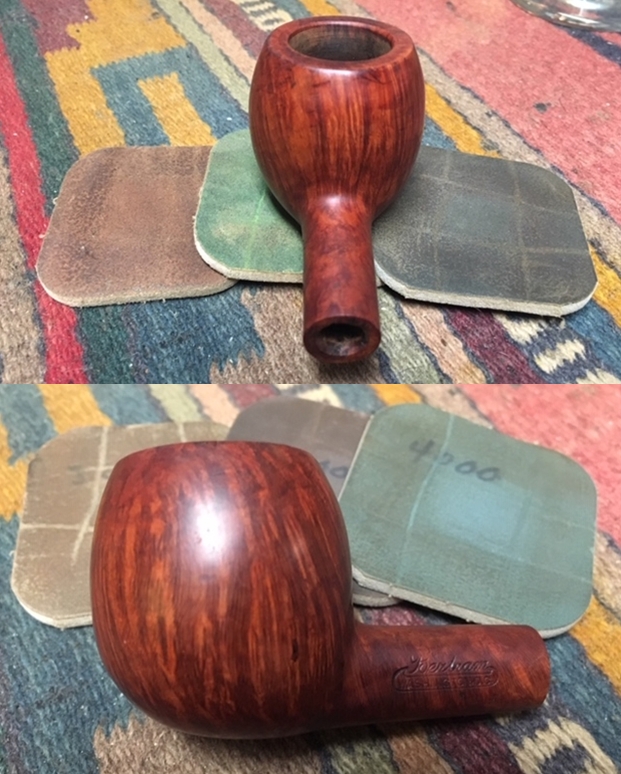
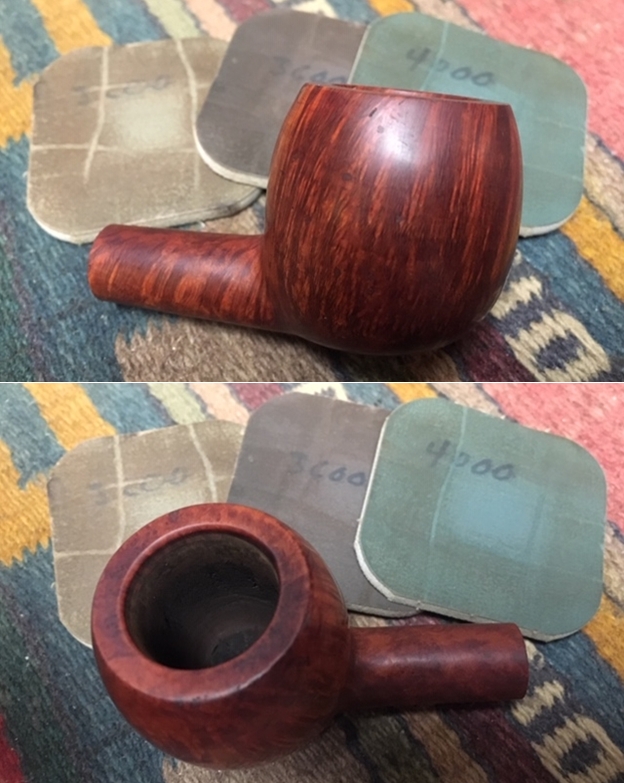
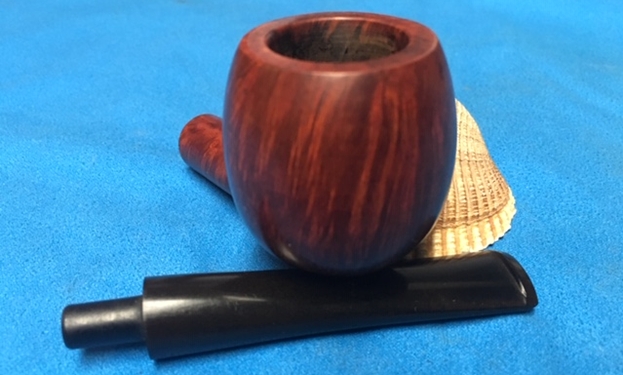
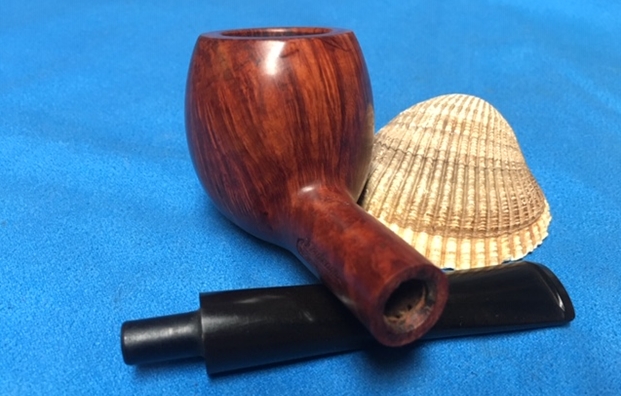
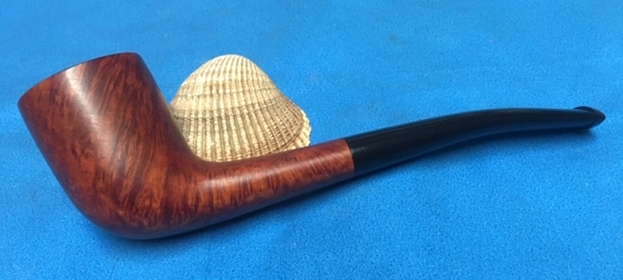
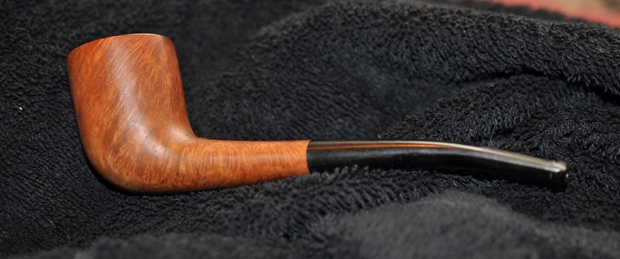
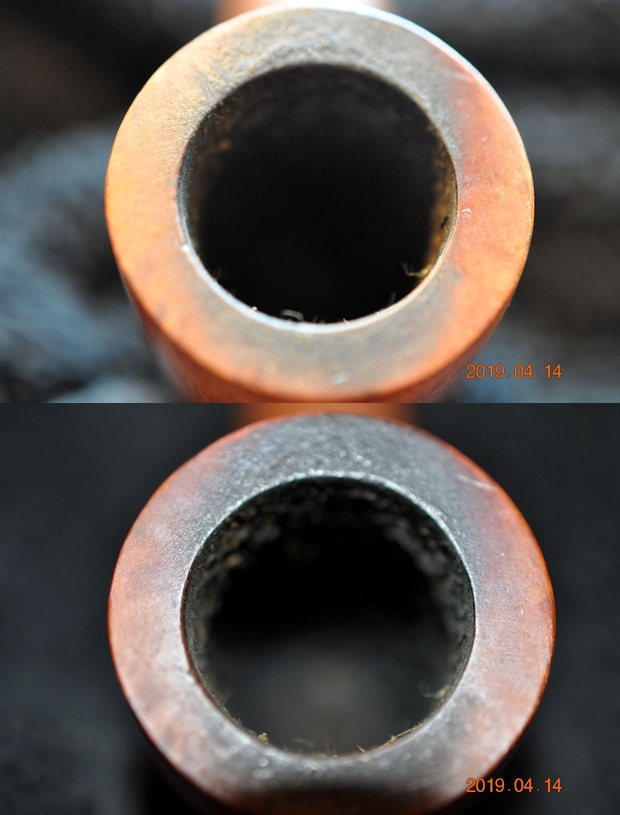
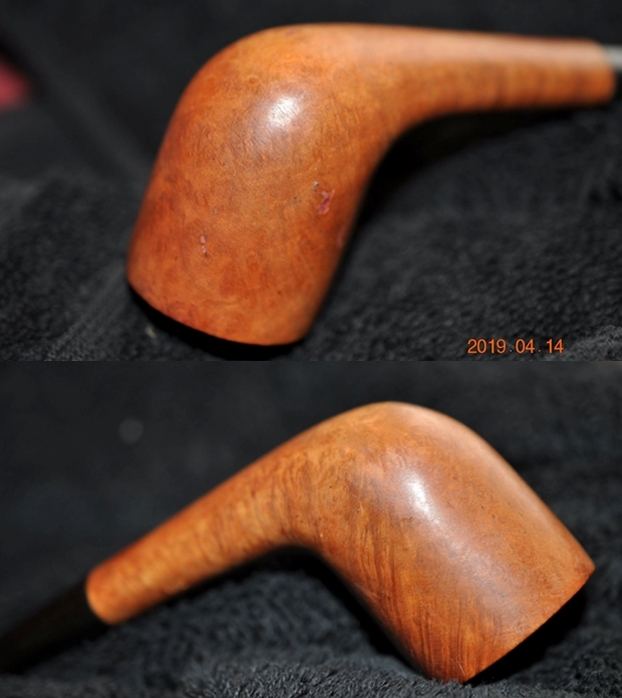
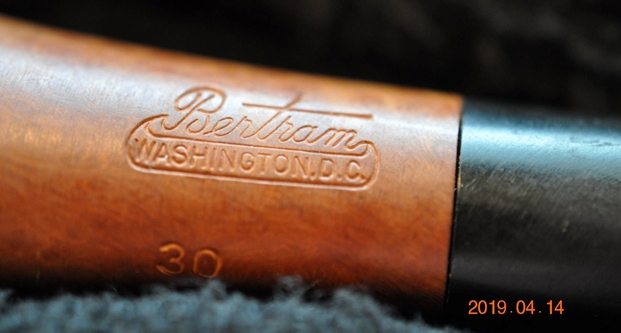
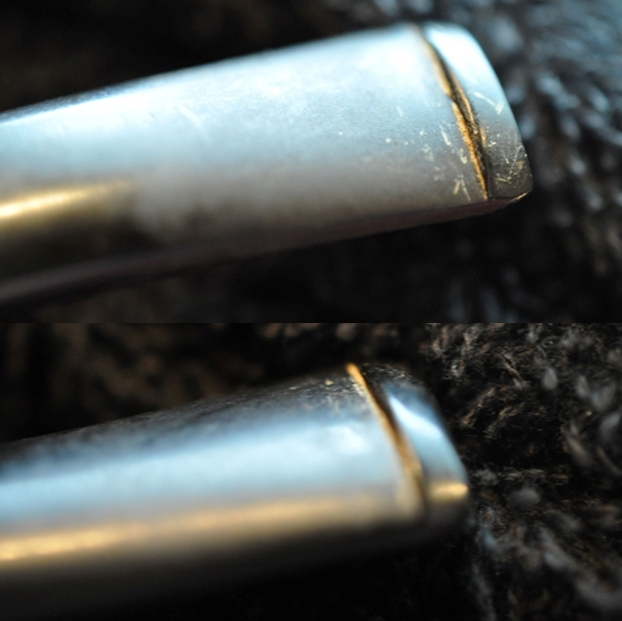
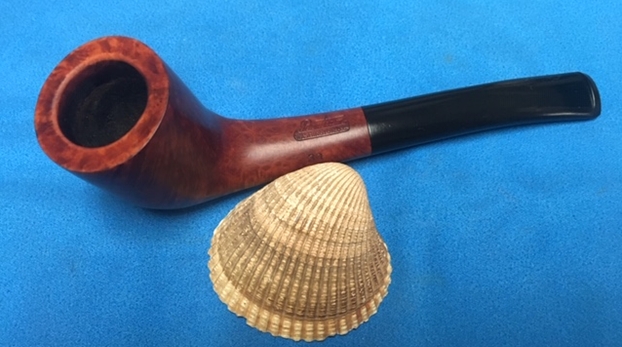
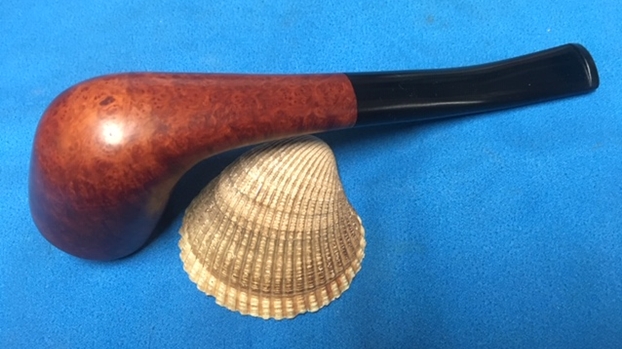
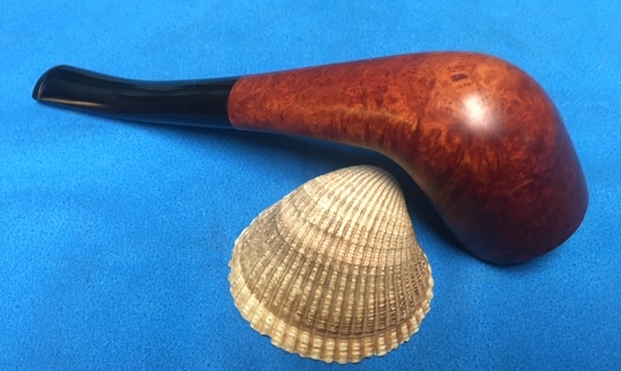
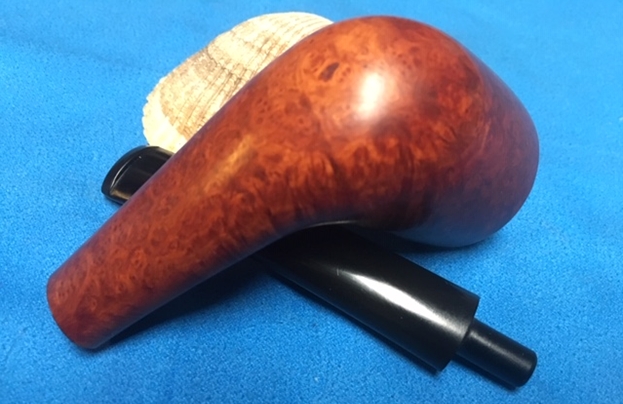
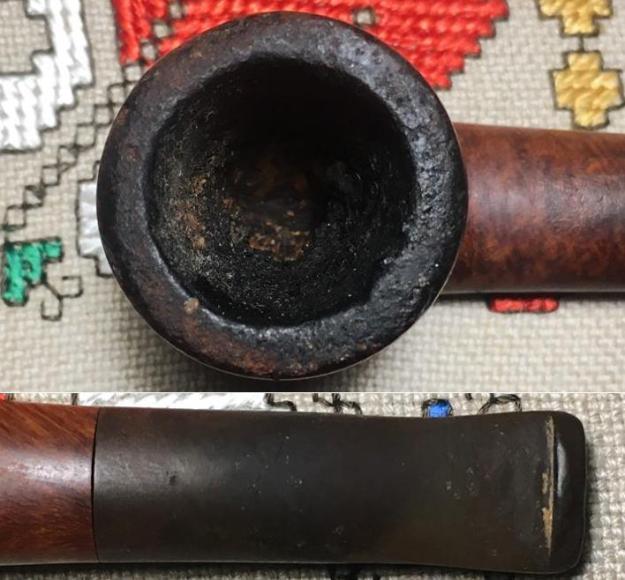
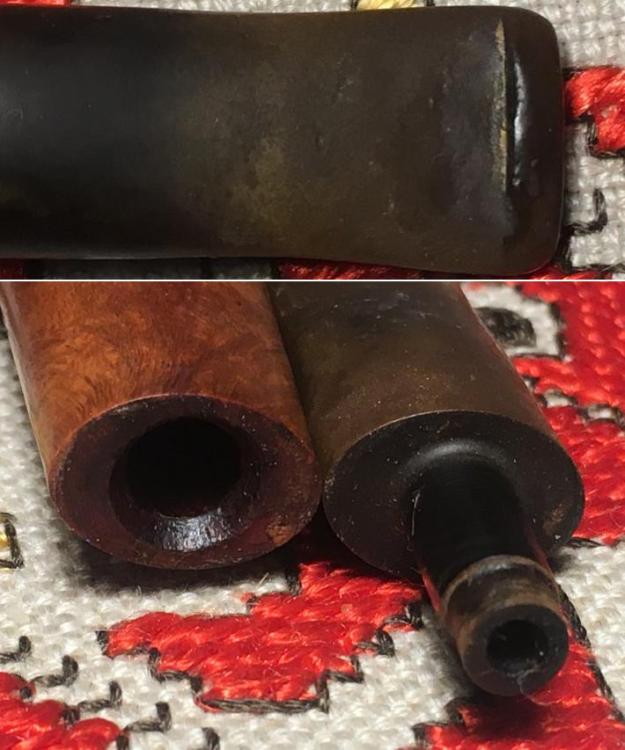
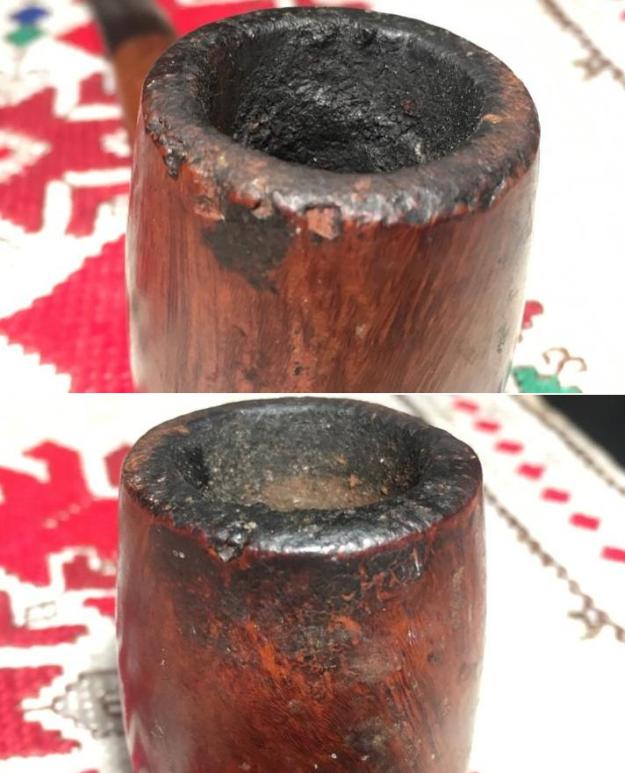
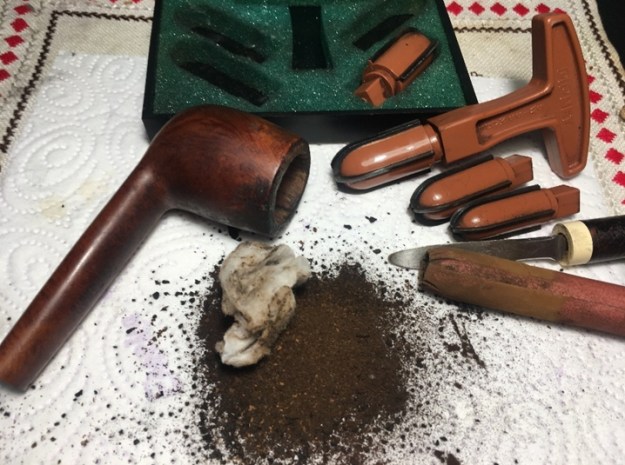
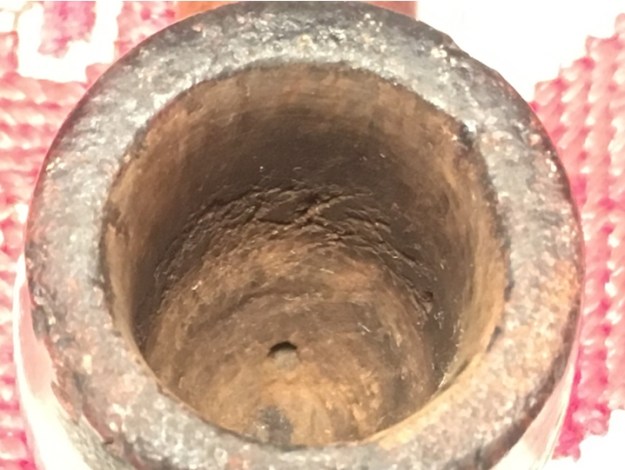
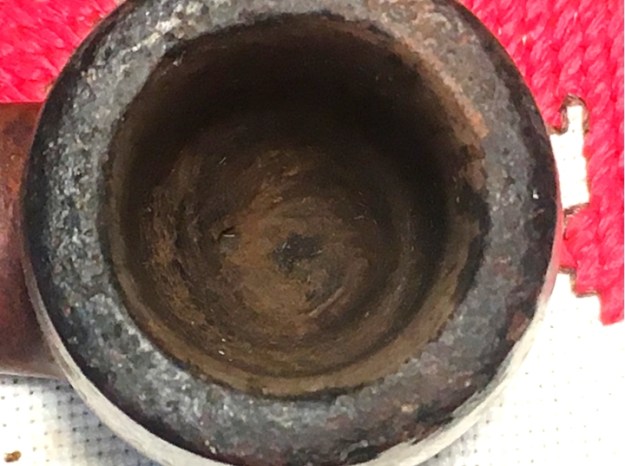
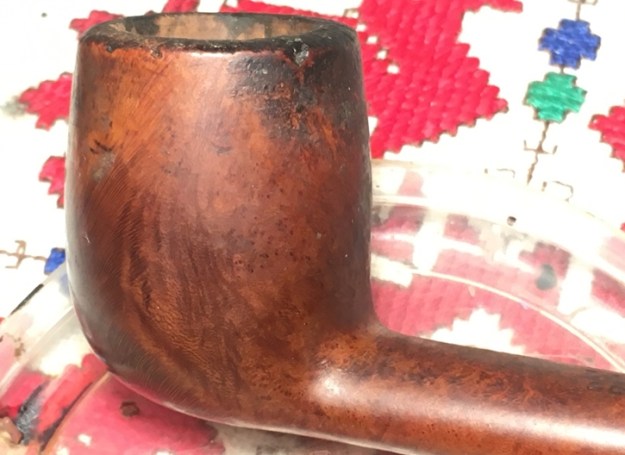
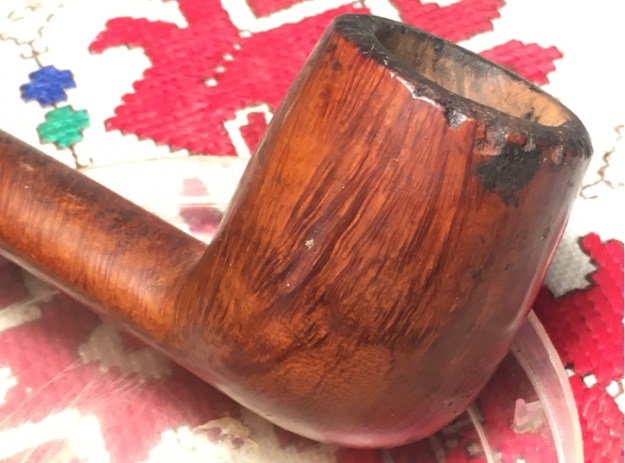
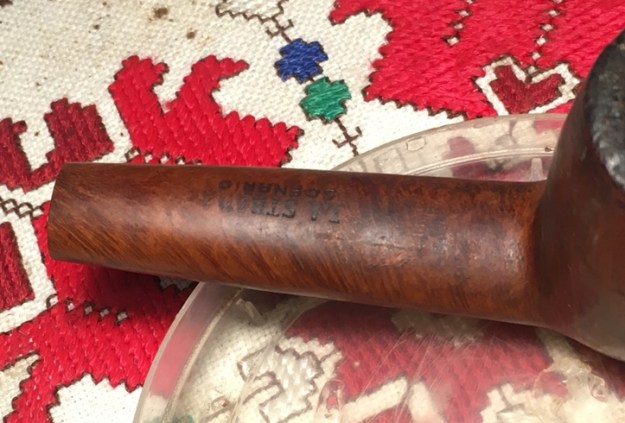
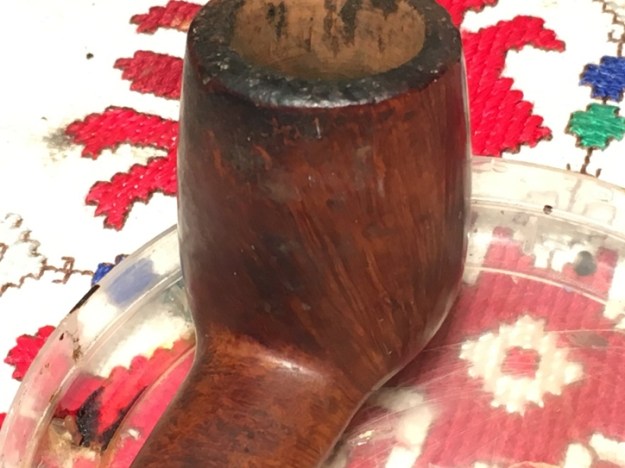
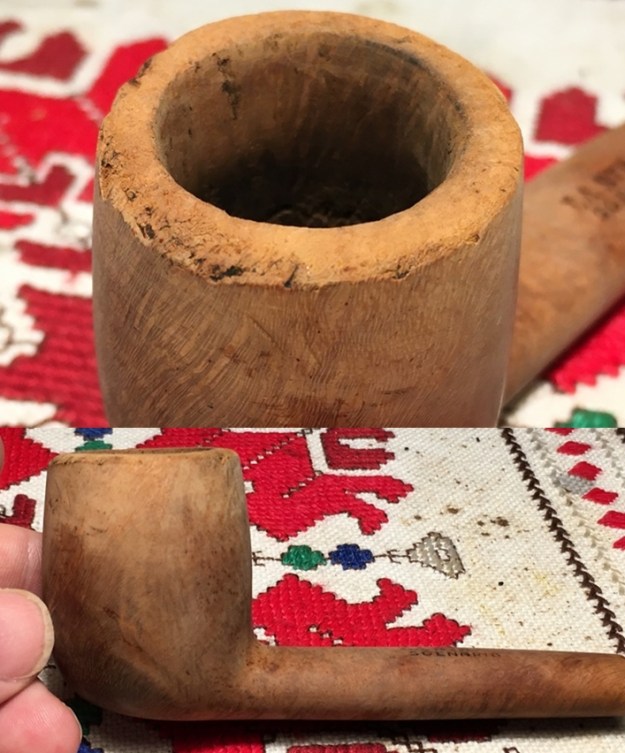
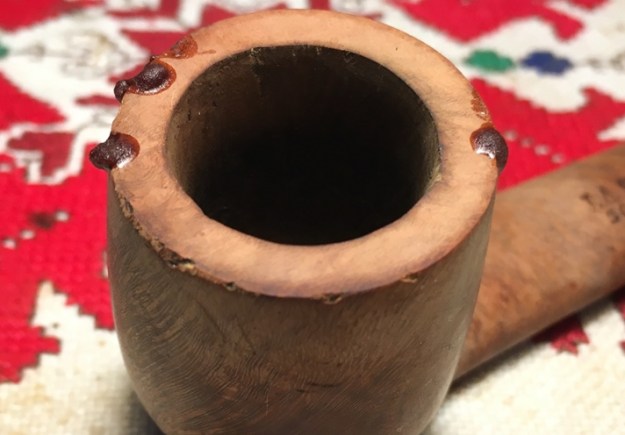
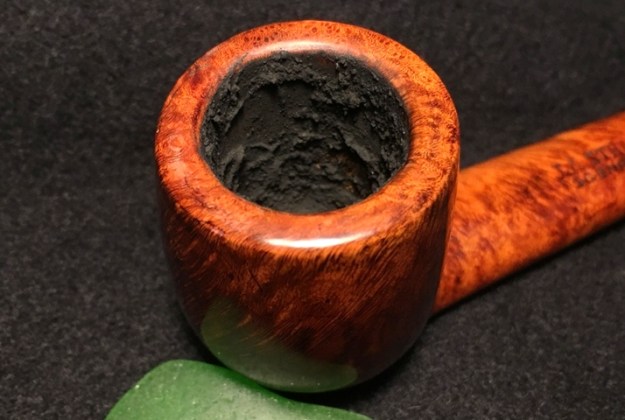
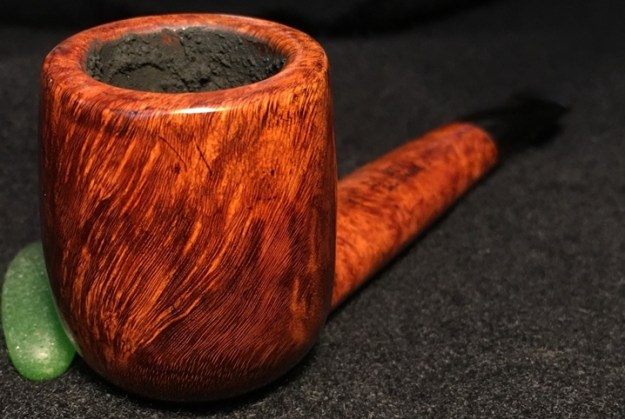
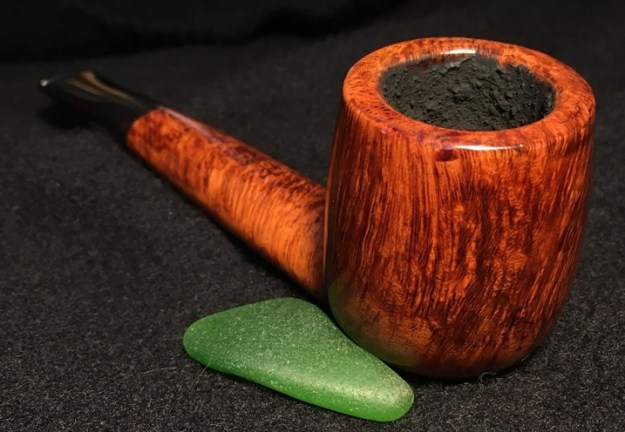
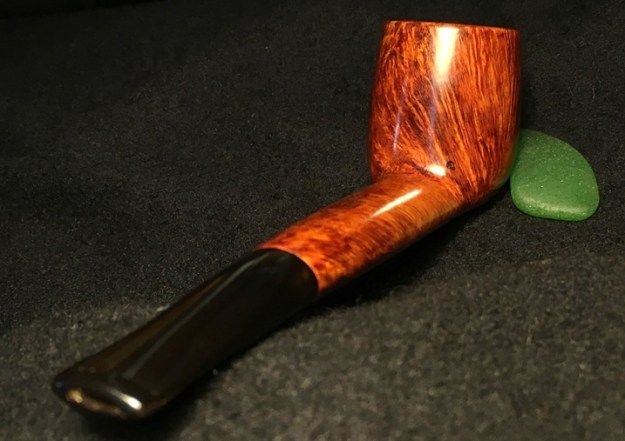
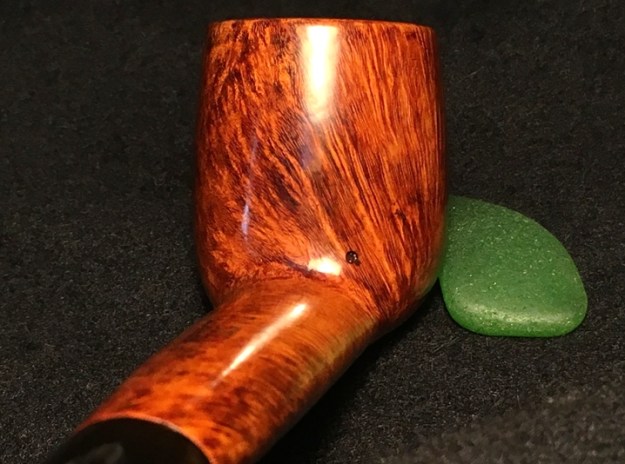
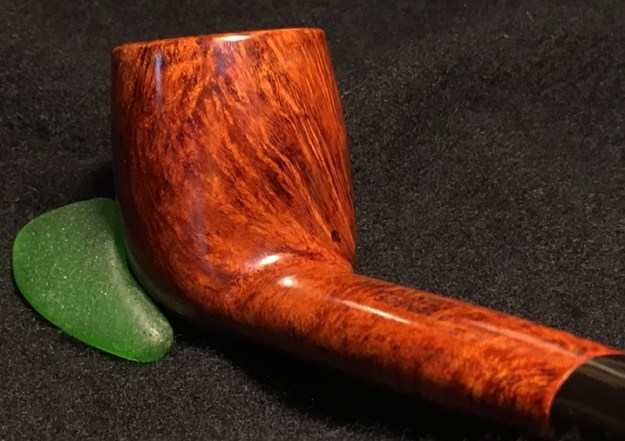
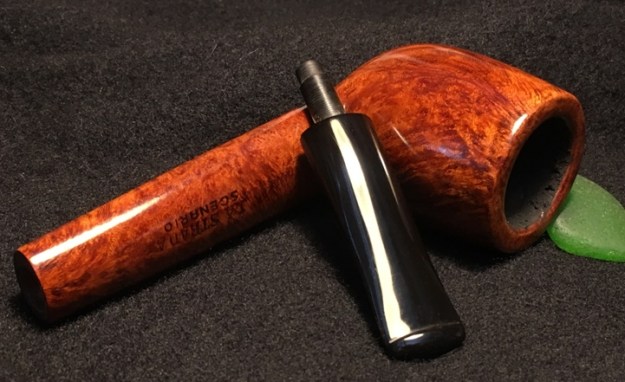
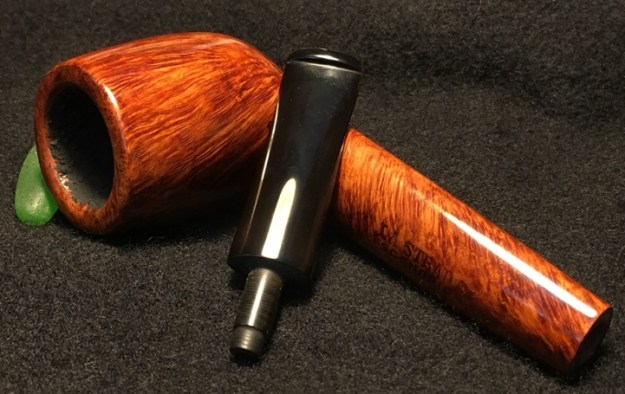
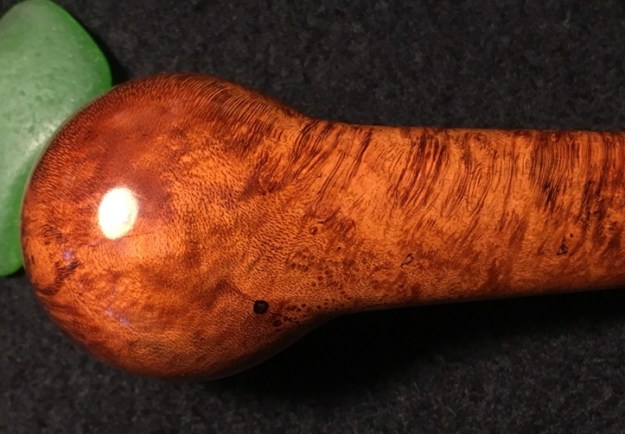
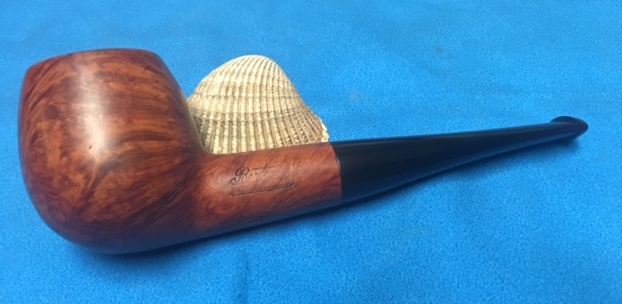
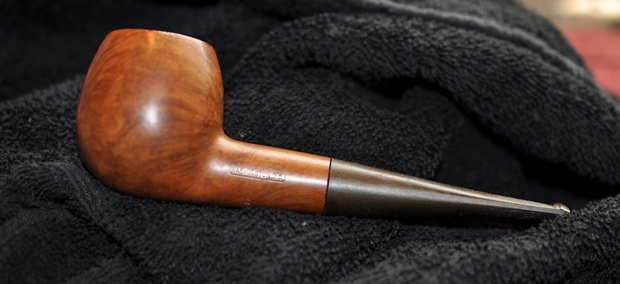
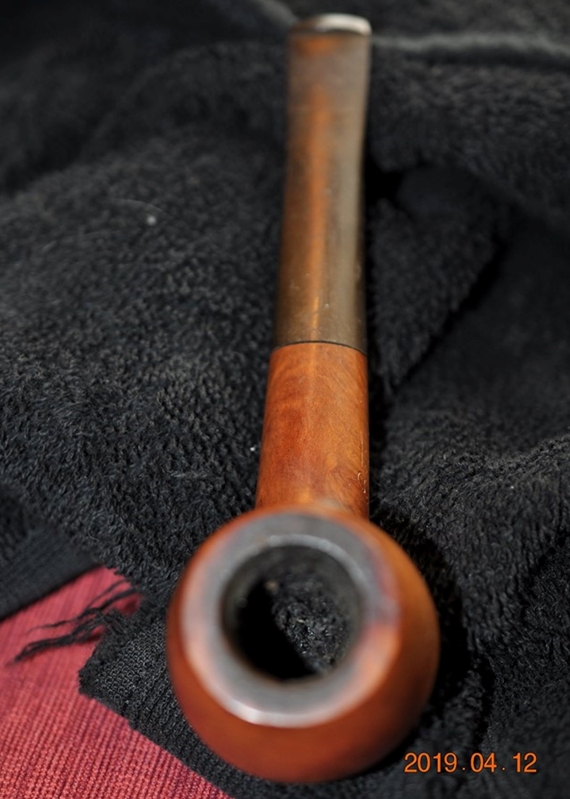
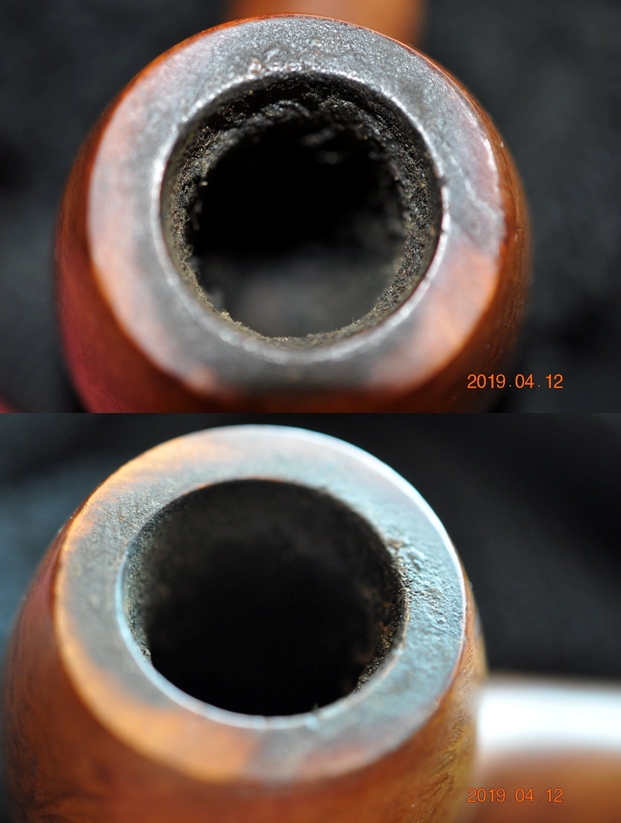
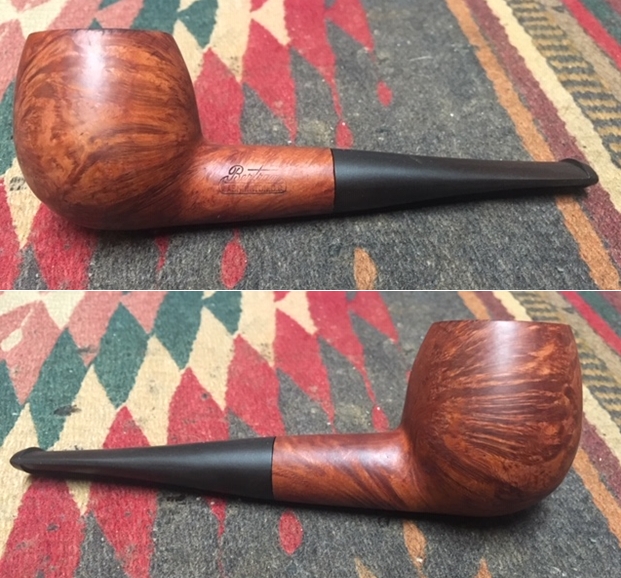
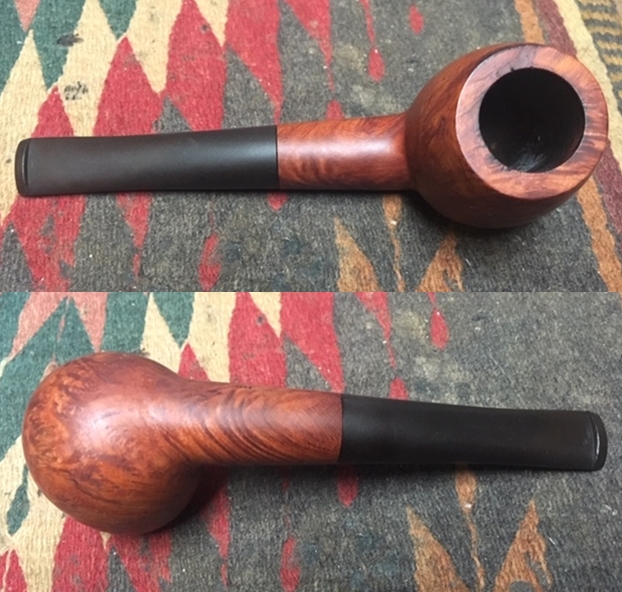
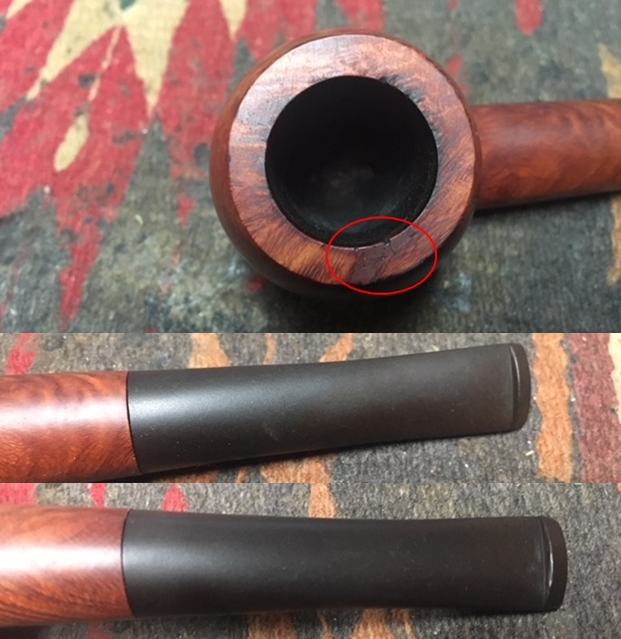
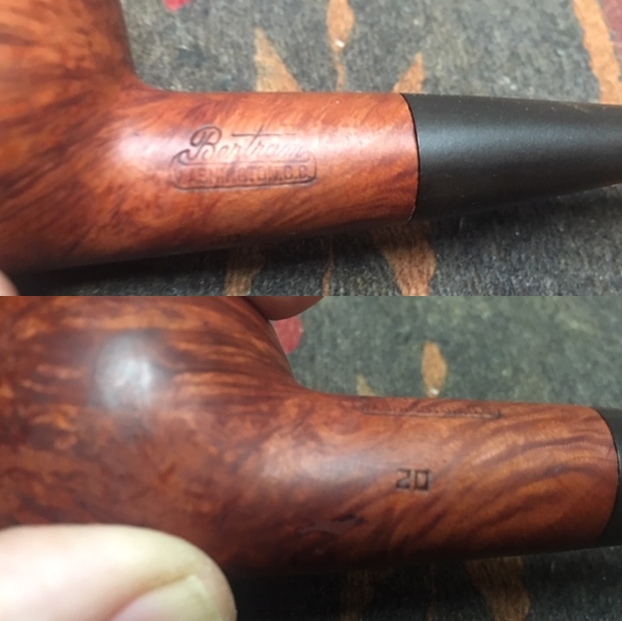
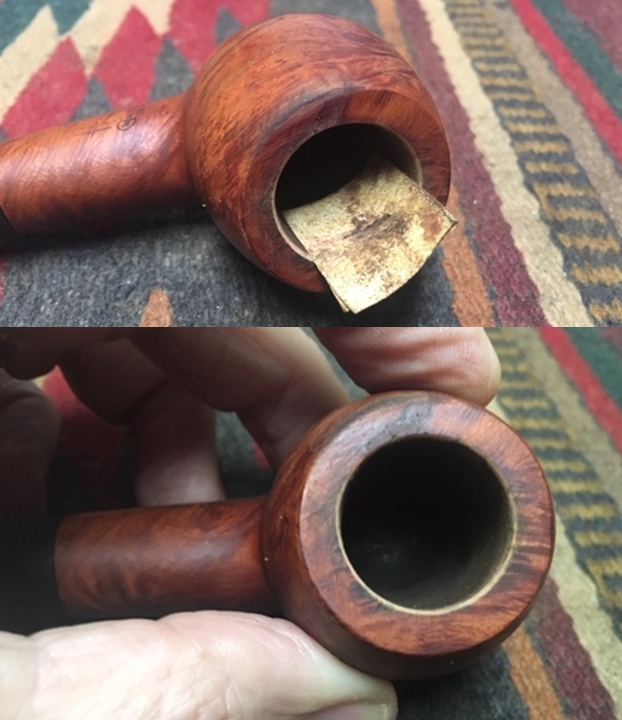
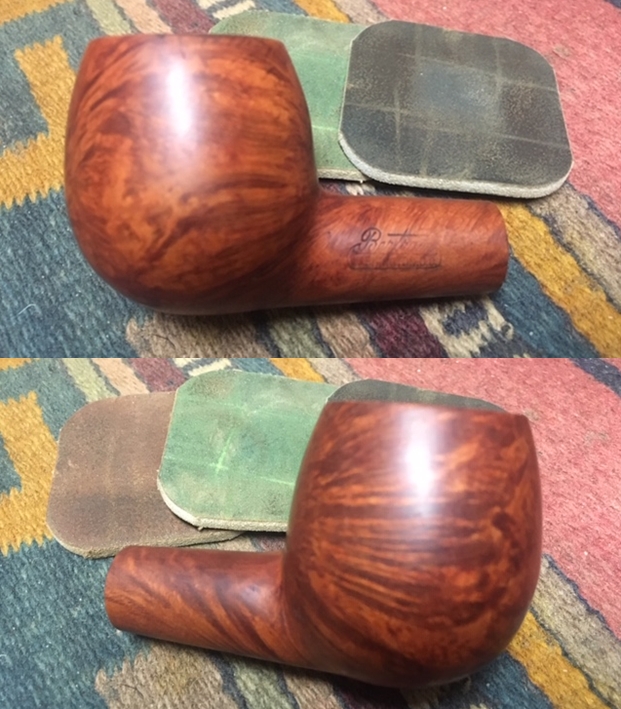
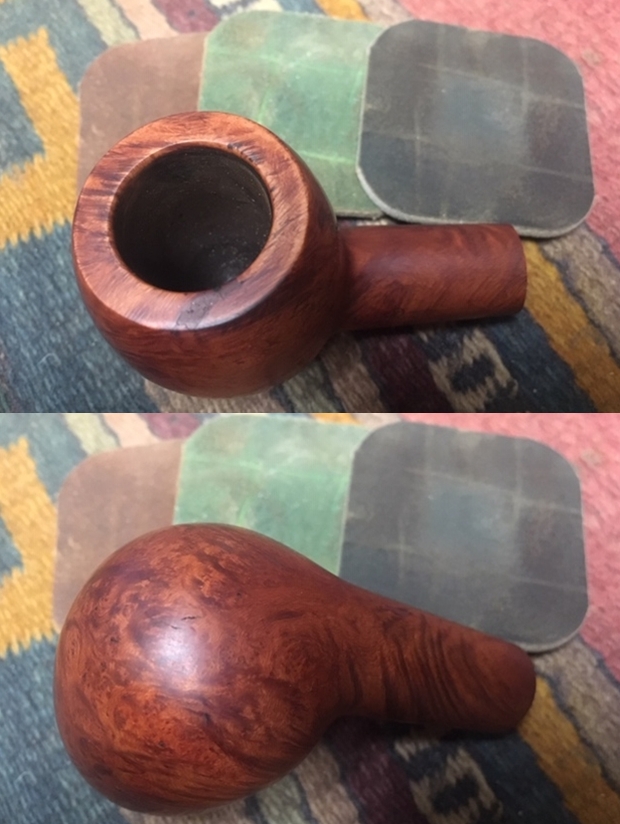
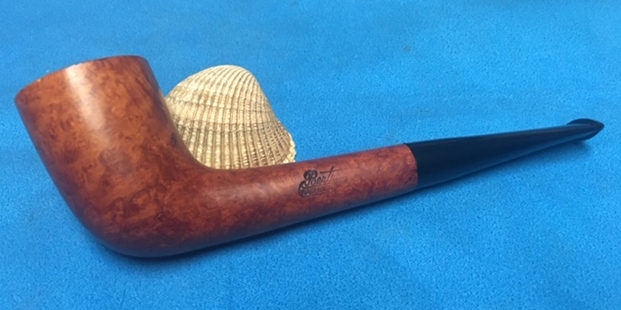
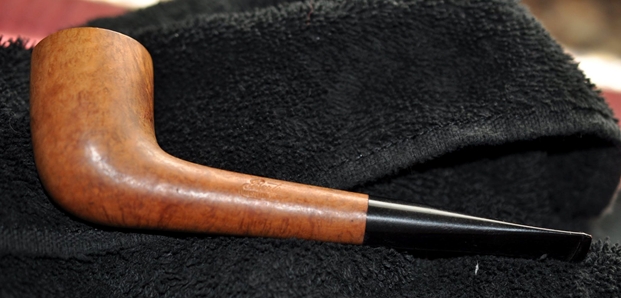
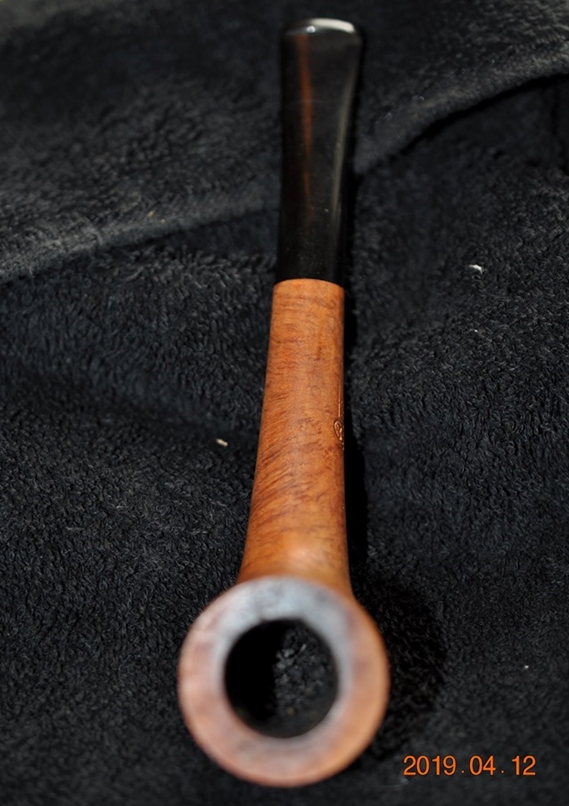
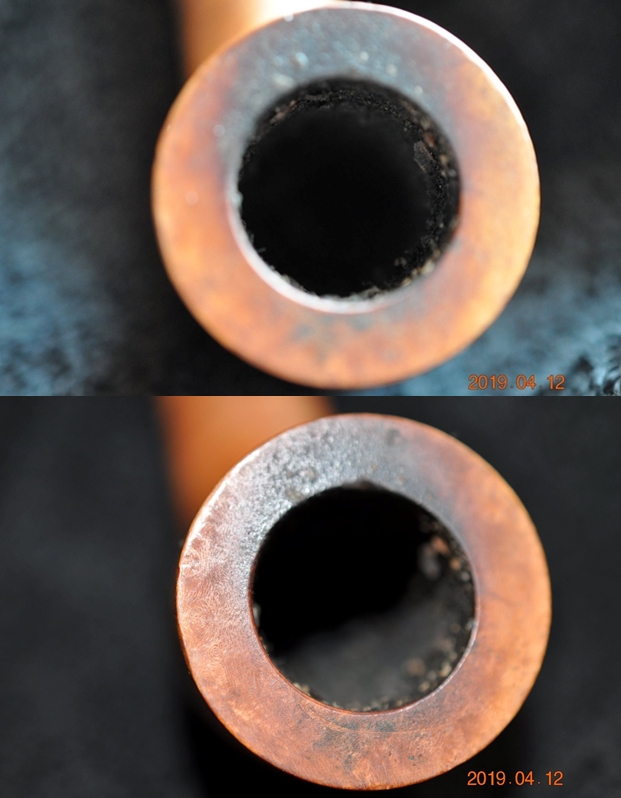
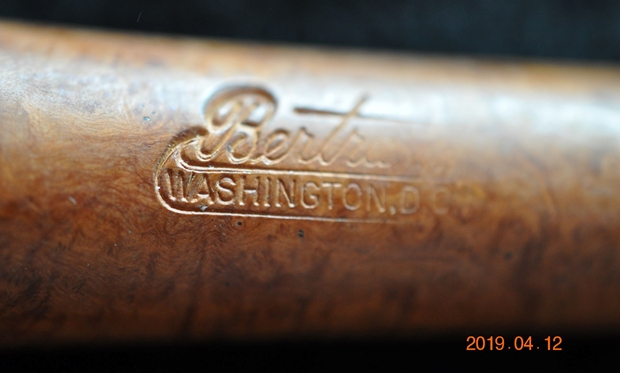
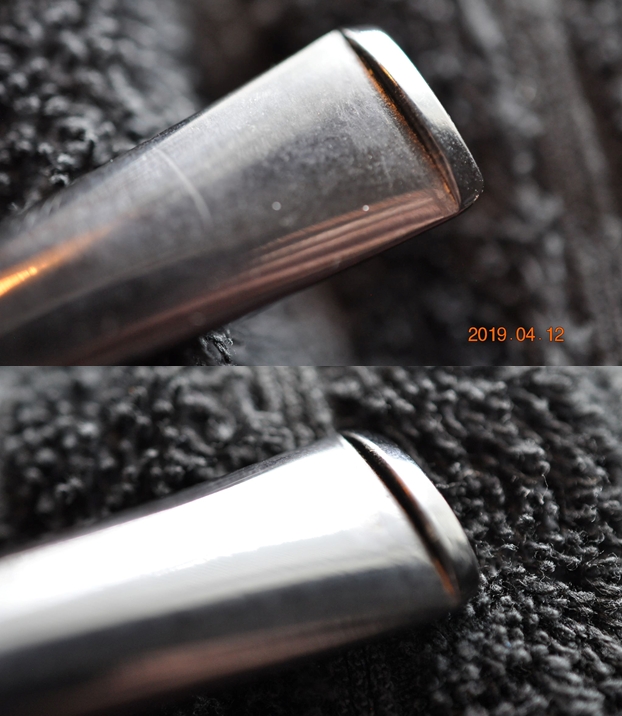
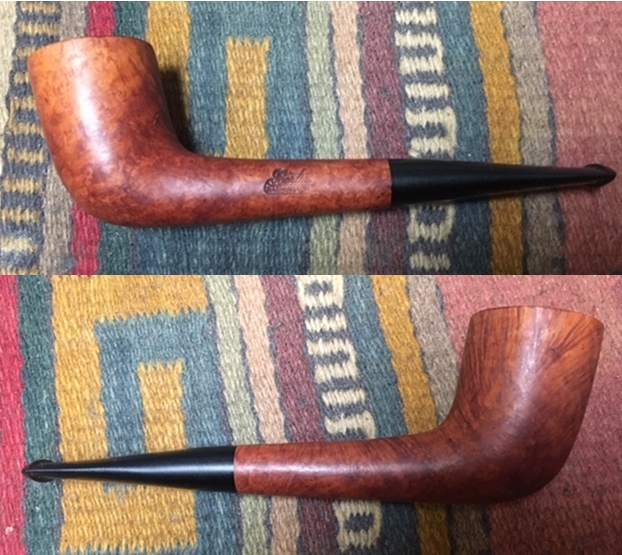
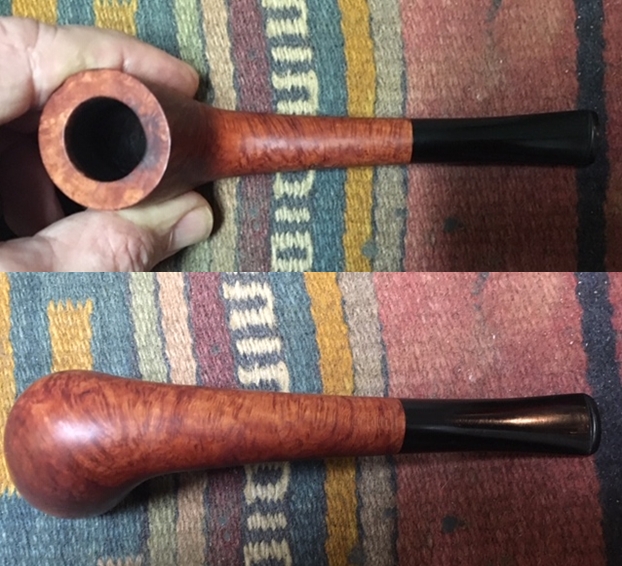
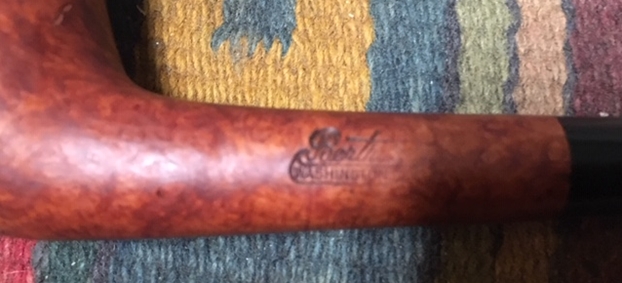
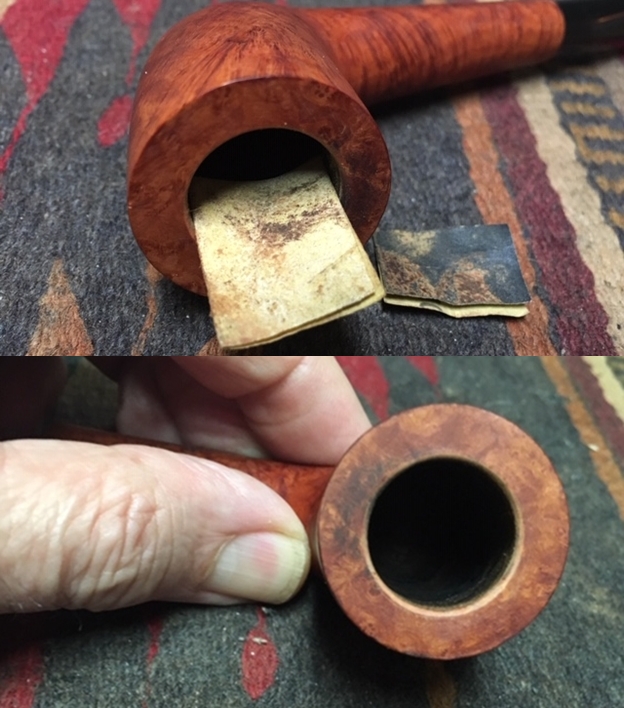
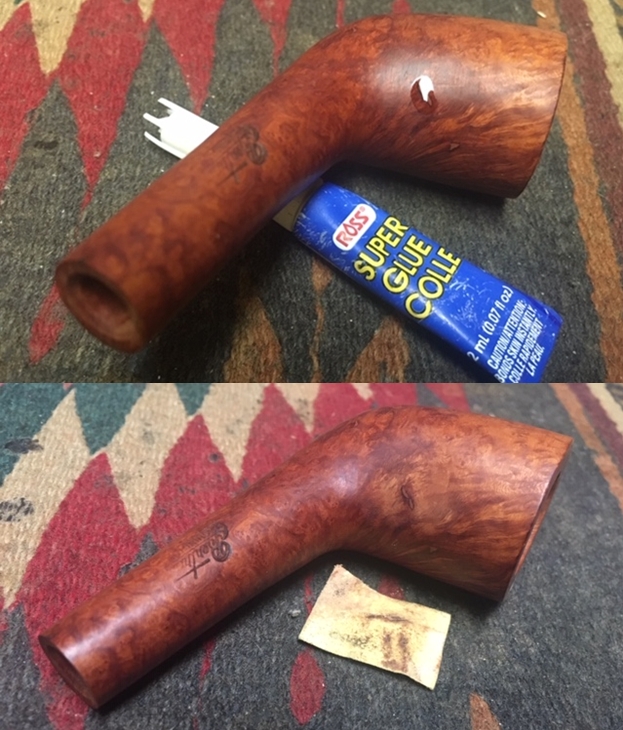
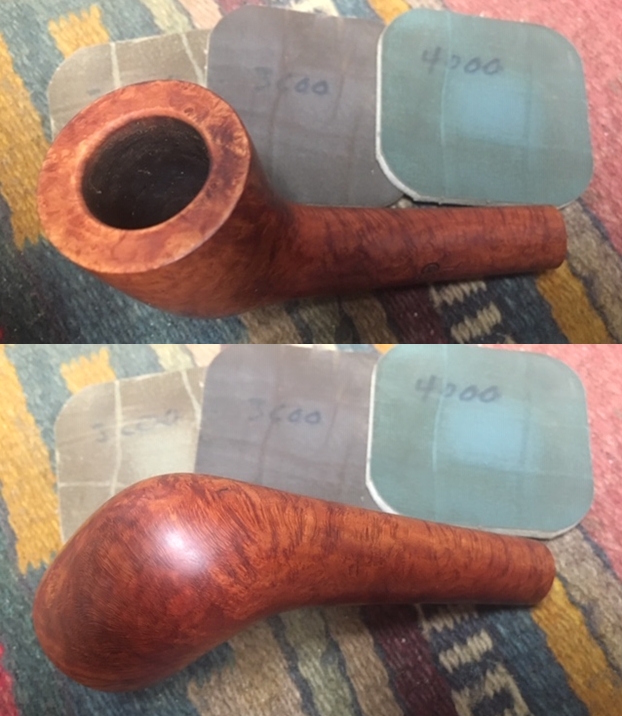
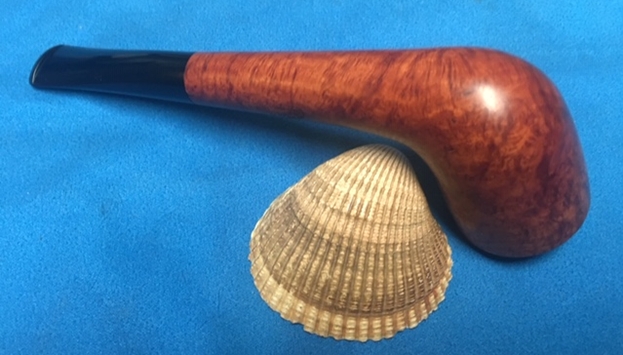
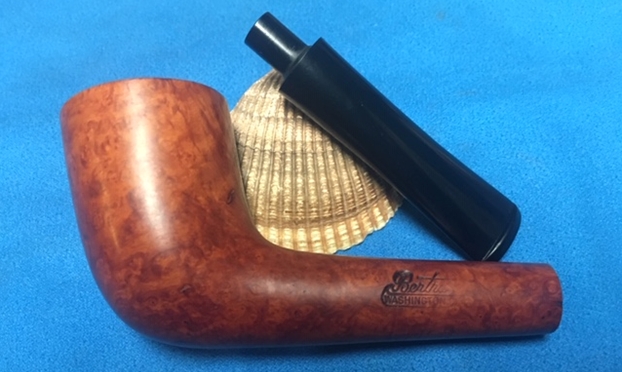
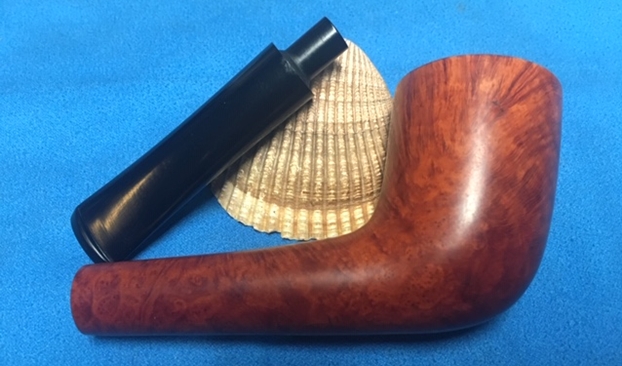
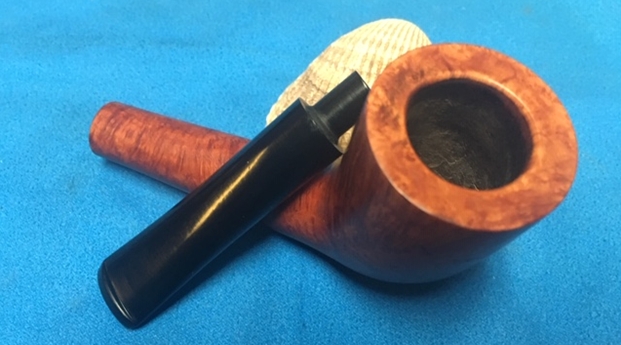
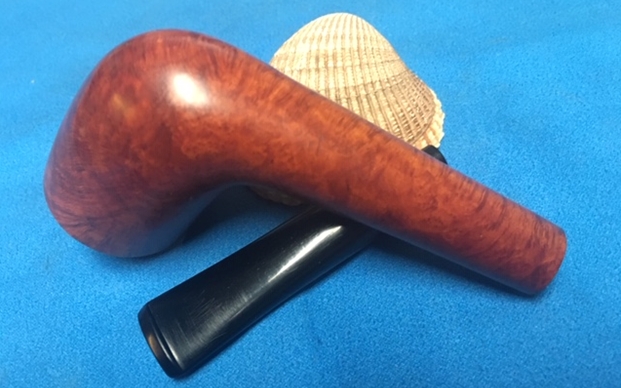
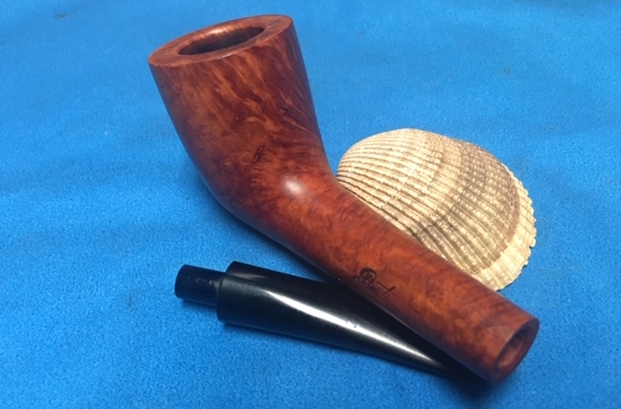
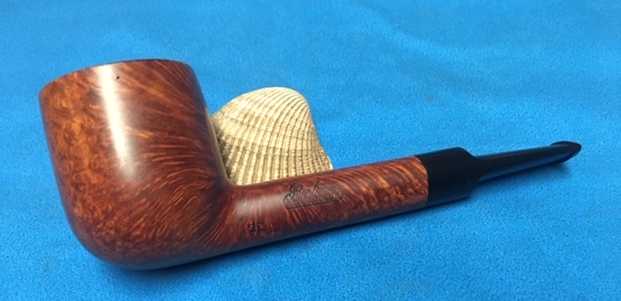
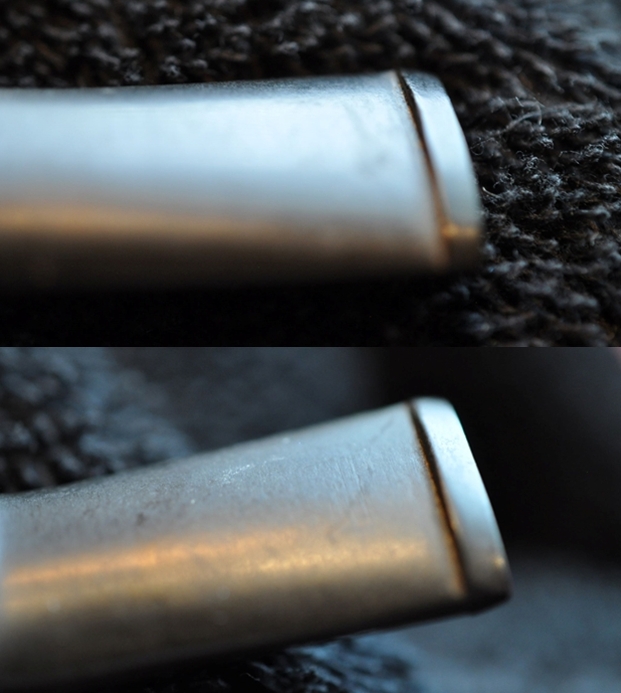
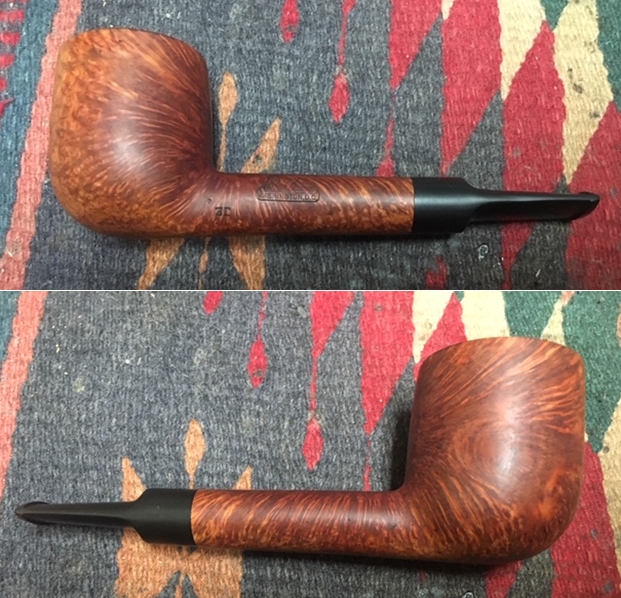
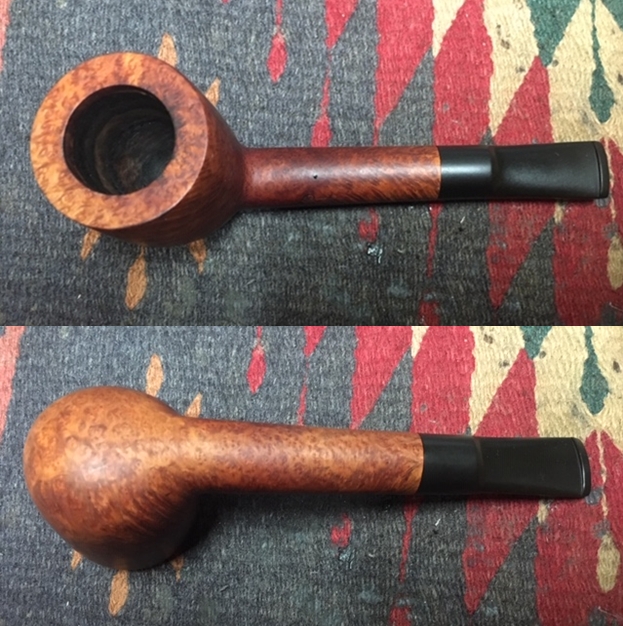
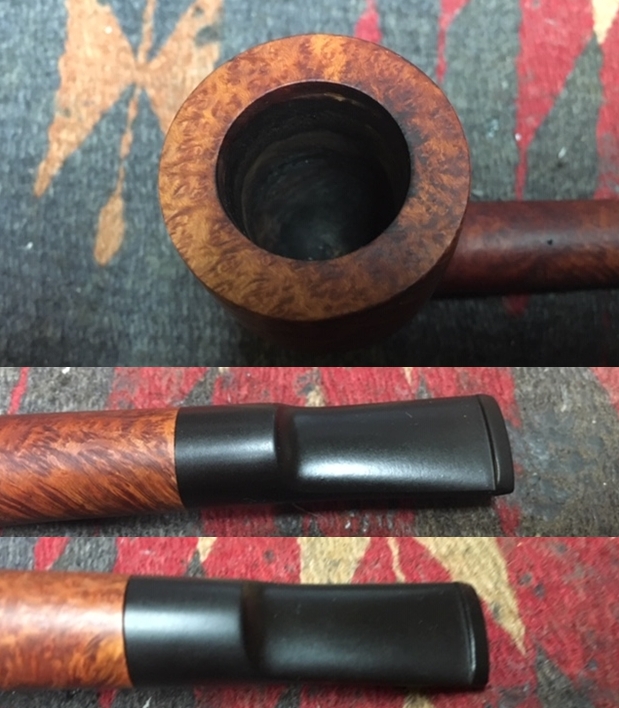
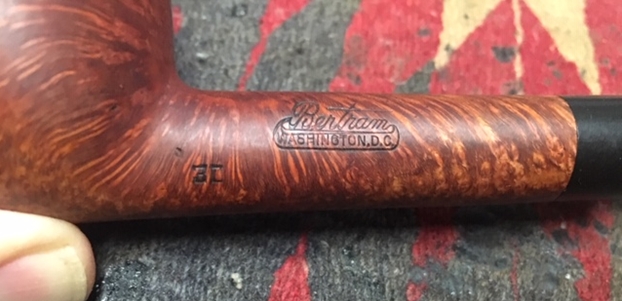
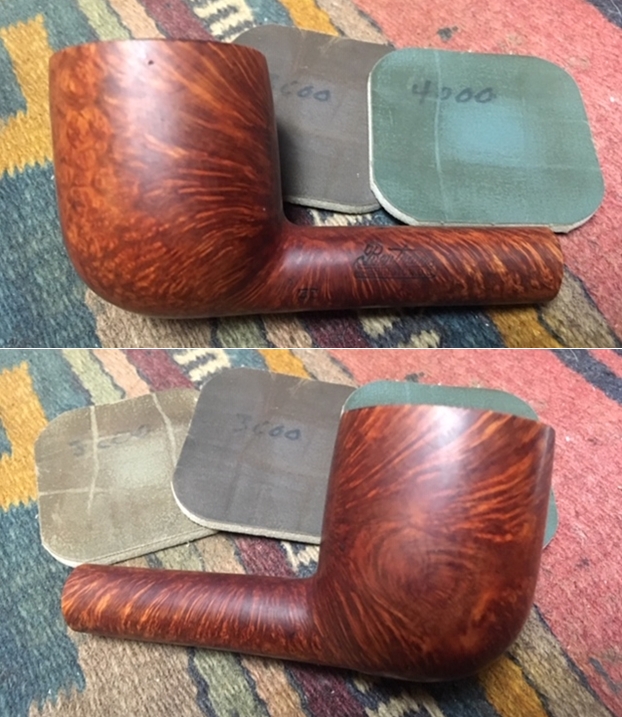
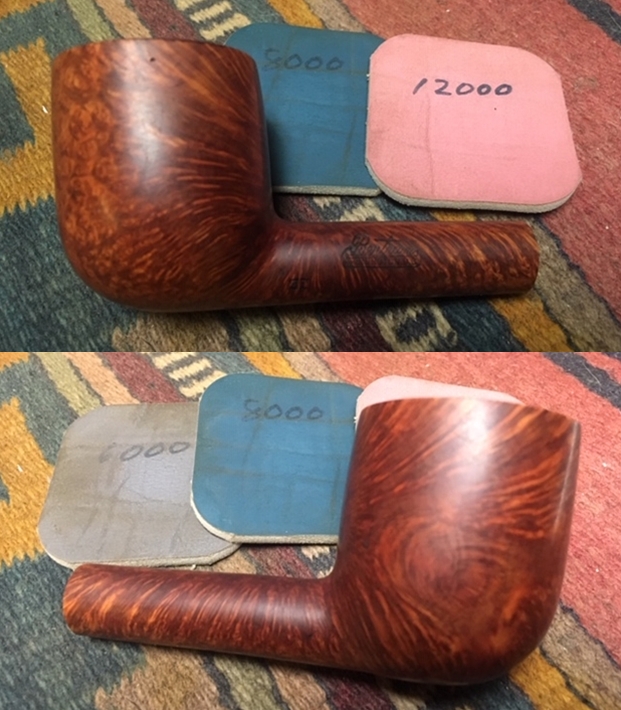
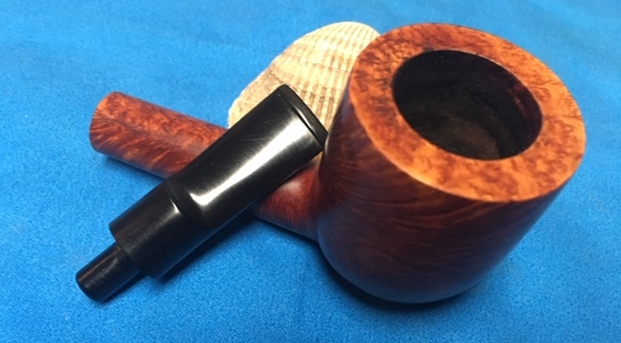
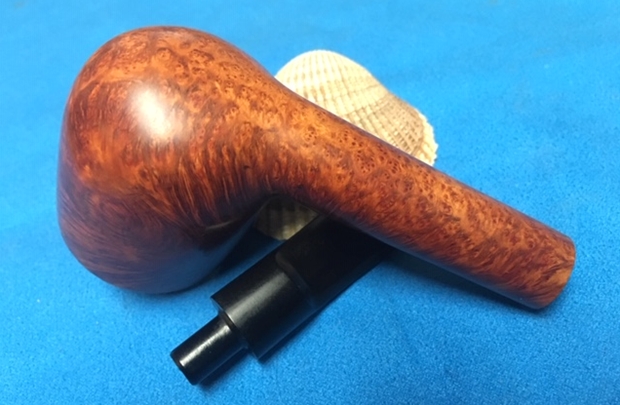
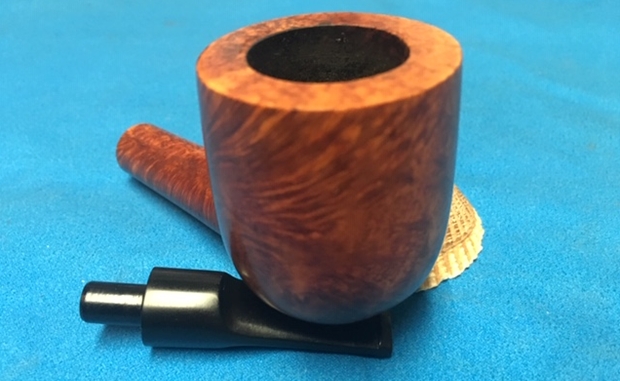
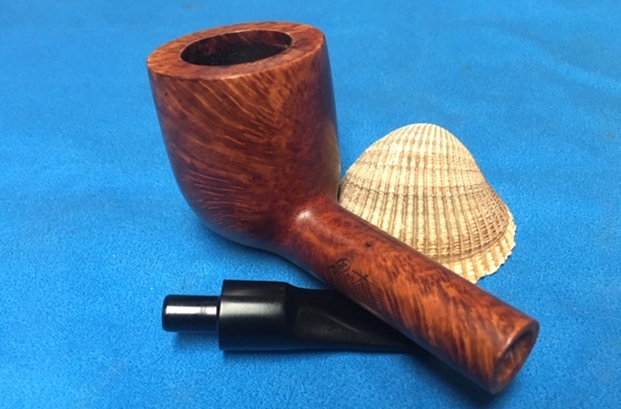
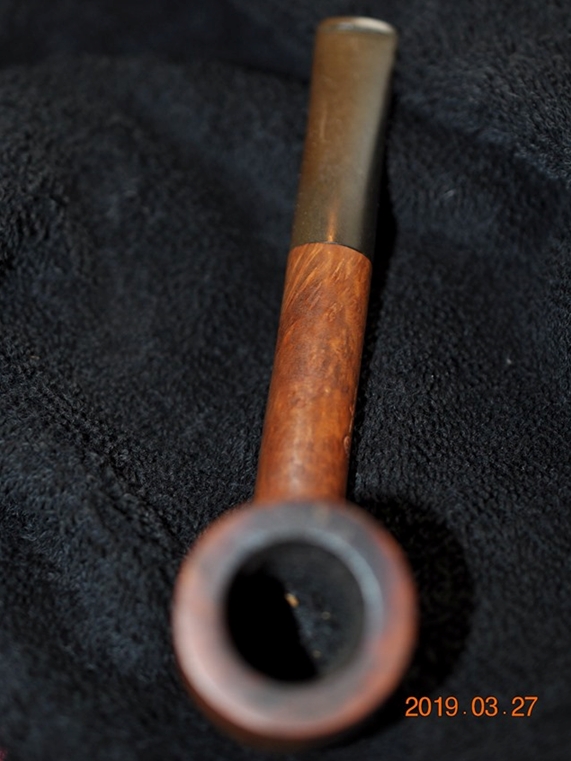
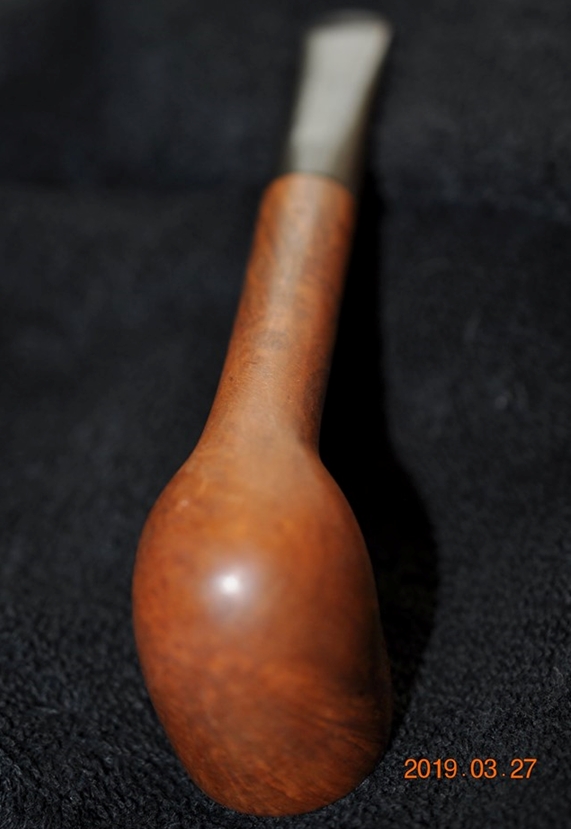
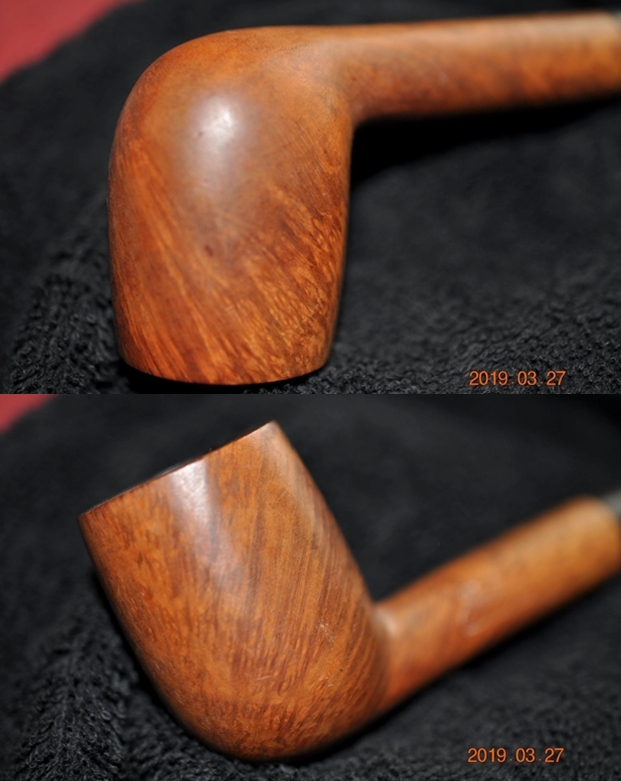
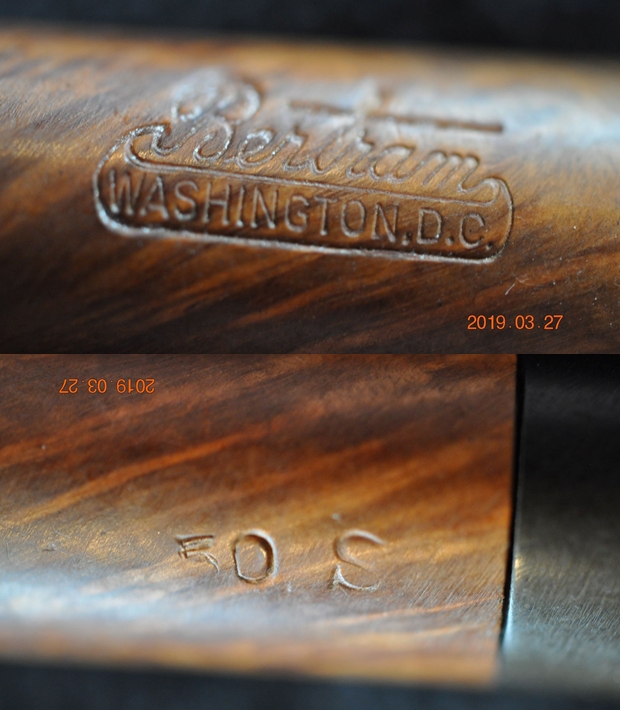
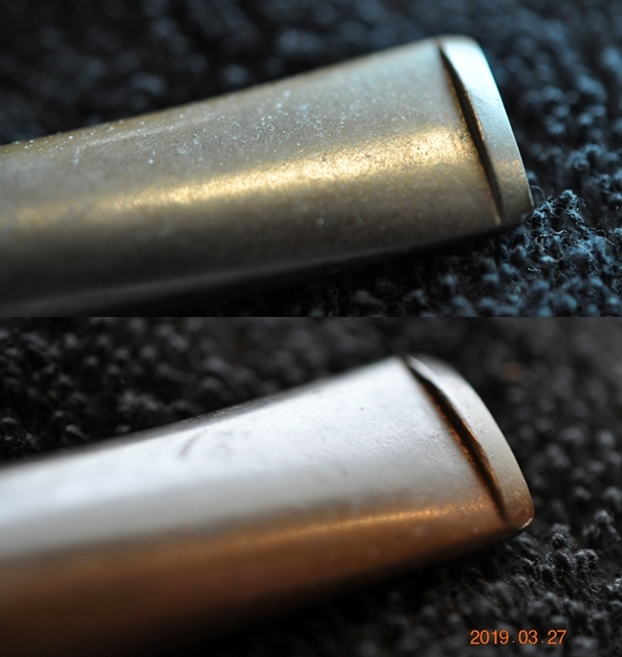
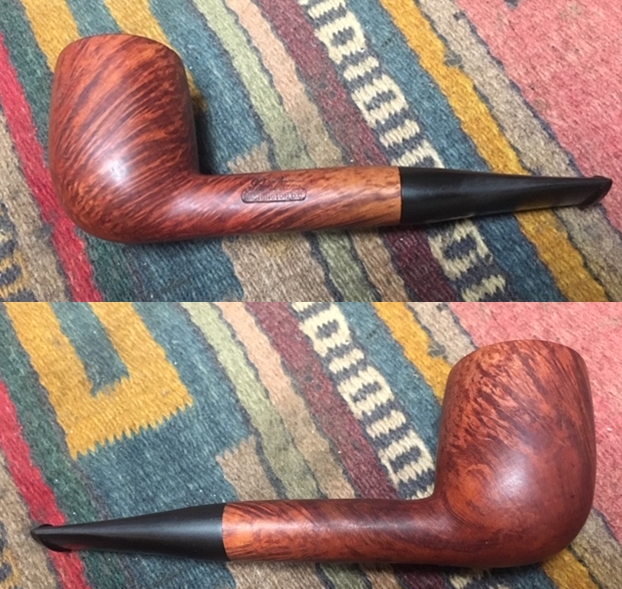
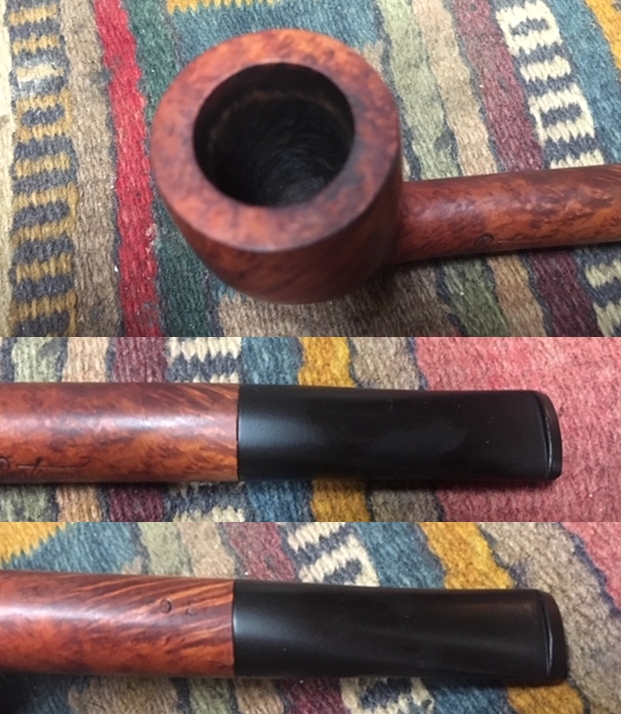
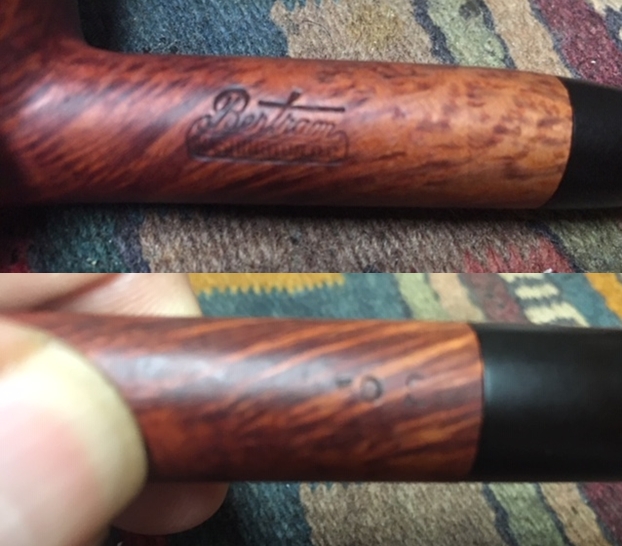
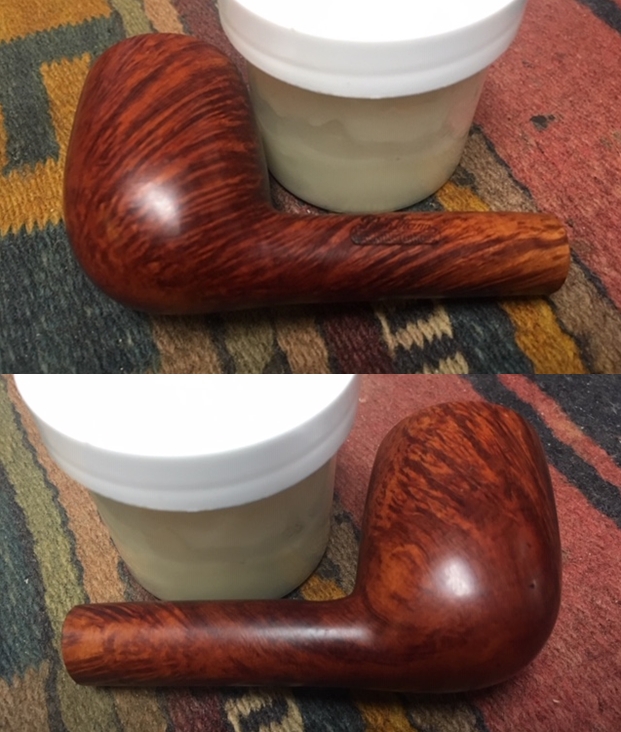
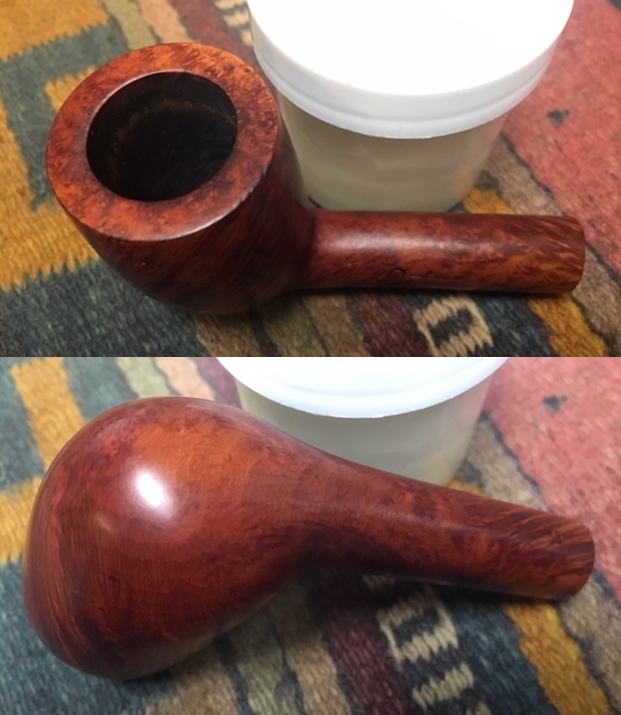
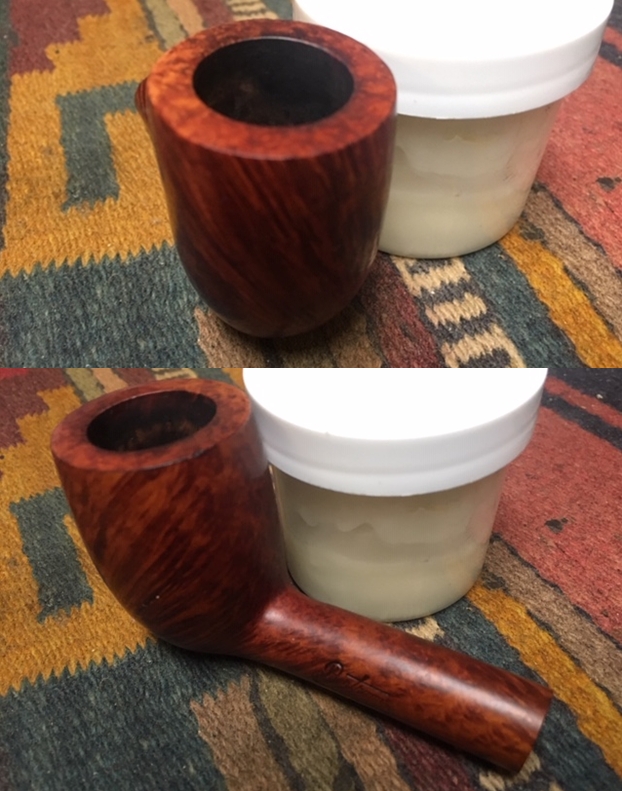
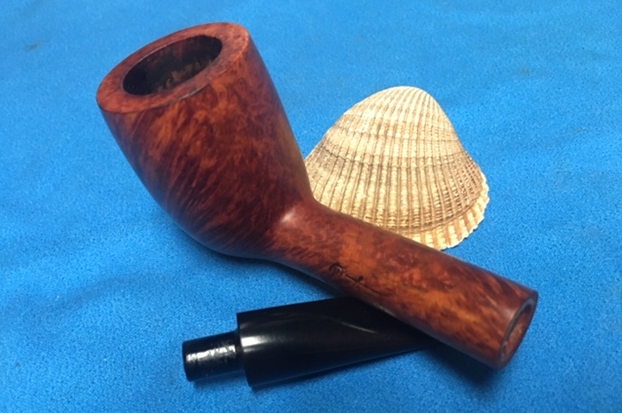
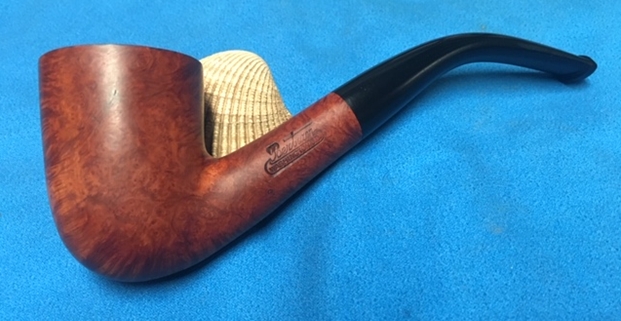
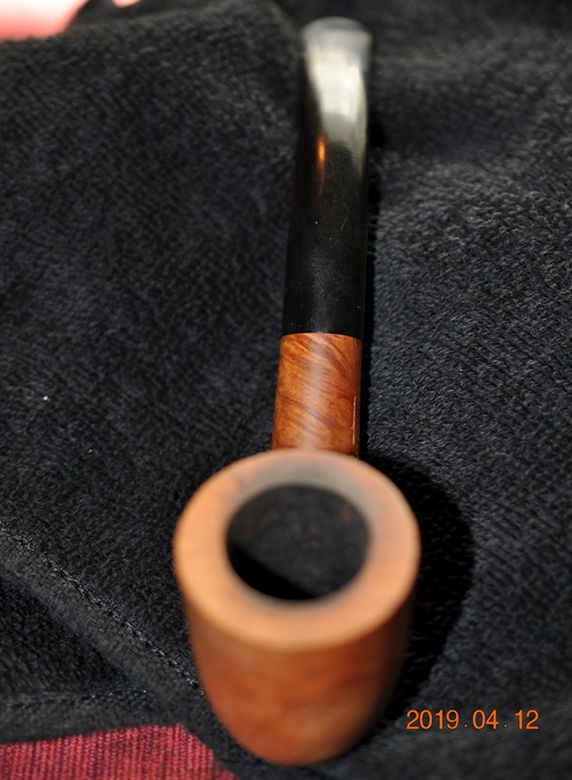
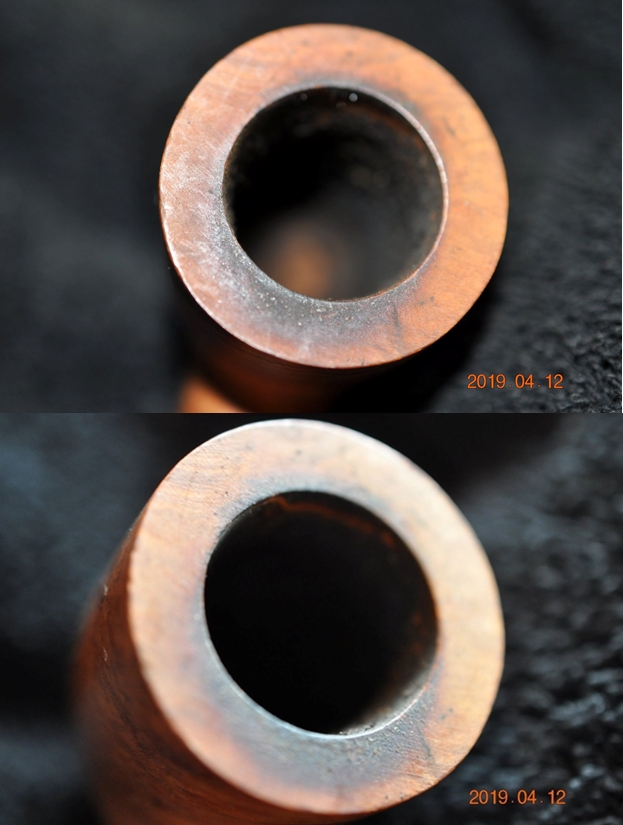
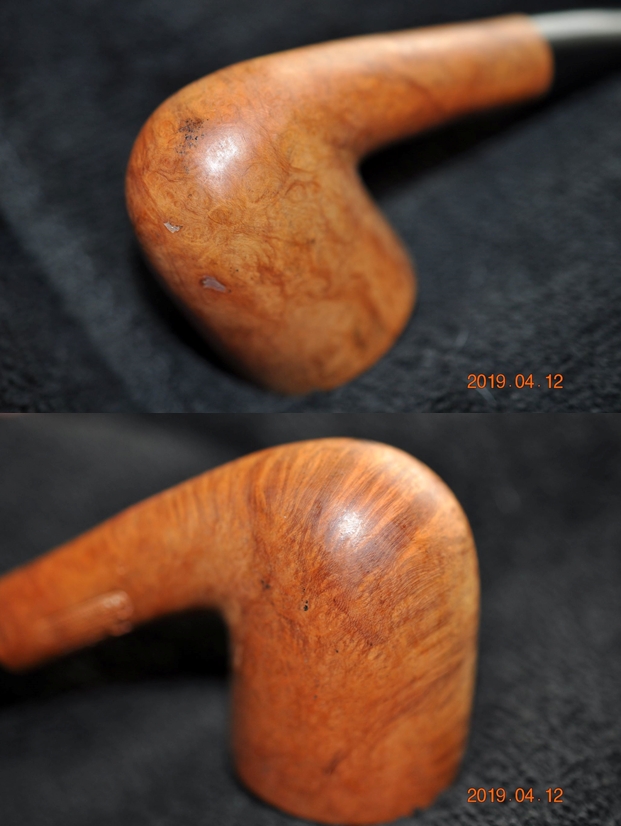
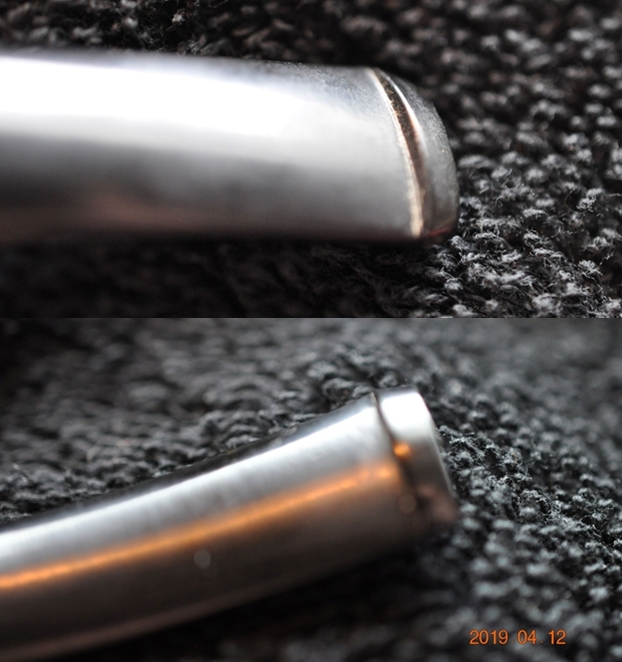
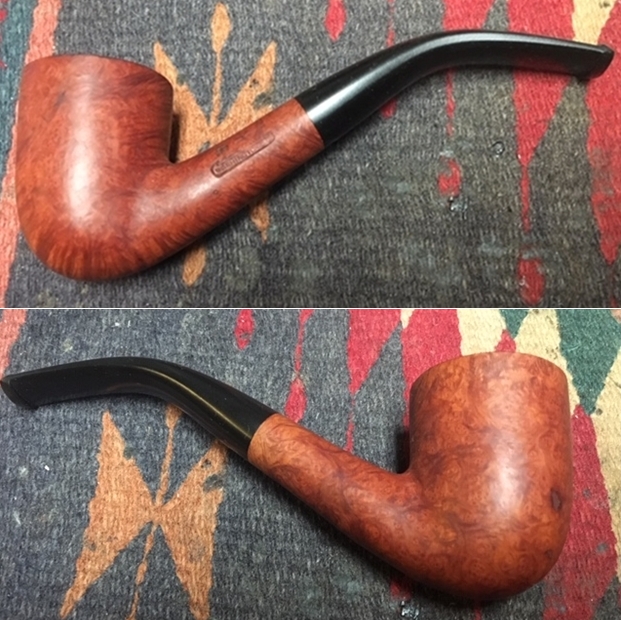
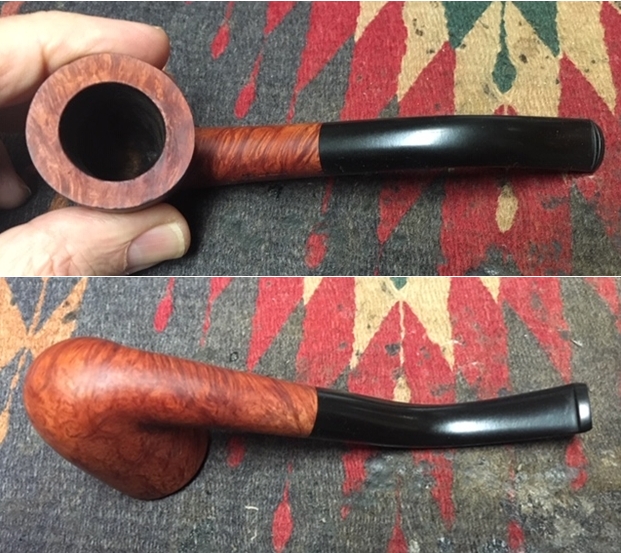
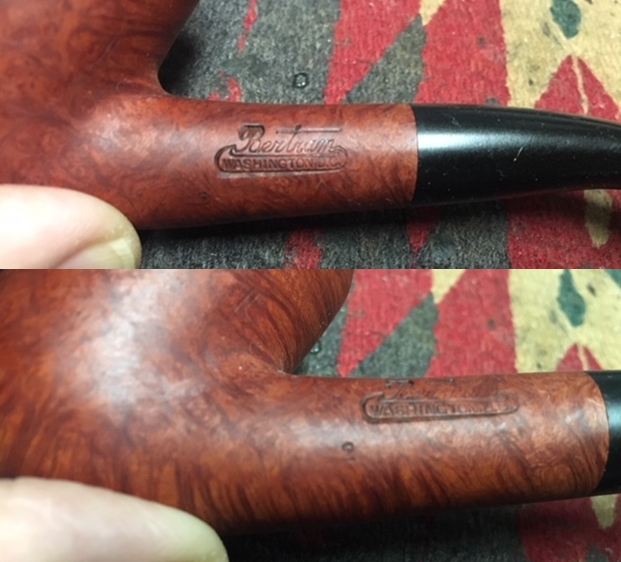
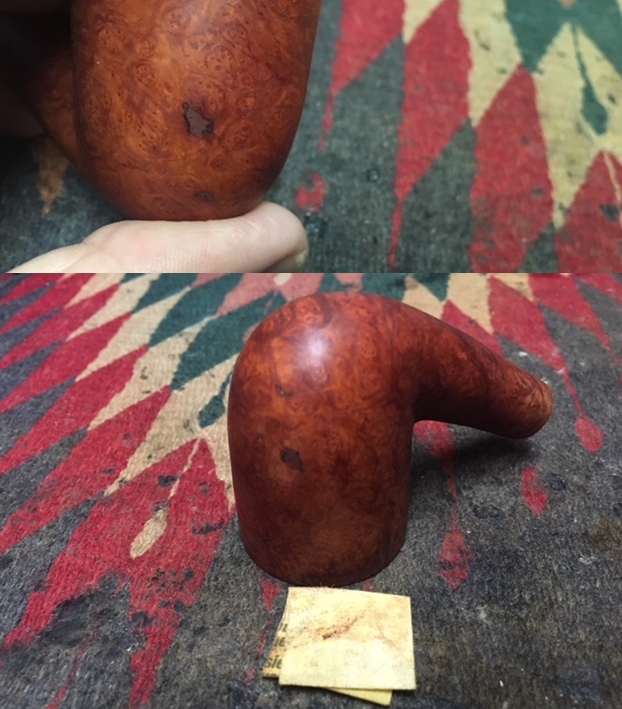
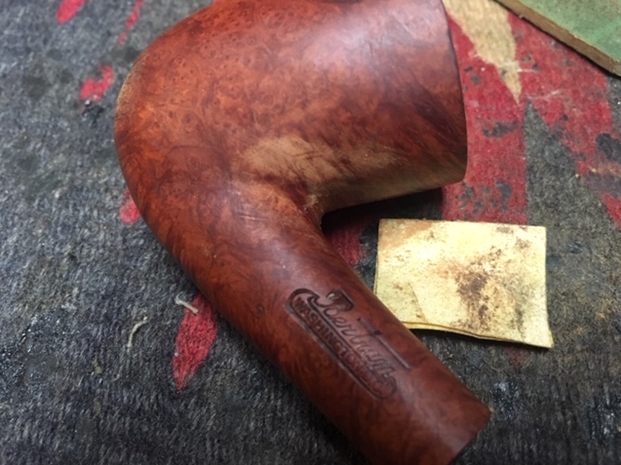
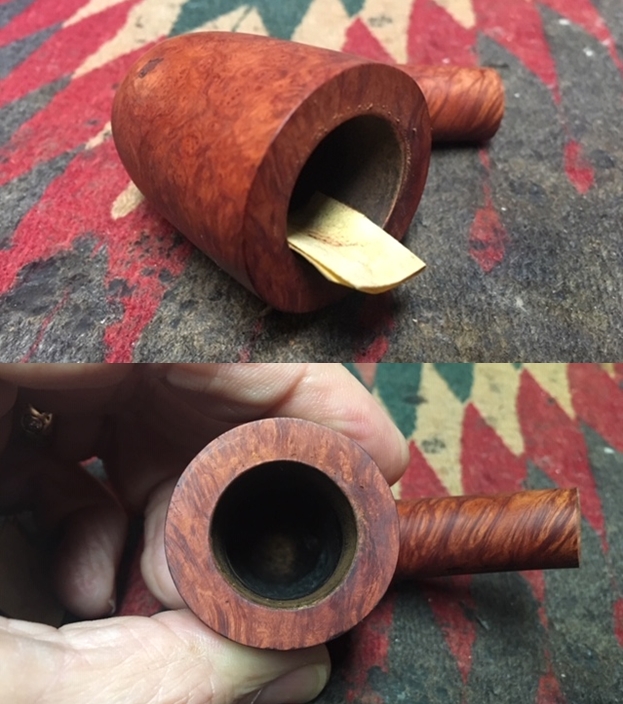
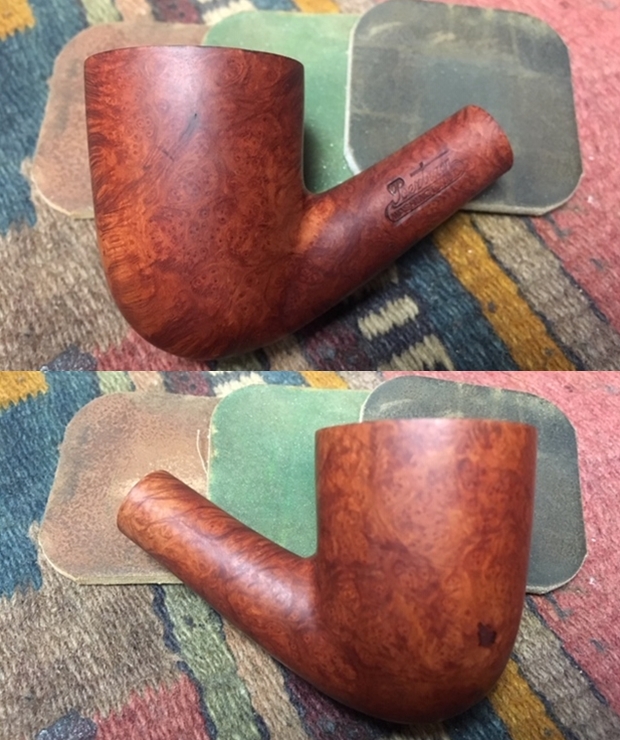
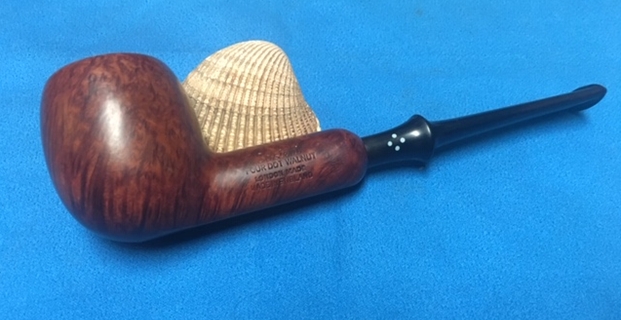
Rather than repeat myself and give readers grief with the repetition please refer to the previous blog posts on the collection of Bertrams and a smattering of other brands that Jeff and I purchased. I can’t adequately describe the sense of being overwhelmed that I have when I look at the 200+ pipes that need to be restored but there is only one way to move ahead – 1 pipe at a time. I am glad Jeff is helping with the clean up on the lot as that would be more than I could handle by myself in moving through this many pipes. From his cleaned pipes I chose an interesting little Lovat with amazing grain to be the next pipe that I would work on. It was a small Lovat with a saddle stem. There was a thick cake in the bowl and heavy lava overflowing on to the rim top. It was hard to know the condition of the edges due to the cake and lava. The stem showed some light oxidation and some tooth marks and chatter on the top and underside. The photos below tell the story and give a glimpse of the pipe. Jeff took close-up photos of the bowl and rim to capture the condition of the pipe when it arrived. The rim top had a thick coat of lava and the bowl had a thick cake.Jeff took pictures of he bowl sides and the heel to show the marvelous grain on the bowl. It really is quite stunning and very dirty!Jeff took a photo to capture the stamping on the left side of the shank. The photo shows the stamping on the shank which read ALGERIAN BRIAR. The stamping on this pipe is clear and readable. The next two photos show the stem surface. They show the light oxidation and the chatter on both sides near the button. The tooth marks are visible next to the button on both sides.On the previous blog on the Algerian Briar – the Lumberman, I mentioned that Jeff and I have been working through the collection of Bertram pipes. Many of the other pipes in the lot are also from pipe shops in Washington, D.C. There are A. Garfinkel pipes, Ansell Pipes, National Pipes along with the Bertrams. Also included in the lot are pipes that have no other stamping than “ALGERIAN BRIAR”. This is the second of those pipes and while there is no way to be sure about the shop that these pipes came from I think it is safe to make a few conjectures. This pipe is stamped in a way very similar to the A.Garfinkel pipes that I am working on. Some of them have the stamp Algerian Briar along with the shop name. The lettering on the stamp is the same on both pipes. This one does not have FRANCE stamp on the underside of the stem. I thought I would I quote some of the information I included in the blog on the A. Garfinkel pipe once again (https://rebornpipes.com/2019/05/28/new-life-for-an-a-garfinkel-washington-d-c-large-billiard/). In the fourth paragraph below I have highlighted in Dark Blue the pertinent section that links this Algerian Briar pipe to the A. Garfinkel shop.

Before I started my part of the restoration I did a bit of research to see what I could learn about the brand. I turned first to the Pipephil website and did not find any information on the brand. That surprised me a bit but such is the hunt for information. I turned next to the Pipedia website and was more successful. Here is the link to the article – https://pipedia.org/wiki/Garfinkel. I quote in full below.

Garfinkel Inc. was a celebrated Washington, D.C. importer and retailer of pipes, tobaccos and cigars. The founder was Arnold Garfinkel (1903-1988). Arnold was originally from Germany, and the family had already been in the tobacco trade for two generations before he was born; his father sold tobacco to Kaiser Wilhelm in Berlin. Fleeing Nazi Germany in 1938, Arnold soon settled in the District of Columbia; in 1940 he established his first tobacco shop there, although it closed a few years later during the Second World War.

It wasn’t until July of 1960 that Arnold established A. Garfinkel. Originally located at 720 14th Street, N.W., in April of 1980 the shop advertised its move to 1585 Eye Street, N.W. The new location of was a block from Lafayette Square and not much further from the White House. In 1972, author Hugh Sidey wrote in Newsweek that while interviewing then President Richard M. Nixon he spotted some pipes and a tin of Garfinkel tobacco on Nixon’s desk.

Among aficionados the shop remains well known to this day for the imported tobacco blends sold under its own name; these were manufactured by Robert McConnell and Sobranie. In addition custom blending was done for customers both domestic and foreign, with Arnold sometimes using recipes he had brought with him from Europe. A. Garfinkel carried pipes under its own name as well; these too were apparently manufactured elsewhere. Pipes were stamped A. Garfinkel, Wash D.C.; some are marked Algerian Briar and others simply Imported Briar. Many appear to be Made in France. Finally, A. Garfinkel was renowned for its selection of cigars.

In 1940 Arnold married Esther Kolker. One of their four children, Larry, was managing A. Garfinkel by May of 1980 and eventually took over sole responsibility for running the shop. Notwithstanding Arnold remained active at A. Garfinkel throughout his life, with son Larry noting that “He had a great personality and a great smile…and a very good head for business.”

A victim of declining demand reflecting both increased pressures on smokers and changing tastes, A. Garfinkel shut its doors in the summer of 1992.

Given that information I think the link can be made to the A. Garfinkel pipe shop in DC. I think that there is also a tenuous tie to the Bertram shop in DC as well as all of the pipes in this lot are very similar in terms of finish and style. I suppose we will never really know for sure but I think it a pretty good surmise.

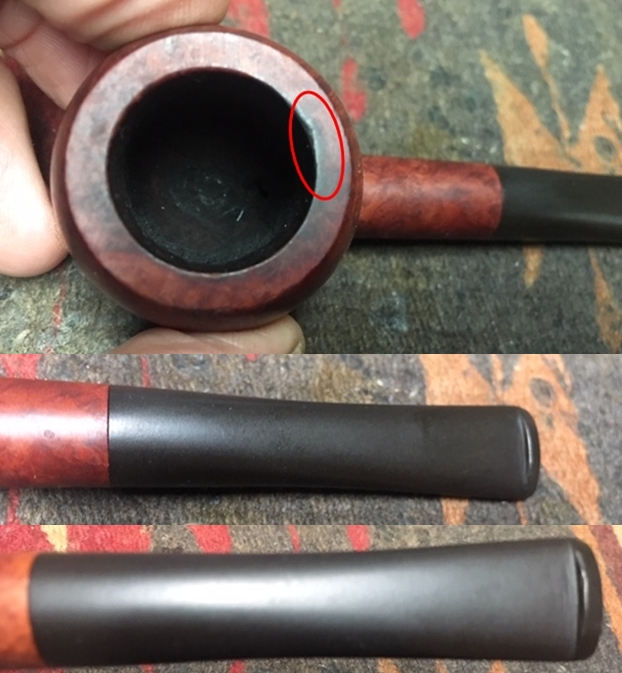
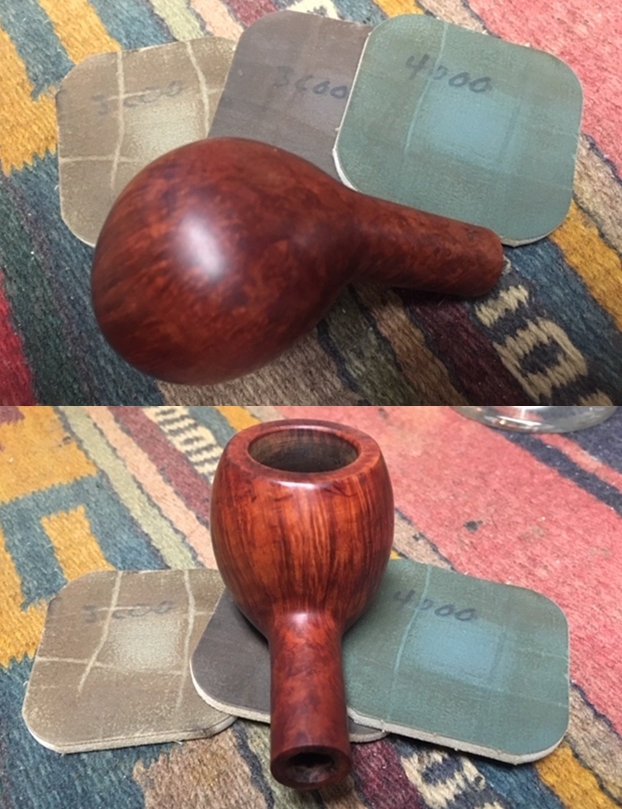
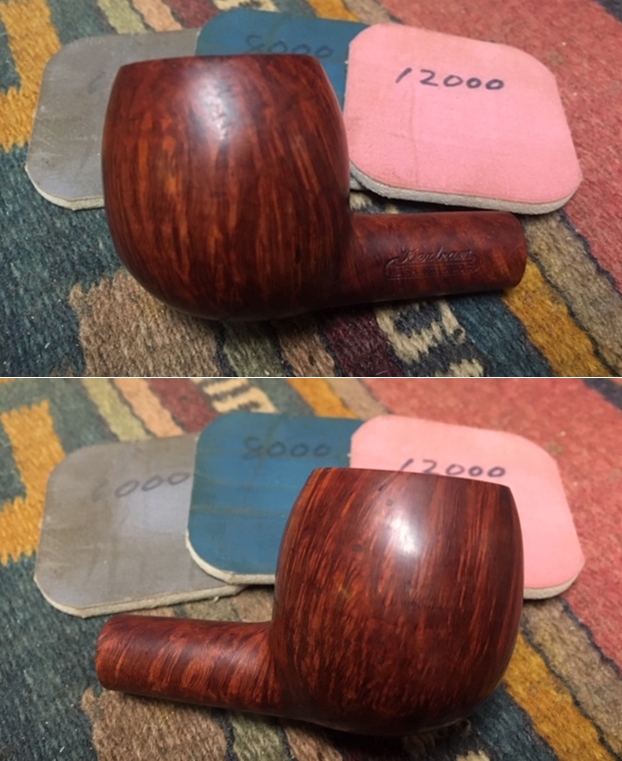
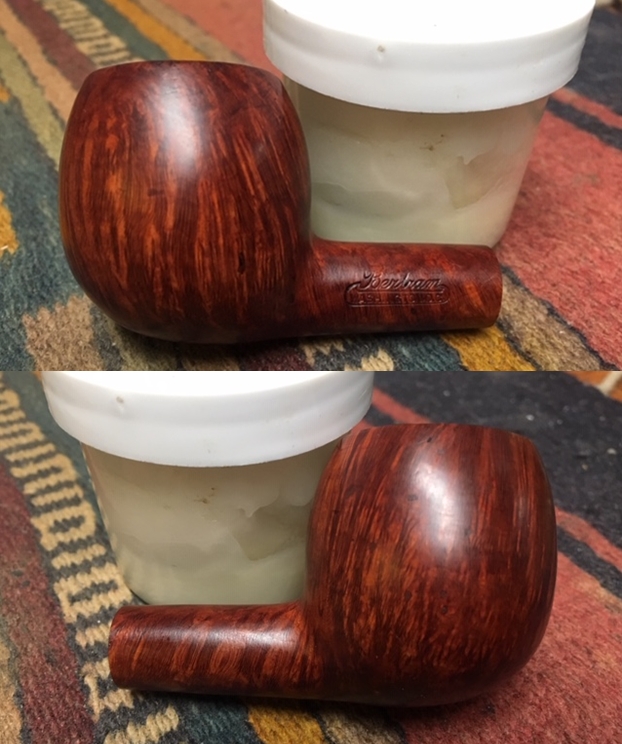
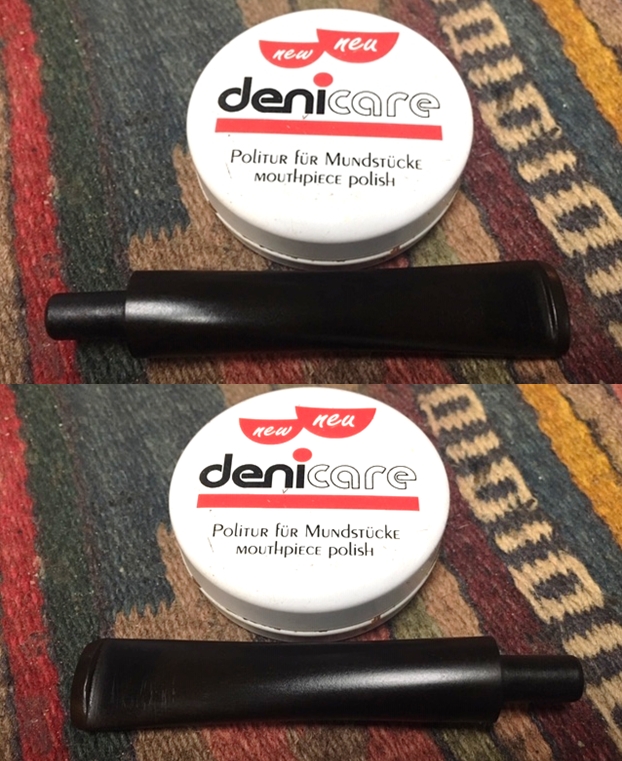
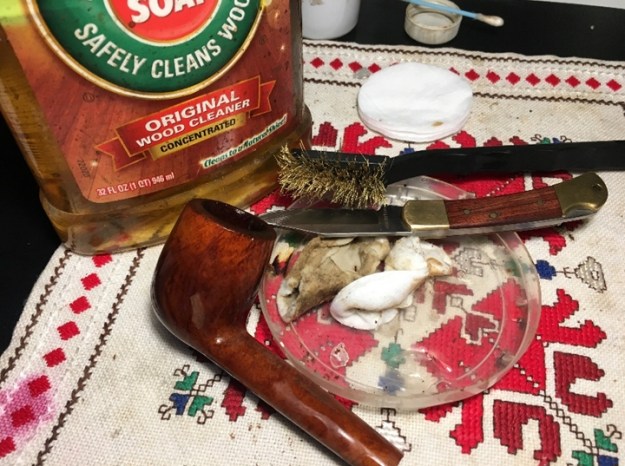
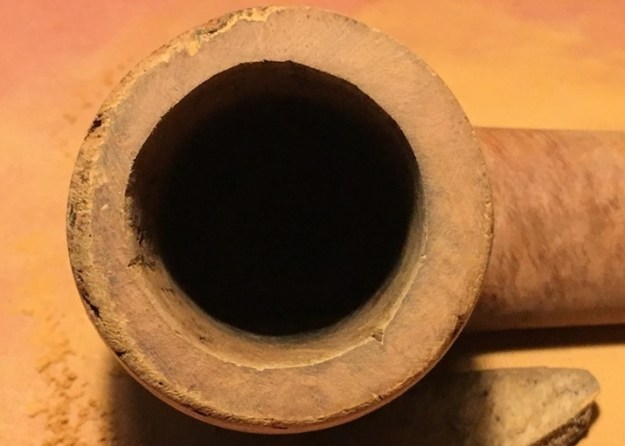
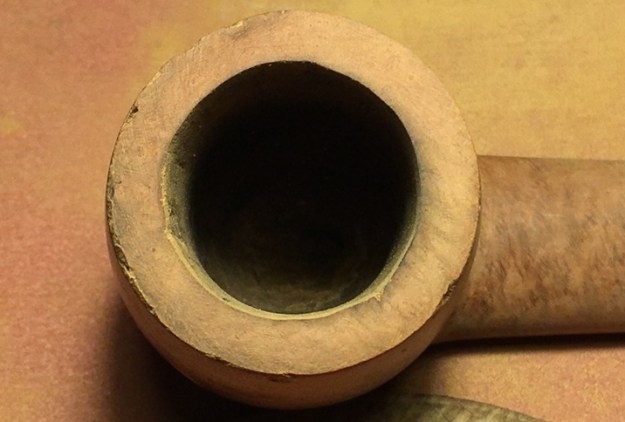
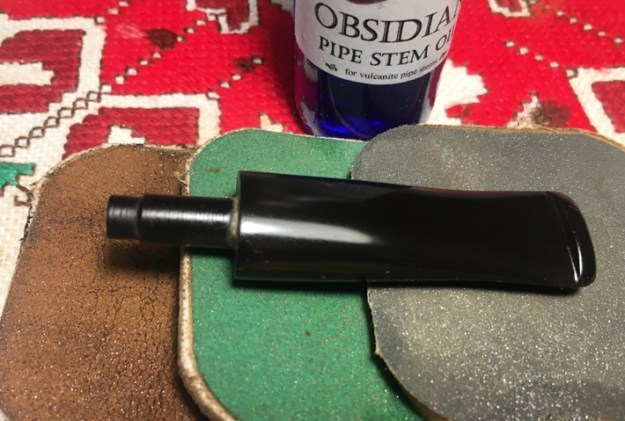
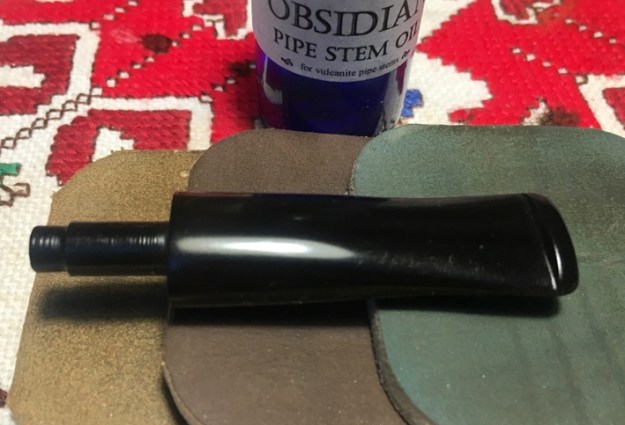
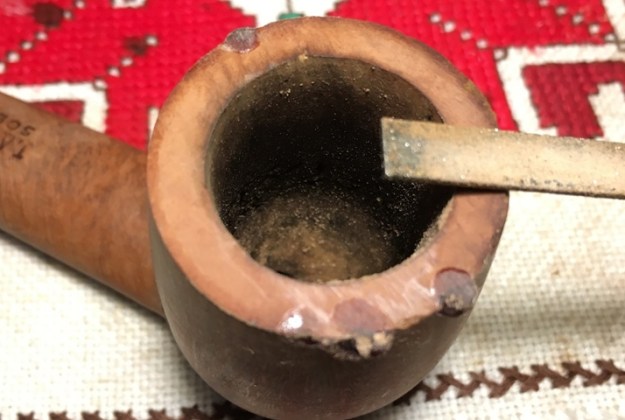
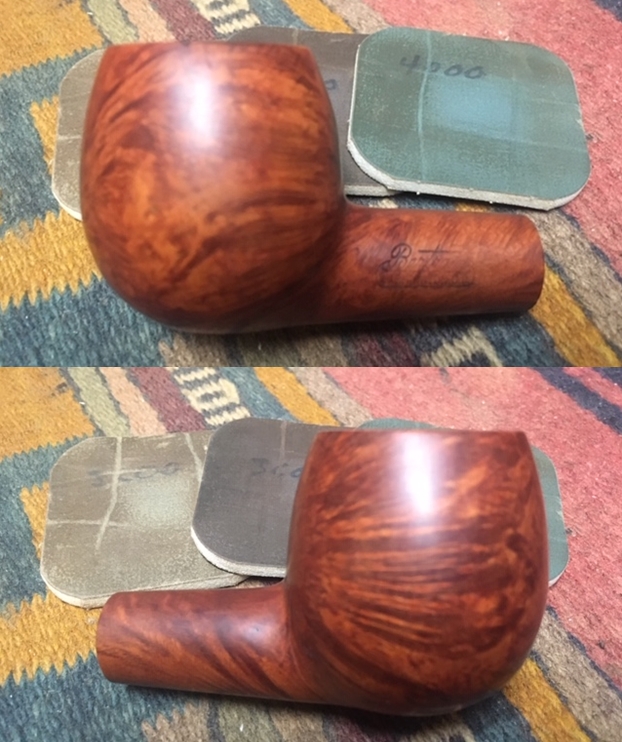
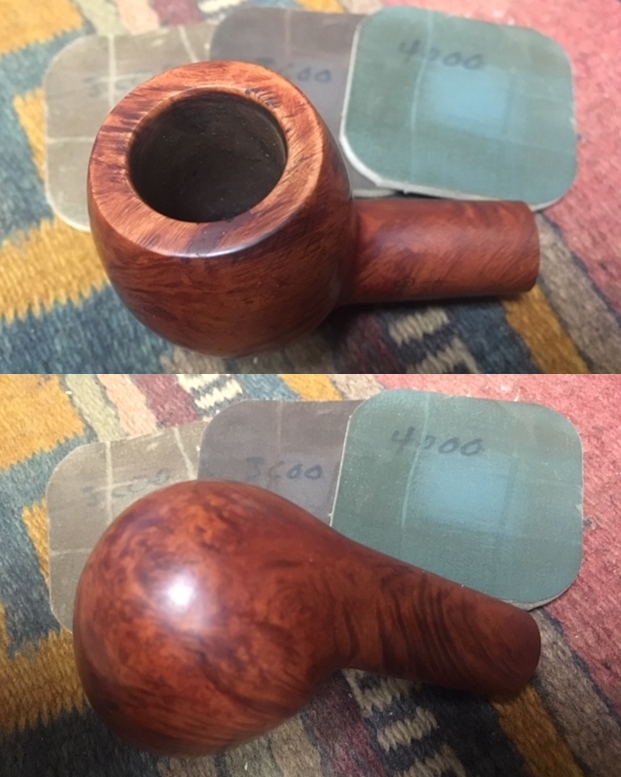
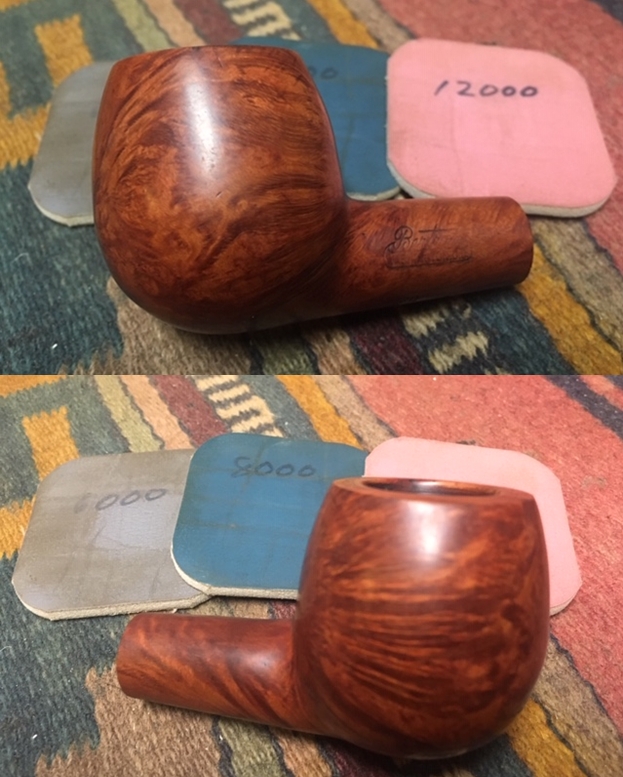
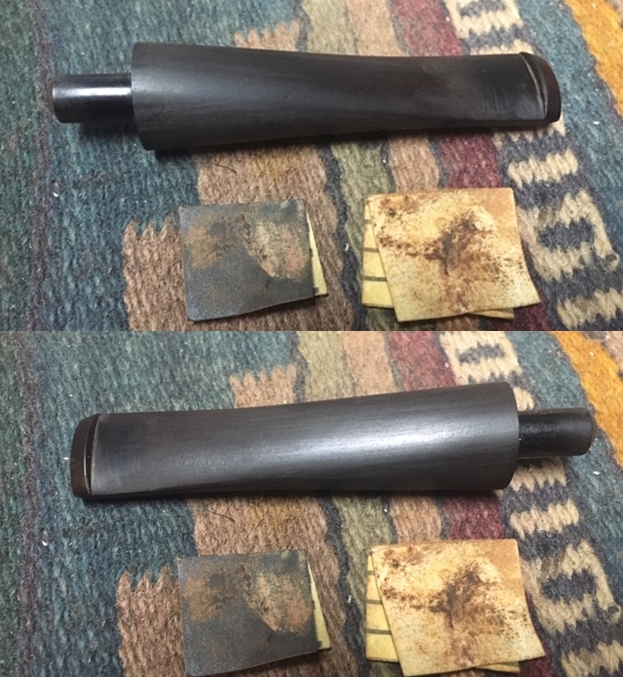
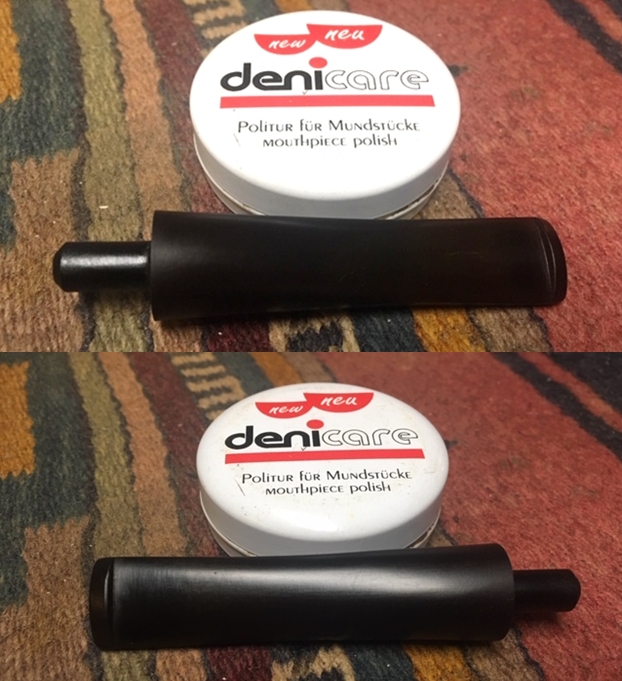
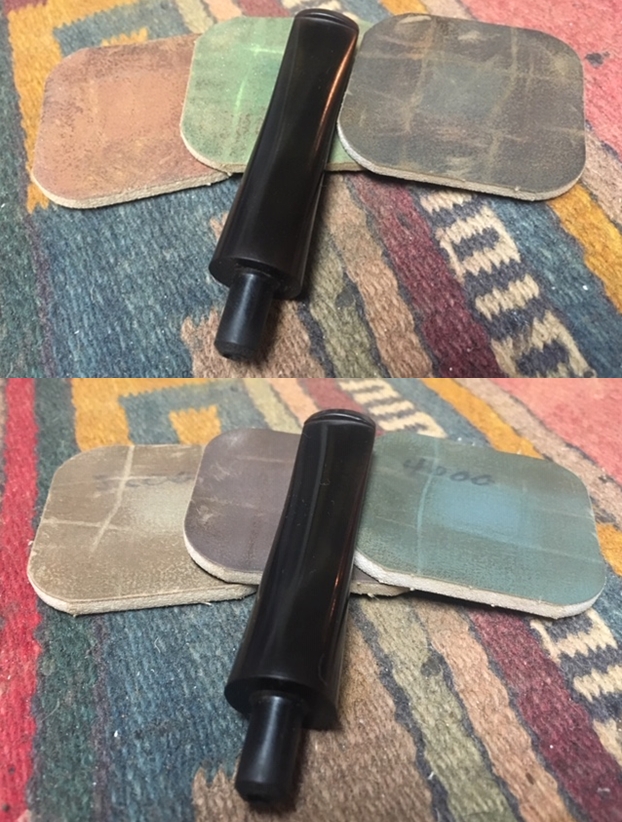
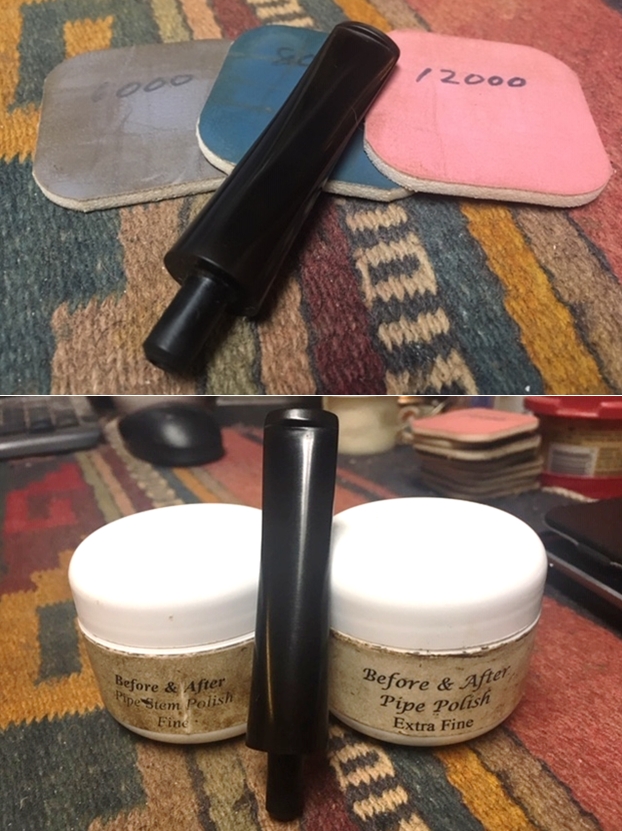
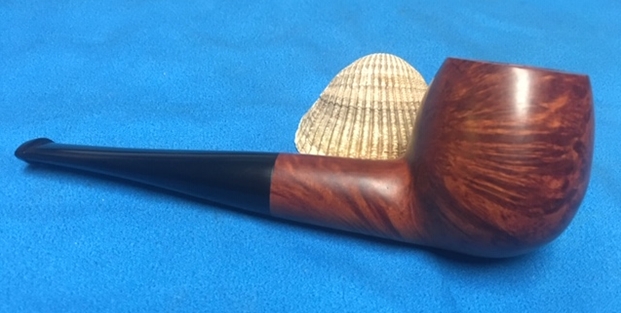
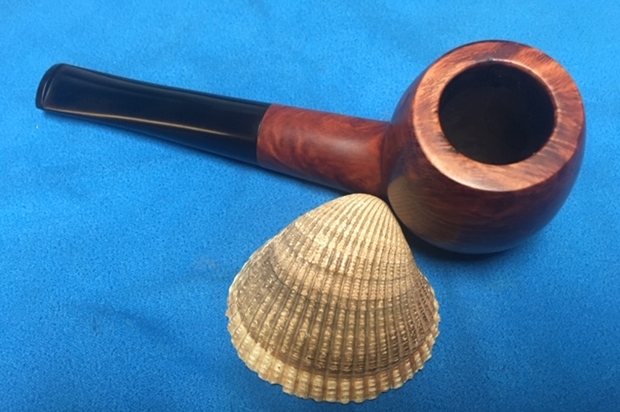
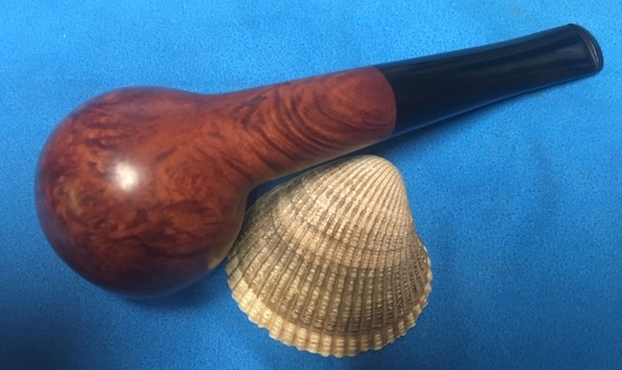
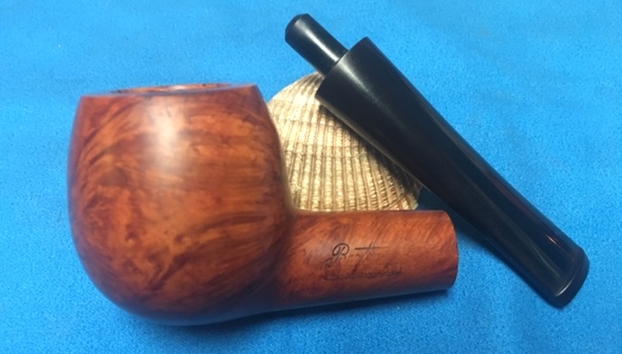
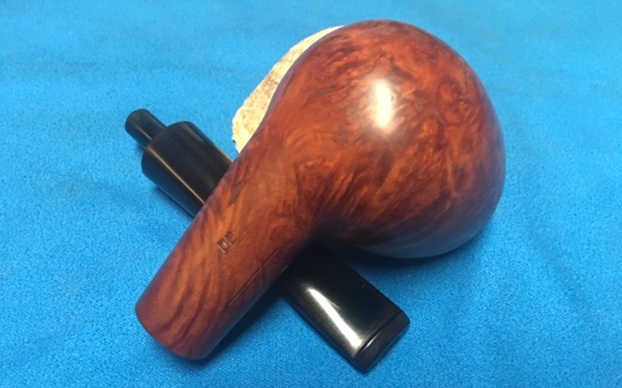
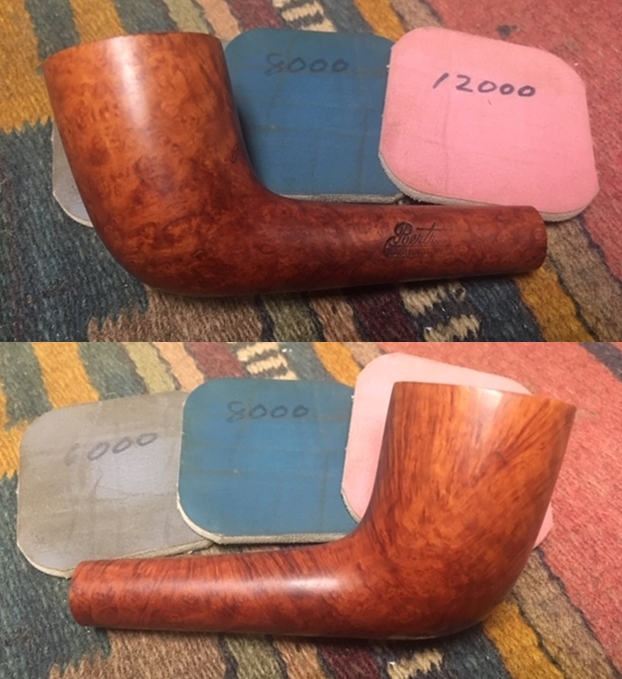
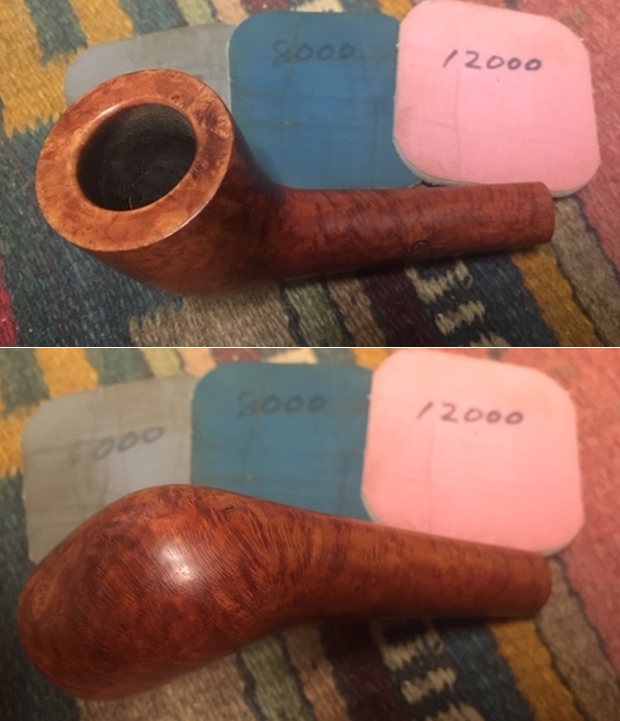
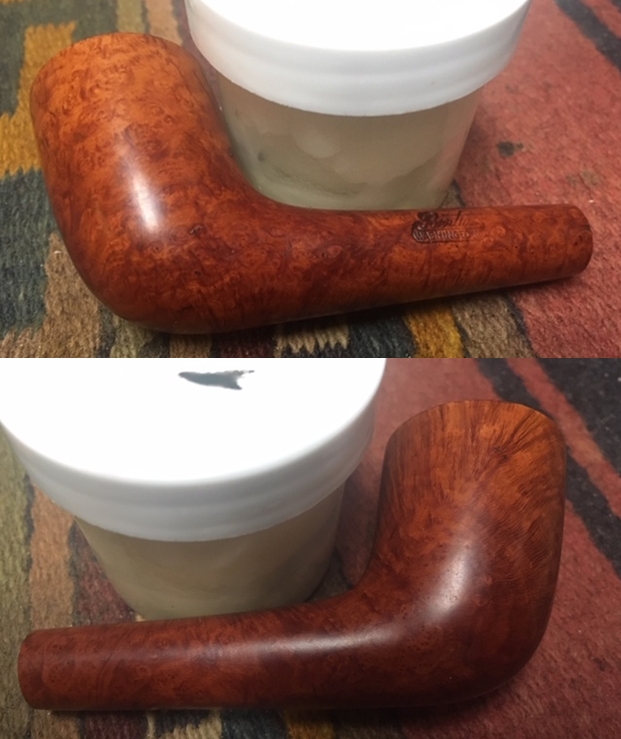
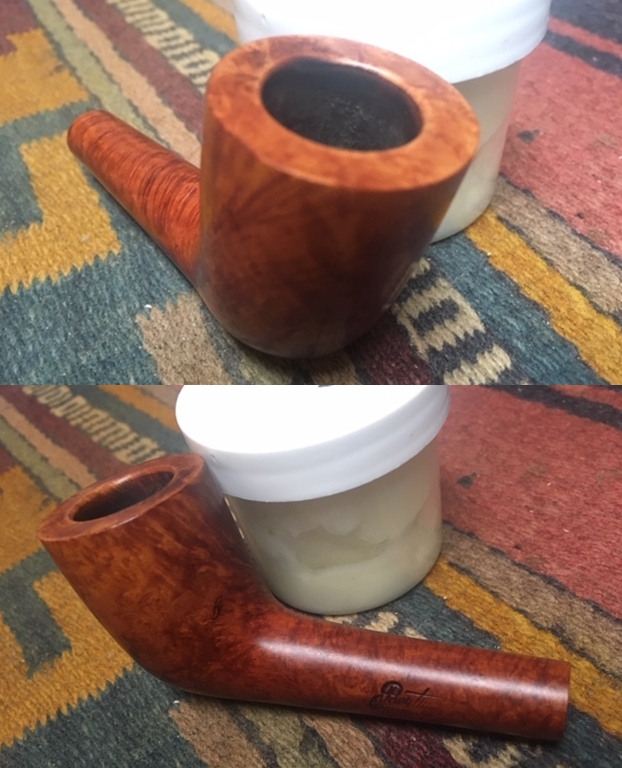
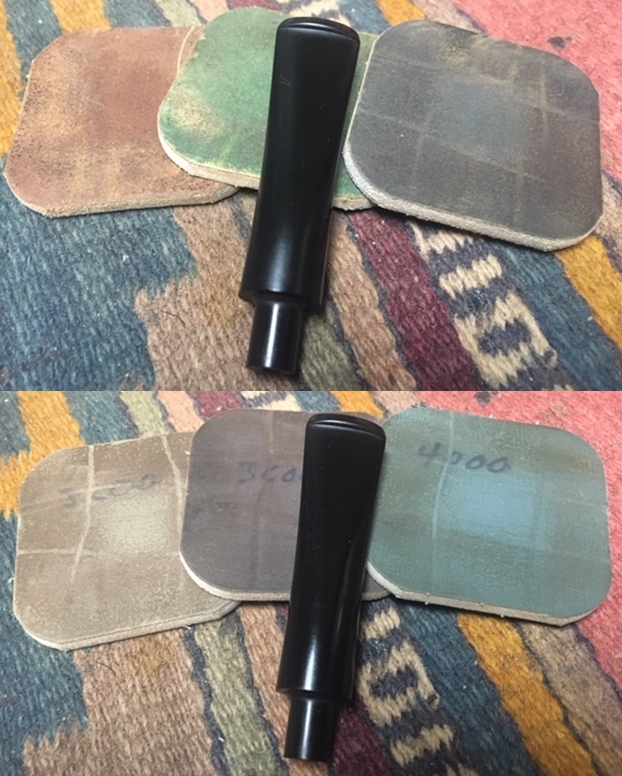
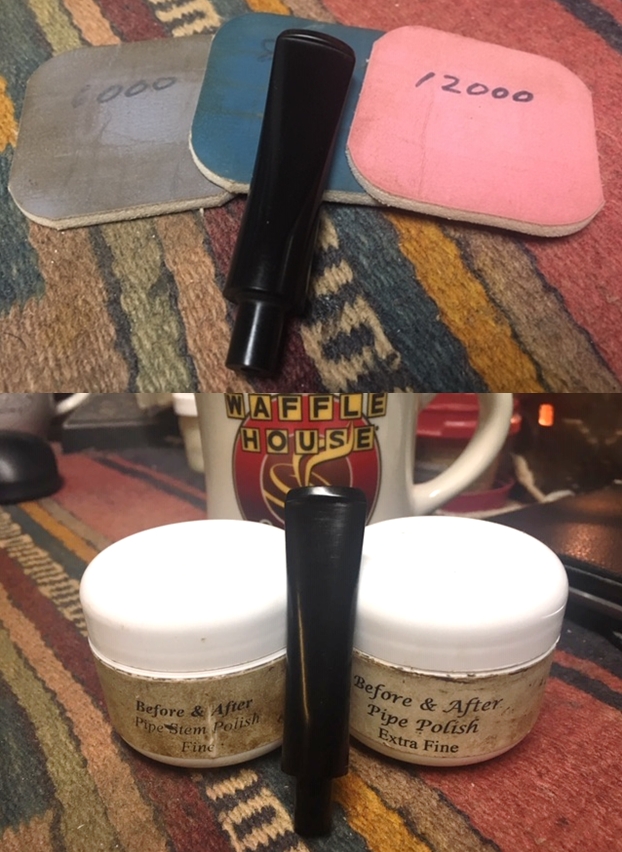
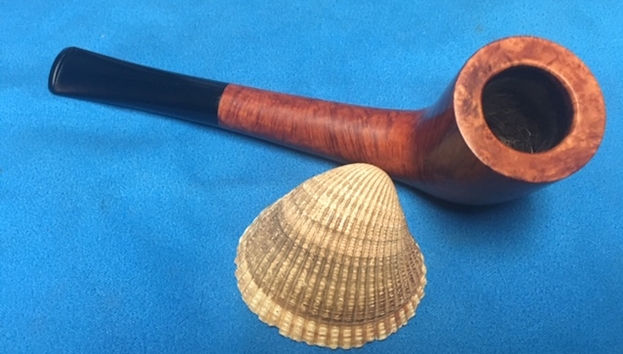
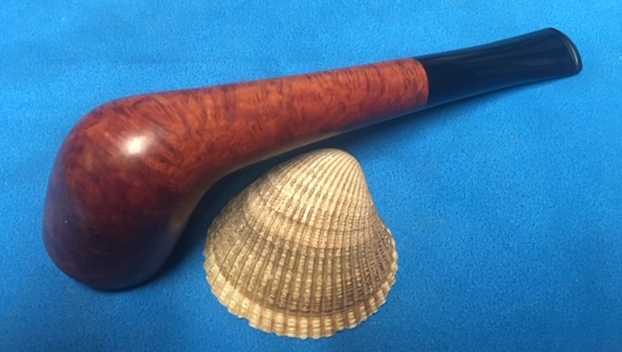
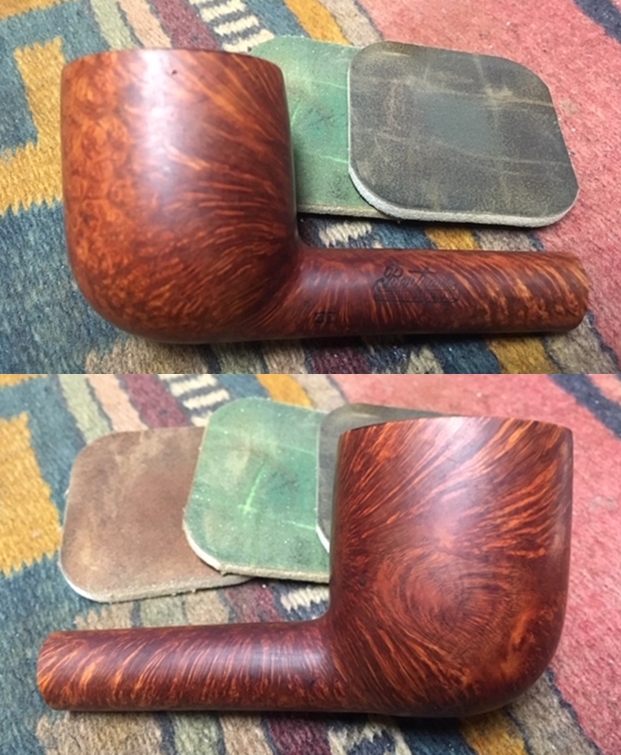
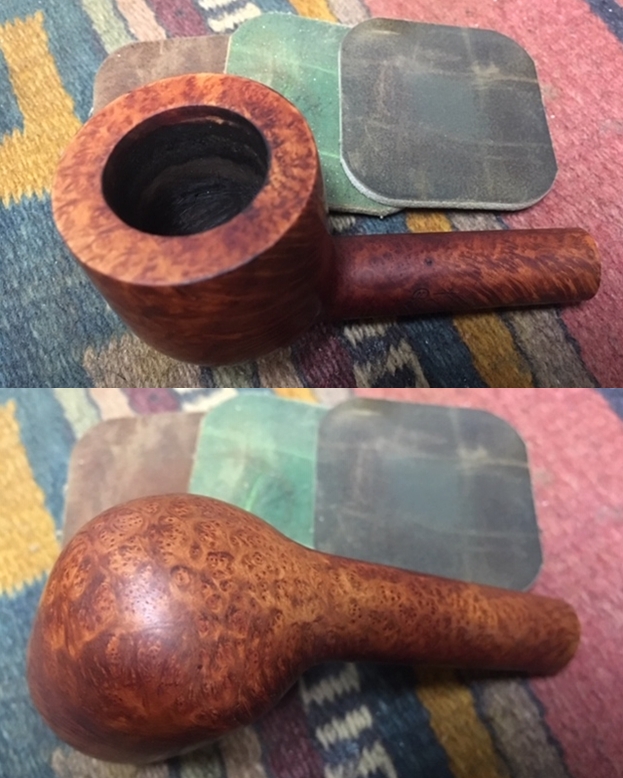
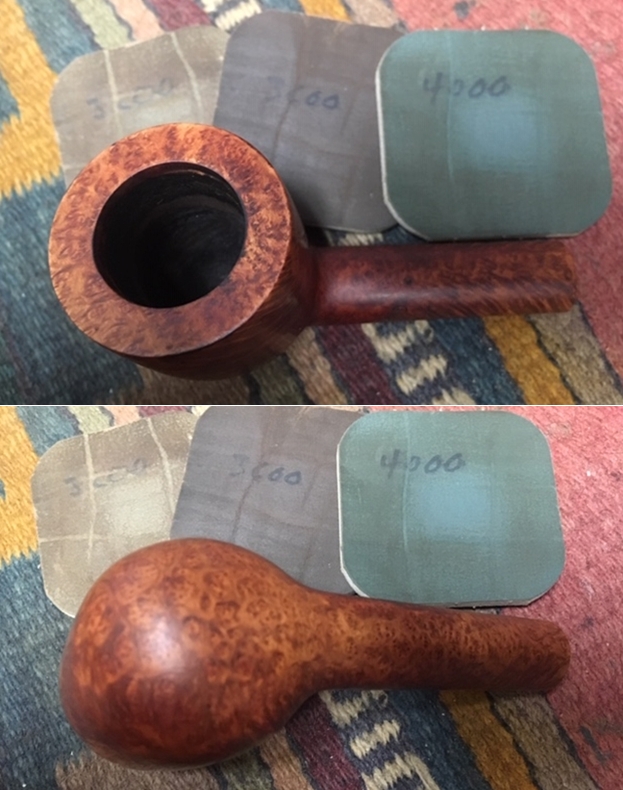
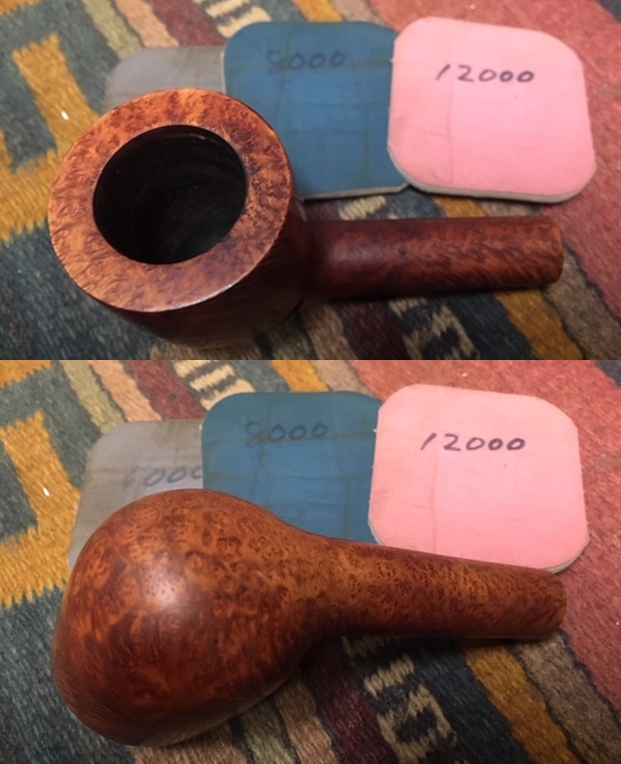
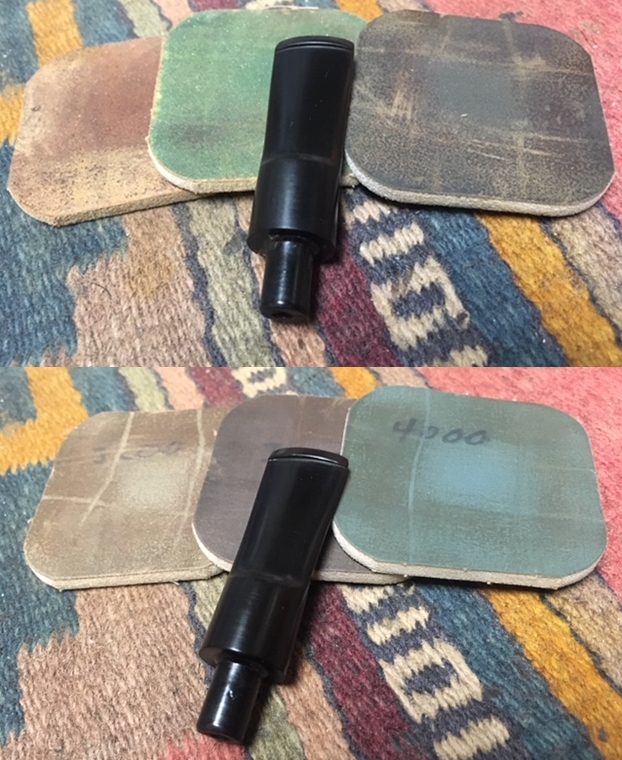
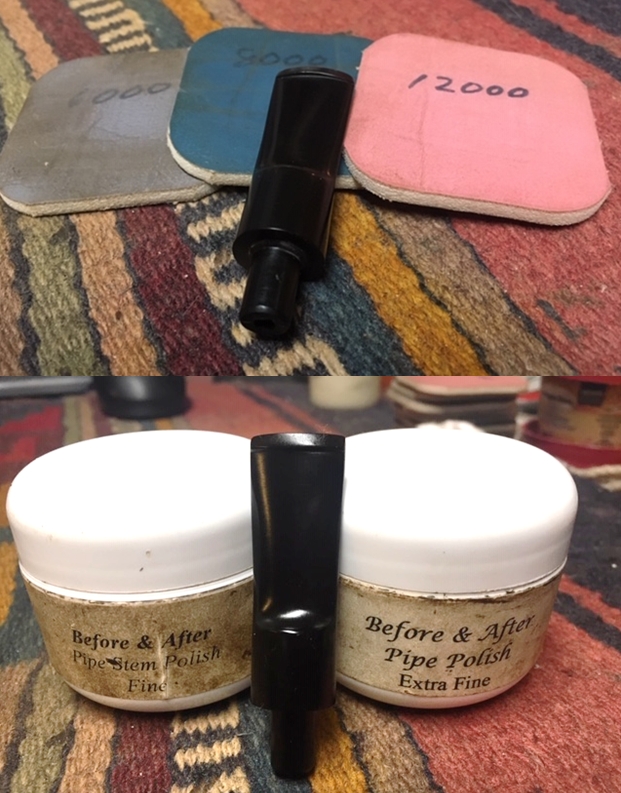
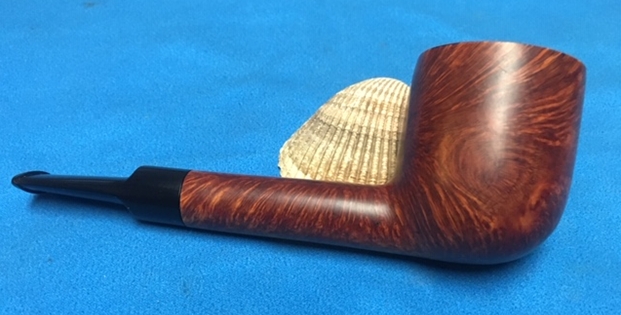
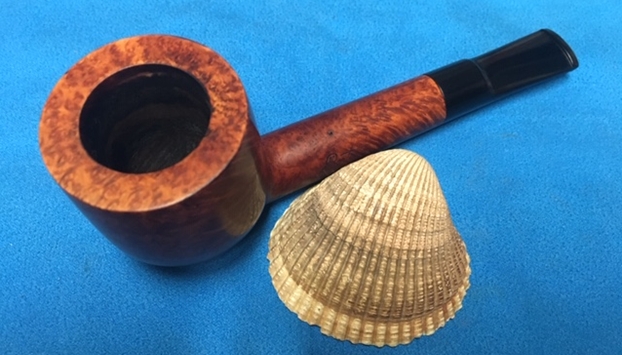
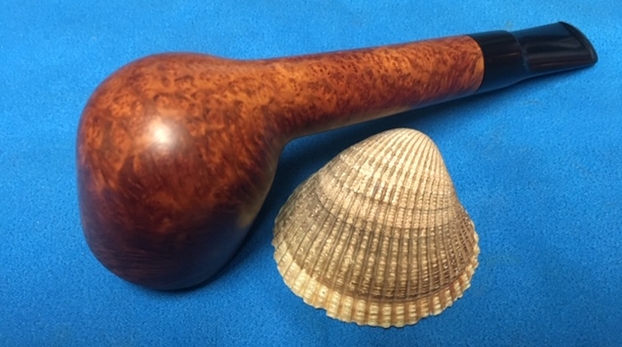
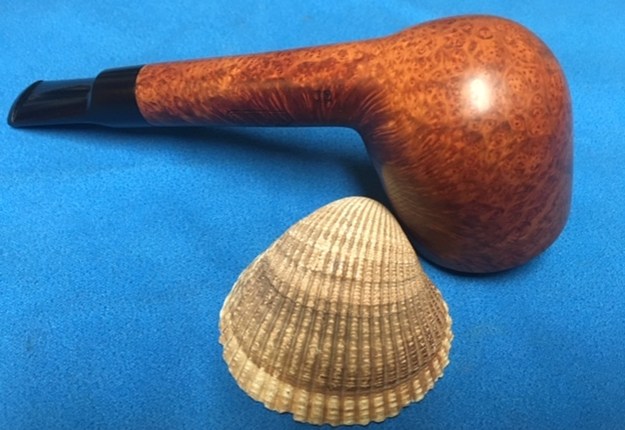
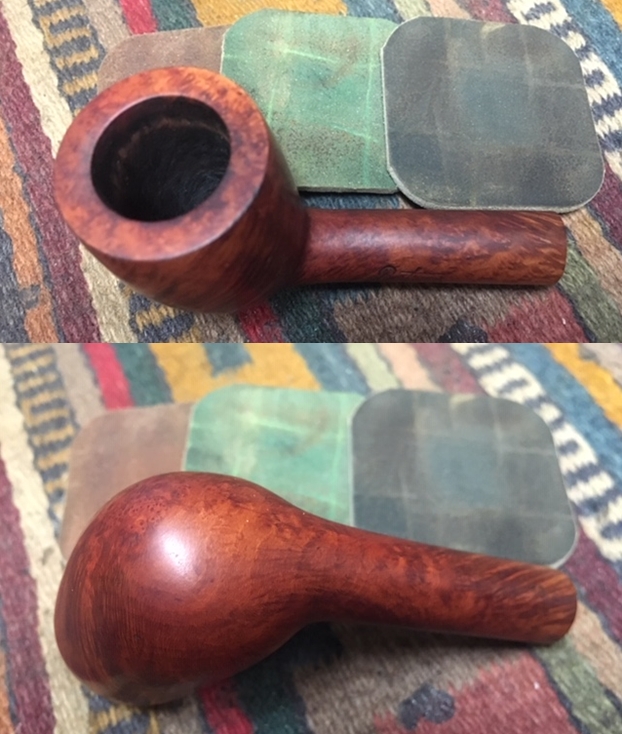
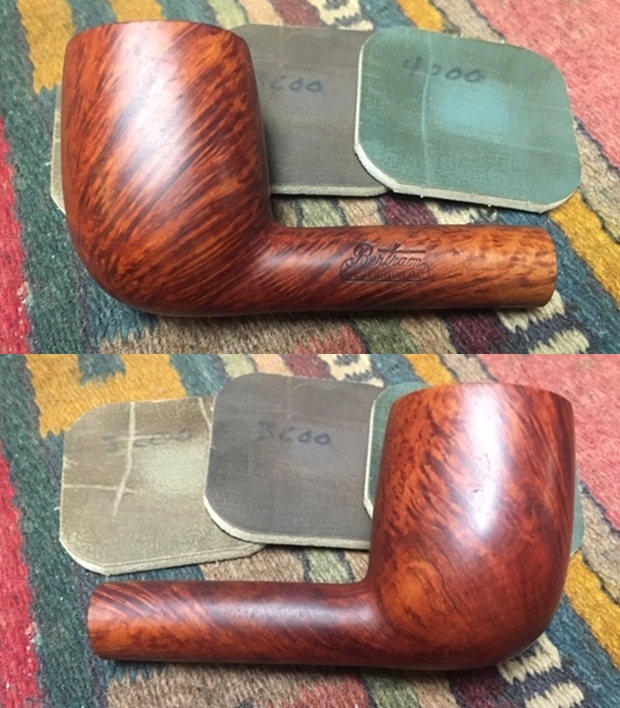
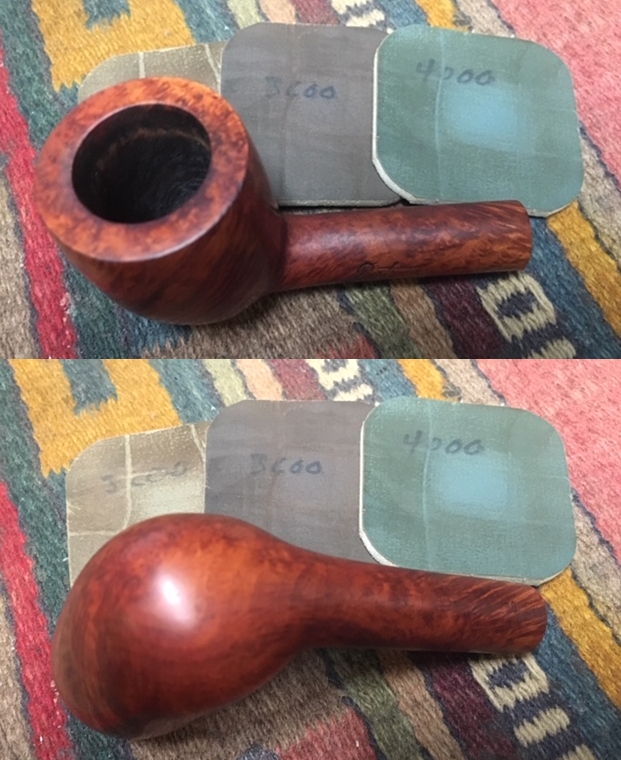
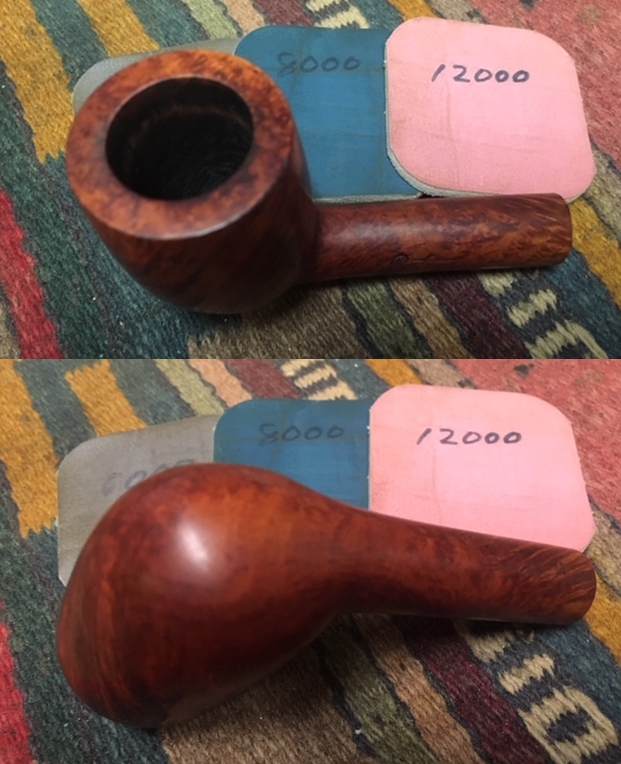
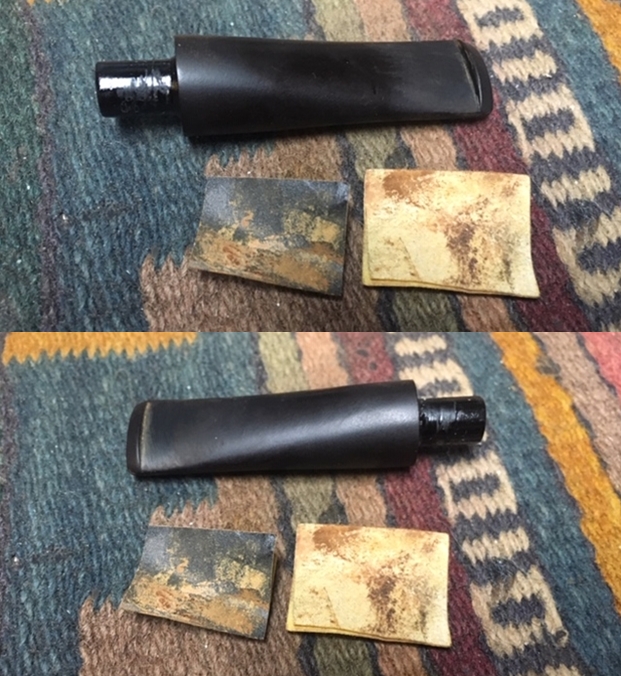
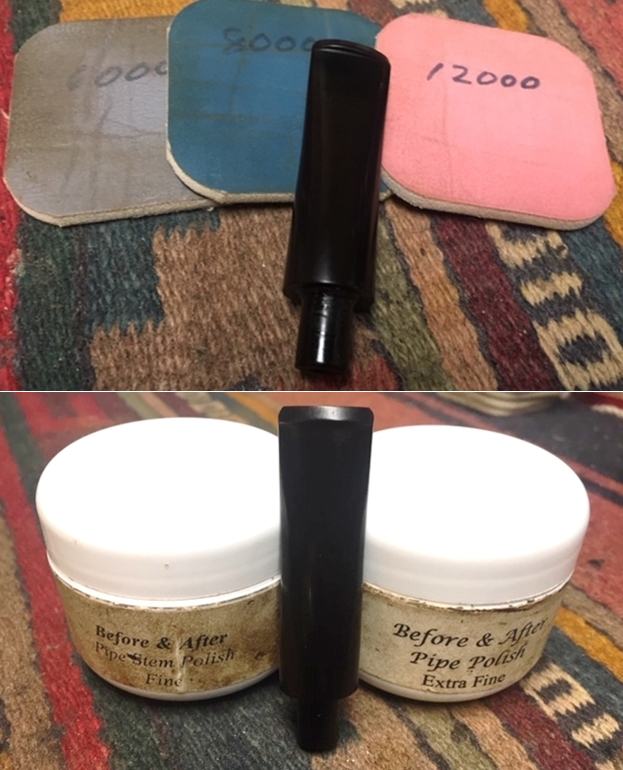
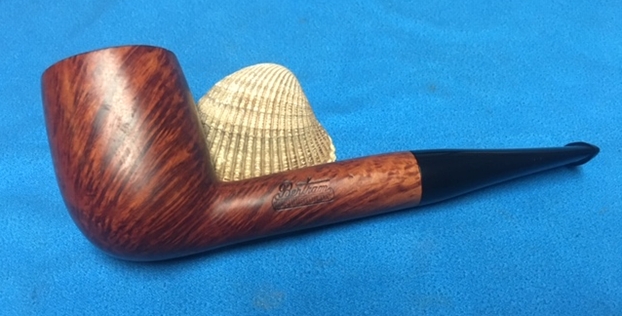
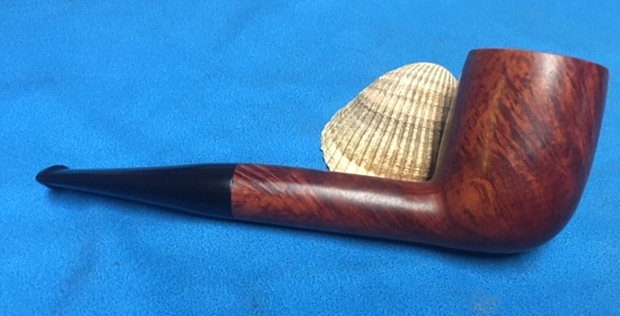
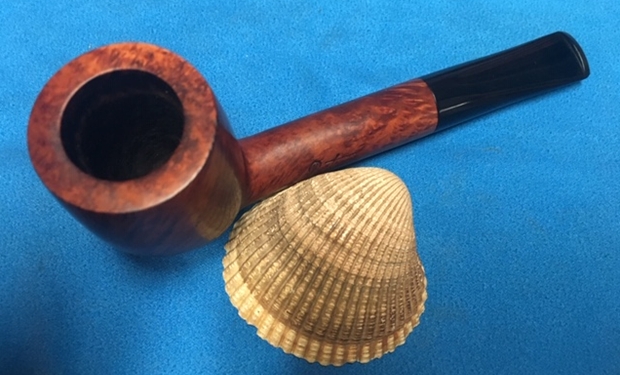
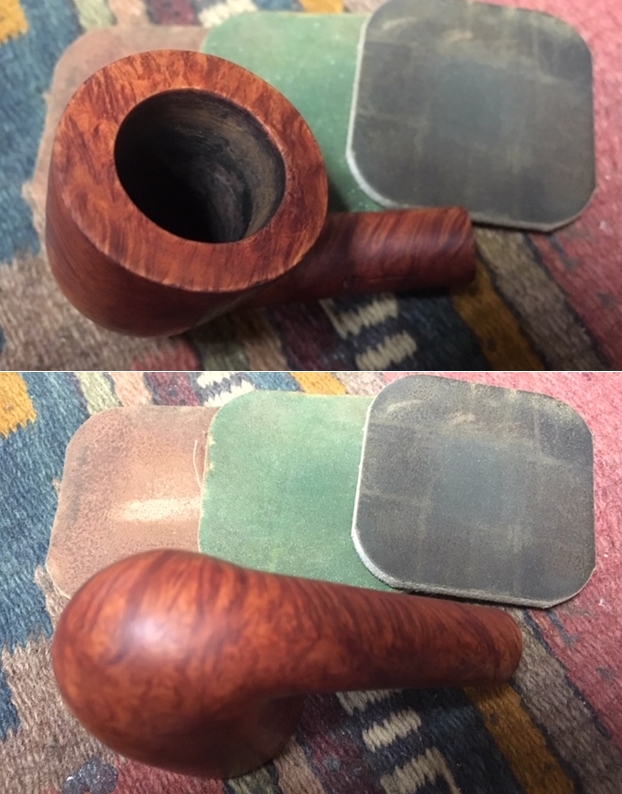
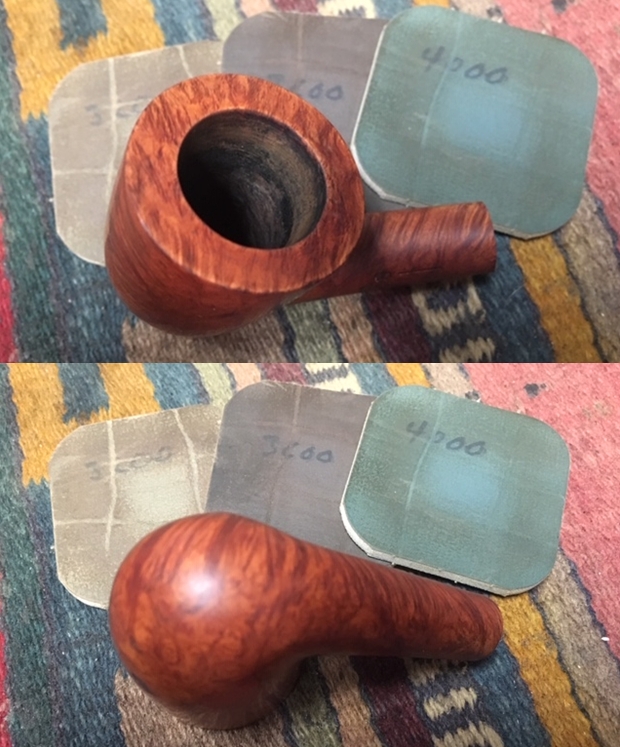
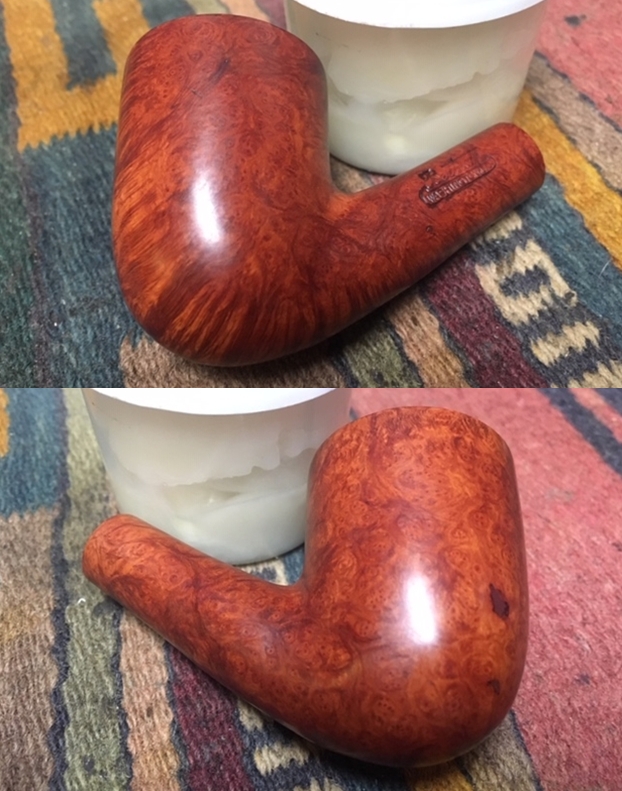
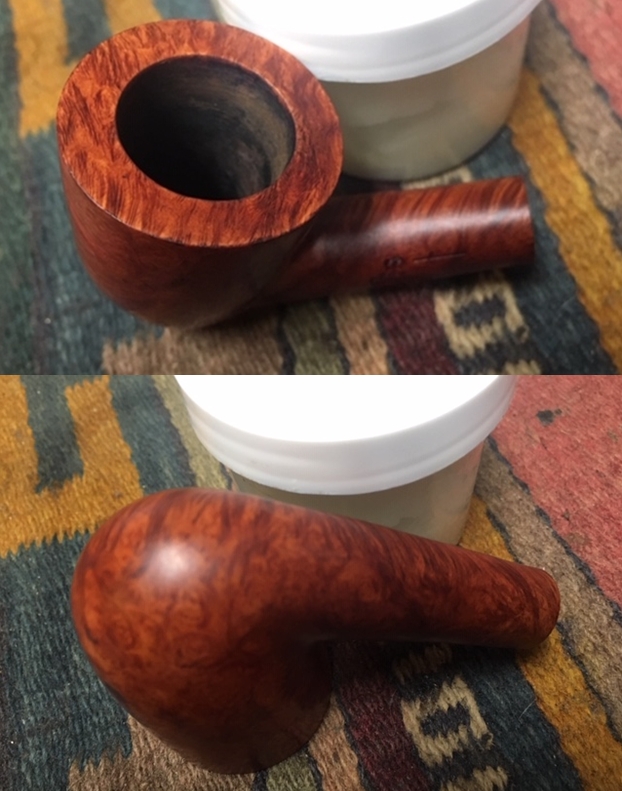
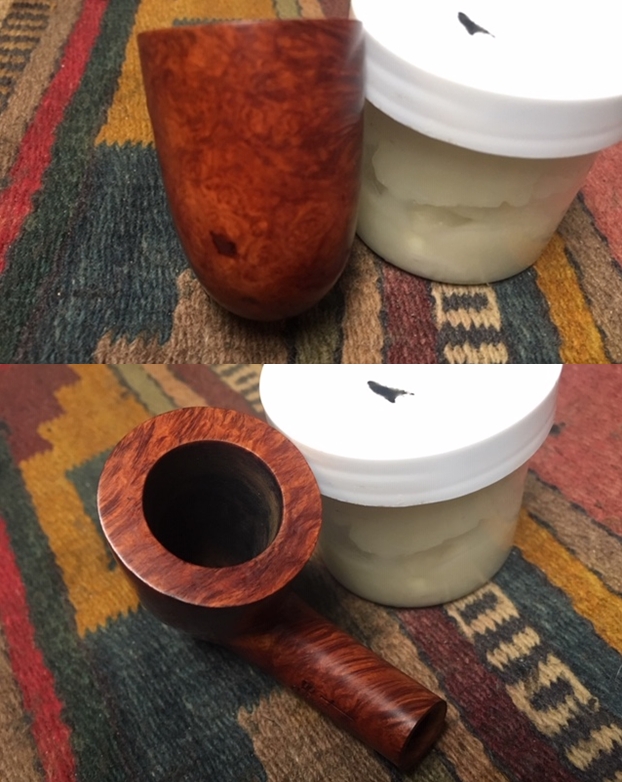
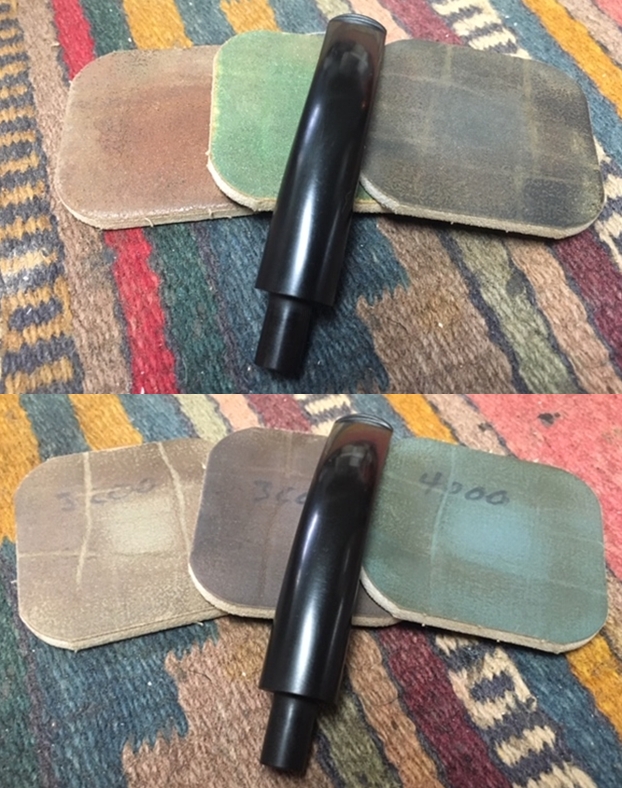
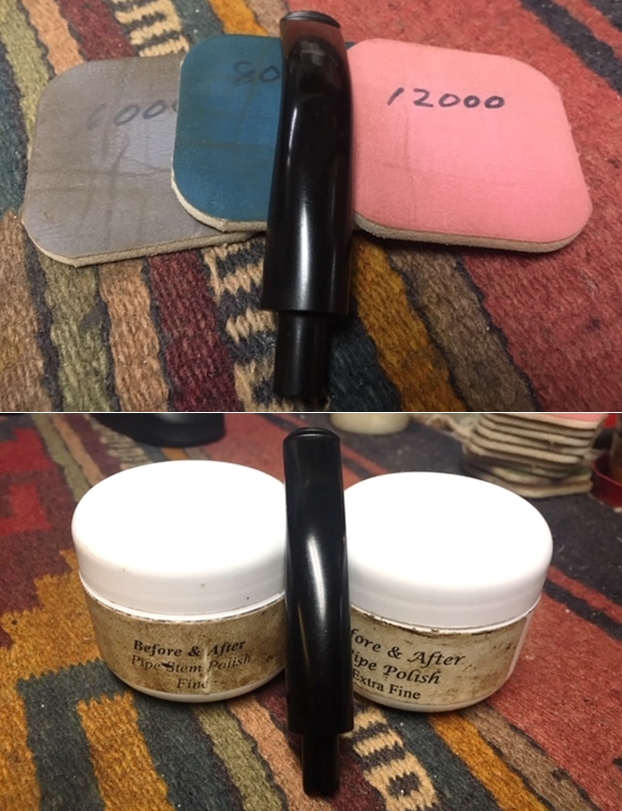
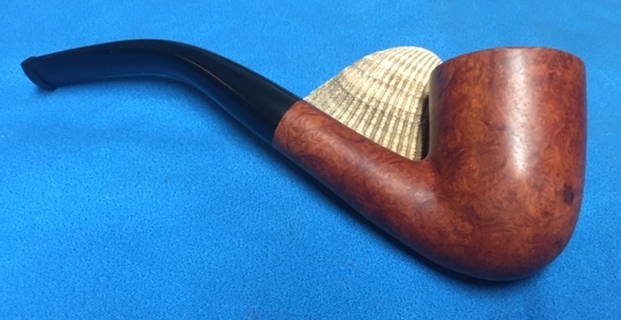
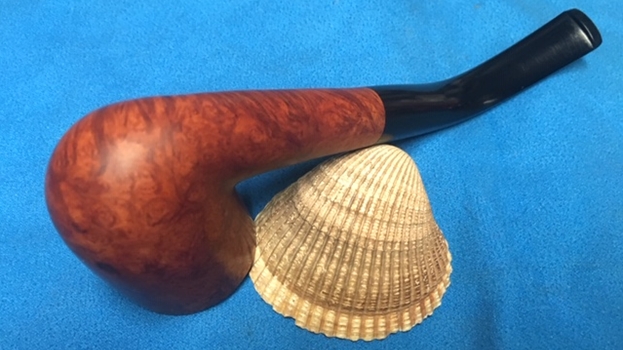
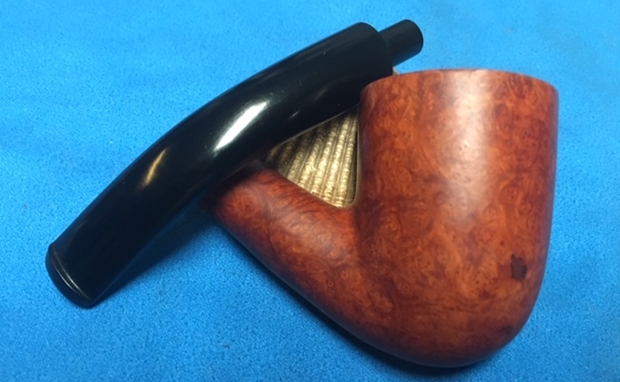
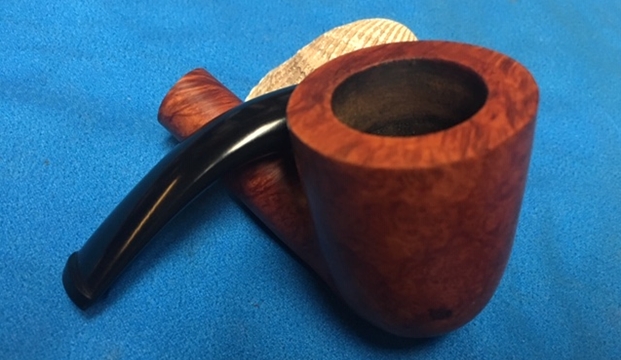
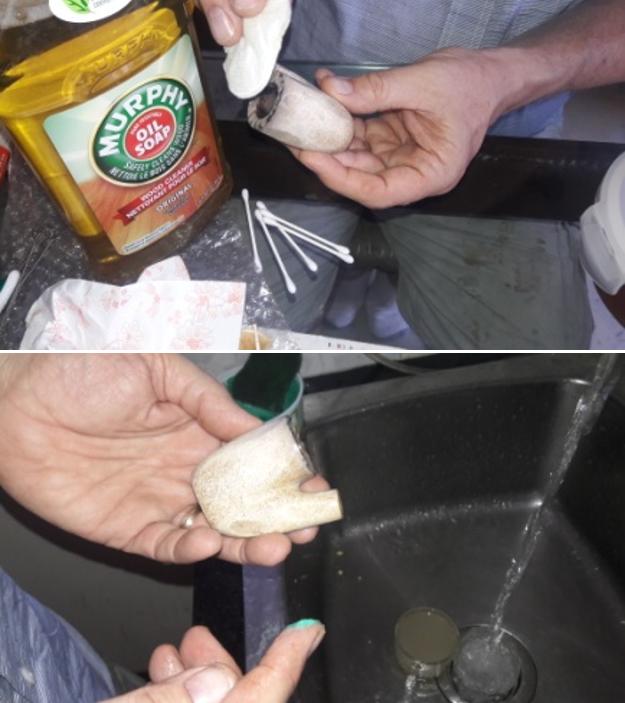
Since Jeff follows the same pattern of work in his cleanup we do not include photos but rather just a simple summary. Jeff reamed the bowl with a PipNet pipe reamer and followed up with a Savinelli Fitsall pipe knife to remove the cake. He scrubbed out the mortise and the airway in the shank and the stem with alcohol, cotton swabs and pipe cleaners. He scrubbed the exterior of the bowl, rim, shank and stem with a tooth brush and Murphy’s Oil Soap to remove the oils and tars on the rim and the grime on the finish of the bowl. He rinsed it under running water. He dried it off with a soft cloth. He was able to remove lava build up on the rim top and you could see the great condition of the bowl top and edges of the rim. There was some darkening on the rim top at the rear of the bowl but the edges were in good condition. He soaked the stem in Before & After Deoxidizer to remove the oxidation. I took photos of the pipe before I started my work. I took a close up photo of the rim top to show the condition of the bowl and rim after Jeff had cleaned up the grime and lava. The burn damage on the front and back inner edge of the bowl is visible in the first photo below. The rim top has some darkening but otherwise looks very good. The stem photos show that the oxidation is gone. The light tooth chatter is hard to see but like the other pipes in this lot that I have already restored; I should be able to sand it out quite easily.I also took a photo of the stamping on the right side of the shank showing how the stamping was laid out.I worked on the darkening on the rim top and back edge with a folded piece of 220 grit sandpaper to remove the damage and the darkening. I polished the rim top with 400 grit wet dry sandpaper to remove the scratches. The photo shows how the rim looked at this point.I polished the bowl and rim top with micromesh sanding pads – dry sanding it with 1500-12000 grit pads. I used the micromesh dry this time as I wanted to preserve the original patina on the bowl. I wiped the bowl down with a damp cloth after each pad to remove the sanding debris. After the final sanding pad I hand buffed it with a cotton cloth to raise a shine. I really have come to appreciate Mark Hoover’s Before & After Restoration Balm for its restorative properties with dry briar. I worked it into finish of the briar with my fingertips to clean, enliven and protect it as I usually do at this point in the process. I let the balm sit for a little while and then buffed with a cotton cloth to raise the shine. The Restoration Balm really makes the grain stands out beautifully. I set the finished bowl aside and turned my attention to the stem. I used a folded piece of 240 grit sandpaper to blend the tooth marks and chatter into the surface of the stem. Once the surface was smooth I sanded out the scratch marks and started polishing the stem with a folded piece of 400 grit sandpaper. I wiped the stem down with Obsidian Oil.I polished the stem with micromesh sanding pads – wetsanding it with 1500-12000 grit pads. I wiped the stem down with Obsidian Oil after each pad. I polished it with Before & After Pipe Polish – both Fine and Extra Fine and gave it a final coat and set it aside to dry. I put the stem and bowl back together and buffed the pipe with Blue Diamond on the buffing wheel. I polished the briar and the stem until there was a rich shine. This Algerian Briar Lovat has a classic shape and a rich oil finish that highlights the amazing grain on a proportionally well carved pipe. Once I buffed the pipe the grain just popped. The black vulcanite stem had a rich glow. The finished pipe is actually quite stunning in my opinion. It is a beautifully grained Lovat and like the other pipe in this Bertrams lot it fits well in the hand and sits right in the mouth. Have a look at it with the photos below. The dimensions are Length: 5 1/2 inches, Height: 2 inches, Outside diameter of the bowl: 1 1/4 inches, Chamber diameter: ¾ of an inch. I will be putting this pipe on the rebornpipes store soon. If you are interested let me know. Thanks for walking through the restoration with me as it was a pleasure to work on.

Restoring another from the Bertram Collection – an Algerian Briar Lumberman


Blog by Steve Laug

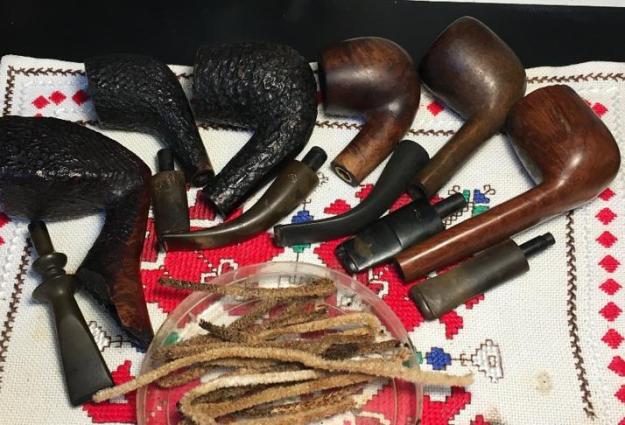
Rather than repeat myself and give the blog readers grief with the repetition please refer to the previous blog posts on the Bertrams to learn about how we got this collection. Just know that we have a collection of Bertrams and a smattering of other brands that when they were unwrapped filled three boxes. The photo below is included to show the size of the collection we had purchased. To be honest it was a bit overwhelming to see all of the collection in boxes. We were looking at a lot of work to bring these back to life.I am really glad that Jeff is working through the clean up on this lot as they are really quite dirty and there are so many! It would be a more daunting task than it already is if I had to clean and restore all of them. I am leaving it to him to choose which pipes to work on. He has chosen some interesting shaped ones to restore. I chose an interesting little Lumberman to be the next pipe that I would work on. This pipe was another dirty one! The smooth finish was grimy and dusty but some beautiful grain shone through showing a stunning pipe. It was a small Lumberman with stubby tapered stem. There was a thick cake in the bowl and heavy lava overflowing on to the rim top. It was hard to know the condition of the edges due to the cake and lava. The stem showed some light oxidation and some chatter on the top and some tooth marks on the underside. The photos below tell the story and give a glimpse of the pipe. Jeff took close-up photos of the bowl and rim to capture the condition of the pipe when it arrived. The rim top had a thick coat of lava and the bowl had a thick cake.Jeff took pictures of he bowl sides and the heel to show the marvelous grain on the bowl. It really is quite stunning and very dirty!Jeff took 2 photo2 to capture the stamping on the right side of the shank and the underside of the stem. The first photo shows stamping on the right side which read ALGERIAN BRIAR. The stamping on this pipe is clear and readable. The second photo shows stamping on the underside of the stem that reads FRANCE. Interestingly this is the same stamp that is on the A. Garfinkel pipe that I just finished.The next two photos show the stem surface. They show the light oxidation and the chatter on both sides near the button. The tooth marks are visible next to the button on both sides.Jeff and I have been working through the collection of Bertram pipes. Many of the other pipes in the lot are also from pipe shops in Washington, D.C. There are A. Garfinkel pipes, Ansell Pipes, National Pipes along with the Bertrams. Also included in the lot are pipes that have no other stamping than “ALGERIAN BRIAR”. While there is no way to be sure about the shop that these pipes came from I think it is safe to make a few conjectures. This pipe is stamped in a way very similar to the A.Garfinkel pipes that I am working on. Some of them have the stamp Algerian Briar along with the shop name. The lettering on the stamp is the same on both pipes. They also have the FRANCE stamp on the underside of the stem. I quote some of the information I included in the blog on the A. Garfinkel pipe below (https://rebornpipes.com/2019/05/28/new-life-for-an-a-garfinkel-washington-d-c-large-billiard/). In the fourth paragraph below I have highlighted in Dark Blue the pertinent section that links this Algerian Briar pipe to the A. Garfinkel shop.

Before I started my part of the restoration I did a bit of research to see what I could learn about the brand. I turned first to the Pipephil website and did not find any information on the brand. That surprised me a bit but such is the hunt for information. I turned next to the Pipedia website and was more successful. Here is the link to the article – https://pipedia.org/wiki/Garfinkel. I quote in full below.

Garfinkel Inc. was a celebrated Washington, D.C. importer and retailer of pipes, tobaccos and cigars. The founder was Arnold Garfinkel (1903-1988). Arnold was originally from Germany, and the family had already been in the tobacco trade for two generations before he was born; his father sold tobacco to Kaiser Wilhelm in Berlin. Fleeing Nazi Germany in 1938, Arnold soon settled in the District of Columbia; in 1940 he established his first tobacco shop there, although it closed a few years later during the Second World War.

It wasn’t until July of 1960 that Arnold established A. Garfinkel. Originally located at 720 14th Street, N.W., in April of 1980 the shop advertised its move to 1585 Eye Street, N.W. The new location of was a block from Lafayette Square and not much further from the White House. In 1972, author Hugh Sidey wrote in Newsweek that while interviewing then President Richard M. Nixon he spotted some pipes and a tin of Garfinkel tobacco on Nixon’s desk.

Among aficionados the shop remains well known to this day for the imported tobacco blends sold under its own name; these were manufactured by Robert McConnell and Sobranie. In addition custom blending was done for customers both domestic and foreign, with Arnold sometimes using recipes he had brought with him from Europe. A. Garfinkel carried pipes under its own name as well; these too were apparently manufactured elsewhere. Pipes were stamped A. Garfinkel, Wash D.C.; some are marked Algerian Briar and others simply Imported Briar. Many appear to be Made in France. Finally, A. Garfinkel was renowned for its selection of cigars.

In 1940 Arnold married Esther Kolker. One of their four children, Larry, was managing A. Garfinkel by May of 1980 and eventually took over sole responsibility for running the shop. Notwithstanding Arnold remained active at A. Garfinkel throughout his life, with son Larry noting that “He had a great personality and a great smile…and a very good head for business.”

A victim of declining demand reflecting both increased pressures on smokers and changing tastes, A. Garfinkel shut its doors in the summer of 1992.

Given that information the link is made to the A. Garfinkel pipe shop in DC. I think that there is also a tenuous tie to the Bertram shop in DC as well as all of the pipes in this lot are very similar in terms of finish and style. I suppose we will never really know for sure but I think it a pretty good surmise.

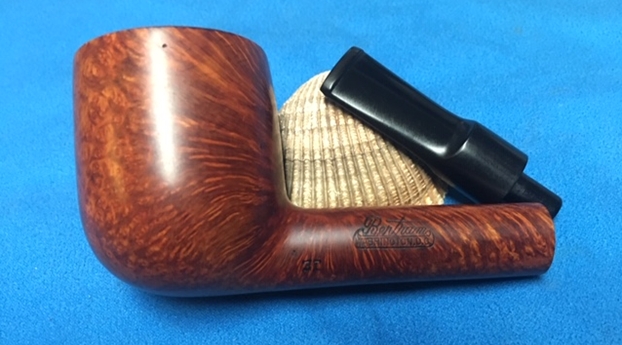
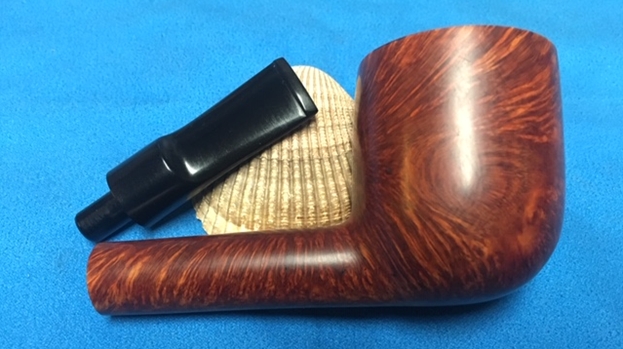
Jeff reamed the bowl with a PipNet pipe reamer and followed up with a Savinelli Fitsall pipe knife to remove the cake. He scrubbed out the mortise and the airway in the shank and the stem with alcohol, cotton swabs and pipe cleaners. He scrubbed the exterior of the bowl, rim, shank and stem with a tooth brush and Murphy’s Oil Soap to remove the oils and tars on the rim and the grime on the finish of the bowl. He rinsed it under running water. He dried it off with a soft cloth. He was able to remove lava build up on the rim top and you could see the great condition of the bowl top and edges of the rim. There was some damage to the inner edge at both the front and the back of the bowl. The rim top was in good condition. He soaked the stem in Before & After Deoxidizer to remove the oxidation. I took photos of the pipe before I started my work. I took a close up photo of the rim top to show the condition of the bowl and rim after Jeff had cleaned up the grime and lava. The burn damage on the front and back inner edge of the bowl is visible in the first photo below. The rim top has some darkening but otherwise looks very good. The stem photos show that the oxidation is gone. The light tooth chatter is hard to see but I should be able to sand it out quite easily.I also took a photo of the stamping on the right side of the shank showing how the stamping was laid out.I worked on the inner edge of the bowl, sanding out the burn damage and rough areas with a folded piece of 220 grit sandpaper to remove the damage and the darkening. I polished the edge with 400 grit wet dry sandpaper to remove the scratches. The photo shows how the rim looked at this point.I polished the bowl and rim top with micromesh sanding pads – wet sanding it with 1500-12000 grit pads. I wiped the bowl down with a damp cloth after each pad to remove the sanding debris. After the final sanding pad I hand buffed it with a cotton cloth to raise a shine. I worked some Before & After Restoration Balm into finish of the briar with my fingertips to clean, enliven and protect it as I usually do at this point in the process. I let the balm sit for a little while and then buffed with a cotton cloth to raise the shine. The Restoration Balm really makes the grain stands out beautifully. I used a folded piece of 240 grit sandpaper to blend the tooth marks and chatter into the surface of the stem. Once the surface was smooth I sanded out the scratch marks and started polishing the stem with a folded piece of 400 grit sandpaper. I wiped the stem down with Obsidian Oil.I polished the stem with micromesh sanding pads – wetsanding it with 1500-12000 grit pads. I wiped the stem down with Obsidian Oil after each pad. I polished it with Before & After Pipe Polish – both Fine and Extra Fine and gave it a final coat and set it aside to dry. I put the stem and bowl back together and buffed the pipe with Blue Diamond on the buffing wheel. I polished the briar and the minute scratches still in the vulcanite of the stem until there was a rich shine. This Algerian Briar Lumberman has a classic shape and a rich oil finish that highlights the amazing grain on a proportionally well carved pipe. Once I buffed the pipe the grain just popped. The black vulcanite stem had a rich glow. The finished pipe is actually quite stunning in my opinion. It is a beautifully grained Lumberman. Like the other pipe in this Bertrams lot that I have worked on this one fits well in the hand and sits right in the mouth. Have a look at it with the photos below. The dimensions are Length: 4 3/4 inches, Height: 2 inches, Outside diameter of the bowl: 1 1/4 inches, Chamber diameter: ¾ of an inch. I will be putting this pipe on the rebornpipes store soon. If you are interested let me know. Thanks for walking through the restoration with me as it was a pleasure to work on.

New Life for an A. Garfinkel Washington, D.C. Large Billiard


Blog by Steve Laug

Having worked on 9 of Alex’s pipes over the weekend I needed a bit of a change of pace pipe to work on. I wanted to deal with a brand that was relatively unknown to me and would let me do a bit of research to gain a better understanding. I went through my “to be restored” box to choose the next pipe and found exactly what I was looking for. The next pipe in the queue is a large, thick shanked billiard that has some marvelous grain. The pipe is stamped on the left side of the shank, A. GARFINKEL over Wash. D.C. The tapered vulcanite stem had no marking or stamping to help identify the pipe. This is the first A. Garfinkel pipe that I have worked on. It came to Jeff and me in a large lot of Bertram pipes that we purchased recently. There were over 200 pipes in the lot and all were of a similar age and condition.

This Garfinkel pipe was very similar in many ways to the Bertrams that Jeff and I have been working on from that collection.The bowl had a medium cake in the chamber that was no problem. The rim top had some darkening and a little bit of lava overflow on the back side. The inner and outer edge of the bowl appeared to be in good condition but we would know more once the bowl had been reamed and cleaned. The exterior of the briar looked lifeless and was dusty with the grime of years of storage. The stem had some light oxidation and tooth marks near the button on both sides. Jeff took some photos of the pipe before he began his clean up work on it. I have included them below and they tell the story and give a glimpse of the pipe before clean up. Jeff took a closeup photo of the bowl and rim to capture the condition of the pipe before his work on it. You can see the cake in the bowl and some of the lava on the rim top. He took photos of the sides and the heel of the bowl to show the grain and the overall condition of the pipe. He also took a photo of right side of the shank to show the stamping. The stamping is readable in the photo below and is as noted above – A. Garfinkel over Wash. D.C. The underside of the stem read France. I have seen many stems stamped France and in the past it does not necessarily mean that the pipe was made in France as much as that the stem was French made. The mystery remains and I suppose we will never know for sure.He took photos of what the stem looked like before the clean up and soak in the deoxidizer.Before I started my part of the restoration I did a bit of research to see what I could learn about the brand. I turned first to the Pipephil website and did not find any information on the brand. That surprised me a bit but such is the hunt for information. I turned next to the Pipedia website and was more successful. Here is the link to the article – https://pipedia.org/wiki/Garfinkel. I quote in full below.

Garfinkel Inc. was a celebrated Washington, D.C. importer and retailer of pipes, tobaccos and cigars. The founder was Arnold Garfinkel (1903-1988). Arnold was originally from Germany, and the family had already been in the tobacco trade for two generations before he was born; his father sold tobacco to Kaiser Wilhelm in Berlin. Fleeing Nazi Germany in 1938, Arnold soon settled in the District of Columbia; in 1940 he established his first tobacco shop there, although it closed a few years later during the Second World War.

It wasn’t until July of 1960 that Arnold established A. Garfinkel. Originally located at 720 14th Street, N.W., in April of 1980 the shop advertised its move to 1585 Eye Street, N.W. The new location of was a block from Lafayette Square and not much further from the White House. In 1972, author Hugh Sidey wrote in Newsweek that while interviewing then President Richard M. Nixon he spotted some pipes and a tin of Garfinkel tobacco on Nixon’s desk.

Among aficionados the shop remains well known to this day for the imported tobacco blends sold under its own name; these were manufactured by Robert McConnell and Sobranie. In addition custom blending was done for customers both domestic and foreign, with Arnold sometimes using recipes he had brought with him from Europe. A. Garfinkel carried pipes under its own name as well; these too were apparently manufactured elsewhere. Pipes were stamped A. Garfinkel, Wash D.C.; some are marked Algerian Briar and others simply Imported Briar. Many appear to be Made in France. Finally, A. Garfinkel was renowned for its selection of cigars.

In 1940 Arnold married Esther Kolker. One of their three children, Larry, was managing A. Garfinkel by May of 1980 and eventually took over sole responsibility for running the shop. Notwithstanding Arnold remained active at A. Garfinkel throughout his life, with son Larry noting that “He had a great personality and a great smile…and a very good head for business.”

A victim of declining demand reflecting both increased pressures on smokers and changing tastes, A. Garfinkel shut its doors in the summer of 1992.

I knew for certain that Garfinkel’s Pipe Shop did not make its own pipes. It is noted above that “many appear to have been Made in France. However, I have reason to believe that this pipe was made for them by Bertrams. The style of the stamping, the wording of the stamping, the shape of the pipe and the layout of the grain to the shape all signal a connection to Bertrams. I can find nothing definitive about that connection but it certainly seems likely. Perhaps some of you who are reading this blog can help with the connection. Is there one or not?

Jeff reamed the bowl with a PipNet pipe reamer and followed up with a Savinelli Fitsall pipe knife to remove the cake. He scrubbed out the mortise and the airway in the shank and the stem with alcohol, cotton swabs and pipe cleaners. He scrubbed the exterior of the bowl, rim, shank and stem with a tooth brush and Murphy’s Oil Soap to remove the oils and tars on the rim and the grime on the finish of the bowl. He rinsed it under running water. He dried it off with a soft cloth. He was able to remove lava build up on the rim top and you could see the great condition of the bowl top and edges of the rim. He soaked the stem in Before & After Deoxidizer to remove the oxidation. I took photos of the pipe before I started my work on it. I took a close up photo of the rim top to show the condition of the bowl and rim after Jeff had cleaned up the grime and lava and the rim top looked flawless. The bowl was clean and there was not any cake left in the bowl. Both the inner edge and the outer edge of the rim look good. The stem photos show that the oxidation is gone. The light tooth chatter is hard to see but I should be able to sand it out quite easily. Since Jeff had done all the cleanup work on this pipe my job was much simpler. I just needed to give the pipe the finishing touches. I polished the rim and the outside of the bowl with micromesh sanding pads – wet sanding with 1500-12000 grit micromesh sanding pads and wiped the bowl and shank down after each pad with a damp cloth. The photos show how the grain really stands out after polishing. I am pretty happy with the results. I worked some Before & After Restoration Balm into finish of the briar with my fingertips to clean, enliven and protect it. I let the balm sit for a little while and then buffed with a cotton cloth to raise the shine. The Restoration Balm really makes the grain stands out beautifully. With the bowl finished I set it aside and turned my attention to the stem. I used a folded piece of 220 grit sandpaper to blend the tooth marks and chatter into the surface of the stem. Once the surface was smooth I sanded out the scratch marks and started the polishing of the stem with a folded piece of 400 grit sandpaper. I wiped the stem down with Obsidian Oil. I polished the stem with micromesh sanding pads – wet sanding it with 1500-12000 grit pads. I wiped the stem down with a damp cloth after each pad. I further polished it with Before & After Pipe Polish – both Fine and Extra Fine. I wiped it down with a coat of Obsidian Oil and set it aside to dry. I put the stem and bowl back together and buffed the pipe with Blue Diamond on the buffing wheel. I polished the briar and the minute scratches still in the vulcanite of the stem until there was a rich shine. This A. Garfinkel has a classic Large/thick shank Billiard shape and the natural finish really highlights some amazing grain on a proportionally well carved pipe. Once I buffed the pipe the briar came alive and the mixture of grain – straight, flame and birdseye – popped with polishing. The black vulcanite stem had a rich glow. The finished pipe is a beautiful grained Billiard. Like the other pipes in this lot that I have worked on this one fits well in the hand and sits right in the mouth. Have a look at it with the photos below. The dimensions are Length: 6 inches, Height: 2 inches, Outside diameter of the bowl: 1 3/8 inches, Chamber diameter: ¾ of an inch. This beautiful A. Garfinkel Billiard will soon be going on the rebornpipes store. If you are interested let me know. Thanks for walking through the restoration with me as it was a pleasure to work on.

Restoring the Last of Alex’s Current “Malagas” – A Twisted Ras Kassa Dublin


Blog by Steve Laug

The next pipe in the queue is the last Malaga pipe from Alex’s batch.This is a “Malaga” Ras Kassa –a twisted carved Dublin. It has some amazing grain around the bowl that is carved to highlight the grain around the bowl and give the briar some playful carved twists. The pipe is stamped on the left side of the shank, “MALAGA” over RAS KASSA. The tapered vulcanite stem has notches and twists like the bowl. There is no marking or stamping on the stem. This is a second RAS KASSA from Alex and it is as nice as the previous one. I have included the link so you can check it out (https://rebornpipes.com/2019/05/23/rebirthing-a-malaga-ras-kassa-canadian/). The bowl had a medium cake in the chamber that was no problem. The rim top was really in rough condition. There was major burn damage on the rim top and the inner edge. The entire inner edge had been compromised. The outer edge had some darkening and burn damage as well particularly at the back of the bowl. The exterior of the briar was dusty with grime and dust. The stem had heavy, deep oxidation and deep tooth marks in the surface of the stem on both sides. The photos below tell the story and give a glimpse of the pipe before clean up. I took a photo of the bowl and rim to capture the condition of the pipe before I started my cleanup work. You can see the extent of the damage to the inner edge of the rim and the rim top. The burn marks were quite deep and extensive. You can see the cake in the bowl and some of the lava on the rim top. The stem had deep oxidation on the surface of the vulcanite. There were deep tooth marks on the underside of the  stem.I also took a photo of top side of the shank from two angles to show the stamping. The stamping is readable in the photos below and is as noted above – “MALAGA” over RAS KASSA. It is stamped on the underside of the shank with the lower case “m”.For those of you who are unfamiliar with the brand, I am also including the link to a blog that I wrote that gives some of the history of the Malaga brand and the Malaga Pipe Shop in Royal Oak, Michigan in the USA. Here is the link – https://rebornpipes.com/tag/malaga-pipes/. That blog also includes links to a catalogue and the history of the pipemaker George Khoubesser. If you are interested to learn more then I invite you to follow the link to get a feel for the brand and the pipemaker.

I am also am including a link to some printed material on the Malaga brand that came to me from the daughter of George Koch to help identify the particular stamping on the pipe. The link takes you to the entire collection of materials that were sent to me. I have included a screen capture of one particular page that helps identify the RAS KASSA stamping on the pipe (https://rebornpipes.com/2019/02/27/malaga-pipes-catalogue-of-pipes-and-tobaccos/).I have enclosed the section on the brand in a red box in the picture above. To summarize, it basically says that the stamping is applied to pipes with special rare grain patterns in the briar. These appear to be straight grain, birdseye, swirled grains etc. that are tight patterns. They are rare – 1 or 2 in every hundred pipes. This pipe is one of those. You can read the description in the detailed explanation below.

I decided to address the damage to the rim top and edges first. I topped the bowl on a topping board using 220 grit sandpaper to remove the damaged portions of the rim surface. The second photo clearly shows the extent of the damage. I continued to top the bowl until the rim damage was removed and the inner and outer edges were clean. Once the damage was removed from the top of the bowl I used a folded piece of 220 grit sandpaper to clean up the inside edge of the bowl.I scrubbed the exterior of the bowl with Murphy’s Oil Soap and a cotton pad to remove the grime and build up on the surface of the briar. I rinsed the bowl down with warm water to remove the grime and soap. I dried the bowl off with a soft cotton cloth to dry it off. I reamed the bowl with a PipNet reamer with the second and third cutting head to take the cake back to bare briar. I cleaned it up with a Savinelli Fitsall Pipe Knife to get rid of the remnants of the cake. I finished by sanding the bowl with a dowel wrapped with 220 grit sandpaper until the inside of the bowl was smooth. With the bowl reamed, I cleaned up the inside of the shank and mortise with a pen knife to remove the tar build up. I ran cotton swabs, pipe cleaners and alcohol through the shank to remove the tars and oils. I also cleaned out the airway in the stem using pipe cleaners and alcohol. I polished the rim and the outside of the bowl with micromesh sanding pads – wet sanding with 1500-12000 grit micromesh sanding pads and wiped the bowl and shank down after each pad with a damp cloth. The photos show how the grain really stands out after polishing. I am pretty happy with the results. I worked Before & After Restoration Balm into the surface of the briar with my fingertips to clean, enliven and protect it. I worked it into the craving on the sides of the bowl to make sure I covered all of the grooves, nooks and crannies. I let the balm sit for a little while and then buffed with a cotton cloth to raise the shine. With the bowl finished I set it aside and turned my attention to the stem. I sanded out the tooth chatter, marks and oxidation to clean up the look of the stem. I was able to remove the majority of the damage to the stem by sanding. The photos below show the stem after sanding. There was one tooth mark on the underside of the stem that I filled with clear super glue. I set the stem aside to cure. I sanded the repairs on the stem surface with 220 grit sandpaper to blend the repairs into the surface of the stem. I am happy with the stem surface once that was done. I started the polishing of the surface with 400 grit wet dry sandpaper.  I polished the stem with micromesh sanding pads – wet sanding it with 1500-12000 grit pads. I wiped the stem down with a damp cloth after each pad. I further polished it with Before & After Pipe Polish – both Fine and Extra Fine. I wiped it down with a coat of Obsidian Oil and set it aside to dry. I put the pipe back together and polished both the bowl and the stem with Blue Diamond polish on the buffing wheel. I gave the bowl and the stem multiple coats of carnauba wax. I buffed the pipe with a clean buffing pad to raise the shine. I hand buffed it with a microfiber cloth to deepen the shine. The pipe polished up pretty nicely. The oil cured finish and the grain came alive with the buffing. The grain really stands out against the oil cured finish providing a rich contrast. The finish on the briar works well with the polished black vulcanite stem. The finished pipe is a well-proportioned, nicely grained Dublin. Have a look at it with the photos below. The dimensions are Length: 5 3/4 inches, Height: 2 inches, Outside diameter of the bowl: 1 3/8 inches, Chamber diameter: 3/4 of an inch. This Malaga Ras Kassa Dublin will be going back to Alex to add to his rack of Malaga pipes that are in his collection. Thanks for walking through the restoration with me on another of Alex’s Malaga collection.
 

New Life for a “Malaga” Saddle Stem Scoop


Blog by Steve Laug

The next pipe in the queue is yet another pipe from the batch of pipes I am cleaning up for Alex – this one is another “Malaga” –a shape they call a scoop. It has some amazing grain around the bowl and has some carved feather/leaf patterns around the bowl. The shank is oval and gives the bowl an almost Stanwell look. Malaga’s take on the shape is carved to highlight the grain around the bowl. The pipe is stamped on the top side of the shank. It reads “MALAGA”. The oval saddle stem is vulcanite and has no marking or stamping. It is a nice looking piece like many of the pipes Alex is picking up. The bowl had a light cake in the chamber and the rim top has some lava on the inner edge. The cake and lava made it hard to know the condition of the rim and edge. The rim had a slight domed look to it. The exterior of the briar was dusty with grime and dust. The stem had heavy, deep oxidation and deep tooth marks in the surface of the stem and button. The photos below tell the story and give a glimpse of the pipe before clean up. I took a photo of the bowl and rim to capture the condition of the pipe before I started my cleanup work. You can see the lava overflow on the rim top and the cake in the bowl. The crowned top and edges of the bowl appeared to be in good condition but I would know more once it was cleaned and reamed. The stem was a mess. There was some deep oxidation on the surface of the vulcanite. The deep tooth marks on the stem and the button were on both sides.I also took a photo of top side of the shank to show the stamping. The stamping is readable in the photo below and is as noted above – “MALAGA”.For those of you who are unfamiliar with the brand, I am also including the link to a blog that I wrote that gives some of the history of the Malaga brand and the Malaga Pipe Shop in Royal Oak, Michigan in the USA. Here is the link – https://rebornpipes.com/tag/malaga-pipes/. That blog also includes links to a catalogue and the history of the pipemaker George Khoubesser. If you are interested to learn more then I invite you to follow the link to get a feel for the brand and the pipemaker.

I have included a page from the Malaga catalogue I received from Kathy recently that shows the scoop shape (https://rebornpipes.com/2019/02/27/malaga-pipes-catalogue-of-pipes-and-tobaccos/). I have put a red box around the shape for easy identification. The shape of the bowl is the same, however, the shank and stem are both oval on the one I am working on.The bowl had a thin cake so I reamed it with a Savinelli Fitsall Pipe Knife to get rid of the thin cake. I finished by sanding the bowl with a dowel wrapped with 220 grit sandpaper until the inside of the bowl was smooth. I decided to address the damage to the rim top and edges first. I sanded the damage on the rim top and edges using 220 grit sandpaper to remove the damaged portions of the rim surface. I started the polishing with 400 grit sandpaper.I scrubbed the bowl with a cotton pad and isopropyl alcohol. I washed the bowl down with alcohol to remove the remnants of the waxes and finish on the bowl. It also removed the grime and dirt in the briar. I polished the rim and the outside of the bowl with micromesh sanding pads – wet sanding with 1500-12000 grit micromesh sanding pads and wiped the bowl and shank down after each pad with a damp cloth. The photos show how the grain really stands out after polishing. I am pretty happy with the results. I cleaned up the inside of the shank and mortise with a pen knife to remove the tar build up. I ran cotton swabs, pipe cleaners and alcohol through the shank to remove the tars and oils. I also cleaned out the airway in the stem using pipe cleaners and alcohol. I worked Before & After Restoration Balm into the surface of the briar with my fingertips to clean, enliven and protect it. I worked it into the craving on the sides of the bowl to make sure I covered all of the grooves, nooks and crannies. I let the balm sit for a little while and then buffed with a cotton cloth to raise the shine. I sanded the stem surface with 220 grit sandpaper to remove the oxidation and to smooth out the tooth marks into the surface of the stem. I polished the stem with 400 grit sandpaper. I am happy with the stem surface once that was done. I started the polishing of the surface with 400 grit wet dry sandpaper.  I polished the stem with micromesh sanding pads – wet sanding it with 1500-12000 grit pads. I wiped the stem down with a damp cloth after each pad. I further polished it with Before & After Pipe Polish – both Fine and Extra Fine. I wiped it down with a coat of Obsidian Oil and set it aside to dry. I put the pipe back together and polished both the bowl and the stem with Blue Diamond polish on the buffing wheel. I gave the bowl and the stem multiple coats of carnauba wax. I buffed the pipe with a clean buffing pad to raise the shine. I hand buffed it with a microfiber cloth to deepen the shine. The pipe polished up pretty nicely. The oil cured finish and the grain came alive with the buffing. The grain really stands out and provides a rich contrast. The finish on the briar works well with the polished black vulcanite stem. The finished pipe is a well-proportioned, nicely grained Scoop. Have a look at it with the photos below. The dimensions are Length: 6 inches, Height: 2 inches, Outside diameter of the bowl: 1 1/2 inches, Chamber diameter: 7/8 of an inch. This Malaga Scoop will be going back to Alex to add to his rack of Malaga pipes that are in his collection. Thanks for walking through the restoration with me on another of Alex’s Malaga collection.

New Life for a Dark “Malaga” Canadian


Blog by Steve Laug

The next pipe in the queue is yet another pipe from the batch of pipes I am cleaning up for Alex – this one is another “Malaga” –a Canadian it is a stained version of the pipe and has some interesting grain around the oil cured bowl and shank. The classic Canadian shape is carved to highlight the grain around the bowl. The pipe is stamped on the top side of the shank. It reads “MALAGA”. On the underside it is stamped IMPORTED BRIAR. The tapered stem is vulcanite and has no marking or stamping. It is a nice looking piece much like many of the pipes Alex is picking up. The bowl had a light cake in the chamber and the rim top and edges were in rough condition. There were dents and nicks and some darkening on the rim top. The outer edges had nicks and there was a chip in the back side of the bowl. The exterior of the briar was dusty with grime and dust. The stem has a lot of tooth marks and some very deep dents in the surface of the stem and button.. The photos below tell the story and give a glimpse of the pipe before clean up. I took a photo of the bowl and rim to capture the condition of the pipe before I started my cleanup work. The bowl had a thin cake and the rim top significant damage to the top and edges of the bowl. The inner edge of the rim seemed to be slightly out of round and showed some burn damage. The outer edge had chips and dents and was rounded. The stem was a mess. There was some deep tooth marks on the stem and the button on both sides.I also took a photo of top side of the shank to show the stamping. The stamping is readable in the photo below and is as noted above – “MALAGA”. The stamping on the underside reads IMPORTED BRIAR very visible in the second photo below.For those of you who are unfamiliar with the brand, I am also including the link to a blog that I wrote that gives some of the history of the Malaga brand and the Malaga Pipe Shop in Royal Oak, Michigan in the USA. Here is the link – https://rebornpipes.com/tag/malaga-pipes/. That blog also includes links to a catalogue and the history of the pipemaker George Khoubesser. If you are interested to learn more then I invite you to follow the link to get a feel for the brand and the pipemaker.

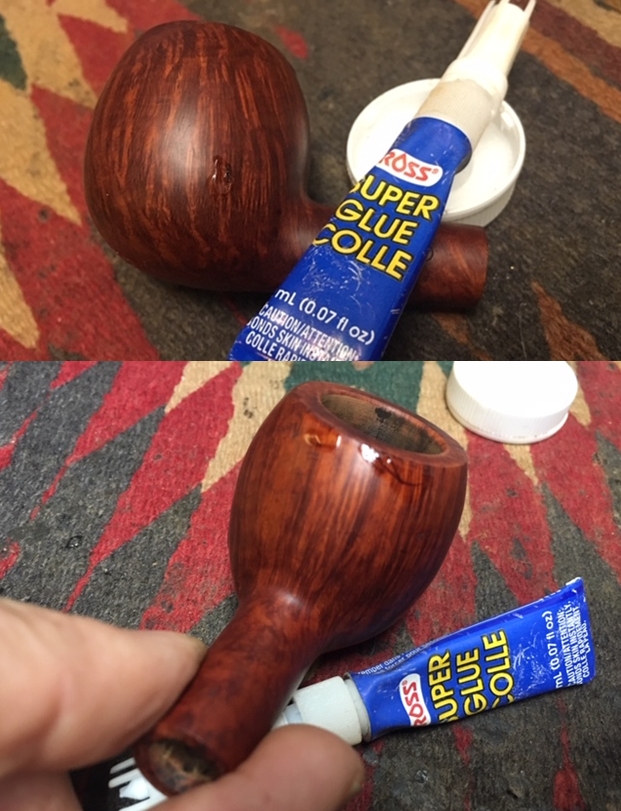
The bowl had a thin cake so I reamed it with a Savinelli Fitsall Pipe Knife to get rid of remnants of cake. I finished by sanding the bowl with a dowel wrapped with 220 grit sandpaper until the inside of the bowl was smooth.I decided to address the damage to the rim top and edges first. I topped the bowl on a topping board using 220 grit sandpaper to remove the damaged portions of the rim surface.I filled in the damaged around rim and the bowl with clear super glue. The photos below show the extent of the damaged areas.When the repairs had cured I sanded the briar with a folded piece of 220 followed by 400 grit sandpaper. I used the sandpaper to blend the repairs into the surface of the briar and to smooth out the inner edge of the bowl at the same time.I scrubbed the bowl with a cotton pad and undiluted Murphy’s Oil Soap. I rinsed the bowl under running water to wash off the soap and the grime that had been loosened. I cleaned up the inside of the shank and mortise with a dental spatula to remove the tar build up. I ran some cotton swabs, pipe cleaners and alcohol through the shank to remove the tars and oils. I also cleaned out the airway in the stem using pipe cleaners and alcohol. I polished the rim and the outside of the bowl with micromesh sanding pads – wet sanding with 1500-2400 grit pads. I wiped the bowl down after each pad with a damp cloth to remove the sanding debris. I started the process of matching the stain on the bowl to the repaired and sanded areas I had worked on. I used a Walnut and a Cherry stain to begin the match.I polished the bowl further, wet sanding it with 3200-4000 grit micromesh sanding pads. I wiped the bowl down after each pad with a damp cloth. I wiped the bowl down with alcohol on a cotton pad to further blend the stain into the surrounding finish on the rest of the bowl and shank. I used Black stain pen to further blend the stain into the surface of the surrounding briar. I wiped it off with the alcohol dampened cotton pad. The photos below tell the story. I finished polishing the bowl and shank with 6000-12000 grit micromesh sanding pads and wiped the bowl and shank down after each pad with a damp cloth. The photos show the stain blend on the newly repaired areas. I am pretty happy with the results. I worked some Before & After Restoration Balm into the surface of the briar with my fingertips to clean, enliven and protect it. I let the balm sit for a little while and then buffed with a cotton cloth to raise the shine. I buffed the bowl with a microfiber cloth to polish the briar. I took photos of the pipe at this point to show what it looked like. With the bowl finished I set it aside and turned my attention to the stem. I filled in the deep tooth marks and rebuilt the surface of the button with clear super glue. Once the repair had cured I used a needle file to smooth out the repairs to the surface of the vulcanite. I sanded the repairs on the stem surface with 220 grit sandpaper to blend the repairs into the surface of the stem. I am happy with the stem surface once that was done. I started the polishing of the surface with 400 grit wet dry sandpaper.  I polished the stem with micromesh sanding pads – wet sanding it with 1500-12000 grit pads. I wiped the stem down with a damp cloth after each pad. I further polished it with Before & After Pipe Polish – both Fine and Extra Fine. I wiped it down with a coat of Obsidian Oil and set it aside to dry. I put the pipe back together and polished both the bowl and the stem with Blue Diamond polish on the buffing wheel. I gave the bowl and the stem multiple coats of carnauba wax. I buffed the pipe with a clean buffing pad to raise the shine. I hand buffed it with a microfiber cloth to deepen the shine. The pipe polished up pretty nicely. The oil cured finish and the grain came alive with the buffing. The grain really stands out against the dark finish providing a rich contrast. The finish on the briar works well with the polished black vulcanite stem. The finished pipe is a well-proportioned, nicely grained Canadian. Have a look at it with the photos below. The dimensions are Length: 5 3/4 inches, Height: 2 inches, Outside diameter of the bowl: 1 3/8 inches, Chamber diameter: 3/4 of an inch. This Malaga Canadian will be going back to Alex to add to his rack of Malaga pipes that are in his collection. Thanks for walking through the restoration with me on another of Alex’s Malaga collection.
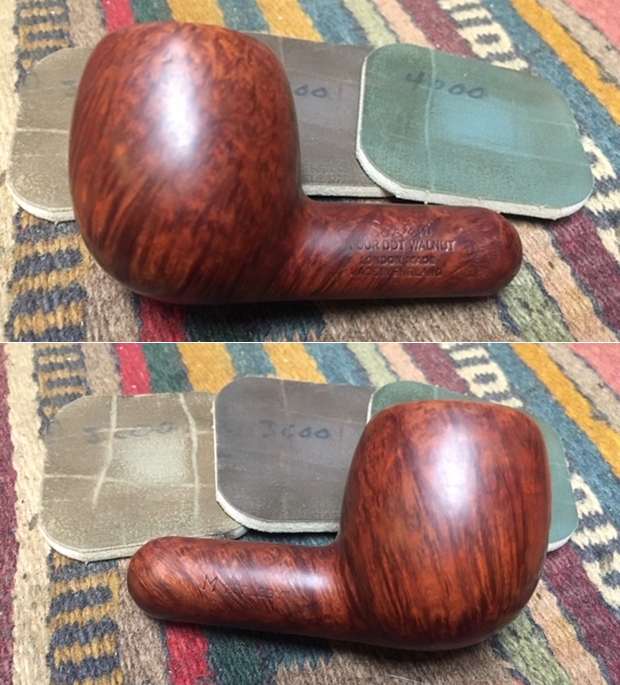
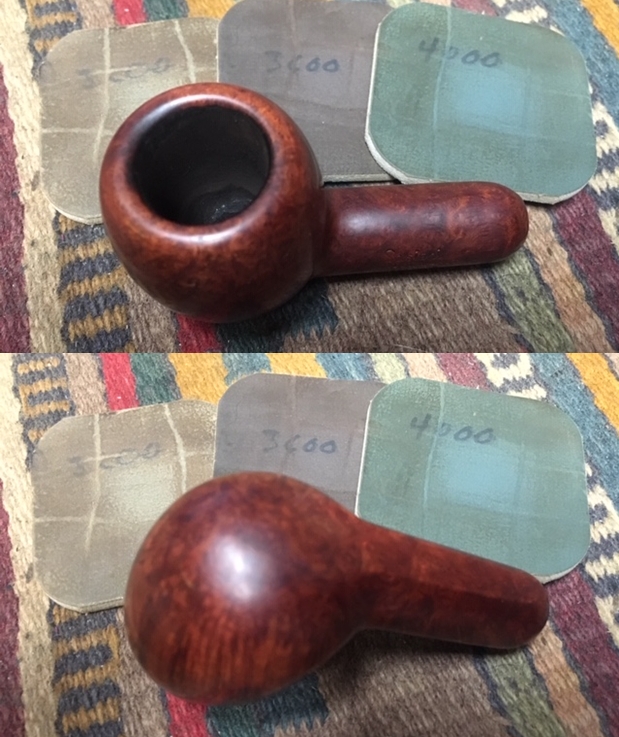
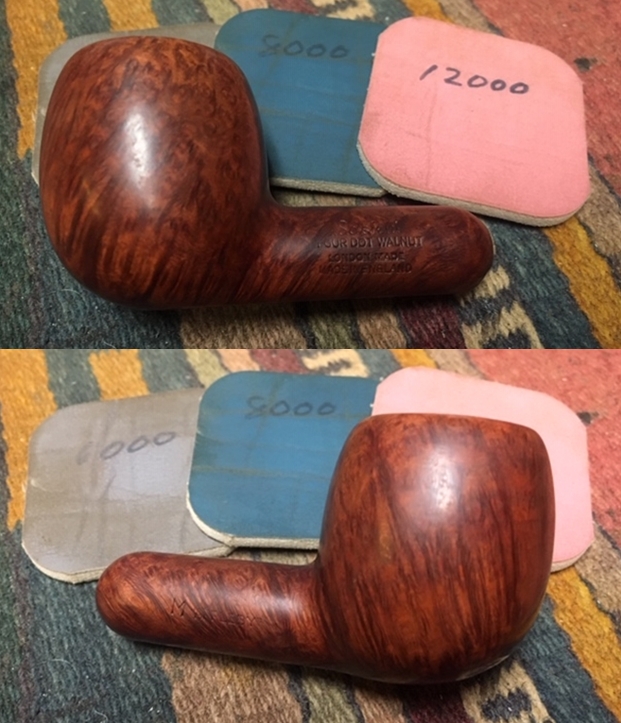
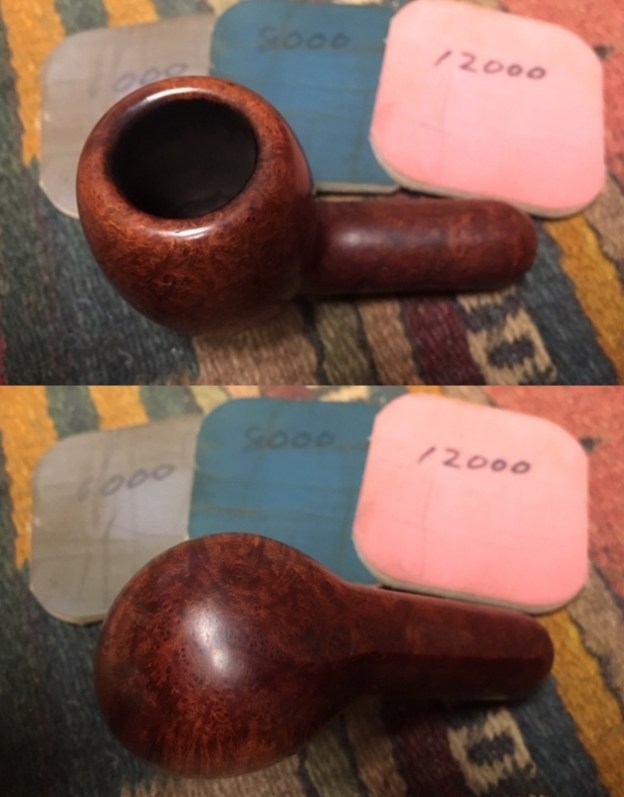
Breathing Life into a “Malaga” Carved Ball


Blog by Steve Laug

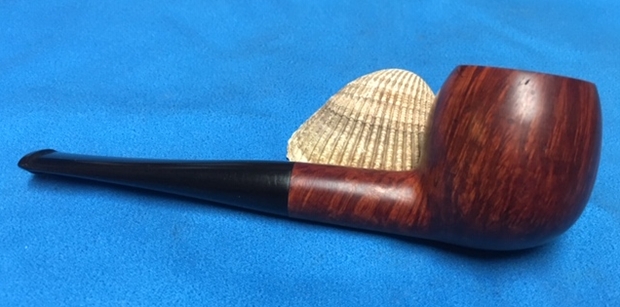
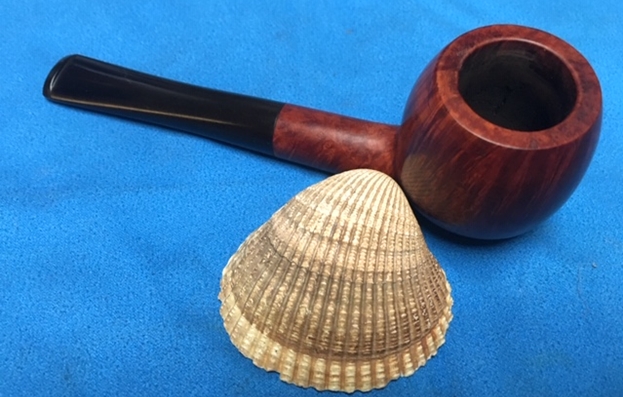
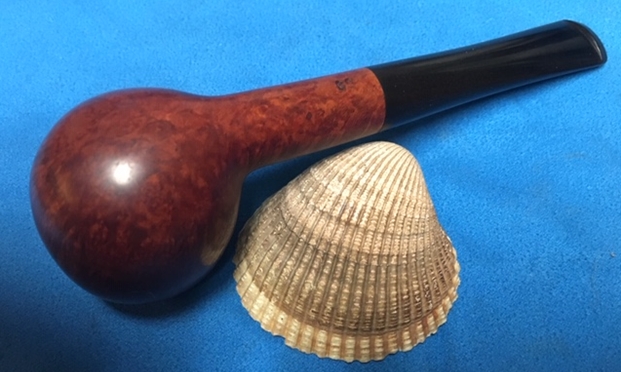
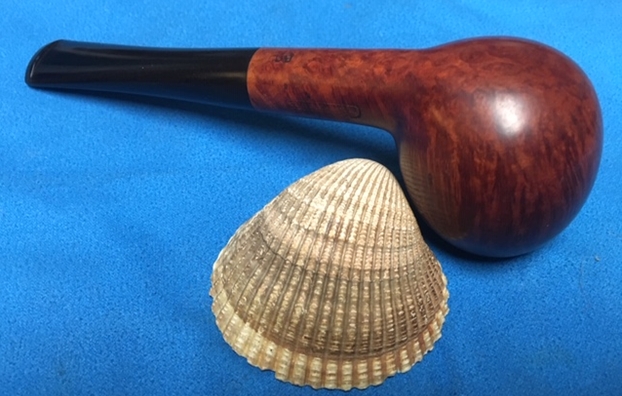
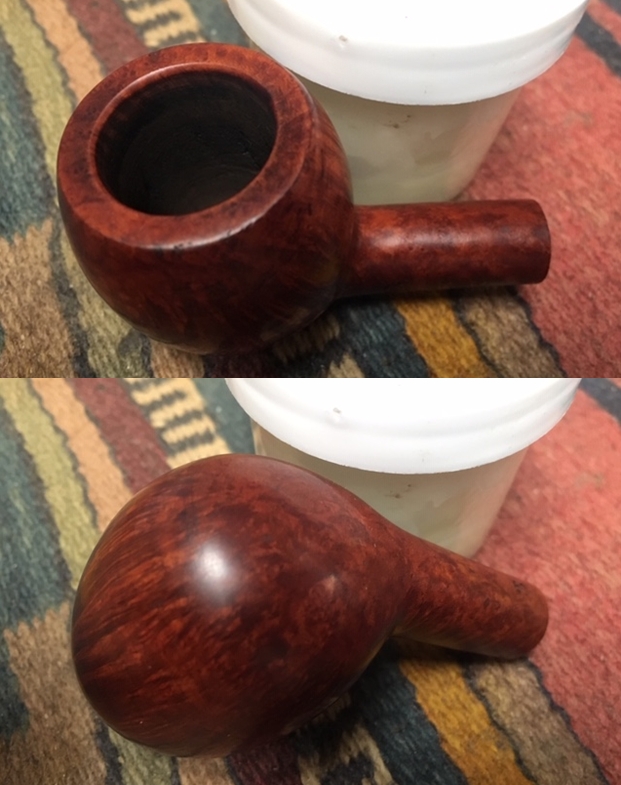
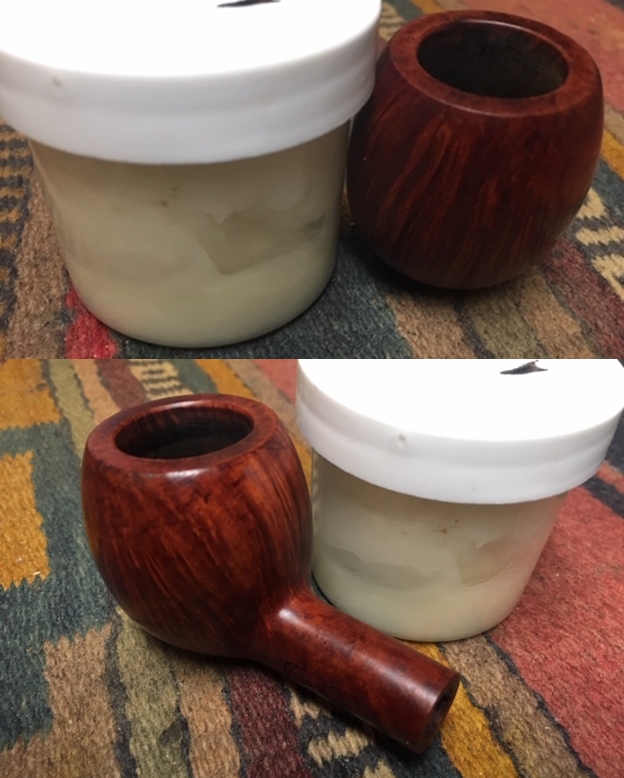
The next pipe in the queue is another pipe from the batch of pipes I am cleaning up for Alex – this one is another “Malaga” –a Ball or Apple with some interesting grain around the oil cured bowl and shank and some carved “feathers” around the bowl bottom. There is some beautiful grain around the bowl – almost a flame grain pattern. The pipe has not been stained but sports the usual Malaga oil cured look. The carver did a great job utilizing the block of briar to maximize the grain. The pipe is stamped on the left side of the shank. It reads “MALAGA”. The tapered stem is vulcanite and has no marking or stamping. This is the first Malaga Ball/Apple that I have worked on. It is a nice looking piece much like many of the pipes Alex is picking up. The bowl had a light cake in the chamber but the edges appeared to be in good condition. There was some lava on the rim top and some darkening on the rim top. The exterior of the briar and the carved areas were dusty with grime and dust. The stem is lightly oxidized and there was some tooth chatter on the top and underside near the button. The stem was in good condition under the grime. The photos below tell the story and give a glimpse of the pipe before clean up. I took a photo of the bowl and rim to capture the condition of the pipe before I started my cleanup work. The bowl had a thin cake and the rim top had a lava overflow on the front and back side. The inner edge of the rim seemed to be undamaged but the lava made it hard to know for sure. The stem was in decent condition. There was some light pitting and deep oxidation on the stem. There was also some light tooth chatter on the top and underside of the stem at the button. I also took a photo of left side of the shank to show the stamping. The stamping is readable in the photo below and is as noted above – “MALAGA”.For those of you who are unfamiliar with the brand, I am also including the link to a blog that I wrote that gives some of the history of the Malaga brand and the Malaga Pipe Shop in Royal Oak, Michigan in the USA. Here is the link – https://rebornpipes.com/tag/malaga-pipes/. That blog also includes links to a catalogue and the history of the pipemaker George Khoubesser. If you are interested to learn more then I invite you to follow the link to get a feel for the brand and the pipemaker.

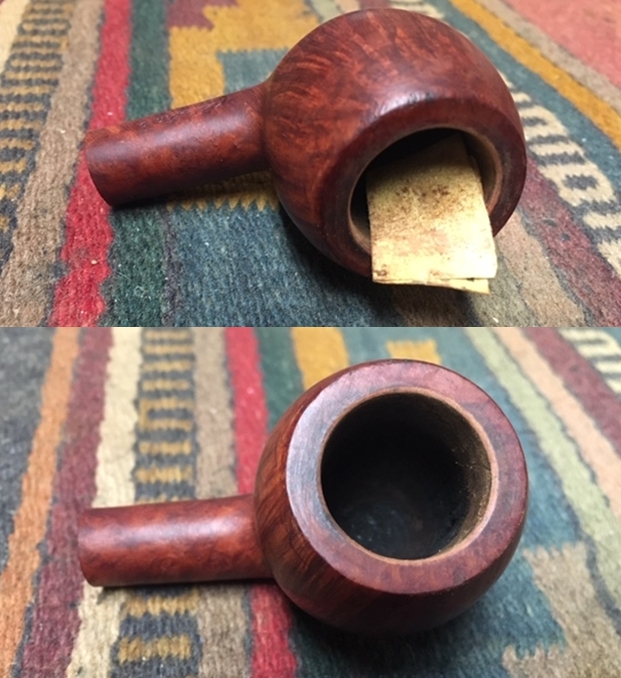
I reamed bowl with a PipNet pipe reamer using the third cutting head. I  took the cake back to bare briar so I could check out the walls of the chamber. I cleaned up the reaming with a Savinelli Fitsall Pipe Knife to get rid of remnants of cake. I finished by sanding the bowl with a dowel wrapped with 220 grit sandpaper until the inside of the bowl was smooth. I scrubbed the bowl with a cotton pad and undiluted Murphy’s Oil Soap. I rinsed the bowl under running water to wash off the soap and the grime that had been loosened. I then turned to address the damage to the inner edge and top of the rim by carefully sanding it with a folded piece of 220 grit sandpaper. I was able to remove the darkening to the rim top. I used a folded piece of 220 grit sandpaper to smooth out the inner edge of the bowl.I polished the rim and the outside of the bowl with micromesh sanding pads – wet sanding with 1500-12000 grit pads. I wiped the bowl down after each pad to remove the sanding debris. I worked some Before & After Restoration Balm into the surface of the briar with my fingertips to clean, enliven and protect it. I let the balm sit for a little while and then buffed with a cotton cloth to raise the shine. I had forgotten to clean up the inside of the shank and mortise. So I went back to clean up the internals. I scraped the mortise with a dental spatula to remove the tar build up. I ran some cotton swabs, pipe cleaners and alcohol through the shank to remove the tars and oils. I also cleaned out the airway in the stem using pipe cleaners and alcohol. With the bowl finished I set it aside and turned my attention to the stem. I sanded the stem surface with 220 grit sandpaper to remove the oxidation and the tooth marks and chatter on both sides ahead of the button. I am happy with the stem surface once that was done. I started the polishing of the surface with 400 grit wet dry sandpaper. I polished the stem with micromesh sanding pads – wet sanding it with 1500-12000 grit pads. I wiped the stem down with a damp cloth after each pad. I further polished it with Before & After Pipe Polish – both Fine and Extra Fine. I wiped it down with a coat of Obsidian Oil and set it aside to dry. I put the pipe back together and polished both the bowl and the stem with Blue Diamond polish on the buffing wheel. I gave the bowl and the stem multiple coats of carnauba wax. I buffed the pipe with a clean buffing pad to raise the shine. I hand buffed it with a microfiber cloth to deepen the shine. The pipe polished up pretty nicely. The oil cured finish and the grain came alive with the buffing. The dark feather/leaf like carvings stand out dark against the grain providing a rich contrast. The rich finish on the briar works well with the polished black vulcanite stem. The finished pipe is a well-proportioned, nicely grained Apple. Have a look at it with the photos below. The dimensions are Length: 5 1/2 inches, Height: 1 1/2 inches, Outside diameter of the bowl: 1 3/4 inches, Chamber diameter: 7/8 of an inch. This apple shaped Malaga with its unique carved surface is a new shape and carving design for me. The Apple/Ball will be going back to Alex to add to his rack of Malaga pipes that are in his collection. Thanks for walking through the restoration with me on another of Alex’s Malaga collection.

Rebirthing another Schoenleber Hand Made – A 31 Bulldog


Blog by Steve Laug

The next pipe in the queue is another pipe from the batch of pipes I am cleaning up for Alex – this one is another Schoenleber Hand Made – a ¼ Bent Bulldog with some beautiful grain around what appears to be an oil cured bowl and shank. The entire pipe has some beautiful mixed birdseye, cross and swirled grain around the bowl and shank. The pipe does not appear to have been stained but sports the same look as the Malaga pipes that I have been working on. The carver did a great job utilizing the block of briar to maximize the grain. The pipe is stamped on the top left side of the diamond shank. It reads Schoenleber over Hand Made. On the top right side of the shank it is stamped Imported Briar. On the right side next to the bowl/shank junction there is a number 31 which is either a shape number or size designation. The saddle stem is vulcanite and has no marking or stamping. This is another nice looking piece much like many of the pipes Alex is picking up. The bowl has been reamed and cleaned to all appearances. There some darkening on the rim top. The exterior of the briar was dirty with grime and dust. The stem deep tooth marks and chatter on both sides near the button. The photos below tell the story and give a glimpse of the pipe before clean up. I took a photo of the bowl and rim to capture the condition of the pipe before I started my cleanup work. There was significant darkening on the top of the inwardly beveled rim at the back of the bowl. The bowl was quite clean. The outer edge of the bowl appeared to be in excellent condition. The stem was in decent condition. There was also some tooth chatter and two deep tooth marks on both sides of the stem near the button.I also took a photo of top, right side of the diamond shank to show the stamping. The stamping is readable in the photo below and is as noted above – Schoenleber Hand Made. On the opposite side it reads Imported Briar. There is also a 31 at the shank/bowl junction on the right side.I remember working on a Schoenleber pipe in the past and had a memory of the pipe being made for a shop in the New York area but could not remember much more than that. I quickly googled the brand to see what I could learn and found a link on Pipedia. Here is that link. I quote the article in full (https://pipedia.org/wiki/Schoenleber).
Louis Schoenleber lived in North Arlington N.J. and was an Austrian immigrant and skilled artisan in pipe making. His hand carved pipes were available in his shop, ‘Schoenleber’s Newark Pipe Shop’, at 26 Branford Pl., Newark NJ, thought to open in the 1920’s. Schoenleber’s carried a full line of tobaccos as well as related pipe smoking accessories. It’s thought the shop operated until the late 1960’s, and Louis Schoenleber died in 1976. It’s also fairly certain they may have sold to other brands such as Jelling, also in Newark and are very similar in design and finish.

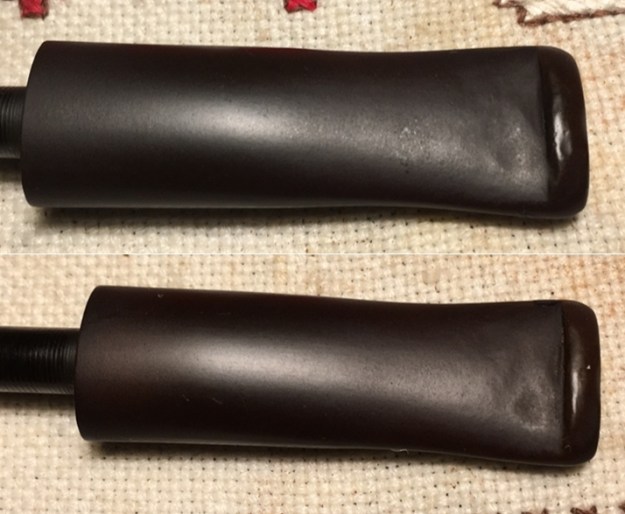
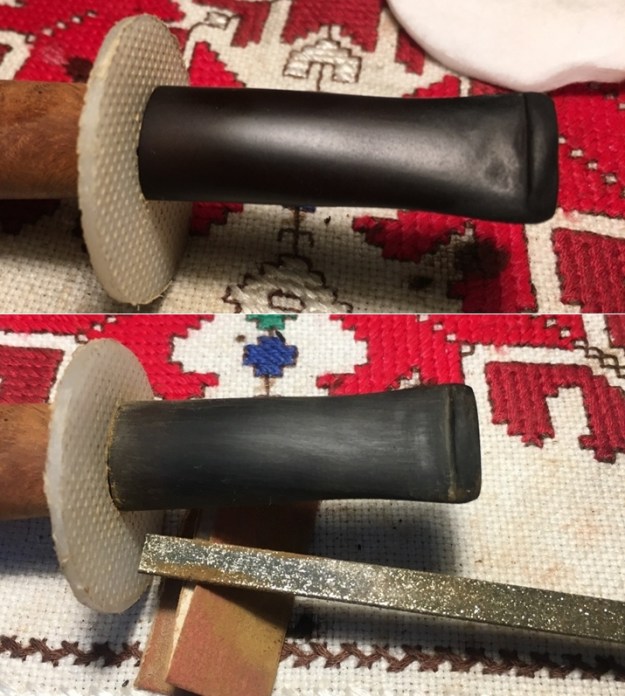
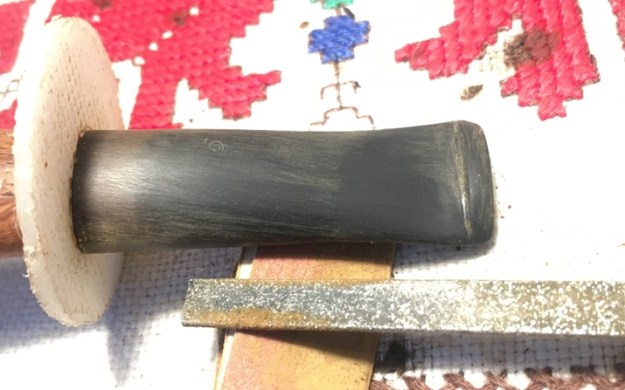
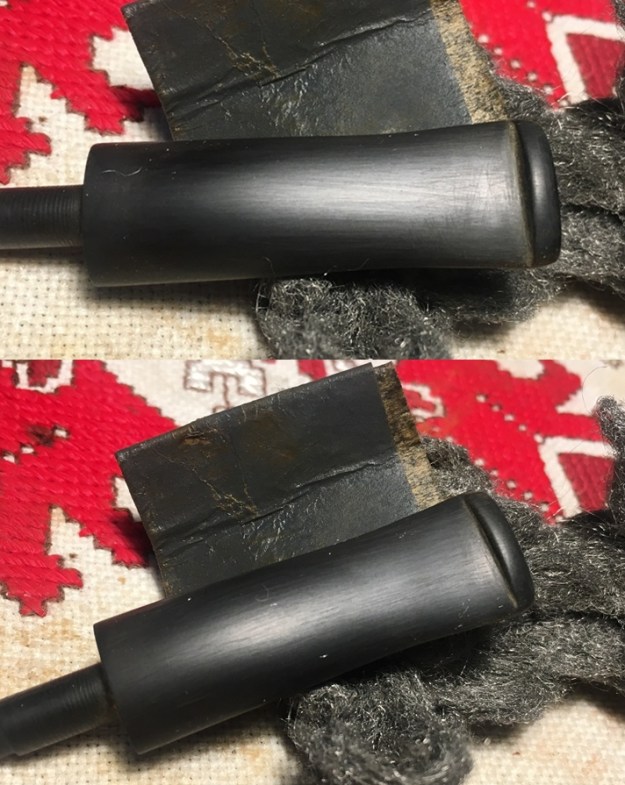
There was also an advertising card on the site that I have included below. It speaks to my assumptions about the curing process and the finishing process on the pipe. It also connects the pipe to Schoenleber’s Newark Pipe Shop in Newark, N.J. It also has a comment on the fact that pipes were made to order.I started the restoration by working on the darkening to the rear bevel of the rim top rim by lightly sanding the top with 220 and 400 grit sandpaper. I was able to remove the darkening and maintain the patina on the pipe.The mortise and the airway in the shank were very clean and there was even bare uncoloured briar showing on the walls and the end of the mortise. No internal cleaning was necessary in this beautifully clean pipe. I turned to polishing the bowl and rim with micromesh sanding pads – wet sanding with 1500-12000 grit pads. I wiped the bowl down after each pad to remove the sanding debris. I worked some Before & After Restoration Balm into the surface of the briar with my fingertips to clean, enliven and protect it. I let the balm sit for a little while and then buffed with a cotton cloth to raise the shine. With the bowl finished I set it aside and turned my attention to the stem. I painted the tooth marks in the stem with a Bic lighter to try to raise the deep marks. Once the stem had cooled I filled in the remaining tooth marks with clear super glue. Once the repairs cured, I filed the repaired areas with a needle file to blend them into the surface of the stem. The filing made the sanding a bit simpler as it took the excess material down to the surface. I sanded the filed stem surface with 220 grit sandpaper to remove the filing marks on both sides of the stem. I am happy with the stem surface once that was done. I started the polishing of the surface with 400 grit wet dry sandpaper. I polished the stem with micromesh sanding pads – wet sanding it with 1500-12000 grit pads. I wiped the stem down with a damp cloth after each pad. I further polished it with Before & After Pipe Polish – both Fine and Extra Fine. I wiped it down with a coat of Obsidian Oil and set it aside to dry. With both parts of the pipe finished, I polished the bowl and the stem with Blue Diamond polish on the buffing wheel. I gave the bowl and the stem multiple coats of carnauba wax. I buffed the pipe with a clean buffing pad to raise the shine. I hand buffed it with a microfiber cloth to deepen the shine. The pipe polished up pretty nicely. The rich oil cured finish and the grain came alive with the buffing. The finish on the briar works well with the polished black vulcanite stem. The finished pipe is a well-proportioned, nicely grained ¼ bent Bulldog. Have a look at it with the photos below. The dimensions are Length: 5 1/2 inches, Height: 1 1/2 inches, Outside diameter of the bowl: 1 3/4 inches, Chamber diameter: 3/4 of an inch. This Schoenleber Hand Made Bulldog will be going back to Alex soon to join his growing collection of American made pipes. Thanks for walking through the restoration with me on another of Alex’s pipes.

Giving New Life to a “Malaga” Cherrywood Sitter


Blog by Steve Laug

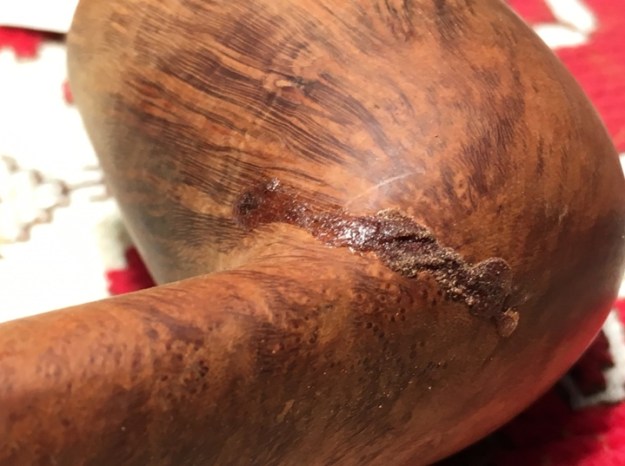
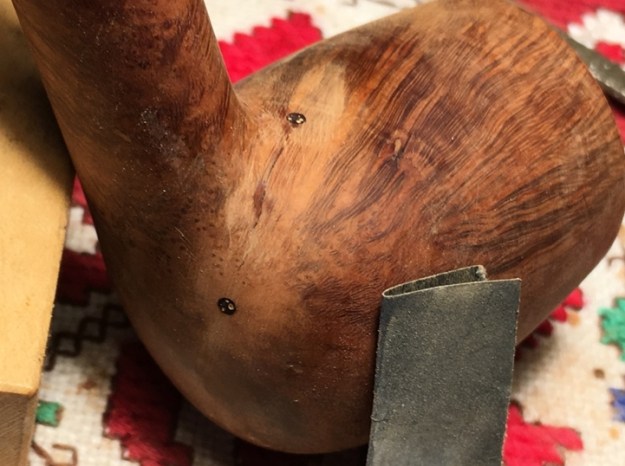
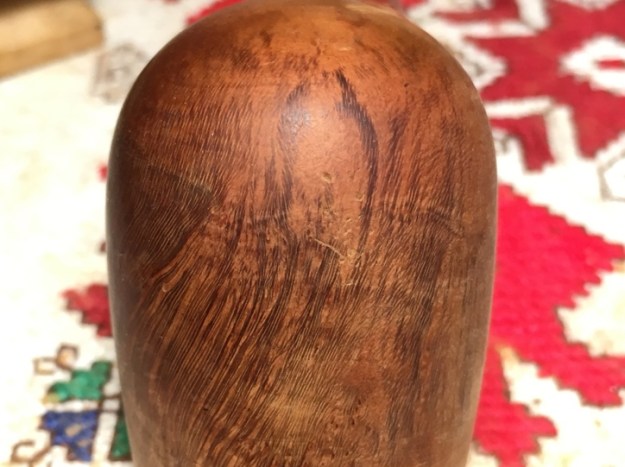
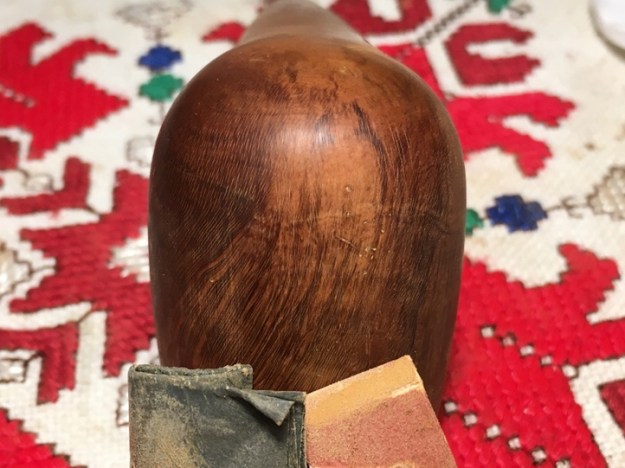
The next pipe in the queue is another pipe from the batch of pipes I am cleaning up for Alex – this one is another “Malaga” –a Cherrywood with some interesting grain around the oil cured bowl and shank. There was a “bald” spot on the left side of the bowl but otherwise there was great grain around the rest of the bowl. There is some beautiful birdseye grain around the bowl and cross grain on the shank. The pipe has not been stained but sports the usual Malaga oil cured look. The carver did a great job utilizing the block of briar to maximize the grain. The pipe is stamped on the left side of the shank. It reads “MALAGA”. The saddle stem is vulcanite and has no marking or stamping. This is the first Cherrywood Malaga that I have been working on. It is a nice looking piece much like many of the pipes Alex is picking up. The bowl had been reamed and was in decent condition. There were some burn marks on the front outer edge of the bowl and some darkening on the rim top toward the back. The exterior of the briar was dusty with grime on the shank and bowl. The stem is lightly oxidized and there was some tooth chatter and marks on the top and underside near the button. The stem was in good condition under the grime. The photos below tell the story and give a glimpse of the pipe before clean up. I took a photo of the bowl and rim to capture the condition of the pipe before I started my cleanup work. The rim top was clean but there was burn damage on the front outer edge of the rim. There was some darkening on the back topside of the rim. The inner edge of the rim was damaged at the back side and had been poorly beveled inward to mask it. The stem was in decent condition. There was some light oxidation on the stem. There was also some tooth marks and chatter on the top and underside of the stem at the button.I also took a photo of left side of the shank to show the stamping. The stamping is readable in the photo below and is as noted above – “MALAGA”.For those of you who are unfamiliar with the brand, I am also including the link to a blog that I wrote that gives some of the history of the Malaga brand and the Malaga Pipe Shop in Royal Oak, Michigan in the USA. Here is the link – https://rebornpipes.com/tag/malaga-pipes/. That blog also includes links to a catalogue and the history of the pipemaker George Khoubesser. If you are interested to learn more then I invite you to follow the link to get a feel for the brand and the pipemaker.

Since the pipe had been cleaned and reamed by the pipe shop that sold the pipe to Alex I decided to check out the clean up. The bowl had been well reamed. I used a Savinelli Fitsall Pipe Knife to scrape out the slight cake remnants that remained. I then turned to address the damage to the outer and inner edge of the rim by topping it on a topping board with 220 grit sandpaper. I was able to remove the damage and the burned areas. I also sanded to remove the darkening and burn marks on the rim top. I used a folded piece of 220 grit sandpaper to smooth out the inner edge of the bowl. I decided to check on the cleanup work on the inside of the shank and mortise. I scraped the mortise with a dental spatula to check on tar build up and it was clean. I then ran some cotton swabs through the shank and found that it was filthy. Upon that discovery I scrubbed out the mortise and the airway in the shank and the stem with alcohol, cotton swabs and pipe cleaners. I also cleaned out the airway in the stem using pipe cleaners and alcohol. I scrubbed out the airway in the stem in the same manner.I scrubbed the bowl with a cotton pad and undiluted Murphy’s Oil Soap. I rinsed the bowl under running water to wash off the soap and the grime that had been loosened. I polished the outside of the bowl with micromesh sanding pads – wet sanding with 1500-12000 grit pads. I wiped the bowl down after each pad to remove the sanding debris. I worked some Before & After Restoration Balm into the surface of the briar with my fingertips to clean, enliven and protect it. I let the balm sit for a little while and then buffed with a cotton cloth to raise the shine. With the bowl finished I set it aside and turned my attention to the stem. I sanded the stem surface with 220 grit sandpaper to remove the oxidation and the tooth marks and chatter on both sides ahead of the button. I am happy with the stem surface once that was done. I started the polishing of the surface with 400 grit wet dry sandpaper. I polished the stem with micromesh sanding pads – wet sanding it with 1500-12000 grit pads. I wiped the stem down with a damp cloth after each pad. I further polished it with Before & After Pipe Polish – both Fine and Extra Fine. I wiped it down with a coat of Obsidian Oil and set it aside to dry. With both parts of the pipe finished, I polished the bowl and the stem with Blue Diamond polish on the buffing wheel. I gave the bowl and the stem multiple coats of carnauba wax. I buffed the pipe with a clean buffing pad to raise the shine. I hand buffed it with a microfiber cloth to deepen the shine. The pipe polished up pretty nicely. The oil cured finish and the grain came alive with the buffing. The rich finish on the briar works well with the polished black vulcanite stem. The finished pipe is a well-proportioned, nicely grained classic Cherrywood Sitter. Have a look at it with the photos below. The dimensions are Length: 5 1/2 inches, Height: 1 ¾ inches, Outside diameter of the bowl: 1 3/8 inches, Chamber diameter: 3/4 of an inch. This unique shaped Malaga, one I had not seen before. The Cherrywood Sitter will be going back to Alex to add to his rack of Malaga pipes that are in his collection. Thanks for walking through the restoration with me on another of Alex’s Malaga collection.

Another Rebirth – A Schoenleber Hand Made 3 Canadian


Blog by Steve Laug

The next pipe in the queue is another pipe from the batch of pipes I am cleaning up for Alex – this one is a Schoenleber Hand Made – a Canadian with some beautiful grain around what appears to be an oil cured bowl and shank. The entire pipe has some beautiful birdseye grain around the bowl and cross grain on the front and back of the bowl. The pipe does not appear to have been stained but sports the same look as the Malaga pipes that I have been working on. The carver did a great job utilizing the block of briar to maximize the grain. The pipe is stamped on the top side of the shank. It reads Schoenleber over Hand Made. On the underside of the shank it is stamped Imported Briar. On the right side next to the bowl/shank junction there is a number 3 which is either a shape number or size designation. The tapered stem is vulcanite and has no marking or stamping. This is another nice looking piece much like many of the pipes Alex is picking up. There was cake in the bowl and a burn mark on the front inner edge of the bowl and darkening on the rim top. The exterior of the briar was dusty with grime and sticky spots on the shank and bowl. The stem is lightly oxidized and there light tooth chatter on both sides near the button. The photos below tell the story and give a glimpse of the pipe before clean up. I took a photo of the bowl and rim to capture the condition of the pipe before I started my cleanup work. There was burn damage on the front of the inner edge and top of the rim. There was a thick cake in the bowl. The outer edge of the bowl appeared to be in excellent condition. The stem was in decent condition. There was some light oxidation on the stem. There was also some tooth chatter and marks at the button on both sides of the stem. I also took a photo of top and underside of the shank to show the stamping. The stamping is readable in the photo below and is as noted above – Schoenleber Hand Made. On the underside it reads Imported Briar. There is also a 3 at the shank/bowl junction on the right side.I remember working on a Schoenleber pipe in the past and had a memory of the pipe being made for a shop in the New York area but could not remember much more than that. I quickly googled the brand to see what I could learn and found a link on Pipedia. Here is that link. I quote the article in full (https://pipedia.org/wiki/Schoenleber).

Louis Schoenleber lived in North Arlington N.J. and was an Austrian immigrant and skilled artisan in pipe making. His hand carved pipes were available in his shop, ‘Schoenleber’s Newark Pipe Shop’, at 26 Branford Pl., Newark NJ, thought to open in the 1920’s. Schoenleber’s carried a full line of tobaccos as well as related pipe smoking accessories. It’s thought the shop operated until the late 1960’s, and Louis Schoenleber died in 1976. It’s also fairly certain they may have sold to other brands such as Jelling, also in Newark and are very similar in design and finish.

There was also an advertising card on the site that I have included below. It speaks to my assumptions about the curing process and the finishing process on the pipe. It also connects the pipe to Schoenleber’s Newark Pipe Shop in Newark, N.J. It also has a comment on the fact that pipes were made to order.I started the restoration by reaming the bowl with a PipNet pipe reamer using three of the four cutting heads to take the cake back to bare briar. I followed by using a Savinelli Fitsall pipe knife to remove the remnants of the cake on the walls in the heel. I sanded the inside of the walls with a dowel wrapped with 220 grit sandpaper. I worked on the slight damage to the inner edge of the rim by lightly topping the bowl to remove as much of the damaged rim top as possible without changing the shape. Once it was topped I sanded the inner edge of the bowl with a folded piece of 220 grit sandpaper. I was able to remove the damage and the burned areas. I stained the rim top with a Maple stain pen to match the colour of the rest of the pipe. I scraped the mortise with a dental spatula to remove the hardened tars and oils on the walls. I then scrubbed out the mortise and the airway in the shank and the stem with alcohol, cotton swabs and pipe cleaners. I also cleaned out the airway in the stem using pipe cleaners and alcohol.I polished the outside of the bowl with micromesh sanding pads – wet sanding with 1500-12000 grit pads. I wiped the bowl down after each pad to remove the sanding debris. I worked some Before & After Restoration Balm into the surface of the briar with my fingertips to clean, enliven and protect it. I let the balm sit for a little while and then buffed with a cotton cloth to raise the shine. With the bowl finished I set it aside and turned my attention to the stem. I sanded the stem surface with 220 grit sandpaper to remove the tooth chatter and marks on both sides of the stem. I am happy with the stem surface once that was done. I started the polishing of the surface with 400 grit wet dry sandpaper. I polished the stem with micromesh sanding pads – wet sanding it with 1500-12000 grit pads. I wiped the stem down with a damp cloth after each pad. I further polished it with Before & After Pipe Polish – both Fine and Extra Fine. I wiped it down with a coat of Obsidian Oil and set it aside to dry. With both parts of the pipe finished, I polished the bowl and the stem with Blue Diamond polish on the buffing wheel. I gave the bowl and the stem multiple coats of carnauba wax. I buffed the pipe with a clean buffing pad to raise the shine. I hand buffed it with a microfiber cloth to deepen the shine. The pipe polished up pretty nicely. The rich oil cured finish and the grain came alive with the buffing. The finish on the briar works well with the polished black vulcanite stem. The finished pipe is a well-proportioned, nicely grained classic Canadian. Have a look at it with the photos below. The dimensions are Length: 5 1/2 inches, Height: 1 3/4 inches, Outside diameter of the bowl: 1 3/8 inches, Chamber diameter: 3/4 of an inch. This Schoenleber Hand Made Shop pipe will be going back to Alex soon to join his growing collection of American made pipes. Thanks for walking through the restoration with me on another of Alex’s pipes.