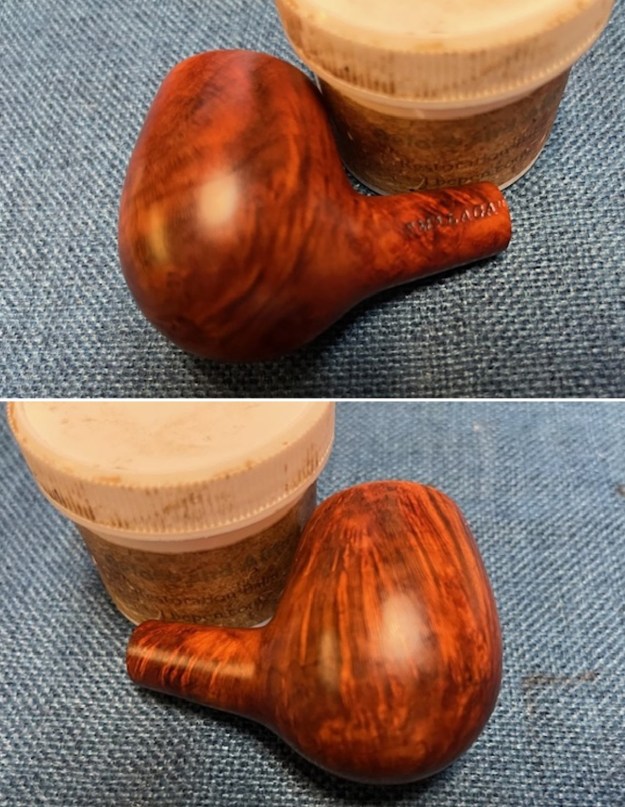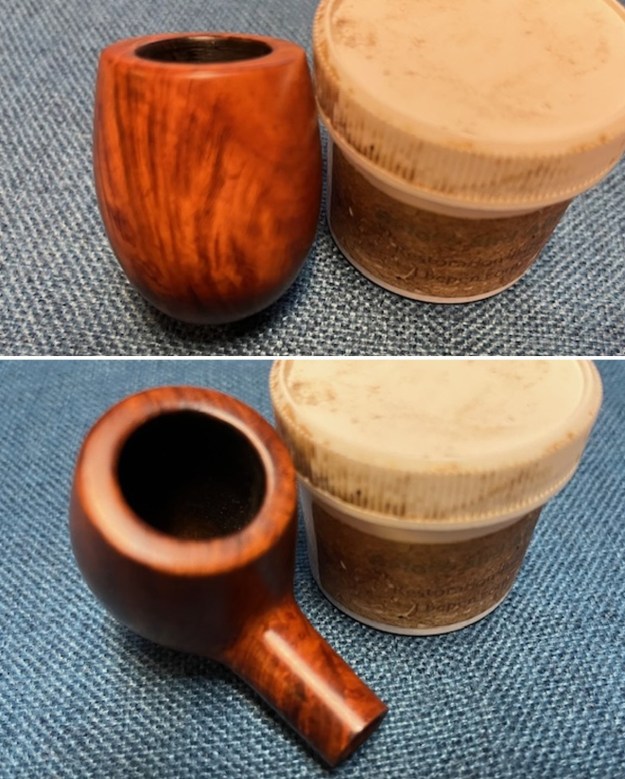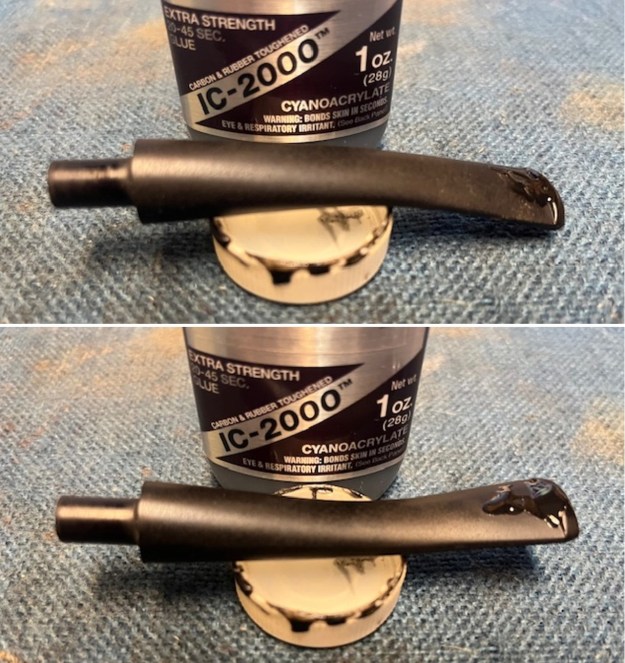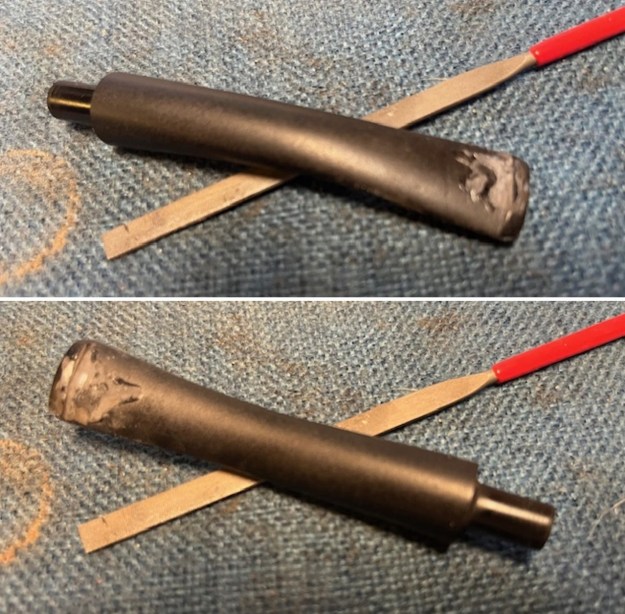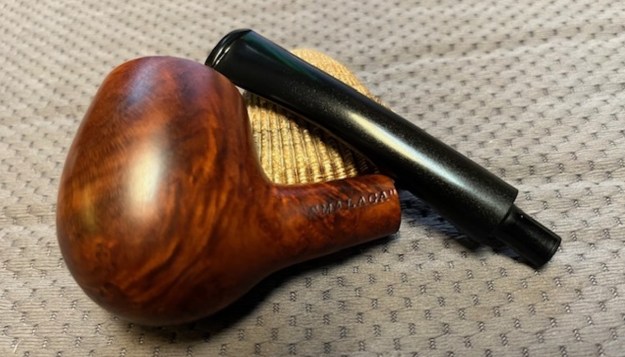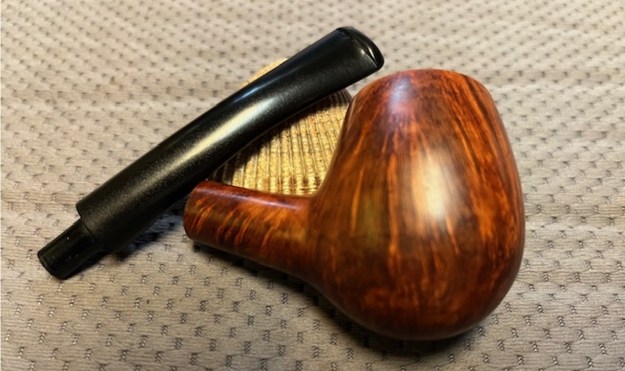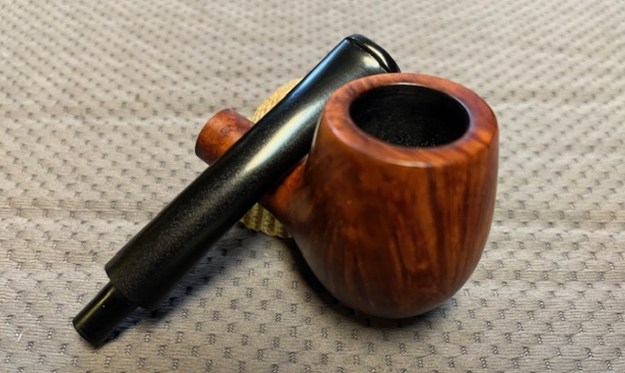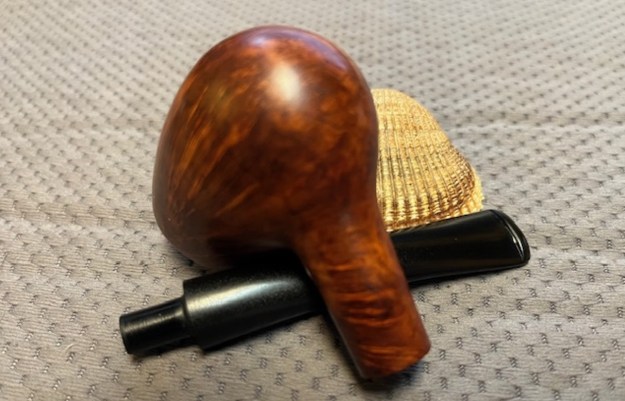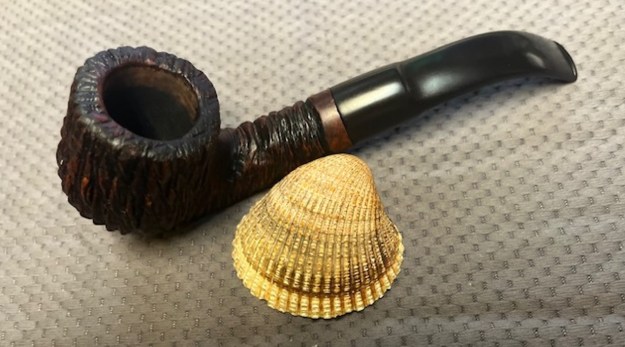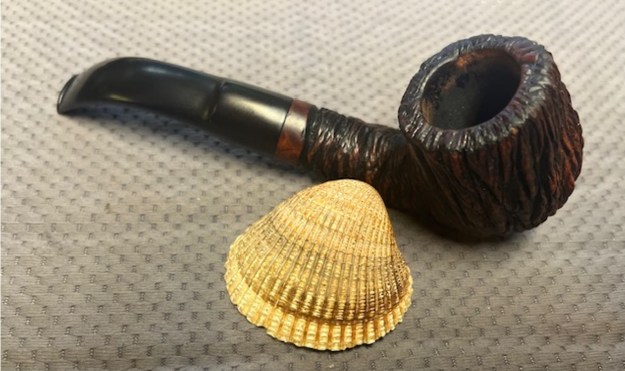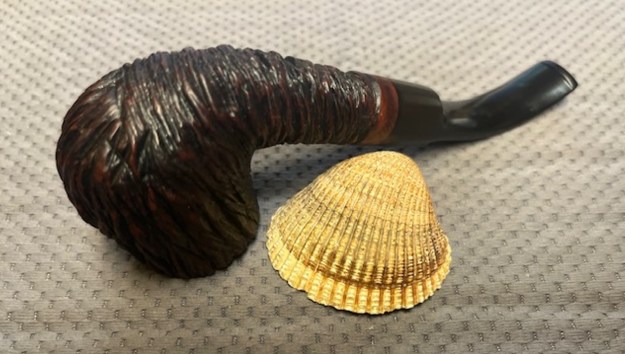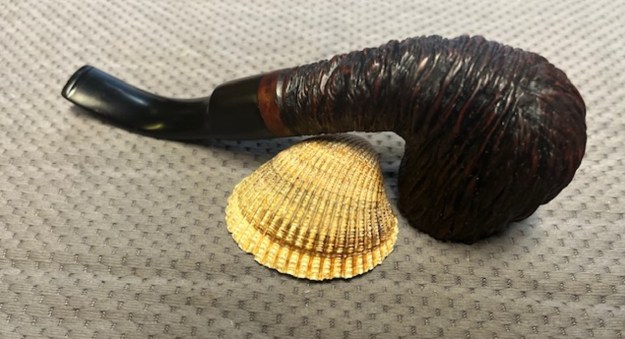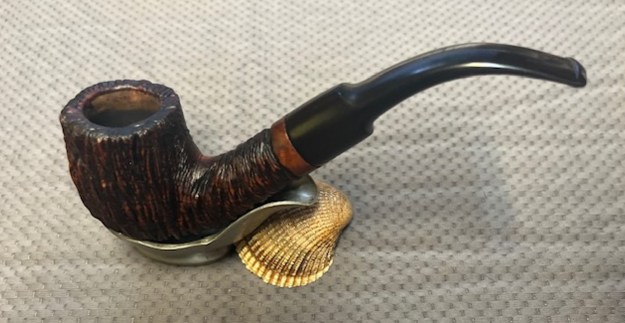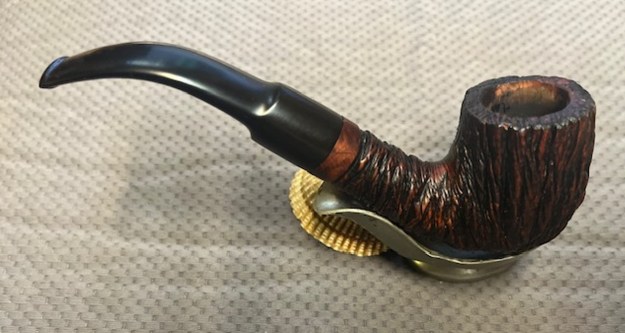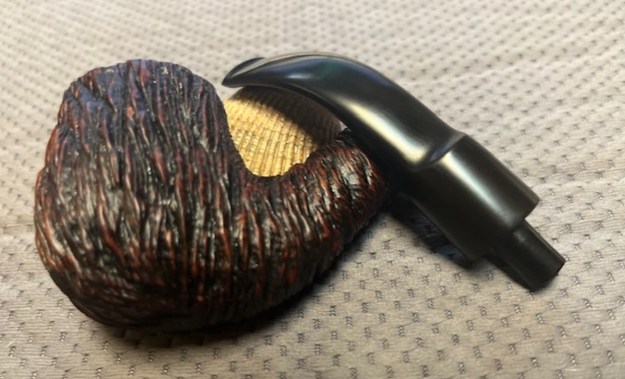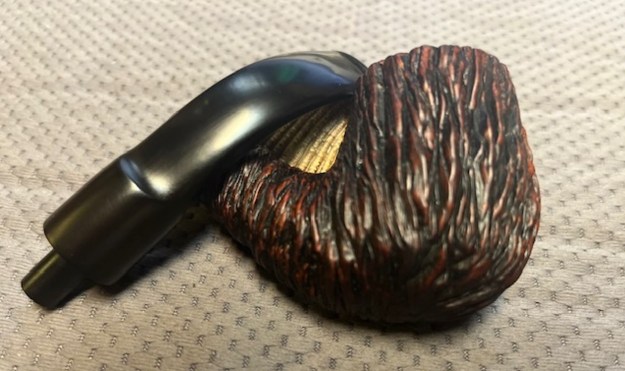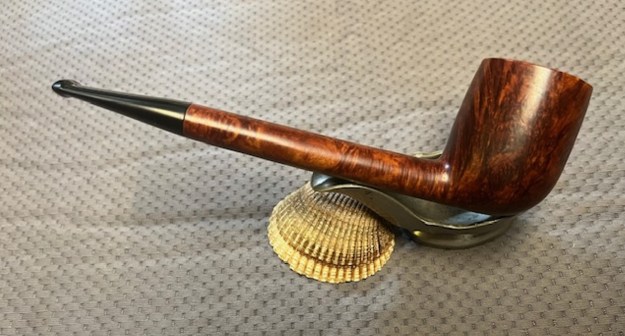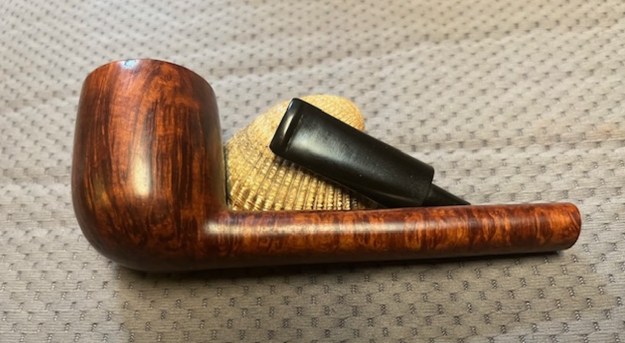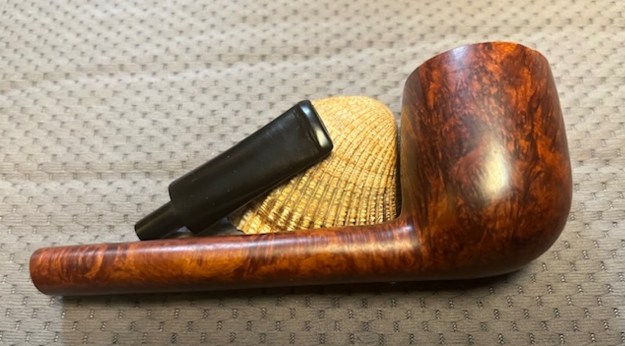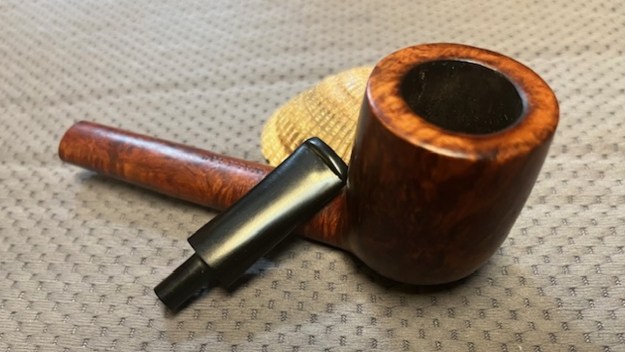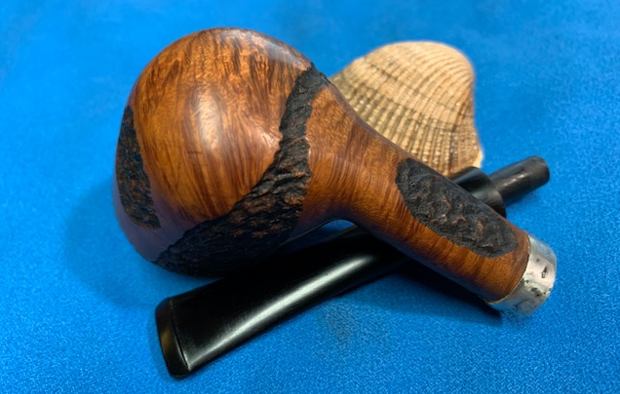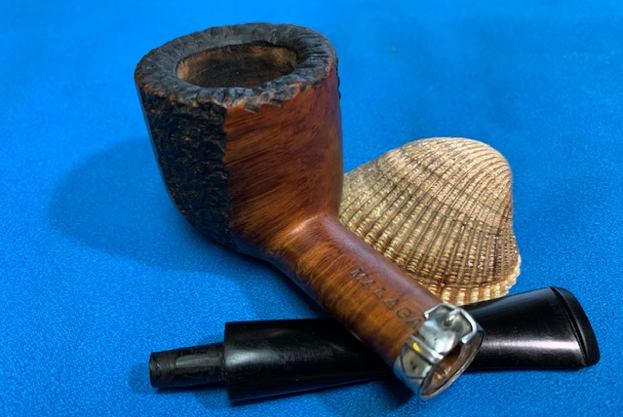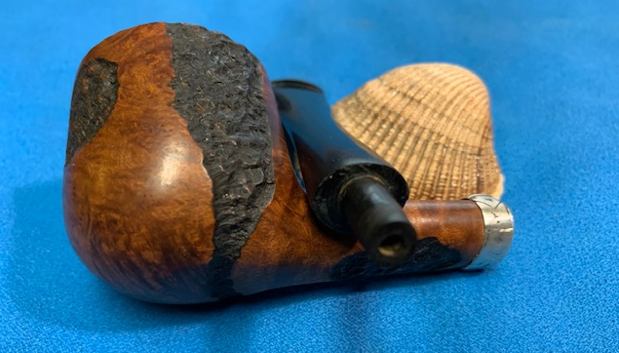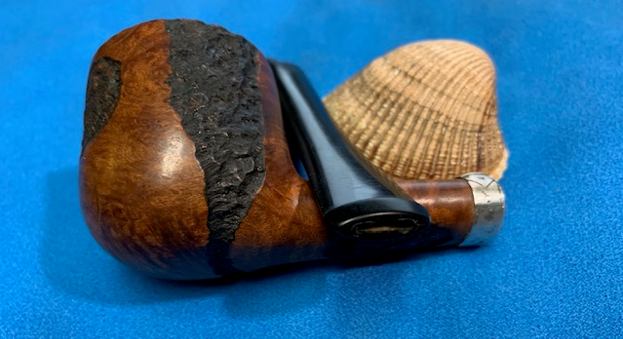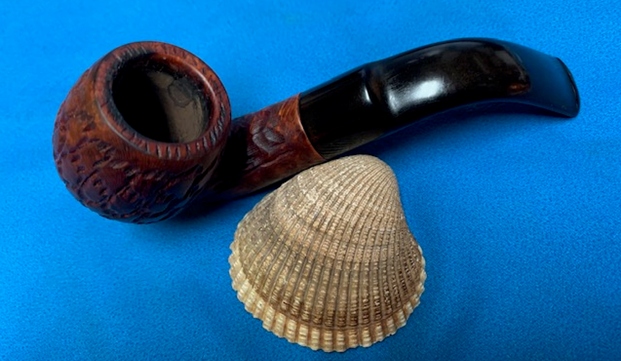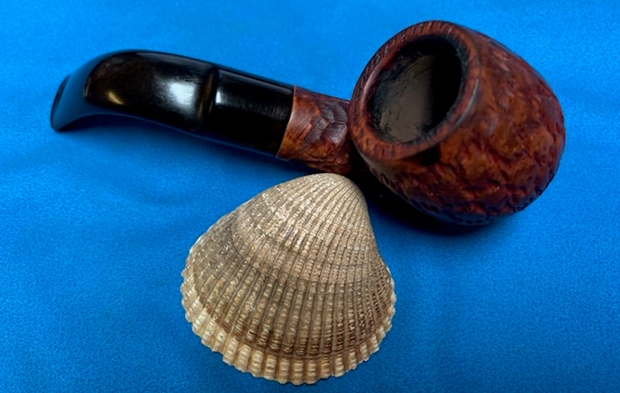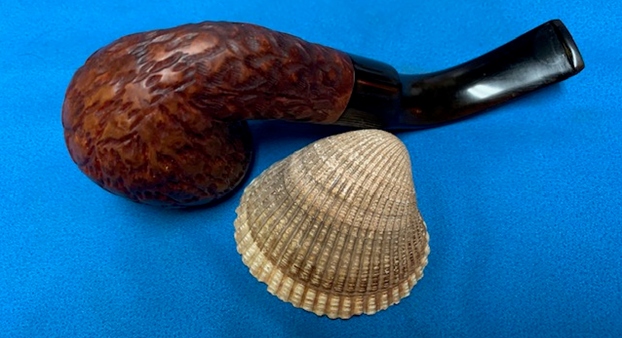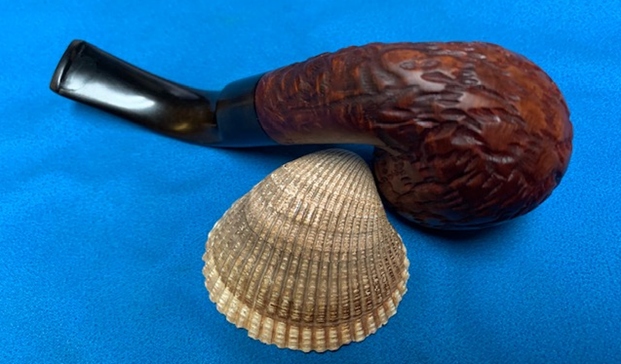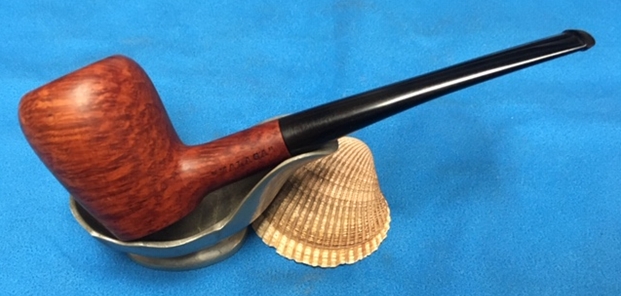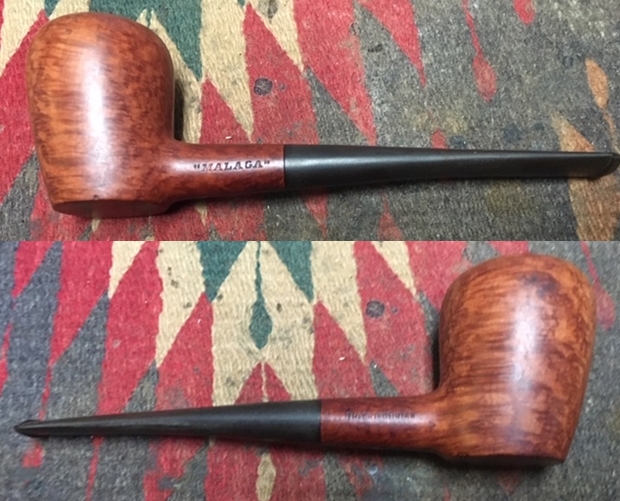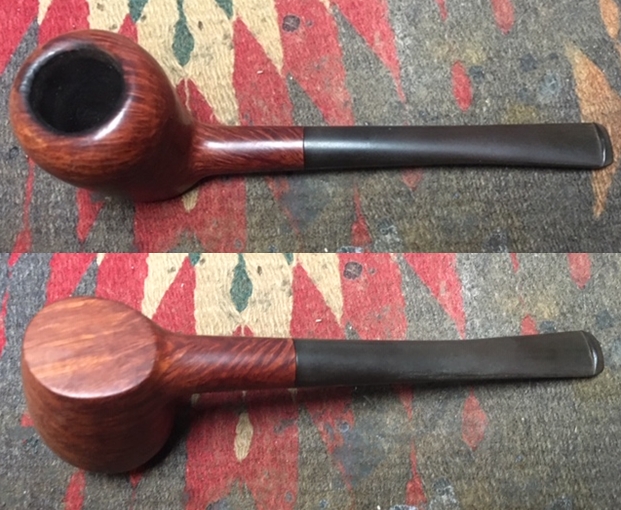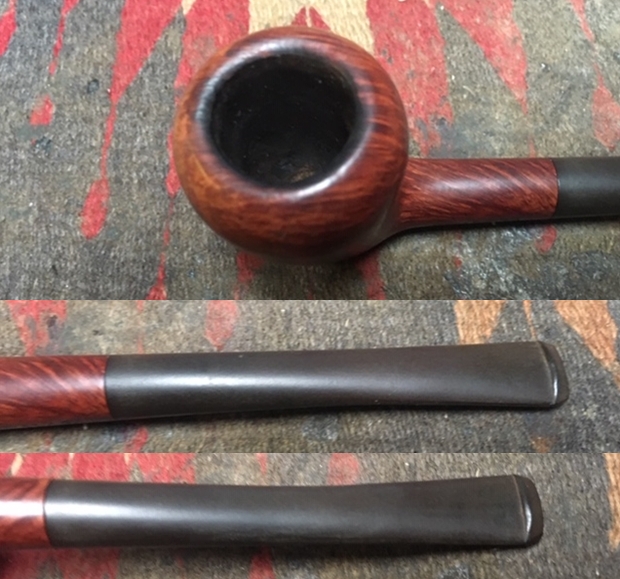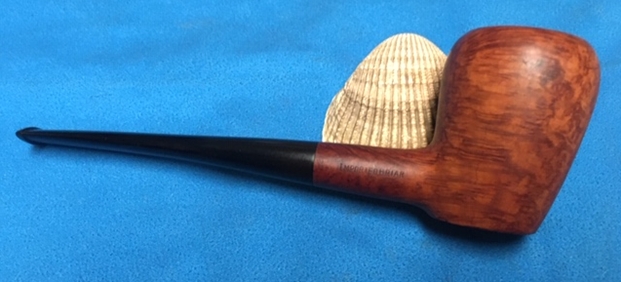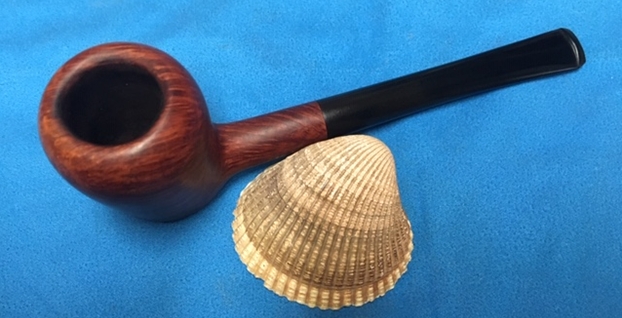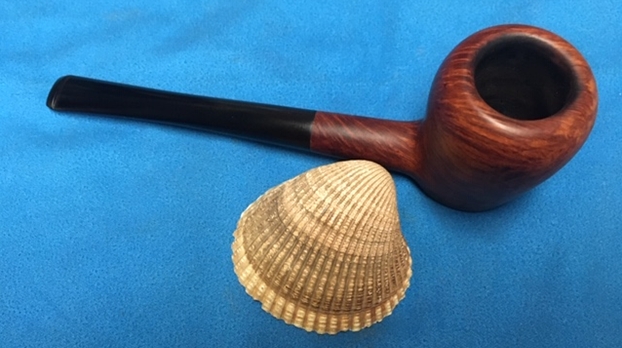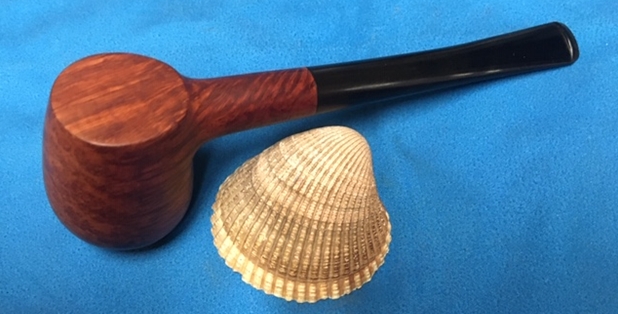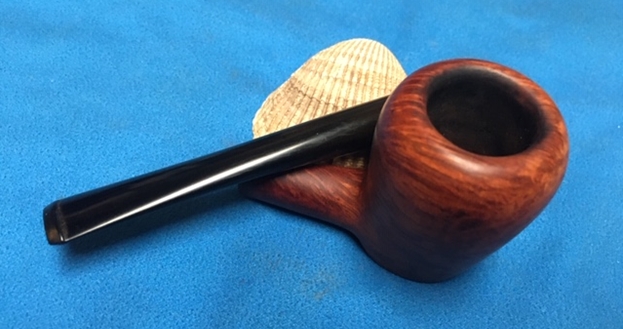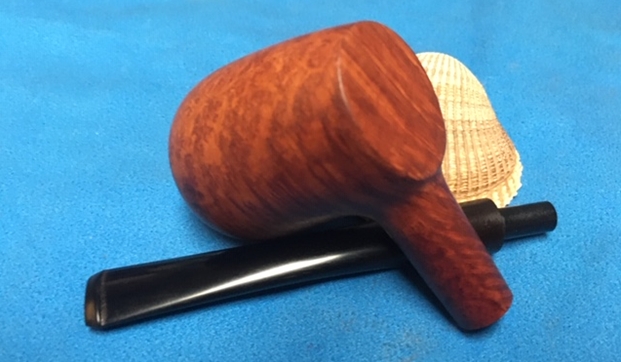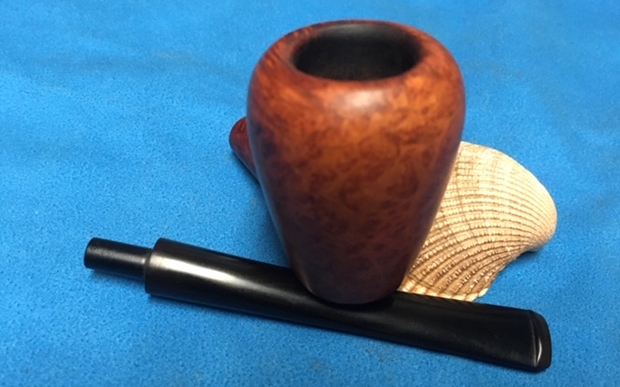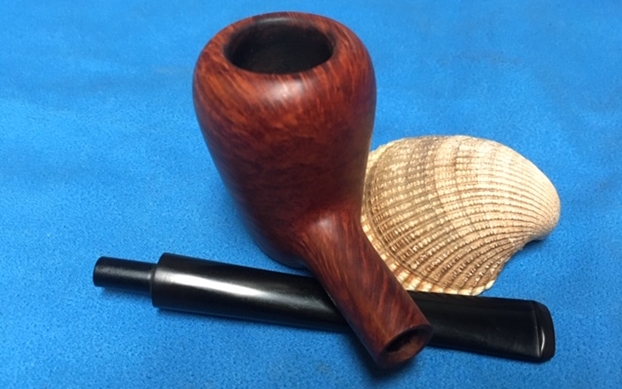
Tag Archives: Malaga Pipe Shop in Michigan

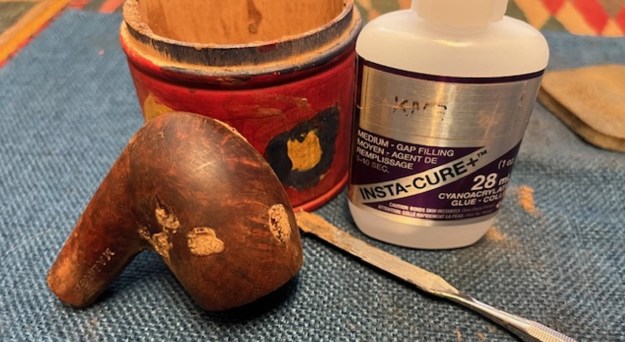
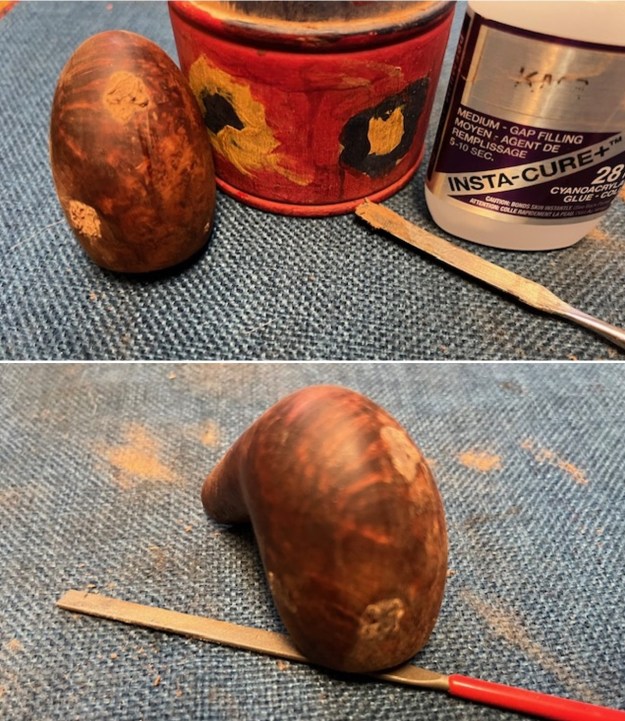
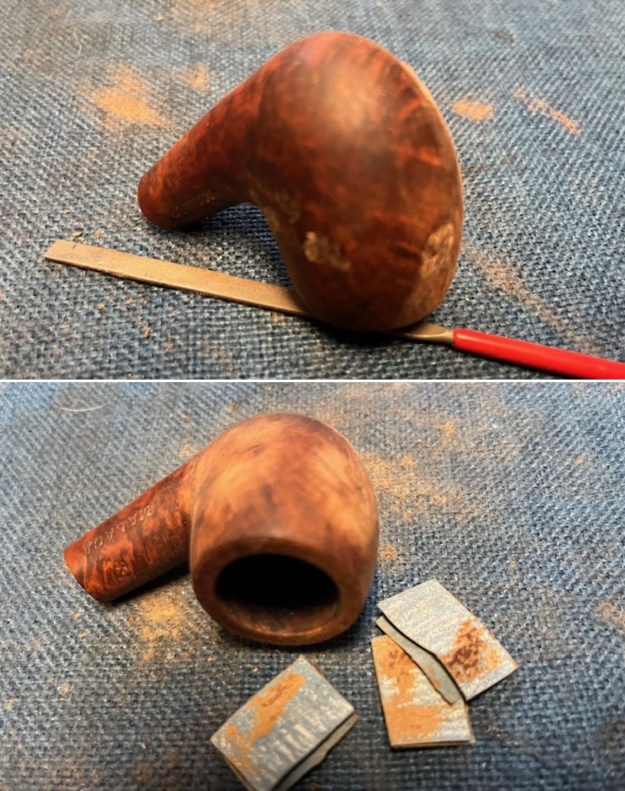
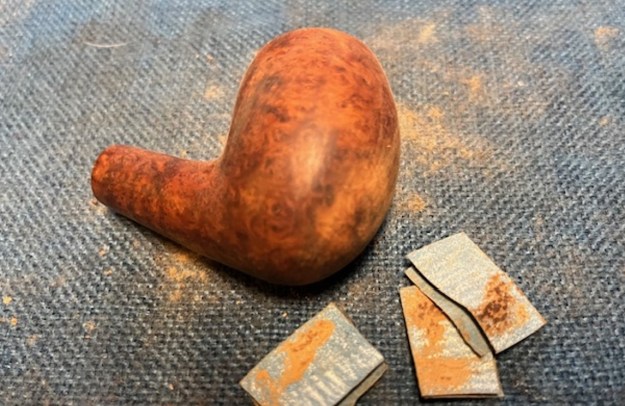
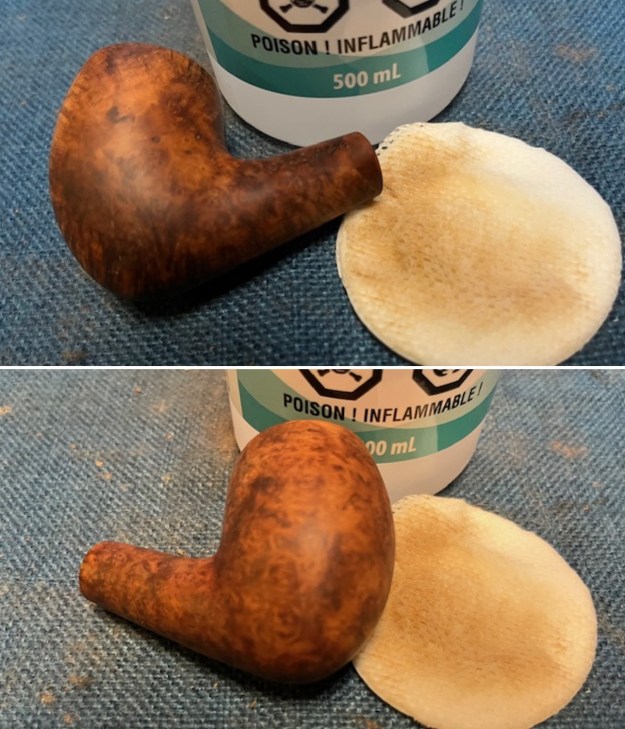
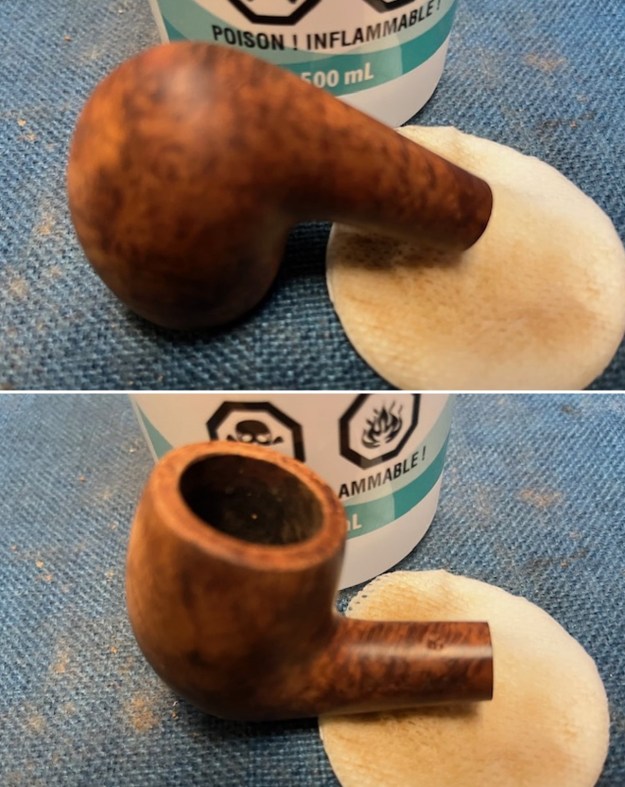
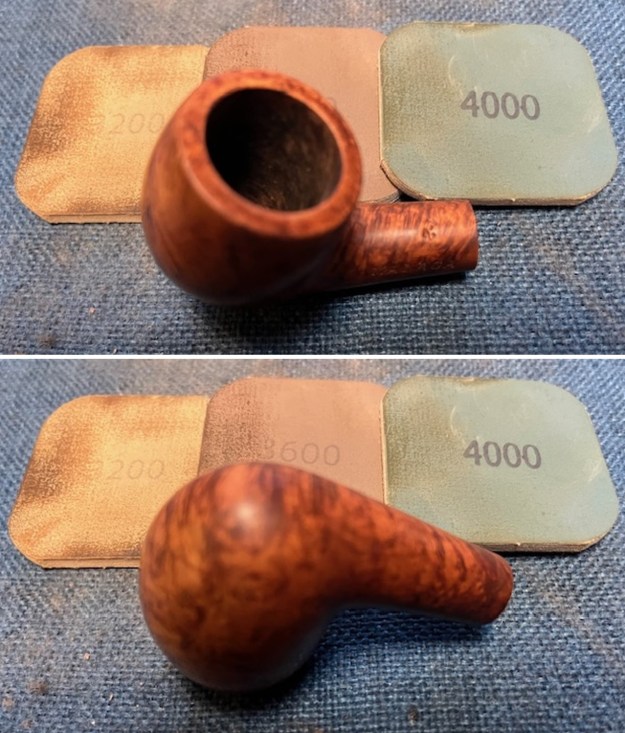
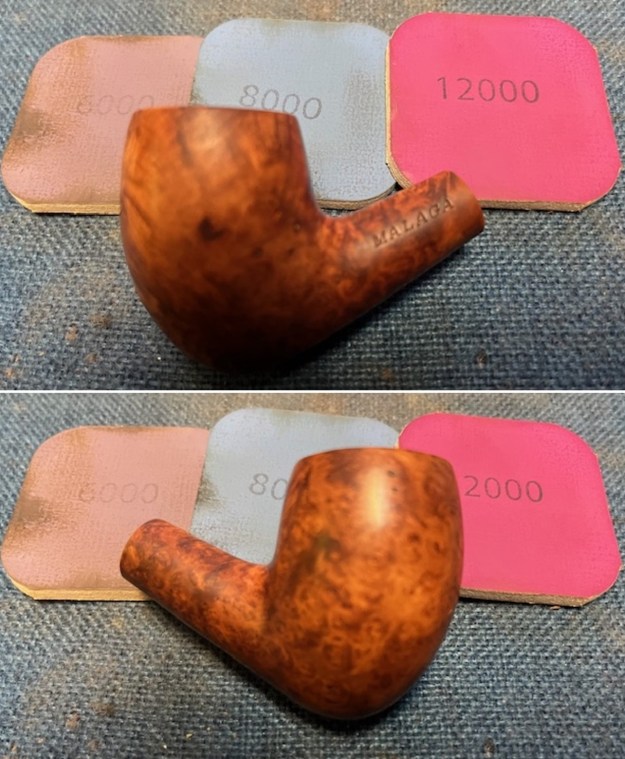
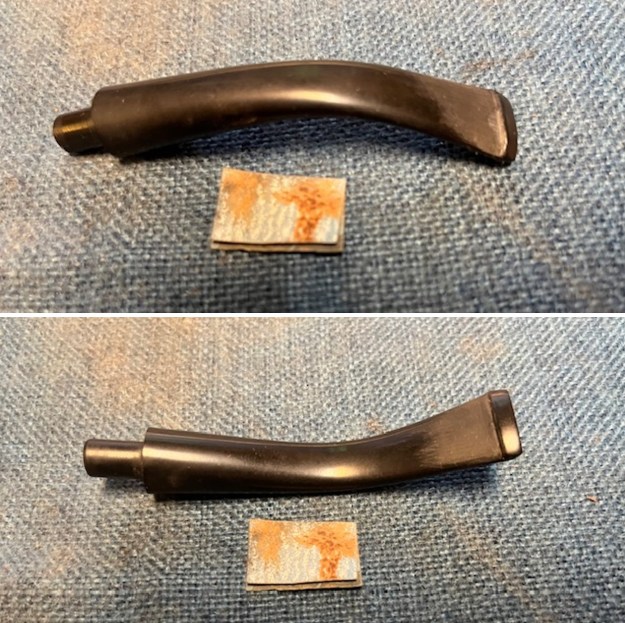
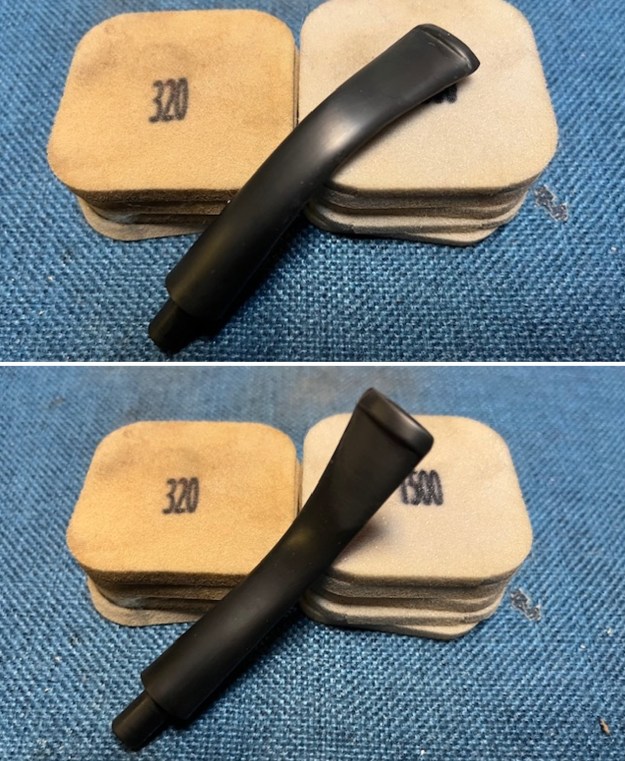
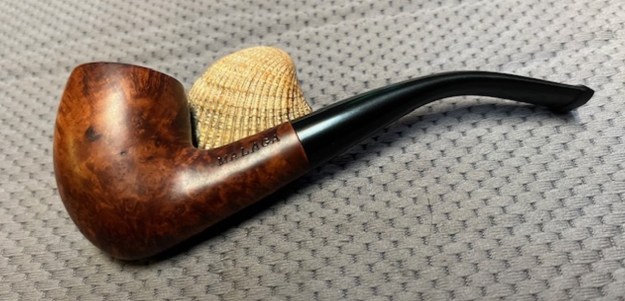
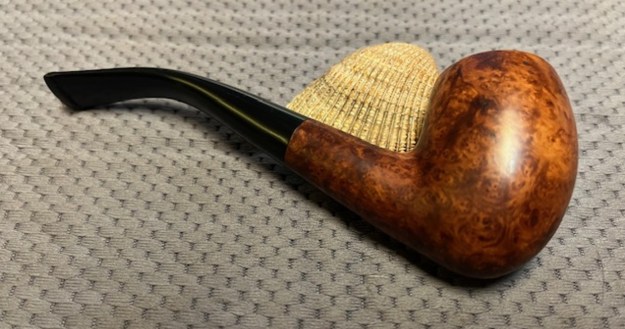
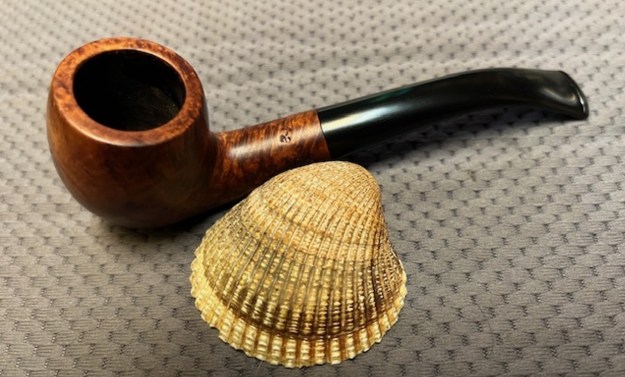
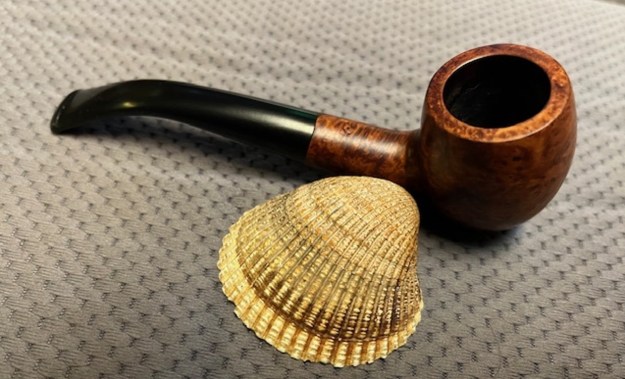
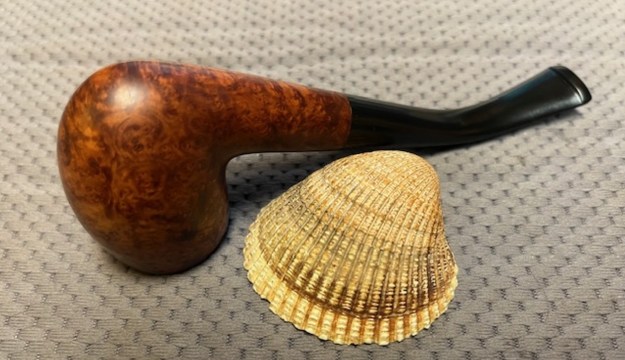
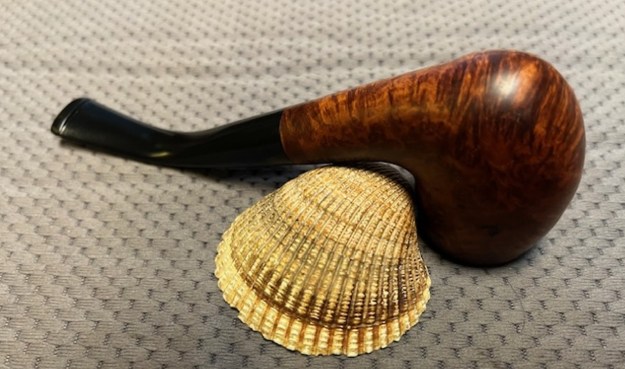
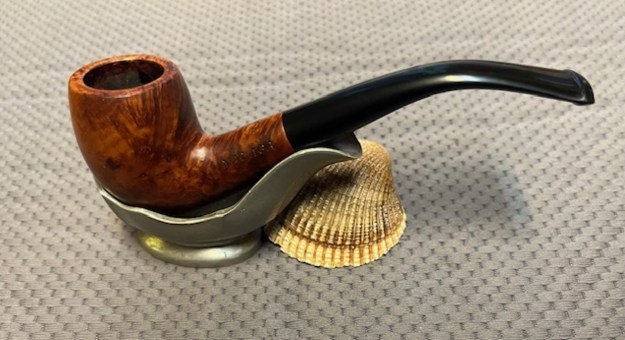
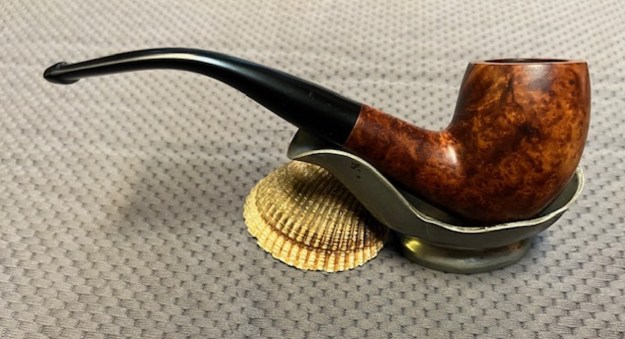
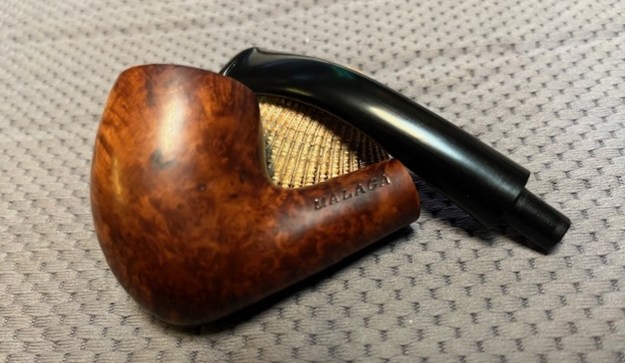
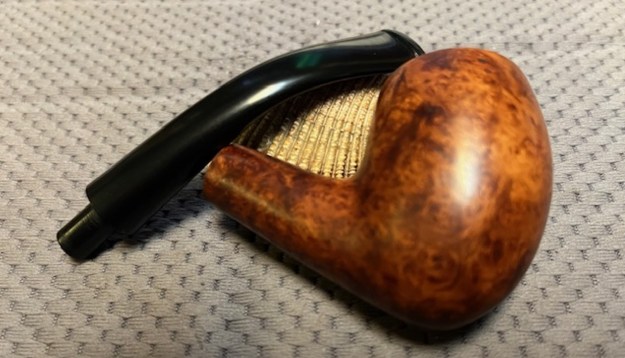
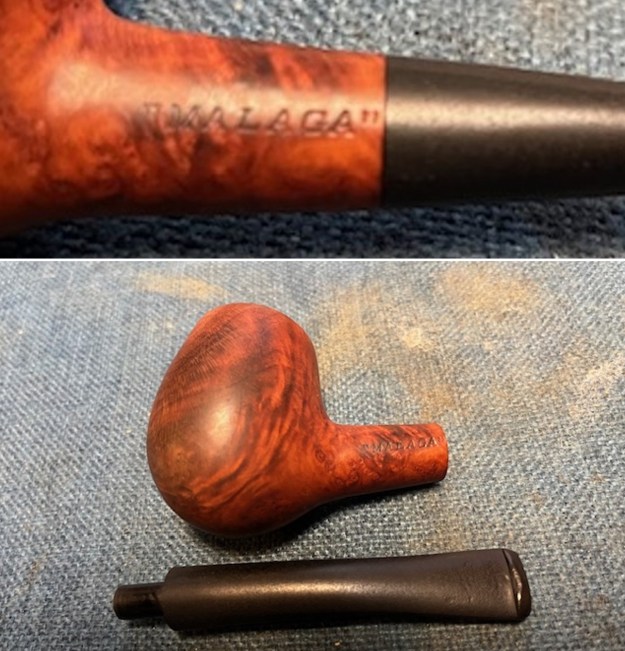
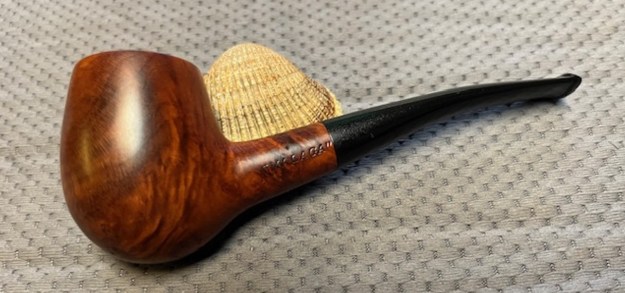
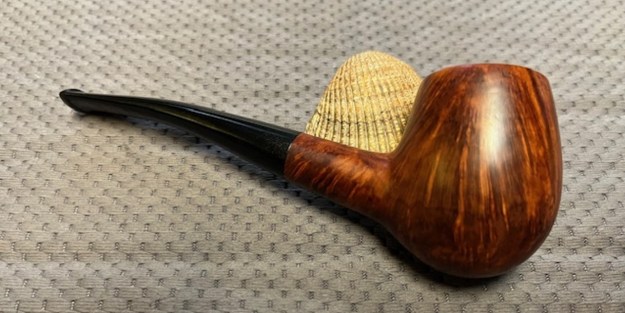
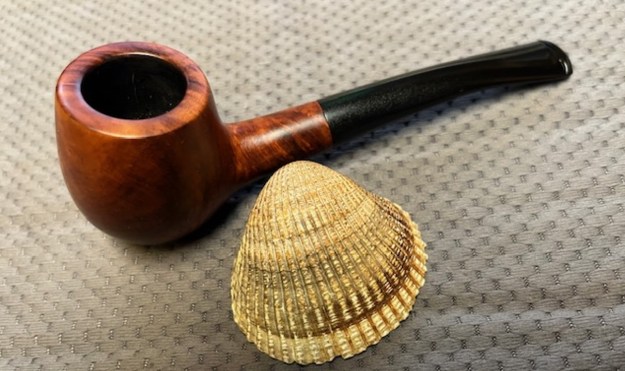
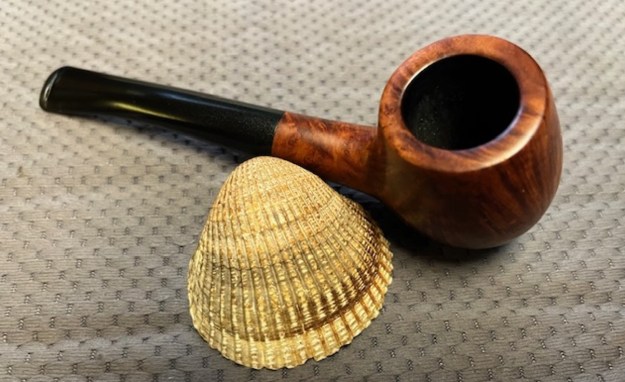
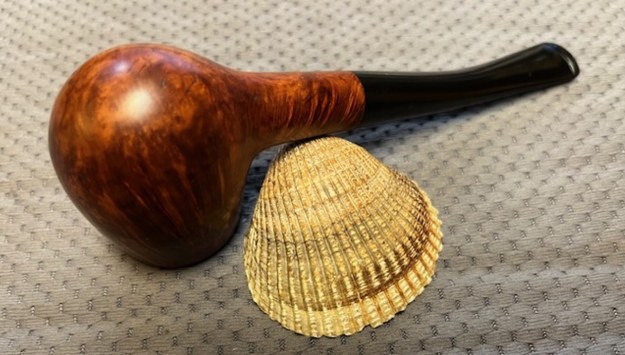
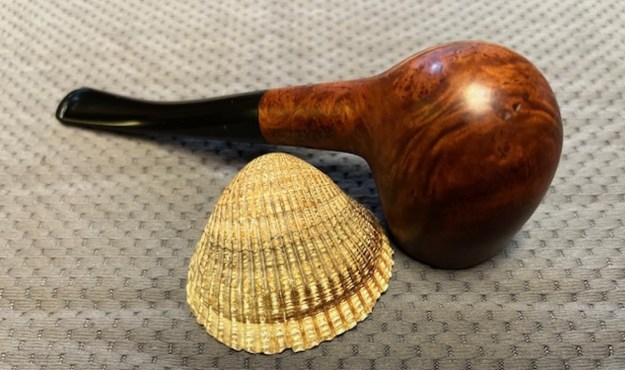
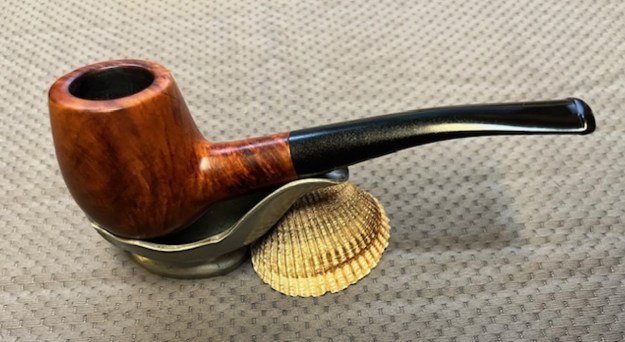
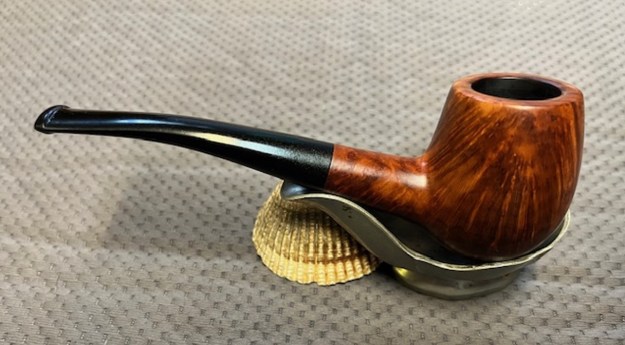
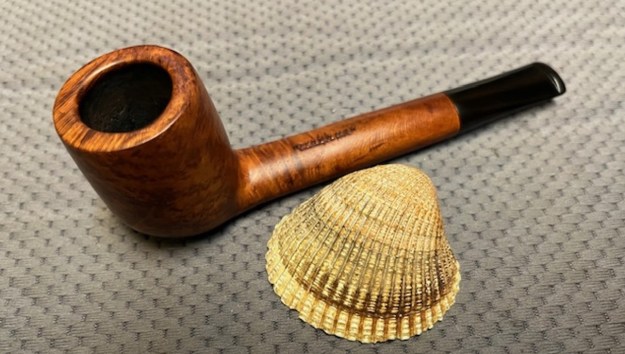
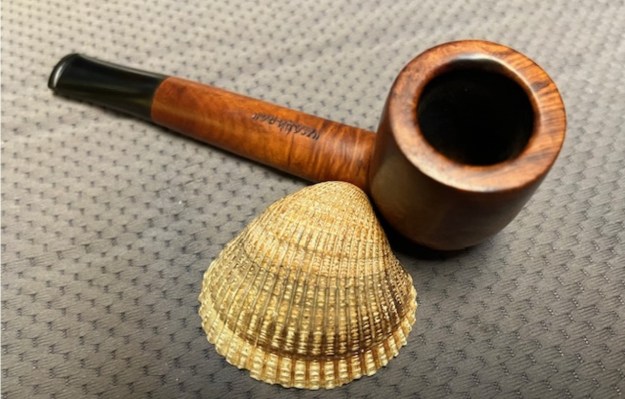
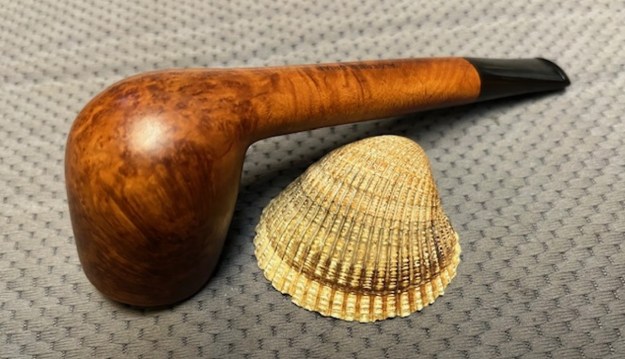
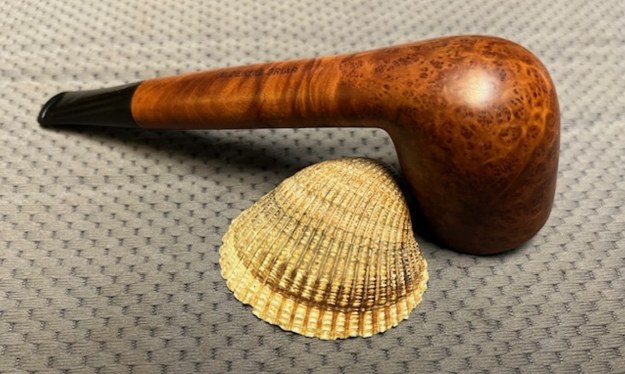
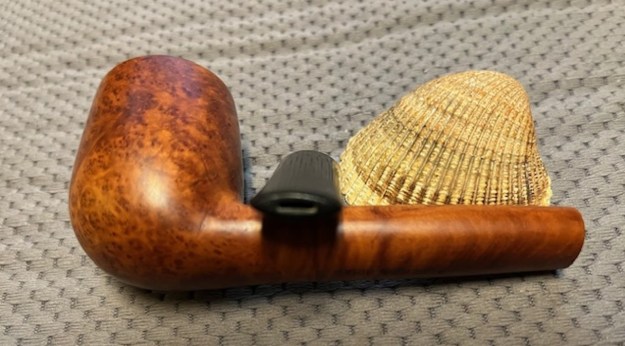
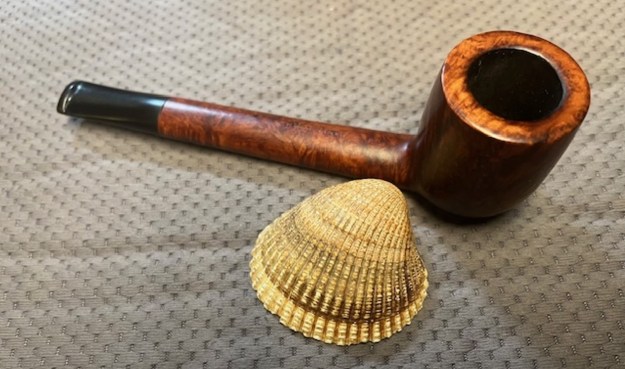
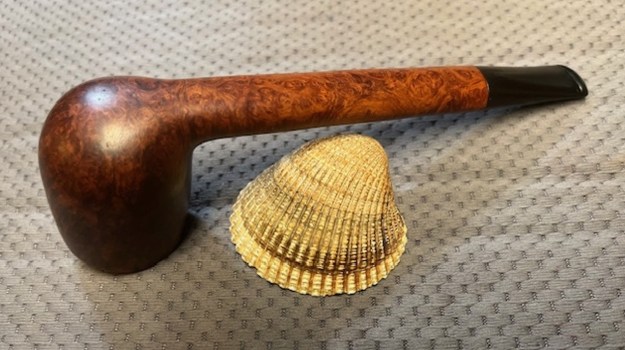
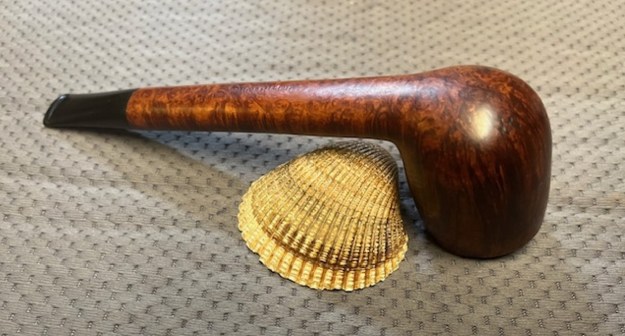
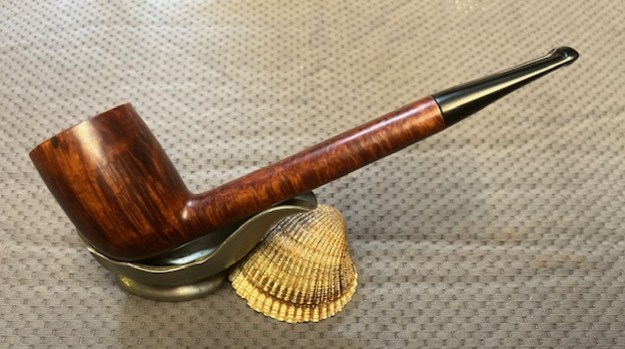
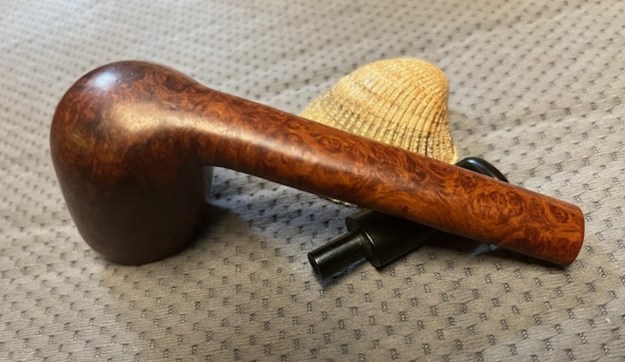
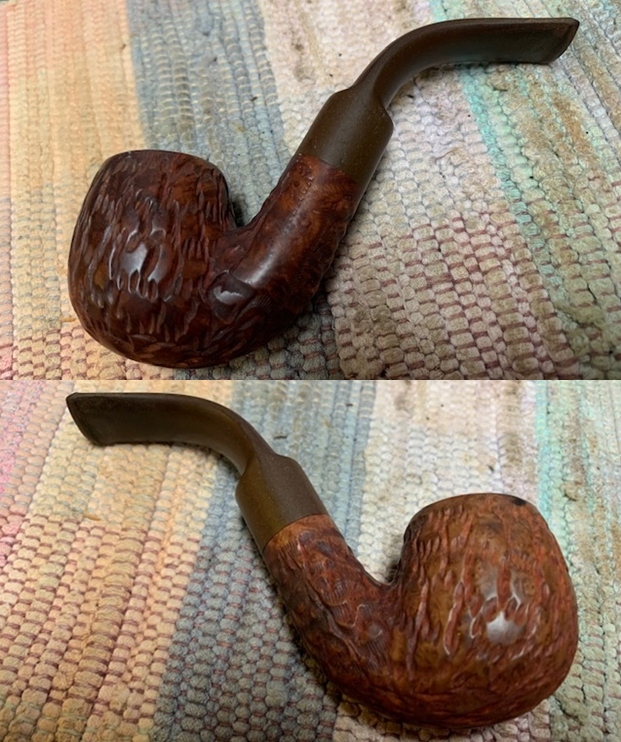
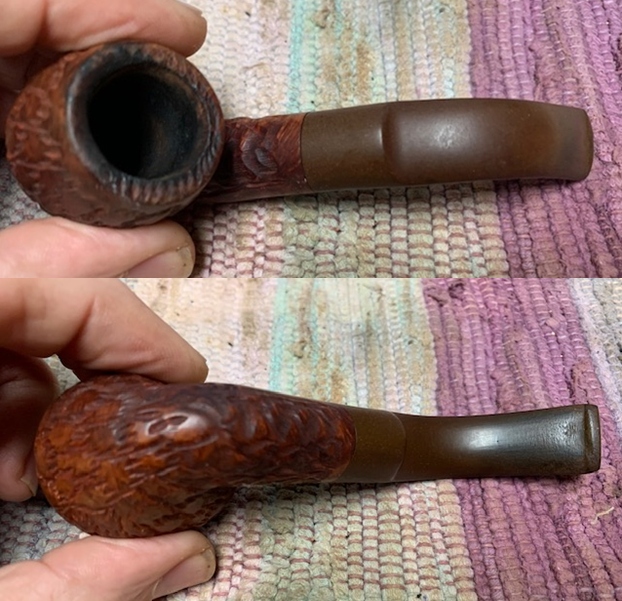
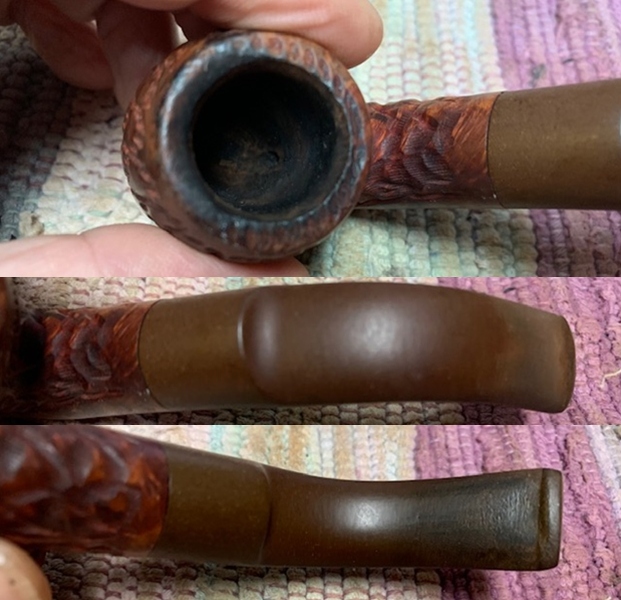
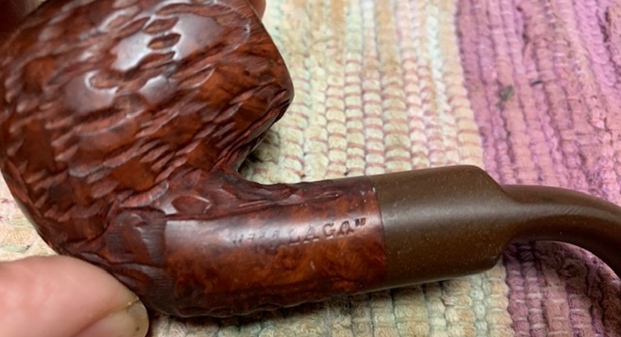
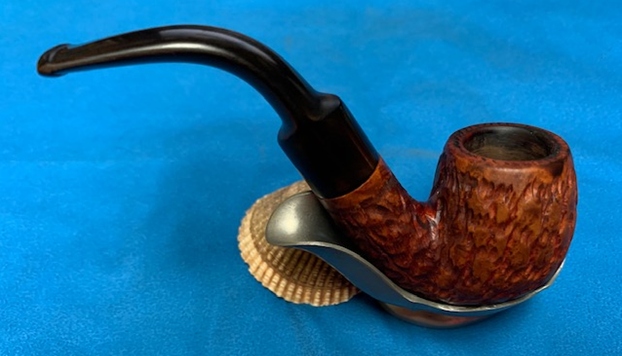
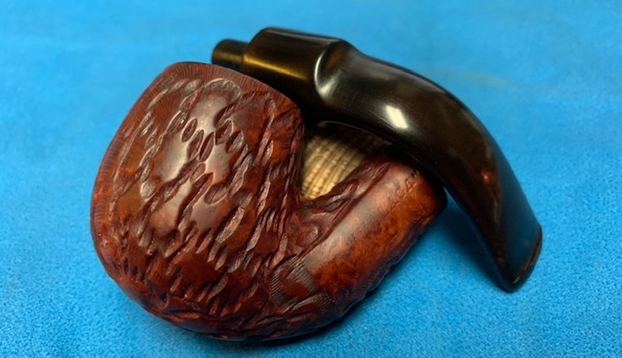
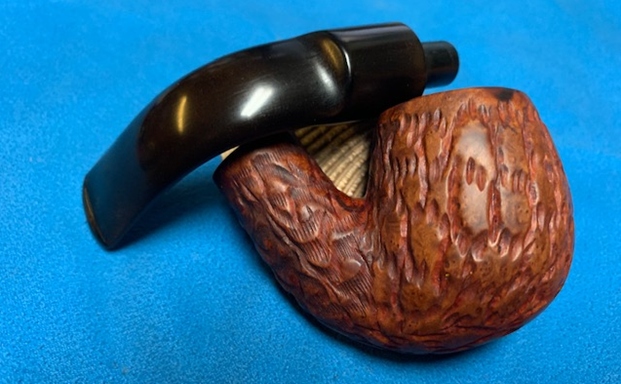
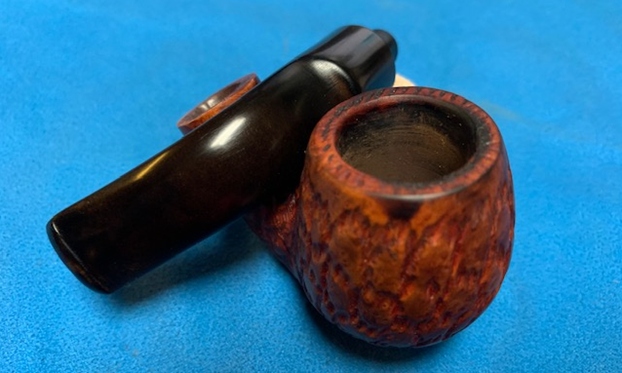
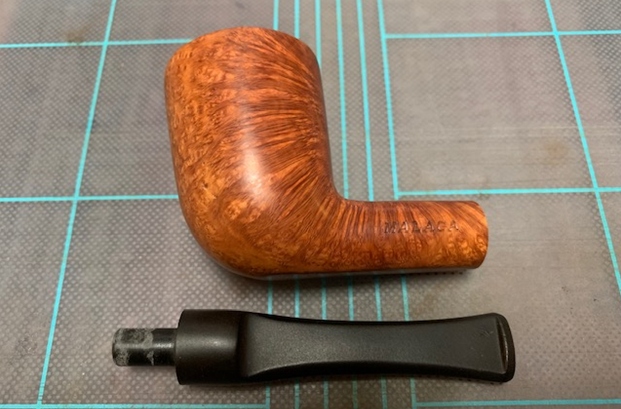
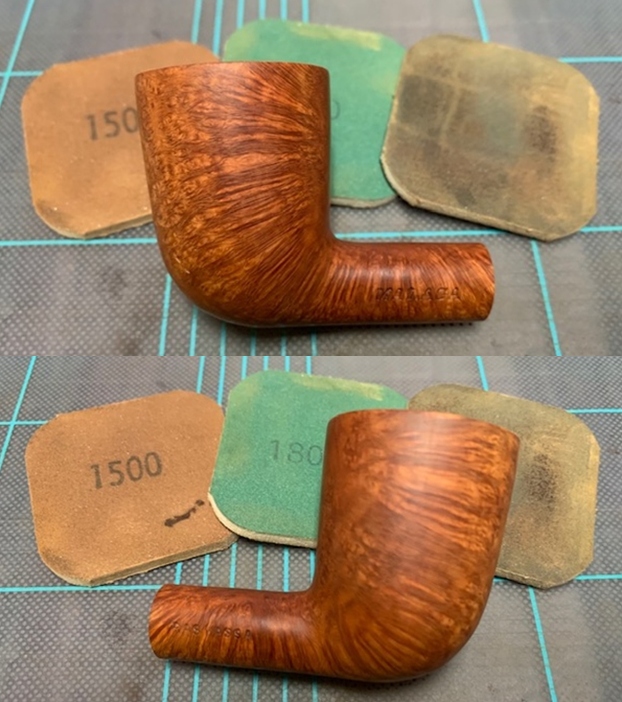
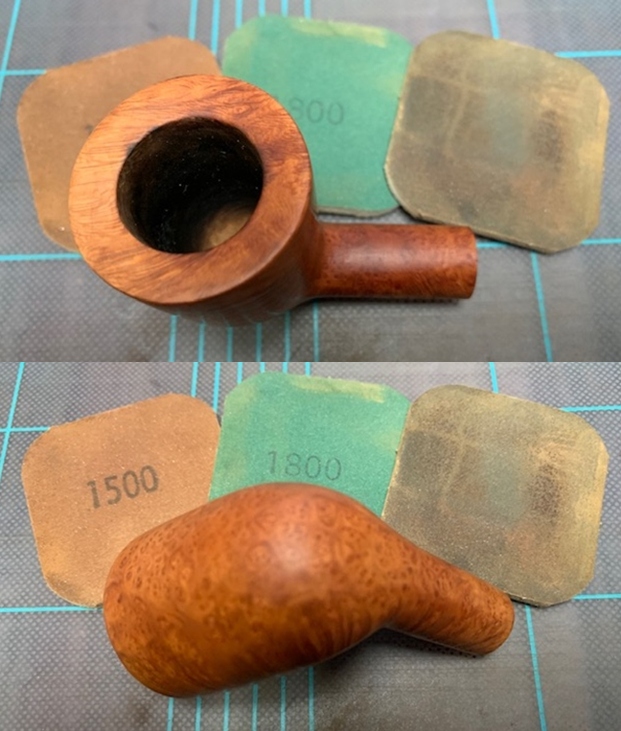
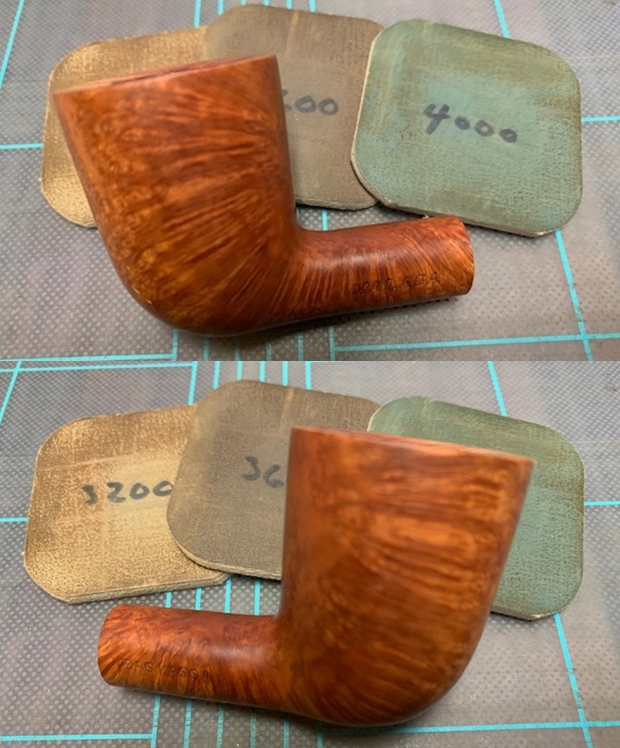
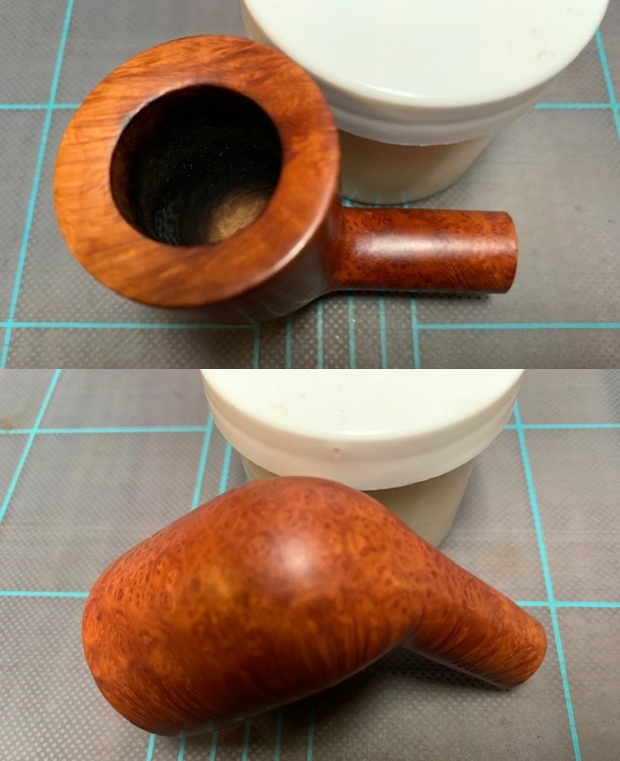
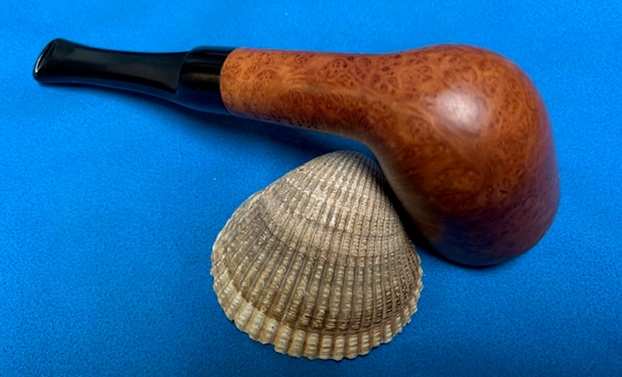
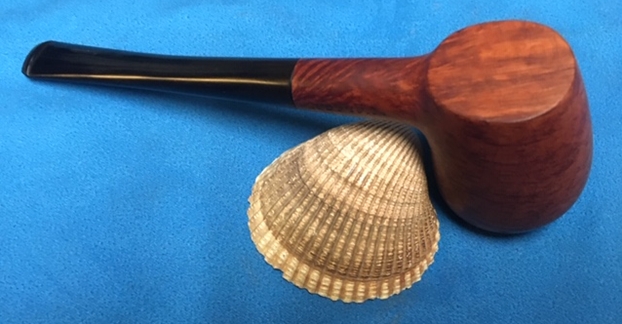
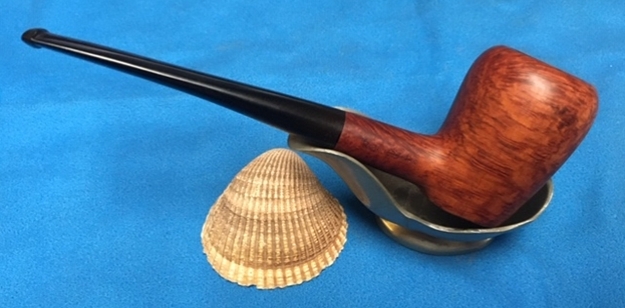
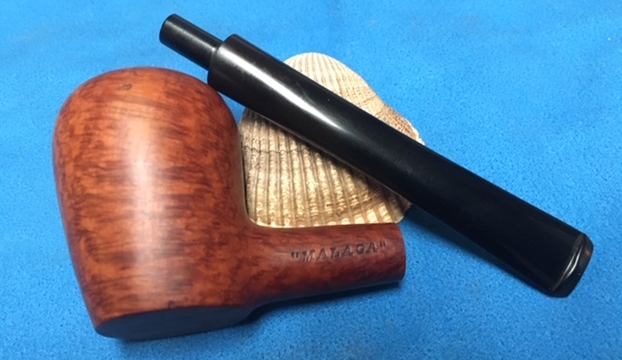
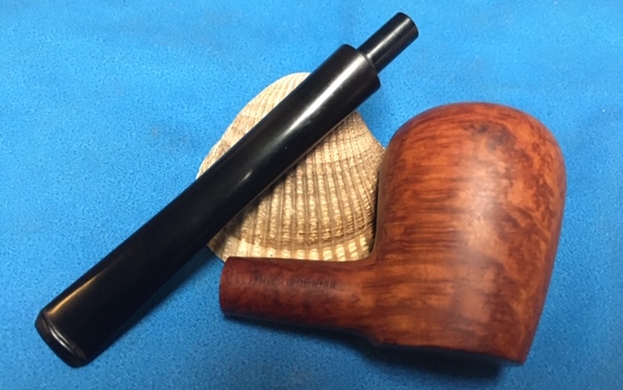
Breathing new life into another Beautiful “Malaga” M-2 Acorn


by Steve Laug

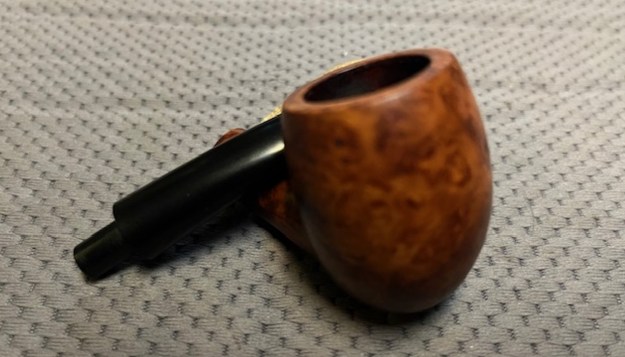
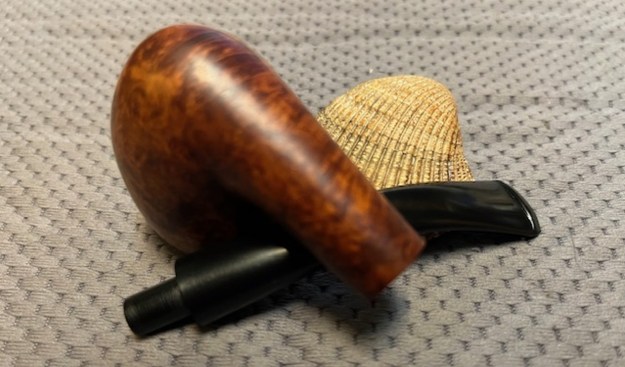
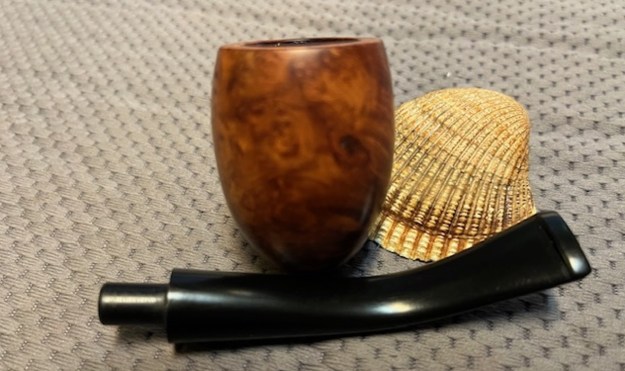
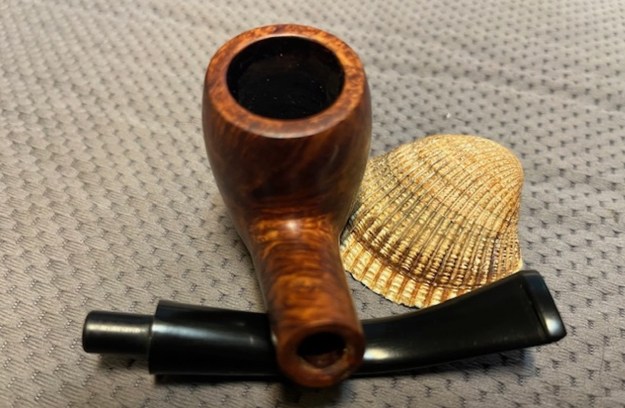
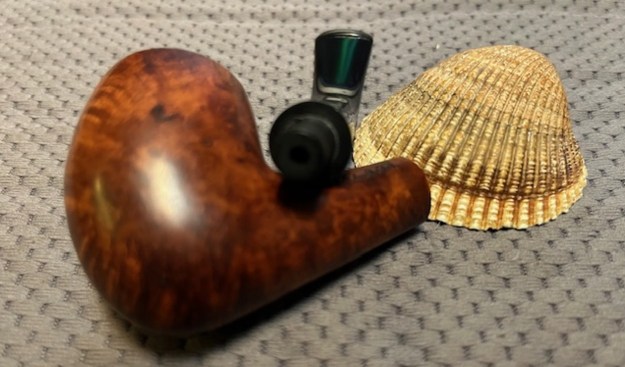
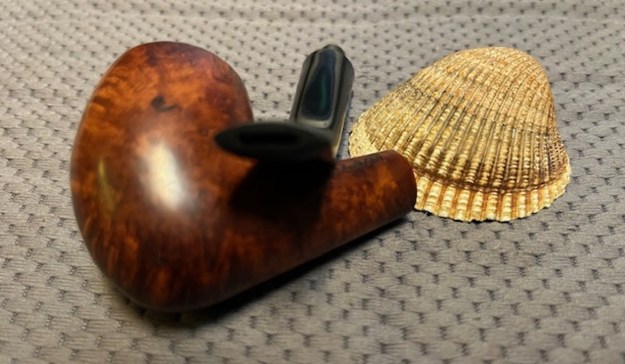
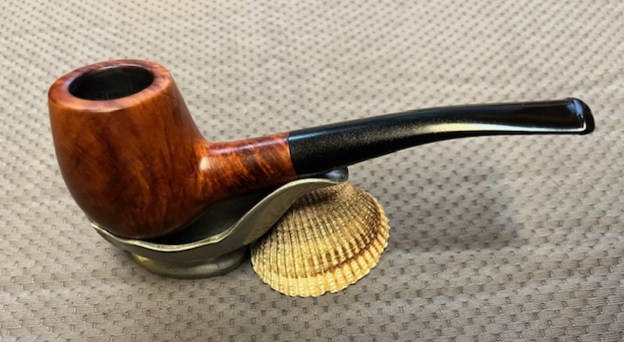
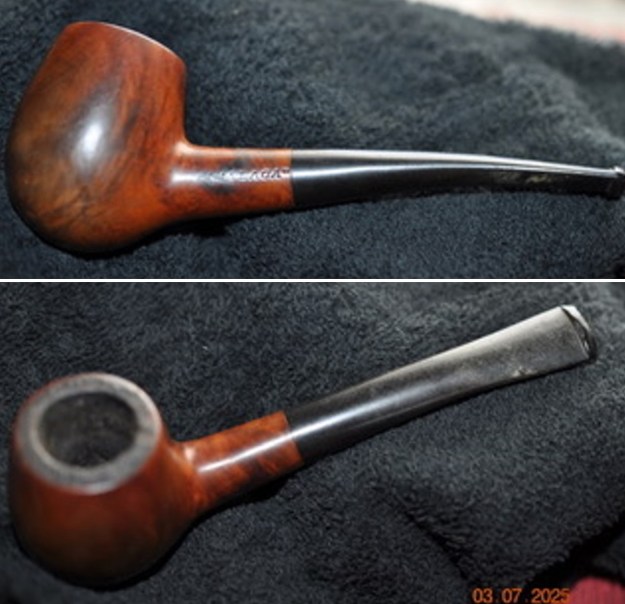
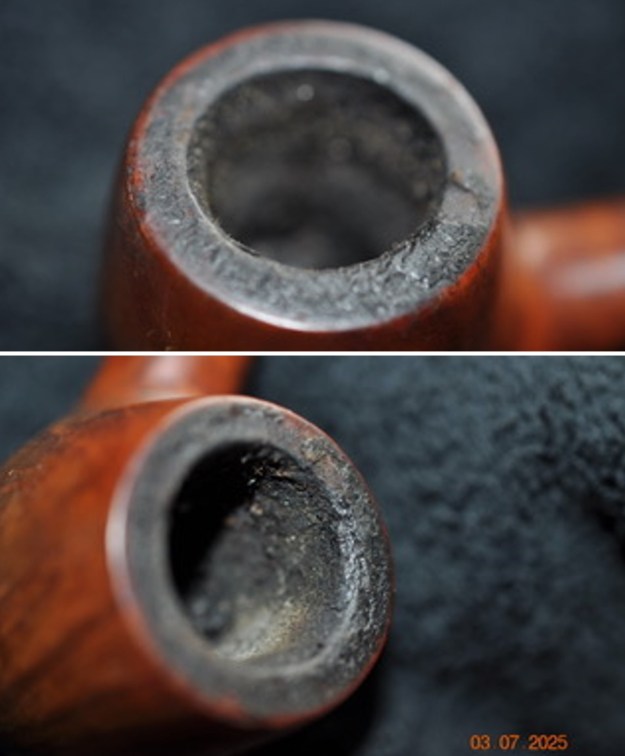
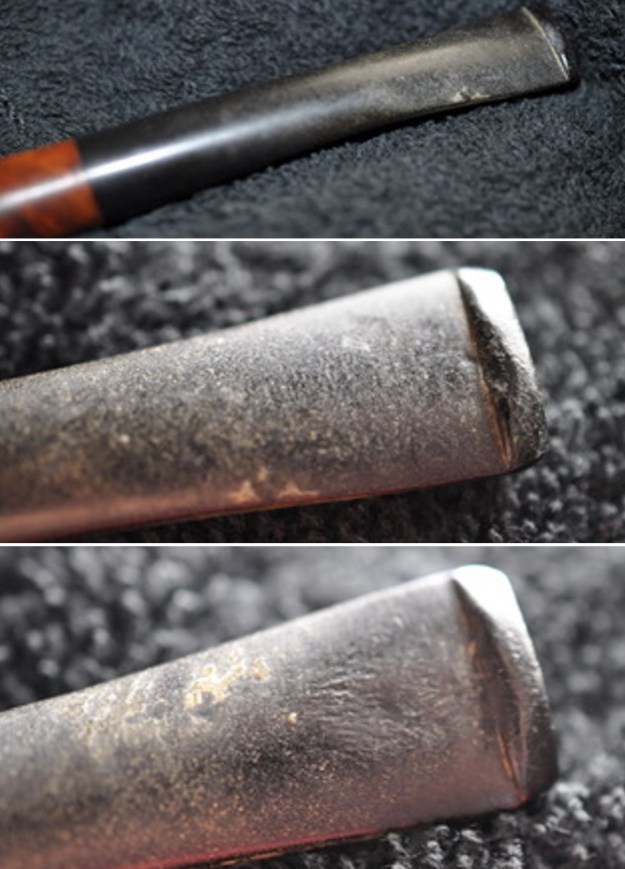
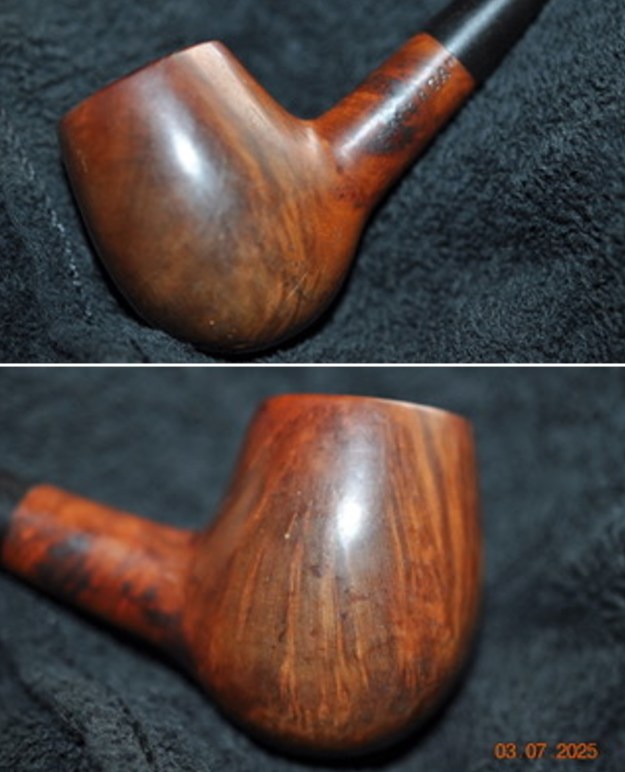
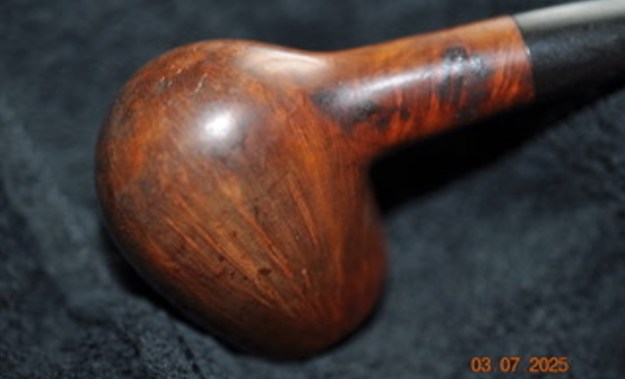
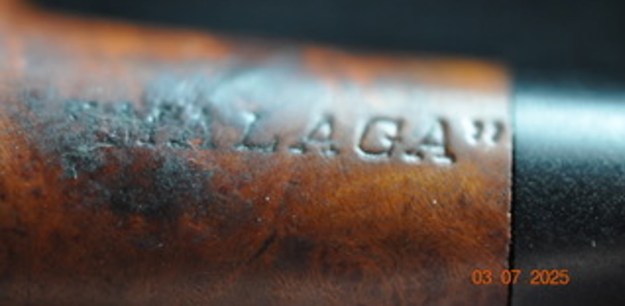
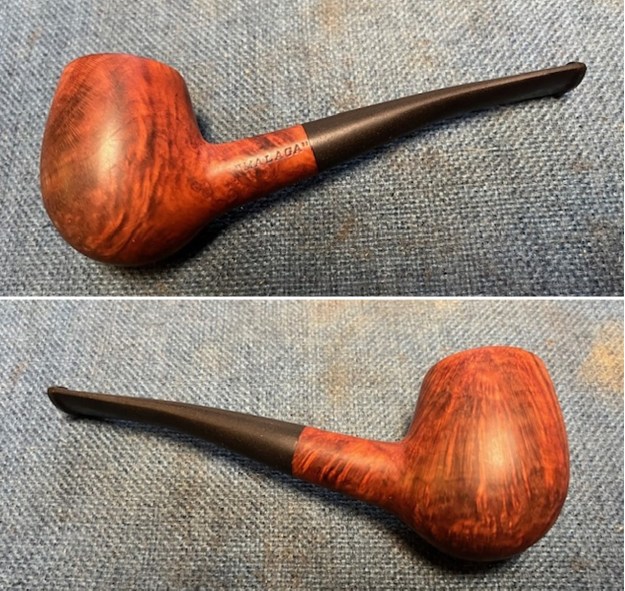
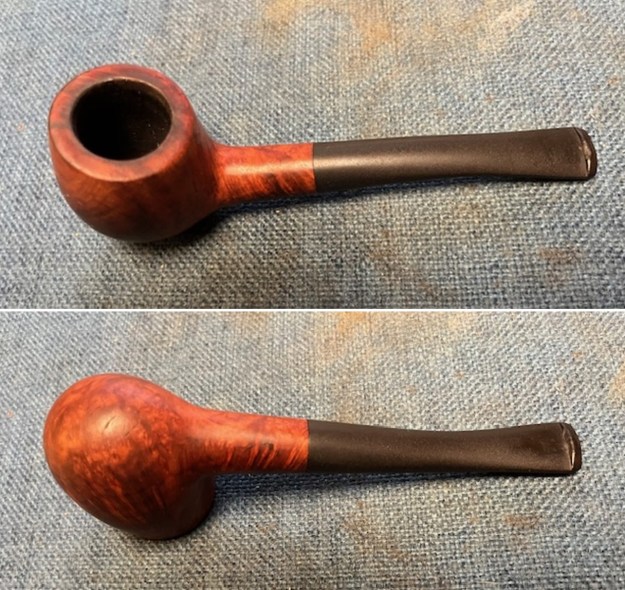
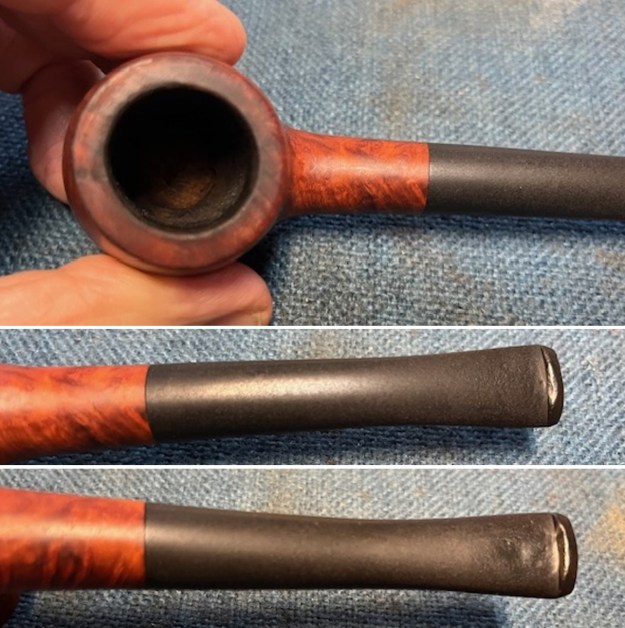
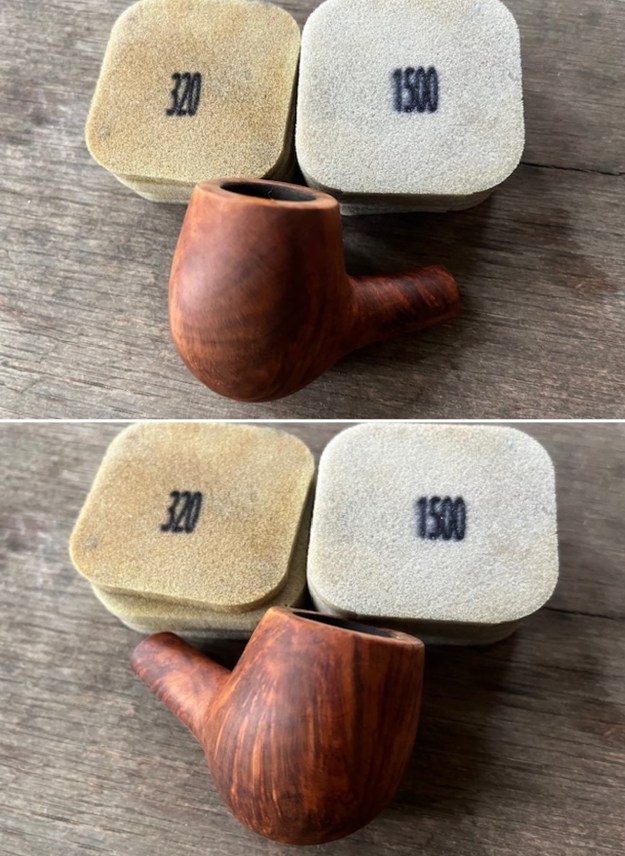
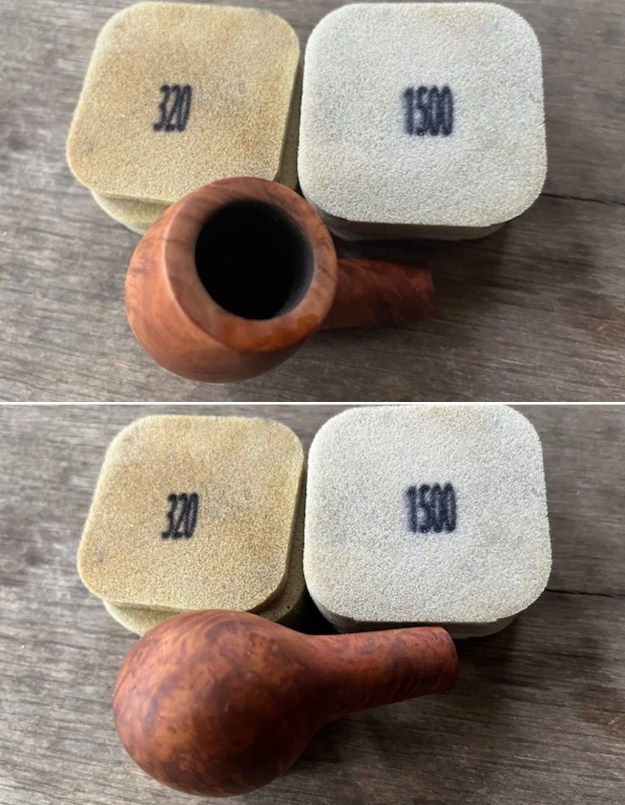
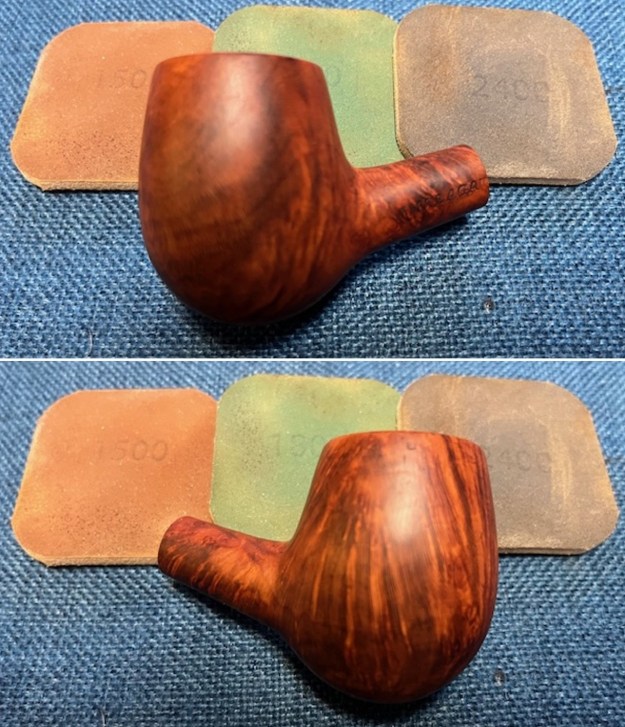
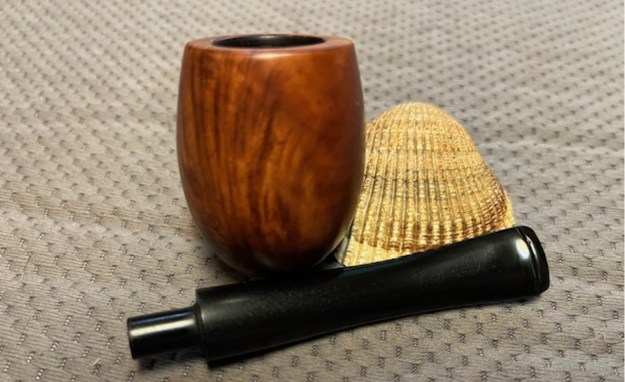
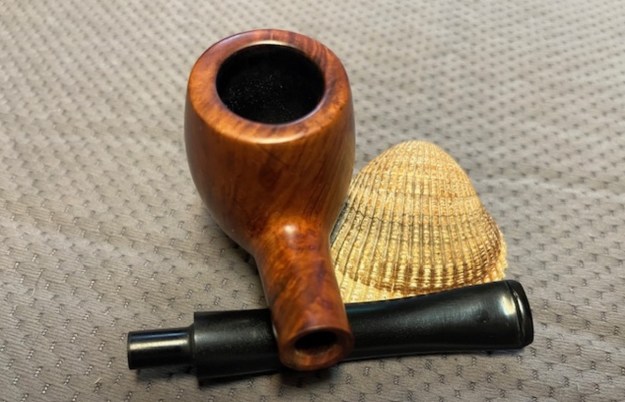
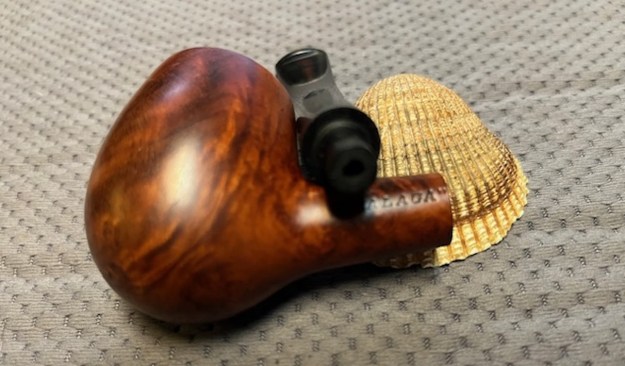
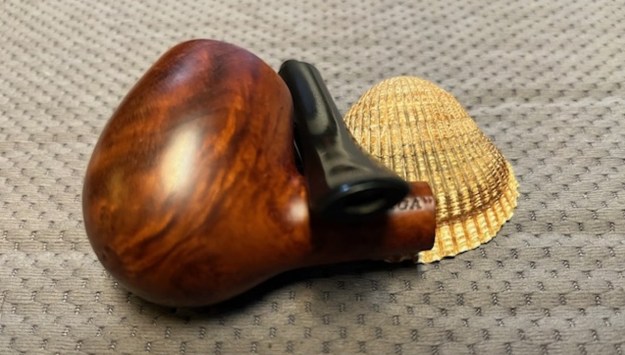
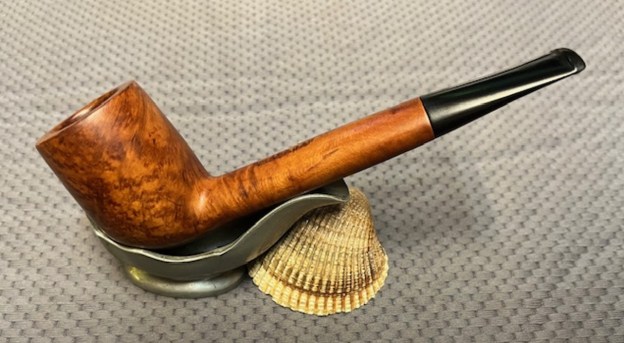
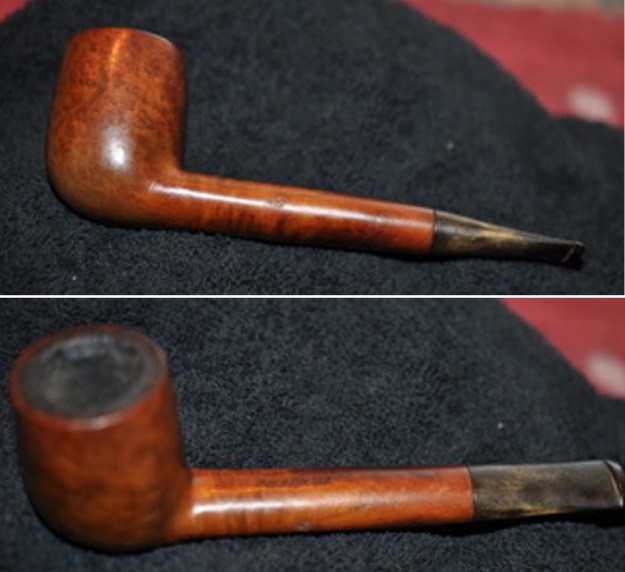
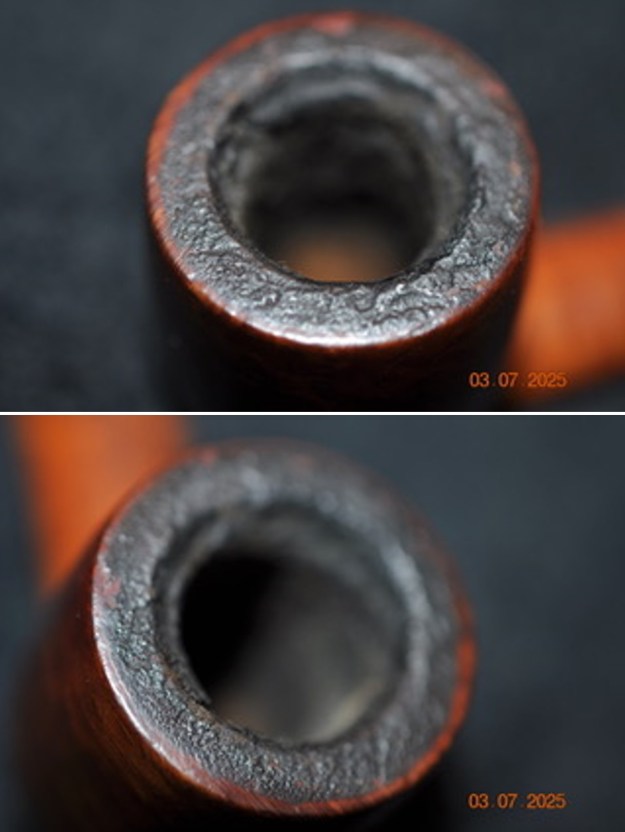
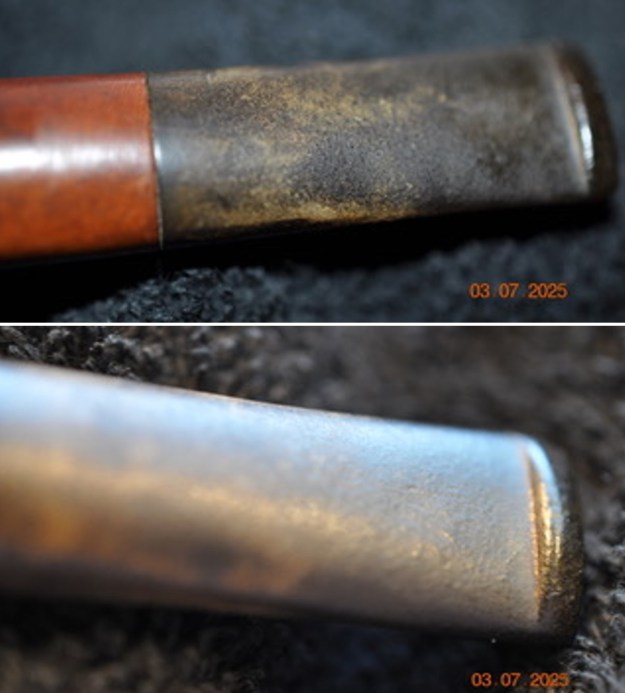
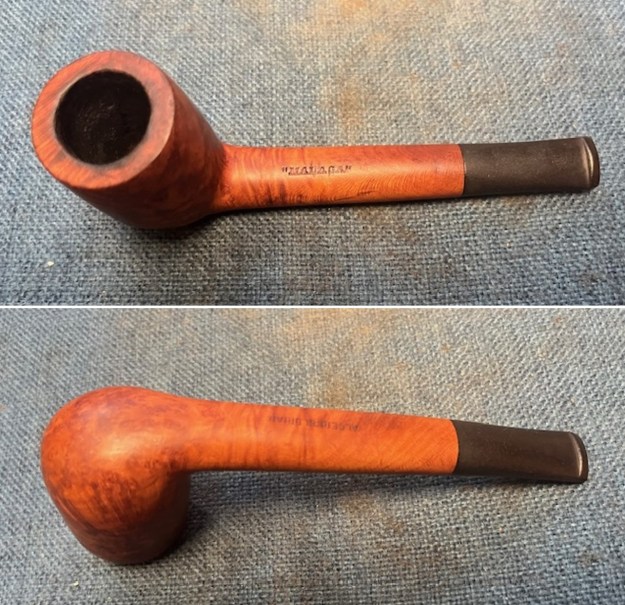
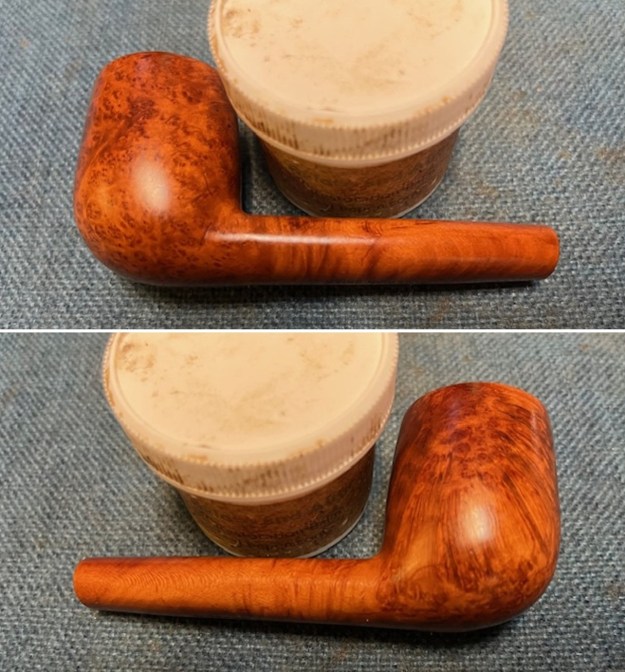
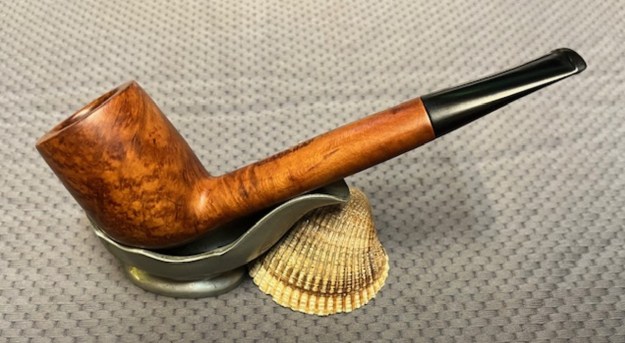
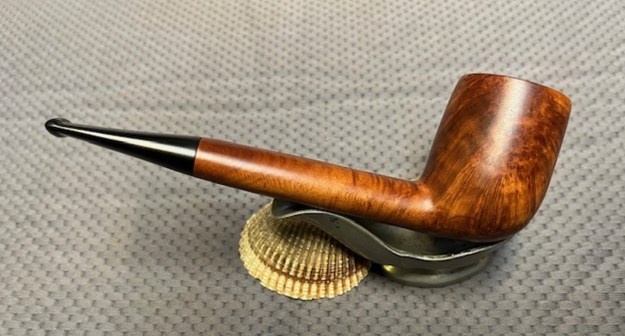
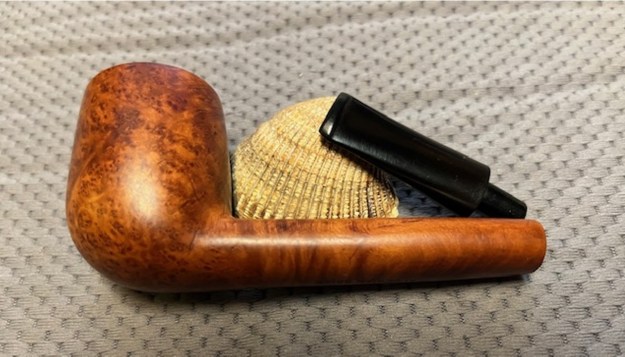
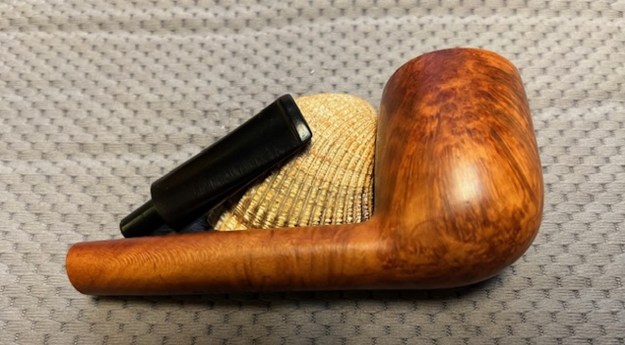
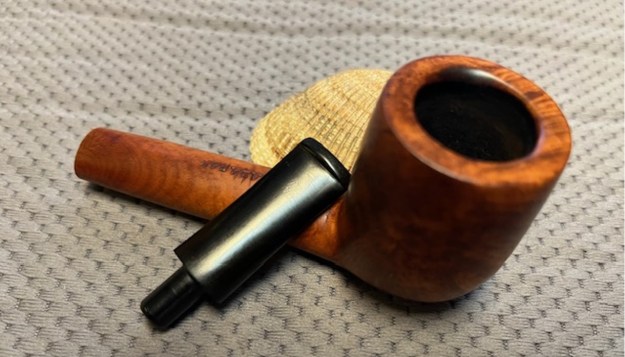
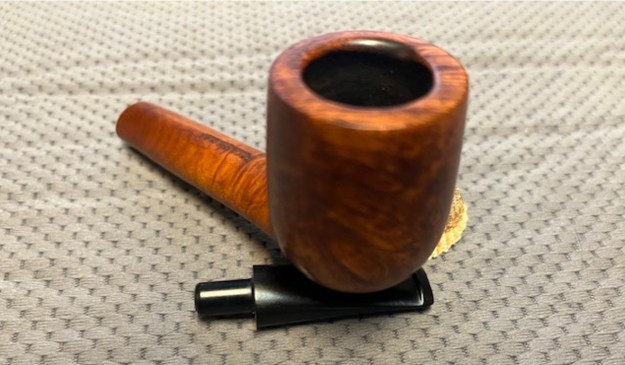
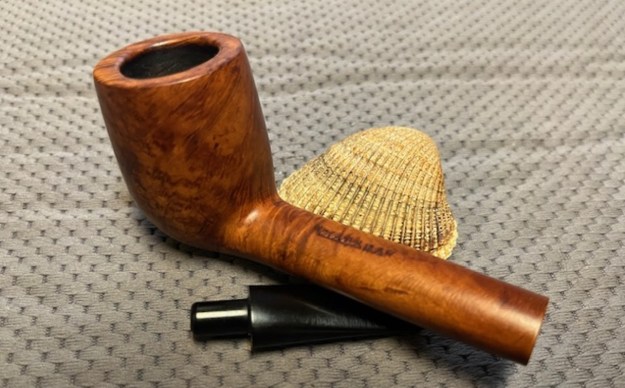
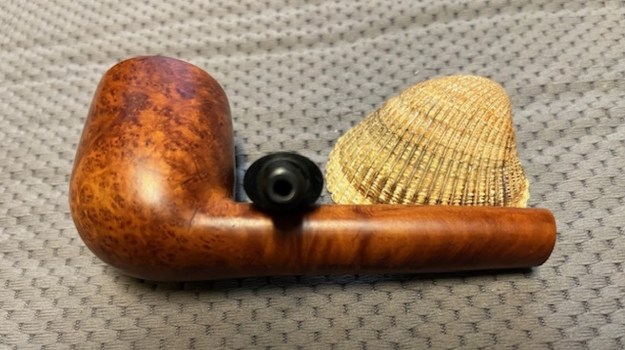
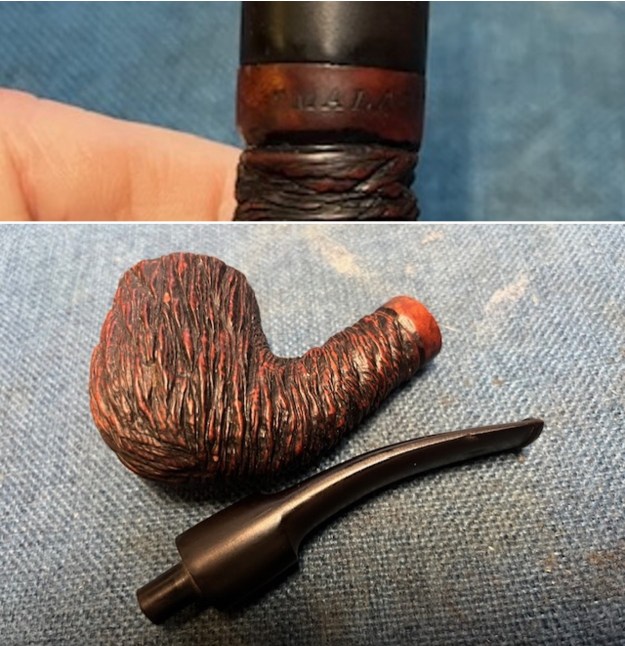
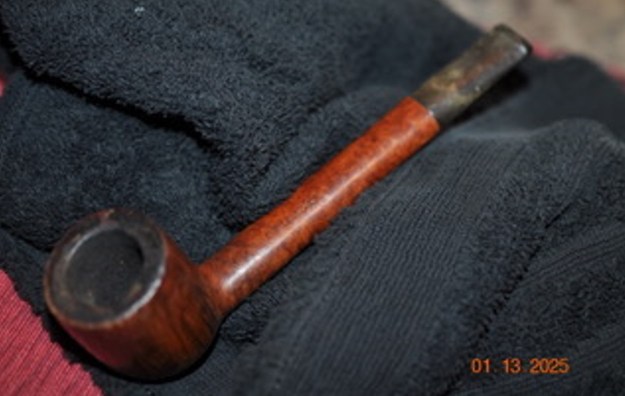
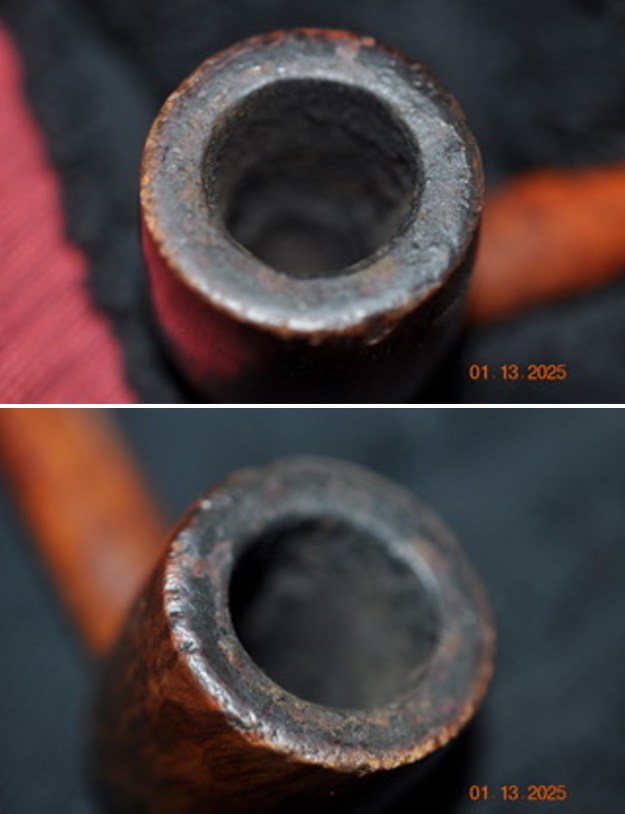
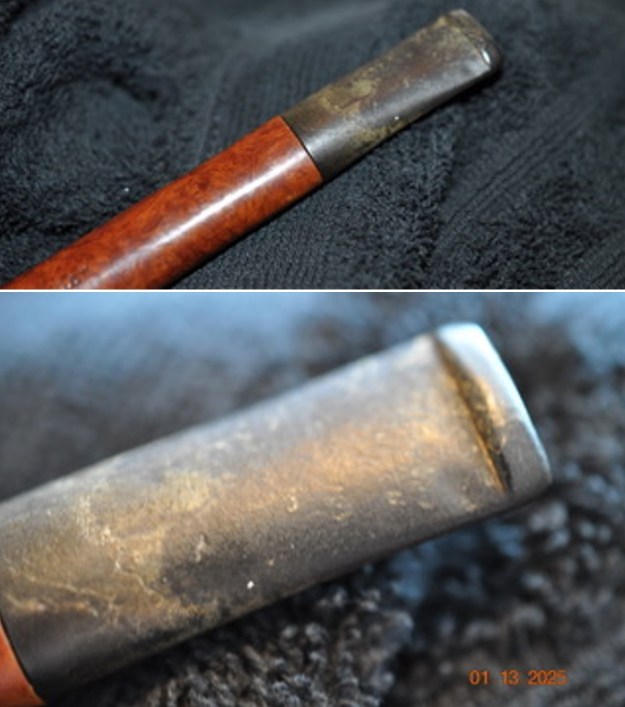
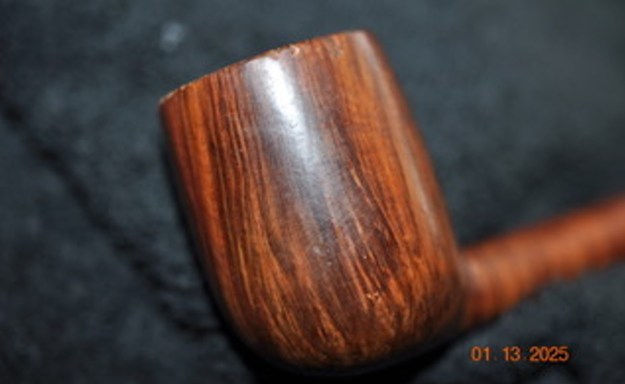
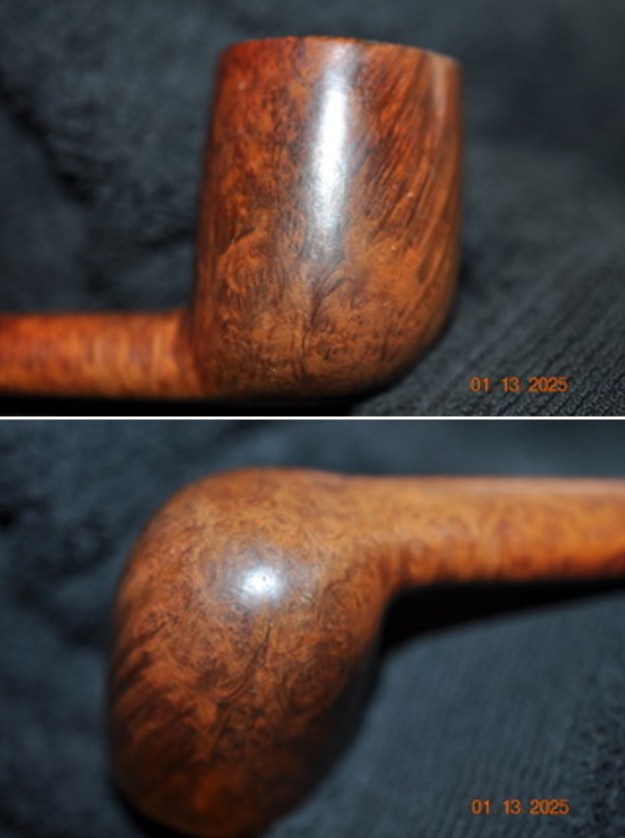
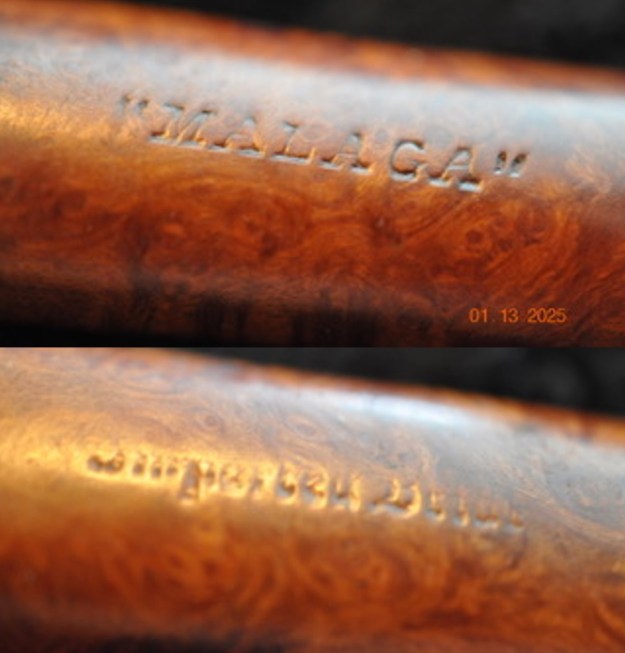
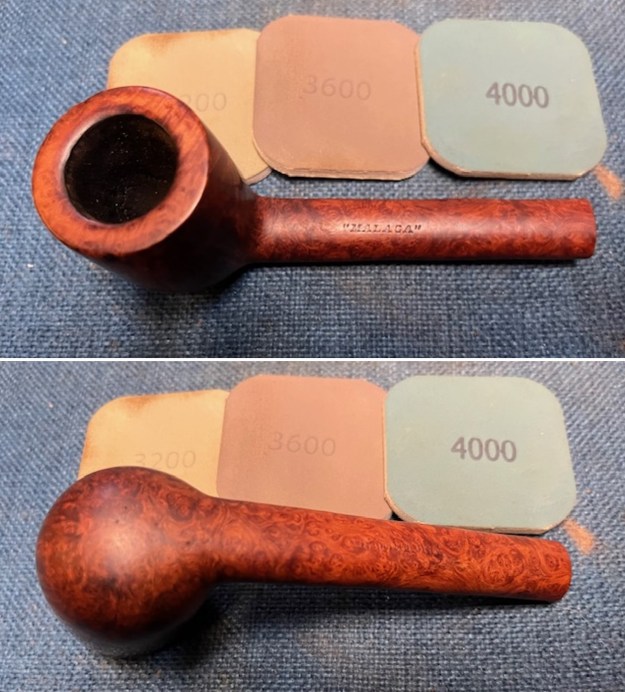
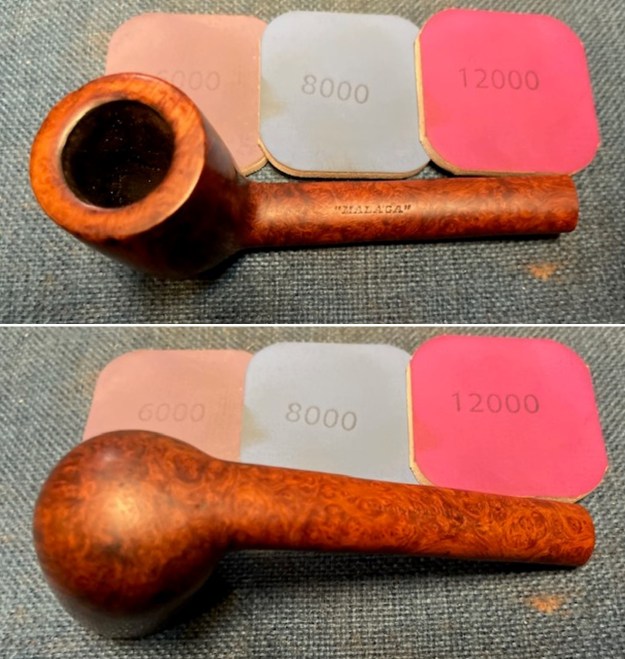
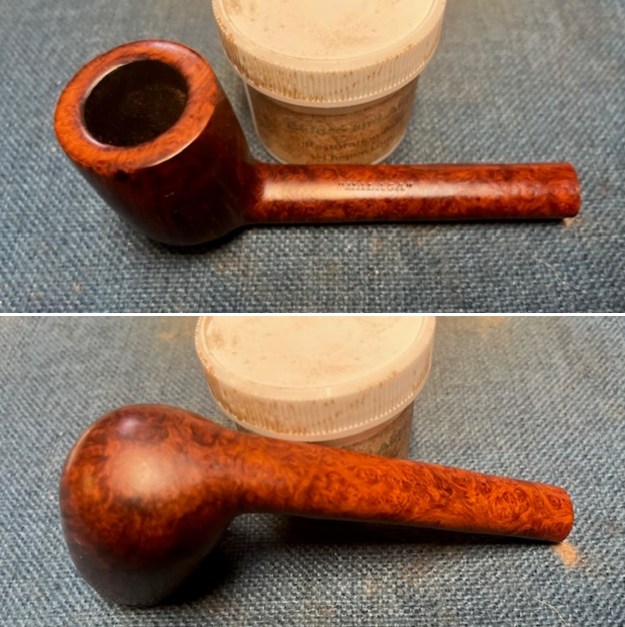
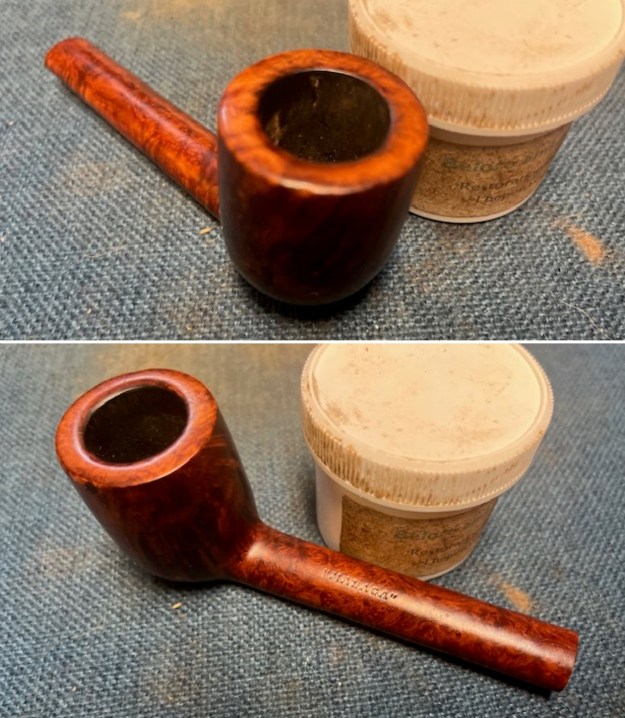
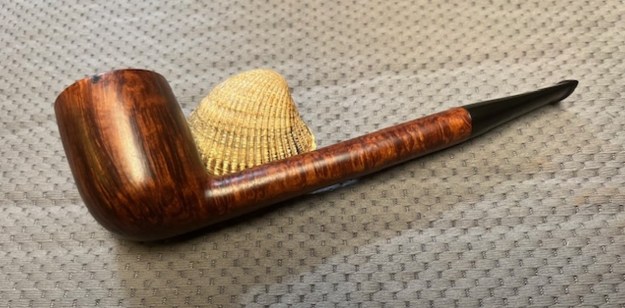
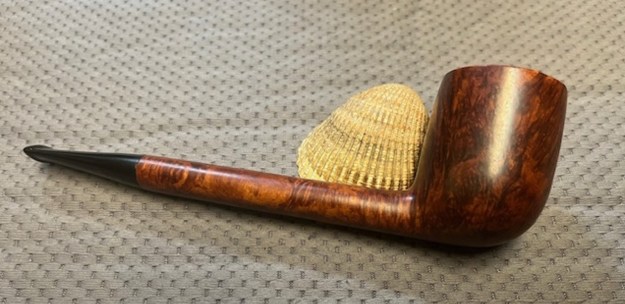
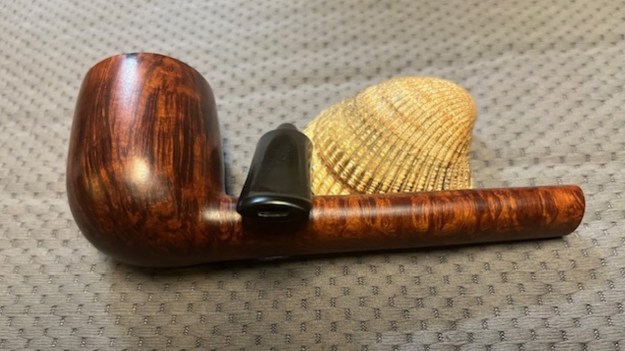
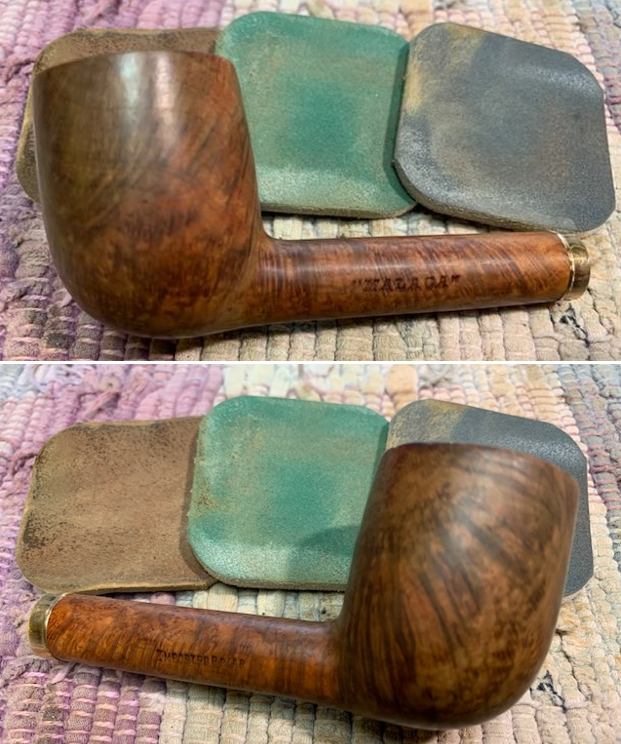
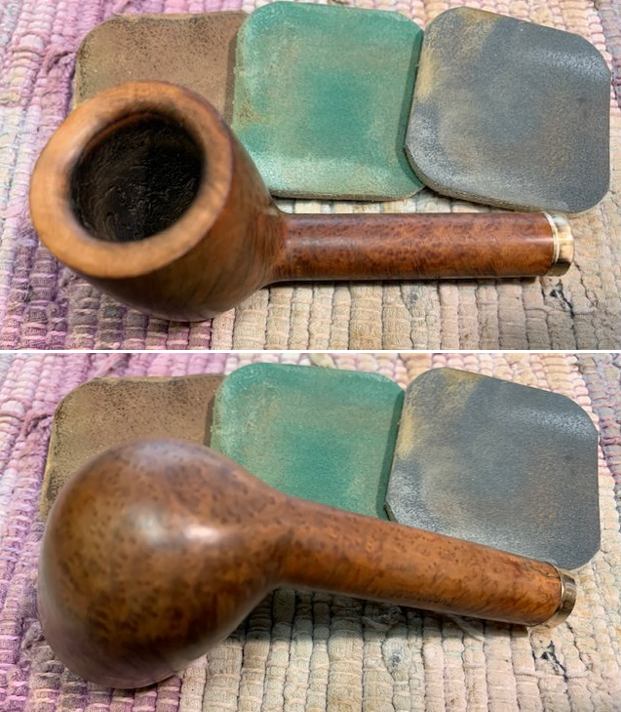
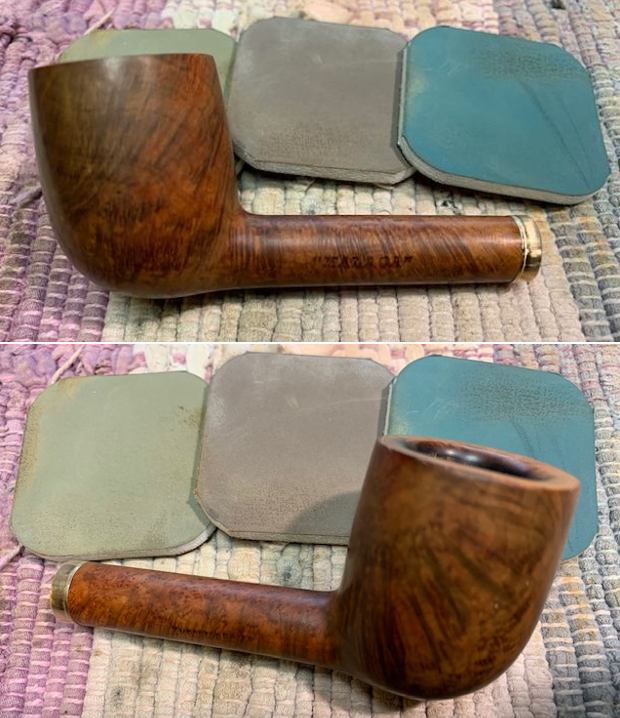
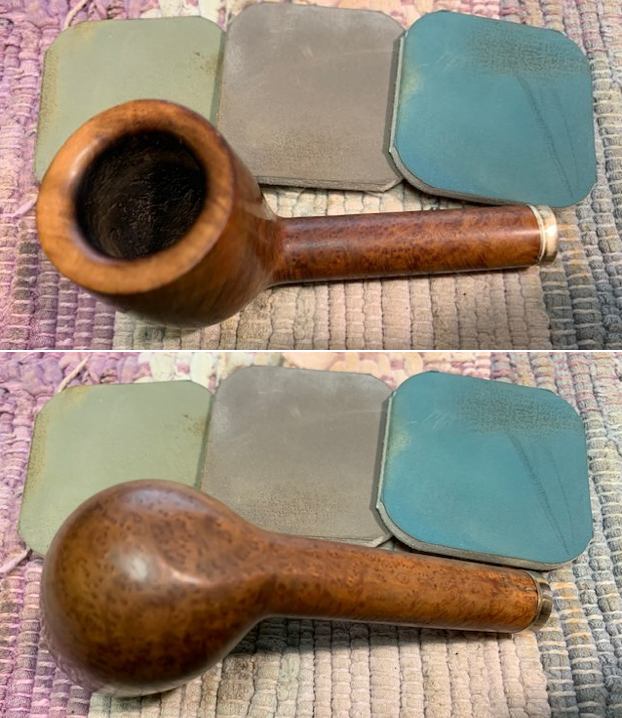
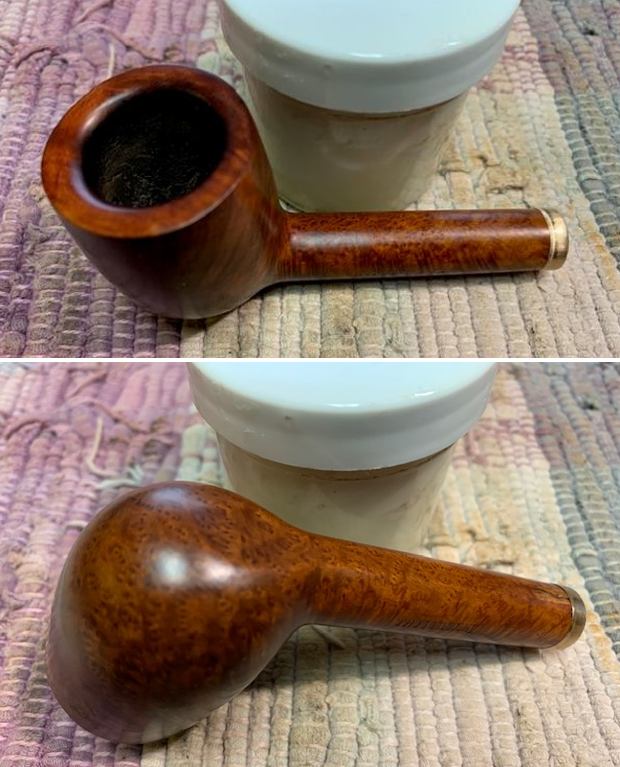
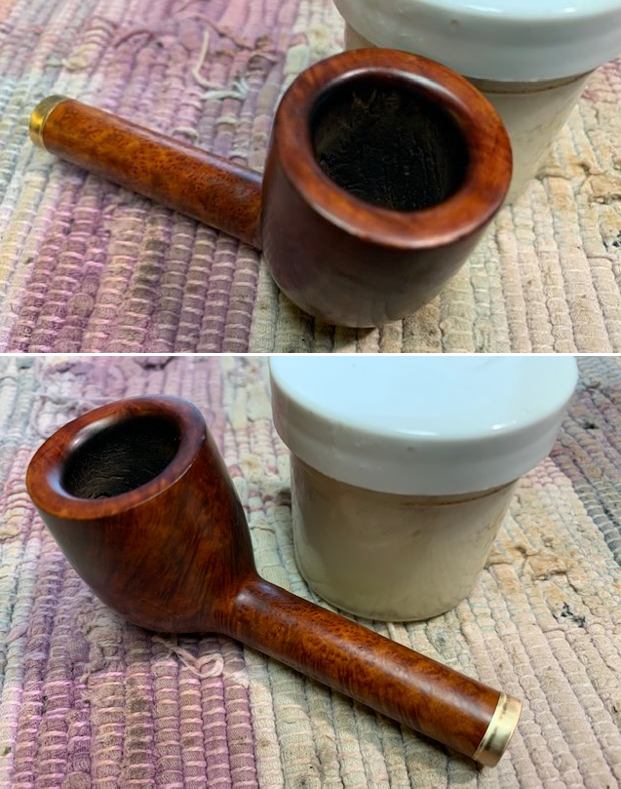
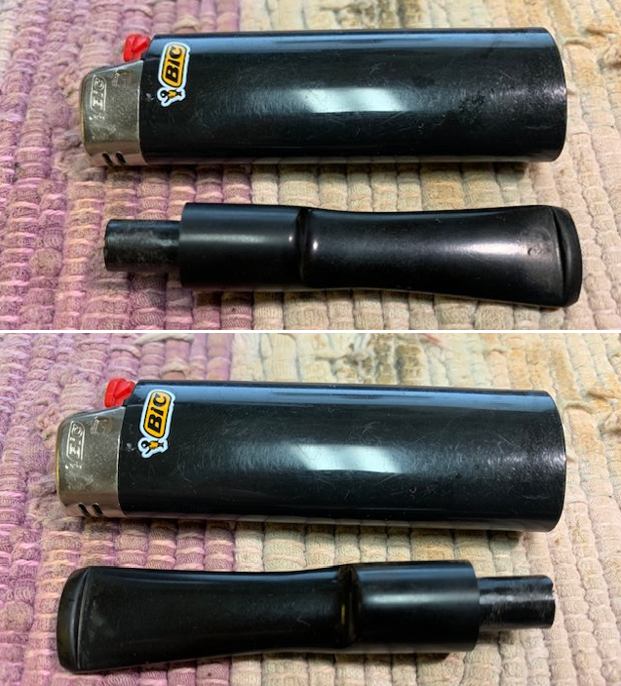
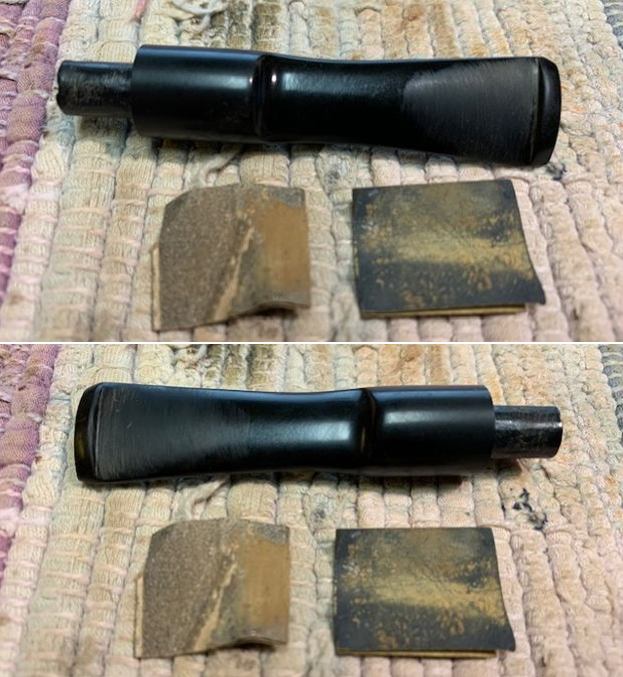
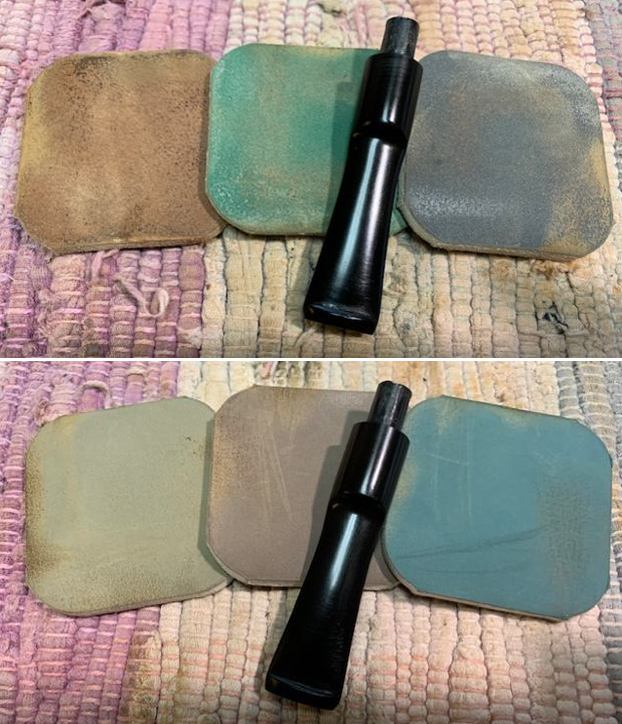
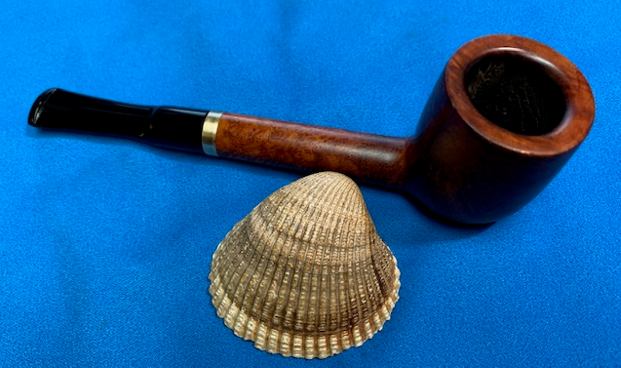
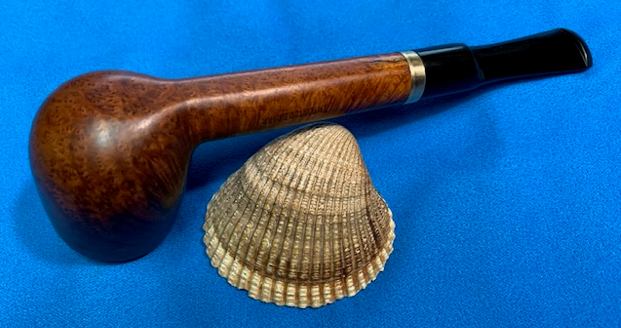
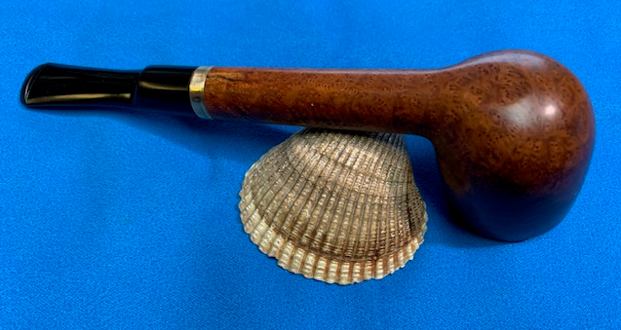
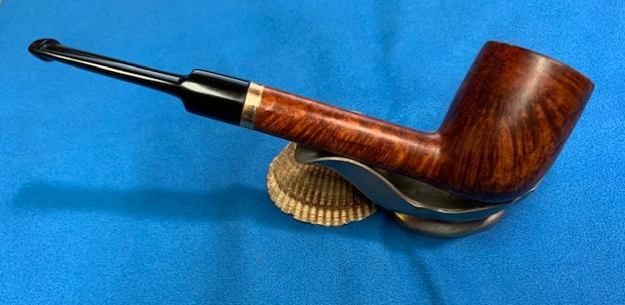
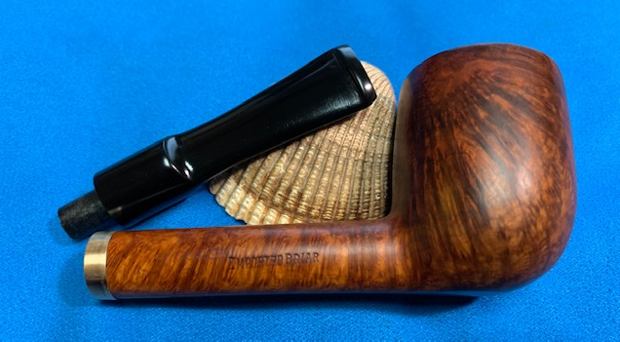
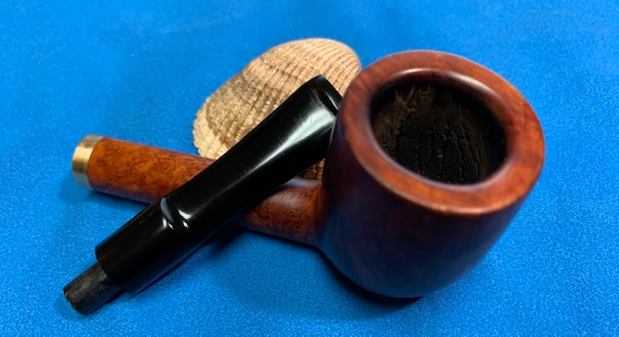
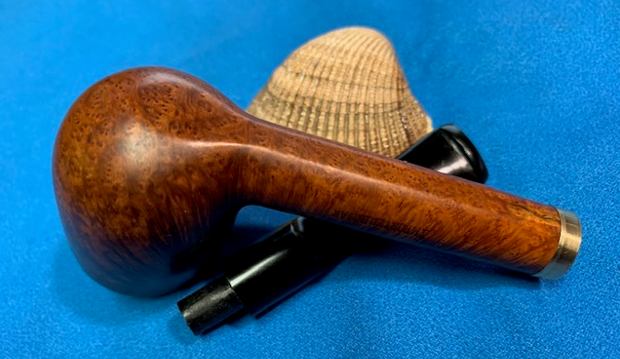
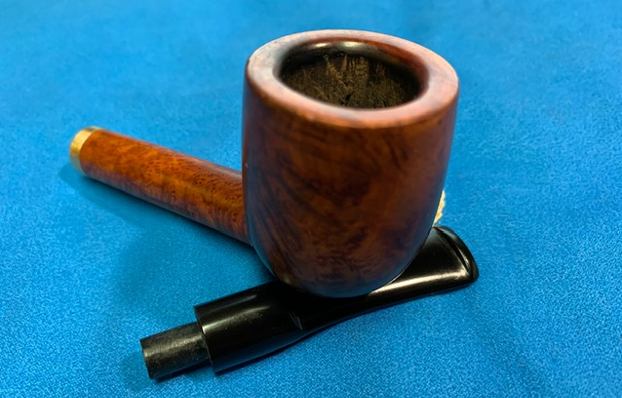
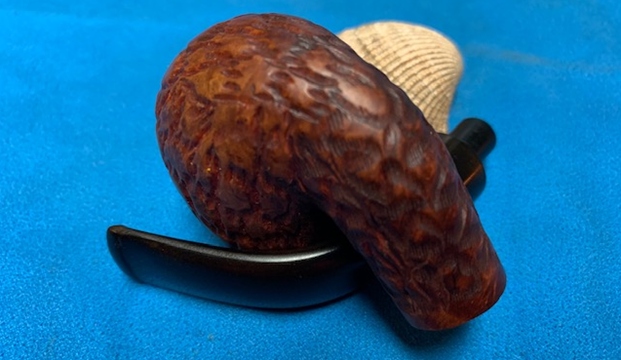
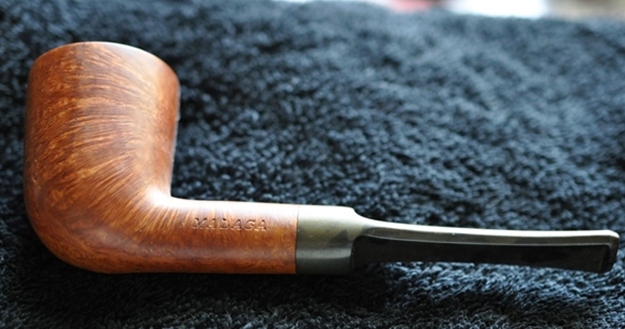
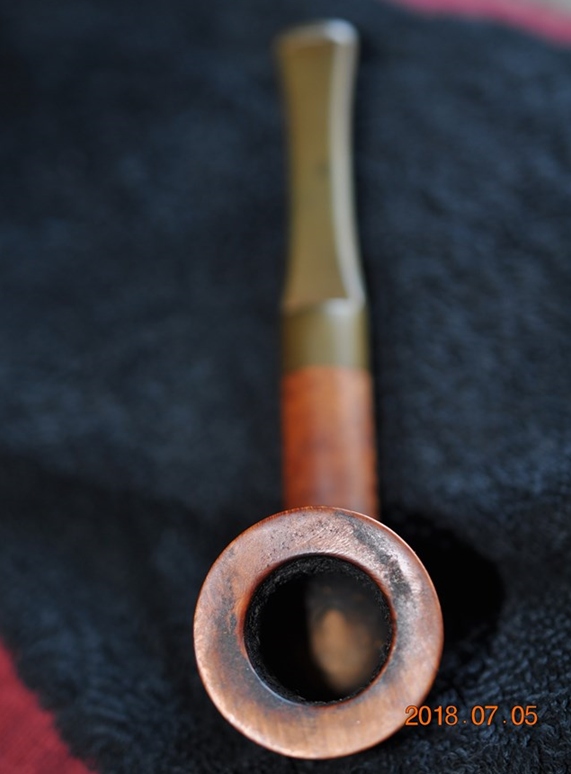
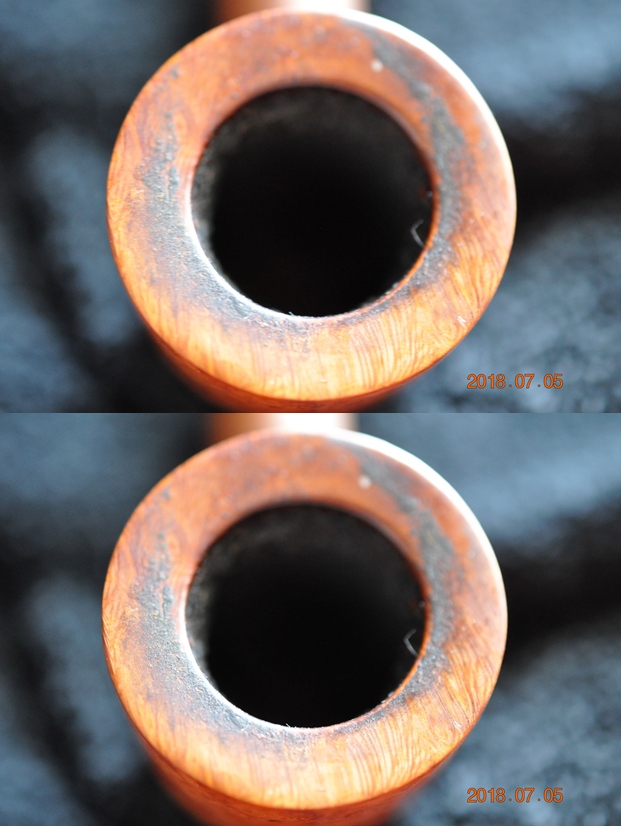
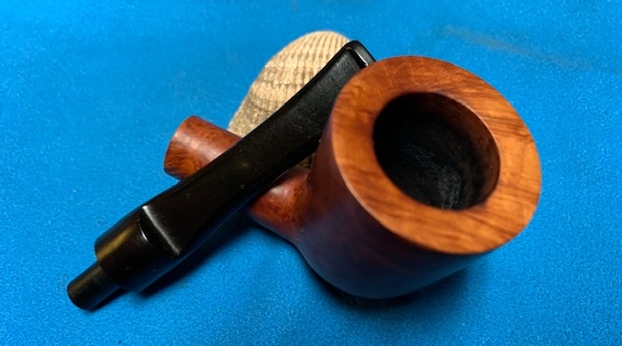
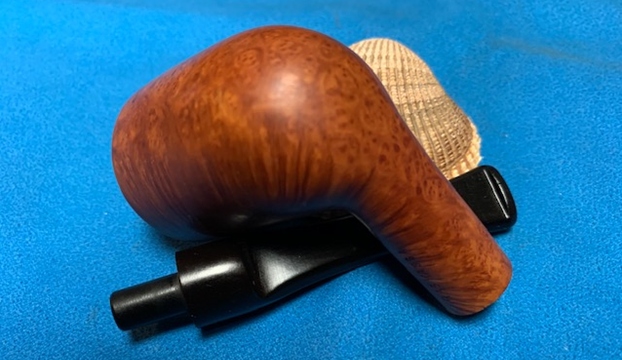
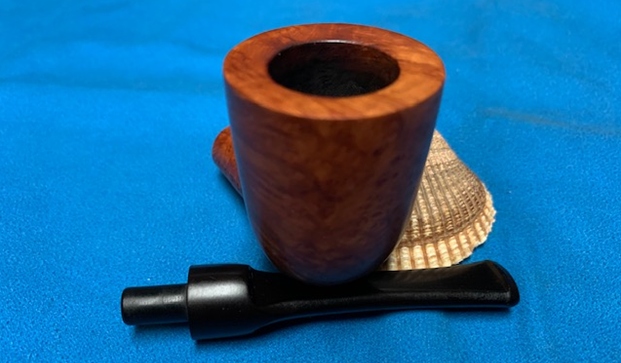
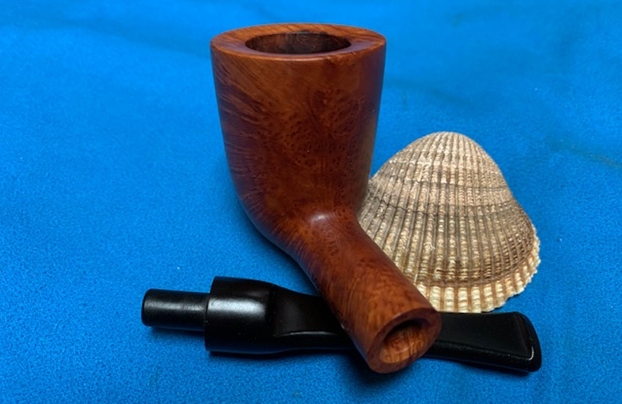
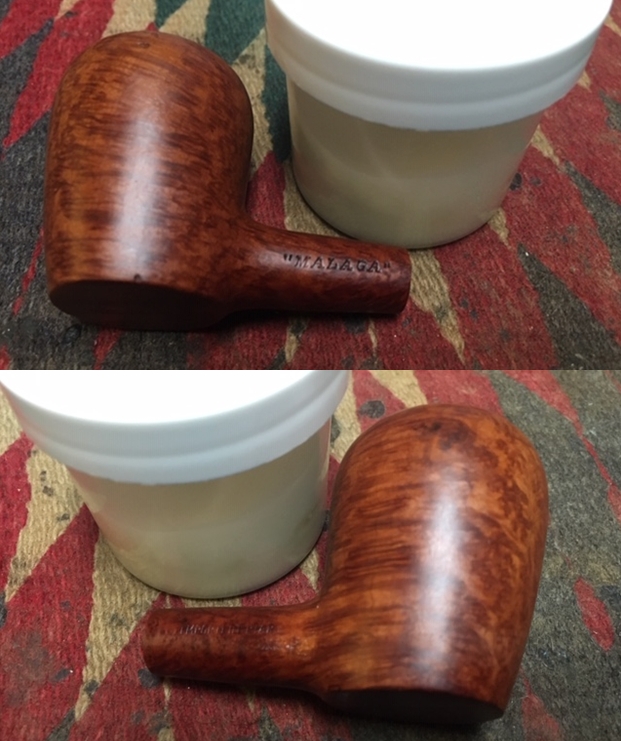
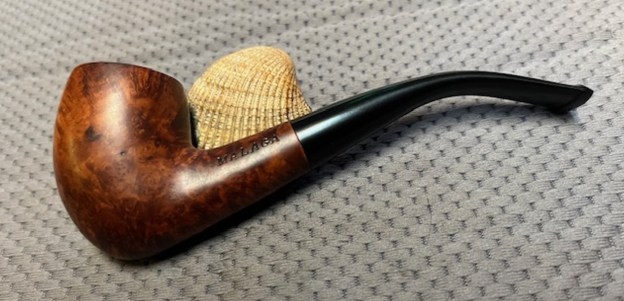
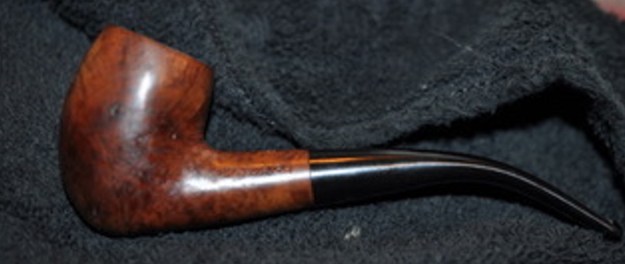
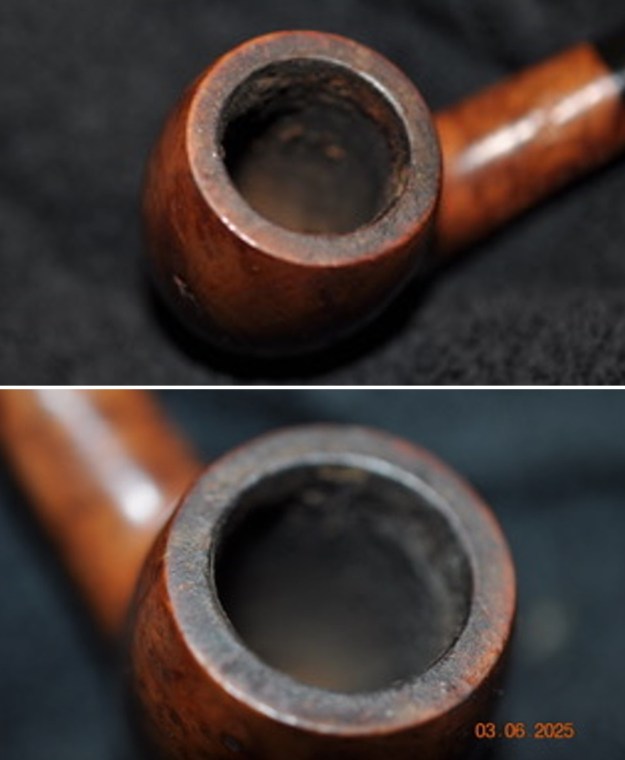
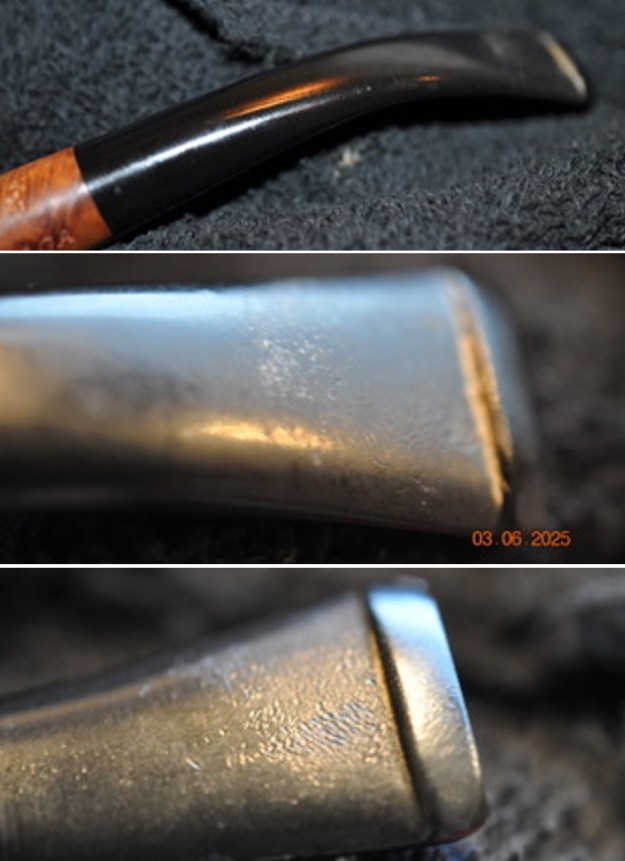
The “Malaga” Bent Acorn is next pipe on the table. We purchased it off eBay on 09/16/24 from a seller in Center Line, Michigan, USA. The carver did a great job of shaping the pipe to follow the grain on the briar. The acorn shaped bowl, round shank and quarter Bent tapered stem look very good. The bowl had a moderate cake that overflowed with a spotty lava coat on the rim and edges look good. The sides of the bowl and shank are very dirty with grime and oils from prolonged use. The grain around the bowl and shank appeared to be very nice mixed grain under the grime on the briar. The stamping on the left side of the shank read “MALAGA”. On the top of the shank just ahead of the stem junction it is stamped M-2. The stem had light tooth marks and chatter on the top and the underside of the stem ahead of the button. There was some light oxidation on the stem surface. Jeff took these photos before he started the cleanup work on the pipe.Jeff took close up photos of the bowl and rim to capture the condition of the pipe before he started his cleanup work. The rim top had thick lava overflow. The outer edge looked to be in decent condition. The stem is oxidized, calcified and has tooth marks and chatter on both sides. He also took a photo of the side and bottom of the bowl and shank to show the beautiful grain around the bowl. The photos show the general condition of the bowl and dirt and wear on the rich oil finish. You can also see the flaws in the briar which explains the M-2, or second designation. It is very dirty but this is another beautiful pipe. Jeff took a photo to capture the stamping on the left and top side of the shank. The photo shows the stamping “MALAGA” on the left side and M-2 on the top side of the shank. The stamping is very readable under the heavy grime.Before I started working on the pipe itself I went back and reread what I had found when I had worked on many of the Malaga pipes that had come across my work table. I am including a few pieces of information that I have gathered in the process.
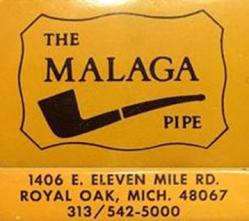
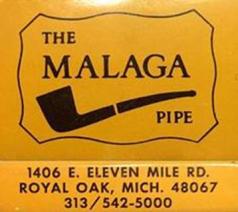
For those of you reading this blog who are unfamiliar with the brand, I am including the link to a previous blog that I wrote. It gives some of the history of the Malaga brand and the Malaga Pipe Shop in Royal Oak, Michigan in the USA. Here is the link – https://rebornpipes.com/tag/malaga-pipes/.

I have also included a link to a catalogue and the history of the pipemaker George Khoubesser. If you are interested to learn more, then I invite you to follow the link to get a feel for the brand and the pipemaker.

George Khoubesser (picture to the left) started Malaga Briar Pipe Company and located it in Royal Oak, Michigan in the USA in 1939. It closed its doors for the last time in 1999 after 60 years in business. I have an old Malaga Catalogue that I scanned and put on the blog (https://rebornpipes.com/2013/02/09/george-khoubesser-and-malaga-pipes/). The catalogue describes the manufacture of the pipes as follows:

Painstaking caution is exercised in selecting flawless, perfect briar wood for the purpose of making and Curing of the “Malaga.” You can be certain of this fact, because none other than the choicest and finest select briarwood will withstand the “Malaga” Curing process. Other than the choicest quality and grain, will split wide open in the Curing vats… The Curing method renders all “Malaga” pipes, light in weight… Most all “Malaga” Senior pipes are left in their natural state; except for a skillful waxing which brings out the rich beauty of the virgin grain. No artificial polishing stain, shellac or varnishes are added. Malaga closed in 1999 after 60 years in business.

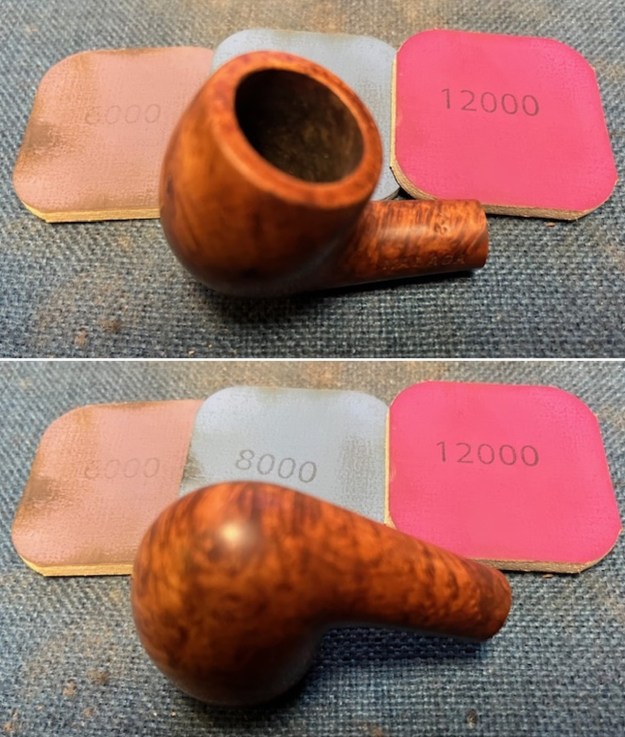
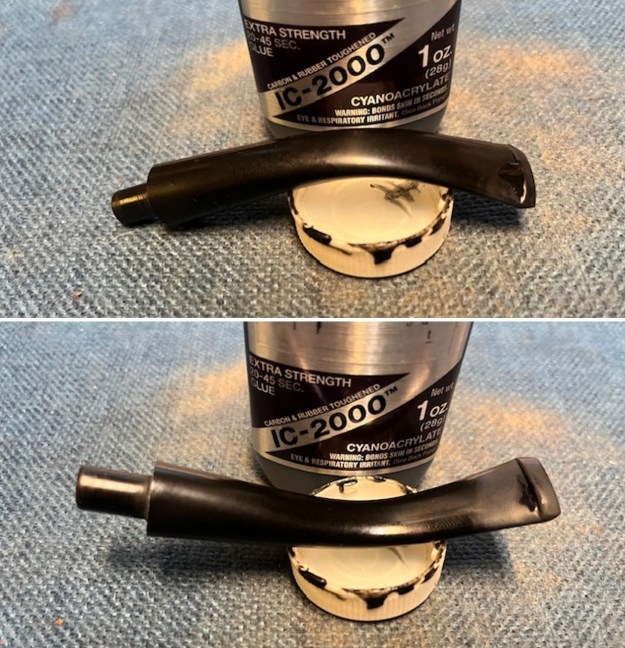
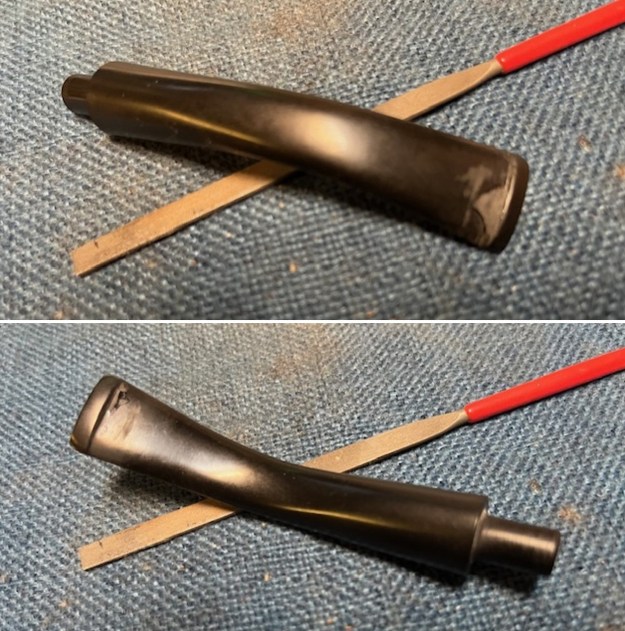
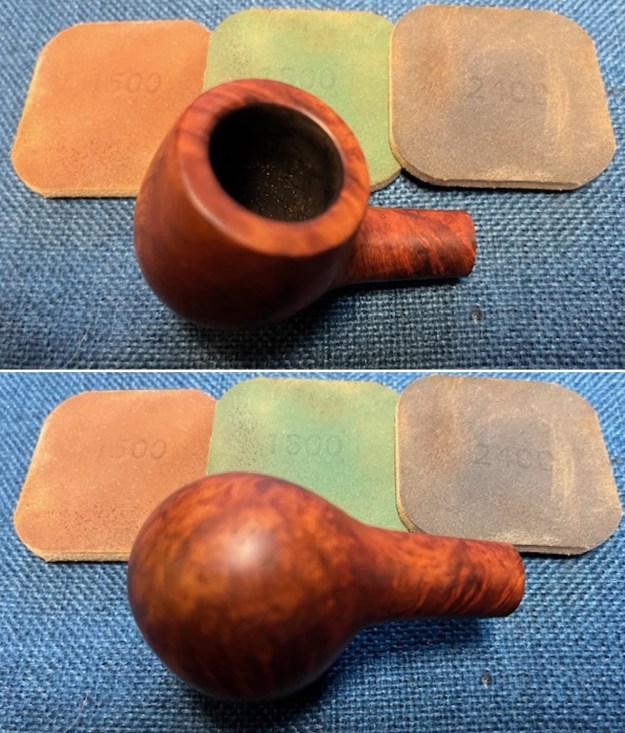
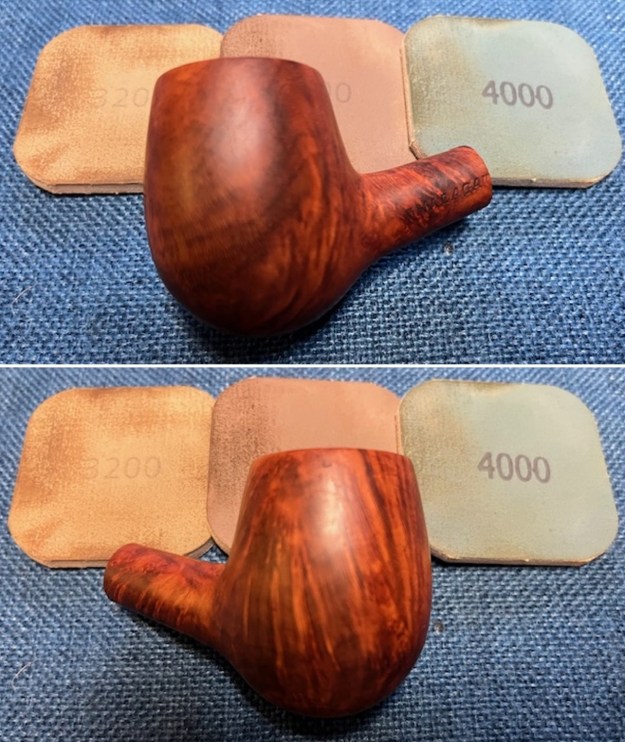
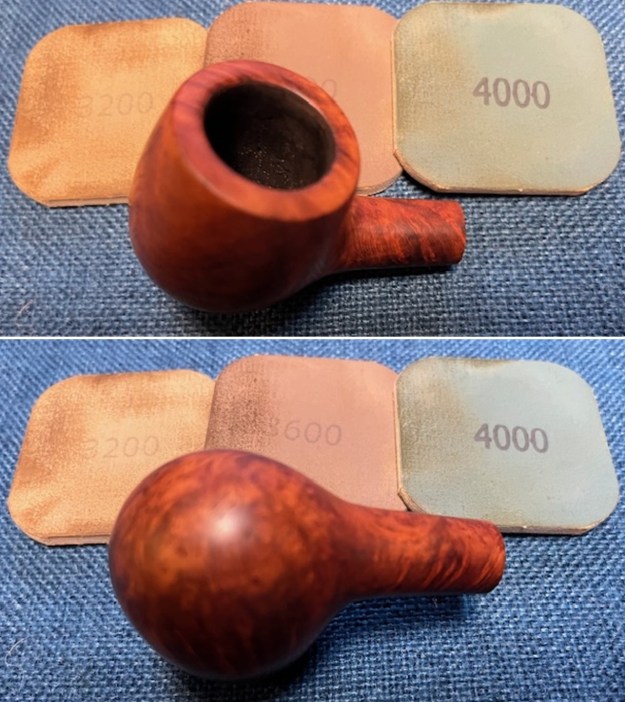
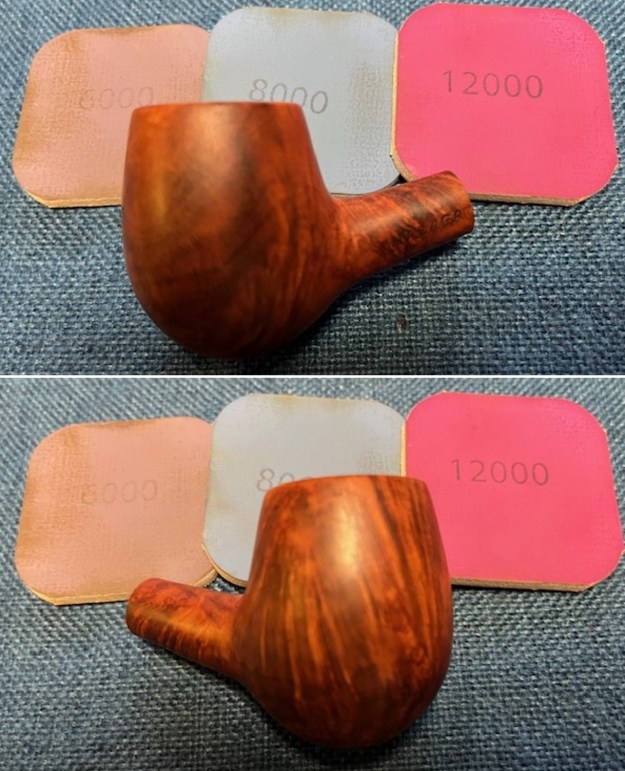
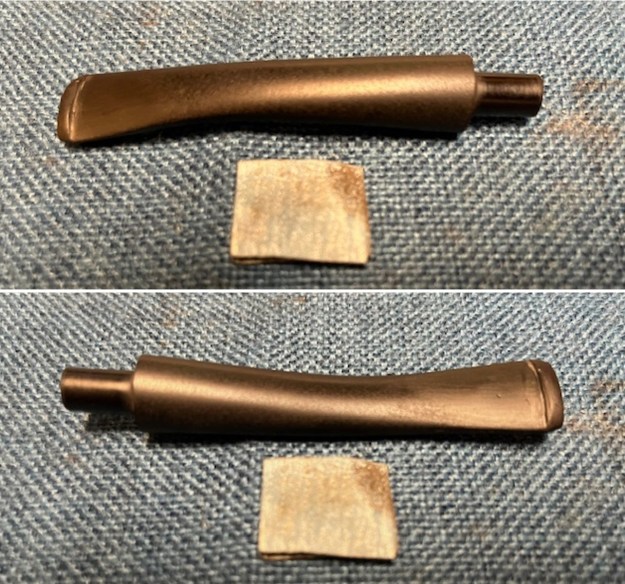
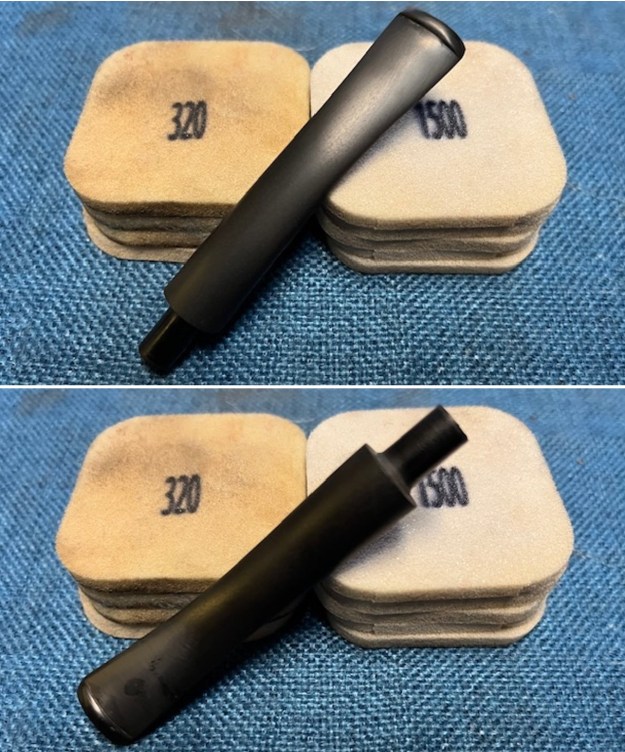
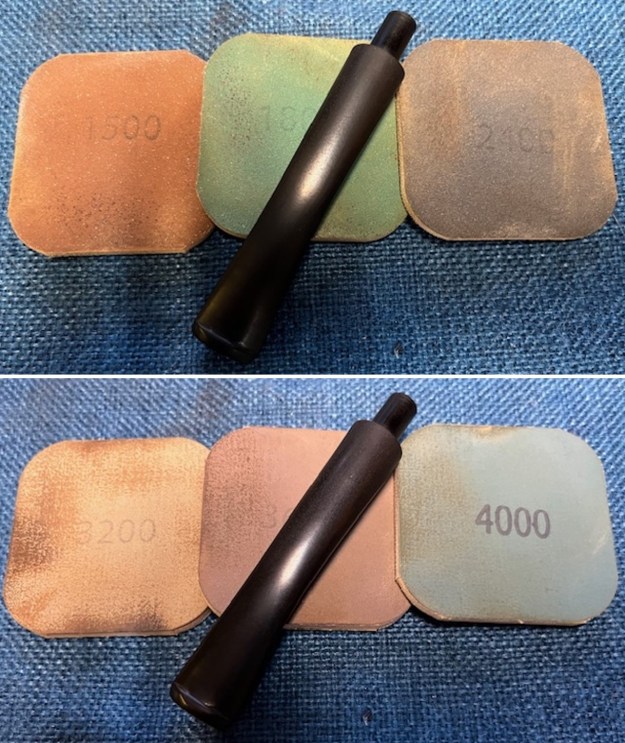
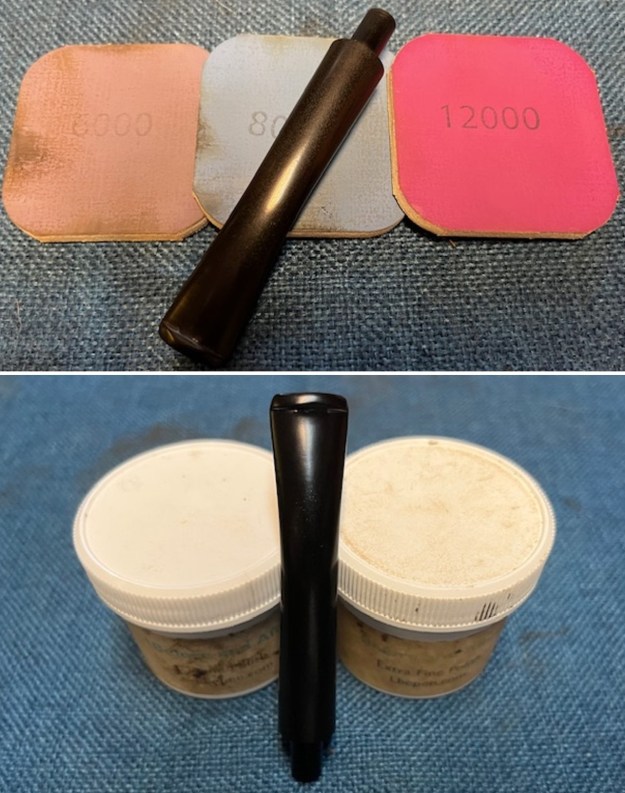
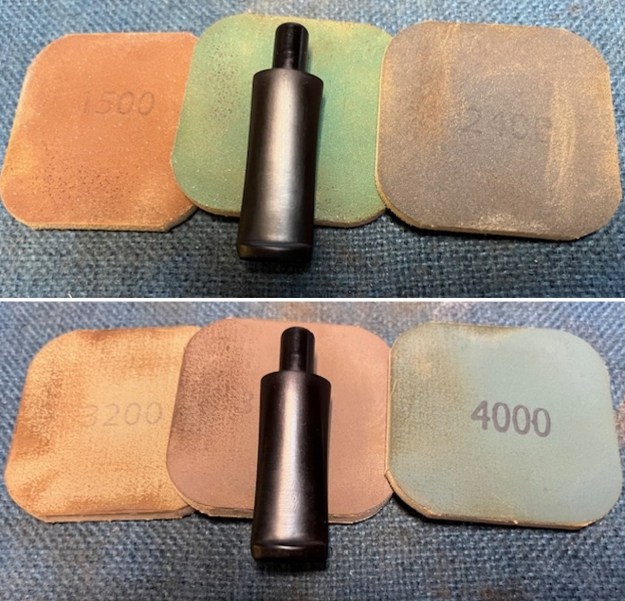
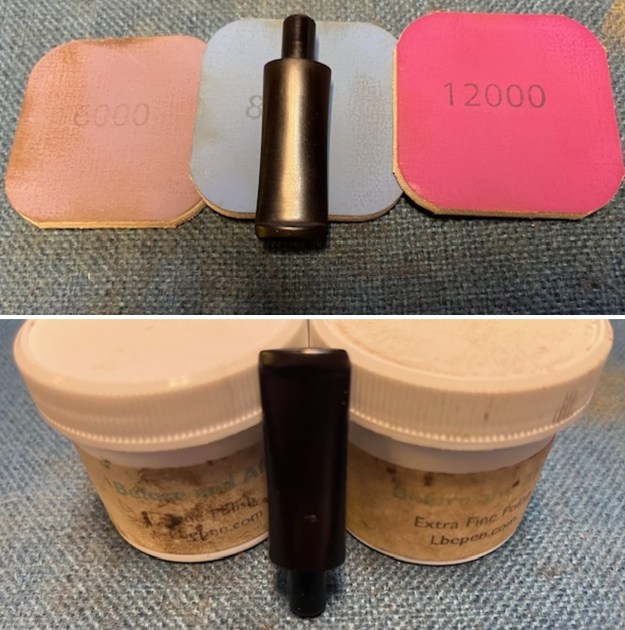
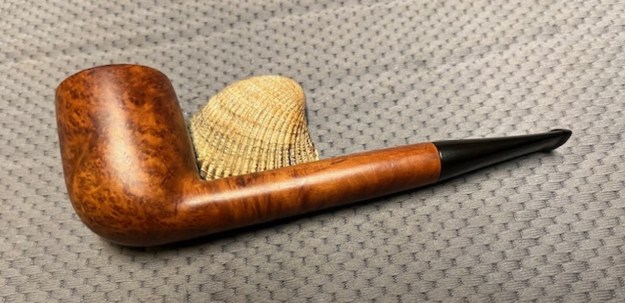
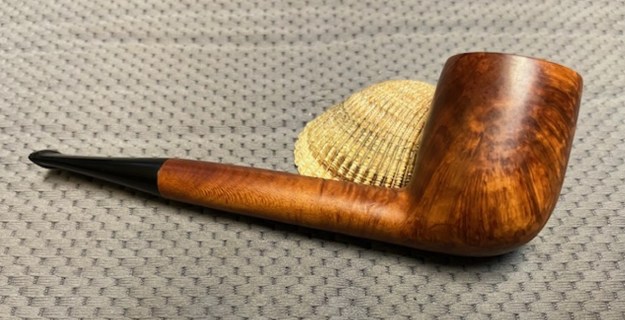
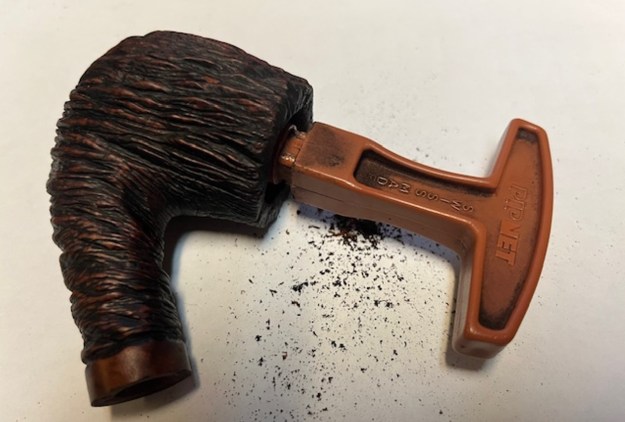
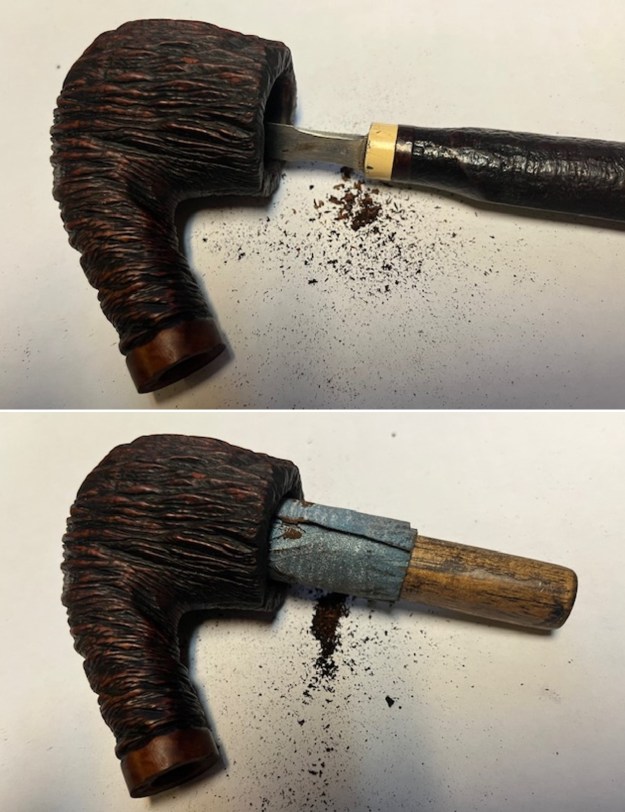
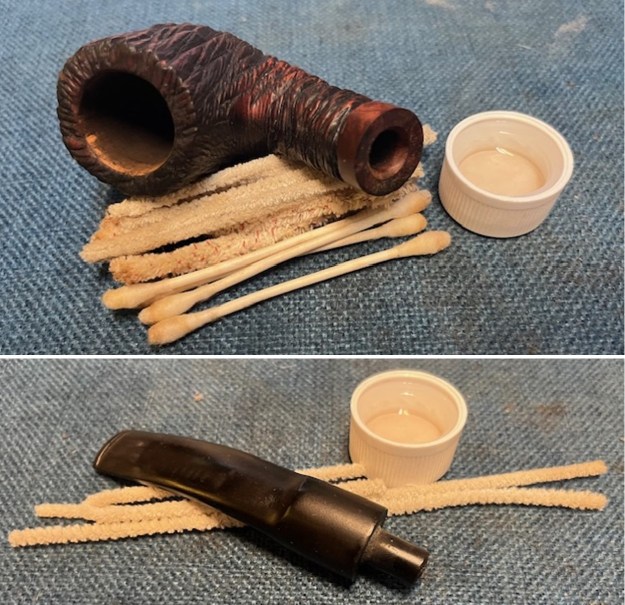
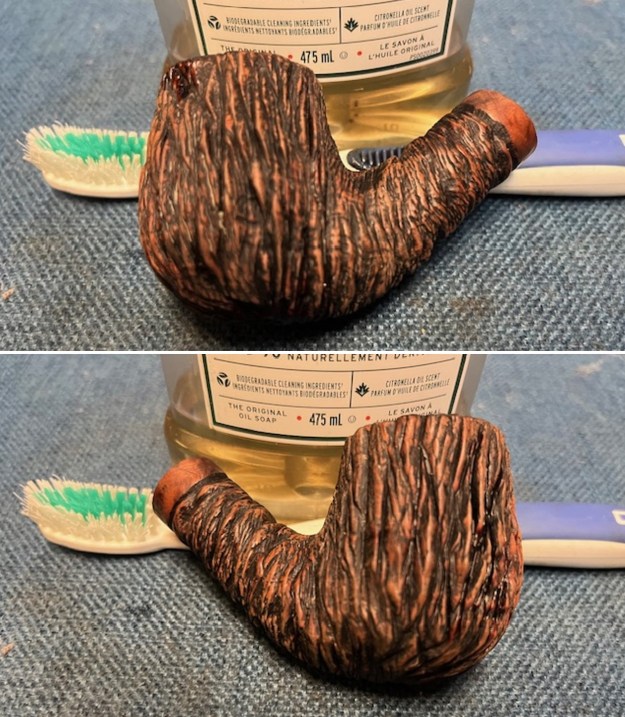
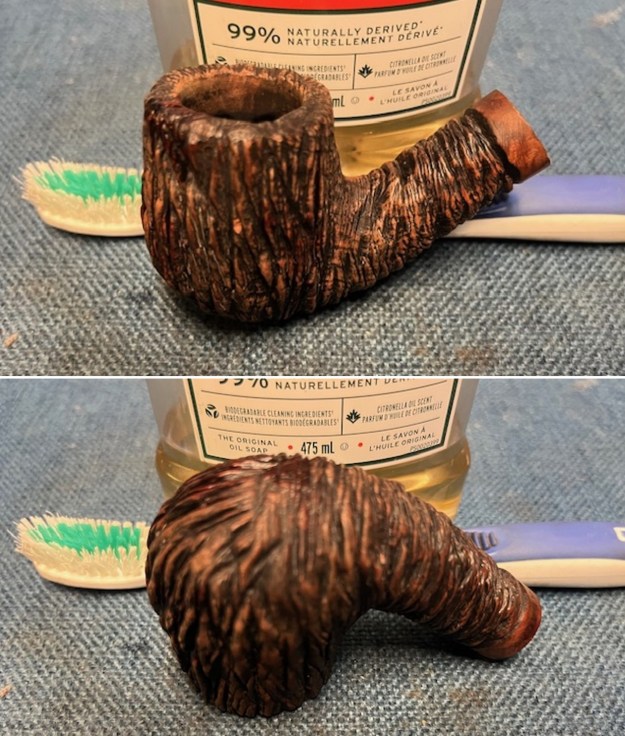
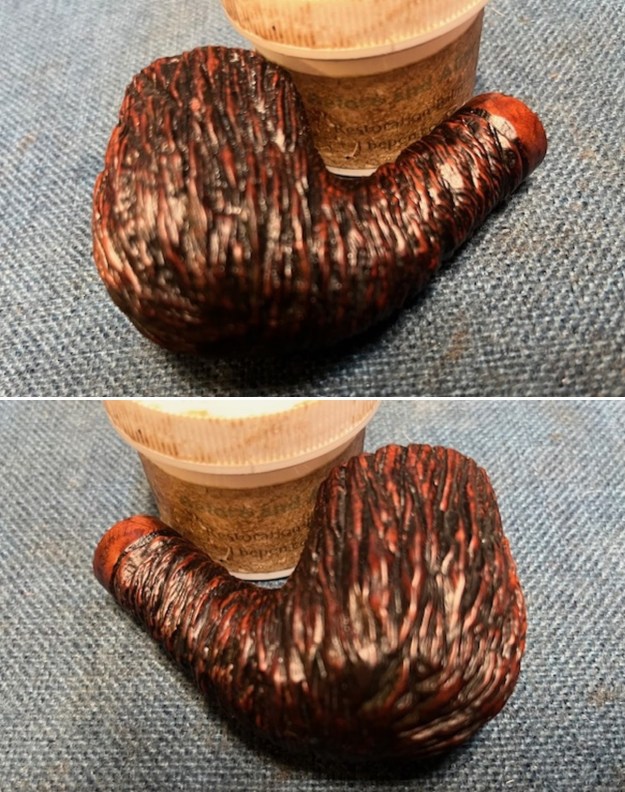
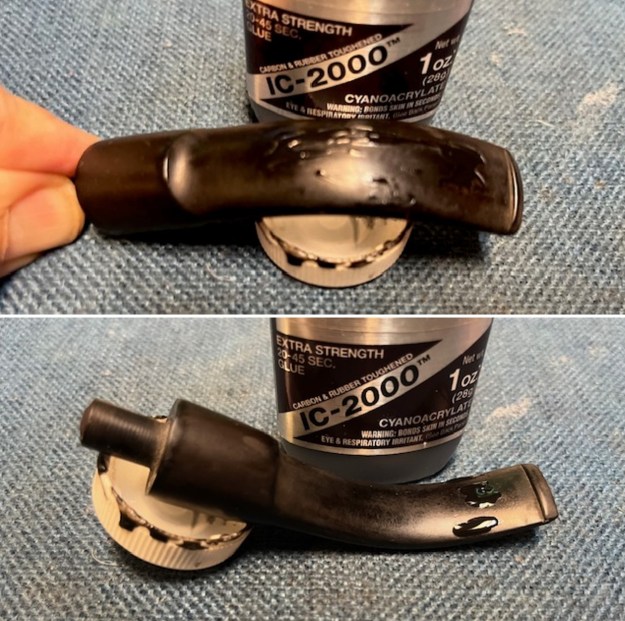
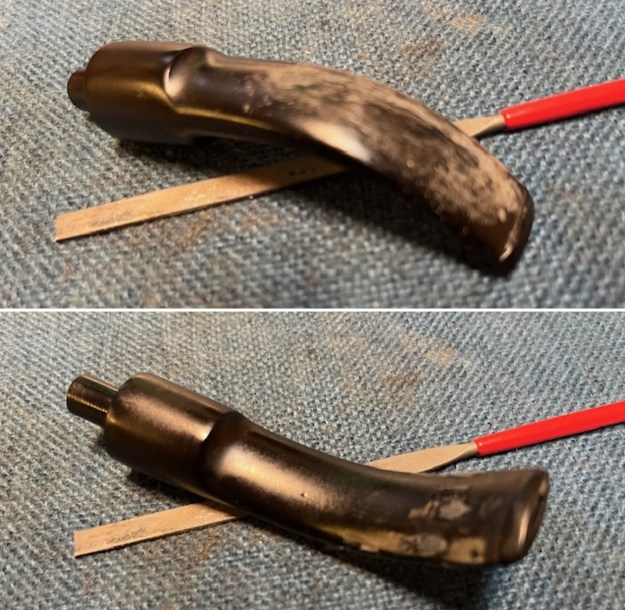
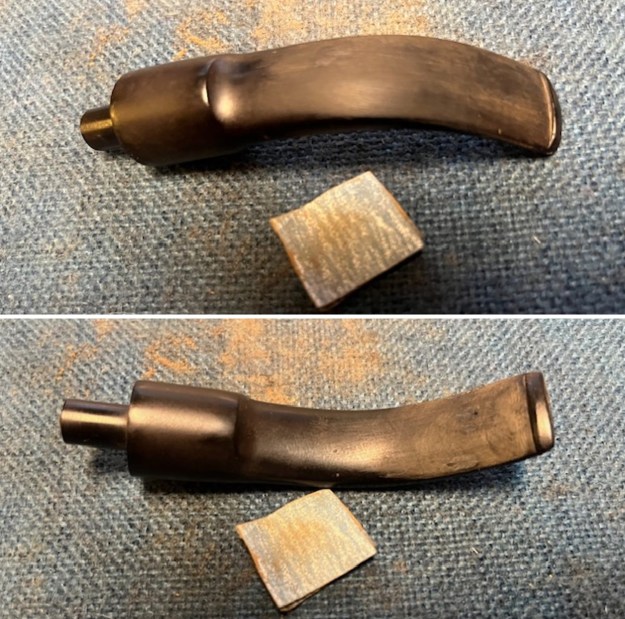
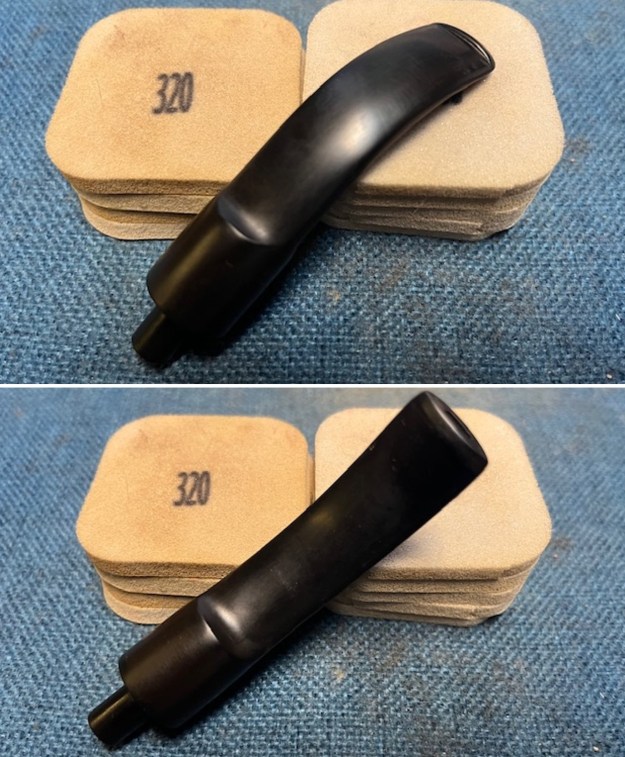
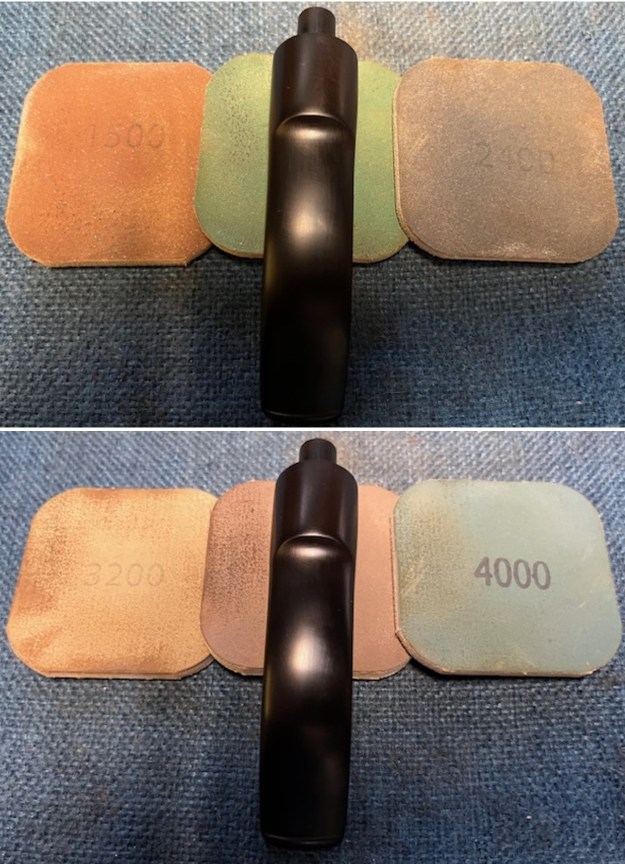
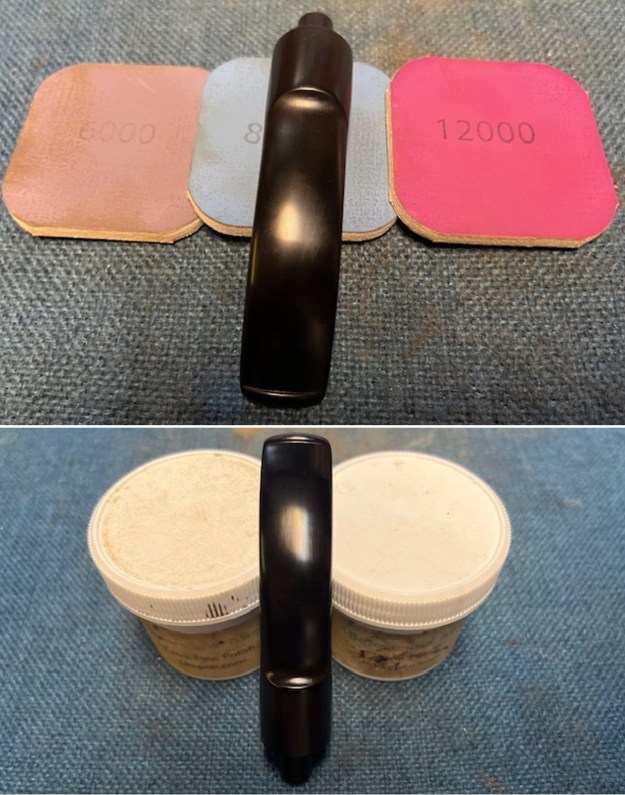
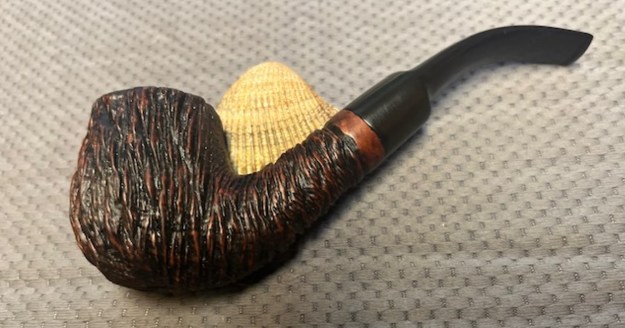
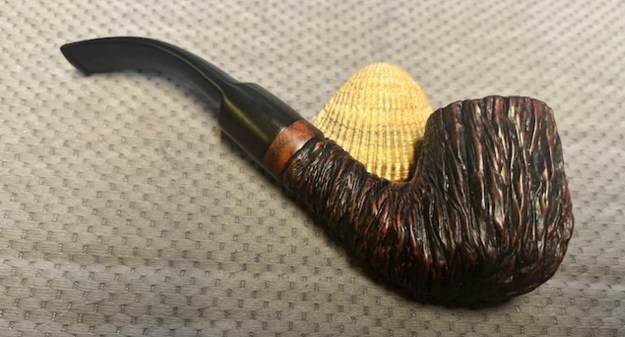
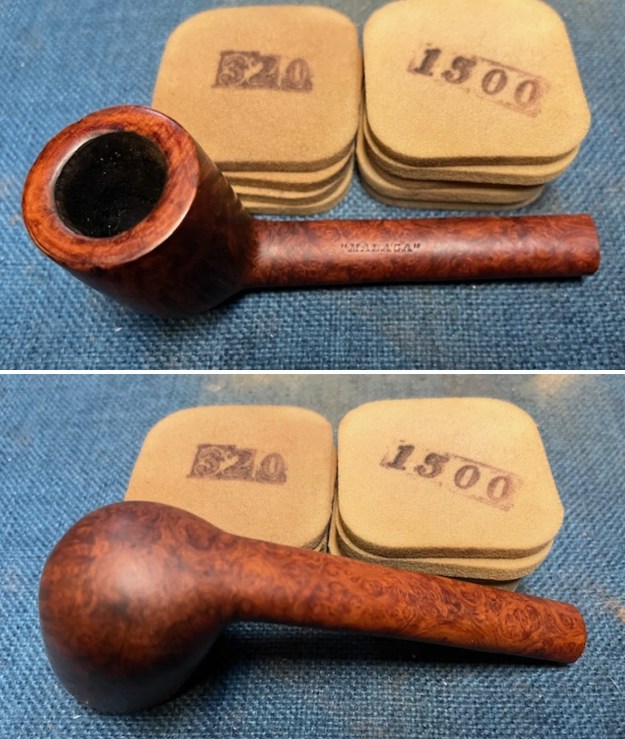
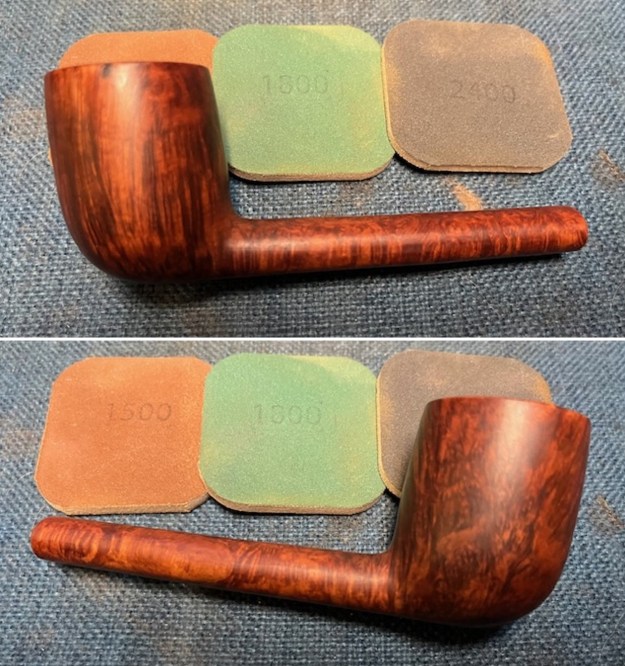
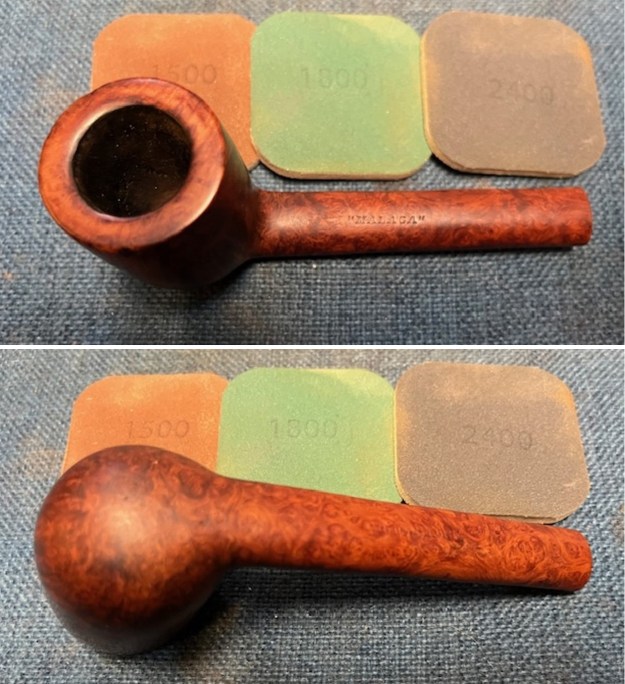
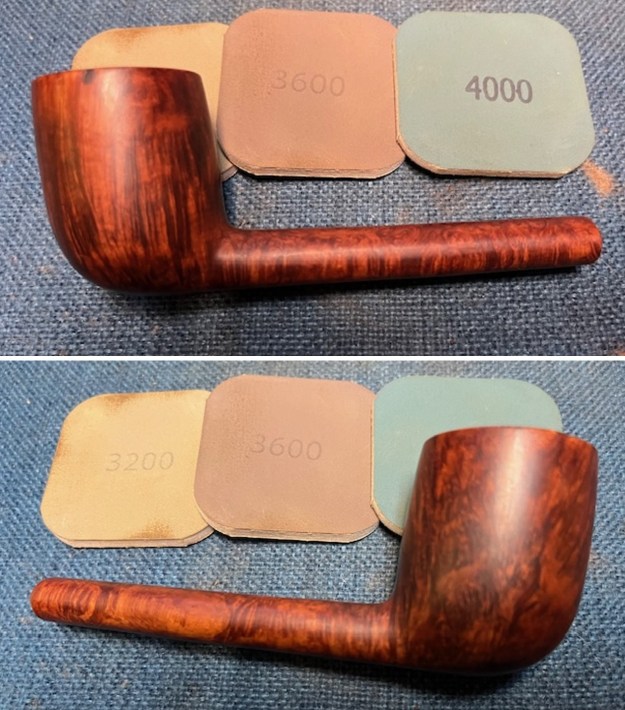
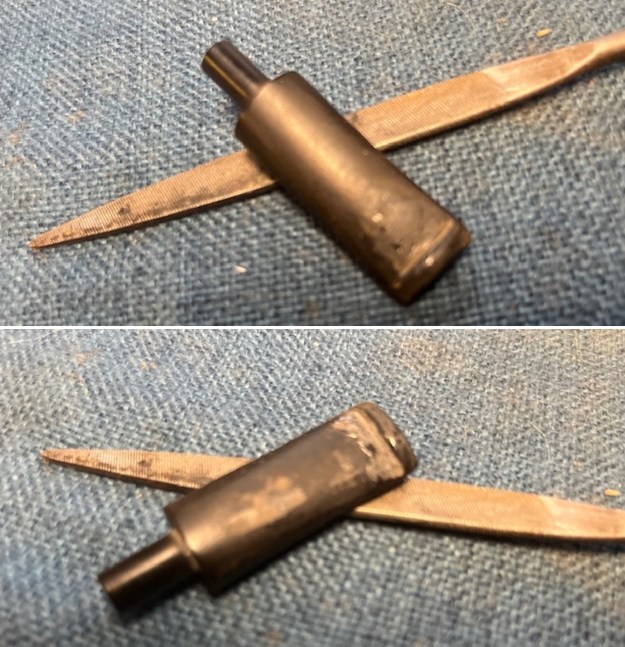
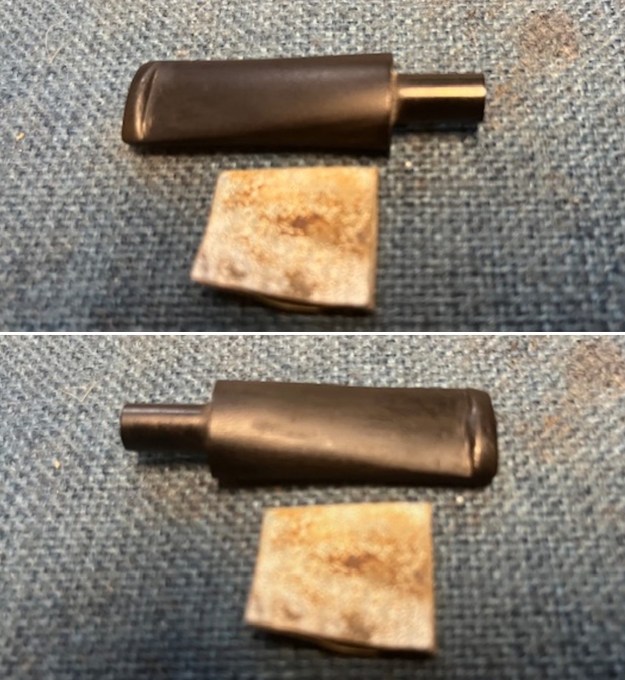
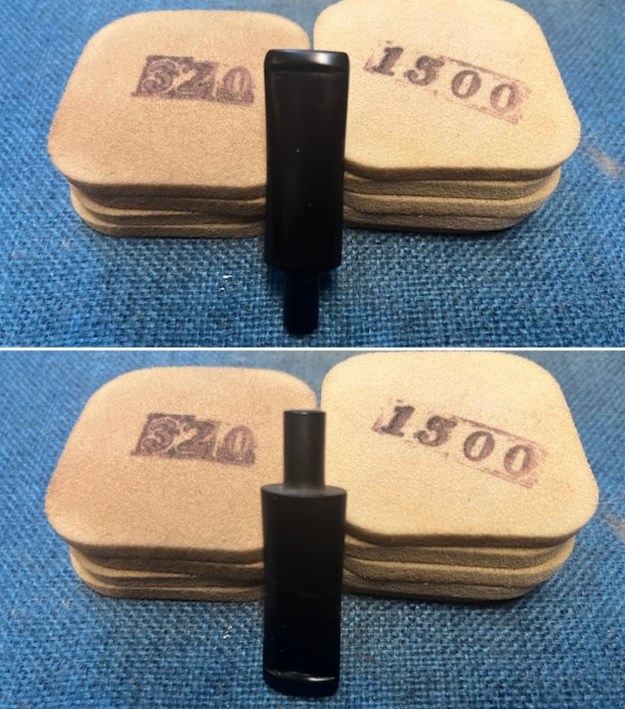
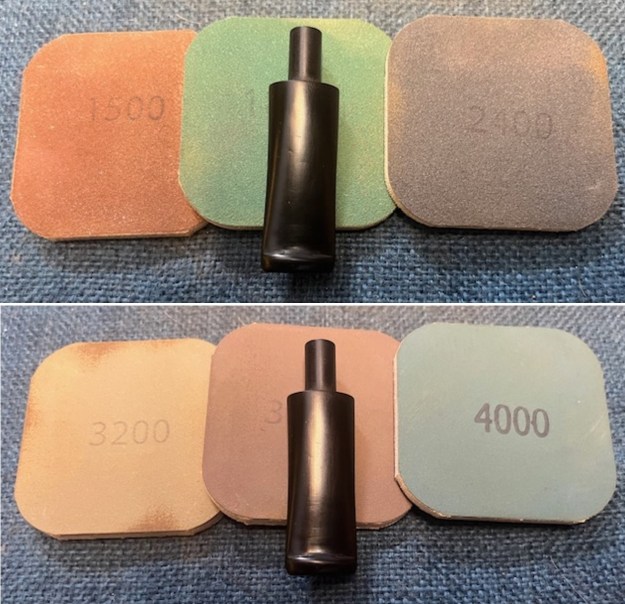
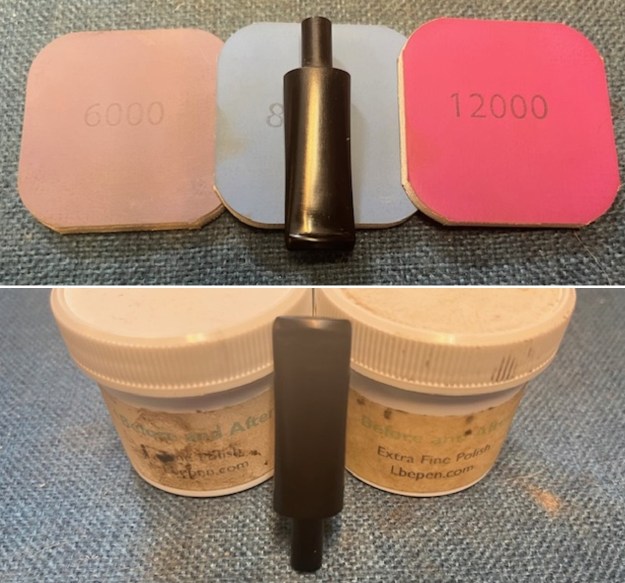
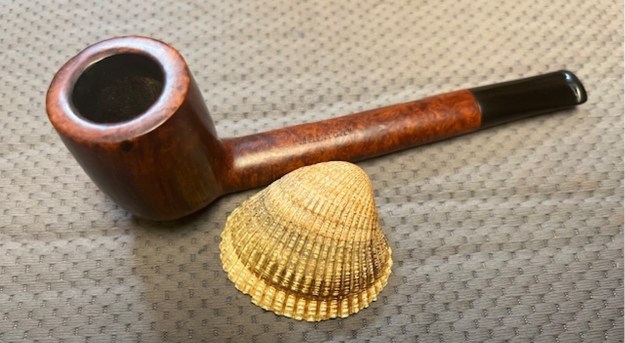
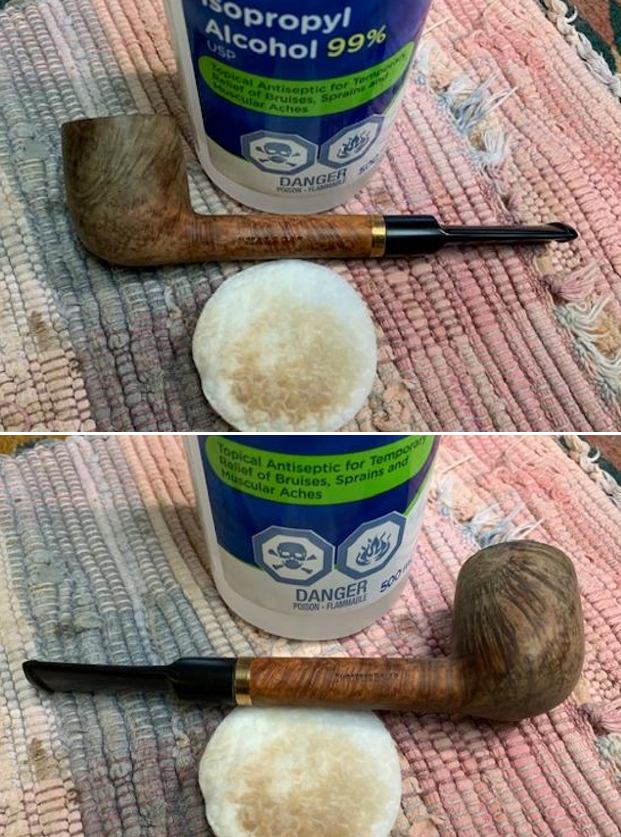
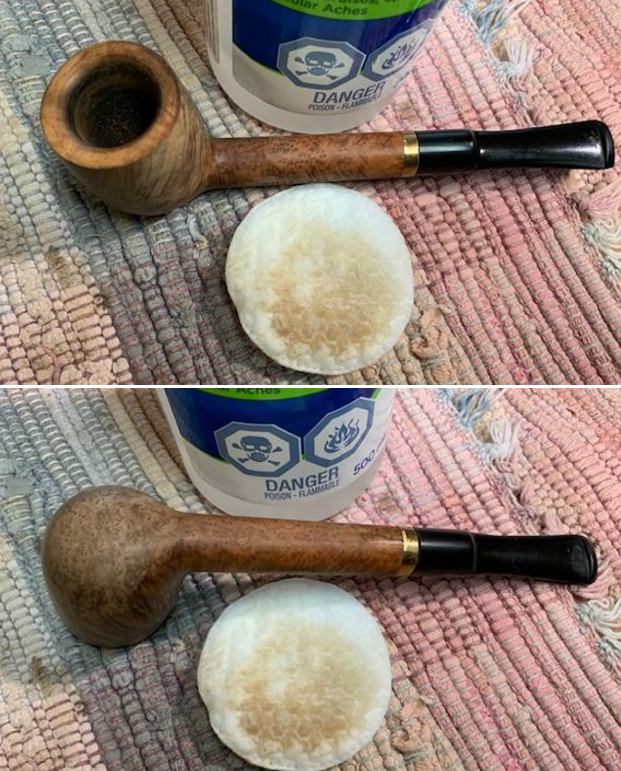
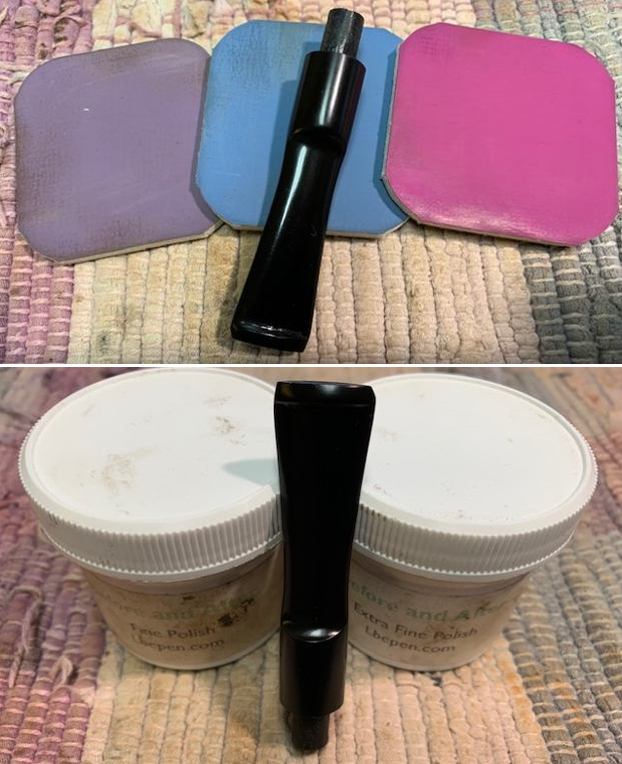
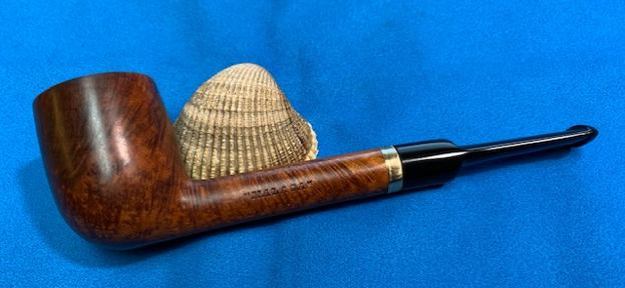
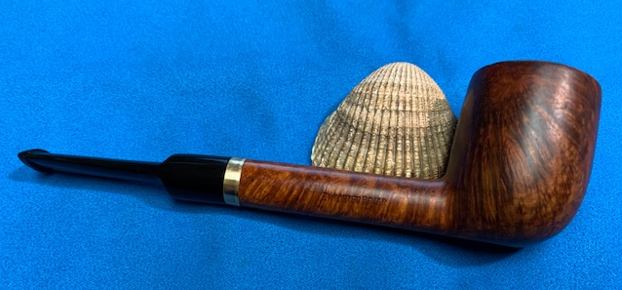
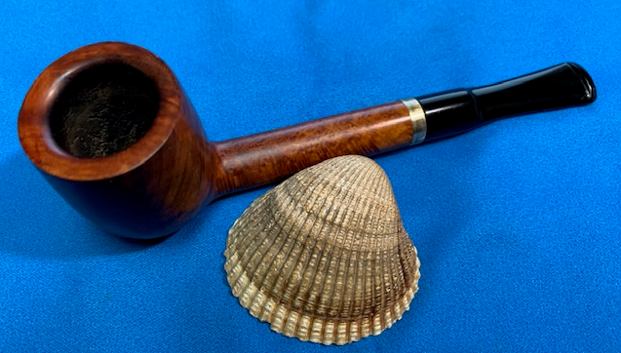
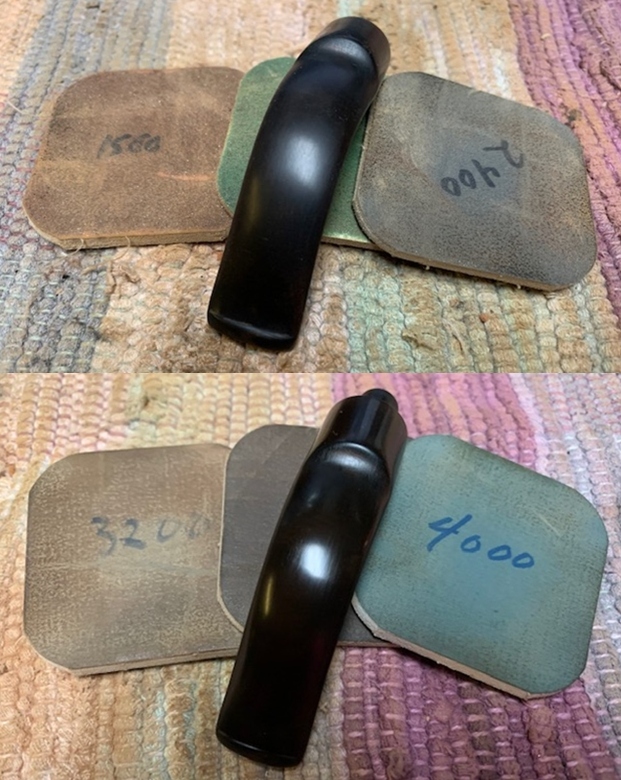
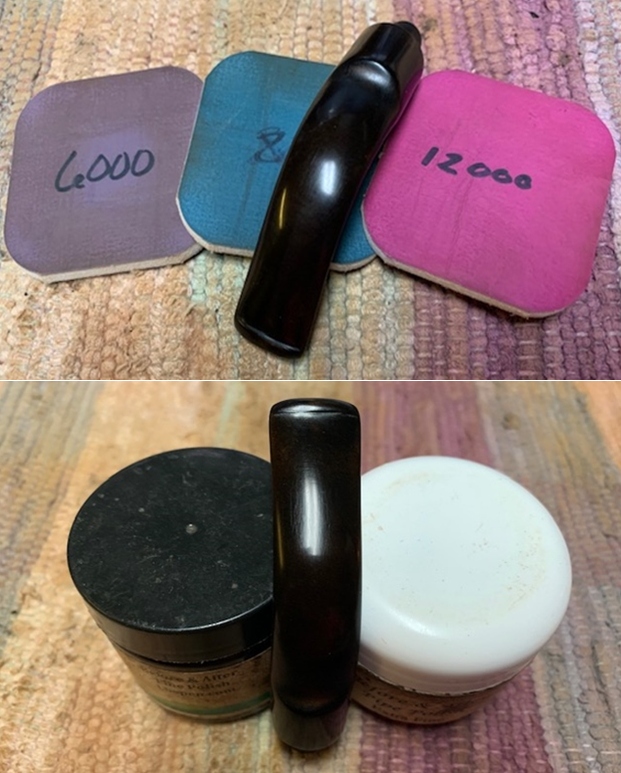
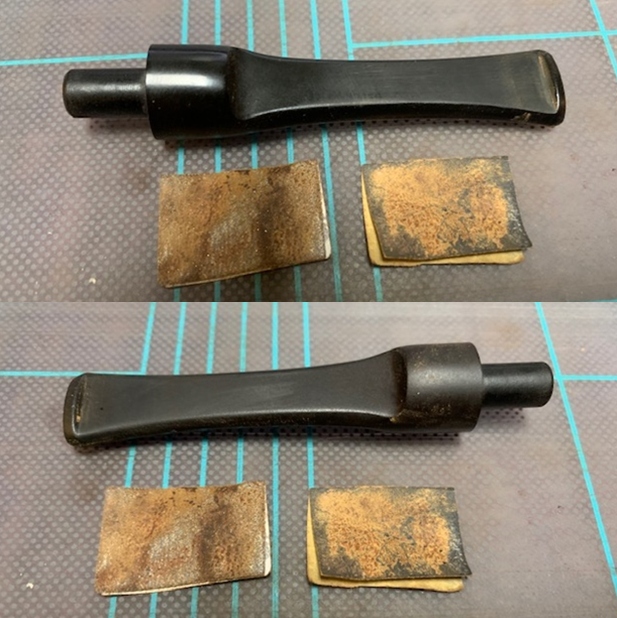
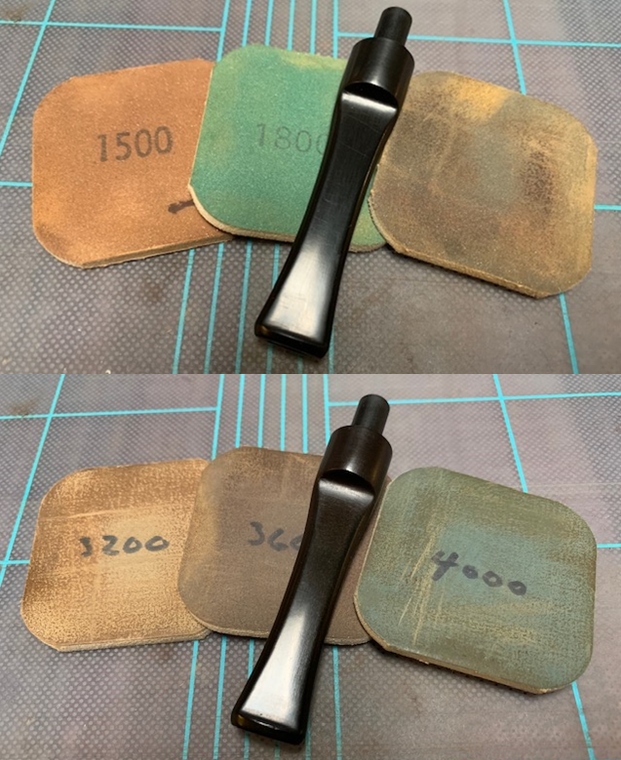
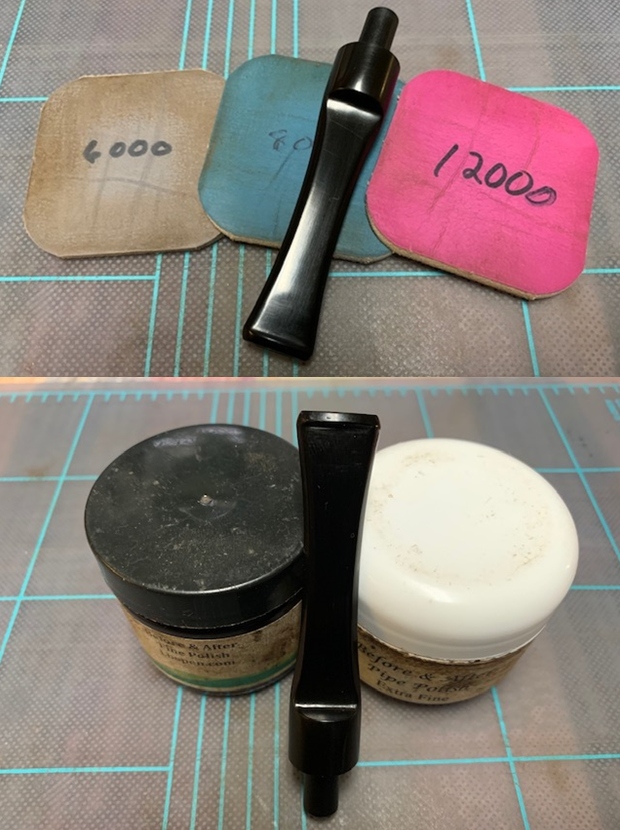
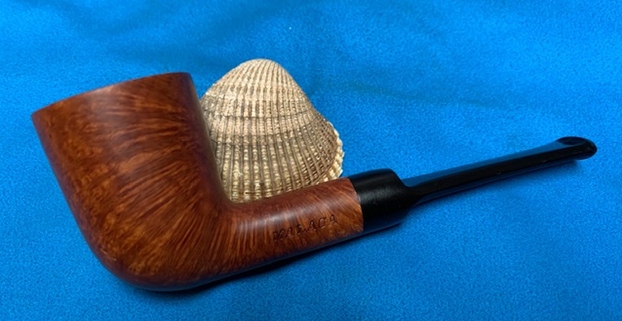
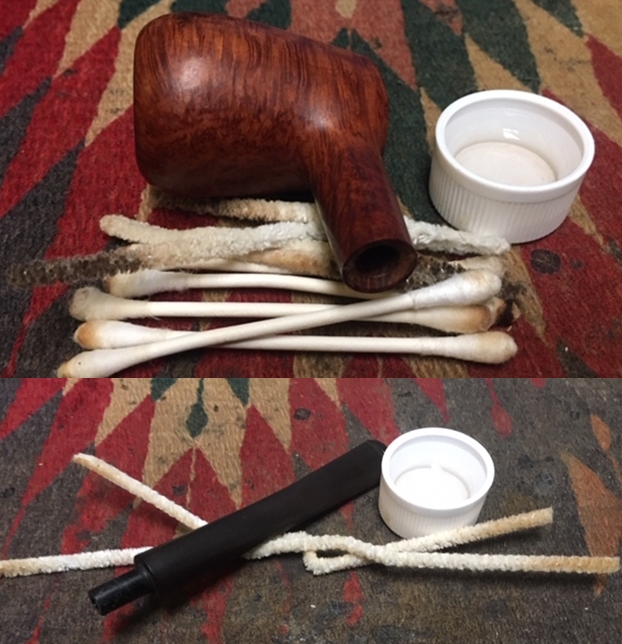
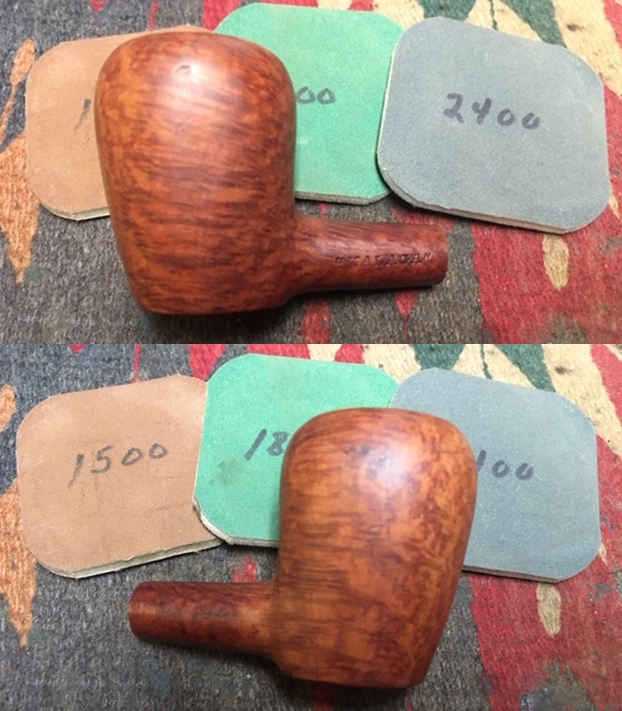
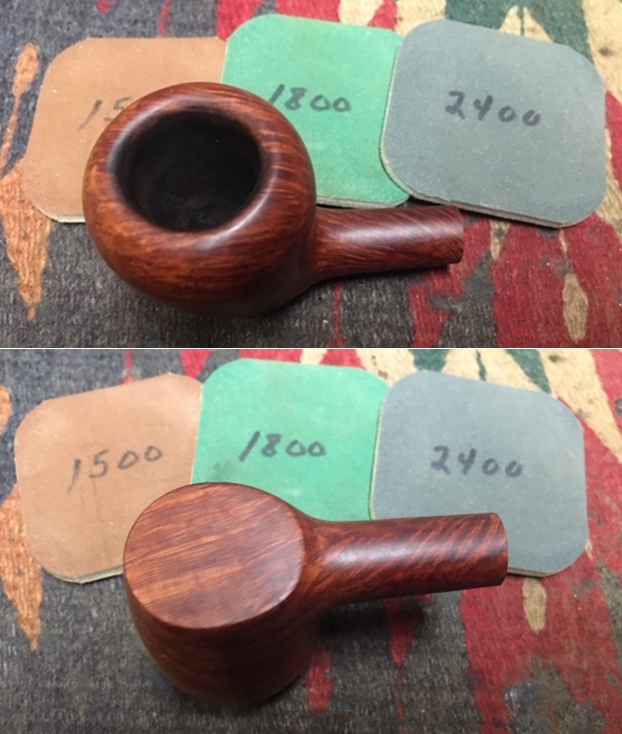
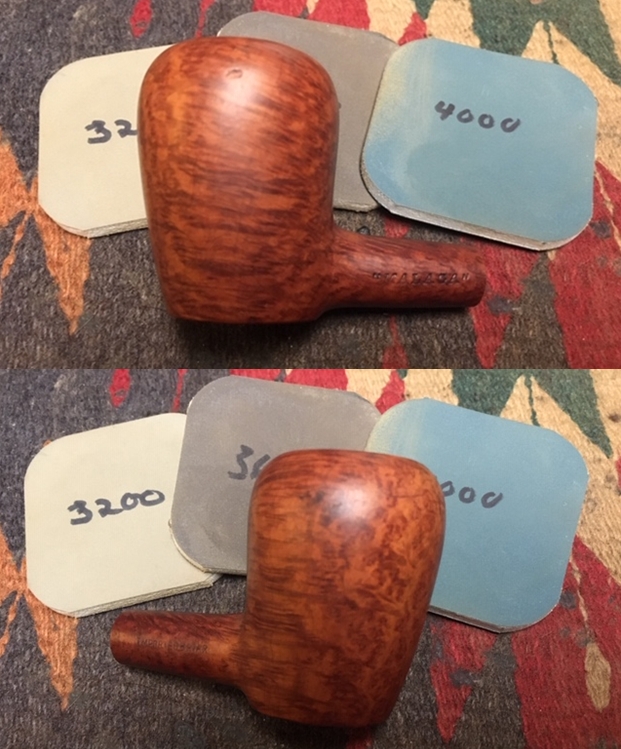
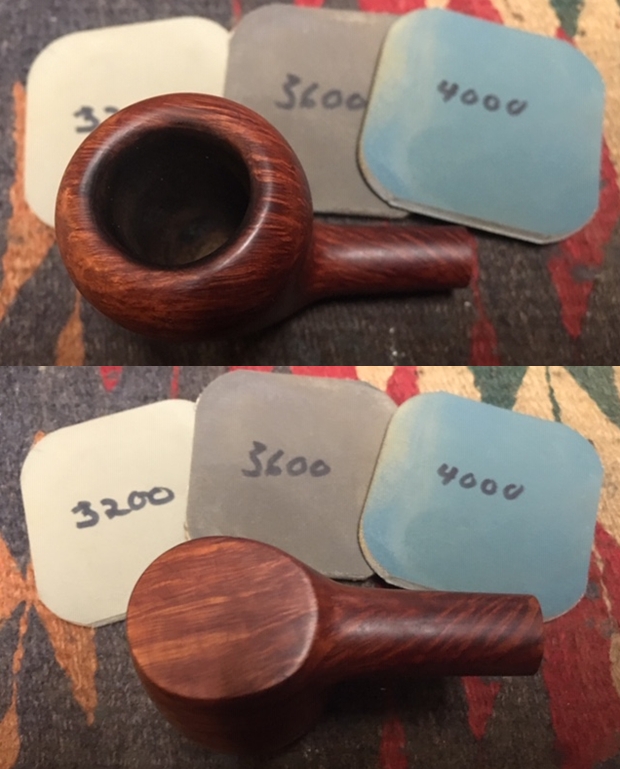
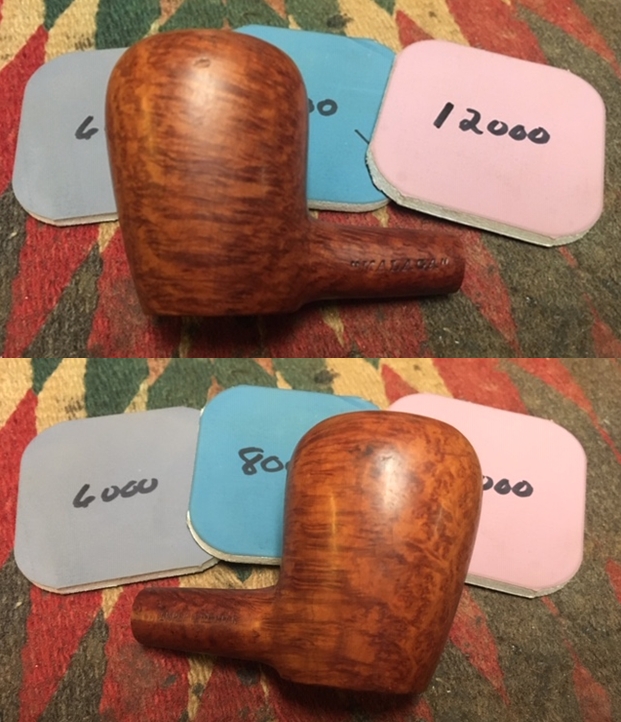
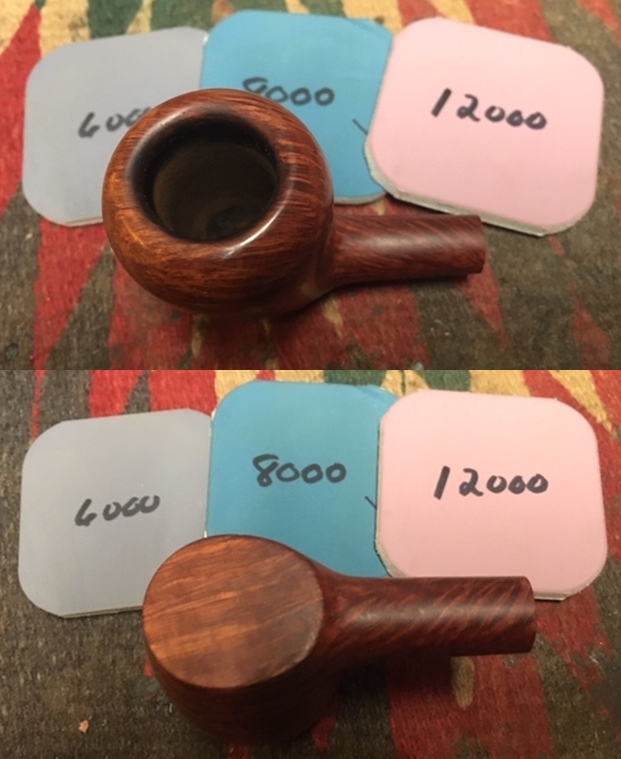
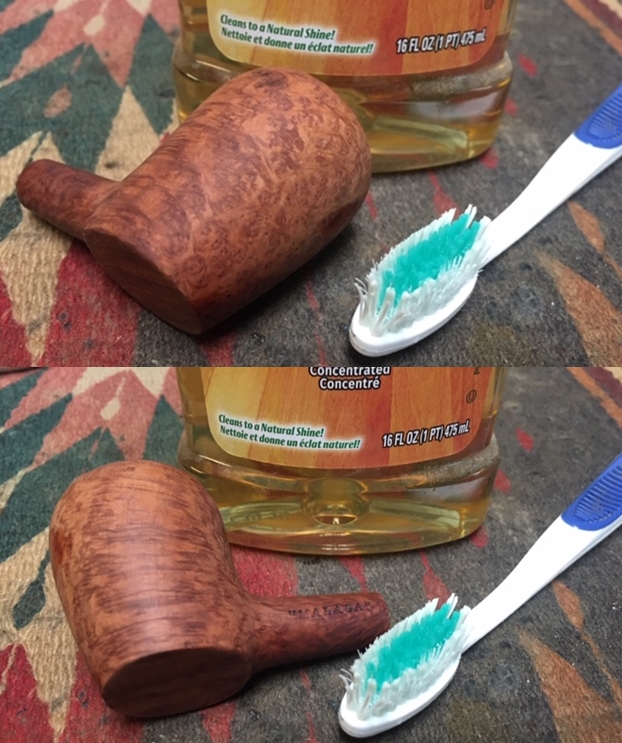
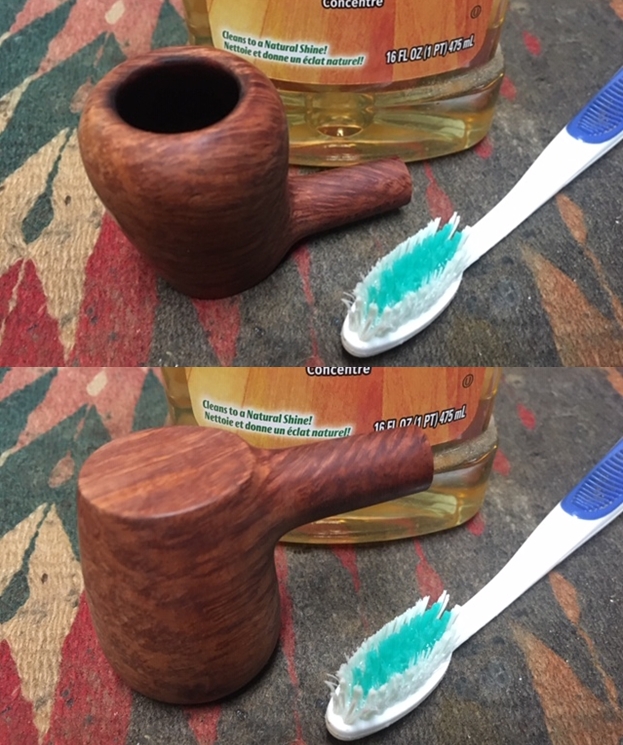
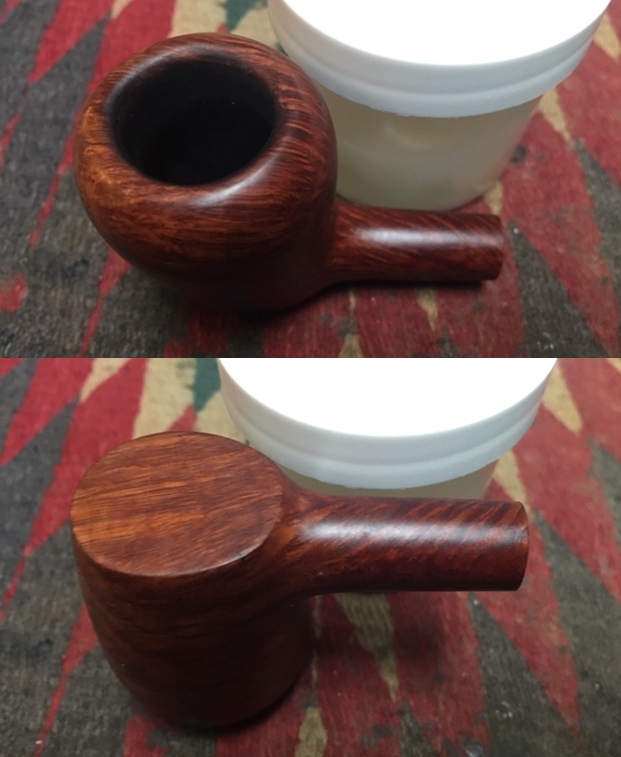
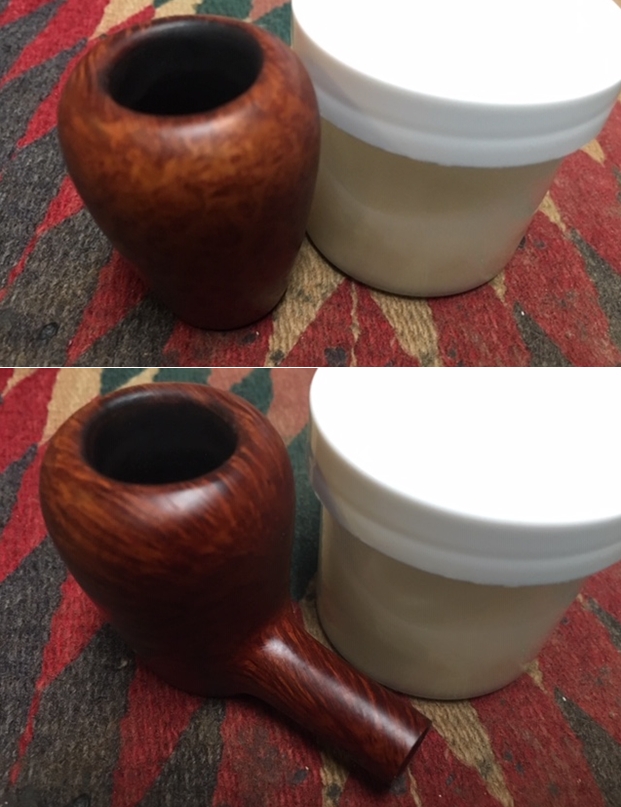
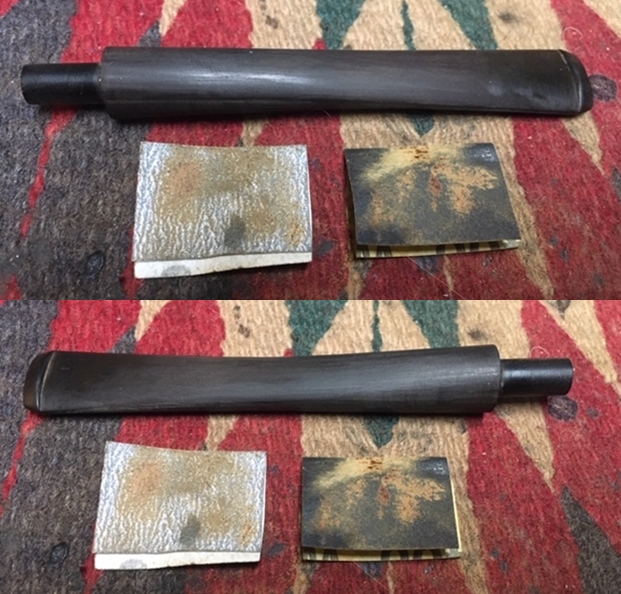
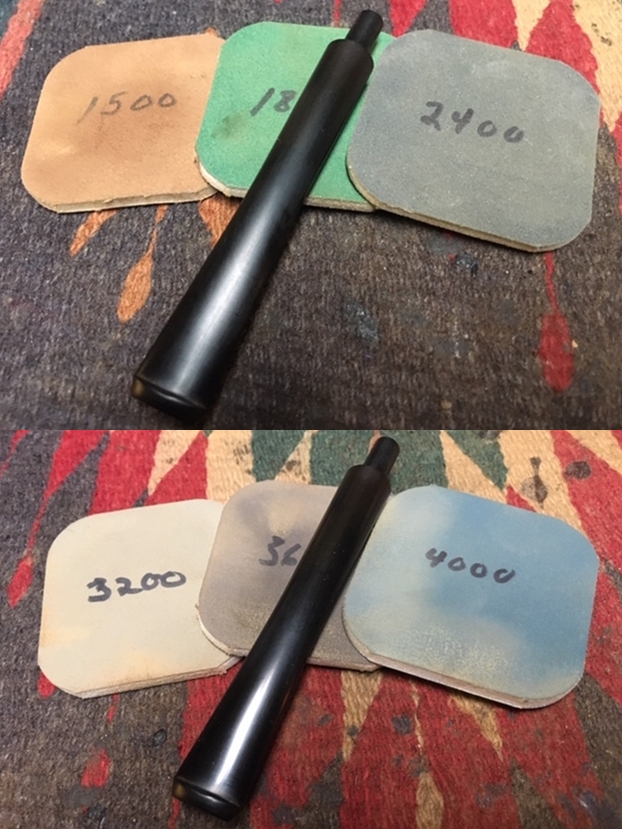
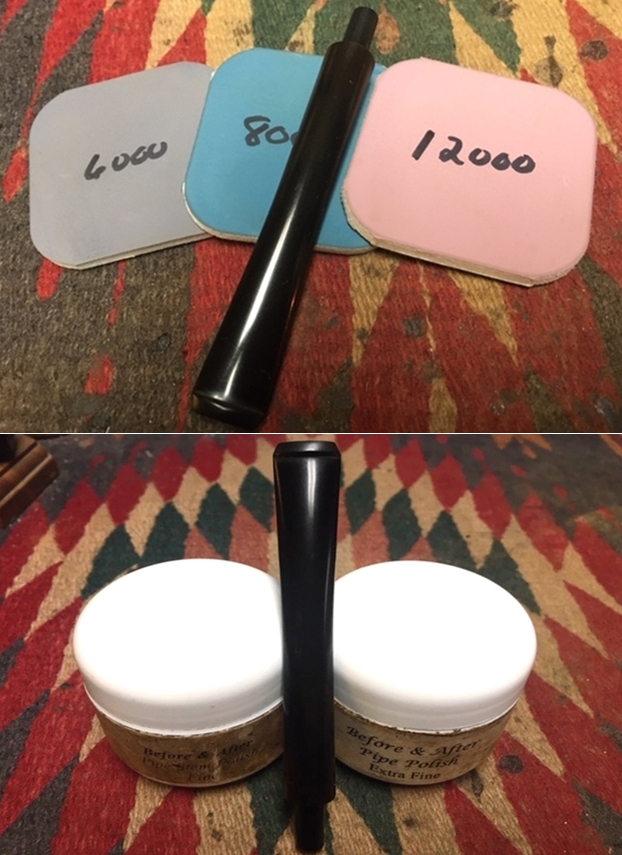
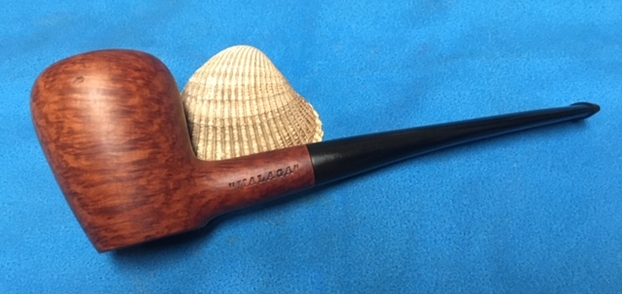
Jeff reamed the bowl with a PipNet pipe reamer and followed up with a Savinelli Fitsall pipe knife to remove the cake. He scrubbed out the mortise and the airway in the shank and the stem with alcohol, cotton swabs, shank brushes and pipe cleaners. He scrubbed the exterior of the bowl, rim, shank and stem with a tooth brush and Murphy’s Oil Soap to remove the oils and tars on the rim and the grime on the finish of the bowl. He rinsed it under running water. He dried it off with a soft cloth. He was able to remove the lava build up on the rim top and the flat surface of the rim top and the inner edge had some burn damage on the front and back side. The outer edge was rough and nicked. I took photos of the pipe to show its condition before I started my work on it. The stem also looked better. I took close up photos of the bowl and rim top as well as the stem. You can see the condition of the rim top and bowl in the first photo. Jeff was able to remove all of the tar and oils and you can that the top and the edges of the bowl look very good. The stem had light tooth marks and chatter on both sides near the button on both sides.I took a photo of the stamping on the shank to show the condition. The “MALAGA” stamp is far more clear and and readable than my blurry photos show. The M-2 stamp on the top of the shank is also more clear than the photos. I removed the stem from the shank and took a photo to give a sense of how the pipe looked. I decided to address the many poxy looking flaws in the briar first. There were no fills at all just sandpits that were all different sizes all around the bowl. The worst were on the right side followed by the front of the bowl. The right side and rim top were in excellent condition. I filled them all in with briar dust and clear CA glue. Once they cured I flattened them with a small flat file and then sanded them smooth with 220 grit sandpaper to blend them into the briar. I wiped the bowl down to remove the sanding dust with isopropyl alcohol and cotton pads. Once the repairs looked significantly better than the flaws in the briar that existed before. I sanded the bowl and rim with 320-3500 grit sanding pads to begin the process of removing the scratches and blending the restored rim top into the rest of the bowl. I wiped the bowl down after each pad with a damp cloth to remove the dust and debris. The photos tell the story. I polished the rim top and the briar with micromesh sanding pads. I dry sanded the bowl with 1500-12000 grit sanding pads. I wiped the bowl down after each pad with a damp cloth to remove the sanding dust. I worked some Before & After Restoration Balm into the surface of the briar with my fingertips to clean, enliven and protect it. I let the balm sit for a little while and then buffed with a cotton cloth to raise the shine. The following photos show the bowl at this point in the restoration process. I am very happy with the results. I set the bowl aside and “painted” the stem surface with the flame and was able to lift the tooth marks significantly. I filled in the ones that remained with black extra strength CA glue. I set it aside to cure. Once it cured I flattened the repair with a small file and then sanded it smooth with 220 grit sandpaper. It began to look much better. I turned to the stem to address the issues on the surface of both sides at the button. I sanded the stem with 320-3500 grit sanding pads. I wiped the stem down with an Obsidian Oil cloth after each sanding pad. I think I finally beat the oxidation.I polished the stem with micromesh sanding pads – wet sanding with 1500-12000 grit sanding pads. I wiped it down after each sanding pad Obsidian Oil. I finished by polishing it with Before & After Pipe Stem Polish both fine and extra Fine and then wiped it down with a final coat of Obsidian Oil. This is a beautiful Malaga M-2 Bent Acorn with a vulcanite tapered stem. It has a great look and feel. The shape of the bowl, the rim top and the cut of the briar work well to highlight the grain around the bowl sides. I polished stem and the bowl with Blue Diamond polish on the buffing wheel. I gave the bowl and the stem multiple coats of carnauba wax. I buffed the pipe with a clean buffing pad to raise the shine. I hand buffed it with a microfiber cloth to deepen the shine. The pipe polished up pretty nicely. The grain took on life with the buffing. The rich oil cured colour works well with the polished vulcanite stem. The finished Malaga M-2 Acorn has a rich look that is quite catching. The repaired flaws look better and are smooth. Have a look at it with the photos below. The shape, finish and flow of the pipe and stem are very well done. The dimensions are Length: 5 ½ inches, Height: 1 ¾ inches, Outside diameter of the bowl: 1 1/8 inches, Chamber diameter: ¾ of an inch. The weight of the pipe is 1.23 ounces/35 grams. It is a beautiful pipe. I will be putting it on the rebornpipes store shortly in the American Pipemakers Section if you are interested in adding it to your collection. Thanks for walking with me through the restoration.

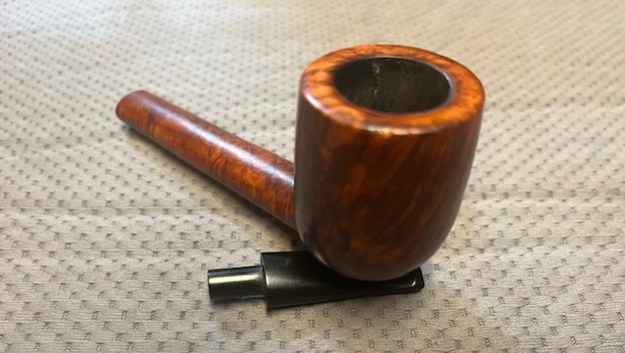
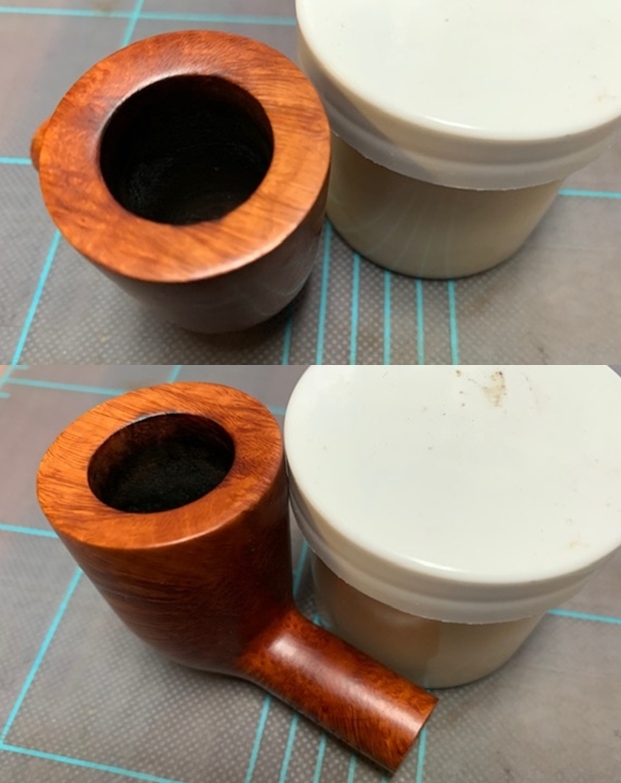
Breathing new life into another Beautiful “Malaga” Quarter Bent Egg


by Steve Laug

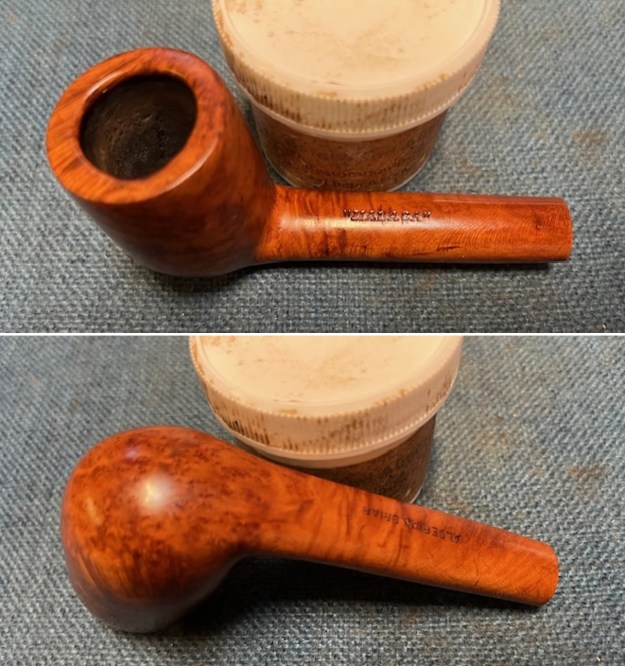
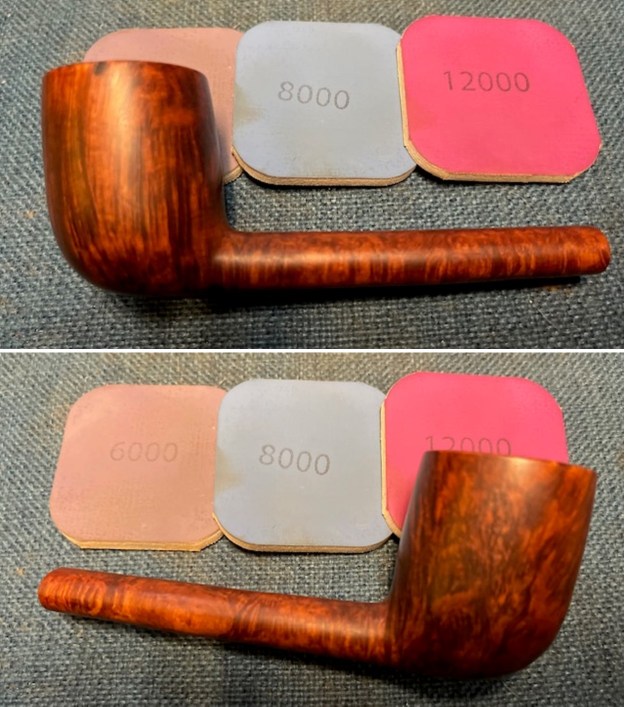
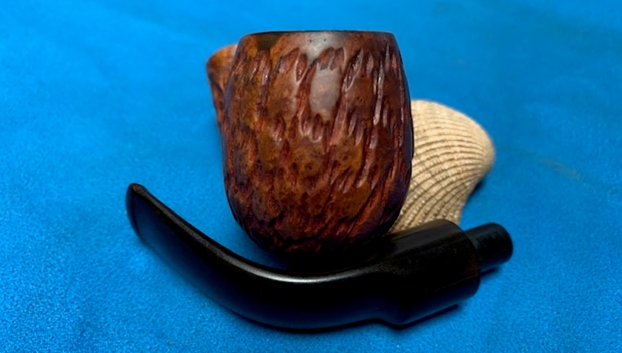
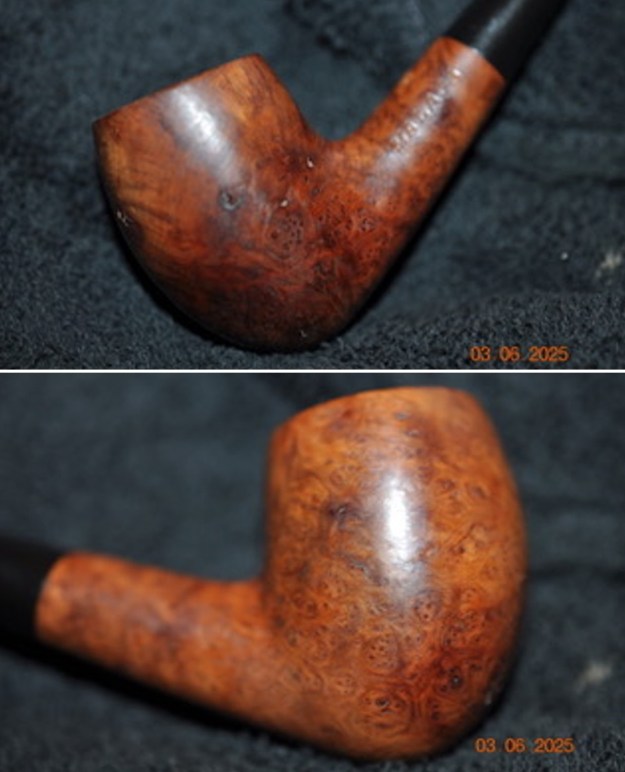
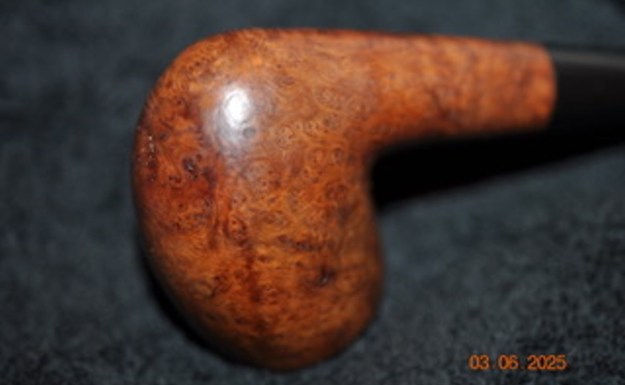
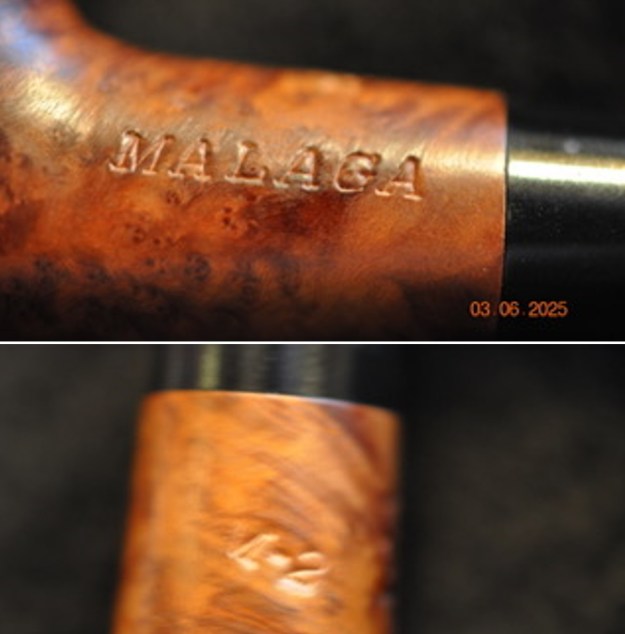
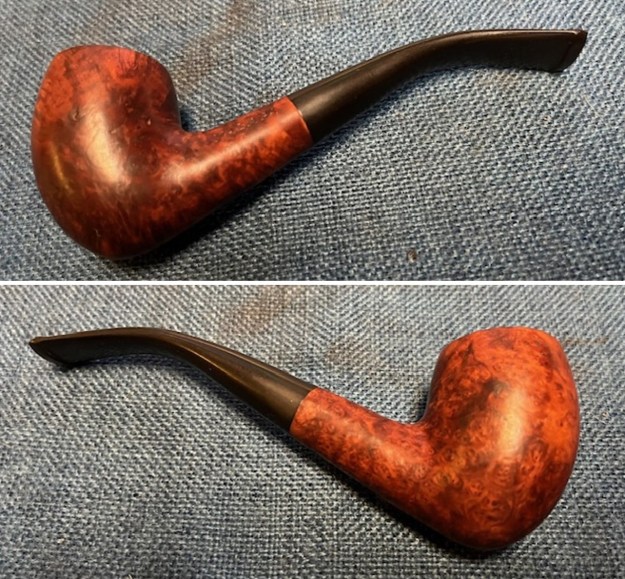
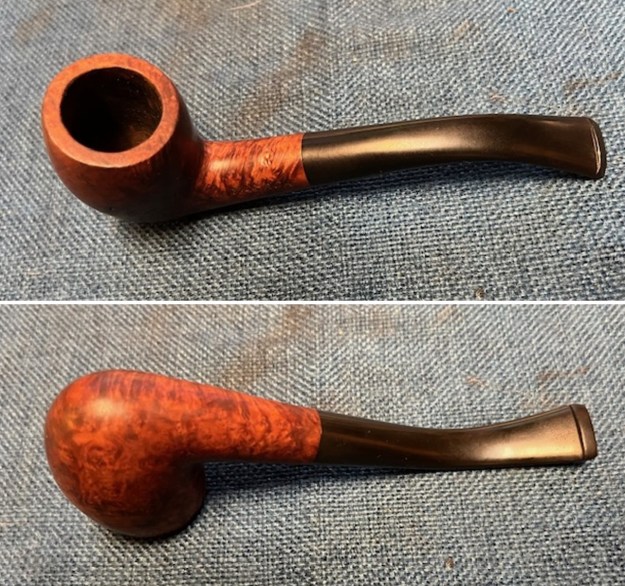
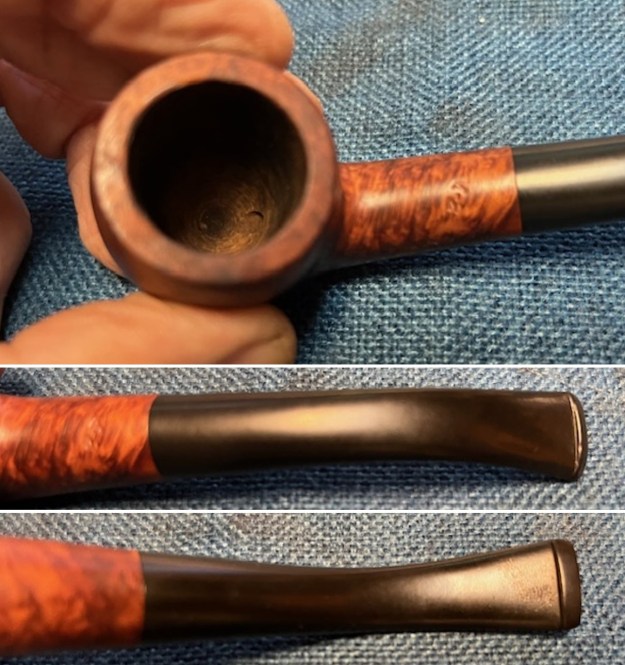
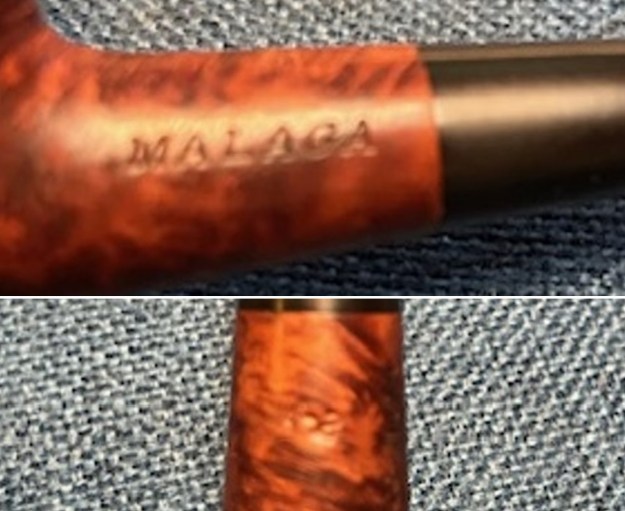
The “Malaga” Bent Egg is next pipe on the table. We purchased it off eBay on 08/22/24 from a seller in Harrison Township, Michigan, USA. The carver did a great job of shaping the pipe to follow the grain on the briar. The egg-shaped bowl, round shank and quarter Bent tapered stem look very good. The bowl had a thick cake that overflowed with thick lava onto the rim so that it was impossible to see if there was damage on the inner edges. The sides of the bowl and shank are very dirty with grime and oils from prolonged use. The grain around the bowl and shank appeared to be very nice mixed grain under the grime on the briar. The stamping on the left side of the shank read “MALAGA”. There was no other stamping on it. The stem had light tooth marks and chatter on the top and the underside of the stem ahead of the button. There was some oxidation deep in the vulcanite of the stem surface. Jeff took these photos before he started the cleanup work on the pipe.Jeff took close up photos of the bowl and rim to capture the condition of the pipe before he started his cleanup work. The rim top had thick lava overflow. The outer edge looked to be in decent condition. The stem is oxidized, calcified and has tooth marks and chatter on both sides. He also took a photo of the side and bottom of the bowl and shank to show the beautiful grain around the bowl. The photos show the general condition of the bowl and dirt and wear on the rich oil finish. It is very dirty but this is another beautiful pipe. Jeff took a photo to capture the stamping on the left side of the shank. The photo shows the stamping “MALAGA”. The stamping is very readable under the heavy grime.Before I started working on the pipe itself I went back and reread what I had found when I had worked on many of the Malaga pipes that had come across my work table. I am including a few pieces of information that I have gathered in the process.
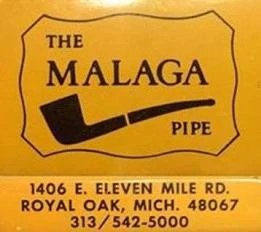
For those of you reading this blog who are unfamiliar with the brand, I am including the link to a previous blog that I wrote. It gives some of the history of the Malaga brand and the Malaga Pipe Shop in Royal Oak, Michigan in the USA. Here is the link – https://rebornpipes.com/tag/malaga-pipes/.

I have also included a link to a catalogue and the history of the pipemaker George Khoubesser. If you are interested to learn more, then I invite you to follow the link to get a feel for the brand and the pipemaker.

George Khoubesser (picture to the left) started Malaga Briar Pipe Company and located it in Royal Oak, Michigan in the USA in 1939. It closed its doors for the last time in 1999 after 60 years in business. I have an old Malaga Catalogue that I scanned and put on the blog (https://rebornpipes.com/2013/02/09/george-khoubesser-and-malaga-pipes/). The catalogue describes the manufacture of the pipes as follows:

Painstaking caution is exercised in selecting flawless, perfect briar wood for the purpose of making and Curing of the “Malaga.” You can be certain of this fact, because none other than the choicest and finest select briarwood will withstand the “Malaga” Curing process. Other than the choicest quality and grain, will split wide open in the Curing vats… The Curing method renders all “Malaga” pipes, light in weight… Most all “Malaga” Senior pipes are left in their natural state; except for a skillful waxing which brings out the rich beauty of the virgin grain. No artificial polishing stain, shellac or varnishes are added. Malaga closed in 1999 after 60 years in business.

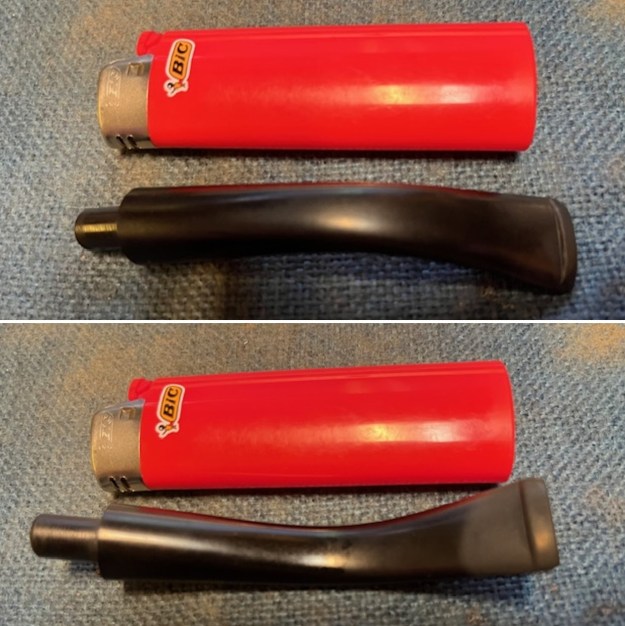
Jeff reamed the bowl with a PipNet pipe reamer and followed up with a Savinelli Fitsall pipe knife to remove the cake. He scrubbed out the mortise and the airway in the shank and the stem with alcohol, cotton swabs, shank brushes and pipe cleaners. He scrubbed the exterior of the bowl, rim, shank and stem with a tooth brush and Murphy’s Oil Soap to remove the oils and tars on the rim and the grime on the finish of the bowl. He rinsed it under running water. He dried it off with a soft cloth. He was able to remove the lava build up on the rim top and the flat surface of the rim top and the inner edge had some burn damage on the front and back side. The outer edge was rough and nicked. I took photos of the pipe to show its condition before I started my work on it. The stem also looked better. I took close up photos of the bowl and rim top as well as the stem. You can see the condition of the rim top and bowl in the first photo. Jeff was able to remove all of the tar and oils but you can now see the damage on the top and the edges of the bowl. The top of the rim is rough and there is some burn damage and darkening on the inner edge on the front. The stem had light tooth marks and chatter on both sides near the button on both sides.I took a photo of the stamping on the shank to show the condition. The “MALAGA” stamp is clear and readable. I removed the stem from the shank and took a photo to give a sense of how the pipe looked. I decided to address the rim top and damaged inner edge of the bowl first. To remove the damage on the rim top and edges of the bowl sanded the top with 220 grit sandpaper. That removed a lot of the damage on the rim top and outer edge. I used a piece of 220 grit sandpaper to work on the inner edge of the rim and remove the darkening and clean up the damage.I sanded the bowl and rim with 320-3500 grit sanding pads to begin the process of removing the scratches and blending the restored rim top into the rest of the bowl. I wiped the bowl down after each pad with a damp cloth to remove the dust and debris. The photos tell the story. I polished the rim top and the briar with micromesh sanding pads. I dry sanded the bowl with 1500-12000 grit sanding pads. I wiped the bowl down after each pad with a damp cloth to remove the sanding dust. I worked some Before & After Restoration Balm into the surface of the briar with my fingertips to clean, enliven and protect it. I let the balm sit for a little while and then buffed with a cotton cloth to raise the shine. The following photos show the bowl at this point in the restoration process. I am very happy with the results. Before turning to work on the stem I decided to bend the stem to match the angels of the bowl. I “painted” it with a lighter to soften the vulcanite enough to bend it. I pressed the rim top flat against the desk top and bent the stem to the same angle. I “painted” the stem surface with the flame and was able to lift the tooth marks significantly. I filled in the ones that remained with black extra strength CA glue. I set it aside to cure. Once it cured I flattened the repair with a small file and then sanded it smooth with 220 grit sandpaper. It began to look much better. I turned to the stem to address the issues on the surface of both sides at the button. I sanded the stem with 320-3500 grit sanding pads. I wiped the stem down with an Obsidian Oil cloth after each sanding pad. I think I finally beat the oxidation.I polished the stem with micromesh sanding pads – wet sanding with 1500-12000 grit sanding pads. I wiped it down after each sanding pad Obsidian Oil. I finished by polishing it with Before & After Pipe Stem Polish both fine and extra Fine and then wiped it down with a final coat of Obsidian Oil. This is a beautiful “Malaga” Quarter Bent Egg with a vulcanite tapered stem. It has a great look and feel. The shape of the bowl, the rim top and the cut of the briar work well to highlight the grain around the bowl sides. I polished stem and the bowl with Blue Diamond polish on the buffing wheel. I gave the bowl and the stem multiple coats of carnauba wax. I buffed the pipe with a clean buffing pad to raise the shine. I hand buffed it with a microfiber cloth to deepen the shine. The pipe polished up pretty nicely. The grain took on life with the buffing. The rich oil cured colour works well with the polished vulcanite stem. The finished Malaga Quarter Bent Egg has a rich look that is quite catching. Have a look at it with the photos below. The shape, finish and flow of the pipe and stem are very well done. The dimensions are Length: 5 ½ inches, Height: 2 inches, Outside diameter of the bowl: 1 ¼ inches, Chamber diameter: ¾ of an inch. The weight of the pipe is 1.41 ounces/40 grams. It is a beautiful pipe. I will be putting it on the rebornpipes store shortly in the American Pipemakers Section if you are interested in adding it to your collection. Thanks for walking with me through the restoration.
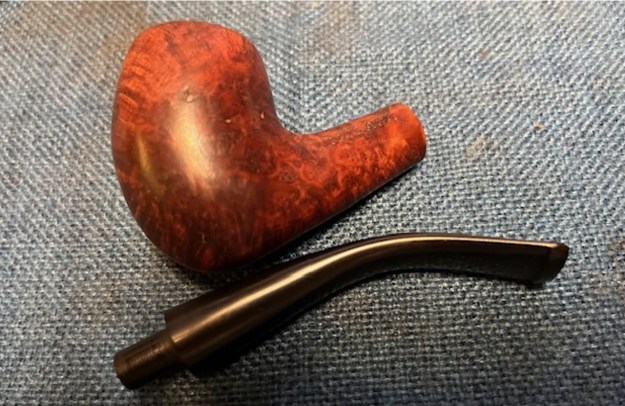
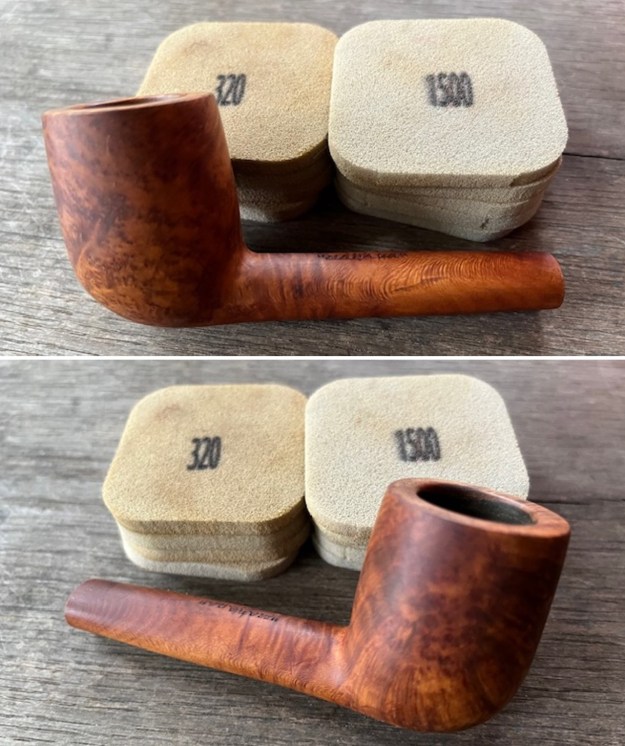
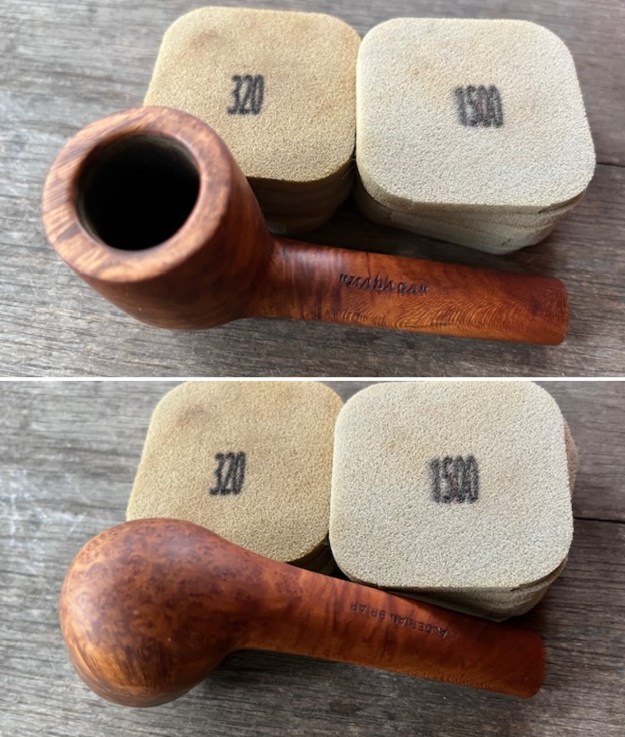
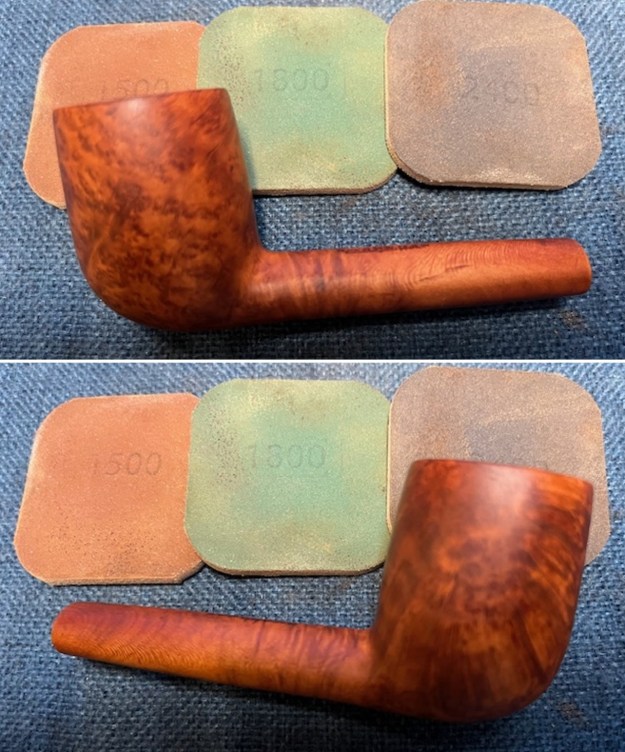
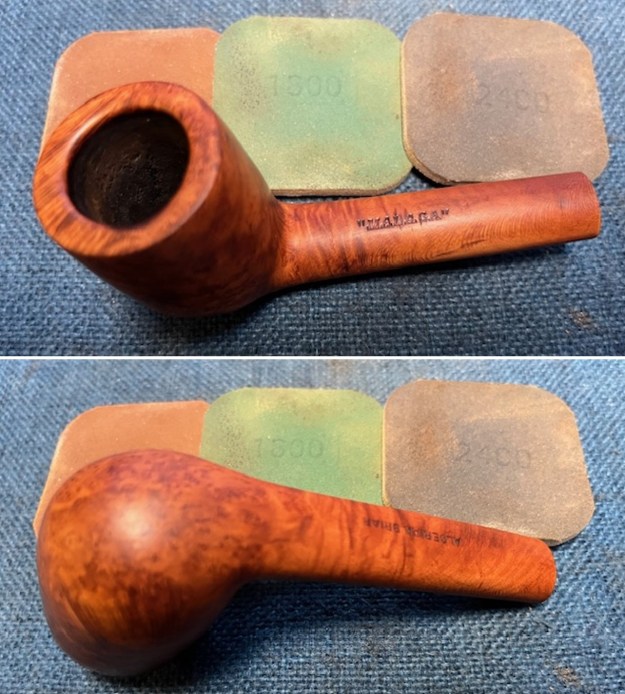
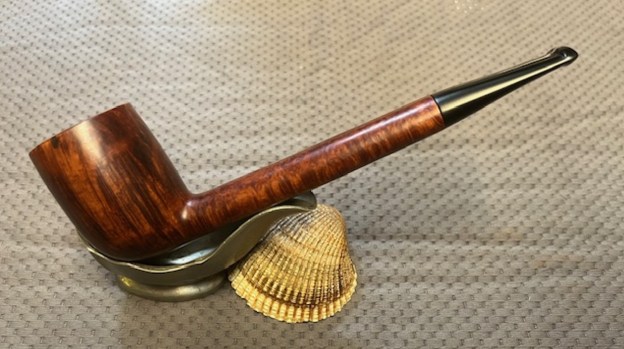
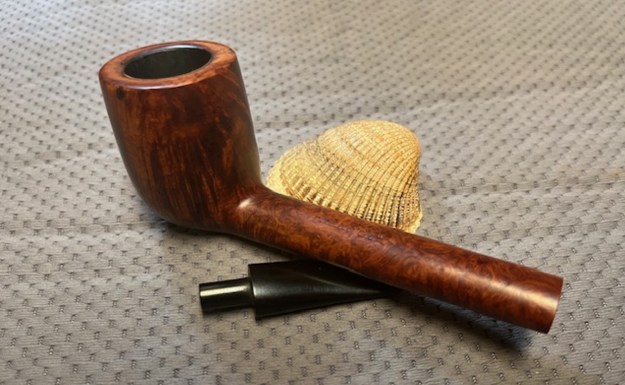
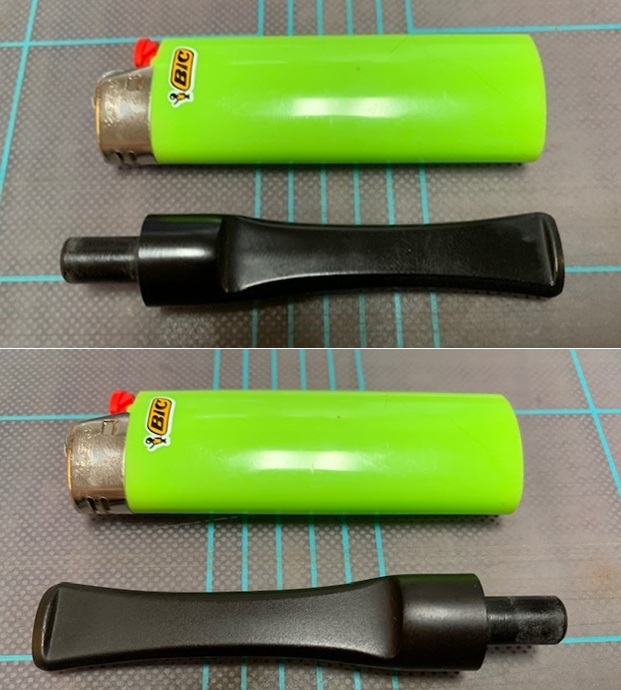
Breathing new life in to a Beautiful “Malaga” Algerian Briar Canadian


by Steve Laug

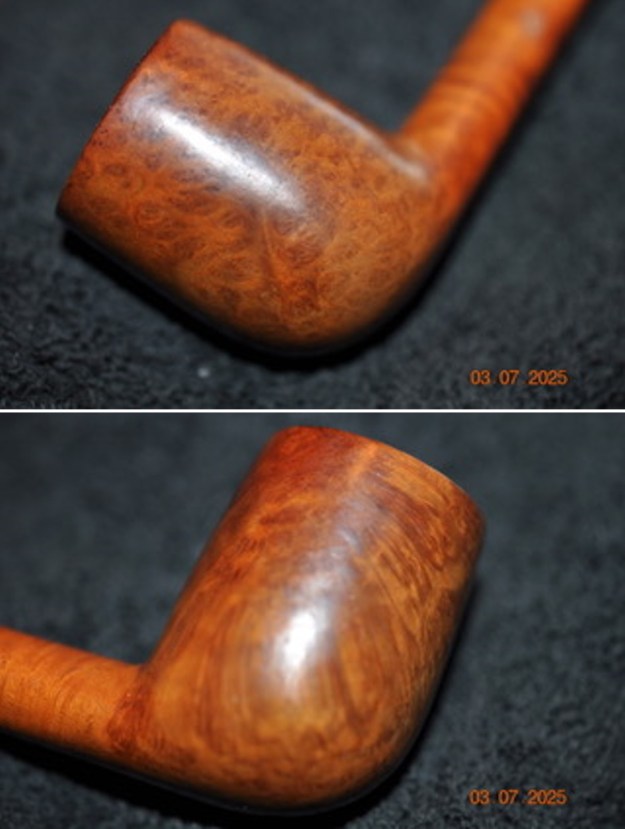
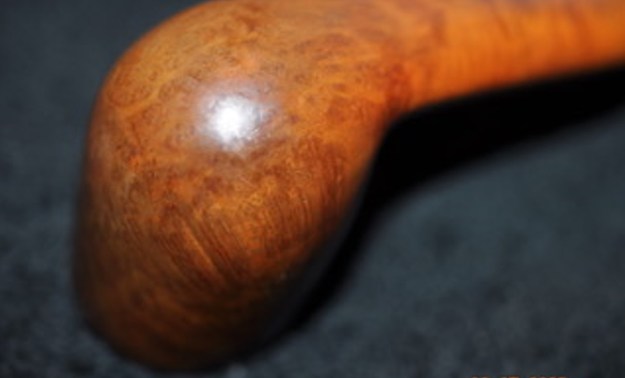
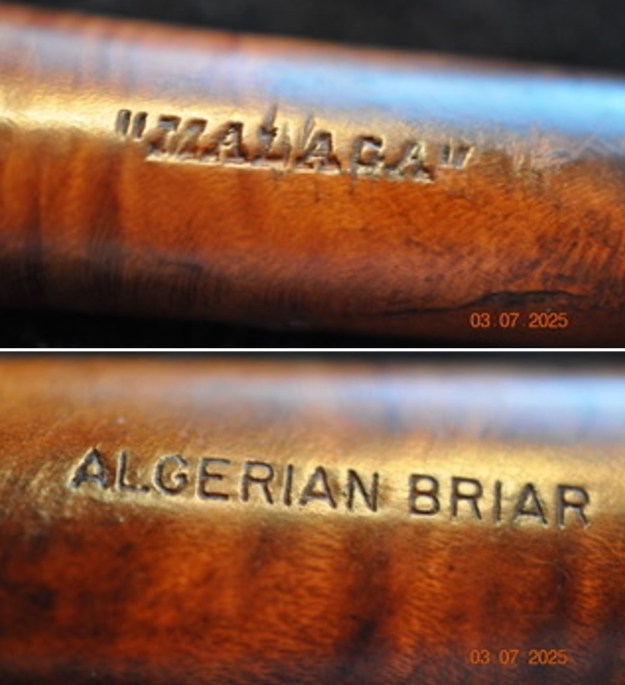
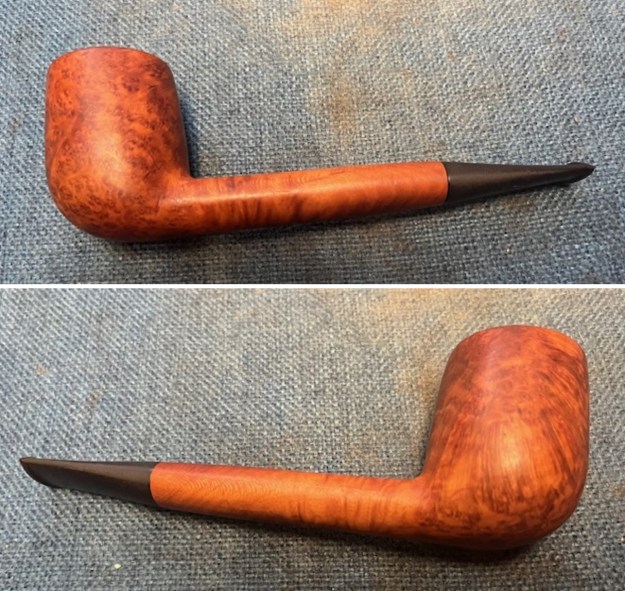
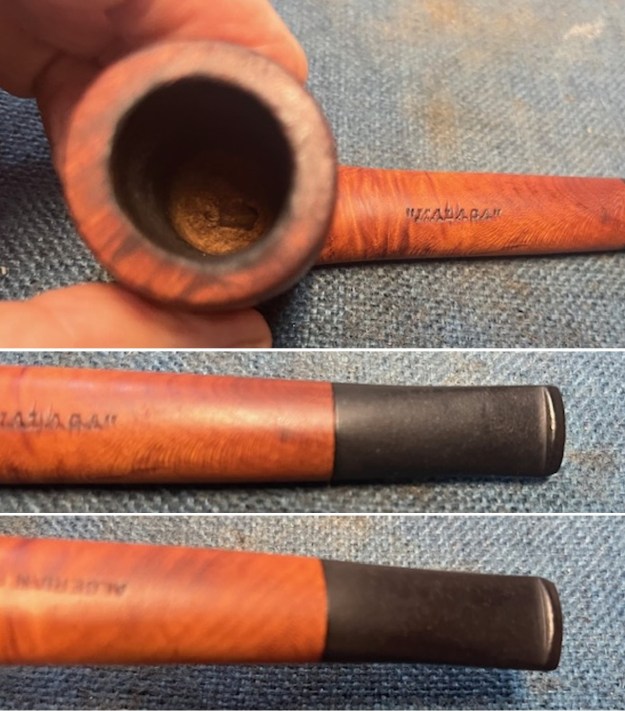
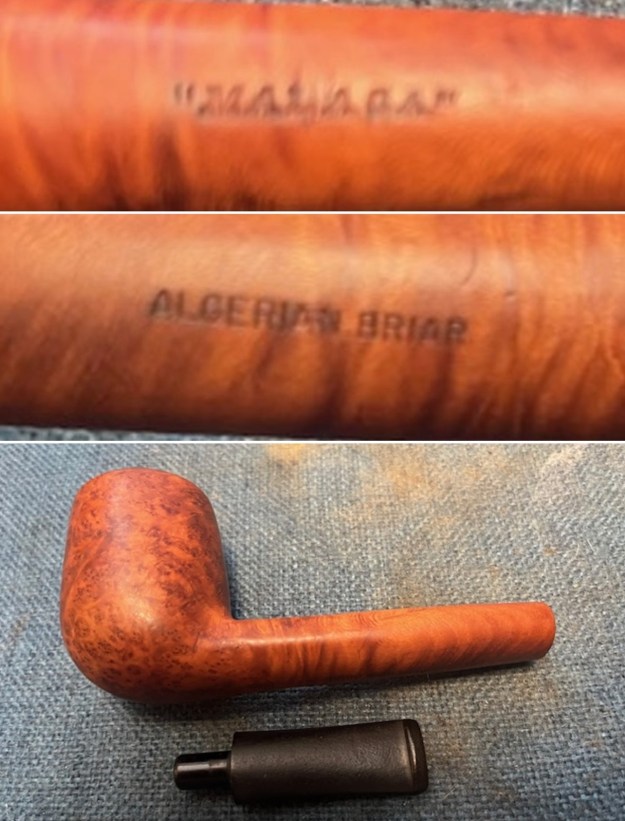
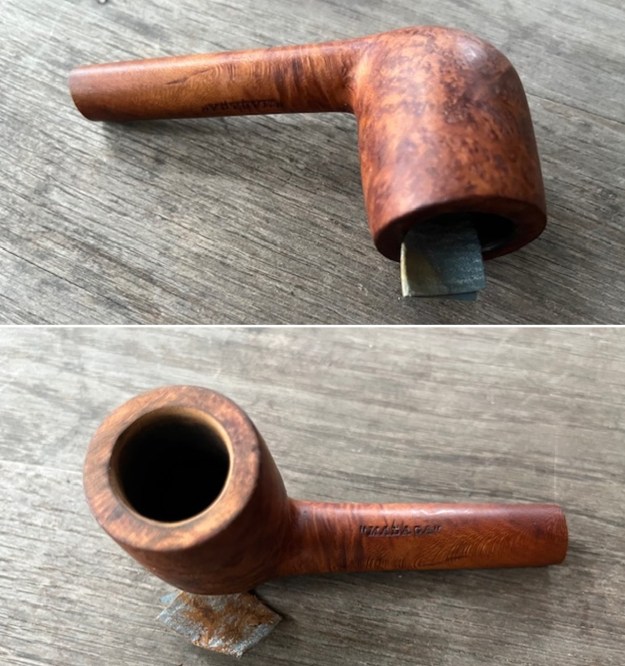
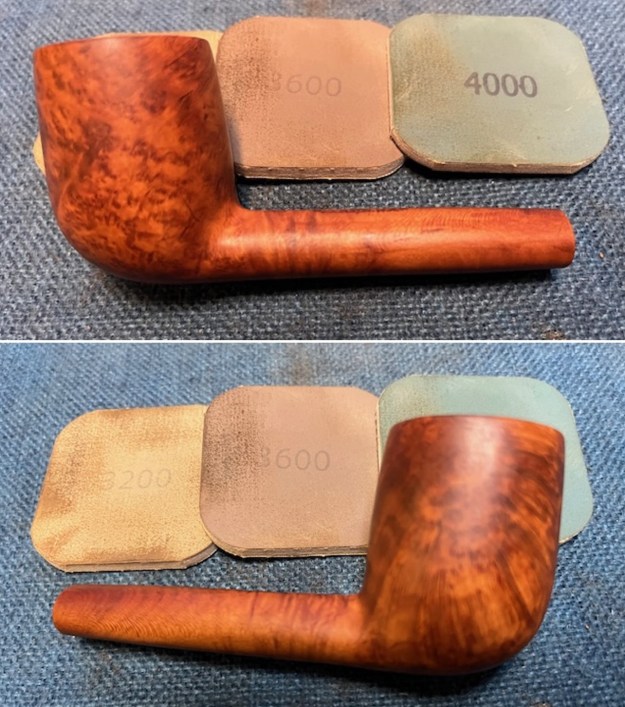
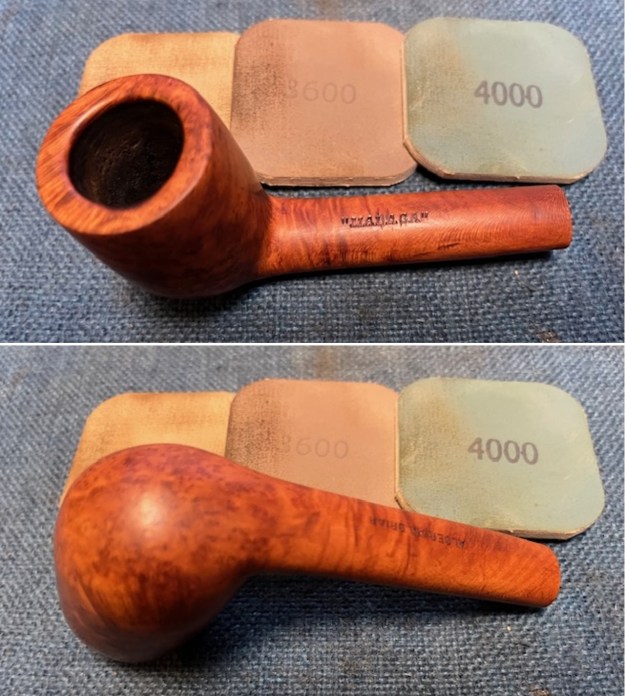
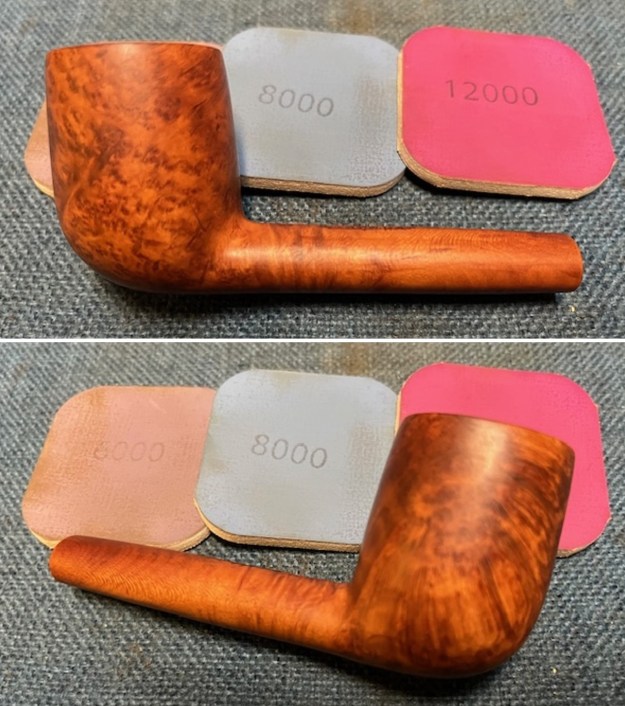
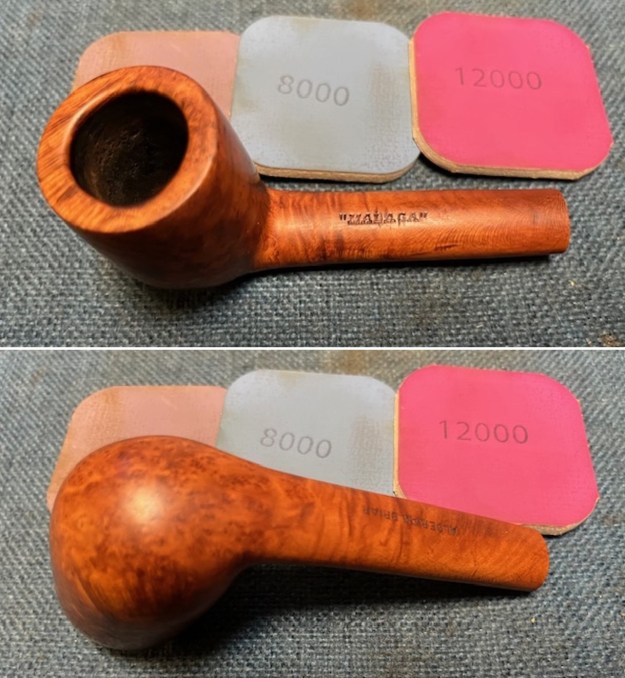
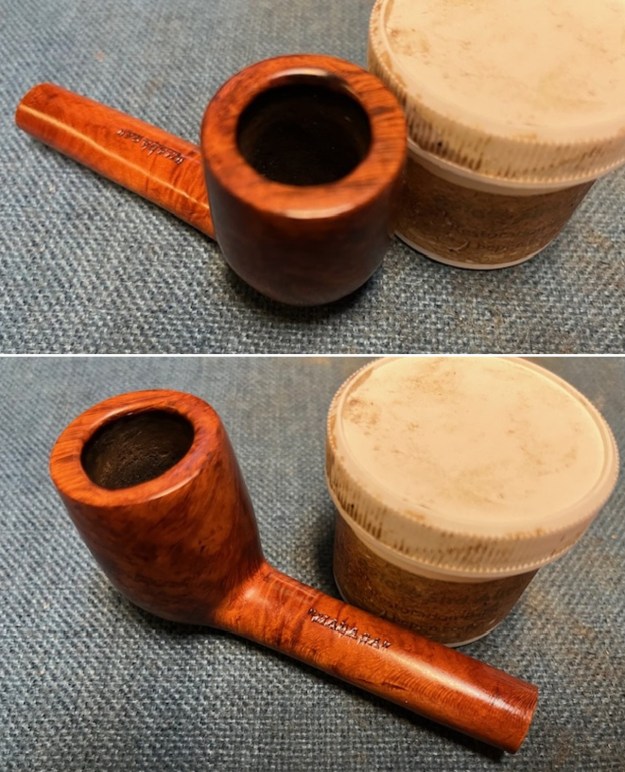
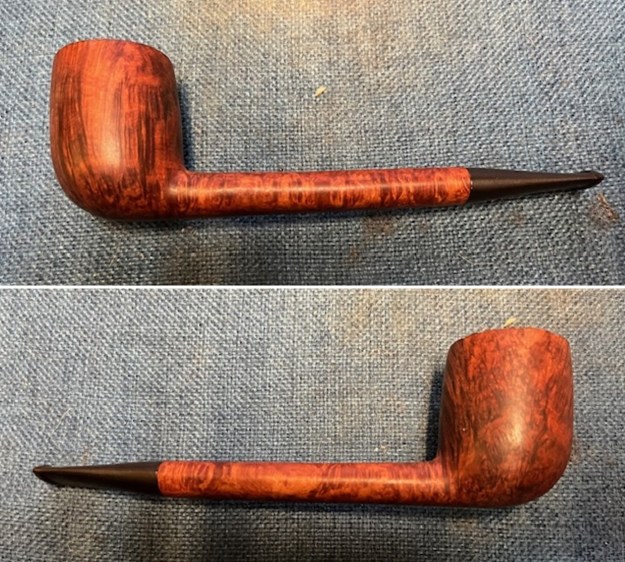
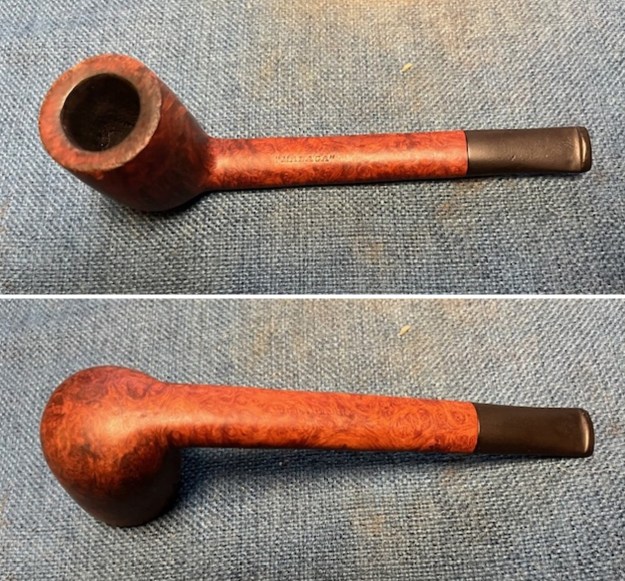
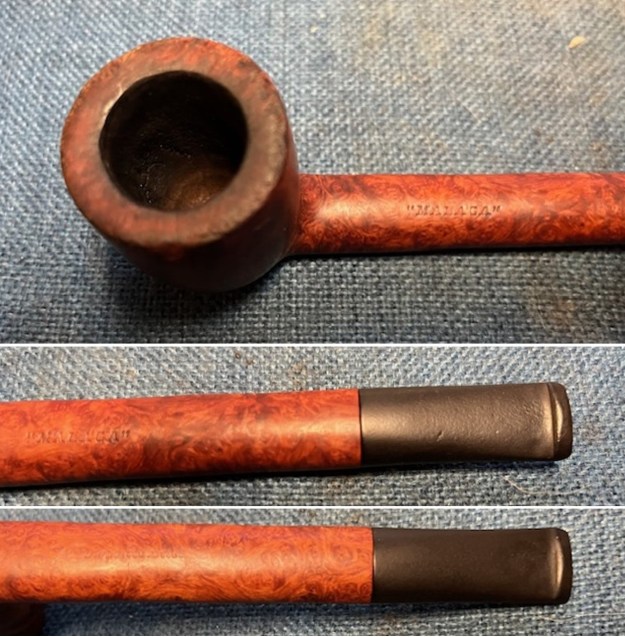
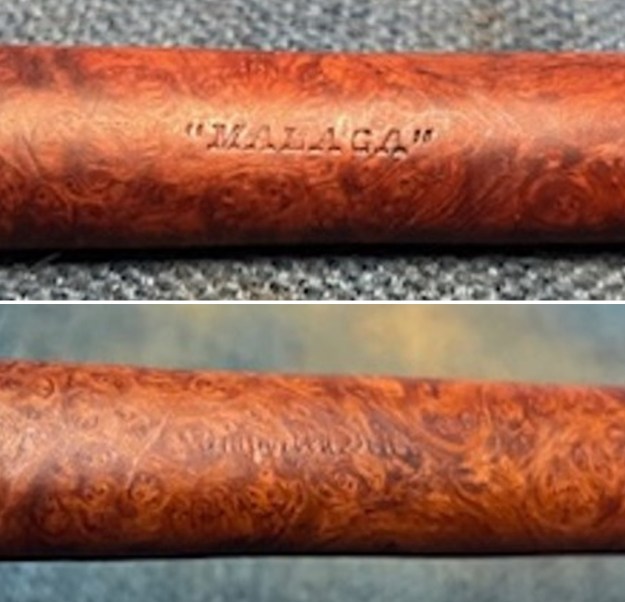
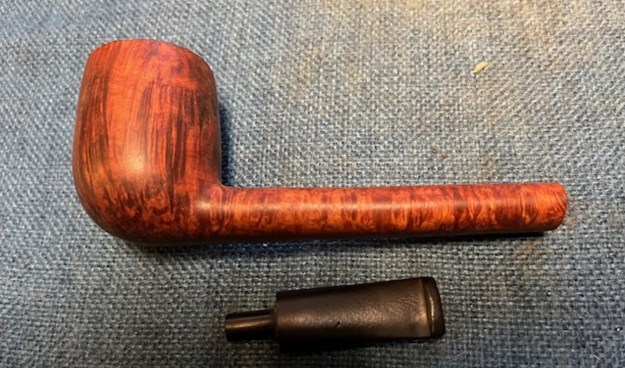
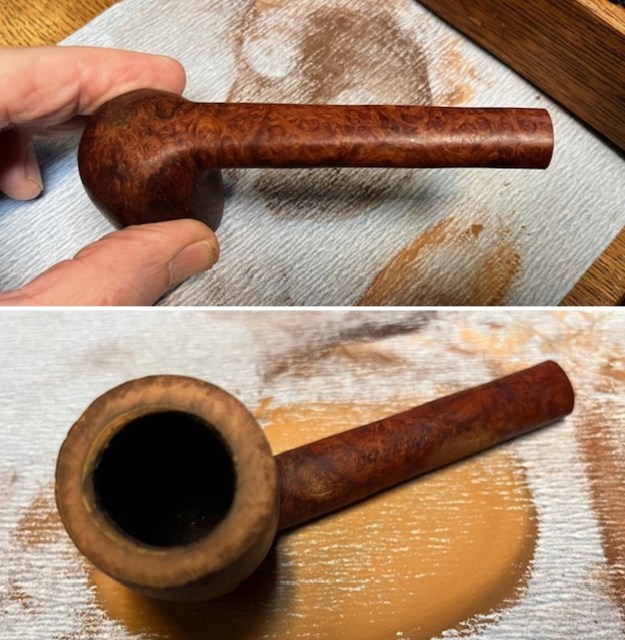
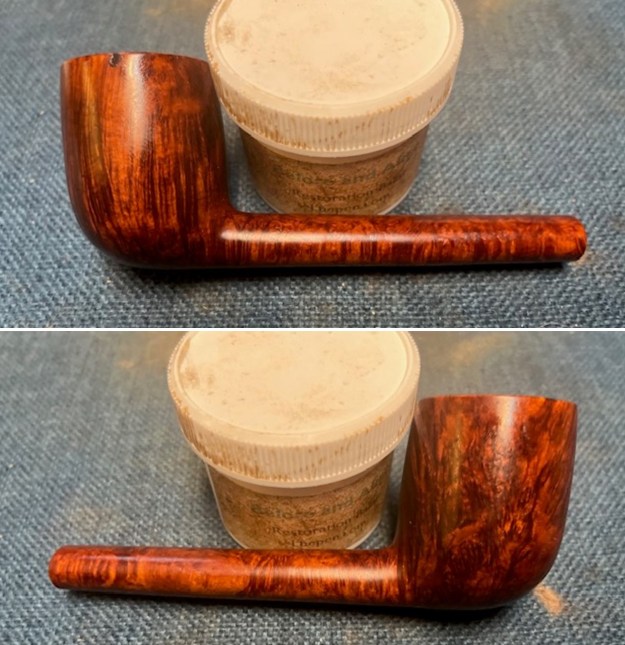
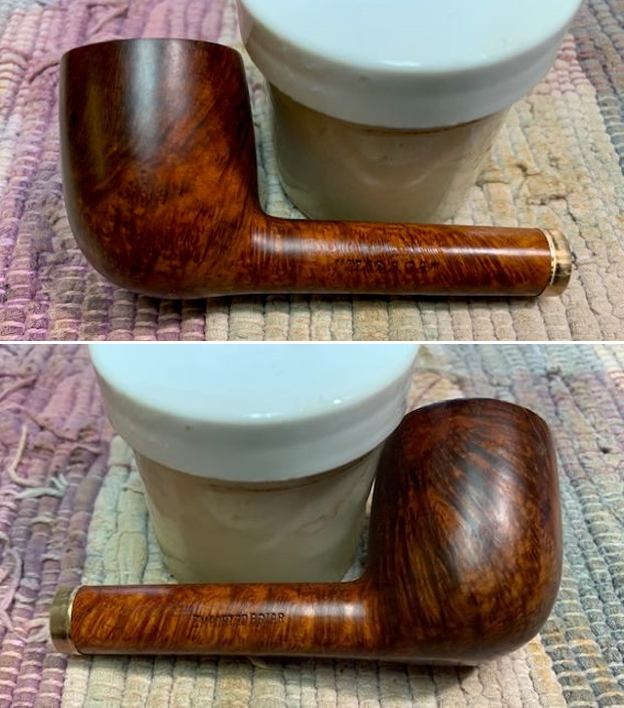
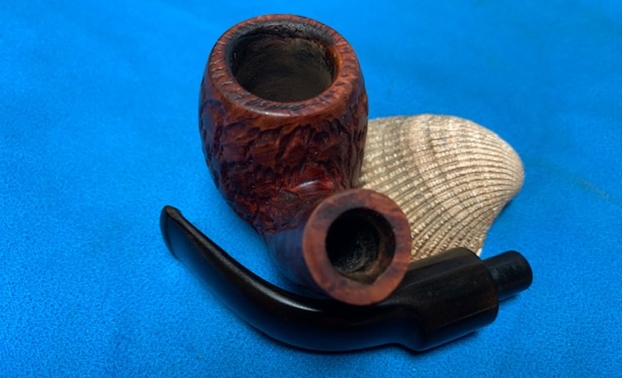
The “Malaga” Canadian is next pipe on the table. We purchased it off eBay on 08/22/24 from a seller in Harrison Township, Michigan, USA. The carver did a great job of shaping the pipe to follow the grain on the briar. The bowl, oval shank and straight tapered stem look very good. The bowl had a thick cake that overflowed with thick lava onto the rim so that it was impossible to see if there was damage on the inner edges. The sides of the bowl and shank are very dirty with grime and oils from prolonged use. The grain around the bowl and shank is very nice mixed grain. The stamping on the top of the shank read “MALAGA”. On the underside it is stamped ALGERIAN BRIAR. The stem had light tooth marks and chatter on the top and the underside of the stem ahead of the button. There was some thick calcification and also some oxidation deep in the vulcanite of the stem surface. Jeff took these photos before he started the cleanup work on the pipe.Jeff took close up photos of the bowl and rim to capture the condition of the pipe before he started his cleanup work. The rim top had thick lava overflow. The outer edge looked to be in decent condition. The stem is oxidized, calcified and has light tooth marks and chatter on both sides. He also took a photo of the side and bottom of the bowl and shank to show the beautiful grain around the bowl. The photos show the general condition of the bowl and dirt and wear on the rich oil finish. It is very dirty but this is another beautiful pipe. Jeff took a photo to capture the stamping on the top and underside of the shank. The photos show the stamping “MALAGA” on the top and ALGERIAN BRIAR on the underside. The stamping is very readable both sides of the shank.Before I started working on the pipe itself I went back and reread what I had found when I had worked on many of the Malaga pipes that had come across my work table. I am including a few pieces of information that I have gathered in the process.

For those of you reading this blog who are unfamiliar with the brand, I am including the link to a previous blog that I wrote. It gives some of the history of the Malaga brand and the Malaga Pipe Shop in Royal Oak, Michigan in the USA. Here is the link – https://rebornpipes.com/tag/malaga-pipes/.

I have also included a link to a catalogue and the history of the pipemaker George Khoubesser. If you are interested to learn more, then I invite you to follow the link to get a feel for the brand and the pipemaker.

George Khoubesser (picture to the left) started Malaga Briar Pipe Company and located it in Royal Oak, Michigan in the USA in 1939. It closed its doors for the last time in 1999 after 60 years in business. I have an old Malaga Catalogue that I scanned and put on the blog (https://rebornpipes.com/2013/02/09/george-khoubesser-and-malaga-pipes/). The catalogue describes the manufacture of the pipes as follows:

Painstaking caution is exercised in selecting flawless, perfect briar wood for the purpose of making and Curing of the “Malaga.” You can be certain of this fact, because none other than the choicest and finest select briarwood will withstand the “Malaga” Curing process. Other than the choicest quality and grain, will split wide open in the Curing vats… The Curing method renders all “Malaga” pipes, light in weight… Most all “Malaga” Senior pipes are left in their natural state; except for a skillful waxing which brings out the rich beauty of the virgin grain. No artificial polishing stain, shellac or varnishes are added. Malaga closed in 1999 after 60 years in business.

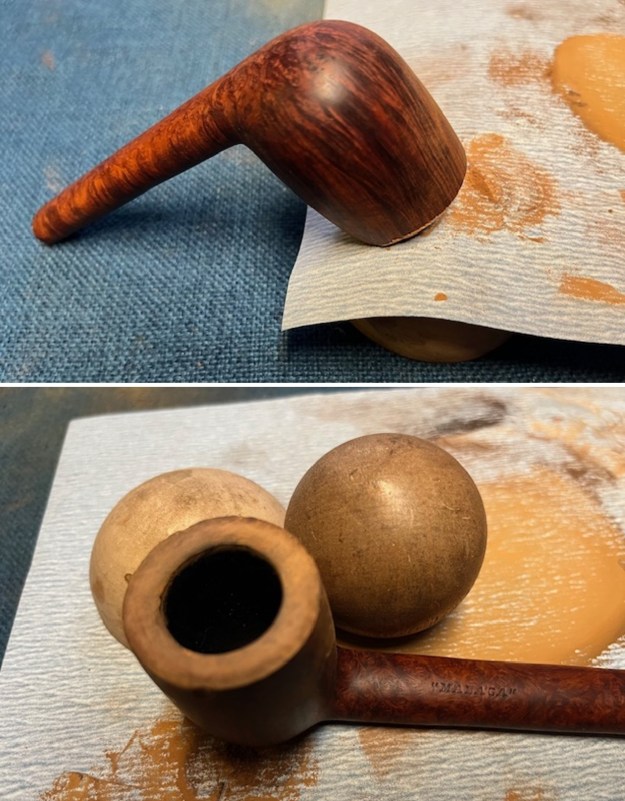
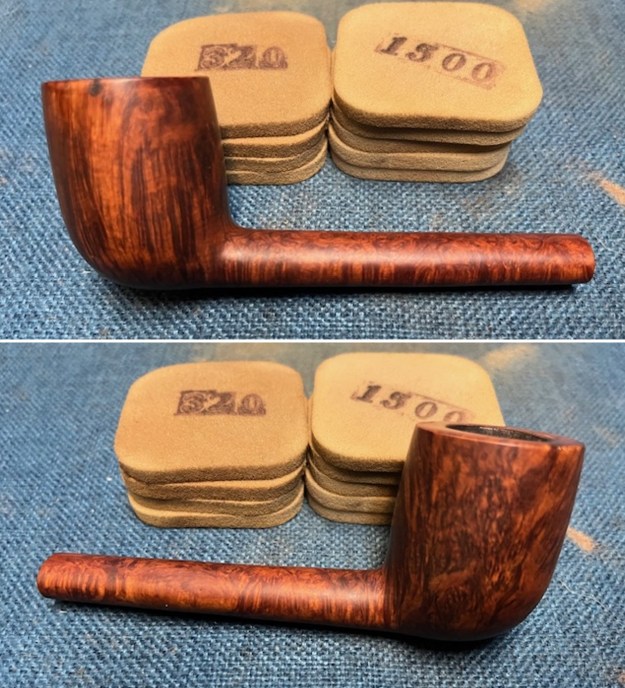
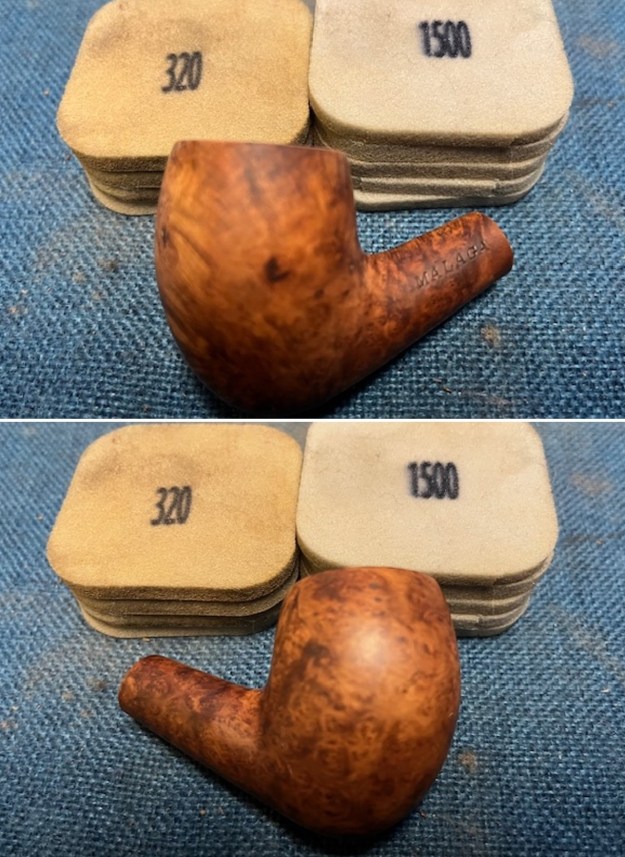
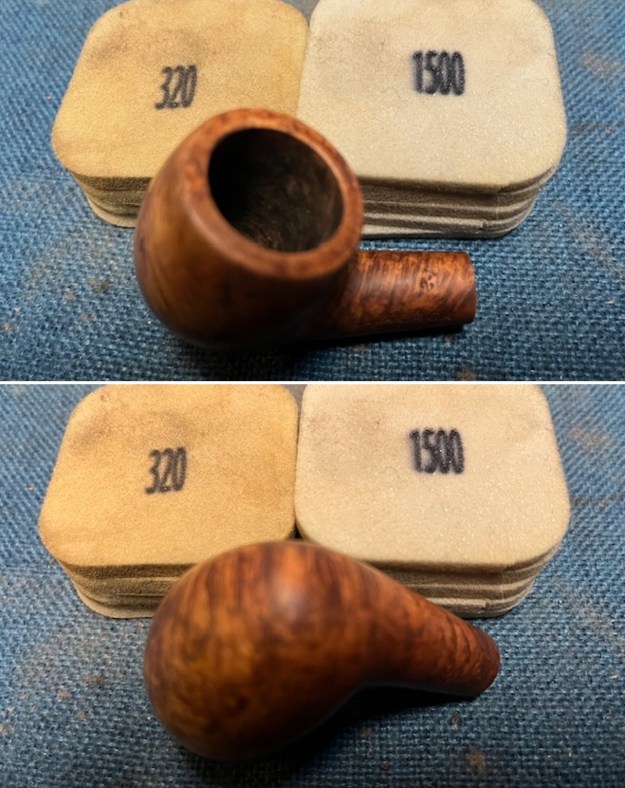
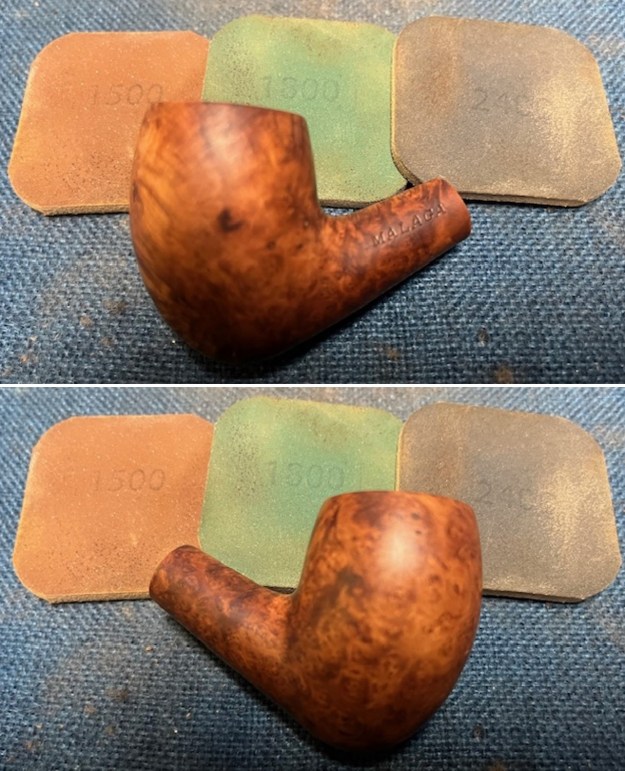
Jeff reamed the bowl with a PipNet pipe reamer and followed up with a Savinelli Fitsall pipe knife to remove the cake. He scrubbed out the mortise and the airway in the shank and the stem with alcohol, cotton swabs, shank brushes and pipe cleaners. He scrubbed the exterior of the bowl, rim, shank and stem with a tooth brush and Murphy’s Oil Soap to remove the oils and tars on the rim and the grime on the finish of the bowl. He rinsed it under running water. He dried it off with a soft cloth. He was able to remove the lava build up on the rim top and the flat surface of the rim top and the inner edge had some burn damage on the front and back side. The outer edge was rough and nicked. I took photos of the pipe to show its condition before I started my work on it. The stem also looked better.I took close up photos of the bowl and rim top as well as the stem. You can see the condition of the rim top and bowl in the first photo. Jeff was able to remove all of the tar and oils but you can now see the damage on the top and the edges of the bowl. The top of the rim is rough and the outer edges are chipped and rough. There is some burn damage and darkening on the inner edge on the left side. The stem had light tooth marks and chatter on both sides near the button on both sides.I took a photo of the stamping on the shank to show the condition. The “MALAGA” stamp is and the ALGERIAN BRIAR stamp are clear and readable. I removed the stem from the shank and took a photo to give a sense of what the pipe looked like.I decided to address the rim top and damaged inner edge of the bowl first. To remove the damage on the rim top and edges of the bowl sanded the top with 220 grit sandpaper. That removed a lot of the damage on the rim top and outer edge. I used a piece of 220 grit sandpaper to work on the inner edge of the rim and remove the darkening and clean up the damage.I sanded the bowl and rim with 320-3500 grit sanding pads to begin the process of removing the scratches and blending the restored rim top into the rest of the bowl. I wiped the bowl down after each pad with a damp cloth to remove the dust and debris. The photos tell the story. With the sanding I found a fill on the left side of the shank that is solid. There also appears to be one on the lower right side of the bowl that is also solid. I polished the rim top and the briar with micromesh sanding pads. I wet sanded the bowl with 1500-12000 grit sanding pads. I wiped the bowl down after each pad with a damp cloth to remove the sanding dust. I worked some Before & After Restoration Balm into the surface of the briar with my fingertips to clean, enliven and protect it. I let the balm sit for a little while and then buffed with a cotton cloth to raise the shine. The following photos show the bowl at this point in the restoration process. I am very happy with the results. I turned to the stem to address the issues on the surface of both sides at the button. I sanded the stem with 320-3500 grit sanding pads. I wiped the stem down with an Obsidian Oil cloth after each sanding pad. I think I finally beat the oxidation.I polished the stem with micromesh sanding pads – wet sanding with 1500-12000 grit sanding pads. I wiped it down after each sanding pad Obsidian Oil. I finished by polishing it with Before & After Pipe Stem Polish both fine and extra Fine and then wiped it down with a final coat of Obsidian Oil. This is a beautiful Malaga Algerian Briar Canadian with a vulcanite tapered stem. It has a great look and feel. The shape of the bowl, the rim top and the cut of the briar work well to highlight the grain around the bowl sides. I polished stem and the bowl with Blue Diamond polish on the buffing wheel. I gave the bowl and the stem multiple coats of carnauba wax. I buffed the pipe with a clean buffing pad to raise the shine. I hand buffed it with a microfiber cloth to deepen the shine. The pipe polished up pretty nicely. The grain took on life with the buffing. The rich oil cured colour works well with the polished vulcanite stem. The finished Malaga Algerian Briar Canadian has a rich look that is quite catching. Have a look at it with the photos below. The shape, finish and flow of the pipe and stem are very well done. The dimensions are Length: 5 ½ inches, Height: 1 ¾ inches, Outside diameter of the bowl: 1 ¼ inches, Chamber diameter: ¾ of an inch. The weight of the pipe is 1.23 ounces/35 grams. It is a beautiful pipe. I will be putting it on the rebornpipes store shortly in the American Pipemakers Section if you are interested in adding it to your collection. Send me a message or an email to slaug@uniserve.com  Thanks for walking with me through the restoration.
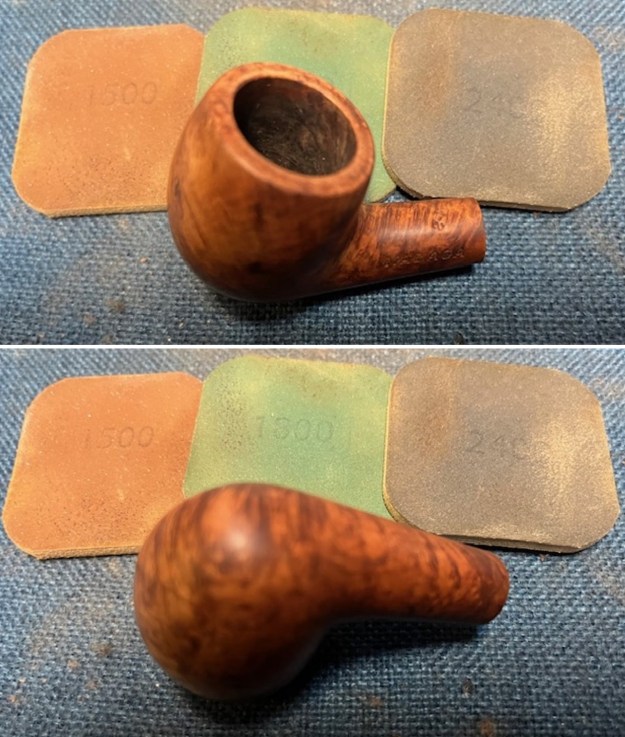
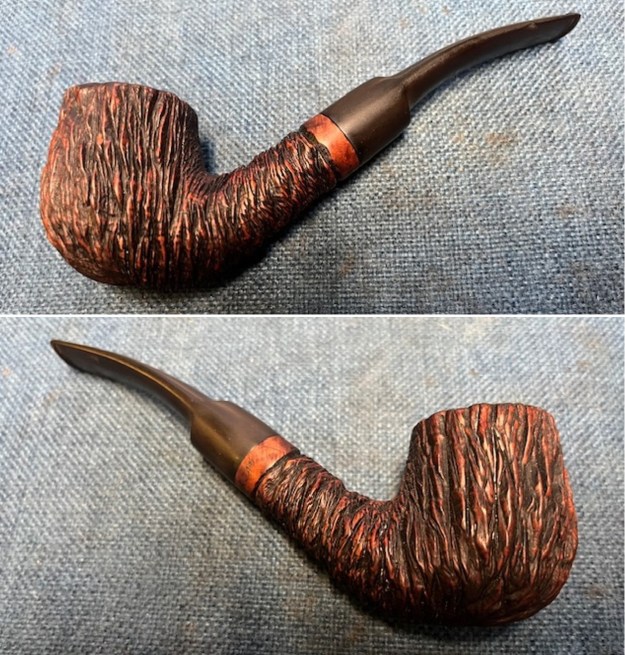
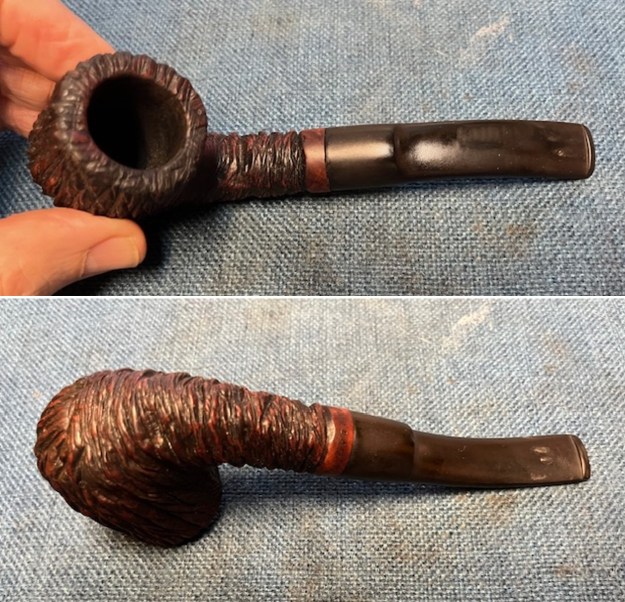
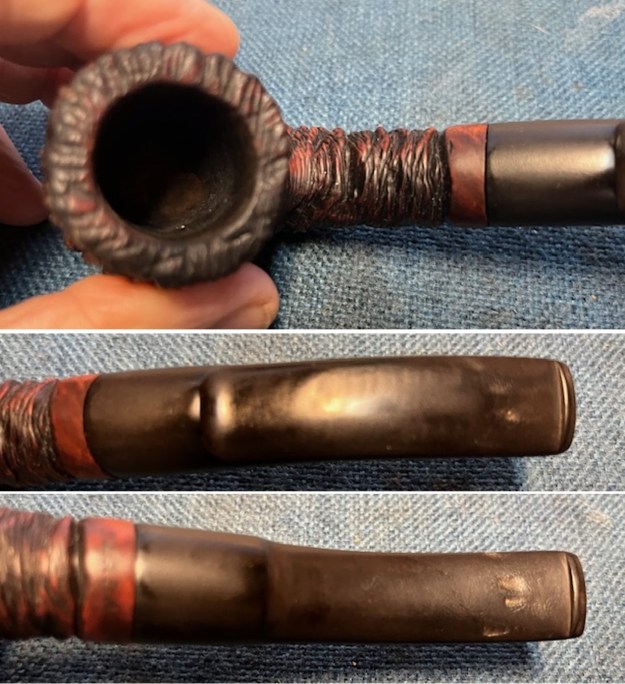
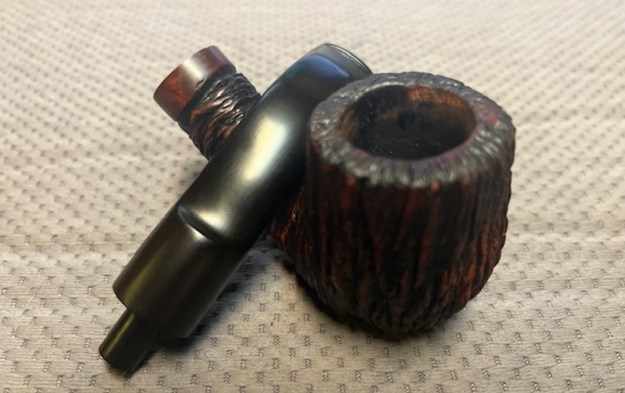
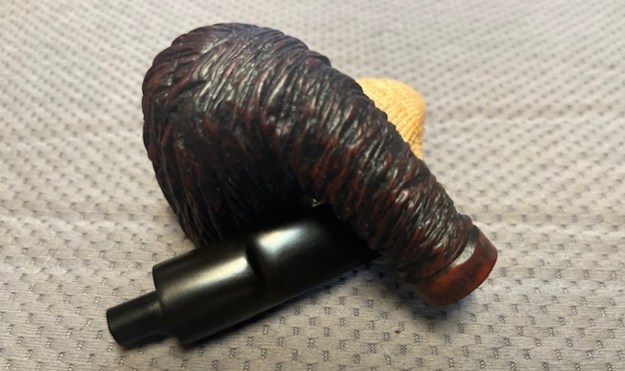
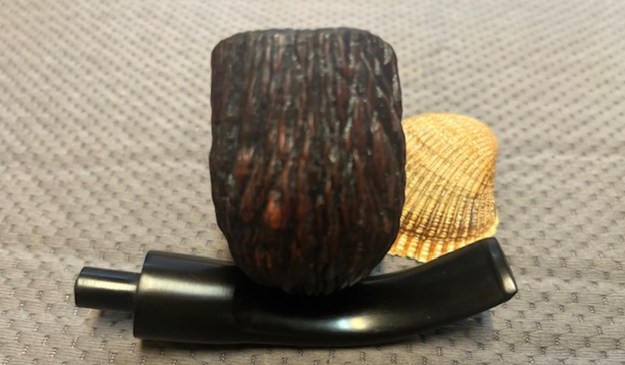
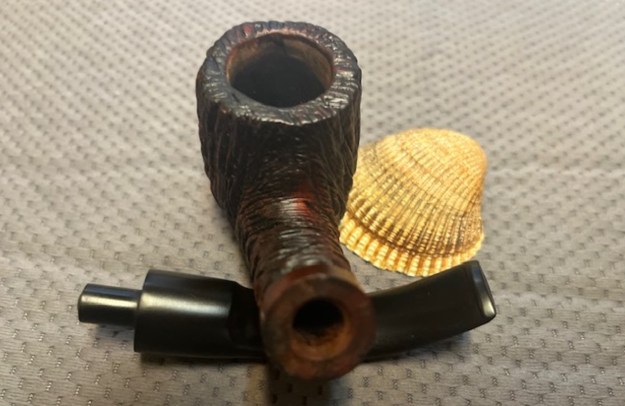
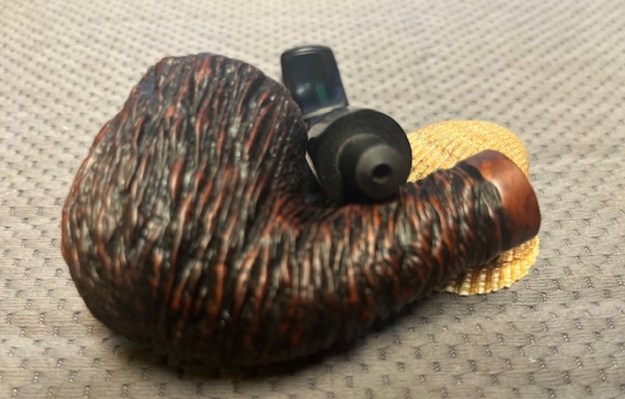
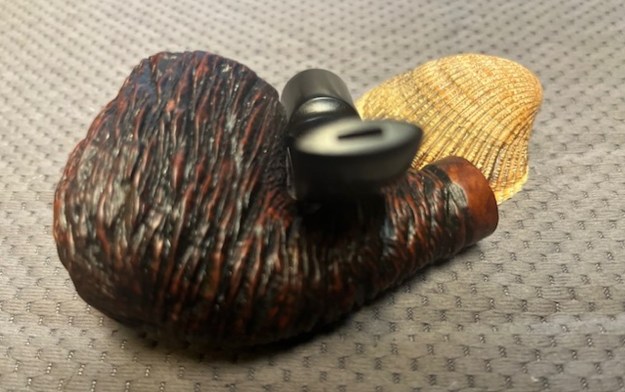
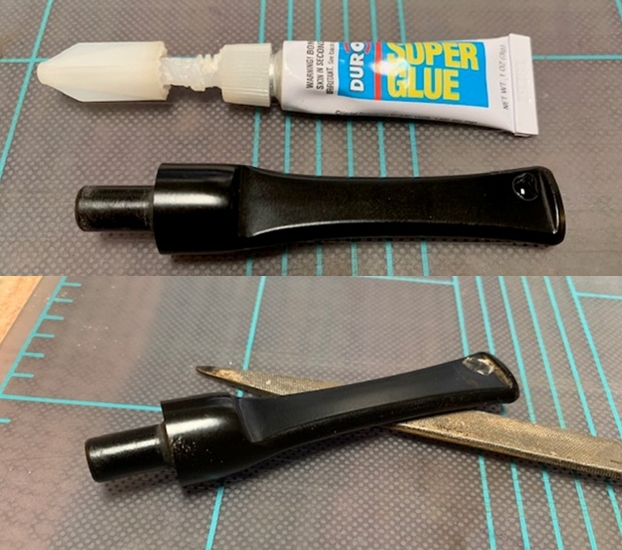
New Life for an interesting “Malaga” Wire Rusticated saddle stem Billiard


by Steve Laug

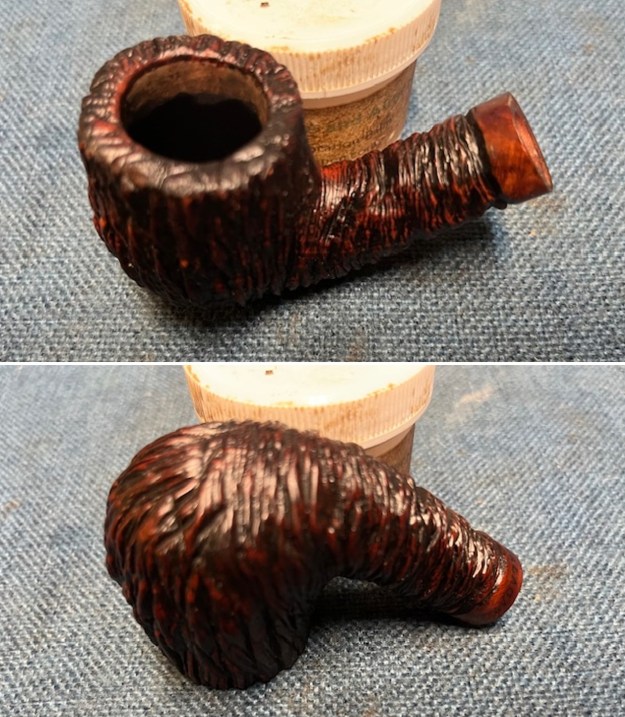
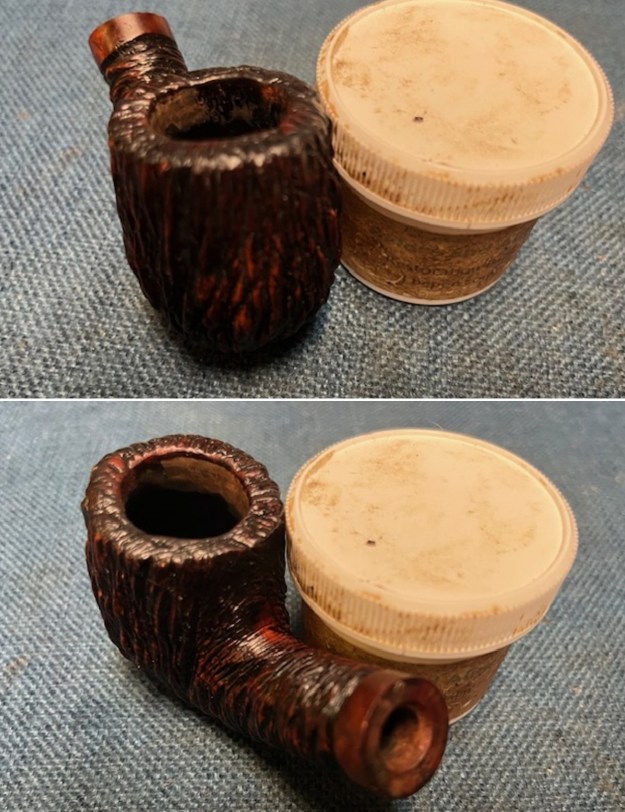
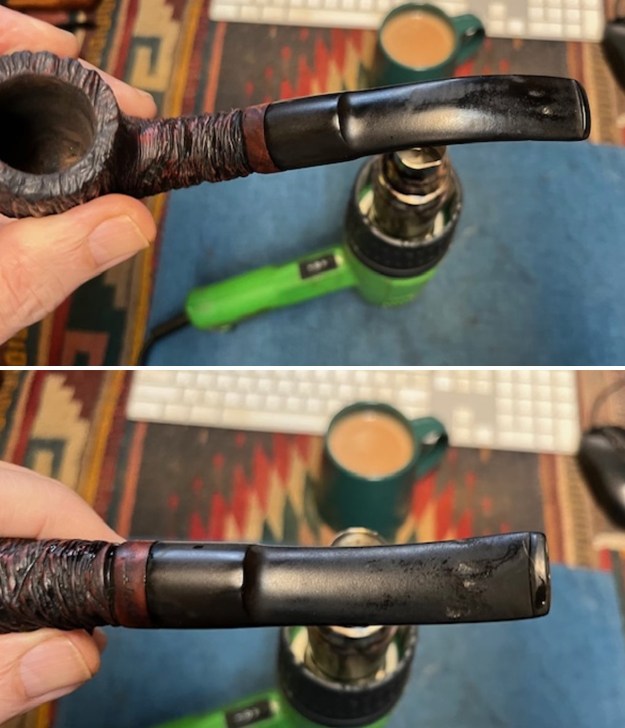
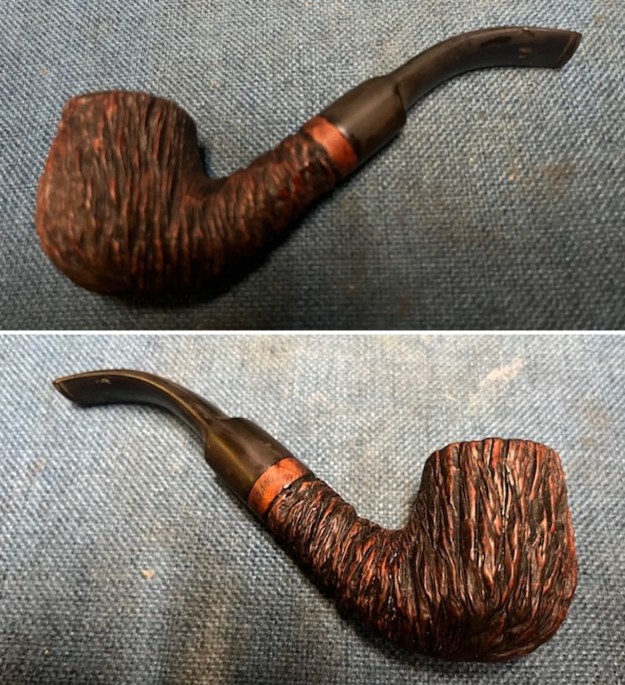
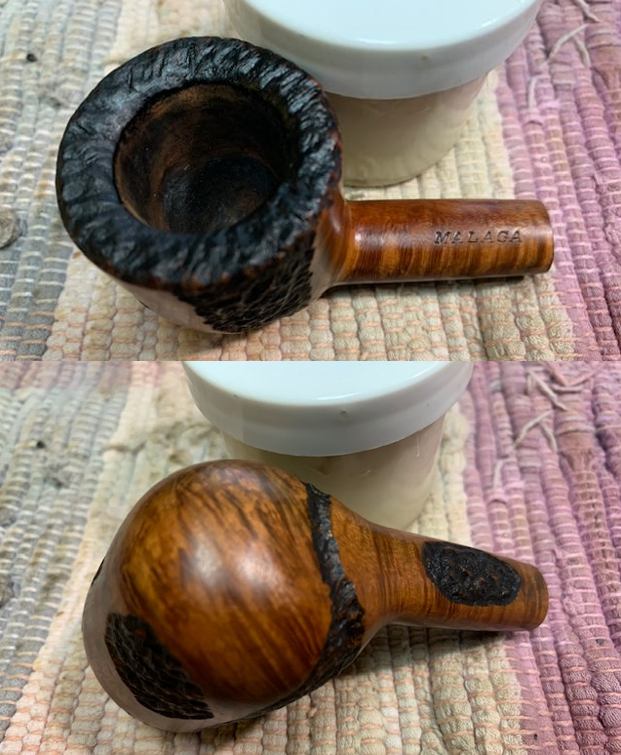
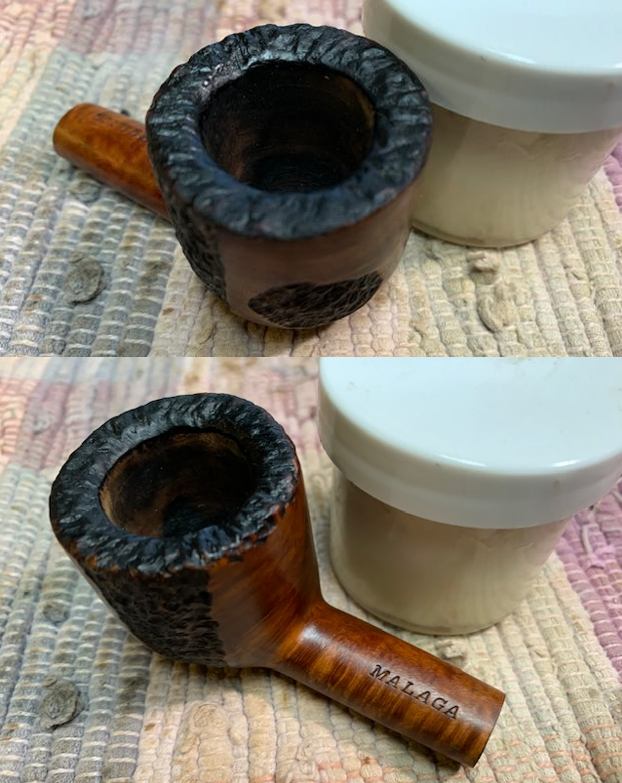
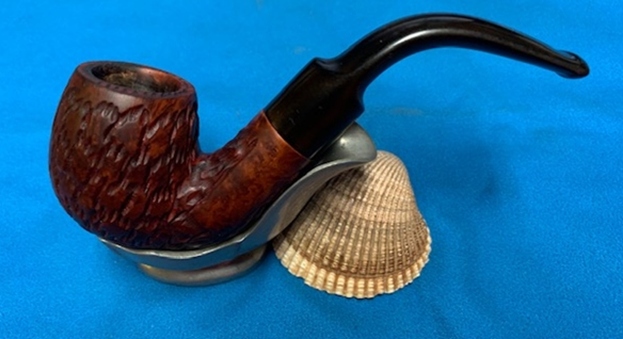
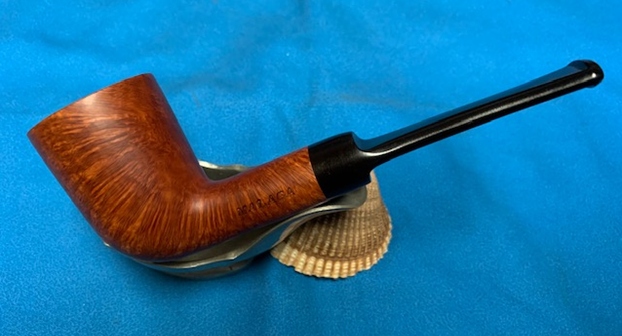
This interesting Wire Rusticated Bent Billiard was purchased on 09/18/2024 on eBay where a seller from Cadiz, Kentucky, USA was selling it. It is a rich brown rusticated briar with a thin band around the shank end. The stem is an acrylic saddle stem. The rusticated finish was quite clean though there was dust in the grooves of the finish. The bowl was quite clean and recently reamed. The bottom of the bowl was raw briar showing that it had not been smoked to the bottom of the bowl. There faint aroma of tobacco in the bowl and shank. The rusticated rim top was quite clean and the inner edge looked very good. The pipe is stamped on the smooth band around the shank and reads “MALAGA”. The vulcanite, saddle stem had no stamping on the sides. It had scratches, tooth marks and chatter on both sides ahead of the button. It was really an interesting rustication and stain that showed depth and variations of colour around the bowl. I took photos of it before I started the cleanup process. The bowl itself was quite clean with just a minimal cake on the walls of the bowl. I took photos of the rim top to show how clean it looked and the condition of the top and edges of the bowl. The vulcanite saddle stem surface had some scratches and tooth marks and chatter on both sides ahead of the button.The stamping on the smooth band around the shank read “MALAGA” on the underside. I removed the stem from the shank and took a photo of the look of the pipe. I would need to bend the stem slightly to match the flow of the bowl.Before I started working on the pipe itself I went back and reread what I had found when I had worked on many of the Malaga pipes that had come across my work table. I am including a few pieces of information that I have gathered in the process.

For those of you reading this blog who are unfamiliar with the brand, I am including the link to a previous blog that I wrote. It gives some of the history of the Malaga brand and the Malaga Pipe Shop in Royal Oak, Michigan in the USA. Here is the link – https://rebornpipes.com/tag/malaga-pipes/.

I have also included a link to a catalogue and the history of the pipemaker George Khoubesser. If you are interested to learn more, then I invite you to follow the link to get a feel for the brand and the pipemaker.

George Khoubesser (picture to the left) started Malaga Briar Pipe Company and located it in Royal Oak, Michigan in the USA in 1939. It closed its doors for the last time in 1999 after 60 years in business. I have an old Malaga Catalogue that I scanned and put on the blog (https://rebornpipes.com/2013/02/09/george-khoubesser-and-malaga-pipes/). The catalogue describes the manufacture of the pipes as follows:

Painstaking caution is exercised in selecting flawless, perfect briar wood for the purpose of making and Curing of the “Malaga.” You can be certain of this fact, because none other than the choicest and finest select briarwood will withstand the “Malaga” Curing process. Other than the choicest quality and grain, will split wide open in the Curing vats… The Curing method renders all “Malaga” pipes, light in weight… Most all “Malaga” Senior pipes are left in their natural state; except for a skillful waxing which brings out the rich beauty of the virgin grain. No artificial polishing stain, shellac or varnishes are added. Malaga closed in 1999 after 60 years in business.

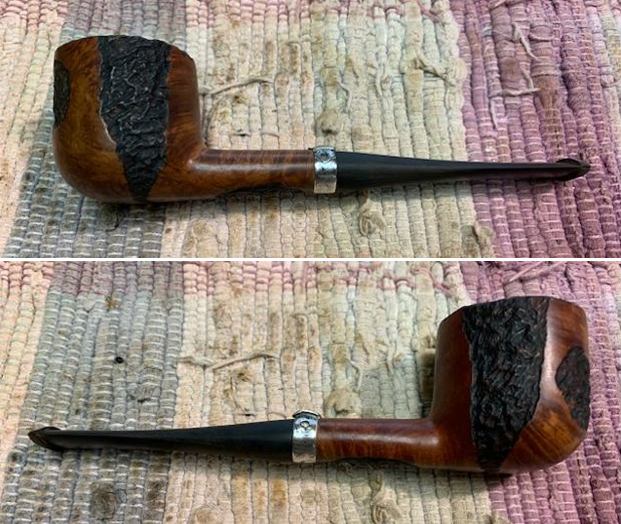
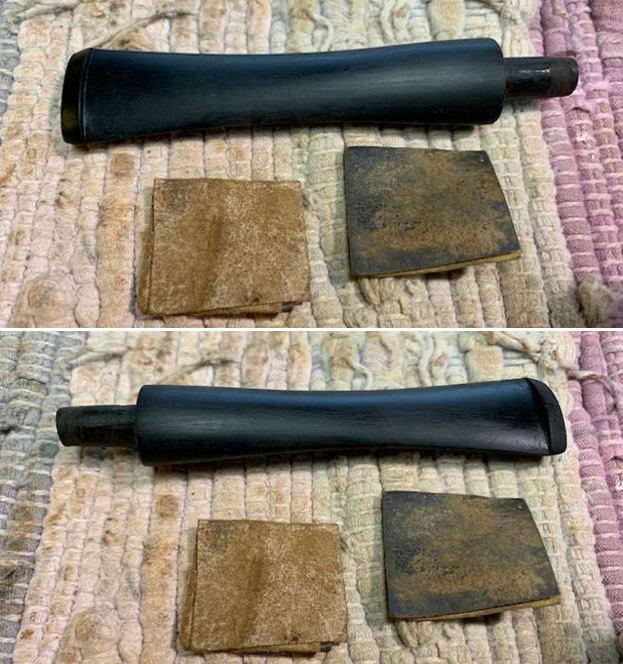
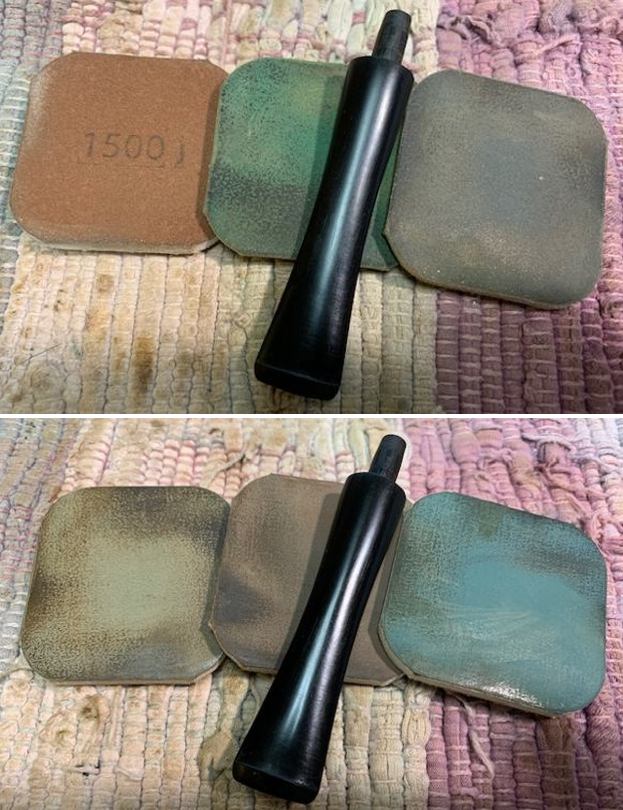
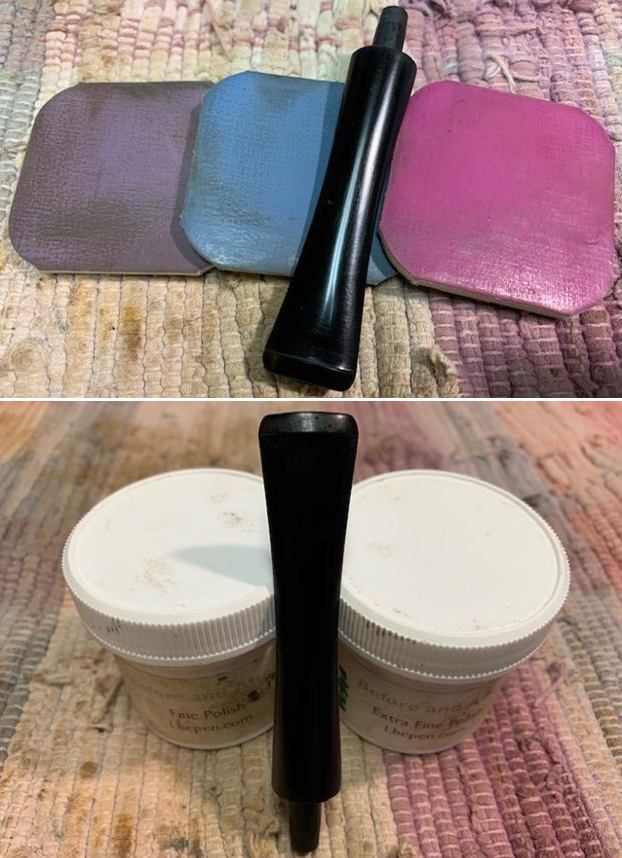
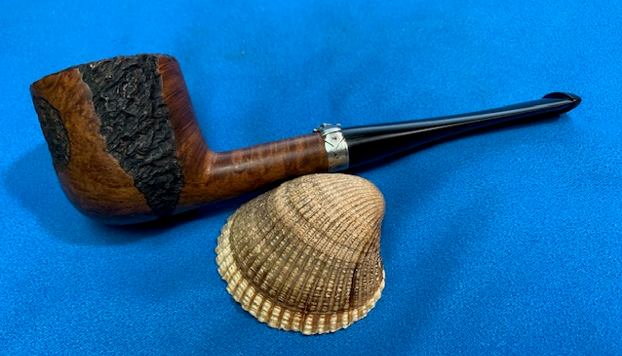
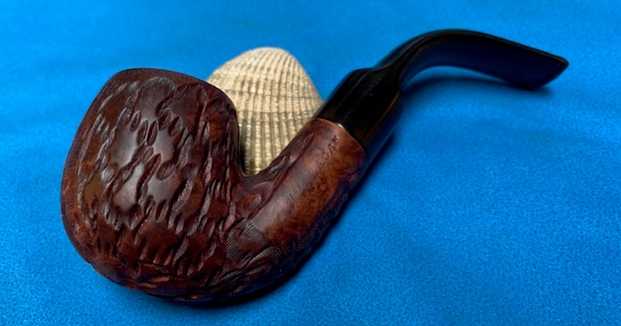
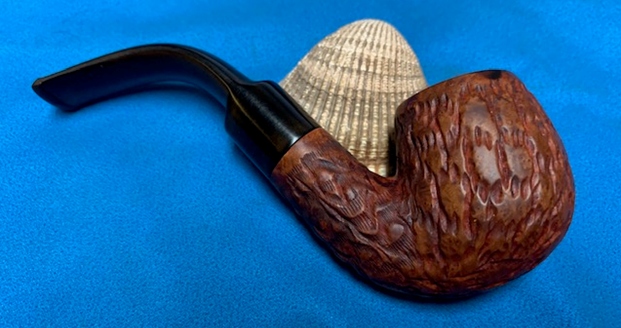
I started my work on the pipe by reaming the bowl with a PipNet reamer. I used the first cutting head and took the cake back to bare briar. I cleaned up the reaming with a Savinelli Fitsall Pipe Knife and removed all the remnants of the cake. I scraped the rim top with the flat edge of the blade at the same time and removed most of the thick lava build up. I sanded the walls of the bowl with a piece of dowel wrapped in 220 grit sandpaper. The walls look very good at his point in the process. I cleaned out the shank, the airway and the mortise as well as the airway in the stem with alcohol, cotton swabs, hard bristle and soft bristle pipe cleaners. It was actually quite clean, which made me think that the seller had done a good cleanup job on the pipe.I scrubbed the exterior of the bowl and shank with a tooth brush and undiluted Murphy’s Oil Soap. I scrubbed the lava on the rim top and overflow on the outside of the bowl with the soap. I rinsed the briar with warm water to remove the grime and debris of the scrubbing. It looked significantly better after the scrubbing. Once I cleaned the bowl with the soap it looked much better. I rubbed the bowl and shank down with Before & After Restoration Balm to deep clean the finish on the bowl and shank. The product works to clean, enliven and protect the briar. I worked it in with my fingers and a horse hair shoe brush to get it into the briar. I let it sit for 10 minutes then I wiped it off and buffed it with a soft cloth. The briar really began to have a rich shine. I took some photos of the bowl at this point to mark the progress in the restoration. It is a beautiful bowl.   With the bowl finished I turned my attention back to the stem. I heated the bite marks in the stem surface with a heat gun. I was able to raise some of them significantly. I also heated it enough to bend the stem to match the angles on the bowl. Once I had them bent to the right angle I set the bend with cold water. I took photos of the newly bent stem and the look on the bowl. I filled in the remaining tooth marks with extra strength, rubberized black CA glue. I set the stem aside and let it cure. Once it cured I flattened the repairs with a small file. I continued to blend it into the stem surface with 220 grit sandpaper. Once I finished the blending the stem surface looked much better. I sanded the surface of the stem with the 2 x 2-inch sanding pads – 320-3500 grit pads to clean up the sanding marks on the stem surface. By the final 3500 grit pad the stem started to really shine.I polished the stem with micromesh sanding pads – dry sanding with 1500-12000 grit pads. I wiped the stem down after each sanding pad with Obsidian Oil. I gave the stem a final polish with Before & After Pipe Stem Polish both Fine and Extra Fine. I rubbed the stem with them and then gave them a final coat of Obsidian Oil. I set it aside to dry. This is a beautiful Wire Rusticated “Malaga” Bent Billiard with a vulcanite saddle stem. It has a great look and feel. The shape of the bowl, the rusticated rim top and the cut of the briar work well to highlight the beauty of the pipe. I polished stem and the bowl with Blue Diamond polish on the buffing wheel. I gave the bowl multiple coats of Conservator’s Wax and the stem multiple coats of carnauba wax. I buffed the pipe with a clean buffing pad to raise the shine. I hand buffed it with a microfiber cloth to deepen the shine. The pipe polished up pretty nicely. The rusticated briar took on life with the buffing. The rich colour of the stain works well with the polished vulcanite stem. The finished pipe has a rich look that is quite catching. Have a look at it with the photos below. The shape, finish and flow of the pipe and stem are very well done. The dimensions are Length: 6 inches, Height: 2 inches, Outside diameter of the bowl: 1 ¼ inches, Chamber diameter: ¾ of an inch. The weight of the pipe is 2.19 ounces/62 grams. It is a beautiful pipe. I will be putting it on the rebornpipes store shortly in the American Pipemakers Section if you are interested in adding it to your collection. Thanks for walking with me through the restoration.

As always, I encourage your questions and comments as you read the blog. Thanks to each of you who are reading this blog. Remember we are not pipe owners; we are pipe men and women who hold our pipes in trust until they pass on into the trust of those who follow us.

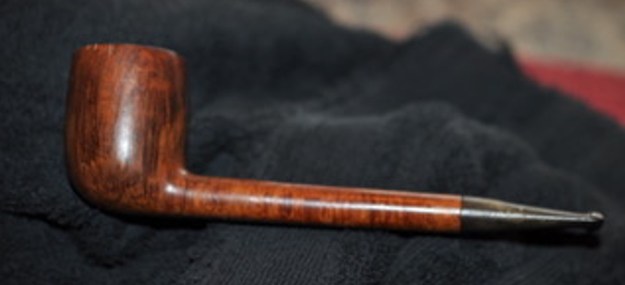
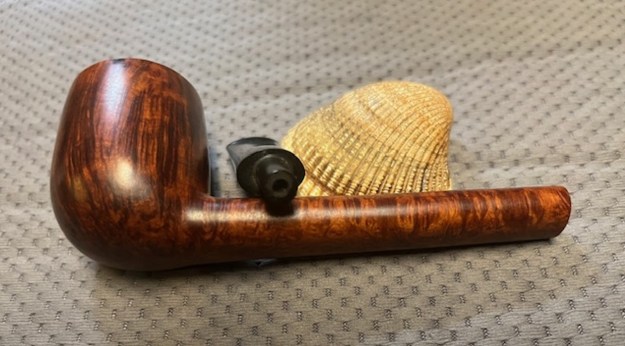
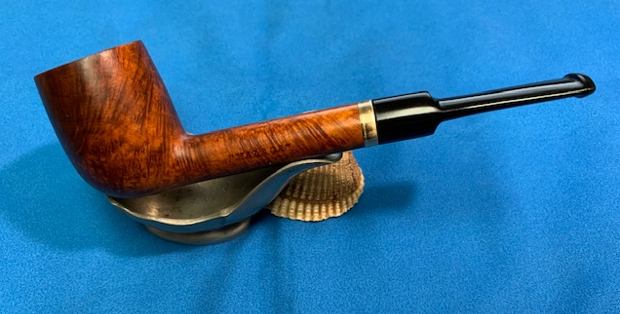
Breathing new life in to a Beautiful “Malaga” Imported Briar Canadian


by Steve Laug

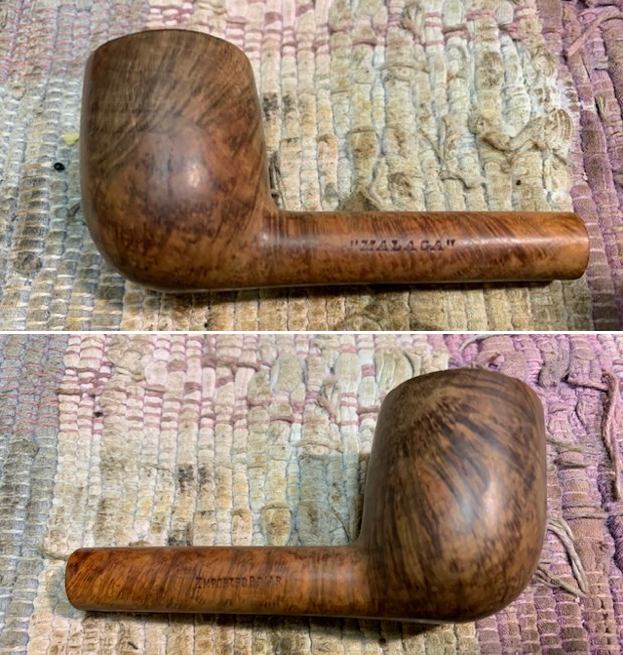
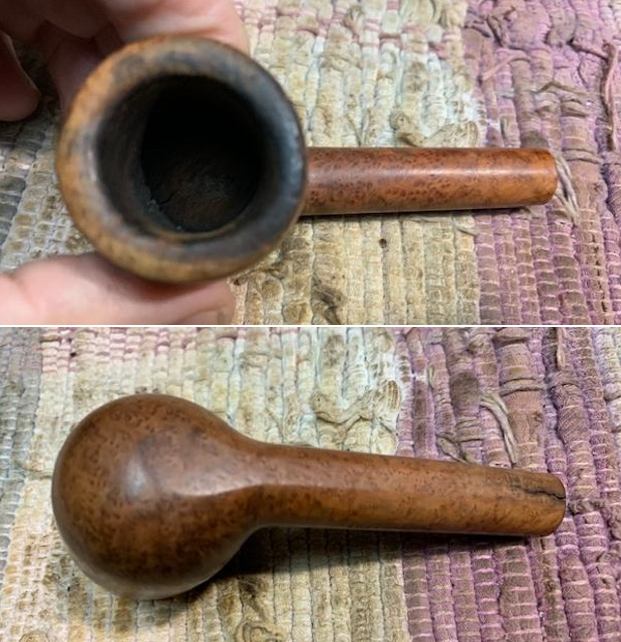
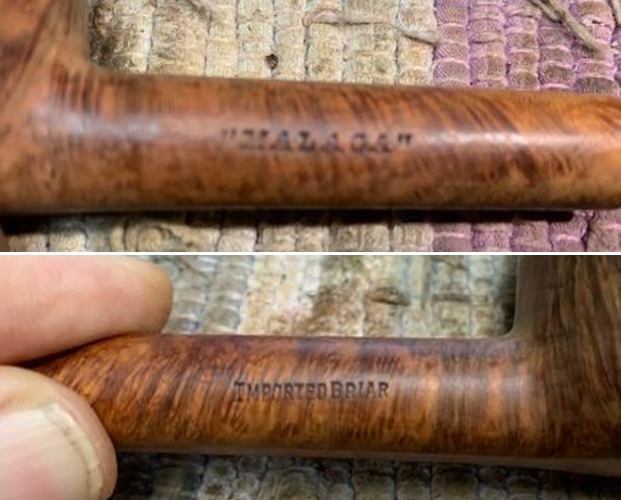
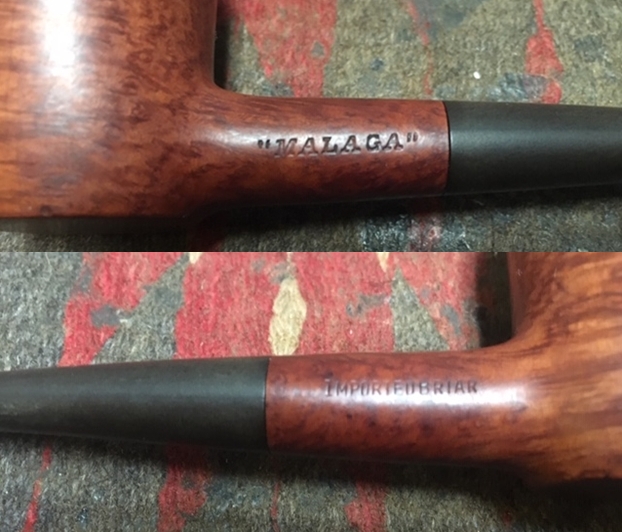
The “Malaga” Canadian is next pipe on the table. The carver did a great job of shaping the pipe to follow the grain on the briar. The bowl, oval shank and straight tapered stem look very good. The bowl had a thick cake that overflowed with thick lava onto the rim so that it was impossible to see if there was damage on the inner edges. The sides of the bowl and shank are very dirty with grime and oils from prolonged use. The grain around the bowl and shank is very nice straight grain. The stamping on the top of the shank read “MALAGA”. On the underside it is stamped IMPORTED BRIAR. The stem had tooth dents and chatter on the top and the underside of the stem. There was some thick calcification and also some oxidation deep in the vulcanite of the stem surface. Jeff took these photos before he started the cleanup work on the pipe. Jeff took close up photos of the bowl and rim to capture the condition of the pipe before he started his cleanup work. The rim top had thick lava overflow and darkening. The outer edge looked to be in decent condition. He also took a photo of the side and bottom of the bowl and shank to show the beautiful grain around the bowl. The photos show the general condition of the bowl and dirt and wear on the rich oil finish. It is very dirty but this is another beautiful pipe. Jeff took a photo to capture the stamping on the top and underside of the shank. The photos show the stamping “MALAGA” on the top and IMPORTED BRIAR on the underside. The stamping is very readable on the topside and fainter on the underside.I am also including the link to a blog that I wrote that gives some of the history of the Malaga brand and the Malaga Pipe Shop in Royal Oak, Michigan in the USA. I have written an earlier blog to give a little history of the Malaga Brand and the pipemaker, George Khoubesser. Here is the link – https://rebornpipes.com/tag/malaga-pipes/.That blog also includes links to a catalogue and the history of the pipemaker George Khoubesser. Follow the link to get a feel for the brand and the pipemaker.

Jeff reamed the bowl with a PipNet pipe reamer and followed up with a Savinelli Fitsall pipe knife to remove the cake. He scrubbed out the mortise and the airway in the shank and the stem with alcohol, cotton swabs, shank brushes and pipe cleaners. He scrubbed the exterior of the bowl, rim, shank and stem with a tooth brush and Murphy’s Oil Soap to remove the oils and tars on the rim and the grime on the finish of the bowl. He rinsed it under running water. He dried it off with a soft cloth. He was able to remove the lava build up on the rim top and the flat surface of the rim top and the inner edge had some burn damage on the front and back side. The outer edge was rough and nicked. I took photos of the pipe to show its condition before I started my work on it. The stem also looked better. I took close up photos of the bowl and rim top as well as the stem. You can see the condition of the rim top and bowl in the first photo. Jeff was able to remove all of the tar and oils but you can now see the damage on the top and the edges of the bowl. The top of the rim is rough and the outer edges are chipped and rough. There is some darkening on the inner edge but the bowl is still round. The stem had tooth marks and chatter on both sides near and on the button surface on both sides.I took a photo of the stamping on the shank to show the condition. The “MALAGA” stamp is clear and readable but the IMPORTED BRIAR stamp is faint but still readable.I decided to address the rim top first. To remove the damage on the rim top and edges of the bowl I topped it on a topping board with 220 grit sandpaper. That removed a lot of the damage on the rim top and outer edge. I used a wooden sphere and 220 grit sandpaper to work on the inner bevel of the rim and remove the darkening and clean up the damage. I sanded the bowl and rim with 320-3500 grit sanding pads to begin the process of removing the scratches and blending the restored rim top into the rest of the bowl. I wiped the bowl down after each pad with a damp cloth to remove the dust and debris. The photos tell the story. I polished the rim top and the briar with micromesh sanding pads. I wet sanded the bowl with 1500-12000 grit sanding pads. I wiped the bowl down after each pad with a damp cloth to remove the sanding dust. I worked some Before & After Restoration Balm into the surface of the briar with my fingertips to clean, enliven and protect it. I let the balm sit for a little while and then buffed with a cotton cloth to raise the shine. The following photos show the bowl at this point in the restoration process. I am very happy with the results. I turned to the stem to address the issues on the surface of both sides at the button. I “painted” the surface of the stem with the flame of a lighter to lift the indentations. Since vulcanite has “memory” it often will return to its original condition when heated. It worked pretty well leaving behind light chatter and some tooth mark that will need to be repaired. Once the repairs cured I flattened them with a small file. I cleaned up the repairs and blended them into the surface of the vulcanite with 220 grit sandpaper. I sanded the stem with 320-3500 grit sanding pads. I wiped the stem down with an Obsidian Oil cloth after each sanding pad. I think I finally beat the oxidation.I polished the stem with micromesh sanding pads – wet sanding with 1500-12000 grit sanding pads. I wiped it down after each sanding pad Obsidian Oil. I finished by polishing it with Before & After Pipe Stem Polish both fine and extra Fine and then wiped it down with a final coat of Obsidian Oil. This is a beautiful Malaga Canadian with a vulcanite tapered stem. It has a great look and feel. The shape of the bowl, the beveled rim top and the cut of the briar work well to highlight the grain around the bowl sides. I polished stem and the bowl with Blue Diamond polish on the buffing wheel. I gave the bowl and the stem multiple coats of carnauba wax. I buffed the pipe with a clean buffing pad to raise the shine. I hand buffed it with a microfiber cloth to deepen the shine. The pipe polished up pretty nicely. The grain took on life with the buffing. The rich oil cured colour works well with the polished vulcanite stem. The finished pipe has a rich look that is quite catching. Have a look at it with the photos below. The shape, finish and flow of the pipe and stem are very well done. The dimensions are Length: 6 ½ inches, Height: 1 ¾ inches, Outside diameter of the bowl: 1 ¼ inches, Chamber diameter: ¾ of an inch. The weight of the pipe is 1.62 ounces/46 grams. It is a beautiful pipe. I will be putting it on the rebornpipes store shortly in the American Pipemakers Section if you are interested in adding it to your collection. Thanks for walking with me through the restoration.
Restemming & Restoring a Malaga Mixed Finish Pot  


Blog by Steve Laug

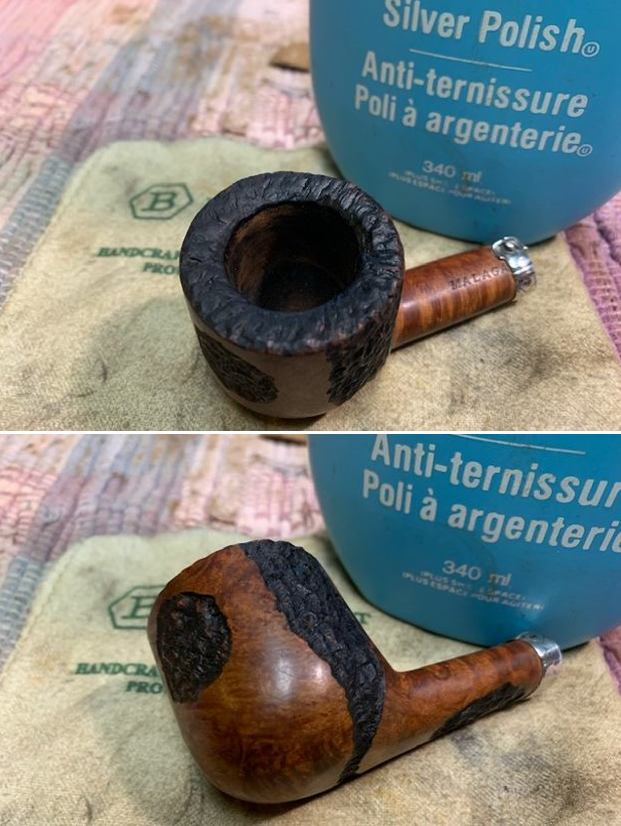
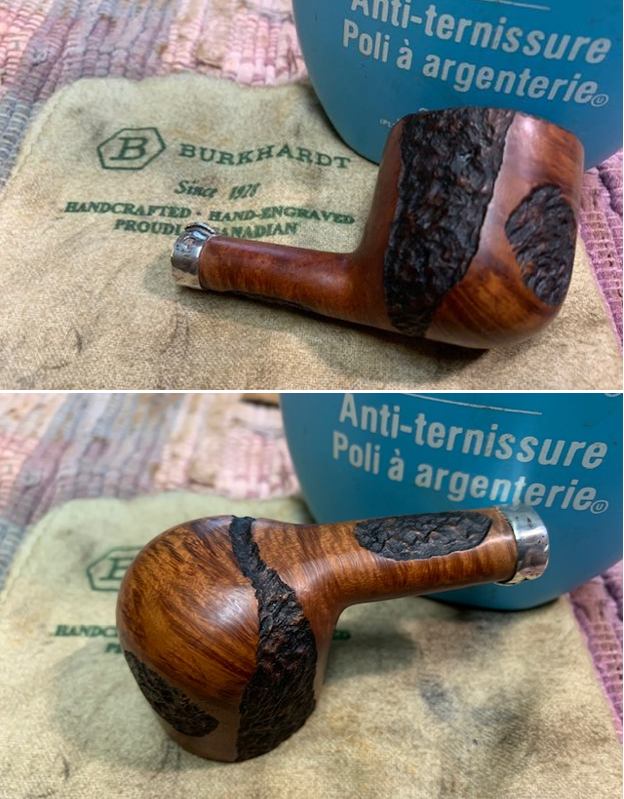
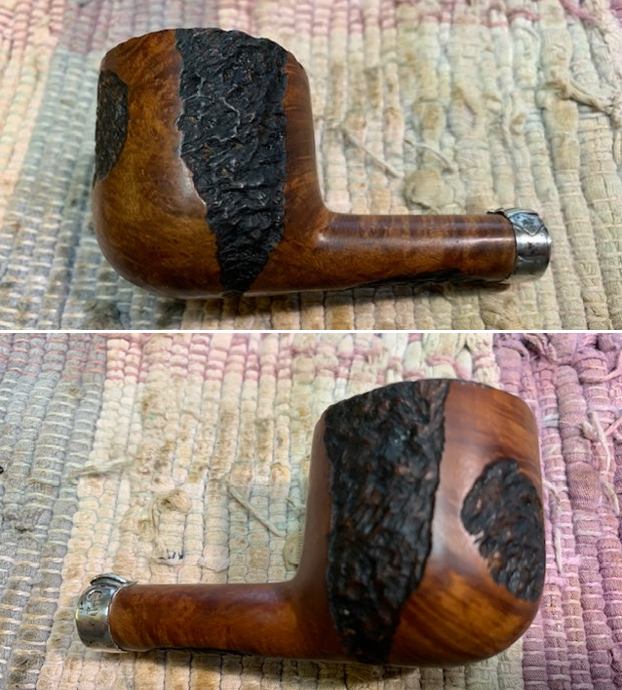
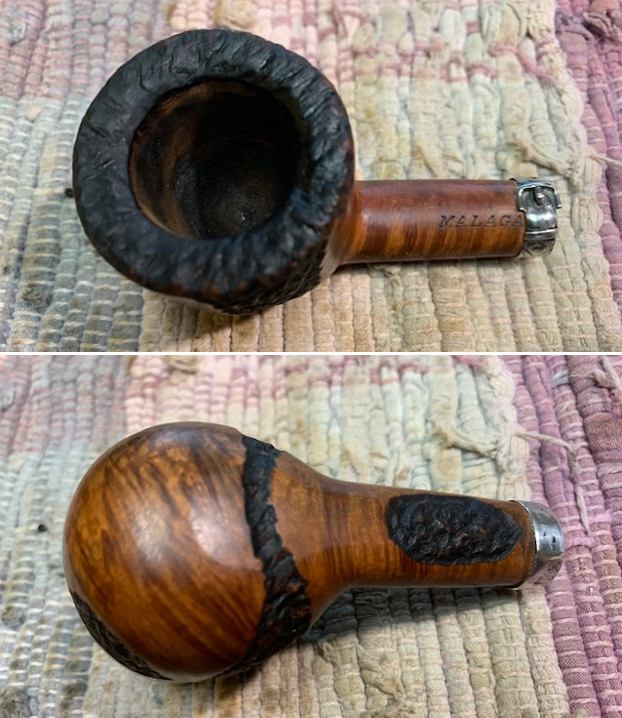
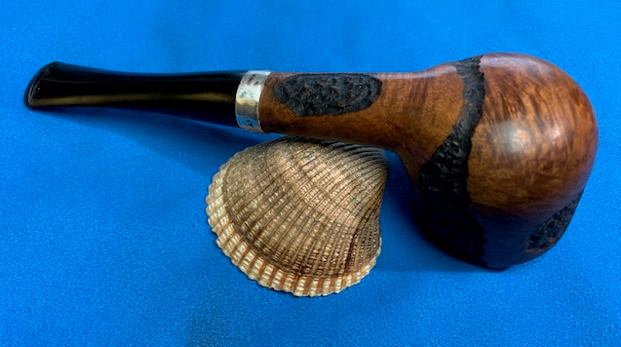
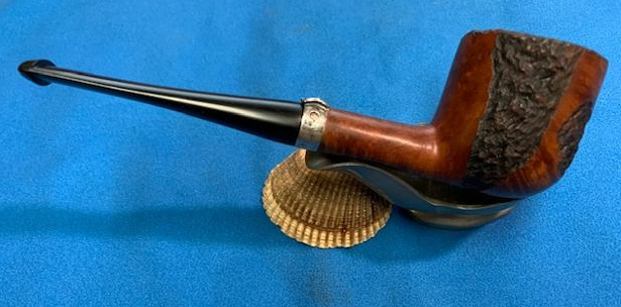
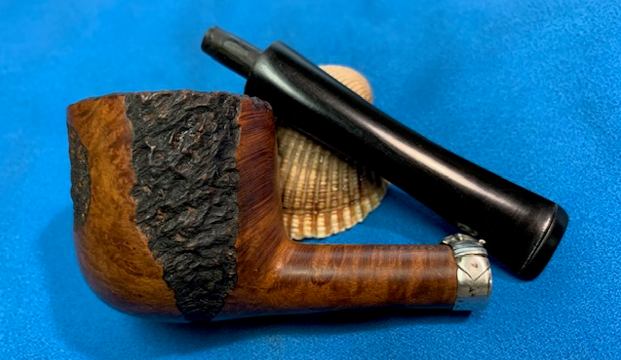
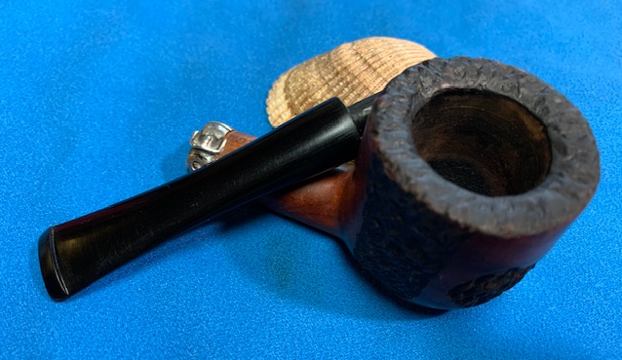
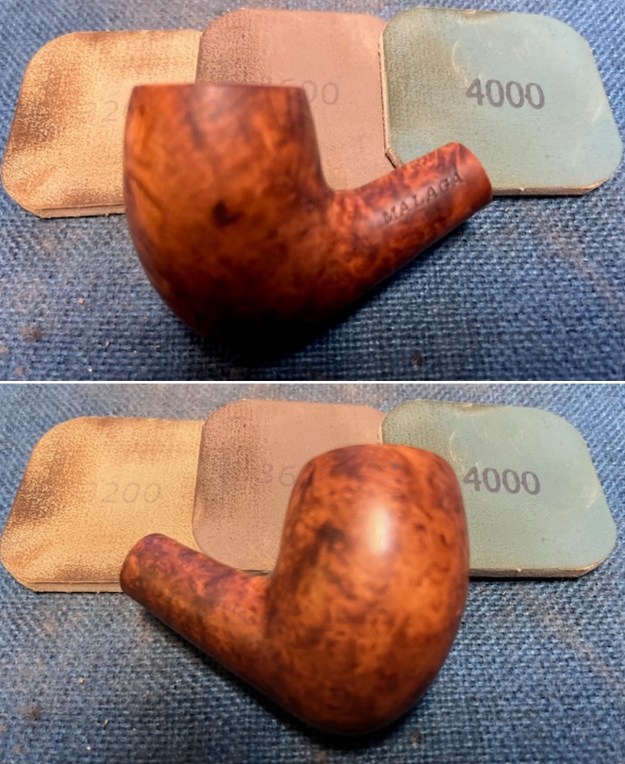
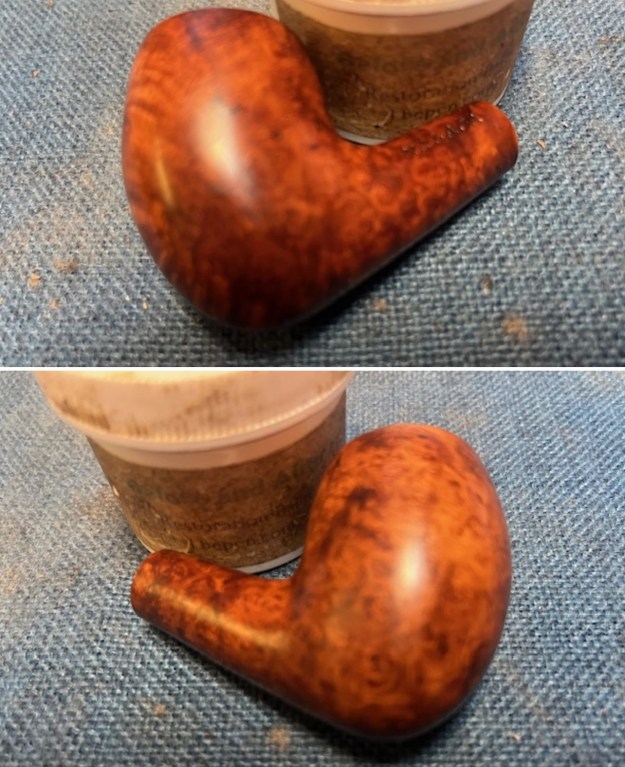
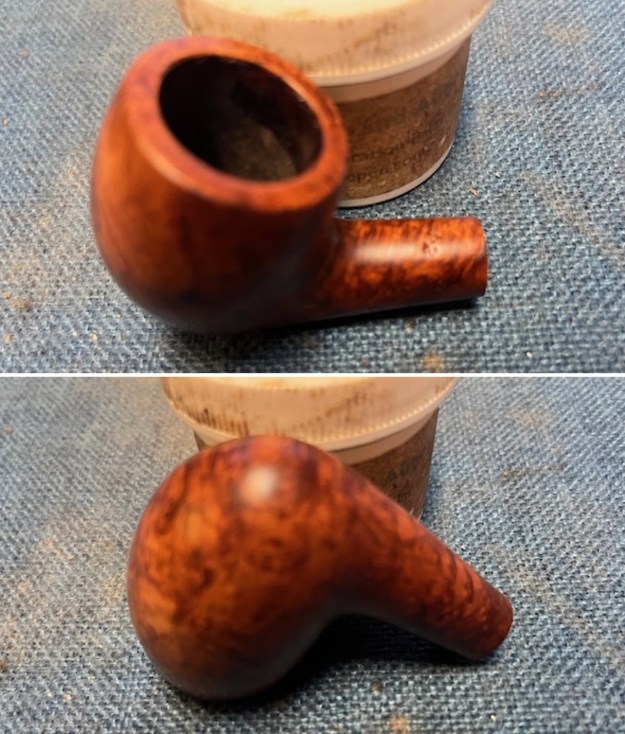
This morning I went through my box of stummels (bowls) here and picked out a Pot shaped bowl that had some promise to me. I went through my can of stems and found an oval shaped stem with the casting marks on the sides and button end. The pipe I chose to work on is an interesting Malaga Pot with a mixture of rusticated portions and smooth portions on the bowl and shank sides. I have worked on a lot of Malaga pipes in the past so I am not a stranger to the brand. I have included the link below to a bit of history on the brand that I compiled.

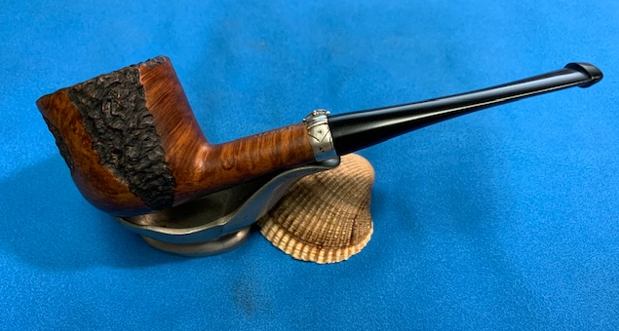
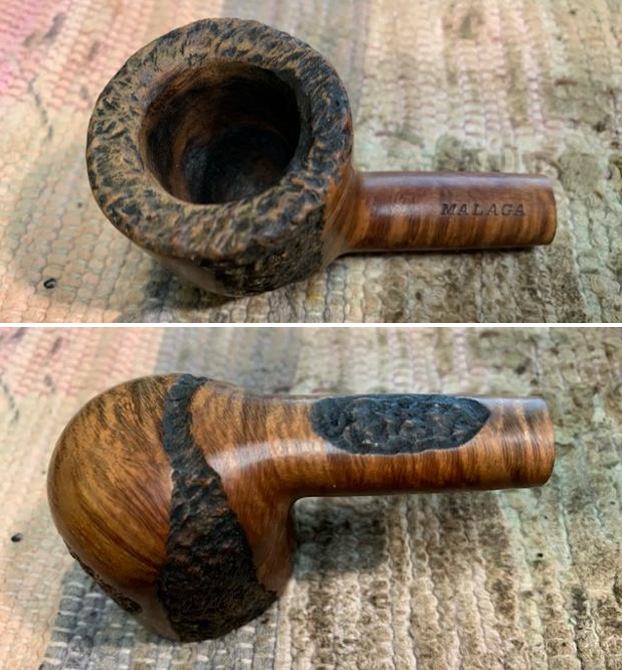
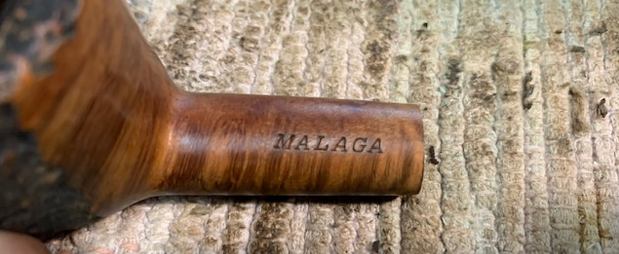
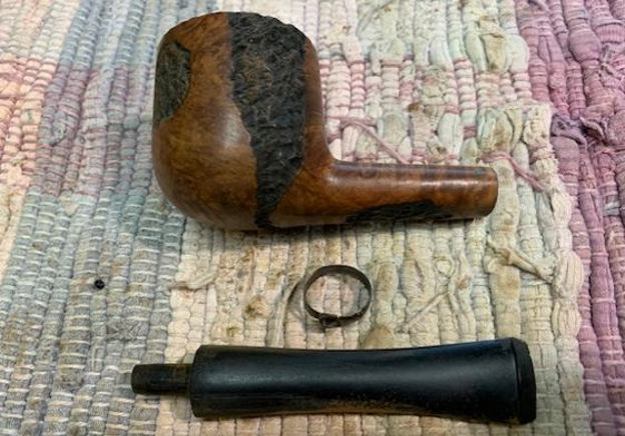
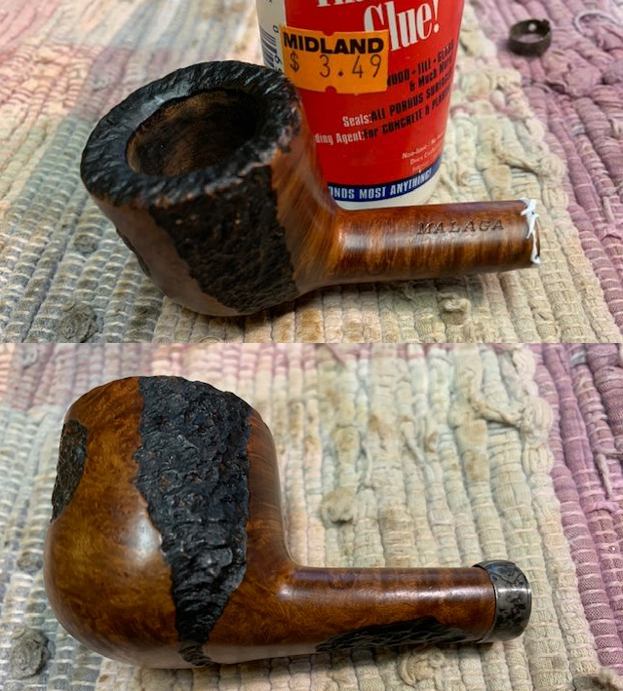
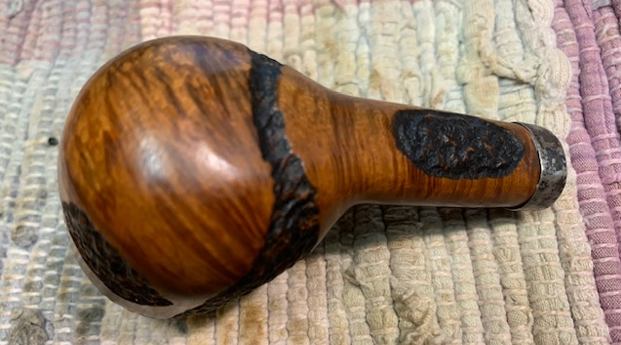
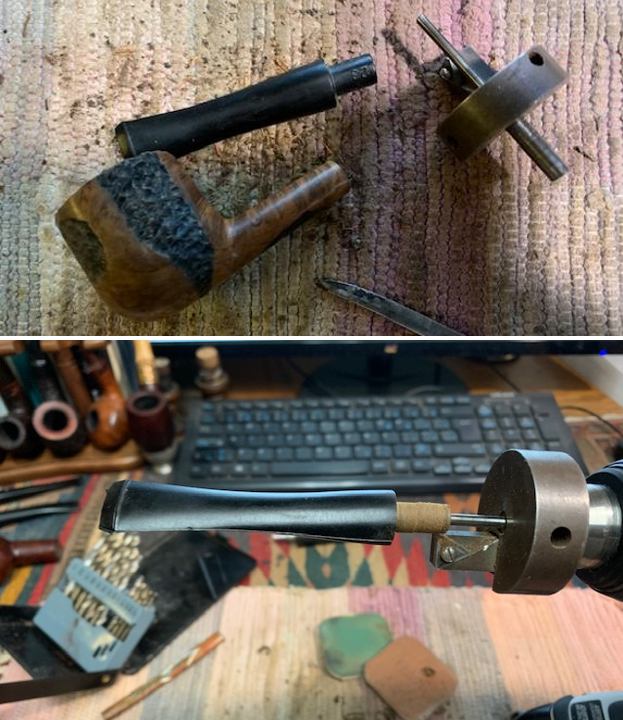
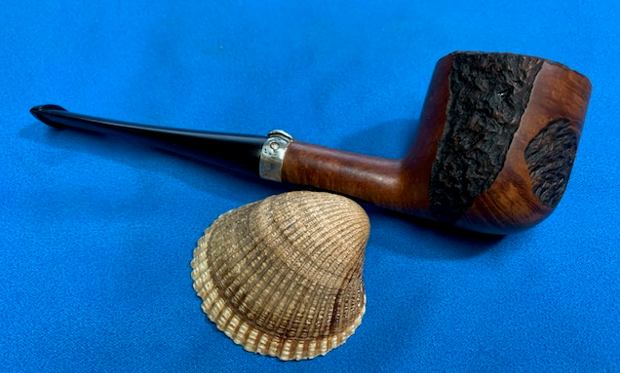
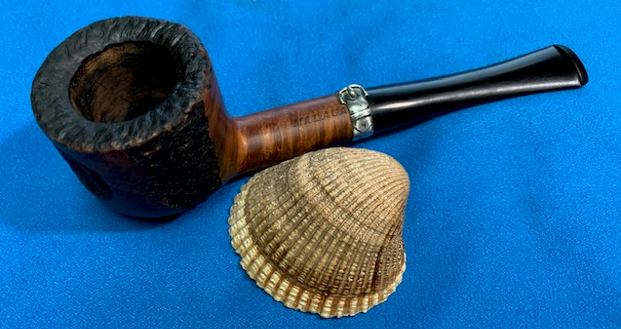
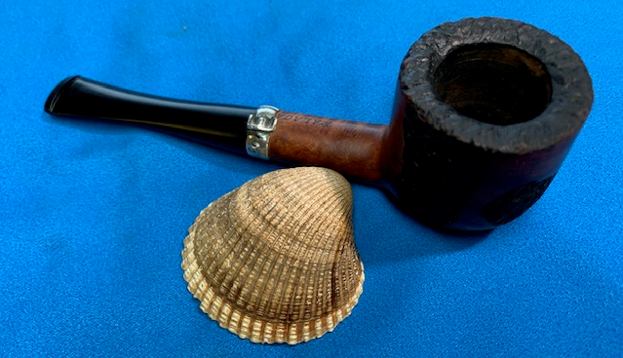
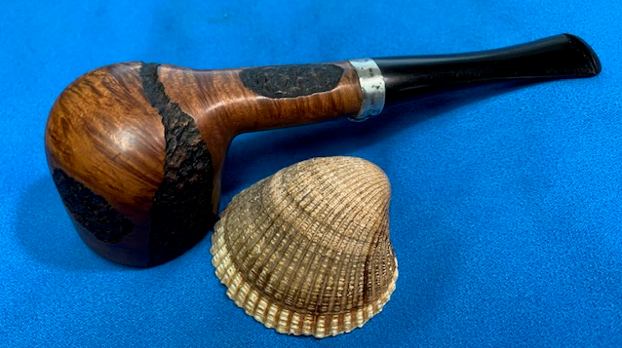
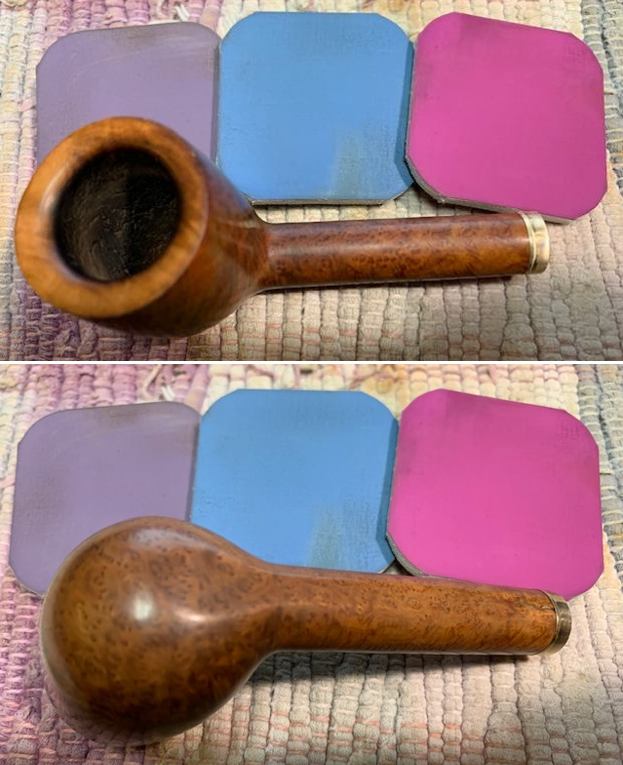
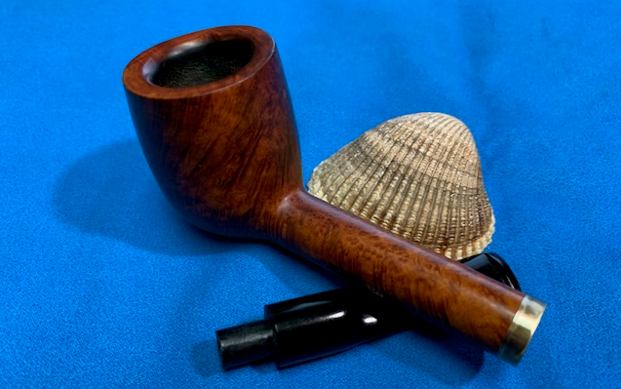
The bowl looked very good. The grain around the sides was quite nice and a mix of flame and birdseye grain. The rim top was rusticated as were some patches on the front, the sides and the bottom of the shank. The inner edge of the bowl showed some wear. There was a hairline crack on the underside of the shank that extended about ¼ inch up the shank. The interior of the bowl was clean and there were not any chips, cracks or checking on the walls. Examining the mortise there was a snapped off tenon in the shank. It was crumbling and would need to be pulled. The finish was washed out and bit and tired but still quite redeemable. The stamping on the pipe was clear and readable. On the topside it read MALAGA and no other stamping was on the shank. I took some photos of the bowl before I started to work on it. I took a photo of the stamping on the topside of the shank. It reads as noted above and is clear and readable. I went through some of stems and found an oval vulcanite stem blank. It was the right diameter and once I turned the tenon it would fit the shank. It has casting marks on the sides and on the button end. I also found a unique sterling silver band that fit the shank. It was shaped like a belt and buckle and would look very good.I have worked on quite a few Malaga pipes and blogged their restorations, so rather than repeat previous blogs, I am including the link to one that gives some of the history of the Malaga brand and the Malaga Pipe Shop in Royal Oak, Michigan in the USA from a catalogue. It gives a sense of the brand and the history in their own words. Follow the link to get a feel for the brand and the pipemaker – https://rebornpipes.com/2013/02/09/george-khoubesser-and-malaga-pipes/.

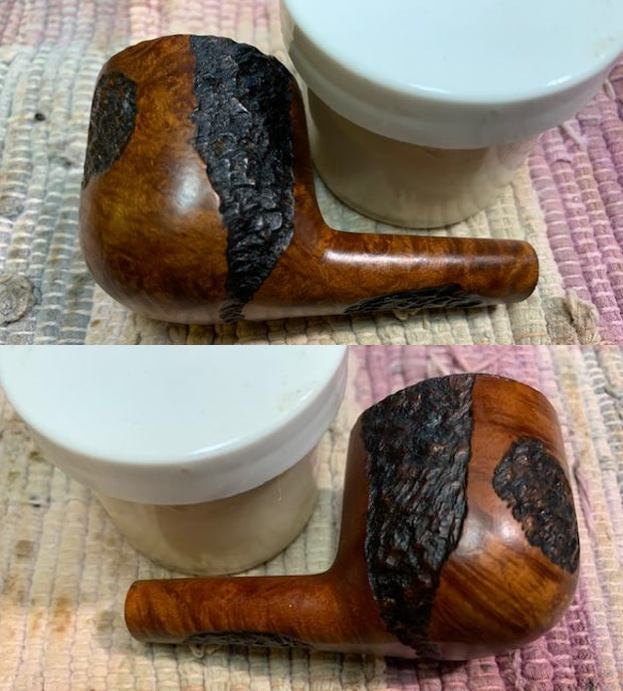
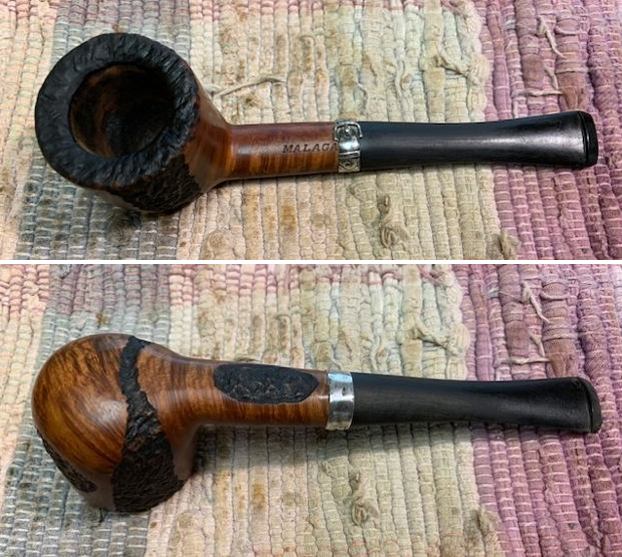
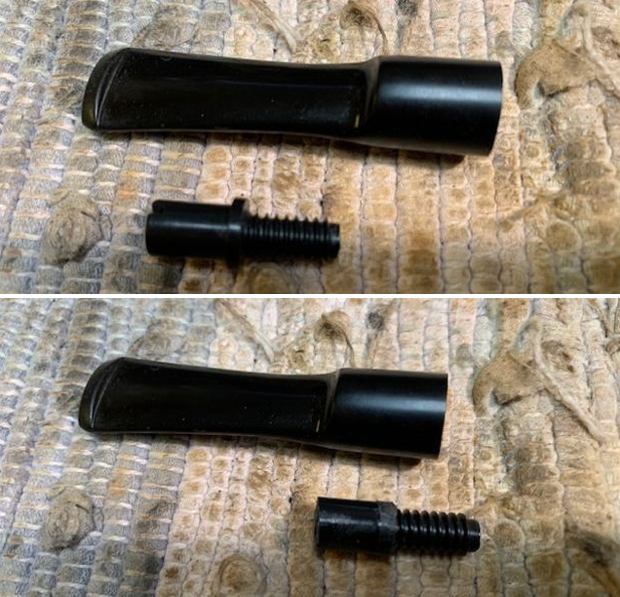
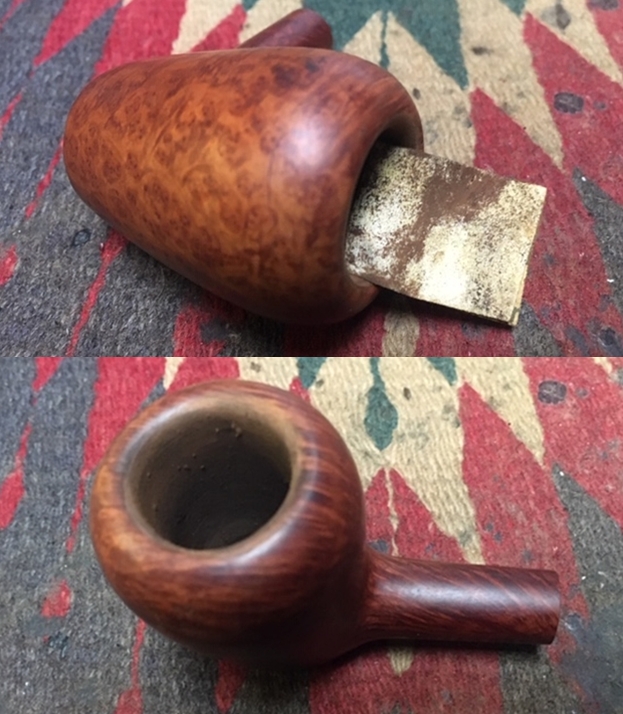
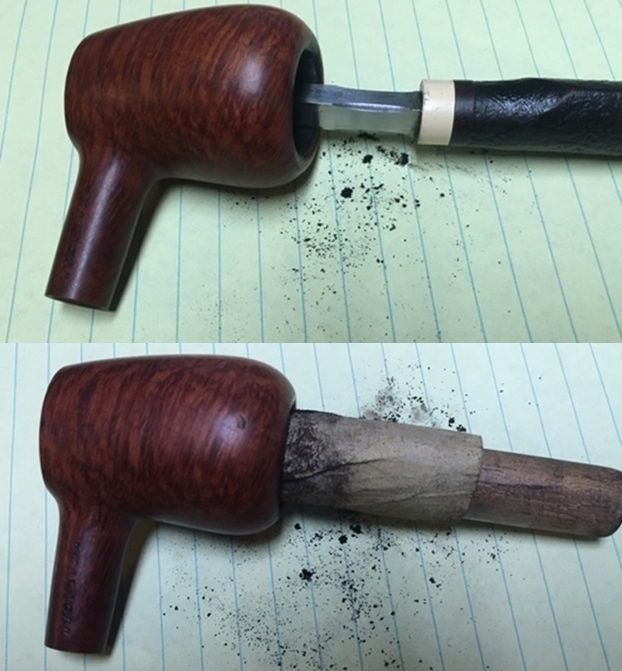
With that information in hand I turned to work on the bowl. There was a broken off tenon in the shank. I tried to pull it with a screw and then moved on to drill it out. I started with a bit a little larger than the tenon in the airway and worked my way up to the size of the shank. When I removed the bit the pieces of tenon fell out on the table top. With the mortise clean I was ready to move on to the next part of the clean up.I cleaned up the rustication on the rim top with a brass bristle wire brush to remove the debris in the rustication. It cleaned up well. I used a Black Sharpie Pen to restain the rustication on the rim top and the sides of the bowl. I rubbed the bowl and shank down with Before & After Restoration Balm. I worked it into the surface of the bowl sides and shank with my fingertips and a horsehair shoe brush to clean, enliven and protect the briar. I let the balm sit for 10 minutes then buffed with a cotton cloth to raise the shine. The grain really came alive. It looks better than when I began. The crack on the underside of the shank was a mere hairline what was not long or wide so it would be an easy repair with a bit of glue and a band. I painted the shank end with some all-purpose white glue. I spread it with a dental spatula and pressed the band in place on the shank.I polished the Sterling Silver belt band with some silver polish and a jeweler’s cloth. I was able to remove the tarnish and the band looked very good. I took pictures of the banded shank to show the look of it. Notice that the belt buckle is on the top and the A of the Malaga is perfectly framed on the right side by the buckle. With the bowl finished it was time to focus on the stem. I took out the stem and the Pimo tenon turning tool and set up the tool in my cordless drill. I put the guiding pin in the airway on the stem and adjusted the cutting head. I held the stem in place and carefully turned the tool on the tenon. I used a flat file to smooth out the tenon to fit in the shank. I put the stem in shank for a sense of the look of the pipe. The stem fit well and it looked like it belonged. I sanded the castings off the edges of the stem and the button with 220 grit sandpaper before I took the photo.I removed the stem and worked on it next. I smoothed out remnants of the castings and the scratches in the surface of the vulcanite with 220 grit sandpaper. I started polishing the stem with 400 grit wet dry sandpaper.I polished the stem with micromesh sanding pads – dry sanding with 1500-12000 grit pads. I wiped the stem down after each pad with a cloth and Obsidian Oil. I finished the polishing with Before & After Pipe Stem Polish – both Fine and Extra Fine. I gave it a final coat of Obsidian Oil. I put the pipe back together – the bowl with its new stem. This restored Malaga Oil Cured Pot with rusticated panels is a real beauty and I think the Sterling Silver Belt band and the chosen stem works well with it. The grain on the bowl came alive with the buffing. I used Blue Diamond on the buffing wheel on both the bowl and stem. I gave both multiple coats of carnauba wax on the wheel then buffed it with a clean buffing pad to raise the shine. I hand buffed it with a microfibre cloth to deepen the shine. The Malaga Pot feels great in the hand. It is lightweight and the contrast in the browns of the briar, the Silver band and the polished vulcanite stem with the popping grain on the mixed brown stained bowl is quite amazing. The dimensions of the pipe are Length: 6 inches, Height: 1 ¾ inches, Outer diameter of the bowl: 1 ½ inches, Chamber diameter: 1 inch. The weight of the pipe is 1.59 ounces/45 grams. It really is a beauty. I will be putting it on the rebornpipes store in the American (US) Pipe Makers section shortly if you are interested in adding it to your collection. Thanks for walking through the restemming and the restoration with me. Cheers.

Restemming & Restoring a “Malaga” Lovat


Blog by Steve Laug

Sometimes the repetitive work on similar pipes and stems gets tiring to me and to alleviate the inevitable boredom I change things up a bit to refresh me. I have a box of stummels (bowls) here that I periodically go through and see if I have a potential stem that would fit them. Yesterday when I finished the old timer on my work I went through the box and picked out three bowls and found workable stems for them. All were in different states of need but all had been thoroughly cleaned before I boxed them up. The first restemmed and restored was a ZETTERVIG Copenhagen Handmade 900 Egg (https://rebornpipes.com/2021/09/04/restemming-restoring-a-zettervig-copenhagen-hand-made-900-egg/). The next one I chose to work on is a lovely Malaga Lovat stummel.  I have worked on a lot of Malaga pipes in the past so I am not a stranger to the brand. I have included the link below to a bit of history on the brand that I compiled.

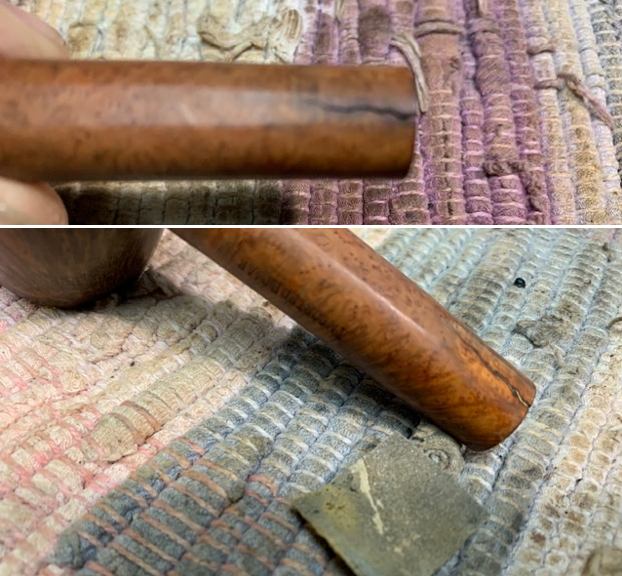
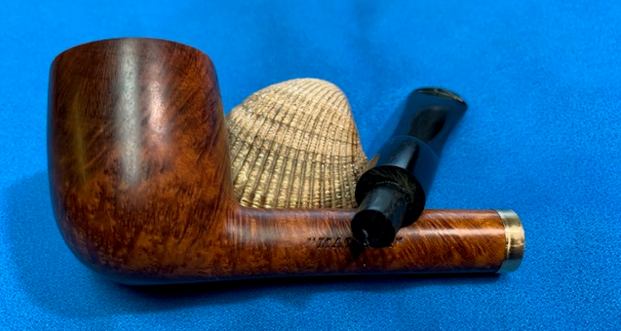
The bowl looked very good. The grain around the sides was quite nice and a mix of flame and birdseye grain. The rim top had some burn damage on the rear top and inner edge and some darkening all the way around. The bowl was slightly out of round. There was a crack in the underside of the shank that extended about ½ inch up the shank. The interior of the bowl was clean and there were not any chips, cracks or checking on the walls. Examining the mortise it was clean and well drilled with no issues other than the previously noted crack. The finish was washed out and bit and tired but still quite redeemable. The stamping on the pipe was clear and readable. On the left side it read “MALAGA” and on the right side it read IMPORTED BRIAR. I took some photos of the bowl before I started to work on it. I took a photo of the stamping on the sides of the shank. It reads as noted above and is clear and readable.I went through some of stems and found this saddle style stem without a tenon. It had been drilled for a tenon but it had never been finished. It was the right diameter and it fit the shank and the look of the pipe very well. It has a few tooth marks and chatter near the button but it would clean up well.I have worked on quite a few Malaga pipes and blogged their restorations, so rather than repeat previous blogs, I am including the link to one that gives some of the history of the Malaga brand and the Malaga Pipe Shop in Royal Oak, Michigan in the USA from a catalogue. It gives a sense of the brand and the history in their own words. Follow the link to get a feel for the brand and the pipemaker – https://rebornpipes.com/2013/02/09/george-khoubesser-and-malaga-pipes/.

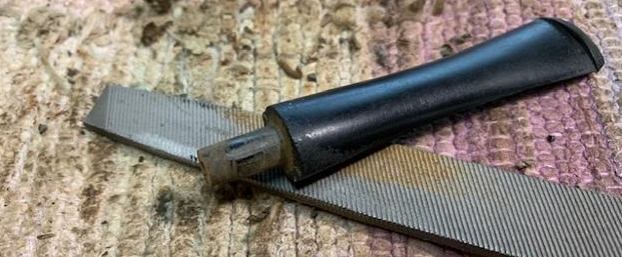
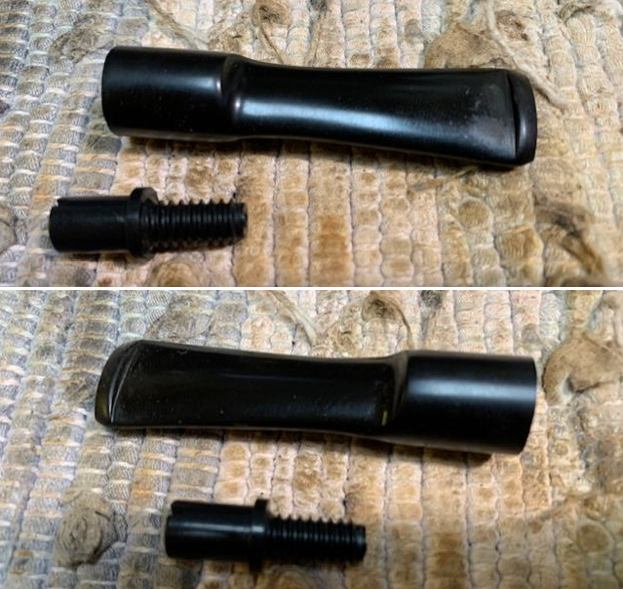
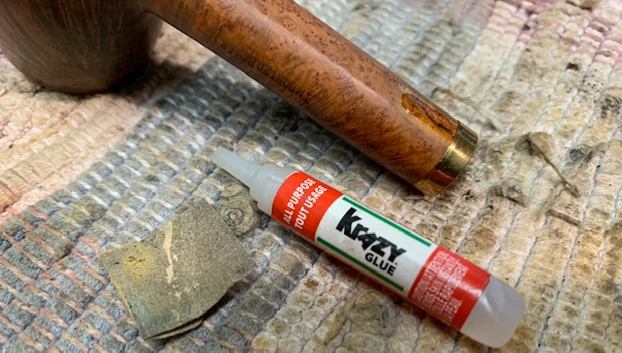
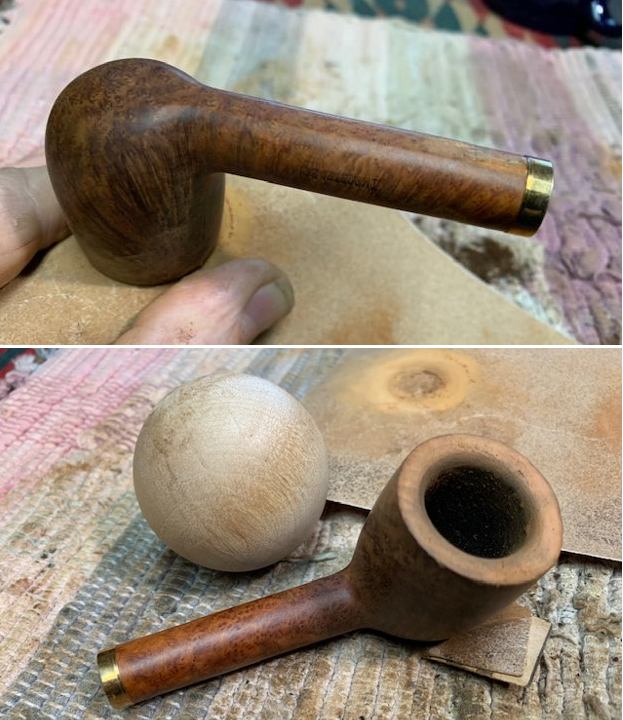
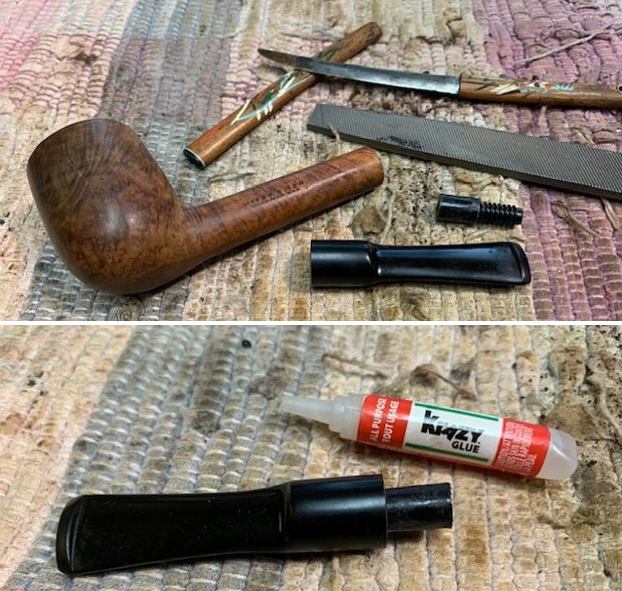
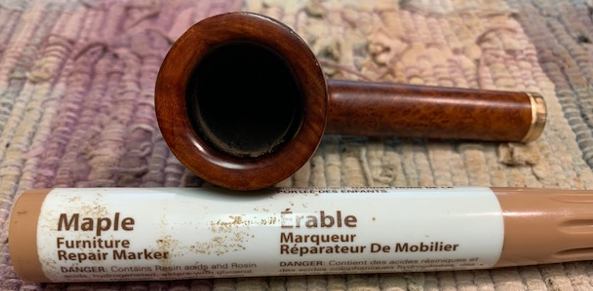
With that information in hand I turned to work on the bowl. I addressed the crack in the shank first. I cleaned it and smoothed it out. I used an awl and pressed a small hole in the shank at the end of the crack. I filled in the crack with clear CA glue and pressed it together until it cured. I pressed a brass band onto the end of the shank to further address the crack. It serves that function and also gives it a bit of bling. With that repaired I turned to deal with the rim top issues. I topped the bowl on a topping board with 220 grit sandpaper to smooth out and minimize the damage on the rim top. I used a small wooden ball that Kenneth gave me recently to give the inner edge a bevel to minimize the burn on the inner edge and bring the bowl back to round.I shortened the tenon to fit the shank of the pipe. I used the Dremel and sanding drum to remove the shoulder at the top of the tenon above the threads. I shaped the tenon fit with a small file and sanded it smooth. I glued the threaded end of the tenon with clear CA glue and pressed it into the stem. It cures quickly so it is key to move quickly and set it well as  you only get one chance! I put the stem in shank for a sense of the look of the pipe and then wiped the bowl down with alcohol on a cotton pad to remove the debris from the sanding and that was still in the surface of the briar. I liked what I saw. The grain was really quite nice and the band and new stem worked well with the pipe. I removed the stem and polished the briar with micromesh sanding pads – dry sanding with 1500-12000 grit pads and wiping it down with a damp cloth after each pad. It really began to shine. I stained the rim top and edges with a Maple stain pen to match the rest of the stain around the bowl sides. The rim top and inner edge look very good.I worked some Before & After Restoration Balm into the surface of the smooth briar with my finger tips. The product is amazing and works to clean, enliven and protect the briar. I let it sit on the briar for 10 or more minutes and then buff it off with a soft cloth. It really makes the grain sing. I set the bowl aside and turned my attention to the stem. I “painted” the stem surface with a Bic lighter flame to raise the tooth marks. I was able to lift all of them to the surface. I smoothed out what remained with 220 grit sandpaper and started polishing the stem with 400 grit wet dry sandpaper.I polished the stem with micromesh sanding pads – dry sanding with 1500-12000 grit pads. I wiped the stem down after each pad with a cloth and Obsidian Oil. I finished the polishing with Before & After Pipe Stem Polish – both Fine and Extra Fine. I gave it a final coat of Obsidian Oil. I put the pipe back together – the bowl with its new stem. This restored “Malaga” Imported Briar Oil Cured Lovat is a real beauty and I think the brass band and the chosen stem works well with it. The grain on the bowl came alive with the buffing. I used Blue Diamond on the buffing wheel on both the bowl and stem. I gave both multiple coats of carnauba wax on the wheel then buffed it with a clean buffing pad to raise the shine. I hand buffed it with a microfibre cloth to deepen the shine. The “Malaga” Lovat feels great in the hand. It is lightweight and the contrast in the browns of the briar, the brass of the band and the polished vulcanite stem with the popping grain on the mixed brown stained bowl is quite amazing. The dimensions of the pipe are Length: 6 inches, Height: 1 ¾ inches, Outer diameter of the bowl: 1 ¼ inches, Chamber diameter: 7/8 of an inch. The weight of the pipe is 1.34 ounces/38 grams. It really is a beauty. I will be putting it on the rebornpipes store in the American (US) Pipe Makers section shortly if you are interested in adding it to your collection. Thanks for walking through the restemming and the restoration with me. Cheers.

Restoring a “Malaga” Carved Bent Billiard for Alex


Blog by Steve Laug

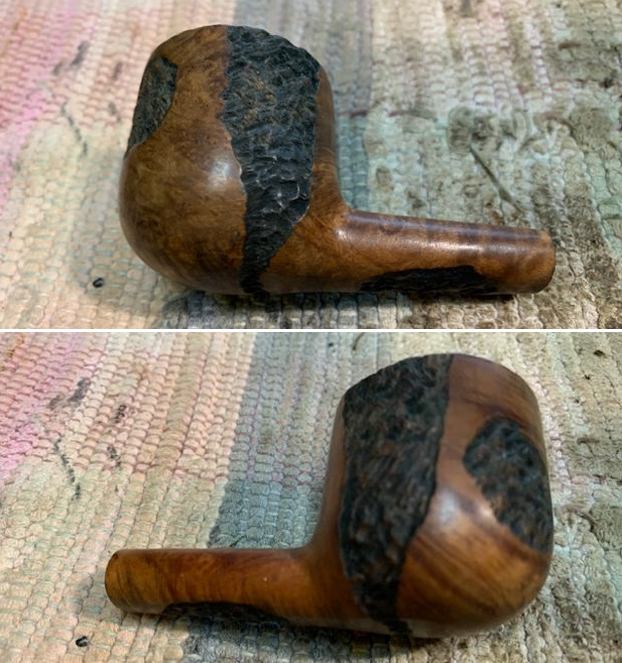
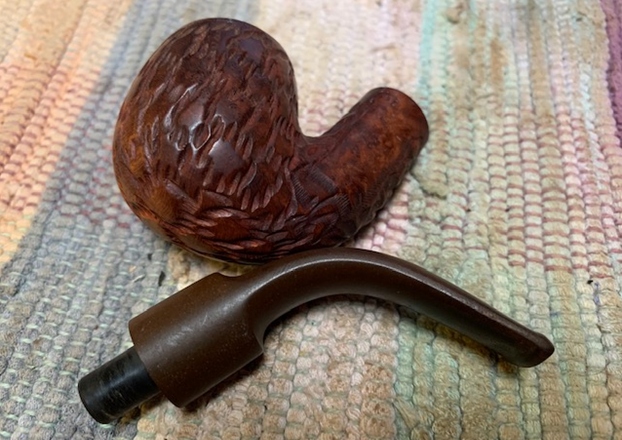
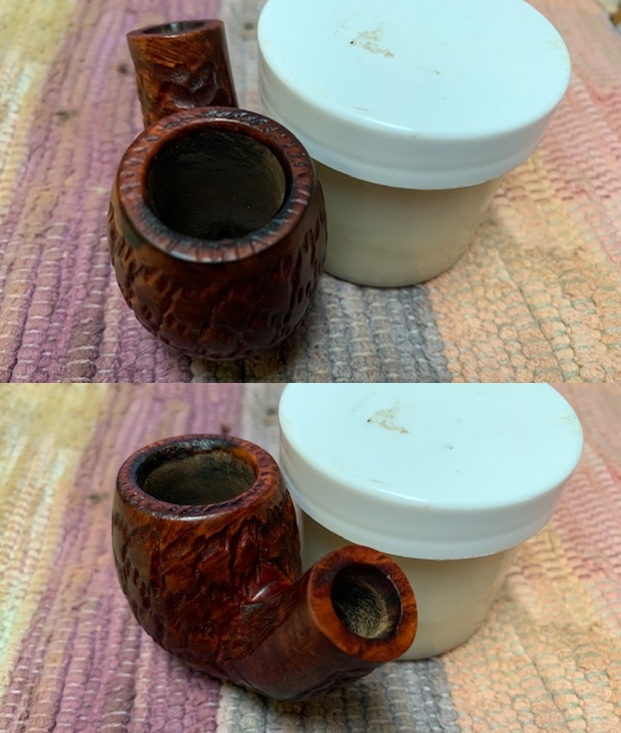
The next pipe on the table is a “Malaga” pipe that is one of Alex’s Malaga collection. It is a bent billiard with a carved rustication pattern around the bowl and shank that is unlike any of the other Malaga pipes that I have worked on. The rustication pattern is definitely interesting and from what I can see makes up for some mediocre grain. It came with a ¾ bent saddle vulcanite stem. The carver did a great job of uniquely shaping the pipe and rusticating it to give it a unique character. The bowl had a light cake that seems to have been reamed quite recently. The rim top had some significant burn damage on the inner edge and top toward the front of the bowl. The sides of the bowl and shank are very dirty with grime and oils from prolonged use. The stamping on the left side of the shank read “MALAGA”. The vulcanite stem was heavily oxidized and had tooth dents and chatter on the top and the underside of the stem. The button was worn on both sides. I took photos of the pipe before I started the cleanup work.   I took a close up photo of the bowl and rim to capture the condition of the pipe before I started my cleanup work. The rim top had some major burn damage and darkening on the front top and inner edge of the bowl. The burn marks appeared to be quite deep on the inner edge and had burned the rustication off the front top of the bowl. The stem is deeply oxidized and dirty and there is tooth damage on the surface of the stem and damage to the button edges.    I took a photo of the stamping on the left side of the shank on the smooth panel. It read as noted above.I took the stem off the shank and took a photo of the overall look of the pipe. It is quite attractive and certainly a unique rustication.I am also including the link to a blog that I wrote that gives some of the history of the Malaga brand and the Malaga Pipe Shop in Royal Oak, Michigan in the USA. I have written an earlier blog to give a little history of the Malaga Brand and the pipemaker, George Khoubesser. Here is the link – https://rebornpipes.com/tag/malaga-pipes/.That blog also includes links to a catalogue and the history of the pipemaker George Khoubesser. Follow the link to get a feel for the brand and the pipemaker.

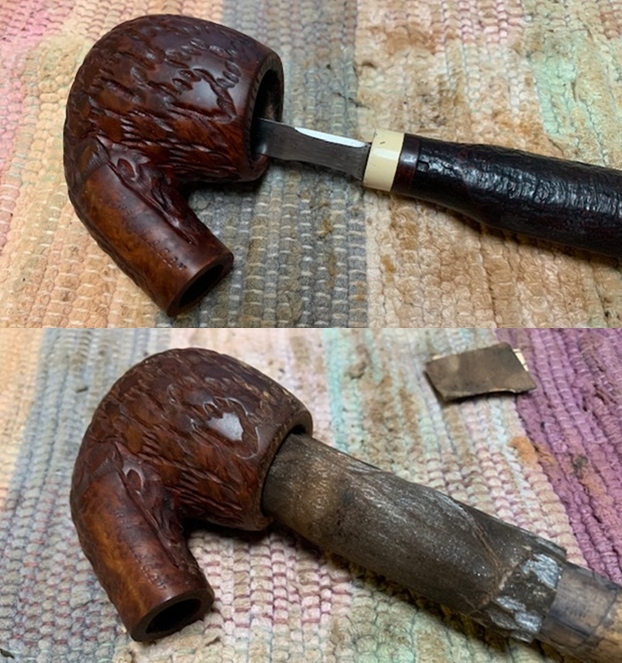
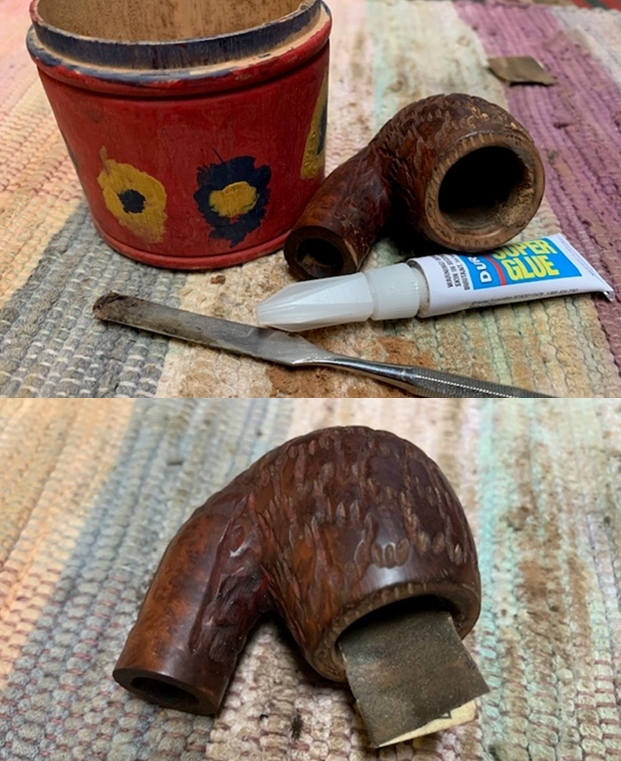
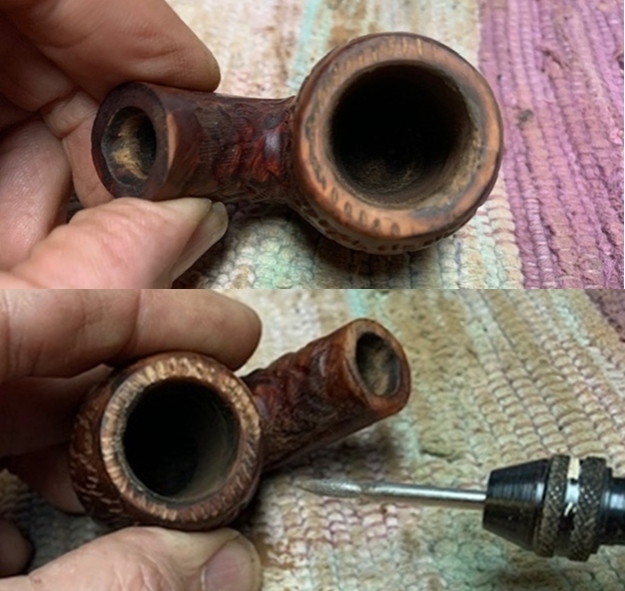
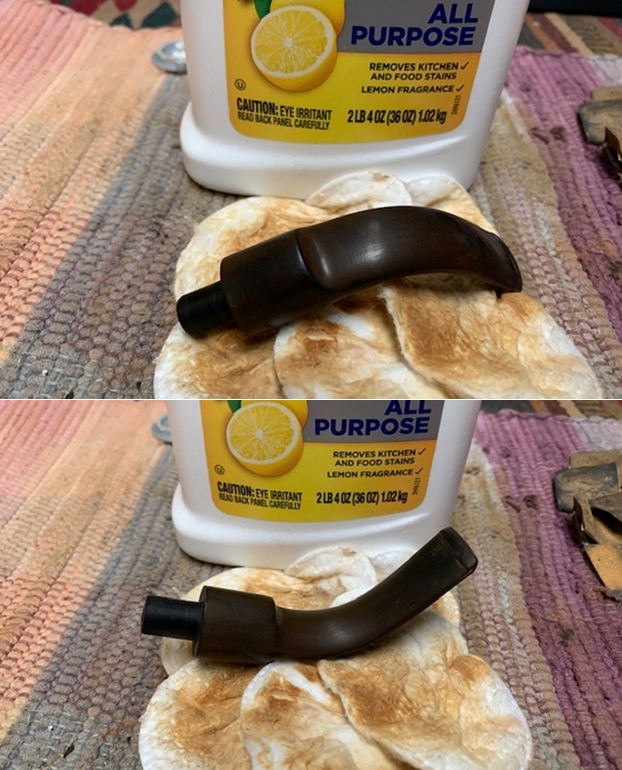
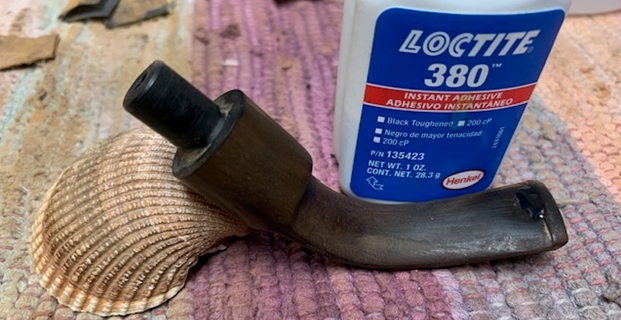
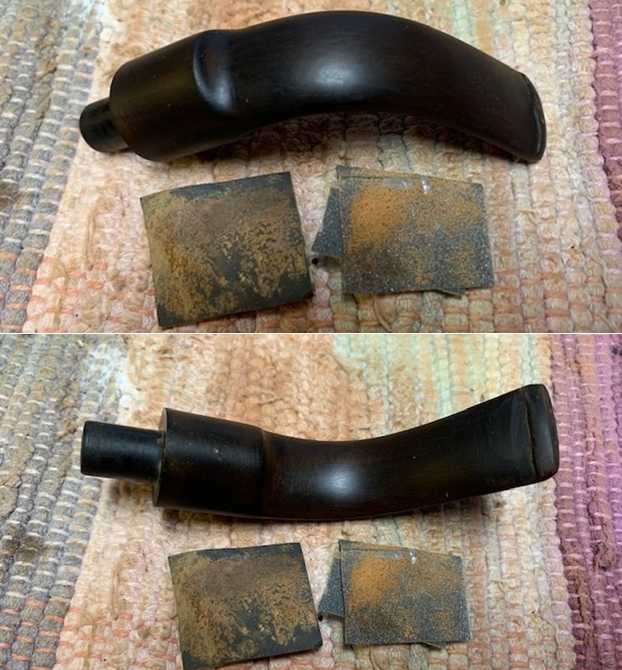
There was a light cake in the bowl so I reamed it with a Savinelli Fitsall pipe knife to remove the cake. It did not take too much work to clean out the remnants. I sanded the bowl with 220 grit sandpaper wrapped around a piece of dowel. I was happy to see that the bowl looked very good. There was no heat damage.I lightly topped the bowl with 220 grit sandpaper on a topping board. Once it was smooth I wiped the rim top down with a cotton pad and alcohol. I used super glue and briar dust to build up the damage on the rim top and inner edge of the bowl. I used a folded piece of 220 grit sandpaper to give the rim edge a slight bevel and smooth it out.I lightly topped the bowl again to smooth it out. I used a Dremel and burr to cut new grooved rustication into the bowl top to match the original rustication.  I stained the newly repaired and carved rim top with an Oak stain pen to match the rest of the surrounding briar. I was happy with the way the repair looked. I scrubbed out the mortise and the airway in the shank and the stem with alcohol, cotton swabs and pipe cleaners. Once it was finished the pipe smelled much better.   I worked some Before & After Restoration Balm into the surface of the briar with my fingertips and a horsehair shoe brush to clean, enliven and protect it. I let the balm sit for a little while and then buffed with a cotton cloth to raise the shine. The following photos show the bowl at this point in the restoration process. I am very happy with the results.   I turned to the stem and scrubbed the oxidation with Soft Scrub All Purpose cleaner. I scrubbed the surface with the cleaner and cotton pads. I was able to remove a lot of the oxidation.  I sanded out the tooth marks on the underside of the stem and was able to remove most of them. There was one larger tooth mark that remained that I filled in with Loctite 380 Black Instant Adhesive. Once the repair cured I sanded it with 220 grit sandpaper to smooth it out and to remove the remaining oxidation.I reshaped the button edges with 220 grit sandpaper and a needle file. I sanded the stem with 220 grit sandpaper to remove the remaining oxidation and started the polishing the stem with 400 grit wet dry sandpaper.   I polished the stem with micromesh sanding pads – wet sanding with 1500-12000 grit sanding pads. I wiped it down after each sanding pad Obsidian Oil. I finished by polishing it with Before & After Pipe Stem Polish both fine and extra Fine and then wiped it down with a final coat of Obsidian Oil.   This Malaga Rusticated/Carved Bent Billiard with a vulcanite saddle stem turned out to be a real beauty. It has a unique rustication around the bowl that is unlike other Malaga pipes that I have worked on. The carver really maximized that with the shape of the pipe. Everything about the pipe – the rustication on the shank and sides, the rusticated rim top and the cut of the briar work well to highlight the shape of the bowl. I polished stem and the bowl with Blue Diamond polish on the buffing wheel and the finish just popped and came alive. I gave the bowl and the stem multiple coats of carnauba wax. I buffed the pipe with a clean buffing pad to raise the shine. I hand buffed it with a microfiber cloth to deepen the shine. The pipe polished up pretty nicely. The pipe took on life with the buffing. The rich oil cured colour works well with the polished vulcanite stem. The finished pipe has a rich look that is quite catching. Have a look at it with the photos below. The shape, finish and flow of the pipe and stem are very well done. The dimensions are Length: 5 inches, Height: 1 ½ inches, Outside diameter of the bowl: 1 ¼ inches, Chamber diameter: ¾ of an inch. The pipe will back in the box of pipes that I am working on fro Alex. I am looking forward to what he will think of this one. Thanks for walking through the restoration with me as I worked over another estate pipe.
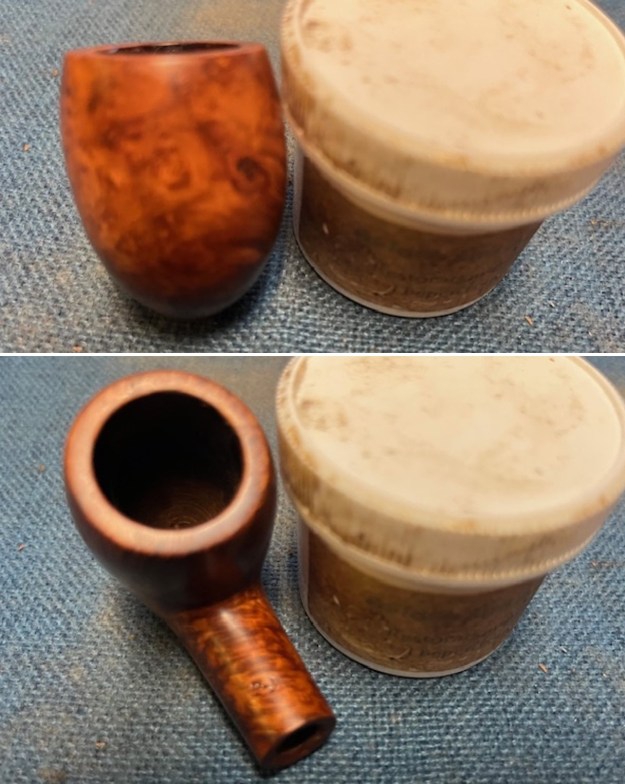
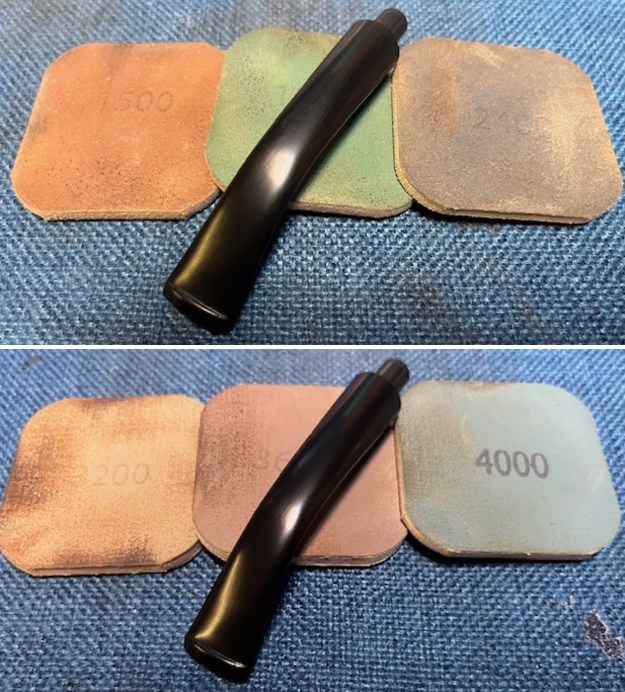
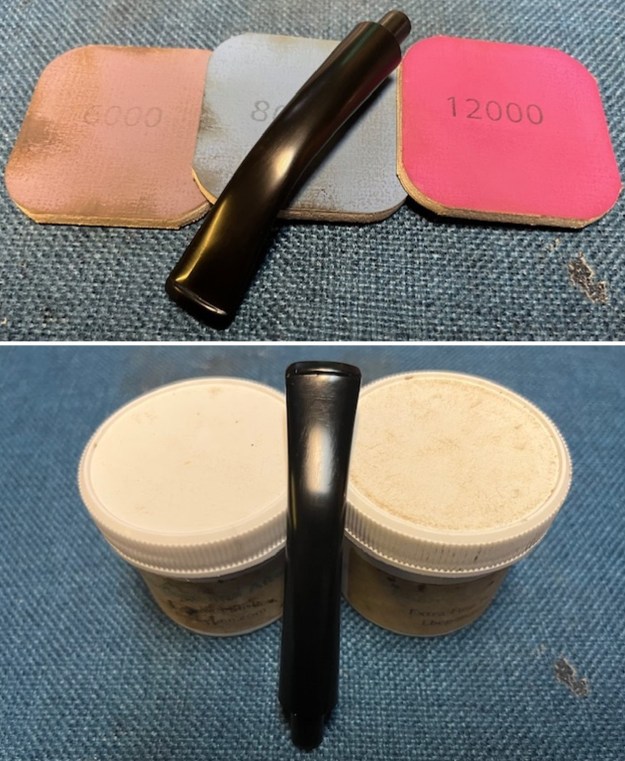
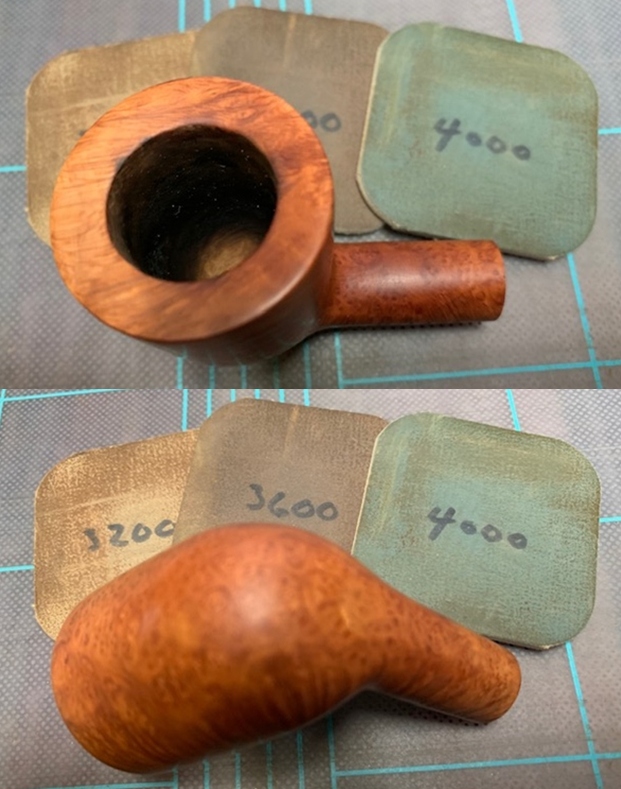
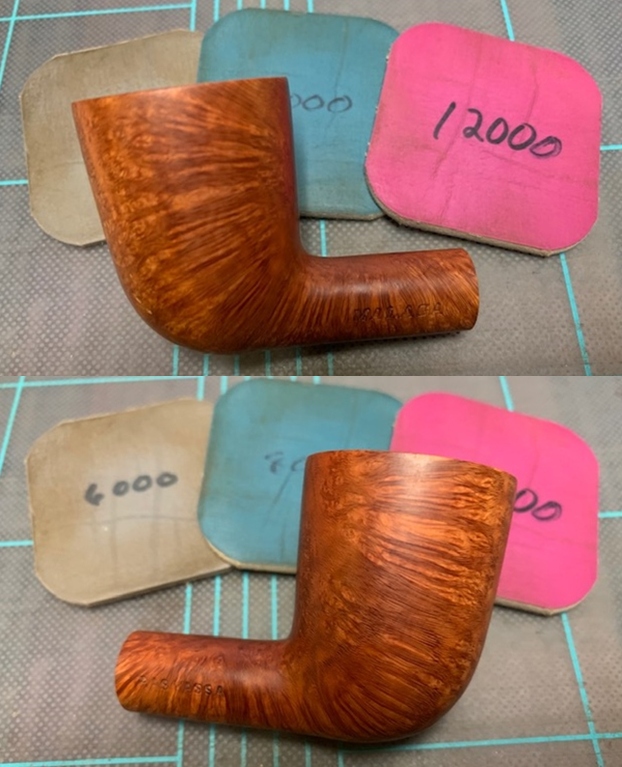
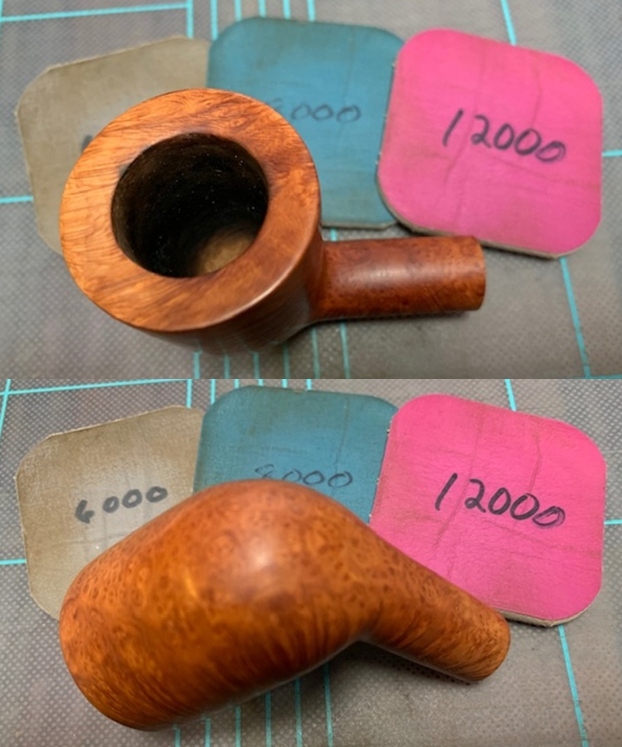
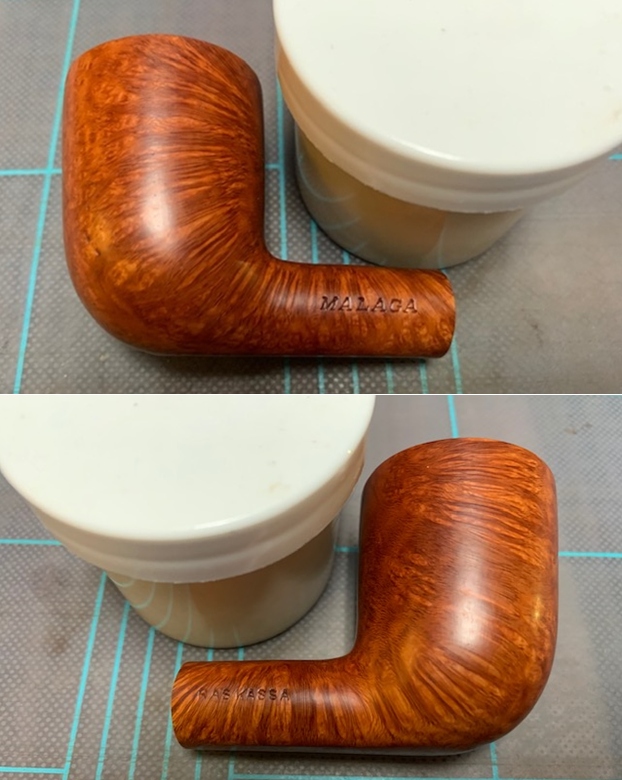
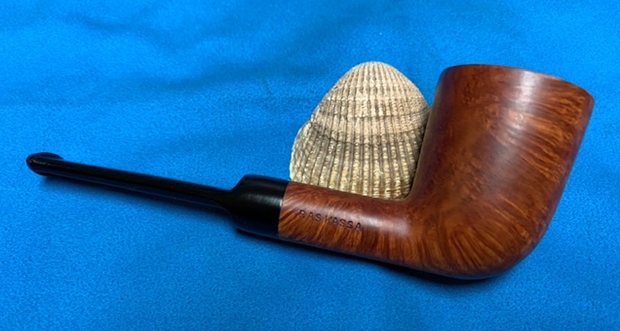
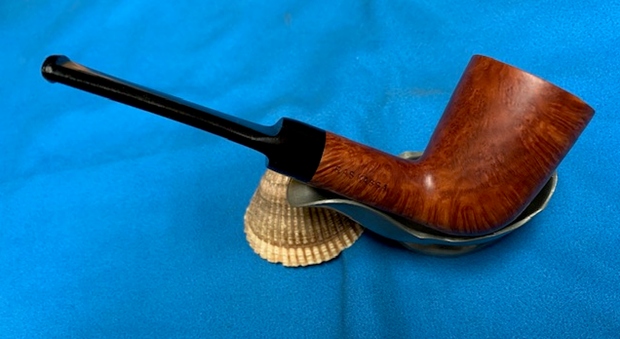
Breathing Life into a Top Grade Malaga – a Raskassa Dublin


Blog by Steve Laug

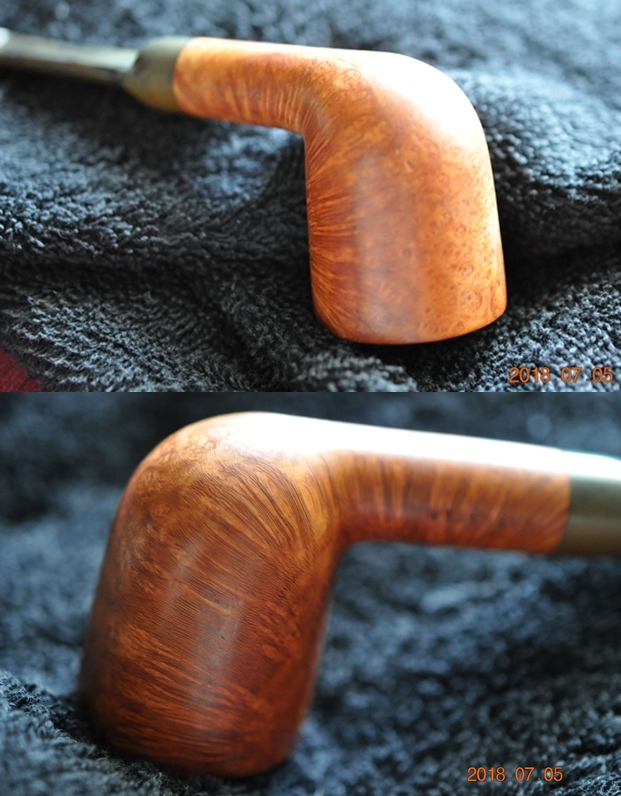
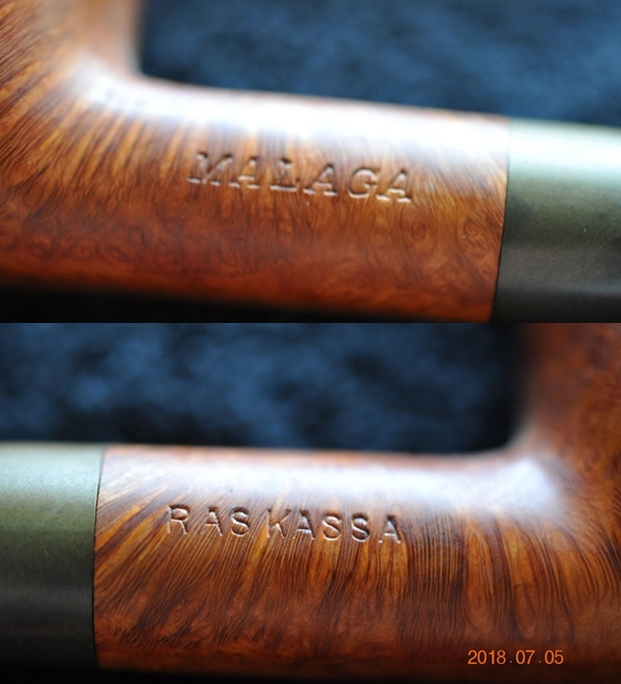
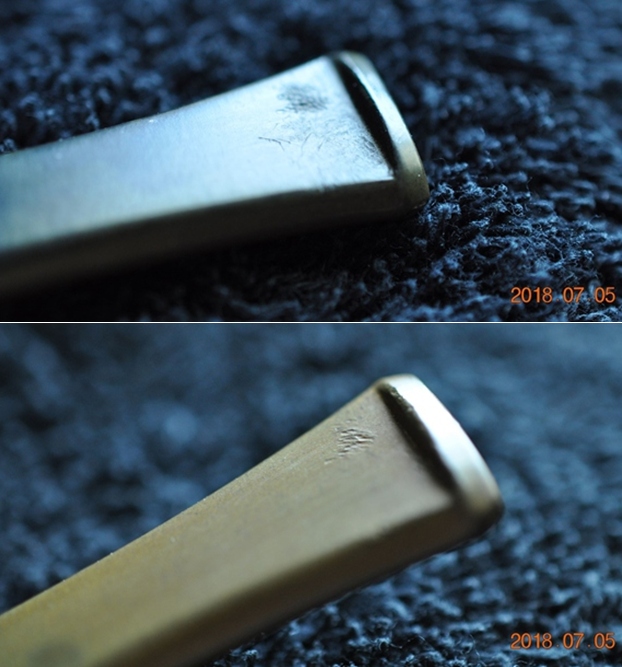
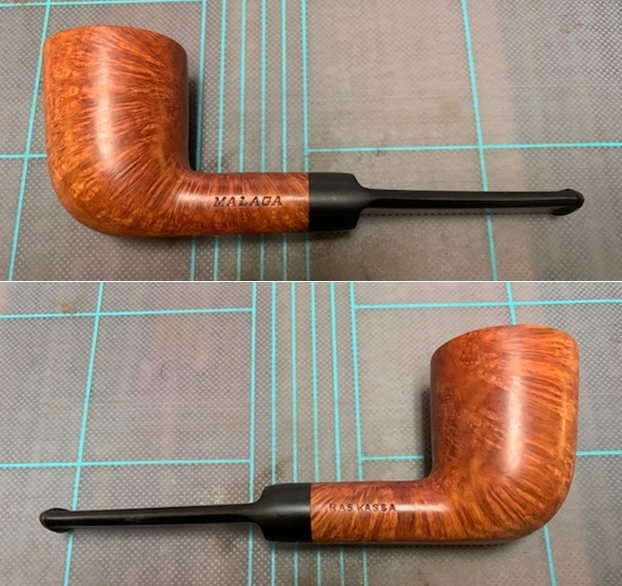
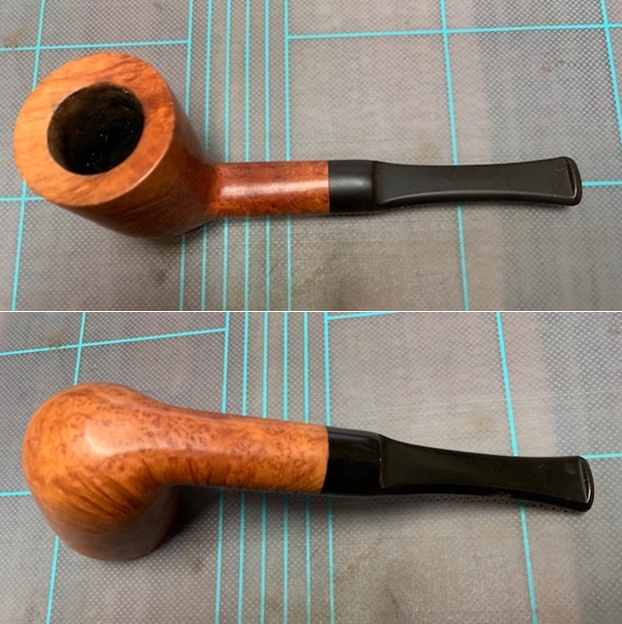
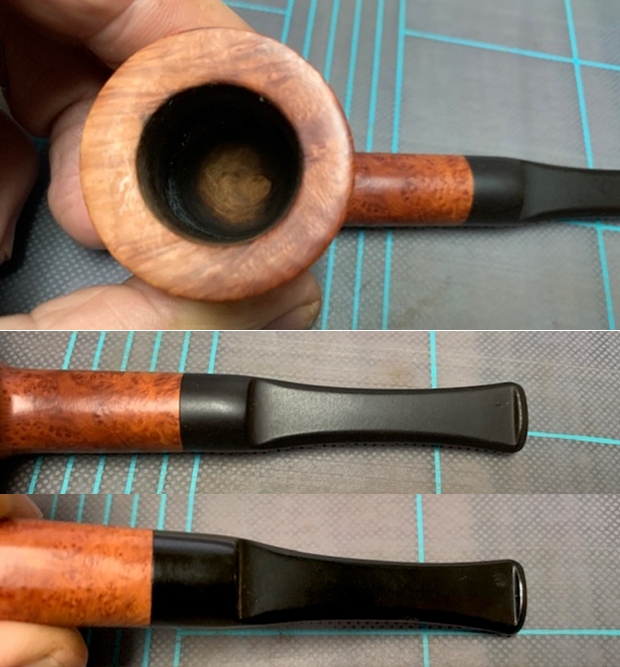
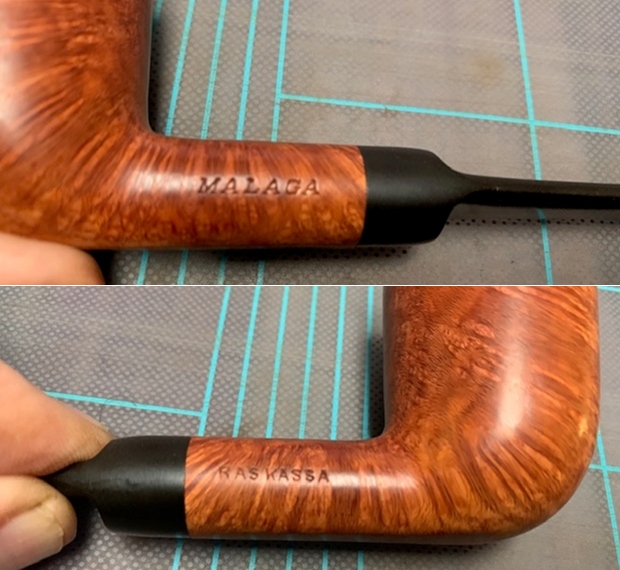
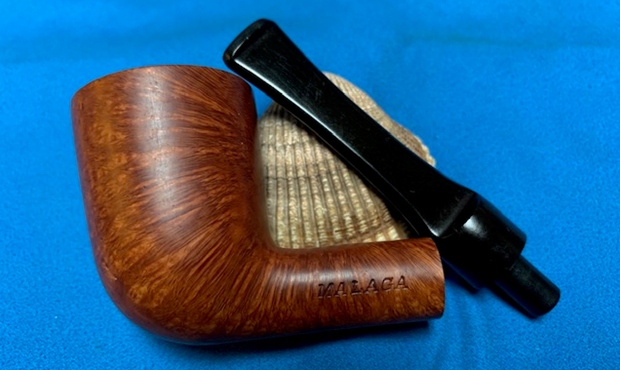
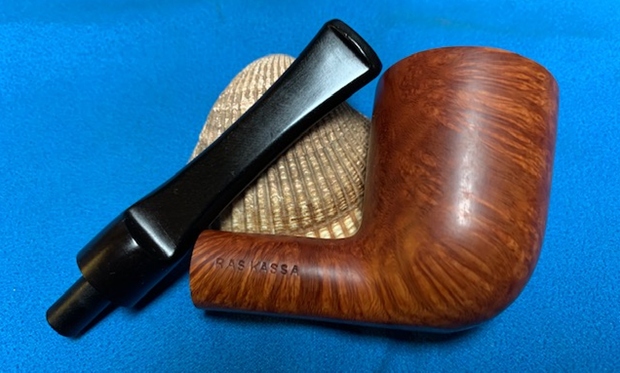
With two pipes left to work on from Bob Kerr’s estate I needed to take a break and work on something different. Jeff had asked me about a Malaga Raskassa pipe that he said he had sent me. I could not find it in any of the boxes I had here. It turned out that it has been here for several years. I found it in a box of pipes awaiting restoration that I was going through to put together grab bags. I was surprised and decided it was the next one I would work on. The pipe is a Malaga Dublin with some beautiful grain around the oil cured bowl and shank. There is beautiful birdseye grain on the front and back of the bowl and cross grain on the sides. The pipe has not been stained but sports the usual Malaga oil cured look. The carver did a great job utilizing the block of briar to maximize the grain. The pipe is stamped on both sides of the shank. On the left it reads MALAGA and on the right side it is stamped RASKASSA. The saddle stem is vulcanite and has no marking or stamping. There was a thick cake in the bowl and a light lava overflow and darkening on the rim top. The exterior of the briar was dusty with grime ground into the briar. The stem is lightly oxidized and has light tooth chatter on both sides. The stem was in good condition under the grime. Jeff took the photos below to tell the story and give a glimpse of the pipe before his cleanup. The exterior of the pipe was very dirty – grime and grit ground in from years of use and sitting. The rim top was covered with grime and there was a spotty coat of lava that overflowed the bowl. There was a thick, hard cake in the bowl.    Jeff took photos of the sides and the heel of the bowl to give a better feel for the condition of the bowl.  The next photos show the stamping on the sides of the shank and it is very readable. It reads as noted above.    The stem was dirty and oxidized and had tooth chatter and marks on both sides ahead of the button. For those of you who are unfamiliar with the brand, I am also including the link to a blog that I wrote that gives some of the history of the Malaga brand and the Malaga Pipe Shop in Royal Oak, Michigan in the USA. Here is the link – https://rebornpipes.com/tag/malaga-pipes/. That blog also includes links to a catalogue and the history of the pipemaker George Khoubesser. If you are interested to learn more then I invite you to follow the link to get a feel for the brand and the pipemaker.

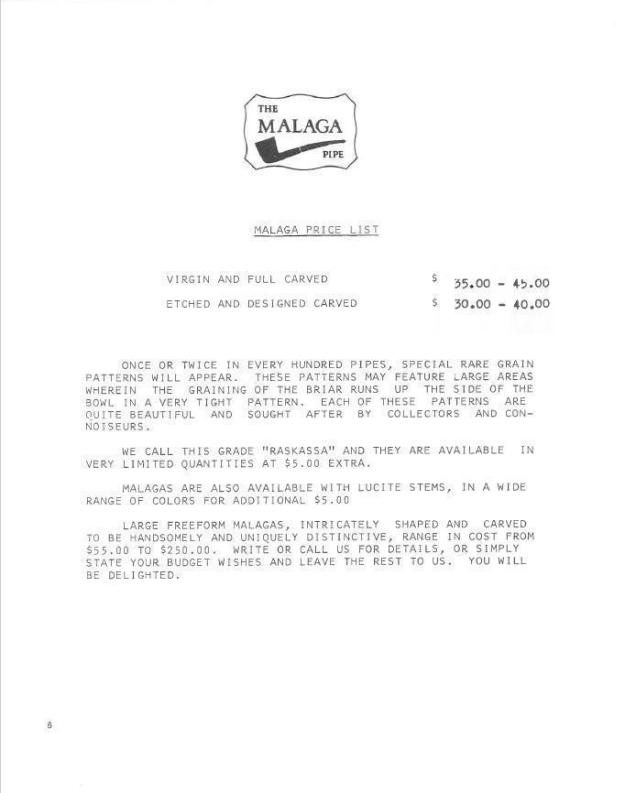
I am also am including some printed material on the Malaga brand that came to me from the daughter of George Koch to help identify the particular stamping on the pipe. The link takes you to the entire collection of materials that were sent to me. I am also including one particular page that helps identify the RAS KASSA stamping on the pipe. https://rebornpipes.com/2019/02/27/malaga-pipes-catalogue-of-pipes-and-tobaccos/

It basically says that the stamping is applied to pipes with special rare grain patterns in the briar. These appear to be straight grain, birdseye, swirled grains etc. that are tight patterns. They are rare – 1 or 2 in every hundred pipes. This pipe is one of those. You can read the description in the detailed explanation below.

Jeff cleaned the pipe with his usual penchant for thoroughness that I really appreciate. Once he finished he shipped it back to me. He reamed it with a PipNet pipe reamer and cleaned up the reaming with a Savinelli Fitsall Pipe Knife. He scrubbed out the internals with alcohol, pipe cleaners and cotton swabs until the pipe was clean. He scrubbed the exterior of the bowl with Murphy’s Oil Soap and a tooth brush to remove the grime and grit on the briar and the lava on the rim top. The finish looks very good with good looking grain around the bowl and shank. Jeff soaked the stem in Before & After Deoxidizer to remove the oxidation on the rubber. When the pipe arrived here in Vancouver for the second stop of its restoration tour it looked a lot better. I took photos before I started my part of the work.  I took some close up photos of the rim top and also of the stem surface. I wanted to show what cleaned bowl and rim top looked like. The rim top and edges are in excellent condition. I also took close up photos of the stem to show the light tooth marks on the stem surface.    I took photos of the stamping on both sides of the shank and it is clear and readable. It is stamped as noted above.  I removed the stem for the shank and took a photo of the bowl and stem to give a picture of what it looked like. You can see scratches in the stem surface.Now, on to my part of the restoration of this Malaga Raskassa Dublin. I decided to start by polishing the bowl and rim top with micromesh sanding pads – wet sanding with 1500-12000 grit pads and wiping the briar down with a damp cloth after each sanding pad.   I rubbed the bowl down with Before & After Restoration Balm. I worked it into the surface of the bark on the bowl sides and shank with my fingertips to clean, enliven and protect it. I let the balm sit for a little while and then buffed with a cotton cloth to raise the shine.   I set the bowl aside and turned my attention to the stem. I “painted” the surface of the stem with the flame of a lighter. The heat lifted the scratches and dents in the stem surface that left behind only one small tooth dent. It also had the added benefit of burning off some of the oxidation.I filled in the remaining tooth mark with clear super glue. Once it cured I smoothed out the surface of the repair with a needle file.     I sanded out the repair and scratches to blend it into the surface of the surrounding vulcanite. I started polishing the stem with 400 grit wet dry sandpaper.      I polished the vulcanite with micromesh sanding pads – 1500-12000 grit pads. I wiped it down with a damp cloth after each sanding pad. I used Before & After Pipe Polish – both Fine and Extra Fine to further polish the stem.    After finding this Malaga Raskassa that I have been looking for through my boxes I was glad to finish it. It really is a great looking pipe. The finish on the pipe is in excellent condition and works well with the polished vulcanite saddle stem. I put the stem back on the bowl and carefully buffed the pipe with Blue Diamond on the buffing wheel using a light touch on the briar. I gave the bowl and stem multiple coats of carnauba wax on the buffing wheel and followed that by buffing the entire pipe with a clean buffing pad. I hand buffed the pipe with a microfiber cloth to deepen the shine. The finished Malaga Raskassa Dublin is a great looking pipe that looks almost new. The flow of the grain around the bowl and the shape contribute to beautiful look of this pipe. It fits nicely in the hand and feels great. Give the finished pipe a look in the photos below. The dimensions of the pipe are Length: 5 ½ inches, Height: 2 inches, Outside diameter of the bowl: 1 ½ inches, Chamber diameter: ¾ of an inch. I have been looking for a Malaga Raskassa for my own collection so this one fits the bill for me. I look forward to enjoying it. Thanks for reading this blog and my reflections on the pipe while I worked on it. This was an interesting estate to bring back to life.

New Life for a Malaga Poker/Sitter for Alex


Blog by Steve Laug

I have been working on a lot of different estate pipes and selling them for different families. I am continuing to work on the Malaga pipes that Alex put aside for restoration. He also brought other pipes to add to his box. I have a box of pipes from Alex that I am always working away at. He periodically drops more Malaga pipes into his box. There are quite a few of them to work on so I decided work on a few of them. The next one of these was another Malaga pipe. It is a beautiful Poker Sitter that is almost pear shaped. It has a very tight grain pattern around the bowl – cross grain on the sides and birdseye on the front and back of the bowl. It also has a tapered vulcanite stem. The pipe was dirty and caked when arrived. The rim top has a little lava and some darkening on the top rear edge of the bowl. The bowl had a thin cake in it that was hard and dense. The exterior of the bowl and shank are dirty with grime and oils from prolonged use. The stamping on the left side of the shank read “MALAGA” and on the right side it read Imported Briar. The vulcanite stem was in great condition and had tooth chatter on the top and the underside of the stem. I took photos of the pipe before I started the cleanup work. I took close up photos of the bowl and rim to capture the condition of the pipe before I started my cleanup work. The rim top had some light lava and darkening on the front and back edge. The inner edge was slightly bevel and was darkened. Other than being so dirty it was in great condition. There was a light hard cake in the bowl interior. The stem was dirty and there was tooth chatter on the top and underside near the button. The stem was also lightly oxidized.I took a photo to capture the stamping on the shank. The first photo shows the stamping “MALAGA” on the left side of the shank is very readable. The second photo shows the stamping Imported Briar on the right side.If this is the first of the Malaga restorations that you have read about then you should know the backstory of the brand. I am including the link to a blog that I wrote that gives some of the history of the Malaga brand and the Malaga Pipe Shop in Royal Oak, Michigan in the USA. I have written an earlier blog to give a little history of the Malaga Brand and the pipemaker, George Khoubesser. Here is the link – https://rebornpipes.com/tag/malaga-pipes/.That blog also includes links to a catalogue and the history of the pipemaker George Khoubesser. Follow the link to get a feel for the brand and the pipemaker.
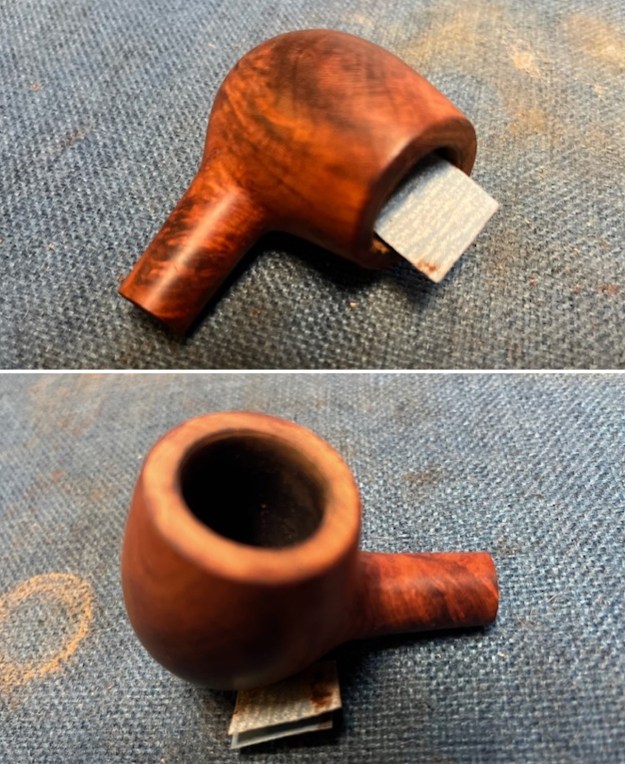
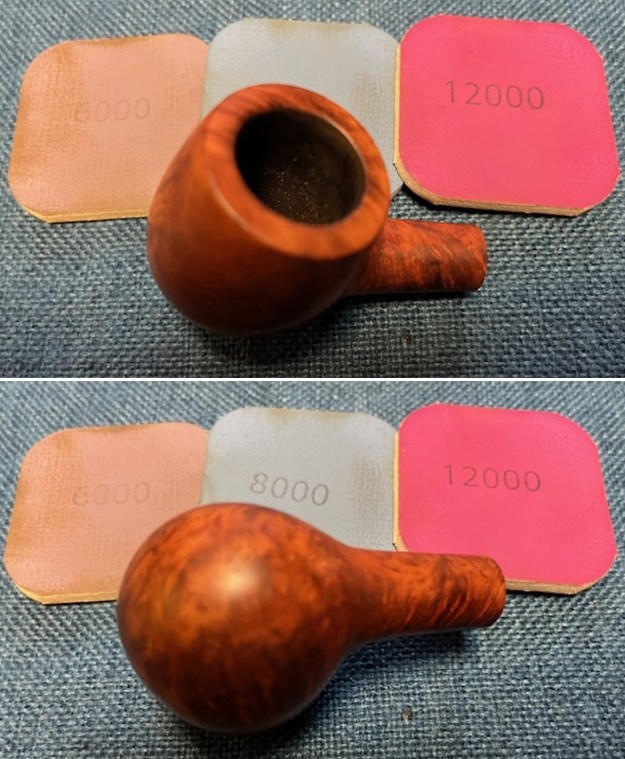
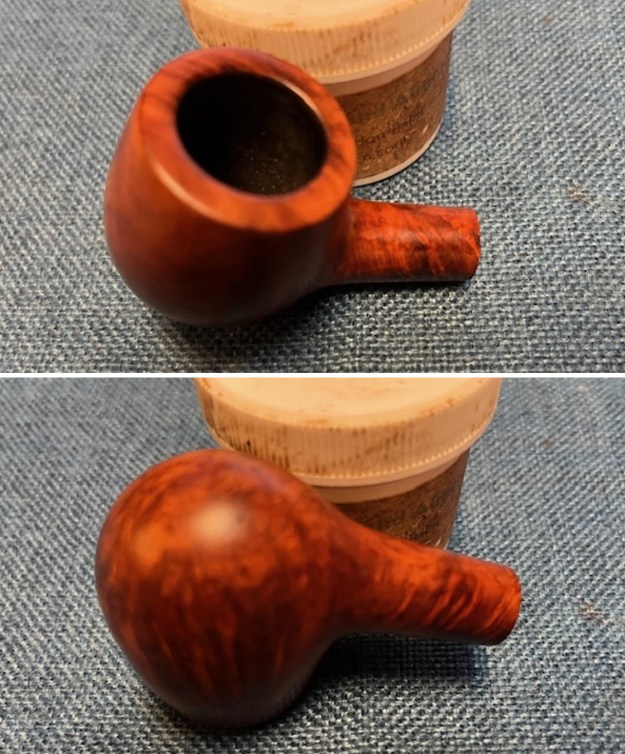
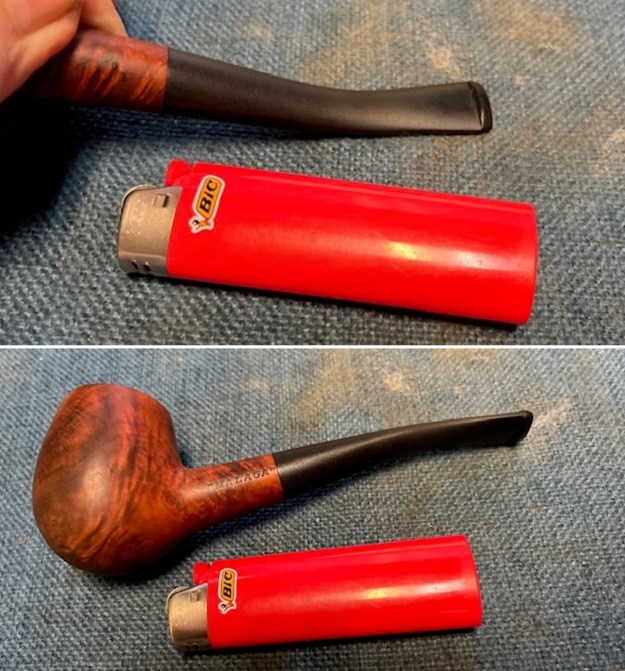
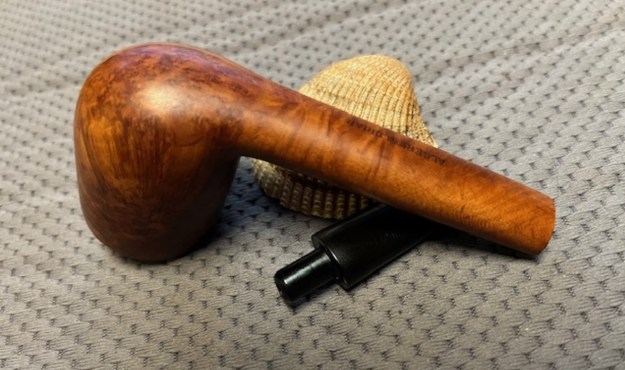
I decided to start with the issues with the rim top first. I wiped down the rim top of the bowl with a damp cotton pad to remove the tars and lava. I used a folded piece of 220 grit sandpaper to smooth out the burn damage and the darkening on the bevel.I followed Jeff and my regular regimen for cleaning estates. I reamed the light cake in the bowl with a Savinelli Fitsall pipe knife to remove the cake. I sanded the bowl with 220 grit sandpaper wrapped around a piece of dowel to smooth out the inside walls of the bowl.I scrubbed out the mortise and the airway in the shank and the stem with alcohol, cotton swabs and pipe cleaners.I polished the briar with micromesh sanding pads – 1500-12000 grit pads. I wiped the bowl down after each sanding pad with a damp cloth to wipe of the dust. I scrubbed the briar with Murphy’s Oil Soap with a tooth brush. I scrubbed it off with running water to remove the soap and the grime on the bowl. I dried it off with a soft cloth. I worked some Before & After Restoration Balm into the surface of the briar with my fingertips and a horsehair shoe brush to clean, enliven and protect it. I let the balm sit for a little while and then buffed with a cotton cloth to raise the shine. The photos show the bowl at this point in the restoration process. I set the bowl aside and turned my attention to the stem. I sanded out the tooth chatter with 220 grit sand paper and started to polish it with a folded piece of 400 wet dry sandpaper. Once it was finished it the tooth chatter and oxidation was gone and it began to shine.I polished the stem with micromesh sanding pads – wet sanding with 1500-12000 grit sanding pads. I wiped it down after each sanding pad with Obsidian Oil. I polished it with Before & After Pipe Stem Polish – both Fine and Extra Fine and buffed it off with a final coat of Obsidian Oil. This is a beautiful “Malaga” Imported Briar Poker Sitter with a tapered black vulcanite stem. It has a great look and feel. The shape fits well in the hand and sits on the desk when you are resting. The grain makes it a real beauty. I polished stem and the bowl with Blue Diamond polish on the buffing wheel. I gave the bowl and the stem multiple coats of carnauba wax. I buffed the pipe with a clean buffing pad to raise the shine. I hand buffed it with a microfiber cloth to deepen the shine. The pipe polished up pretty nicely. The rich oil cured briar took on life with the buffing. The rich brown colour of the briar works well with the polished vulcanite stem. The finished pipe has a rich look that is quite catching. Have a look at it with the photos below. The shape, finish and flow of the pipe and stem are very well done. The dimensions are Length: 6 inches, Height: 2 inches, Outside diameter of the bowl: 1 ½ inches, Chamber diameter:  ¾ of an inch. I will be adding the pipe to the finished Malaga pipes that I have set aside for Alex. This will be a great addition to his collection of Malaga pipes. Thanks for walking through the restoration with me as I worked over another Malaga.