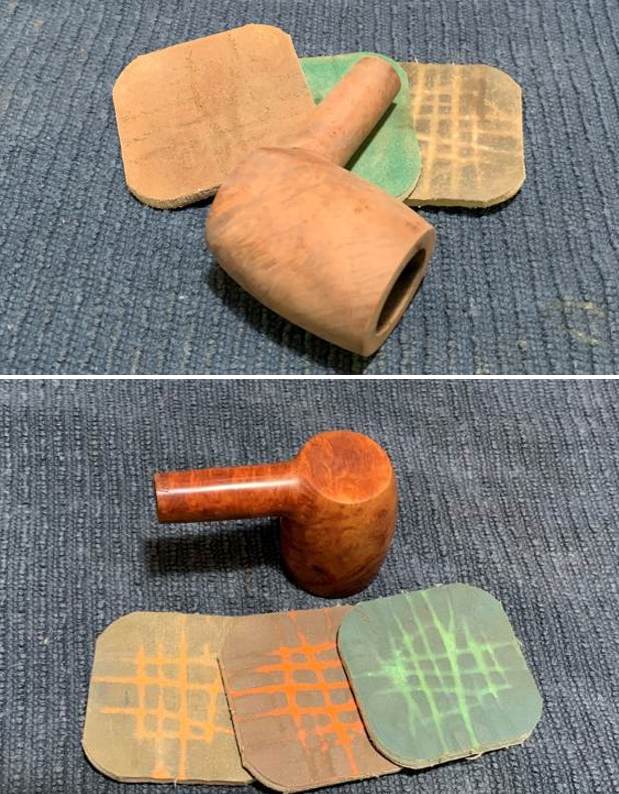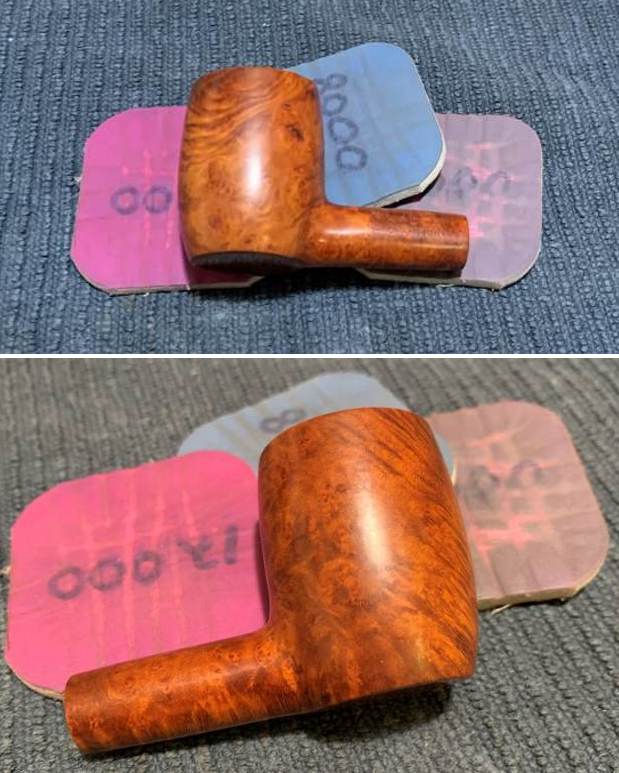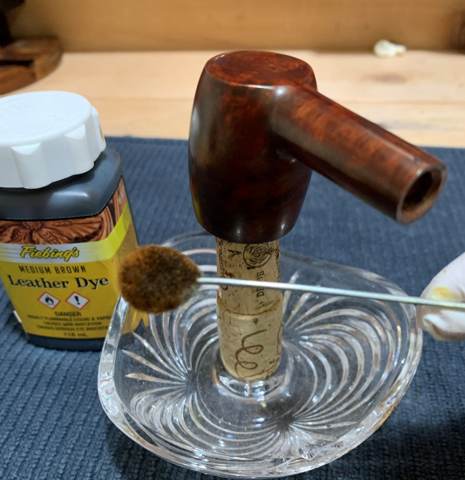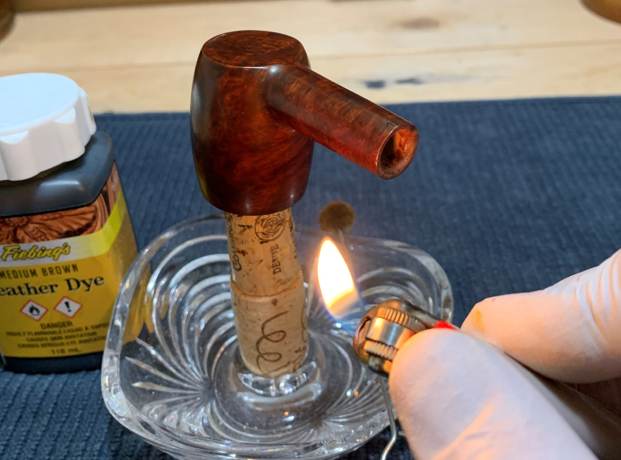
Tag Archives: contrast staining

Cleaning up a Crown Duke, Dr. Grabow Bent Billiard for a Memory Box of Dad


Blog by Steve Laug

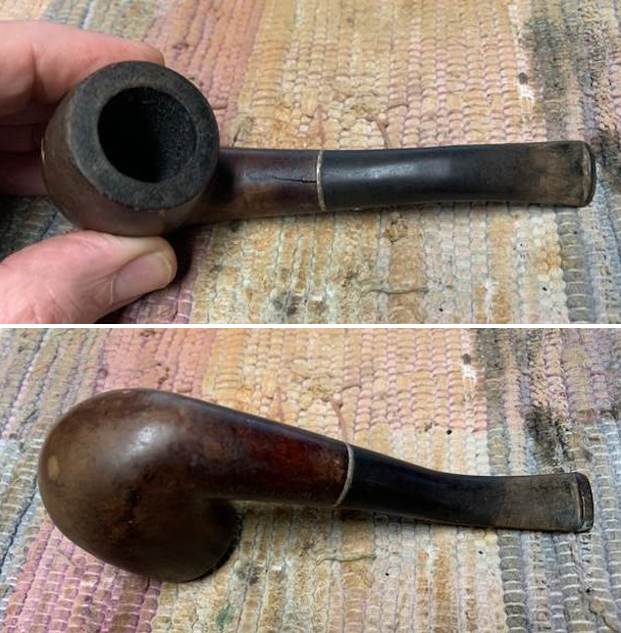
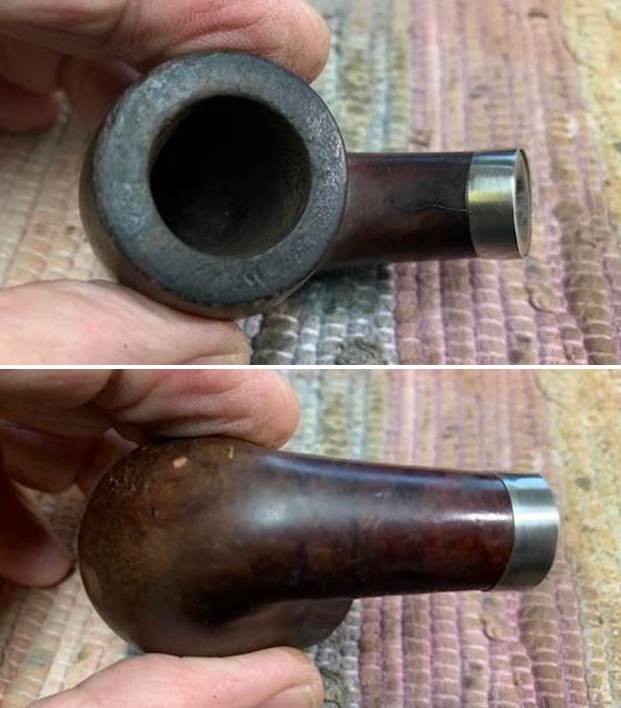
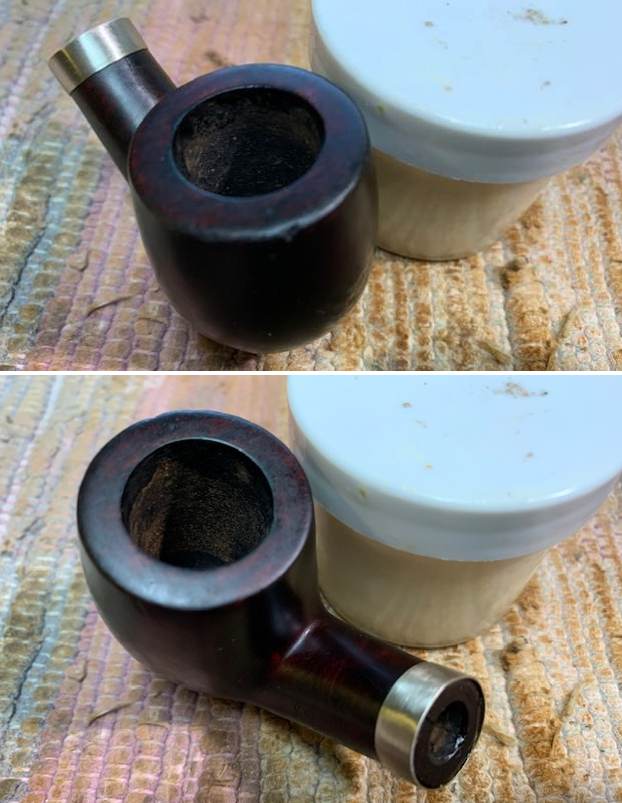
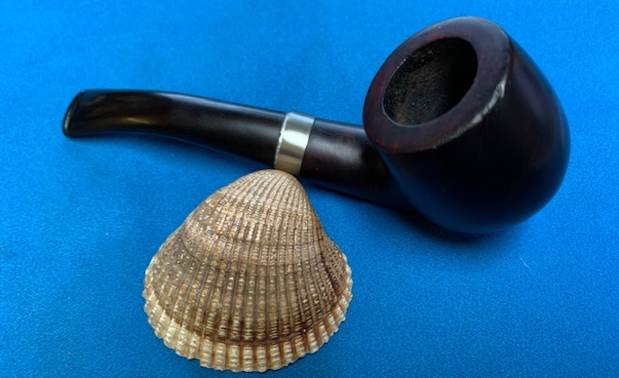
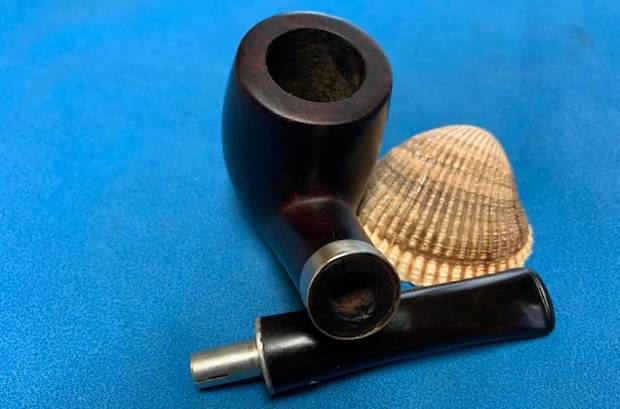
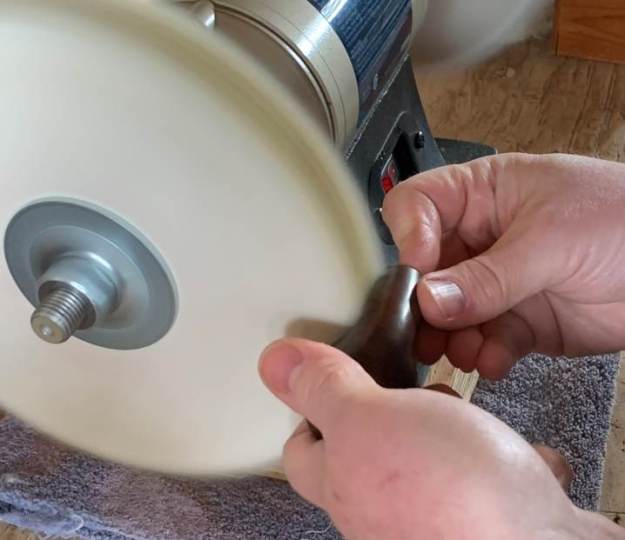
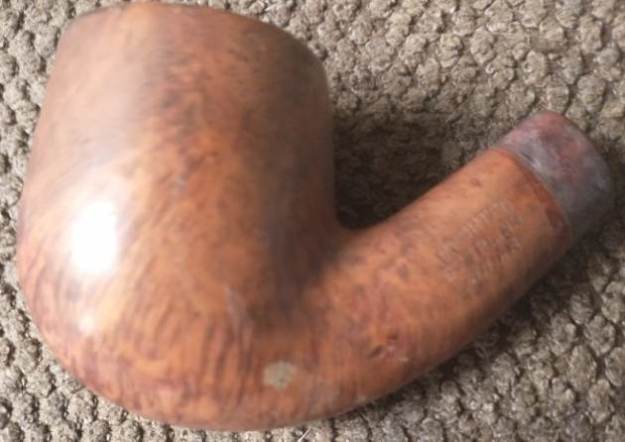
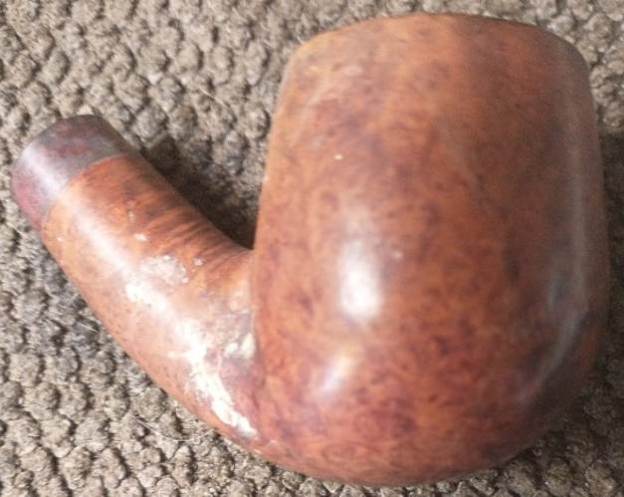
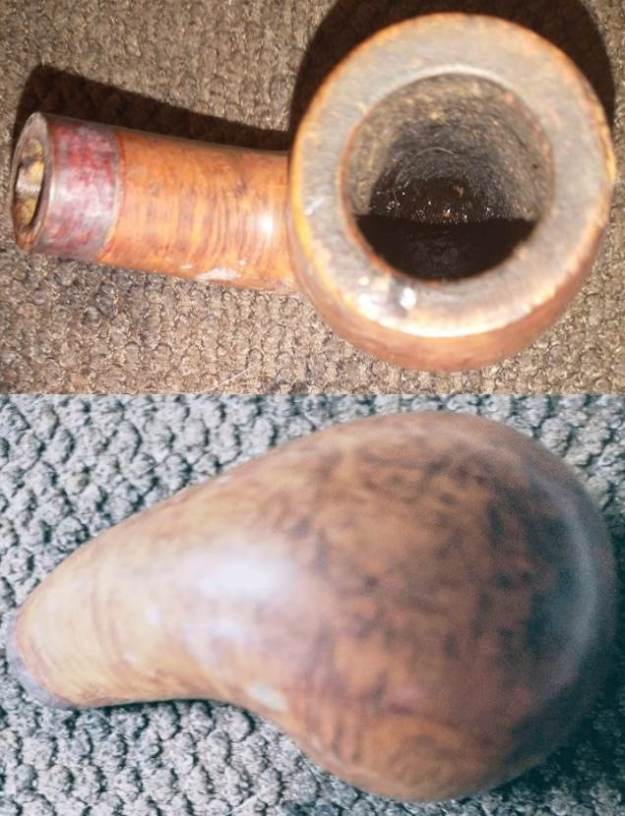
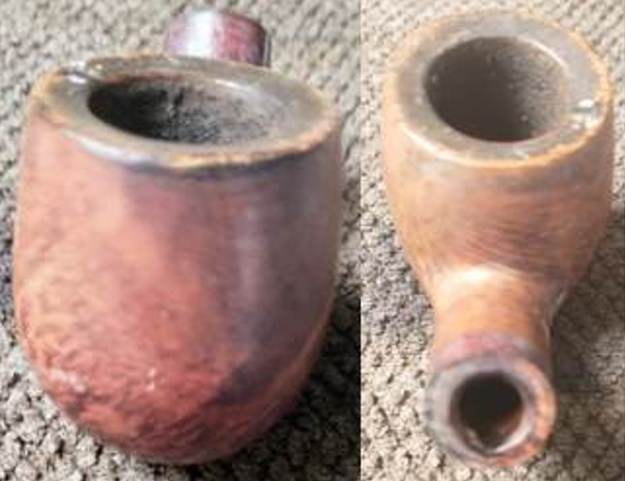
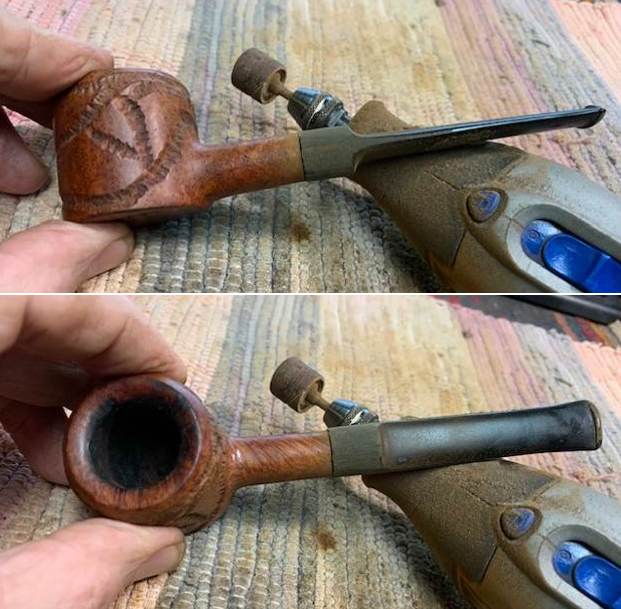
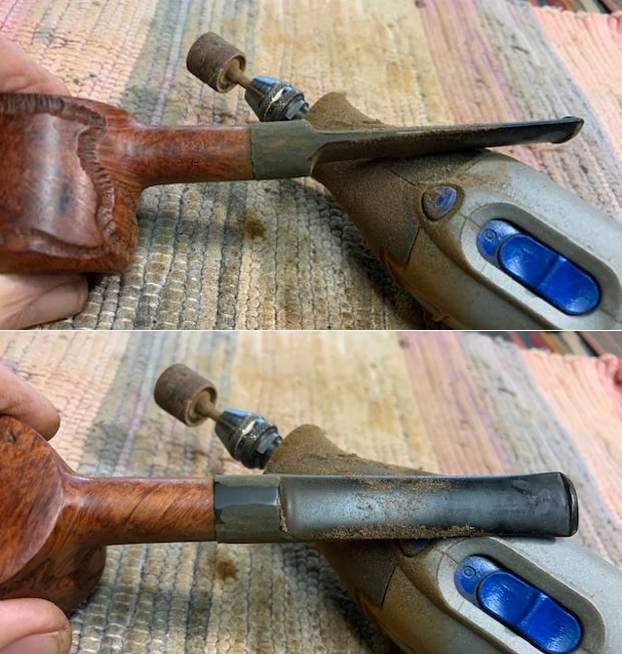
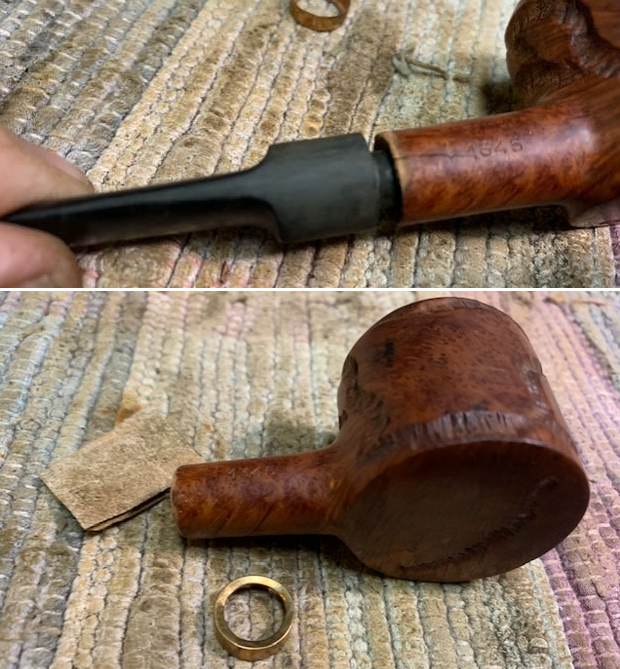
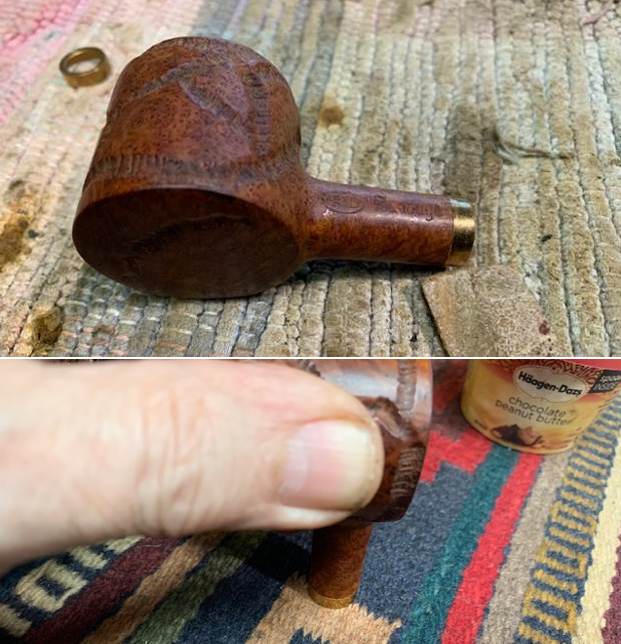
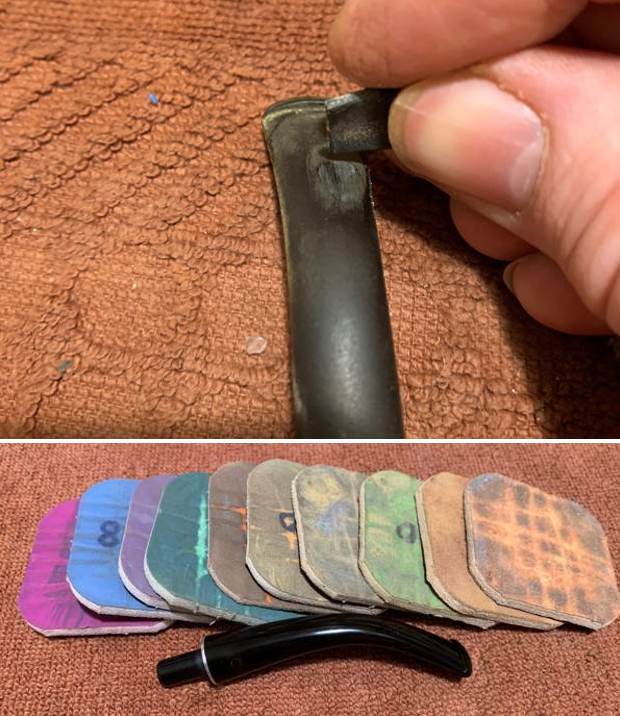
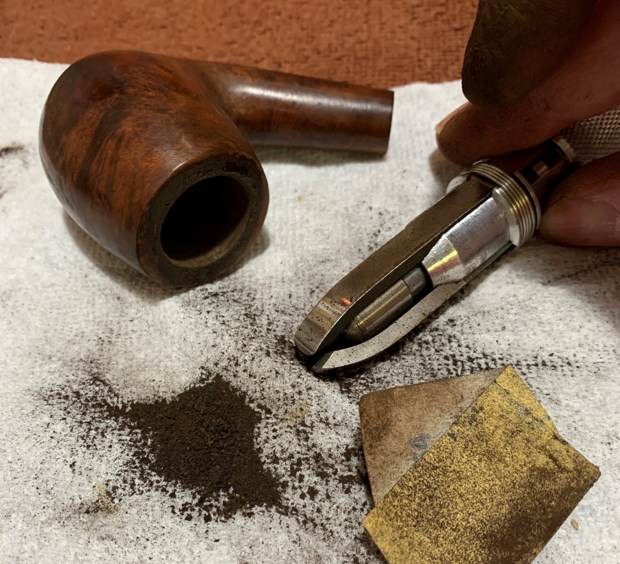
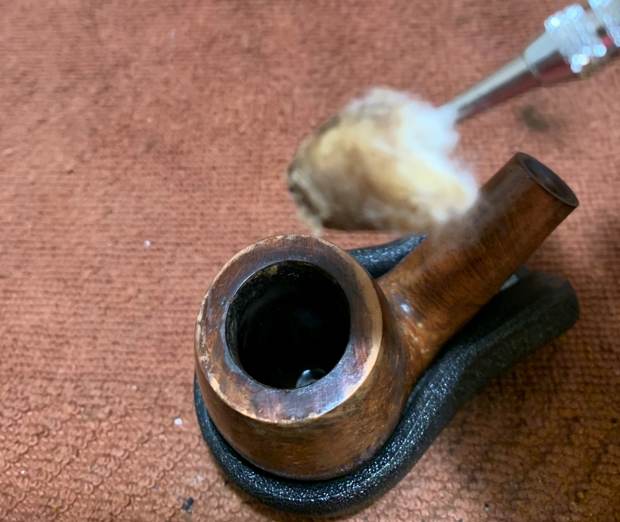
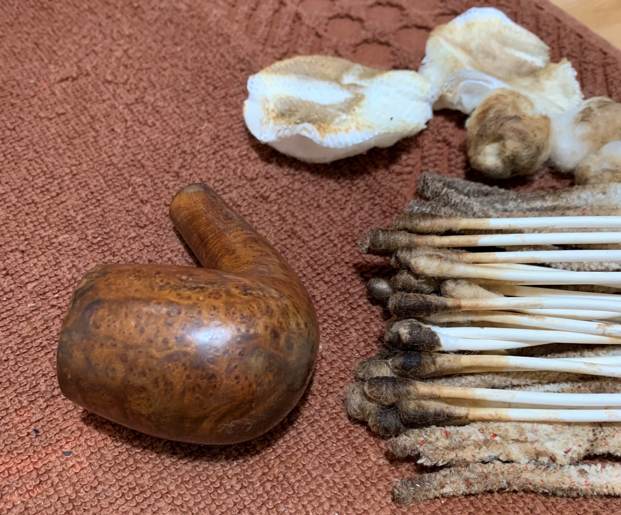
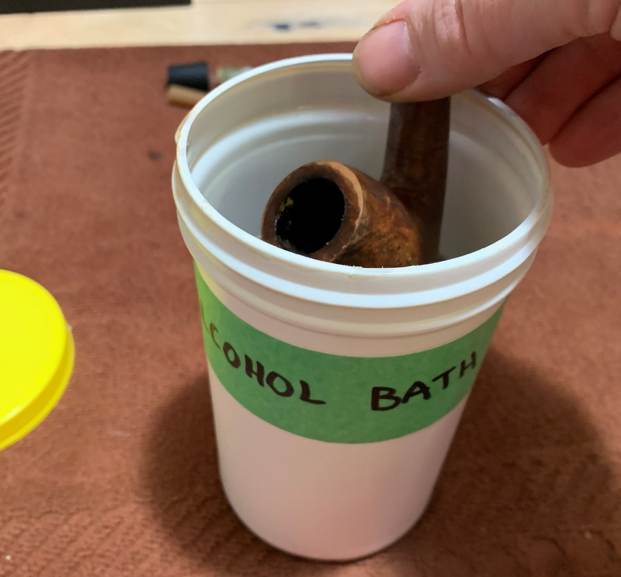
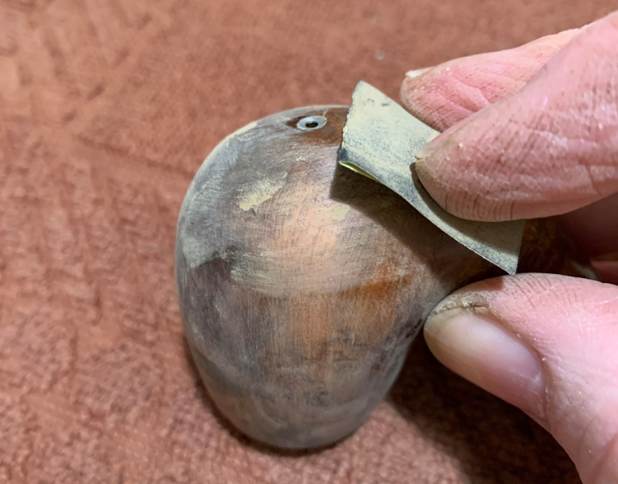
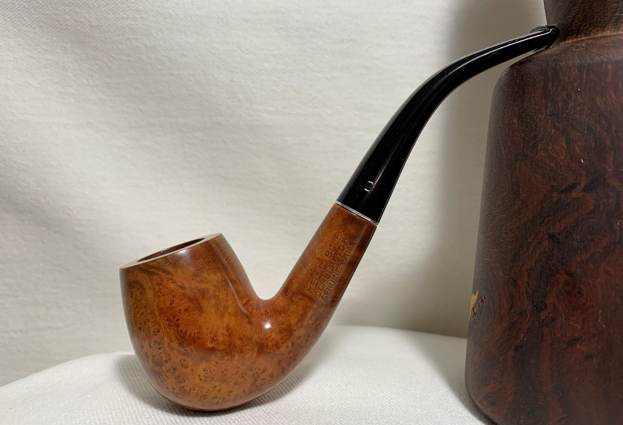
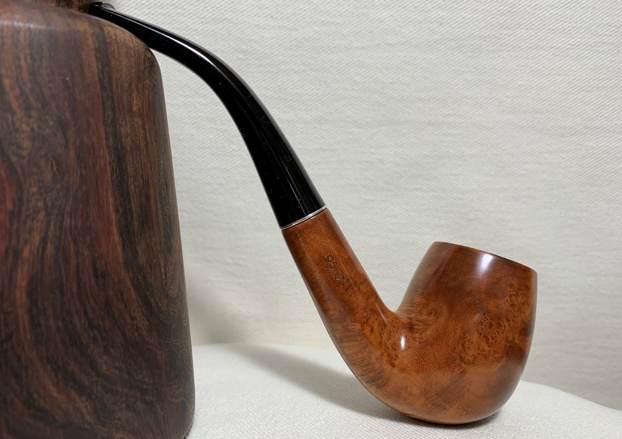
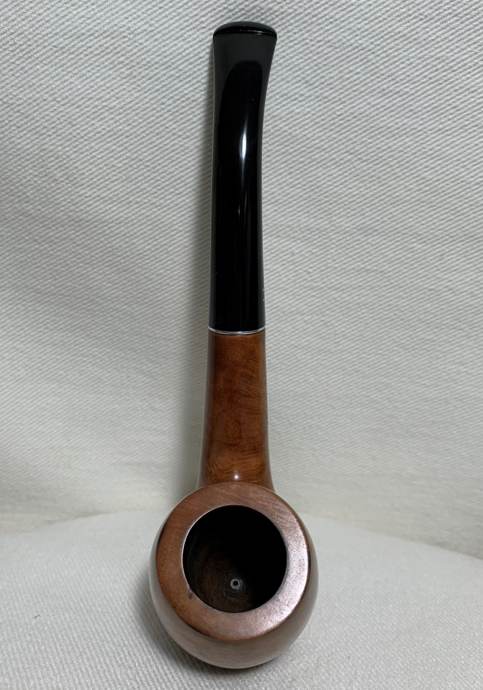
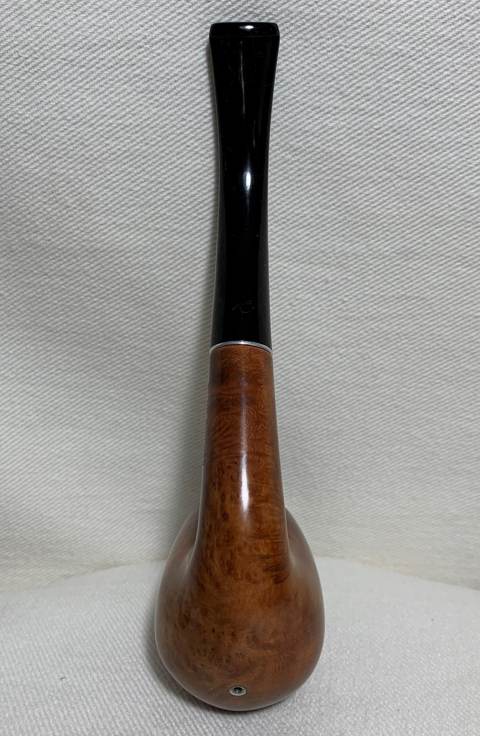
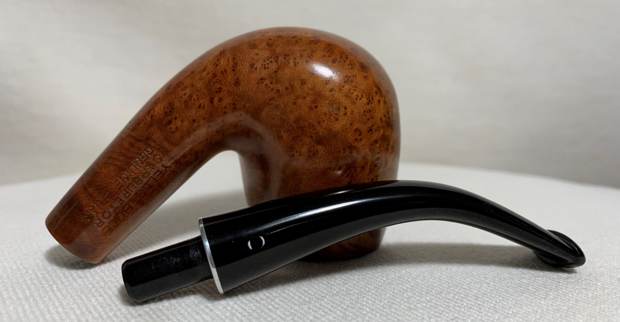
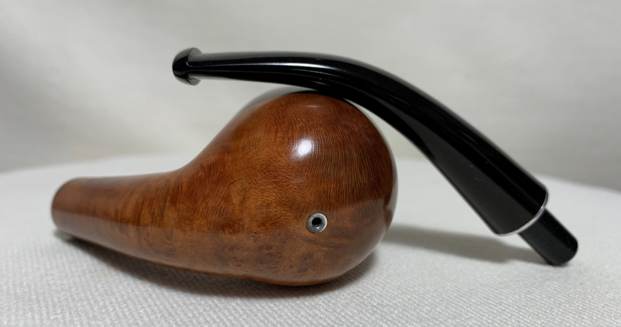
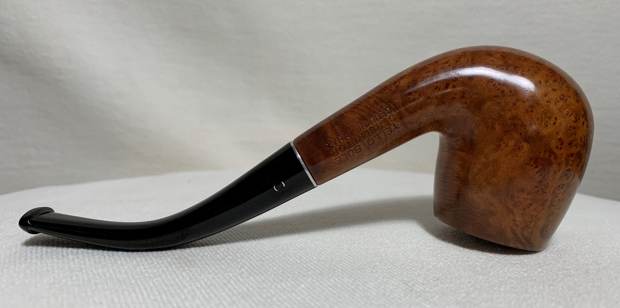
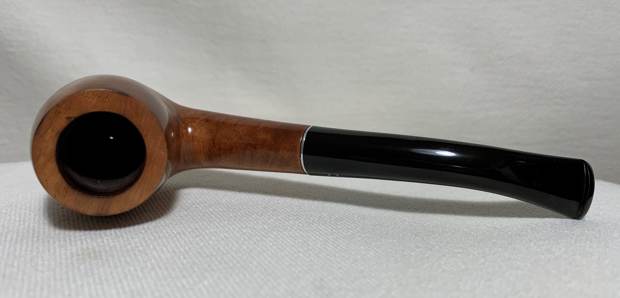
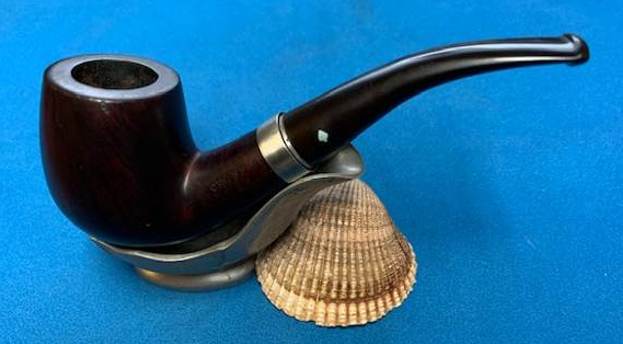
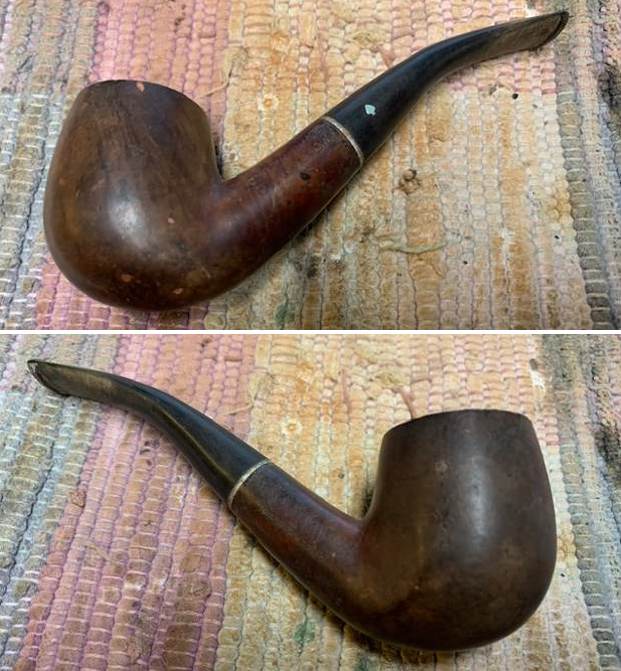
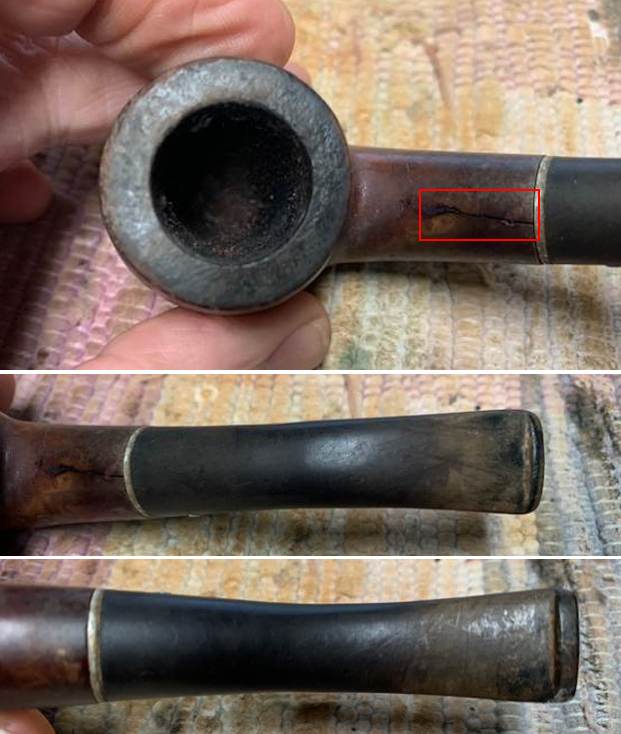
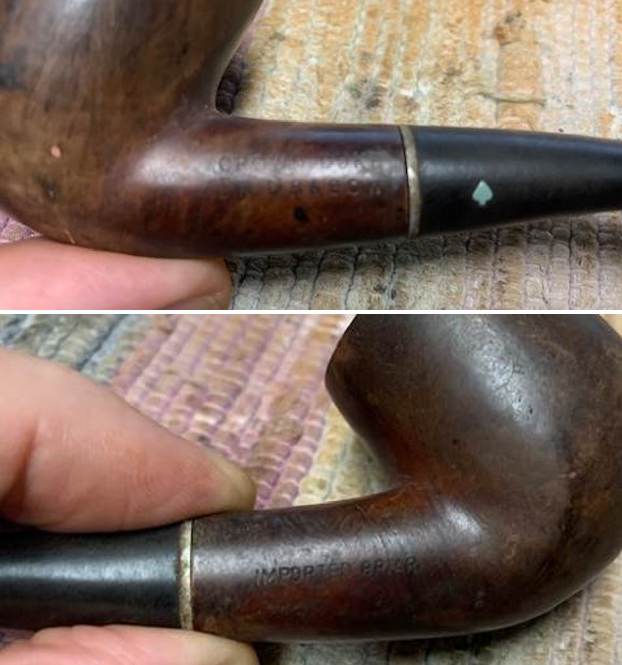
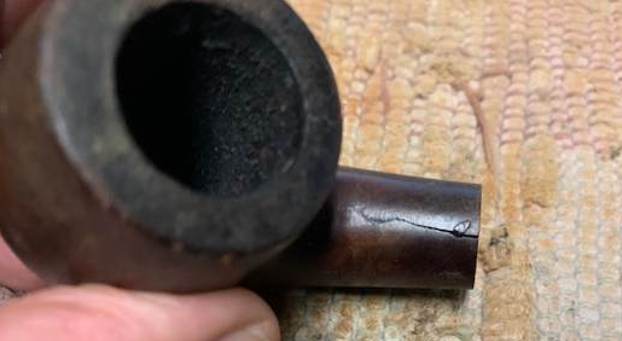
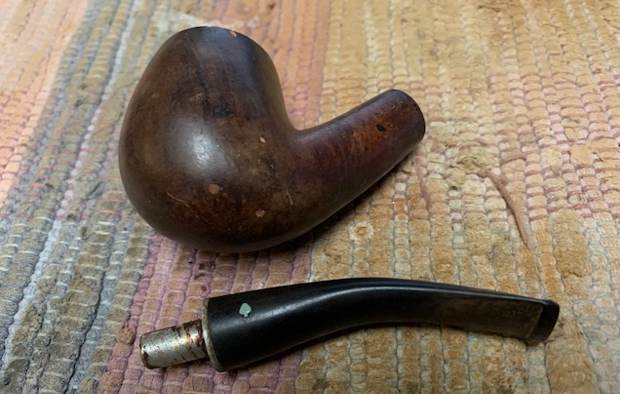
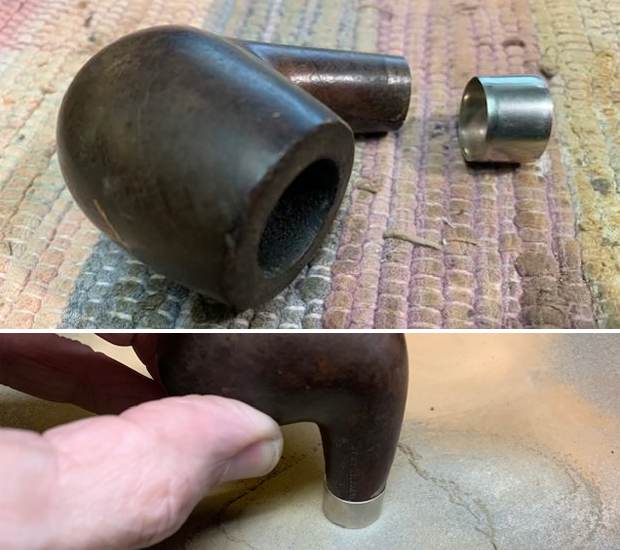
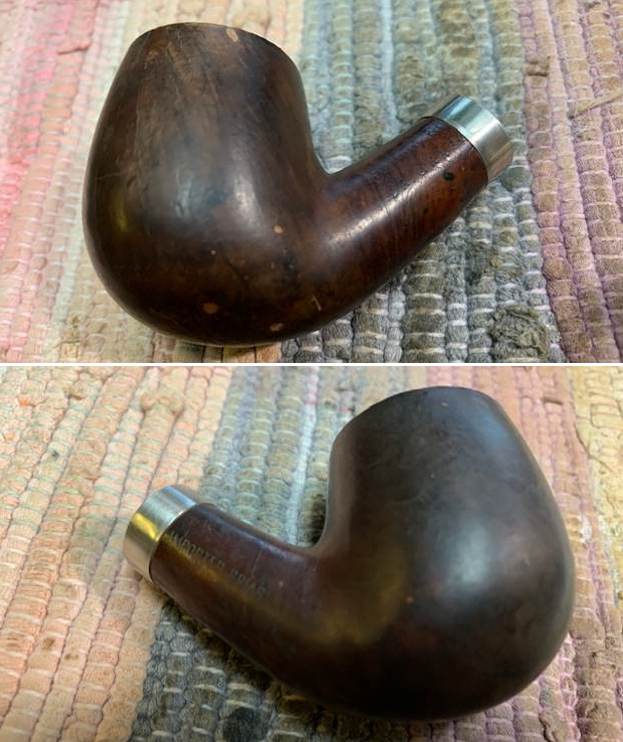
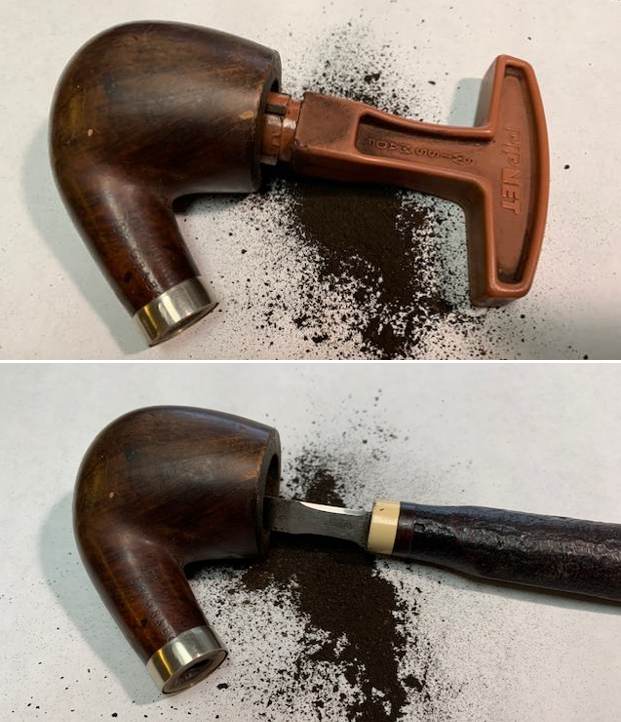
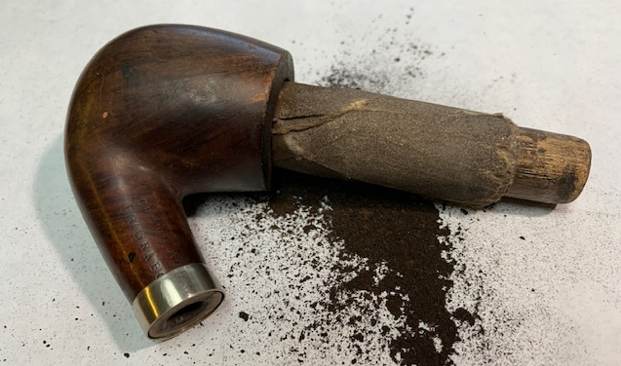
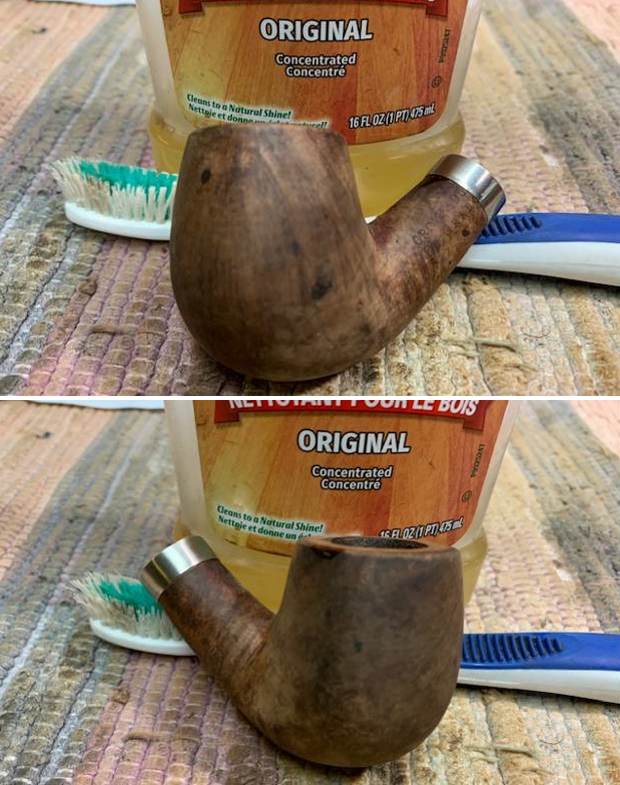
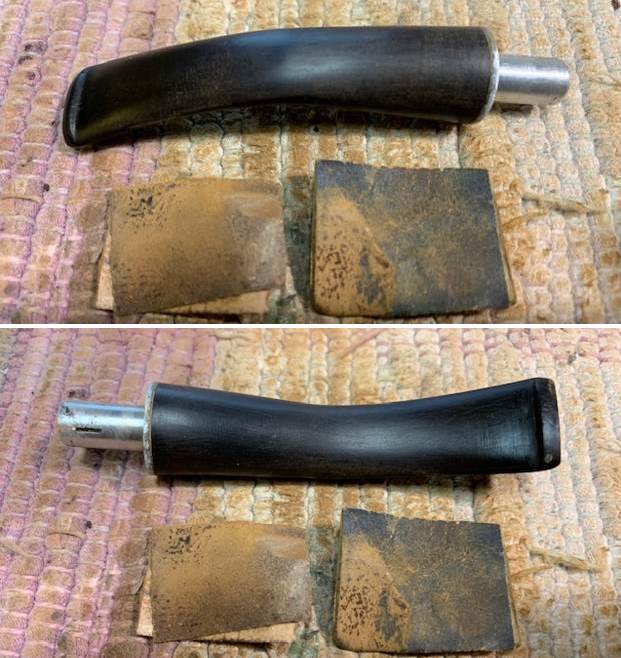
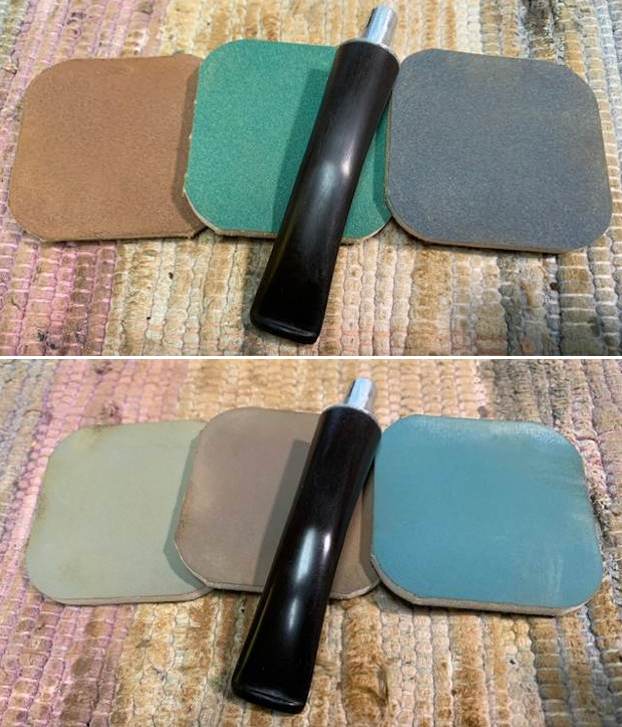
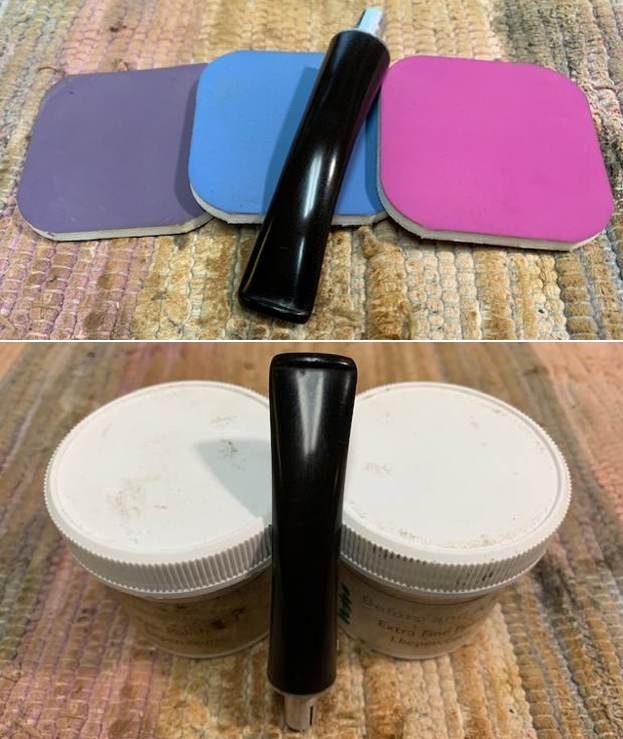
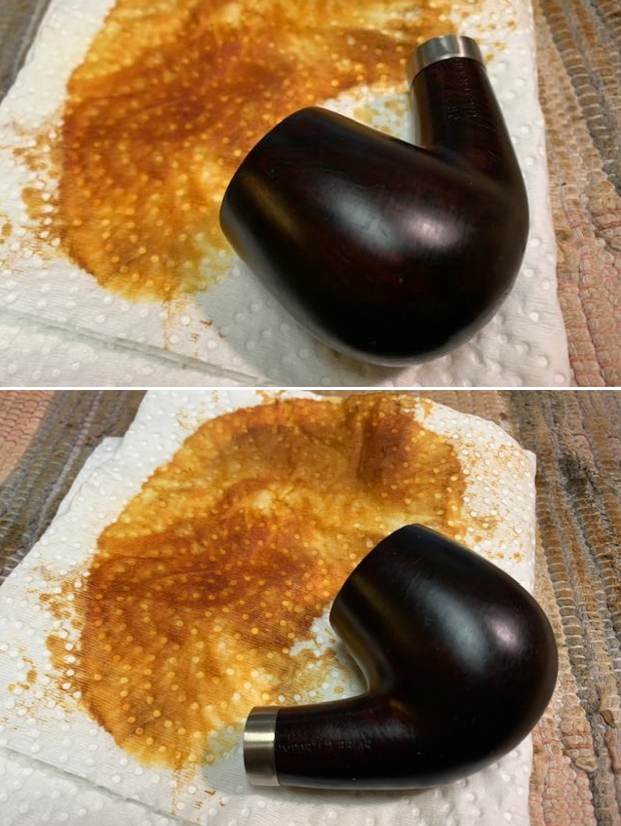
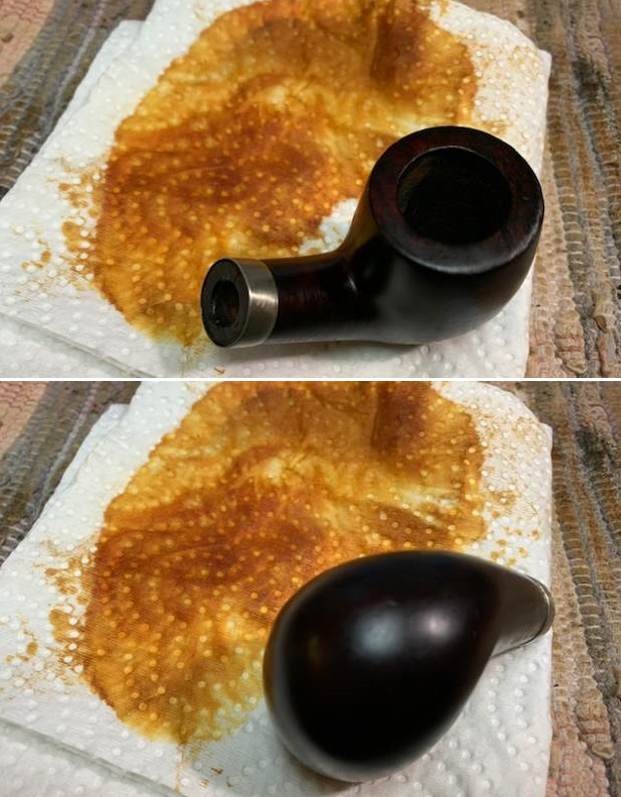
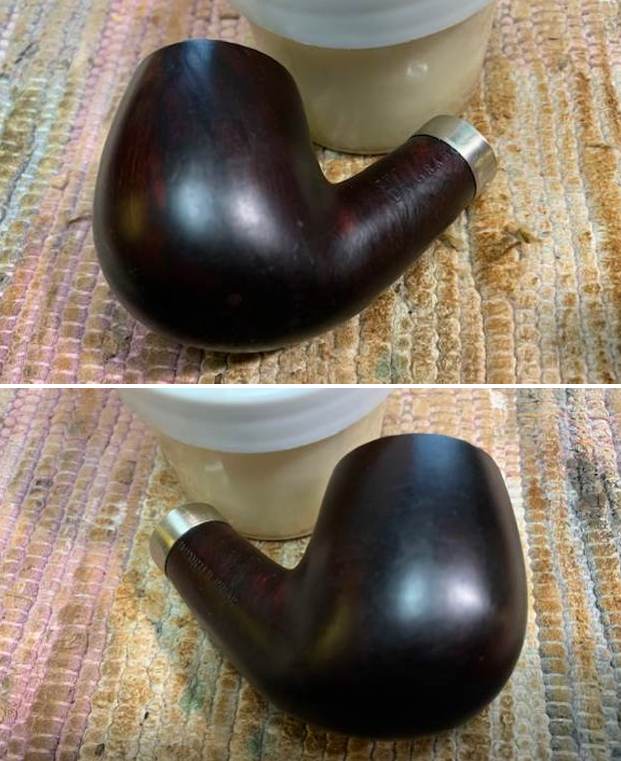
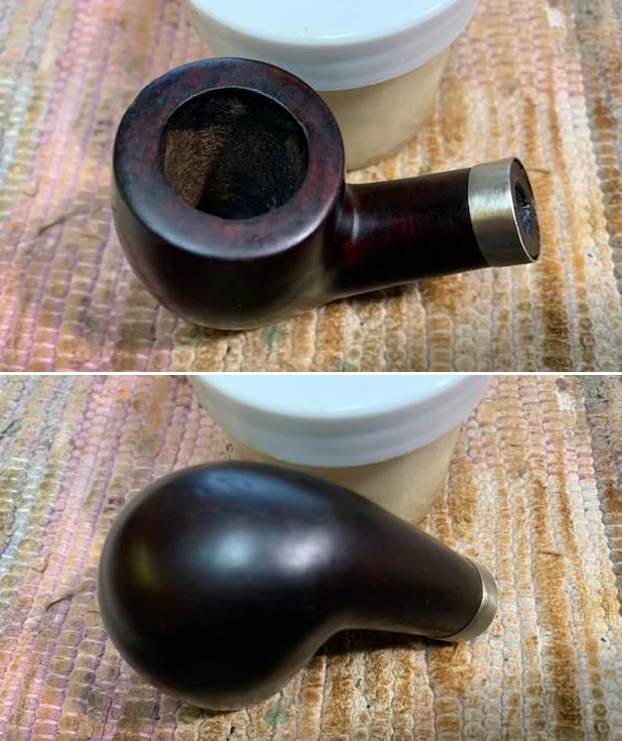
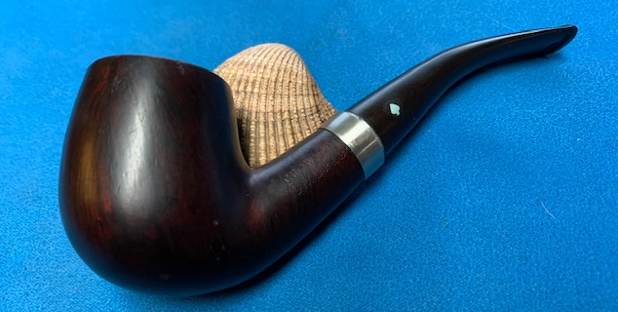
I received an email a while ago from a lady who wanted to have one of her Dad’s pipe cleaned and restored. As we emailed back and forth it was clear that it was one of those pieces that was filled with memories. I pressed to see if she was sure that she wanted it cleaned as it would remove the remnants of debris and tobacco from her Dad’s use of the pipe. She was clear that she wanted it cleaned up to look as good as possible because she was going to make a shadow box to hold the pipe and a photo and other memorabilia of her late Dad. When it finally arrived here in Vancouver I could see why she wanted it clean. The pipe was very dirty and there was a crack in the shank. The pipe had not been smoked for a long time and there was no tobacco smell in it at all. There was a hard thin cake in the bowl and lava on the rim top. The stem was oxidized and had calcification on the button end. It was a filter pipe that had been smoked without a filter so the insides were dirty. The pipe was stamped on the left side and read Crown Duke [over] Dr. Grabow. On the right side it read Imported Briar. There was a blue Grabow Spade on the left side of the taper stem. It was dirty and worn looking with some obvious fills around the bowl. I took some photos of the pipe before I started to work on it.    I took a photo of the rim top and bowl to give a clear picture of what I was dealing with. I also captured the crack in the top of the shank in the photo (I have outlined it in a red box). Other than being incredibly dirty the stem was in decent condition with light tooth chatter and light marks near the button edge.The stamping on the shank sides was faint but readable and reads as noted above.I took a better photo of the crack in the top of the shank and have included it below. It was quite wide open but came to an end in the squiggle at the end toward the bowl. I would need to glue and band it to make it solid again.I took a photo of the pipe with the stem removed to get a sense of the look of the Bent Billiard.I picked a band out of my box of bands. It is far too deep so I will need to take it down for a proper fit on the shank. I started the process by using a topping board. I then used my Dremel and sanding drum to remove the full amount I wanted gone. I finished the shaping of the band on the topping board.Once I had the fit correct, I removed it from the shank and cleaned up the area around the crack with alcohol and cotton swabs. I filled in the crack with clear super glue and clamped the crack shut. Once the glue cured I heated the band and pressed it onto the shank. I took some photos of the repaired shank and band. Now it was time to clean the bowl. I have often done the process in reverse but I really wanted to stabilize the crack before I worked on cleaning the exterior and interior of the bowl and shank. I did not want to chance making the crack worse. I reamed the cake out of the bowl with a Pipnet pipe reamer and took the cake back to bare briar. I cleaned up the reaming with a Savinelli Fitsall pipe knife and sanded the bowl walls smooth with a piece of dowel wrapped with 220 grit sandpaper. I wanted the bowl to be smooth for the display. I scrubbed the exterior of the bowl with undiluted Murphy’s Oil Soap and a tooth brush. I was able to remove the debris and grime around the bowl and clear off the lava on the rim top. I dried the bowl off with a cloth and took these photos. You can see the dark fills and spots around the bowl sides. The largest was a rough fill on the front of the bowl that was pink putty. I repaired the pink, rough fill on the front of the bowl with clear super glue. Once the repair cured I sanded it smooth with 220 grit sandpaper. It was now smooth to the touch. It would be interesting to try to blend it into the surrounding briar once I was staining it. I sanded the entire bowl with 1500 grit micromesh at the same time.I cleaned out the airway in the shank and the stem with cotton swabs, pipe cleaners and isopropyl alcohol. It took quite a few to get the tars and oils out of the airways.I buffed the pipe on the buffer with Blue Diamond and then stained it with a light brown stain. I applied the stain and then flamed it to set it. I used a black and brown Sharpie pen to stain the pinkish fill on the front of the bowl.I set the bowl aside for the stain to cure and turned my attention to the stem. I sanded out the tooth chatter and marks on the stem with 220 grit sandpaper and started the polishing with 400 grit wet dry sandpaper. It is actually beginning to look much better. I polished the stem with micromesh sanding pads – dry sanding with 1500-12000 grit pads. I wiped the stem down after each pad with an Obsidian Oil impregnated cloth to give the pads a little more bite. I polished it with Before & After Stem Polish both Fine and Extra Fine and gave it a final rub down with Obsidian Oil. I set the stem aside to dry and worked on the bowl again. By this time the stain was dry and I was able to tackle the bowl again. I wiped it down with alcohol on paper towels to make the stain more transparent. Because of the fills in the bowl I decided to leave it dark as it did a good job masking them. I buffed the bowl on the wheel with Blue Diamond to further aid the transparency. It is hard to see in the photos but in person the grain is there and not terribly hidden. The fills are hidden and other than the large one on the front of the bowl they look good. I put the stem on the bowl and buffed the pipe with Blue Diamond on the buffing wheel. I was careful when buffing around the stamping and the logo on the stem. I had decided to leave some of the nicks and marks in the briar as they were a part of the story of the pipe and its owner. I wanted it to still bear his definitive marks so that when it was in the shadow box those who knew him would remember the story of the pipe.  I did not want the pipe to look brand new as that would remove the story from it. The nickel band worked well to bind together the crack in the shank. The aluminum spacer on the stem sits up against it and looks quite nice as a joint with the band. It almost gives the band the look of a ferrule. The pipe came out quite well. The darker stain is very similar to what was originally on the pipe when it was new. It also did a good job of masking the fills around the bowl. I will soon be packing it up and sending it back to the pipeman’s daughter so she can build her tribute to her Dad. Thanks for reading the blog.
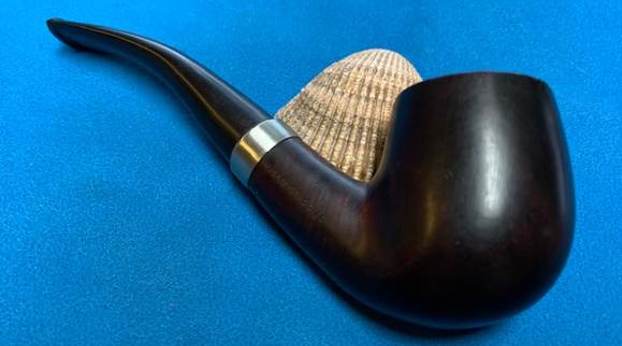
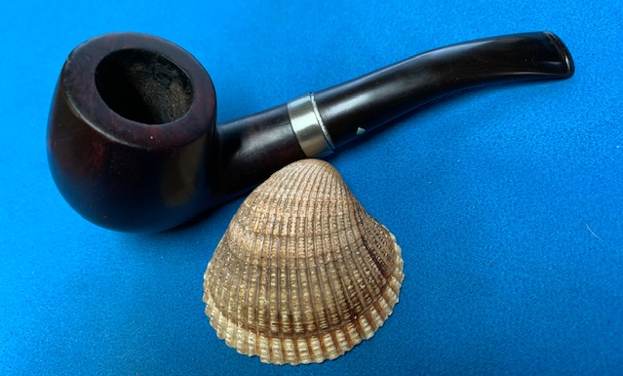
A Lightly Smoked  Pioneer Black Block Meerschaum Billiard


Blog by Steve Laug

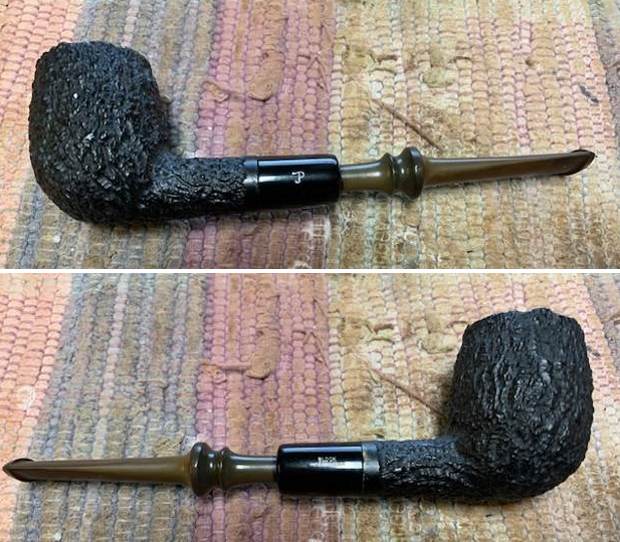
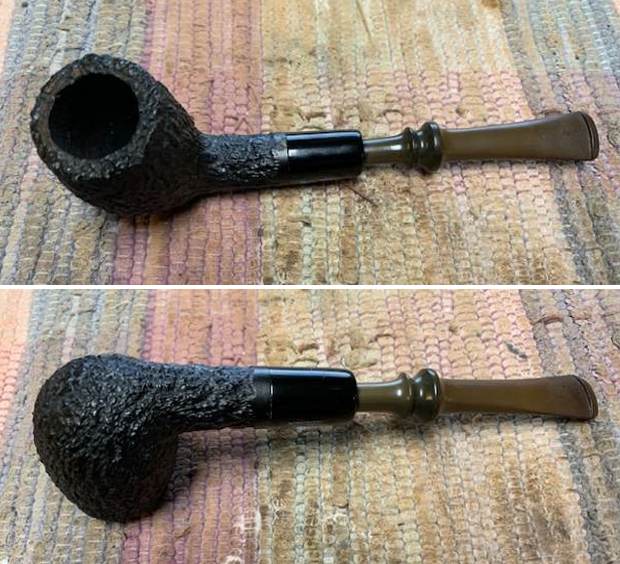
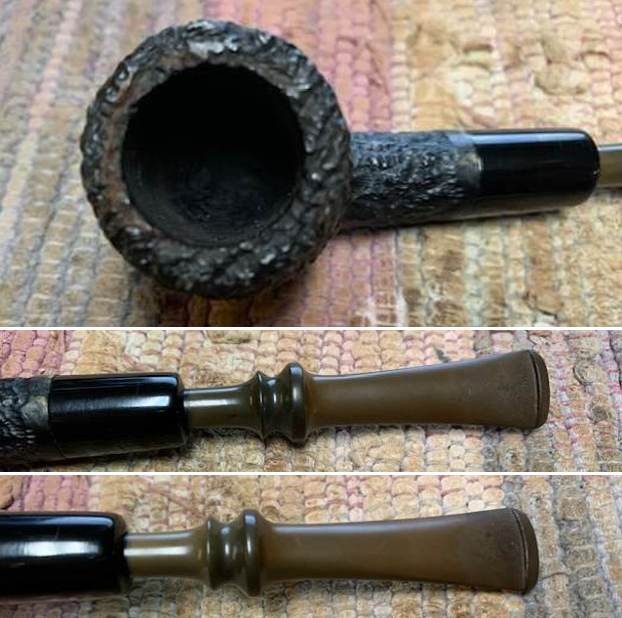
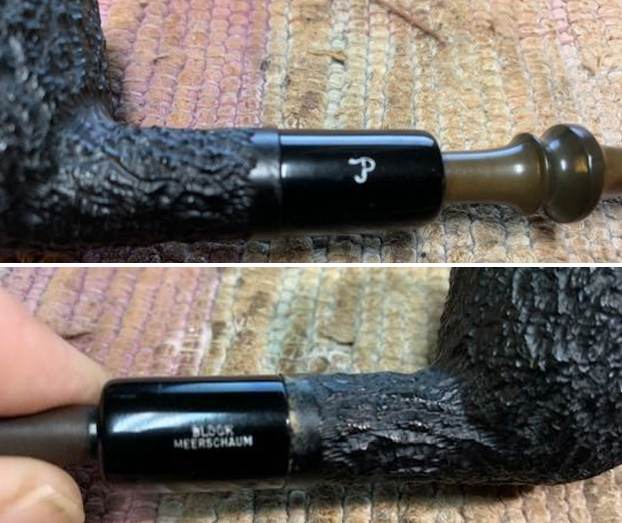
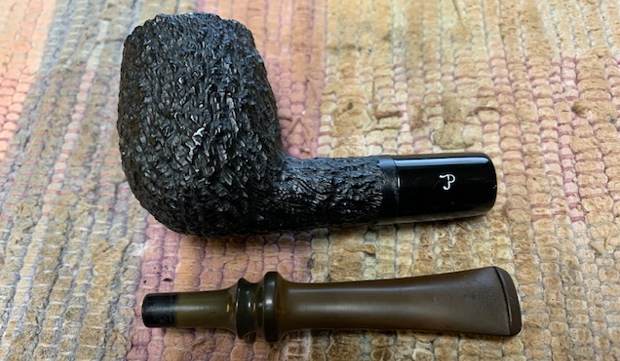
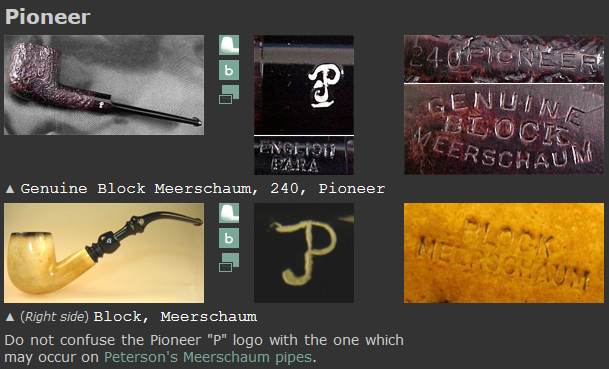
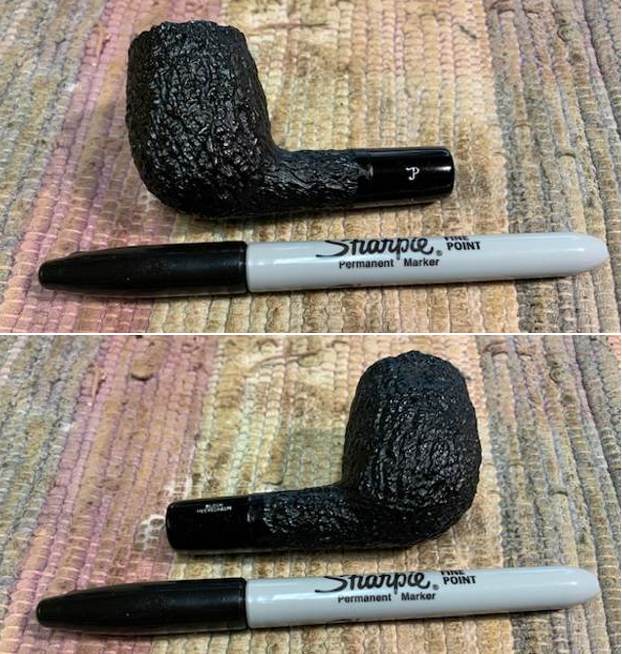
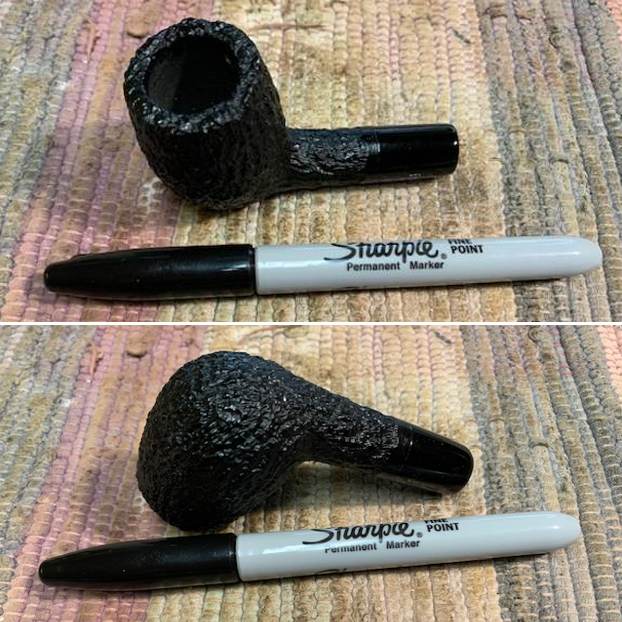
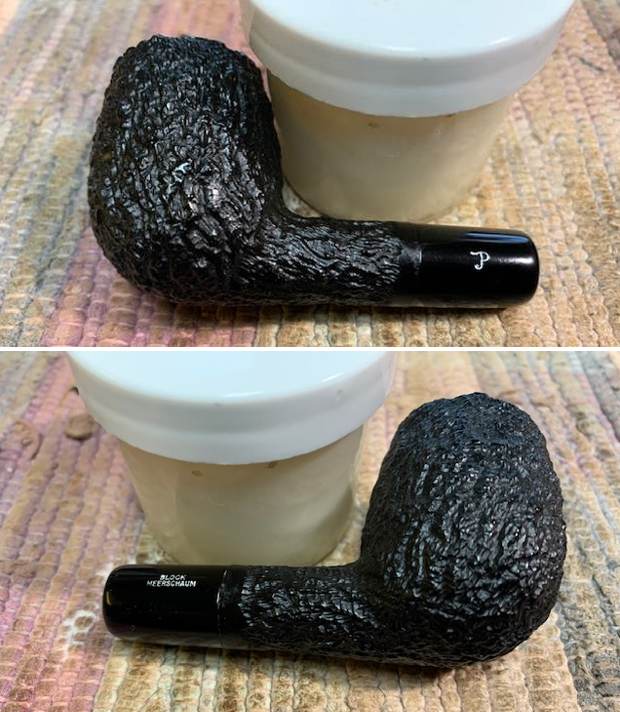
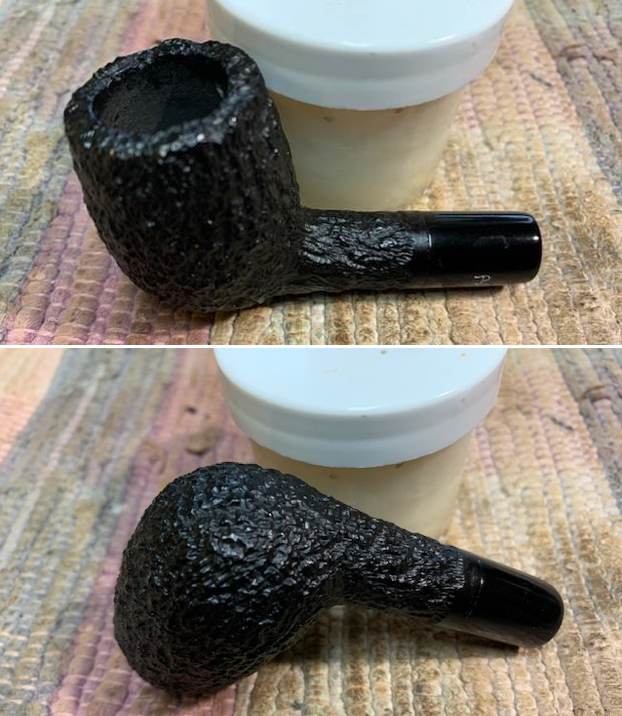
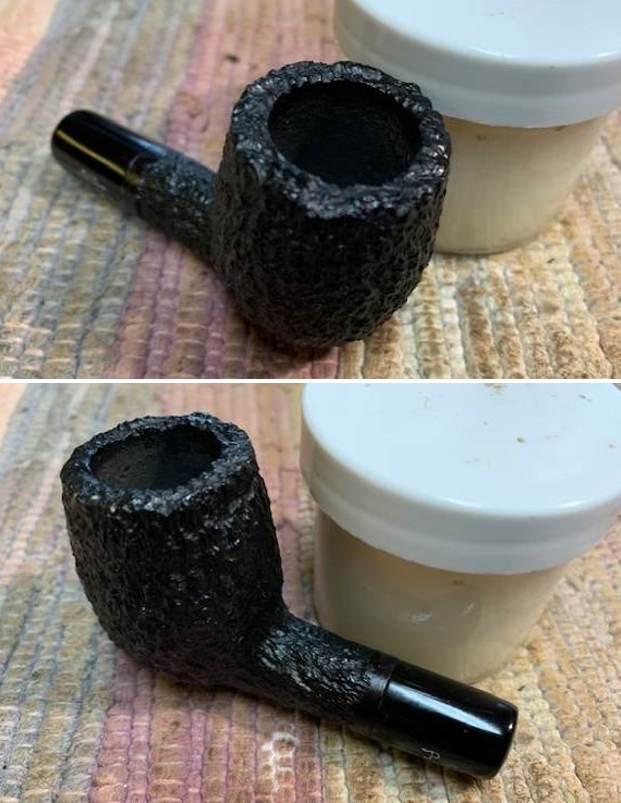
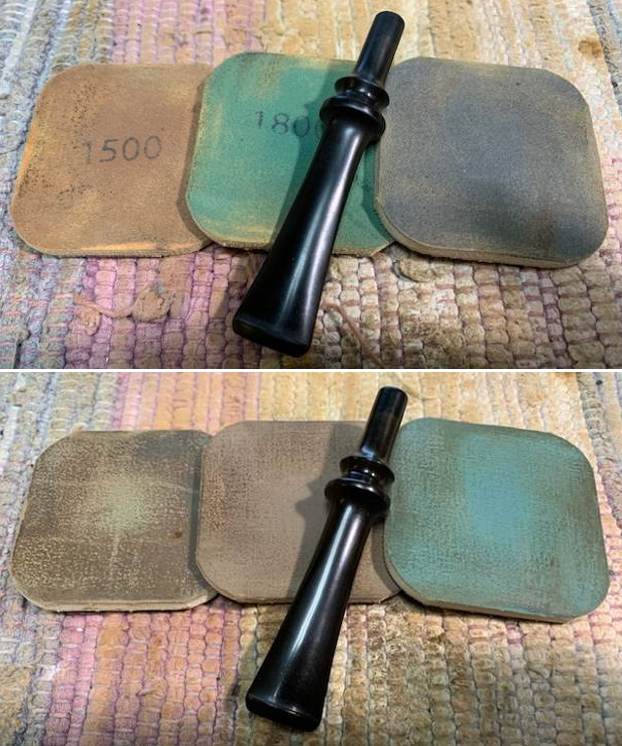
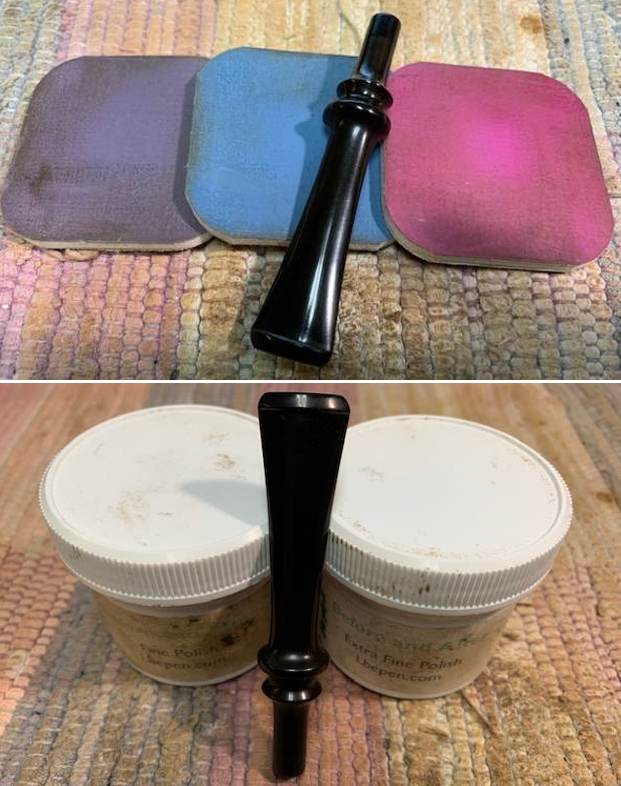
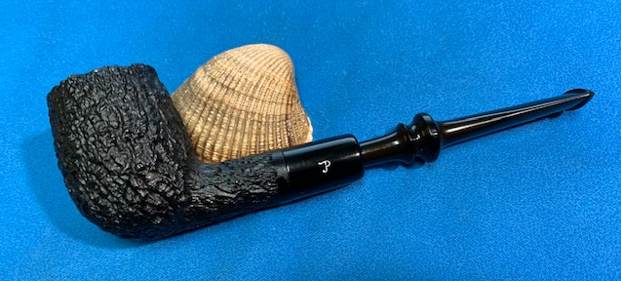
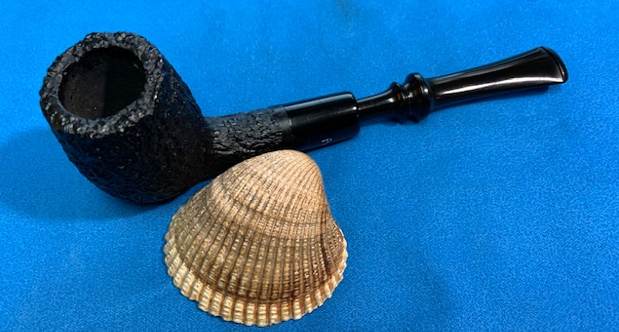
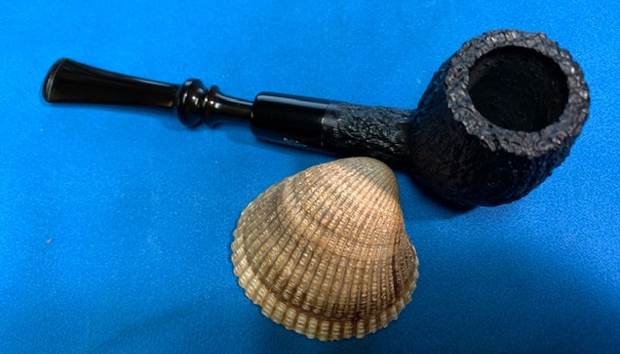
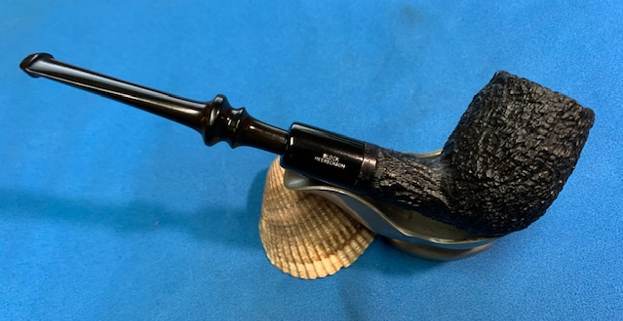
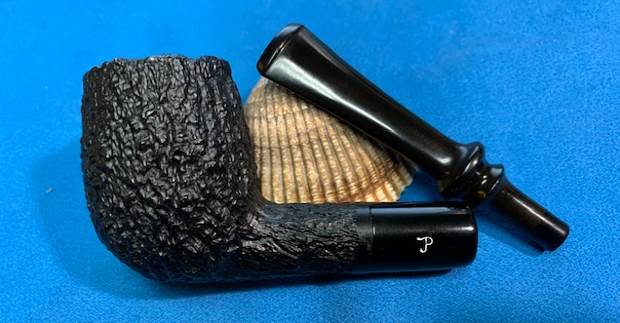
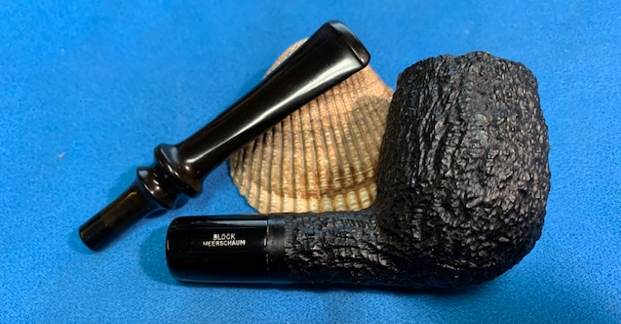
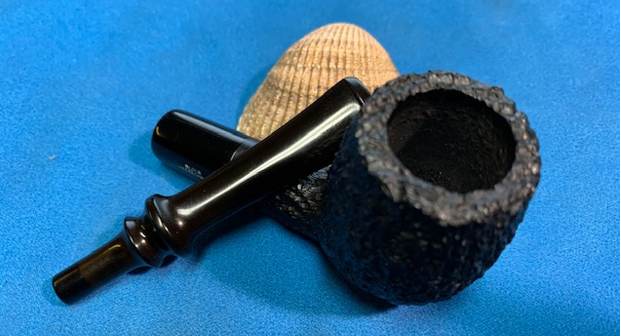
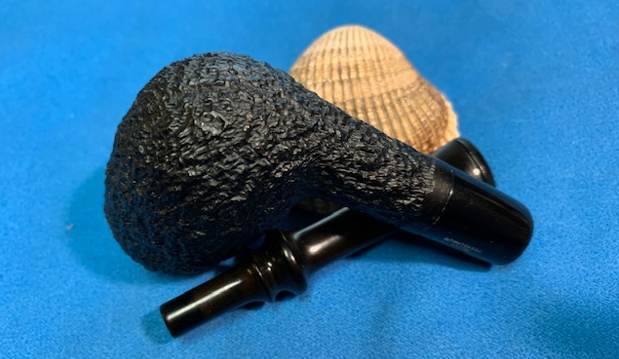
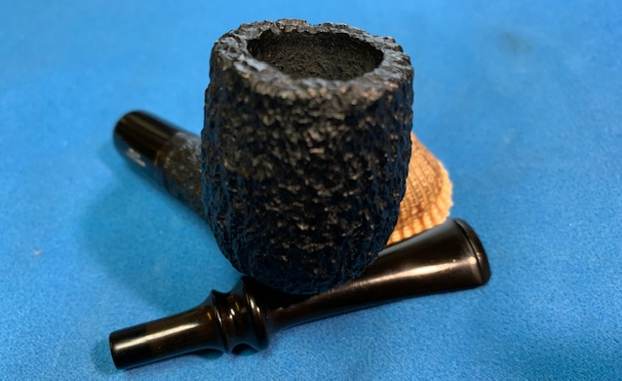
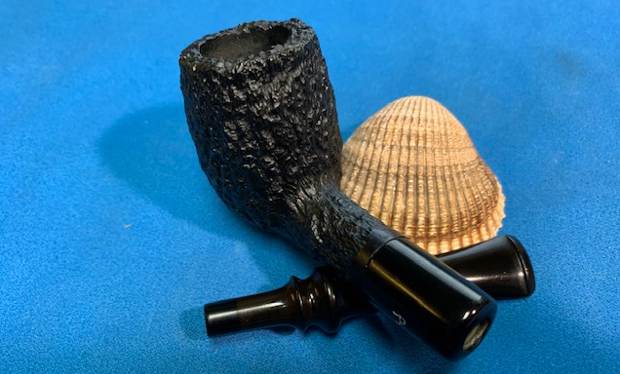
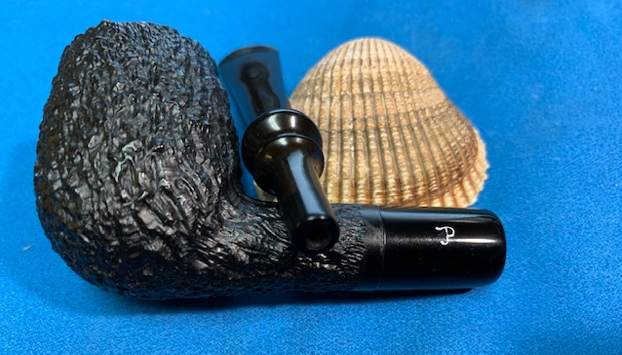
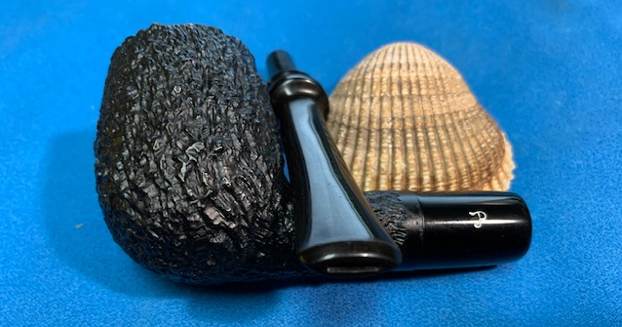
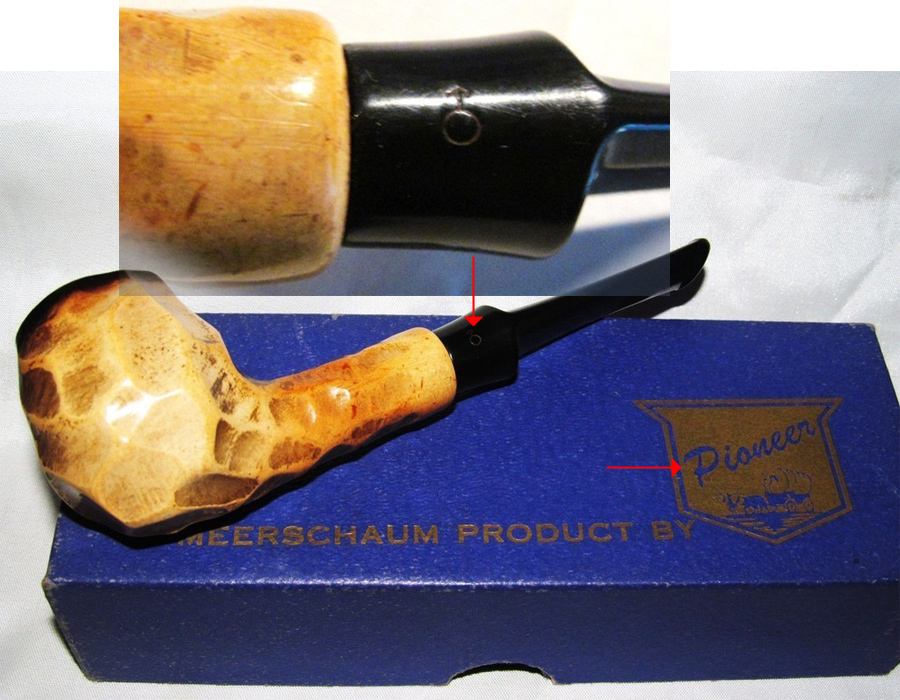
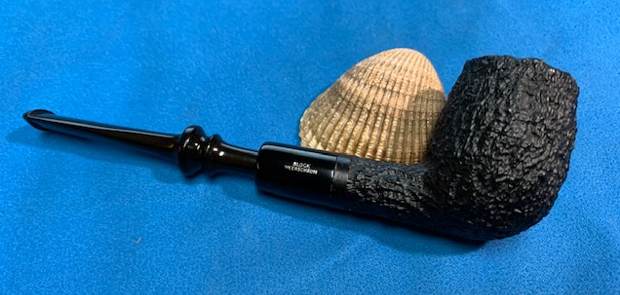
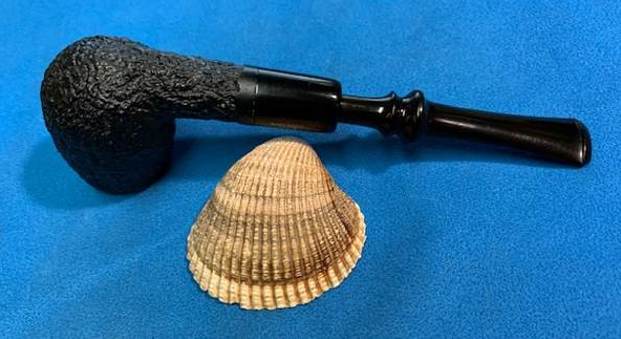
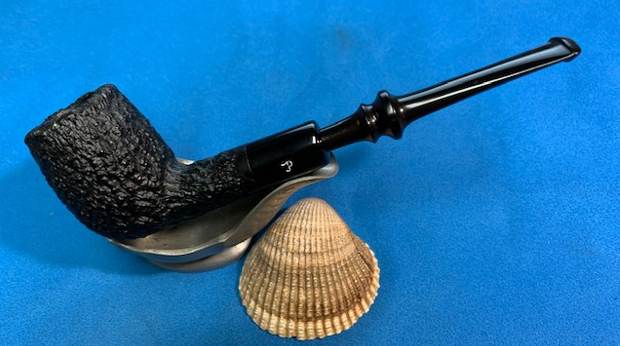
The next pipe on the table to refresh and refurbish is an interesting looking billiard that turns out to be rusticated black meerschaum. It has an acrylic shank extension that has the Pioneer “P” stamp on the left side and BLOCK MEERSCHAUM on the right side. We purchased it on December 7, 2021 from a fellow in Longview, Washington, USA. It is quite clean with some wear around the shank at the extension and on the rim top. The bowl and shank smell clean and there is no residual tobacco smell in the bowl or shank. The bowl is clean other her than dust in the rustication around the bowl and rim top. It is lightly smoked and the inside of the bowl is very clean. The fancy turned vulcanite stem is oxidized but there is no tooth chatter or marks which support the lightly smoked declaration. I took photos of the pipe before I started my refurbishing work. I took some photos of the rim top and bowl. You can see the scuffs on top of the rim at the front of the bowl and edges. There are also small scuffs at the joint the shank and the extension. The stem photos show the oxidation in the vulcanite and is coarse to the touch. It will need to be polished and buffed. I took photos of the stamping on the shank extension. The left side has a clear “P” stamp that is the log for Pioneer Pipes. The right side is stamped Block Meerschaum.I took the stem off the shank and took a photo of the pipe. It really is a nice looking pipe.To me the pipe looked a lot like many of the black or dark meerschaum pipes that I have worked on from the Isle of Man made by Manxman or Laxley Pipe Company. Yet the stamping was clearly a Pioneer Pipes Co. pipe with the stylized “P” logo on the shank extension. I wanted to see if there was a connection between the two companies so I turned to my normal two sources to see what I could learn. I went first to Pipephil (http://pipephil.eu/logos/en/logo-p3.html). I have included a screen capture of the information there as well as further info from the sidebar.Probably a brand of Pioneer Pipes Co., a Meerschaum and Meerschaum lined pipes manufacturer and distributor. Address (about 1960): 1817 Putnam Avenue, Brooklyn 27, N.Y. Pioneer also used to import meerschaum pipes from the MANXMAN PIPES Ltd factory (Isle of Man, UK) as shown by the markings of this pipe. (See “Man“). Wilczak & Colwell, op. cit. mention pipes with this label from Duncan Briars Ltd, Oppenheimer Pipes or Delacour Brothers.

There was the link I was looking for – Pioneer Pipes Co. used to import Manxman Pipes from the Isle of Man. My eye had not failed me and I am sure this is one of those imported pipes.

I turned then to Pipedia (https://pipedia.org/wiki/Pioneer) to see what else I could find out about the brand. Unfortunately the site did not have very much information. I quote below what was on the site.

Pioneer Pipe Company was owned by Wally Frank, who trademarked the name Pioneer in 1940. At the time of the application the name was alleged to have been used in commerce in 1925. The company listed its location at 1817 Putnam Avenue, Brooklyn, New York. Pioneer sold Turkish and later African meerschaum through the Wally Frank, Ltd. Catalogs and elsewhere.

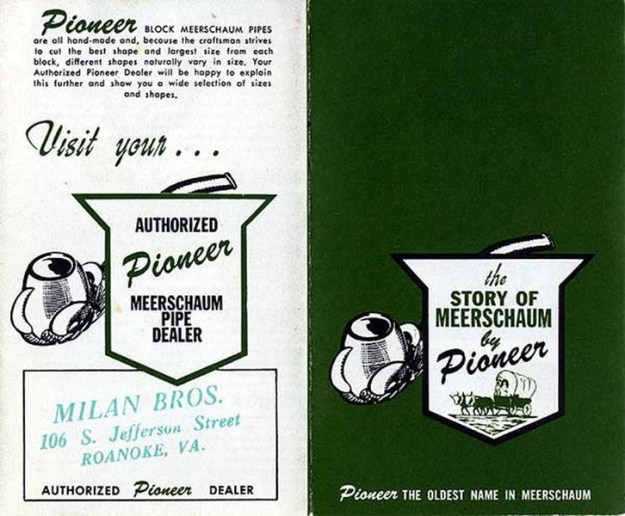
There were also and example of one of their meerschaum pipe and a page of a pamphlet shown on the site. Both of these come to Pipedia by the courtesy Doug Valitchka. Now I knew what I was working on with this pipe. It was an imported Manxman pipe probably distributed by Wally Frank through their catalogue sales. It was likely African block meerschaum from Tanganyika or nearby that had been fashioned my the Isle of Man company for Pioneer. Now it was time to work on the pipe.

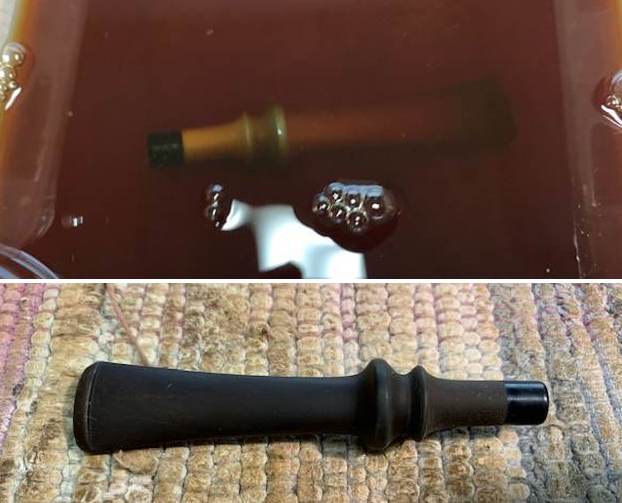
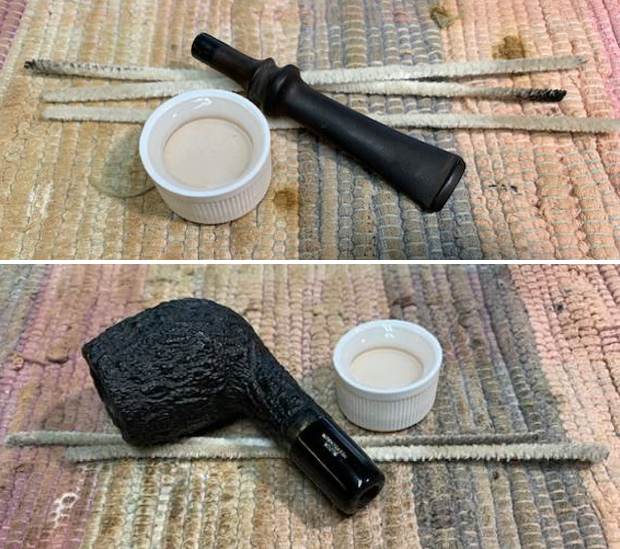
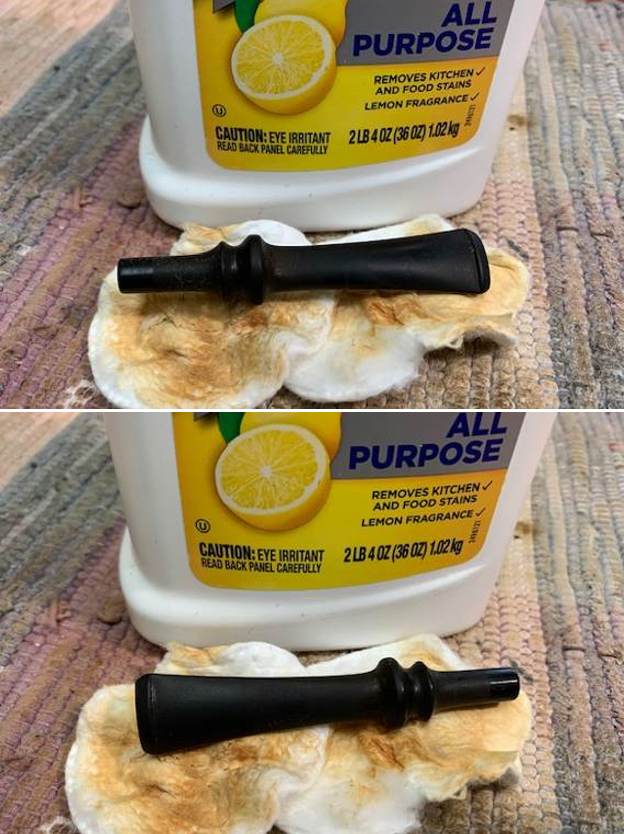
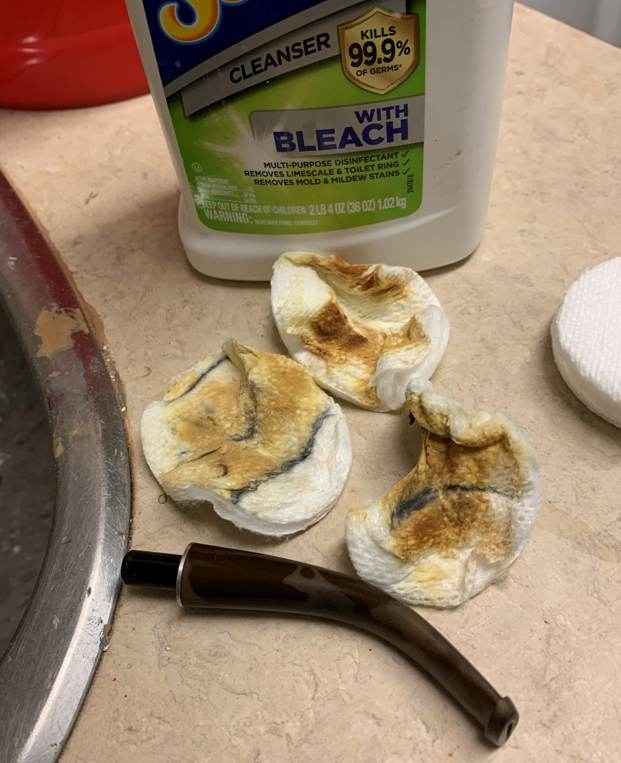
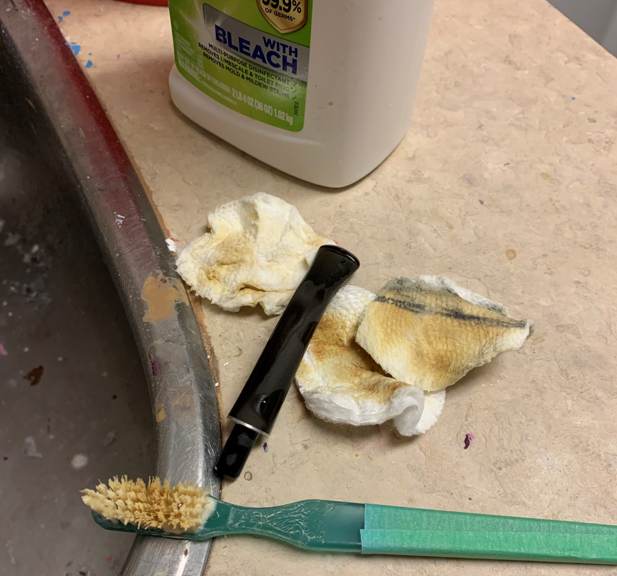
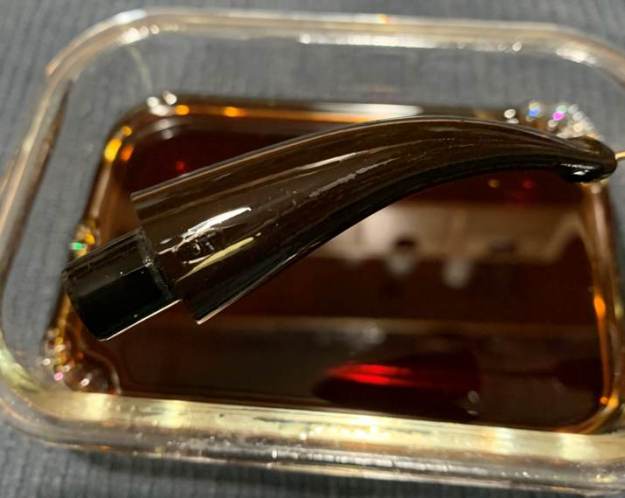
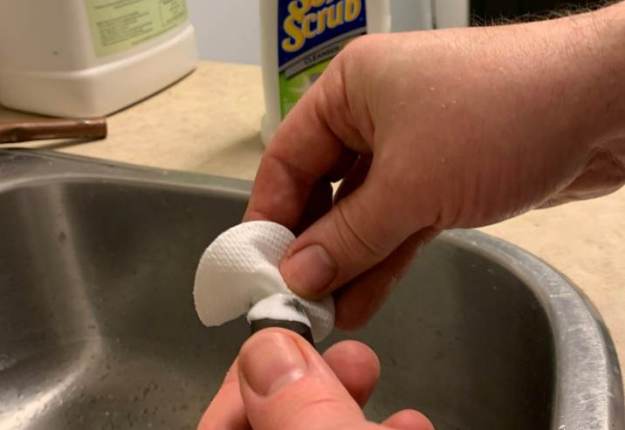
I started my work on the pipe by touching up the areas on the rim top and shank end where the stain was worn and damaged. I used a Black Sharpie Pen to restain them and blend them into the surrounding surface of the rustication. I worked some Before & After Restoration Balm into the rusticated meerschaum with my fingertips and a horsehair shoe brush to clean, enliven and protect it. I find that the balm really makes the bowl come alive again. The contrasts in the rusticated surface give the pipe a sense of depth. I let the balm sit for 10 minutes and then buffed with a cotton cloth to raise the shine. The bowl really looks good at this point. I set the bowl aside and turned my attention to the stem. To deal with the oxidation on the stem I put it in Briarville’s Deoxidizer overnight and let the deoxidizer do its work. When I took it out in the morning and rubbed it down with a coarse towel you can see the difference in the surface of the vulcanite. While it looks significantly better there is still some remaining oxidation. I decided to run pipe cleaners and isopropyl alcohol through the airway in the stem and also the mortise and shank. It removed the residual deoxidizer as well as the dust and debris of years of sitting in storage.With the internals clean of debris and deoxidizer I turned back to the externals of the stem. I scrubbed it down with cotton pads and Soft Scrub Cleanser and was able to remove the remaining oxidation. It looked better once I finished with the cleanser. I polished the stem with micromesh sanding pads – wet sanding it with 1500-12000 grit pads. I wiped the stem down after each pad with a cloth impregnated with Obsidian Oil. I polished it further with Before & After Pipe Stem Polish – both fine and extra fine. I gave it a final coat of Obsidian Oil and set it aside to dry.    With a refurbishing the final moment when all the pieces come back together is the tell all! I put the pipe back together and buffed the meerschaum bowl with a shoe brush and the stem with Blue Diamond on the buffing wheel. I gave the meerschaum several coats of Conservator’s Wax and the stem multiple coats of carnauba wax. I buffed the those parts with a clean buffing pad to raise the shine. I hand buffed it with a microfiber cloth to deepen the shine. It is fun to see what the polished bowl looks like with the black fancy vulcanite stem. This Rusticated Pioneer Black Meerschaum is light weight and it is ready for you to load up a tobacco of preference and enjoy breaking it in for yourself. Have a look at it in the photos below. The dimensions are Length: 6 inches, Height: 1 ¾ inches, Outside diameter of the bowl: 1 ¾ inches, Chamber diameter: ¾ of an inch. The weight of the pipe is 34 grams/1.20 ounces. This is one that will go on the Ceramic and Meerschaum Pipes section of the rebornpipes online store shortly. Thanks to each of you who are reading this blog. Remember we are not pipe owners; we are pipemen and women who hold our pipes in trust until they pass on into the trust of the next generation.
A Third Reincarnation for an Antique Trident System


Blog by Robert M. Boughton

https://www.facebook.com/roadrunnerpipes

Imitation is the greatest form of flattery that mediocrity can pay to greatness.
— Oscar Wilde

In their definitive history of the Irish pipe maker and innovator, The Peterson Pipe: The Story of Kapp & Peterson, Mark Irwin and Gary Malmberg describe the key features of the System pipe: “An army mount, an internal reservoir to collect moisture from the smoke and the graduated bore P-Lip mouthpiece.”  (Quoted from Peterson Pipe Notes.)  The Trident homage to the Peterson System has all three.  If pipes had nine lives as the ancient Egyptians were the first to impute to cats, then the Trident already would have used up four of them, at least that I know about, counting the two prior lives and now this latest I have restored to the interesting pipe.  Its continuing worthiness of restoration shows that not all imitations are mediocre.

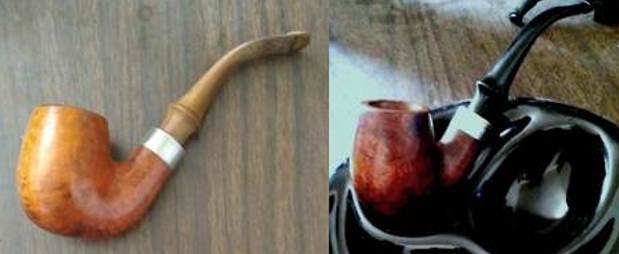
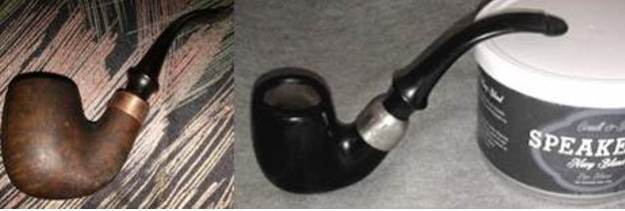
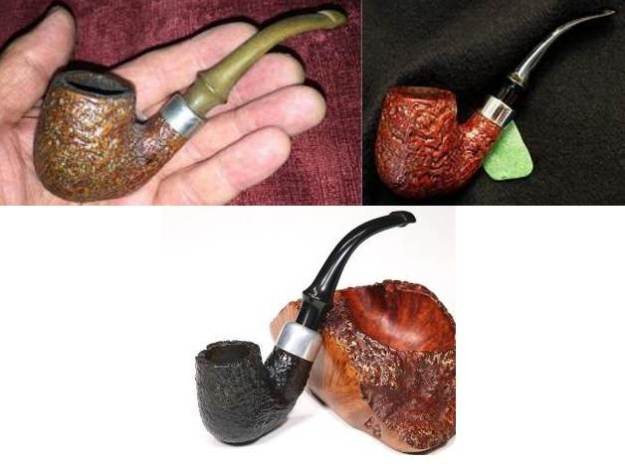
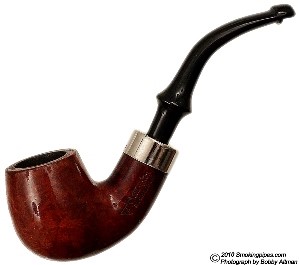
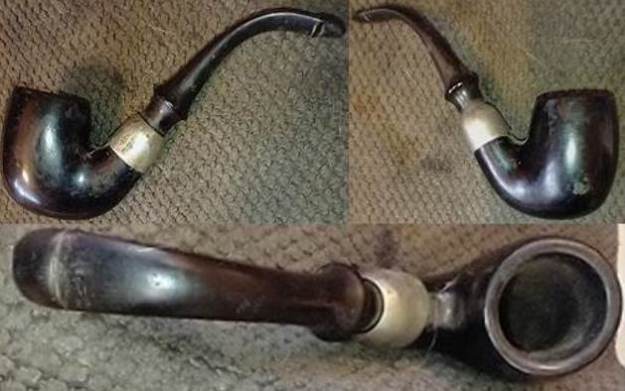
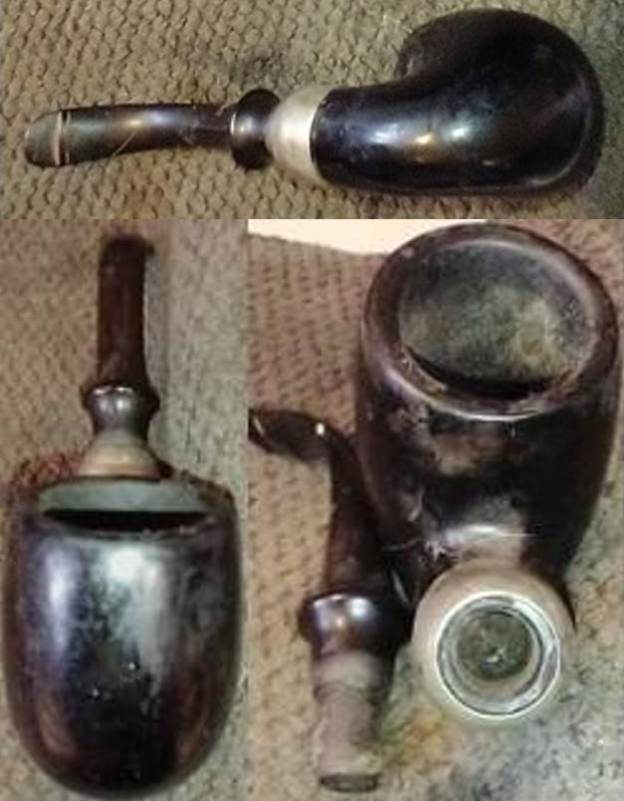
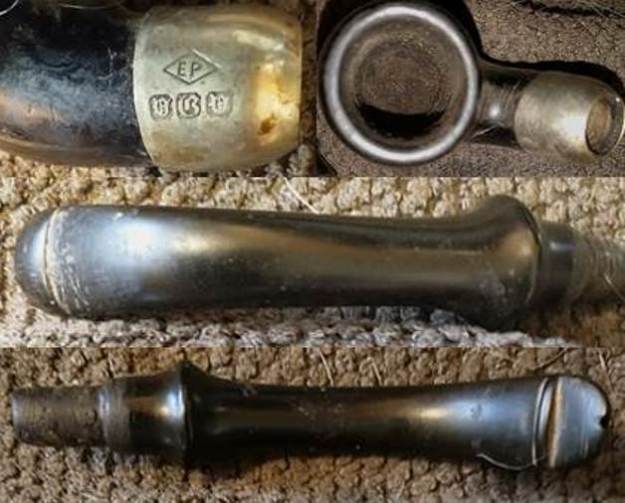
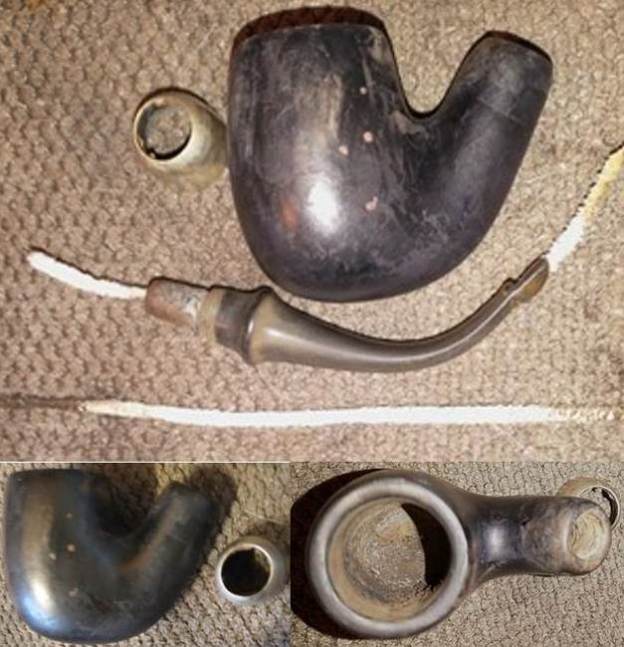
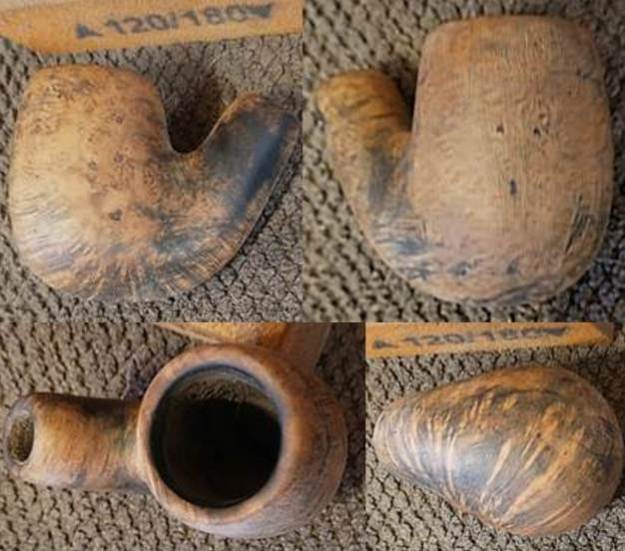
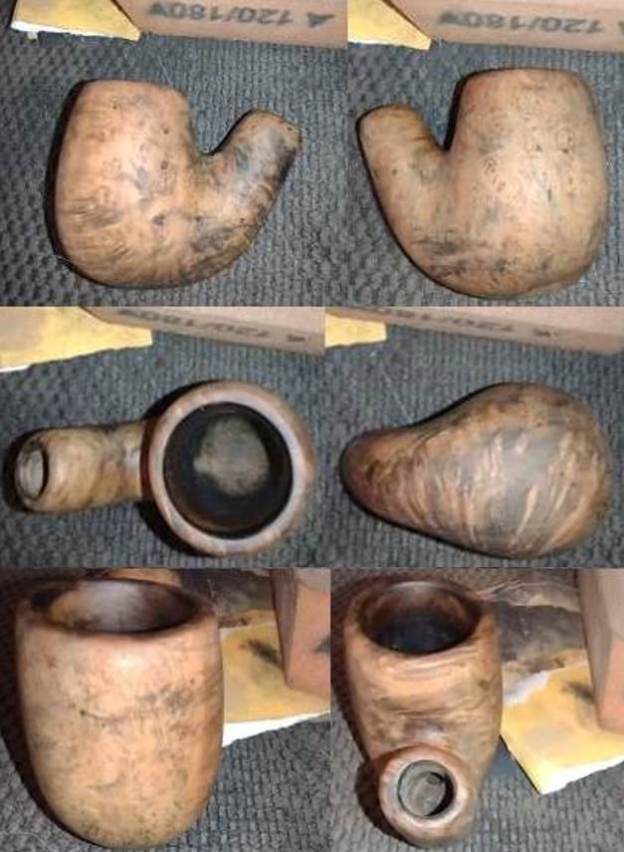
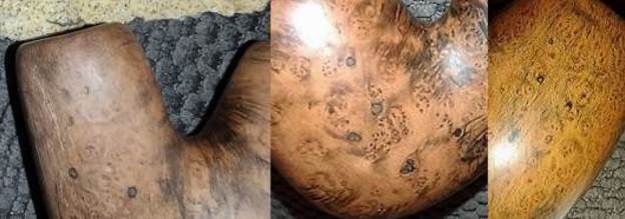
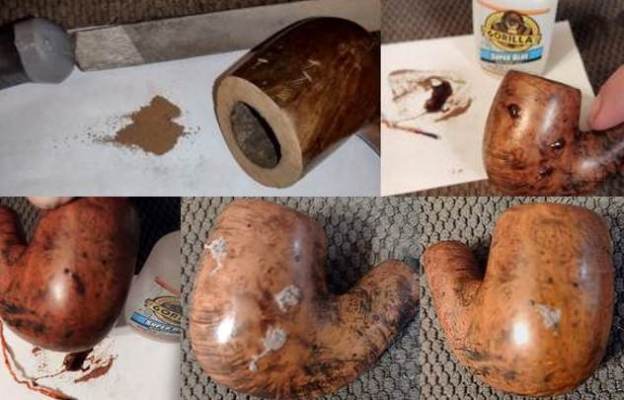
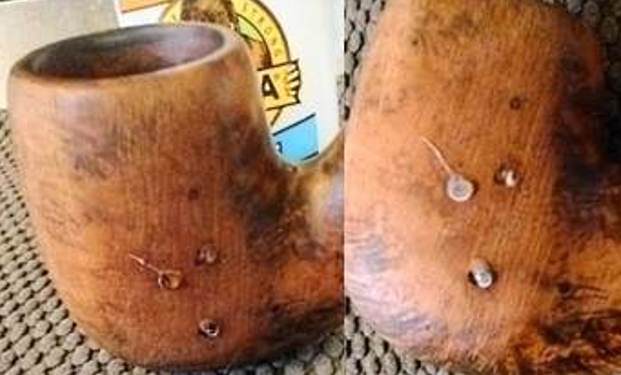
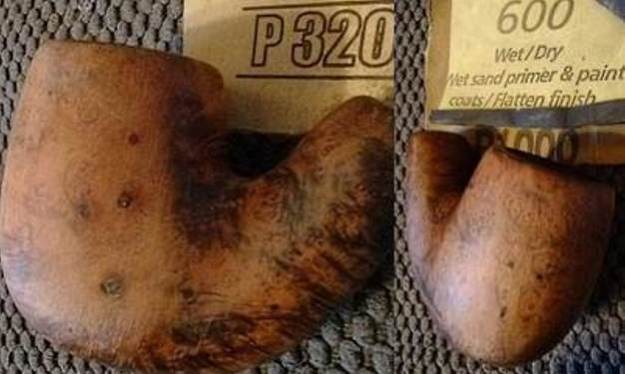
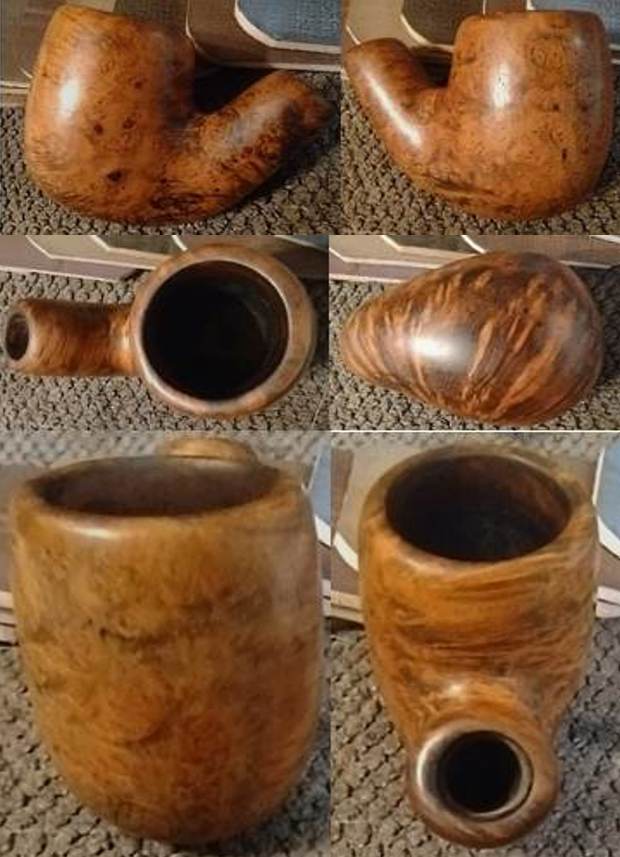
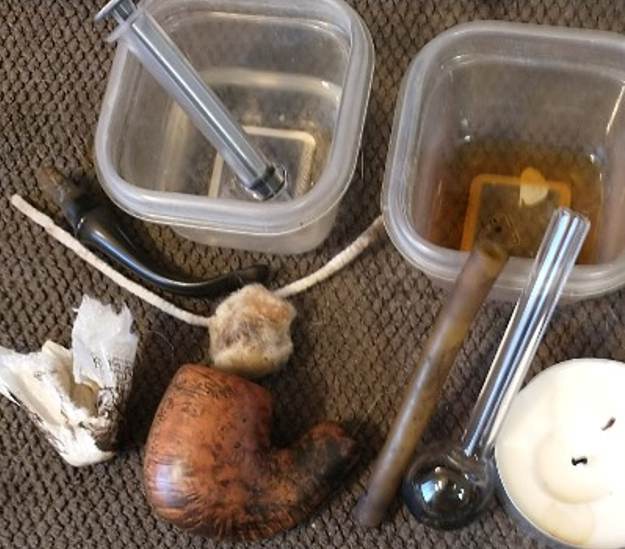
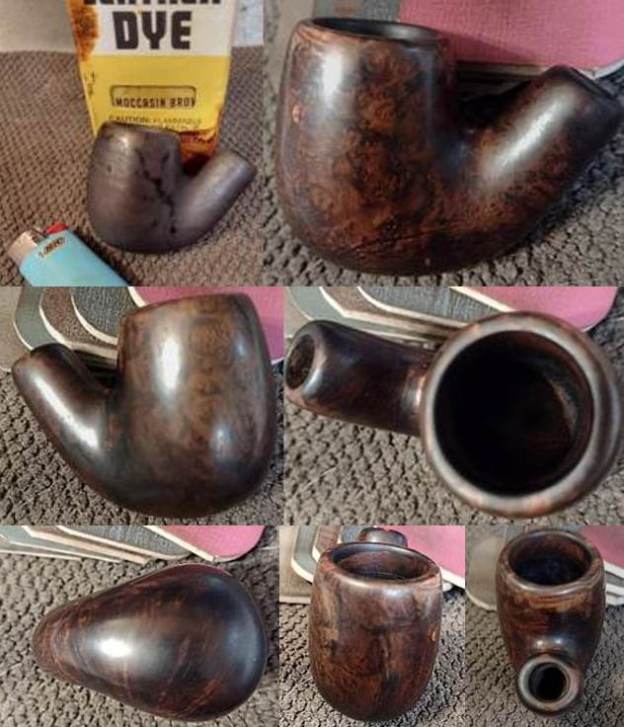
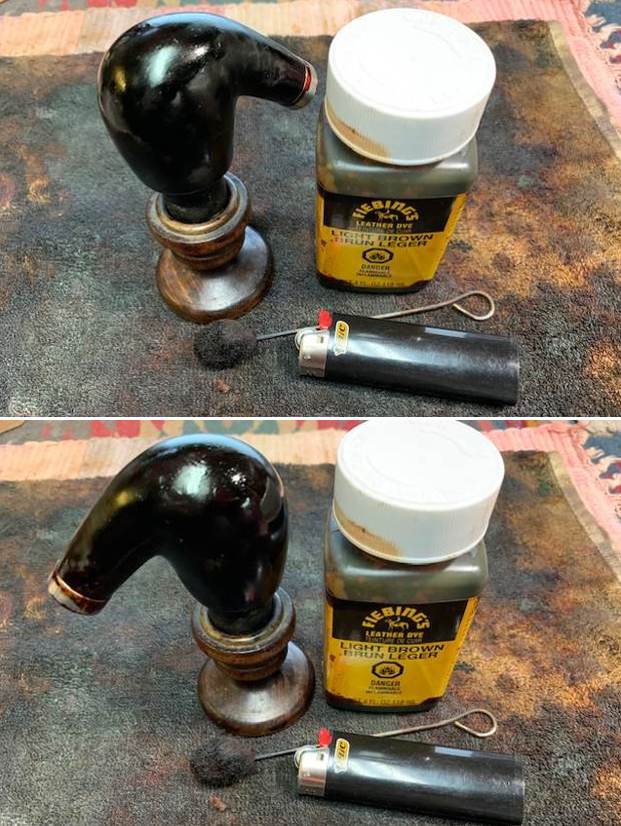
Another indication of the Trident’s quality is its apparent lineage, which in my first two restorations of this well smoked pipe – read abused – I only found misleads to E. Deguingand & Son and Comoy’s, both of England, and even flowery carved pear wood things from Ukraine.  Here is my Trident system pipe as I first found and restored it and again just two months later after rescuing it from the trash, where my second roommate tossed it because “it didn’t work out.”  My best efforts to stifle the flush of outrage I felt as I hastened to my feet at the appalling admission and stomped outside to the garbage bins failed somewhat, to put it in the nicest light I can bring off even at this late date.  While I attribute fatal flaws such as burnouts or through and through cracks to over enthusiastic dedication to a pipe or pipes, I hope I never become inured to the wanton disrespect some pipe smokers unleash on these fine tools in the pursuit of self-gratification. This time, after scouring cyberspace for hours, I lighted upon a Reborn Pipes blog by Dal Stanton, the Pipe Steward, about another fine Trident, a sandblasted bent billiard. Dal’s work on that pipe is remarkable for his skill in enhancing its original beauty and his tireless quest for the Trident’s provenance. An arduous course of leaps, hops and steps led Dal to the conclusion, with little doubt, that the brand was a second of the William Demuth Co. of New York, which lasted from 1835-1911 – making the Trident an antique. Here are before and afters of Dal’s Trident and an early 20th century WDC Wellington Dal compared it to, the latter courtesy of Doug Valitchka and Pipedia. Now I offer one more photo I found, showing another Wellington with the same style of band Dal’s and mine had at our introductions.  This one, from Worthpoint, ends any reservation I had regarding the Trident’s WDC connection.RESTORATION The rounded end cap with which I replaced the original brass band was functional except for three hallmarks that were placed as a charade.  I never cared for the marks, which I considered distracting, but in a misguided fit to make the previous dress version more Petersonian, I went with it.  I have read other blogs discussing the meaning of EP in an oval on certain bands and understood it to stand for Electro Plated, a process of adding a thin layer of silver to the nickel.  I found an online dictionary of silver band makers that claims the EP on the end cap stands for Edward Powers, who with his brother John began operation as the Powers Brothers tobacconist in Dublin in 1900.  The end cap indeed could be called Petersonian (more or less, whatever the true meaning of EP!).  At any rate, the end cap had to go, and I was happy it came off with the 12-hour Isopropyl soak, which removed little else.  That’s the problem with a well-done black stain and shellac coat.My 120/180-grit pad removed all remnants of the dress finish faster and far easier on my hand and arm than paper and revealed the total erosion of the one word of nomenclature. I had checked before using the pad to avoid not leaving even a ghost of the block Trident letters. I did not yet grasp how flawed the wood was with almost bottomless scratches and some pits, so I continued with more of the sanding pad followed by 220-1000-grit paper progression. This turned out to be just the tip of the iceberg. There were some black blotches left on the right shank below the opening that took 60-grit paper to eliminate.  Nine micro mesh pads later, I accepted the fact that no amount of viable sanding magic would make the pits on both sides of the bowl disappear.I mixed some briar shavings with Super Glue, applied dabs (sort of) to the pits and let it dry. I had missed tiny spots of the pits on the right side the first time, so I added fine drops of Super Glue alone.The 320 paper took off the dried glue, and I followed with 400-1000 before a full micro meshing. Next came an Everclear retort.My Fiebing’s Dark Brown leather dye was evaporated from long disuse, so I fell back on the Moccasin Brown for the stain.  With a flick of my Bic, I achieved an excellent flambé effect.  After a cool-off, I got rid of the char and gave the briar a shine with micro mesh from 6000-12000.  As is apparent in the following shots, some areas were too light, although not all of the pics show just how light.  I spot stained under the rim, the difficult to reach space on the back side of the bowl in the curve of the shank and most of the right and front sides.  Okay-okay, I revise “some areas” to more or less all!  Re-flambéeing the corrected places (I know that wasn’t a word until I added it to my MS Word dictionary), and another four-pad micro mesh were easy.  I didn’t bother to memorialize with still more photos the steps that should have been unnecessary.  I think 75 will be quite sufficient.  Despite repeated staining of the small spot bordering the left side and right front views, I made it a tad better but not gone.Finding the best match for a replacement, straight-edged endcap turned out to be the most challenging aspect of this third reincarnation of the Trident, again as far as I know about. I pawed through way too many candidates from a comprehensive collection I obtained from a friend on the Facebook smokers forums a while back, and after much more time than I had anticipated, I found a match that fit snugly on the shank and needed no Super Glue. The good news is that they are all organized in four baggies now.I put off the stem because, for the first time in my pipe refurbishing life, it didn’t need any sanding – just an Oxi bath and micro mesh.I buffed the stem and stummel with Brown Tripoli and carnauba. While I am unhappy with the tiny flaw on the bowl that remains un-darkened, I am pleased with the overall results.  This Trident System, a WDC second made when Peterson’s System was still revolutionary, is a clear tribute to the folks in Dublin.  Maybe it was the giant Irish maker that put an end to Trident because of the matter of a little patent infringement technicality!  Who knows?

SOURCES
https://petersonpipenotes.org/2019/08/27/145-andy-wikes-guide-to-the-system-pipe/
https://pipedia.org/wiki/British_Pipe_Brands_%26_Makers_R_-_T
https://rebornpipes.com/2017/07/17/jens-trove-no-7-a-trident-blasted-bent-billiard-with-a-question-of-history/
https://pipedia.org/wiki/William_Demuth_Company
https://thepipesteward.com/about/
https://rebornpipes.com/2018/09/07/dressing-up-a-dinner-pipe-1-4-the-trident-experiment/
http://www.silvercollection.it/DICTIONARYTOBACCONISTE.html

A Decorated Veteran


Blog by Kenneth Lieblich

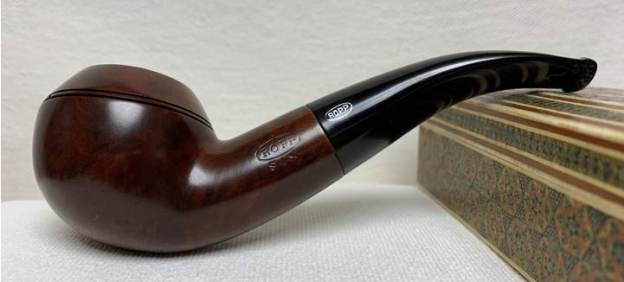
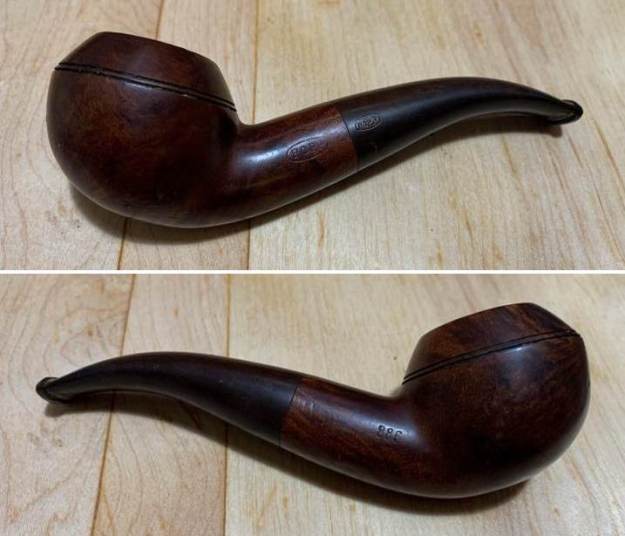
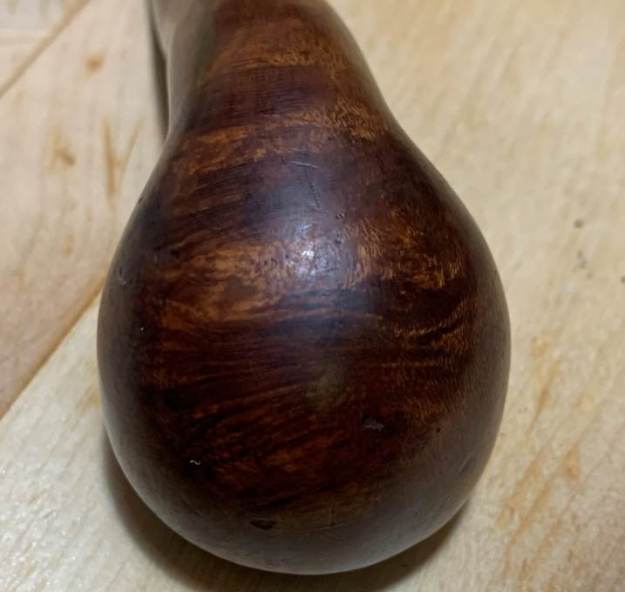
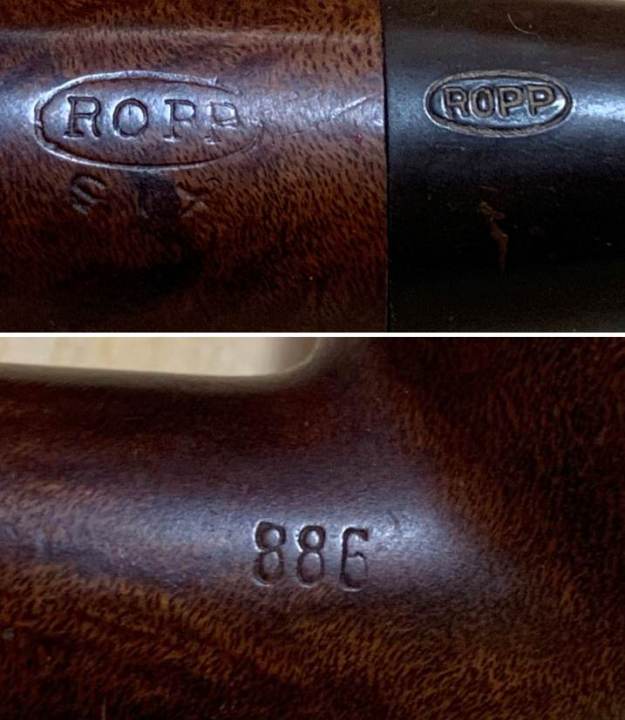
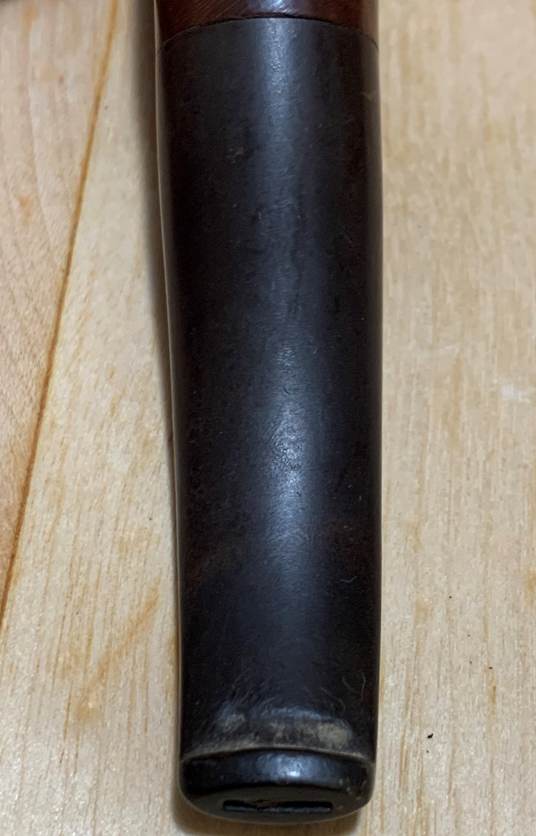
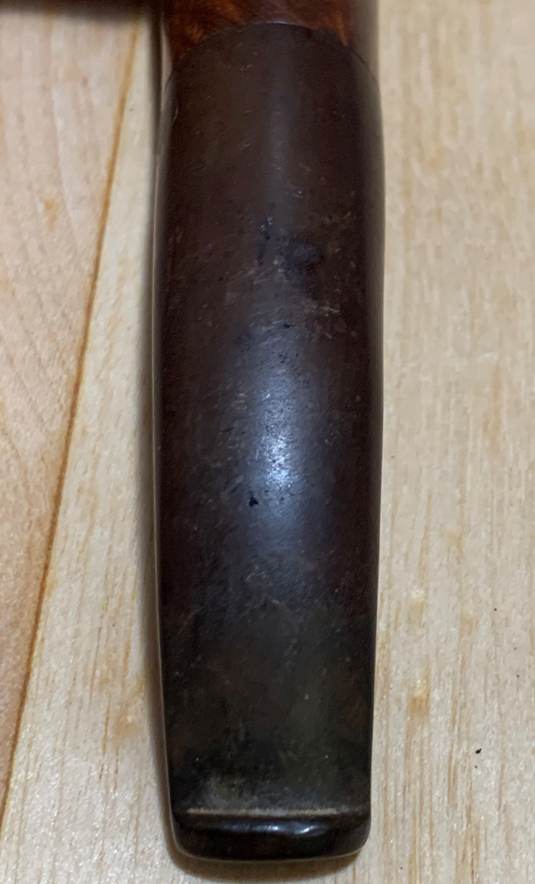
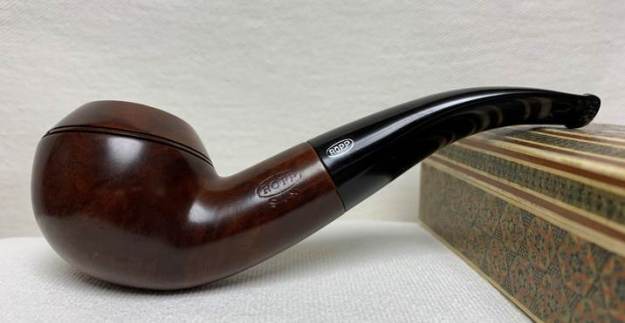
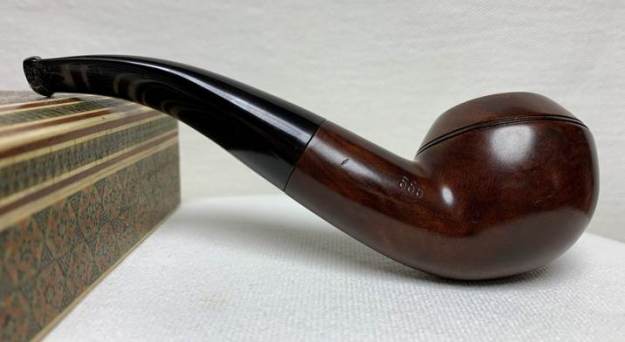
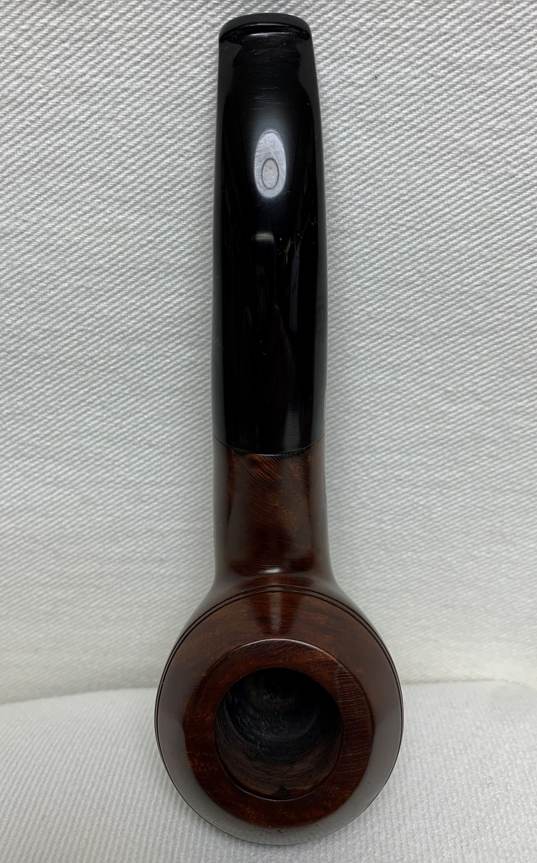
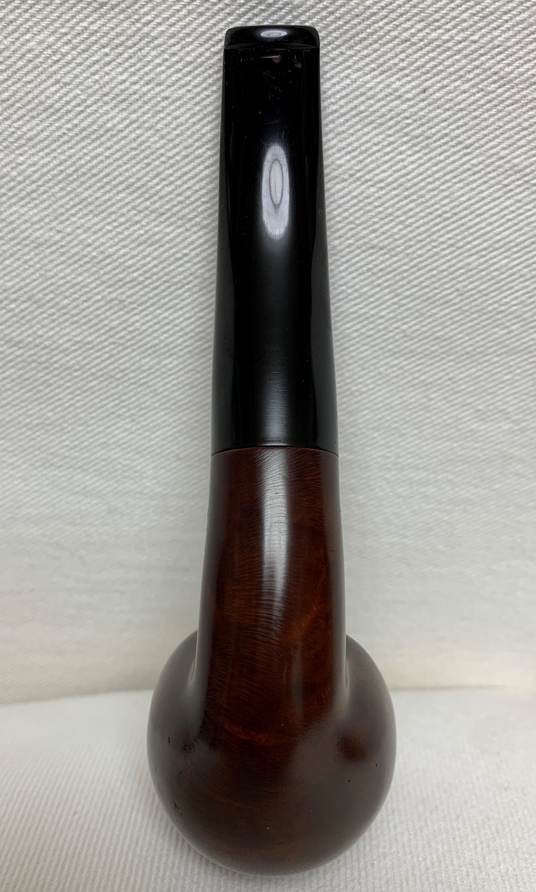
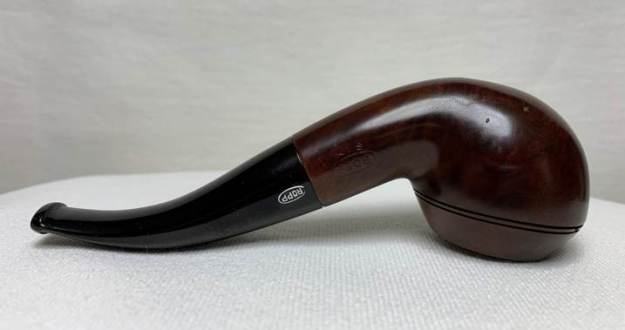
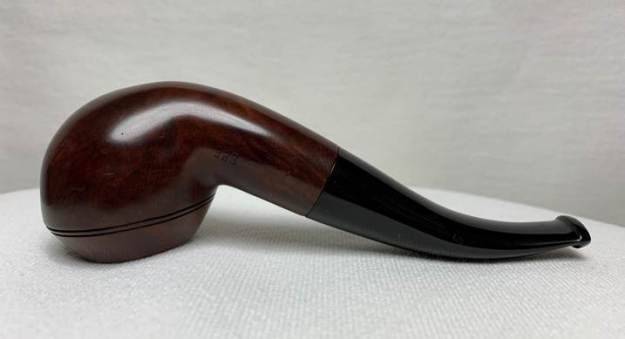
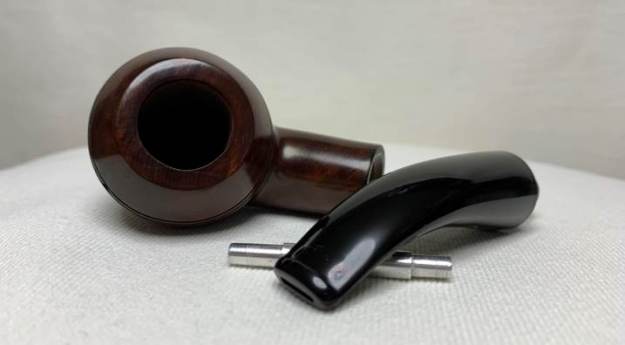
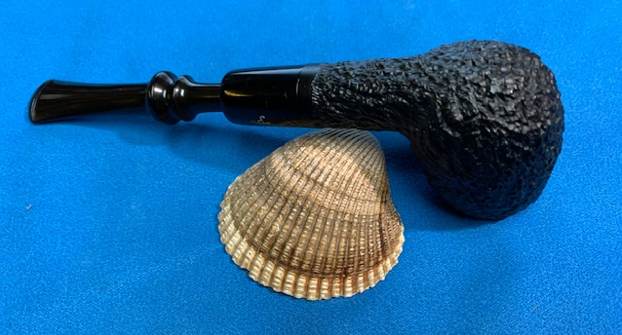
Next on the chopping block is this superb Ropp Six. It comes from a group of pipes I purchased from France. I love this pipe. I have a particular interest in French pipes and pipeworks, and I grabbed this one to restore for my collection. This is an old, old pipe with a few wounds (i.e. a veteran pipe with decorations) and needs just a little help to come back to life. This pipe was made by the venerable French pipe company, Ropp. Ropp has been around for a long time and their early pipes are really quite wonderful (the less said about their modern pipes, the better). The markings on the left-hand side of the shank read Ropp [over] Six. The right-hand side of the shank reads 886, presumably the shape number. Also, on the stem, there is the Ropp logo: Ropp, encircled in an oval.This pipe shape is a Rhodesian – a variation of the classic Bulldog. A Rhodesian will have a cylindrical shaped shank, not a diamond shank like the Bulldog. This is a really pretty pipe and feels very comfortable in the hand.
From Pipedia, here is a very brief history of the Ropp company:

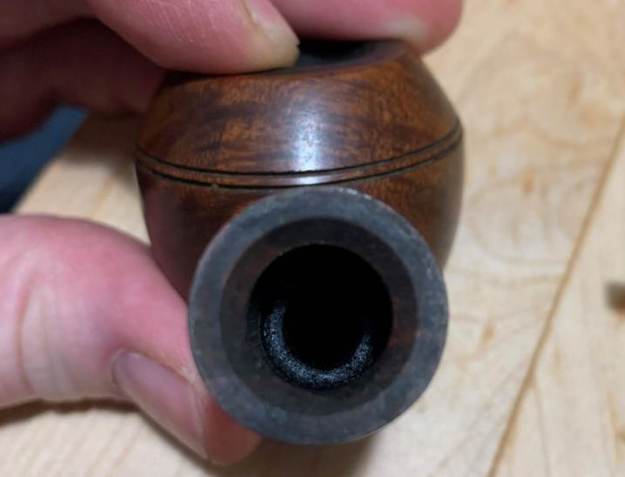
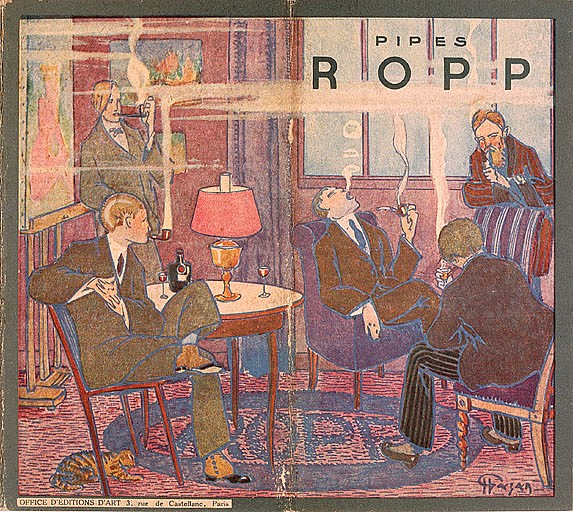
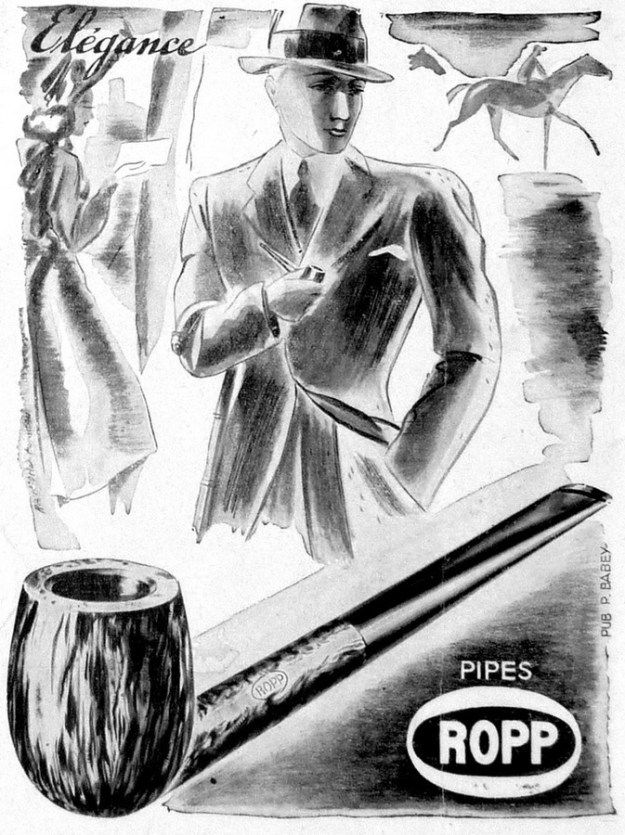
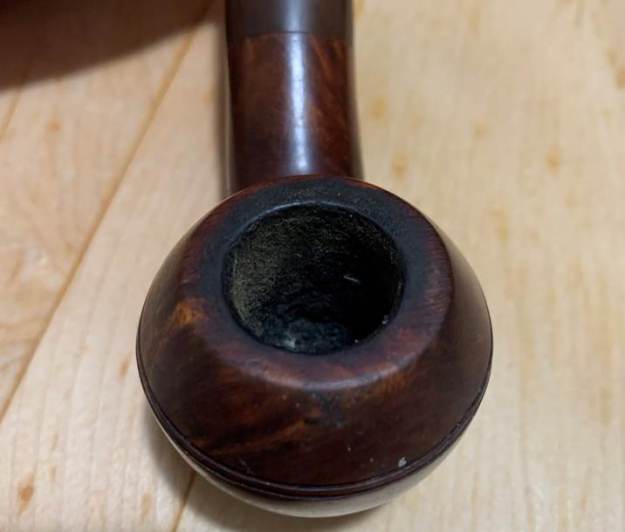
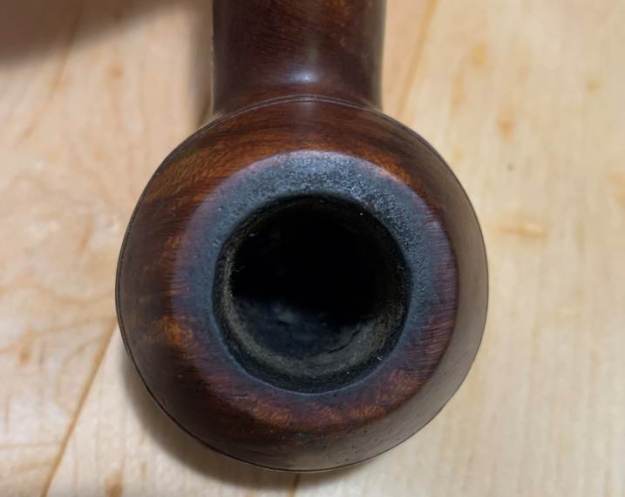
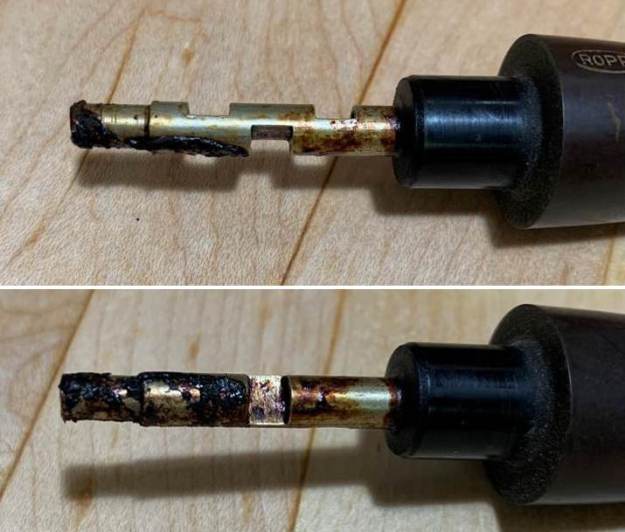
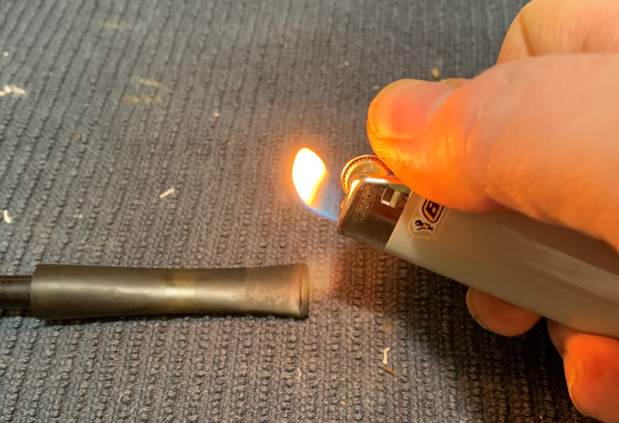
Eugène-Léon Ropp (1830–1907) acquired a patent for the cherrywood pipe in 1869. In 1870, he established a workshop to manufacture such pipes in Bussang, in the Vosges mountains. Around 1893, his business moved into the former mill of Sicard (part of the community of Baume-les-Dames in Upper Burgundy. The pipes were a big success in export as well. Shortly before 1914, Ropp designated A. Frankau & Co. (BBB) to be the exclusive distributor in the UK and its colonies. Probably in 1917, a workshop in Saint-Claude in the rue du Plan du Moulin was acquired to start the fabrication of briar pipes. In 1923, another small building in Saint-Claude, serving as a workshop for polishing, was added. Cherrywood pipes were the mainstay of Ropp until the company finally closed down in September 1991. The company was taken over by Cuty-Fort Entreprises in 1994. On to the pipe: it was in decent shape, but it had a few issues. The stem had a bit of oxidation and calcification, but – mostly notably – it had substantial bite marks, top and bottom. The stummel also had a few issues. The outside of the bowl had some scratches and a couple of fills that needed to be addressed. These are the “decorations” I referred to in the title of this article. There was lava and debris on the rim, and a few burn marks too. The inside was pretty dirty too – it would need a thorough cleaning. The stem was first on my list. This stem has a stinger in it – and it was being quite stubborn about coming out of the tenon! I opted to warm the stem and stinger with my heat gun and this provided just enough softening of the internal goo to allow me to pull it out. The stinger then went for a soak in some lemon-infused isopropyl alcohol. I let it set for several hours and then cleaned it off and it looked much improved. I then finished it with some metal polish and moved on. I wiped down the outside of the stem with Murphy’s Oil Soap on some cotton pads. I also took a BIC lighter and ‘painted’ the stem with its flame in order to lift the bite marks and dents. This was not successful at all in raising the damage. More work would need to be done. Then, I cleaned out the insides with pipe cleaners and isopropyl alcohol. Even the bore was clogged with debris! It took an awful lot of work to get this clean! Once this process was done, the stem went for an overnight soak in the Pipe Stem Oxidation Remover. The following day, I cleaned all of the de-oxidizing mess off with alcohol, pipe cleaners, et cetera. The oxidation had migrated to the surface and would be fairly straightforward to remove. I scrubbed with SoftScrub on some cotton pads to remove the leftover oxidation. After this, I used some nail polish to restore the Ropp logo on the stem. I painted the area carefully and let it fully set before proceeding. I built up the dents on the stem with cyanoacrylate adhesive and let them fully cure. On this occasion, I actually built up several layers of the glue over a few days. I must admit, it was an annoying and frustrating process because, at this stage, it never looked quite right. I then sanded the adhesive down – first with a small file – then with 220-, 400-, and 600-grit sandpapers to meld seamlessly into the stem. I then used all nine Micromesh pads (1,500 through 12,000 grit) to bring out the lovely black lustre on the stem. I also used Obsidian Pipe Stem Oil in between each pad scrubbing. On to the stummel, and the usual cleaning procedures were in order for this pipe. This stummel was a bit of a mess inside, so I first decided to ream out the bowl. I used both the PipNet Reamer and the KleenReem to remove the built-up cake and followed that with 220-grit sandpaper to eliminate as much as I could. I took the bowl down to bare briar, as I wanted to ensure there were no hidden flaws in the walls of the bowl. There were some very thin craze lines inside the bowl, but they were small enough that I elected to leave them as they were. I then proceeded to clean out the insides of the shank with Q-tips, pipe cleaners, and isopropyl alcohol. There was considerable filth inside this stummel and it took a lot of cotton to get it clean. I followed that up by cleaning the insides with some dish soap and tube brushes.
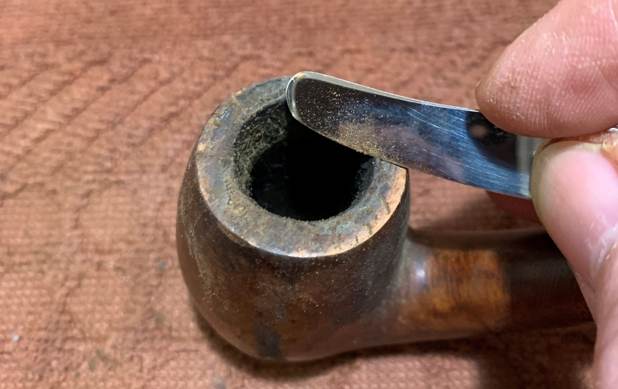
I used a small butter knife to gently chip away at the lava on the rim. I then used more Murphy’s with a scrub brush to remove any remainder. This actually worked quite well. I then moved on to cleaning the outside of the stummel with Murphy’s Oil Soap and some cotton pads. That removed any latent dirt that blighted the wood.

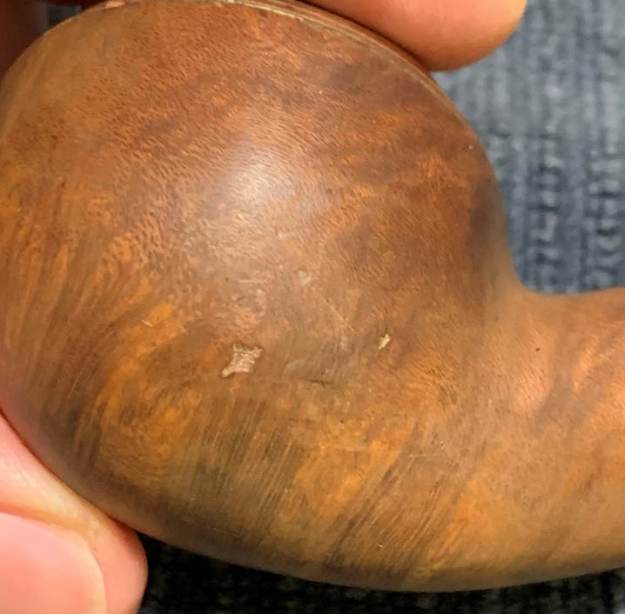
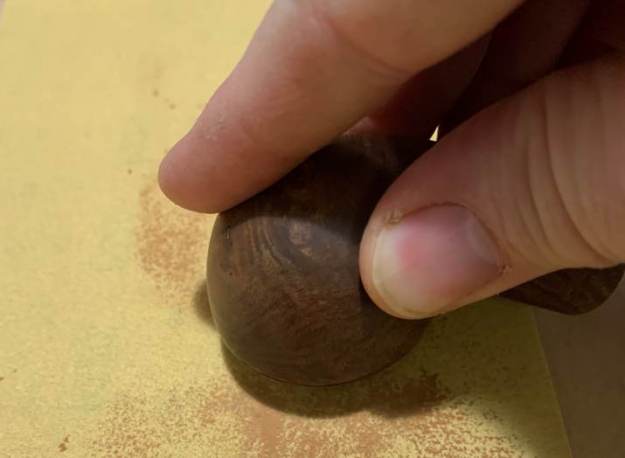
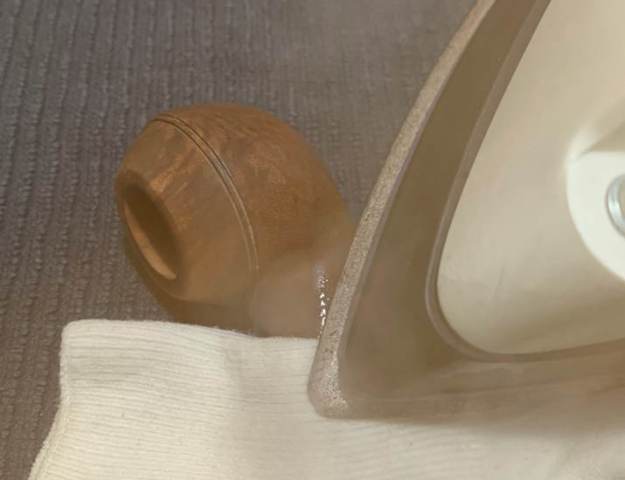
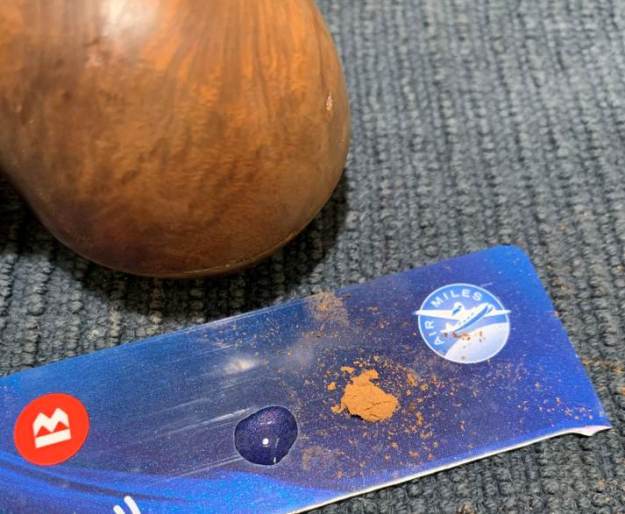
In order to remove the remaining burns and nicks on the rim, I “topped” the pipe – that is to say, I gently and evenly sanded down the rim on a piece of 220-grit sandpaper. This effectively removed the damage, without altering the look of the pipe.Having completed that, I was able to address the small nicks on the stummel. I dug out my iron and a damp cloth to try and raise the nicks. The hot and moist steam can often cause the wood to swell slightly and return to shape. There was some movement – not a lot, but it was better than doing nothing. The repair was not perfect, but the remaining scratches would be improved by sanding.I lined the fills with cyanoacrylate adhesive and briar dust. After letting them cure, I sanded the fill repairs down with 200-, 400-, and 600-grit sandpaper. I then used all nine Micromesh pads (1,500 through 12,000 grit) on the stummel to finish it off. After that, a light application of Before & After Restoration Balm brought out the best in the stummel’s grain. There is some beautiful wood after all. It is a very handsome, decorated veteran. In order to accentuate the external beauty of this pipe, I opted for aniline dye. I applied some of Fiebing’s Medium Brown Leather Dye. As usual, I applied flame from a BIC lighter in order to set the colour. I then added a second coat – just to make sure. What a difference that made! It looked so much better with a fresh coat of stain. I applied some more Before & After Restoration Balm and then it was off for a trip to the buffer. A dose of White Diamond and a few coats of carnauba wax were just what this pipe needed. The lovely shine made the wood very attractive. This is a very handsome pipe and will provide many years of smoking pleasure. This is a wonderfully crafted pipe and has a very elegant feel to it. It took some work, but I am proud of it and the final product suits me to a T. It retains some wounds from battle, but, as Steve would say, they are part of this pipe’s story. This is one pipe that I am keeping for myself and adding to my collection. I am sure that I will be enjoying this one for many years to come. I hope you enjoyed reading the story of this pipe as much I as I did restoring it. If you are interested in more of my work, please follow me here on Steve’s website or email me directly at kenneth@knightsofthepipe.com. Thank you very much for reading and, as always, I welcome and encourage your comments.

The Poker Barrel


by Kenneth Lieblich

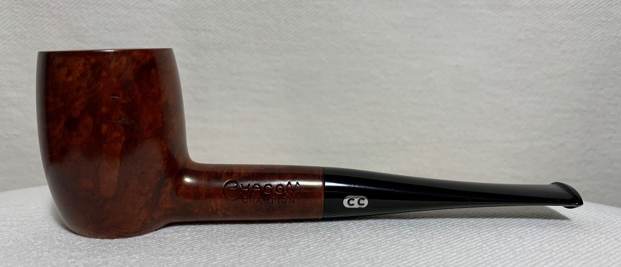
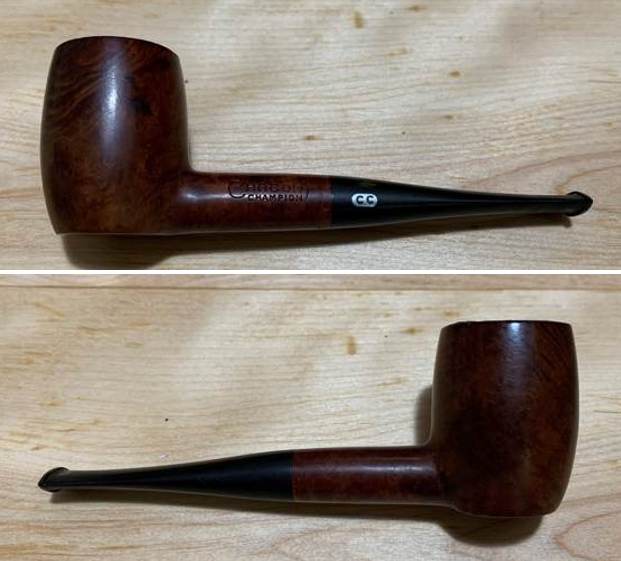
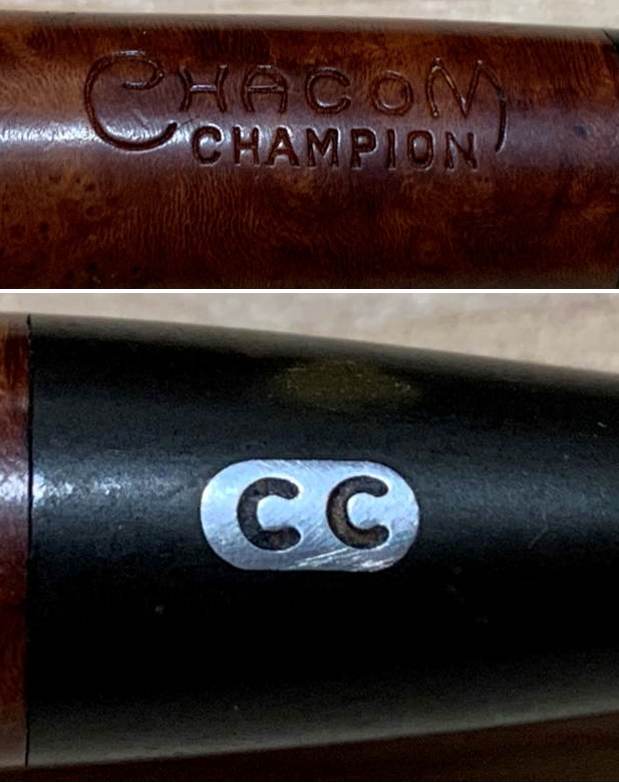
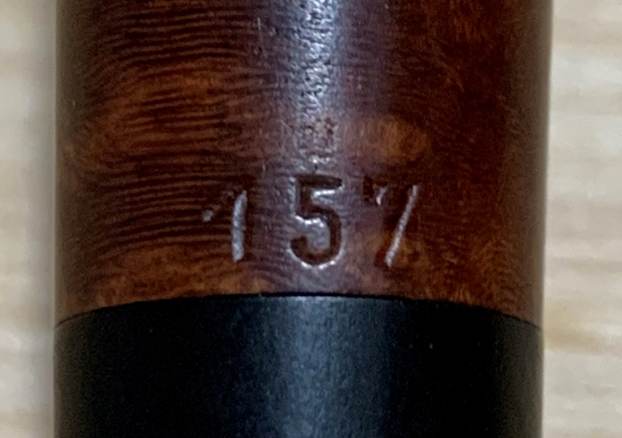
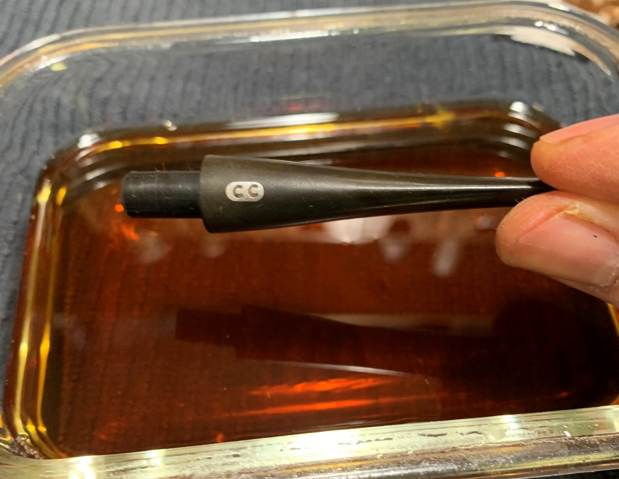
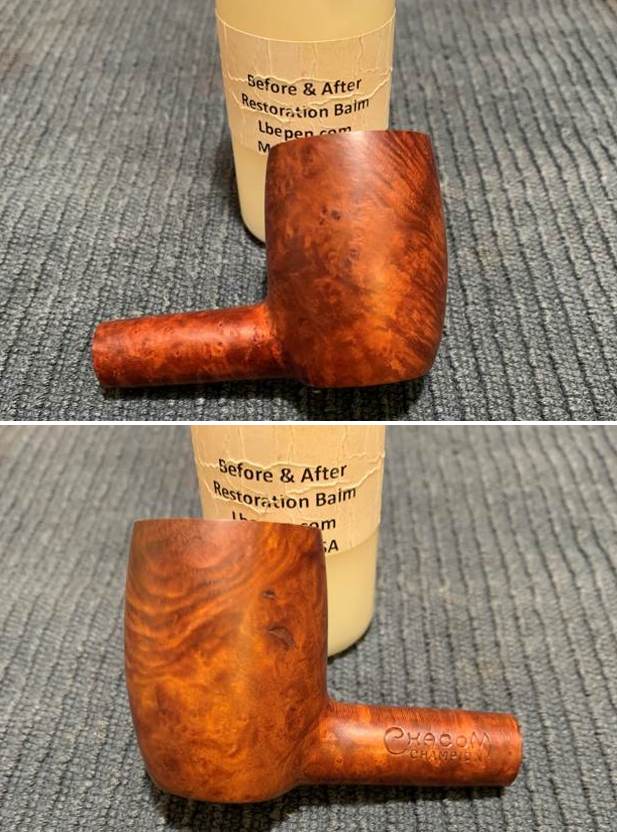
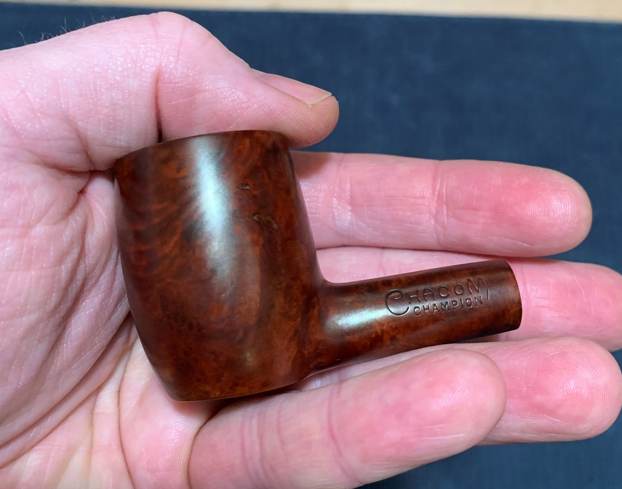
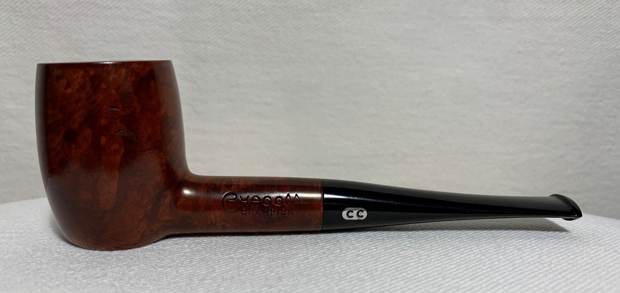
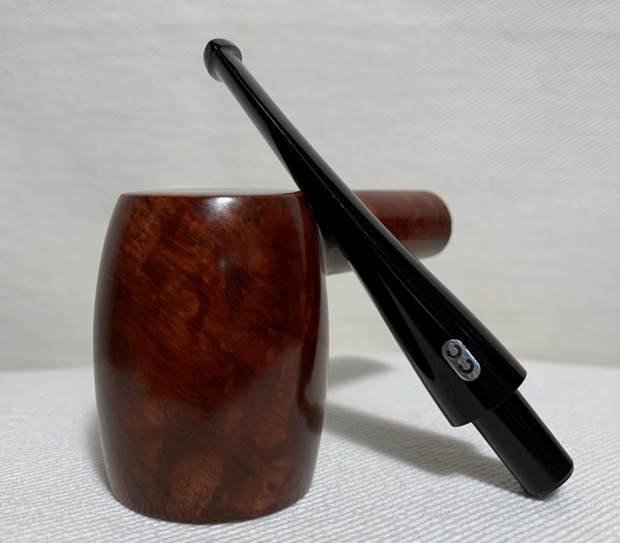
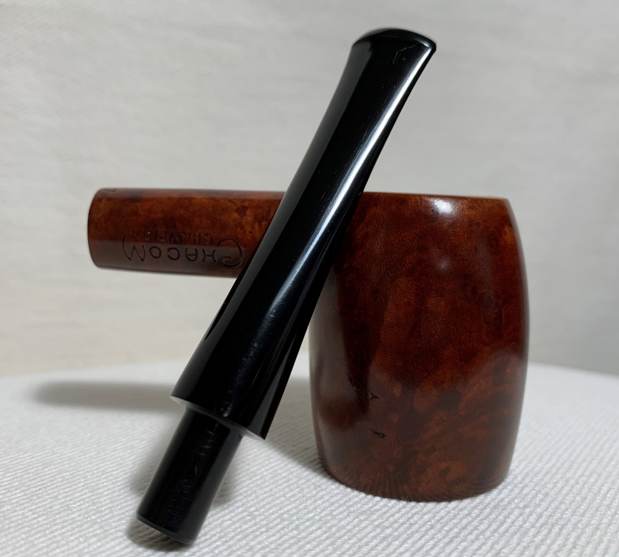
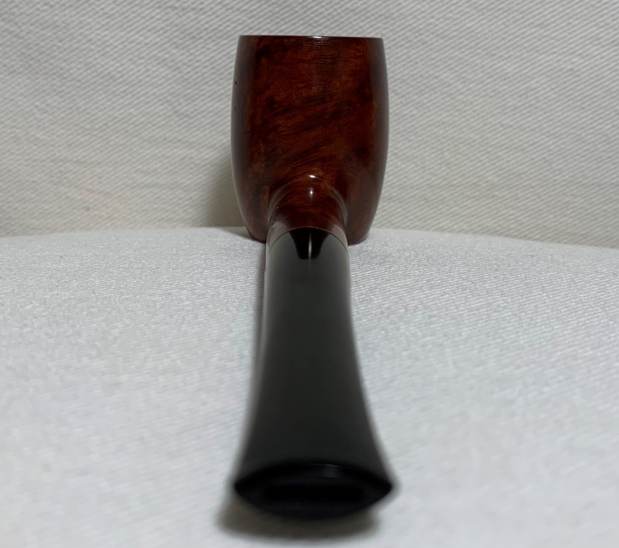
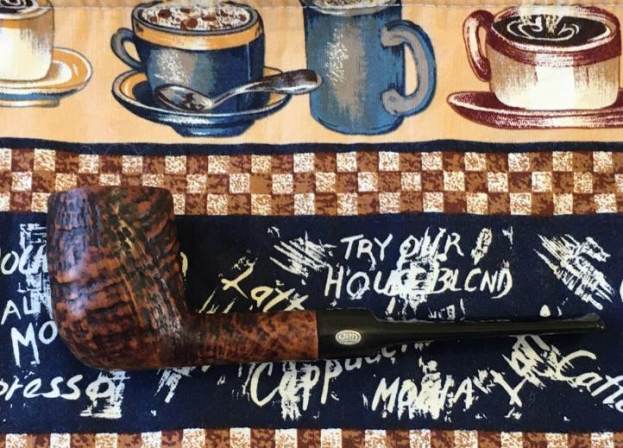
Next on the chopping block is this charming Chacom Champion. It comes from the estate of a man from Winnipeg, whose relatives live here in Vancouver. I purchased several of the late gentleman’s pipes, along with this one. I have a particular interest in French pipes and pipeworks, so this was the first pipe I grabbed from the lot for restoration. It is an attractive pipe and needed just a little help to come back to life.This pipe was made by the French giant, Chacom. They are known for making very nice pipes, many of which were designed by such names as Pierre Morel, Claude Robin, and Erwin van Handenhoven. The markings on the left-hand side of the shank read Chacom [over] Champion. On the underside of the shank, the marking reads 157, which is the shape number. Also, on the stem, there is the Chacom logo: CC, encircled in a silver-coloured oval.This is a poker-shaped pipe (a flat bottom) – and a really pretty one too. I always felt that it looked a bit like an old oak barrel, hence the title of this article: The Poker Barrel. It feels very comfortable in the hand. It was obvious from the start that this was a great pipe that just needed some attention and TLC.

Chacom is a company that dates back, in its earliest form, to 1825. The name is a portmanteau of Chapuis Comoy. For a large part of the twentieth century, Chapuis Comoy was the largest pipe company in the world. For more on their history, please have a look at their website: https://www.pipechacom.com/en/history.htm. In fact, the shape number I mentioned above, 157, is a Comoy shape number and is designated as a straight-stemmed, flat-bottomed, billiard. But I am still going to call it a Poker Barrel anyway.

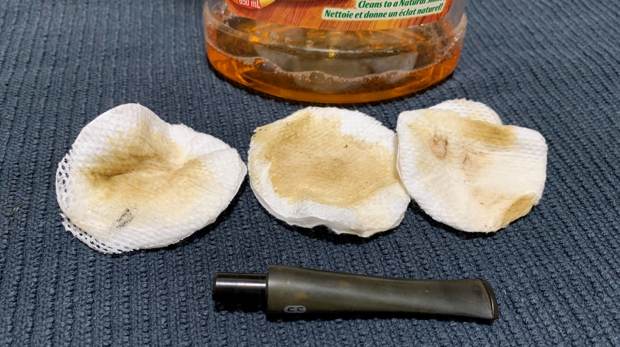
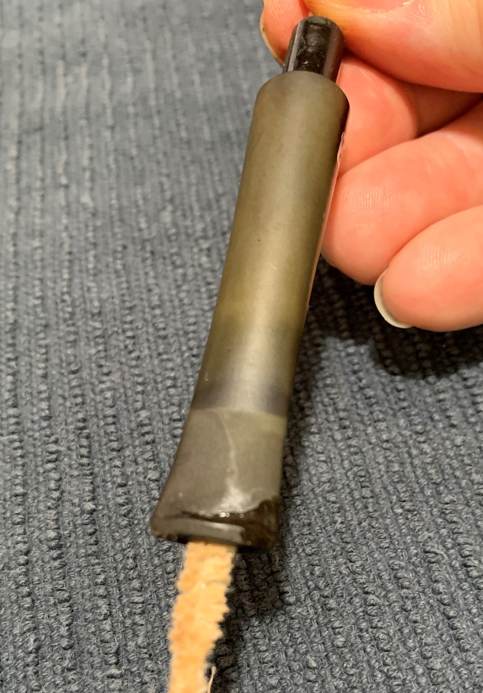
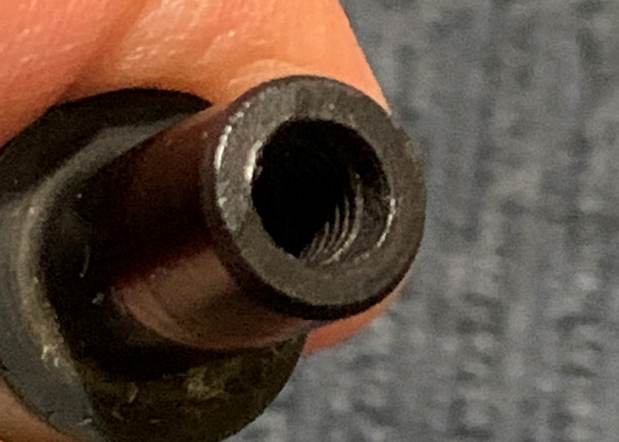
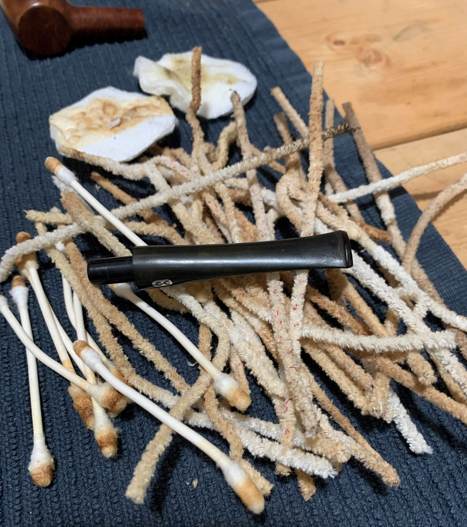
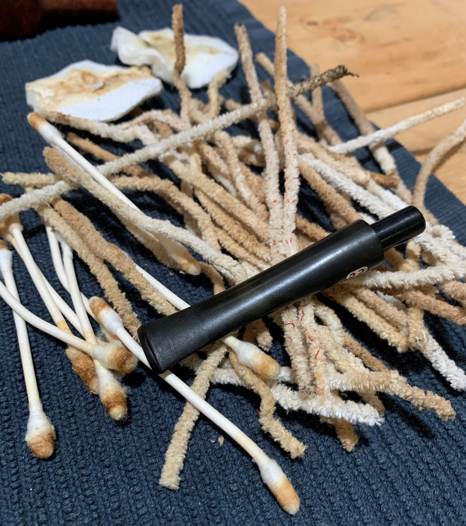
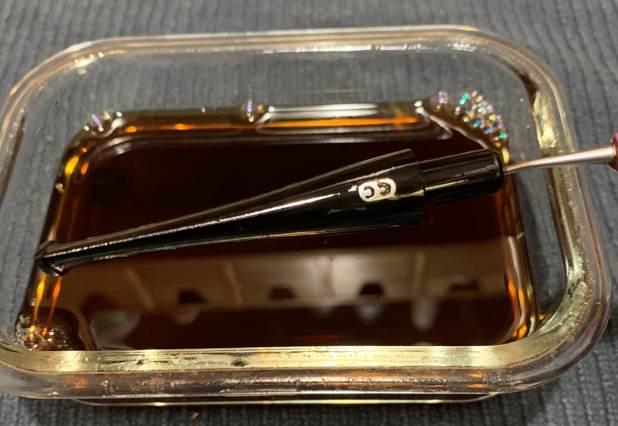
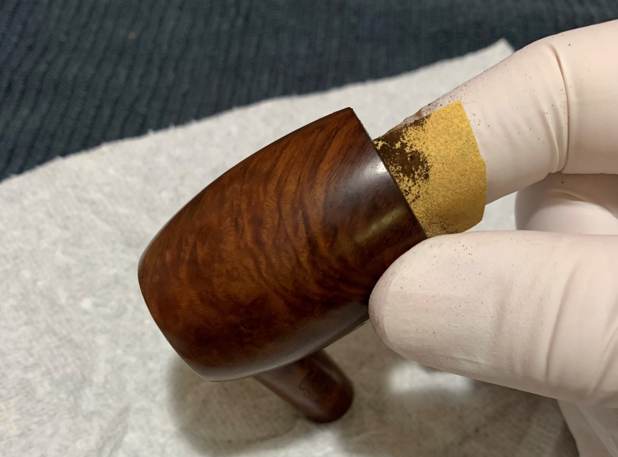
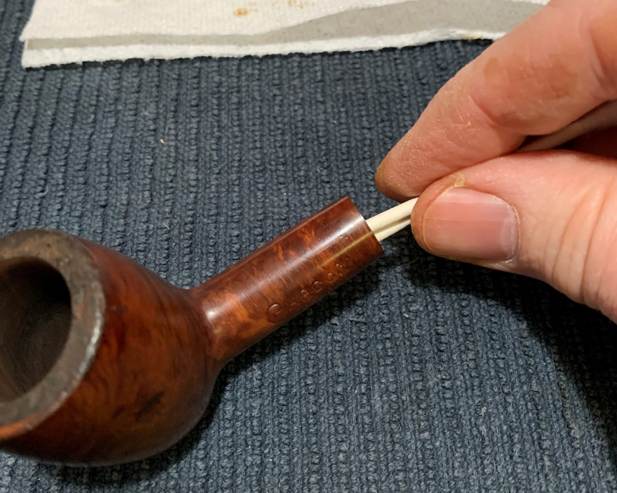
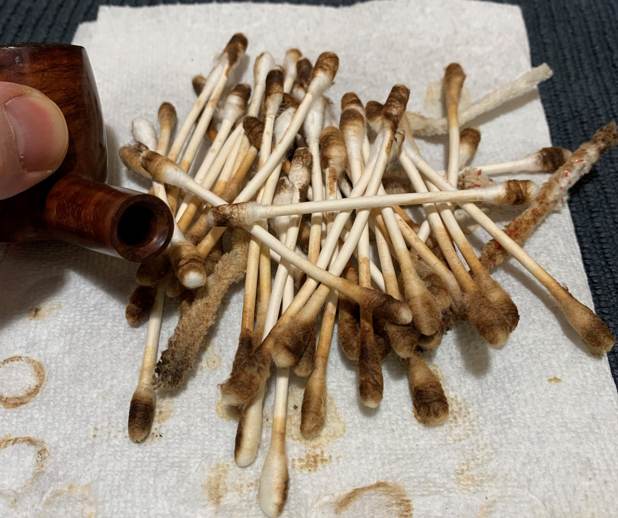
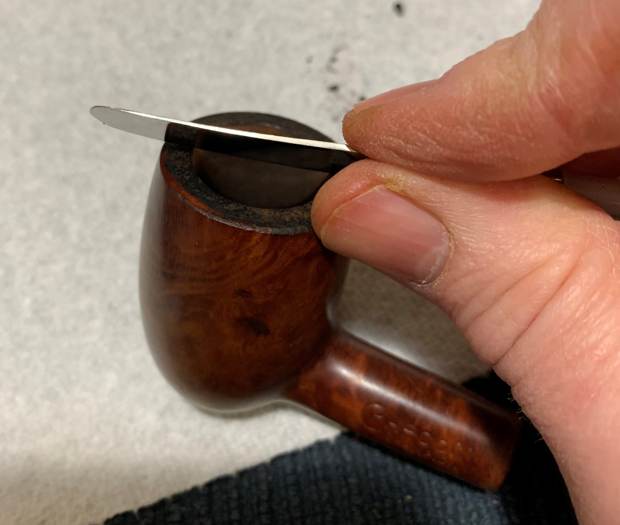
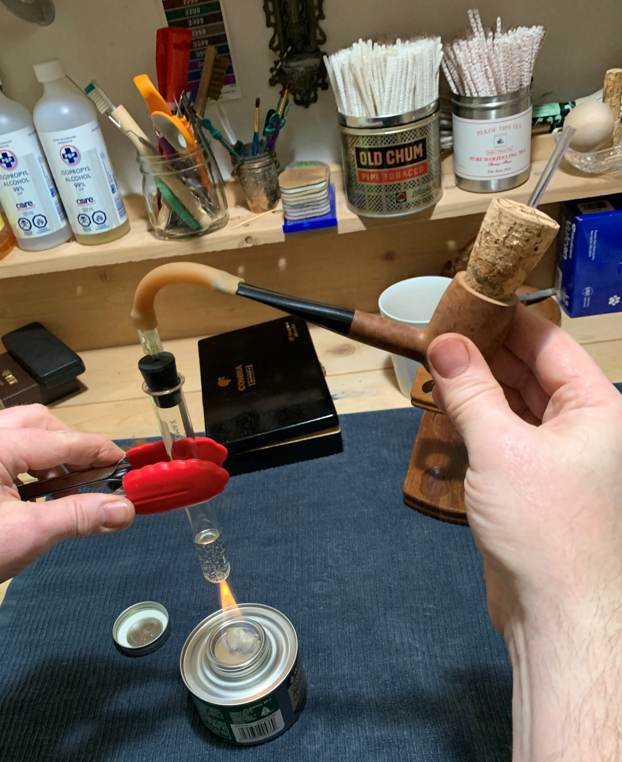
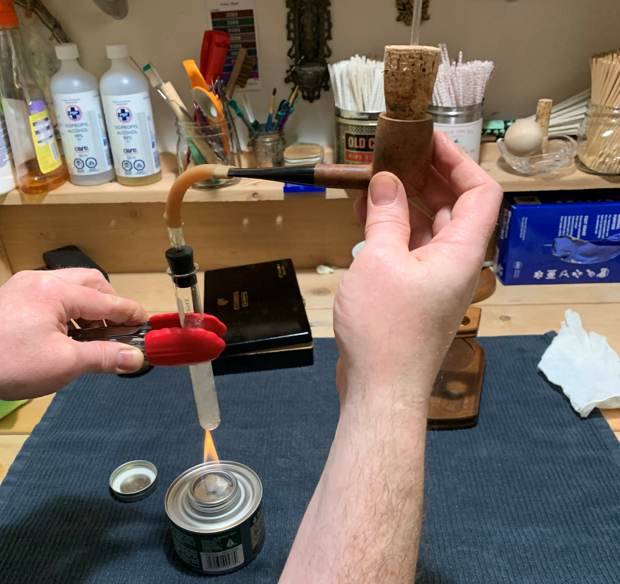
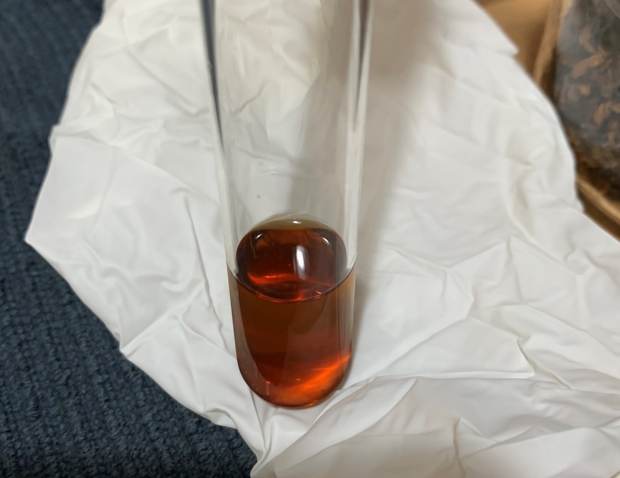
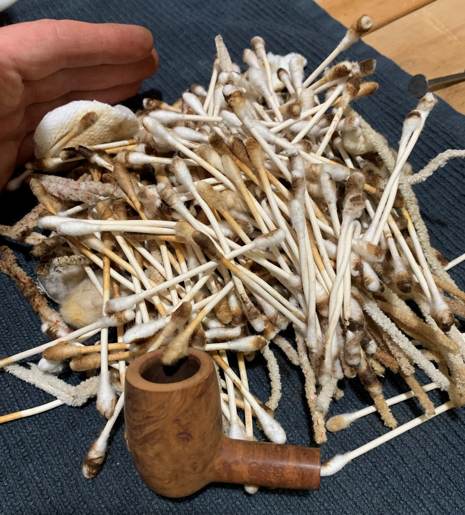
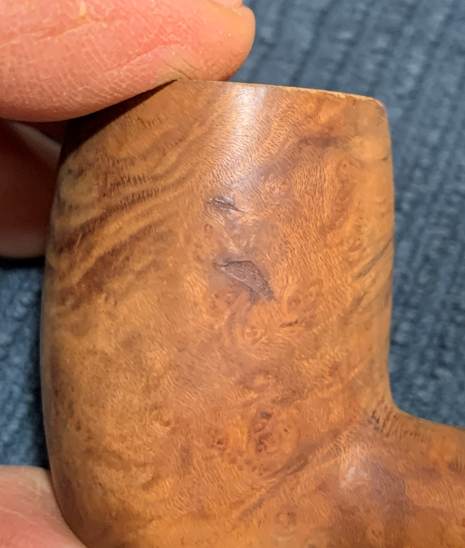
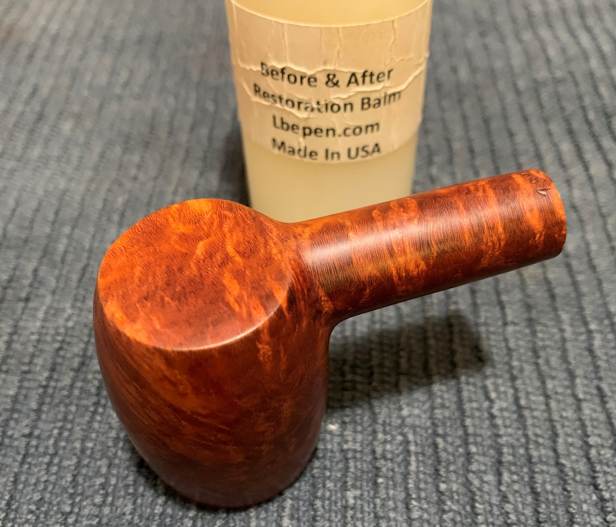
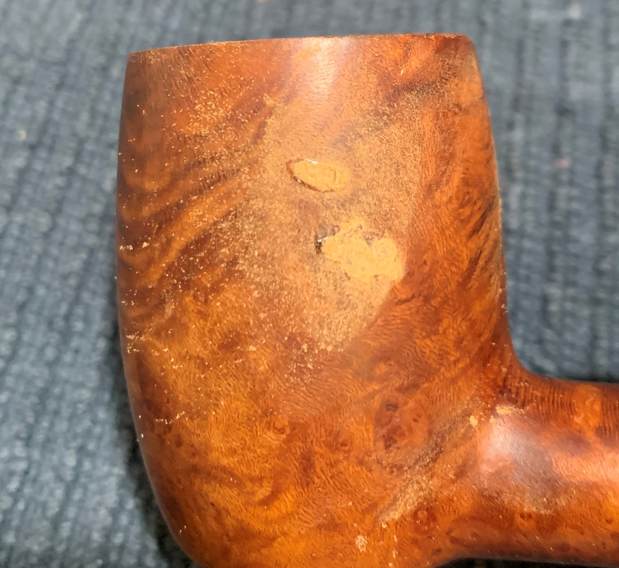
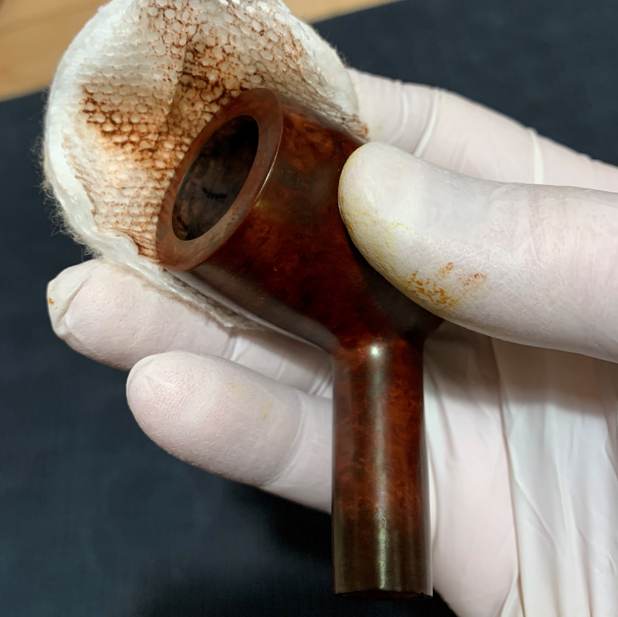
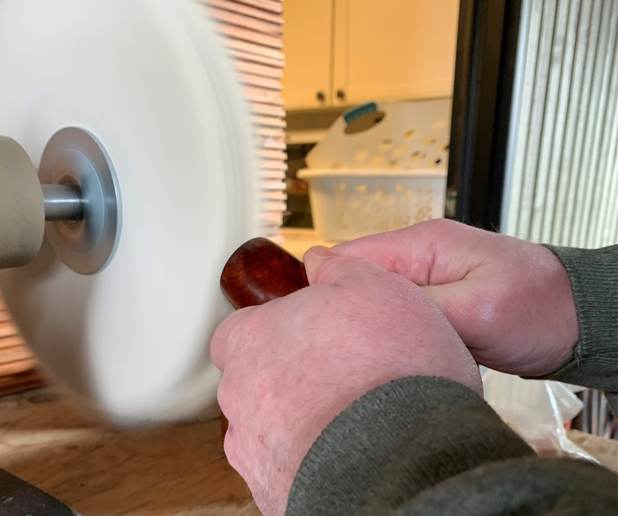
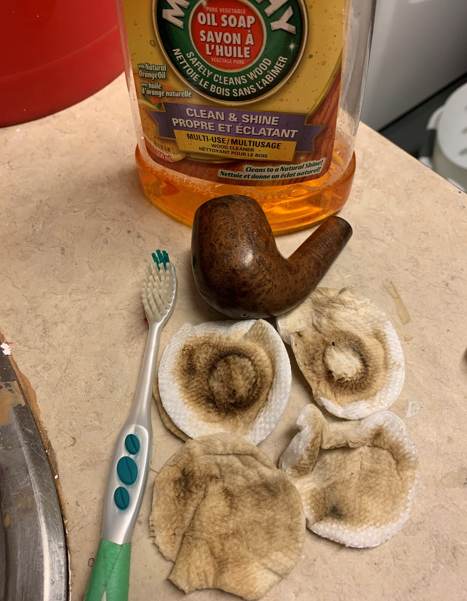
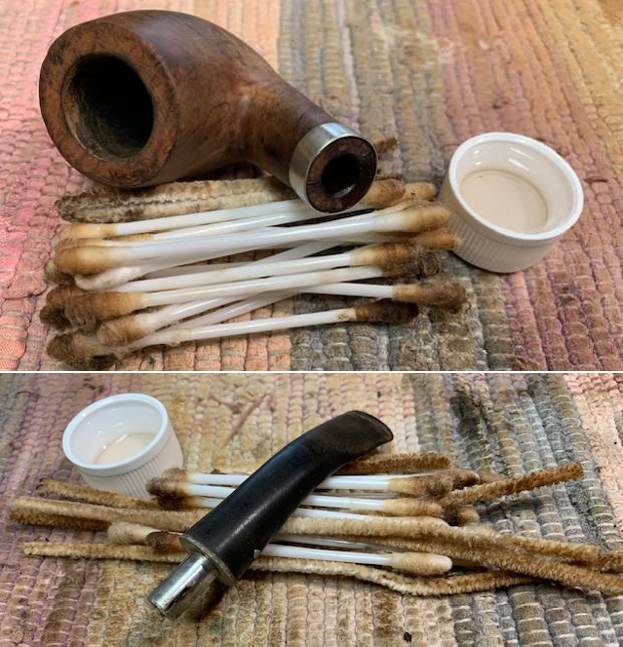
On to the pipe: it was in decent shape, but it had a few issues. The stem was mostly fine. There was a bit of oxidation, some tooth chatter and scratches, and that was about it. Meanwhile, the stummel had a few more issues. The outside of the bowl had some scratches and a couple of fills that needed to be redone. There was plenty of lava and debris on the rim and I suspected there would also be some burn marks. The inside was pretty dirty too – just how dirty it was became an event in itself.The stem was first on my list. I wiped down the outside of the stem with Murphy’s Oil Soap on some cotton pads. I also took a BIC lighter and ‘painted’ the stem with its flame in order to lift the bite marks and dents. This was not particularly successful in raising the damage. During this process, I noticed that the inside of the tenon on the stem was threaded. There was clearly a stinger here once upon a time. Thankfully, it is long gone.Then, I cleaned out the insides with pipe cleaners and isopropyl alcohol. Look at that! Lots of work to get this clean! Once this process was done, the stem went for an overnight soak in the Pipe Stem Oxidation Remover. The following day, I cleaned all of the de-oxidizing mess off with alcohol, pipe cleaners, et cetera. The oxidation had migrated to the surface and would be fairly straightforward to remove. I scrubbed with SoftScrub on some cotton pads to remove the leftover oxidation. I built up the dents on the stem with cyanoacrylate adhesive and let them fully cure. I then sanded the adhesive down with 220-, 400-, and 600-grit sandpapers to meld seamlessly into the stem. I did the same to the remaining tooth marks. I then used all nine Micromesh pads (1,500 through 12,000 grit) to bring out the lovely black lustre on the stem. I also used Obsidian Pipe Stem Oil in between each pad scrubbing. On to the stummel, and the usual cleaning procedures were in order for this pipe. This stummel was a bit of a mess inside, so I first decided to ream out the bowl. I used both the PipNet Reamer and the KleenReem to remove the built-up cake and followed that with 220-grit sandpaper to eliminate as much as I could. I took the bowl down to bare briar, as I wanted to ensure there were no hidden flaws in the walls of the bowl. Fortunately, there were none. I then proceeded to clean out the insides of the shank with Q-tips, pipe cleaners, and isopropyl alcohol. There was considerable filth inside this stummel and it took a lot of cotton to get it “clean”. I put the word clean in quotation marks for reasons that will be evident shortly. I used a small butter knife to gently chip away at the lava on the rim. I then used more Murphy’s with a scrub brush to remove any remainder. This actually worked quite well. I then moved on to cleaning the outside of the stummel with Murphy’s Oil Soap and some cotton pads. That removed any latent dirt that blighted the wood. A de-ghosting session also seemed in order, so I thrust cotton balls in the bowl and the shank, and saturated them with 99% isopropyl alcohol. I let the stummel sit overnight. This caused the oils, tars and smells to leech out into the cotton.In order to remove the remaining burns and nicks on the rim, I “topped” the pipe – that is to say, I gently and evenly sanded down the rim on a piece of 220-grit sandpaper. This effectively removed the damage, without altering the look of the pipe. Then, to further clean the inside of the pipe, I put the stem and stummel back together and used my pipe retort system. This system uses boiling isopropyl alcohol and a vacuum (a void, not the household appliance) to clean the interior of a pipe. As you can see by the brownish colour of the alcohol, the retort worked well. I managed to extract lots of otherwise inaccessible filth from inside the pipe. At this point, I had a hunch that I should run another Q-tip or two through the shank. What I discovered was shocking: it took a truck load of Q-tips and pipe cleaners to actually clean this frustrating pipe! Look at the pile I used! I then finished cleaning up the insides of the stummel with some dish soap and tube brushes. Extraordinary, but I did it and it is now clean.Having completed that, I was able to address the scratches and fills. I took out my steam iron and a damp cloth to try and raise the nicks. The hot and moist steam created can often cause the wood to swell slightly and return to shape. Fortunately, there was considerable movement – I was really pleased with the results. The repair was not perfect, but the remaining scratches would be improved by sanding.After that, a light application of Before & After Restoration Balm brought out the best in the stummel’s grain. There is some beautiful wood after all. It is a very handsome pipe. The same was true with the fills. I lined the two fills with cyanoacrylate adhesive and briar dust. After letting them cure, I sanded the fill repairs down with 200-, 400-, and 600-grit sandpaper. I then used all nine Micromesh pads (1,500 through 12,000 grit) on the stummel to finish it off. On to another problem: the colour. During the course of my vigorous cleaning, this pipe had lost some vibrancy of colour. So, in order to accentuate the external beauty of this pipe, I opted for aniline dye. I applied some of Fiebing’s Medium Brown Leather Dye. As usual, I applied flame from a BIC lighter in order to set the colour. What a difference that made! It looked so much better with a fresh coat of stain.   I applied some more Before & After Restoration Balm and then it was off for a trip to the buffer. A dose of White Diamond and a few coats of carnauba wax were just what this pipe needed. The lovely shine made the wood very attractive. This is a very handsome pipe and will provide many years of smoking pleasure.This Chacom Champion is back to its old glory and ready to be enjoyed again by the next owner. I am pleased to announce that this pipe is for sale! If you are interested in acquiring it for your collection, please have a look in the ‘French’ pipe section of the store here on Steve’s website. You can also email me directly at kenneth@knightsofthepipe.com. The approximate dimensions of the pipe are as follows: length 5 in. (130 mm); height 1⅝ in. (40 mm); bowl diameter 1¼ in. (30 mm); chamber diameter ¾ in. (20 mm). The weight of the pipe is 1 oz. (29 g). I hope you enjoyed reading the story of this pipe’s restoration as much I as I did restoring it. If you are interested in more of my work, please follow me here on Steve’s website or send me an email. Thank you very much for reading and, as always, I welcome and encourage your comments.

Cleaning up a GBD Prehistoric 133 Medium Billiard


Blog by Mike Belarde

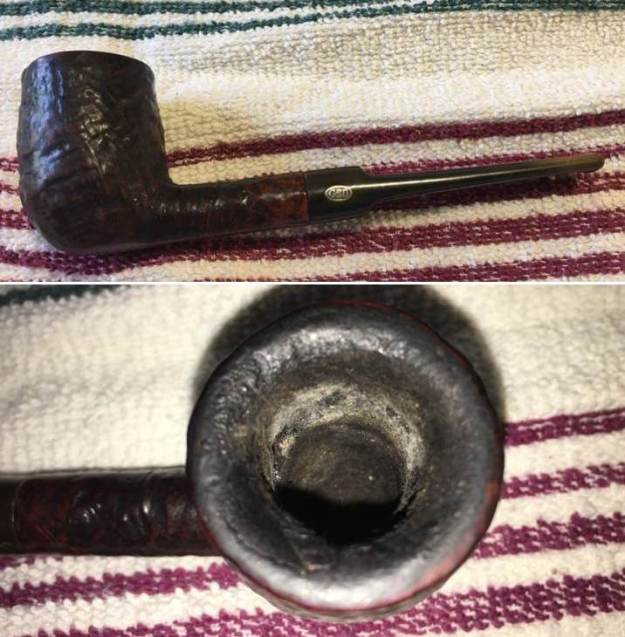
Hello, I hope everyone is doing well.  I finally had a nice low-key weekend and was able to work on another pipe. I have had this GBD Prehistoric Billiard for a while and have been looking for a chance to work on it.  The pipe itself is a nice jaunty saddle stemmed Billiard with GBDs Prehistoric sandblast finish.

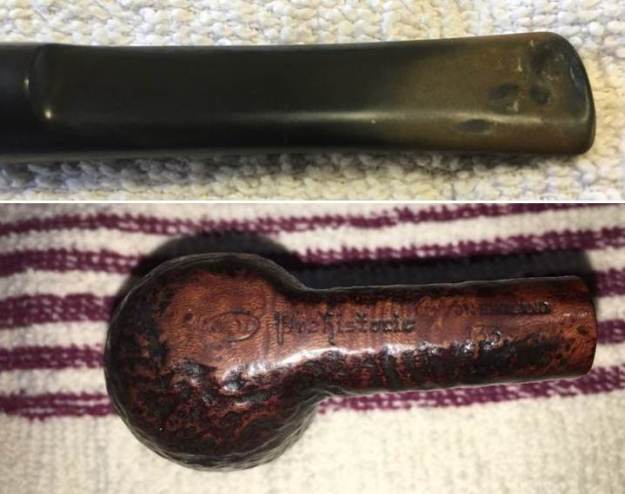
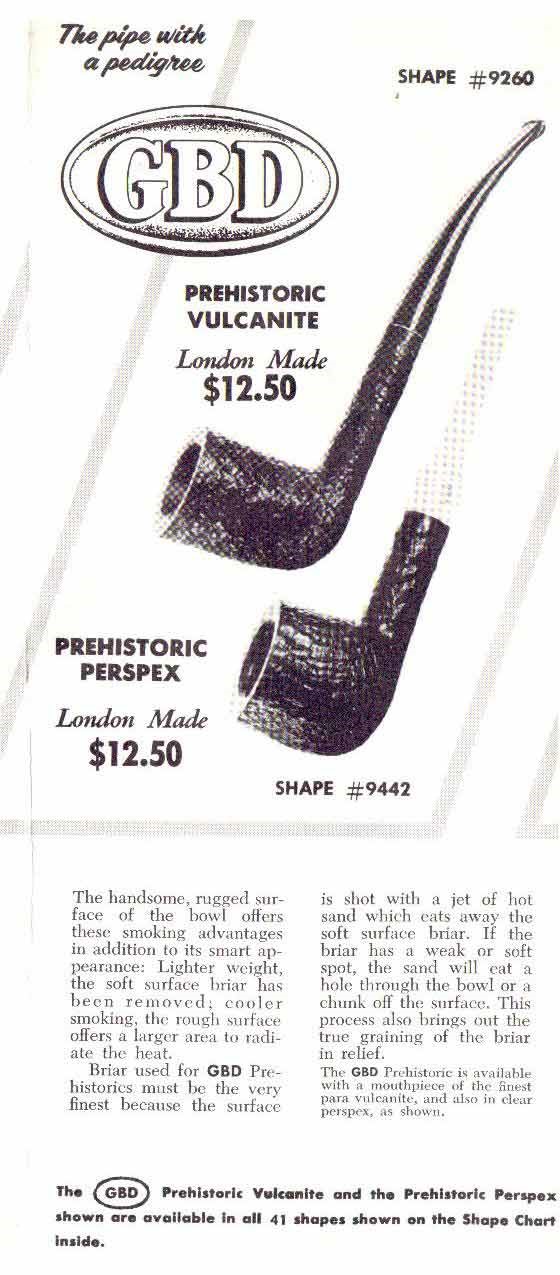
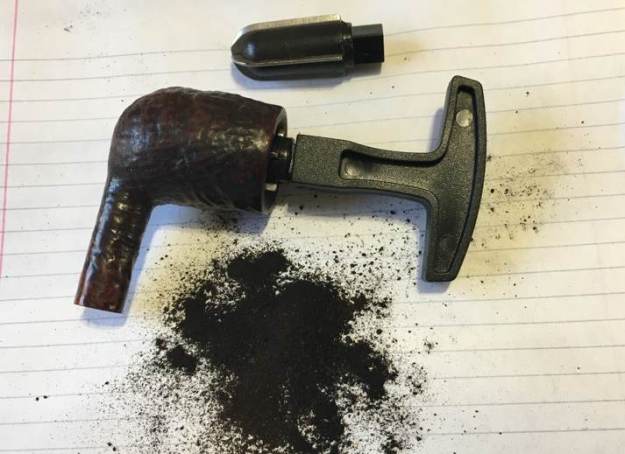
When I received the pipe, it was in a very dirty condition.  The surface of the stummel was caked with grime. The rim of the bowl had a good amount of carbon overflow, and the chamber was heavily caked.   The stem was in pretty fair condition.  It had light oxidation and took chatter, but the button was buffed down from years of use. The stamping was still legible on this pipe, and read GBD in an oval with the Prehistoric stamp and a 133-shape number. Below is an advertisement found on Pipedia describing the Prehistoric line. Even in its grimy condition, the pipe had an attractive rugged look, and I hoped that it turned out to be a fun workhorse pipe that I could take with me on a fishing trip or some other outdoor adventure. A link to the Pipedia web page has been provided below. Now to work on the pipe.  https://pipedia.org/wiki/GBD_Model_InformationThe first step in the process is to address the internals of both the briar and stem, and then clean up the grime on the stummel, and the carbon build up on the rim.   I started by reaming the chamber and then lightly sanding it with a piece of 220 grit sandpaper.  I took bristled pipe cleaners dipped in alcohol to clean the shank.  As you can see from the pictures this pipe was loved and used often.  Cleaning the internals of this pipe took a long time. Once I had that completed, I moved on to addressing the dirt and grime on the exterior of the stummel. I scrubbed the stummel with Murphy’s Oil Soap and an old toothbrush, rinsed it under warm water. I then scrubbed the rim with an old green scouring pad and some more Murphy’s Oil Soap. During this process a large amount of dirt lifted from the surface of the pipe and exposed some really great surface texture. The rim and the chamber cleaned up well and appeared to be in good condition.  I took the rest of the charring or darkening on the rim and inner rim with a folded piece of 320 grit sandpaper. The stummel seemed to be fairly clean but I decided to de-ghost the piped further.  I inserted two folded fluffy pipe cleaners through the shank and down into the chamber to act as a wick.  I have found that using fluffy pipe cleaners is easier for me than trying to fish an elongated cotton ball down the shank.  I then placed a cotton ball in the chamber and saturated it with isopropyl alcohol.While the stummel was de-ghosting. I placed the stem in a small Tupperware container to soak in Briarville’s Oxidation Remover solution.  I left both the stummel and stem to soak overnight.

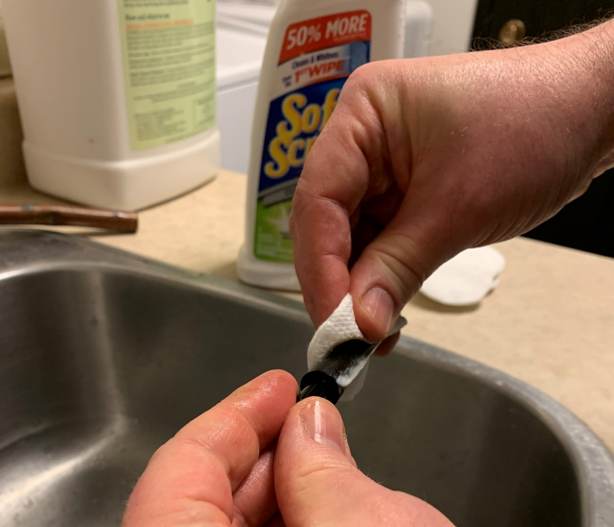
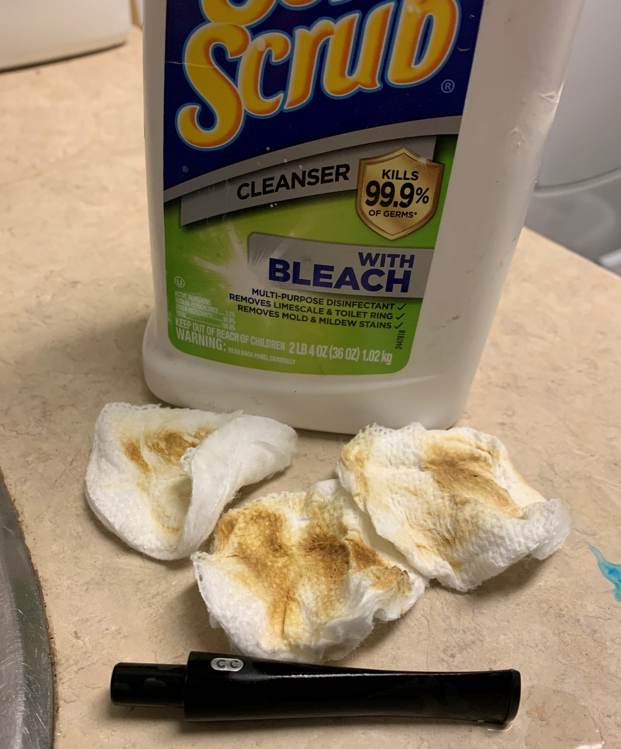
Both the alcohol and the Briarville solution further cleaned the pipe.  I took the stem out of the solution and rinsed it and then ran some alcohol dipped pipe cleaners through it.  I then scrubbed the stem with Soft Scrub and the scouring pad to clean it up further.

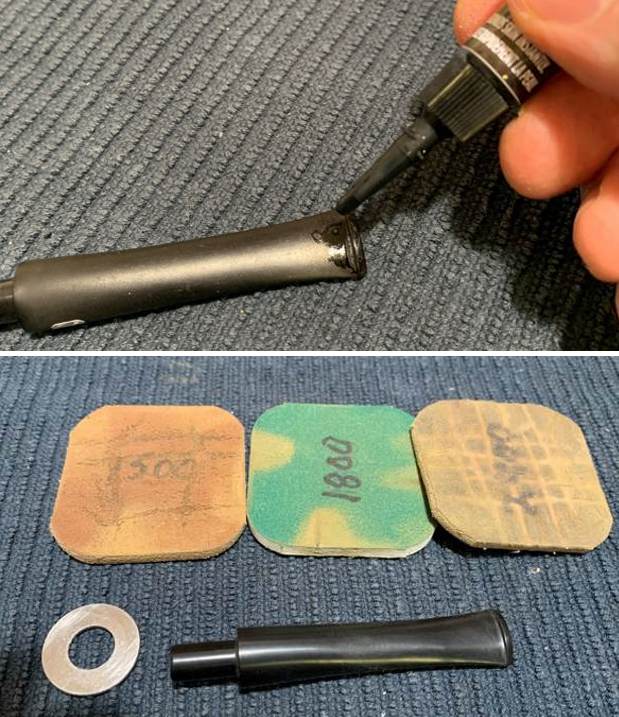
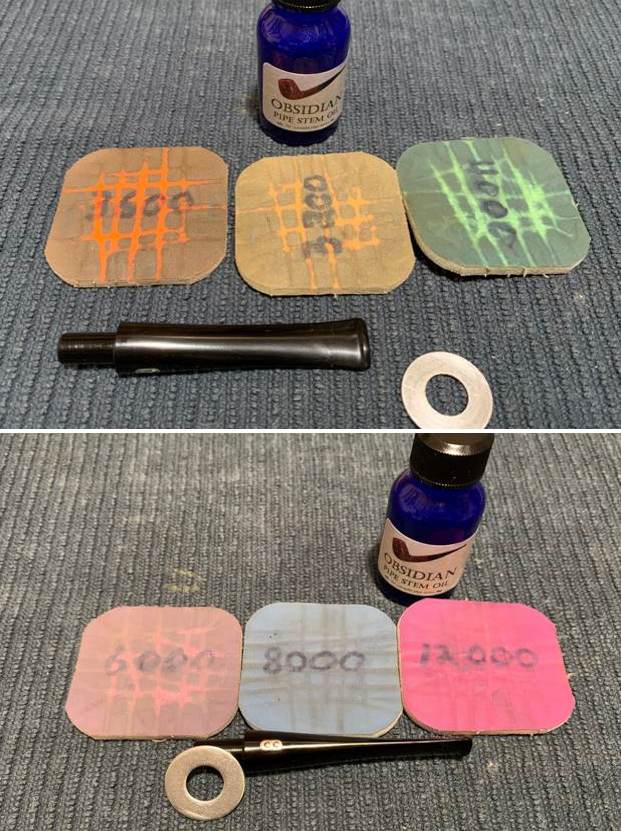
After this was done I filled the tooth chatter in with super glue. Once the clue was dry I sanded down the patch with a piece of folded 220 grit sandpaper.Once I had the patch sanded down flush to the surface of the stem, I turned to the micromesh pads. I took the stem through the progression of micromesh pads (1500-12000). I polished the stem with each pad and wiped the stem down with a cotton pad soaked in Obsidian Oil in between the use of each pad. In the last step, I polished the stem with Before and After’s Extra Fine Polish. Satisfied with the progress on the stem, I turned my attention to the stummel. I polished the briar with the progression of micromesh pads (1500-12000) wiping it i with a damp paper towel.   Once this step was done, I mixed some dye up to touch up the stain. I’m not sure if the cleaning process removed some of the old stain, but I liked the highlights that had been exposed on the ridges of the sandblast.  I decided to heighten this effect.

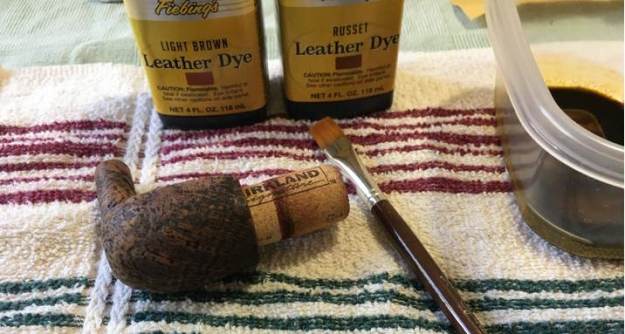
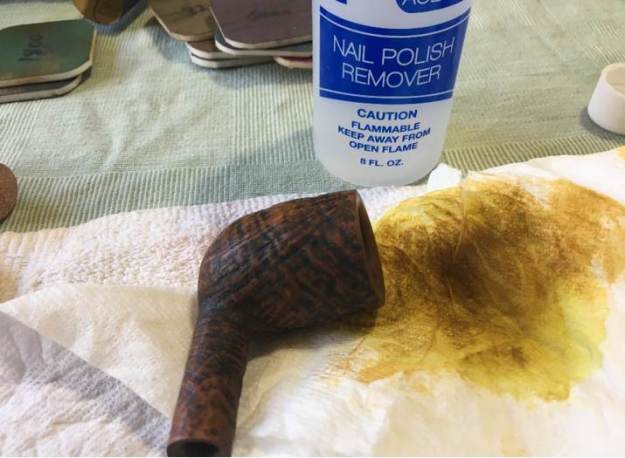
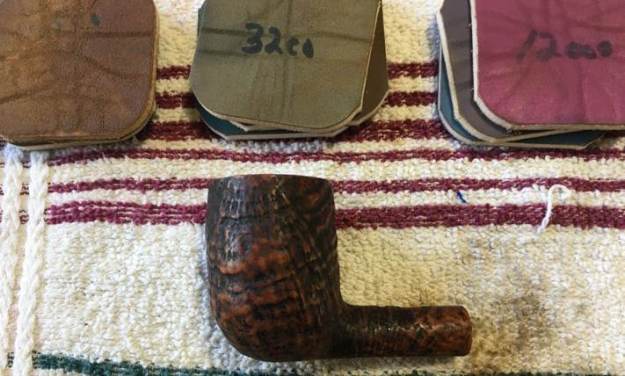
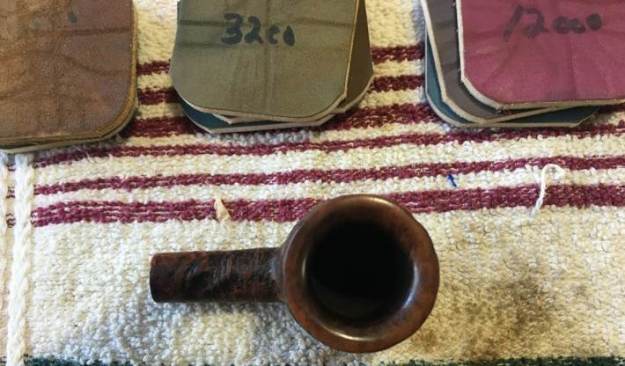
I mixed a one-to-3 ratio of Light Brown and Russet leather dye with alcohol to thin the dye down.  I like to apply the stain with a small hobby brush. I find that the brush helps me to coat the stummel evenly. Once the stain was applied, I used a small tea candle to fire the briar and set the dye.  I let the stummel sit for a couple of hours and then removed some of the excess stain with a cotton pad soaked in acetone. After removing some of the excess stain with acetone I began to polish the stummel with the micromesh pad series (1500-12000). I wiped the briar down with a damp paper towel between each pad. Once I was finished with the micro pads, I worked some Before and After Restoration Balm into the stummel. The pipe was really looking nice at this point!  I let the balm sit for about 10 minutes and then buffed the stummel with a cotton cloth. In the last step of the process, I buffed both the stummel and stem with Red Tripoli and Blue Diamond.  I then gave both several coats of Carnauba wax and buffed them with a cotton cloth.

I’m really happy how this pipe turned out, and am looking forward to loading it up and relaxing with it in the backyard. Thanks for taking the time to read this post!

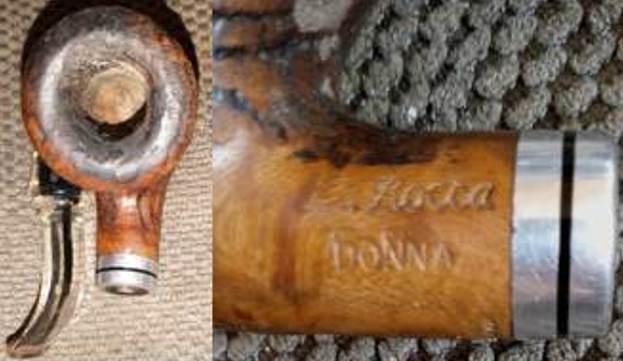
Oh, Donna, I Wish I Read the Instructions First


Blog by Robert M. Boughton

https://www.facebook.com/roadrunnerpipes

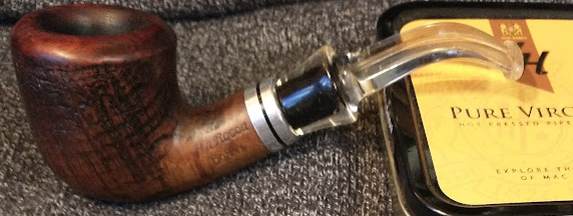
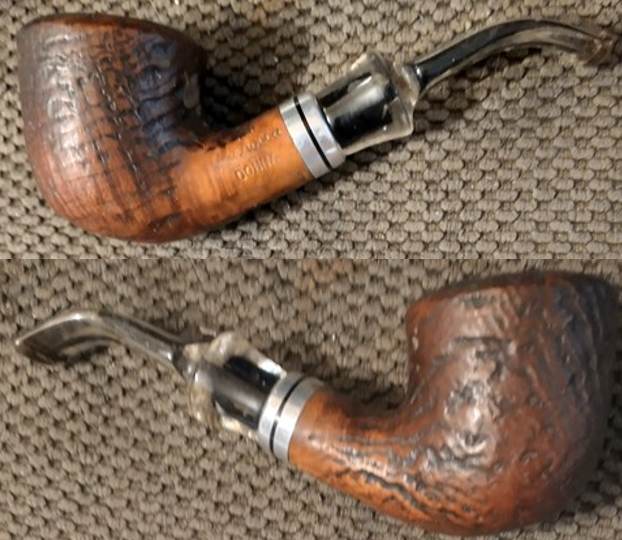
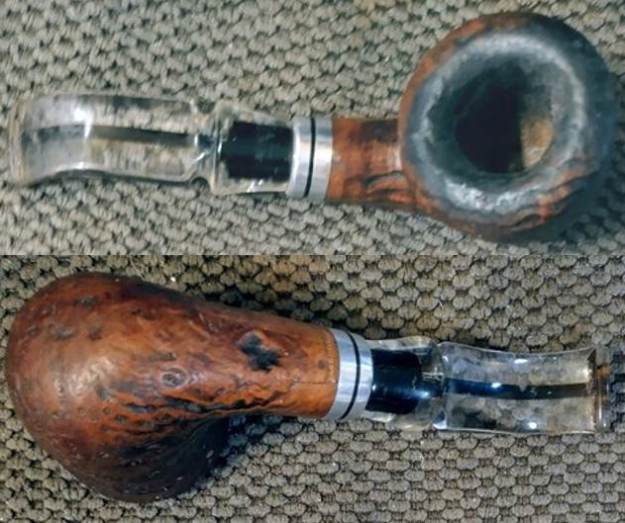
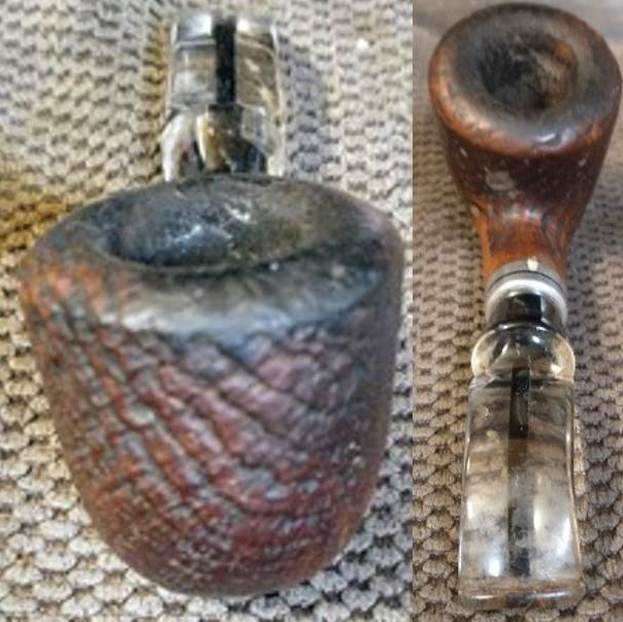
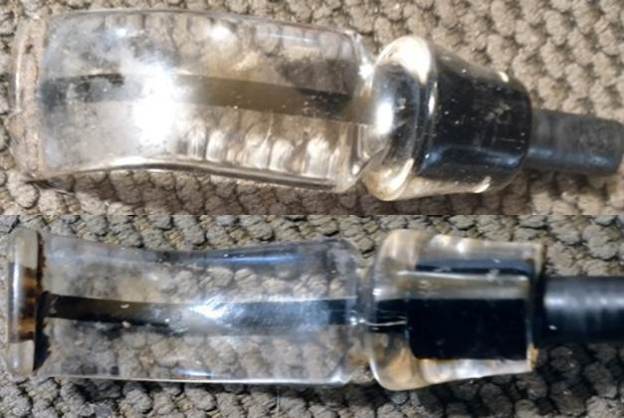
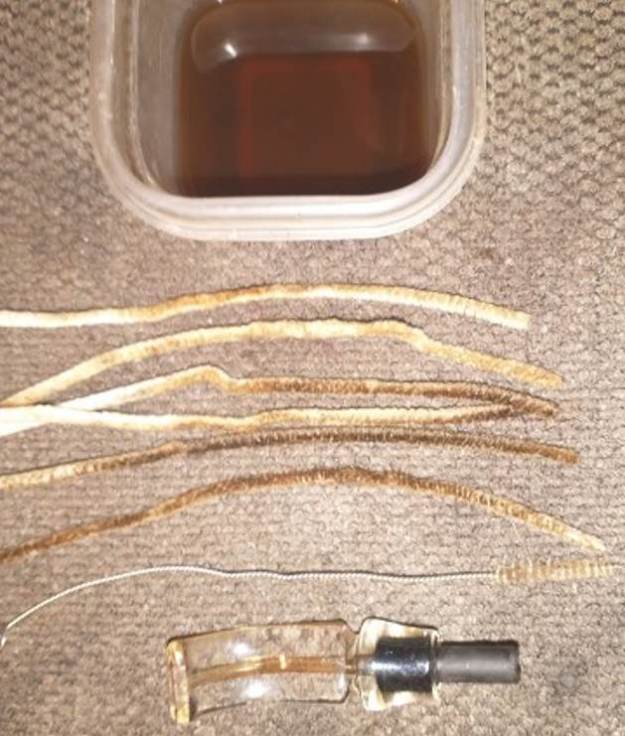
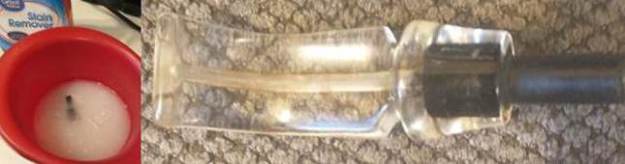
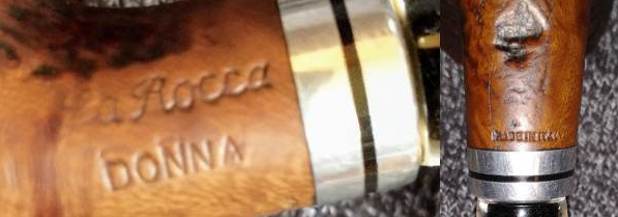
I remembered glancing at a blog Steve wrote about various methods for cleaning Perspex stems, but if I ever got to the most important lesson his years of work with the less forgiving form of acrylic taught him, I forgot it: “that you are never to use alcohol on Perspex!”  I’m not going to flagellate myself for waiting to revisit the blog until it was too late for my La Rocca Donna, but cripes, I wish I had not!  There are kinder, gentler ways to clean up the type of impenetrable brown mess that only long accretion of tobacco, nicotine and saliva can wreak on the airway of a stem that was once uncorrupted in its clarity, other than the standard approach I took.  Oh, well.  Lesson learned.  At least I seem to have avoided the tiny cracks in the stem that can result from contact with alcohol, but I suspect that some of the discoloration may have been fixed into the Perspex.

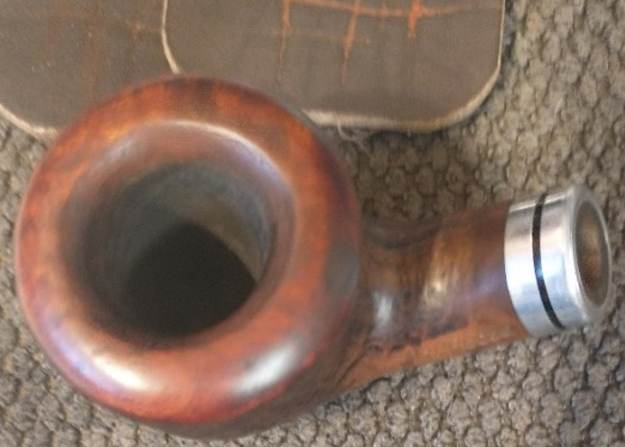
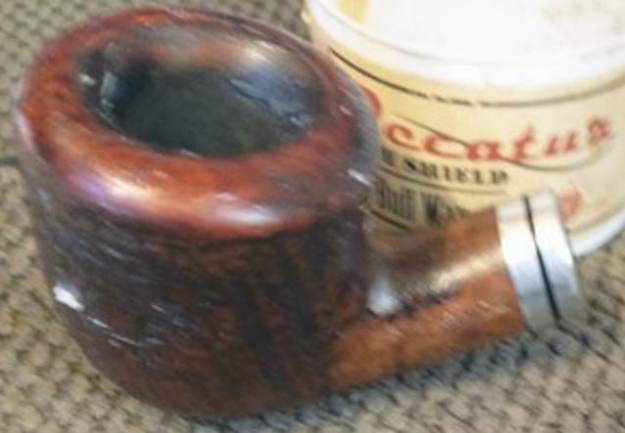
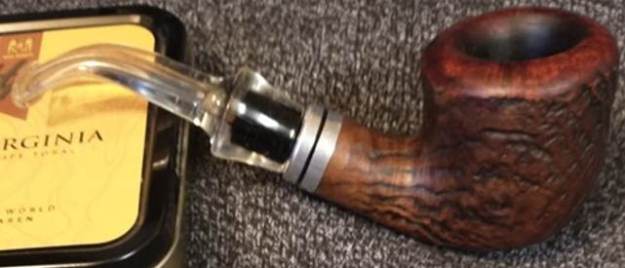
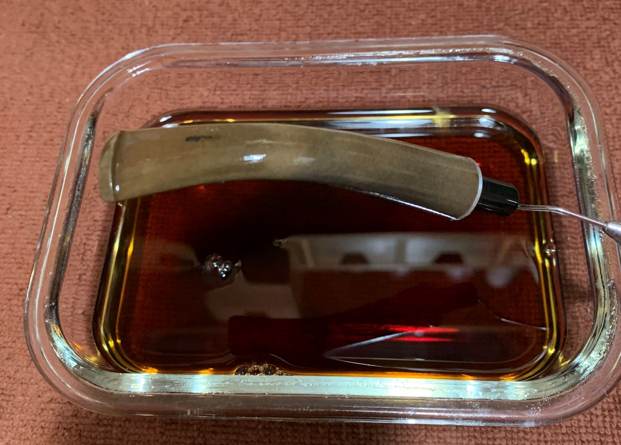
RESTORATION This time, I’ll begin with the stem, to be done with the bad part – not that it didn’t turn out okay. The first thing I did was pour some Everclear – not just Isopropyl – into a dish, the quicker to soak cleaners and run them through.  In the words of a former co-worker who always kept me laughing, “In the name of all that’s sacred, what was I thinking?”  And I was so pleased by the great progress I made!I must turn to the stummel now in order to show the natural progression of my folly, although it all went fine for the briar.I reamed and scraped the chamber, then sanded with 60-grit paper and scrubbed it and the shank with more Everclear.Using 400-grit paper on the rim made it clear that, once again, my roommate’s propensity for inflicting violence on helpless, loyal pipes had ruined it, short of an ad lib sandblast effect. I did that once on a pipe that had nothing to lose and even surprised my old mentor. He had the audacity to look as if he doubted me! At any rate I liberated Donna here for someone more loving. Deciding on a smooth finish for the rim, I went down to 60-grit followed by a 120/180 pad, 220, 320, 400, 600 and 1000. Now, to add injury to insult to the stem, I boiled more Everclear through the pipe in a retort.Afterward, I found Steve’s blog and cringed as I read it.  I micro meshed the rim, stained it with Fiebing’s British Tan leather dye and buffed off the char with 3600 and 4000 micro mesh. I applied Decatur Pipe Shield.I found a close equivalent to soft scrub for the stem with some generic gloopy stain remover. It did no harm and even helped a tiny bit, and it did a remarkable job of making the outside of the Perspex sparkle with no other effort. In the end, this La Rocca turned out nicely.  But now my Donna will surely leave me. SOURCE
https://rebornpipes.com/2016/07/08/a-collection-of-methods-for-cleaning-clear-perspex-stems/comment-page-1/#comment-35918

The Mystery of a Sterling Imported Briar Continues


by Robert M. Boughton

https://www.facebook.com/roadrunnerpipes

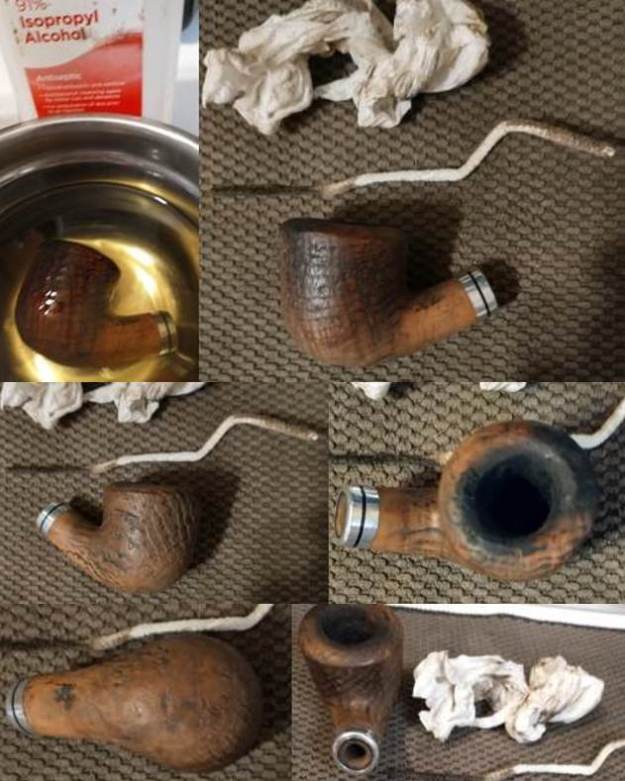
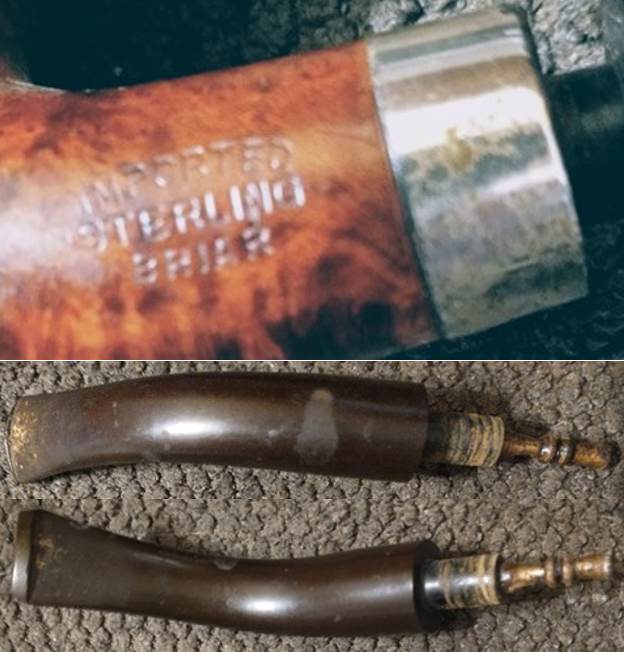
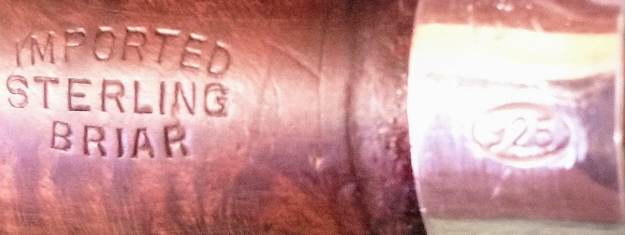
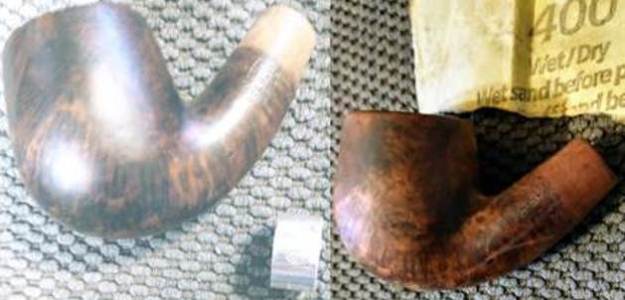
In my online quest for any information whatsoever concerning a Sterling Imported Briar pipe – brand, model or even a whisper in a smoker’s forum – I went full tilt boogie.  In the end, I added “rebornpipes” to the Google search.  If it weren’t for Steve’s blog about a Sterling Imported Briar author a while back, I would have come up empty handed.  Steve’s research was much more meticulous and imaginative.  Nevertheless, his only definite conclusion was that his pipe was a US import, but “How it came to have a British Hallmarked Silver band on the shank is shrouded in mystery and I will probably never figure out the connection.”

RESTORATION
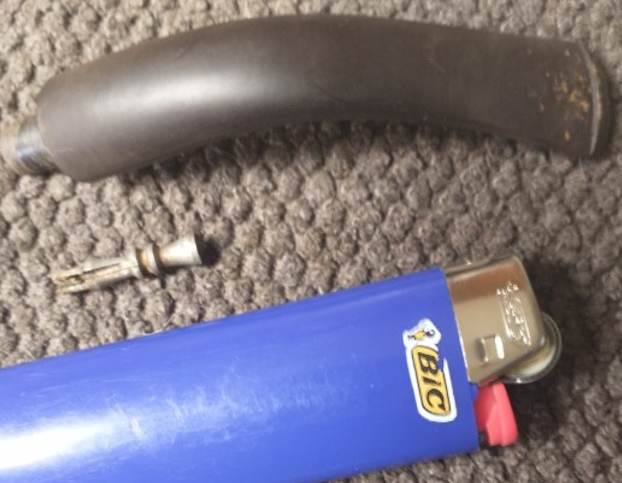
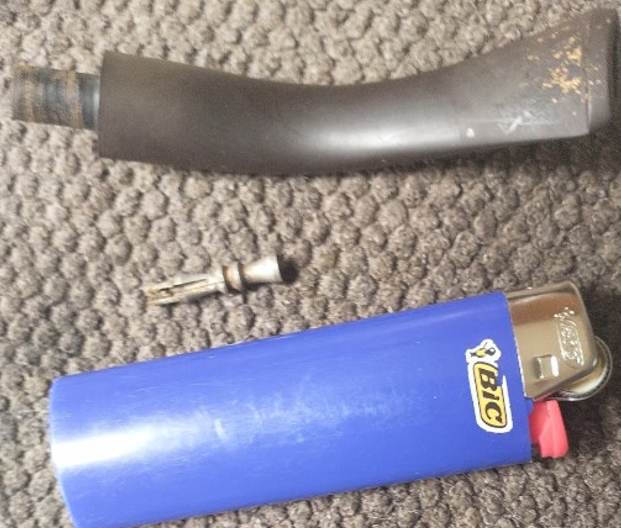
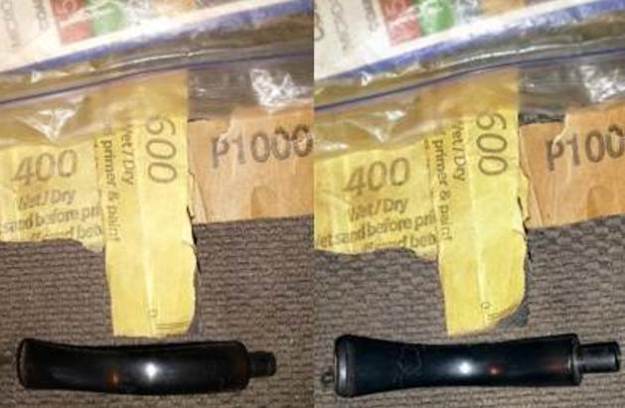
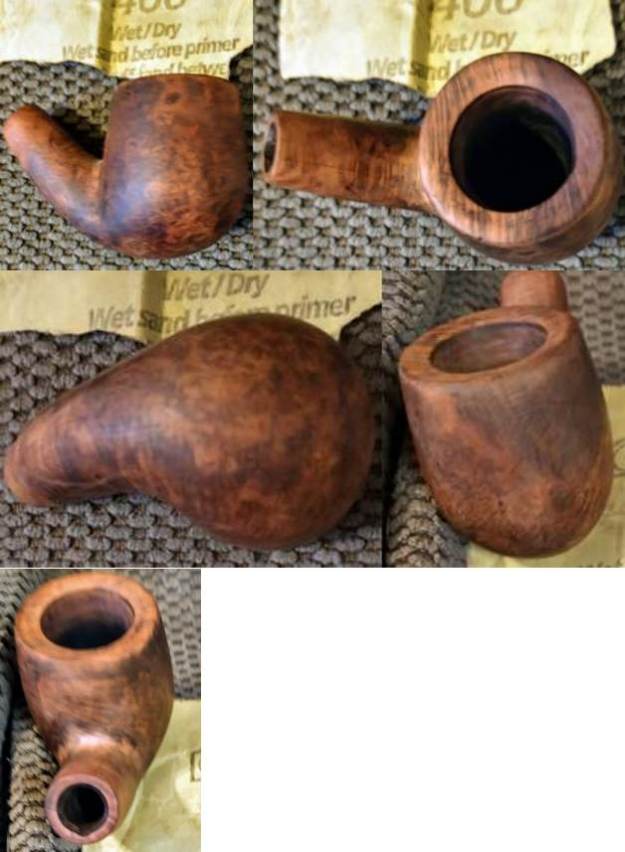
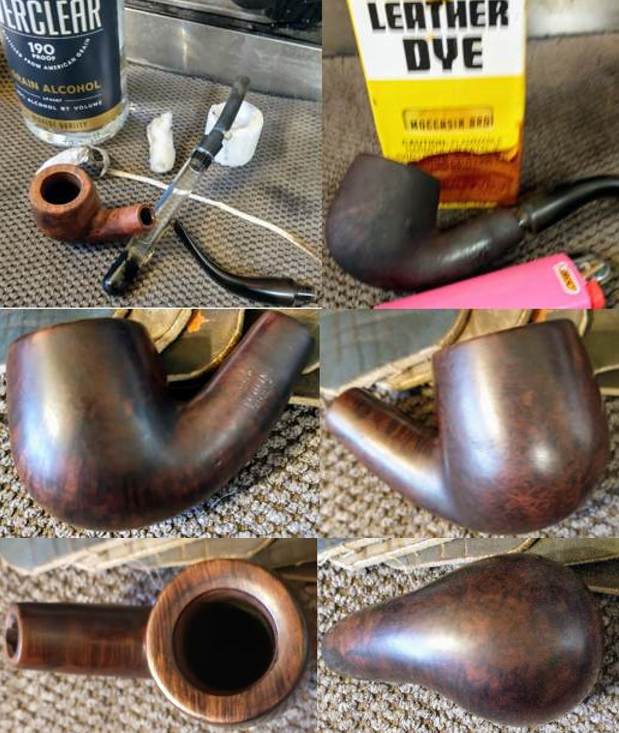
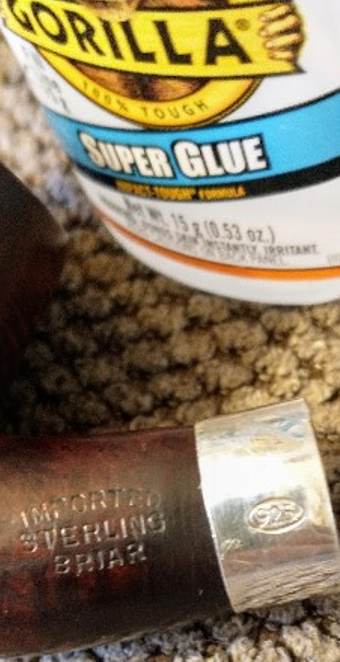
The briar was a little dirty and dinged, and there were some imperfections such as small fills.  Serious work was needed on the chamber and rim.  With the usual care, the stem would be fine.  A little stinger in the tenon was not special enough to keep.  For whatever reason, including the possibility that the stem was a replacement, the tenon was too big for the shank.  Despite the words sterling silver on the band and the name of the billiard, the metal was something less than sterling and would have to go – another indication that prior fiddling was done.  The band ended up being the last problem I fixed. The band slid off before the alcohol soak of the stummel.I gave the stem an OxiClean bath. Sanding with 400, 600 and 1000 paper followed by micro meshing made the stem much better.  I took the tenon diameter enough to fit all the way in the shank.Here is the stummel after the alcohol soak. I reamed and sanded the chamber with 60-grit paper. I used the same coarse paper on the rim before smoothing it with 220 and 320.I discovered a slight problem when the 14.5mm real sterling silver band I ordered arrived, due to my error, of course, not Vermont Freehand’s. I needed 15mm instead of the exact diameter of the stem opening.Careful not to ruin the crisp nomenclature, I took off 0.5mm with 60-grit and smoothed it with everything up to 400.  The exposure on the first shot below is way off.  I retorted the pipe, stained the stummel with Fiebing’s Moccasin Brown leather dye and buffed with micro mesh from 3600-12000. It was time to Super Glue the new band on.

All that was left were buffing the stem and stummel with Red Tripoli and carnauba and polishing the band with Wright’s Silver Cream. SOURCE
https://rebornpipes.com/tag/sterling-imported-briar-pipes/

Restemming & Restoring a French Made GBD Sauvage 1345 Poker/Pot


Blog by Steve Laug

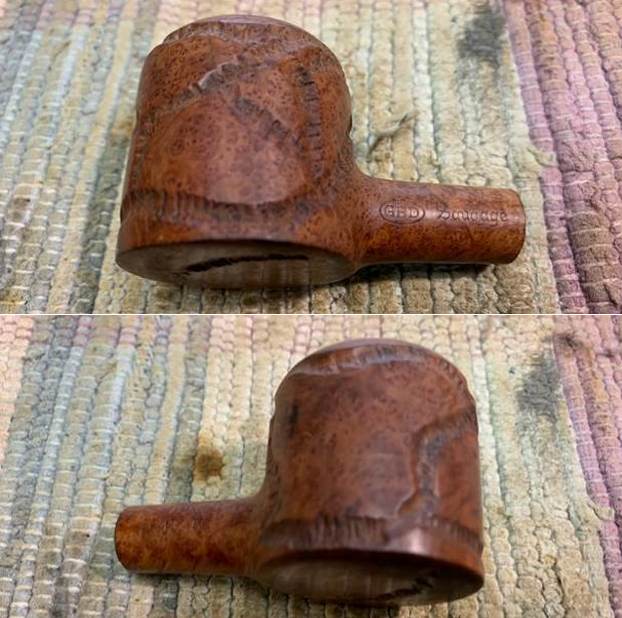
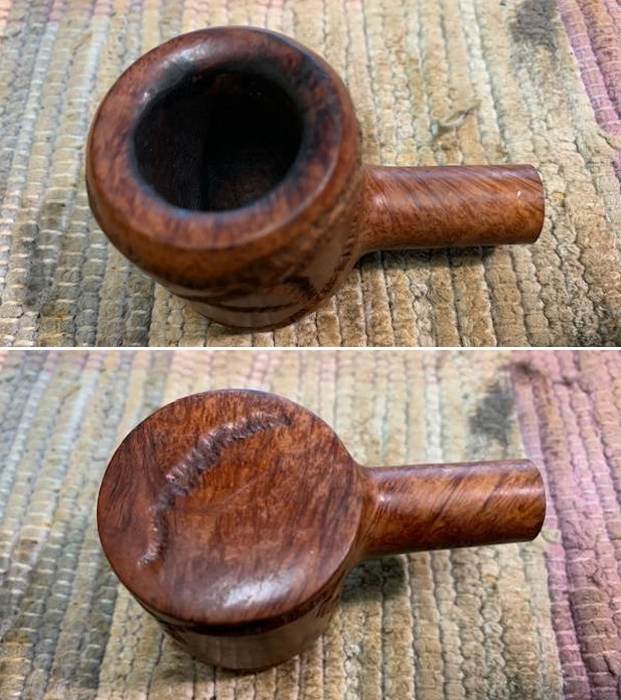
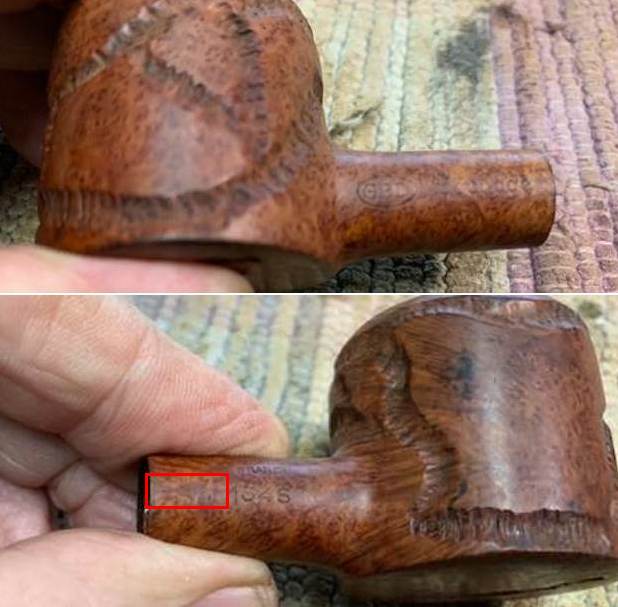
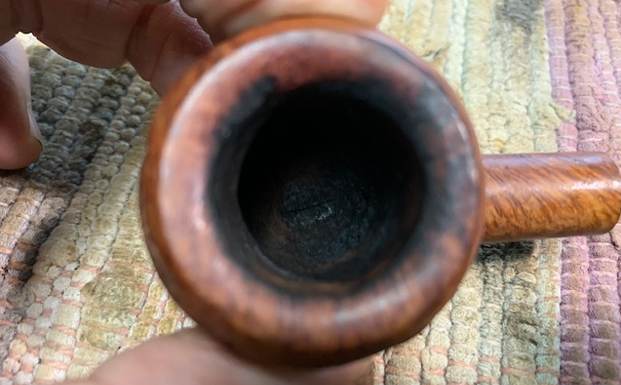
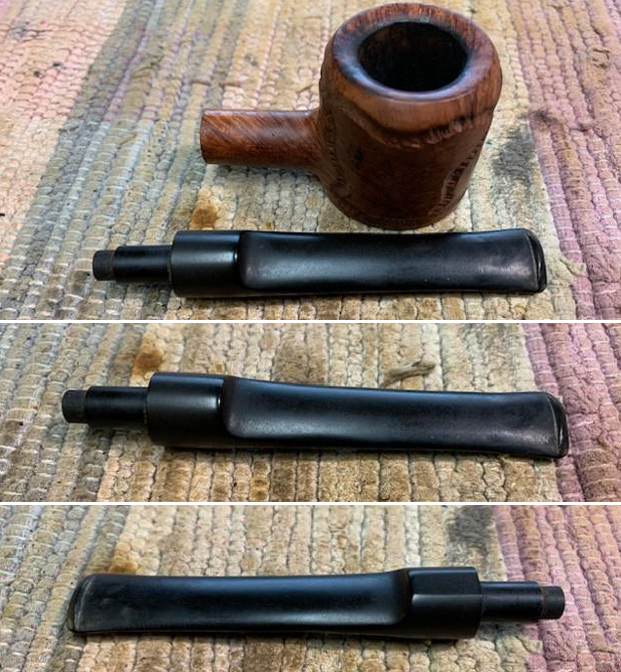
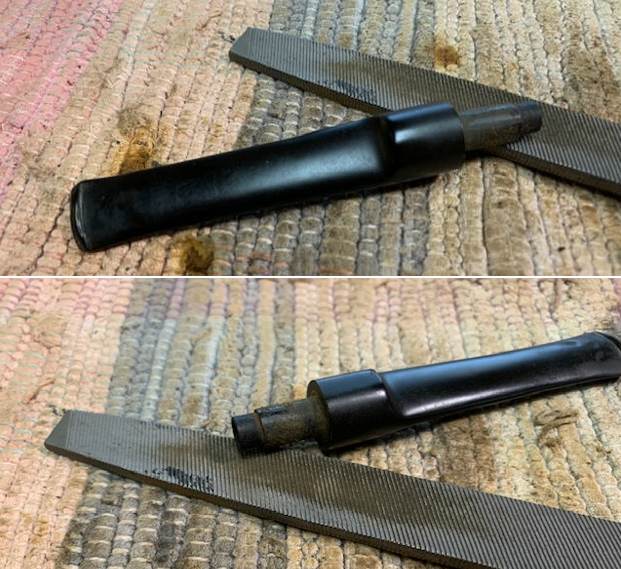
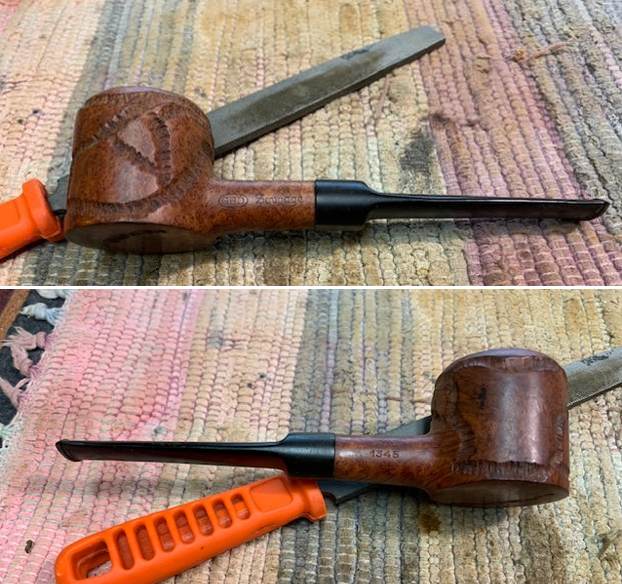
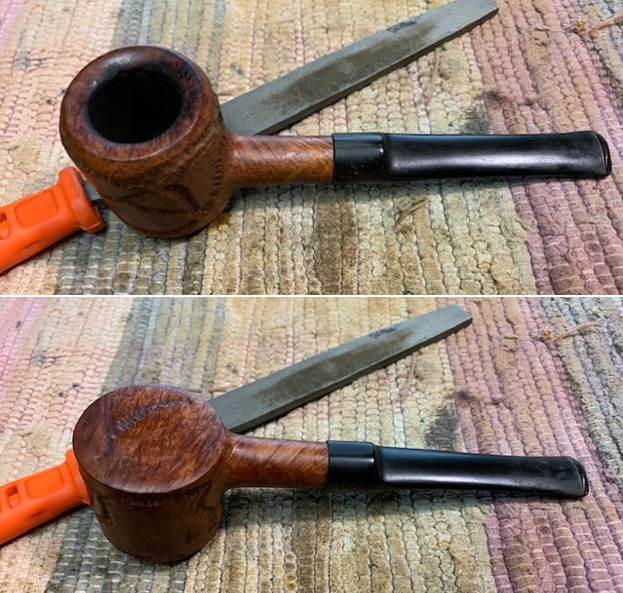
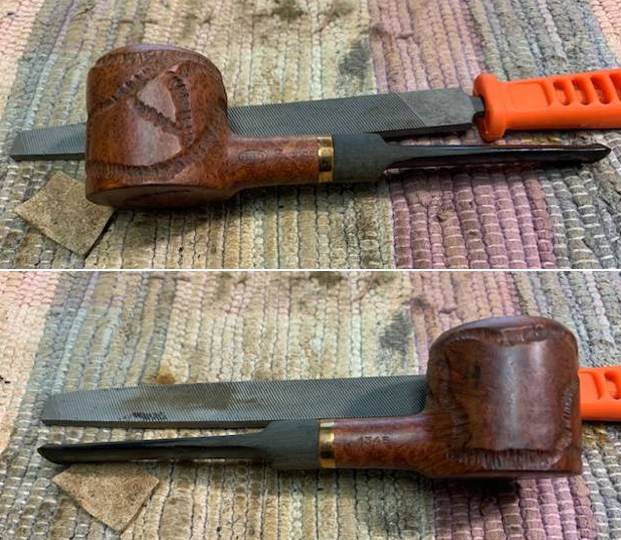
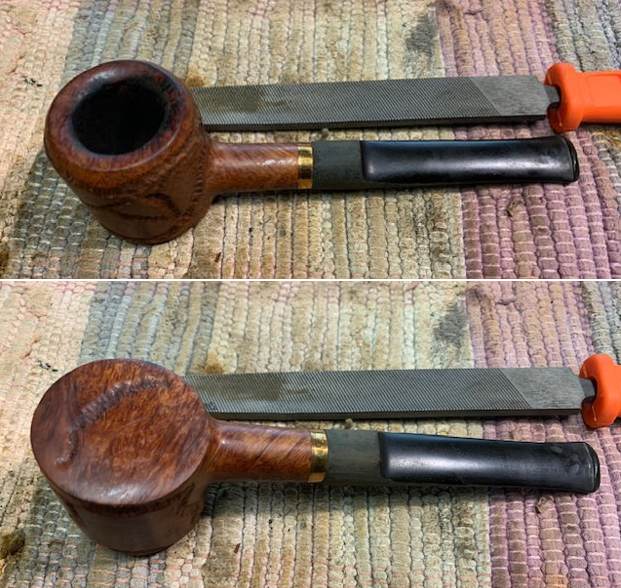
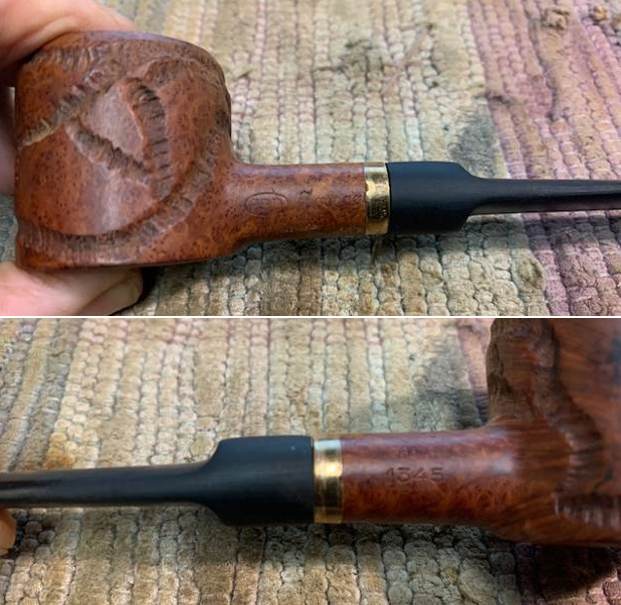
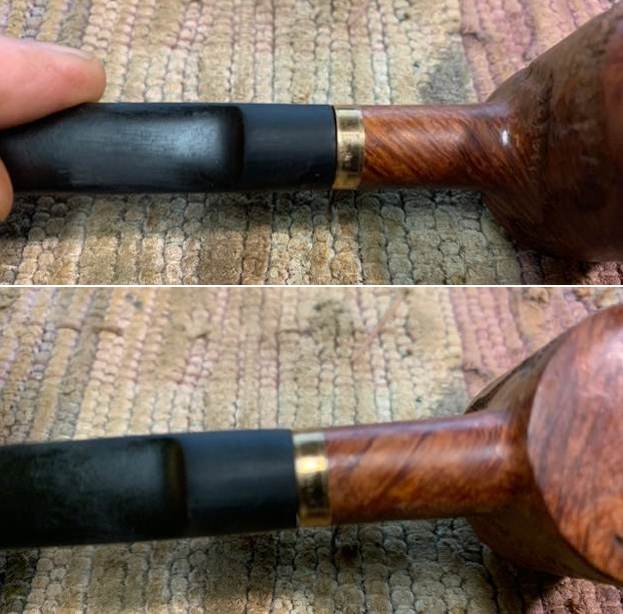
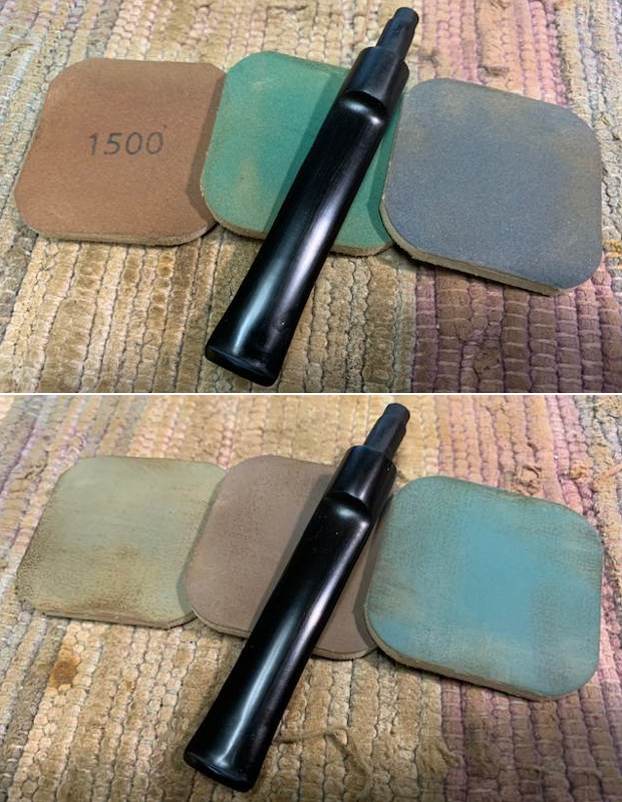
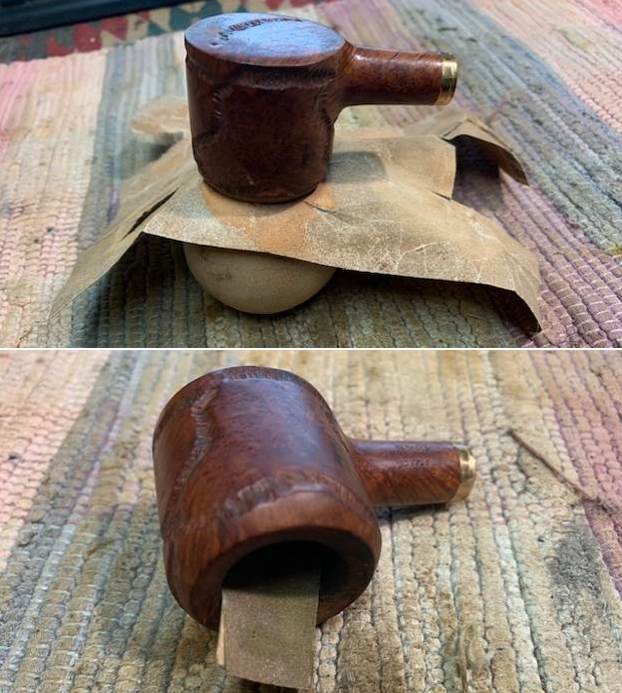
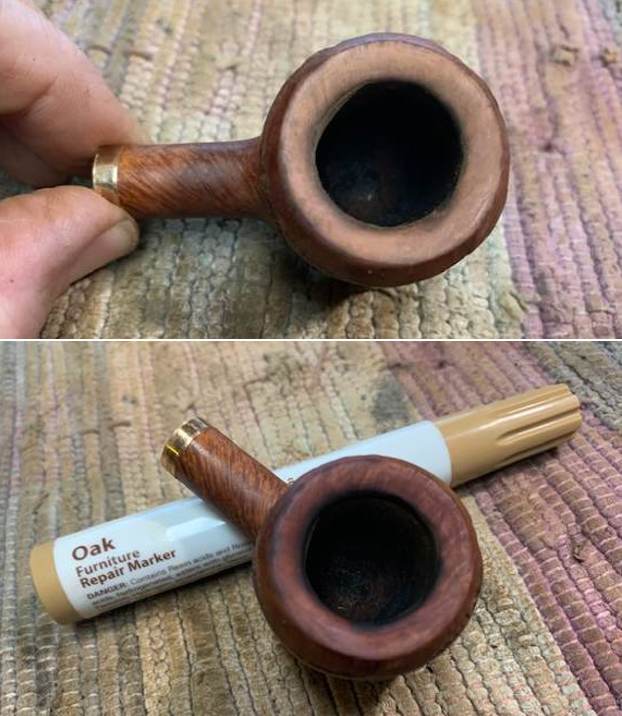
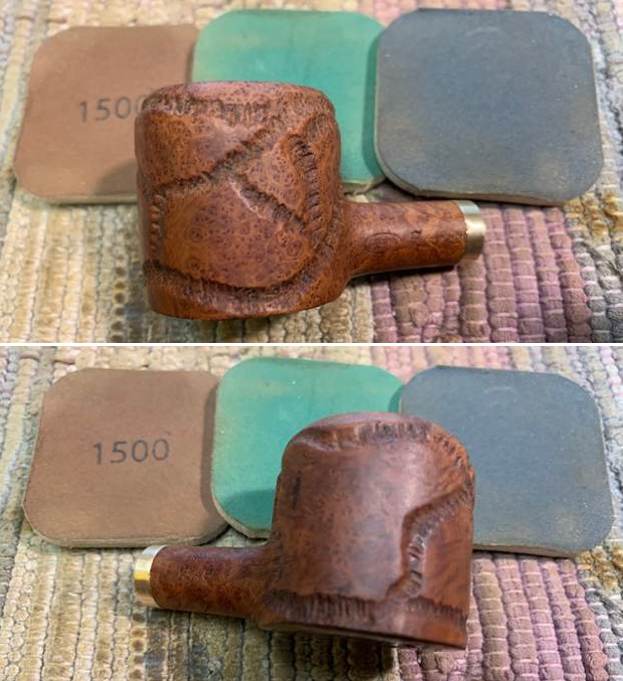
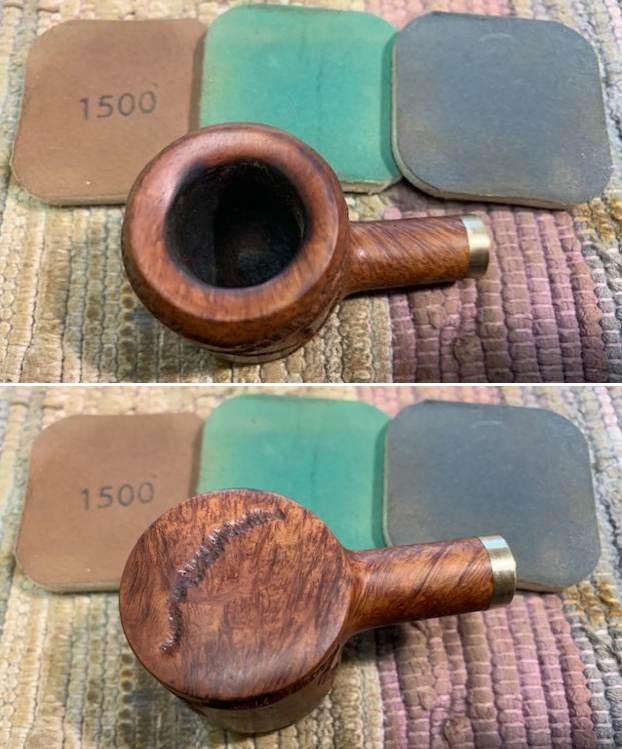
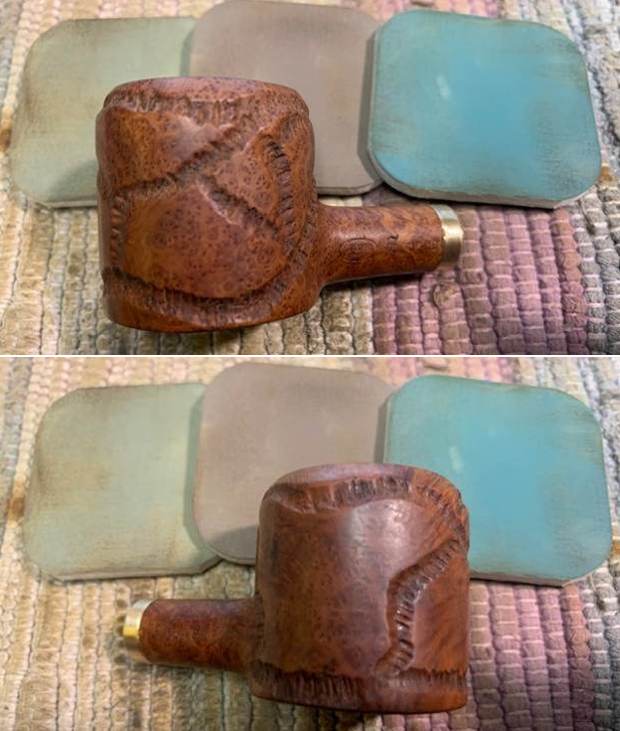
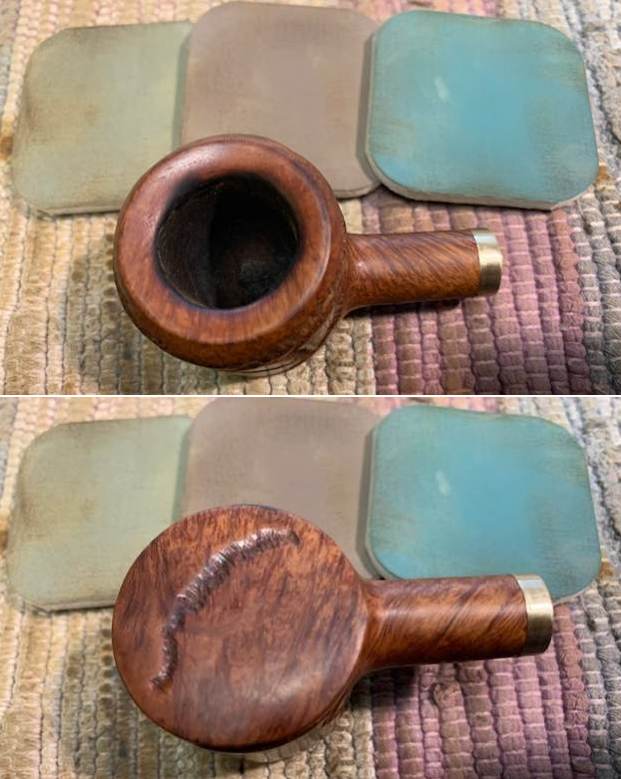
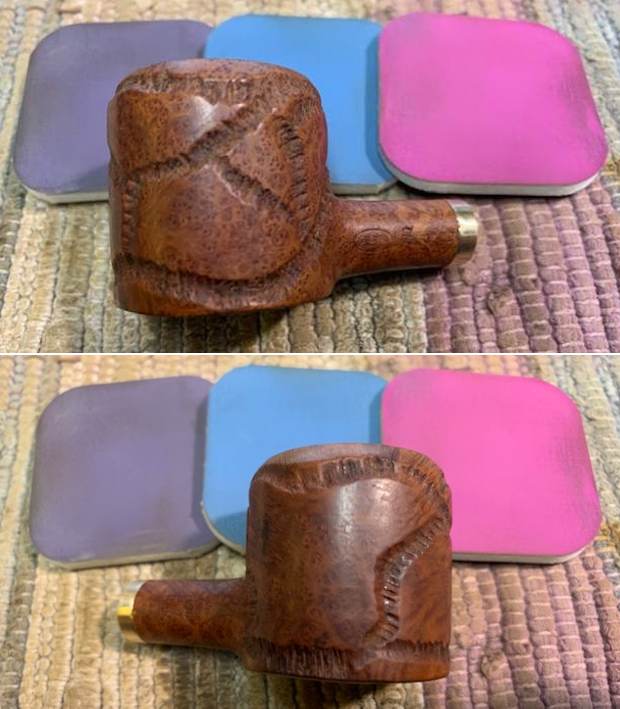
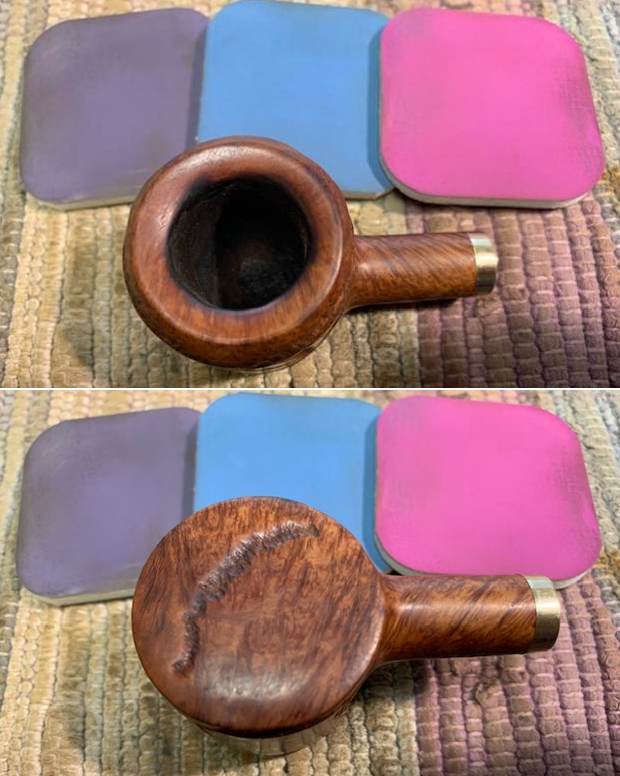
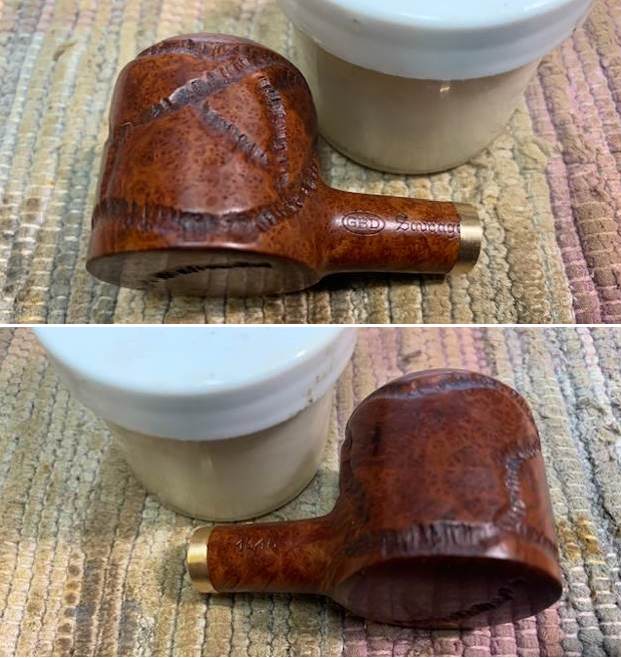
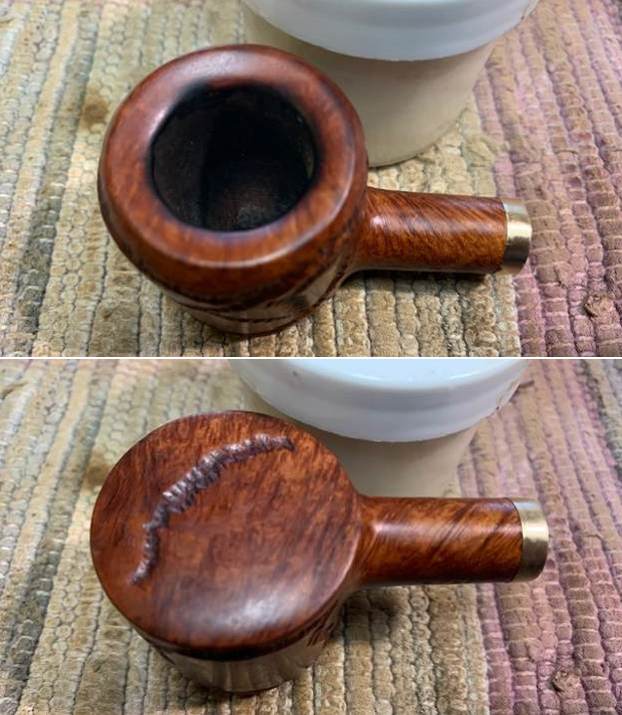
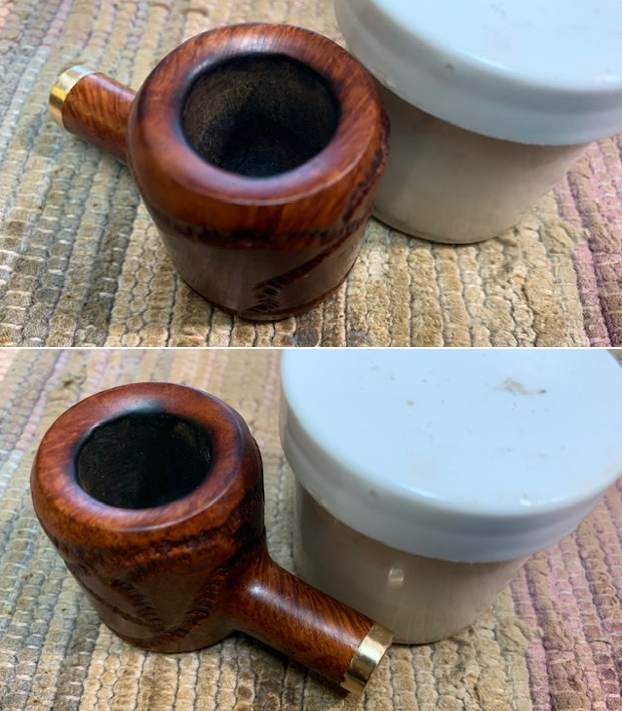
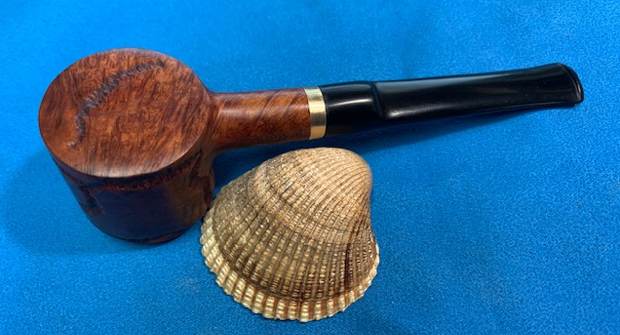
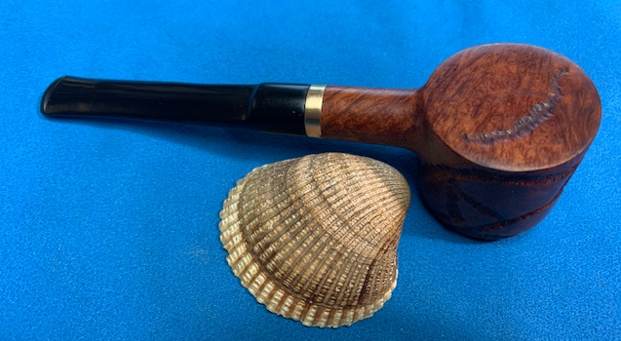
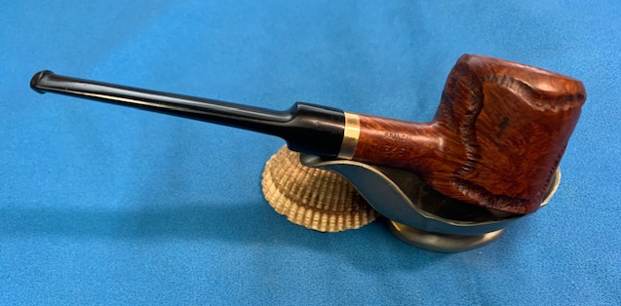
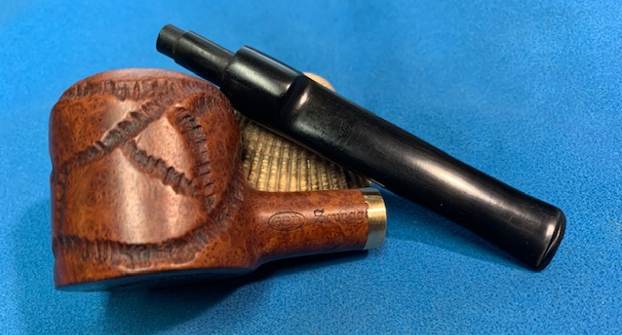
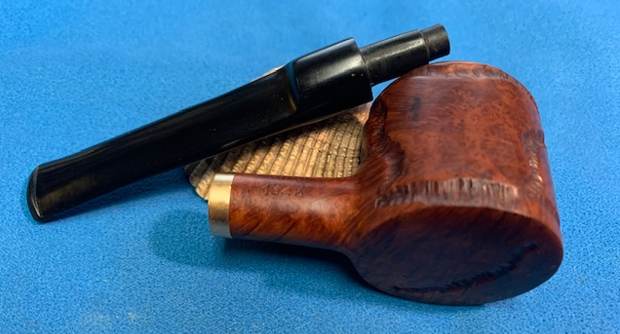
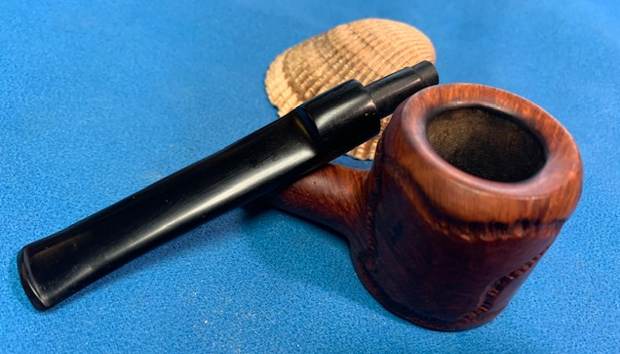
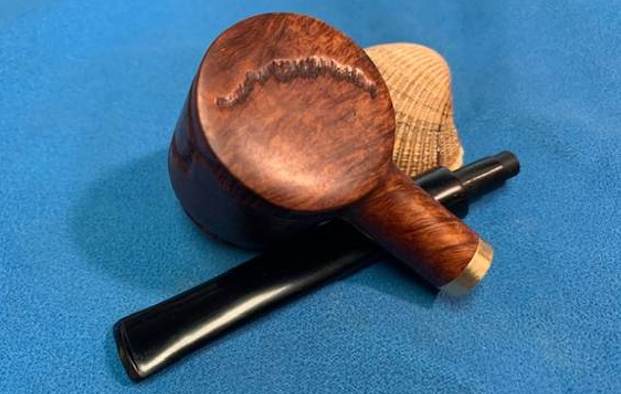
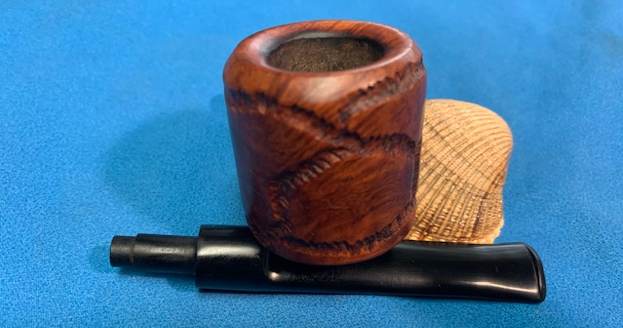
The next pipe I chose to work on was another bowl from my box of bowls to restem. It is a different looking bowl that combines both a Pot and a Poker shape. It has a inward beveled rim, flat bottom and worm trails curled around the bowl sides. When I examined the shank it had a small hairline crack on the right side that would need to be repaired but otherwise it was solid. It was unique enough I wanted to work on it. It is stamped on the left side of the shank and has a GBD oval logo next to the bowl/shank union followed by Sauvage. On the right side of the shank it is stamped FRANCE [over] the shape number 1345. The stamping was clear and readable with a lens. The bowl had been cleaned and reamed somewhere along the way by either Jeff or me. I honestly don’t remember when or where we got this bowl. It looked very good and I was looking forward to seeing the finished pipe. The stem was long gone so this would be a restemming job. I took some photos of the bowl to give a sense of the condition of bowl. The stamping was on both sides of the shank and it is clear and readable as noted above. I have also drawn a red rectangle around the area where the crack in the shank is located in the photo below.The next photo shows the rounded rim top and edges. It also shows the condition of the bowl and rim top/edges. It is clean and looks quite good. There is some burn damage on the inner edge of the bowl and on the beveled rim top at the front and the back of the bowl.Now it was time to begin my restemming work on this pipe. I went through my can of stems and chose a stem that would work. I would need to remove some the diameter of the tenon and the saddle portion to fit the thin almost pencil shank of the pipe. I used a flat file to remove the small amount of excess on the tenon. It was a close fit but I did not want to make the crack in the shank worse by a tenon that was not correct.When I had finished shaping the tenon I sanded it with a piece of 220 grit sandpaper and inserted it in the shank. It was looking pretty good. I would need to trim back some of the diameter of the saddle portion but I liked it! I generally use a Dremel and sanding drum to reduce the diameter of the stem. I do this with the stem in place on the shank so that I do not overdo it. It is a touchy exercise and one slip and I could easily damage the shank and make more work for myself. I move carefully and take it back as close as I can at this point. Once I band the shank I will need to do some more work on it but it is starting to look right. With the fit close enough it was time to band the shank. I generally do the final adjustments on the stem diameter after I have fit the band in place. I picked a band out that would fit when heated. I took a photo of the crack in the shank to show what I was working with. I sanded the shank end and gave it a slight bevel to facilitate pressing the band in place. Once it was ready I put the band on the shank. It was tight so I heated it with a lighter and when it had expanded I pressed it against the pad on my desk and pushed it all the way onto the shank. It covered the “e” on Sauvage slightly but the length of the crack defined what I needed to band it. I used some 220 grit sandpaper to once again take a little bit off the diameter of the tenon and the band compresses the crack and the diameter of the mortise changes. When I was finished I put the stem in the shank and took photos of the newly banded shank. It was going to look good once I finished shaping the stem diameter but it is very close at this point. What do you think of the new look? I finished adjusting the fit of stem diameter with 220 grit sandpaper and everything was aligned. I started the polishing with 400 grit wet dry sandpaper and the stem was looking very good at this point. Now I needed to deal with the tooth marks and chatter on the end of the stem. I “painted” them with the flame of a lighter to lift them as much as possible. I filled in the ones that remained with clear super glue. Once the glue cured I flattened out the repairs with a small flat file. I followed that by sanding the stem with 220 grit sandpaper to blend them into the surface. I started polishing the stem with 400 grit wet dry sandpaper. I polished the stem with micromesh sanding pads – wet sanding with 1500-12000 grit pads. I wiped the stem down after each sanding pad with Obsidian Oil. I polished the stem with Before & After Pipe Stem Polish – both Fine and Extra Fine and buffed it with a cotton cloth. Once I had finished the polishing I gave it final coat of Obsidian Oil and set it aside to dry. With the stem finished (other than to buff the pipe at the end)I set it aside and I turned my attention to the bowl. I used a wooden ball that Kenneth gave me with a piece of 220 grit sandpaper to clean up the bevel. I finished with a folded piece of 220 grit sandpaper to further minimize the burn damage. I touched up the stain with an Oak Stain pen to match the surrounding briar of the bowl. It looked much better at this point. I polished the briar with micromesh sanding pads – dry sanding with 1500-12000 grit pads. I wiped the bowl down after each pad with a damp cloth to remove the sanding debris left behind. I rubbed the bowl and shank down with Before & After Restoration Balm. I worked it into the surface of the smooth and worm trails on the bowl and shank with my fingertips to clean, enliven and protect the briar. I let the balm sit for a little while and then buffed with a cotton cloth to raise the shine. The Balm did its magic and the grain really took on dimension and colour. I am excited to be on the homestretch with this petite French Made GBD Sauvage 1345 Poker/Pot. This is the part I look forward to when it all comes back together, polished and waxed. I put the bowl and the new stem together and polished the stem and bowl with Blue Diamond to polish out the scratches in the vulcanite and give a light shine to the bowl. I gave the bowl and the stem multiple coats of carnauba wax. I buffed the pipe with a clean buffing pad to raise the shine. I hand buffed it with a microfiber cloth to deepen the shine. The pipe polished up pretty nicely. The worm trail carving on the bowl actually looks okay with the rest of the smooth finish. The banded shank and new polished black saddle vulcanite stem works well with this little sitter. This GBD Sauvage Poker/Pot was another fun pipe to work on and came out looking great. It is a comfortable sized pipe to hold in the hand. The finished pipe is shown in the photos below. The dimensions of the pipe are Length: 5 ¾ inches, Height: 1 ½ inches, Outside diameter of the bowl: 1 ½ inches, Chamber diameter: ¾ of an inch. The weight of the pipe is 33 grams/1.16 ounces. If you are interested in adding this pipe to your rack it will be on the rebornpipes store in the French Pipemakers Section soon. Thanks for reading this blog and my reflections on the pipe while I worked on it.

Firing Up the Carburetor


Blog by Kenneth Lieblich

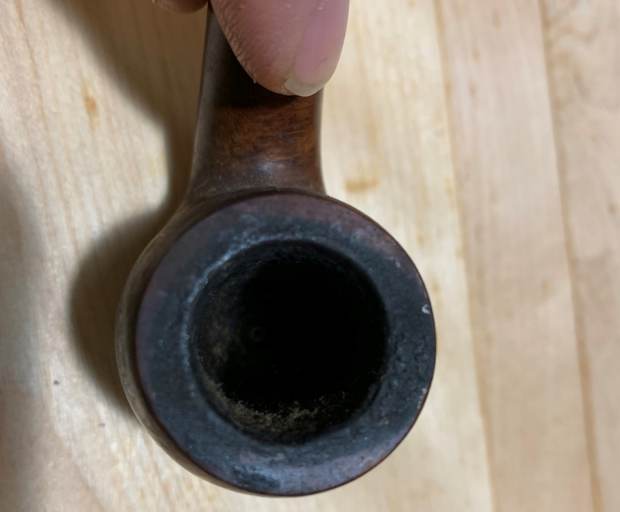
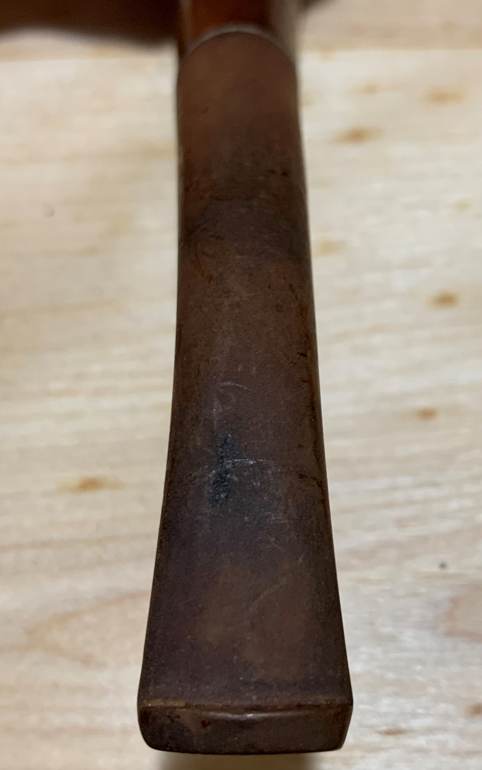
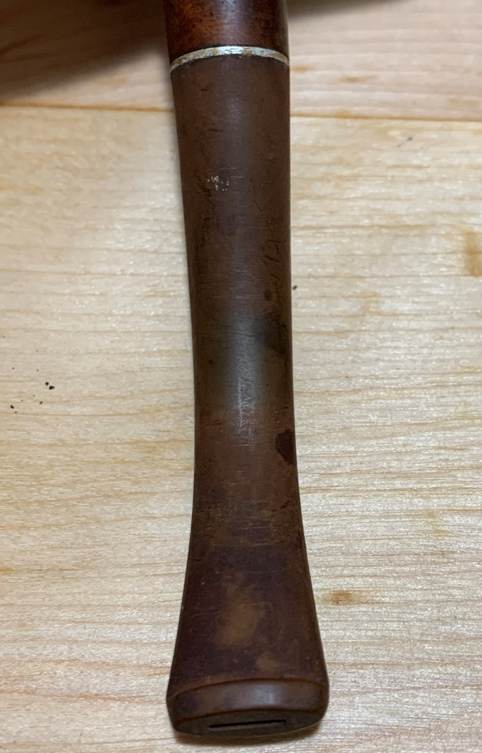
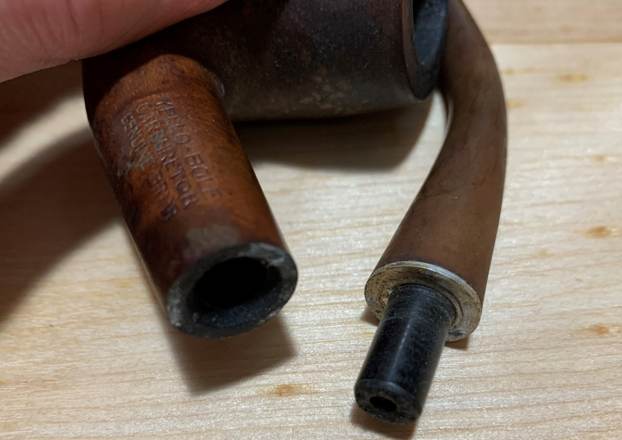
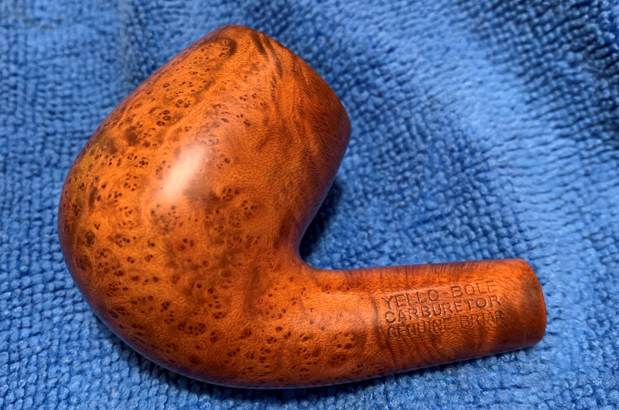
Next on the chopping block is an amazing, old Yello-Bole Carburetor. It has lovely proportions and very nice lines. It was clearly a well-made pipe, but it was a mess. It came to me in a lot off of Craigslist, here in the Vancouver area. There were several interesting pipes in this lot, but I grabbed this one because I wanted to learn more about carburetor systems in pipes. This seemed like a good starting point. The pipe turned out beautifully, but it was not clear that that was going to be the case when I started! This is a bent-egg-shaped pipe – and a really pretty one too. It felt very nice. There is plenty of information to be had on Yello-Bole pipes, but this one is slightly tricky to date. The markings on the left of the shank read Yello-Bole [over] Carburetor [over] Genuine Briar. On the right side of the shank is the model number 9567. Also, on the stem, there is a whitish circle, unlike the yellow circles of old. RebornPipes has a few write-ups on Yello-Bole Carburetors, but none quite like this one. I believe this pipe to be a bit newer than the previous restorations – certainly dating after 1955 and before 1972. I say “certainly” because when S.M. Frank & Co. Inc. bought out Yello-Bole et al from KB&B in 1955, they ceased using the KB&B clover-leaf logo. This pipe does not have the clover. The history of Yello-Bole’s carburetor system is quite interesting. I am borrowing from an old post of Steve’s to relay the following information:

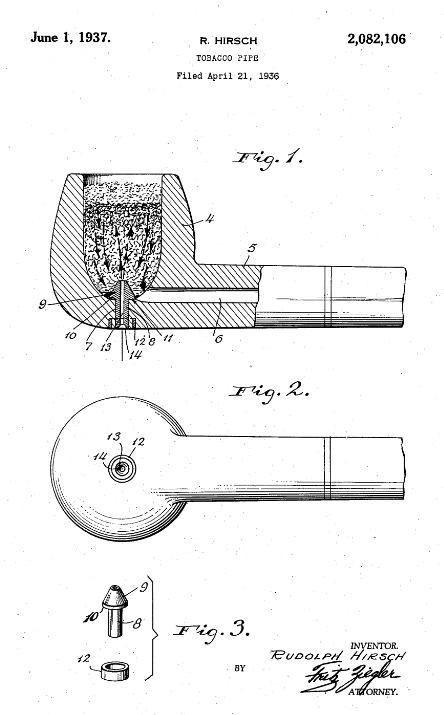
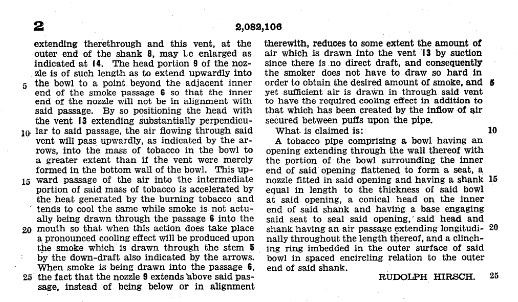
I decided to look up the patents on the US Patent site and see what I could find about about them and the date they were filed (https://patft.uspto.gov/netahtml/PTO/srchnum.htm). I searched first for the US. Pat. 2,082,106 that was stamped on the top and left side of the shank. I assumed it referred to the Patent for the Carburetor but I was not certain. I found a drawing and description of the carburetor system of a patent filed by R. Hirsch on April 21, 1936 and granted on June 1, 1937. I have included those pages below. For those interested in the problematic dating of Yello-Bole pipes, please refer to this link which has some useful information: https://www.tapatalk.com/groups/kaywoodie/dating-yello-bole-pipes-t86.html.

Anyway, on to the pipe, and – as I mentioned – it was very attractive, but a bit of a mess. The stem was dark and dreary. It had significant oxidation and plenty of tooth chatter and scratches. Meanwhile, the stummel also had some problems. There was plenty of lava on the rim, some small burns, cake in the bowl, and a few scratches here-and-there. The staining of the wood needed to be revivified too. The finish on the wood had come off in spots and that was going to need attention. Also, the carburetor itself was impregnated with gunk. This pipe was going to require quite a bit of elbow grease, but I was looking forward to working on this one. It is a pipe that still has many decades of use in it.

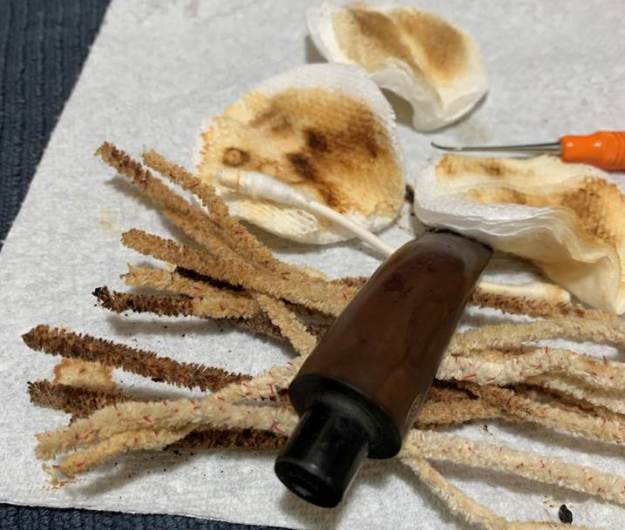
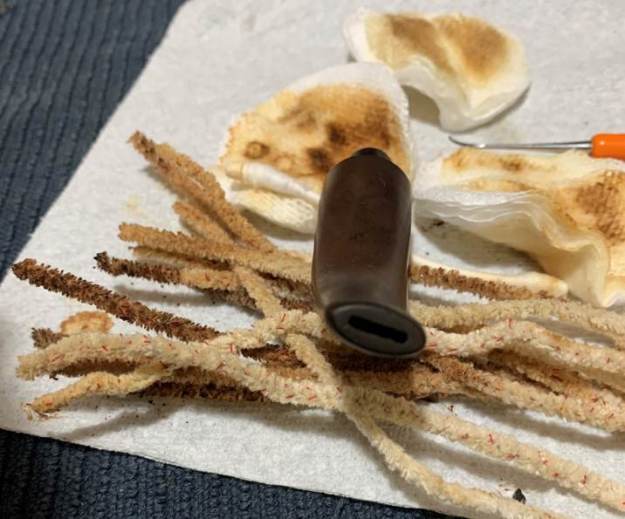
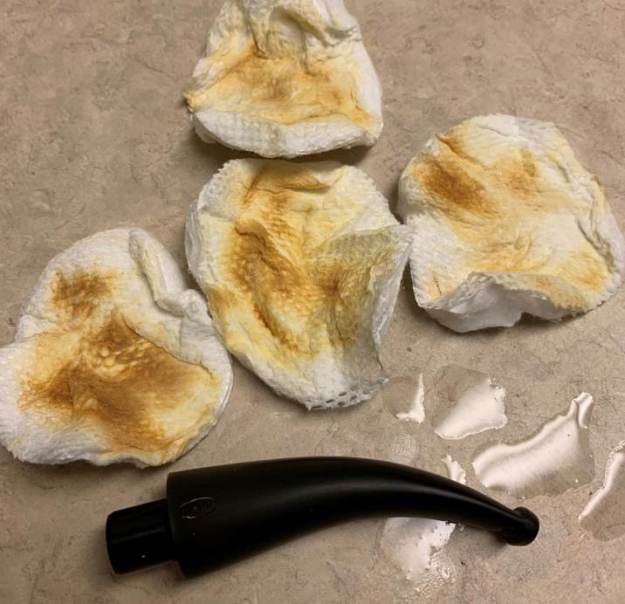
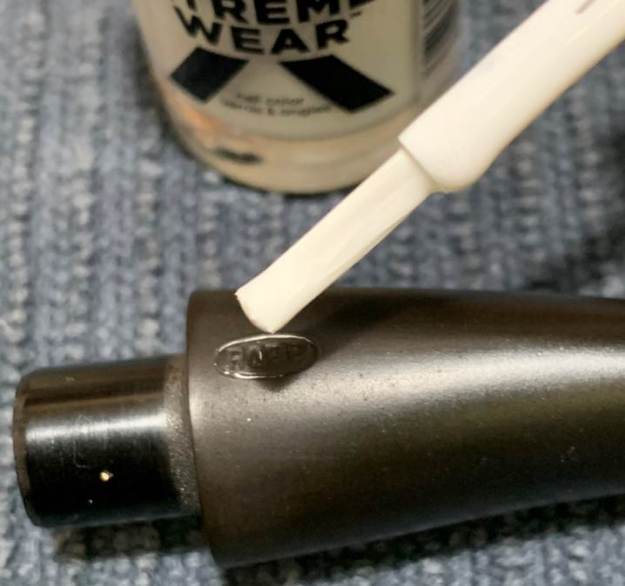
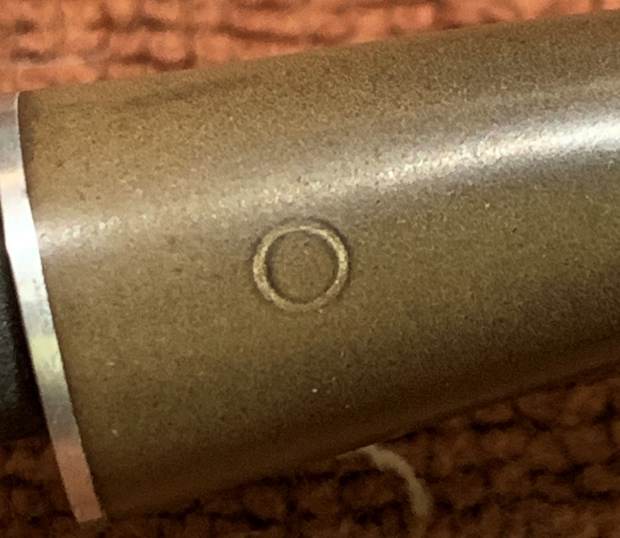
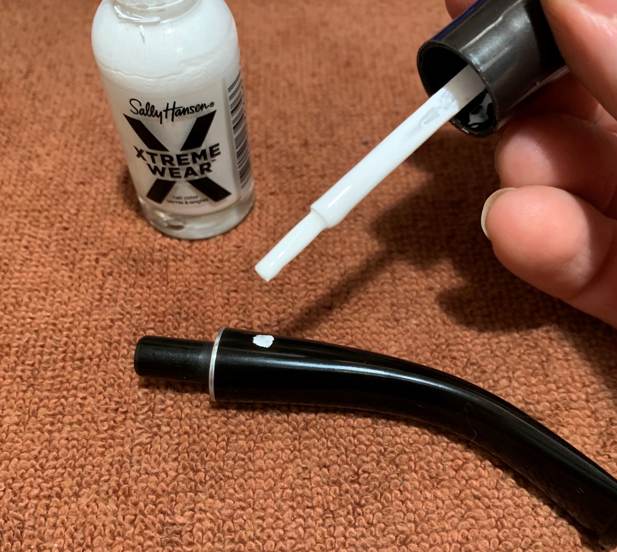
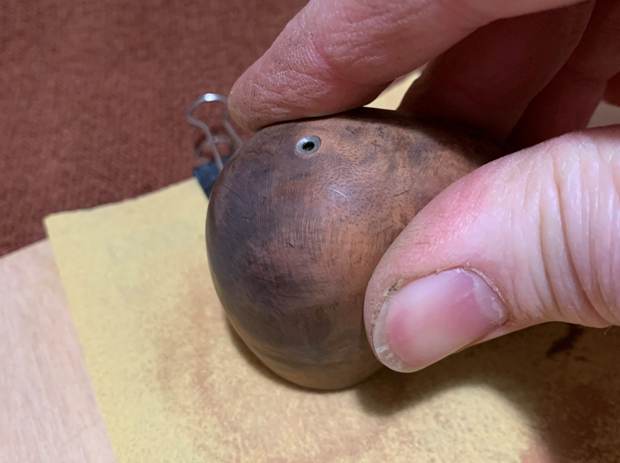
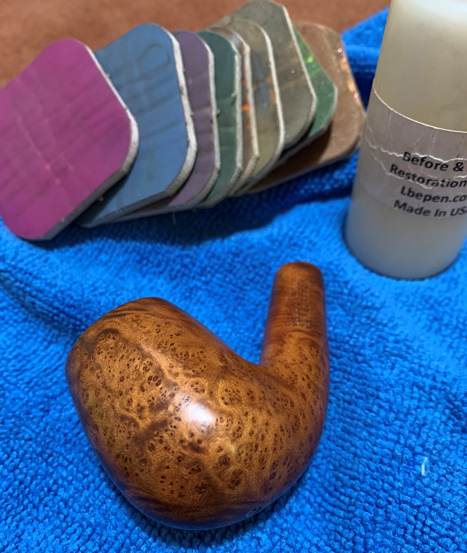
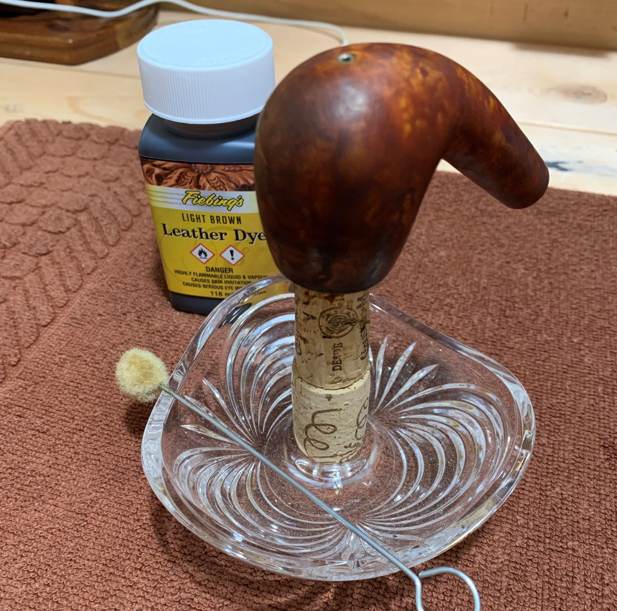
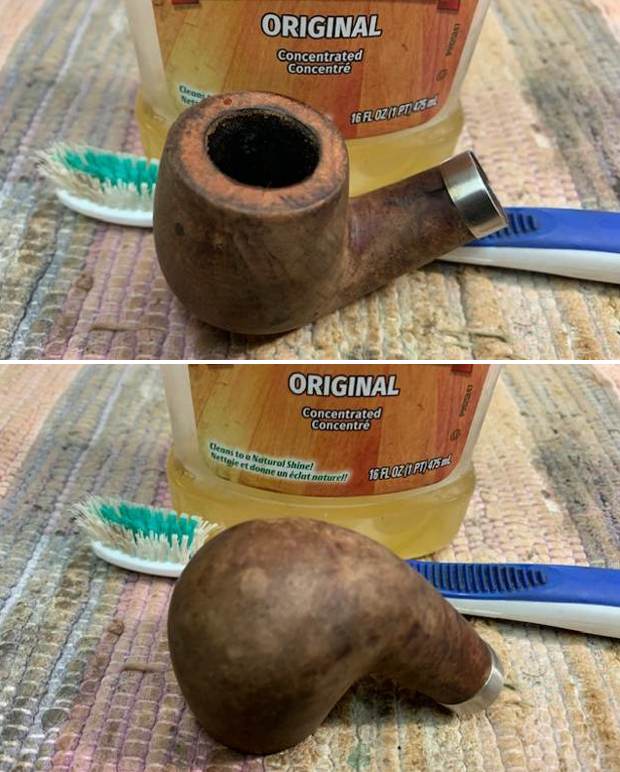
The stem was first on my list. I wiped down the outside of the stem with Murphy’s Oil Soap on some cotton pads. I also took a BIC lighter and ‘painted’ the stem with its flame in order to lift the bite marks and dents. This was somewhat successful in raising the damage. Then, I cleaned out the insides with pipe cleaners and isopropyl alcohol. Once this process was done, the stem went for an overnight soak in the Before & After Hard Rubber Deoxidizer. The following day, I cleaned all of the de-oxidizing sludge off with alcohol, pipe cleaners, et cetera. The oxidation had migrated to the surface and would be fairly straightforward to remove. I scrubbed vigorously with SoftScrub on cotton pads (and a toothbrush) to remove the leftover oxidation. Before I moved on to the Micromesh pads, I built up some tiny dents on the stem with cyanoacrylate adhesive and let it fully cure. I then sanded it down with 220-, 400-, and 600-grit sandpapers to meld seamlessly into the stem. I then used all nine Micromesh pads (1,500 through 12,000 grit) to bring out the lovely black lustre on the stem. I also used Obsidian Pipe Stem Oil in between each pad scrubbing.I also decided to paint the “O” on the stem with some white nail polish. This sort of “paint” works very well in filling in the markings and is quite resistant to wear-and-tear.This stummel was quite a mess. The lava on the rim was so substantial that I first gently scraped it with a knife to remove as much as possible. I then decided to ream out the bowl. I used both the PipNet Reamer and the KleenReem to remove the built-up cake and followed that with 220-grit sandpaper to eliminate as much as I could. I took it down to bare briar, as I wanted to ensure there were no hidden flaws in the walls of the bowl. Fortunately, there were none. I then proceeded to clean out the insides of the shank with Q-tips, pipe cleaners, and isopropyl alcohol. There was a lot of nastiness inside this stummel and – boy-oh-boy – it took a lot of cotton to get this thing clean! I also used some cotton balls, isopropyl alcohol, and a straight pin to clean the carburetor. I followed that up by cleaning the insides with some castile soap and tube brushes. But that was just the inside! I then moved on to cleaning the outside of the stummel with Murphy’s Oil Soap, a toothbrush, and some cotton pads. Wow – I got a lot of filth off the stummel and I began to see some signs of real beauty in the wood. A sign of good things to come! But I still needed to address the patchy finish on the wood. It may have looked good once upon a time, but no longer. So, I opted to soak the stummel in isopropyl alcohol for a few hours. This will usually remove the sort of deteriorating finish I was faced with. When I took the stummel out of the alcohol bath, I scrubbed the wood with a brush (to remove any remnants) and left it to dry. In order to remove the lingering bits of finish (and eliminate any nicks on the rim), I “topped” the pipe – that is to say, I gently and evenly sanded down the rim on a piece of 220-grit sandpaper. This effectively removed the damage, without altering the look of the pipe. I opted to carry on sanding the whole stummel with 220-, 400-, and 600-grit sandpapers to even everything out. I then used all nine Micromesh pads (1,500 through 12,000 grit) to finish it off. After that, a light application of Before & After Restoration Balm brought out the best in the stummel’s grain. There is some beautiful wood after all – and look at that bird’s-eye! On to another problem: the colour. During the course of its previous life and my vigorous cleaning, this pipe had lost some vibrancy of colour. So, in order to accentuate the external beauty of this pipe, I opted for aniline dye. I applied some of Fiebing’s Light Brown Leather Dye. As usual, I applied flame from a BIC lighter in order to set the colour. What a difference that made! It looked so much better with a fresh coat of stain.I applied some Before & After Restoration Balm and then it was off for a trip to the buffer. A dose of White Diamond and a few coats of carnauba wax were just what this pipe needed. The lovely shine made the wood very attractive. This is a very elegant pipe and will provide many years of smoking pleasure.

This Yello-Bole Carburetor is back to its old glory and ready to be enjoyed again by the next owner. I am pleased to announce that this pipe is for sale! If you are interested in acquiring it for your collection, please have a look in the ‘American’ pipe makers section of the store here on Steve’s website. You can also email me directly at kenneth@knightsofthepipe.com. The approximate dimensions of the pipe are as follows: length 5¾ in. (145 mm); height 2¾ in. (50 mm); bowl diameter 1⅛ in. (29 mm); chamber diameter ¾ in. (19 mm). The weight of the pipe is 1⅜ oz. (40 g). I hope you enjoyed reading the story of this pipe’s restoration as much I as I did restoring it. If you are interested in more of my work, please follow me here on Steve’s website or send me an email. Thank you very much for reading and, as always, I welcome and encourage your comments.