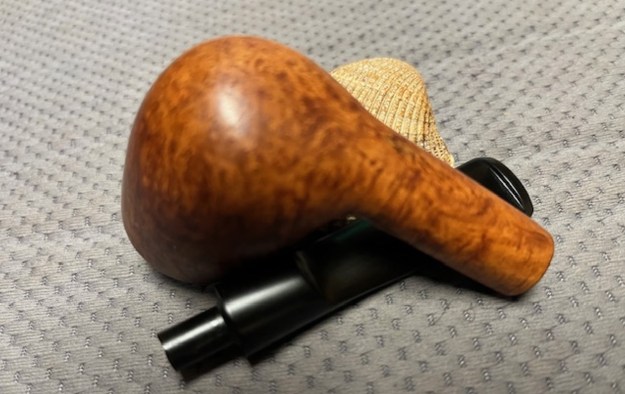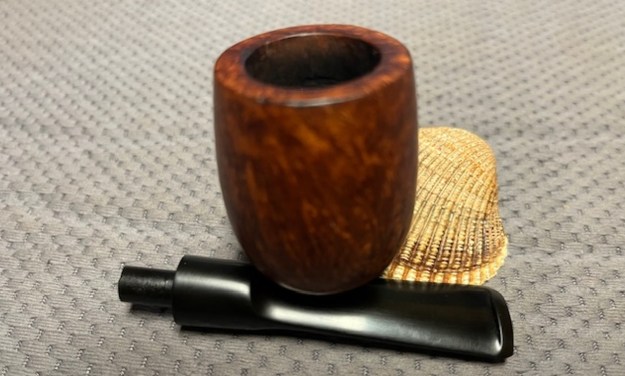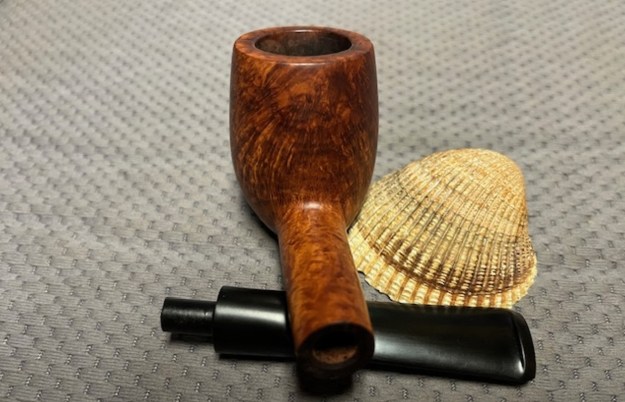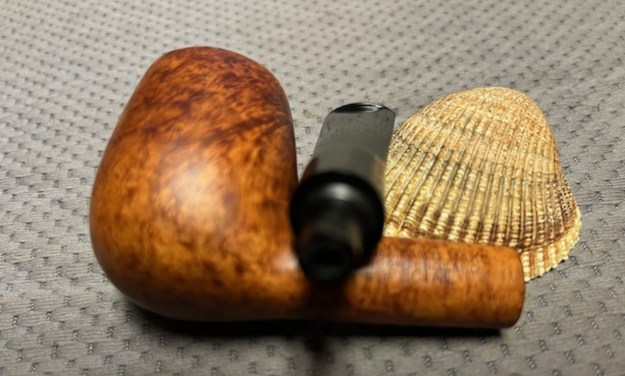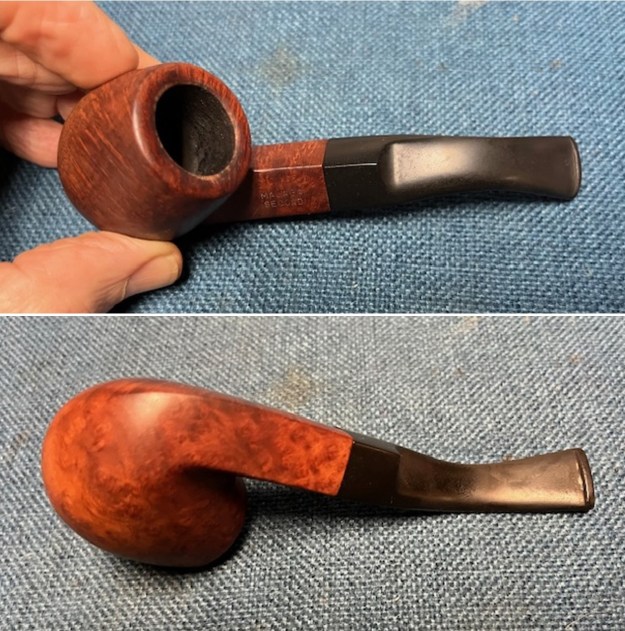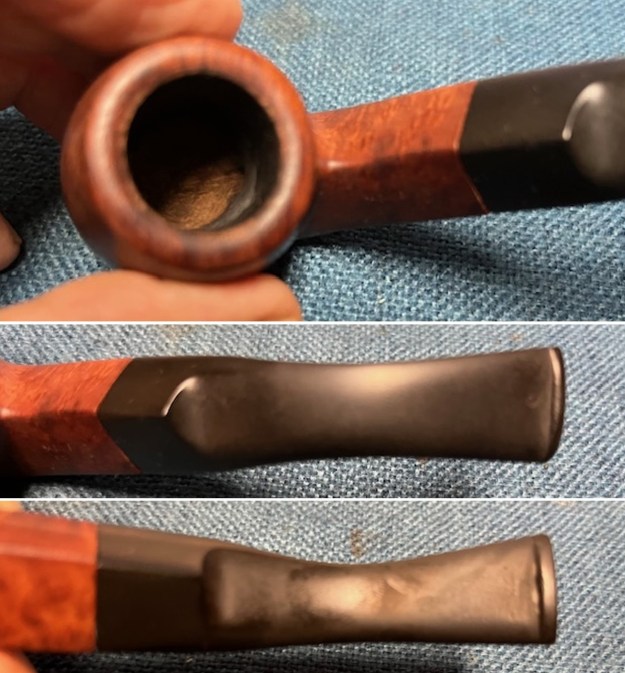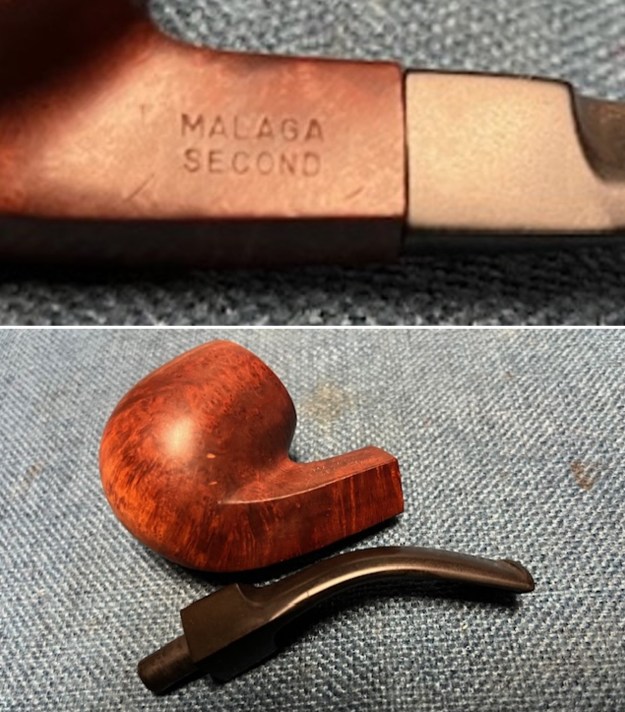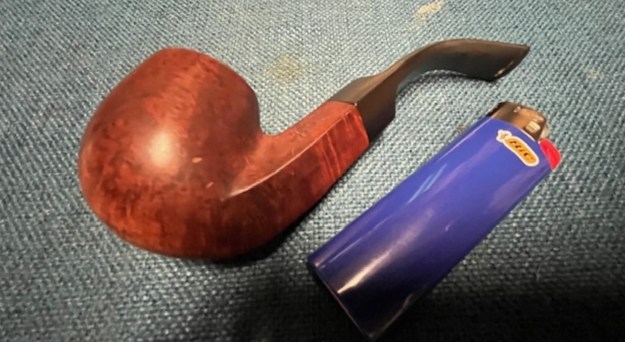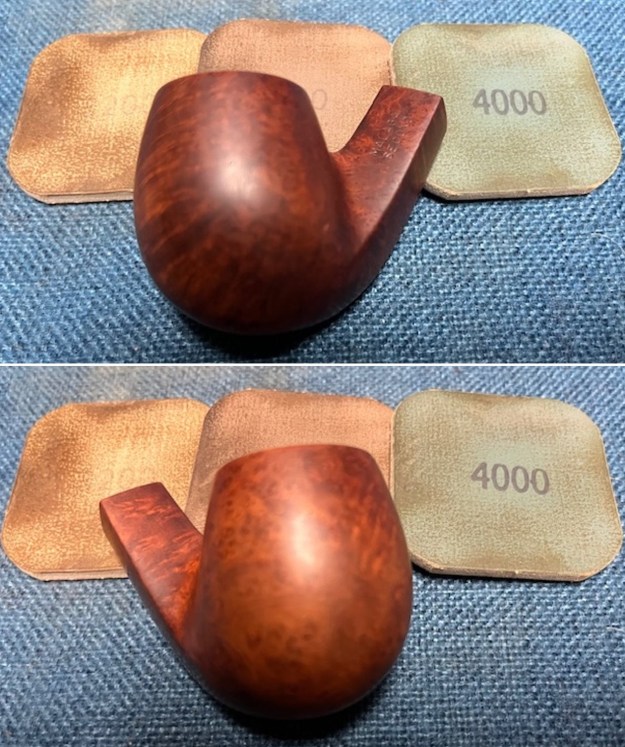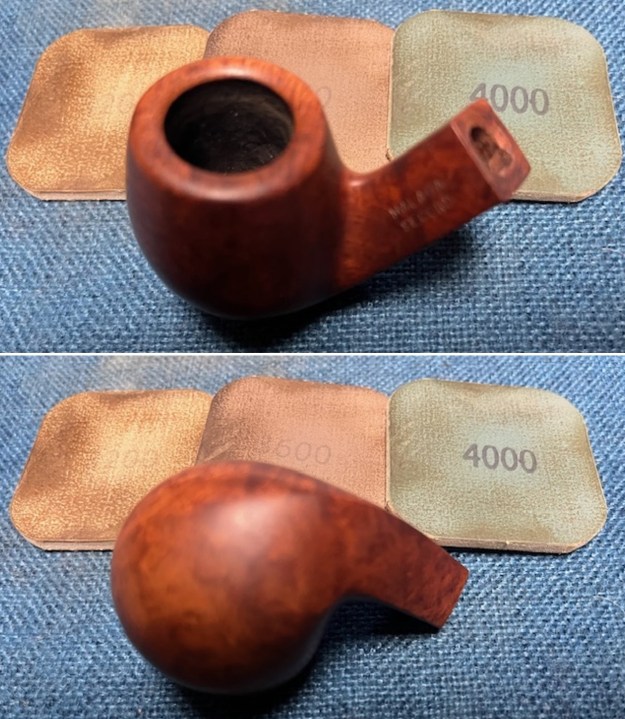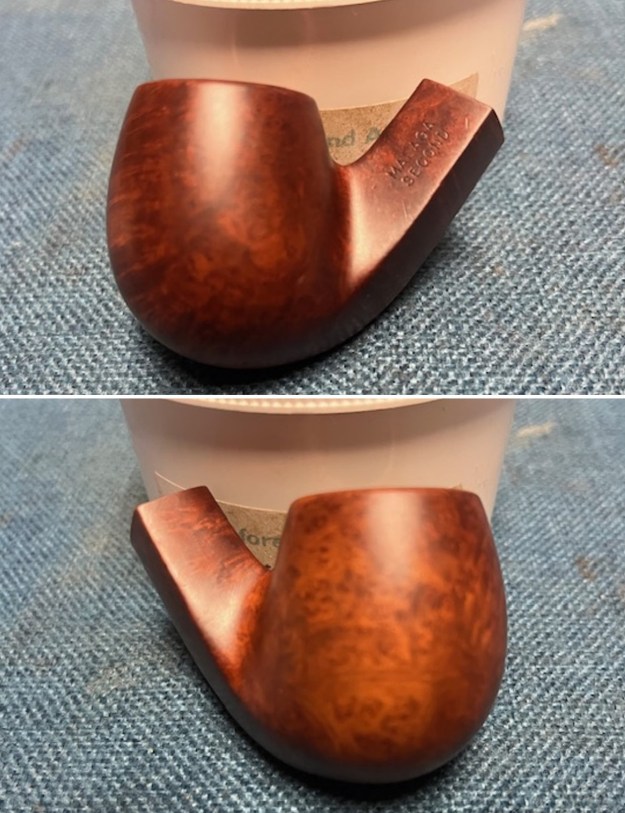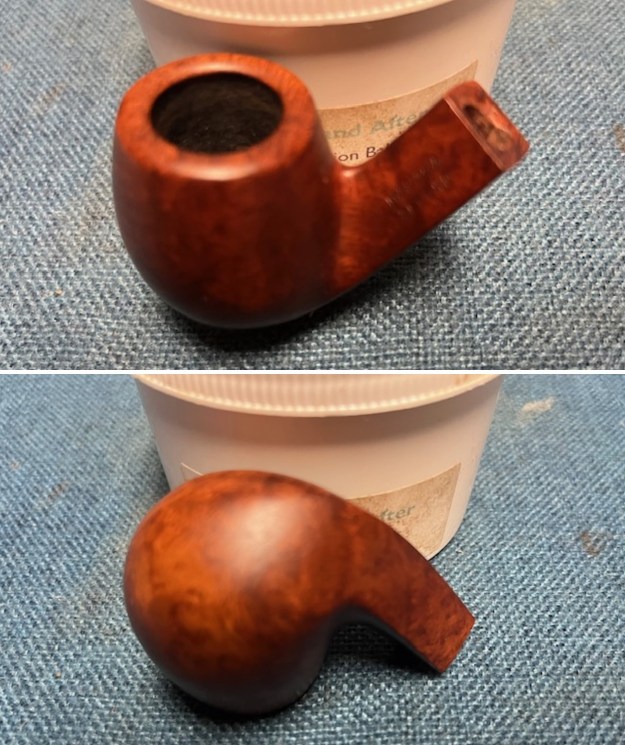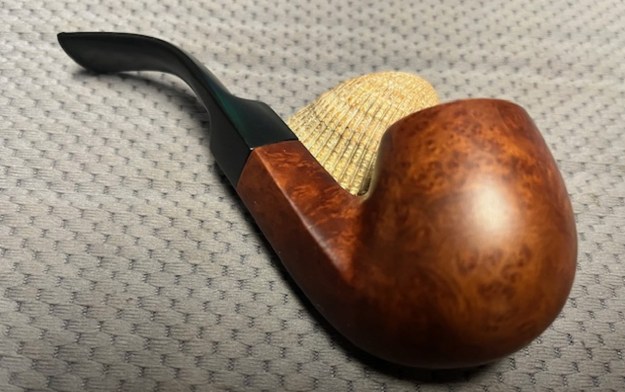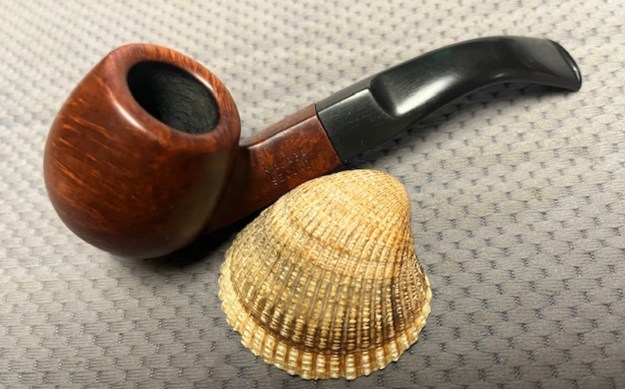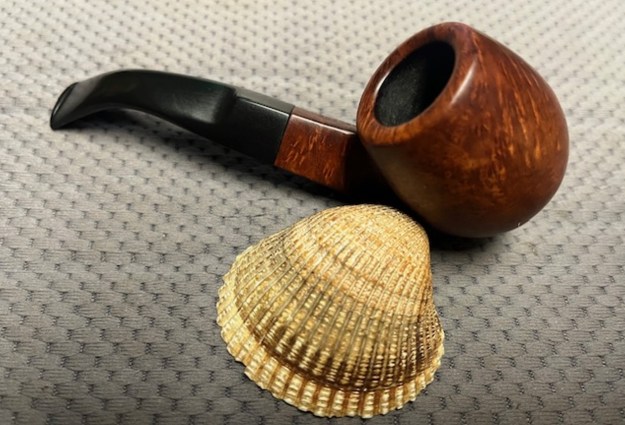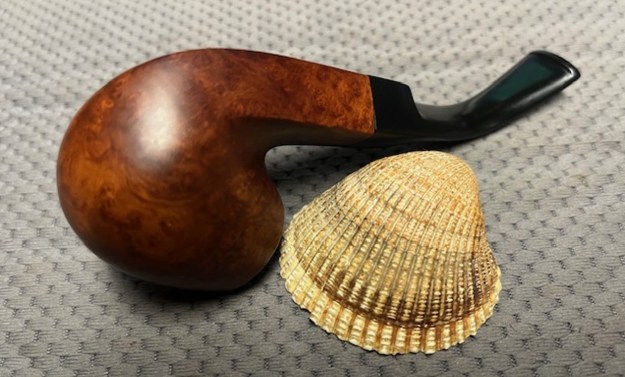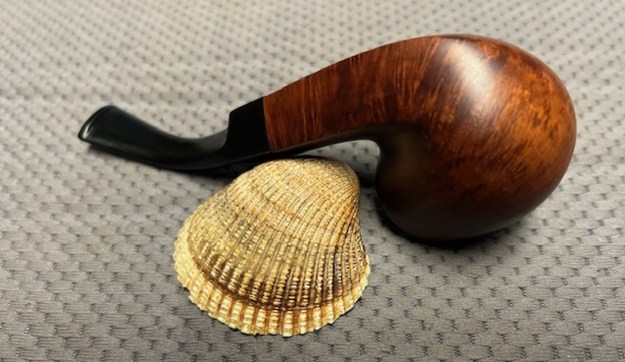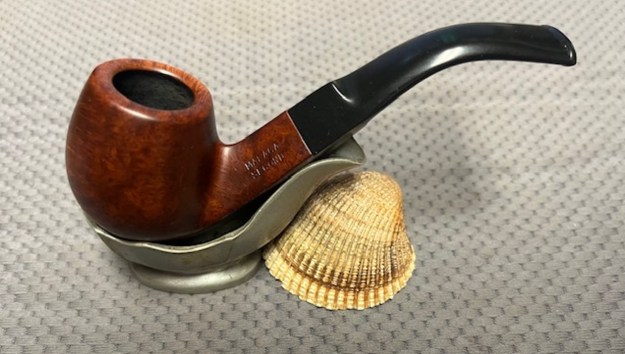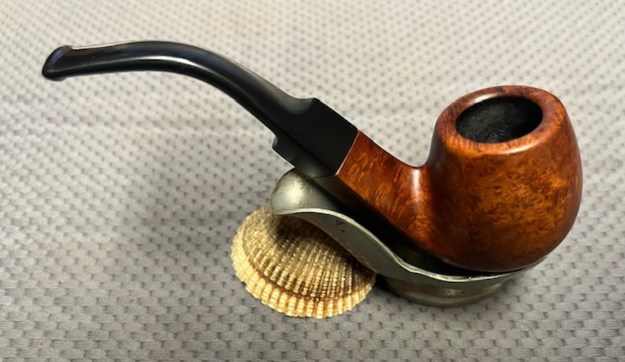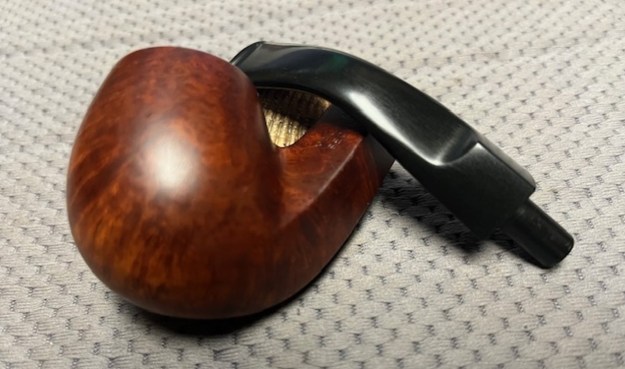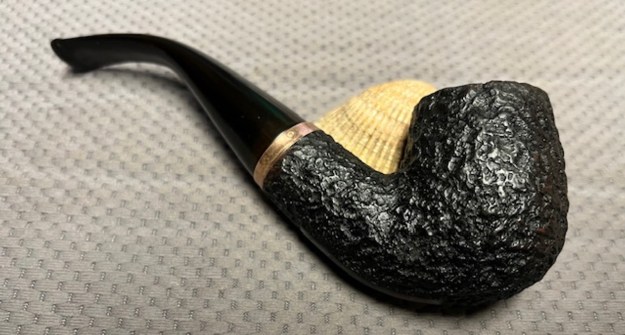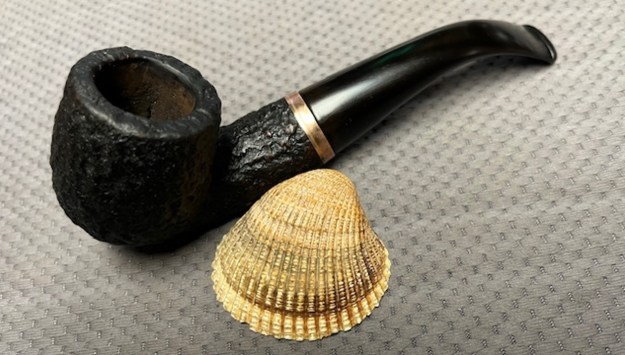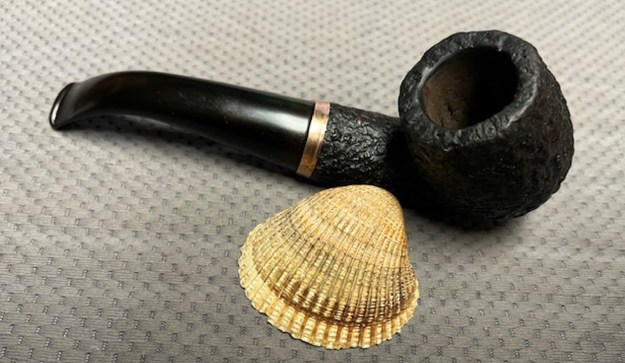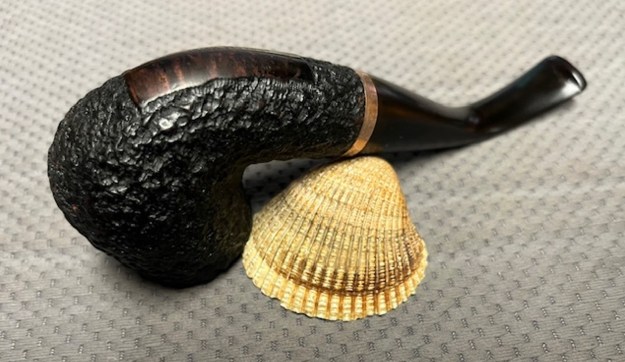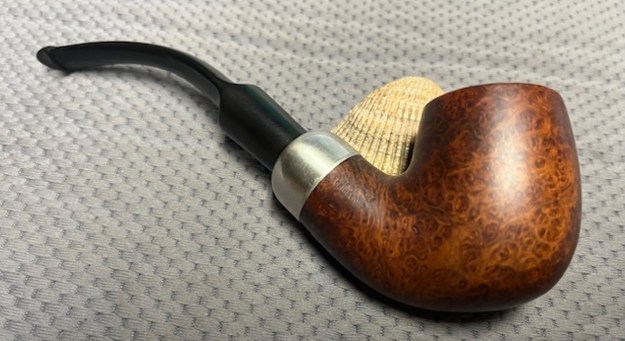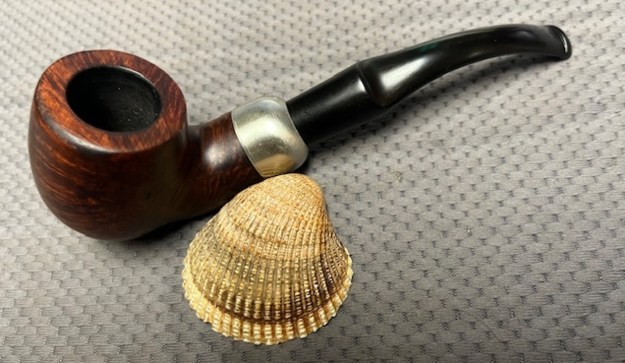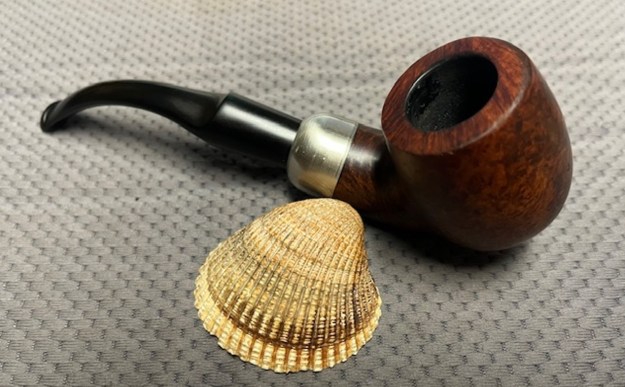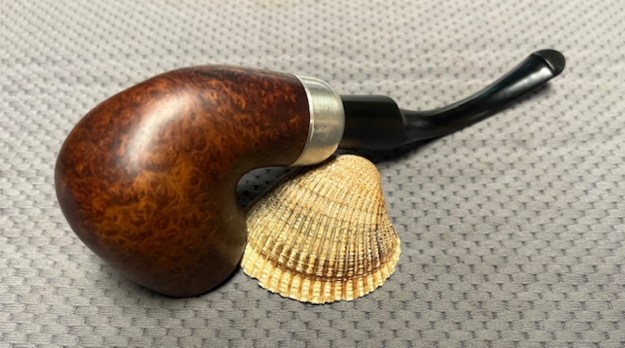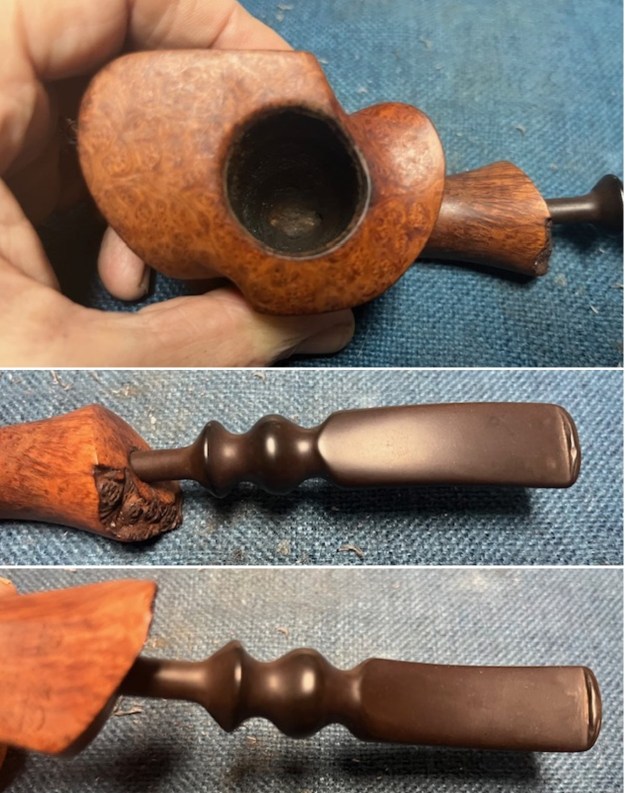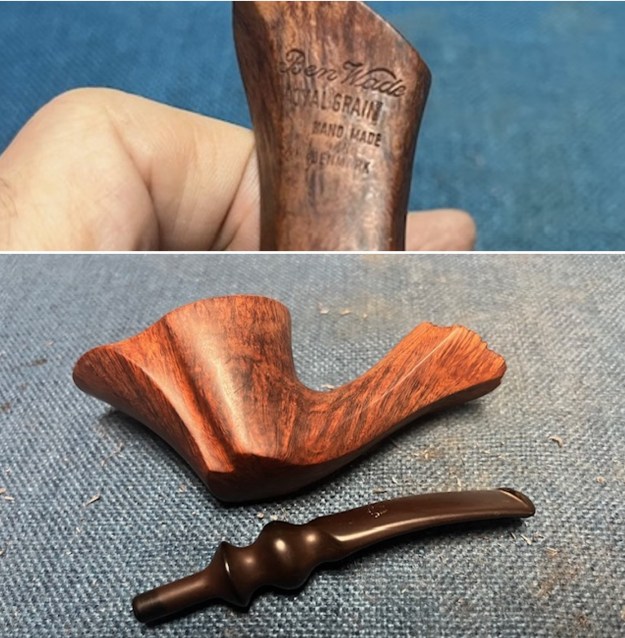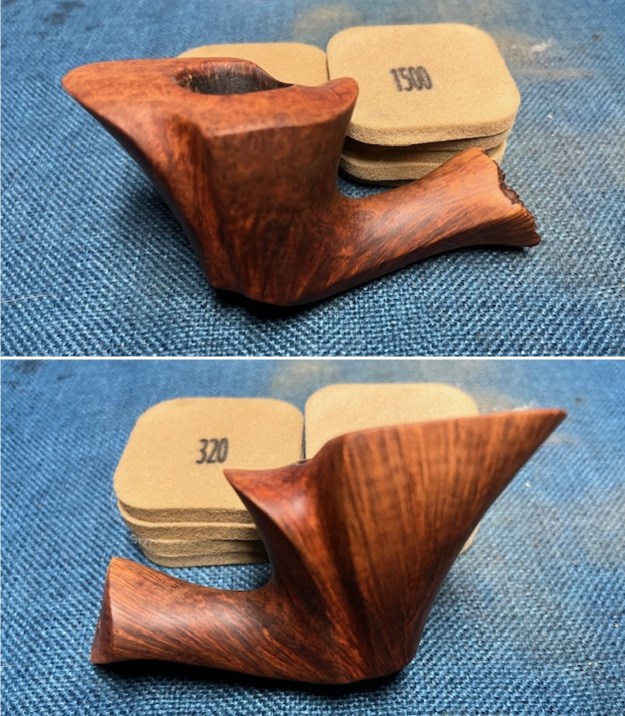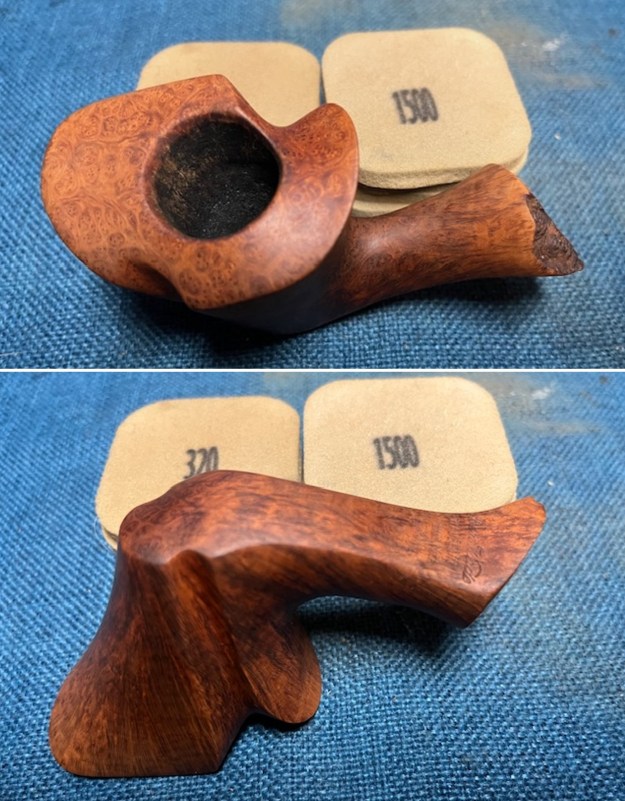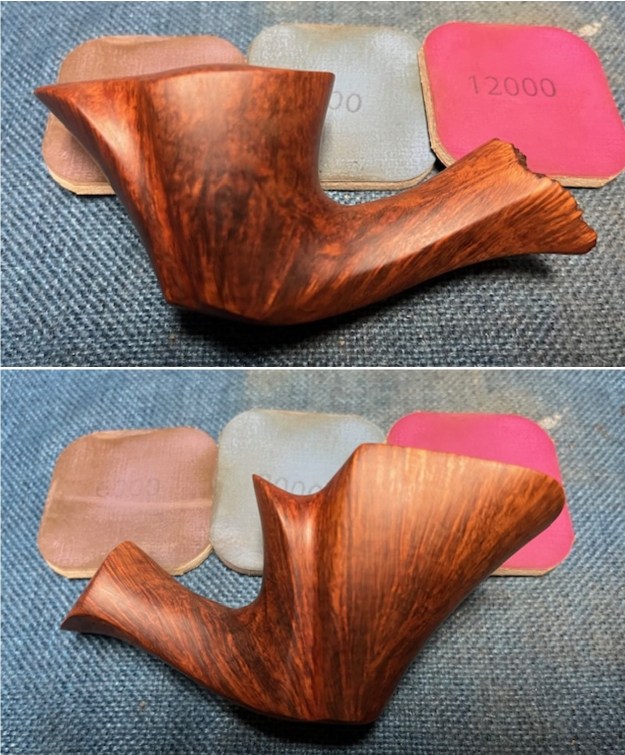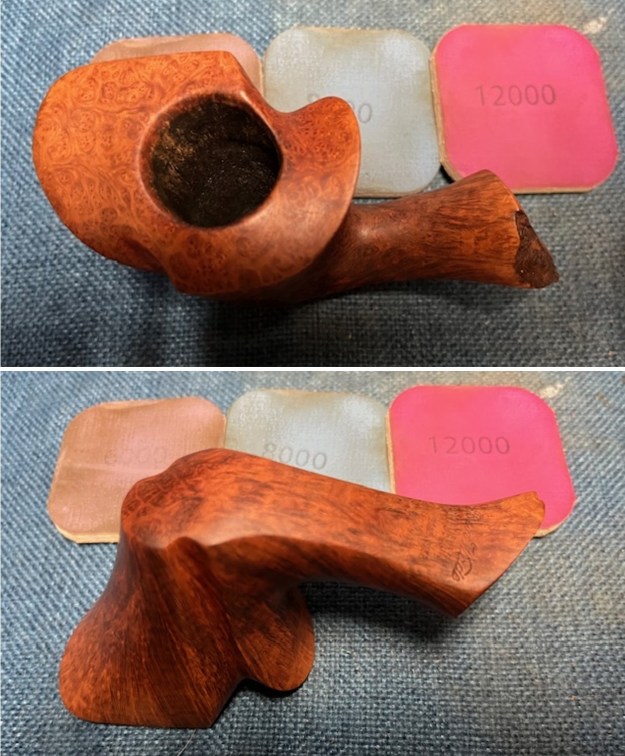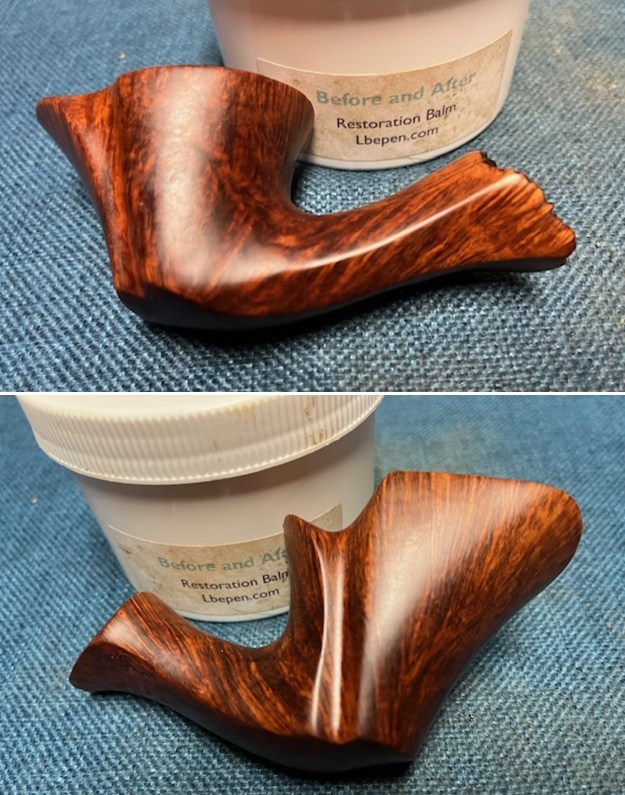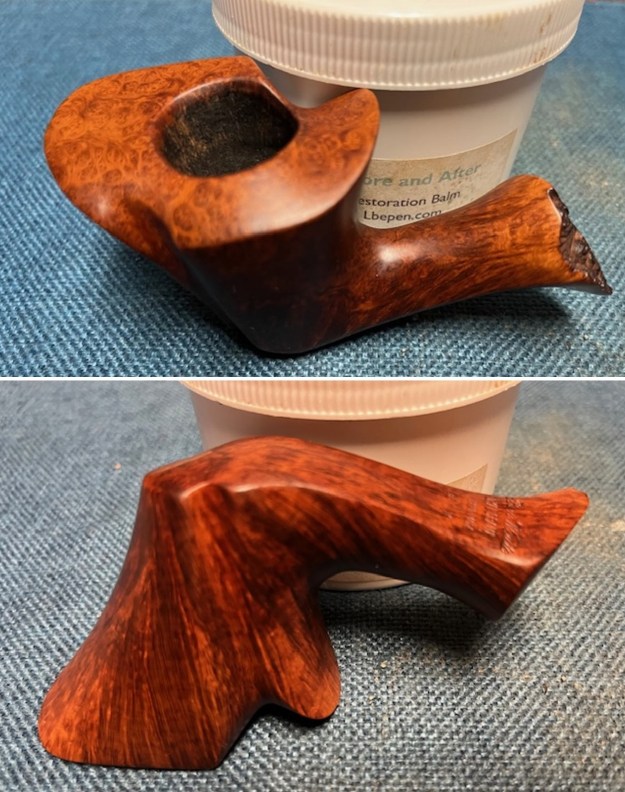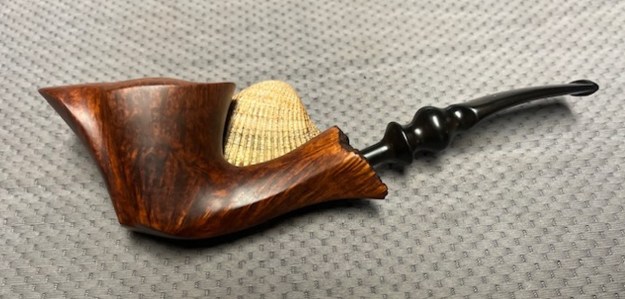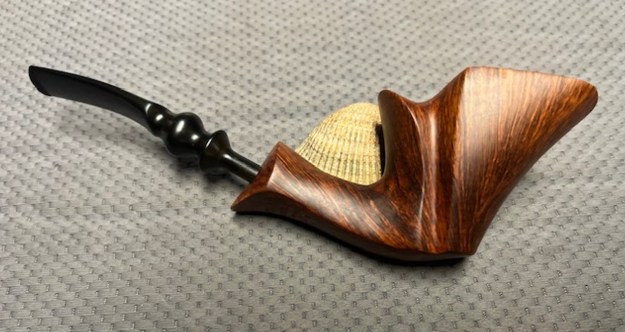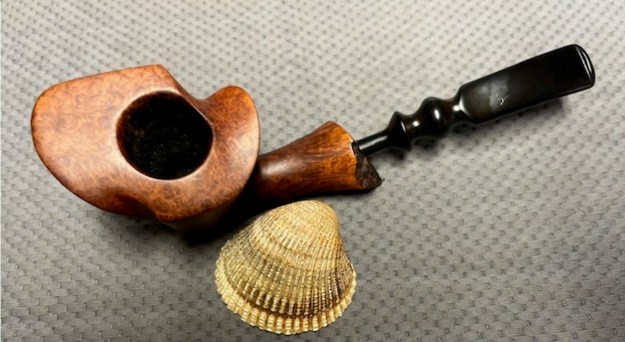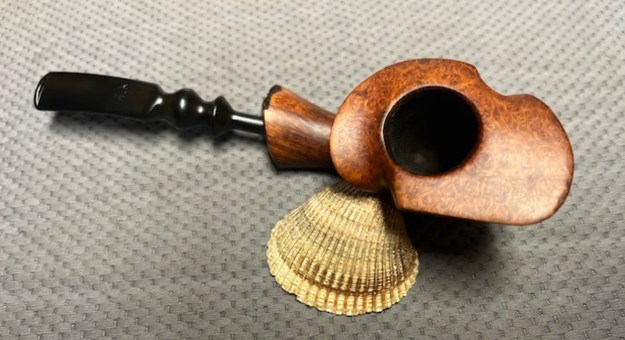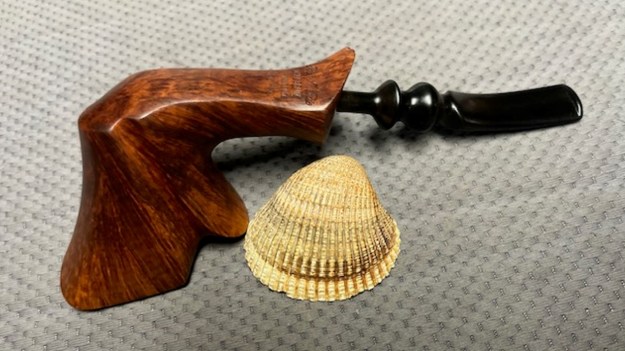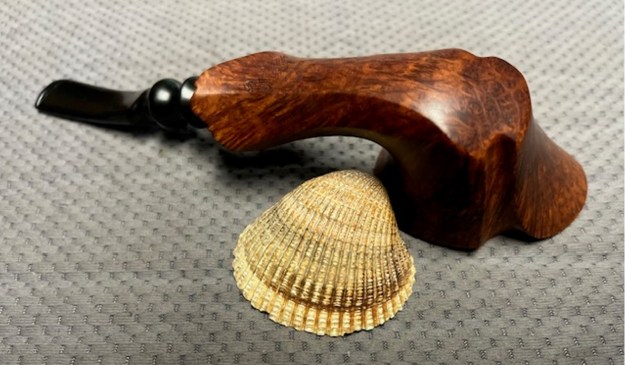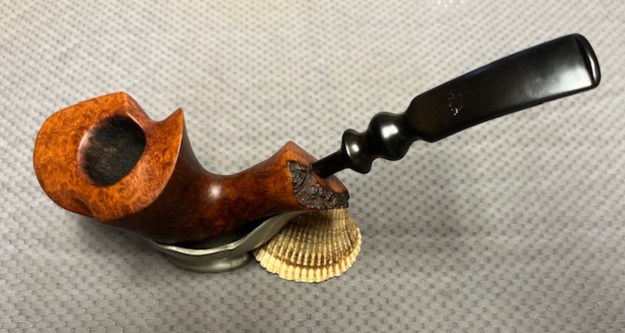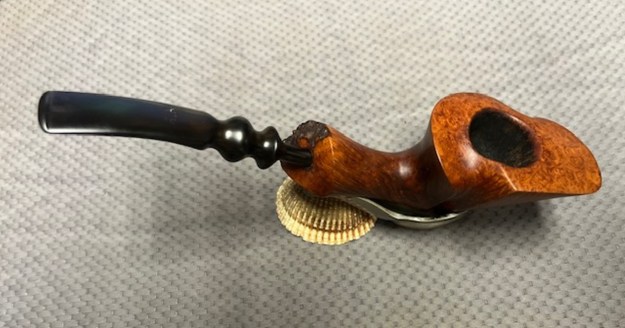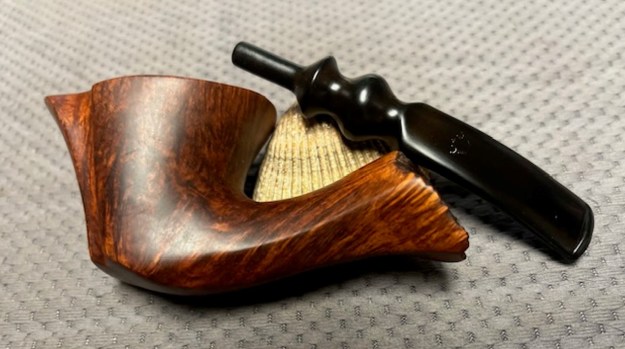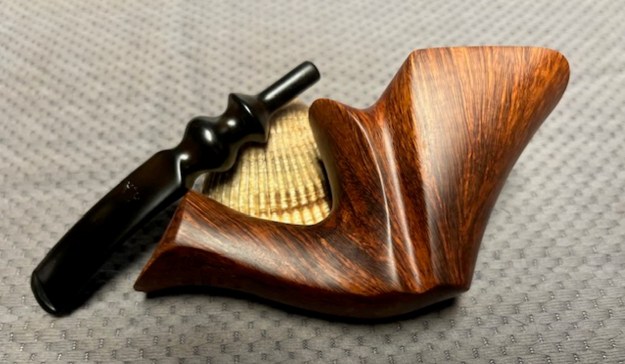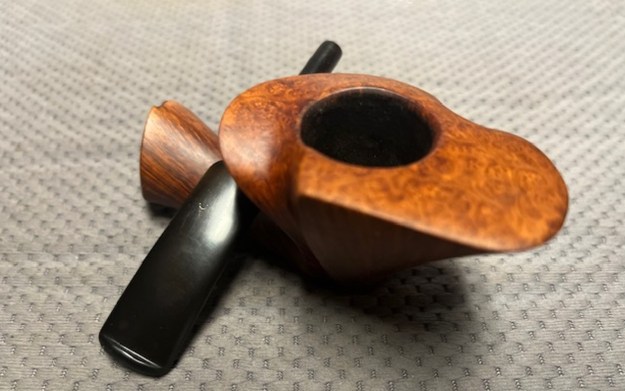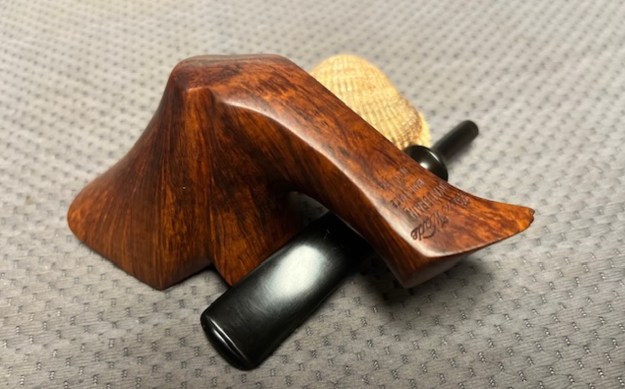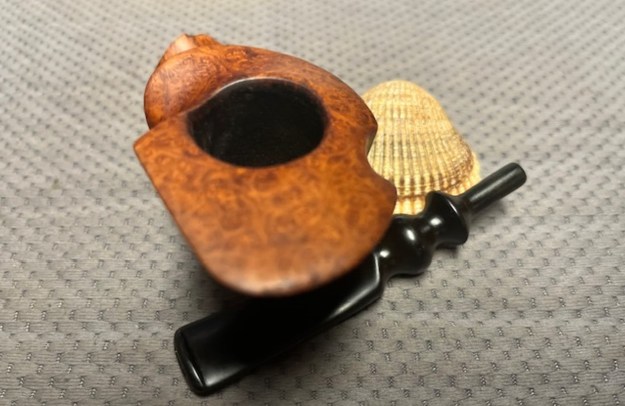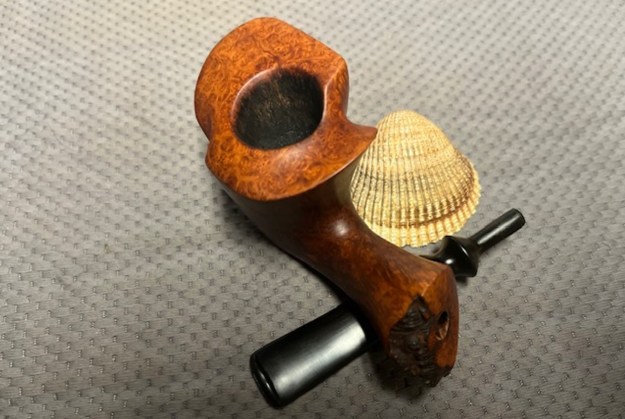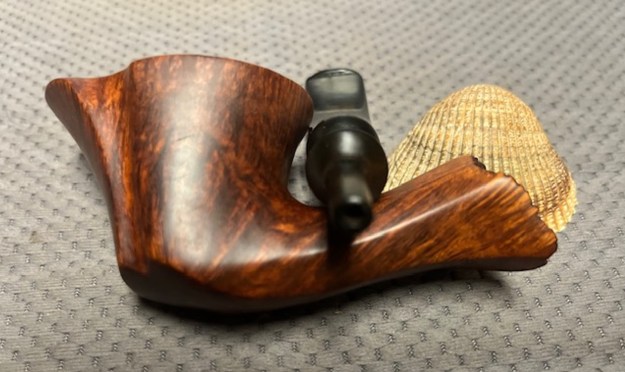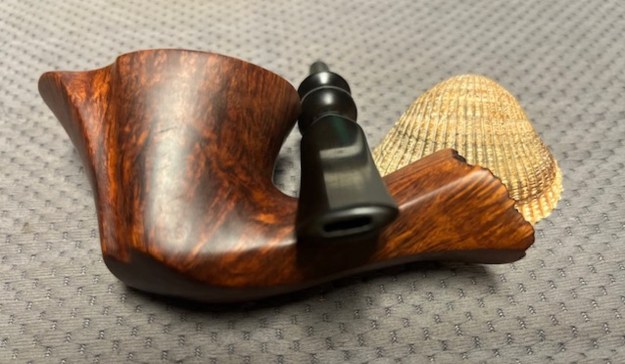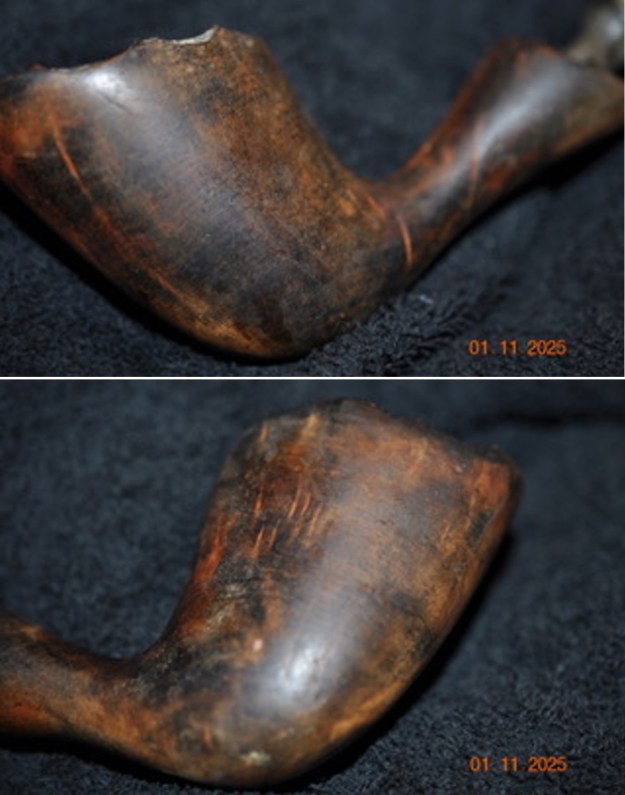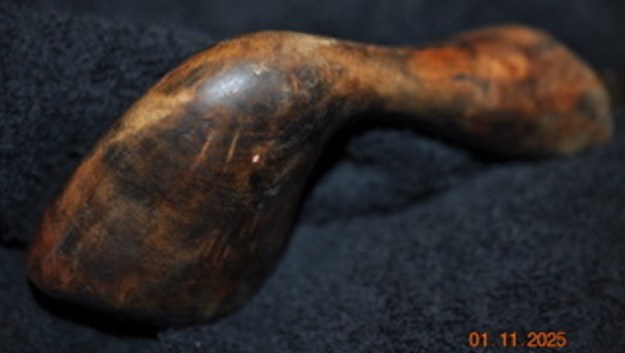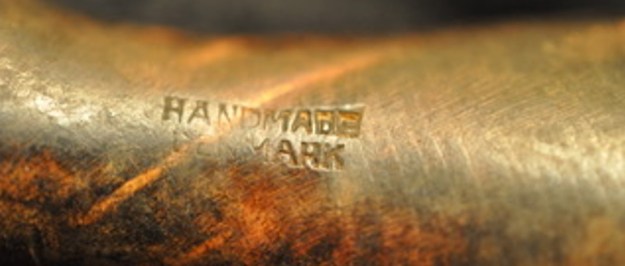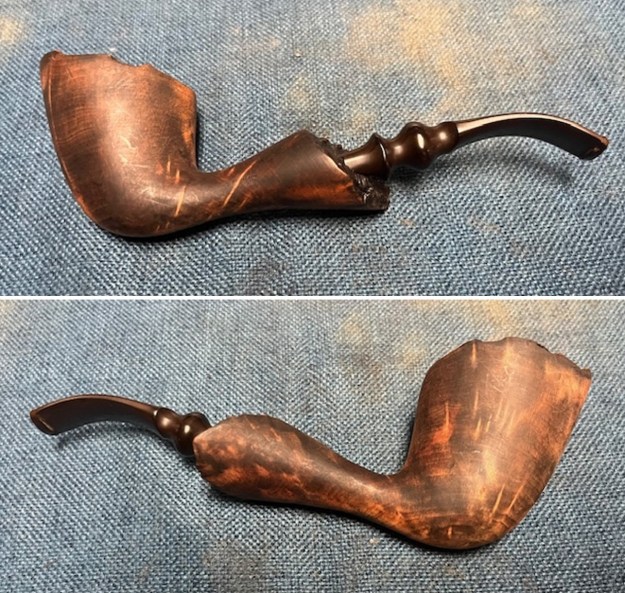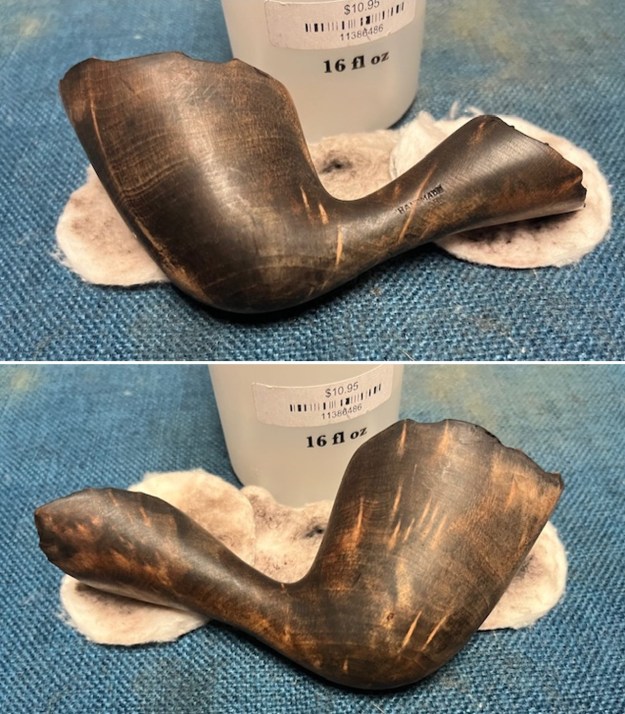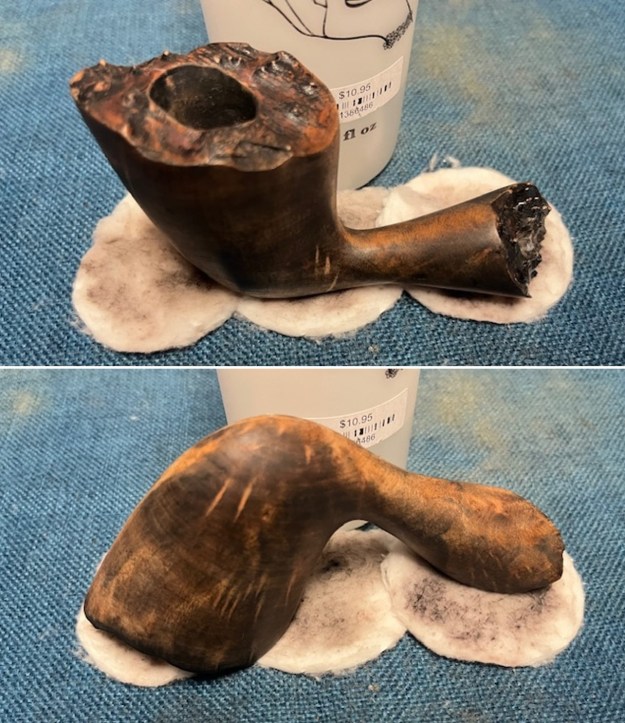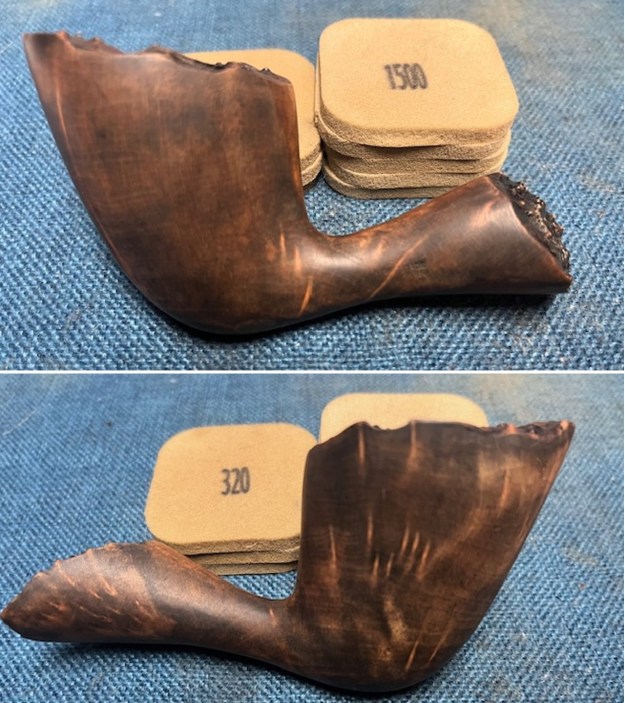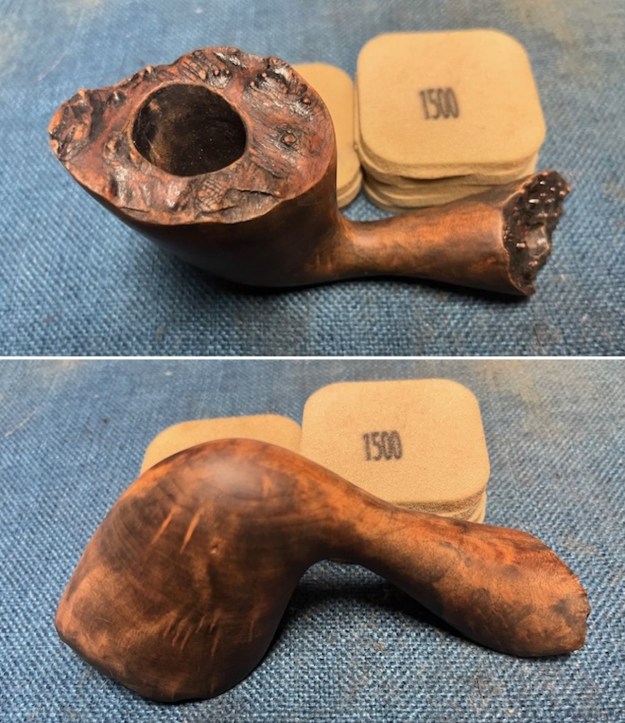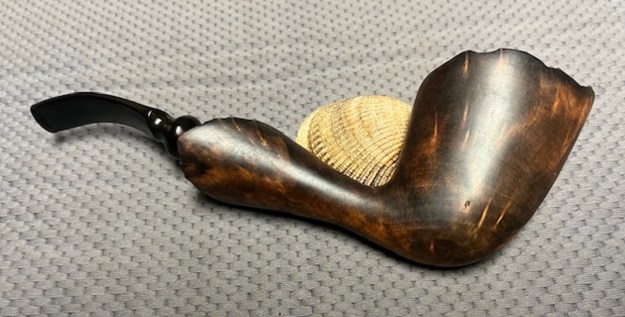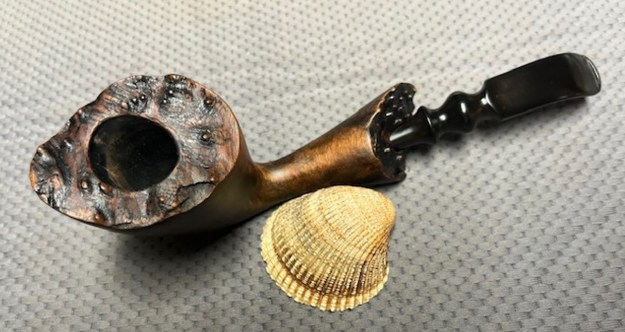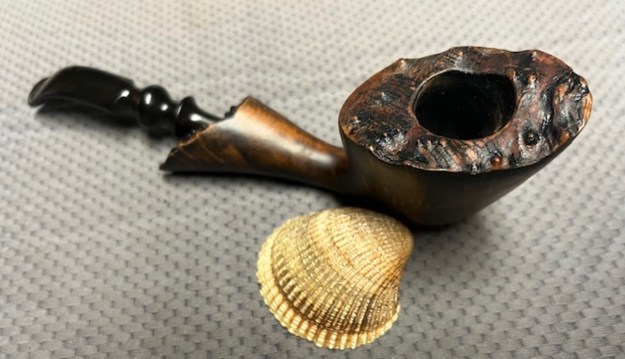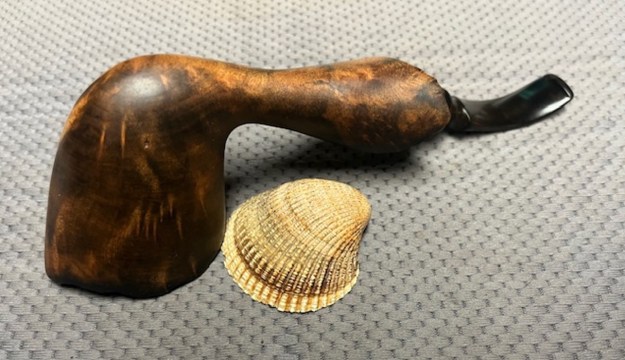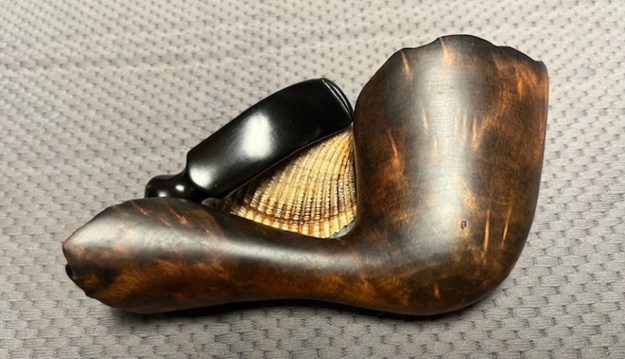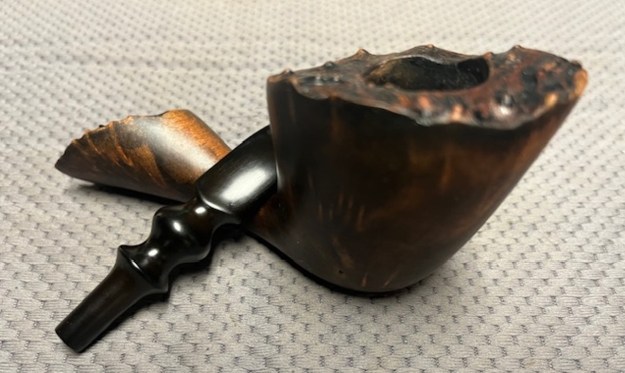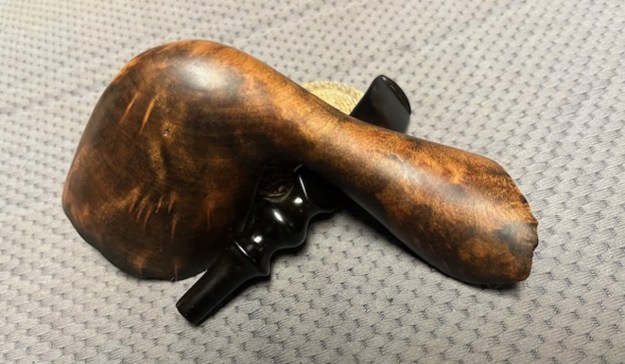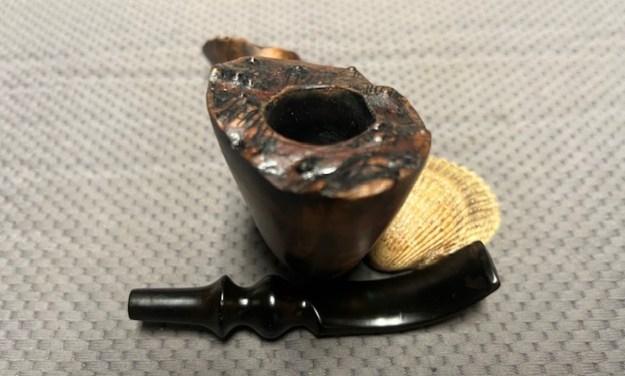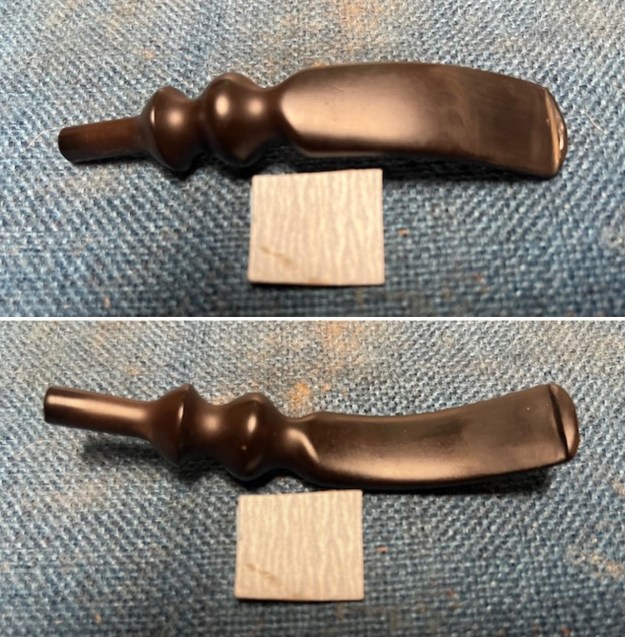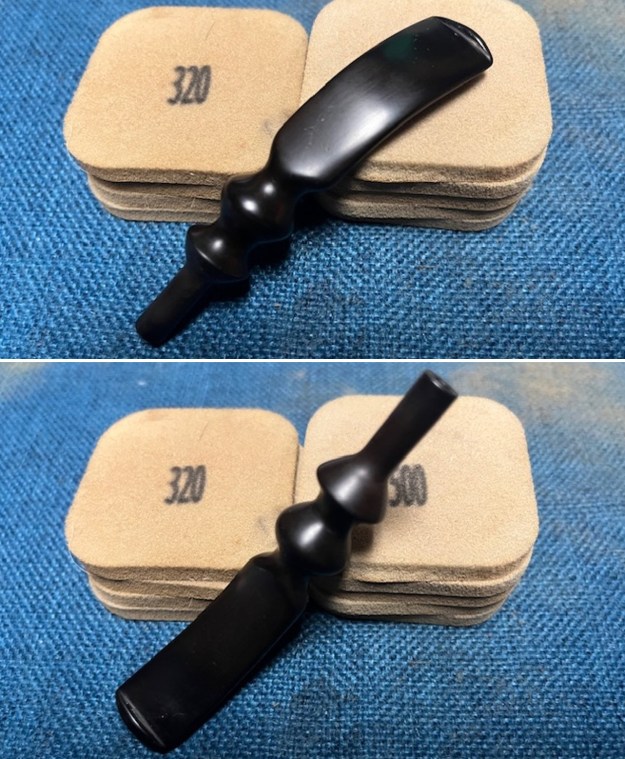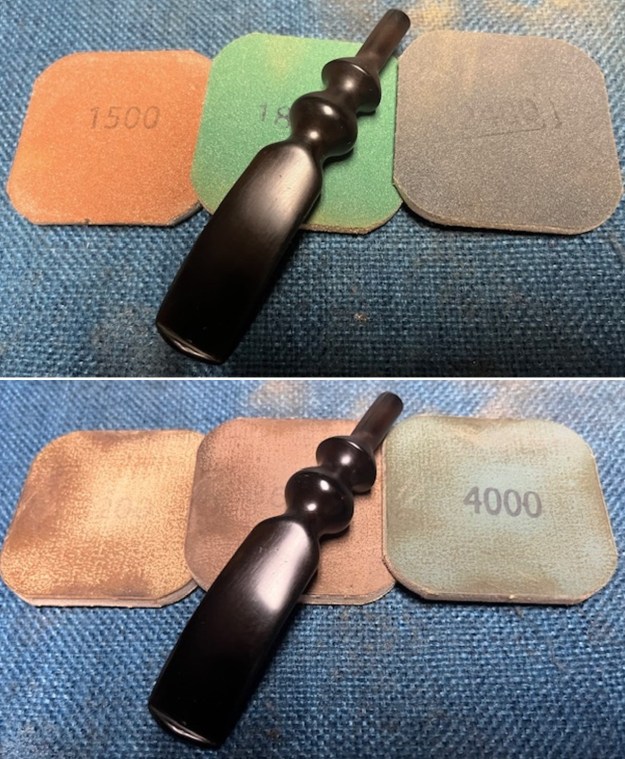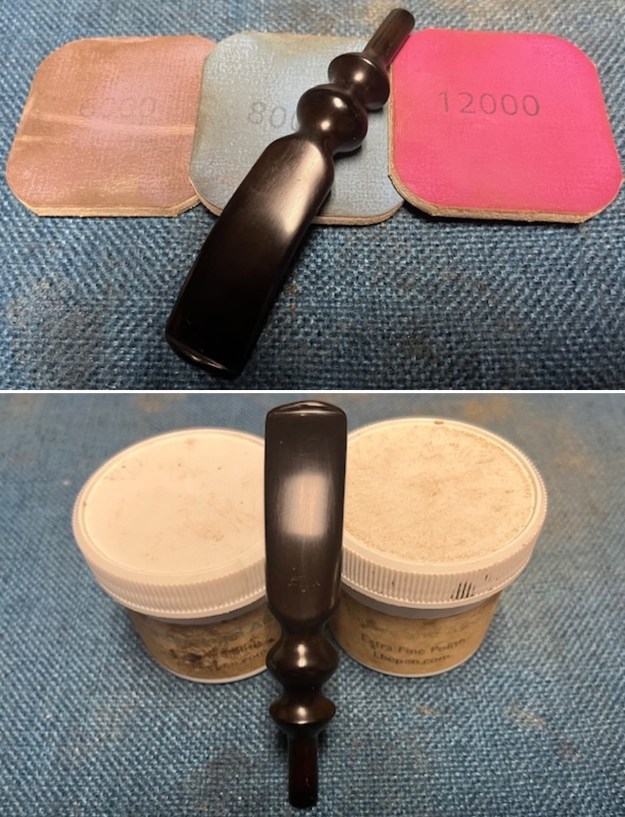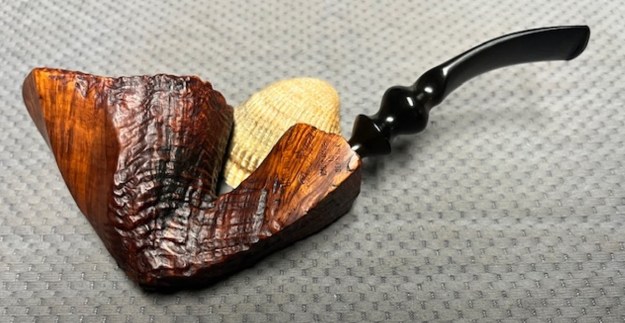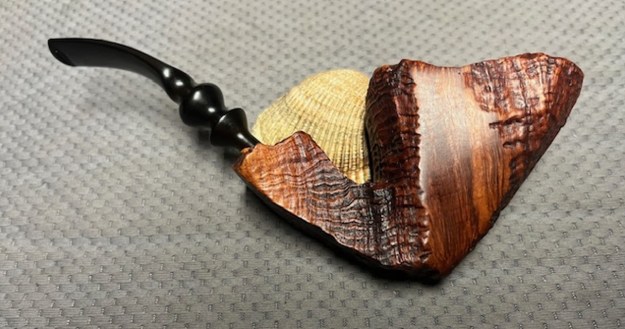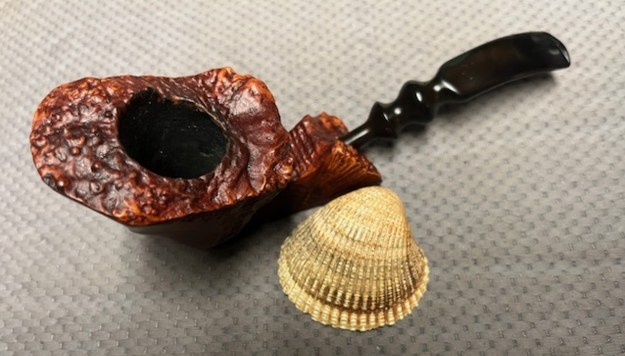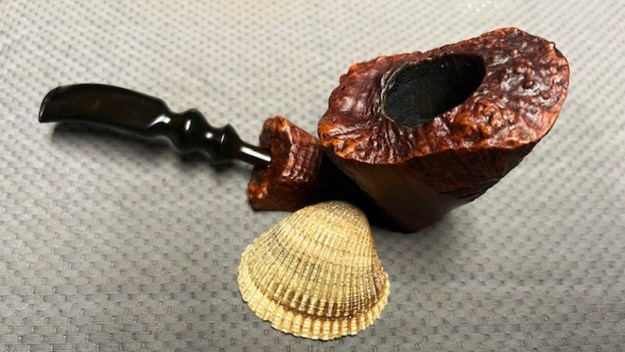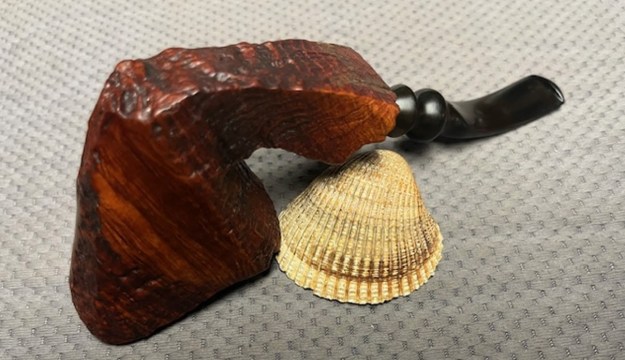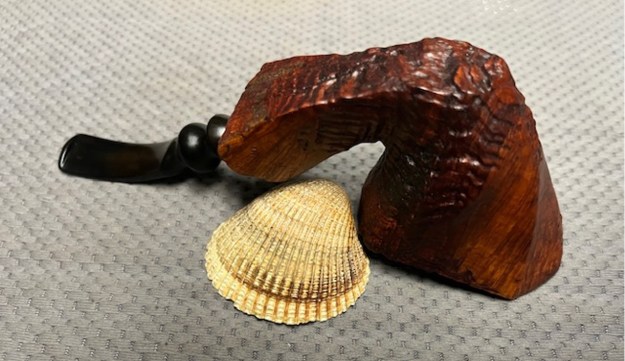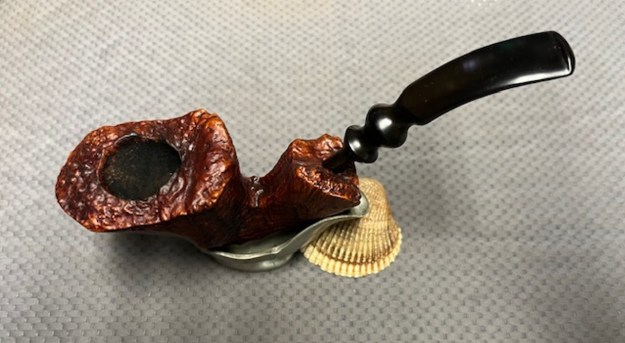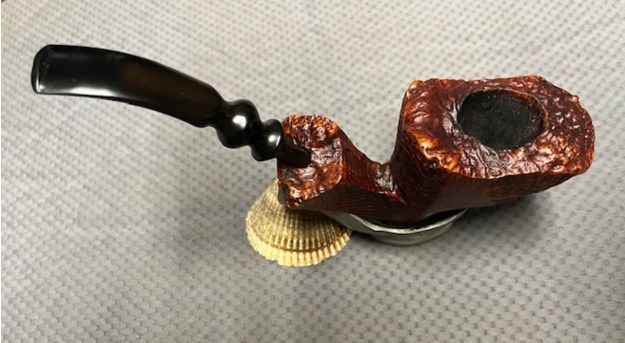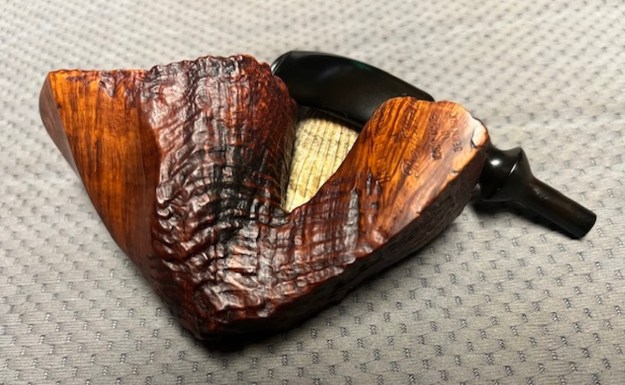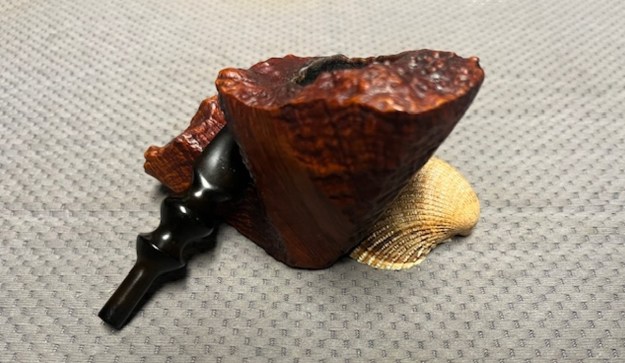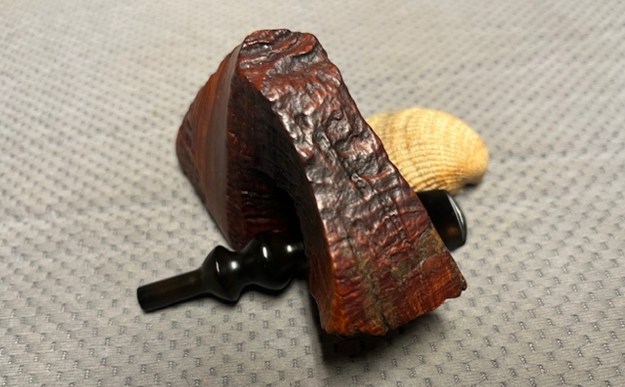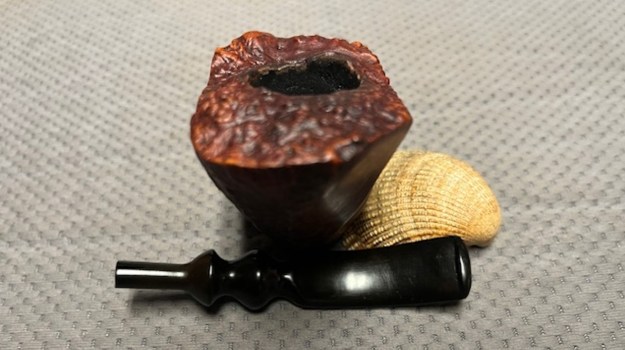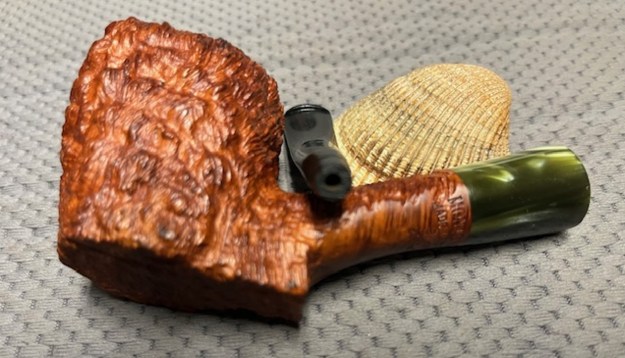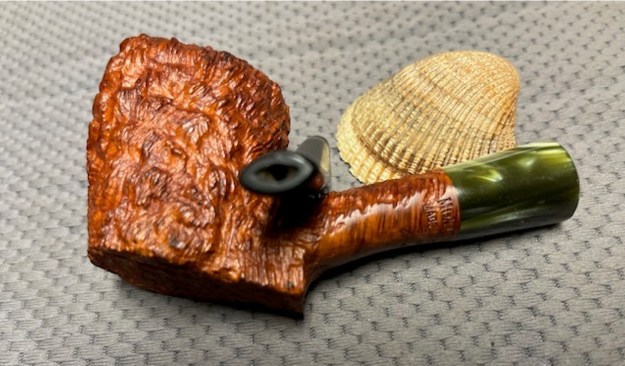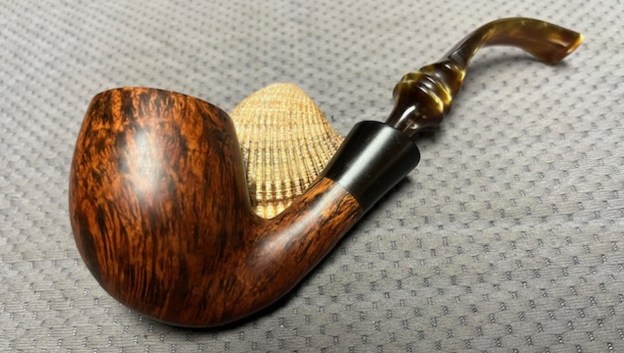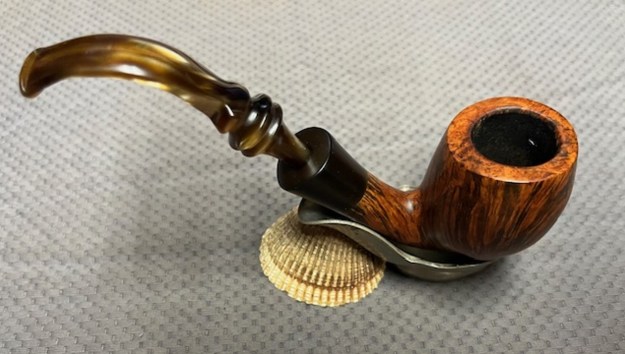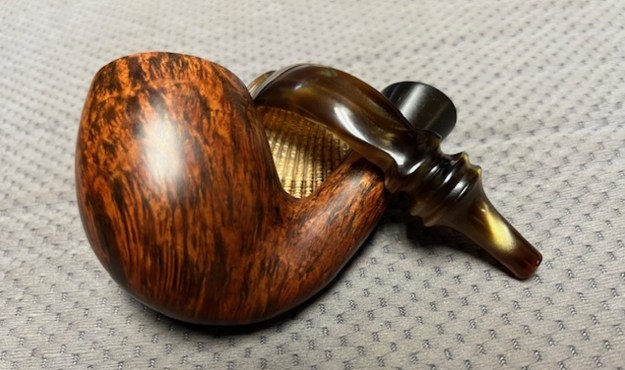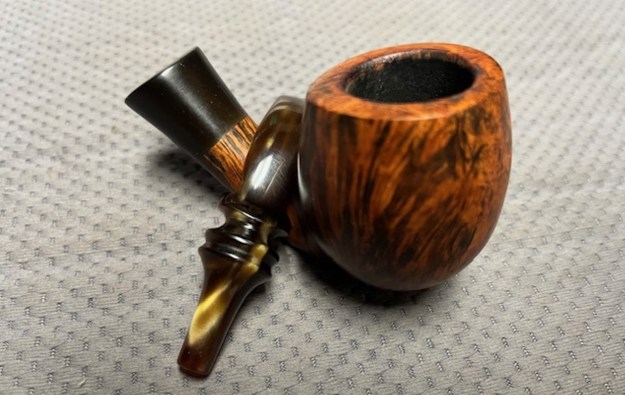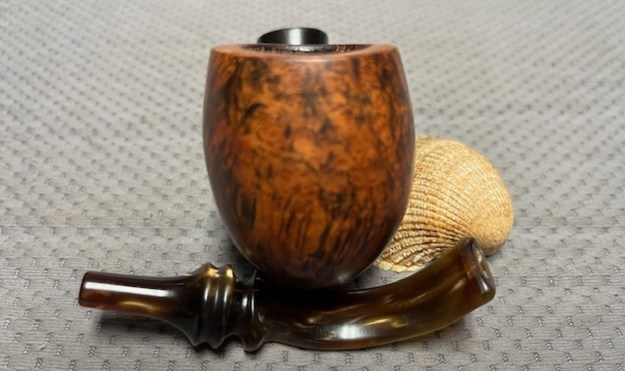
Fixing the Cork Mortise on a Ropp Cherrywood


by Kenneth Lieblich

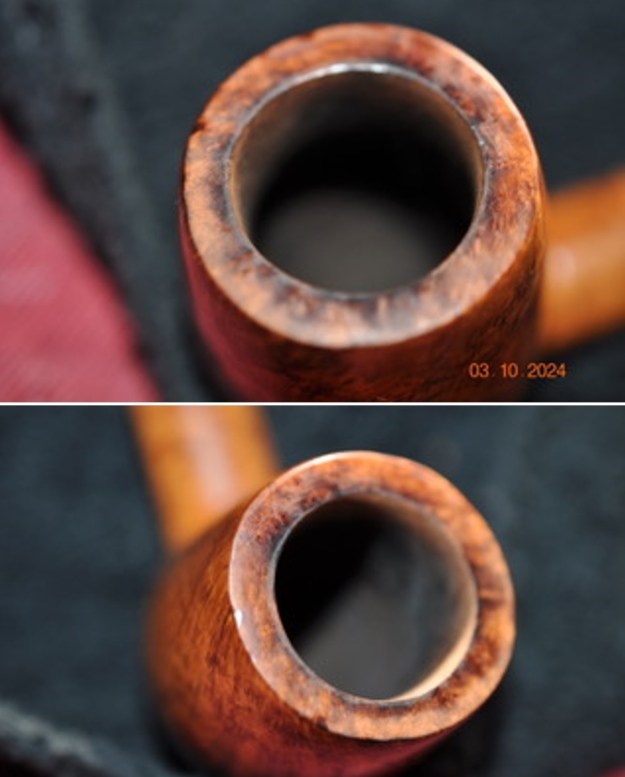
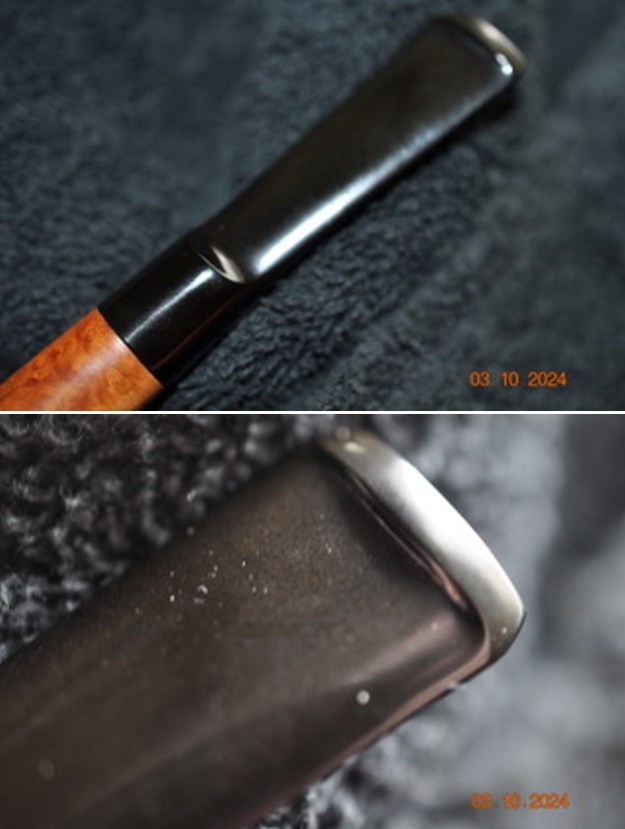
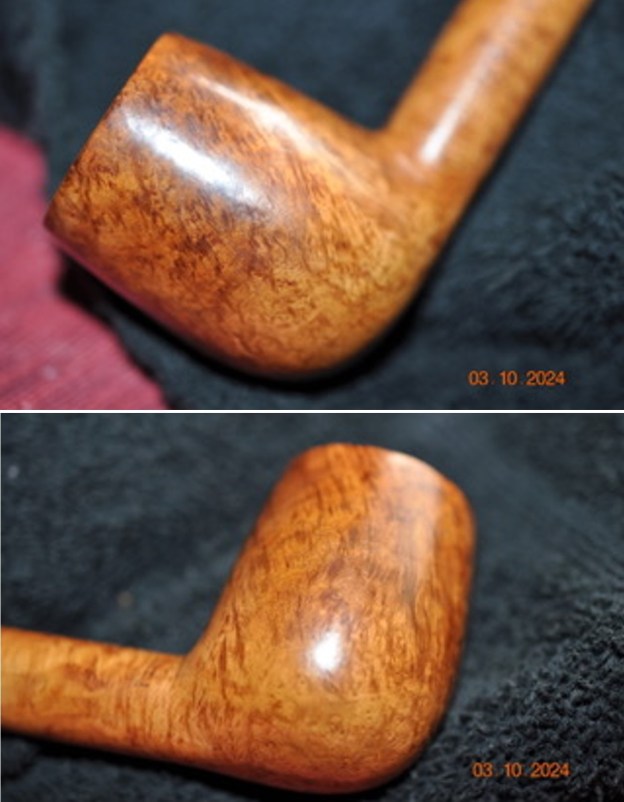
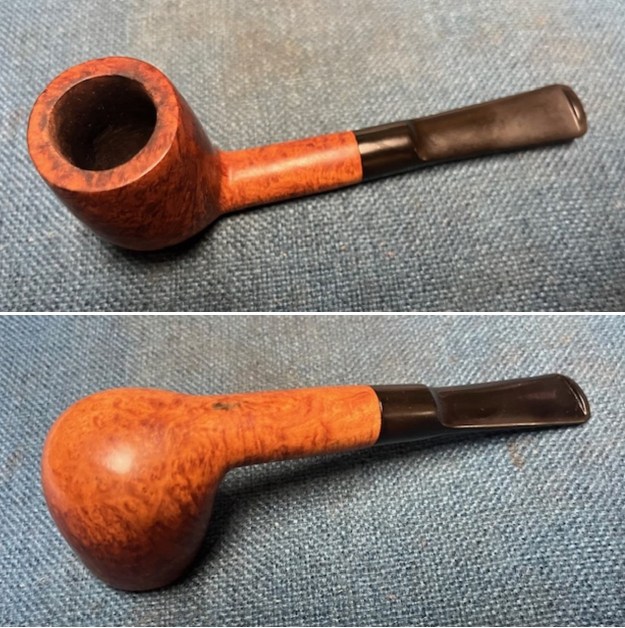
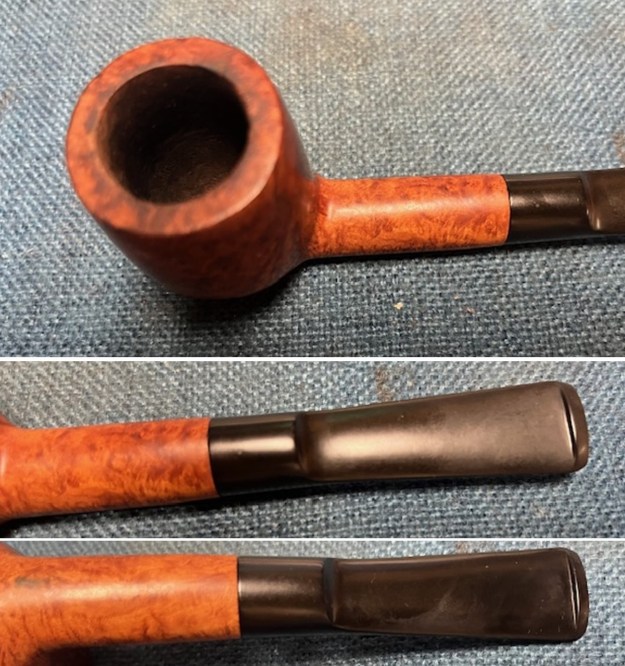
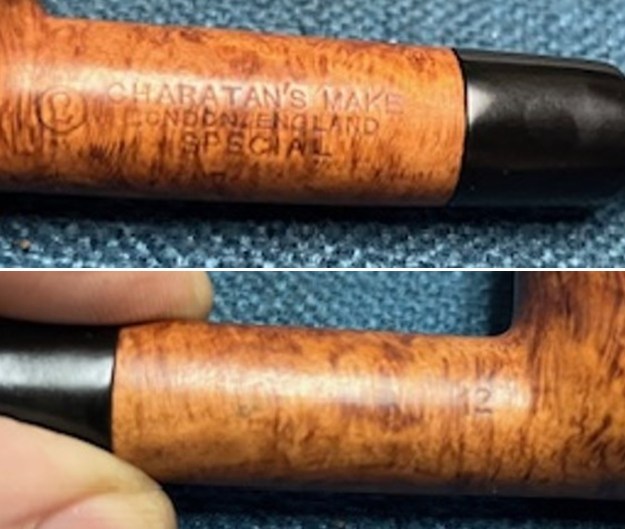
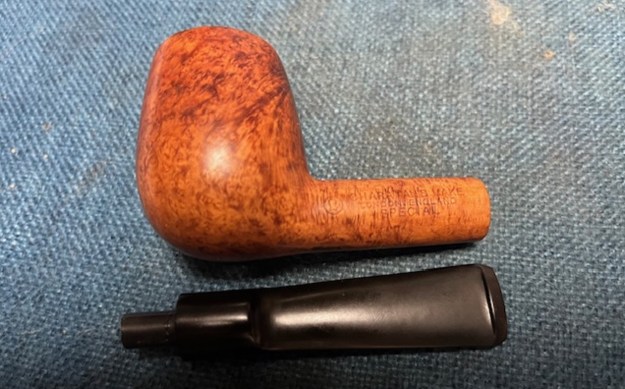
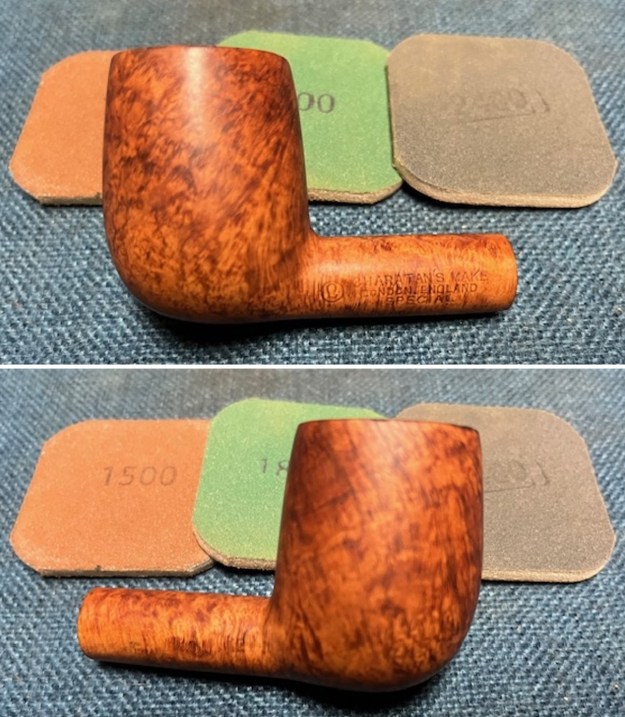
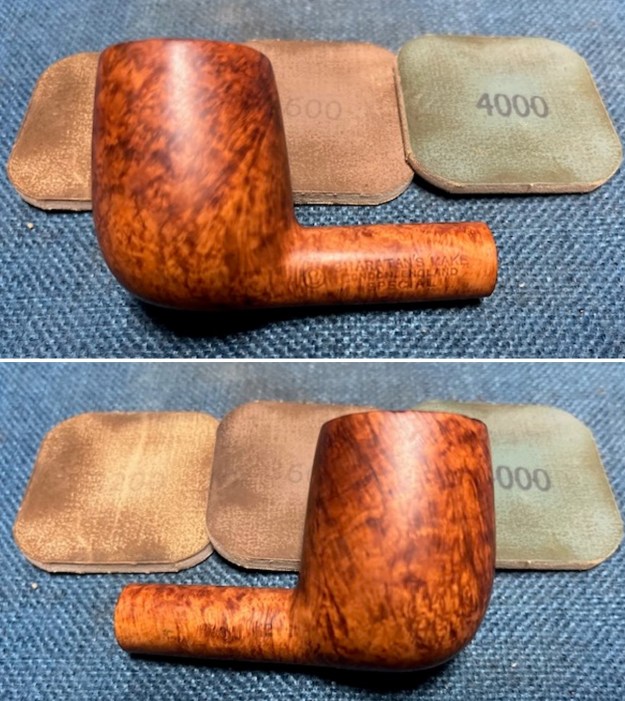
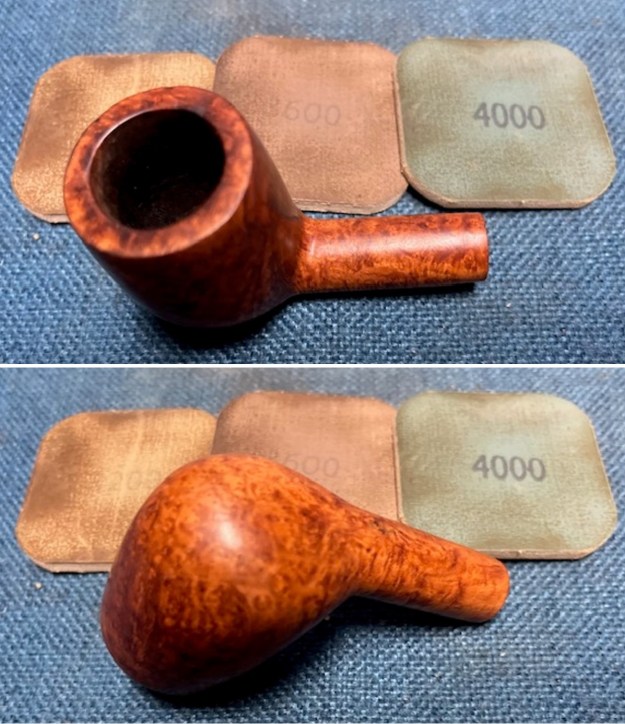
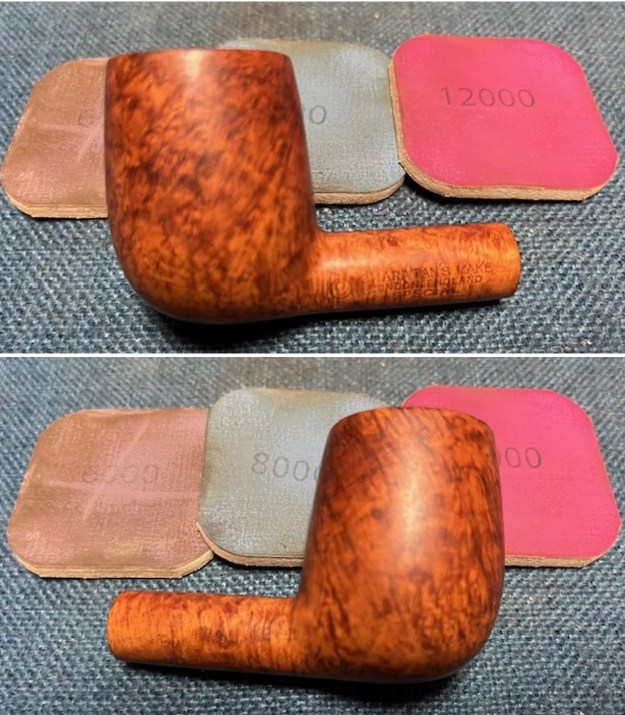
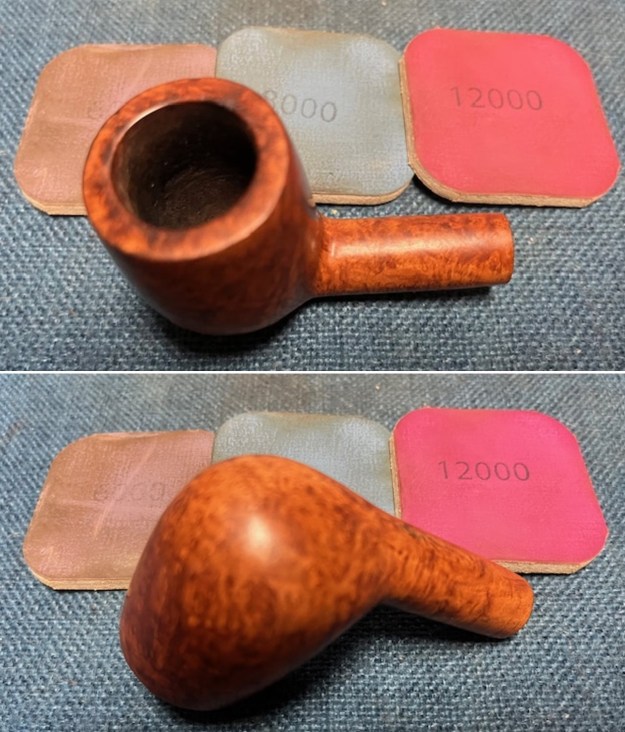
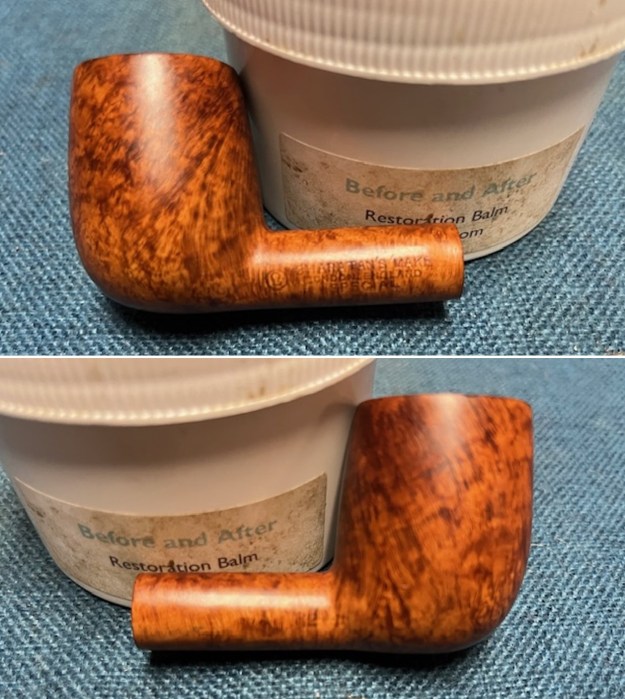
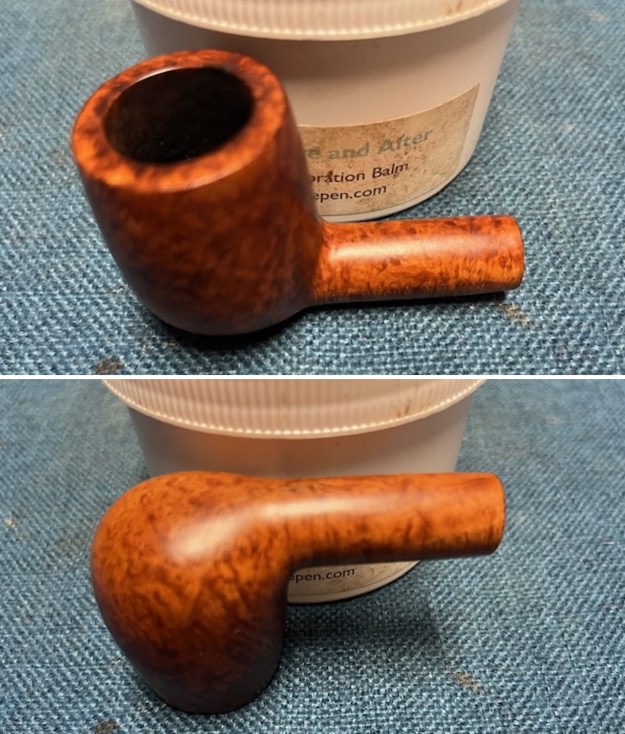
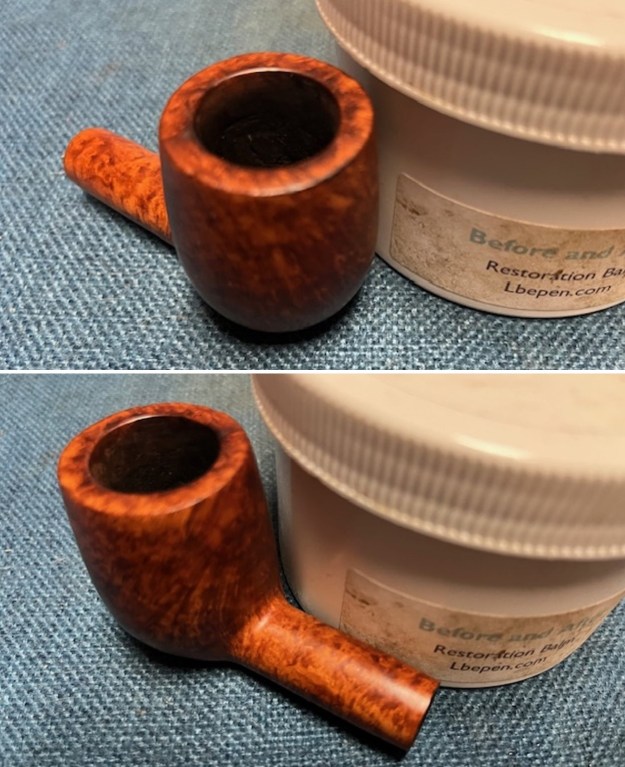
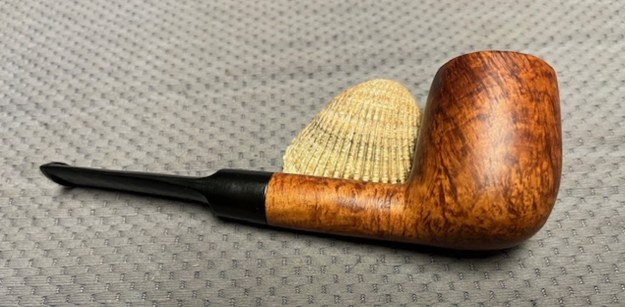
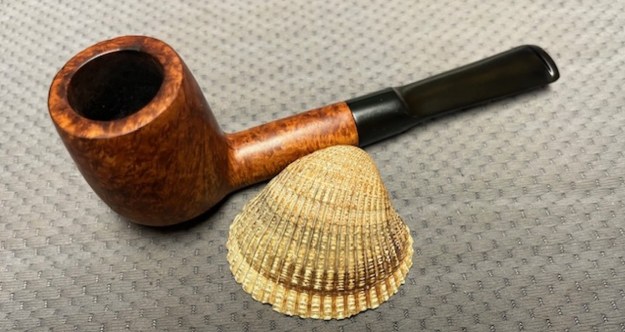
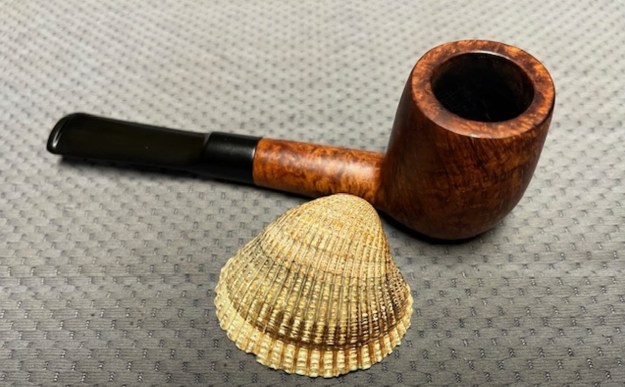
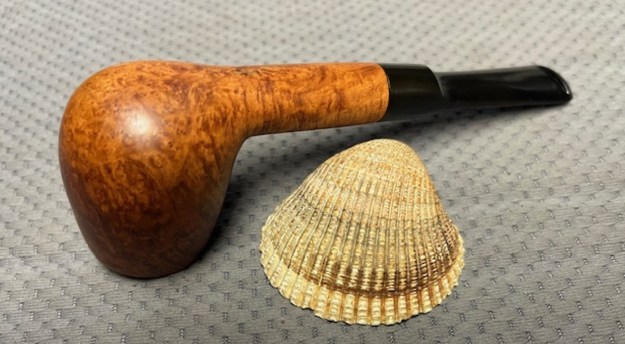
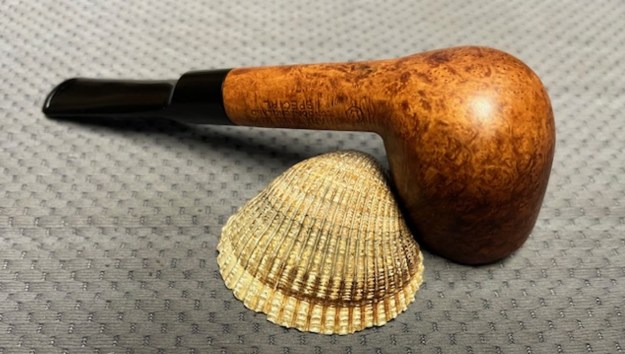
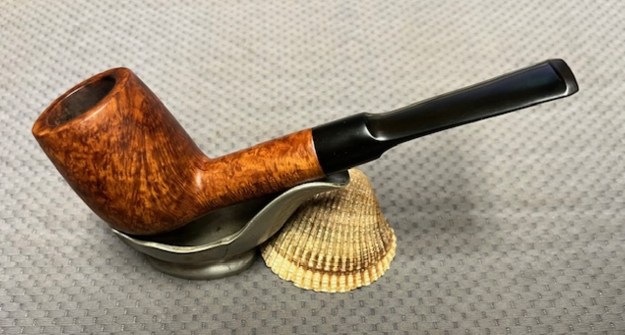
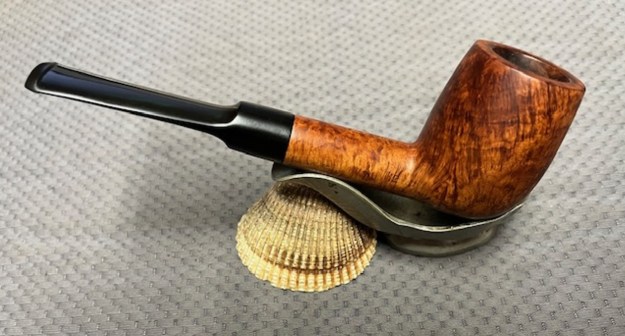
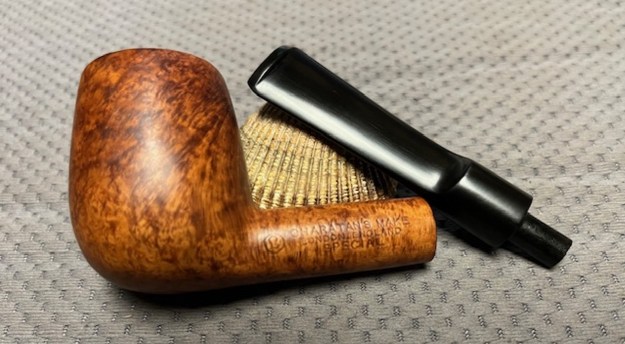
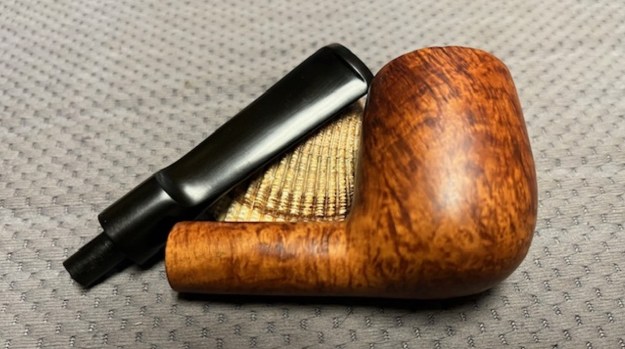
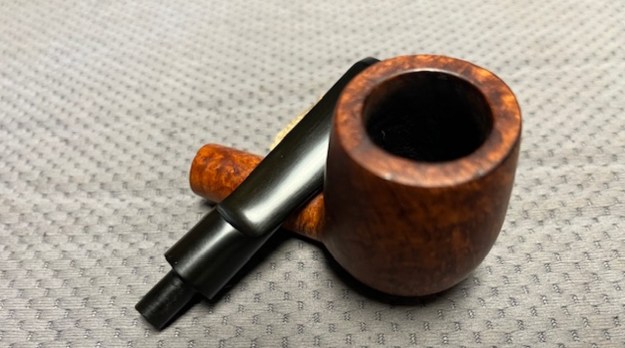
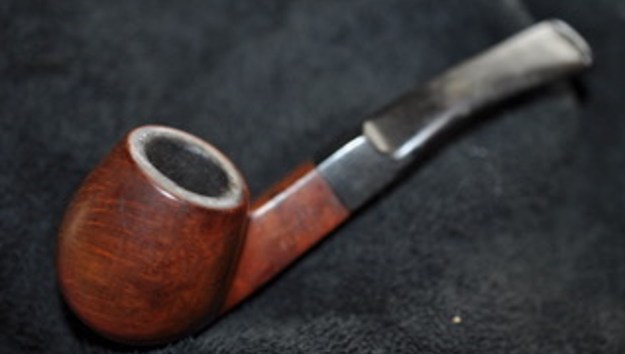
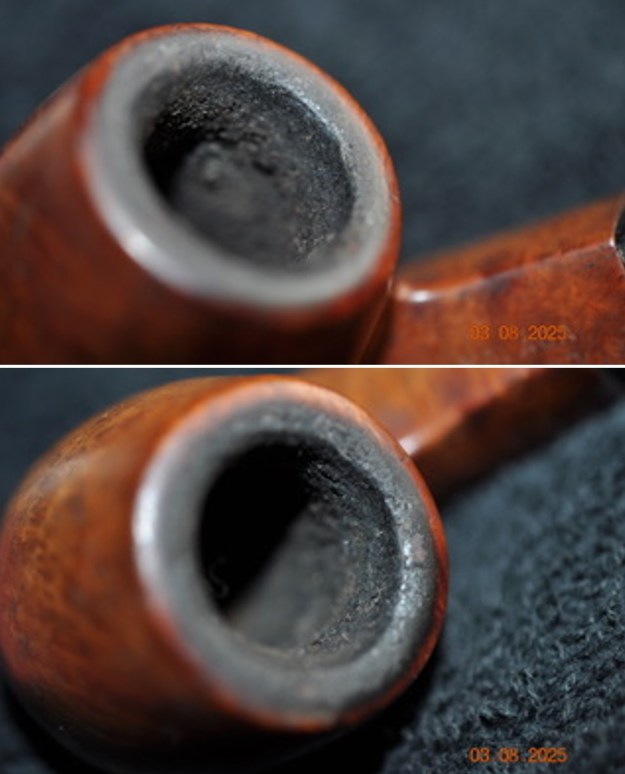
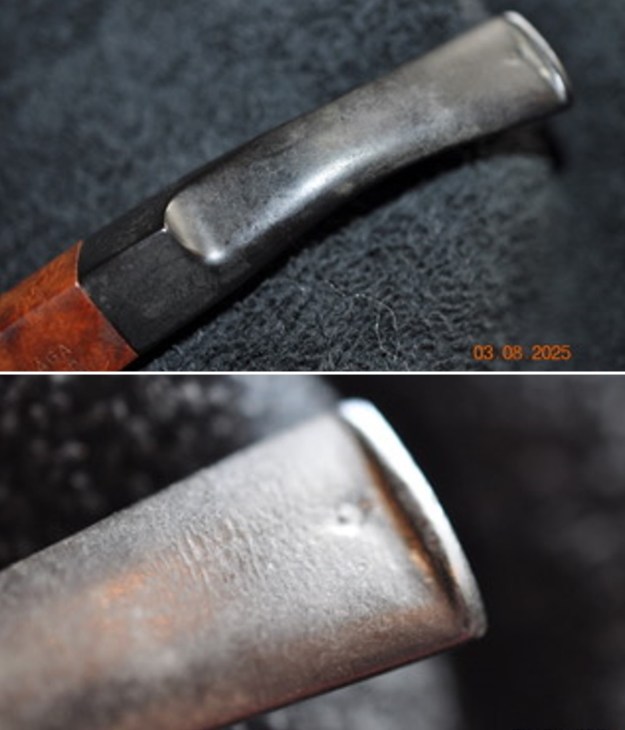
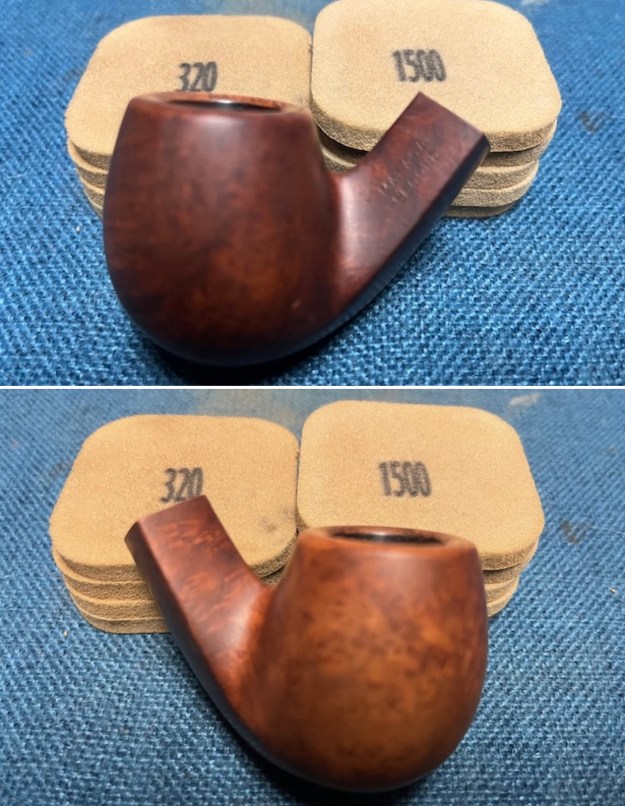
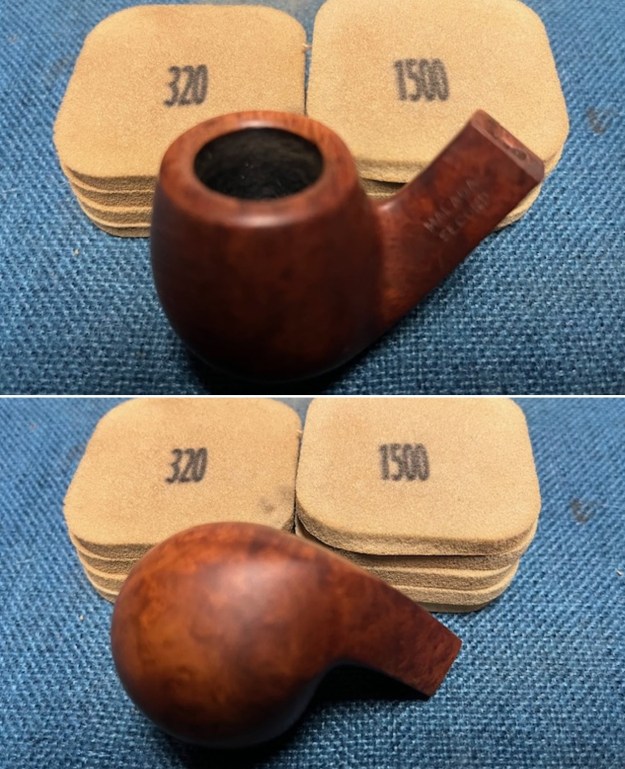
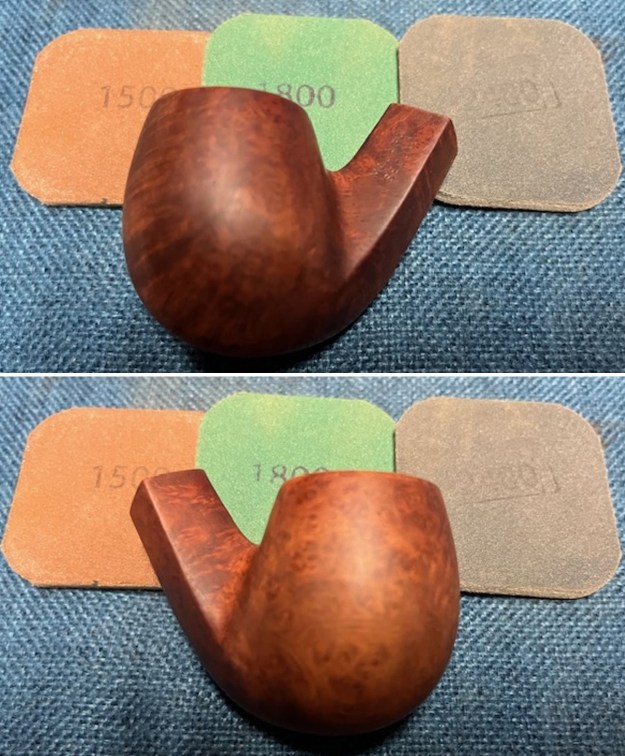
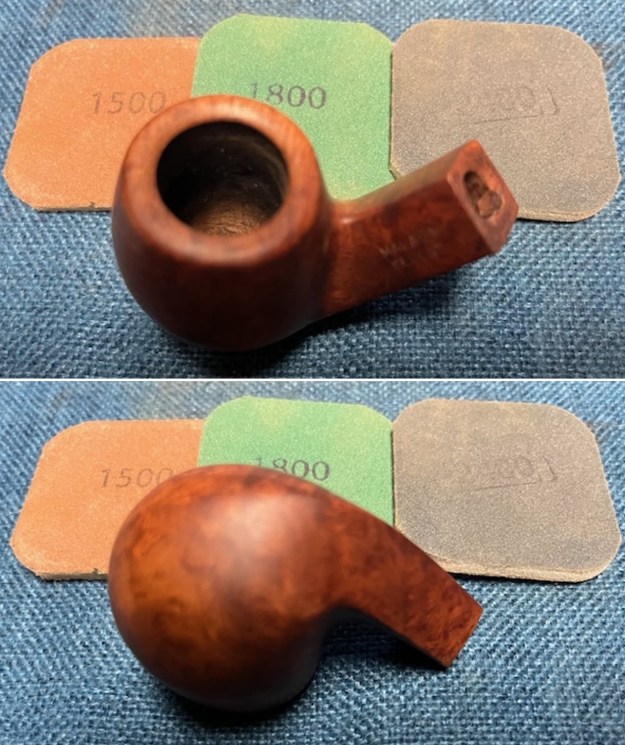
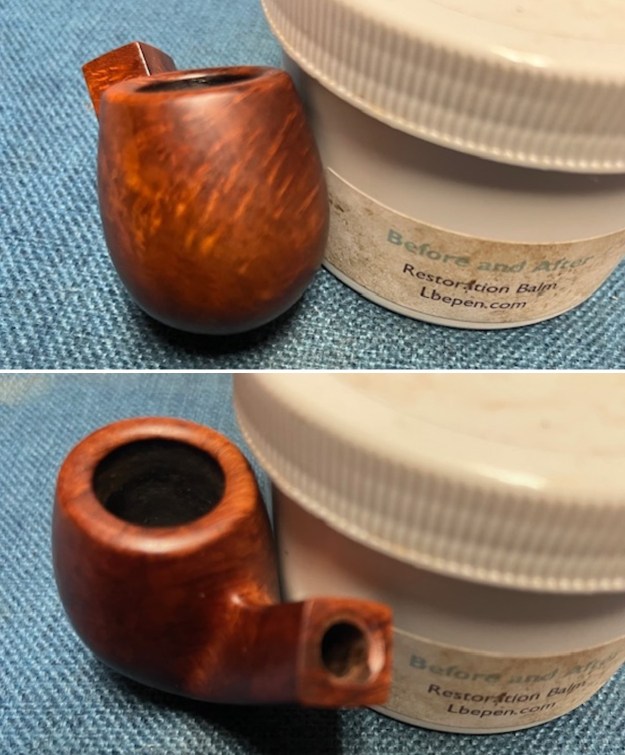
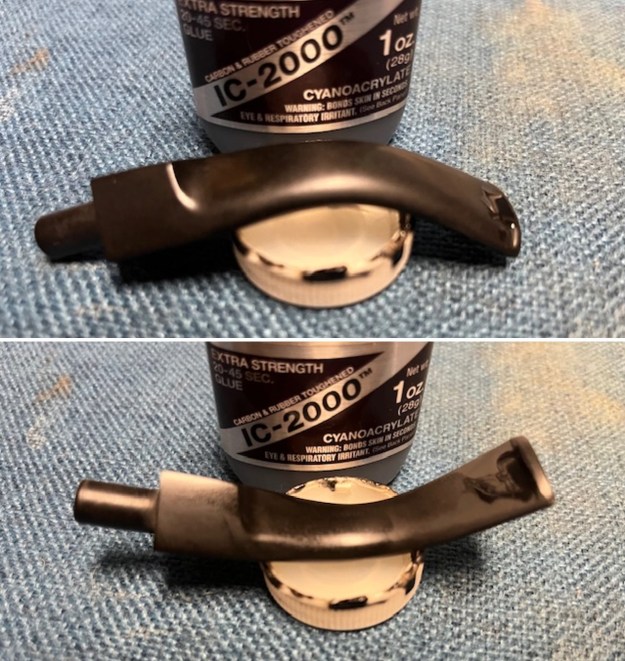
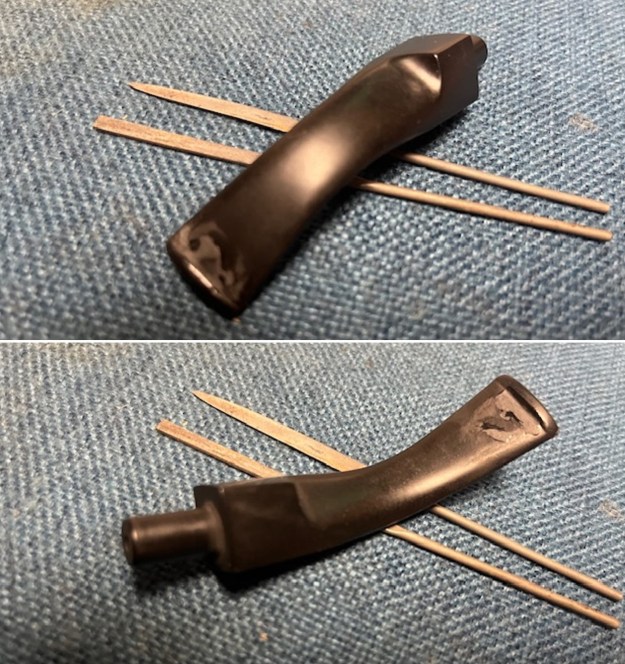
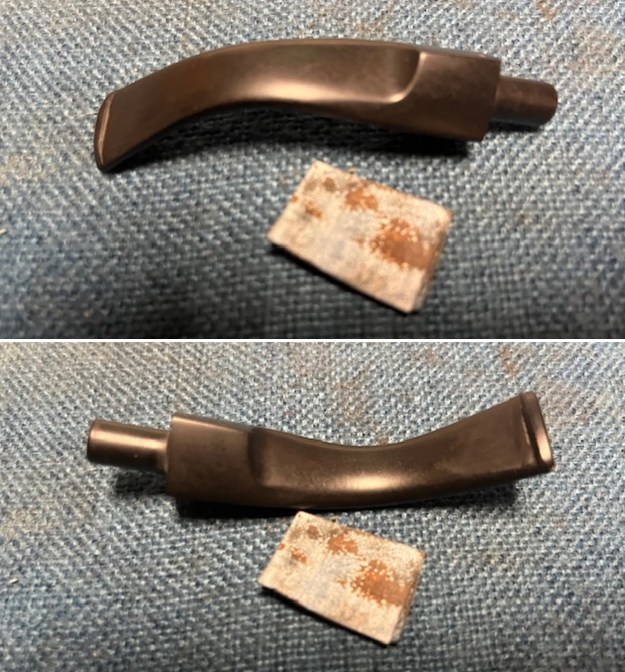
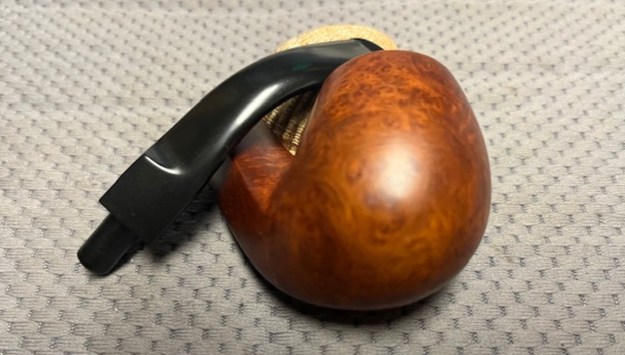
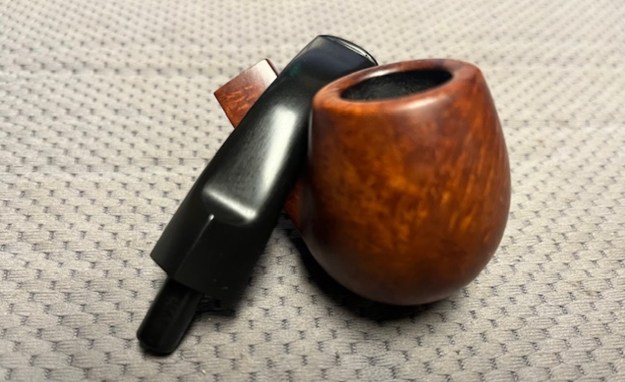
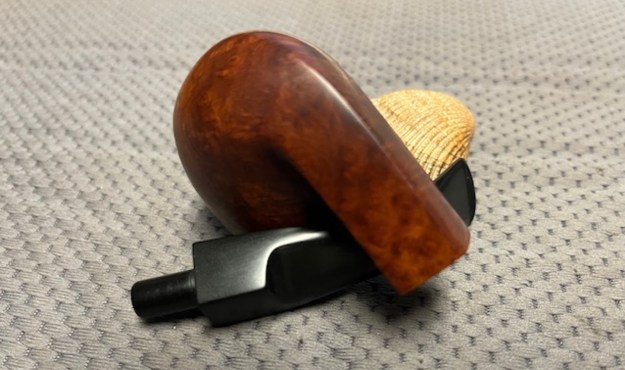
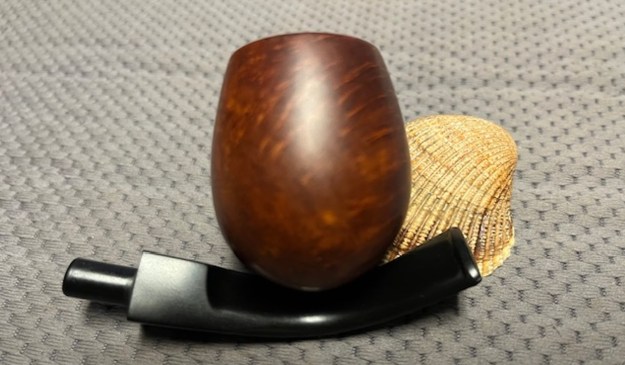
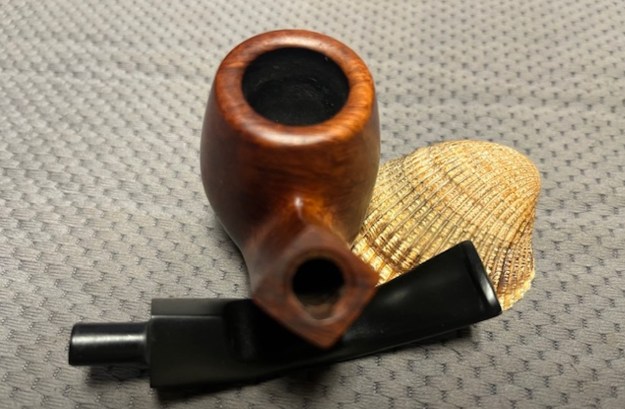
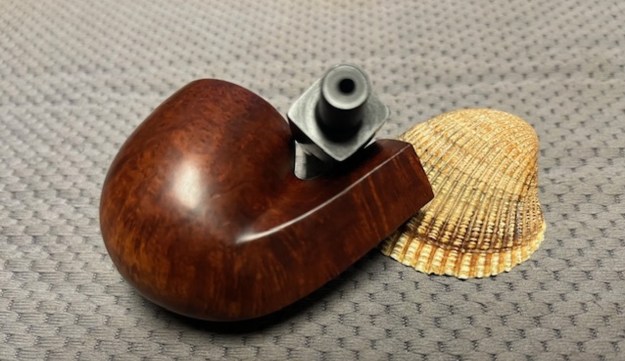
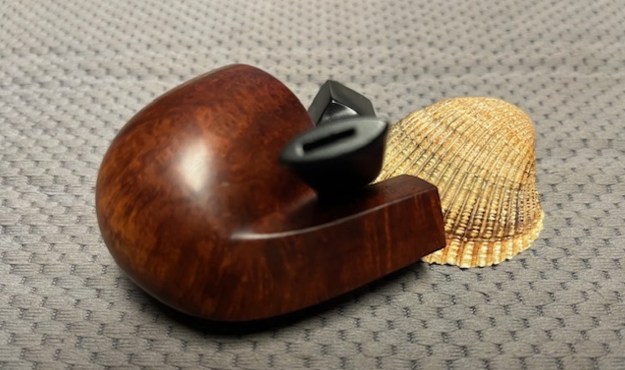
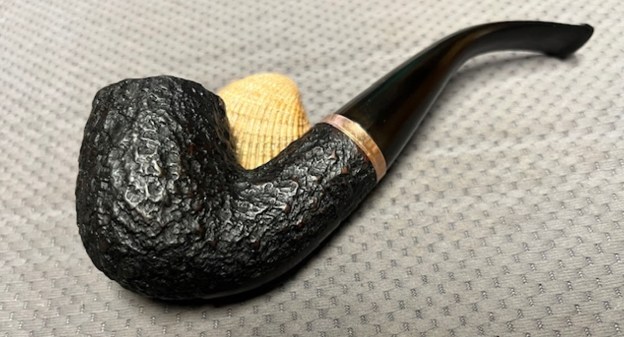
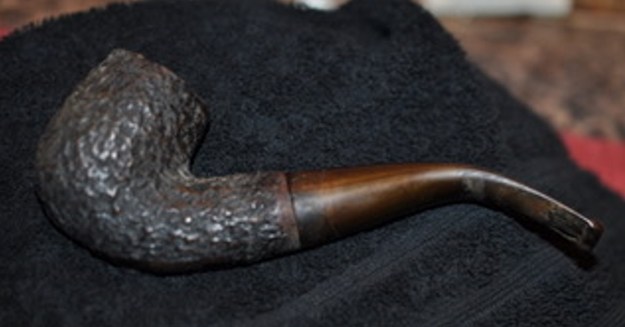
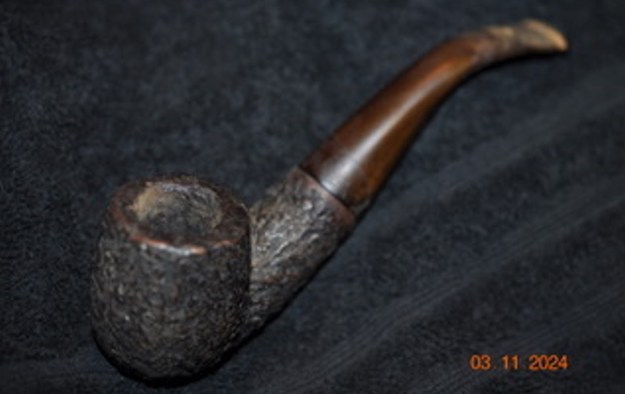
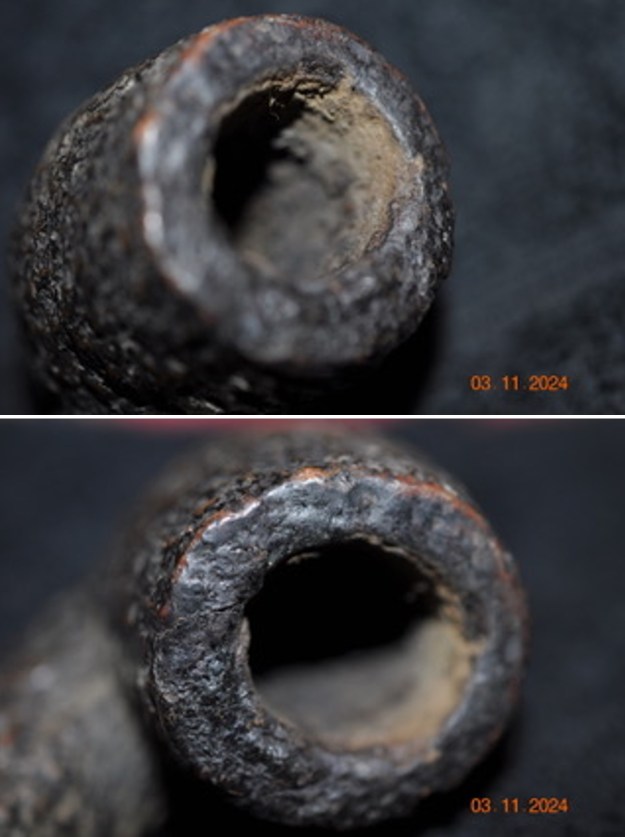
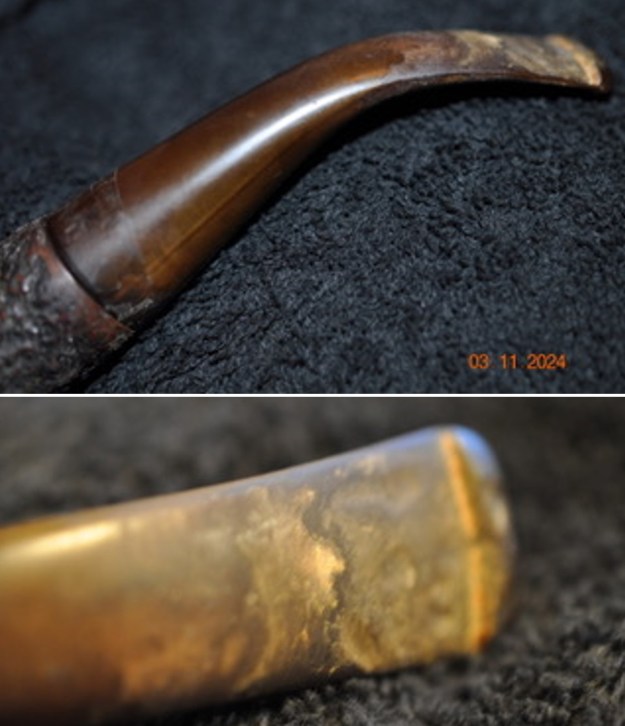
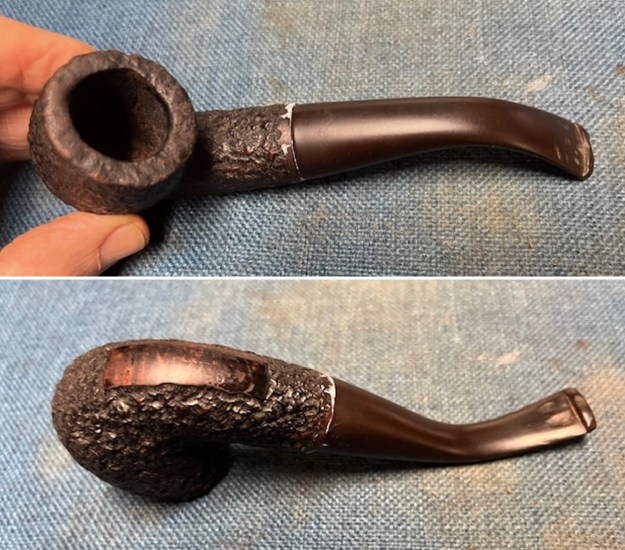
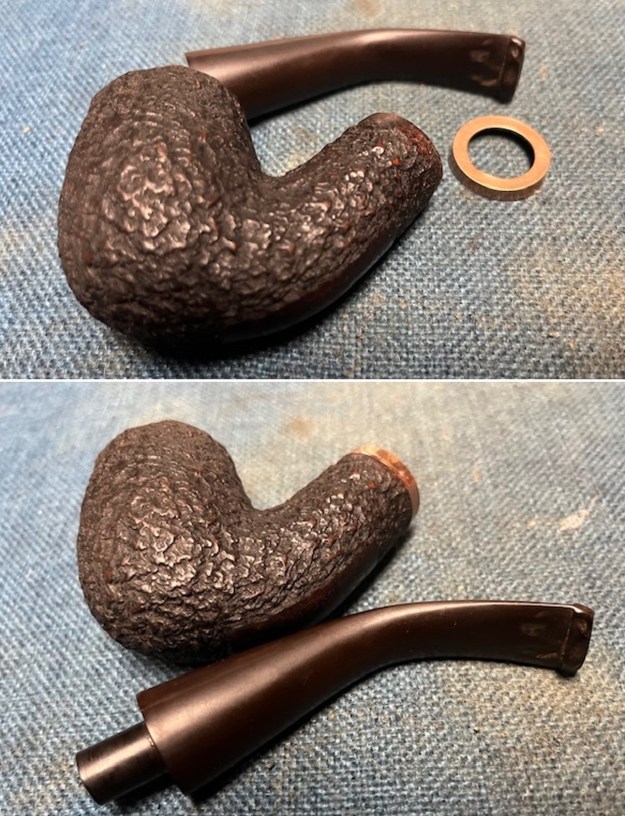
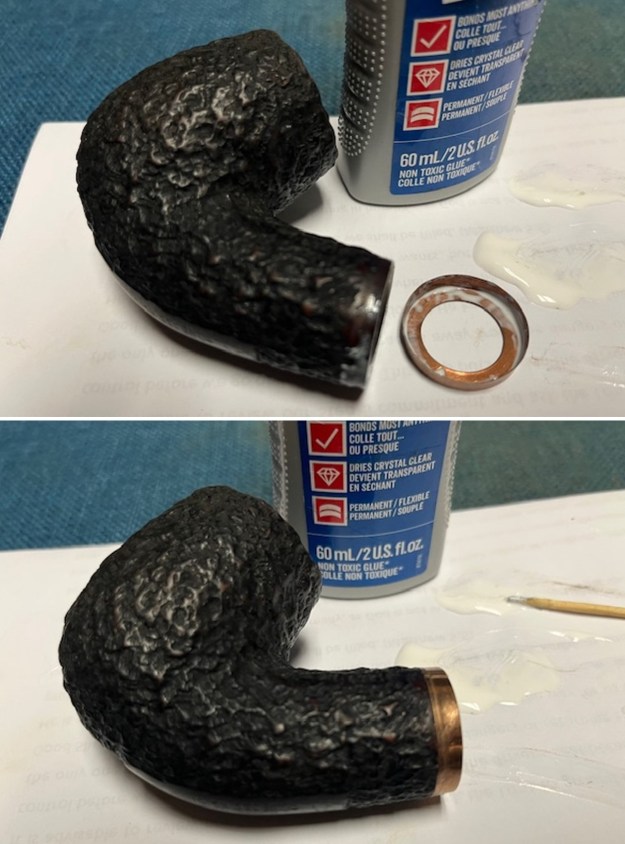
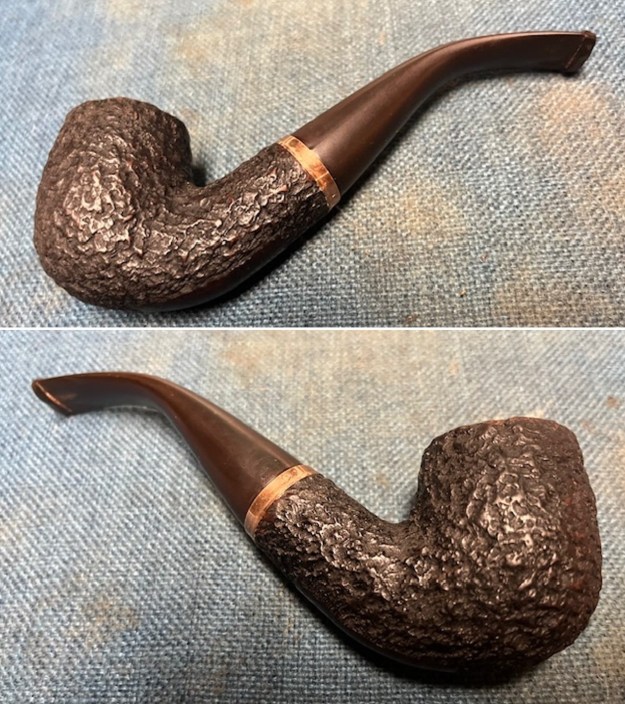
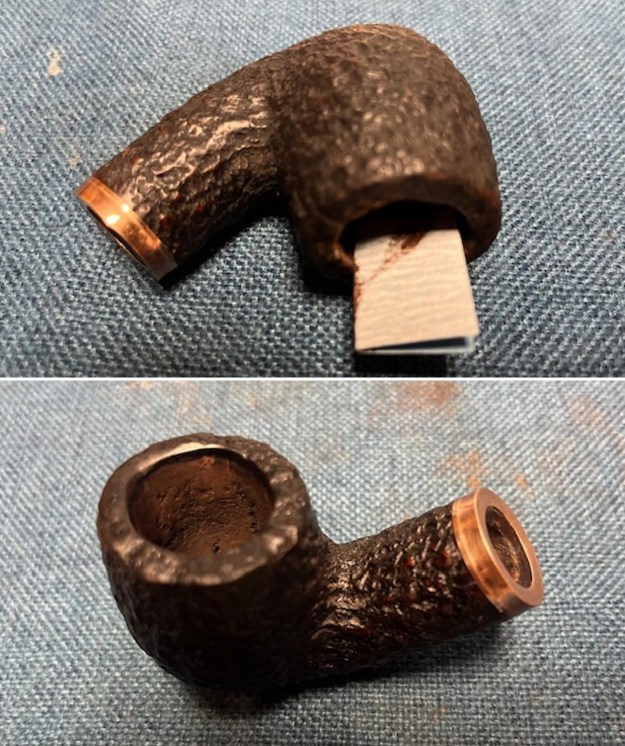
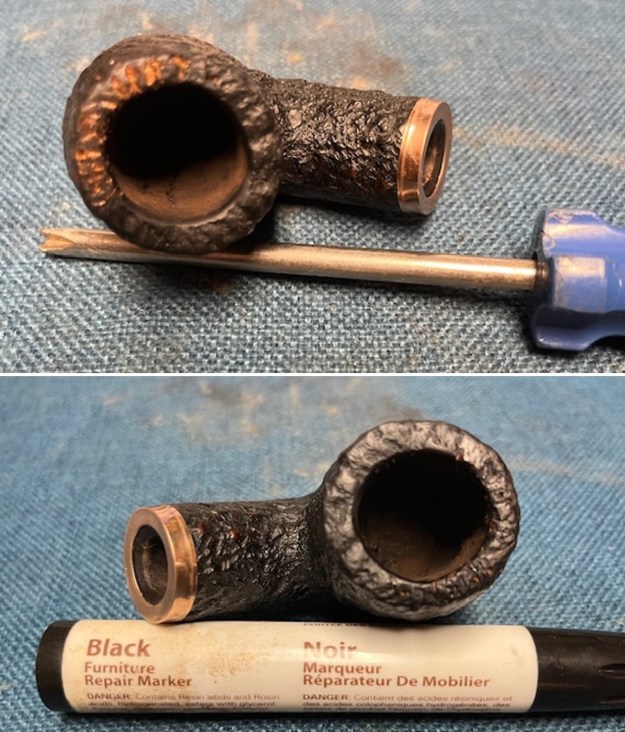
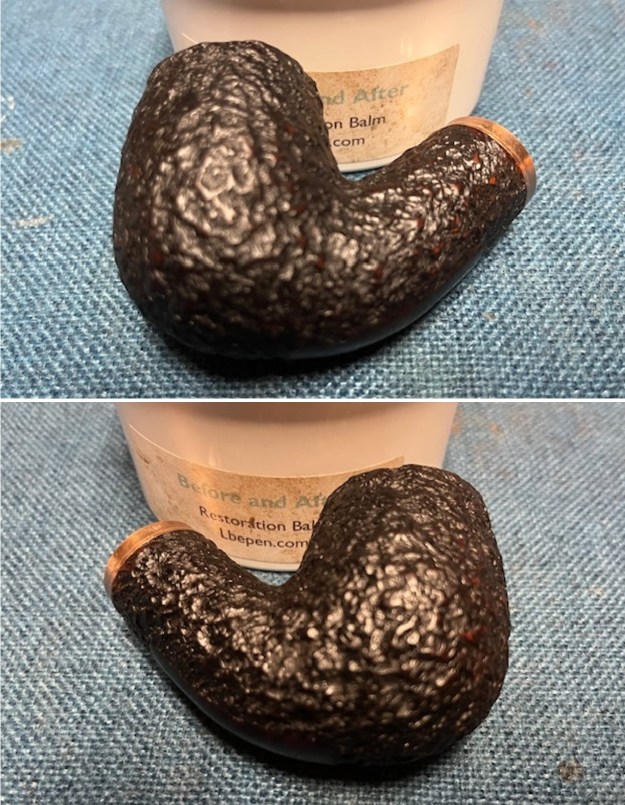
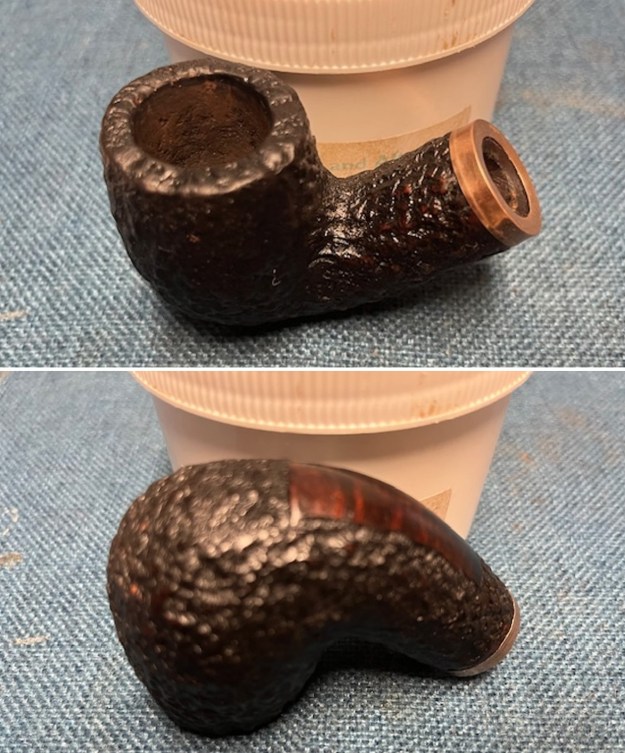
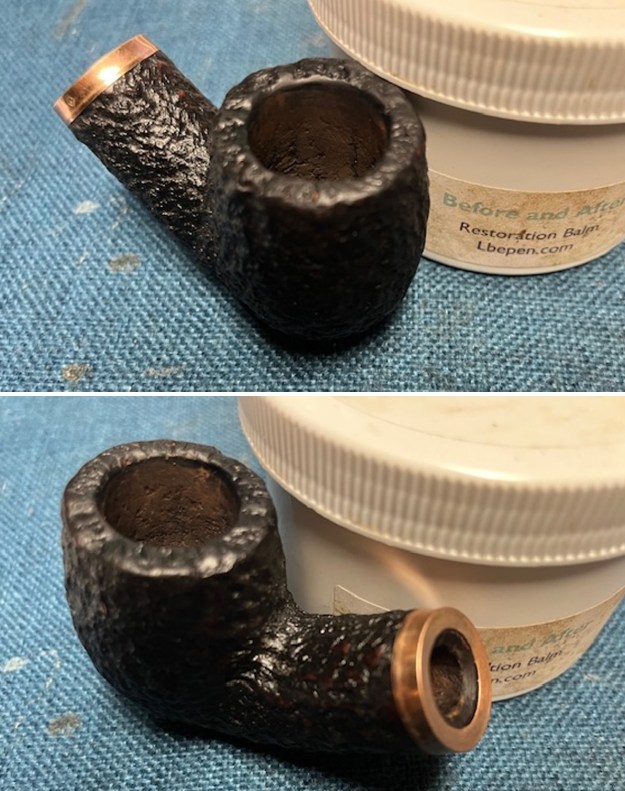
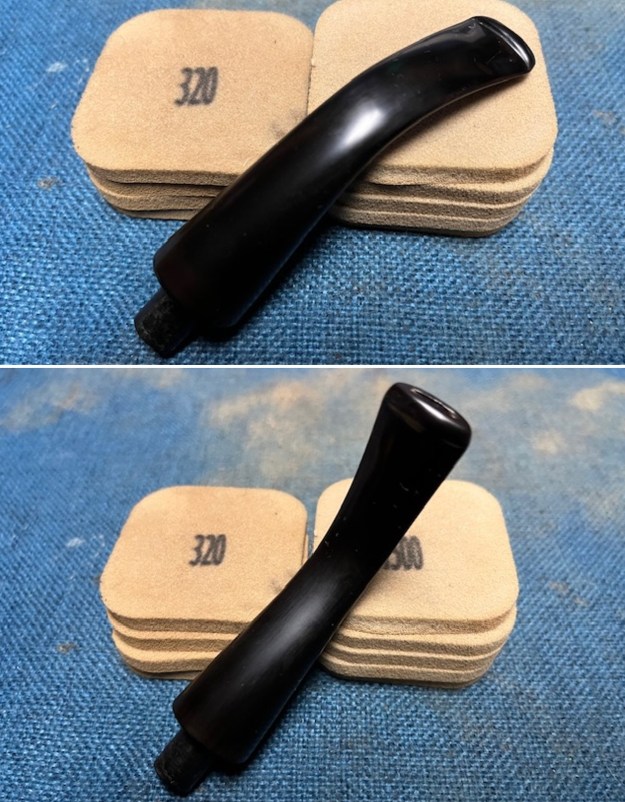
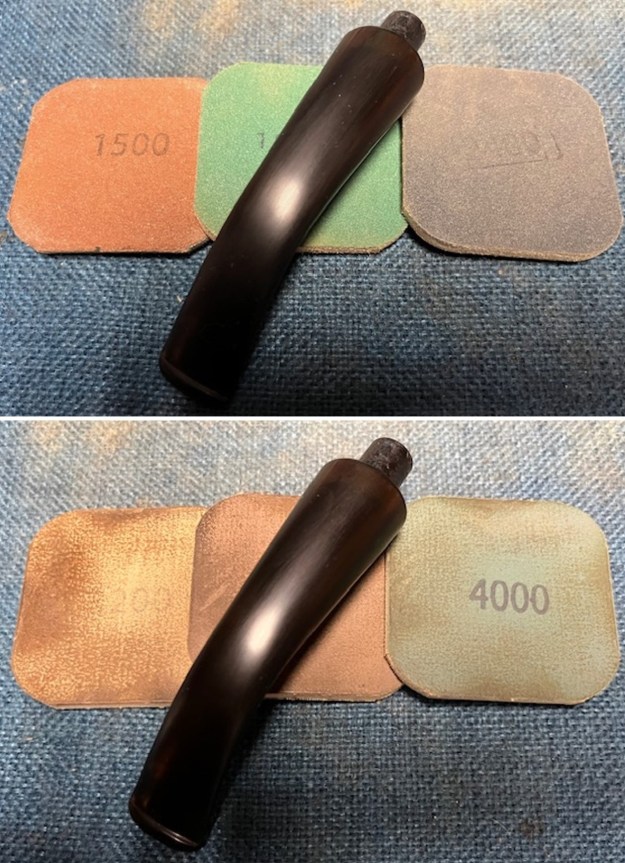
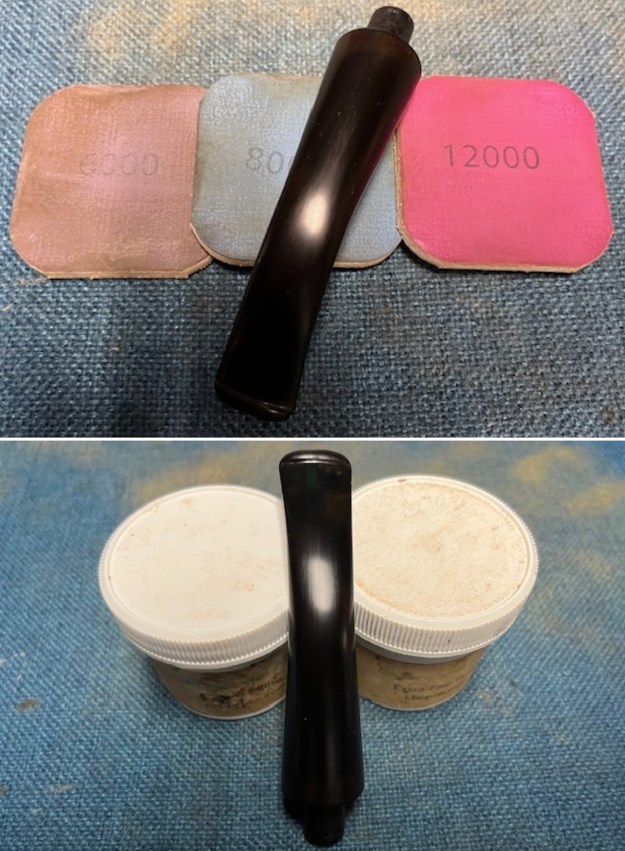
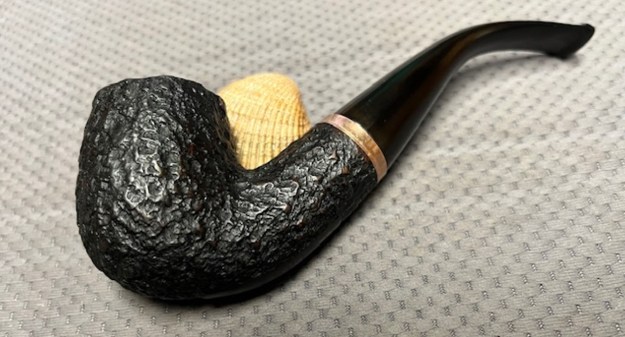
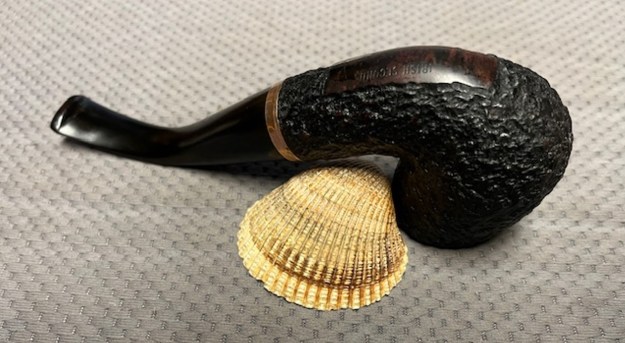
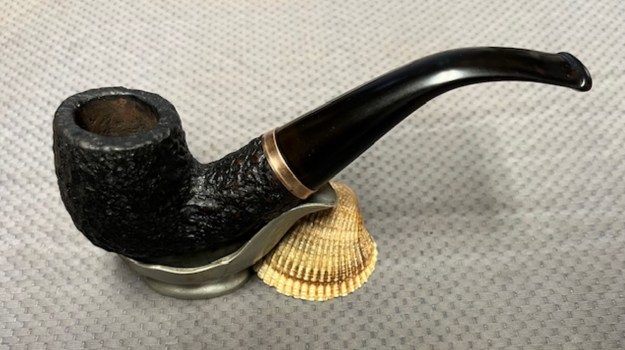
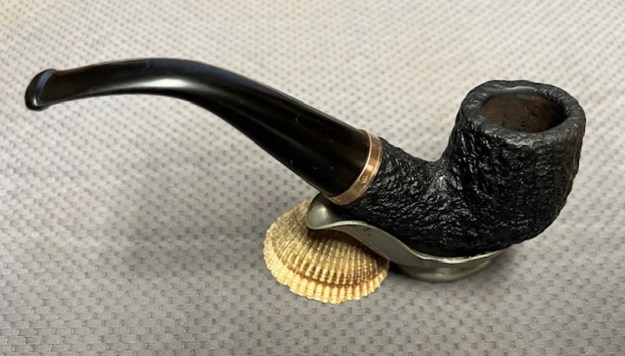
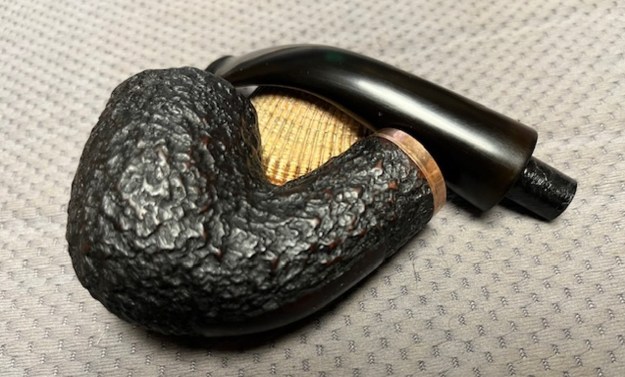
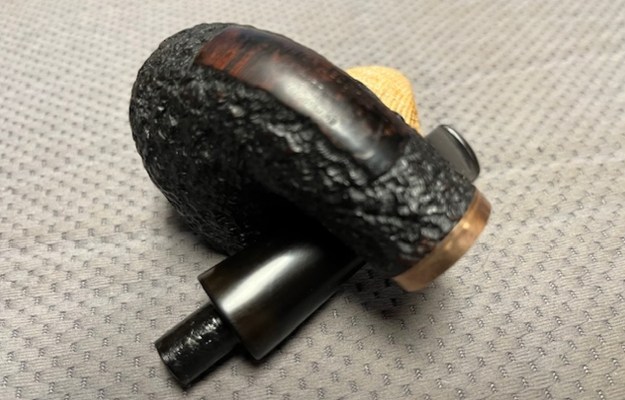
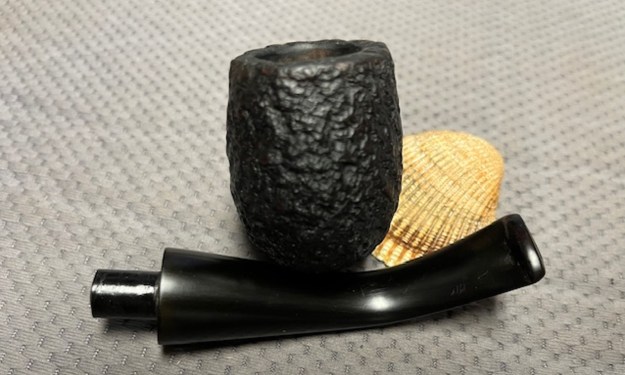
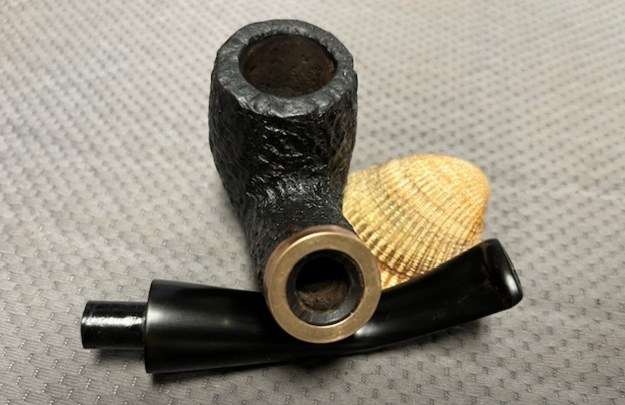
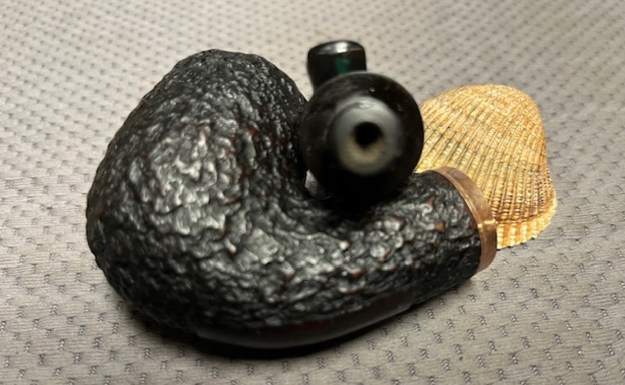
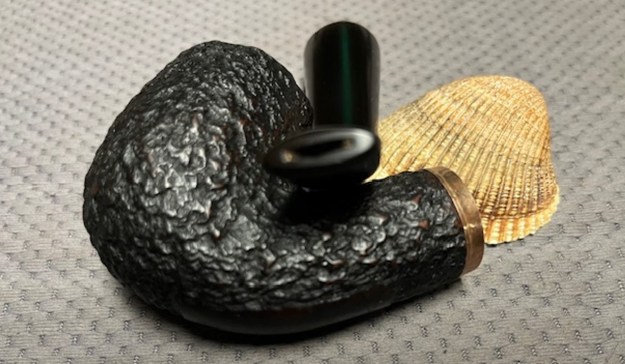
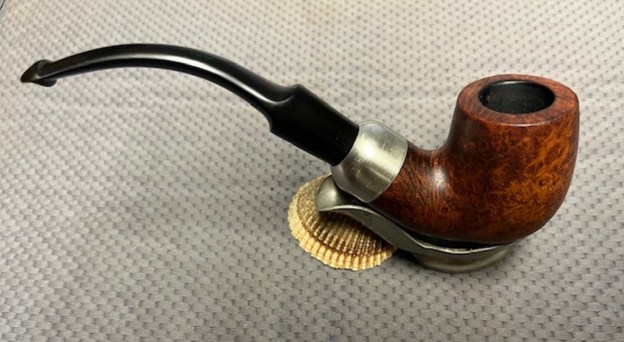
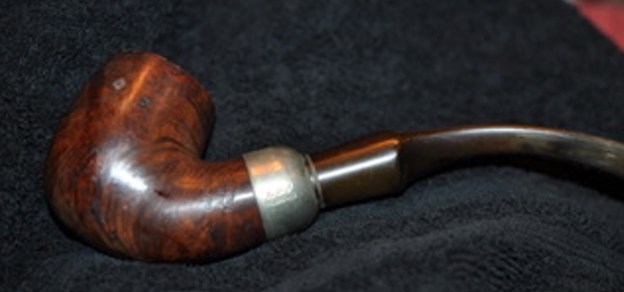
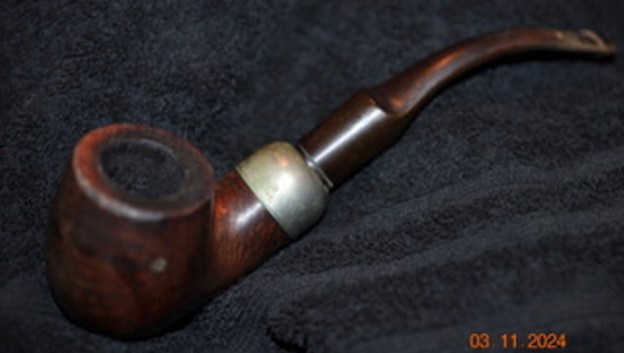
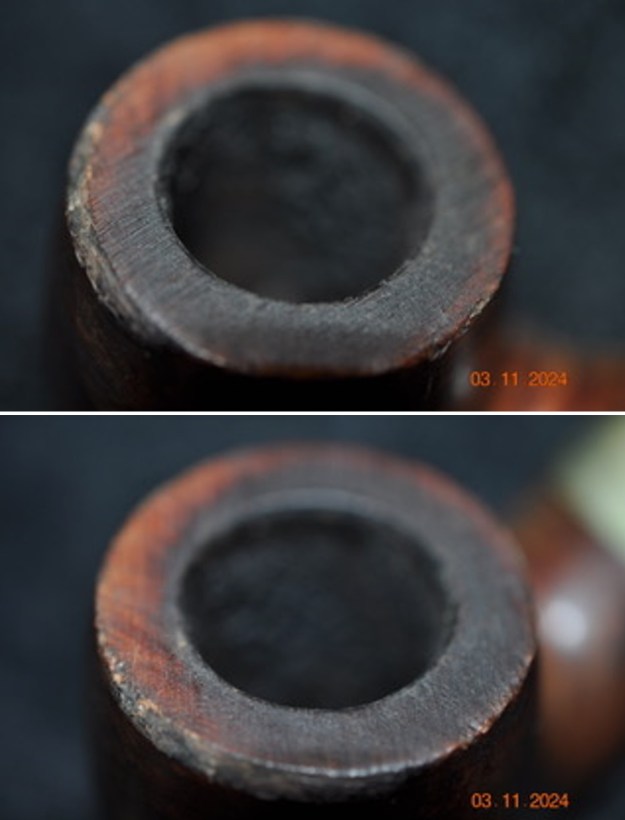
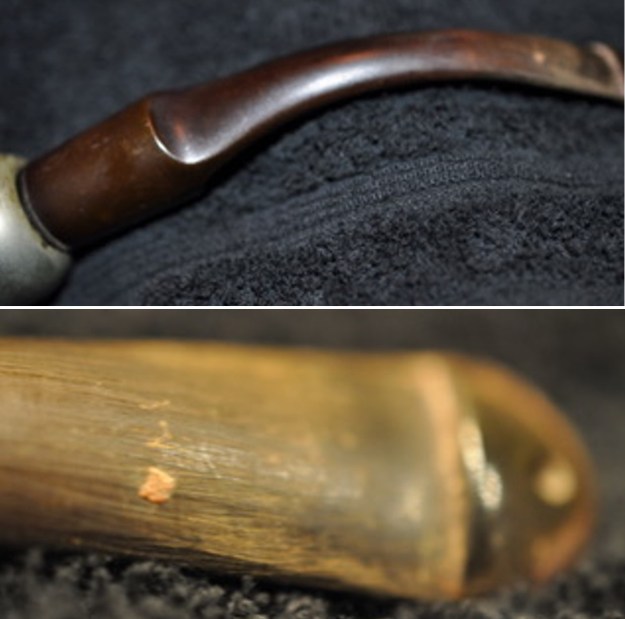
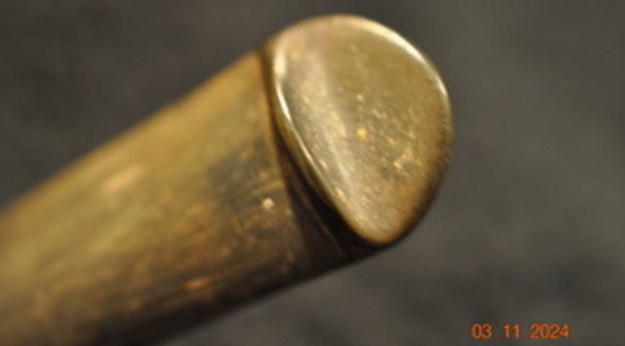
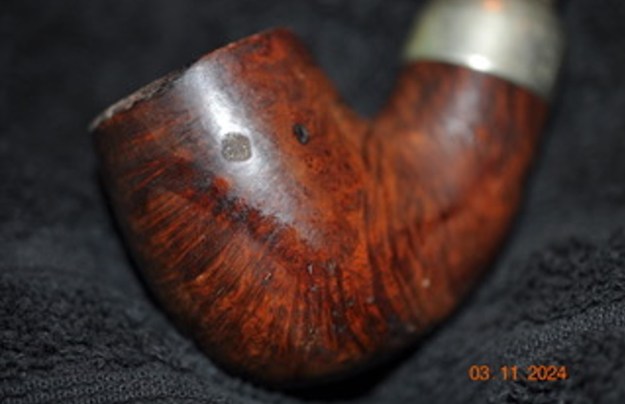
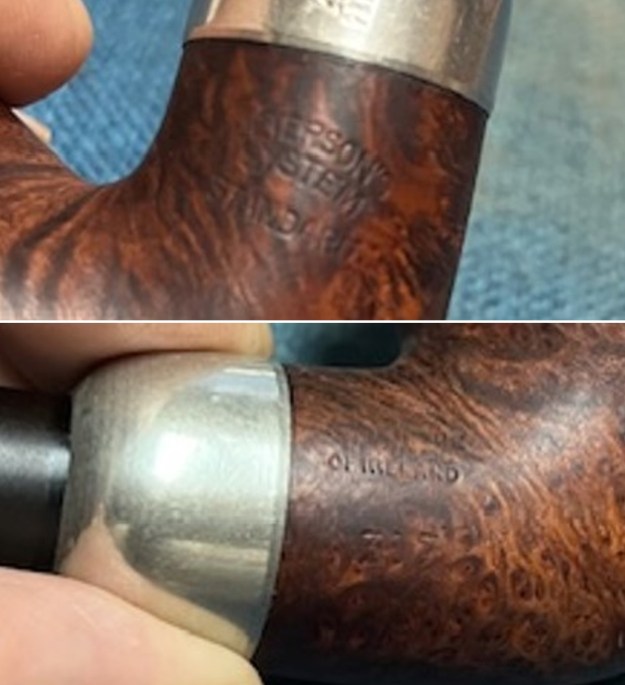
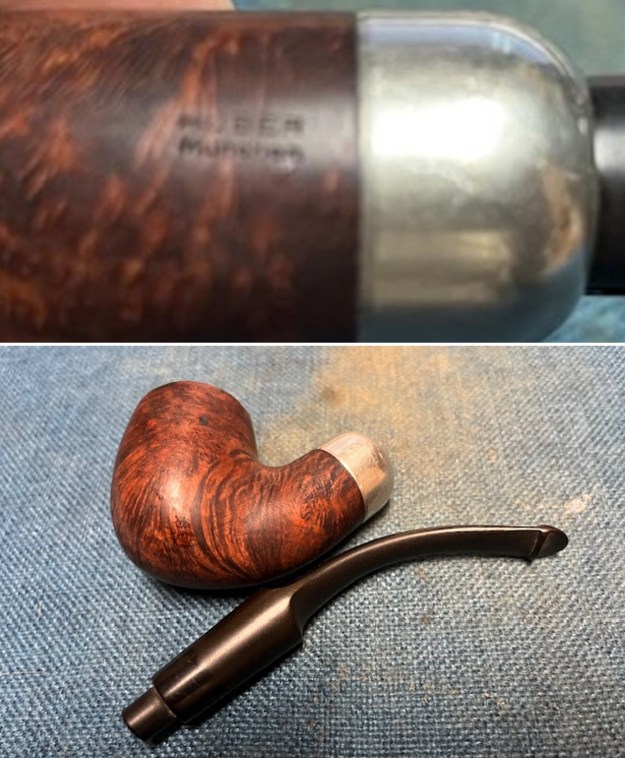
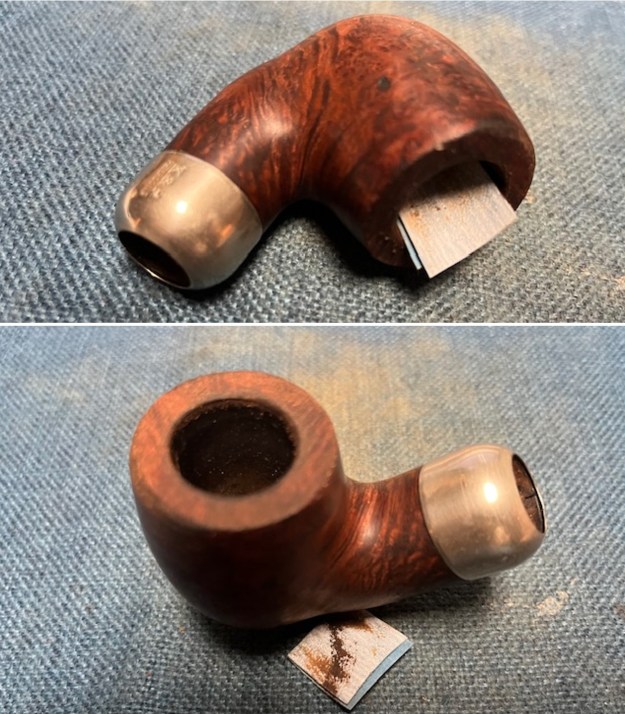
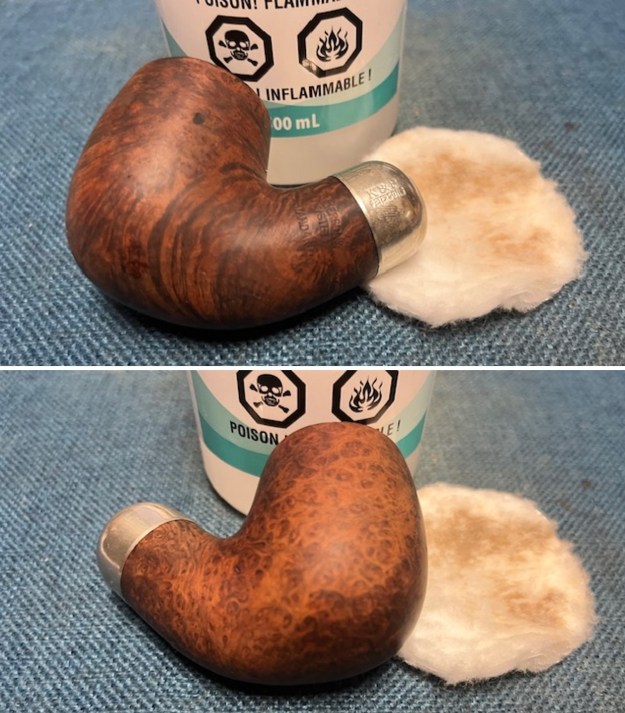
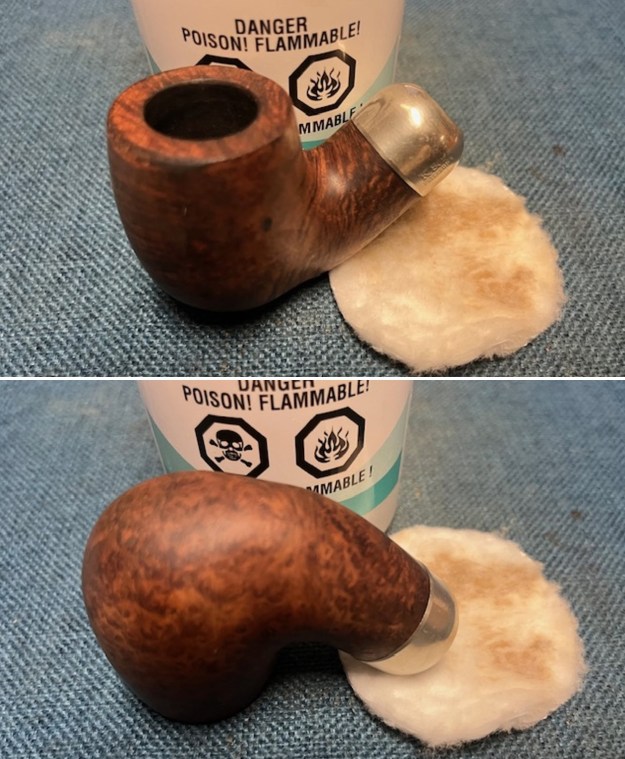
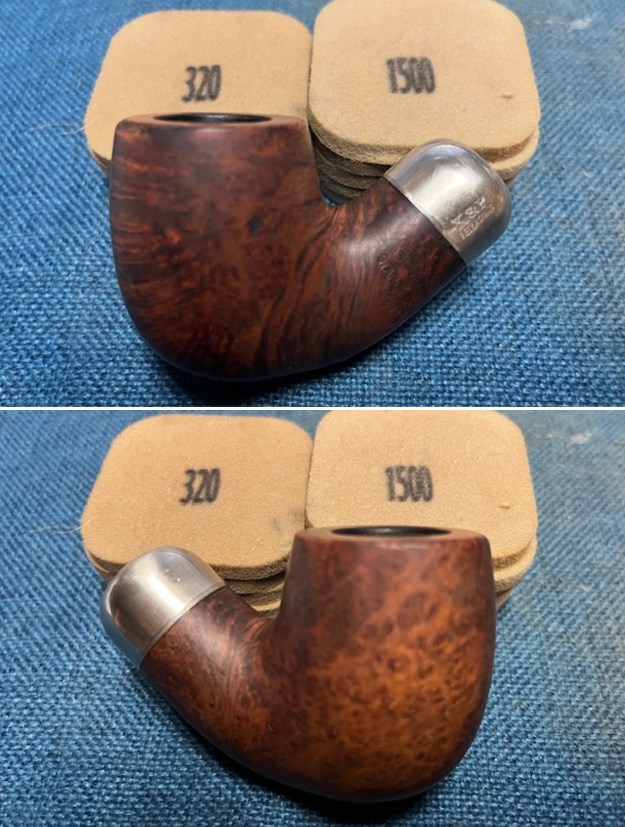
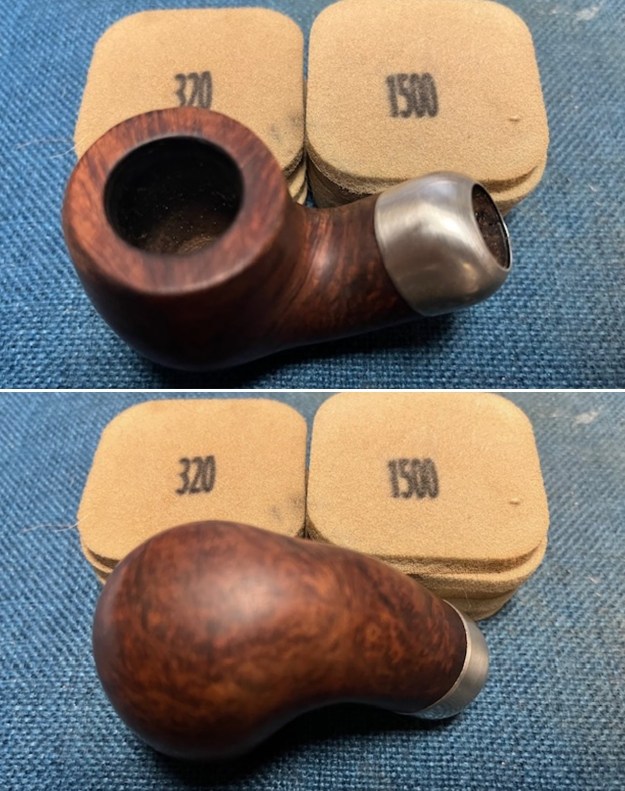
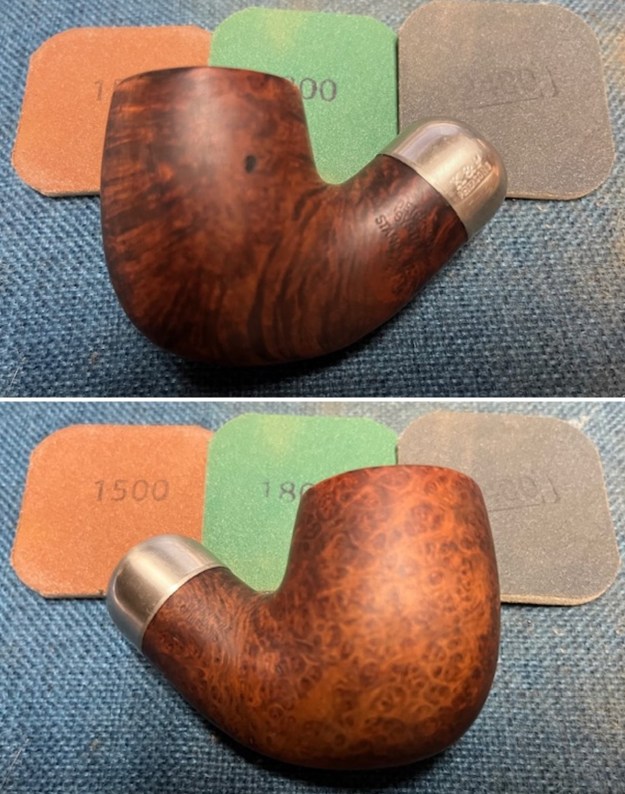
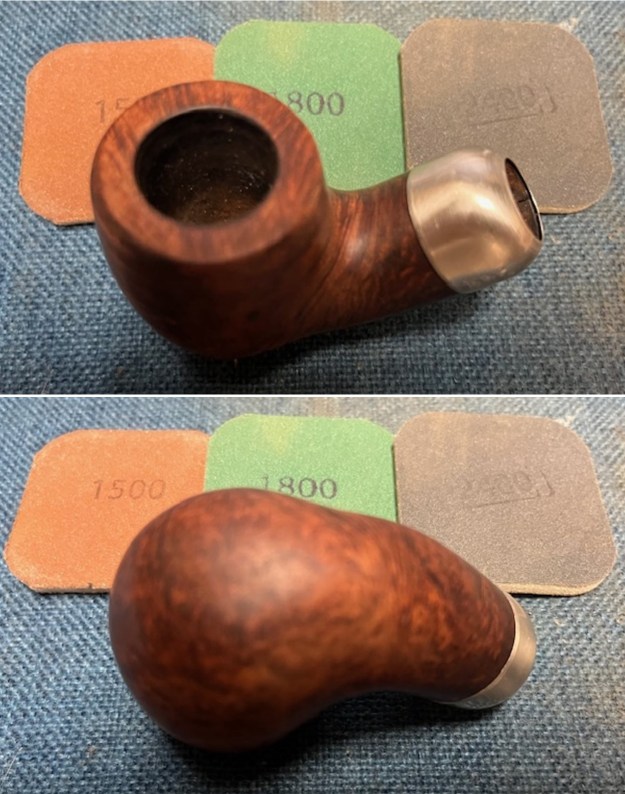
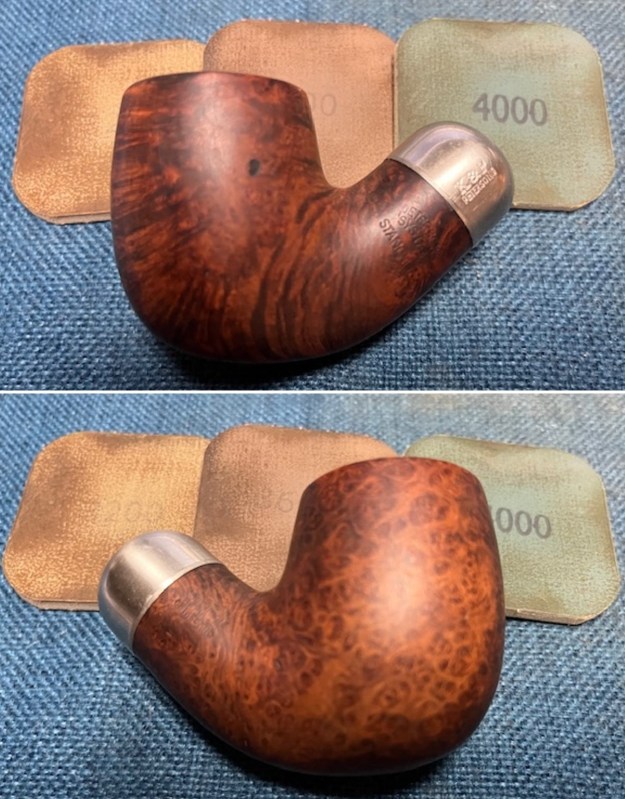
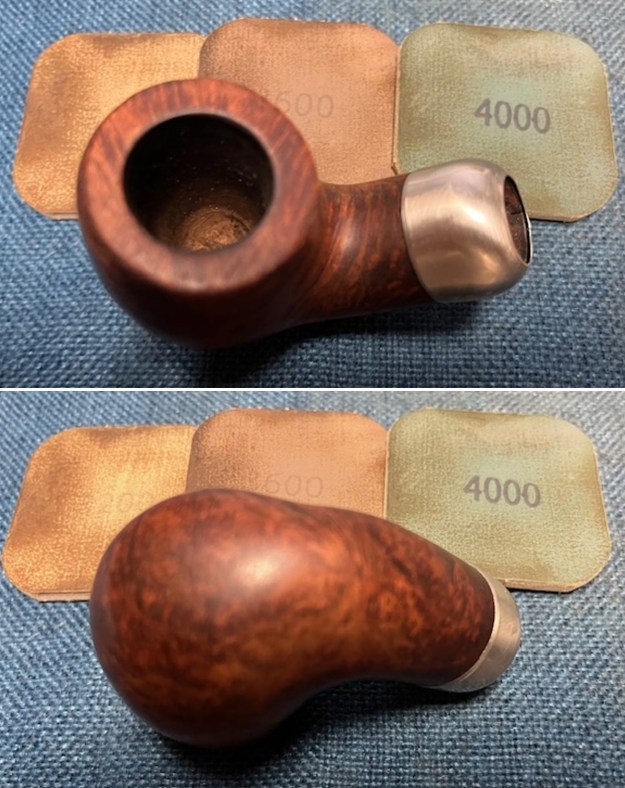
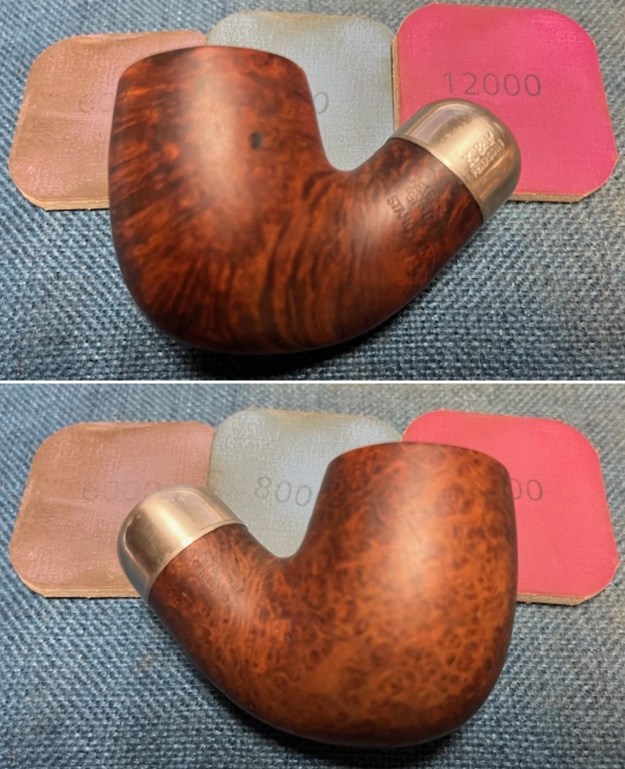
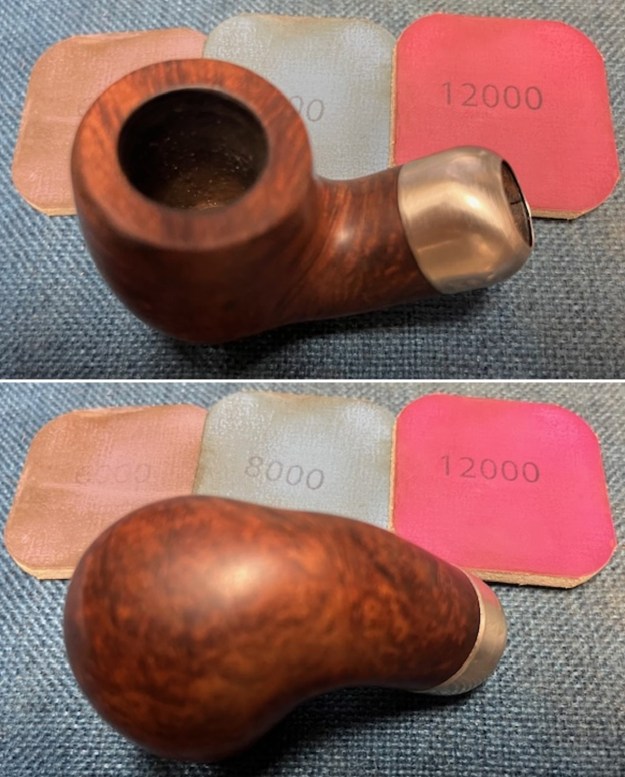
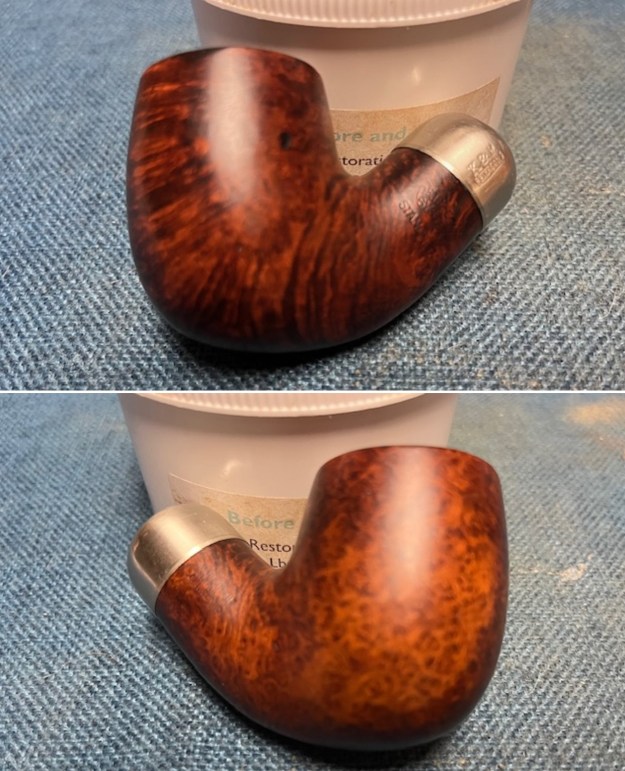
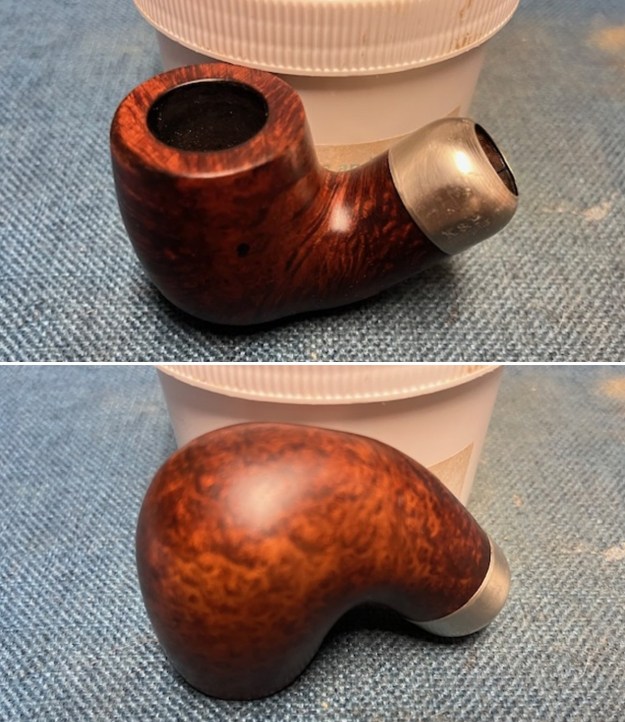
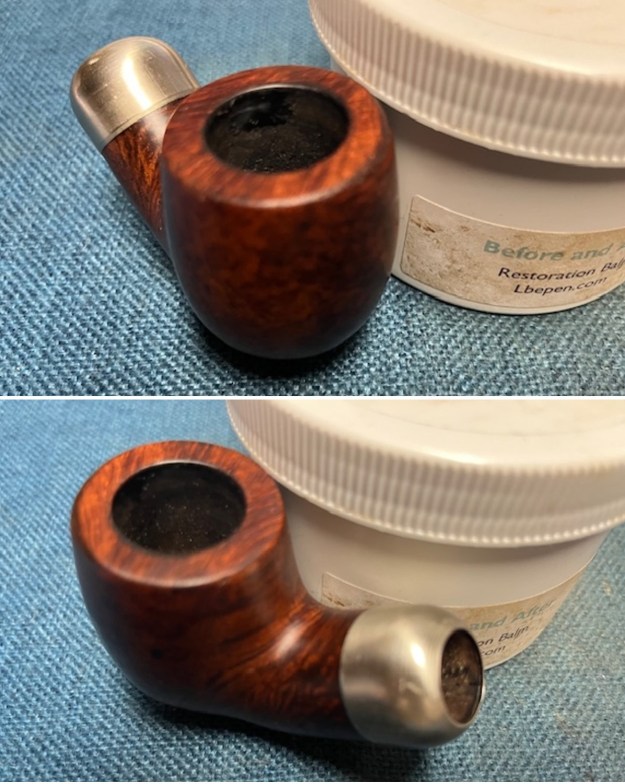
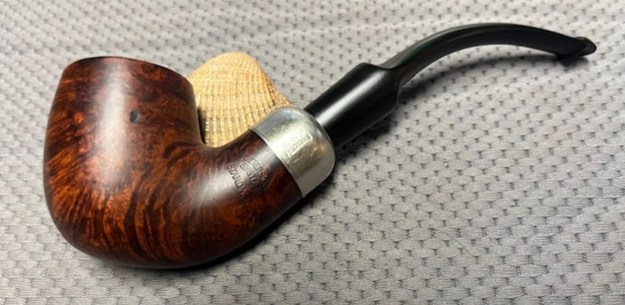
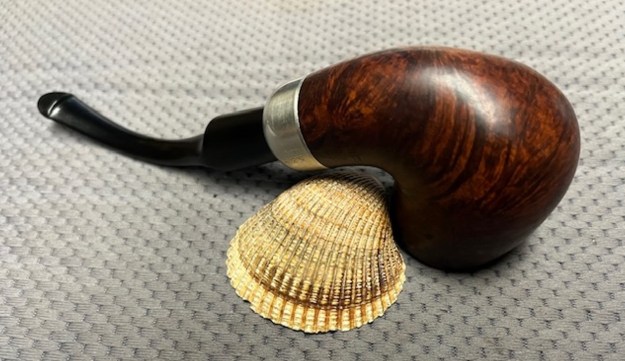
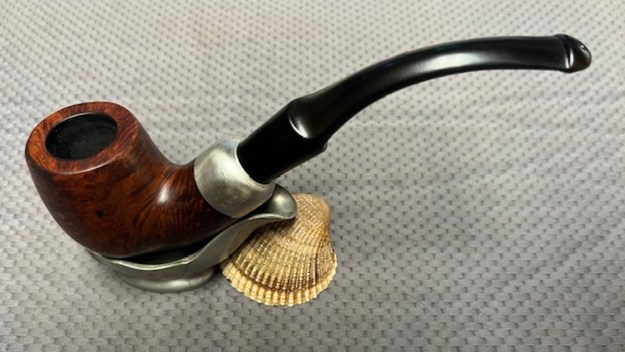
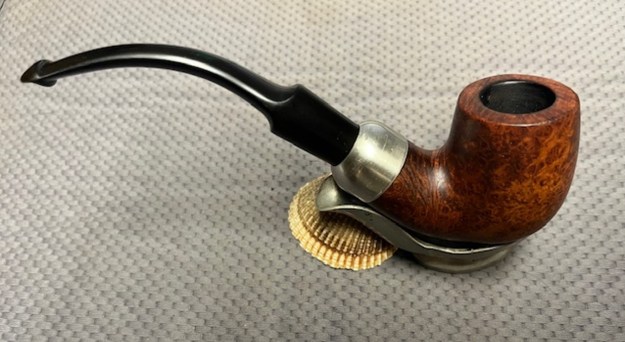
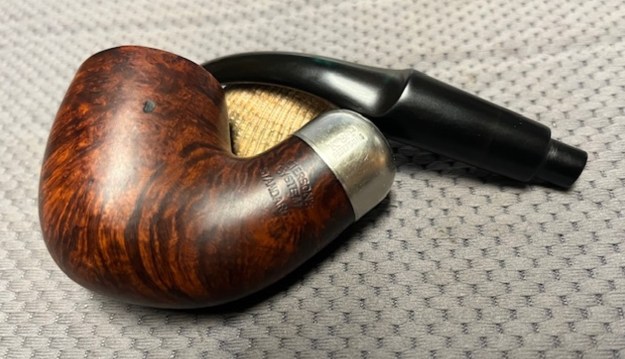
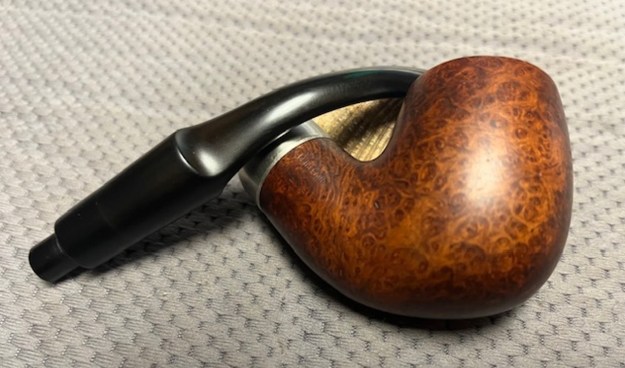
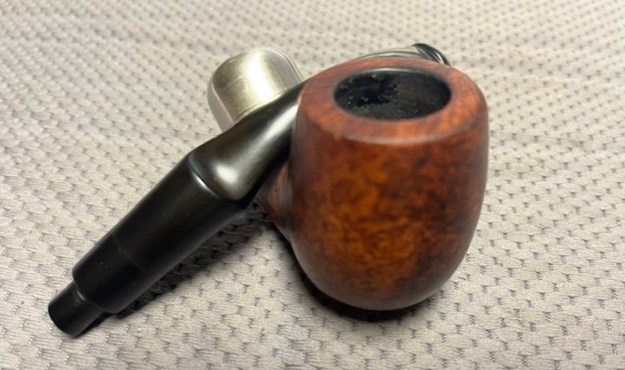
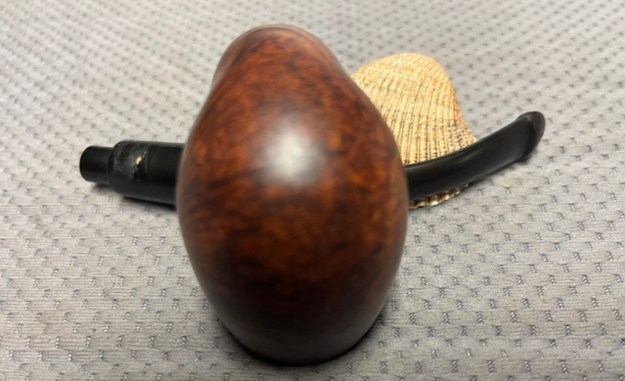
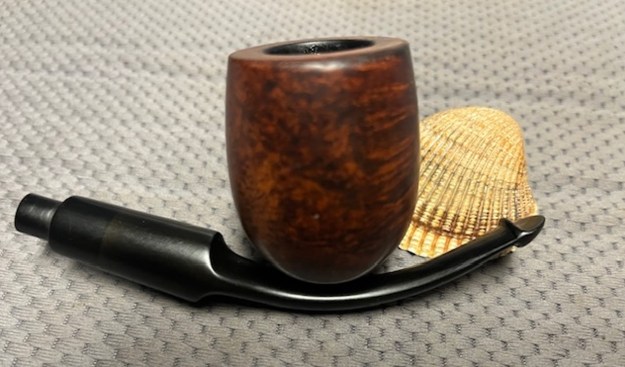
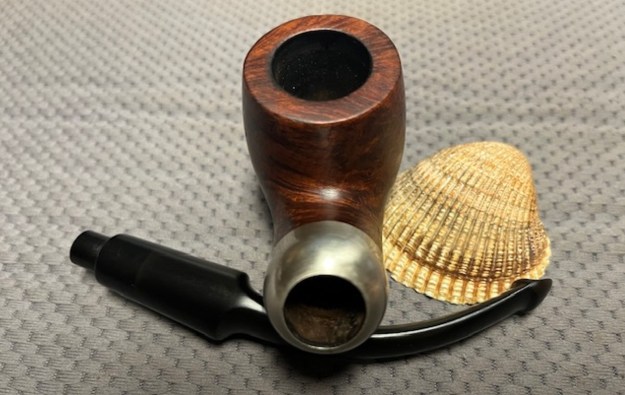
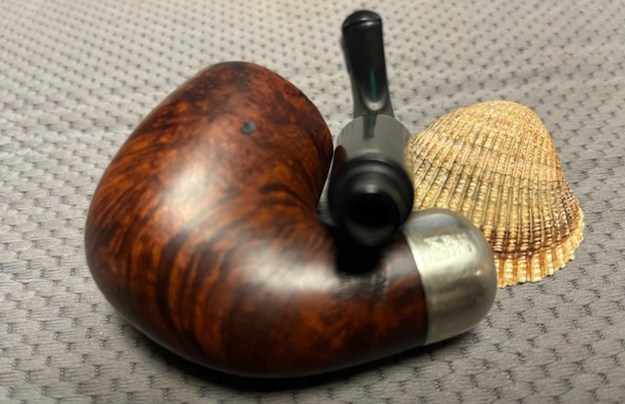
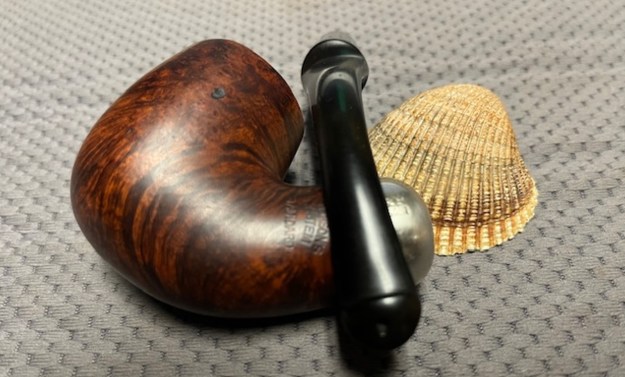
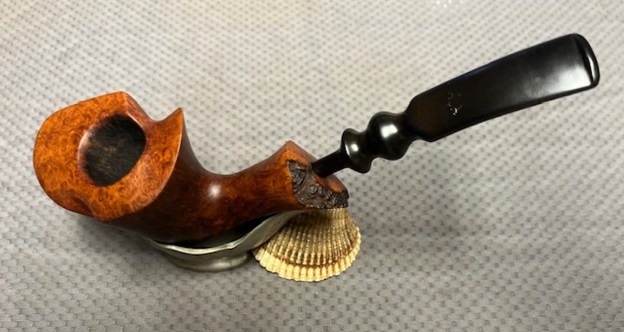
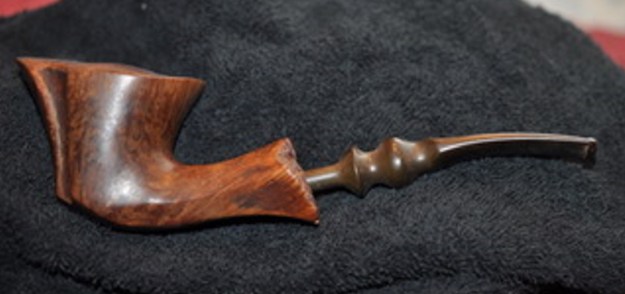
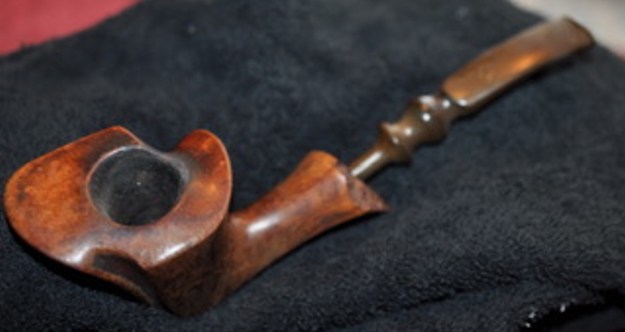
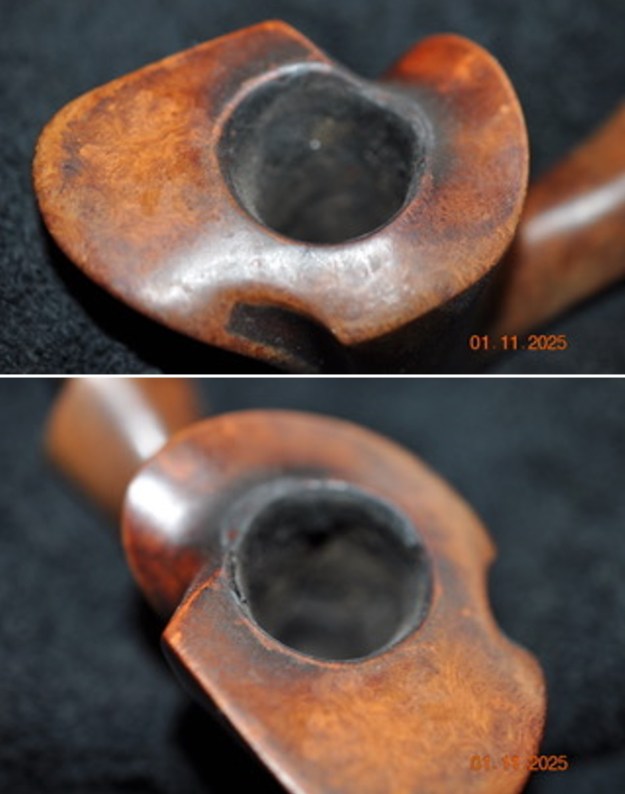
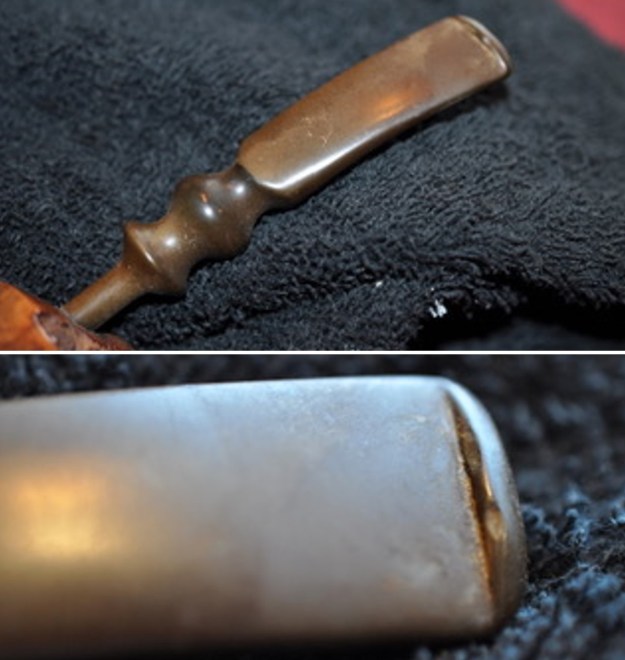
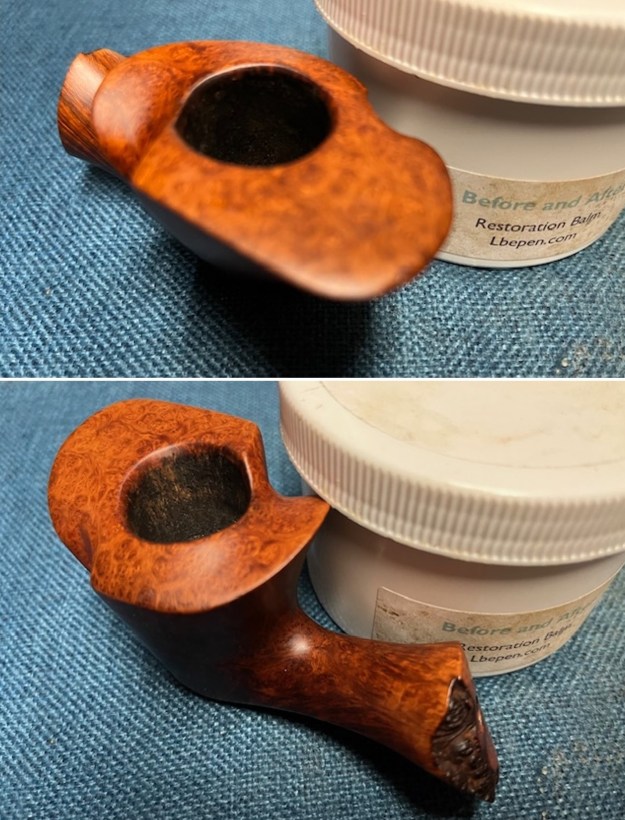
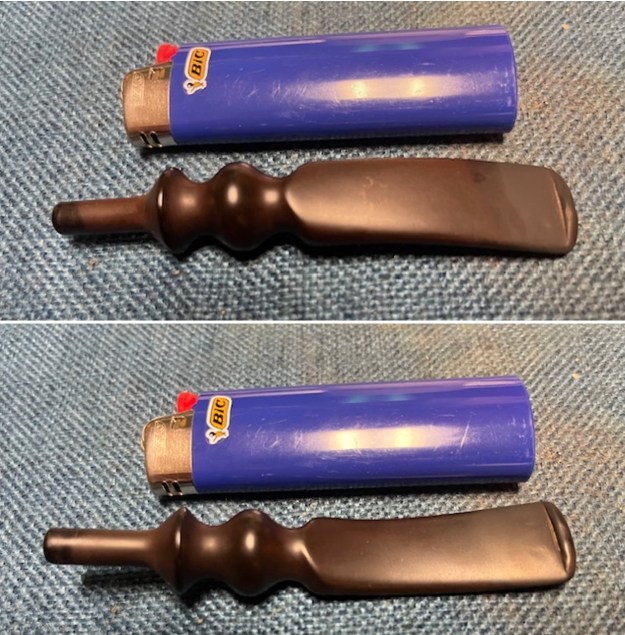
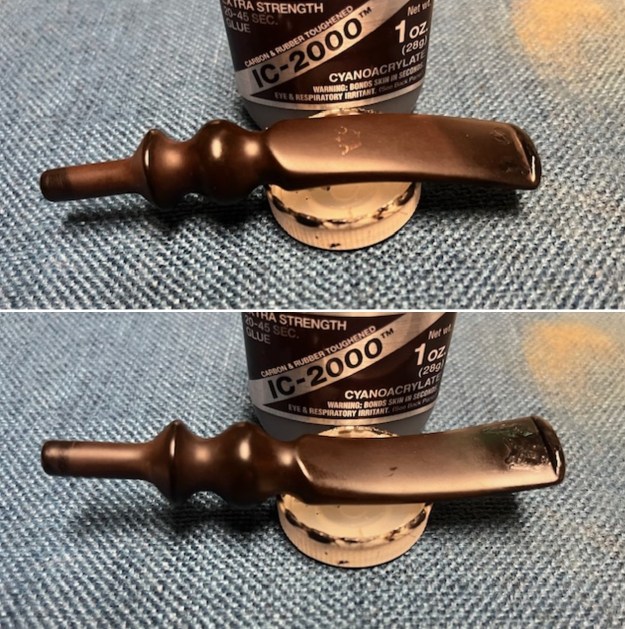
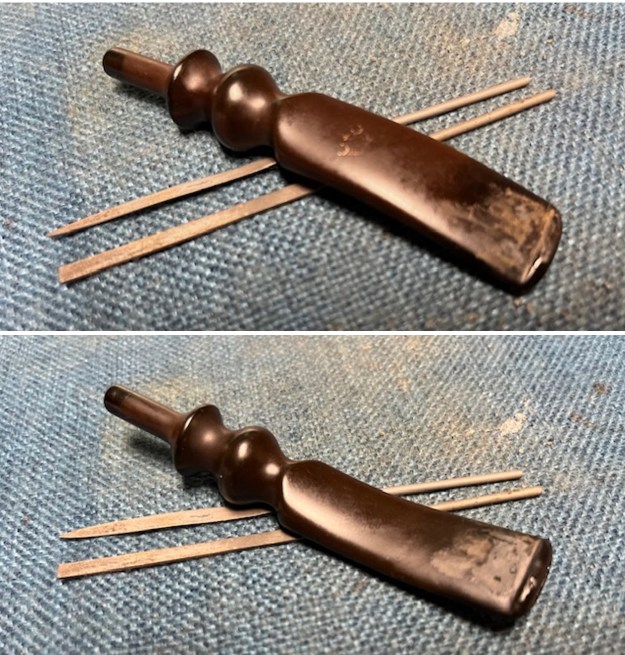
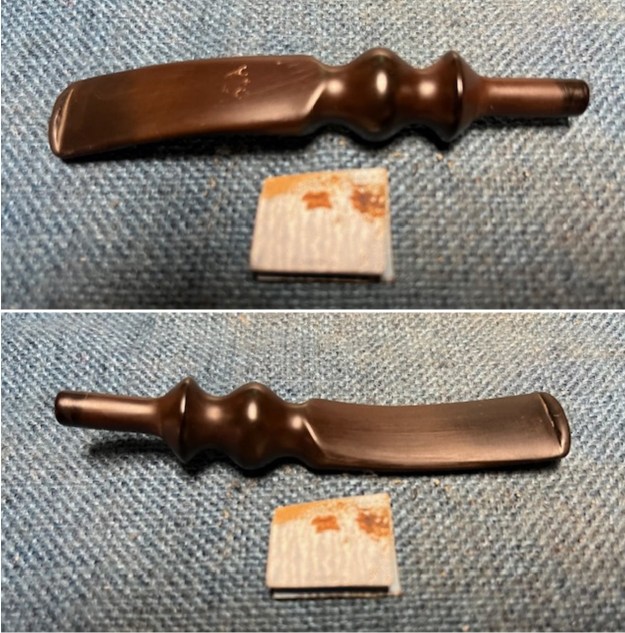
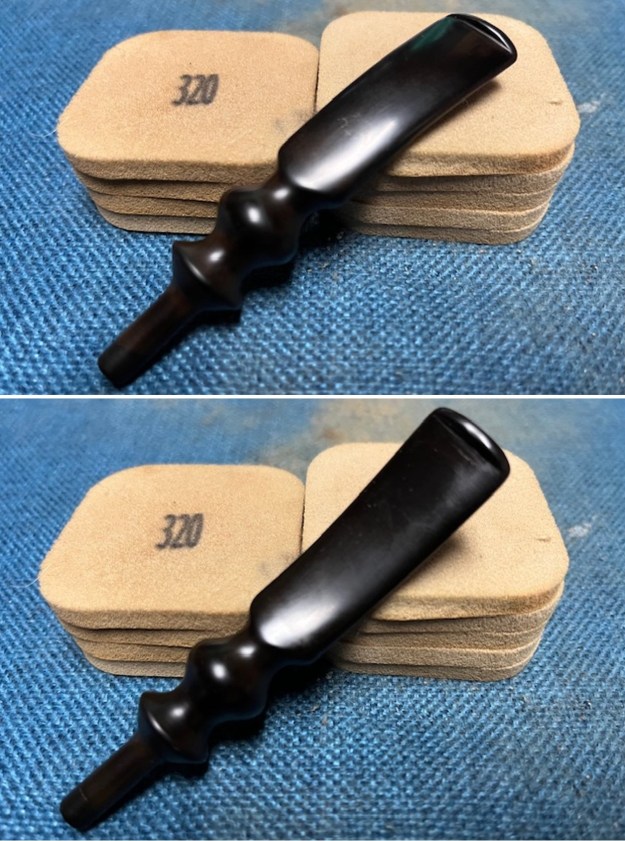
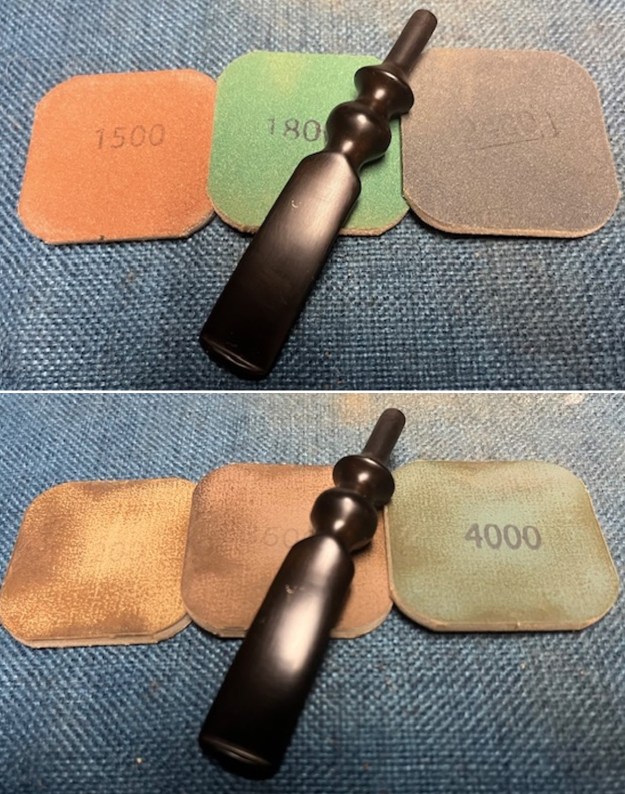
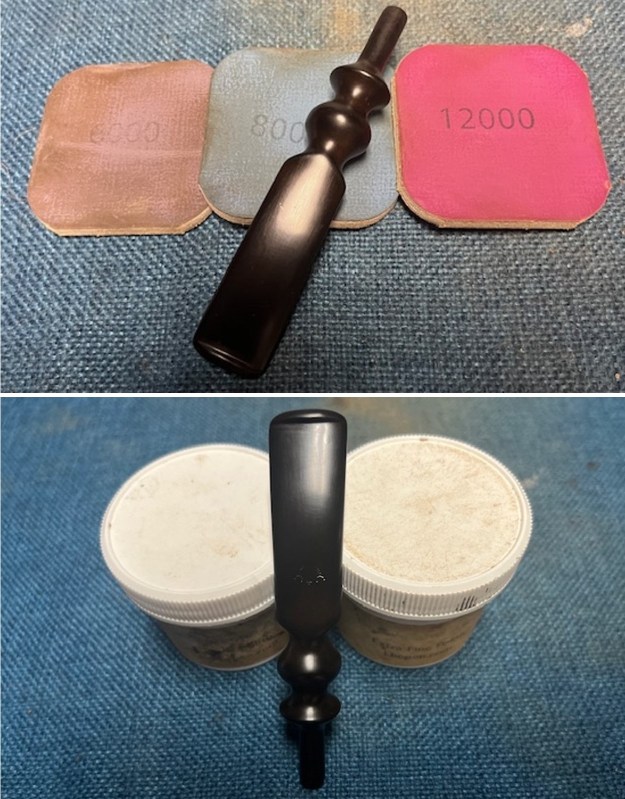
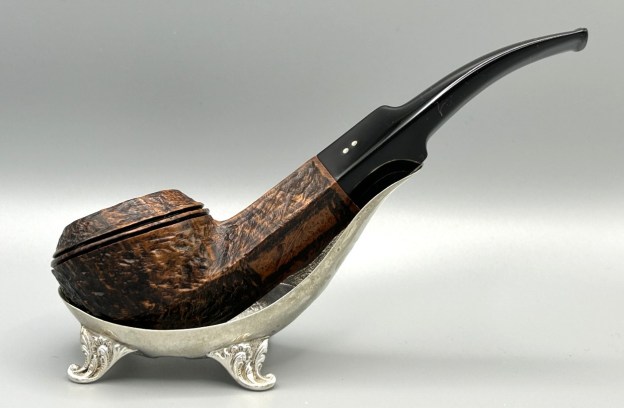
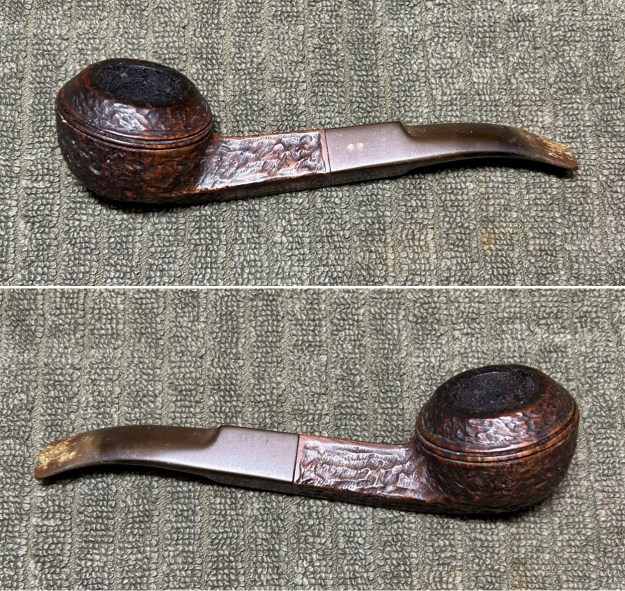
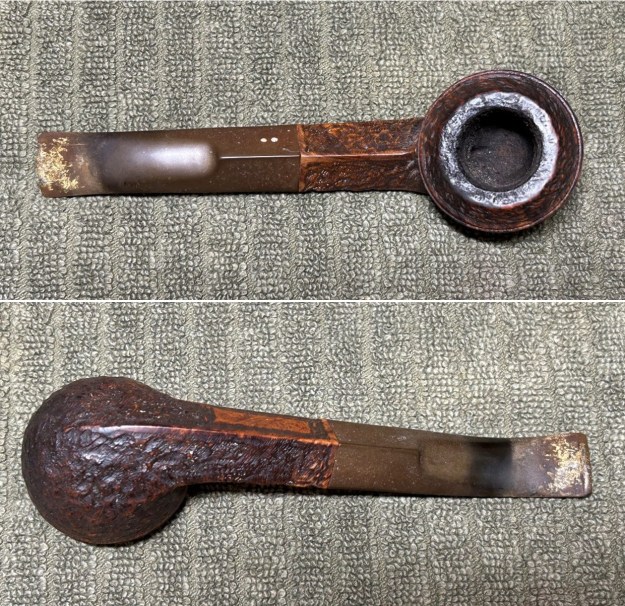
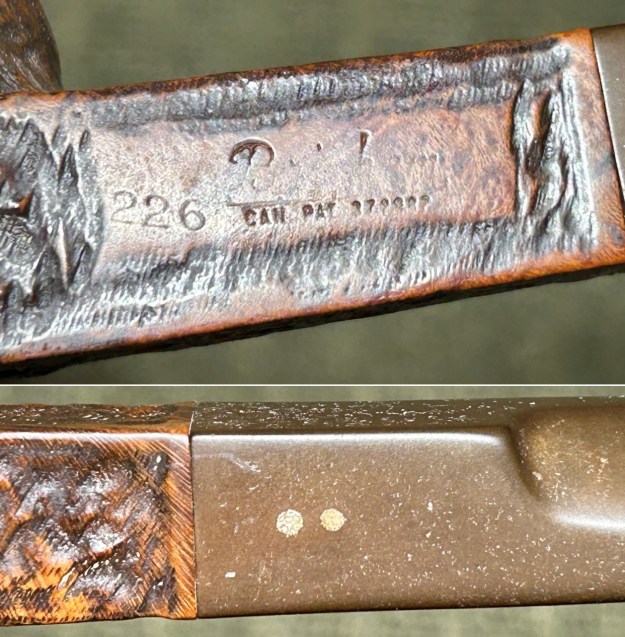
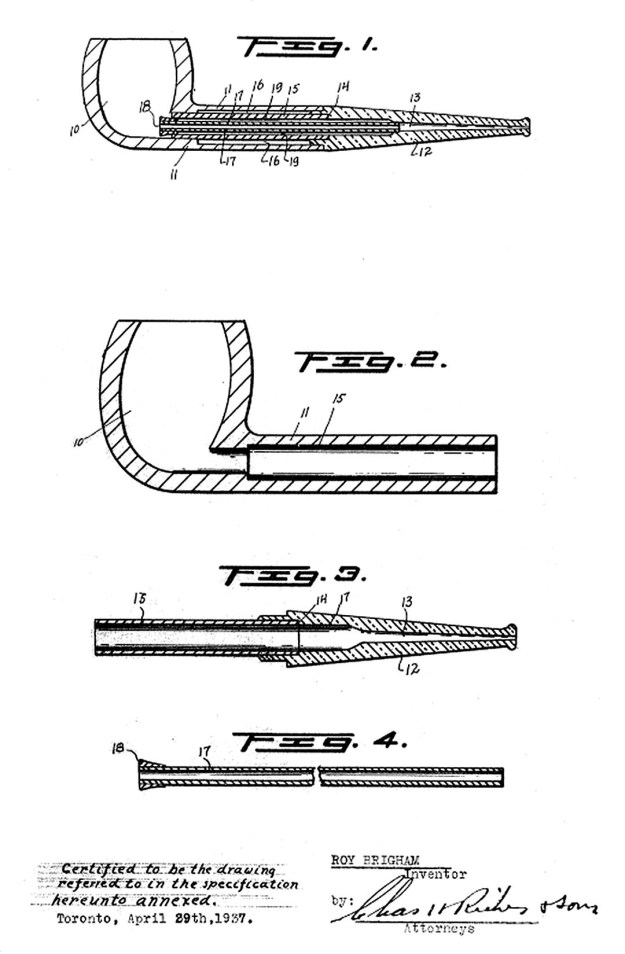
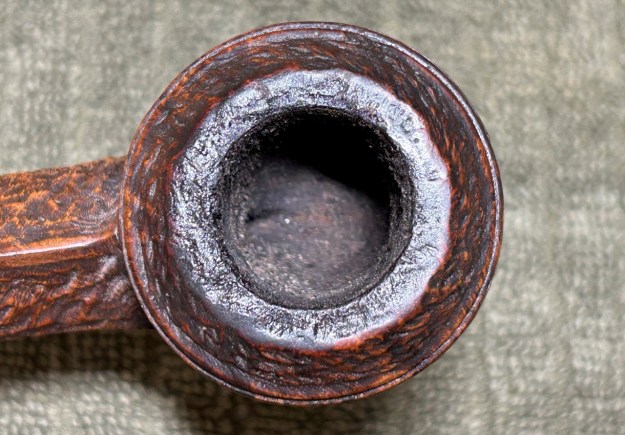
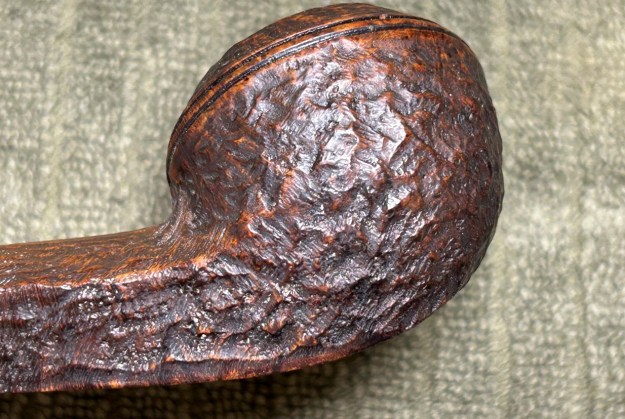
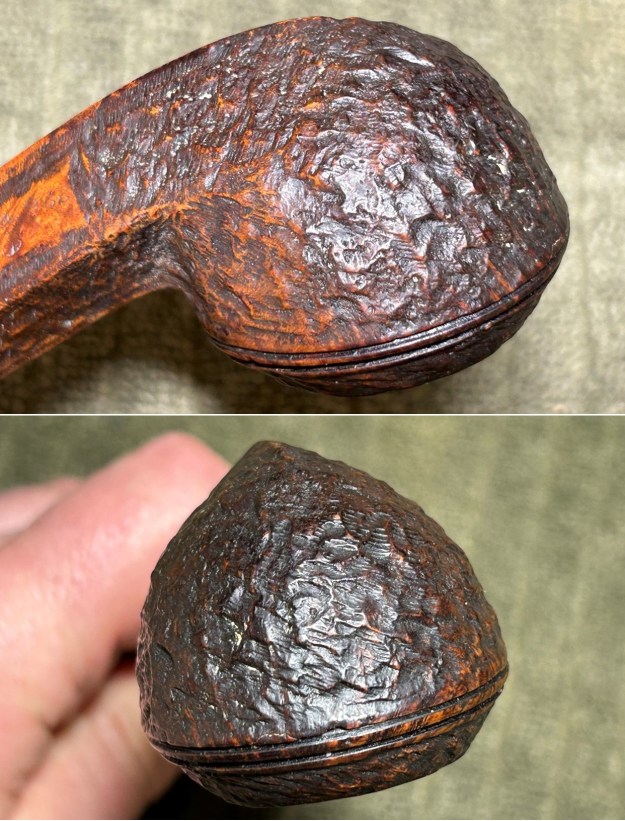
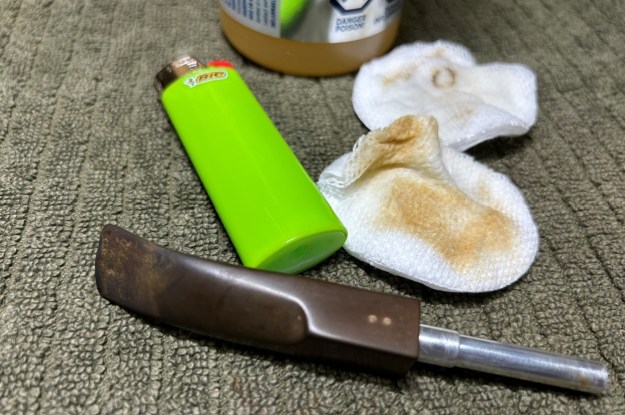
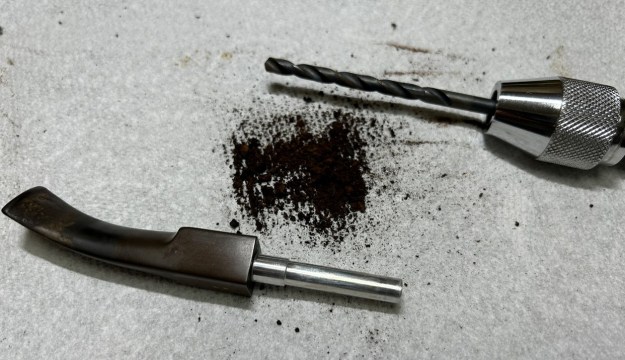
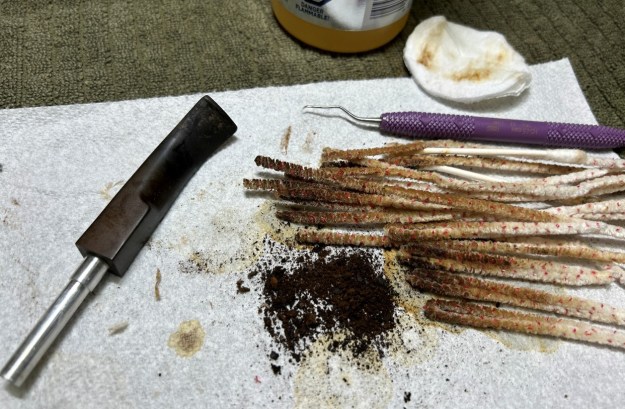
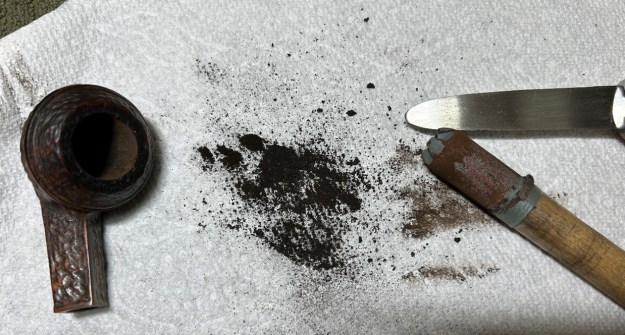
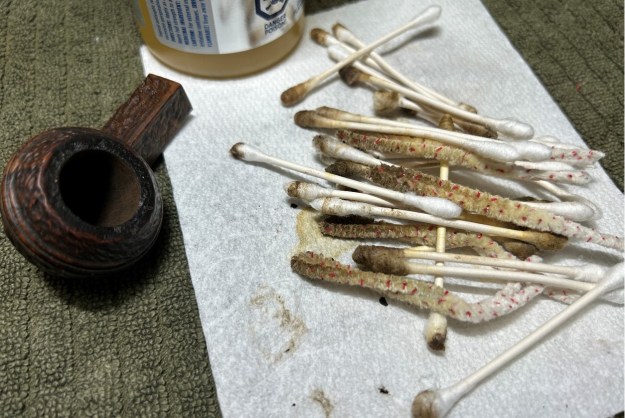
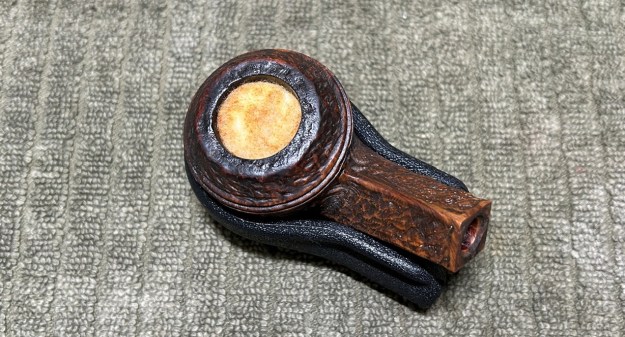
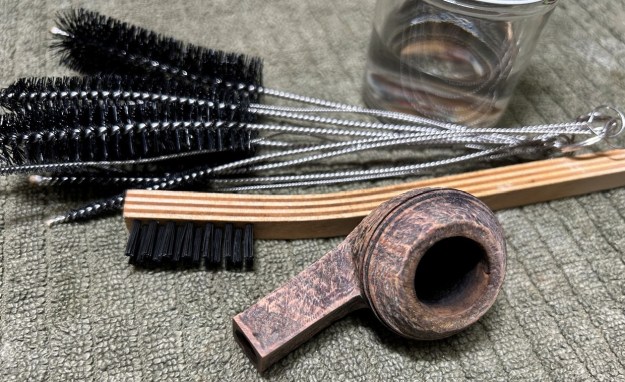
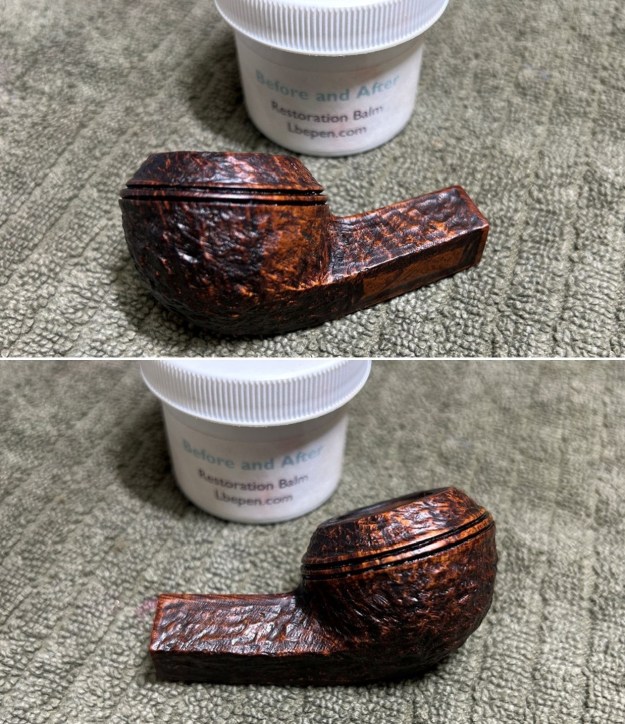
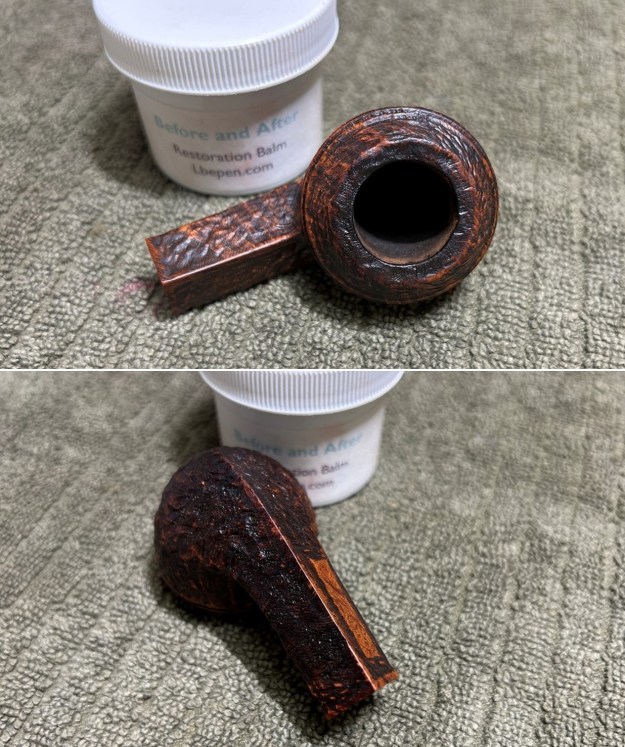
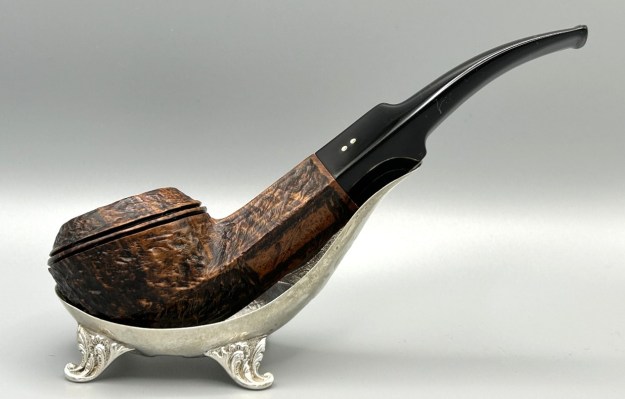
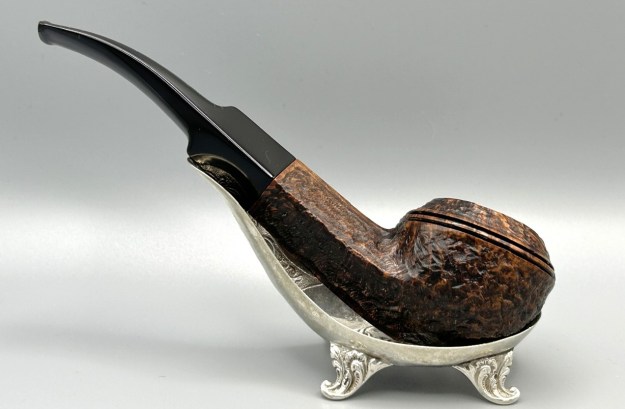
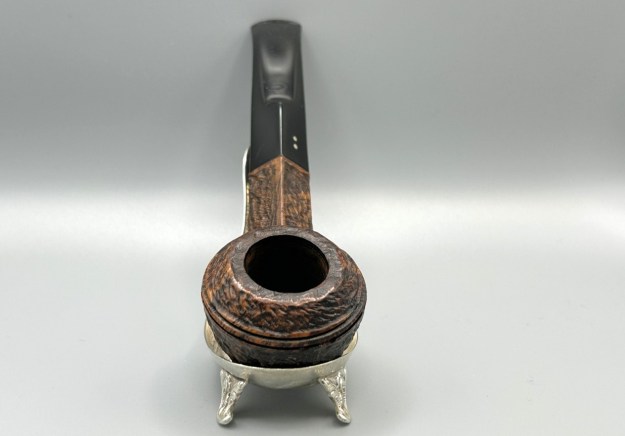
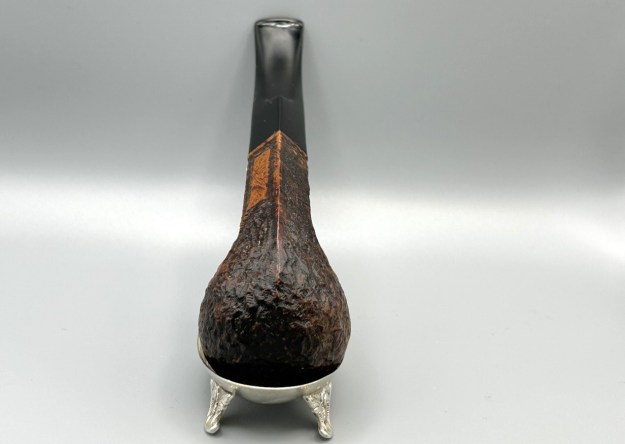
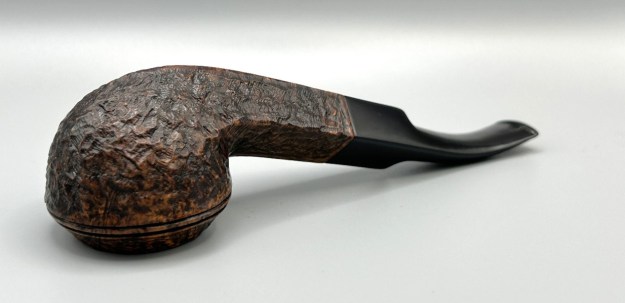
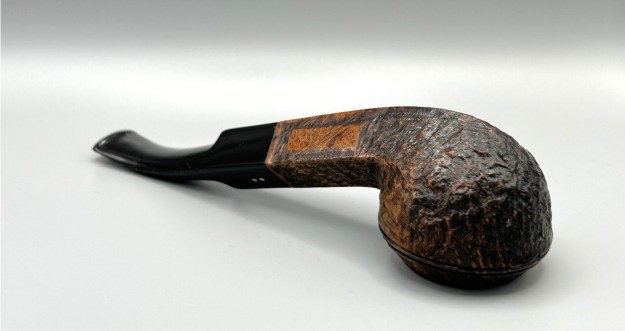
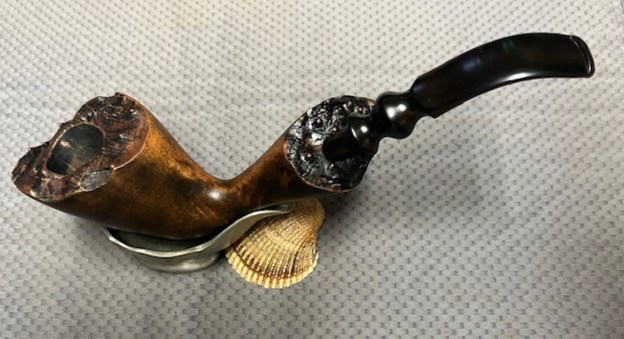
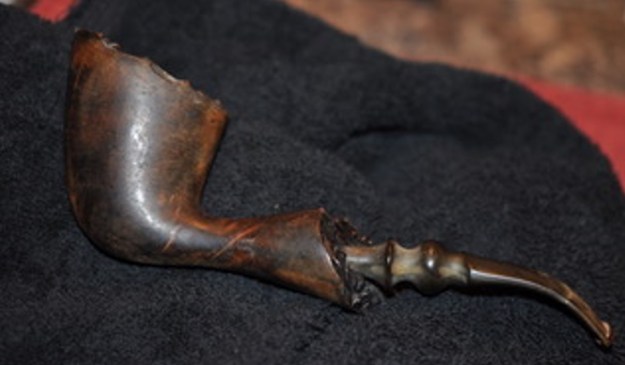
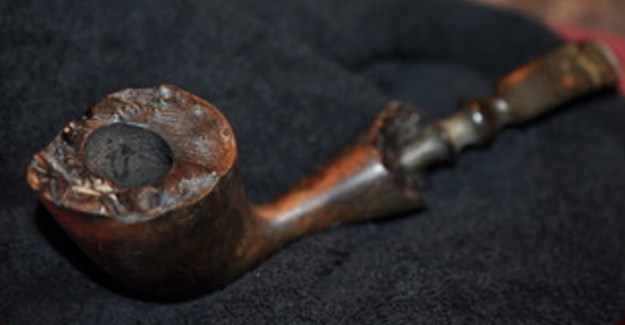
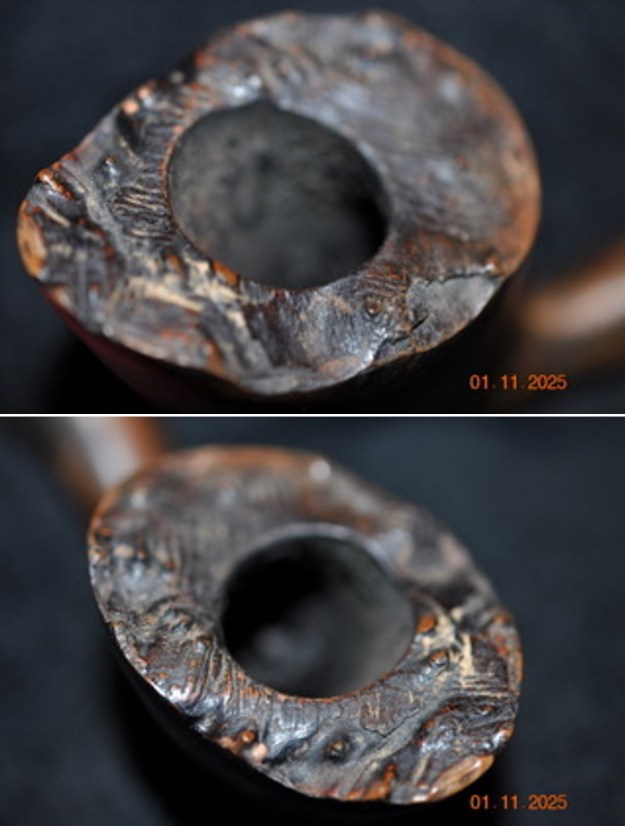
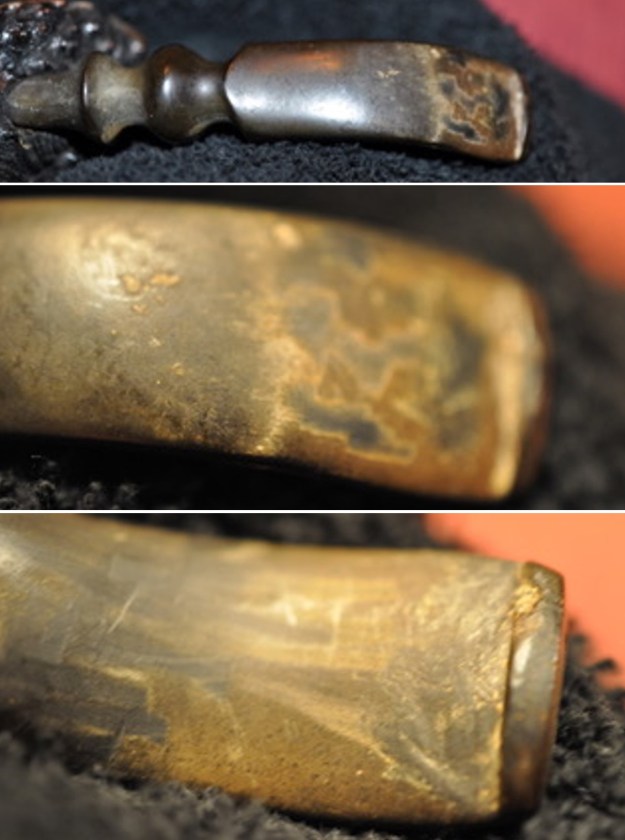
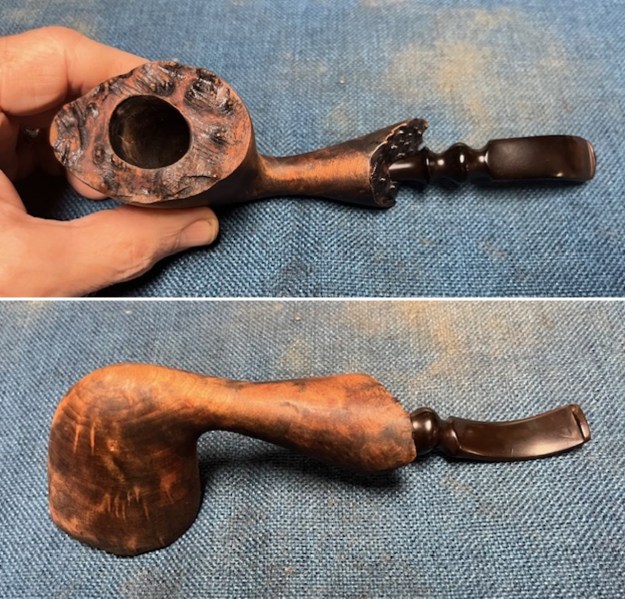
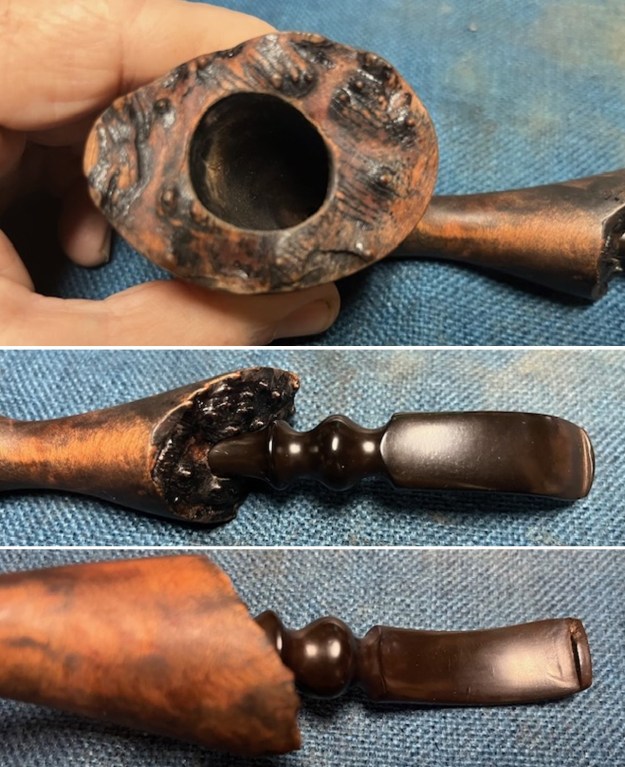
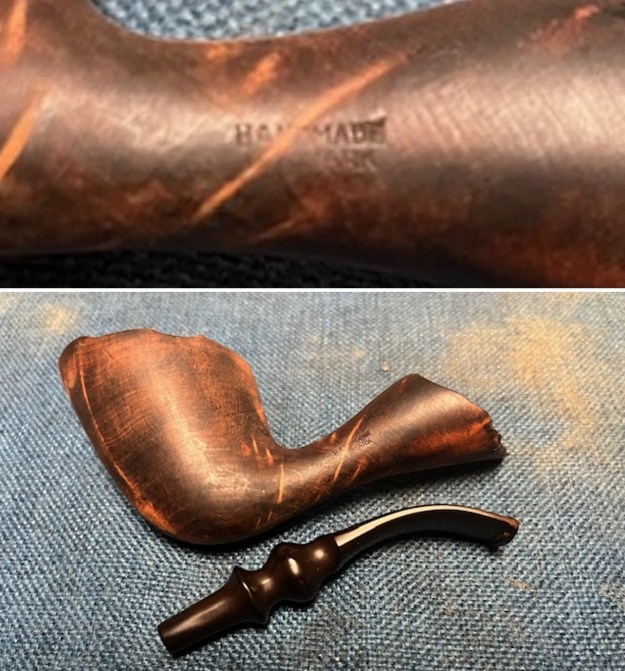
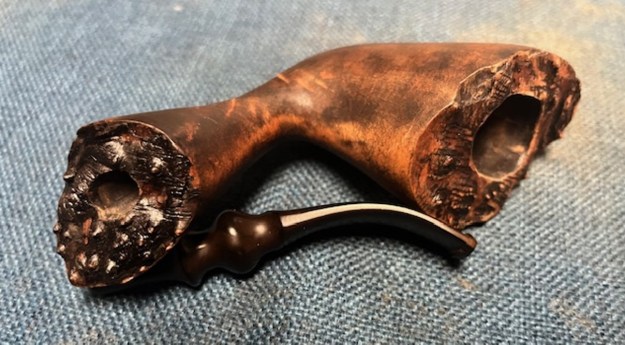
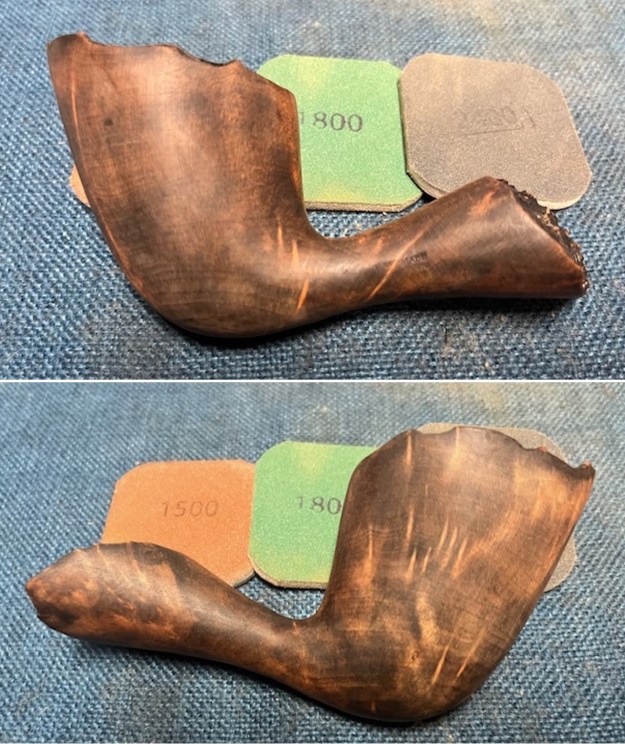
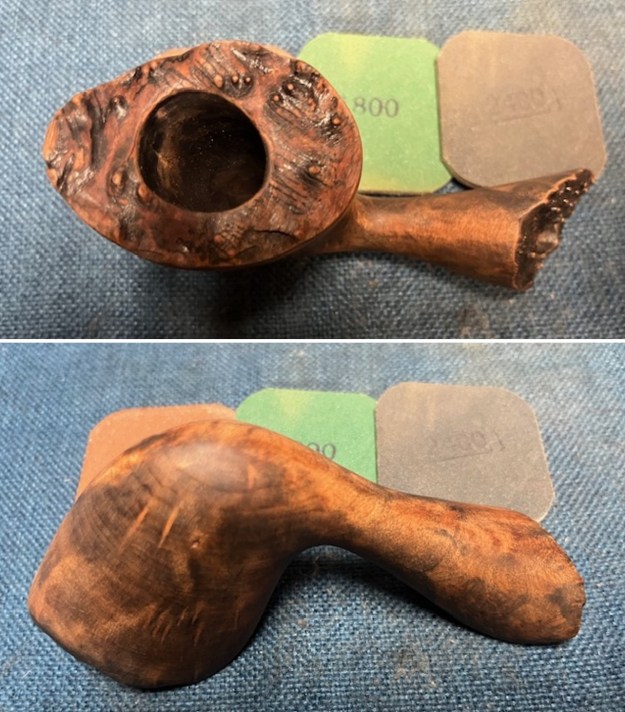
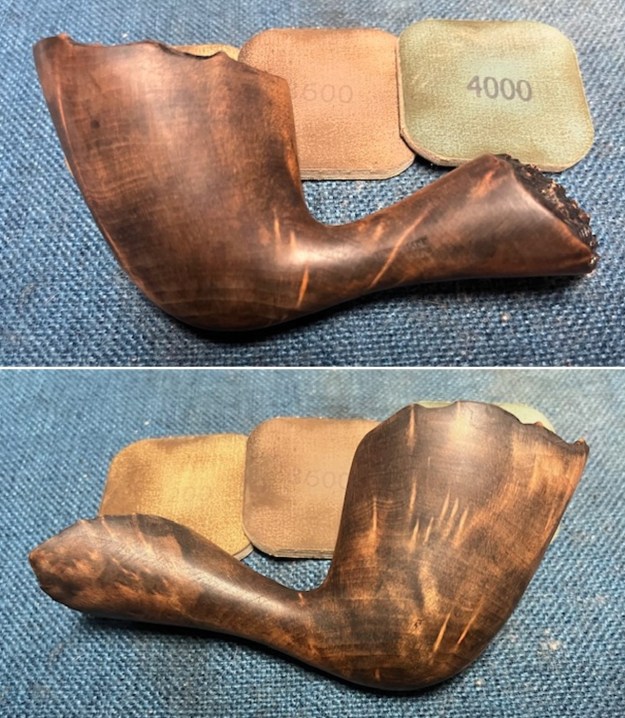
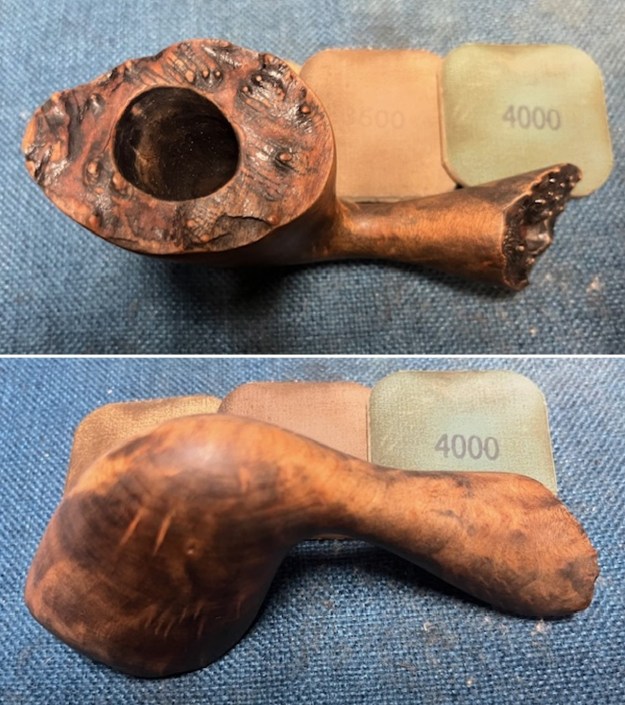
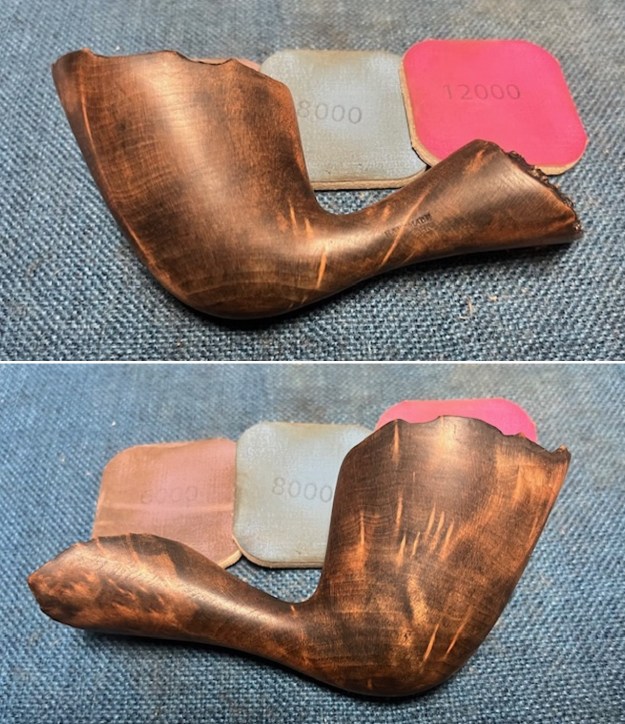
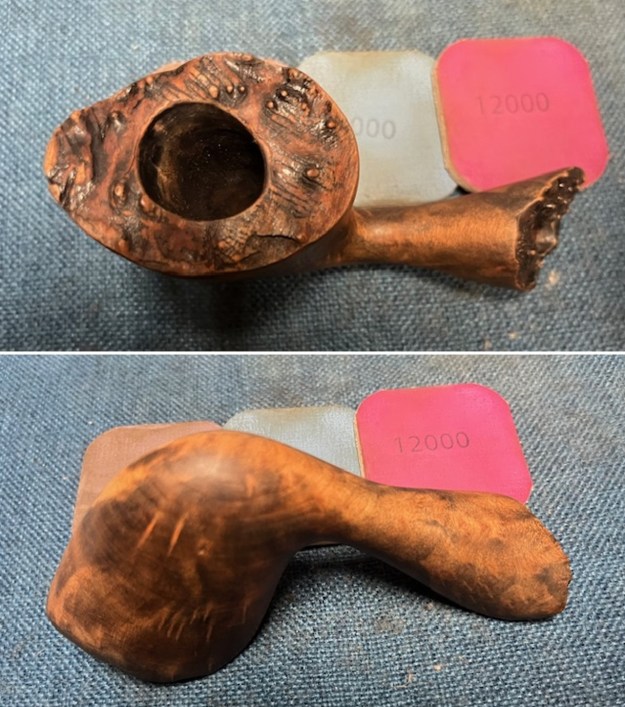
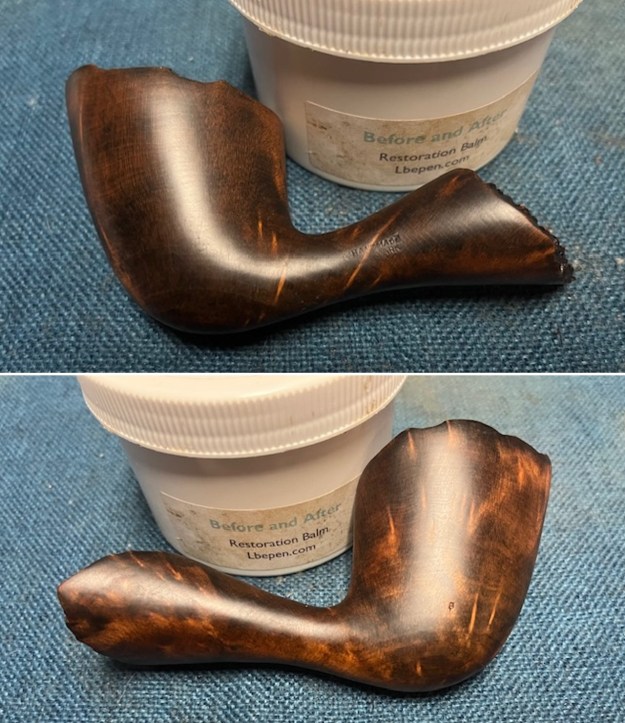
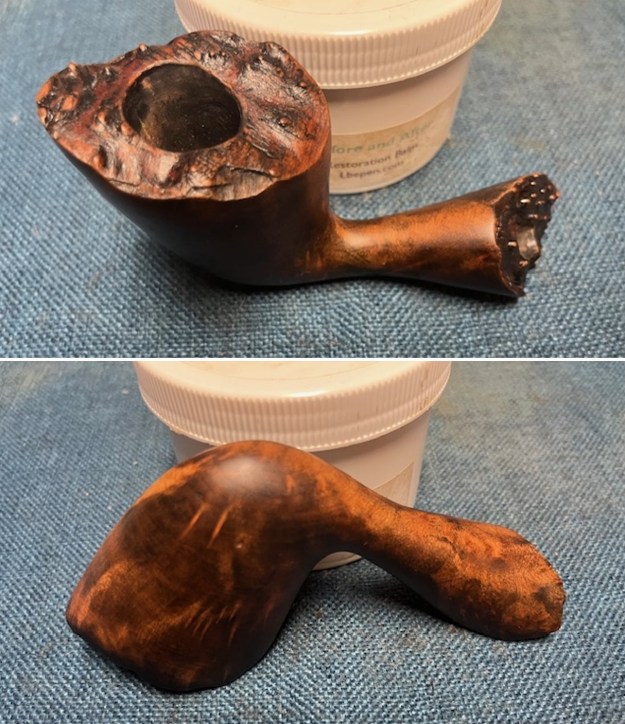
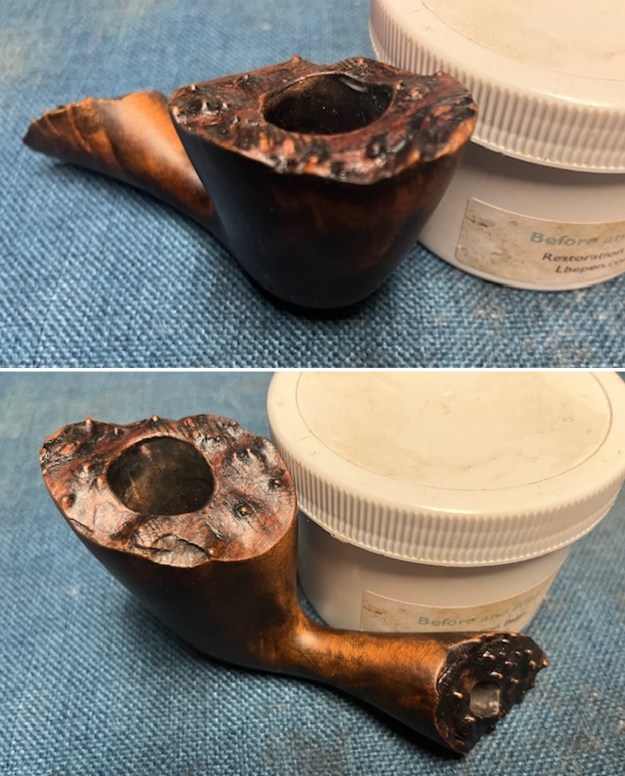
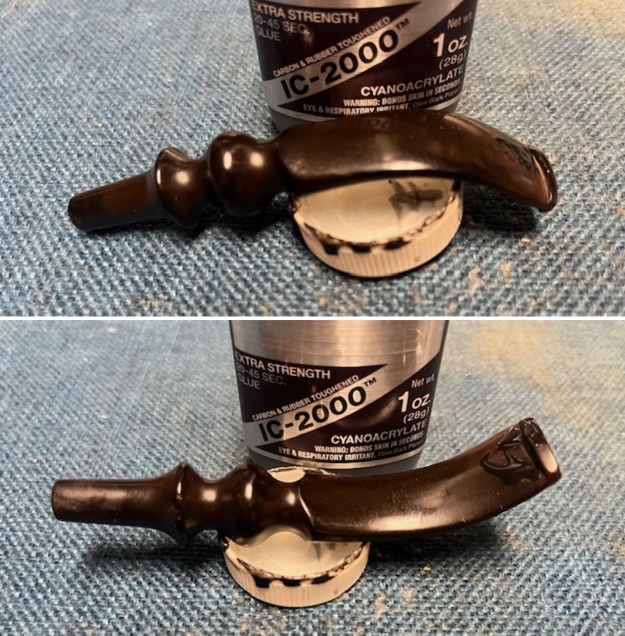
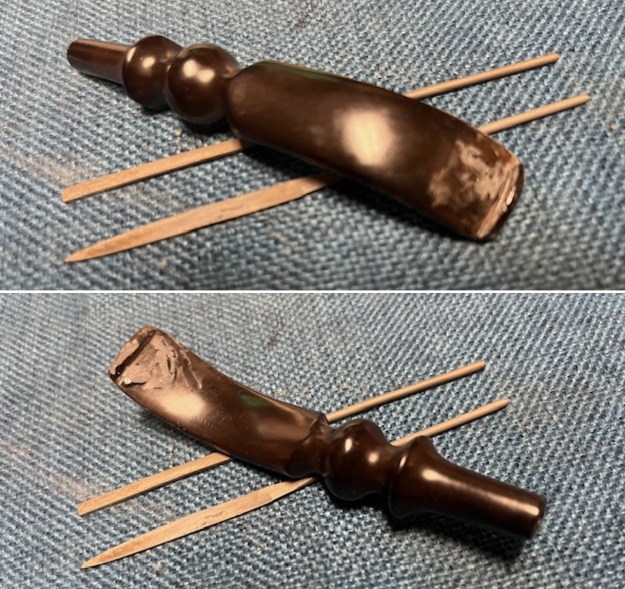
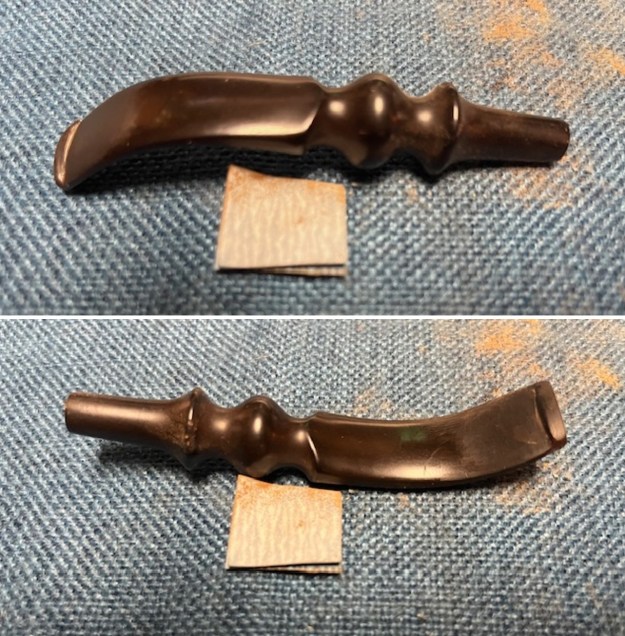
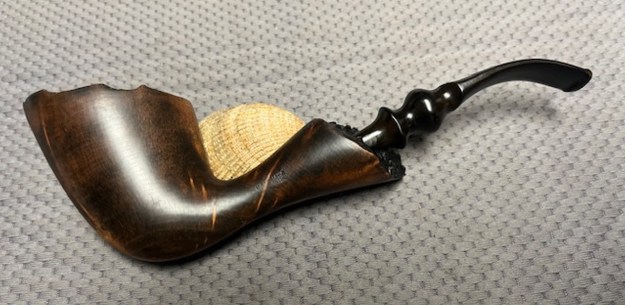
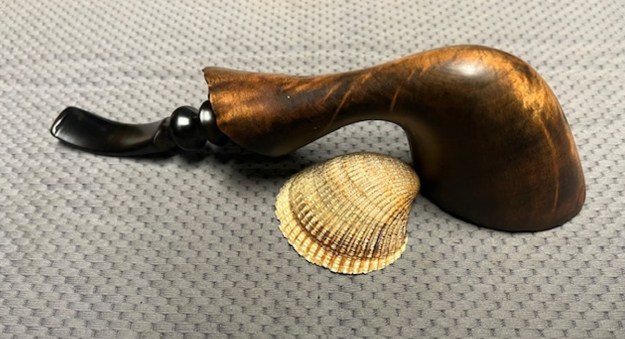
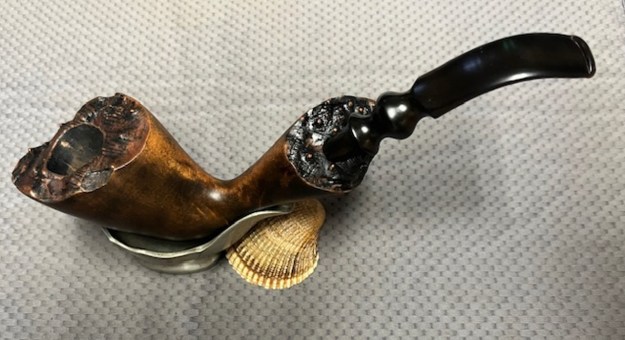
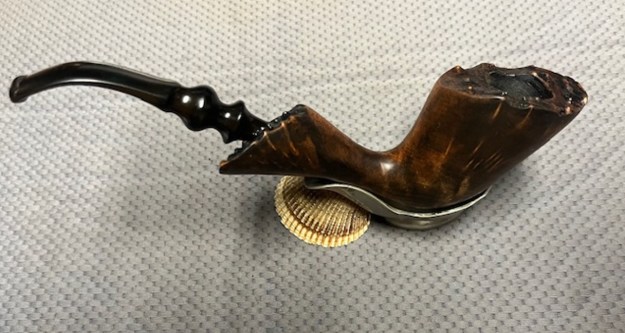
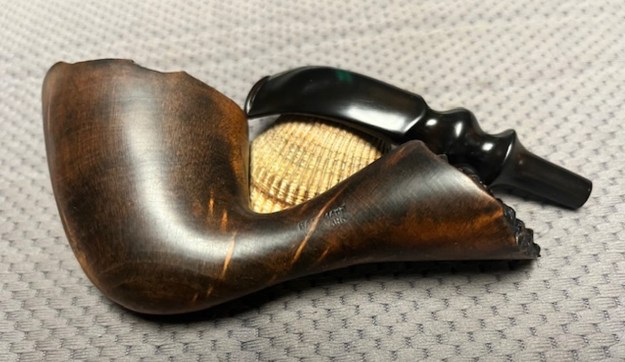
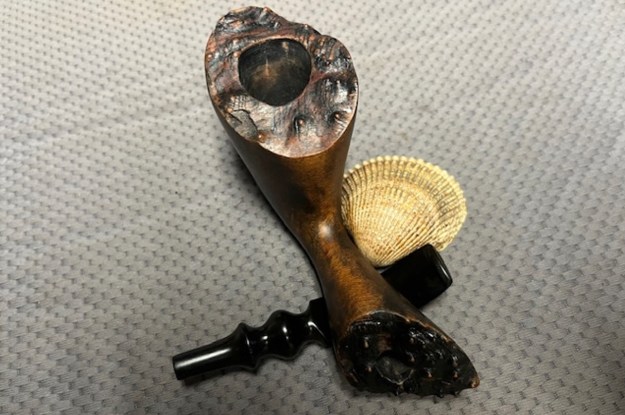
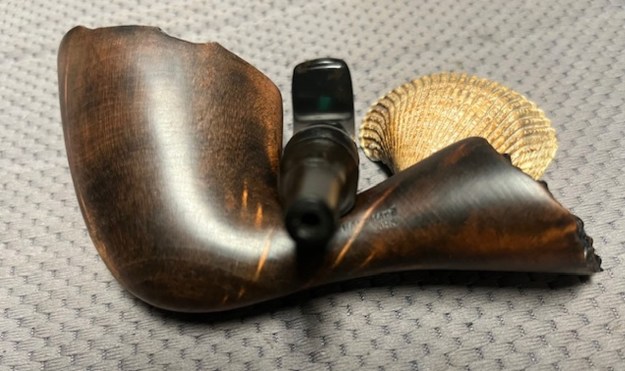
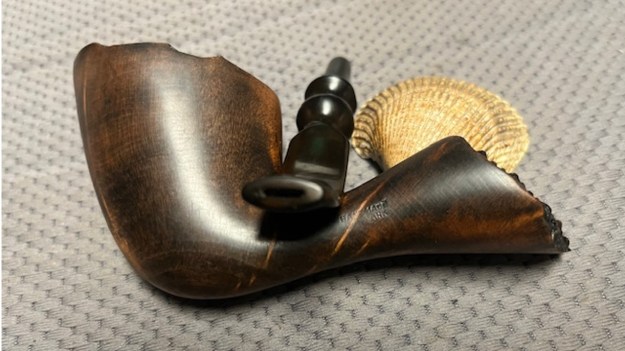
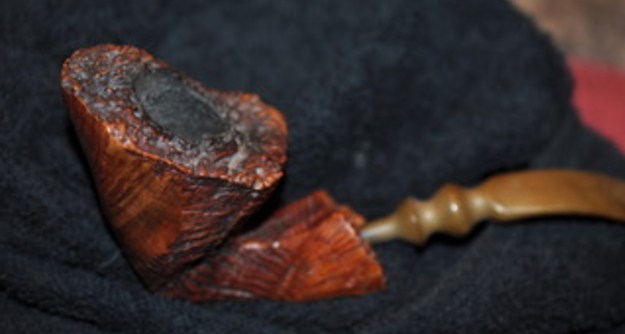
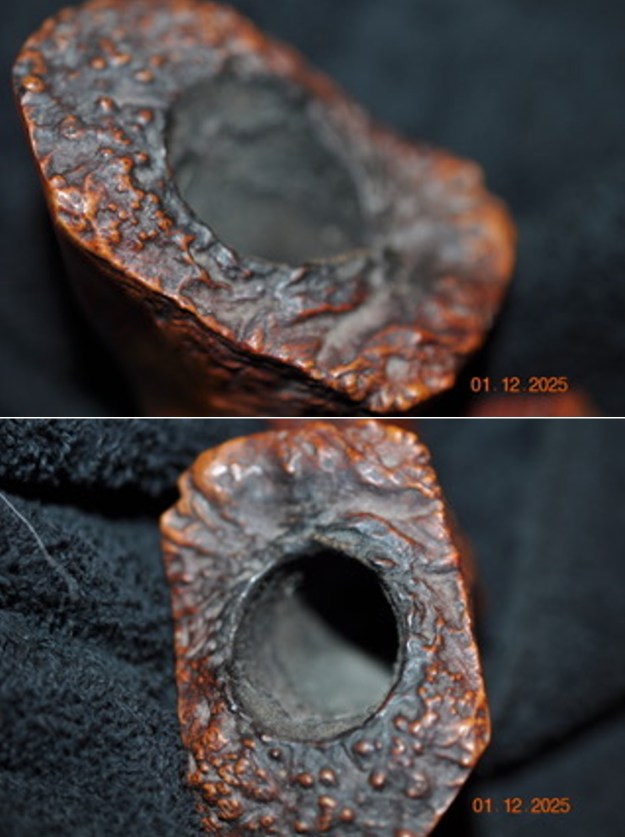
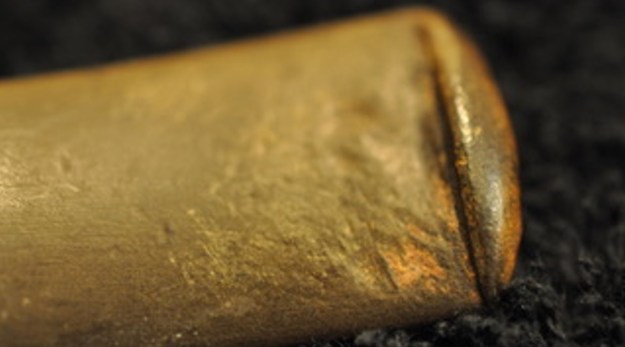
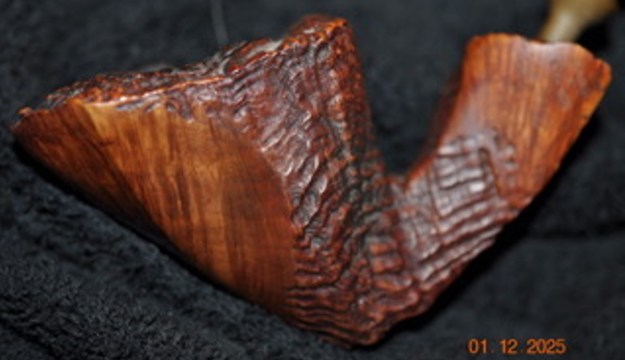
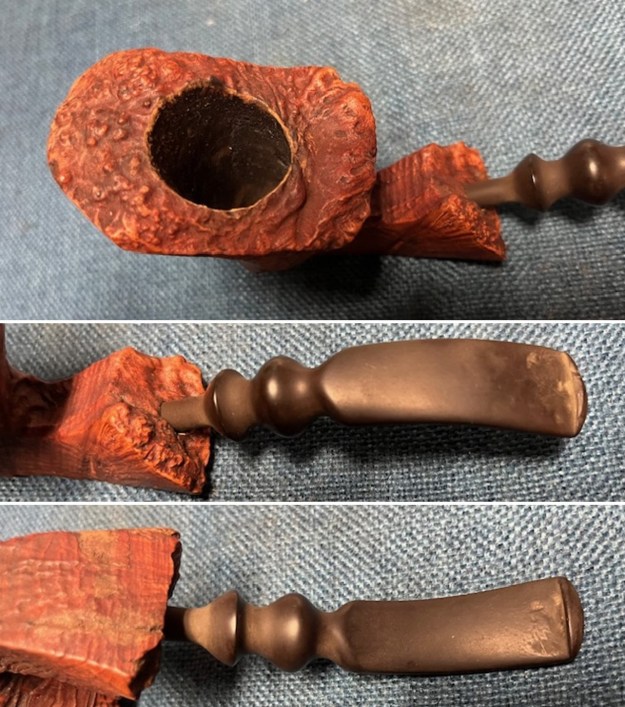
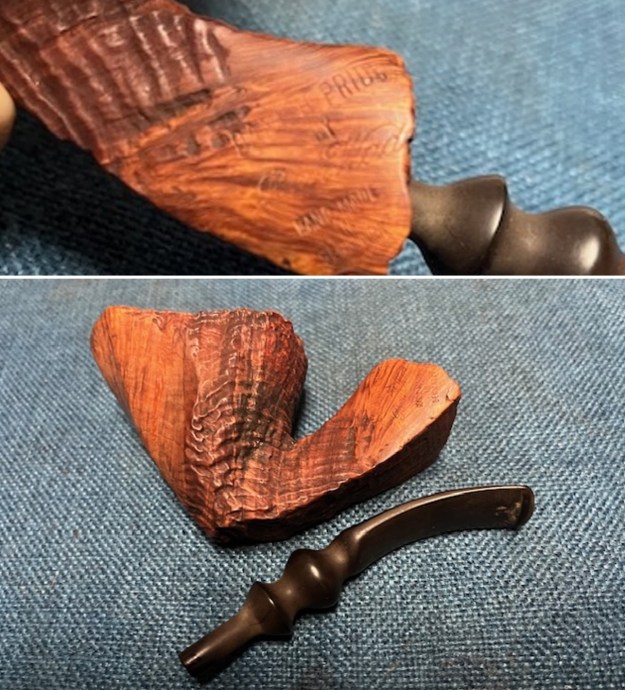
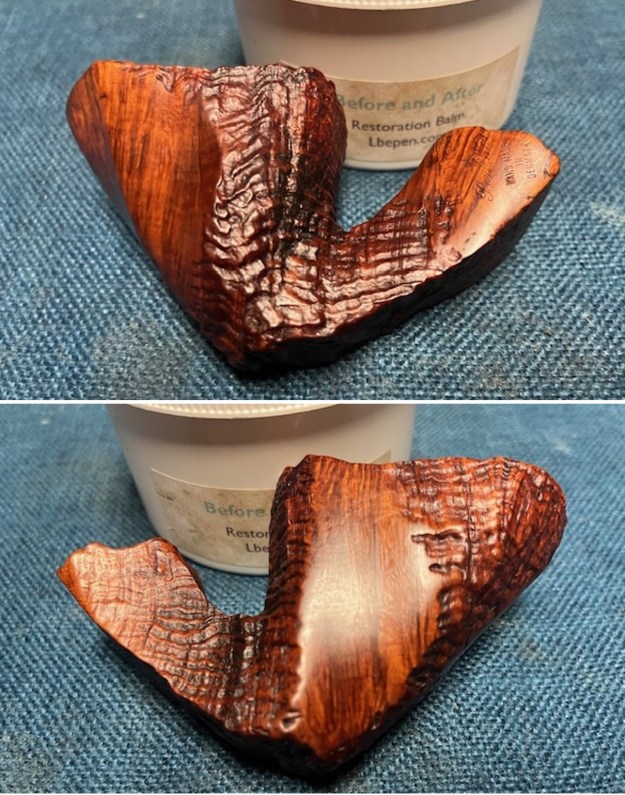
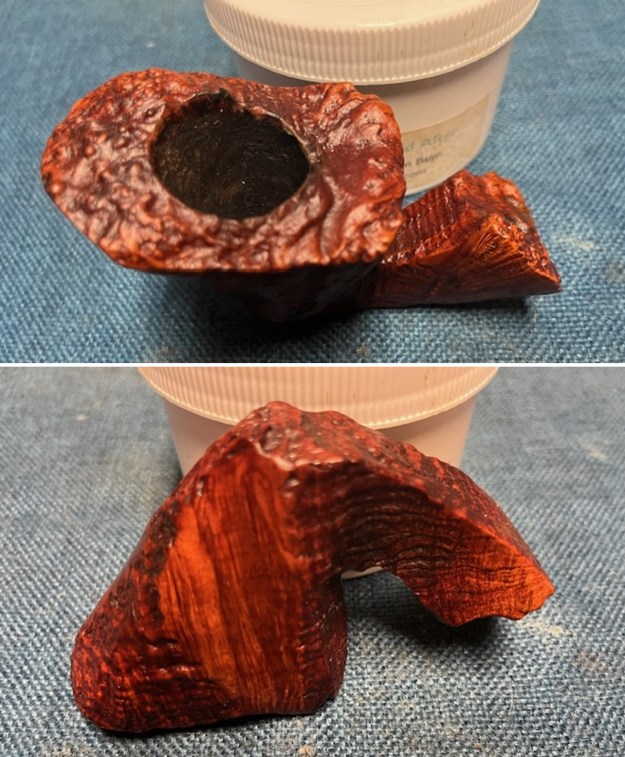
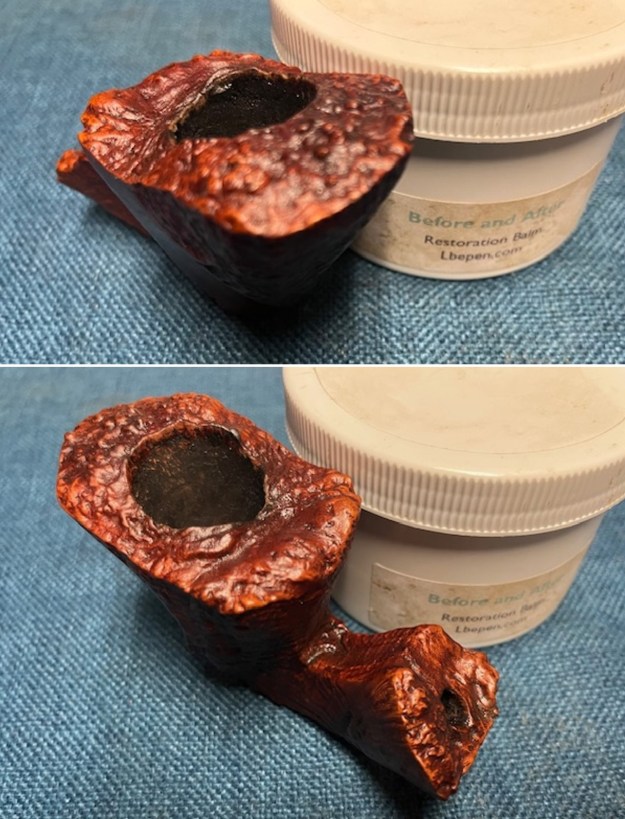
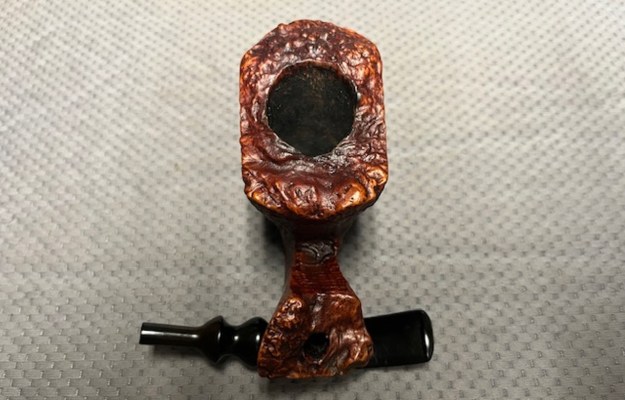
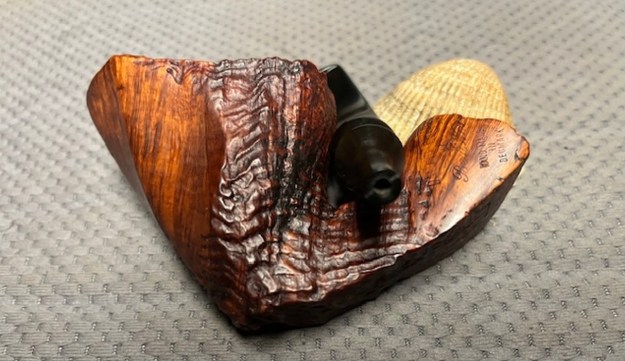
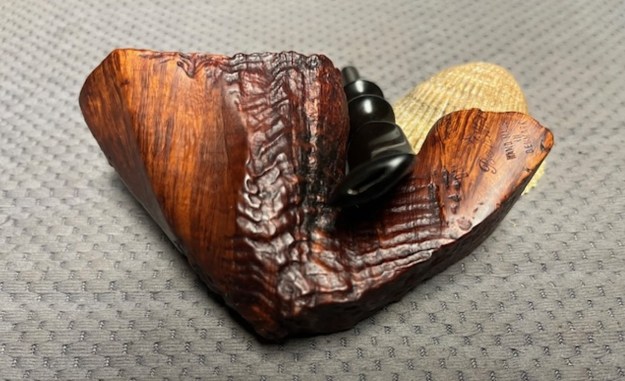
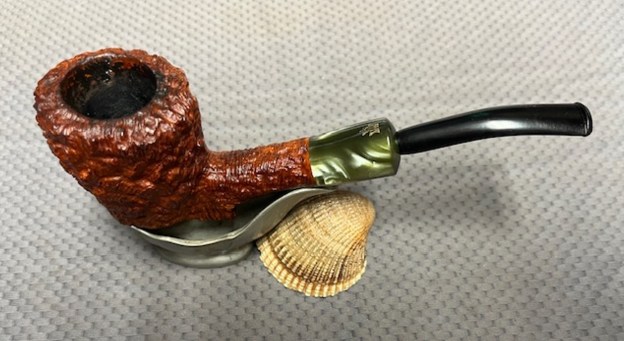
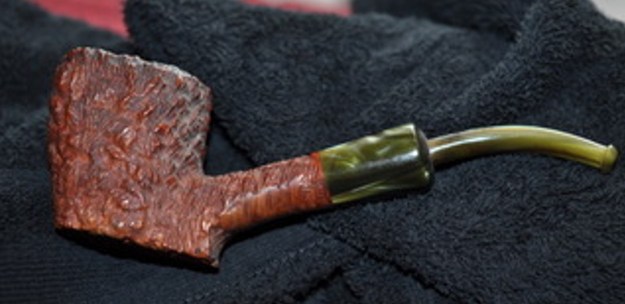
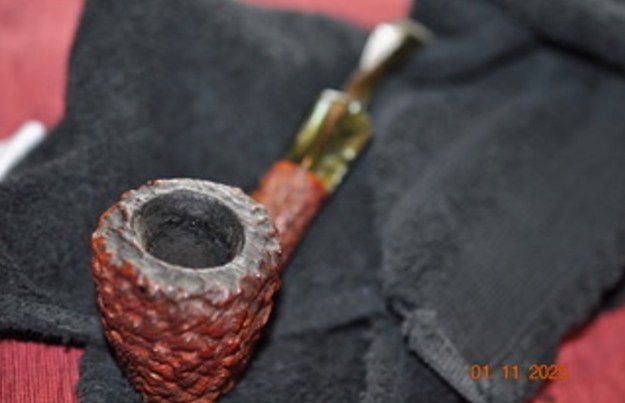
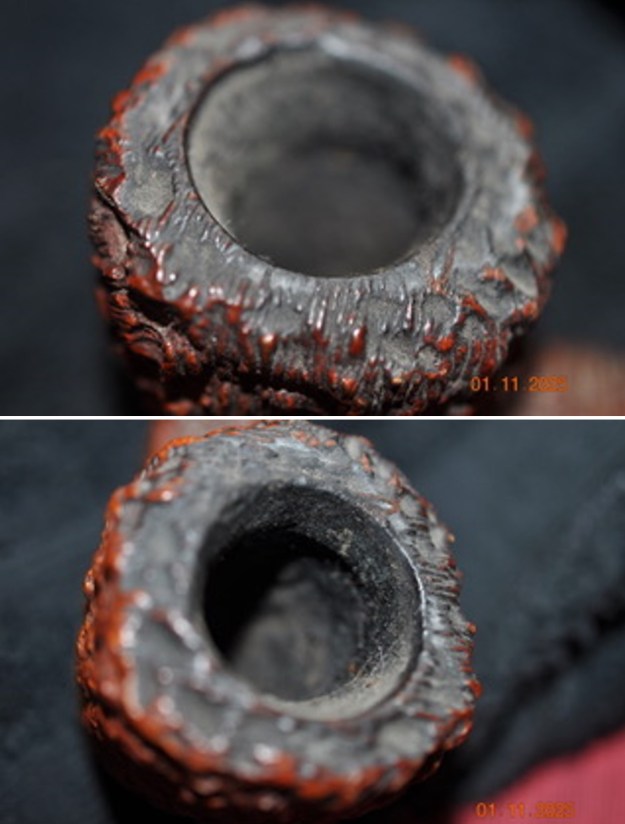
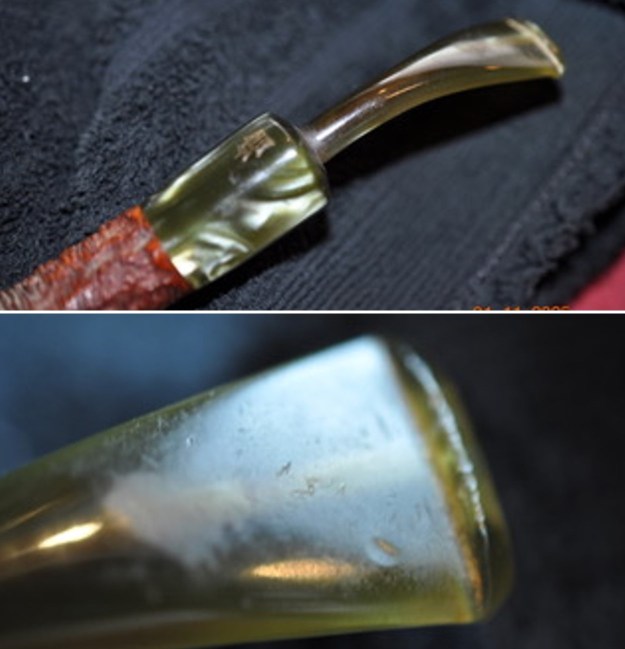
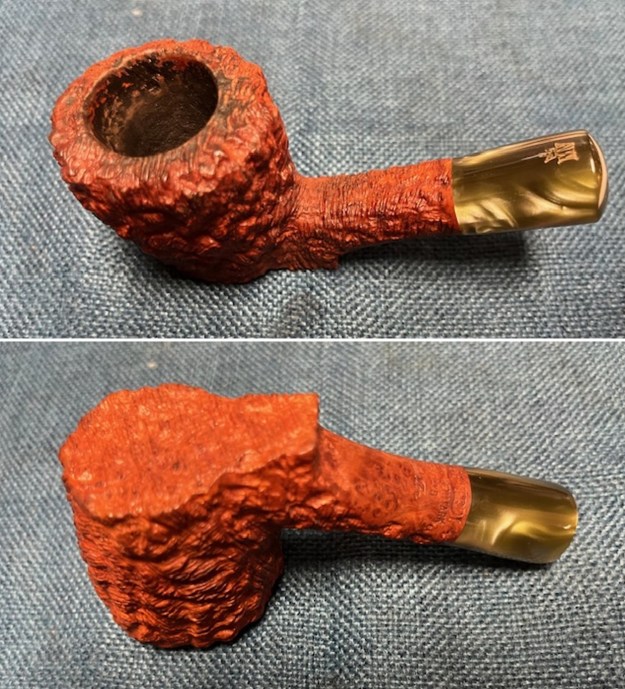
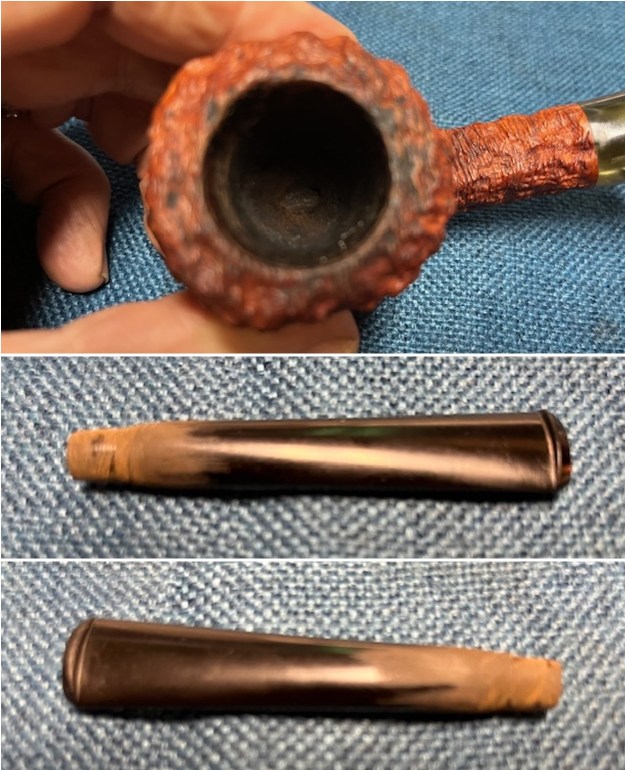
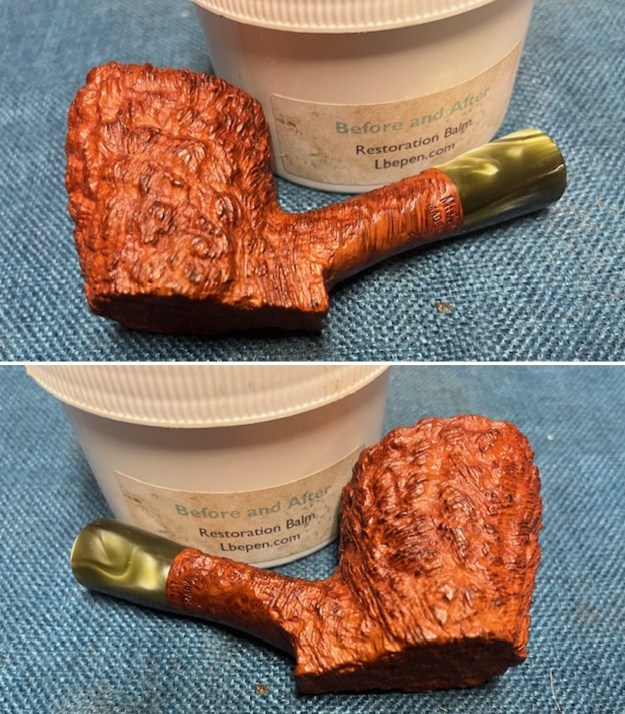
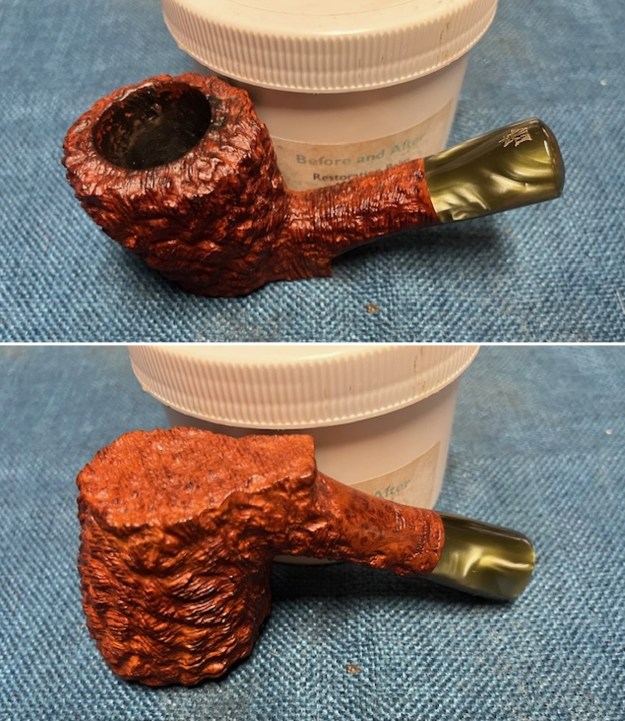
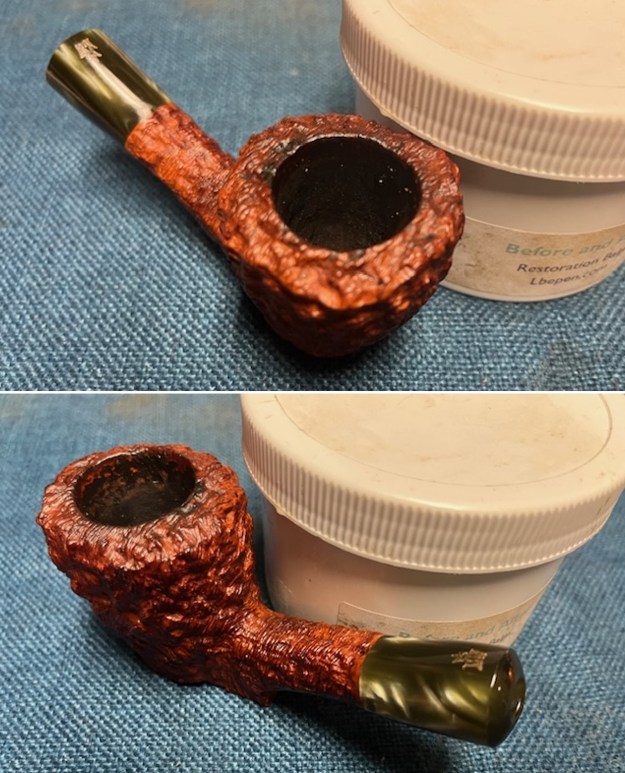
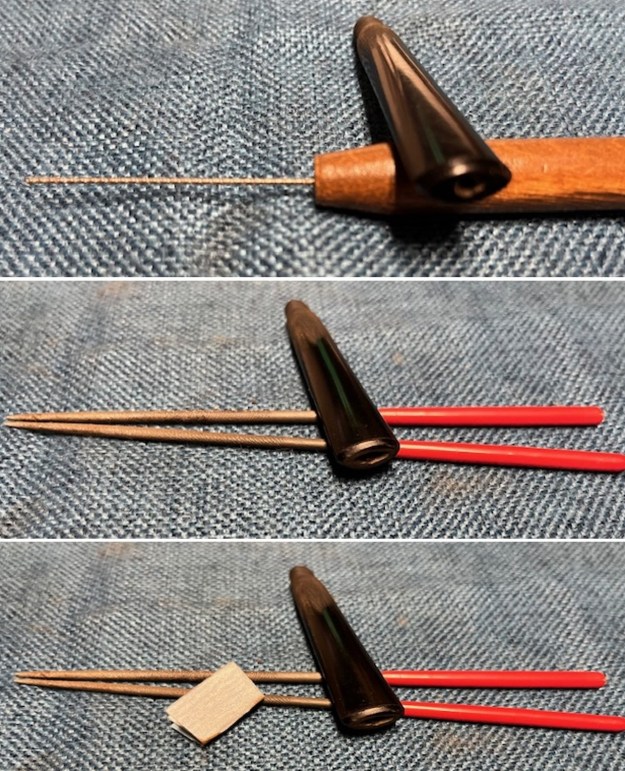
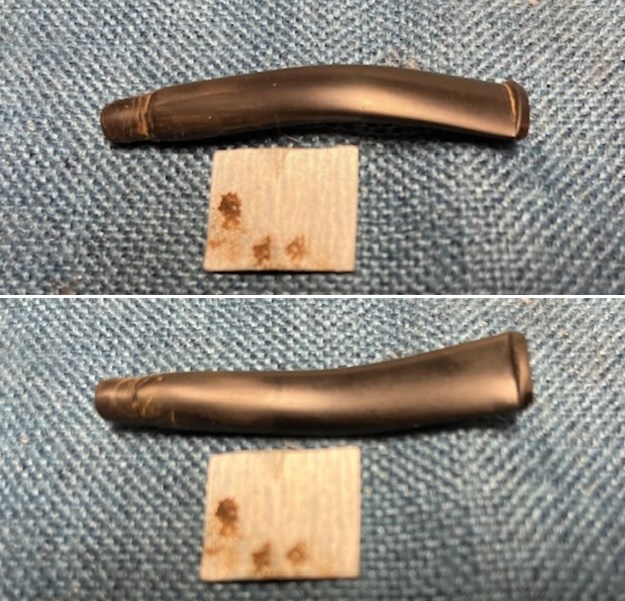
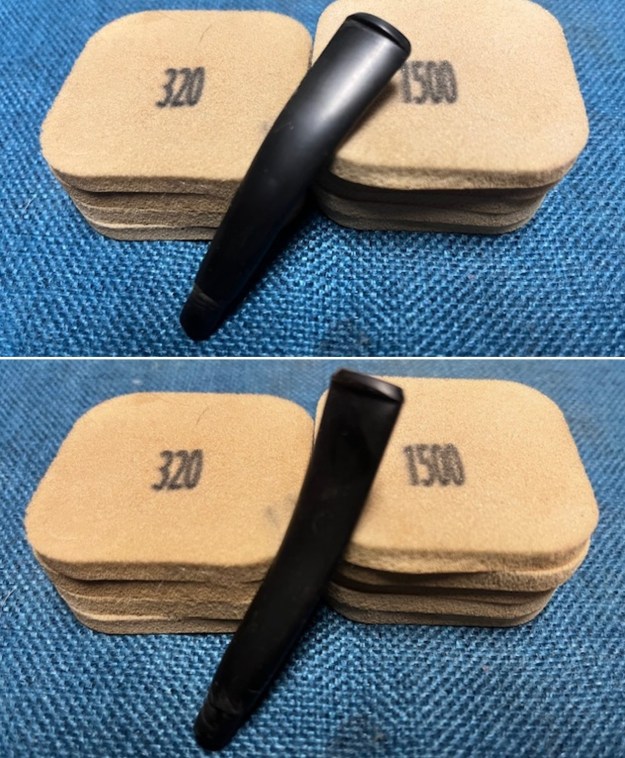
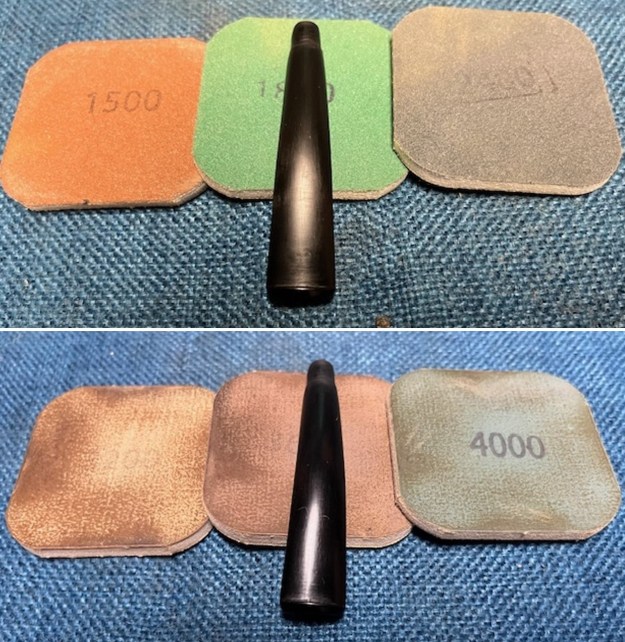
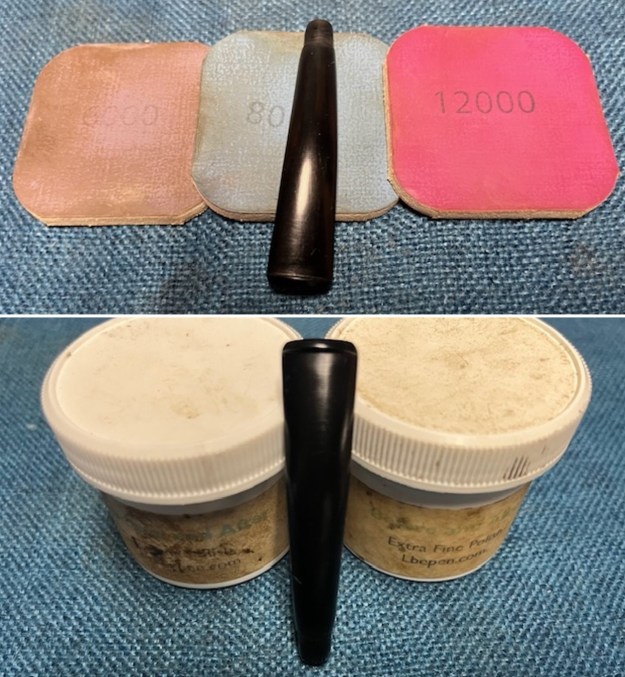
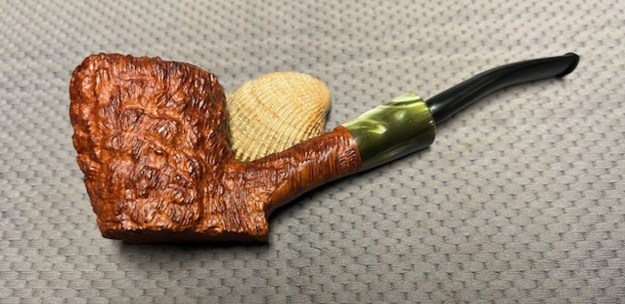
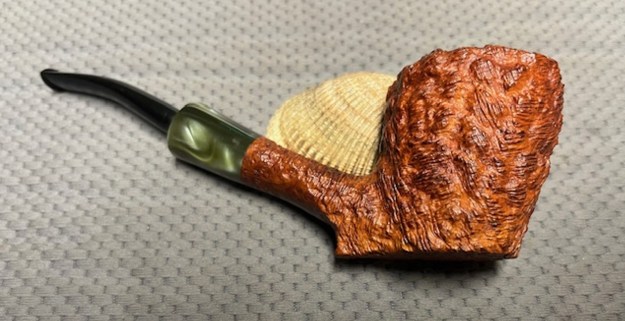
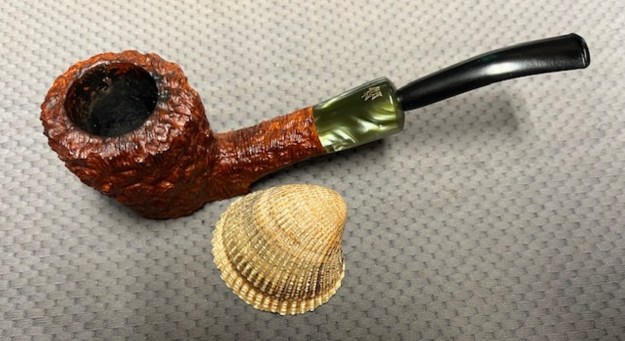
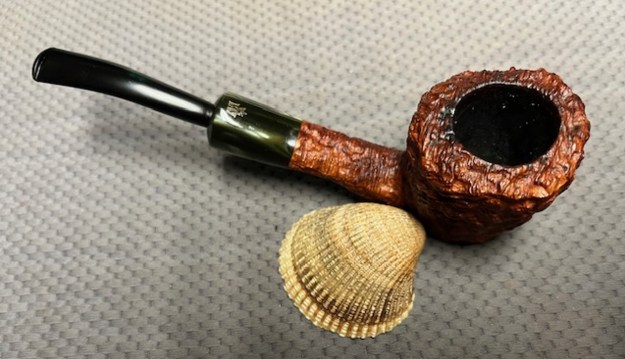
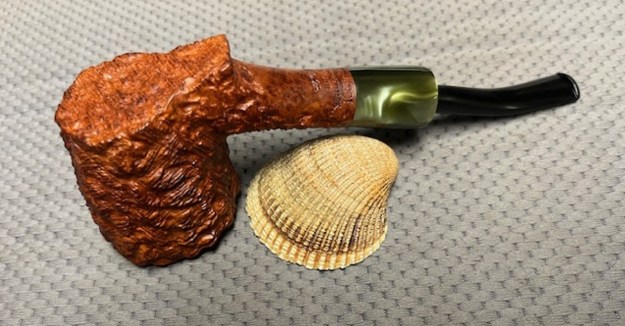
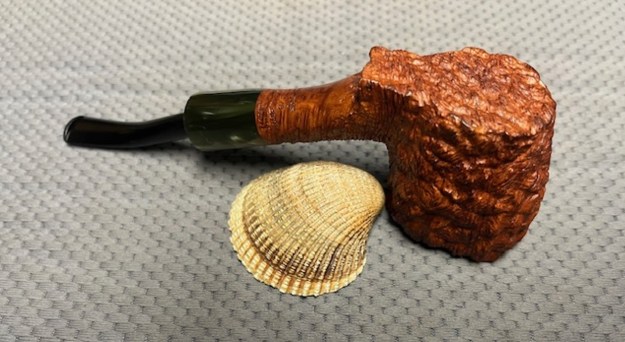
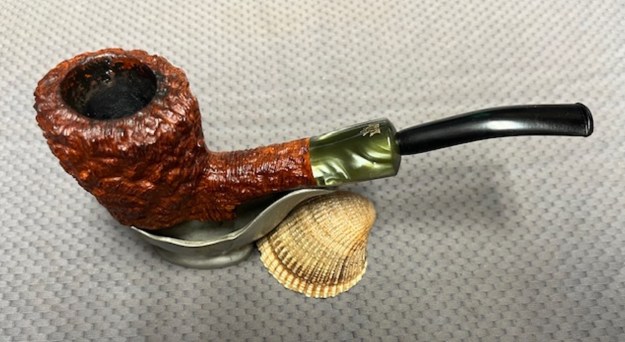
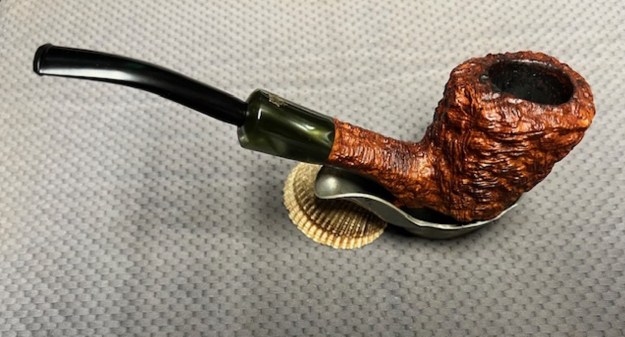
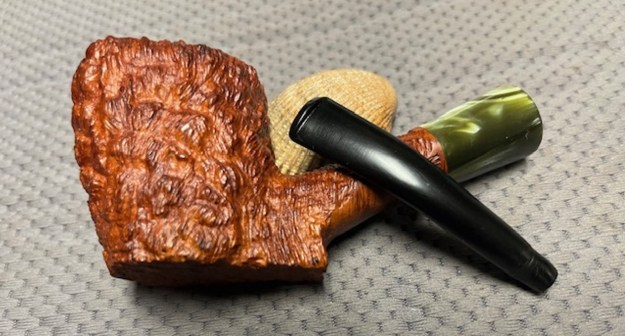
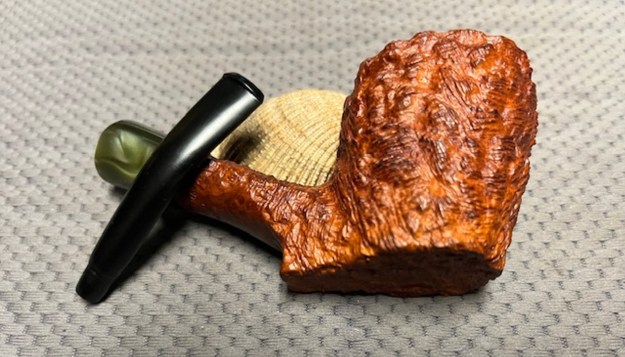
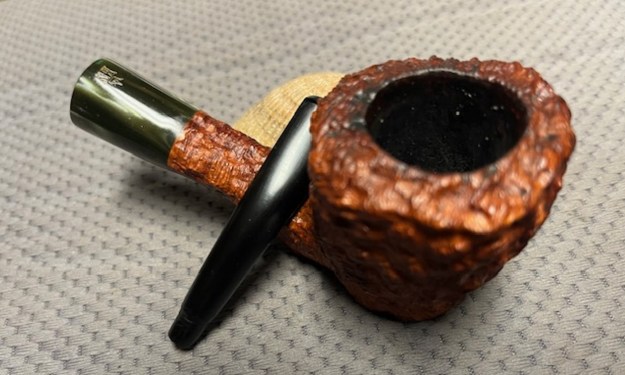
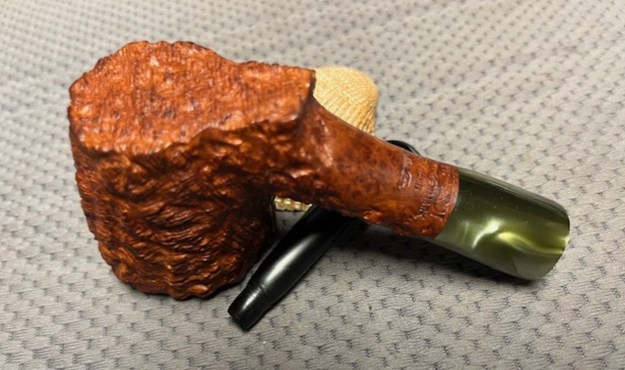
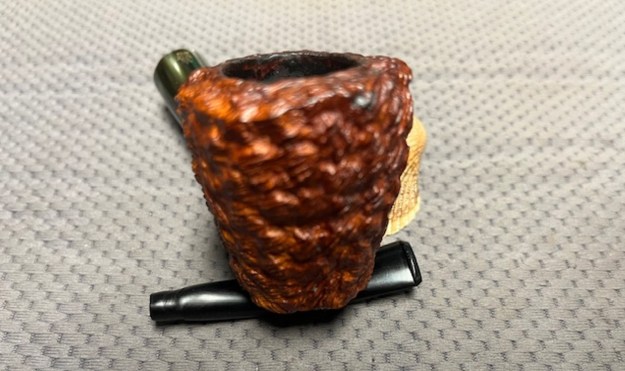
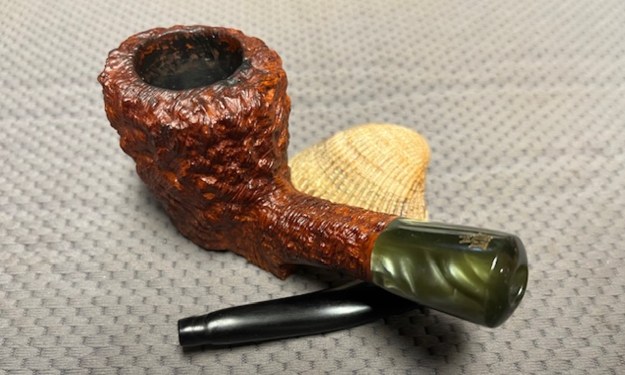
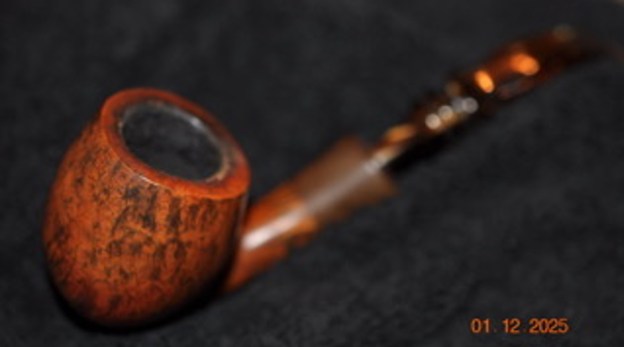
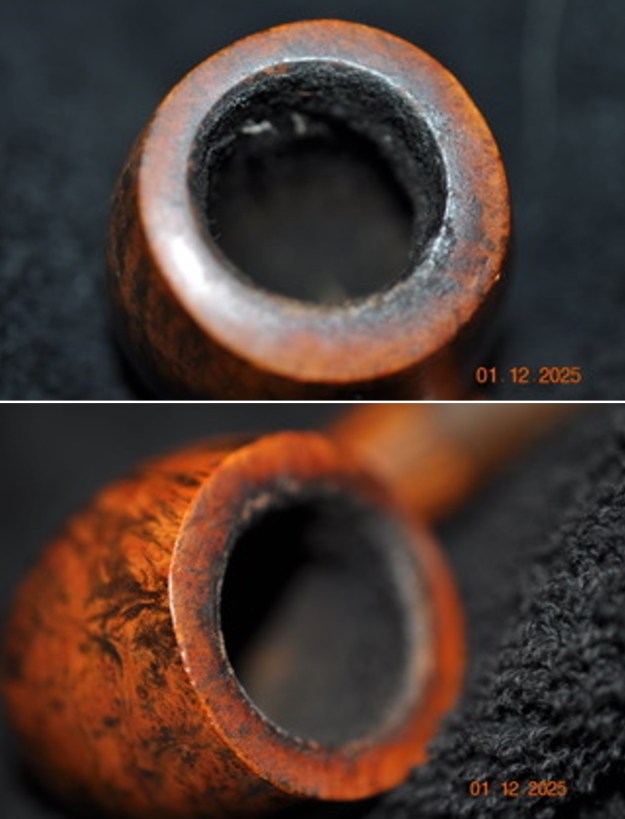
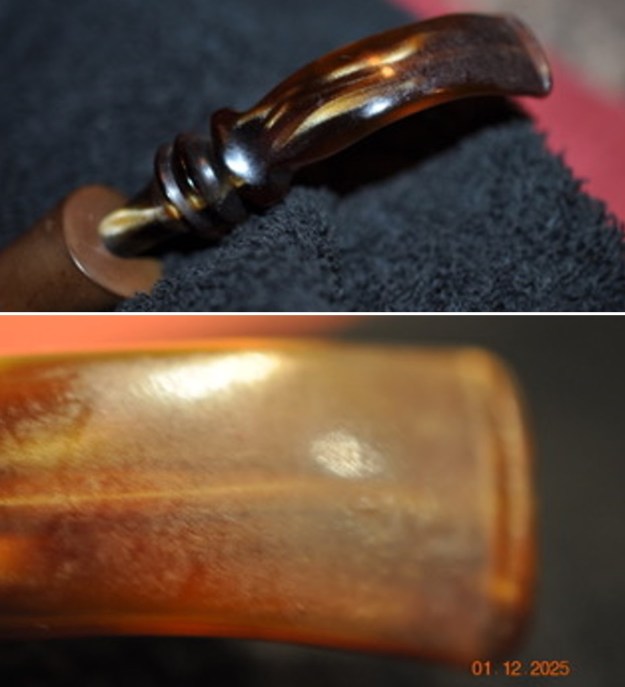
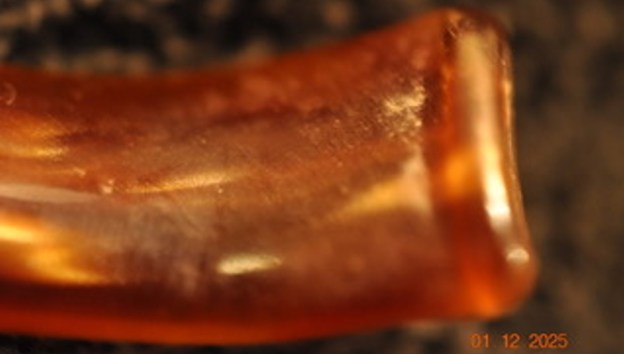
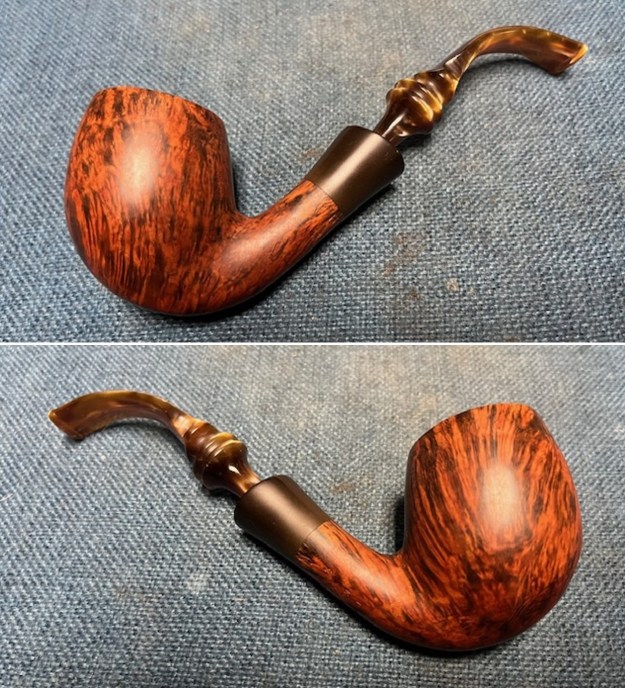
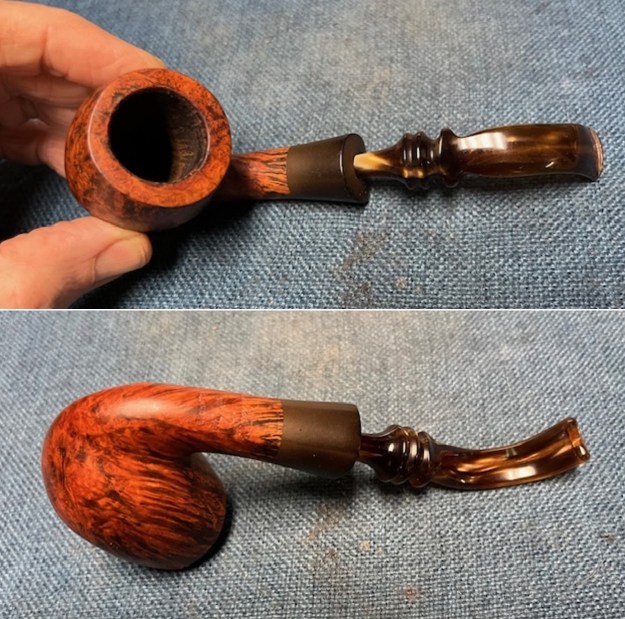
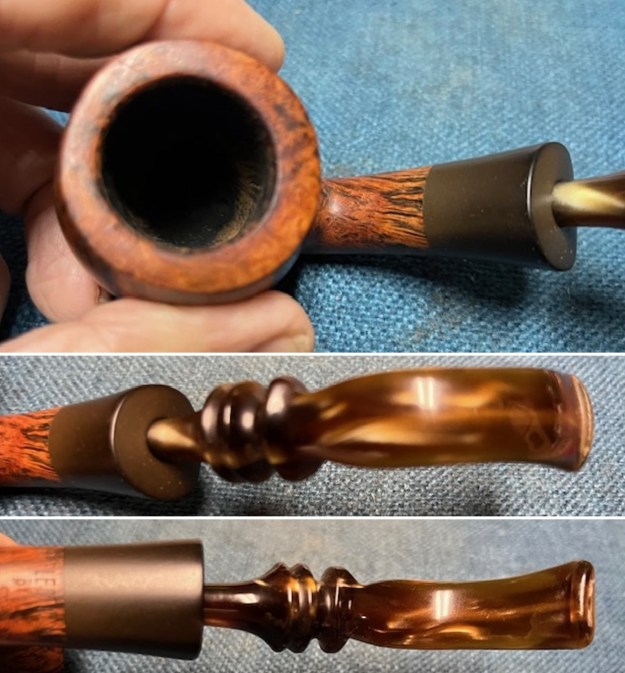
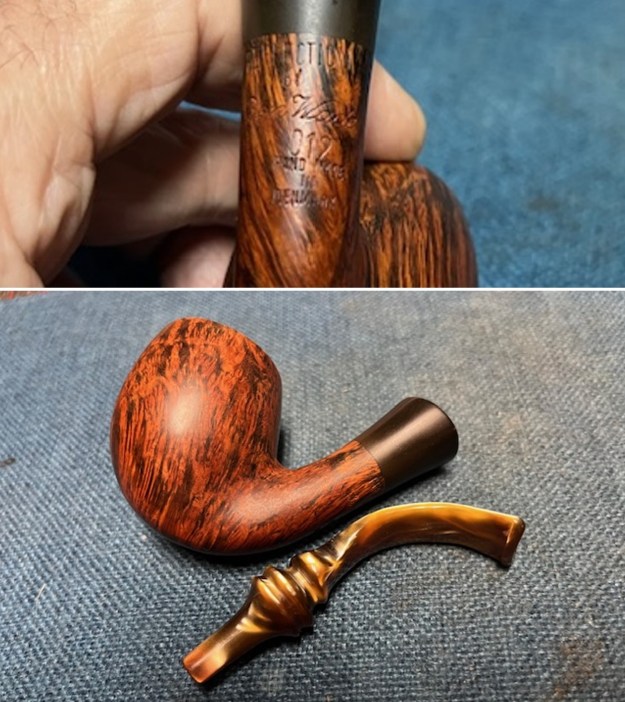
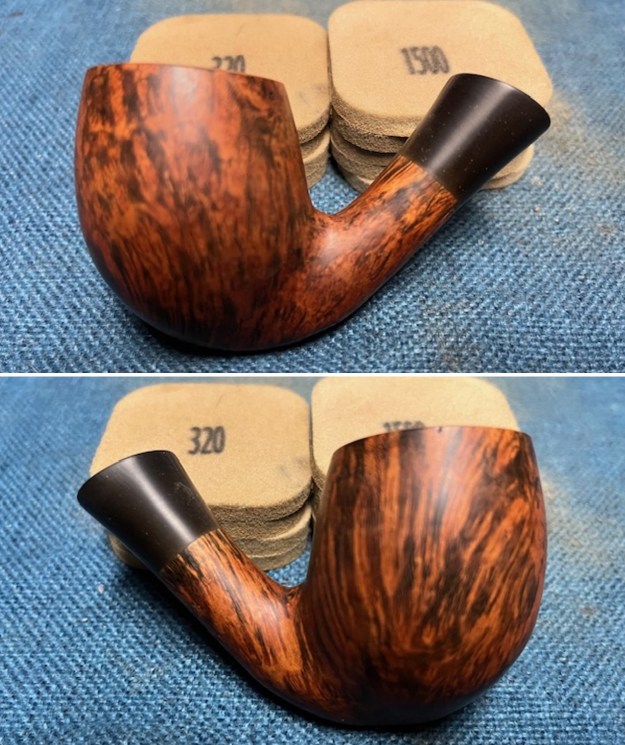
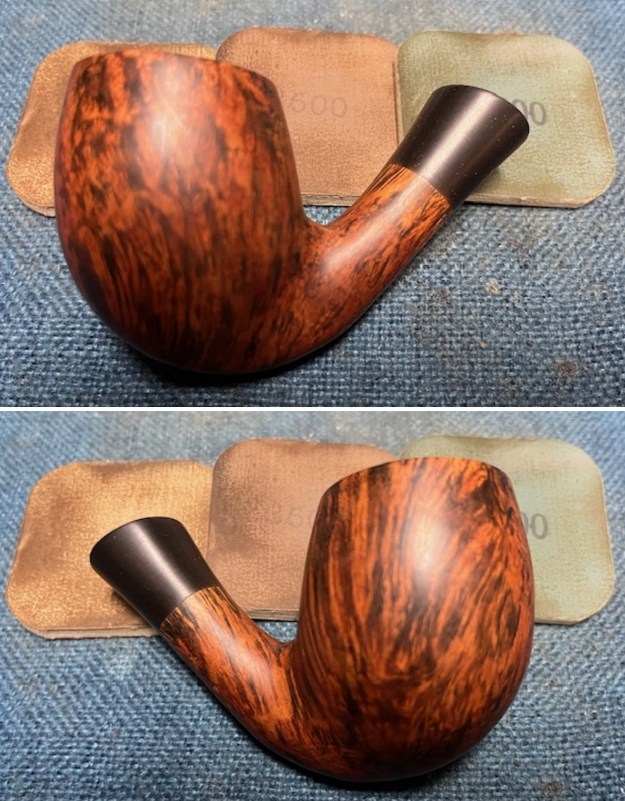
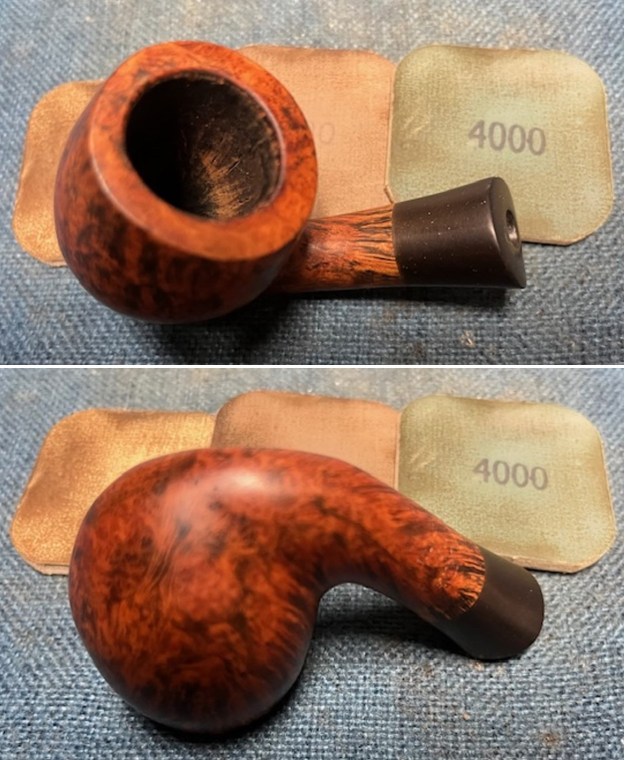
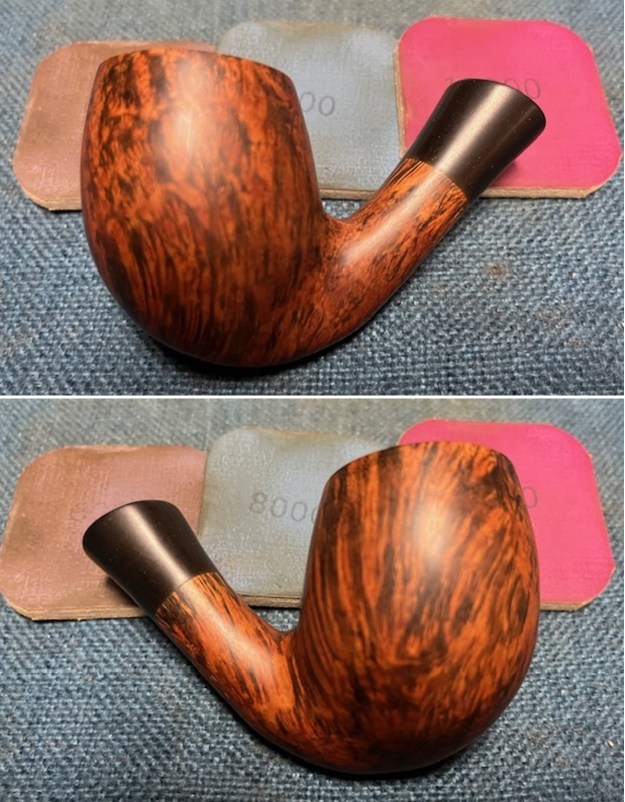
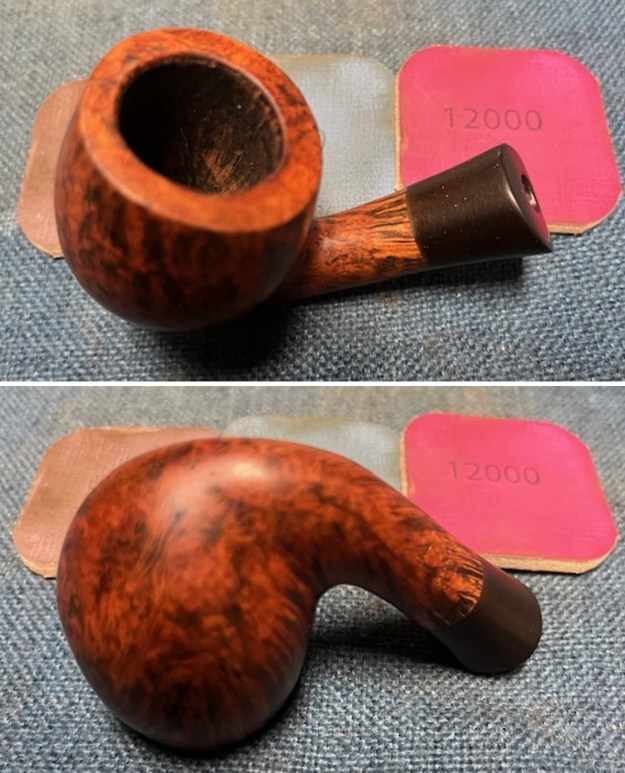
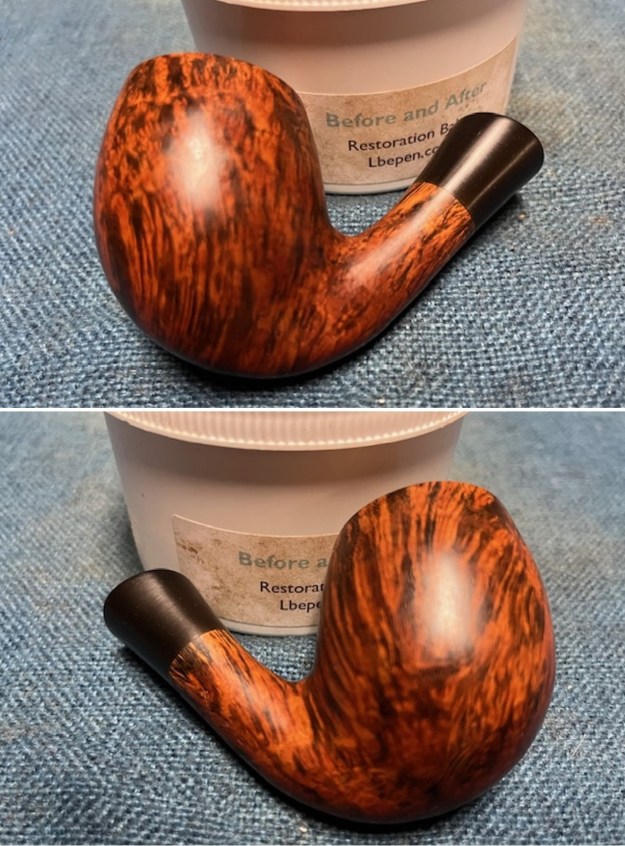
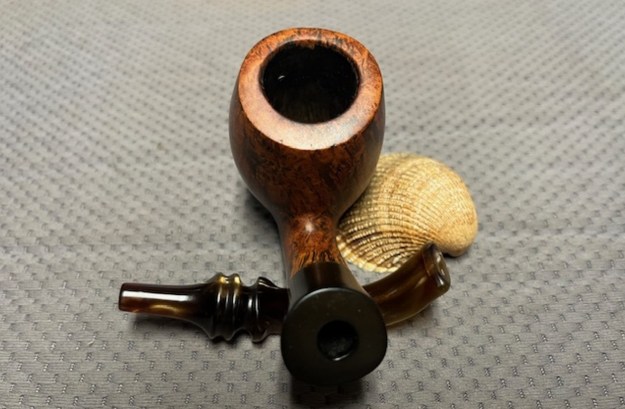
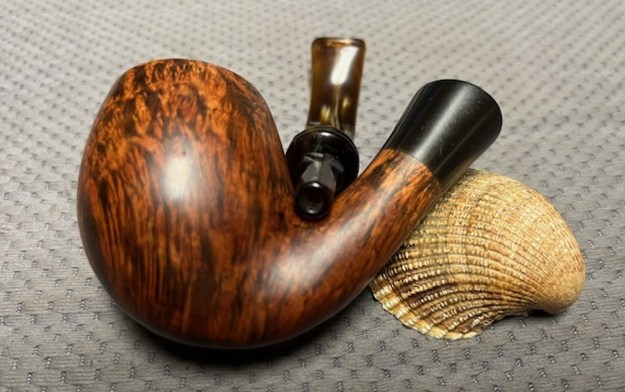
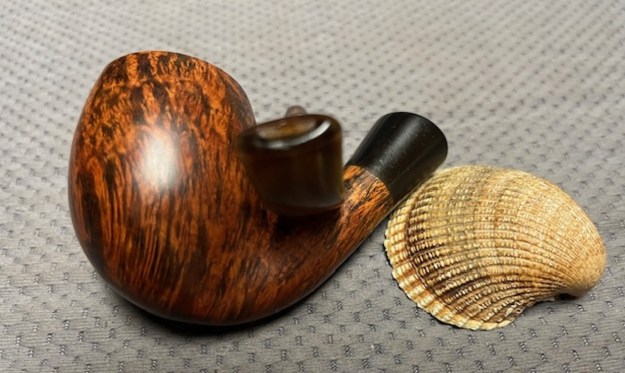
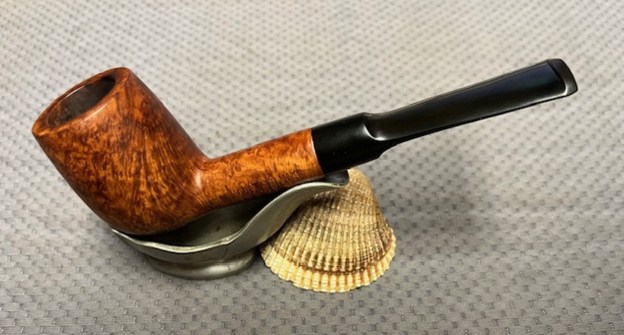
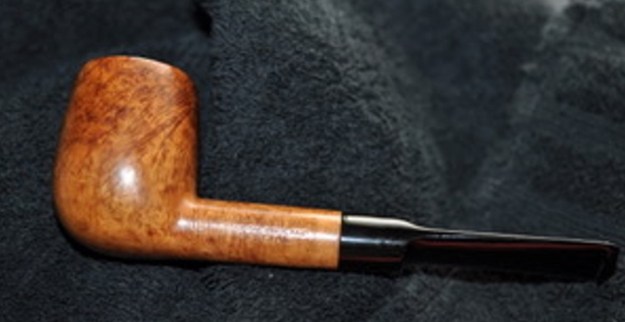
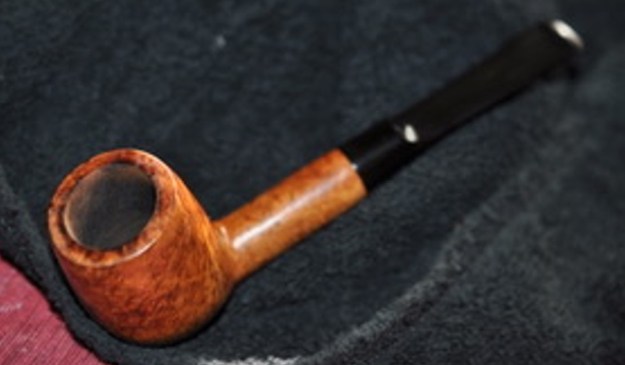
Welcome to another instalment of my Pipe Incident Reports. The idea, in general, is to provide a brief write-up – focusing on a particular pipe-restoration-related issue – rather than an entire restoration story. Today’s story is on the resolution of a very specific pipe repair – replacing a cork mortise – with some added challenges. I hope this blog post will be useful for those undertaking a similar repair.A couple of years ago, I restored this lovely Ropp De Luxe Cherrywood 919 for a friend and he’s smoked it with great gusto since then. In fact, you can see the story of its restoration here. By his own testimony, it’s a great pipe, smokes well, and feels good in the hand. However, over time, he noticed that the cork lining in the shank mortise had chipped and the stem was becoming loose – so he wondered what I thought about it. This news sounded concerning, so I asked him to bring me the pipe. I took it to my workbench and this is what I found: It’s an old pipe and I suppose that it’s no surprise that the cork would degrade over time. This must be repaired so that my friend can continue to enjoy his pipe. First, I took a fairly dull blade (deliberately) and cut out the remaining cork. Mercifully, this was easy and the debris came out quickly.I then gave some thought as to how this should be repaired. In the past, when I’ve repaired cork-lined mortises, I took the cork from a wine bottle and carved it to fit the mortise, then drilled out the cork to fit the tenon. This is fine, but not as precise and tidy as I would like. This time, however, I thought I would try something different. I bought some sheets of cork and decided that cutting an exact piece would be a better solution.How do I figure out what to cut for this pipe? Good question! I am no mathematician, but from somewhere in the recesses of my mind, I remembered how to calculate the circumference of a circle: C = 2πr (or, in this case, C = πd). I grabbed my Vernier caliper and measured the diameter of the mortise. This gave me the information I needed to cut the correct piece of cork. I test fit the tenon with the cork until it fit perfectly. Since cork is a type of wood, I lined the mortise with wood glue and delicately inserted the slice. I let it cure for a full 24 hours, then rubbed the whole stummel with some LBE Before & After Restoration Balm and worked that into the wood. The next day, I returned the pipe to my friend. Happy days.Thanks so much for joining me on this interesting repair. I hope you enjoyed reading this instalment of my Pipe Incident Reports – I look forward to writing more. Below are some photos taken from my original restoration. If you are interested in my work, please follow me here on Steve’s website or email me directly at kenneth@knightsofthepipe.com. Thank you very much for reading and, as always, I welcome and encourage your comments.

Restoring a Great Looking Big Ben London Style 2405 Extra Billiard


by Steve Laug

The next pipe on the table was one that I really have no memory of where it came from. In fact, to be honest I just stumbled on it in a box of pipes that had all been cleaned by Jeff. This one was not clean so I knew it did not come from him. The pipe is stamped on the left side of the shank and reads Big Ben [over] London Style. On the right side of the shank it is stamped Extra over the shape number 2405 [over] Made in Holland. The taper vulcanite stem had a stamped logo that read V in a circle. The bowl had a thick cake and there was a light lava overflow on the rim top. The finish was coated with a varnish coat that would need to go once I cleaned off the lava on the rim top. The inner and outer edges looked to be okay. The pipe had some nice-looking grain under the dirty, oily debris on the finish. The stem was oxidized and had tooth chatter on both sides near the button. I took photos of the pipe before I cleaned it up. I took a photo of the bowl and rim top to show the condition. The rim top has a coat of lava on it and the edges looked to be in good condition. The photos of the stem show the oxidation and the tooth chatter on both sides of the stem near the button.I took photos of the stamping on both sides of the shank and the top of the stem. It is quite a nice looking pipe. The stamping is clear and readable as noted above. I removed the stem from the shank and took a photo to give a sense of the parts of this pipe. I think it will clean up to be a real beauty. For historical background for those unfamiliar with the brand I turned to Pipephil’s site (http://pipephil.eu/logos/en/logo-bigben.html). There were not any pictures of the series but the introductory information was helpful so I am including that.

Big-Ben is a brand of the Elbert Gubbels & Sons – Royal Dutch Pipe Factory. The company has gone bankrupt on March 2012. Production (2009): 250000 pipes/year See also: Amphora, Humbry, IRC, Roermond, Royal Dutch, Thompson and Porsche Design

I then turned to Pipedia for more information (https://pipedia.org/wiki/Big_Ben). I quote below:

The brand name Big Ben was originally owned by a small trade company in Amsterdam which was already well established in several countries selling pipes among other goods. The firm was bought by Elbert Gubbels & Zonen B.V. – see Gubbels – who were in search for a suitable brand name to further expansion on international markets. Big Ben became Gubbels’ mainstay brand with its own website.

There was a further link to the Gubbels listing on Pipedia (https://pipedia.org/wiki/Gubbels).

With the help of his family the father of Elbert Gubbels Sr. started a retail shop for tobacco pipes and other smoker’s equipment in 1870.

In 1924 Elbert Gubbels Sr., now father/grandfather of the present owners, transformed it into a wholesale trade business. The company grew steadily and imported pipes from various countries as there were no factories producing briar pipes in the Netherlands. The most important suppliers came from France and England.

When German troops occupied the Netherlands in May of 1940, a period of almost five years began in which the Gubbels family could hardly operate their business at all. During this years of forced rest Elbert Gubbels had a notion to become independent of foreign suppliers and he drew up plans to start his own production of tobacco pipes after World War II.

Immediately succeeding the war, it was very difficult to obtain good pipes for the import of foreign pipes was limited and so the time was right to go for something new. In 1946 he launched pipe production at Godsweerdersingel No. 20 in Roermond with a couple of new machines and some workers, a couple of them being foreign specialists and considered himself to commence. Yet the cramped accomodations and the needy equipment of the workshop showed the limits all too soon. It was obvious that the workshop was inadequate and Mr. Gubbels invested in another building covering an area of 900m² that also offered a sufficient warehouse. Now the production could be increased going hand in hand with developing new models and improving the quality of the pipes being produced.

The production grew steadily but it showed now that an “international” brand name was required for further expansion on international markets – obviously no one cared too much for pipes made in the Netherlands. Feeling that the time involved to get a new brand established was too lengthy, Mr. Gubbels bought a small trade company in Amsterdam which owned all the rights to the brand Big Ben and was already well established in other countries selling pipes among other goods. A real happenstance – Gubbels products could be marketed now in all European countries, the USA, Canada and many other countries, and nowadays they can be found in almost every country world-wide.

In December 1972 the company opened new and very modern factory in Roermond at Keulsebaan 505. With the official opening by the Governor of the Province of Limburg, the Gubbels company was, on behalf of Her Majesty Queen Juliana of the Netherlands, granted the title “Royal” so that the official name became: Elbert Gubbels & Zonen – Koninklijke Fabriek van Tabakspijpen (Elbert Gubbels & Sons – Royal Dutch Pipe Factory).

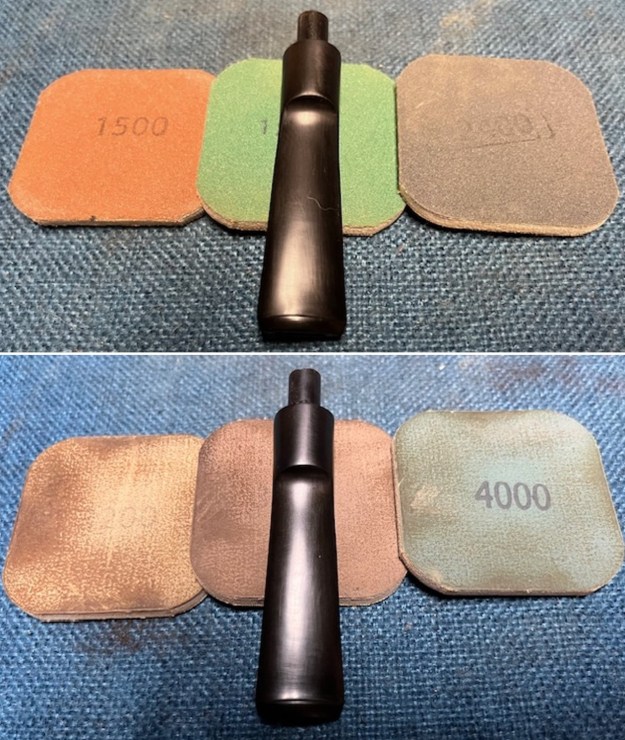
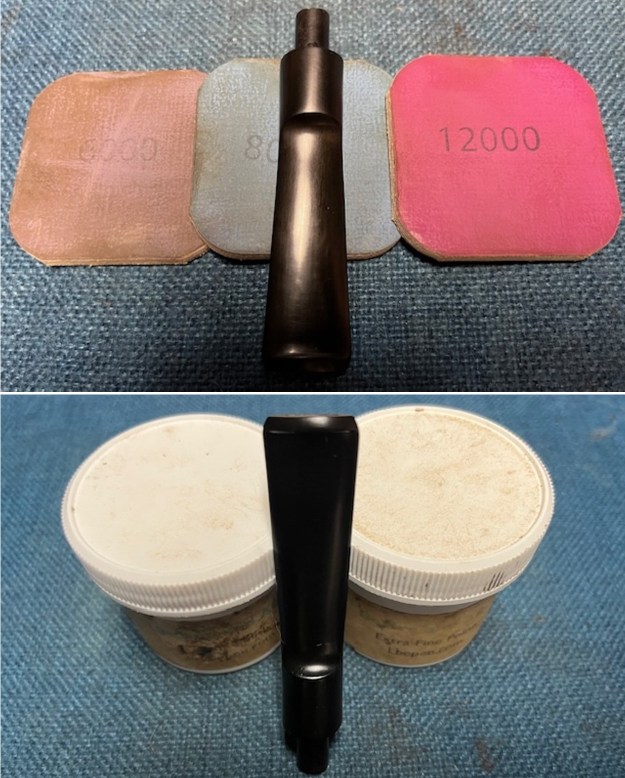
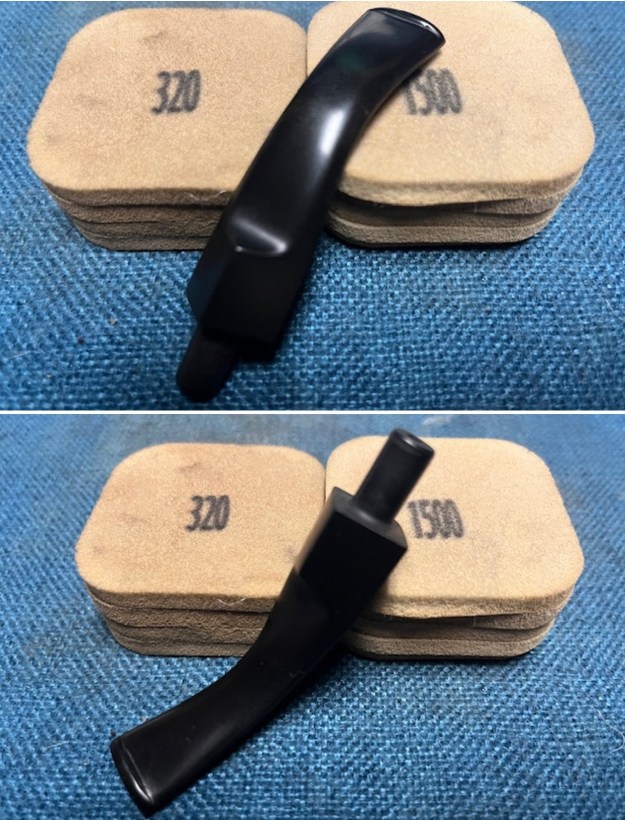
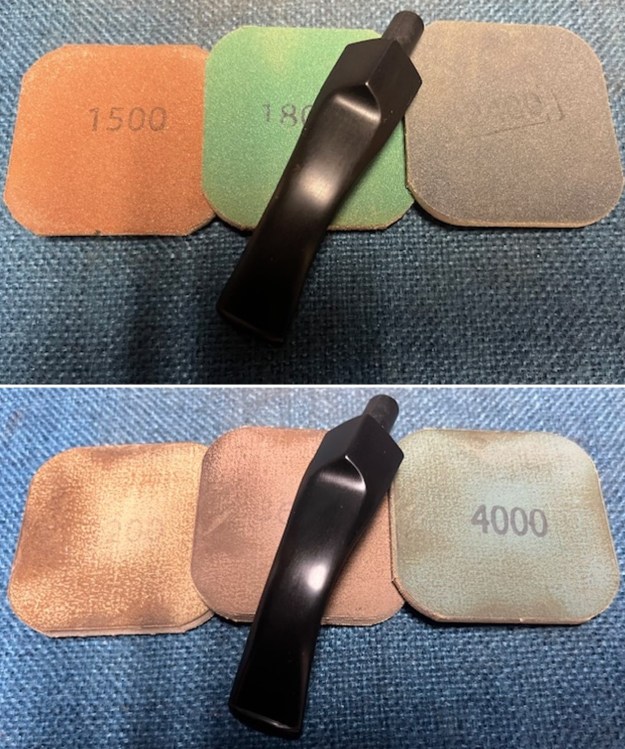
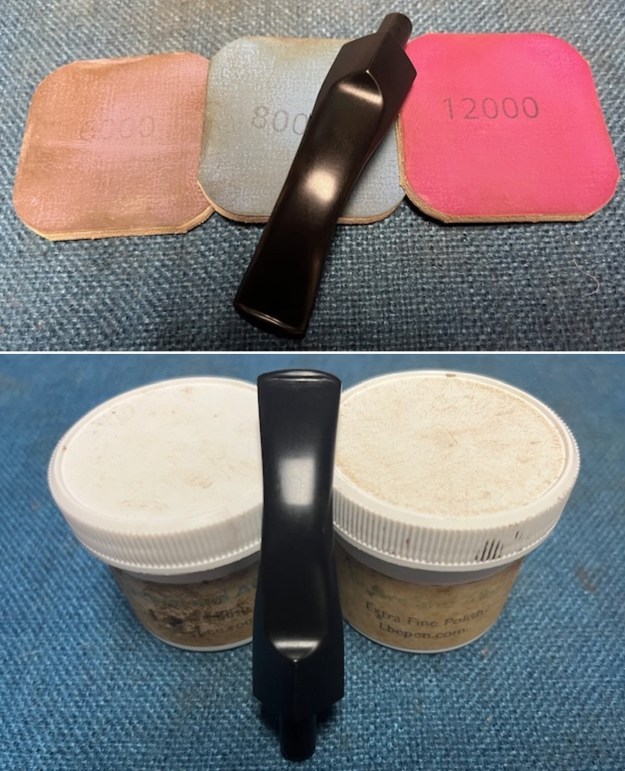
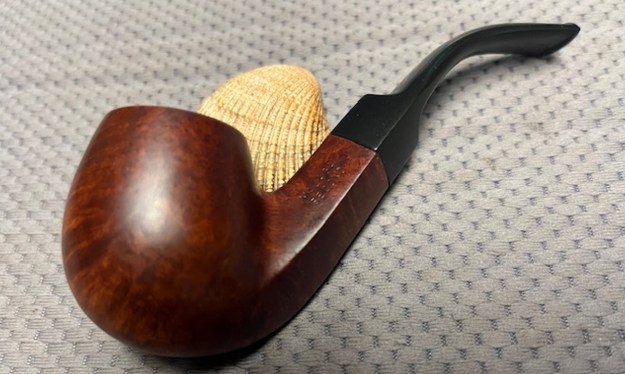
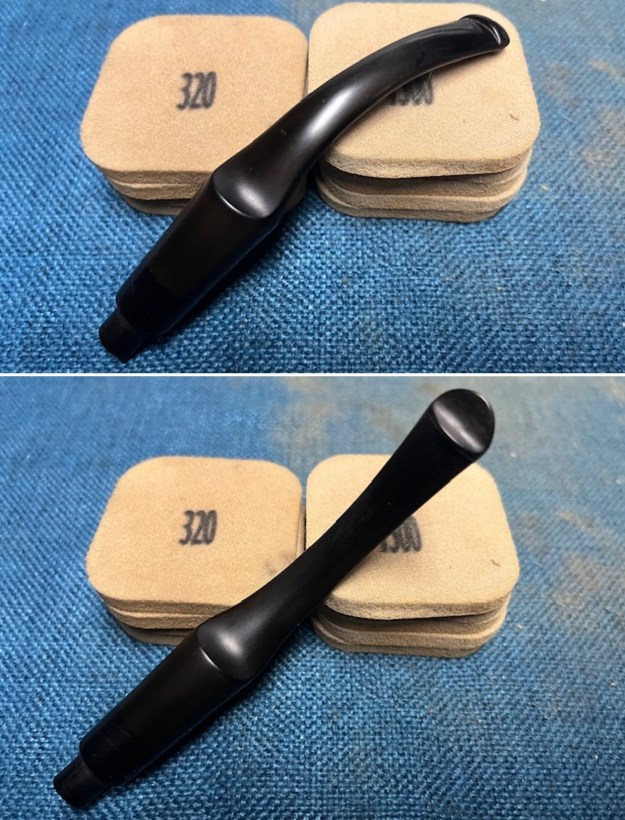
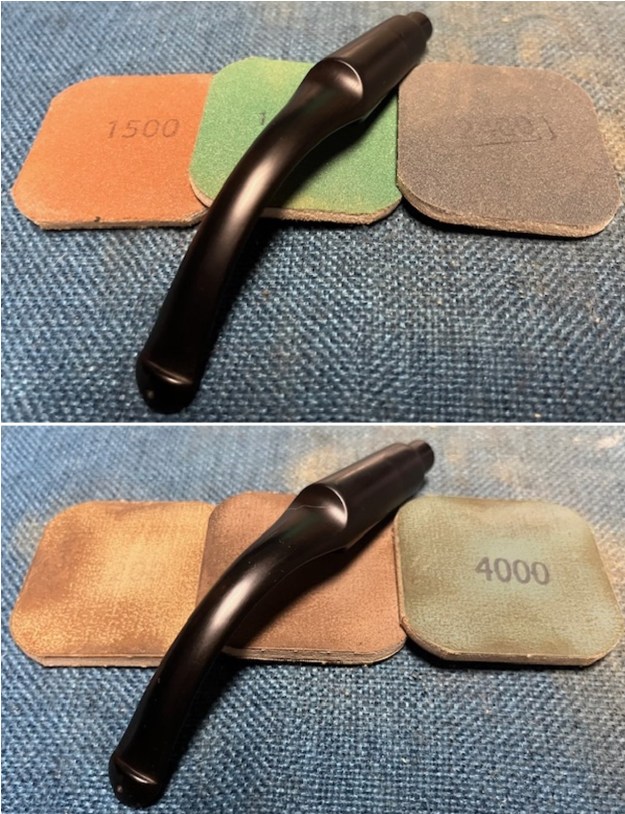
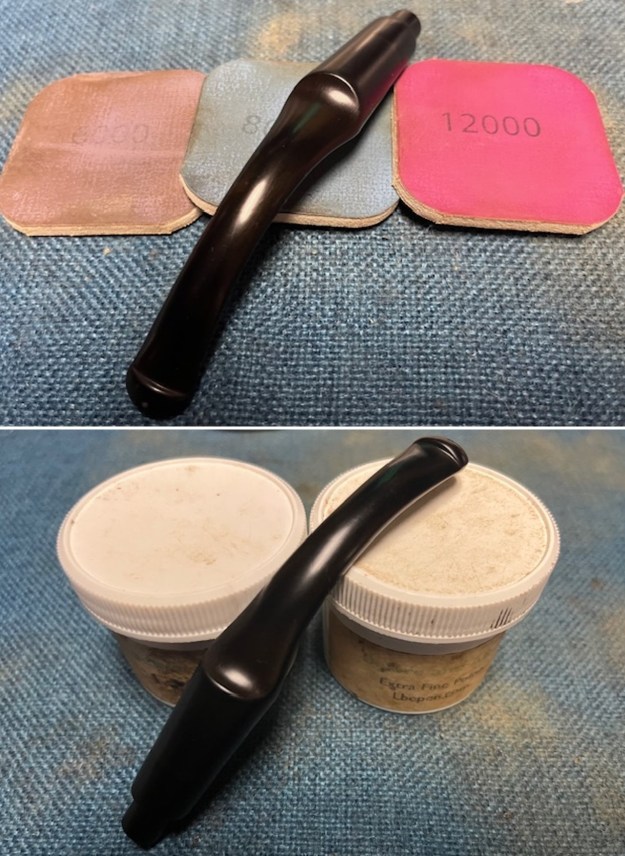
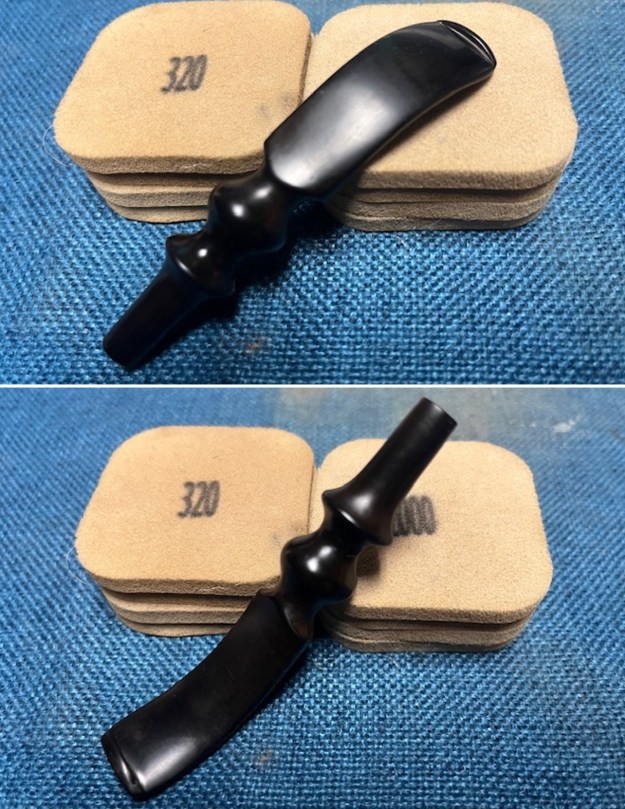
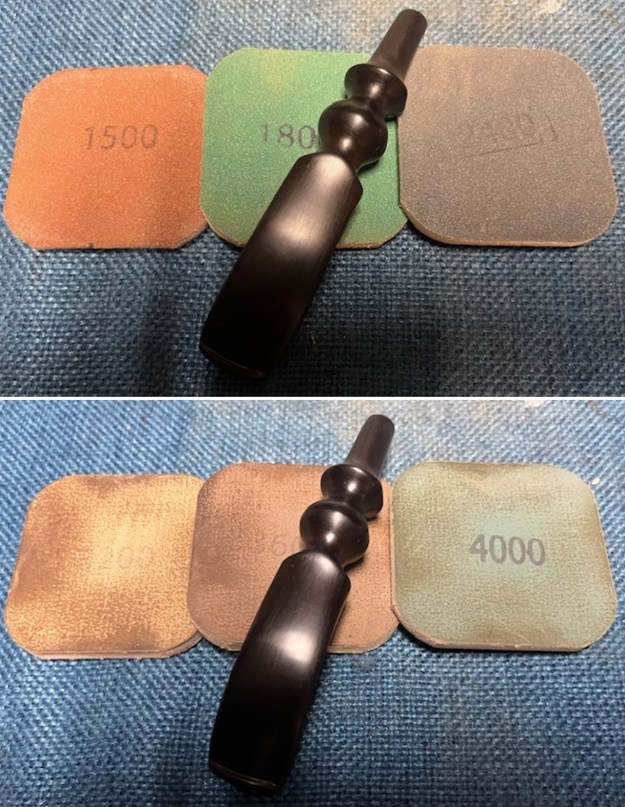
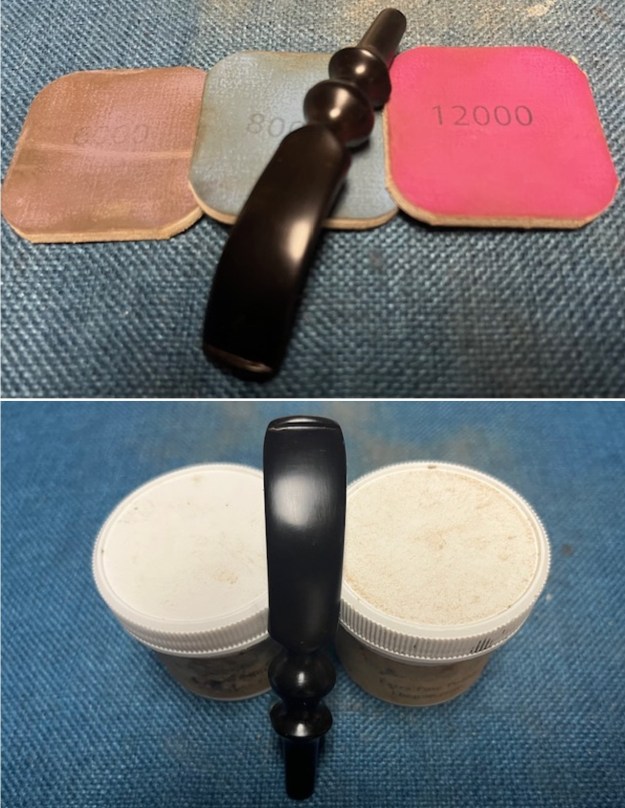
Armed with that history and having a sense of the brand it was now time to work on the pipe itself. I reamed the bowl with a PipNet Pipe Reamer and took the cake back to bare briar. I cleaned up the reaming with a Savinelli Fitsall Pipe Knife. I sanded the bowl walls with 220 grit sandpaper wrapped around a piece of dowel. The walls looked to be in good condition and there was not damage. I cleaned out the inside of the mortise and the airway in the shank and stem with pipe cleaners, cotton swabs and isopropyl alcohol. It was a dirty pipe.I scrubbed the exterior of the bowl down with undiluted Murphy’s Oil Soap and a tooth brush. I rinsed off the grime and the soap with running water. It was definitely looking better. I sanded the briar with 320-3500 grit 2×2 inch sanding pads to smooth out the scratching in the surface. I wiped the briar down after each pad with a damp cloth to remove the dust and debris. I polished the briar with micromesh sanding pads – dry sanding with 1500-12000 grit pads. I worked over the inner and outer edge of the rim as well. After each pad I wiped the bowl down with a damp cloth to remove the sanding debris. It really took on a shine by the last three sanding pads. I rubbed the bowl down with Before & After Restoration Balm. I worked it into the surface of the briar with my fingertips where it works to clean, restore and preserve the briar. I let it do its magic for 15 minutes then buffed it off with a cotton cloth. The pipe looks incredibly good at this point in the process. I set the bowl aside and turned my attention to the stem. I sanded out the tooth chatter and marks with a folded piece of 220 grit sandpaper. It looked much better at this point in the process.I sanded the stem surface with 320-3500 grit 2×2 inch sanding pads. I wiped the stem down with a damp cloth after each sanding pad to remove the sanding debris.I touched up the stamping on the left side of the stem. It was faint on the front part of the stamp so I was unsure what would happen. I filled in the stamping with white acrylic fingernail polish. I scraped it off with my fingernail and lightly sanded the excess with a worn 320 grit sanding pad. The stamping is fine on the right side of the stamp with the left side more worn.I continued to polish the stem with micromesh sanding pads – wet sanding with 1500-12000 grit sanding pads. I wiped it down after each sanding pad with Obsidian Oil. I polished it further with Before & After Stem Polish – both Fine and Extra Fine. I gave it a final coat of Obsidian Oil and set it aside to dry. I am excited to finish this Big Ben London Style 2405 Extra Billiard. I put the pipe back together and buffed it with Blue Diamond on the buffing wheel. I gave the bowl and the stem multiple coats of carnauba wax. I hand buffed the pipe with a clean buffing pad to raise the shine. It is fun to see what the polished bowl looks like with beautiful mixed grain all around it with just a few small flaws in the briar. The polished grain on the pipe looks great with the black vulcanite stem. This smooth Big Ben Billiard is great looking and the pipe feels great in my hand. It is light and well balanced. Have a look at it with the photos below. The dimensions are Length: 6 inches, Height: 2 inches, Outside diameter of the bowl: 1 ¼ inches, Chamber diameter: 7/8 of an inch. The weight of the pipe is 48 grams/1.69 ounces. It turned out to be a beautiful pipe. I will soon be putting it on the rebornpipes store in the Pipe From Various Makers section. If you are interested in adding it to your collection let me know. Remember we are the next in a long line of pipe men and women who will carry on the trust of our pipes until we pass them on to the next trustee. Thanks for your time reading this blog.

Restoring a Block Meerschaum Apple with a Twin Bore Stem


by Steve Laug

This afternoon I decided to work on another pipe that I no longer know where or when we purchased it. I have a large box of Meerschaum pipes that is sitting in my storage that I need to clean up and restore. I have honestly avoided them for years but now was the time to start my work on some of them. The one I chose was a ball or apple shaped smooth meerschaum with a Twin Bore vulcanite stem. It is a beautifully shaped meer with light scratches from its journey and some nice patina developing around the shank and sides. The meer is dirty from use with a thick cake in the bowl and an overflow of lava on the inner edge and rim top. The stem fit well against the shank end and had a threaded tenon in the shank that aligned with properly with the stem in place. The tenon was a Kaywoodie type threaded one without a stinger and was oxidized and pitted. There were no identifying logos on the bowl or shank. I took photos of the pipe before I started my clean up work on it. I took photos of the rim top and the stem to show the condition of the pipe when I brought it to the worktable. You can see the cake in the bowl and the build up of lava and debris on the edge and top of the rim top. It is another dirty pipe but still a charmer. The TWIN BORE vulcanite taper stem has light chatter and deep tooth marks on both sides near the button. I took a photo of the stamping on the inside of the case. It is clear and readable as noted above. I removed the stem from the shank and took a photo of the parts. I removed the stem from the shank and took a photo of the parts. I took photos of the end of the stem to try to show the threads on the end that sat against the shank end and the twin bores in the button.I started my work on the bowl by reaming the thick cake out of the bowl. I started with a PipNet reamer and the 2nd and 3rd cutting heads to take back the cake to the walls of the bowl. I cleaned up the reaming with a Savinelli Fitsall Pipe Knife. I sanded the bowl walls with a piece of dowel wrapped with 220 grit sandpaper. Once finished it looked very good. I cleaned out the airway in the shank and mortise as well as in the stem with pipe cleaners (both bristle and regular). It was much better.Now it was time to work on the scratches on the bowl and rim top. I started my work by sanding with 320-3500 grit 2×2 inch sanding pads. It smoothed out the scratches and revealed more and more of the patina around the bowl and shank. It is a beautiful looking pipe. I polished the meerschaum with micromesh sanding pads – dry sanding with 1500-12000 grit pads. I wiped the bowl down after each pad with a damp cotton cloth. The bowl took on a shine by the last pads. I gave the bowl multiple coats of Clapham’s Wax that blends both carnauba and beeswax in a soft wax. I rubbed the wax on the bowl sides and the shank end with my fingers and set it aside to dry. Once the wax cured I buffed the bowl with a clean buffing pad and then with a soft microfibre cloth. The bowl has a rich glow. I set the bowl aside and turned my attention to the stem. I filled in the tooth marks with some clear CA glue. When it cured I flattened the repairs with a small flat file to blend them into the surface of the stem. I then sanded it with 220 grit sandpaper to smooth it out. I continued sanding the stem surface with 320-3500 grit 2×2 inch sanding pads. I wiped the stem down after each pad with a damp pad to remove the debris. By the end it was quite shiny and ready for polishing.I polished the stem with micromesh sanding pads – wet sanding it 1500-12000 pads. I wiped it down with a damp cloth after each pad to protect it and preserve it. I polished it with Before After Pipe Polish – both Fine and Extra Fine. I am really happy with the way that this Meerschaum Apple with a Twin Bore Stem turned out. It really is a beautiful looking pipe with a unique shape and smooth meerschaum bowl. The vulcanite taper stem is really nice. The rich patina on the meerschaum came alive with waxing and buffing. I put the stem back on the bowl and carefully buffed the pipe with Blue Diamond on the buffing wheel. I gave the bowl and the stem multiple coats of beeswax/carnauba wax and buffed the pipe with a clean buffing pad to raise the shine. I hand buffed the pipe with a microfiber cloth to deepen the shine. The finished Meerschaum Apple really is a beauty and feels great in the hand and looks very good. Give the finished pipe a look in the photos below. The dimensions of the pipe are Length: 5 ¾ inches, Height: 2 inches, Outside diameter of the bowl: 1 ¼ inches, Chamber diameter: ¾ of an inch. The weight of the pipe is 59 grams/2.08 ounces. The pipe will be going on the rebornpipes store soon. It will be in the Ceramic and Meerschaum Pipes Section if you would like to add it to your collection. Thanks for reading this blog and my reflections on the pipe while I worked on it. It was a fun one to work on!

Restoring a Rare Peterson Kapruf 56


by Kenneth Lieblich

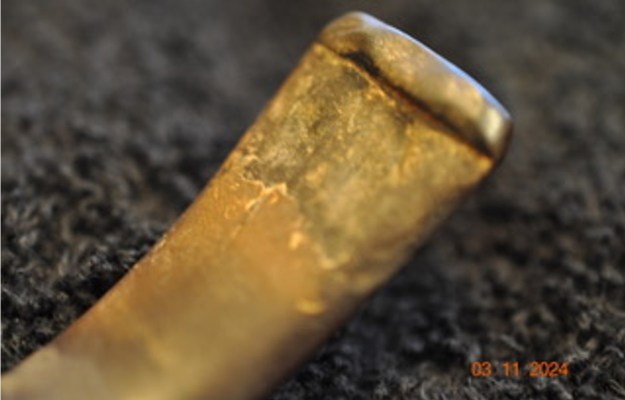
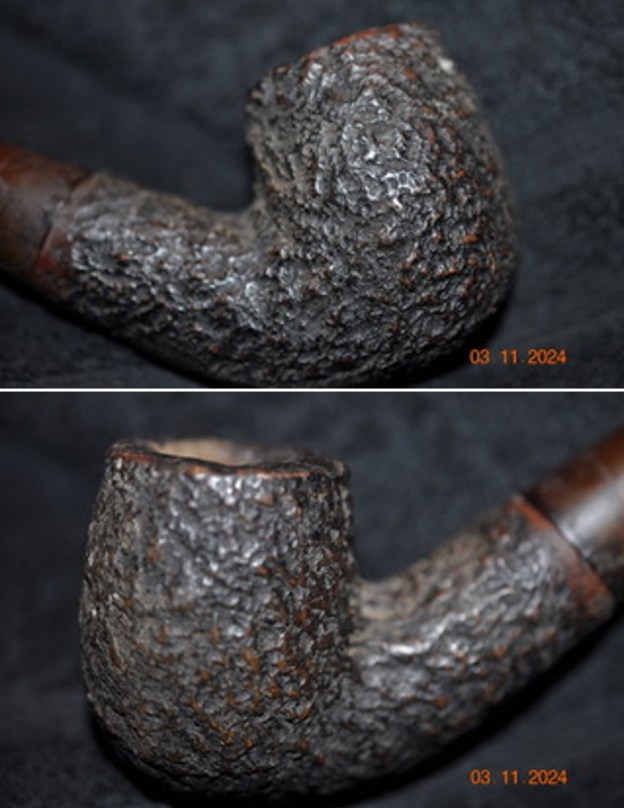
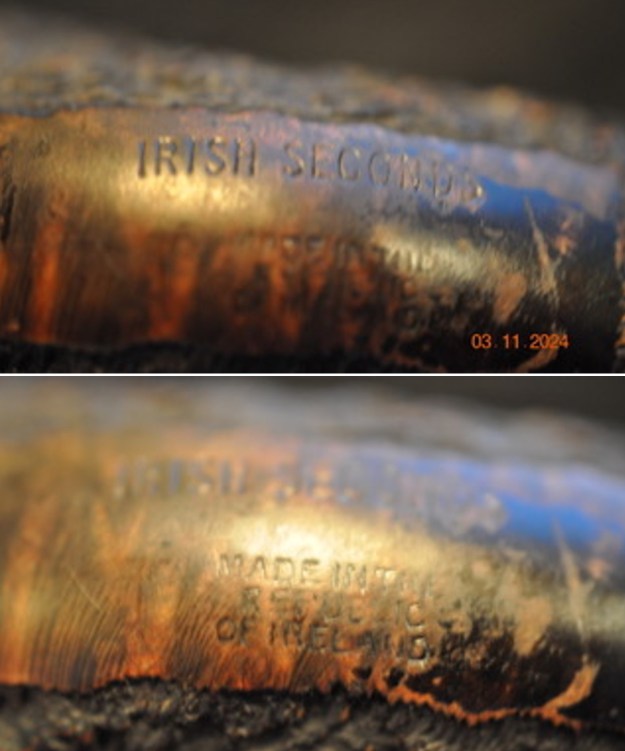
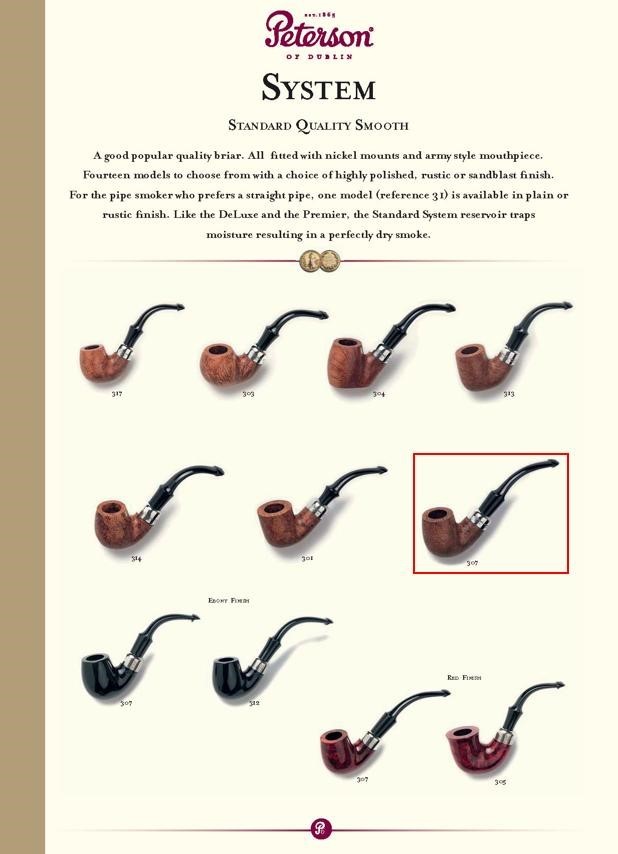
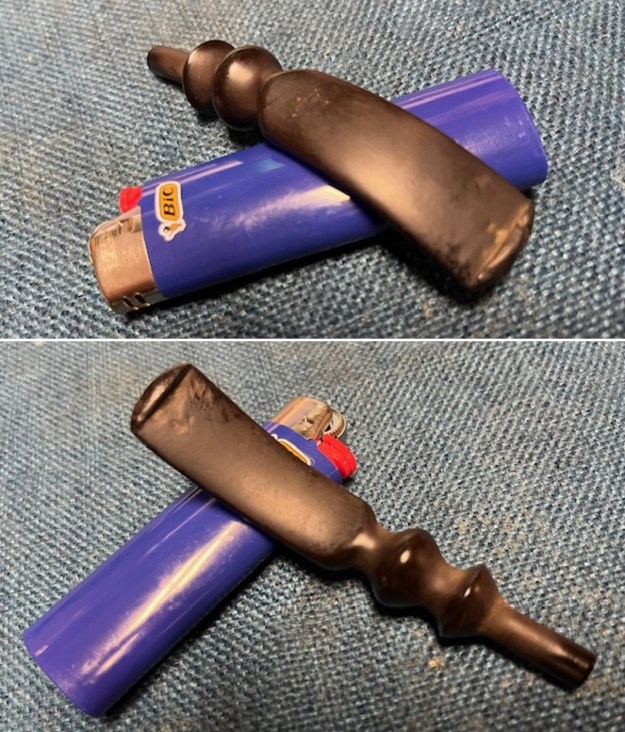
Well, now, this is quite the pipe! I recently acquired a collection from a (late) gentleman who clearly LOVED his pipes. They were all well used and, according to his family, he had a pipe hanging out of his mouth at all times. As I was looking through them, this particular Pete caught my eye. It’s a handsome one, isn’t it? It’s a Peterson Kapruf 56 chubby bent billiard, with a beautiful sandblast. This one is really worth restoring. It’s such a comely pipe and deserves to be back in someone’s collection. Let’s look at the markings. We’ve got Peterson’s [over] Kapruf. Then we have Made in the [over] Republic [over] of Ireland. Finally, there is the shape number, 56. Of course, there is also the stylized P on the stem, indicating the famous Peterson company of Ireland.The history and origins of this particular model are quite interesting. It’s an uncommon pipe and, if you’re a Pete collector, you ought to have one. In a blog post from 2019, Al Jones posted here on Reborn Pipes about a Kapruf 56 he had been working on and expounded on the background of this pipe. Rather than simply retyping what he wrote, I urge you to read his blog here and learn more. Meanwhile, here’s a catalogue photo from one of Steve’s blogs on the same pipe:I’m not going to sugarcoat this for you: the pipe was a bit of a mess. The stummel was in decent condition, but so, so dirty and clogged. The stem, on the other hand, was a localized disaster. The oxidation was extreme, the chomping of the bit was extreme, the tooth scrapings were extreme – and there was a small fissure in the vulcanite (on the underside of the P-lip to boot. I had my work cut out for me. I used a disposable lighter and ‘painted’ the stem with its flame. The gentle heat of the flame can cause the dents in the vulcanite of the stem to expand back into shape. Sadly, in this case, not much happened. The stem’s calcification was quite substantial. I used an old butter knife and gently scraped some of the thicker accretion off. Doing this now helps later in removing the oxidation.

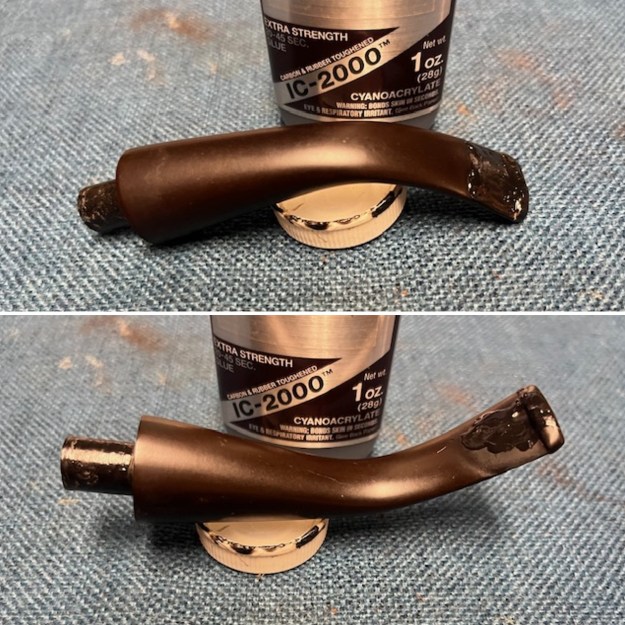
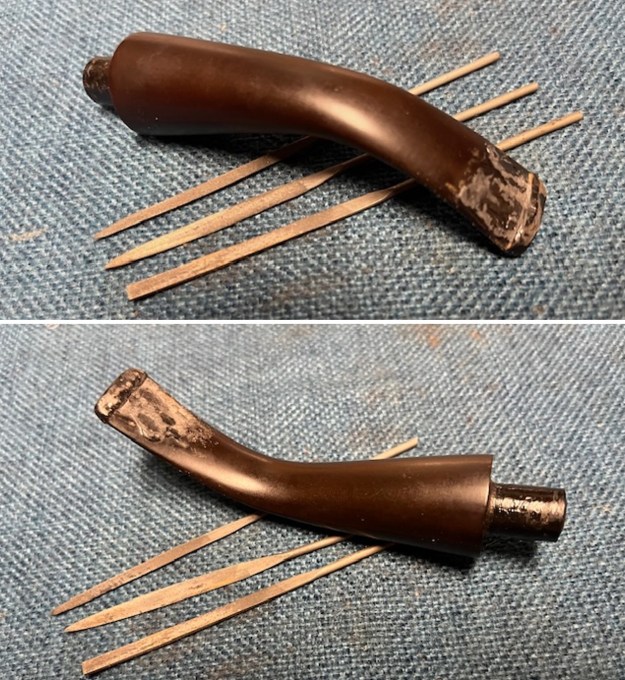
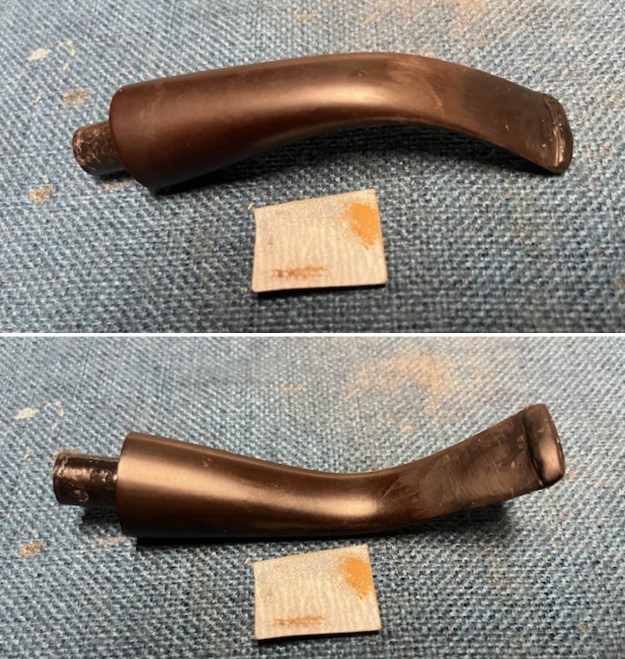
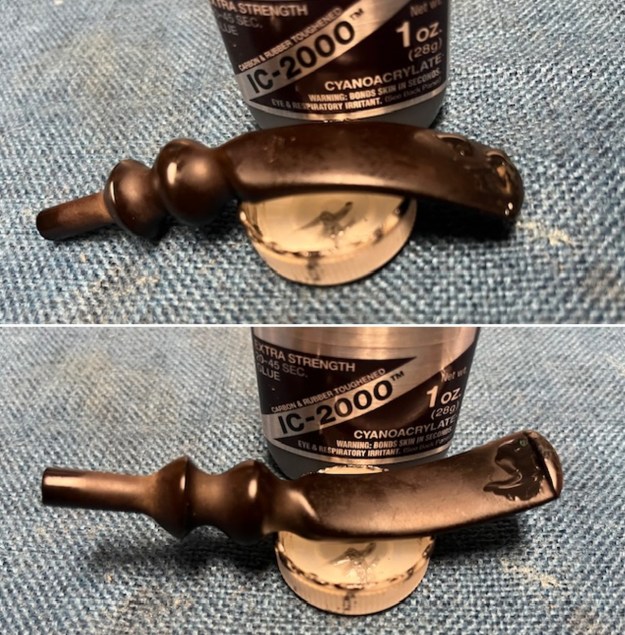
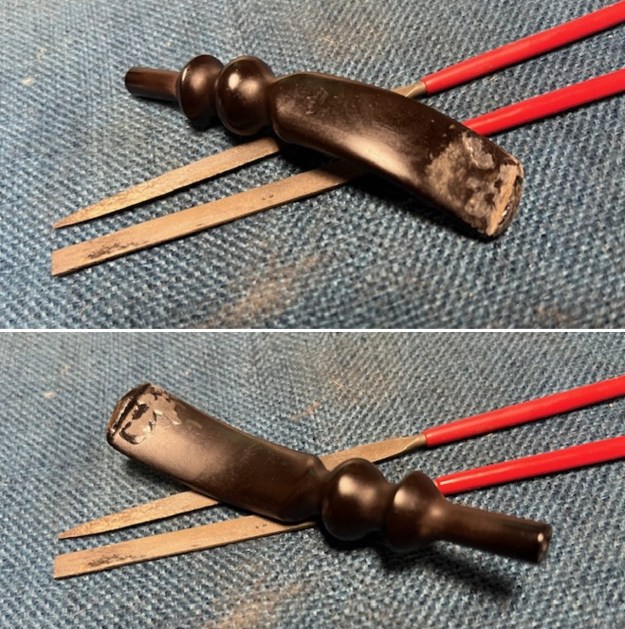
I used isopropyl alcohol on a few cotton rounds and wiped down the stem to provide an initial cleaning of filth before moving on to the next steps. The primary cleaning came next. I disinfected the inside of the stem with pipe cleaners dipped in lemon-infused 99% isopropyl alcohol. I scrubbed thoroughly to make sure the interior was very clean. Given the general state of the pipe, I was surprised at how relatively clean it was.The goal of the next step is the removal (or minimization) of oxidation. Going to my sink, I used cream cleanser, cotton rounds, and a toothbrush, and scoured the stem to remove as much surface oxidation as possible. As the photos show, the result was a hideous, brownish mess – but better off the stem than on it.Once the stem was reasonably clean, I soaked it overnight in some Briarville Stem Oxidation Remover. This solution works to draw oxidation in the stem to the surface of the vulcanite. This is a major aid and an important step in ensuring a clean stem. The following day, I drew out the stem from its bath and scrubbed the lingering fluid with a toothbrush. Due to the severity of the oxidation, I then repeated the scrubbing with the cream cleanser for maximum effect.As the stem was now clean and dry, I set about fixing the marks and dents in the vulcanite. Quite frankly, this was a substantial rebuild of the button – including the fissure on the underside. This was done by filling those parts with black cyanoacrylate adhesive, impregnated with carbon and rubber. I left this to cure and moved on. After this, I painted the logo on the stem with some enamel nail polish. I restored the logo carefully and let it fully set before proceeding.The penultimate step for the stem is sanding. First, with my set of needle files, I reduced the bulk of the cyanoacrylate repairs. I removed the excess adhesive as near to the surface as possible, without cutting into the vulcanite. Following that, I used all nine of the micromesh sanding pads (1,500 through 12,000 grit) to sand out flaws, even out the vulcanite, and provide gentle polishing of the finished surface. I also applied pipe-stem oil while using the last five micromesh pads. There was a wonderful, deep black shine to the stem when I was done. You can see in the profile photo below just how much better the P-lip looks after my work. As the stem was (nearly) complete, I moved on to the stummel. The first step was to ream out the bowl – that is to say, remove all the cake inside the bowl. This accomplished a couple of things. First (and most obviously), it cleaned the bowl and provided a refurbished chamber for future smoking. Second, when the old cake was removed, I could inspect the interior walls of the bowl and determine if there was damage or not. I used a reamer, a pipe knife, and a piece of sandpaper taped to a wooden dowel. Collectively, these ensured that all the debris was removed.The inside of the stummel needed to be cleaned thoroughly. However, this pipe was so clogged, that I first needed to open the horribly occluded airway. So, I took a long drill bit, held in a drill chuck, and hand-cranked it to dislodge the dreadful detritus inside. Hand cranking is essential because it provides a precision and caution that a power drill cannot provide. Similar to the stem, I then cleaned the stummel with both pipe cleaners and cotton swabs dipped in lemon-infused 99% isopropyl alcohol. With a pipe this dirty, it took quite a while and much cotton to get clean.I then decided to ‘de-ghost’ the pipe – that is to say, exorcize the remaining filth from the briar. I filled the bowl and the shank with cotton balls, then saturated them with 99% isopropyl alcohol. I let the stummel sit overnight. This caused the remaining oils, tars and smells to leach out into the cotton.To tidy up the briar, I wiped down the outside, using a solution of a pH-neutral detergent and distilled water, with cotton rounds. I also used a toothbrush in the crevices. I also scoured the inside of the stummel with the same detergent and tube brushes. This was the culmination of a lot of hard work in getting the pipe clean.I rubbed some LBE Before & After Restoration Balm into the briar and let it sit for 30 minutes or so. The balm moisturizes the wood and gives a beautiful depth to the briar. I then buffed the stummel with a microfibre cloth. For the final step, I took the pipe to my bench polisher and carefully buffed it – with three coats of conservator’s wax. This procedure makes the pipe look its best – the stummel sings and the stem glows.

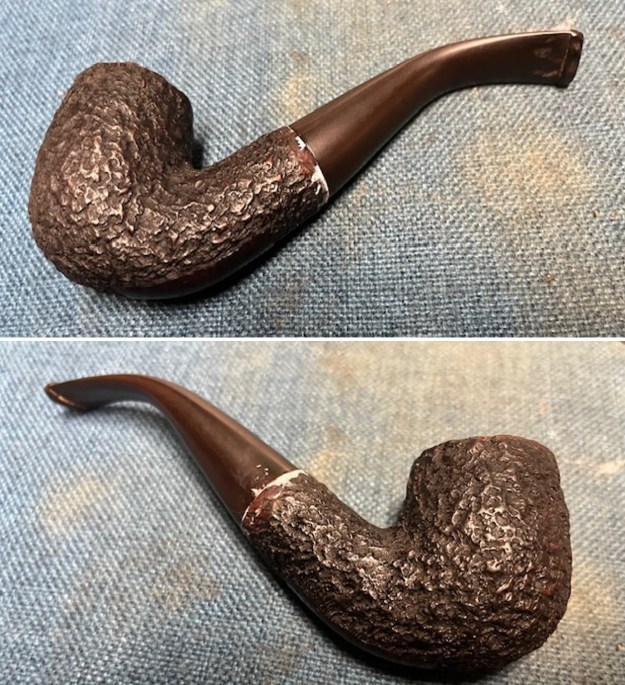
This Peterson Kapruf 56 looks fantastic again and is ready to be enjoyed by its next owner. I am pleased to announce that this pipe is for sale! If you are interested in acquiring it for your collection, please have a look in the ‘Irish’ pipe section of the store here on Steve’s website. You can also email me directly at kenneth@knightsofthepipe.com. The approximate dimensions of the pipe are as follows: length 5½ in. (140 mm); height 2 in. (52 mm); bowl diameter 1½ in. (38 mm); chamber diameter ¾ in. (20 mm). The weight of the pipe is 1⅞ oz. (55 g). I hope you enjoyed reading the story of this pipe’s restoration as much as I did restoring it. If you are interested in more of my work, please follow me here on Steve’s website or send me an email. Thank you very much for reading and, as always, I welcome and encourage your comments.

Restoring and Restemming an Angelo Saddle Stem Bulldog


by Steve Laug

While I was travelling Rob stopped by with a bag containing a pipe that was gift from his daughter. It was a mess with a very thick cake in the bowl, burns and damage to the rim top and inner edge of the bowl. The finish was very worn and the shiny varnish coat was spotty and very damaged. The shank end was coated with a lot of grime and oils and had cracks on the topside of the diamond shank on both right and left sides. The tenon was stuck in the shank and the stem was wrapped in electrical tape to hold it in the shank. The button on the top side was chomped and showed a lot of tooth marks. The underside of the button was cracked and a chunk was missing. The pipe appeared to be a basket pipe from Italy and bore the stamp Angelo on the top left side under the dirt and debris. The crack ran through a portion of it and obscured it. It was a brand I was familiar with and had worked on before. Here are some photos of the pipe as it was initially fit together. I removed the stem from the shank and took a photo of the parts. I also removed the tenon from the shank using a pair of pliers and took a photo of the parts.I took a photo of the stamping on the left topside of the shank and captured crack on that side of the shank as well.Before I started my cleaning up the and crafting a new stem for the pipe I wanted to have a bit of information on the Angelo brand. I personally like to have the background so that when I am working on a pipe I know who carved or made it originally. Then as I work on it I can carry on a dialogue with them (at least in my mind) about my changes. I turned to PipePhil’ site for information (http://www.pipephil.eu/logos/en/logo-a6.html#angelo). I have included a screen capture of the pertinent section and the sidebar information below the photo.Second brand used by the Rovera family (Angelo and Damiano) who produces Ardor, Roverart and Rovera.

I started my work on the pipe by reaming the bowl. You can see the spotty varnish coat of the finish on the bowl and shank in the photos. I started the reaming with a Pipnet Pipe Reamer using the second and third cutting heads to take back the cake to the bare walls. I cleaned up the reaming with a Savinelli Fitsall Pipe Knife to scrape the remnants. I sanded the bowl walls with 220 grit sandpaper wrapped around a piece of dowel. It looked. much better. I decided to try and remove the spotty varnish coat. I wiped the bowl down with acetone on cotton pads to remove as much as I could. I would need to do some sanding on it as there were still dark spots on the finish that would need to be removed. I went through my bands and found a ferrule style diamond band from the shank end. It was a good fit from the look of it. I heated it with a lighter and pressed it onto the cracked shank. It fit very well and brought the cracks together. It slight covered the “o” on the end of the Angelo stamping. I sanded the top of the bowl with a folded piece of 320 sandpaper to clean up the rim damage and the inner edge. Once it was flattened I used a wooden sphere to further clean up the rim top and to minimize the damage on the inner edge of the bowl. I sanded to remove the darkening around the rim and inner and outer edge of the bowl. It is frustrating, but I forgot to take photos at this point so I posed the bowl after my polishing to show what I had done.I stained the bowl with dark brown aniline stain (Feibings Shoe Dye) and flamed it to set it in the briar. Once the stain cured, I sanded the bowl with sanding pads – 320 -3500 to smooth out the finish and remove all the scratches and excesses. Once again, I forgot to take these photos. I think I am out of the habit of photographing the pipes as I work on them. After sanding the bowl with the 320-3500 grit sanding pads I moved on to polish the briar with 1500-12000 grit sanding pads. I wiped it down with a damp cloth to remove the dust and debris left behind. I rubbed the bowl down with Before & After Restoration Balm and set it aside to let the product do its work. After about 10 minutes I buffed it off with a soft cloth to polish the briar. The pipe bowl and polished band looked very good. I really am rusty after a month of not restoring any pipes. I forgot to clean out the inside of the shank. I used cotton swabs, pipe cleaners – both bristle and fluffy and isopropyl alcohol to work over the inside of the shank. It is much cleaner now that I remembered to do it!I polished the nickel band on the shank with a jeweller’s cloth to give it a shine and protect it from oxidizing. It looked much better with the shine. I set the bowl aside and turned my attention to the new stem I needed to fit on the pipe. The previous stem (origianal??) had many cracks in the saddle portion, the tenon was loose and the whole thing had been wrapped tightly with electrical tape. I went through my stems and found one that would work well wit the bowl. In the photo it looks longer but it is actually about the same length. The tenon will need to be reduced in diameter and the casting marks removed but the stem should look great once it is finished.The next phojto showed the bowl before I had finished it. I started fitting the stem to the shank before I worked on the bowl finish. I used two files to reshape the tenon. I shortened the tenon to match the depth of the shank with the Dremel and sanding drum. Once I had the length correct and the fit of the tenon correct I put it on the shank and took photos of the pipe to show the new look it had with the new stem. It still needed much more work to smooth out the stem surface but it looked good on the shank with the band. I sanded the stem surface with 220 grit sandpaper. I smoothed out the castings on the sides of the stem and the button surface. I sanded the saddle portion and the top and underside of the blade with the 320 sandpaper. It looked better and the fit to the band on the shank end was very good.I sanded the stem further with 320-3500 sanding pads. I worked on the surface of the stem to give it a smooth finish. The finish on the stem was getting smoother with the work.I polished the stem with 1500-12000 grit micromesh sanding pads. It began to take on a rich glow and the surface was very smooth. This reworked and restemmed Angelo Straight Bulldog has a beautiful finish now that the varnish coat has been removed and the bowl restained. It truly has a new lease on life. The medium brown/black finish gives depth to the grain around the bowl and shank. The newly fit polished black vulcanite stem adds to the mix. I put the stem back on the bowl and buffed the pipe with Blue Diamond on the buffing wheel being careful to not buff the stamping. I gave the bowl and the stem multiple coats of carnauba wax on the buffing wheel and followed that by buffing it with a clean buffing pad. I hand buffed the pipe with a microfiber cloth to deepen the shine. The finished Angelo Straight Bulldog is quite nice and feels great in the hand. Give the finished pipe a look in the photos below. The dimensions of the pipe are Length: 6 inches, Height: 1 ¾ inches, Outside diameter of the bowl: 1 ¼ inch, Chamber diameter: ¾ of an inch. The weight of the pipe is 1.66 ounces/49 grams. Thanks for walking through the restoration with me as I worked over another beautiful pipe. The fellow who dropped it off will pick up his pipe on the weekend. I am looking forward to seeing what he thinks of it.

Cleaning up a Second Beautiful MORABB Pipe Tool for my collection


by Steve Laug

In August of 2025 I received an email from Paul in England regarding a Morabb pipe scraper that he had in his possession from his grandfather’s estate. He sent me the following email regarding the tool. It goes to show you that you never can underestimate the reach and readership of the rebornpipes blog. I have included his first email below in full.

Hello Steve,

First a big ‘thank you’. I have a ‘Morabb’ pipe scraper but didn’t know its purpose. It originally came from my grandfather’s house, he was a wire-drawer by trade and naively I thought it might have something to do with that! So, I type ‘The Morabb’ into my search engine, your site pops up and therein is all the information I need. Makes sense too, my grandfather was an avid pipe smoker.

Speculative enquiry this, I don’t suppose anyone in your pipe restoration circle would be interested in obtaining the scraper? As it belonged to my grandfather, I would prefer it went to someone who would really appreciate the item and perhaps even use it. I don’t smoke myself and I don’t have anyone to pass it on to.

Age wise I believe it may be slightly older than the one you have; it has ‘Pat. Appd For’ stamped on the case rather than showing an actual patent number. Condition is good on the outside, but way dirtier than yours on the inside. It has no box or instructions. 

To give the scrapers’ age some context, my grandfather was born in the 1890’s and, to my knowledge, he smoked his entire life.

If it might be of interest let me know and I will send some photographs.

Oh, and please be aware I live in the UK.

Kind regards, Paul

I replied to Paul that I was indeed interested in purchasing the Morabb from him. I asked him for photos of the tool that he had so that I could compare it with the one I have here. Paul kindly sent the photos to me and I have included them below. The show the stamping on top of the tool and it reads as Paul noted above. It is also dirty and oily as he noted as well. We made arrangements regarding purchasing the tool and I sent the payment to him. I headed out on a trip and while I was away the package arrived. Before I left on my trip I went back and read the blog I had written on the previous Morabb scraper purchased from and English seller back in 2019. I have included the link as follows: (https://rebornpipes.com/2017/09/30/just-added-a-new-reamer-to-my-collection-the-morabb-pipe-scraper/). I included a photo of the pipe scraper from that blog below as well as the previous seller’s description of the tool.The seller described it as follows and his description set the hook for me. “This little item is a classic 1930s example of the Pipe Smoker’s paraphernalia and was used to ream out the bowl of the pipe to clean it. It is approximately 6cms long and is adjustable to different bowl sizes. A nice addition to a collection of smoker’s requisites. The piece is stamped on the handles as follows: The “Morabb” original vintage 1930s adjustable tobacco pipe scraper/reamer. Nickelled (nickel plated) metal. Made in England. It has a UK Patent Number: 177053/22. It is a rare collectible item in very good condition (vgc)…

I am also including the research that I had done on the previous Morabb as well as pictures. I quote:

Since I had not heard of the brand and was unfamiliar with how it worked I did a bit of hunting on the internet. I wanted to see if I could find more information. I tried a UK data base search and was unable to find anything of help. No matter how I entered the Patent number I did not find any listings. However, I did find several listings for the same kind of reamer on the web. There was one that was still boxed on Worthpoint and on eBay. I am pretty sure it was the same piece. I scrolled through the photos and did screen captures of one that showed the box that the scraper came in and the contents of the open box. I also found a photo of the instruction sheet that came in the original package. The first reamer was stamped as follows: The “Morabb” original vintage 1930s adjustable tobacco pipe scraper/reamer. Nickelled (nickel plated) metal. Made in England. It has a UK Patent Number: 177053/22. The new addition from Paul was as he noted an earlier version of the reamer. It is stamped on the top “THE MORABB” and also PAT. APPD FOR. It is not stamped with the UK Patent Number, Made in England or with the Nickelled stamp.

Now that I had that information I cleaned up the Morabb with a brass bristle wire brush to knock off the thick spots of grease on the surface and a tooth brush to clean out the inside of the case. I wiped it down with a damp cloth. It began to look significantly better. I polished the pipe scraper with a soft cloth to raise the shine. There are some worn spots by it really looks very good. The nickel has some small scratches and marks but they in no way ruin the appearance of the piece. The knurling on the edges of the cap, the lid and the turning screw are in excellent condition. The piece will make a great addition to my collection. Thanks Paul.

Reworking a Badly Damaged Nording Made in Denmark 4 Freehand


by Steve Laug

The next pipe on the table is one that Jeff picked up from our contact in Copenhagen, Denmark on February 16, 2023or so it has been sitting here almost a year. It is a Bent Freehand with a mix of rusticated and smooth finishes. The smooth portions are spot carved like water or flames coming down from the rim top and up from the underside of the shank and shank end. The stem is a fancy saddle that looks very good. The stamping on the underside of the shank is in a circle read Nording Made in Denmark with the number 4 in the center of the circle. The stem has a Nording “N” stamped on the top side that is faint. There was some dust in the rusticated portions of the finish and general dullness on the smooth portions of the bowl. He rim top and inner edge of the bowl are severely burn damaged with deep char. There is a thick coat of cake in the bowl and spilling onto the inner edge and the burned rim top. The fit of the stem in the shank was smooth and flawless. The stem was vulcanite and it was lightly oxidized but there were tooth marks or chatter on both sides of the stem. Jeff took the following photos of the pipe before he did a clean up. Jeff took photos of the bowl and rim top to show the thick cake in the bowl and the heavy lava and burn damage on the smooth rim top and inner edge of the bowl. He took photos of the top and underside of the stem showing the light oxidation and the light tooth marks or chatter. It is a pretty clean looking stem. Jeff took photos of the sides and heel of the bowl to show the condition of the finish. You can see the well done shape and the interesting combination of finishes on the bowl and shank. It looked very good. The damaged rim top and edge of the bowl is not visible in the photos below. The stamping is clear and readable as noted above. The honey coloured finish and black rustication looks good.I turned first to Pipephil to get a quick review of the brand (http://pipephil.eu/logos/en/logo-n2.html). The pipe was carved by Erik Nording. Nording is a prolific carver who continues to make pipes and sell them globally. The screen capture below shows a Nording with stamping like the one I am working on. The one here is lacking the shape number in the middle of the circle but otherwise it is the same.I then turned to Pipedia to have a look at the history of the Nording brand and see if there were any pipes like the one in hand (https://pipedia.org/wiki/N%C3%B8rding). The history was worth a read, though there were no photos of the pipe that I had.

With the information I learned in the above articles I had the background on the pipe. Now it was time to work on it.

I am really happy to have Jeff’s help on cleaning up the pipes that we pick up along the way. He reamed the bowl with a PipNet pipe reamer and cleaned up the reaming with a Savinelli Fitsall Pipe Knife. He scrubbed out the internals with alcohol, pipe cleaners and cotton swabs until the pipe was clean. He scrubbed the exterior of the bowl with Murphy’s Oil Soap and a tooth brush to remove the grime and grit on the briar and the lava on the rim top. The finish on the shank and bowl sides was quite coated with varnish and was shiny. The rim top was heavily burned and the inner edge was badly burned. The lightly rusticated portion on the right side was almost smooth from the burn damage. It was a huge mess. Jeff scrubbed the stem with Soft Scrub All Purpose Cleaner to remove the majority of the grime. When the pipe arrived here in Vancouver it looked very good. I took some close up photos of the rim top and the stem surface. The rim top was a disaster in progress to me. It was burned and badly damaged. The rim top was burned down into the bowl and as badly damaged on the inner edge of the bowl. I took close up photos of the stem to show the condition of the surface and button. The stem was very clean on both sides with some light oxidation.I took a photo of the stamping on the underside of the shank You can see that it is stamped as noted above. It is clear and readable. I took the pipe apart and took a photo of the pipe. It is a good looking pipe and has an interesting finish on the bowl and shank.I decided to address the serious burn damage on the rim top and inner edges of the bowl. I began by topping the bowl to flatten out the damage on the top. I used a topping board and 220 grit sandpaper. I used a brass bristle wire brush to clean up the slight spot of rustication on the rim top to knock off the grit in the grooves. I used some 220 grit sandpaper and a half sphere to clean up the bevelled inner edge and smooth and reduce the damage. I wiped down the bowl with acetone and cotton pads to remove the shiny coat. I repeatedly worked it over. The varnish coat was quite thick but with repeated wiped downs started looking much better. I sanded the smooth portions of the bowl and the cleaned up rim top with 320-3500 grit sanding pads. I wiped it down after each sanding pad with a damp cloth to remove the grit and debris from the sanding process. It began to look much better. I restained the reworked rim top and edges of the bowl – inner and outer. I used an Oak and a Maple stain pen to match the colour of the rest of the bowl.I polished the smooth portions of the bowl with 1500-12000 grit sanding pads. I wiped it down after each sanding pad with a damp cloth to remove the debris. The restored rim top looked much better with the clean up and removal of burn damage. I worked some Before & After Restoration Balm into the surface of the briar with my fingertips and a horsehair shoe brush to clean, enliven and protect the briar. I let the balm sit for 15 minutes and then buffed with a cotton cloth to raise the shine. The photos show the bowl at this point in the restoration process. I touched up the faint “N” stamp on the top of the stem with white acrylic nail polish. I let it cure and then scraped off the excess and then move on to sand it with a worn 320 grit sanding pad.I set the bowl aside and sanded the stem with 320-3500 grit 2 x 2inch sanding pads. I wiped the stem down after each pad with a cloth impregnated with Obsidian Oil. The stem started looking much better by the final pad.I polished the stem with 1500-12000 grit sanding pads. I wiped it down after each sanding pad with Obsidian Oil. I polished it with Before & After Pipe Stem Polish – both Fine and Extra Fine. I gave it another wipe down with Obsidian Oil and set it aside to dry. It is fun to come to end of the restoration of the Nording Mixed Finish Danish Freehand. It turned out to be a nice-looking pipe. The reworked rim top and the finish came alive with the work I had done on it. I put the pipe back together and buffed it with Blue Diamond on the buffing wheel. I gave the bowl and the stem multiple coats of carnauba wax. I hand buffed the pipe with a clean buffing pad to raise the shine. It is fun to see what the polished bowl looks like with the shiny black vulcanite saddle stem. It really was beautiful. This Nording Freehand is nice looking and the pipe feels great in my hand. It is light and well balanced. Have a look at it with the photos below. The dimensions are Length: 6 ¾ inches, Height: 2 ½ inches, Outside diameter of the bowl: 1 ¾ inches wide x 2 ¼ inches long, Chamber diameter: 1 inch. The weight of the pipe is 54 grams/1.90 ounces. It is a beautiful pipe that I will soon put on the rebornpipes store in the Danish Pipe Makers Section. If you are interested in adding it to your collection let me know. Thanks to each of you who are reading this blog. Remember we are not pipe owners; we are pipe trustees who hold our pipes in trust until they pass on into the trust of the next pipeman or woman.

Breathing Fresh Life into a Sasieni Four-Dot Rustic “Buckingham” England Rusticated Billiard


by Steve Laug

The next pipe I have chosen to work on was purchased on 08/24/2024 from a seller in Wheeler, Oregon, USA. It is a nice looking rusticated Billiard with 4 light blue or white dots on the left side of the taper stem. It was stamped on the underside of the shank and read Sasieni in script with the tail of the “i” short and tight. Underneath that it was stamped FOUR DOT RUSTIC in block letters [over] “Buckingham”. Next to the bowl shank junction it was stamped Made in England shaped like a football vertically. The rusticated finish was very dirty with dust and debris in the grooves of the rustication. The bowl had a thick cake in it with lava overflow into the rustication on the rim top. It was an incredibly dirty pipe. The stem was oxidized and had tooth marks and chatter on both sides of the stem ahead of the button The 4 light blue/white dots on the left side of the taper stem were in good condition and very light in colour. Jeff took these photos of the pipe before he started the clean up work on it. Jeff took close up photos so that I could have a clearer picture of the condition of the bowl and rim edges and top. The rim top photos confirm my assessment above. The cake in the bowl is quite thick and the rim top has a coat of lava and debris on it that will need to come off. You can also see the lava on the inner edge of the rim. You can also see the condition of the inner and outer edges of the rim and down the outside of the bowl. This is what I look for when assessing a pipe. The bowl appears to be still round. His photos of the stem surface confirmed and heightened my assessment of the condition. You can see the oxidation, calcification and tooth chatter and marks on both sides ahead of the button. From the photos you can see the light blue four dot diamond the top of the taper stem they are in good condition. He took photos of the sides and heel of the bowl to show the rustication patterns in the briar. It is a unique finish and in places the grain can be seen through the finish. He took a photo of the stamping on the smooth panel on the underside of the shank to capture what was stamped there. It is faint in spots but readable as noted above. I decided to do some work on the stamping of this pipe to get an idea of the time period it was carved. I turned first to Pipephil’s site to see what I could learn (http://pipephil.eu/logos/en/logo-sasieni.html). I found a pipe that was stamped the same way as the one I am working on. I is stamped on the underside of the shank like the one in the screen capture photo below. Mine is stamped the same way Sasieni in script without the fish tail. Underneath it is stamped FOUR DOT [over] “Buckingham”. To the left it is stamped with a football shaped Made in England stamp. I included the side bar notes below the picture. Pre-transition, 1946 – 1979. Four Dot Rustic: Name for a rusticated finish. One star near “Four”.

I then turned to Pipedia for more detailed information (https://pipedia.org/wiki/Sasieni). I quote a section of that article below. The underlined portion below is particular pertinent to this pipe.

To begin with, there are three main elements to dating the Sasieni pipe, the patent number, the style of the name “Sasieni” as it appears on the shank, and the Dots themselves. Naturally, there are exceptions to these rules (this hobby would be boring without them), but for the most part these guidelines apply better than 95% of the time. All Sasieni One, Four, and Eight Dot pipes made before W.W.II and destined for the U. S. market carried a patent number on the shank which usually started with the numbers “15″, with 150221/20 and 1513428 being representative of the group. Also, the name “Sasieni” was stamped on the shank in a very florid manner, with the tail of the last “i” sweeping underneath the name forming a shape which has been compared to a fish by more than one collector. This script was discontinued by Alfred almost immediately after he took over the company, so this alone tells you your pipe is pre W.W.II. Underneath in block lettering are the words “London Made”, with the patent number making the third line.

The dots will help you narrow this down further. As we mentioned, the short lived U. S. market One Dot was introduced around 1920, and was replaced by the early to mid 1920’s by the Four Dot. The 1920’s Four Dot is distinguishable by the florid Sasieni script, a patent number, and four blue dots, which are quite small compared to the pipes of post war years. Furthermore, by 1935 Sasieni began stamping pipes, based on the shape, with their own names, which were usually, but not always, English towns. For example, apples were stamped “Hurlingham”, bulldogs were “Grosvenor” or “Danzey”, and panels were “Lincoln”. One rare and interesting variation of this was the large bent, dubbed “Viscount Lascelles”. Even in this soft Sasieni market, these pipes regularly sell for $150 in their rare appearances in mailers…

In reading the history of the brand on the page I also read through the various photos and brochures that were included in the article. I found a photo of a page from a catalogue describing the rustic briar that I have included below. The rustication pattern is very similar to that on the pipe one that I have here. It is interesting to read the descriptions on the page both of the rustication and the patent. The pipe on the table has the stinger apparatus, or Patented Extension, shown in the second paragraph and photo in the flyer belowNow that I knew the approximate dating of the pipe that I had in hand it was time to work on it.

Now that I was reminded of the history and background of the Sasieni Four Dot “Rustic” it was time to work on the pipe on my end. When I received it, Jeff had once again done an amazing job cleaning the pipe. He reamed it with a PipNet pipe reamer and got rid of the cake. He cleaned up the reaming with a Savinelli Fitsall Pipe Knife so that we could see the walls of the bowl and assess for damage. He cleaned the internals of the shank and stem with alcohol, pipe cleaners, cotton swabs, shank brushes and alcohol. He scrubbed the exterior with undiluted Murphy’s Oil Soap and a tooth brush. He rinsed the pipe under warm water. He dried it off with a cloth and then let it air dry. The stem was scrubbed with Soft Scrub and soaked in Before & After Deoxidizer. It came out looking very good. The finish on the bowl and the rim top cleaned up nicely. I took pictures of the pipe to show how it looked when I unpacked it. I took photos of the rim top and the top and underside of the stem. You can see the clean bowl and rim top. The stem has light tooth chatter and marks on both sides ahead of the button. It is dirty but otherwise great. It is a nice looking pipe.The next photo shows the stamping on a smooth panel on the underside of the shank. It is faint in places but is still readable as noted above. I also took a photo of the four dots on the side of the stem. They appear white in the photo but may have a faint tinge of blue. I removed the stem from the shank and took a photo of the parts to give a sense of the overall look of the pipe. It is really a nicely looking pipe that will look great once it is cleaned up.I used a brass bristle wire brush to clean up the rim top. The rustication patterns on the surface came back to life with the brushing. The bevelled inner edge looked surprisingly good. I touched up the nicks and light spots on the top and the edges of the bowl with a walnut stain pen. The match was perfect and looked great with the other parts of the rusticated finish.I rubbed the bowl down with Before & After Restoration Balm to deep clean the nooks and crannies of the rusticated finish, enliven and protect the briar. I hand rubbed it with my fingers and worked it into the deep rustication with a horsehair shoe brush. I let it sit for 15 minutes to let it do its work. I wiped it off with a soft cloth. I buffed the bowl with a cotton cloth. It really began to have a deep shine in the briar. I took some photos of the bowl at this point to mark the progress in the restoration. I set the bowl aside and turned my attention to the stem. I sanded the stem surface ahead of the button with 220 grit sandpaper to remove all of the tooth marks and chatter and smooth out the surface.I sanded the stem surface with 320-3500 grit 2 x 2 inch sanding pads. After each pad I wiped the stem down with an Obsidian Oil cloth to remove the debris. It was looking very good.To polish the stem and repairs I use micromesh sanding pads and water to dry sand the stem with 1500-12000 grit sanding pads. I wiped it down after each sanding pad with Obsidian Oil on a cotton rag after each sanding pad as I find it does two things – first it protects the vulcanite and second it give the sanding pads bite in the polishing process. After finishing with the micromesh pads I rub the stem down with Before & After Fine and Extra Fine stem polish as it seems to really remove the fine scratches in the vulcanite. I rub the Fine Polish on the stem and wipe it off with a paper towel and then repeat the process with the extra fine polish. I finish the polishing of the stem down with a final coat of Obsidian Oil and set the stem aside to let the oil absorb. This process gives the stem a shine and also a bit of protection from oxidizing quickly. This is another pipe I am excited to finish. It is a Sasieni Four Dot Rustic “Buckingham” Billiard. I put the pipe back together and buffed it lightly with Blue Diamond on the buffing wheel. I gave the bowl multiple coats of Conservator’s Wax and the stem multiple coats of carnauba wax. I buffed the pipe with a clean buffing pad to raise the shine and hand buffed it with microfiber cloth to deepen the shine. It is fun to see what the polished bowl looks like with the polished vulcanite stem. It really was a beautiful pipe. The rusticated surface is quite unique and there is grain shining through the rich browns/black stain on the finish of this Sasieni Four Dot Rustic Billiard. It is nice looking and the pipe feels great in my hand. It is light and well balanced. Have a look at it with the photos below. The dimensions are Length: 6 inches, Height: 2 inches, Outside diameter of the bowl: 1 ¼ inches, Chamber diameter: ¾ of an inch. The weight of the pipe is 1.73 ounces/49 grams. It is a beautiful pipe and one that will be going on the rebornpipes store in the British Pipe Makers Section. Thanks for walking through the cleanup with me as I worked over this pipe. Thanks to each of you who are reading this blog. Remember we are not pipe owners; we are pipemen and women who hold our pipes in trust until they pass on into the trust of those who follow us.

What a Great Looking Ben Wade Majestic Designer Series B Danish Freehand


by Steve Laug

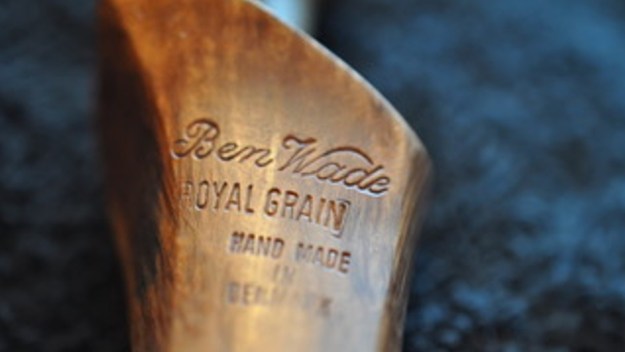
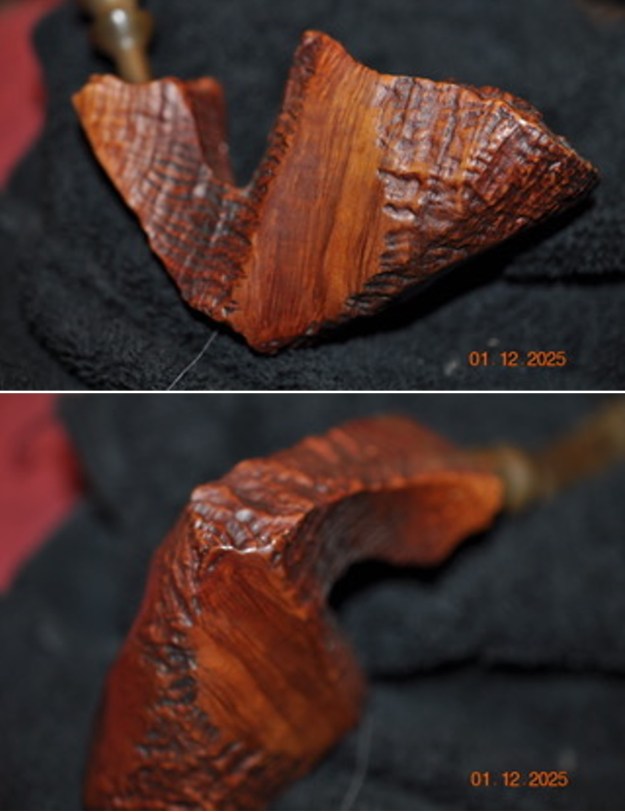
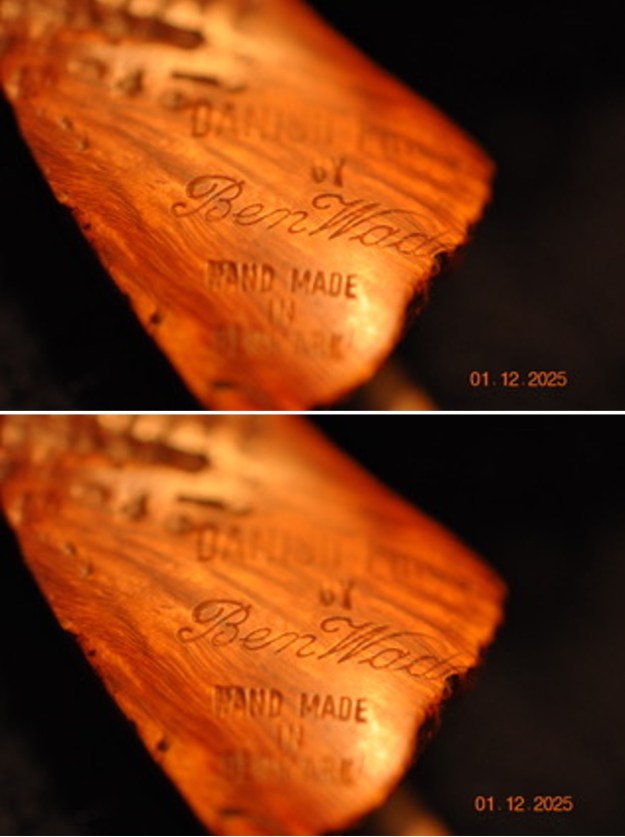
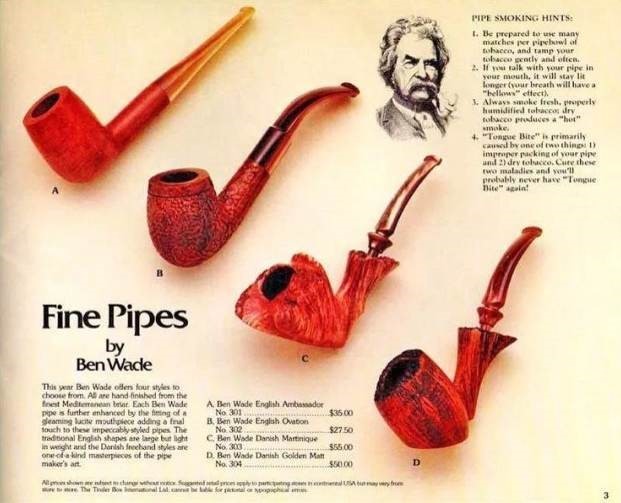
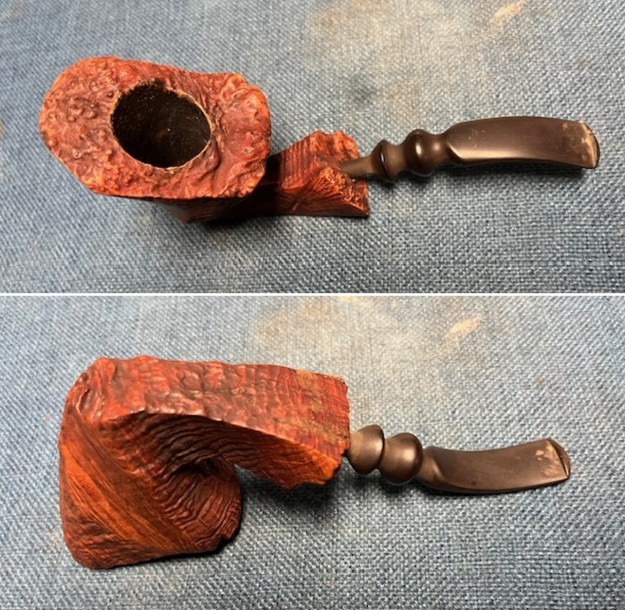
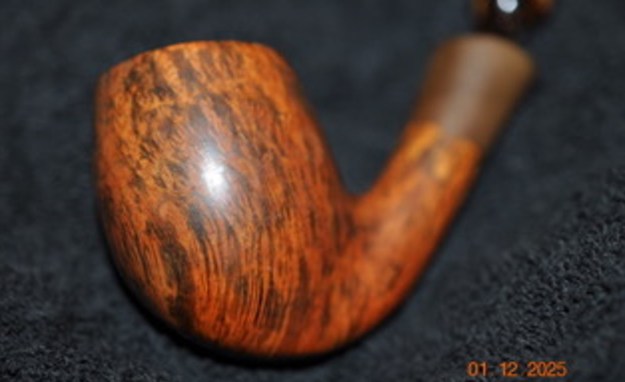
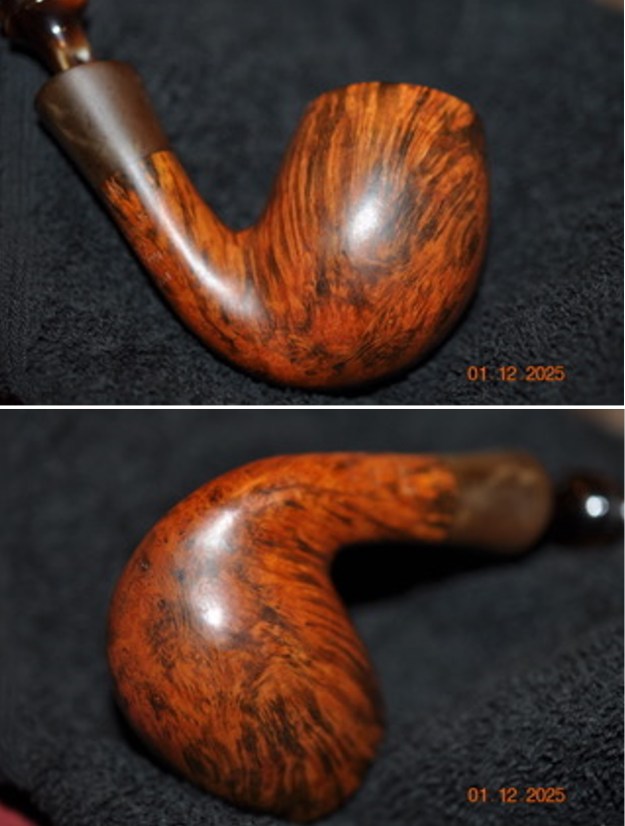
The next pipe on the work table is a pipe that came to us from a seller in Santa Cruz, California, USA on 05/28/2024. It is stamped on the left side of the shank and read Majestic [over] Designer Series B. On the right side it read Ben Wade [over] Hand Made In Denmark. The finish on the pipe was a smooth Ben Wade style finish with brown stains highlighting the grain around the sides and shank. The bottom of the bowl was flat from the heel to the shank end so that it acts as a sitter. The rim top was also smooth and crowned and was dirty with grime and also lava overflowing from the thick cake in the bowl. The fancy saddle stem was brown/gold variegated acrylic and had light tooth marks and chatter on both sides ahead of the button. It has a gold Ben Wade crown with a BW underneath stamped on the top of the saddle. It was a pretty stem but was dull and dirty. Jeff took some photos of the pipe to show the general condition of the pipe before he started his clean up. It should clean up very well. Jeff took some close-up photos of the rim top and bowl to show the overall condition. There is dust and lava on the crowned top. The edges have a lava overflow but underneath it appears to be in good condition. The acrylic saddle stem is dirty and has some light tooth chatter and some tooth marks. Jeff took some photos of the sides and heel of the bowl to show the condition of the finish on the pipe. The photos show the beautiful grain around the bowl. Under the dust and grime, it was a nice looking bowl. I think it will be a beautiful Freehand pipe once it is restored. He took a photo of the stamping on the sides of the shank. The stamping is clear and readable as noted above. There was also a Crown with a BW stamped below it on the topside of the saddle portion of the stem. I have worked on quite a few Ben Wade pipes over the years and one Majestic Designer Series that had the stamping on the shank side XXX’d out but was still very readable without looking to hard (https://rebornpipes.com/2016/02/21/restoring-an-interesting-older-xxxxd-out-sitter/).
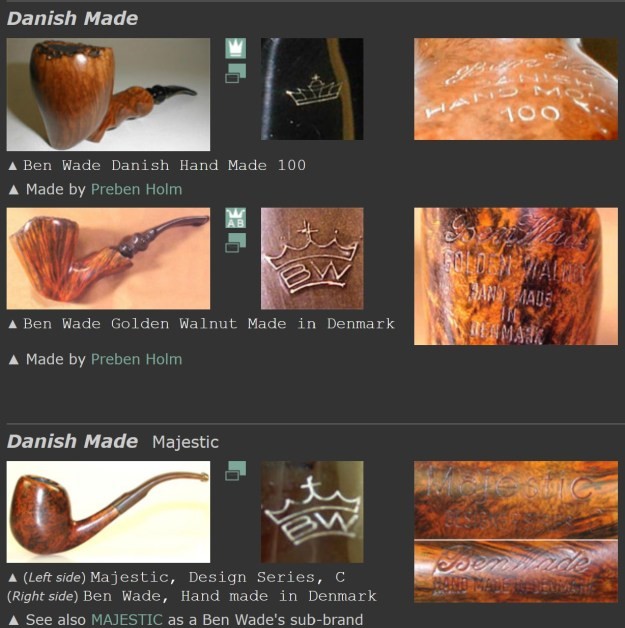
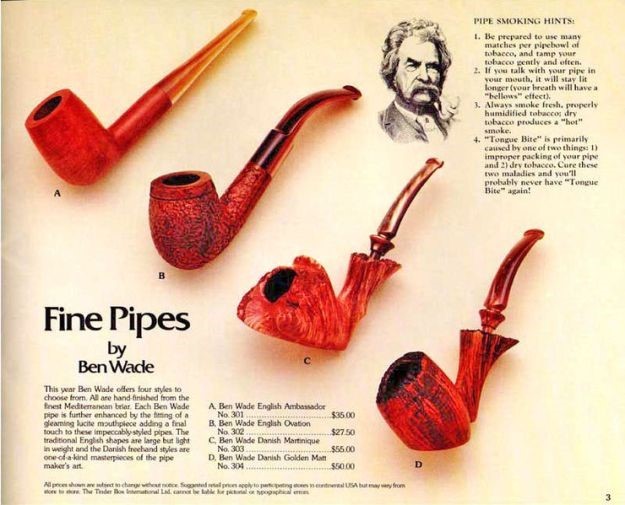
I knew from the previous work that I should take time and check out my common sites for information. I turned first to Pipephil’s site in the Ben Wade Section and found an entry there on the brand (http://www.pipephil.eu/logos/en/logo-benwade.html#majestic). There was a section in the list stamped Danish Made Majestic. I did a screen capture of the section and have included it below.From there I turned to the section the reference above directed me to under the heading Majestic with a link to the Ben Wade stamp. I have also included that link and the screen captures of the site below (http://www.pipephil.eu/logos/en/logo-m1.html#majestic).From there I turned to Pipedia to see what I could find (https://pipedia.org/wiki/Ben_Wade). I found some photos of a pipe that is stamped the same as the one that I have. I have included them below showing the shape of the pipe and the stamping on the pipe. Now that I was reminded about the Ben Wade Majestic Line it was time to work on the pipe on my end. When I received it, Jeff had once again done an amazing job cleaning the pipe. He reamed it with a PipNet pipe reamer and got rid of the cake. He cleaned up the reaming with a Savinelli Fitsall Pipe Knife so that we could see the walls of the bowl and assess for damage. He cleaned the internals of the shank and stem with alcohol, pipe cleaners, cotton swabs, shank brushes and alcohol. He scrubbed the exterior with undiluted Murphy’s Oil Soap and a tooth brush. He rinsed the pipe under warm water. He dried it off with a cloth and then let it air dry. The stem was scrubbed with Soft Scrub and soaked in Before & After Deoxidizer. It came out looking very good. The finish on the bowl and the rim top cleaned up nicely. I took pictures of the pipe to show how it looked when I unpacked it. I took a close up photo of the plateau rim top to show how clean it was. The inner edge of the rim and the ridges and valleys of the plateau looked good. The stem looked good just some light tooth chatter and tooth marks ahead of the button. One of the things I appreciate about Jeff’s cleanup is that he works to protect and preserve the nomenclature on the shank of the pipes that he works on. He was able to preserve and maintain its condition in the process. I took some photos to show the clarity of the stamping. I have noticed that many restorers are not careful to protect the stamping in their cleaning process and often by the end of the restoration the nomenclature is almost destroyed. Be careful in your work to preserve this critical part of restoration! I took the stem off and took a photo of the pipe. The pipe was in decent condition so I started with the bowl. I sanded the bowl sides with 320-3500 grit sanding pads. I wiped it down after each sanding pad with a damp cloth to remove the debris left behind by the sanding process. I polished the smooth portions of the briar with micromesh sanding pads – wet sanding with 1500-12000 grit pads and wiping down the briar after each sanding pad with a damp cloth. The briar began to shine. I worked some Before & After Restoration Balm into the smooth briar with my fingertips. It enlivens, enriches and protects the briar while giving it a deep glow. I appreciate Mark Hoover’s work in developing this product. I buffed the pipe with a micro fiber cloth to raise the shine and took photos of it at this point it the process. It is a beautiful looking pipe. I set the bowl aside and turned my attention to the stem. It was interesting to note that the stem had a white Delrin tenon. I sanded the stem with the 2 inch square 320-3500 grit sanding pads. I wiped down the stem after each sanding pad with Obsidian Oil. The stem looked very good.I polished the stem with micromesh sanding pads – dry sanding with 1500-12000 grit sanding pads. I wiped it down after each sanding pad with Obsidian Oil. I polished it with Before & After Pipe Stem Polish – both Fine and Extra Fine. I buffed the stem with a soft cloth to raise the shine. I wiped the stem down with Obsidian Oil to preserve and protect the stem surface. I am on the homestretch with this Ben Wade Majestic Design Series B Made in Denmark Freehand. As always, I am excited to finish a pipe that I am working on. I put the pipe back together and buffed it with Blue Diamond on the buffing wheel. I used a gentle touch on the sandblast portion of the bowl. I gave the bowl and the stem multiple coats of carnauba wax. I buffed the pipe with a clean buffing pad and hand buffed it to raise the shine. It is fun to see what the polished bowl looks like along with the polished bronze acrylic stem. This Ben Made Majestic Design Series Freehand is a nice looking pipe. It is quite comfortable in hand and should be so when smoking. It is quite light and well balanced. Have a look at it with the photos below. The dimensions are Length: 6 inches, Height: 2 inches, Outside diameter of the bowl: 1 ¾ inches, Chamber diameter: 1 inch. The weight of the pipe is 1.52 ounces/43 grams. It is another beautiful pipe and one that will be on the rebornpipes store soon. You can find it in the section of Pipes by Danish Pipe Makers. If you are interested in adding it to your collection let me know.

As always, I encourage your questions and comments as you read the blog. Thanks to each of you who are reading this blog. Remember we are not pipe owners; we are pipe men and women who hold our pipes in trust until they pass on into the trust of those who follow us.
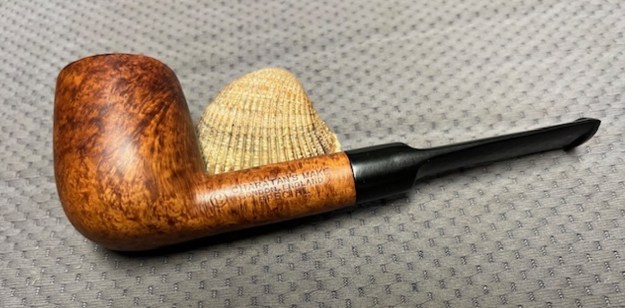
Is this Beautifully Grained Freehand Dublin a Viggo Nielsen Made Bari Too?


by Steve Laug

The next pipe on the work table is a pipe that neither Jeff or I remember purchasing it so we have no date and no history on the pipe. The stamping on the underside of the Dublin’s shank was present but not readable. It appeared to have some stamping there and from discussion with Jeff we agreed that it looked like it could read Bari. Certainly, the shape and finish certainly fit the Viggo Nielsen carved Bari pipes. It could also be a Viggo pipe like some of the previous ones I have worked on. To me the shape and the finish on the pipe look like a Bari. The bowl is smooth and has some beautiful straight grain around the bowl and shank. The plateau rim top was dirty with grime and also light lava overflowing from recently carved bowl. It was an intriguing pipe with a combination of smooth finish and plateau rim top. The fancy vulcanite saddle stem fit snug against the shank end. There were light tooth marks and chatter on both sides ahead of the button. It was lightly oxidized but there was not any calcification. Jeff took some photos of the pipe to show the general condition of the pipe before he started his clean up. Jeff took some close-up photos of the rim top and bowl to show the overall condition. There is dust and lava in the grooves of the plateau. The bowl had been recently reamed though the inner edge seems to have a light lava overflow but underneath it appears to be in good condition. The fancy turned vulcanite stem is dirty and has calcification on both sides at the button. There is also some light tooth chatter and some tooth marks. Past the turning the stem is a tapered flair. Jeff took some photos of the sides and heel of the bowl to show the condition of the finish on the pipe. The photos show the beautiful grain around the bowl. Under the dust and grime it was a nice looking bowl. I think it will be a beautiful Dublin shaped Freehand pipe once it is restored. He took photos of the stamping on the underside of the shank. The stamping is there but hardly readable. On the shank end using a bright light to examine it, both Jeff and I see the stamping Bari very faintly.I have worked on quite a few Bari’s in the past and did the work on the brand information so rather than rework all of that I am including the information I found while working on a Bari De Luxe Freehand. I quoted a section from Pipedia on Bari pipes (https://pipedia.org/wiki/Bari). I am including the material that I found previously on the brand. It is good to be reminded of the fact that Viggo Nielsen was the pipe maker. I quote:
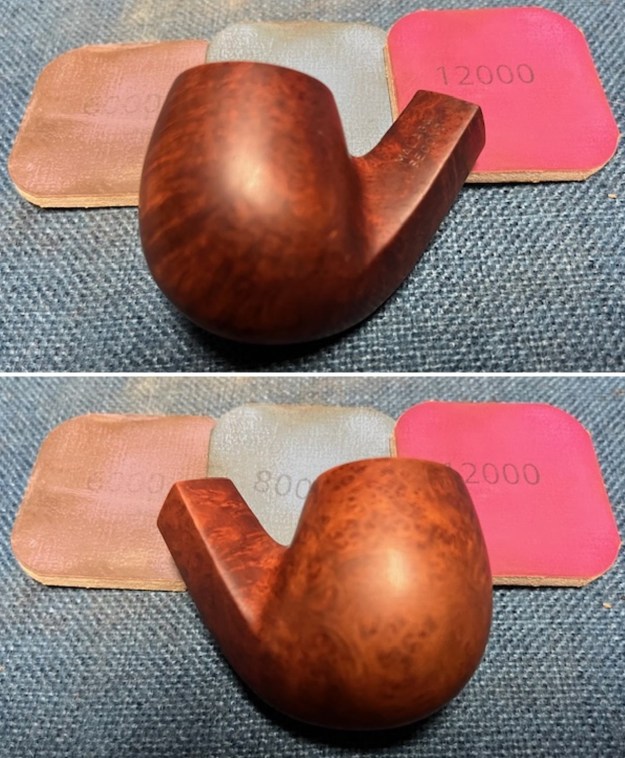
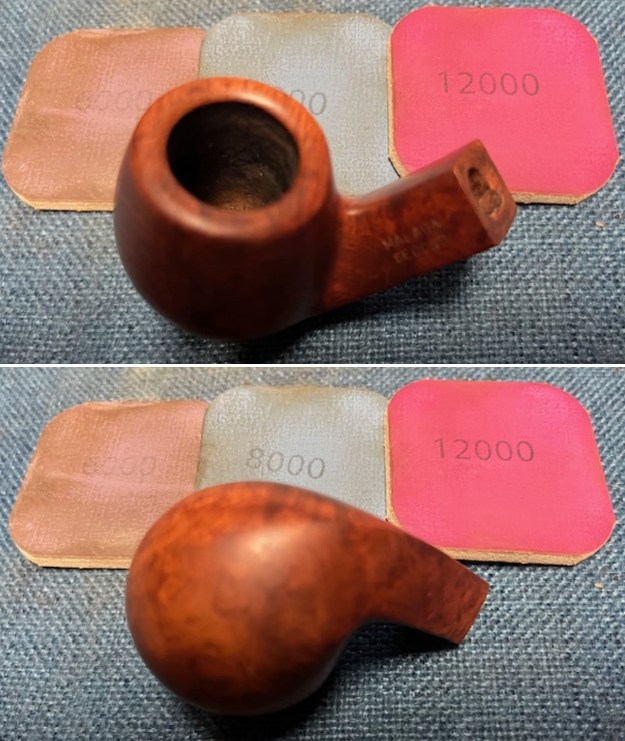
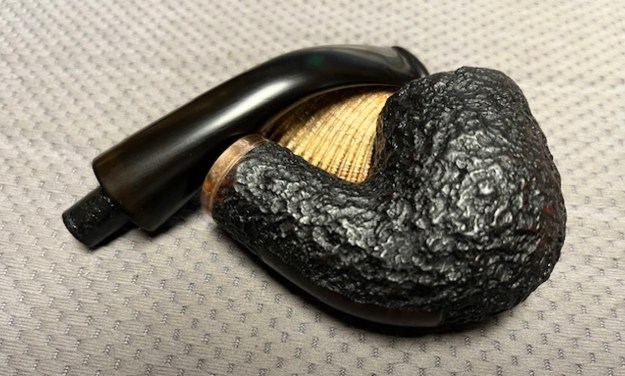
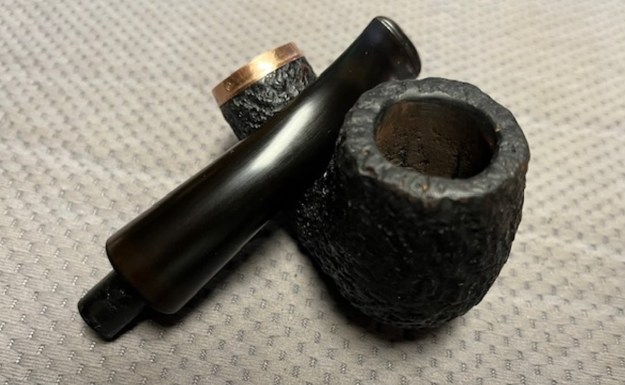
Pipedia states that Bari Piber was founded by Viggo Nielsen in Kolding, Denmark around the turn of 1950/51. His sons Kai and Jørgen both grew into their father’s business from a very young age and worked there till 1975. Both have become successful pipe makers.

Bari successfully adapted the new Danish design that had been started mainly by Stanwell for its own models. Bari was sold in 1978 to Van Eicken Tobaccos in Hamburg, Germany though the pipes were still made in Denmark. From 1978 to 1993 Åge Bogelund and Helmer Thomsen headed Bari’s pipe production.

Helmer Thomson bought the company in 1993 re-naming it to “Bari Piber Helmer Thomsen”. The workshop moved to more convenient buildings in Vejen. Bogelund, who created very respectable freehands of his own during the time at Bari got lost somehow after 1993. Bari’s basic conception fundamentally stayed the same for decades: series pipes pre-worked by machines and carefully finished by hand – thus no spectacular highgrades but solid, reliable every day’s companions were what they turned out. The most famous series are the smooth “Classic Diamond” and the blasted “Wiking”.

Now that I was reminded about the Viggo Nielsen connection it was time to work on the pipe on my end. When I received it Jeff had once again done an amazing job cleaning the pipe. He reamed it with a PipNet pipe reamer and got rid of the cake. He cleaned up the reaming with a Savinelli Fitsall Pipe Knife so that we could see the walls of the bowl and assess for damage. He cleaned the internals of the shank and stem with alcohol, pipe cleaners, cotton swabs, shank brushes and alcohol. He scrubbed the exterior with undiluted Murphy’s Oil Soap and a tooth brush. He rinsed the pipe under warm water. He dried it off with a cloth and then let it air dry. The stem was scrubbed with Soft Scrub and soaked in Before & After Deoxidizer. It came out looking very good. The finish on the bowl and the rim top cleaned up nicely. I took pictures of the pipe to show how it looked when I unpacked it. I took a close up photo of the plateau rim top to show how clean it was. The inner edge of the rim and the ridges and valleys of the plateau looked good. The stem looked good but there was a strange bump mid stem on the topside ahead of the button and also on the underside. They were odd as they did not have cracks or holes just two bumps. The tooth marks and chatter really were minimal.The stamping on the underside of the shank was very faint. I tried to capture it a bit but even an enlarged photo is not able to capture the stamp clearly. I also took a photo of the pipe and stem separated to give a sense of the proportion of the pipe. The bowl was in decent condition so I started with polishing the sides and shank with micromesh sanding pads – dry sanding with 1500-12000 grit pads and wiping down the briar after each sanding pad with a damp cloth. The briar began to shine. I worked some Before & After Restoration Balm into the smooth briar with my fingertips and the plateau and sandblasted side with a horsehair shoe brush. It enlivens, enriches and protects the briar while giving it a deep glow. I appreciate Mark Hoover’s work in developing this product. I buffed the pipe with a micro fiber cloth to raise the shine and took photos of it at this point it the process. It is a beautiful looking pipe. I set the bowl aside and turned my attention to the stem. I “painted” the stem surface with the flame of Bic lighter to soften the surface. Once it was soft I flattened out the bumps in the stem surface with a wooden pen knife cover. Once it was flat I sanded it with a folded piece of 220 grit sandpaper. I sanded the stem with the 2 inch square 320-3500 grit sanding pads. I wiped down the stem after each sanding pad with Obsidian Oil. I polished out the scratch marks left behind by the sandpaper. The stem looked very good.I polished the stem with micromesh sanding pads – wet sanding with 1500-12000 grit sanding pads. I wiped it down after each sanding pad with Obsidian Oil. I polished it with Before & After Pipe Stem Polish – both Fine and Extra Fine. I buffed the stem with a soft cloth to raise the shine. I wiped the stem down with Obsidian Oil to preserve and protect the stem surface. I am on the homestretch with what I believe is another Viggo Nielsen made Bari Freehand. As always, I am excited to finish a pipe that I am working on. I put the pipe back together and buffed it with Blue Diamond on the buffing wheel. I used a gentle touch on the sandblast portion of the bowl. I gave the bowl and the stem multiple coats of carnauba wax. I buffed the pipe with a clean buffing pad and hand buffed it to raise the shine. It is fun to see what the polished bowl looks like along with the polished vulcanite stem. This Bari Freehand is a nice looking pipe. It is quite comfortable in hand and should be so when smoking. It is quite light and well balanced. Have a look at it with the photos below. The dimensions are Length: 5 ½ inches, Height: 2 inches, Outside diameter of the bowl: 1 ½ inches wide x 1 ¾ inches long, Chamber diameter: ¾ of an inch. The weight of the pipe is 1.59 ounces/45 grams. It is another beautiful pipe and one that will be on the rebornpipes store soon. You can find it in the section of Pipes by Danish Pipe Makers. If you are interested in adding it to your collection let me know.

As always, I encourage your questions and comments as you read the blog. Thanks to each of you who are reading this blog. Remember we are not pipe owners; we are pipe men and women who hold our pipes in trust until they pass on into the trust of those who follow us.