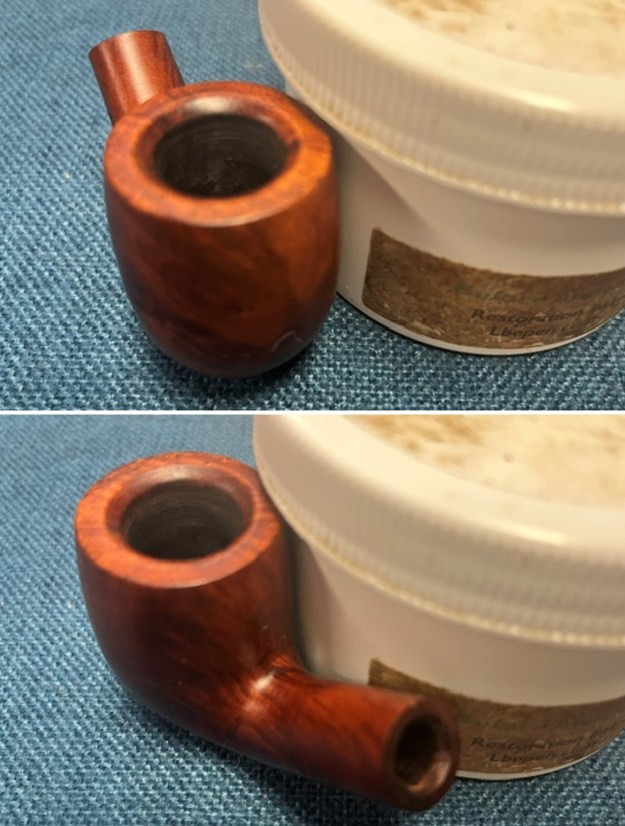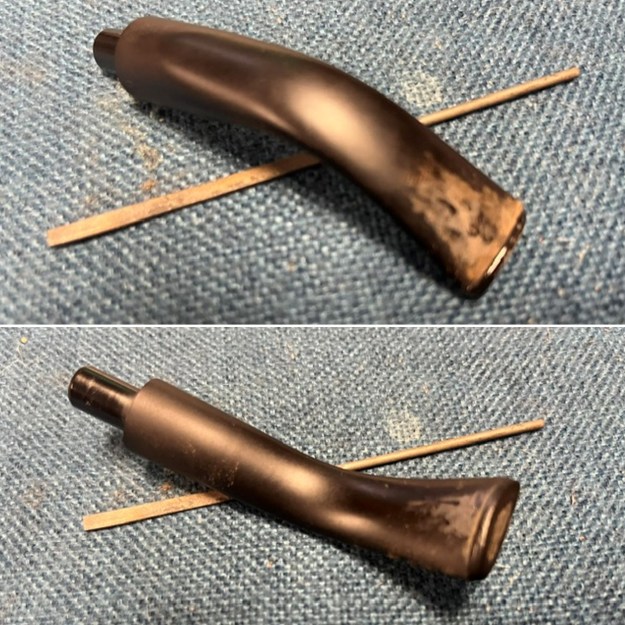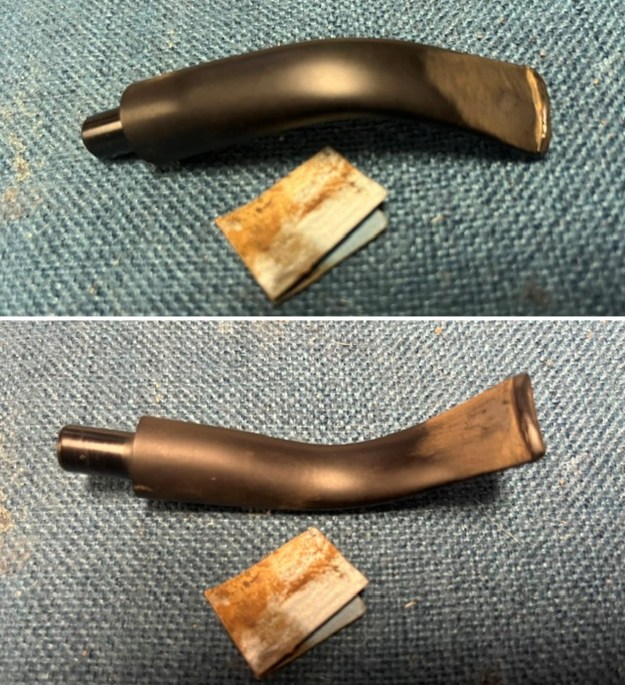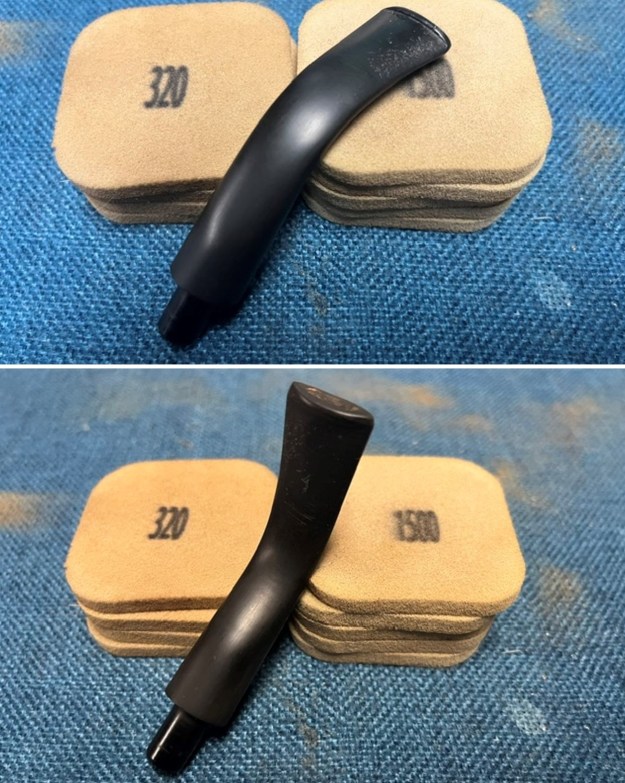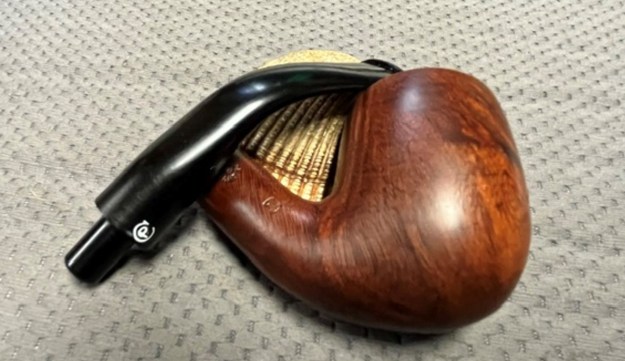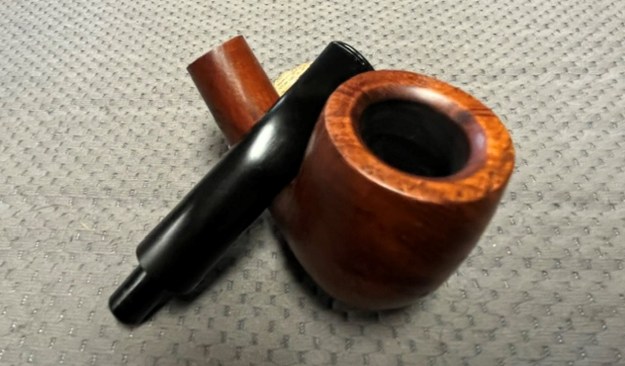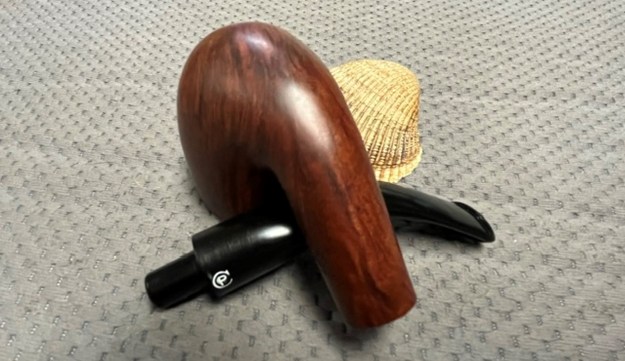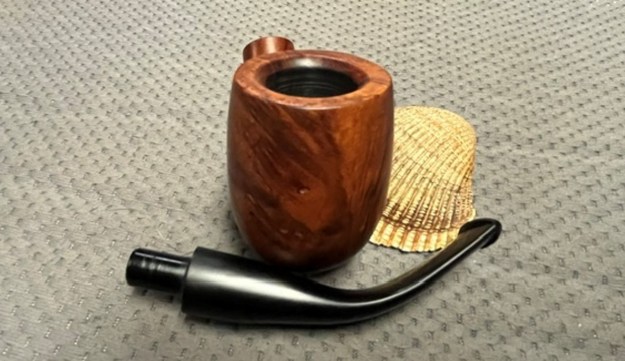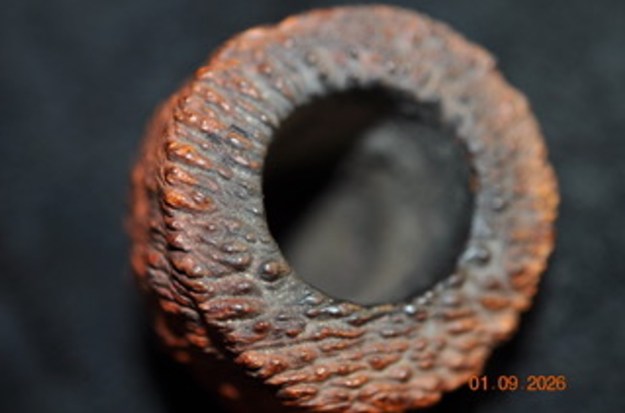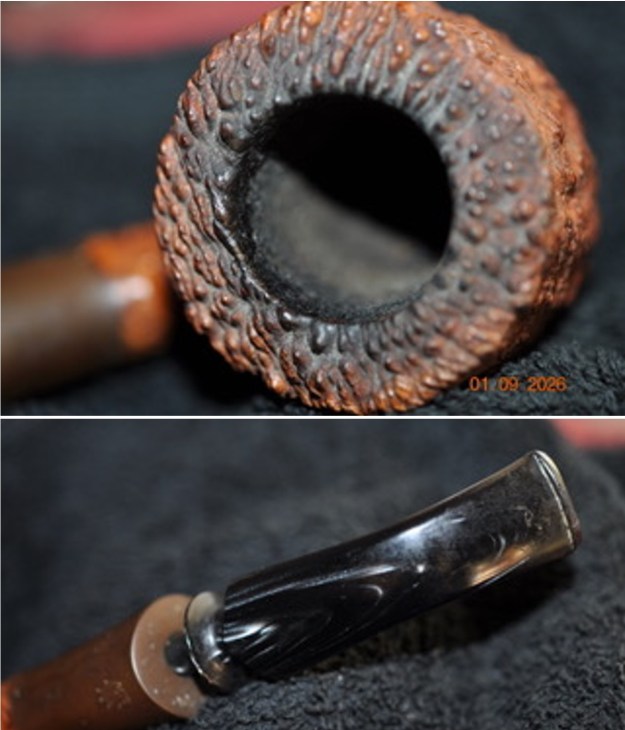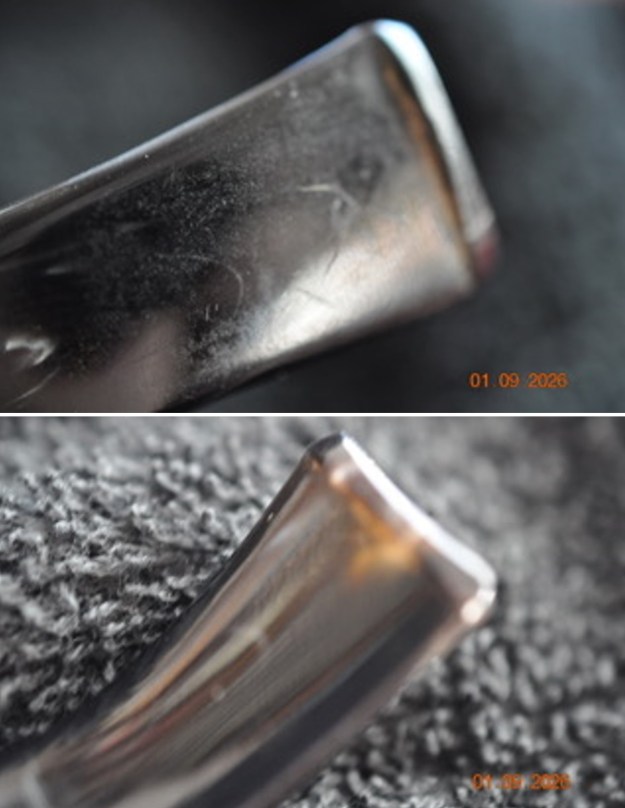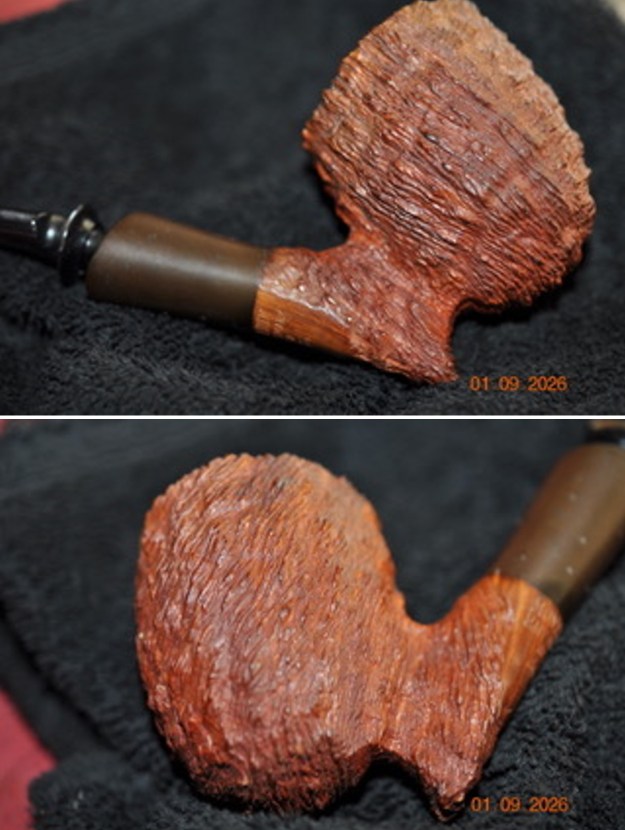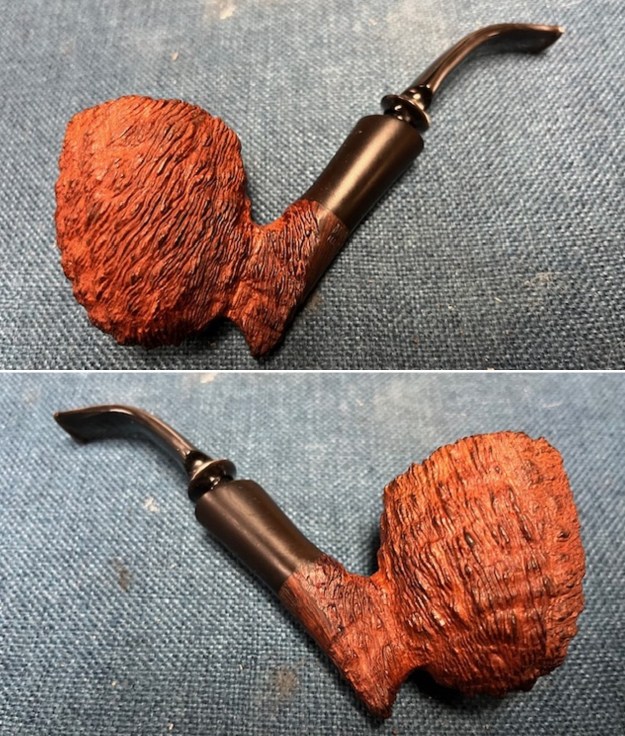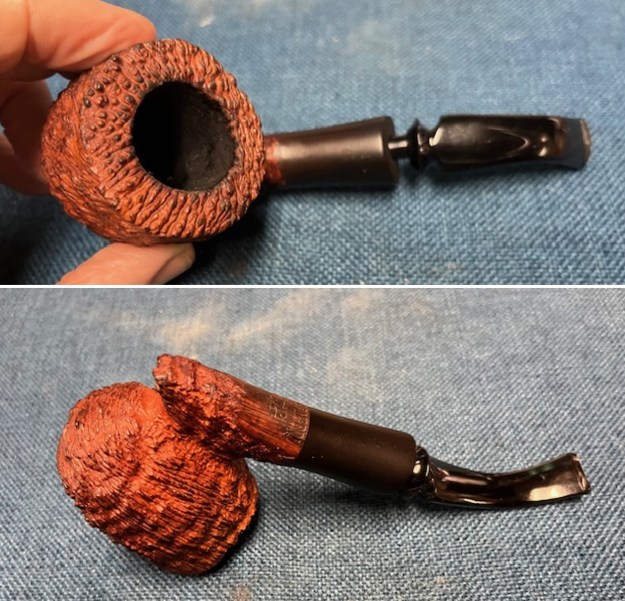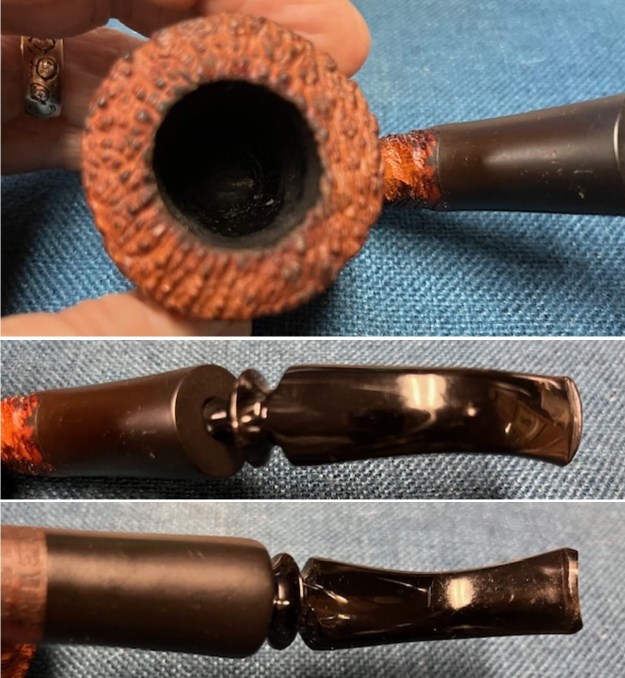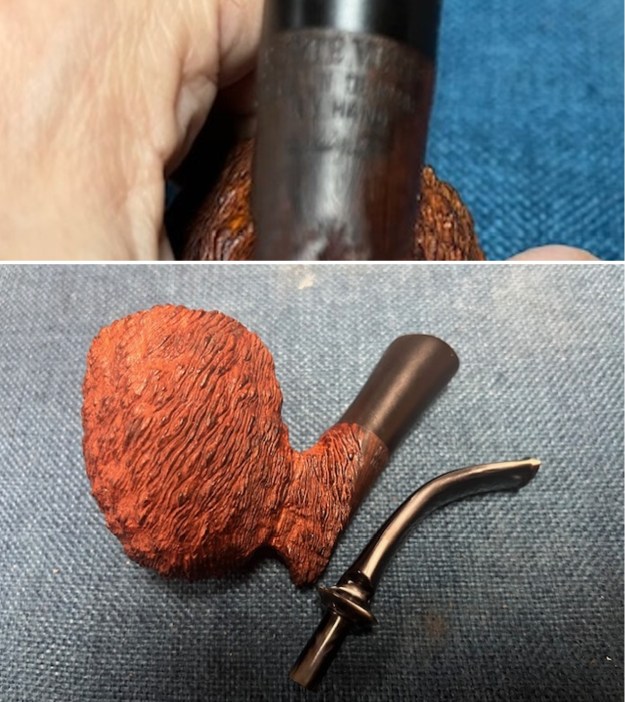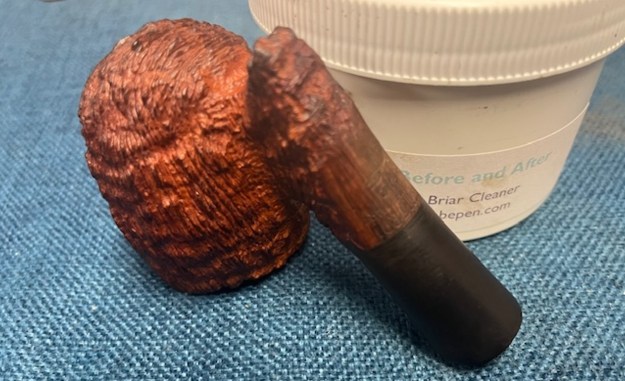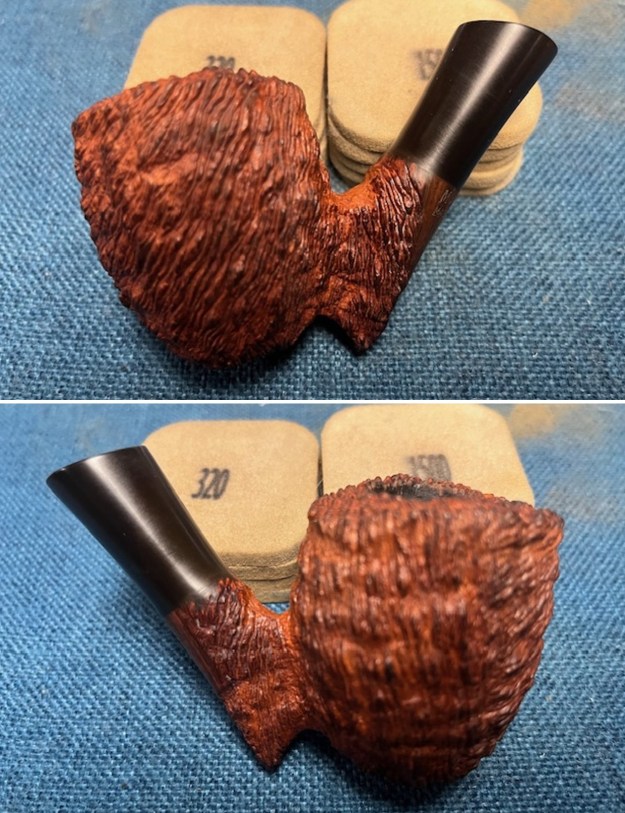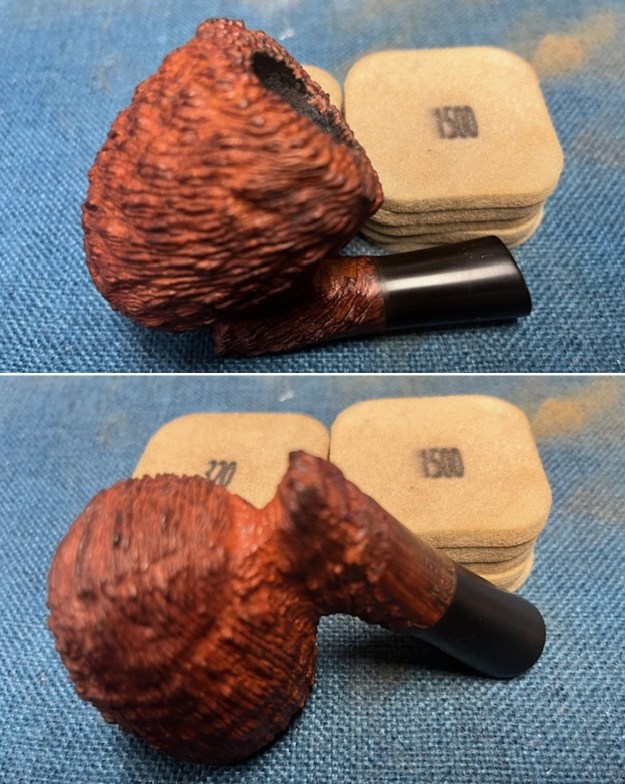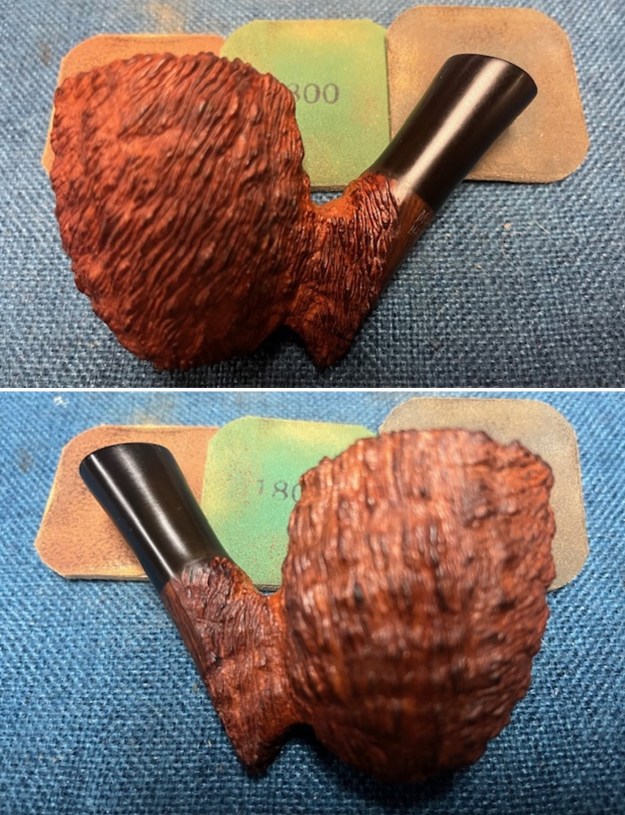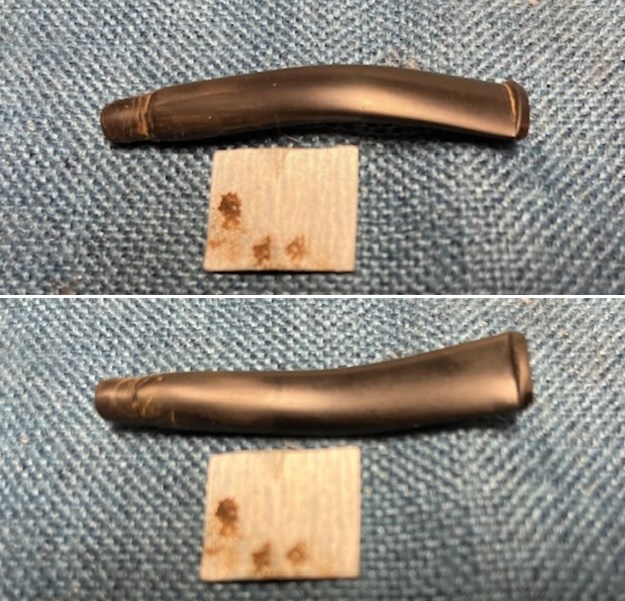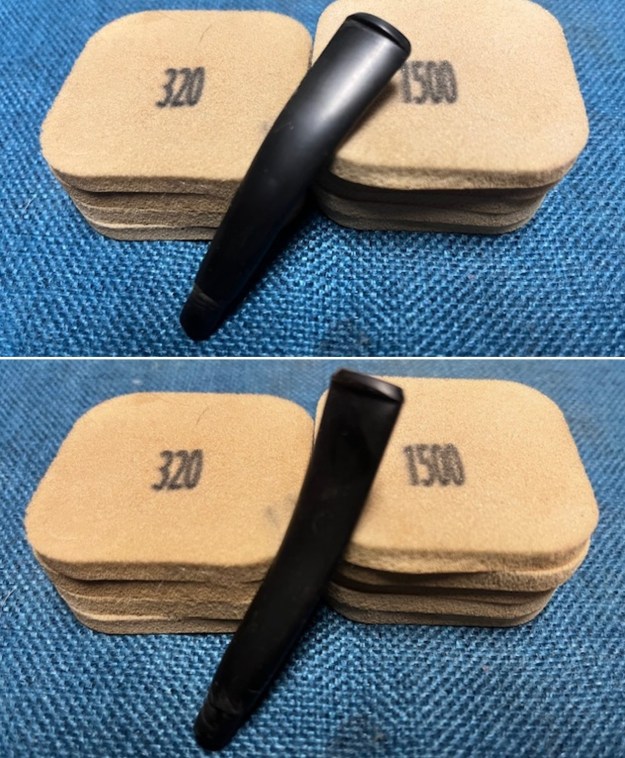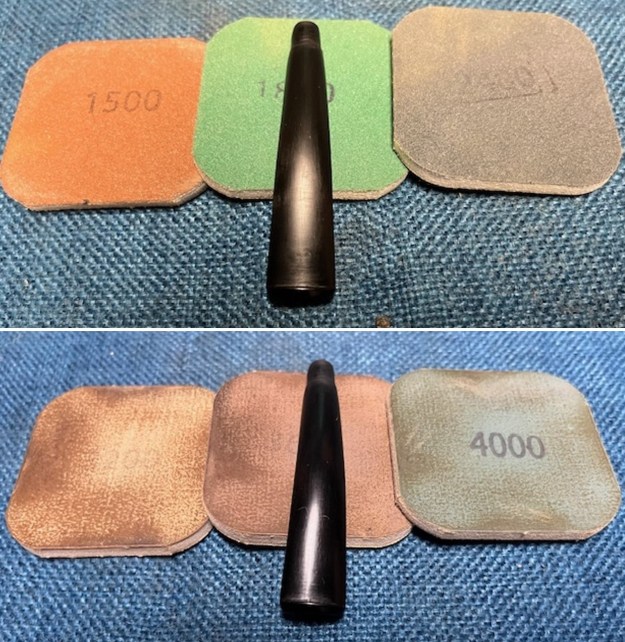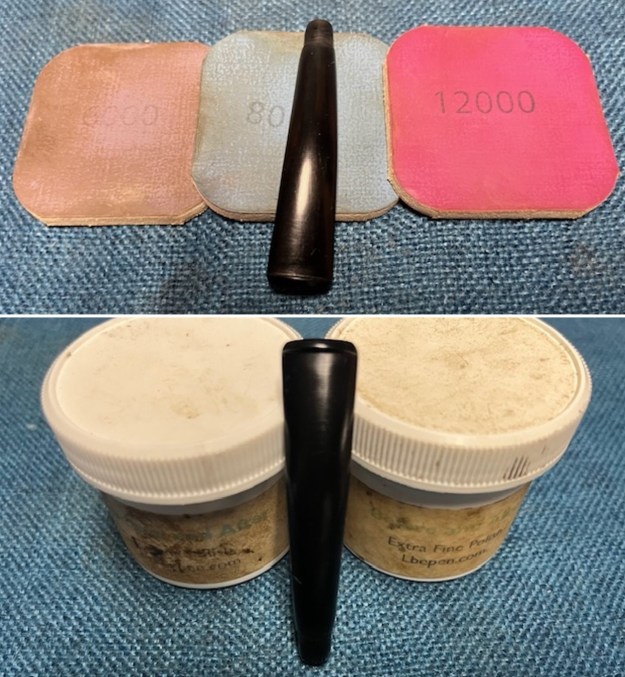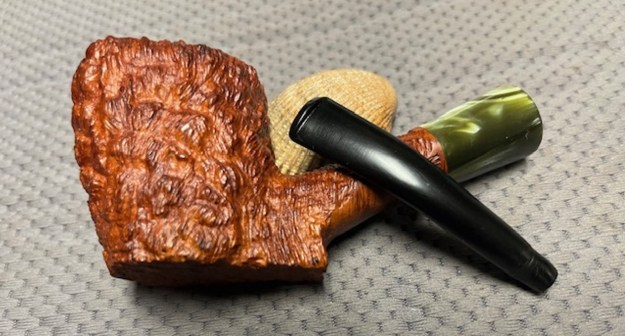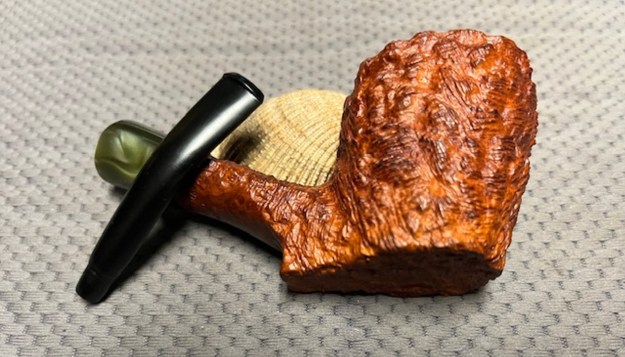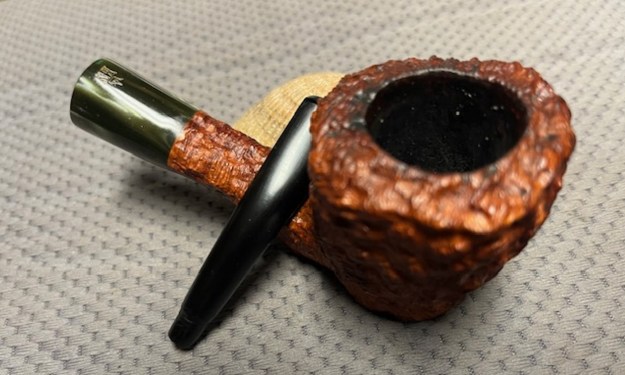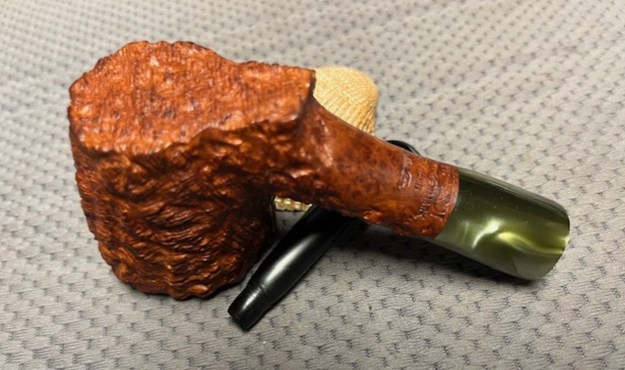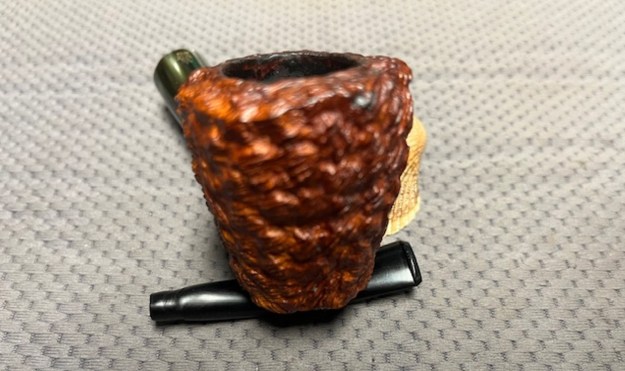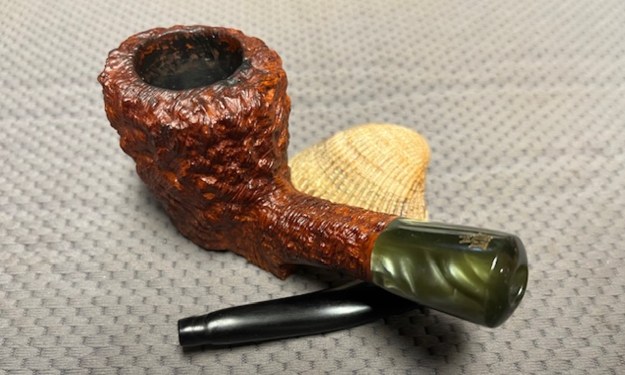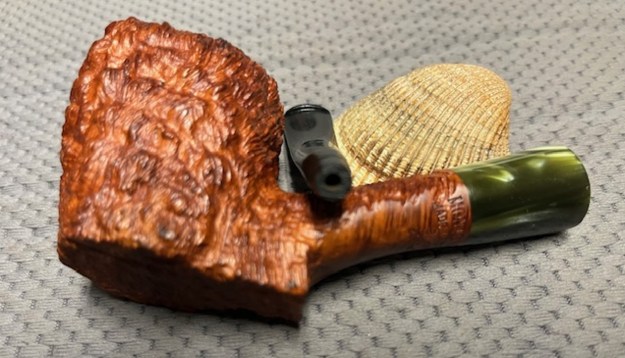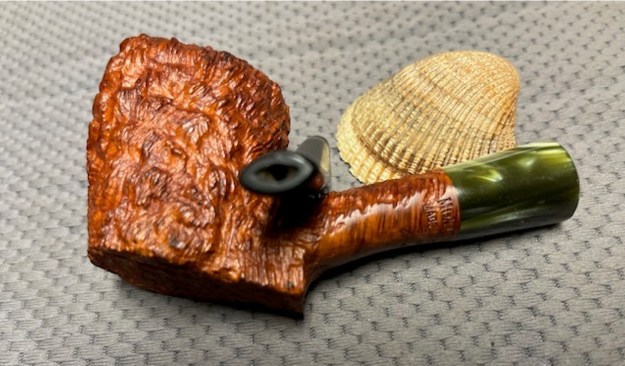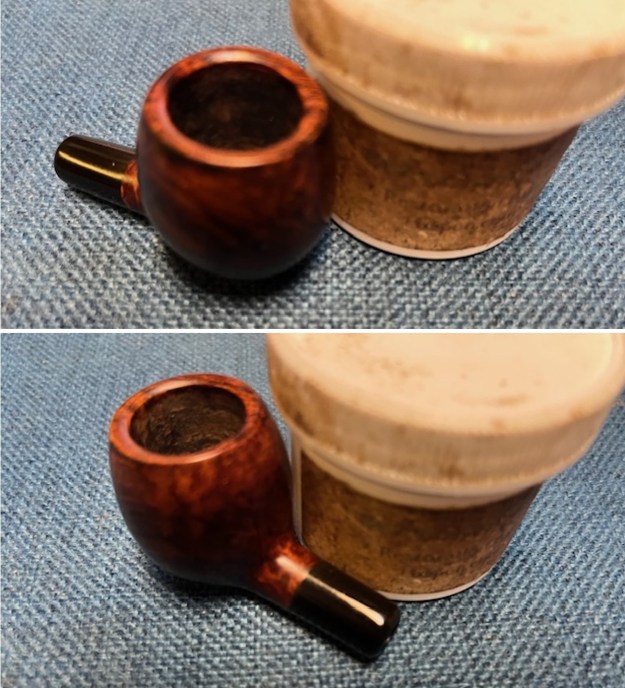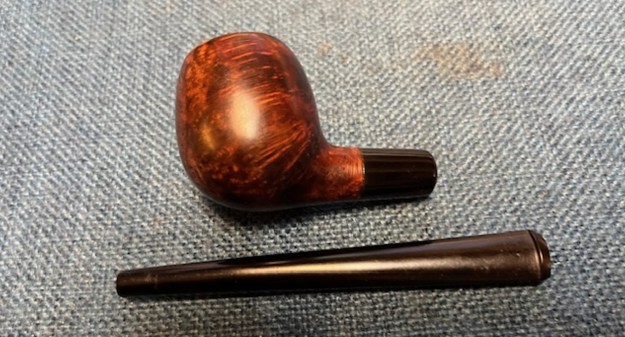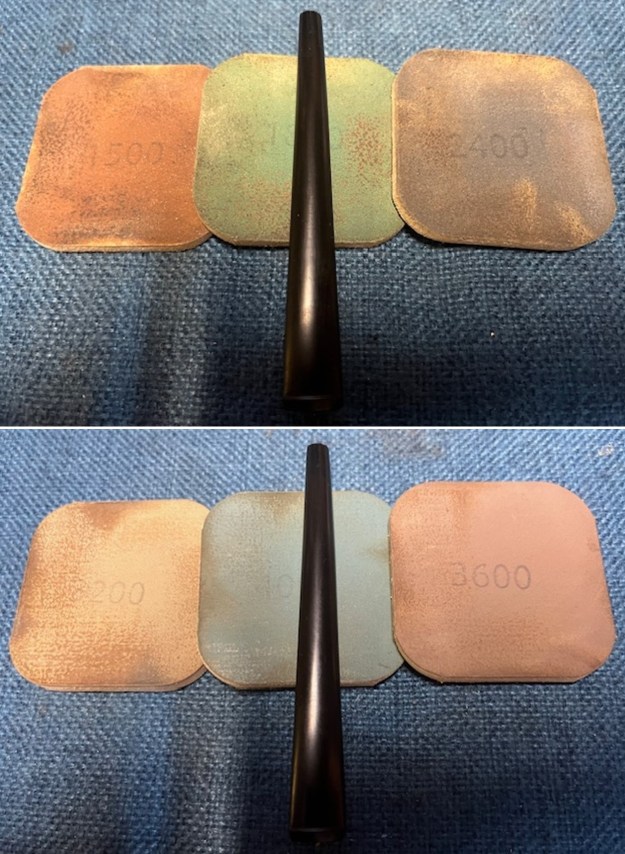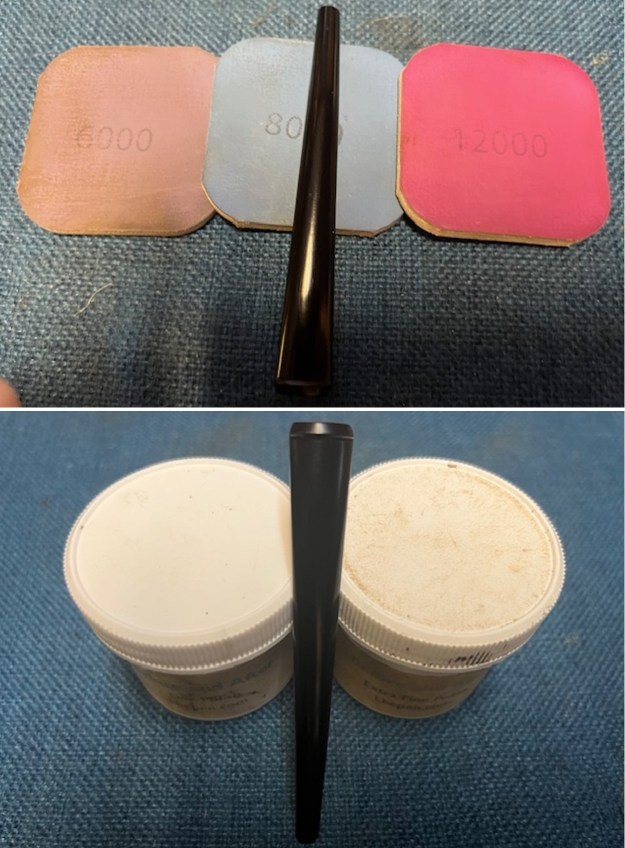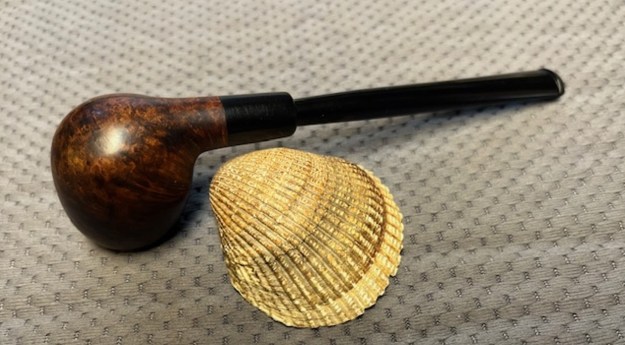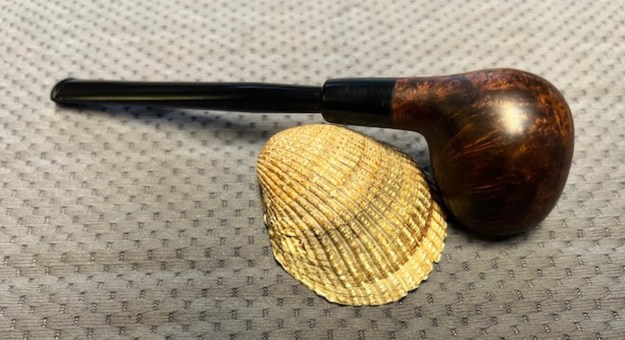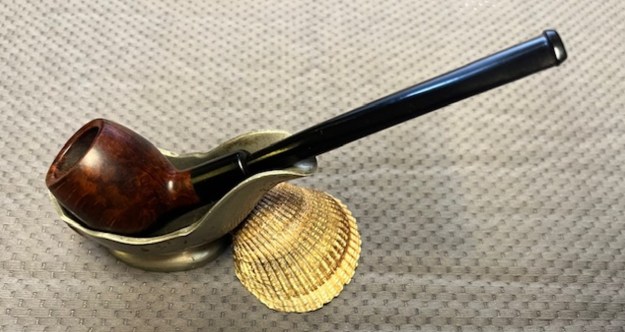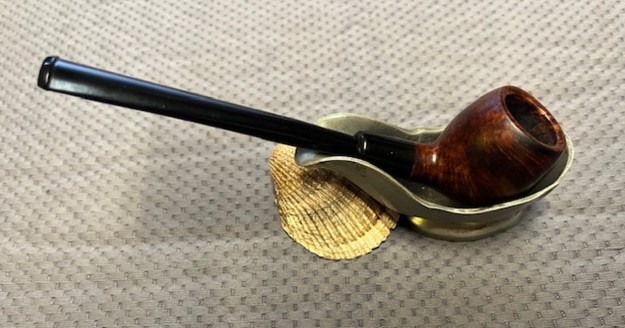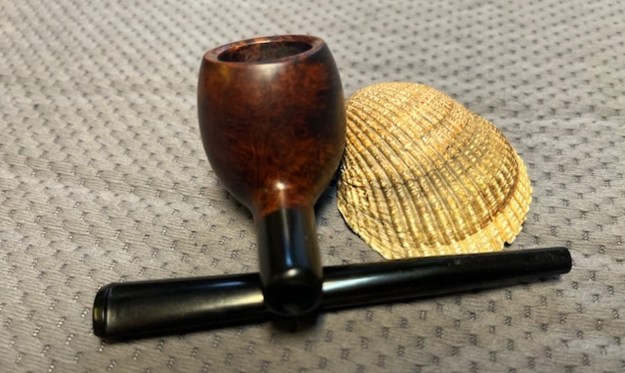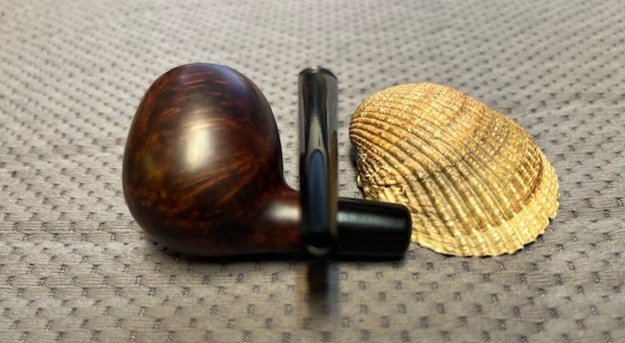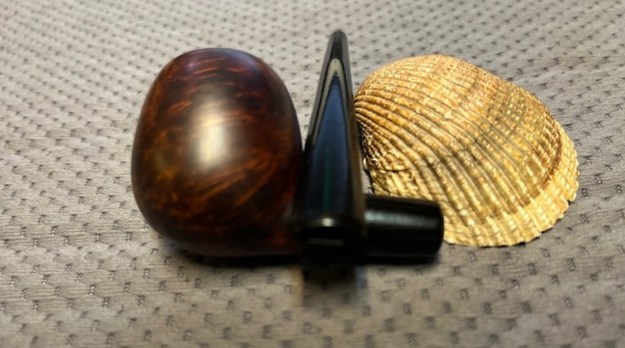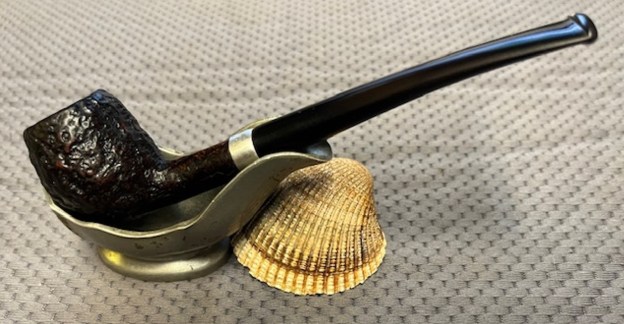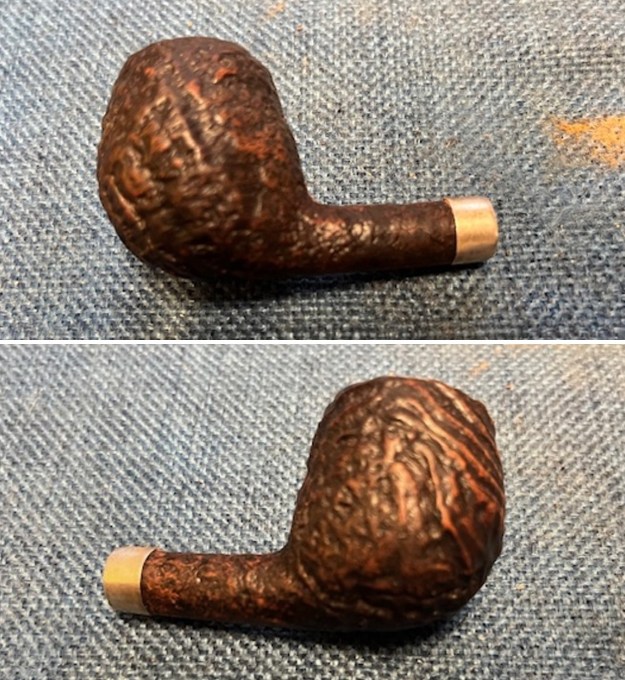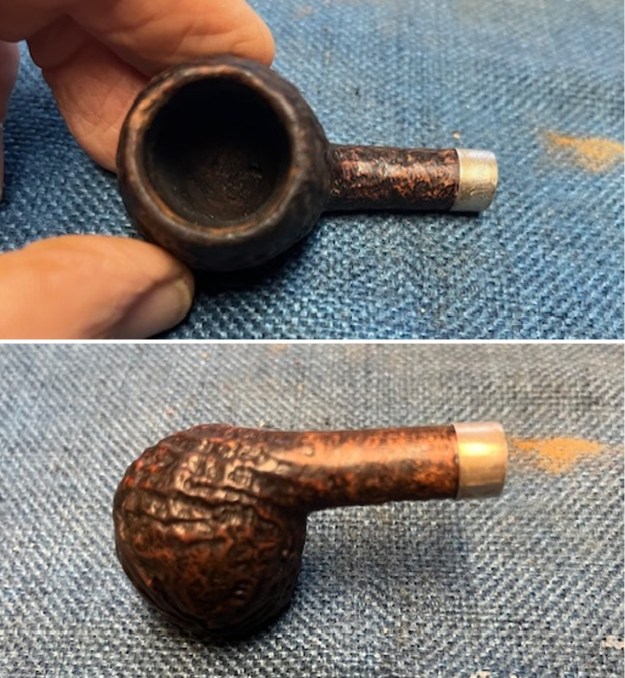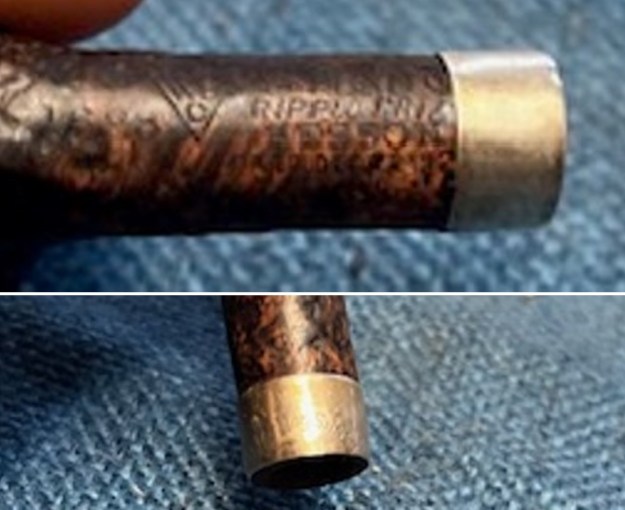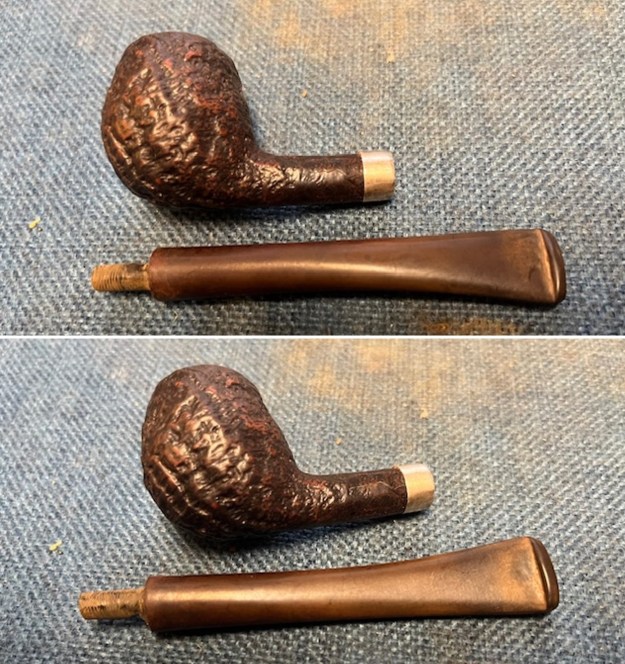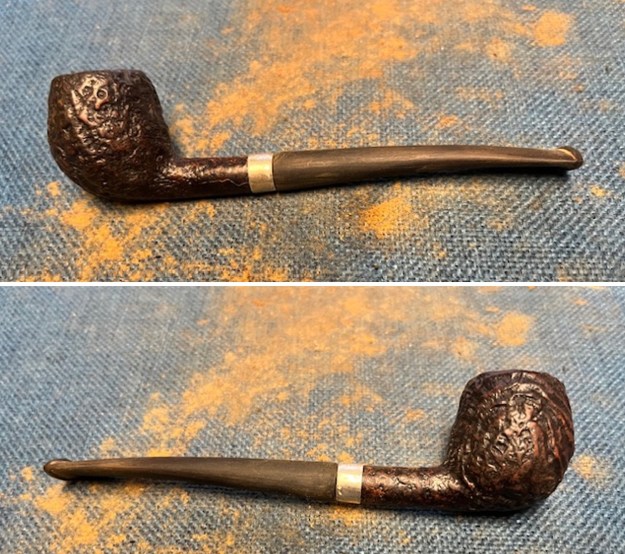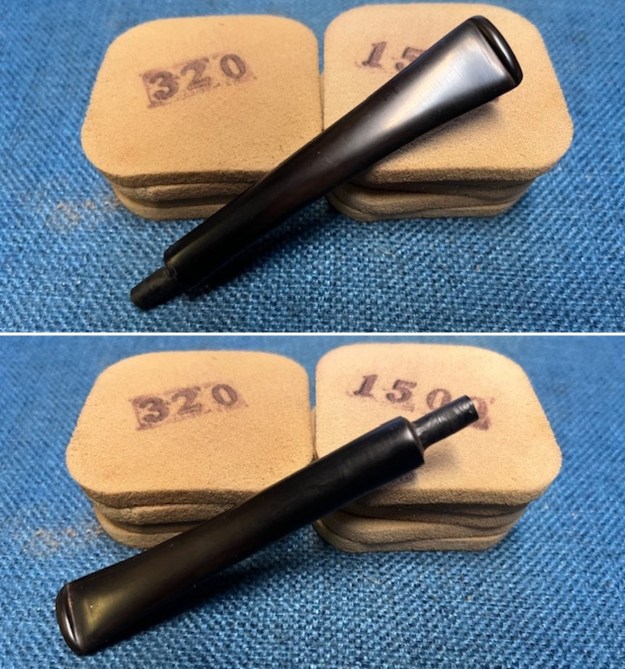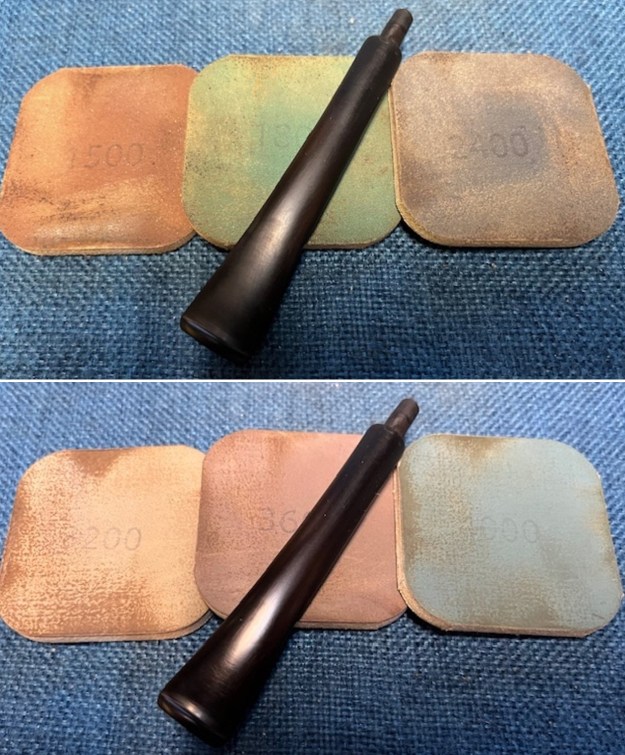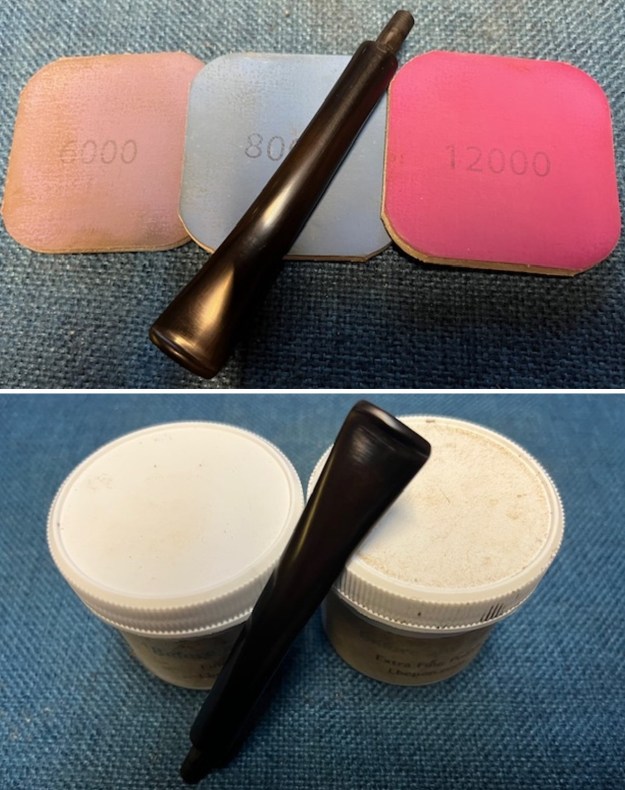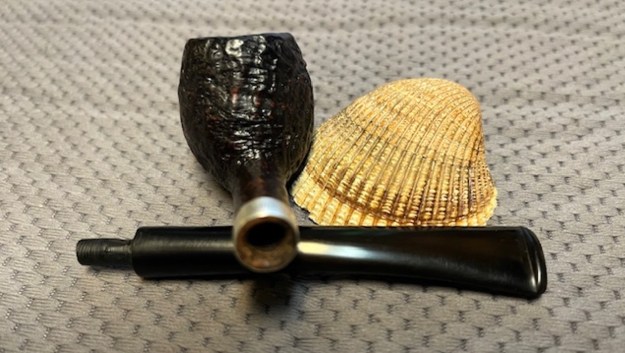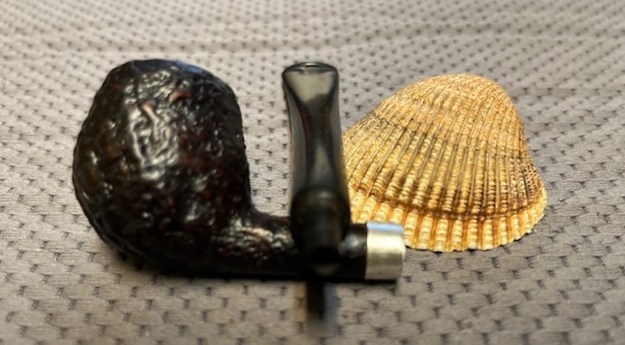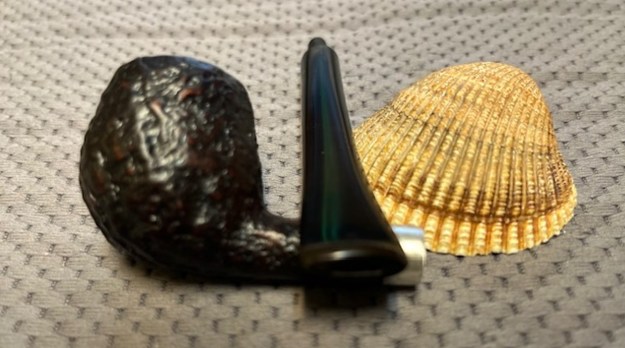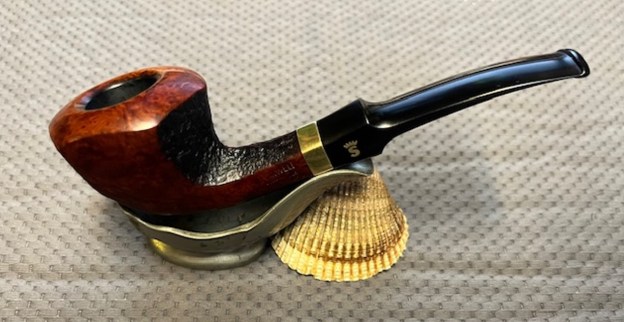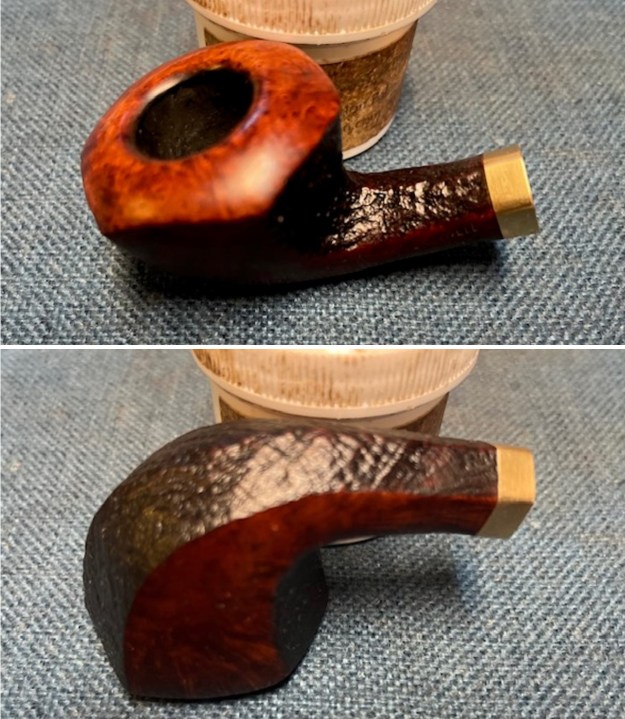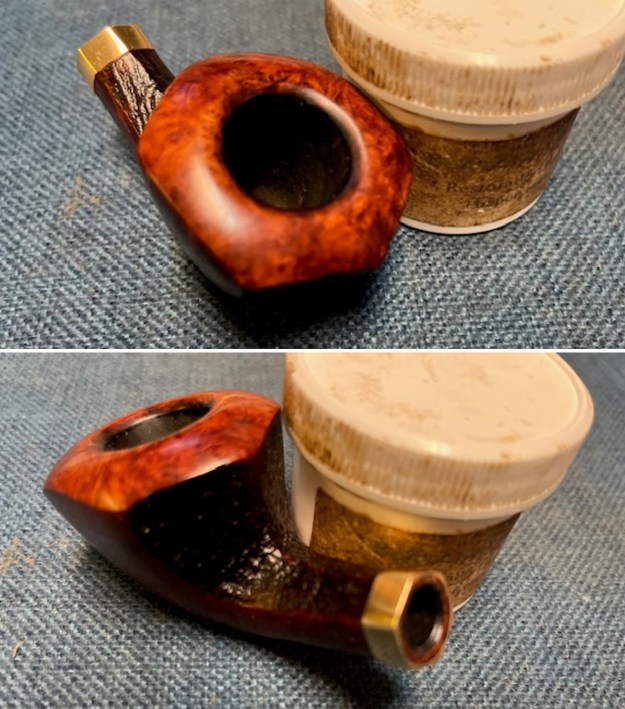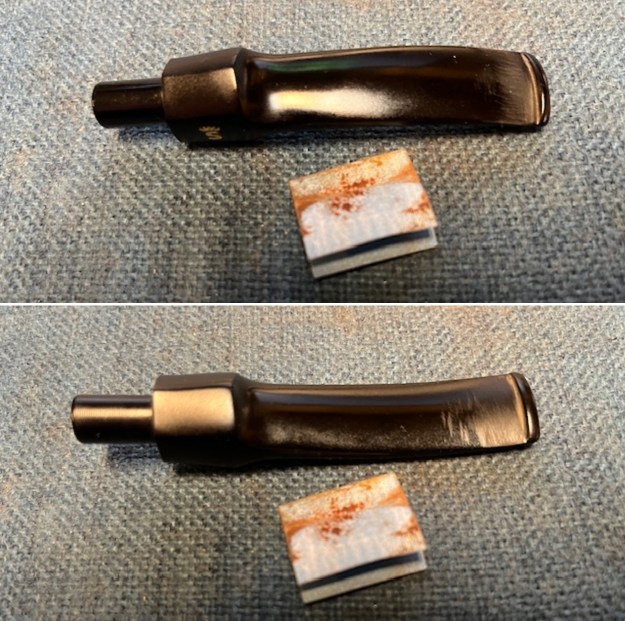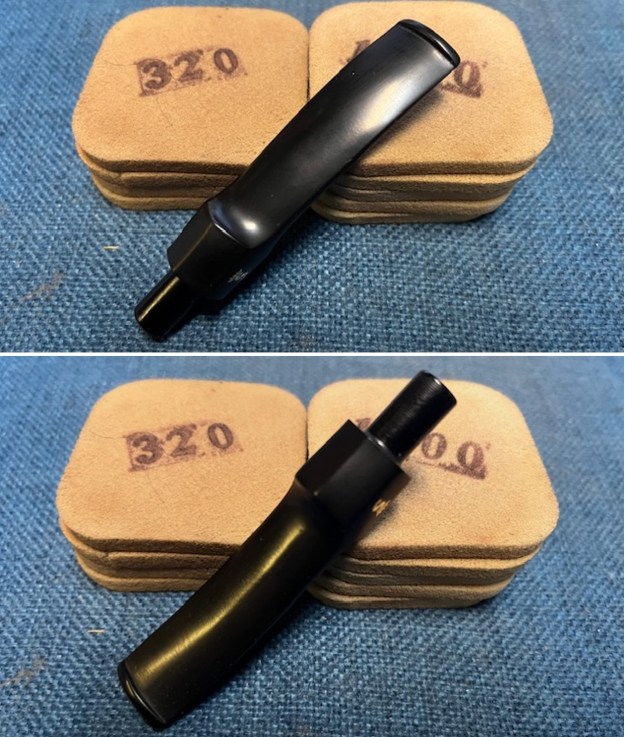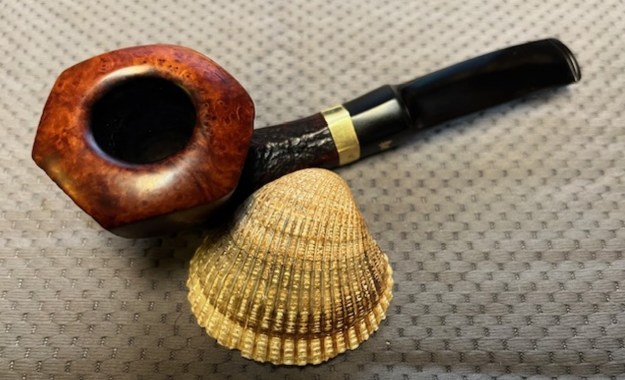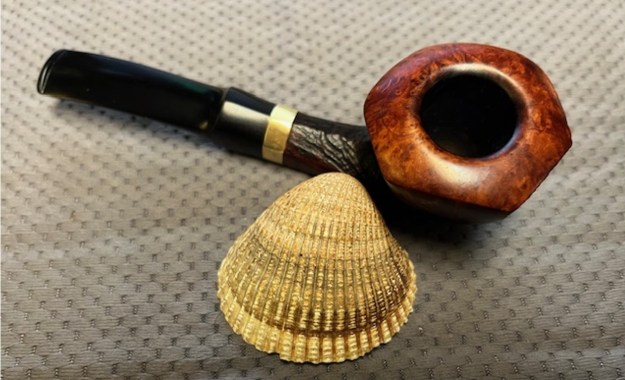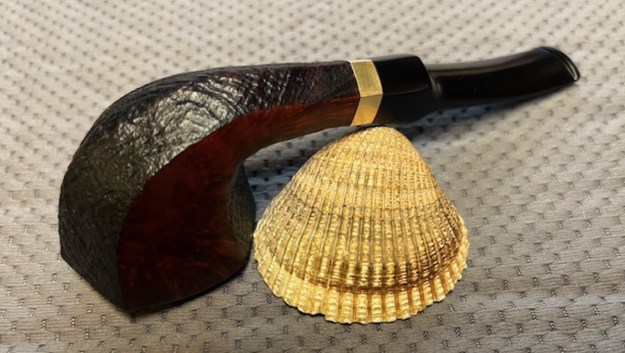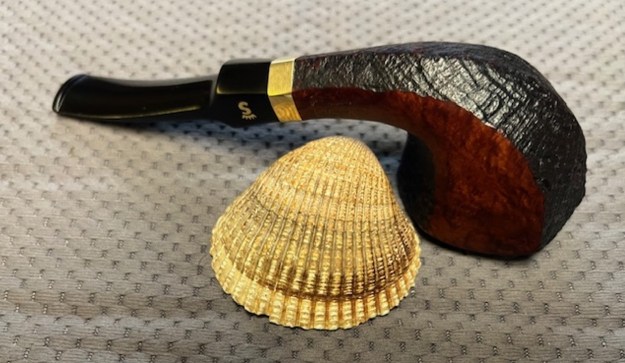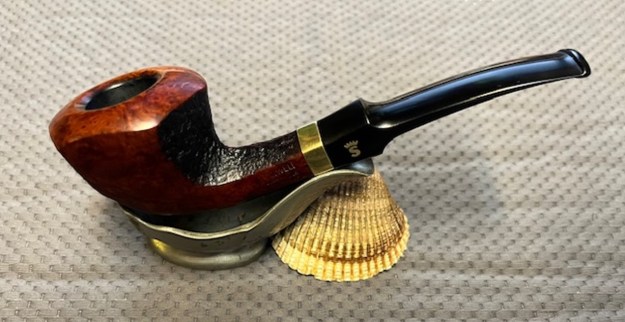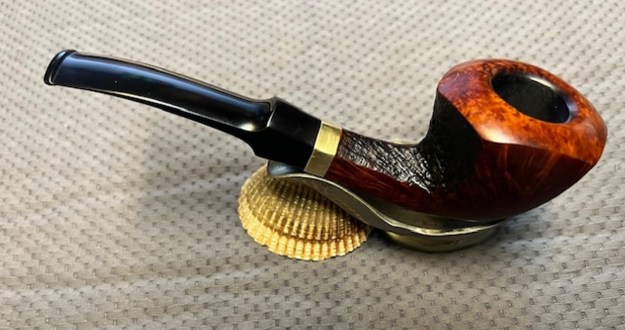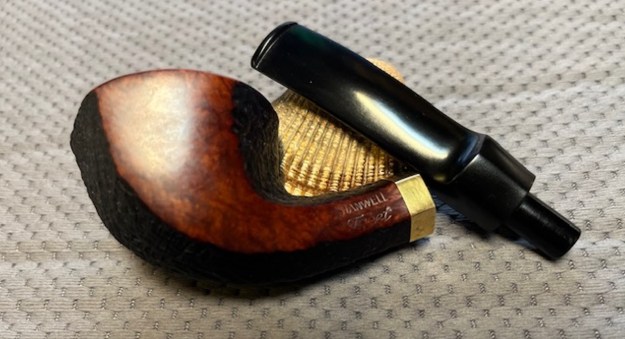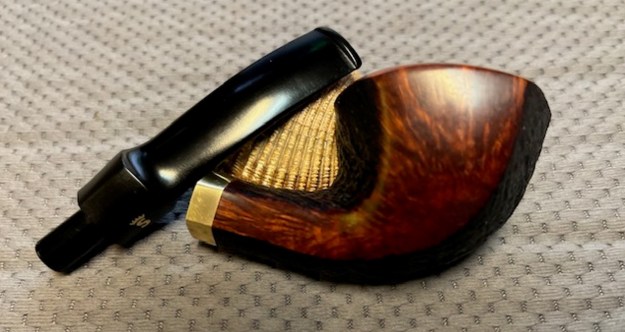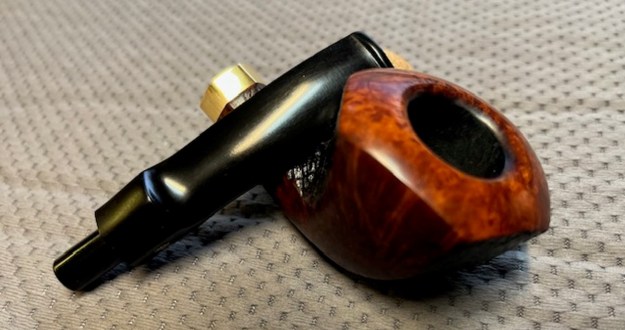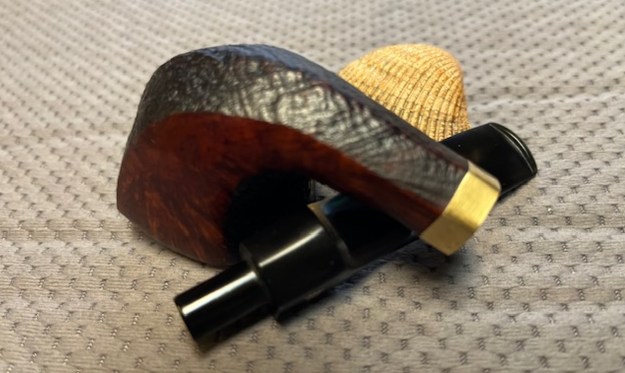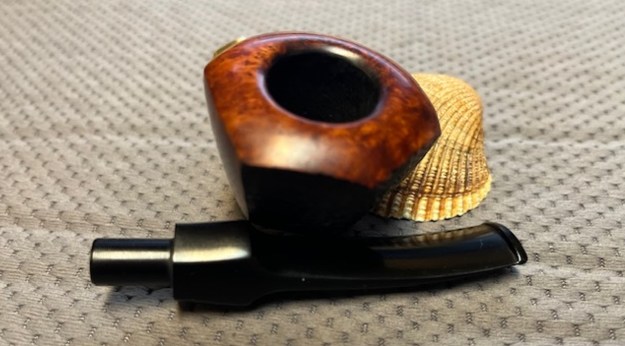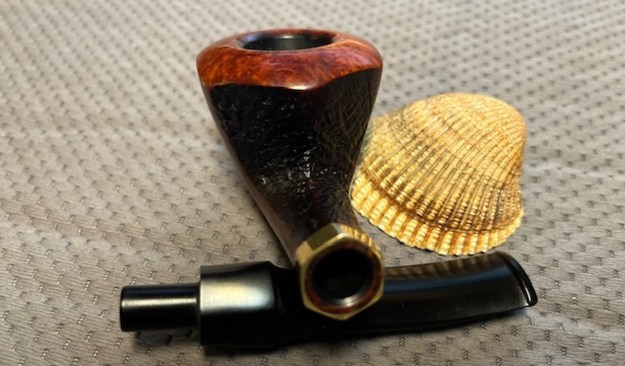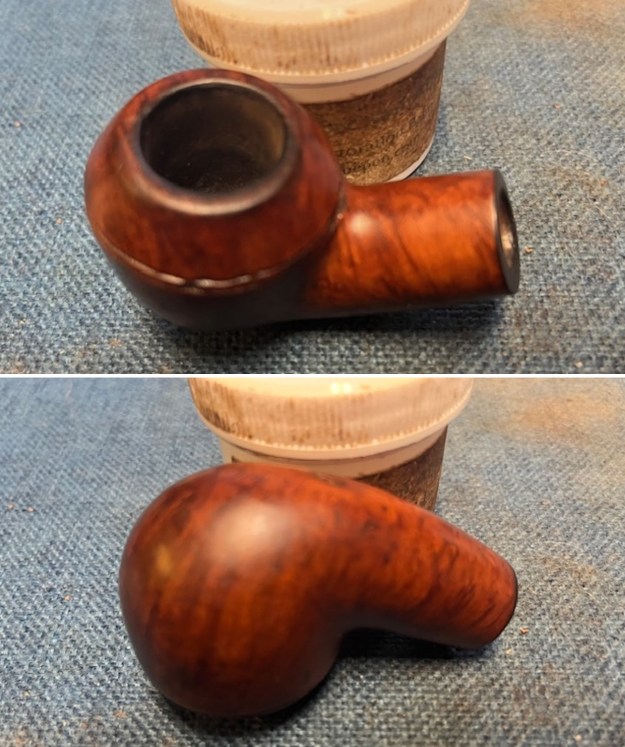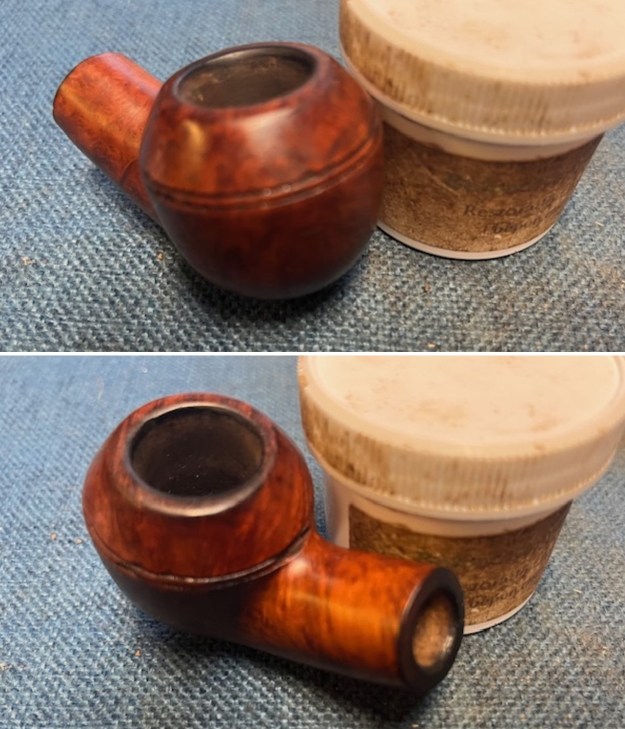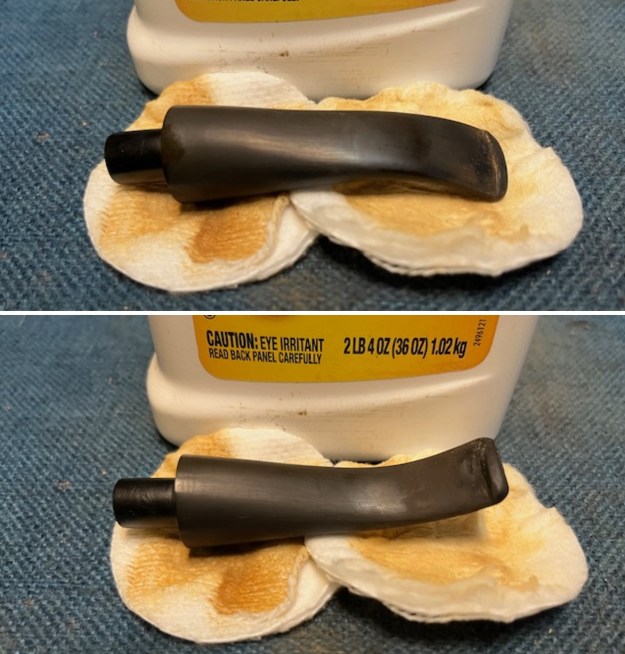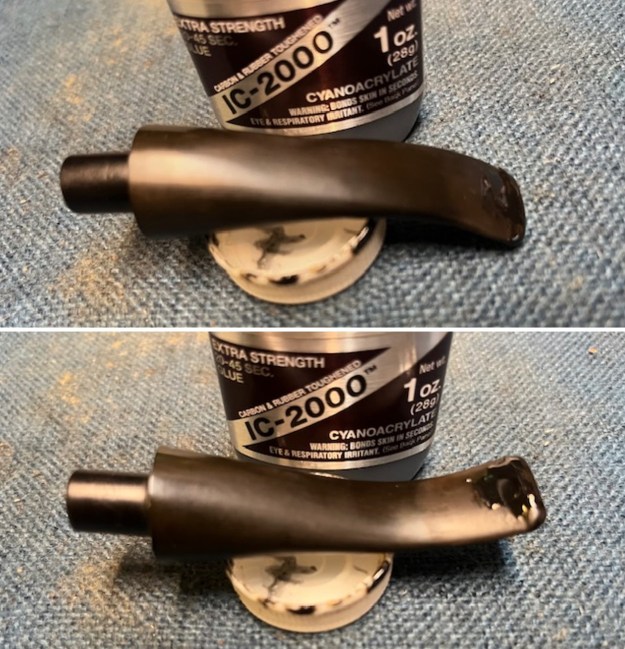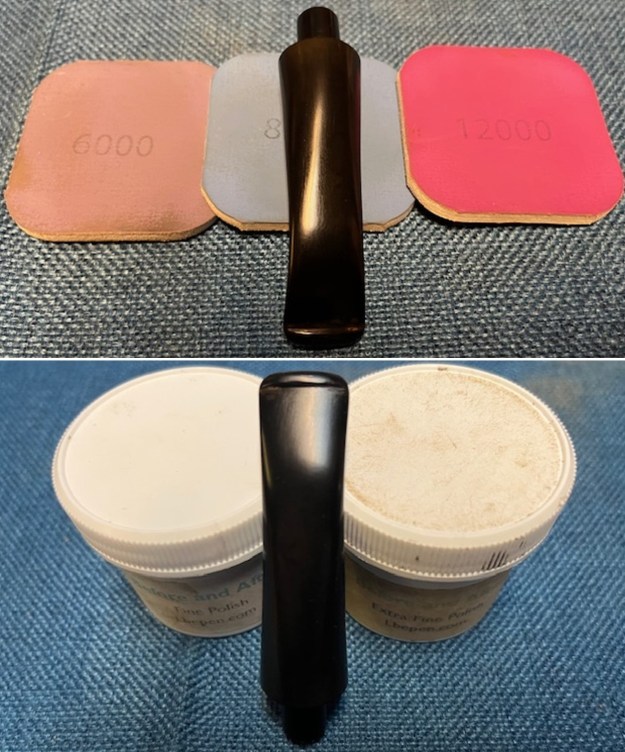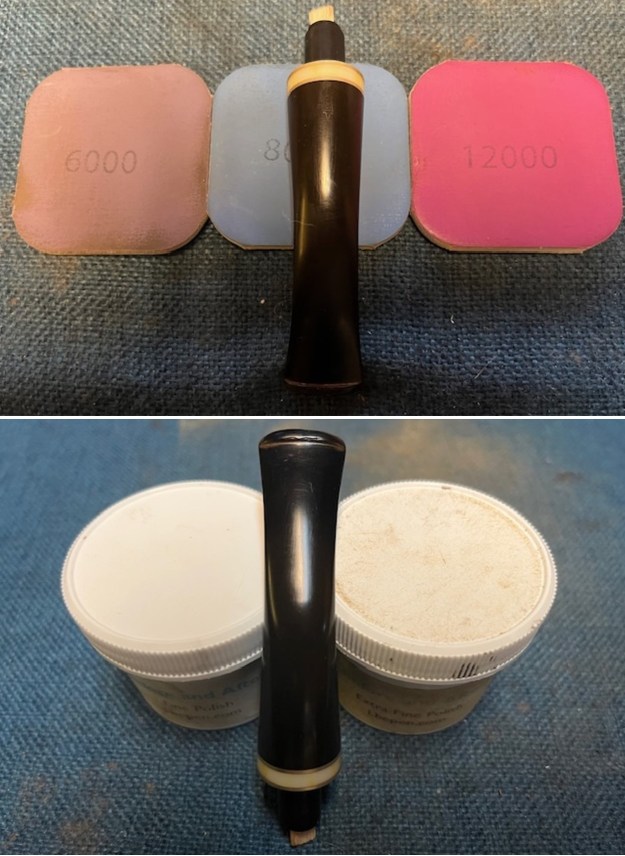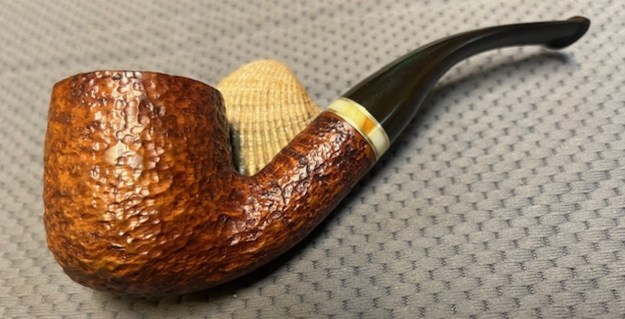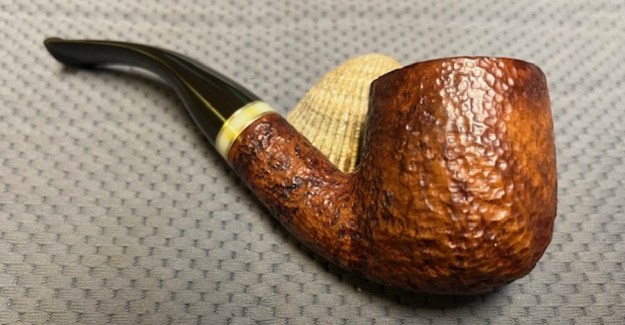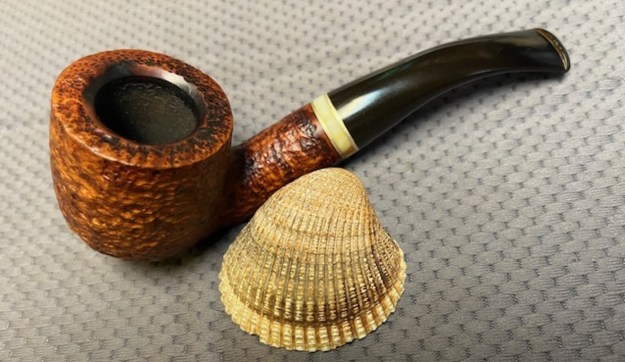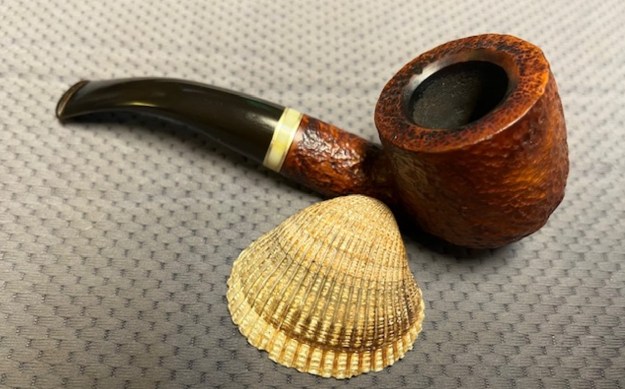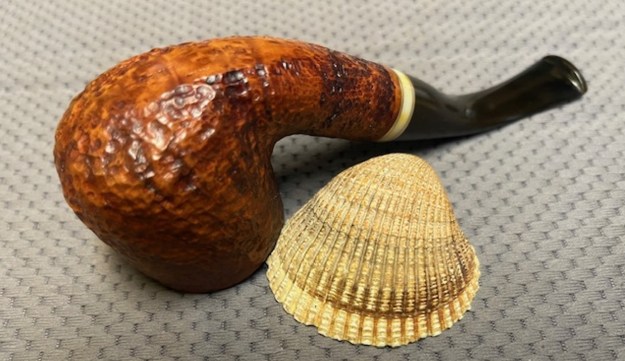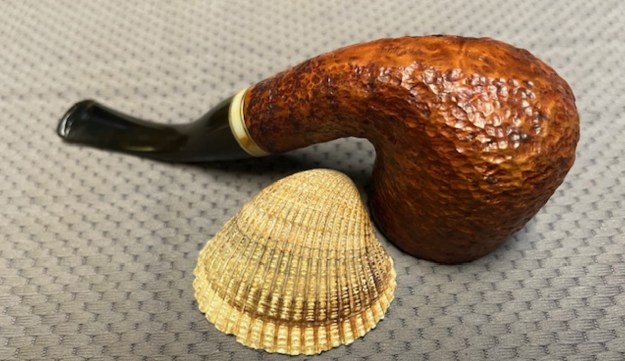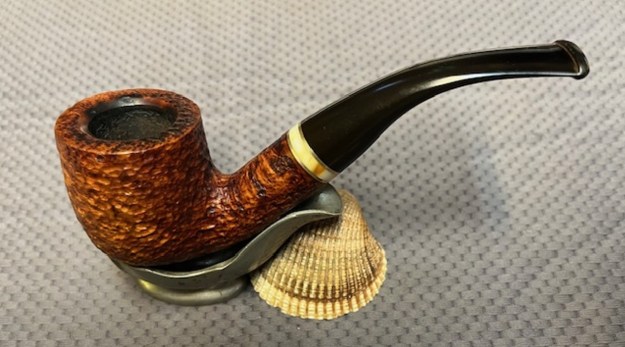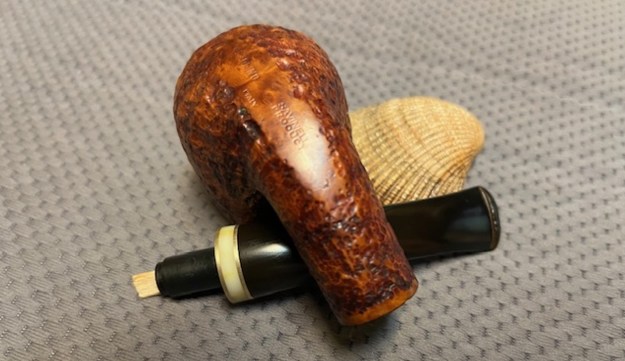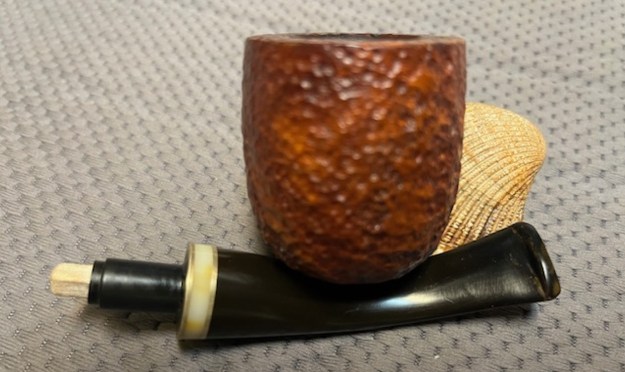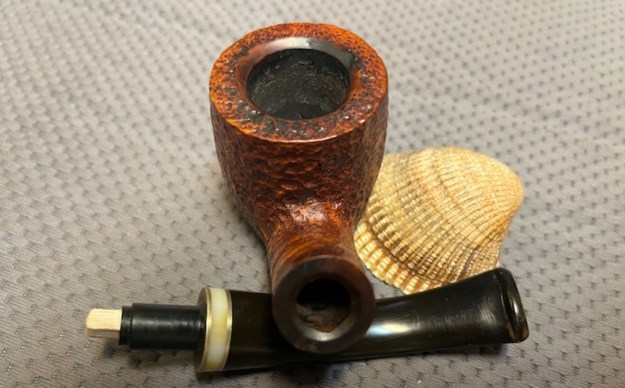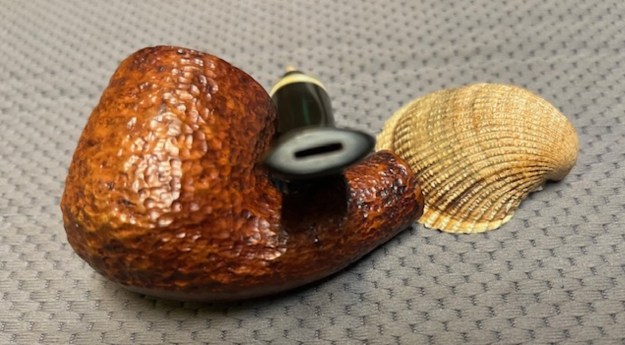
Tag Archives: polishing a vulcanite stem

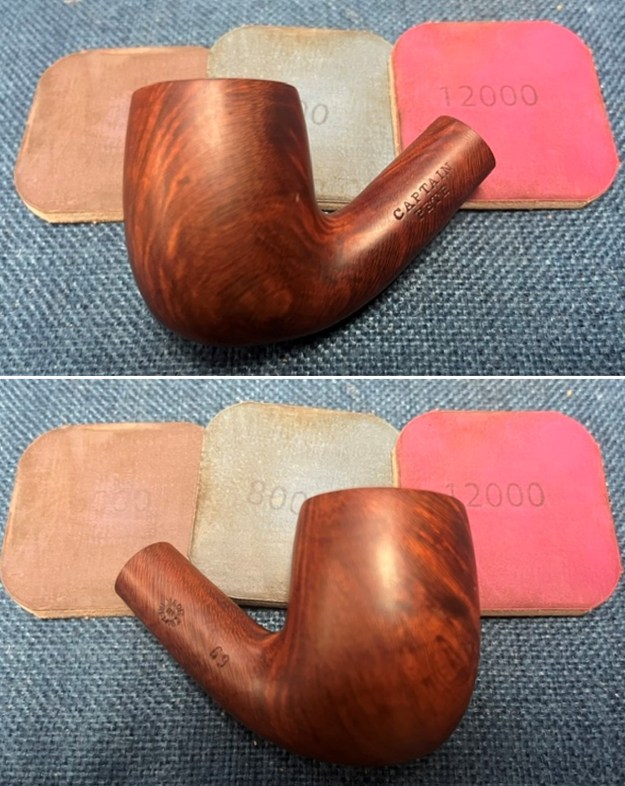
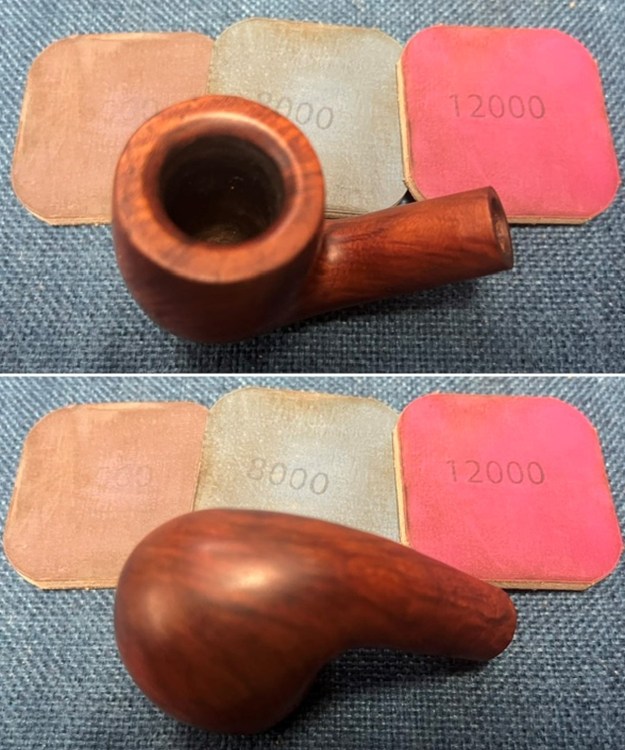
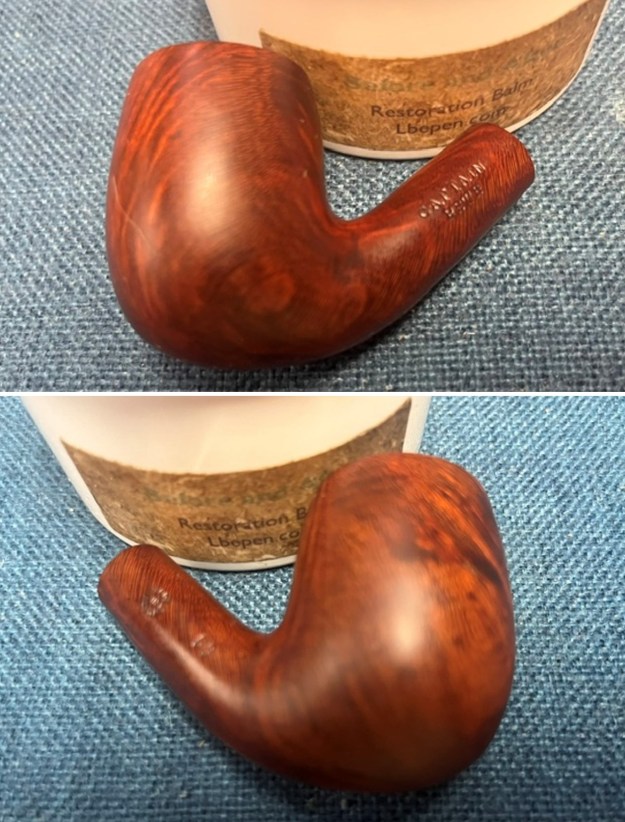
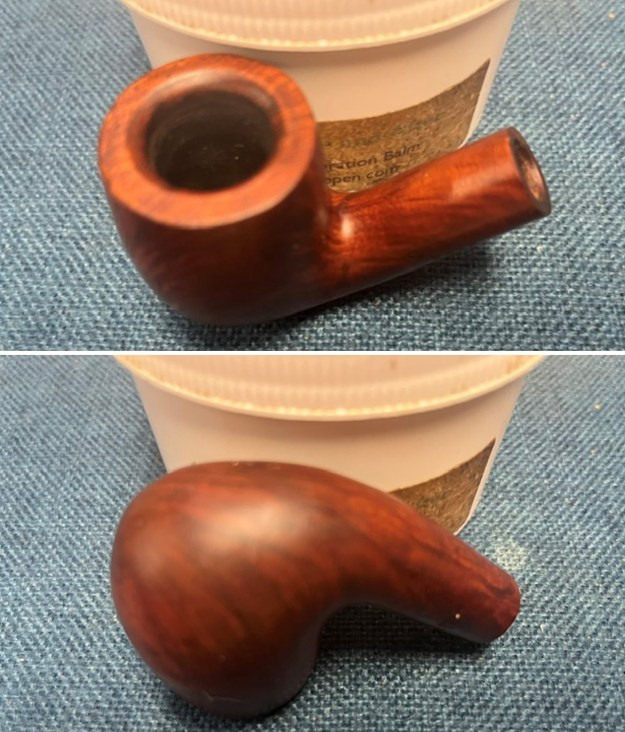
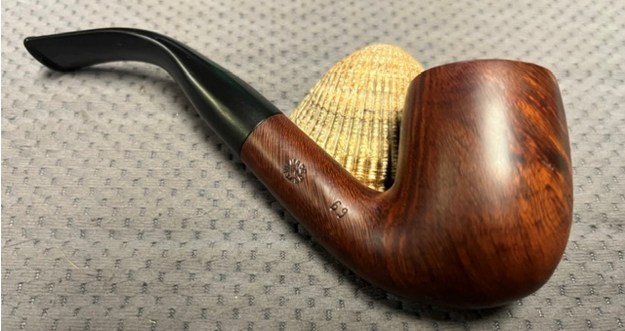
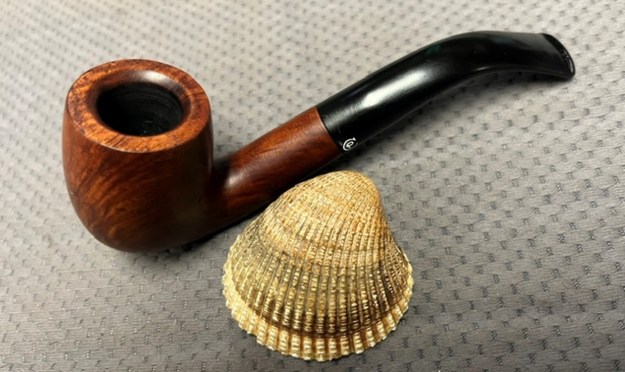
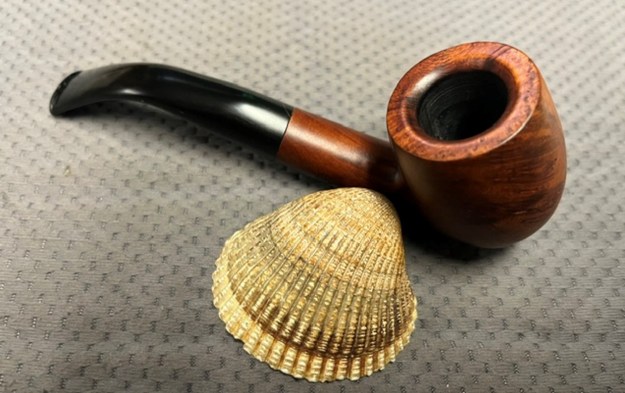
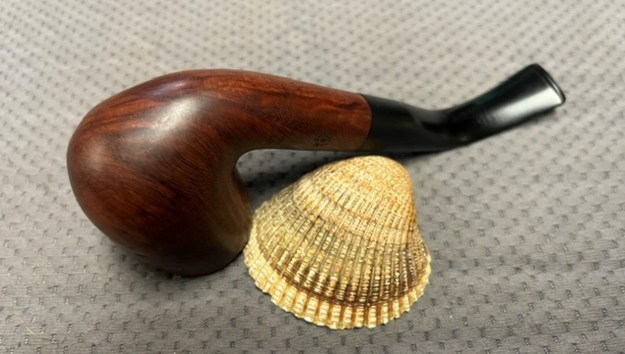
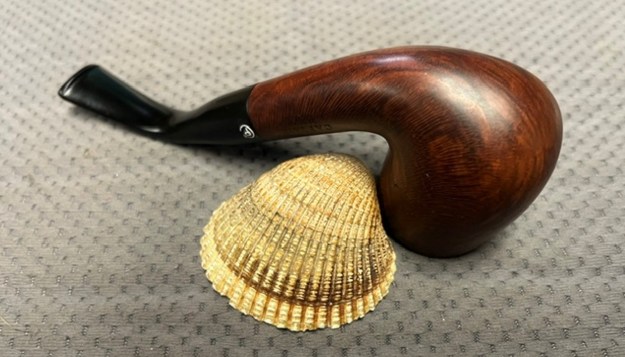
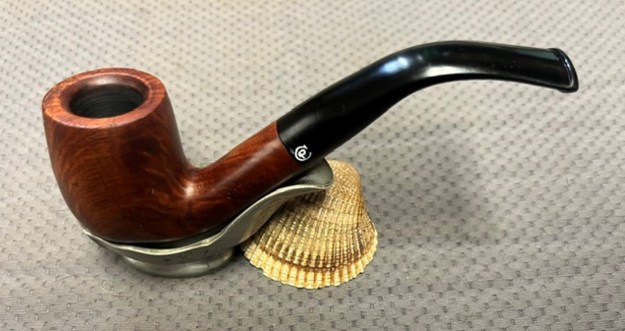
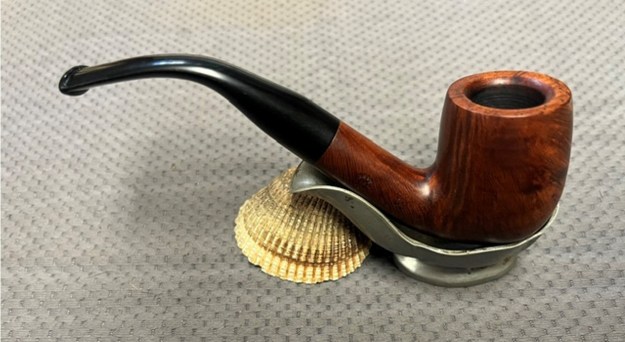
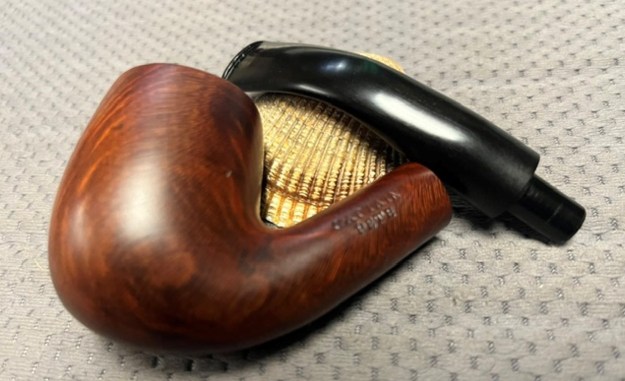
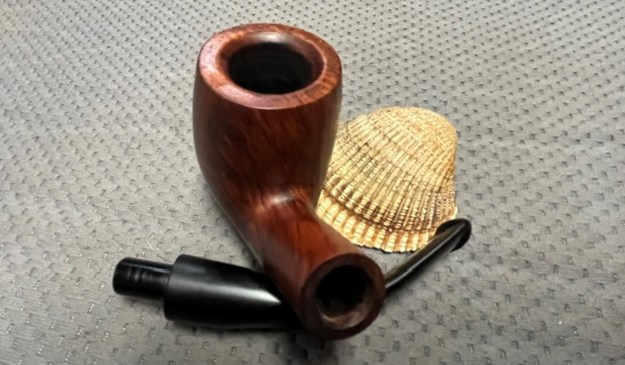
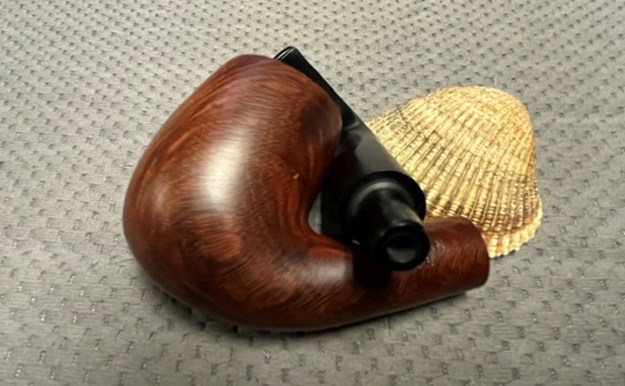
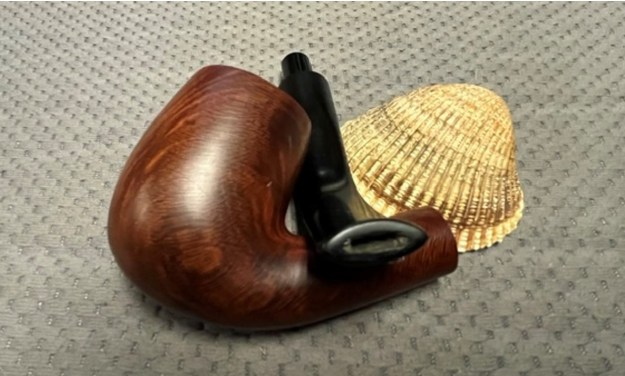
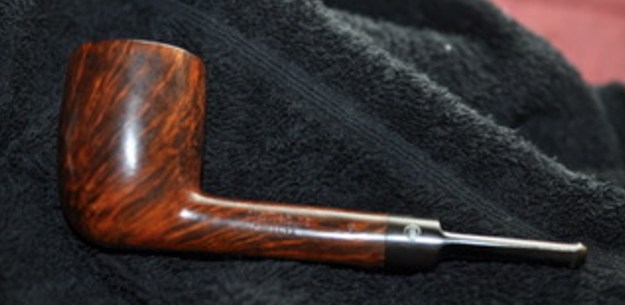
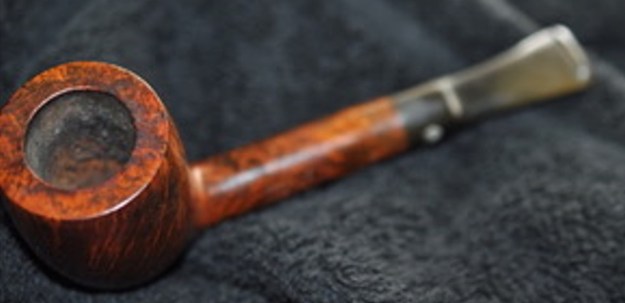
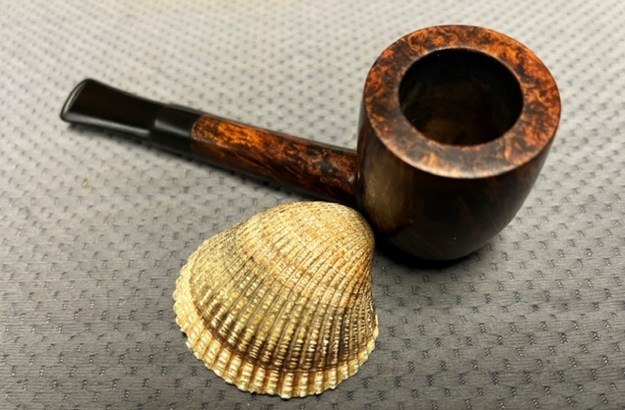
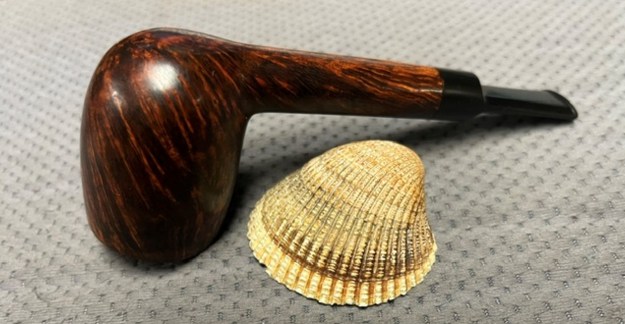
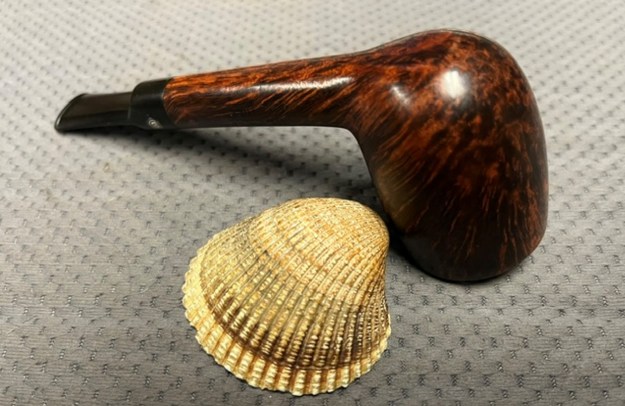
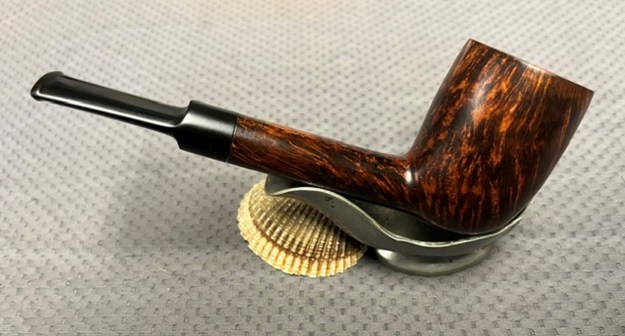
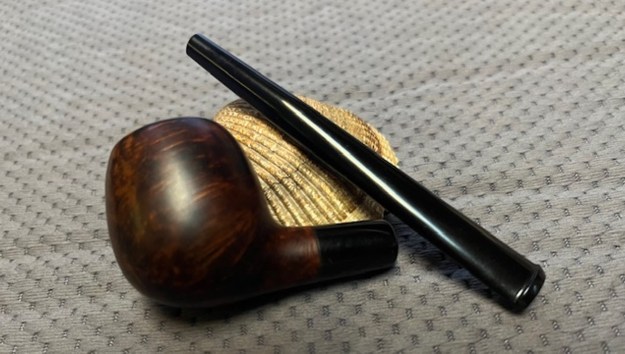
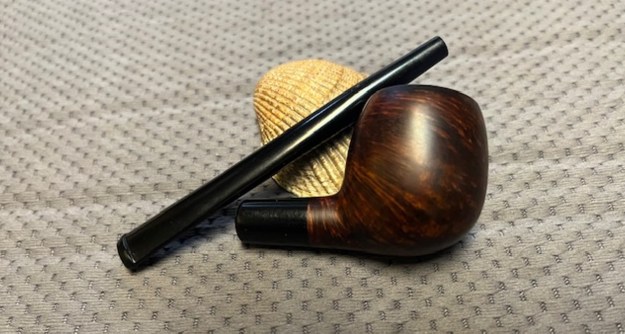
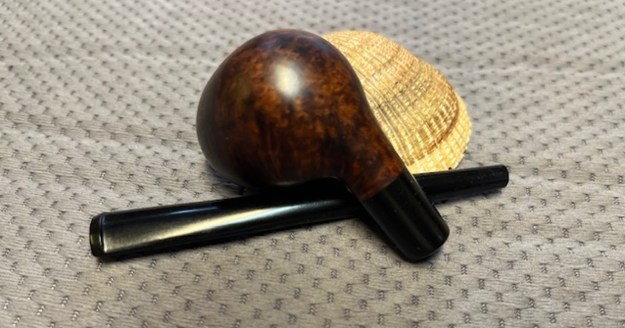
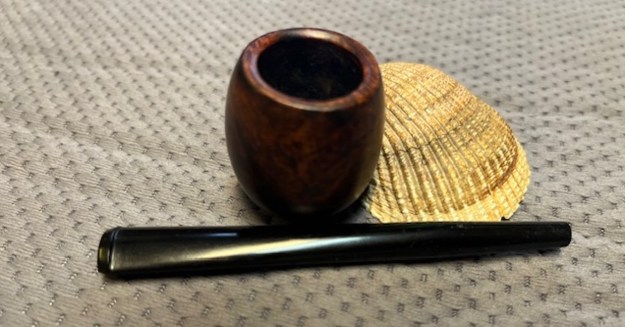
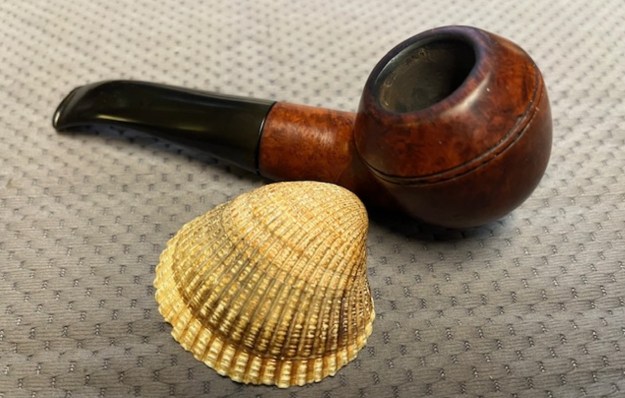
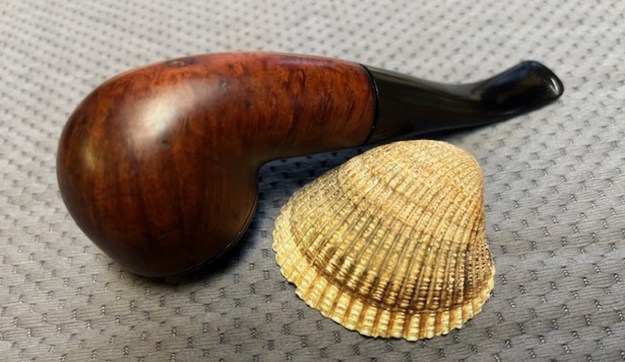
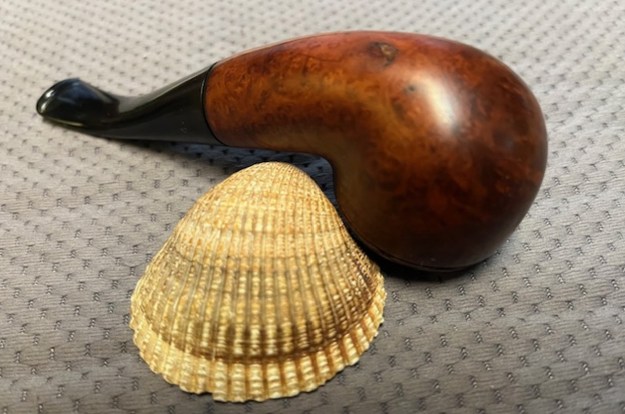
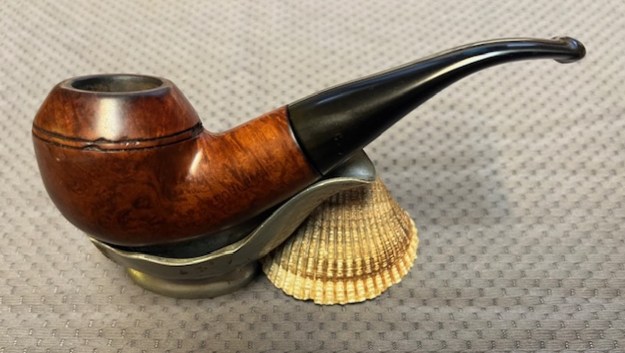
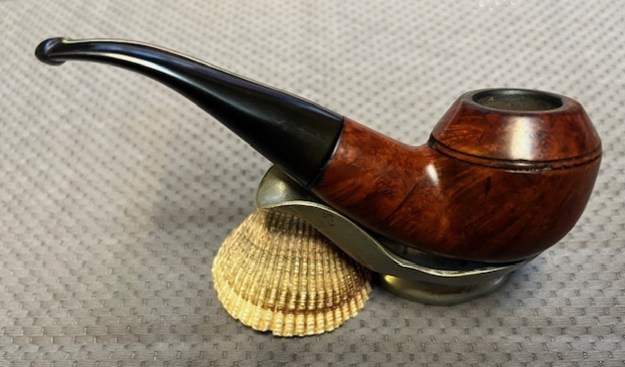
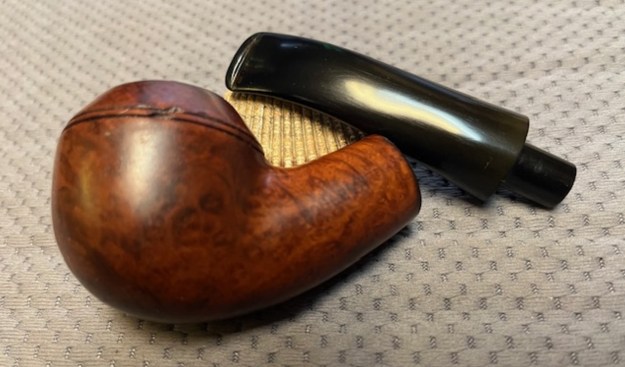
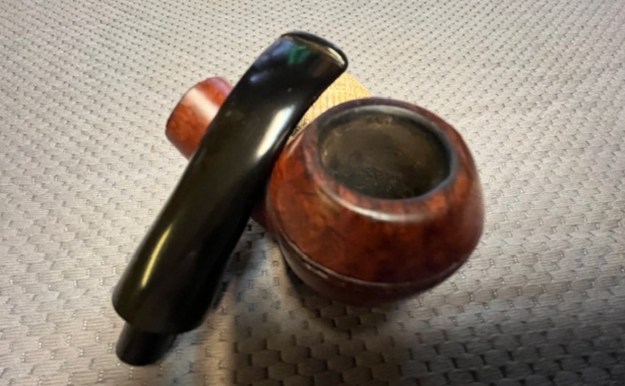
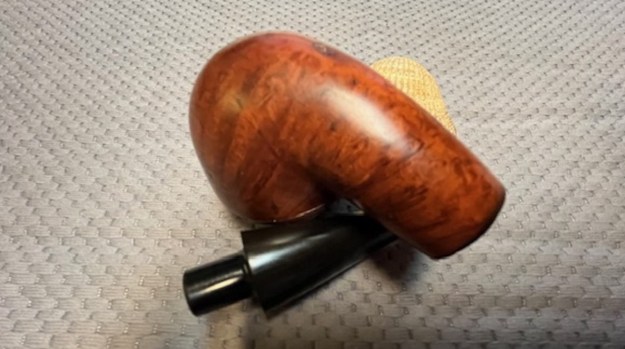
What a Lovely Captain Pete Made in Ireland 69 Bent Billiard


by Steve Laug

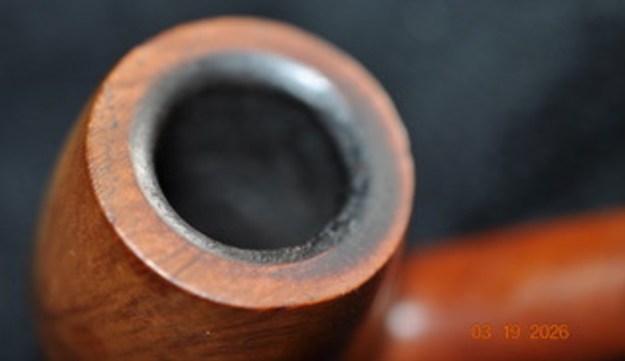
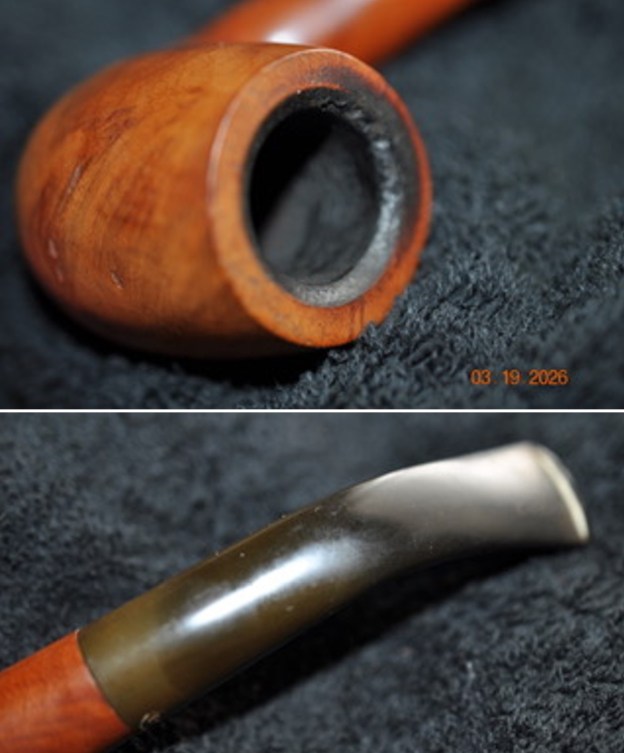
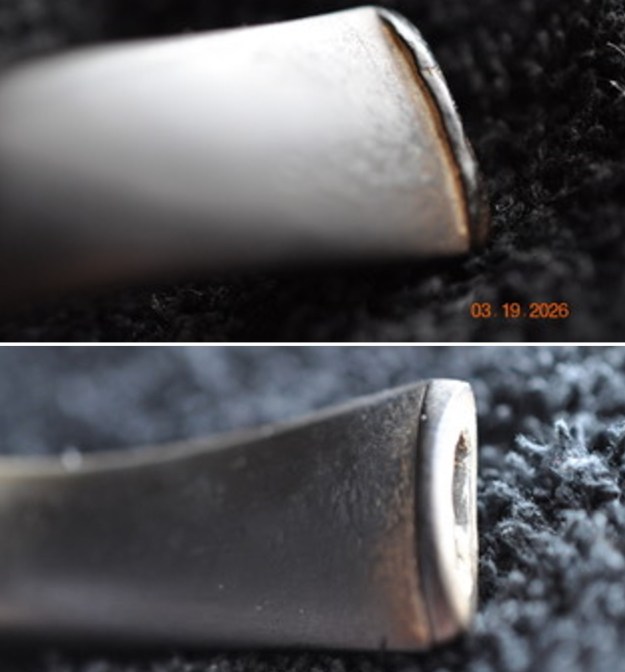
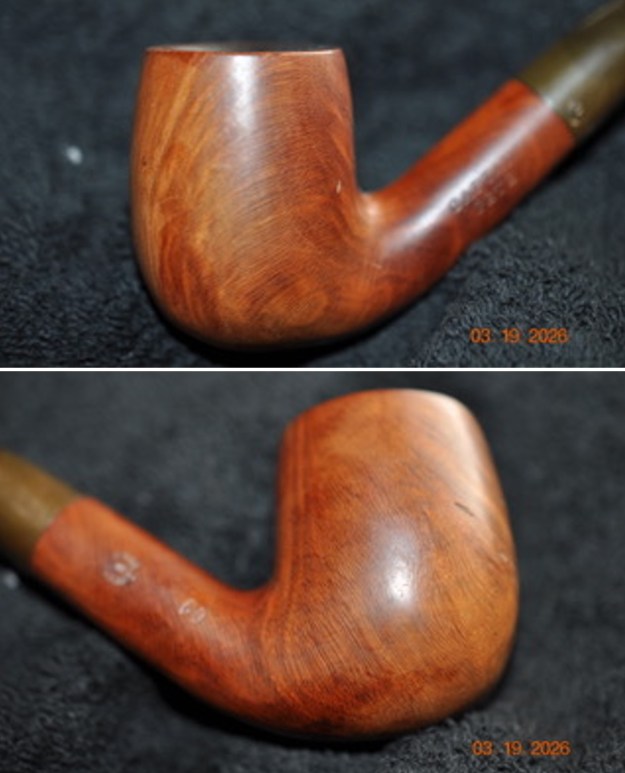
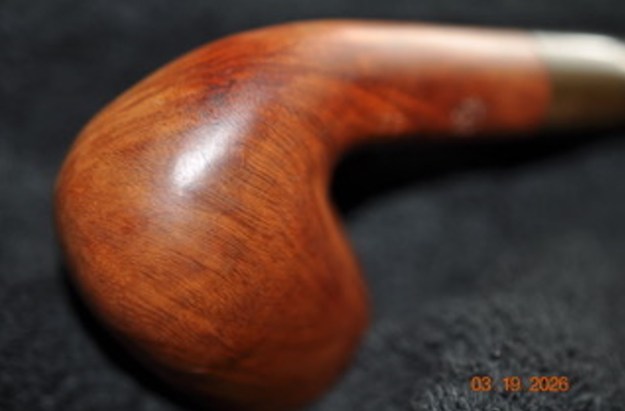
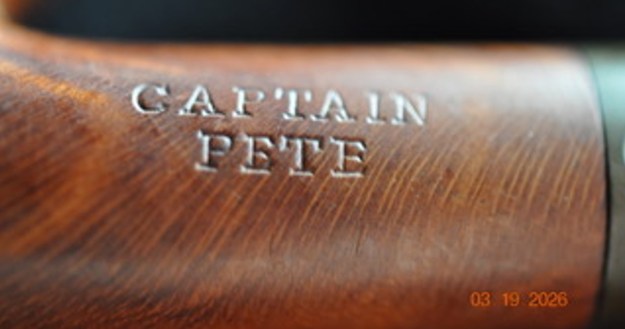
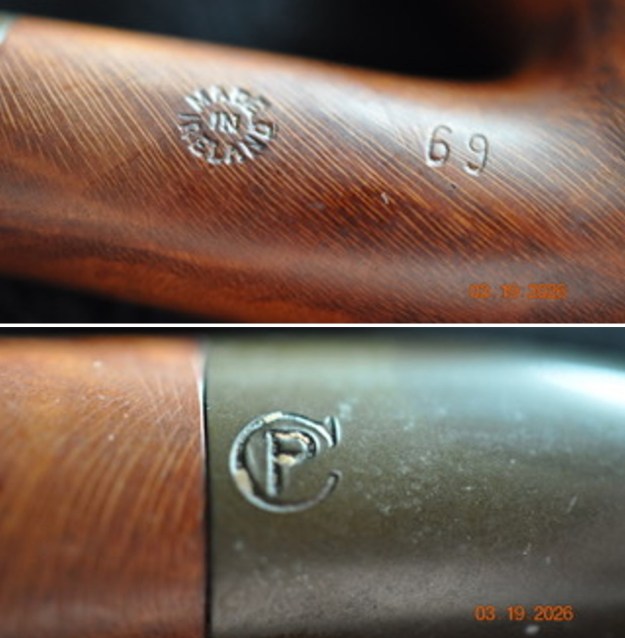
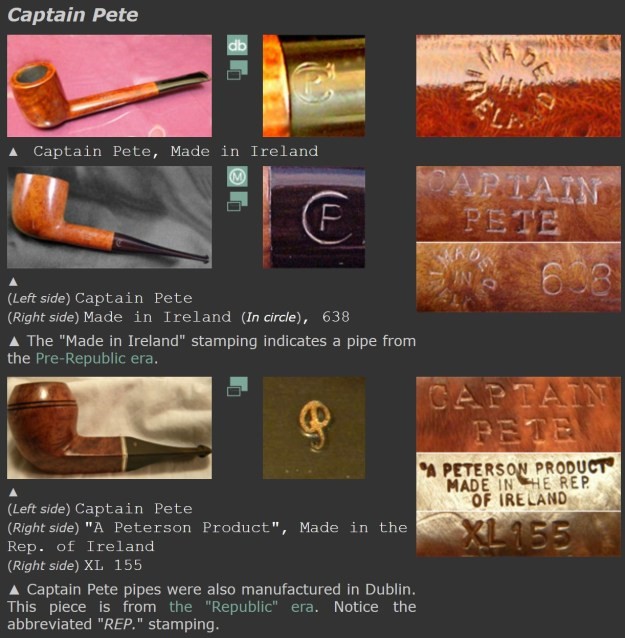
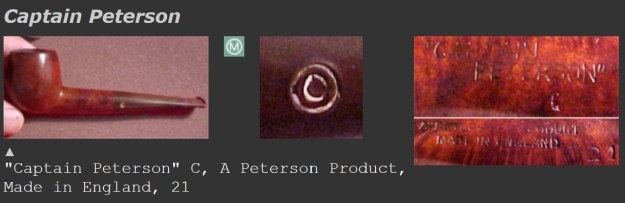
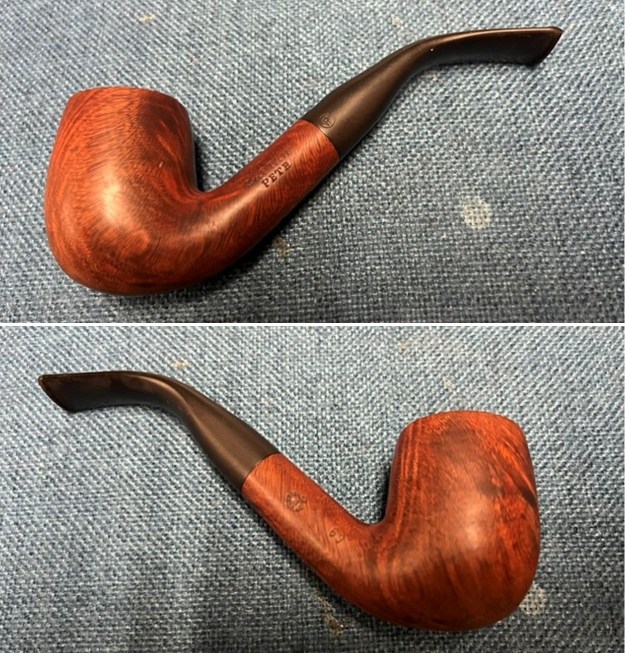
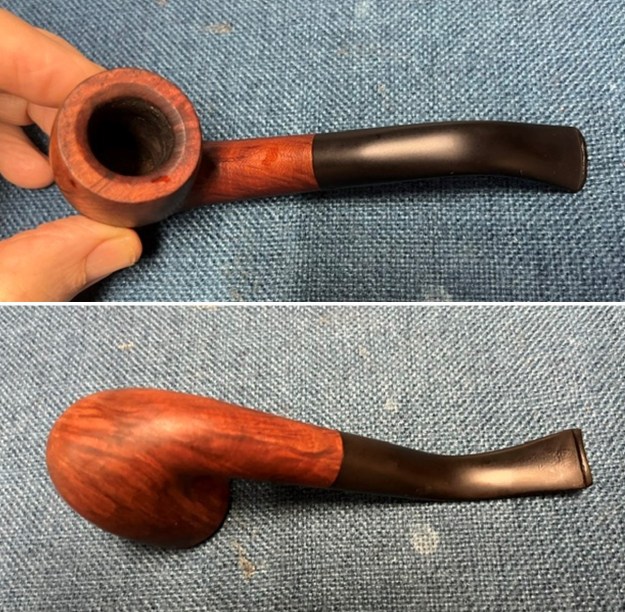
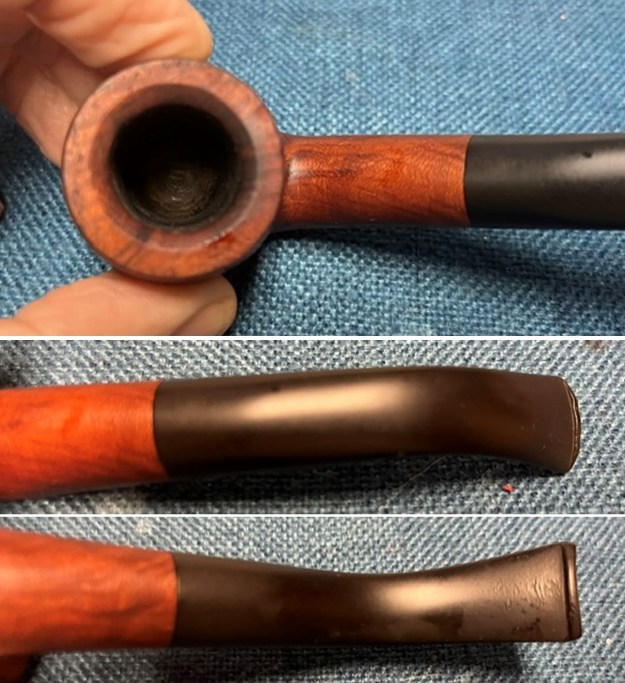
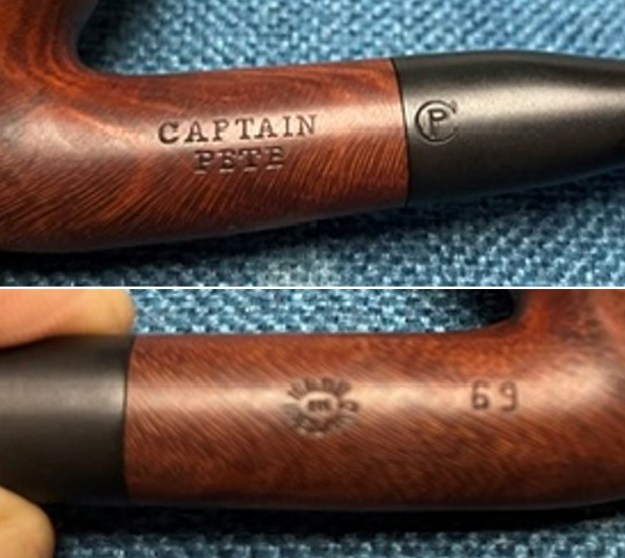
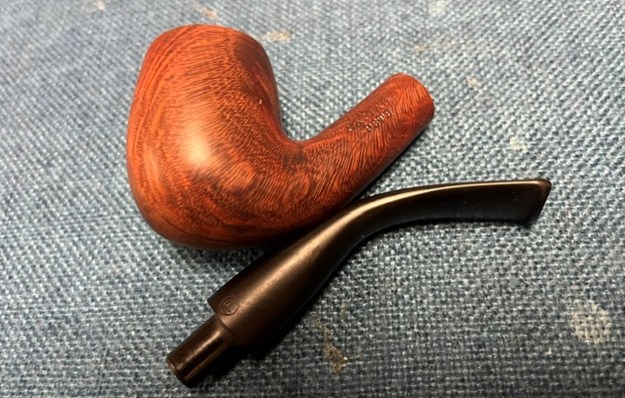
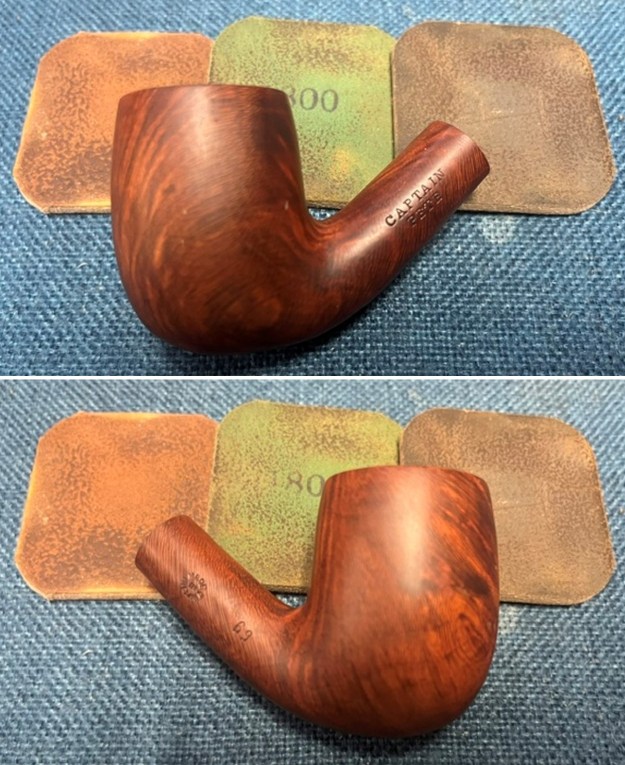
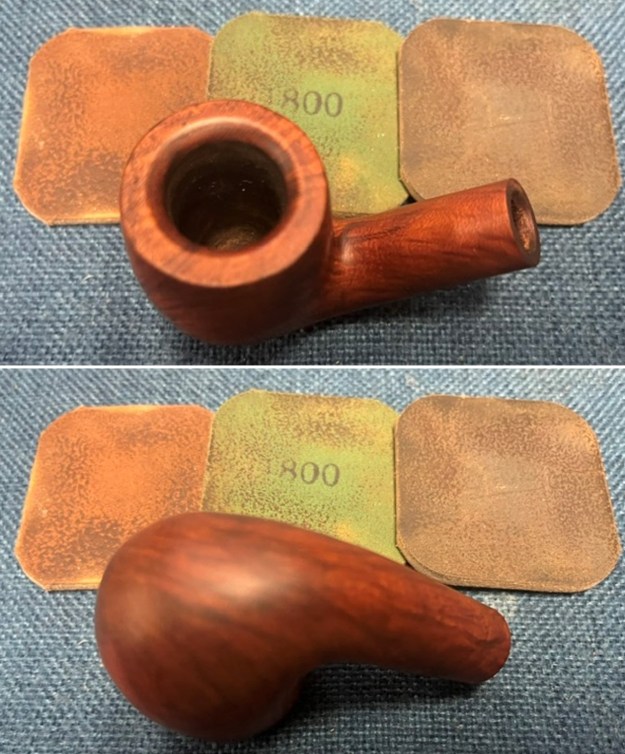
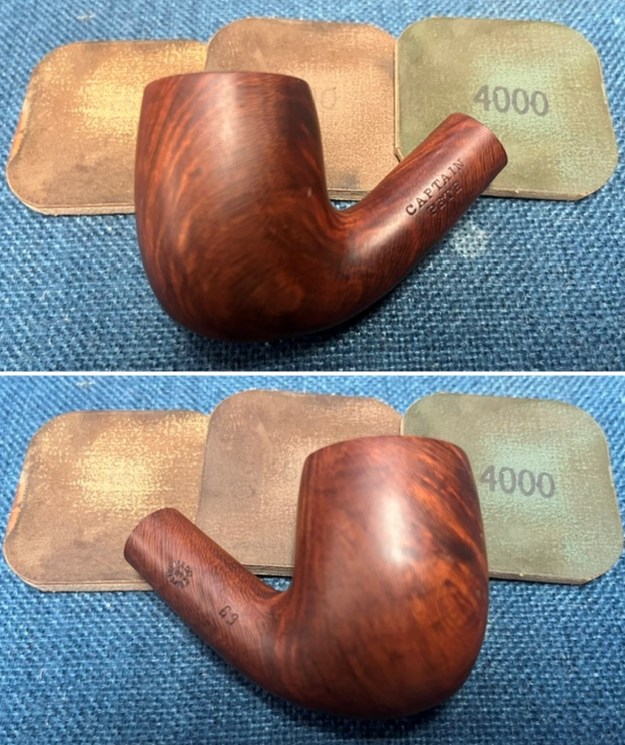
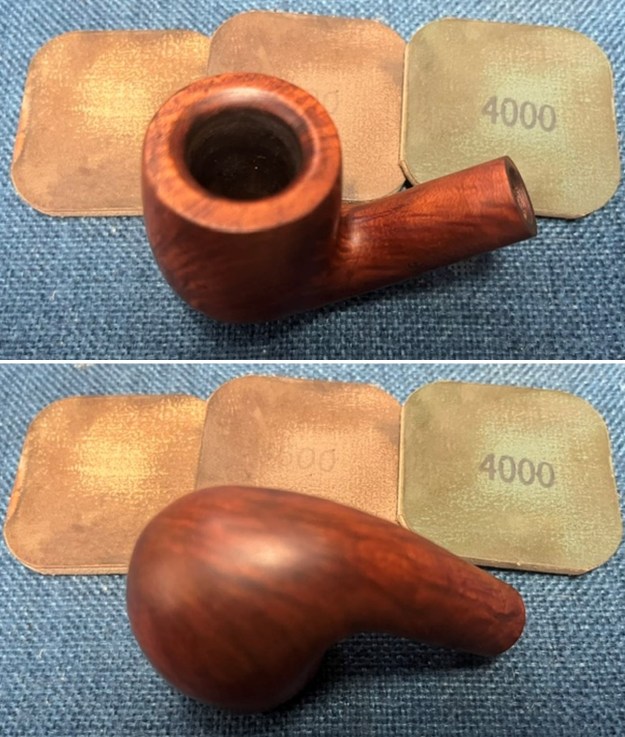
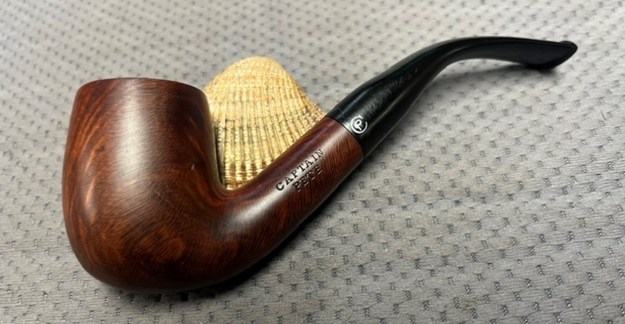
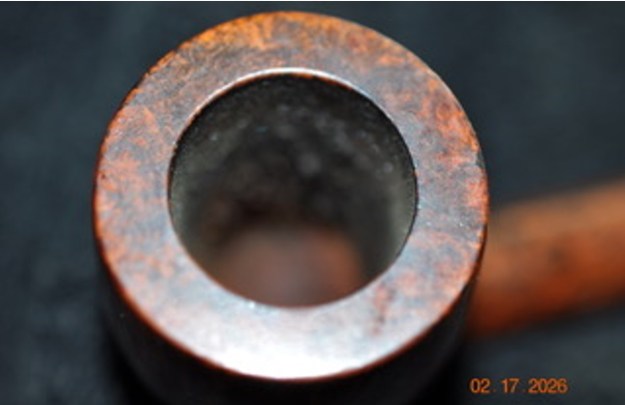
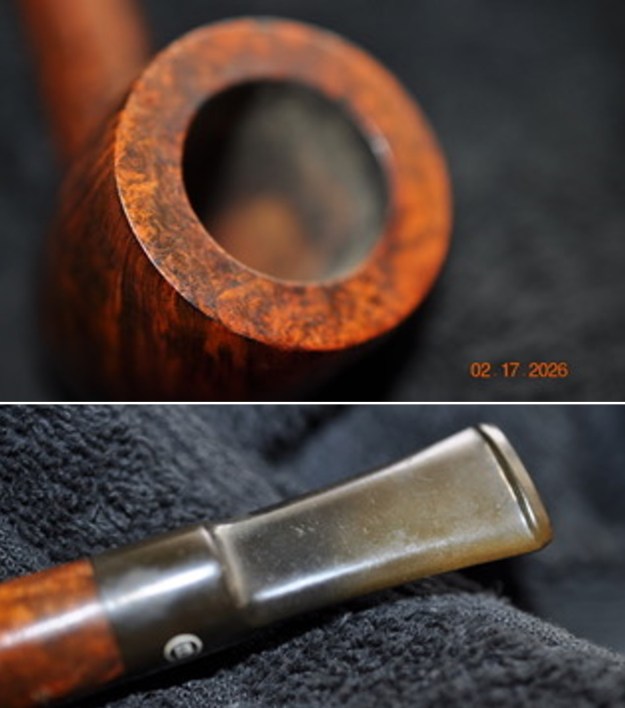
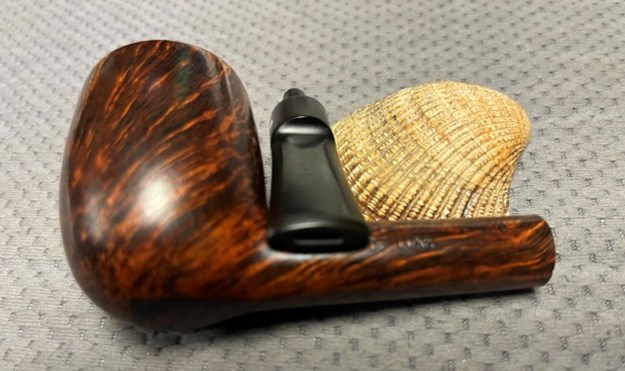
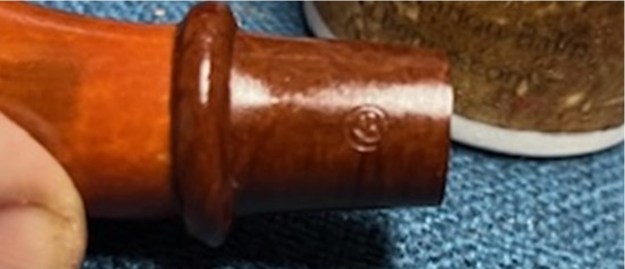
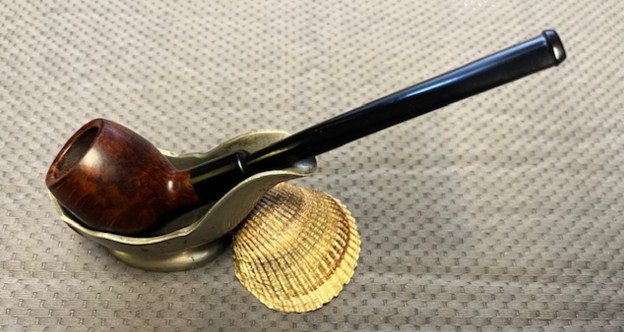
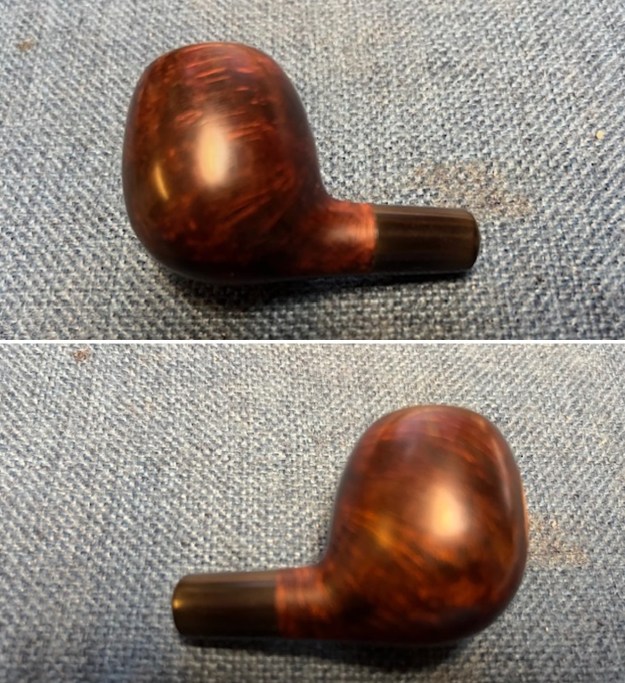
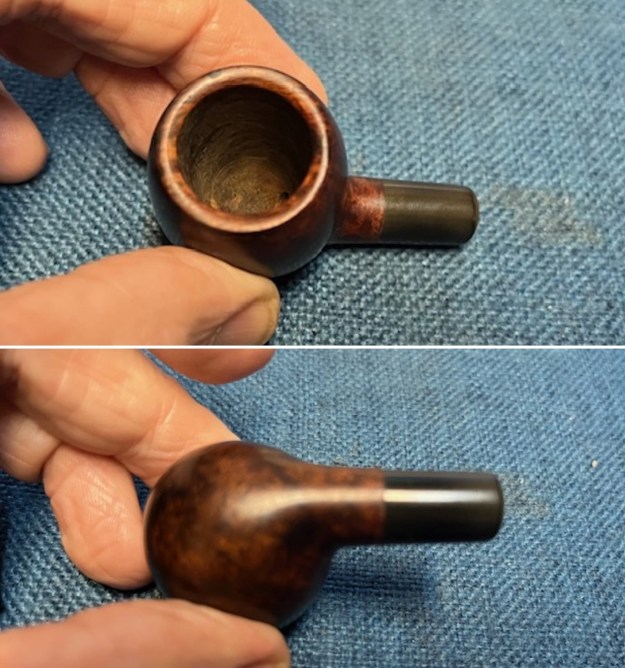
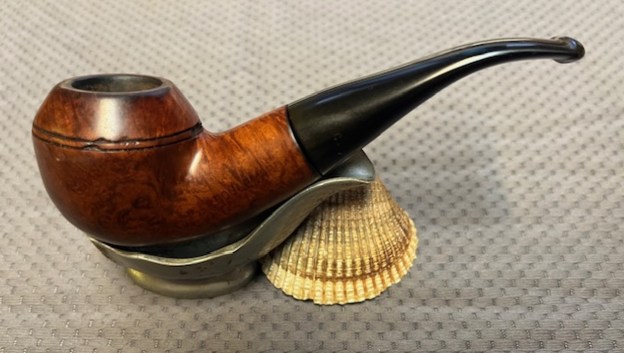
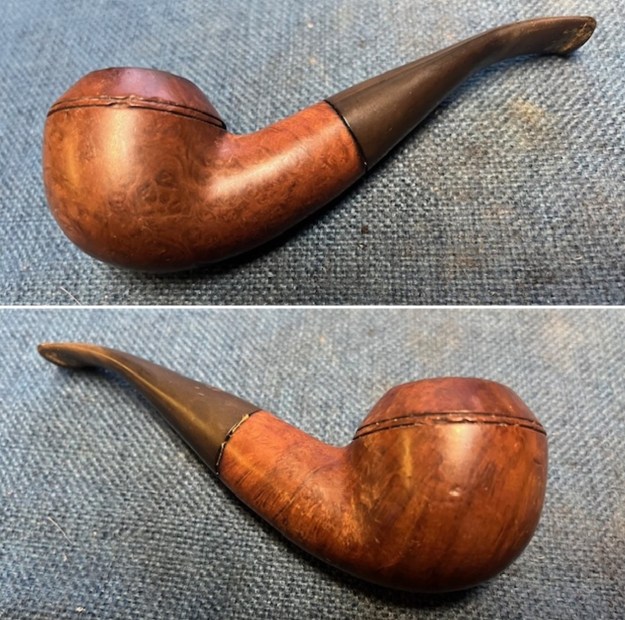
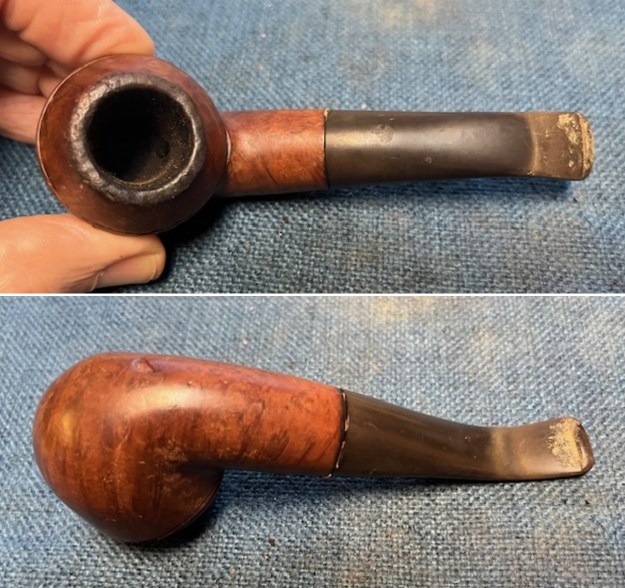
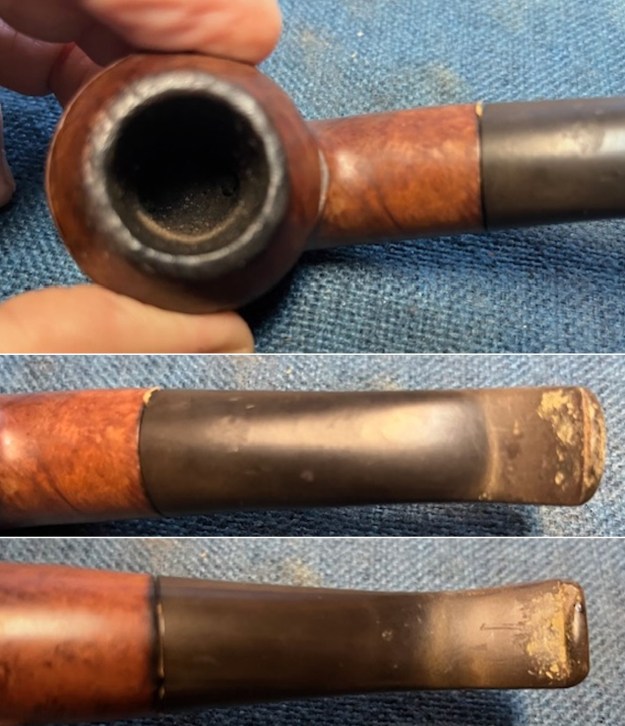
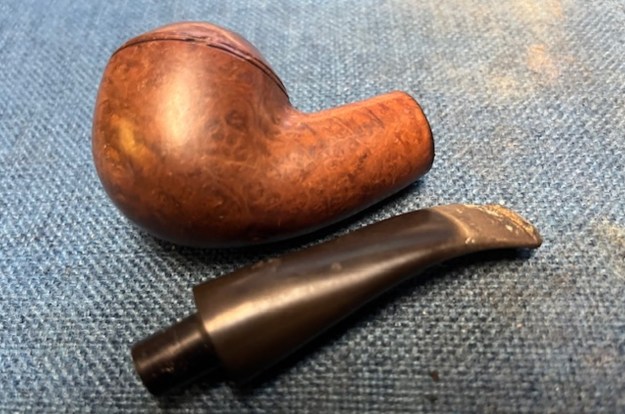
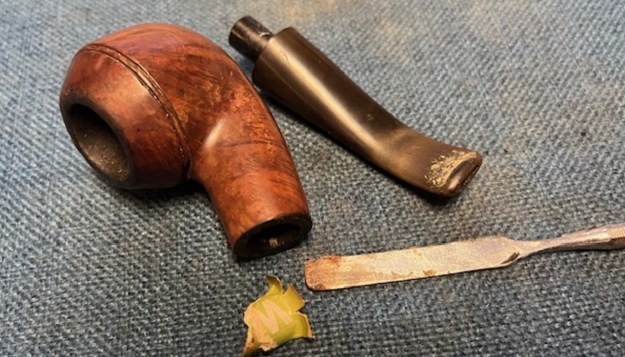
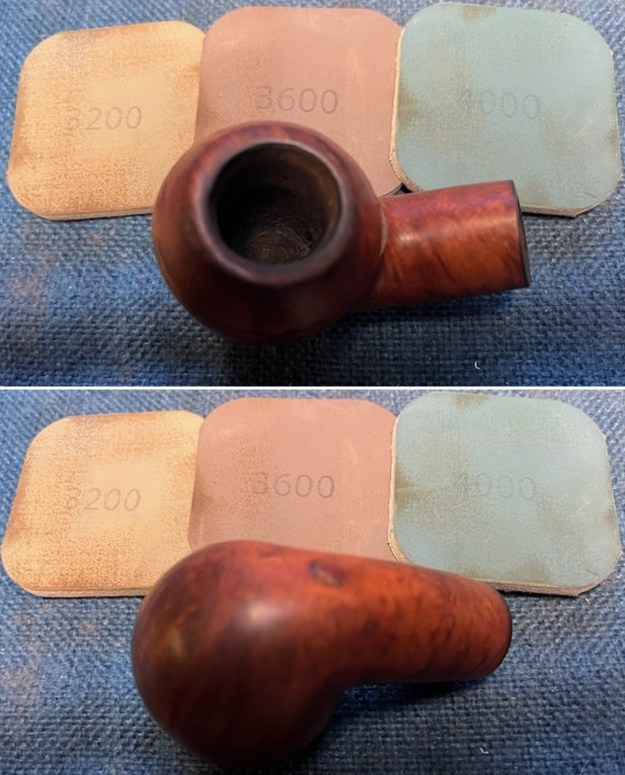
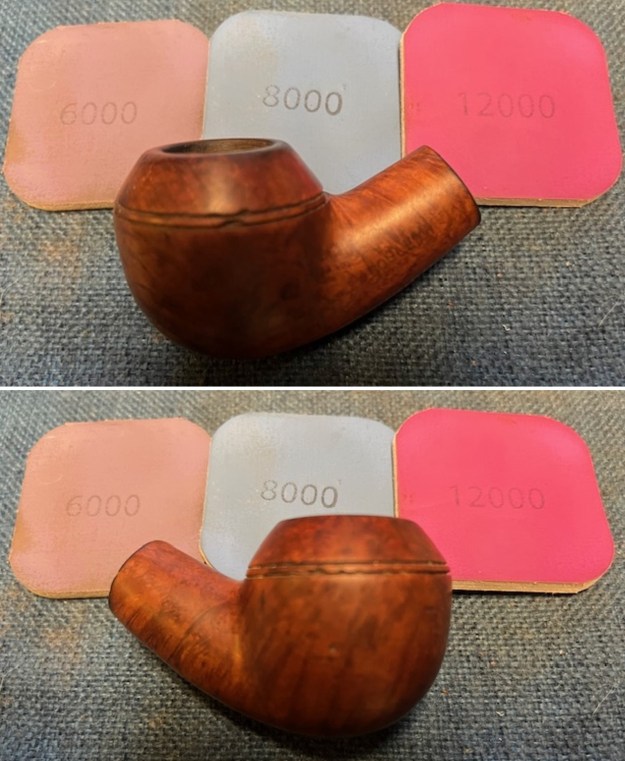
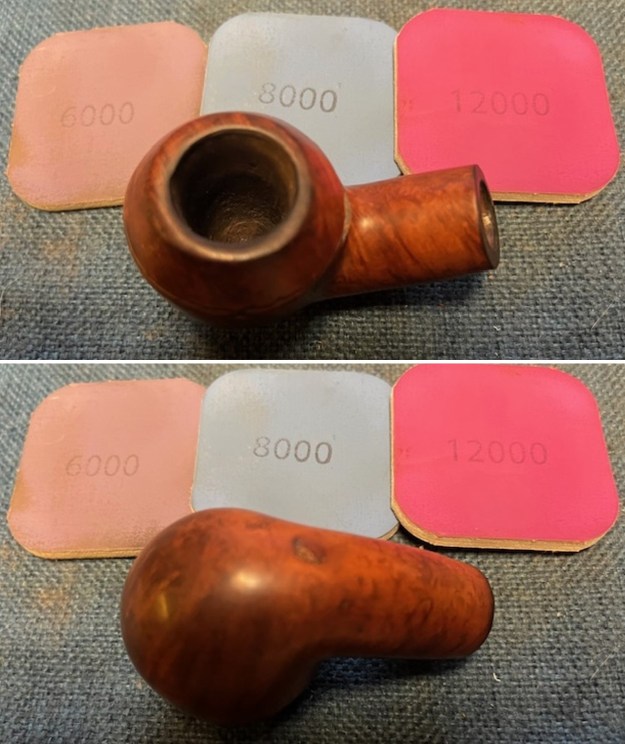
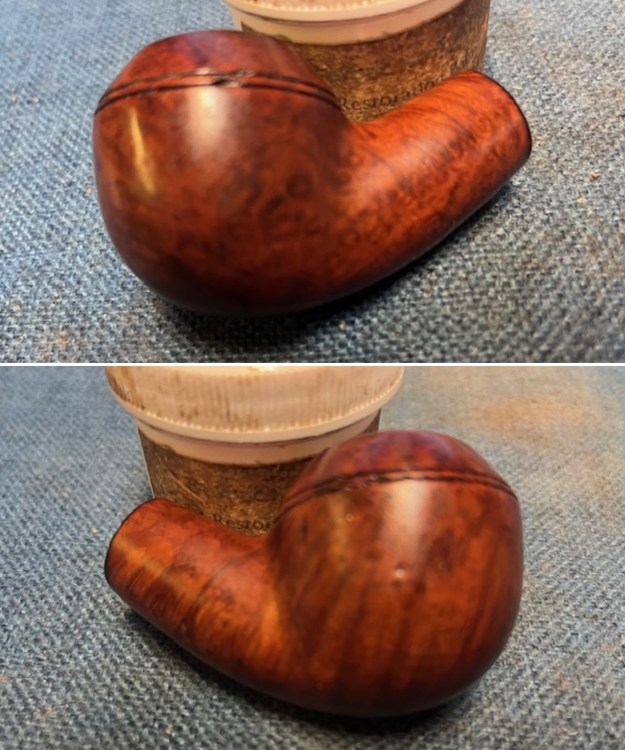
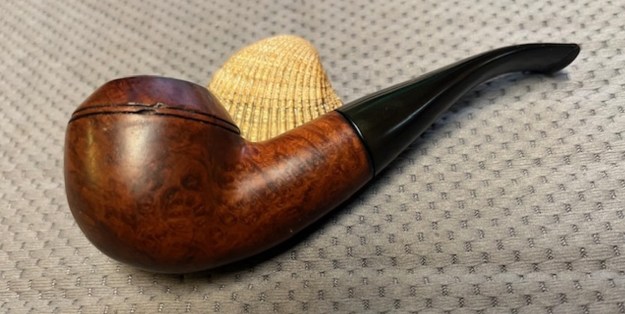
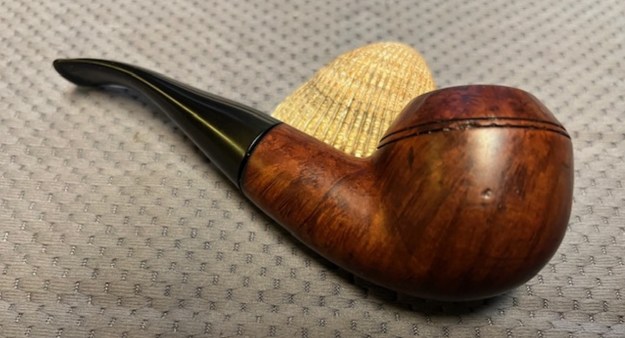
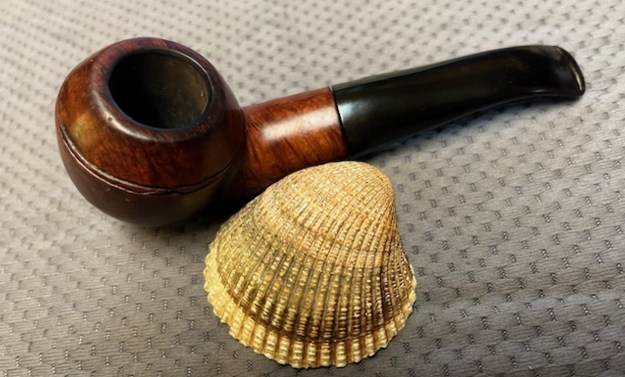
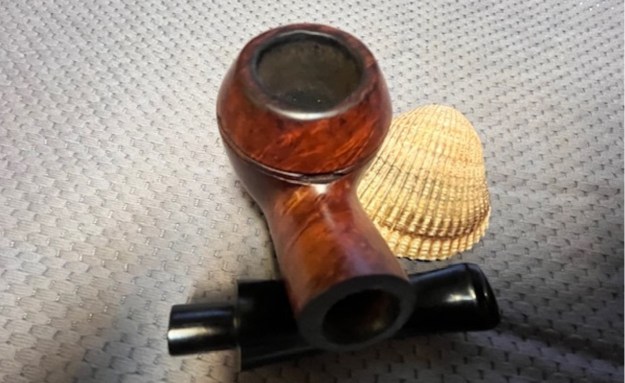
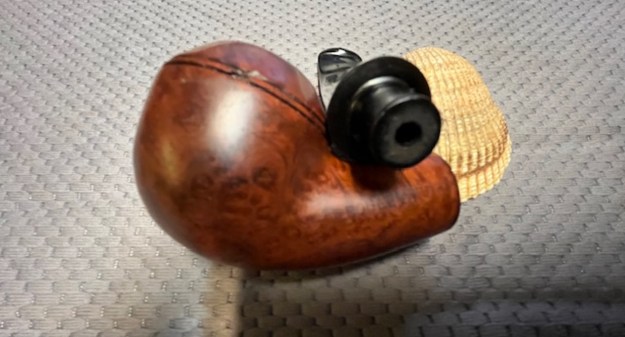
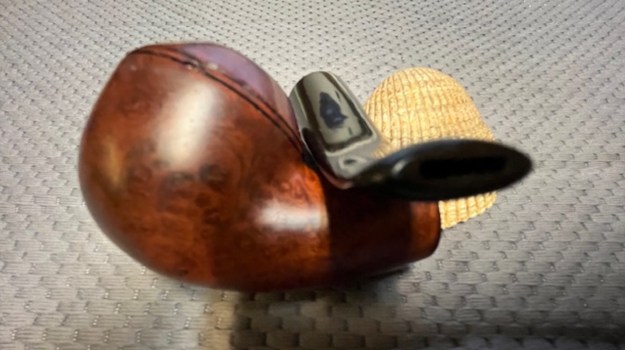
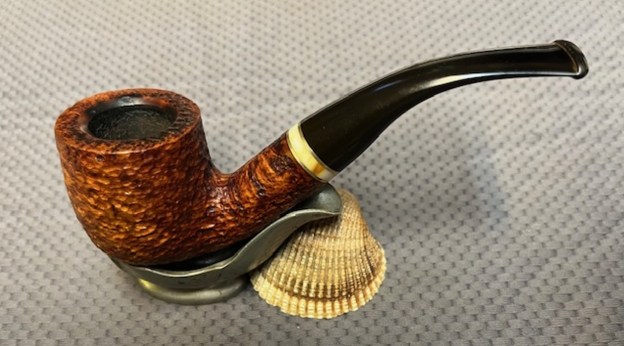
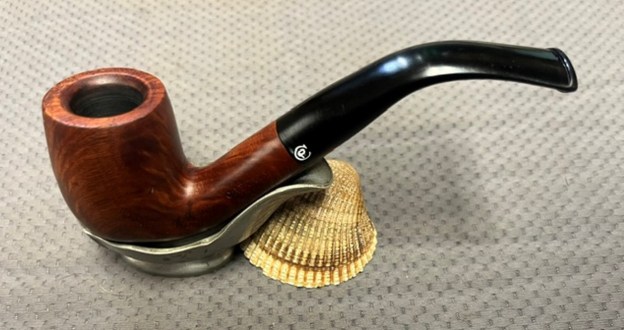
This smooth finish, beautifully grained taper stem was purchased on 01/20/2026 from a Facebook seller in Quaker Town, Pennsylvania, USA. It is a great Bent Billiard with a rich brown smooth finish on the bowl and shank. The stem is a vulcanite taper stem. The bowl is stained with a mix of browns that highlight the grain around the bowl and shank. It is stamped on the left side of the shank and reads Captain [over] Pete. On the right side of the shank it is stamped Made in Ireland in a circle. That is followed by the shape number near the bowl/shank junction and reads 69. The bowl had a thick cake and some tobacco debris on the walls. There was an overflow of lava on the rim top that was heavier toward the back of the bowl. There was grime ground into the finish which left the finish looking quite dull. The vulcanite taper stem has a C circled around a P logo on the left side. There was some light oxidation on the surface and some light tooth marks and chatter on both sides of the stem ahead of the button. Jeff took photos of the pipe before he started his work on it.   He took a photo of the rim top and bowl to show the current condition. The bevelled inner edge and the rim top showed darkening and spots of lava as mentioned above. The photos of the bowl show the cake on the walls. The stem photos show the oxidation and light marks on the rim top on both sides. Jeff took photos of the sides and heel of the bowl to give a sense of the condition of the bowl and the grain around the bowl. The shape 69 is a beautiful Bent Billiard shape. He took photos of the stamping on the shank sides and the stem to show the condition. They are cleaned readable as noted above. The stamp on the left side of the stem was deep but was lacking in the white colour in the stamp. I have included the information from the previous Captain Peterson restoration. For me this is a part of the restoration. I turned first to Pipephil’s site where I found both Captain Pete and Captain Peterson (http://www.pipephil.eu/logos/en/logo-peterson-rep.html#captainpete). I have included a screen capture of the Captain Pete information and also one of the Captain Peterson information. I also included the sidebar information as well.Captain Pete was a brand of Peterson’s English branch (1899-1960). Dublin continued to produce Captain Petes a couple of years after 1960. At the end of the eighties just as the Sherlock Holmes range was being issued, Peterson reintroduced the modern Captain Pete series.Captain Peterson was a brand of Peterson’s English branch. This English made pipe was crafted prior to 1960.
From there I turned to the “Peterson Pipe – The Story of Kapp & Peterson” by Mark Irwin and Gary Malmberg, page 295 to see what information I could find there. I quote:

Captain Pete – This line’s name was derived from the nickname of Charles Peterson, known affectionately by friends and employees as “Captain Peterson.” The first issue. C. 1940-62, was in a smooth finish produced for Rogers Imports with a white stamped P inside C or a circled P on the mouthpiece. CAPTAIN over PETE on shank, and MADE IN IRELAND in a circle. English made versions show CAPTAIN over PETE on the shank or “CAPTAIN PETERSON” and a PETERSON’S PRODUCT over MADE IN ENGLAND or LONDON MADE over ENGLAND. The second issue (1998-), features an XL bowl with Sherlock Holmes shapes and compact stems, in rustic or combination of smooth and rustic finish, with a nickel band between two narrow brass bands.

I knew that I was working on a pipe made before 1960 in Ireland. Thus, the pipe was a first issue C. 1940-62. It is a beautiful pipe that will need some work but overall was in very good condition for a pipe made before 1960. It was time to start my work on the pipe.

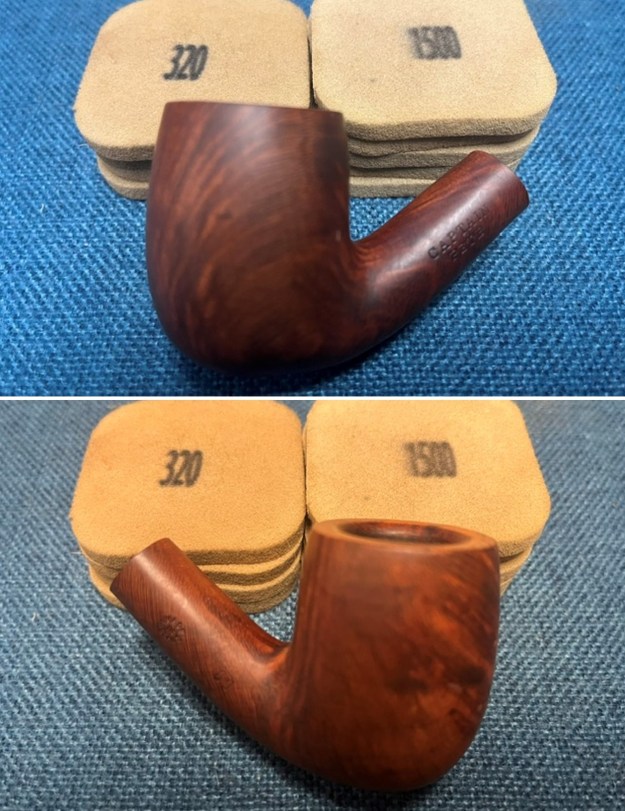
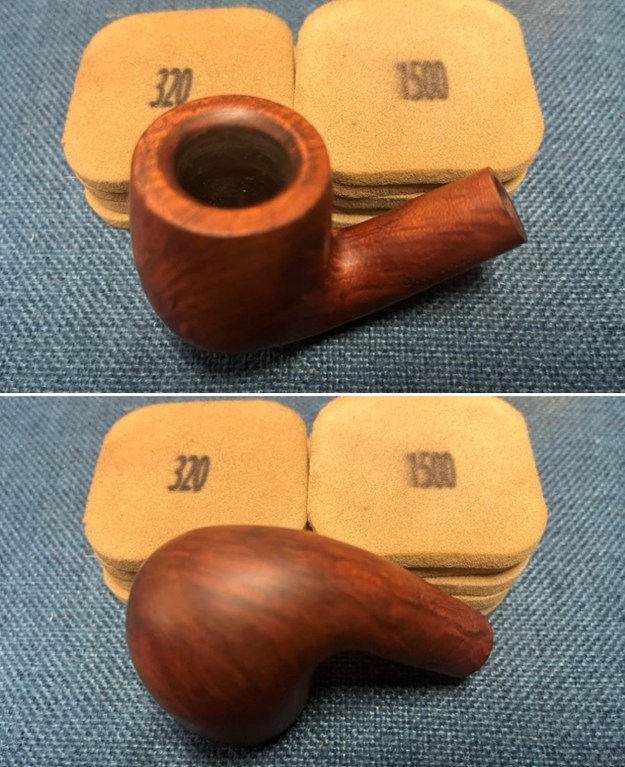
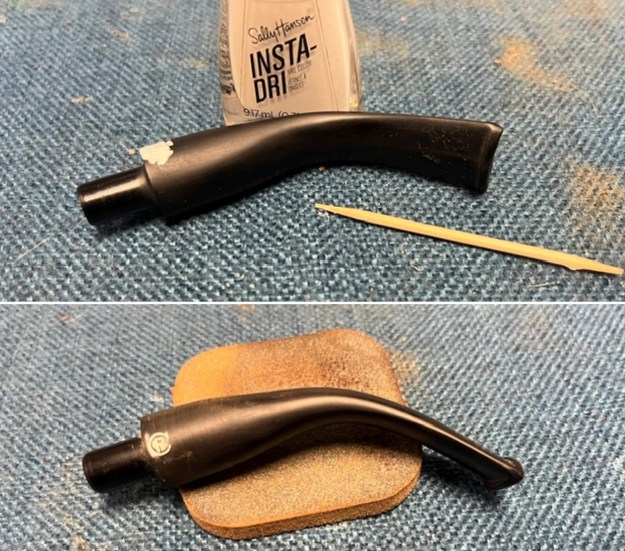
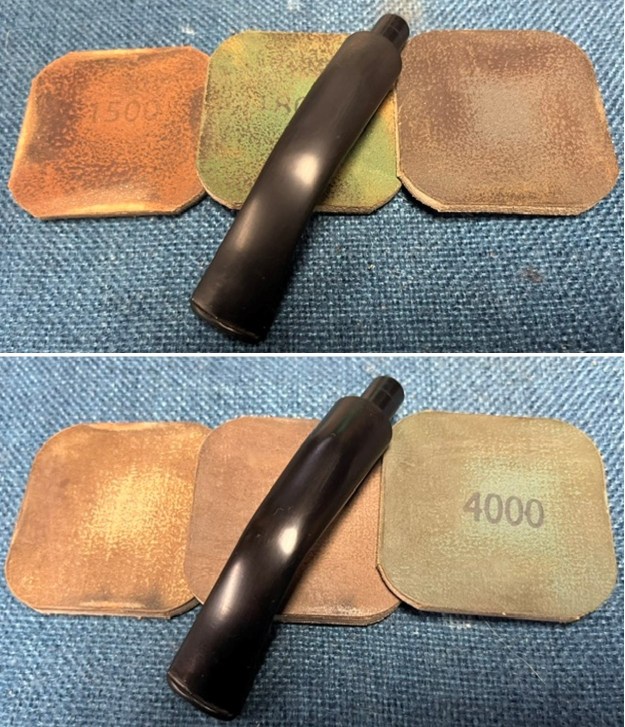
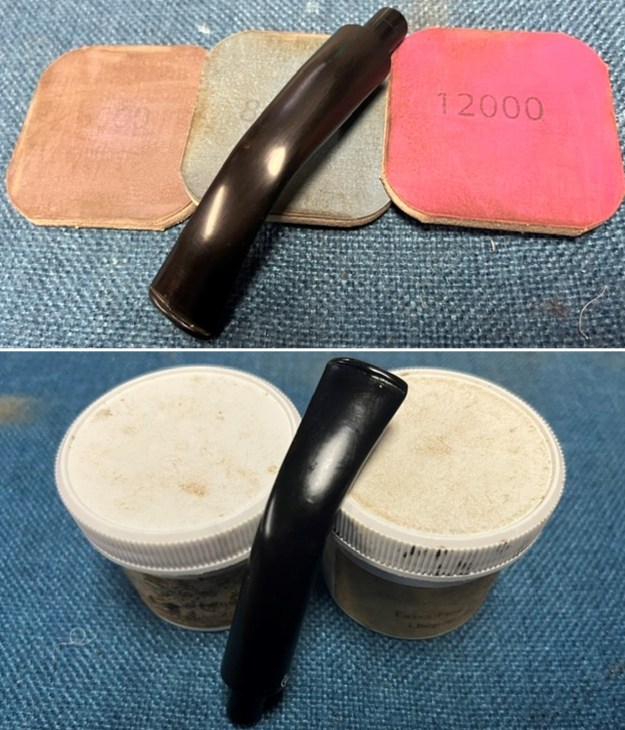
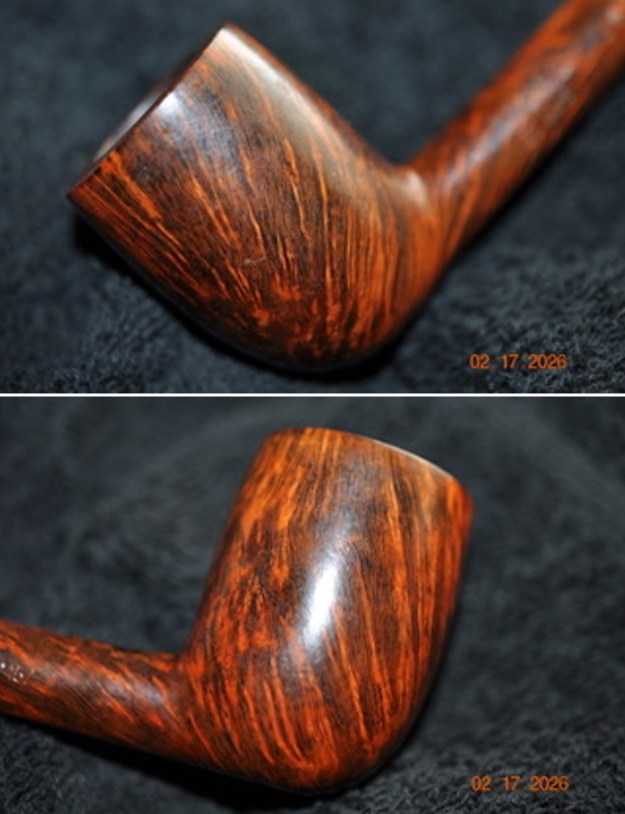
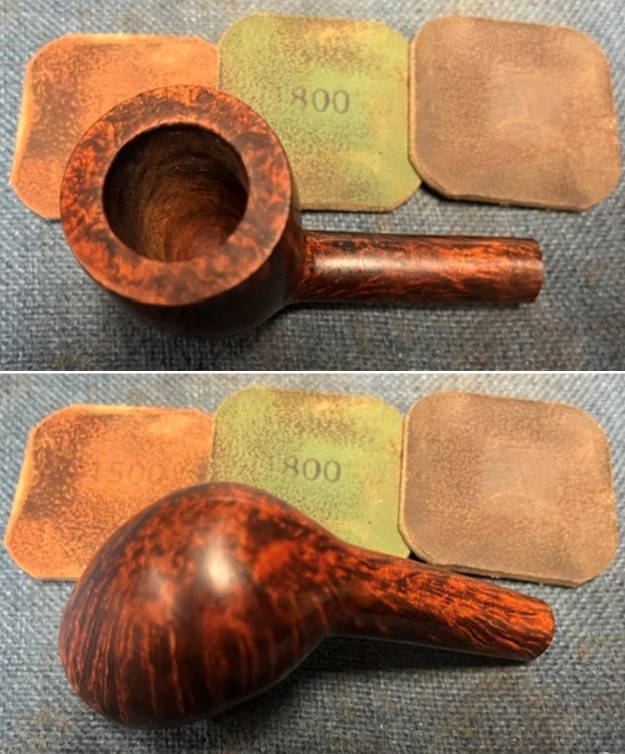
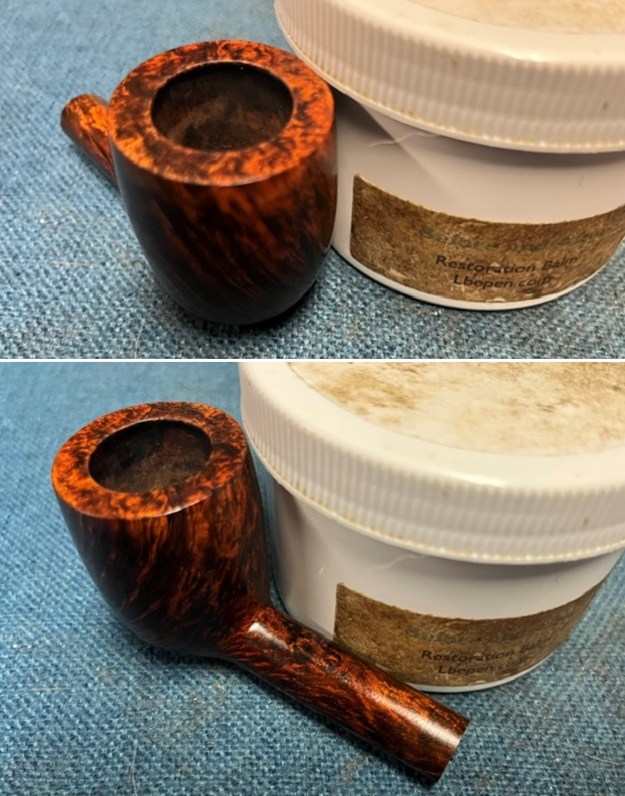
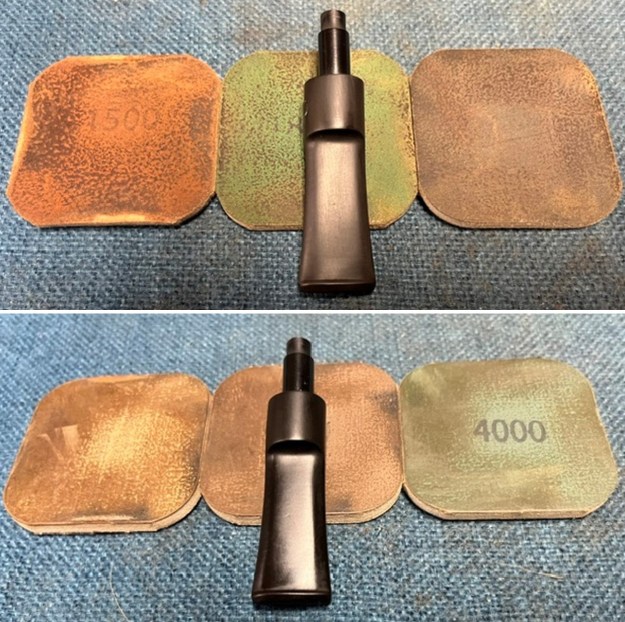
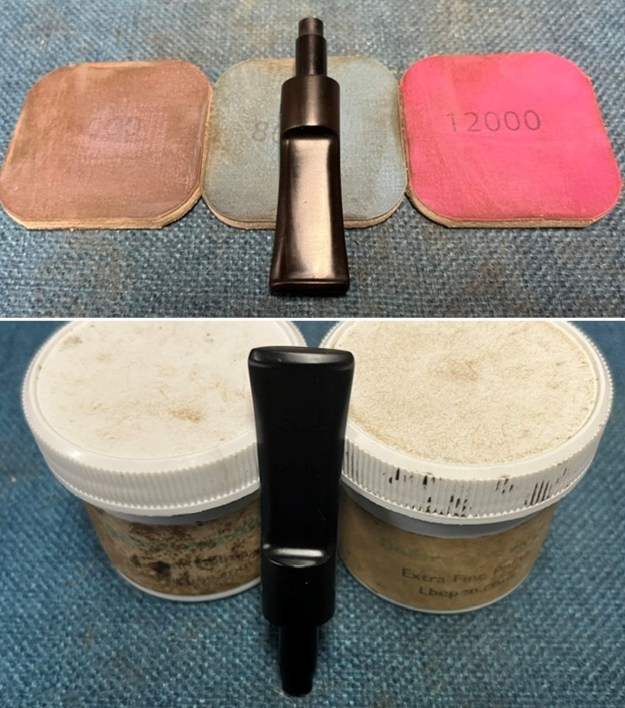
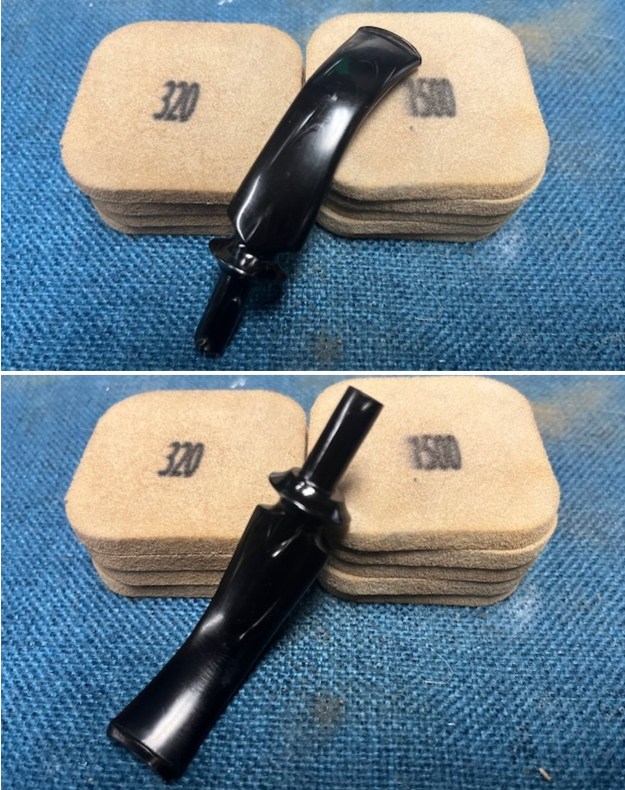
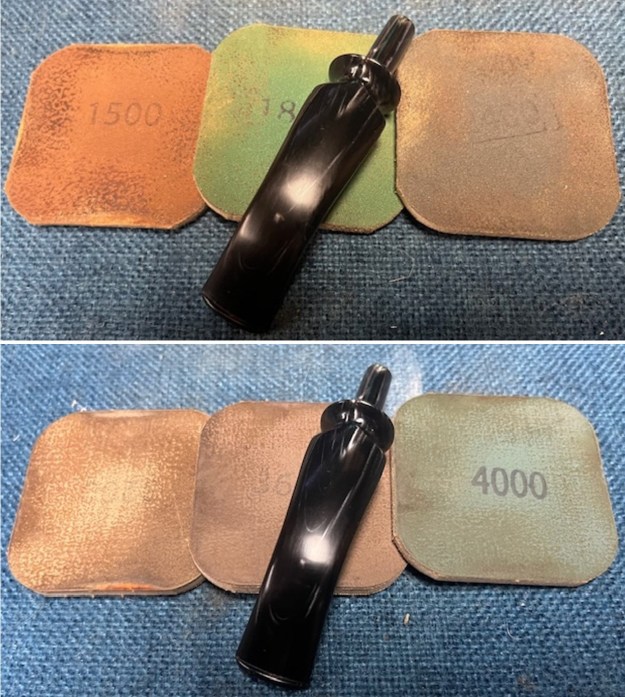
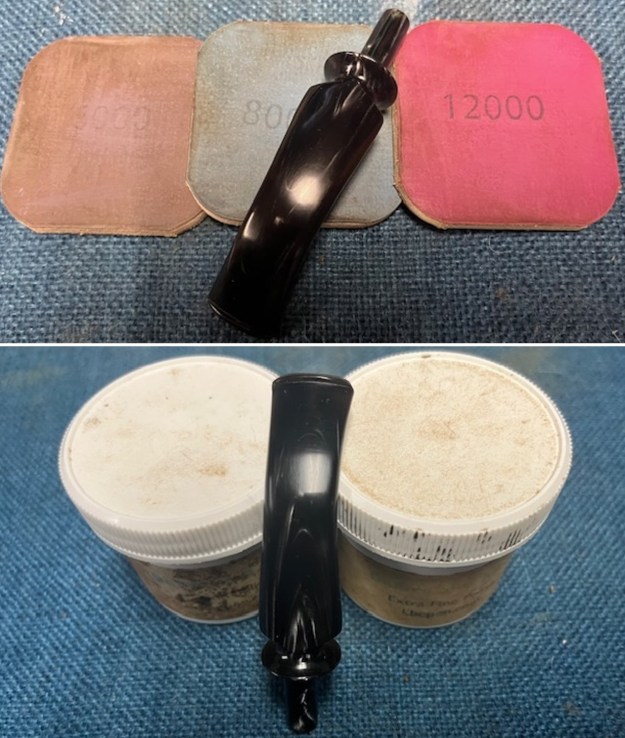
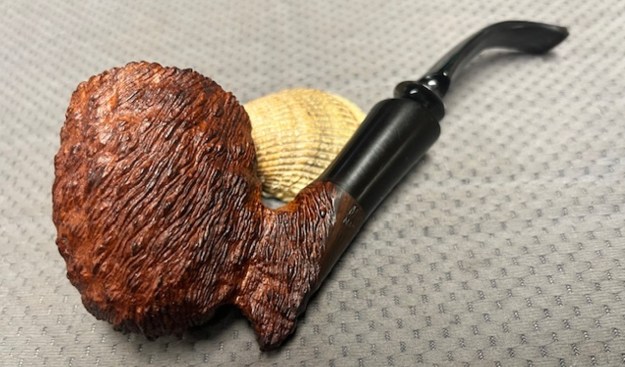
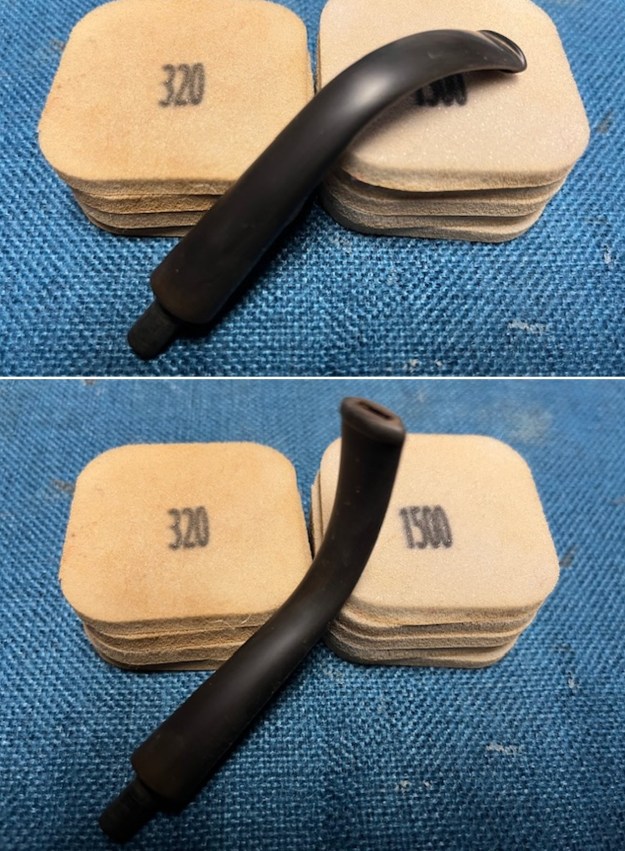
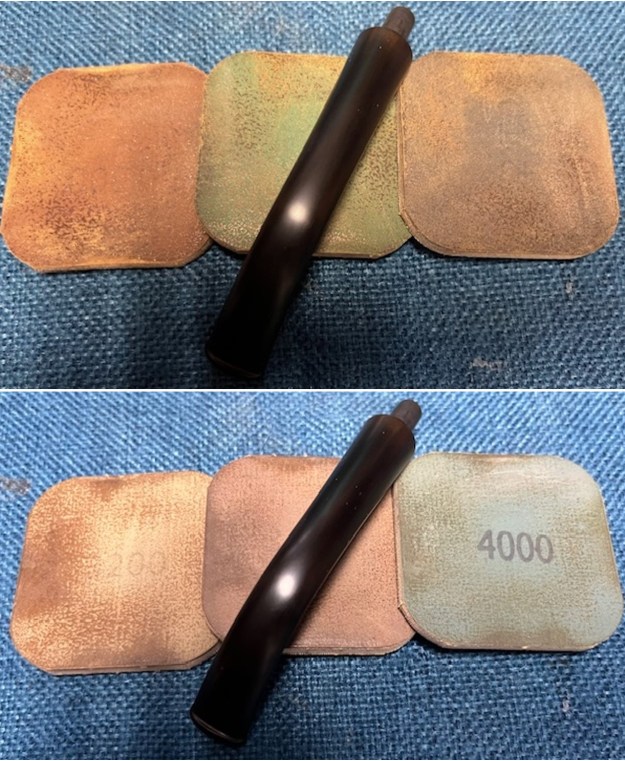
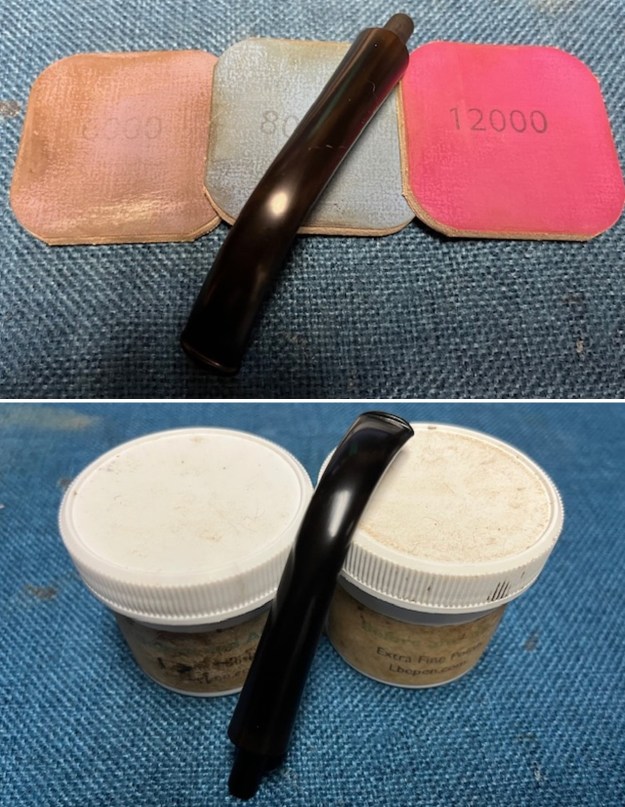
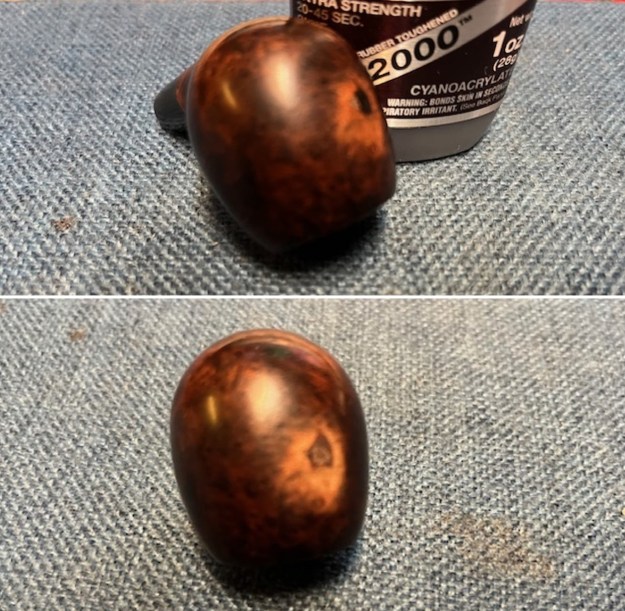
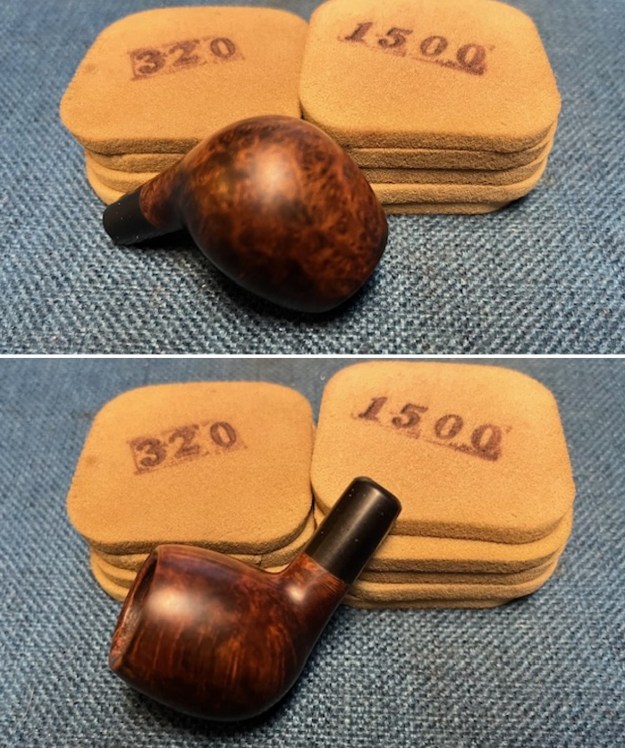
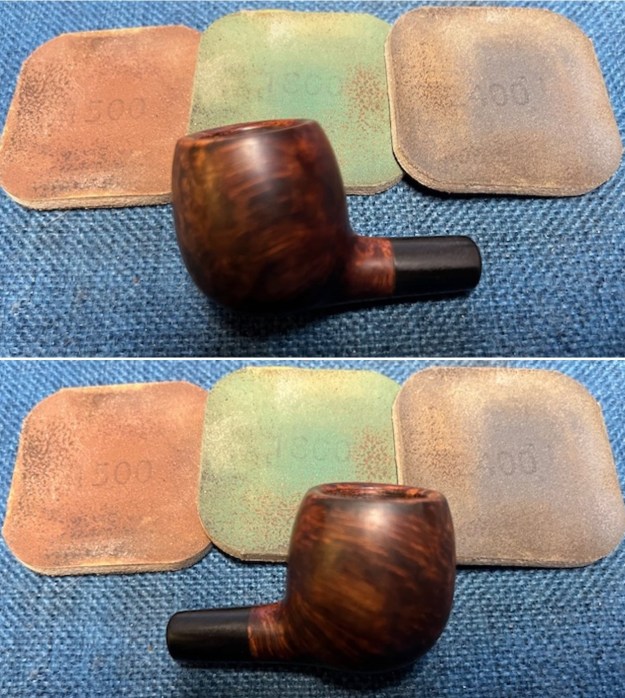
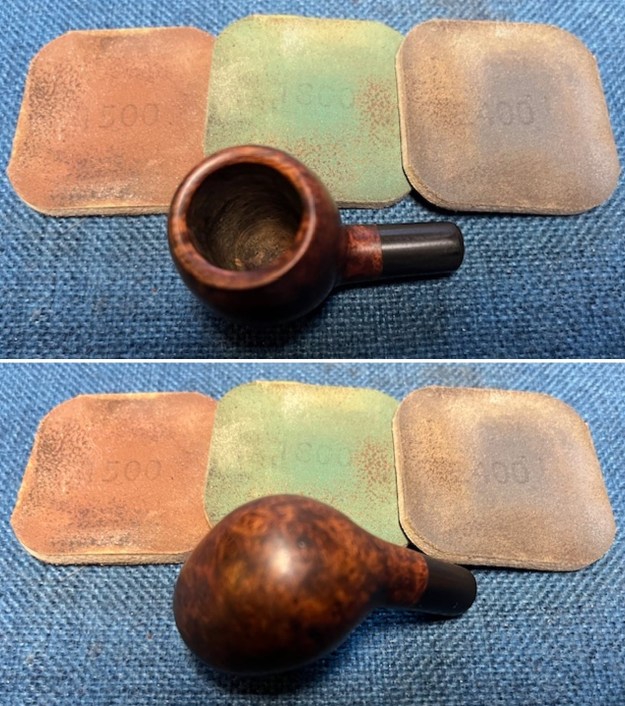
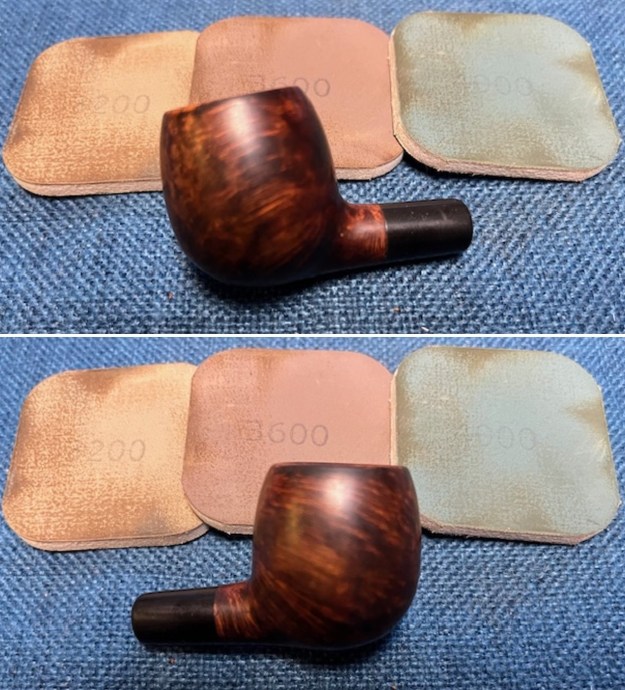
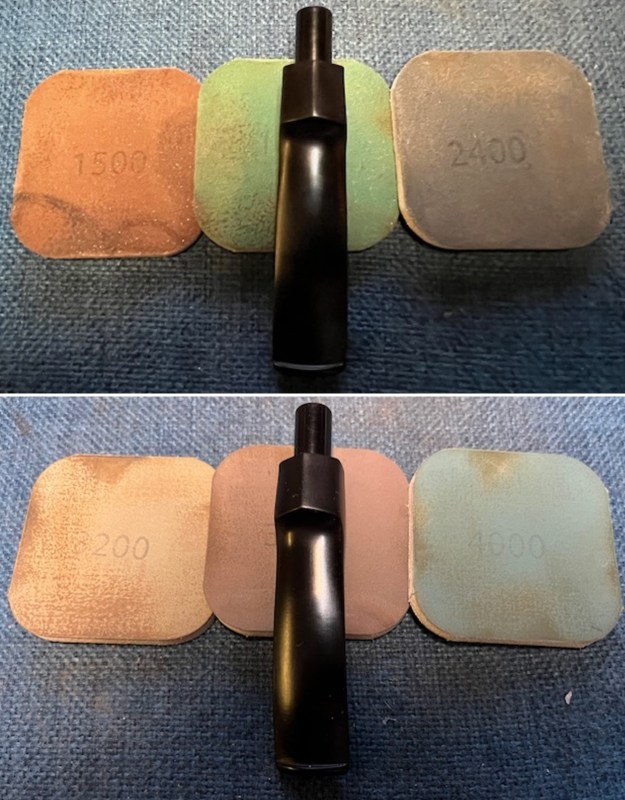
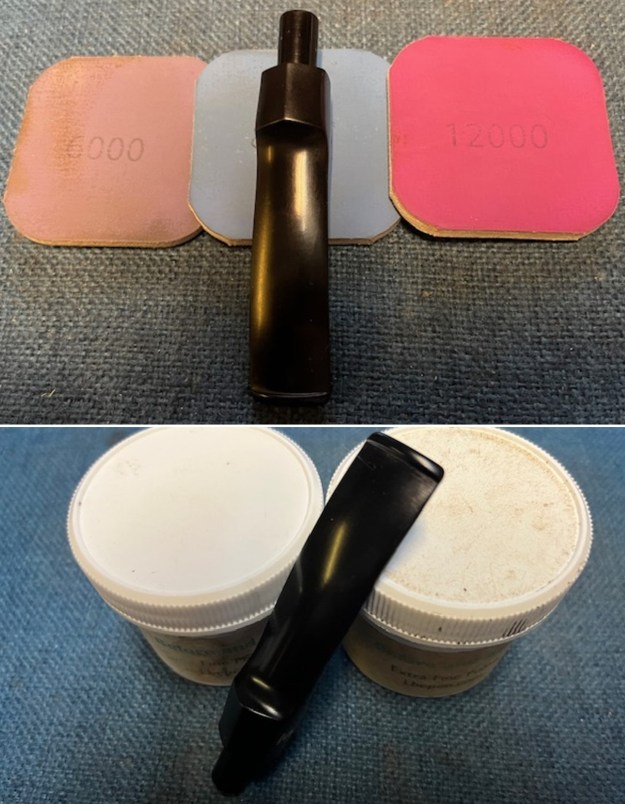
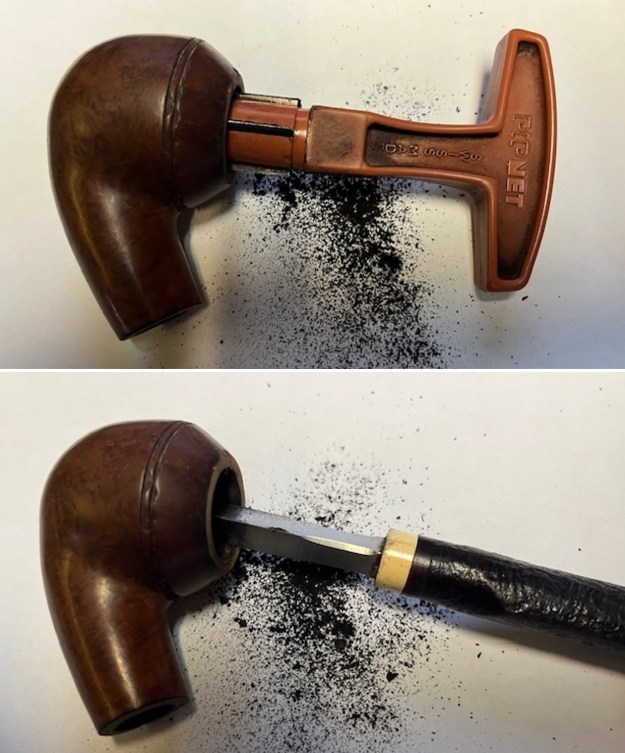
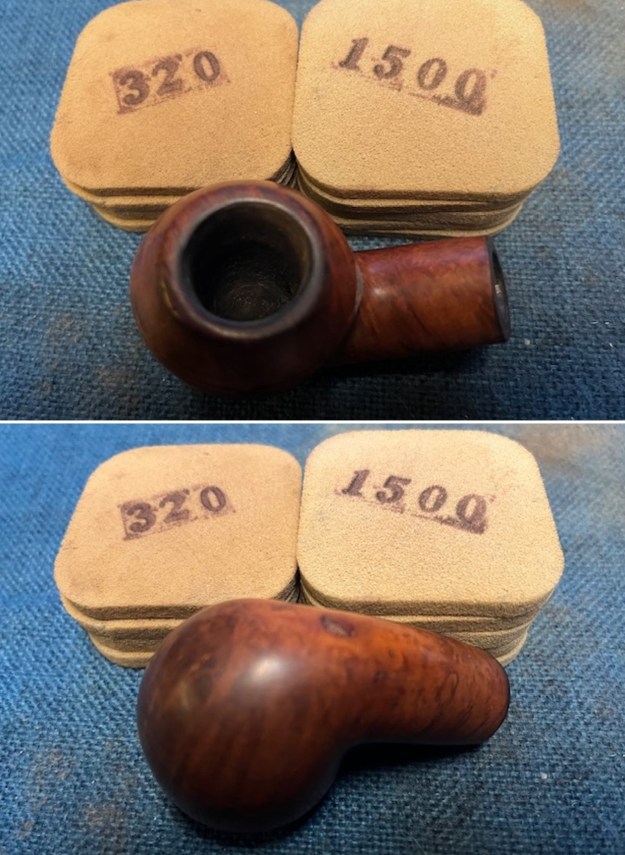
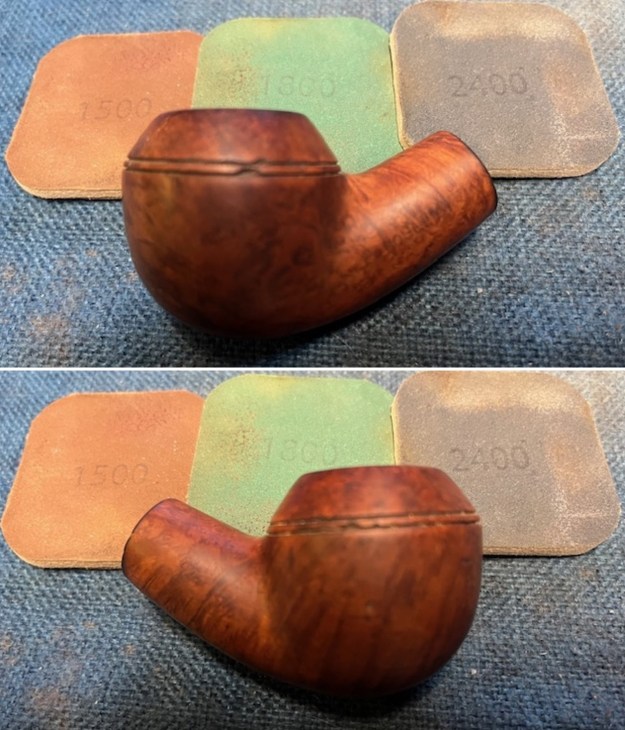
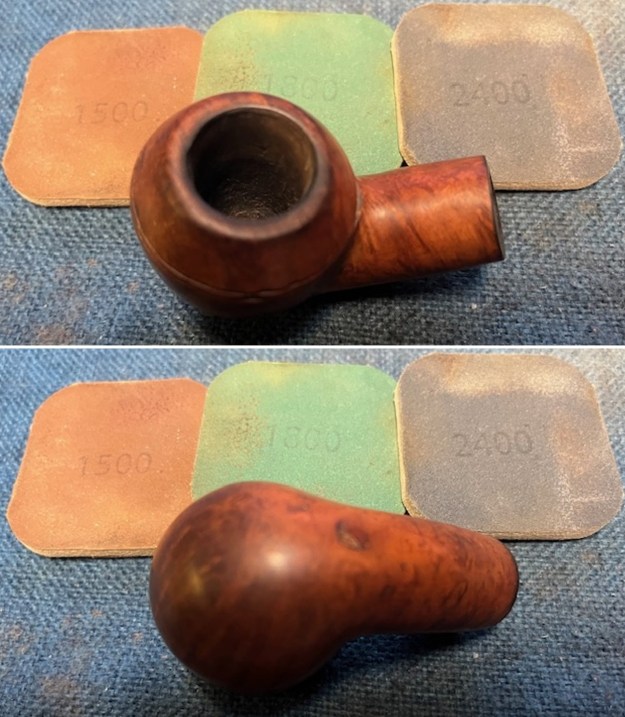
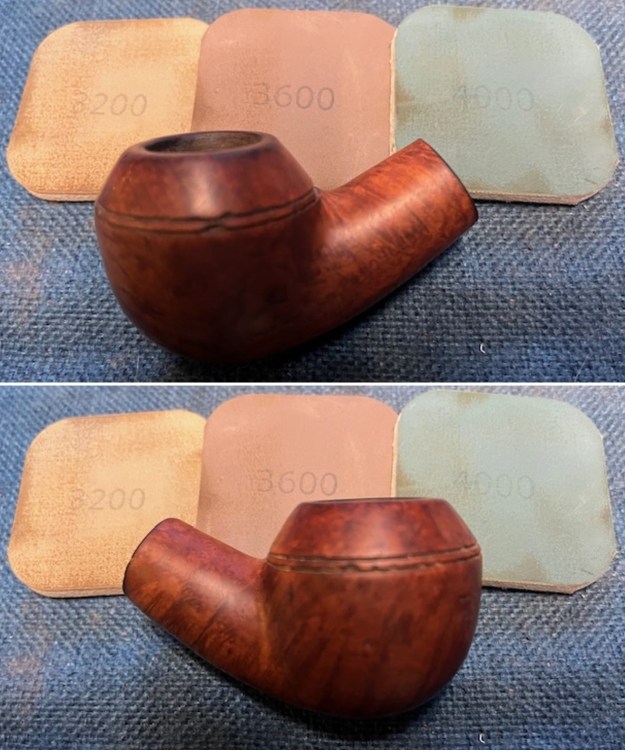
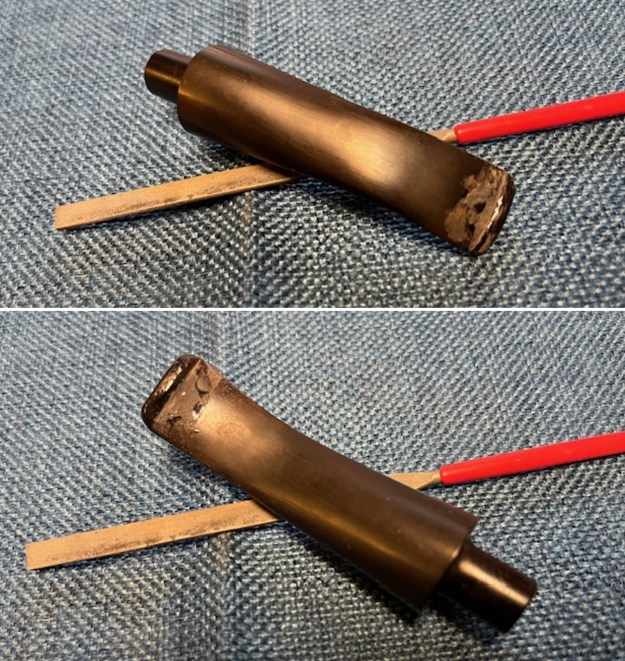
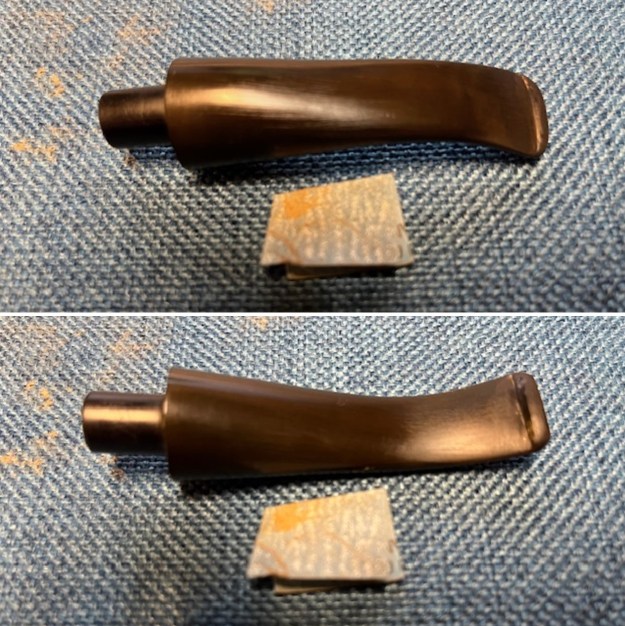
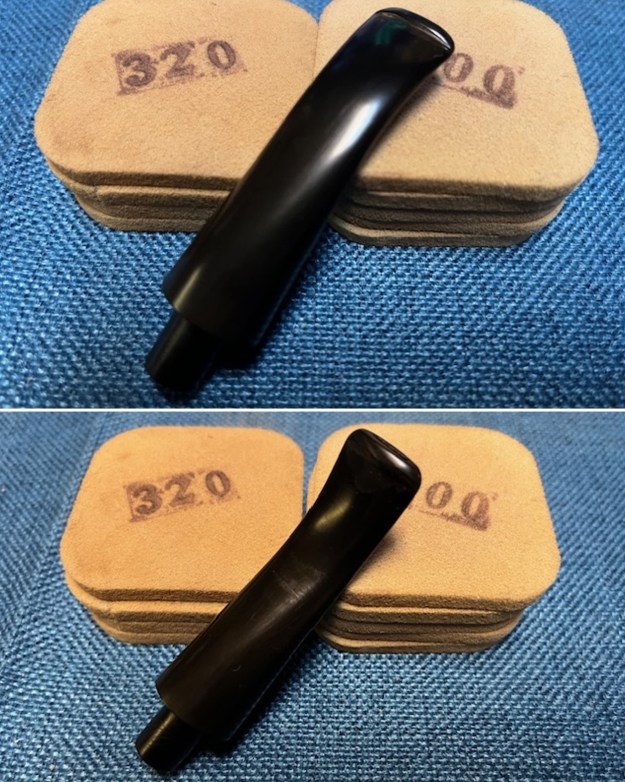
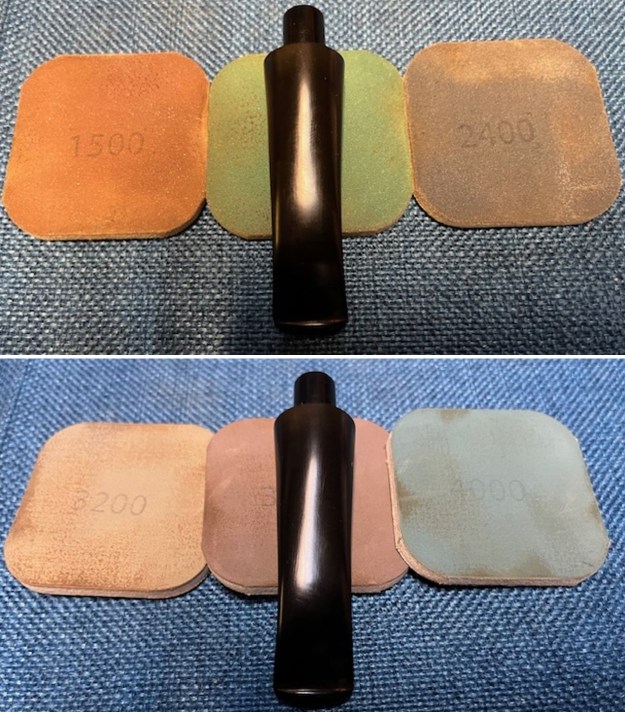
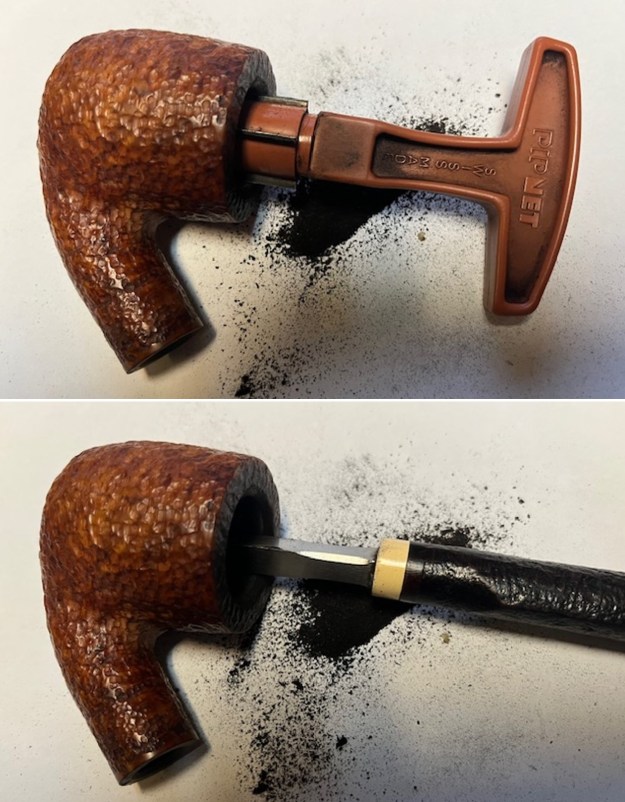
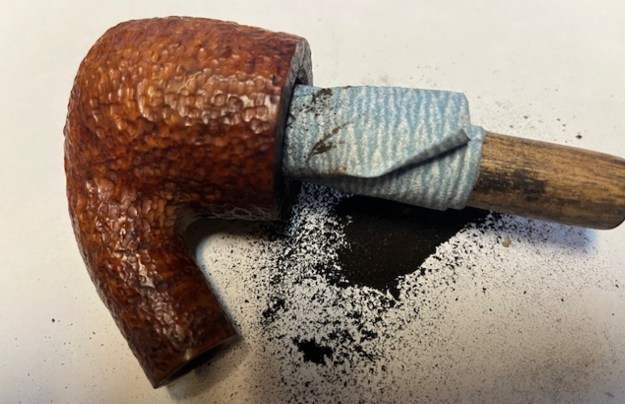
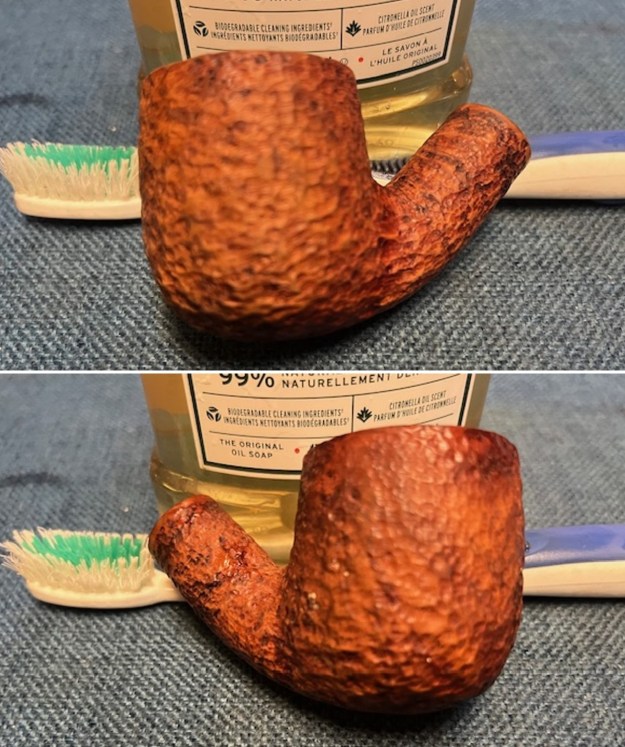
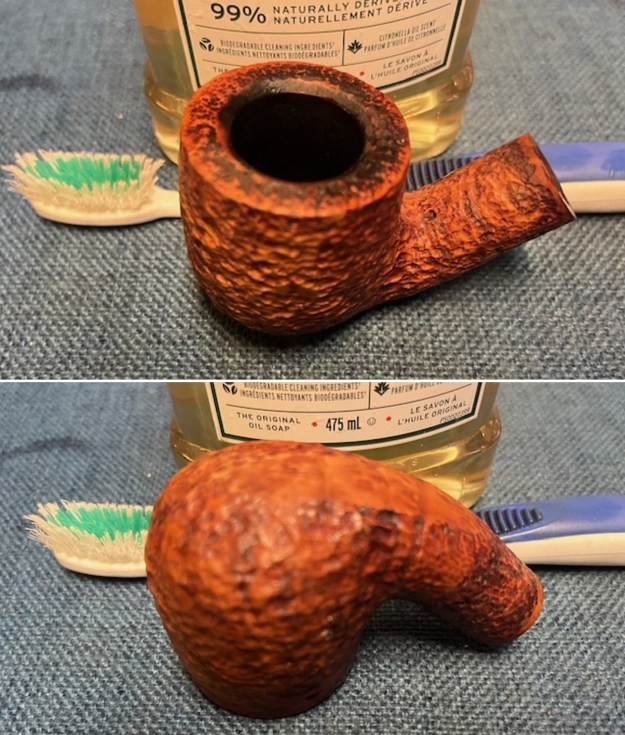
Now it was time to work on the pipe. Since Jeff always follows the same pattern of work in his cleanup we do not include photos but rather just a simple summary. Jeff reamed the bowl with a PipNet pipe reamer and followed up with a Savinelli Fitsall pipe knife to remove the cake. He scrubbed out the mortise and the airway in the shank and the stem with alcohol, cotton swabs, shank brushes and pipe cleaners. He scrubbed the exterior of the bowl, rim, shank and stem with a tooth brush and Murphy’s Oil Soap to remove the oils and tars on the rim and the grime on the finish of the bowl. He rinsed it under running water. He dried it off with a soft cloth. He was able to remove the spotty lava build up on the rim top and you could see the marks on the top and edges of the rim. He soaked it in Briarville’s Pipe Stem Deoxidizer and rinsed it with warm water to rinse off the residue. The stem was clean and the oxidation was gone. I took photos of what the pipe looked like when I brought to my worktable. I took close up photos of the bowl, rim top and stem to show how clean the pipe was. The bowl was clean and the rim top and the inner edge looked good. The stem was clean and there were light tooth marks on the top and underside of the stem.I took photos of the stamping on the sides of the shank and is readable as noted above. I also removed the stem from the shank and took photos of the pipe to show the look of the parts. I sanded the bowl with 320-3500 grit 2×2 inch sanding pads. I wiped it down with a damp cloth after each sanding pad to remove the debris. It began to look very good. I polished the briar with micromesh sanding pads – dry sanding the bowl and shank with 1500-12000 grit pads and wiping it down with a damp cloth between each sanding pad. The bowl took on more of a shine with the completion of each sanding pad. I worked some Before & After Restoration Balm into the briar with my fingertips. I let it sit on the bowl for 15 minutes. I buffed it off with a soft cotton cloth to raise the shine. It was a beautiful piece of briar. With the bowl finished other than the final buffing I set it aside and turned my attention to the stem. I filled in the deep tooth marks on the button edge and the top and underside of the stem with a black extra strength rubberized CA glue. Once it cured I flattened the repairs with a small file and followed that up with a folded piece of 220 grit sandpaper. I sanded the stem surface with 320-3500 grit 2×2 inch sanding pads. I wiped it down with a cloth impregnated with Obsidian Oil after each sanding pad to remove the debris. It began to look very good.I touched up the logo the left side of the stem with some white acrylic fingernail polish. Once it dried I sanded off the excess and the logo looked very good. I polished it with micromesh sanding pads – dry sanding with 1500-12000 grit pads. I wiped the stem down between each pad with a cloth impregnated with Obsidian Oil. By the final pad the pipe stem looked very good.  I am excited to finish the easy restoration of this Captain Pete Made in Ireland 69 Bent Billiard. I put the pipe back together and buffed it with Blue Diamond on the buffing wheel. I gave the bowl and the stem multiple coats of carnauba wax. I buffed the pipe with a clean buffing pad to raise the shine and hand buffed it with microfiber cloth to deepen the shine. It is fun to see what the polished bowl looks like with the polished black, taper vulcanite stem was beautiful. This Captain Pete Made in Ireland 69 Bent Billiard turned out very well and feels great in my hand. It is light and well balanced. Have a look at it with the photos below. The dimensions are Length: 5 ½ inches, Height: 1 ¾ inches, Outside diameter of the bowl: 1 ¼ inch, Chamber diameter: ¾ of an inch. The weight of the pipe is 1.55 ounces/44 grams. It is a beautiful pipe and one that I will be putting on the rebornpipes store in the Irish Pipe Makers Section. If you are interested in carrying on the trust of this let me know through a message or an email to slaug@unserve.com . Thanks for walking through the cleanup with me as I worked over this pipe.

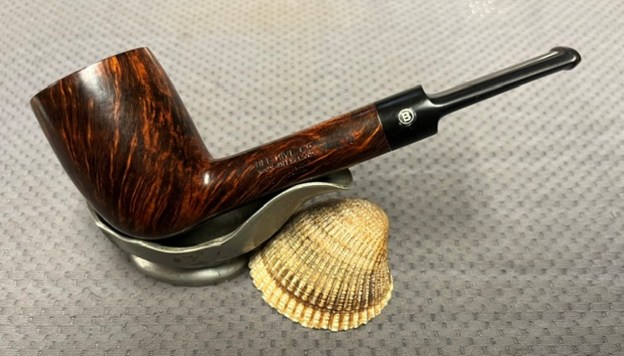
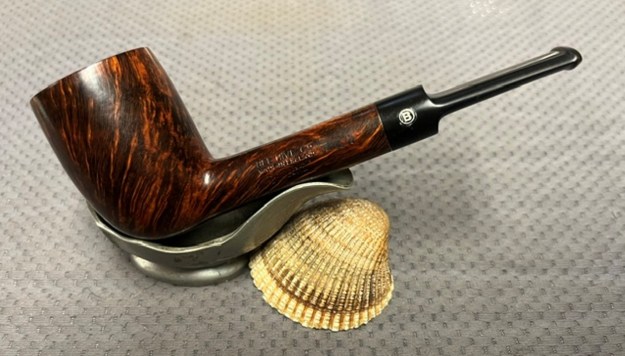
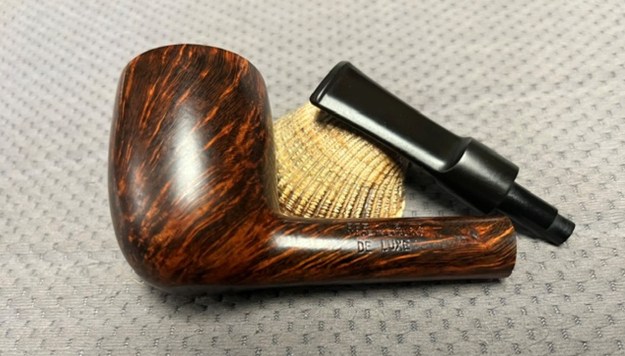
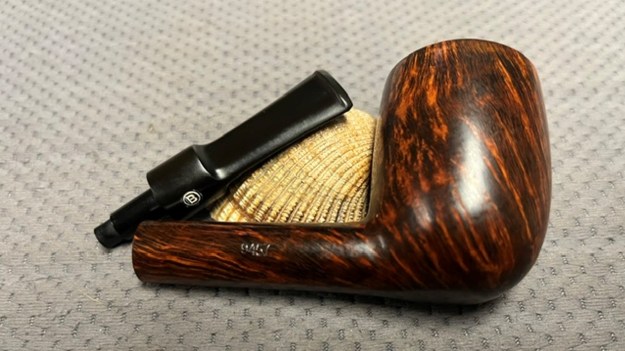
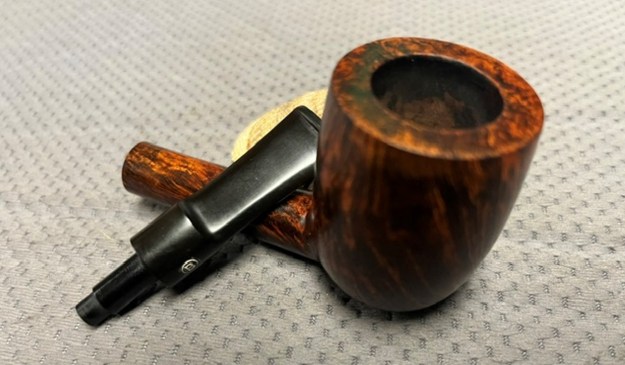
Restoring a Bee Hive Co. Made in England De Luxe 9457 Lovat


By Steve Laug

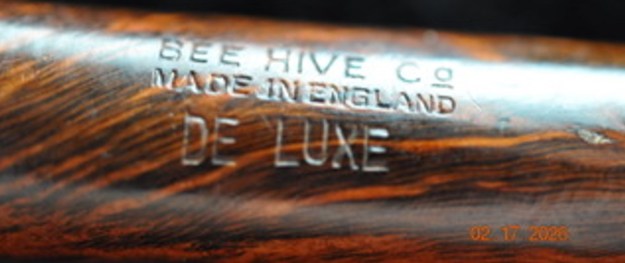
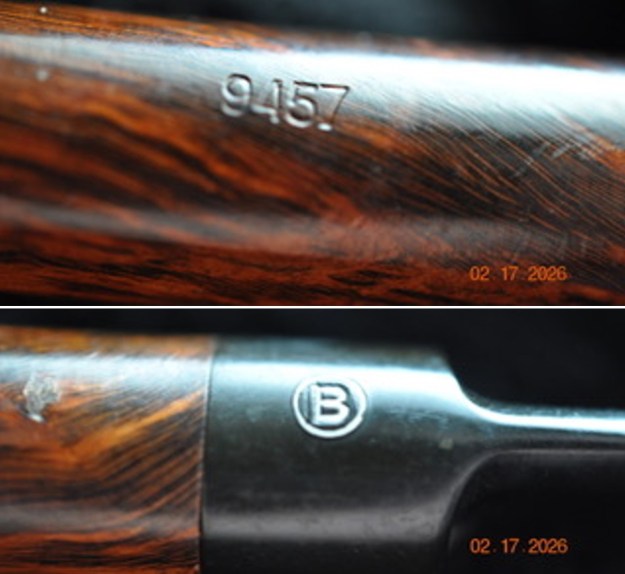
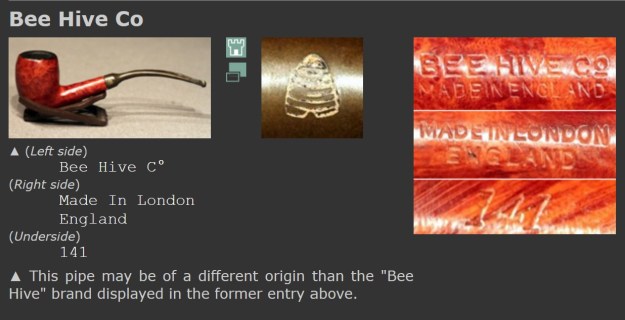
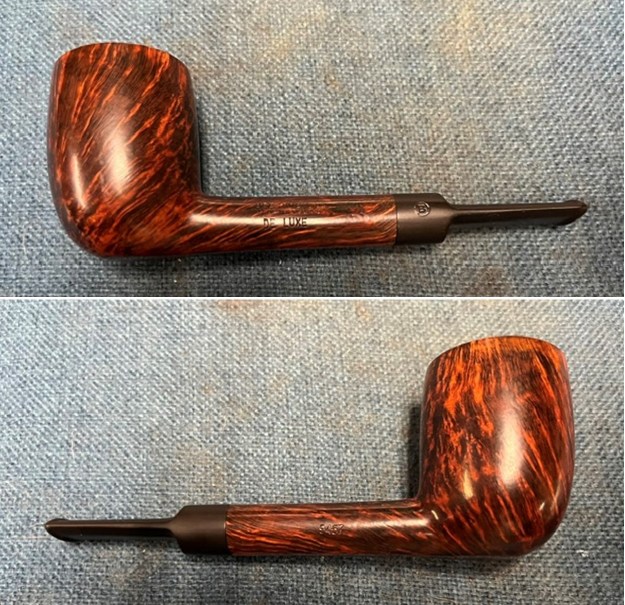
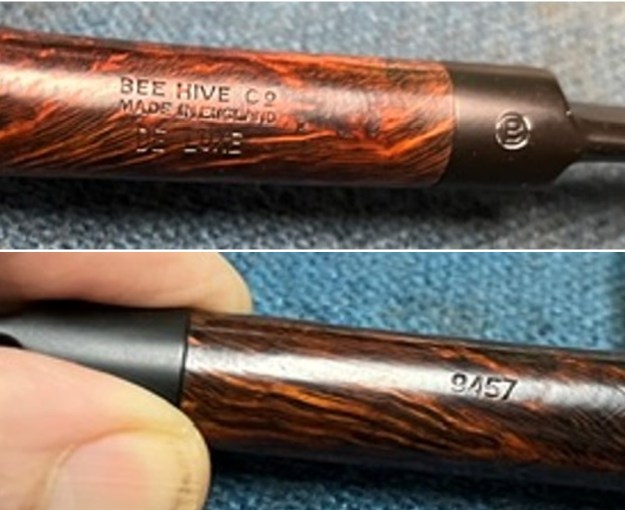
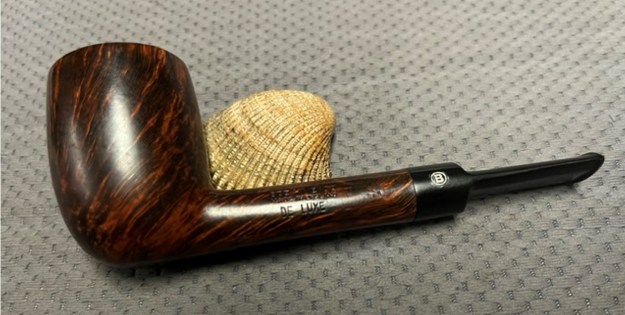
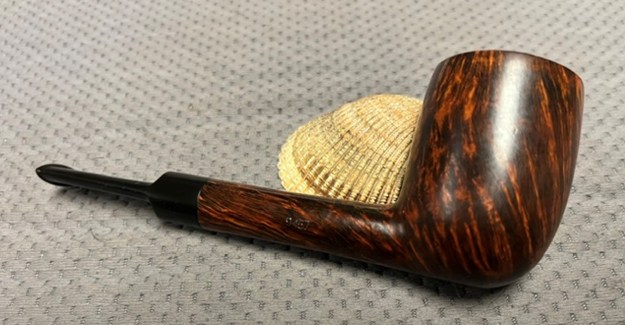
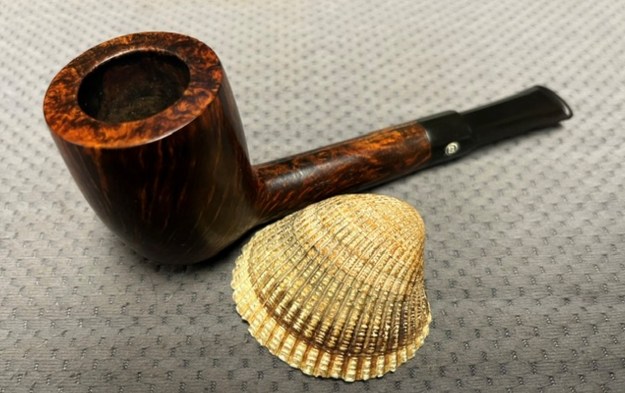
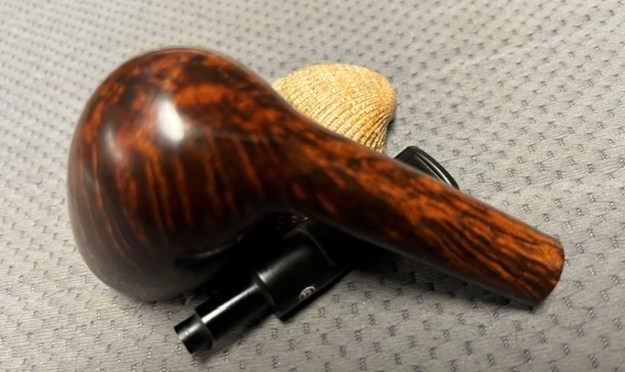
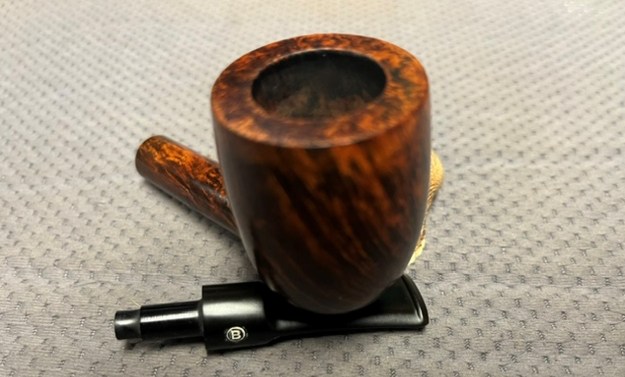
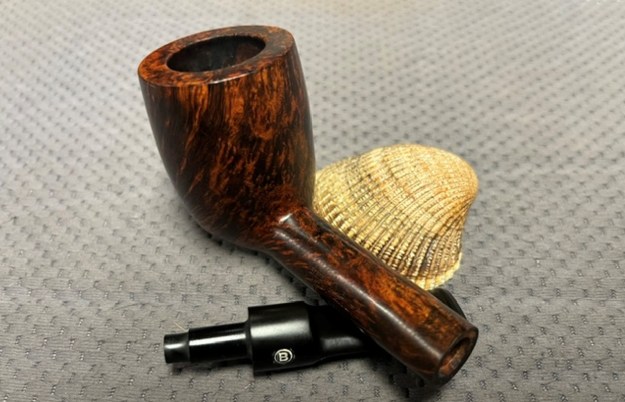
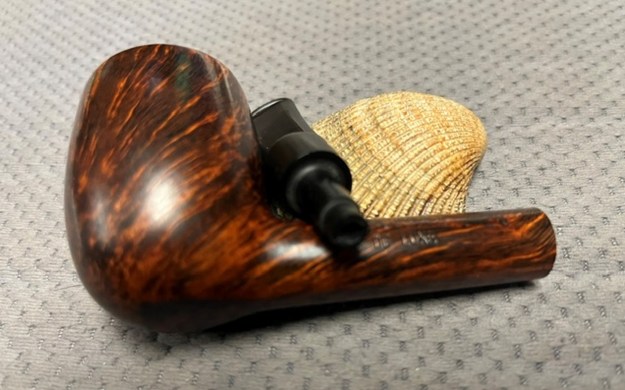
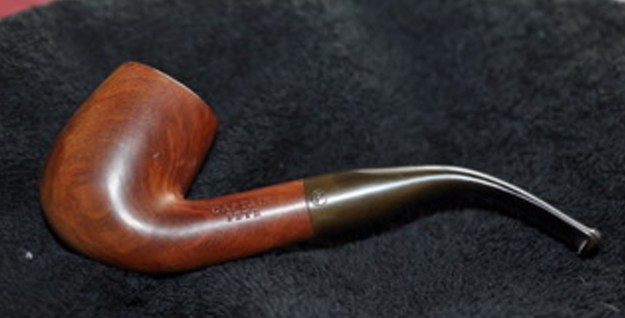
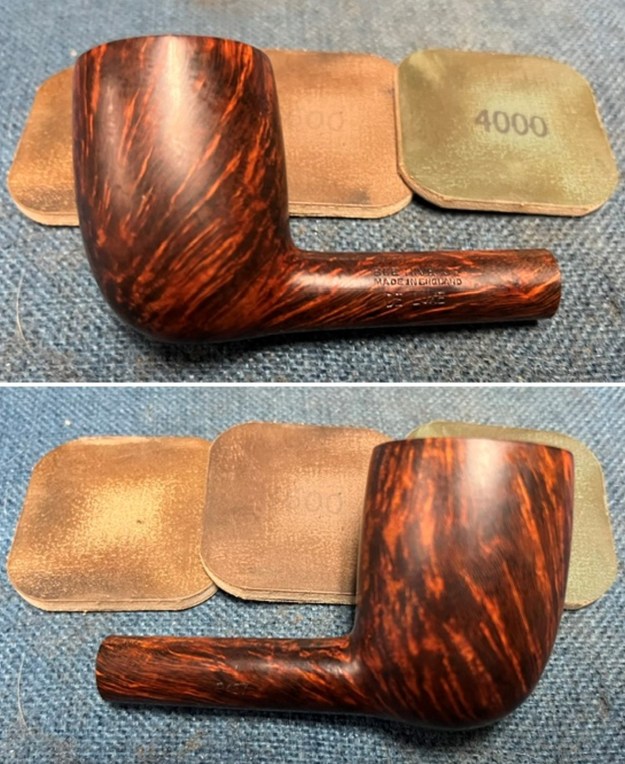
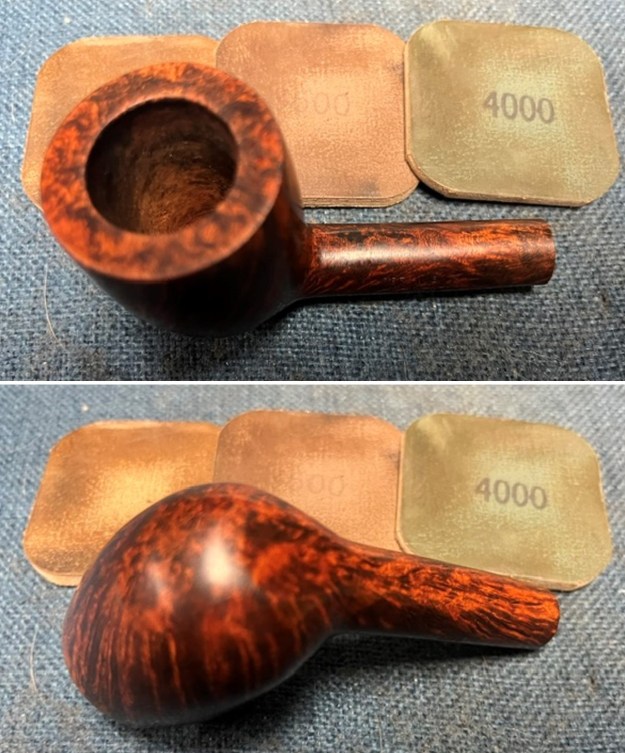
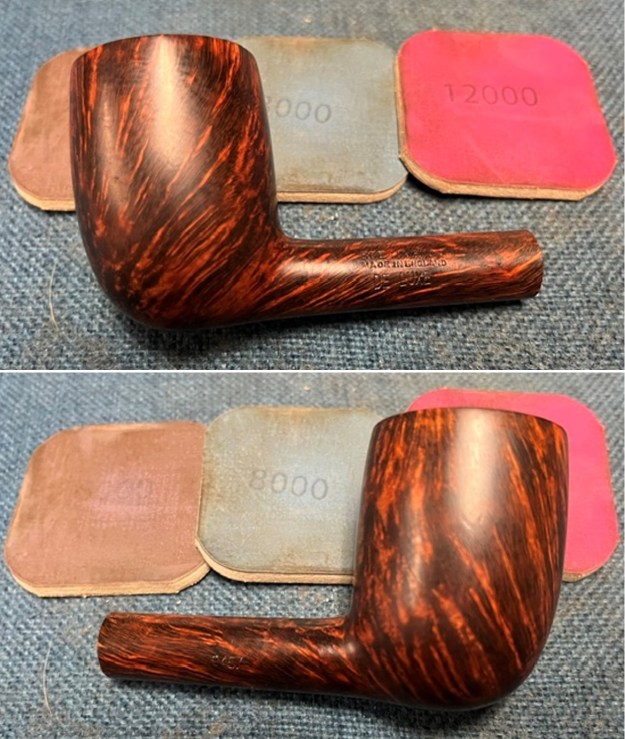
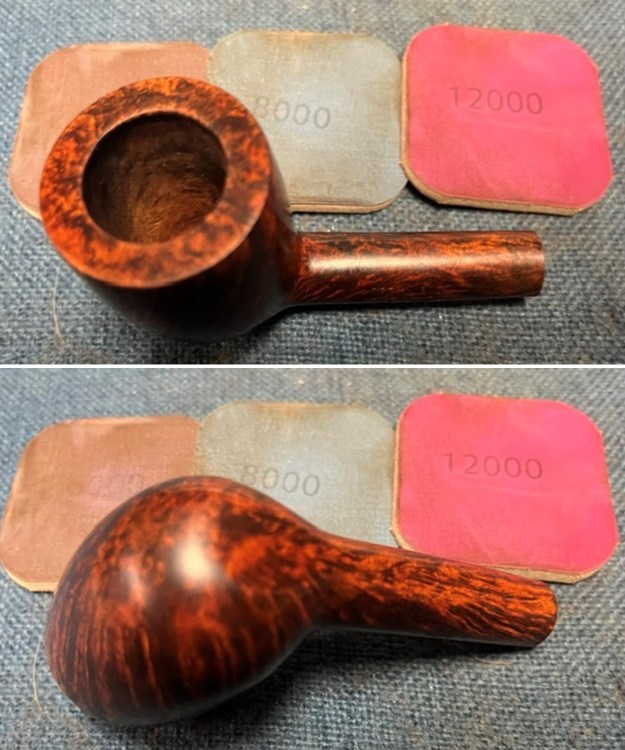
This darker beautifully grained saddle stem Lovat was purchased on 01/20/2026 from a Facebook seller in Quaker Town, Pennsylvania, USA. It is a great looking Lovat with a dark, smooth finish on the bowl and shank. The stem is a vulcanite saddle stem. The bowl is stained with a contrast of blacks and browns that highlight the grain around the bowl and shank. It is stamped on the left side of the shank and reads Bee Hive Co [over] Made In England [over] De Luxe. On the right side of the shank it is stamped 9457 which is the shape number. The bowl had a thick cake around the top half of the bowl and some raw briar on the bottom half of the bowl. The rim top was quite clean and clear. There was grime ground into the finish which left the finish looking quite dull. The vulcanite saddle stem has a B in a circle on the left side of the saddle. There was some light oxidation on the surface and some light tooth marks and chatter on both sides of the stem ahead of the button. Jeff took photos of the pipe before he started his work on it.   He took photos of the rim top to show the condition of the top and edges of the bowl. It is dull but quite clean with no lava. It is uniquely a beautiful pipe. The stem had light tooth marks and chatter on both sides ahead of the button. He took photos of the sides and heel of the bowl to show the finish around the bowl and the condition of the pipe. You can see the grime ground into the surface of the briar. The stain combination really makes the grain stand out. I look forward to seeing it once it is clean and polished. He took photos of the stamping on the sides of the shank. It is clear and readable as noted above. The circle B stamp on the left side of the stem is also clear and readable. Before I started working on the pipe I did some research on the brand. I turned to my normal sites to see what I could learn about the Bee Hive Co. I turned first to PipePhil site to the listing on Bee Hive Co. (http://www.pipephil.eu/logos/en/logo-b3.html). I found a listing there and did a screen capture of the section. The stamping on the shank is the same but the logo on the one that I am working on is a circle B rather than a Beehive.From there I entered the following “Bee Hive Co. Made in England De Luxe 9457 Lovat” in Google search. The AI feature came up with the information below.
Based on the stamping “Bee Hive Co. Made in England De Luxe 9457 Lovat,” this is a classic tobacco pipe manufactured in England, likely originating from a secondary brand or a line produced by one of the major British pipe manufacturers in the mid-20th century.

Information on the Pipe:

  • Manufacturer: “Bee Hive Co.” is generally considered a lower-production, often export-focused, or sub-brand name rather than one of the “Big Three” British houses (like Dunhill, Comoy’s, or GBD).
  • Origin: “Made in England” indicates British manufacture, a hallmark of quality briar during the mid-20th century.
  • Grade: “De Luxe” suggests it was a higher-grade offering within their specific product line.
  • Shape (Lovat): A Lovat pipe is a classic shape featuring a straight stem (often saddle, but sometimes tapered) and a fairly substantial bowl, usually with a slightly shorter shank compared to a Liverpool.
  • Number (9457): This is the model number identifying this specific Lovat shape within the maker’s catalog.

From there I followed the path laid out by the shape number, 9457 to Pipedia’s article on GBD Shape numbers (https://pipedia.org/wiki/GBD_Shapes/Numbers). There I found the shape number listed as a Lovat with a straight round shank.

I knew that I was working on a GBD made Lovat with the Bee Hive Co. stamp on the shank. It has the look and feel of a GBD. Now it is time to work on the pipe.

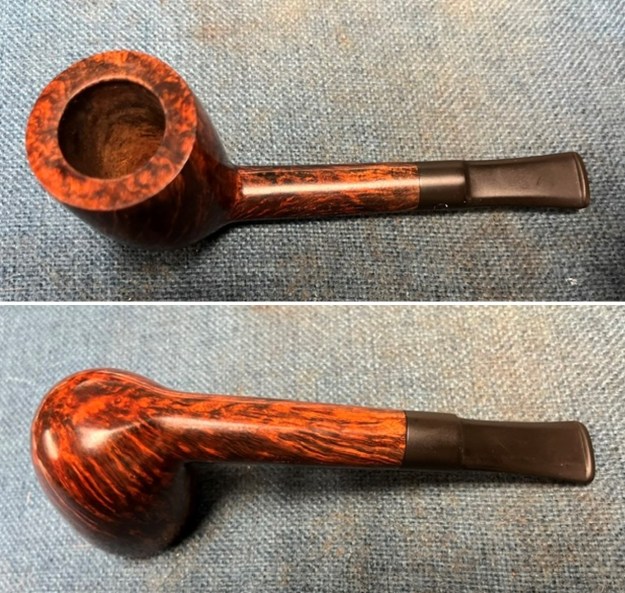
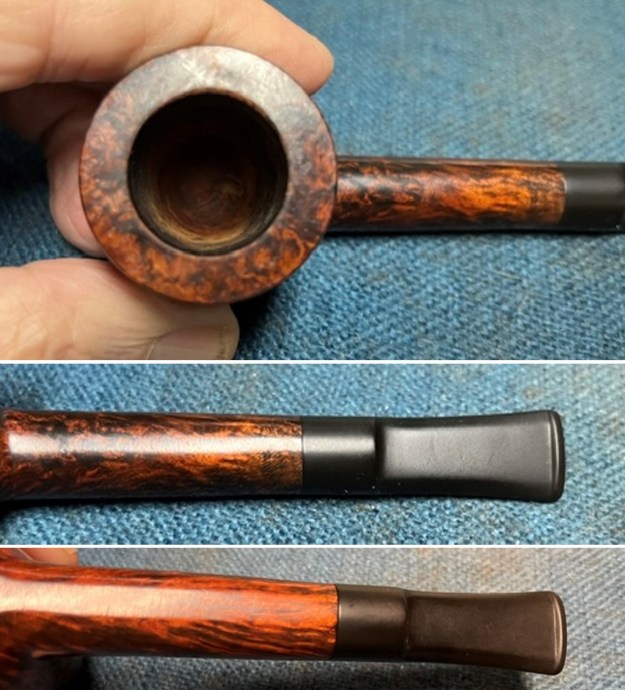
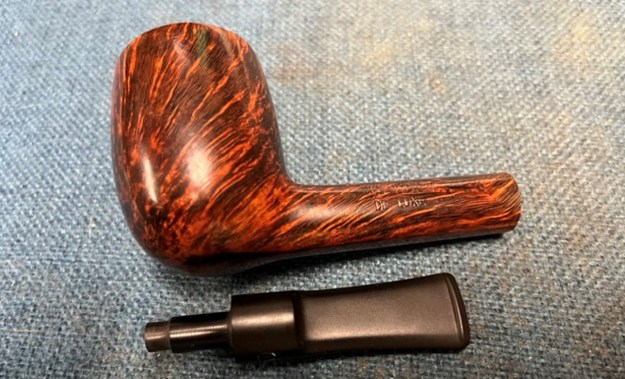
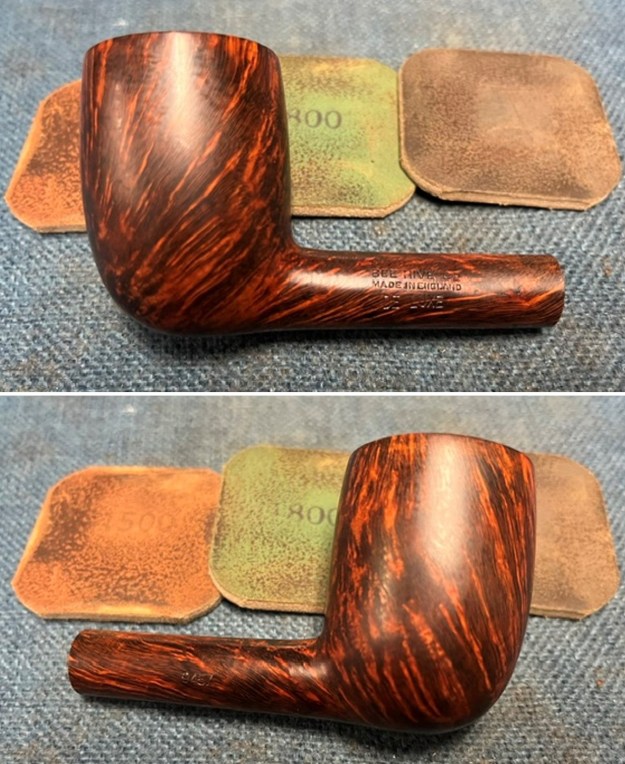
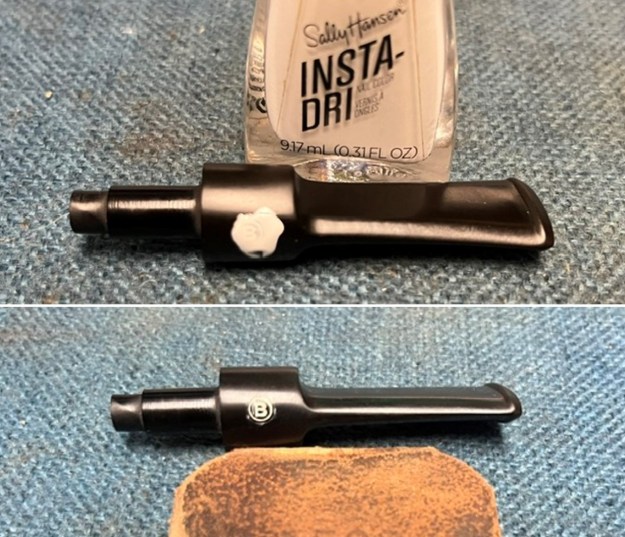
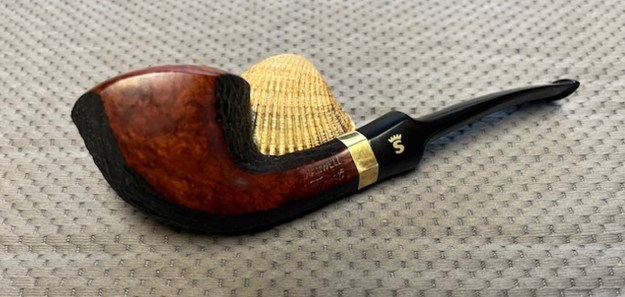
Jeff carefully reamed this pipe with a PipNet pipe reamer and then cleaned up the inside of the bowl with a Savinelli Fitsall Pipe Knife. He scrubbed the briar with undiluted Murphy’s Oil Soap and a tooth brush to remove the grime on the rim top and bowl sides. He scrubbed the internals of the shank and stem with pipe cleaners, cotton swabs, shank brushes and alcohol until the airways were clean and the pipe smelled fresh. He scrubbed the stem with Soft Scrub to remove the oxidation and then let it soak in Briarville’s Pipe Stem Deoxidizer. He rinsed it with warm water when he took out of the soak. The pipe looked much better once the bowl and stem were clean. Before I started my part of the work I took photos of the pipe. It is a pretty pipe. I took close up photos of the bowl and the rim top to show the condition. It looked better and the inner edge and top were in very good condition. I also took photos of both sides of the stem to give a sense of the condition of both sides at the button. There were light tooth marks on both sides ahead of the button.I took photos of the stamping on the sides of the shank and stem. It reads as noted above and is very clear and readable. The circle B logo on the stem is faded but should be easy to repair. I took the stem off the shank and took photos of the pipe to give a sense of its beauty and proportions. I polished the bowl and rim top with micromesh sanding pads – dry sanding with 1500-12000 grit pads and wiped down the bowl down with a damp cloth after each sanding pad. The finish looked very good. I rubbed the bowl and shank down with Before & After Restoration Balm. I worked it into the surface of the bowl sides and shank with my fingertips to get it into the grain. The product works to clean, enliven and protect the briar. I let the balm sit for a little while and then buffed with a cotton cloth to raise the shine. The Balm did its magic and the grain stood out. I set the bowl aside and turned to the stem. It was in fairly good shape so I began working on it by dealing with the logo stamp. I touched up the Circle B stamp on the left side of the saddle stem with white acrylic fingernail polish. I worked it into the stamp with a tooth pick. Once it cured I scraped off the excess and went over it with a  1500 grit micromesh pad.I polished the stem with micromesh sanding pads – dry sanding with 1500-12000 grit sanding pads. I wiped it down after each sanding pad with Obsidian Oil. I polished it with Before & After Pipe Stem Polish – both Fine and Extra Fine. I gave it another coat of Obsidian Oil and set it aside to dry. I am excited to put the final touches on this interesting piece of British Pipe History. It is a beautiful GBD Made Bee Hive Co De Luxe 9457 Lovat shaped pipe. I put the pipe back together and buffed it with Blue Diamond on the buffing wheel. I gave the bowl and the stem multiple coats of carnauba wax. I hand buffed the pipe with a clean buffing pad to raise the shine. It is fun to see what the polished bowl looks like with beautiful grain on the bowl sides, top and bottom. The polished black vulcanite stem combined with the bowl to make a stunning pipe. This Bee Hive Co De Luxe 9457 Lovat is great looking and the pipe feels great in my hand. It is light and well balanced. Have a look at it with the photos below. The dimensions are Length: 5 ½ inches, Height: 2 inches, Outside diameter of the bowl: 1 ½ inches, Chamber diameter: ¾ of an inch. The weight of the pipe is 43 grams/1.52 ounces. I will be adding it to the British Pipemakers Section of the rebornpipes store shortly. If you want to add it to your collection let me know. Thanks for walking through the restoration with me as I worked over this pipe. Thanks to each of you who are reading this blog.

A Lovely Monte Verde Made in Denmark By Hand Golden Tan Rusticated Bent Egg


by Steve Laug

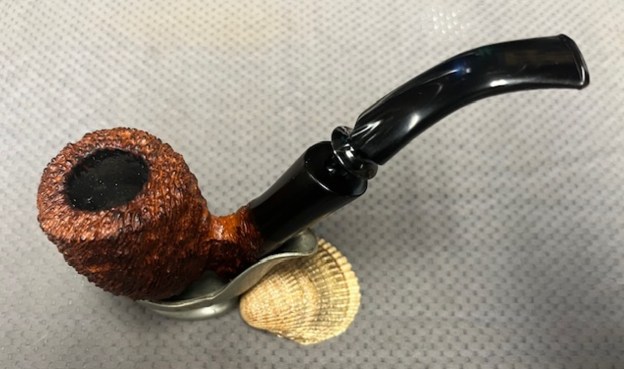
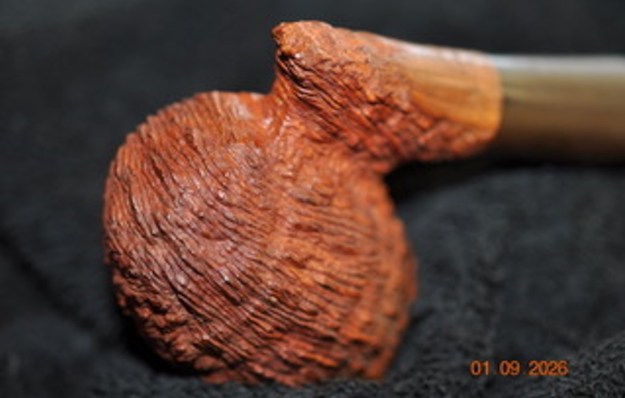
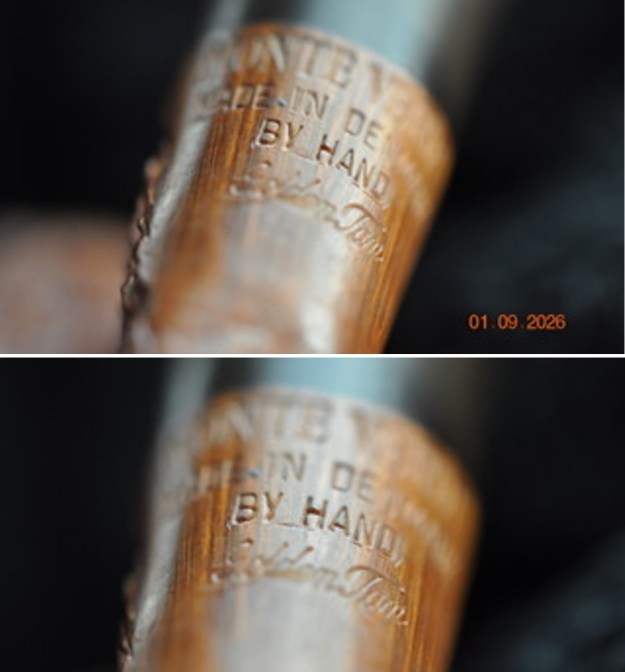
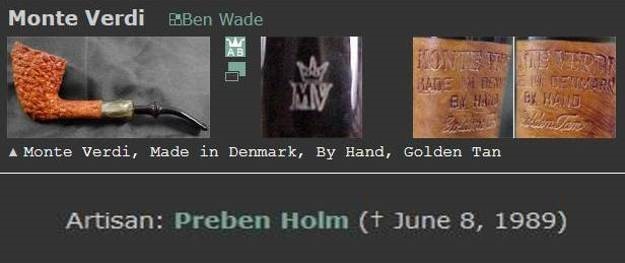
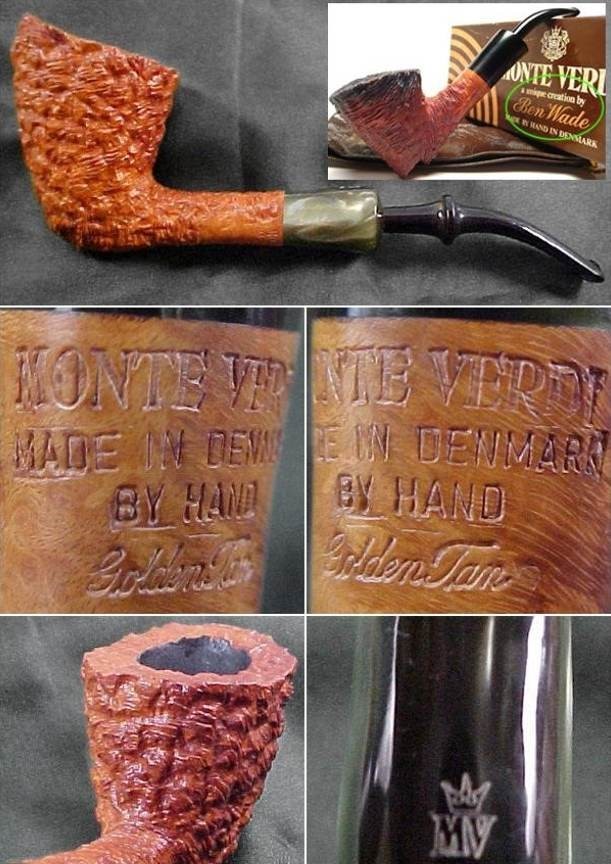
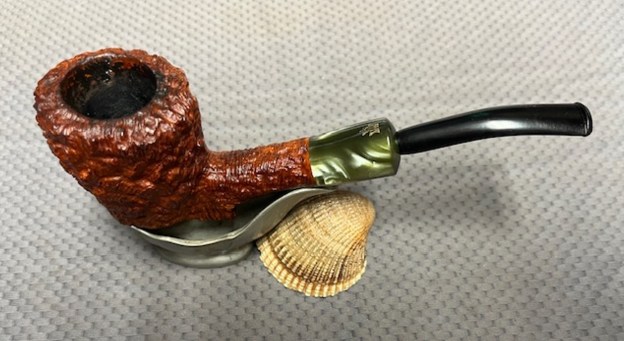
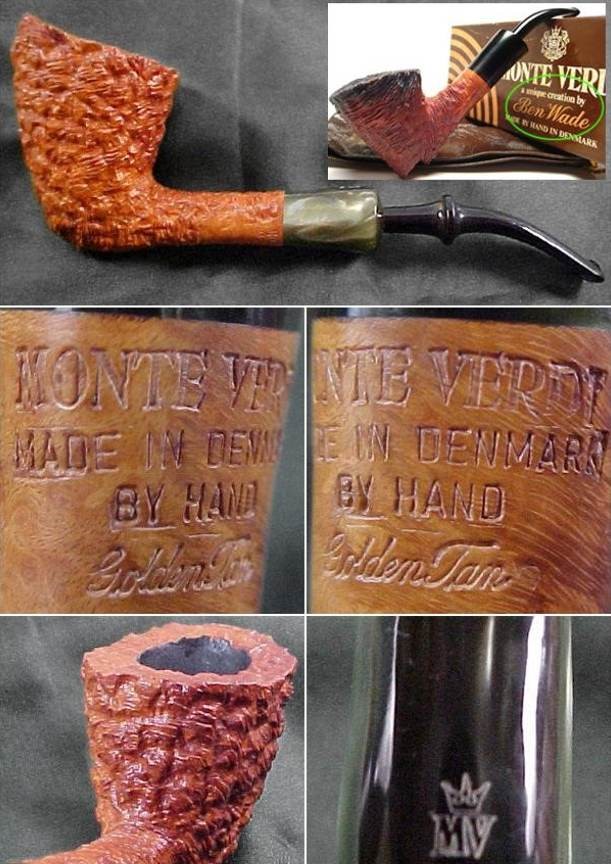
The next pipe on the table was purchased from a seller 08/10/25 from Livingston, New Jersey, USA. It has that verve that I have come to associate with pipe made by Preben Holm as they are always unique and beautiful. The pipe is stamped on a smooth panel on the underside. It reads Monte Verde [over] Made in Denmark [over] by Hand [over] Golden Tan. The shank extension is vulcanite with no stamping but it is oxidized. I have refurbished several Monte Verde pipe so if you are interested in the brand here is a link to one I did back in 2019 that has a similar finish to this one (https://rebornpipes.com/2019/02/09/new-life-for-a-preben-holm-monte-verde-twin-finish-freehand/). This one was quite dirty, like the rest of the pipes we tend to work on. There was a thick cake in the bowl and a lava overflow in the rustication of the rusticated rim top. The inner and outer edges of the bowl looked very good. The black/silver acrylic saddle stem was dirty and had scratches and light tooth marks on the top and underside. Jeff took photos of the pipe before he started his cleanup process. He took close up photos of the bowl and rim top from different angles to show the condition of the rim top. The bowl has a thick cake that lining the walls and overflowing lava and build up on the rim top and flowing over the inner edge of the bowl onto the top. He also took photos of the stem to show the surface of the top and underside of the acrylic stem. You can see the tooth marks and chatter on both sides ahead of the button. He took photos of the sides and heel of the bowl to show the lay of the rustication and grain around the pipe. It is a beautiful piece of briar. It had a very unique double rustication! The green acrylic shank extension works well with it. Jeff took several photos of the stamping on the underside of the shank to capture all of the stamping. It was clear and read as noted above. There was no stamping on the stem surface.I turned to Pipephil’s site to get a read on the brand (http://pipephil.eu/logos/en/logo-m6.html). It confirms that the Monte Verdi line was made by Preben Holm. The pipe in the photo had a very similar rustication to the Monte Verdi I was working on. I did a screen capture of the section on Pipephil. I have included it below.  There were also photos that were included on Pipephil of what this particular pipe looked like when it left Denmark. The rustication around the bowl and shank is very similar. The pipe I have has the same shank extension and finish. The pipe in the photo had a fancy turned vulcanite stem. The stem on the one I have in front of me is missing so I will need to replace it with one similar to the one in the photos below.I also Googled the brand and found a thread on Pipes Magazine about the brand that gave me some more information (http://pipesmagazine.com/forums/topic/monte-verde-pipes). I include that below.

The Monte Verdi line was indeed a pipe style offered by Holm. It usually features heavily blasted and rusticated briar and smaller group sizes than some of his other lines. Some refer to this line as a “second”, but it provided an outlet for briar that had flaws and therefore unsuitable his other lines. Holm marketed many different lines featuring a variety of finishes in both stains and carvings and this is merely one of those. The ones I own are good pipes and smoke well. The blast finish is very interesting to look at and the tactile sensations make it fun to hold.

Jeff reamed the bowl with a PipNet pipe reamer and followed up with a Savinelli Fitsall pipe knife to remove the cake. He scrubbed out the mortise and the airway in the shank and the stem with alcohol, cotton swabs and pipe cleaners. He scrubbed the exterior of the bowl, rim, shank and stem with a tooth brush and Murphy’s Oil Soap to remove the oils and tars on the rim and the grime on the finish of the bowl. He rinsed it under running water. He dried it off with a soft cloth. He was able to the lava build up on the rim top and you could see a little darkening in the finish on the top of the bowl. I took photos of the pipe bowl to show its condition before I started my work on it. I took a photo of the rim top and bowl to show the condition of the pipe. I took photo of both sides of the stem to show its condition. Overall the pipe was in great condition.I took a photo of the stamping on the underside of the shank. There was some darkening on the smooth portion but the stamping was clear and readable as noted above. I removed the stem from the shank and took a photo of the pipe to give a sense of the proportions of the bowl and stem.I scrubbed the darkening on the shank with some Before & After Briar Cleaner and a tooth brush. I wiped it off with a soft cloth remove the product. I repeated the process several times.I sanded the oxidized vulcanite shank extension with 320-3500 grit sanding pads. I wiped the shank extension down after each sanding pad with an Obsidian Oil Cloth to remove the debris. It looked significantly better. I polished the vulcanite shank extension with micromesh sanding pads – dry sanding it with 1500-12000 grit sanding pads. I wiped it down after each pad with an Obsidian Oil cloth to remove the debris. It began to have a rich shine. I rubbed the bowl and shank down with Before & After Restoration Balm. I worked it into the surface of the bowl sides and shank with my fingertips and a shoe brush to clean, enliven and protect the briar. I let the balm sit for a little while and then buffed with a cotton cloth to raise the shine. The Balm did its magic and the grain stood out. I set the bowl aside and turned my attention to the stem. I sanded the stem with 320-3500 grit 2×2 inch sanding pads to smooth out the tooth chatter. The pipe stem was looking very good.I polished the stem with micromesh sanding pads – wet sanding with 1500-12000 grit pads and wiped down the stem with some Obsidian Oil after each sanding pad. I finished the polishing with some Before & After Stem Polish – both fine and extra fine. I gave it a final coat of Obsidian Oil and set the stem aside. This beautiful, double rusticated Preben Holm carved Monte Verde Golden Tan Freehand Full Bent Egg is a special looking pipe and it feels amazing in the hand. I polished stem with Blue Diamond polish on the buffing wheel. I gave the bowl multiple coats of Conservator’s Wax and the stem multiple coats of carnauba wax. I buffed the pipe with a clean buffing pad to raise the shine. I hand buffed it with a microfiber cloth to deepen the shine. The pipe polished up pretty nicely. The multi-coloured grain shining through the rustication came alive with the buffing. The rich contrasting brown colour works well with the polished vulcanite shank extension and the black and white Lucite stem. The finished Monte Verde Golden Tan Freehand Full Bent Egg is a beauty and feels great in the hand. Have a look at it with the photos below. The dimensions are Length: 6 ½ inches, Height: 2 ¼ inches, Outside diameter of the bowl: 1 ¾ inches, Chamber diameter: 1 inch. The weight of the pipe is 2.72 ounces/76 grams. I will be putting this Monte Verde by Preben Holm on the Danish Pipe Making Section on the rebornpipes online store soon. It is such an interesting tactile pipe and if you have been looking for a freehand then this might be the one for you. Thanks for walking through the restoration with me on this interestingly shaped Preben Holm Hand Made pipe. 

Restemming and Restoring a Monte Verde Golden Tan Freehand Sitter


by Steve Laug

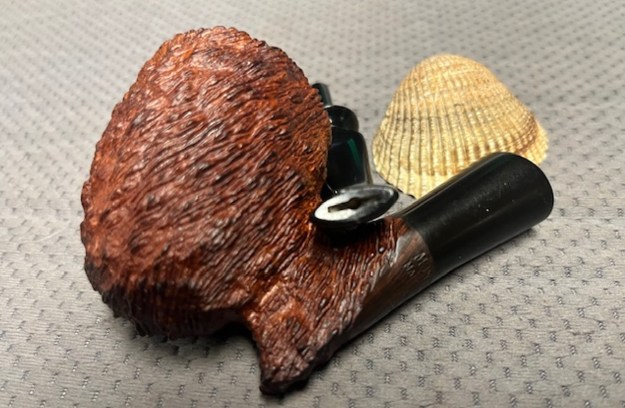
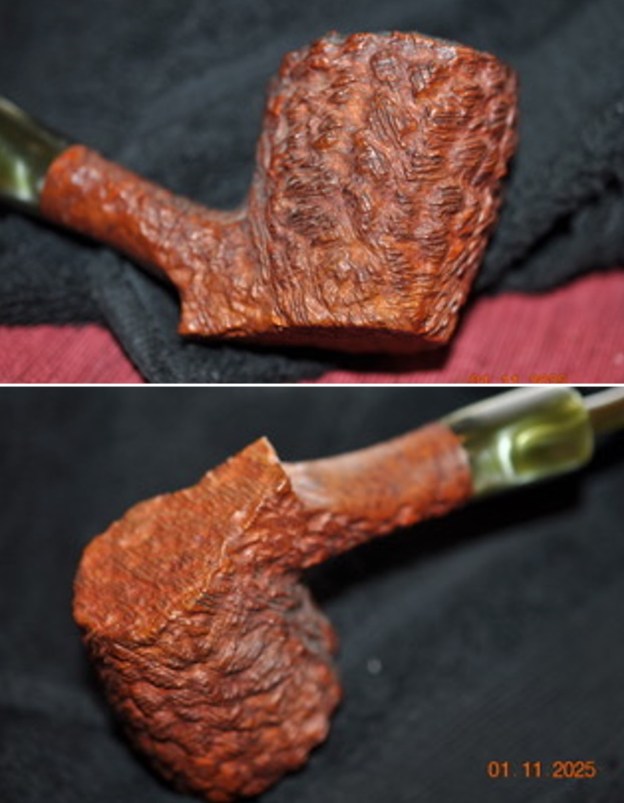
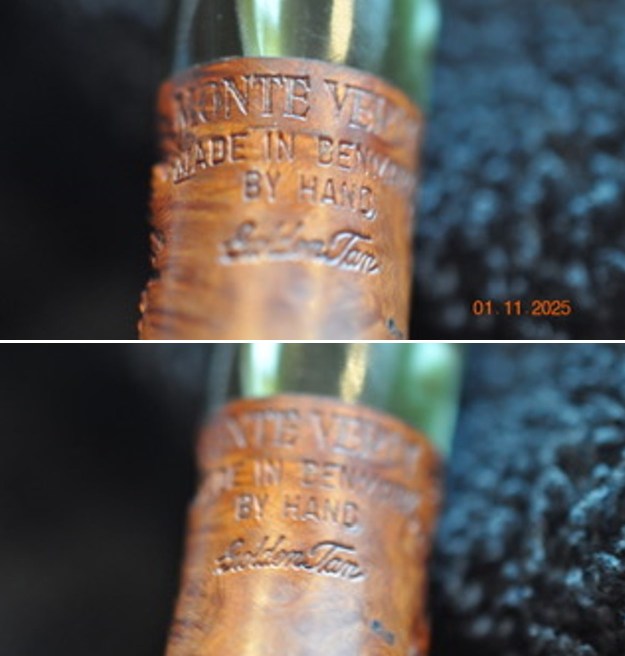
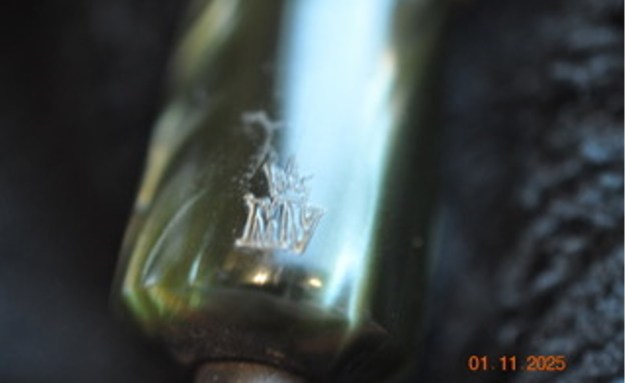
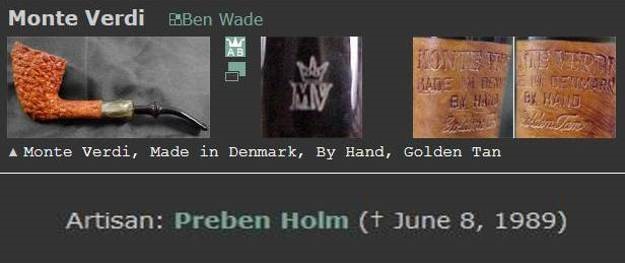
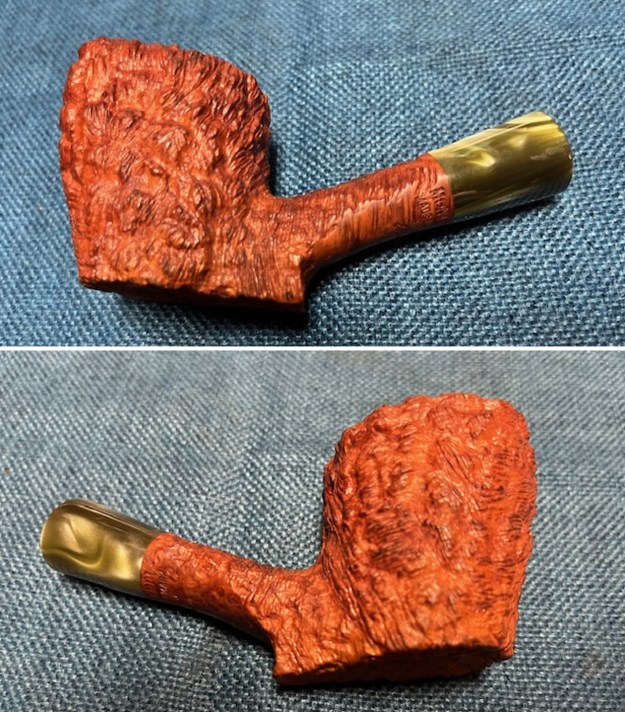
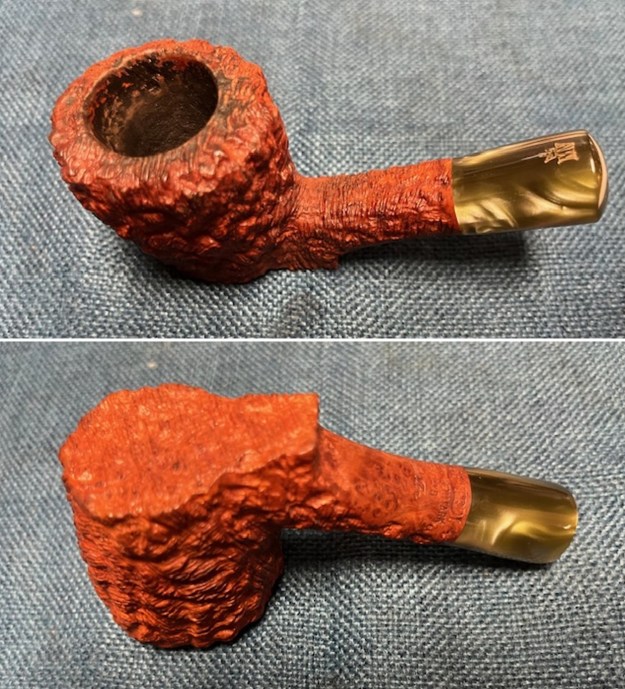
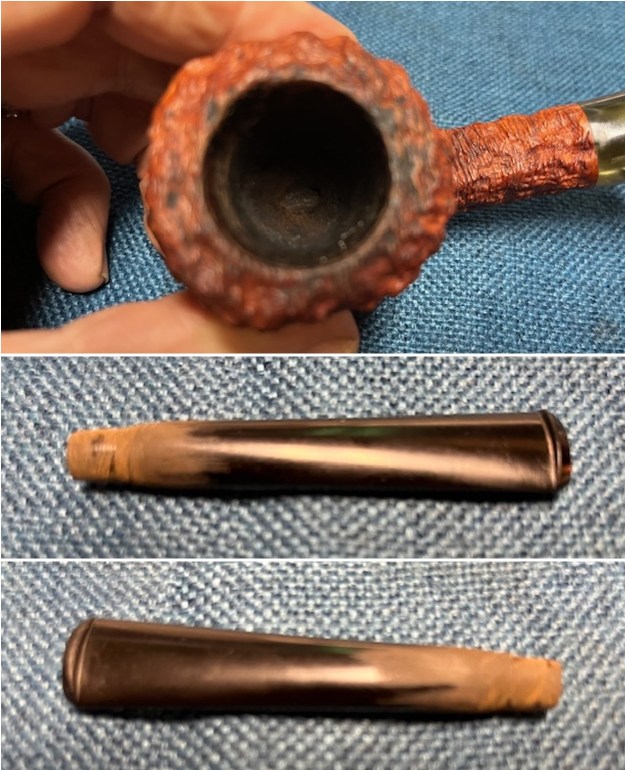
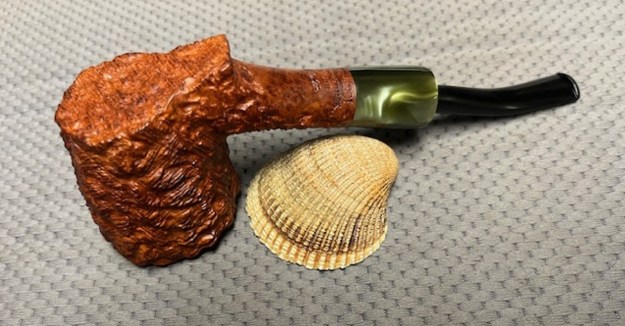
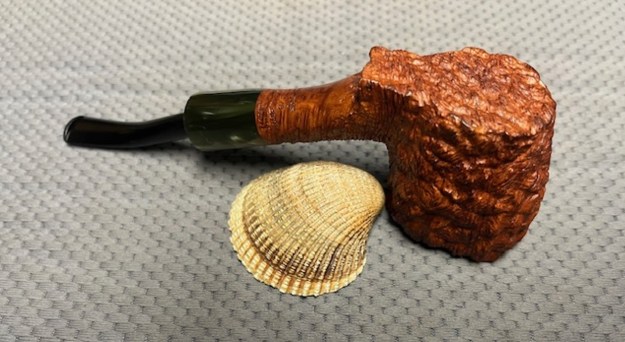
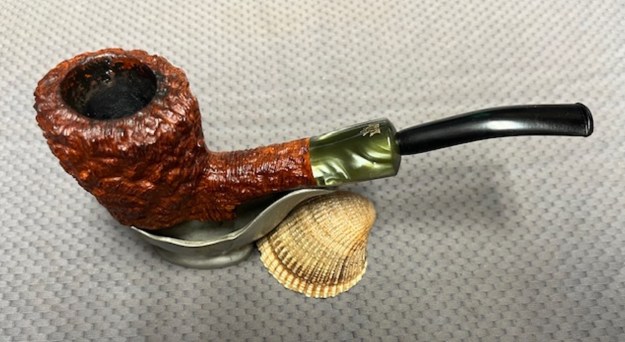
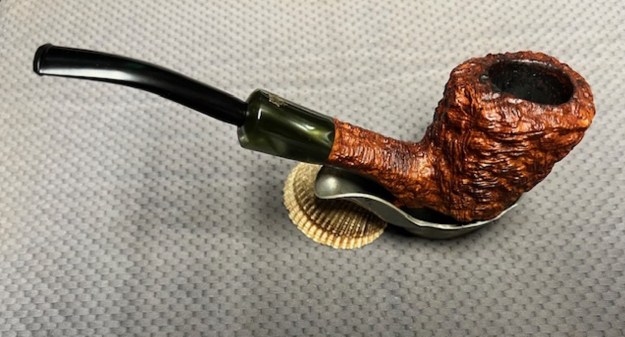
The next pipe on the table was purchased from a seller 05/28/24 from Santa Cruz, California, USA. It has that verve that I have come to associate with pipe made by Preben Holm and the fellow we purchased this lot from obviously loved Preben Holm carved pipes because we acquired several from him in this lot. They are unique and beautiful. The pipe is stamped on a smooth panel on the underside. It reads Monte Verde [over] Made in Denmark [over] by Hand [over] Golden Tan. The shank extension is a marbled green acrylic shank extension has a gold Crown MV on the top. I have refurbished several Monte Verde pipe so if you are interested in the brand here is a link to one I did back in 2019 that has a similar finish to this one (https://rebornpipes.com/2019/02/09/new-life-for-a-preben-holm-monte-verde-twin-finish-freehand/). It was quite dirty, like the rest of the pipes in this collection. There was a thick cake in the bowl and a lava overflow on the rusticated rim top. The inner and outer edges of the bowl looked very good. The stem was present for these photos but somehow disappeared in its journey from Jeff to me. Jeff took photos of the pipe before he started his cleanup process. He took close up photos of the bowl and rim top from different angles to show the condition of the rim top. The bowl has a thick cake that lining the walls and overflowing lava and build up on the rim top and flowing over the inner edge of the bowl onto the top. It is hard to know if there is damage or if the lava protected it. He also took photos of the stem to show the surface of the top and underside of the acrylic stem. You can see the tooth marks and chatter on both sides ahead of the button. I only wished that the stem had travelled to me here. He took photos of the sides and heel of the bowl to show the lay of the rustication and grain around the pipe. It is a beautiful piece of briar. It had a very unique double rustication! The green acrylic shank extension works well with it. Jeff took several photos of the stamping on the underside of the shank to capture all of the stamping. It was clear and read as noted above. He also captured the stamp on the top of the missing stem. I turned to Pipephil’s site to get a read on the brand (http://pipephil.eu/logos/en/logo-m6.html). It confirms that the Monte Verdi line was made by Preben Holm. The pipe in the photo had a very similar rustication to the Monte Verdi I was working on. I did a screen capture of the section on Pipephil. I have included it below.   There were also photos that were included on Pipephil of what this particular pipe looked like when it left Denmark. The rustication around the bowl and shank is very similar. The pipe I have has the same shank extension and finish. The pipe in the photo had a fancy turned vulcanite stem. The stem on the one I have in front of me is missing so I will need to replace it with one similar to the one in the photos below.I also Googled the brand and found a thread on Pipes Magazine about the brand that gave me some more information (http://pipesmagazine.com/forums/topic/monte-verde-pipes). I include that below.

The Monte Verdi line was indeed a pipe style offered by Holm. It usually features heavily blasted and rusticated briar and smaller group sizes than some of his other lines. Some refer to this line as a “second”, but it provided an outlet for briar that had flaws and therefore unsuitable his other lines. Holm marketed many different lines featuring a variety of finishes in both stains and carvings and this is merely one of those. The ones I own are good pipes and smoke well. The blast finish is very interesting to look at and the tactile sensations make it fun to hold.

Jeff reamed the bowl with a PipNet pipe reamer and followed up with a Savinelli Fitsall pipe knife to remove the cake. He scrubbed out the mortise and the airway in the shank and the stem with alcohol, cotton swabs and pipe cleaners. He scrubbed the exterior of the bowl, rim, shank and stem with a tooth brush and Murphy’s Oil Soap to remove the oils and tars on the rim and the grime on the finish of the bowl. He rinsed it under running water. He dried it off with a soft cloth. He was able to the lava build up on the rim top and you could see a little darkening in the finish on the top of the bowl. I took photos of the pipe bowl to show its condition before I started my work on it. I took a photo of the rim top. You can see the spots of darkening in the rim top and some bits of lava in the grooves. I had a stem in my can that was similar to the one that was lost but was black vulcanite. With a bit of work, it would fit the shank nicely. I took photo of both sides of the stem to show its condition.I cleaned the rim top with Before & After Briar Cleaner to soften the dark spots and darkening on the rim top. I used a brass bristle wire brush with the product deep clean the grooves in the double rusticated rim top. I rubbed the bowl and shank down with Before & After Restoration Balm. I worked it into the surface of the bowl sides and shank with my fingertips to clean, enliven and protect the briar. I let the balm sit for a little while and then buffed with a cotton cloth to raise the shine. The Balm did its magic and the grain stood out. I set the bowl aside and worked on the stem. I used the slot saw and a series of flat files to shape the slot and make it a football shape. I cleaned up the shape with a folded piece of 220 grit sandpaper to smooth out the slot. It worked very well and the slot began to take on a very classic look.I worked over the tenon end with a flat file to get a snug fit into the shank extension of the pipe. It took a slight step down on the vulcanite to shape it for the proper fit. I fit it into the shank and took photos to show the look. While it was in place I heated the vulcanite and gave it a bend to match that of the original stems in the photos that Jeff sent that I included above. I sanded the stem surface with a folded piece of 220 grit sandpaper. I wiped the stem down with an Obsidian Oil impregnated cloth. The stem began to take on a shine. I finished working on the stem by sanding it with 32-3500 grit 2×2 inch sanding pads to smooth out the repair and to remove the tooth chatter. The pipe stem was looking very good. I polished the stem with micromesh sanding pads – wet sanding with 1500-12000 grit pads and wiped down the stem with some Obsidian Oil after each sanding pad. I finished the polishing with some Before & After Stem Polish – both fine and extra fine. I gave it a final coat of Obsidian Oil and set the stem aside. This beautiful, double rusticated Preben Holm carved Monte Verde Golden Tan Freehand Sitter is a special looking pipe and it feels amazing in the hand. I polished stem with Blue Diamond polish on the buffing wheel. I gave the bowl multiple coats of Conservator’s Wax and the stem multiple coats of carnauba wax. I buffed the pipe with a clean buffing pad to raise the shine. I hand buffed it with a microfiber cloth to deepen the shine. The pipe polished up pretty nicely. The multi-coloured grain shining through the rustication came alive with the buffing. The rich contrasting brown colour works well with the polished swirling brown, tan, black and white Lucite stem. The finished Monte Verde Golden Tan Freehand Sitter is a beauty and feels great in the hand. Have a look at it with the photos below. The dimensions are Length: 6 ½ inches, Height: 2inches, Outside diameter of the bowl: 1 ½ inches, Chamber diameter: 1 inch. The weight of the pipe is 2.36 ounces/68 grams. I will be putting this Monte Verde by Preben Holm on the Danish Pipe Making Section on the rebornpipes online store soon. It is such an interesting tactile pipe and if you have been looking for a freehand then this might be the one for you. Thanks for walking through the restoration with me on this interestingly shaped Preben Holm Hand Made pipe.
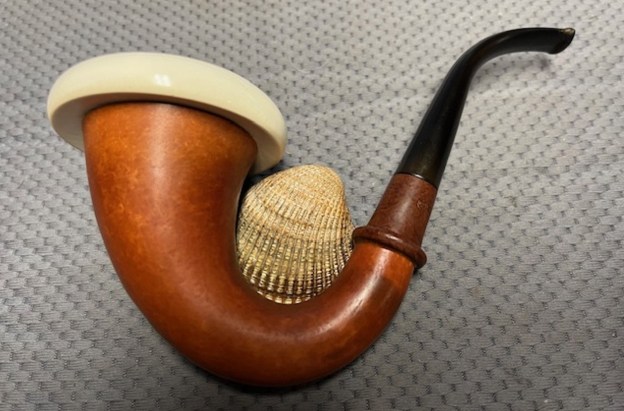
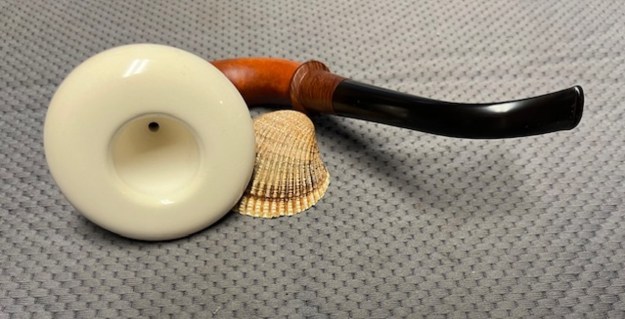
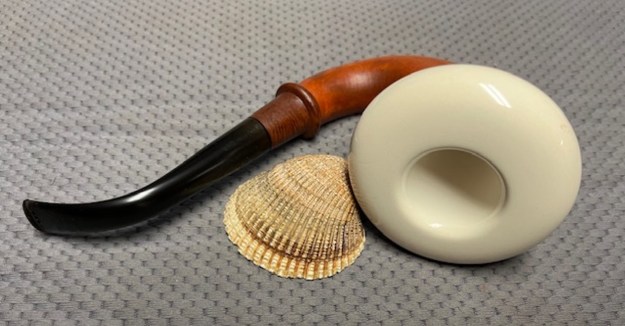
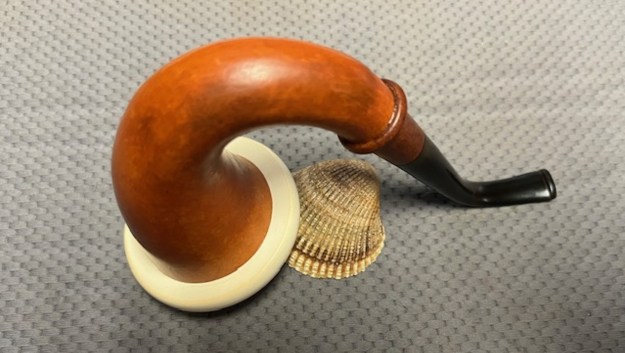
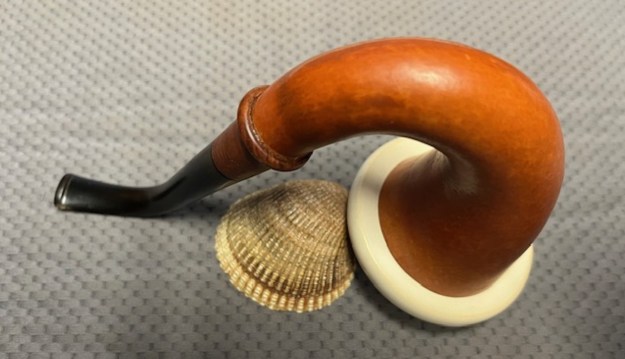
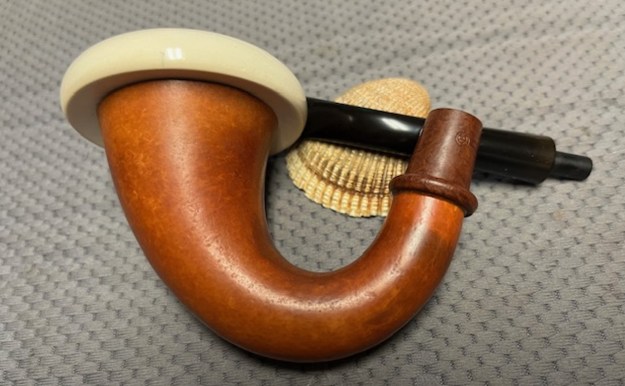
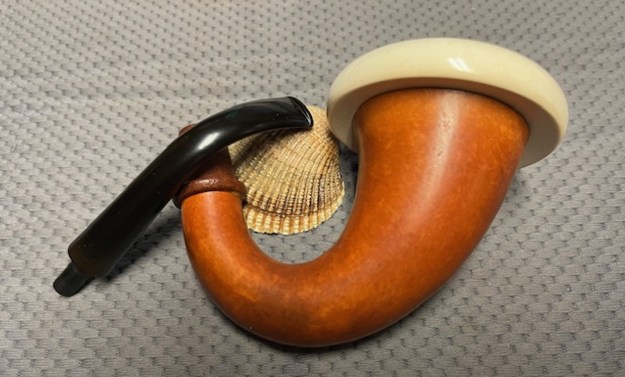
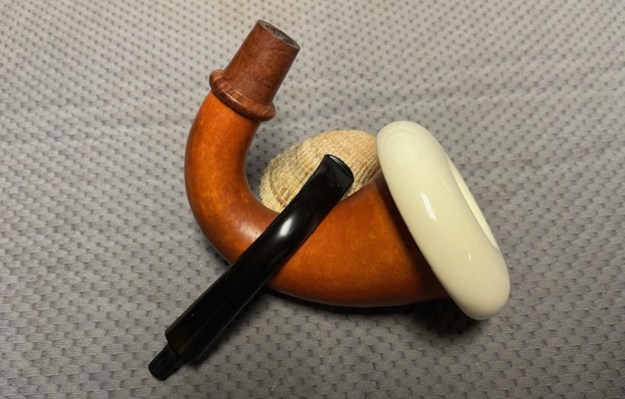
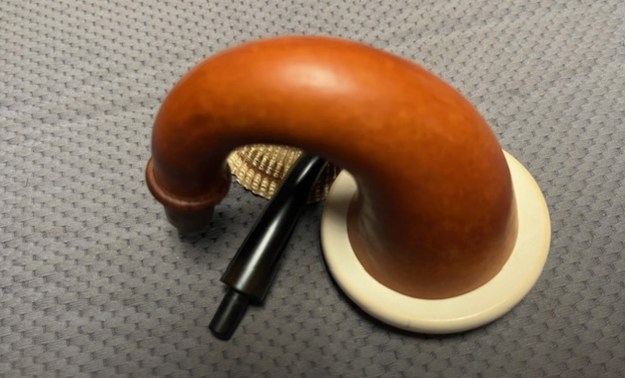
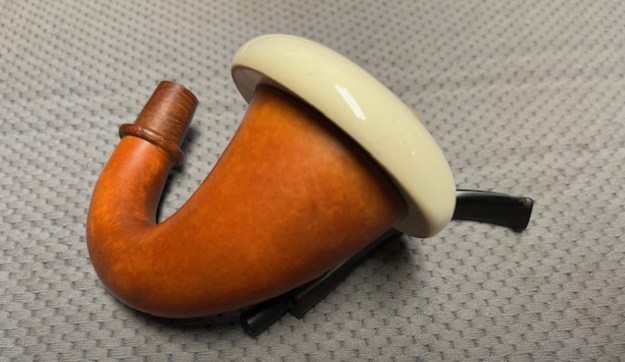
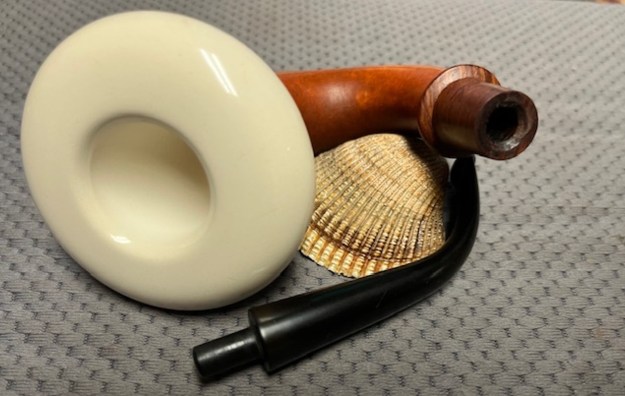
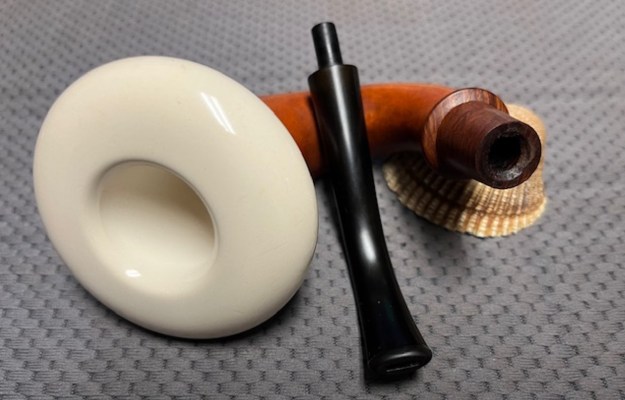
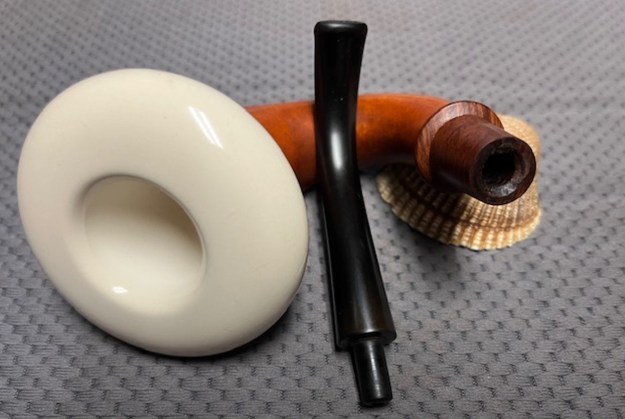
Restoring and fitting an AB Gourd Calabash with a new Meerschaum Bowl


by Steve Laug

A few days ago, I received an email from our local pipe and cigar shop regarding a repair that needed to be done for a customer. Joe included some photos with his email to help me see what he was looking at. I have included the email and the photos below so you can read and see what I read and saw.

Good afternoon Steve! How’ve you been?

Seems like it was every other day I’d email you about a broken pipe, and you’ll never guess….

A gentleman dropped off a beautiful Calabash Meerschaum pipe, I believe he said a part of the bowl cracked when he dropped it. Regardless, I can’t really tell what’s wrong with it from looking at it. I’ve attached a couple pictures, and was wondering if you could help us with it. 

All the best,

Joe

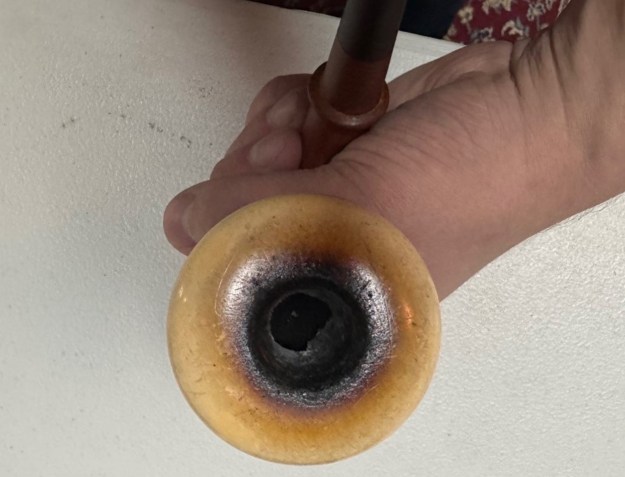
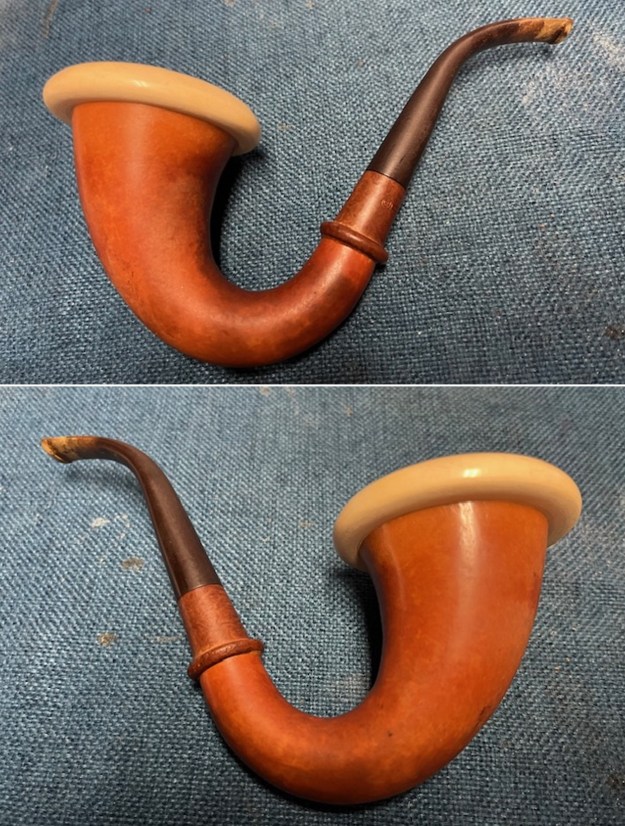
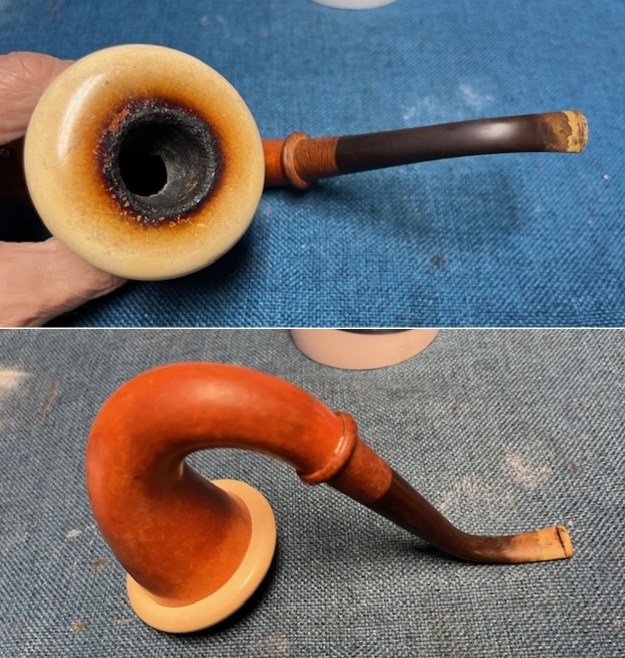
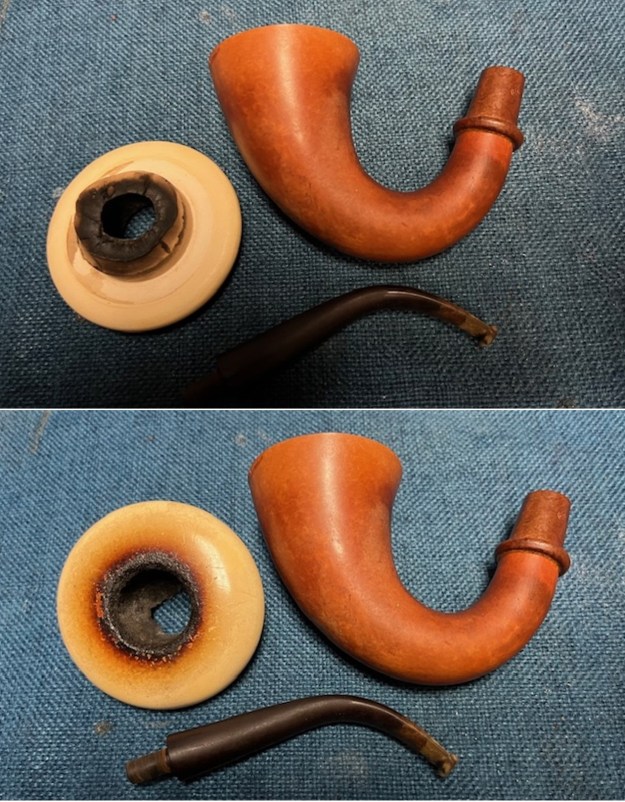
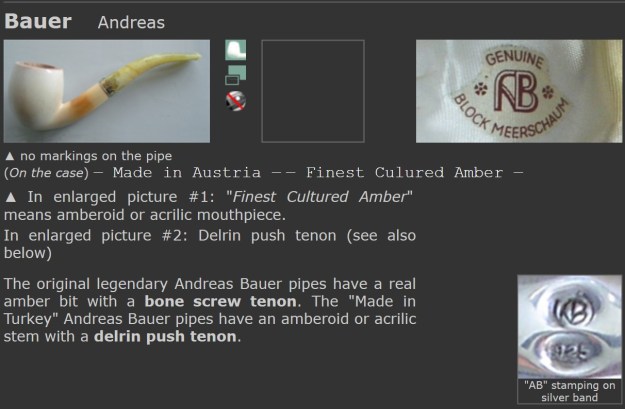
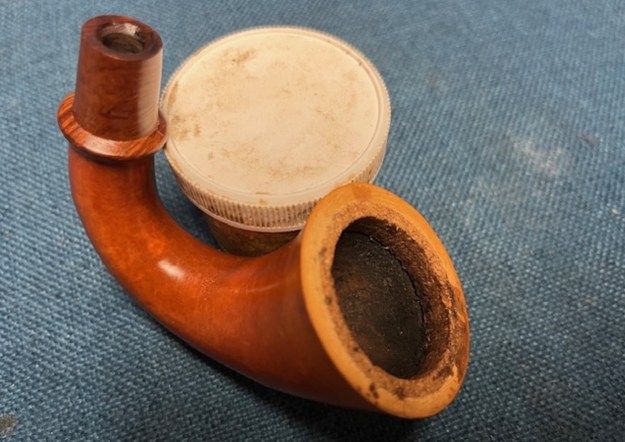
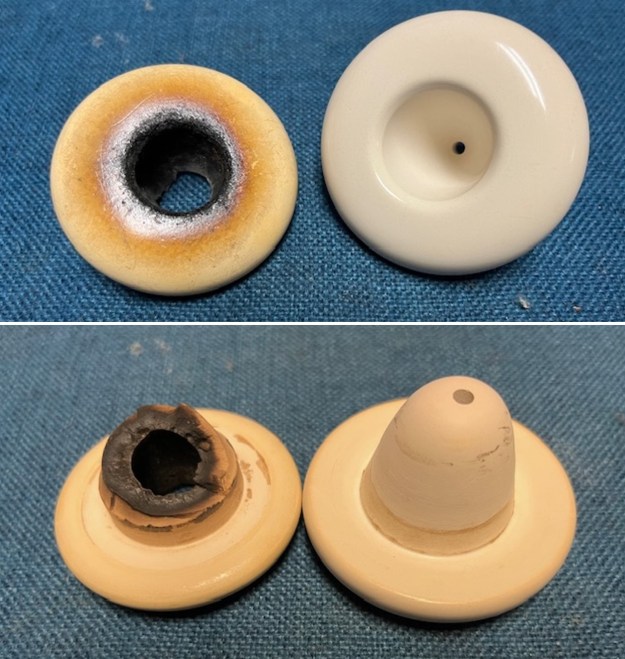
I looked over the pipe photos to see what I was going to have to work on. It was a nice-looking Meerschaum Gourd Calabash. The gourd was dry and dirty with some discoloring around the sides from the top to the shank. The shank end was a briar extension that looked nice, but also dirty. The stem was well bent but was oxidized, calcified and had light marks and chatter on both sides ahead of the button.The photo of the bowl from the top down seems to show the bottom has broken out of the bowl and it too was very dirty. I was curious to see what the pipe looked like once I had it in hand. Perhaps I would have a replacement bowl here that could be used in the bowl.Joe dropped the pipe by this afternoon and I had a look. I was very interested in seeing what I could do with it. I took photos of the pipe before I started working on it to show what I saw. It really is a pretty pipe. The stem is as I noted above and the Meerschaum Bowl was missing its bottom and the nipple that fit into the gourd. The briar shank extension was stamped on the left side with an AB in a circle. That interested me even more in that it pointed me to a well Austrian Meerschaum carver Andreas Bauer. I would need to do some more checking on that but that is what I remember at this point in the process. I took the pipe apart and took photos of the parts. You can see the badly damaged meerschaum bowl. It truly was broken when the bowl was dropped.Before I started working on the pipe I turned to Pipephil’s site to see what I could learn about my AB guess pointing to Andreas Bauer (http://www.pipephil.eu/logos/en/logo-b2.html). I did a screen capture of the information on the site and included the sidebar info below the photo. Company founded in Vienna (Austria) by Andreas Bauer in 1906. In 1942 Ernst Bauer, the founder’s son, took over the management of the enterprise until early 1970s when Turkish law banned the export of raw meerschaum. At this time Otto & Kopp Gmbh bought the trademark. They were a large Meerschaum distributor to the German tobacconists and good customer of the Turkish Konçak Meerschaums. Lastly Sedat Konçak bought the trademark in 1990. Unfortunatly the pipes carved in Turkey continue to be labeled “Made in Austria” (pipe next).
It is indeed an Andreas Bauer pipe and it looks like it may be one that was made either in the 1970s by Otto & Kopp Gmbh who bought the trademark or by Koncak Meerschaums in the 1990s who also bought the mark. Even though made in Turkey Koncak still labled the pipes as Made in Austria.

Now it was time to work on the pipe itself.

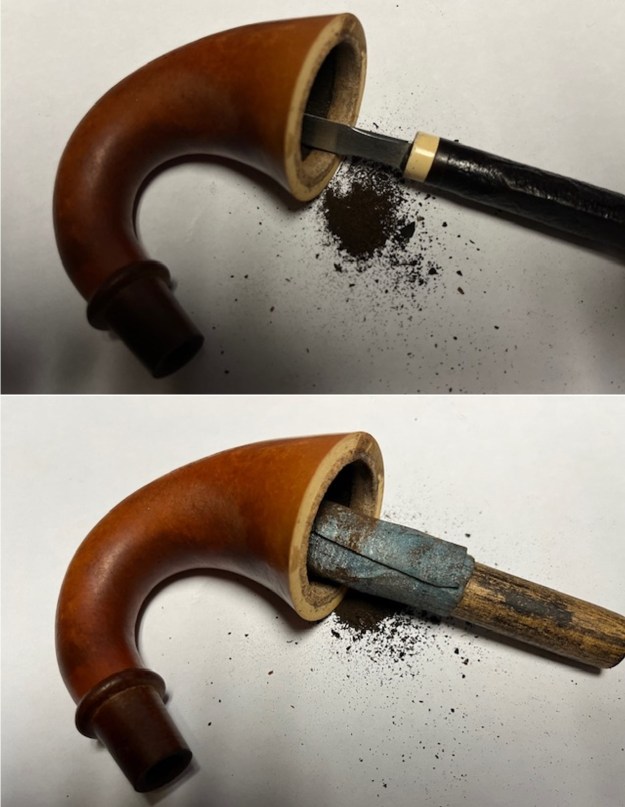
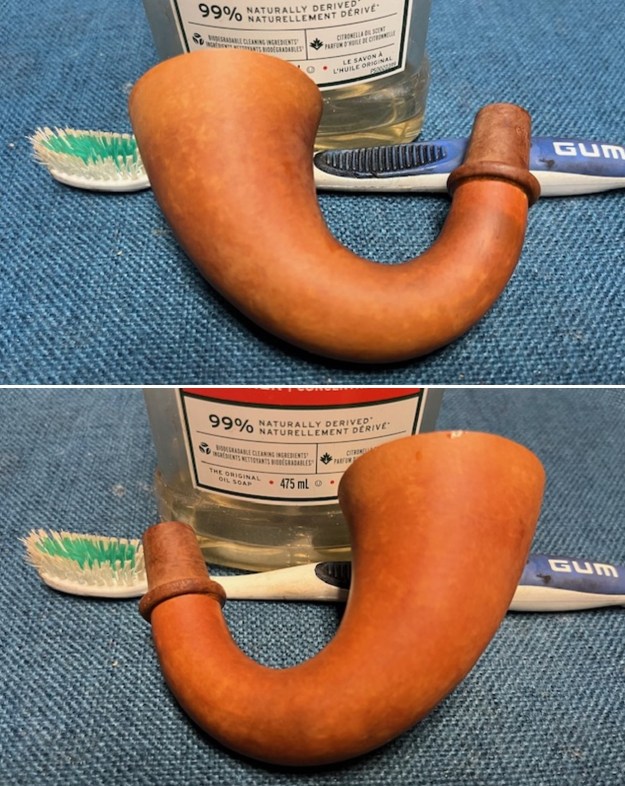
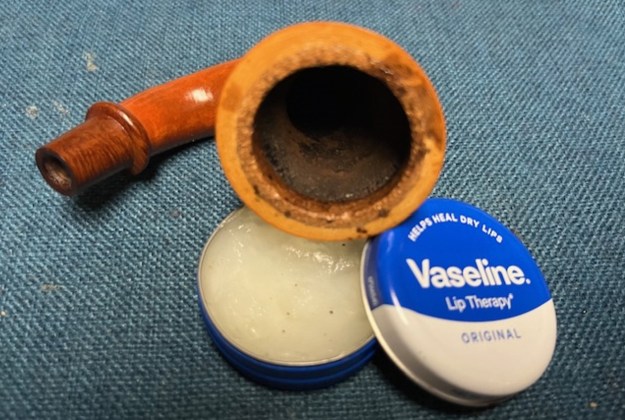
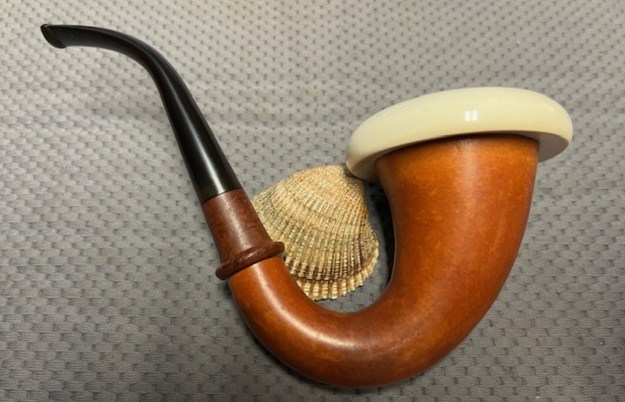
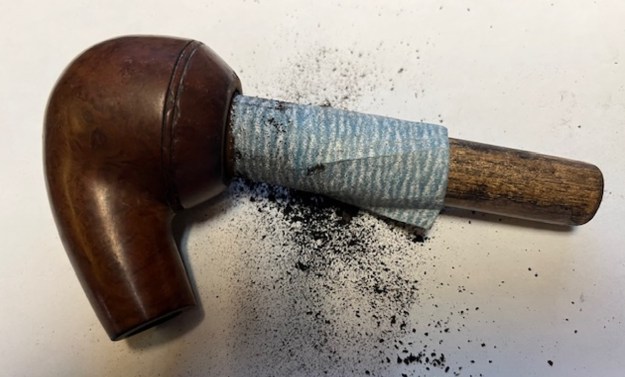
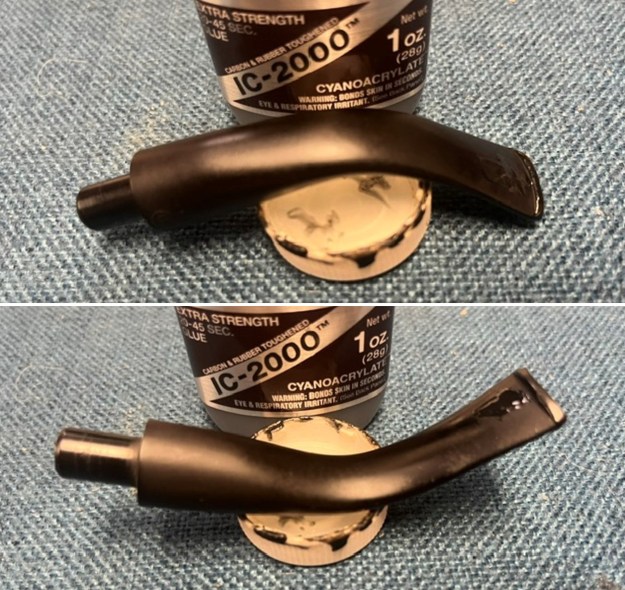
To prepare the pipe for the replacement bowl I need to clean up the gourd and shank to be ready for the replacement. I scraped out the build up inside the gourd with a Savinelli Fitsall Pipe Knife. I followed that up with some 220 sandpaper wrapped around a dowel. I was able to sand the walls smooth. It looked much better.I scrubbed the exterior of the gourd with a tooth brush and undiluted Murphy’s Oil Soap. I was able to remove the debris in the gourd and the briar extension. I rinsed off the soap and the debris with warm running water. I carefully dried off the gourd inside and out with a soft cloth. I worked some Before & After Restoration Balm into the surface of the Gourd Calabash with my fingertips on the smooth gourd surface. The product works to clean, enliven and protect the gourd. I let the balm sit for 15 minutes and then buffed with a cotton cloth to raise the shine. The photos show the bowl at this point in the restoration process. After the clean up and rub down with Before & After Restoration Balm I took a photo of the AB stamp on the left side of the shank extension. It is clear and readable. I worked Vaseline Petroleum Jelly into the cork gasket on the inside of the Gourd Calabash. The cork would swell and come alive with the Vaseline and hold the Meerschaum bowl or cup in place in the gourd. I worked it into the cork and set it aside for the evening to be absorbed. In the morning I would fit the new Meerschaum bowl into the Gourd.I went through my Meerschaum bowls that I have in boxes here. I have bought quite a few over the past years so I was pretty sure that I had one that would fit in the gourd. Sure enough, I had a bowl that had the same nipple/cone that fit the gourd perfectly. The height of the Meerschaum cup or bowl is a bit taller but it looks good. I cleaned out the shank extension and shank of the gourd and the inside of the stem with alcohol and pipe cleaners.I fit the new meerschaum cup in the gourd calabash base. The fit was actually very good and it looked like new once more. I worked on the oxidation and calcification on the stem with Soft Scrub and cotton pads. I was able to remove the majority of it using this process. It was looking significantly better.I sanded out the tooth chatter and marks in the surface of the button with 220 grit sandpaper. I wiped it down with an Obsidian Oil cloth before moving on to the next step.I followed that by sanding it with 320-3500 grit sanding pads to further blend down the sanding areas. I wiped the stem down between pads with an Obsidian Oil cloth to remove the sanding debris from the stem.I polished the stem with micromesh sanding pads – dry sanding with 1500-12000 grit sanding pads. I wiped it down after each sanding pad with Obsidian Oil. I polished it with Before & After Pipe Stem Polish – both Fine and Extra Fine. This Andreas Bauer Gourd Calabash with a replacement Meerschaum bowl and a vulcanite taper stem is a beautiful pipe. The waxed and polished gourd and calabash looks stunning. I put the stem back on the bowl and carefully buffed the pipe with a clean buffing pad. I hand buffed the pipe with a microfiber cloth to deepen the shine. The finished Bauer Gourd Calabash fits nicely in the hand and feels great. Give the finished pipe a look in the photos below. The dimensions of the pipe are Length: 6 ½ inches, Height: 3 ¼ inches, Outside diameter of the bowl: 2 ½ inches, Chamber diameter: 1 inch. The weight of the pipe is 102 grams/ 3.60 ounces. I will be calling the local pipe shop and Joe will pick up the pipe very soon. I look forward to hearing what he has to say and what the customer thinks. Thanks for reading this blog and my reflections on the pipe while I worked on it.
Restemming a Petite Apple with a vulcanite ferrule


by Steve Laug

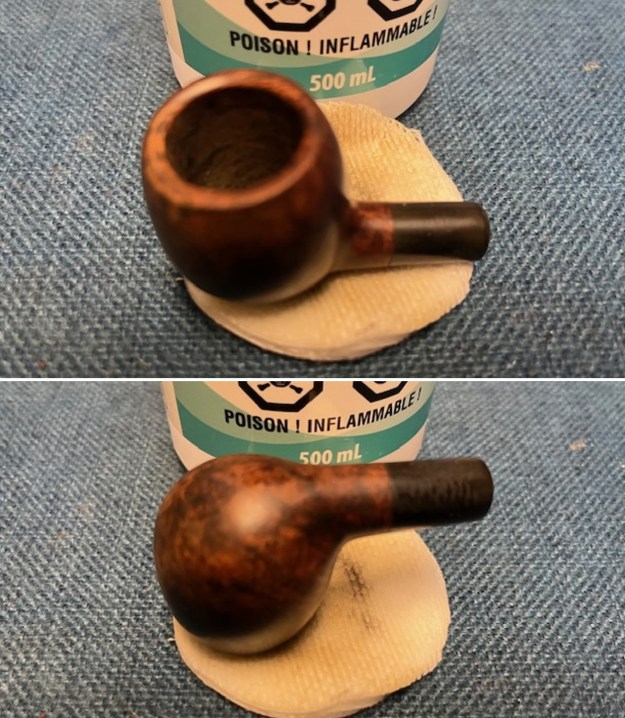
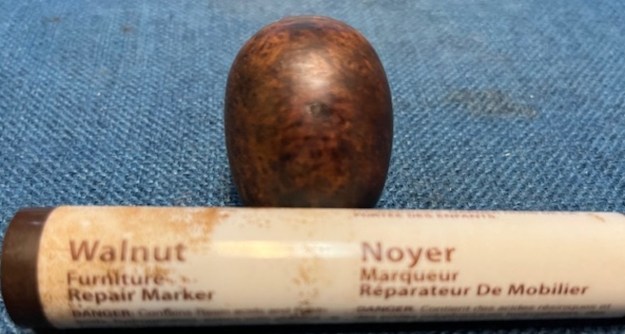
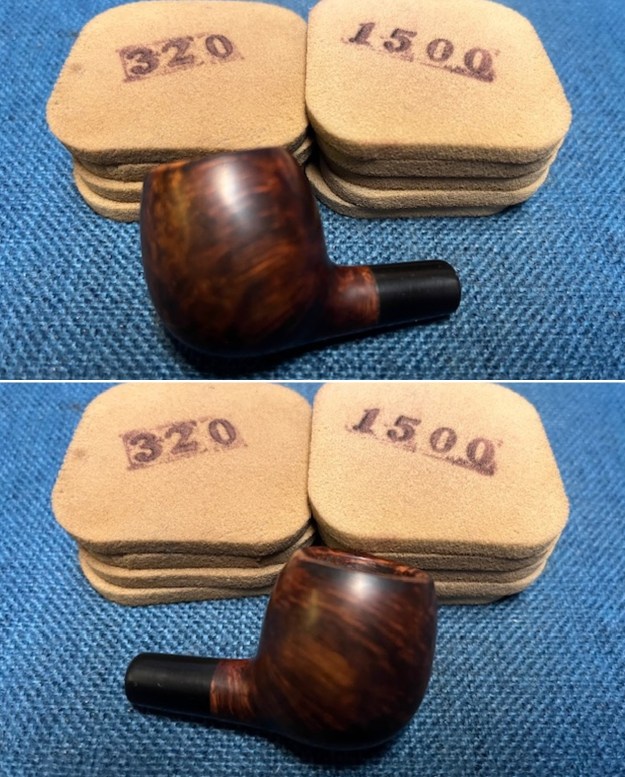
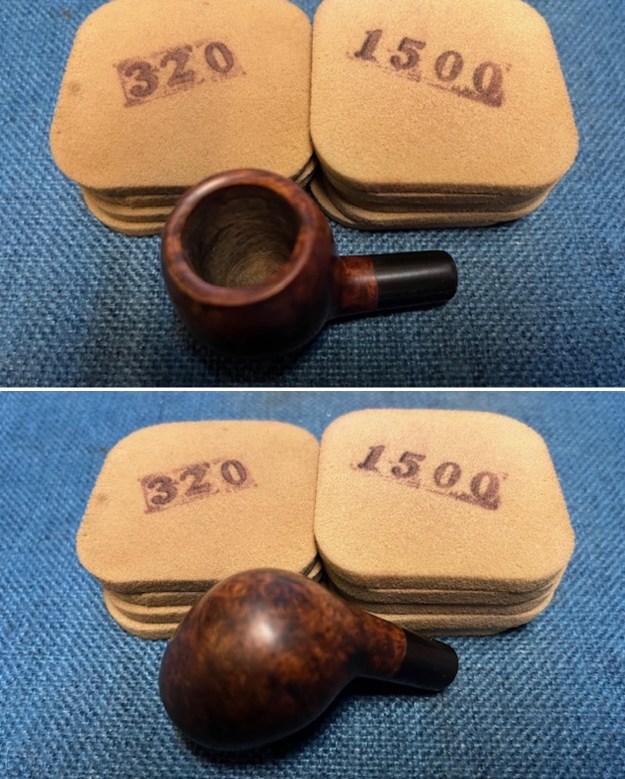
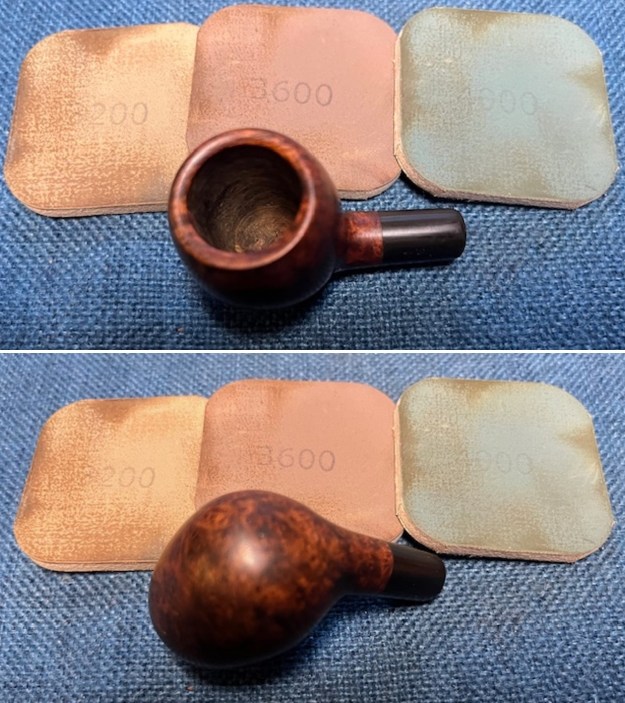
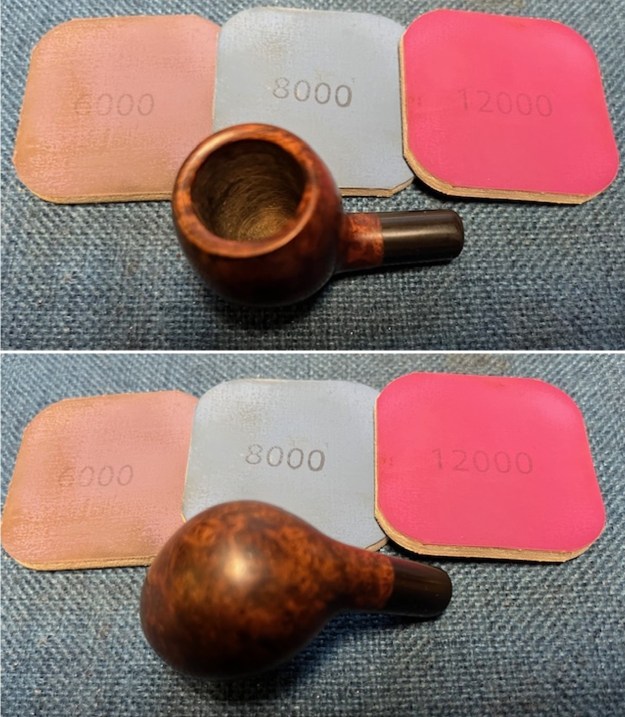
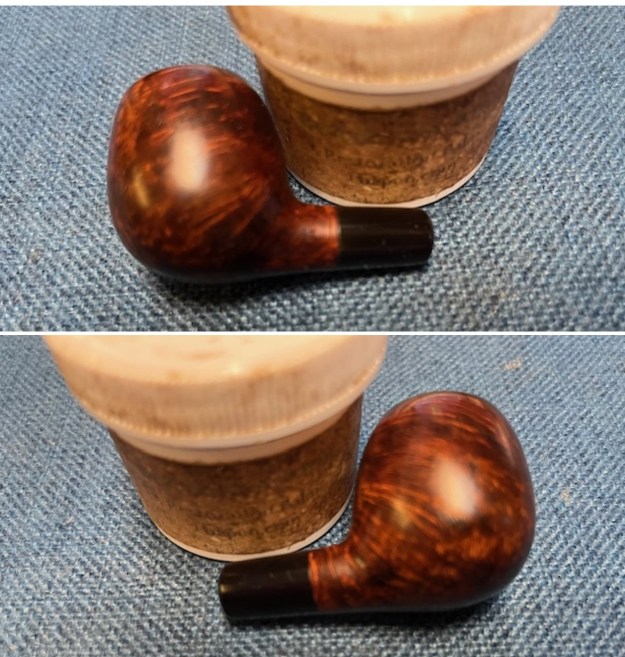
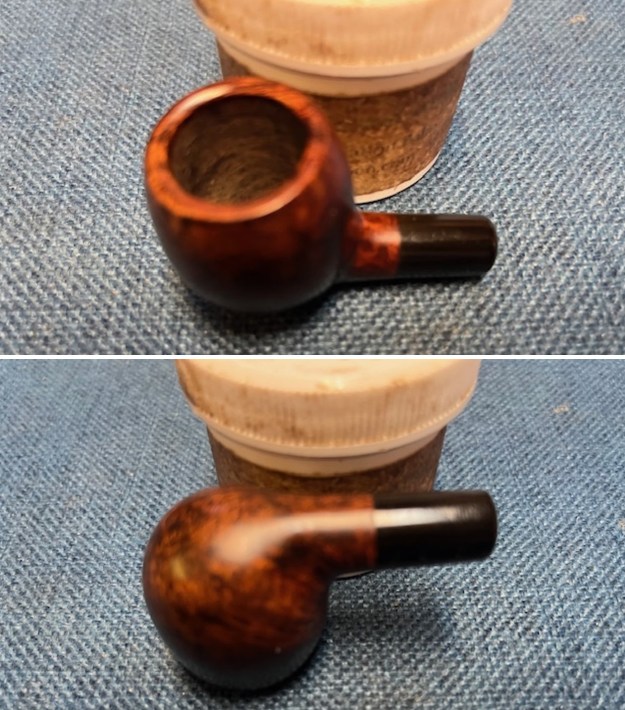
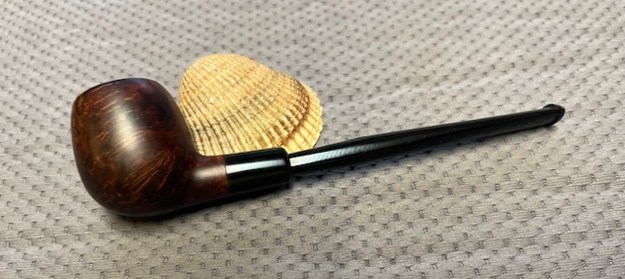
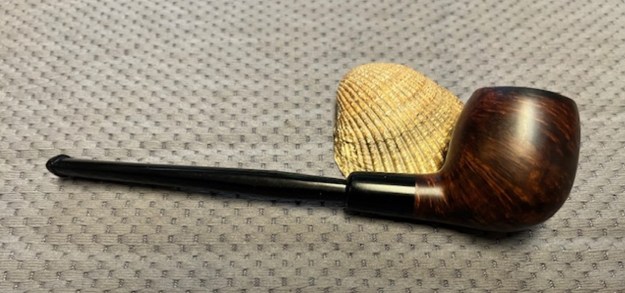
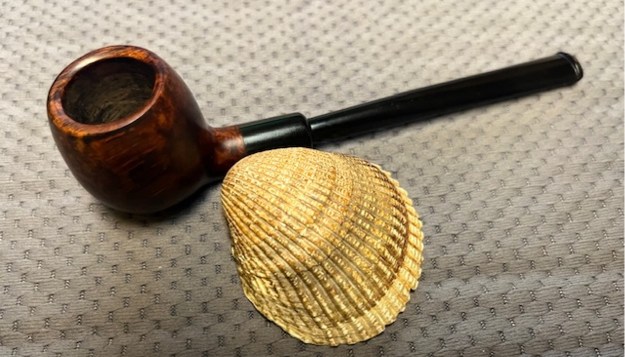
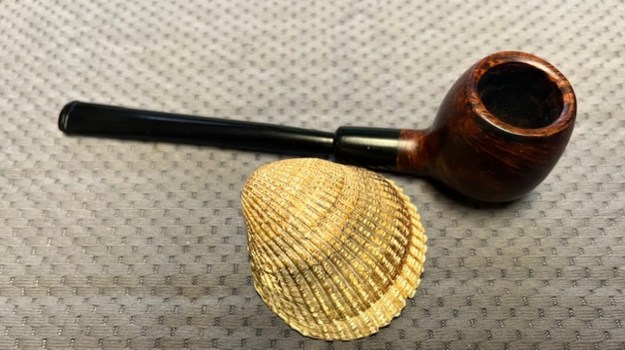
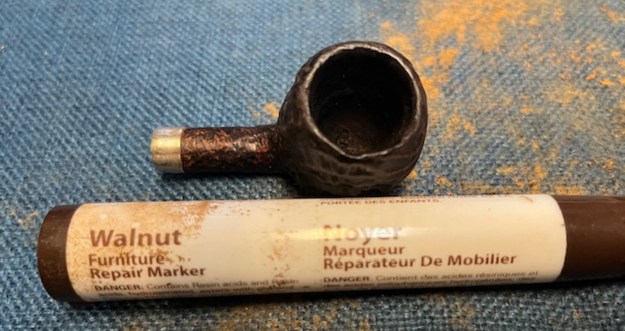
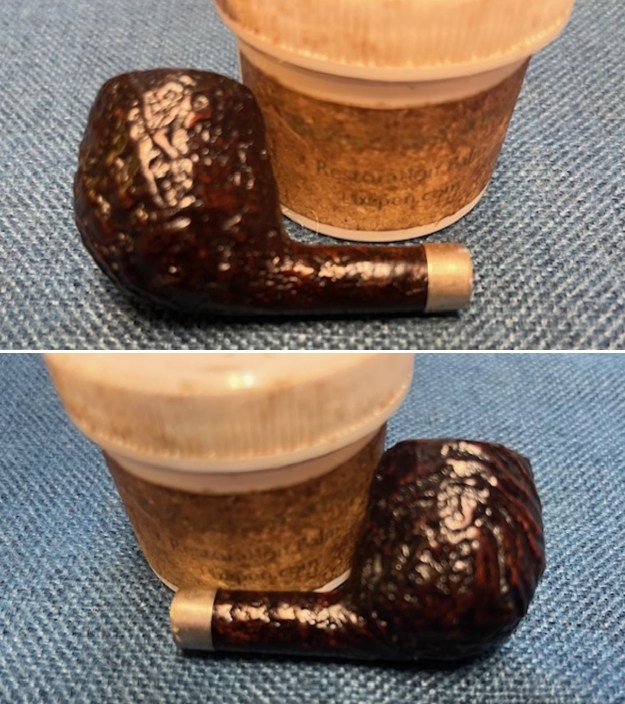
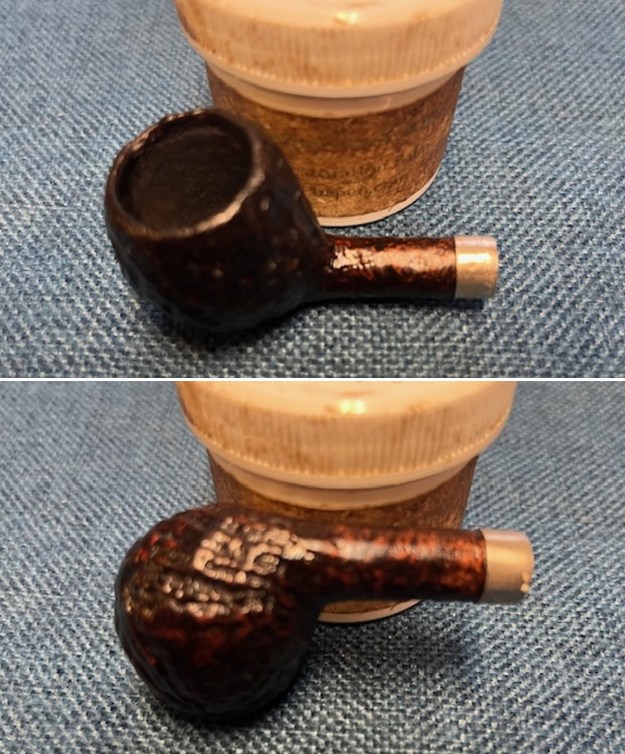
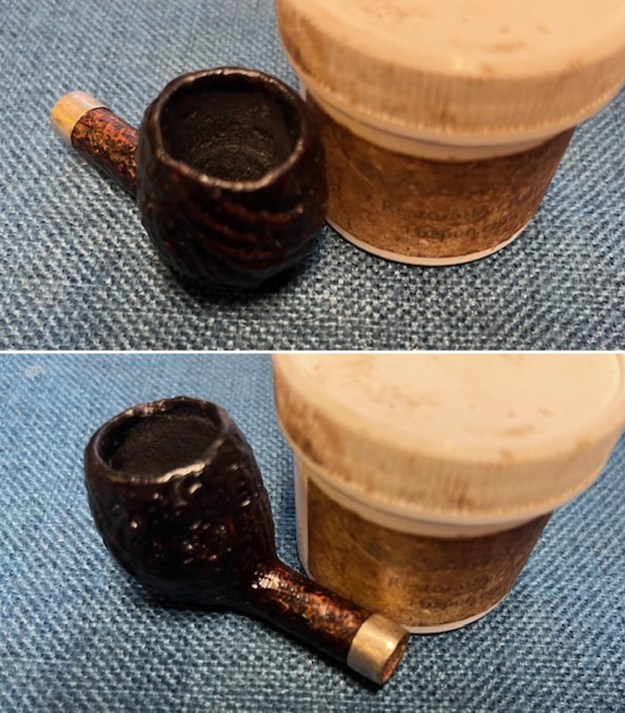
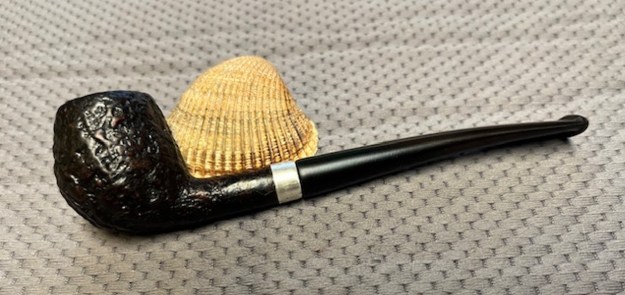
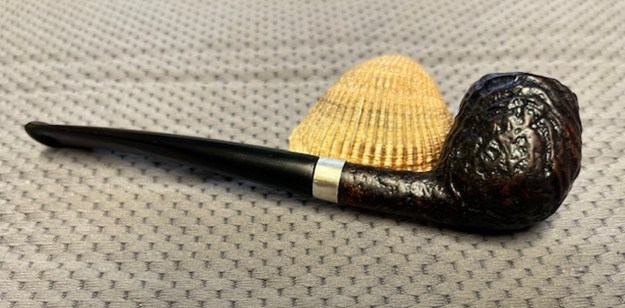
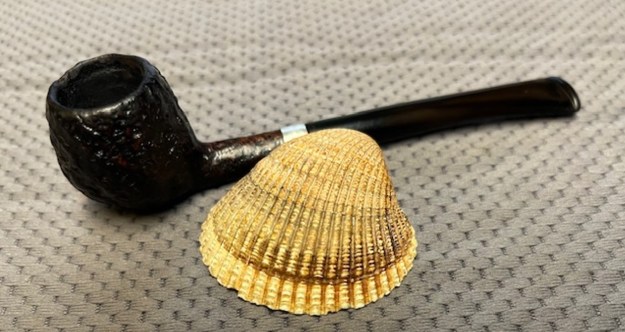
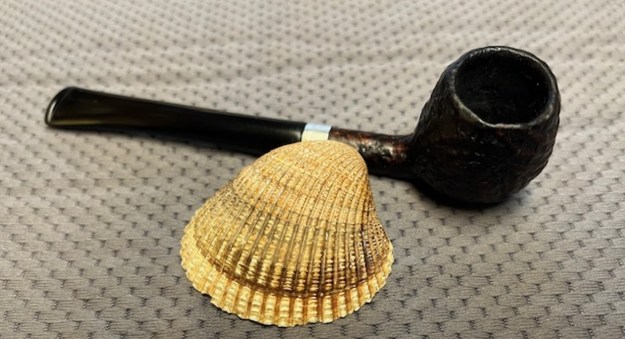
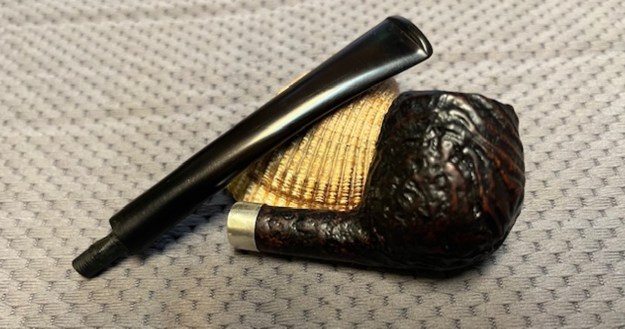
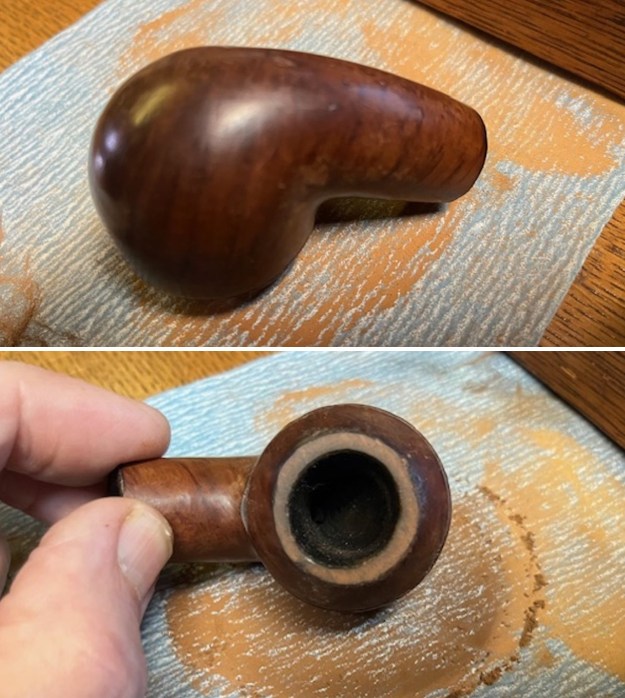
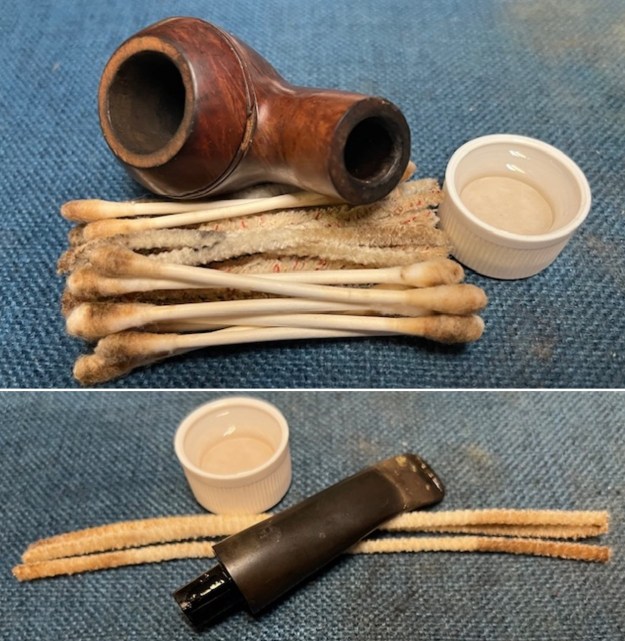
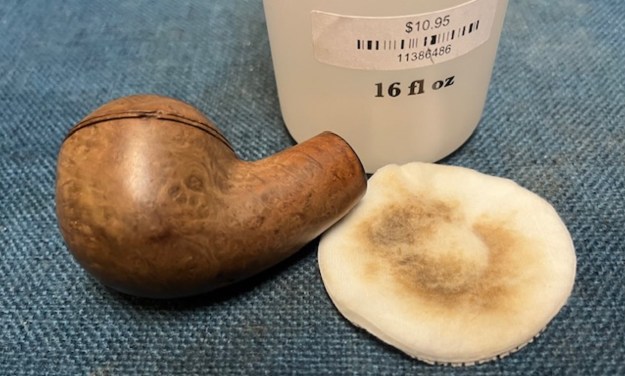
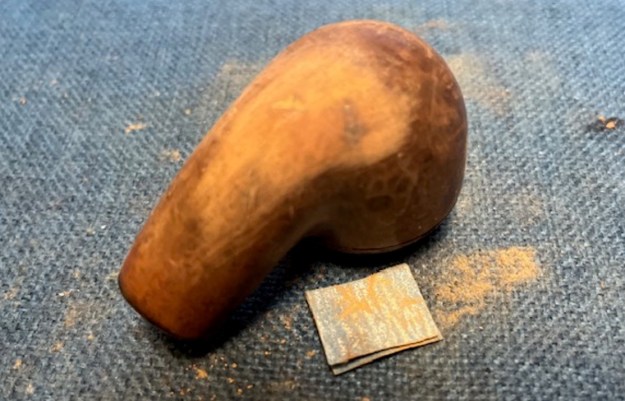
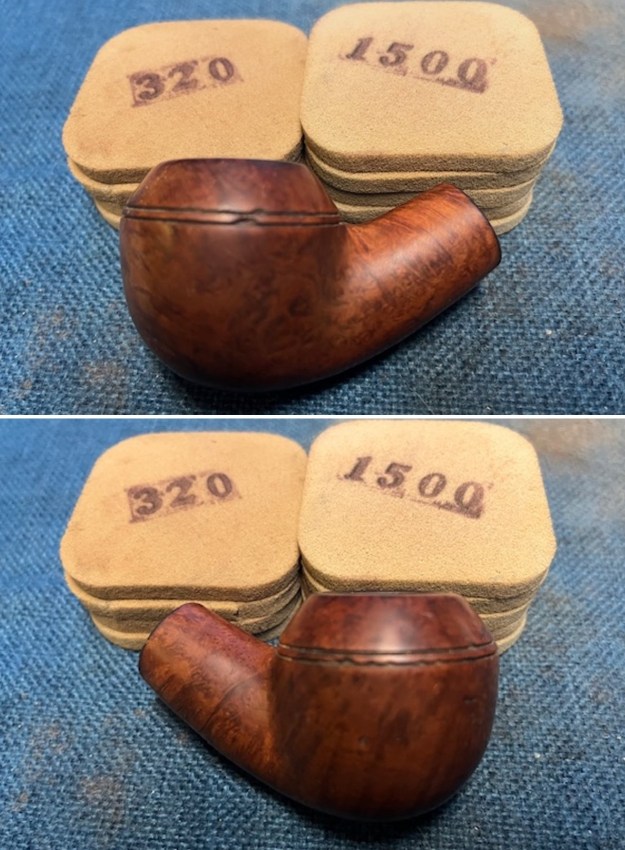
Before I move on to another of the pipes I have to work on from Jeff I decided to do a quick restem on a nice petite apple bowl with a vulcanite ferrule. It did not have a name on the bowl but the shank and the ferrule made for a beautiful little pipe. The bowl had been reamed and cleaned by Jeff somewhere along the journey. It had been sitting here in a box of bowls for a few years now. There was a fill on the front of the bowl that had fallen out and left a divot in the briar. Other than that the bowl was in excellent condition. I repaired the divot on the front of the bowl with some black CA glue and a little bit of briar dust. I flattened out the repair with 220 grit sandpaper to blend it into the surface of the briar.I wiped the bowl down with some isopropyl alcohol and cotton pads to remove the opacity of the stain and make it a bit more transparent. The grain began to stand through with a lot of clarity. I like the look of the grain around the bowl. The repair on the bowl was a bit lighter than the rest of the bowl and would need to be stained. I stained the repair on the front of the bowl with a Walnut stain pen. It blended into the surface of the bowl with the stain pen. The match was very good.I sanded the briar with 320-3500 grit sanding pads. I wiped the bowl down with a damp cloth after each sanding pad. I polished the bowl with micromesh sanding pads – dry sanding with 1500-12000 grits sanding pads. Once again, I wiped it down with a damp cloth following each pad. I rubbed the bowl down with Before & After Restoration Balm. It is a paste/balm that works to deep clean the finish, enliven and protect the briar. I worked it into the briar with my finger tips to make sure that it covered every square inch of the pipe. I set it aside for 10 minutes to let it do its work. I buffed it with a cotton cloth. The briar really began to have a deep shine. The photos I took of the bowl at this point mark the progress in the restoration. I went through my stems here and found a nice looking military bit stem that would look great with the pipe.It was clean and unused so I only need to polish it. I did that with micromesh sanding pads – dry sanding with 1500-12000 grit pads. I wiped the stem down after each pad with Obsidian Oil. I polished it with Before & After Pipe Stem Polish – both Fine and Extra Fine. I gave a final wipe down with Obsidian Oil. I put the No Name Apple pipe together and took it to the buffer. I buffed both the bowl and the stem with Blue Diamond on the wheel and then gave both multiple coats of Carnuaba Wax. I buffed it with a clean buffing pad to raise the shine. I further polished it with a microfiber cloth to deepen the shine. It is a beautiful petite pipe that should be a great smoker. The dimensions of the pipe are Length: 5 ½ inches, Height: 1 3/8 inches, Bowl diameter: 1 inch, Chamber diameter: ¾ of an inch. The weight of the pipe is .67 ounces/19 grams. If you wish to add it to your collection let me know. I will be putting it in the rebornpipes store shortly in the American Pipe Makers Section. Thanks for taking time to read this restoration and restem. As always I appreciate questions and comments.
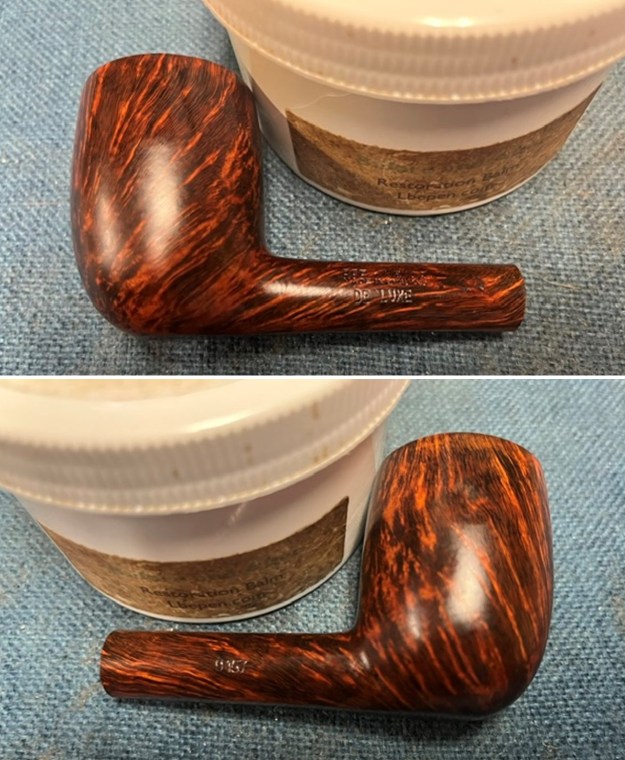
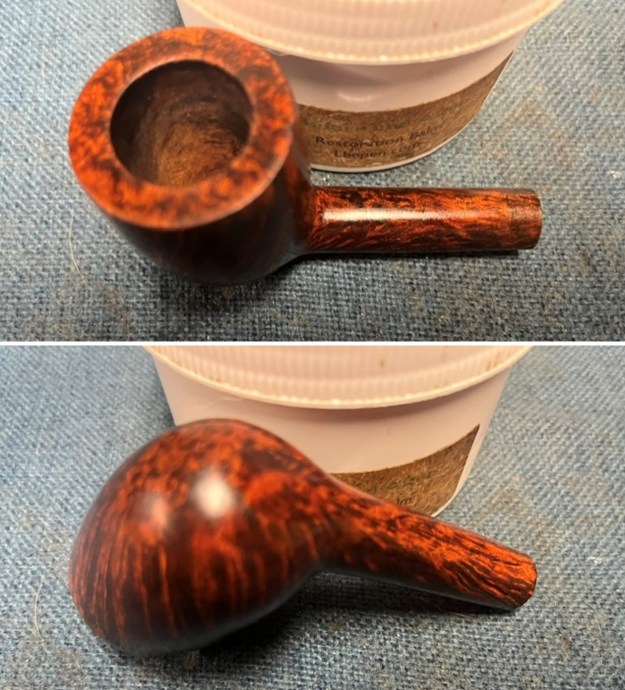
Restemming a Beautiful, Sandblast WDC Milano Ripple Briar Hesson Apple


by Steve Laug

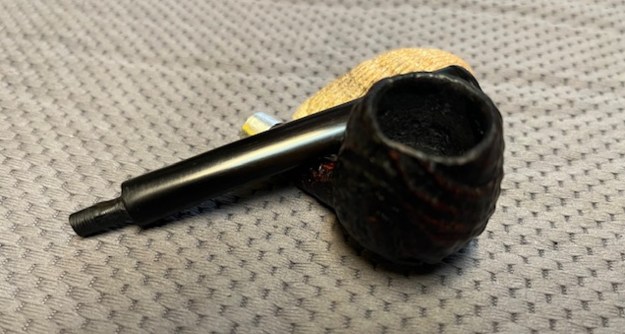
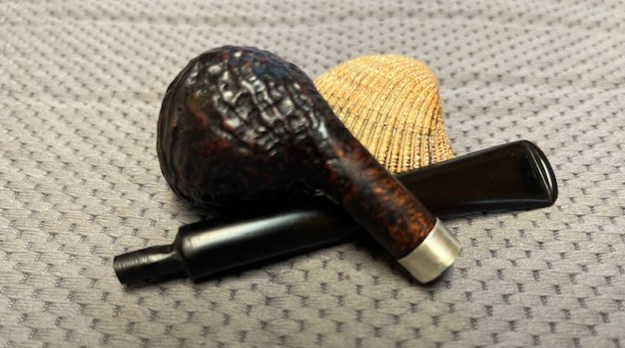
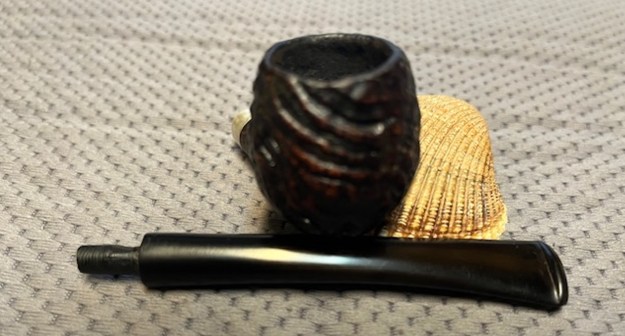
Time for another break from the repairs that I am working on for Rob. I had a couple of bowls in my box that needed to be restemmed. I chose to work on the first of them which is a beautifully sandblasted Apple bowl. The blast is very deep the rim top is thin and flows directly down the sides. The pipe was stamped on the underside of the shank and read WDC in a triangle followed by Milano [over] Ripple Briar [over] Hesson [over] Patd. Dec. 22, 192(6?). The last digit of the date is covered with a Sterling Silver band on the well repaired shank that is cracked on the left side. The bowl had been reamed and cleaned and was in great shape. There were a few worn spots on the top of the rim on the front and the right side. The shank on the left side had a long crack that had been repaired and banded with a sterling silver band. The band was clean with just a few scratches and the words Sterling curved on the topside. The shank was threaded but the threads were worn and it was missing a stem so I needed to find another one. I took photos of the bowl and have included them below. It shows the pipe before I started my work on it. I took a photo of the underside of the shank to show the stamping. It is quite clear and readable as noted above. I also tried to capture the Sterling Silver stamp o the band.I went through my stems and found one that was close to the right diameter to the shank and had a small diameter tenon. It would need some adjusting but it would fit very well. I took photos of it showing the look with the bowl.I started work on this pipe by polishing the bowl. The bowl was very clean and had little wear on it. The cracked shank had been banded and repaired somewhere in its journey. The silver band was very clean with some small scratches in the surface. It was in great condition so I started by staining the rim top faded and marks spots with a Walnut stain pen to blend them in and clean up the damage. It looked very good.After the touch up stain cured, I rubbed the bowl down with Before & After Restoration Balm. It is a paste/balm that works to deep clean the finish, enliven and protect the briar. I worked it into the briar with my finger tips to make sure that it covered every square inch of the pipe. I set it aside for 10 minutes to let it do its work. I buffed it with a cotton cloth. The briar really began to have a deep shine. The photos I took of the bowl at this point mark the progress in the restoration. I set the bowl aside and turned my attention to the stem I had chosen for the pipe. I cleaned up the tenon and shortened it slightly to fit the shank of the pipe. I sanded the diameter with a folded piece of 220 grit sandpaper to fully match the shank diameter. I sanded out the tooth marks and chatter on both sides of the stem.I put the stem on the shank and took photos of the fit of the stem to the bowl and the new look of this deeply sandblast pipe. I am liking the looks of the new stem. I removed the stem from the shank and sanded it further with 320-3500 grit sanding pads. I wiped the stem down after each pad with an Obsidian Oil impregnated cloth. By the time I finished with the 3500 grit pad the stem really looked good. I also sanded out the rough spot on the underside of the silver band to smooth it out.I polished the stem with 1500-12000 grit micromesh sanding pads – dry sanding with each pad. I wiped the stem down after each pad with an Obsidian Oil cloth. I polished it further with Before & After Pipe Stem Polish and wiped it down a final time with the oil cloth. The finished WDC Milano Ripple Briar Hession Apple looks great with its new stem. The taper stem brings out the contrast of the silver band and dark nooks and crannies of the sandblast. I buffed the pipe with a light coat of White Diamond on the buffing wheel and then gave the bowl multiple coats of Conservator’s Wax and the stem multiple coats of Carnauba Wax. I buffed the pipe with a clean buffing wheel and it is a real beauty. The dimensions of this WCD Milano Ripple Briar Apple are length: 5 ½ inches, height: 1 ½ inches, outside bowl diameter: 1 inch, chamber diameter: ¾ of an inch. The weight of the pipe is .67 ounces/19 grams. This is a beauty that will be going on the American Pipemakers Section of the rebornpipes store shortly. If you are interested in adding it to your collection let me know. Thanks for giving the blog a read.
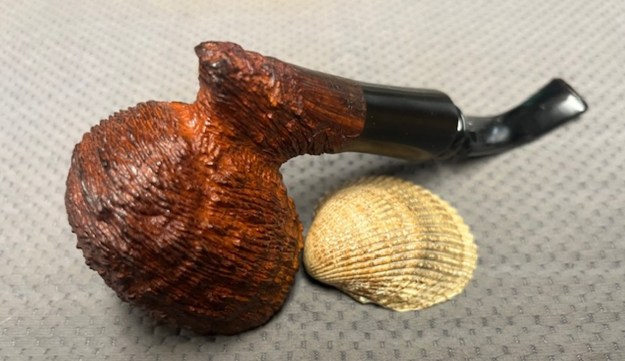
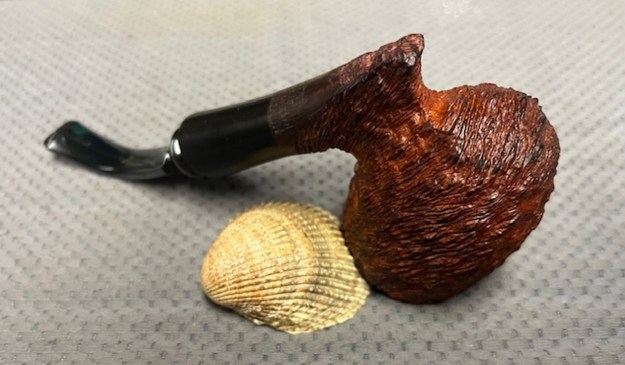
As always, I encourage your questions and comments as you read the blog. Thanks to each of you who are reading this blog. Remember we are not pipe owners; we are pipe men and women who hold our pipes in trust until they pass on into the trust of those who follow us.

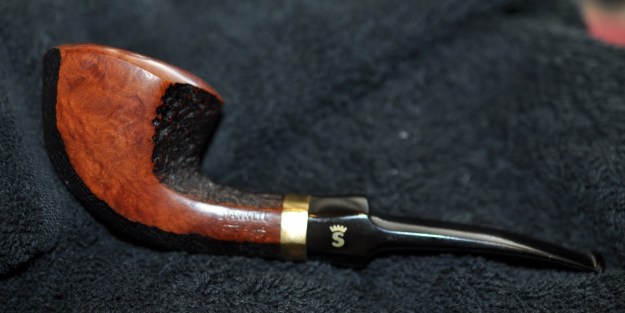
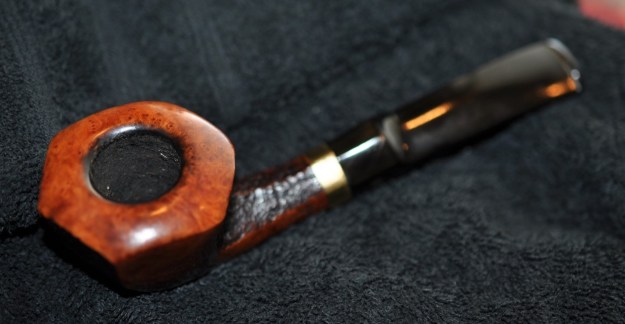
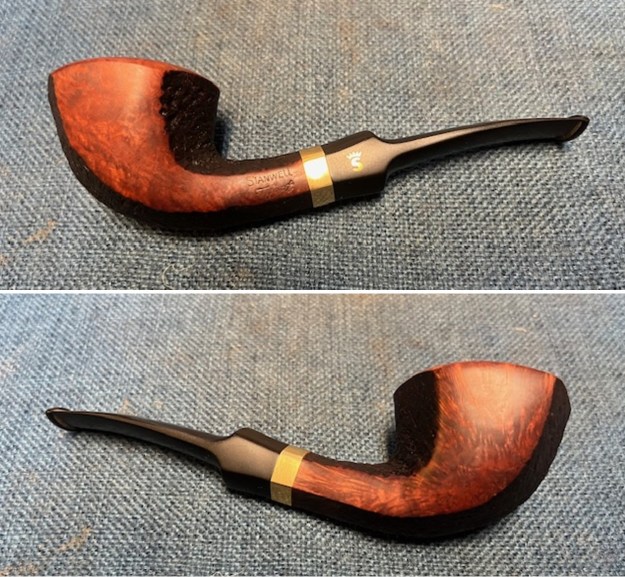
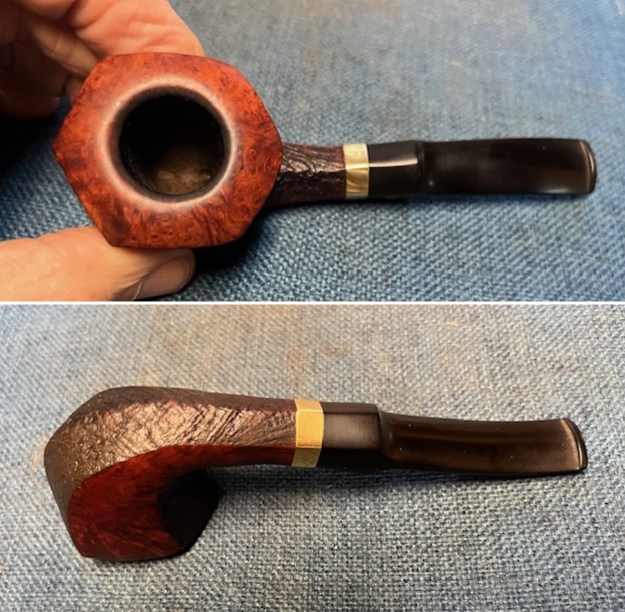
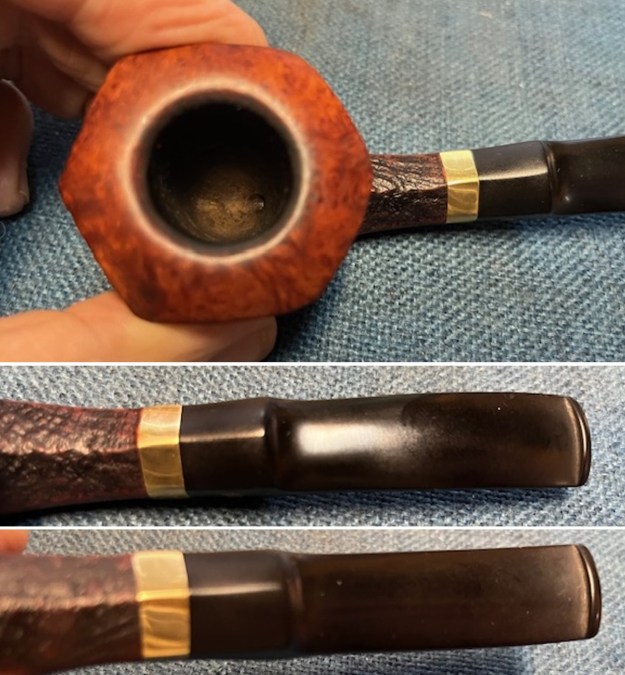
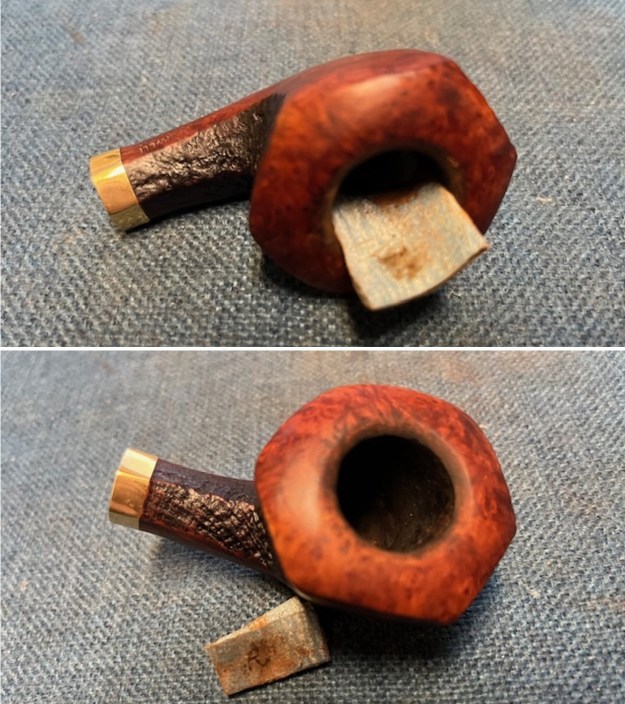
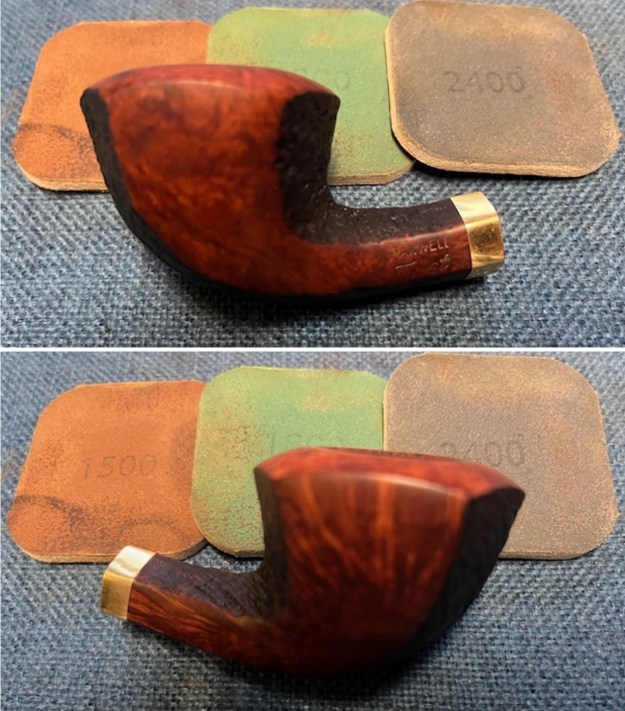
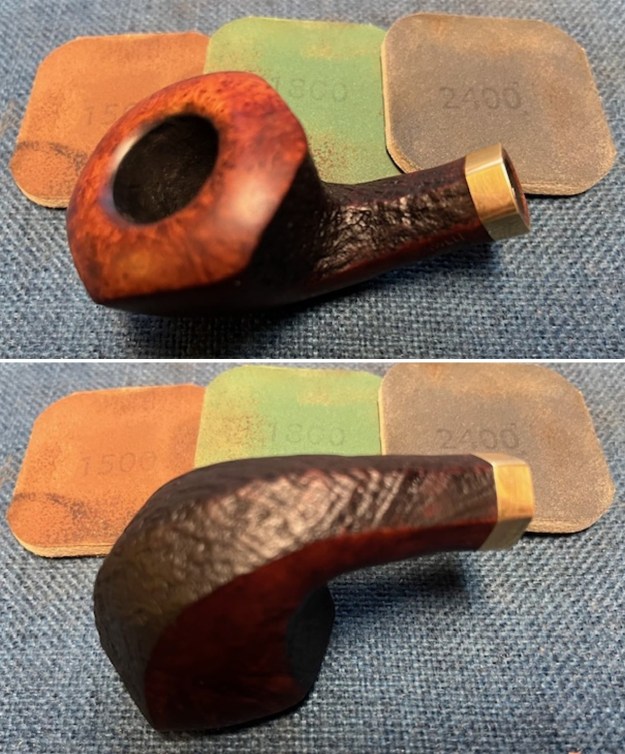
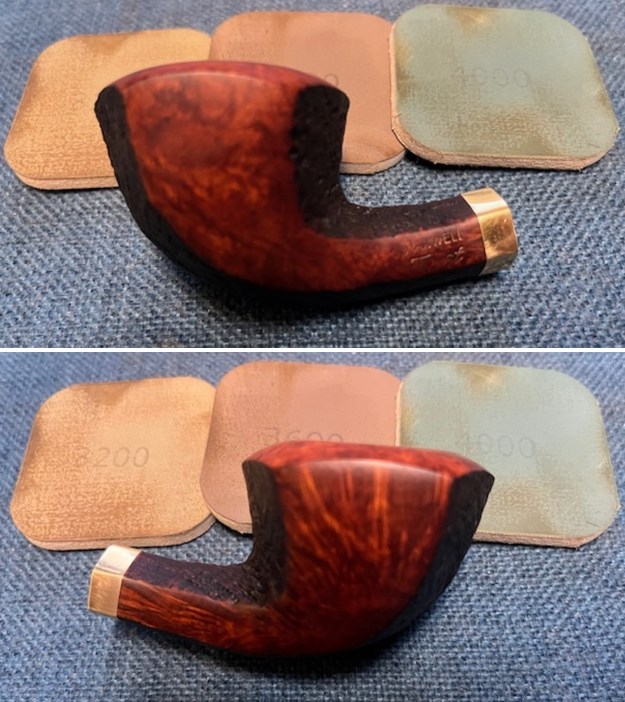
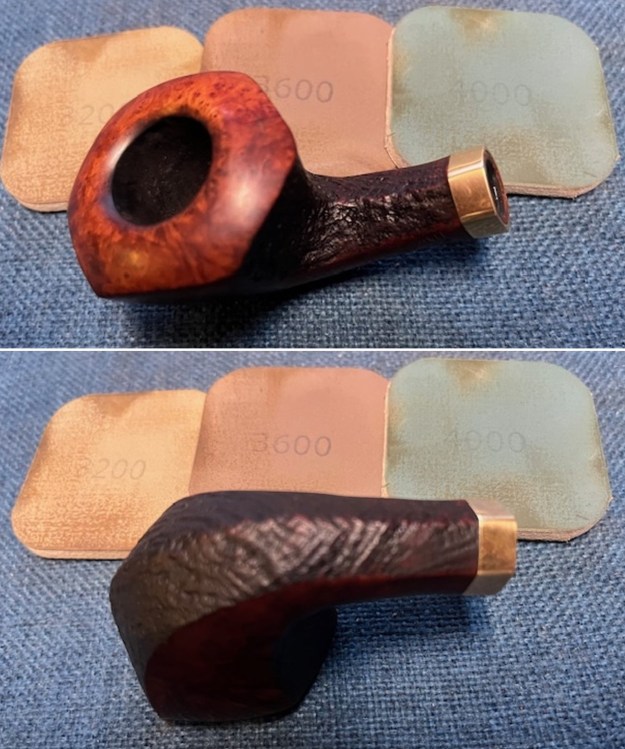
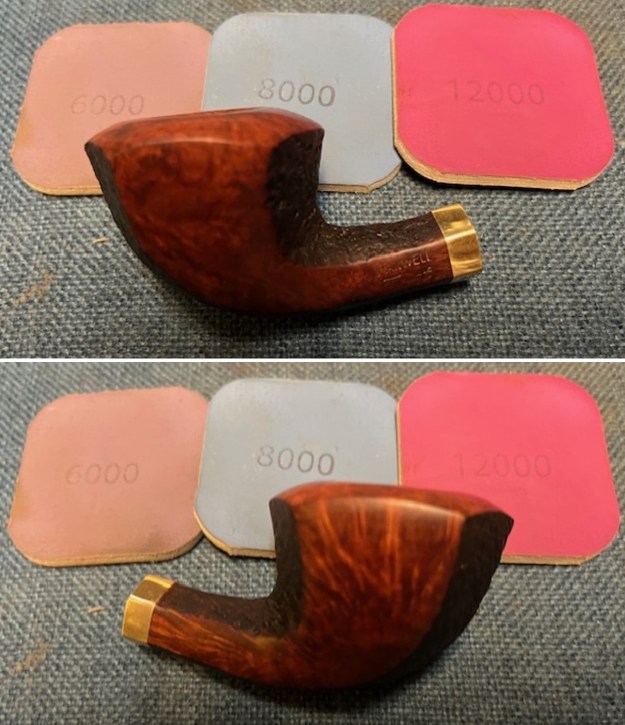
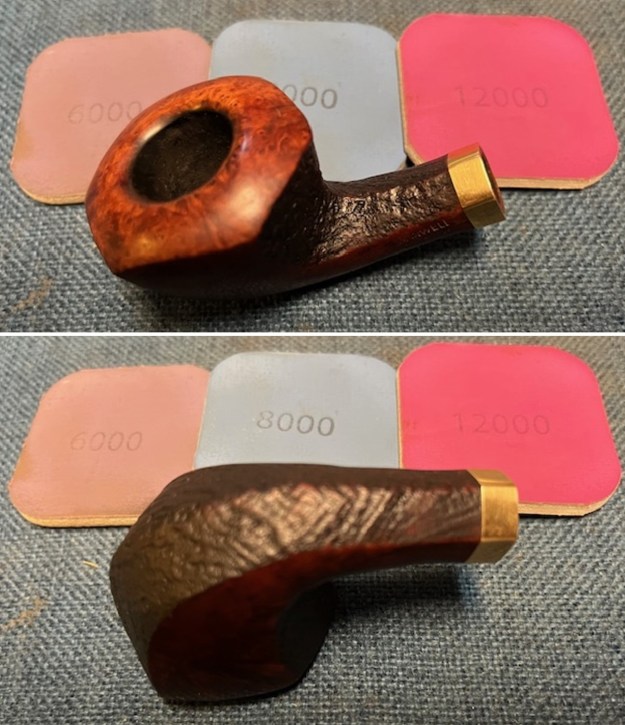
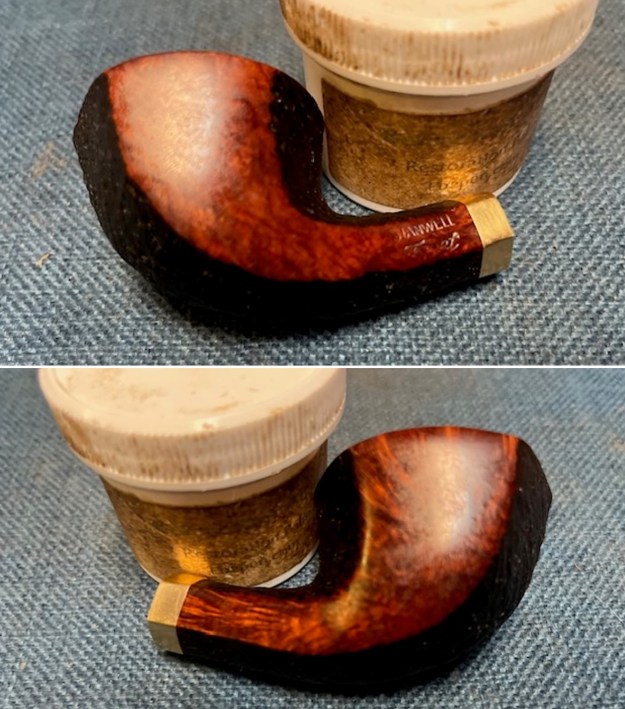
Restoring a Stanwell Facet Hexagon Dublin with a Brass Band and vulcanite stem


by Steve Laug

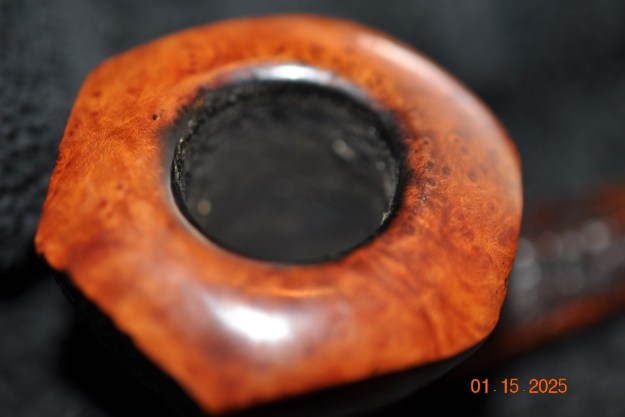
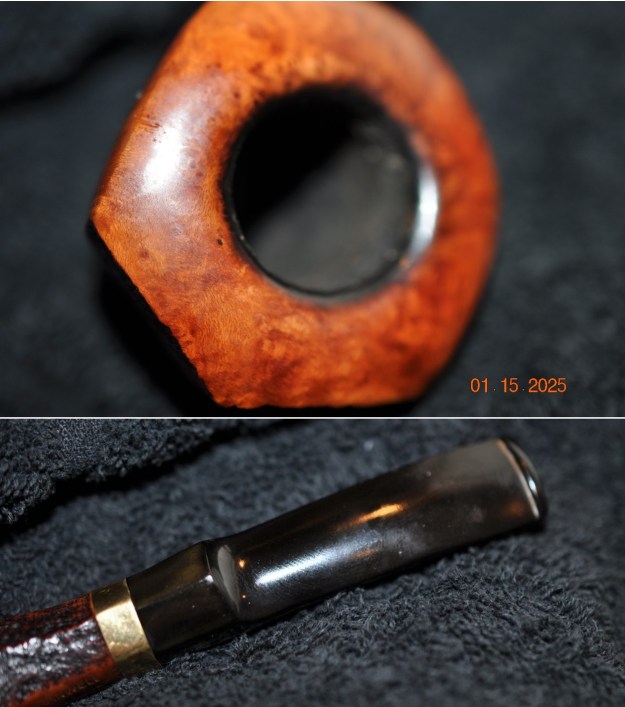
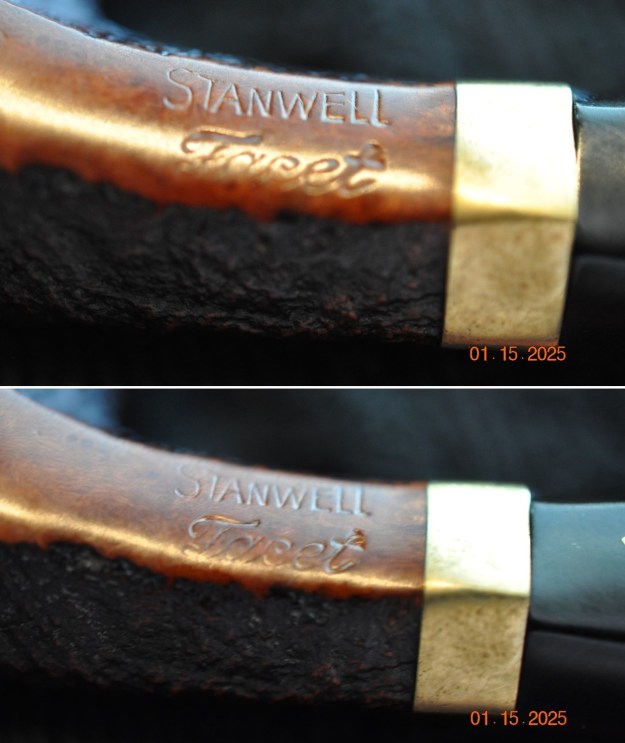
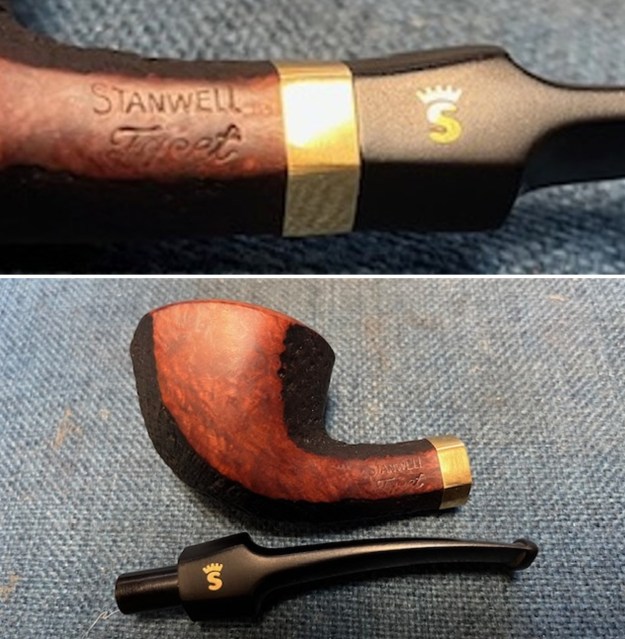
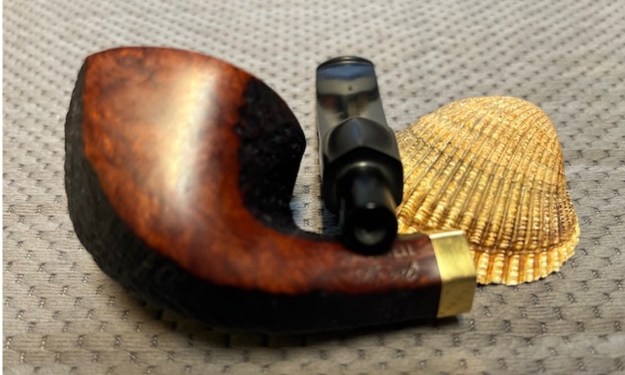
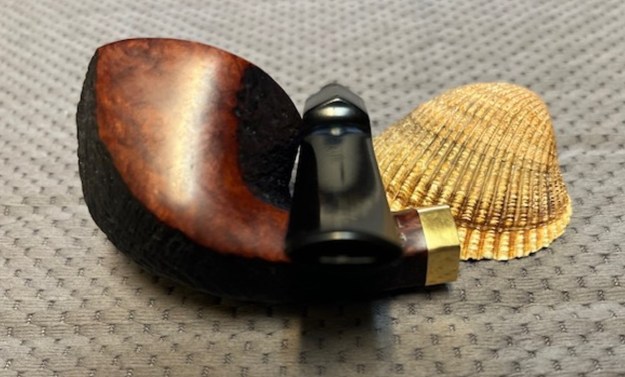
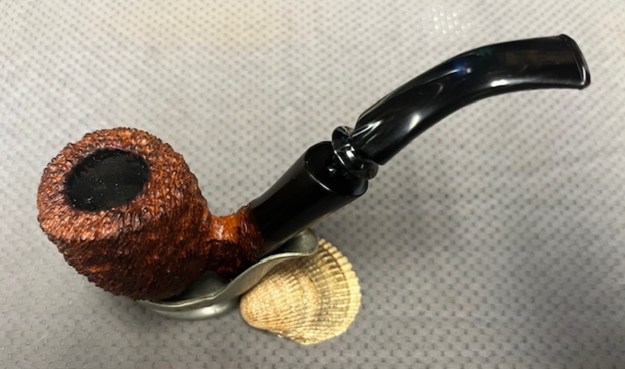
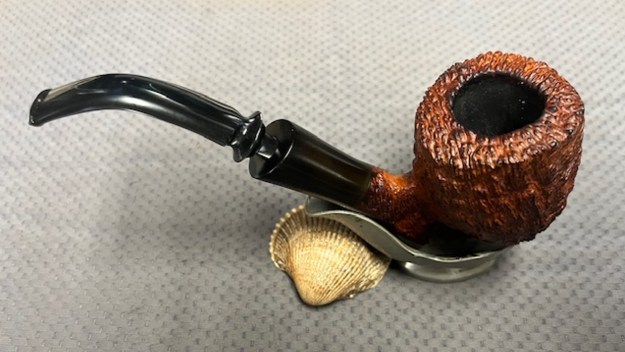
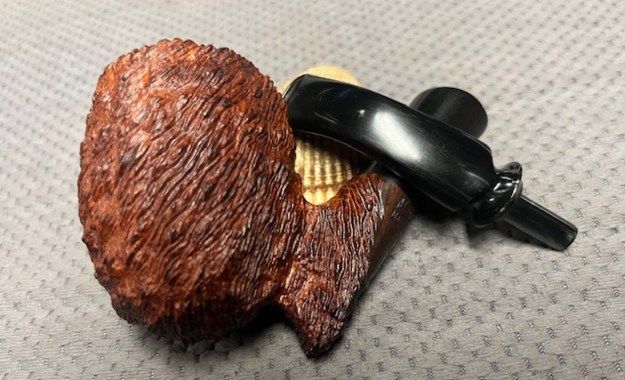
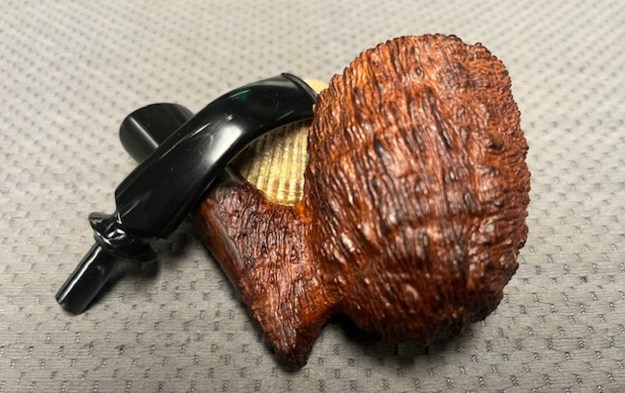
It may seem I have endless choices of pipes to work on. While we do have a lot of pipes that are in the queue to be restored it is far from endless. This next pipe I chose to work on was one that we purchased a few years ago on 10/17/2022 from our connection in Copenhagen, Denmark. The pipe is stamped on the left side of the shank and reads Stanwell [over] Facet. There is no country of origin stamp on the pipe. This one is a unique beauty with a Hexagonal shape combining a smooth rim top and smooth facets on the right and left side of the bowl. The front and back of the bowl and the top and underside of the shank were sandblasted on the two facets on the front and the back of the bowl. The exterior of the pipe was dirty and worn with dust in the sandblast. There was a thick cake in the bowl and some lava and darkening on the rim top flowing around the top of the rim. The shank had a gold band/ferrule on the shank end. The stem is a fancy hexagonal saddle stem with a gold “Crown S” logo on the left side of the saddle stem. It was lightly oxidized and had light tooth marks and chatter on both sides ahead of the button. Jeff took photos of the pipe before he started his clean up work. Jeff took photos of the rim top and stem to show the general condition of the pipe. The bowl is heavily caked and there was lava on the rim top and the inner edge. The stem was lightly oxidized and had some tooth marks and chatter. It should cleanup very well. Jeff took photos of the bowl sides and heel to show the smooth rim top, left and right bowl sides along with the beautiful blast that was around this bowl even though the grime on the finish hides it some. The pipe had obviously been well loved by the previous pipeman. He took photos of the sides of the shank to show the stamping. The stamping is clear and readable in the photos below as noted above. Before I started working on the pipe I decided to do a bit of digging on the shape and the design. I turned first to a blog on rebornpipes by Bas Stevens the was a compilation of Stanwell shapes (https://rebornpipes.com/2013/09/03/stanwell-shapes-compiled-by-bas-stevens/). There I found the shape number for this faceted pipe was 163. The information given there said that the shape was a Freehand, “Facet”, hexagonal, with brass ring by Jess Chonowitsch. It was a shape designed by Jess Chonowitsch and that was interesting to me.
So now I knew that the pipe was a Stanwell Facet and the shape was the classic Chonowitsch design hexagonal pipe with a brass ring on the shank end. Now it was time to work on the pipe.

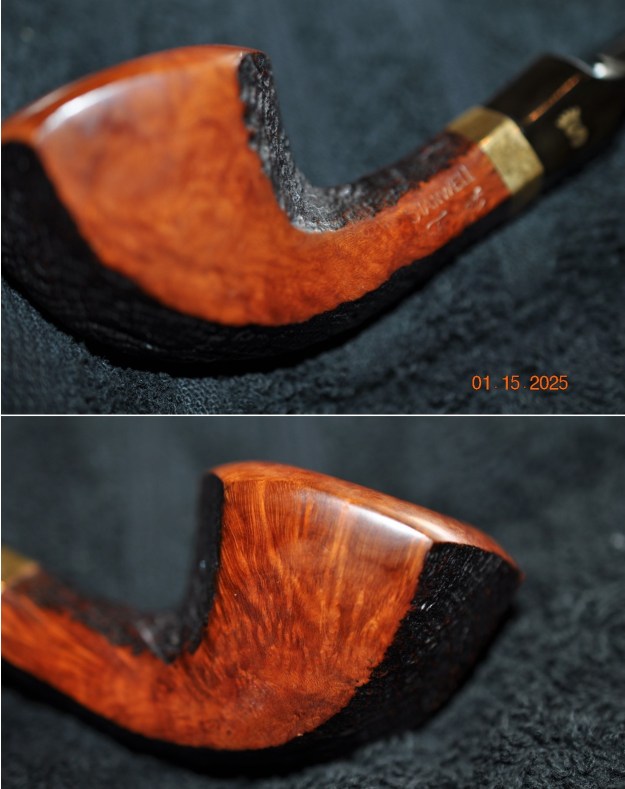
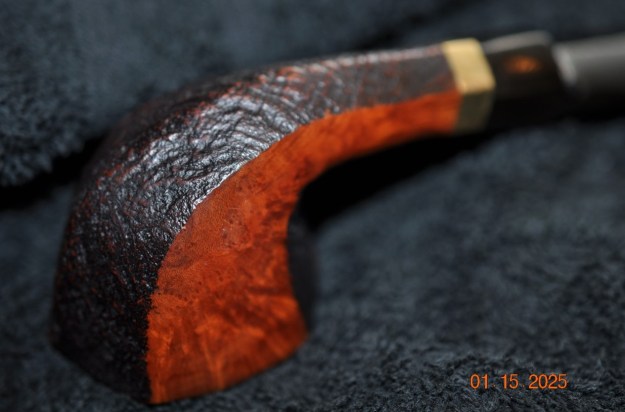
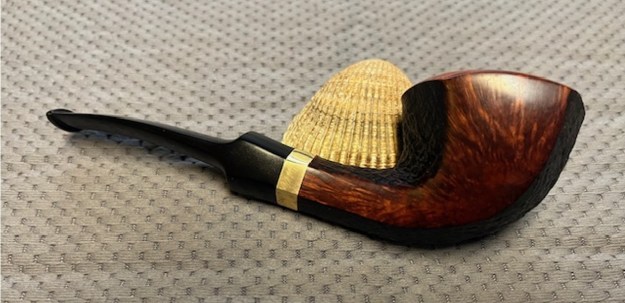
Jeff had thoroughly cleaned up the pipe. He reamed the pipe with a PipNet Pipe Reamer and cleaned up the remnants with a Savinelli Fitsall Pipe Knife. He scrubbed the bowl with undiluted Murphy’s Oil Soap with a tooth brush. He rinsed it under running warm water to remove the soap and grime. There was some darkening on the inner edge of the rim and top that would need to be dealt with. He cleaned out the inside of the shank and the airway in the mortise and the stem with alcohol, cotton swabs, shank brushes and pipe cleaners. He scrubbed the exterior of the stem with Soft Scrub to remove as much of the oxidation as possible. The vulcanite stem was clean but had light tooth marks and chatter on both sides ahead of the button. There was an inlaid brass “Crown S” on the left side of the saddle stem. I took photos of the pipe before I started my work on it. I took photos of the rim top and bowl as well as the stem to give a sense of the condition of both. The rim top had some darkening to the inner edge and rim top on the back side. The stem cleaned up well and there were some small tooth marks on the top and underside ahead of the button.I took photos of the stamping on the left side of the hex shank. The are readable as noted above. I took the stem out of the shank and took a photo of the overall look of the pipe.I decided to start my work on the pipe by addressing the darkening and damage on the inside edge of the bowl and the rim top. I used a folded piece of 220 grit sandpaper to clean up the bevel on the inner edge of the bowl. I wiped the top and edges down with a damp cloth and the rim top and edges looked much better.I polished the briar with micromesh sanding pads – dry sanding with 1500-12000 grit pads. I wiped the bowl down after each pad with a damp cloth. I rubbed the bowl down with Before & After Restoration Balm. I worked it into the surface of the bowl sides and shank with my fingertips. The product works to clean, enliven and protect the briar. I let the balm sit for a little while and then buffed with a cotton cloth to raise the shine. I set the bowl aside and turned my attention to the stem. I filled in some small tooth marks with clear CA glue. Once cured I sanded them smooth to blend into the surface of the vulcanite with the 220 grit sandpaper. I started the polishing of the stem with 320-3500 grit sanding pads to polish the stem surface and smooth out the marks. The stem was looking better with the polishing.I polished the stem with micromesh sanding pads – 1500-12000 grit pads. I wiped it down with Obsidian Oil after each sanding pad. I used Before & After Pipe Polish – both Fine and Extra Fine to further polish the stem. This Jess Chonowitsch Designed Stanwell Faceted Hexagon Freehand 163 with a hexagon vulcanite saddle stem is a great looking pipe now that it has been restored. The beautiful grain on the polished smooth portions of the briar and the sandblast front and back of the bowl are stunning. I put the stem back on the bowl and carefully buffed the pipe with Blue Diamond on the buffing wheel. I gave the bowl and the stem multiple coats of carnauba wax on the buffing wheel and followed that by buffing the entire pipe with a clean buffing pad. I hand buffed the pipe with a microfiber cloth to deepen the shine. The finished Stanwell Facet 163 Dublin fits nicely in the hand and feels great. Give the finished pipe a look in the photos below. The dimensions of the pipe are Length: 5 ½ inches, Height: 1 ¾ inches, Outside diameter of the bowl: 1 ¾ inches, Chamber diameter: ¾ of an inch. The weight of the pipe is 48 grams/1.69 ounces. I will soon be adding it to the rebornpipes store in the Danish Pipe Making Companies Section. If you are interested in this pipe send me a message or an email. Thanks for reading this blog and my reflections on the pipe while I worked on it. There are many more to come!

Restoring the third of six pipes for a Vancouver Pipeman – No Name Bent Rhodesian


by Steve Laug

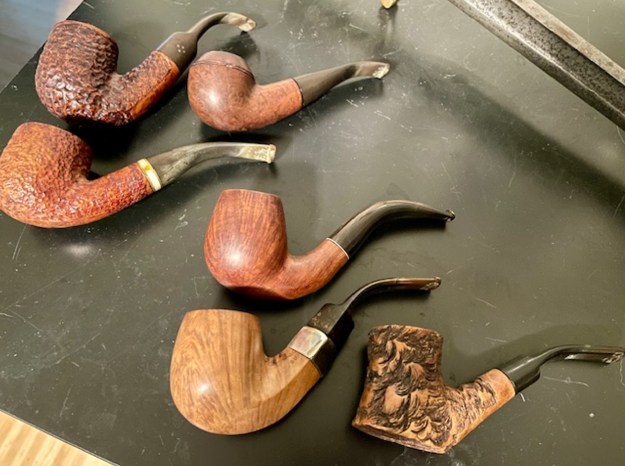
Earlier this week I received an email from Stephen regarding a few more pipe projects that he had for me to work on. He dropped them off here yesterday for me to work on. There were six pipes in the lot. Two were his that I had worked on a few years ago – a Mayfair 1005 rusticated tree stump and a Jost Supreme. Both were favourite pipes of his. One was a Savinelli Bent Billiard that he purchased on a trip to Italy. The final three were pipes that belonged to his father who would soon be visiting him in Vancouver – a Brigham full bent four dot 4244, a Savinelli Portofino Bent Pot and a Bent Rhodesian with no name stamped on the shank sides. Stephen texted me this photo of the pipes before he sent them.I decided to work on the second of Stephen’s father’s pipes. It is a smooth Bent Rhodesian. It is a beautiful grained piece of briar that I can appreciate why he chose it. The pipe is unstamped and does not appear to have even the remnants of any stamping. The briar is dirty from use with a moderate cake in the bowl and a lot of chipping and dents in the rim top and the twin rings on Bullcap on the bowl. The stem was oxidized, calcified and had some tooth marks and chatter on the top and underside of the stem ahead of and on the surface of the button. There is no stamping on the side of the stem as it was unmarked. I took photos of the pipe before I started my work and included them below. I took a photo of the stem surfaces and the bowl and rim to give a sense of condition of the pipe. You can see the cake in bowl and the lava overflow and the heavy nicking and denting on the edges and rim top of the bowl. The stem surface is very dirty and you can see the tooth marks and chatter on both sides ahead of the button. There is also a paper wash inserted in the mortise of the pipe to tighten the fit of the stem.I removed the stem from the shank of the pipe and took a photo of the parts to show the flow of the pipe. It has some great grain.I used a dental spatula to scrape out the paper washer from the inside of the shank. It had been glued to the right side of the shank to thicken the wall of the right side. It was not an effective way as the shank was not drilled evenly. It was straight but the shank was not round. The stem turned the same way the stem was.To address the damage on the rim top I topped it with 220 grit sandpaper on a topping board. I took off the rim damage and smoothed out the top of the rim. It looked much better. I reamed the bowl with a PipNet pipe reamer using the second and third cutting head to trim the cake back. I used a Savinelli Fitsall Pipe knife to clean up the remnants leaving bare briar. I sanded the bowl walls with 220 grit sandpaper wrapped around a piece of dowel. The bowl was significantly cleaner. I cleaned out the airway in the shank and mortise as well as the stem with cotton swabs, pipe cleaners and isopropyl alcohol. It was dirty but it cleaned up very well. I cleaned the surface of the briar with a cotton pad and acetone to remove the grime and the remnants of the finish on the briar. It looked much better.There was a large divot on the bottom of the bowl that I decided to repair. I filled it in with some clear CA glue and pressed briar dust into the glue. I repeated the process until the damaged area was filled in. Once the repair cured I sanded it flat to blend it into the surrounding surface of the briar. It looked much better when I was finished. I sanded the bowl with 320-3500 grit sanding pads. I wiped the bowl down after each sanding pad with a damp cloth to remove the sanding debris. I polished the briar with 1500-12000 micromesh sanding pads – dry sanding the bowl with the pads and wiping it down after each sanding pad to remove the sanding debris. It is looking much better. I left the nicks on the twin rings around the top of the Bullcap as they are a part of the pipe’s journey. I rubbed the bowl down with Before & After Restoration Balm. I worked it into the surface of the briar with my fingertips and a shoe brush to work it into the rings around the Bullcap. The product works to clean, restore and preserve the briar. I let it do its magic for 15 minutes then buffed it off with a cotton cloth. The pipe looks very good at this point in the process. I set the bowl aside and turned my attention to the vulcanite taper stem. I scrubbed the surface of the stem with Soft Scrub to break through the oxidation, calcification and clean up the tooth marks.I filled in the tooth marks on the stem surface and on the surface of the button on both sides with black CA glue. The glue I use has both rubber and carbon in the mix that harden as it dries but does not become brittle. Once it cured I flattened the repairs and reshaped the button edge with a flat needle file. I cleaned up the repaired areas with 220 grit sandpaper. I sanded the stem with 320-3500 grit sanding pads. I wiped the stem down after each sanding pad to remove the sanding debris and dust. The stem looked very good. I polished the stem with micromesh sanding pads – 1500-12000 grit pads. I wiped it down with an Obsidian Oil cloth after each sanding pad.  I finished polishing it with Before & After Pipe Stem Polish – both Fine and Extra Fine and buffed it off with a cotton cloth. I gave it a coat of Obsidian Oil to preserve and protect the stem. This No Name Bent Rhodesian is a great looking pipe now that it has been restored. The mix of brown stains really highlight the grain and the polished finish has depth. The nicks in the rings give a bit of character and history to the pipe. I put the vulcanite stem back on the bowl and carefully buffed the pipe with Blue Diamond on the buffing wheel. I gave the bowl and the stem multiple coats of carnauba wax on the buffing wheel and followed that by buffing the entire pipe with a clean buffing pad. I hand buffed the pipe with a microfiber cloth to deepen the shine. The finished Bent Rhodesian fits nicely in the hand and feels great. Give the finished pipe a look in the photos below. The dimensions of the pipe are Length: 5 inches, Height: 1 ½ inches, Outside diameter of the bowl: 1 inch, Chamber diameter: ¾ of an inch. The weight of the pipe is 48 grams /1.69 ounces. I have three more of Stephen’s pipes to work on. Once I have finished I will get them back to him to enjoy with his father. Thanks for reading this blog and my reflections on the pipe while I worked on it.

As always, I encourage your questions and comments as you read the blog. Thanks to each of you who are reading this blog. Remember we are not pipe owners; we are pipe men and women who hold our pipes in trust until they pass on into the trust of those who follow us.

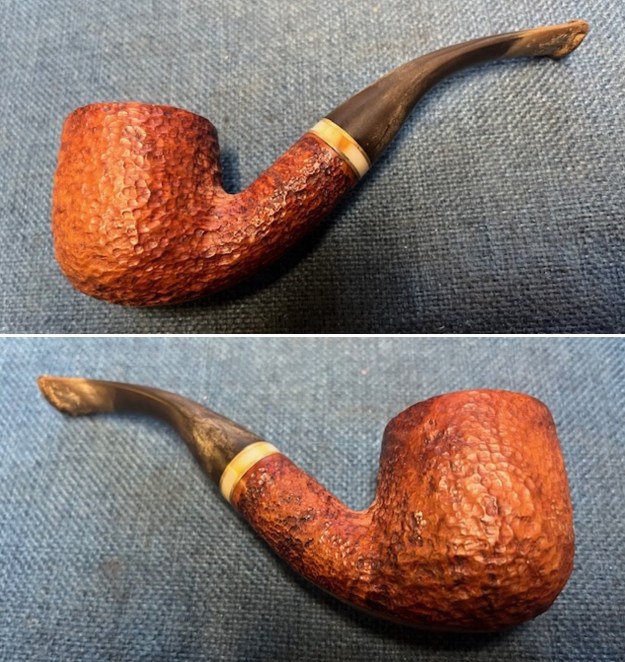
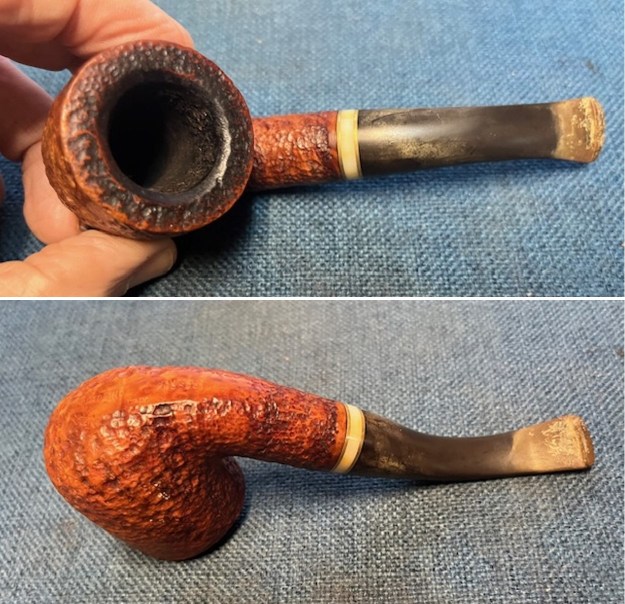
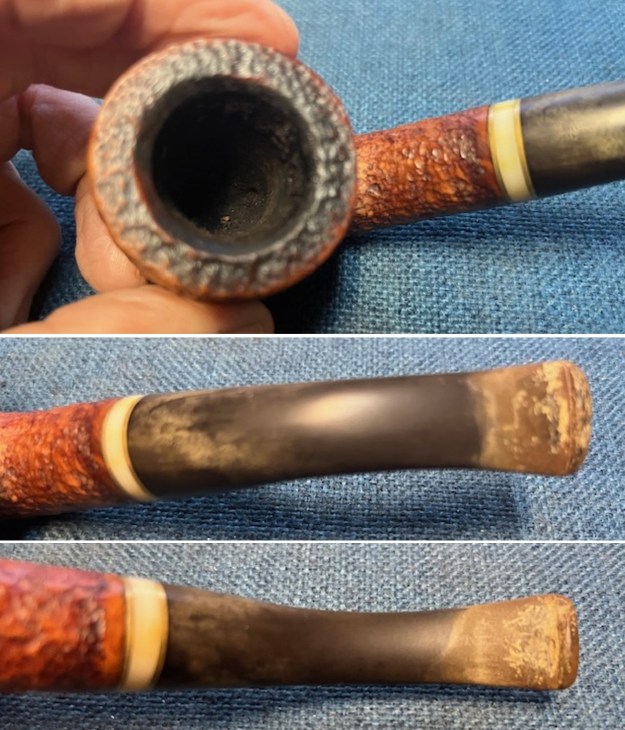
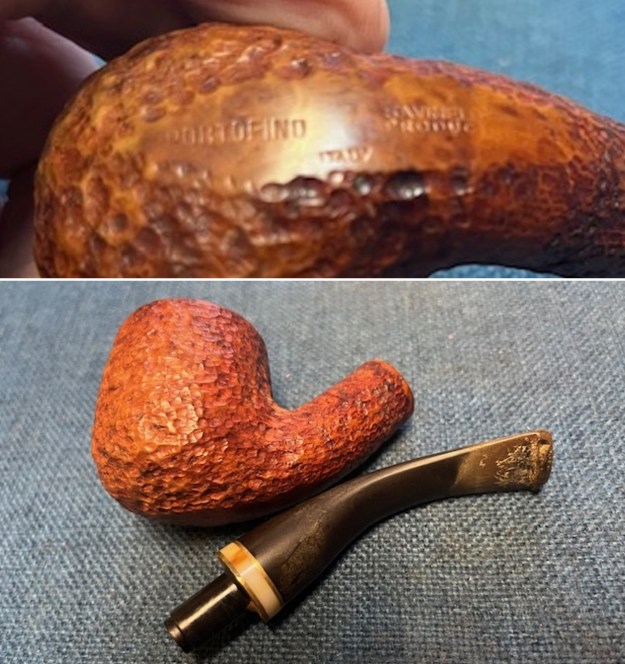
Restoring the second of six pipes for a Vancouver Pipeman – Savinelli Portofino Rusticated Pot


by Steve Laug

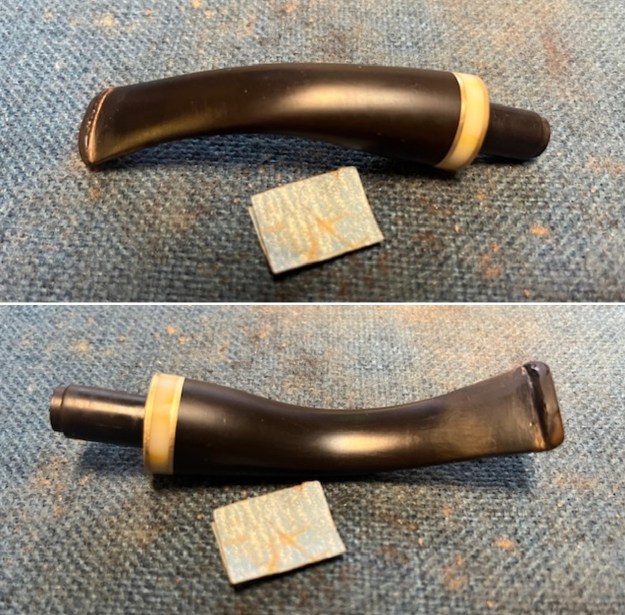
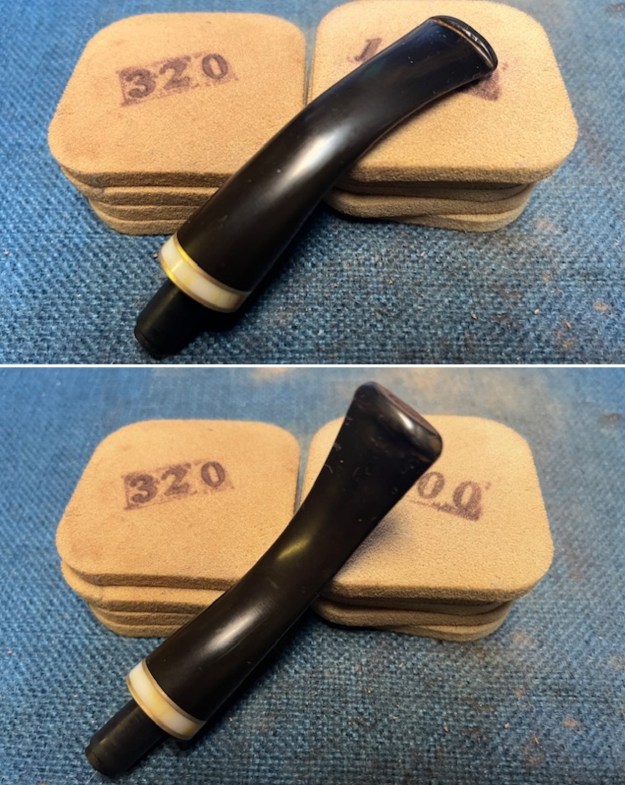
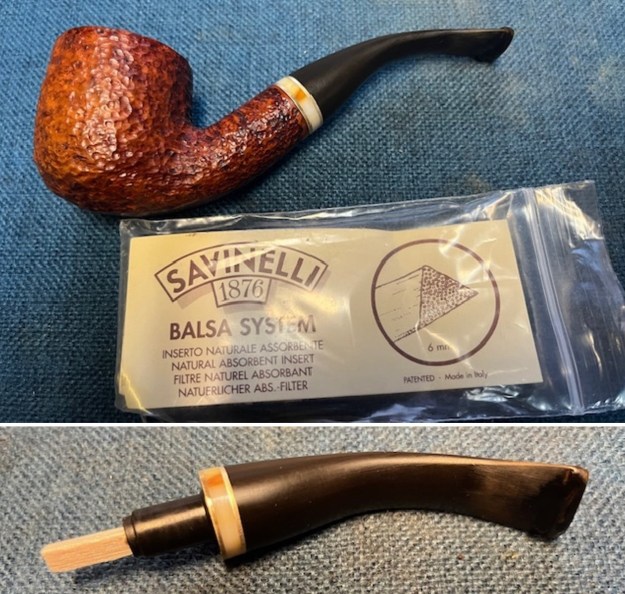
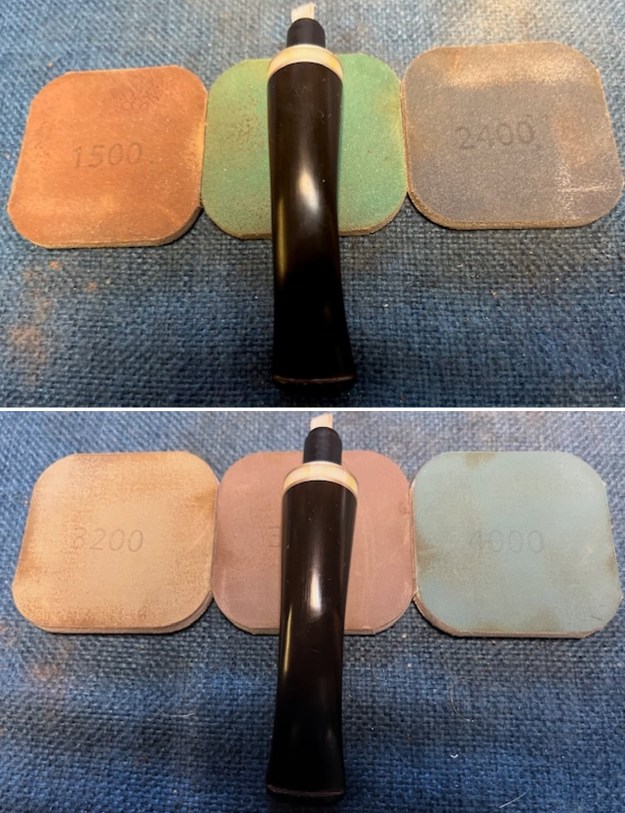
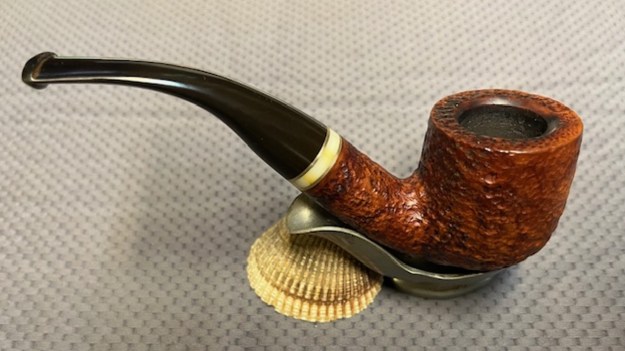
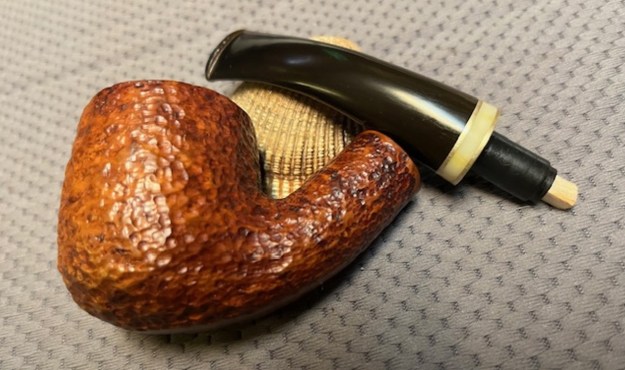
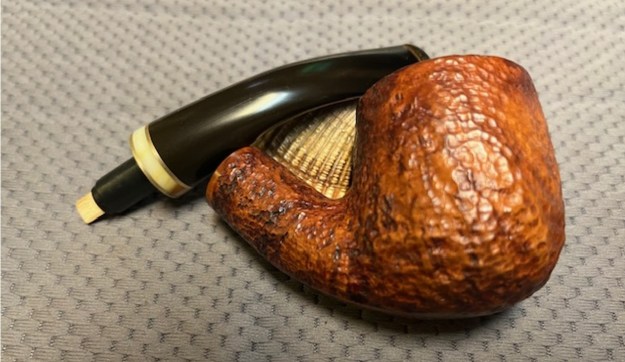
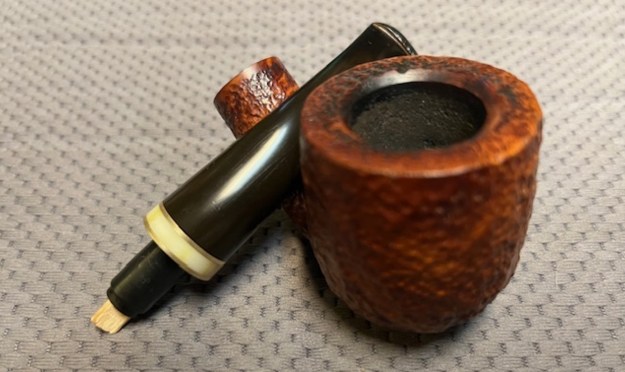
Earlier this week I received an email from Steffen regarding a few more pipe projects that he had for me to work on. He dropped them off here yesterday for me to work on. There were six pipes in the lot. Two were his that I had worked on a few years ago – a Mayfair 1005 rusticated tree stump and a Jost Supreme. Both were favourite pipes of his. One was a Savinelli Bent Billiard that he purchased on a trip to Italy. The final three were pipes that belonged to his father who would soon be visiting him in Vancouver – a Brigham full bent four dot 4244, a Savinelli Portofino Bent Pot and a Bent Rhodesian with no name stamped on the shank sides. Steffen texted me this photo of the pipes before he sent them.This afternoon I decided to work on the first of Steffen’s father’s pipes. It is a rusticated Bent Pot. It is a beautiful grained piece of briar that I can appreciate why he chose it. There is a mother of pearl acrylic disc sandwiched between two brass bands on the end of the stem that provides a separation between the bowl and the vulcanite taper stem. The pipe is stamped on the underside of the shank and heel of the bowl and reads Portofino [followed by] Italy below and to the right [followed by] Savinelli [over] Product. The briar is dirty from use with a moderate cake in the bowl and an overflow of lava on the rusticated rim top. The stem was oxidized, calcified and had some tooth marks and chatter on the top and underside of the stem ahead of the button. There is no stamping on the side of the stem as it was unmarked. It also looked to have been made for a Savinelli Balsa Filter. I took photos of the pipe before I started my work on it. I have included them below. I took a photo of the stem surfaces and the bowl and rim to give a sense of condition of the pipe. You can see the cake in bowl and the lava overflow on the edges and rim top of the bowl. The stem surface is very dirty and you can see the tooth marks and chatter on both sides ahead of the button.I took a photo of the stamping on the sides of the shank. It is clear and readable as noted above. I also took a photo of the bowl with the stem removed. It is a great looking pipe.I cannot find any specific information on the Savinelli Product Portofino Rusticated Pot online. I found pipes for sale on Worthpoint and other sites that were both smooth and rusticated so the name does not imply rusticated pipes. Portofino is a village in NW Italy, SE of Genoa: tourist resort. The brand is thus part of a collection of pipes made by Savinelli named after villages in Italy. I have included a photo of the village from a tourist site.Now it was time to start working on the pipe itself. I reamed it with a PipNet pipe reamer using the second and third cutting head to trim the cake back. I used a Savinelli Fitsall Pipe knife to clean up the remnants leaving bare briar. I sanded the bowl walls with 220 grit sandpaper wrapped around a piece of dowel. The bowl was significantly cleaner. I scrubbed the externals of the bowl with a tooth brush and some undiluted Muprhy’s Oil Soap.  I rinsed the bowl down with warm water to remove the debris and dust. The bowl looked muc better. I worked on the rim top with a brass bristle wire brush to clean up the debris on the rim top. It looked significantly better.I cleaned out the airway in the shank and mortise as well as the stem with cotton swabs, pipe cleaners and isopropyl alcohol. It was dirty but it cleaned up very well.   I rubbed the bowl down with Before & After Restoration Balm. I worked it into the surface of the briar with my fingertips. It works to clean, restore and preserve the briar. I let it do its magic for 15 minutes then buffed it off with a cotton cloth. The pipe looks very good at this point in the process. I set the bowl aside and turned my attention to the vulcanite taper stem. I scrubbed the surface of the stem with Soft Scrub to break through the oxidation, calcification and clean up the tooth marks.I filled in the tooth marks on the stem surface and on the surface of the button on both sides with black CA glue. The glue I use has both rubber and carbon in the mix that harden as it dries but does not become brittle. Once it cured I flattened the repairs and reshaped the button edge with a flat needle file. I cleaned up the repaired areas with 220 grit sandpaper. I sanded the stem with 320-3500 grit sanding pads. I wiped the stem down after each sanding pad to remove the sanding debris and dust. The stem looked very good. The stem was drilled to fit a Savinelli Balsa System filter. I removed a new filter from the package of Balsa filters and fit one in the tenon of the stem. It fit well and looked good.I polished the stem with micromesh sanding pads – 1500-12000 grit pads. I wiped it down with an Obsidian Oil cloth after each sanding pad. I finished polishing it with Before & After Pipe Stem Polish – both Fine and Extra Fine and buffed it off with a cotton cloth. I gave it a coat of Obsidian Oil to preserve and protect the stem. This Savinelli Product Portofino Rusticated Pot is a great looking pipe now that it has been restored. The mix of brown stains really highlight the grain under the rustication and the polished finish has depth. I put the vulcanite stem back on the bowl and carefully buffed the pipe with Blue Diamond on the buffing wheel. I gave the bowl and the stem multiple coats of carnauba wax on the buffing wheel and followed that by buffing the entire pipe with a clean buffing pad. I hand buffed the pipe with a microfiber cloth to deepen the shine. The finished Savinelli Product Portofino Pot fits nicely in the hand and feels great. Give the finished pipe a look in the photos below. The dimensions of the pipe are Length: 5 ½ inches, Height: 1 ¾ inches, Outside diameter of the bowl: 1 ½ inches, Chamber diameter: 1 inch. The weight of the pipe is 67 grams /2.33 ounces. I have five more of Stephen’s pipes to work on. Once I have finished I will get them back to him to enjoy with his father. Thanks for reading this blog and my reflections on the pipe while I worked on it.

As always, I encourage your questions and comments as you read the blog. Thanks to each of you who are reading this blog. Remember we are not pipe owners; we are pipe men and women who hold our pipes in trust until they pass on into the trust of those who follow us.