By Steve Laug
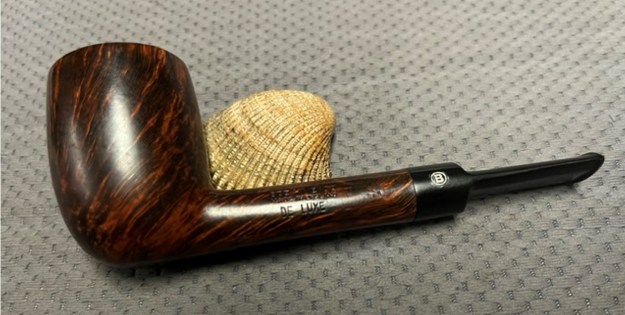
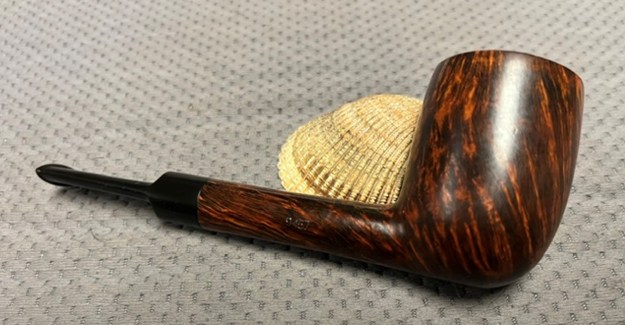
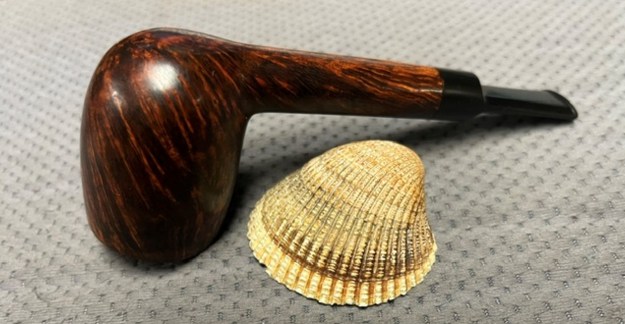
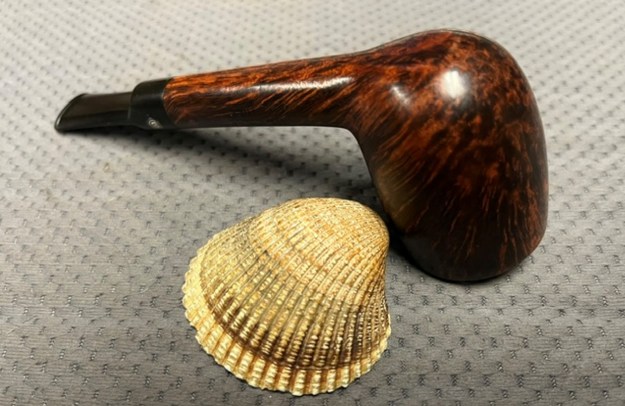
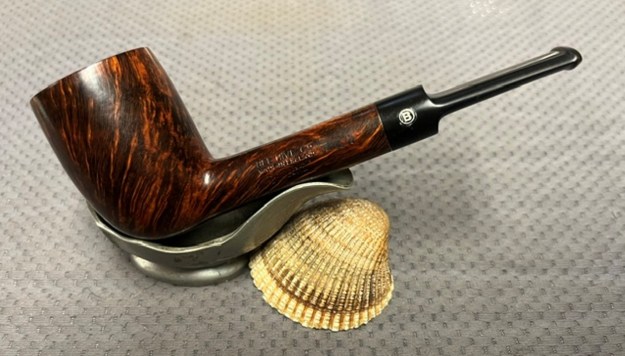
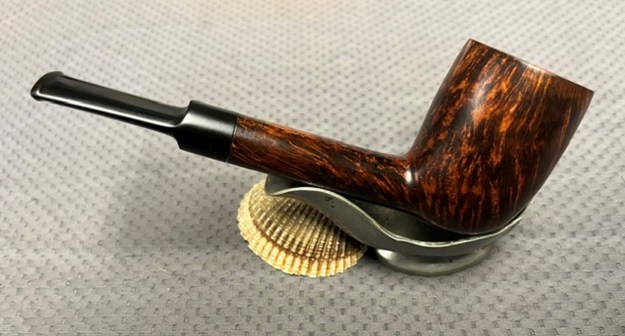
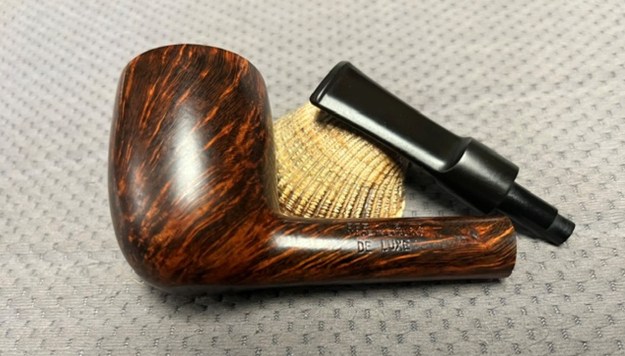
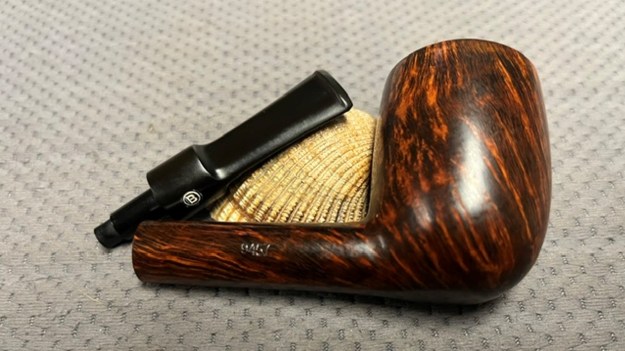
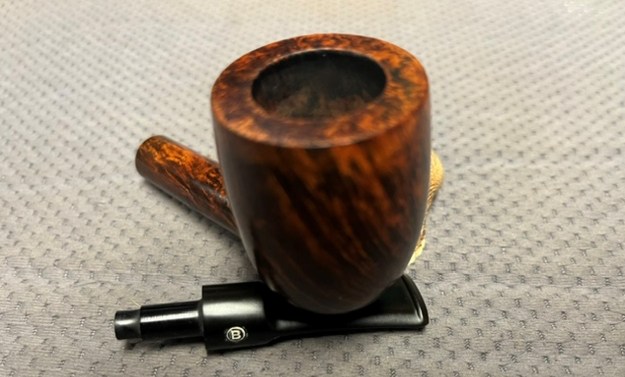
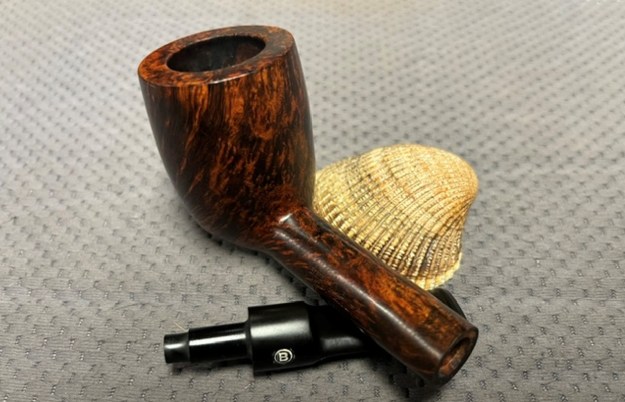
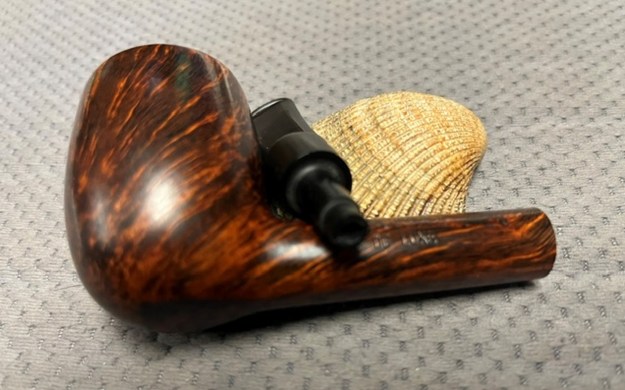
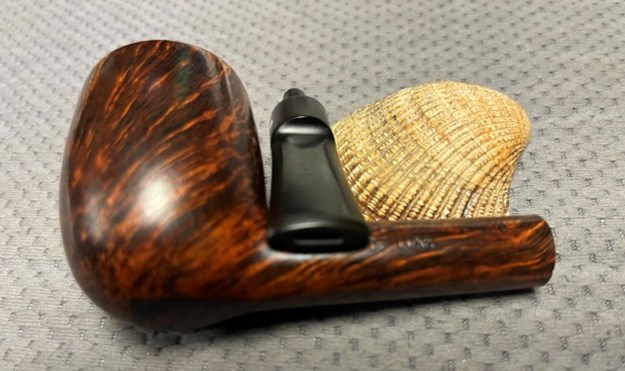
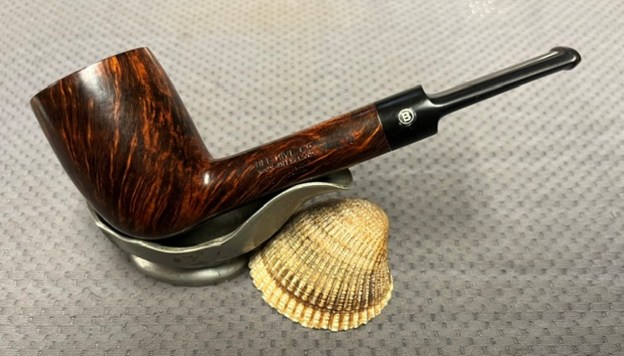
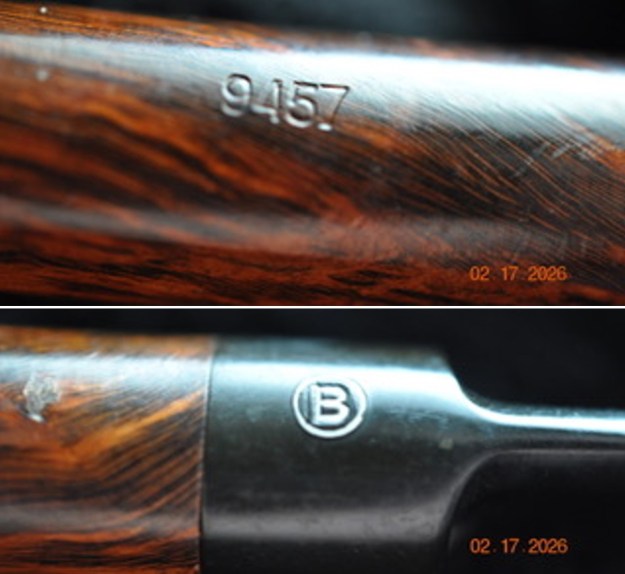
This darker beautifully grained saddle stem Lovat was purchased on 01/20/2026 from a Facebook seller in Quaker Town, Pennsylvania, USA. It is a great looking Lovat with a dark, smooth finish on the bowl and shank. The stem is a vulcanite saddle stem. The bowl is stained with a contrast of blacks and browns that highlight the grain around the bowl and shank. It is stamped on the left side of the shank and reads Bee Hive Co [over] Made In England [over] De Luxe. On the right side of the shank it is stamped 9457 which is the shape number. The bowl had a thick cake around the top half of the bowl and some raw briar on the bottom half of the bowl. The rim top was quite clean and clear. There was grime ground into the finish which left the finish looking quite dull. The vulcanite saddle stem has a B in a circle on the left side of the saddle. There was some light oxidation on the surface and some light tooth marks and chatter on both sides of the stem ahead of the button. Jeff took photos of the pipe before he started his work on it. 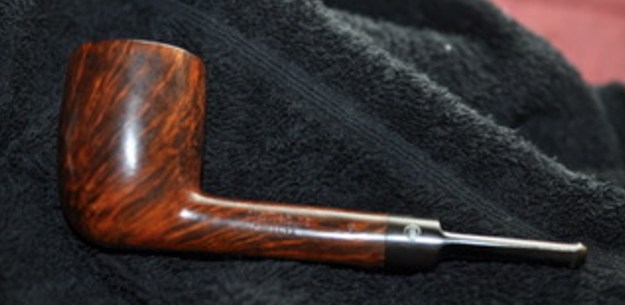
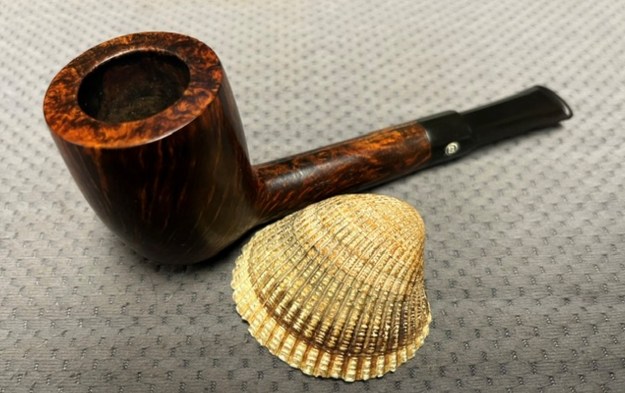
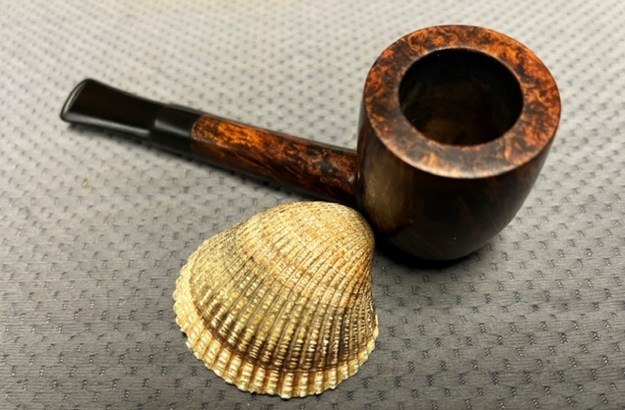
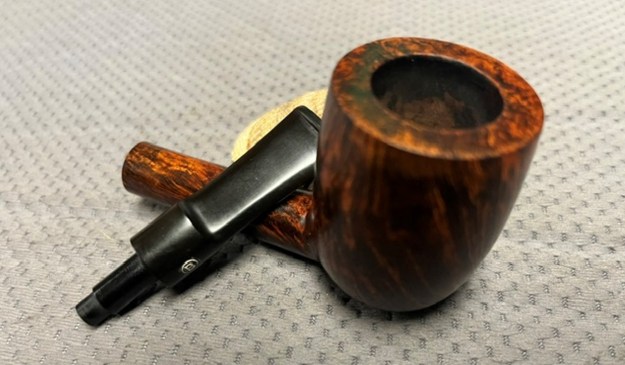
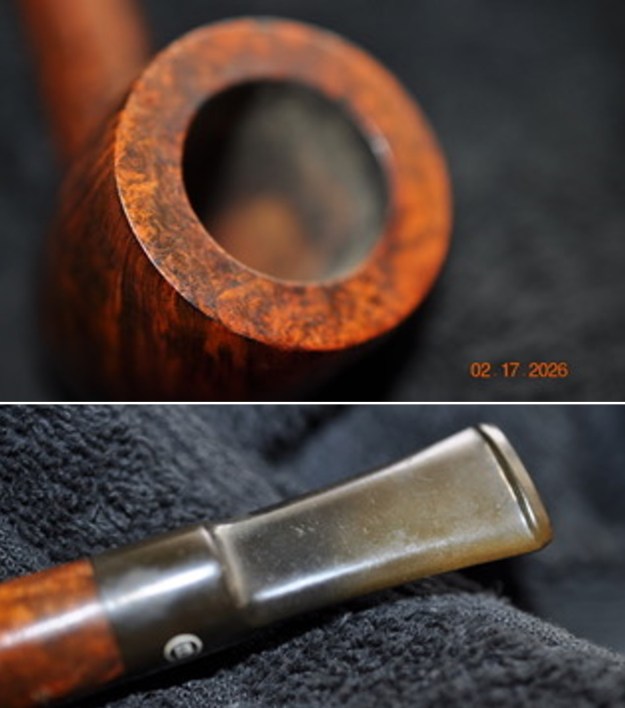
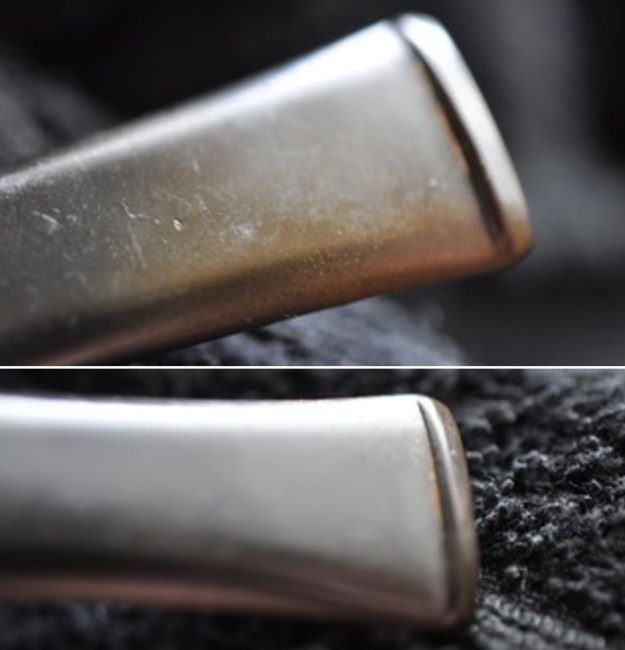
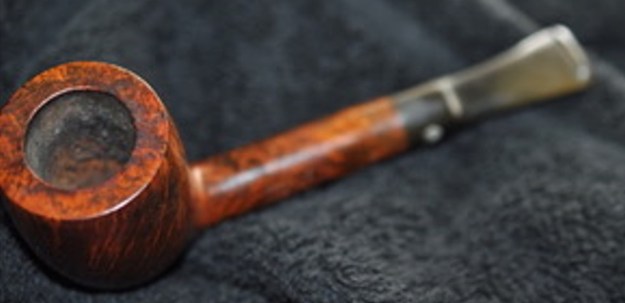 He took photos of the rim top to show the condition of the top and edges of the bowl. It is dull but quite clean with no lava. It is uniquely a beautiful pipe. The stem had light tooth marks and chatter on both sides ahead of the button.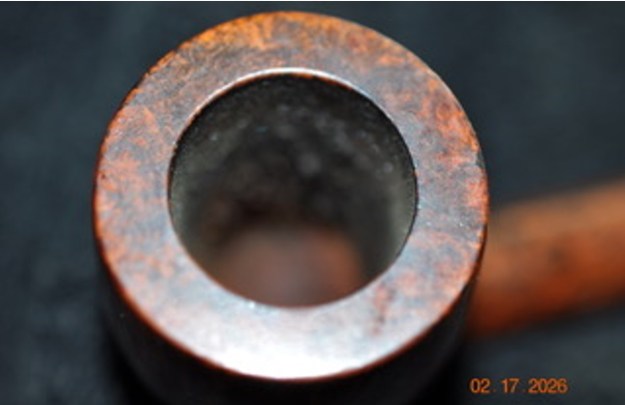
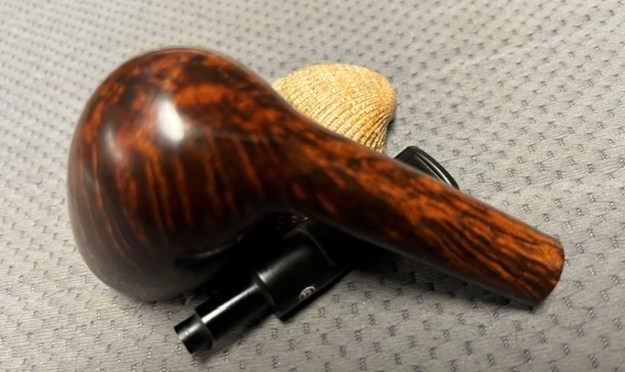
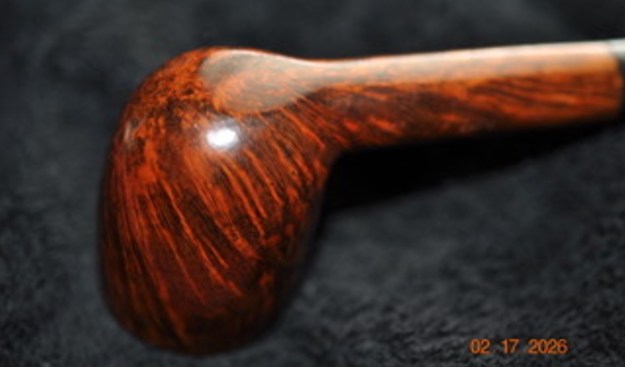
 He took photos of the sides and heel of the bowl to show the finish around the bowl and the condition of the pipe. You can see the grime ground into the surface of the briar. The stain combination really makes the grain stand out. I look forward to seeing it once it is clean and polished.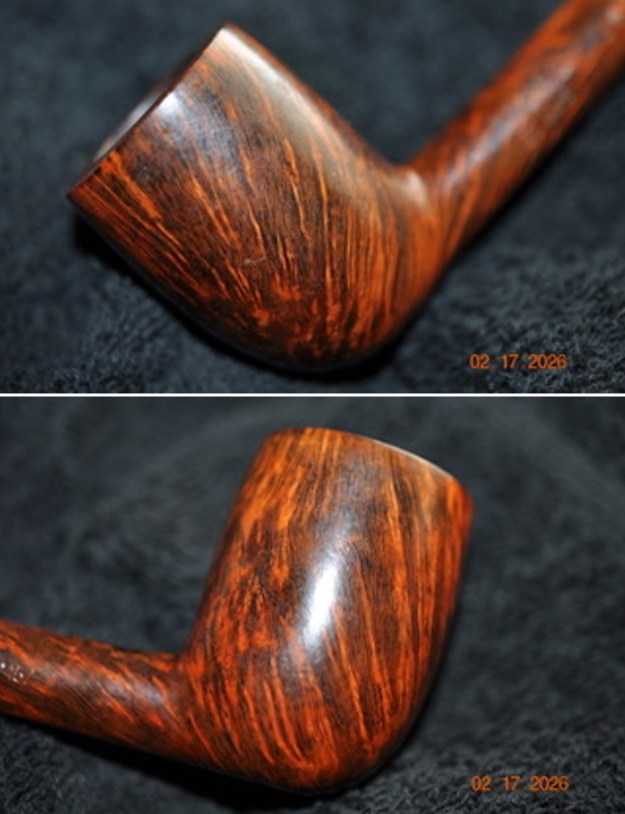
 He took photos of the stamping on the sides of the shank. It is clear and readable as noted above. The circle B stamp on the left side of the stem is also clear and readable.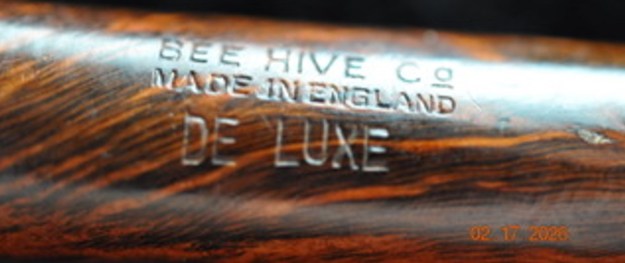
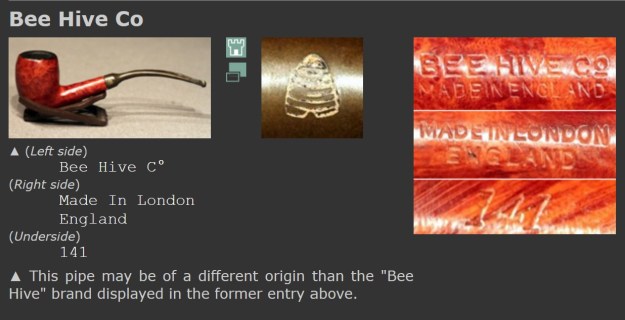
 Before I started working on the pipe I did some research on the brand. I turned to my normal sites to see what I could learn about the Bee Hive Co. I turned first to PipePhil site to the listing on Bee Hive Co. (http://www.pipephil.eu/logos/en/logo-b3.html). I found a listing there and did a screen capture of the section. The stamping on the shank is the same but the logo on the one that I am working on is a circle B rather than a Beehive.
 From there I entered the following “Bee Hive Co. Made in England De Luxe 9457 Lovat” in Google search. The AI feature came up with the information below.
Based on the stamping “Bee Hive Co. Made in England De Luxe 9457 Lovat,” this is a classic tobacco pipe manufactured in England, likely originating from a secondary brand or a line produced by one of the major British pipe manufacturers in the mid-20th century.
Information on the Pipe:
- Manufacturer: “Bee Hive Co.” is generally considered a lower-production, often export-focused, or sub-brand name rather than one of the “Big Three” British houses (like Dunhill, Comoy’s, or GBD).
- Origin: “Made in England” indicates British manufacture, a hallmark of quality briar during the mid-20th century.
- Grade: “De Luxe” suggests it was a higher-grade offering within their specific product line.
- Shape (Lovat): A Lovat pipe is a classic shape featuring a straight stem (often saddle, but sometimes tapered) and a fairly substantial bowl, usually with a slightly shorter shank compared to a Liverpool.
- Number (9457): This is the model number identifying this specific Lovat shape within the maker’s catalog.
From there I followed the path laid out by the shape number, 9457 to Pipedia’s article on GBD Shape numbers (https://pipedia.org/wiki/GBD_Shapes/Numbers). There I found the shape number listed as a Lovat with a straight round shank.
I knew that I was working on a GBD made Lovat with the Bee Hive Co. stamp on the shank. It has the look and feel of a GBD. Now it is time to work on the pipe.
Jeff carefully reamed this pipe with a PipNet pipe reamer and then cleaned up the inside of the bowl with a Savinelli Fitsall Pipe Knife. He scrubbed the briar with undiluted Murphy’s Oil Soap and a tooth brush to remove the grime on the rim top and bowl sides. He scrubbed the internals of the shank and stem with pipe cleaners, cotton swabs, shank brushes and alcohol until the airways were clean and the pipe smelled fresh. He scrubbed the stem with Soft Scrub to remove the oxidation and then let it soak in Briarville’s Pipe Stem Deoxidizer. He rinsed it with warm water when he took out of the soak. The pipe looked much better once the bowl and stem were clean. Before I started my part of the work I took photos of the pipe. It is a pretty pipe.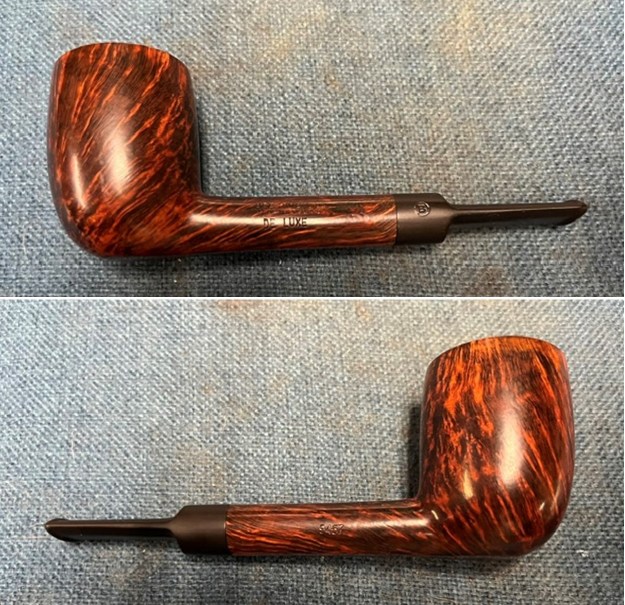
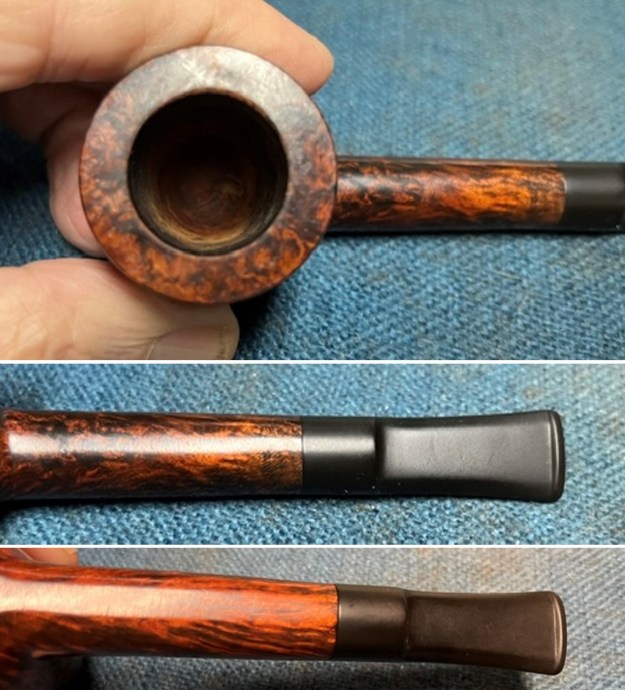
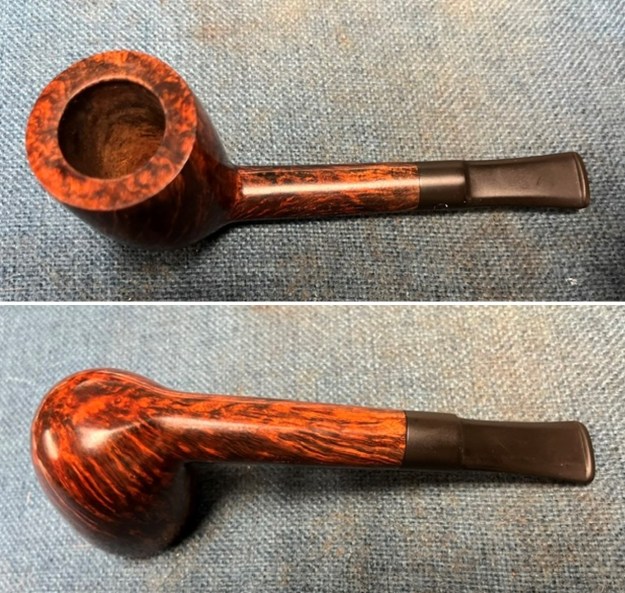 I took close up photos of the bowl and the rim top to show the condition. It looked better and the inner edge and top were in very good condition. I also took photos of both sides of the stem to give a sense of the condition of both sides at the button. There were light tooth marks on both sides ahead of the button.
 I took photos of the stamping on the sides of the shank and stem. It reads as noted above and is very clear and readable. The circle B logo on the stem is faded but should be easy to repair. I took the stem off the shank and took photos of the pipe to give a sense of its beauty and proportions.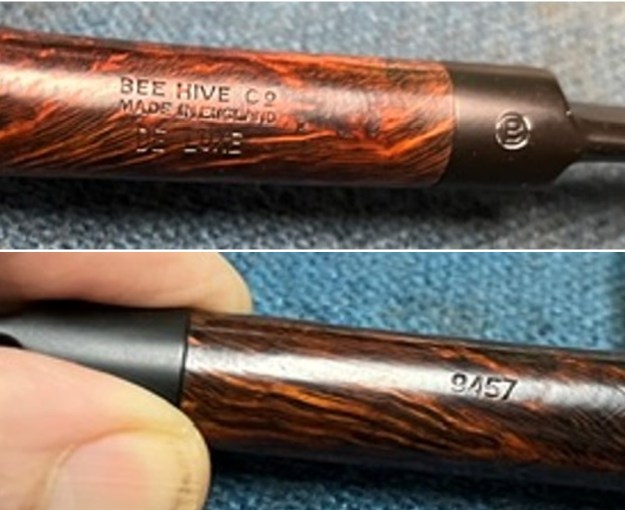
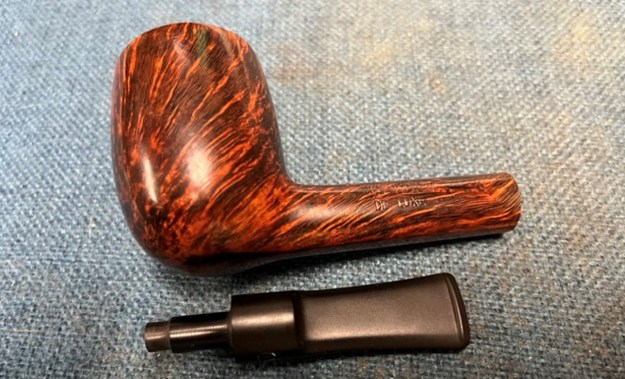 I polished the bowl and rim top with micromesh sanding pads – dry sanding with 1500-12000 grit pads and wiped down the bowl down with a damp cloth after each sanding pad. The finish looked very good.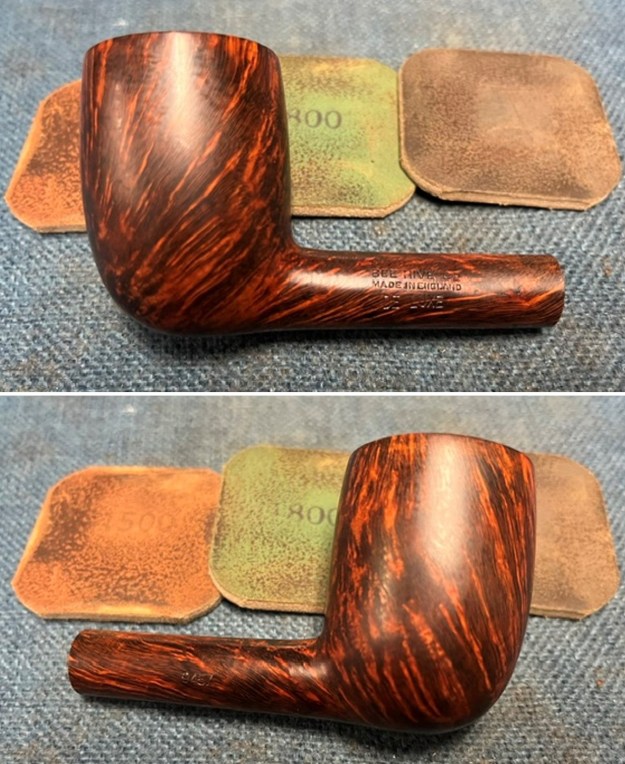
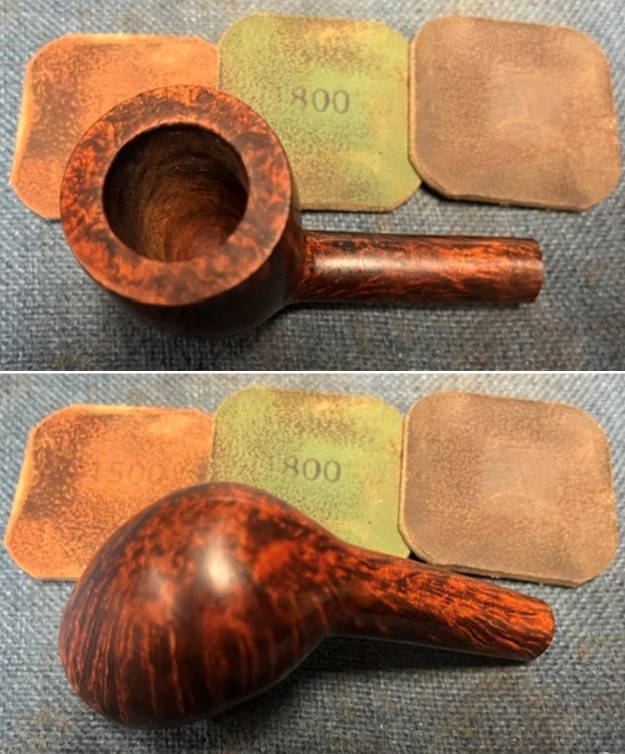
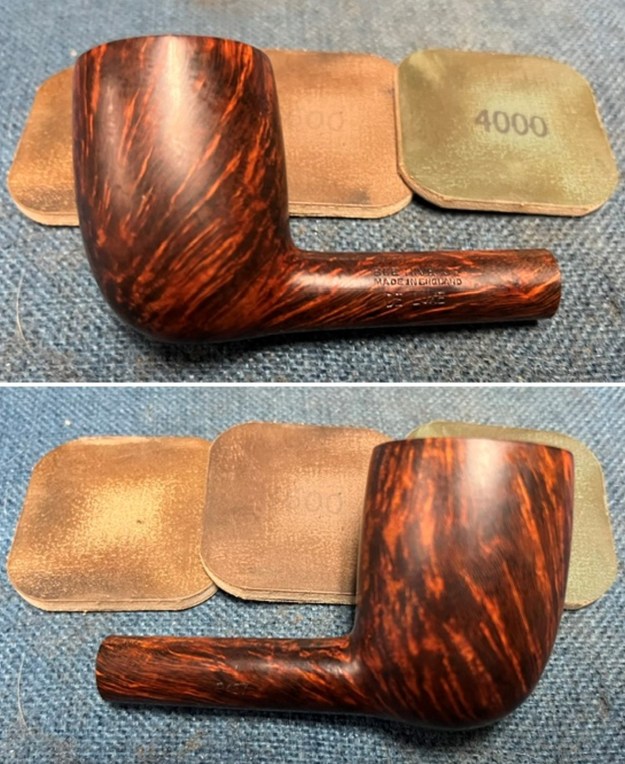
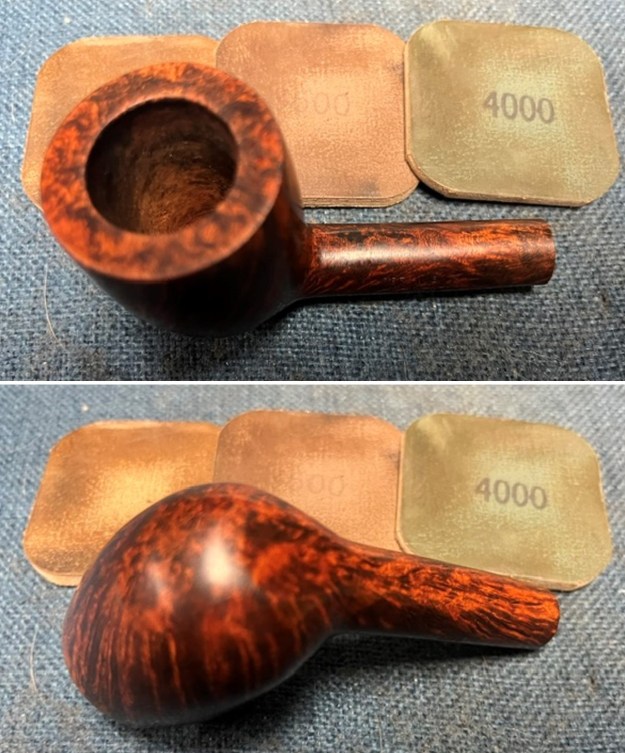
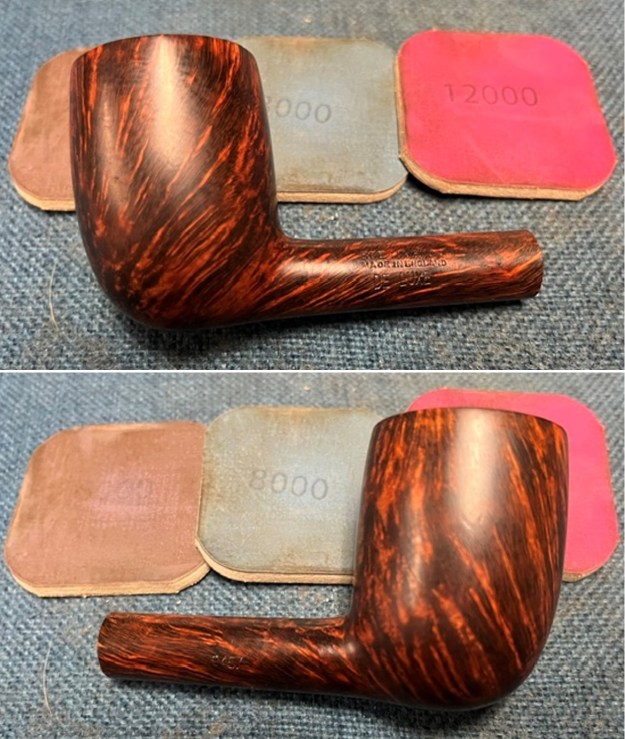
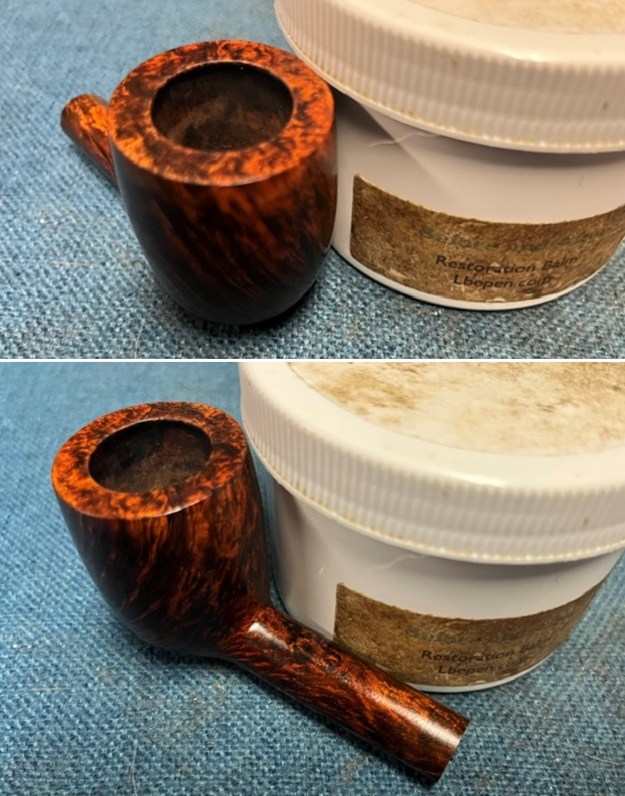
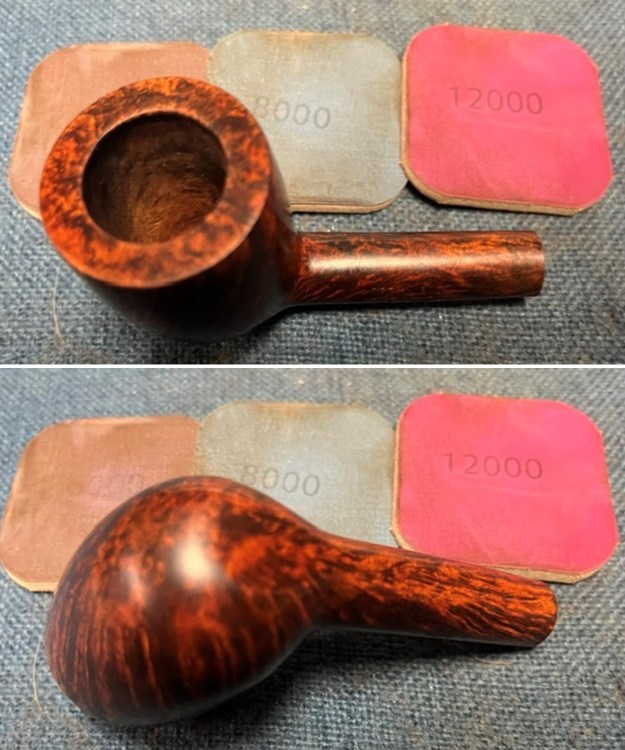 I rubbed the bowl and shank down with Before & After Restoration Balm. I worked it into the surface of the bowl sides and shank with my fingertips to get it into the grain. The product works to clean, enliven and protect the briar. I let the balm sit for a little while and then buffed with a cotton cloth to raise the shine. The Balm did its magic and the grain stood out.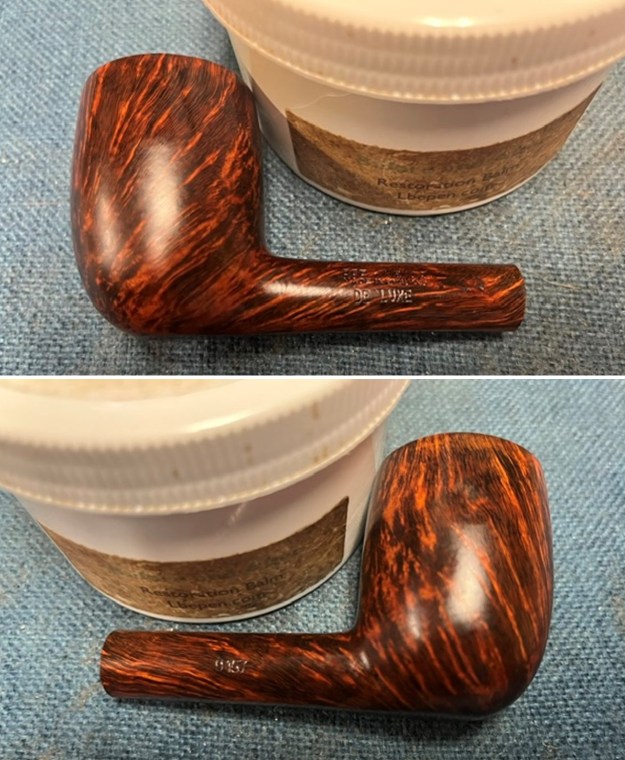
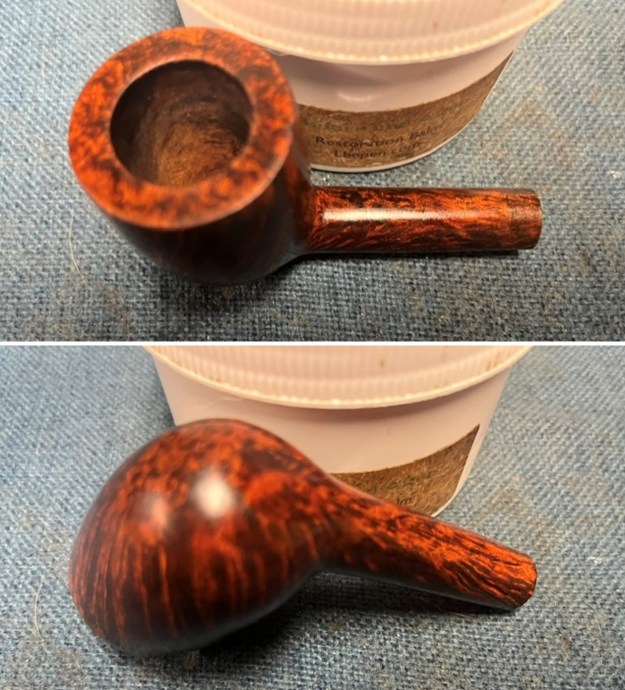
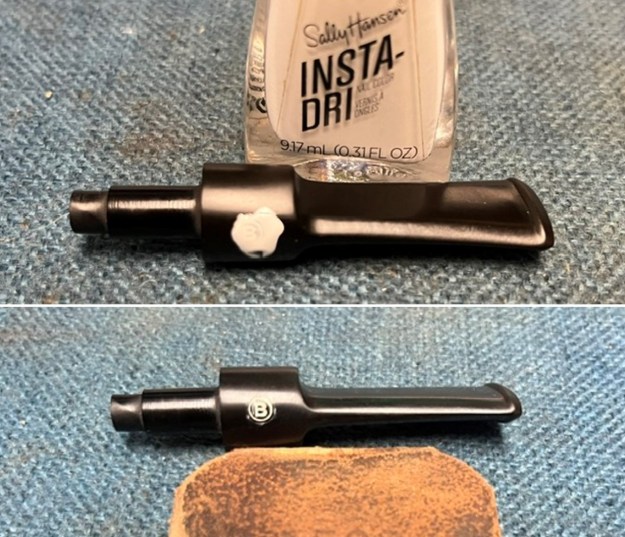
 I set the bowl aside and turned to the stem. It was in fairly good shape so I began working on it by dealing with the logo stamp. I touched up the Circle B stamp on the left side of the saddle stem with white acrylic fingernail polish. I worked it into the stamp with a tooth pick. Once it cured I scraped off the excess and went over it with a 1500 grit micromesh pad.
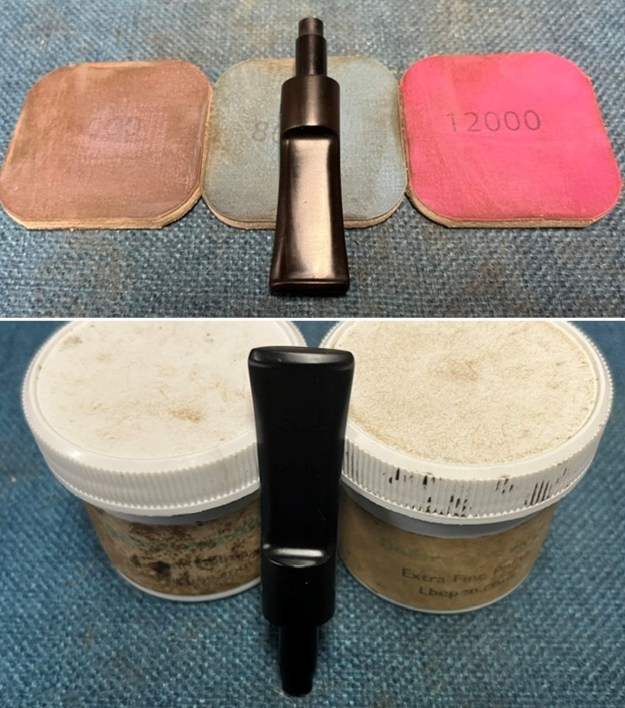
 I polished the stem with micromesh sanding pads – dry sanding with 1500-12000 grit sanding pads. I wiped it down after each sanding pad with Obsidian Oil. I polished it with Before & After Pipe Stem Polish – both Fine and Extra Fine. I gave it another coat of Obsidian Oil and set it aside to dry.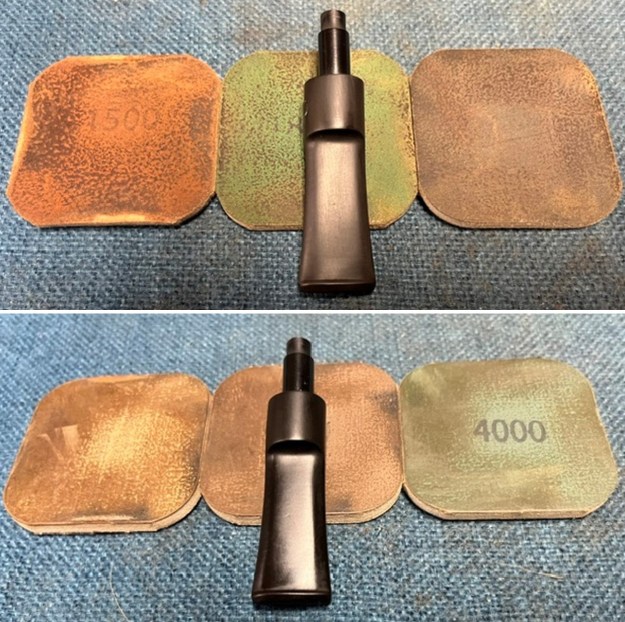
 I am excited to put the final touches on this interesting piece of British Pipe History. It is a beautiful GBD Made Bee Hive Co De Luxe 9457 Lovat shaped pipe. I put the pipe back together and buffed it with Blue Diamond on the buffing wheel. I gave the bowl and the stem multiple coats of carnauba wax. I hand buffed the pipe with a clean buffing pad to raise the shine. It is fun to see what the polished bowl looks like with beautiful grain on the bowl sides, top and bottom. The polished black vulcanite stem combined with the bowl to make a stunning pipe. This Bee Hive Co De Luxe 9457 Lovat is great looking and the pipe feels great in my hand. It is light and well balanced. Have a look at it with the photos below. The dimensions are Length: 5 ½ inches, Height: 2 inches, Outside diameter of the bowl: 1 ½ inches, Chamber diameter: ¾ of an inch. The weight of the pipe is 43 grams/1.52 ounces. I will be adding it to the British Pipemakers Section of the rebornpipes store shortly. If you want to add it to your collection let me know. Thanks for walking through the restoration with me as I worked over this pipe. Thanks to each of you who are reading this blog.