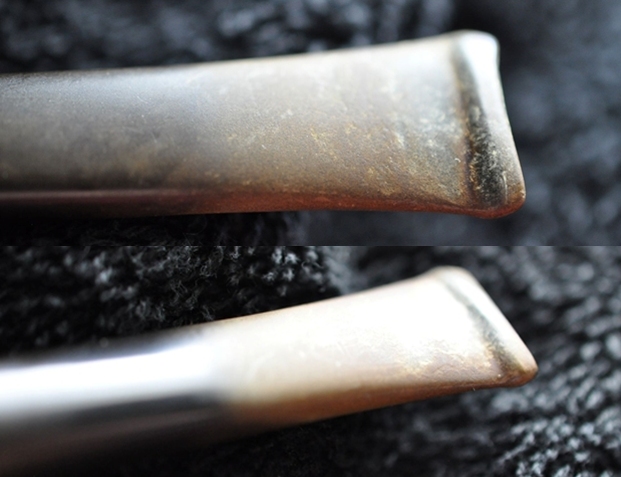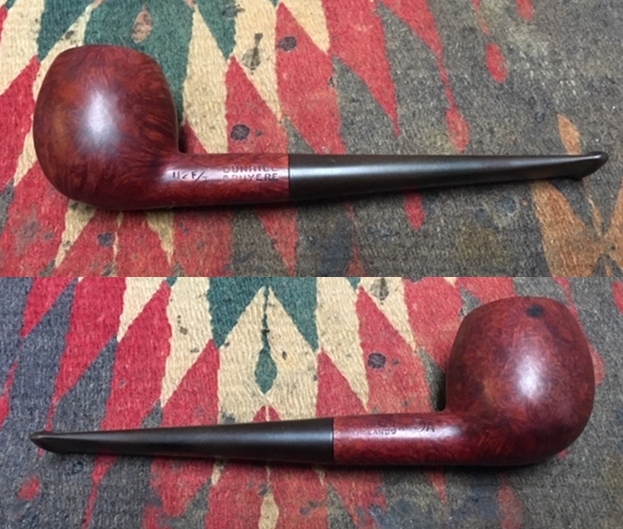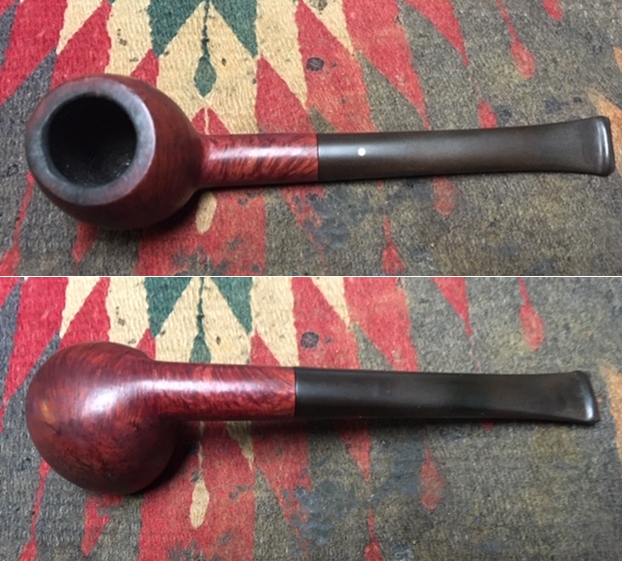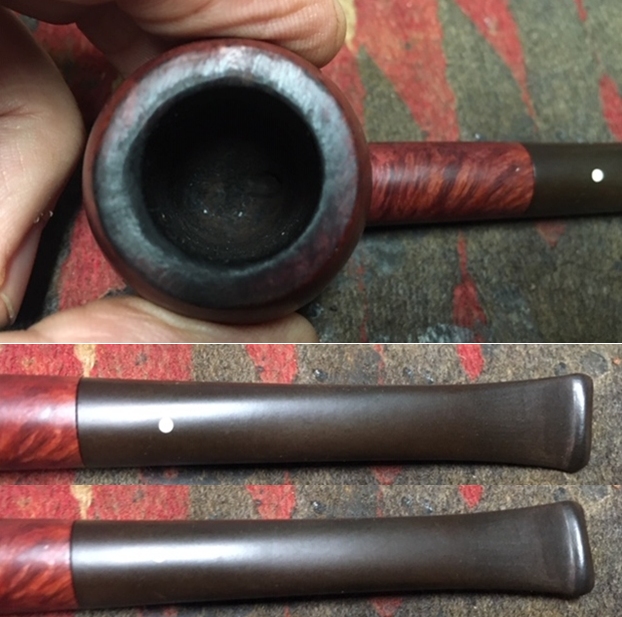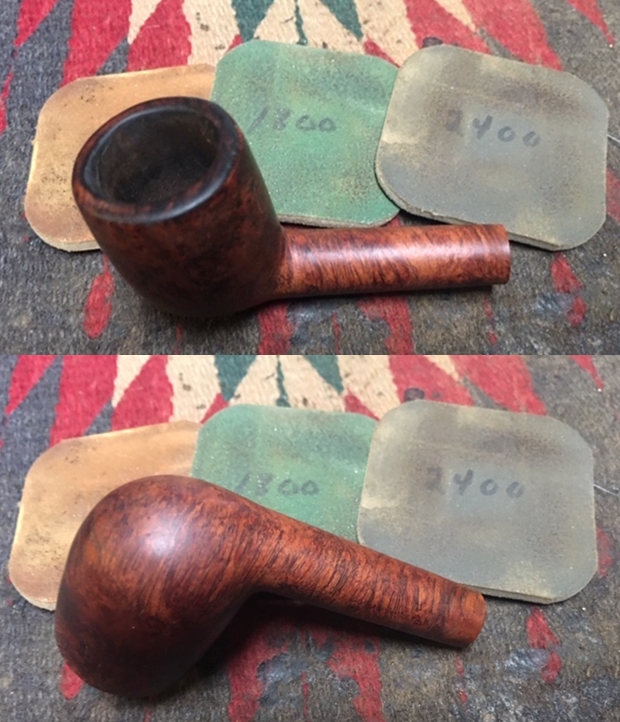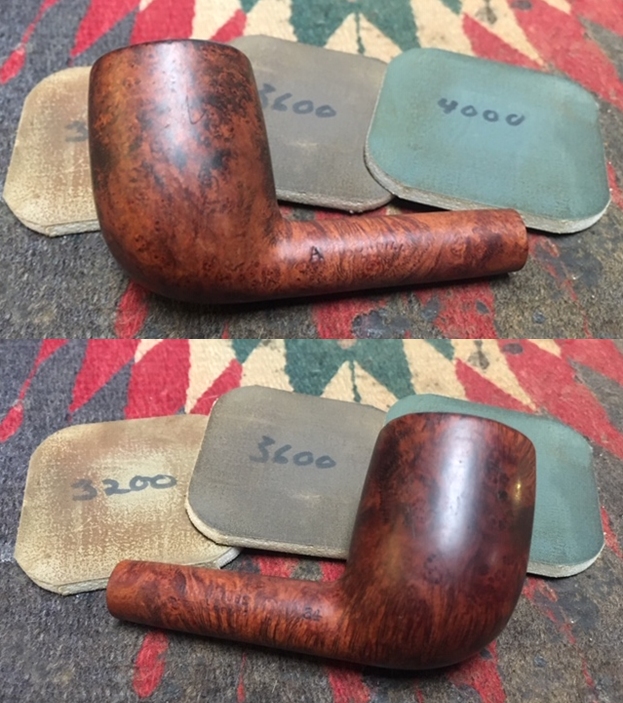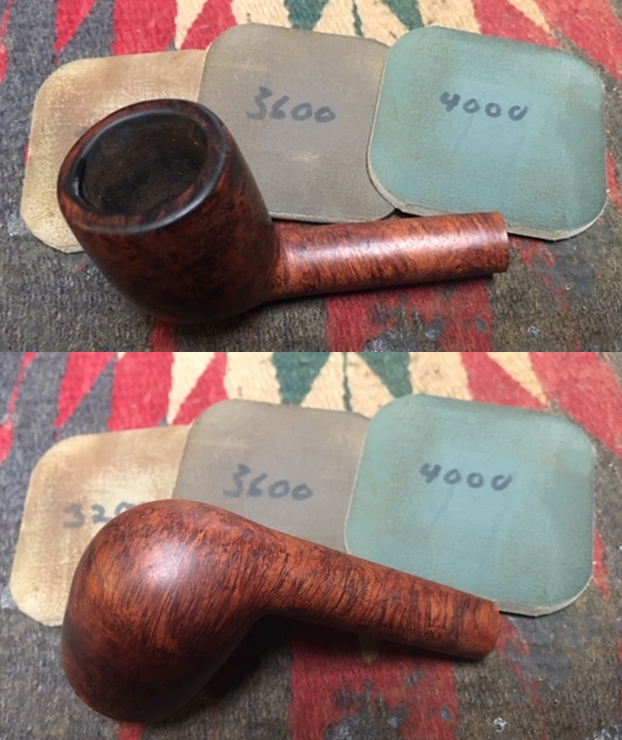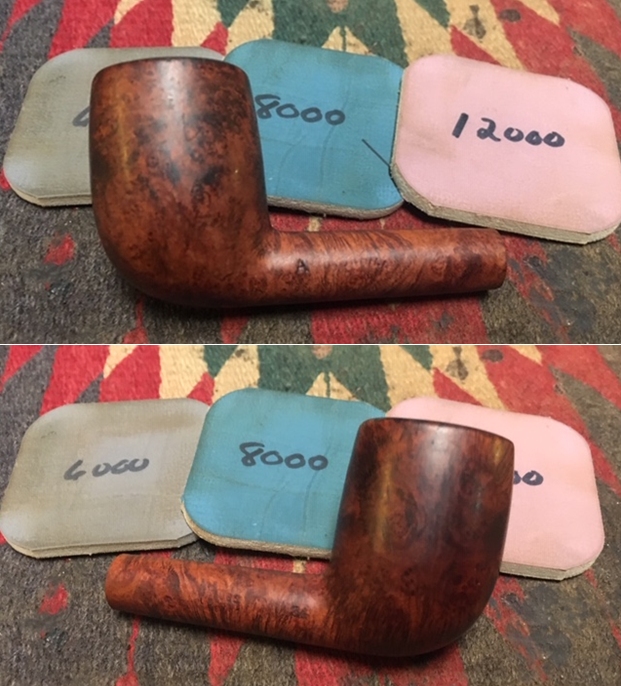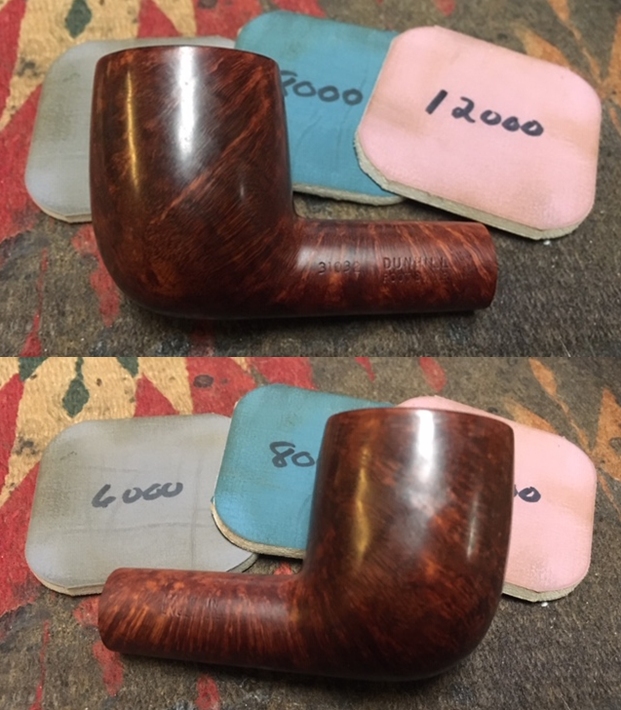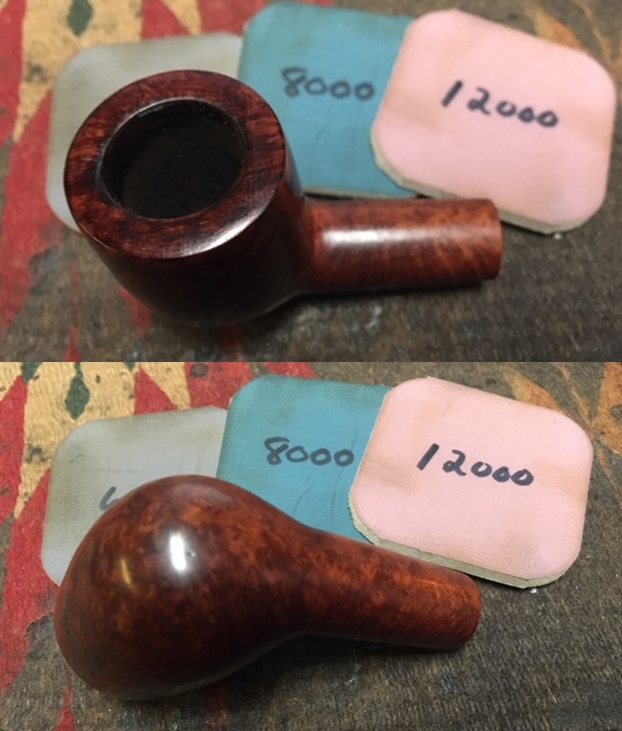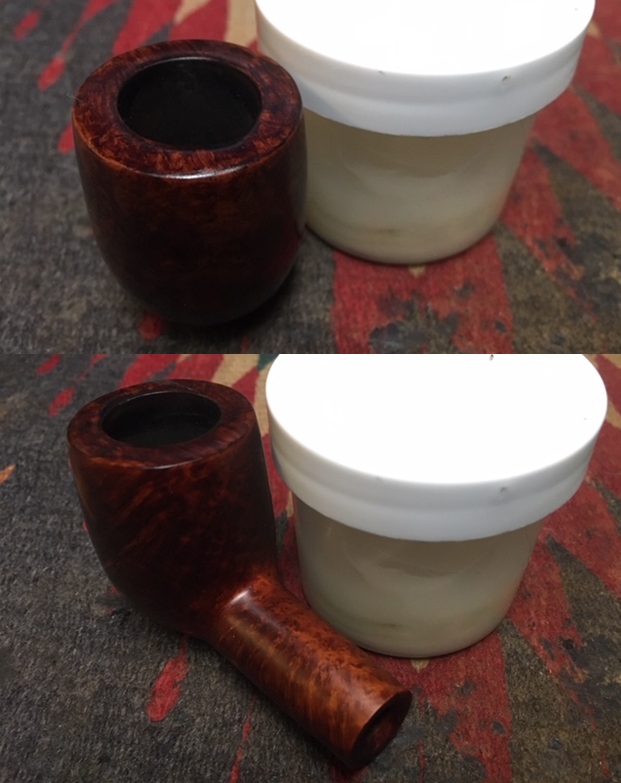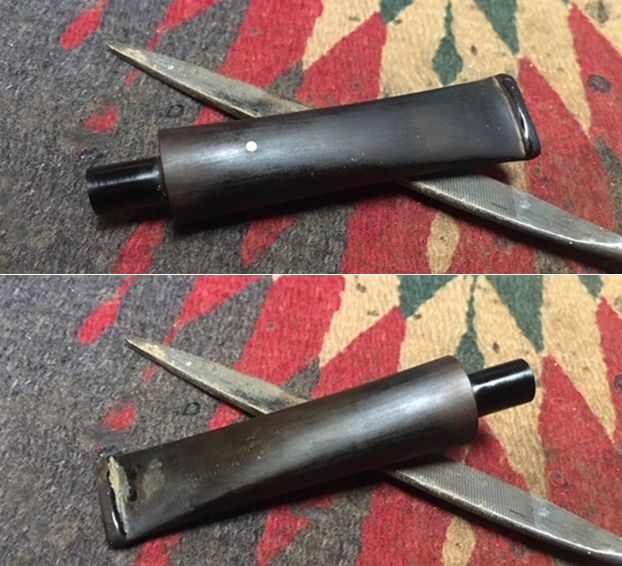
Author Archives: rebornpipes

Rusticating A Willard That Was A Gift For My Colleague…


Blog by Paresh Deshpande

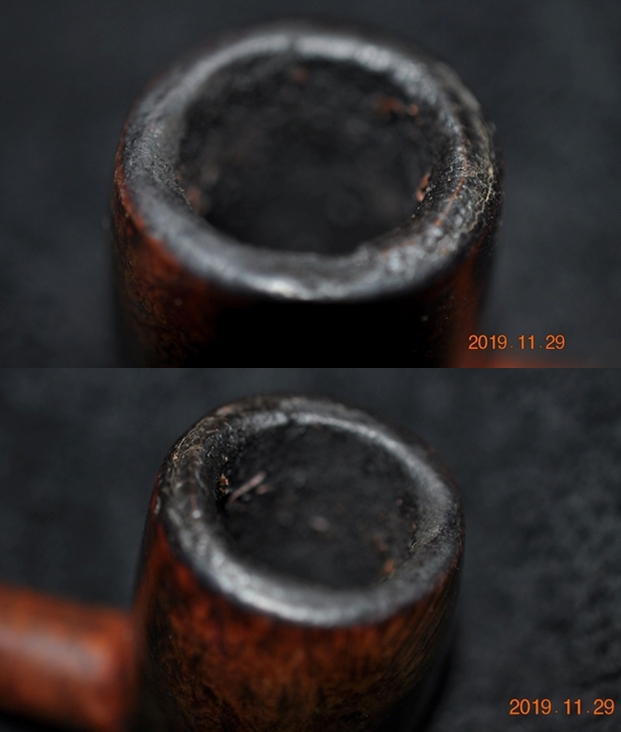
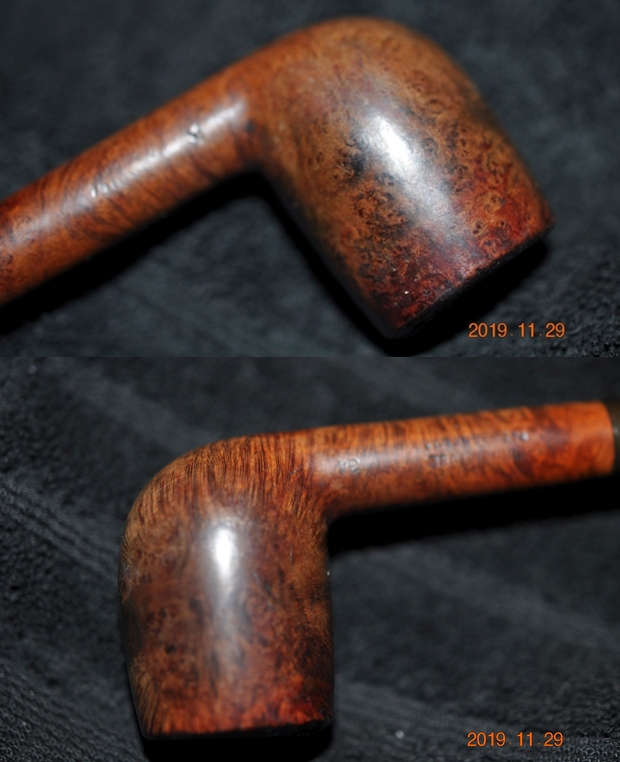
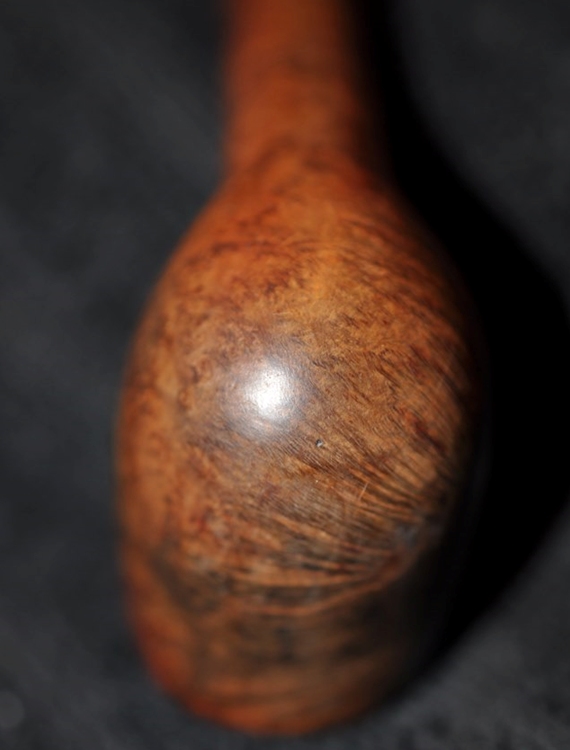
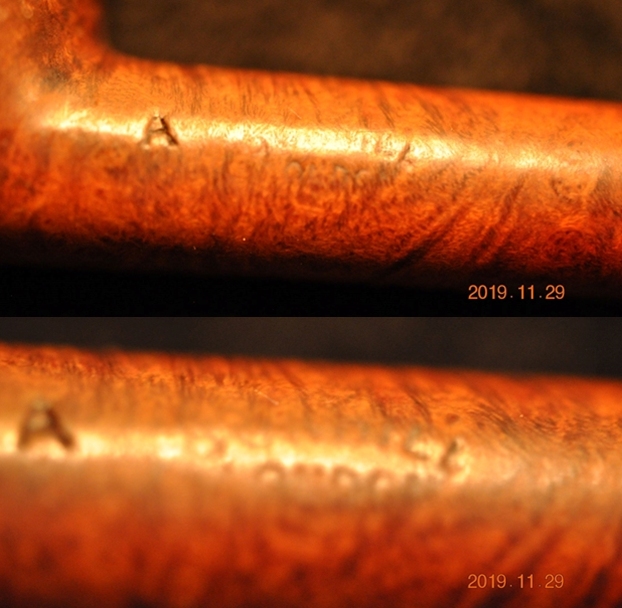
My job involves a lot of transfers and frequent shifting of our household to a completely new place. At times, it is we who move to our work place alone while our families stay back for children’s education or when accommodation is not available or when the new place is in a remote area and fraught with risks. I moved to my present place of work alone. Here, I had a very fine set of colleagues with whom I gelled well. As time went by, these colleagues got transferred and new colleagues joined. However, when the last of my old colleagues got his transfer orders, I wanted to gift him a pipe as he has started to enjoy pipes more than his cigars.

Abha, my wife, had sent me one lot of 40-45 pipes that she had cleaned up and all ready for my part of restoration process. From this lot of the pipes that I had earmarked as for sale/ gifting, he selected a pipe that had come to me as part of my Mumbai Bonanza.

For those readers who have missed out on how I came to purchase this lot, here is the background story….

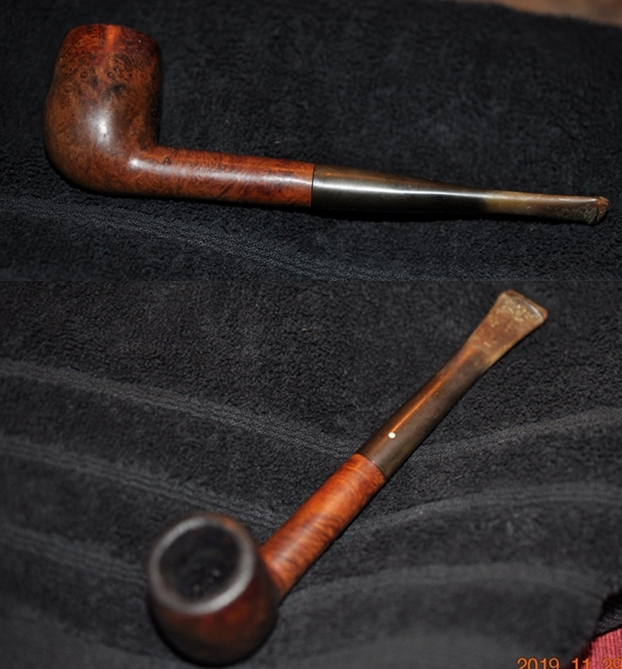
I was fortunate enough to have heeded the advice of my dear friend and mentor, Steve, and struck a deal with a junk collector from Mumbai. He did not know what he was selling and I did not know what I was buying as we reside in different cities!! The argument that Mr. Steve presented was that if not anything, I shall at least have some spares and this was logical. I struck a deal and here are pictures of the pipes that I received in this lot.    This lot contains some very nice collectible pipes, a few well known brands and some mediocre brands. Overall, with seven Dunhill pipes, a Preben Holm #1 FH, a couple of “Made in England” Pete System pipes, a couple of  Charatan’s Belvederes, Custom-Bilt, Stanwell and other assorted pipes, I would say that I had struck a decent deal!! This is indeed my “Mumbai Bonanza”.

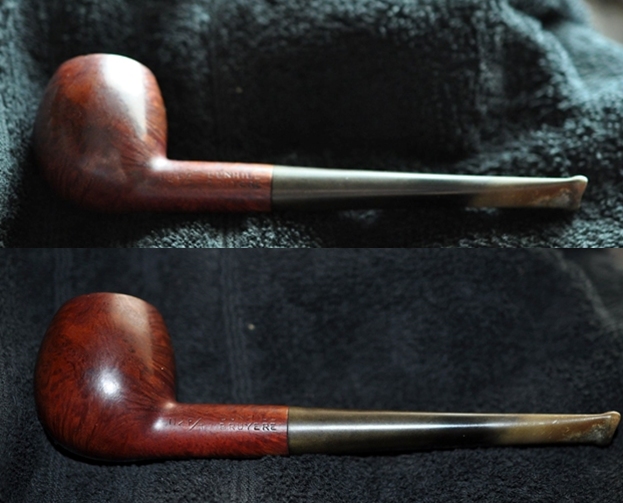
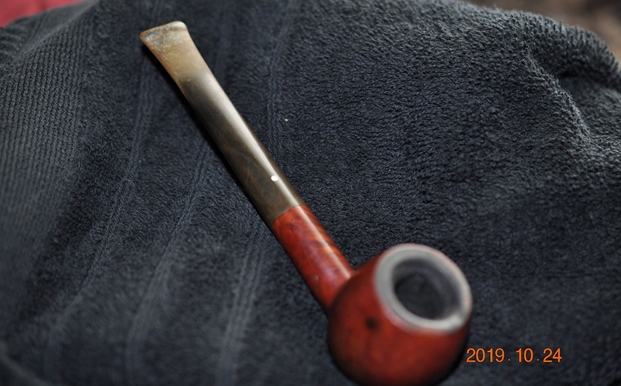
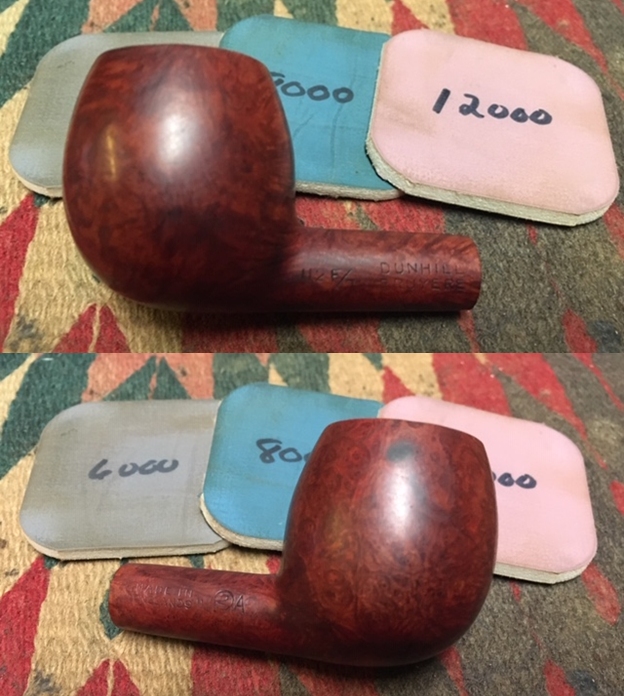
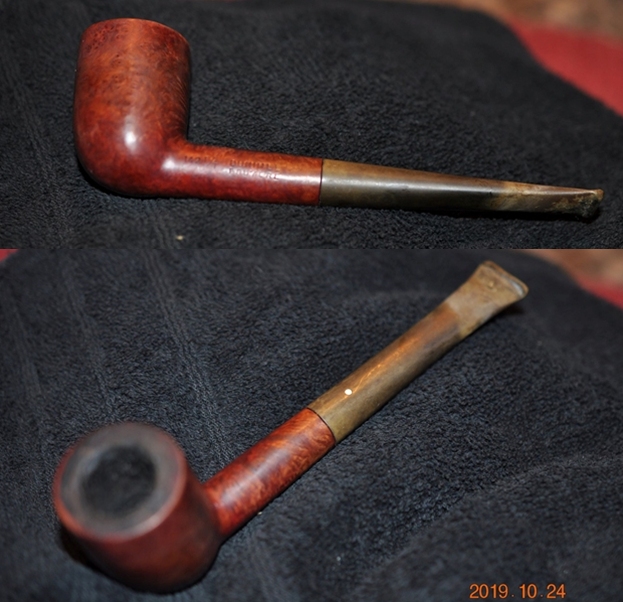
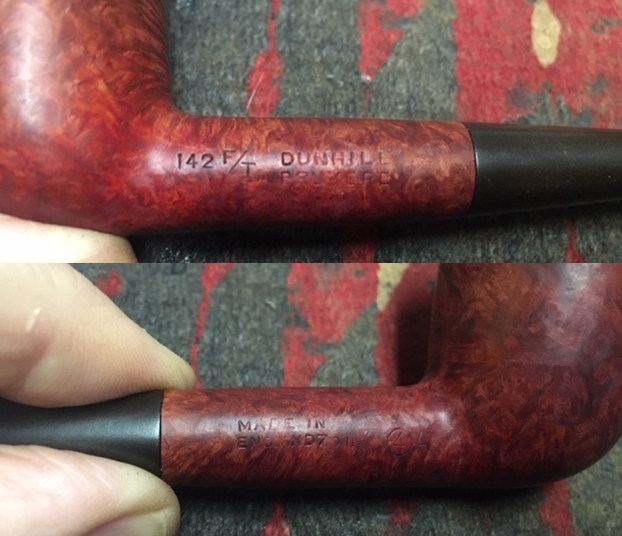
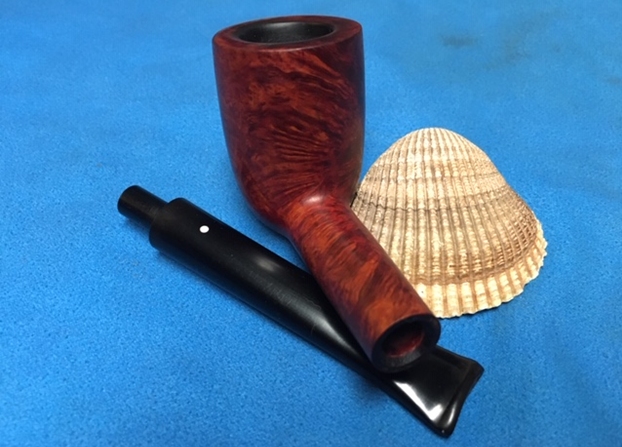
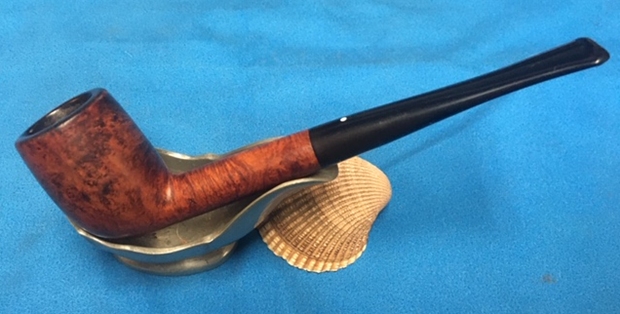
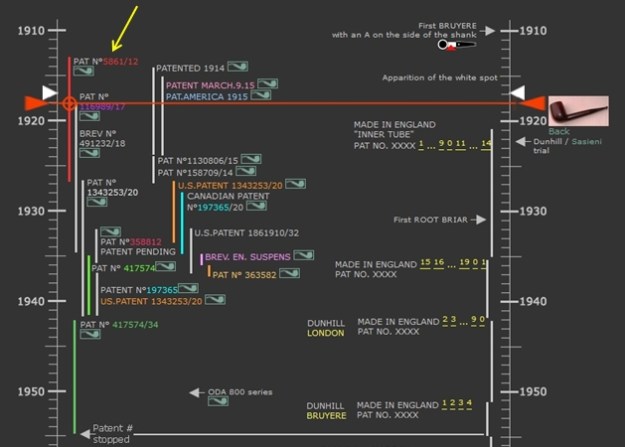
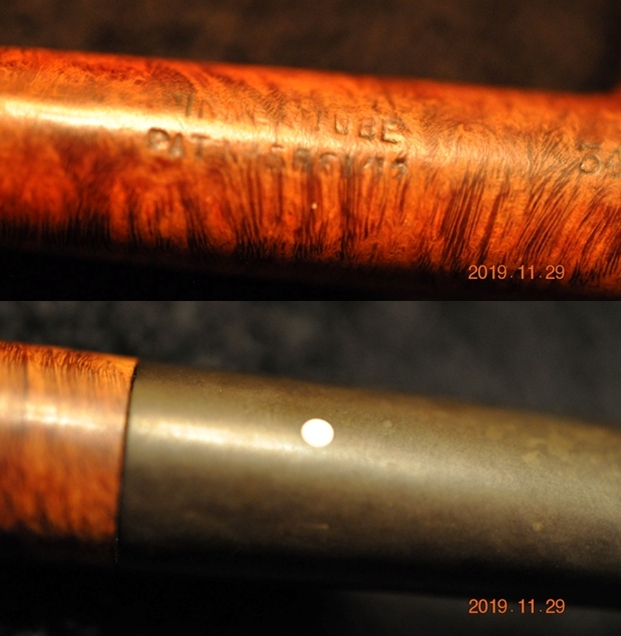
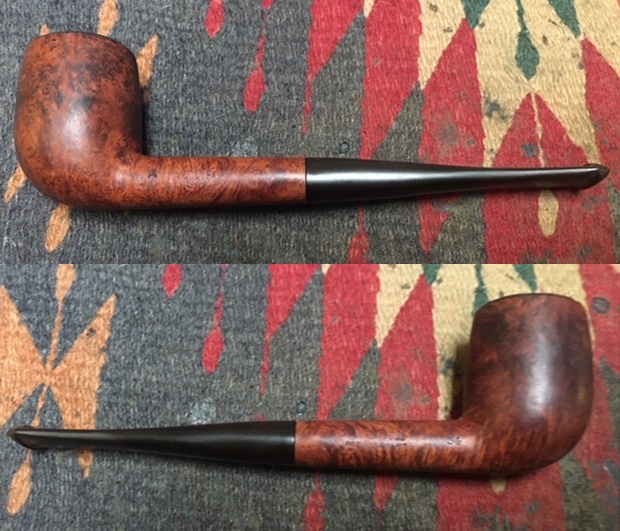
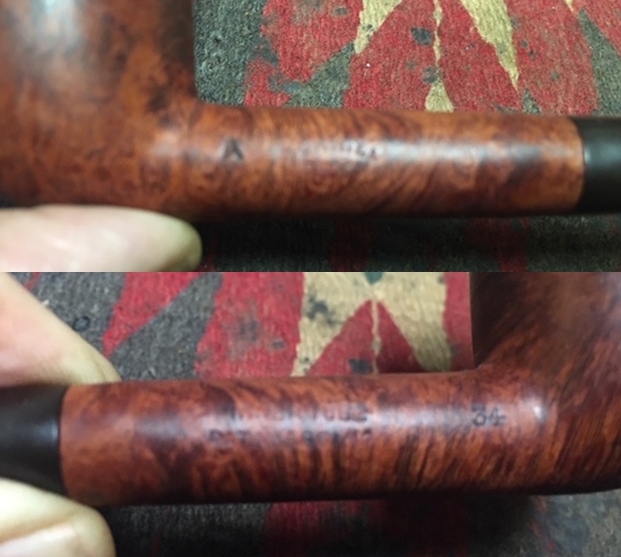
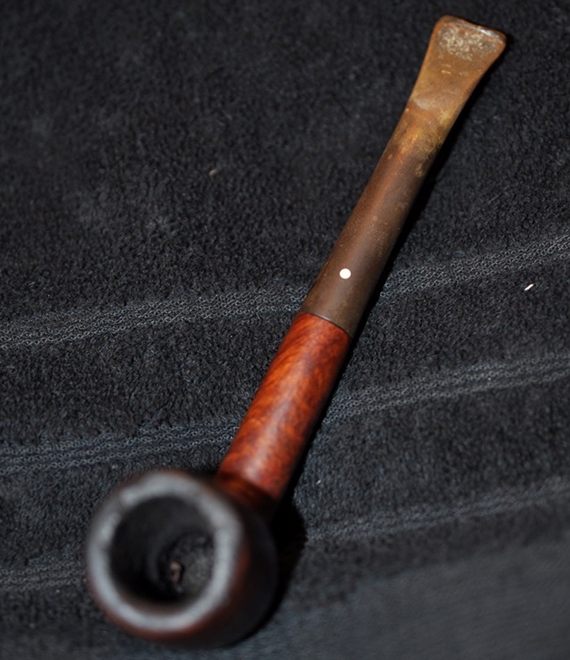
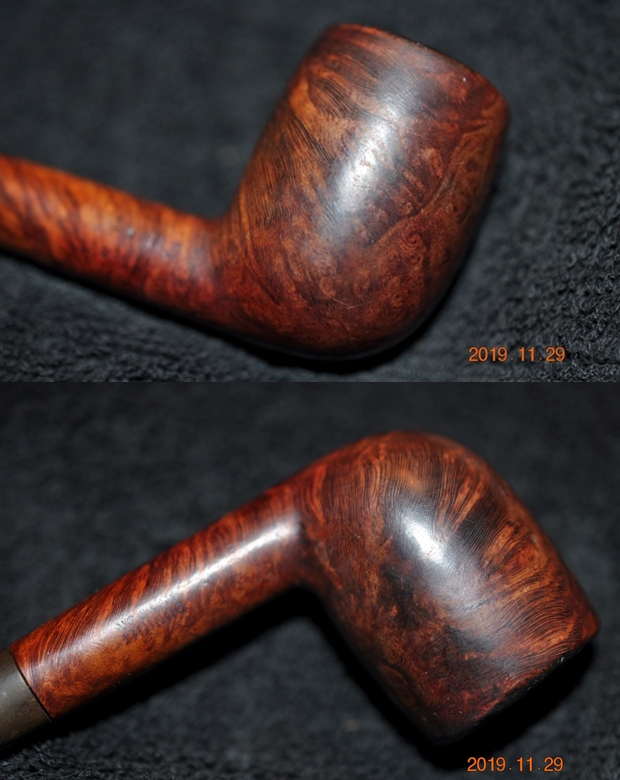
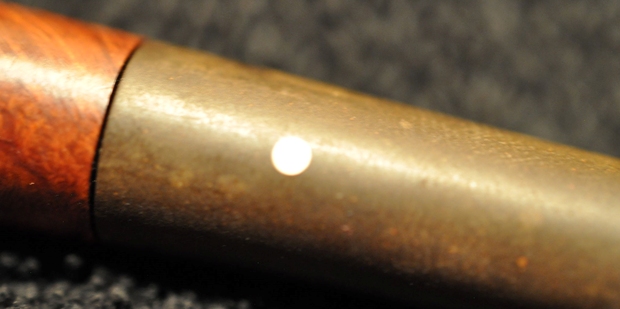
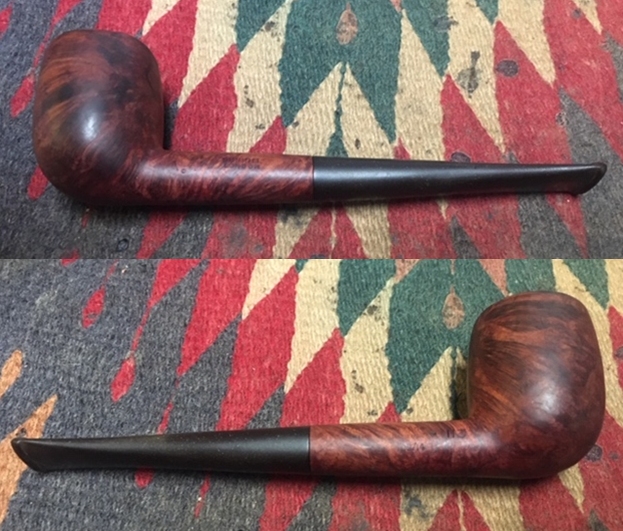
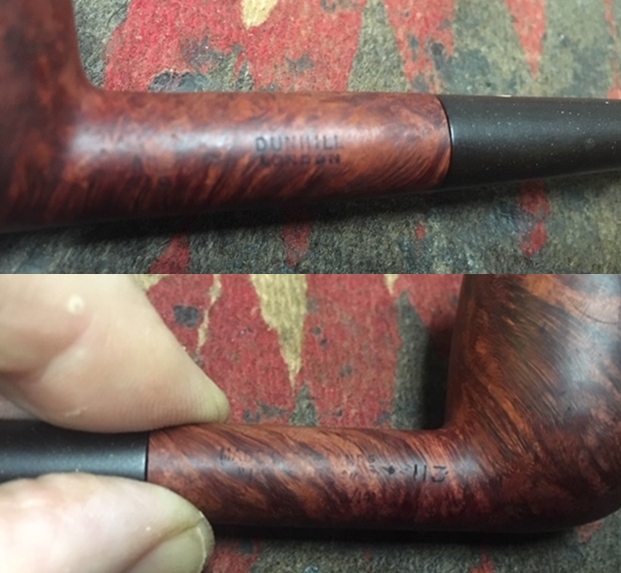
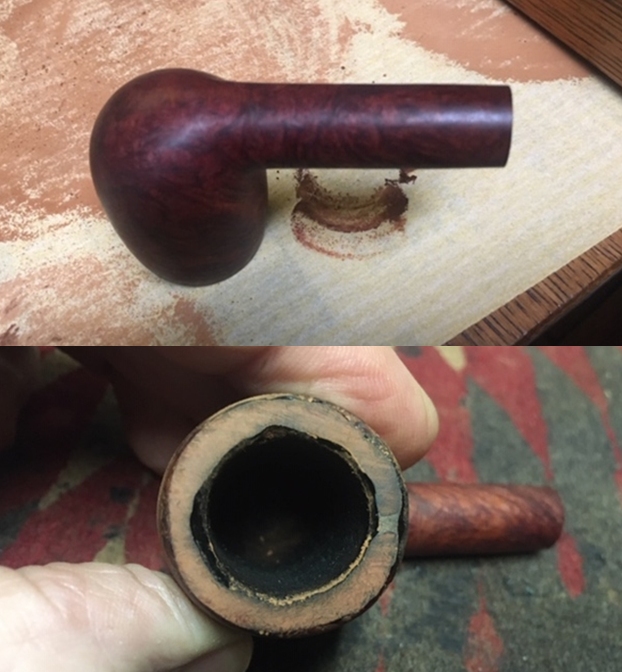
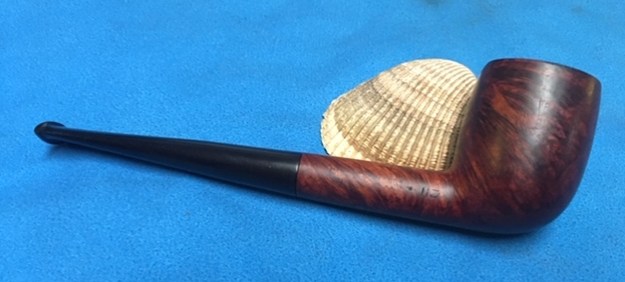
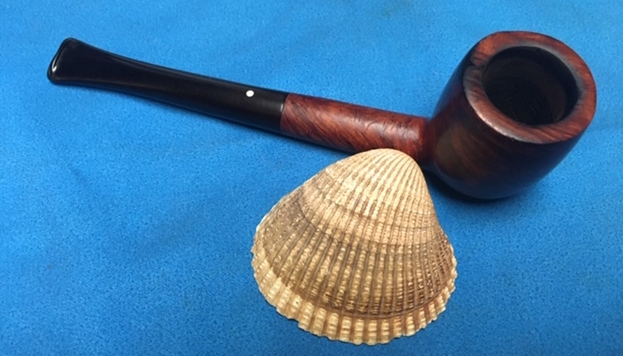
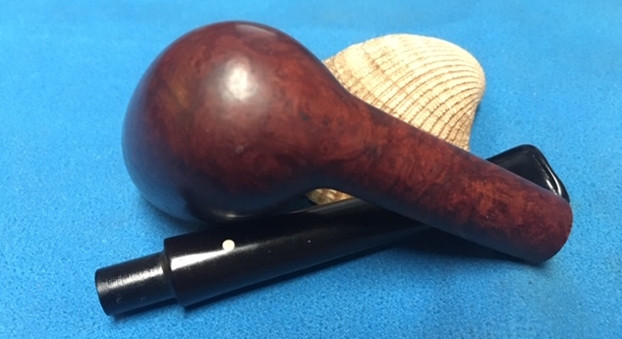
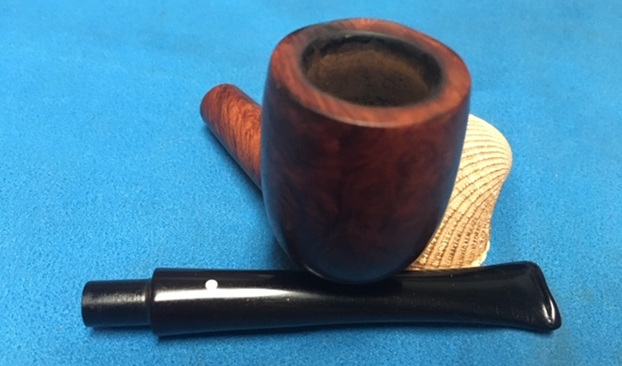
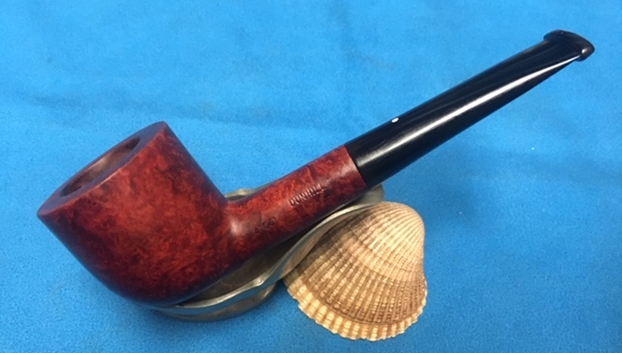
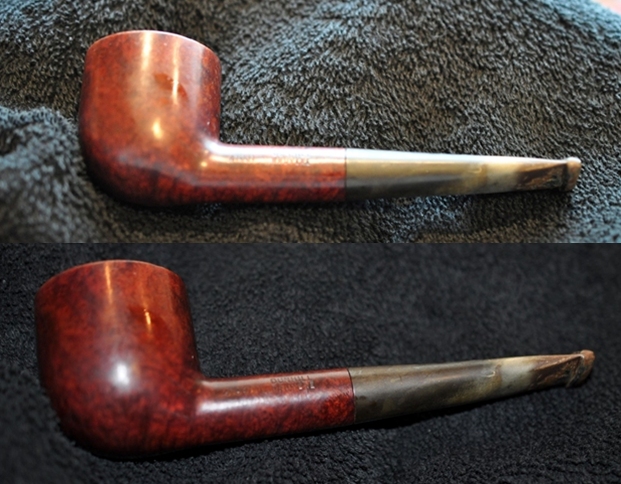
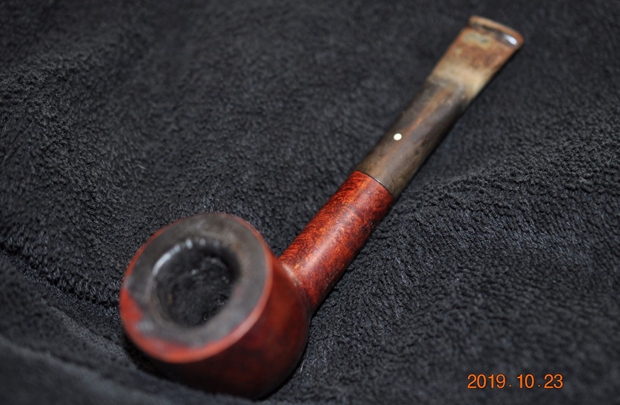
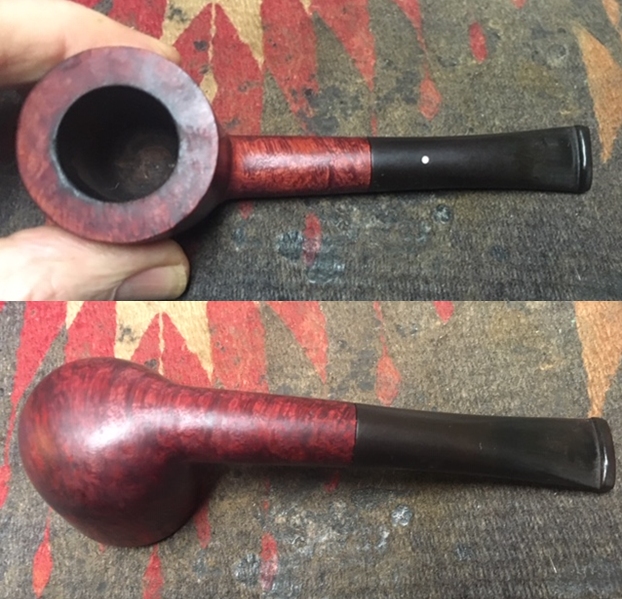
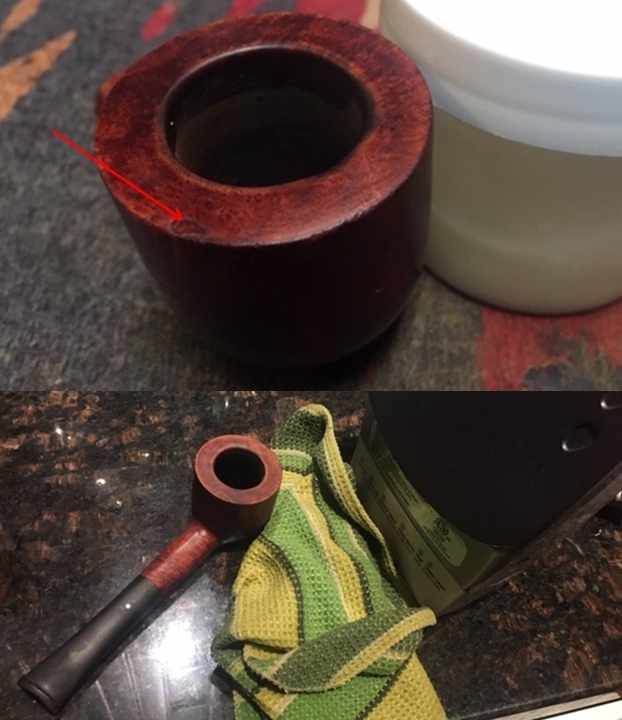
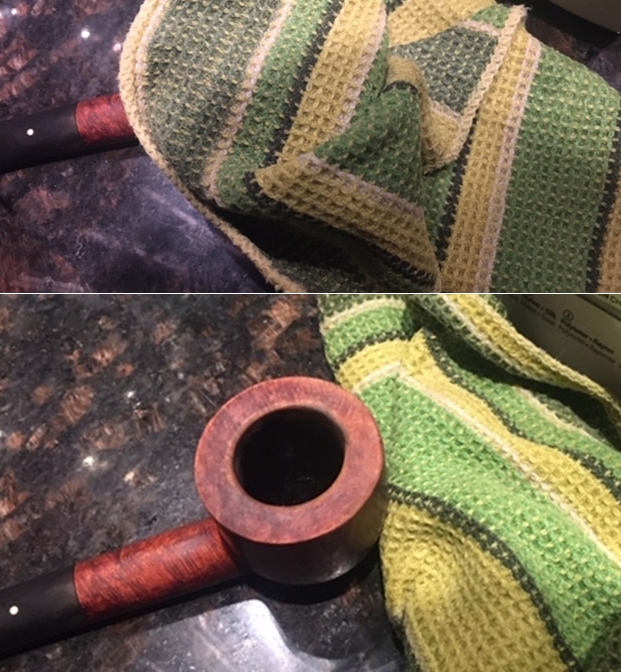
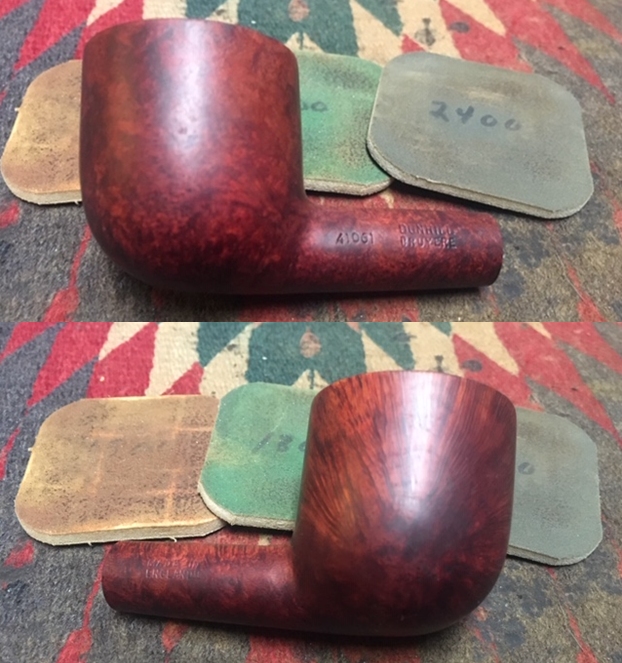
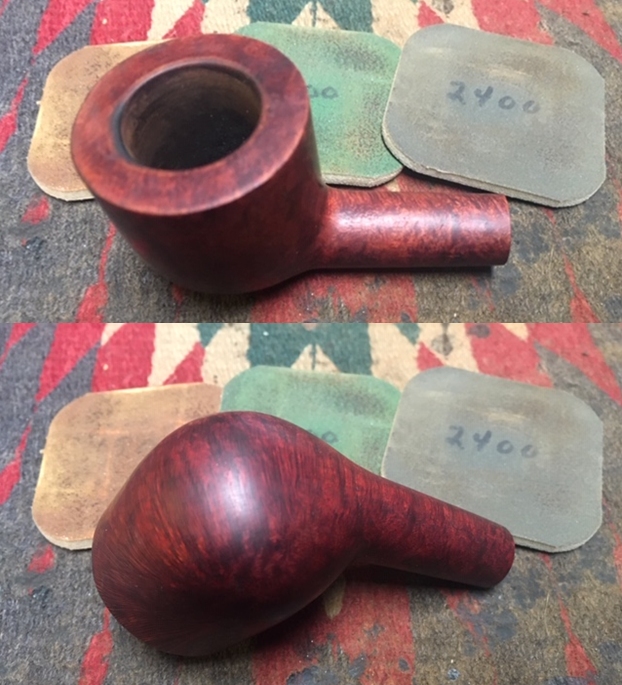
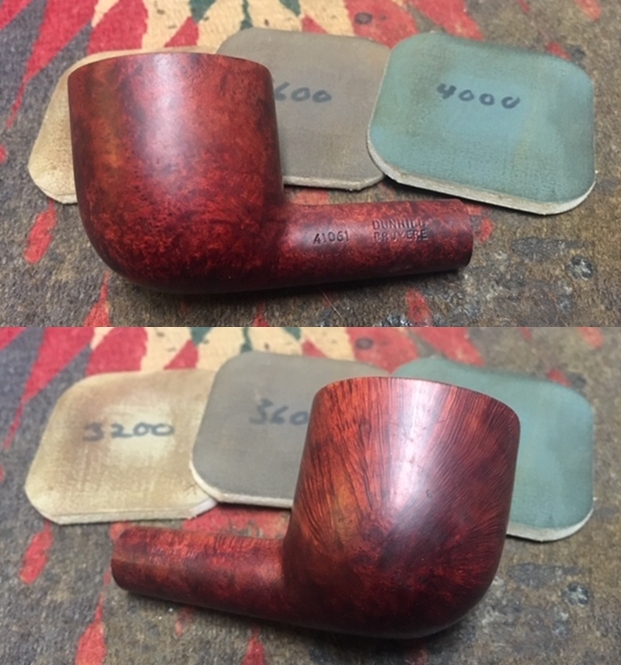
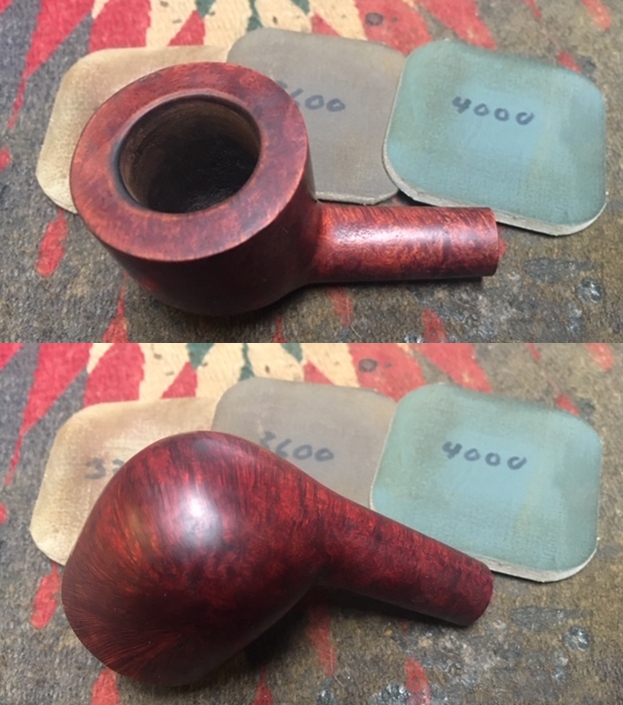
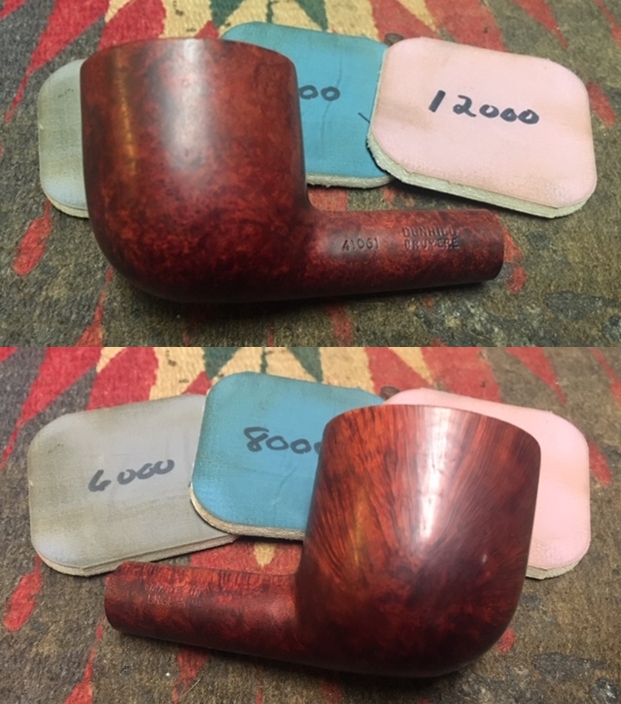
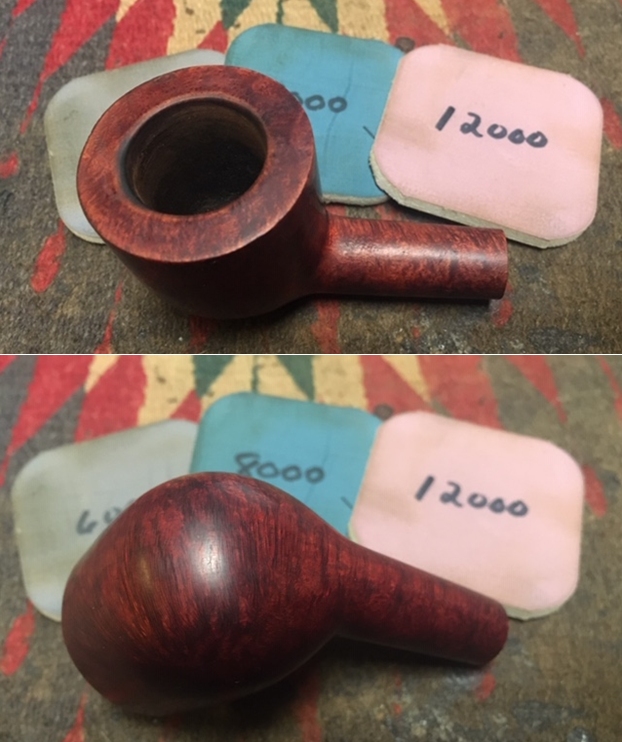
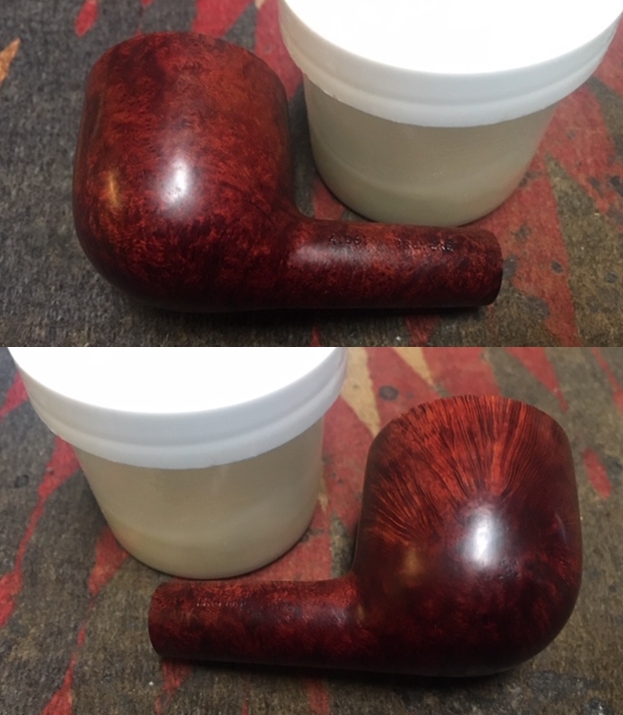
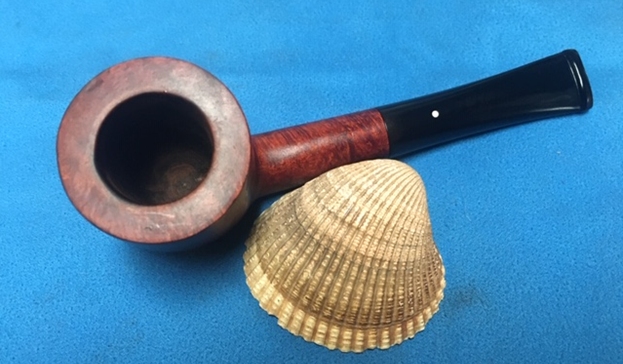
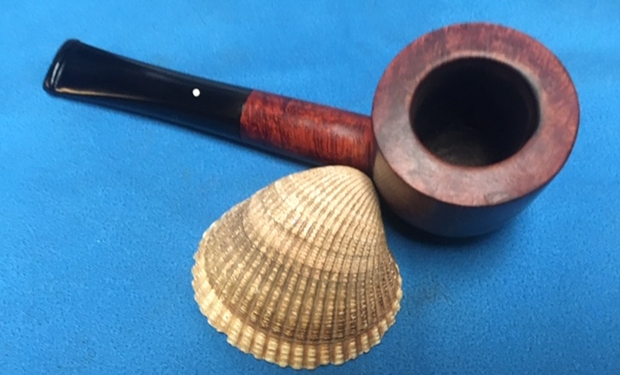
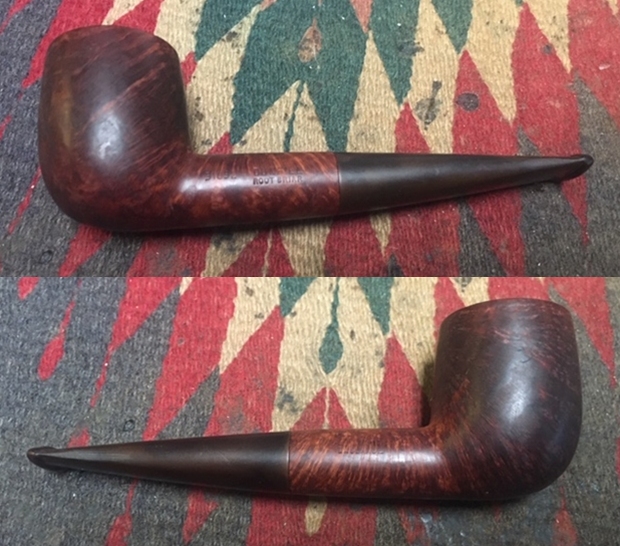
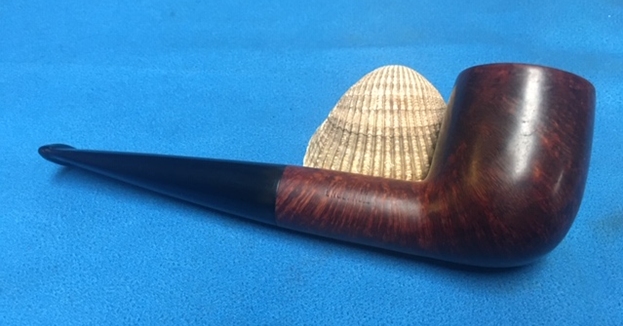
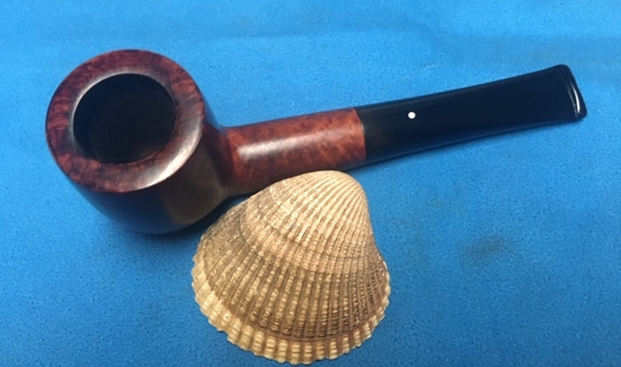
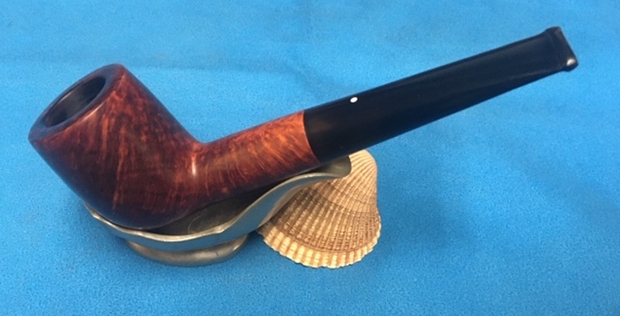
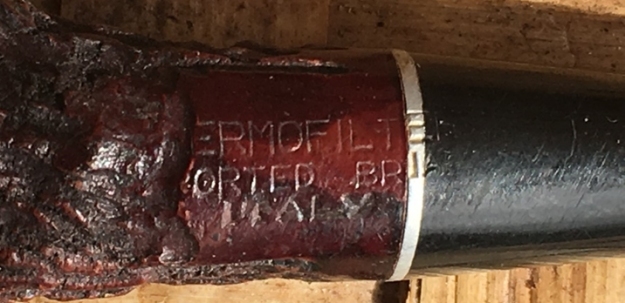
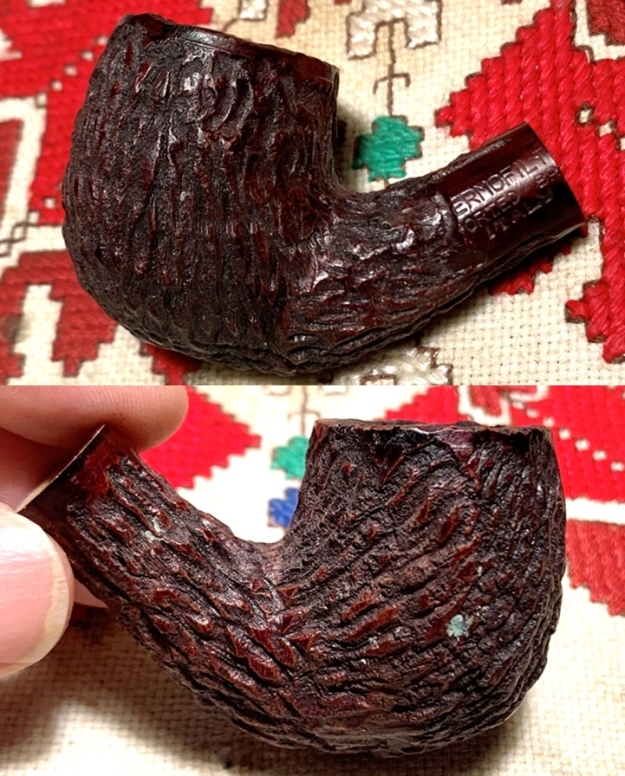
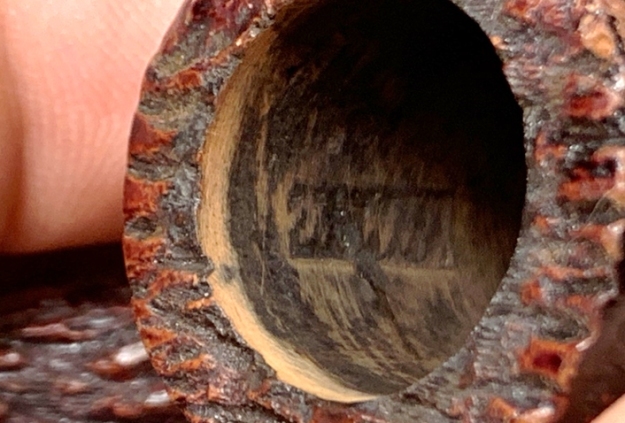
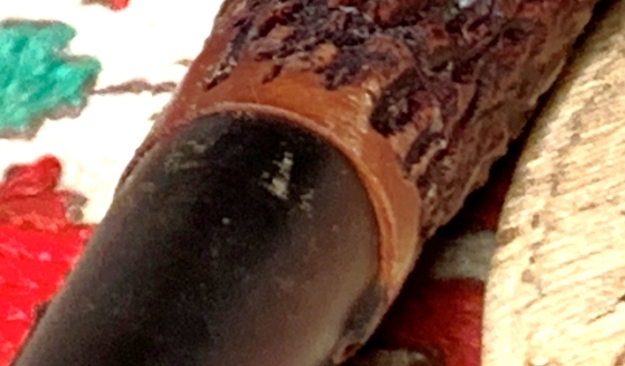
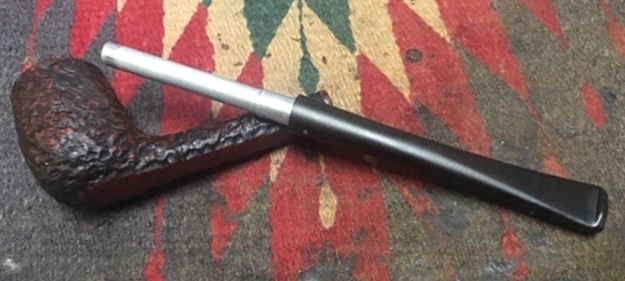
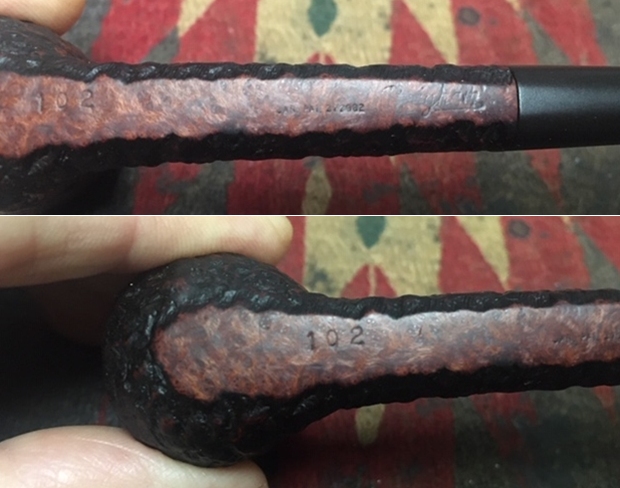
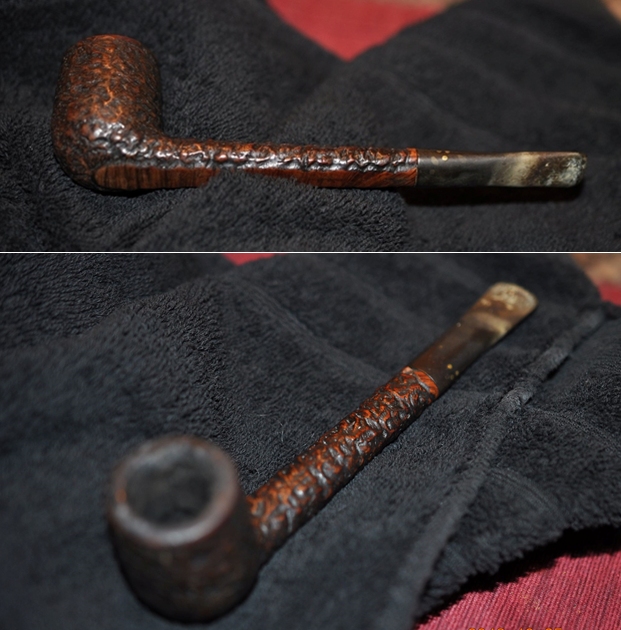
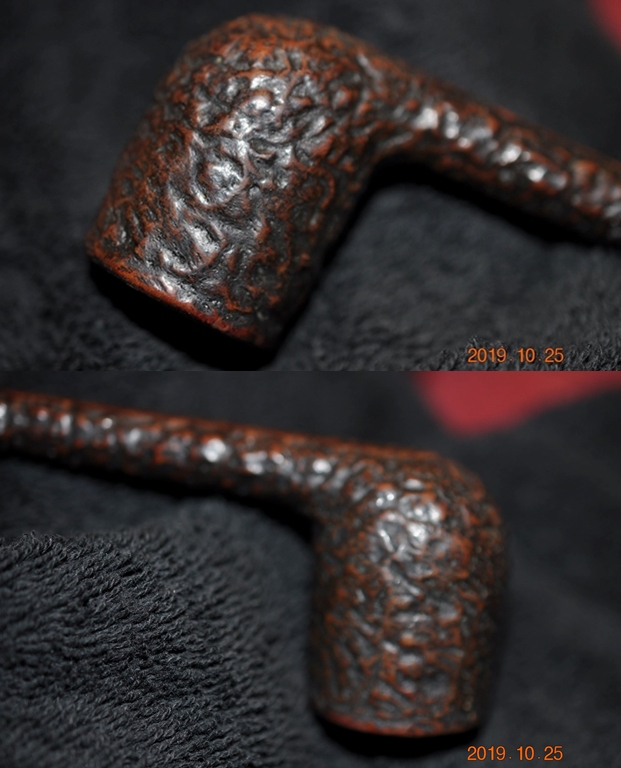
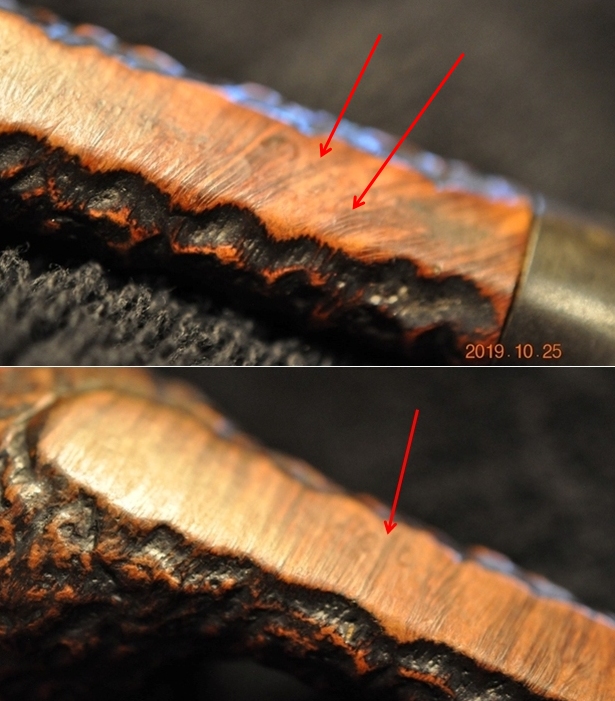
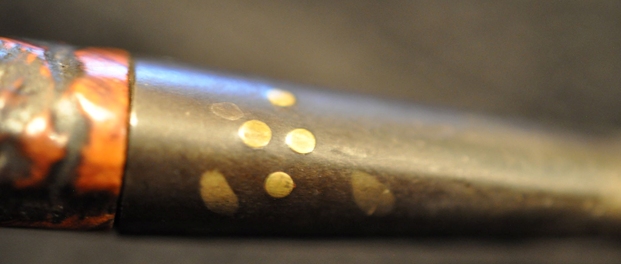
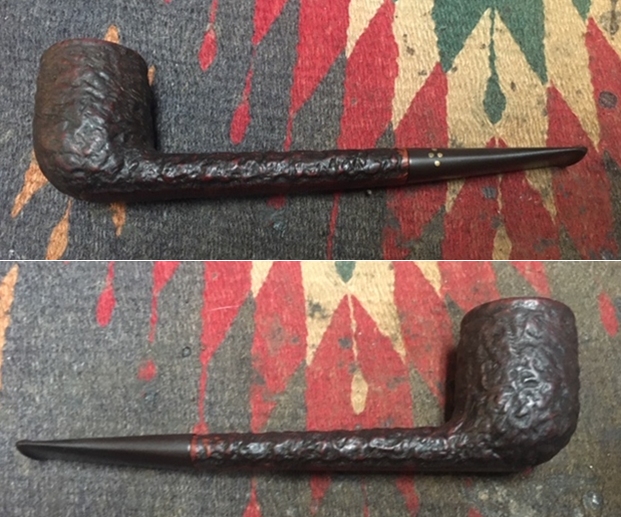
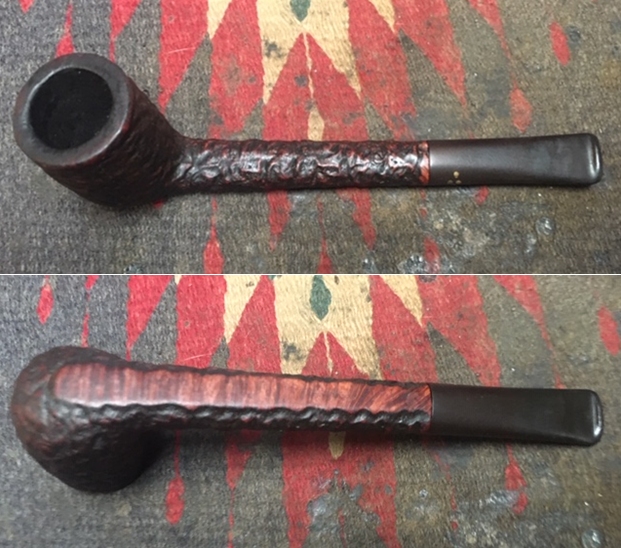
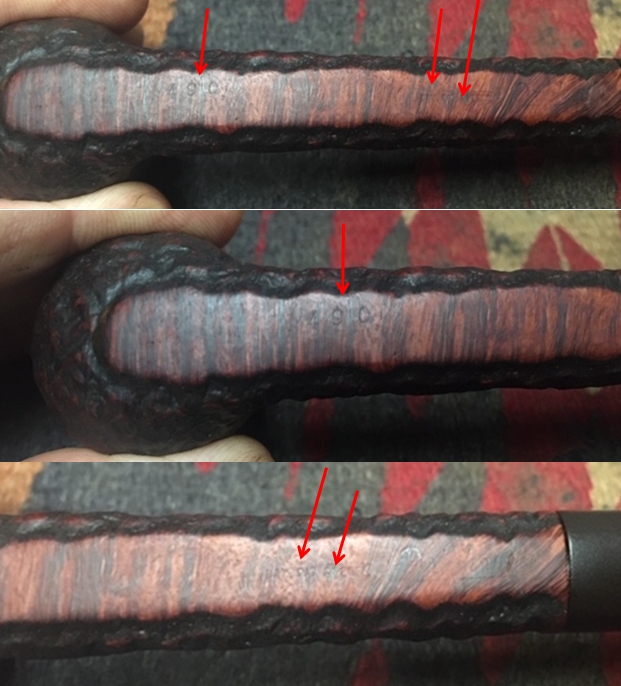
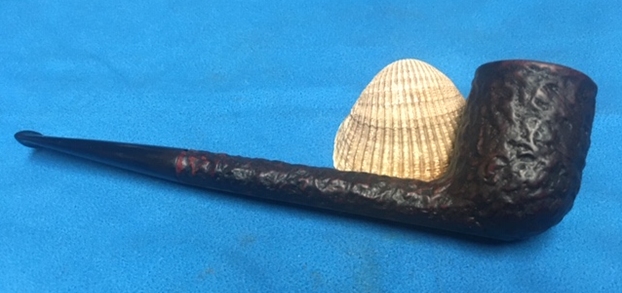
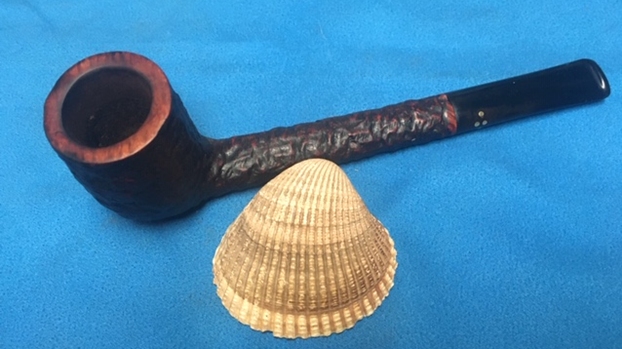
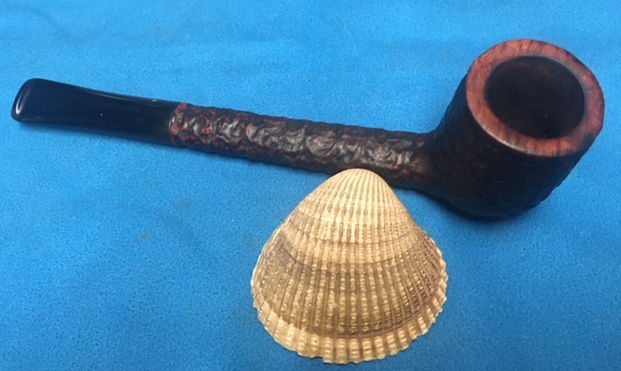
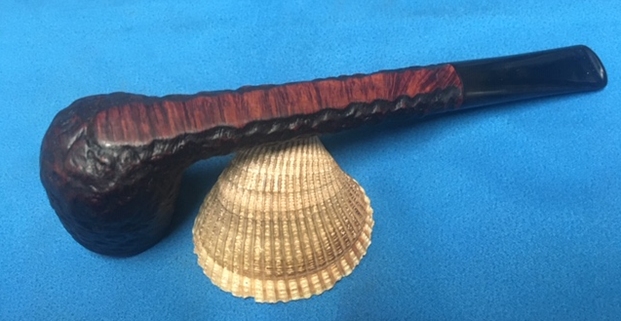
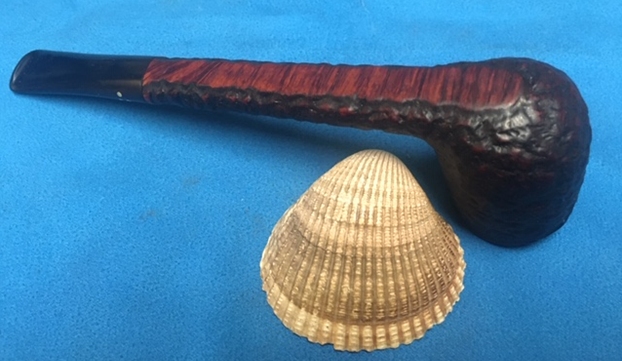
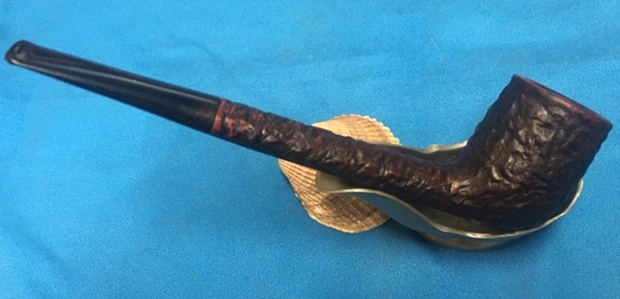
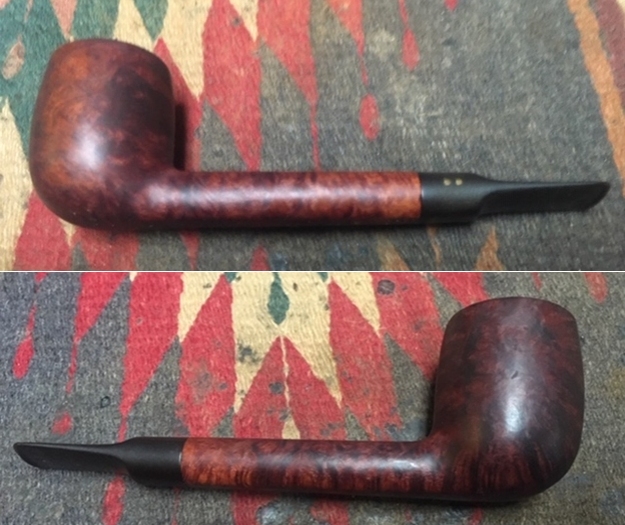
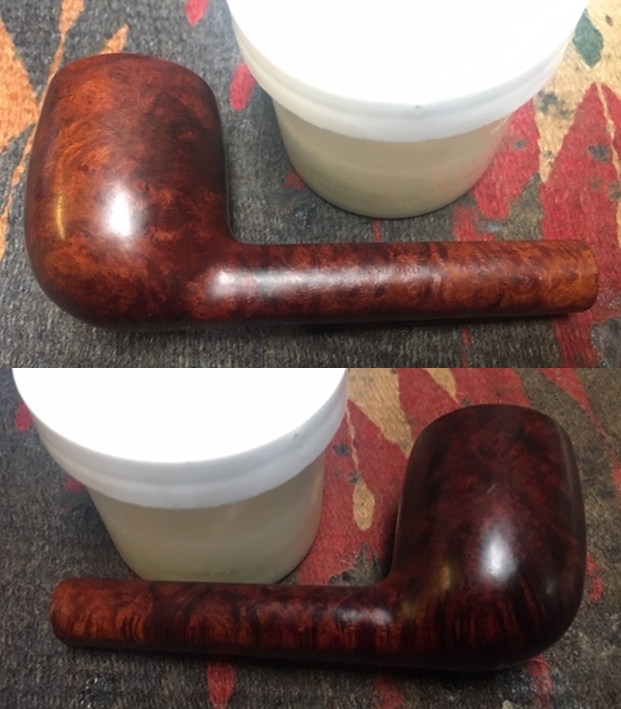
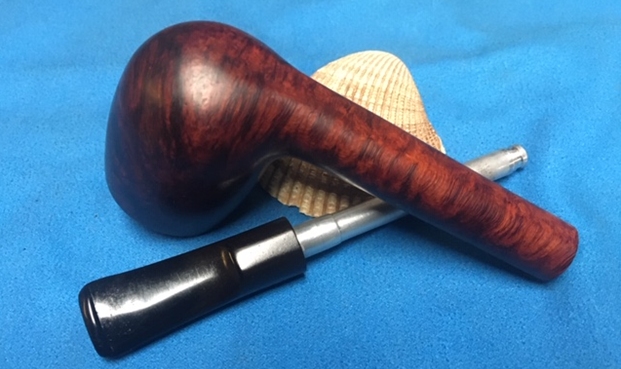
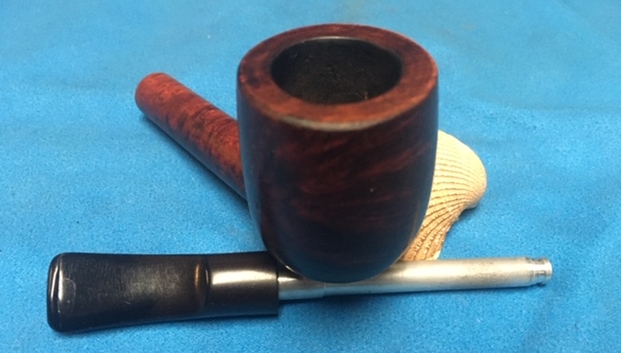
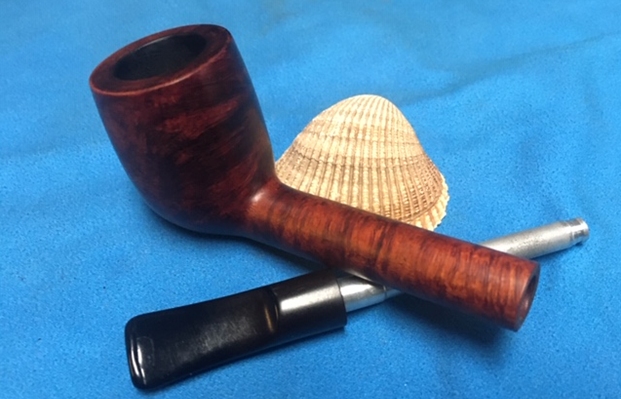
The pipe selected by my colleague and now on my work table from this find (sixteenth pipe being restored) is a bent billiard pipe with flame shaped worm rustications, a poor imitation of worm rustications as seen on Custombilts from the Wally Frank era! It is indicated in yellow arrow in the picture below. It is stamped on the left side of the shank as “WILLARD” in block letter over “IMPORTED BRIAR” again in block letter. The right side of the shank is devoid of any stamping. The stem bears a “Dot” logo in Yellow, embedded on the left side of the stem. Now coming to the research of this brand and line/model in specific, I referred to pipedia.org. Though there are no reams of information on this brand or model, the information provided gives a clear perspective of this brand and its aim. Here is the link (https://pipedia.org/wiki/Willard).

“The Willard pipes were made by Sparta Industries in Sparta, N.C from 1963 to 1975 (about 60,000 pipes per week). Some were distributed by the Post and Base Exchanges that serviced the military during the Vietnam War. Others were produced for R. J. Reynolds Tobacco. (preceding content from the “Pipes” website http://www.pipephil.eu/index.html)

Lord Abbott was either a sub-brand or a series produced by Willard —Dgillmor 22:42, 10 May 2012 (CDT)”

From the above information, it is evident that the pipe currently on my work table is from the period 1963-75. With this input on the vintage of this pipe, I move ahead with the restoration of this 42 plus years old pipe!

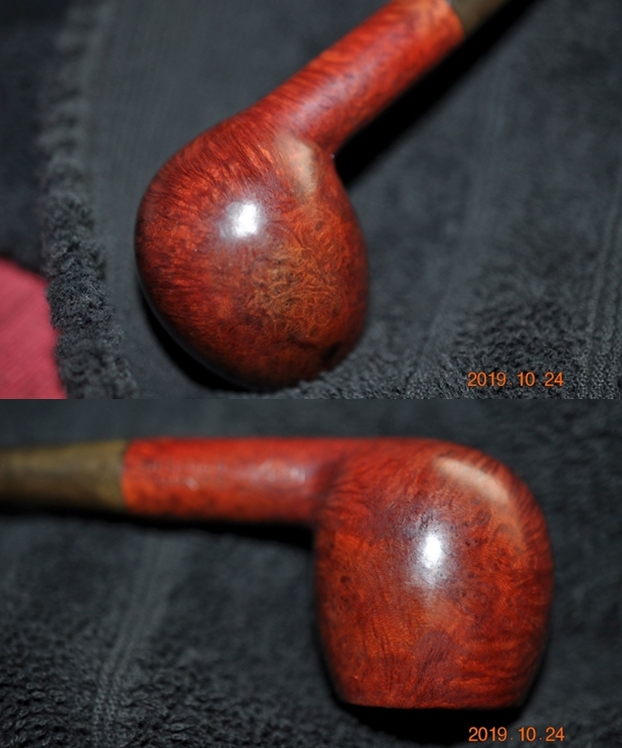
Initial Visual Inspection
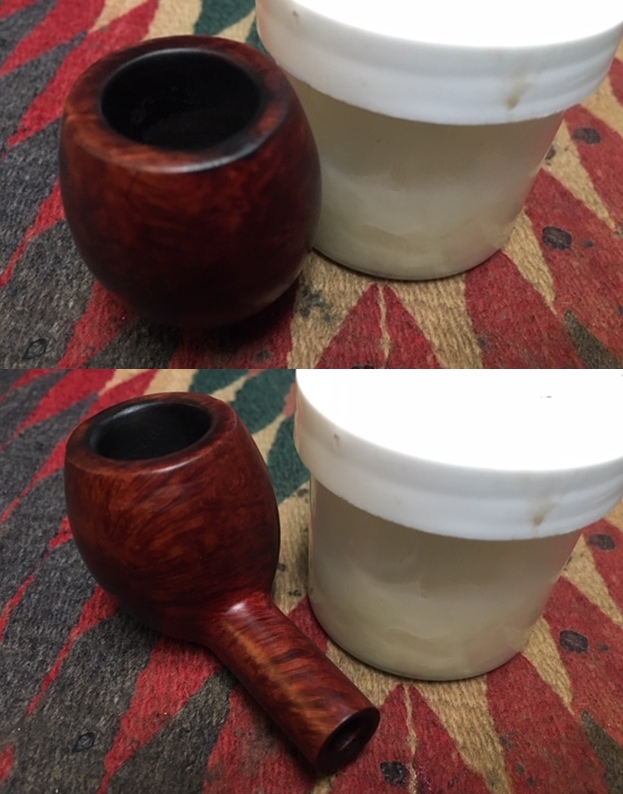
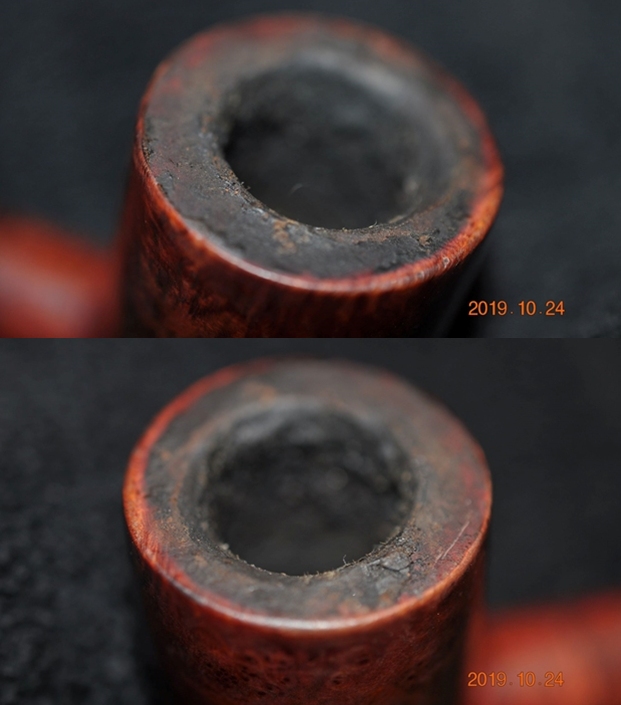
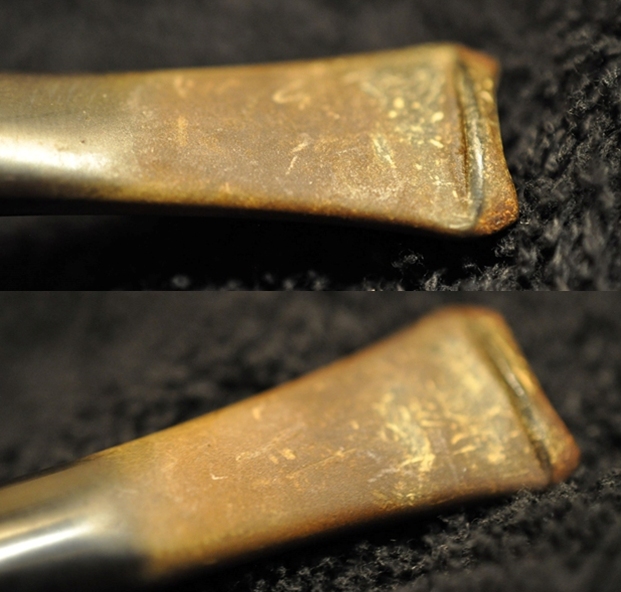
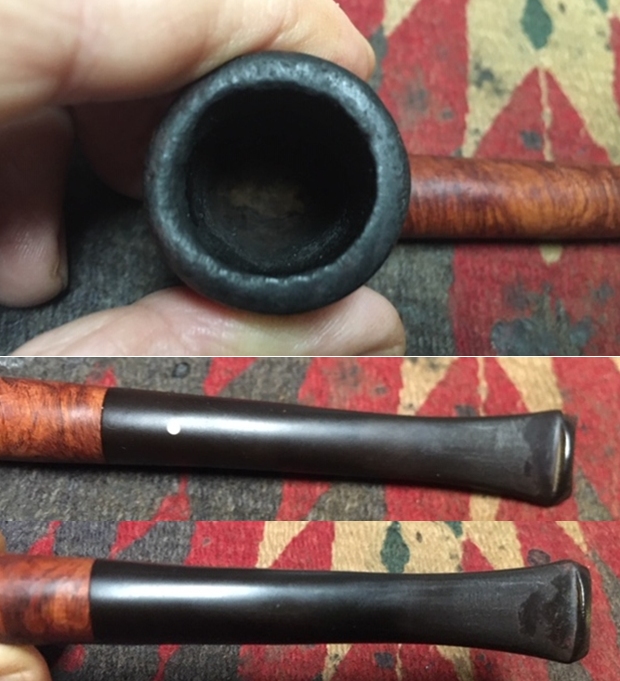
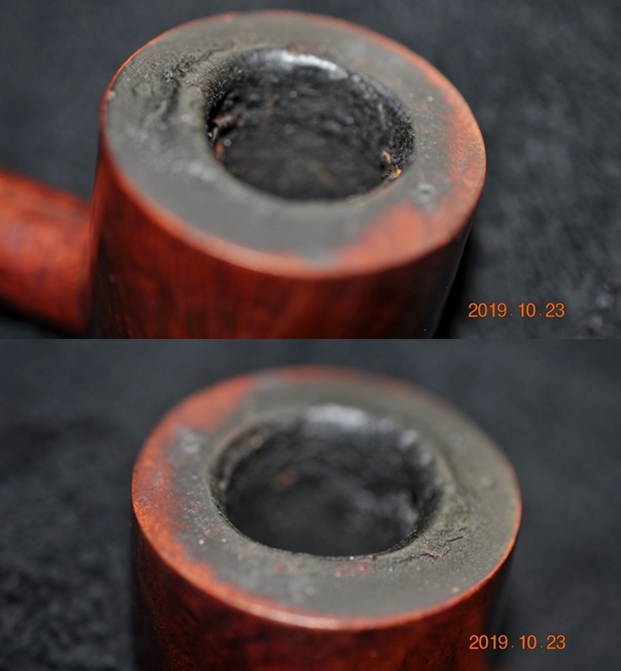
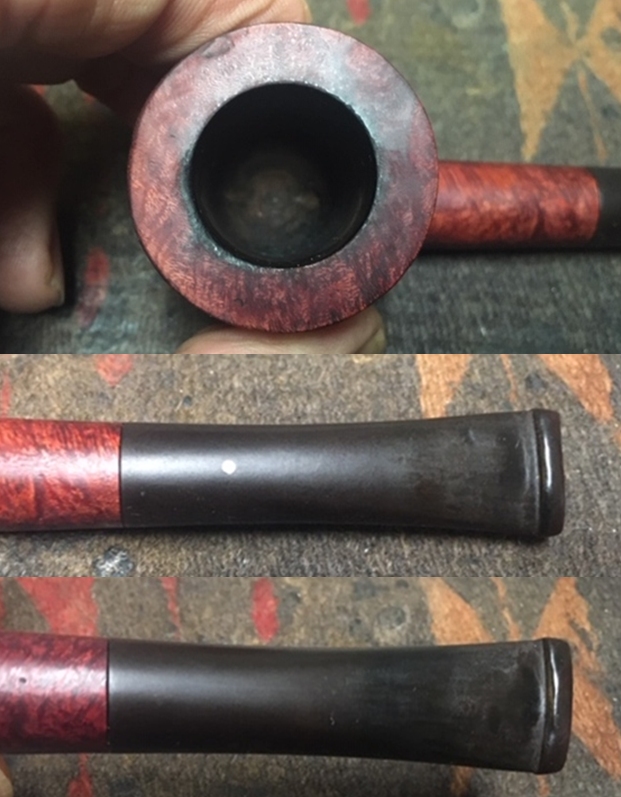
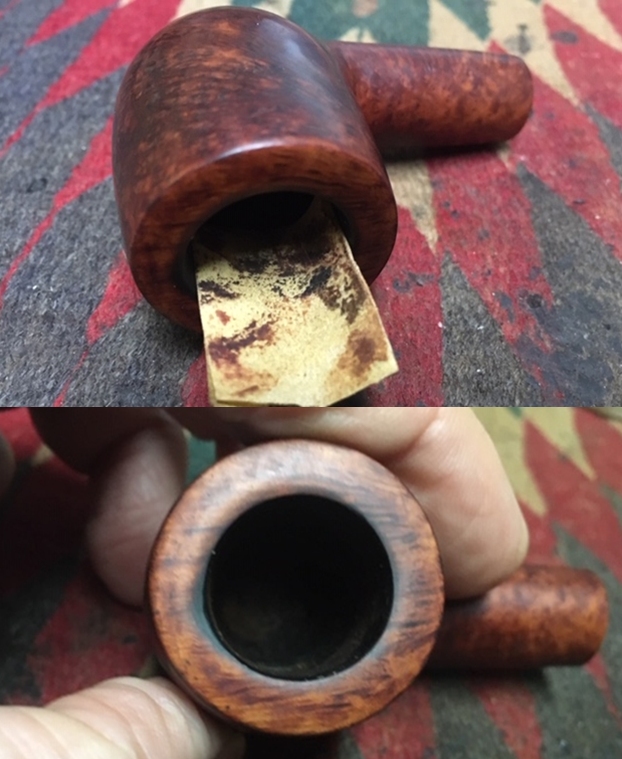
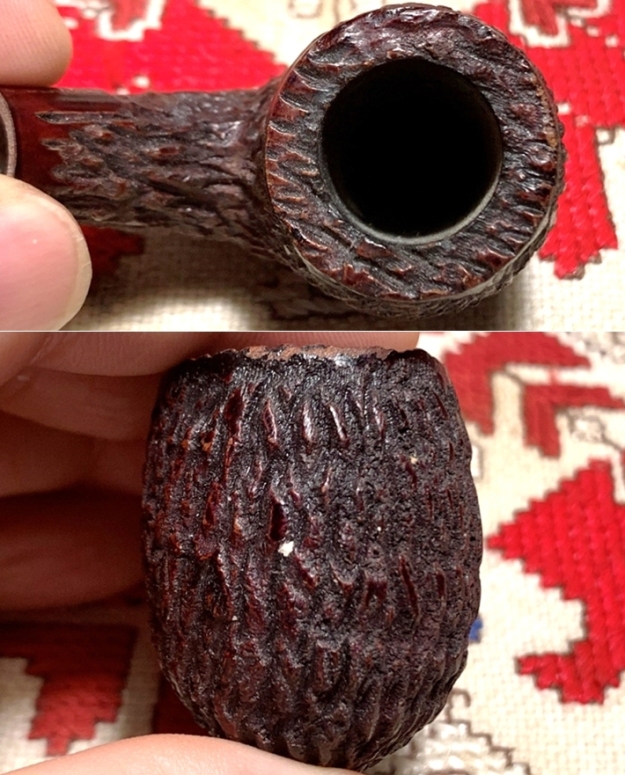
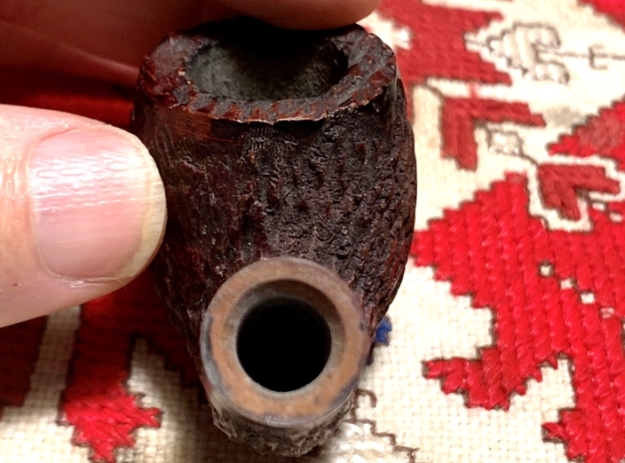
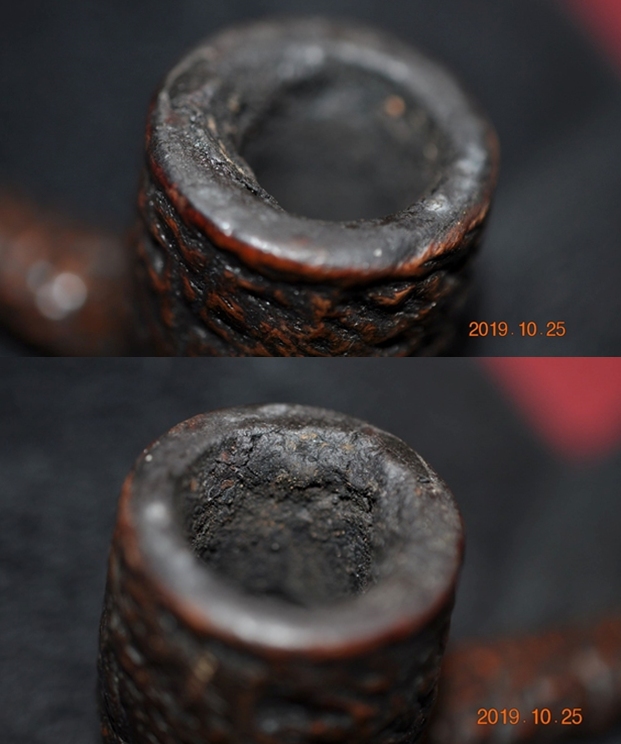
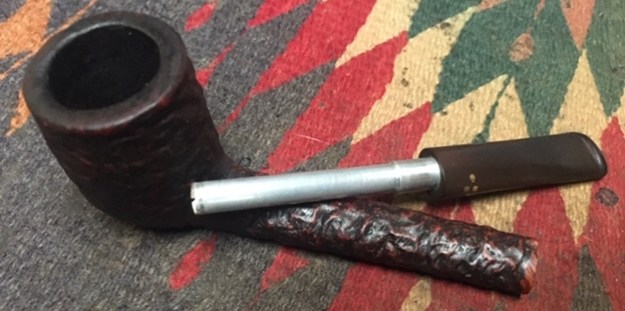
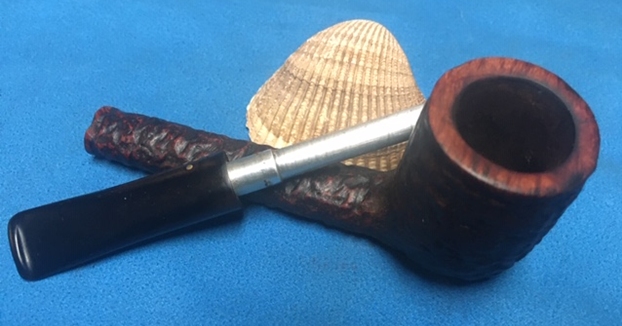
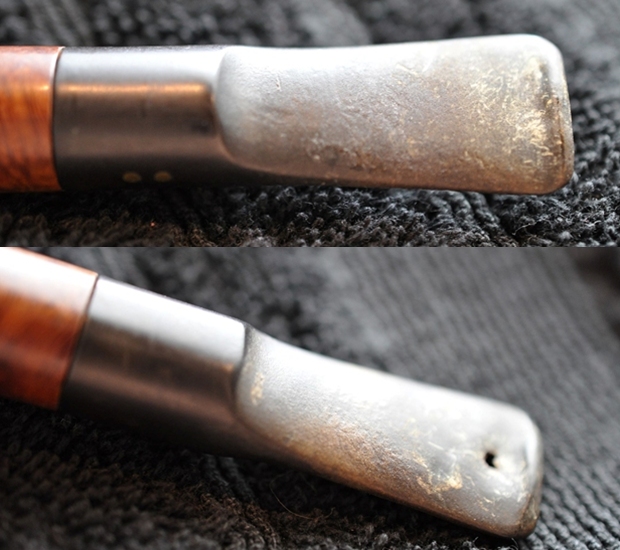
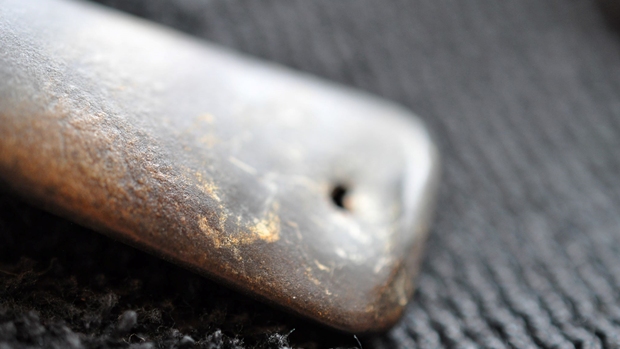
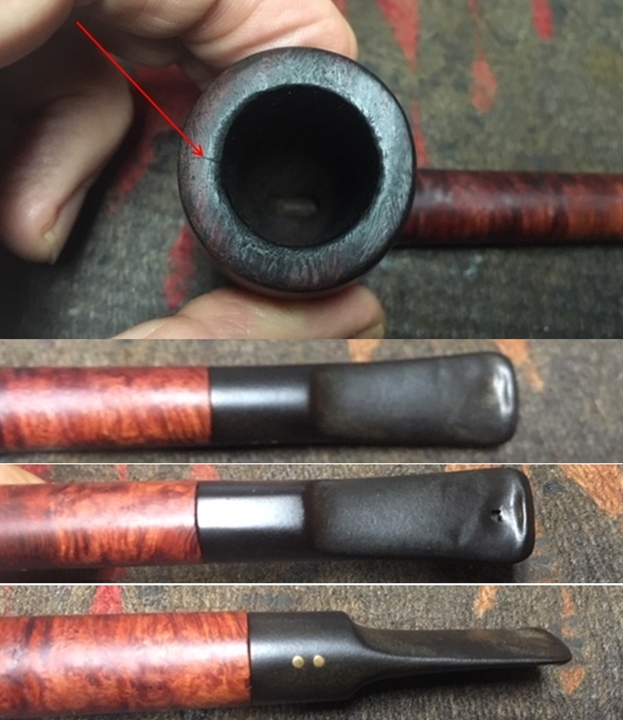
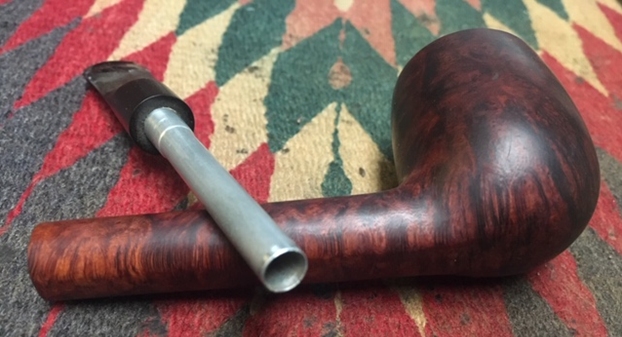
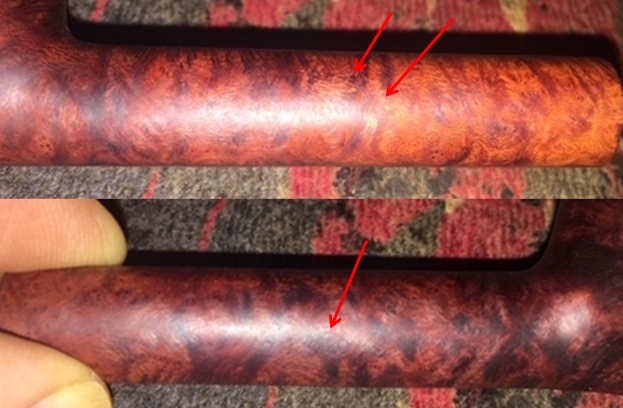
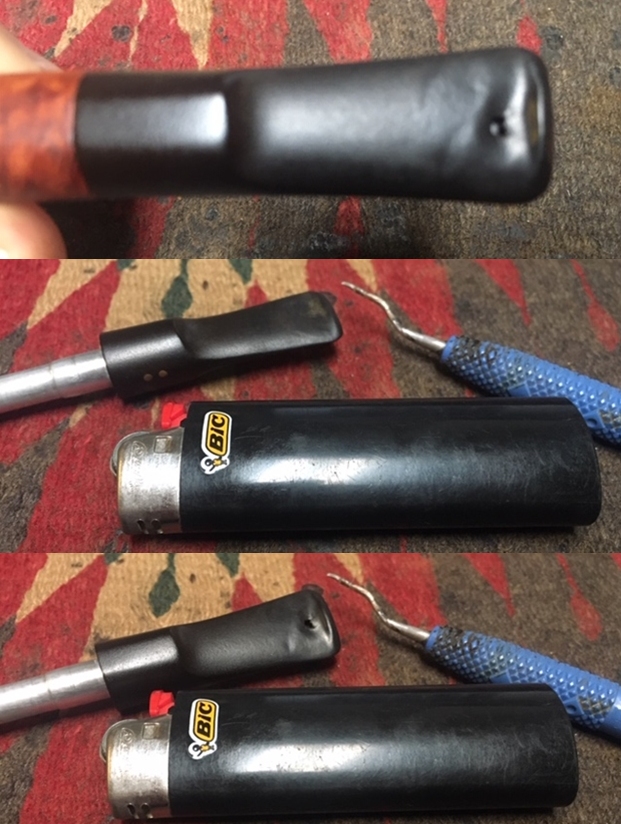
The stummel is covered in dust and dirt giving it a dull appearance. The Custombilt like worm rustications are uneven, without any finesse and filled with dirt and grime. There are a couple of fills that are plainly visible. These will need to be refreshed, if needed. It’s a matter of personal choice; however, I could not help but wonder what it was that attracted my colleague to this pipe in the first place!! I got my answer the next day when he said that he liked the shape and lightness of this pipe. Thus, it was not the grains (which were zero!) or the worm rustication that he was interested in and could be done away with to make it more attractive. With this input from him, I decided to rusticate the stummel as I was not very happy with the appearance of this pipe at this stage. A thick layer of cake can be seen in the chamber. The smooth rim top surface is covered in dirt, dust and grime with a few dents and dings thrown in for good measures. The condition of the inner walls of the chamber will be known once the cake has been taken down to the bare briar. The inner rim condition appears to be in good condition with no burn/ charred surfaces. Even the outer rim edge appears to be in a decent condition. Only once the stummel has been thoroughly cleaned that I can be sure of my initial appreciation. In spite of the thick cake, the chamber odor is surprisingly not strong, yet I shall be subjecting it to a salt and alcohol treatment to freshen it up for him.The shank end has a metal band and this metal band extends inside the shank with threads, over which the threaded stinger is seated in to the mortise. Thankfully, the band and threads are all intact. The mortise is blocked with dried gunk, adversely affecting the airflow. The metal band is dull and dirty in appearance.The vulcanite stem is oxidized and has calcification deposits towards the button end. The lower and upper stem surface is peppered with tooth chatter. The button edges also need to be sharpened. The stinger opening and the horizontal slot is covered in accumulated oils and tars. The alignment of the stem and shank is skewed with the stem being overturned to the right. Initial Cleaning By Abha…
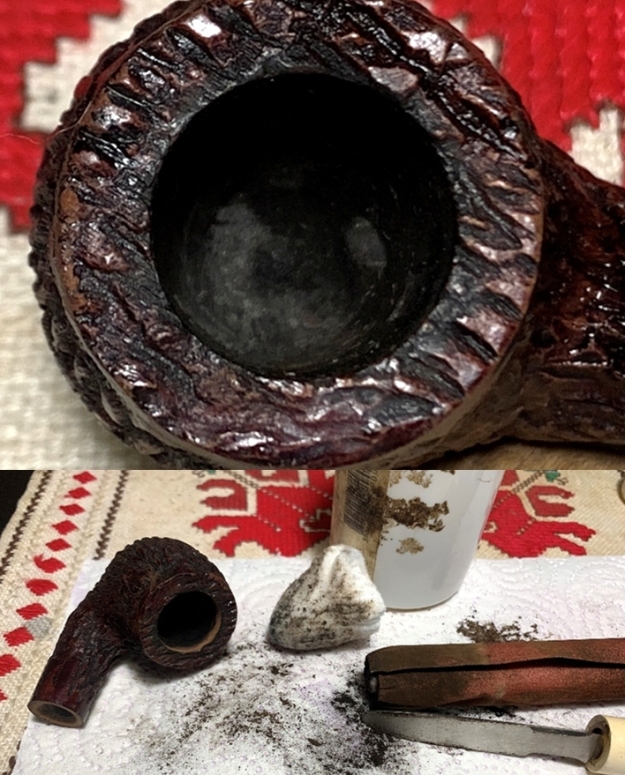
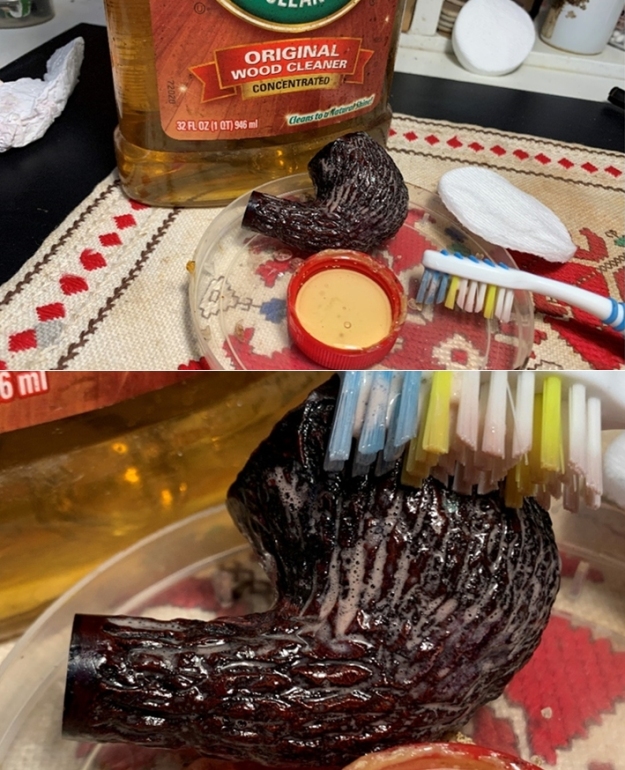
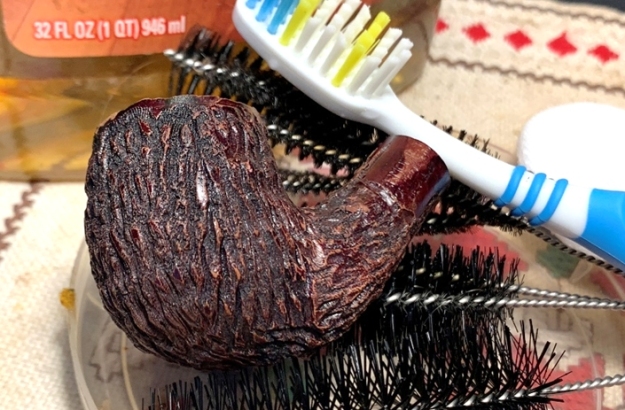
The initial cleaning on this pipe was done by Abha, my wife (she has cleaned up around 40-50 pipes and these have now reached me for further restoration). She reamed out the complete cake and further smoothed out the chamber walls with a folded piece of 220 grit sand paper. She further cleaned out the internals of the shank with pipe cleaners and alcohol and cotton buds. She followed the internal cleaning of the shank with external cleaning of the stummel using Murphy’s Oil soap and hard bristled tooth brush and dried it with paper napkins and cotton cloth.Next she cleaned out the internals of the stem air way and immersed it in “Before and After Deoxidizer” solution (pipe is marked in indigo blue arrow) along with the stem of other pipes in line for restoration. Once the stem had soaked overnight, she cleaned the stem under running warm water and scrubbed the raised oxidation from the stem surface using Scotch Brite pad. She further removed the oxidation by scrubbing the stem with 0000 grade steel wool and applied a little olive oil to rehydrate the stem.Once The Pipe Is On My Work Table…
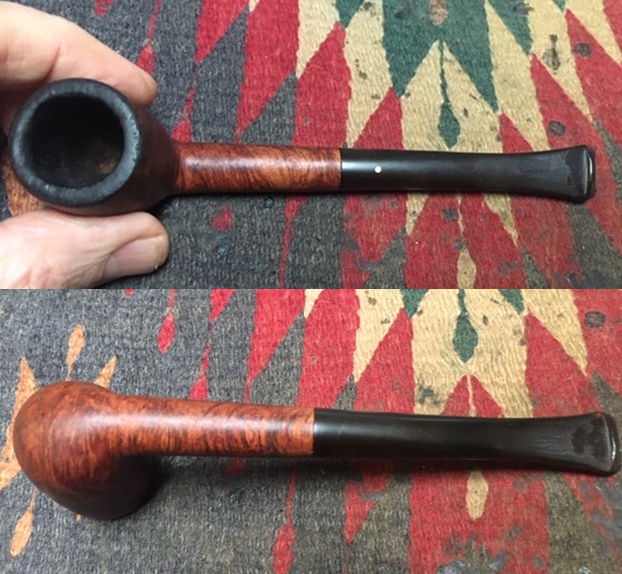
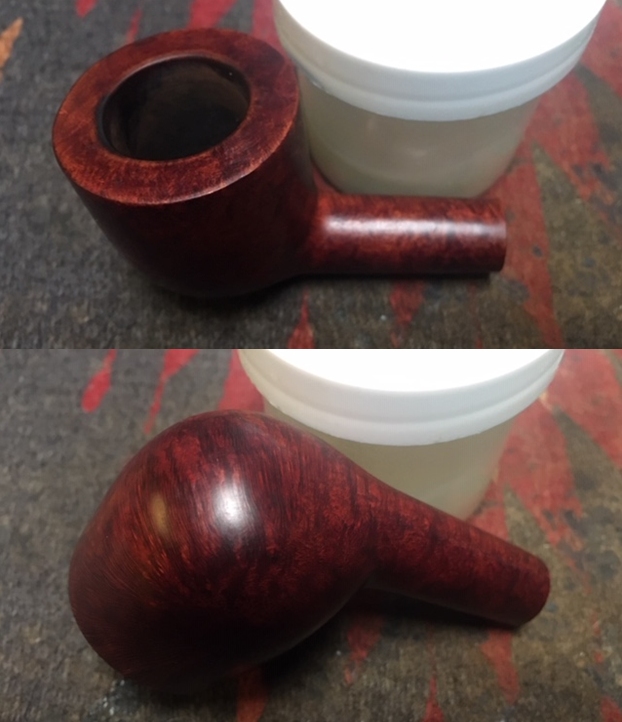
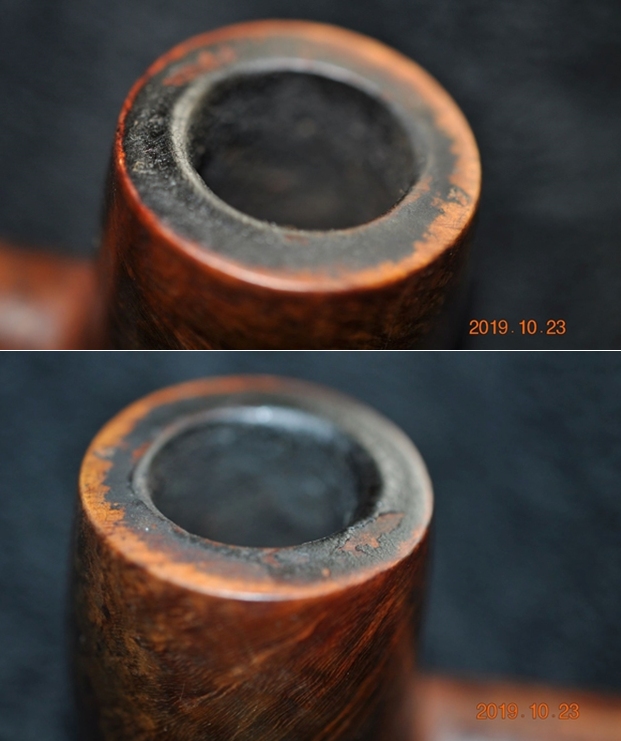
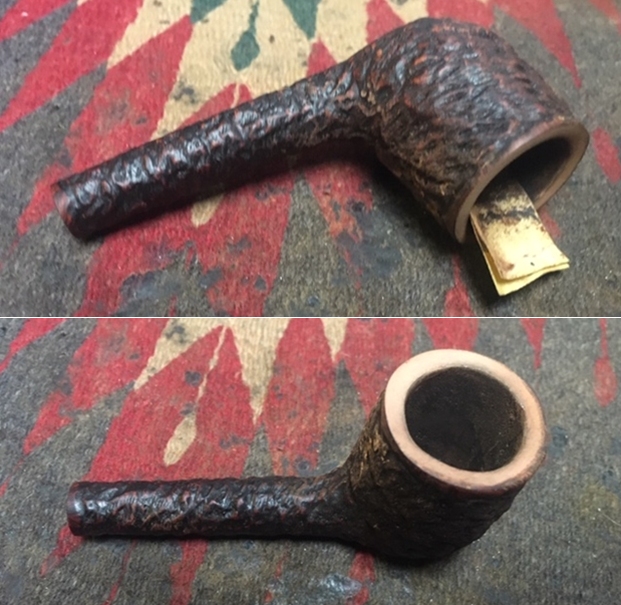
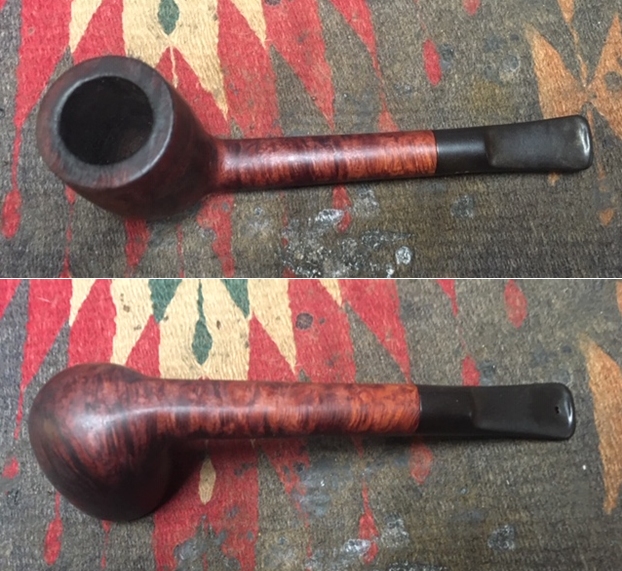
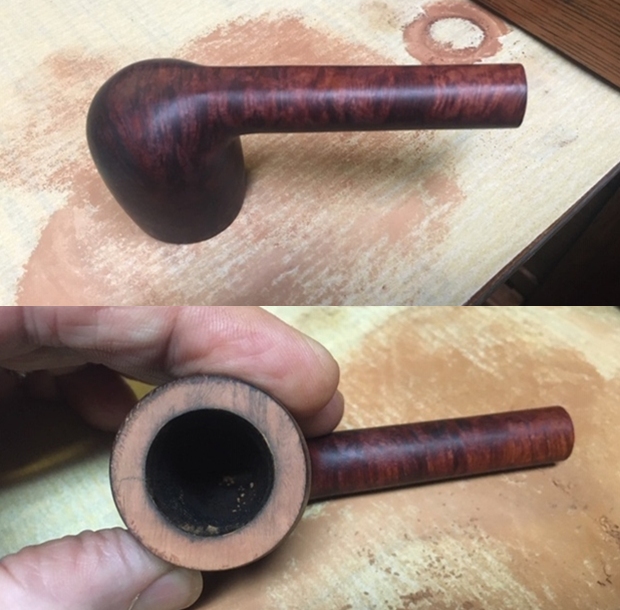
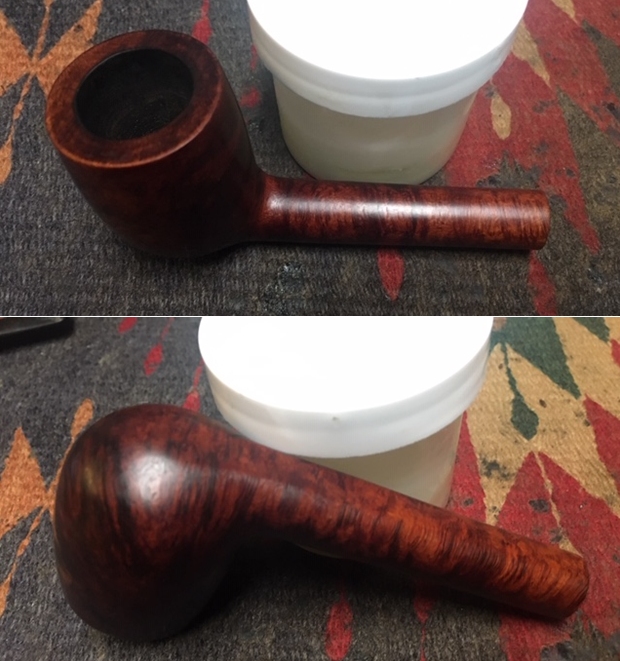
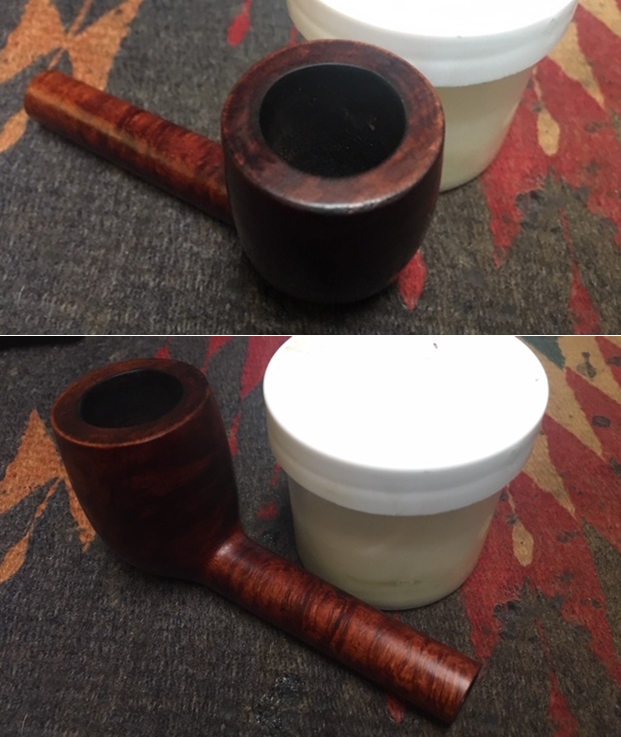
The cleaned up pipe presents a very clear picture of what needs to be done to restore this pipe to a decent and smoke worthy condition. I really cannot thank Abha, my wife, enough for all the help and support that she extends in my pursuance of this hobby. I proceed to carry out my appreciation of the work that needs to be done on this pipe to restore it. The cleaned up pipe, as I received it, is shown below. The chamber walls are without any heat fissures or pits and that’s a big relief. The rim top surface is peppered with dents and dings. The inner rim edge shows slight darkening all round and should be easily addressed with a couple of turns of a piece of 220 grit sand paper along the edge. There are some minute chipped spots on the outer edge. The condition of the chamber is good and will not require much repair work. There are no ghost smells in the chamber. The stummel surface is nice and clean. The worm rustications, though clean, are still not visually pleasing. There are a large numbers of fill now plainly visible (only larger ones are enclosed in yellow circle). The mortise is clean and air flow is smooth. The metal spacer ring is also clean and intact. The vulcanite stem had cleaned up nicely. The upper stem surface has a couple of deep bite marks at the base of the button and also in the bite zone. The lower surface has some minor tooth chatter in the bite zone. The button edges on both the surfaces need to be sharpened. The aluminum stinger is clean.The seating of the stem stinger in to the metal threaded mortise is off center. The stem is overturned to the right and will have to be readjusted to perfectly align with the shank and the stummel.The Process
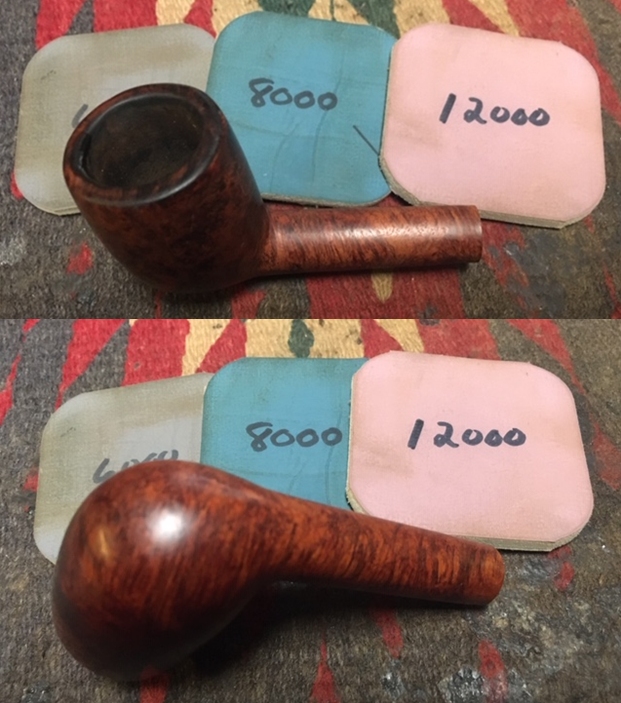
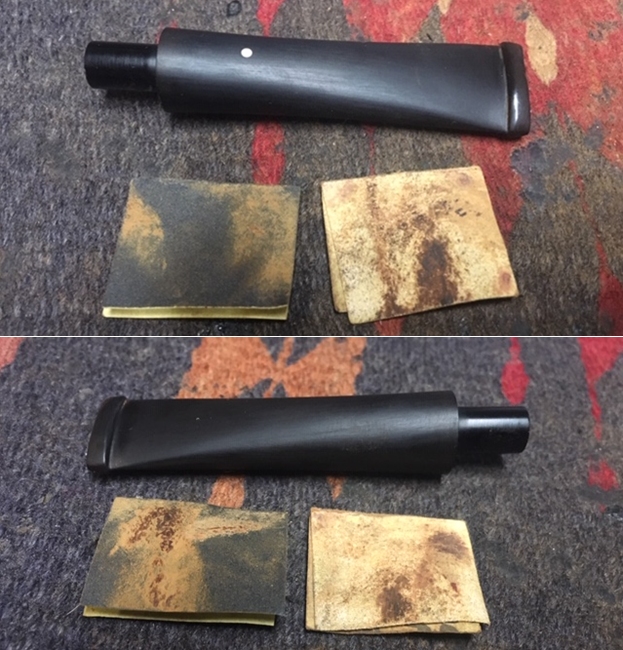
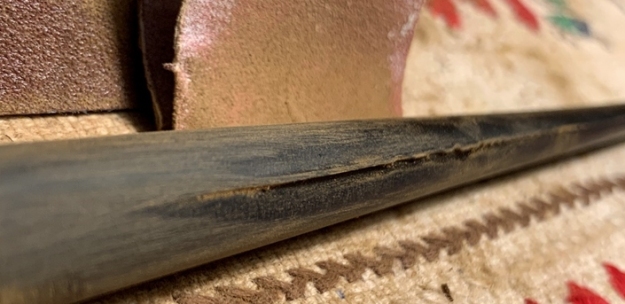
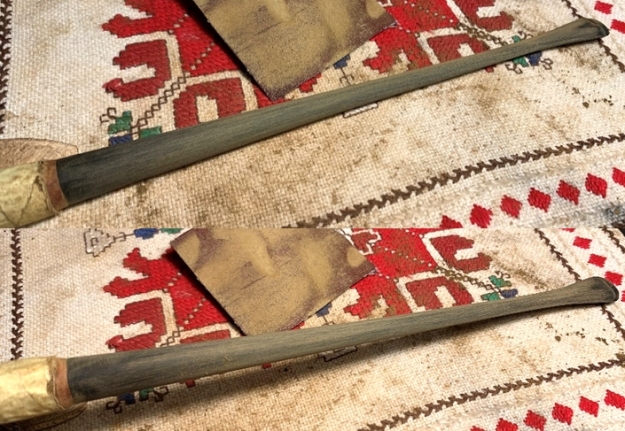
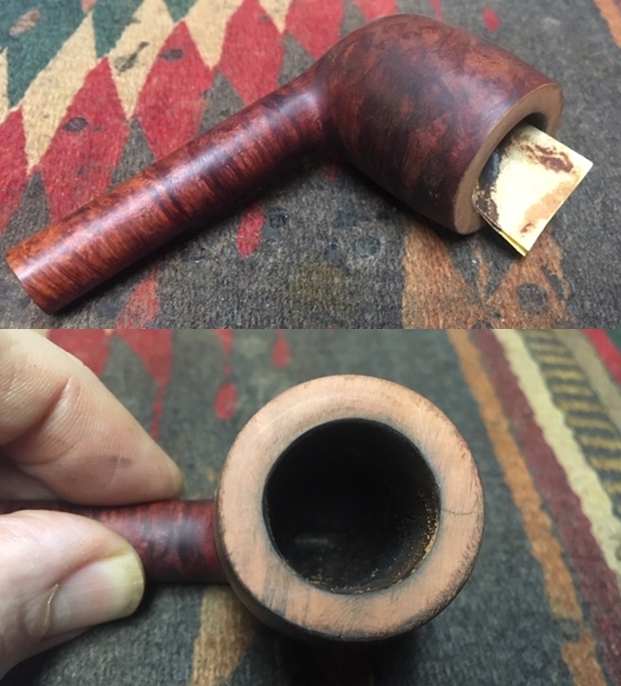
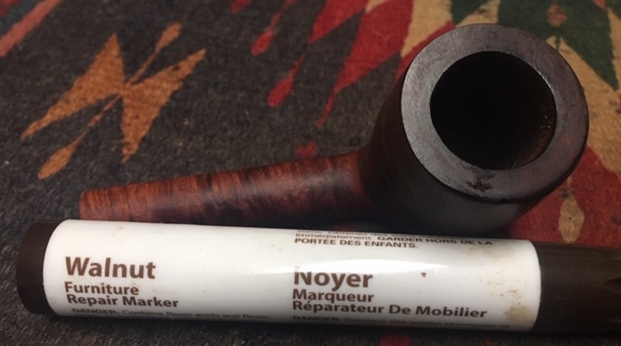
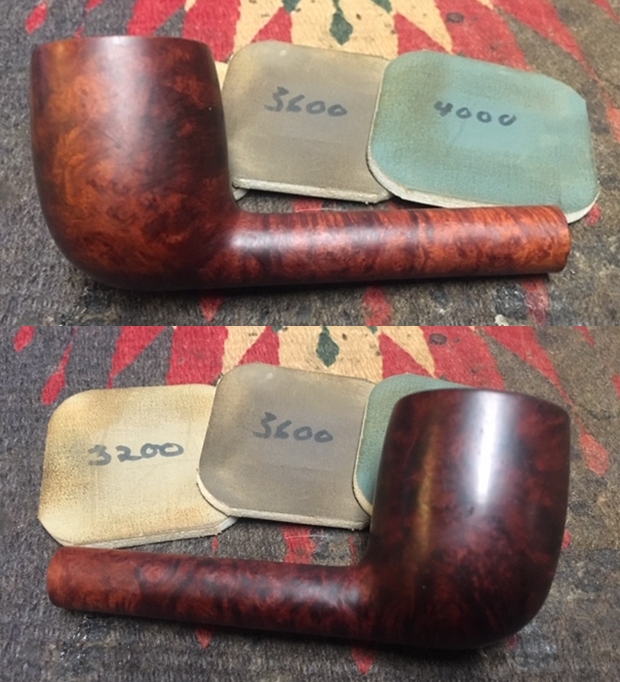
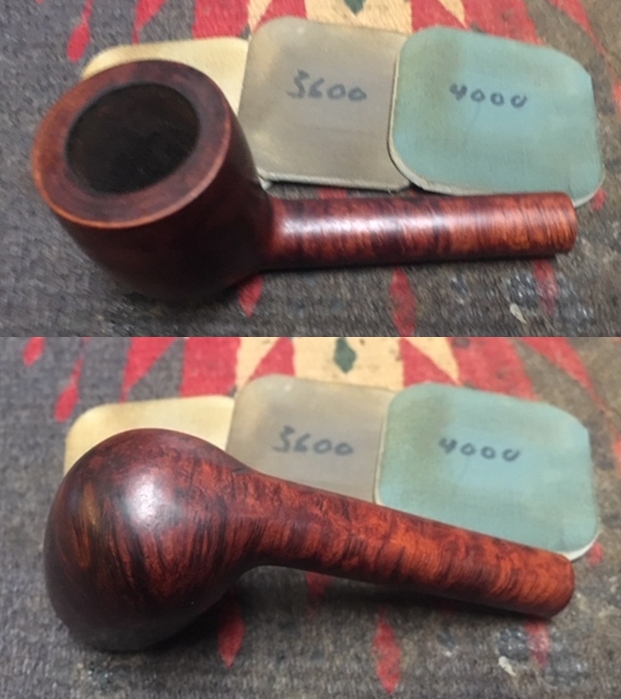
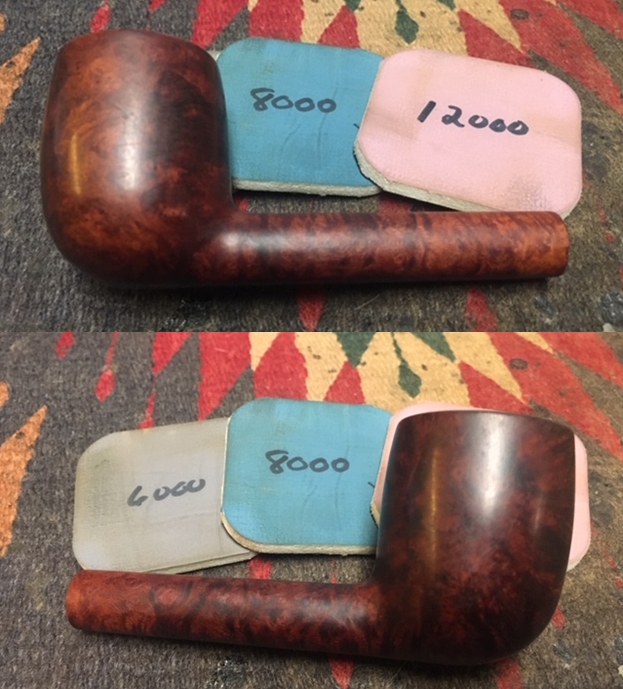
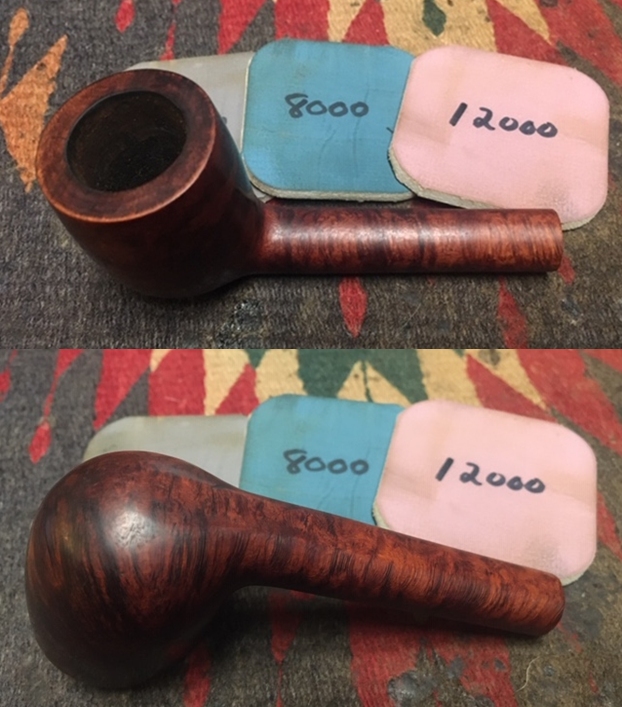
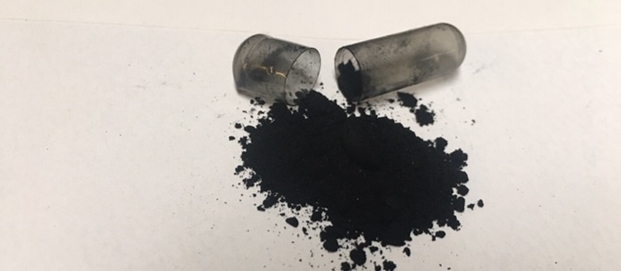
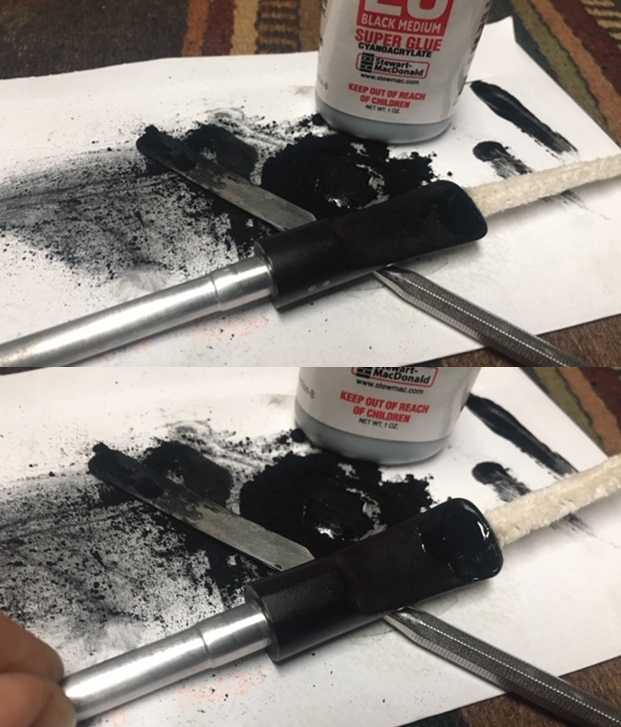
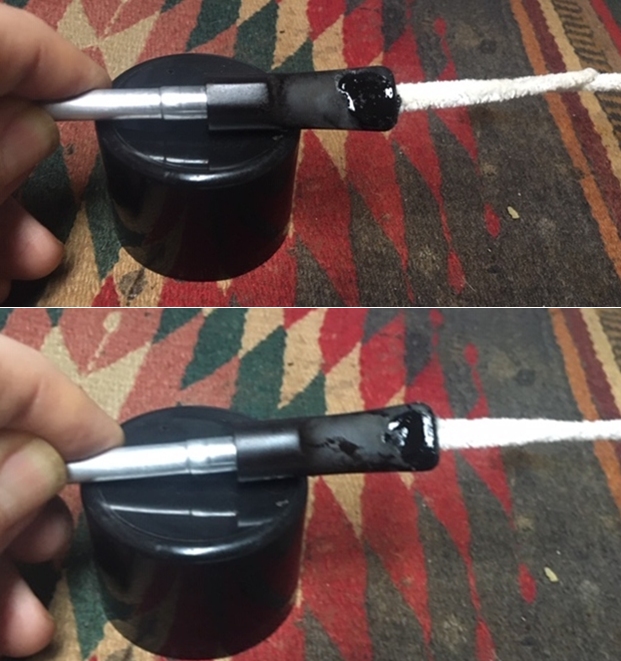
The first issue that I addressed in this project was that of the stem repairs. I painted both surfaces of the stem with the flame of a lighter to raise the tooth chatter and bite marks to the surface. This also helps in loosening minor oxidation from the stem surface. I sand the entire stem surface with a folded piece of a 220 grit sand paper to remove the loosened oxidation. I wiped the stem with a cotton swab and Murphy’s oil soap to further clean the surface. Even though most of the tooth indentations have been eliminated by heating the damaged stem portion, one deep indention is still seen on upper surface in the bite zone and a minor bite mark is seen on the button edge on the lower stem surface. I filled the tooth indentation in the button edge on lower and upper stem surface with a mix of activated charcoal and CA superglue and set it aside for the fill to cure.With the stem fills set aside for curing, I decided to work the stummel. The other day during a Face Time video call with Steve, we discussed the best way to transform this stummel. The long and short of the discussion was that it was decided to rusticate the stummel. This would help to mask the fills and provide a very tactile feel while smoking. It would also provide me an opportunity to practice rustication. With this decision finalized, I proceed with rusticating this stummel.

Now, this would not be my first attempt at rustication as I had rusticated one a few months back, here is the link to the write up (https://rebornpipes.com/2019/08/02/gifting-my-mentor-and-dear-friend-steve-an-alexander-zavvos-hygrosystem-pipe/).

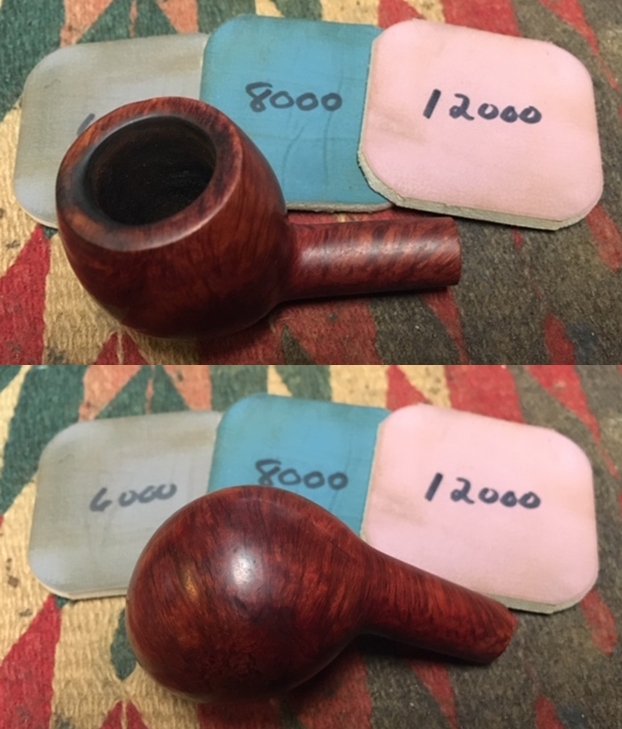
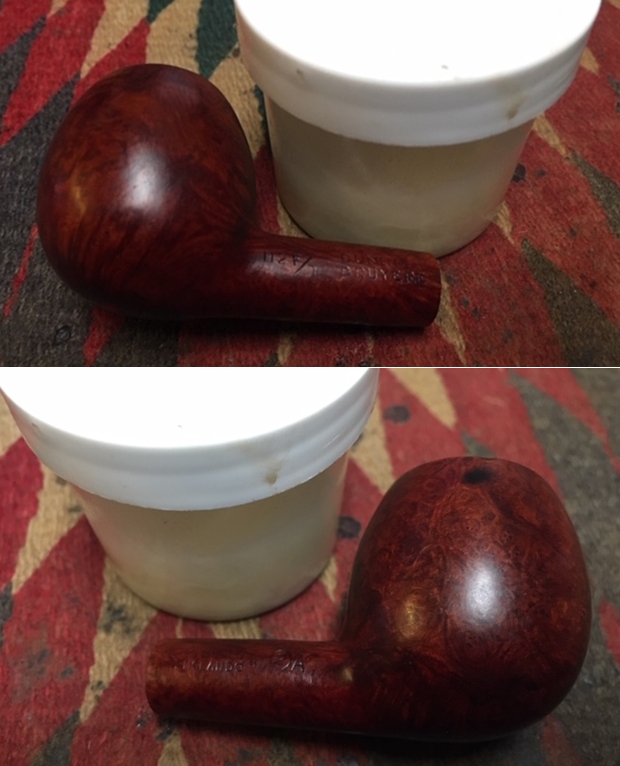
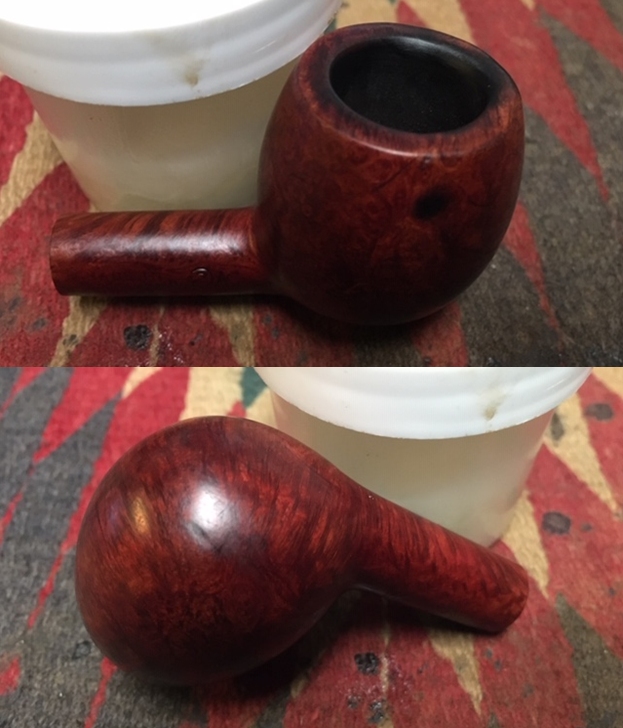
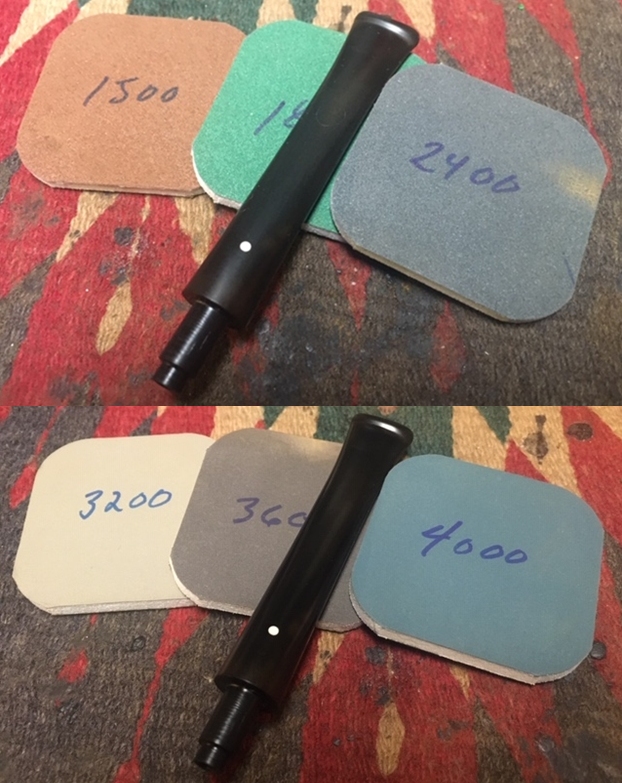
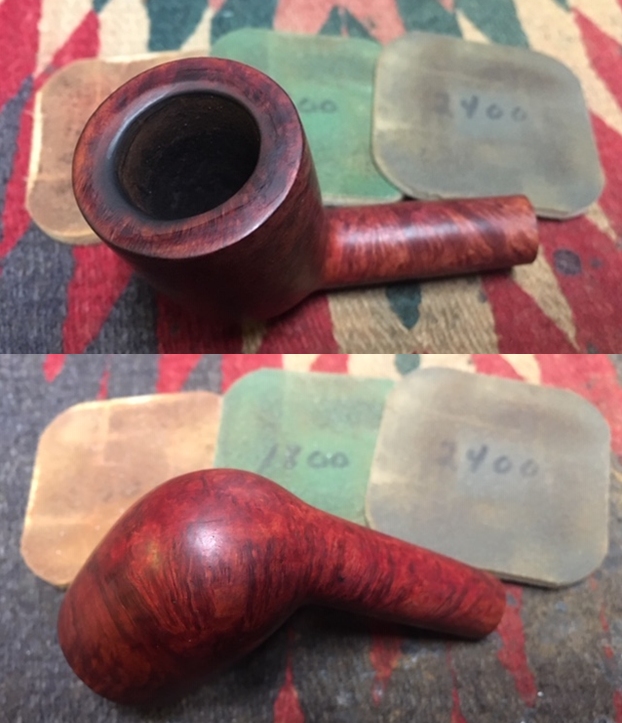
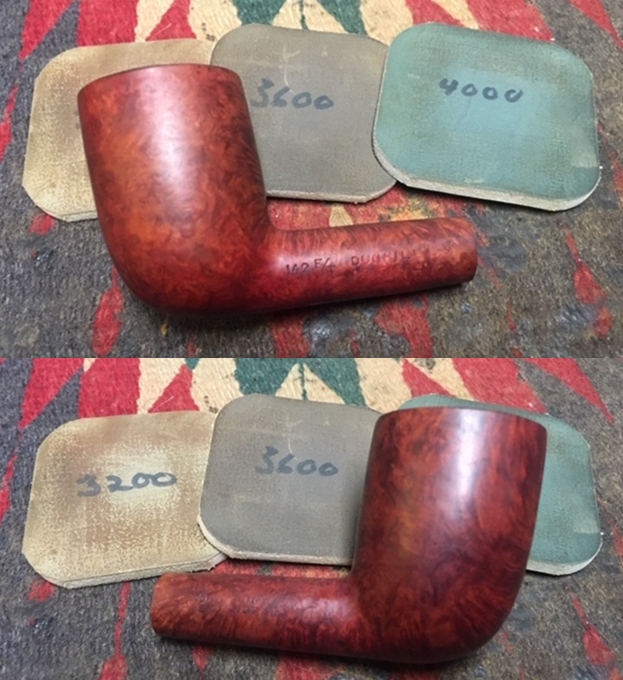
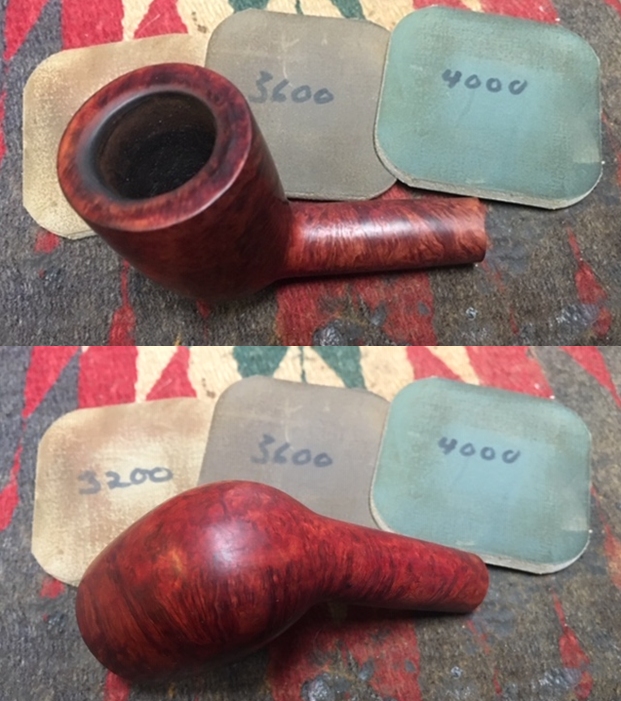
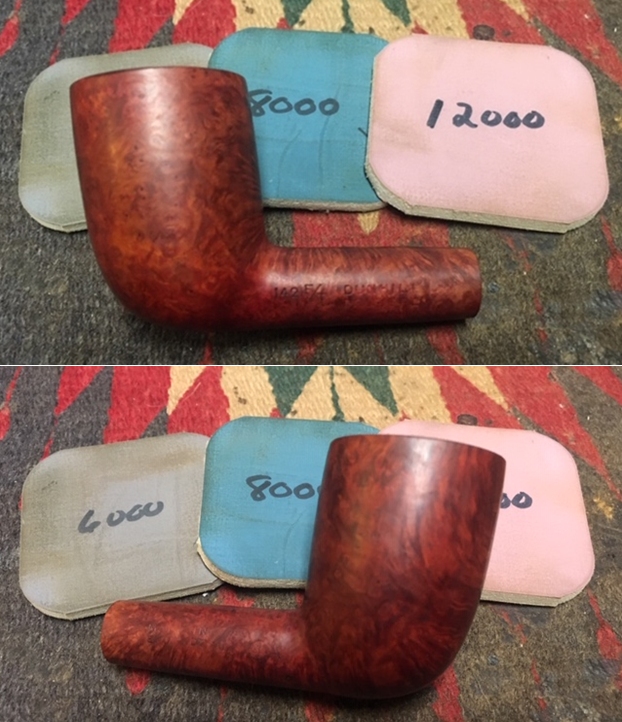
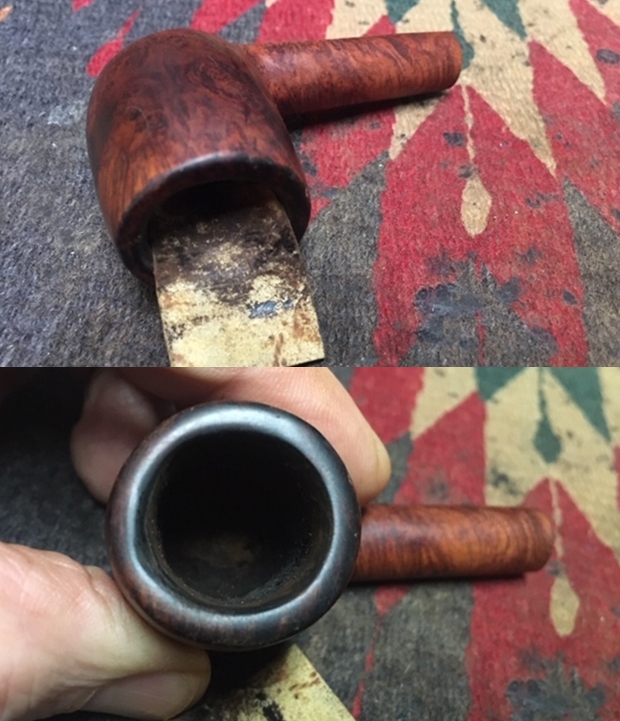
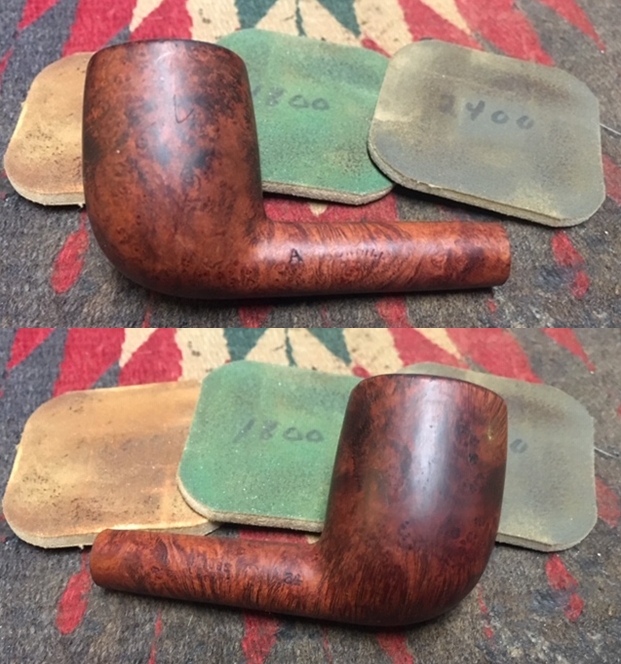
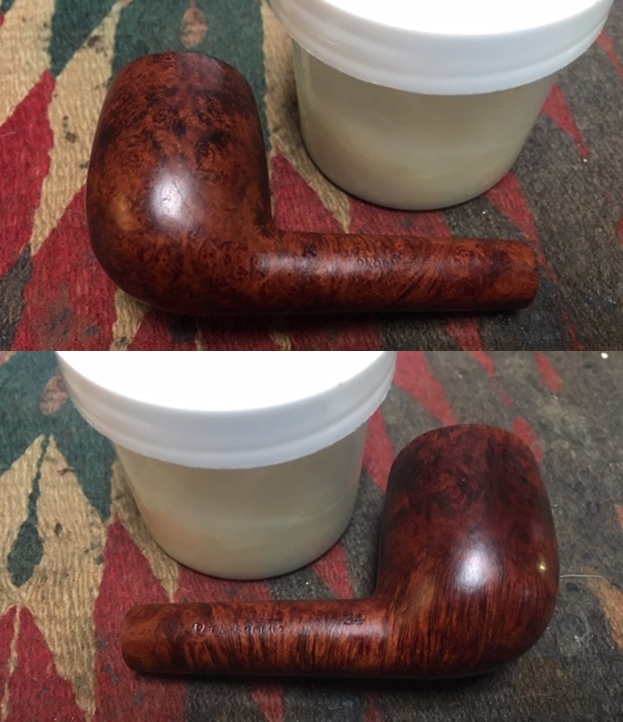
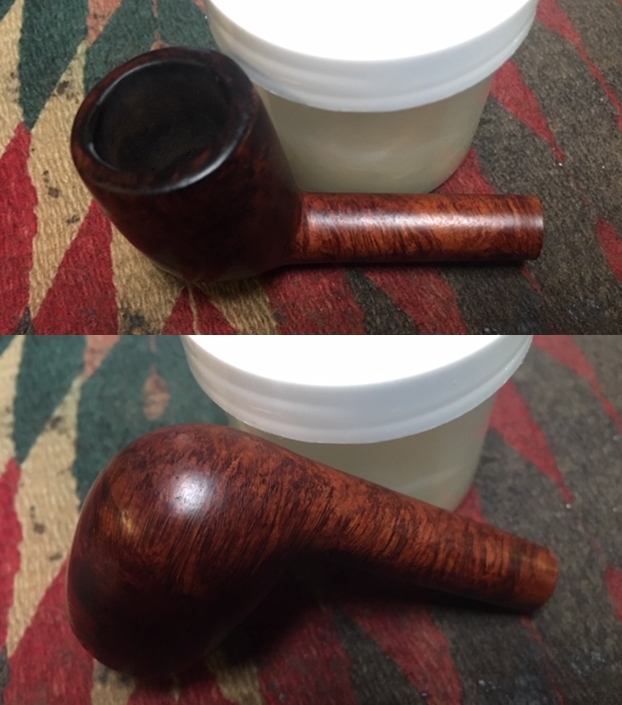
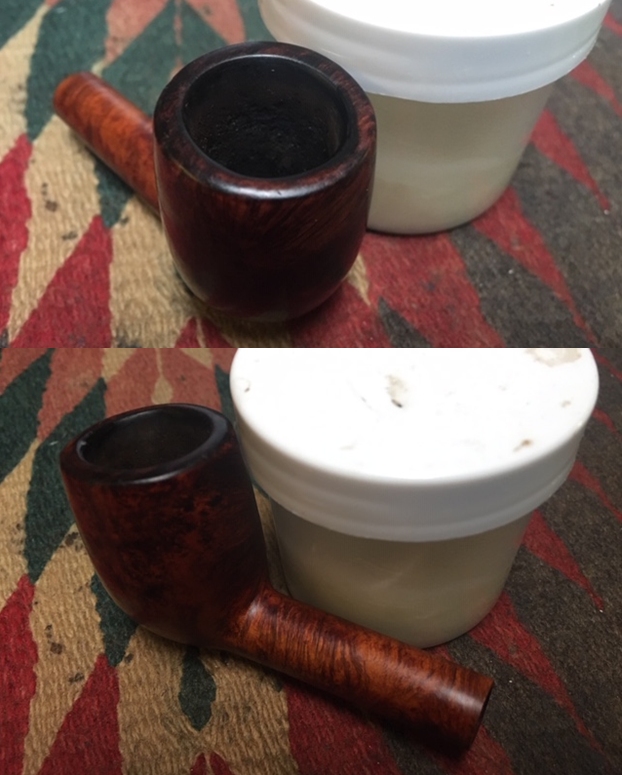
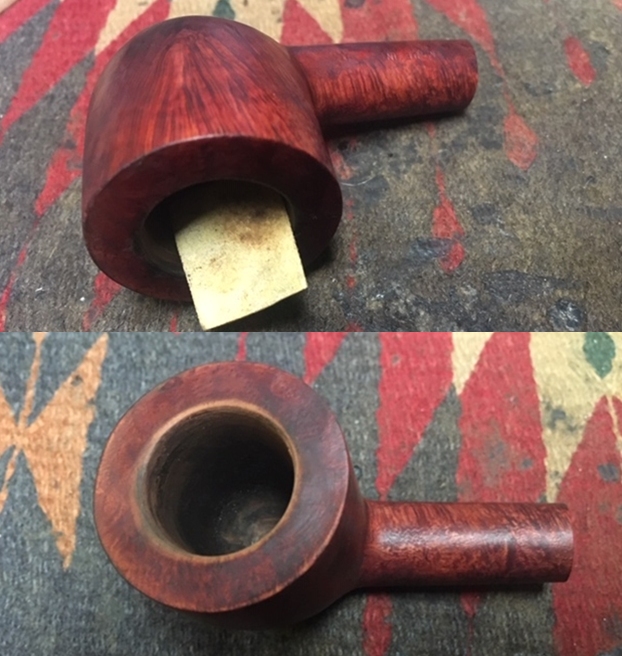
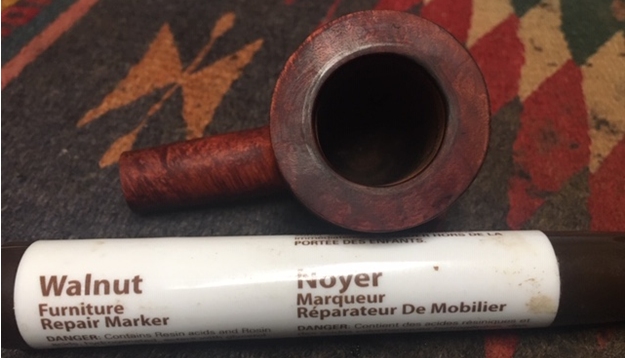
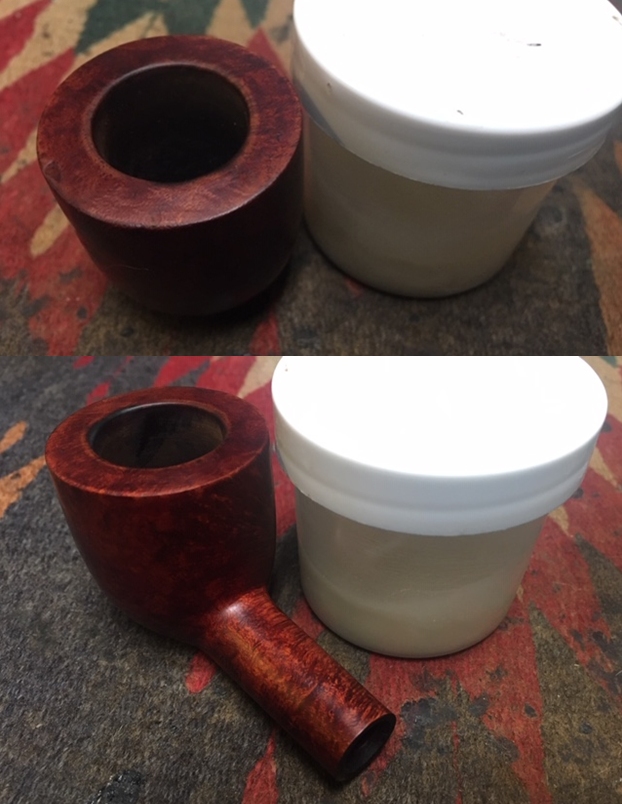
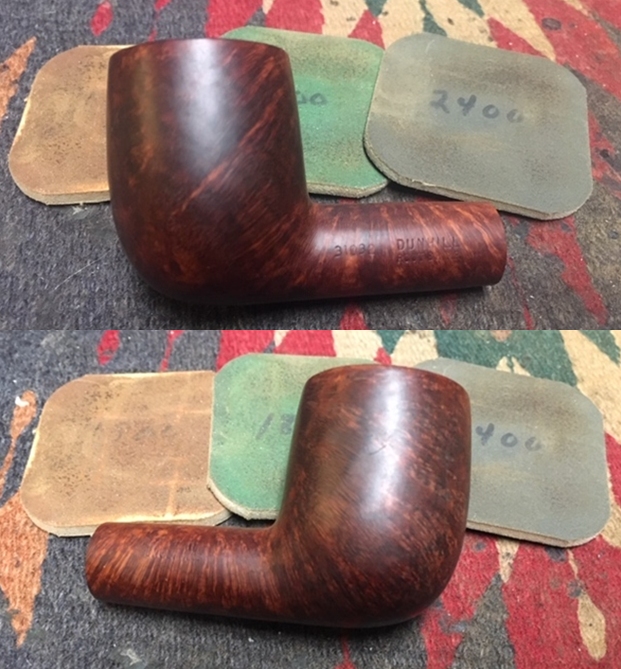
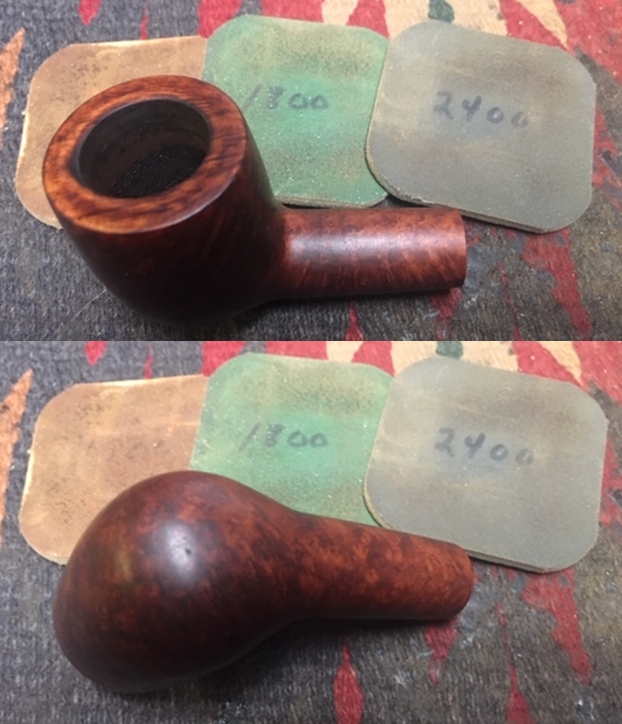
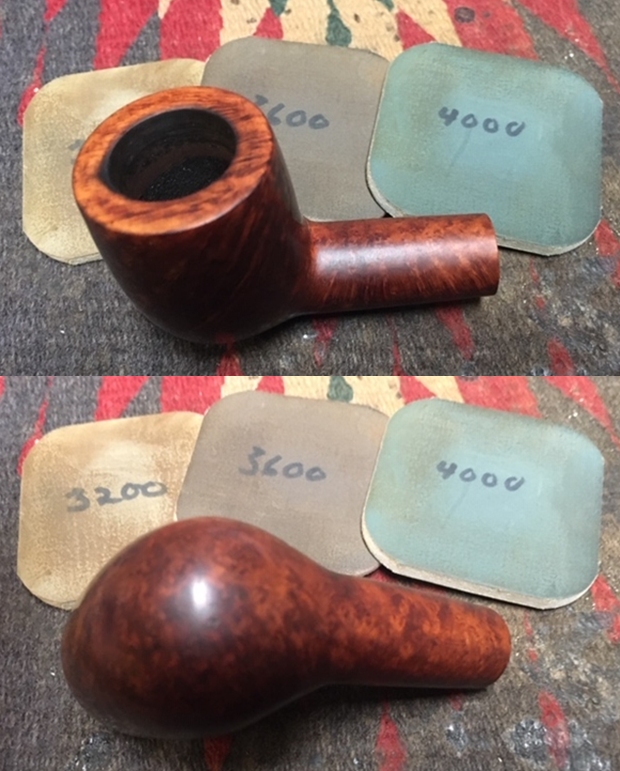
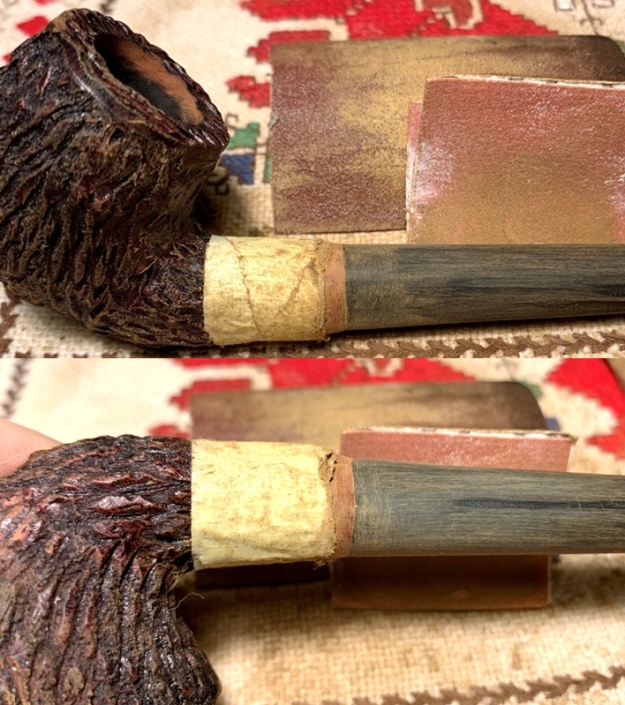
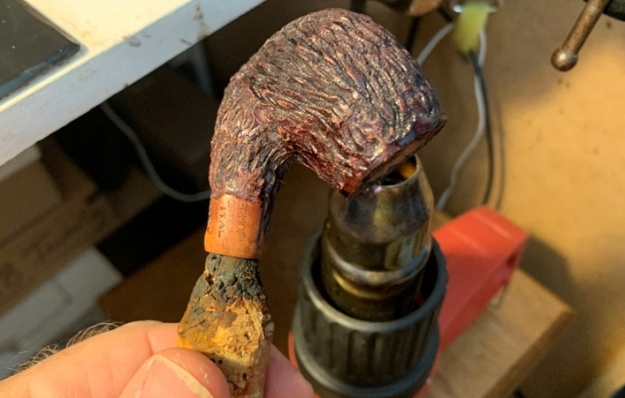
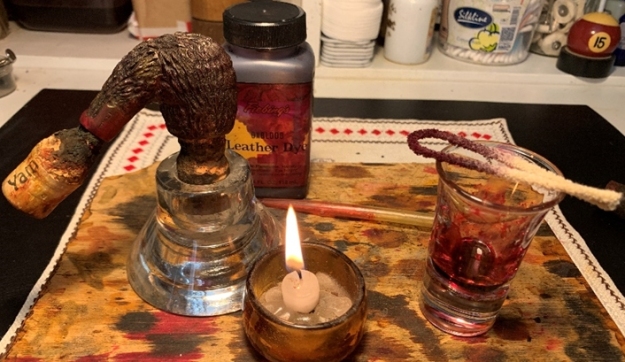
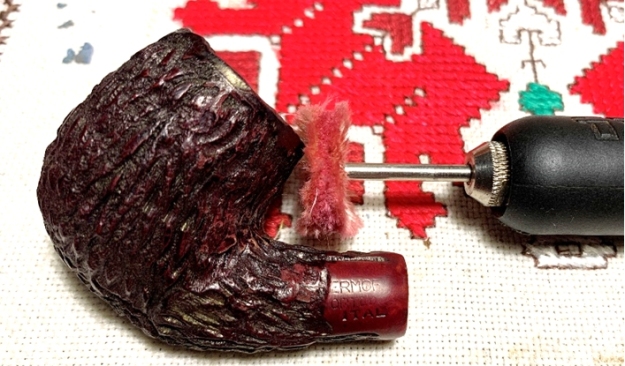
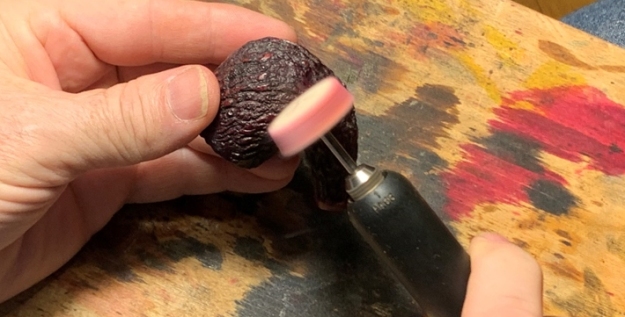
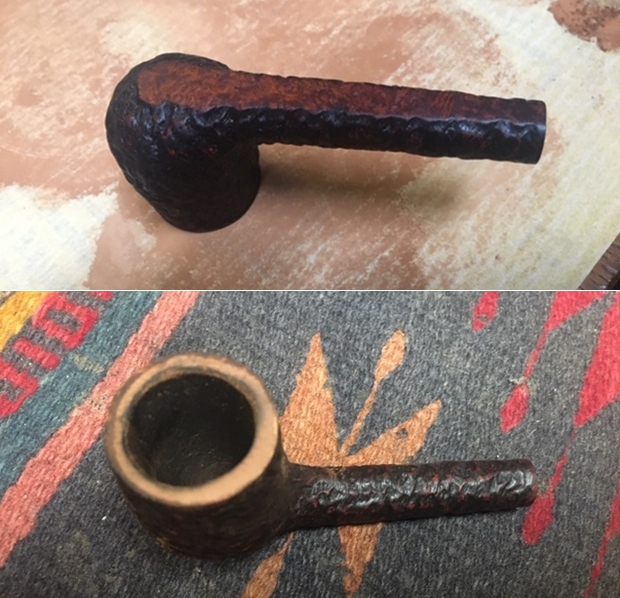
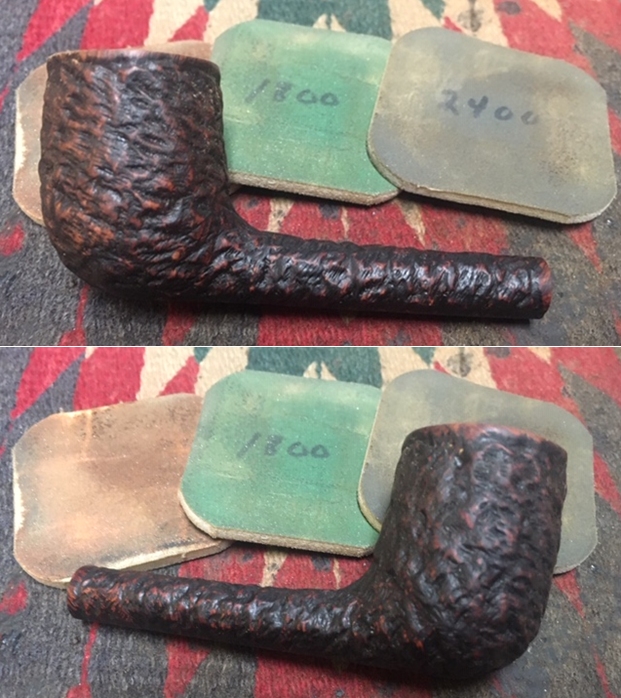
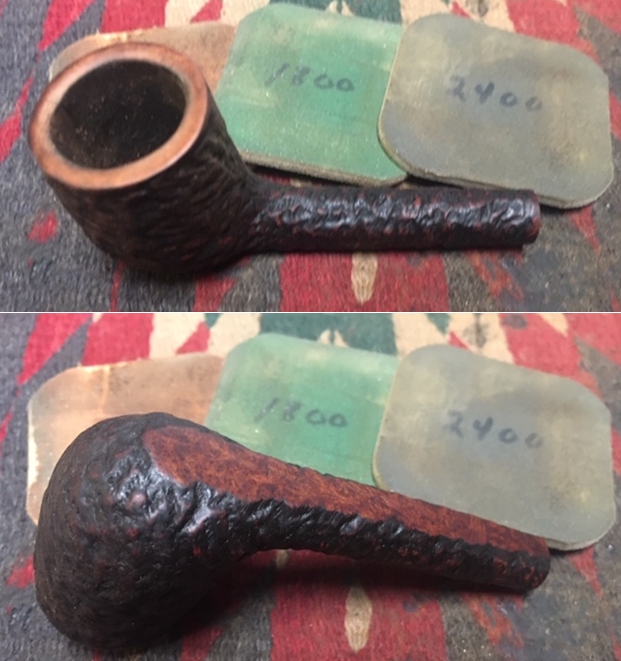
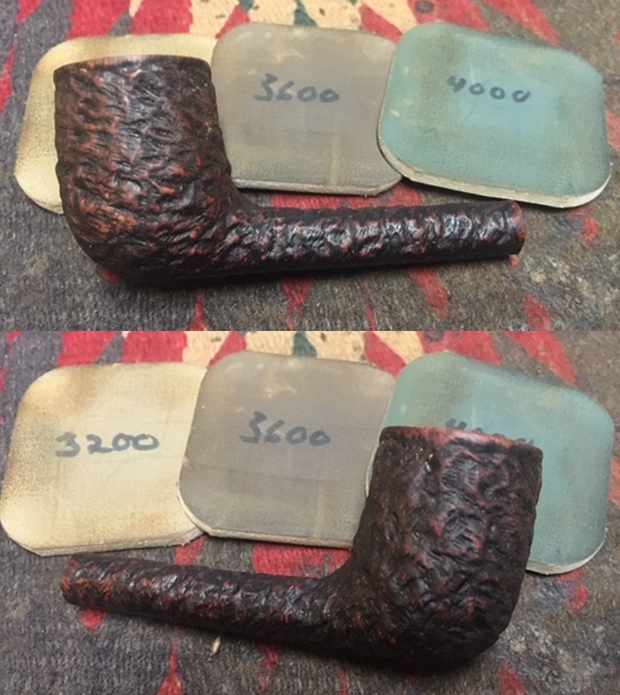
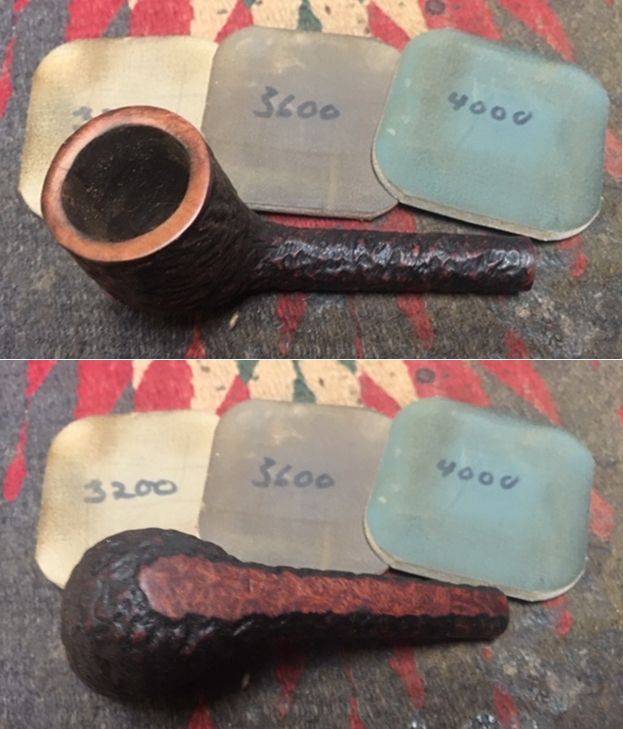
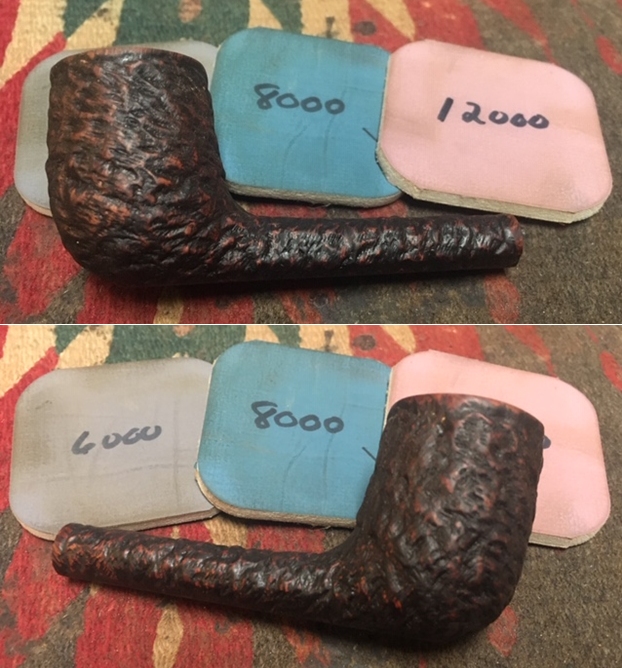
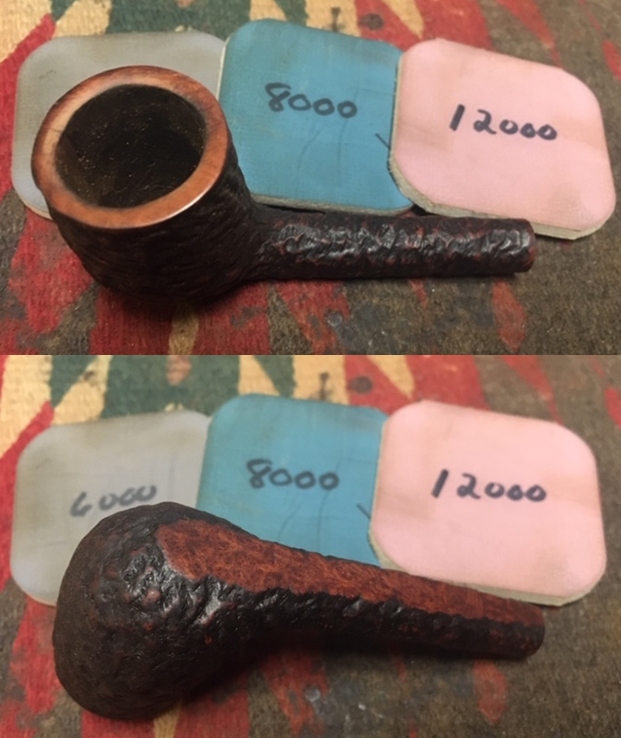
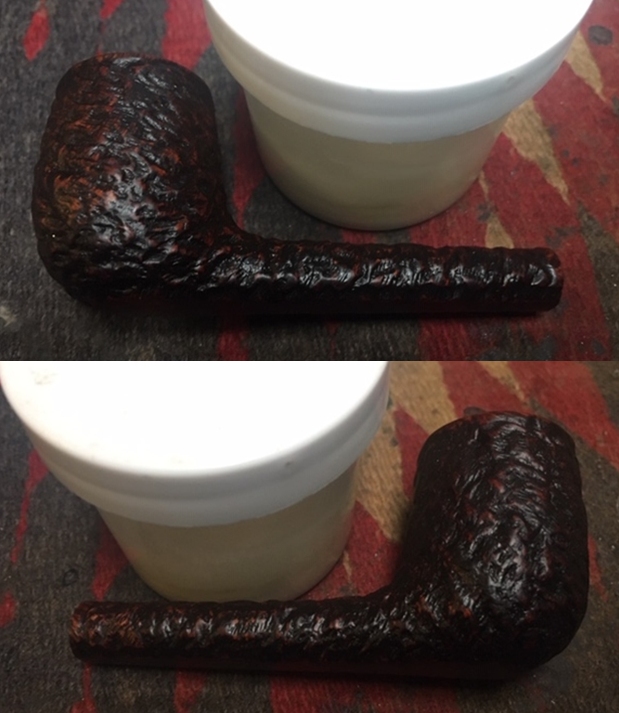
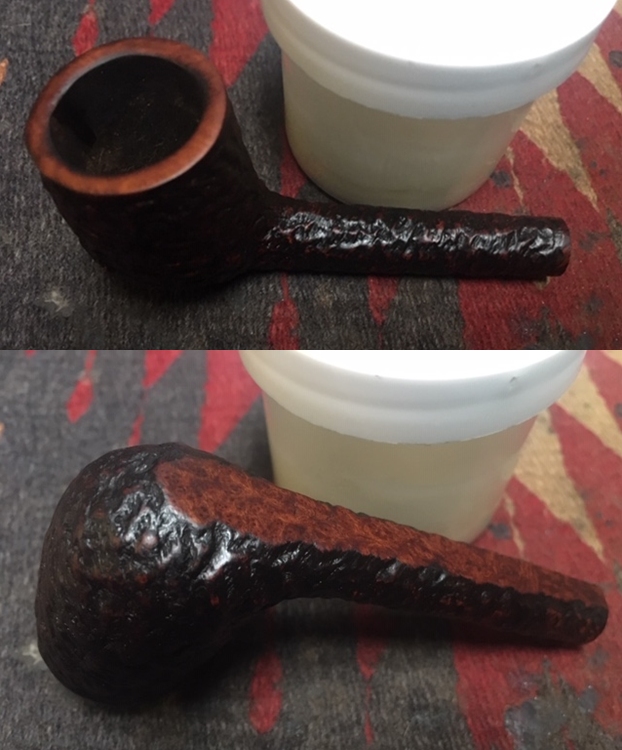
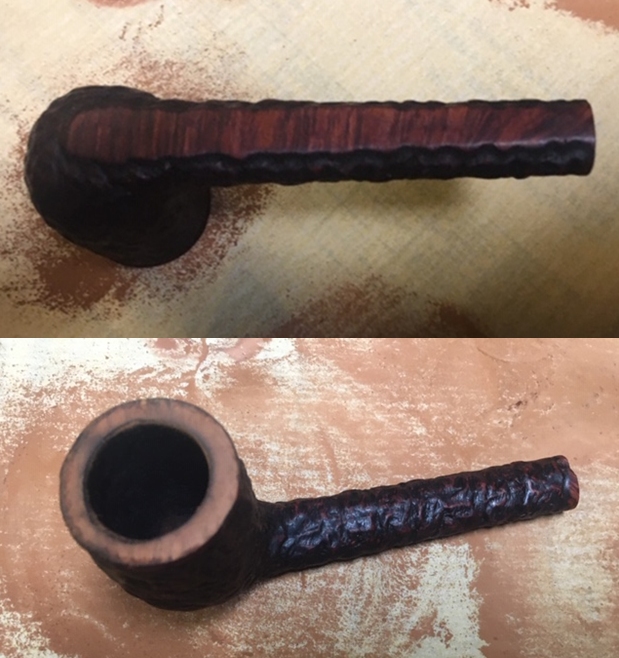
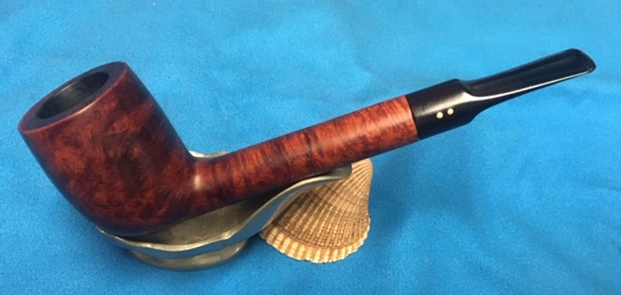
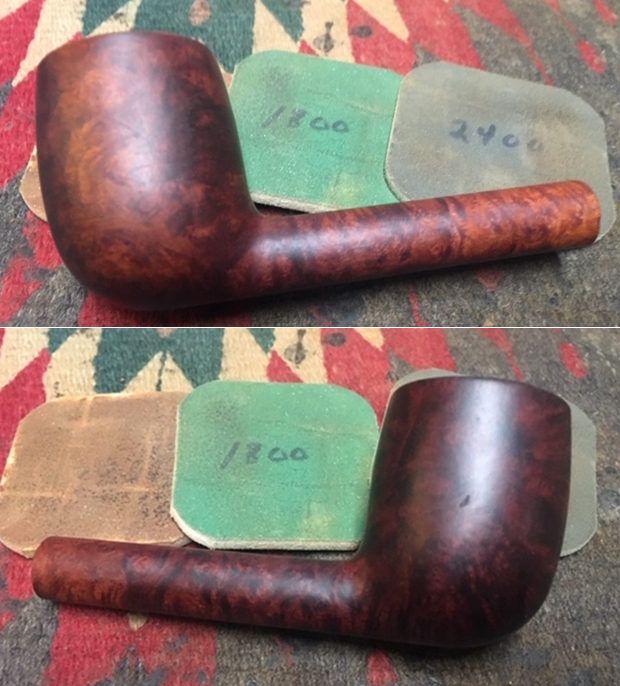
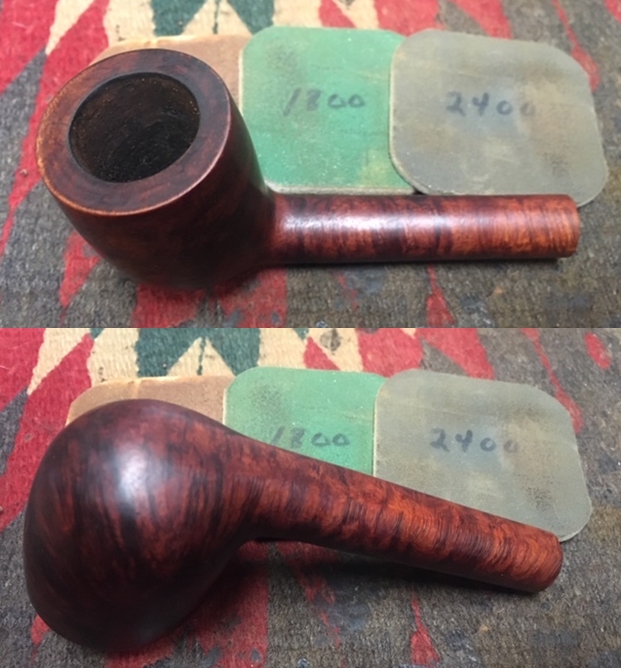
I referred to the above write up and other subject write ups on rebornpipes to understand the mistakes committed and decide on the look/pattern of rustications over the stummel surface. I decided to maintain a smooth ring atop the rustication below the outer edge of the rim and also at the shank end. I used a transparent tape to demarcate the area that I wanted to keep smooth that is the rim top and about quarter of an inch below the rim outer edge and a thin band at the shank end. Similarly, I covered whatever little that remained of the stamping. From my experience, I knew that this is a very essential step as I realized during rusticating that it is very easy to lose track and transgress over the areas and stampings which you wish to preserve.To rusticate, I firmly held the stummel in my left hand and with my right hand and began gouging out the briar. The technique is to firmly press the pointed four prongs of the modified Philips screwdriver in to the surface, rotate and pull out the removed chunk of briar. I worked diligently till I was satisfied with the rustications and the appearance of the stummel. I cleaned the stummel surface with a brass wired brush to clear all the debris from the rustications. I decided to take a break from further rusticating the surface as the process is tiring and painful. This makes me want a better and efficient rusticating tool. While giving my right hand a rest from this task, I decided to work on the damage to the rim top and edges. I start by addressing the rim top surface damage. I top the rim on a piece of 220 grit sand paper, checking frequently till I am satisfied that the darkened surface is addressed to a great extent and the rim top surface is nice, smooth and even. The inner and outer edges are still uneven, though much better than before topping, and shall be addressed subsequently.With a folded piece of a 220 grit sand paper pinched between my thumb and forefinger, I create a slight bevel on the inner and outer edges of the rim top surface. This helps to mask and address the minor dents and dings that had remained on the rim edges after topping. I am careful so as not to alter the profile of the stummel by excessive topping or creation of the bevels. I am pretty pleased with the appearance of the rim top and edges at this stage. I cleaned the stummel with pure acetone and cotton swab to remove the old stain completely in preparation for the polishing and subsequently, a new stain. After the cleaning, I set the stummel aside to dry out naturally. I turn my attention back to the stem. The fill has cured nicely and with a flat head needle file, I sand the fill to achieve a rough match with the surrounding surface. To achieve a perfect match, I sand the stem with a 220 grit paper, progressively moving through to finish with a 1000 grit sand paper. As expected, a clean and neat looking stem stared back at me. I rub a little Extra Virgin Olive oil into the stem surface to hydrate it and set it aside to be absorbed in to the vulcanite.I polish the rim top and the smooth surfaces of the stummel using micromesh pads, wet sanding with 1500 to 12000 grit pads. I am happy with the appearance of the stummel at this point in the restoration. The stummel is now ready for a fresh coat of stain. I heat the stummel surface with my heat gun to open up the pores on the stummel so that the stain is well set. I mix black stain powder with isopropyl alcohol and liberally apply it over the heated surface, flaming it with the flame of a lighter as I went ahead to different self designated zones of the surface. This helps in the setting of the stain in the grain of the briar. Once the stain has set in well, I again warm the stummel with my heat gun. This helps the stain to be absorbed and set further into the briar. I mount a felt cloth buffing wheel on my rotary tool and gently buff the entire stummel surface to remove the stain crust. I wipe the stummel with a cotton swab and alcohol to remove any excess stain and follow it up sanding the raised rustication with a folded piece of 220 grit sand paper. This is followed up by careful dry sanding of the entire stummel, especially the raised rustications with 1500 to 12000 grit micromesh pads. This not only lightens and highlights the rustications, but will also provide a smooth surface for the next coat of stain. Here is how the stummel appears at this stage. I buff the stummel with a horse hair shoe brush to remove any sanding dust resulting from the micromesh sanding. I apply a small quantity of “Before and After” restoration balm to rehydrate and rejuvenate the briar and set it aside for some time. Thereafter, I buff and clean the stummel with a microfiber cloth. I apply a second coat of Medium Brown stain over the stummel and the shank extension, going through the same method as described above and set them aside for the stain to set. With the stummel set aside for the stain to set, I turned my attention to the stem polishing. Using the micromesh pads, I complete the polishing cycle by wet sanding the surface with 1500 to 12000 grit pads. The stem looks great with the fills nicely matched with the rest of the surface. I rub a little quantity of Extra Virgin Olive oil in to the stem surface and set it aside to be absorbed by the vulcanite.Coming back to the stummel, once the stain is set I wipe it down with a cotton swab and alcohol to remove any excess stain and lighten it from the raised rustications. Mounting a felt cloth buffing wheel on my rotary tool, I go about removing the crust formed by the stain over the raised rustication. The second coat of brown stain has added another layer of texture to the appearance of the stummel. Next, I rub a small quantity of “Before and After Restoration Balm” in to the briar with my finger tips, work it deep in to the sandblasts and let it rest for a few minutes. The balm almost immediately works its magic and the briar now has a nice vibrant appearance with the beautiful rusticated patterns on full display. I further buff it with a horse hair shoe brush. I rub a small quantity of Halcyon II wax into the surface and immediately wipe it with a microfiber cloth. The only issue that remains unaddressed at this stage is the issue of the overturned stem. With the flame of a lighter, I heat the aluminum stinger to a point where the stem is just about able to rotate on the stinger. I reattach the stem to the shank while the stinger was still warm, and turned it till the alignment was as perfect as I desired and set it aside to cool down.To complete the restoration, I mounted a cotton cloth buffing wheel on to my hand held rotary tool.  I set the speed at about half of the full power and applied several coats of carnauba wax. I finished the restoration by giving the entire pipe a rigorous hand buffing using a microfiber cloth to raise the shine further. The finished pipe looks amazingly beautiful and quite a transformation it was. It is now ready for its long second innings with my colleague. I wish that he enjoys his pipe and remembers our association for a long time to come. I wish to thank our esteemed readers for sparing their valuable time to read through and any input or advice is always welcome.


Reworking a KB&B Bent Churchwarden


 Blog by Steve Laug

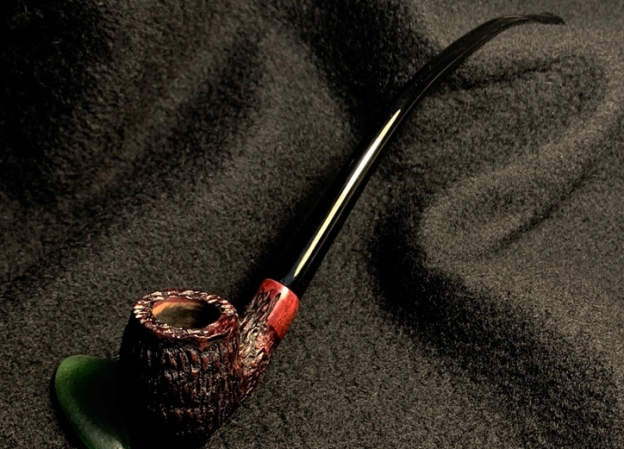
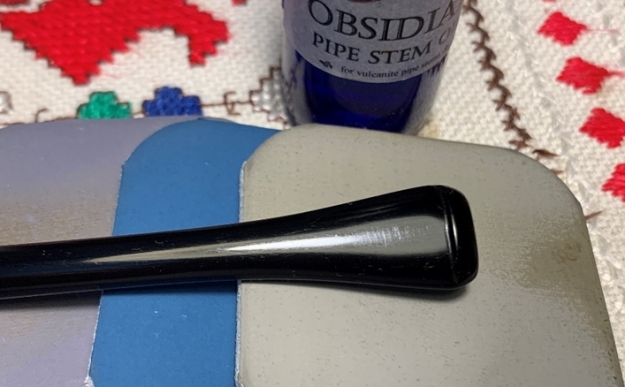
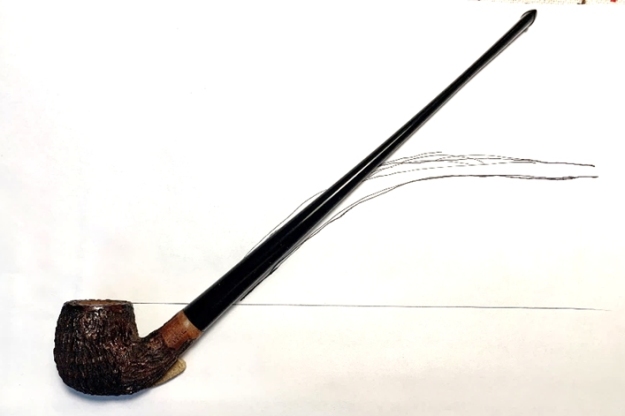
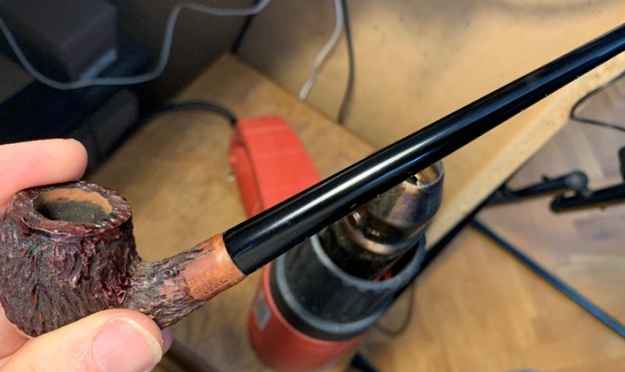
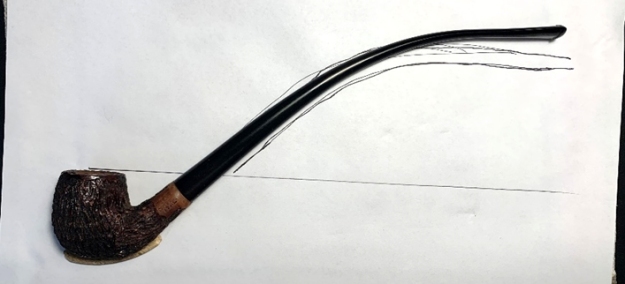
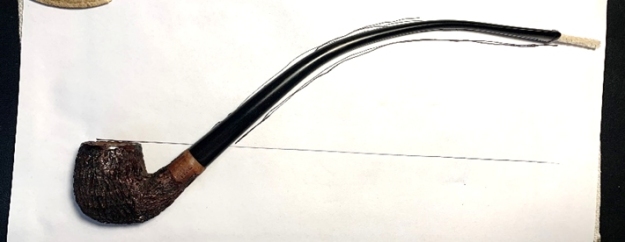
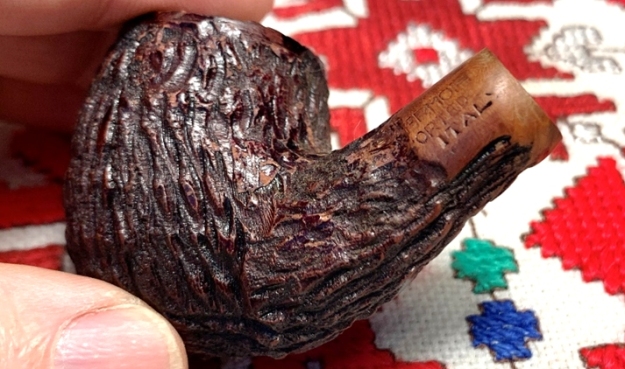
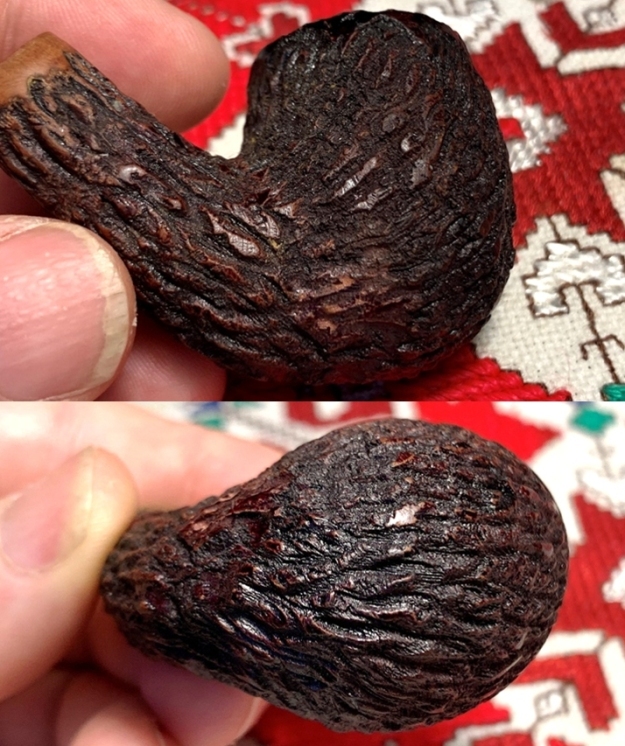
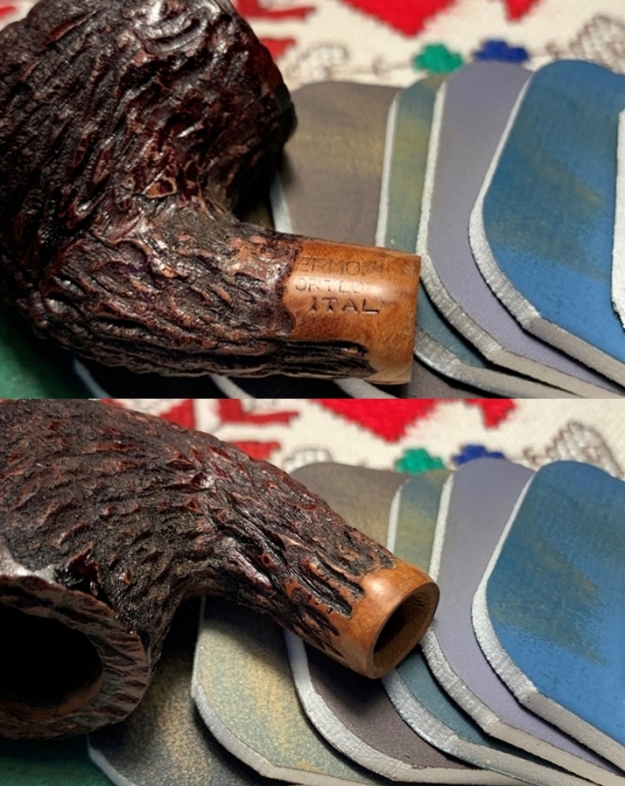
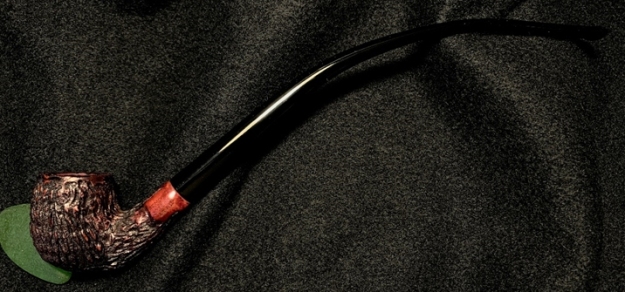
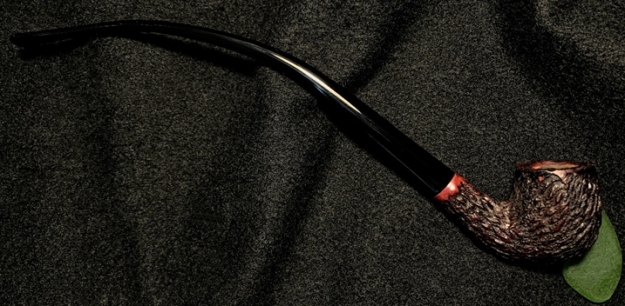
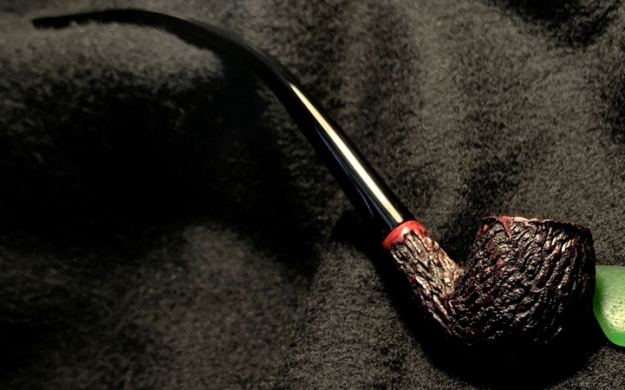
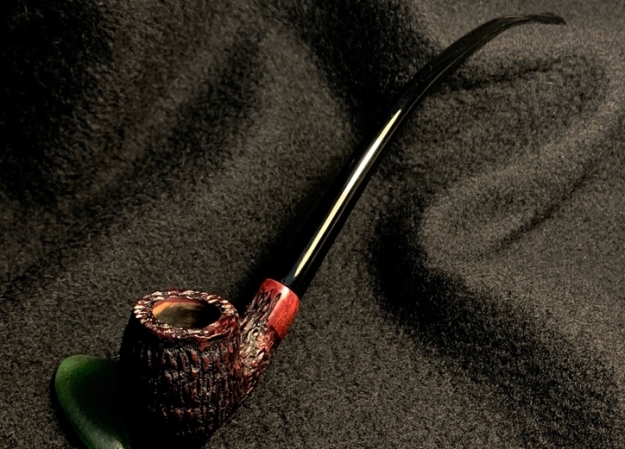
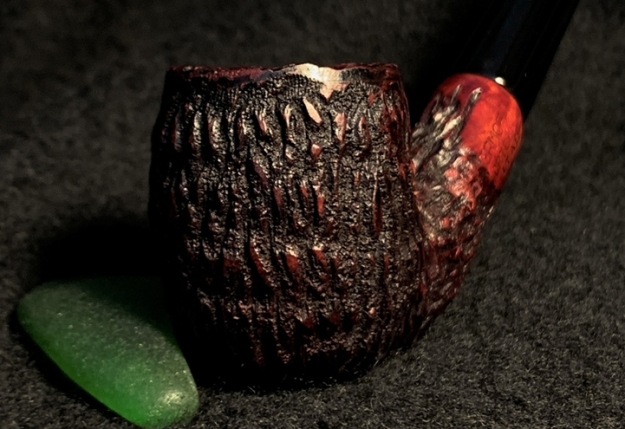
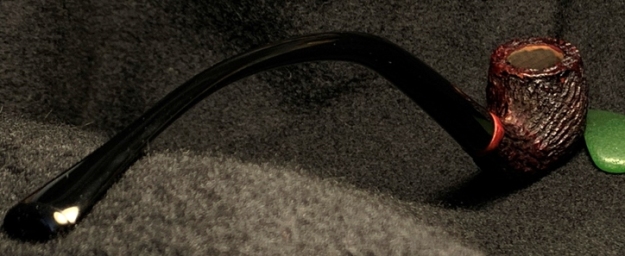
The next pipe on the table is an interesting KB&B Churchwarden and that is how it is stamped on the left side of the shank. On the right it reads Italian Briar. It is an interesting piece of briar in that it is a mix of grains hidden beneath a dark coat of stain and a top coat of shellac. The briar was very dirty. The bowl had a thick cake overflowing like lava onto the rim top. It is hard to know what the inner edge of the rim looks like because it is buried under the cake and lava coat. The fit of the stem in the shank appeared to be a bit off but cleaning would make that clear. The long vulcanite stem was dirty and oxidized. It was calcified near the button. The bend on the stem was also too much leaving the bowl tipped downward when in the mouth. There were tooth marks and chatter on both sides near the button. Jeff took photos of the pipe before his cleanup work. Jeff tried to capture the condition of the bowl and rim top with the next series of photos. You can see the work that is ahead of us in terms of cake and lava buildup. The grain around the bowl is quite stunning. Jeff took some great photos showing what is underneath the grime and debris of time and use. He captured the stamping on the both sides of the shank it read as noted above.The photos of the stem show the stem surface. It is dirty and has light tooth marks and chatter on both sides ahead of the button.Now it was time to work on my part of the restoration of the pipe. Jeff had cleaned the pipe with his usual penchant for thoroughness that I really appreciate. This one was in decent condition with a bit of buildup on the rim top but virtually no cake in the bowl. He cleaned up the bowl walls with a Savinelli Fitsall Pipe Knife. He scrubbed out the internals with alcohol, pipe cleaners and cotton swabs until the pipe was clean. He scrubbed the exterior of the bowl with Murphy’s Oil Soap and a tooth brush to remove the grime and grit on the briar and the light lava on the beveled rim top. The finish looks very good with good looking grain around the bowl and shank. Jeff scrubbed the stem with Soft Scrub and then soaked it in Before & After Deoxidizer to remove the oxidation on the rubber. When the pipe arrived here in Vancouver for the second stop of its restoration tour it looked very good. I took photos before I started my part of the work. I took some photos of the rim top and stem. Once Jeff removed the lava on the inside edge of the rim top it was in pretty rough condition. There were cuts, nicks and burned areas all around the inner edge and the bowl was out of round from the damage. The outer edge of the bowl looked very good. The close up photos of the stem shows that it was very clean and there was some tooth marks and chatter on the stem just ahead of the button.The fit of the stem in the shank is off. It looked like the shank end had a slight cant to it and the stem did not seat evenly against the shank end. The gap was obvious and made worse by the fact that the diameter of the shank was less than that of the stem. It was worse on the top side and the right side. I checked the shank end and there was some damage there. I could top it lightly but that is a hit or miss proposition. I decided that I would see what a thin band did to the fit. I took some photos to try to capture what I was seeing at the shank stem junction. I went through my various bands. I had picked up a bag of older style bands that included a slight cap that went over the shank end. It was my thinking that this would smooth the surface of the junction for the stem. I heated the band with a lighter and pressed in place on the shank. It was a very tight fit and I liked the look of it. There is something about the look of these thin brass bands that just looks right on older pipes. I took photos of the bowl and the pipe at this point. I decided to address the over bent stem at this point since I was working on the pipe as a whole. I want the bent to be more in keeping with the top of the bowl so that when it sat in the mouth the line was even from the bend to the top of the bowl. I used a heat gun on the lowest setting to soften the vulcanite. To “unbend” is far easier than to bend. You heat the top side of the stem at the bend, constantly moving the pipe and the stem automatically begins to straighten. The key is to stop in time before it is totally straight! I paid attention and caught it at the right moment. I cooled the stem with water to set the new bend.With the shank/stem connection repaired and the bend in the stem reset I was ready to move on to dealing with the issues of the inner edge and rim top. I removed the stem and set it aside and took the bowl in my hands. I used a folded piece of 220 grit sandpaper to smooth out the edge and give it a slight bevel to mask the damaged areas. Once the bowl is polished the bevel is hardly visible and the bowl looks better.I wiped off the remnants of the shellac finish on the bowl with isopropyl alcohol on a cotton pad. Once the finish was removed the grain began to really stand out nicely. I was happy with the way the rim top and edges looked so I moved on to polish the briar with micromesh sanding pads – dry sanding with 1500-12000 grit pads. I wiped the bowl down after each pad with a damp cloth. The grain really began to stand out and the finish took on a shine by the last sanding pad. The photos tell the story! I worked some Before & After Restoration Balm into the surface of the briar with my fingertips. The product works to clean, enliven and protect the briar. I let the balm sit for about ten minutes and then buffed with a cotton cloth to raise the shine. The photos show the bowl at this point in the restoration process. I laid the bowl aside and turned to deal with the stem. I sanded off the excess diameter at the shank with 220 grit sandpaper until the shank and stem were the same diameter. Unfortunately I utterly forgot to take photos of this part of the process. My photos pick up again when I polished the stem with micromesh sanding pads – dry sanding with 1500-12000 grit sanding pads. I was able to remove the scratching and tooth marks with the micromesh. I wiped it down after each sanding pad with a cloth containing some Obsidian Oil. I finished polishing it with Before & After Pipe Stem Polish – both Fine and Extra Fine and buffed it off with a cotton cloth. This KB&B Churchwarden was a fun pipe to work on. I knew that I had to do some work to bring it back to smooth transitions between the shank and stem and to get the bowl looking better and not so beat up. But I was very happy when I got to the point of putting it all back together and everything worked very well. The finish on the pipe is in excellent condition and the contrasting stains work well to highlight the different grain patterns on the pipe. The black vulcanite Churchwarden stem just adds to the mix. With the grime and debris gone from the finish and the bowl it was a beauty and the grain just pops at this point.

I put the stem back on the bowl and buffed the pipe with Blue Diamond on the buffing wheel. I carefully avoided the stamping on the shank and stem during the process. I gave the bowl and the stem multiple coats of carnauba wax on the buffing wheel and followed that by buffing it with a clean buffing pad on the buffer. I hand buffed the pipe with a microfiber cloth to deepen the shine. The finished KB&B Churchwarden is quite beautiful and is a classic bent Churchwarden shaped pipe. The finish on the bowl combines various stains to give it depth. It is very well done. Give the finished pipe a look in the photos below. I can only tell you that it is much prettier in person than the photos capture. The dimensions of the pipe are Length: 10 ½ inches, Height: 2 inches, Outside diameter of the bowl: 1 ¼ inches, Chamber diameter: ¾ of an inch. I really like the looks of this Churchwarden and it is a great looking pipe in great condition. Thanks for walking through the restoration with me as I worked over another beautiful pipe. This pipe will be added to the rebornpipes store soon. If you want to add it to your collection send me an email or a message! Thanks for your time.

Fresh Life for a GBD Pedigree 254 Canadian


Blog by Steve Laug

I have always liked GBD pipes. There is just something about the brand and their take on shapes that catches my eye. This particular GBD is a really nice looking Canadian with a saddle stem – at least I would call it a Canadian because of the oval shank. It is stamped both on the topside and underside of the shank. On the top of the shank it is stamped with the GBD Oval over Pedigree. On the underside it is stamped London England 254. There is also the brass GBD oval roundel on the top of the saddle stem. It was dirty but the bowl had been reamed back to bare briar. There was a light lava coat on the inner edge. The pipe had a rich medium brown stain that highlighted nice grain on the bowl sides under the grime and the finish appeared to be in good condition. There is a band on the shank that appears to be an add on. The shank is not cracked though it is thin on the top and underside. A lot would be revealed once Jeff had worked his magic on it. The vulcanite saddle stem was in good condition with some oxidation and light tooth chatter and marks on both sides ahead of the button and on the button surface itself. Jeff took photos of the pipe before he started his cleanup work. Jeff tried to capture the condition of the bowl and rim top with the next series of photos. You can see the work that is ahead of us even though the bowl is clean. The beveled rim edge has some lava buildup. The grain around the bowl is quite stunning. Jeff took some great photos showing what is underneath the grime and debris of time and use. He captured the stamping on the left side of the shank and both sides of the half saddle acrylic stem. They are clear and readable. It read as noted above.The photos of the stem show the stem surface. It is dirty and has light tooth marks and chatter on both sides ahead of the button.I turned to Pipephil and looked to see if there was any information on the Pedigree line. There was nothing there other than a great brief history. I turned to Pipedia to the specific section on GBD to read about the line (https://pipedia.org/wiki/GBD). There was a page from an Oppenheimer Catalogue on the Pedigree line. I have included a screen capture of that page below.Now it was time to work on the pipe itself. Jeff had cleaned the pipe with his usual penchant for thoroughness that I really appreciate. This one was in decent condition with a bit of buildup on the rim top but virtually no cake in the bowl. He cleaned up the bowl walls with a Savinelli Fitsall Pipe Knife. He scrubbed out the internals with alcohol, pipe cleaners and cotton swabs until the pipe was clean. He scrubbed the exterior of the bowl with Murphy’s Oil Soap and a tooth brush to remove the grime and grit on the briar and the light lava on the beveled rim top. The finish looks very good with good looking grain around the bowl and shank. Jeff scrubbed the stem with Soft Scrub and then soaked it in Before & After Deoxidizer to remove the oxidation on the rubber. When the pipe arrived here in Vancouver for the second stop of its restoration tour it looked very good. I took photos before I started my part of the work. I took some photos of the rim top and stem. Once Jeff removed the lava on the inside bevel of the rim top. Both the inner and the outer edge of the bowl look very good. The close up photos of the stem shows that is it very clean and there is some oxidation and some minimal tooth chatter on the button and surface just ahead of the button.I took the stem off the shank and took a picture of the pipe. It really is an elegant and  delicate looking pipe with great grain.I was happy with the way the rim top and edges looked so I did not need to work on them more. I polished the briar with micromesh sanding pads – dry sanding with 1500-12000 grit pads. I wiped the bowl down after each pad with a damp cloth. The grain really began to stand out and the finish took on a shine by the last sanding pad. The photos tell the story! I worked some Before & After Restoration Balm into the surface of the briar with my fingertips. The product works to clean, enliven and protect the briar. I let the balm sit for about ten minutes and then buffed with a cotton cloth to raise the shine. The photos show the bowl at this point in the restoration process. I laid the bowl aside and turned to deal with the stem. The tooth marks and chatter on the stem were not deep. I polished the stem with micromesh sanding pads – dry sanding with 1500-12000 grit sanding pads. I wiped it down after each sanding pad with a cloth containing some Obsidian Oil. I finished polishing it with Before & After Pipe Stem Polish – both Fine and Extra Fine and buffed it off with a cotton cloth. This delicately shape classic GBD pipe came together amazingly well. Thanks to the fact that it was in pretty good condition before we started it was a clean pipe to work on. The finish on the pipe is in excellent condition and the contrasting stains work well to highlight the stunning grain on the pipe. The black vulcanite saddle stem just adds to the mix. With the grime and debris gone from the finish and the bowl it was a beauty and the grain just pops at this point. I put the stem back on the bowl and buffed the pipe with Blue Diamond on the buffing wheel. I carefully avoided the stamping on the shank and stem during the process. I gave the bowl and the stem multiple coats of carnauba wax on the buffing wheel and followed that by buffing it with a clean buffing pad on the buffer. I hand buffed the pipe with a microfiber cloth to deepen the shine. The finished GBD Pedigree Canadian is quite beautiful and is a classic Canadian shaped pipe. The finish on the bowl combines various stains to give it depth. It is very well done. Give the finished pipe a look in the photos below. I can only tell you that it is much prettier in person than the photos capture. The dimensions of the pipe are Length: 5 ½ inches, Height: 1 5/8 inches, Outside diameter of the bowl: 1 ¼ inches, Chamber diameter: ¾ of an inch. I really like this delicate and elegant GBD pipe and it is a great looking pipe in great condition. Thanks for walking through the restoration with me as I worked over another beautiful pipe. I had a GBD pipe sock around that I have put together with the pipe. This pipe will be added to the rebornpipes store soon. If you want to add it to your collection send me an email or a message! Thanks for your time.

Breathing New Life into a Charatan’s Make Special Bell 33X Dublin


Blog by Steve Laug

I still remember the first Charatan pipe I picked up over 25 or so years ago. I remember finding it in an Antique Shop that is no longer around. It was Charatan’s Make Bell 33X with a Double Comfort (DC) bit on it and probably the craggiest looking sandblast I had seen to date when I found it. I still have that pipe and still fire it up with a good bowl of 5100. It is a smoking machine. So when I when I moved on to choose the next pipe to work on it was not a far stretch to pick the Charatan’s Make Special Bell 33X smooth that was in my box. It is a nice looking Dublin shaped pipe that Charatan called a Bell. All of the stamping is on the left side of the shank. It reads Charatan’s Make [over] London England. Under that it reads Special with the shape number 33X. The CP logo on the left side of the vulcanite saddle stem is clear and readable. It was dirty and was another well-loved pipe when we received it. The bowl had a thick cake and the lava overflow on the inner edge of the bowl a heavy on the back side of the rim top. It was hard to know the condition of the inner edge of the bowl. The pipe had a rich medium brown stain that highlighted nice grain on the bowl sides under the grime and the finish appeared to be in good condition. A lot would be revealed once Jeff had worked his magic on it. The vulcanite saddle stem was in good condition with light tooth chatter and marks on both sides ahead of the button and on the button surface itself. Jeff took photos of the pipe before he started his cleanup work. Jeff tried to capture the condition of the bowl and rim top with the next series of photos. You can see the work that is ahead of us there. The grain around the bowl is quite stunning. Jeff took some great photos showing what is underneath the grime and debris of time and use. He captured the stamping on the left side of the shank and both sides of the half saddle acrylic stem. They are clear and readable. It read as noted above. The photos of the stem show the stem surface. It is dirty and has light tooth marks and chatter on both sides ahead of the button.I turned to Pipephil to get a quick overview on the brand to refresh me in a quick overview of the history of the Charatan’s Make Brand (http://www.pipephil.eu/logos/en/logo-charatan.html). I quote a pertinent summary of the information I found there.

Short history of the brand. Brand founded in 1863 by Frederik Charatan. When his father retired in 1910, Reuben Charatan took over the family business. All the pipes were handmade until 1973. The brand name has been overtaken by Dunhill in 1978 and sold in 1988 to James B. Russell Inc. (NJ, USA). During the period 1988-2002 Charatans were crafted by Butz Choquin in St Claude (France). Dunhill re-purchased Charatan brand name in 2002 and Colin Fromm (Invicta Briars, Castleford) follows up on freehand production.

I turned to Pipedia to the specific section on Dating Charatans to fill in more of the gaps (https://pipedia.org/wiki/Dating_of_Charatans). I was hoping to be able to solidify the time period that the pipe was made. In reading through the material I am pretty confident that the pipe is a Third Era Pipe. I have included the section from the article that helped me arrive at this conclusion.

Identification of a third era pipe (First Lane era, 1961-1965)

Pipes of this period are quite common.

1) The mouthpiece is frequently double comfort, rarely saddle without the double comfort, never tapered. If the stem is not a double comfort but a saddle one, it is characterized by the letter X on the right of the shape code (e.g. 2502X), naturally in this case the letters DC are not displayed.

2) In the CP logo, the C enters the P

3) Presence of £ on the shank (note that from 1955 all the pipe imported in the USA by Lane has it, however that stamping is not synonymous of the Lane era)

4)Presence of the letter DC just after the shape number (e.g. 2502 DC) or of the letter X only if the stem is not a double comfort one

5) Presence in some models of the stamp “MADE BY HAND” on the shank (introduced for the first time in 1958)

6) Presence of the writing “CHARATAN’S MAKE LONDON ENGLAND” on 2 lines

7) The CP logo is thicker than in previous eras

I am also including a photo from the article that shows the same stamping as the one I am working on. The one I have has a different shape number (33X) and also does not have the Lane’s L stamp visible on the left side of the shank in the photo below.I posted the stamping on the Tobacco Pipe Restorers Group on FaceBook and Paige Simms and I dialogued a bit about it. Michael Stanley responded first and echoed my thinking. Paige Simms followed up with the rest of the dialogue. It was a very helpful conversation.

Michael Stanley: The “X” denotes a non DC mouthpiece. And imho, that, was a good move!

 Steve Laug: Thanks Michael I would agree.

Paige Simms: I beg to differ my friends. The ‘X’ denotes a ‘special’ pipe in grain, size or maybe shape. I have several DC stemmed pieces stamped ‘X’

Paige Simms: No ‘Lane stamp’ may mean made before 1958ish…….or they forgot to stamp it. LOL. But the shape number ’33’ probably dates it pre1968. How is it stamped on the right side of the shank? IMPORTANT

Steve Laug: Nothing on the right side Paige… Everything is on the left

Paige Simms: Meaning then, the pipe was made before 1955 or 1960. The nomenclature change after the ‘blank right shank’ was in block letters “MADE BY HAND”. That stamp started in 1956 or 1961. (And ran for 5 years only). I was a founding member and I learned well from ‘The International Charatan Pipe Smokers Society’. That’s a Great pipe!!!

Steve Laug: What is the 1968 referring to above?

Paige Simms: The first year of the “Lane stamping”

With that information in hand Pipedia informed me that I was dealing with an era of Charatans pipes that were quite common. It was known as a third era pipe (First Lane era, 1961-1965). According to the information from Pipedia the pipe was made in the early 1960s. From Paige Simms information it pushed it back a bit further to being made before 1955 or 1960. The nomenclature change after the ‘blank right shank’ was in block letters “MADE BY HAND”. That stamp started in 1956 or 1961. (And ran for 5 years only).  I now had an idea of the age of the pipe and a bit of its story – it had been made between 1955-1961. Now it was time to work on the pipe itself.

Jeff cleaned the pipe with his usual penchant for thoroughness that I really appreciate. This one was a real mess and I did not know what to expect when I unwrapped it from his box. He reamed it with a PipNet pipe reamer and cleaned up the reaming with a Savinelli Fitsall Pipe Knife. He scrubbed out the internals with alcohol, pipe cleaners and cotton swabs until the pipe was clean. He scrubbed the exterior of the bowl with Murphy’s Oil Soap and a tooth brush to remove the grime and grit on the briar and the lava on the rim top. The finish looks very good with good looking grain around the bowl and shank. Jeff scrubbed the stem with Soft Scrub and then soaked it in Before & After Deoxidizer to remove the oxidation on the rubber. When the pipe arrived here in Vancouver for the second stop of its restoration tour it looked very good. I took photos before I started my part of the work. I took some photos of the rim top and stem. Once Jeff removed the lava on the back side of the rim top and inner edges the damage became evident. There was some significant damage on the back inner edge of the bowl that included chipping and burning of the surface. The outer edge of the bowl looks very good. The close up photos of the stem shows that is it very clean and there is some minimal tooth chatter and marks on the button and surface just ahead of the button.I took photos of the stamping on the stem and shank of the pipe. It is clear and readable. I took the stem off the shank and took a picture of the pipe. It really is a nice looking pipe with great lines.I started my part of the restoration work on the pipe by trying to address the burn damage on the back inner edge of the rim. The least invasive method was where I started. I used a folded piece of 220 grit sandpaper to try and smooth out the edge while keeping the bowl in round. While I was able to smooth out the edge and keep it round the burn damage on the back of the rim top needed something a little more invasive. This is probably a step that some will find unnecessary but I feel somewhat compelled to try to bring it back as close as possible to the original look. I topped it on a topping board with 220 grit sandpaper. Once I finished it I smoothed out the inner edge again. The third photo below shows the newly shaped rim top without the burn damage. Fortunately it was not too deep and the topping was minimal. I was happy with the rim top and edges now so it was time to polish the briar with micromesh sanding pads – dry sanding with 1500-12000 grit pads. I wiped the bowl down after each pad with a damp cloth. I was also hoping to blend the newly topped bowl into the finish of the rest of the pipe. The grain really began to stand out and the finish took on a shine by the last sanding pad. The photos tell the story! I apologize for the next photo but I did not catch it until later in the process when it was too late to go back and retake the photo.I touched up the rim top up with a blend of oak and maple stain pens to match the rest of the bowl. I forgot to take a photo of that. When the stain was cured I worked some Before & After Restoration Balm into the surface of the briar with my fingertips. The product works to clean, enliven and protect the briar. I let the balm sit for about ten minutes and then buffed with a cotton cloth to raise the shine. The photos show the bowl at this point in the restoration process. I laid the bowl aside and turned to deal with the stem. The tooth marks and chatter on the stem were not deep. I polished the stem with micromesh sanding pads – dry sanding with 1500-12000 grit sanding pads. I wiped it down after each sanding pad with a cloth containing some Obsidian Oil. I finished polishing it with Before & After Pipe Stem Polish – both Fine and Extra Fine and buffed it off with a cotton cloth. This older Charatan pipe came together quite well. The finish on the pipe is in excellent condition and the contrasting stains work well with the black vulcanite saddle stem. With the grime and debris gone from the finish and the bowl it was a beauty and the grain just pops at this point. I put the stem back on the bowl and buffed the pipe with Blue Diamond on the buffing wheel. I carefully avoided the stamping on the shank and stem during the process. I gave the bowl and the stem multiple coats of carnauba wax on the buffing wheel and followed that by buffing it with a clean buffing pad on the buffer. I hand buffed the pipe with a microfiber cloth to deepen the shine. The finished Charatan’s Make Special 33X is quite beautiful and is a lovely Bell shaped pipe. The finish on the bowl combines various stains to give it depth. It is very well done. Give the finished pipe a look in the photos below. I can only tell you that it is much prettier in person than the photos capture. The dimensions of the pipe are Length: 5 inches, Height: 2 inches, Outside diameter of the bowl: 1 5/8 inches, Chamber diameter: ¾ of an inch. I really like this Bell shaped Charatan’s Make Special pipe and it really does remind me of one of my first pipe finds. This is a great looking pipe in great condition. Thanks for walking through the restoration with me as I worked over another beautiful pipe. Thanks for your time.

Cleaning up an Artisan Made Stogie Holder


Blog by Steve Laug

This restoration is a departure from my regular work on pipes. It really is a change of pace for me. Normally I am not a big cigar fan though I have an occasional one. When Jeff sent me this cigar holder I sat and looked at it for quite a while. It is a beautiful handmade Stogie Holder that truly is quite stunning. It has a briar holder and a band of exotic wood attached to the comfortable vulcanite mouthpiece. When Jeff and I received the vulcanite had tooth marks and chatter on both sides near the button and it was dirty in the airway. It was lightly oxidized around the button area on both sides. The briar was in good condition and the overall look of the piece was very nice. The dimensions on the holder are Length: 3 ½ inches, Width: 1 ½ inches, Holder Diameter:  ¾ of an inch, Holder Depth: 1 inch, Vulcanite portion length: 2 inches. I cleaned out the bowl of the holder and the airway from the bowl to the end of the button with alcohol and pipe cleaners and surprisingly it was quite clean. I wiped out the bowl with a folded pipe cleaner and alcohol as well. The holder smells fresh.I polished out the tooth marks, chatter and oxidation on the vulcanite stem and the briar and exotic wood at the same time with micromesh sanding pads. I sanded the holder with 1500-12000 grit pads and wiped it down with a damp cloth after each pad to remove the debris. The photos show the developing shine. I worked some Before & After Restoration Balm into the surface of the briar and the stem with my fingertips. The product works to clean, enliven and protect the briar and I thought I would try it on the vulcanite of the holder. I let the balm sit for about ten minutes and then buffed with a cotton cloth to raise the shine. The photos show the cigar holder at this point in the restoration process. I buffed the cigar holder on the buffer using Blue Diamond on the buffing pad to remove all the scratches in the briar and vulcanite. It works very well. I gave it several coats of carnauba wax and buffed it with a clean buffing pad. I hand buffed it with a microfiber cloth to deepen the shine. The finished holder is shown in the photos below. I will be putting it on the rebornpipes store shortly if you are interested in adding it to your collection. This was interesting to work on. Thanks for taking time to read this.

A Fresh Start for a Davidoff Straight Apple


Blog by Steve Laug

One thing about having so many boxes of pipes to work on surrounding my work table is that I can always find one that grabs my attention to work on now! There are two Davidoff pipes in the box and I had passed over them both a few times in the past weeks but this morning I decided that the apple shaped pipe would join the days queue. It is a nice looking Apple shape pipe stamped Davidoff on the left side of the shank. The name is underlined and the D has a flourish both on the stamping and on the logo on the left side of the stem. It was dirty and was another well-loved pipe when we received it. The bowl had a moderate cake and the lava overflow on the back side of the rim edge. It was hard to know the condition of the inner edge of the bowl. The pipe had a walnut stain on the bowl that highlighted some nice grain on the bowl sides under the grime and the finish appeared to be in good condition. A lot would be revealed once Jeff had worked his magic on it. The acrylic stem was in good condition with light tooth chatter and marks on both sides ahead of the button and on the button surface itself. Jeff took photos of the pipe before he started his cleanup work. Jeff tried to capture the condition of the bowl and rim top with the next series of photos. You can see the work that is ahead of us there. The grain around the bowl is quite stunning. Jeff took some great photos showing what is underneath the grime and debris of time and use. He captured the stamping on the left side of the shank and both sides of the half saddle acrylic stem. They are clear and readable. It read Davidoff in script underlined with a Script D on the left side of the stem and Hand Cut on the right side of the stem.The photos of the stem show the stem surface. It is dirty and has light tooth marks and chatter on both sides ahead of the button.While I have visited the Davidoff store in several cities I don’t believe I have worked on a pipe from there. I turned to Pipephil to get a quick overview on the brand so I knew a bit about the pipe I was working on (http://www.pipephil.eu/logos/en/logo-d3.html). I have included a screen capture of the pertinent section below. It seems that for awhile anyway the pipes were carved by the Cuty-Fort Group (Chacom, Jeantet, etc.).I turned to Pipedia to fill in more of the gaps and found that the article quotes Jose Manuel Lopes whose book I have on my shelf ( https://pipedia.org/wiki/Davidoff) I quote:

From Pipes, Artisans and Trademarks, by Jose Manuel Lopés’

Davidoff started in 1911 as a family run tobacconist located in Geneva. Henri Davidoff, a Russian emigrant, was the founder. The shop was located in Geneva. His son, Zino Davidoff (1906-1994), concentrated on the tobacco business, starting in 1924, and revolutionized the conservation of quality cheroots throughout Europe.

Davidoff became World famous, and the company was acquired in 1970 by the Oettinger group, and expanded into numerous accessories for men. For Zino, the pursuit of pleasure was a constant, two of his maxims being: “Take pleasure from everything in life, without excess” and “the pipe is a valuable companion, the essence of tranquility and must be smoked with respect”.

Davidoff’s first pipes date from 1974 and were commissioned by various companies, notably Butz-Choquin and the Cuty Fort Group. The brand offers 14 classic shapes, in three finishes and with acrylic stems.

It appears the pipes are now made in Italy, as the website states the following about their pipes:

Creation of the Davidoff Pipe entails a meticulous, detailed process performed by only the most skilled Italian pipemakers. This dedication is why the Davidoff Pipe upholds a standard of quality and design found in no other pipe in the world. Made of the finest and carefully selected briar, each Davidoff Pipe features a flawless, hand-finished bowl and perfectly fitted, hand-cut acrylic stem. The Davidoff Pipe is available in three beautiful designs and finishes — sandblasted black, red brilliant and natural light brown.

With that information in hand I knew what I was dealing with either a French made or an Italian made pipe. I have been working on a lot of each lately and the pipe in hand had the feel of a French made Chacom pipe rather than an Italian. I would work with that assumption. I had no idea of the age of the pipe but it was time to work on the pipe itself.

Jeff cleaned the pipe with his usual penchant for thoroughness that I really appreciate. This one was a real mess and I did not know what to expect when I unwrapped it from his box. He reamed it with a PipNet pipe reamer and cleaned up the reaming with a Savinelli Fitsall Pipe Knife. He scrubbed out the internals with alcohol, pipe cleaners and cotton swabs until the pipe was clean. He scrubbed the exterior of the bowl with Murphy’s Oil Soap and a tooth brush to remove the grime and grit on the briar and the lava on the rim top. The finish looks very good with good looking grain around the bowl and shank. Jeff soaked the stem in Before & After Deoxidizer to remove the oxidation on the rubber. When the pipe arrived here in Vancouver for the second stop of its restoration tour it looked very good. I took photos before I started my part of the work. I took some photos of the rim top and stem. The crowned rim top looks very good. There is no damage on the inner edge of the bowl. The close up photos of the stem shows that is it very clean.I took photos of the stamping on the stem and shank of the pipe. It is clear and readable.I took the stem off the shank and took a picture of the pipe. It really is a nice looking pipe with great lines.I started my part of the restoration work on the pipe by polishing the briar with micromesh sanding pads – dry sanding with 1500-12000 grit pads. I wiped the bowl down after each pad with a damp cloth. The grain really began to stand out and the finish took on a shine by the last sanding pad. The photos tell the story! I worked some Before & After Restoration Balm into the surface of the briar with my fingertips. The product works to clean, enliven and protect the briar. I let the balm sit for about ten minutes and then buffed with a cotton cloth to raise the shine. The photos show the bowl at this point in the restoration process. I laid the bowl aside and turned to deal with the stem. The tooth marks and chatter on the stem were not deep. I polished the stem with micromesh sanding pads – dry sanding with 1500-12000 grit sanding pads. I wiped it down after each sanding pad with a cloth containing some Obsidian Oil. I finished polishing it with Before & After Pipe Stem Polish – both Fine and Extra Fine and buffed it off with a cotton cloth. The pipe came together quite well. The finish on the pipe is in excellent condition and the contrasting stains work well with the black acrylic stem. With the grime and debris gone from the finish and the bowl it was a beauty and the grain just pops at this point. I put the stem back on the bowl and buffed the pipe with Blue Diamond on the buffing wheel. I carefully avoided the stamping on the shank and stem during the process. I gave the bowl and the stem multiple coats of carnauba wax on the buffing wheel and followed that by buffing it with a clean buffing pad on the buffer. I hand buffed the pipe with a microfiber cloth to deepen the shine. The finished Davidoff pipe is quite beautiful and is a lovely apple shaped pipe. The finish on the bowl combines various stains to give it depth. It is very well done. Give the finished pipe a look in the photos below. I can only tell you that it is much prettier in person than the photos capture. The dimensions of the pipe are Length: 5 ½ inches, Height: 1 ½ inches, Outside diameter of the bowl: 1 ¼ inches, Chamber diameter: ¾ of an inch. I really like this Apple shaped pipe and it really does remind me of a Chacom pipe. This is a great looking pipe in great condition. Thanks for walking through the restoration with me as I worked over another beautiful pipe. I will be adding it to the rebornpipes store soon. If you want to add it to your collection send me an email or a message! Thanks for your time.

A straightforward restoration – a Kaywoodie All Briar Meerschaum Lined Rhodesian 50B


Blog by Steve Laug

I have worked on a few Kaywoodie All Briar Pipes in the past and also worked on the same shaped 50B that had an All Briar Bite Proof Stem that I had to rebuild and restore. That was a real job starting with a chewed off briar stem. Here is the link to that blog if you are interested in reading about that restoration (https://rebornpipes.com/2017/08/02/salvaging-a-kaywoodie-all-briar-rhodesian-50b-with-a-serious-issue/). The pipe on my worktable now is another All Briar Rhodesian. This one does not have an All Briar taper Bite Proof stem but rather an All Briar Saddle Stem. This pipe was in excellent condition other than being dusty. The meerschaum bowl had been smoked maybe one time or two with a bit of staining but very clean. The rim top had a few wrinkles in the varnish finish but was otherwise clean. The exterior of the bowl and stem had the same varnish coat and it looked very good. The stem was the only part of the pipe with an issue. It had bite marks and tooth chatter on both sides of the stem ahead of the button. That truly was the only issue I had to deal with. I took photos of the pipe before I started my work on it. I took photos of the rim top and the stem to show the condition. You can see the damage noted above on the rim top and the tooth marks and chatter on the stem surface. I have drawn red circles around the damaged areas on both the stem and the rim top.I took some photos of the stamping on both sides of the shank. Because of the shiny surface they are a bit hard to read but are very readable nonetheless. The stamping on the left side of the shank reads All Briar and under that read Kaywoodie over Meerschaum. On the right side of the shank it is stamped All-Imported Briar over the shape number 50B. Underneath the shape number is a small capital E stamped backwards. I unscrewed the stem from the shank and took photos of the pipe. The Rhodesian is very well shaped and is a great looking piece of briar. The briar saddle stem is also very nice.The earlier All Briar Rhodesian 50B with the chewed off stem includes some great information that I had researched on the brand (https://rebornpipes.com/2017/08/02/salvaging-a-kaywoodie-all-briar-rhodesian-50b-with-a-serious-issue/). I am including that in this current blog.

“I have read a lot of information in the past on other Kaywoodie pipes I have worked on and spent time on the Kaywoodie Collectors Forum to help educate me on the various lines and historical periods of Kaywoodie production. On Pipedia.org there is a helpful summary of the history of the brand that has been condensed in one place. It is called the Collectors Guide to Kaywoodie Pipes (https://pipedia.org/wiki/Collector%27s_Guide_to_Kaywoodie_Pipes). I found the All Briar line of pipes included in the section of the Guide for 1955. I quote here the pertinent sections with the references to the All Briar pipe underlined and highlighted in bold.”

The line-up of pipes in the 1955 catalog (Table 3 below) was more extensive than in previous years. The catalog presented an expanded line of meerschaum pipes and introduced a 4-pipe set of Matched Grain Pipes, as well as several pipes with “special features”. The number of shapes available… was not substantially different from the number offered in the 1947 catalog…

The Twin-Bowl Kaywoodies were available in an all-meerschaum model (two removable inner bowls of meerschaum) and a meerschaum and Flame Grain model (outer bowl of flame grain briar and removable inner bowl of meerschaum). Other meerschaum pipes presented in the 1955 catalog included the Gourd Calabash; the Coral (“dimpled”) Meerschaum; the All Briar (briar bit) and Flame Grain pipes with inlaid meerschaum bowls; and the “Doctor’s” pipe…Included in the guide was a helpful list of pipe grades and prices. I have included the list below (Table 3) and noted the pipe I am working on by highlighting it in bold red print and underlining the reference. It is in this list that I found confirmation that Kaywoodie made an All Briar with a meerschaum bowl insert and an All Briar without the meerschaum insert. The All Briar I am working on now is meerschaum lined. It is fascinating for me to see that the addition of a meerschaum bowl was only $2.50 in 1955.

TABLE 3. 1955 KAYWOODIE PIPE GRADES AND PRICES

Meerschaum Character Pipes: $100.00
Block: 15.00-50 (According to size)
Meerschaum Twin Bowl: $35.00
Meerschaum/Flame Grain Twin Bowl: $25.00
Sandblasted “Doctor’s” Pipe: $25.00
Centennial: $25.00
Coral Meerschaum: $20.00-25 (According to size)
Gourd Calabash: $15.00-25 (According to size)
Ninety-Fiver: $20.00
Oversize: $10.00-25(According to style and finish)
Connoisseur: $15.00
All Briar w/Meerschaum Inlaid Bowl: $12.50
Flame Grain (Meerschaum Inlaid) $12.50
Export Pipes: $5.00-15 (According to grade)
All Briar (Briar Bit): $10.00
Flame Grain: $10.00
Fit Rite: $10.00
Silhouette: $10.00
Carburetor: $7.50
Relief Grain: $7.50
Chesterfield: $5.00-15 (According to grade)
Chinrester: $5.00-10 (According to grade)
Stembiter: $5.00-10 (According to grade)
Streamliner: $4.00-10 (According to grade)
Super Grain: $5.00
Carved Super Grain: $5.00
White Briar: $5.00
Standard: $4.00
Filter Plus: $4.00
Drinkless pup: $3.50
Drinkless Tuckaway: $3.50
Drinkless In-Between: $3.50
Two-Pipe Companion Setsb: $10.00-25 (According to grade)
Matched Grain Set (4-Pipes): $50.00
Matched Grain Set (7-Pipes): $125.00

I am also including some more information that I picked up when working on that blog.

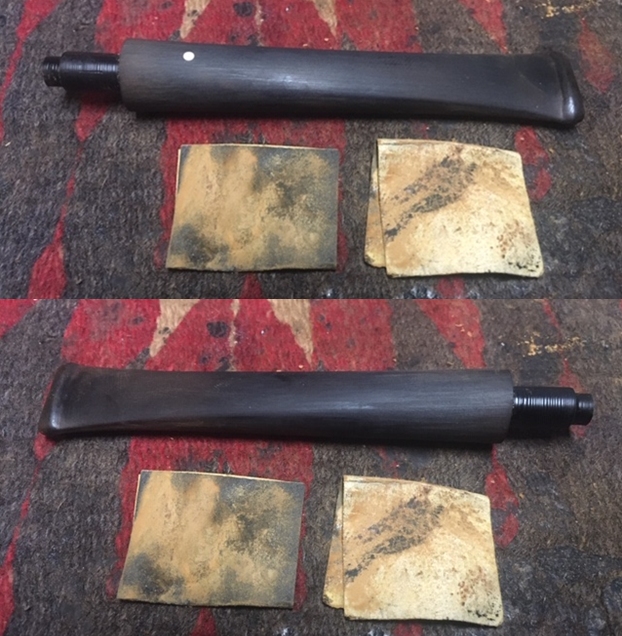
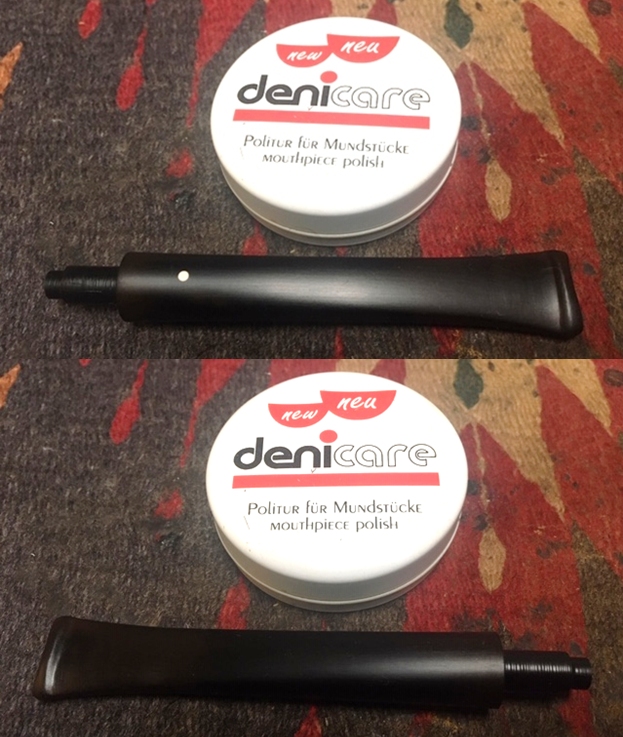
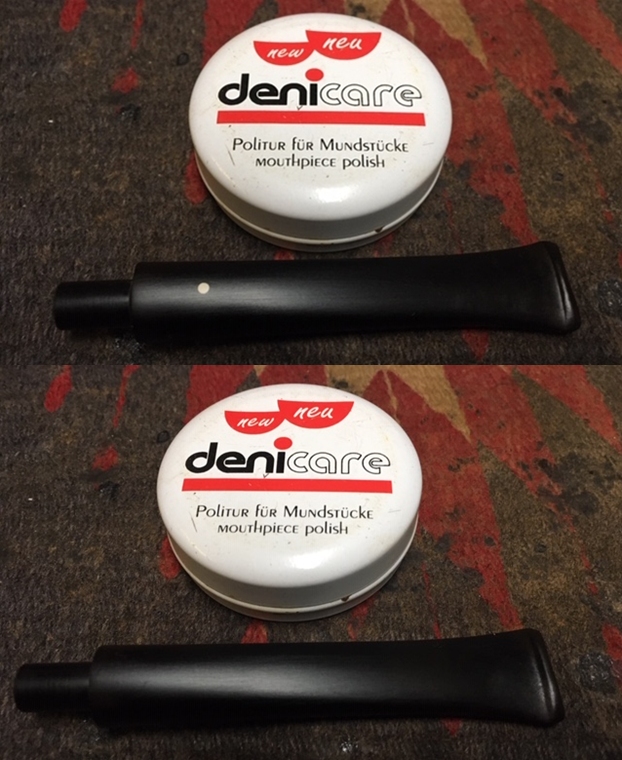
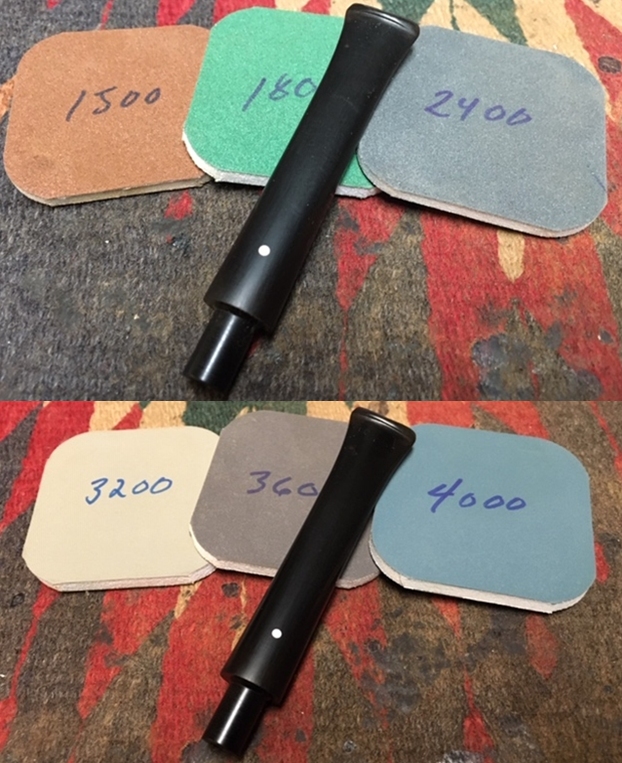
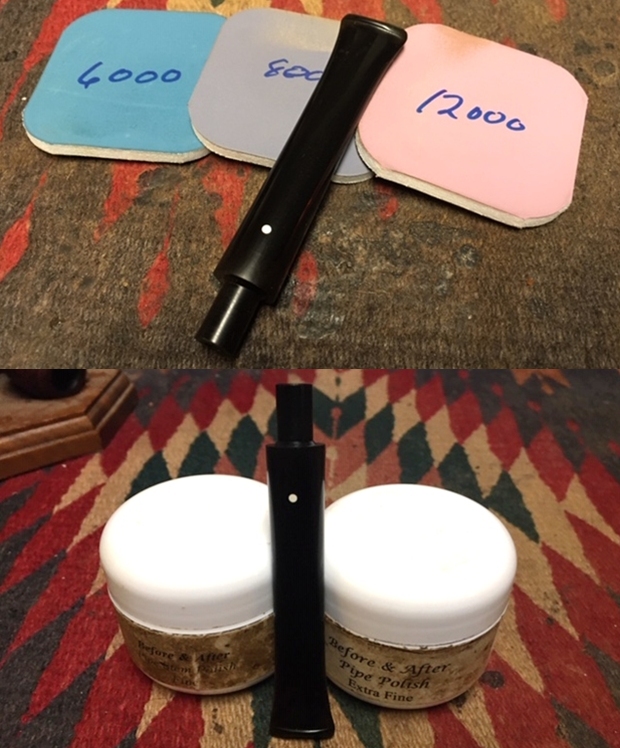
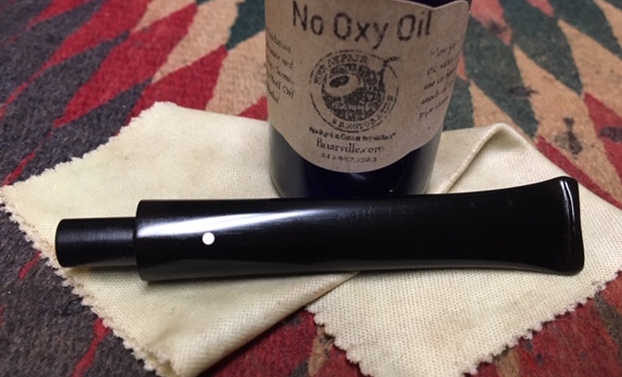
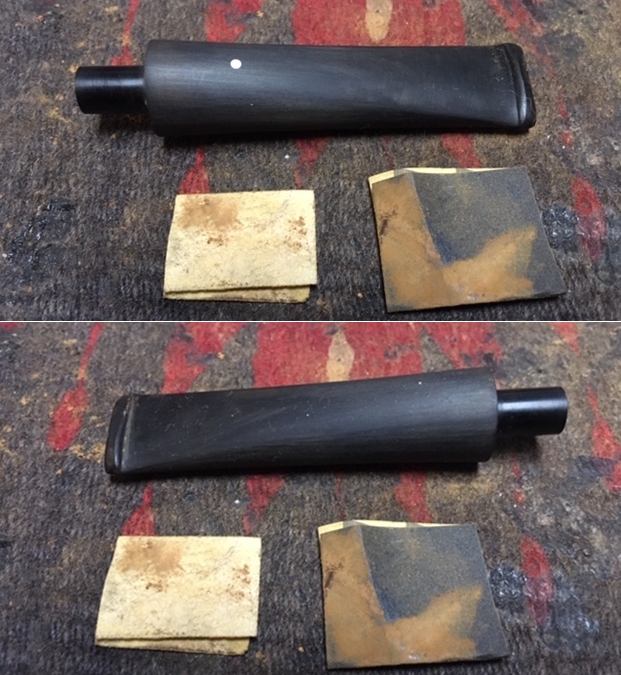
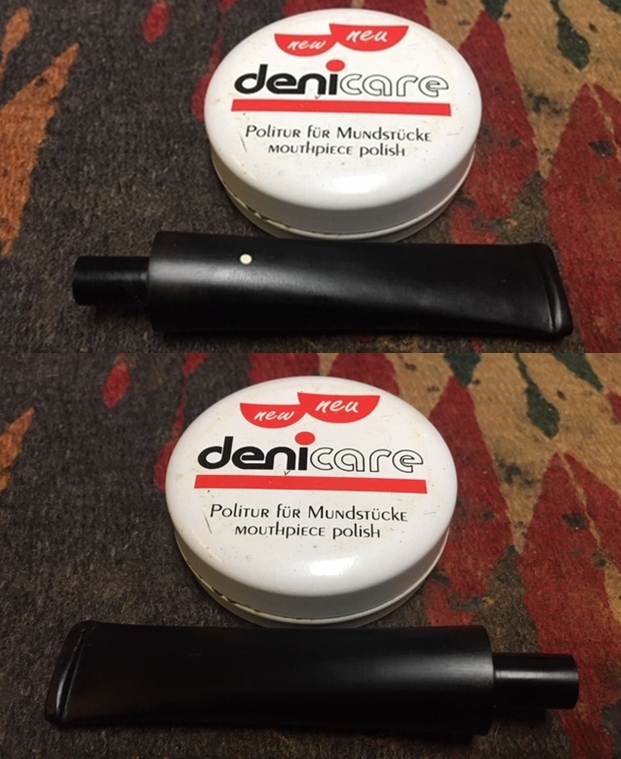
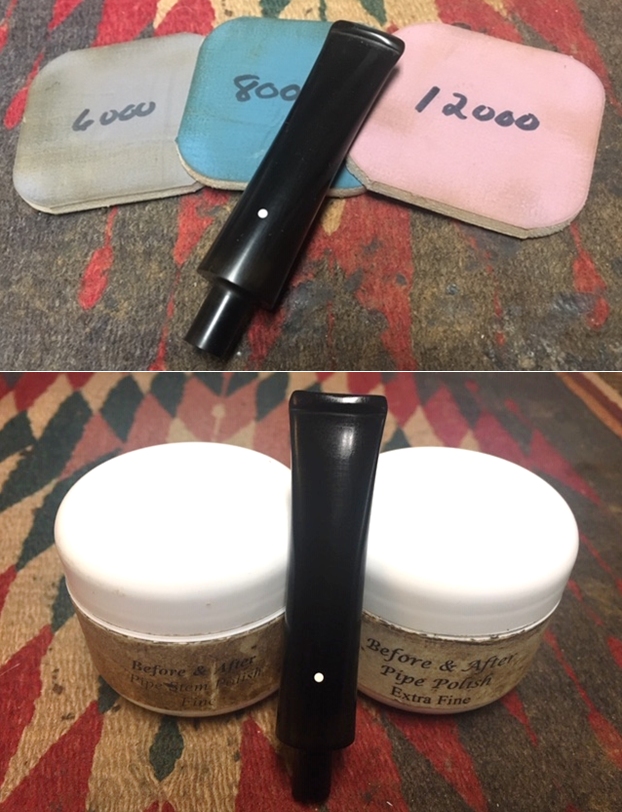
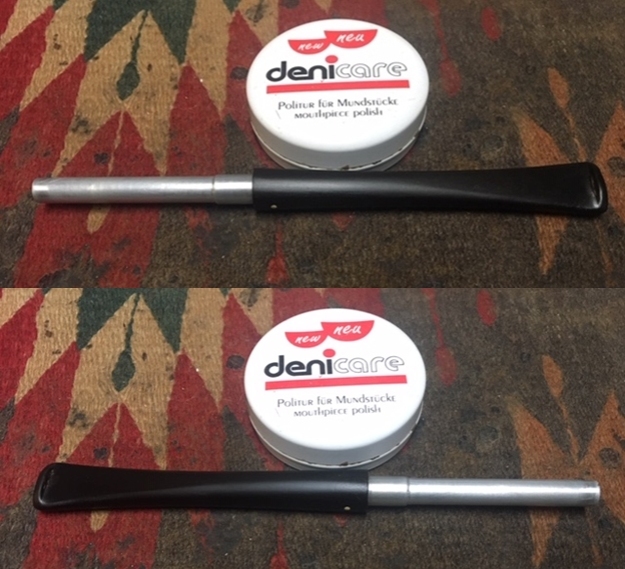
Further reading on Pipedia under the general listing for Kaywoodie Pipes provided me with a magazine advertisement that included the All Briar pipes. It is a great Father’s Day Ad and the bottom items in the ad show the All Briar line. I have included both the link and a copy of the ad for your reading pleasure (https://pipedia.org/wiki/Kaywoodie).I started my quick repairs on this pipe by addressing the damage to the rim top. I sanded out the bubbled and marked edges of the briar portion of the rim top. I dry sanded it with 1500-12000 grit micromesh and wiped it down after each pad. Each grit pad smoothed out the surface of the briar rim and when I was finished it looked very good. There is a great mix of flame and straight grain on the bowl and shank. It is a beauty. I decided to not to remove the varnish coat from the bowl as it looked very good. Even the repaired and smooth rim top looks really good. At this point the bowl was finished. I set it aside to deal with the stem issues. I sanded out the tooth marks and chatter on the surface of the stem with a folded piece of 220 grit sandpaper. I sanded until the surface was smooth and the tooth marks and chatter were gone.I started polishing out the sanding marks with Denicare Mouthpiece Polish. It is a red, gritty paste that has the texture of Red Tripoli. The gritty polish takes out all the minute scratches in the briar and leaves the surface smooth. I rubbed it on with my fingertips and polished it off with a soft cotton cloth. The stem is starting to look very good at this point.I continued to polish the briar stem with micromesh sanding pads. I wet sanded with 1500-12000 grit pads and wiped the stem down with a damp cloth after each sanding pad. The stem is starting to look like it should. More work to do for sure but it is going the right direction. I polished the briar stem further with Before & After Pipe Polish – both Fine and Extra Fine to further raise a shine on the wood.The original pipe has a coat of varnish on the stem and bowl. I don’t have any varnish to give repaired areas the shine that the rest of the stem and bowl has. I do have some Danish Oil which is a bit of stain and linseed oil. After the finish cures it buffs up into a very nice shine.I buffed the stem on the buffing wheel to raise the shine and gave it several coats of carnauba wax. I buffed it with a clean buffing pad. The repaired stem looks very good. The tooth marks and chatter are a thing of history. There is a little darkening on the underside of the stem but the surface is smooth.With the completion of the stem the pipe was finished. Because it had a shine coat on it I gently buffed it with Blue Diamond to take out the scratches on the bowl but not damage the varnish coat. I gave the entire pipe several coats of carnauba for good measure and buffed it with a clean buffing pad to raise the shine. I hand buffed it with a microfiber cloth to deepen the shine. The finished pipe is shown in the photos below. This Kaywoodie All Briar Meerschaum Lined Rhodesian 50B is quite a beautiful pipe. It is for all intents and purposes barely smoked so whoever adds it to their collection will get the privilege of enjoying this “new” pipe. The dimensions of the pipe are Length: 5 ¼ inches, Height: 1 ¾ inches, Outside diameter of the bowl: 1 ¼ inches, Chamber diameter: 5/8 of an inch. I really like the way that Kaywoodie makes these All Briar pipes. It seems to really have set the standard that is hard to beat. This is a great looking pipe in great condition.  Thanks for walking with me through this restoration. It was one with challenges but it was a fun one to work on.

Why Malaga would call this a Second is a Mystery to me


Blog by Steve Laug

The next pipe on my work table this morning is a Freehand with a crafted plateau rim top and shank end. It is a piece of briar with a mix of interesting grain flowing literally in every direction. It is stamped on the left side of the shank and reads Malaga Second. In my examination of the pipe there are no flaws or pits or anything other than the mixed grain that would possibly make this a second. The drilling in the shank and bowl is perfect with no twists or turns and the airway is right in the centre at the lower edge of the bowl. It is not too deep or shallow. It is a mystery to me why it is a second. The bowl, round shank and bent fancy taper vulcanite stem look very good. The bowl had a thin to moderate cake and no lava onto the rim and no damage on inner edges of the bowl. The sides of the bowl and shank are dull and dirty with grime and oils from prolonged use. The stem had tooth dents and chatter on the top and the underside near the button and was heavily oxidized and calcified at the end.  Jeff took these photos before he started the cleanup work on the pipe. Jeff took a close up photo of the bowl and rim to capture the condition of the pipe before he started his cleanup work. The carved plateau rim top looked really good. There was no darkening or burn marks on the edges. Other than being dusty and a bit dirty the rim top and bowl looked good. You can also see the moderated cake in the bowl in these photos. He also took a photo of the shank end to show the matching carved plateau finish there. The  photos of the sides and bottom of the bowl and shank show the variations of the grain around the bowl. The photos show the general condition of the bowl and wear on the finish. It is dull and dirty but this is another beautiful pipe. Jeff took a photo to capture the stamping on the shank. The stamping MALAGA SECOND on the left side of the shank is very readable. (Perhaps the tiny flaw in the briar behind the stamping is the cause of the stamp??)The next photos show the stem surface and the fancy turned ball saddle before the stem becomes square. There is oxidation and calcification on the stem. There are tooth marks and chatter on both sides near the button and wear on the button surface and edges. I am also including the link to a blog that I wrote that gives some of the history of the Malaga brand and the Malaga Pipe Shop in Royal Oak, Michigan in the USA. I have written an earlier blog to give a little history of the Malaga Brand and the pipemaker, George Khoubesser. Here is the link – https://rebornpipes.com/tag/malaga-pipes/.That blog also includes links to a catalogue and the history of the pipemaker George Khoubesser. Follow the link to get a feel for the brand and the pipemaker.

Jeff reamed the bowl with a PipNet pipe reamer and followed up with a Savinelli Fitsall pipe knife to remove the cake. He scrubbed out the mortise and the airway in the shank and the stem with alcohol, cotton swabs and pipe cleaners. He scrubbed the exterior of the bowl, rim, shank and stem with a tooth brush and Murphy’s Oil Soap to remove the oils and tars on the rim and the grime on the finish of the bowl. He rinsed it under running water. He dried it off with a soft cloth. The inner edge and the outer edge looked very good. He scrubbed the stem with Soft Scrub and then soaked it in Before & After Deoxidizer and rinsed it with hot water. I took photos of the pipe to show its condition before I started my work on it. I took close up photos of the bowl and rim top as well as the stem. You can see the condition of the rim top and bowl in the first photo. It really looks good and you can see why I would call it a carved plateau rim rather than the natural plateau. I may be wrong but I don’t think so! LOL! The fancy vulcanite stem had cleaned up amazingly well. I was dreading the turned barrel on lower part. There was tooth marks and chatter on both sides near the button surface.I took a photo of the stamping on the shank to show how good the condition is. It shows the MALAGA SECOND stamp on the left side and it is very legible. I removed the stem from the shank and took a photo of the parts. It is a nicely laid out pipe.Because the pipe was in such clean condition and there were no issues with the rim edges I could immediately begin by polishing the briar with micromesh pads. I dry sanded the bowl and shank with 1500-12000 grit pads and wiped it down after each pad with a damp cloth to remove the debris from sanding. I worked some Before & After Restoration Balm into the surface of the smooth briar with my fingertips and into the rusticated portions of the rim top and shank with a horse hair shoe brush. The product works to clean, enliven and protect the briar. I let the balm sit for about twenty minutes and then buffed with a cotton cloth to raise the shine. The photos show the bowl at this point in the restoration process. I turned to the stem to address the issues on the surface of both sides at the button. I decided to address the tooth marks and dents in the button and just ahead of the button. I “painted” the surface of the stem with the flame of a lighter to lift the tooth chatter and marks. The marks on the top and underside lifted until the remaining small marks could be dealt with by sanding the stem.I sanded both sides smooth with 220 grit sandpaper to remove the deep oxidation on the surfaces. I finished this initial polishing with 400 grit sandpaper to smooth out the scratches in the stem surface. As I sanded and reshaped the button and stem surface the stem began to look very good. I polished the stem with Denicare Mouthpiece Polish from a tin of it I have in the drawer here. It is a gritty red paste that I rub on with my finger tips and work into the surface of the stem and button and buff off with a cotton pad. It gives me a bit of a head start on the polishing work plus I have a tin to use up!I polished the stem with micromesh sanding pads – wet sanding with 1500-12000 grit sanding pads. I wiped it down after each sanding pad Obsidian Oil. I finished by polishing it with Before & After Pipe Stem Polish both fine and extra Fine and then wiped it down with a final coat of Obsidian Oil. This Malaga Second Freehand will always be a bit of a mystery to me. Even more so now that I have restored it and cannot find any issues with the briar or stem. Ah well it is still a beautiful pipe with a fancy turned vulcanite stem. It has a great mixed grain around the bowl and the carver really maximized that with the shape of the pipe. Everything about the pipe – the shape of the bowl, the rusticated, faux plateau rim top and shank end work well to highlight the grain around the bowl sides. I polished stem and the bowl with Blue Diamond polish on the buffing wheel and the grain just popped and came alive. I gave the bowl and the stem multiple coats of carnauba wax. I buffed the pipe with a clean buffing pad to raise the shine. I hand buffed it with a microfiber cloth to deepen the shine. The pipe polished up pretty nicely. The grain took on life with the buffing. The rich oil cured colour works well with the polished vulcanite stem. The finished pipe has a rich look that is quite catching. Have a look at it with the photos below. The shape, finish and flow of the pipe and stem are very well done. The dimensions are Length: 6 ½ inches, Height: 2 ¼ inches, Outside diameter of the bowl: 1 ¾ inches, Chamber diameter: 7/8 of an inch. I will be adding the pipe to the rebornpipes store shortly if you would like to add it to your collection. Thanks for walking through the restoration with me as I worked over this beautiful pipe.

Renewing a Treasured Swan Neck Meerschaum, a Gift from Treasured Friends


Blog by Dal Stanton

I’ve been eyeing this pipe on my side desk for some time.  It has been calling to me and I decided today to respond.  It came to me as a gift from dear Bulgarian friends, CC and Svetly.  CC, is a nickname for Svilena. CC came into our lives as a translator in the context of our work here in Bulgaria with the Daughters of Bulgaria – women and girls who have been trafficked and sexually exploited.  She translated various manuals and training modules from English into Bulgarian which were used in a recovery program for women who were seeking a new life.  In time, our relationship with CC expanded as she helped us with translating for various teams who had come to Bulgaria to learn more about our work.  Eventually, her husband, Svetly came into our relationship sphere as well.  Truly, a renaissance man of faith, Svetly is an author of books and composer of songs and is a good singer himself!  Then, their three children became known to us – young adults and gifted much like their parents.  One child specifically, Ellie – to me, ‘El’, came into our lives in a special way and has been living with us for the past few years while she completes her university program here in Sofia studying Chinese culture and language.  Our lives are richer here in Bulgaria because of friends like CC and Svetly.
One of the wonderful pastimes of CC and Svetly is their love of collecting things by going to bazaars, antique markets and outdoor flea markets where they find unsuspecting treasures and either fashion or repurpose them for their personal use or they resell them at a profit.  On several occasions during their treasure hunts, The Pipe Steward has benefited from pipes they have found ‘in the wild’ and donated to be restored benefiting the Daughters of Bulgaria!  Then there are other occasions, where their pipe treasures are specially directed to me as gifts.  One such treasure is awaiting restoration – an 11 1/2-inch French Churchwarden which belonged to Svetly’s father.  My deal with El is that when I restore her grandfather’s Churchwarden, she will be the first one to try it out on my Man Cave balcony where pipe fellowship is allowed!  Another treasure from Svetly and CC that found me was the Swan Neck Meerschaum now on my worktable.

CC had texted me some days earlier with pictures of the Swan Neck Meerschaum perched atop her computer. She had found it in a huge outdoor flea market called the ‘Russian Market’ near Plovdiv, Bulgaria’s second largest city where CC and Svetly live.  She had already acquired the Meerschaum and was hoping that I could help with valuing it so that it could potentially be resold at a profit.  These pictures she sent were my first views of this unbelievably graceful pipe – an Egg shaped bowl held out elegantly by a long flowing Swan Neck shank. There were no markings on the pipe or on the ancient case that held it.  The only information CC had from the seller at the Russian Market was that he had acquired the pipe from an antique dealer in France. Looking at all the pictures she sent we batted around questions regarding the age of the pipe and the stem’s composition – was it amber or Bakelite or something else?

My final summation to CC was that it was difficult to date with any certainty, but I believed the pipe to be an older vintage because of the stem material, the fact that it had an orific button and that it was replete with amazing patina. I gave her an idea of what I would ask for it in The Pipe Steward Store and said it was a very collectable pipe which would be welcomed into anyone’s collection.

Later, when the pipe unexpectedly arrived at my home with El, I thought CC wanted me to take a closer look to help value it.  However, El corrected me making sure I understood that her mom and dad wanted it to be mine.  Oh my….  My task now is renewing this treasured Swan Neck Meerschaum, a gift from treasured friends.  Realization that it was intended as a gift for me immediately resulted in doing a smiling selfie with El and Swan Neck Meerschaum on display and sending it to Svetly and CC with many thanks!

When the pipe finally arrived on my table, I took a closer look at it as well as the original case.  The hand-crafted original case is itself an amazing artifact.  My understanding from many trips to Istanbul, Turkey, talking to vendors in Meerschaum shops at the Grand Bazaar, is that each Meerschaum pipe has its own unique case fashioned for it.  Why?  Generally, each pipe is unique because of it being hand carved.  The surface of the case is leather fitted over a wood shell.  The sides of the case are worn, thin and bare. The case clasping lock and hinges appear to be brass.  The clasping lock is attached to the wooden frame with amazingly tiny nails, not screws.  It is apparent that the case is old and has held up well though showing its age.After flipping the case over, I look more closely at the spring action clip that locks the case.  When the case is closed, the short bar of metal is pushed back as it navigates the interlock bracket below and then snaps in place to close holding the case together.On the backside of the case, the hinges are also held in place with the minuscule nails.The lining inside is worn but holds its beauty.  The red crushed velvet lining, according to my wife, is fashioned to line the internal surface to protect and cushion the Meerschaum inside.  You can tell by the picture below that the side that is up-side-down is the side that holds the pipe when the case is opened.  Its velvet still has some color and is thicker where the pipe lays than the other side. After examining the case, my curiosity was piqued and I searched the internet for something that might give me more understanding of Meer cases.  I found this exceptionally helpful link dated January 18, 2015, in a PipesMagazine.com discussion thread asking the question, ‘Where do you get Meerschaum pipe cases made?’  My understanding of case making was altered after reading this! ‘Woodsroad’ posted this:

The old cases appear to be carved from a block of wood, carefully upholstered in leather. It would seem that there are more than a few trade secrets and special skills involved to get the fit and finish as nice as they did. Some of those old cases are works of art in and of themselves, with beautifully fitted interiors and expertly covered in leather. Follow this link [no longer works] to a transcription of an interview done in 1977 with the widow of a Boston meer carver. It seems, at the time, that carvers bought the case then carved the pipe to fit!  The following excerpt begins on page 6.

Q: So the cases were made before the pipes were… before the stems were put on?

A: Oh, yes. If he wanted a case to fit the pipe, he’d have to have the case down first and have the stem made like that. That’s quite the trade. In most cases, all blocks of wood, they are all solid wood. That’s all cut by hand. There used to be case makers, you can’t get a case maker today. There’s nobody around who makes cases anymore. If they did make them, why they’d charge so much it would be impossible to use them on a pipe.

Q: Who were some of the people who used to make the cases? Do you remember any of the names?

A: Yeah, but they’re all dead now. They were from down New York there. There was a Mr. Beck that I used to know, and he is dead now and his family is all dead now. I used to chum around with his daughters.

Q: Were there several pipe carvers and they all knew each other, or …?

A: Oh, yeah, there used to be a lot of them around… not pipe carvers, I would say, but… like one would make the case, one would cover the cases, one would put the lining in, one would cover them with the leather on the outside, you know. That was all… sort of a family affair, I guess. They used to live here in Jamaica Plain. A whole lot of them lived around handy so they would see one another and they would go down to the pub and have a glass of beer or something.

So, the pipe is made to fit the case, not the other way around as I’ve understood!  If this Meerschaum pipe could talk AND if this Meer case could talk, what a story they would tell!  I cannot say with certainty, but the case seems old enough with its characteristic to be from the early 1900s – only a guess based upon a feel!

With the case fully appreciated, I take some pictures looking more closely at the Swan Neck Meerschaum.  If it is true that the cases are made first and then the pipe follows, the carver of this Meerschaum probably did a double take when he saw the case’s long flowing channel carved out for the shank and stem!  When I first laid my eyes on this pipe, adjectives that came to mind trying to describe the feel of the pipe were, ‘majestic’ or ‘stately’ or ‘elegant’ or ‘graceful’.  The pipe is not diminutive.  The length is 6 1/4 inches, the Egg shaped bowl height: 2 ¼ inches, rim width: 1 1/4 inches, chamber width: 7/8 inches and the chamber depth is an ample 1 7/8 inches promising a bowl packed with my favorite blend with a lot of time to reflect about life, faith, family and friends!The patina has developed over the entire stummel with a warm honey or butterscotch yellow.  The surface has interesting dark spots that don’t appear to be normal patina but a different kind of spotting – I’m not sure.  As I look at the surface, I also see something I don’t normally see on Meerschaums.  The pictures above and below show the reflection of the light on the bowl surface.  There appears to be a varnish-like coating covering the Meerschaum surface.  I’ll need to check this out. The rim has a heavy cake of lava flow covering it and the chamber is also showing a moderately thick cake.  I’ll clean the carbon cake to liberate the Meerschaum underneath.  Meerschaum pipes need no cake protection as do briar pipes.  This is one of the reasons Meerschaum pipes are unique – one can put them into service repeatedly without resting the pipe.  Lock, load, and go again!The stem is the traditional ‘yellow’ of Meerschaum pipes.  The Orific button possibly helps with the dating of the pipe.  Orific buttons, or ‘rounded’ are dated from the late 1800s to when they generally phased out in the 1920s when they were replaced predominantly by straight slotted buttons.The norm also during this period was that the tenons or connectors of the stummel and stem were made of bone, not acrylic or plastics.  I unscrew the stem and examine the threaded connector.  I see that the threaded part of the connector screwed into the mortise is thread tightened.  After unscrewing the connector from the mortise I take a picture of the connector and the thread used to help tighten the fitting.  From initial appearance, my thought was that it is plastic or a hard rubber, but the texture is rougher.  I’ll clean it and see what I can determine! When texting with CC about the value of this vintage pipe, the obvious question came up regarding the material out of which the stem was made?  On the fly as we were discussing this, we came to the consensus that the stem was probably made of Bakelite but we weren’t sure. Bakelite (fenolic resin) is a plastic compound that was called ‘compressed amber’ by the Ottomans produced between 1907 and 1928 (See LINK). I need to seek more information about confirming the composition of the stem.  Looking at the condition of the stem, both the upper and lower bit show some significant tooth compressions around the button.  These will need to be addressed.  There is also an interesting chip on the lower side of the stem facing.  This chip causes me to question our original thought that this stem is made of Bakelite – I’m not sure, but does Bakelite chip like this? With the question of the composition of the stem in the fore, a simple search on the internet comes up with several sources of information of tests that help determine the composition. Most of these sites are concerned about those who collect jewelry.  Both amber and Bakelite are among today’s valuable collectibles.  Of course, genuine amber is of more value and articles are full of warnings about vendors passing off an amber look-alike as the genuine item.  As a result simpler ‘field’ tests have been devised that help one to determine with greater certainty what the composition of a piece of jewelry is when one is at an antique store or an outdoor flea market!  Two sites I found especially helpful that helped me to determine that this stem is indeed amber and not Bakelite.  Two sites I found especially helpful and both were catering more toward the jewelry crowd, not the pipe stem crowd (See: Jewelry Magazine and ‘How to Detect Fake Amber?’ at Nammu.com)!

To give an abbreviated version of my discovery process, I first tried the smell test which in one article I read, is a way to determine if the material is indeed Bakelite, which in today’s collectables market is a valuable commodity.  The test is rubbing a portion of the material with one’s thumb until the heat buildup caused by the friction, causes a chemical (formaldehyde) odor that one can smell by putting the nose next to the hot spot on the material tested.  There was definitely an odor emitted by the Swan Neck’s stem when I rubbed my thumb sufficiently to generate the telltale odor.  Conclusion – so this is probably Bakelite.

The next test I tried was a ‘make-shift’ semichrome test (see table on left from Jewelry Magazine).  I used the silver polish that we have on hand which was the closest thing we have on hand.  With a degree of uncertainty as to whether the liquid I was using would do the trick, I put some silver polish on a cotton pad and rubbed a small portion on the underside next to the stem facing – not wanting to try this test in a more visible place.  If the material is Bakelite, yellow should come off on the cotton pad as some of the resin is drawn from the surface.  My results were negative – no yellow hue was showing up on the cotton pad.  Conclusion, maybe, not Bakelite – the test was a bit unreliable.

Another subjective test I read was that Bakelite and other synthetics tend to have more uniformity than natural amber. What is amber?  From the same Jewelry Magazine article:

Baltic Amber is a fossilized form of resin that was secreted by trees of tropical and semi tropical forests.  Baltic Amber is mostly formed by the resin of coniferous trees, as well as by the resin of tropical trees.  There are a lot of counterfeits of amber that are sold as genuine ambers.  These counterfeits can be: compressed amber, Bakelite, katilin, recolored ones, copal and plastic. 

So the idea is that since amber results from natural processes, that there will be imperfections visible, bubbles, lack of uniformity of color.  Hmm.  Definitely no uniformity in the Swan Neck stem. At this point, my thinking has switched to confirming the possibility that it is indeed amber.  The nugget that convinced me that the stem was amber was discovered as I read more about testing FOR amber.  I discovered that the heat test with the thumb ALSO produces an odor when done on genuine amber, but of a very specific odor – a pine scent.  With my first hat testing try, I was simply trying to dial in an odor, period.  I repeated the test and the scent of this stem is definitely pine not chemical formaldehyde!

I did one more test for confirmation of amber.  The floating test is done with dissolving 8 to 10 teaspoons of salt in a glass of water and to see if the item floats.  The article described the chemical composition of amber and the resin, etc., that makes it float and fakes sink.  The results are revealed in the picture below!After the stem floated, I immediately texted CC with the news of the amber stem’s confirmation and offered to give the pipe back to her.  Since she was working in the garden of her and Svetly’s new home in the village, she sent an audible message in reply, laughing and saying that giving the pipe to me now was only sweeter!  Stem mystery solved.

To begin the reclamation of the graceful Swan Neck Meerschaum with an amber stem (!) I begin the general cleaning of the pipe.  I start with the stem, using pipe cleaners for the airway and cotton buds for the mortise cavity.  The threaded mortise cavity is full of old dark grime.  I use the buds and isopropyl 95% to work on the grime.  I also use the small dental spoon to reach in to the cavity to scrape the dark grunge wedged in the transition from the mortise and airway.  It took some time, but using a sharp dental probe, I run the point methodically through the threads of the mortise to dislodge the old buildup.  After some time of cleaning, The internals of the amber stem were looking good. Next, I look at the threaded connector that I unscrewed from the mortise to clean.  I unwind the thread which has acted as an expander to hold the smaller connector in place.  I clean the connector with isopropyl 95% to clear the threads and airway of grime.  It seems evident that this connector is not original.  It feels plastic and it doesn’t fit the threads of the mortise diameter and hence, the thread to expand its diameter to grab the thread channels of the mortise.  The connector is the same size as the stem.Well, it all was going so well until it wasn’t.  Disaster.  It has taken me some time to come back to this project because of what happened next.  I was considering how I might provide a better connection between the stem and stummel and I was testing the fit of a push/pull acrylic tenon’s size with the amber stem and the amber broke….  There is no way to describe the shock followed by the deep sense of unbelief and then self-incrimination of asking myself, why I did what I did to cause the break?  I had to walk away from from this project – I couldn’t look at the pieces.  Gradually, this micro tragedy found its way into the broader context of life’s larger problems and tragedies and perspective slowly regains a footing.  I was then able to return to the ‘scene of the crime’ and take these pictures and continue from here. Putting the pieces together again to view the aftermath and to assess the damage and response, produced some moderate hope.  The break can be mended with CA glue and it should blend well.  There is a gap on the button-side of the break where there was shatter impact which will fill with clear CA glue.   The break lines can be mitigated and blended with sanding but probably will remain visible.  The challenge is applying CA glue to weld the pieces together and not fowl the threads in the mortise with glue. I use extra thick CA glue to attach the main piece. I follow with regular CA glue to fill the shatter point gap.  After applying the glue and reattaching the pieces, I set the stem aside for the glue to cure thoroughly.Next, moving on to the Meerschaum Swan Neck stummel, the chamber needs cleaning of the cake buildup which is not needed with Meers.  I use the Savinelli Fitsall tool to scrape the cake from the chamber walls and then follow with sanding the chamber.  I wrap 240 paper around the Sharpie Pen and sand the chamber to clear the carbon buildup.  My aim is to restore the smooth, fresh Meerschaum surface.The chamber looks good.  Moving on!The rim is caked with lava flow and grime. To break up the crusted buildup, I give the stummel a soft topping using medium and light grade sanding sponges.  The purpose is not to remove Meerschaum but simply to clean the rim.The sanding sponges did a great job.  There continues to be some dark spots on the aft part of the rim, but this does not concern me.Next to clean the external surface, undiluted Murphy’s Oil Soap works well.  Using a cotton pad, I scrub the external Meer surface.  The soap will not remove patina. This is a unique surface for a Meerschaum.  It’s not like anything I’ve seen before. Next, the internals are cleaned with cotton buds and pipe cleaners wetted with isopropyl 95%. It does not take much effort.Looking now at the rim.  It has cleaned up well with the sanding sponge topping.  To clean it more, I use a piece of 240 piece of sanding paper to remove the black ring around the internal edge of the rim.  Next, the Meerschaum stummel is dry sanded with the full regimen of micromesh pads – 1500 to 12000.  The sanding cleans the surface of the Meerschaum and it shines up wonderfully through the process. I believe that the block of Meer is unique.  The strange coloration in the Meerschaum are not spots and blemishes, but the color of the Meerschaum itself.  The micromesh brings this out very distinctively. I put the stummel aside and turn back to the stem.  The amber break repair has cured well enough now for me to work on the other issues of the amber stem.  The upper and lower bit and button have bite compressions that need addressing.Using regular CA glue, I fill the compressions and use an accelerator to hold the glue in place.  I fill compressions on both the upper and lower bit area as well as on the button.Earlier I had identified a chip on the stem facing that I also fill with regular CA glue and use an accelerator to hold the glue in place and to quicken the curing process.The amber break repair is ready to be sanded.  I’m anxious to see how the break repair will look.  I’m hopeful that the sanding will hide the fact that it happened!  Using 240 sanding paper I sand to remove the excess dried CA glue on the surface.  I also sand the chip fill on the edge which essentially becomes invisible.  I’m pleased with how the repair is shaping up. Next, I go to work on the bit and button.  I start by using a flat needle file to shape the button lip and to file down the patch on both the upper and lower bit.  I follow this by sanding the bit with 240 sanding paper. The stem is looking great.  Next I wet sand the entire stem with 600 grade paper followed by applying 000 steel wool.Next, the full regimen of micromesh pads are applied starting with wet sanding with pads 1500 to 2400.  This is followed with dry sanding with pads 3200 to 4000 and 6000 to 12000.  Between each set of 3 pads, Obsidian Oil is lightly applied to the stem.  I’m very pleased with the repairs on the stem.  They are all essentially invisible, including the break! Next, to protect and further shine the Swan Neck Meeschaum bowl, I apply beeswax.  With the wax in the mason jar, I warm it with the hot air gun.  As it warms it liquefies.  I then use a horse hair paint brush to paint the beeswax onto the stummel. I position the hot air gun so that it continues to warm the wax as it’s applied to the stummel.  It is easier this way to spread a thin layer over the stummel.  After applying the beeswax thoroughly over the stummel, I put it aside to allow it to cool. When the Meerschaum stummel has cooled, I use a microfiber cloth to wipe off the excess wax and to buff the stummel.  Now in the homestretch.  In light of the amber breakage caused by trying to fit the stem with a new screw in tenon, I’m going with the ‘Olde World’ approach to keep the threaded connector and rewind the thread and screw it into the mortise.  It works well!  I then attach a cotton cloth buffing wheel to the Dremel, set at the slowest speed and gently apply Blue Diamond compound to the amber stem.  After completing this, a felt cloth is used to wipe off the compound dust and another cotton cloth wheel is mounted and carnauba wax is applied to the amber stem alone.  Following this, a microfiber cloth is used to give the pipe a hand buffing to raise the shine.  I do not forget the vintage case.  I brush the interior with a bristled brush and apply a leather conditioner to the exterior.

I love this Swan Neck Meerschaum and the amber stem is the proverbial frosting on the cake.  The stem (and I) survived the tragic break but it is invisible now.  This gift will always be treasured by me not just for the graceful beauty of the pipe itself and for its probable century old vintage, but because of the hearts and hands that gave it.  Thank you Svetly and CC!  You are treasured friends.

Trying out my new friend on my 10Th floor Man Cave balcony with a bowl amply filled with Lane BCA, a great blend for conditioning Meerschaum!

Next on the table is a very unique Edward’s Algerian Briar 734


Blog by Steve Laug

The next pipe on the work table is another unique one that I chose out of my boxes of pipes to restore. I am not even sure what to call the shape. It has an acorn shaped bowl. The shank is domed shape with flat bottom. The graceful curves of the shank and bowl give it a very unique shape. The bowl had a thick cake and lava overflow on the rim. The rim top was crowned with small thin flat top. The bowl was smooth and a natural finish. The finish was dusty and tired but there seemed to be a shiny coat of something on the finish – perhaps shellac. The bowl had some nice grain under the grime and the finish appeared to be in good condition. There were a few fills on the right side of the bowl and some sandpits as well. A lot would be revealed once Jeff had worked his magic on it. The stem was dirty but came with tooth chatter and marks near the button on both sides. Jeff took photos of the pipe before he started his cleanup work. Jeff captured the condition of the bowl and rim top with the next series of photos. You can see the work that is ahead of us in the photos. The cake is very thick and heavy. The rim looked like it might have some damage on the back inner edge of the bowl. Jeff took some great photos of the sides of the bowl and heel showing what is underneath the grime and debris of time and use. You can see the fills in briar on the right side. They really stand out in the first photo. It will be interesting to see what happens as the pipe is cleaned and restored. He captured the stamping on the sides of the shank and the underside of the saddle stem. They are clear and readable. The left side reads Edwards. On the right side it reads Algerian Briar 734. On the underside of the stem it is stamped France. The next two photos of the stem show the top and underside of the stem. You can see the tooth marks and chatter on the surface of both sides.I took it out of the box from Jeff and looked it over. He cleaned the pipe with his usual penchant for thoroughness. When I took it out of the box I was amazed at how good it looked it really looked like a different pipe. He reamed it with a PipNet pipe reamer and cleaned up the reaming with a Savinelli Fitsall Pipe Knife. He scrubbed out the internals with alcohol, pipe cleaners and cotton swabs until the pipe was clean. He scrubbed the exterior of the bowl with Murphy’s Oil Soap and a tooth brush to remove the grime and grit on the briar and the lava on the rim top. The bowl looked very good. Jeff scrubbed the stem with Soft Scrub to remove the grime and soaked it in Before & After Deoxidizer. When he took it out of the soak it came out looking far better. I took photos before I started my part of the work. I took some photos of the rim top and stem. The rim top is clean but there is a lot of damage to the inner edge and top on the back right side. The bowl itself looks very clean. The rest of the inner edge is a little rough but not damaged. The close up photos of the stem shows that is it very clean and other than being dull it looks very good.I took photos of the stamping because they had cleaned up very well.I decided to take care of the damage on the rim top and inner edge first. I topped the bowl on a topping board with 220 grit sandpaper. I then cleaned up the inner edge with a folded piece of 220 grit sandpaper and gave it a slight bevel. I filled in the small pits on the right side of the bowl with clear super glue. Once the repair was cured I sanded smooth with a folded piece of 220 grit sandpaper to smooth it out.I polished the briar and the shank with micromesh sanding pads – dry sanding with 1500-12000 grit pads. I was able to blend in the repairs into the side of the bowl. I wiped the bowl down after each pad with a damp cloth. The grain really began to stand out and the finish took on a shine by the last sanding pad. The photos tell the story! I worked some Before & After Restoration Balm into the surface of the smooth briar with my fingertips. The product works to clean, enliven and protect the briar. I let the balm sit for about twenty minutes and then buffed with a cotton cloth to raise the shine. The photos show the bowl at this point in the restoration process. I set the bowl aside and turned to deal with the stem. I “painted” the surface of the stem with the flame of a Bic lighter to lift the tooth marks. I was able to lift them a lot.I filled in the remaining tooth marks on the surface of the stem with clear super glue. I sprayed it with an accelerator to harden it. Once it had hardened I sanded it with 220 grit sandpaper and 400 grit wet dry sandpaper to blend it into the surface of the vulcanite. I polished the stem with some Denicare Mouthpiece polish – a red gritty paste that feels a lot like the texture of red Tripoli. It works well to polish out some of the scratches. I find that it does a great job preparing the stem for polishing with micromesh sanding pads.I polished the vulcanite stem with micromesh sanding pads – dry sanding with 1500-12000 grit sanding pads. I wiped it down after each sanding pad with a cloth containing some Obsidian Oil. I finished polishing it with Before & After Pipe Stem Polish – both Fine and Extra Fine and buffed it off with a cotton cloth. This Edward’s Unique Algerian Briar was another fun pipe to work on and I really was looking forward to seeing it come back together again. With the grime and debris gone from the finish it was a beauty and the grain just pops at this point. I put the stem back on the bowl and buffed the pipe with Blue Diamond on the buffing wheel. I carefully avoided the stamping on the shank during the process. I gave the bowl and the stem multiple coats of carnauba wax on the buffing wheel and followed that by buffing it with a clean buffing pad on the buffer. I hand buffed the pipe with a microfiber cloth to deepen the shine. The rich natural finish on the bowl looks really good with the polished black vulcanite stem. It is very well done. Give the finished pipe a look in the photos below. I can only tell you that it is much prettier in person than the photos capture. The dimensions of the pipe are Length: 6 inches, Height: 2 inches, Outside diameter of the bowl: 1 ½ inches, Chamber diameter: ¾ of an inch. The Edward’s pipes I have worked on always have had a creative flair. This is truly another unique looking Edward’s. Thanks for walking through the restoration with me as I worked over another beautiful pipe. I will be adding it to the rebornpipes store soon. If you want to add it to your collection send me an email or a message! Thanks for your time.