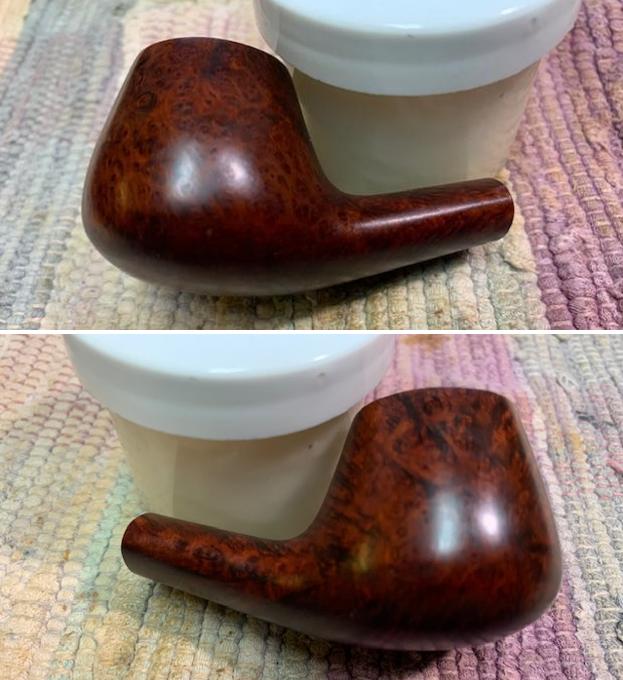
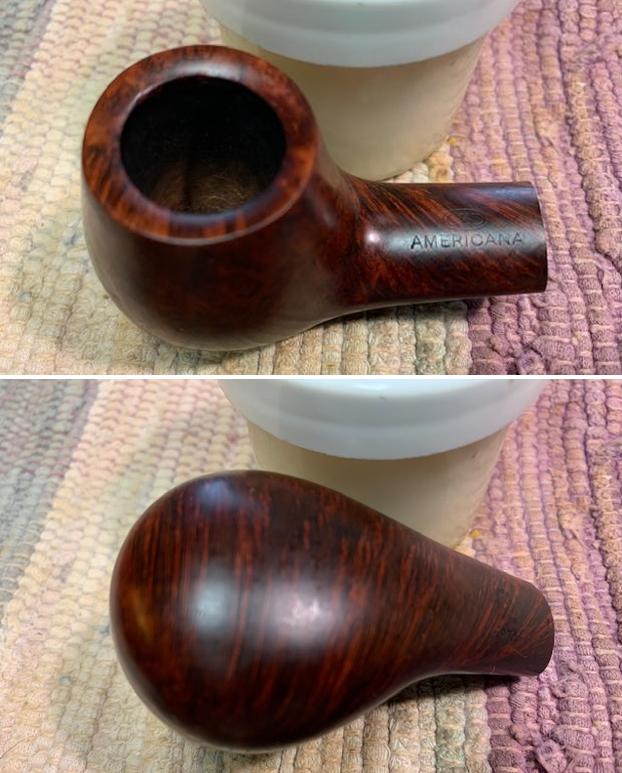
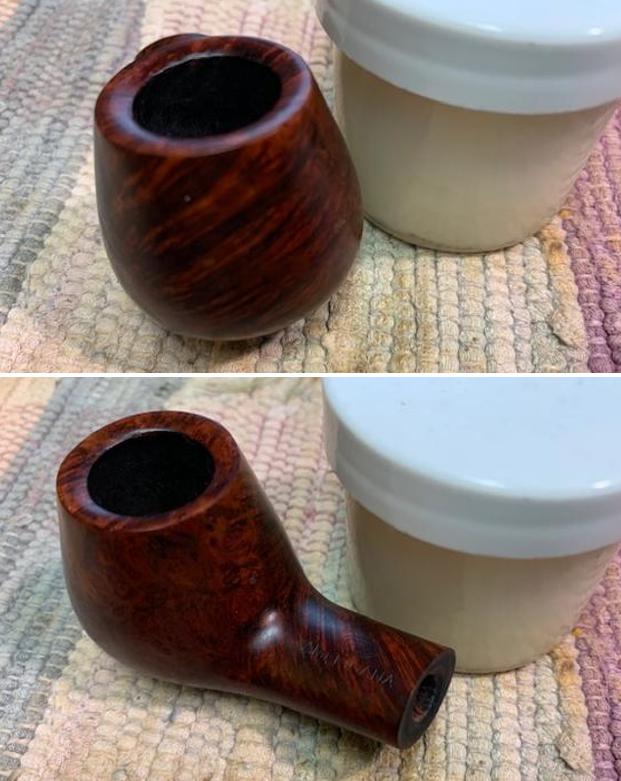
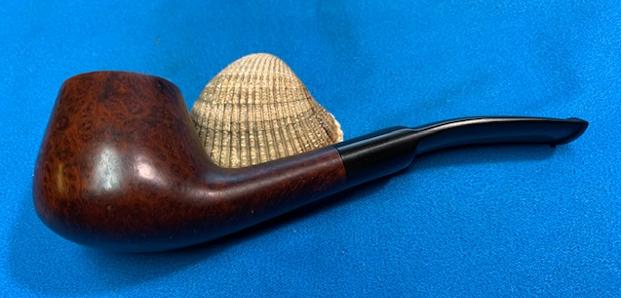
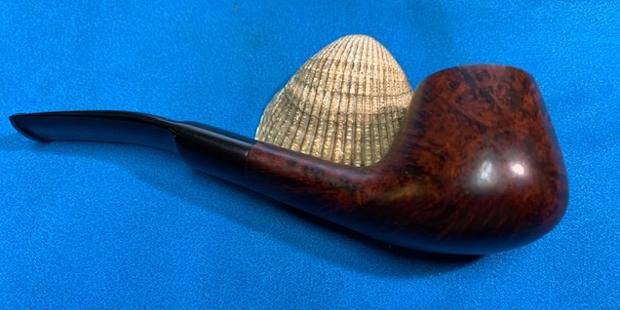
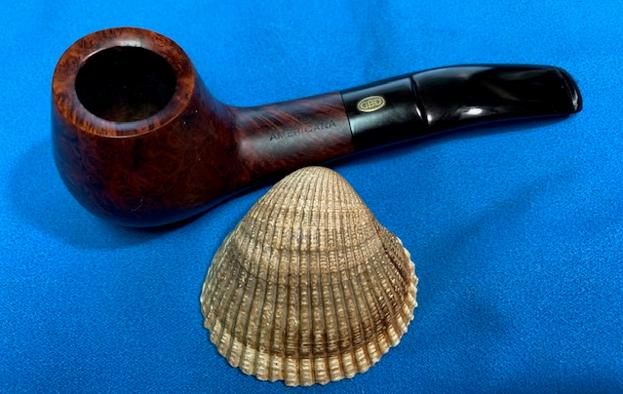
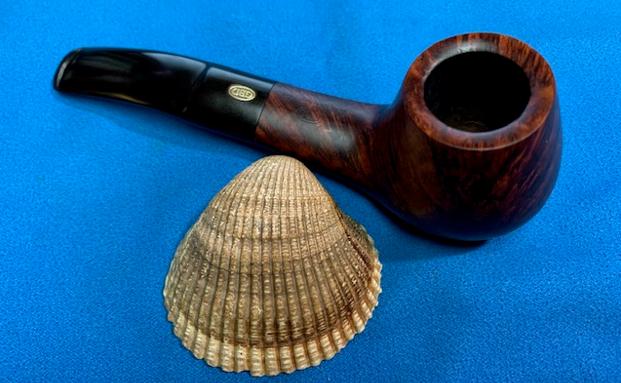
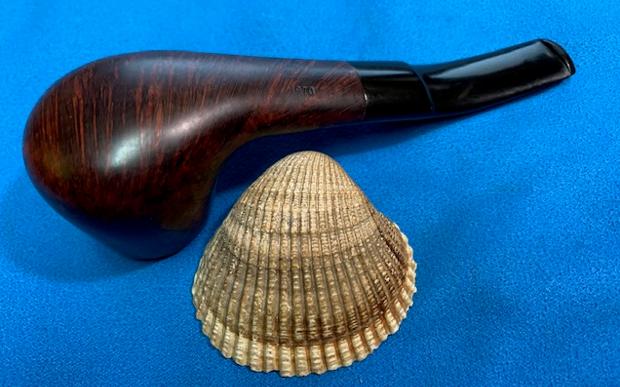
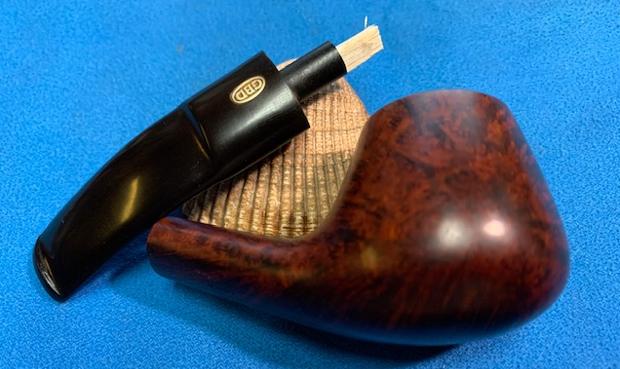
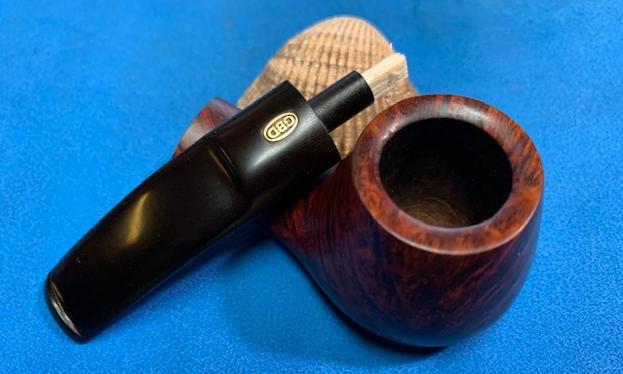
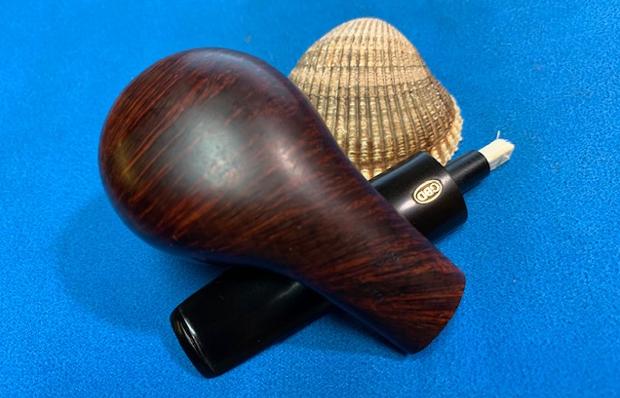
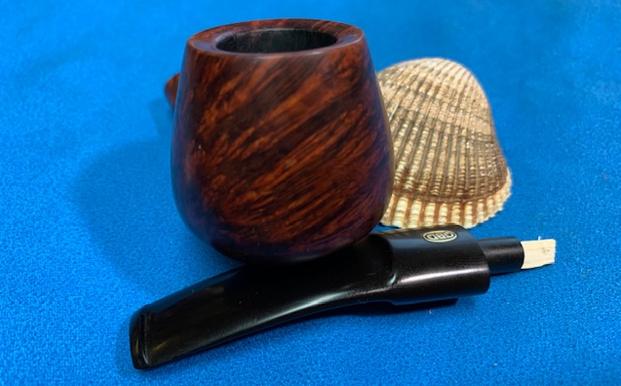
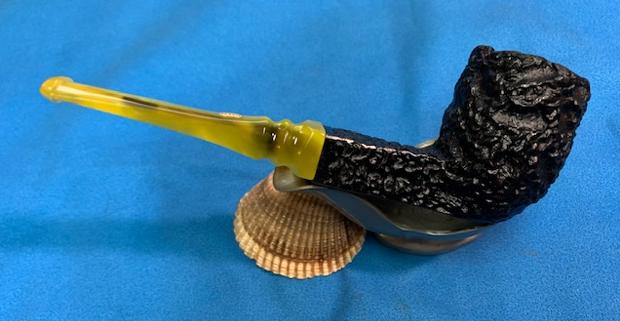
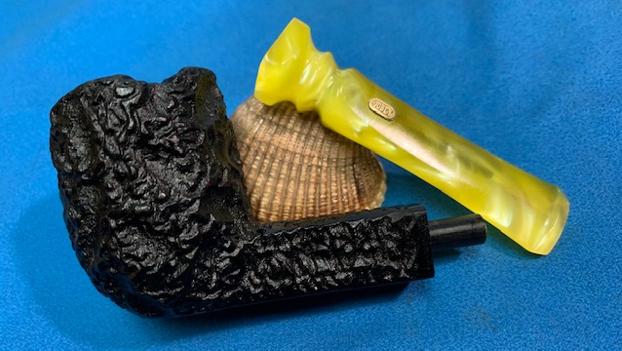
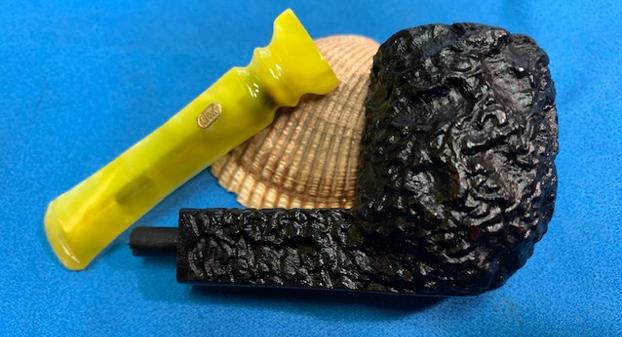
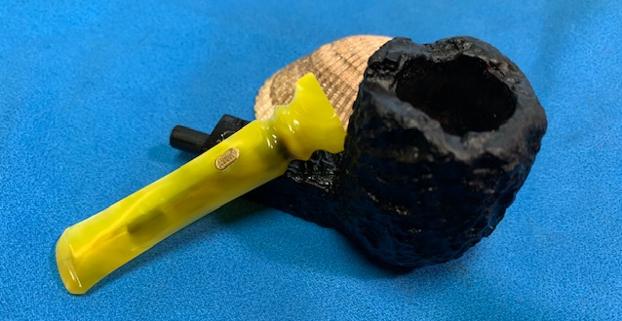
Author Archives: rebornpipes

Restoring a Butz-Choquin C’est bon 1689 Apple with an amber acrylic stem


Blog by Steve Laug

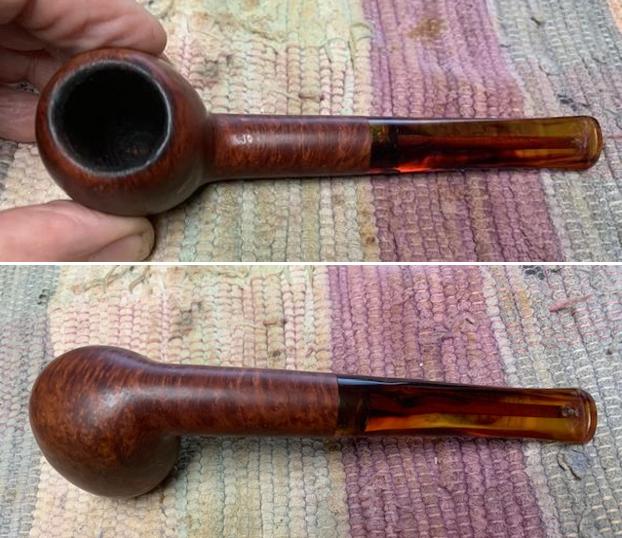
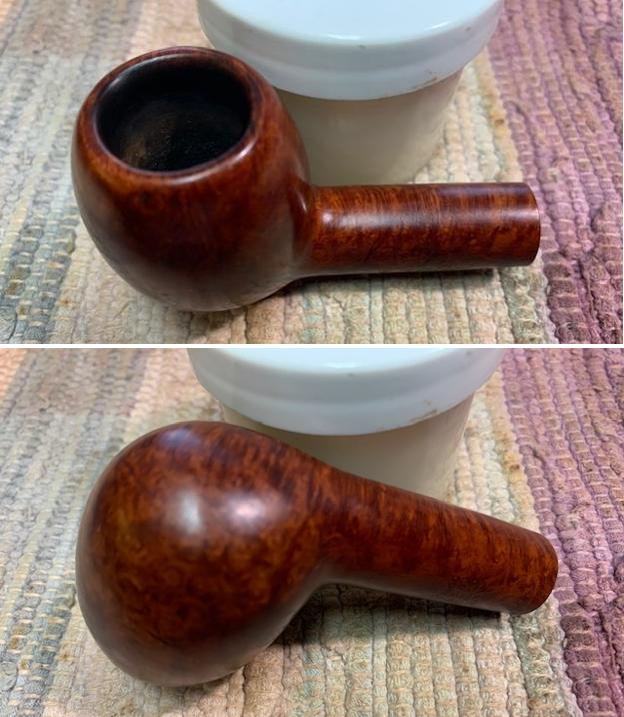
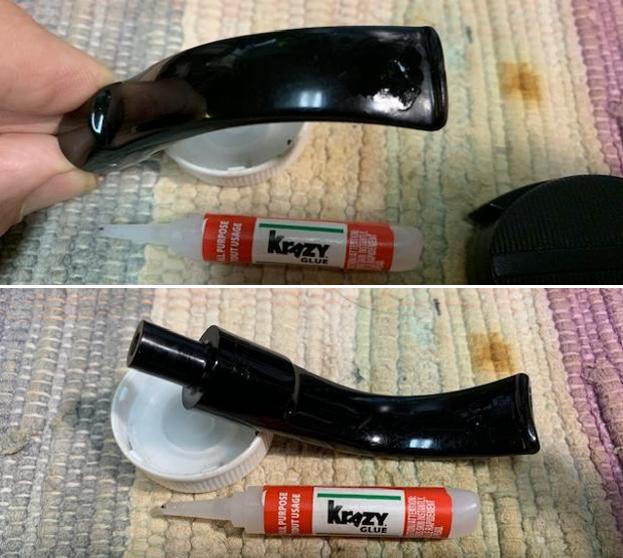
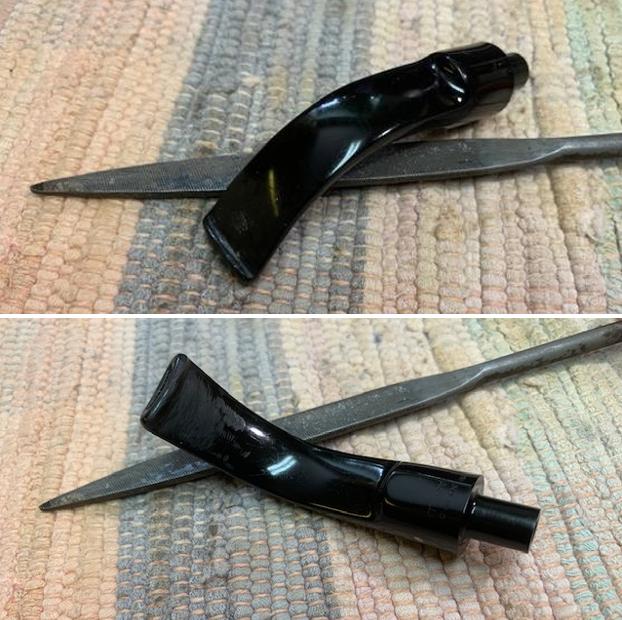
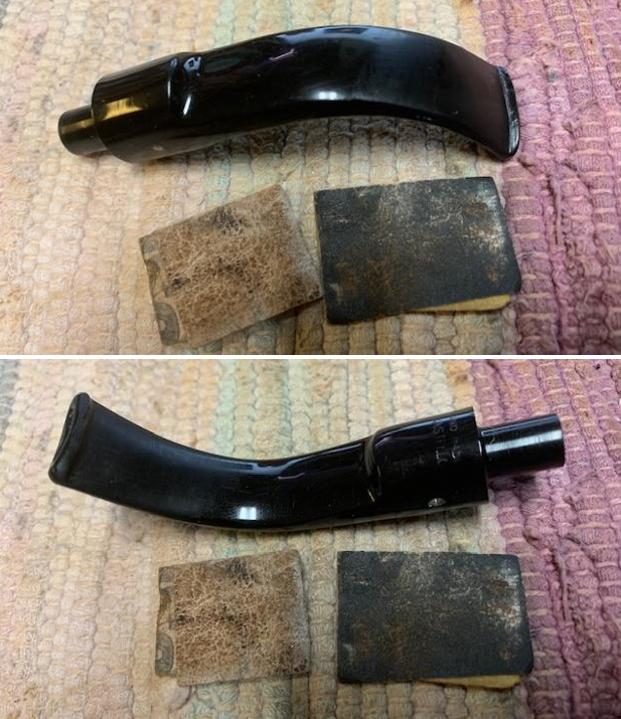
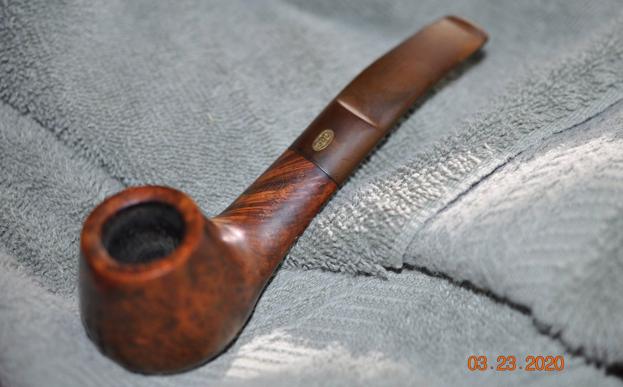
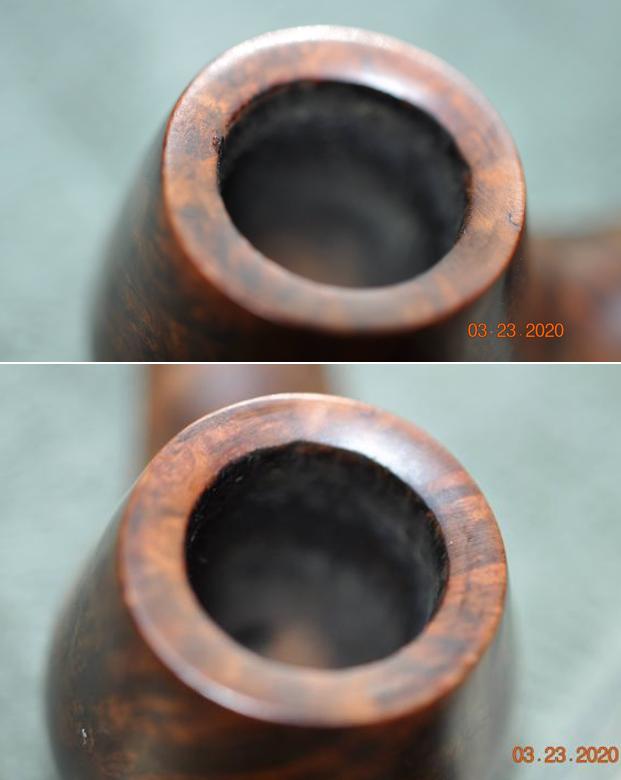
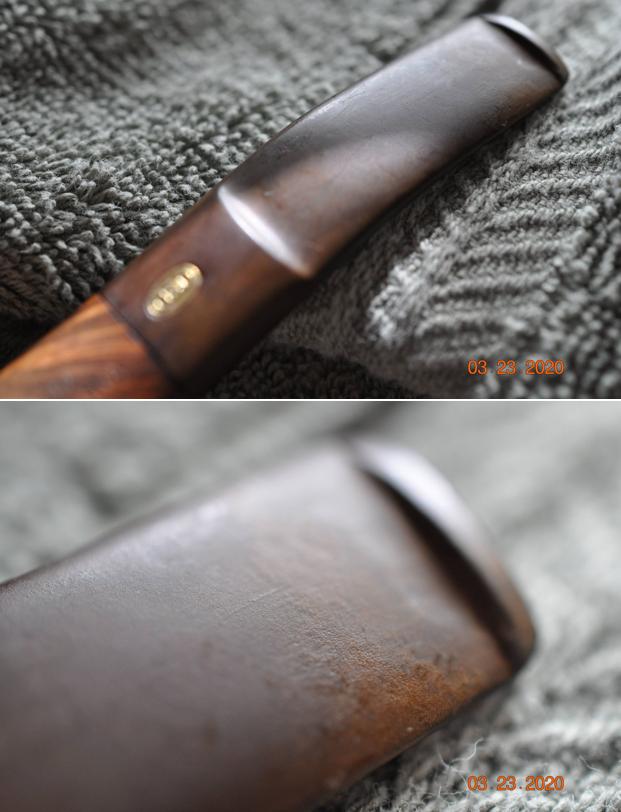
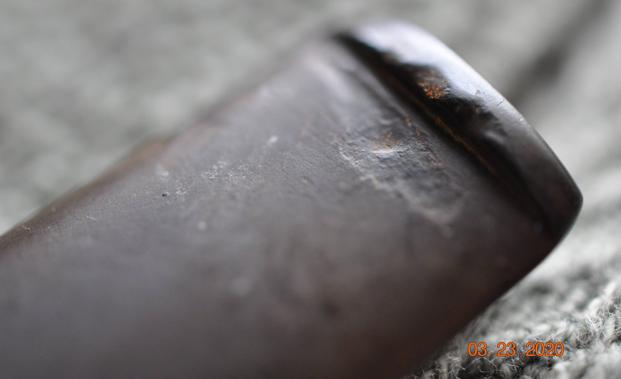
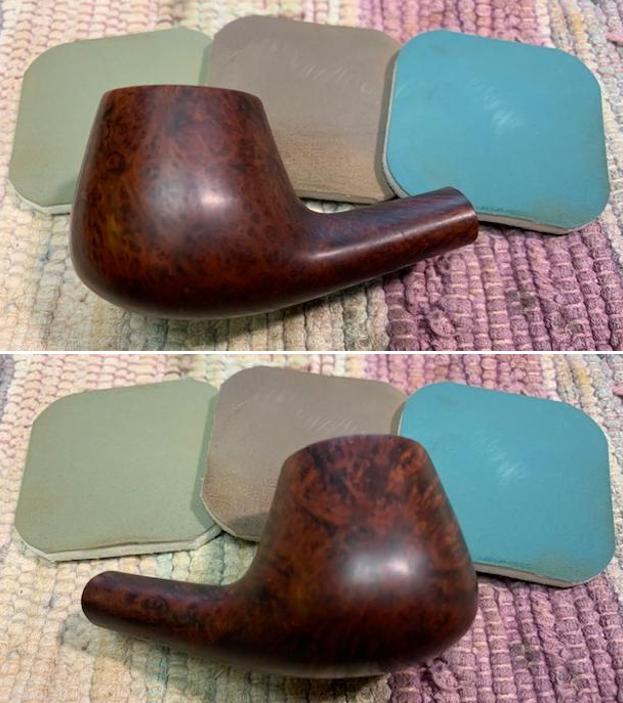
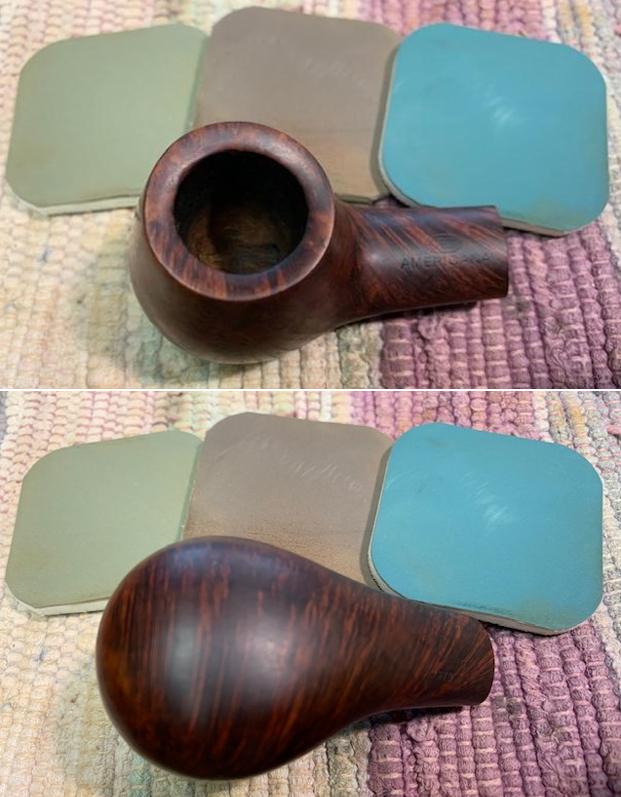
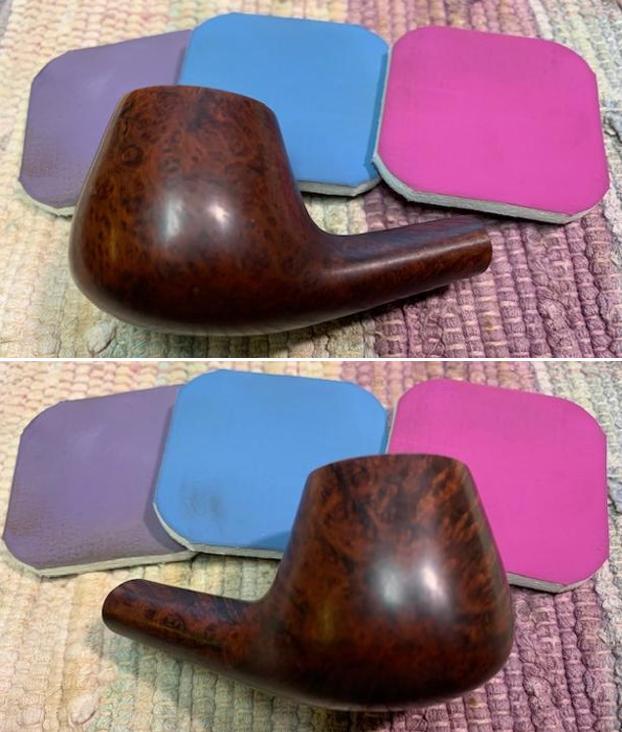
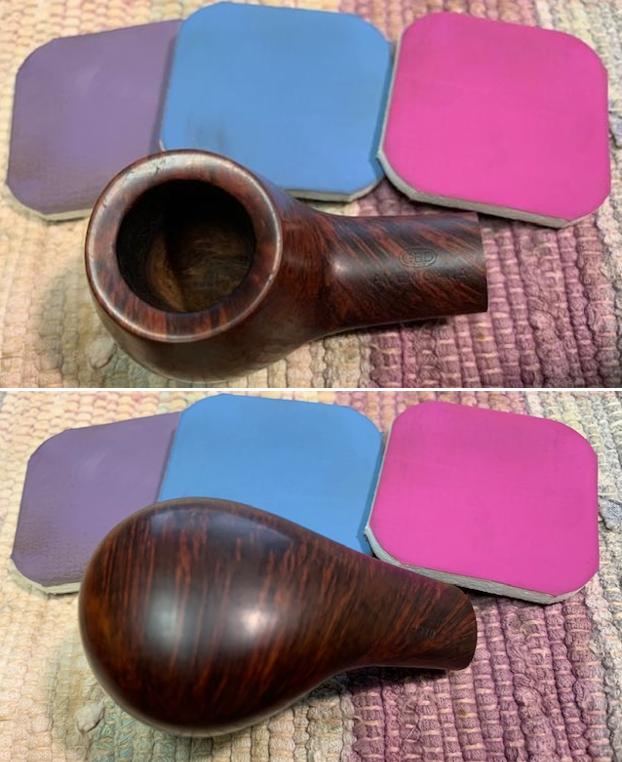
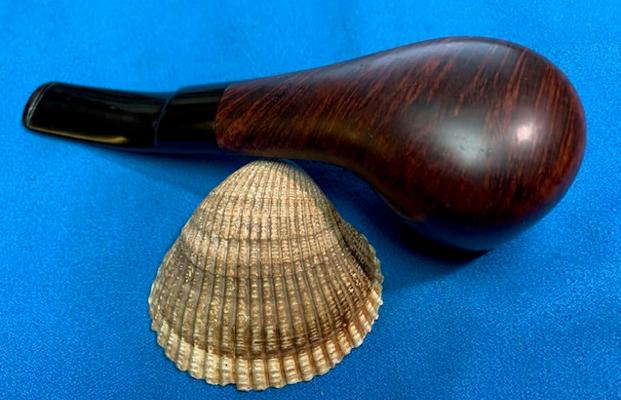
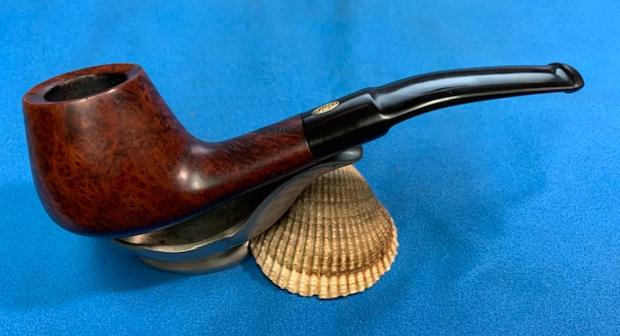
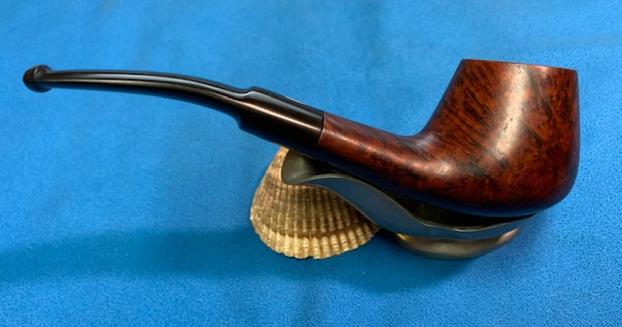
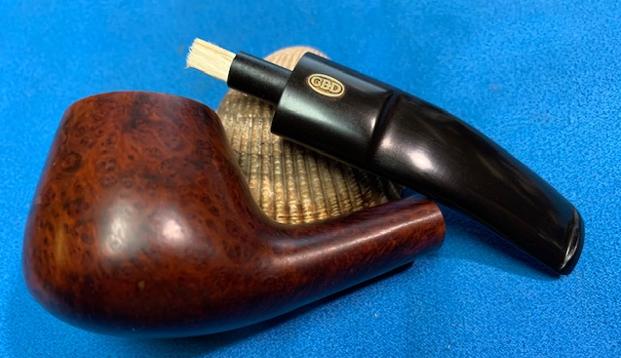
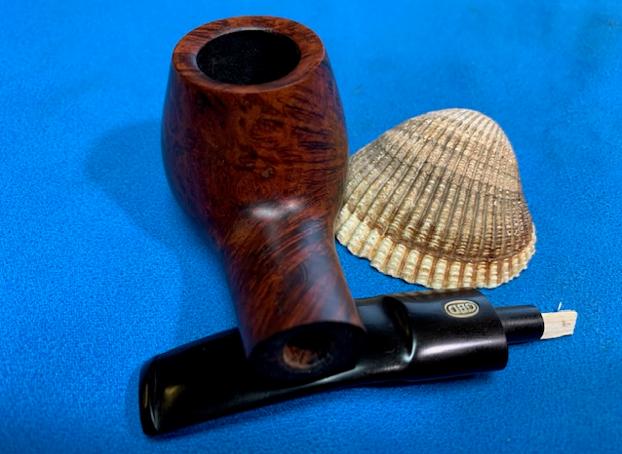
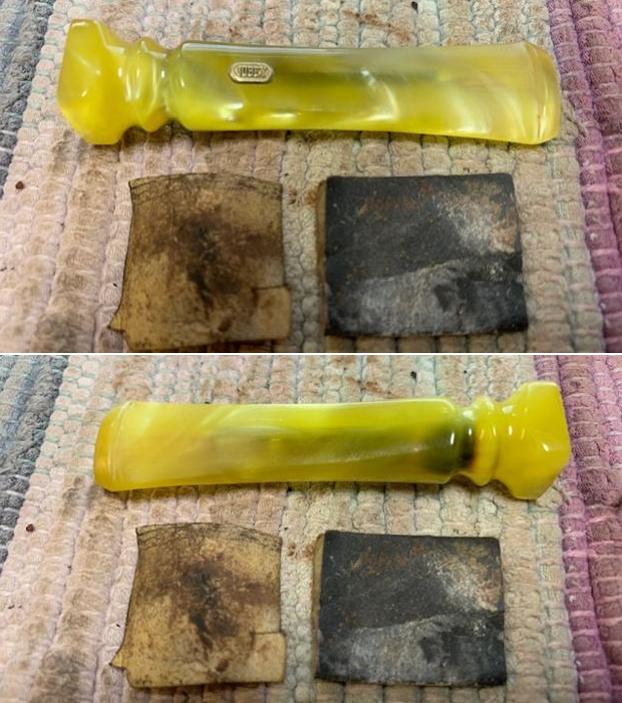
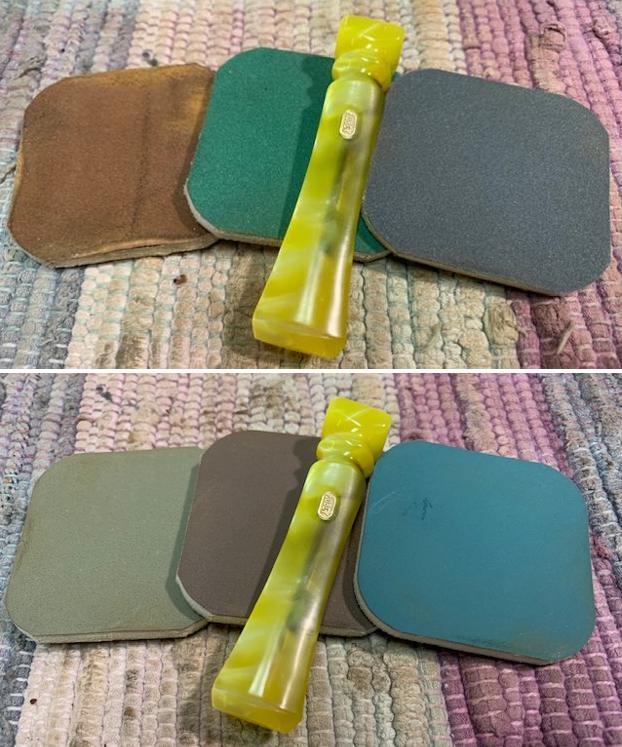
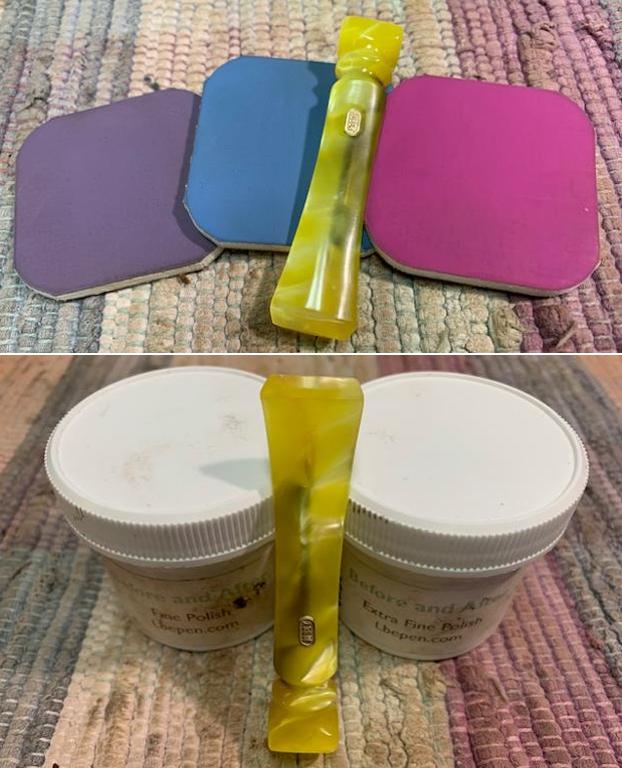
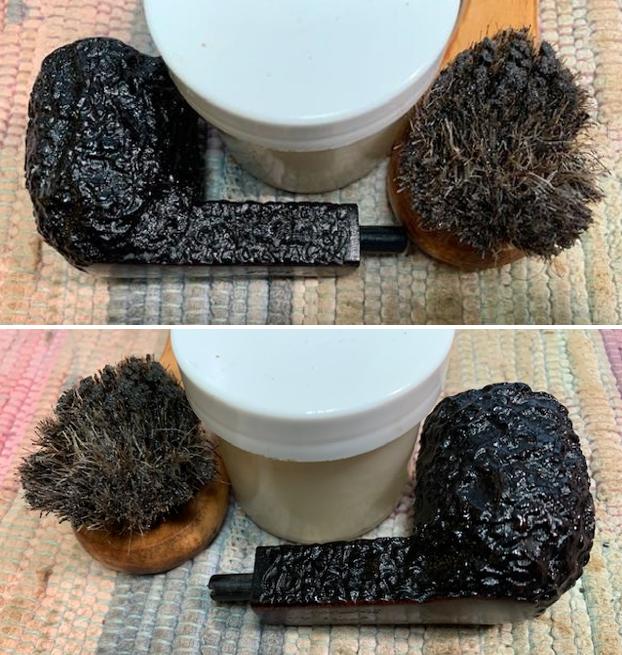
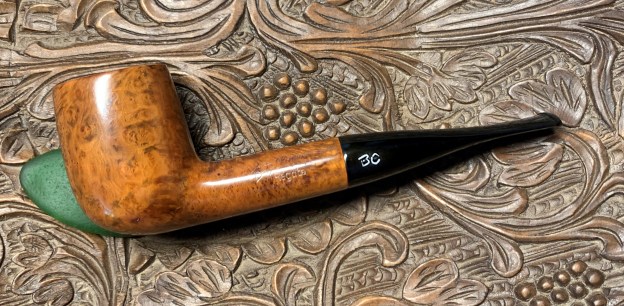
The next pipe on the table – a Butz-Choquin Apple with a smooth finish purchased from Mandy Valsinger about a year ago when she was closing her husband’s estate. It came to us from Australia. The shape of the bowl is an apple with an acrylic stem. The pipe was in overall good condition but was very tired and dirty. It is stamped on the left side of the shank and reads Butz-Choquin at an angle [over] C’est bon. On the right side of the shank it is stamped St. Claude France [over] the number 1689. The finish was dull and lifeless and a little dirty from sitting around. There was a thick cake in the bowl and an overflow of lava on the rim top toward the back. There were scratches around the sides of the bowl where it appeared that the pipe had been dropped. The amber acrylic stem had a deep tooth marks on both sides with a bit through on the underside ahead of the button. The BC logo inset in black acrylic and set on the left side of the taper stem. Jeff took the following photos before he started his cleanup work on the pipe. Jeff took close-up photos of the bowl and rim top from various angles to capture the condition of the bowl and rim top edges. You can see the cake in the bowl and the lava on the inner of the rim and the top at the back of the bowl. The photos of the stem show the general condition of the stem. He took the stem out of the shank and revealed a Delrin tenon with a lot of tars and oils on on the end of the tenon.He took photos of the sides and heel of the bowl to show condition of the briar. You can see the swirls of grain in the smooth bowl – both birdseye and cross grain around the sides and shank. There are scratches on the right side of the bowl. The stamping is very clear on both sides of the pipe. The third photo shows the BC inlay on the left side of the taper stem.I turned to Pipedia (https://pipedia.org/wiki/Butz-Choquin) and found a great read of the history of the brand. I did find a shape chart however, that had the 1689 shape. I have included that below.Now it was time to look at it up close and personal. Jeff had great job in cleaning up this BC C’est bon Apple. He had reamed the bowl with a PipNet Pipe Reamer and cleaned up the remnants with a Savinelli Fitsall Pipe Knife. He took the cake back to bare briar so we could check the walls for damage and also see the condition of the inner edge of the rim. He scrubbed the exterior of the bowl with Murphy’s Oil Soap and a tooth brush to remove the grime on the bowl and rim and was able to remove much of the grime and dirt. He cleaned out the interior of the bowl and shank with pipe cleaners, cotton swabs and alcohol until they came out clean. The rim top looked much better. The bowl looked very good. He cleaned the stem with Soft Scrub to remove the grime on the interior and the exterior and rinsed it off with warm water to remove the product. He cleaned out the airway with alcohol, cotton swabs and pipe cleaners. I took some photos of the pipe as I saw it. To show how clean the rim top and stem really was I took a close-up photo of the rim and stem. The bowl was clean and cake free. The rim top is quite clean the inner and outer edges were darkened. The surface and the button edge of the stem had tooth marks and chatter on the top near the button on both sides. What I thought was a hole all the way through the stem on the underside turned out not to be that deep.I took some photos of the stamping on the sides of the shank. It is clear and readable as noted above.I removed the stem from the shank and took a photo of the pipe from the left side to give a clear picture of the beauty of this particular pipe.I turned to Pipephil (http://pipephil.eu/logos/en/logo-butzchoquin.html) and found the C’est bon pipe shown below. I did a screen capture of the of the listing and have included it below.I started working on the pipe by dealing with the damage and darkening to the rim top and inner edge of the bowl. I sanded it with 220 grit sandpaper to remove the damage.I used to some clear CA glue to fill in the deep scratches on the right side of the bowl. Once the repairs cured I sanded them smooth with a folded piece of 220 grit sandpaper. I started polishing the areas of the repair with 400 grit wet dry sandpaper. I stained the sanded area with a Maple Stain pen. I polished the briar with micromesh sanding pads – dry sanding with 1500-12000 grit pads. I wiped the bowl down after each sanding pad with a damp cloth to remove the dust and debris. The began to take on a deep shine. I worked some Before & After Restoration Balm into the surface of the bowl with my finger tips. The product is incredible and the way it brings the grain to the fore is unique. It works to clean, protect and invigorate the wood. I greased a pipe cleaner with Vaseline and inserted it in the button. I did not see the hole going through the stem but I put a pipe cleaner in just in case there was. I then built up the tooth marks and chatter on both sides with clear CA glue. I used a small file to reshape the button edge on both side and smooth out the repairs. I then sanded the repaired areas with 220 grit sandpaper until they were smooth and blended it into the surrounding acrylic. I started the polishing with a 400 grit wet dry sandpaper. I polished the stem with micromesh sanding pads – wet sanding it 1500-12000 pads. I wiped it down with a damp cloth to remove the dust and polishing debris. I polished it with Before  After Pipe Polish – both Fine and Extra Fine. I gave it a final coat of Obsidian Oil and set it aside to dry. I am really happy with the way that this Butz-Choquin C’est bon Apple with an Amber Acrylic Stem turned out. It really is a great looking pipe with character. The rich brown stains gave the grain a sense of depth with the polishing and waxing. The grain really popped. I put the stem back on the bowl and carefully buffed the pipe with Blue Diamond on the buffing wheel using a light touch. I gave the bowl and the acrylic stem multiple coats of carnauba wax on the buffing wheel. I buffed the pipe with a clean buffing pad to raise the shine. I hand buffed the pipe with a microfiber cloth to deepen the shine. The finished Butz-Choquin C’est bon Apple really is a beauty and feels great in the hand and looks very good. Give the finished pipe a look in the photos below. The dimensions of the pipe are Length: 5 ¾ inches, Height: 1 ¾ inches, Outside diameter of the bowl: 1 inches, Chamber diameter: ¾ of an inch. The weight of the pipe is 44 grams/1.55 oz. The pipe will be going on the rebornpipes store soon. It will be in the section on French Pipe Makers if you would like to add it to your collection.Thanks for reading this blog and my reflections on the pipe while I worked on it. It was a fun one to work on!

This Castello Sea Rock Briar KKKK 65 Ticks All of My Boxes


Blog by Steve Laug

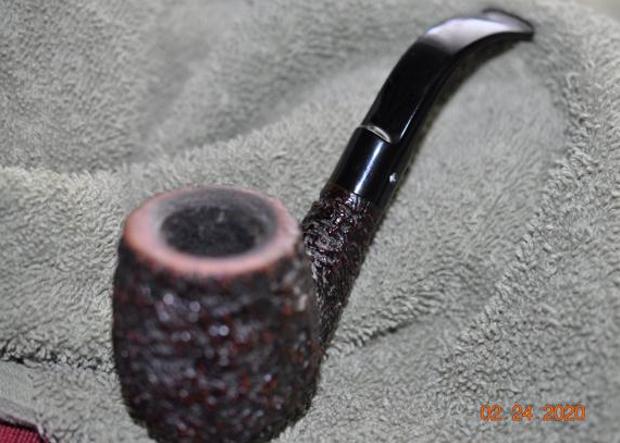
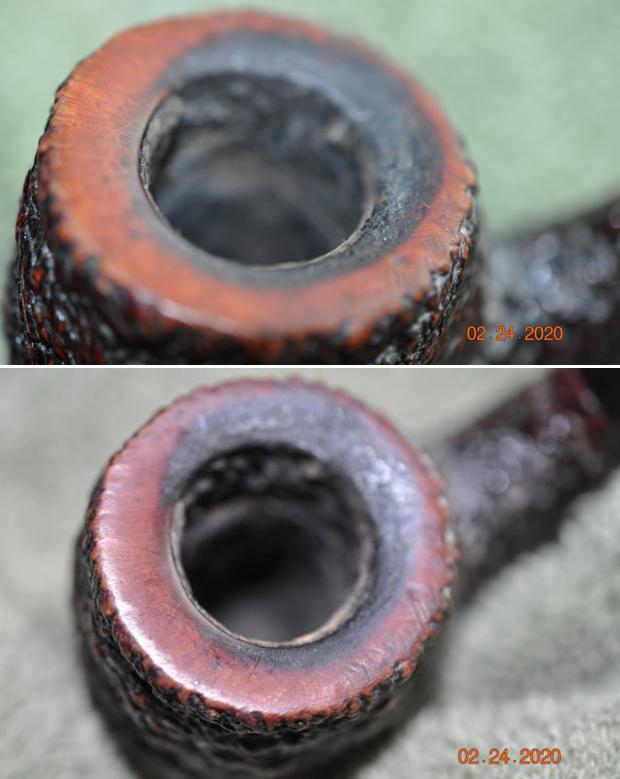
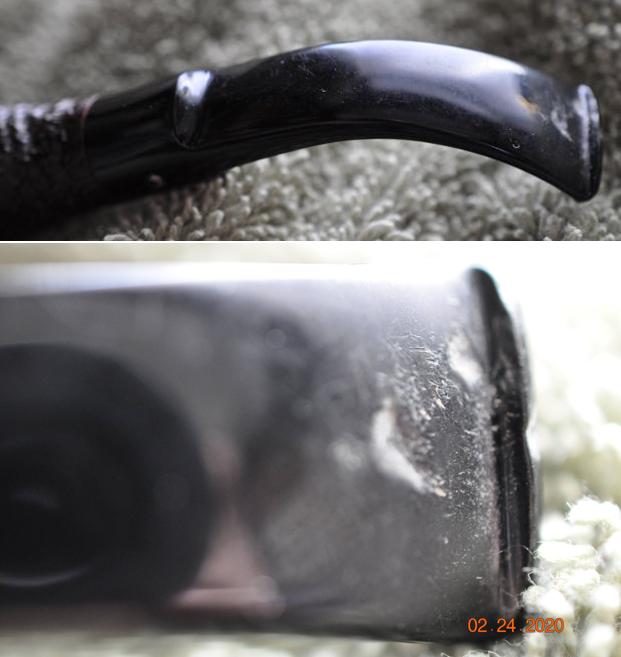
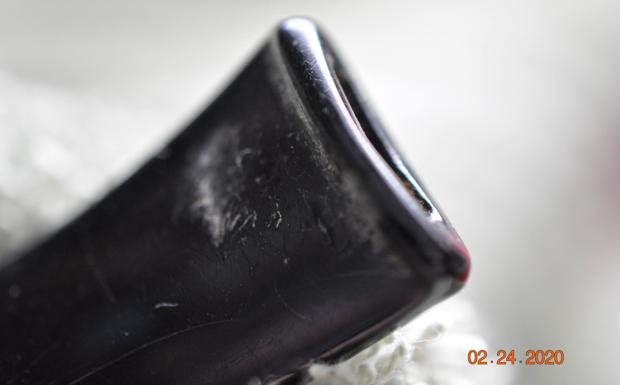
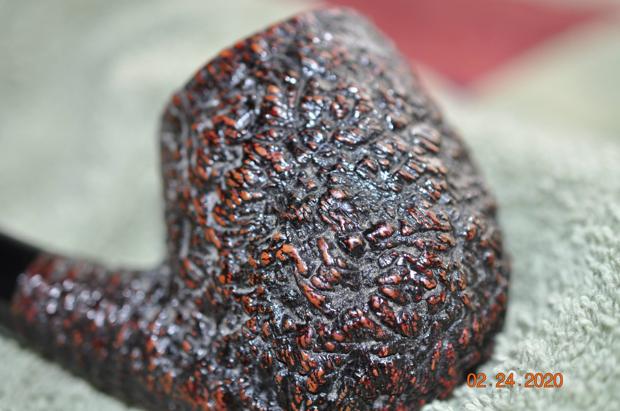
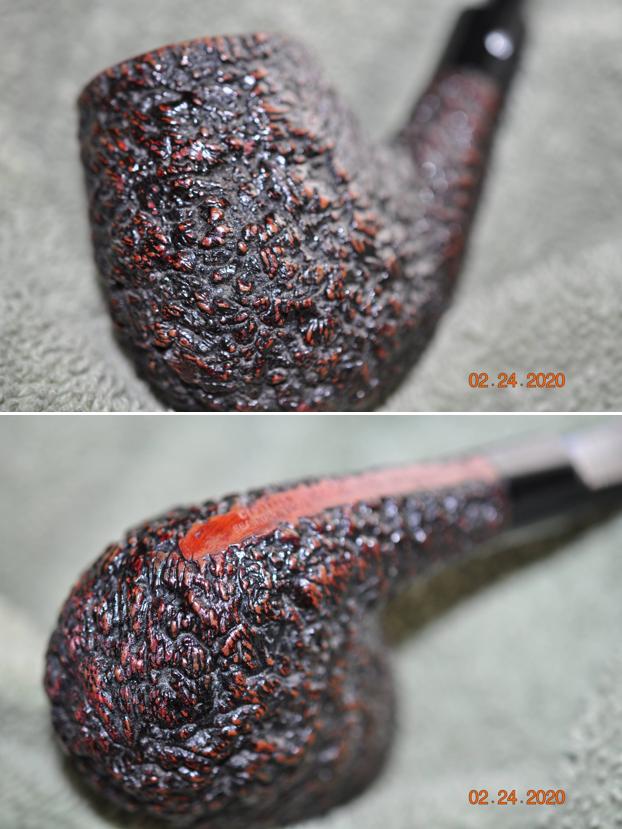
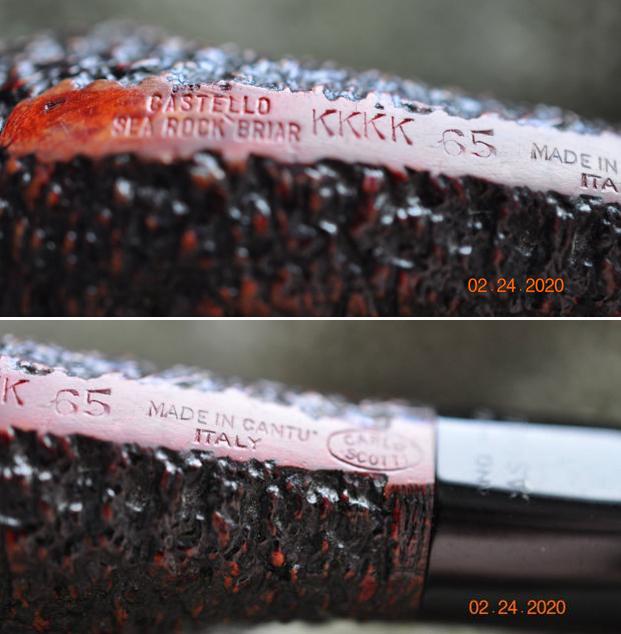
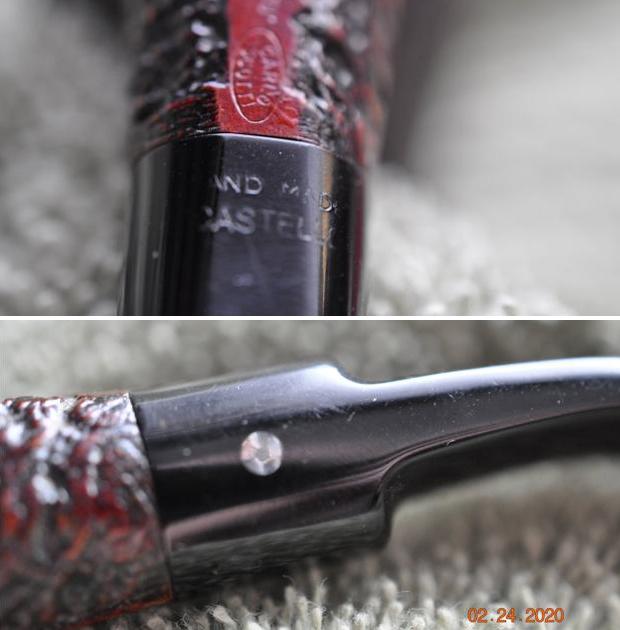
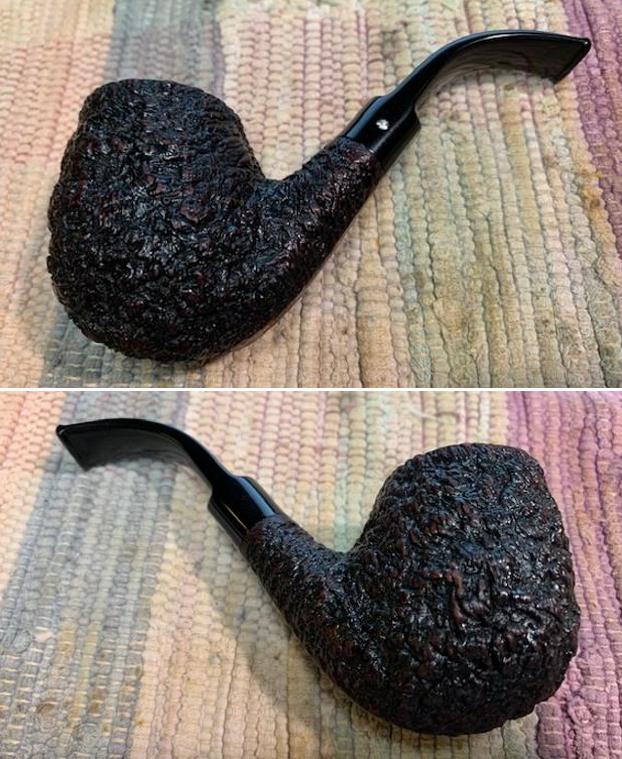
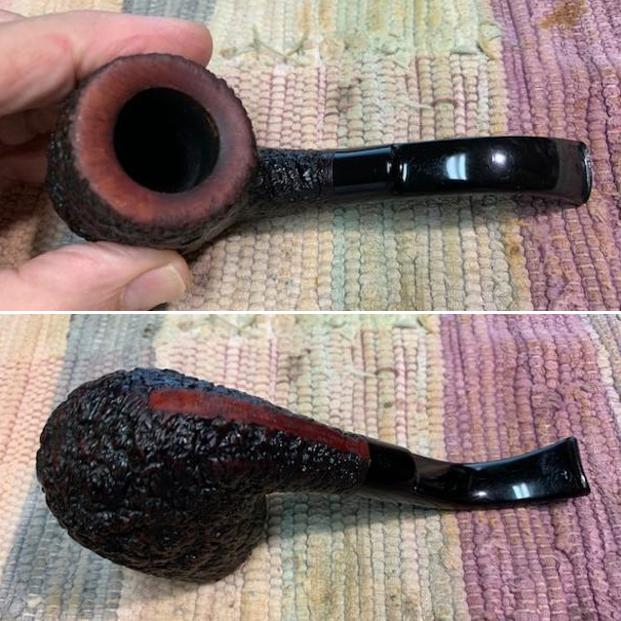
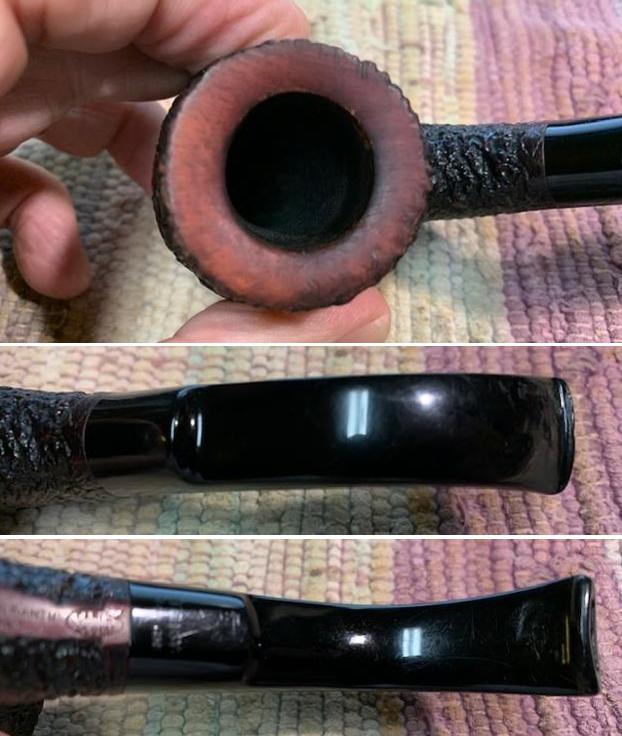
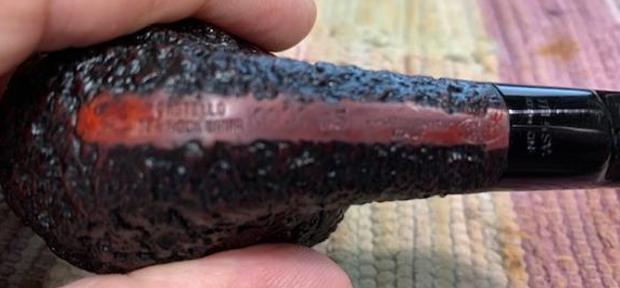
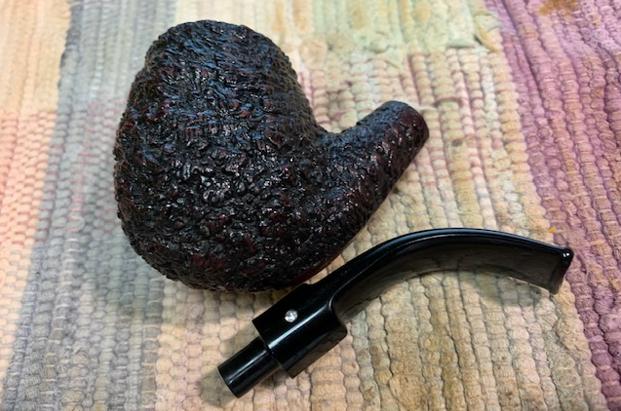
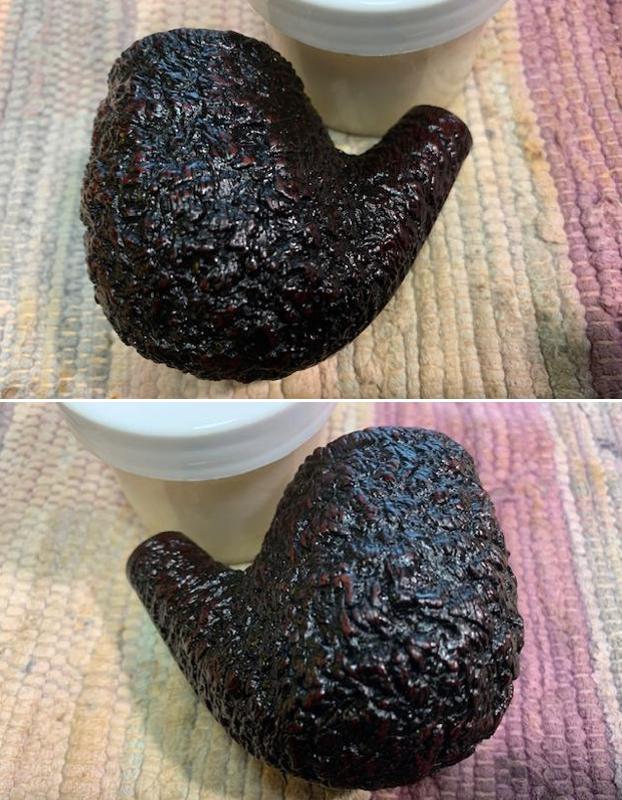
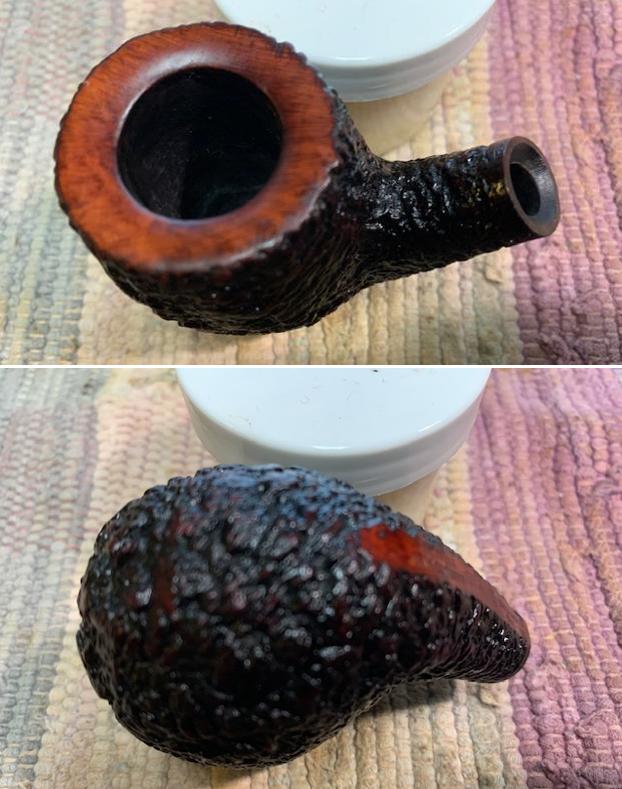
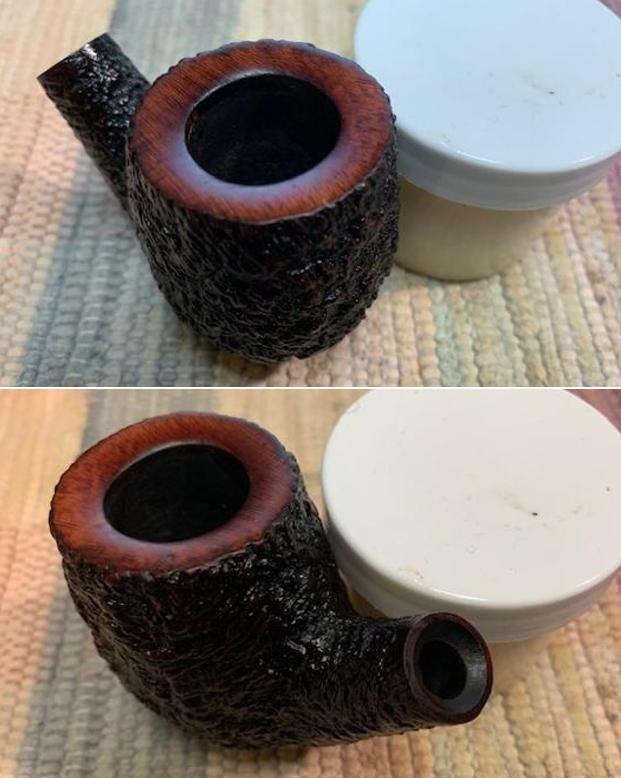
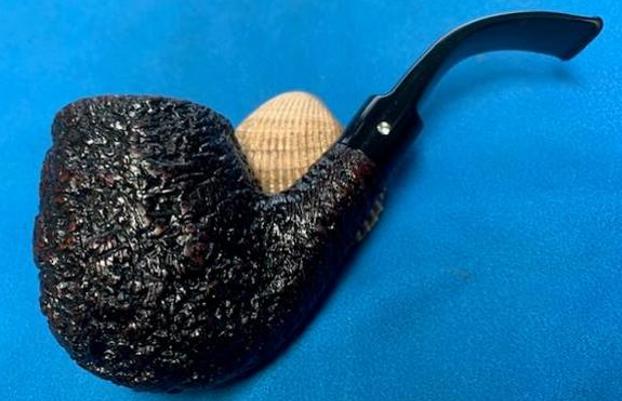
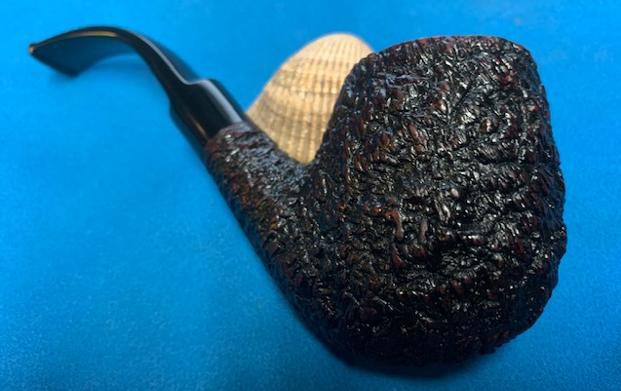
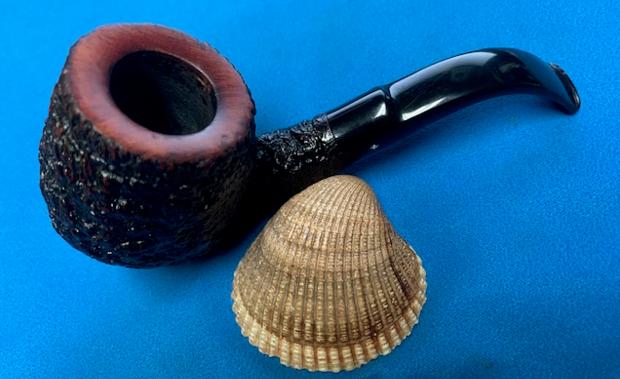
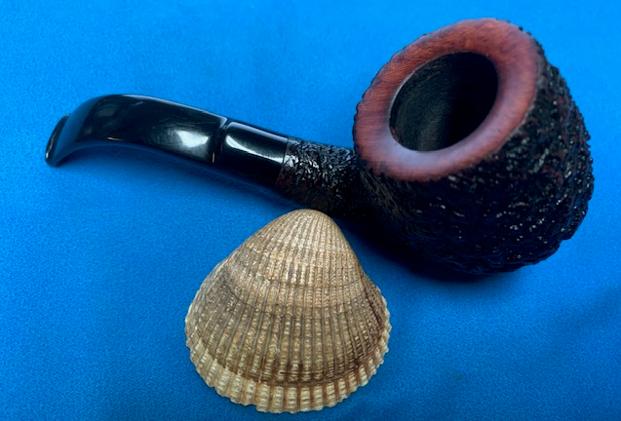
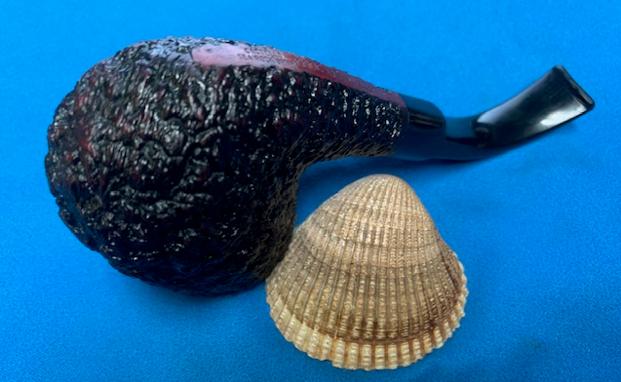
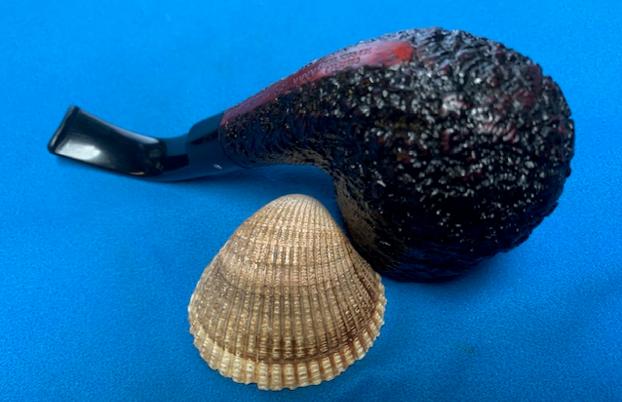
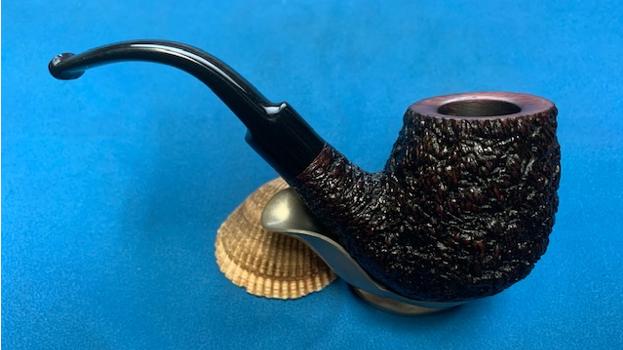
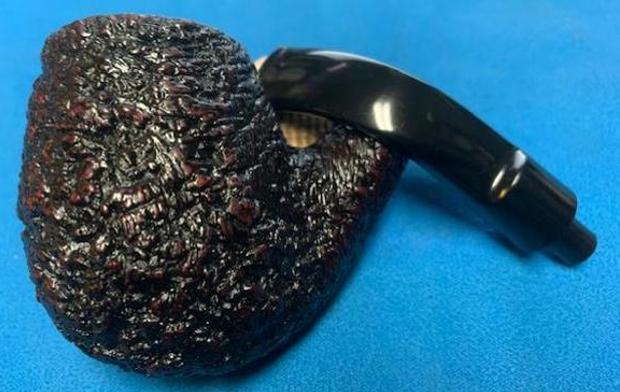
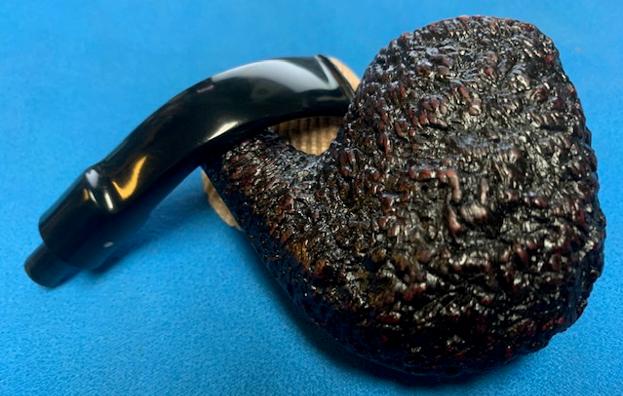
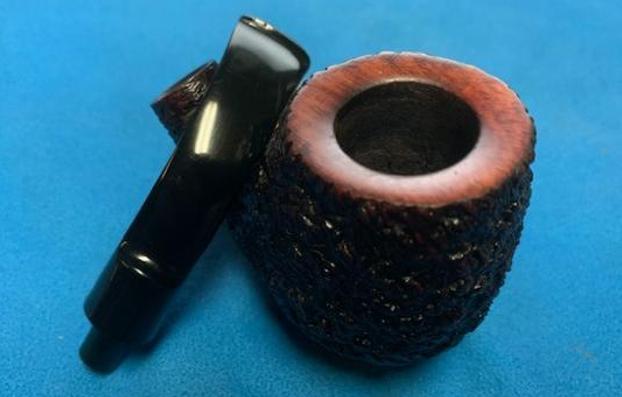
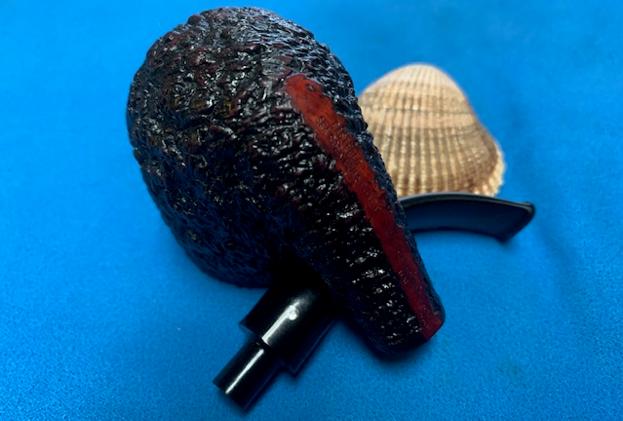
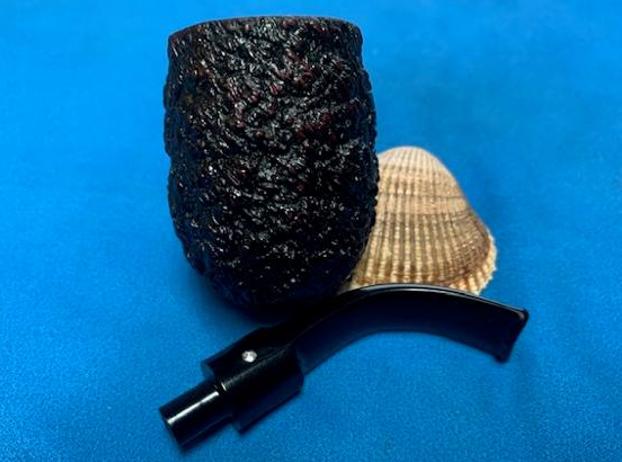
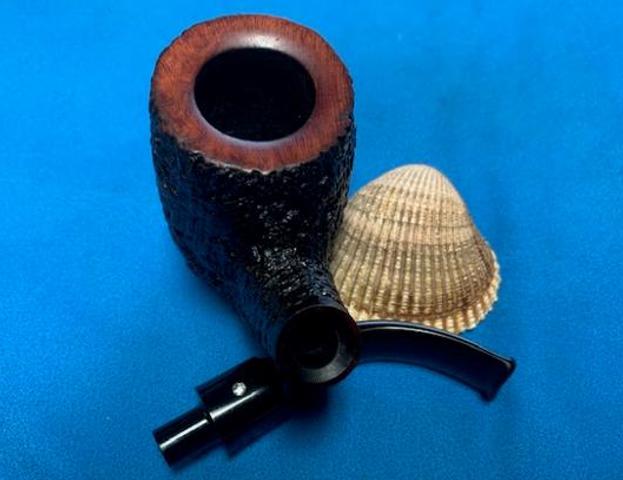
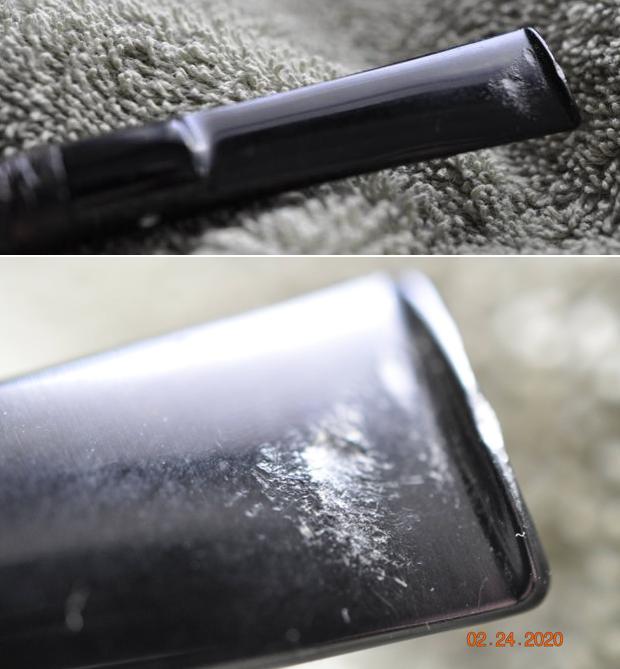
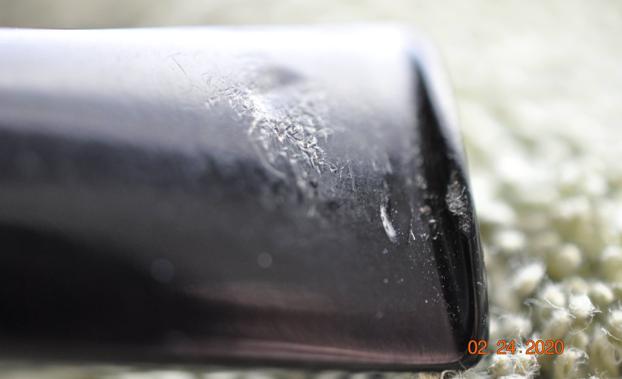
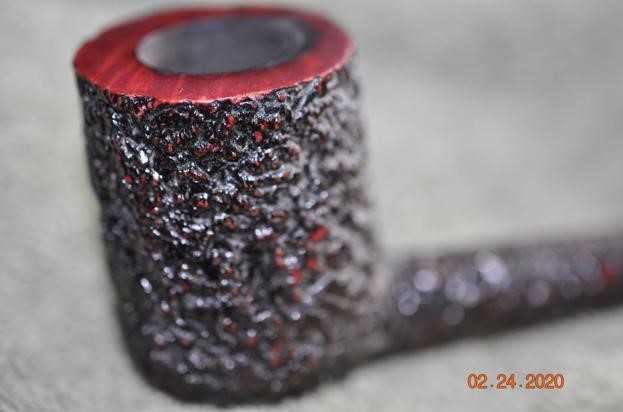
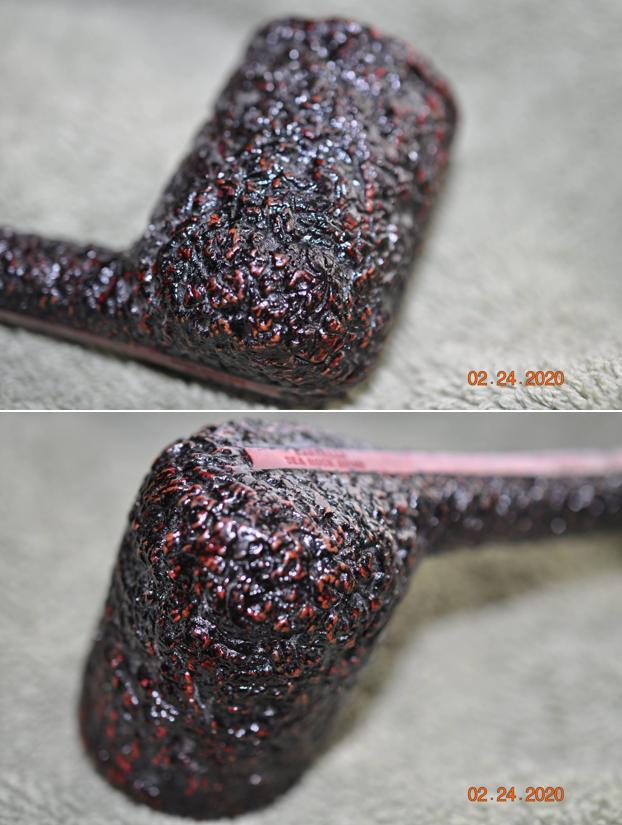
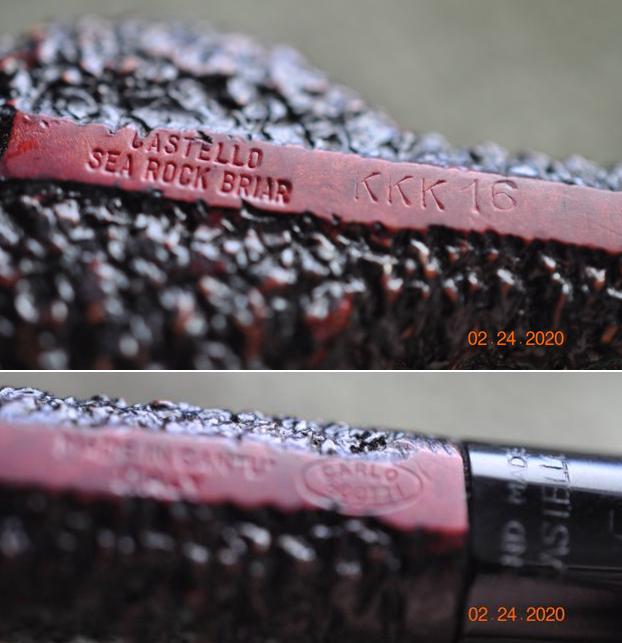
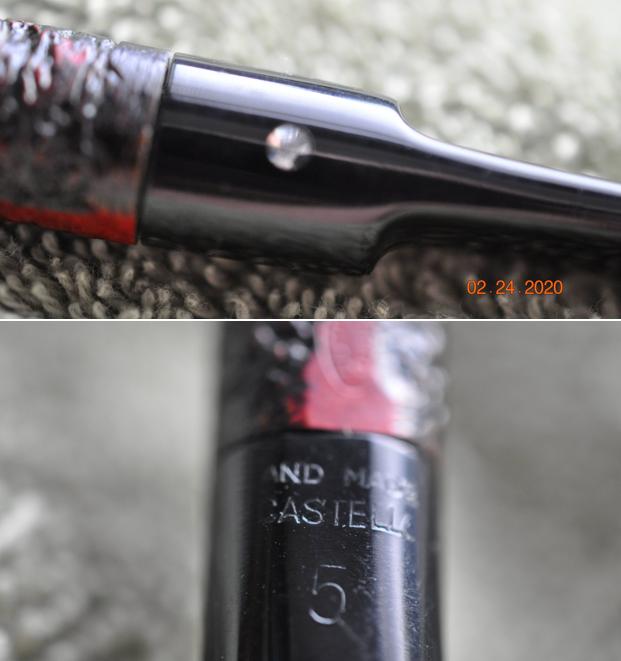
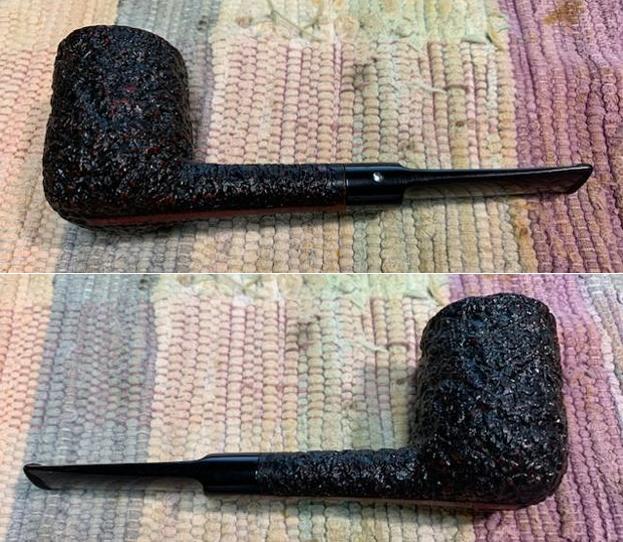
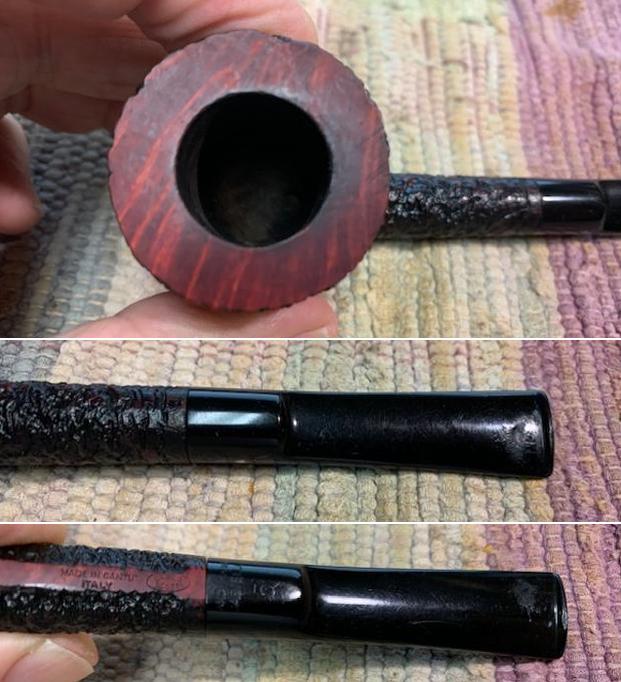
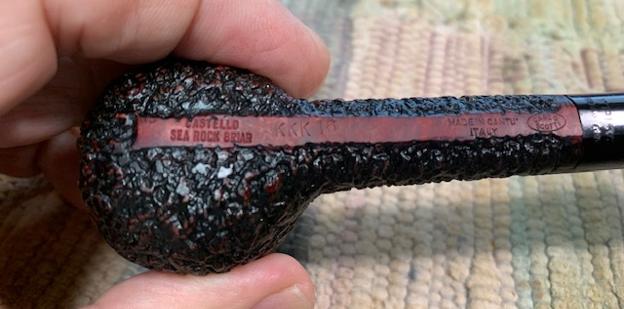
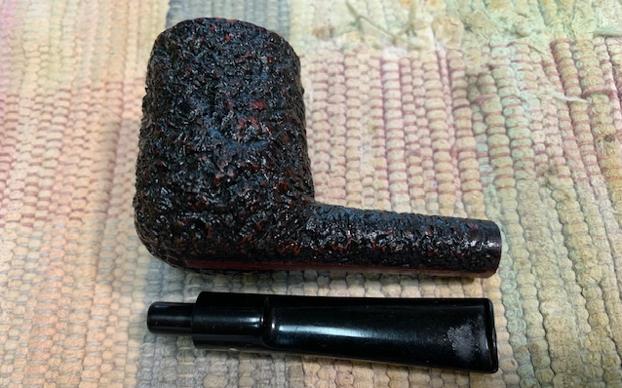
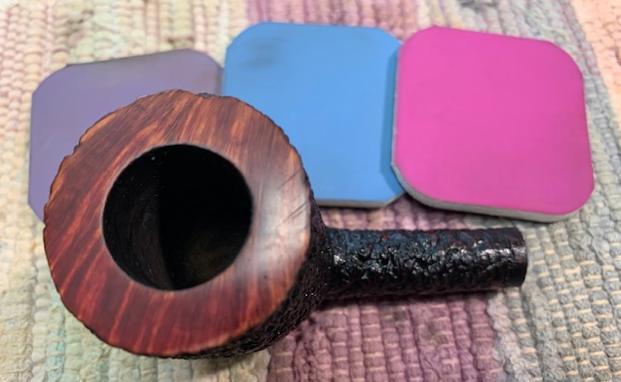
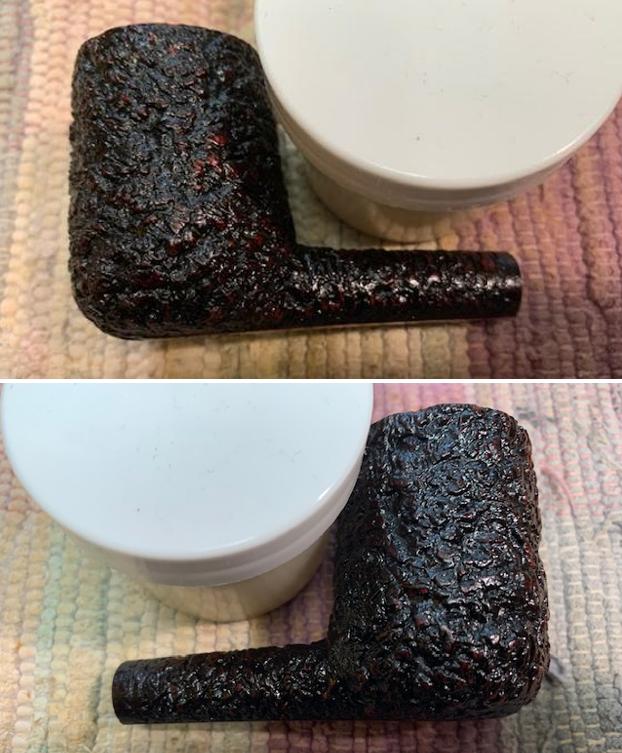
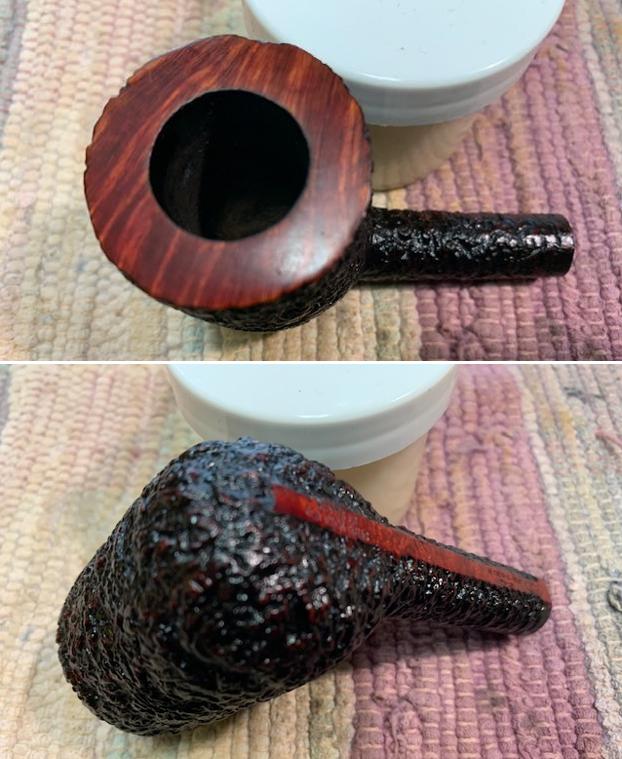
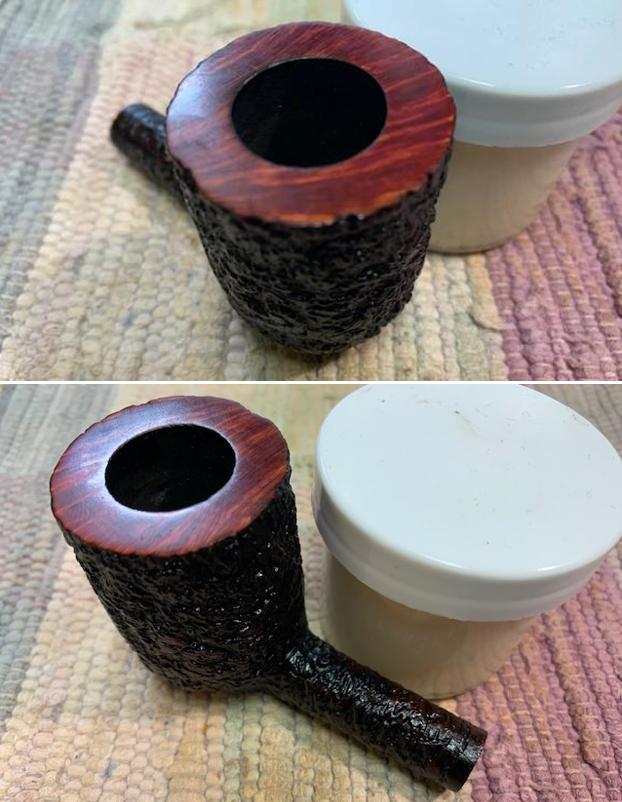
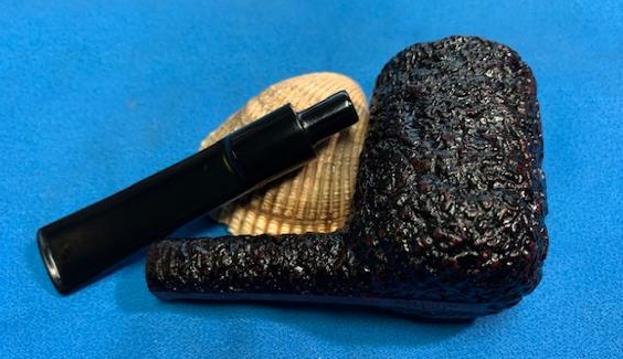
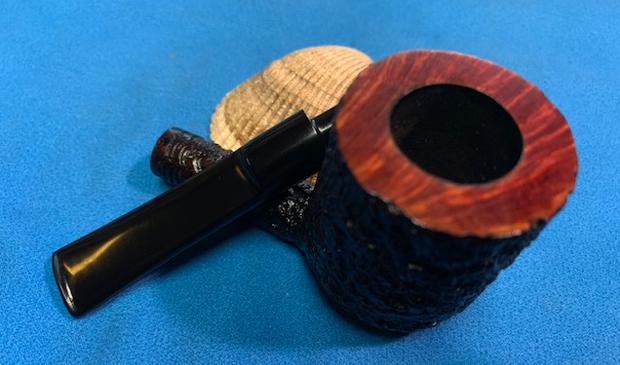
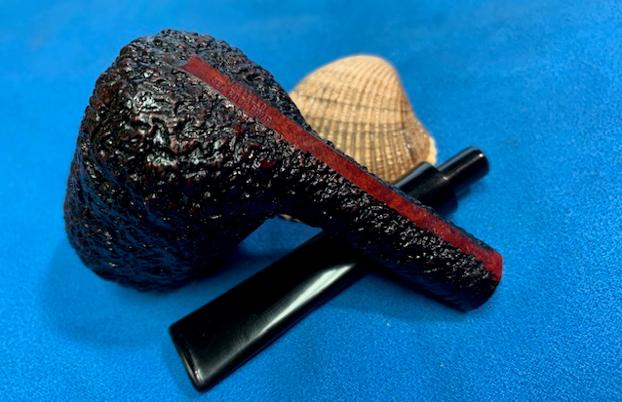
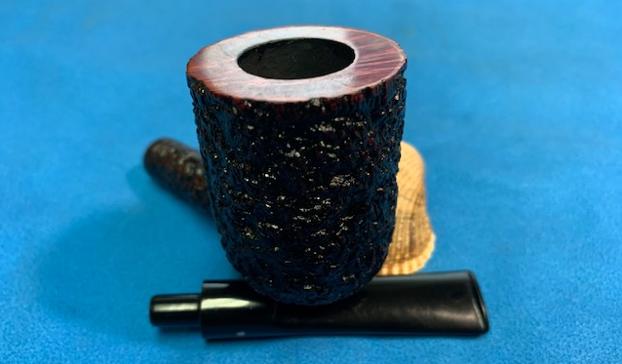
It is another hot day in Vancouver with just some afternoon meetings. After a long week I decided to take bit of time this morning for myself. It is hot enough that I went to the cool of the basement to work on pipes. The next pipe on the table is another one that came to us from the auction in Gonzales, Louisiana, USA. The first one, a Castello Sea Rock Briar KKK16 Billiard, I cleaned up and wrote a blog about yesterday (https://rebornpipes.com/2021/06/24/i-really-love-these-castello-sea-rock-briar-pipes-a-sea-rock-briar-kkk16/). This next one is a Castello Sea Rock Briar and it is what Castello calls a Bent Billiard shape though to me it is like a bent egg. It is a pipe that I like so well that I am cleaning it up for myself. It is stamped on the smooth shank bottom and reads Castello [over] Sea Rock Briar followed by KKKK65. That is followed by Made in Cantu [over] Italy followed by an oval containing the name Carlo Scotti next to the stem shank union. The Castello “diamond” inset is on the left side of the saddle stem letting me know this was a pipe made for US import. On the underside of the stem it is stamped Hand Made [over] Castello with no number. The bowl had a heavy cake and there was thick lava overflow on back top side and inner edge. It was hard to know if there was burn damage on the smooth rim top because of the lava but after cleaning it we would know for sure. The rusticated finish was pretty dirty with dust and grime when we got it but still showed promise. The acrylic stem had deep tooth marks and chatter on both sides near the button. The edges of the button were also marked. Jeff took the following photos of the pipe before he worked his magic on them. The pipe must have been a terrific smoker because the bowl was so heavily caked with the thick lava flowing over the rim top. In its condition it was going to take some work to clean out that bowl and be able to see what the rim looked like underneath the layer of lava. The acrylic/Lucite stem was in good condition other than the deep tooth marks and chatter on both sides of the stem just ahead of the button and on the button surface itself. The rest of the bowl looked dirty but the photos give an idea of what Jeff saw before his cleanup revealed the condition of the pipe. The next photos try to capture the stamping on the flat panel on the underside of the shank. It read as I have noted above. The stem also bears a Hand Made Castello stamp on the underside. Jeff cleaned the pipe with his usual regime that many who read this probably have memorized. He reamed the bowl with a PipNet pipe reamer and cleaned up the remnants with a Savinelli Fitsall Pipe Knife. He scrubbed the internals of the bowl, shank and stem with alcohol, cotton swabs and pipe cleaners. He scrubbed the exterior with Murphy’s Oil Soap to clean off the dust and grime on the rusticated Sea Rock finish. The smooth rim top looked very good under the thick lava coat. The inside of the bowl itself looked great. He scrubbed the stem with Soft Scrub cleanser to remove the grime and grit. The stem was in great shape other than the tooth marks on both sides. It really is a beautiful looking rusticated pipe. I took photos of the pipe when it arrived here. I took some close up photos of the rim top, bowl and stem to show what they looked like after Jeff’s cleanup. It is a startling difference. The rim top looks very good. The stem also looks very good.I took a photo of the stamping on the underside of the shank and the stem. It is clear and readable as noted above.I removed the stem from the shank and took a photo of the pipe to show the proportions of the bowl/shank and the stem length. I cannot seem to retain the details on Castello pipes in my head for long for some reason. The stamping on them – Castello and the Carlo Scotti stamp were things that I wanted to makes sure I understand before I began to work on the pipe. I turned to Pipephil’s site to get a quick summary (http://www.pipephil.eu/logos/en/logo-castello.html). I quote:

Castello PIPA CASTELLO di Carlo Scotti & C. was founded in 1947 by Carlo Scotti (†1988). Franco Coppo (AKA “Kino”) who married Carlo Scotti’s daughter Savina, manages (2012) the corporate since 1985.

The site also gave a good summary of the grading and sizes of the pipes. I quote that in full.

Sizes (ascending):

1K to 4K, G (Giant) and GG (Extra large)

Rusticated grading: SEA ROCK, OLD SEA ROCK, NATURAL VIRGIN,

Sandblasted grading: ANTIQUARI, OLD ANTIQUARI

Smooth grading (ascending): TRADEMARK, CASTELLO, COLLECTION

Other stampings: Great Line (Non-standard or freestyle) Fiammata (Straight grain)

Production (2012): ~4000 pipes / year

I also found a note on the page that the Rhinestone logo was originally on pipes for the US market. It is occasionally used now.

I turned then to Pipedia for more information on the brand (https://pipedia.org/wiki/Castello). The majority of the information was what was already quoted above in abbreviated form. However there was a link to an article by Bob Hamlin that gave some interesting bits of information that I found helpful (http://www.pipes.org/BURST/FORMATTED/196.016.html). I quote in part from that article.

SEA ROCK [Carved Black or dark brown]:  This is the lowest grade of the Castello line and is the most common in the USA.  Sea Rocks are produced by taking a smooth bowl that has not been “final finished” and surface carving the finish with tools. This “carved” finish is then evened out using a steel wire brush, stained and then waxed. The Natural Vergin carved finish is left unstained and unwaxed as a rule, although we have seen waxed and partially waxed “Vergins”.

All carved Castello pipes are graded by the number of K’s that are stamped on each piece and are K-graded by SIZE.  1K is the smallest and fairly rare, 2K is small to medium, with 3K or 4K being the most common and ranges from medium to medium large. Large pieces are stamped “G” for giant and extra large pieces are stamped “GG” for double giant.  In addition to the number of K’s on a carved Sea Rock piece the shape number is almost always added.  As a rule a Sea Rock Castello is stained Black, although recently there have been quite a few coming in stained deep brown and still stamped “Sea Rock”.  American Logo’d Sea Rocks are all priced the same to the consumer, although most are 2 or 3 K’ed models.  G/GG models are charged at a higher price on American pieces and are basically the same as their European counterparts.

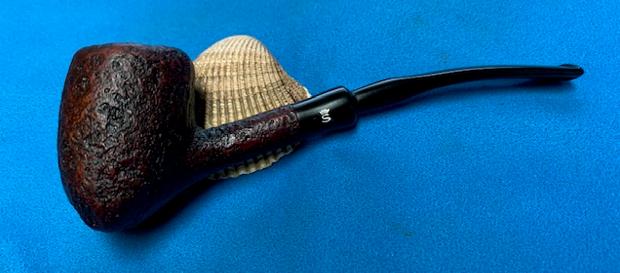
The Castello Sea Rock briar I was working on had the 4Ks of a Medium Large sized pipe. It definitely was made for the American Market with the Rhinestone in the stem. It had the black/dark brown finish. The 4K stamp told me that it came out in the late 1960s onward and was a mid-large sized pipe from that time period. The number 65 makes it a Bent Billiard.

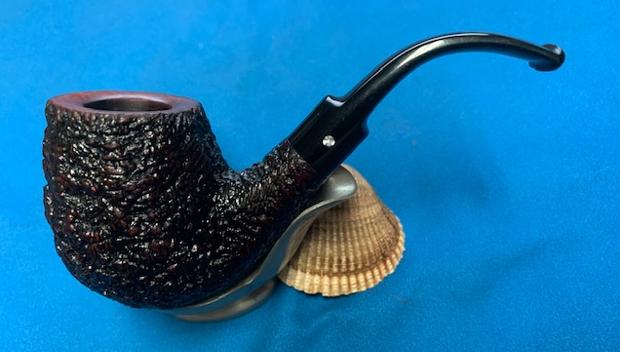
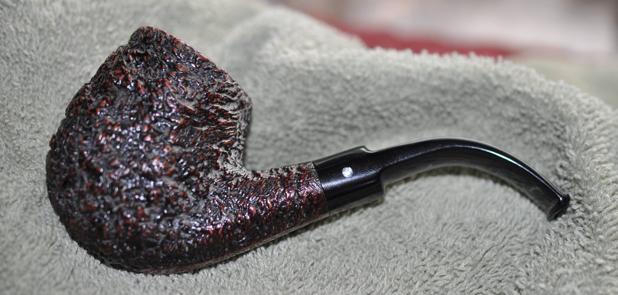
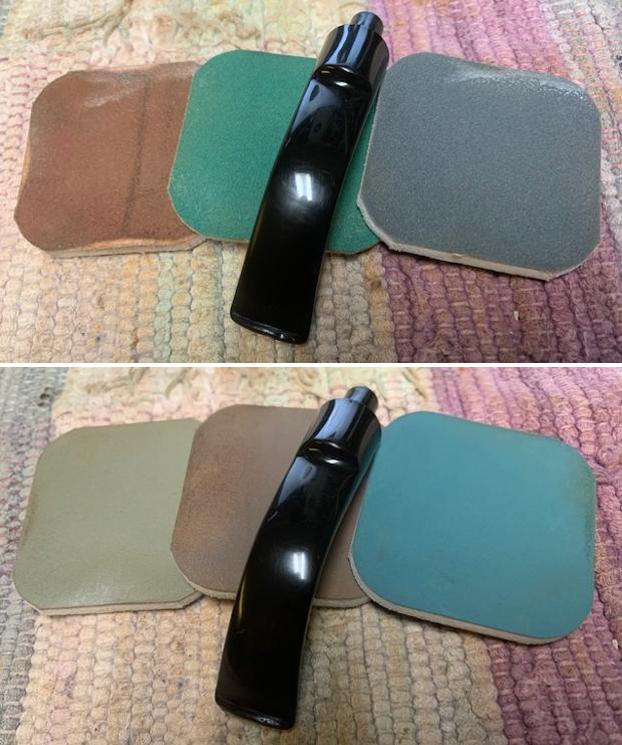
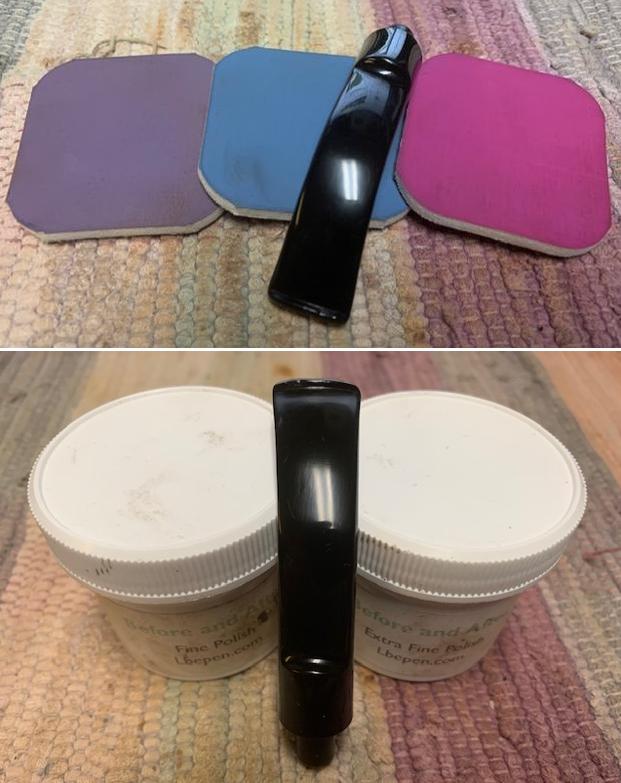
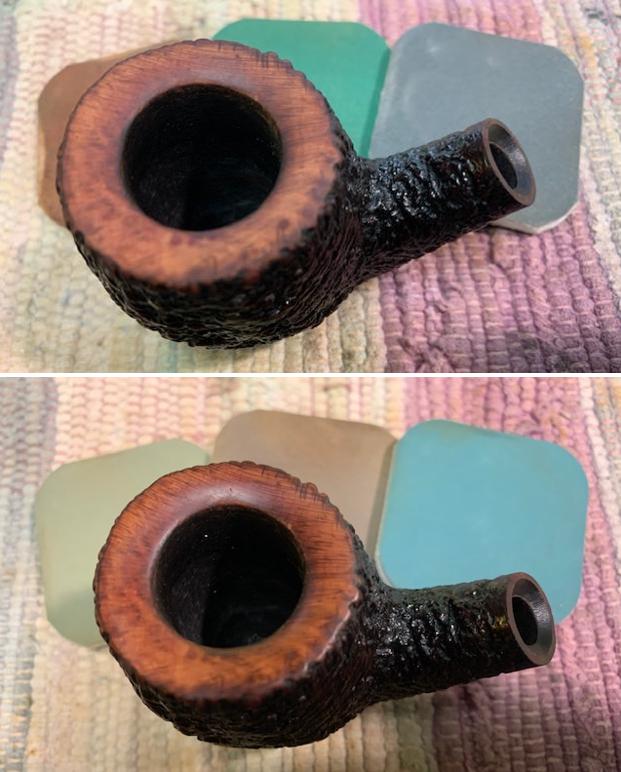
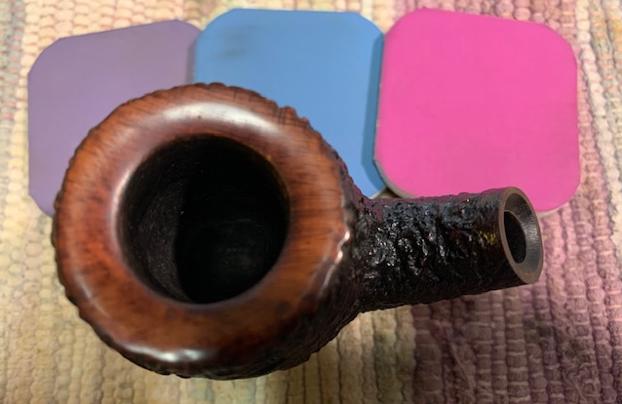
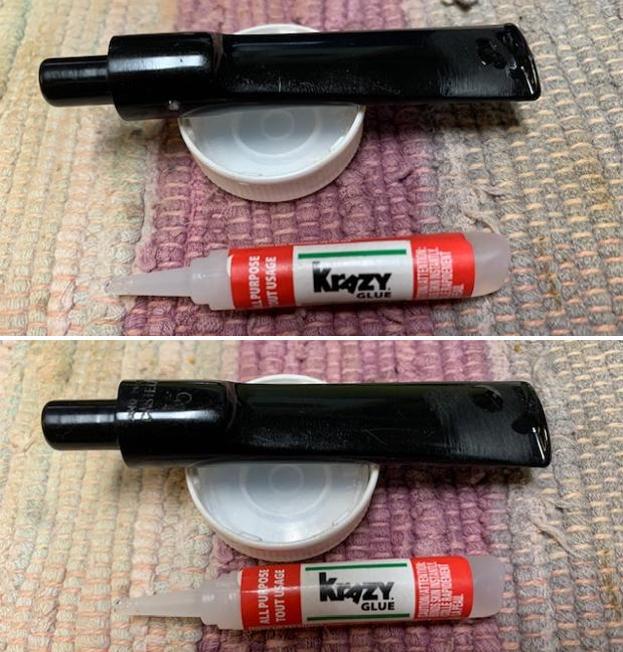
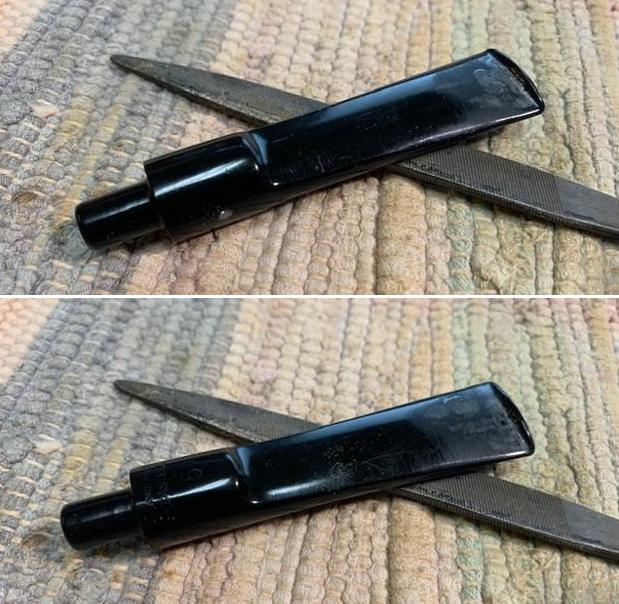
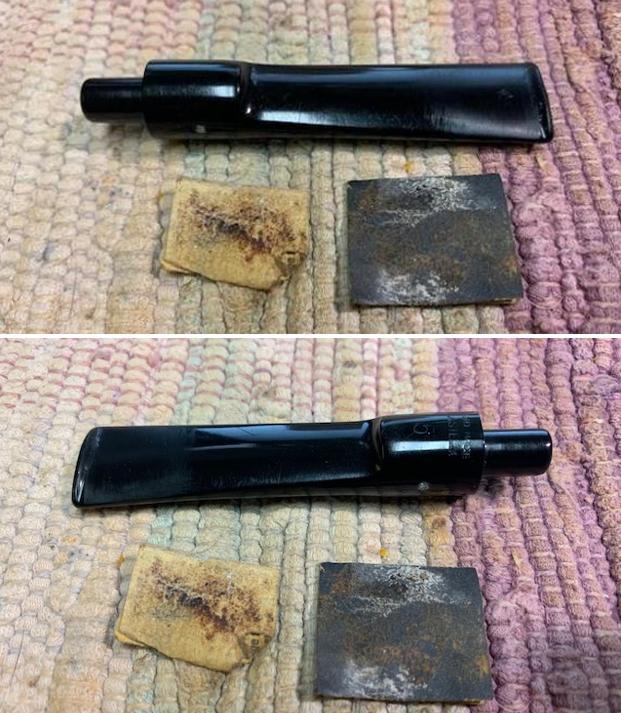
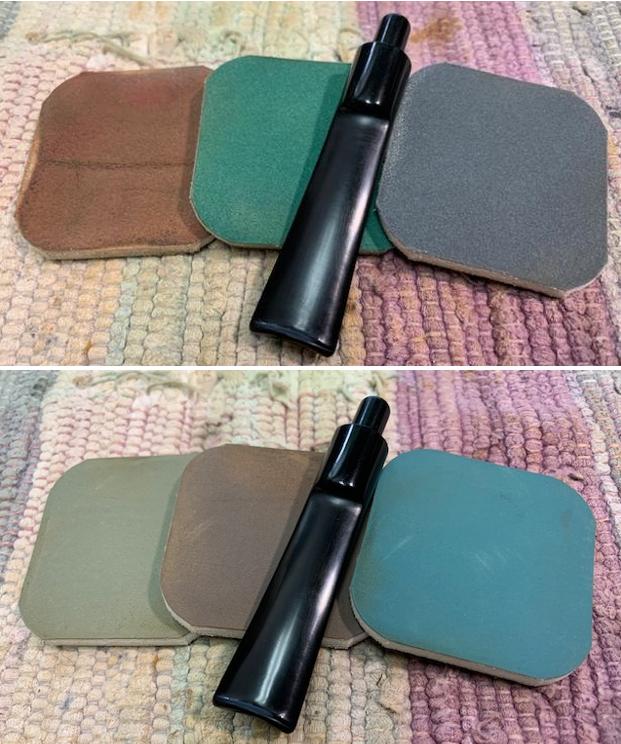
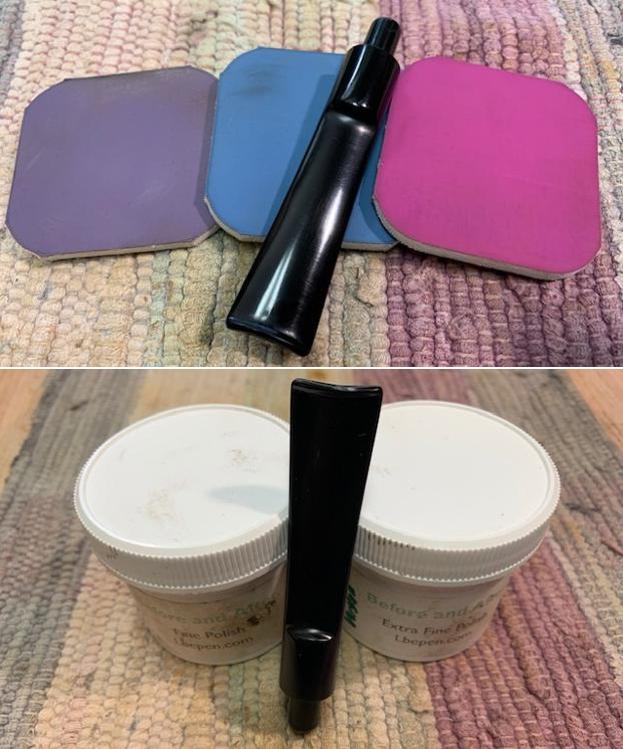
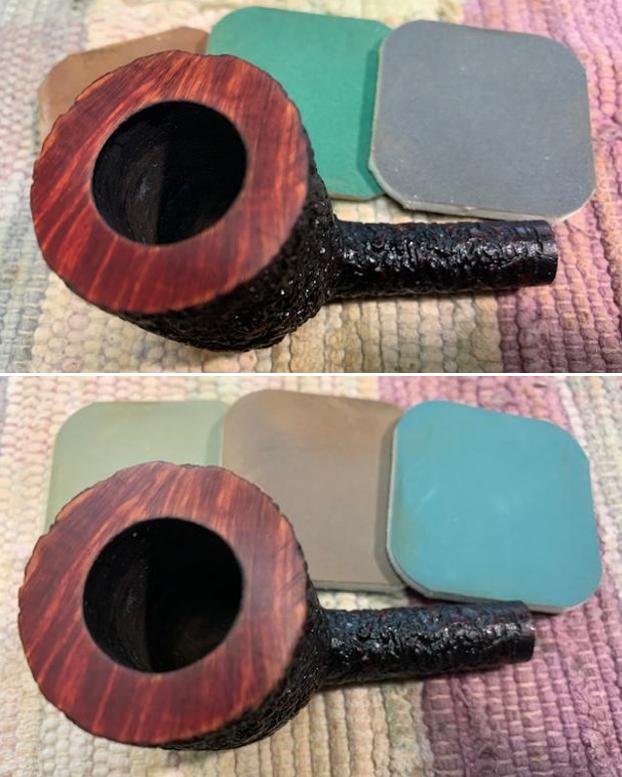
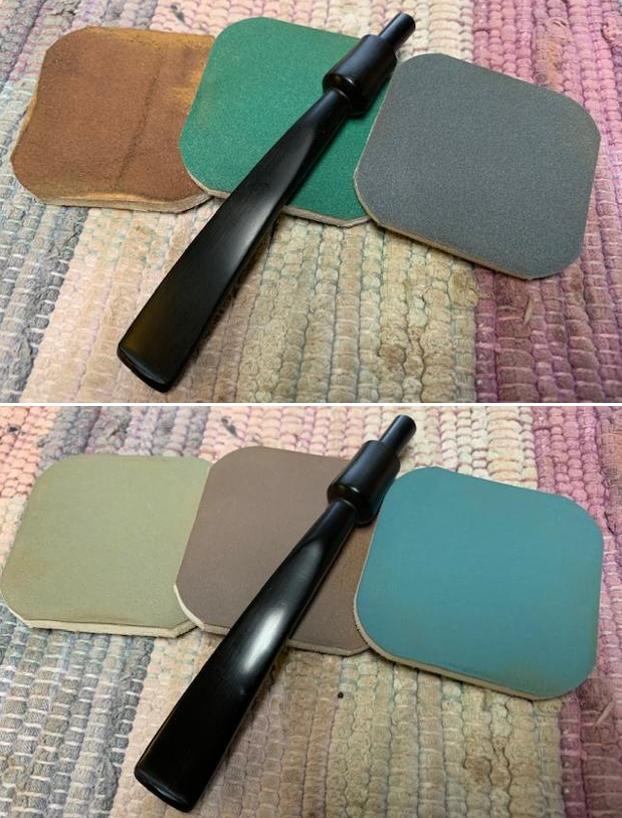
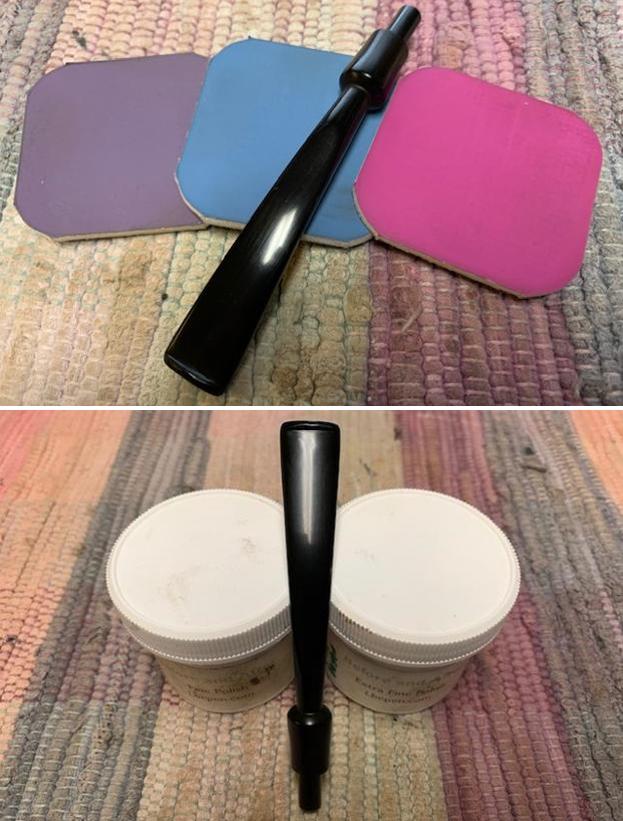
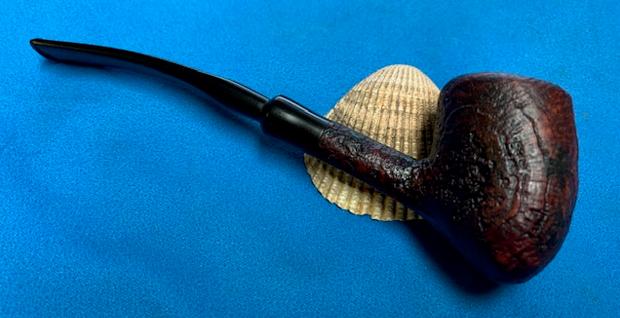
I decided to work on the stem first and try to remove and repair the tooth marks on both sides of the acrylic stem. Since acrylic does not have “memory” like vulcanite I did not try painting the stem surface. I sanded down the chatter in preparation for repairing the tooth marks. I filled in the tooth marks with clear CA glue. Once the repairs cured I used a small file to flatten them out and recut the sharp edge of the button. To blend in the repairs I sanded the stem with 220 grit sandpaper and started the polishing with 400 grit wet dry sandpaper. I polished the stem with 1500-12000 grit pads. I dry sanded it with the pads and wiped it down with a damp cloth after each sanding pad. I finished polishing the stem with Before & After Pipe Polish – both Fine and Extra Fine polishes. I wiped the stem down with a damp cotton pad afterwards and buffed it with a soft microfiber cloth. I set the stem aside and turned my attention to the bowl. I polished the smooth rim top with micromesh sanding pads -1500-12000 grit pads. I wiped the rim top down with a damp cloth between each sanding pad. The rim top began to really shine. I worked some Before & After Restoration Balm into the rusticated Sea Rock finish on the bowl and the rim top. I worked it into the surface of the briar with my fingertips and a horsehair shoe brush to clean, enliven and protect the wood. Once the bowl was covered with the balm I let it sit for about 20 minutes and buffed it off with a soft cotton cloth and the shoe brush. I polished it with a microfiber cloth. I took photos of the pipe at this point in the process to show what the bowl looked like at this point. I put the bowl and stem back together on this beautiful Castello Sea Rock Briar KKKK 65 Bent Billiard. I polished the stem with Blue Diamond to polish out the scratches in the Lucite. I gave the bowl multiple coats of Conservator’s Wax and the stem multiple coats of carnauba wax. I buffed the pipe with a clean buffing pad to raise the shine. I hand buffed it with a microfiber cloth to deepen the shine. The pipe polished up pretty nicely. The contrast of the blacks and dark browns of the briar with the polished black acrylic/Lucite is quite stunning. The dark, coral like rustication around the bowl and shank is quite remarkable and gives the pipe an incredible tactile presence that only improves as it heated from a smoke. The finished pipe is shown in the photos below. The dimensions of the pipe are Length: 5 inches, Height: 2 ¼ inches, Outside diameter of the bowl: 1 ½ inches, Chamber diameter: ¾ of an inch. The pipe weighs 67grams/2.36oz. This is a beauty that will be staying with me as it ticks off all the boxes of a Castello that I have been watching out for. Thanks for walking through the restoration with me. I always enjoy working on Castello pipes. Cheers.

Reconditioning a 1978 Brigham 129 (1 Dot)


This pipe came to me from a pipe lot acquired in Toronto. I was able to piece together who I think the smoker was based on the items within the lot. …

Reconditioning a 1978 Brigham 129 (1 Dot)

Ryan Thibodeau just started a new restoration blog and business. The blog is a new one I am following. Give this a read. Well done and good luck Ryan.

Dent Removal and Some TLC for an Early 2000’s Non-System Brigham 530


A filterless, or Non-System, Brigham pipe is a rare bird, indeed. The Toronto-based manufacturer sold non-system pipes alongside their patented …

Dent Removal and Some TLC for an Early 2000’s Non-System Brigham 530

Nicely done Charles. I have not seen many non-system Brigham’s

I really love these Castello Sea Rock Briar pipes – a Sea Rock Briar KKK16


Blog by Steve Laug

It has been a long hot day in Vancouver with lots of meetings and work all day. It is hot enough that once I quit for the day I decided to go to the cool of the basement and work on pipes. The next pipe on the table came to us from an auction in Gonzales, Louisiana, USA.  It is a Castello Sea Rock Briar and it is a Billiard shape to – both pluses in my book. It is stamped on the smooth heel of the bowl and the shank bottom and reads Castello [over] Sea Rock Briar followed by KKK16. That is followed by Made in Cantu [over] Italy followed by an oval containing the name Carlo Scotti next to the stem shank union. The Castello “diamond” inset is on the left side of the tapered stem letting me know this was a pipe made for US import. On the underside of the stem it is stamped Hand Made [over] Castello [over] 5. The bowl had a moderated cake in it and there was lava overflow back top side and inner edge. It was hard to know if there was burn damage on the smooth rim top because of the lava but after cleaning it we would know for sure. The rusticated finish was pretty dirty with dust and grime when we got it but still showed promise. The acrylic stem had deep tooth marks, scratching and chatter on both sides near the button. The edges of the button were also marked. Jeff took the following photos of the pipe before he worked his magic on them. The pipe must have been a terrific smoker because the bowl was moderately caked with lava flowing over the rim top. In its condition it was going to take some work to clean out that bowl and be able to see what the rim looked like underneath the layer of lava. The acrylic/Lucite stem was in good condition other than the tooth chatter and marks in the top and underside of the stem just ahead of the button. The rest of the bowl looked dirty but the photos give an idea of what Jeff saw before his cleanup revealed the condition of the pipe. The next photos try to capture the stamping on the flat panel on the underside of the shank. It read as I have noted above. The stem also bears a Hand Made Castello 5 stamp on the underside.   Jeff cleaned the pipe with his usual regime that many who read this probably have memorized. He reamed the bowl with a PipNet pipe reamer and cleaned up the remnants with a Savinelli Fitsall Pipe Knife. He scrubbed the internals of the bowl, shank and stem with alcohol, cotton swabs and pipe cleaners. He scrubbed the exterior with Murphy’s Oil Soap to clean off the dust and grime on the rusticated Sea Rock finish. The smooth rim top looked very good under the thick lava coat. The inside of the bowl itself looked great. The stem was in great shape other than the tooth marks on both sides. It really is a beautiful looking rusticated pipe. I took photos of the pipe when it arrived here. I took some close up photos of the rim top, bowl and stem to show what they looked like after Jeff’s cleanup. It is a startling difference. The rim top looks very good. The stem also looks very good.I took a photo of the stamping on the underside of the shank and the stem. It is clear and readable as noted above. I removed the stem from the shank and took a photo of the pipe to show the proportions of the bowl/shank and the stem length.I cannot seem to retain the details on Castello pipes in my head for long for some reason. The stamping on them – Castello and the Carlo Scotti stamp were things that I wanted to makes sure I understand before I began to work on the pipe. I turned to Pipephil’s site to get a quick summary (http://www.pipephil.eu/logos/en/logo-castello.html). I quote:

Castello PIPA CASTELLO di Carlo Scotti & C. was founded in 1947 by Carlo Scotti (†1988). Franco Coppo (AKA “Kino”) who married Carlo Scotti’s daughter Savina, manages (2012) the corporate since 1985.

The site also gave a good summary of the grading and sizes of the pipes. I quote that in full.

Sizes (ascending):

1K to 4K, G (Giant) and GG (Extra large)

Rusticated grading: SEA ROCK, OLD SEA ROCK, NATURAL VIRGIN,

Sandblasted grading: ANTIQUARI, OLD ANTIQUARI

Smooth grading (ascending): TRADEMARK, CASTELLO, COLLECTION

Other stampings: Great Line (Non-standard or freestyle) Fiammata (Straight grain)

Production (2012): ~4000 pipes / year

I also found a note on the page that the Rhinestone logo was originally on pipes for the US market. It is occasionally used now.

I turned then to Pipedia for more information on the brand (https://pipedia.org/wiki/Castello). The majority of the information was what was already quoted above in abbreviated form. However there was a link to an article by Bob Hamlin that gave some interesting bits of information that I found helpful (http://www.pipes.org/BURST/FORMATTED/196.016.html). I quote in part from that article.

SEA ROCK [Carved Black or dark brown]:  This is the lowest grade of the Castello line and is the most common in the USA.  Sea Rocks are produced by taking a smooth bowl that has not been “final finished” and surface carving the finish with tools. This “carved” finish is then evened out using a steel wire brush, stained and then waxed. The Natural Vergin carved finish is left unstained and unwaxed as a rule, although we have seen waxed and partially waxed “Vergins”.

All carved Castello pipes are graded by the number of K’s that are stamped on each piece and are K-graded by SIZE.  1K is the smallest and fairly rare, 2K is small to medium, with 3K or 4K being the most common and ranges from medium to medium large. Large pieces are stamped “G” for giant and extra large pieces are stamped “GG” for double giant.  In addition to the number of K’s on a carved Sea Rock piece the shape number is almost always added.  As a rule a Sea Rock Castello is stained Black, although recently there have been quite a few coming in stained deep brown and still stamped “Sea Rock”.  American Logo’d Sea Rocks are all priced the same to the consumer, although most are 2 or 3 K’ed models.  G/GG models are charged at a higher price on American pieces and are basically the same as their European counterparts.

The Castello Sea Rock briar I was working on had the 3K’s of a Medium sized pipe. It definitely was made for the American Market with the Rhinestone in the stem. It had the dark brown finish. The shape number still needed to be determined.

Pipedia also gave a link to Mike’s Briar Blues site for help in dating and determining shapes (http://www.briarblues.com/castello.htm). I quote a section on the shape numbers.

Shape numbers. Shape numbers are all 2 digits. A 2 in front indicates a “fancy” interpretation, a 3 in front means that the carving is somehow unique. I don’t know when the change was made, but currently, a π symbol is used instead of the 3xx. I’ve only seen this on Sea Rocks, but that doesn’t mean anything…

Now I had more information to work with. The Castello Sea Rock in my hands 3K graded. That told me that it came out in the late 1960s onward. The 3K stamp makes it a mid-sized pipe from that time period. The number 16 makes it a straight shank billiard.

I decided to work on the stem first and try to remove and repair the tooth marks on both sides of the acrylic stem. Since acrylic does not have “memory” like vulcanite I did not try painting the stem surface. I sanded down the chatter in preparation for repairing the tooth marks. I filled in the tooth marks with clear CA glue. Once the repairs cured I used a small file to flatten them out and recut the sharp edge of the button. To blend in the repairs I sanded the stem with 220 grit sandpaper and started the polishing with 400 grit wet dry sandpaper.   I polished the stem with 1500-12000 grit pads. I dry sanded it with the pads and wiped it down with a damp cloth after each sanding pad. I finished polishing the stem with Before & After Pipe Polish – both Fine and Extra Fine polishes. I wiped the stem down with a damp cotton pad afterwards and buffed it with a soft microfiber cloth. I set the stem aside and turned my attention to the bowl. I polished the smooth rim top with micromesh sanding pads -1500-12000 grit pads. I wiped the rim top down with a damp cloth between each sanding pad. The rim top began to really shine. I worked some Before & After Restoration Balm into the rusticated Sea Rock finish on the bowl and the rim top. I worked it into the surface of the briar with my fingertips and a horsehair shoe brush to clean, enliven and protect the wood. Once the bowl was covered with the balm I let it sit for about 20 minutes and buffed it off with a soft cotton cloth and the shoe brush. I polished it with a microfiber cloth. I took photos of the pipe at this point in the process to show what the bowl looked like at this point. I put the bowl and stem back together on this beautiful Castello Sea Rock Briar KKK16 Billiard. I polished the stem with Blue Diamond to polish out the scratches in the Lucite. I gave the bowl multiple coats of Conservator’s Wax and the stem multiple coats of carnauba wax. I buffed the pipe with a clean buffing pad to raise the shine. I hand buffed it with a microfiber cloth to deepen the shine. The pipe polished up pretty nicely. The contrast of the blacks and dark browns of the briar with the polished black acrylic/Lucite is quite stunning. The dark and coral like rustication around the bowl and shank is quite remarkable and gives the pipe an incredible tactile presence that only improve as it heated from a smoke. The finished pipe is shown in the photos below. The dimensions of the pipe are Length: 5 ¾ inches, Height: 2 inches, Outside diameter of the bowl: 1 ½ inches, Chamber diameter: ¾ of an inch. The pipe weighs 53grams/1.87oz. This is a beauty that will be going on the Italian Pipe Makers section of the rebornpipes online store. Let me know if you want it. Thanks for walking through the restoration with me. I always enjoy working on Castello pipes. Cheers.

New Life to a French Chapuis-Comoy Sunrise 729 Acrylic Bent Stem Dublin Sitter


This is a beauty that Dal just restored and posted on his blog. Give it a read. It turned out to be a stunning pipe. Thanks Dal

Dal Stanton's avatarThe Pipe Steward

The next pipe on the worktable came to me in 2018 when my son, Josiah, contacted me from an antique shop in St. Louis, where he lived and was studying. He found a box of pipes with a price on it, and he texted me in Bulgaria, where we were then, with a question whether I would be interested in them? It did not take long for my response of ‘Yes!’ and he purchased what I called the St. Louis Lot of 26. The caveat from Josiah was that he would share in the purchase and that I was to choose one pipe in the Lot for myself from him – a gift for the coming Christmas. The picture below was taken after unwrapping the Lot on Christmas and guess which pipe I chose as my Christmas gift? The huge Churchwarden in the center, of course. Many of the other…

View original post 3,675 more words

I like the shape & finish of this GBD Americana 1970 Diplomat


Blog by Steve Laug

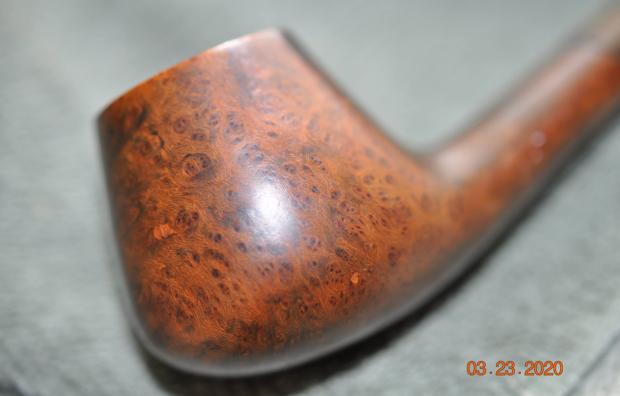
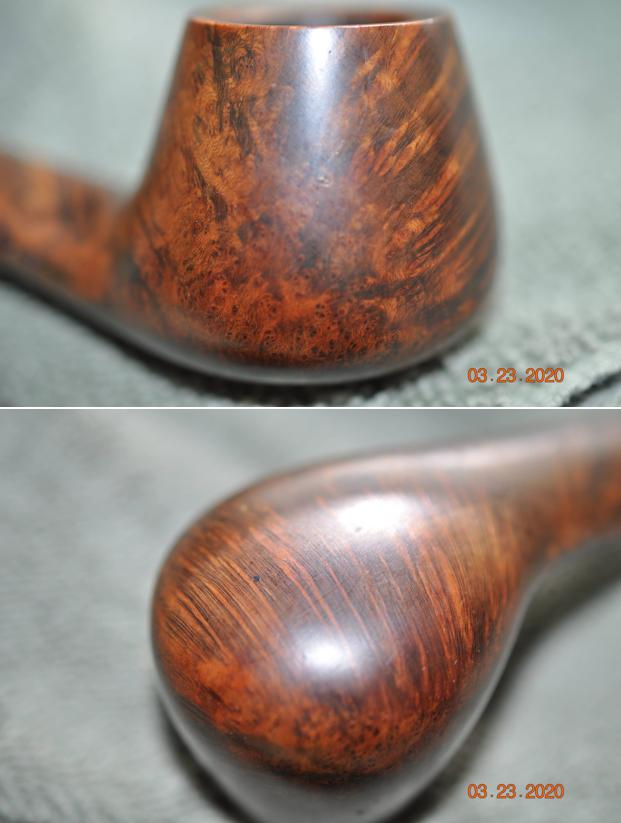
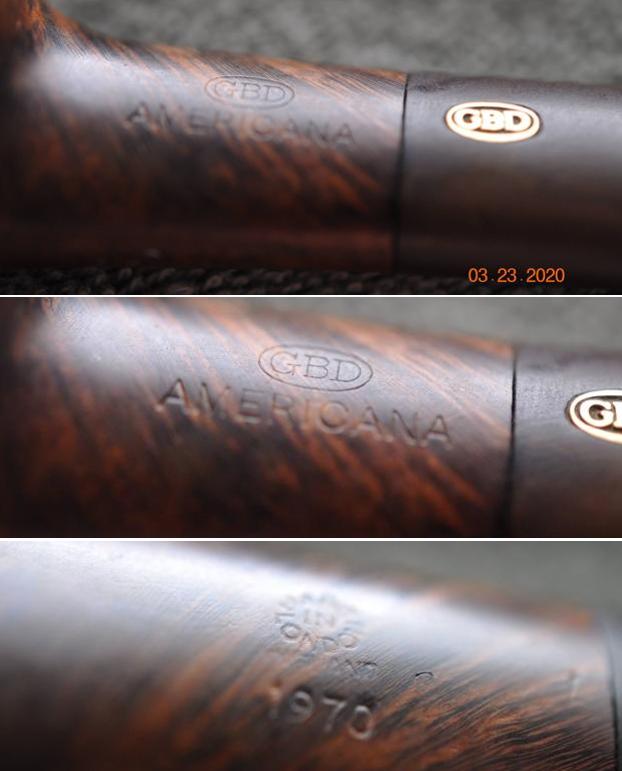
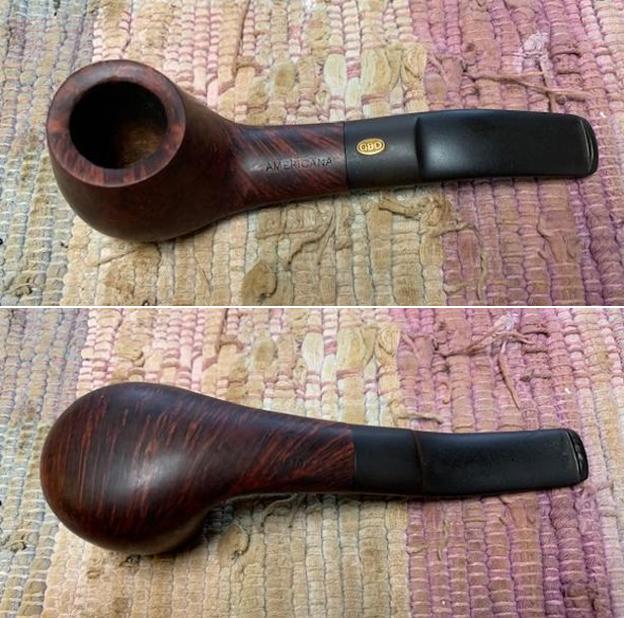
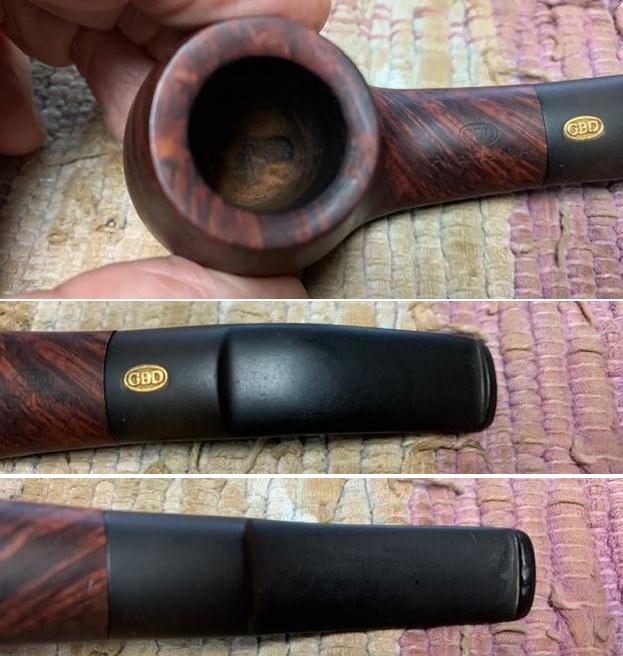
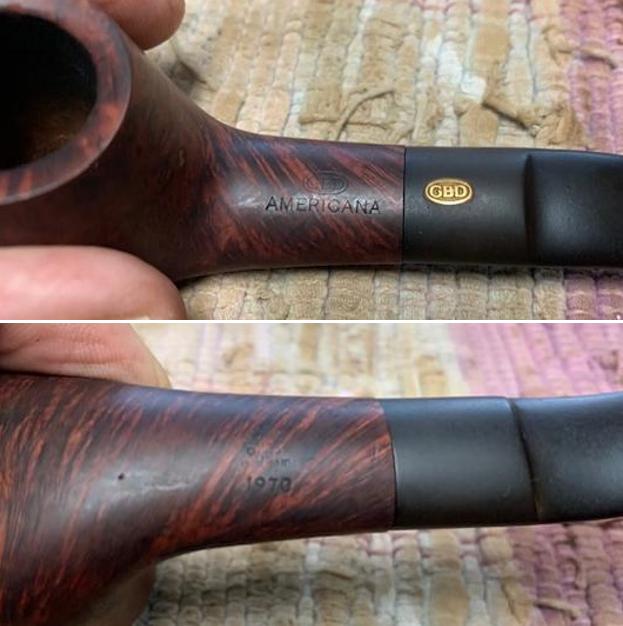
The next pipe on the work table is a pipe was that was purchased from an antique mall in Northern Utah, USA early in 2020 and I am finally getting to it. It is a nice looking GBD with a smooth finish and a vulcanite saddle stem. It is stamped on the top side of the shank GBD in an oval logo [over] Americana. On the underside of the shank it is the stamped with the circular Made in London over England [over] the shape number 1970. The vulcanite saddle stem had a brass inlaid GBD oval. The finish was absolutely filthy with grime ground into the smooth finish. There was a light cake in the bowl and no real overflow on to the rim top. The stem was oxidized, calcified and had some tooth marks and chatter on both sides near the button. The stem was fitted with a filter tenon. Jeff took some photos of the pipe before he did any clean up.   He took photos of the rim top and the stem to show the condition of both. The photo of the rim top shows how clean the rim top actually was – other than some grit and grim it is smooth. The stem photos show tooth chatter and tooth marks and chatter on both sides. Jeff took photos of the sides and heel of the bowl to give a sense of the grain and finish on the pipe and the sheer filthy condition of the finish. There is still something attractive about the bowl even with the fills visible on the bowl sides. He took photos of the stamping on the top and underside of the shank. The stamping is clear and reads as noted above. You can also see the top of the stem with the brass GBD logo. I turned to Pipedia and read the history section to see if I could find any information on the Americana Line. There was nothing specific in the main article there.

I turned to the related article on Shape numbers for GBD pipe to see if I could find anything about the 1970 shape (https://pipedia.org/wiki/GBD_Shapes/Numbers). I found the following listed item:There was a slight issue in the information above. I would indeed call the shape a Diplomat and it has a 1/8 bent stem. However, the shank is oval not round.

I turned to another Pipedia article (https://pipedia.org/wiki/GBD_Model_Information) looking for information on the Americana line. I found it listed under the heading of a  List of GBD “Seconds”

It said: The lines listed below are either 2nds or lines made for other makers/pipeshops. Please send me any corrections or additional information you might have on these.

Americana — Factory unknown.

I knew that I was working on a GBD second labeled Americana. It was a decent looking pipe with some nice grain. Now it was time to work on the pipe.

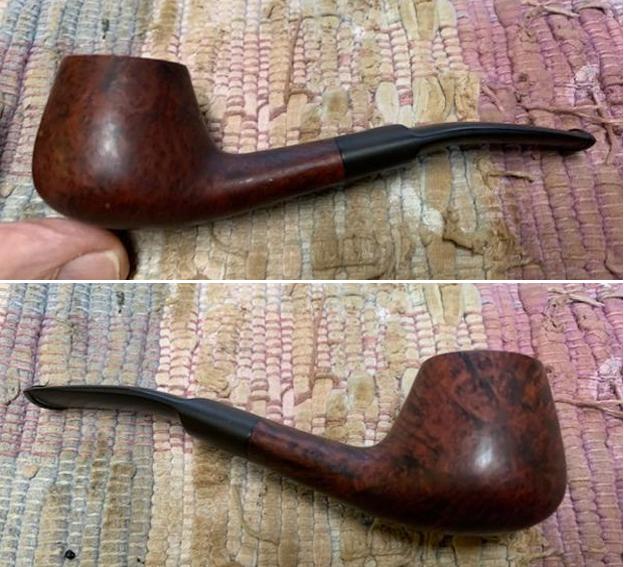
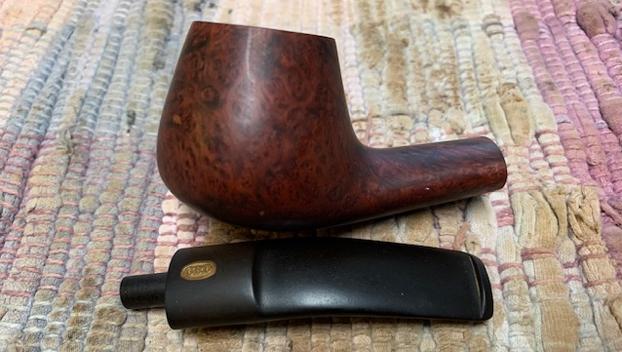
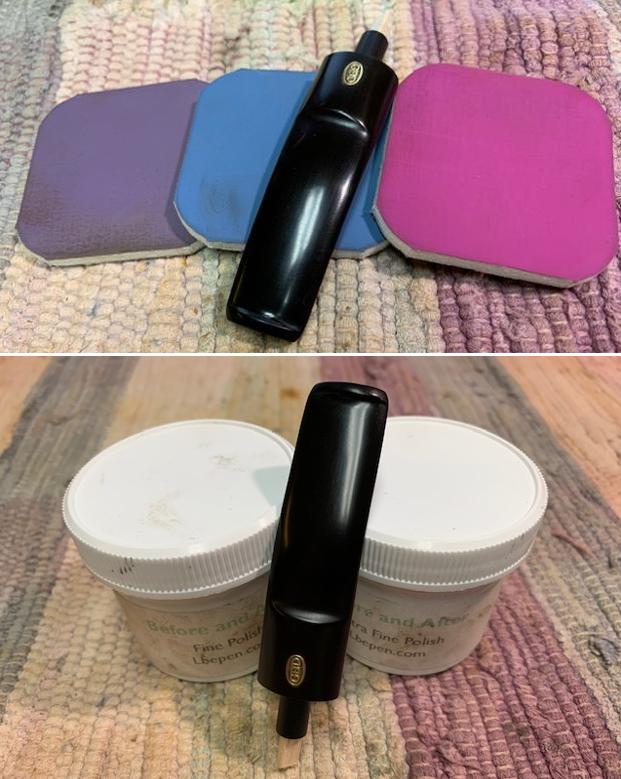
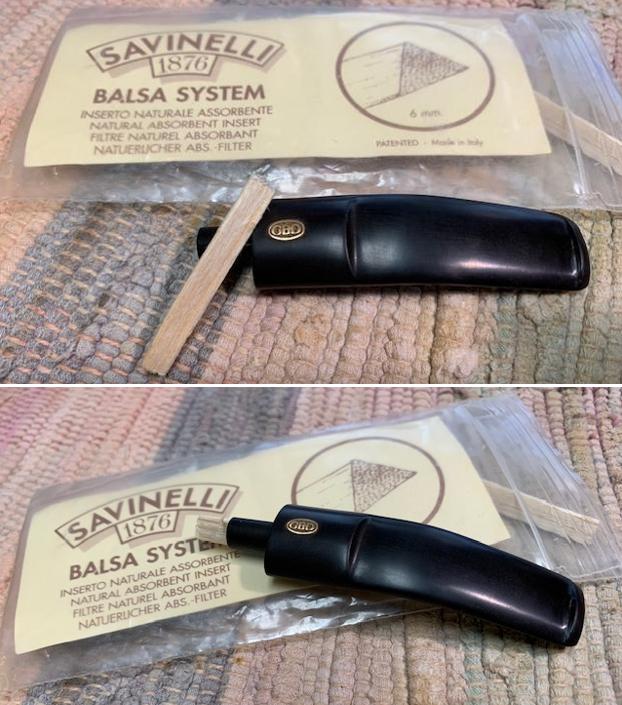
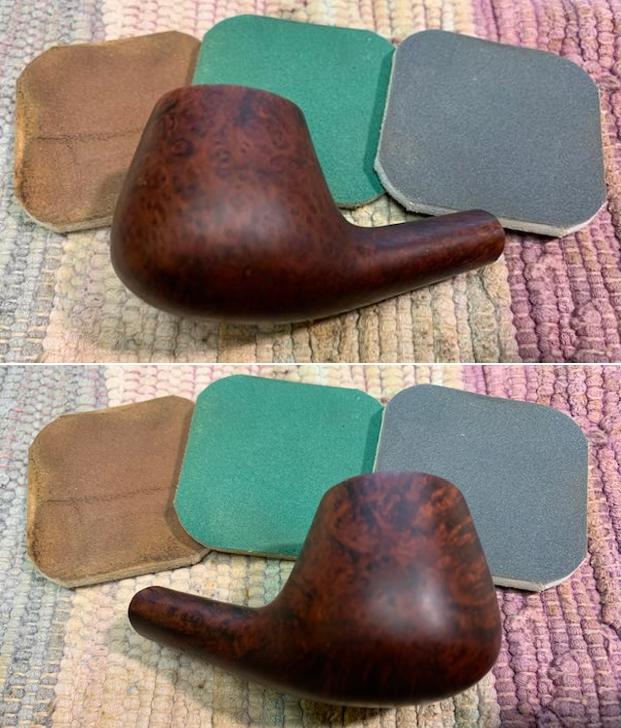
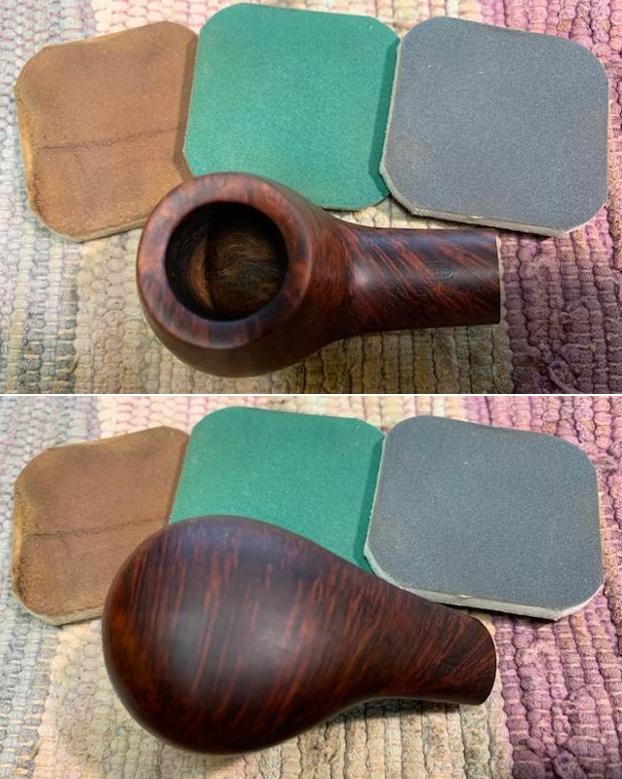
Jeff had cleaned up the pipe following his normal cleaning process. In short, he reamed the bowl with a PipNet pipe reamer and cleaned up the reaming with a Savinelli Fitsall Pipe Knife.  He scrubbed the smooth bowl with undiluted Murphy’s Oil Soap with a tooth brush. He worked over the lava and debris on the rim top and was able to remove it. He rinsed it under running warm water to remove the soap and grime. He cleaned out the inside of the shank and the airway in the stem with alcohol, cotton swabs and pipe cleaners. He scrubbed the stem with Soft Scrub and cotton pads to remove the debris and oils on the stem. He soaked it in a bath of Briarville’s Pipe Stem Deoxidizer to remove the oxidation. He rinsed it with warm water and dried it off. I took photos of the pipe once I received it. It really looked good.   I took close up photos of the stem and the rim top to show both how clean they were and what needed to be addresses with both. The rim top and bowl edges look very good. The stem looked better and the tooth marks and chatter were very visible. I took a photo of the stamping on the top and underside of the shank. You can see from the photo that it is readable. I removed the stem from the bowl and took a photo of the parts to give a sense of the beauty of the pipe. I decided to start my work on this pipe with the stem. I “painted” the stem with a Bic lighter to try and lift the tooth marks in the surface of the vulcanite. I was able to lift them quite a bit. I filled in the remaining marks with clear CA glue and set it aside to cure. Once the repairs cured I used a file to recut the edge of the button and reshape it. I sanded the stem surface with 220 grit sandpaper to remove the tooth marks and chatter and blend them into the surface of the acrylic. I started polishing the stem with 400 grit wet dry sandpaper. I polished the stem with micromesh sanding pads – 1500-12000 grit pads. I wiped it down with a damp cloth after each sanding pad. I used Before & After Pipe Polish – both Fine and Extra Fine to further polish the stem.    The tenon was drilled for a 6mm filter. I fit a Savinelli Balsa Wood Filter in the tenon and the fit is perfect. I am assuming it will take all 6mm filters without any issue.   I set the stem aside and turned to the bowl. I polished the briar with micromesh sanding pads – dry sanding with 1500-12000 grit pads. I wiped the bowl down after each sanding pad with a damp cloth to remove the dust and debris. The began to take on a deep shine.    I rubbed the it down with Before & After Restoration Balm. I worked it into the surface of the bowl with my fingertips to get it into the briar. The product works to clean, enliven and protect the briar. I let the balm sit for 15 minutes and then buffed with a cotton cloth to raise the shine.     Once again I am the part of the restoration that I always look forward to – the moment when all the pieces are put back together. I put the GBD Americana 1970 Diplomat back together and buffed the bowl and stem with Blue Diamond on the buffing wheel. I gave the bowl and the stem multiple coats of carnauba wax. I buffed the pipe with a clean buffing pad to raise the shine. I hand buffed it with a microfiber cloth to deepen the shine. It is fun to see what the polished bowl looks like with the grain peeking through the dark finish. The vulcanite saddle stem stands in contrast to the dark colours of the bowl. It is a light weight pipe that could be clenched and smoked while doing other things. Have a look at it with the photos below. The dimensions of the pipe are Length: 5 ½ inches, Height: 1 ½ inches, Outside diameter of the bowl: 1 ¼ inches, Chamber diameter: ¾ of an inch. The weight of the pipe is 40 grams/1.41 oz. This one will soon be on the British Pipe Makers Page on the rebornpipes online store. Thanks to each of you who are reading this blog. Remember we are not pipe owners; we are pipemen and women who hold our pipes in trust until they pass on into the trust of the next generation.

A Sad and Tired Looking Jobey Stromboli 440 Square Shank Billiard


Blog by Steve Laug

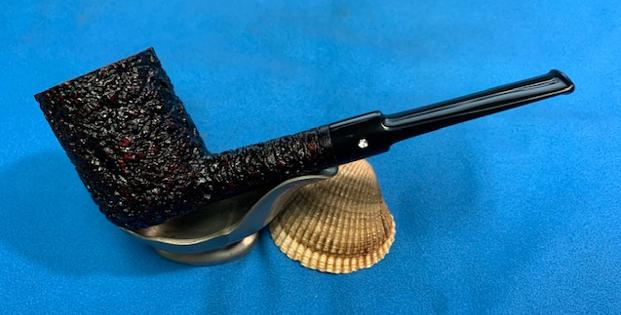
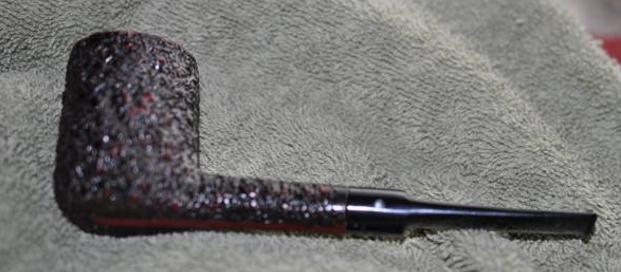
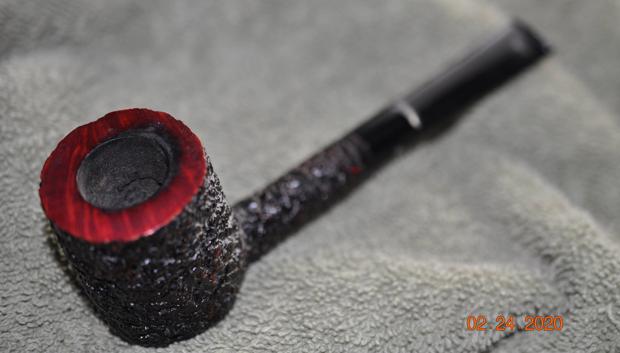
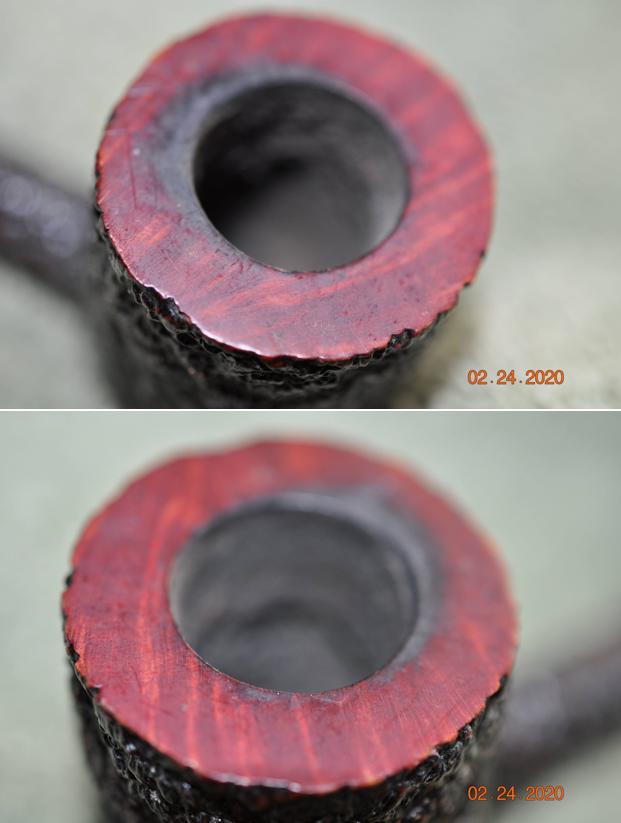
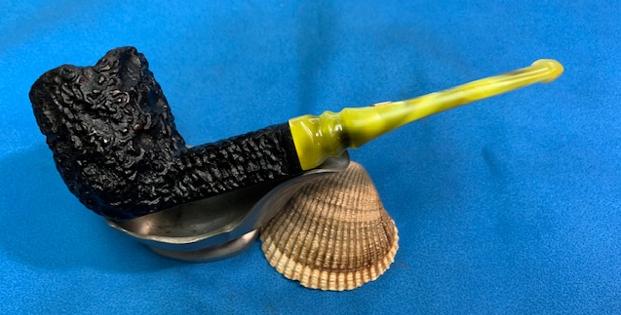
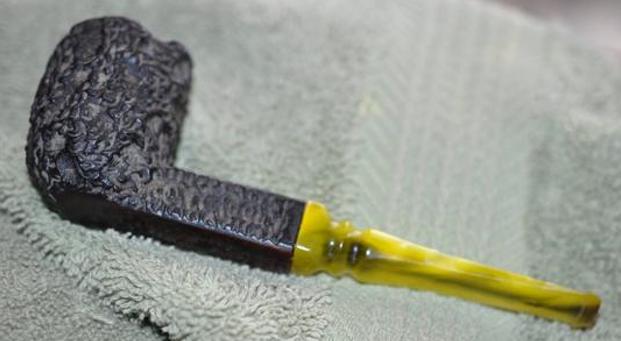
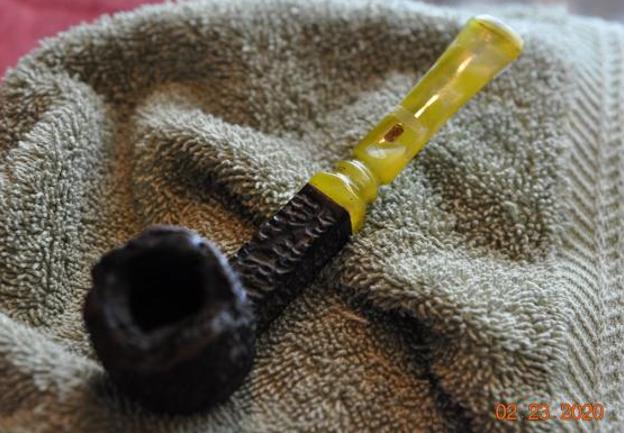
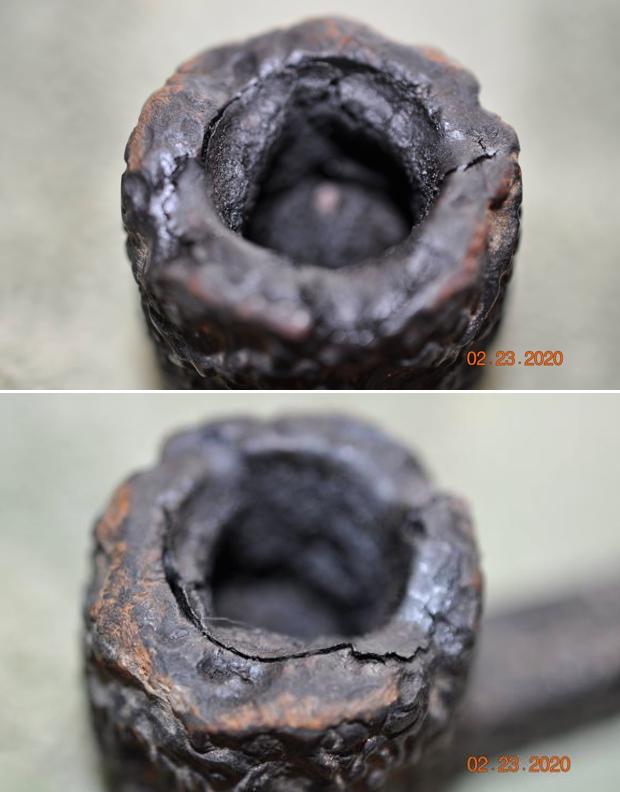
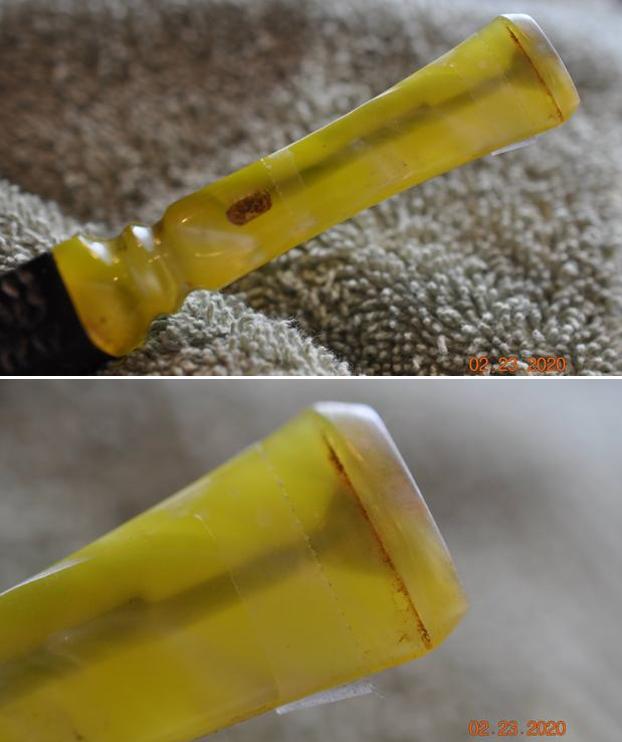
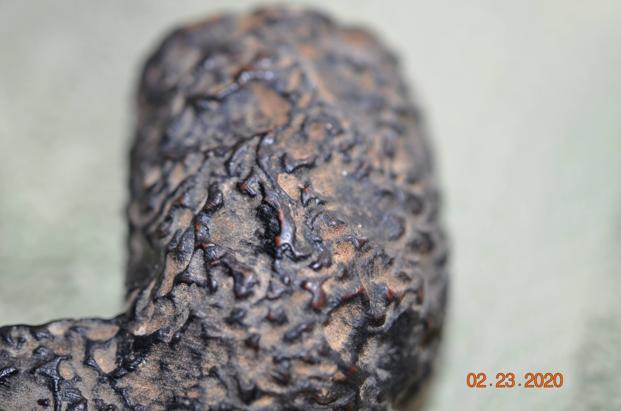
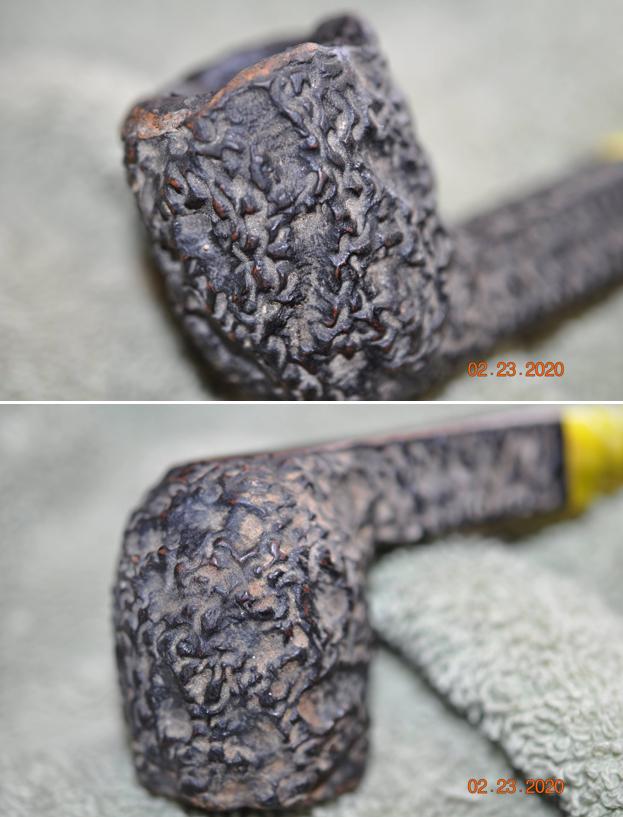
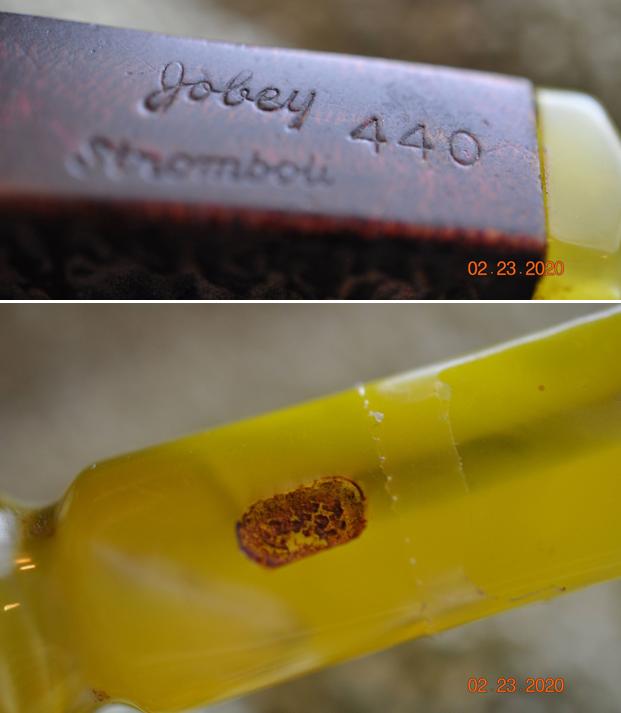
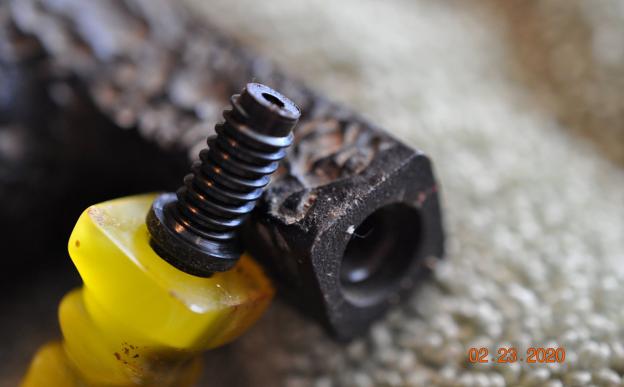
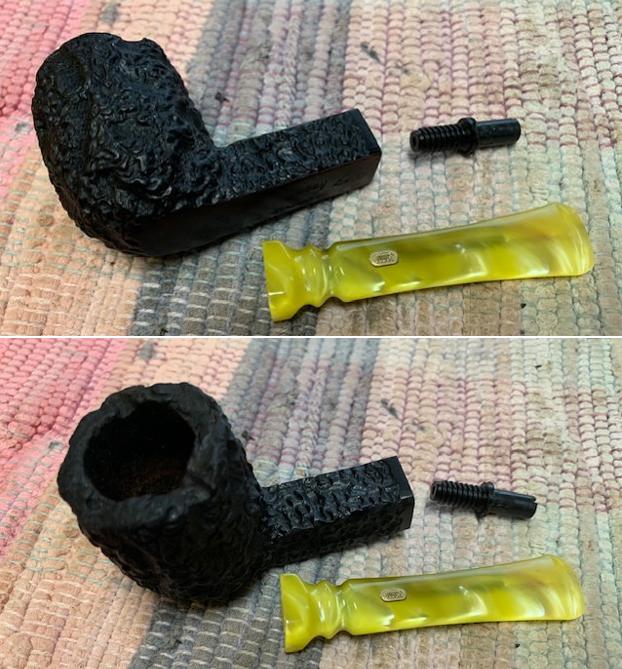
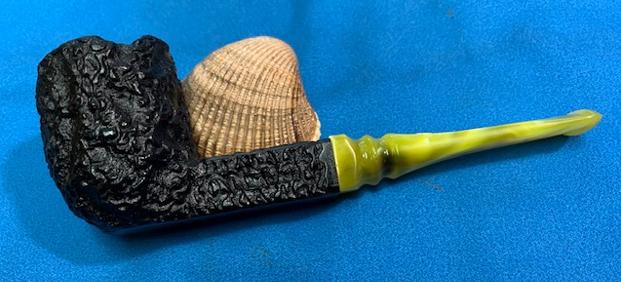
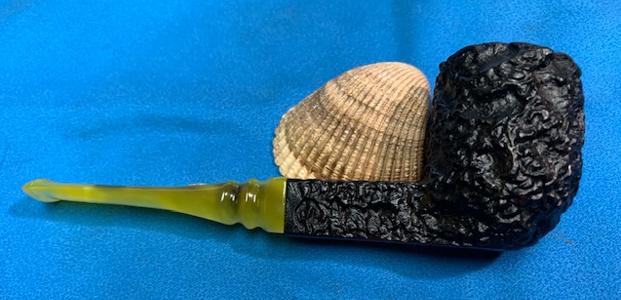
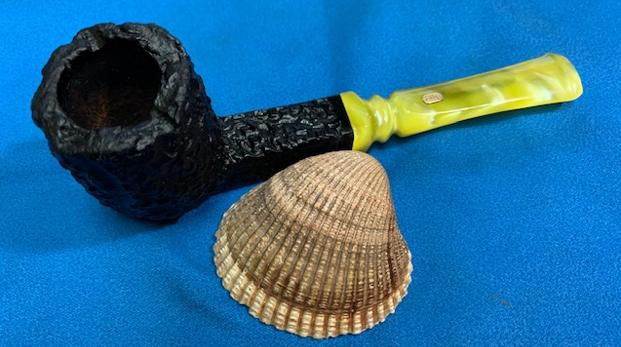
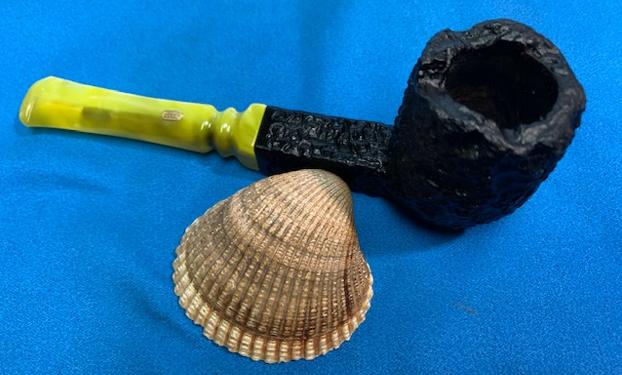
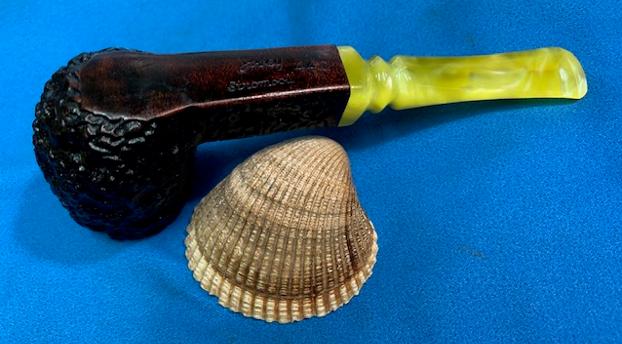
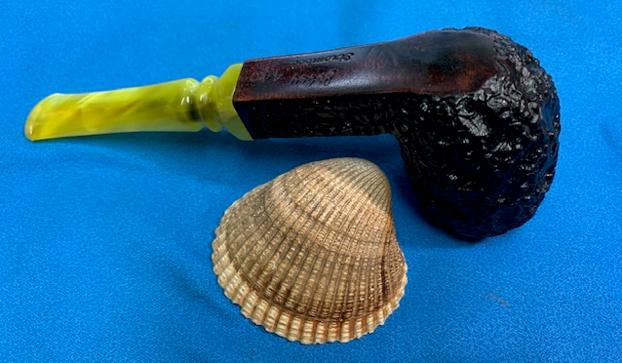
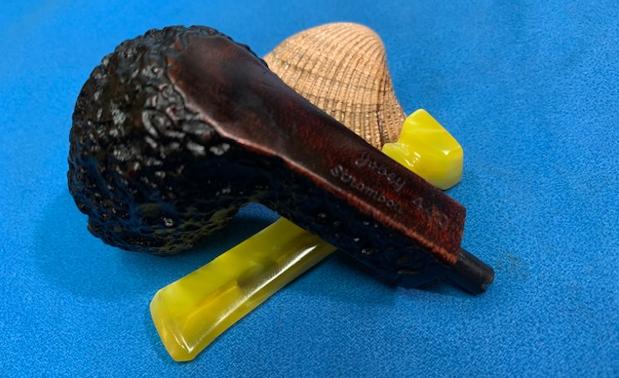
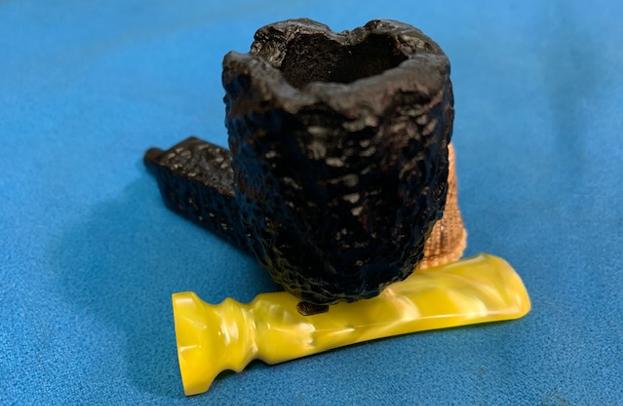
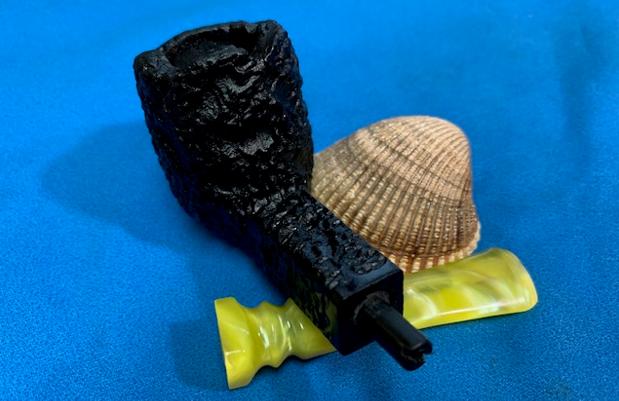
The next pipe on the work table is one that came to us from a fellow we have bought pipes from in Brazil, Indiana, USA early in 2020 and I am finally getting to it. It is a nice looking Jobey rusticated, square shank billiard with a fancy acrylic stem. It is stamped on the underside of the shank Jobey [over] Stromboli. To the right of that is the stamped shape number 440. The yellow acrylic saddle stem was missing the brass inlaid Jobey oval. The pipe has a heavily rusticated finish with deeper random craters carved in the rusticated surface. The finish was absolutely filthy on this one with grime and dust deep in the crevices. There was a heavy cake in the bowl and a heavy overflow of lava onto the rim top. There were some nicks or at least worn spots on the outer edge of the rim but the rustic carved rim top makes it hard to know if they deep or just worn. The stem had a blackened airway from the tobacco juices and it had some shallow tooth marks and chatter on both sides near the button. The stem was screwed onto the shank with the Jobey Link system which was in excellent condition. Jeff took some photos of the pipe before he did any clean up.    He took photos of the rim top and the stem. The photo of the rim top shows the incredibly thick cake in the bowl and the heavy coat of lava on the filling in the crevices and valleys of the heavily rusticated rim top. The stem photos show the oils and tars in the airway of the bright yellow stem and some tooth chatter and tooth marks. Jeff took photos of the sides and heel of the bowl to give a sense of the rustication on the pipe and the sheer filthy condition of the finish. There is still something attractive about the rusticated finish on the bowl. I took photos of the stamping on the right and left side of the shank. The stamping is clear and reads as noted above. You can also see the top of the stem where the brass Jobey logo is missing. I removed the stem from the shank and took a photo of the Jobey Link system tenon. The threads screw into the threaded shank and the smooth portion is supposed to fit snugly in the stem.I reread several of the blogs I have written on the brand in the past restorations of Jobey pipes and decided to include the material on the brand before I write about the cleanup of the pipe. Here is the link to the blog (https://rebornpipes.com/2020/04/03/restoring-jennifers-dads-jobey-asti-245-pot/). I quote:

I turned to Pipephil’s site for a quick review of the brand (http://www.pipephil.eu/logos/en/logo-j3.html). I quote a section of the post on the Jobey brand: These pipes are made in St Claude (France) by Butz-Choquin (Berrod-Regad group) since 1987. Before this date some were manufactured in England and Denmark (Jobey Dansk).

I turned then to Pipedia to gather further information regarding the brand and quote the first part of the article (https://pipedia.org/wiki/Jobey).

English – American – Danish – French… Sadly, solid information about Jobey is scant…

Probably established in England around 1920(?) the brand hiked into the USA later. In the course of time owner, distributor and manufacturer changed repeatedly. As far as is known the following companies have been involved with the brand:

George Yale Pipes & Tobacco, New York (1942)

Norwalk Pipe Co., New York (1949)

Arlington Briar Pipes Corp., Brooklyn (when?)

Hollco International, New York (1969).

Weber Pipe Co., Jersey City, NJ (1970’s)

The Tinder Box, (1970’s – 80’s).

Throughout decades Jobey pipes were mainly sold in the USA, Canada and England but remained almost unknown in continental Europe. The bulk of Jobeys was predominantly made according to classical patterns and mainly in the lower to middle price range. The predominant judgment of the pipe smokers reads: “A well-made pipe for the price.” So there is hardly anything very special or exciting about Jobey pipes although a flyer from ca. 1970 assures: “The briar root Jobey insists upon for its peer of pipes is left untouched to grow, harden and sweeten for 100 years. […] Jobey uses only the heart of this century old briar and only one out of 500 bowls turned measures up to the rigid Jobey specifications.” 99.80% of cull… that makes the layman marveling!

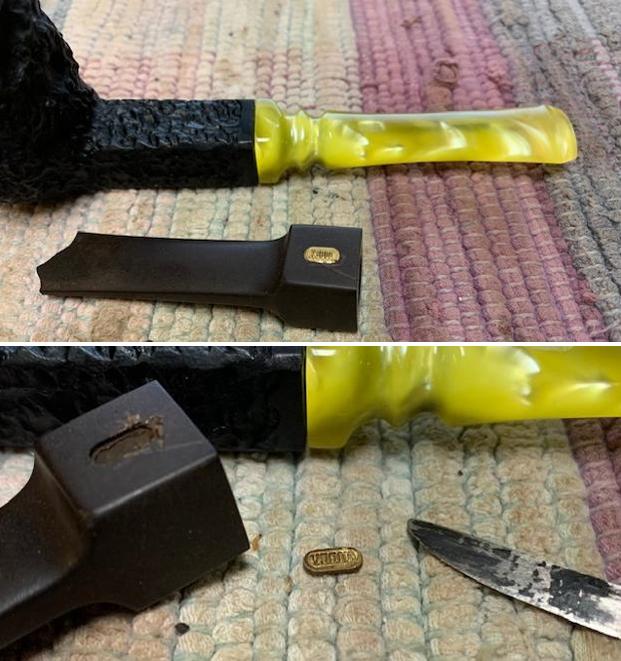
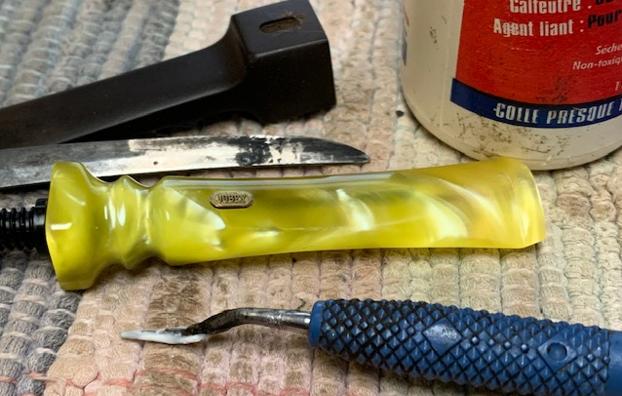
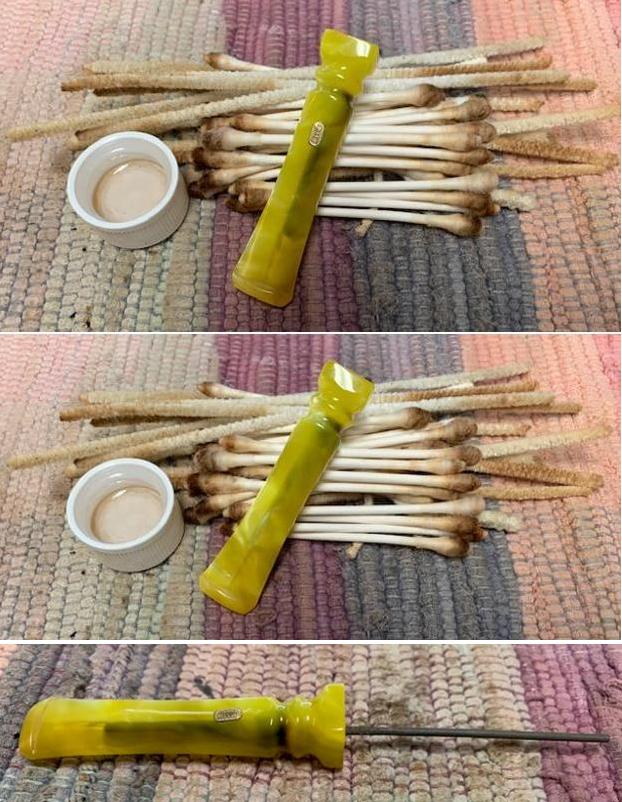
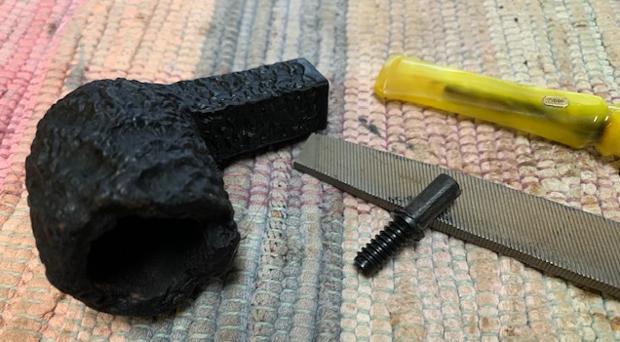
Now it was time to work on the pipe. I decided to start with the stem. I sorted through some of the pipes remaining for me to work on and I had this broken Jobey stem. I used a small pen knife to lift the brass logo out of the damaged stem to use on the yellow one. I put some white all purpose glue in the indentation on the stem top and used a small dental probe to press the brass logo into the spot it was missing. I wiped off the excess glue and pressed the edges down with the probe and I was happy with the look and fit of the “new” brass logo. The Jobey link was stuck fast in the stem and I had a hard time removing it. I used a small screw driver as a wedge and lifted it out of the stem. Once I had it out I would need to sanded the smooth side to loosen the fit while yet leaving it snug.With the tenon removed from the stem I was able to clean out a lot more of the tars and oils in the airway in the stem with pipe cleaners, cotton swabs and alcohol. I also used a small round needle file to file the inside of the airway and remove more of the staining. Once I finished it looked much better. I used a wood rasp to smooth out the surface of the tenon end that fit in the stem. I sanded it with 220 grit sandpaper to smooth out the scratches in the Delrin. I wanted the fit to be snug but not tight. I worked well.I sanded the stem surface with 220 grit sandpaper to remove the tooth marks and chatter and blend them into the surface of the acrylic. I started polishing the stem with 400 grit wet dry sandpaper. I polished the stem with micromesh sanding pads – 1500-12000 grit pads. I wiped it down with a damp cloth after each sanding pad. I used Before & After Pipe Polish – both Fine and Extra Fine to further polish the stem. I turned back to the bowl. I rubbed the it down with Before & After Restoration Balm. I worked it into the surface of the rustication on the bowl and with a horsehair shoe brush to get into the nooks and crannies of the finish. The product works to clean, enliven and protect the briar. I let the balm sit for 15 minutes and then buffed with a cotton cloth to raise the shine.   Once again I am the part of the restoration that I always look forward to – the moment when all the pieces are put back together. I put the Jobey Stromboli 440 Square Shank Billiard back together and buffed the bowl and stem with Blue Diamond on the buffing wheel. I gave the bowl multiple coats of Conservator’s Wax and the stem multiple coats of carnauba wax. I buffed the pipe with a clean buffing pad to raise the shine. I hand buffed it with a microfiber cloth to deepen the shine. It is fun to see what the polished bowl looks like with the dark rusticated finish. The swirled fancy yellow acrylic stem stands in contrast to the dark colours of the bowl. It is a light weight pipe that could be clenched and smoked while doing other things. Have a look at it with the photos below. The dimensions of the pipe are Length: 5 ½ inches, Height: 1 ¾ inches, Outside diameter of the bowl: 1 ¼ inches, Chamber diameter: ¾ of an inch. The weight of the pipe is 37 grams/1.31 oz. This one will soon be on the American Pipemakers page on the rebornpipes online store. Thanks to each of you who are reading this blog. Remember we are not pipe owners; we are pipemen and women who hold our pipes in trust until they pass on into the trust of the next generation.

Giving New Life to a Classic French Billiard – A Butz Choquin Régate 1601 of St. Claude


Here is Dal’s next installment… well done. He has me thinking about finishes a lot right now and working through in my mind the difference between a complete refinish like Dal does extremely well and a restoration of an old finish… no answers yet but still thinking.

Dal Stanton's avatarThe Pipe Steward

The next pipe on the worktable is a handsome Butz Choquin Régate . I acquired this pipe in August of 2018 from an eBay seller in Paris. It was part of what I have called the French Lot of 50 which has produced many treasures, many of which are now with new stewards. The full straight Billiard has striking and expressive grain which is begging to come out. This pipe got Darren’s attention in the For “Pipe Dreamers” Only! collection and he commissioned it along with several other pipes – all benefitting the Daughters of Bulgaria – helping women and girls who have been trafficked and sexually exploited. Darren is from Pennsylvania and is part of a church that has supported our work in Europe for years. He is also part of an active pipe club in his region which I hope to visit one day! Here are pictures of…

View original post 1,759 more words

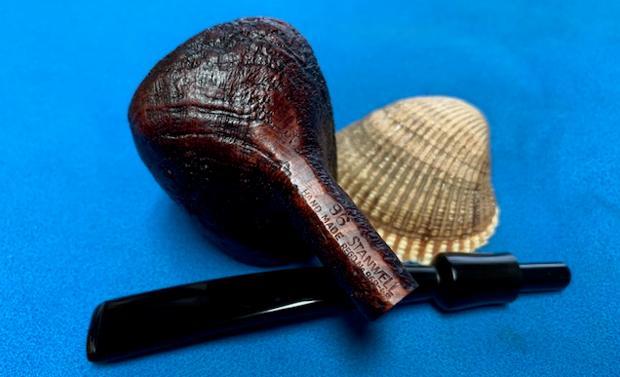
This Rare Sixten Ivarrson Design Stanwell Shape 96 – a shape I have never understood


Blog by Steve Laug

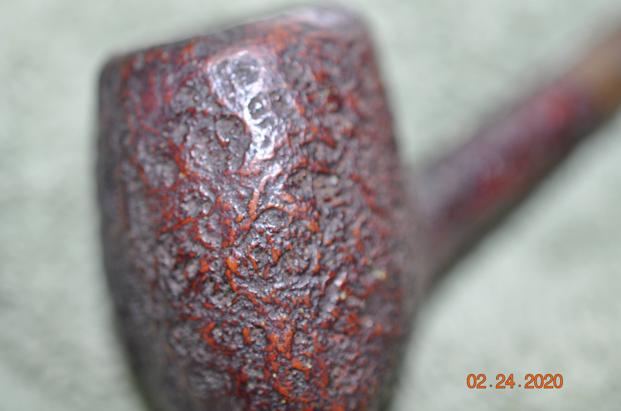
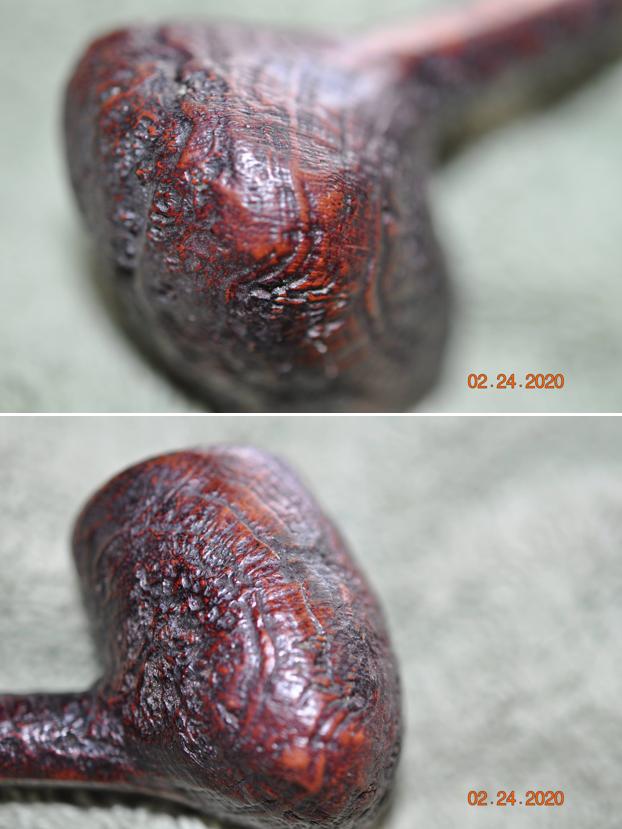
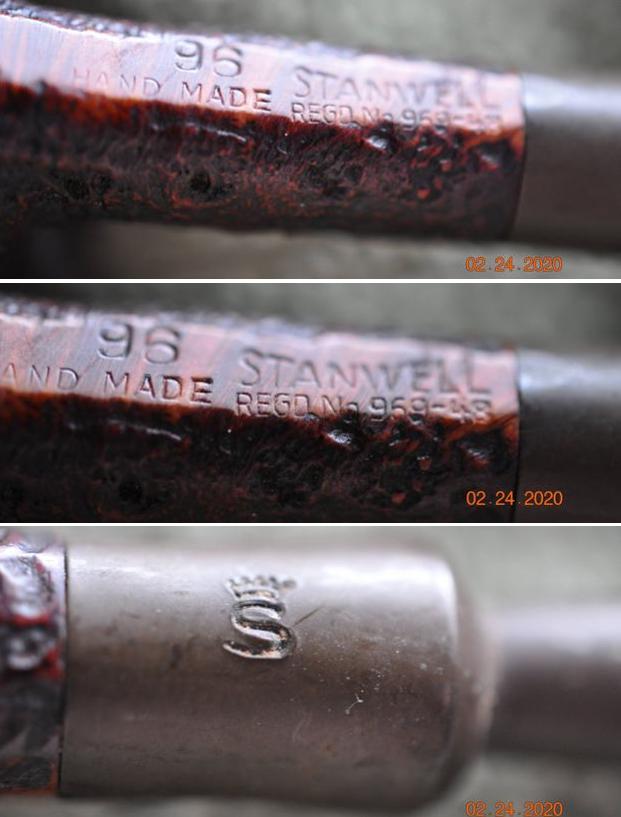
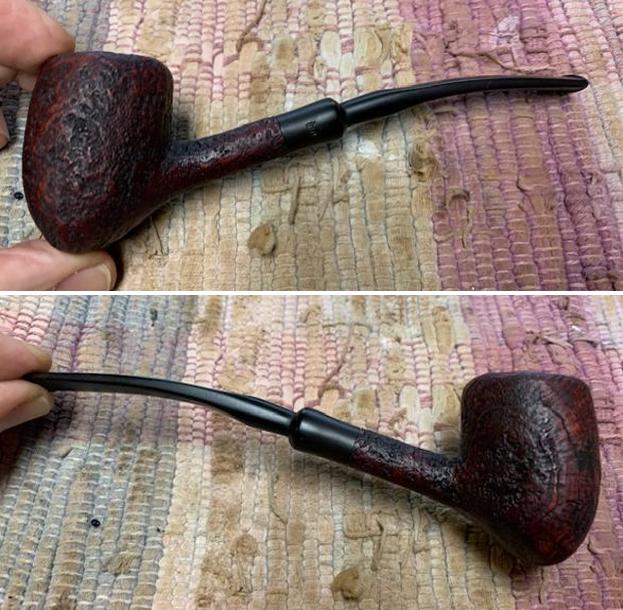
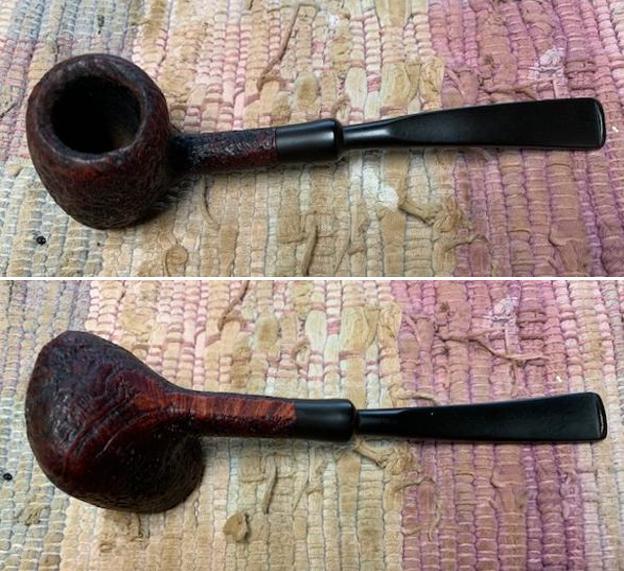
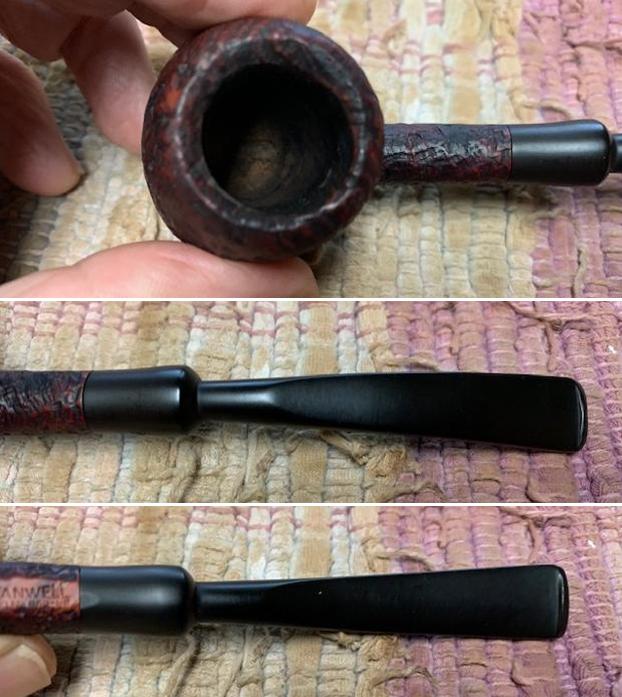
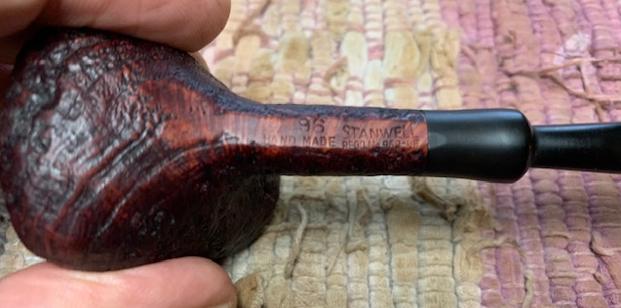
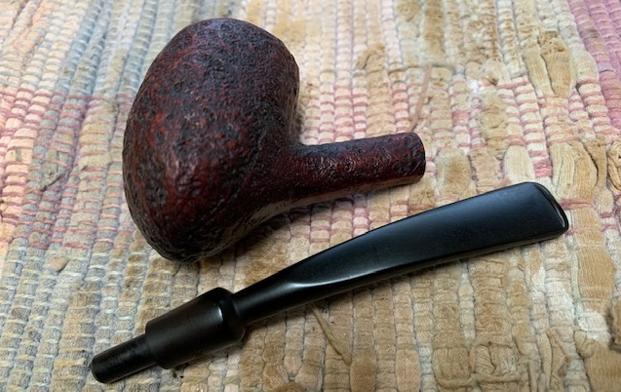
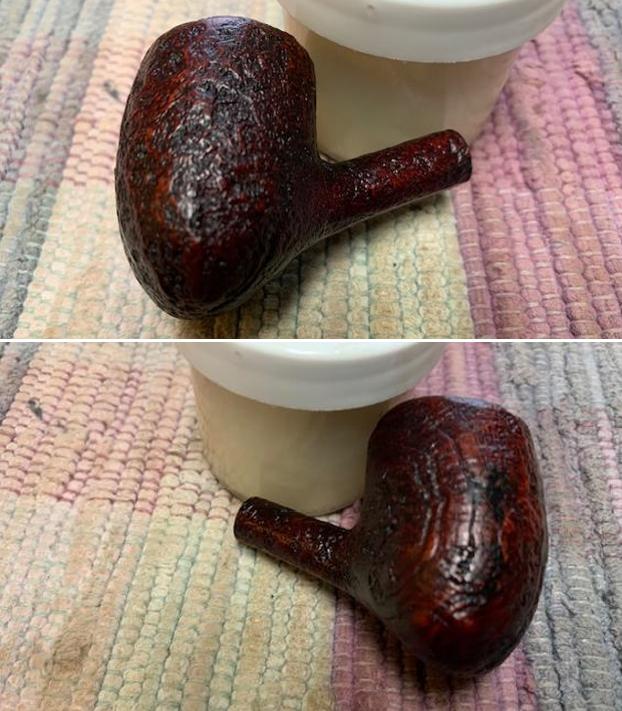
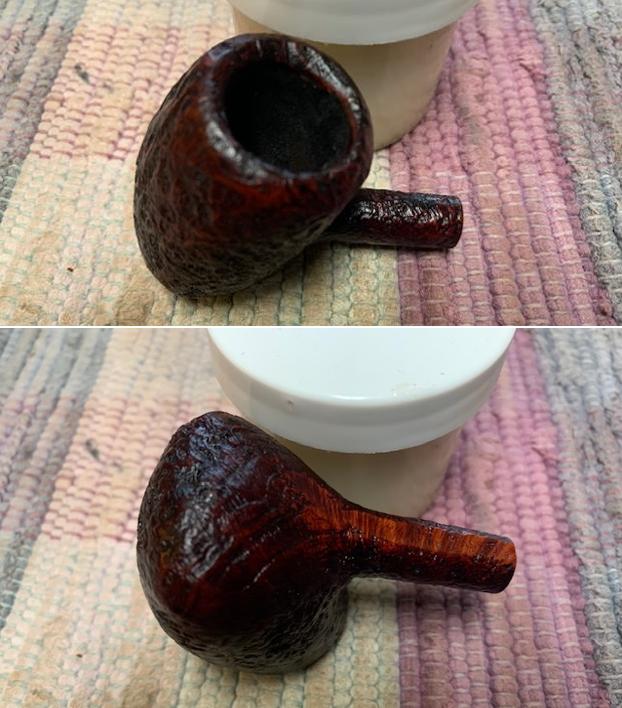
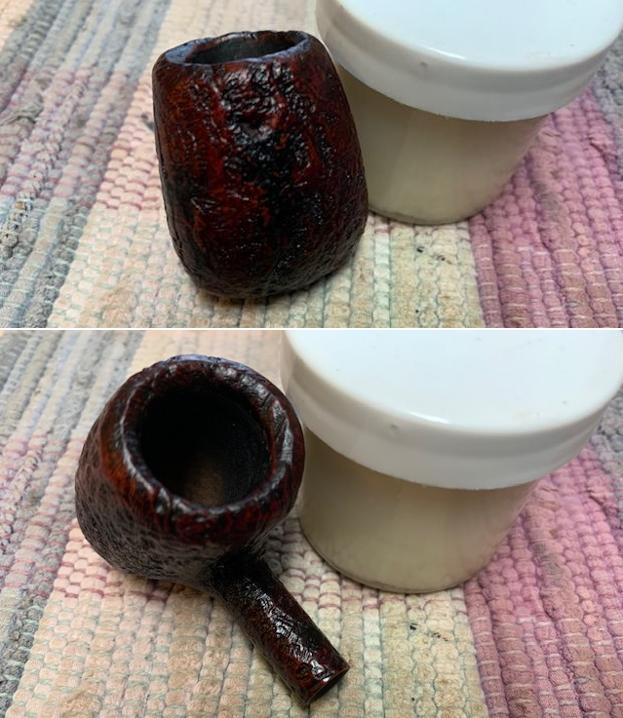
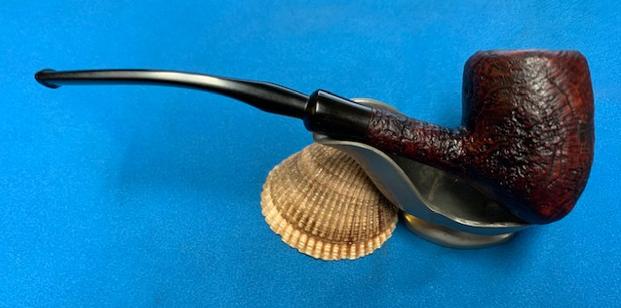
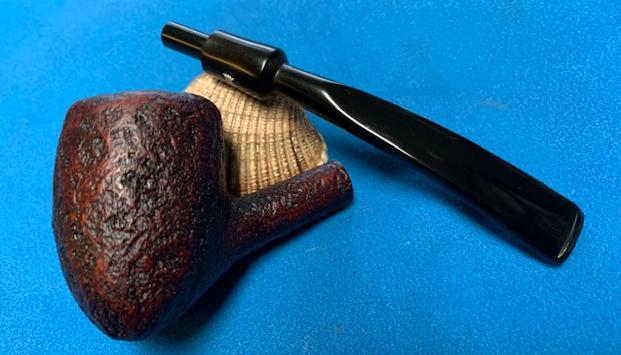
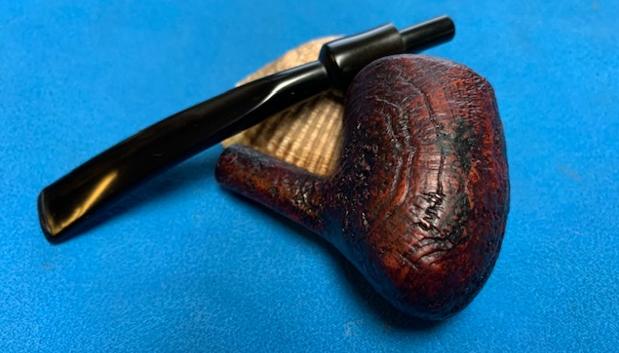
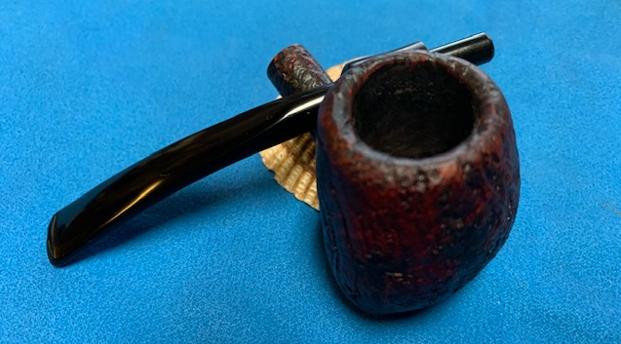
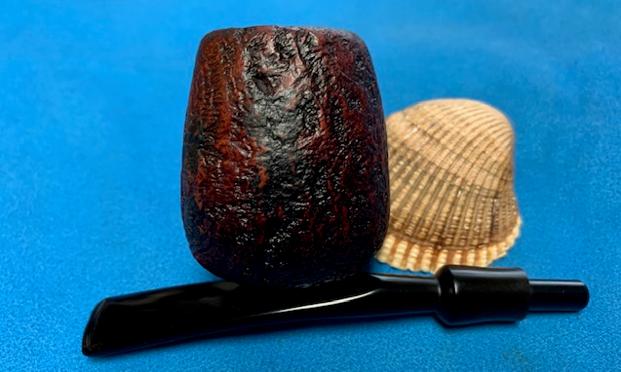
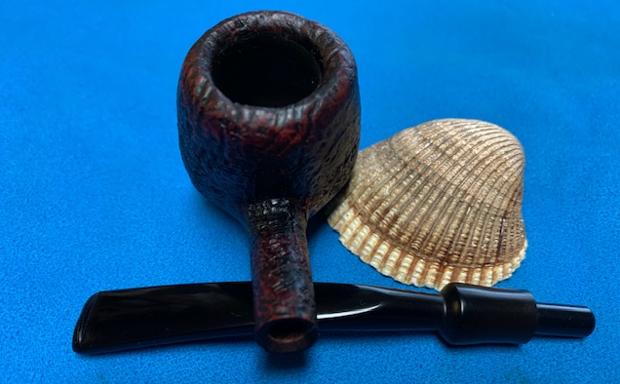
The next pipe on the work table was purchased from a fellow in Los Angeles, California, USA. This one is obviously a Stanwell made pipe from just looking at it. The sandblast finish is quite beautiful even through the grime. The shape of the pipe is very odd in my opinion – almost oval but odd and designed to sit on the desk top. There is a Crown S stamped in the left side of the saddle stem. It was stamped on the underside of the shank on a smooth panel. The shape number 96 is stamped mid shank. Under that it reads Hand Made. Next to that it reads Stanwell [over] Regd. No. 969-48. With the Regd. No. I know it is an older pipe. The finish was dirty with dust and grime ground into the nooks and crannies of the sandblast finish. There was a thick cake in the bowl and lava overflow on the rim top. The inner edge of the rim was covered so thickly in lava it was hard to know what was underneath. The vulcanite fancy saddle stem was calcified, oxidized and had tooth marks and chatter ahead of the button on both sides. Jeff took some photos of the pipe before he started to work on cleaning it up for us. Jeff took photos of the rim top and the stem to show the condition of the pipe when we received it. You can see the thick cake in the bowl and the heavy coat of lava filling in the blast on the rim top and inner edge of the bowl. The stem is calcified and oxidized with light tooth chatter and marks on both sides near the button. He took photos of the sides of the bowl and the heel to give an idea of the shape and the condition of the briar around the bowl. It really is a strangely shaped pipe in my opinion but it has a great sandblast around the sides. The next photo Jeff took shows the stamping on the underside of the  shank. It is clear and readable as noted above. The Crown S logo is also visible on the left side of the saddle stem.Before I started working on it I did a bit of research on the brand to get a feel for where it fit in the Stanwell line. I turned to Pipephil’s site to see if I could some information on the shape or line (http://www.pipephil.eu/logos/en/logo-r6.html). While there was a lot of information on the brand there was nothing on this particular shape. There was a note on one of the shapes regarding the “Regd. No.” stamping being discontinued in late 1960s to very early 1970s. That helped to pin down and end date for the manufacture of this pipe.

I then turned to Pipedia and quickly scanned the article on Stanwell getting a great overview of the history. I went through the photos and did not find the shape of the pipe that I was working on (https://pipedia.org/wiki/Stanwell).

I followed one of the links at the end of the site to an article on rebornpipes written by Bas Stevens on the shape numbers and the designers who originally carved those shapes for Stanwell (https://pipedia.org/wiki/Stanwell_Shape_Numbers_and_Designers).

The shape number 96 is listed as follows: 96. Freehand, oval bowl, long saddle mouthpiece by Sixten Ivarsson. It also appears to be a rare shape that has been compared to a potato sack.

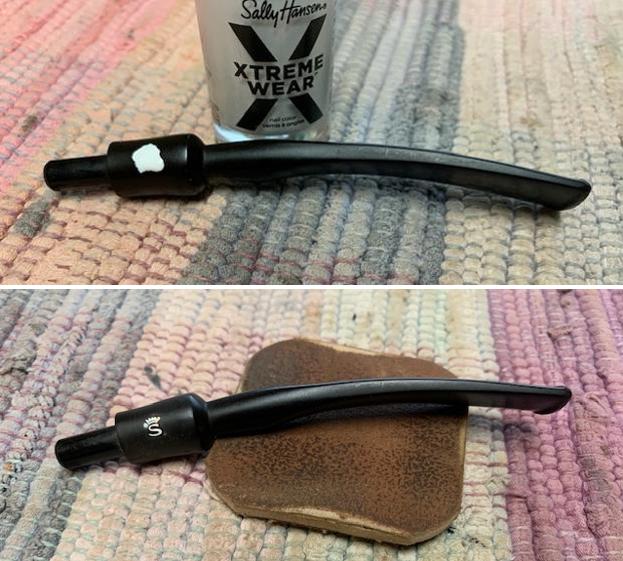
Jeff had cleaned up the pipe following his normal cleaning process. In short, he reamed the bowl with a PipNet pipe reamer and cleaned up the reaming with a Savinelli Fitsall Pipe Knife.  He scrubbed the smooth bowl with undiluted Murphy’s Oil Soap with a tooth brush. He worked over the lava and debris on the rim top and was able to remove it. He rinsed it under running warm water to remove the soap and grime. He cleaned out the inside of the shank and the airway in the stem with alcohol, cotton swabs and pipe cleaners. He scrubbed the stem with Soft Scrub and cotton pads to remove the debris and oils on the stem. He soaked it in a bath of Briarville’s Pipe Stem Deoxidizer to remove the oxidation. He rinsed it with warm water and dried it off. I took photos of the pipe once I received it. It really looked good. I took close up photos of the stem and the rim top to show both how clean they were and what needed to be addresses with both. The rim top and bowl edges look very good. The stem looked better and the tooth marks and chatter was very light.I took a photo of the stamping on the underside of the shank. You can see from the photo that it is clear and readable.I removed the stem from the bowl and took a photo of the parts to give a sense of the beauty of the pipe.The bowl was in such good condition that I started by rubbing the bowl down with Before & After Restoration Balm working it into the briar with my finger tips and into the blast and plateau with a shoe brush. The product works to clean, revive and protect the briar. I let it sit on the pipe for 10 minutes then buffed it off with a soft cloth. I set the bowl aside and turned my attention to the stem. Continuing with Al’s (upshallfan) recommendation I applied some acrylic white nail polish to the stamping on the stem side. I was paying so much attention to getting it in the stamp that I forgot to take a photo until after I cleaned it up. The nail polish worked great. Thanks again for the reminder Al!I polished out the tooth chatter and marks on the stem with micromesh sanding pads – wet sanding it 1500-12000 pads. I wiped it down with some Obsidian Oil each pad to remove the dust and polishing debris. I polished it with Before After Pipe Polish – both Fine and Extra Fine. I gave it a final coat of Obsidian Oil and set it aside to dry. This is another pipe that I am really happy about the look of the finished restoration. This reborn Sixten Ivarrson Design Stanwell 96 Sandblast Freehand turned out really well. I think that it really is a great looking pipe with a great shape and grain. The freehand/plateau top bowl and the vulcanite saddle stem goes well together. The polished black of the stem works well with the briar. The briar really came alive with the buffing. The rich brown stains of the finish make the grain really pop with the polishing and waxing. I put the stem back on the bowl and buffed the pipe with Blue Diamond on the buffing wheel. I gave the bowl and the stem multiple coats of carnauba wax on the buffing wheel. I buffed the pipe with a clean buffing pad to raise the shine. I hand buffed the pipe with a microfiber cloth to deepen the shine. The finished Stanwell 96 Sandblast Freehand really feels great in the hand and it looks very good. Give the finished pipe a look in the photos below. The dimensions of the pipe are Length: 5 ¾ inches, Height: 2 inches, Outside diameter of the bowl: 1 ¼ inches, Chamber diameter: ¾ of an inch. The weight of the pipe is 34 grams/1.20 oz. The pipe will be going on the rebornpipes store soon. It will be in the section on Danish Pipe Makers if you would like to add it to your collection. Thanks for reading this blog and my reflections on the pipe while I worked on it. It was a fun one to work on!