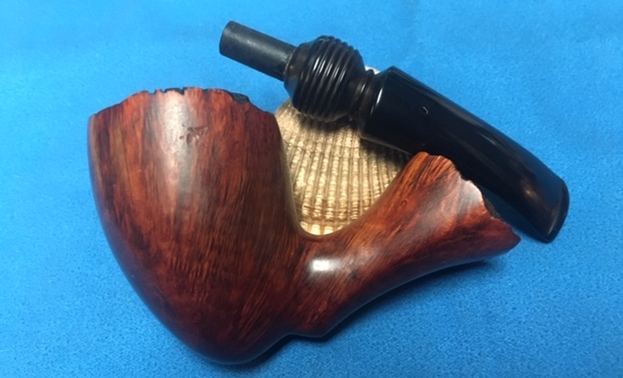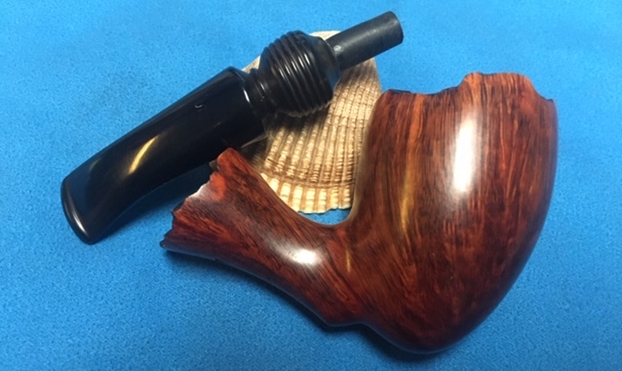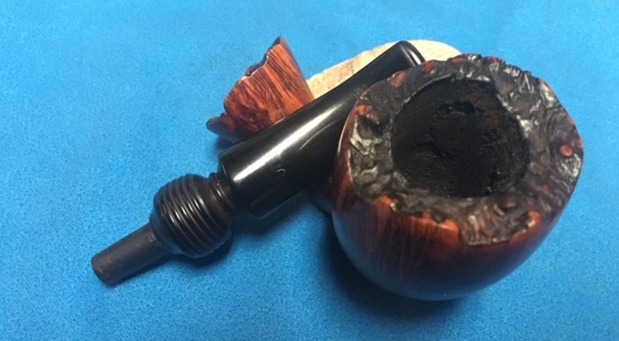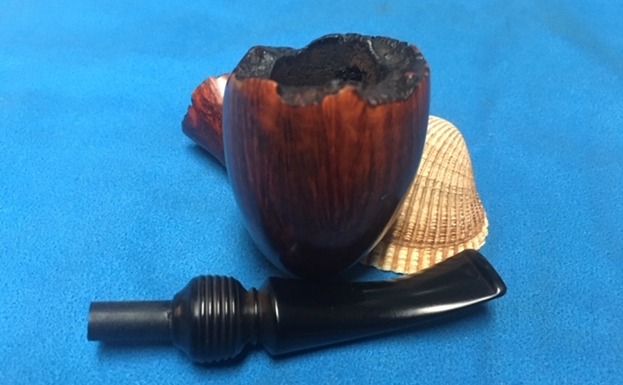
Monthly Archives: May 2020

Life for a Comoy’s Christmas 1983 Bent 409 Bulldog


Blog by Steve Laug

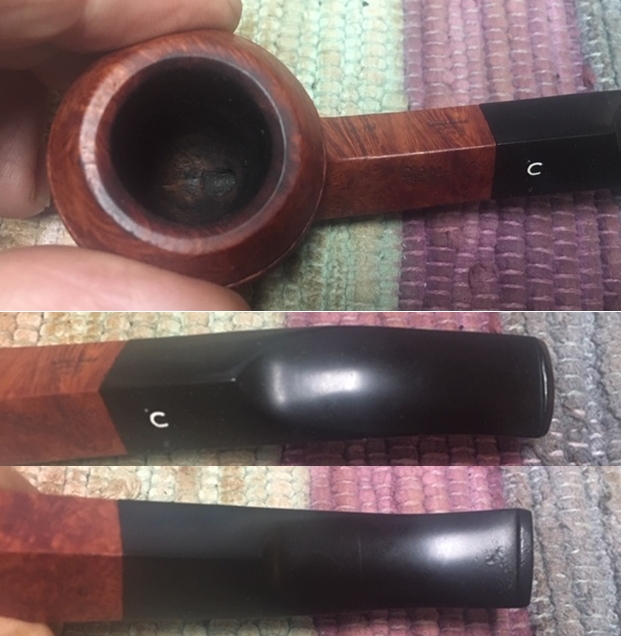
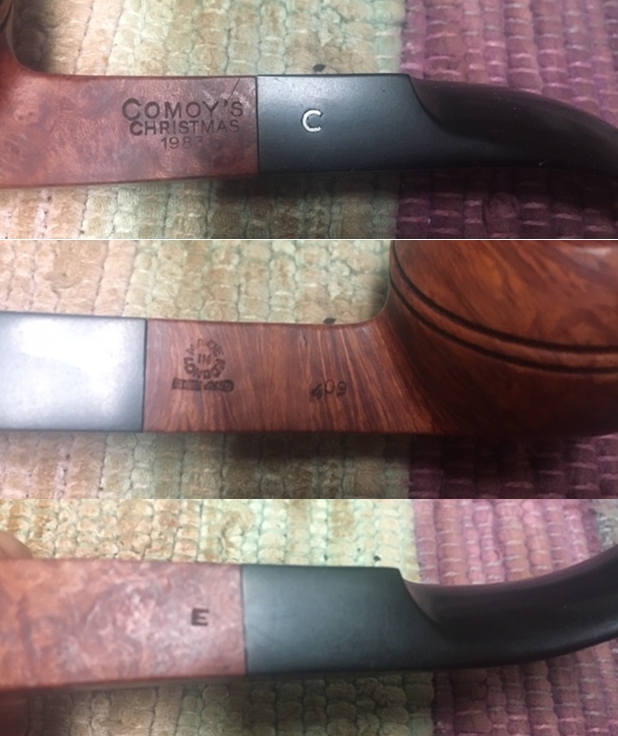
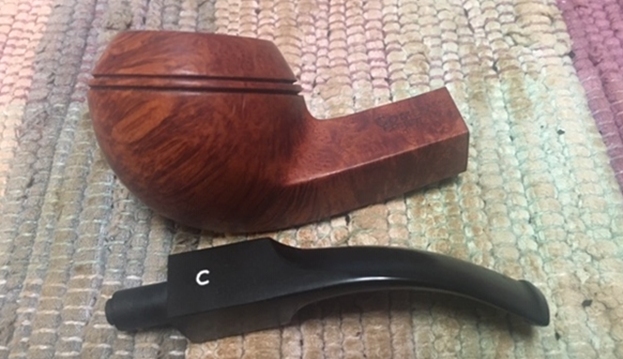
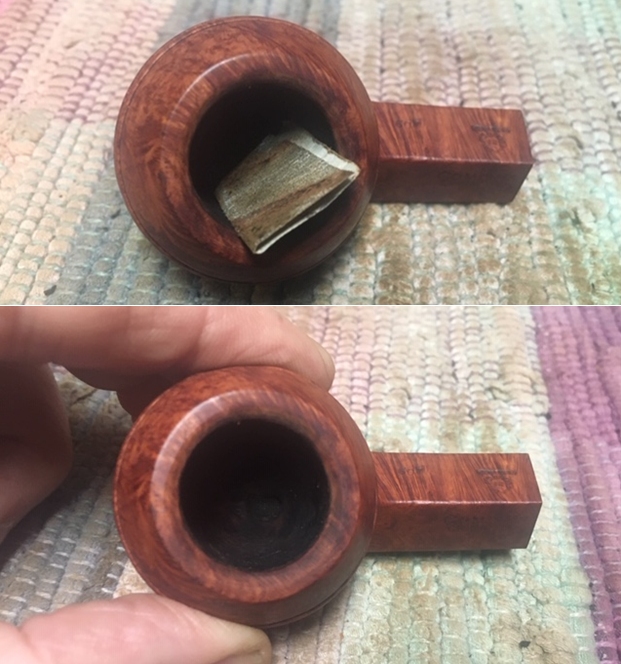
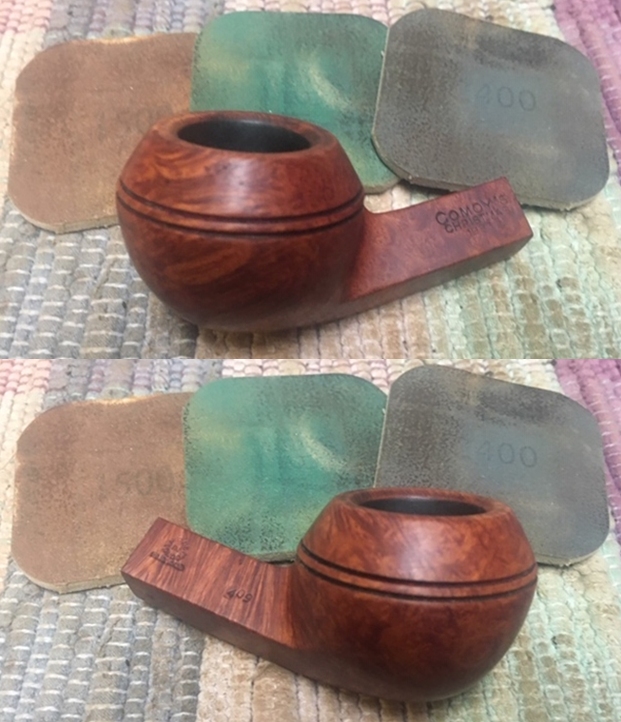
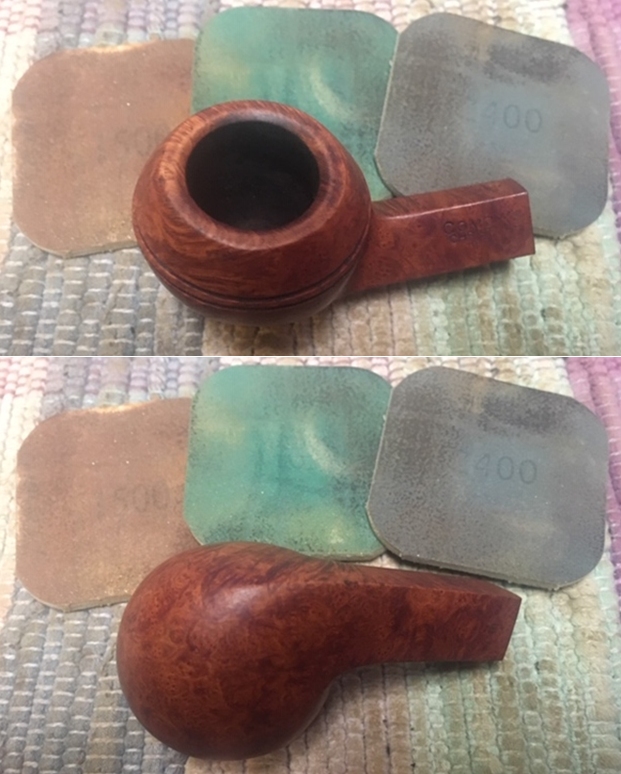
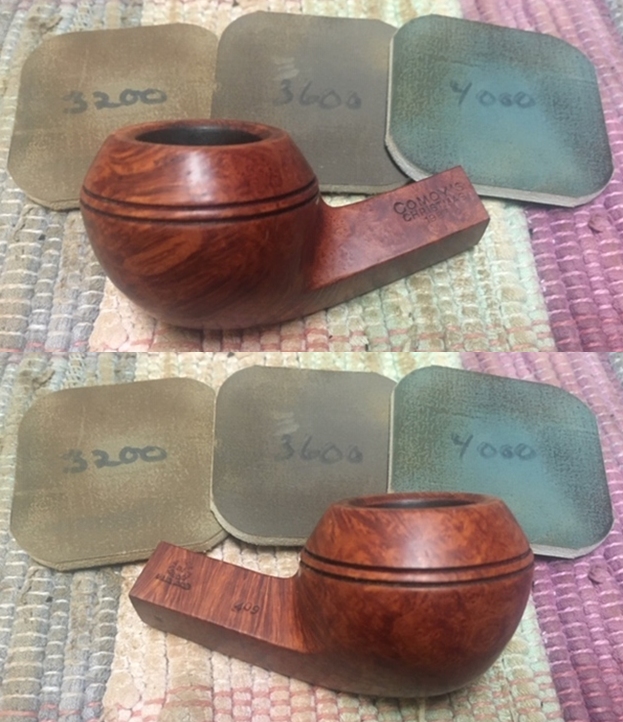
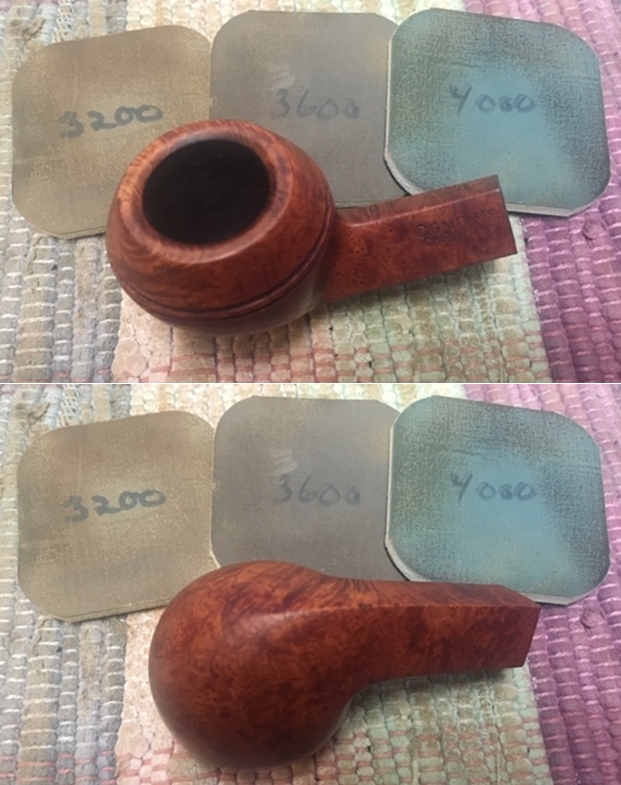
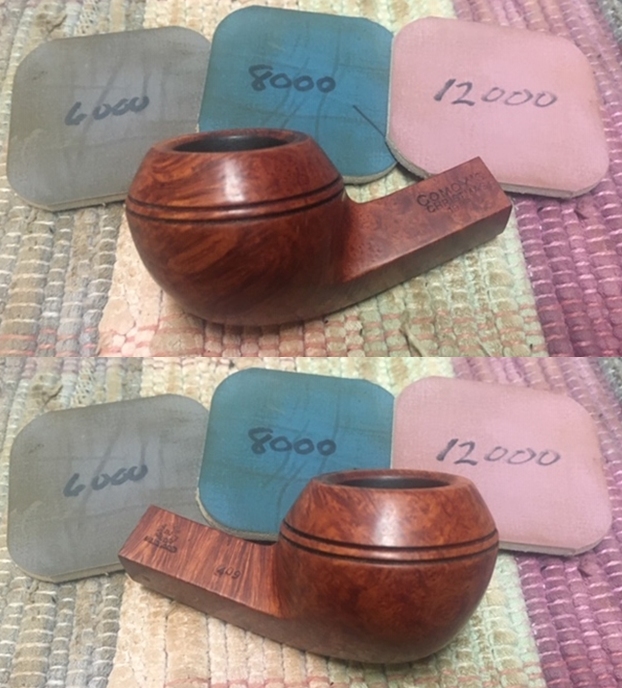
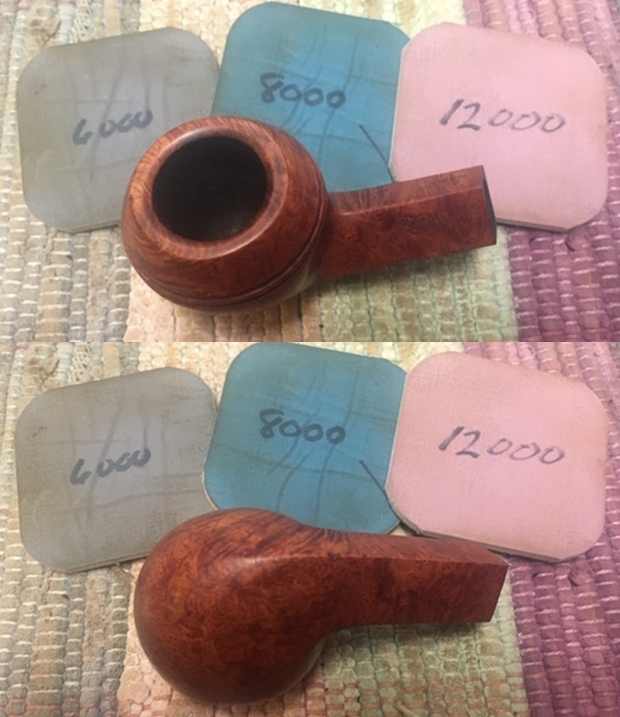
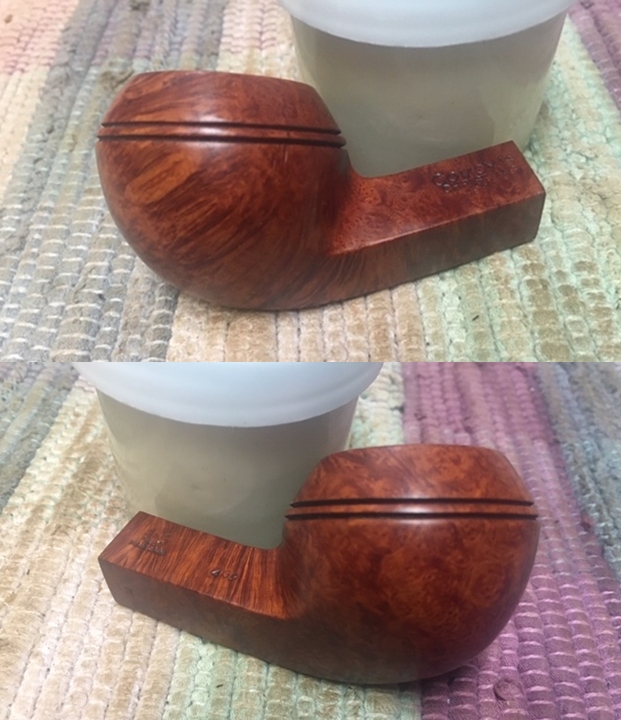
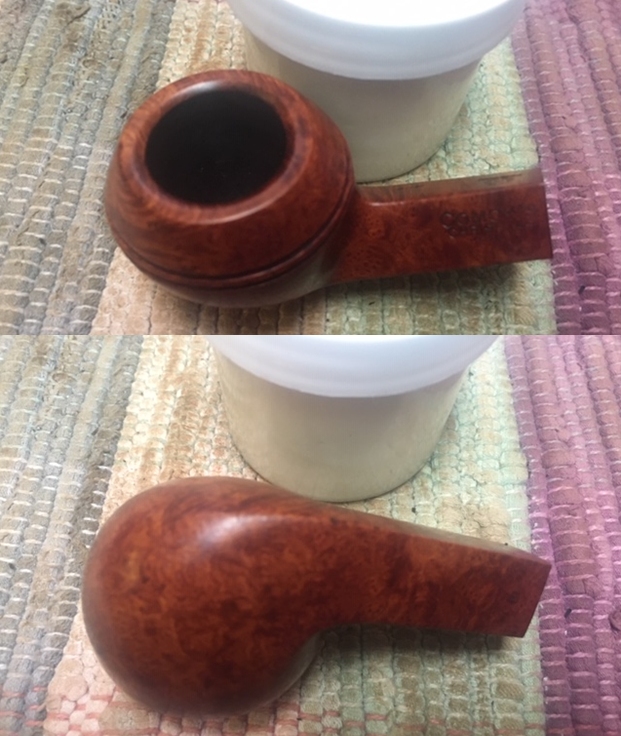
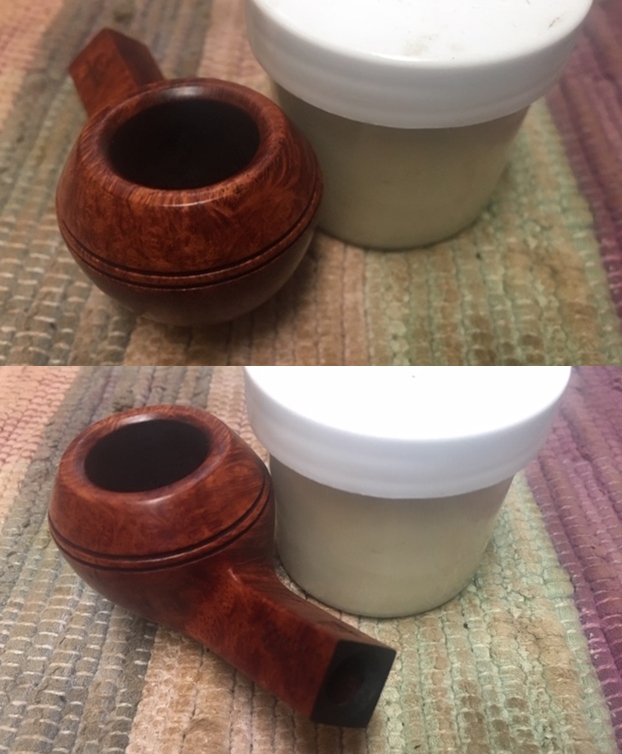
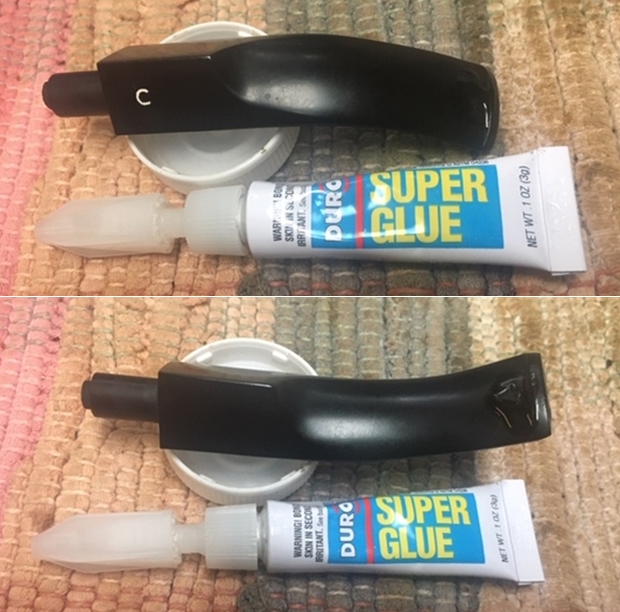
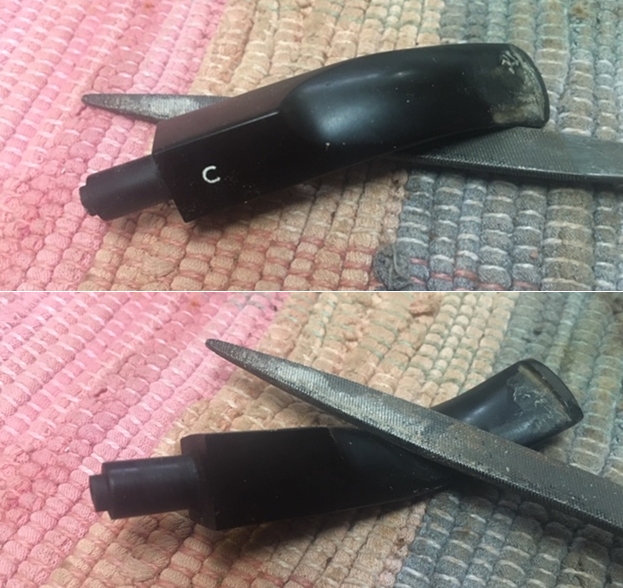
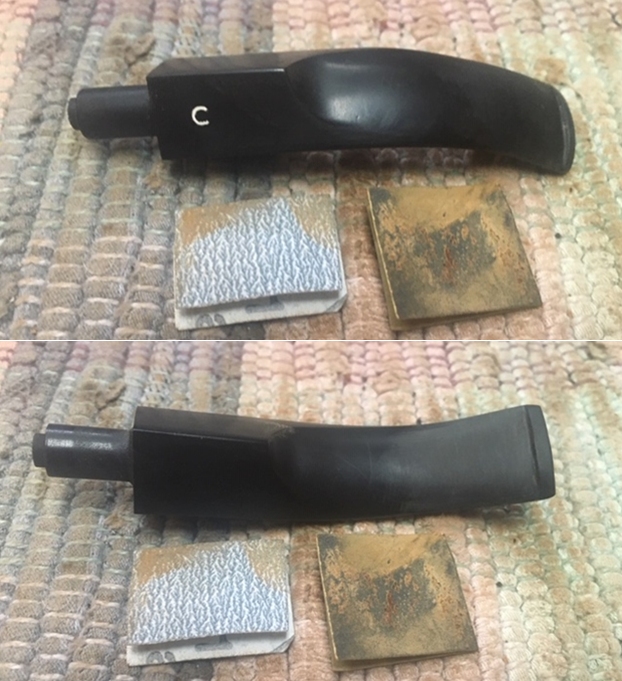
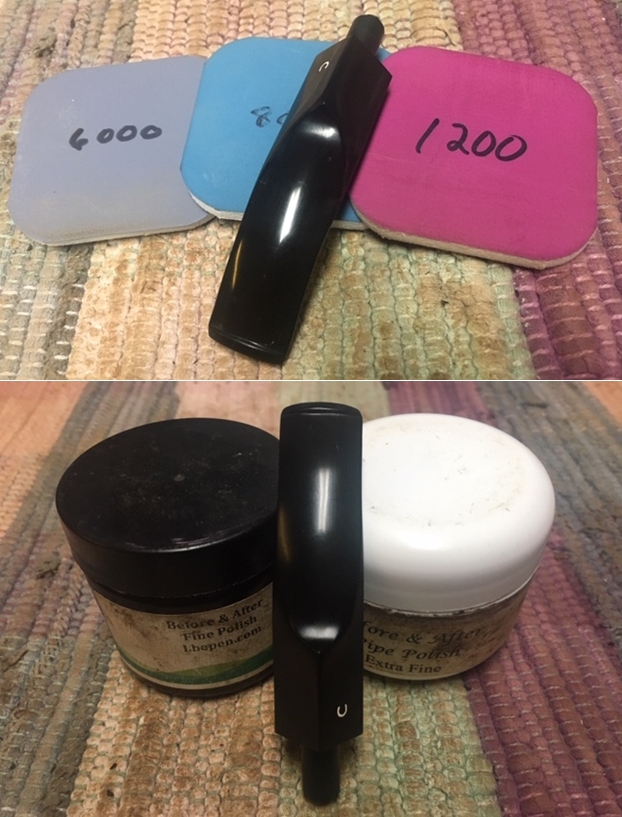
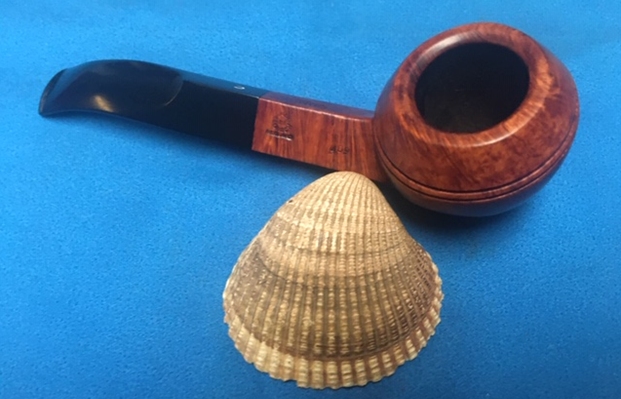
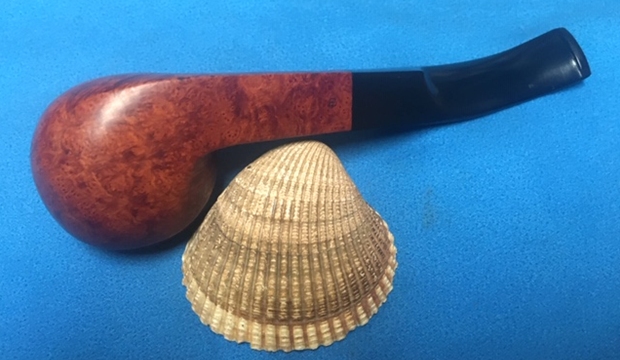
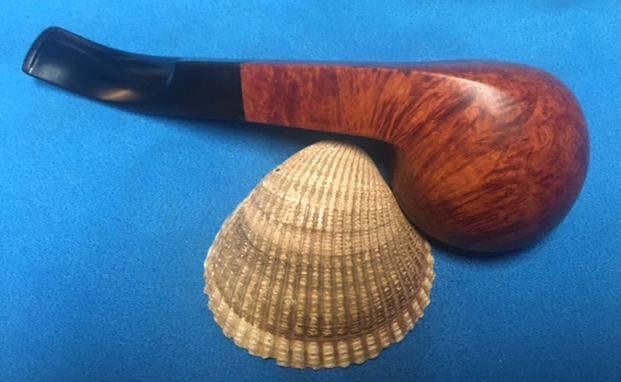
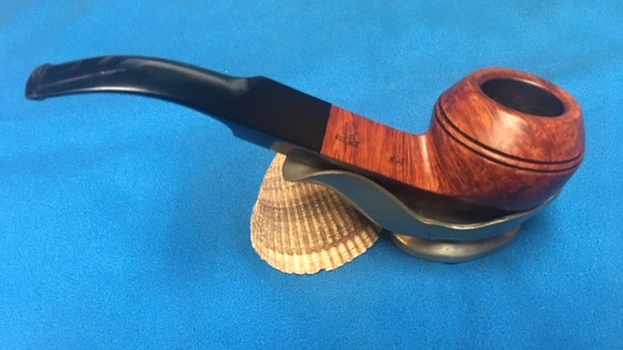
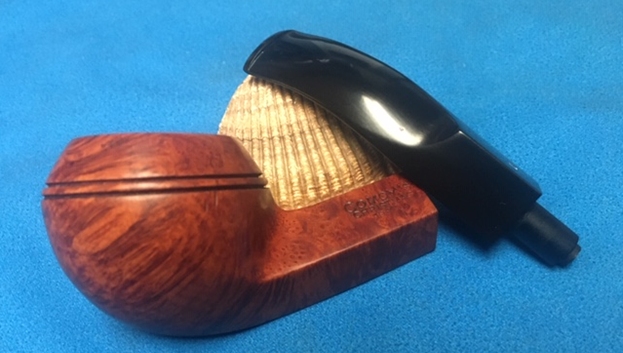
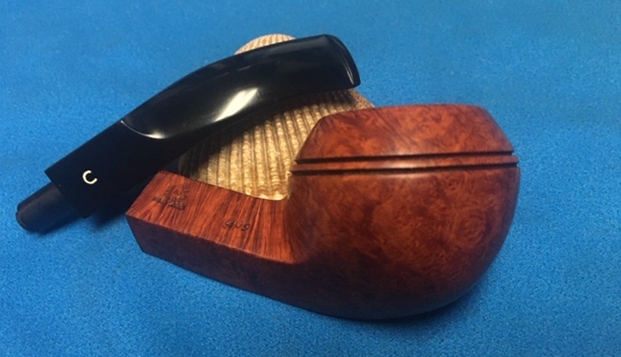
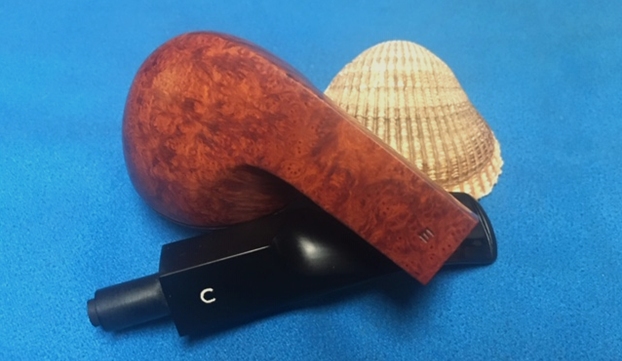
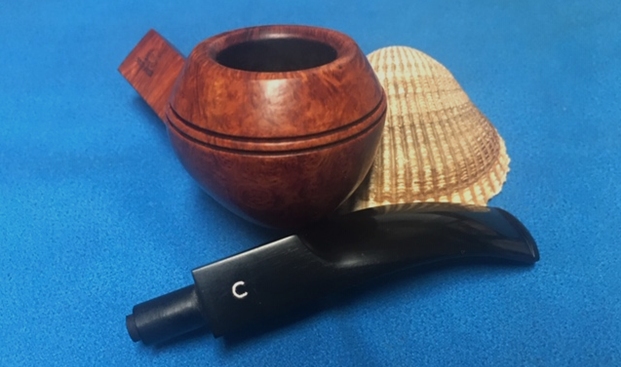
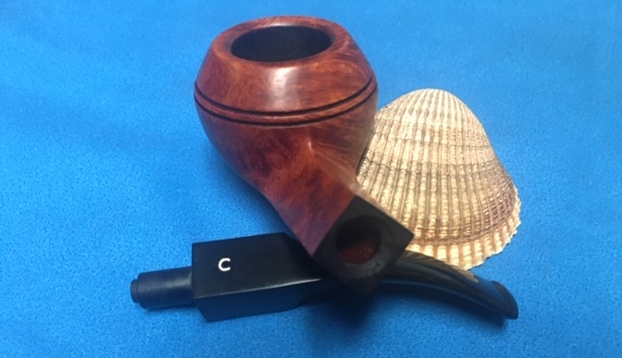
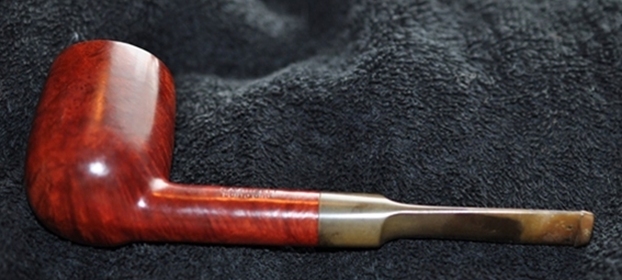
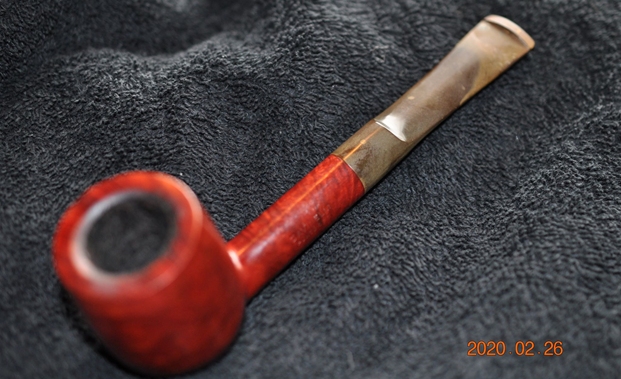
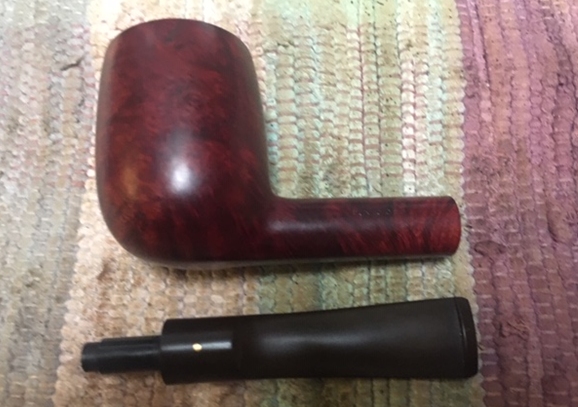
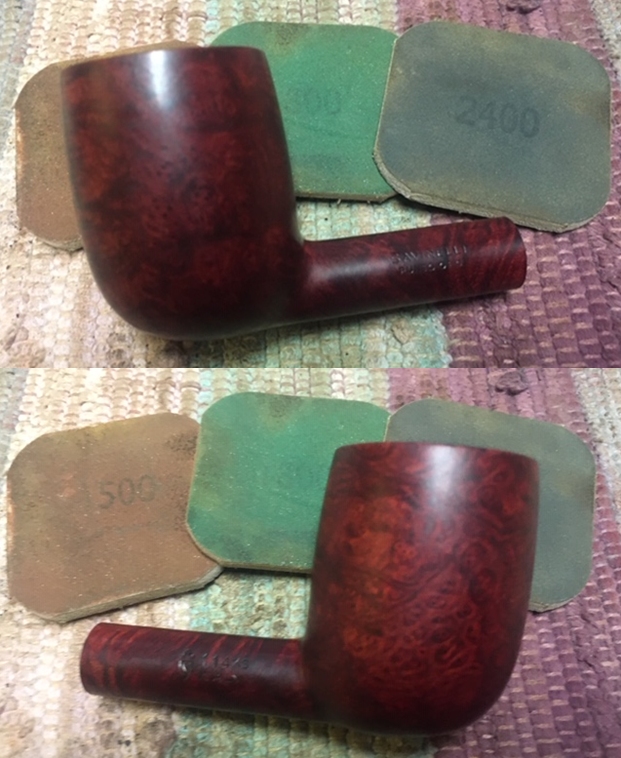
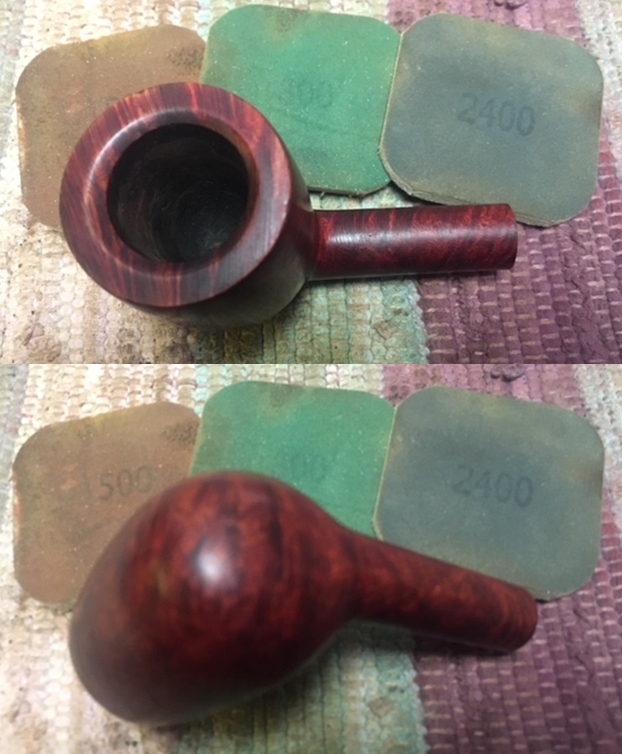
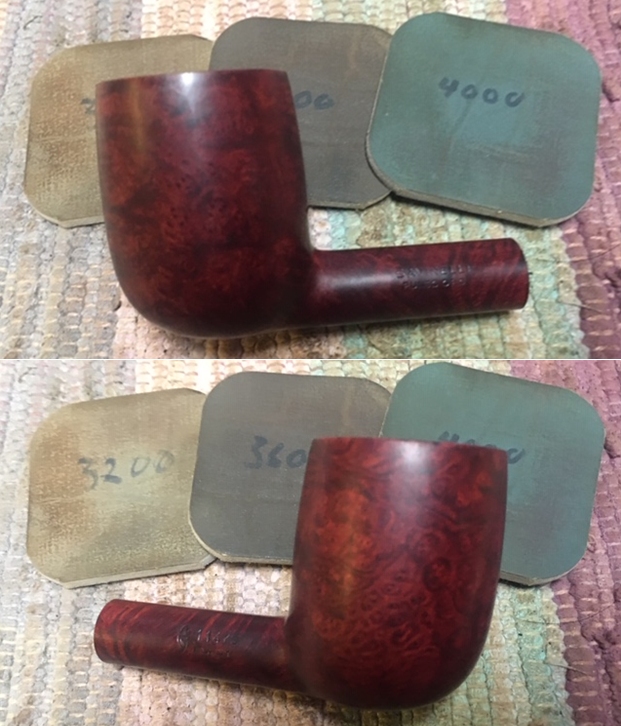
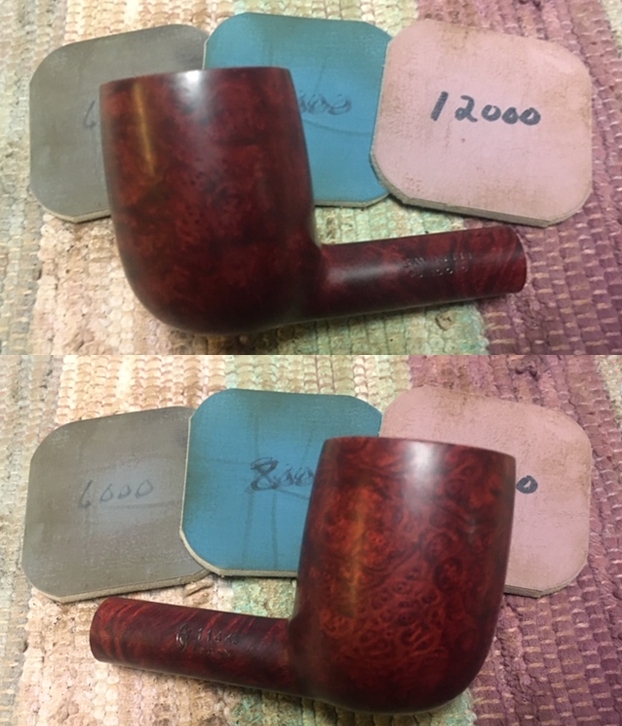
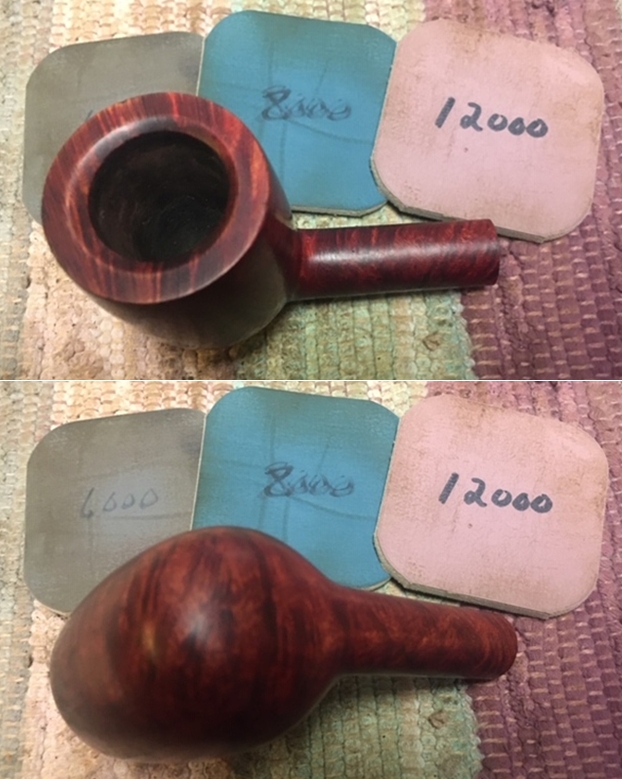
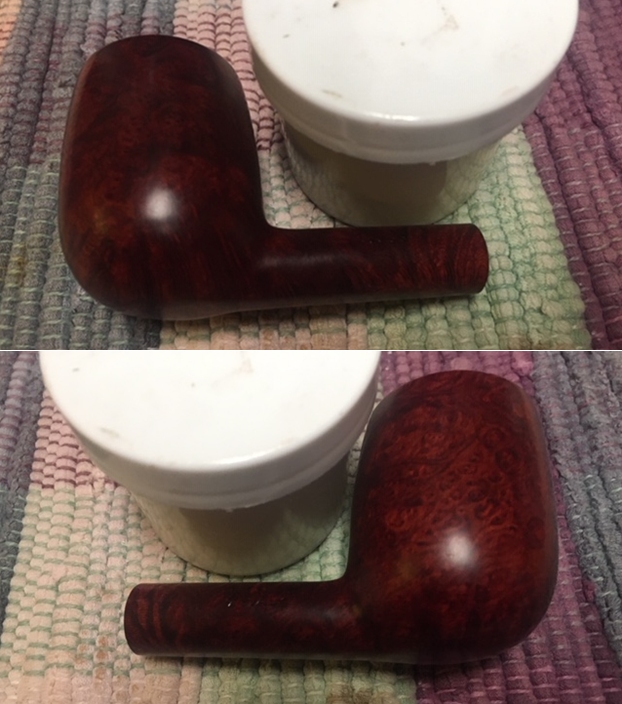
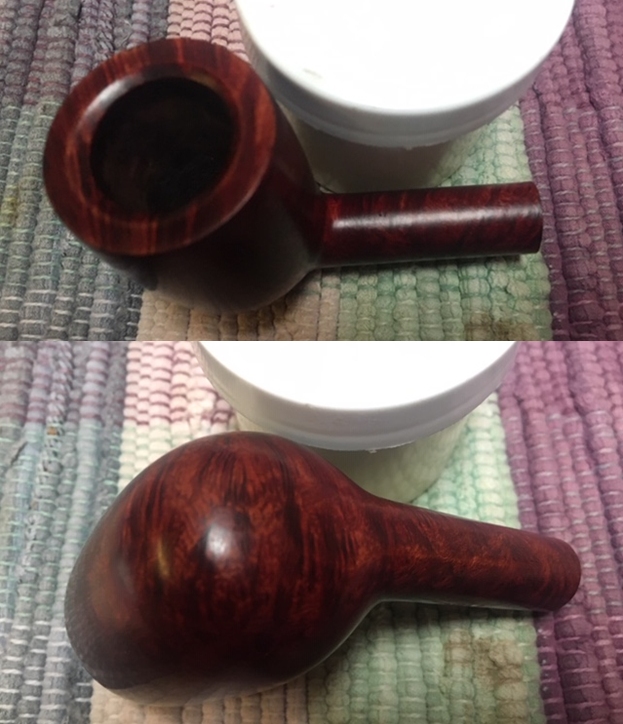
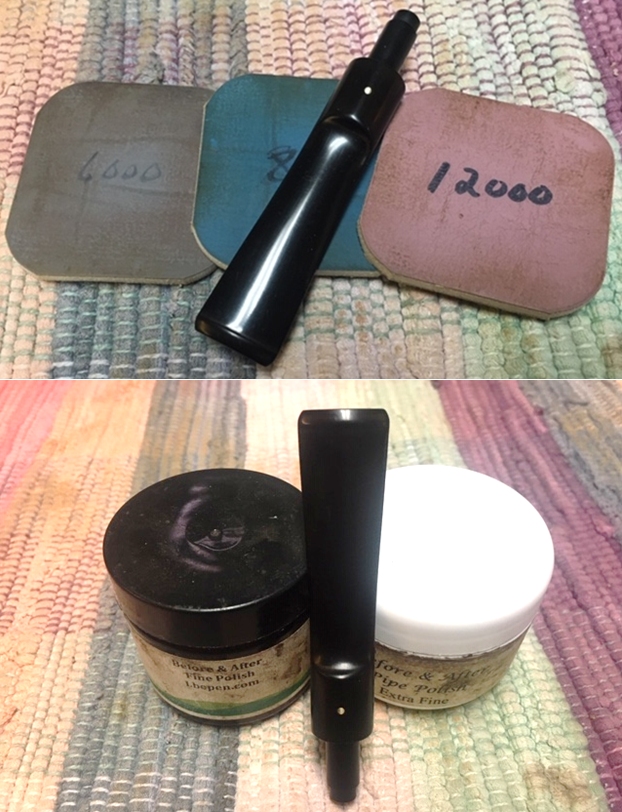
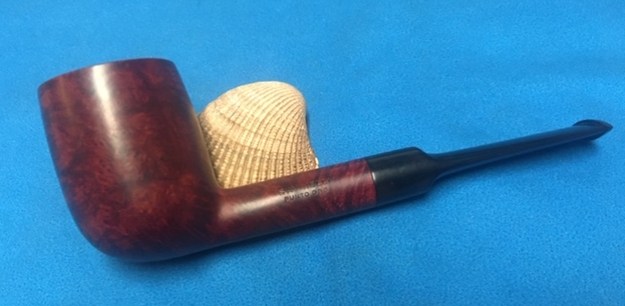
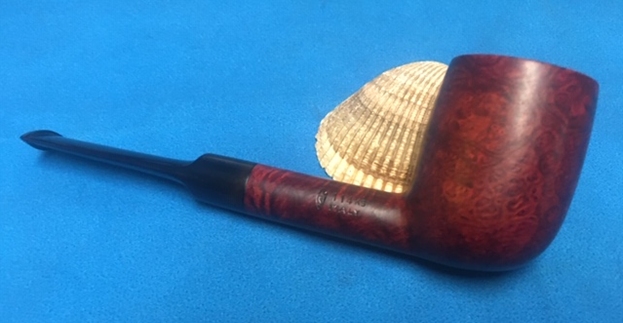
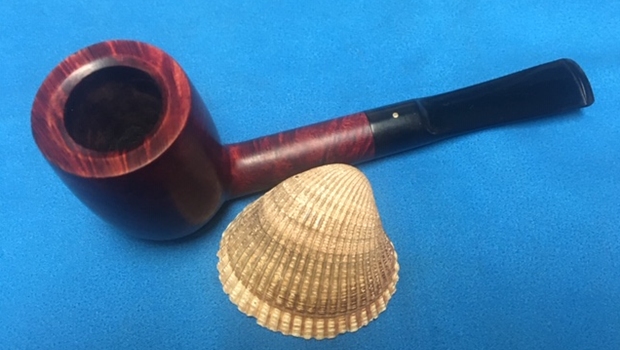
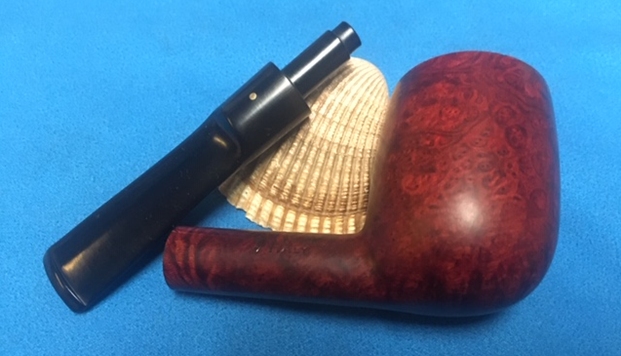
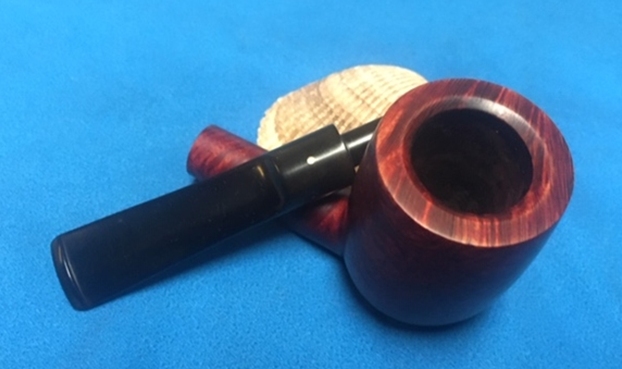
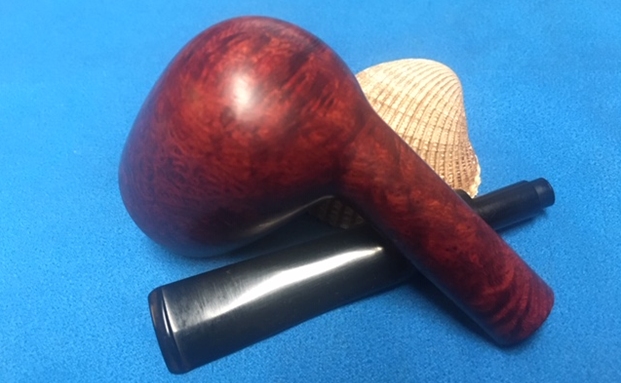
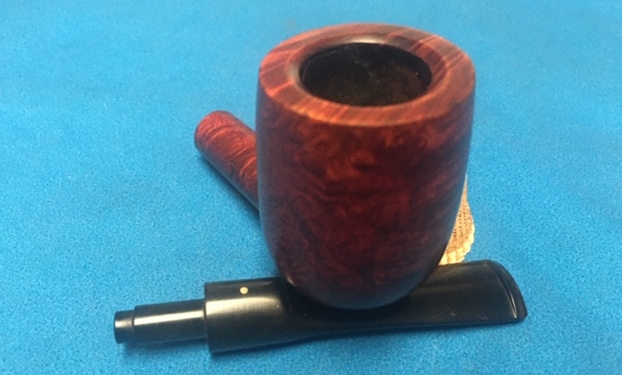
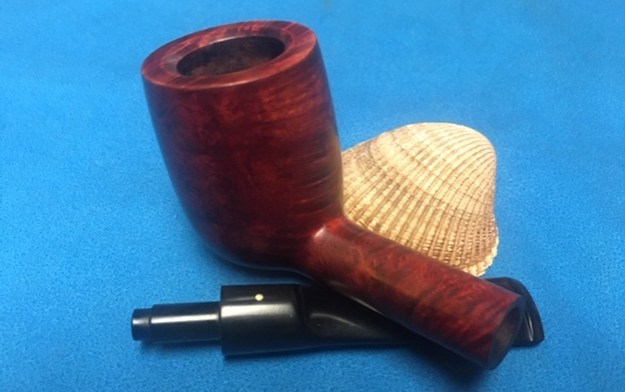
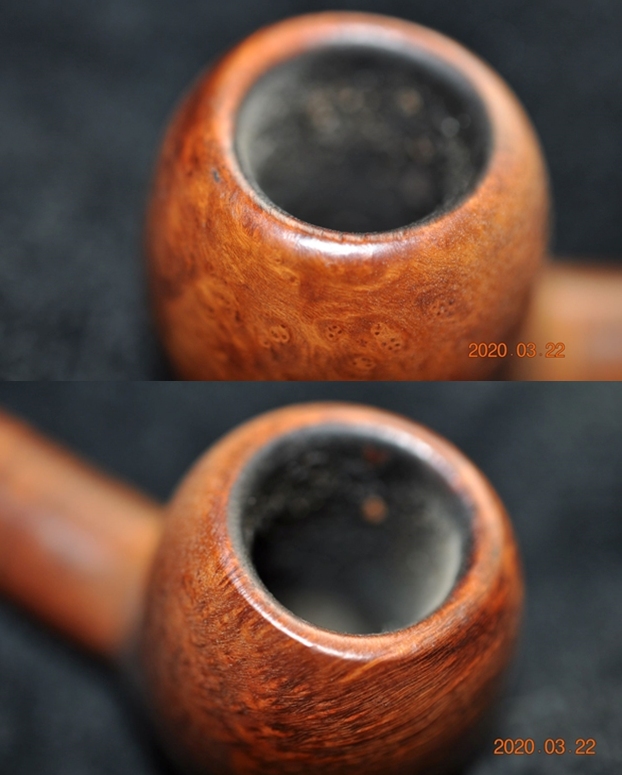
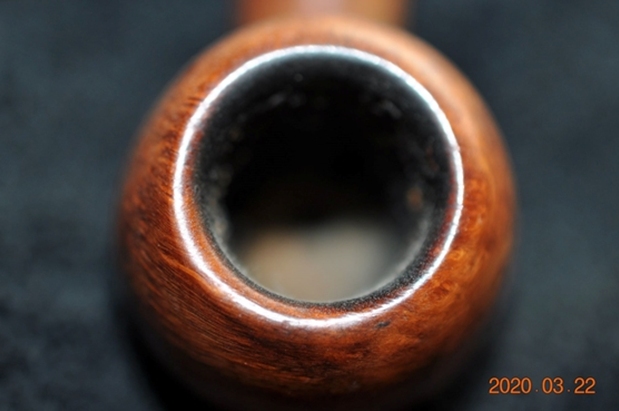
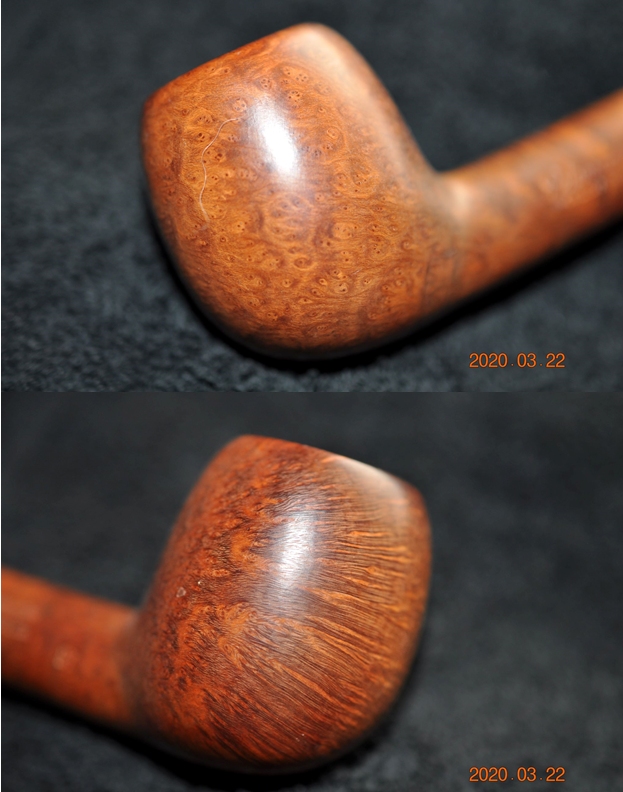
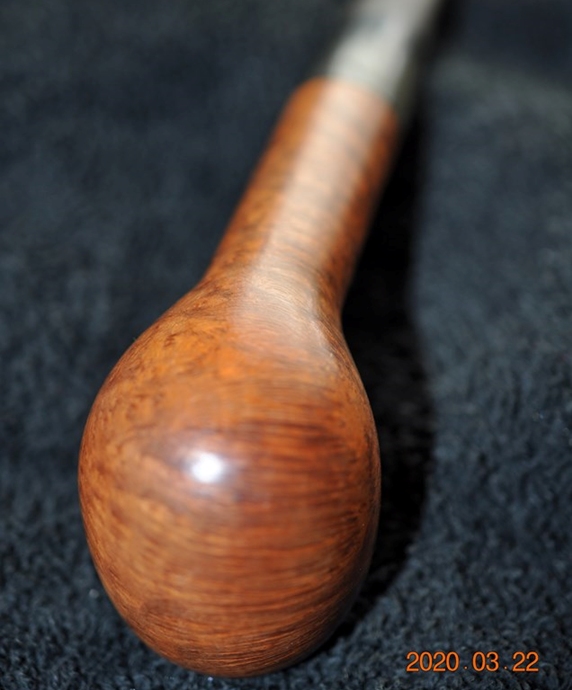
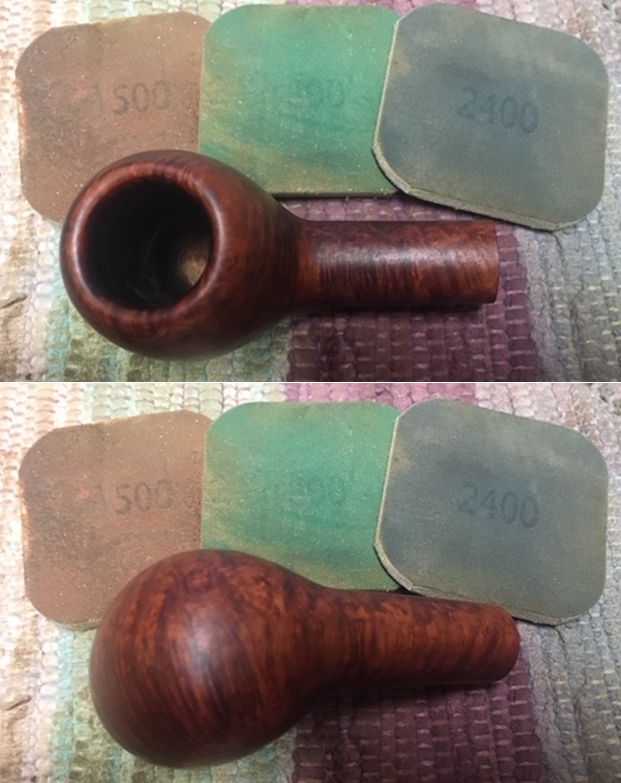
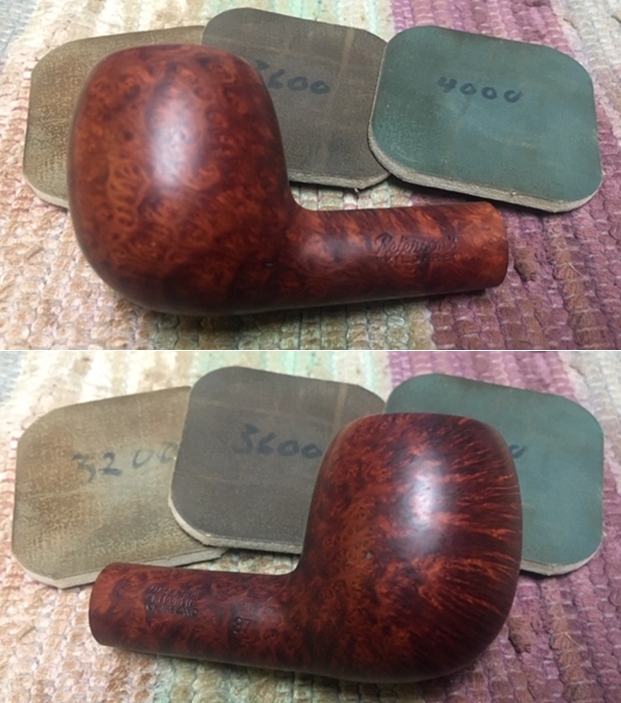
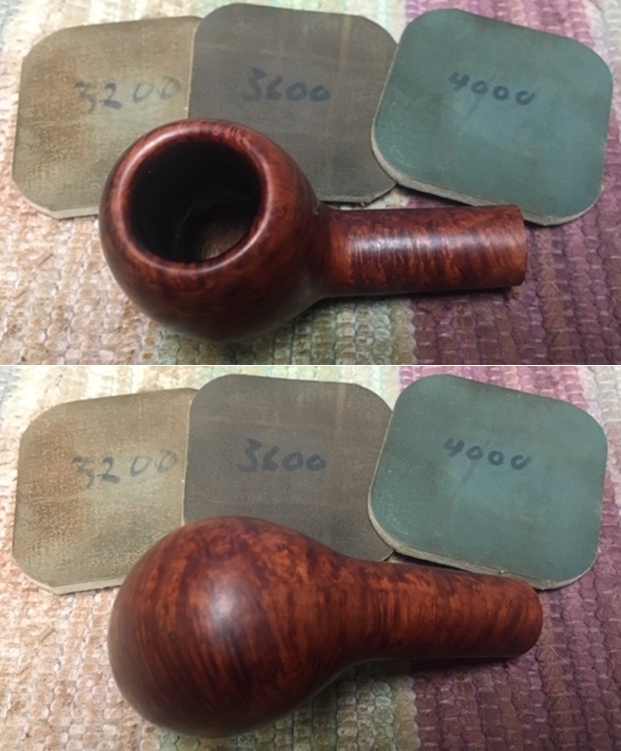
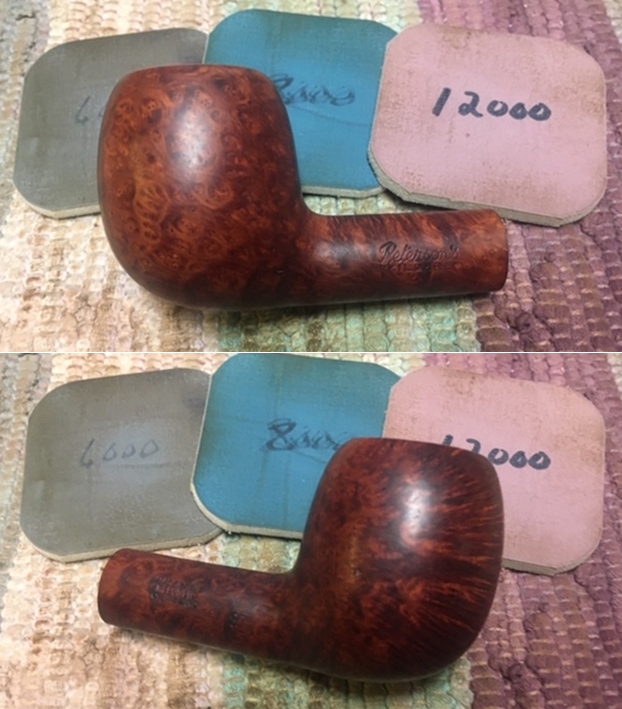
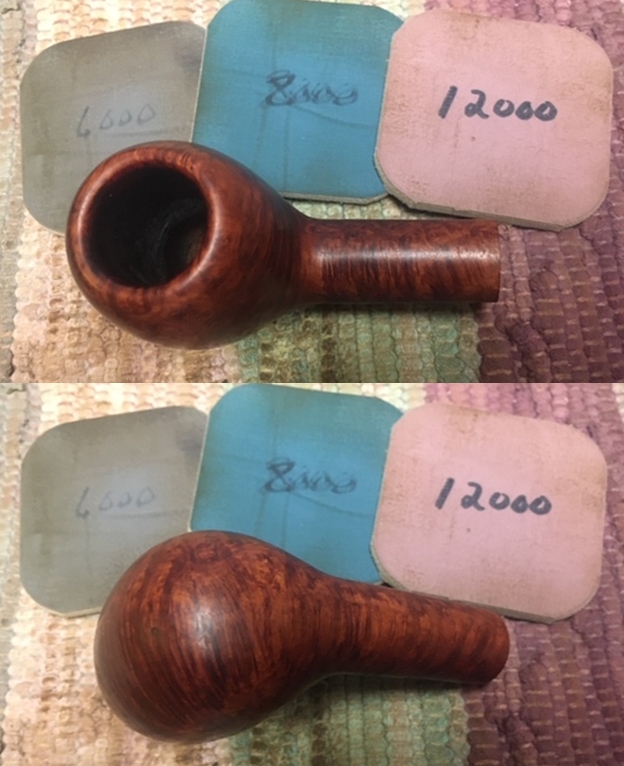
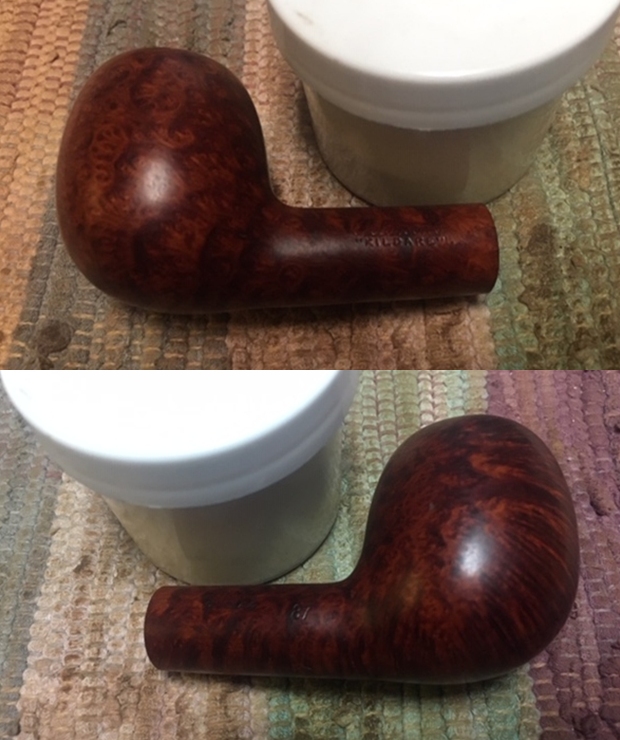
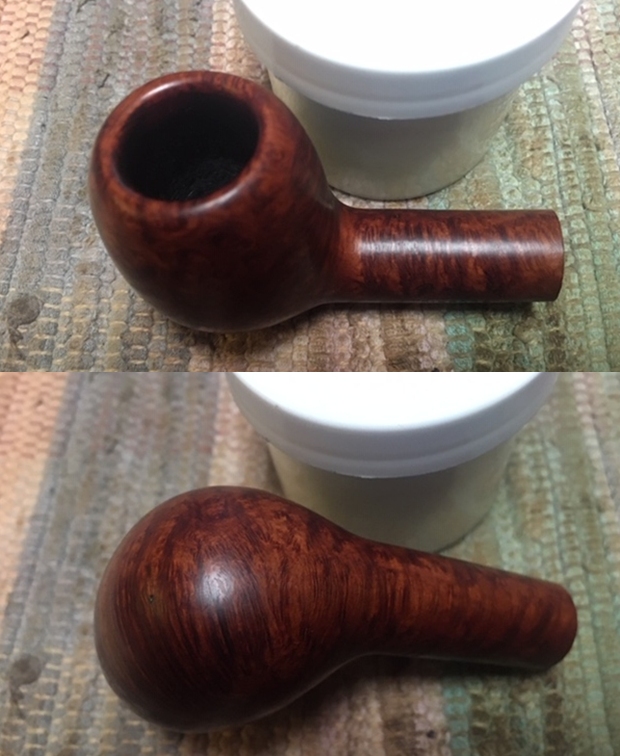
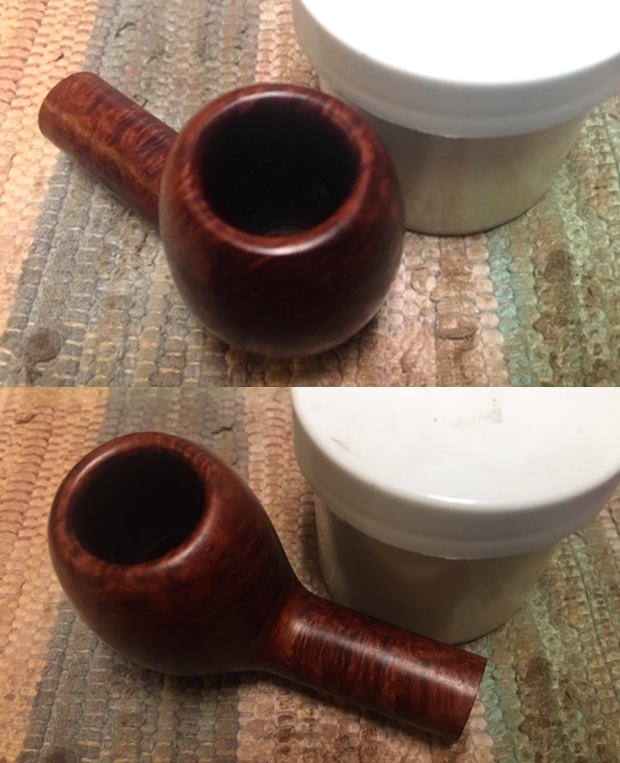
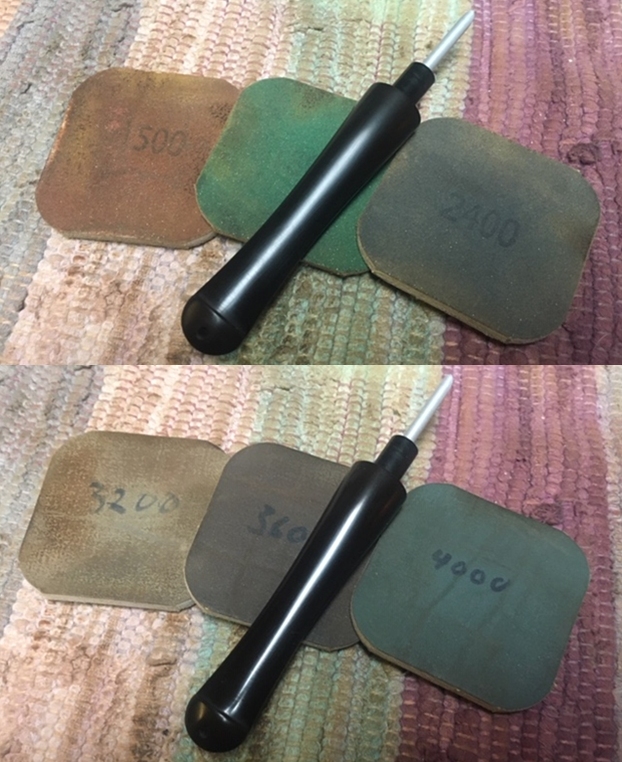
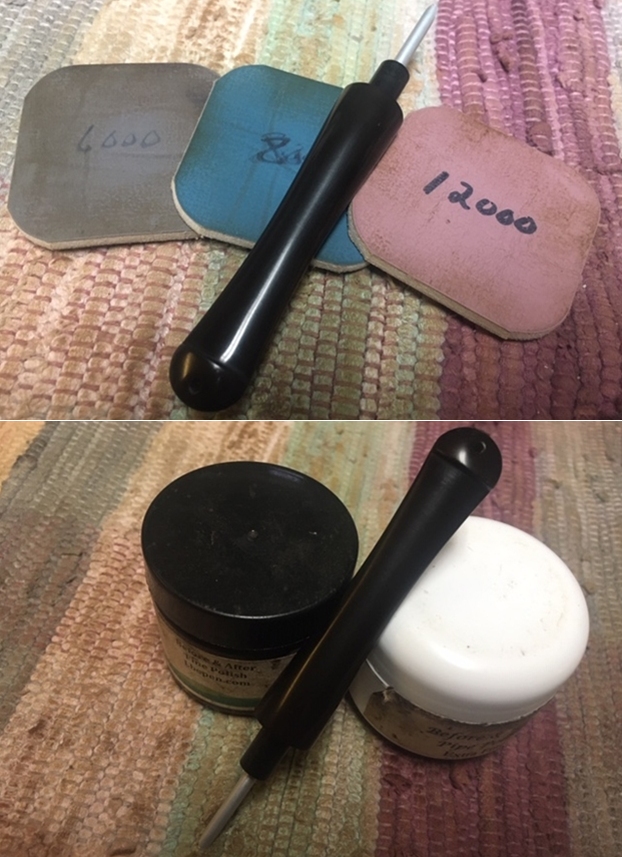
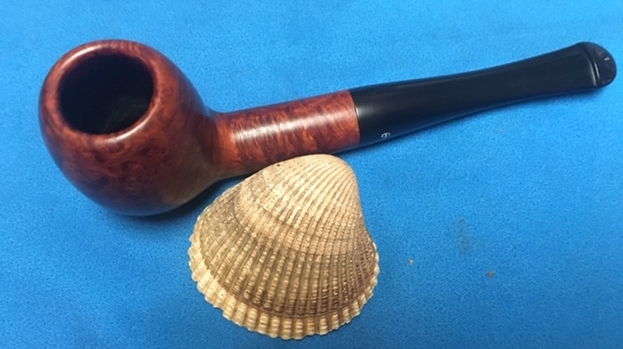
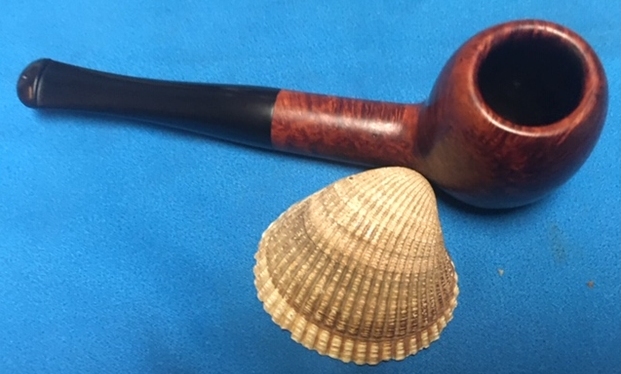
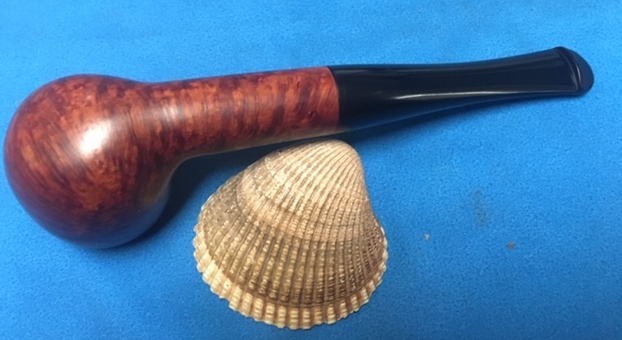
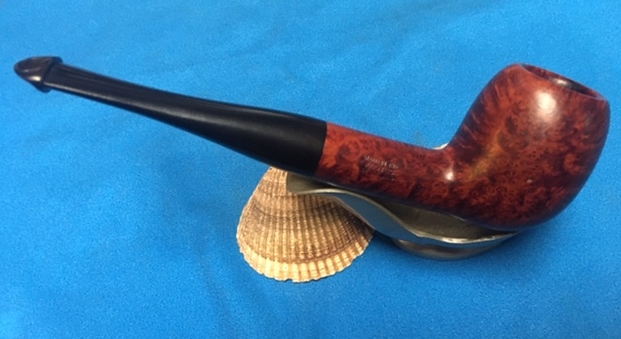
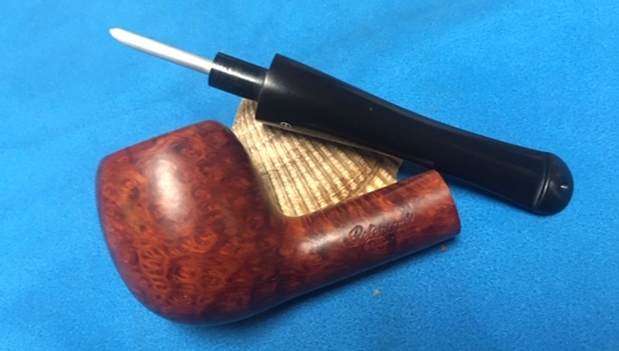
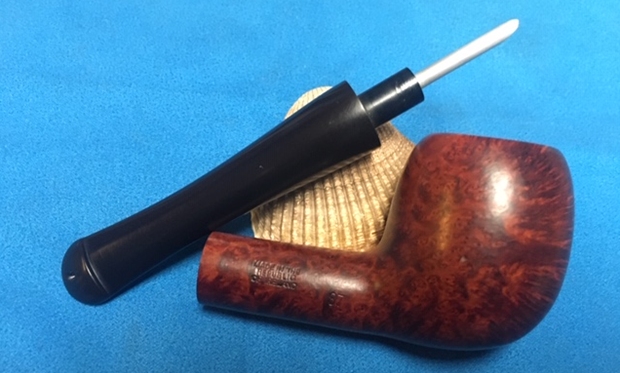
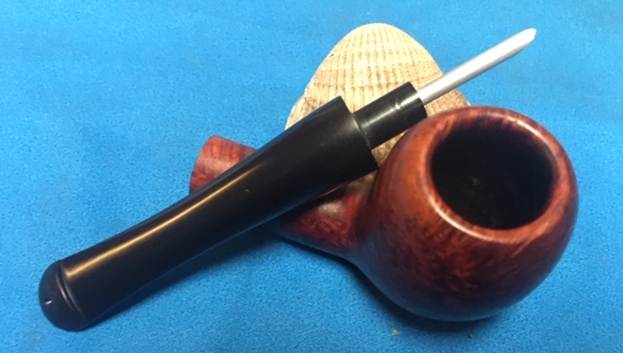
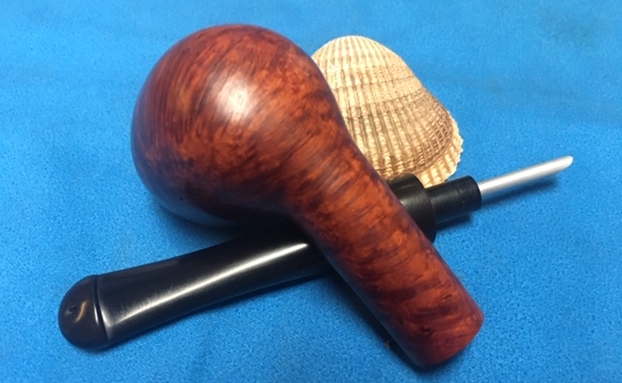
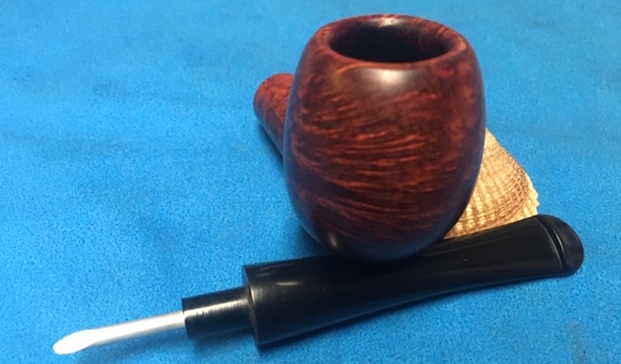
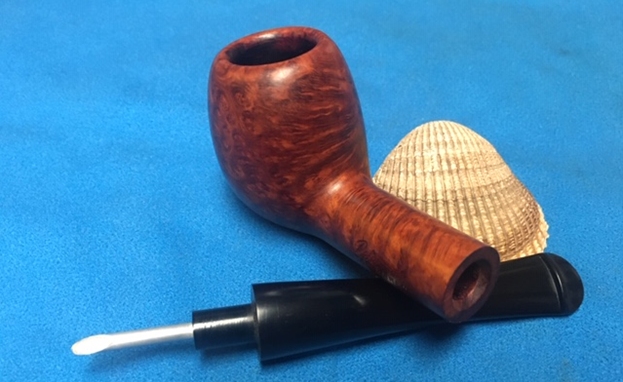
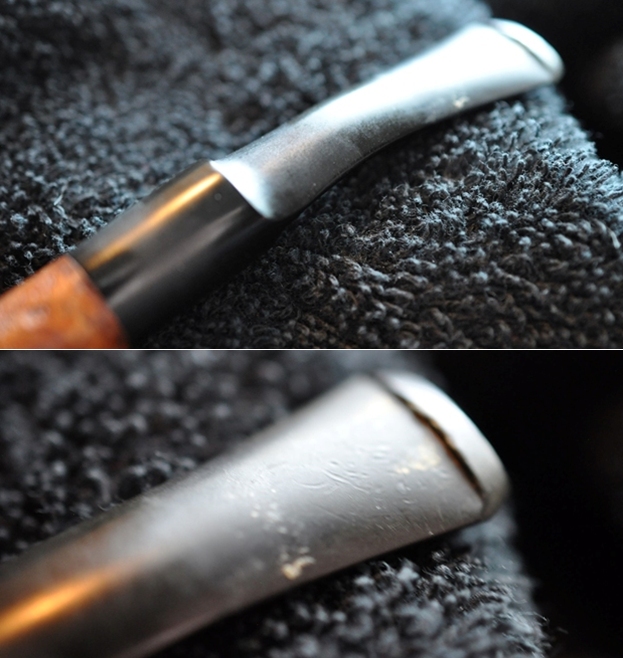
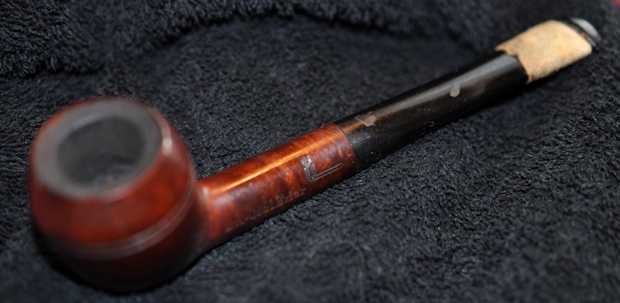
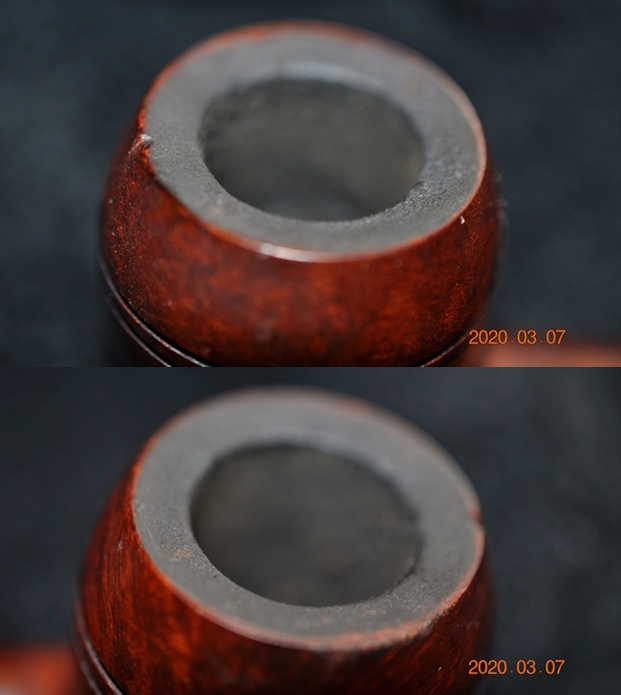
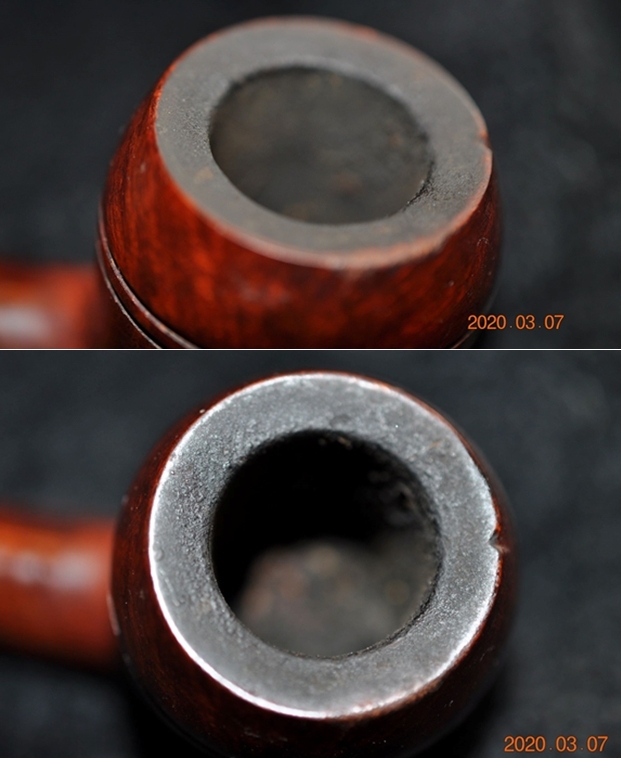
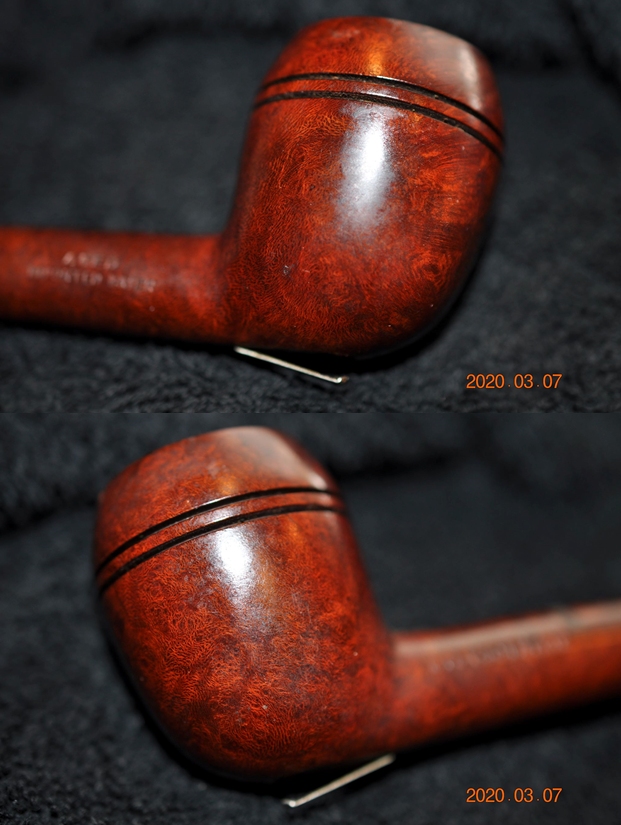
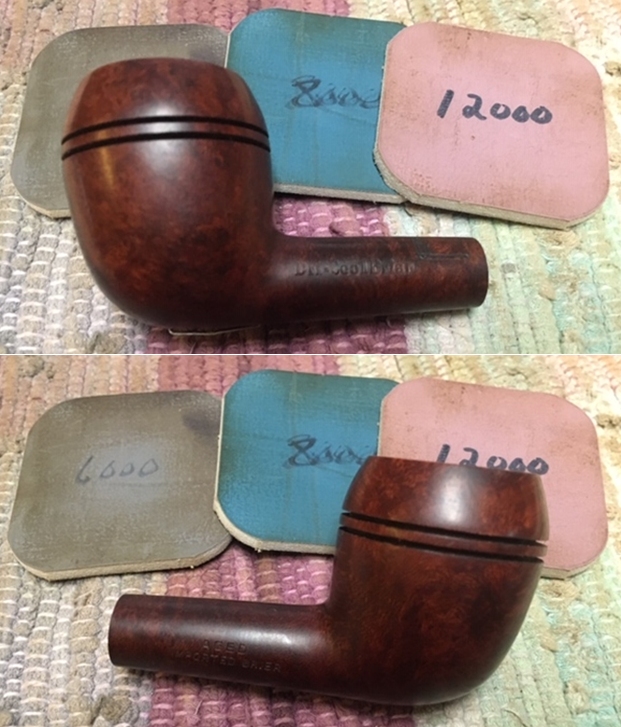
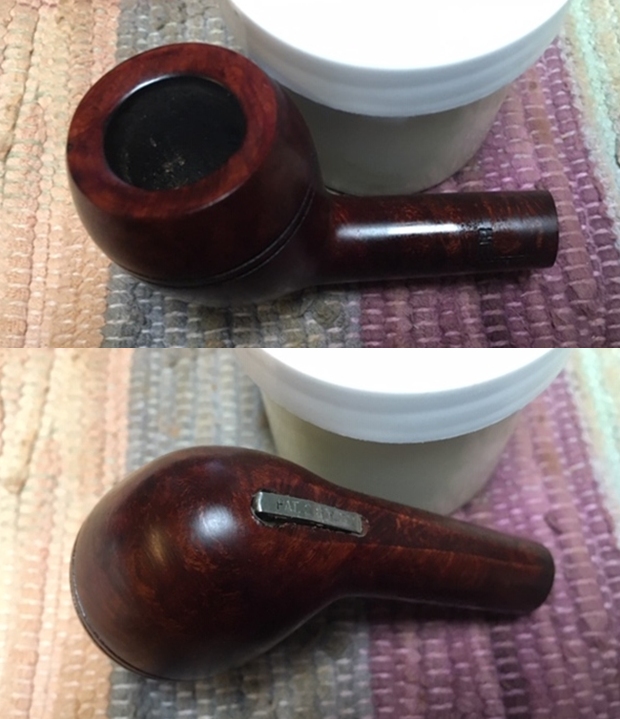
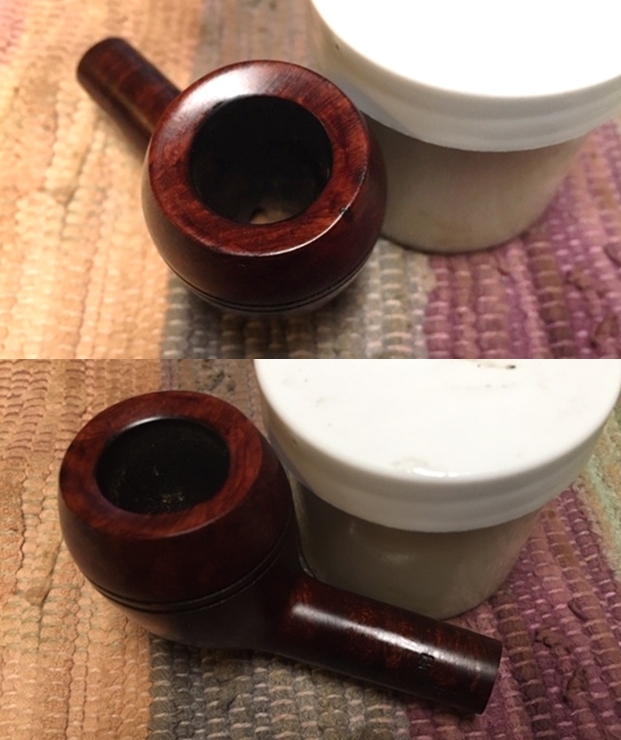
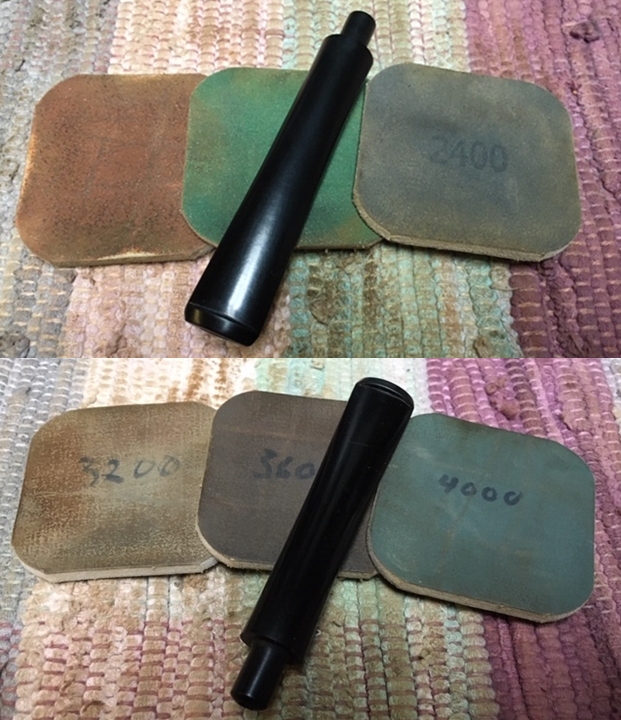
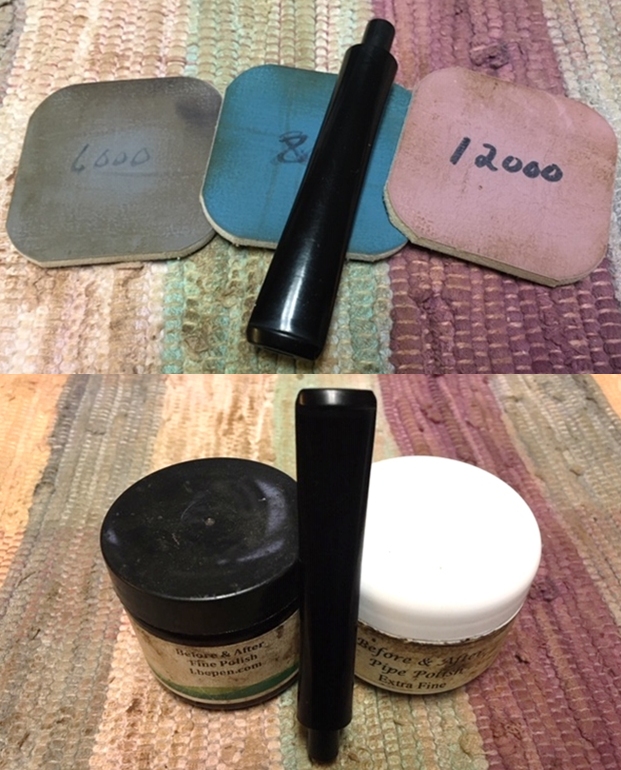
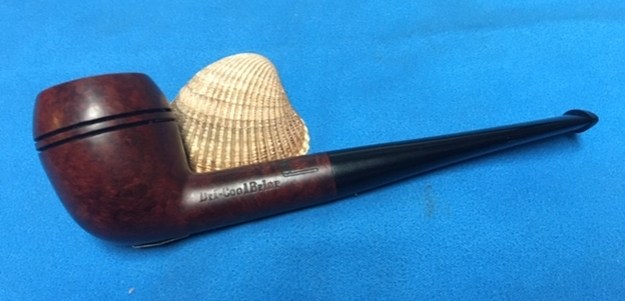
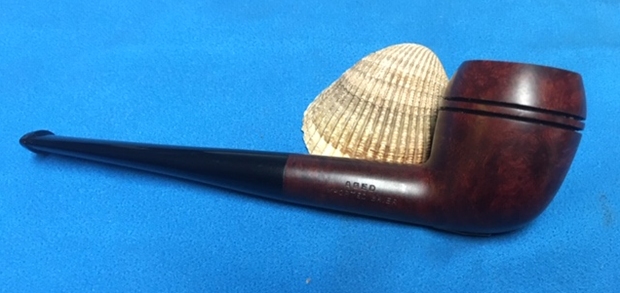
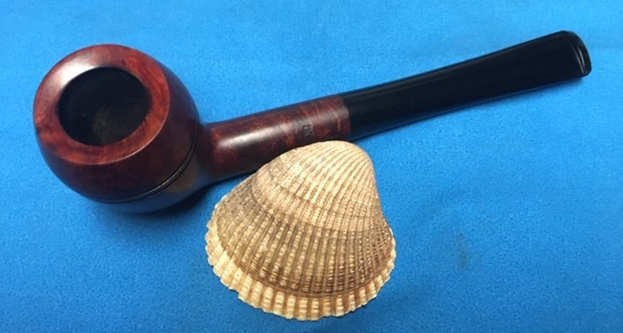
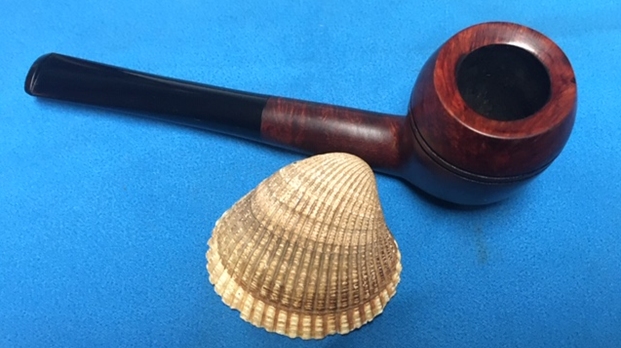
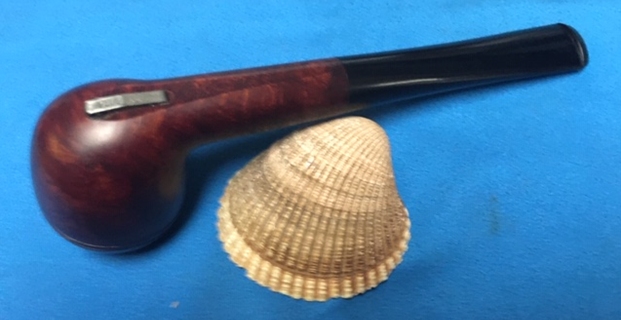
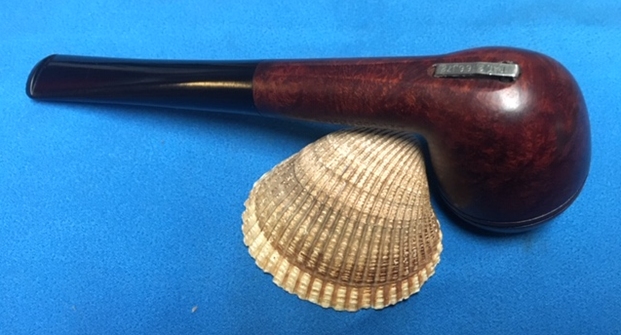
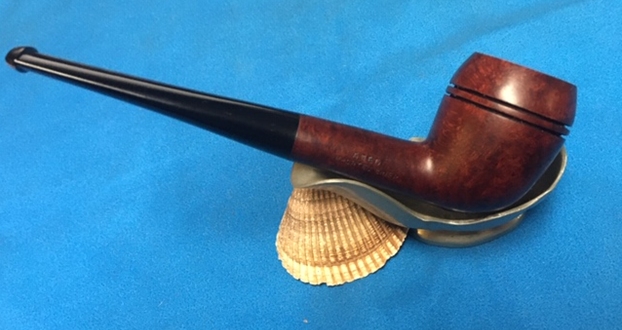
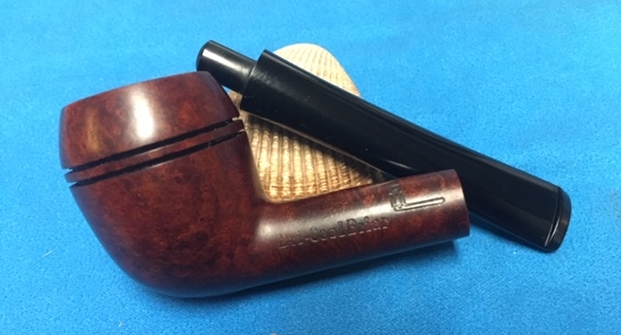
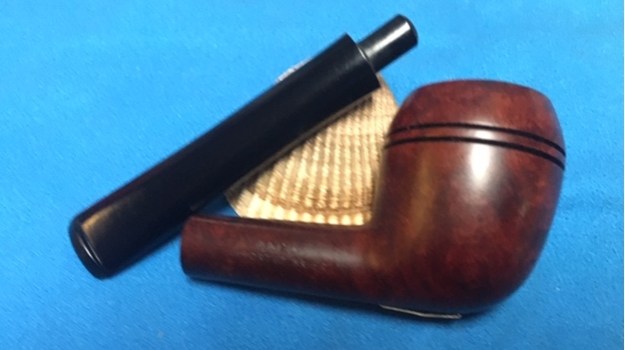
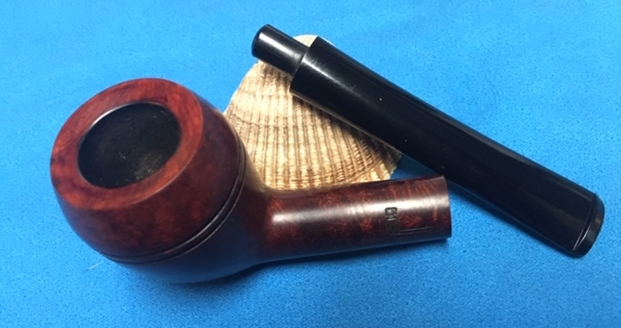
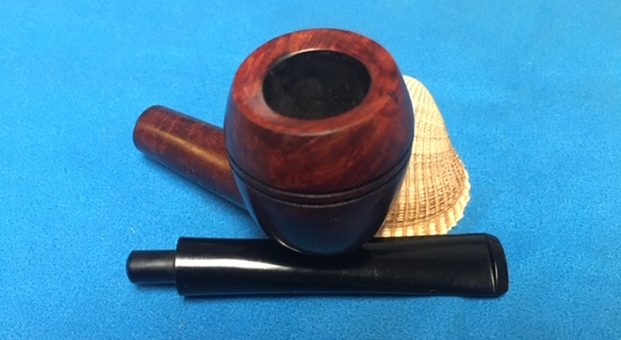
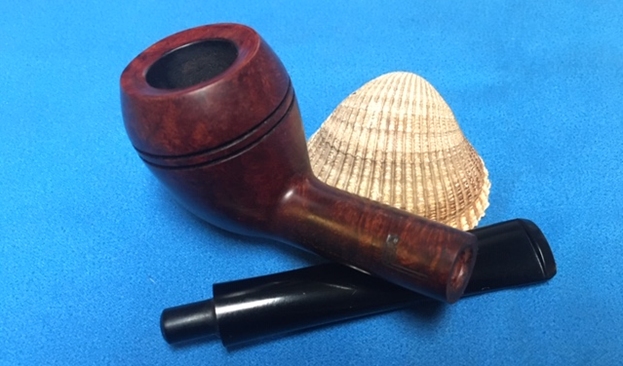
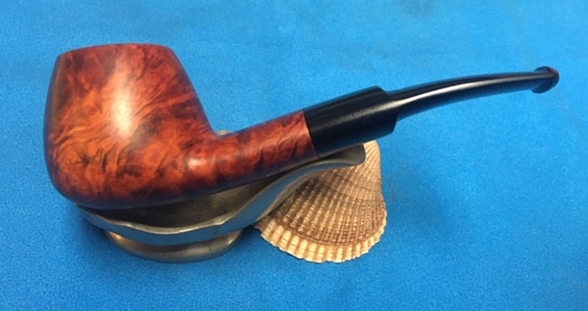
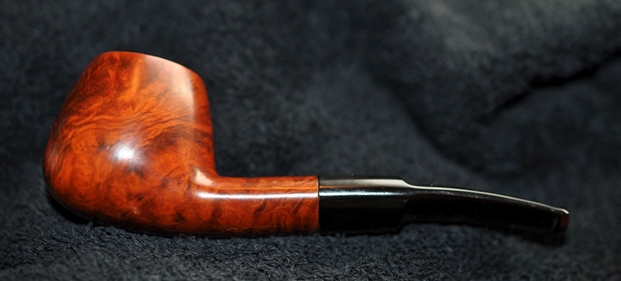
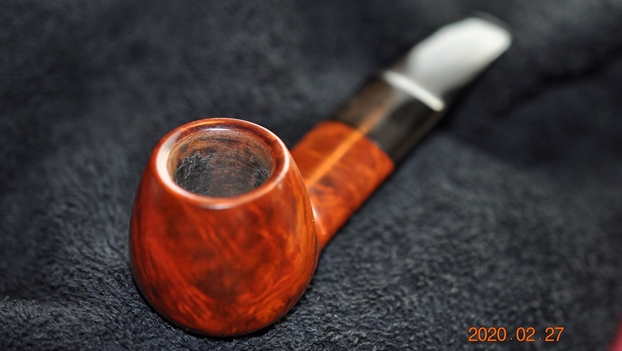
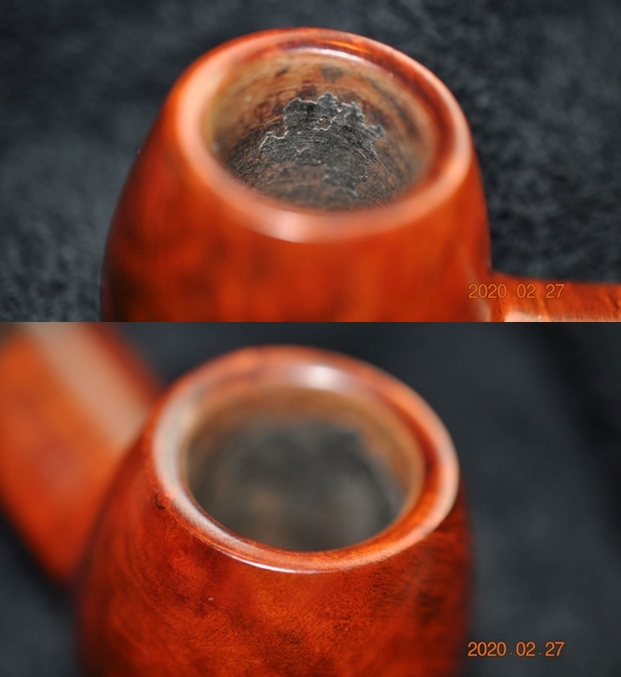
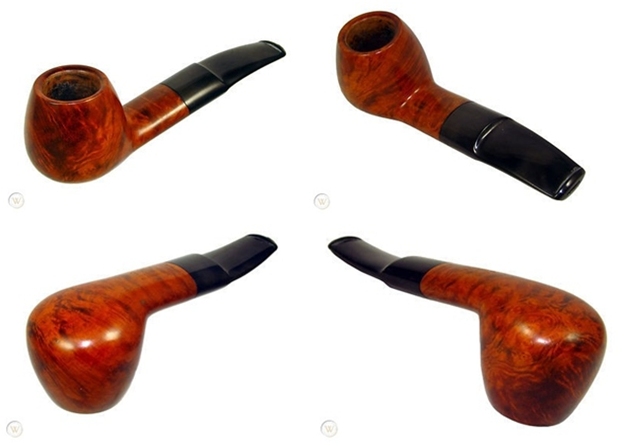
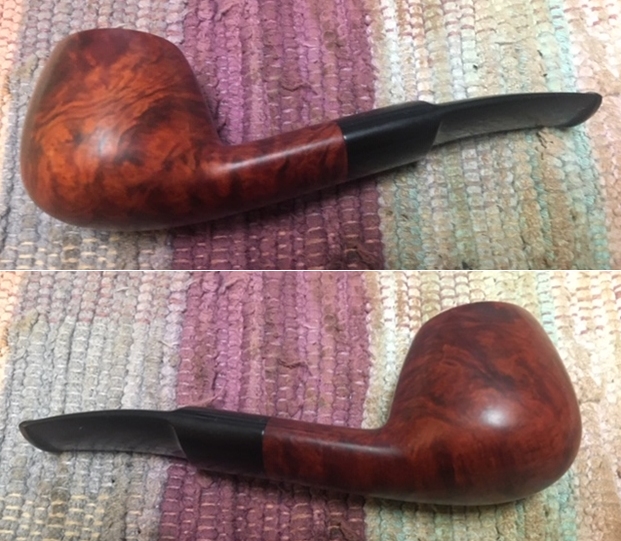
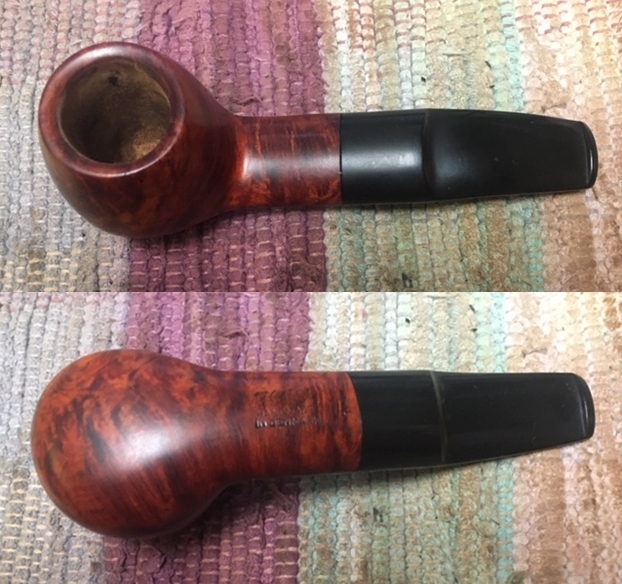
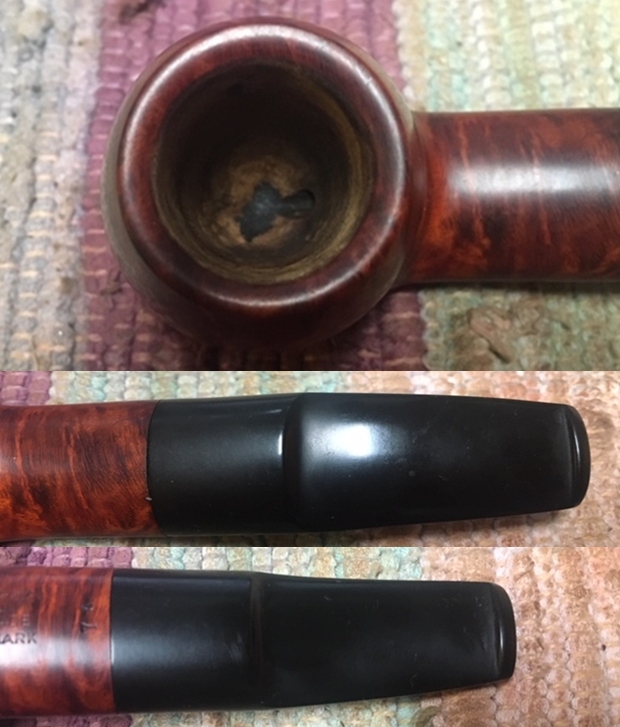
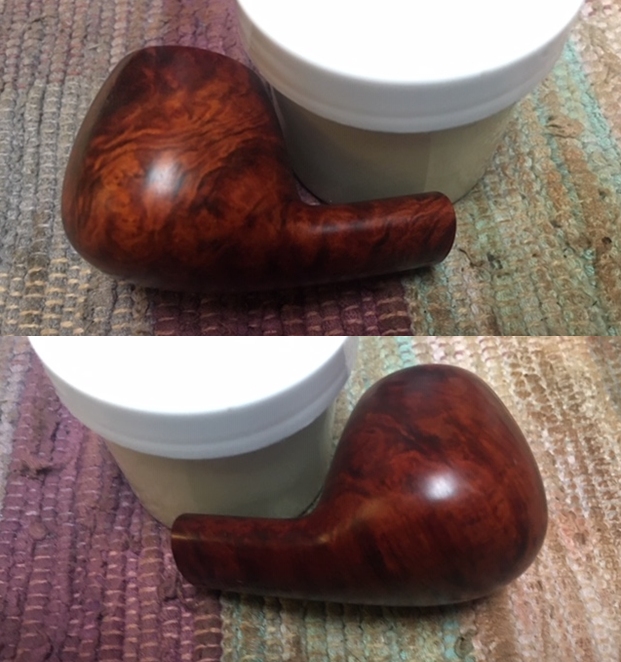
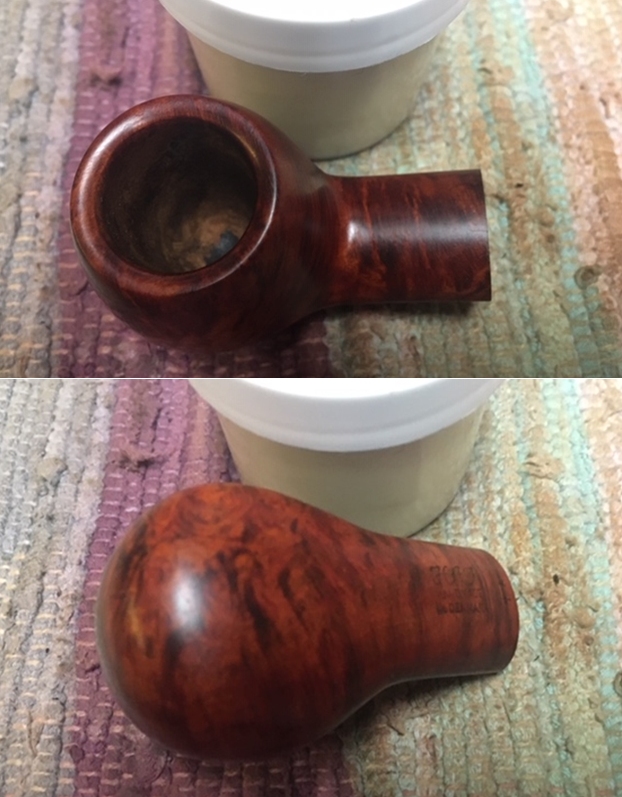
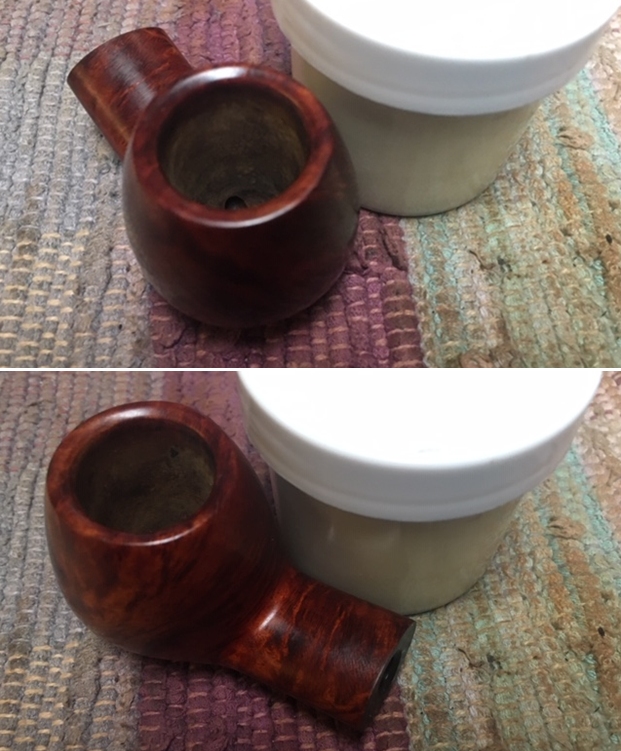
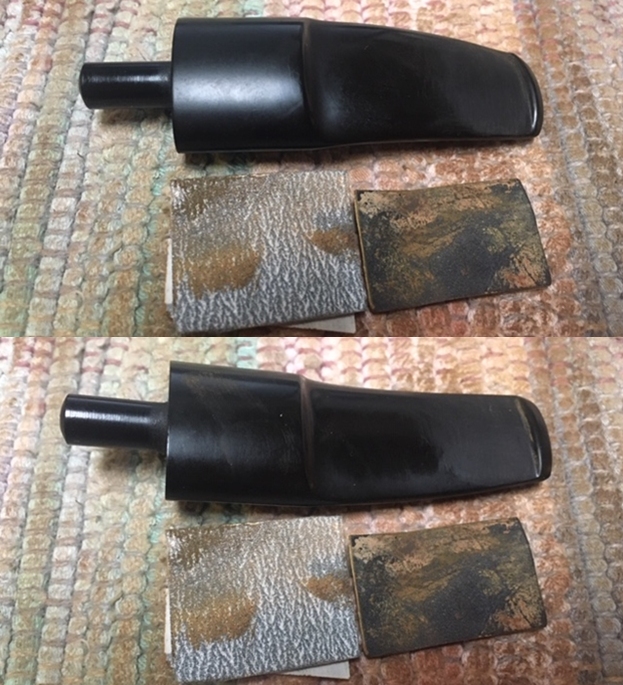
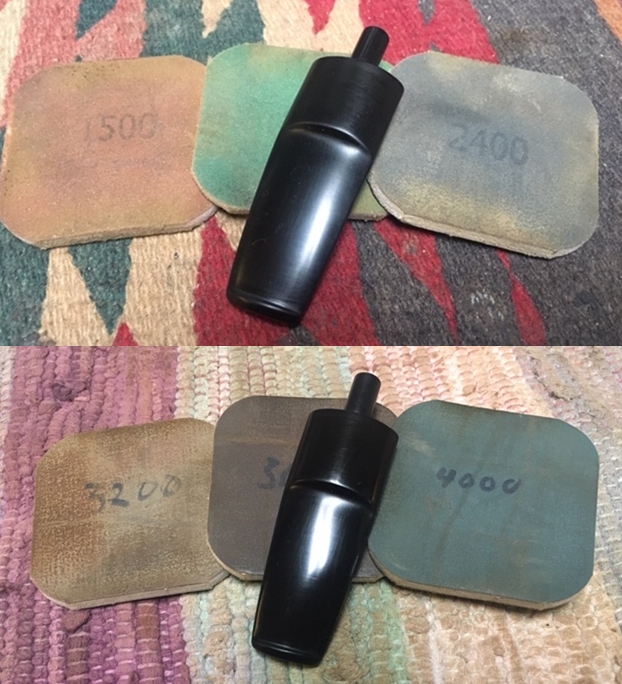
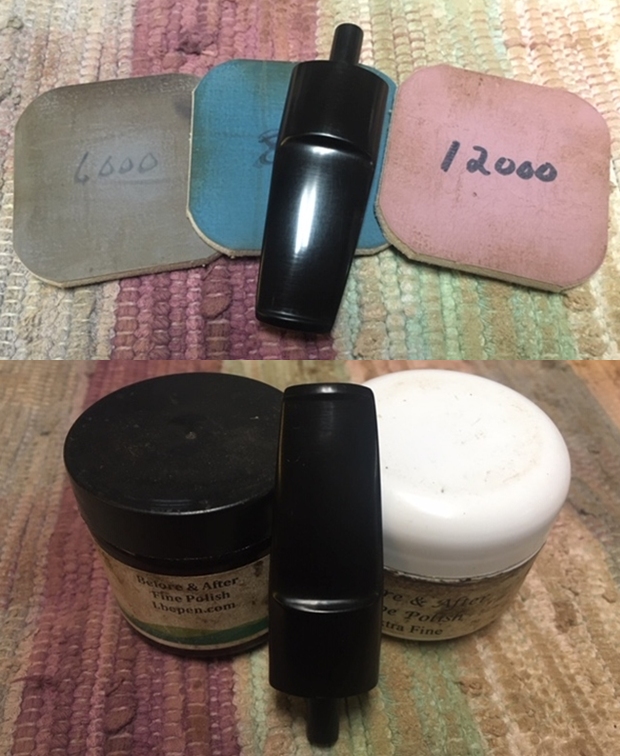
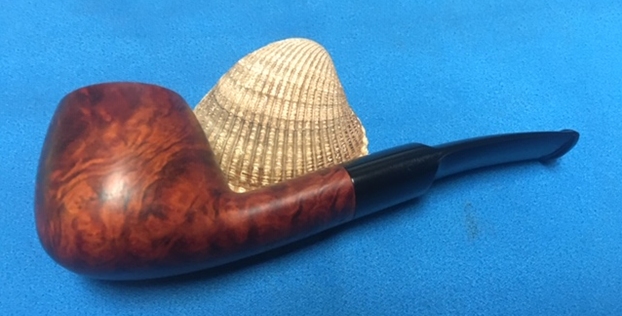
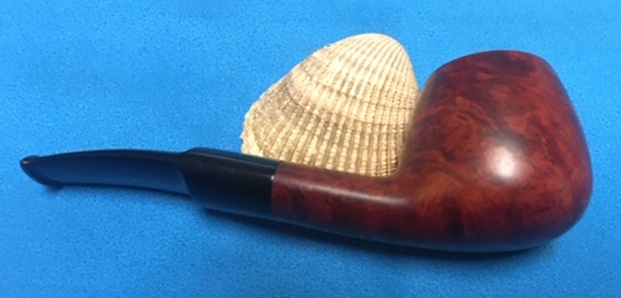
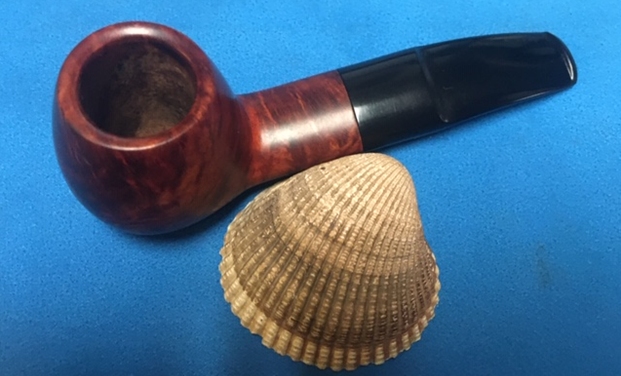
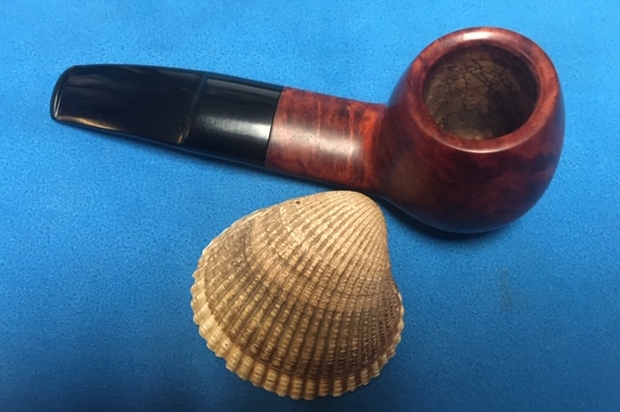
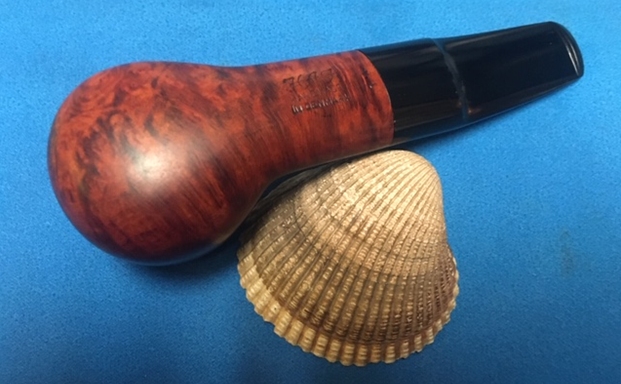
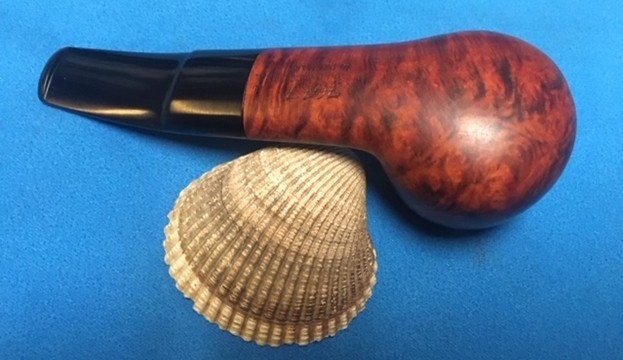
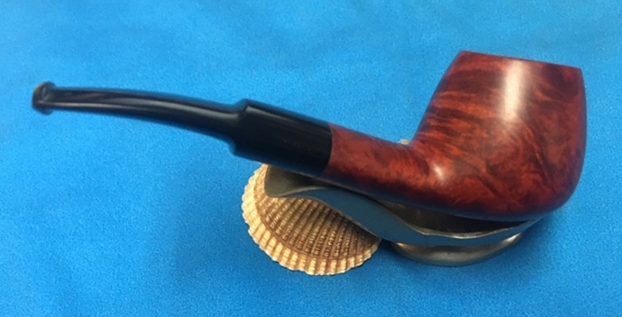
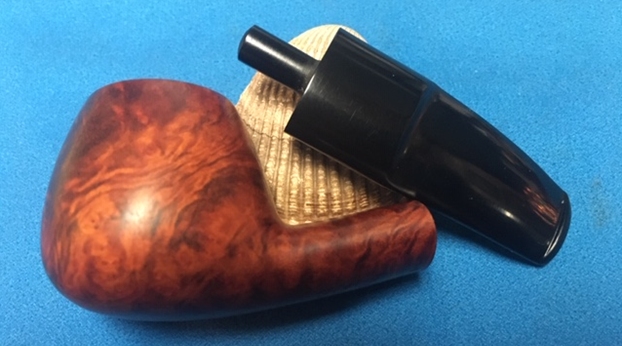
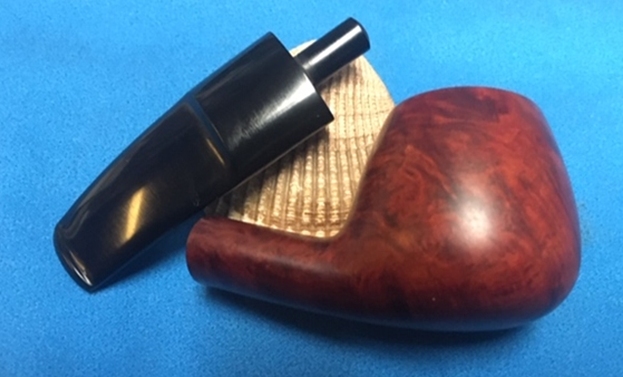
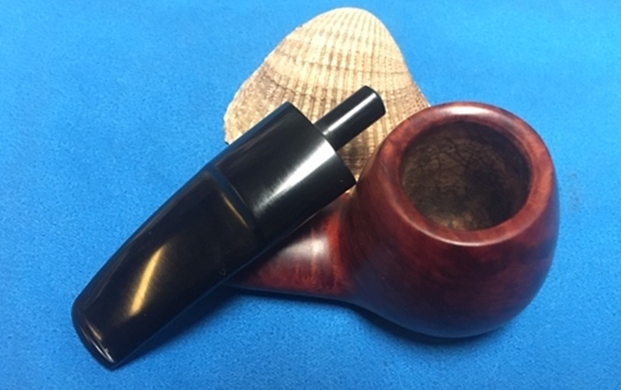
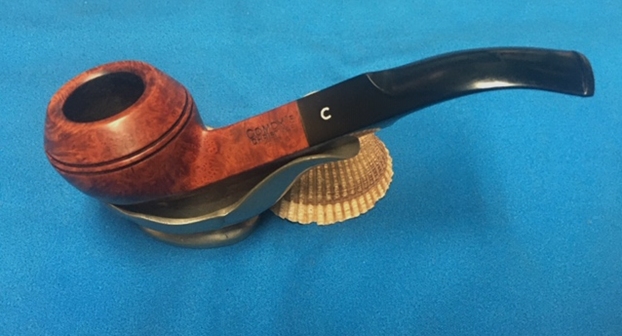
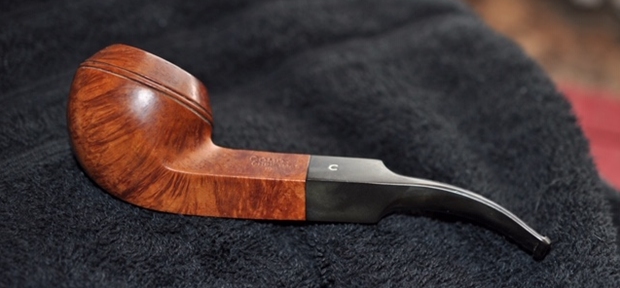
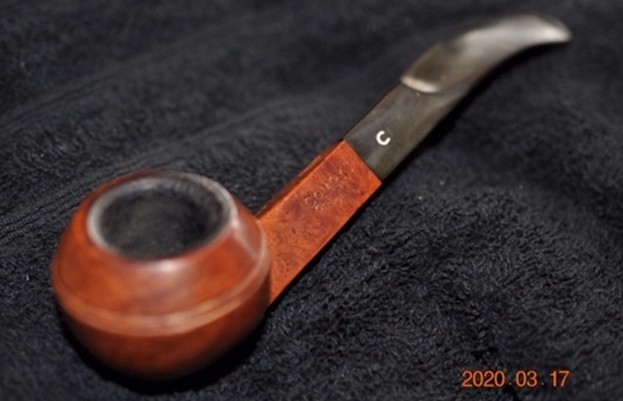
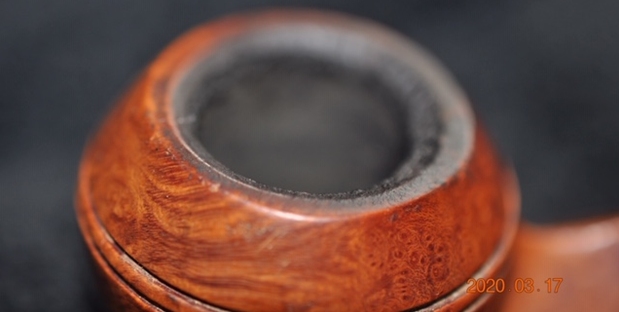
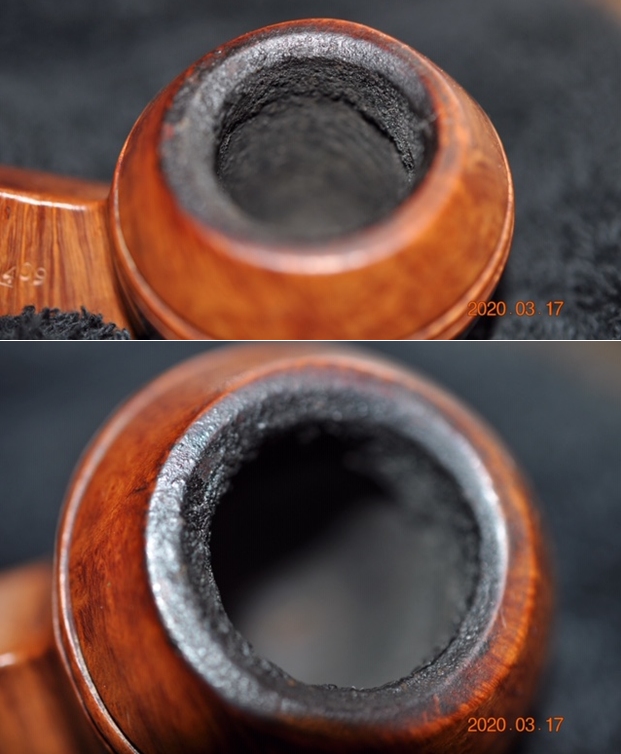
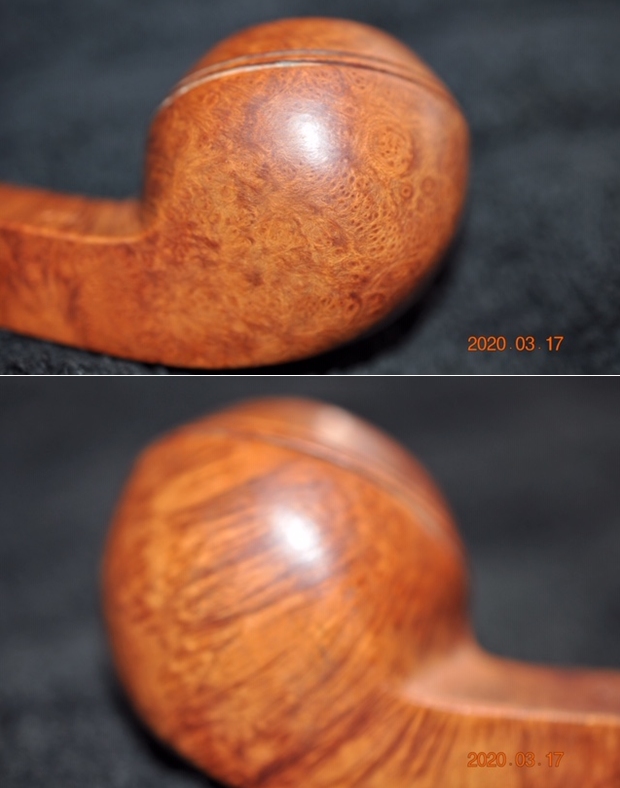
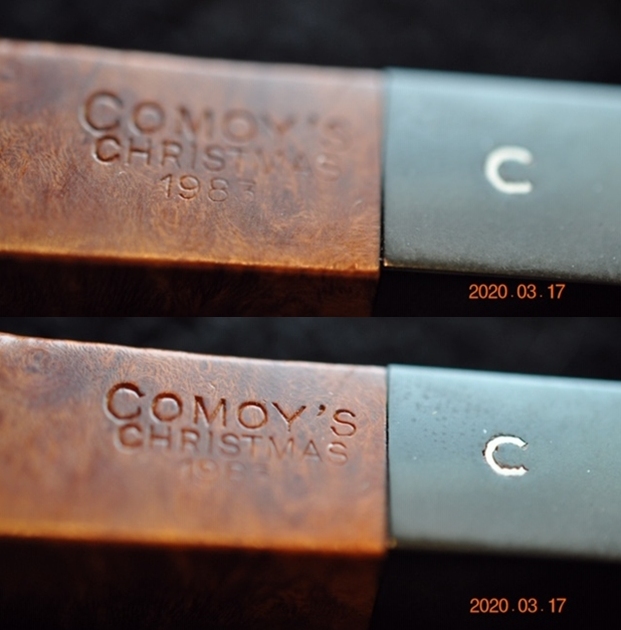
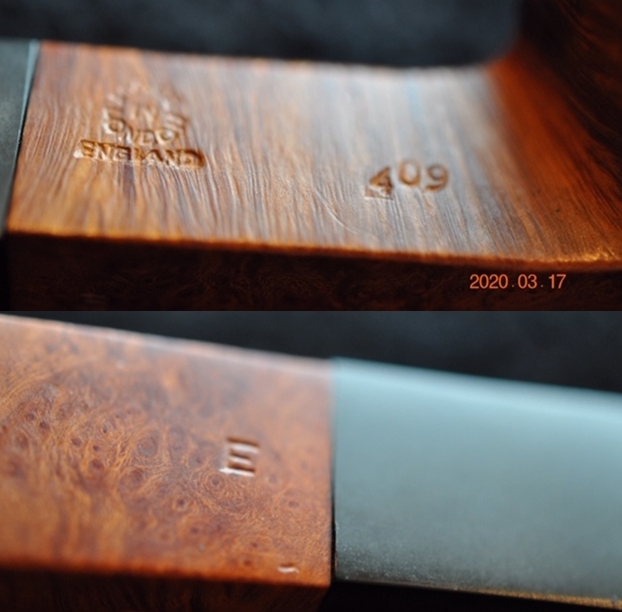
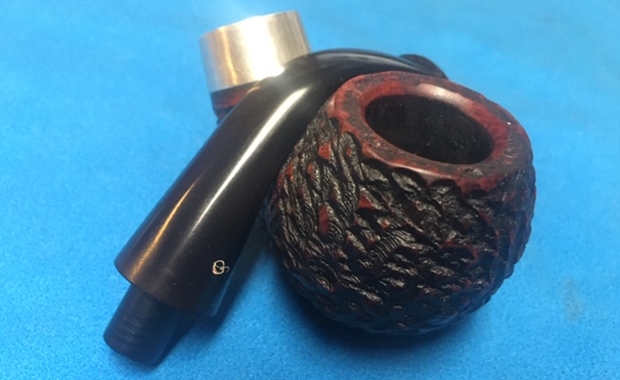
The next pipe on the table came to us from one of Jeff’s pipe hunts not far from where he is located. It is a Comoy’s 409 Bulldog that is in decent condition. It is stamped Comoy’s Christmas 1983 on the top left side of the diamond shank. On the right side it is stamped with the Comoy’s circular COM stamp Made in London in a circle over England. That is followed by the shape number 409. On the right underside it is stamped with the letter E near the stem/shank junction. The stamping is clear and readable. The pipe has a medium brown finish and some amazing grain that the shape follows well. The finish was very dirty with grime ground into the grain around bowl sides. The bowl had a thick cake in the bowl and some lava overflow on the top and the beveled inner edge of the top. There was darkening on the briar around the inner beveled edge of the rim. The stem was dirty, oxidized and calcified. There was light tooth chatter and marks on the stem near the button on both sides. The stem has the inset C logo of Comoy’s on the top left side of the diamond saddle stem. Jeff took photos of the pipe before he cleaned it up. Jeff took photos of the rim top to show the thick cake in the bowl and the lava overflow on the top and beveled inner edge of the rim. The photos show the rim top and bowl from various angles. Jeff took some photos of the bowl sides and heel to show the nice grain that was on this bowl. It is a quite beautifully grained pipe. The stamping on each side of the diamond shank is shown in the photos below. They look very good and readable. You can also see the inset C logo on the top left side of the diamond stem. The stem was a very good fit to the shank. It was oxidized, calcified and had debris stuck to the surface of the vulcanite. There was tooth chatter and marks on both sides of the stem and on the button surface.  I knew that I was dealing with a 1983 Comoy’s 409 Bulldog that was specially made as a Christmas Pipe. I turned to work on the pipe itself. Jeff had done a great job cleaning up the pipe as usual. He reamed the pipe with a PipNet reamer and cut back the cake back to the bare briar. He cleaned up the walls with a Savinelli Fitsall Pipe Knife. He scrubbed the interior of the bowl and shank with pipe cleaners, cotton swabs and alcohol to remove the tars and oils. He scrubbed the exterior of the pipe with Murphy’s Oil Soap and a tooth brush to remove the grime from the finish. He worked on the rim top lava and darkening with the soap and tooth brush. He scrubbed the inside of the stem with alcohol and pipe cleaners. He scrubbed the exterior with Soft Scrub and then soaked it in Before & After Deoxidizer. He washed it off with warm water to remove the deoxidizer. The pipe looked far better. I took photos of the pipe when I received it before I started working on it. I took photos of the bowl and rim top as well as the stem to show how clean they were. You can see the darkening on the inner edge of the rim and the top.  The stem looks clean of oxidation and the tooth marks and chatter are very clear in the photos.I took photos of the stamping on the sides of the shank. The stamping is clear and readable as noted above.   I took a photo of the pipe with the stem removed to show the overall look of stem, tenon and profile of the pipe.I decided to start my work on the pipe by addressing the darkening on the rim top and beveled inner edge. I used a folded piece of 220 grit sandpaper to work on the finish to remove the darkening on both. It took a bit of work but I was able to remove the majority of it and the end product looked much better.   I polished the briar with micromesh sanding pads – dry sanding with 1500-12000 grit pads and wiping the bowl down with a damp cloth after each pad. I rubbed the briar down with Before & After Restoration Balm. I worked it into the briar with my fingertips. The product works to clean, enliven and preserve the briar. I let it sit for 10 minutes while I worked on the stem. After the time passed I buffed it with a cotton cloth to deepen the shine. The briar really comes alive with the balm.  I set the bowl aside and turned my attention to the stem. Some of the tooth marks were deep – fortunately small but deep on both sides. I filled in the divots with clear super glue and set the stem aside to dry while I took my dog for a walk. When I got back I used a needle file to sharpen the edge of the button and flatten the repairs. I sanded out the repairs on both sides of the button surface and stem with 220 grit sandpaper to blend them into the surface. I began polishing the stem with 400 grit wet dry sandpaper.I polished the vulcanite with micromesh sanding pads – 1500-12000 grit pads. I wiped it down with Obsidian Oil after each sanding pad. I used Before & After Pipe Polish – both Fine and Extra Fine to further polish the stem.   This Comoy’s Christmas 1983 Bulldog is a real beauty. The Medium Brown stain highlights some great grain around the bowl sides and the heel. The finish on the pipe is in excellent condition and the contrasting stains work well to highlight the grain on the pipe. The polished black vulcanite saddle stem adds to the mix. With the grime and debris gone from the finish and the bowl it was a beauty and is eye-catching. I put the stem back on the bowl and buffed the pipe with Blue Diamond on the buffing wheel. I gave the bowl and the stem multiple coats of carnauba wax on the buffing wheel and followed that by buffing it with a clean buffing pad. I hand buffed the pipe with a microfiber cloth to deepen the shine. The finished Bent Bulldog 409 is quite nice and feels great in the hand. Give the finished pipe a look in the photos below. I can only tell you that like the other pipes I am working that it is much prettier in person than the photos capture. The dimensions of the pipe are Length: 5 ¼ inches, Height: 1 ½ inches, Outside diameter of the bowl: 1 ½ inches, Chamber diameter: ¾ of an inch. Thanks for walking through the restoration with me as I worked over another beautiful pipe. This pipe will be added to the British Pipe Makers section of the rebornpipes store soon. If you want to add it to your collection send me an email or a message! Thanks for your time.
I am not sure I would call this AFG III Freehand pipe anything other than ODD


Blog by Steve Laug

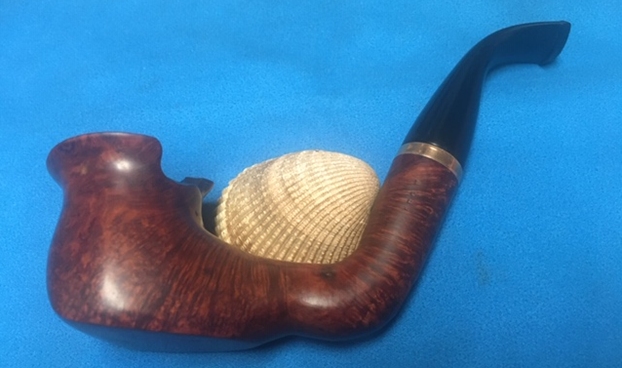
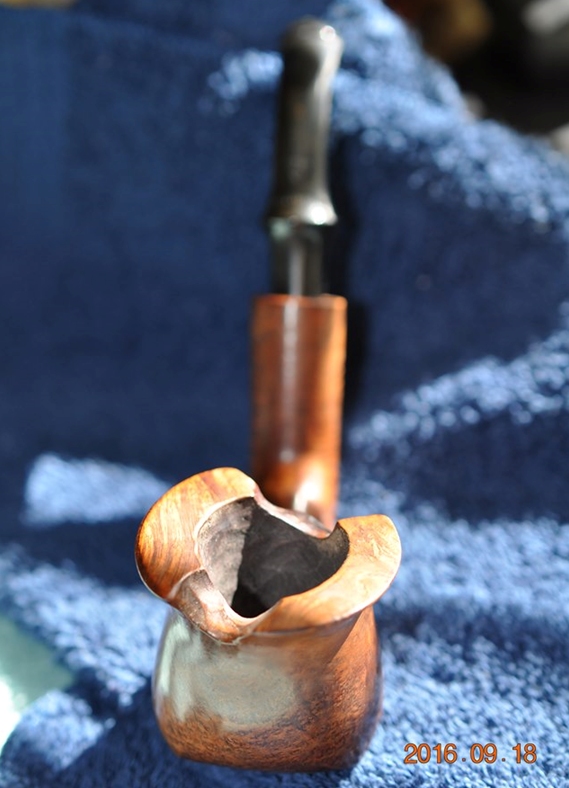
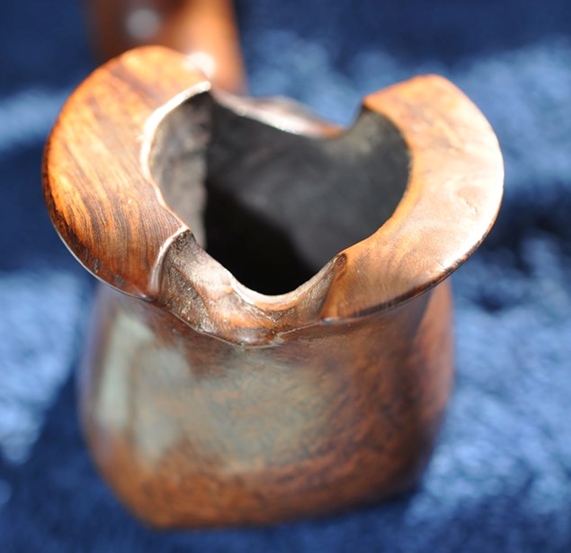
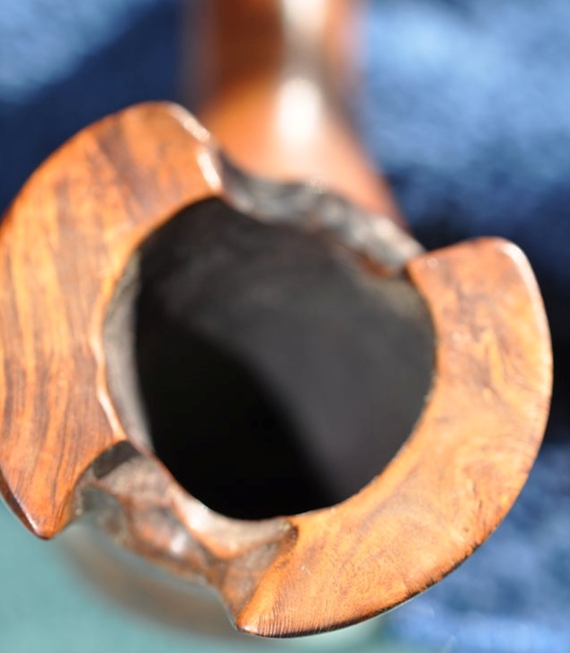
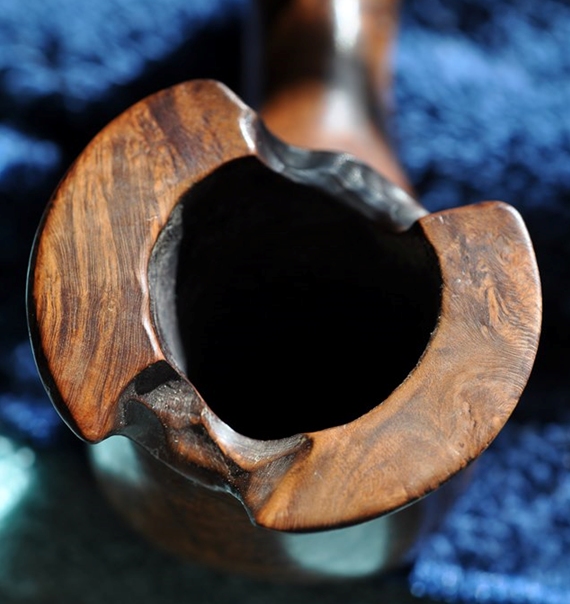
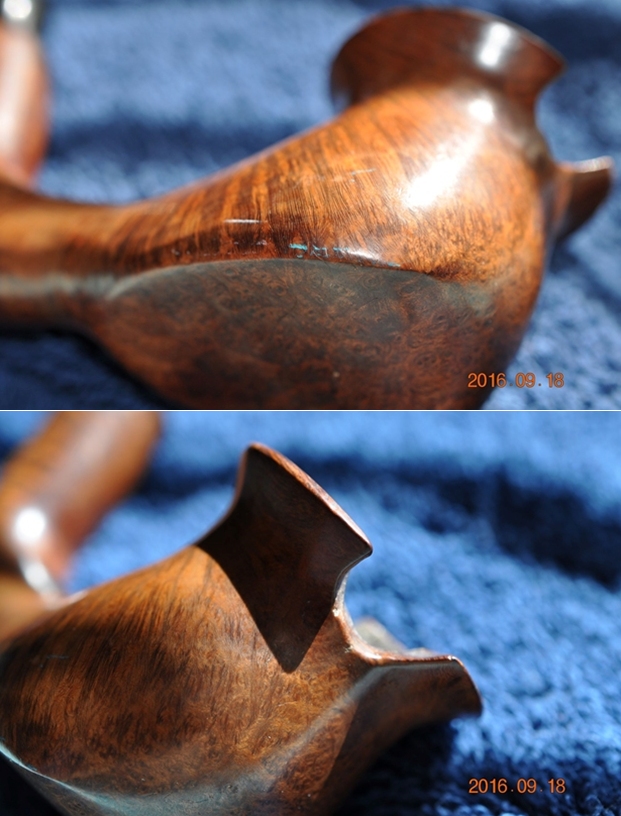
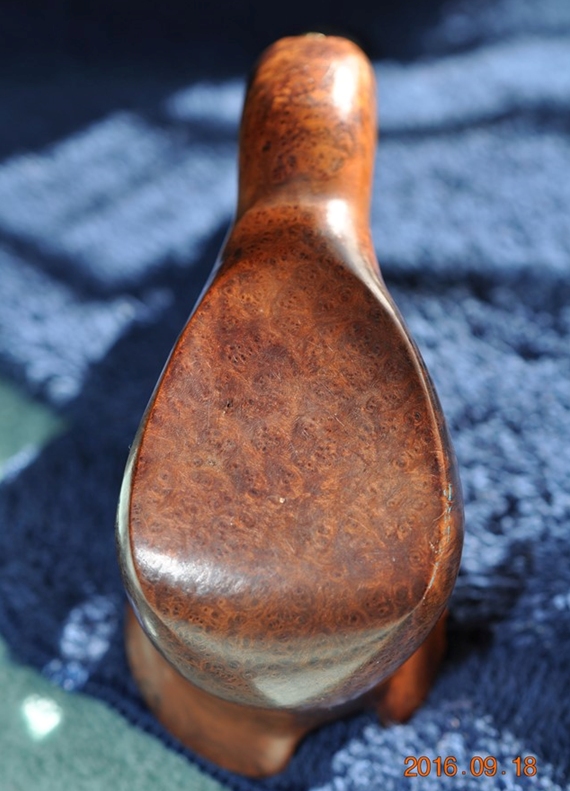
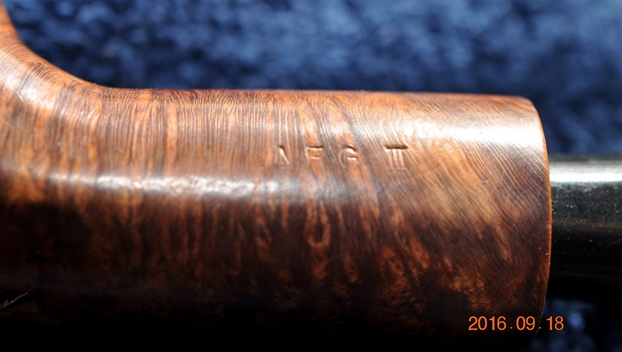
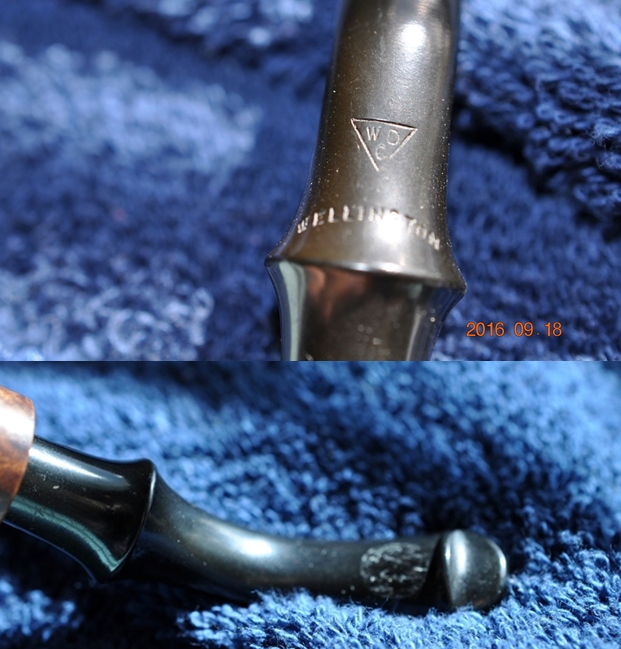
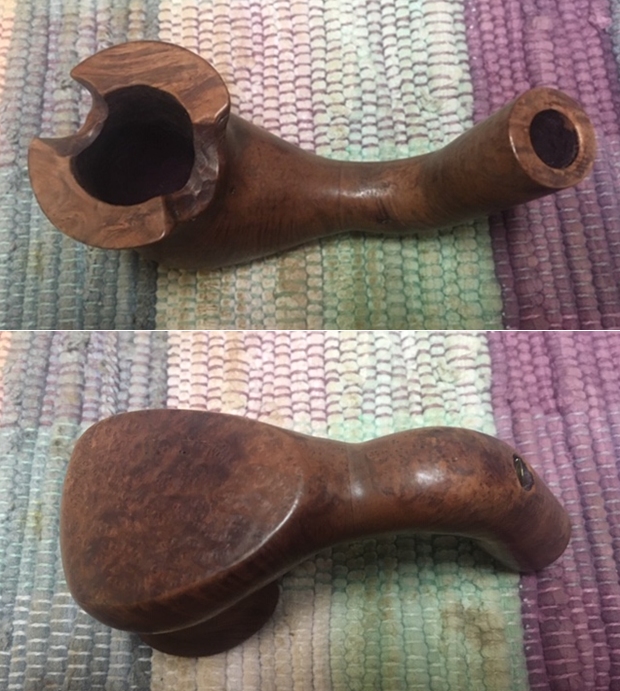
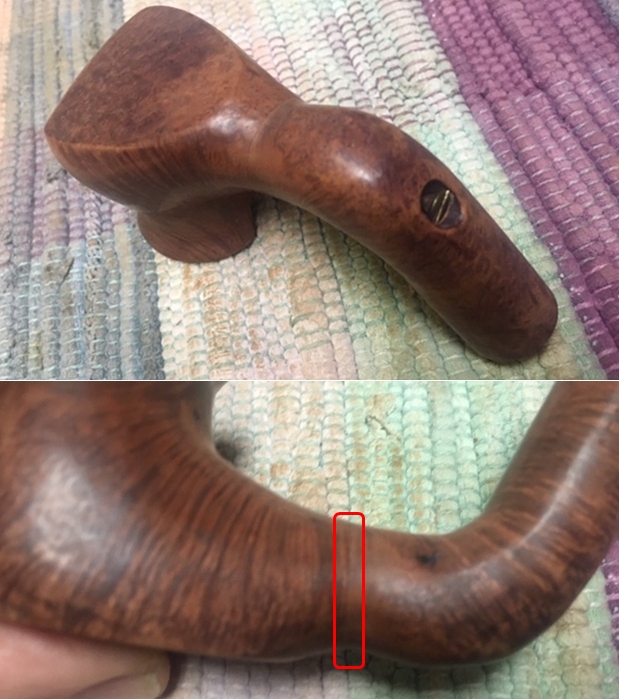
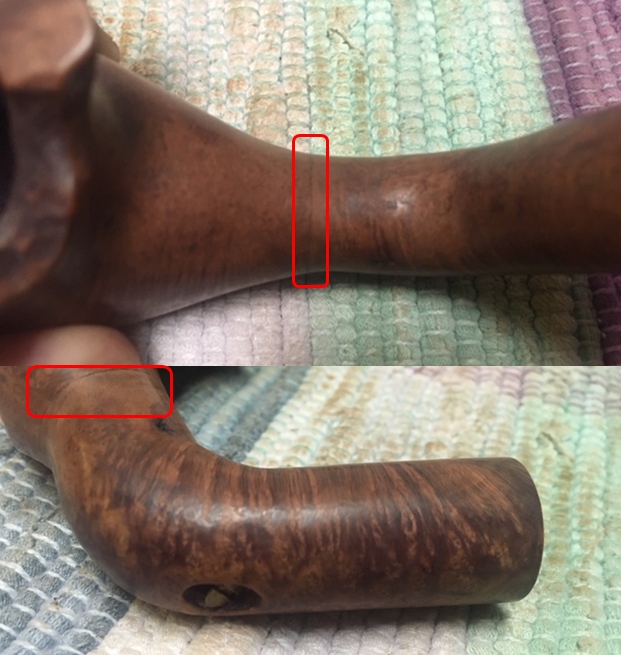
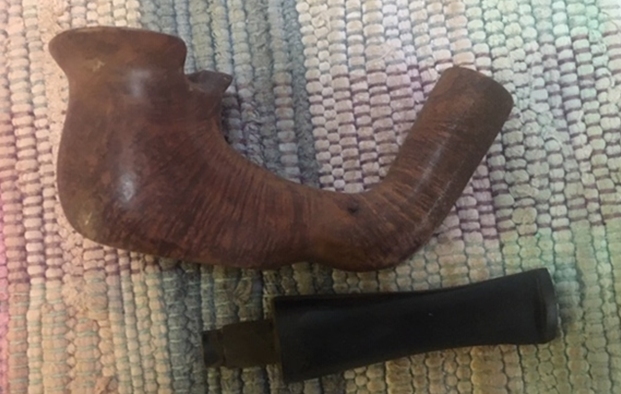
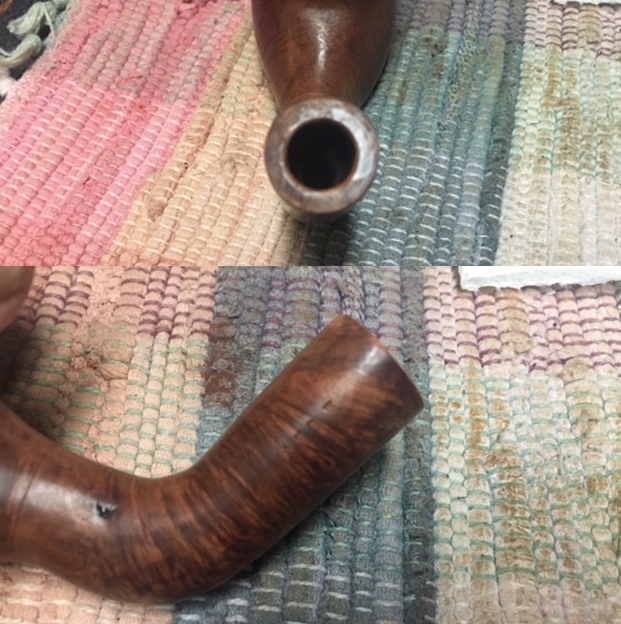
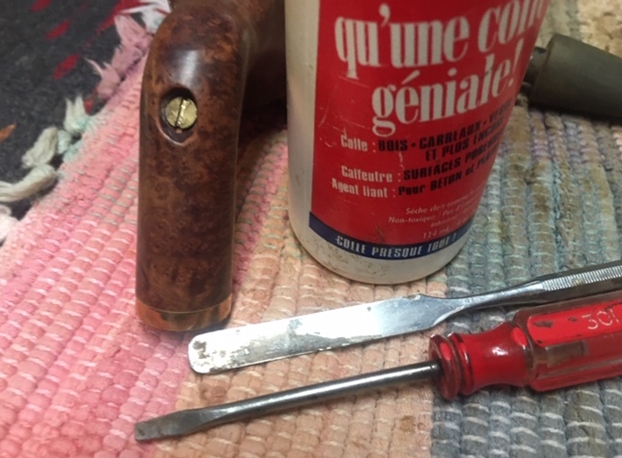
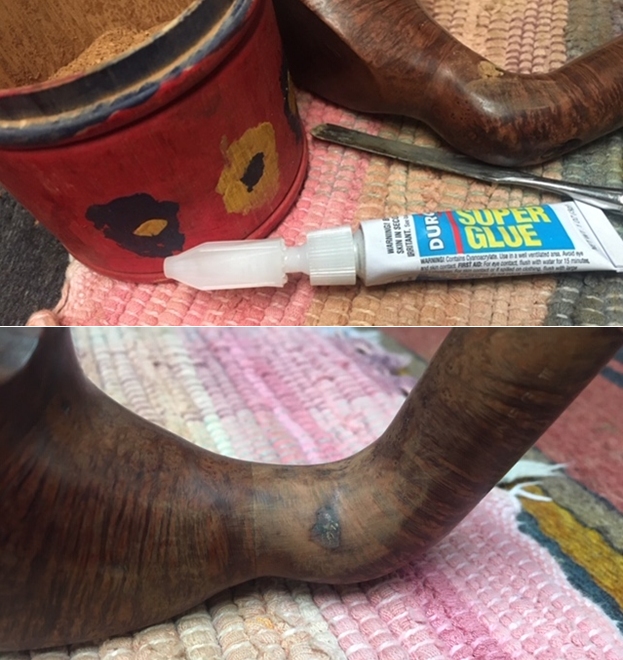
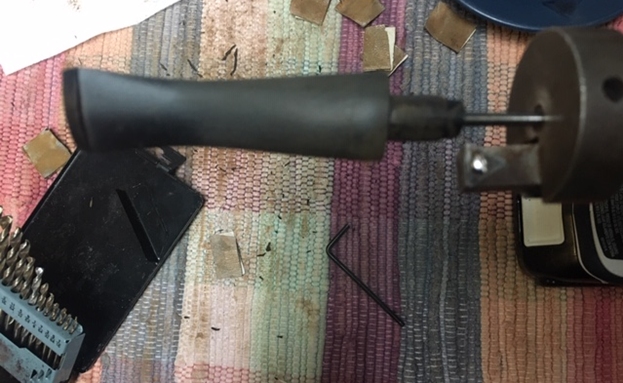
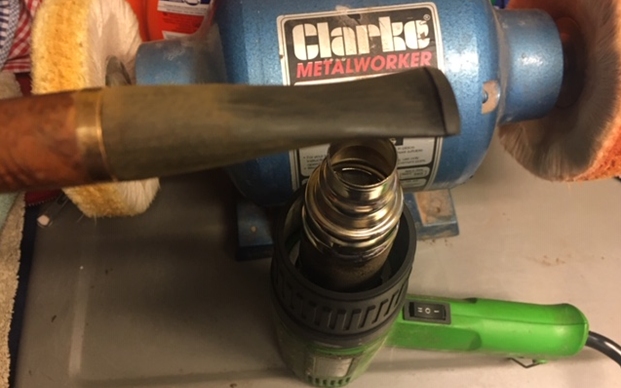
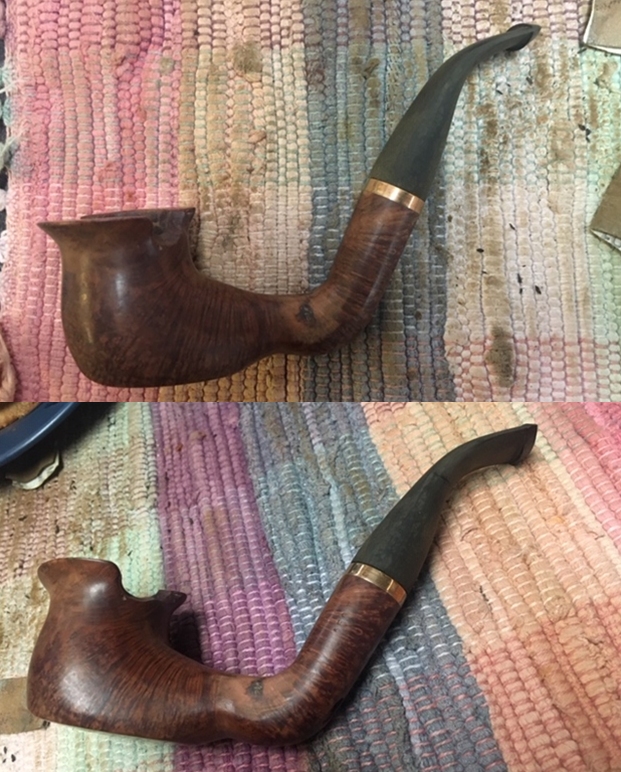
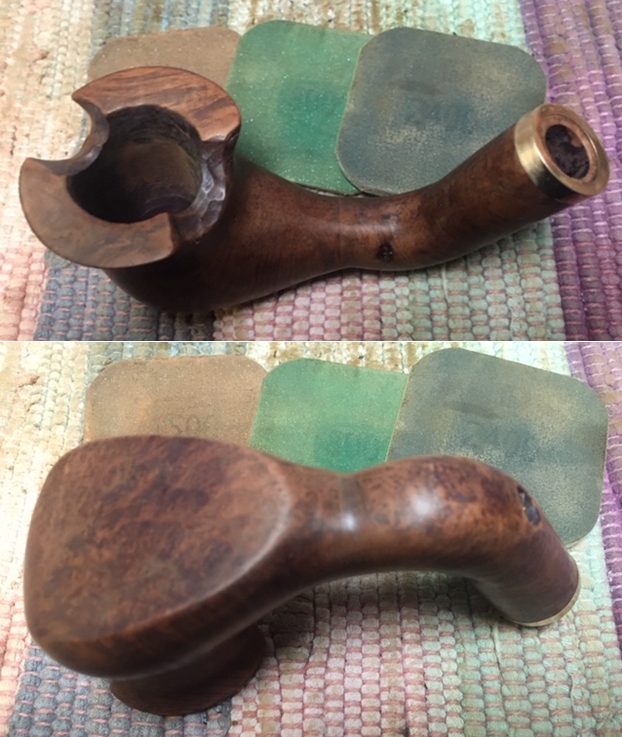
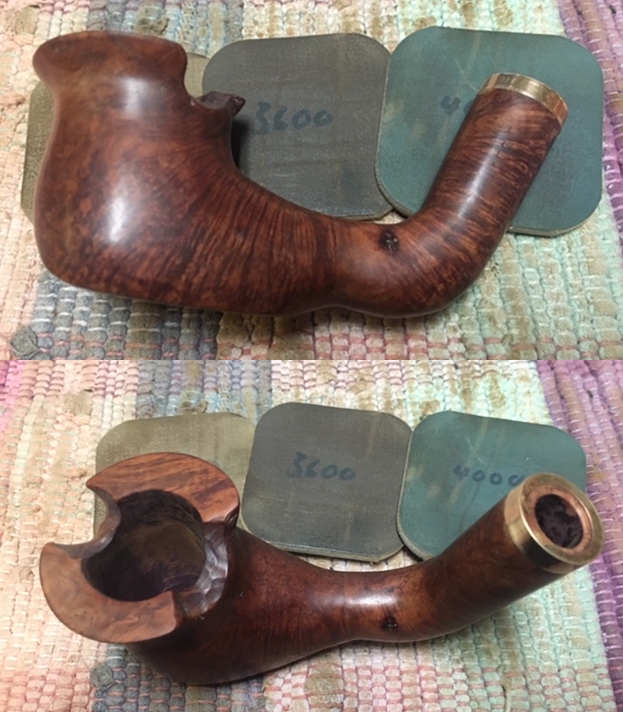
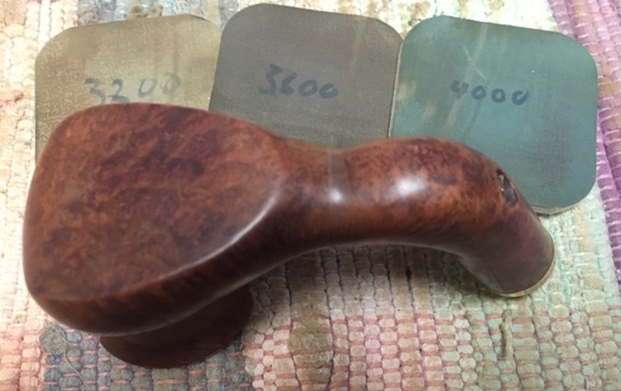
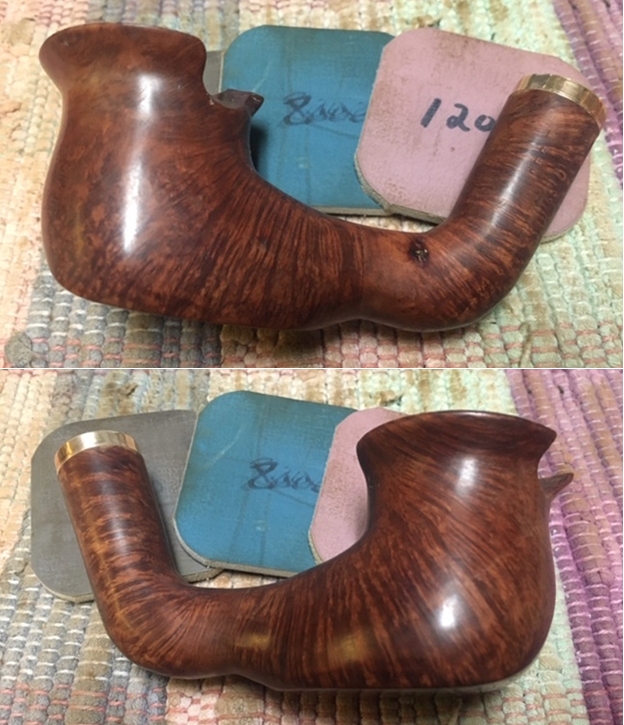
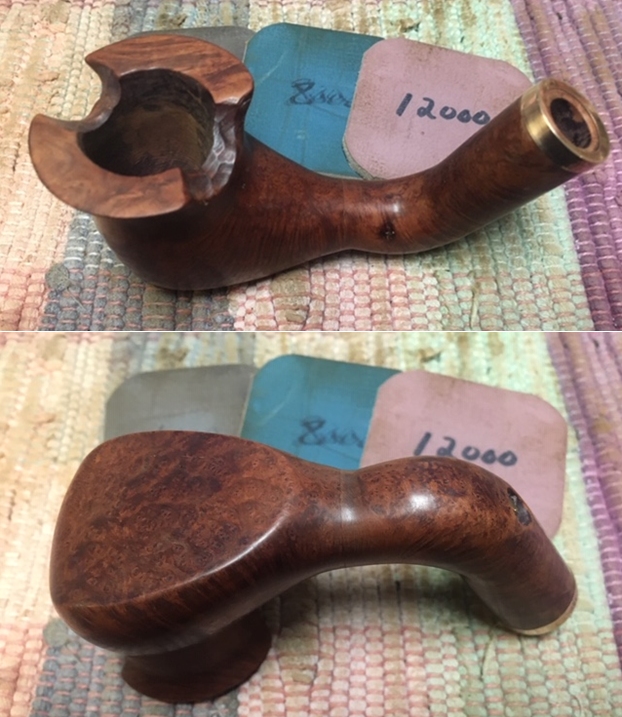
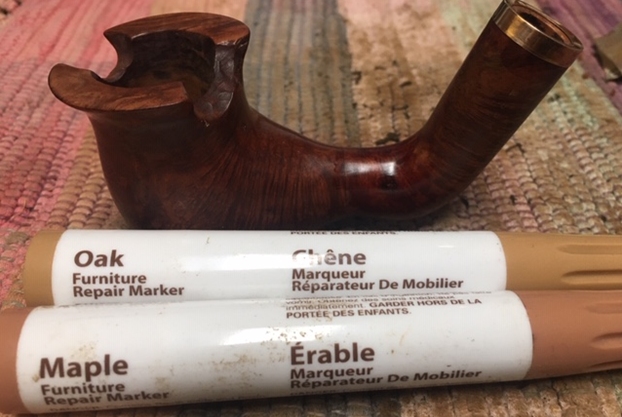
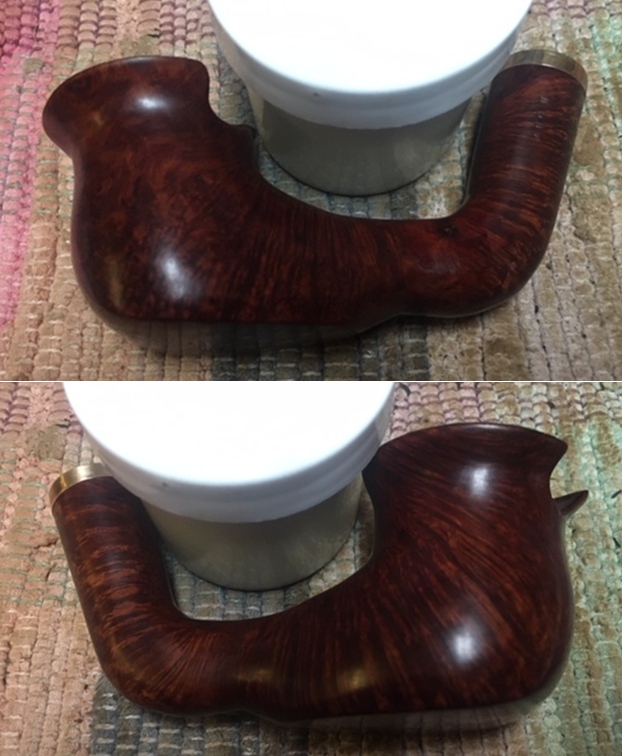
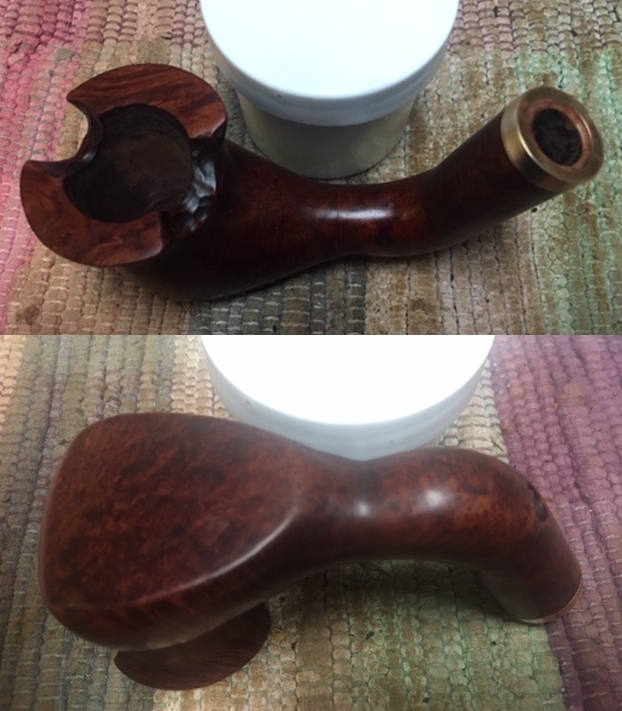
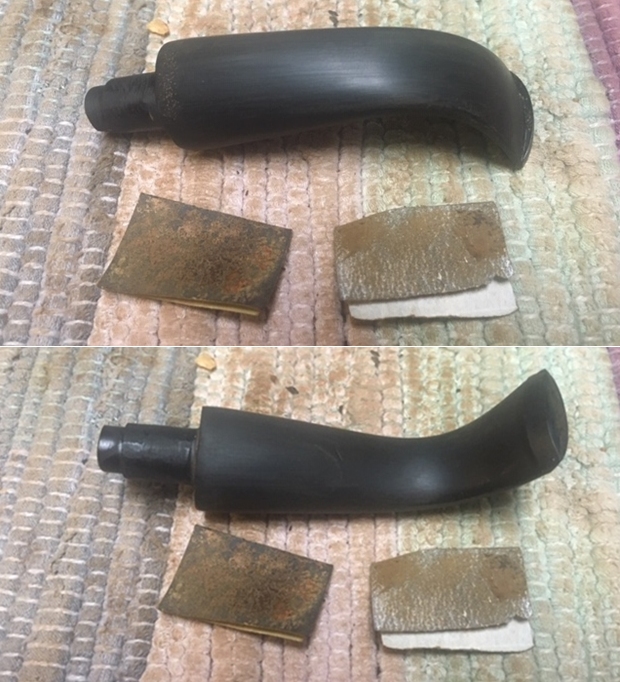
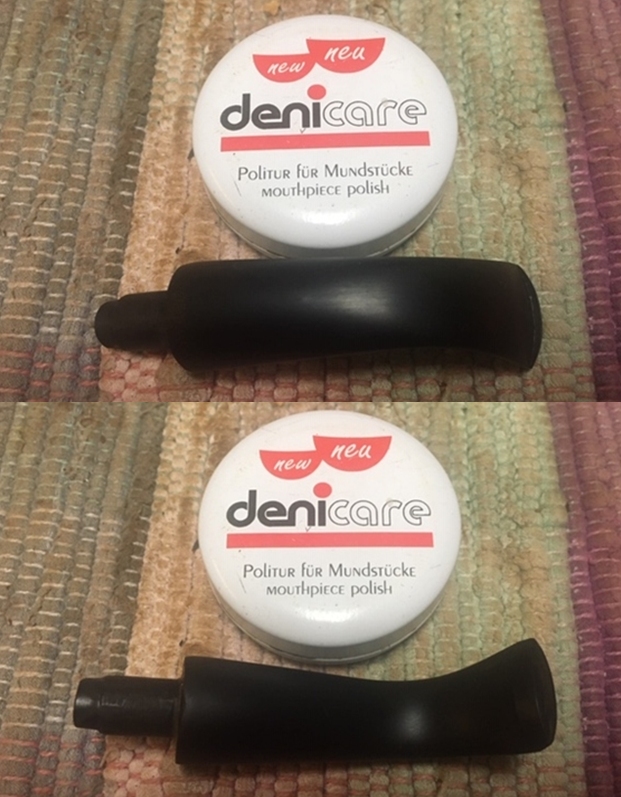
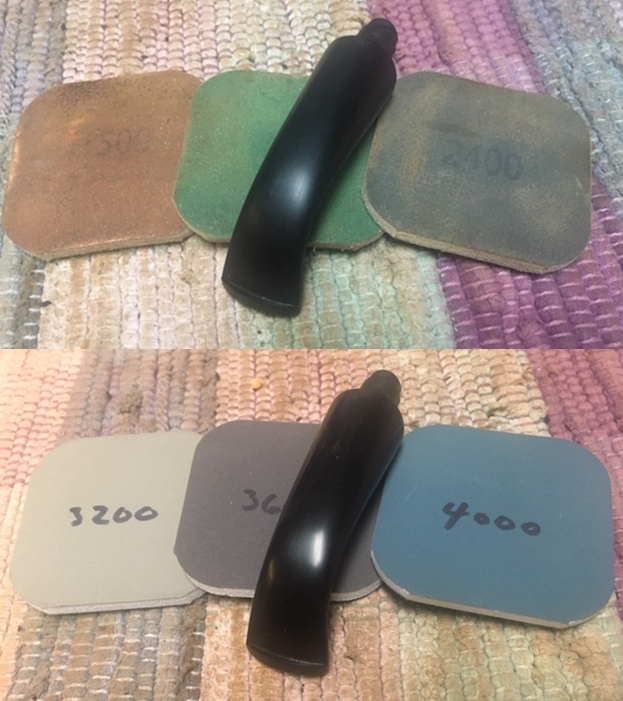
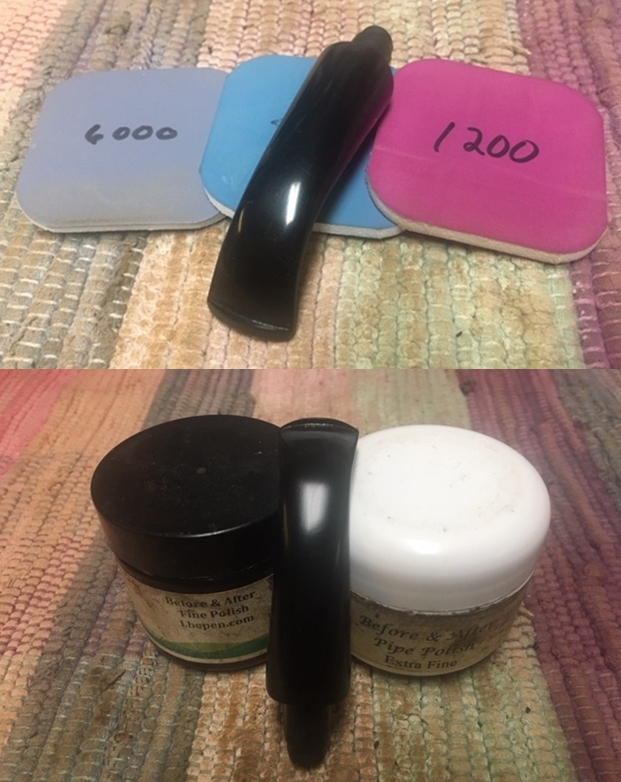
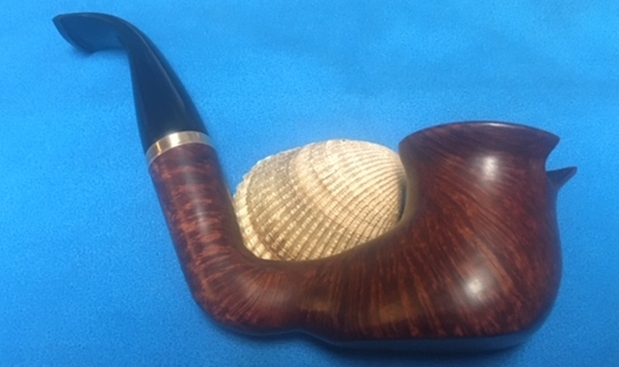
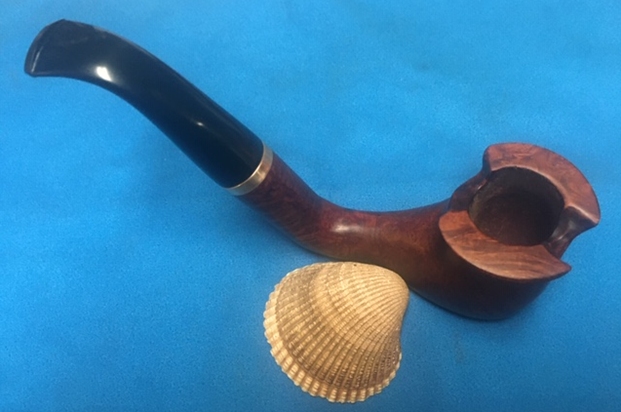
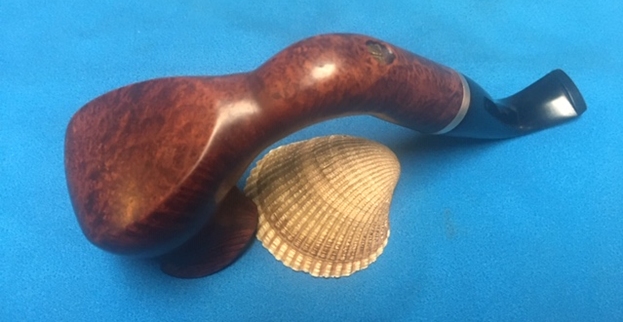
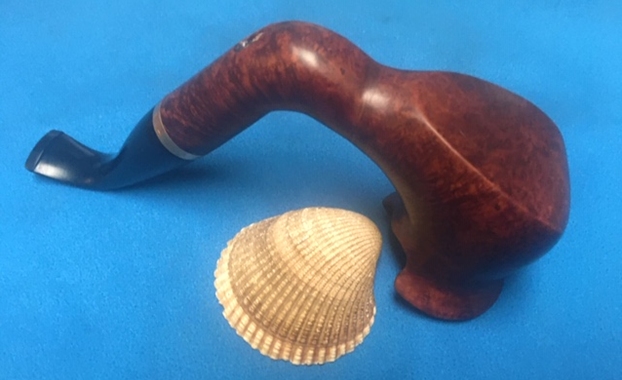
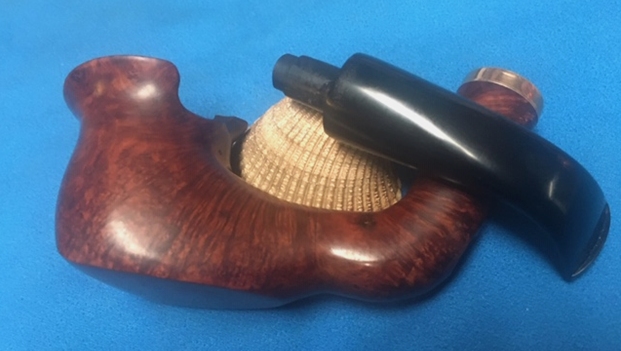
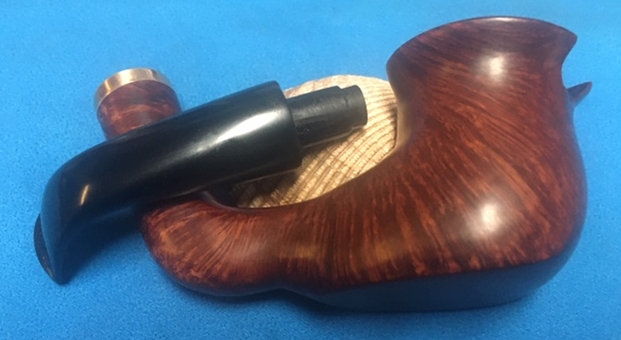
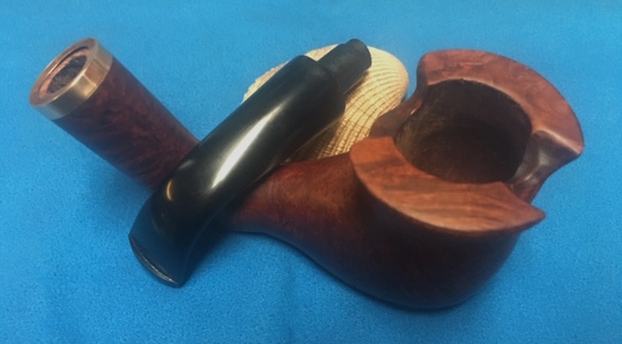
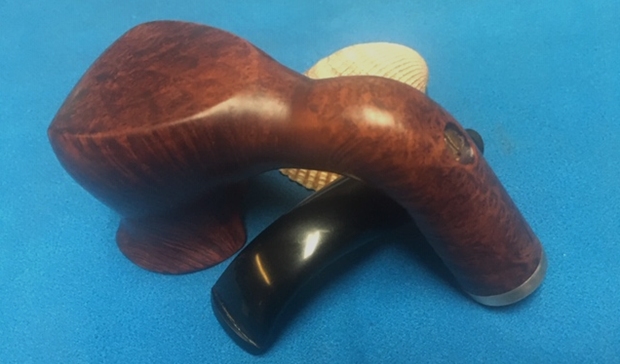
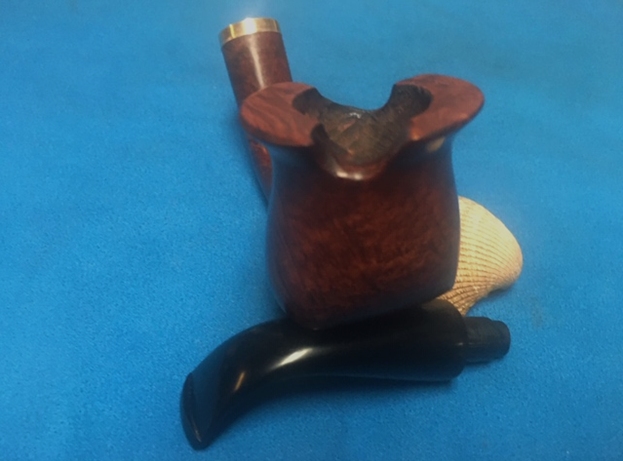
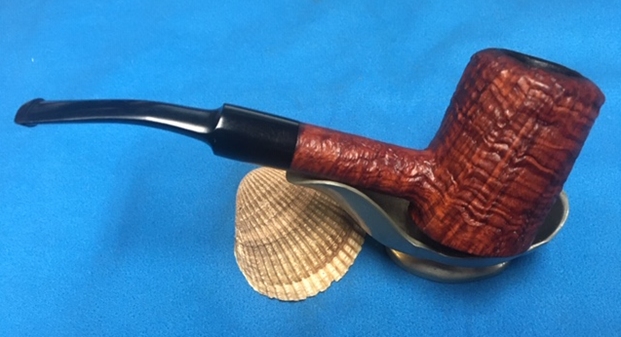
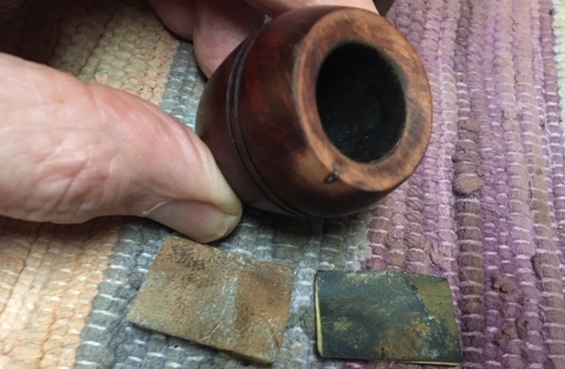
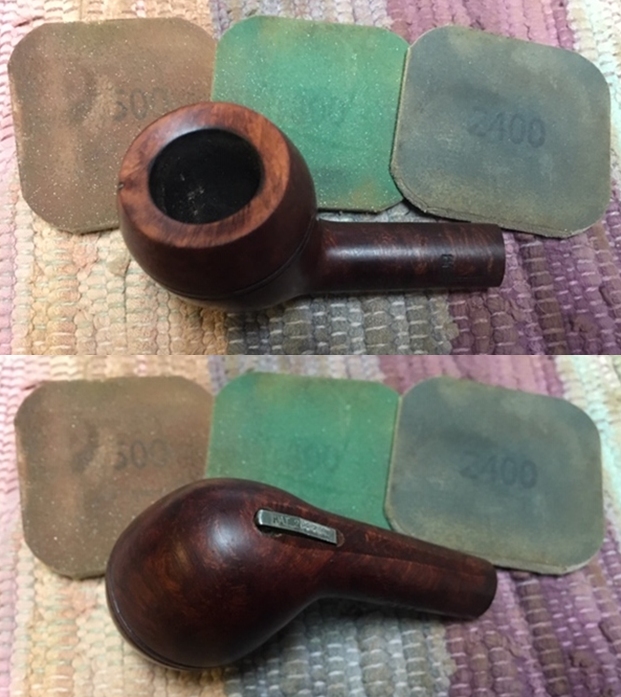
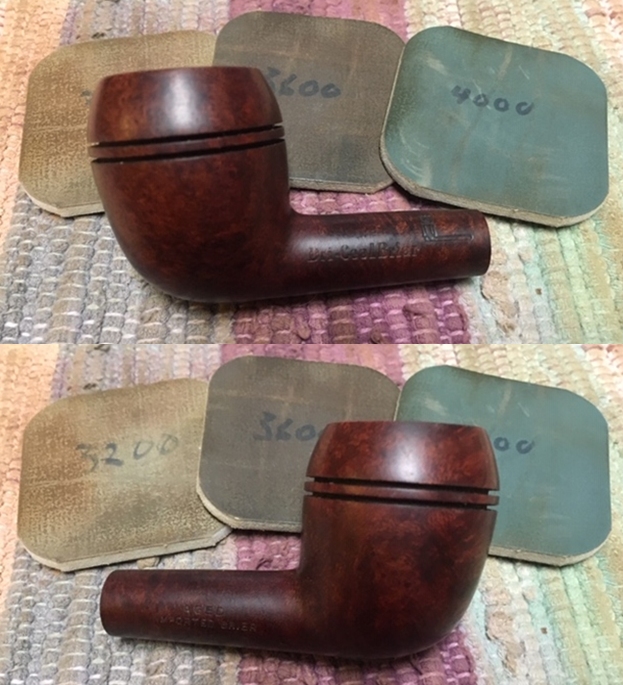
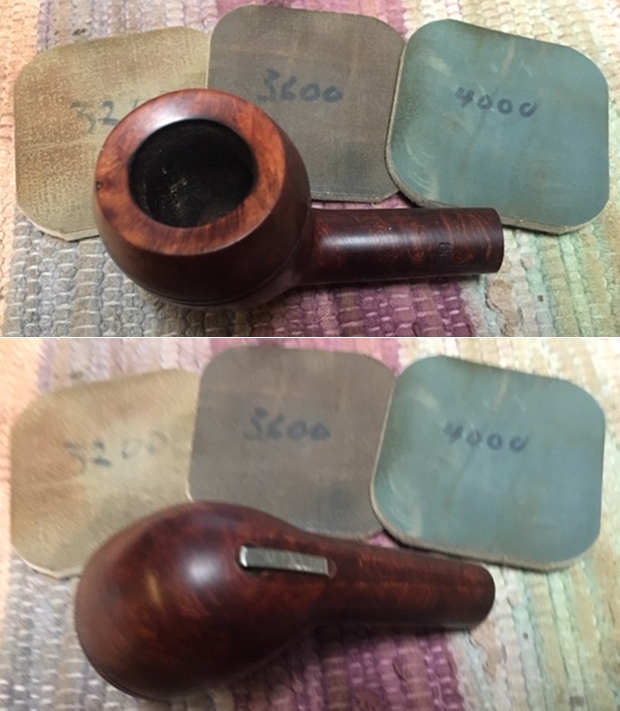
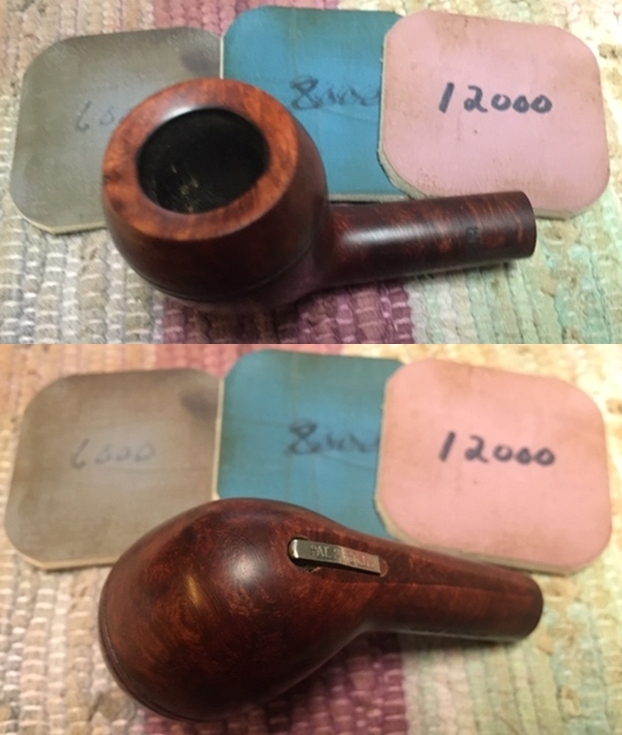
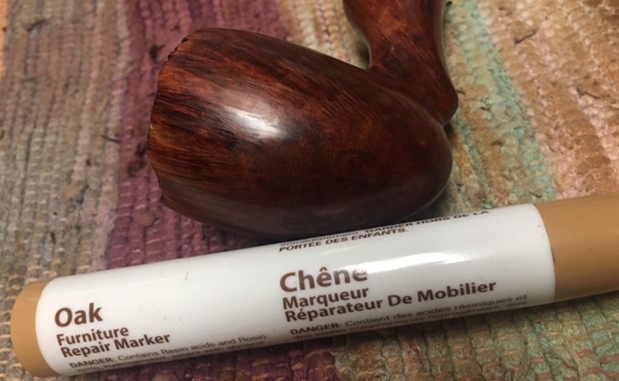
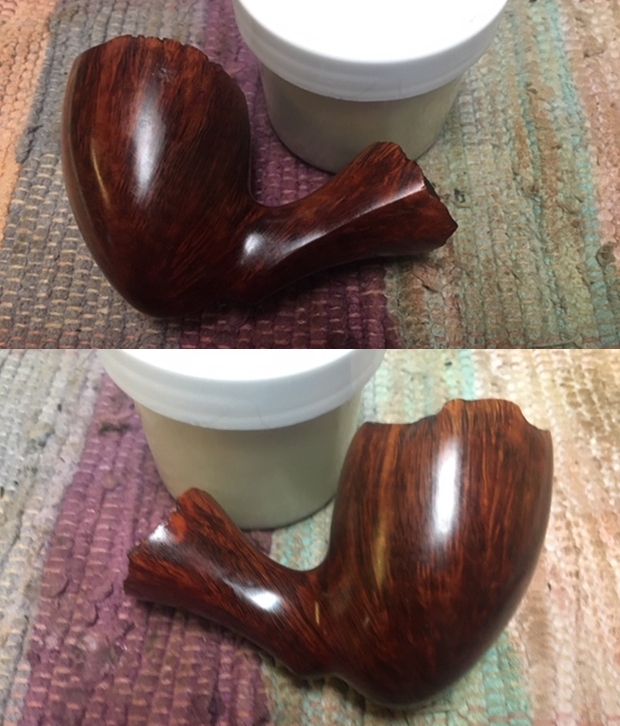
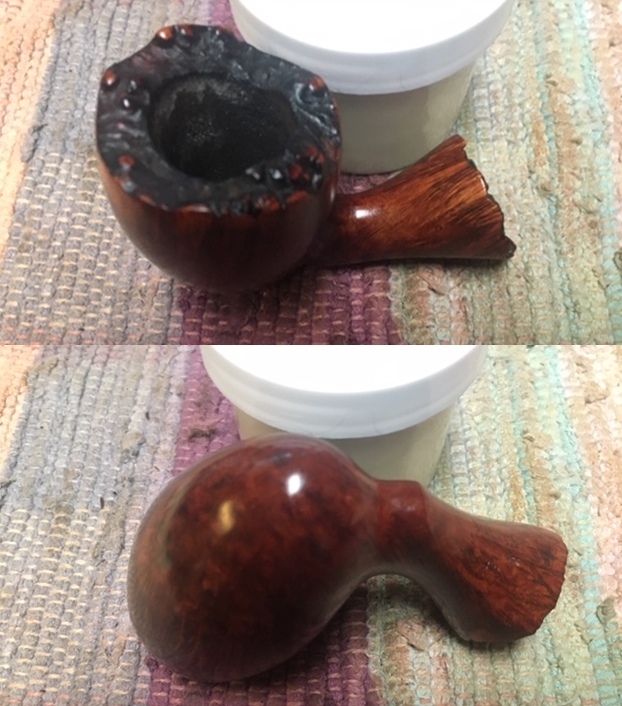
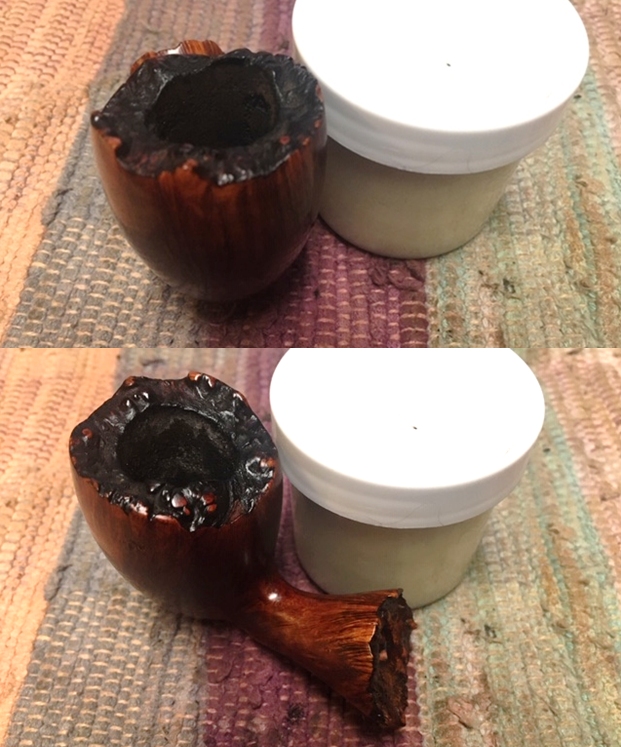
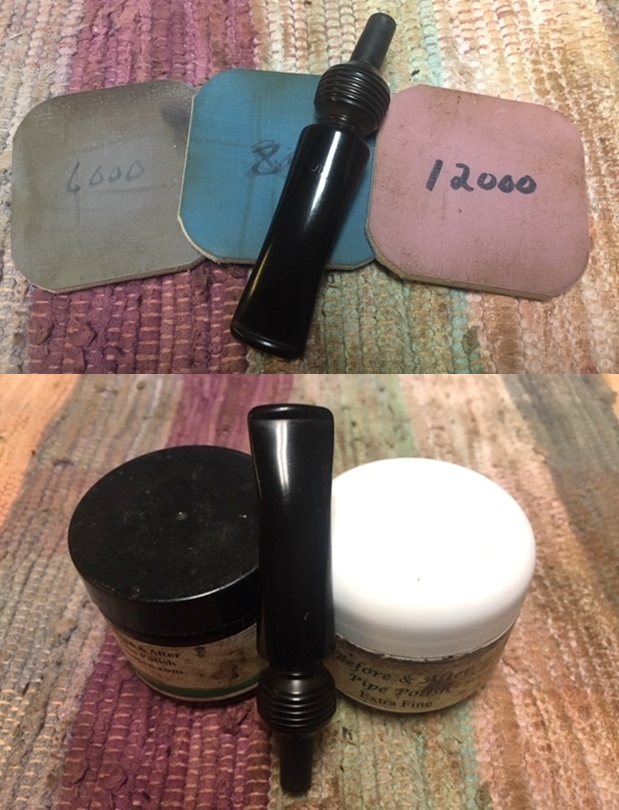
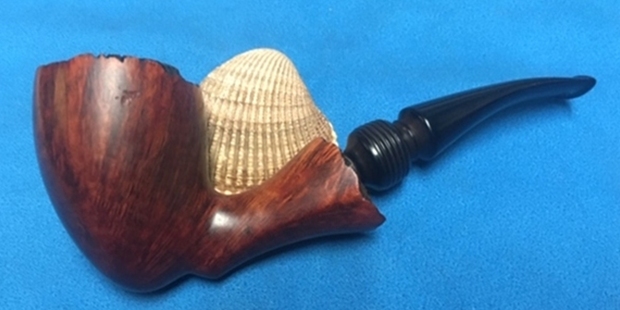
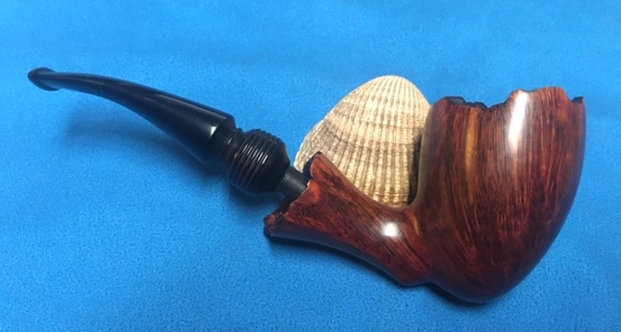
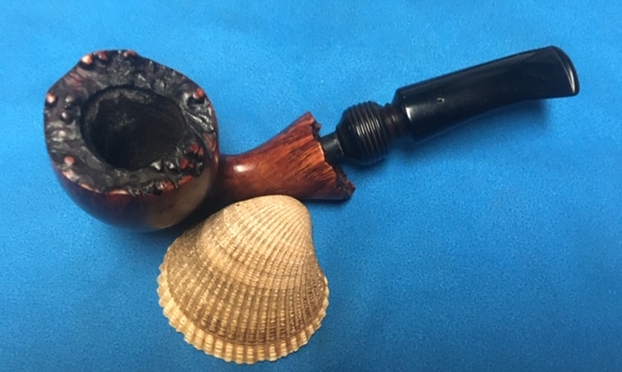
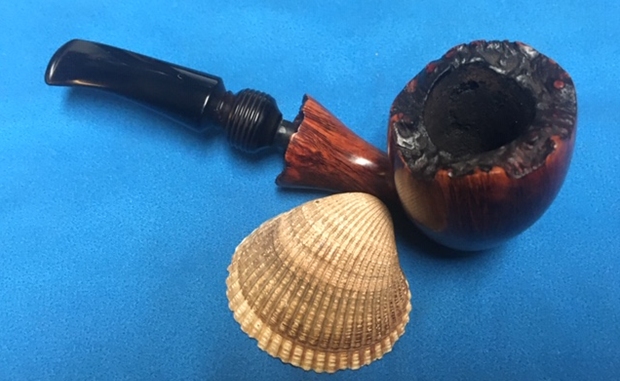
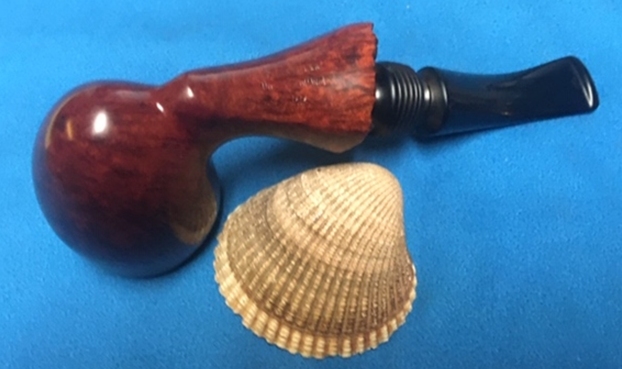
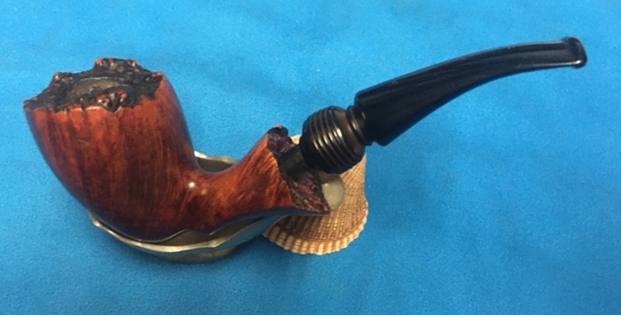
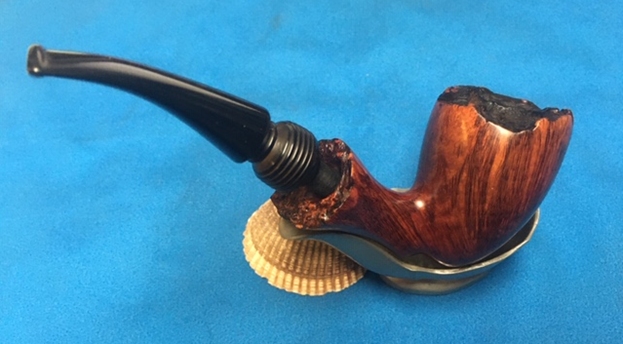
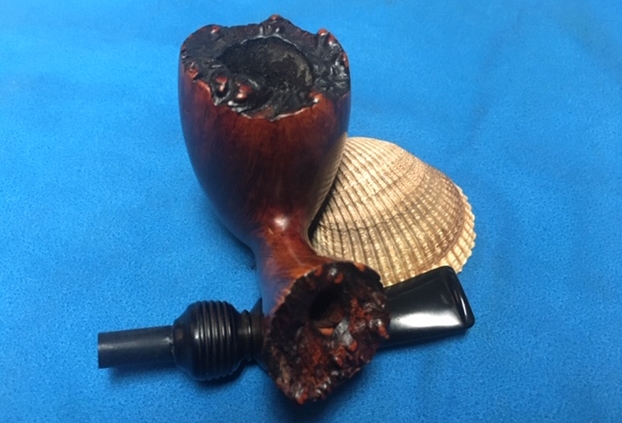
Jeff picked up this pipe sometime in 2016 and I have had it in a box of bowls since he sent it to me. I have looked at it several times but it never called my name. It is a strange pipe. The upwardly curved portion of the shank is joined to the bowl and straight shank about mid shank. The grain is quite nice though there is a large pit on the left side of the shank. The pipe is a sitter with a strange notched rim top. The notches have a faux plateau pattern in the groove on the front and back of the bowl. The top of the rim is almost calabash like with a wide flat top. The curve of the shank made the drilling of the bent portion a mystery until you turn the pipe over and see the screw that is inset in the back of the shank where it is parallel with the airway in the straight portion. It was lightly smoked and dirty. The shank is stamped AFG III on the left side of the upper portion. The stem was pirated from a WDC Wellington and made to fit in the shank. The shank end was out of round and the mortise was quite large. The end was not flat so fitting any stem would be a trick. Maybe that is why the Wellington stem was used. The stem had deep tooth marks in the surface and really did not work with the bowl to me. Jeff took the following photos before he did his clean up on the pipe. Jeff took photos of the bowl top to show the condition of the bowl and rim top and edges. The pipe has almost a floral look to it from this angle. It is a dirty pipe and the interior of the bowl has some roughness on the right side. He took a photo of the screw in the underside of the shank. It looks like a brass wood screw that has been inset in the shank.He took photos of the sides of the bowl and the heel to give a clear look at the grain on the briar. It is actually a nice looking piece of briar that some how the shape follows in a strange way all its own. The stamping on the left side of the shank reads AFG III which is not a brand I can find listed anywhere on the net so I have no information on the maker.The stem that had been made to fit is a WDC Wellington P-lip knockoff. It really did not fit in the shank and it was pretty chewed up. I would need to replace it.Today when I was sorting through my box of bowls without stems that I have and pitching out the worst of them I picked this bowl up and was drawn to seeing what I could do with it. I took it to my worktable and looked it over. Jeff had done a great job cleaning up the pipe as I have come to expect after 4 years of working on pipes. He reamed the pipe with a PipNet reamer and cut back the cake back to the bare briar. He cleaned up the walls with a Savinelli Fitsall Pipe Knife. He scrubbed the interior of the bowl and shank with pipe cleaners, cotton swabs and alcohol to remove the tars and oils. He scrubbed the exterior of the pipe with Murphy’s Oil Soap and a tooth brush to remove the grime from the finish. He scrubbed the inside of the stem with alcohol and pipe cleaners. Since the stem was not going to be used he did a quick clean up on it and sent it along. I had long since thrown it in the bottom of the box of bowls. The pipe was indeed an odd one. I took photos of the pipe when I received it before I started working on it. I took a photo of the wood screw in the shank and the flaw in the briar on the topside of the shank. You can also see the joint of the bowl and shank with the upward turned shank extension in the photos below. I drew a red box around then in the photos below. I went through my cans of stems to find one that would work with the diameter of the shank. I would need to turn the tenon to make it fit and also adjust the shank end and face it to make the taper stem fit.I took a photo of the shank end to show its condition. It was not flat and it was not round. The thickness of the shank around the mortise was also different on each side. The second photo below shows that angle of the shank end.I went through my brass bands to find one that would fit the end of the shank. I smoothed out rounded end on a topping board to smooth it. I also used my Dremel and sanding drum to bring the shank end back to round. I heated the band and pressed it onto the end of the shank. It looked good and it provided a straight flat edge on the shank end that would work well with the newly turned stem. I unscrewed the wood screw from the shank and found that it actually cut off the flow of air through the shank. When it was in place it extended into the airway. I used the Dremel and a grinding stone to take the screw down so that it would end at the wall of the airway. I used some all purpose glue to anchor the screw in the shank. It could be removed with a screw driver but it also was air tight.I filled in the flaw on the left side of the shank with briar dust and super glue. When the repair cured I sanded the repair smooth again with 220 grit sandpaper and started the polishing with 400 grit sandpaper. I used the PIMO tenon turning tool on my cordless drill to reduce the diameter of the tenon and face the stem surface for a good fit on the shank.Once I had the fit right to the shank I used a heat gun to give the end a bend that matched the flow of the bowl.  I may bend it a bit more but I like it at the moment. I polished the briar with micromesh sanding pads – dry sanding with 1500-12000 grit pads and wiping the bowl down with a damp cloth after each pad. I worked over the repaired spot on the shank to blend it in more. I touched up the stain around the band edge and the repaired pit on the shank using a blend of Oak and Maple stain pens. The colour matched well and once it was buffed would be perfect.I rubbed the briar down with Before & After Restoration Balm. I worked it into the briar with my fingertips. The product works to clean, enliven and preserve the briar. I let it sit for 10 minutes while I worked on the stem. After the time passed I buffed it with a cotton cloth to deepen the shine. The briar really comes alive with the balm. I set the bowl aside and turned my attention to the newly fit stem. I did some fine tuning of the diameter of the stem at the shank/stem junction with 220 grit sandpaper and began the polishing with 400 grit wet dry sandpaper. I rubbed the stem down with Denicare Mouthpiece Polish – a red, gritty Tripoli like substance that is a paste. I rubbed it into the surface of the stem and polished it off with a cotton pad. I have found that is a great intermediary step before polishing with micromesh pads. I am not sure what I will use once the final tin I have is gone!I polished the vulcanite with micromesh sanding pads – 1500-12000 grit pads. I wiped it down with Obsidian Oil after each sanding pad. I used Before & After Pipe Polish – both Fine and Extra Fine to further polish the stem.  This oddly shaped handmade briar pipe is strange enough to actually be quite interesting. From the shape of the extended shank to the flair of the bowl sides to the different looking top with the smooth top on the sides and the “dips” in the front and rear that are rusticated to look a bit like plateau. The mix of brown stains that the maker used really highlights some great grain around the bowl sides and the heel. The finish on the pipe is in excellent condition and the contrasting stains work well to highlight the grain on the pipe. The band and the newly shaped vulcanite stem seem to work well with the pipe. The pipe is a beauty and really eye-catching in its own way. I put the stem back on the bowl and buffed the pipe with Blue Diamond on the buffing wheel. I gave the bowl and the stem multiple coats of carnauba wax on the buffing wheel and followed that by buffing it with a clean buffing pad. I hand buffed the pipe with a microfiber cloth to deepen the shine. The finished Freehand is quite nice and feels great in the hand and is a sitter as well. Give the finished pipe a look in the photos below. This is not a pipe for everyone but someone is bound to love it. The dimensions of the pipe are Length: 6 inches, Height: 1 7/8 inches, Outside diameter of the bowl: 1 ¾ inches, Chamber diameter: ¾ of an inch. Thanks for walking through the restoration with me as I worked over another beautiful pipe. This pipe will be added to the American Pipe Makers section of the rebornpipes store soon. If you want to add it to your collection send me an email or a message! Thanks for your time.

New Life for a Peterson’s Republic Era “Donegal” Rocky Bent Apple 03


Blog by Steve Laug

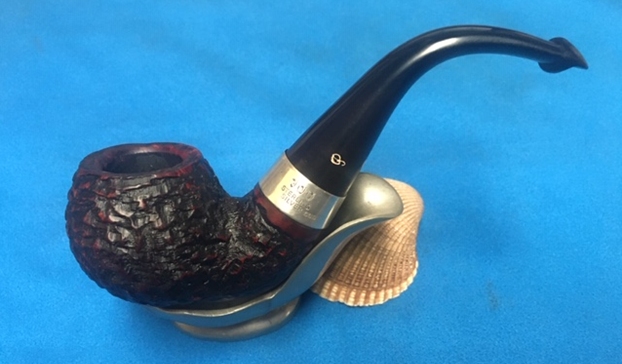
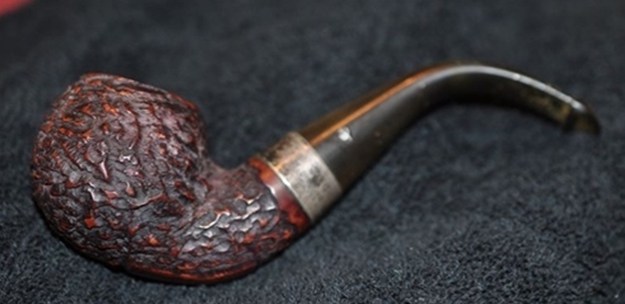
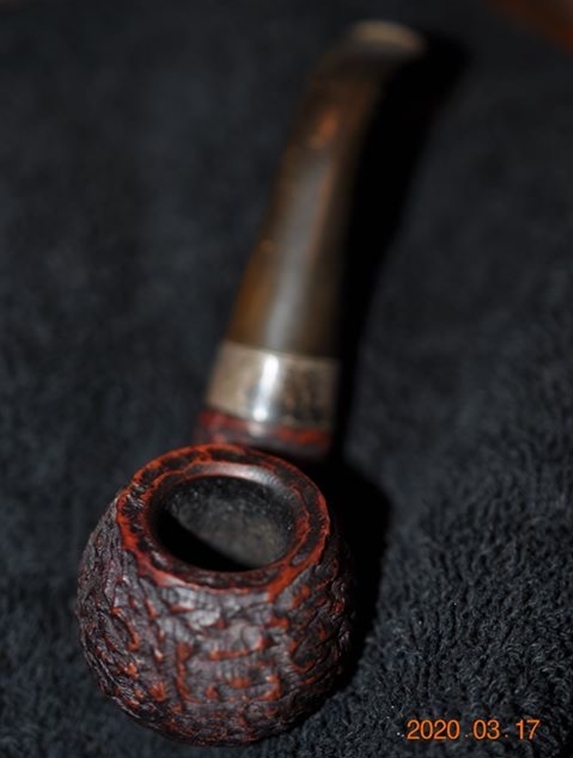
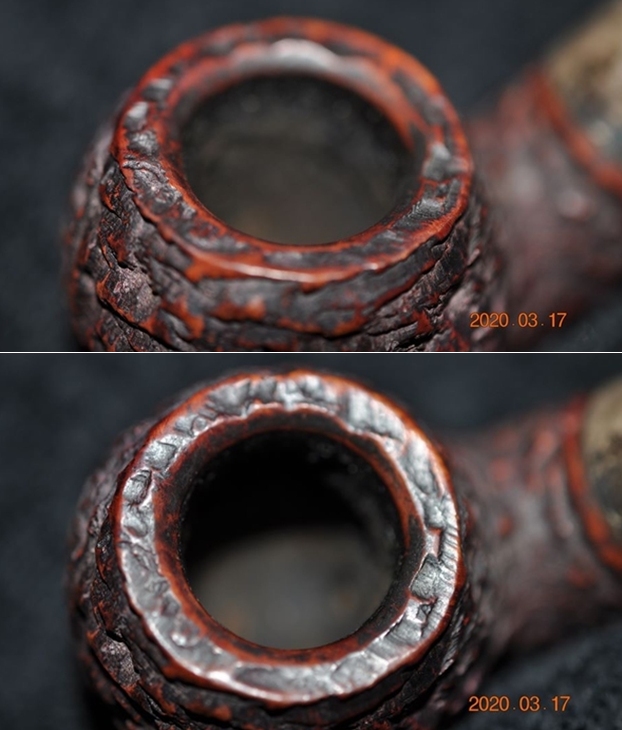
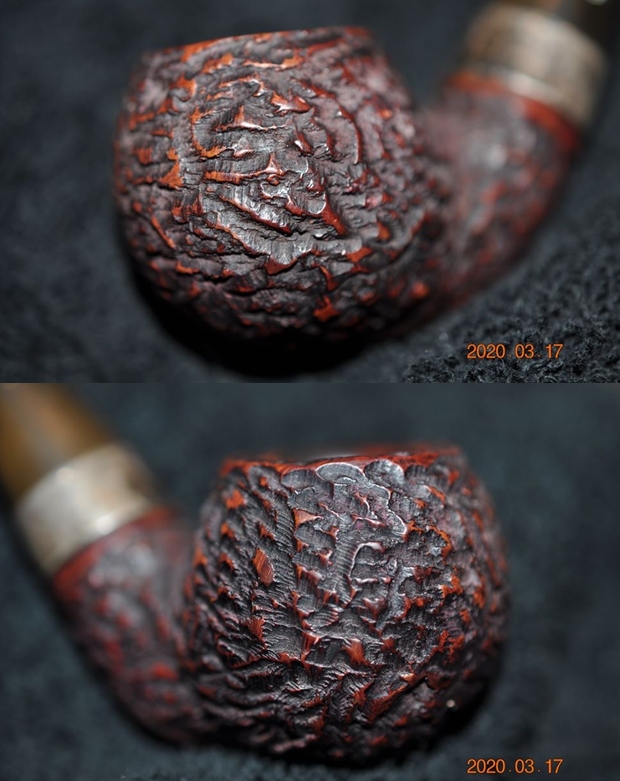
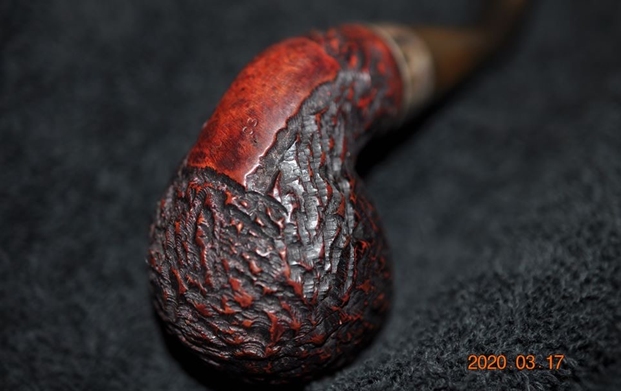
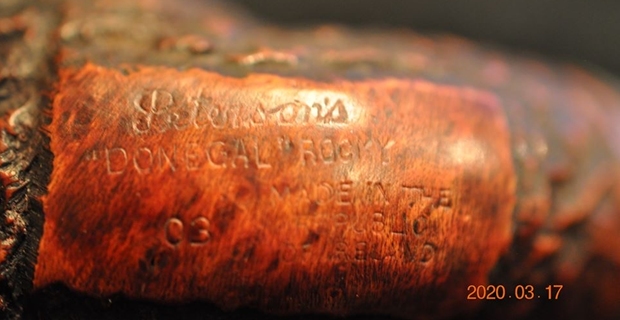
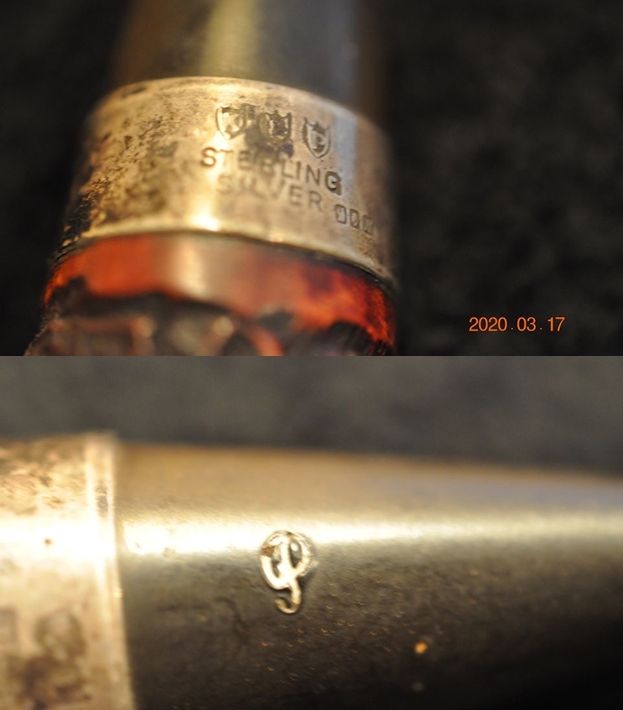
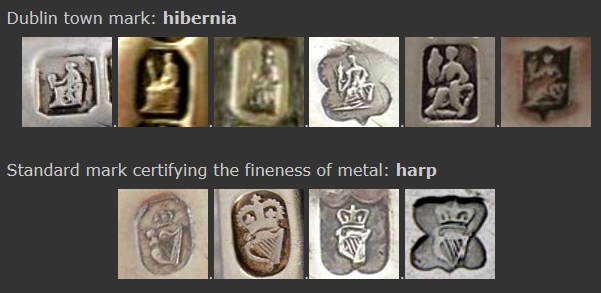
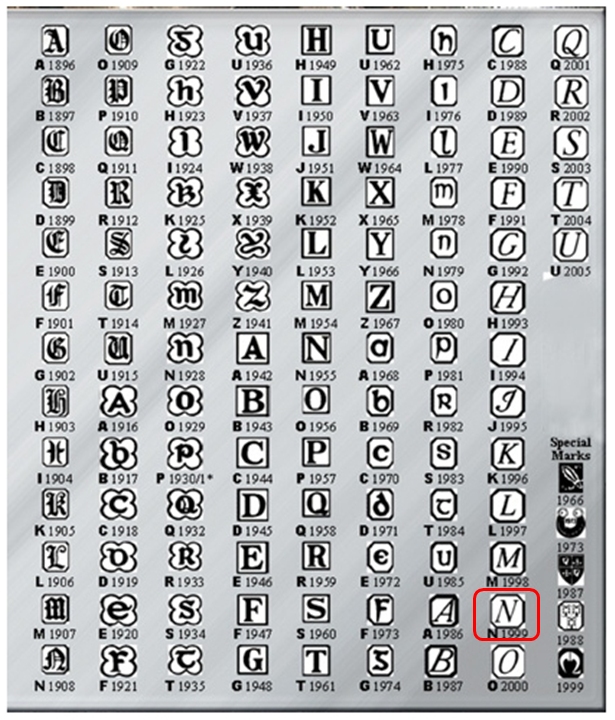
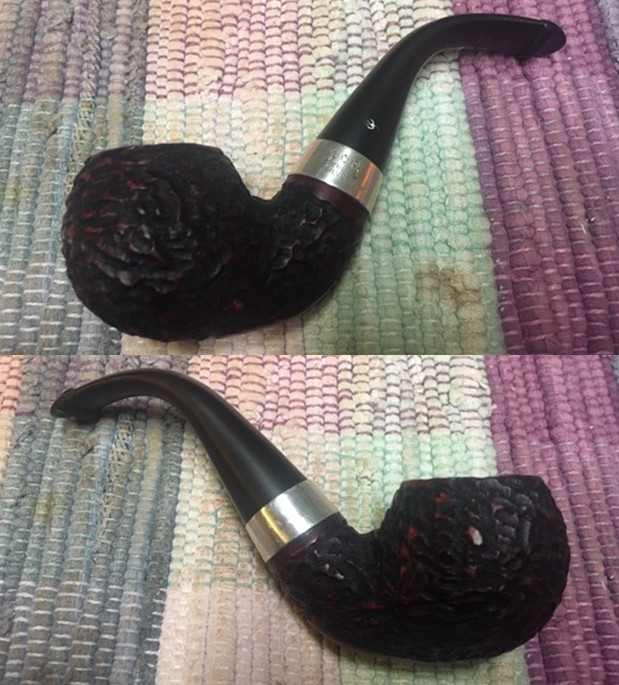
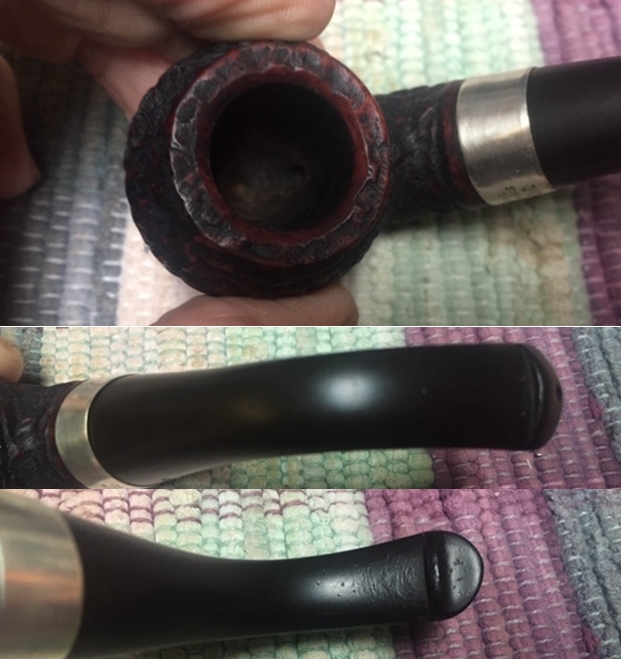
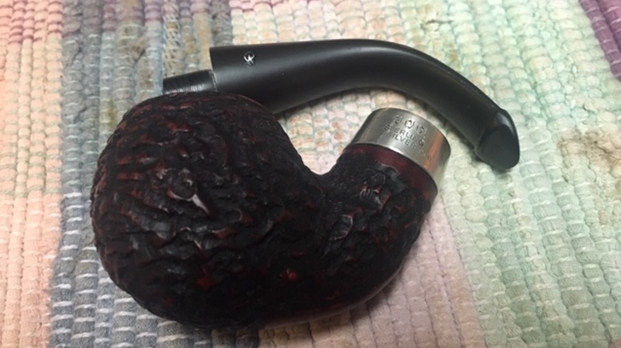
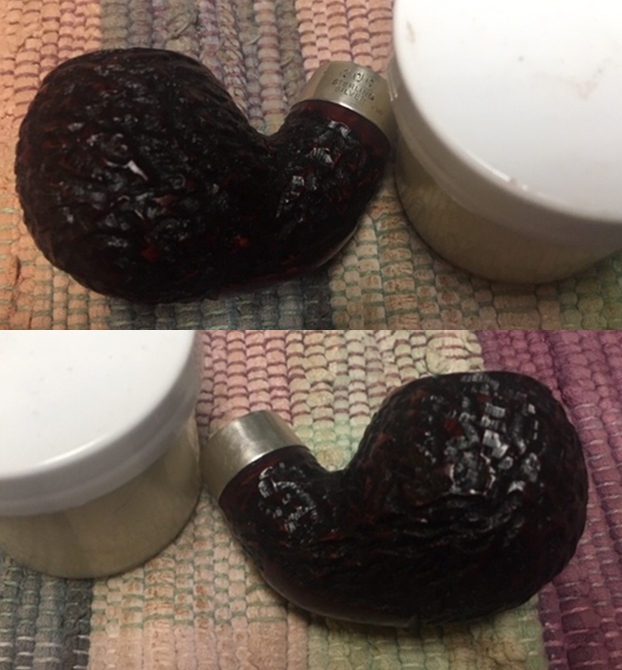
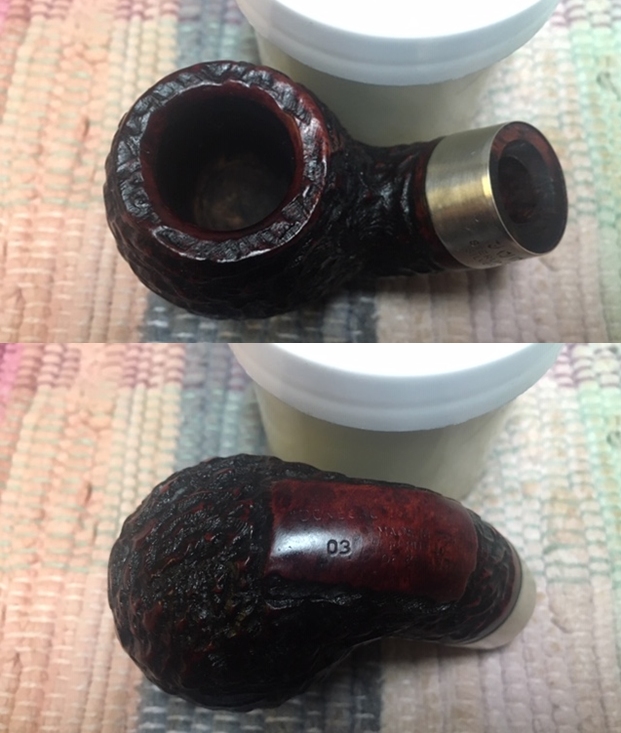
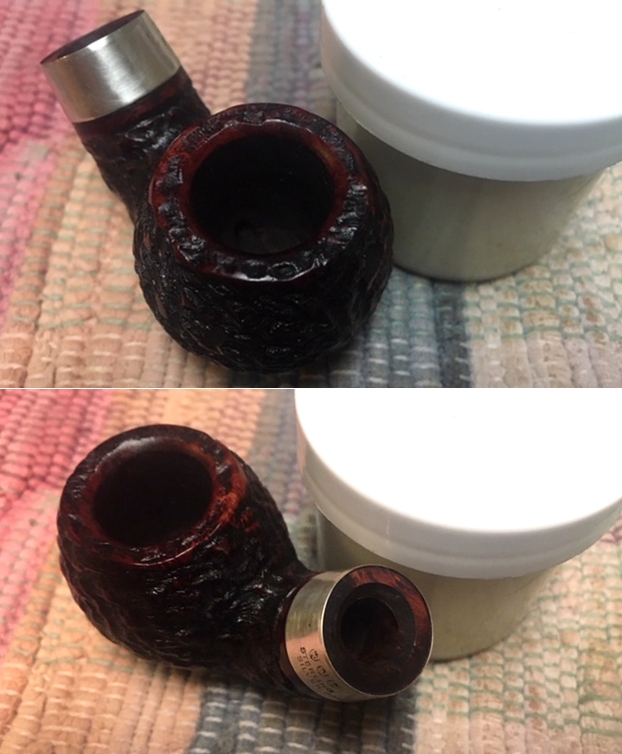
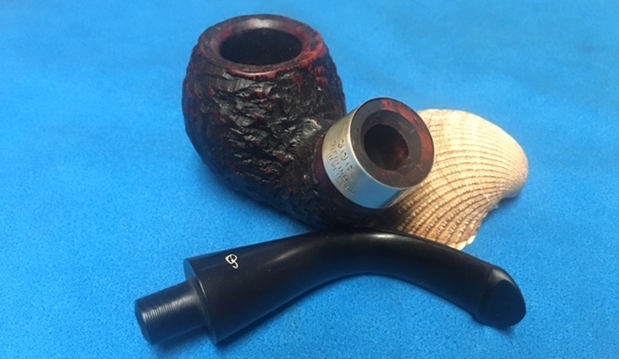
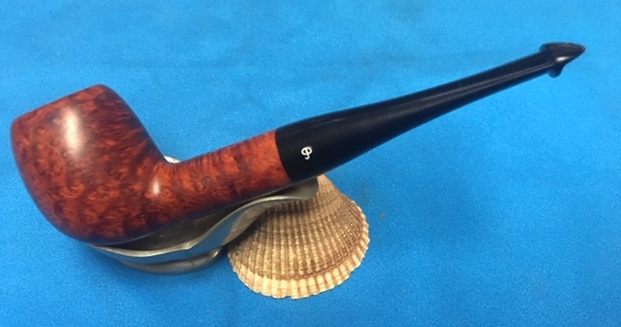
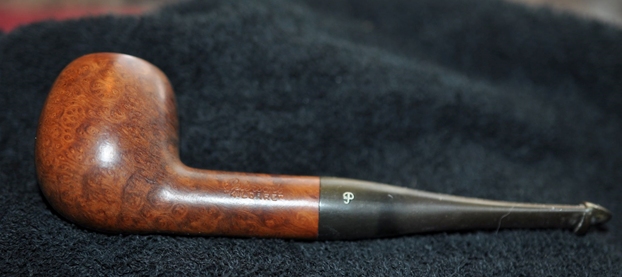
The next pipe on the table came to us from one of Jeff’s pipe hunts or auctions. It is a rusticated Peterson’s “Donegal” Rocky 03 Bent Apple. The rusticated finish is quite nice with at that classic Peterson’s rustication pattern. The pipe was very dirty, with grime and dust deep in the grooves of the rustication. The bowl had a thick cake in the bowl and surprisingly only dust on the rusticated rim top. There was darkening on the briar and a little lava on the inner edge of the rim. The pipe is stamped on a smooth panel on the underside of the shank and reads Peterson’s “Donegal” Rocky with the shape number 03 ahead of that. It is also stamped Made in the Republic of Ireland. On the oxidized Sterling Silver band it is stamped K&P in shields over Sterling Silver there are three hallmarks below and to the left of that. The hallmarks are: 1. a seated woman (Hibernia) – the city stamp for Dublin, 2. Harp – the mark for the quality of the silver, 3. a slanted uppercase N – the date identification of the pipe. The stamping is clear and readable on the pipe. The stem was dirty and oxidized. There were tooth marks and chatter on the stem near the button on both sides and some on the surface of the button as well. There was the Peterson’s “P” on the left side of the taper stem. Jeff took photos of the pipe before he cleaned it up. Jeff took photos of the rim top to show the cake in the bowl and the relatively clean rim top and beveled edge. The photos show the rim top and bowl from various angles.Jeff took some photos of the bowl sides and heel to show the rustication that was on this bowl. It is a quite beautifully crafted pipe. The rustication is quite dirty. The stamping on the underside of the shank read as noted above. The photo shows that they are very clear and readable. The stamping on the silver is also readable. The P on the left side of the stem is in good condition. The stem was a very good fit to the shank. It was oxidized, calcified and had debris stuck to the surface of the vulcanite. There was light tooth chatter and marks on both sides of the stem and on the button surface.  I am including the information from Pipedia’s article on Peterson pipes. It is a great read in terms of the history of the brand (https://pipedia.org/wiki/Peterson). I have included a bit of the pertinent history here.

1950 – 1989 The Republic Era  – From 1950 to the present time, the stamp for this era is “Made in the Republic of Ireland” in a block format generally in three lines but two lines have been used with or without Republic being abbreviated.

During the 1950’s and 60’s the Kapp & Peterson company was still in the ownership of the Kapp family. However 1964 saw the retiral of the company Managing Director Frederick Henry(Harry) Kapp.

I turned then to deal with the Hallmarks. I turned to Pipephil’s site for his quick reference charts on the Peterson’s Hallmarks (http://www.pipephil.eu/logos/en/infos/hallmark-dublin.html). I have included the pertinent charts below. The first chart defines the first two hallmarks on the Sterling Silver Band. The Hibernia/Lady is the Dublin Town Mark. The Harp identifies the fineness of the metal.The second chart pins down the date that this particular pipe was made. The slanted N mark identifies the pipe as being made in 1999. I have drawn a red box around the N on the chart below.With that information in hand I knew what I was dealing with in terms of the stamping and the age of this pipe. I knew from the information that the pipe was made during the Republic Era between 1950 and 1989. Pipedia then qualifies the dating as follows: From 1950 to the present time, the stamp for this era is “Made in the Republic of Ireland”. I was wondering how a pipe stamped Republic of Ireland and 1999 fit! I guess the “present time” stamp qualifies that.  Now it was time to work on the pipe.

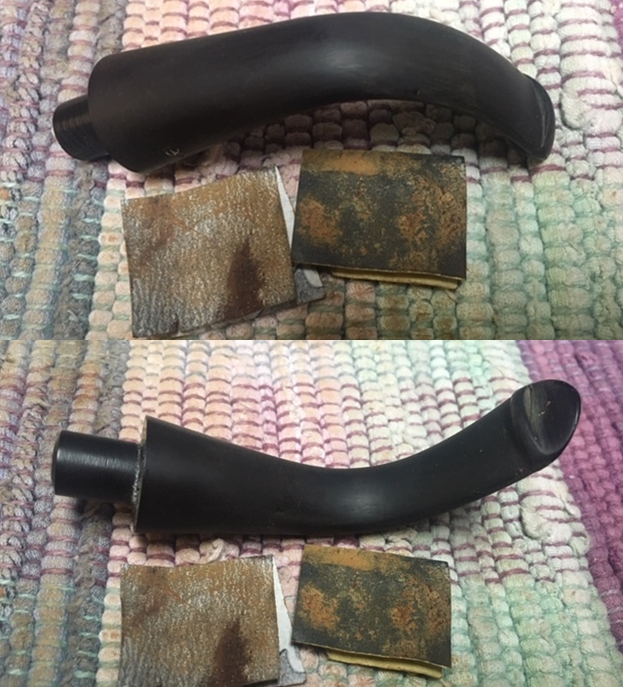
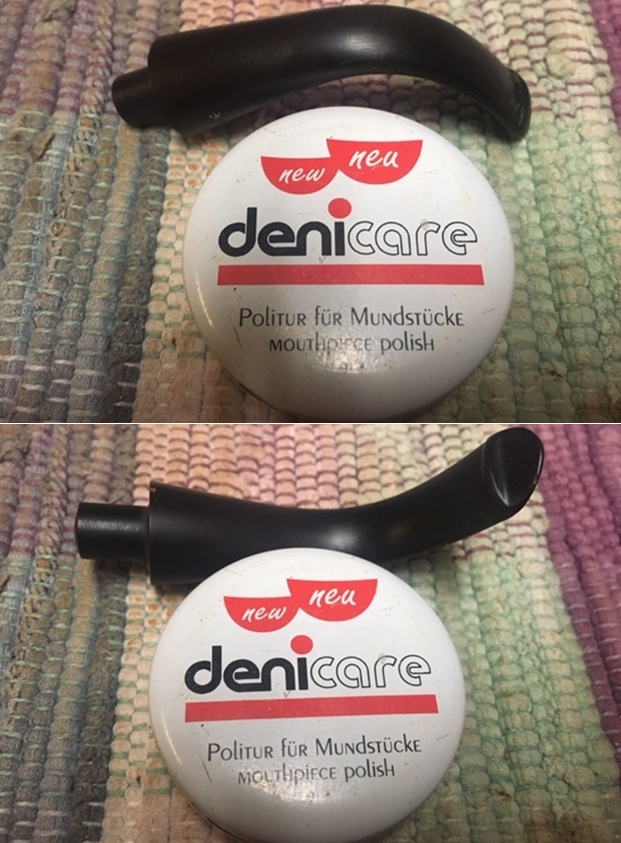
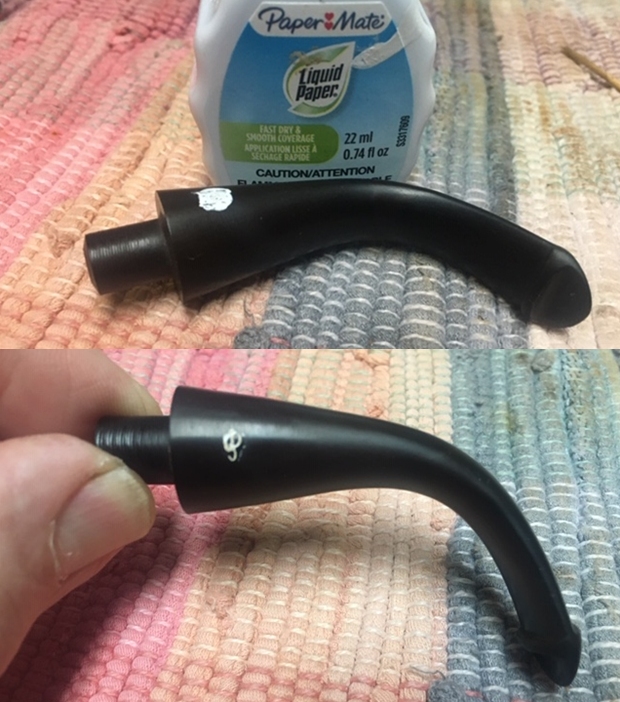
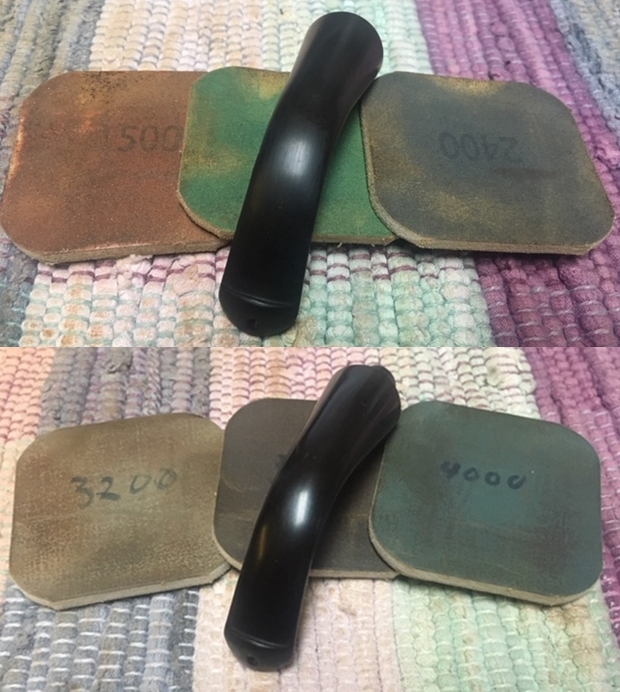
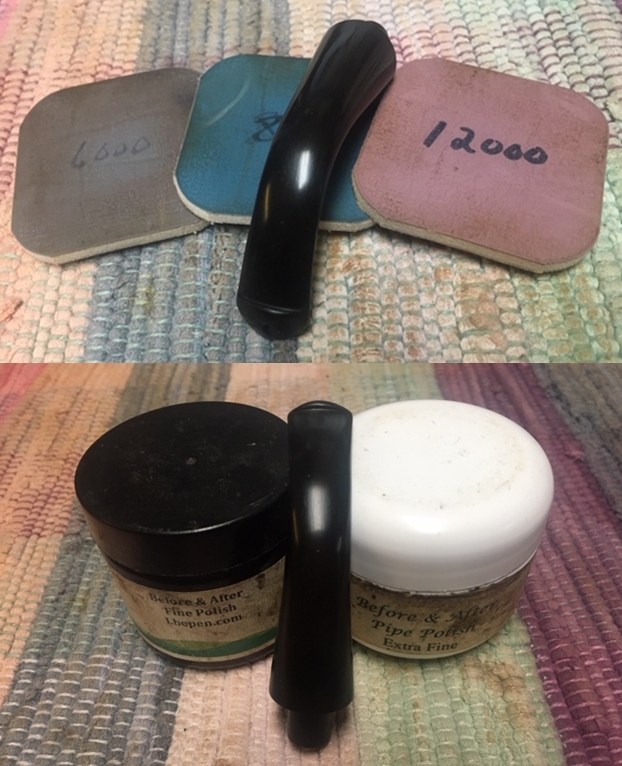
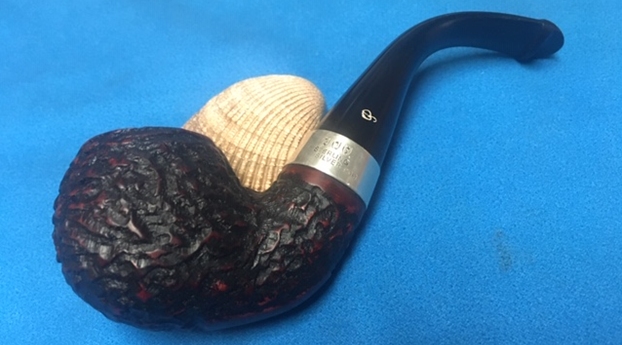
Armed with that information I turned to work on the pipe itself. Jeff had done a great job cleaning up the pipe as usual. He reamed the pipe with a PipNet reamer and cut back the cake back to the bare briar. He cleaned up the walls with a Savinelli Fitsall Pipe Knife. He scrubbed the interior of the bowl and shank with pipe cleaners, cotton swabs and alcohol to remove the tars and oils. He scrubbed the exterior of the pipe with Murphy’s Oil Soap and a tooth brush to remove the grime from the finish. He scrubbed the inside of the stem with alcohol and pipe cleaners. He cleaned the oxidized silver with Soft Scrub and buffed it off with a soft pad. He scrubbed the exterior with Soft Scrub and then soaked it in Before & After Deoxidizer. He washed it off with warm water to remove the deoxidizer. The pipe looked far better. I took photos of the pipe when I received it before I started working on it. I took photos of the bowl and rim top to show how clean it was. The rim top and edges look very good. The stem looks clean of oxidation and there are light tooth marks and chatter on both sides of the stem.I took a photo of the pipe with the stem removed to show the overall look of stem, tenon and profile of the pipe. It is a great looking pipe.I rubbed the briar down with Before & After Restoration Balm. I worked it into the briar with my fingertips and a horse hair shoe brush to get it into the deep crevices of the rustication. The product works to clean, enliven and preserve the briar. I let it sit for 10 minutes while I worked on the stem. After the time passed I buffed it with a cotton cloth to deepen the shine. The rustication came alive with the balm. I set the bowl aside and turned my attention to the stem. There were some deep marks on the left side of the stem at the bend. I filled them with clear super glue and set it aside to cure. Once it was cured I sanded the stem to blend the repairs into the rest of the surrounding vulcanite.I sanded out the tooth marks and chatter on both sides of the button surface and stem with 220 grit sandpaper and began the polishing with 400 grit wet dry sandpaper.I rubbed the stem down with Denicare Mouthpiece Polish – a red, gritty Tripoli like substance that is a paste. I rubbed it into the surface of the stem and polished it off with a cotton pad. I have found that is a great intermediary step before polishing with micromesh pads. I am not sure what I will use once the final tin I have is gone!I touched up the P stamp on the left side of the stem with Paper Mate Liquid Paper and once it dried I scraped off the excess. The P stamp definitely looks better at this point.I polished the stem with micromesh sanding pads – 1500-12000 grit pads. I wiped it down with Obsidian Oil after each sanding pad. I used Before & After Pipe Polish – both Fine and Extra Fine to further polish the stem. This Republic Era Peterson “Donegal” Rocky 03 Bent Apple is a nice looking pipe. The rustication and mixed stain around the bowl sides and shank really stand out with the polishing. The finish on the pipe is in excellent condition and the contrasting stains work well to give some contrast to the rusticated finish of the pipe. The polished black vulcanite P-lip taper stem adds to the mix. With the grime and debris gone from the finish and the bowl it is really is eye-catching. I put the stem back on the bowl and buffed the pipe with Blue Diamond on the buffing wheel, carefully avoiding the stamping on the shank and using a light touch on the rusticated bowl and shank. I gave the bowl multiple coats of Conservator’s Wax by hand and the stem multiple coats of carnauba wax on the buffing wheel and followed that by buffing it with a clean buffing pad. I hand buffed the pipe with a microfiber cloth to deepen the shine. The finished Bent Apple is quite nice and feels great in the hand. Give the finished pipe a look in the photos below. I can only tell you that like the other pipes I am working that it is much prettier in person than the photos capture. The dimensions of the pipe are Length: 5 inches, Height: 1 ½ inches, Outside diameter of the bowl: 1 ¼ inches, Chamber diameter: ¾ of an inch. Thanks for walking through the restoration with me as I worked over another interesting pipe. This Peterson’s “Donegal” Rocky will be added to the Irish Pipe Makers section of the rebornpipes store soon. If you want to add it to your collection send me an email or a message! Thanks for your time.

Restoring a Beautifully Grained Smooth Savinelli Punto Oro 114KS Saddle Stem Billiard


Blog by Steve Laug

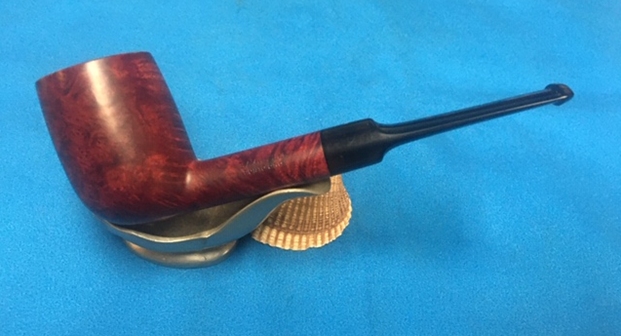
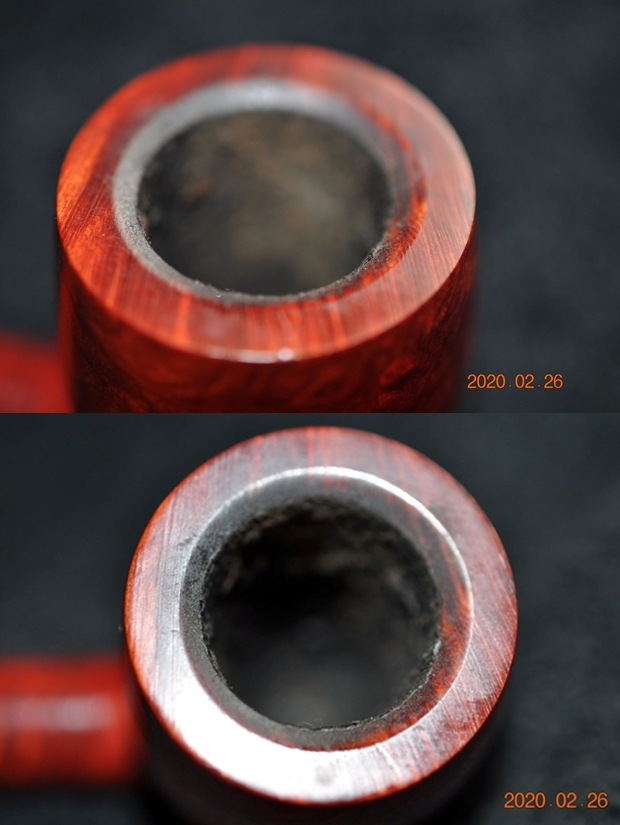
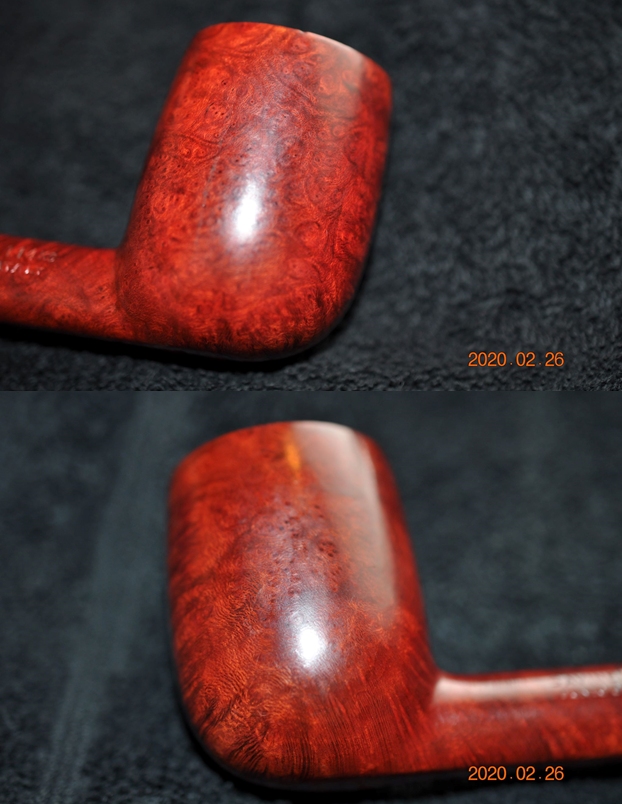
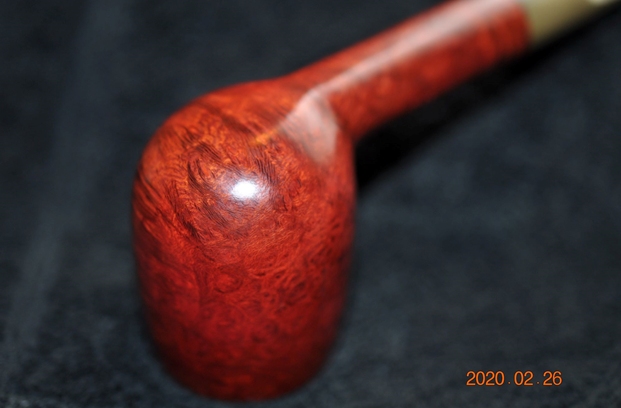
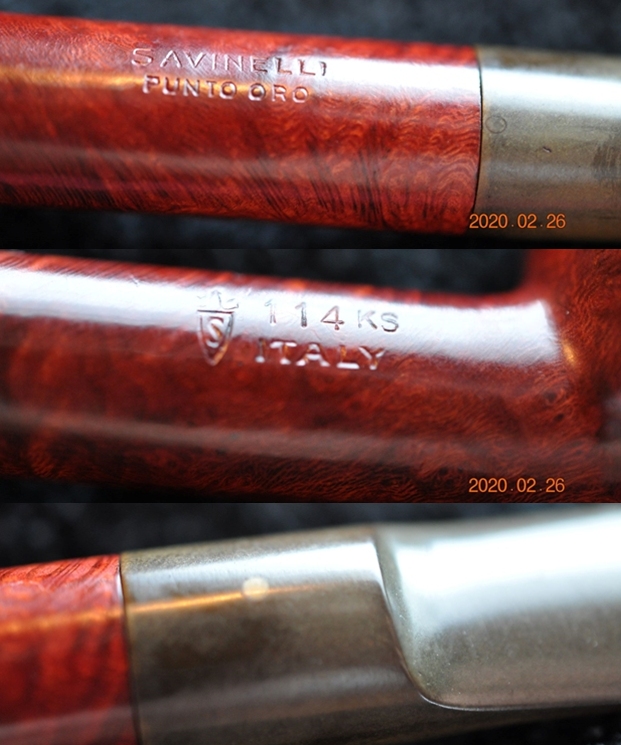
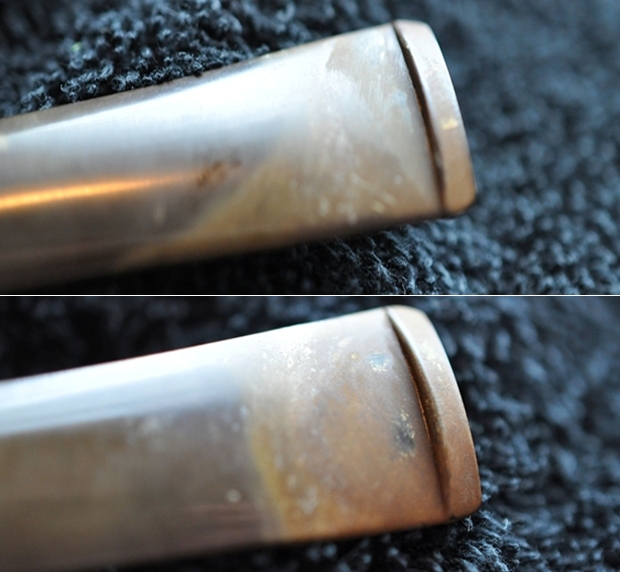
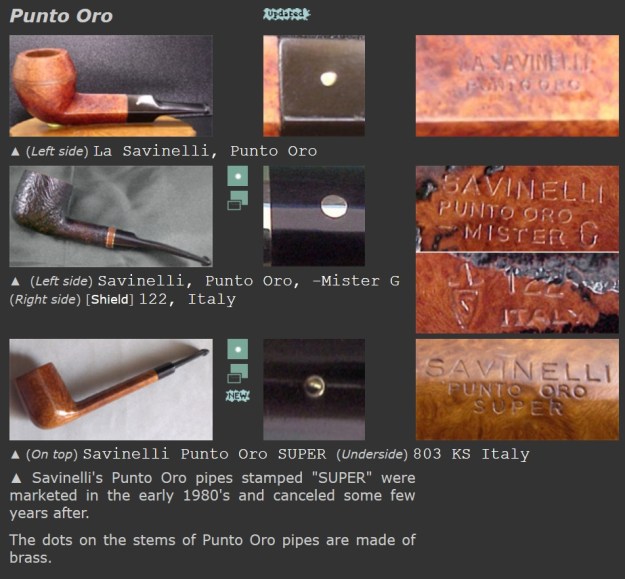
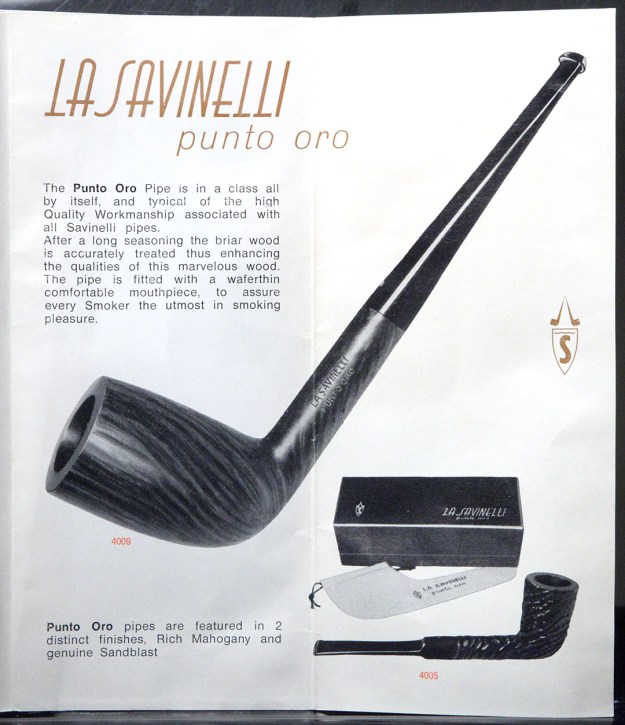
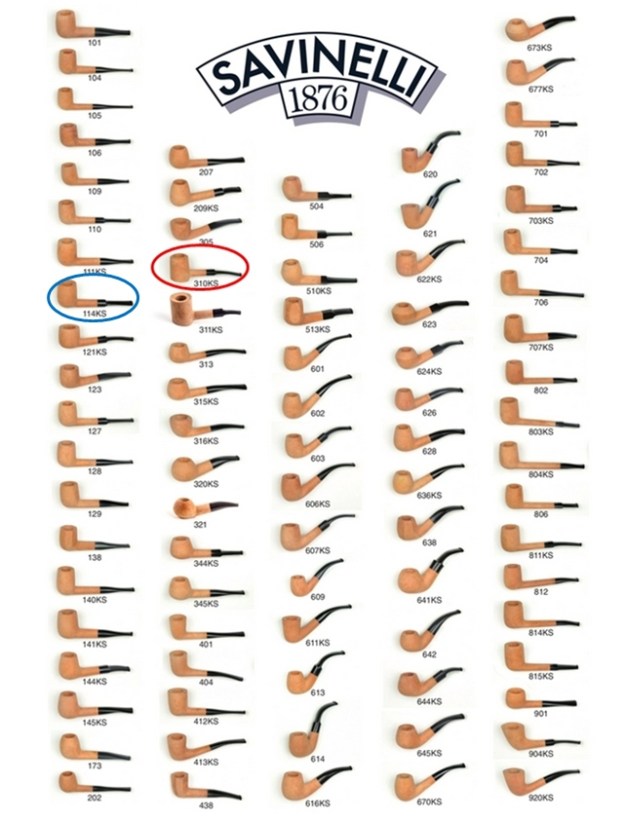
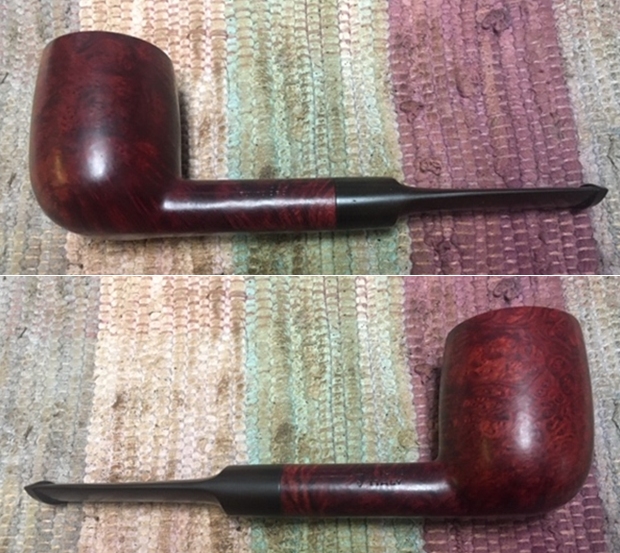
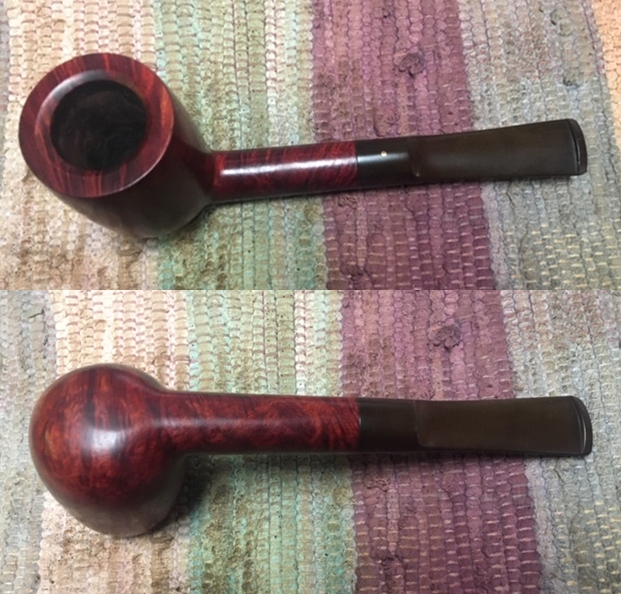
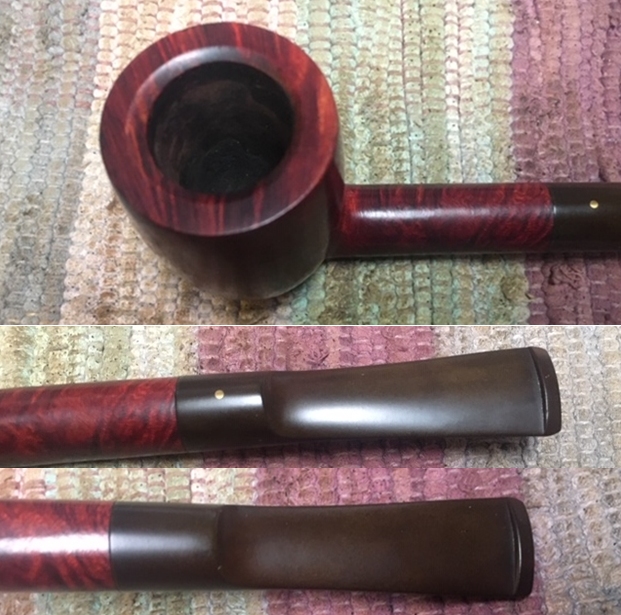
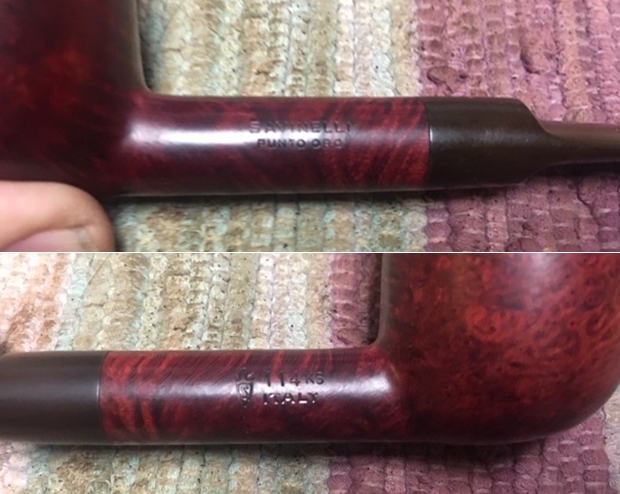
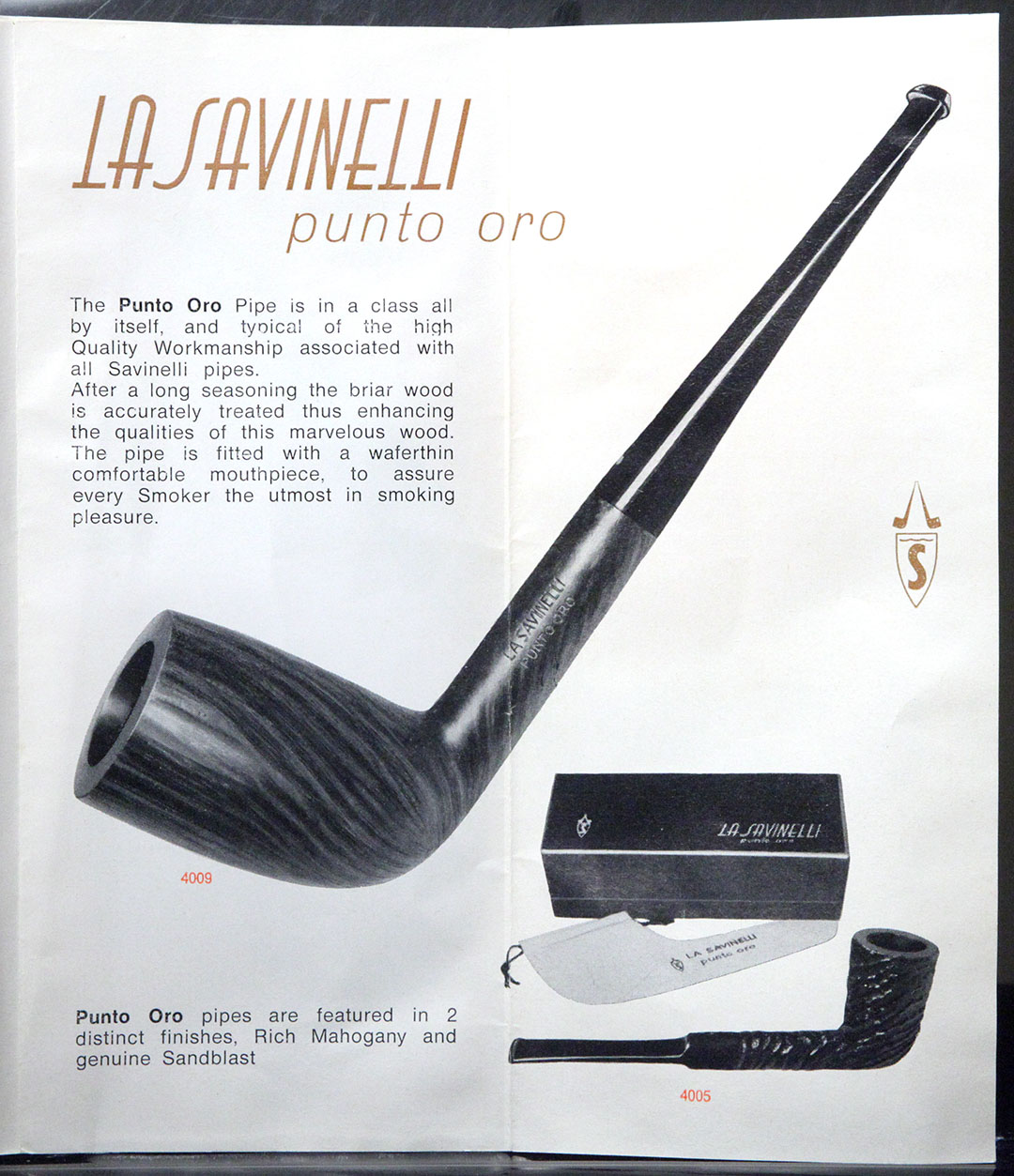
The next pipe on the table came to us from one of Jeff’s pipe hunts not far from where he is located. It is another Savinelli Billiard with a really rich red finish. The pipe has some amazing grain that the shape follows well. The finish was very dirty with grime ground into the grain around bowl sides. The bowl had a thick cake in the bowl and a some lava overflow on the inner edge of the top. There was darkening on the briar around the inner beveled edge of the rim. The pipe is stamped on the left side of the shank and reads Savinelli over Punto Oro. It is stamped on the right side and has a Savinelli S Shield over Italy followed by the 114KS shape number. The stamping is clear and readable. The stem was dirty, oxidized and calcified. There was light tooth chatter and marks on the stem near the button on both sides. The stem has a brass dot of the Punto Oro on the top of the saddle stem. Jeff took photos of the pipe before he cleaned it up. Jeff took photos of the rim top to show the thick cake in the bowl and the lava overflow on the inner edge of the rim top. The photos show the rim top and bowl from various angles. Jeff took some photos of the bowl sides and heel to show the nice grain that was on this bowl. It is a quite beautifully grained pipe. The stamping and logo are on the underside of the shank and are as noted above. They look very good even though some of each line is stamped in the blast portion not just on the smooth panel.The stem was a very good fit to the shank. It was oxidized, calcified and had debris stuck to the surface of the vulcanite. There was tooth chatter and marks on both sides of the stem and on the button surface.I turned to Pipephil’s site to get a feel for the Punto Oro line. All of the previous Punto Oro pipes that I have worked on were smooth finish with great grain. This was a great smooth finished pipe in the rich Mahogany finish. Here is the link (http://www.pipephil.eu/logos/en/logo-savinelli3.html). I have included a screen capture of the pertinent information on the line below.I turned to Pipedia to look at what information they had on the brand. I found a catalogue page on the Punto Oro which confirmed what I had surmised about the line having both smooth and sandblast finished pipe (https://pipedia.org/images/d/db/Sav_Punto_Oro.jpg). I have included a screen capture of the page below. It says that the line was available in 2 distinct finishes – a rich Mahogany smooth finish and a genuine sandblast. The current pipe on the table is a rich Mahogany smooth pie.The Savinelli shape number was 114KS so I turned to the Savinelli Shape Chart on Pipedia and included a screen capture (https://pipedia.org/images/4/41/Sav_Shape_Chart_2017.jpg). I have circled the 114KS shape in blue in the photo below.Armed with that information I turned to work on the pipe itself. Jeff had done a great job cleaning up the pipe as usual. He reamed the pipe with a PipNet reamer and cut back the cake back to the bare briar. He cleaned up the walls with a Savinelli Fitsall Pipe Knife. He scrubbed the interior of the bowl and shank with pipe cleaners, cotton swabs and alcohol to remove the tars and oils. He scrubbed the exterior of the pipe with Murphy’s Oil Soap and a tooth brush to remove the grime from the finish. He worked on the rim top lava and darkening with the soap and tooth brush. He scrubbed the inside of the stem with alcohol and pipe cleaners. He scrubbed the exterior with Soft Scrub and then soaked it in Before & After Deoxidizer. He washed it off with warm water to remove the deoxidizer. The pipe looked far better. I took photos of the pipe when I received it before I started working on it. I took photos of the bowl and rim top to show how clean it was. You can see the darkening on the inner edge of the rim and the top.  The stem looks clean of oxidation and the tooth marks and chatter are very clear in the photos.I took photos of the stamping on the sides of the shank. The stamping is clear and readable. It reads as noted above.I took a photo of the pipe with the stem removed to show the overall look of stem, tenon and profile of the pipe.I polished the briar with micromesh sanding pads – dry sanding with 1500-12000 grit pads and wiping the bowl down with a damp cloth after each pad. I rubbed the briar down with Before & After Restoration Balm. I worked it into the briar with my fingertips. The product works to clean, enliven and preserve the briar. I let it sit for 10 minutes while I worked on the stem. After the time passed I buffed it with a cotton cloth to deepen the shine. The briar really comes alive with the balm. I set the bowl aside and turned my attention to the stem. I sanded out the tooth marks and chatter on both sides of the button surface and stem with 220 grit sandpaper and began the polishing with 400 grit wet dry sandpaper.I rubbed the stem down with Denicare Mouthpiece Polish – a red, gritty Tripoli like substance that is a paste. I rubbed it into the surface of the stem and polished it off with a cotton pad. I have found that is a great intermediary step before polishing with micromesh pads. I am not sure what I will use once the final tin I have is gone!I polished the vulcanite with micromesh sanding pads – 1500-12000 grit pads. I wiped it down with Obsidian Oil after each sanding pad. I used Before & After Pipe Polish – both Fine and Extra Fine to further polish the stem.   This Savinelli Punto Oro Smooth Mahogany Finish Billiard is a real beauty. The Mahogany stain highlights some great grain around the bowl sides and the heel. The finish on the pipe is in excellent condition and the contrasting stains work well to highlight the grain on the pipe. The polished black vulcanite saddle stem adds to the mix. With the grime and debris gone from the finish and the bowl it was a beauty and the blast really is eye-catching. I put the stem back on the bowl and buffed the pipe with Blue Diamond on the buffing wheel. I gave the bowl and the stem multiple coats of carnauba wax on the buffing wheel and followed that by buffing it with a clean buffing pad. I hand buffed the pipe with a microfiber cloth to deepen the shine. The finished Billiard is quite nice and feels great in the hand. Give the finished pipe a look in the photos below. I can only tell you that like the other pipes I am working that it is much prettier in person than the photos capture. The dimensions of the pipe are Length: 5 ¾ inches, Height: 2 inches, Outside diameter of the bowl: 1 ½ inches, Chamber diameter: ¾ of an inch. Thanks for walking through the restoration with me as I worked over another beautiful pipe. This pipe will be added to the Italian Pipe Makers section of the rebornpipes store soon. If you want to add it to your collection send me an email or a message! Thanks for your time.

New Life for a Peterson’s Republic Era Kildare 87 Apple


Blog by Steve Laug

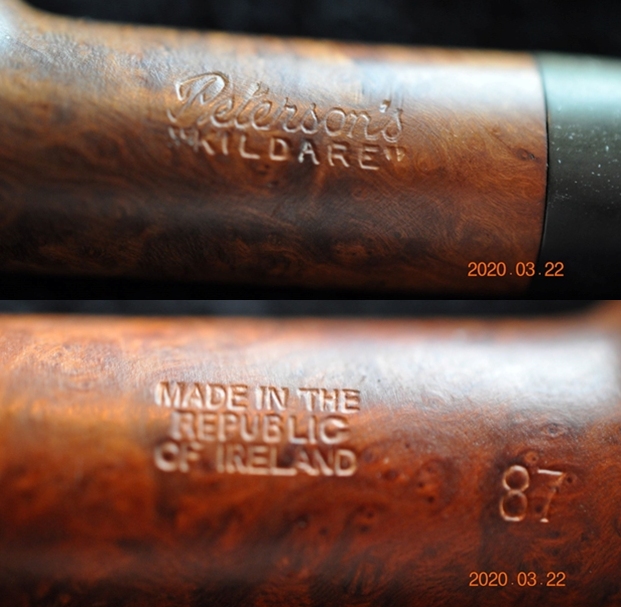
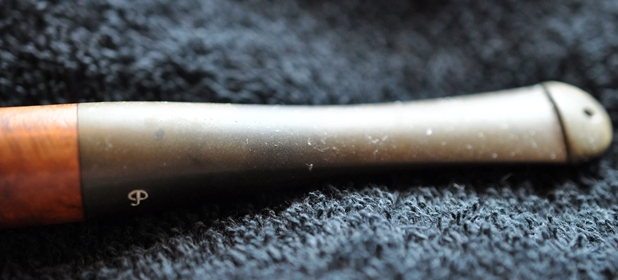
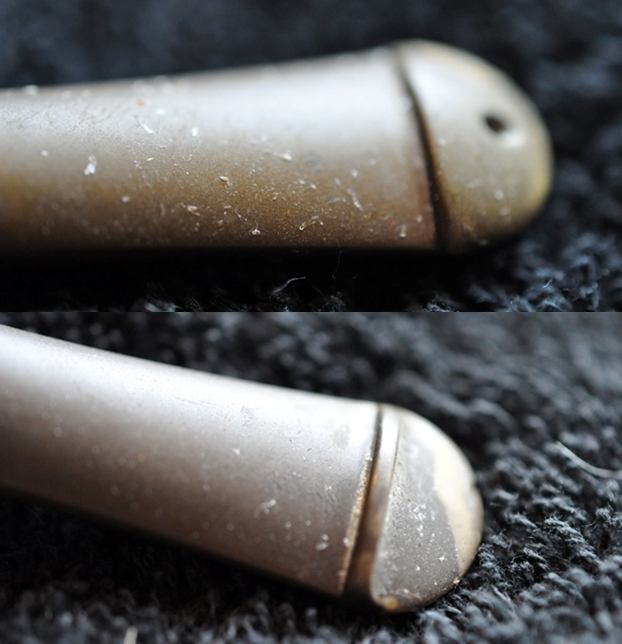
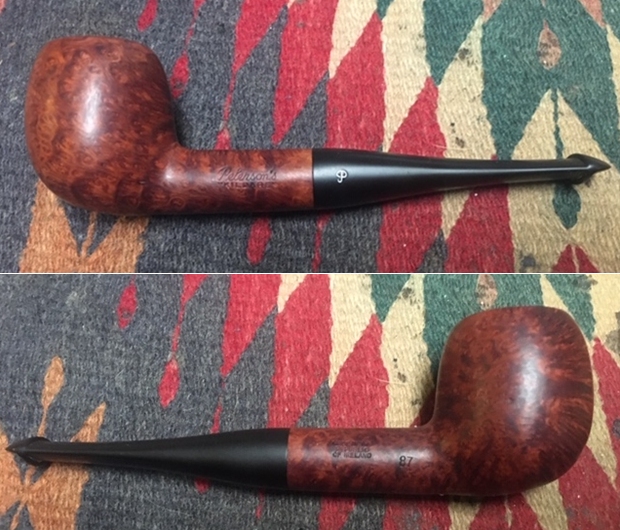
The next pipe on the table came to us from one of Jeff’s pipe hunts or auctions. It is a beautifully grained Peterson’s “Kildare” 87 Apple. The shape follows the grain around the bowl which is a combination of cross grain and birdseye. The finish was very dirty but the grain shone through the grime. The bowl had a thick cake in the bowl and a lava overflow on the inner edge of the rim top. There was darkening on the briar around the inner edge of the rim. The pipe is stamped on the left side of the shank and reads Peterson’s “Kildare”. On the right side of the shank In the Republic of Ireland followed by the shape number 87. The stamping is clear and readable on both sides. The stem was dirty and oxidized. There were tooth marks and chatter on the stem near the button on both sides and some on the surface of the button as well. There was the Peterson’s “P” on the left side of the taper stem. Jeff took photos of the pipe before he cleaned it up. Jeff took photos of the rim top to show the thick cake in the bowl and the lava overflow on the rim edge. The photos show the rim top and bowl from various angles. Jeff took some photos of the bowl sides and heel to show the nice grain that was on this bowl. It is a quite beautifully grained pipe. The stamping on the sides of the shank read as noted above. The photos show that they are very clear and readable. The P on the left side of the stem is in good condition. The stem was a very good fit to the shank. It was oxidized, calcified and had debris stuck to the surface of the vulcanite. There was light tooth chatter and marks on both sides of the stem and on the button surface. I am including the information from Pipedia’s article on Peterson pipes. It is a great read in terms of the history of the brand (https://pipedia.org/wiki/Peterson). I have included a bit of the pertinent history here.

1950 – 1989 The Republic Era  – From 1950 to the present time, the stamp for this era is “Made in the Republic of Ireland” in a block format generally in three lines but two lines have been used with or without Republic being abbreviated.

During the 1950’s and 60’s the Kapp & Peterson company was still in the ownership of the Kapp family. However 1964 saw the retiral of the company Managing Director Frederick Henry(Harry) Kapp.

With that information in hand I knew what I was dealing with in terms of the stamping and the age of this pipe. I knew from the information that the pipe was made during the Republic Era between 1950 and 1989. Now it was time to work on the pipe.

Armed with that information I turned to work on the pipe itself. Jeff had done a great job cleaning up the pipe as usual. He reamed the pipe with a PipNet reamer and cut back the cake back to the bare briar. He cleaned up the walls with a Savinelli Fitsall Pipe Knife. He scrubbed the interior of the bowl and shank with pipe cleaners, cotton swabs and alcohol to remove the tars and oils. He scrubbed the exterior of the pipe with Murphy’s Oil Soap and a tooth brush to remove the grime from the finish. He worked on the rim top lava and darkening with the soap and tooth brush. He scrubbed the inside of the stem with alcohol and pipe cleaners. He scrubbed the exterior with Soft Scrub and then soaked it in Before & After Deoxidizer. He washed it off with warm water to remove the deoxidizer. The pipe looked far better. I took photos of the pipe when I received it before I started working on it. I took photos of the bowl and rim top to show how clean it was. The rim top and edges look very good. The stem looks clean of oxidation other than a little around the P-lip. There is also light tooth marks and chatter on both sides of the stem.I took photos of the stamping on both sides of the shank. It is very clear and readable.I took a photo of the pipe with the stem removed to show the overall look of stem, tenon and profile of the pipe. It also shows the aluminum tube in the tenon end. It extends into the bottom of the bowl.I polished the briar with micromesh sanding pads – sanding it with 1500-12000 grit pads and I wiped the bowl down after each sanding pad with a damp cloth. The bowl began to take on a shine. I rubbed the briar down with Before & After Restoration Balm. I worked it into the briar with my fingertips. The product works to clean, enliven and preserve the briar. I let it sit for 10 minutes while I worked on the stem. After the time passed I buffed it with a cotton cloth to deepen the shine. The briar came alive with the balm. I set the bowl aside and turned my attention to the stem. It was in great condition so I polished out the tooth chatter and remaining oxidation on the vulcanite with micromesh sanding pads – 1500-12000 grit pads. I wiped it down with Obsidian Oil after each sanding pad. I used Before & After Pipe Polish – both Fine and Extra Fine to further polish the stem. This Republic Era Peterson “Kildare” 87 Straight Apple is a beautiful pipe. The grain around the bowl sides and shank really stand out with the polishing. The finish on the pipe is in excellent condition and the contrasting stains work well to highlight the grain on the pipe. The polished black vulcanite P-lip taper stem adds to the mix. With the grime and debris gone from the finish and the bowl it is really is eye-catching. I put the stem back on the bowl and buffed the pipe with Blue Diamond on the buffing wheel, carefully avoiding the stamping on the shank during the process. I gave the bowl and the stem multiple coats of carnauba wax on the buffing wheel and followed that by buffing it with a clean buffing pad. I hand buffed the pipe with a microfiber cloth to deepen the shine. The finished Straight Apple is quite nice and feels great in the hand. Give the finished pipe a look in the photos below. I can only tell you that like the other pipes I am working that it is much prettier in person than the photos capture. The dimensions of the pipe are Length: 5 ¾ inches, Height: 1 ¾ inches, Outside diameter of the bowl: 1 ¼ inches, Chamber diameter: ¾ of an inch. Thanks for walking through the restoration with me as I worked over another interesting pipe. This Peterson’s “Kildare” will be added to the Irish Pipe Makers section of the rebornpipes store soon. If you want to add it to your collection send me an email or a message! Thanks for your time.

Restoring a Beautifully Sandblasted Savinelli Punto Oro 310KS Poker


Blog by Steve Laug

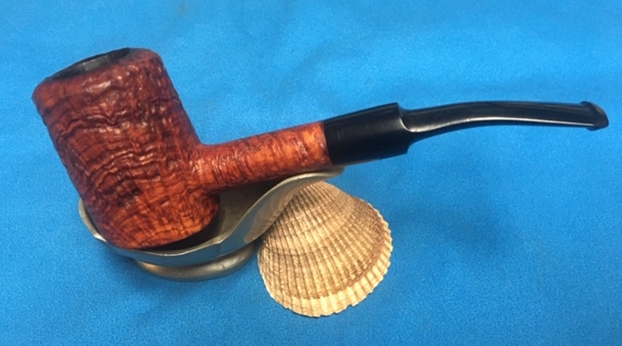
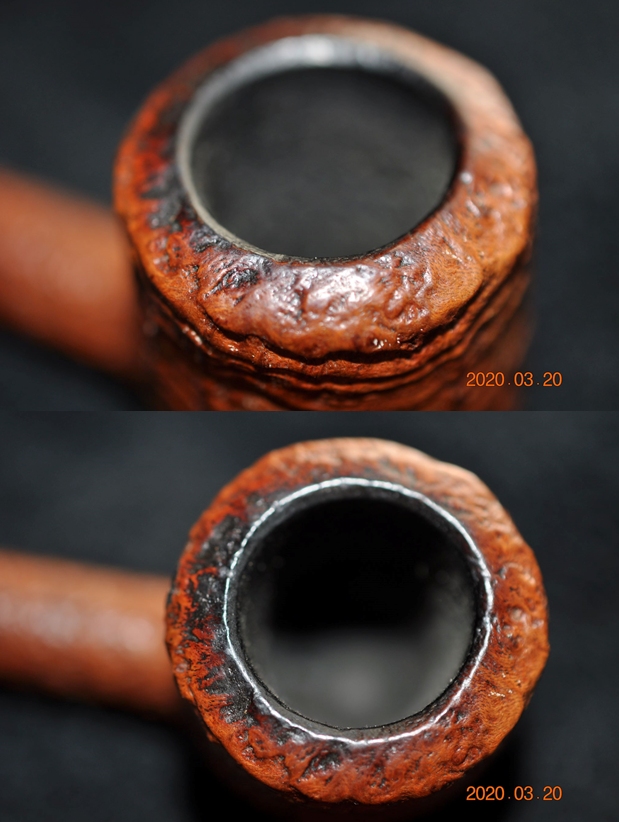
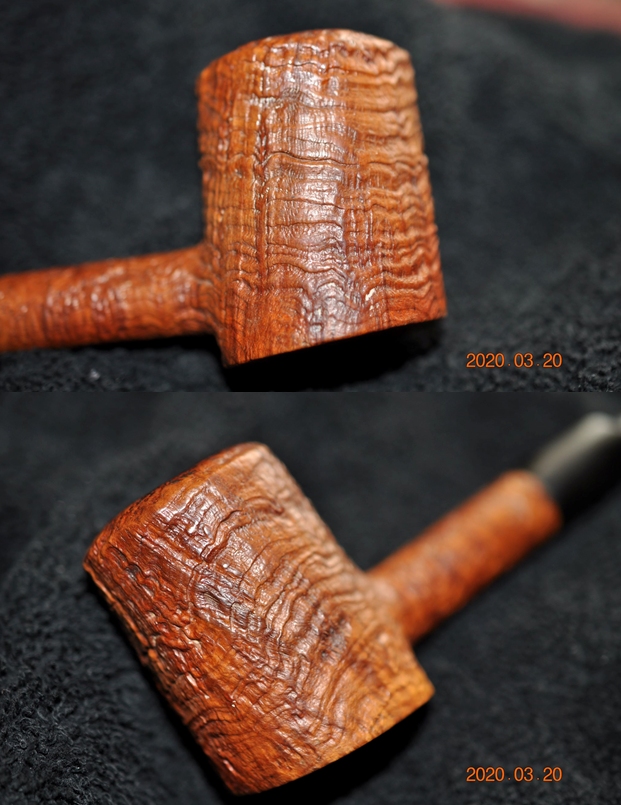
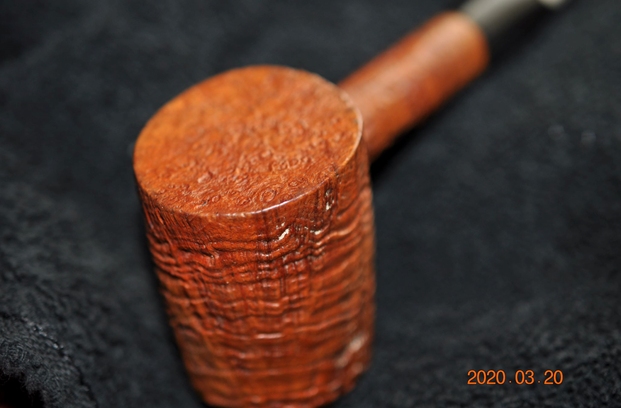
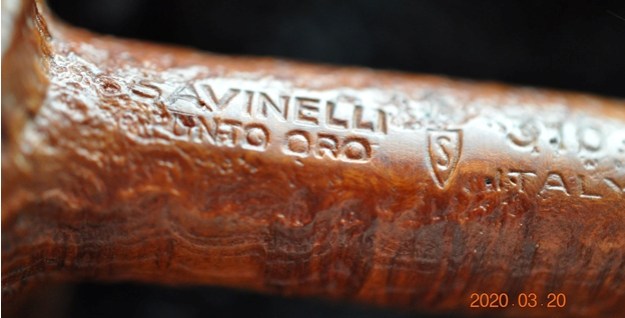
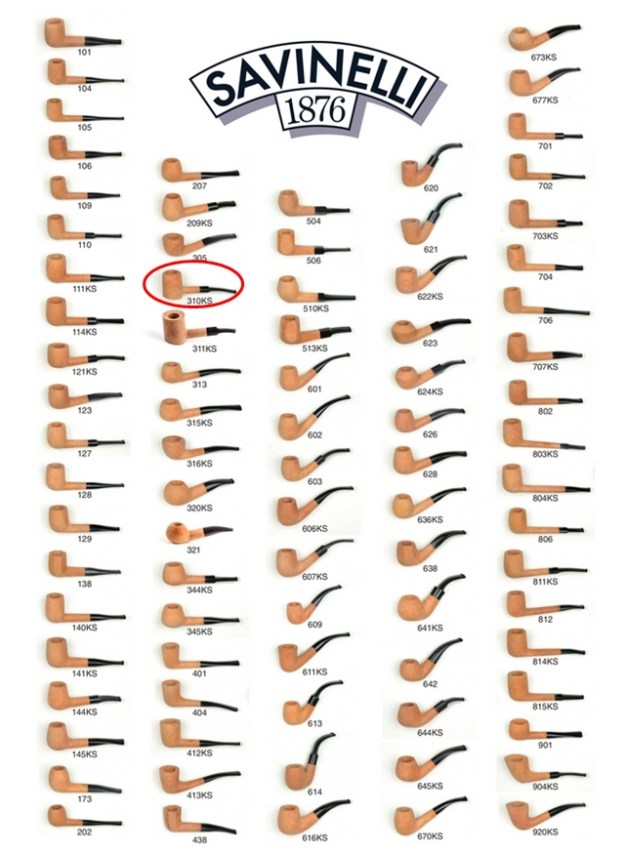
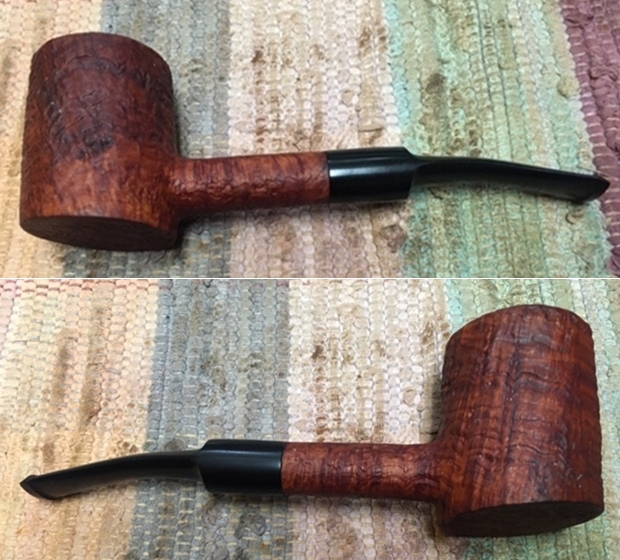
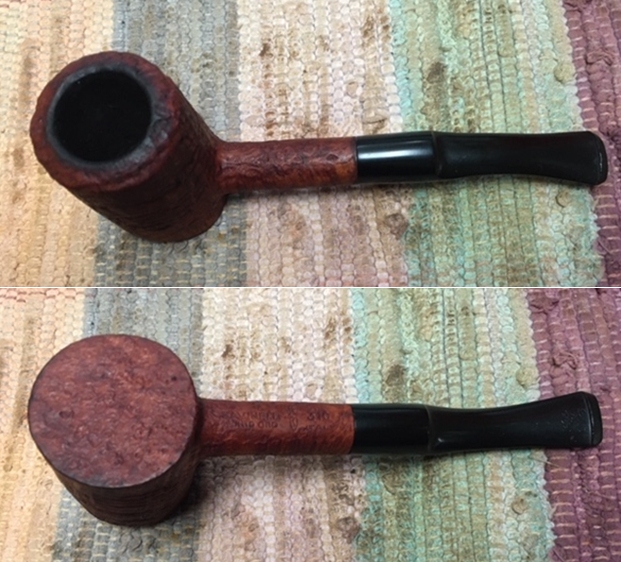
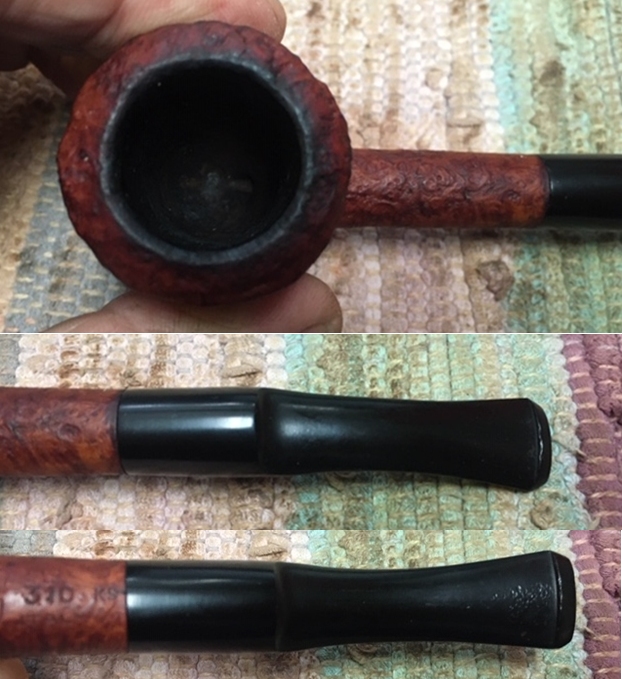
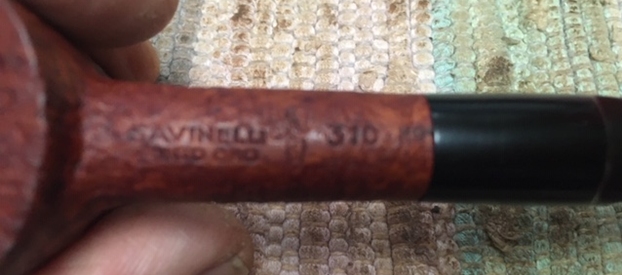
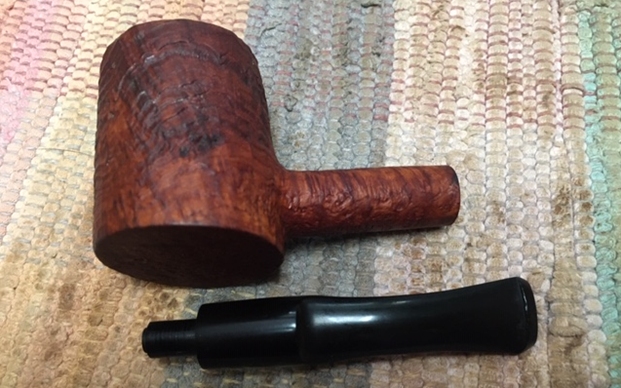
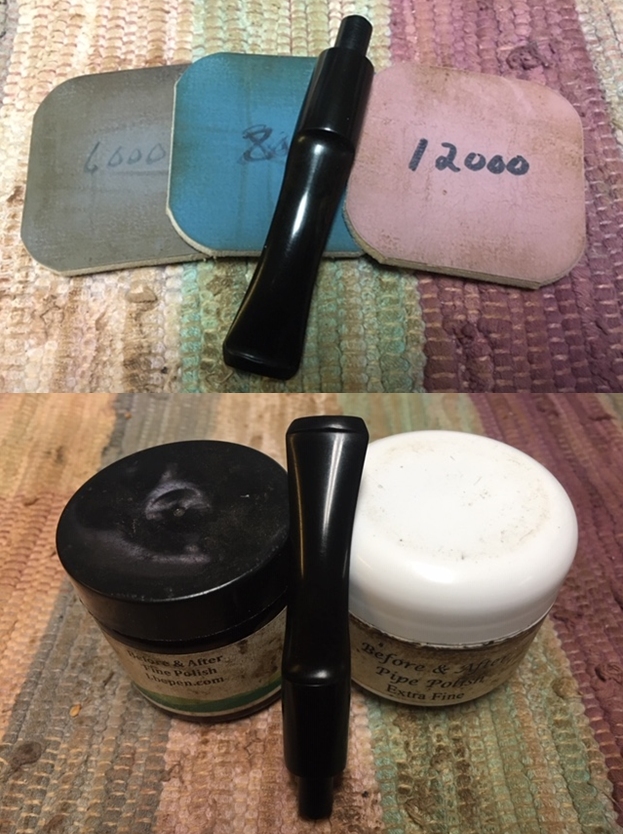
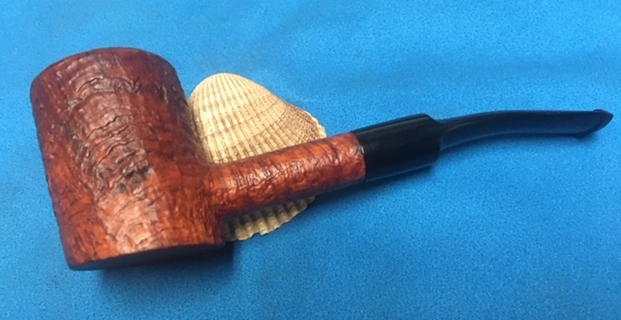
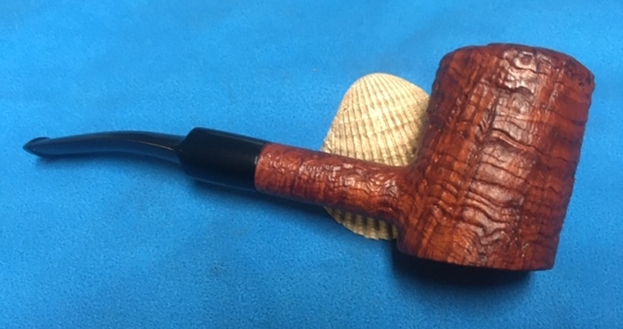
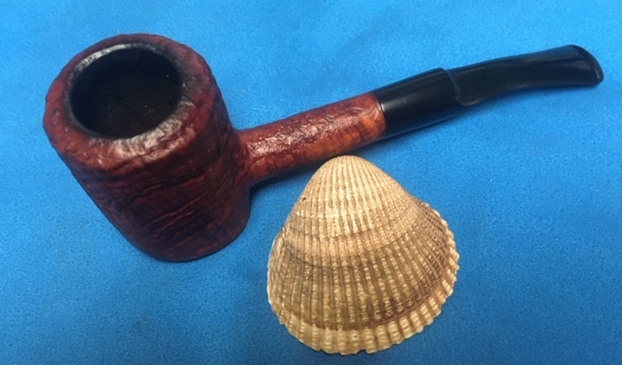
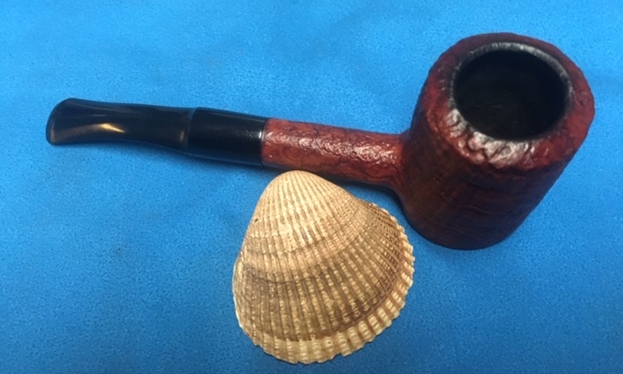
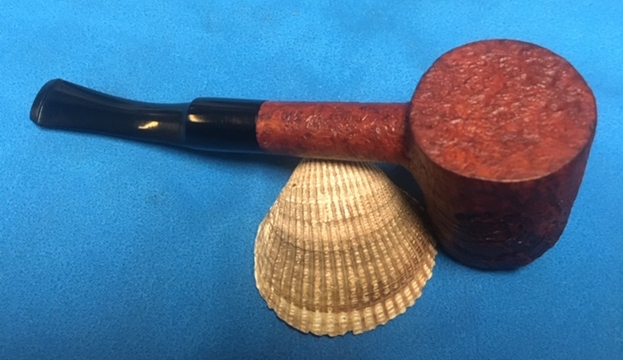
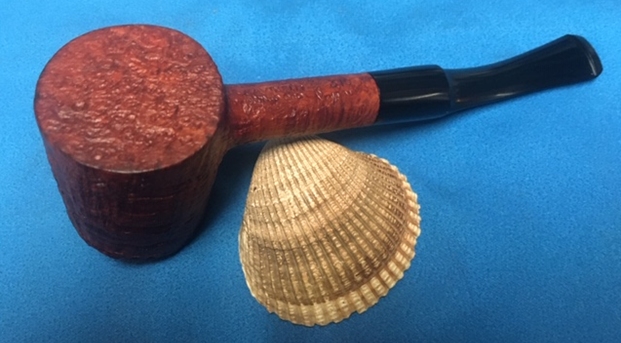
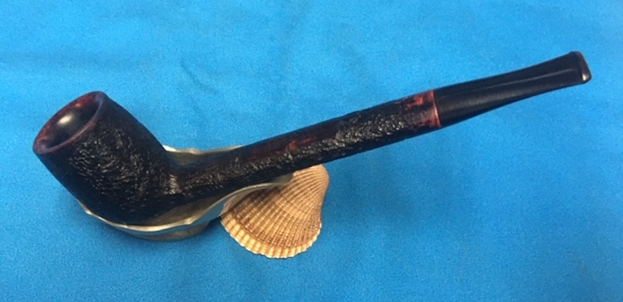
The next pipe on the table came to us from one of Jeff’s pipe hunts not far from where he is located. It is an interesting Savinelli Poker with a really nice sandblast finish. The blast is quite rugged and defined and feels as good in the hand as it looks to the eye. The finish was very dirty with flecks of white paint in the crevices of the blast around the bowl. The bowl had a thick cake in the bowl and a lava overflow on the rim top. There was darkening on the briar around the inner beveled edge of the rim. The pipe is stamped on the underside of the shank and reads Savinelli over Punto Oro followed by the Savinelli S shield and the shape number 310KS Italy. The stamping is clear and readable. The stem was dirty and oxidized. There were tooth marks and chatter on the stem near the button on both sides and some on the surface of the button as well. I am not sure the stem is original though the fit is perfect. There are no marks identifying it as a Savinelli or Punto Oro pipe but that is not enough to be conclusive on the status of the stem. Jeff took photos of the pipe before he cleaned it up. Jeff took photos of the rim top to show the damage, the tick cake in the bowl and the lava overflow on the rim top filling in some of the crevices in the blasted rim top.. The photos show the rim top and bowl from various angles. Jeff took some photos of the bowl sides and heel to show the nice grain that was on this bowl. It is a quite beautifully sandblasted pipe. The stamping and logo are on the underside of the shank and are as noted above. They look very good even though some of each line is stamped in the blast portion not just on the smooth panel.The stem was a very good fit to the shank. It was oxidized, calcified and had debris stuck to the surface of the vulcanite. There was tooth chatter and marks on both sides of the stem and on the button surface. I turned to Pipephil’s site to get a feel for the Punto Oro line. All of the previous Punto Oro pipes that I have worked on were smooth finish with great grain. This was a sandblast one and I do not recall working on one before. Here is the link (http://www.pipephil.eu/logos/en/logo-savinelli3.html). I have included a screen capture of the pertinent information on the line below. It appears the line came out in both smooth and sandblast finishes.I turned to Pipedia to look at what information they had on the brand. I found a catalogue page on the Punto Oro which confirmed what I had surmised about the line having both smooth and sandblast finished pipe (https://pipedia.org/images/d/db/Sav_Punto_Oro.jpg). I have included a screen capture of the page below. It says that the line was available in 2 distinct finishes – a rich Mahogany smooth finish and a genuine sandblast.The Savinelli shape number was 310KS so I turned to the Savinelli Shape Chart on Pipedia and included a screen capture (https://pipedia.org/images/4/41/Sav_Shape_Chart_2017.jpg). Ihave circled the 310KS shape in red in the photo below.Armed with that information I turned to work on the pipe itself. Jeff had done a great job cleaning up the pipe as usual. He reamed the pipe with a PipNet reamer and cut back the cake back to the bare briar. He cleaned up the walls with a Savinelli Fitsall Pipe Knife. He scrubbed the interior of the bowl and shank with pipe cleaners, cotton swabs and alcohol to remove the tars and oils. He scrubbed the exterior of the pipe with Murphy’s Oil Soap and a tooth brush to remove the grime from the finish. He worked on the rim top lava and darkening with the soap and tooth brush. He scrubbed the inside of the stem with alcohol and pipe cleaners. He scrubbed the exterior with Soft Scrub and then soaked it in Before & After Deoxidizer. He washed it off with warm water to remove the deoxidizer. The pipe looked far better. I took photos of the pipe when I received it before I started working on it. I took photos of the bowl and rim top to show how clean it was. You can see the darkening on the inner edge of the rim and the top.  The stem looks clean of oxidation and the tooth marks and chatter are very clear in the photos.I took a photo of the stamping on a smooth panel on the underside of the shank. The photo is a little blurry but the stamping is clear and readable.I took a photo of the pipe with the stem removed to show the overall look of stem, tenon and profile of the pipe.I cleaned up the darkening of the edge and rim top with a brass bristle wire brush. I was able to remove some more of the darkening and while not perfect it is certainly better. There were also still some white paint flecks in the sandblast grooves. I cleaned them out at the same time. I rubbed the briar down with Before & After Restoration Balm. I worked it into the briar with my fingertips and a horse hair shoe brush to get it into the deep crevices of the sandblast. The product works to clean, enliven and preserve the briar. I let it sit for 10 minutes while I worked on the stem. After the time passed I buffed it with a cotton cloth to deepen the shine. The sandblast came alive with the balm. I set the bowl aside and turned my attention to the stem. I sanded out the tooth marks and chatter on both sides of the button surface and stem with 220 grit sandpaper and began the polishing with 400 grit wet dry sandpaper.I rubbed the stem down with Denicare Mouthpiece Polish – a red, gritty Tripoli like substance that is a paste. I rubbed it into the surface of the stem and polished it off with a cotton pad. I have found that is a great intermediary step before polishing with micromesh pads. I am not sure what I will use once the final tin I have is gone!I polished the vulcanite with micromesh sanding pads – 1500-12000 grit pads. I wiped it down with Obsidian Oil after each sanding pad. I used Before & After Pipe Polish – both Fine and Extra Fine to further polish the stem. This Savinelli Punto Oro sandblast Poker Sitter is a real beauty. The sandblast reveals some great ring grain around the bowl sides and birdseye on the heel. The finish on the pipe is in excellent condition and the contrasting stains work well to highlight the grain under the blast on the pipe. The polished black vulcanite saddle stem adds to the mix. With the grime and debris gone from the finish and the bowl it was a beauty and the blast really is eye-catching. I put the stem back on the bowl and buffed the pipe with Blue Diamond on the buffing wheel. I buffed the sandblast with a light touch and carefully avoided the stamping on the shank during the process. I gave the bowl multiple coats of Conservator’s Wax and the stem multiple coats of carnauba wax on the buffing wheel and followed that by buffing it with a clean buffing pad. I hand buffed the pipe with a microfiber cloth to deepen the shine. The finished Savinelli Punto Oro Poker is quite nice and feels great in the hand. Give the finished pipe a look in the photos below. I can only tell you that like the other pipes I am working that it is much prettier in person than the photos capture. The dimensions of the pipe are Length: 5 ½ inches, Height: 2 inches, Outside diameter of the bowl: 1 ¼ inches, Chamber diameter: ¾ of an inch. Thanks for walking through the restoration with me as I worked over another interesting pipe. This pipe will be added to the Italian Pipe Makers section of the rebornpipes store soon. If you want to add it to your collection send me an email or a message! Thanks for your time.
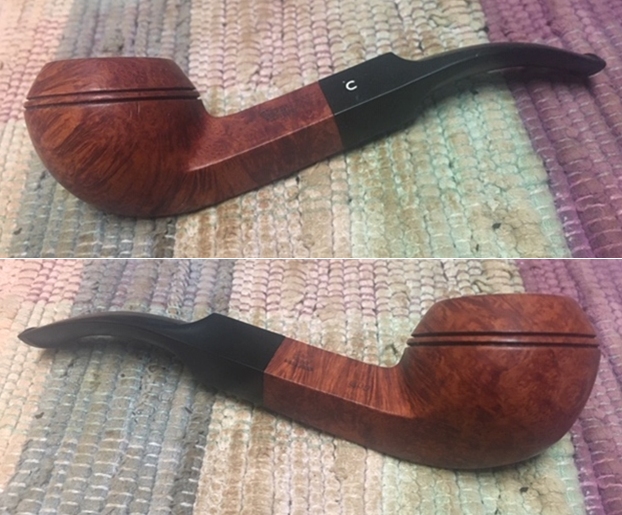
Restoring a bit of an oddity – a Dri-Cool Briar Carburetor Rhodesian


Blog by Steve Laug

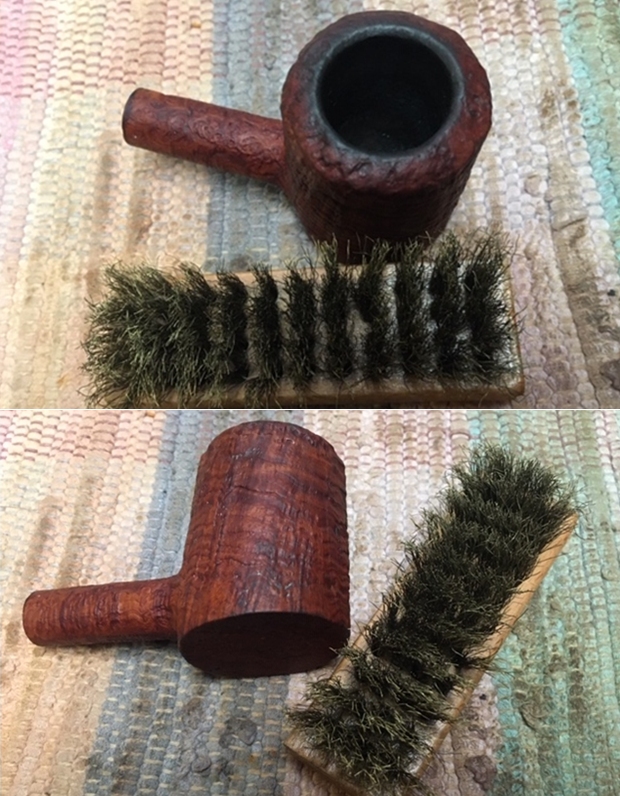
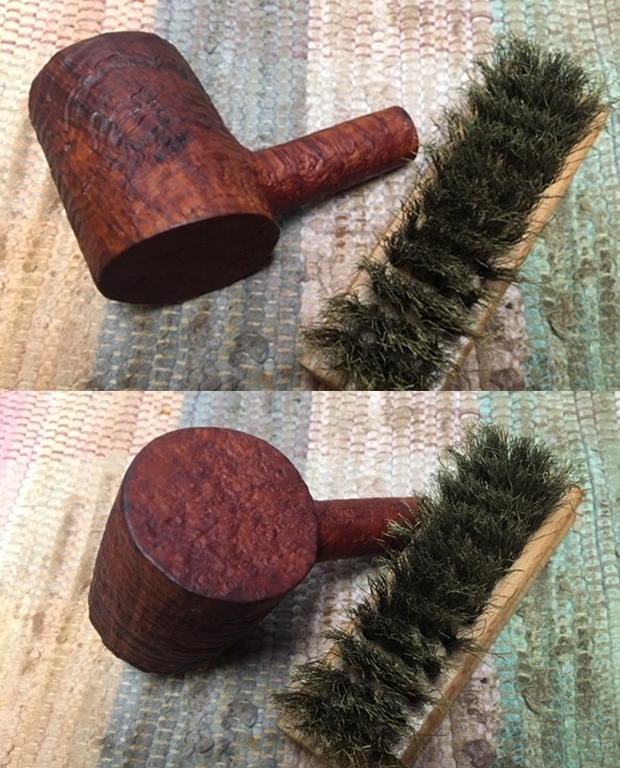
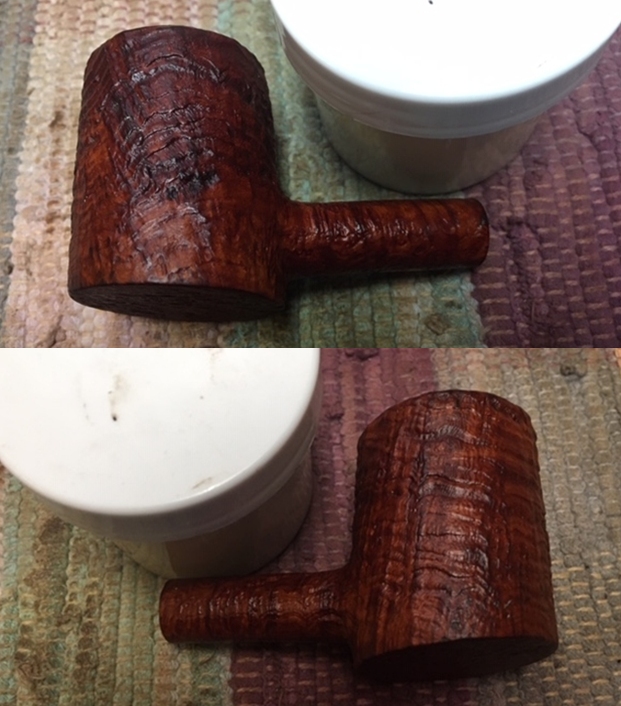
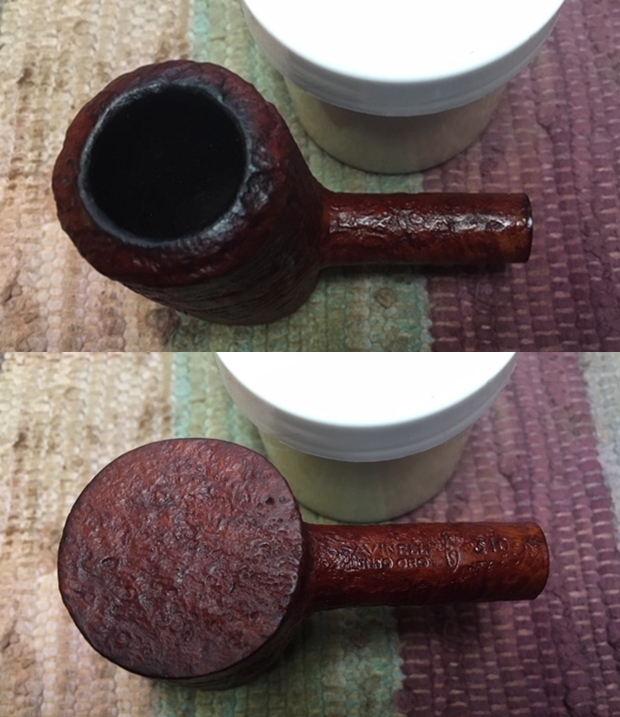
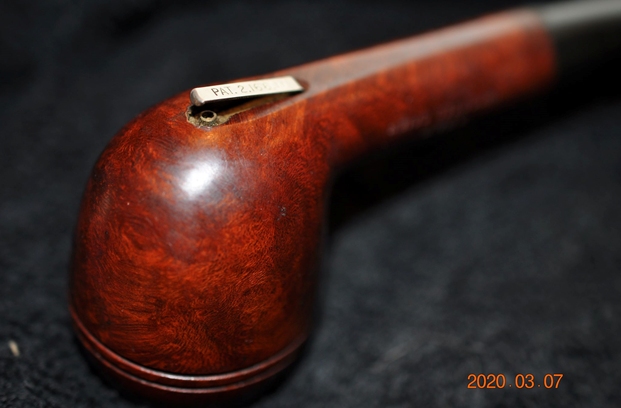
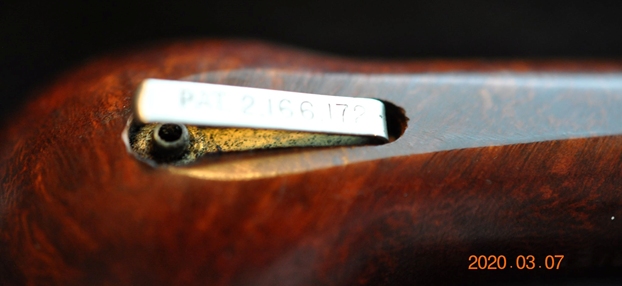
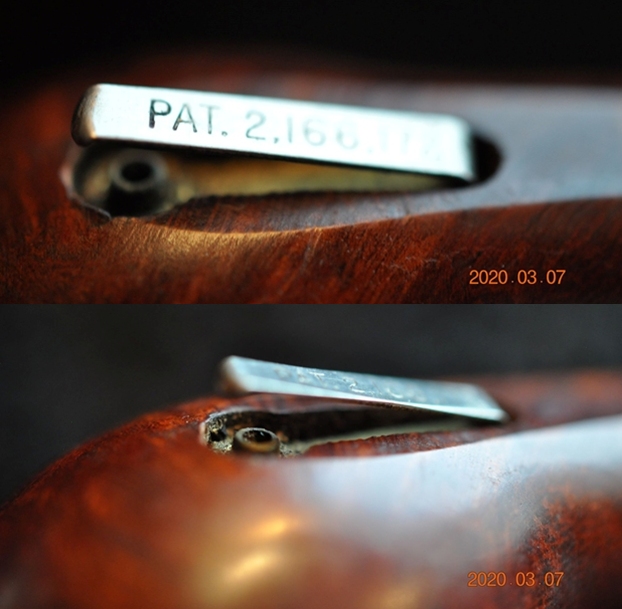
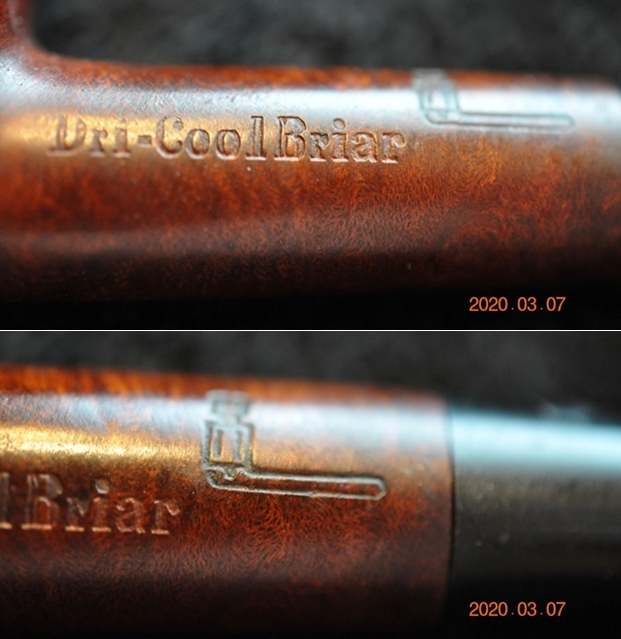
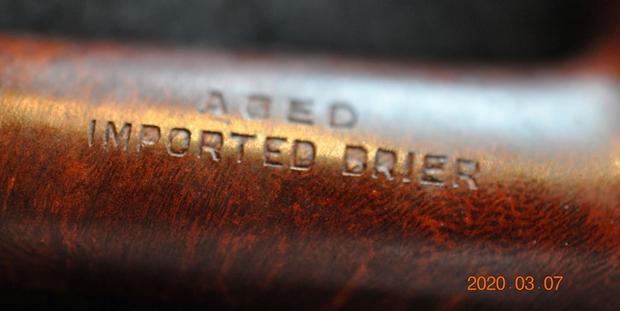
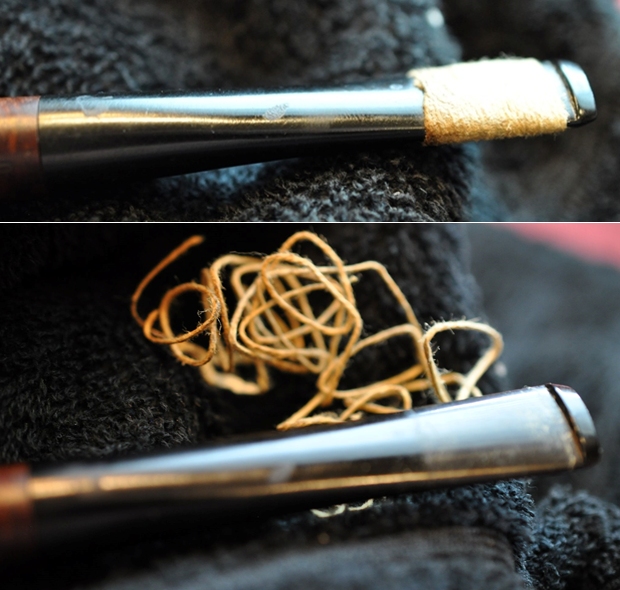
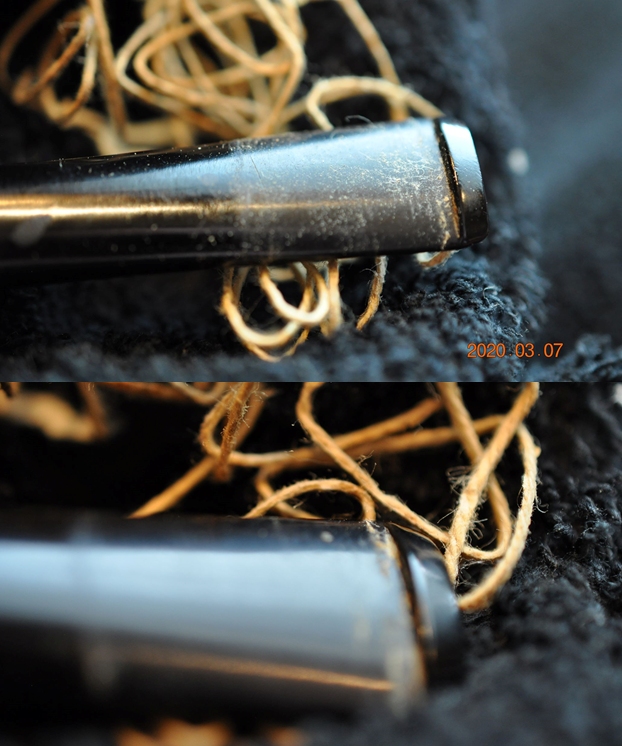
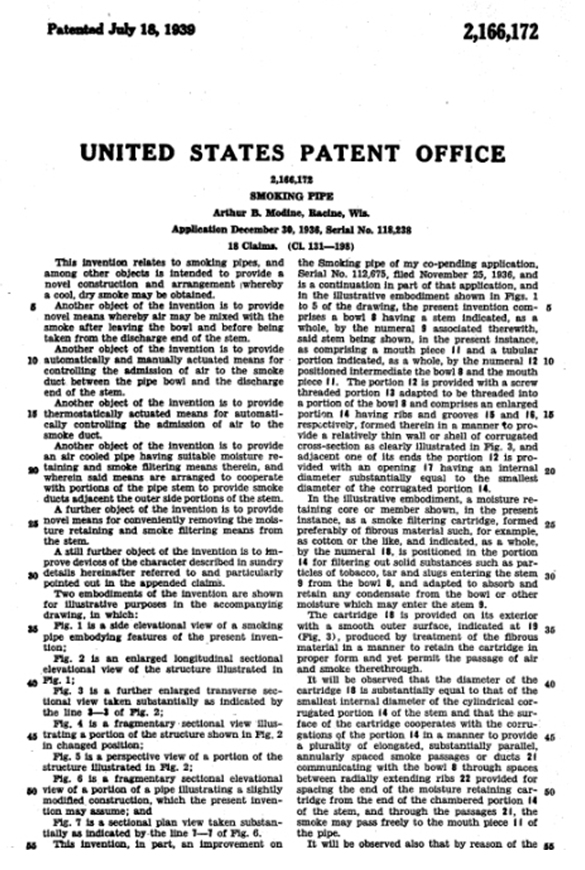
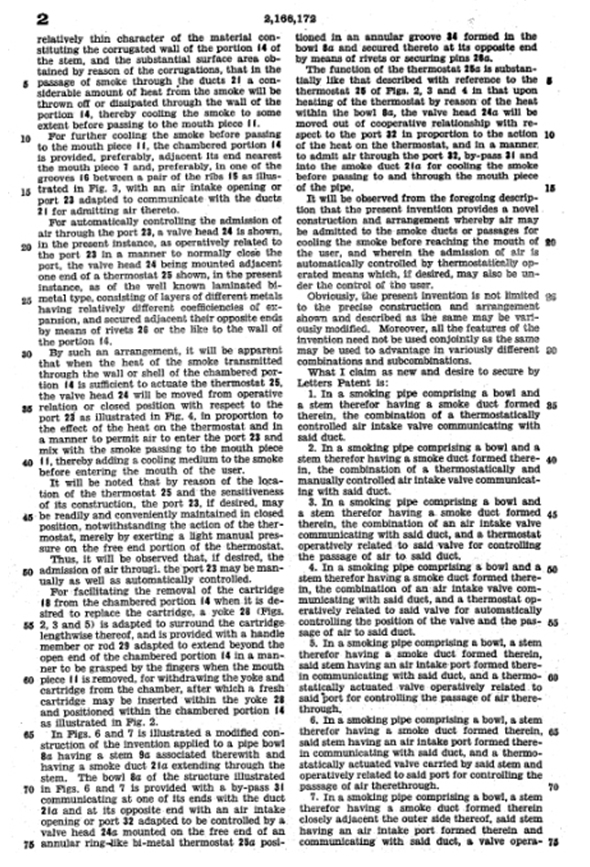
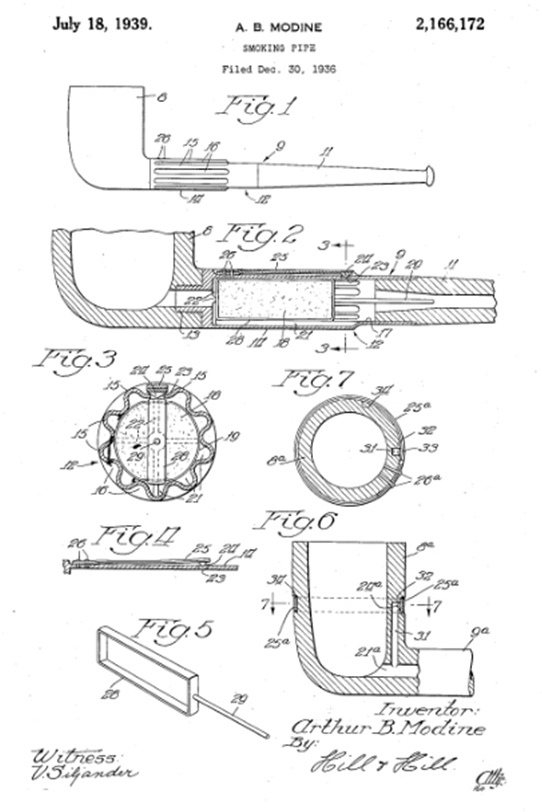
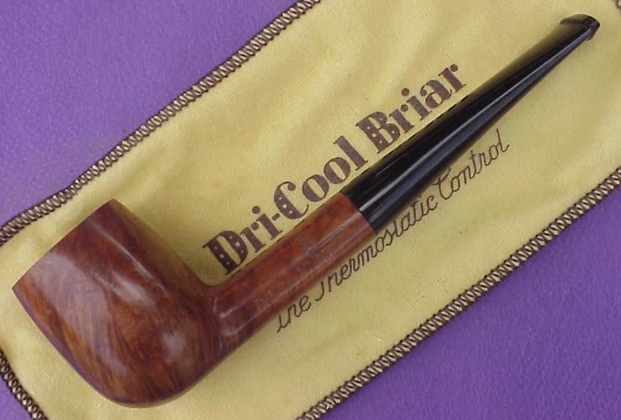
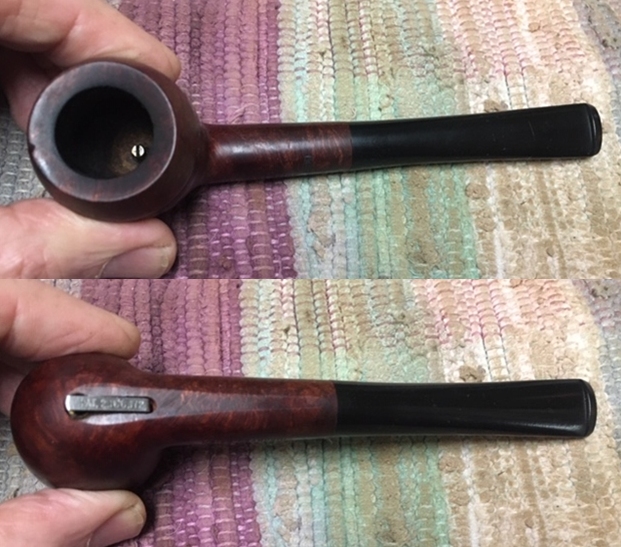
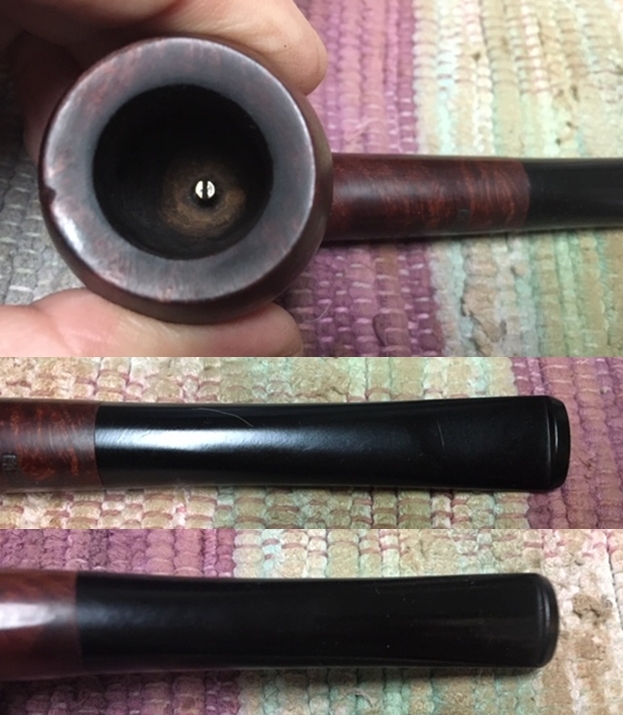
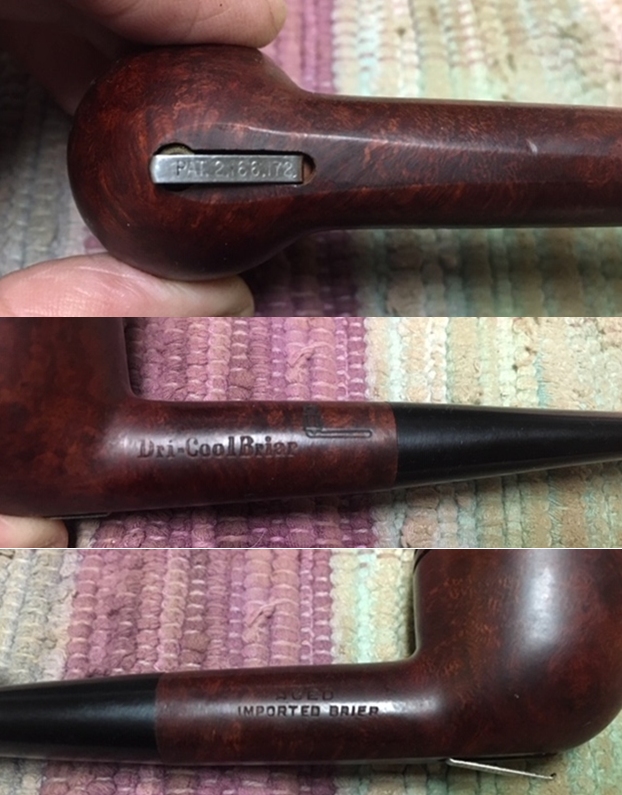
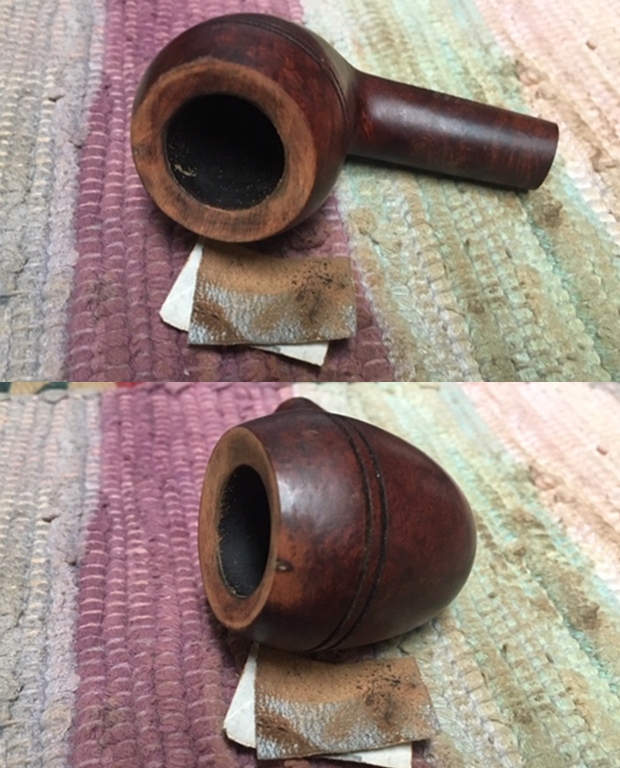
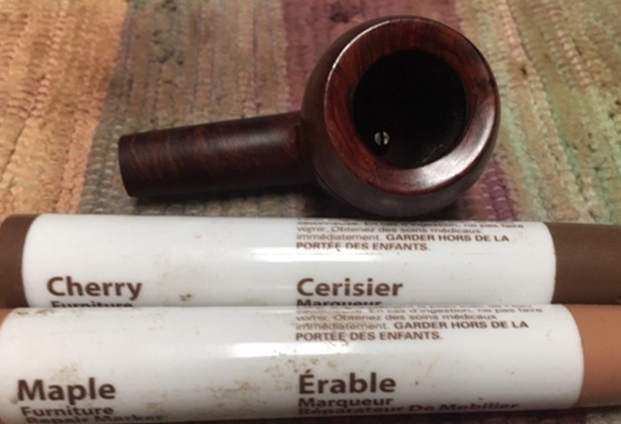
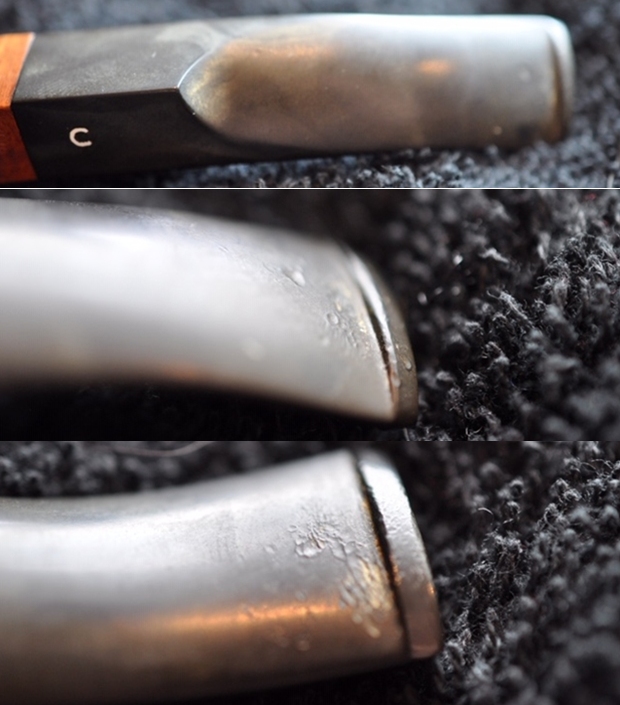
The next pipe on the table came to us from one of Jeff’s pipe hunts or auctions. It is a strange pipe in many ways. The end of the stem is wrapped tightly with thread forming a protective bit cover to protect the stem from bite marks – or was it? Maybe it was a home down repair job and when we removed the thread we would see what was wrong. The other thing about the pipe is that it has a clip on the underside of the pipe with a patent number 2,166,172. Under the spring clip there was a Kaywoodie style carburetor in the bottom of the bowl. It extends up into the bowl bottom about1/4 of an inch. The post is split in the centre like a slotted screw. The airway enters the bowl at the base of the post. The rest of the shank and stem are normal. The bowl was very dirty with a thick cake in the bowl and a lava overflow on the rim top. There was a large chip out of the outer edge of the bowl at the front of the rim top. The stem was dirty but lightly oxidized. There are not any tooth marks on the stem. Jeff took photos of the pipe before he cleaned it up. Jeff took photos of the rim top to show the damage, the tick cake in the bowl and the lava overflow on the rim top. The photos show the rim top and bowl from various angles. Jeff took some photos of the bowl sides and heel to show the nice grain that was on this bowl. It is a quite beautifully grained pipe. Jeff took several photos of the apparatus on the heel of the bowl. You can see the clip like piece of metal with a patent number on it over the carburetor/nozzle extending out of the bowl. The stamping and logo are interesting on the left side of the shank. They include the Dri-Cool Briar stamp and a pipe that illustrates the system. On the right side of the shank it reads Aged Imported Briar. The previous pipeman had wrapped the end of the stem in twine/thread to provide a homemade bite protector. We have seen this before and generally what is underneath is a mess. However Jeff took photos of the unwrapping this time and what was underneath was quite pristine. Whew a good surprise! Before I started to work on the pipe I decided to hunt down the patent number on the clip on the heel of the bowl. I did a patent search on the US Patent Site and found the following Patent Information. For some reason one of the pages was not available on the site but I have included what was there along with the patent drawings. It appears that the concept was patented on December 30, 1936 by A.B. Modine. While the pictures are slightly different from the pipe I am working on the parts appear to be the same. It is an interesting piece of the perpetual and ongoing search for a cool and dry smoke. I also found a picture online of a Dri-Cool Briar The Thermostatic Control Billiard and have included below.Armed with that information I turned to work on the pipe itself. Jeff had done a great job cleaning up the pipe as usual. He reamed the pipe with a PipNet reamer and cut back the cake back to the bare briar. He cleaned up the walls with a Savinelli Fitsall Pipe Knife. He scrubbed the interior of the bowl and shank with pipe cleaners, cotton swabs and alcohol to remove the tars and oils. He scrubbed the exterior of the pipe with Murphy’s Oil Soap to remove the grime from the finish. He scrubbed the inside of the stem with alcohol and pipe cleaners. He scrubbed the exterior with Soft Scrub and then soaked it in Before & After Deoxidizer. He washed it off with warm water to remove the deoxidizer. The pipe looked far better. I took photos of the pipe when I received it before I started working on it. I took photos of the bowl and rim top to show how clean it was. You can see the darkening on the rim top and the apparatus in the bottom of the bowl. The chip out of the outer edge of the rim is visible and deep.I took a photo of the clip on the underside of the shank to show the Patent Number. Jeff was able to clean up around the clip as well and it looked very good. I took photos of the stamping on both sides of the shank. It is clear and readable.I cleaned up the damage on the rim top and filled in the chip on the edge with briar dust and super glue. Once the chip repair cured I sanded it smooth and sanded the damaged rim top smooth with 220 grit sandpaper. I polished it with 400 grit wet dry sandpaper. I polished the briar with micromesh sanding pads – wet sanding with 1500-12000 pads and wiping the surface down with a damp cloth to remove the sanding debris. It began to really shine as I worked through the various grit pads. I used a blend of Cherry and Maple stain pens to restain the rim top and blend it into the rest of the briar. Once it polished the colour will blend together with the rest of the briar.Once the stain cured I rubbed the briar down with Before & After Restoration Balm. I worked it into the briar with my fingertips. The product works to clean, enliven and preserve the briar. I let it sit for 10 minutes while I worked on the stem. After the time passed I buffed it with a cotton cloth to deepen the shine. I set the bowl aside and turned my attention to the stem. I polished the vulcanite with micromesh sanding pads – 1500-12000 grit pads. I wiped it down with Obsidian Oil after each sanding pad. I used Before & After Pipe Polish – both Fine and Extra Fine to further polish the stem. This was a fun pipe to work on. The “plumbing” on it made it quite fascinating to clean up and to restore. It seems to me that it functions a lot like a Kaywoodie Carburetor but externally is different. I wonder if the clip is not a way of regulating the airflow from the Carburetor in the bowl bottom. Anyway, I put the pipe back together again and buffed it with Blue Diamond on the buffing wheel. I gave the bowl and stem several coats of carnauba wax. I buffed the pipe on the wheel with a clean buffing pad to raise the shine. I hand buffed it with a microfiber cloth to deepen the shine. I am really happy with how the pipe came out and the way in which the rim edge repair blended in with the rest of the bowl. The browns of the stain and the black of the polished vulcanite came out really well. This is a nice looking “contraption” pipe versus how often they are quite ugly! The dimensions of the pipe are Length: 5 ¾ inches, Height: 1 ¾ inches, Outer Diameter of the Bowl: 1 ¼ inches, Chamber Diameter: ¾ of an inch. The finished pipe is shown in the photos below. It is an interesting pipe and one that will reside in my “Search for a Cooler/Drier Smoking Pipe” Collection. Give the blog a read. Thanks for walking through the restoration with me.
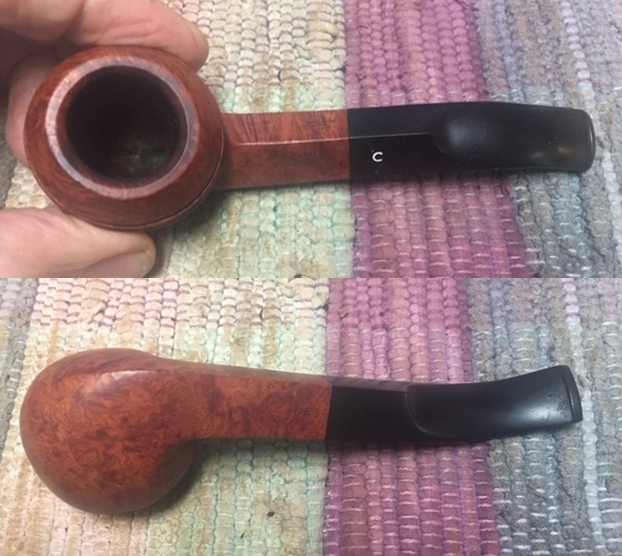
New Life for an HAJ Handmade in Denmark ¼ Bent Brandy


Blog by Steve Laug

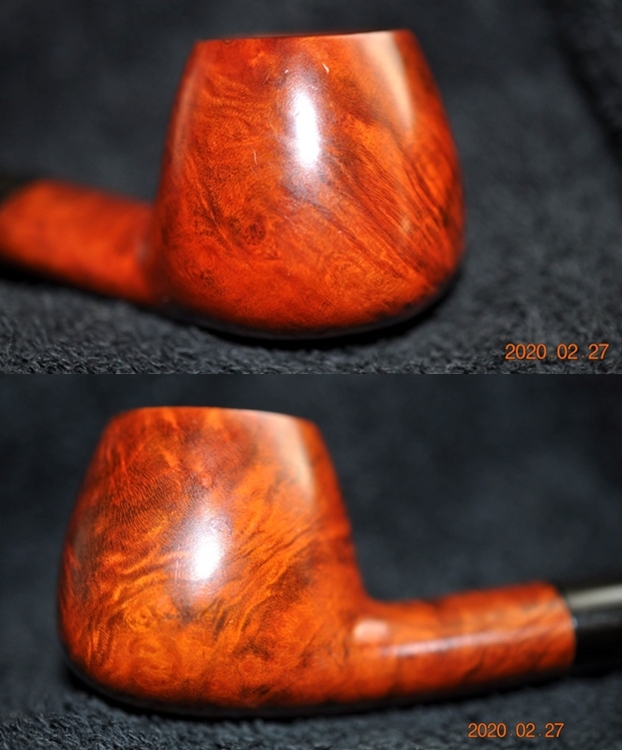
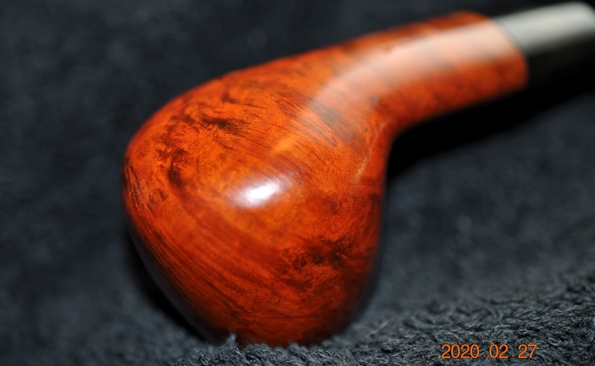
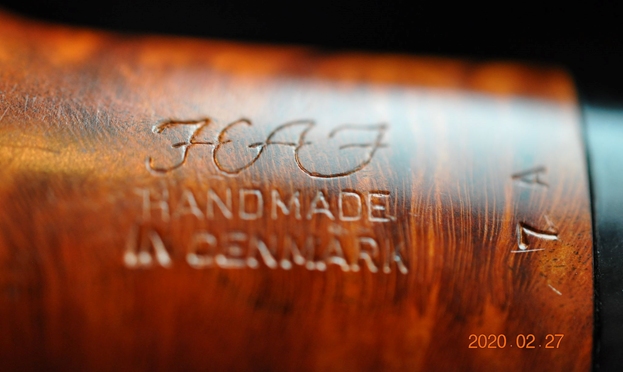
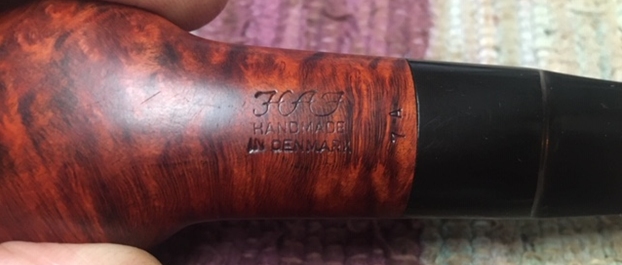
The next pipe on the table came to us in a group of pipes we purchased from a fellow who was getting rid of his collection. It is an interesting looking ¼ bent Brandy. It is stamped on the underside of the shank HAJ over Handmade in Denmark. The shape number is stamped at the shank stem junction and reads 7A. The grain around the bowl is a mix of swirls and cross grain and the stain is a reddish brown with dark brown undertones. The pipe was dirty and there were remnants of cake around the bowl in spots but not covering the entire bowl. It appeared to have been reamed and not completely cleaned. The bowl was dirty and darkened from smoking. You will be able to see what I am referring to about the spotty cake when you look at the photos Jeff took of the bowl and rim. The finish was dirty but looked good underneath. The vulcanite stem was lightly oxidized and there were tooth marks and chatter on both sides just ahead of the button. Jeff took photos of the bowl to show what it looked like when we received it. Jeff has gotten very good at capturing the condition of the bowl and rim top with his photos. You can see the work that is ahead of us in terms of the spotty cake on the walls of the bowl. It is kind of odd in that the other portions of the bowl have been sanded smooth. The rim top looks pretty good.The next set of photos show the grain on the sides and heel of the bowl. It is an interesting combination of grain – cross grain and swirls. I look forward to seeing what this one looks like once it is clean and restored. He took a photo of the stamping on the underside of the shank. The HAJ stamp is readable as is the Handmade in Denmark and the shape number stamp.The next photos show the stem surface. It was very dirty and had light tooth marks and chatter on both sides ahead of the button. Before I started to work on the pipe I wanted to learn as much as I could about the brand. I have heard of or worked on a HAJ pipe before so I had no idea who made the pipe. I turned first to Pipephils site to see if there was any information on the Danish Made HAJ pipe and came up empty. I turned to Pipedia and looked for the HAJ brand and found that under the Danish pipe makers there was a listing. (https://pipedia.org/wiki/Hans_Aage_J%C3%B8rgensen). I quote the totality of the information included on the listing below:

Hans Aage Jørgensen is the pipemaker behind HAJ pipes, stamped HAJ and Handmade in Denmark.

From there I decided to search a bit further so I googled the brand under the name Hans Aage Jorgensen HAJ. I found several pipes that were listed. I found a link on worthpoint.com to the brand and when I turned there I found the very pipe that I have in hand. It is exactly The grain, stamping, stem, shape everything is identical to the pipe I am working on. I have included the photos as well as the description from Worthpoint regarding this pipe (https://www.worthpoint.com/worthopedia/vintage-haj-handmade-hans-aage-419739128). I quote from the site:

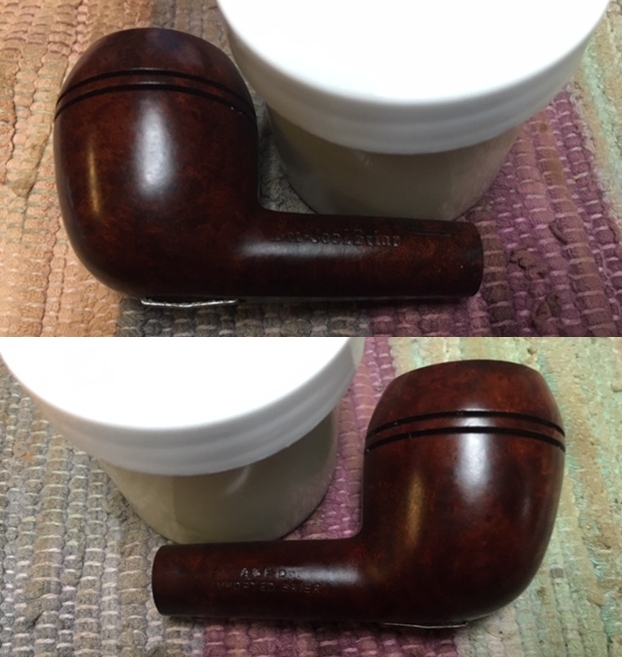
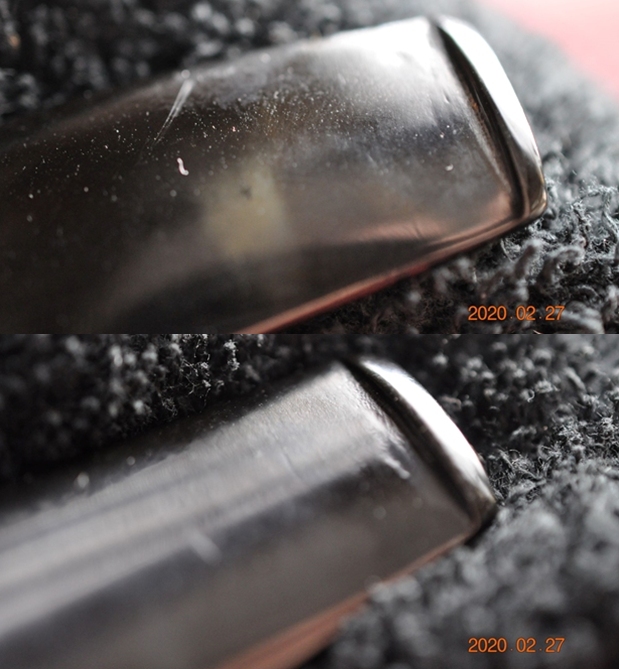
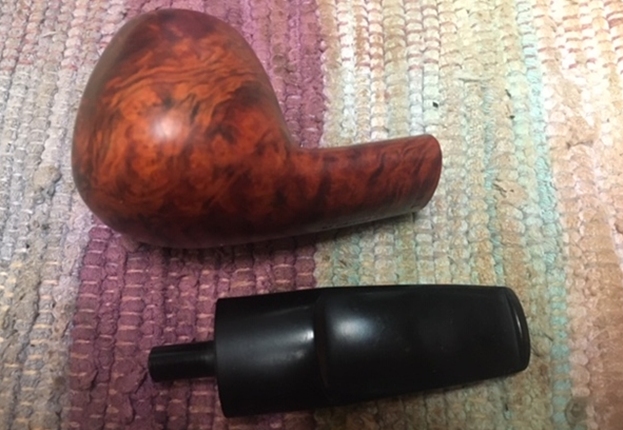
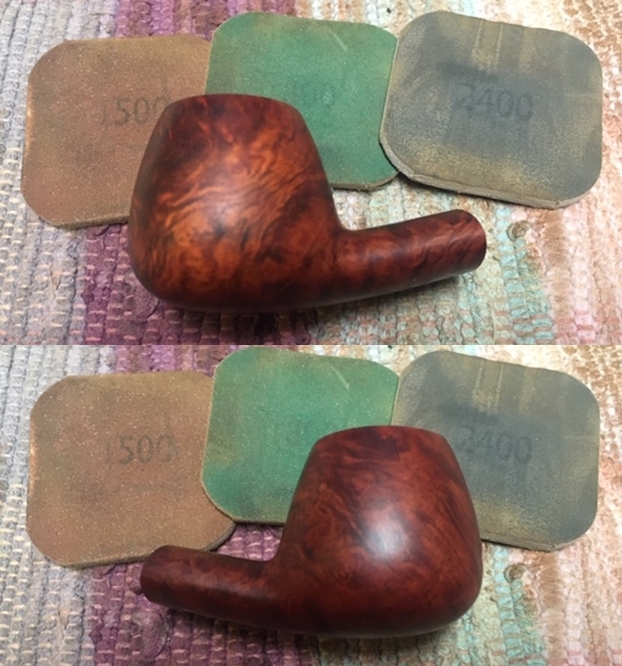
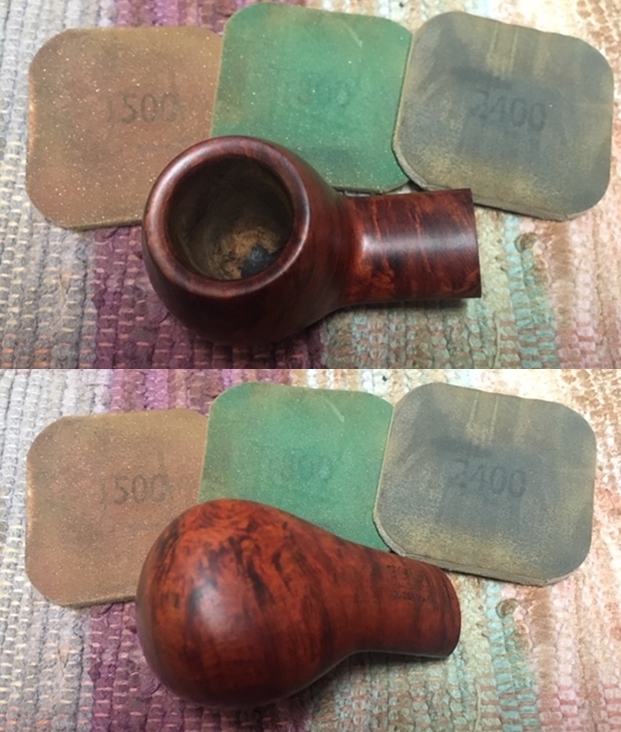
…We present to you a Hans Aage Jorgensen HAJ briar estate pipe. It is a bent smooth Brandy style pipe with a beautiful reddish walnut exterior finish. Very light and lightly smoked , it is an incredible pipe with the great eye appeal. Great for gifting, collecting or using yourself! Solid pipe with nice grain. Its about 5″ long , 1.5″ tall , 1.65 ” wide and weighs a mere 40 grams. It is stamped HAJ Handmade in Denmark 7A and there is nothing on the stem. Now it was time to work on the pipe itself. Jeff had once again done a great job in cleaning this pipe. It looked far better than what it was like when we found it. Because of the spotty reaming job previously he took it through the whole gamut we use when reaming a bowl. He reamed the bowl with a PipNet Pipe reamer and took the cake back to bare briar. He cleaned up any stubborn spots on the bowl walls with a Savinelli Fitsall Pipe Knife. He scrubbed out the internals with alcohol, pipe cleaners and cotton swabs until the pipe was clean. He scrubbed the exterior of the bowl with Murphy’s Oil Soap and a tooth brush to remove the grime and grit on the briar and the slight darkening on the inwardly beveled rim top. The finish looks very good with good looking grain around the bowl and shank. Jeff scrubbed the stem with Soft Scrub and then soaked it in Before & After Deoxidizer to remove the oxidation on the vulcanite. When the pipe arrived here in Vancouver for the second stop of its restoration tour it looked very good. I took photos before I started my part of the work. I took some photos of the inwardly beveled rim top and stem. Once Jeff removed the spotty cake in the bowl the inside and outer edge looked very good. The close up photos of the stem shows that is it very clean and there is some tooth chatter and marks on the button surface and just ahead of the button.I took a photo of the stamping on the underside of the shank to show what it looked like after the cleaning.I took the stem off the bowl and took a picture of the pipe. It really is a pretty little pipe with a classic Danish look to it. I was happy with the way the rim top and edges looked after Jeff had done his cleanup work so I did not need to do anymore except to polish them. I polished the briar with micromesh sanding pads – dry sanding with 1500-12000 grit pads. I wiped the bowl down after each pad with a damp cloth. The grain really began to stand out and the finish took on a shine by the last sanding pad. The photos tell the story! I worked some Before & After Restoration Balm into the surface of the briar with my fingertips. The product works to clean, enliven and protect the briar. I let the balm sit for about ten minutes and then buffed with a cotton cloth to raise the shine. The photos show the bowl at this point in the restoration process. I set aside the bowl and turned my attention to the stem. I sanded out the tooth marks and chatter with 220 grit sandpaper and started polishing it with 400 grit wet dry sandpaper.I polished the stem with micromesh sanding pads – dry sanding with 1500-12000 grit sanding pads. I wiped it down after each sanding pad with a cloth containing some Obsidian Oil. I finished polishing it with Before & After Pipe Stem Polish – both Fine and Extra Fine and buffed it off with a cotton cloth. This oval shank bent Brandy made by HAJ is a real beauty. It is a Hand Made in Denmark pipe. The shaping and carving follows the grain and highlights the mix of grains around the bowl. The finish on the pipe is in excellent condition and the contrasting stains work well to highlight the stunning grain on the pipe. The polished black, oval shaped vulcanite saddle stem adds to the mix. With the grime and debris gone from the finish and the bowl it was a beauty and the grain just pops at this point. I put the stem back on the bowl and buffed the pipe with Blue Diamond on the buffing wheel. I carefully avoided the stamping on the shank during the process. I gave the bowl and the stem multiple coats of carnauba wax on the buffing wheel and followed that by buffing it with a clean buffing pad on the buffer. I hand buffed the pipe with a microfiber cloth to deepen the shine. The finished ¼ bent Brandy shape is quite nice and feels great in the hand. Give the finished pipe a look in the photos below. I can only tell you that like the other pipes I am working that it is much prettier in person than the photos capture. The dimensions of the pipe are Length: 5 inches, Height: 1 ½ inches, Outside diameter of the bowl: 1 ¼ inches, Chamber diameter: ¾ of an inch. Thanks for walking through the restoration with me as I worked over another interesting pipe. This pipe will be added to the Danish Pipe Makers section of the rebornpipes store soon. If you want to add it to your collection send me an email or a message! Thanks for your time.
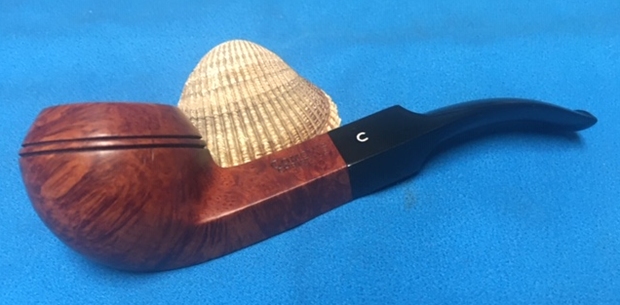
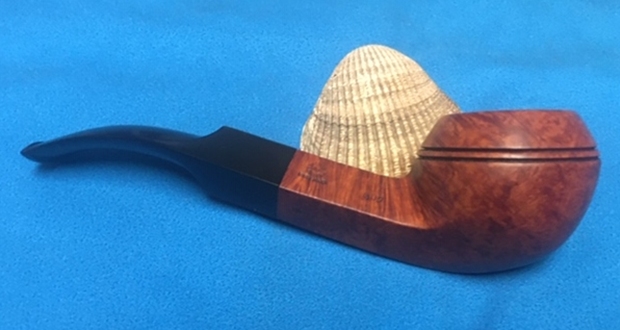
Replacing a Broken Tenon on a Stanwell RP Freehand


Blog by Steve Laug

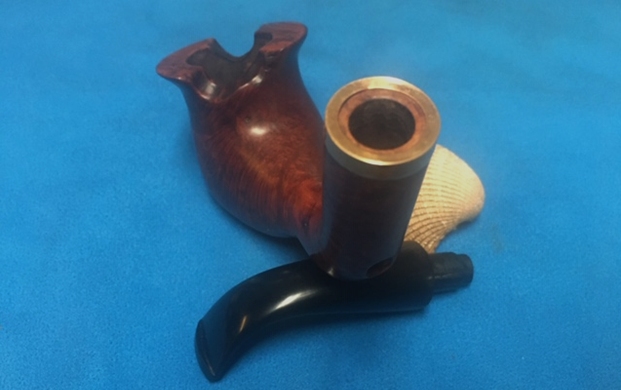
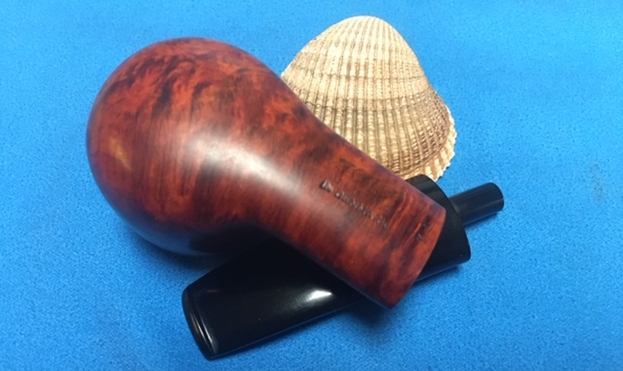
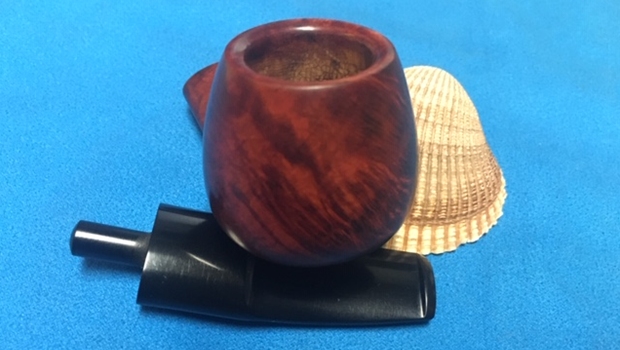
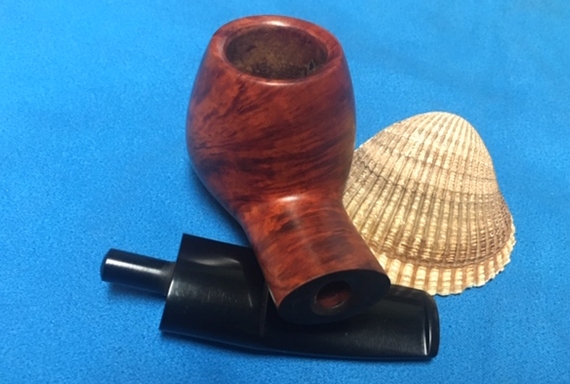
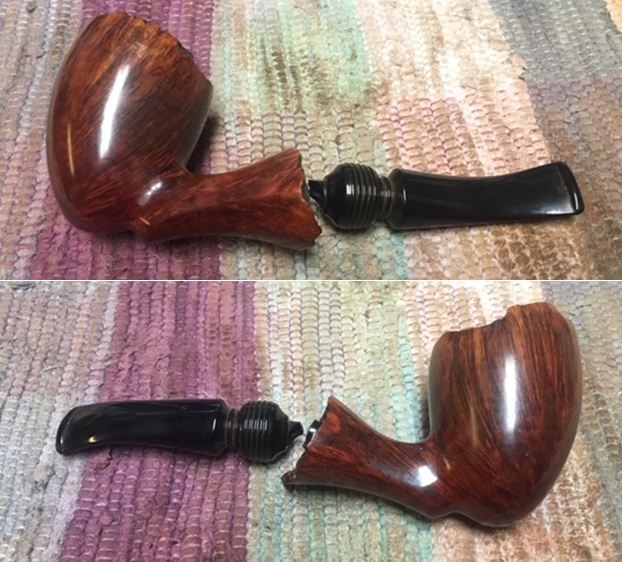
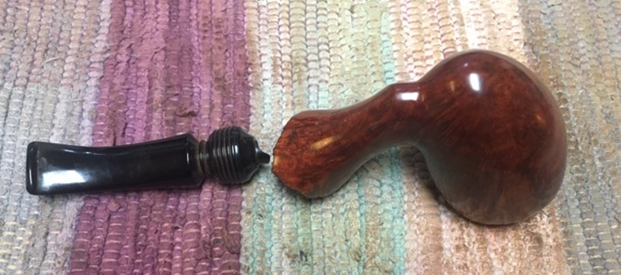
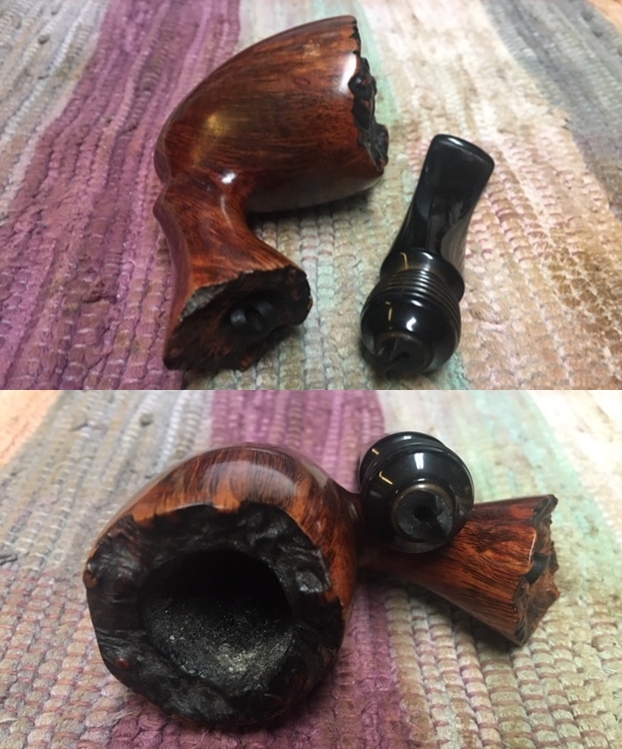
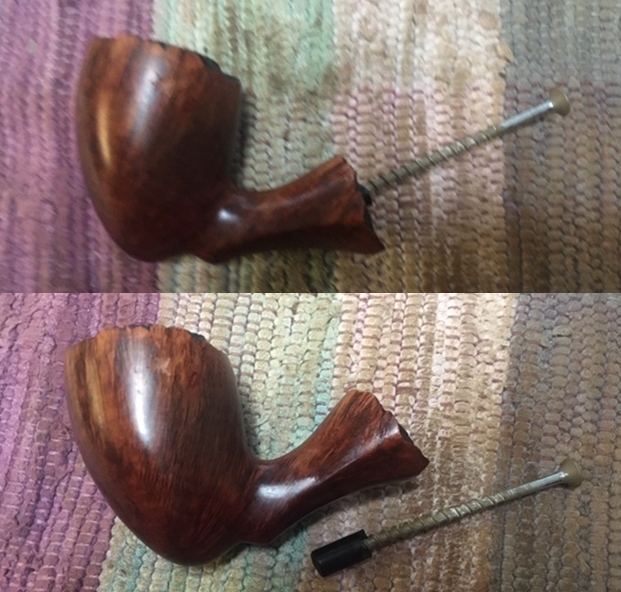
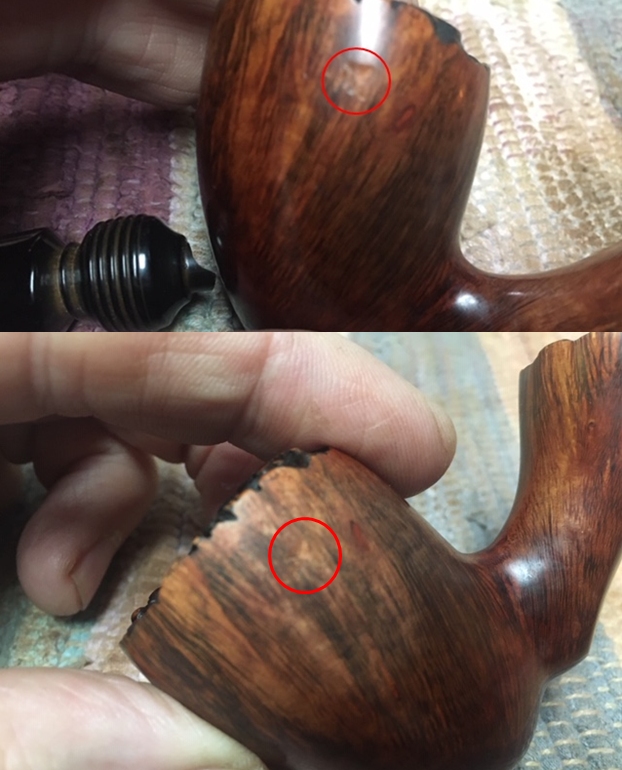
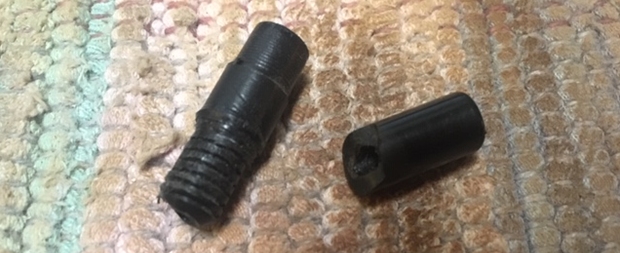
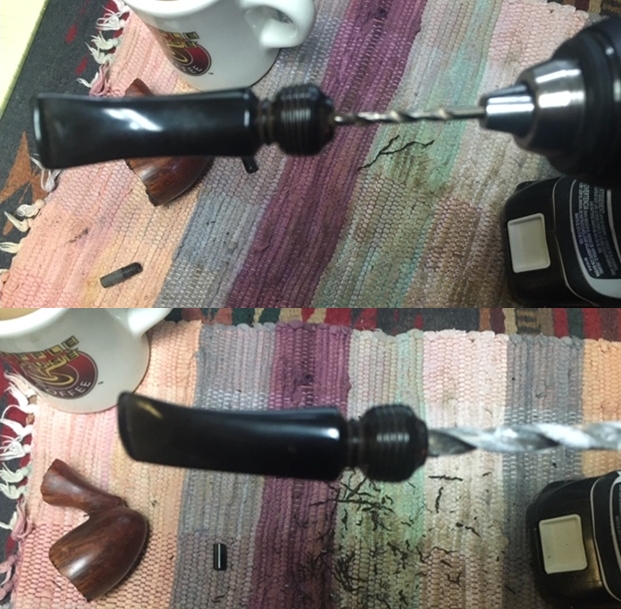
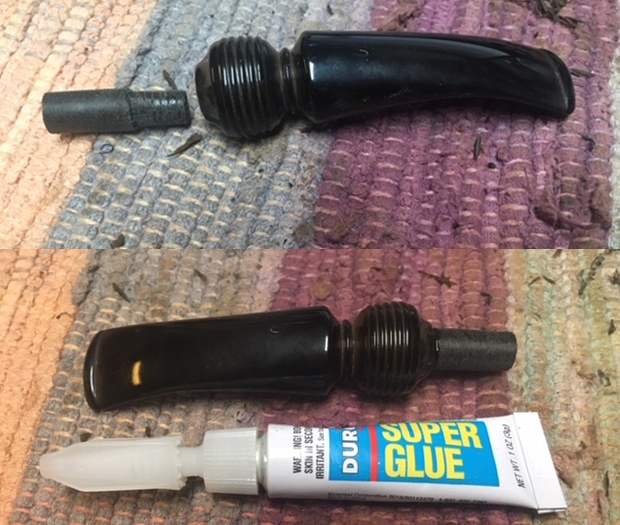
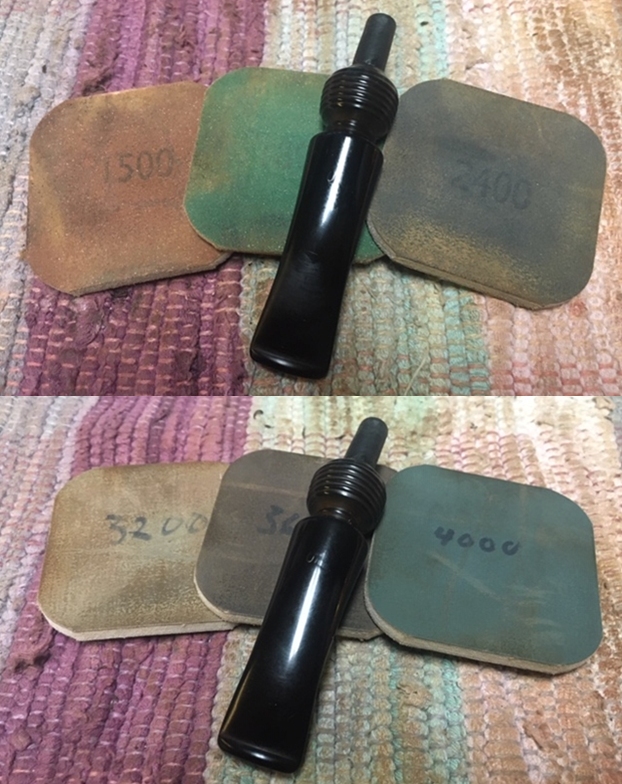
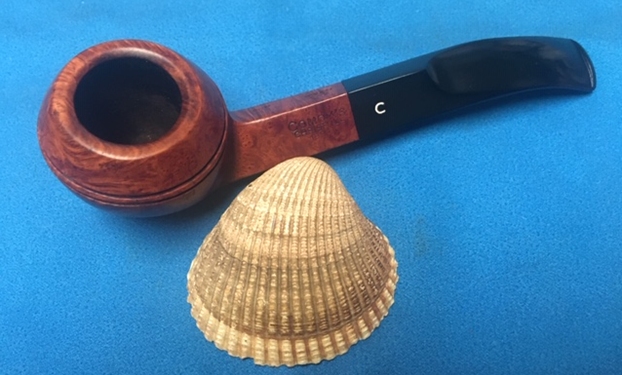
Yesterday a fellow pipe smoker called to say he was in front of my house and had a pipe that he had dropped while on a walk and needed a replacement tenon. He put the pipe in my mail box and I picked it up and while he was on the front side walk I chatted with him from the front porch – very much observing social distancing. The pipe was a beautiful Stanwell RP Freehand. Sure enough the tenon was stuck in the shank and snapper off just ahead of the fancy turned ball on the stem. Tenon replacements on these freehand styles are some of the easiest to do. It means that the stem end is flattened and drilled out to accommodate a new tenon. He also pointed out some road rash on the left side of the bowl where the pipe had bounced off the sidewalk. While I am not taking on new work what could I say to a previous customer standing at my gate asking for help. Of course I took the pipe in and today decided to address the broken tenon. I took pictures of the pipe to show its condition before I started. I took some photos of the shank end to show the snapped tenon in the shank and the broken end on the stem. I tried to pull the tenon with some simple tricks and it was stuck in the shank. It would not budge no matter how I tried. I put the bowl in the freezer for 10 minutes to see if a change in temperature would loosen the tenon.I took the bowl out of the freezer and screwed a drywall screw into the airway in the tenon. It did not take much effort at all to wiggle it and pull out the broken tenon. I kept the piece of tenon so that I could match the replace tenon to the diameter of the broken tenon.Before moving on to make the new tenon I decided to address the road rash on the side of the bowl. I have circled it in red in the first photo below. For this application I used a wet cloth and heated the blade of a butter knife over the flame of my gas stove. I put the wet cloth over the damaged spot and when the knife became hot I touched it to the wet cloth. The heat generated steam from the wet cloth and began to lift the damaged spot. I knew that it would not come up totally as it was a rough area but I knew that I could improve the look. The second photo shows the area on the bowl side after the steam application. I enclosed the repaired damage with a red circle.The damage looked much better after the steaming, not perfect but better! I stained the upper portion of the bowl with an Oak stain pen to blend it into the rest of the surrounding briar. Once it was polished it would blend in very well.I worked some Before & After Restoration Balm into the surface of the briar with my fingertips. The product works to clean, enliven and protect the briar. I let the balm sit for about ten minutes and then buffed with a cotton cloth to raise the shine. I find that it also helps to blend a newly stained area into the rest of the bowl. The photos show the bowl at this point in the restoration process. I set the bowl aside and turned my attention to replacing the tenon. I had a threaded tenon that I had started turning down to size for another pipe that would work perfectly. It is shown in the photo below next to the broken chunk of the original tenon. I would need to use a Dremel and sanding drum to finish turning the tenon portion down to match the diameter of the broken one. I would also need to reduce the diameter of the threaded tenon end because of the size of the end of the stem.I set the tenon aside and flattened the jagged portion of the broken tenon on the stem with the Dremel and sanding drum. Once it was flat I began the process of drilling out the airway to receive the new tenon. I always start with a drill bit slightly larger than the existing airway so that I do not chip of damage the stem. I don’t want create more work! I worked my way up to a ¼ inch drill bit as it was the largest one that I could get away with drilling into the stem end without damaging the external surface.I reduced the diameter of the portion of the tenon that fit in the shank and the portion that would be anchored in the stem using a Dremel and sanding drum to rough fit it. I straightened out the edges of the insert portion with a rasp and squared up the edge so that it would seat in the stem. Once I had a good fit in the stem and the shank I used slow setting super glue to anchor the new tenon in the stem. I coated the edges of the tenon and then set it in place and aligned it so that it was straight.Once the glue had cured I cleaned up the surface of the tenon so that it was not scratched with sandpaper and so that it fit well in the shank. I polished the stem with micromesh sanding pads – wet sanding with 1500-12000 grit pads.  I wiped down the stem after each pad with a damp cloth. I polished the fancy turnings on the stem and area around the new tenon with Before & After Pipe Polish (both Fine and Extra Fine) using a cotton swab to get into the grooves and angles. When I was finished I rubbed the entire stem down with the polish and buffed it with a microfibre cloth. With that the pipe is complete. I buffed it on the buffing wheel with Blue Diamond Polish and gave the entire pipe several coats of carnauba wax on the wheel. I buffed it with a clean buffing wheel and then hand buffed it with a microfiber cloth to deepen the shine. The pipe is now ready to go back to the pipe man who dropped it off Friday afternoon. I look forward to hearing what he thinks of his repaired pipe when he picks it up. Thanks for walking with me through this restoration. Cheers.
Rebirth of a Rusticated Long Shank Lumberman Made in France


Blog by Steve Laug

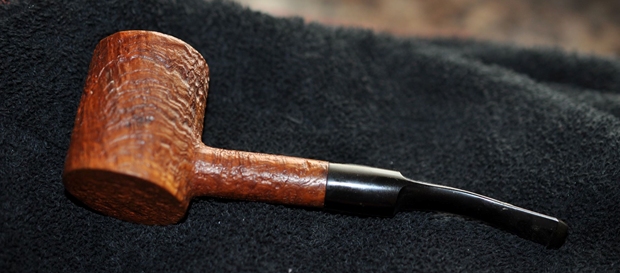
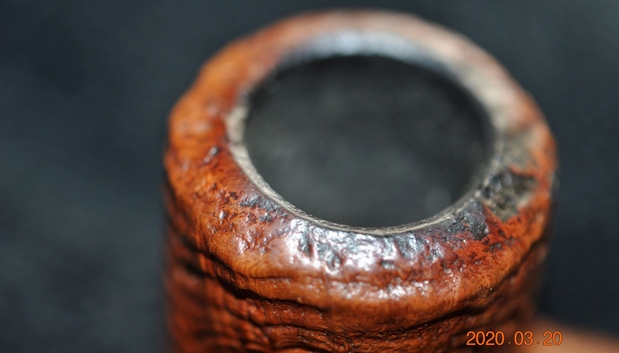
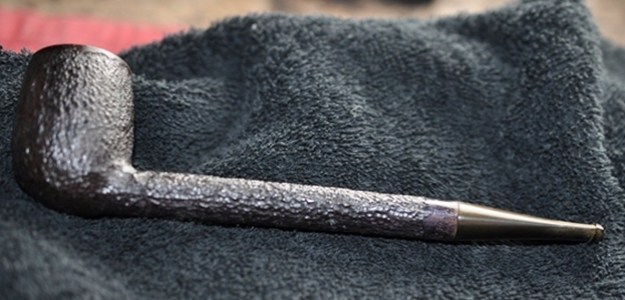
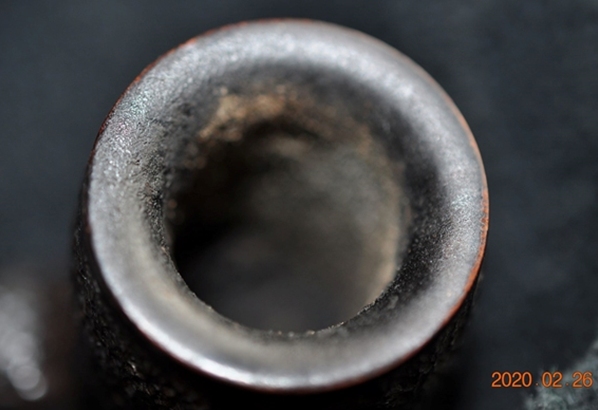
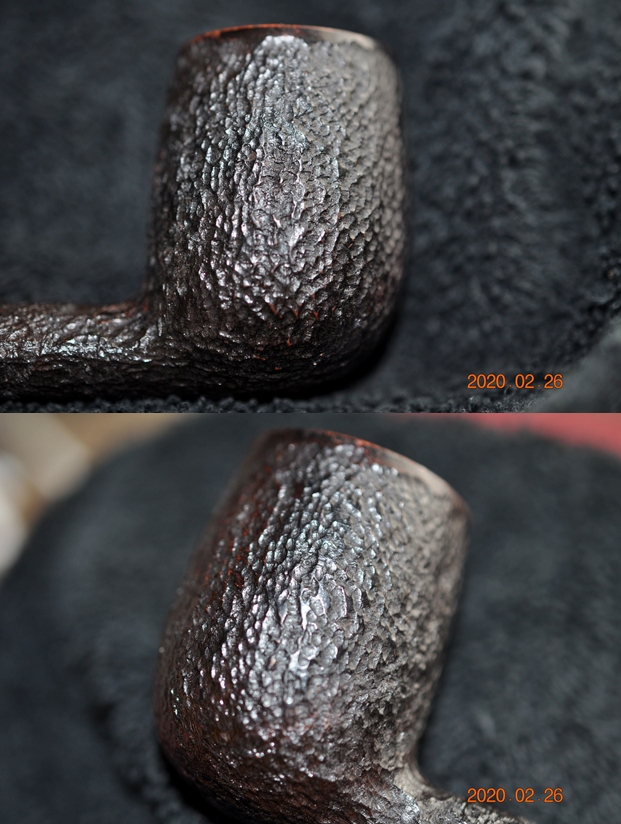
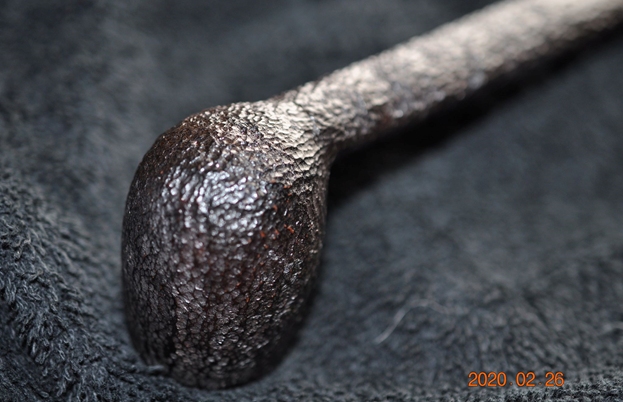
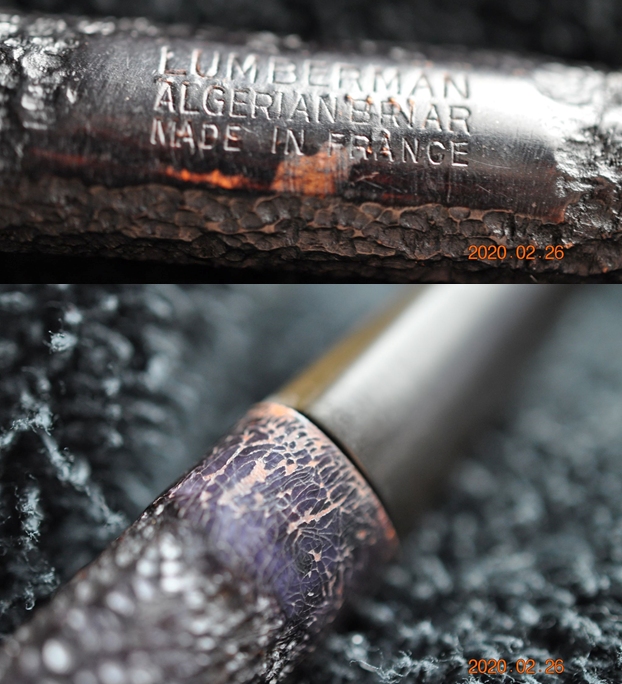
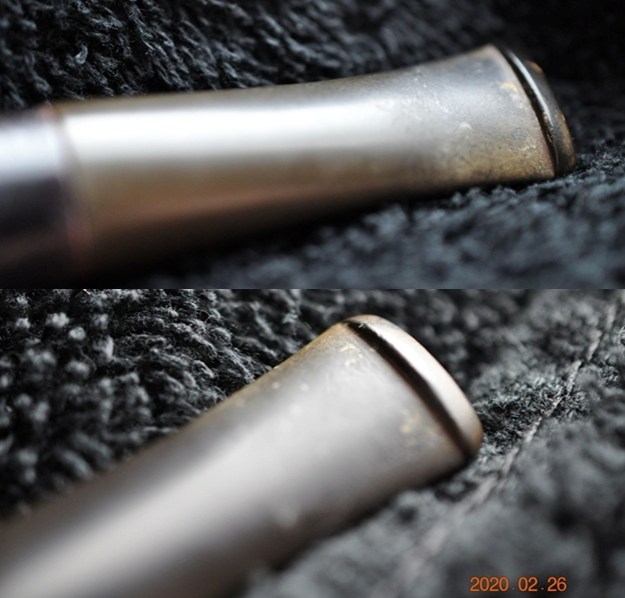
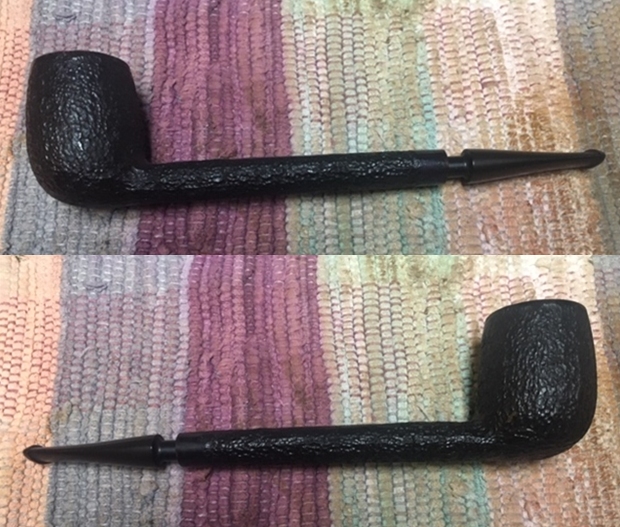
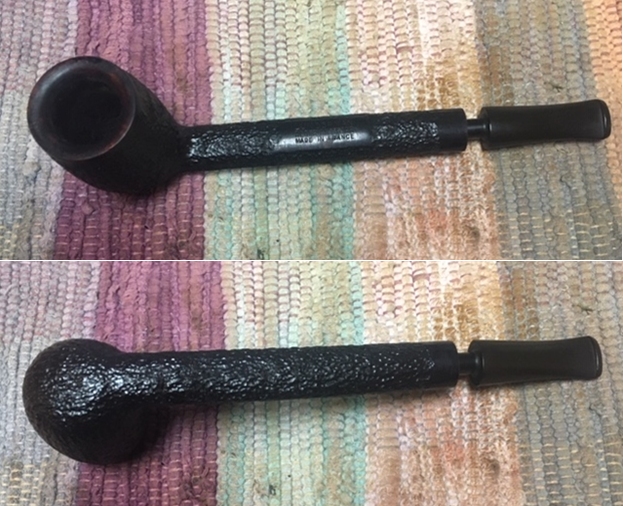
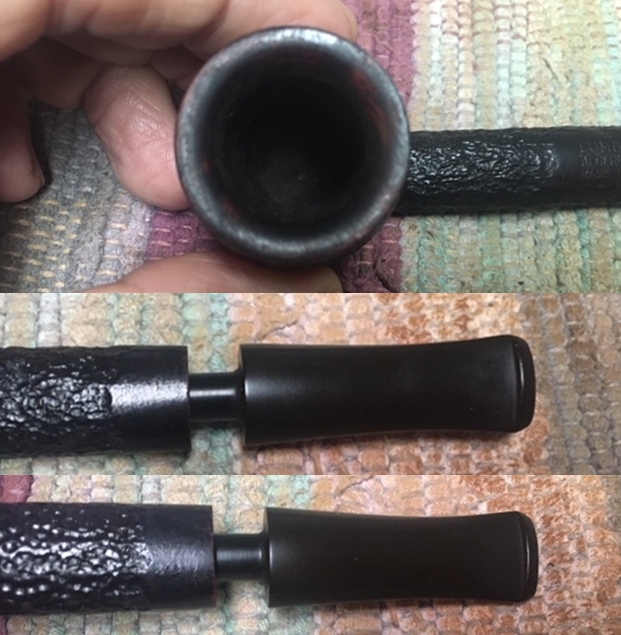
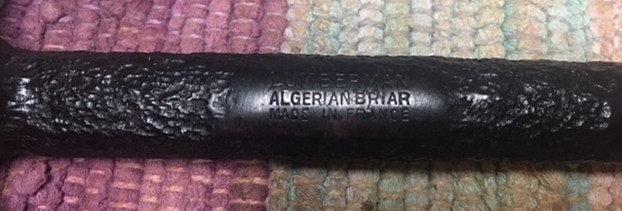
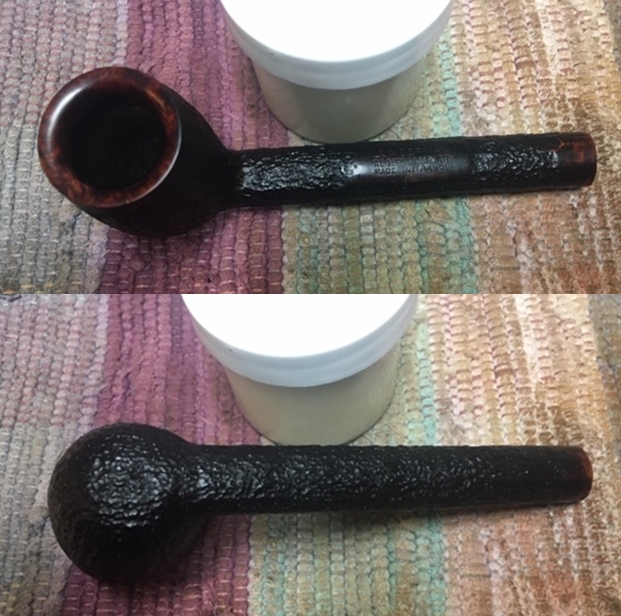
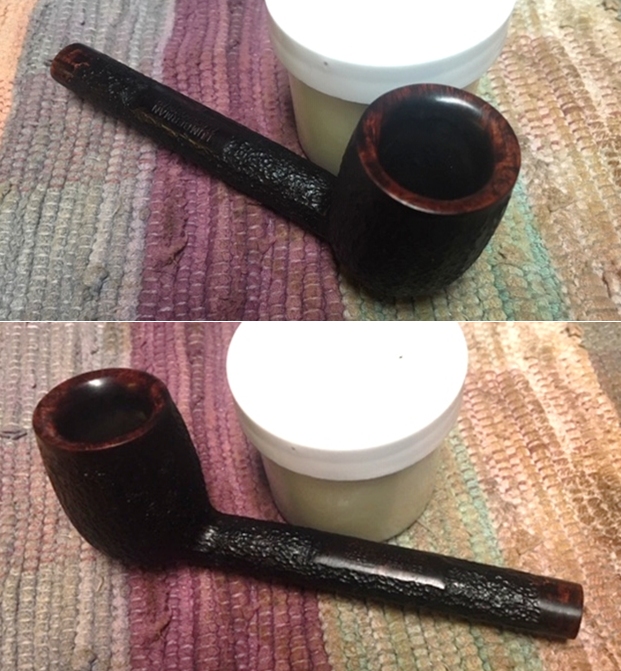
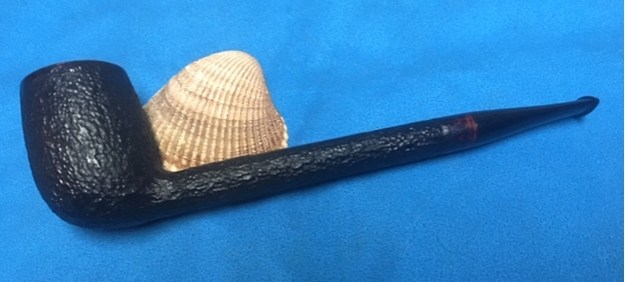
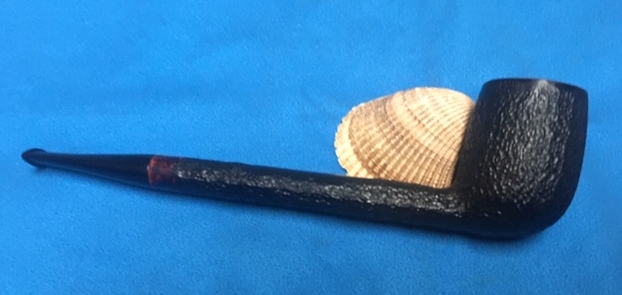
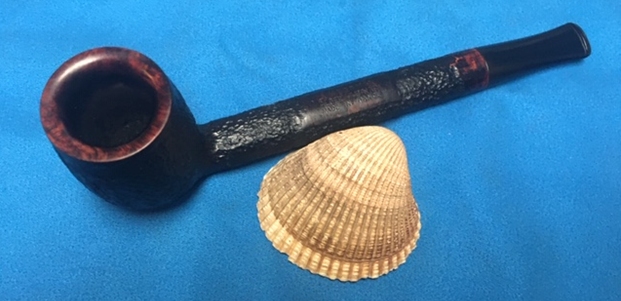
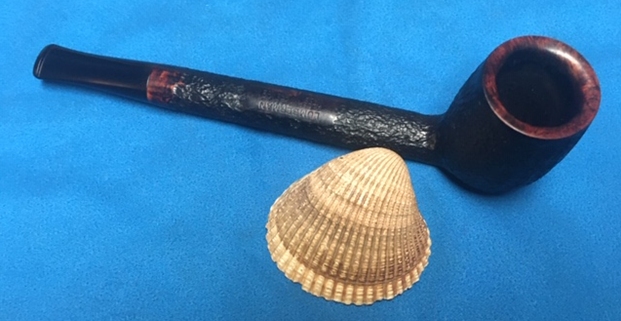
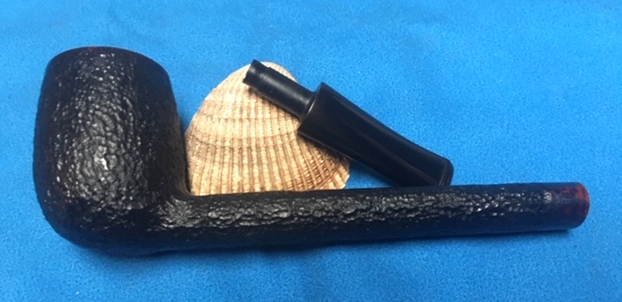
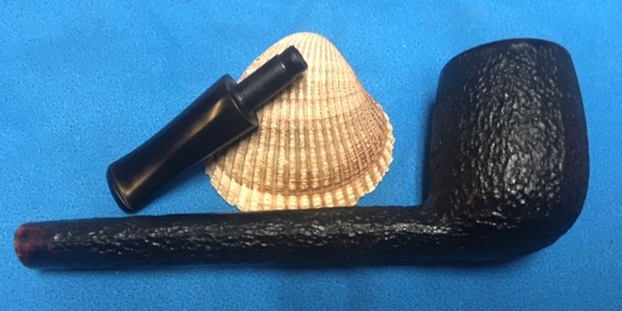
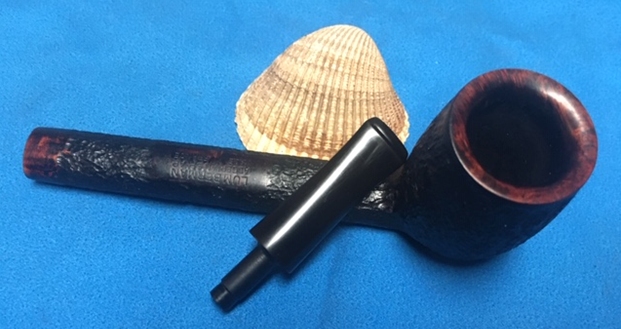
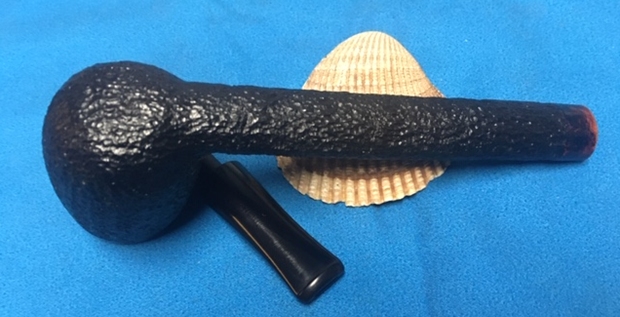
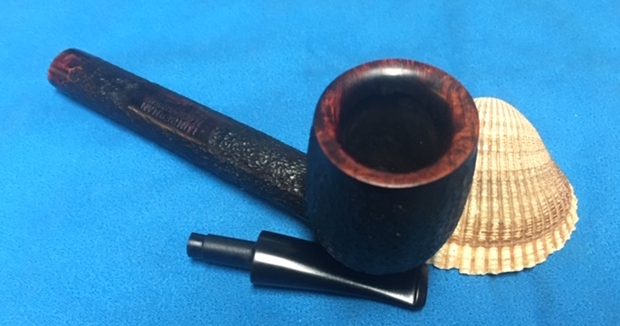
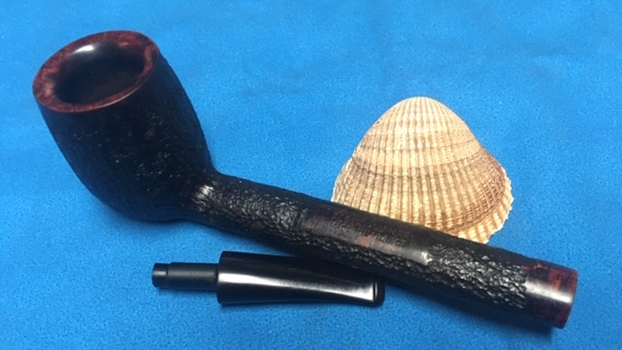
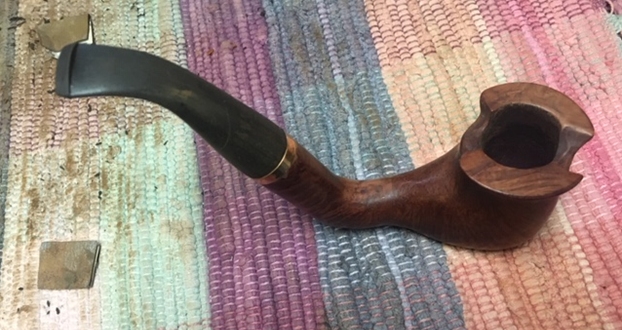
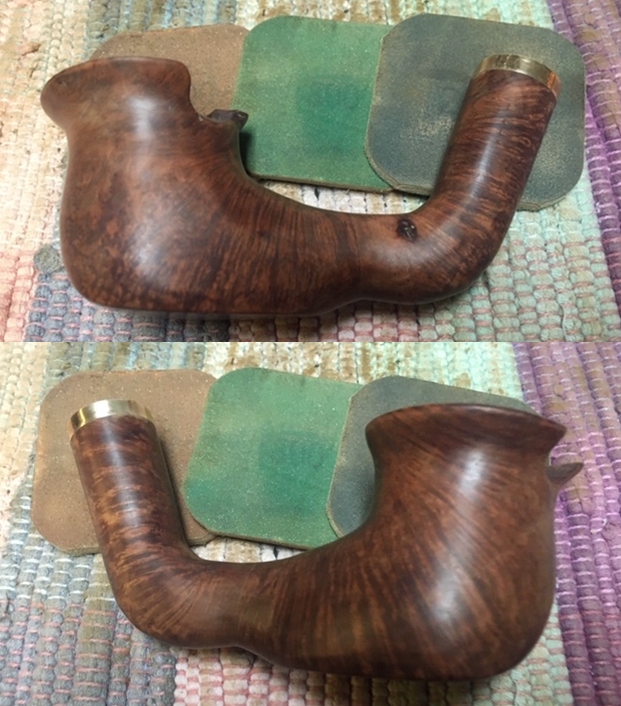
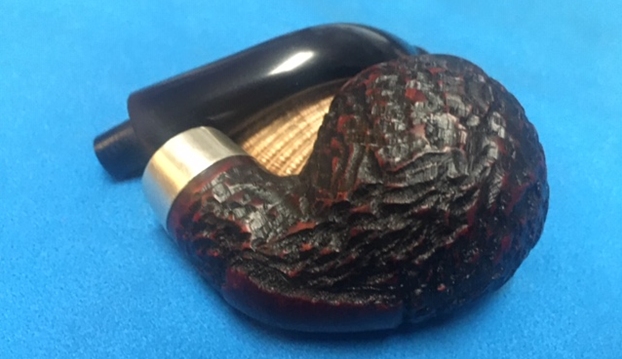
The next pipe on the table is a long shank Lumberman or what I would call a Canadian. It has a long oval shank and a tapered stem. The pipe is stamped on the top of the shank and reads LUMBERMAN over Algerian Briar over Made in France. The bowl is rusticated with a tight rustication pattern that gives it a pebble look. The pipe was filthy when we picked it up. The rustication was full of dust and debris. The finish was crackled on the smooth portions of the pipe. It was like a varnish coat was crackling and peeling. The finish was messy. The bowl had a thick cake in it that had overflowed lava onto the rim top. The inwardly beveled rim top was hard to see it was so filled with debris and lava. Even though it looked rough there was something about it that captured Jeff’s eye and eventually mine. The stem was oxidized but in terms of the general condition of the rest of the pipe was miraculously unchewed and bore no sign of tooth marks or chatter. Jeff took photos of the pipe before he started his cleanup work. I know I have used this phrase before but it adequately describes the photos that Jeff took of the rim top and bowl. He captured the condition of the bowl and rim top with the next series of photos. There is a lot of work to be done to get the bowl cleaned up and rim top visible. The pipe had an interesting tight rustication pattern around the bowl and shank. There was a smooth band at the rim edge and the shank end as well as a smooth beveled rim top. There was a smooth band on the shank top that bore the stamping. He took a photo of the stamping on the underside of the shank. It is clear and readable. It read as noted above. He also took a photo of the crackling finish around the stamping and on the shank end of the pipe.The photos of the stem show the stem surface. It is dirty and is free of tooth marks and chatter on both sides. That is quite remarkable as this is obviously an oft smoked pipe.I checked all of my usual sources of information and it appears that almost all of the major pipe makers turned out Lumberman stamped pipes. I have restored several English made versions that were made by Comoy’s and I have worked on a few from Chacom as well. This one had no identifying information beyond the stamping so it was not possible to narrow down the maker much more. I would not be surprised if it was made by Chacom. Now it was time to turn to work on the pipe.

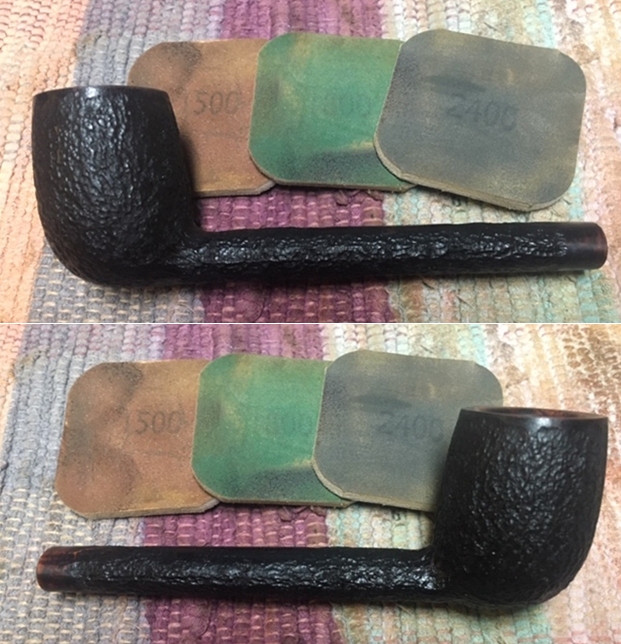
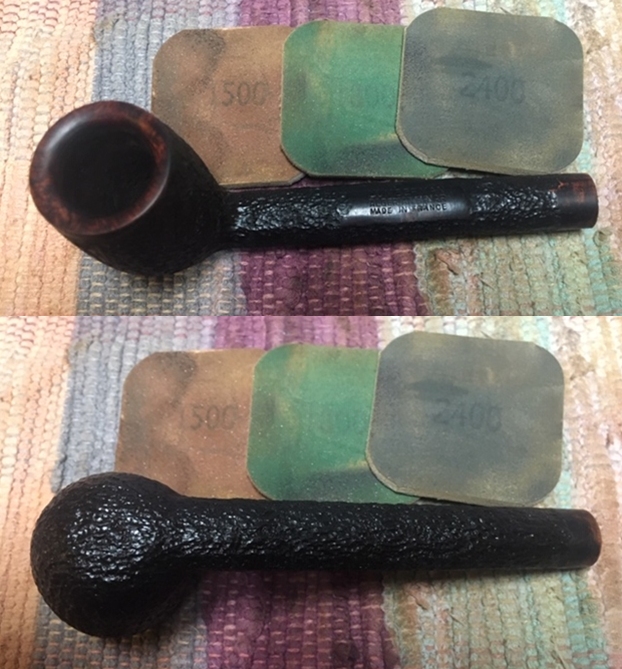
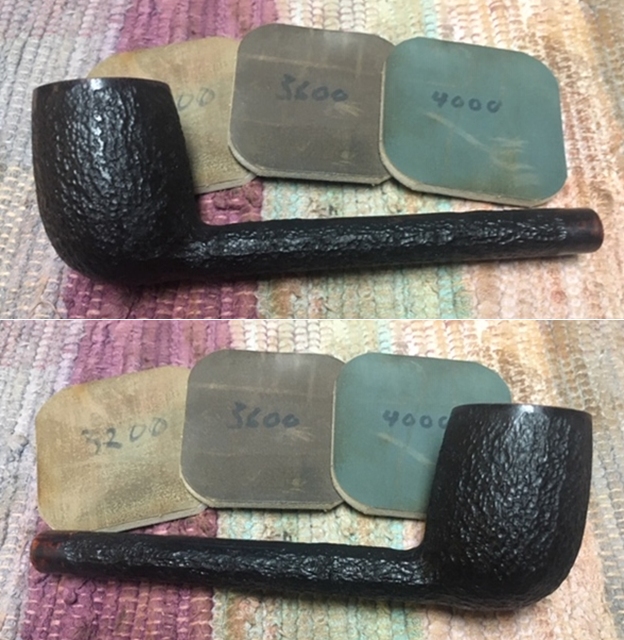
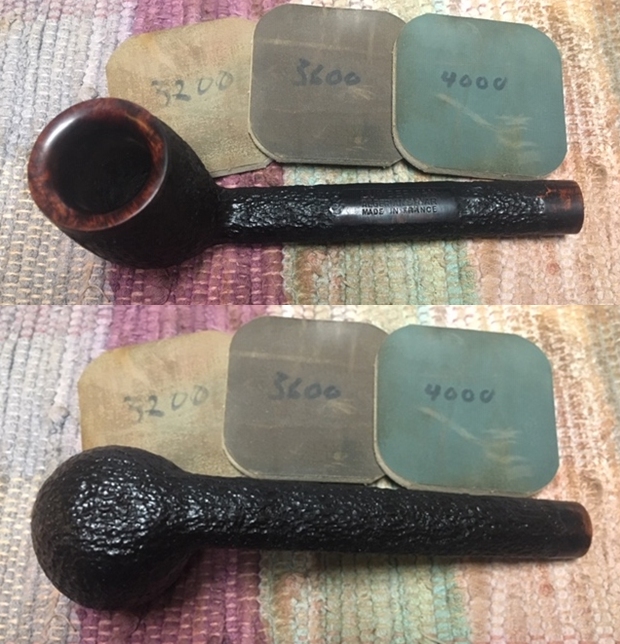
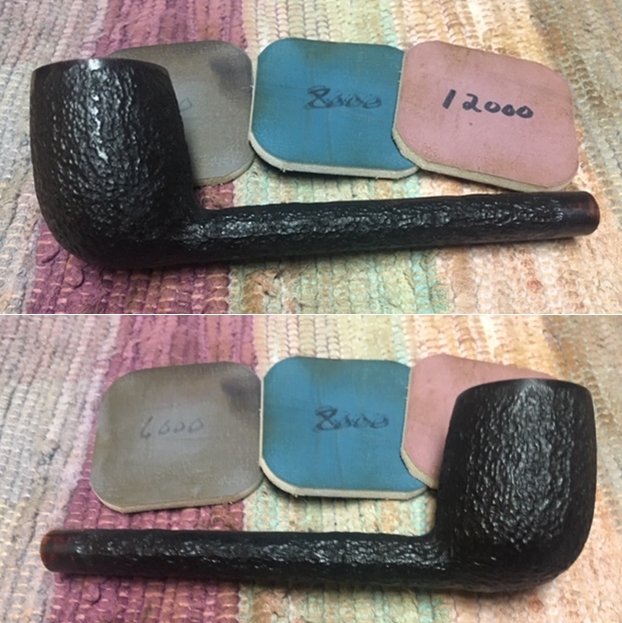
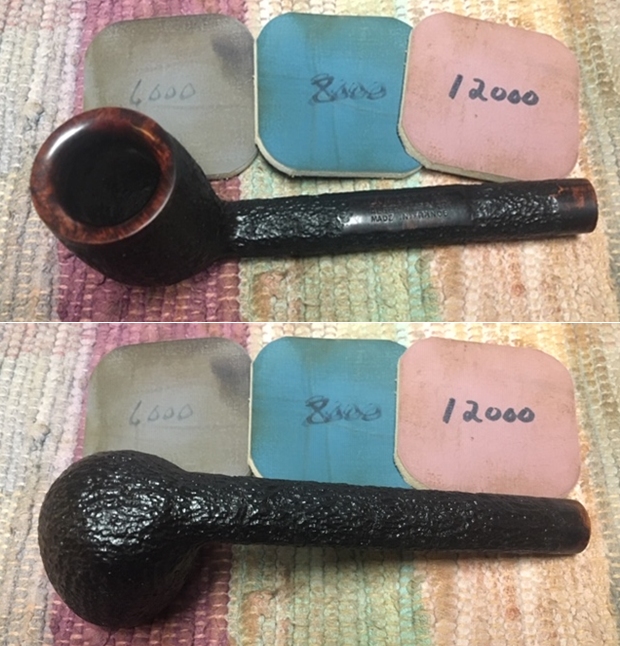
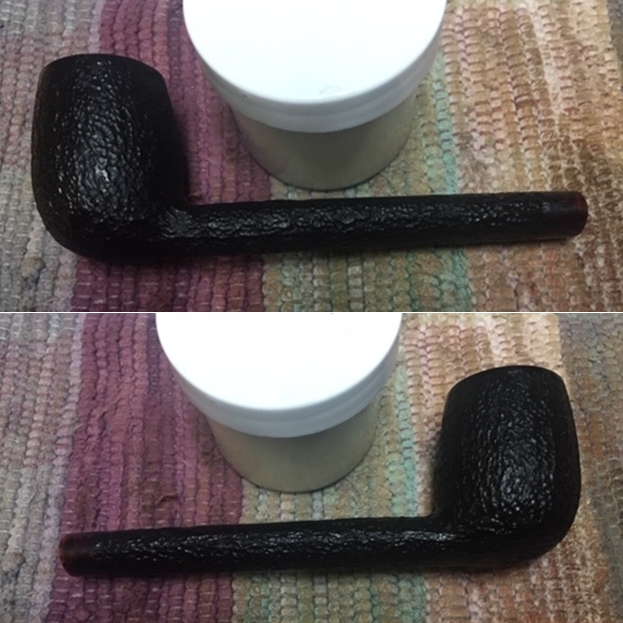
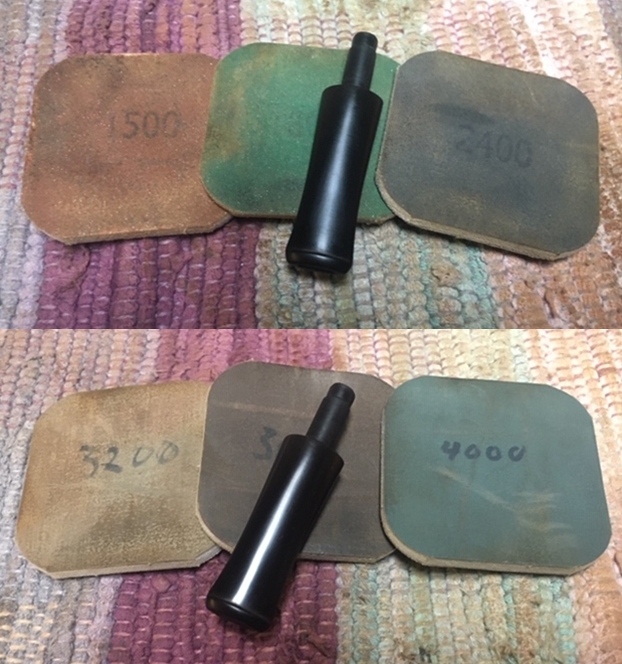
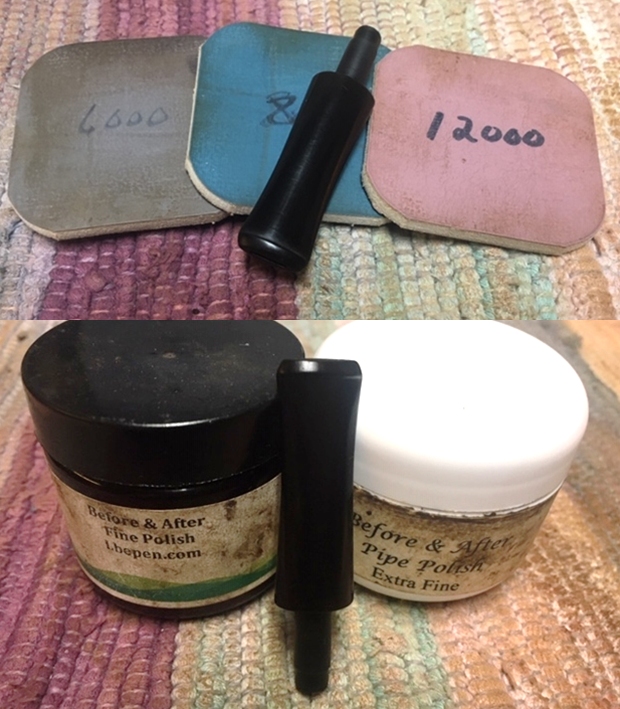
Jeff cleaned the pipe thoroughly with his usual care. He reamed it with a PipNet pipe reamer and cleaned up the reaming with a Savinelli Fitsall Pipe Knife. He scrubbed out the internals with alcohol, pipe cleaners and cotton swabs until the pipe was clean. He scrubbed the exterior of the bowl with Murphy’s Oil Soap and a tooth brush to remove the grime and grit on the briar and the lava on the rim top. He had been able to remove the crackling finish on the shank end and after cleanup the finish looks very good. The stem had been tight in the shank before so Jeff left it loosed. He scrubbed the stem with Soft Scrub to remove the grime and build up on the surface and soaked it in a bath of Before & After Deoxidizer. When the pipe arrived here in Vancouver for the second stop of its restoration tour it looked very good. I took photos before I started my part of the work. I took some photos of the rim top and stem. The photo of the bowl shows how clean the bowl and the smooth rim are. The rim top had some scratching and some darkening but it should be able to be polished out. The inner and outer edges of the bowl look really good. They are in excellent condition. The close up photos of the stem shows that is it very clean.I took a photo of the stamping on the underside of the shank of the pipe. It is clear and readable as noted above. The pipe was in great condition and only needed to be polished. I polished the smooth portions of the briar with micromesh sanding pads – dry sanding with 1500-12000 grit pads. I wiped the bowl down after each pad with a damp cloth. The grain really began to stand out and the finish took on a natural shine by the last sanding pad. The photos tell the story! I worked some Before & After Restoration Balm into the surface of the briar with my fingertips and used a horse hair shoe brush to work it into the nooks and crannies of the rustication. The product works to clean, enliven and protect the briar. I let the balm sit for about ten minutes and then buffed with a cotton cloth to raise the shine. The photos show the bowl at this point in the restoration process. I laid the bowl aside and turned to deal with the stem. The tooth marks and chatter on the stem were not deep. I polished the stem with micromesh sanding pads – dry sanding with 1500-12000 grit sanding pads. I wiped it down after each sanding pad with a cloth containing some Obsidian Oil. I finished polishing it with Before & After Pipe Stem Polish – both Fine and Extra Fine and buffed it off with a cotton cloth. The long pipe came together quite well. The finish on the pipe looks great and the contrasting stains between the smooth portions and the rustication work well with the black vulcanite stem. With the grime and debris gone, the bowl had a natural beauty and grain that pops. I put the stem back on the bowl and buffed the pipe with Blue Diamond on the buffing wheel. I carefully avoided the stamping on the shank during the process. I gave the bowl multiple coats of Conservator’s Wax by hand and the stem multiple coats of carnauba wax on the buffing wheel and followed that by buffing it with a clean buffing pad on the buffer. I hand buffed the pipe with a microfiber cloth to deepen the shine. The finished Lumberman pipe is quite elegant looking and feels great in the hand. Give the finished pipe a look in the photos below. I can only tell you that it is much prettier in person than the photos capture. The dimensions of the pipe are Length: 7 inches, Height: 1 ¾ inches, Outside diameter of the bowl: 1 ¼ inches, Chamber diameter: ¾ of an inch. It is great looking and in great condition, ready for the next pipe man or woman who takes it on in trust. I will be adding it to the French Pipe Makers section of the rebornpipes store shortly. Thanks for walking through the restoration with me as I worked over another beautiful pipe. Thanks for your time.