Tag Archives: super glue

Bringing an old Custombilt Billiard to back to life


Blog by Steve Laug

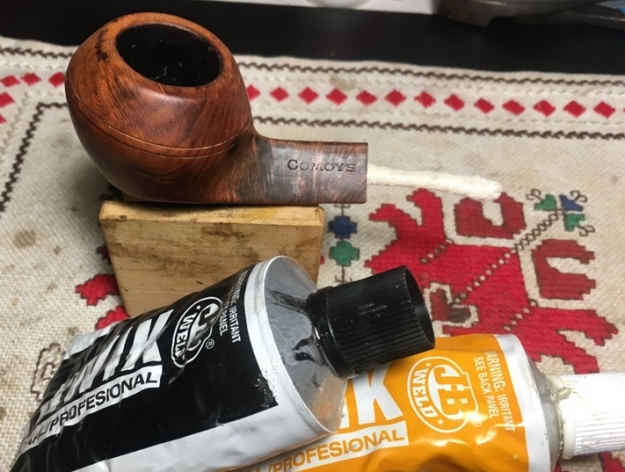
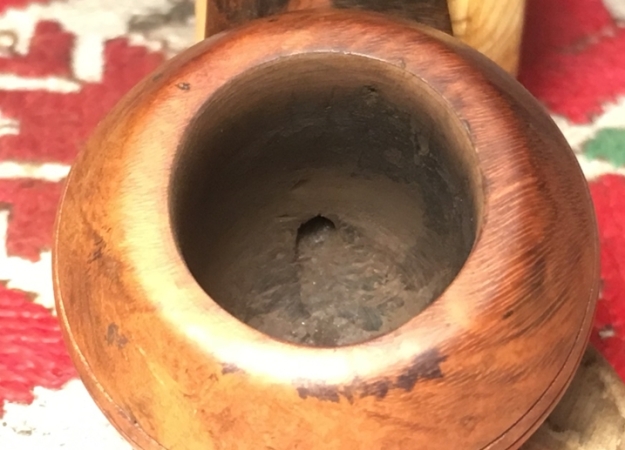
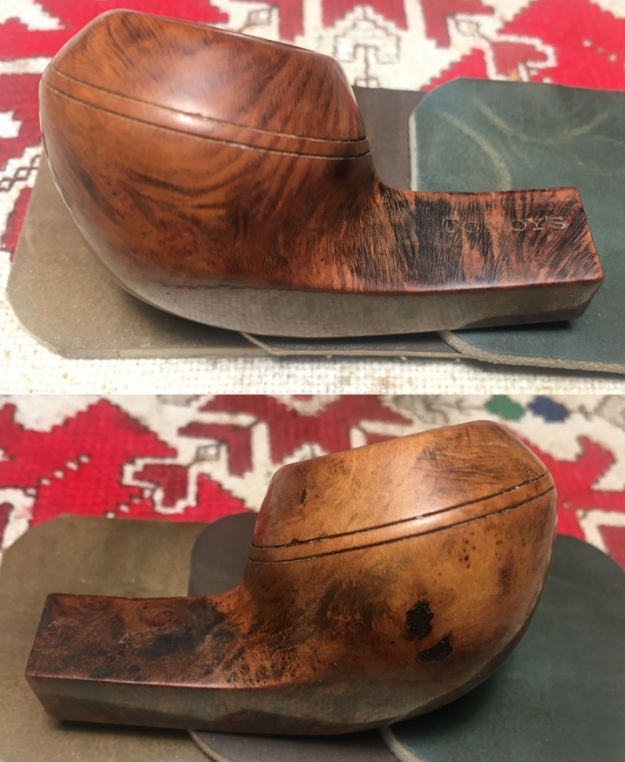
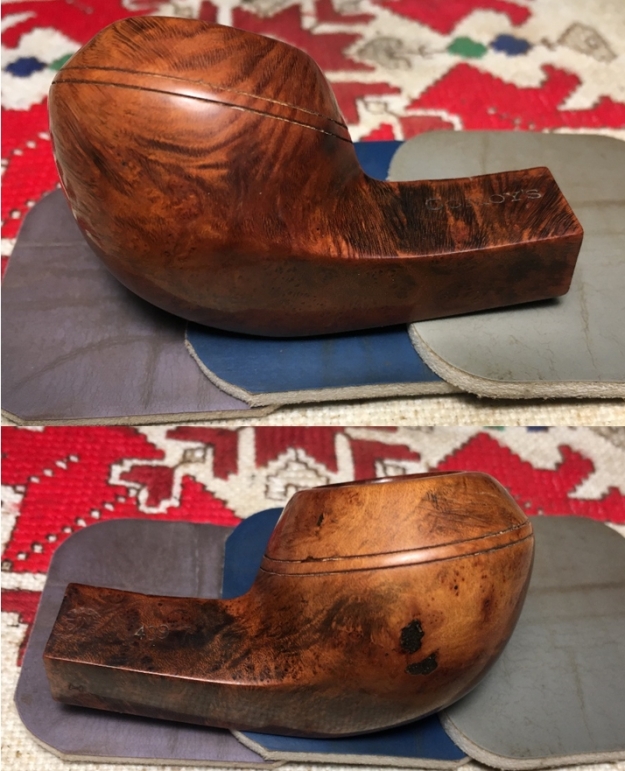
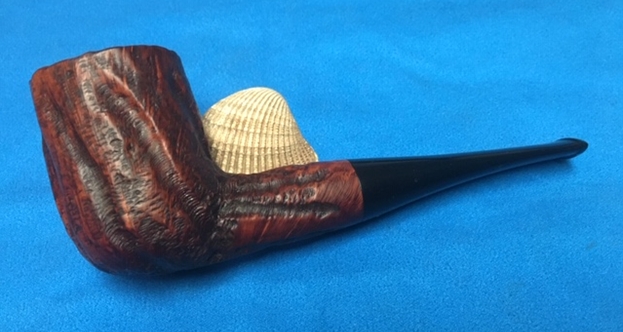
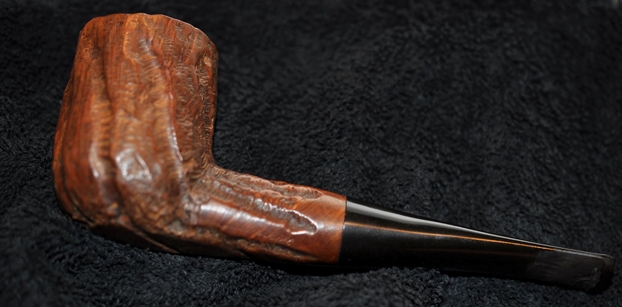
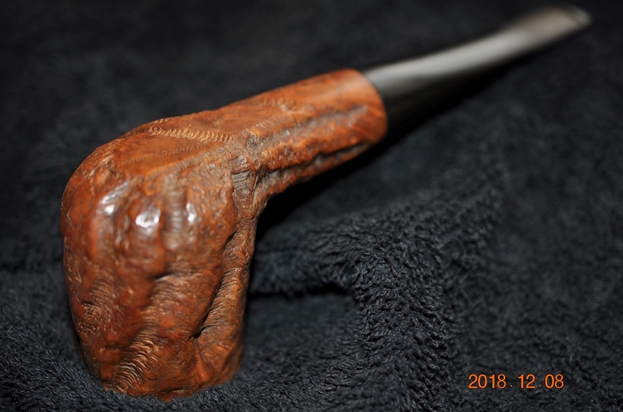
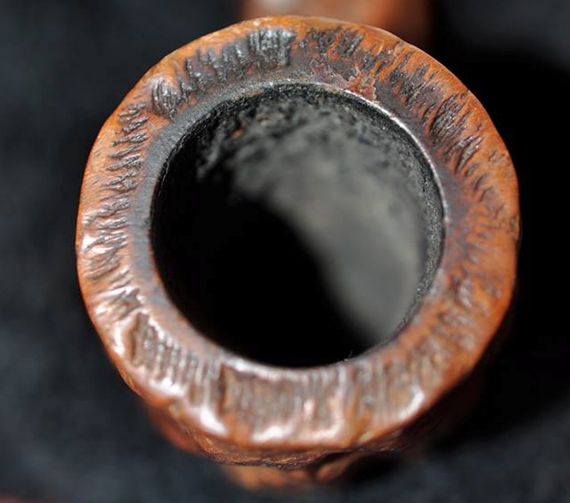
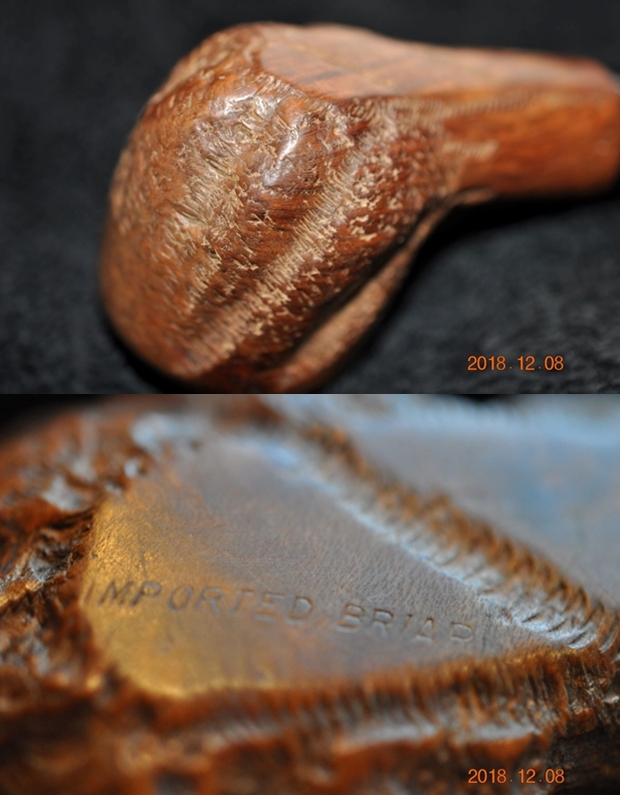
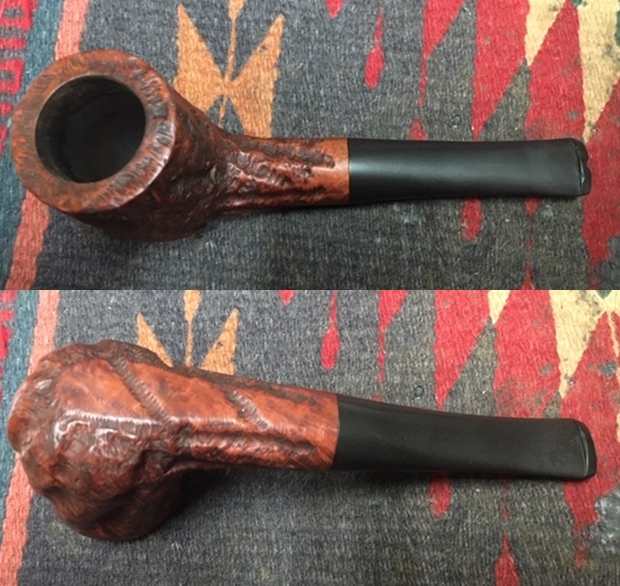
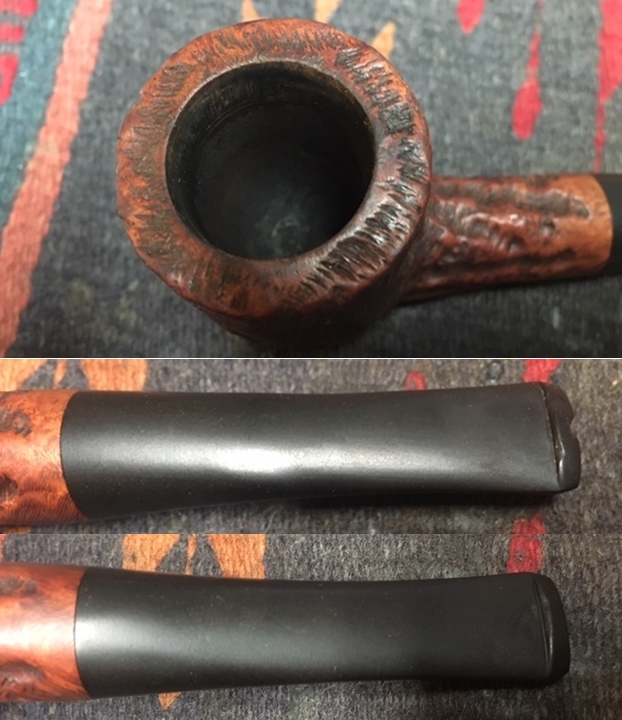
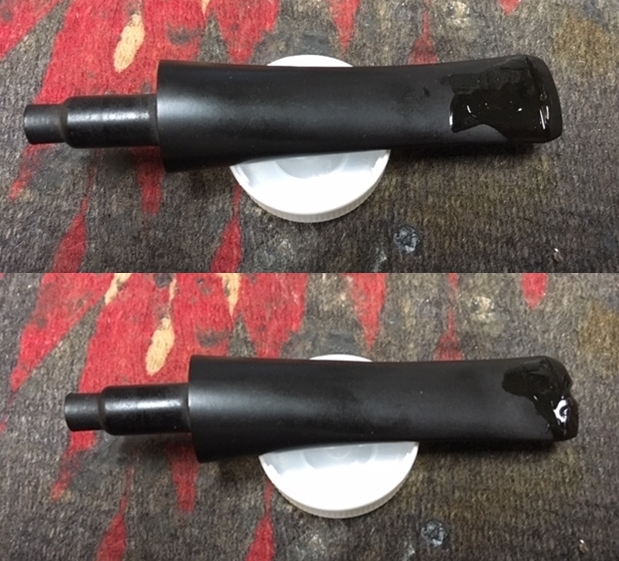
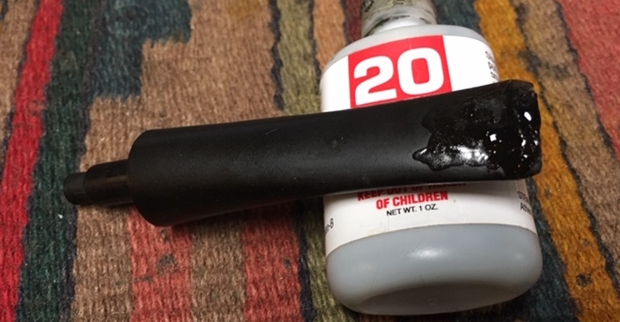
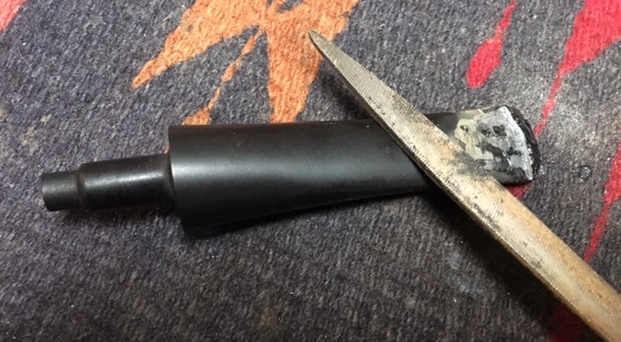
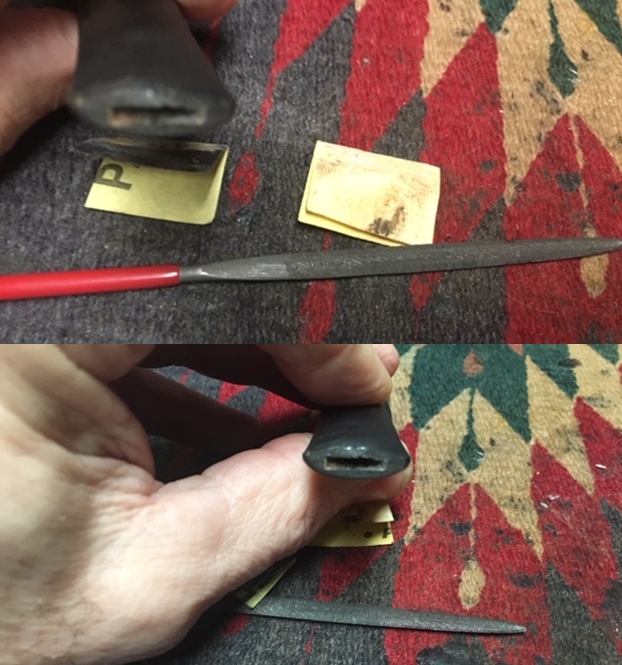
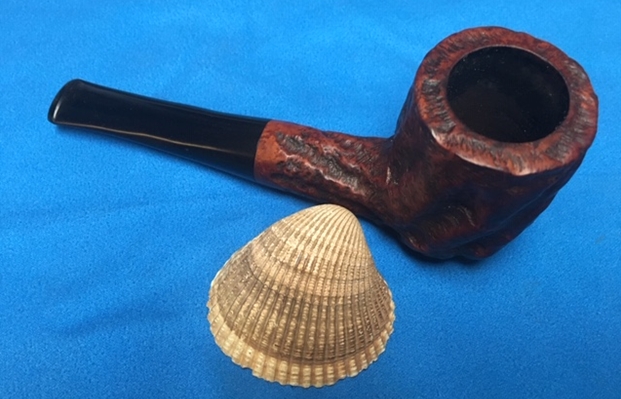
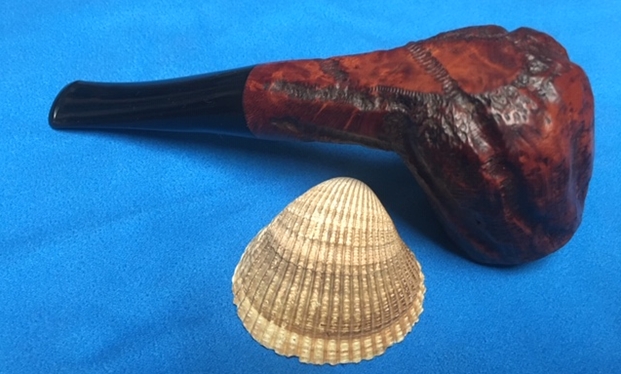
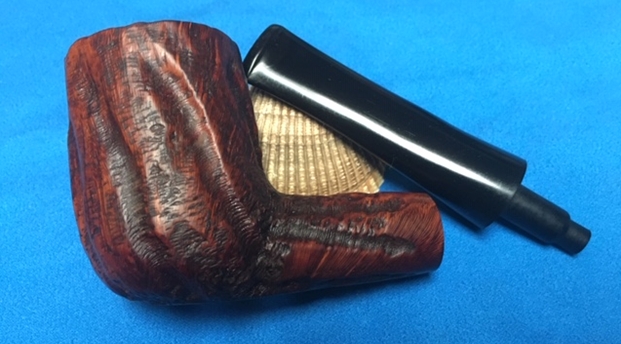
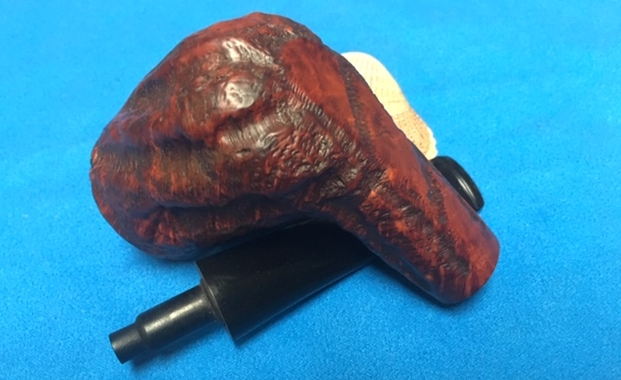
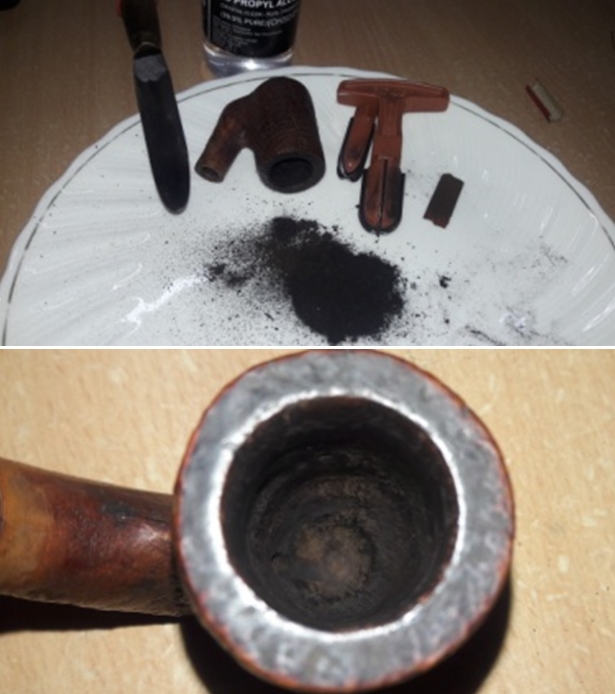
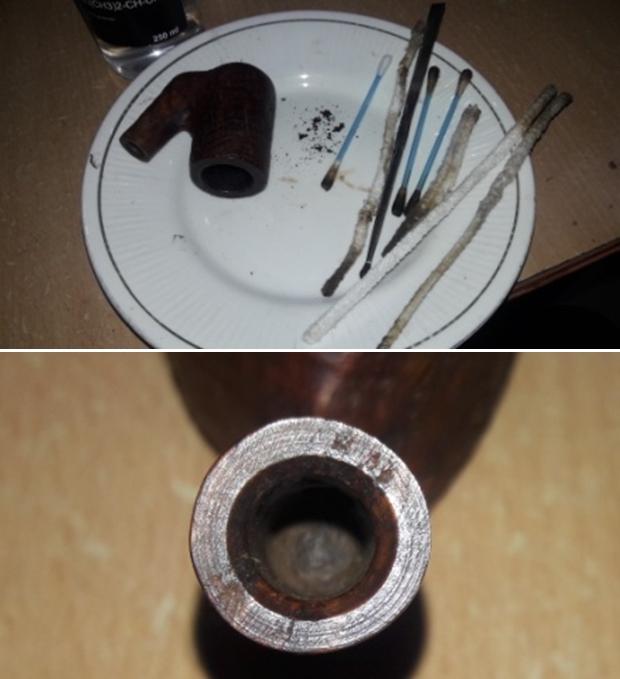
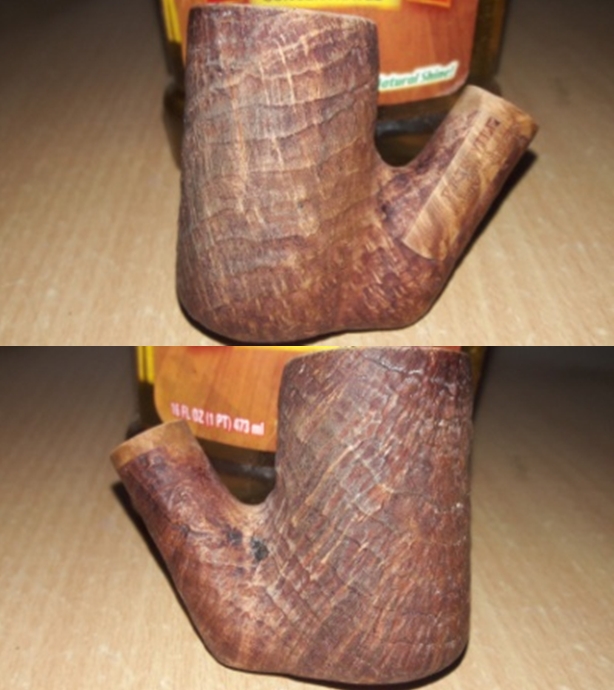
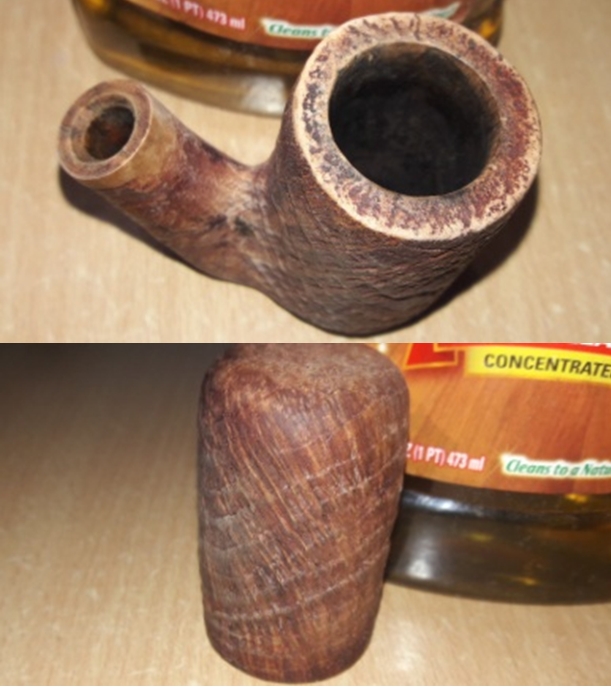
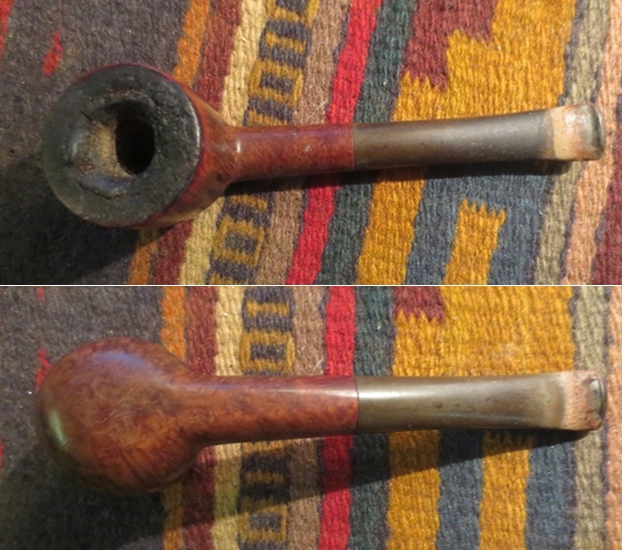
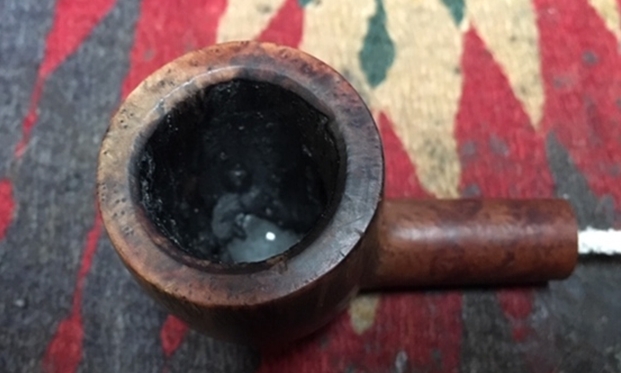
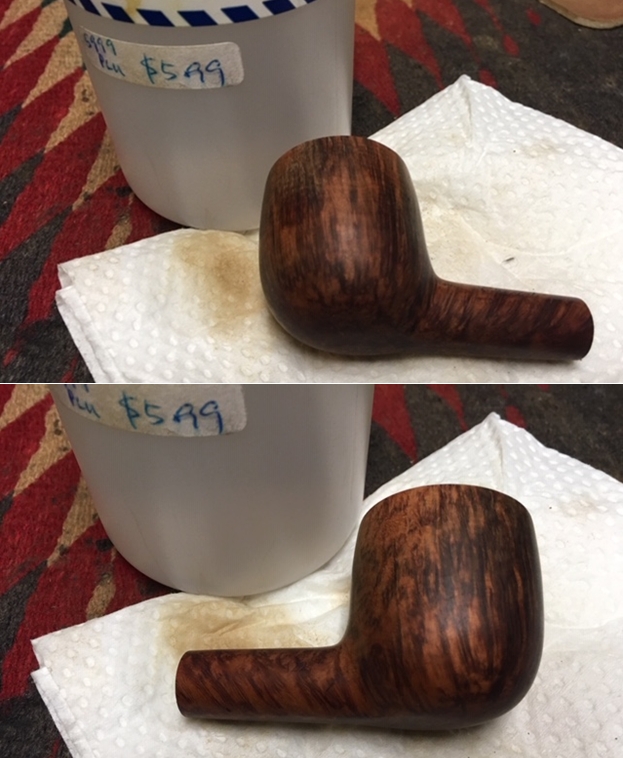
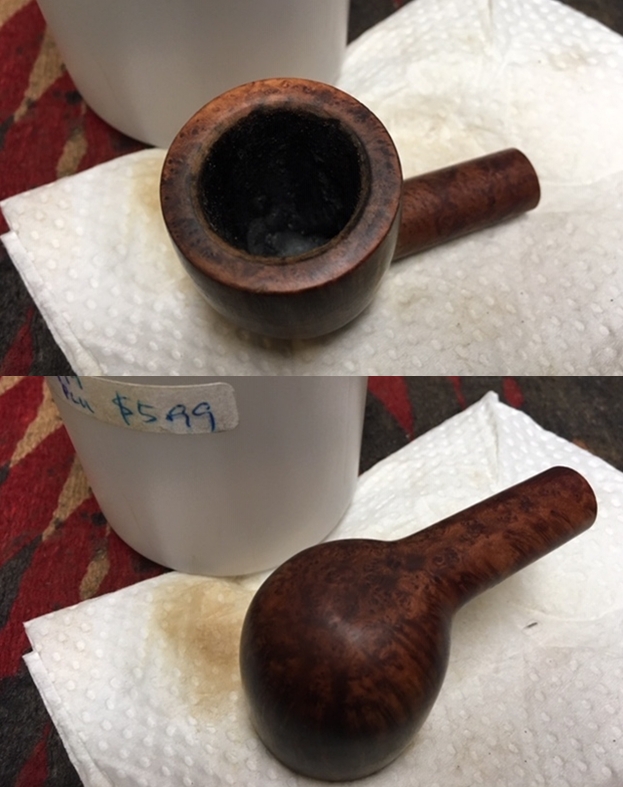
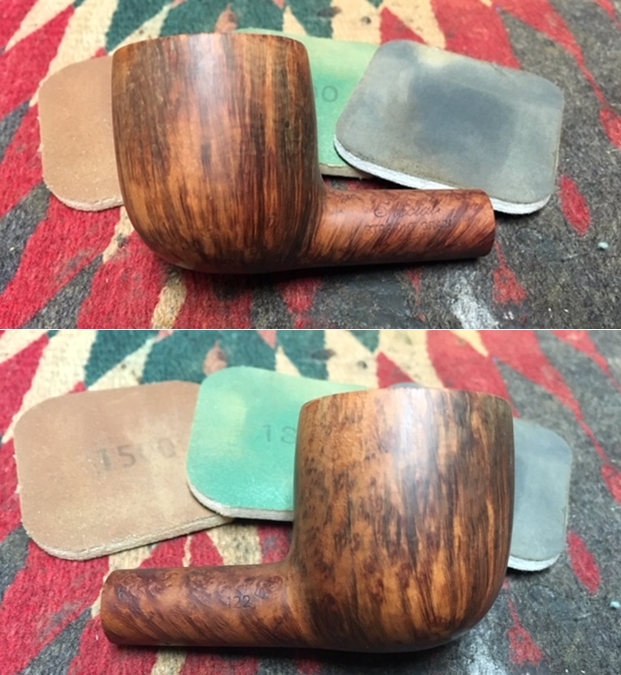
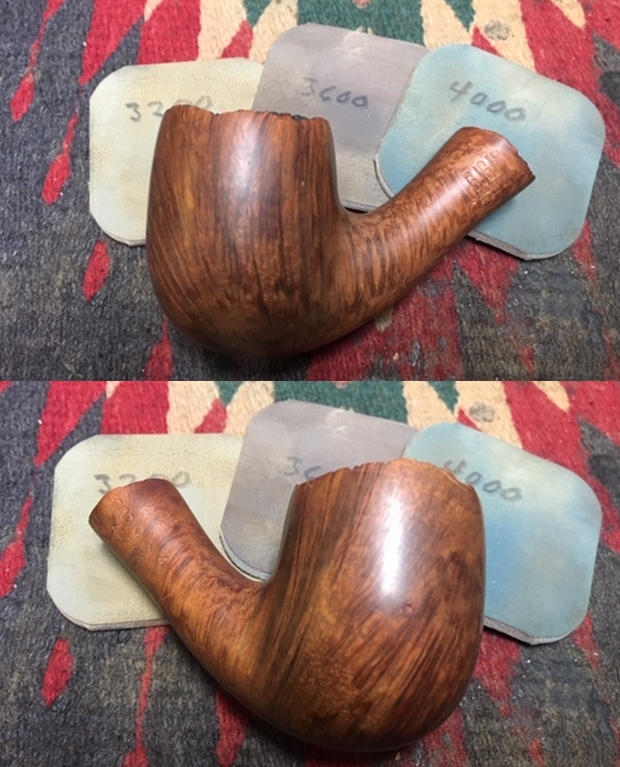
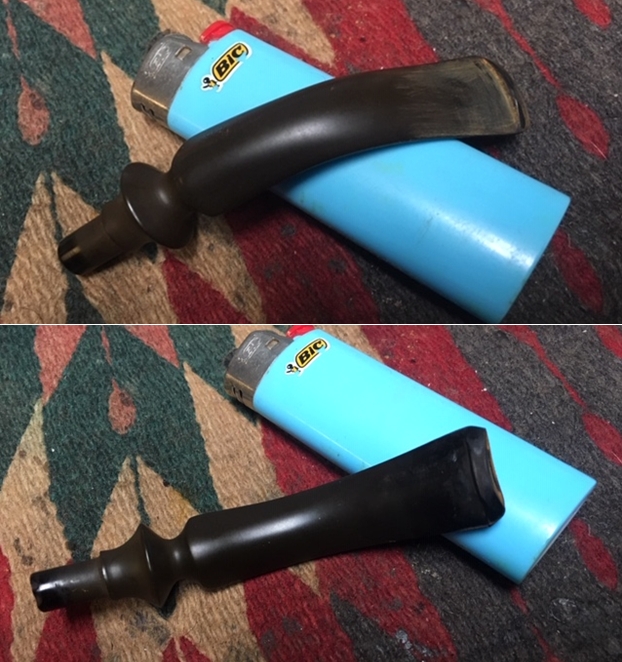
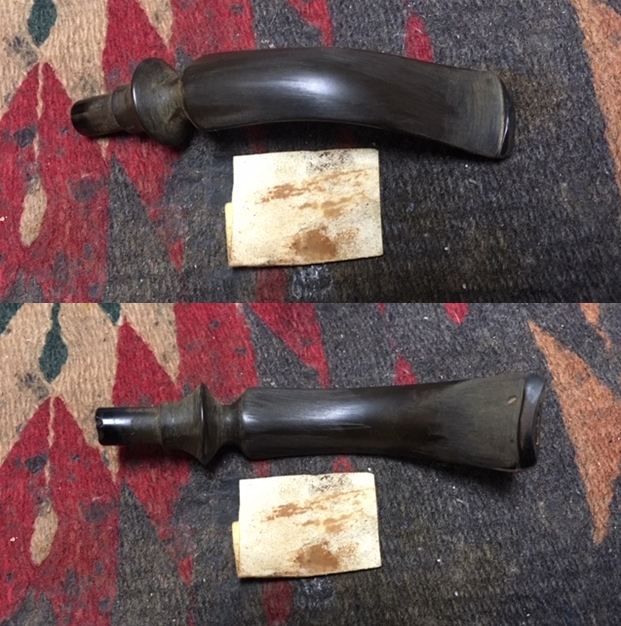
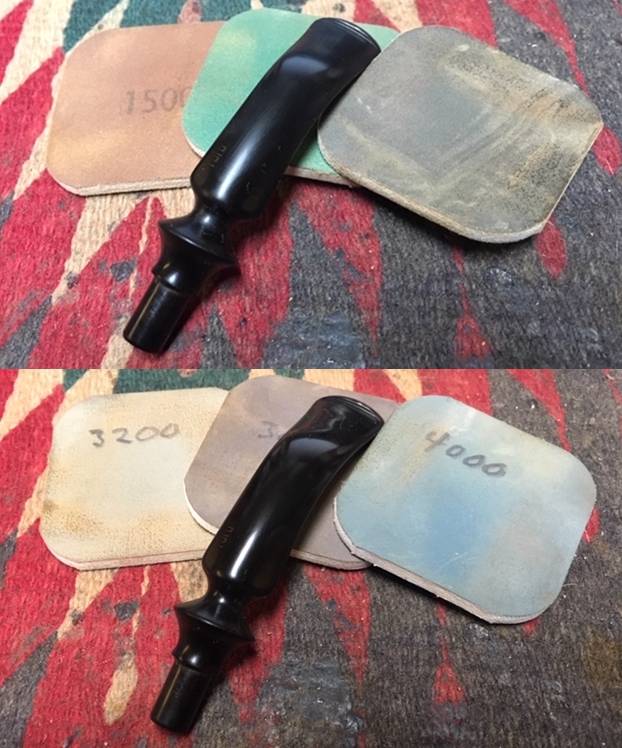
I have always been intrigued by Tracy Mincer and his Custom-Bilt pipes and even his Custombilt pipes like this one. There is something about the rugged carving and appearance of the pipes that gets my attention. I have a few of them in my collection and always enjoy the tactile nature of the pipe when it is being smoked. This old billiard has the Custombilt stamp and I will need to reacquaint myself with the eras of the various spellings of the brand so that I can place it in the hierarchy. The pipe was in pretty decent condition when Jeff received it – dirty but really not too bad. The finish was dusty and dirty in the worm trail carvings. The bowl had a decent cake in it that was lightly flowing over the rim top into the rustication. The inner and outer edge of the bowl appeared to be in great condition. The stem had a chip out of the edge of the button on the topside and tooth marks in the stem just ahead of the button on the underside. The smooth part of the shank, between the worm trails is stamped Custombilt in script on the left side. On a smooth panel on the heel of the bowl it is stamped Imported Briar. Jeff took these pictures of the pipe to show its condition before he started his cleanup work. He took close up photos of the rim top and the side and bottom of the bowl to show the condition of the briar and the bowl. You can see the cake in the bowl and the lava overflowing onto the top of the rim. The worm trail rustication is quite dusty and dirty. The photos of the stem show the tooth chatter and marks as well as the chip out of the topside of the button.When I brought the pipe to my worktable I did some reading on Pipedia to before starting the restoration. I have learned that it is important to keep the variations in spelling of this brand clear in mind when trying to put these on a timeline. The names Custom-Bilt, Custombilt, and other variations help place the pipes in the history of the Company.

There is a great article on Pipedia that helps understand the brand and give a sense of what the various stamping looks like on the pipes (https://pipedia.org/wiki/Custom-Bilt). I cite from that article to give a feel for the brand:

In 1946, the name was changed to Custombilt after Mincer began an association with Eugene J. Rich, Inc. There were some big changes in advertising and distribution. The slogan “AS INDIVIDUAL AS A THUMBPRINT” began at this time as well.

In 1953, Leonard Rodgers bought the company and emphasized tobacco pouches and butane lighters. (However, it appears Mincer was working on his new pipe, the Doodler.) In 1968, Rodgers sold the Company to Consolidated Cigars. In the early 1970s, Wally Frank Co. bought the Custombilt trademark and began to produce their version of the pipe in 1974 or 1975. Hollco Rohr owned the Weber pipe factory, located in New Jersey, and produced the Custombilt pipes there. In 1987, the pipes were made out of the Butz-Choquin factory (France) and then Mexico until the late 1990s. Currently, the Custombilt name is owned by Tobacalera of Spain.

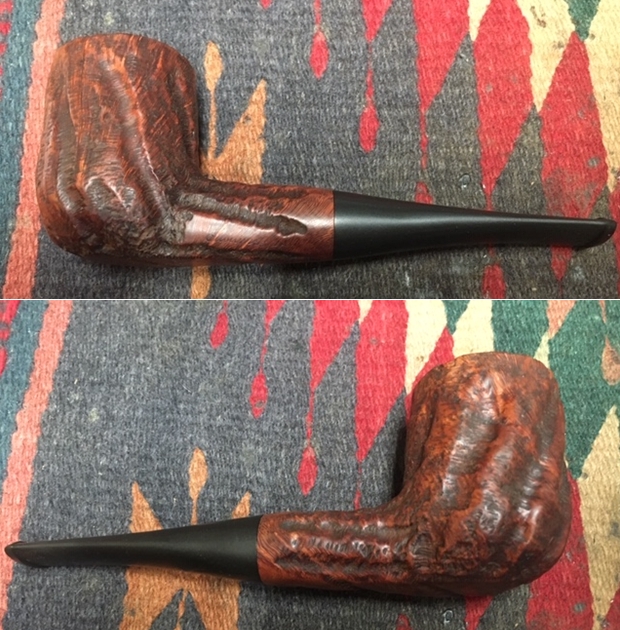
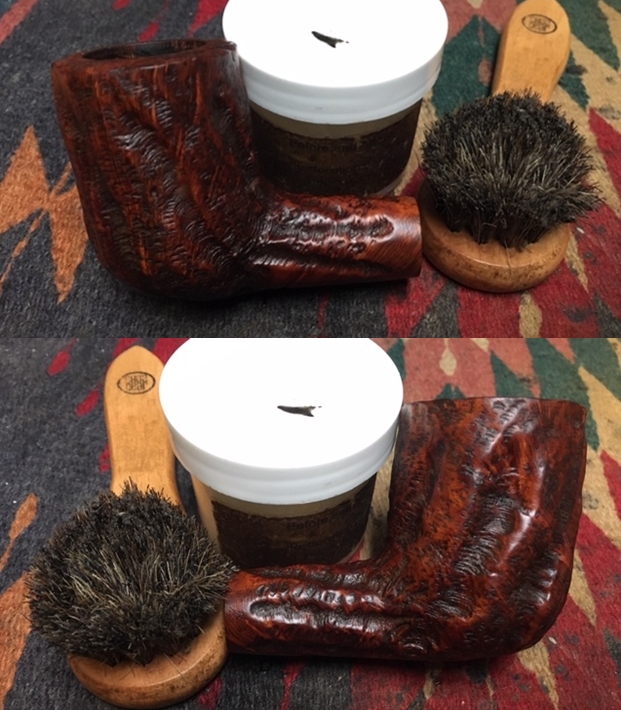
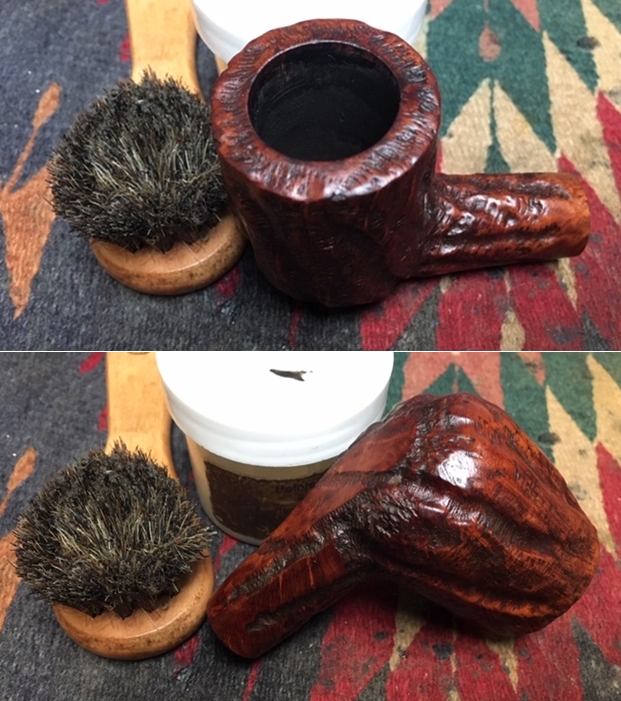
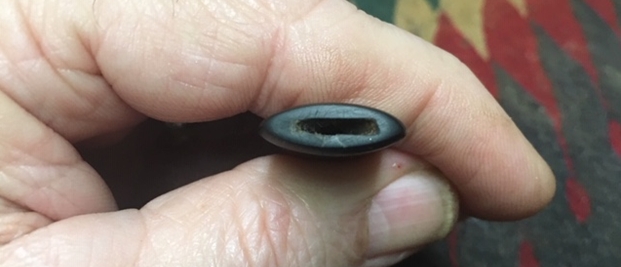
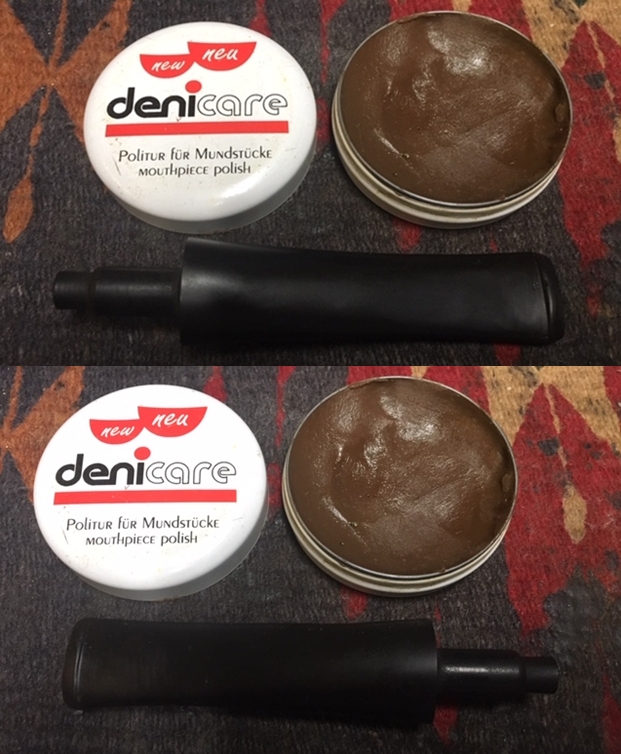
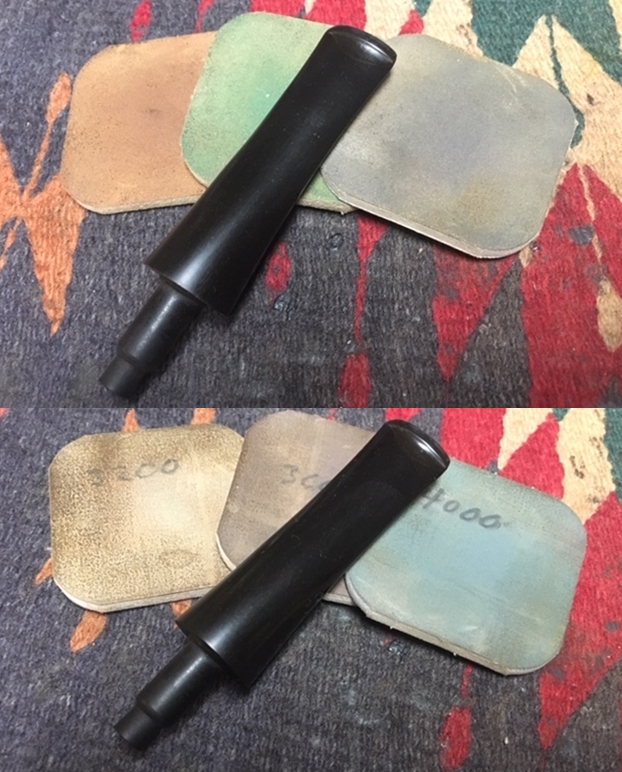
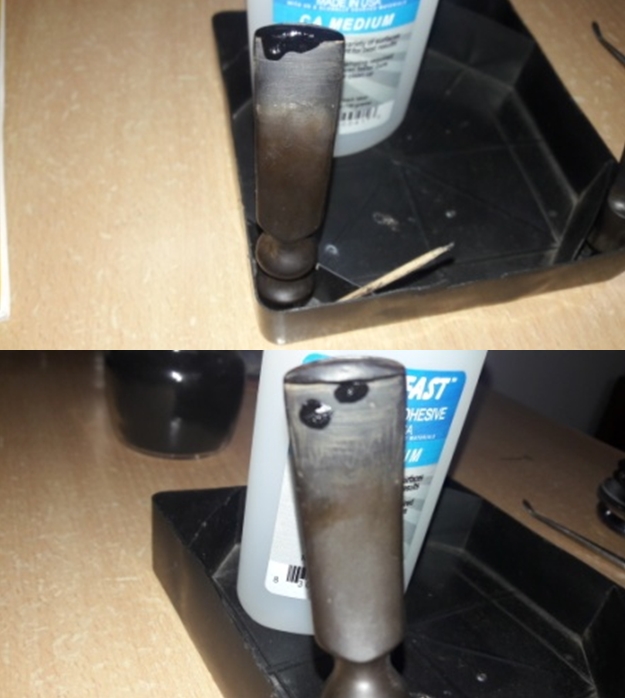
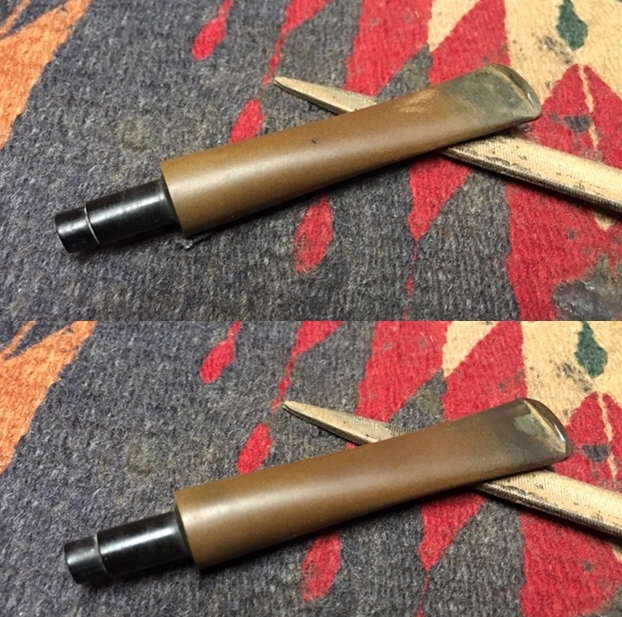
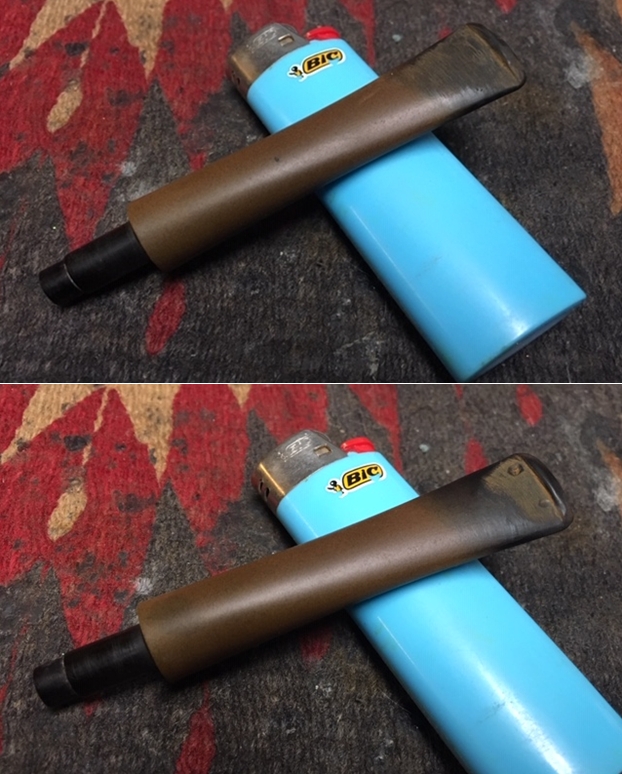
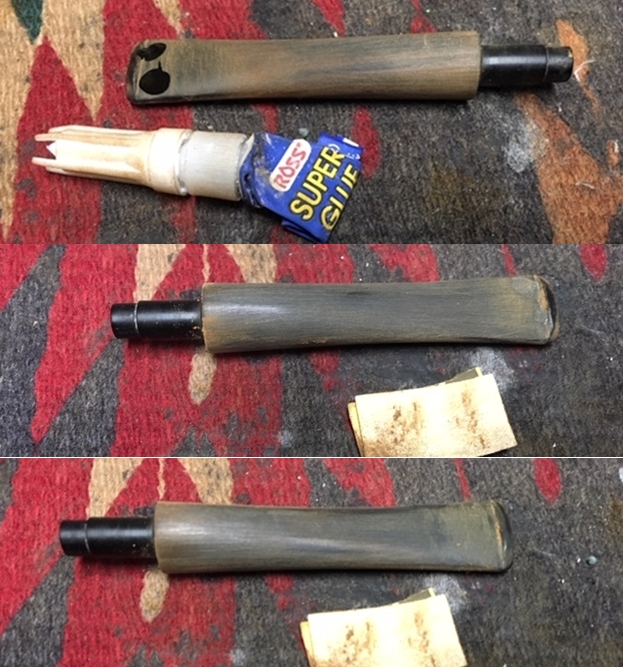
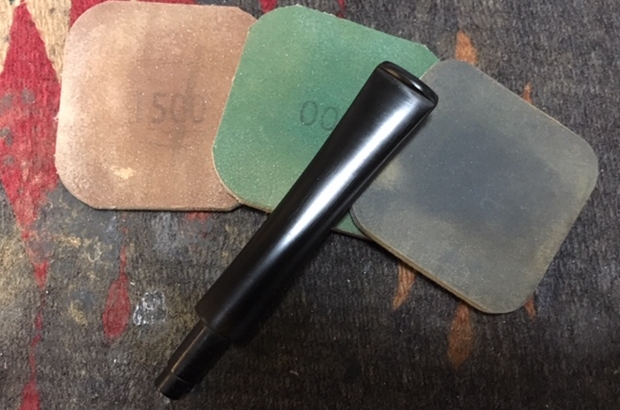
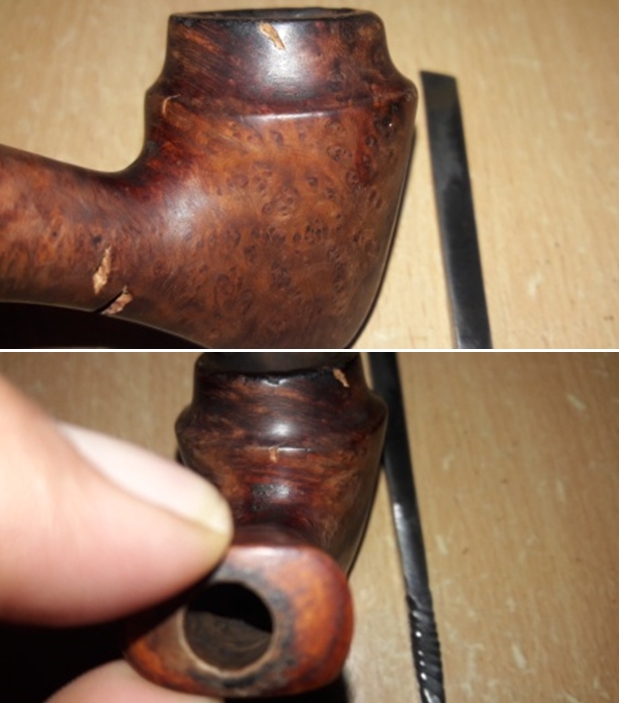
Along with the information above I found that the stamping that is on this pipe is identical to that identified in the article as Stamp Number Five. I have included that graphic because of the information that it included. It brings some of the issues in identifying the maker and the time period of the brand. In my mind the pipe I have in hand is very much like the Rich era pipes that I have seen and the note below says that. Interestingly the author also says he has seen the same stamping on the Wally Frank era pipes. It is a fascinating piece of history and a beautifully made old pipe.Armed with that information I turned to working on the pipe. Jeff had cleaned the pipe with his usual thoroughness – reaming the bowl with a PipNet pipe reamer and cleaning up the remnants with a Savinelli Fitsall Pipe Knife. He scrubbed the internals of the bowl, shank and stem with alcohol, cotton swabs and pipe cleaners. He scrubbed the exterior with Murphy’s Oil Soap to clean off the dust and grime on the finish. The rim top looked very good under the thick lava coat. I love the way the grain of the briar shows through the rustication. There were just a few nicks and scratches to deal with. The inside of the bowl itself looked great. The stem was in great shape other than a bit of tooth marks and the chip out of the top of the button. I took photos of the pipe before I started working on it. I took some close up photos of the rim top, bowl and stem to show what they looked like after Jeff’s cleanup. It is a startling difference. The rim top looked very good and the edges were clean and undamaged. The stem was in good shape other than the chipped button and the tooth marks and chatter on both sides near the button.I took some photos of the stamping which seemed far more visible after Jeff’s cleanup than before.Since the briar was in such good condition I started with rejuvenating the wood. I worked some Before & After Restoration Balm into the rustications and worm trails on the bowl and the rim top. I worked it into the surface of the briar with my fingertips and a shoe brush to clean, enliven and protect the wood. Once the bowl was covered with the balm I let it sit for about 20 minutes and buffed it off with a soft cotton cloth and then polished it with a microfiber cloth. I took photos of the pipe at this point in the process to show what the bowl looked like at this point. I set the bowl aside and turned my attention to the stem. I decided to address the deep tooth mark on the underside of the stem and the chip in the top edge of the button. I filled in the tooth mark on the underside of the stem with a clear super glue (Jeff had already cleaned the stem very well so it was not an issue). I used the clear superglue to fill in the chipped area and build it up. I did this by layering the super glue until the surface was filled in with the glue. The last coat of glue that I applied was black super glue. I set the stem aside to let the repairs cure. Once the repair had cured I used a flat blade needle file to sharpen the edge of the button on both sides of the stem. I also used it to flatten out the repairs. I worked on the remaining repaired areas with 220 grit sandpaper to blend them into the surface of the stem. I smoothed out the slotted edge of the button with 220 grit sandpaper on the topping board. I reworked the edges of the slot with a needle file to clean up the repair. I shaped and polished the button with 400 grit wet dry sandpaper. The repaired area looks very good and will look even better as the stem and repairs are polished with micromesh sanding pads. I polished the stem with Denicare Mouthpiece Polish to take out the oxidation at the button edge and on the end of the mouthpiece. I also worked hard to scrub it from the surface of the stem at the tenon end. I polished repaired areas on the stem, button and blade with micromesh sanding pads – wet sanding with 1500-2400 grit pads and dry sanding with 3200-12000 grit pads. I wiped the stem down after each sanding pad with Obsidian Oil. I polished it with Before & After Pipe Stem Polish – both Fine and Extra Fine. Once I had finished the polishing I gave it a final coat of oil and set it aside to dry. I put the bowl and stem back together. I buffed the bowl and stem with Blue Diamond to polish out the light scratches that remained in the briar and the vulcanite. I gave the bowl and the stem multiple coats of carnauba wax. I buffed the pipe with a clean buffing pad to raise the shine. I hand buffed it with a microfiber cloth to deepen the shine. The pipe polished up pretty nicely. The worm trail rusticated finish on this Rich era Custombilt turned out very nice and shows the grain shining through. It has the kind of rustic beauty that draws collectors to them after all of these years. The contrast of the worm trails with the grain swirling through them looked good with the polished black vulcanite. This Custombilt billiard will soon be joining the other pipes I have on the rebornpipes store. The finished pipe is shown in the photos below. The dimensions of the pipe are Length: 5 3/4 inches, Height: 2 ¼ inches, Outside diameter of the bowl: 1 ½ inches, Chamber diameter: 7/8 of an inch. If you are interested in adding it to your collection let me know. Thanks for reading this blog and my reflections on the pipe while I worked on it.

Refurbishing my Inherited Large “Soren” Pickaxe Freehand


Blog by Paresh Deshpande

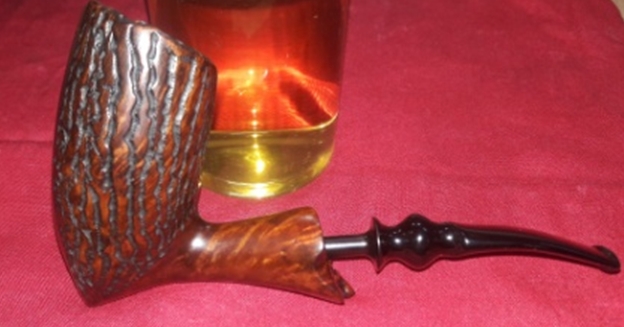
It’s been two months since I had worked on a free hand pipe that was made in Denmark, the last being a “Soren” sitter. The next pipe that I decided to work on from my grandfather’s collection is again a “SOREN”, but this pipe is a monster sized Pick Axe with a humongous bowl!!

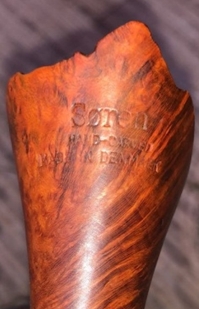
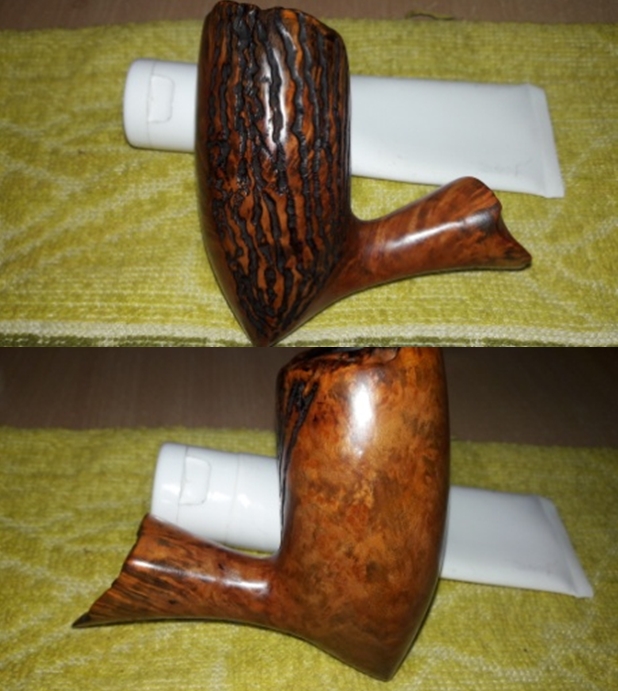
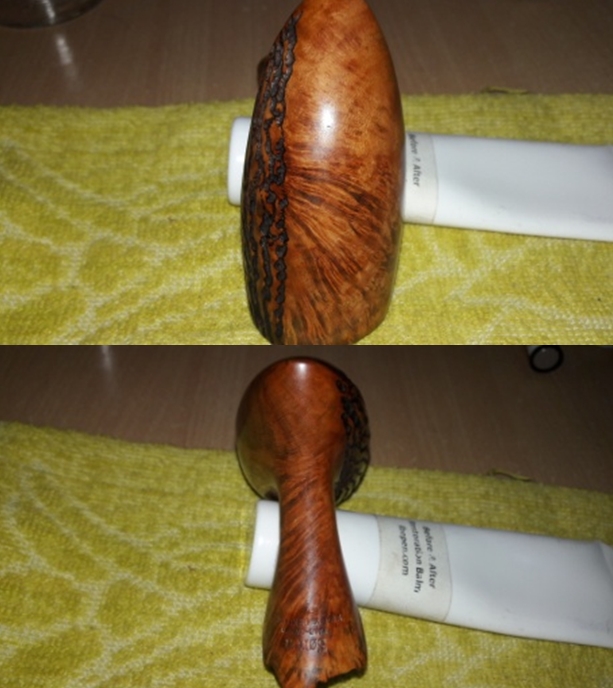
The large pick axe stummel has a combination of smooth and rusticated surface covering the bowl. The cascading water flow like hand carved rustication extends from the front left side of the bowl to the back while the smooth surface covers most of the front and complete right side of the bowl. Beautiful swirls of grains can be seen on the smooth surface interspersed with flame grains extending upwards from half way of the front of the bowl. The plateau shank end is flared towards the shank end and boasts of lovely flame grains on the right side of the shank. The flared shank end bears the only stamping seen on this pipe. It is stamped as “Soren”, name of the carver in script hand over “HAND-CARVED” over “MADE IN DENMARK” in block capital letters. The fancy vulcanite stem is devoid of any stampings.

While working on my Soren sitter free hand, I had referred to pipedia.com for information on this famous pipe carver from Denmark. I reproduce the information available on pipedia.com for a quick read.

 “Søren Refbjerg Rasmussen founded a company in 1969, which employed an average of 8 – 12 craftsmen in the 1970’s. The semi-freehands they produced were traded under his prename Søren. Rasmussen himself finished only the very best pipes. So his way of pipemaking closely resembled the ways of Preben Holm, Karl Erik Ottendahl or Erik Nørding. Altogether more than 1,000,000 pipes were sold.

Today he works alone as Refbjerg and manufactures only a small number of pipes in his workshop in DK-2860 Søborg, which are considered to be tremendously precisely executed. The dimensions mostly range from small to medium sized, corresponding to his personal preferences. The shapes adhere to the classical models, but often he gives them a touch of Danish flair. Refbjerg accepts minor faults but never uses any fillings. “Straight Grain” is the only grading, used for his very best pieces. He likes stem decorations made of exotic woods or metal rings.

As Rainer Barbi once stated “Refbjerg uses only briar from Corsica and more than that, he’s the one and only to import it from there, at least in Europe. He’s supplier to the vast majority of the Danish makers”.

From the above, it can be safely assumed that this pipe was made in the 1970’s as it bears the stamp of the carver’s prename “Soren”!!

INITIAL VISUAL INSPECTION
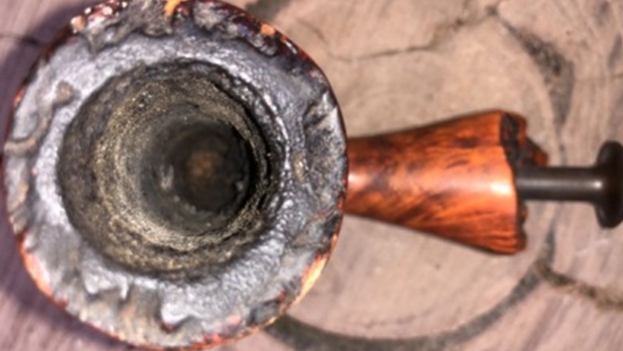
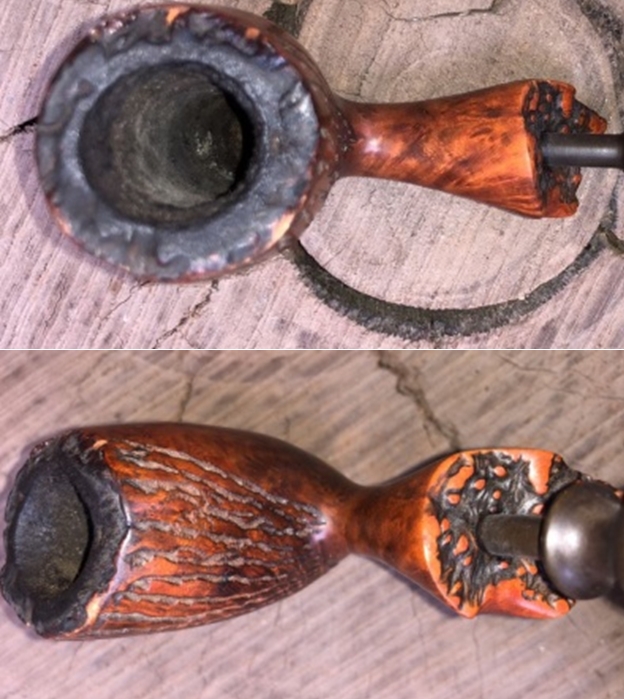
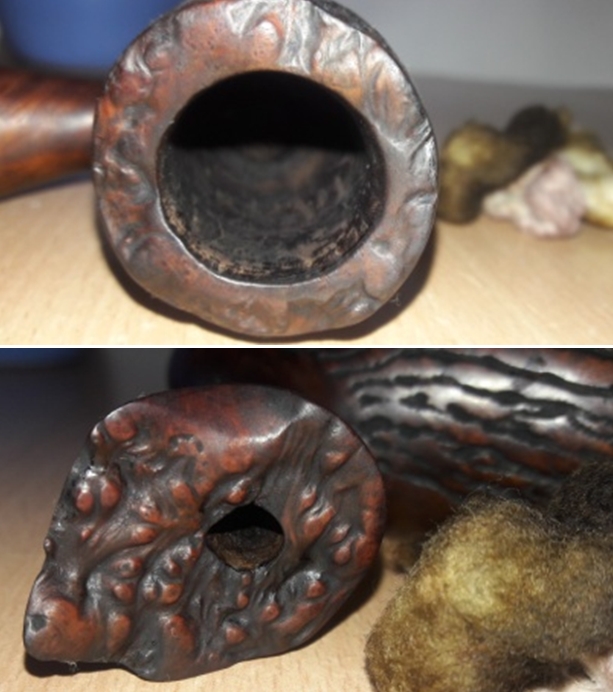
There is a thick layer of cake in the bowl. The external surface of the stummel feels solid to the touch and I think there are no issues with the condition of the chamber. However, there are always surprises when you least expect them!!! I have learnt my lessons!!! Thus, condition of the inner walls of the chamber will be ascertained once the chamber has been reamed and the cake is taken back to the bare briar. There is a strong sweet smell of tobacco which may reduce once the cake has been reamed out and chamber has been cleaned with isopropyl alcohol.The plateau rim top and shank end is covered in the overflow of lava, dirt and grime. This will have to be cleaned. The condition of the inner edge will be determined only after removing the cake. The air way in the shank is clogged with oils and tars and will require a thorough cleaning. The stummel is covered in a thick layer of dust, dirt, oils and grime. The stummel looks dull and lackluster. The grains on the smooth surface and the sandblast rustications are all covered in tars, oils and grime. To be able to appreciate these grains and rustications, the stummel will have to be cleaned. However, there is not a single fill to be seen on this large briar estate. A few minor dents and dings are seen on the stummel surface, a result of uncared for storage over a prolonged period. This issue can be sorted out by sanding the stummel surface with a sand paper, followed by micromesh sanding and polishing. The fancy quarter bent vulcanite stem is heavily oxidized and two deep bite marks can be seen on the lower surface of the stem. The lips on both upper and lower surface show significant damage due to bite marks and are out of shape. I hope to address these issues by simple heating of the stem with the flame of a Bic lighter. The air way in the stem appears to be clogged and the air flow is laborious to say the least. This will be addressed by thorough internal stem cleaning with pipe cleaners and alcohol. There is calcification seen on either surface about an inch from the button end. The bottom of lip edge shows significant deposition of dirt and oxidation. This will have to be cleaned.THE PROCESS
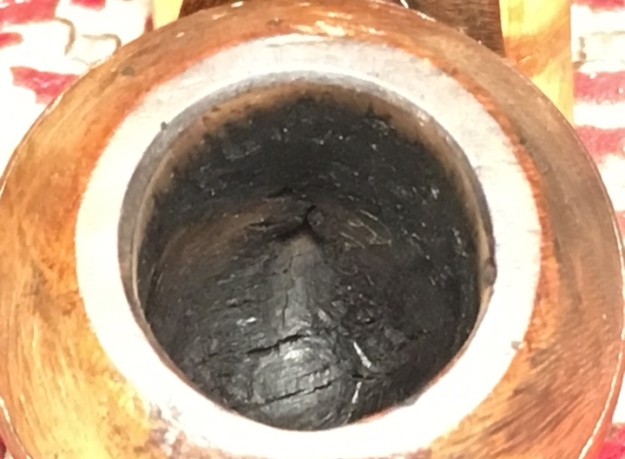
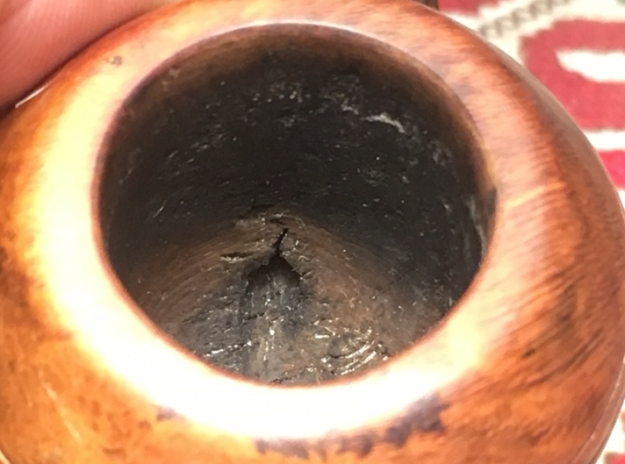
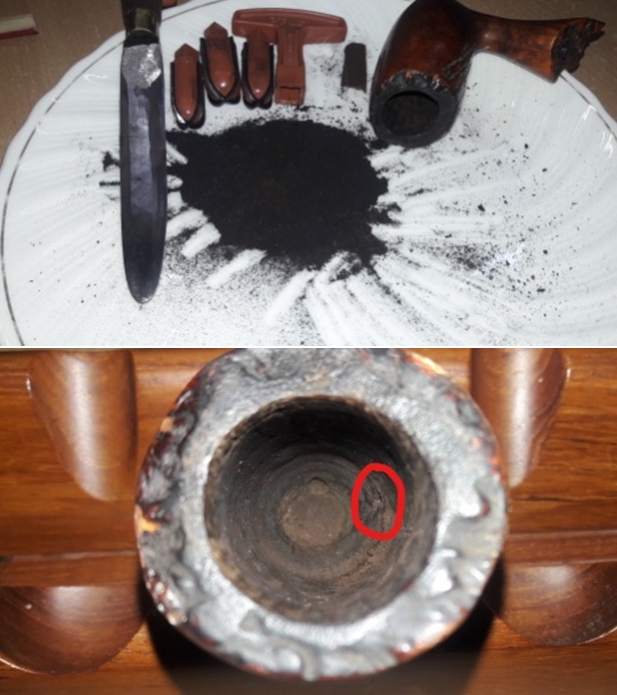
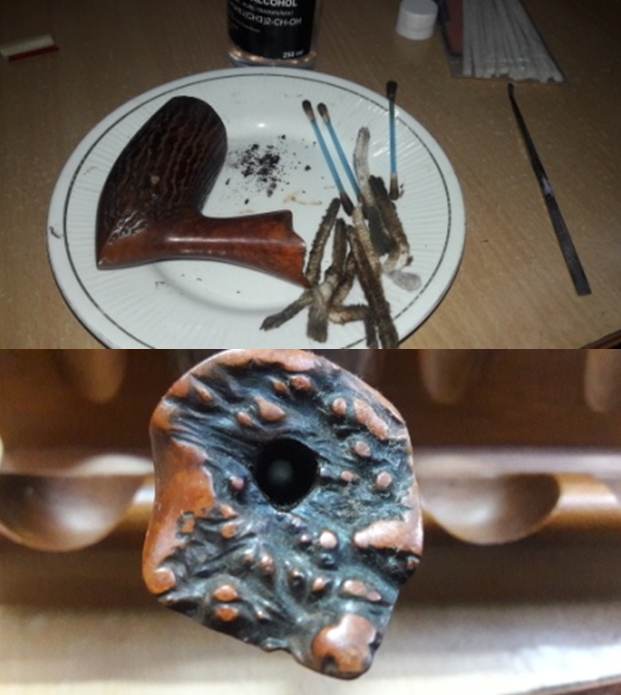
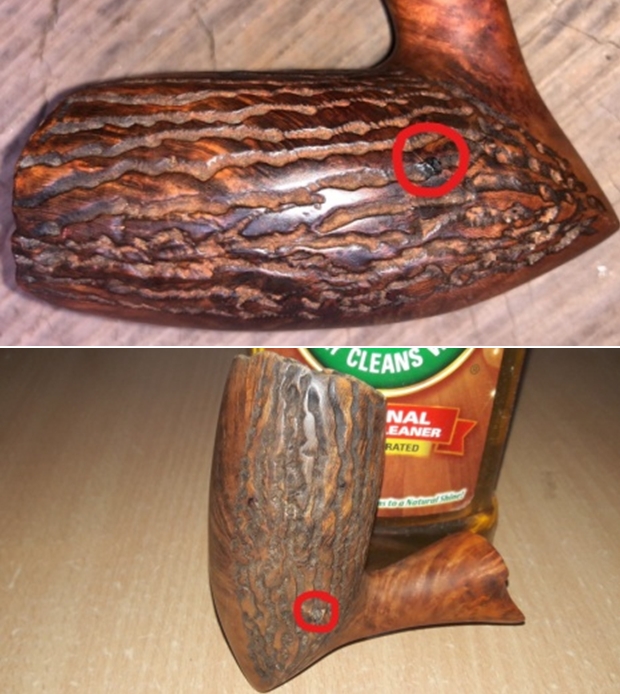
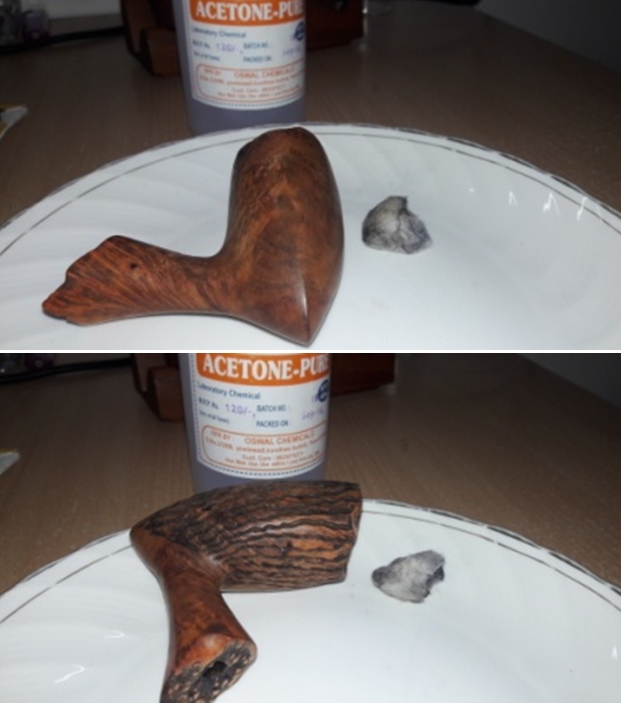
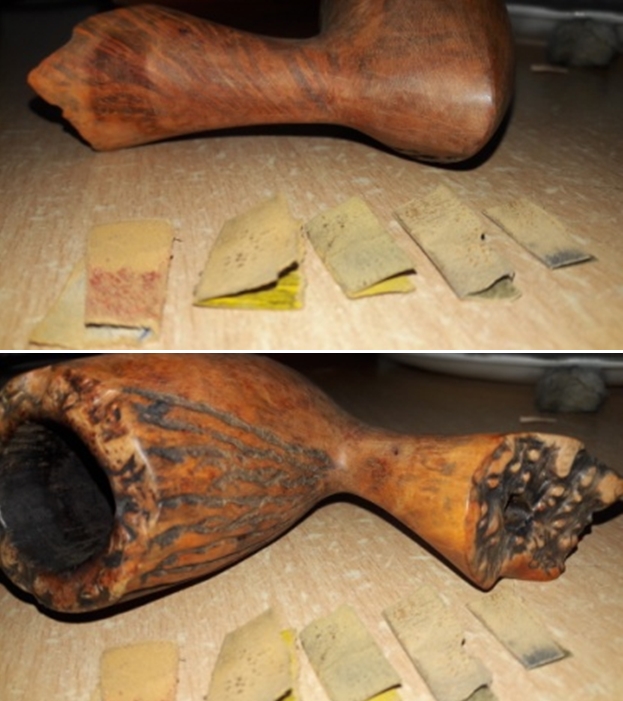
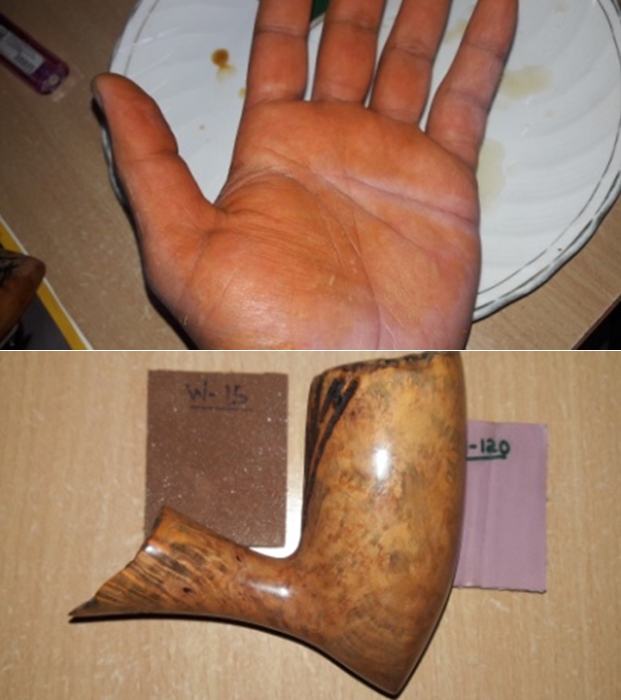
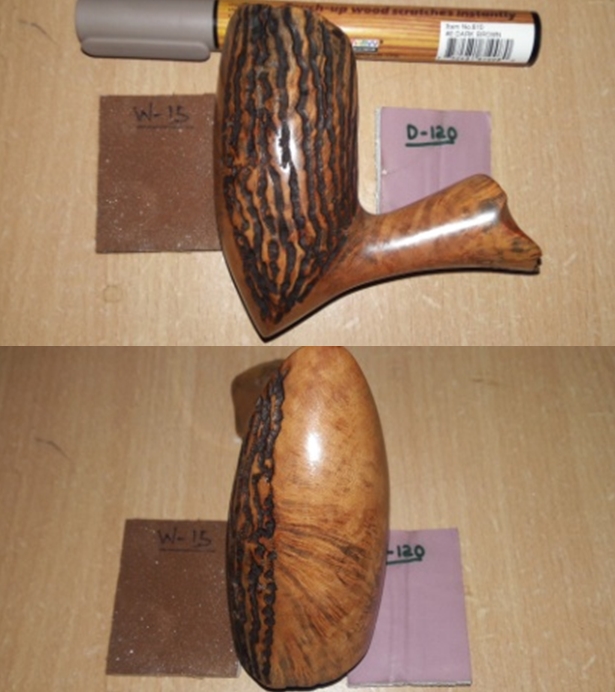
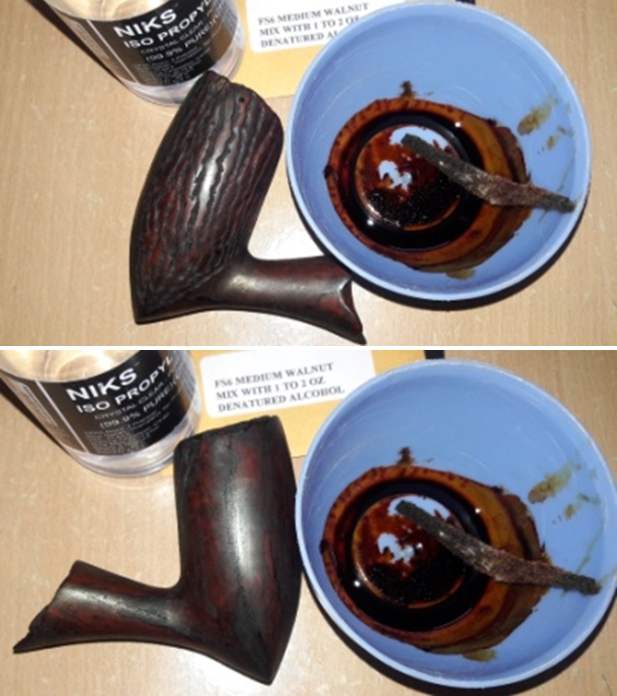
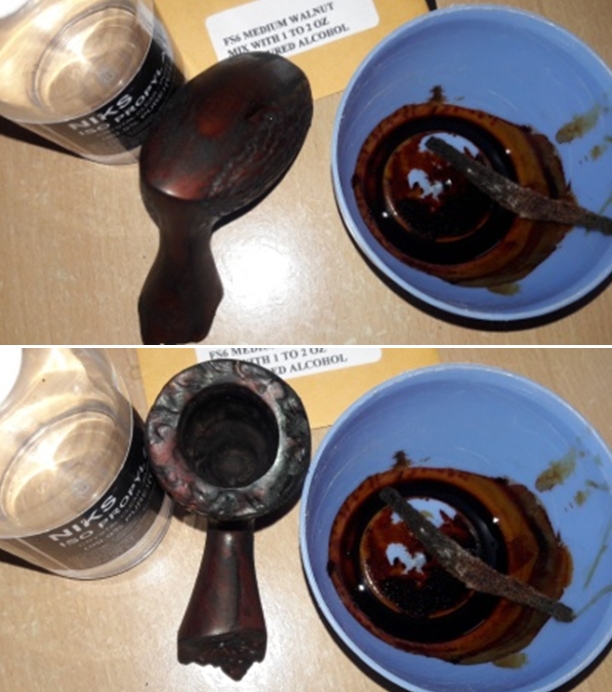
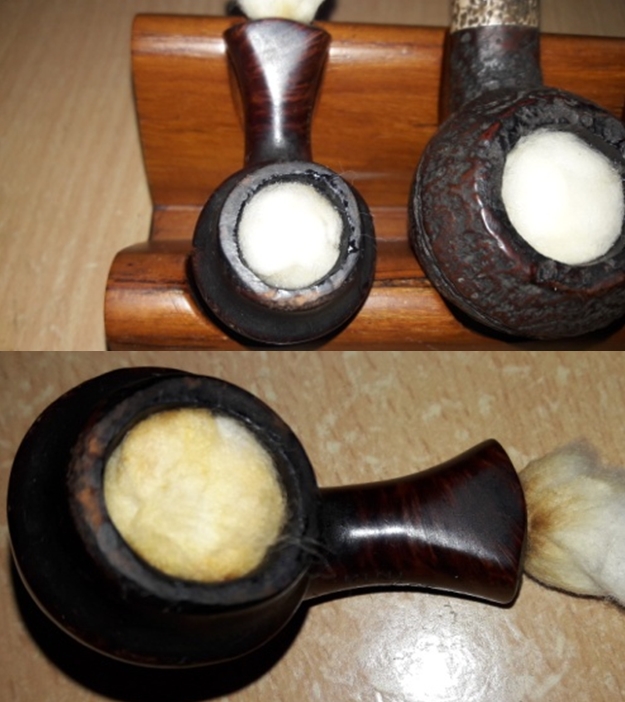
I started this project by reaming the chamber with size 2 and followed it up to size 4 head of PipNet reamer. I used a 220 grit sand paper, pinched between my thumb and forefinger, to sand the inner walls of the chamber of the pipe. Once I had reached the bare briar, I wiped the chamber with a cotton pad dipped in isopropyl alcohol. This removed all the residual carbon dust but this time not the ghost smells. This cleaning revealed the first (and pray it to be the last!!) surprise. There are a few very thin webs of line seen along the front and left side of the chamber walls and one slightly larger gash on the left side. This gash is highlighted in a red circle. I shall address this issue at the end of the restoration by coating the walls with a mixture of activated charcoal and yogurt. This coating will aid in quicker formation of a fresh cake.I followed up the reaming by cleaning the mortise and air way of the pipe using hard bristled, regular pipe cleaners and q-tips dipped in alcohol. The mortise and the draught hole was so chock-a- block with all the dried tars, oils and gunk that I had to use my fabricated spatula to scrape out all the muck from the mortise and the draught hole!!!! I gave a final clean with shank brushes dipped in alcohol and dried the mortise with a rolled paper napkin. The shank internals and the draught hole are now nice and clean with an open and full draw. The issue of sweet smells of old tobacco was also reduced to a very large extent.I cleaned out the internals of the stem using hard bristled and regular pipe cleaners dipped in alcohol. I scraped the dried oils and tars from the tenon with the sharp edge of my fabricated dental spatula. The deep bite marks on the stem and lip edges were flamed with the flame of a Bic lighter.  This helps to raise the bite marks to the surface. However, this did not work. From my experience, I have learnt that getting rid of the oxidation from and around the surface to be filled helps in subsequent better blending of the fill with the stem surface. With a folded piece of used 150 grit sand paper, I sand the area that is required to be filled. I cleaned the sanded portion of the stem with cotton pad dipped in alcohol and spot filled the damaged area with a mixture of activated charcoal and clear superglue. I set the stem aside for the fill to cure. Now, it was the turn of the stummel of the pipe to get cleaned up. Using a hard bristled tooth brush dipped in undiluted Murphy’s oil soap, I very deliberately scrubbed the stummel, cleaning the surface thoroughly. Special attention was paid to scrub out all the dirt and dust from the crevices in the rustication on the sides and front of the stummel as well as the plateau rim top and shank end. I was surprised to note that while rinsing the pipe under tap water, the water ran a bright orange color. Residual orange color can be seen on the stummel, probably due to a coating of shellac!!! I do not like it and will have to get rid of it, period. The stummel, plateau shank end and rim top were dried using paper napkins and soft cotton cloth. The cleaning of the stummel revealed the second surprise!! There was a sticky and soft spot present in the rusticated portion on the stummel; this has been marked in a red circle below. When I scrubbed the stummel, it was revealed that this fill had gone soft. I dug out the old and soft fill with my fabricated sharp knife. The alignment of this fill roughly matched with that of the larger gash observed on the left side of the chamber wall. I discussed this issue with my guru, Mr. Steve, after he had seen the pictures of the damage. It was decided that the fill would be refreshed and the inner walls of the chamber should be coated with a layer of activated charcoal and yogurt. There were three other very minor fills; two on the shank end and one in the rusticated portion of the stummel at the back of the bowl. These have been circled in red. Before progressing ahead with any further restoration, I decided to address the issues of “fills” in the stummel!!!!! I completely removed the old fills using a sharp, pointed and thin fabricated knife. I press a little briar dust and realizing what a precious commodity it is, I was very careful not to waste even a microgram. I packed it in to the gouges on the stummel, pressing it tightly with the back of a toothpick and spot applied CA superglue over it with the pointed end of the toothpick. I spot filled the shank end fills with only CA superglue as they were not large and deep. With this, I set the stummel aside for the fresh fills to cure.After the fills had cured, I sand these fills using a flat head and a round needle file to achieve a rough match with the surrounding surface. With a folded piece of 180 grit sand paper, I sand the fills in the rusticated portion to match it with the worm trails in the rustication. I wiped the entire stummel with a cotton swab soaked in acetone to remove the coating of shellac, but without the expected results. The stummel still has that orange coloration. I further sand the entire smooth surface of the stummel with a piece of folded 150, 220, 440, 600 and 1000 grit sand paper to perfectly match the fills with the rest of the stummel surface and also to achieve my aim of completely removing the shellac coating, but the coloration still persists. Hopefully, remnants of the shellac coat will be addressed during the micromesh sanding and polishing process. This use of sand paper, however, addressed all issues of the dents and dings from the stummel surface!! I wanted to remove the coating of shellac while highlighting the grains seen on the smooth portion of the stummel. To achieve this aim, I sand down the stummel using micromesh pads, wet sanding with 1500 to 2400 grit pads and dry sanding with 3200 to 12000 grit pads. I wiped the stummel with a moist cloth to clean the surface of all the dust after wet sanding. The orange coloration on the stummel can be gauged by the color of my hand. I was still not happy with the results of the micromesh sanding. Using a dark brown stain pen, I darkened the worm trails in an attempt highlight and add contrast against the raised portions in the rustication. I was not satisfied with the way the pipe looked at this stage. It was still “loud” and appeared gaudy. I rub a small quantity of “Before and After Restoration Balm” in to the briar and let it rest for a few minutes. I took some extra efforts to work the balm in to the hand carved rustications on the bowl. I hand buffed it with a horse hair brush to a deep shine. I had assumed that this would help improve the look of the stummel. Alas!! That was not to be the result. The bowl still appeared ugly and definitely did not measure up to my standards. I was lost for ideas when I shared pictures of the stummel with my guru, Mr. Steve. This is what he saw. In his characteristic style, Mr. Steve suggested that “I would first get rid of the dark stain in the worm trails by wiping the entire stummel and then re-staining it”. This is exactly what I did. I wiped the stummel with a cotton swab dipped in isopropyl alcohol and removed all the stain. Mr. Steve had sent me sachets of easy-to-use stain powder which just needed to be mixed in isopropyl alcohol and applied to the stummel surface. I chose the Walnut stain. Since this was the first time that I would be using a stain, I was a bit apprehensive. I mixed a little quantity of the stain powder and mixed it with a little quantity of 99.9% pure isopropyl alcohol to a liquid consistency. I have purposely not mentioned any specific quantity of each as I had mixed the two just by relying on feel and visual confirmation. I was fortunate that I got the mix spot on in the first attempt. There is a lot of leeway in this process in that if the stain appears too dark after application, desired transparency could be achieved by wiping the stummel with a cotton swab dipped in alcohol!!!! I folded a pipe cleaner and evenly applied the stain over the complete stummel, plateau rim and shank end. This was followed by burning excess of alcohol with the flame of a Bic lighter. This also helps the stain to set on the stummel surface. Just a word of caution to all first timers like me, please wear either plastic or latex rubber gloves if you wish to avoid the struggle of removing the stains from your hands later!!! I wiped the stummel surface with a cotton swab dipped in isopropyl alcohol as the stain was slightly darker and unevenly applied than I would have liked. This helped in bringing more transparency and evenness in the stain application. Once the stain had set, I mount a cotton cloth buffing wheel on to my local machine which is similar to a Dremel.  I set the speed at about half of the full power and applied White Diamond compound to stummel of the pipe. I wiped/ buffed the pipe with another clean cotton cloth buffing wheel to clear it of any leftover compound dust. I then mounted another cotton cloth wheel on to the polishing machine and applied several coats of carnauba wax over the stummel. I finished by giving the stummel a rigorous hand buffing using a microfiber cloth to raise the shine further. The grains on the stummel now look beautiful and peek through the stain. I shared the pictures of the stummel with Mr. Steve who appreciated the look of the stummel at this stage. With the stummel nice and clean and attractive, I worked the stem of the pipe. The fill on the stem had cured nicely and I sand it down with a flat head needle file. I sharpened the lip edges using a needle file and sand the entire stem with 220 followed by 400, 800 and 1000 grit sand paper. This helps to reduce the sanding marks left behind by the more abrasive 220 grit paper, while this process eliminated the deep oxidation seen on the vulcanite stem of the pipe. To bring a deep shine to the vulcanite stem, I went through the complete set of micromesh pads, wet sanding with 1500 to 2400 grit pads and dry sanding with 3200 to 12000 grit pads. I wiped the stem with alcohol after each pad and rubbed it down with Extra Virgin Olive oil. The internals of the stem was cleaned out using alcohol and pipe cleaners. The pictures of the process and final results are shown below. The only issue remaining to be addressed, before I could proceed with the final polish, was the deeper gash seen in the walls of the chamber. I mixed activated charcoal and yogurt to a consistency which would enable an even spread and applied it on the inner walls of the chamber and set it aside to cure it overnight.To finish, I re-attach the stem with the stummel. I mount a cotton cloth buffing wheel on to my local machine which is similar to a Dremel. I set the speed at about half of the full power and applied White Diamond compound to stummel of the pipe. I wiped/ buffed the pipe with a soft cotton cloth to clear it of any leftover compound dust. I then mounted another cotton cloth wheel on to the polishing machine and applied several coats of carnauba wax over the stummel and the stem. I finished the restoration by giving the pipe a rigorous hand buffing using a microfiber cloth to raise the shine further. The completed pipe, with the dark brown hues of the stummel contrasting with the shiny black stem, looks lovely, fresh and vibrant; the photographs speak for themselves. The beauty, size and shape of this pipe make it one of my favorite and will find a place of pride in my modest collection. If only the pipe could tell some of the stories and incidents that it has witnessed while my grand old man puffed away.…………… Cheers!!! PS: The oversized and shape of the stummel coupled with an equally proportionately long stem, posed a challenge while taking pictures of the complete finished pipe!!!! This is one of the many areas where I need to make a lot of progress. If I am unable to capture the beauty of the finished pipe and present it in an attractive manner, I feel my efforts are in vain.


A Fresh Lease on Life For a Tired Looking “Count”!


Blog by Paresh Deshpande

A few months back I had restored two Kriswill pipes from my grandfather’s collection; a “CHIEF” and a “GOLDEN CLIPPER”. Both these pipes were a big challenge to restore and took considerable time and effort. However, the end results on both these pipes were highly satisfying!! To those interested in reading the write up on both these pipes, here are the links; https://rebornpipes.com/2018/08/04/breathing-new-life-into-a-kriswill-chief-20/

https://rebornpipes.com/2018/08/11/restoring-a-kriswill-golden-clipper/

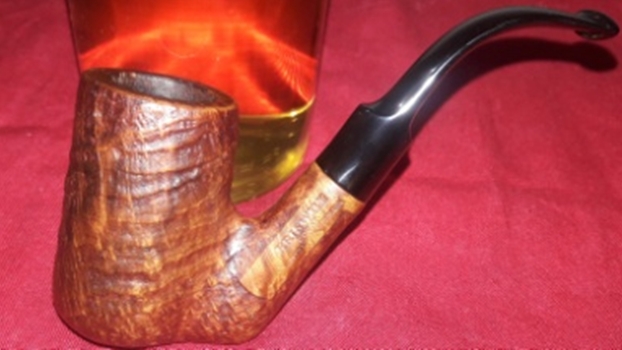
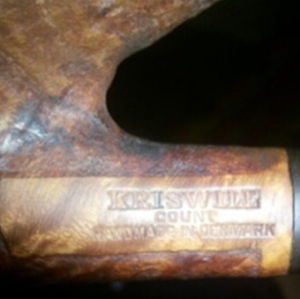
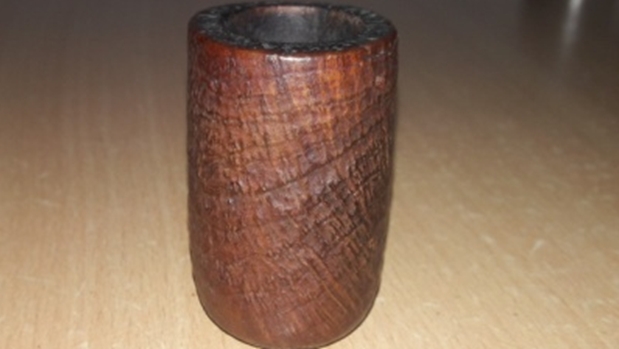
This is the third Kriswill from my grandfather’s collection, a sandblasted KRISWILL “COUNT” in an impressive Oom Paul shape. The sandblast follows the beautiful grain pattern on the stummel surface and on the steeply raking shank, save for the smooth portion on the left side of the shank which bears the only stamping visible on the pipe and is stamped as “KRISWILL” over “COUNT” over “HANDMADE IN DENMARK”. This smooth surface extends to the shank end and forms a smooth ring all around. When polished and revitalized, this ring will contrast beautifully against the glossy black of the vulcanite stem. The full bent vulcanite stem is devoid of any stamping.

While working on the Kriswill Chief and Golden Clipper, I had researched the brand and detailed information can be referred to on the links provided above.

INITIAL VISUAL INSPECTION
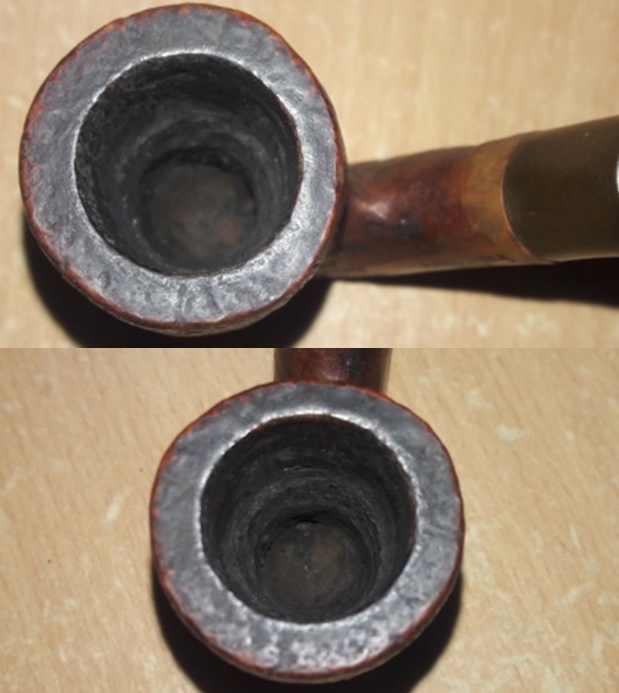
Age definitely shows on the stummel surface!!! The briar is dull and lifeless and has taken on a layer of aged patina, through which one can make out the beautiful sandblast patterns all around which follow the grains. There is a slight overflow of lava on to the stummel surface. A thorough cleaning of the stummel followed by polish will accentuate the sandblast pattern on the stummel. There is an uneven buildup of cake in the chamber with a thicker layer seen at the bottom half of the chamber. The condition of the inner walls of the chamber can be ascertained only after the cake has been removed completely and taken down to bare briar. The bowl feels robust and solid to the touch from the outside. This issue should be a breeze to address.The rim top has darkened on the due to a slight overflow of lava. This can be seen in pictures above. The condition of the inner and outer edge and rim top is pristine. The shank end of the pipe is clean. However, the mortise does show signs of accumulated dried oils, tars and remnants of ash, greatly restricting the air flow.The vulcanite stem has tooth indentations and minor tooth chatter on the upper and lower surface. It is heavily oxidized. The air flow through the stems is laborious to say the least. The fit of the stem in to the mortise is very loose, which will loosen further after the mortise and tenon have been cleaned. These issues will need to be addressed.THE PROCESS
I started this project by reaming the chamber with size 2 and followed it up with size 3 head of PipNet reamer. I used a 220 grit sand paper, pinched between my thumb and forefinger, to sand the inner walls of the chamber of the pipe. Once I had reached the bare briar, I wiped the chamber with a cotton pad dipped in isopropyl alcohol. This removed all the residual carbon dust and also rid the chamber of all ghost smells. The walls of the chamber are nice and solid with no signs of heat fissures or cracks. I followed up the reaming by cleaning the mortise and air way of the pipe using hard bristled and regular pipe cleaners, q-tips dipped in alcohol. The mortise and the draught hole were given a final clean with shank brushes dipped in alcohol. I dried the mortise with a rolled paper napkin. The shank internals and the draught hole are now nice and clean with an open and full draw.I cleaned out the internals of the stem using hard bristled and regular pipe cleaners dipped in alcohol. I scraped the dried oils and tars from the tenon with the sharp edge of my fabricated dental spatula. The deep bite marks on the stem were flamed using a Bic lighter. However, this did not work. From my experience, I have learnt that getting rid of the oxidation from and around the surface to be filled helps in subsequent better blending of the fill with the stem surface. With a folded piece of used 150 grit sand paper, I sand the area that is required to be filled. I cleaned the sanded portion of the stem with cotton pad dipped in alcohol and spot filled the damaged area with a mixture of activated charcoal and clear superglue. I set the stem aside for the fill to cure.Now, it was the turn of the stummel to get cleaned up. Using a hard bristled tooth brush dipped in undiluted Murphy’s oil soap, I very deliberately scrubbed the stummel, cleaning the surface thoroughly. Special attention was paid to scrub out all the dirt and dust from the crevices in the sandblast on the stummel and shank. I cleaned the plateau rim and shank end too. The stummel, plateau shank end and rim top were dried using paper napkins and soft cotton cloth. I rub a small quantity of “Before and After Restoration Balm” in to briar and let it rest for a few minutes. I took some extra efforts to work the balm in to the sandblast finish of the bowl. The balm almost immediately works its magic and the briar now has a nice vibrant appearance. I further buff it with a horse hair shoe brush. With the stummel nice and clean and attractive, I worked the stem of the “COUNT”. I sharpened the lip edges using a needle file and sand the entire stem with 220 followed by 400, 800 and 1000 grit sand paper. This helps to reduce the sanding marks left behind by the more abrasive 220 grit paper. By mere sanding itself, the minor tooth marks seen on stem surfaces were completely addressed. This process also eliminated the deep oxidation seen on the vulcanite stem. To bring a deep shine to the vulcanite stem, I went through the complete set of micromesh pads, wet sanding with 1500 to 2400 grit pads and dry sanding with 3200 to 12000 grit pads. I wiped the stem with alcohol after each pad and rubbed it down with Extra Virgin Olive oil. The internals of the stem was cleaned out using alcohol and pipe cleaners. The pictures of the process and final results are shown below. To finish, I re-attach the stem with the stummel. I mount a cotton cloth buffing wheel on to my local machine which is similar to a Dremel.  I set the speed at about half of the full power and applied White Diamond compound to each of the three pipes. I wiped/ buffed the pipe with a soft cotton cloth to clear it of any leftover compound dust. I then mounted another cotton cloth wheel on to the polishing machine and applied several coats of carnauba wax over the stummel and the stem. I finished the restoration by giving the pipe a rigorous hand buffing using a microfiber cloth to raise the shine further. The completed pipe, with the dark brown hues of the sandblast stummel contrasting with the shiny black stem, looks lovely, fresh and vibrant; the photographs speak for themselves. If only the pipe could tell some of my grand Old man’s stories and recount incidents witnessed while being smoked.…………… Cheers!!

A Reborn Coventry Rusticated Bullmoose


Blog by Steve Laug

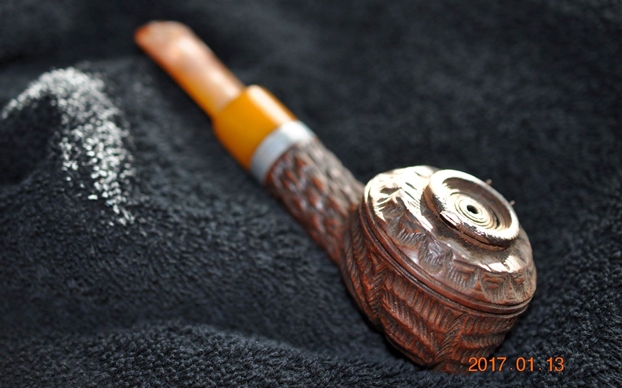
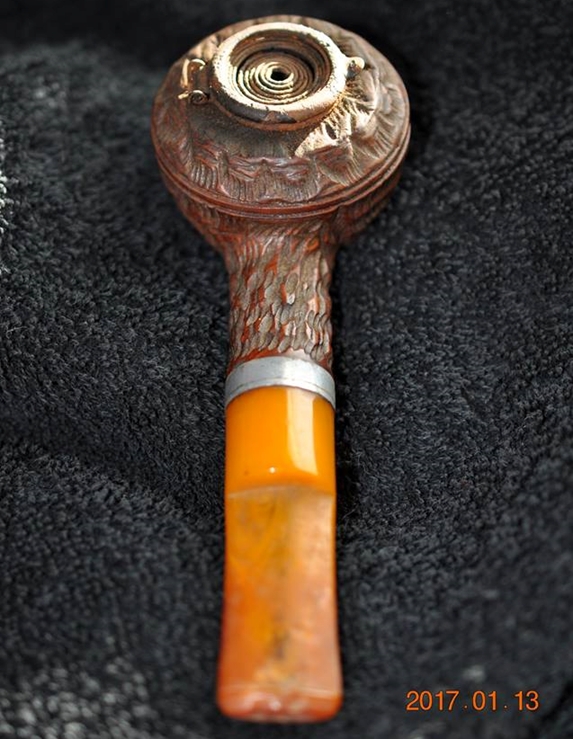
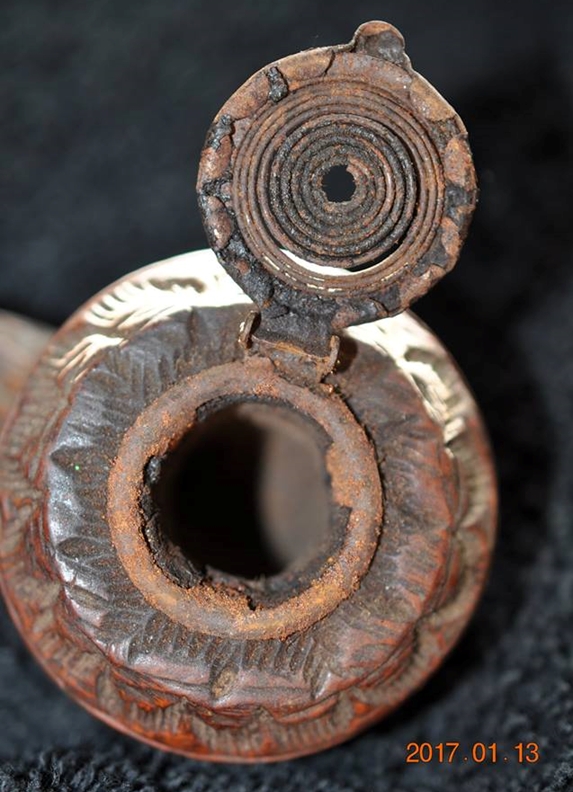
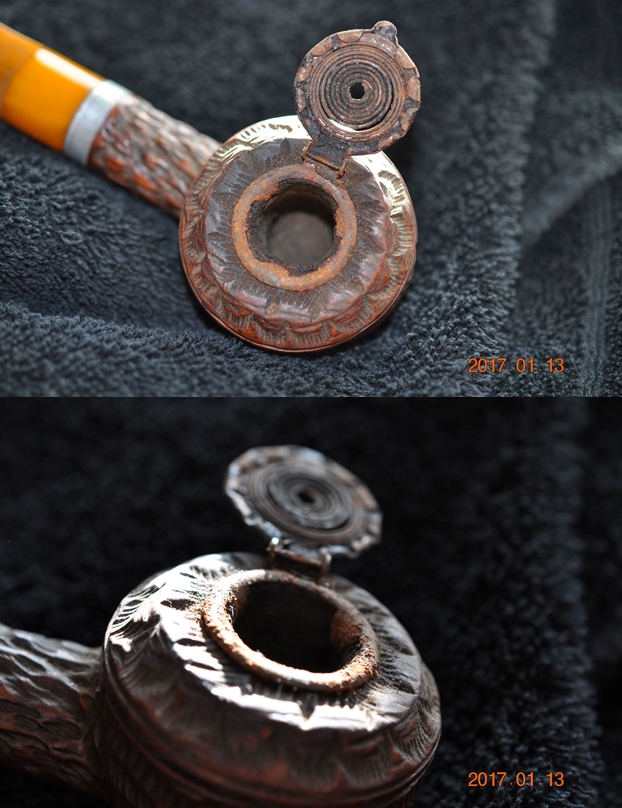
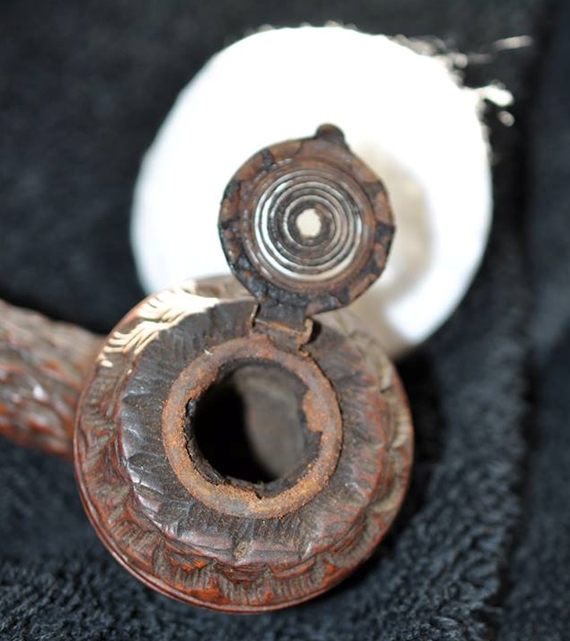
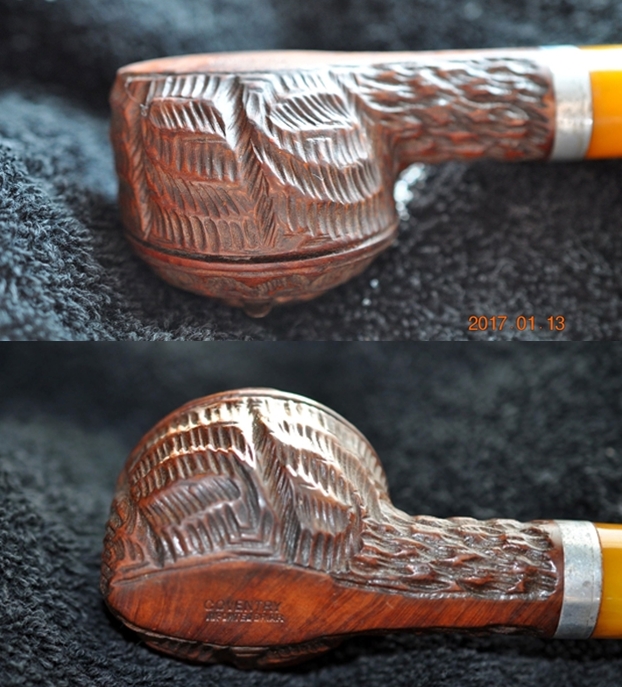
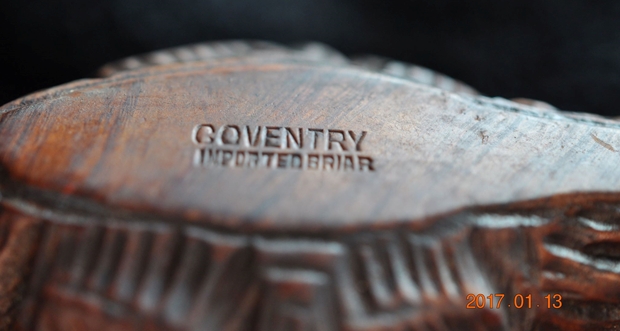
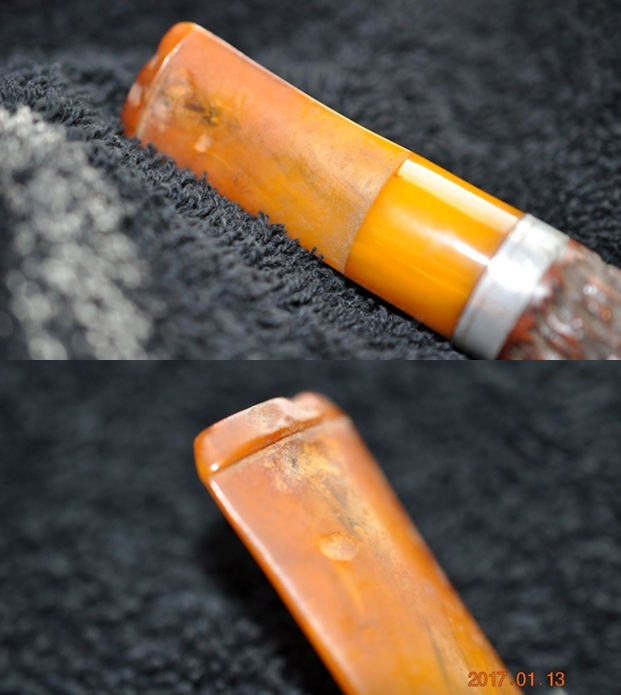
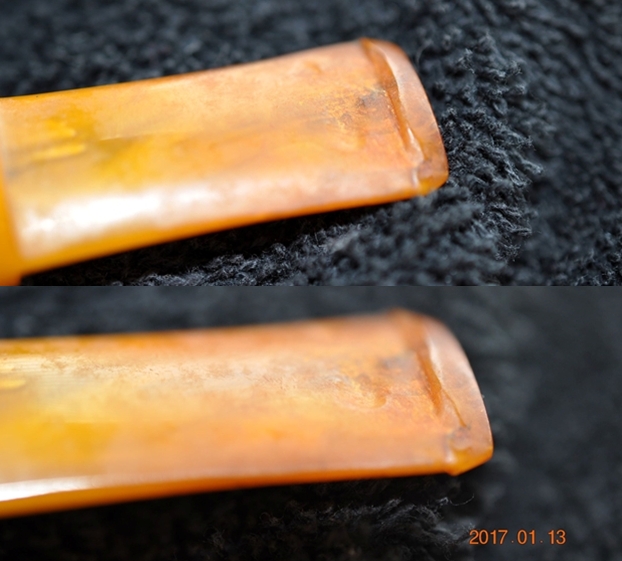
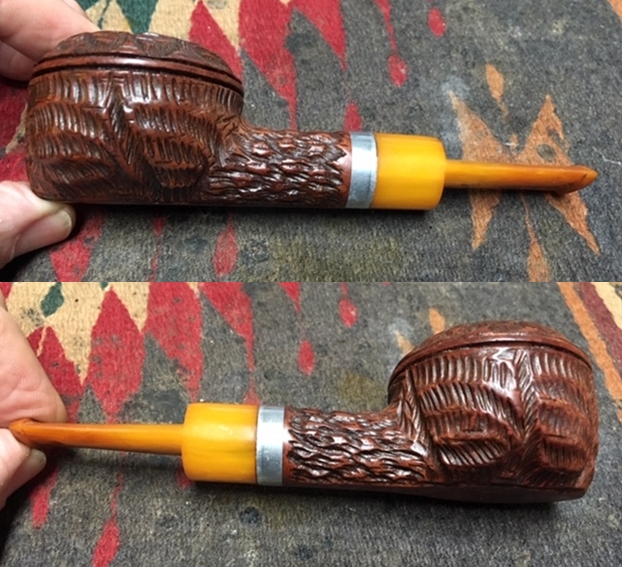
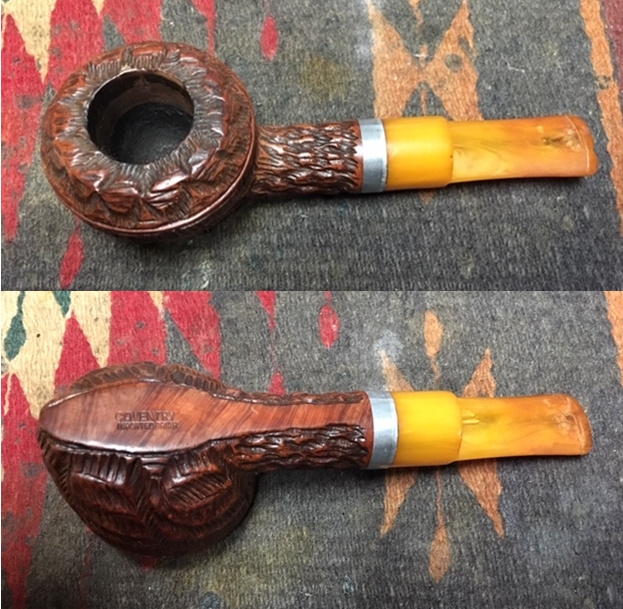
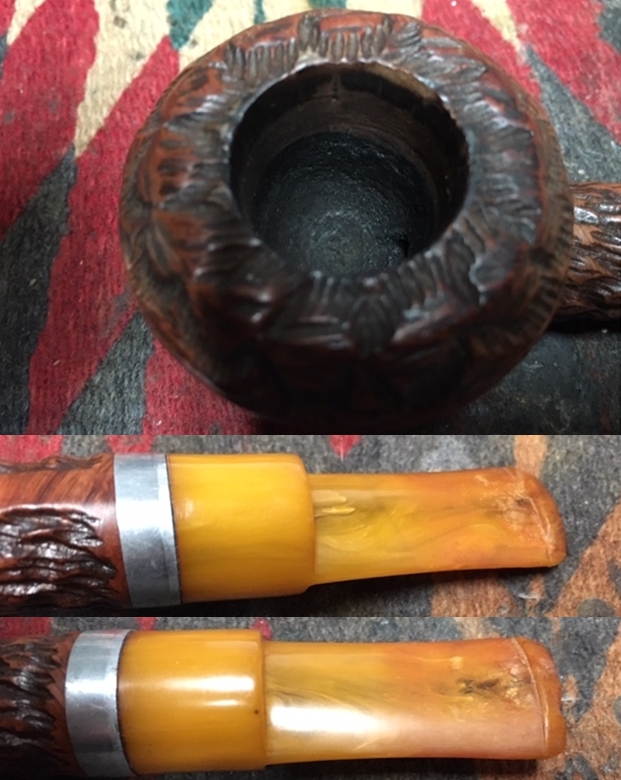
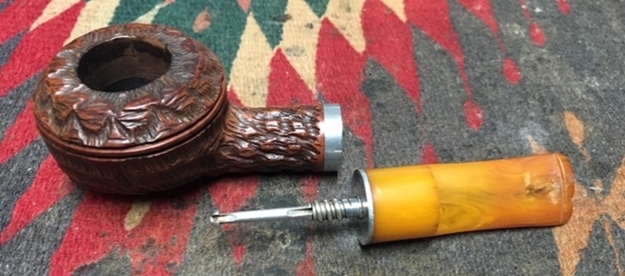
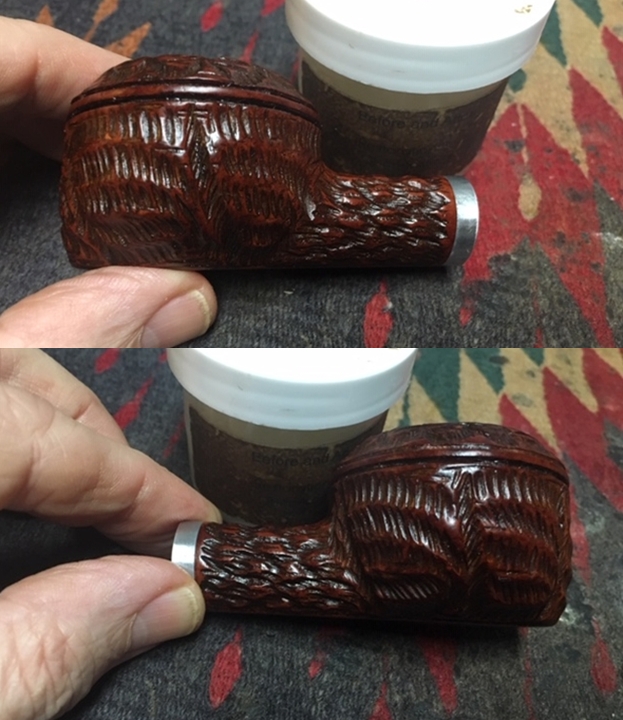
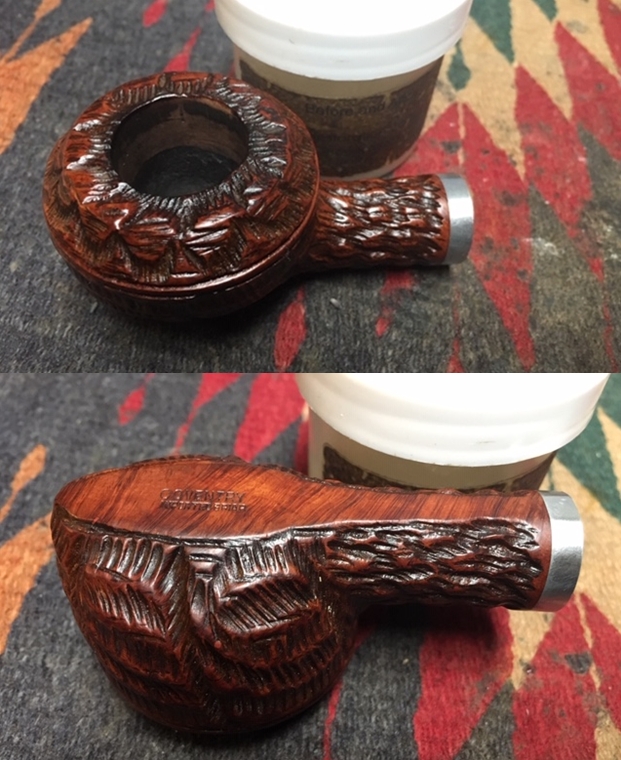
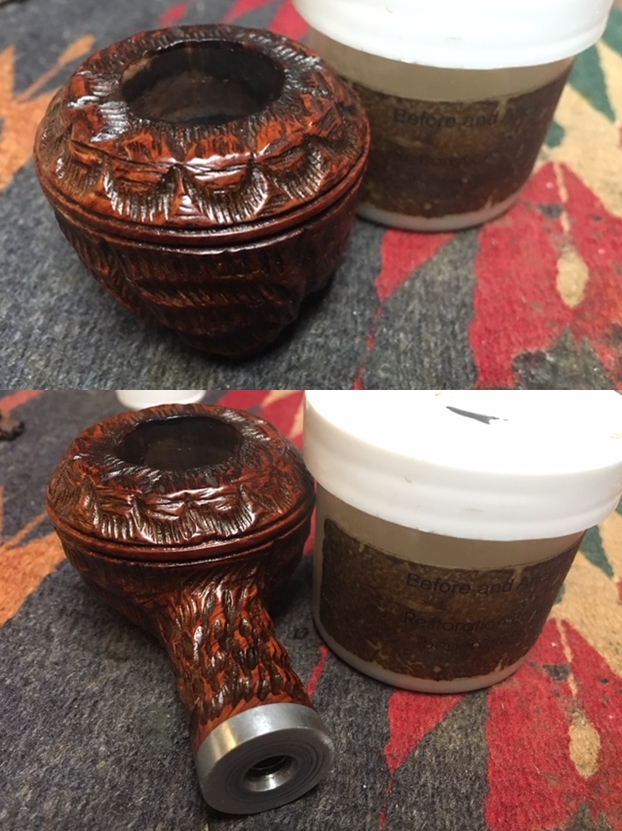
My brother Jeff picked up this Coventry pipe off eBay from Bradenton, FL. in January 2017. It is an interestingly shaped pipe and the rustication is quite unique. The rustication is dirty but in good condition. There is dust and debris in the grooves and valleys of the briar. The aluminum band is split with 1/3 remaining on the stem and 2/3 on the shank end. It is the exterior of the threaded mortise insert. The pipe had an aftermarket windcap that was absolutely filthy with debris, rust and tobacco tars and oils. There was a thick cake in the bowl that overflowed onto the windcap. The edges of the rim were in surprisingly good condition. The acrylic saddle stem was dirty and had deep tooth marks around the button on both sides and on the surface of the button as well. Jeff took photos of the pipe before he started his clean up. He took some photos of the rim top and the exterior of the bowl to show how dirty it was. You can see the lava on the rim and the rust and tars on the windcap. There is also a thick cake visible in the bowl. You can also see the sticky buildup on the exterior of the bowl. He took a photo of the stamping on the smooth, flat heel of the bowl – it read Coventry over Imported Briar.The stem showed a lot of wear and tear. There were deep tooth marks on the button surface itself and deep gouges and tooth marks on the stem for about an inch in front of the button. The material is an old style acrylic and I have learned from experience that it does not have memory like vulcanite. The tooth marks are there permanently. I have also learned that the colour darkens with time and sanding repairs always lightens the yellow. Knowing that means that some decisions will need to be made regarding the repairs. Jeff cleaned the pipe with his usual thoroughness. He removed the windcap and cleaned it as well as the pipe. He reamed the bowl with a PipNet reamer and cleaned it up with a Savinelli Fitsall Pipe Knife. He scrubbed the exterior with Murphy’s Oil Soap and a tooth brush to clean the dust and grime out of the valleys and grooves of the rustication. He scrubbed the rim top and it looked very good with no damage to the edges. The inside of the bowl was also in great condition. He scrubbed the internals of the shank and the stem with alcohol, cotton swabs and pipe cleaners. There was a long stinger in the shank that needed to be cleaned and he did that as well. The damage on the stem was quite visible once the stem was cleaned. I took photos of the pipe when it arrived here. I took some close up photos of the rim top and the stem to show the condition. The bowl and rim were perfect. The stem needed a lot of attention.I unscrewed the stem to get a photo of the long stinger that extends almost into the bottom of the bowl.I worked some Before & After Restoration Balm into the briar on the bowl and the rim top. I worked it into the surface with my fingertips to clean, enliven and protect the wood. I let the balm sit for about 20 minutes and buffed it off with a soft cotton cloth. I took photos of the pipe at this point in the process to show what the bowl looked like at this point. I set the bowl aside at this point and turned my attention to the stem. These early Bakelite/acrylic/plastic stems are really a pain and I do not relish repairing them. I have found that when they have been repaired and polished the stem loses the rich colour around the repairs. This one had been gnawed and there were deep tooth marks on the stem and button as well as several gouges in the surface of the stem. I cleaned the surface of the stem and filled in the marks with clear super glue. I rebuilt the top of the button and the edge. Once the repair cured I recut the edge of the button and flattened out the repairs with a flat needle file. It was still a mess but the bite marks and damage were no longer present.It is at this point that the issues always arise on these stems – sanding the repair smooth. When I blended the repair into the surface of the stem the area around the repair lightens significantly. It is ugly to my eye but I am willing to let it be because it improves the integrity of the stem.I cleaned out the dust in the airway in the stem and also some of the residual tars that are hard to get out of a pipe with the metal stinger apparatus like this one. I used pipe cleaners and alcohol and worked until the cleaners came out white.Now it was time to polish out the repairs and make the most of what looked rough. I polished the stem with micromesh sanding pads to remove the scratching left behind by the 220 grit sandpaper and give the briar and the acrylic a shine. I wet sanded with 1500-2400 grit pads and dry sanded with 3200-12000 grit pads. I wiped the stem down with a damp cloth after each pad. I gave it a final polish with Before & After Pipe Polish – both Fine and Extra Fine. Then gave it a final coat of Obsidian Oil. When I was finished the stem looked better than it did when I started. I still need to figure out how to keep the yellow from changing but oh well it is clean and sound. The photos tell the story. I put the bowl and stem back together. I polished the bowl and stem with Blue Diamond to polish out the scratches in the briar and acrylic. I gave the bowl several coats of Conservator’s Wax and the stem multiple coats of carnauba wax. I buffed the pipe with a clean buffing pad to raise the shine. I hand buffed it with a microfiber cloth to deepen the shine. The pipe polished up pretty nicely. The contrast of colours between the briar bowl and the yellow/gold acrylic stem really looked good in spite of the repairs. The Coventry Bullmoose looked really good and has a unique shape and finish that catches the eye. The finished pipe is shown in the photos below. The dimensions of the pipe are Length: 5 1/2 inches, Height: 1 ½ inches, Outside diameter of the bowl: 2 inches, Chamber diameter: 7/8 of an inch. This one will soon be on the rebornpipes store if you are interested in adding it to your collection. Thanks for reading this while I worked on it. It was interesting and unusual piece to restore and I really enjoyed the work.

Resurrecting a Tired & Worn Special Straight Grain 122


Blog by Steve Laug

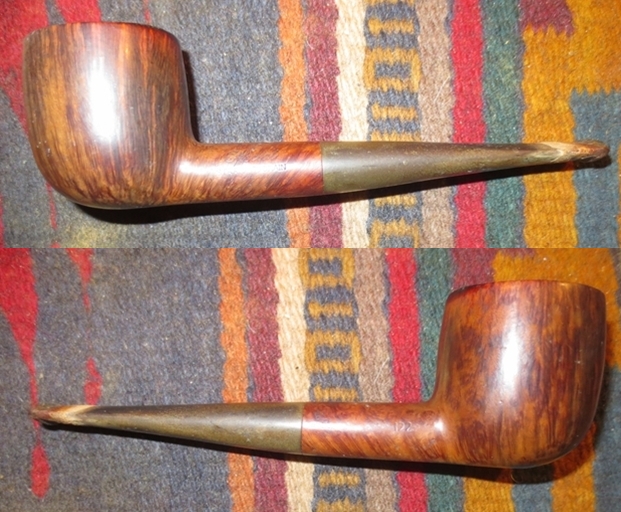
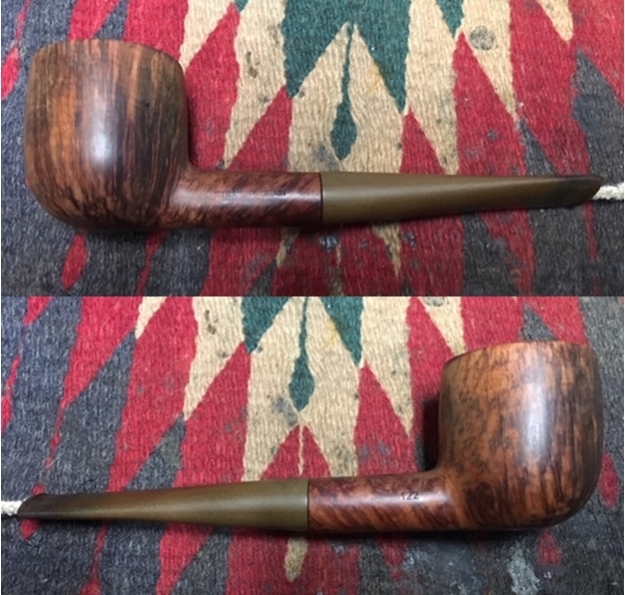
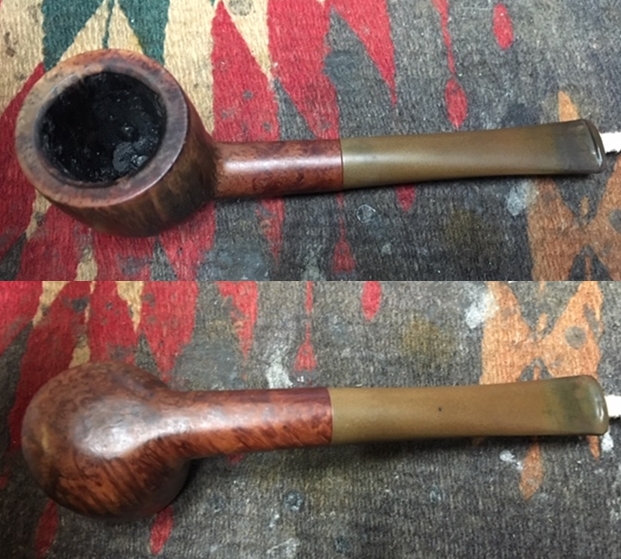
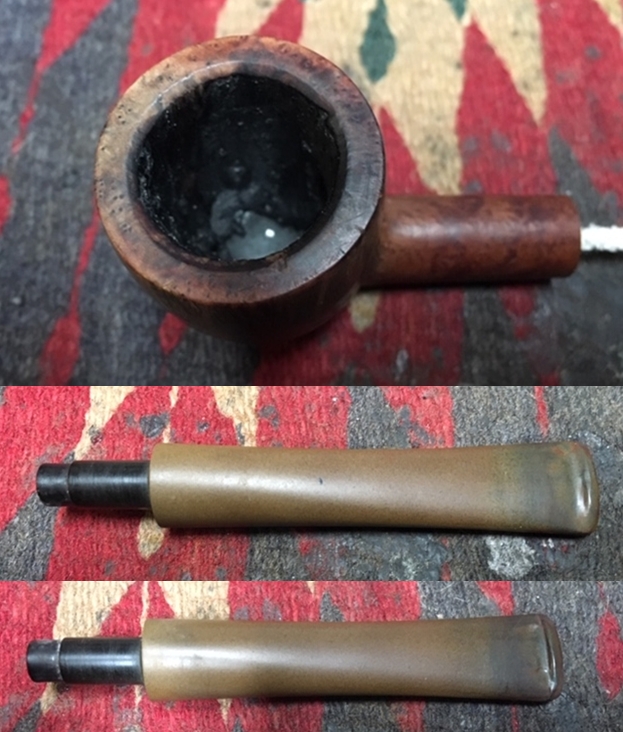
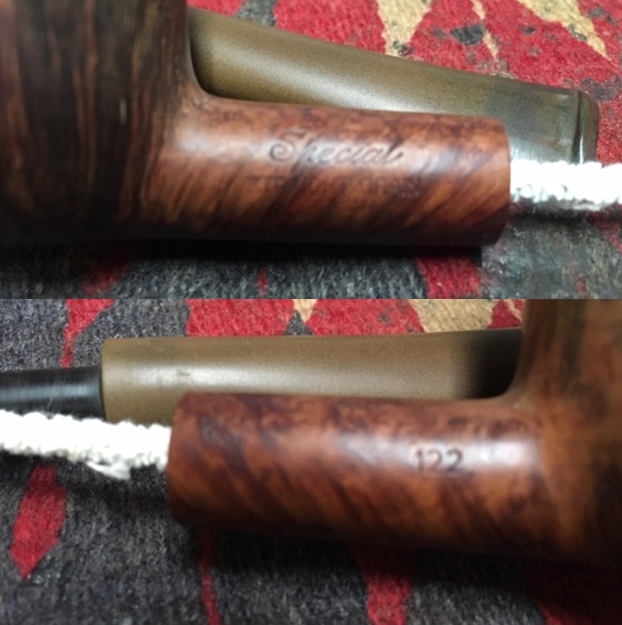
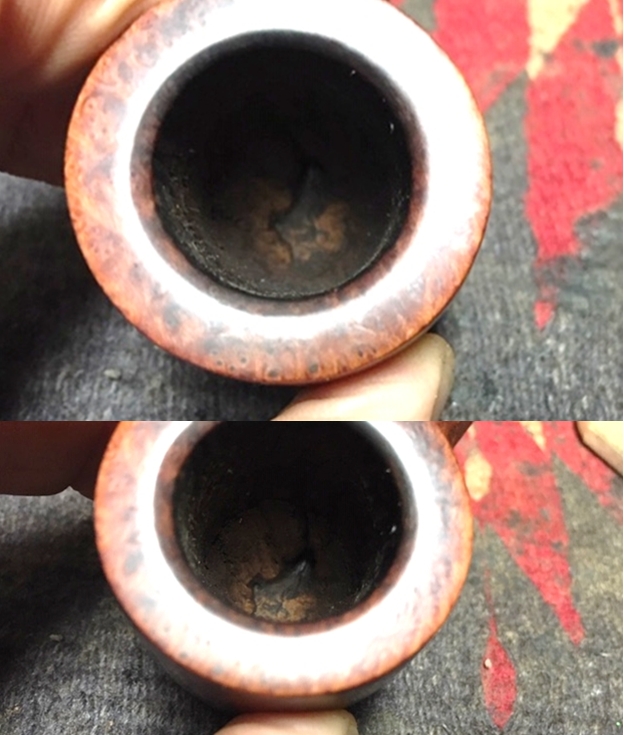
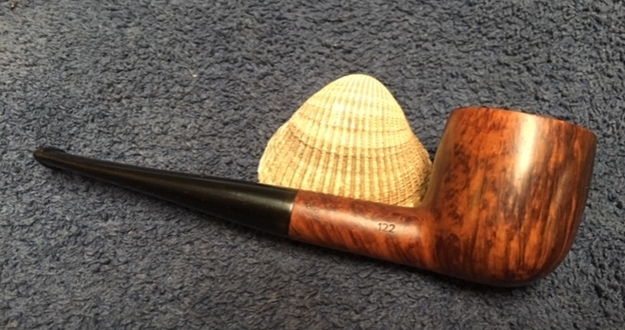
In my ongoing work on the estate pipes from the pipe shop that had closed here in Vancouver I am turning to a fourth pipe from the lot. The entire lot came to me from the estate of an older pipeman whose wife dropped them off at a pipe shop to be cleaned and sold. When the shop closed they came to me. The pipe on the table now is stamped Special over Straight Grain on the left side of the shank. On the right side it is stamped with a Comoy’s style COM stamp reading Made in London in a circle over England followed by the shape number 122. The briar has some nice straight and flame grain around the bowl with birdseye on the top of the bow, shank and the underside of both. The bowl had a thick cake in it with an over flow of lava on the rim top. The rim top looked very bad but it hard to know if there was real damage or if the marks were in the lava overflow. It was hard to know what the rim edges looked like with the thick coat covering it all. The briar was dull and dirty looking. The stem is vulcanite and is oxidized with no visible stamping or logo. There was calcification and tooth chatter and damage next to the button on both sides. There are heavier tooth marks on the underside of the stem. I took photos of the pipe when I received it.   I sent this pipe along with about twenty others from this lot to my brother Jeff in Idaho to work over and clean up. He cleaned up the pipes with his usual thoroughness – reaming the bowl and scrubbing the internals with alcohol, cotton swabs and pipe cleaners. He scrubbed the exterior with Murphy’s Oil Soap to clean off the dust and grime on the finish. When he sent it the pipe was ready to restore. Like the Savinelli I just worked on, I could not believe how good the rim top looked in comparison to what it was when he started. I was working on the Savinelli Giubileo D’ Oro and it had the same issues as this one with the trough in the bowl so I used the remaining pipe mud that I made for it to repair the bowl bottom on this pipe. In doing so I forgot to take photos before I began. I slid the stem over the pipe cleaner and put it in place to get photos. I took the following photos of the pipe to show what it looked like before I started working on the exterior. The briar was clean and the grain quite stunning. The finish looked dull and lifeless. I took a close up photo of the rim top after Jeff had cleaned it up. The look of the rim top and edges is very good. (Ignore the pipe mud in the bowl bottom.) He had been able to remove the cake and the lava very well. The bowl was clean but there seemed to be a trough in the bottom of the bowl made by a pipe cleaner repeatedly passing over the same spot. The stem is also shown and was very clean but oxidized. He had not started using Mark’s Before & After Deoxidizer at this point. The tooth marks on both sides near the button are visible in the photos.  The marks on the underside of the stem were worse than the ones on the topside.I took some photos of the stamping on the shank sides. The first photo shows the Special over Straight Grain stamp on the left side. The second shows the shape number and the COM Stamp that reads Made in London in a circle over England and the shape number 122 on the right side.There were several things about the stamping that I was unfamiliar with so I did some searching online. I had a memory of the Special being a Comoy’s product. The COM stamp on the shank and the stamping on the left side of the shank pointed to that. The shape number 122 also seemed to point in that direction. I turned to all of my usual sources – Pipedia and Pipephil and found nothing connecting the stamping to Comoy’s. There is not a note regarding the Special Straight Grain stamp on either site when it is missing the Comoy’s designation. However there was a connection with the shape number on the Comoy’s Shape Chart on Pipedia (https://pipedia.org/wiki/Comoy%27s_Shape_Number_Chart).

I have captured a portion of the chart to show the number and designation match what I have in hand.  I circled the shape number in red that is on the right side of this pipe. It fits the description of a 122 Pot with a straight stem and a medium sized bowl. I think I could safely assume I was working on a Comoy’s made pipe with an interesting and unique stamping – Special Straight Grain on the right side of the shank!

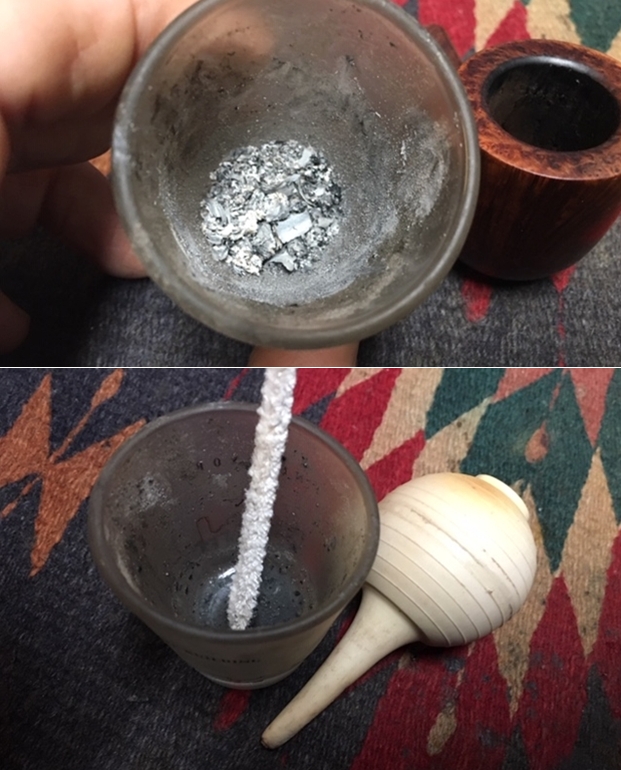
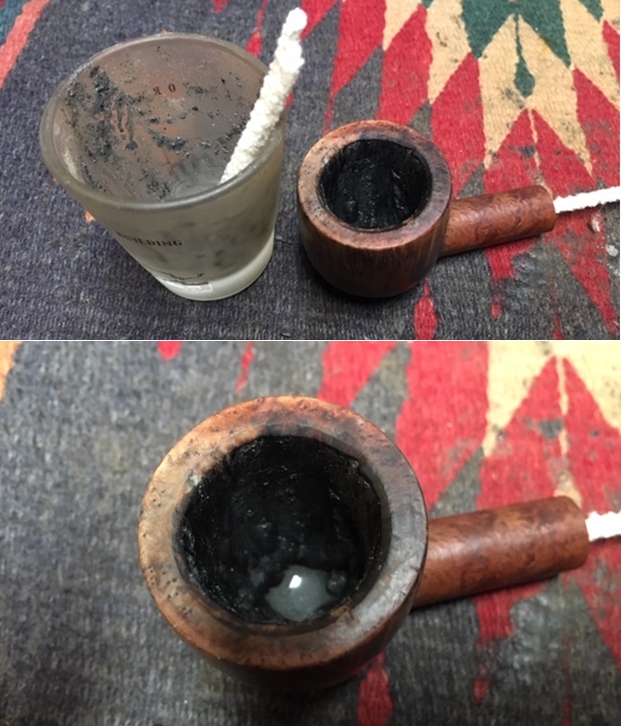
I started working on the bowl. Since I was working on the La Savinelli Giubileo D’Oro at the same time and both had parallel issues with the bowl I decided to address the trough in the bottom of the bowl first. It was quite visible and though the bottom of the bowl was still quite thick, it bothered me. I decided to mix a batch of pipe mud to fill in the trough and protect the bottom while a new cake was formed in the bowl. I mixed some cigar ash and water to form a paste. I put a pipe cleaner in the airway to protect it from being filled in. I used a folded pipe cleaner to paint the mud around the airway to clean up some of the edges and tamped some into the bottom of the bowl to fill in the trough. I packed it in place with a Czech pipe tool tamper as it fit in the bottom of the bowl. The pictures that follow tell the story. It will take a while to dry out but once it has dried it will be quite hard. I set the bowl aside while I worked on the other pipe.

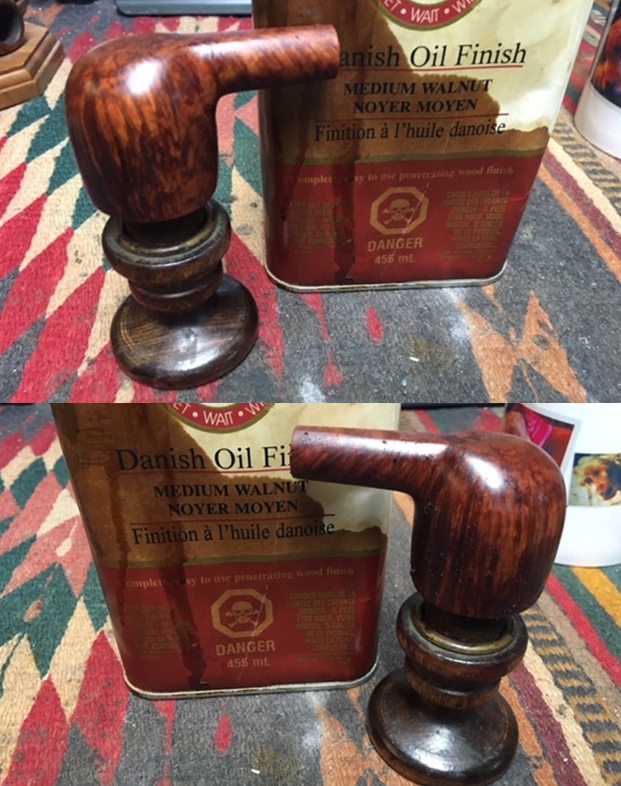
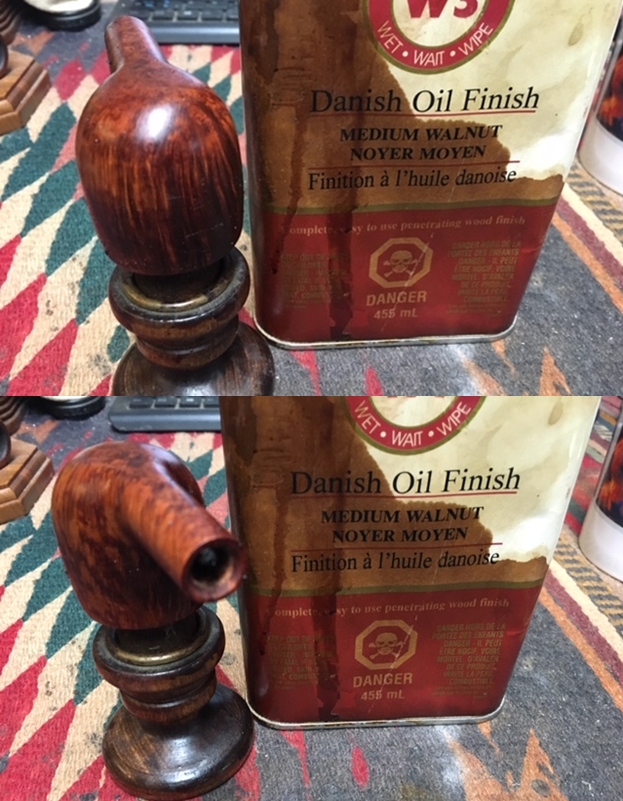
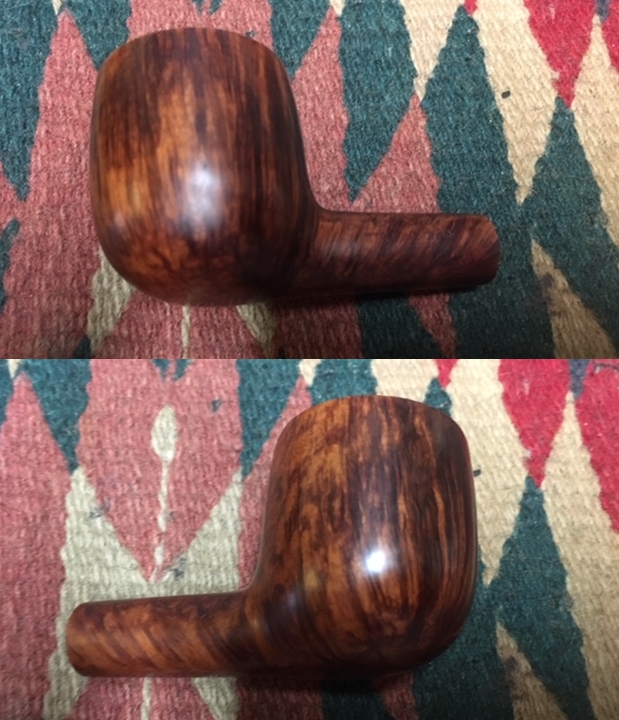
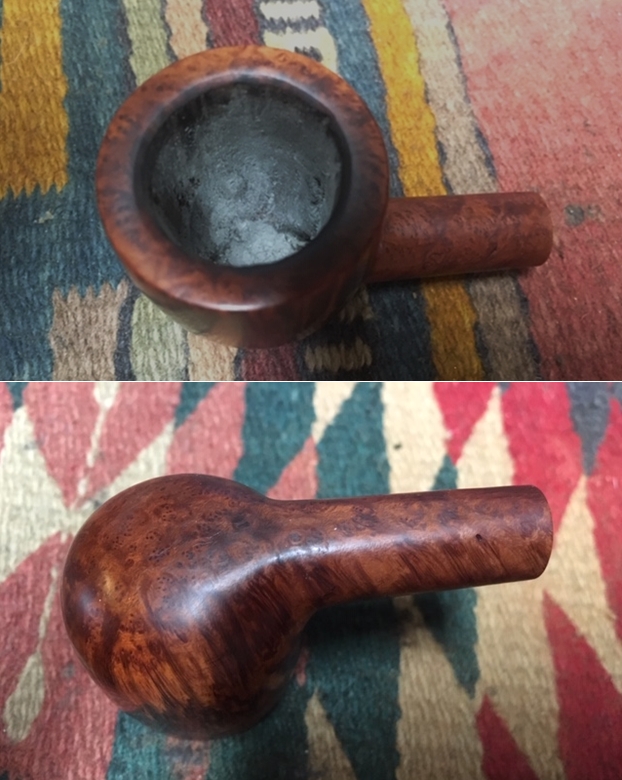
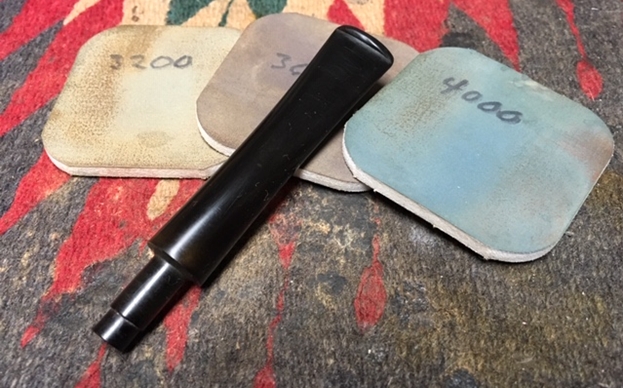
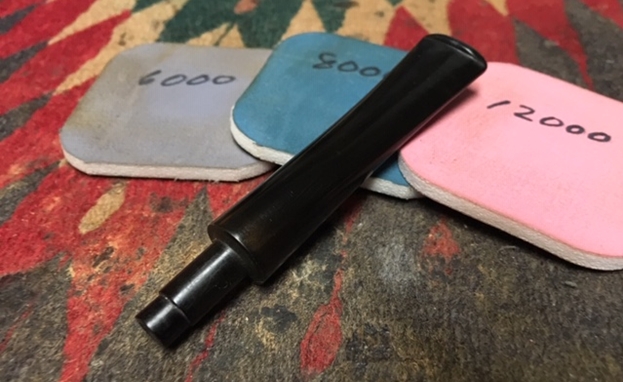
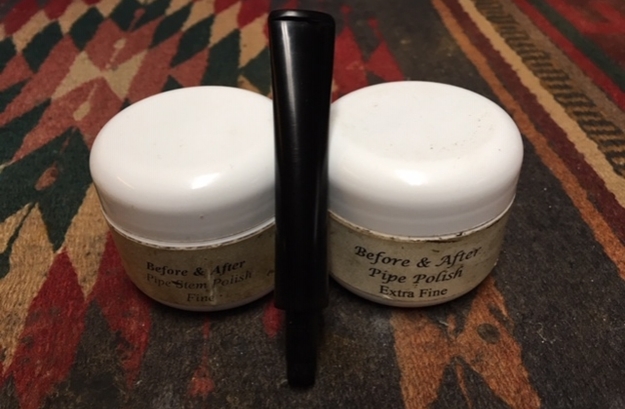
(The first two photos show the bowl of the Giubileo. The bowl on the Special had a twin looking bottom and I forgot to include photos of the bowl bottom on this repair. You can imagine it from the photos below.) I wanted clean up the rim top in the least intrusive method possible and still be able to deal with the scratches and wear on the flat surface. I wanted to see if I could minimize the darkening on the back side and the bevel of the inner edge of the rim top. I sanded it on a small medium and fine grit sanding block to see what I could do to begin with (forgot to take photos). I was happy with the way it was beginning to look. I finished with the blocks and wiped the bowl down with isopropyl alcohol to get a feel for what it looked like under the sanding dust. I polished the briar by wet sanding with 1500-2400 grit sanding pads to raise the shine. I also wanted to remove as much of the scratching as I could. I dry sanded the briar with 3200-12000 grit pads. I wiped the bowl down with a damp cloth after each pad. The briar began to really shine and the grain stood out. This was a beautiful pipe and worthy of the designation SPECIAL STRAIGHT GRAIN. The pipe was beginning to look really good and the grain was beginning to really pop. It was time to work some Before & After Restoration Balm into the briar on the bowl and the rim top. I worked it into the surface with my fingertips to clean, enliven and protect the wood. I let the balm sit for about 20 minutes and buffed it off with a soft cotton cloth. I took photos of the pipe at this point in the process to show what the bowl looked like at this point. I decided to rub down the surface of the bowl and shank with a Medium Walnut Danish Oil Finish and a cotton pad to give some depth to the finish. I really like how the Danish Oil Walnut Stain can make the grain pop on the briar without really darkening the finish. I hand buffed the bowl with a soft cloth to polish the briar. I buffed it lightly on the buffing wheel using Blue Diamond on the wheel. I took photos of the bowl after buffing. I really like the way that the grain stands out now. It is truly a beautiful piece of briar. The bowl looked good so I set it aside and turned my attention to the stem. I used a flat blade needle file to sharpen the edge of the button and smooth out the tooth damage to the edges of the button. I also worked on the tooth chatter with the filed. I followed that by using a Bic lighter to paint the surface of the vulcanite with the flame. Between the file work and the heat of the flame I was able to remove some of the marks and minimize the others. The photos tell the story.   I filled in the two deep tooth marks on the underside of the stem with superglue. The tooth marks on the topside were no longer an issue so I would only need to sand out the file marks. I set the stem aside to dry. Once the glue had dried I sanded the stem surface with 220 grit sandpaper to smooth out the repairs and remove the oxidation that was on the stem surface.I polished the stem with micromesh sanding pads – wet sanding with 1500-2400 and dry sanding them with 3200-12000 grit pads. I wiped the stem down with Obsidian Oil after each pad. I gave it a further polish with Before & After Pipe Stem Polish – both Fine and Extra Fine. When I finished I gave it a final coat of Obsidian Oil and let it dry. The following photos show the stem at this point. I polished the bowl and stem with Blue Diamond to polish out the scratches in the briar and rubber. I gave the bowl and the stem multiple coats of carnauba wax. I buffed the pipe with a clean buffing pad to raise the shine. I hand buffed it with a microfiber cloth to deepen the shine. The pipe polished up pretty nicely. The Walnut Danish Oil had really breathed life into the briar and the pipe came alive with the buffing. The contrast of colours between the briar and the stem worked really well. The Special Straight Grain pipe has a rich and classic look. The finished pipe is shown in the photos below. The dimensions of the pipe are Length: 5 1/2 inches, Height: 1 5/8 inches, Outside diameter of the bowl: 1 3/8 inches, Chamber diameter: 7/8 of an inch. This one will soon be on the rebornpipes store if you are interested in adding it to your collection. Thanks for reading this while I worked on it. It was interesting and unusual piece to restore and I really enjoyed the work.

Restoring a Beat up “Mini Woodart” Pipe #856


Blog by Paresh Deshpande

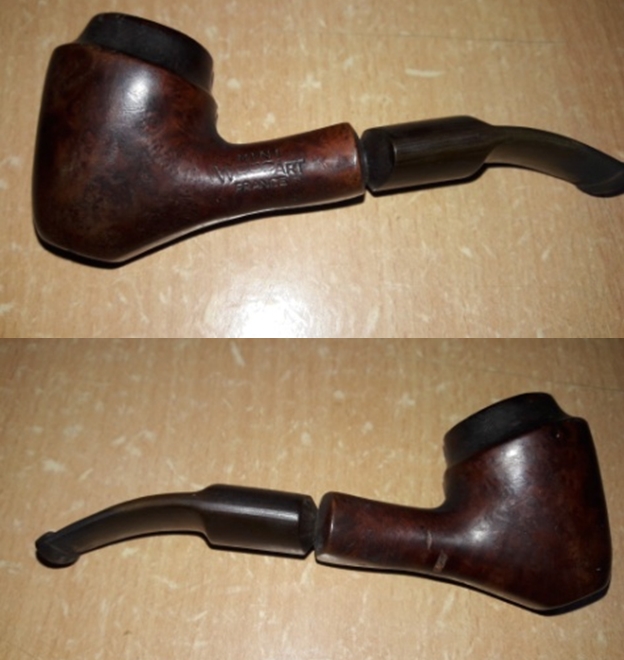
The fourth and the last pipe that I worked on simultaneously was another pipe that I had purchased on eBay along with the Rolex vest pipe. I was attracted to its vase like shape and through all the dirt and grime some beautiful bird’s eye grains peeked and beckoned me for help. The shank end flares out and the chunky, short and broad, 1/4 bent saddle stem with a conical tenon end makes for a very interesting appearance to the overall pipe. The appearance of this beauty was beat, the rim appeared to be damaged and there were a few prominent fills which appeared like blistered wounds. But, nevertheless, it is one handsome, more like cute, looking pipe!!!!

The stummel surface boasted of beautiful swirls of grains interspersed with bird’s eye along the sides of the stummel and shank, while contrasting cross grains adorn the top and bottom of the shank extending to the back and bottom of the stummel. The left hand of the shank is stamped as “MINI” over “WOODART” over “FRANCE”. The bottom of the flared out shank end bears the model number “# 856”. The saddle top of the stem bears the logo of “W” in an oval. This stem logo was revealed later after the stem had been soaked in hydrogen peroxide solution.I could not find any information about this brand on Pipedia.com or rebornpipes or anywhere on the internet. However Pipephil.eu does make a mention of this brand and even has a picture of a pipe with similar stampings (http://www.pipephil.eu/logos/en/logo-w3.html#woodart), but no further information was available!

INITIAL VISUAL INSPECTION
As I had noted earlier, this little pipe was in a sorry and battered state. There is not a single surface on the stummel which does not have either a dent or a fill or a chipped surface. The stummel is covered in oils, tars, sticky grime and dust, through which one can make out the beautiful grains all round. The overflow of lava has not only covered the area between the narrow top portion and rest of the bowl, but has spilled over to the back of the bowl and accumulated in the area where the shank meets the bowl. There are a large number of dents, dings and scratches prominently seen on the edge below the neck of the vase like stummel shape. There are a few major fills in the stummel, the most prominent ones being to the right side on the shank. These will need to be addressed. The bowl is narrow and tapers down towards the draught hole. The chamber has a thin layer of cake, but the appearance indicates that there may be issues with the walls of the chamber. The mortise is full of oils, tars and gunk and restricts air flow. The rim top is where maximum damage is seen through the overflowing lava. The inner and outer edge of the rim is peppered with dings, dents and chips, a result of striking the rim edge against a hard surface while cleaning after a smoke. The bowl is completely out of round with undefined rim edges. This will have to be taken care of without losing too much of briar estate and will be a challenge to achieve desired results. The vulcanite stem is so heavily oxidized that it appears brown in color!!!! The upper surface of the stem has very light tooth chatter towards the button end while the lower surface has a few deep bite marks with damage to the lip edge. This issue should not be a major headache to address. The tenon is filled with oils and tars, restricting flow of air through the airway.THE PROCESS
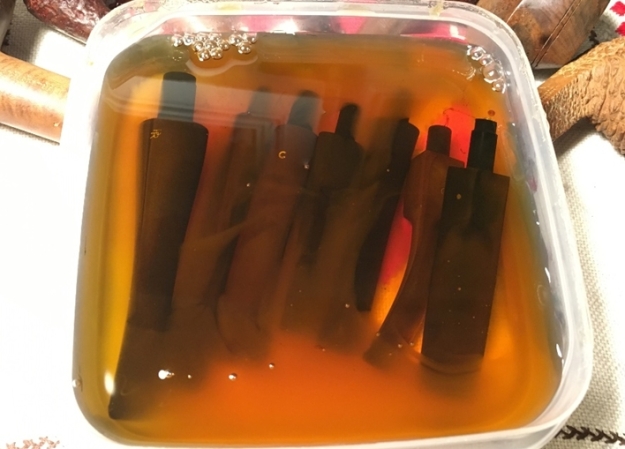
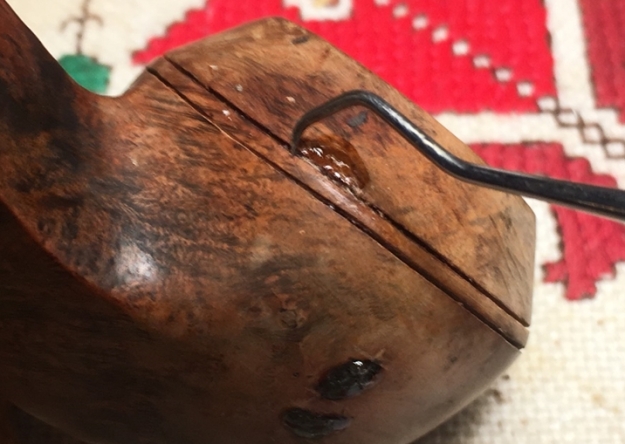
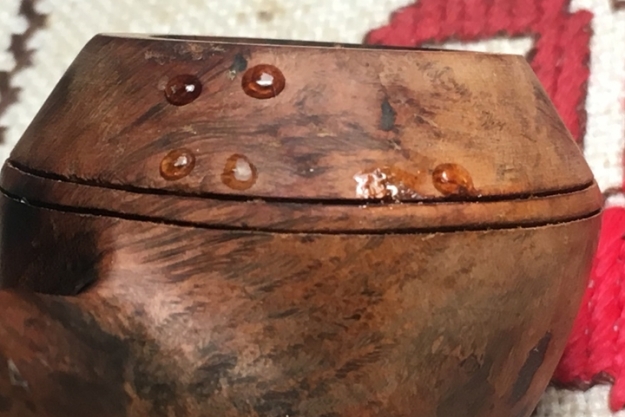
I started this project by flaming both the surfaces of the stem with a Bic lighter to raise the tooth chatter and bite marks to the surface. I followed it by immersing the stem in to the solution of hydrogen peroxide and hot water. Within 20 minutes the stem color changed to greenish brown, a sign indicating that the oxidation has been pulled to the surface. This also revealed the stem logo of “W” encircled in an oval, on the top surface.After the oxidation was raised to the surface, I removed the stem and wiped it with paper napkins. I ran a couple of pipe cleaners through the airway to clean it. Once I was satisfied that the internals of the stem are clean, with a 180 grit paper, I sand the stem surface to get rid of the raised oxidation. I followed it by filling the deeper bite marks and lip damage with a mixture of activated charcoal and CA superglue and set it aside to cure. While the stem was curing, I worked on the stummel. The small size of the chamber dictated that I could only use my smaller sized fabricated knife to remove as much cake as possible. I further sand the chamber walls with a piece of 150 grit sand paper wound on a thin but dry bamboo twig (which are abundant in the jungles in this part of my country) attached with a rubber band. This was followed by 220 and 400 grit sand paper and now we have a smooth and even surface on the walls of the chamber. This process exposed the walls of the chamber and confirmed my initial apprehensions. The chamber walls show a number of heat fissures on both the front wall as well as above the draught hole. I shall address this issue at the end by coating the chamber wall with a mixture of activated charcoal and yogurt. I wiped the insides of the chamber with a cotton pad dipped in isopropyl alcohol. I cleaned the mortise using hard bristled and regular pipe cleaners, dental spatula and shank brush dipped in isopropyl alcohol. I continued with the cleaning of the chamber by giving it a salt and alcohol treatment. I packed the chamber, just below the rim, with cotton balls. I stretched a cotton ball into a thick wick, tapering at one end, and inserted it in to the shank and pushed it as far inside as I could using a straightened paper clip. I find that cotton balls work just fine in drawing out all the tars and smells from the mortise and the bowl. I topped the bowl with alcohol again after 20 minutes when the alcohol level had gone down and set it aside overnight for the cotton and alcohol to do its intended job. The next day, the cotton and alcohol had fulfilled its intended task. I removed the cotton balls and ran pipe cleaners through the mortise to clean out all the loosened tars and gunk. The internals of the stummel is now clean and fresh. I set the stummel aside to dry out. While the stummel was drying, I worked the stem. I covered the stamping on the stem with whitener using a whitener pen. The filling of charcoal and CA superglue had cured and using a needle file, I sand the filling to match the surface of the stem. For a better blending, I further sanded the entire stem with 220 followed by 400 and 800 grit sand paper. This helps to reduce the sanding marks left behind by the more abrasive 220 grit paper. To bring a deep shine to the vulcanite stem, I went through the complete set of micromesh pads, wet sanding with 1500 to 2400 grit pads and dry sanding with 3200 to 12000 grit pads. I wiped the stem with alcohol after each pad and rubbed it down with Extra Virgin Olive oil. The internals of the stem was cleaned out using alcohol and pipe cleaners. The finished stem is shown below. With a sharp, thin knife I removed the entire old and loosened fills and cleaned the surface with alcohol. These are now ready to take on a fresh fill. Now, it was the turn of the stummel to get cleaned up. Using a hard bristled tooth brush dipped in undiluted Murphy’s oil soap, I very deliberately scrubbed the stummel, cleaning the surface thoroughly. I cleaned the rim too. However, the grime, oils and tars covering the stummel and rim surface was so stubborn that I could not get rid of it completely.  The stummel and rim top was dried using paper napkins and soft cotton cloth. I mixed briar dust and CA superglue and filled all the major gashes while the minor ones were filled with clear CA superglue. I set the stummel aside to dry the filling.After the filling had dried out overnight, I sand the filling with a flat head needle file to match the surface of the stummel.Before sanding the entire stummel to match the fills and clean the stubborn grime, I decided to address the out of round and charred rim top by topping the rim top on a 220 grit sand paper. I was careful not to sand too much to maintain the original profile of the stummel. Topping also helped in reducing the dents and chipping to the outer edge of the rim. The rim top, after topping, looks much better.However, the inner edge profile was still uneven giving the bowl an out of round appearance. Also the outer rim edge had a few dents, chips and scratches. I addressed these issues by creating a bevel on the inner and outer edge of the rim. The results are pleasing to the eye.The issue of damaged rim was addressed to a great extent at this stage. However, the issue of addressing the large number of dent, dings and scratches prominently seen on the edge below the neck of the vase-like stummel shape still remains. I decided to reduce/ eliminate, if possible, these dents and dings by steaming them out. I heated my fabricated knife over the flame of a candle, placed a wet Turkish hand towel over the marked areas and steamed out the dents by placing the heated knife over the towel. Though some dents were still visible, these were greatly reduced when compared to before steaming.Thereafter began the arduous, painstaking and time consuming process of matching the repairs by sanding the entire stummel with 220 followed by 400 and 800 grit sand papers. I was able to match all the repairs and dents and dings on the lower edge of the stummel by upward sanding motion while moving up from heal and downward motions while moving down from the rim top. I was satisfied with the appearance of the stummel after this sanding. I wanted to highlight the grains seen and further blend all the repairs carried out to the stummel. To achieve this aim, I sand down the stummel and rim top using micromesh pads, wet sanding with 1500 to 2400 grit pads and dry sanding with 3200 to 12000 grit pads. The stummel now has a deep shine with grains popping out with magnificent contrast. I rub a small quantity of “Before and After Restoration Balm” in to briar and let it rest for a few minutes. The balm almost immediately works its magic and the briar now has a nice vibrant appearance. I further buff it with a horse hair shoe brush. To finish, I re-attach the stem with the stummel. I mount a cotton cloth buffing wheel on to the Dremel (actually it is not the brand machine, but a local machine which is similar).  I set the speed at about half of the full power and applied White Diamond compound to the entire pipe. I wiped/ buffed the pipe with a soft cotton cloth to clear it of any leftover compound dust. I then mounted another cotton cloth wheel on to the polishing machine and applied several coats of carnauba wax. I finished the restoration by giving the entire pipe a rigorous hand buffing using a microfiber cloth to raise the shine further.The completed pipe looks lovely, fresh and vibrant; the photographs speak for themselves. The beauty, size and shape of this pipe compel me to wonder if this pipe could once have been nestled in the hands of a lovely lady in Paris. If only the pipe could tell the story of its journey till date…Cheers!! PS: – Once I had finished with all the buffing and polishing, only one issue remained to be addressed; heat fissures on the walls of the chamber. I coated the walls of the chamber with a mixture of activated charcoal and yogurt. Once dried, this will speed up the formation of cake and protect the chamber from a burn out.

Decking out my Grandfather’s Battered Pre-transition Barling # 1354.


Blog by Paresh Deshpande

In one of a first, I had decided to work on four pipes simultaneously. Well, honestly, it was a decision which was forced on me due to extraneous circumstances that I had created for me. It so happened that after having discussed with my mentor, Mr. Steve, I decided to work on a John Bessai creation from my Grandfather’s collection. As I was turning the John Bessai in my hands, I felt that there were not very many major issues involved in its restoration and the small Barling’s, also from my old man’s collection, appeared to be a straight slam dunk of a restoration. Thus, I decided to work on both simultaneously, which appeared doable. However, things turned in to a challenge when I was just surfing YouTube on pipe restoration topics. In one of the videos, Hydrogen Peroxide and water solution was used to raise the oxidation to the surface and subsequent cleaning of the same was a breeze. I decided to try out this method and in order to make max use of the solution; I dunked stems of two more pipes in to it. Now I have four pipes in line to restore. I can still manage the restorations; it is the write ups that are a huge challenge for me as Mr. Steve will vouch for the delayed submissions.

The Barling’s Make pipe on my work table is a quaint little billiards with beautiful and very tightly packed birdseye grains on either side of the bowl and shank, extending over to more than half of the front of the stummel. Equally tightly packed cross grains are seen on the front left and back of the bowl and also on the upper and bottom surface of the shank. It is stamped on the left side of the shank as “BARLING’S” in an arch with block capital letters over “MAKE” in a straight line over the numeral “1354”. The right side of the shank bears the spaced out stamp “S M” towards the bowl shank junction. The vulcanite saddle stem bears the trademark Barling stamped in cross on the upper surface of the saddle and “Barling” over “Design” in a cursive hand on the lower surface of the saddle.  Even though there are quite a few Barling’s in grandfather’s collection, this beauty is the first of the Barling’s that I am trying to restore. To know more about the brand, the lines offered by the maker and attempt to date this pipe, I visited Pipedia which has a wealth of neatly cataloged heading-wise information on Barling’s pipes. Here is the link and the snippets of relevant information that I picked up https://pipedia.org/wiki/Barling#Model_Numbers:

Model Numbers:

Also according to Tad Gage, the only four-digit number that denotes a Pre-Transition piece begins with “1,” which was used for pipes sold in England. Any other four-digit Barling pipe is a Transitional piece– (Tad Gage in P & T magazine).

Model numbers were occasionally stamped below the logo as early as the late 1920’s.

Other Nomenclature:

The “MADE IN ENGLAND.” stamp was in use in the 1930’s thru 1962. As with all things related to Barling nomenclature there are variations. Sometimes there is no “MADE IN ENGLAND.” stamp. Examples exist with a “MADE IN LONDON” over “ENGLAND” stamp. And, there are examples with “MADE IN ENGLAND” with no period after the word “ENGLAND”.

Size Stampings:

Up to 1926 and possibly beyond, Barling used specific, completely unrelated, model numbers to designate the various sizes of a specific shape. They produced pipes in three sizes, small, medium, and large.  

Barling’s published price lists show that they continued to offer pipes in only three sizes, small, medium, and large until 1941. That’s it, small, medium, and large. So when someone claims that they have a 1930’s EL, EXEL, or other size, they are mistaken.
In 1941 the published range of sizes expanded. Going from the smallest to the largest, they are SS, S, S-M, L, EL, EXEL, and EXEXEL. There is no “G” for giant. Giant pipes, or magnums, which are oversized standard billiards, were not stamped “G” but are commonly identified by collectors as such because they are obviously large relative to even EXEXEL pipes, and carried no size stampings (Gage).

Size stamps were rare before WW2, but we do an example from 1925 that we will discuss later as it is part of a forgotten class of Barling pipes.

Patent Stamps:

In addition to the stampings on the briar, Barling stems had stampings that relate to specific periods. In 1935 Barling received a patent for a stem design that radically improved airflow as well as cooling of the smoke.

Pipes made in 1934-5 may have the words “Reg’d Design” on the underside.

Following the granting of the patent in 1935, Barling stems featured the following patent numbers:

REG’D 98 046 – US patent number – 1936 – 1949 • REG’D 42/8968 – WW2 production – 1942 – 1950 • REG’D 754 068 – WW2 production • Barling Design – 1950 – 1962

 Not all pipes have this stamping on the underside of the stem, but its presence is a good indicator for the period of manufacture, assuming that the stem is original.

Throughout their history Barling continued to innovate in the area of stem and bit design.

From the above information, it is conclusively assumed that this piece is from the Family era/ Pre- transition period and was made somewhere during 1950s to 1960s. The minimalist stampings indicate that this pipe was intended to be sold in the local markets.

INITIAL VISUAL INSPECTION
The chamber shows a nice even build up of a thick cake which makes it difficult to comment on the condition of the inner walls of the chamber. There is a thick overflow of lava and completely covers the rim top and further spills over on to the stummel surface. The condition of the inner edge of the rim and rim surface will be ascertained only after chamber has been reamed down to its bare briar. The outer rim, however, is damaged and has a number of chips and dents, probably caused due to hitting the bowl against a hard surface to remove the dottle! Criminal, to say the least! The surface of the stummel is covered by the overflowing lava, which in turn has attracted a lot of dirt and grime over a period of time. The stummel surface is peppered with numerous dents and dings, more so towards the heel of the bowl, probably caused due to careless and uncared for storage for the last 40-45 years!!!! It will be a big decision whether to address these dents and dings by abrasive sanding method and loose the patina which has developed on the surface, or let them be. Well, I shall cross the bridge when I reach it. The mortise is surprisingly clean and air flow through it is open and full. The vulcanite stem is heavily scratched, but not oxidized. Some light tooth chatter is seen on both surfaces of the stem towards the lip with one deep bite mark on the upper surface. This issue should not be a major headache to address. The lip edge on both sides is crisp but lightly damage. The quality of vulcanite is good.THE PROCESS
I did not soak the stem of this pipe in the Hydrogen Peroxide solution as I was not sure how it would affect the stamping and so decided to play it safe. I flamed the stem surface of the stem with a Bic lighter to raise the tooth indentations and scratches on the stem. The heat from the flame of Bic lighter causes the vulcanite to expand and regain its natural shape, reducing the marks. The tooth bite marks which were visible after the flaming were filled with a mix of activated charcoal and clear CA superglue and I set it aside to cure overnight. I reamed the chamber with size 1 head of a PipNet reamer and followed it with a size 2 reamer head. To reach the areas where the PipNet reamer could not reach to remove the carbon cake, I used my smaller fabricated knife and scraped out all the remaining cake. I further use a folded piece of 180 grit sandpaper to sand out the last traces of remaining cake and expose the walls of the chamber to ascertain that there are no cracks/ heat fissures. I wiped the chamber with a cotton pad dipped in isopropyl alcohol to remove the carbon dust left behind by all the reaming and sanding process. The walls of the chamber were solid with no damage. I gently scraped the rim top surface with a sharp knife to remove the lava overflow. This was followed by cleaning the mortise with cue tips, pipe cleaners and shank brush dipped in isopropyl alcohol. This further eliminated traces of old smells from previous usage. The old smell was still prevalent, though greatly reduced. To completely eliminate the smell, I decided to resort to alcohol bath. I packed the chamber, just below the rim, with cotton balls. I stretched a cotton ball into a thick wick, tapering at one end, and inserted it in to the shank and pushed it as far inside as I could using a straightened paper clip. I topped the bowl with isopropyl alcohol using a syringe. I know that it is generally a practice to use Kosher salt for this procedure, but since Kosher salt is not easily available here, and when available, it’s very expensive, I use cotton balls. I find that cotton balls work just fine in drawing out all the tars and smells from the mortise and the bowl. I topped the bowl with alcohol again after 20 minutes when the alcohol level had gone down and set it aside overnight for the cotton and alcohol to do its intended job.The next day, the cotton and alcohol had fulfilled its intended task. I removed the cotton balls and ran pipe cleaners through the mortise to clean out all the loosened tars and gunk. The internals of the stummel is now clean and fresh. Now, it was the turn of the stummel to get cleaned up. Using a hard bristled tooth brush dipped in undiluted Murphy’s oil soap, I very deliberately scrubbed the surface of the stummel. I cleaned the rim too. The stummel and rim top was dried using paper napkins and soft cotton cloth. I am not very happy the way the rim top appears at this stage with all the charring and uneven inner and outer rim edges. This needs to be addressed. I set the stummel aside to dry out naturally. While the stummel was drying, I worked the stem. I covered the stampings on the stem with whitener using a whitener pen. The filling of charcoal and CA superglue had cured and using a needle file, I sand the filling to match the surface of the stem. For a better blending, I further sanded the entire stem with 220 followed by 400 and 800 grit sand paper. This helps to reduce the sanding marks left behind by the more abrasive 220 grit paper. To bring a deep shine to the vulcanite stem, I went through the complete set of micromesh pads, wet sanding with 1500 to 2400 grit pads and dry sanding with 3200 to 12000 grit pads. I wiped the stem with alcohol after each pad and rubbed it down with Extra Virgin Olive oil. The internals of the stem was cleaned out using alcohol and pipe cleaners. The finished stem is shown below. After cleaning the rim top with Murphy’s oil soap, I had observed that the rim top surface was charred and the inner edge was uneven, presenting a very sorry appearance. I topped the rim on a 220 grit sand paper, checking frequently till I was satisfied that the charred surface was greatly reduced. The inner edge is still uneven, though much better than before topping, it will need to be addressed.Next, I decided to address the dents and dings on the stummel surface and on the rim outer edge. Using a whitener pen, I marked all the major areas with dents and dings as I had decided to leave the minor ones as they were. I heated my fabricated knife over the flame of a candle, placed a wet Turkish hand towel over the marked areas and steamed out the dents by placing the heated knife over the towel. Though some dents were still observed, these were greatly reduced when compared to before steaming.The steaming method had raised to the surface all the major dents and dings. However, the outer and inner edges of the rim were still uneven. I took a piece of used and worn 180 grit sand paper, folded it and pinching it between my thumb and forefinger, created a slight inner bevel on the inner edge of the rim. Using the same technique, I created a light bevel on the outer edge. Now the rim surface and both its edges appear clean, even and well rounded.Steaming out the dents and dings from the stummel surface had necessitated that the surface of the stummel be evened out by sanding. I had an option of using more abrasive 220 grit sand paper followed by micromesh pad cycle and loose the patina or straight away go to the micromesh cycle. Using the more abrasive sand paper, minor dents and dings would be further addressed but I would lose the old sheen which the briar has taken over the years.  I decided on keeping the old sheen and went straight for the micromesh cycle. The old patina and the minor dents and dings would add to the vintage look of the pipe, which it was. I wet sand the stummel with 1500 to 2400 grit pads and follow it up by dry sanding with 3200 to 12000 grit pads. I rub a small quantity of “Before and After Restoration Balm” in to briar and let it rest for a few minutes. The balm almost immediately works its magic and the briar now has a nice vibrant appearance. I further buff it with a horse hair shoe brush. To finish, I re-attach the stem with the stummel. I mounted a cotton cloth buffing wheel to the Dremel (actually it is not the brand machine, but a local machine which is similar).  I set the speed at about half of the full power and applied White Diamond compound to the entire pipe. I wiped/ buffed the pipe with a soft cotton cloth to clear it of any leftover compound dust. I then mounted another cotton cloth wheel on to the polishing machine and applied several coats of carnauba wax. I finished the restoration by giving the entire pipe a rigorous hand buffing using a microfiber cloth to raise the shine further.The completed pipe looks lovely, fresh and vibrant; the photographs in this case, do not do justice to the appearance of this beautiful little pipe. Thank you for having the patience to reach this far while reading the write up.

A Fresh Breath of Life for a Unique Creation by “John Bessai”


Blog by Paresh Deshpande

The next pipe that I decided to work on, and duly approved by Mr. Steve, is a pipe that was carved by an iconic pipe carver from USA who had carved pipes in the back room of his tobacco shop by hand. This pipe carver was lost to history, being marginalized and lost to the world, since his creations were in very small numbers and restricted to local sales only. This pipe carver is an integral part of American pipe making history and is now being revisited and revived by some experienced and knowledgeable pipe restorers and pipe collectors, notably Mr. Andrew Hross, who has carried out a detailed mapping of the pipe maker, his creations, dating his pipes based on stamping and pipe models. Mr. Steve has himself worked on a couple of these rare pipes and has included them in his personal collection!!!! Well, I think I have been able to rouse enough curiosity regarding this pipe carver in the minds of the reader and now to reveal the name……… The carver that I have been rambling about is John Bessai!!

Since having completed the restoration of an antique 1902-20’s era GBD with Albatross wing bone extension and horn stem from my Grandfather’s collection, I reverted back to Mr. Steve for selection of my next project. I have realized that he always suggests the most unique pipe, from the ones presented to him, for my next project and this time around he selected this John Bessai Rhodesian pipe with a suggestion that I should first read the blog on a couple of pipes from the same maker that he had previously worked on. I did exactly that and I realized that I have in my possession a rare and collectible pipe to work on.

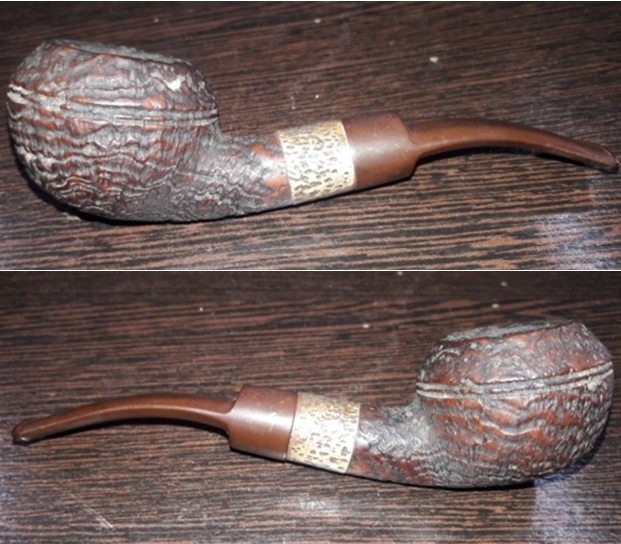
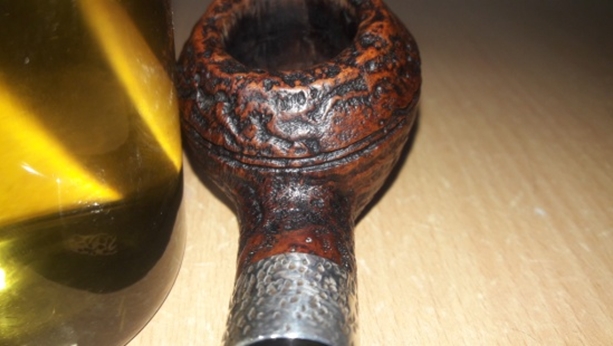
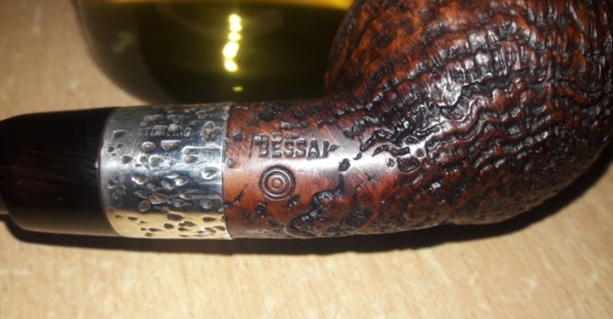
This pipe has the classical Rhodesian shape with a cap which is differentiated from the rest of the stummel by a double ring. It has beautiful sandblast pattern all over the stummel and over the round shank, save for a small smooth portion on the right side of the shank which bears all the identification marks of this pipe, and on the rim top which looks amazing. It is stamped on the right side of the shank as “…BESSAI”, the initial part of the stamping is unclear, over bull’s eye symbol. The shank end is adorned by ½ inch hand rusticated Sterling silver band, which has developed a patina with age. It is stamped as “STERLING” in block capital letters, on the right side, in-line with the shank stampings. It would look classic once cleaned up. The stem is devoid of the trademark “JB” logo. Mr. Steve has researched this pipe maker and would make an interesting read for anyone, even remotely, interested in pipe history. Here is the link to his write ups: https://rebornpipes.com/2014/07/14/restemming-and-restoring-a-john-bessai-special-diamond-shank-bent-brandy/

This is the link to his second John Bessai project: https://rebornpipes.com/2012/08/21/reworking-a-john-bessai-pipe/

These write ups not only helped me in gaining knowledge about the pipe maker that John Bessai was, but also helped me know about dating the pipes that he had created. I have produced relevant extracts, though there is a wealth of information, from Mr. Steve’s write ups which include facts about dating as researched by Mr. Andrew Hross.

John Bessai was a long time pipemaker, repairman and tobacco shop owner who operated his pipe shop at the “Old Arcade” in Cleveland, Ohio. The shop was opened in approximately 1898. It was a small 2-room shop where he hand-crafted his own pipes in the back room and could work when customers were not there. Like so many other shop made brand, John Bessai’s limited production was quickly acquired by regular customers and thus his craftsmanship remained little known outside of Ohio and the Midwest. While his name is known by pipe collectors in the Midwest, his work is seldom seen elsewhere! He died before 1969. Nevertheless, John Bessai left behind a small number of classic shaped pipes; all were made on-site. They are praised worthy of collecting and reflecting skills well beyond most American pipe makers. John Bessai’s logo “JB” appeared as one letter as the “back” of the “J” and the “back” of the “B” share a single line. The logo was stamped on the stem and on the left side of the shank. His son Herb Bessai took over the business and also continued making pipes. He closed the shop in about 1978.

Pipes offered by John Bessai Pipe Clinic:
Most of the pipes that were offered by the John Bessai Pipe Clinic were fairly standard in shape… I would say most of the pipes Bessai offered were smooth pipes. My assessment would be 90% smooth and 10% rusticated / sandblasted…

Stampings and rough dating of John Bessai Pipe Clinic Pipes:
Which pipes did John make and which ones did Herb make/finish? All Bessai pipes carry his standard large JB stamp either on the stem or shank or both. Typically the JB on the stem is within a circle.

All pipes created by John Bessai’s hands reportedly contain the miniscule ‘jb’ stamp on the shank or body of the pipe. I have older pipes in my possession that do not contain this stamp (condenser, old stamps, etc) that were clearly shop made pipes. I feel he started using the tiny ‘jb’ stamp in the 50s to early 60s.

Dating / Circa era Bessai Pipes:
If the pipe carries a stamp stating Cleveland, O U.S.A. it’s considered an older production pipe (pre1960s). I’ve not seen any newer pipes with that stamp.

Bullseye stamping usually indicates an earlier pipe as that stamp seems to have been abandoned pre1960 as well.

Thus, from the above information, it is safe to suggest that the pipe presently on my work table is fairly rare as only 10% of the pipes made by John Bessai were rusticated or sandblasted and was made prior to 1950s as this one too does not have the famed “JB” stamp and bears the “Bull’s-eye” stamp on the shank.

INITIAL VISUAL INSPECTION
The bowl is nicely rounded and wide at the rim with a depth of about 1 1/5 inches. The chamber is so filled with cake that I am unable to reach the bottom of the bowl with my little finger. The build-up of the cake is more heavy on the bottom half of the bowl. The condition of the inner walls of the chamber can be commented upon after the cake has been taken down to the bare briar.The mortise is full of oils, tars and gunk and air flow is restricted. The rim top is also rusticated which can be seen through the overflowing lava. The inner and outer edge of the rim appears to be in pristine condition with no dings or dents. However, exact condition can be ascertained only after further cleaning. As is commonly seen on rusticated or sandblasted pipes with some serious age on them, the crevices in these are always filled with dust, dirt, oils, tars and grime from all the years of smoking and storage. This one is no exception to this observation. The grooves of the sandblast are filled with dust while the small smooth right side of the shank which bears the stamping is covered in dust and grime. The fact that the grooved patterns are dusty and filled with dirt is accentuated more due to a very dark reddish brown stain on the stummel and the shank. The briar is looking lifeless and bone dry and has taken on black hues. The twin bore, ¾ bent vulcanite stem is so heavily oxidized that it appears brown in color!! Some heavy tooth chatter is seen on both surfaces of the stem towards the lip with one deeper bite mark on the upper surface. This issue should not be a major headache to address. The lip edge on both sides is badly chewed off with heavy bite marks and would need to be reconstructed and reshaped. However, the quality of vulcanite is superior to other vulcanite stems that I have handled before.The hand rusticated sterling silver band has developed a patina due to oxidation. This will have to be addressed.

THE PROCESS
During one of my YouTube surfing sessions on pipe restoration techniques, I came across a video which showed the use of Hydrogen Peroxide and hot water solution as an alternate method to tackle oxidation on a vulcanite stem. I decided to adopt this method to tackle heavy oxidation seen on this stem. Before proceeding with this method to get rid of the oxidation, I wanted to raise the tooth chatter and bite marks to the surface. Using a Bic lighter, I flamed the surface of the stem. This helped in raising some of the tooth chatter and bite marks to the surface as vulcanite has a property to regain its original shape on heating. The remaining tooth chatter and bite marks would be addressed subsequently.I mixed Hydrogen Peroxide and hot water in the ratio of 1:2 in a plastic bowl and immersed the stem of this pipe along with two other stems of the pipes which are in line for restoration. Within two minutes, the color of the stem changed to a dirty greenish brown color indicating that the oxidation is being pulled to the surface. I removed the stems from this bath and scrubbed it clean with “MagiClean” sponge. I followed it up by cleaning the internals of the stem. I used 220 grit sandpaper to sand the stem and removed all the oxidation that was raised to the surface. This step further reduced the tooth chatter and bite marks present on the stem. I addressed the deeper tooth chatter and bite marks by filling them up with a mix of activated charcoal and CA superglue. I applied a slightly thick layer over the lip which I will later sand down to create a defined edge. Once I had applied the mix, I set it aside to cure overnight. While the stem filling was left aside for curing, I worked on the stummel by first reaming the chamber with size 2 of PipNet reamer head, followed by size 3 head. I further scraped the chamber walls with my fabricated knife to remove the remaining carbon deposits. Once the cake was reamed back to the bare briar, I used a 150 grit sand paper followed by 220 grit sand paper to remove all the traces of remaining cake and also to smooth the inner walls of the chamber surface. Finally, to remove the carbon dust, I wipe the chamber with a cotton pad wetted with isopropyl 99%. This was followed by cleaning the mortise with cue tips, pipe cleaners and shank brush dipped in isopropyl alcohol. This further eliminated traces of old smells from previous usage. However, I must admit that I was still not very happy with the internal cleaning of the stummel and shank. The old smell was still prevalent, though greatly reduced. To completely eliminate the smell, I decided to resort to alcohol bath. I packed the chamber, just below the rim, with cotton balls. I stretched a cotton ball into a thick wick, tapering at one end, and inserted it in to the shank and pushed it as far inside as I could, using a straightened paper clip. I topped the bowl with isopropyl alcohol using a syringe. I know that it is generally a practice to use Kosher salt for this procedure, but since Kosher salt is not easily available here, and when available, it’s very expensive, I use cotton balls. I find that cotton balls work just fine in drawing out all the tars and smells from the mortise and the bowl. I topped the bowl with alcohol again after 20 minutes when the alcohol level had gone down and set it aside overnight for the cotton and alcohol to do its intended job.The next day, the cotton and alcohol had fulfilled its intended task. I removed the cotton balls and ran pipe cleaners through the mortise to clean out all the loosened tars and gunk. The internals of the stummel is now clean and fresh. Now, it was the turn of the externals of the stummel to get cleaned up. Using a hard bristled tooth brush dipped in undiluted Murphy’s oil soap, I very deliberately scrubbed through all the grooves of the sandblast, cleaning them thoroughly. I cleaned the groove in between the cap ring with a sharp knife tip. The stummel was dried using paper napkins and soft cotton cloth. I set the stummel aside to dry out naturally. While the stummel was drying, I worked the stem. The fill had cured and with a flat head needle file, I worked on the filling till I had achieved a rough match with the surrounding surface. For a better blending, I further sand the entire stem with 220 followed by 600 and 1000 grit sand paper. This helps to reduce the scratch marks left behind by the more abrasive 220 grit paper. To bring a deep shine to the vulcanite stem, I went through the complete set of micromesh pads, wet sanding with 1500 to 2400 grit pads and dry sanding with 3200 to 12000 grit pads. I wiped the stem with alcohol after each pad and rubbed it down with Extra Virgin Olive oil. The finished stem is shown below. Once I was satisfied with the stem restoration, I started work on the stummel which had dried by now. When I had another look at the stummel after it had dried, I was not very pleased and satisfied with the way the rim top had cleaned up. I again cleaned it with Murphy’s oil soap and scotchbrite pad till the rim top was nice and clean. I rubbed a small quantity of “Before and After Restoration Balm” in to briar and let it rest for a few minutes. The balm almost immediately works its magic and the briar now has a nice vibrant appearance. The only surface on the stummel that remained to be spruced up was the Sterling silver band at the shank end. Abha, my wife, had suggested that I should try using Colgate toothpowder to bring back the shine on the Sterling silver band. She had tried this on her jewelry with amazing results. I rubbed the silver band with Colgate toothpowder and the results are truly amazing.I mounted a cotton cloth buffing wheel to the Dremel (actually it is not the brand machine, but a local machine which is similar).  I set the speed at about half of the full power and applied White Diamond compound to the entire pipe. I wiped/ buffed the pipe with a soft cotton cloth to clear it of any leftover compound dust. I then mounted another cotton cloth wheel on to the polishing machine and applied several coats of carnauba wax.I finished the restoration by giving the entire pipe a rigorous hand buffing using a microfiber cloth to raise the shine further. The finished pipe is shown below. This is indeed a beautiful pipe which feels great to hold in your hand and the classy looks add to its overall appeal. I was wondering how my grandfather, who had never traveled to US, let alone to Ohio, ended up with one of John Bessai’s creations????? If only this pipe could recount and narrate its story from Ohio to India…Thank you for your read and as usual, any suggestions/ comments are always welcome. They help me progress on my journey into the pipe world.

Breathing Life into a GIGI Collection Italia Studio X 40288


Blog by Steve Laug

It was time to go back to working on the estate pipes from the pipe shop that had closed here in Vancouver. The entire lot came to me from the estate of an older pipeman whose wife dropped them off at a pipe shop to be cleaned and sold. When the shop closed they came to me. The pipe on the table now was an Italian made with a bit of a freehand look to it. It is stamped GIGI over Collection Italia on the left side of the shank. On the right side it is stamped Studio X 4 over 40288. On the underside of the shank it is stamped REGD. NUMBERS over 256267-386165 followed by Made in Italy. The briar has some nice straight and flame grain around the bowl with what looks like faux plateau on the top of the bowl and the shank end. The bowl had a thick cake in it with an over flow of lava on the rim top. The plateau type finish was filled in with lava and was a real mess. It was hard to know what the rim edges looked like with the thick coat covering it all. The briar was dull and dirty looking. The freehand style stem is vulcanite and is oxidized. It had a turned portion near the tenon and the stem itself was oval. There was calcification and tooth chatter and marks damage next to the button on both sides. I took photos of the pipe when I received it. I sent about twenty of the pipes to my brother Jeff in Idaho to work over and clean up. He cleaned up the pipes with his usual thoroughness – reaming the bowl and scrubbing the internals with alcohol, cotton swabs and pipe cleaners. He scrubbed the exterior with Murphy’s Oil Soap to clean off the dust and grime on the finish. When he sent it the pipe was ready to restore. I took photos of the pipe when I unpacked it. The briar was clean and the finish dull. There were some small fills on the left underside of the shank and bowl that needed to be repaired. I took a close up photo of the rim top after Jeff had cleaned it up. The look of the rim top and edges is very good. The carved finish on the plateau top is clean and undamaged. He had been able to remove the cake and the lava very well. The bowl looked very good. The plateau on the shank end is also very clean. The stem is also shown and was very clean. The tooth marks on both sides near the button are visible in the photos.  I was unfamiliar with the brand so I did some searching online and found some basic information on Pipedia. I quote in full:

Luigi “Gigi” Crugnola was born in 1934, the same year Giorgio Rovera founded a company in his own name in Varese, Italy along with partners Angelo and Adele Bianchi, who also happened to be Luigi Crugnola’s Uncle and Mother, respectively. The company produced pipes for 30 years, largely exported to America and elsewhere in the world. Crugnola took over the company in 1964 with the death of Angelo Bianchi, changing the name soon after to his own nickname Gigi, and continues to run the company today. The vast majority of Gigi pipes continue to be made for export (https://pipedia.org/wiki/Gigi).

I turned to my other go to website, Pipephil. The site included a photo of the carver and confirmed the information that I had read on the Pipedia site. It gave the contact information for the pipe company. It is as follows: Gigi Pipe Via Rovera, 40 21026 Gavirate Oltrona al Lago (VA) The link is – http://www.pipephil.eu/logos/en/logo-g3.html.

From that I learned that the pipe was made by Luigi “Gigi” Crugnola and was made after he took over the company in 1964 and changed the name of the brand. I also learned that the majority of the pipes were made for export from Italy so it was not unusual to find one in Canada.

Armed with that information I decided to start on the bowl. I repaired the fills on the underside of the bowl and shank with clear super glue. Once the glue dried I sanded it with 220 grit sandpaper to blend the repairs into the surface of the briar. The fills looked much better with the darkening that occurs with the glue repairs than they did before my work. The photos below show the repaired areas.I polished the briar with micromesh sanding pads to smooth out the surface of the briar and blend the repairs into the rest of the bowl. I wet sanded it with 1500-2400 grit pads and dry sanded it with 3200-12000 grit pads. I wiped it down with a damp cloth after each sanding pad. I worked Before & After Restoration Balm into the briar and the plateau on the rim top and the shank end. I worked it into the surface with my fingertips to clean, enliven and protect the wood. I let the balm sit for about 20 minutes and buffed it off with a soft cotton cloth. I took photos of the pipe at this point in the process to show what the bowl looked like at this point. I used a Medium Walnut Danish Oil Finish to touch up the repaired area and the rest of the bowl. The walnut stain really makes the grain pop on the briar. I hand buffed the bowl with a soft cloth to polish the briar. I buffed it lightly on the buffing wheel using Blue Diamond on the wheel. I took photos of the bowl after buffing. The grain is really standing out on the bowl at this point. It is beautiful. I took photos of the stamping at this point because it really stood out now.I set the bowl aside and turned my attention to the stem. I used a Bic lighter to paint the surface of the vulcanite with the flame. The heat of the flame raised the tooth marks around the button edges. It raised the bite marks significantly but a repair would still need to be done. As I worked on the stem I noticed that it was faintly stamped on the right side of the stem near the turning with the words GIGI.I sanded the tooth marks and the surface of the stem with 220 grit sandpaper to minimize the tooth damage and to remove the oxidation. I was able to remove the majority of the tooth damage other than a few small spots along the button on the top side and the underside.I filled in the tooth marks with superglue spreading it with a toothpick. I set it aside to dry.Once the glue repairs cured I sanded them with 220 grit sandpaper to smooth out the repairs. I sanded them to blend them into the surface of the rubber. I began the polishing of the stem with Denicare Mouthpiece Polish to work on the oxidation. I polished the stem with micromesh sanding pads – wet sanding with 1500-2400 and dry sanding them with 3200-12000 grit pads. I wiped the stem down with Obsidian Oil after each pad. I gave it a further polish with Before & After Pipe Stem Polish – both Fine and Extra Fine. When I finished I gave it a final coat of Obsidian Oil and let it dry. The following photos show the stem at this point. I polished the bowl and stem with Blue Diamond to polish out the scratches in the briar and rubber. I gave the bowl and the stem multiple coats of carnauba wax. I buffed the pipe with a clean buffing pad to raise the shine. I hand buffed it with a microfiber cloth to deepen the shine. The pipe polished up pretty nicely. The original patina on the bowl came alive with the buffing and worked well with the polished vulcanite stem. The pipe has a rich look. The finished pipe is shown in the photos below. The shape, finish and flow of the pipe and stem work give the pipe a very classic look. The dimensions of the pipe are Length: 6 inches, Height: 2 inches, Outside diameter of the bowl: 1 1/2 inches, Chamber diameter: 3/4 of an inch. Thanks for reading this while I worked on it. It was interesting and unusual piece to restore and I really enjoyed the work.

Refreshing a Comoy’s Made in London, England Bent Bulldog


Blog by Dal Stanton

I saw this Comoy’s Bent Bulldog as a charity listing on eBay for the Akron Art Museum, in Akron, Ohio.  The seller, like me, was providing pipes for a good cause and I like that.  I also liked the Bulldog I saw in the pictures the seller provided and by the description, it seemed the seller was a pipe person.  The nuts and bolts description:

A classic bulldog! About 5 1/4” long, bowl is 1 1/2” tall, 1 5/8” wide tapering to 1 1/8” at rim. ID 13/16”, depth 1 5/16”. Marked on one side of shank COMOY’S, other side MADE IN LONDON ENGLAND in circular fashion 4097, beneath shank a capital H. A capital C stamped on side of bit. No other marks detected.

Diamond saddle bit is well-seated push fit, cleaned and polished, showing some bite wear but no holes through. Some oxidation as well. Stummel is well hand worn and smoothed, some dings and scratches, scorch on rim, light cake in bowl. Though the pipe is smokable as is, this one has the possibility of being a real beauty with some TLC!

I took the gambit dangled in the last sentence regarding this Bulldog’s possible condition with some TLC.  My bid on the auction block was sufficient, I supported the Akron Art Museum, and now this Comoy’s Bent Bulldog is on the worktable here in Sofia, Bulgaria, on track to benefit the Daughters of Bulgaria, my favorite cause.  This was the second pipe that Stephen commissioned along with a Custom-Bilt Rusticated Panel.  Here’s the picture I saw on eBay which got Stephen’s attention in the For ‘Pipe Dreamers’ Only! collection:Now on my worktable, I take more pictures to get a closer look at the condition of this Comoy’s Bent Bulldog. The nomenclature on the Bulldog’s diamond shank is clear.  On the upper left shank is stamped ‘Comoy’s’.  The right upper shank has encircled, ‘MADE’ with ‘IN’ in the center and ‘LONDON’ on the bottom.  Underneath the circle is ‘ENGLAND’ in straight script.  To the right is shape number ‘409 7’.  Underneath this on the lower right shank panel is stamped ‘H’.  All indicators of the nomenclature point to a Cadogan era pipe which began in 1979 with the merger absorbing Comoy’s.  The simple ‘C’ stem stamp confirms this without the classic 3 piece inlaid ‘C’.  The shape number of 409 has historically indicated a Bulldog on earlier shape charts with a slight quarter bend.  The addition of the ‘7’ on this Bulldog I’m not clear on this, except that during the Cadogan era they added a 4th number to the shapes according to the Pipepedia article on shapes. I would say that this Comoy’s Bent Bulldog has been lovingly enjoyed over the years.  He’s got quite a few scrapes and bruises for the wear, mainly on his dome and circling the double grooves.  I took quite a few pictures of these above.  I’ll need to do some repairs especially on the back side of the dome where there are several small concentrated dents.  The front of the rim has been scorched from lighting practices it appears.  The dome grooves need to be cleaned and I detect a few chips of briar on the back-right side along the grooves.  Also, of interest are two huge fills on the right side of the bowl as it tapers down.  I’ll need to take a good long look at these.  The stem has oxidation and typical tooth chatter and compression dents on the button lip and just before the button.  The former steward was a clencher.
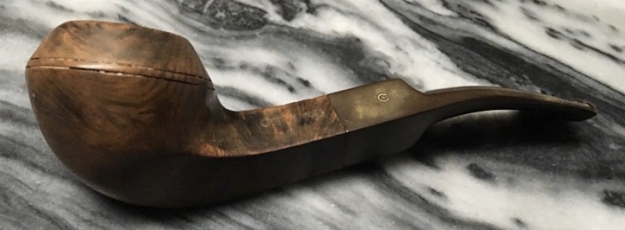
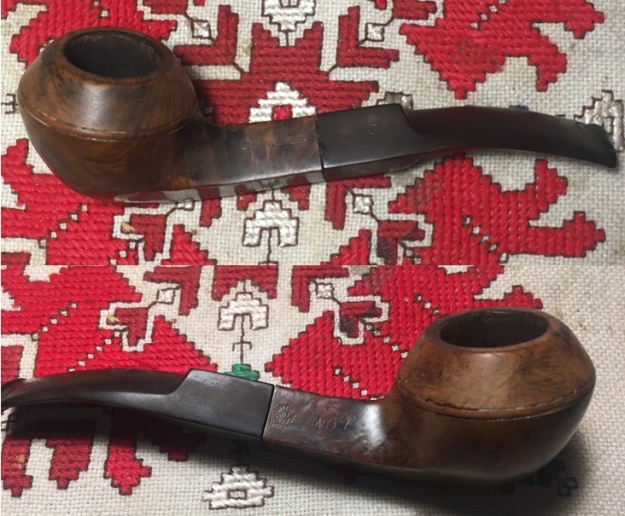
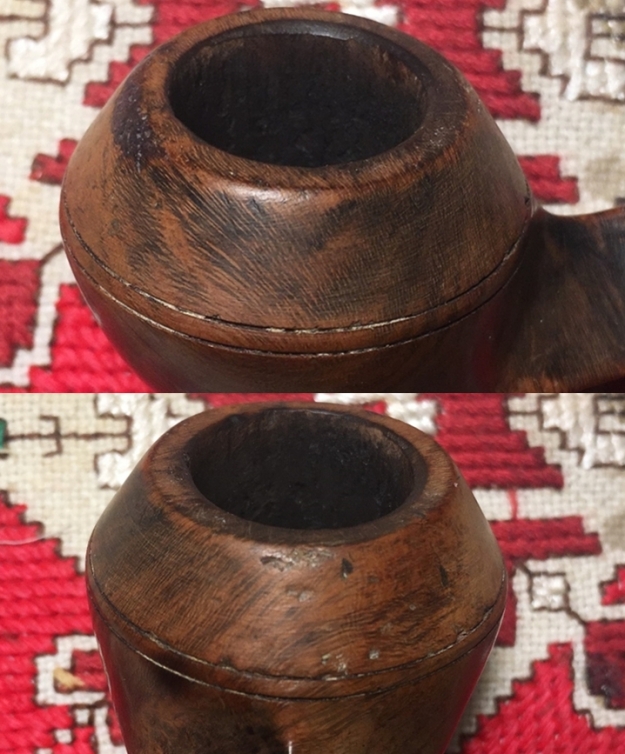
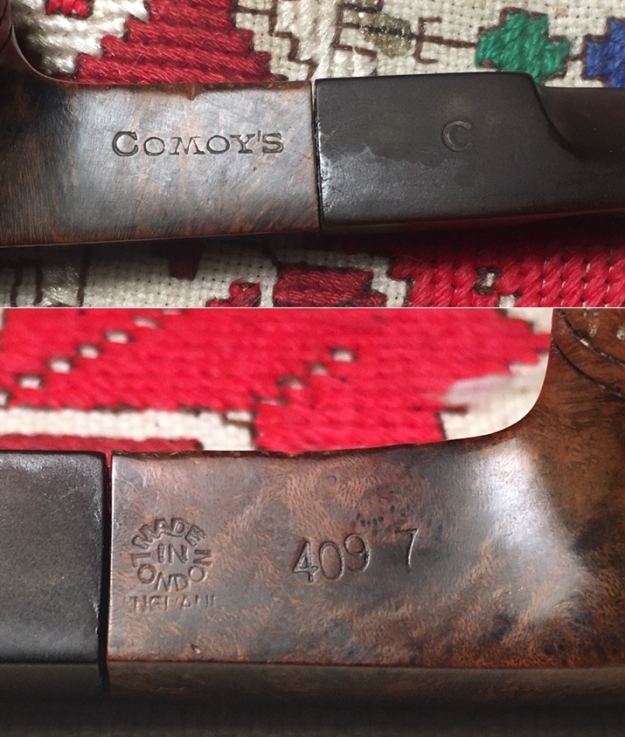

I begin the restoration of this Comoy’s Bulldog by placing the stem in a soak of Before & After Deoxidizer along with other pipes and stems in the queue.  Whoops, I include the original seller’s pictures – I forgot to take pictures of the original stem’s condition before putting the stem into the soak. After some hours of soaking, I remove the Bulldog stem and using a cotton cloth wetted with alcohol, I wipe down the stem removing the raised oxidation.  I follow this by wetting a cotton pad with light paraffin oil (mineral oil) and continue to wipe off the oxidation and the oil helps rejuvenate the vulcanite.After the soak wiping and the stem dries, I can still detect oxidation on the stem which requires more attention.  Before I start sanding the stem, I use Before & After Fine and Extra Fine Polishes to work on the oxidation.  It is advertised to continue the raising process of oxidation.  I start first with the Fine Polish by putting some on my finger and rubbing it in the vulcanite.  I also work it in well around the ‘C’ stamping to clean it more.  After applying, I allow it to stand for some time and then wipe off.  I do the same with the Extra Fine Polish.  After I’ve finished, I still see a deep greenish hue indicating the oxidation is still holding on.  The last picture below tries to capture what I see with the naked eye – it doesn’t do a very good job! One more noninvasive approach to the oxidation I’ll try.  I scrub the stem surface using Magic Eraser.  After working the white sponge over the entire surface, it did do a good job.  More oxidation was removed, but not enough to make me happy!  I still see oxidation especially on the ‘saddle’ of the saddle stem.  The pictures show the progression.Next, I sand the stem starting first with 240 grit paper.  I do not like going through the fine tune buffing with micromesh pads and start seeing oxidation!  So, I sand the entire stem, avoiding the Comoy’s ‘C’ stamping.  I also use at disc to sand against at the stank side of the stem.  The disc helps to guard against shouldering the stem so that the edges are not sharp as the stem joins the shank.  This sanding is primarily for dealing with the oxidation.  In the pictures below, you can see the bit area compressions that are left untouched by the sanding.Before proceeding further with the sanding of the stem, I use the heating method to raise the compressions in the vulcanite in the bit area.  Using a Bic lighter, I paint the bit and button to heat the vulcanite which causes it to expand.  The hope is that this will cause the indentations perhaps to go away or lessen in their impact so that they will then sand out more easily. After painting the bit with the open flame, it helped to minimize some, but it did not erase the dents and compressions on the bit and on the button lips.  I follow with a flat needle file to file the button to refresh and shape the edges.  I follow again with 240 grit paper continuing to sand the dents on the bit.  Using the Bic lighter to raise the dents helps and I’m able to sand out all the dents and compressions from biting. Before proceeding further with the sanding of the stem, I use the heating method to raise the compressions in the vulcanite in the bit area.  Using a Bic lighter, I paint the bit and button to heat the vulcanite which causes it to expand.  The hope is that this will cause the indentations perhaps to go away or lessen in their impact so that they will then sand out more easily. After painting the bit with the open flame, it helped to minimize some, but it did not erase the dents and compressions on the bit and on the button lips.  I follow with a flat needle file to file the button to refresh and shape the edges.  I follow again with 240 grit paper continuing to sand the dents on the bit.  Using the Bic lighter to raise the dents helps and I’m able to sand out all the dents and compressions from biting.  Next, I wet sand the entire stem using 600 grade paper and follow this by buffing with 0000 steel wool. One last thing at this point before turning to the stummel, I give the stem a coat of light paraffin oil to help revitalize it.  I put the stem aside to absorb the oil and dry. With the stummel in hand, I begin the internal cleaning by reaming the light cake build up in the chamber.  I use 3 of the 4 blade heads available from the Pipnet Reaming Kit.  I then use the Savinelli Fitsall Pipe Tool to reach the hard to reach places in the chamber.  I then sand the chamber with 240 grade paper wrapped around a Sharpie Pen followed by wiping the bowl with a cotton pad wetted with alcohol to clean the carbon dust left behind.  Inspection of the chamber reveals some heat fissures on the floor of the chamber.  There also appears to be a small fissure creeping up just above the draft hole.  I take a few pictures that show what I’m seeing.  Are these fissures severe enough to warrant a durable patch or perhaps apply a pipe mud to enhance the growth of a protective cake?  That’s what I’ll be considering.  Continuing the cleaning, I use undiluted Murphy’s Soap on the external briar surface.  To work on the grit lodged in the grooves I use a bristled tooth brush.  I also use a brass wire brush to work around the dome and rim to clear away the old oils. Using a sharp dental probe, I painstakingly clean both dome groves, scraping packed dirt out.  I’m careful not to jump ‘track’ out of the grooves and scratching the briar surface.  The picture shows the cleaning progress. With the externals cleaned up, I turn now to the internal mortise and airway.  Using pipe cleaners and cotton buds dipped in isopropyl 95% I go to work. I quicken the work by scraping the mortise with a dental spatula.  In time, the cotton buds and pipe cleaners were coming out clean.  I’ll continue cleaning later using a kosher salt and alcohol soak.Turning again to the stummel surface, the rim and dome cleaned up well but show the dents and pockets from knocks and drops.  There remains a scorched area at the front of the rim/dome area.  There are small chips in several places around the circumference of the dome grooves.  I believe they’re all too small to patch, but with sanding I’m hoping that most should disappear or be minimized.  The most daunting aspect of the briar landscape is a huge, double fill patch on the right lower side of the stummel.  I take two pictures of the fills to show the position and a super close-up to show the appearance of the fills.  I poked the fills with a dental probe and both fills are rock solid.  Yet, as the close-up picture reveals, there are small air pocket holes in the fills and gaping around the fills.  I’ll leave the fills in place but touch them up with thin, clear CA glue and then sand to blend.  These fills will pretty well drive the boat regarding the finished look of the Comoy’s Bulldog.  The finish needs to be darker in order to mask the fills as much as possible, though even a dark stain will not hide these giants.   Looking again around the dome grooves, on the back-right quadrant there may be at least 2 candidates for a patch before sanding.  I take a picture of this area.  To the top left of the groove chips, there are also a few small holes that I’ll fill with a spot-drop of CA glue.  In this picture there are also two other small fills that seem to be in good shape.Before I begin sanding and patching, I start from the top and work my way down!  Topping the stummel will re-define the rim and address the front quadrant of the rim/dome where the former burn damage has thinned the rim.  I take some pictures to show these issues and mark the start. I put 240 grade paper on the chopping board and rotate the inverted stummel several times, checking as I go to make sure I’m staying level and not leaning into soft spots in the briar. When enough of the top is removed, I then switch the paper to 600 grade paper and turn the stummel a few more rotations. I take pictures to show the progress.  Now to the patching party!  I first wipe the stummel with a cotton pad wetted with alcohol to clean the area. I start with the two large fills by spot dropping a small amount of thin CA glue over the fills and spreading the glue over the entire fill – filling the pockets and gaps.  To move the work along faster, since these are not ‘weight bearing’ patches, I use an accelerator to quicken the curing process.   For the groove patch, I insert a piece of an index card into the groove to create a flow barrier for the CA glue.  I then spot-drop a small amount of CA glue slightly above the chip and draw the glue over the chipped area with a toothpick.  Again, I use an accelerator to solidify the glue.  After a few minutes, I pull the index card away and use a sharp dental probe to make sure the groove is clear of CA glue seepage.  Next, I apply small drops to four other small pits near the grooves and above them – again, I use an accelerator.  I decide also to apply a small drop to the right of the primary groove repair.   The repairs look a mess now, but I’m hopeful that the sanding will prove to reveal a more pleasing surface!Next, I begin the filing and sanding of the two large fill patches down to the surface level.  I use a flat needle file to do this initially when the patch mound is more distinct, then follow with 240 grade paper as the sanding nears the briar surface.  The gaps and pits in the original patch filled nicely, blending better with the surrounding briar.To both clean and sharpen the grooves at the groove patch repair, I insert 240 grade paper into the groove itself.  The groove is only large enough to accommodate a single sheet, so I must flip the paper to sand both the upper and lower edges of the groove.  I use a sawing motion with the paper while in the groove and I flex the paper up to apply a little more sanding action to the groove edge.  This technique does a good job redefining and cleaning up groove edges, especially at the point of the CA glue repair.After filing, sanding the groove patch repairs, and ‘groove sanding’ the groove repair looks great!  The patch has blended, and the groove is cleaner and smarter.Next, I move on to filing and sanding the 4 patches to the left of the groove repair on the dome.  I file the patch mounds down until near the briar surface and then take over with 240 grit paper.  I sand the area of the patches to blend.  It looks good – not pristine, but much less ragged!  The battered stummel is showing some signs of life!I follow by ‘groove sanding’ this area.  I like the results of this technique, so I decide to continue the groove sanding around the entire circumference of the dome for both the upper and lower grooves.  Since I’m able only to do one directional sanding on the grooves, it requires four circuits around the dome to do the job!  I refined the technique as I work – by flexing the paper somewhat I can sand more directly chips encountered on the groove edge as I slowly work around the dome.  The pictures show the groove sanding progress and results – much cleaner and crisper for this Comoy’s Bulldog! I continue preparing the external briar surface by sponge sanding starting first with the coarse sanding sponge.  I then use a medium grade sponge then finish with a light grade sanding sponge.  I avoid totally the upper shank panels with the nomenclature.  Sanding sponges help to clean the surface of the minor nicks and cuts and soften the look without an overly intrusive sanding effect.  The pictures show the results of the 3 sponges. As I sponge sand the dome of the Bulldog, I notice a chip in the inner lip of the rim that became more distinct during the sanding process.  To erase this small divot, I introduce a very gentle inner bevel to the rim using 240 grade paper rolled.  This dispatched the divot quickly. Earlier, I avoided using the sanding sponges on the nomenclature panels in order not to diminish the Comoy’s stampings.   I do want to clean the panels more to rid the old residue finish before applying a fresh stained finish.  To remove the old finish and to clean the panel I apply acetone to a cotton pad and wipe the panels.  This does the job. With the time of my departure for the work day rapidly approaching, I continue the internal cleaning of the mortise and airway using a kosher salt and alcohol soak.  After forming a wick by stretching and twisting a cotton ball, I insert it down the mortise and airway using a stiff wire.  The wick acts to draw out the tars and oils.  I then add kosher salt (no aftertaste) to the chamber and place the stummel in an egg crate for stability.  With a large eyedropper, I add isopropyl 95% to the chamber until is surfaces over the salt.  After a few minutes, after the alcohol has absorbed into the chamber, I top off the alcohol and set the stummel aside to soak for the day.Arriving home several hours later, the soak did the job of finishing the internal cleaning.  I clean the expended salt from the chamber with paper towel and shank brushes as well as blowing through the mortise.  I run an additional pipe cleaner and cotton bud wetted with alcohol to assure the internals were clean.  They are, now moving on!Before proceeding further with the external stummel preparation, I’ve come to a decision point regarding the chamber issues that I saw earlier.  The floor of the chamber has heat fissures which the first picture shows.  The second picture shows the fissure immediately above the draft hole.  The upper chamber shows some heating issues with small, more normal chamber wear.  Earlier, my question had been, do the fissures on the floor of the chamber need a more durable response than simply applying a pipe mud mixture to enhance the growth of a protective cake?  The floor of the chamber has experience overheating issues and I believe at this point would benefit from applying J-B Weld to prevent further damage and to reinforce the resistance of the chamber floor.J-B Weld comes with two components that are mixed together and once mixed harden to form a heat resistant bond.  I’ll mix a small amount and apply it to the floor of the chamber then spread it over the area, including above the draft hole, filling the fissures with the Weld.  After it hardens and cures, I’ll sand the excess. I first wipe the chamber with alcohol and put a pipe cleaner through the airway to block seepage into the draft hole.  After I mix J-B Weld components in equal parts, I apply a small amount on the floor of the chamber and spread it with a dental spatula and my finger. I rotate the pipe cleaner so that it is not stuck but I leave it in place – I don’t want to pull it out while the J-B Weld is wet leaving the mixture in the mortise.  I put the stummel aside for the J-B Weld to cure.  After the repair cured overnight, I take a picture of the sanding process using 240 grade paper wrapped around a Sharpie Pen.  I concentrate on removing the excess J-B Weld so that all that is left of the weld is what has filled the fissures and cracks. The next pictures show a much healthier chamber.  At the floor of the chamber in the first pictures and concentrating on the area immediately above the draft hole in the second picture, you still see what appears to be rough spots, but it is now smooth to the touch in large measure.  The Weld filled the cracks and reinforced the area.  The application of J-B Weld and the additional sanding on the floor and the walls of the chamber cleaned it up nicely.  Putting the stummel aside, I take the stem and wet sand using micromesh pads 1500 to 2400.  I follow by dry sanding with pads 3200 to 4000 and 6000 to 12000.  Between each set of 3 pads I apply Obsidian Oil to revitalize the vulcanite. With the stem waiting in the wings, I continue with the stummel by wet sanding with micromesh pads 1500 to 2400.  I follow this by dry sanding with pads 3200 to 4000 and 6000 to 12000.  I take pictures of both sides of the stummel to show the huge fills on the right side.  If it weren’t for these unavoidable fills, the fantastic recovery the stummel has made would encourage me to leave the original, natural grain finish in place.  The briar surface had many issues, but the results of the micromesh sanding reveal a very attractive grain presentation.  The next step is to apply a dark stain to the Comoy’s Bulldog that will serve to help mask the issues prevalent on the surface.  Without question, my plan is to apply Fiebing’s Dark Brown Leather Dye to the stummel surface.  I assemble all the needed components on the table to apply the stain.  First, using a sharp dental probe I carefully dig out and scrape the dome grooves to make sure the debris is gone.  After wiping the stummel with alcohol to clean and prepare the surface, I fit the stummel with a cork I’ve fashioned as a handle inserted into the mortise.  Next, I heat the stummel with a hot air gun to expand the briar grain.  This aids the briar in absorbing the dye pigment.  Using a folded over pipe cleaner, I apply the dye to the stummel.  After a thorough application, I flame the stummel with a lit candle and the alcohol-based aniline dye combusts and sets the dye in the grain.  After a few minutes, I apply the dye again and flame again to make sure there is an even coverage.  I then set the stummel aside for the dyed stummel to rest. After resting for several hours through the night, it’s time to unwrap the fire-crusted Comoy’s stummel.  Over time, I have developed my own techniques for use with the Dremel since this is my main and only work horse tool on the 10th floor flat of a formerly Communist block apartment building!  My usual method for ‘unwrapping’ has been with the use of a felt buffing wheel, which is more abrasive than cotton, applying Tripoli compound.  I love this technique because the result reveals a more brilliant grain pattern as it lightens the grain veins leaving them in contrast to the softer briar wood which absorbs more of the dye.  However, I have found that using the felt buffing wheel lightens the entire stummel.  With the large dark fills on this stummel in need of remaining masked for better blending, I use a cotton cloth buffing wheel with Tripoli compound to unwrap the flamed crust.  The softer cotton wheel isn’t as abrasive and leaves a darker dyed hue on the briar surface.  After mounting a cotton cloth wheel on the Dremel, I set the speed at the lowest RPM and I apply Tripoli to the stummel. I take a couple staged pictures to show the contrast between the flamed crust and the surface that has been ‘unwrapped’ and buffed with compound.  After completing with the Tripoli, I wet a cotton pad with alcohol to wipe the stummel not so much to lighten but to blend the new stained finish. Next, I rejoin the stem and stummel to apply Blue Diamond compound.  I discover that the junction between the tenon and mortise has loosened through the cleaning process – a common thing in my experience.  To remedy this, I take a drill bit the next size larger than will fit through the tenon airway.  I use a Bic lighter and heat the tenon and after a bit, the vulcanite tenon becomes supple and allows me gradually to insert the drill bit end into the airway.  This expands the tenon and tightens the connection.  This works like a charm!  With the stem now fitting snuggly, I continue to apply Blue Diamond to the stummel and stem.  I mount a cotton cloth buffing wheel to the Dremel and increase the speed to about 40% full power.  I apply Blue Diamond compound to both stem and stummel.Before moving on to applying carnauba wax to the pipe, I have two more projects to do.  The first is to apply white acrylic paint to refresh the Comoy’s ‘C’ stamping on the stem.  The second is to apply pipe mud to the chamber.  I decide to do the latter first.  After the repair done to the chamber, to enhance the healthy development of a protective cake (which should be maintained at about the width of a US dime coin) I use a mixture called pipe mud – a combination of cigar ash and water.  This mixture, once applied to the chamber and dries, hardens to create a starter surface for the cake to develop.  My colleague, Gary, who lives in Plovdiv, Bulgaria, is the cigar man who saves his ash for my use. Thanks, Gary!  I mix some water with ash in a plastic dish and mix it with my pipe nail until it starts to thicken. At this point, I apply it in the chamber with the nail and my finger.  It doesn’t dry quickly so there’s time to spread it evenly over the chamber.  After spread, I insert a pipe cleaner through the draft hole to keep it clear of the mud.  I then put the stummel aside in the egg cart for the mud to cure. Turning now to the Comoy’s ‘C’ stem stamp, I put a drop of white acrylic paint over the ‘C’ and absorb the excess with a cotton pad and ‘dob’ it out so that the paint thins and dries.  I then use a toothpick’s flat edge to gently scrape the excess paint off after it dries.  I have to reapply paint a few times to get it right.  The pictures show the process. After allowing the pipe mud to cure, I rejoin stem and stummel and once more, run the sharp dental probe in the grooves around the circumference of the dome then buff the pipe with a felt cloth clearing away the compound dust before applying wax.  I then mount a cotton cloth buffing wheel to the Dremel, keep the speed at about 40% full power and apply a few coats of carnauba wax to the pipe.  I finish the restoration by using a microfiber cloth to give the pipe a rigorous hand buffing to raise the shine.
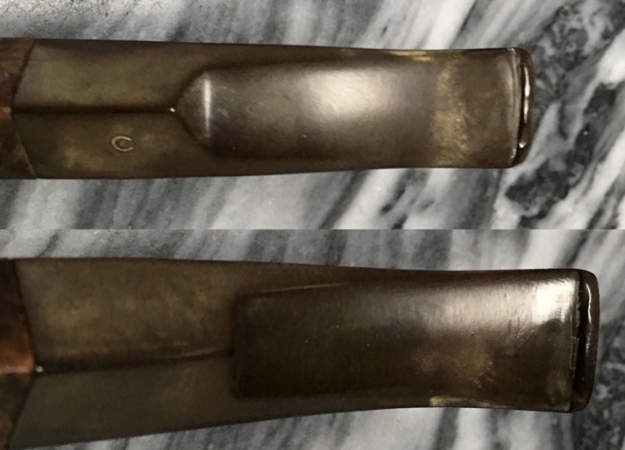
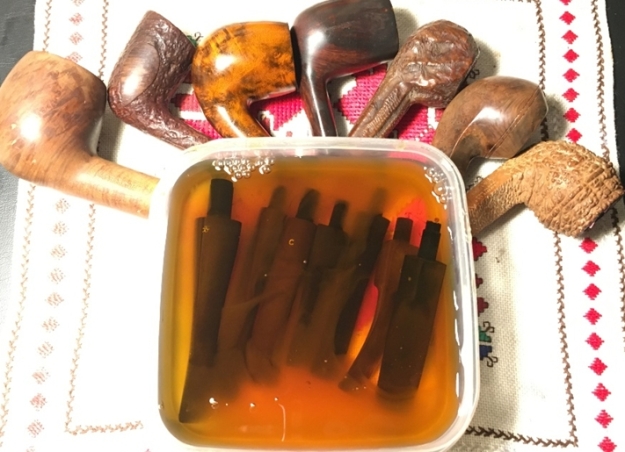
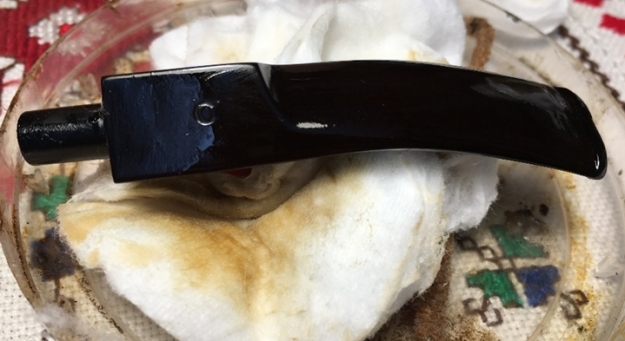
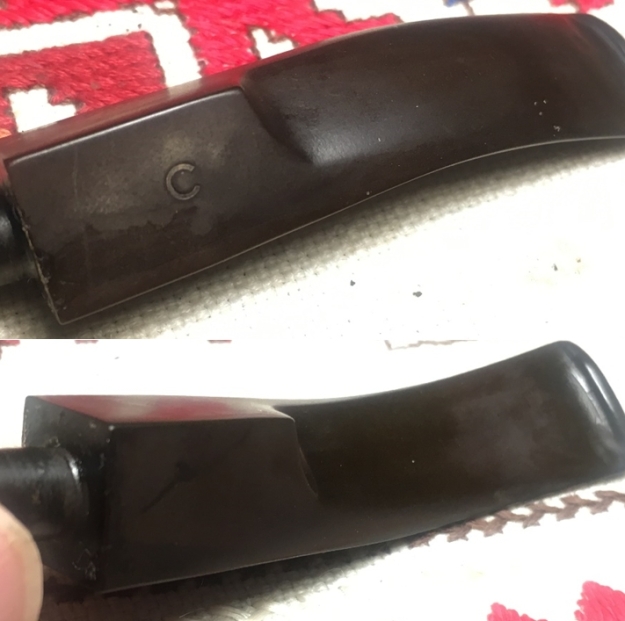
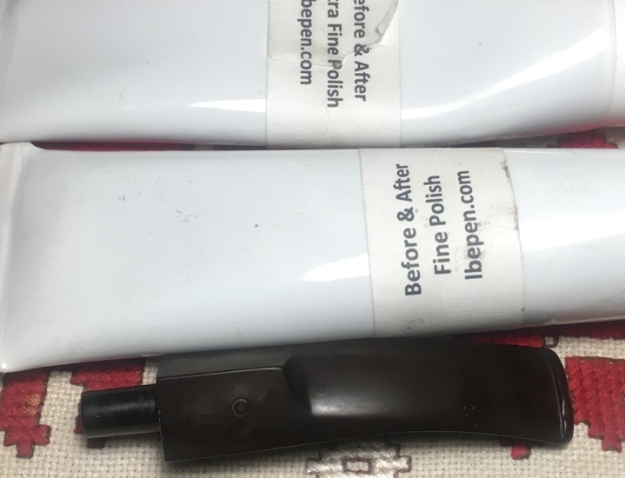
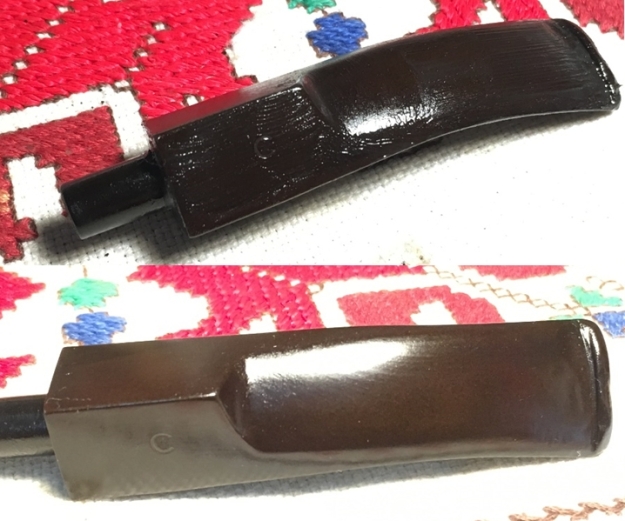
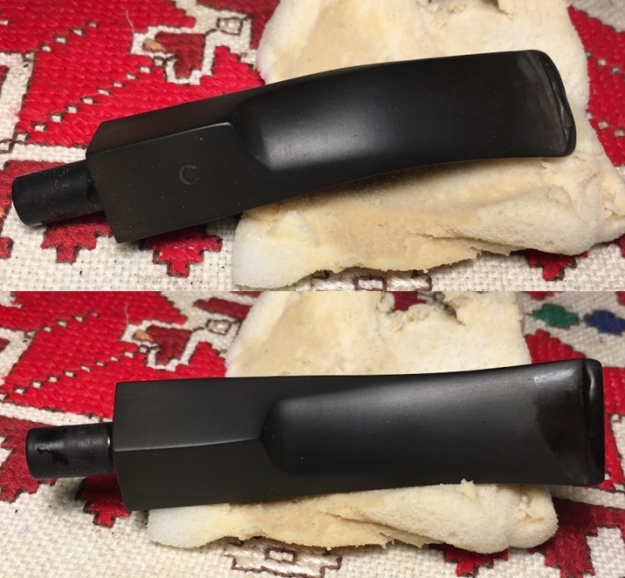
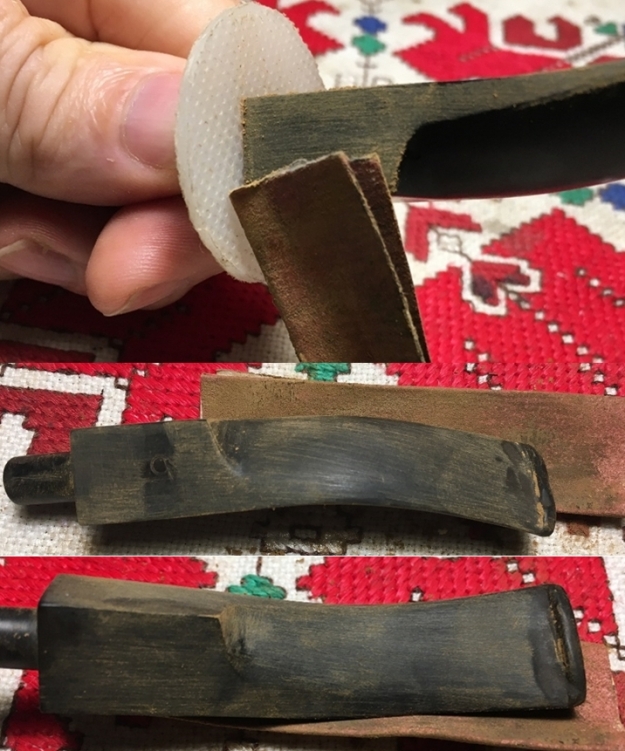
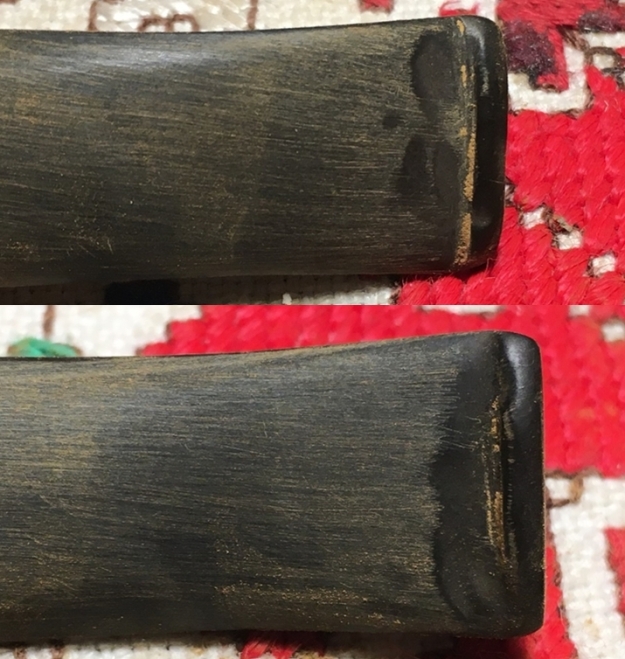
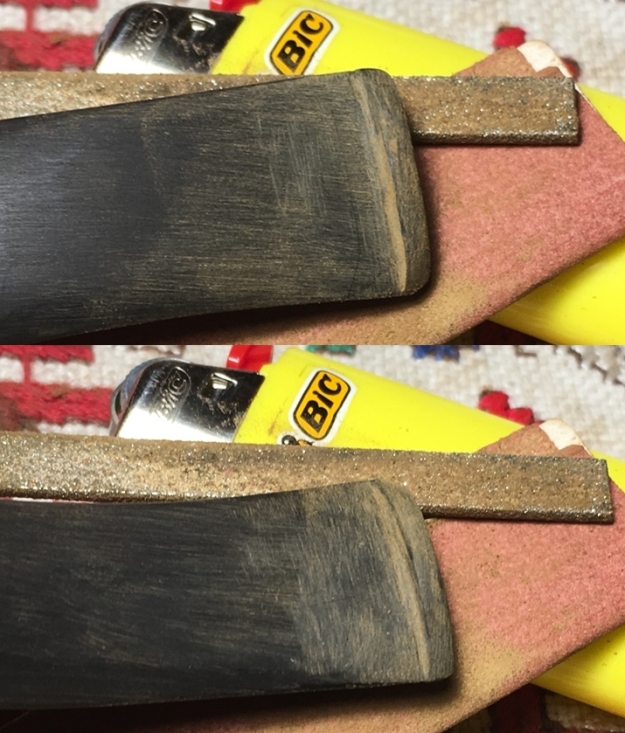
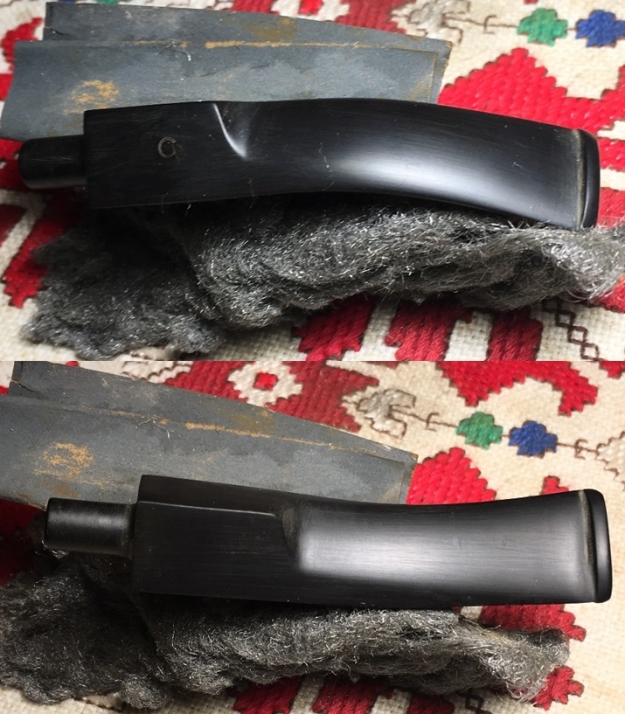
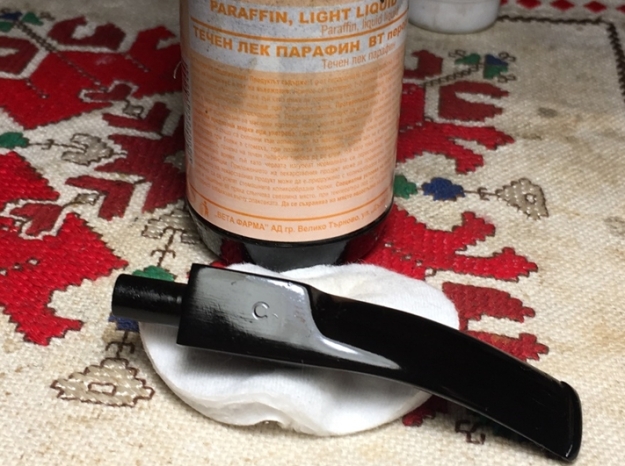
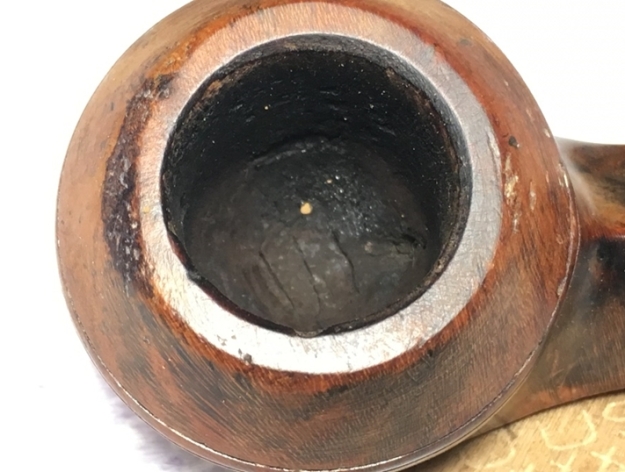
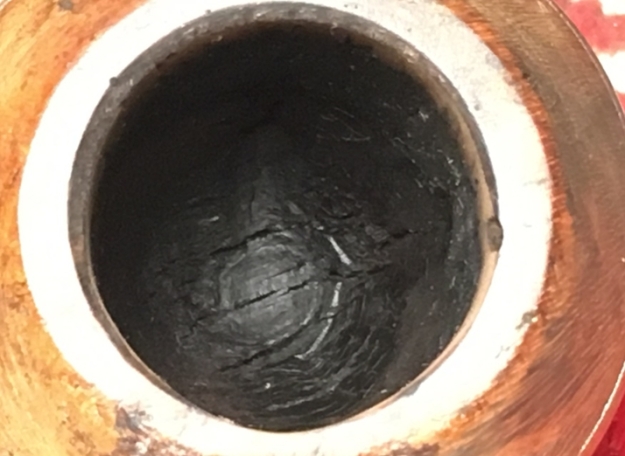
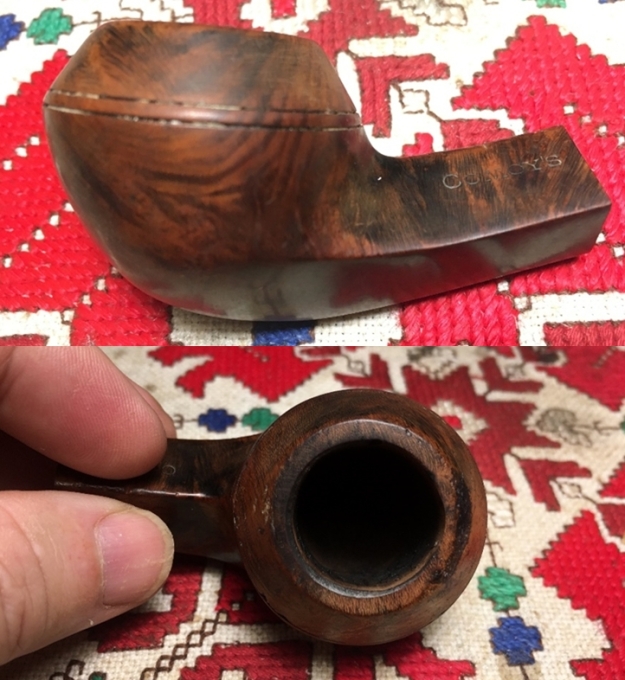
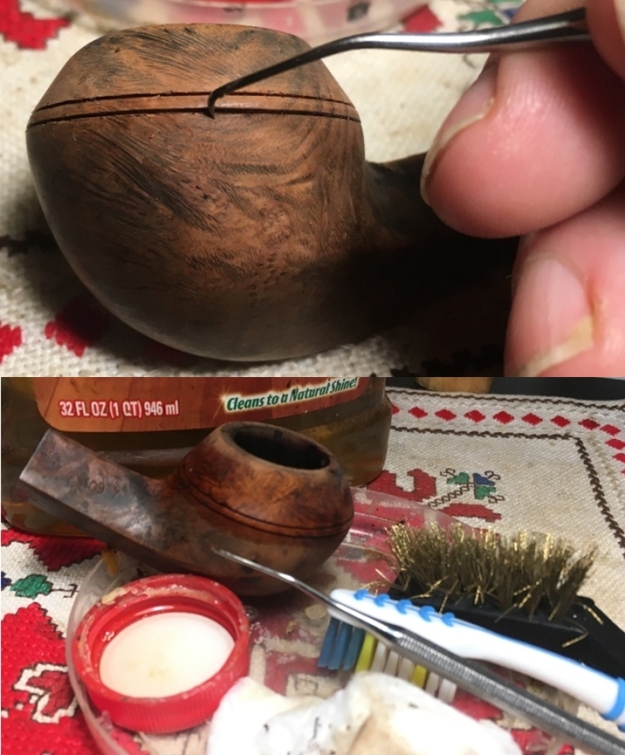
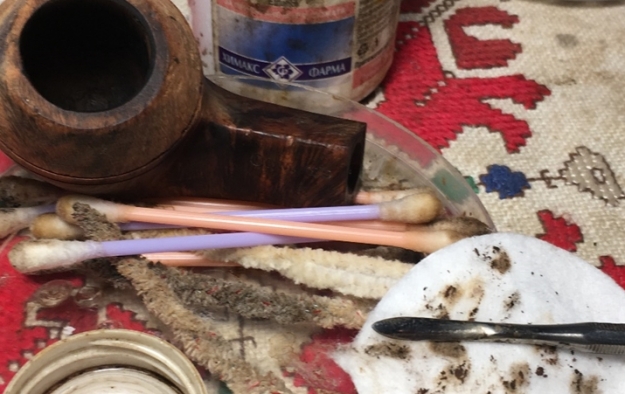
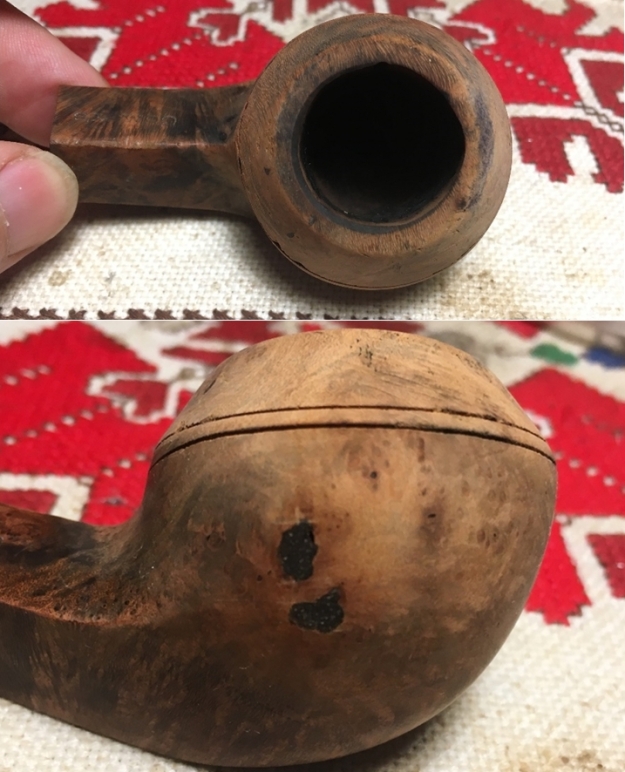
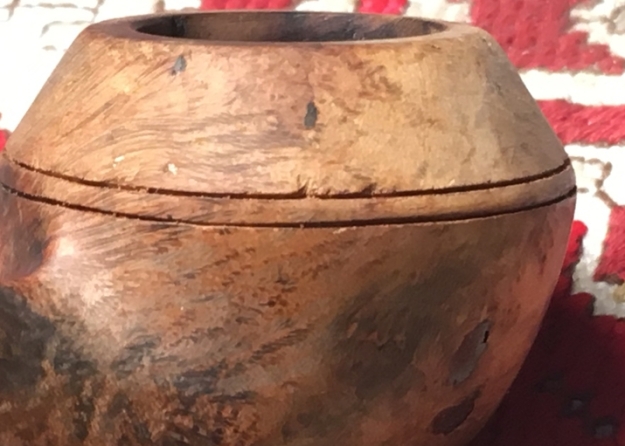
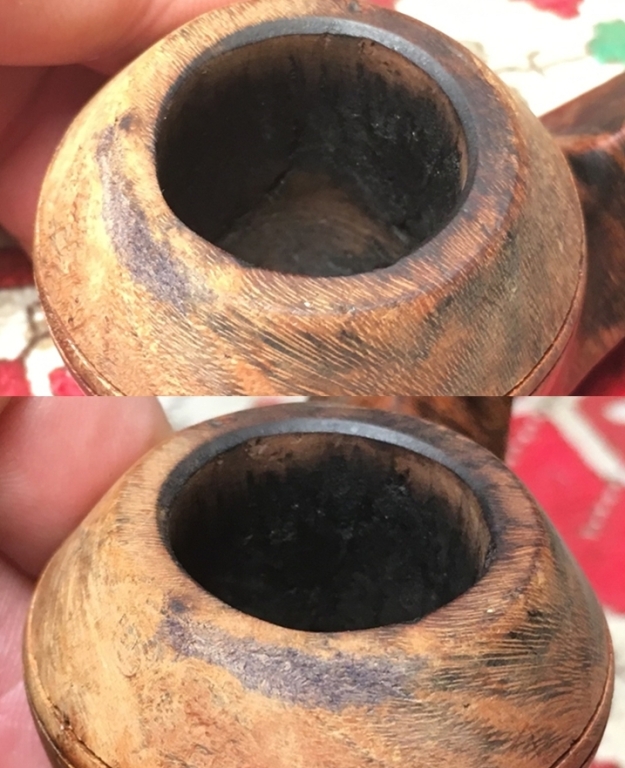
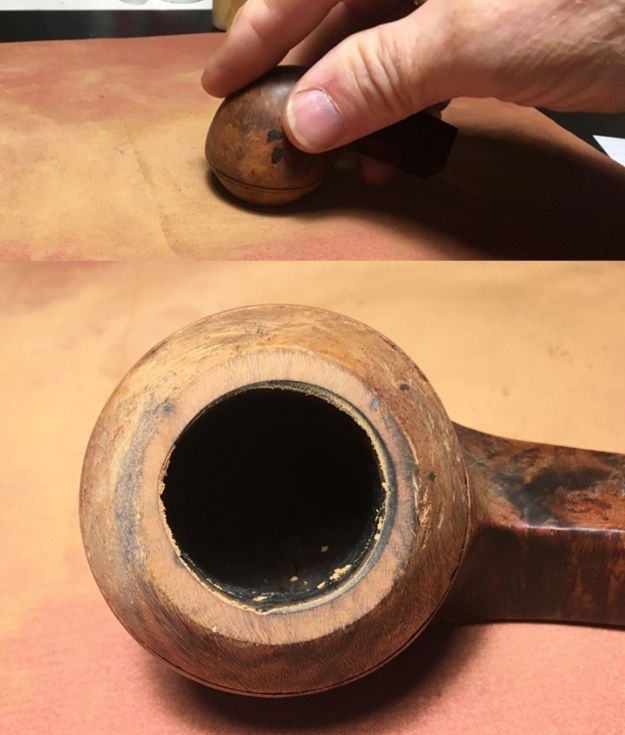
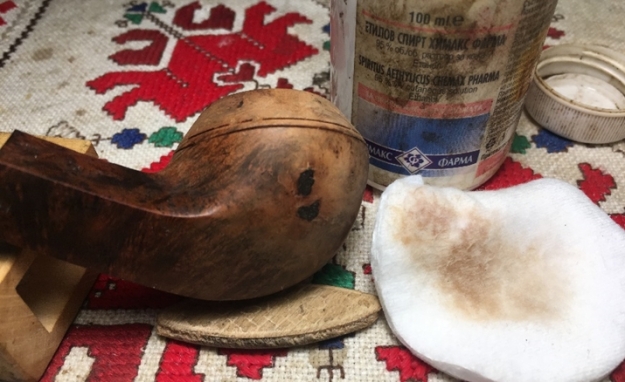
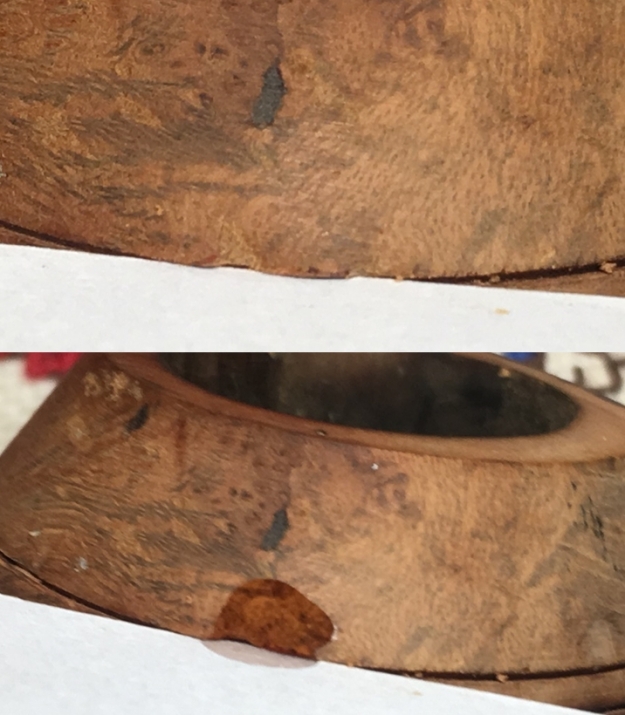
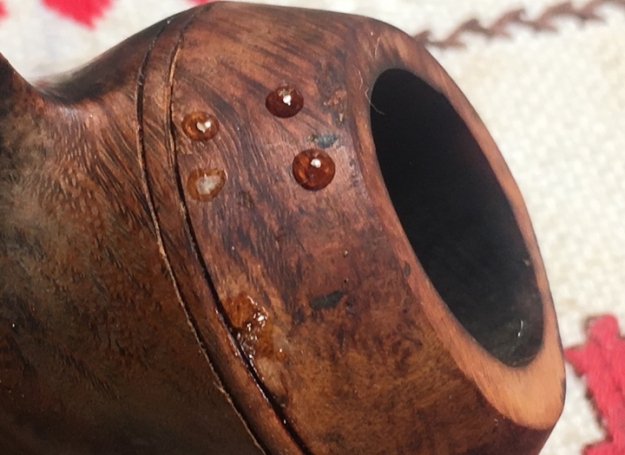
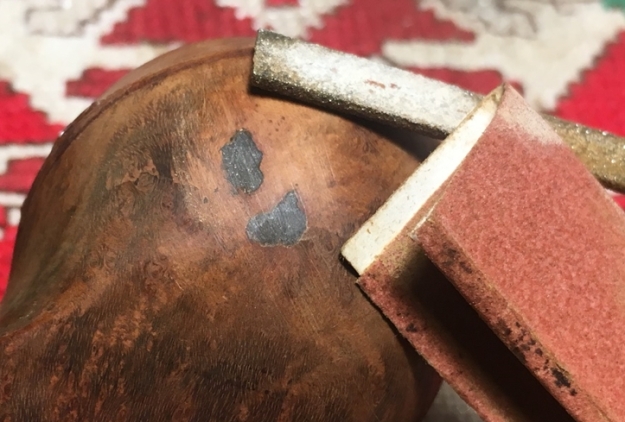
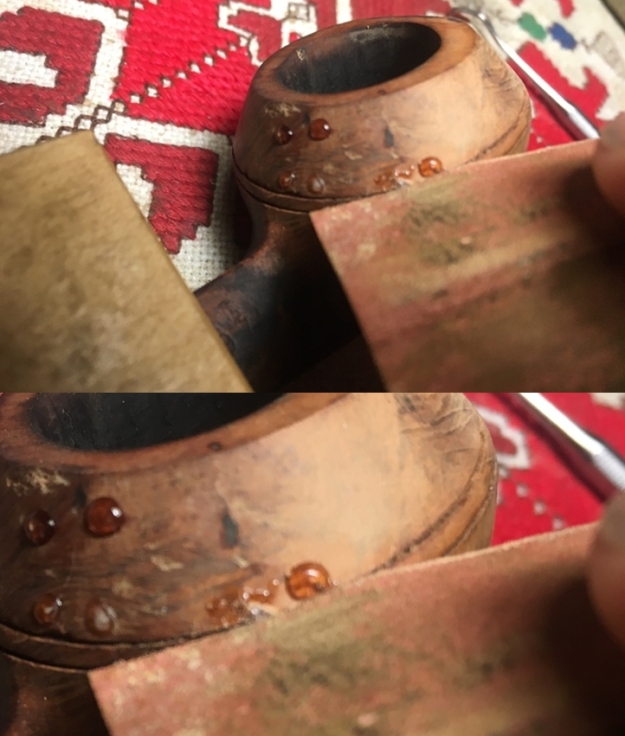
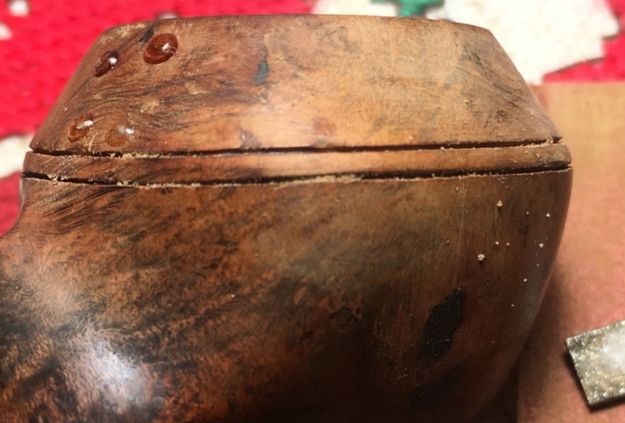
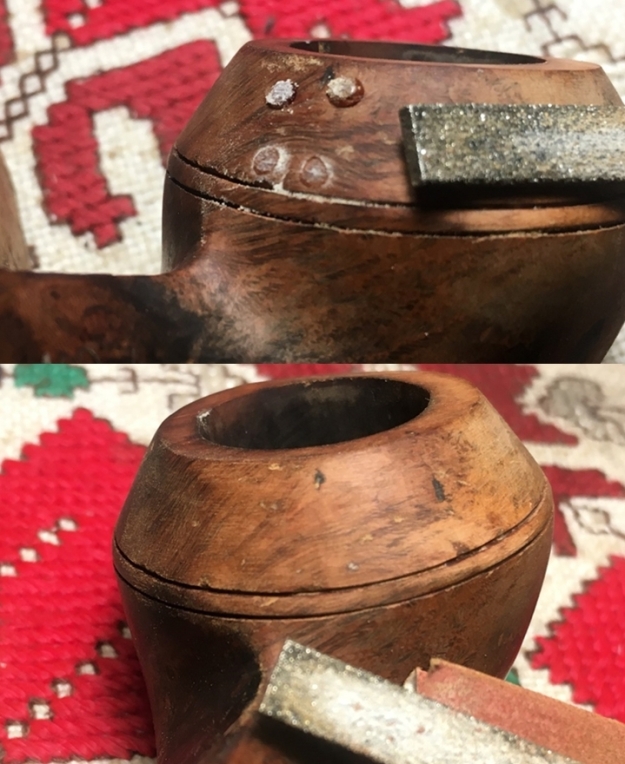
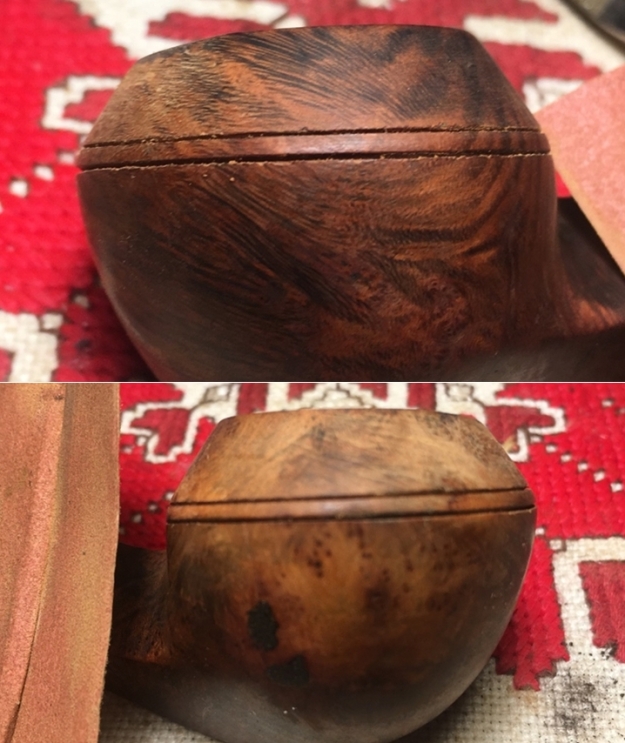
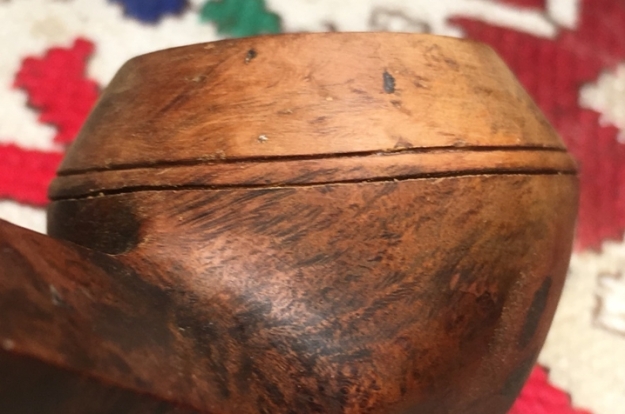
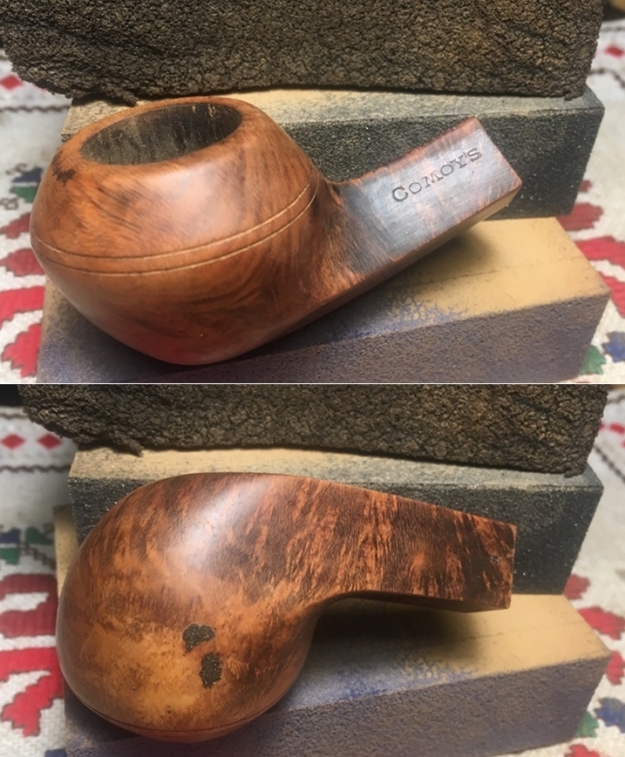
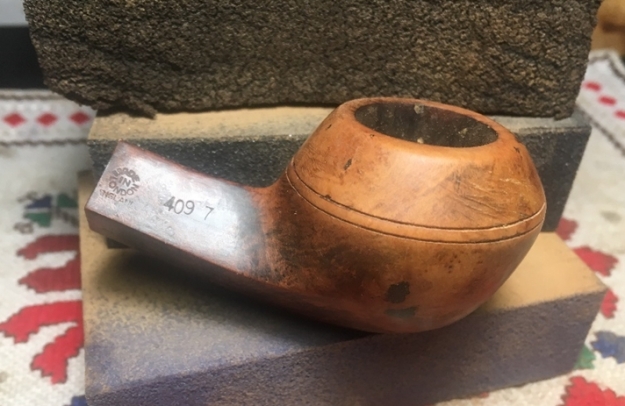
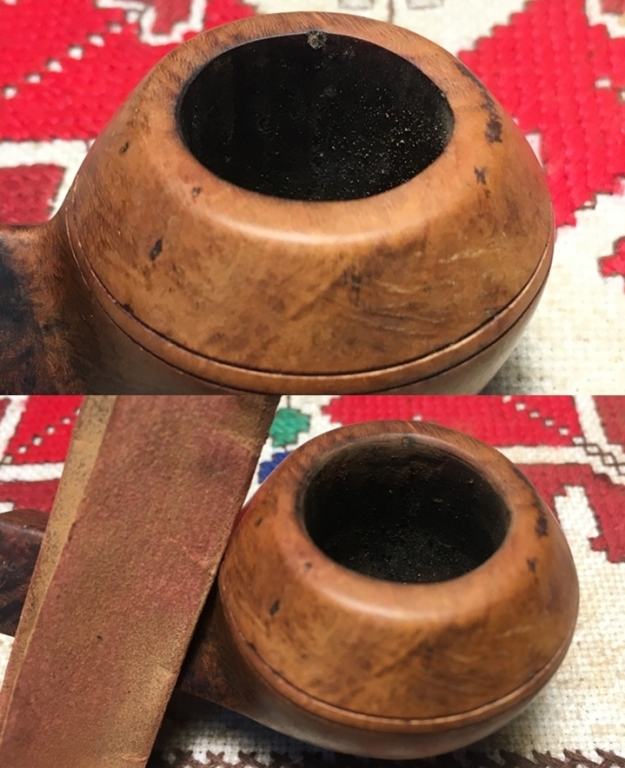
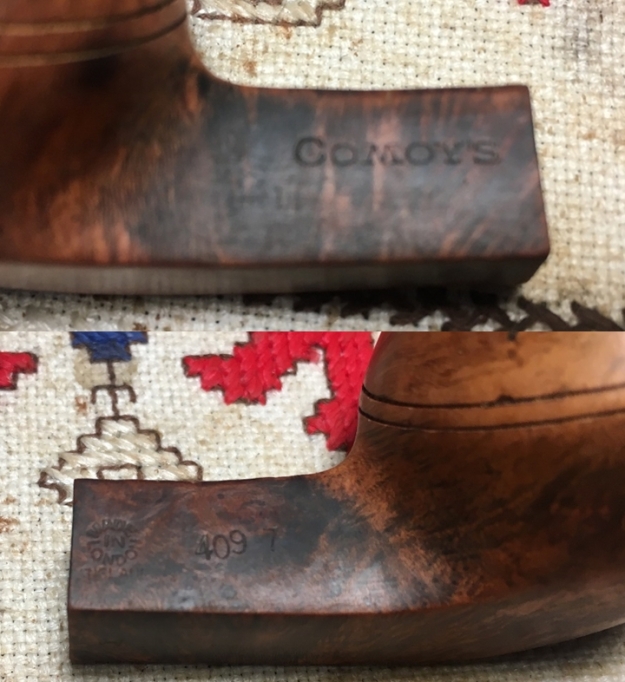
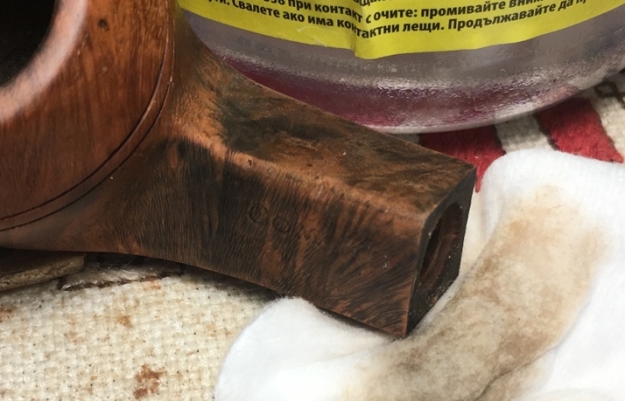
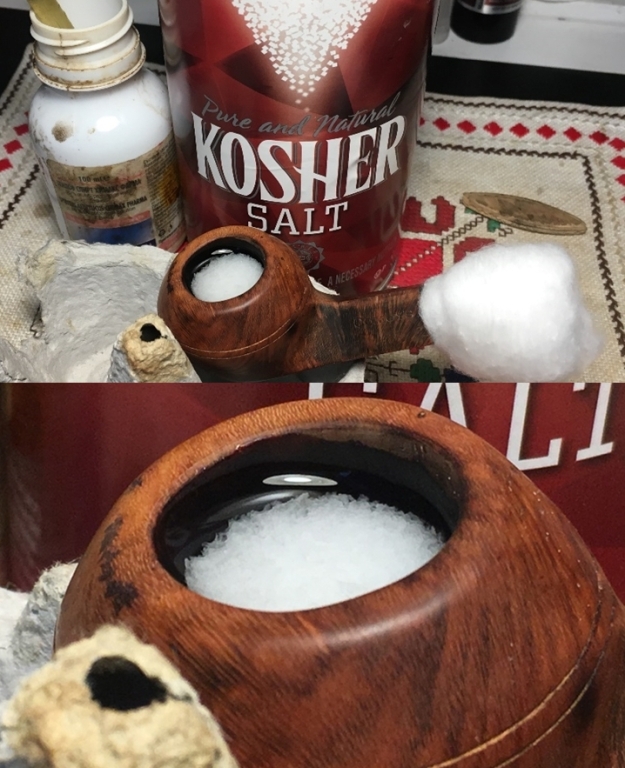
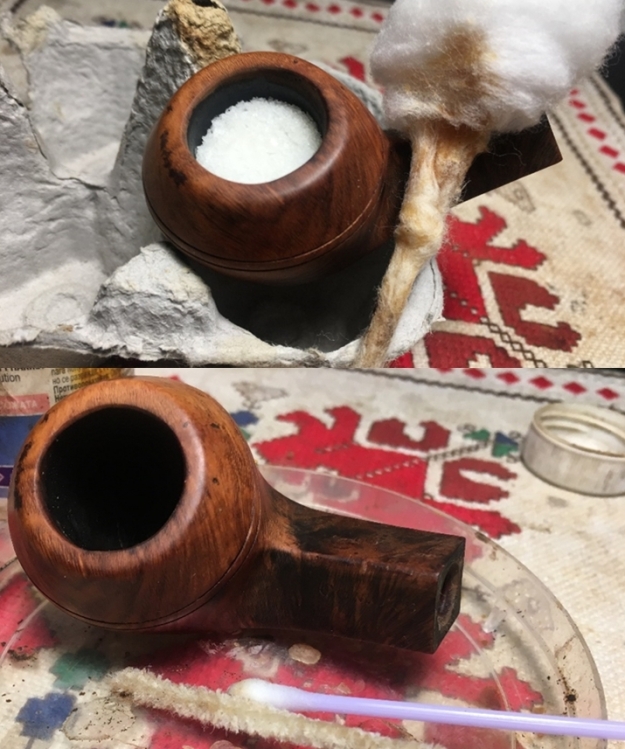
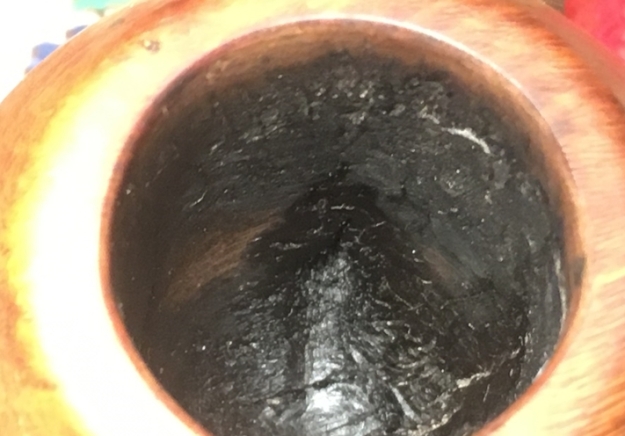
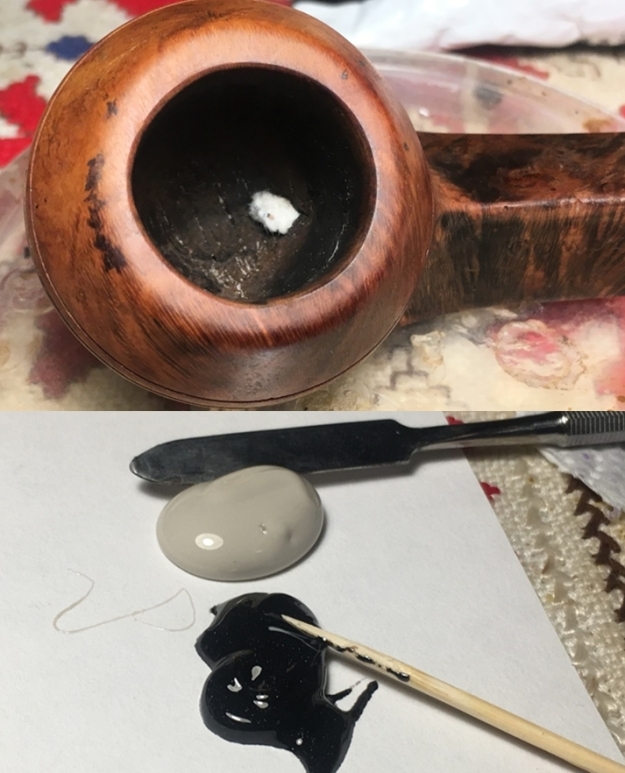
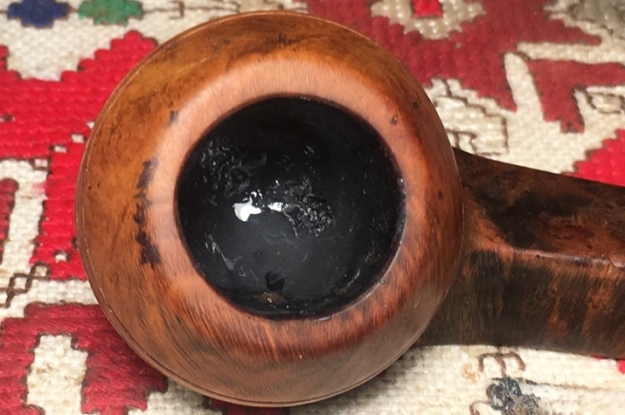
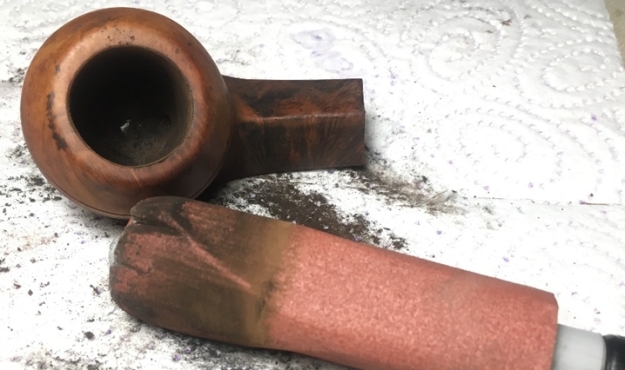
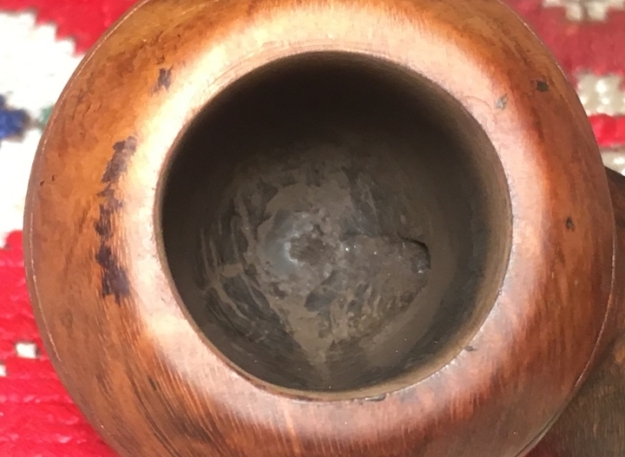
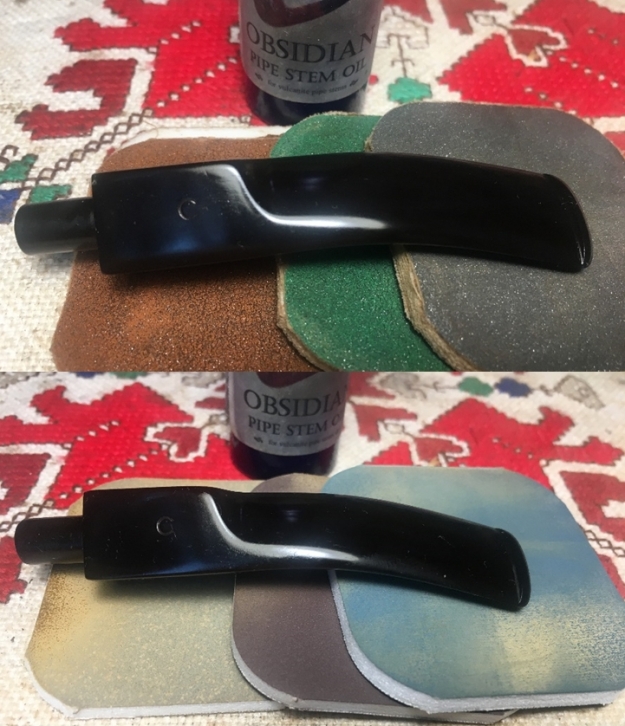
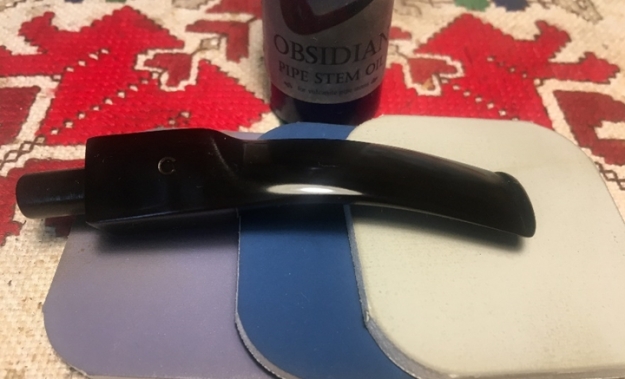
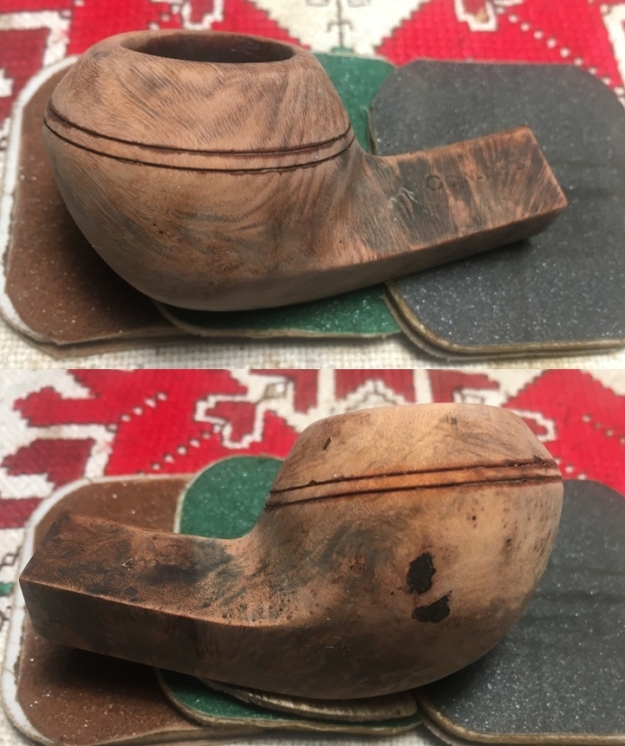
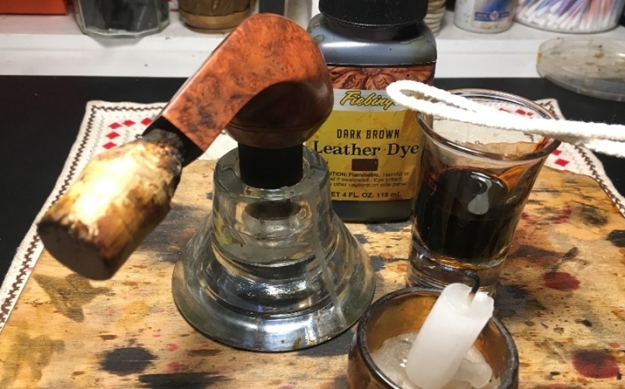
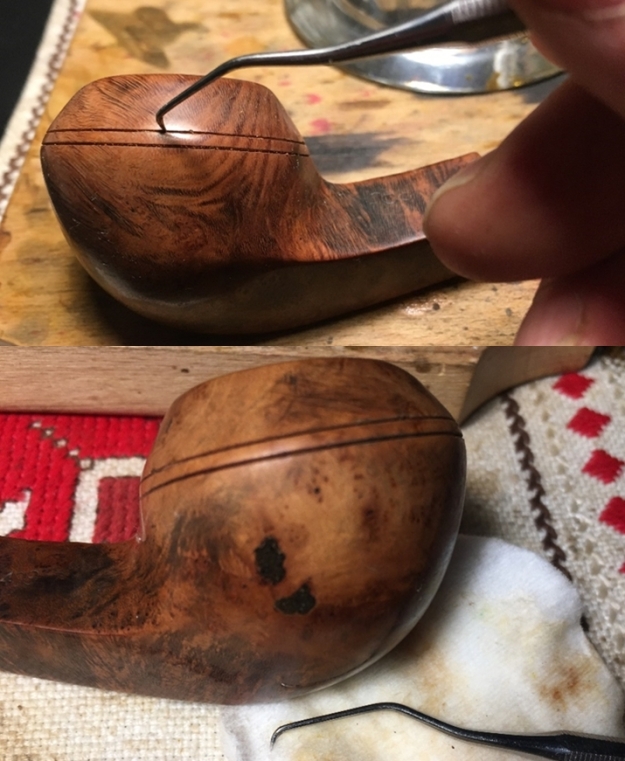
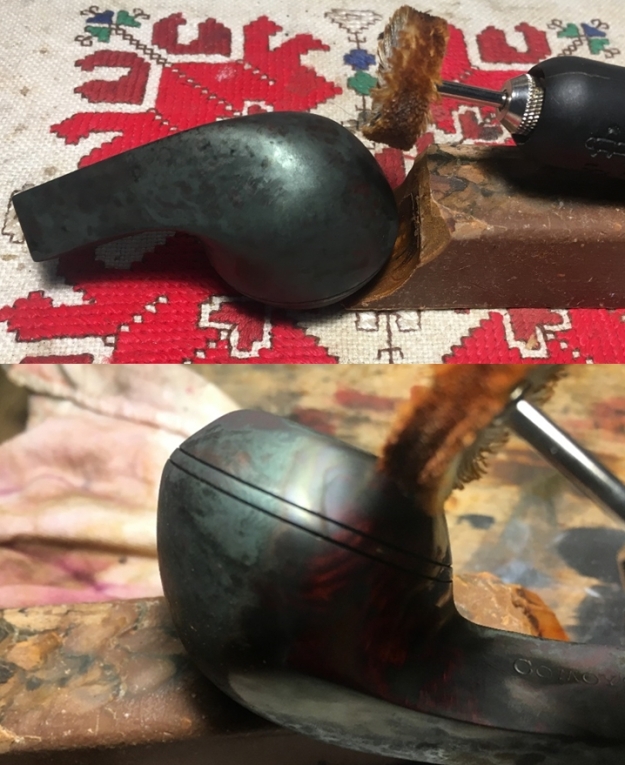
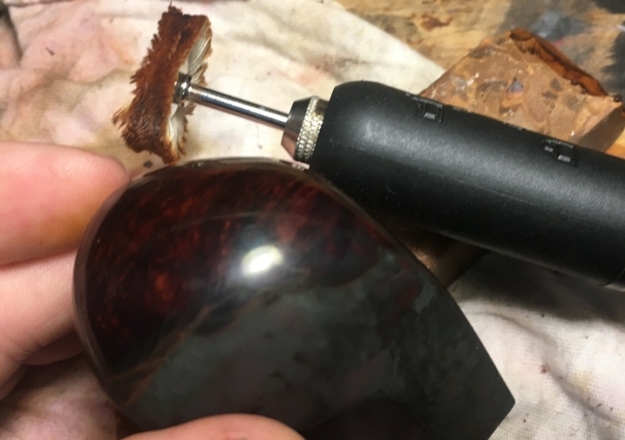
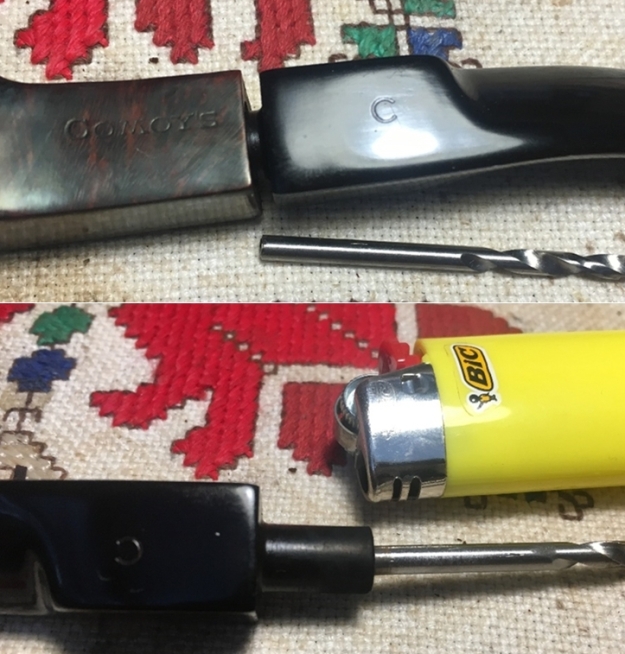
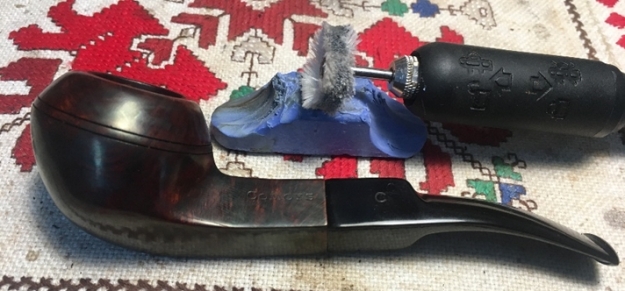
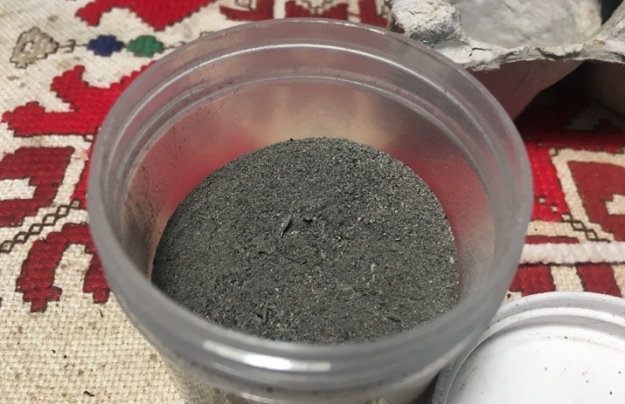
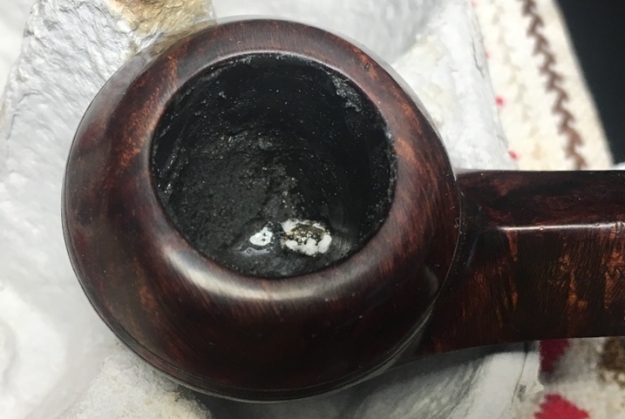
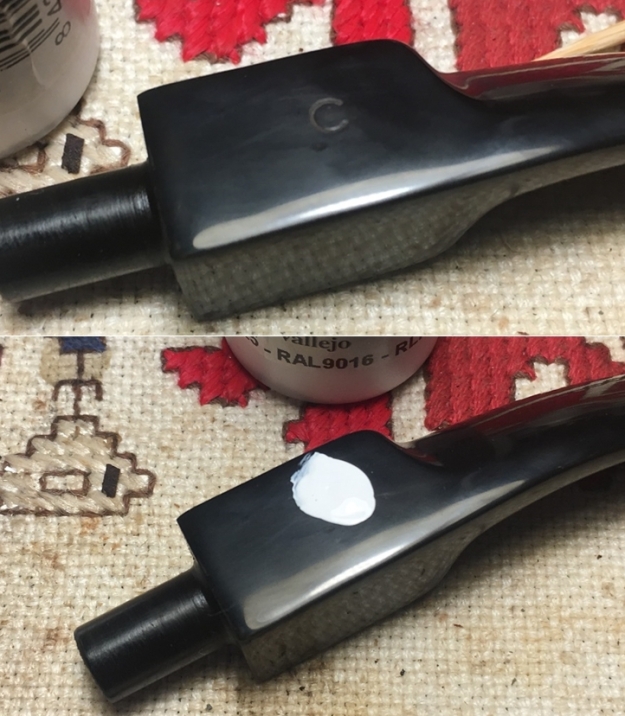
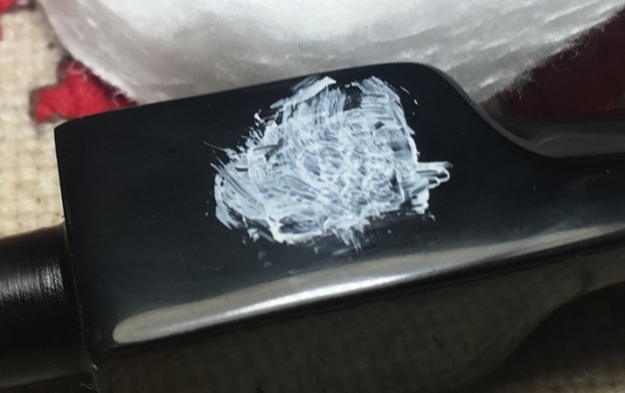
I’m pleased with the results of this Comoy’s Made in London, England, Bent Bulldog.  The restoration was fought in the trenches!  The many repairs done to the stummel surface came out well, though the two large fills are still evident, but not as overt. The dark brown dye came out beautifully and the groove patches and repairs have all but disappeared.  I’m glad I also addressed the heat fissure issues in the chamber.  This Comoy’s Bent Bulldog will provide many more years of service to a new steward.  Stephen commissioned this Comoy’s and will have first opportunity to acquire it in the Pipe Steward Store and this pipe benefits the Daughters of Bulgaria – women and girls who have been trafficked and sexually abused.  Thanks for joining me!