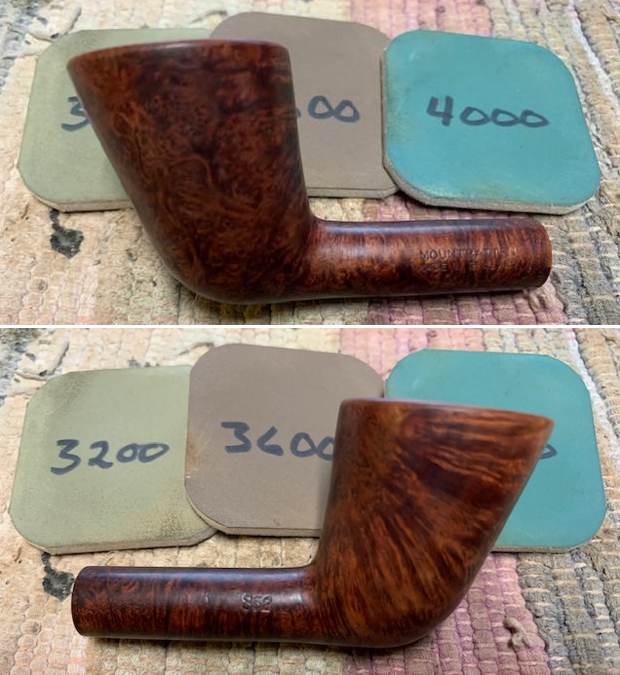
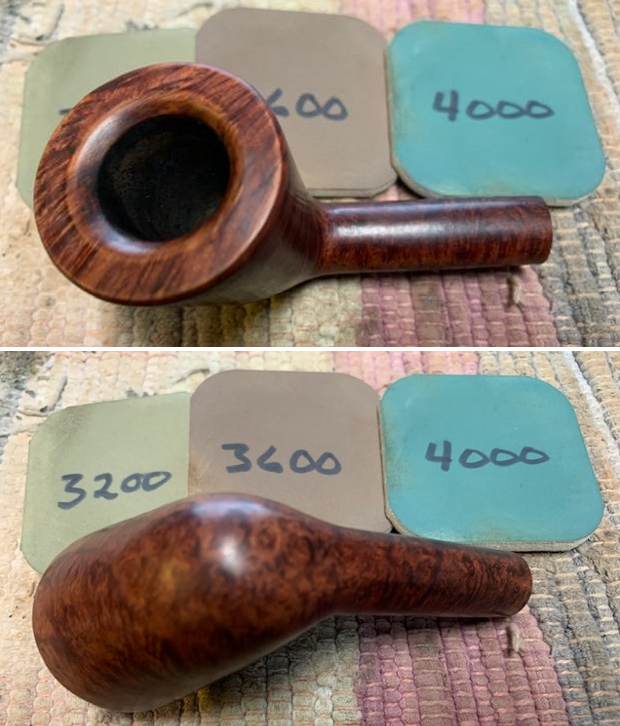
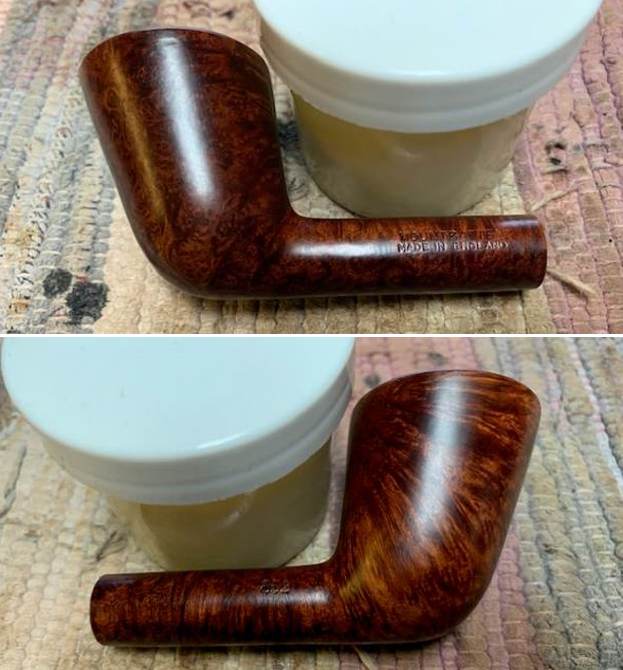
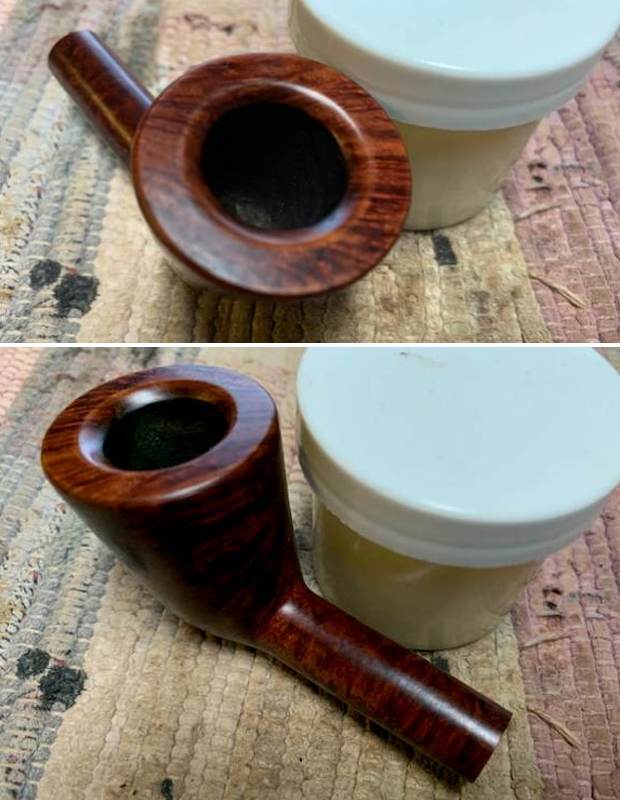
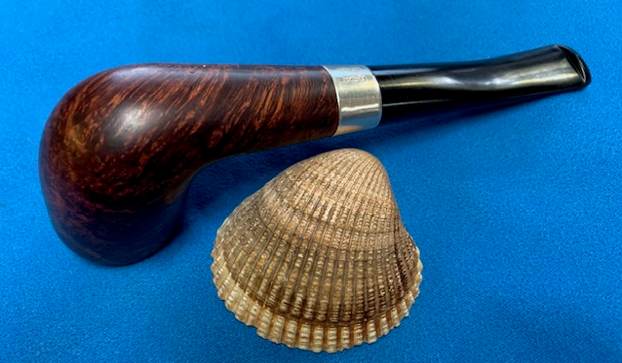
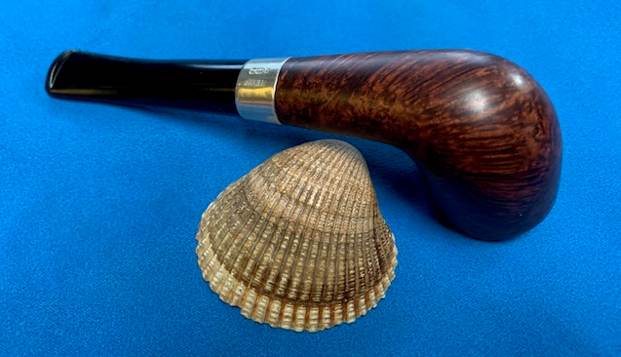
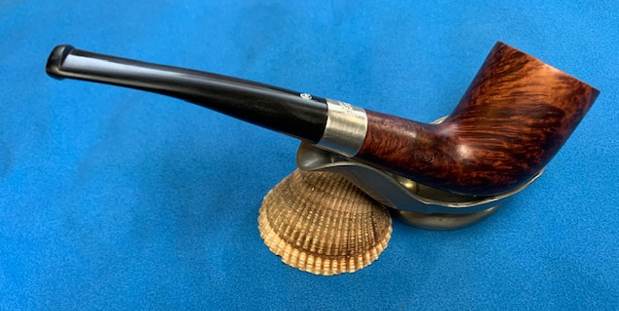
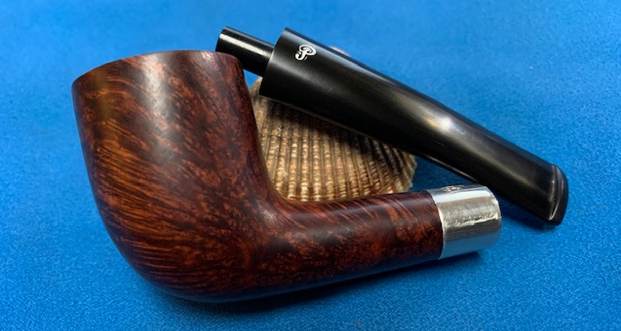
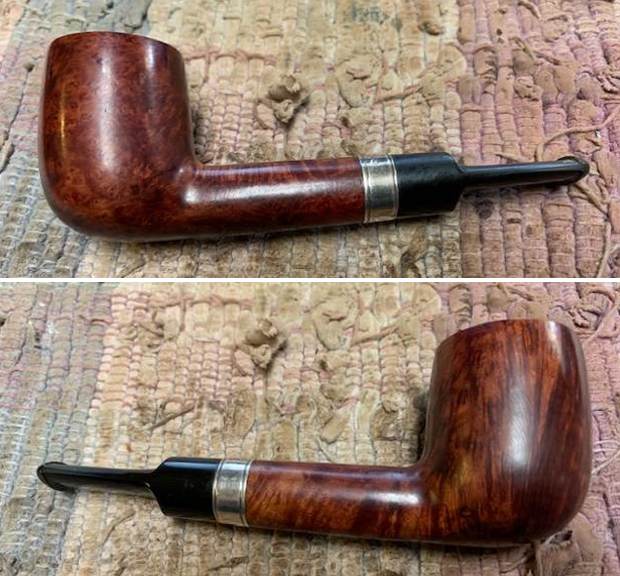
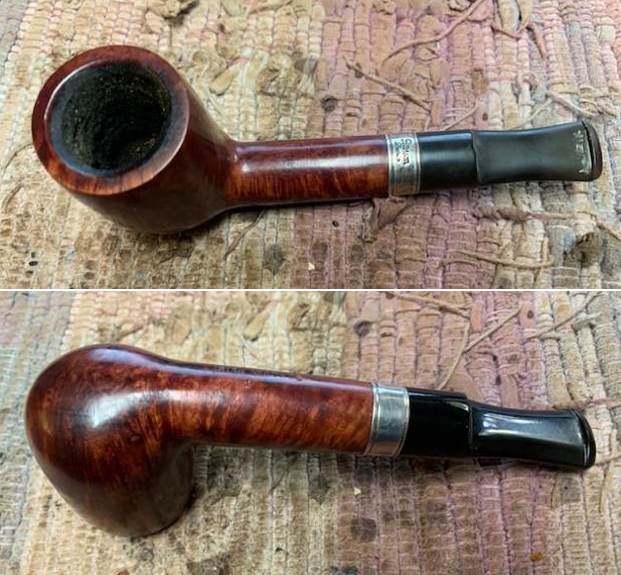
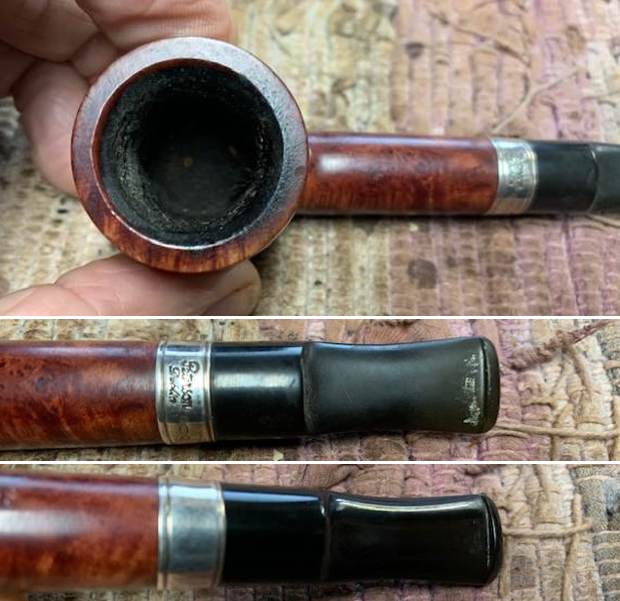
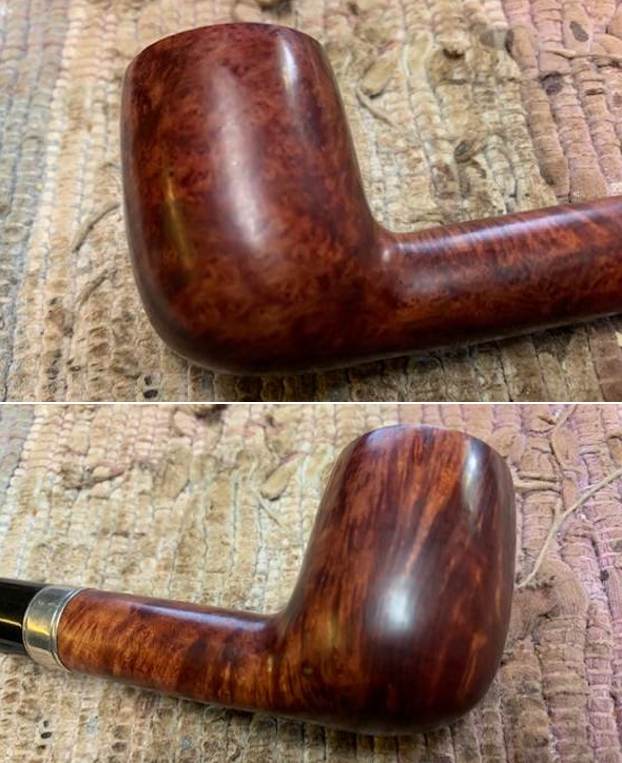
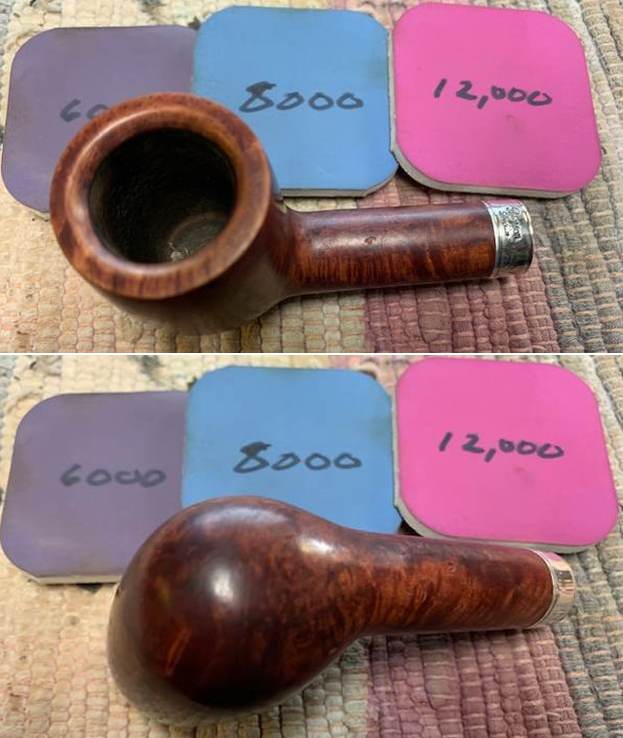
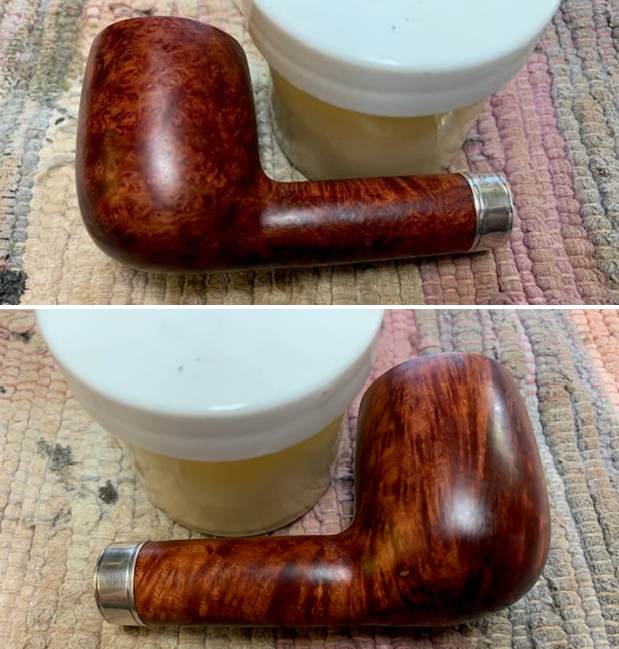
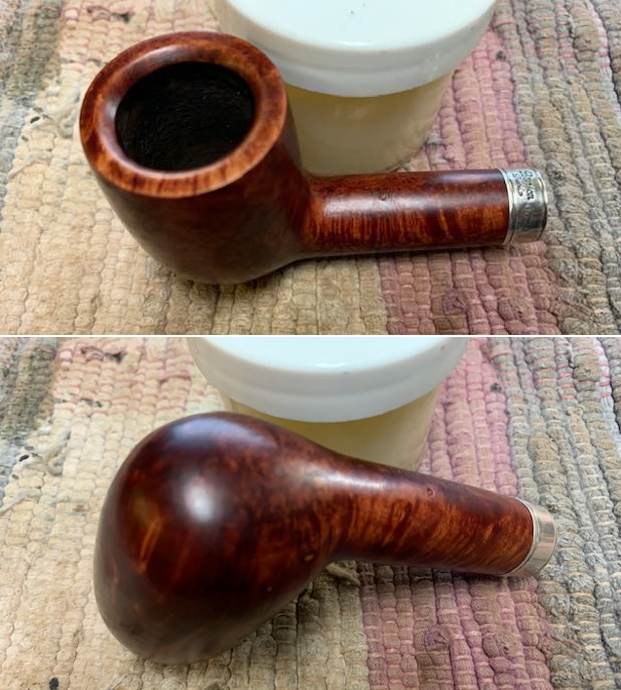
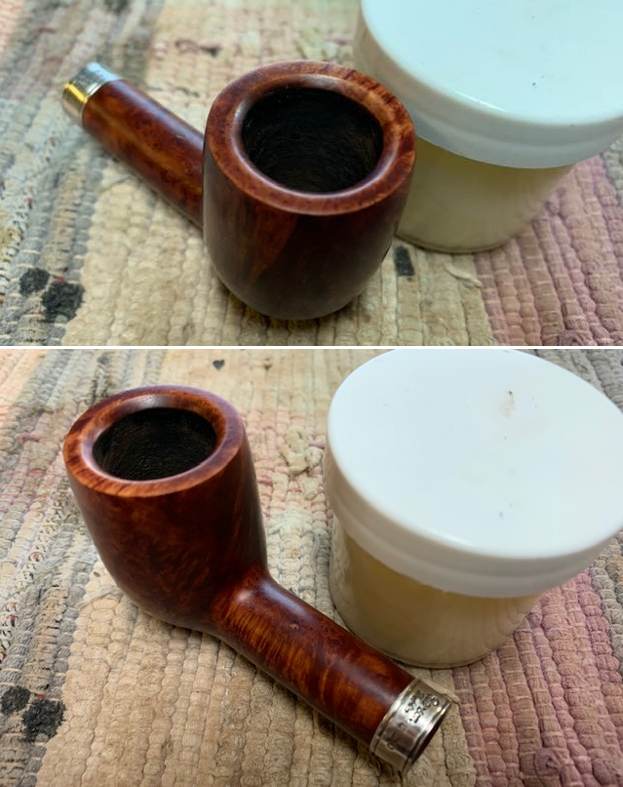
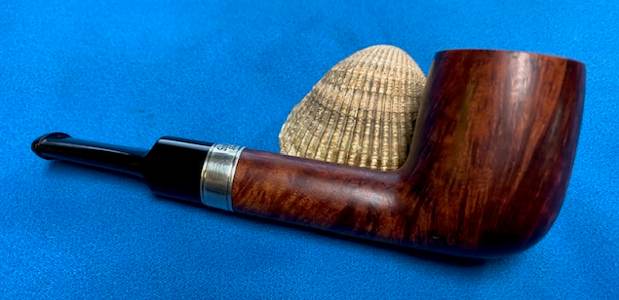
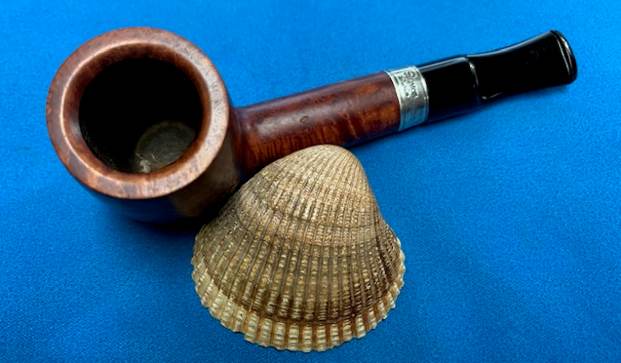
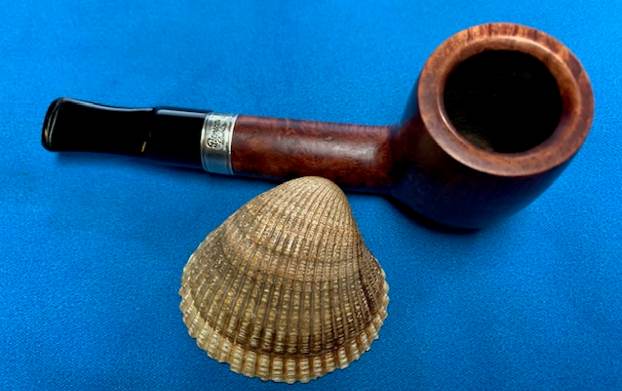
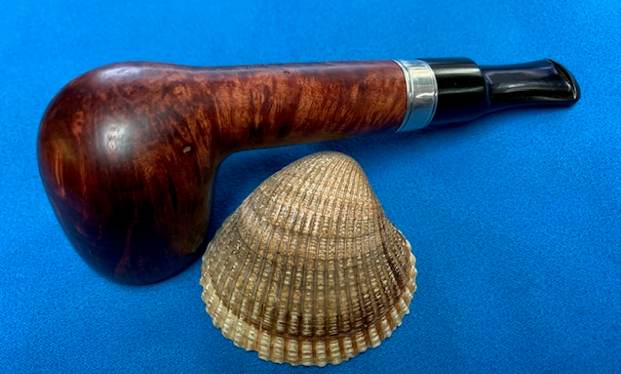
Tag Archives: stem work

Restoring a Classic Custom-Bilt


Blog by Kenneth Lieblich

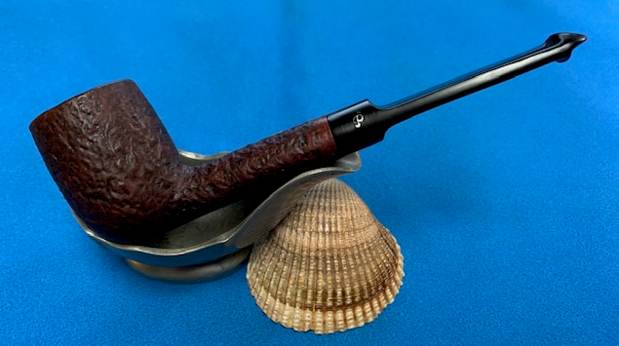
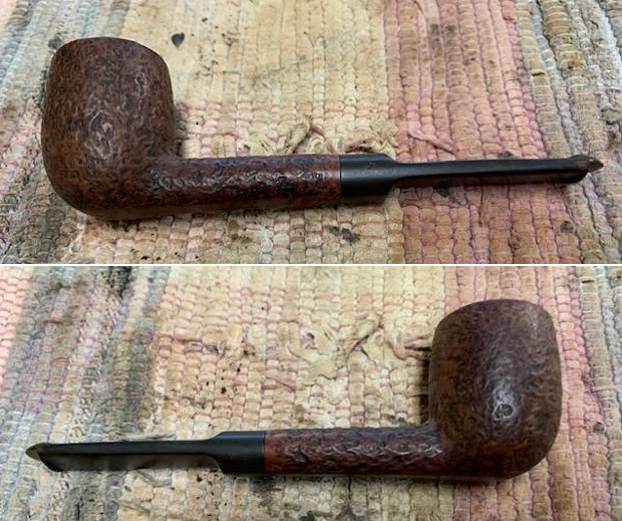
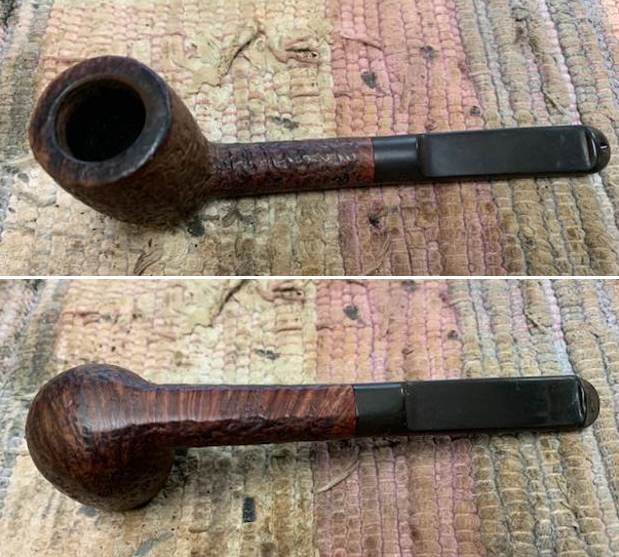
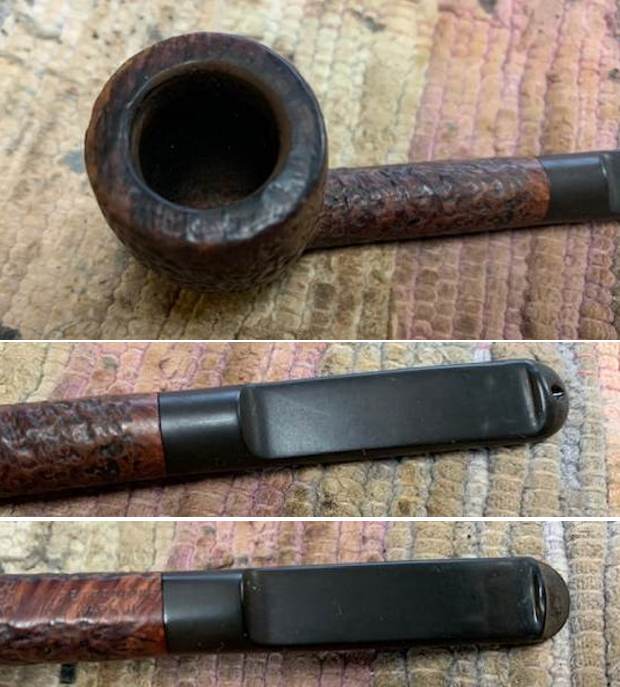
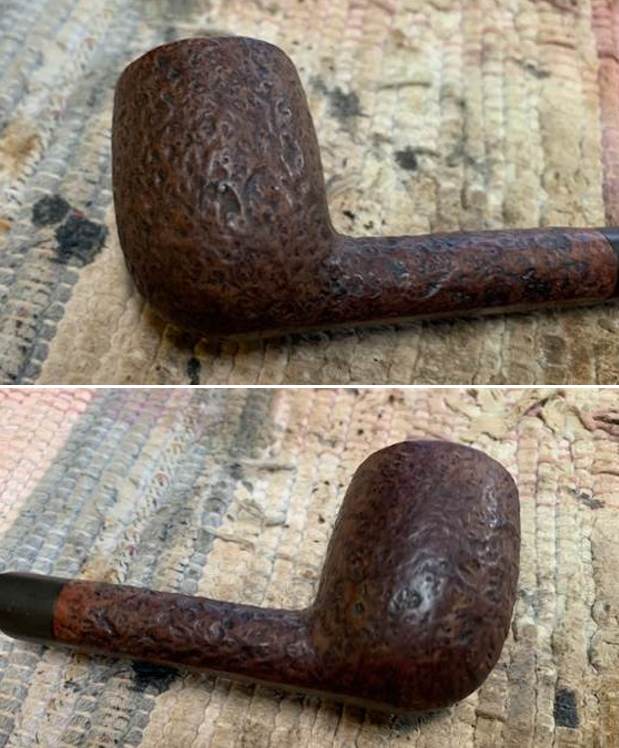
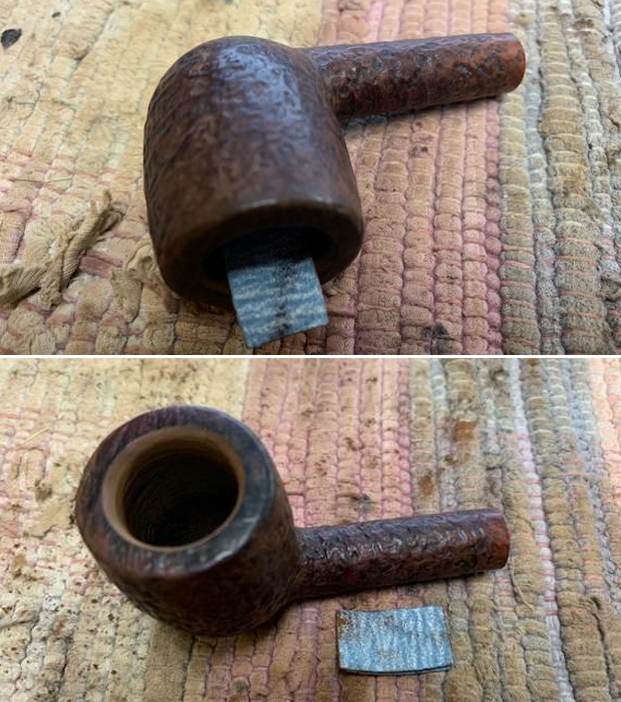
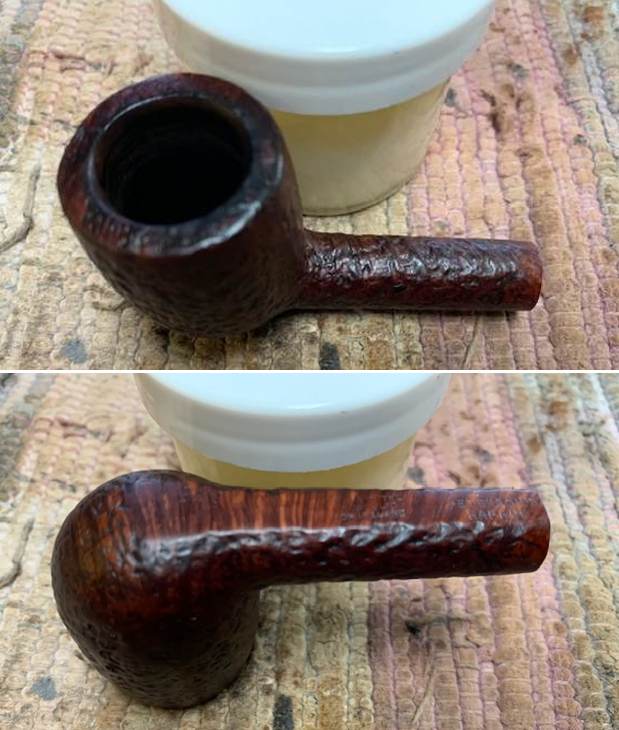
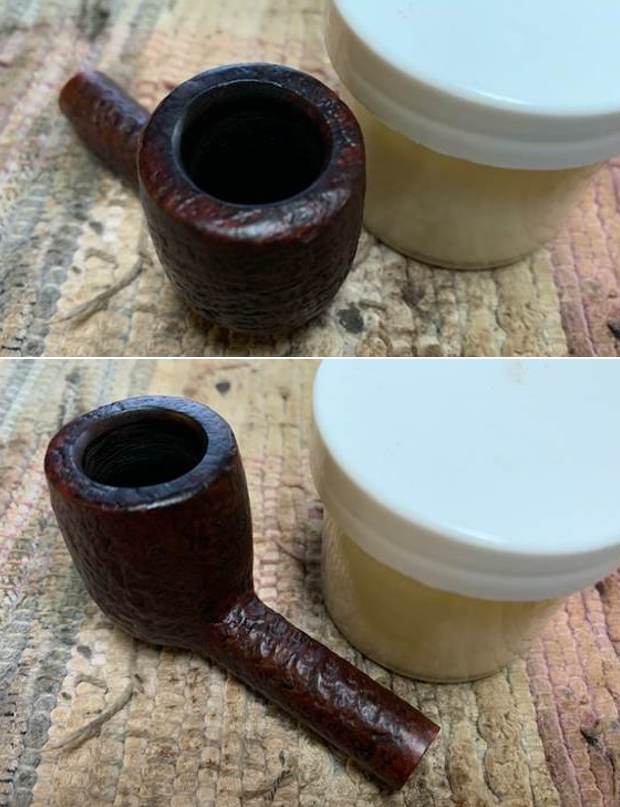
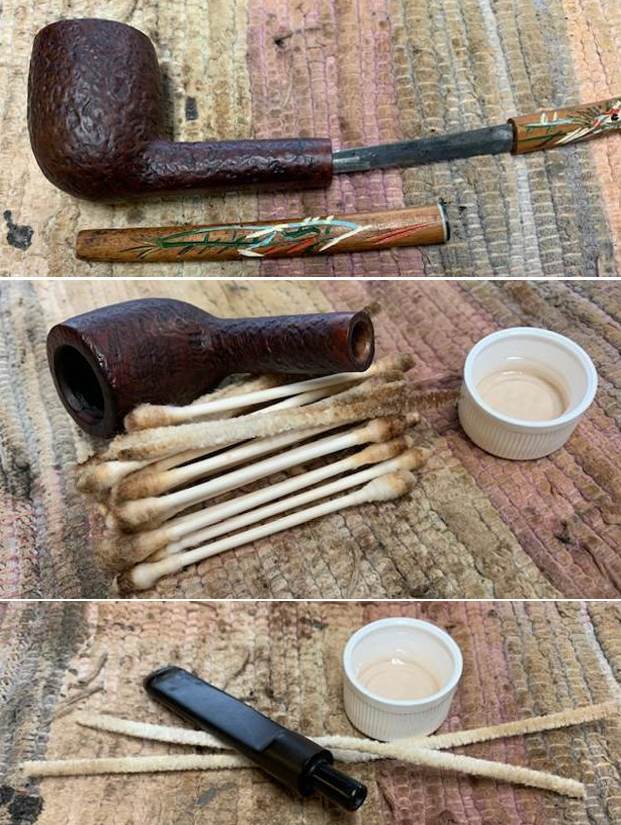
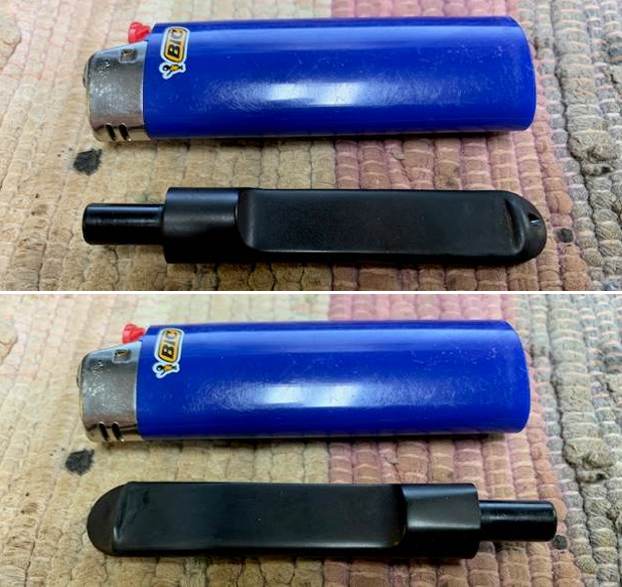
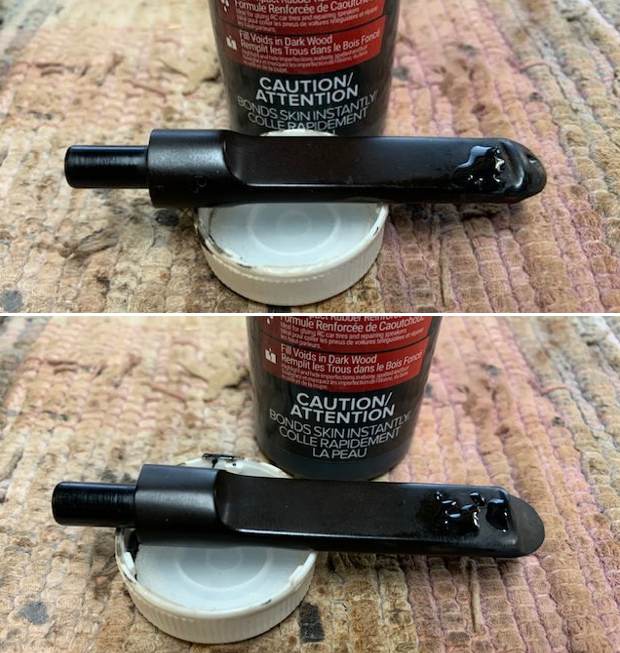
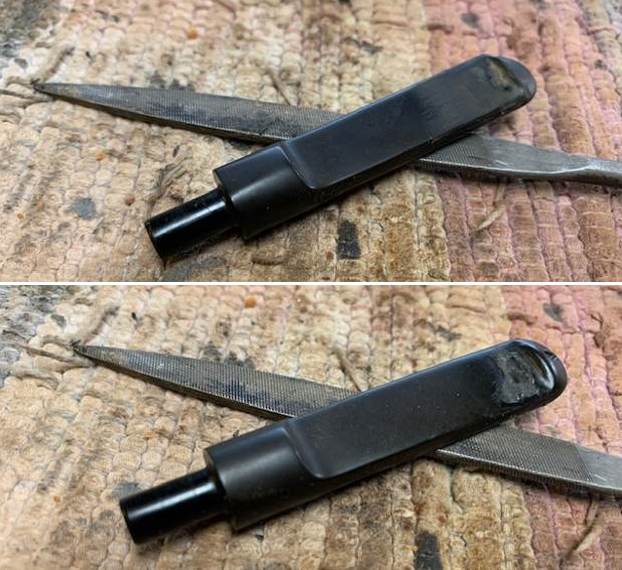
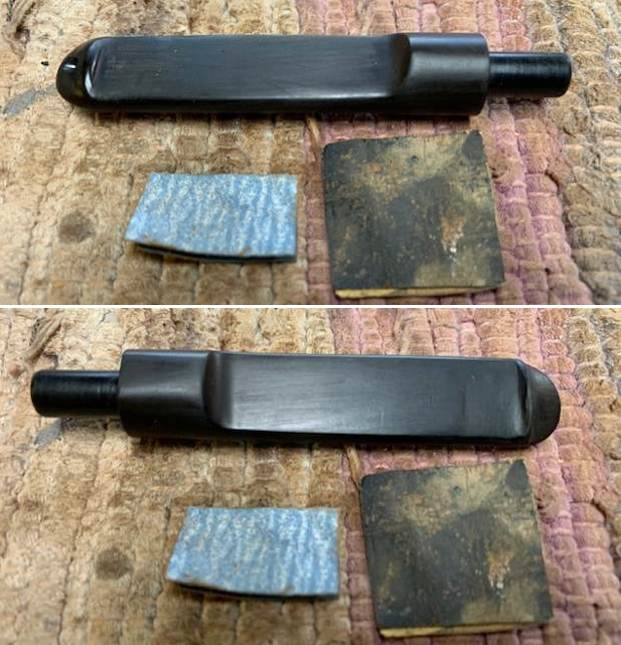
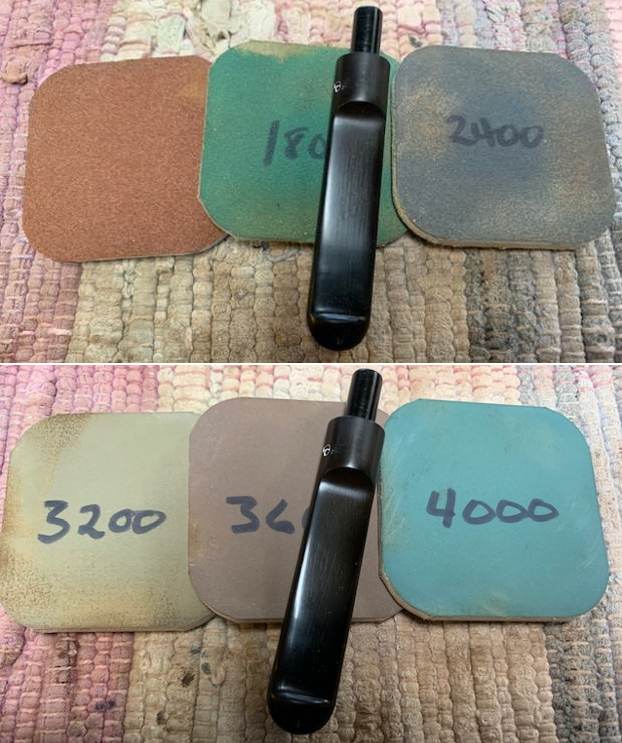
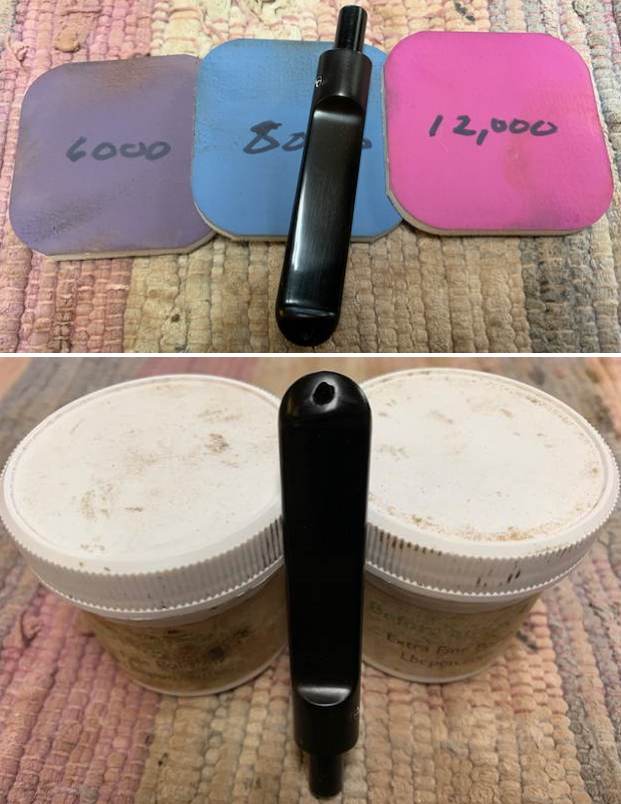
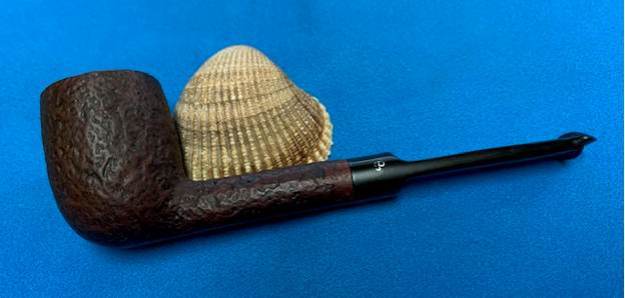
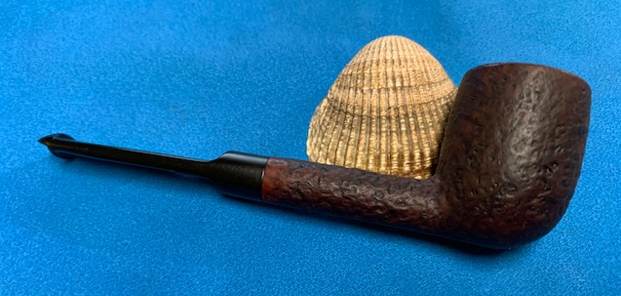
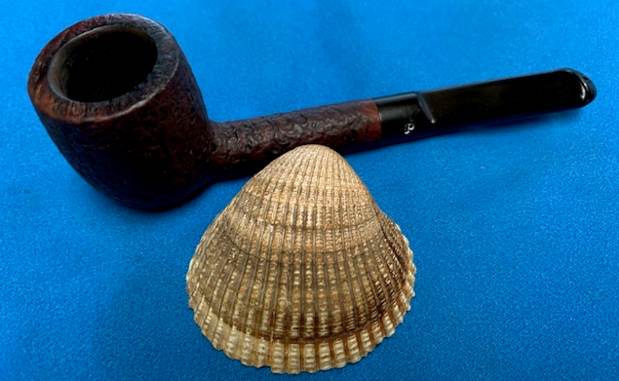
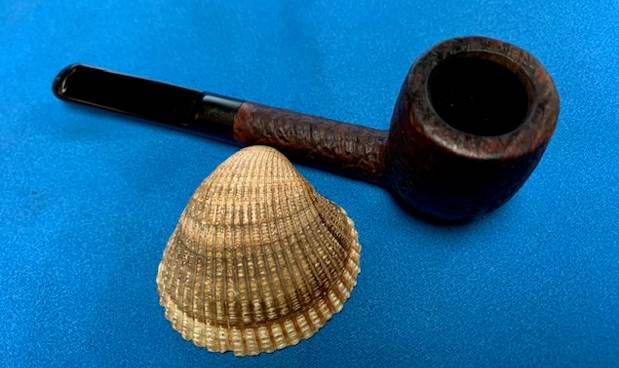
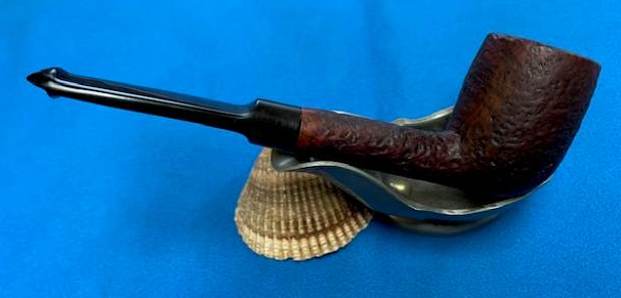
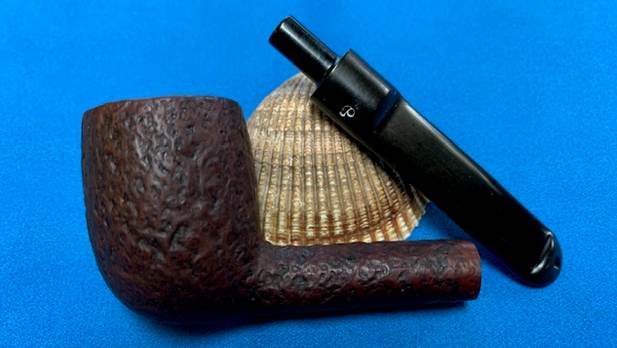
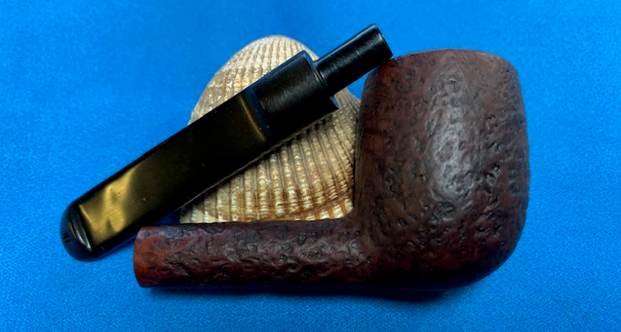
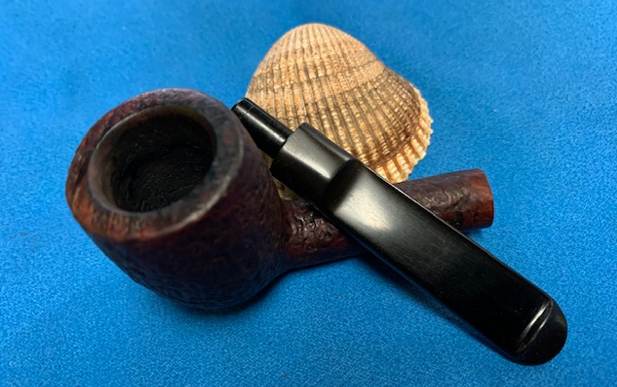
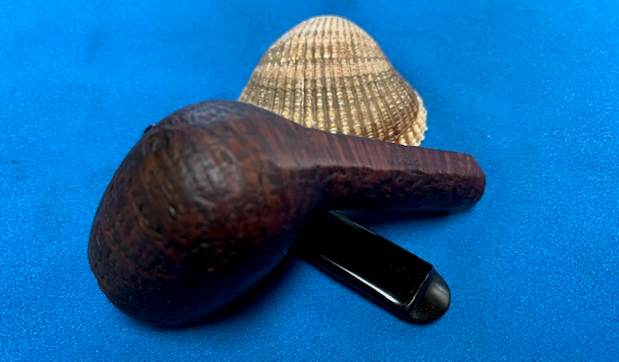
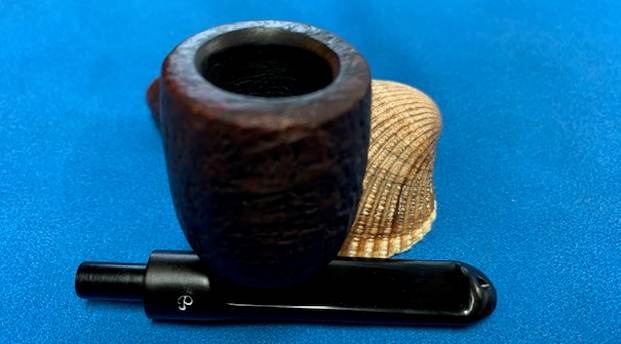
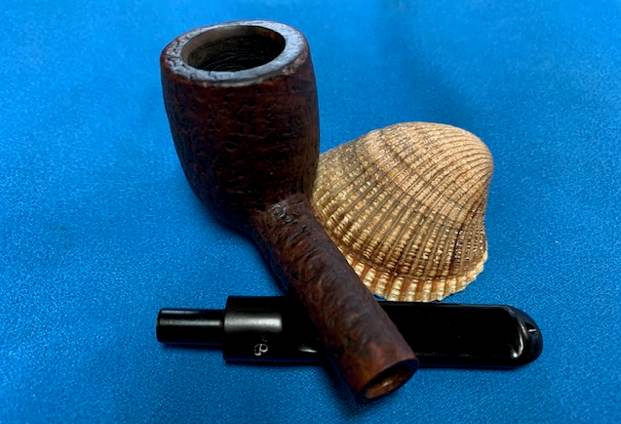
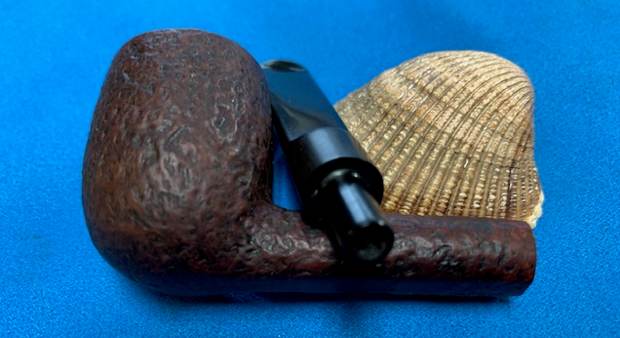
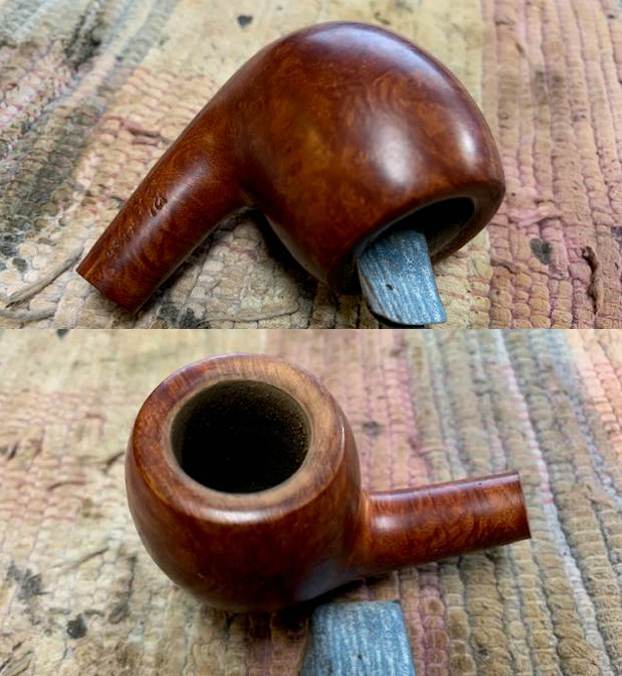
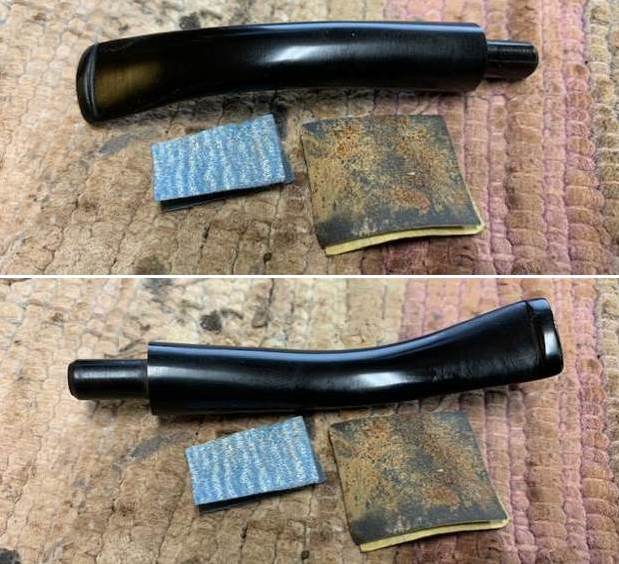
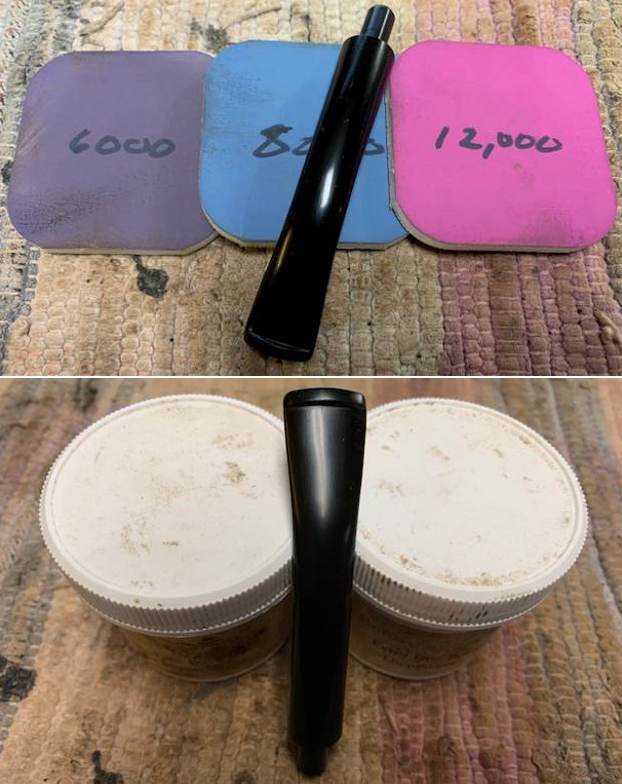
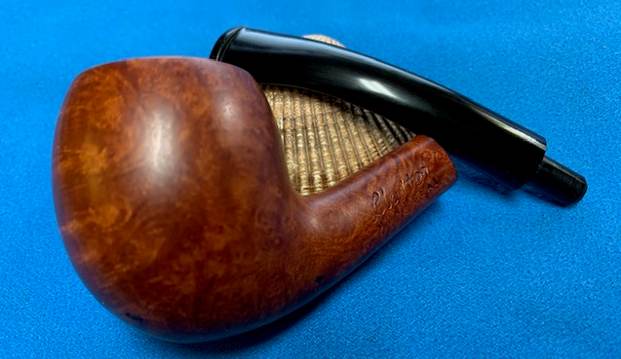
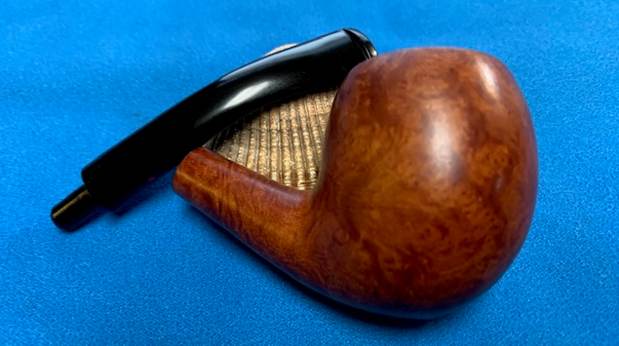
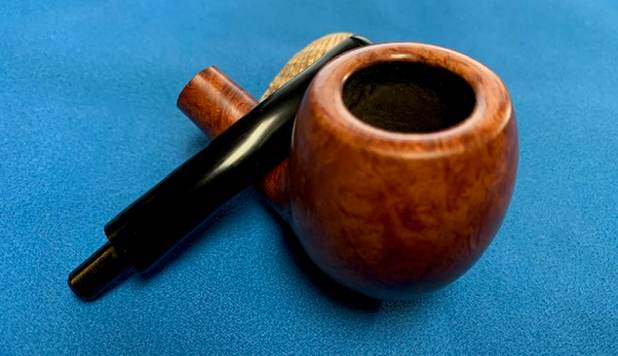
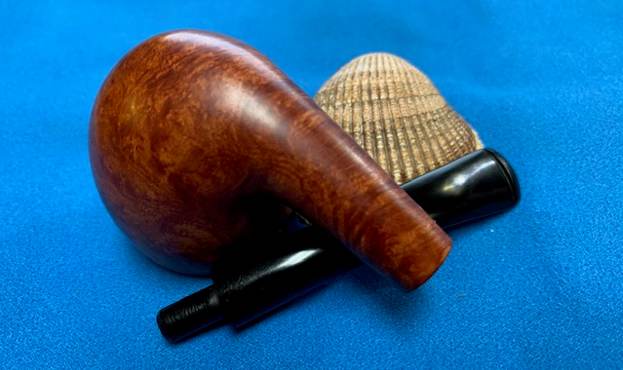
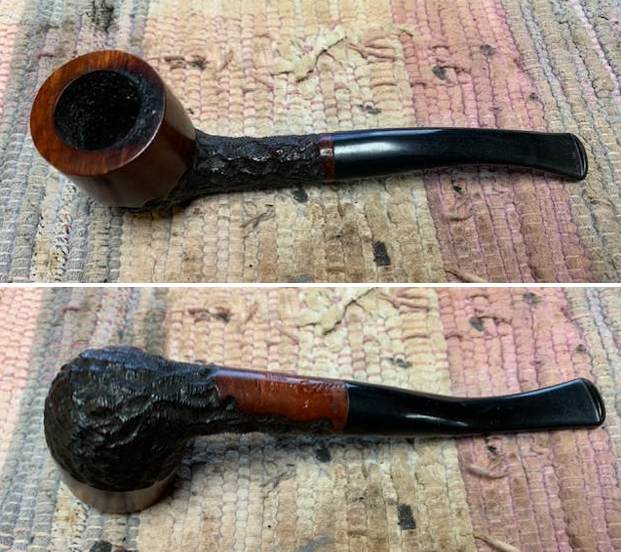
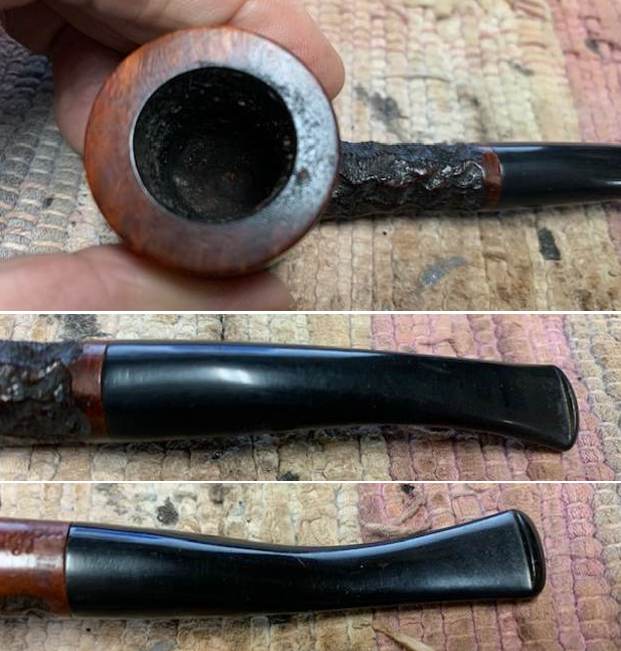
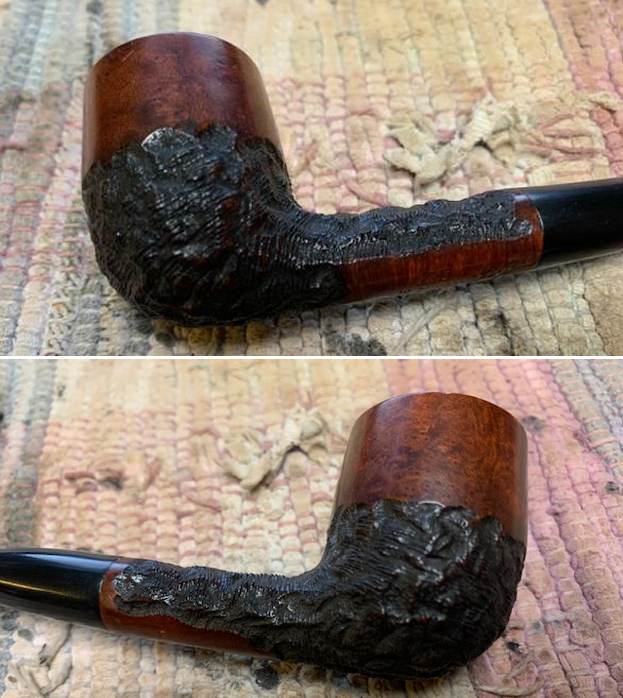
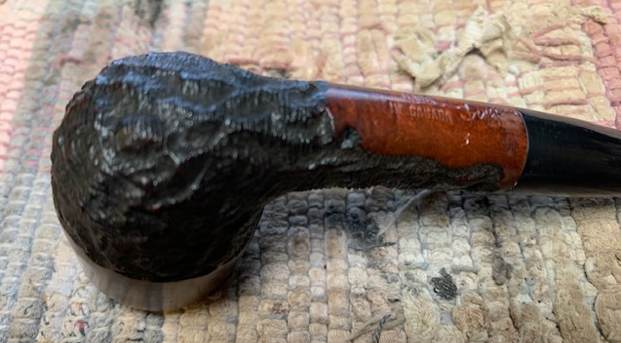
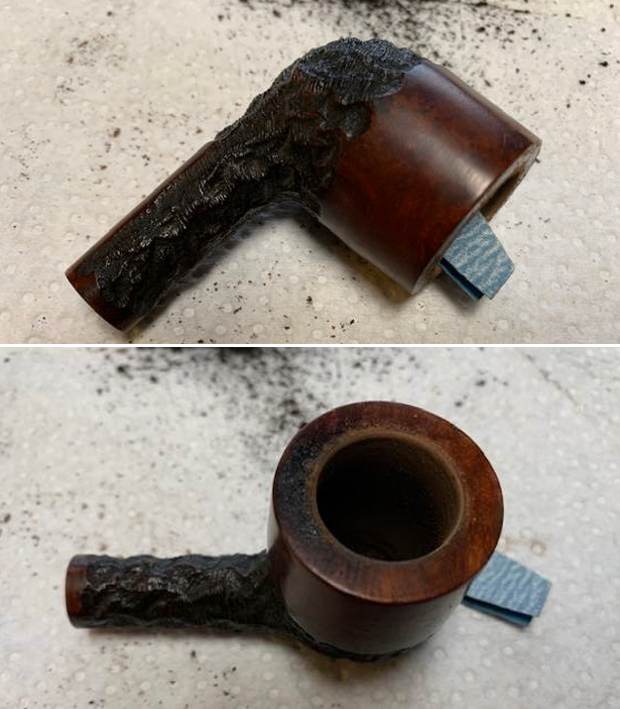
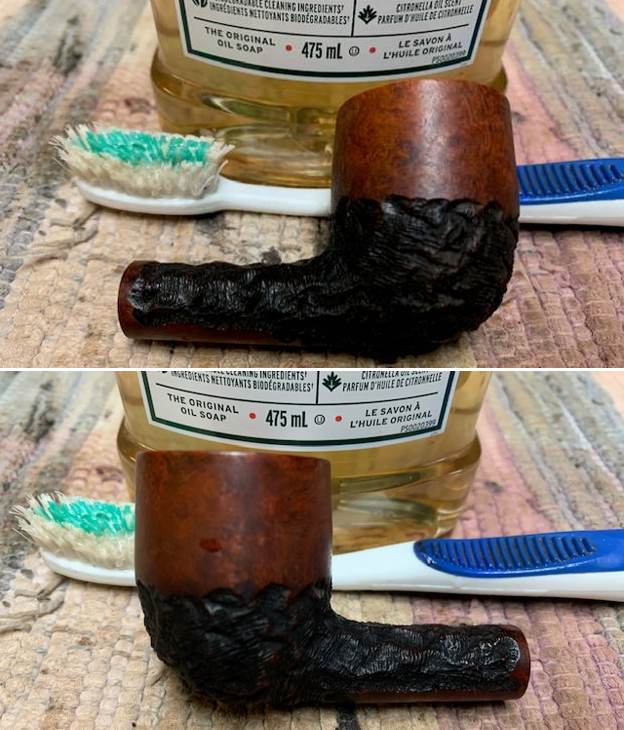
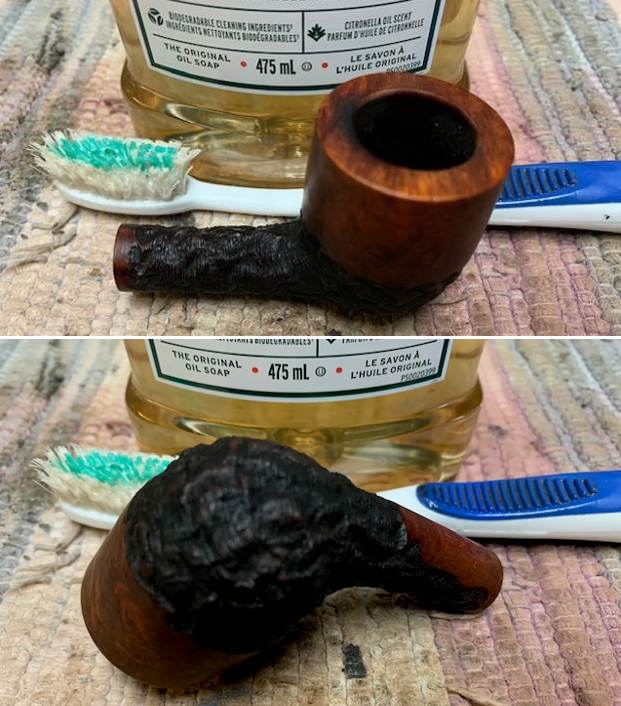
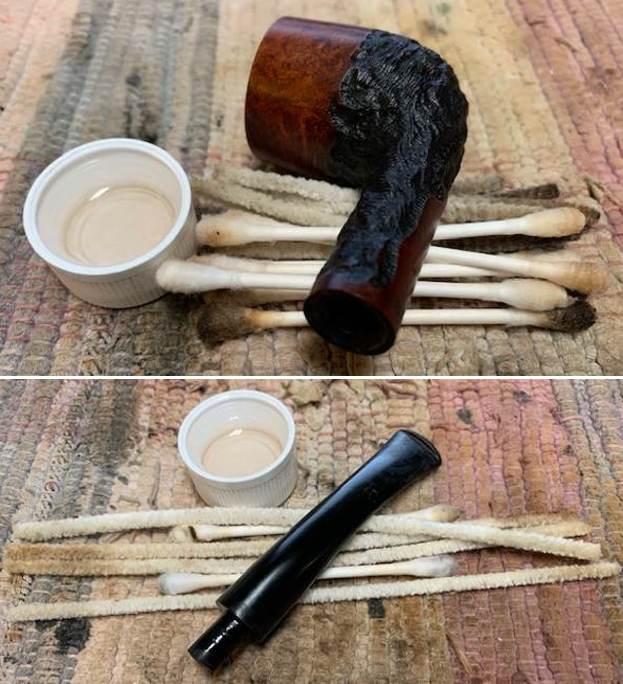
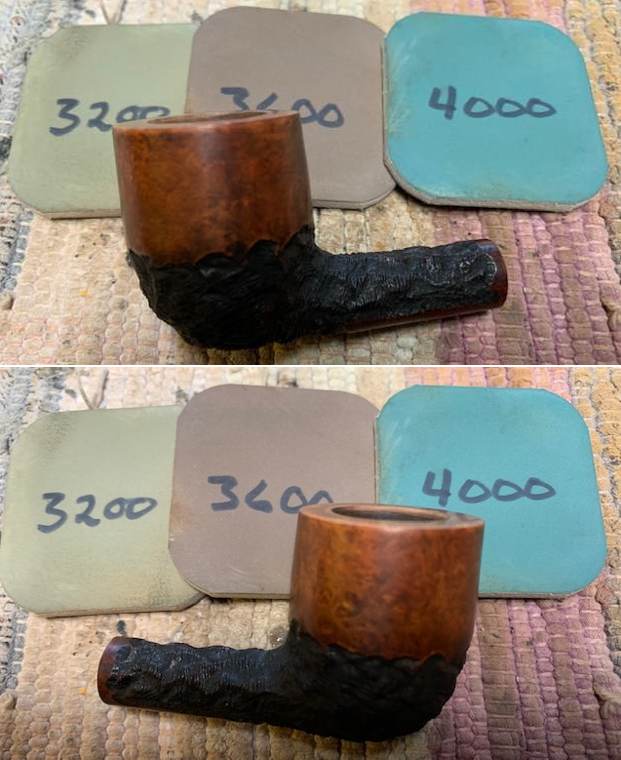
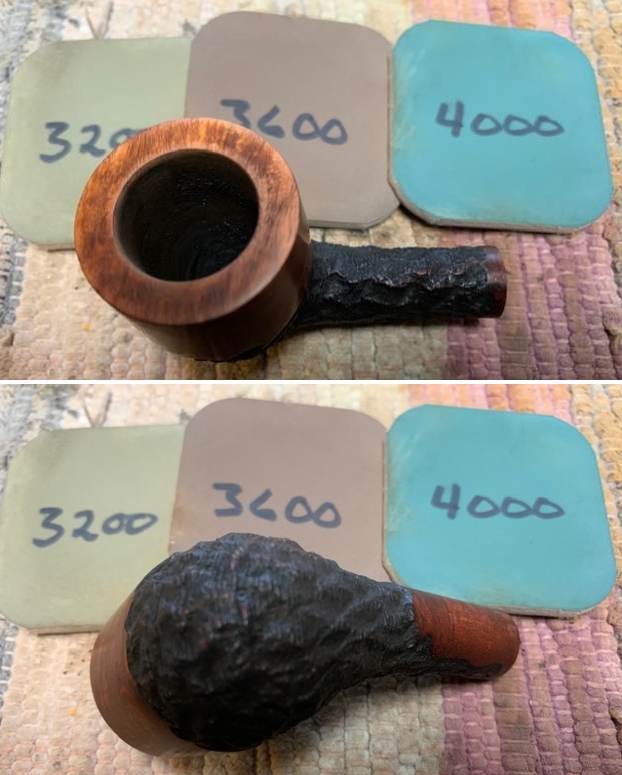
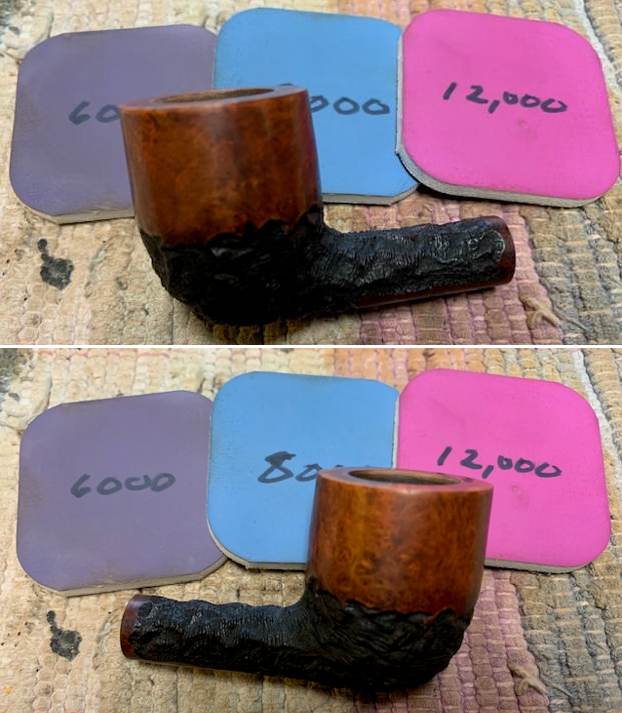
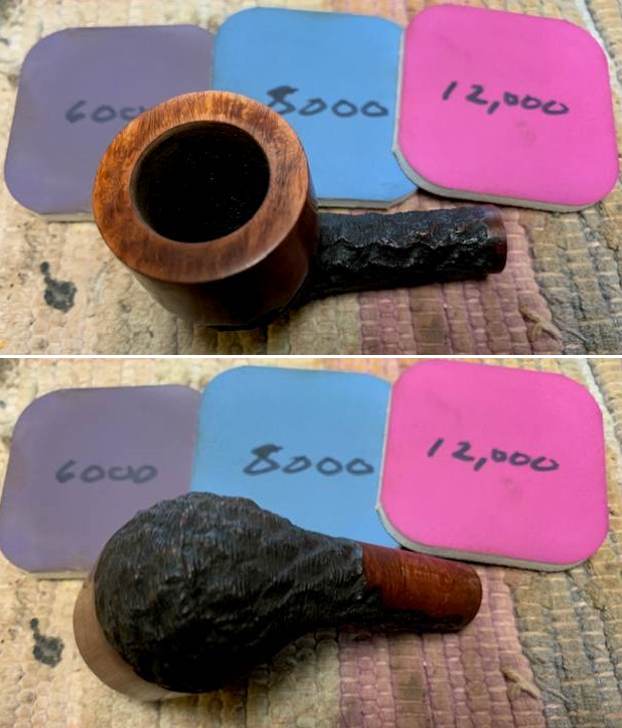
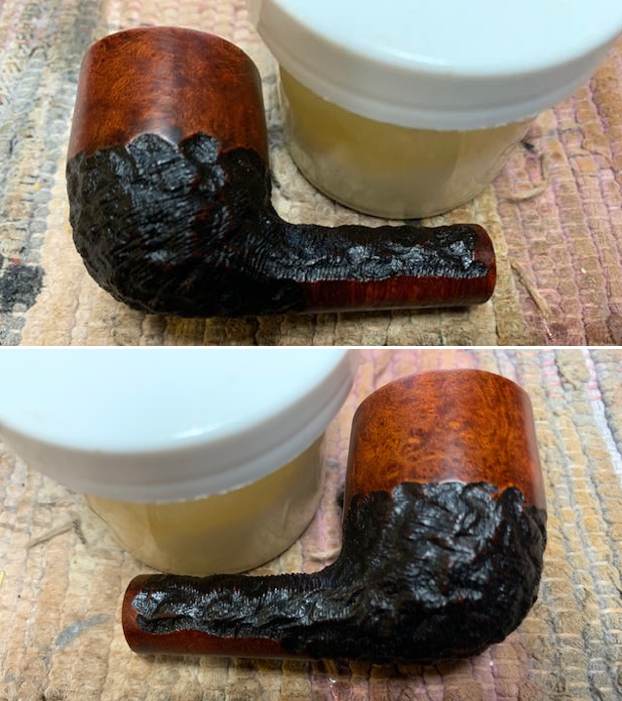
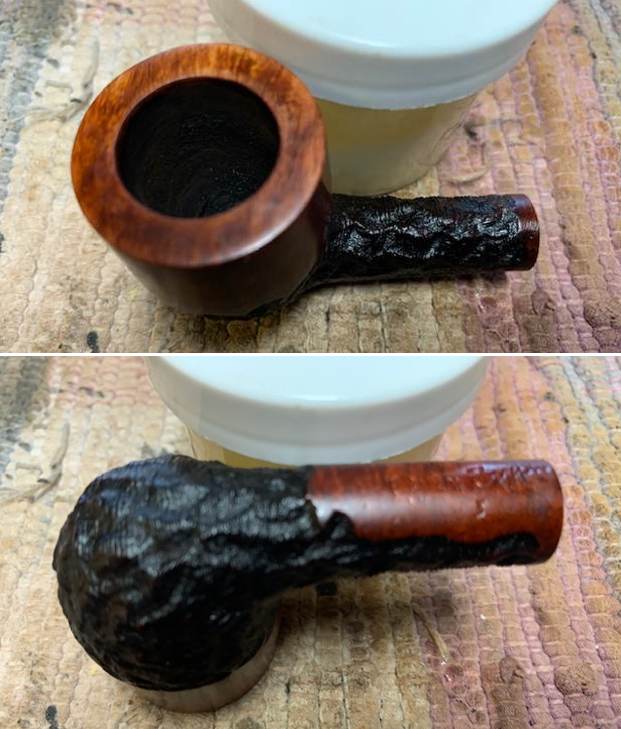
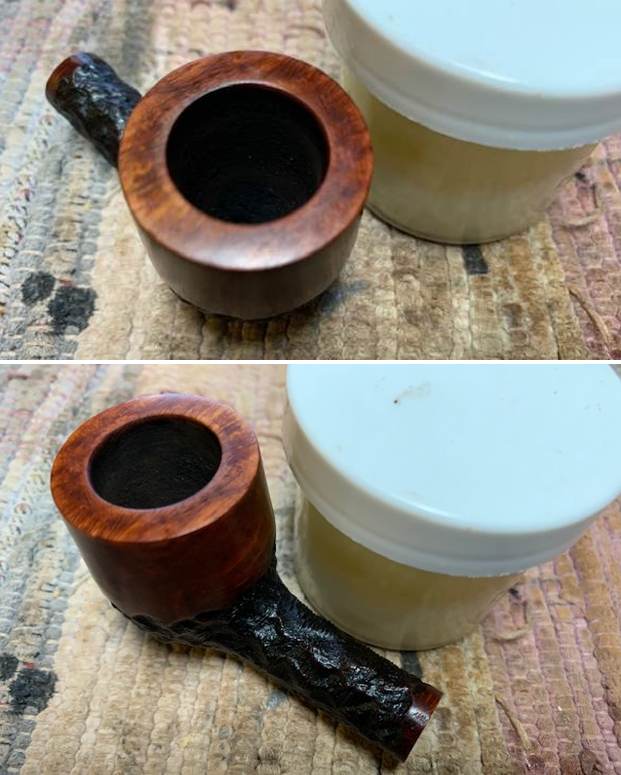
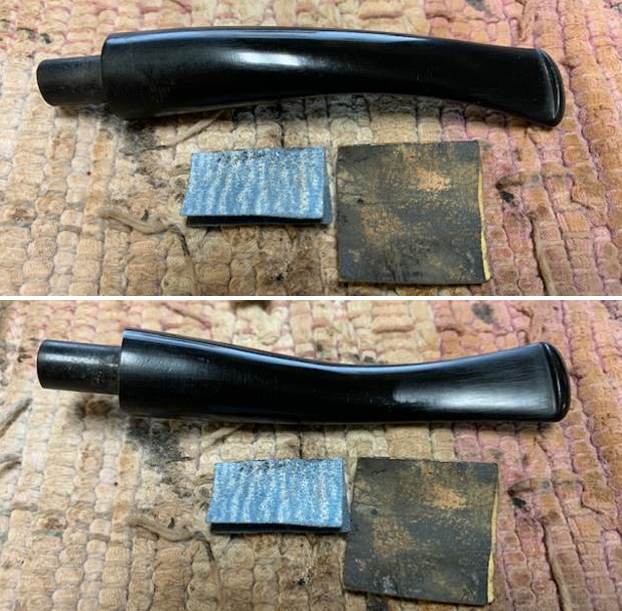
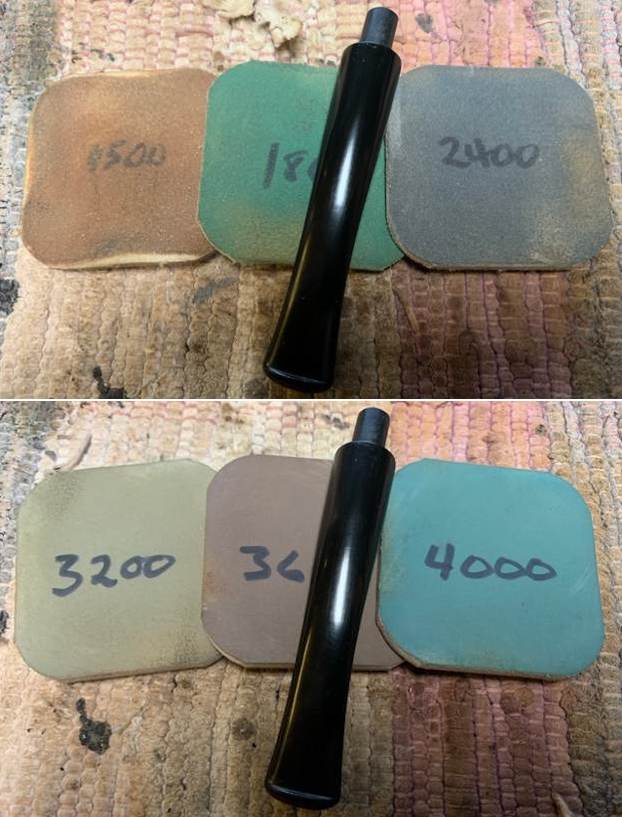
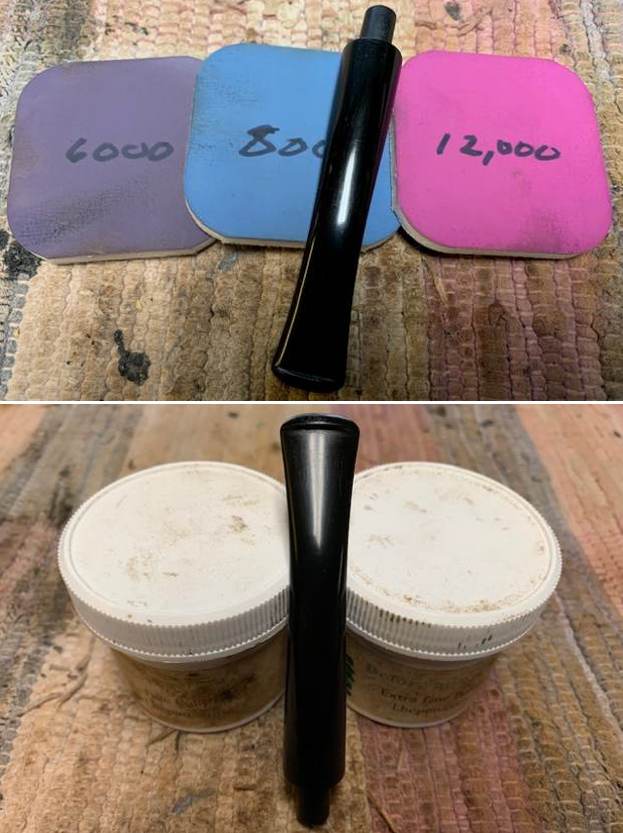
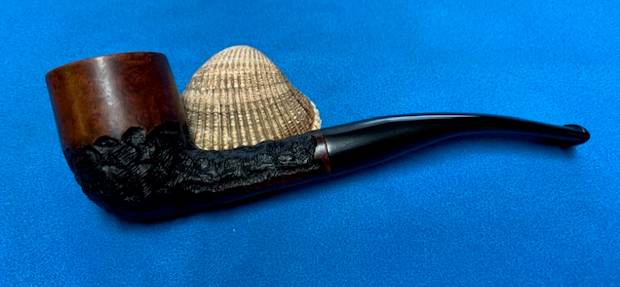
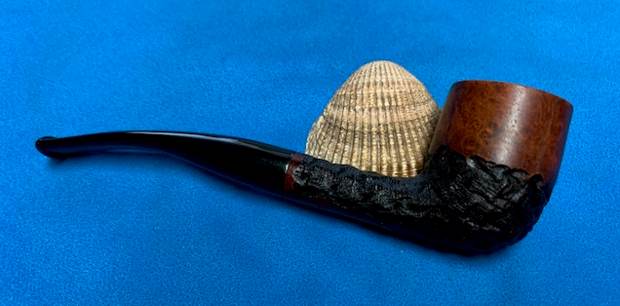
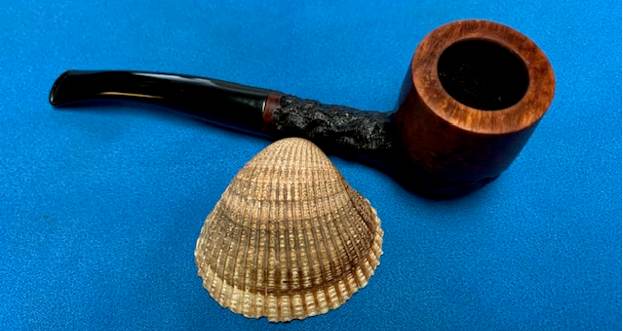
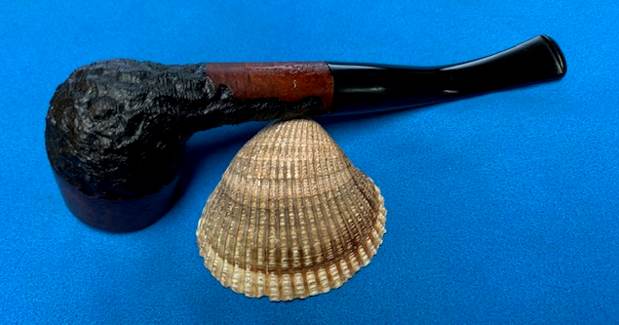
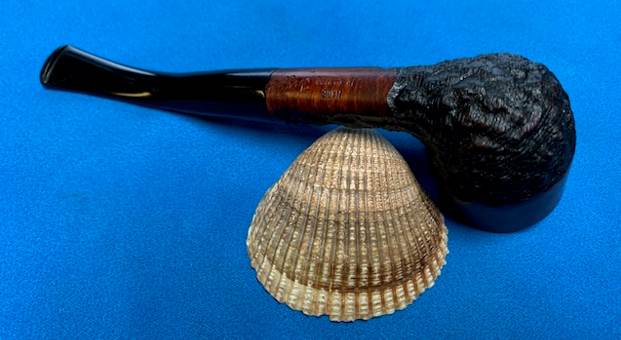
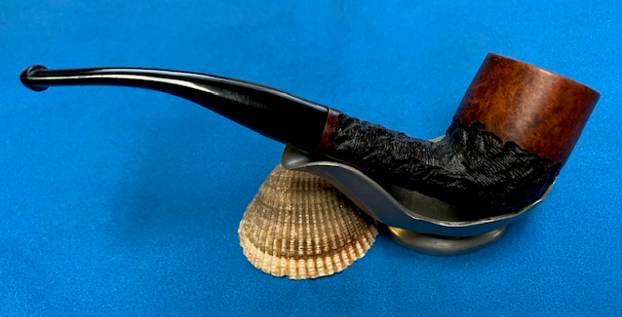
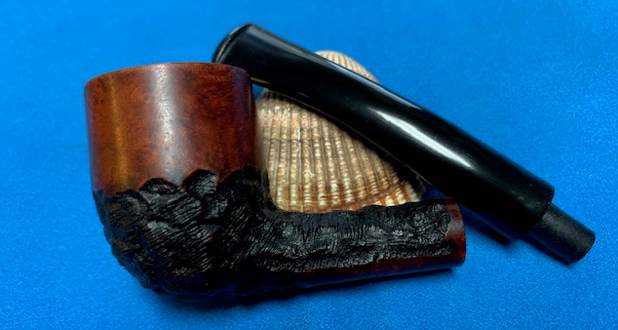
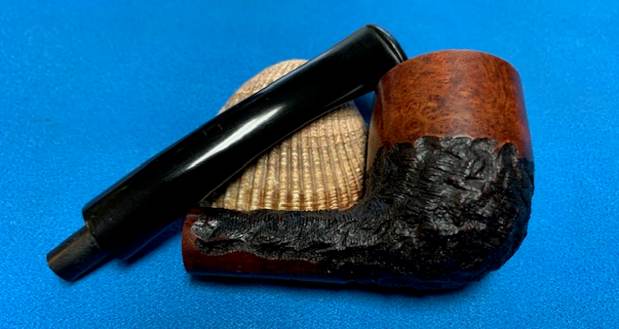
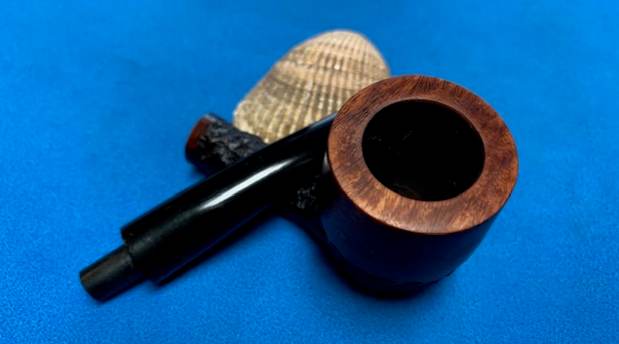
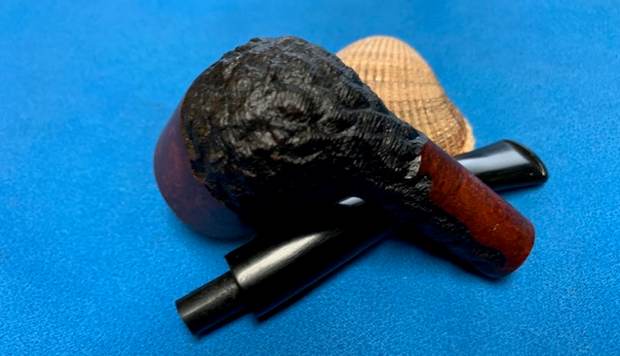
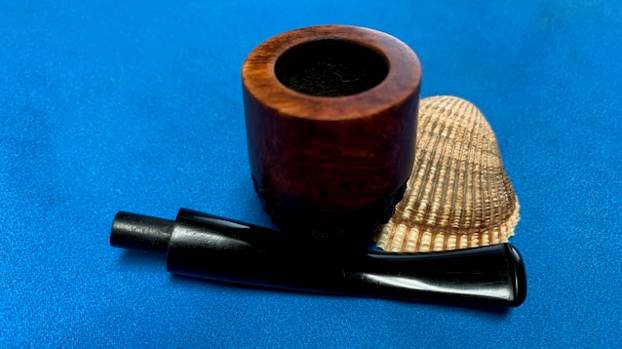
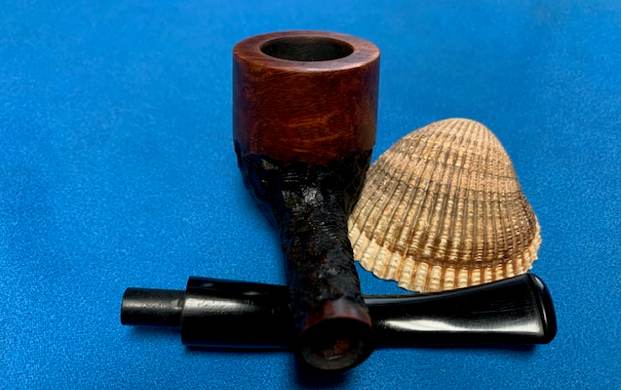
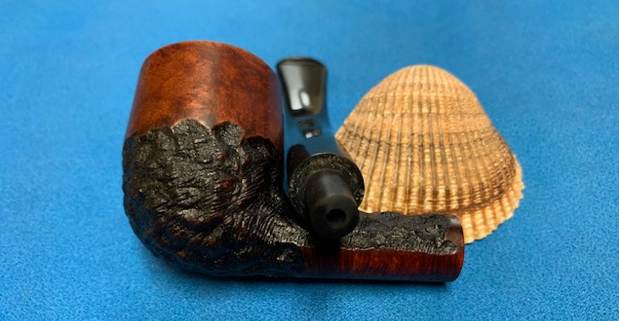
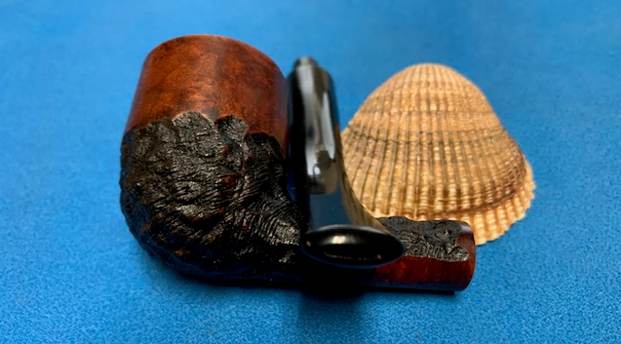
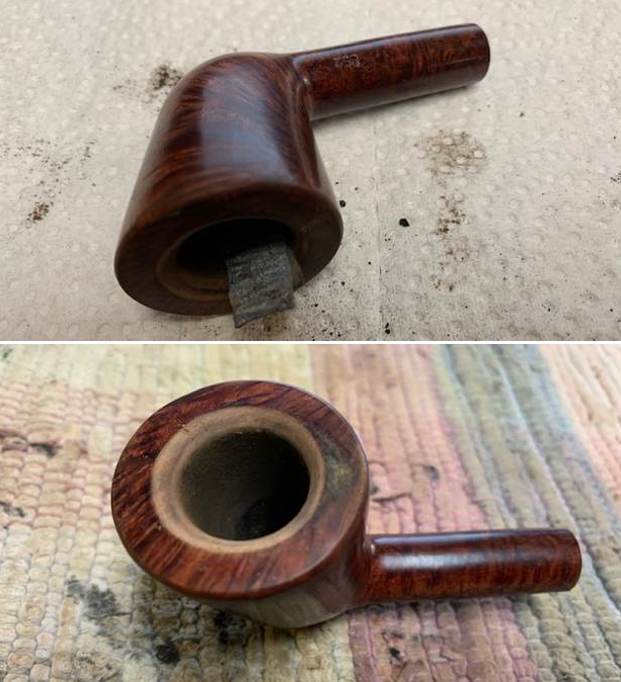
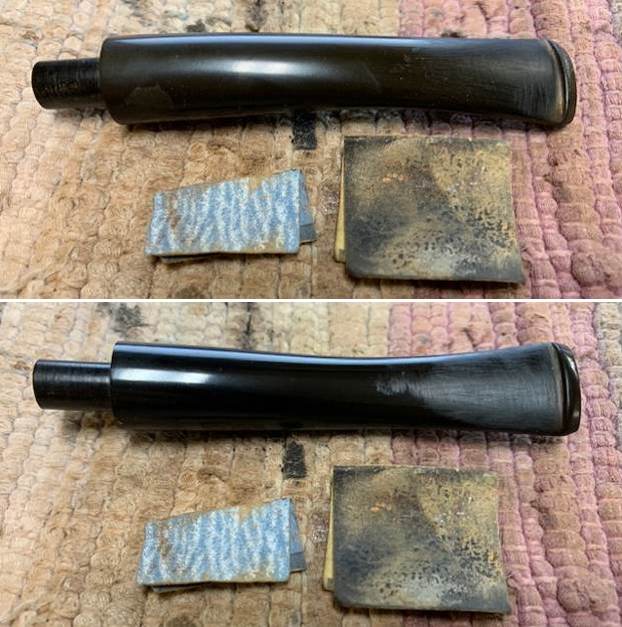
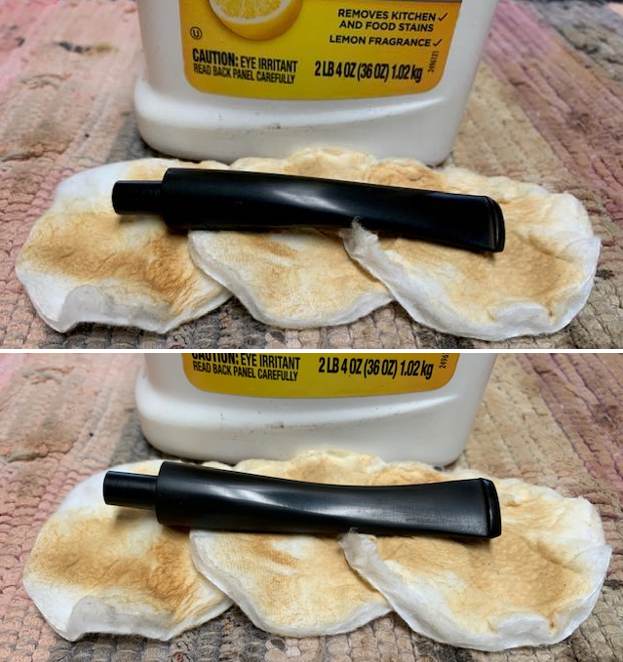
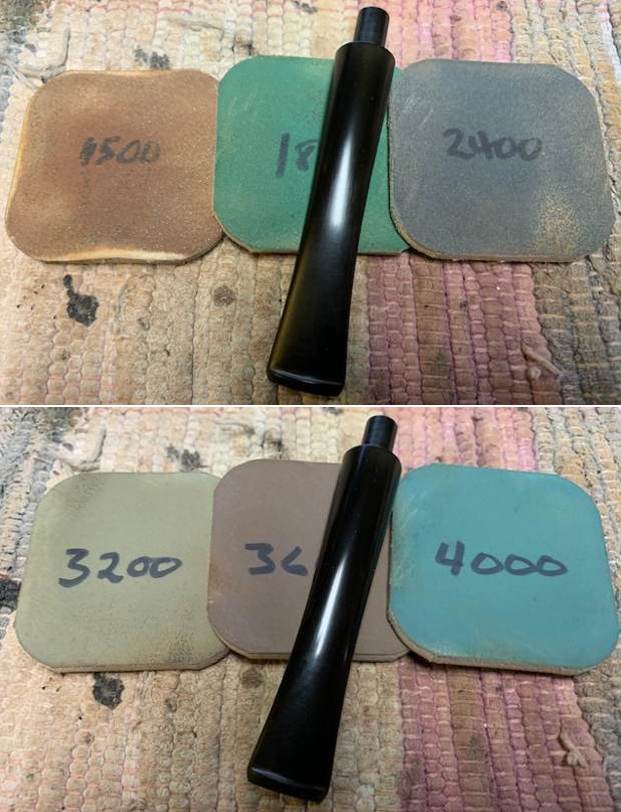
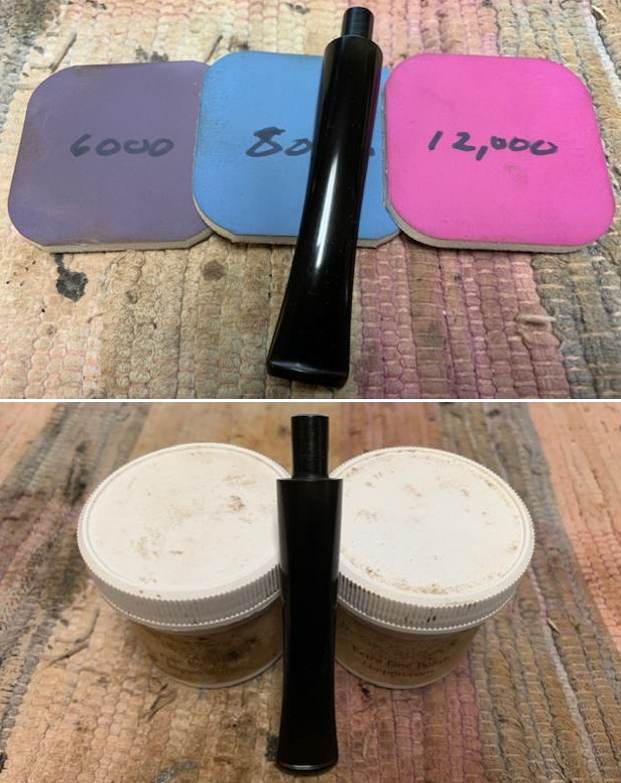
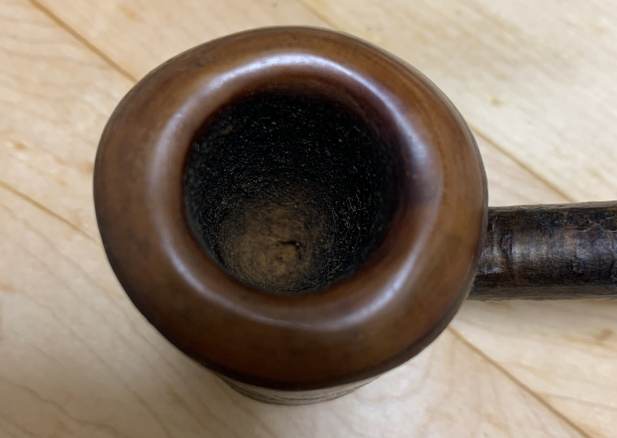
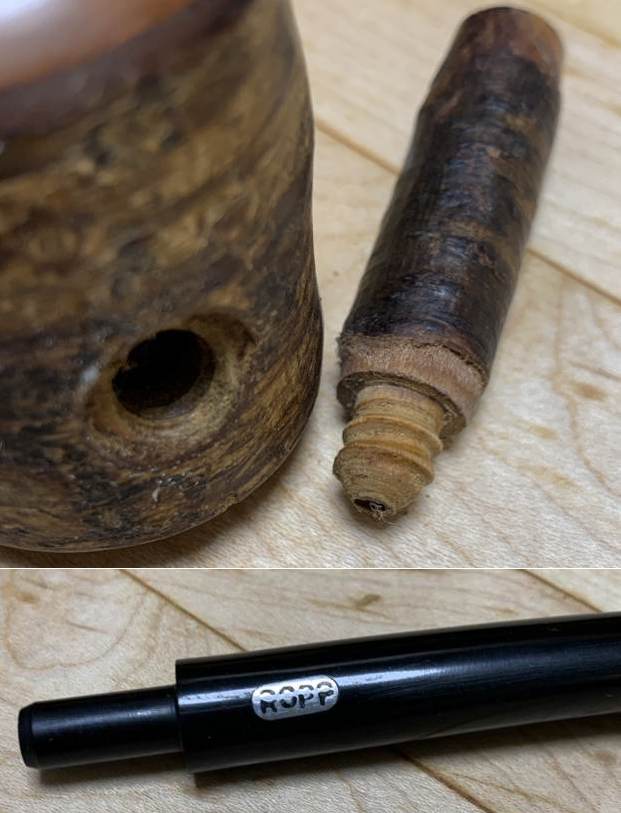
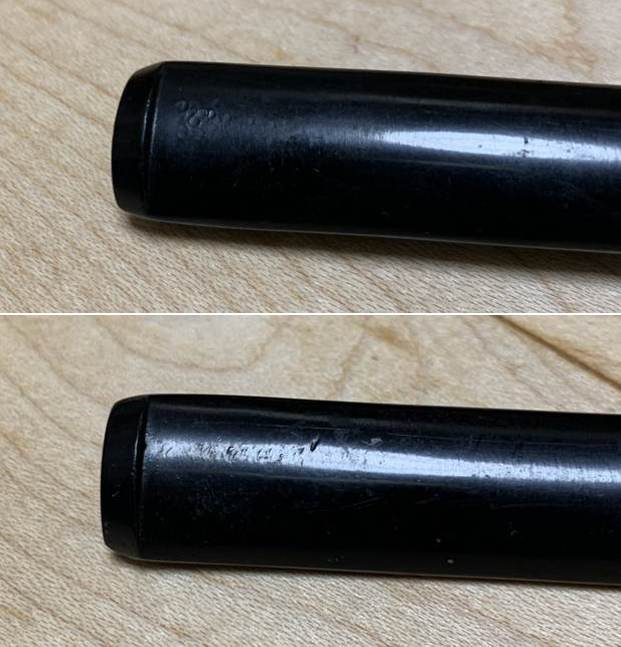
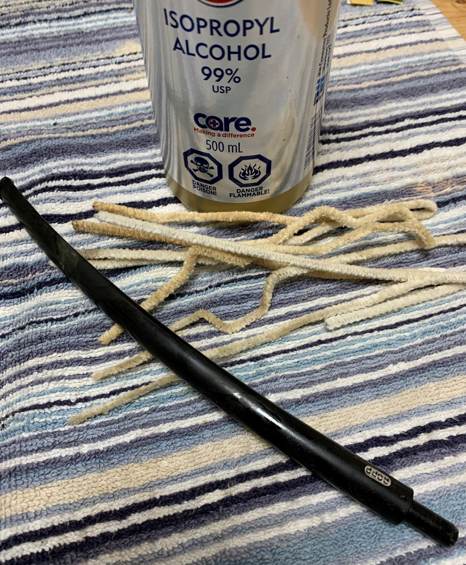
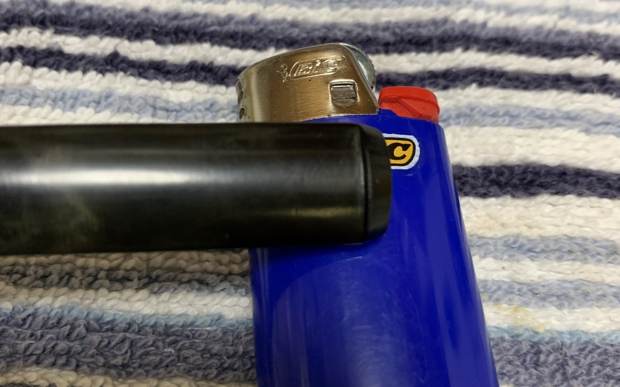
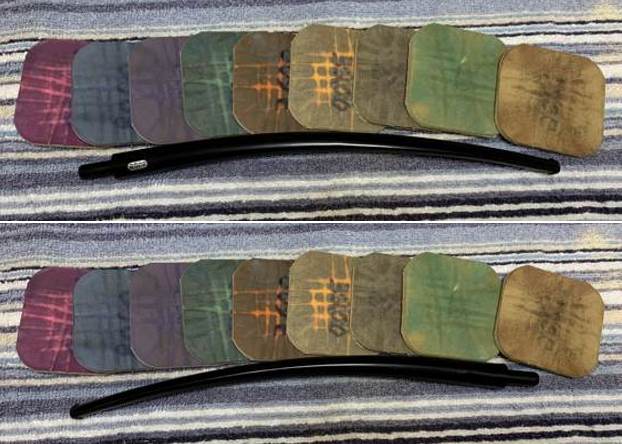
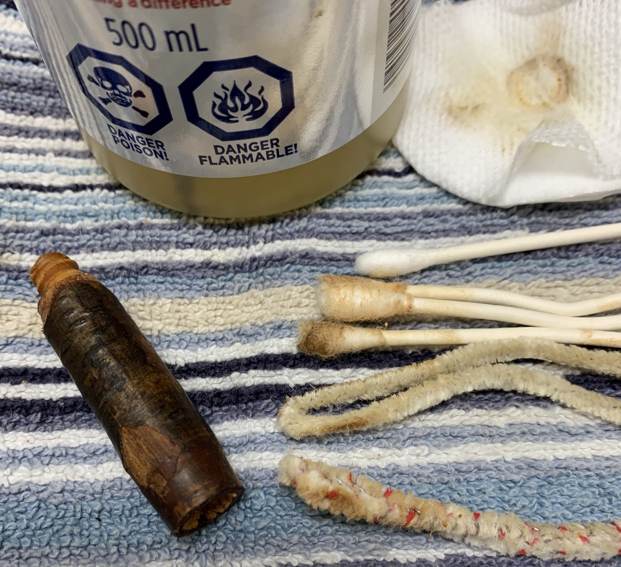
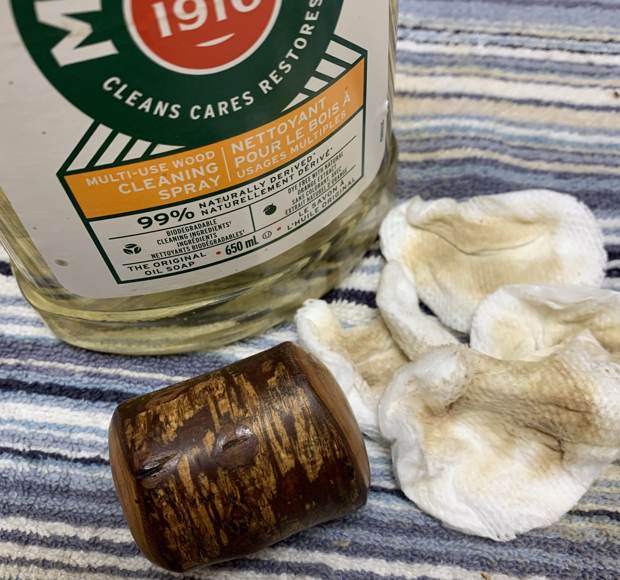
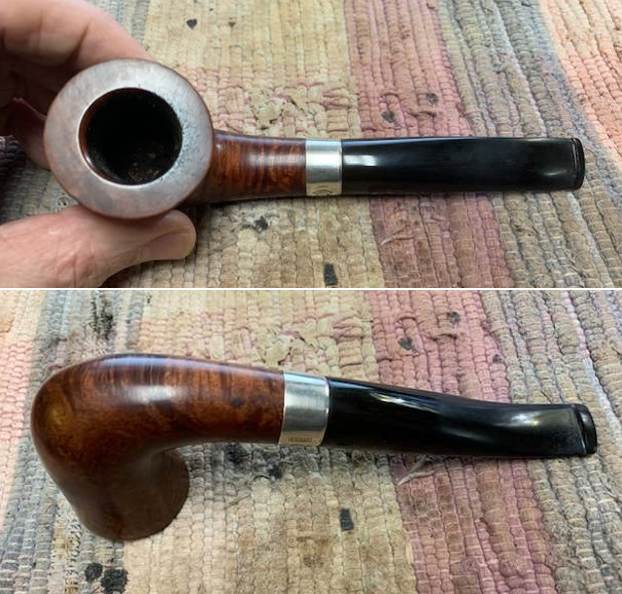
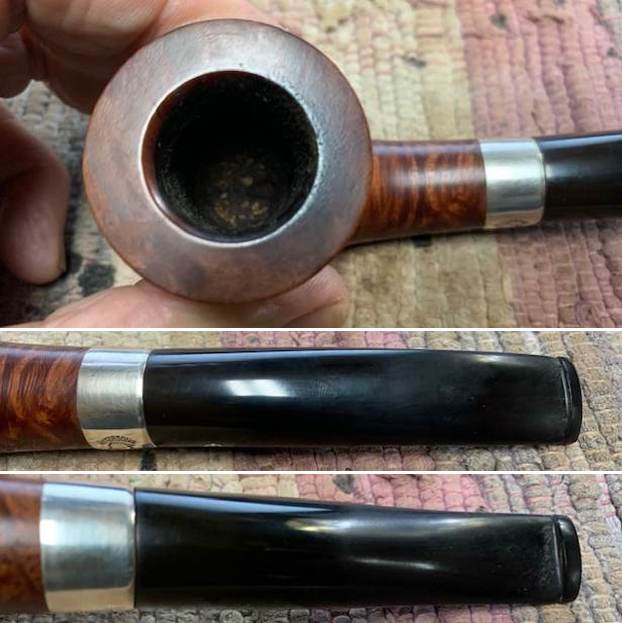
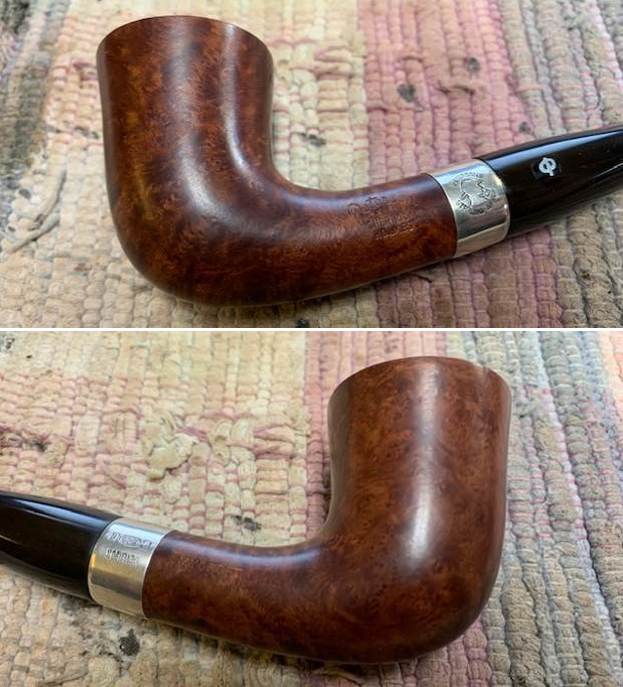
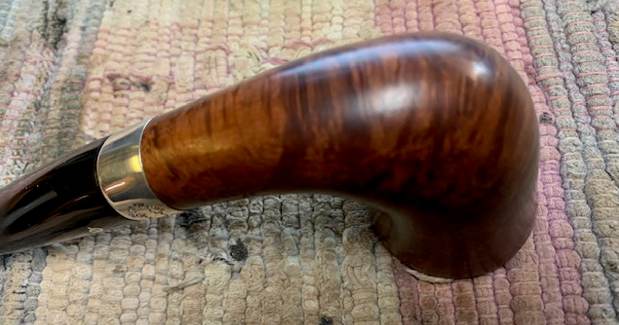
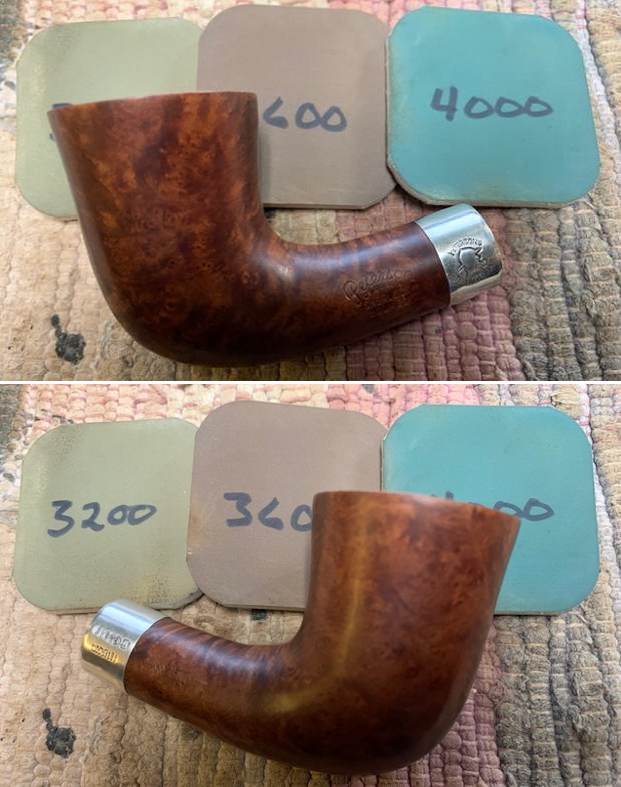
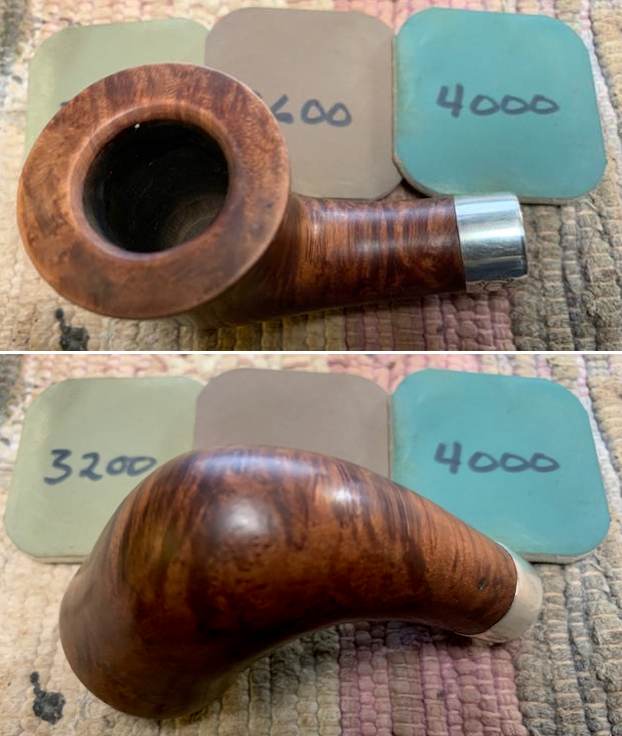
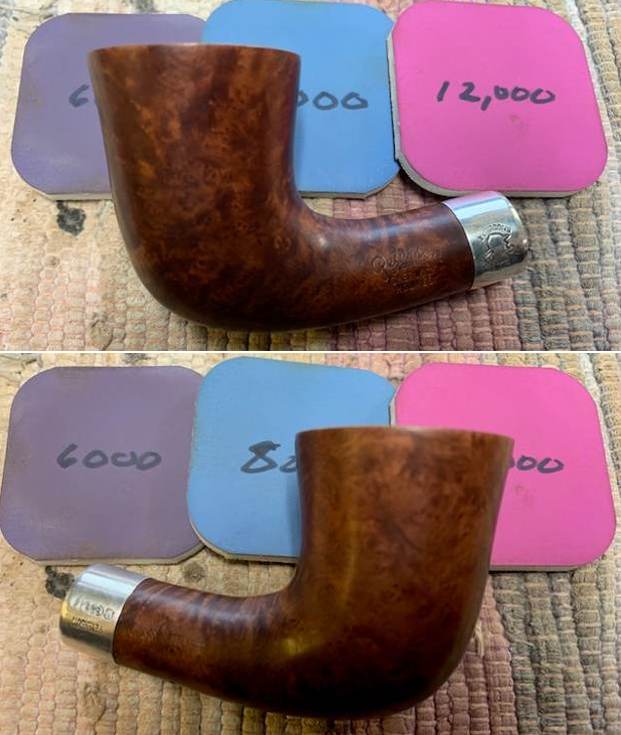
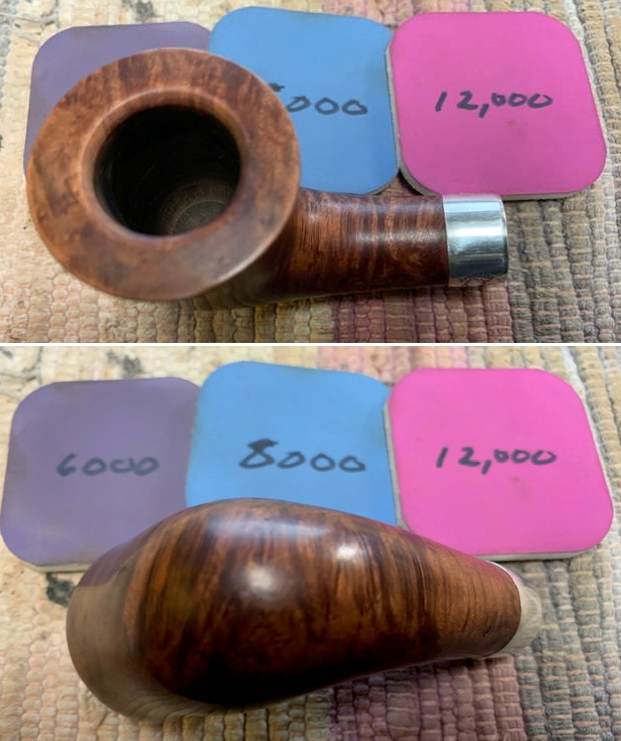
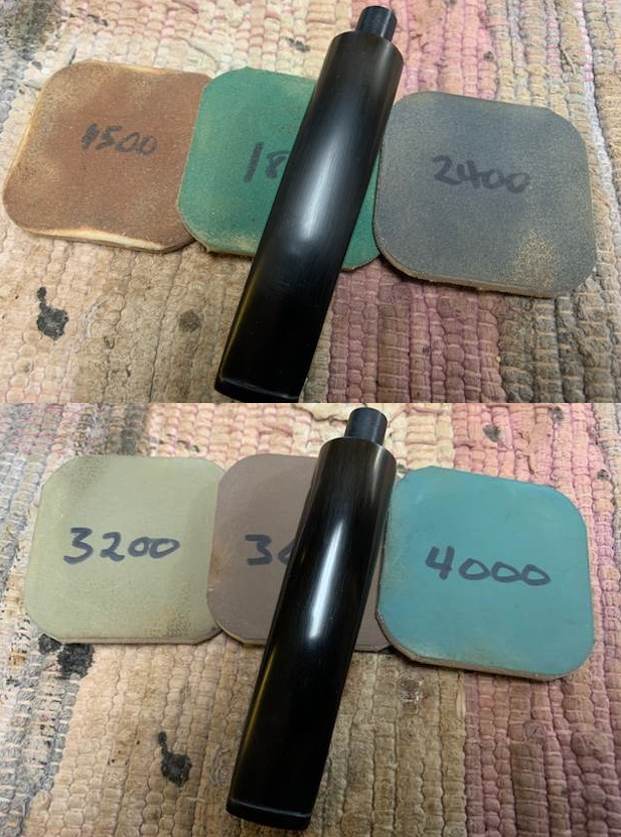
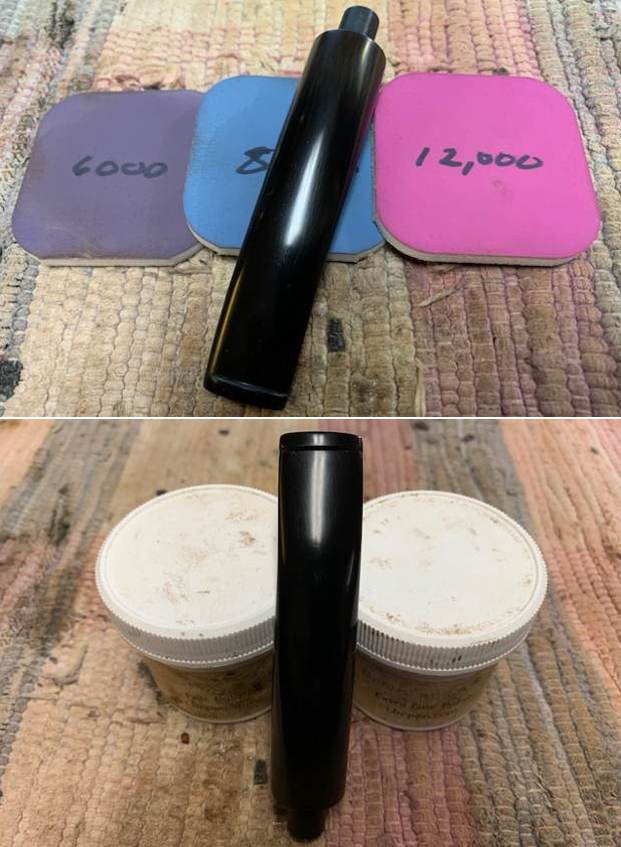
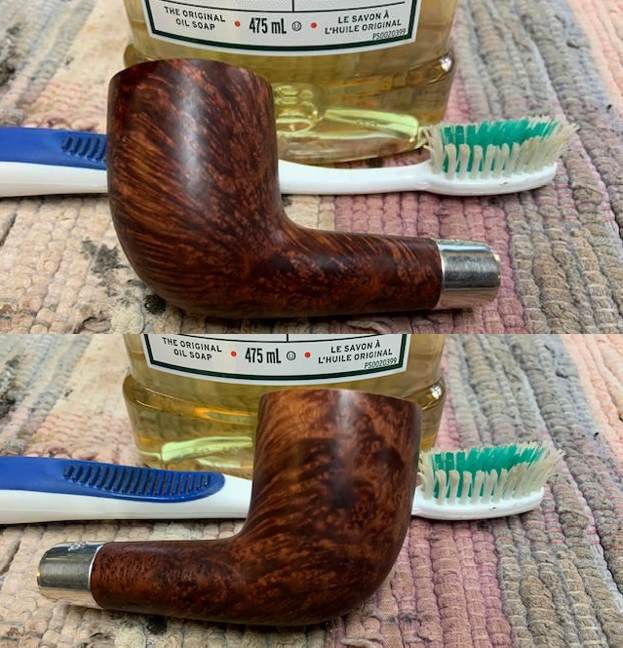
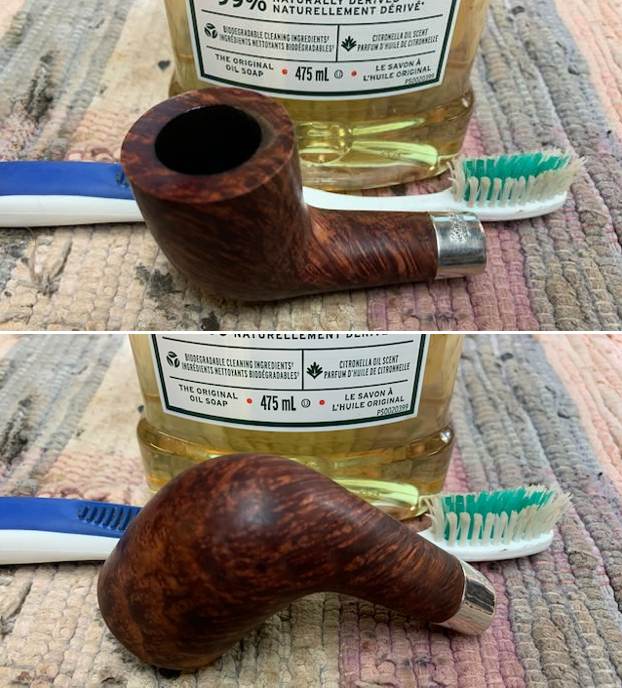
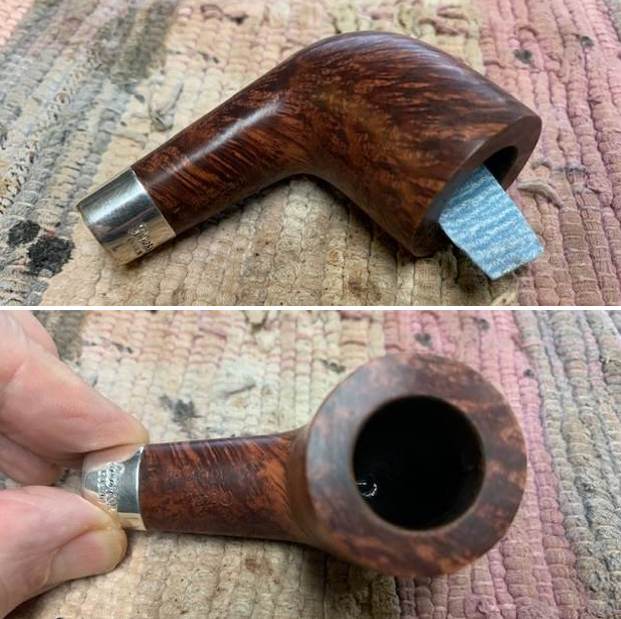
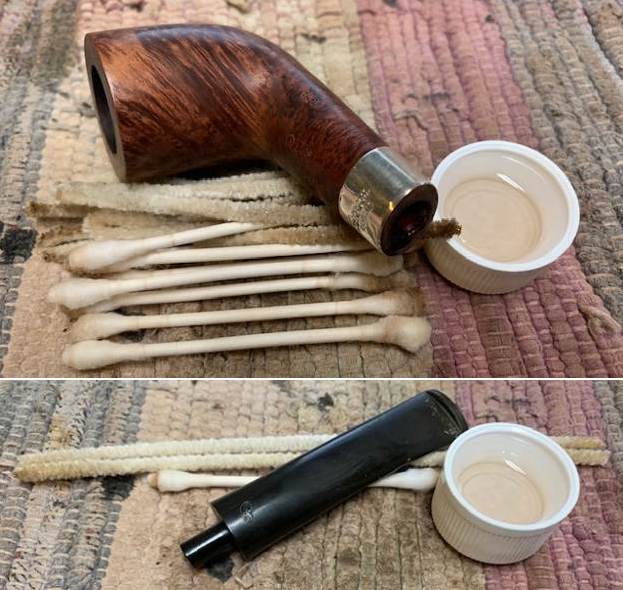
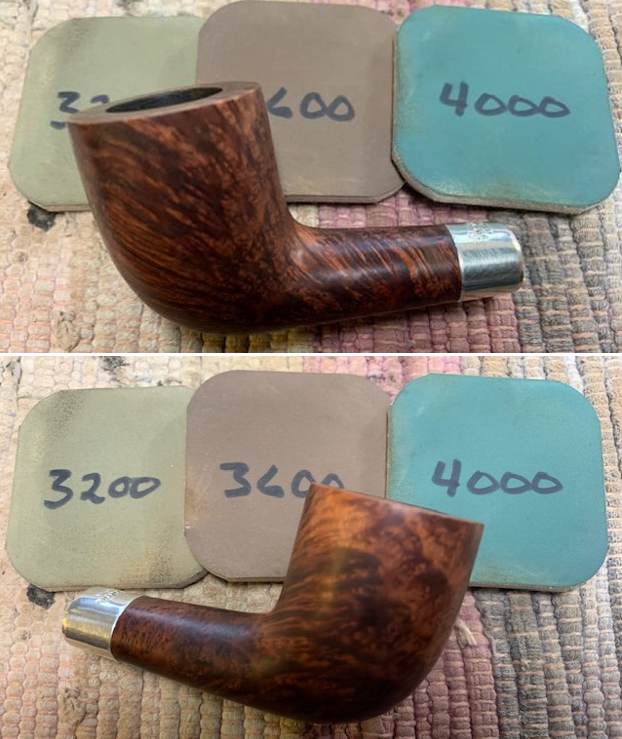
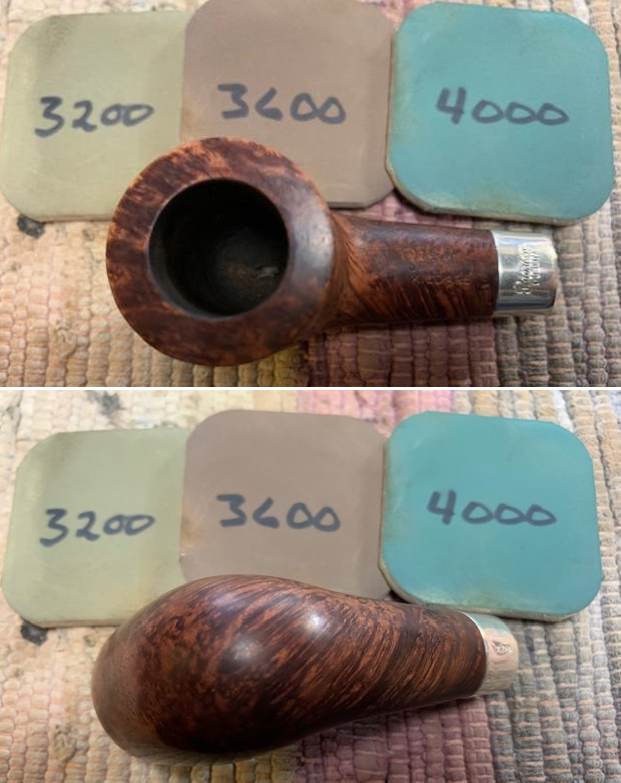
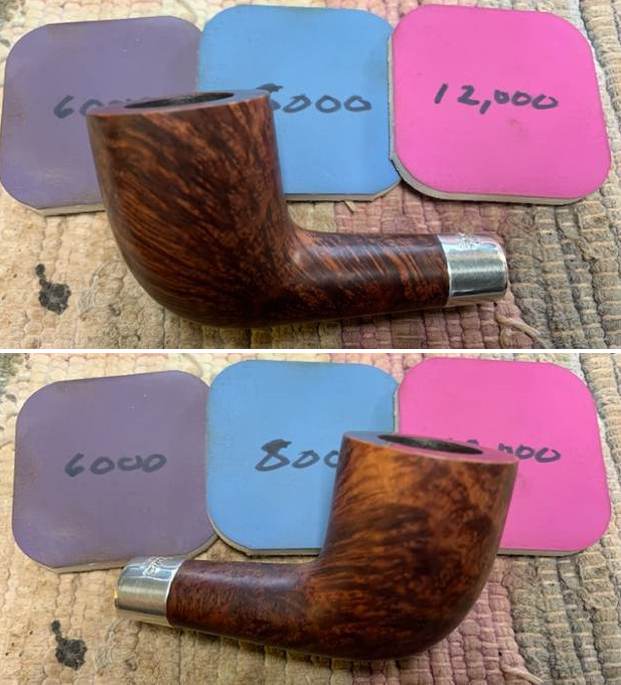
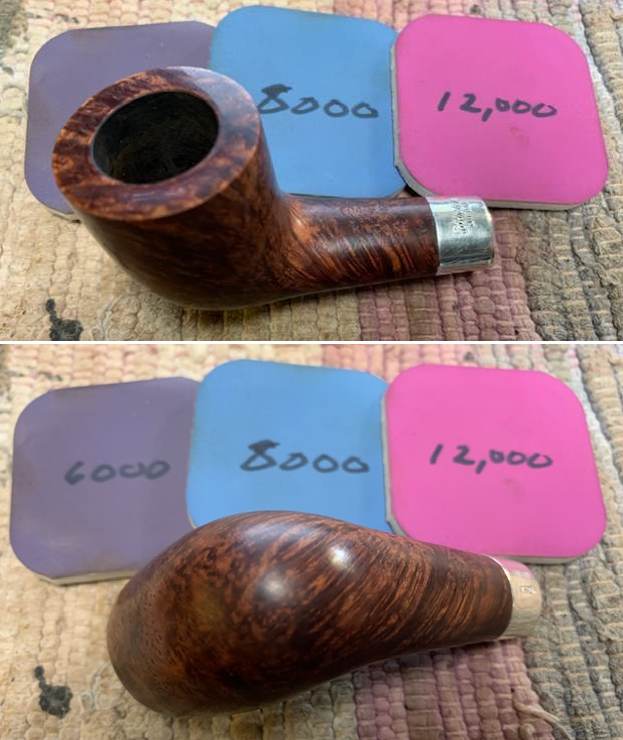
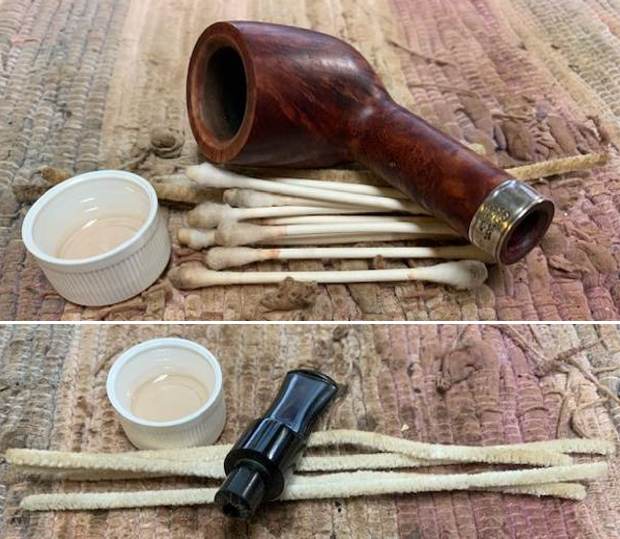
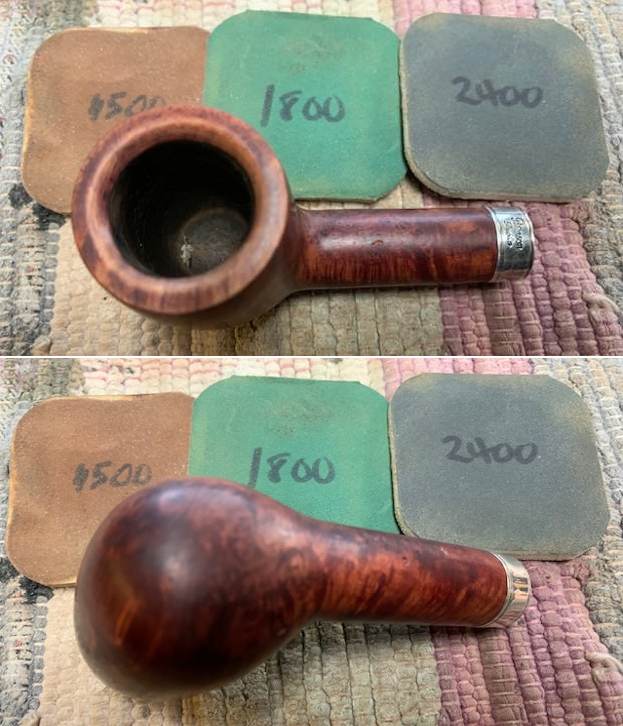
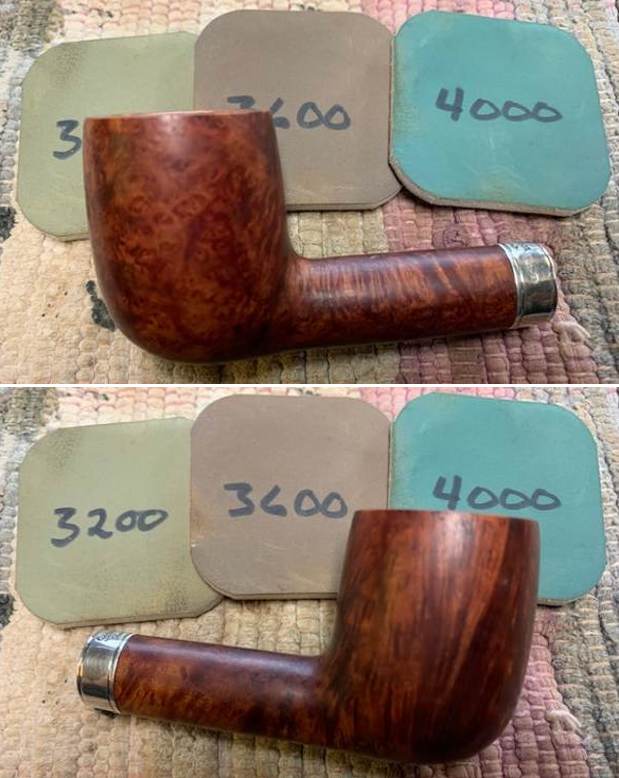
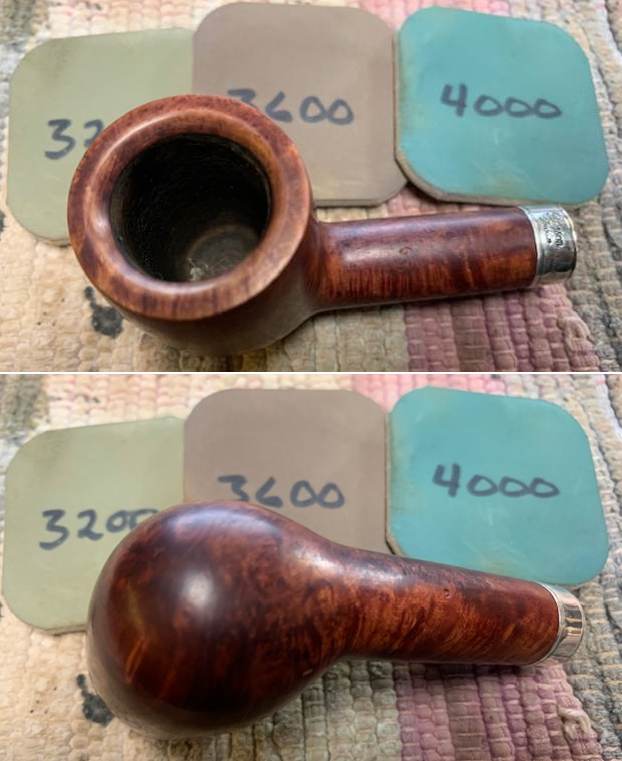
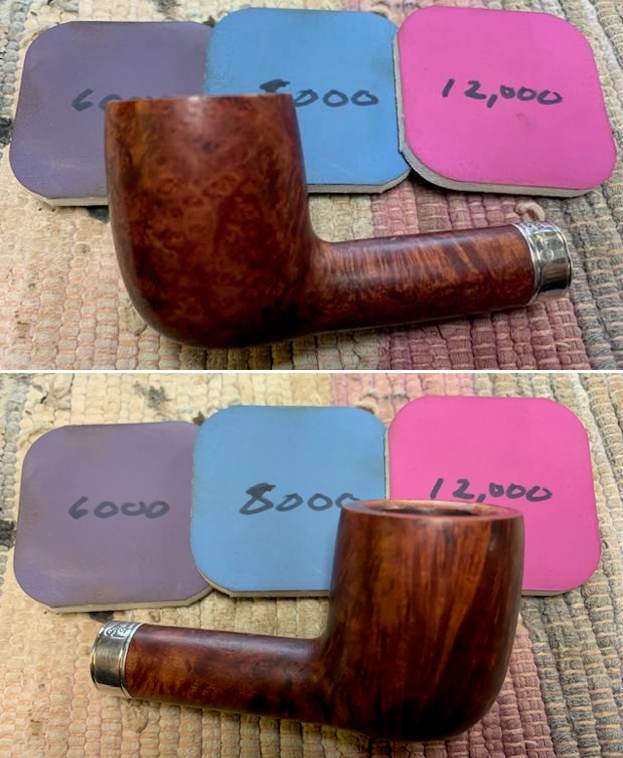
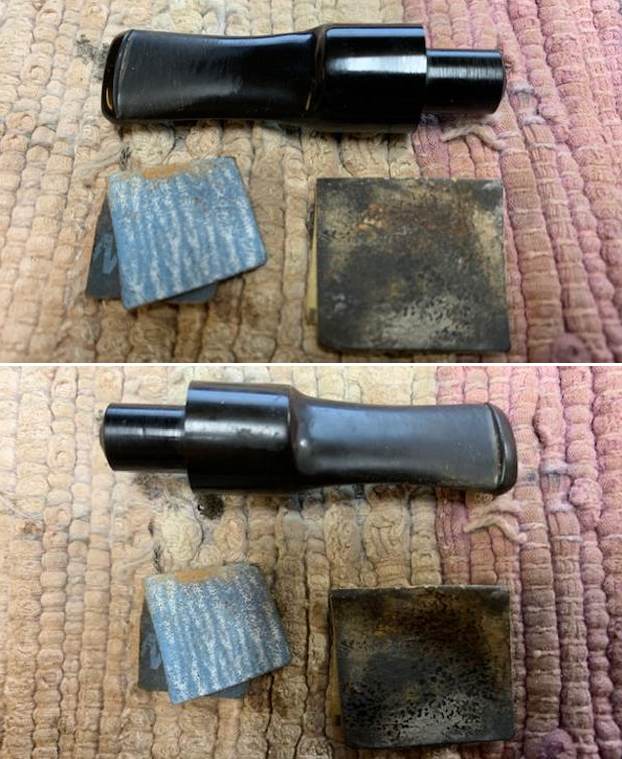
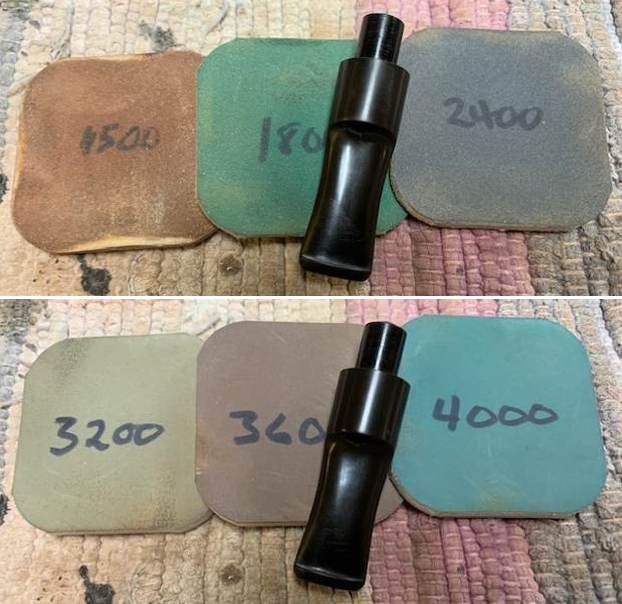
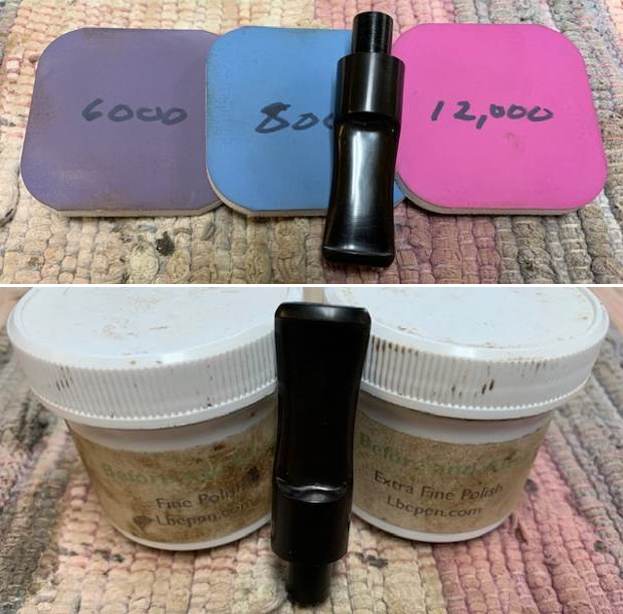
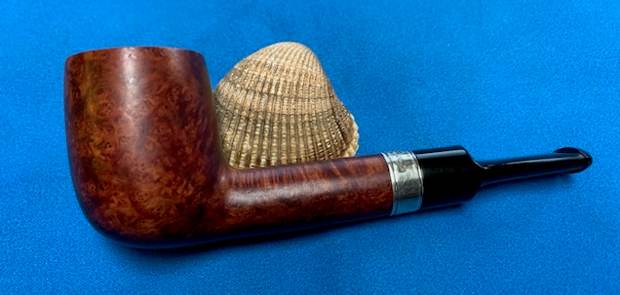
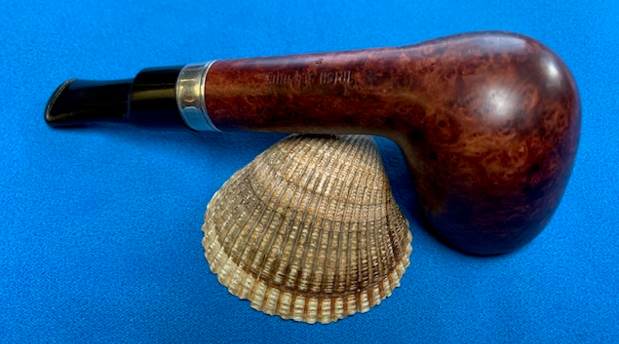
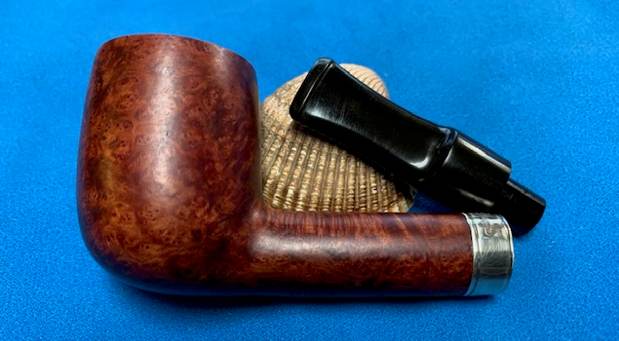
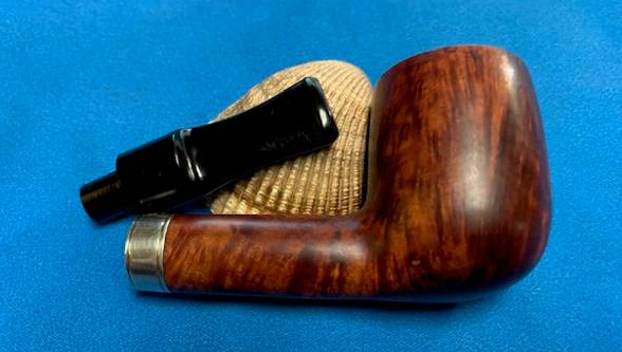
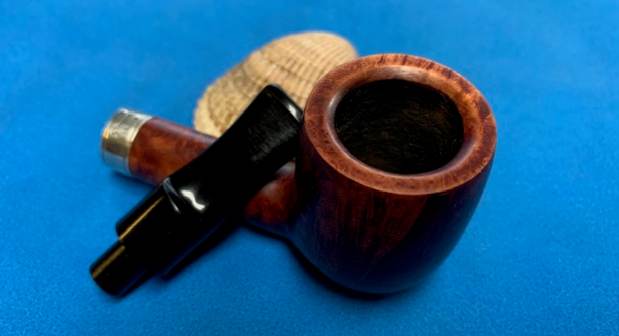
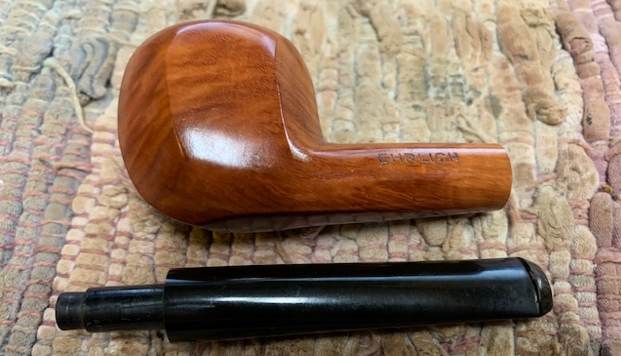
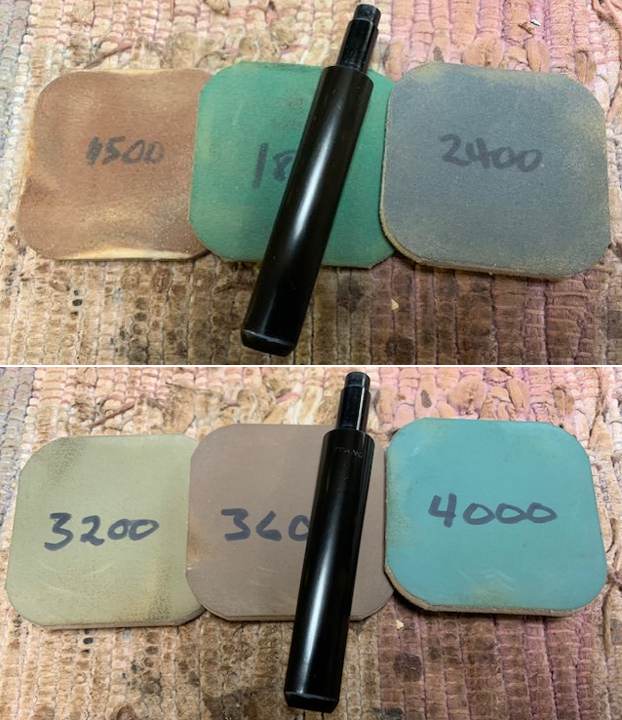
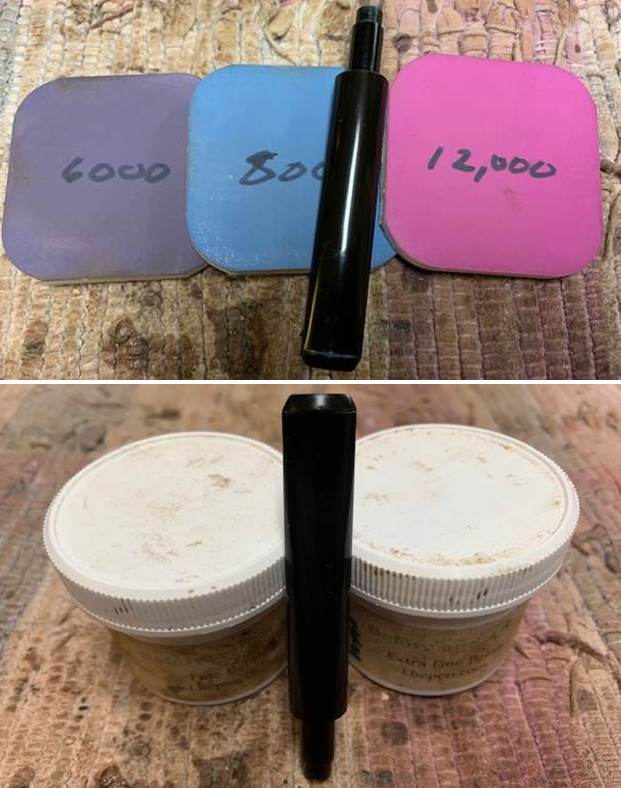
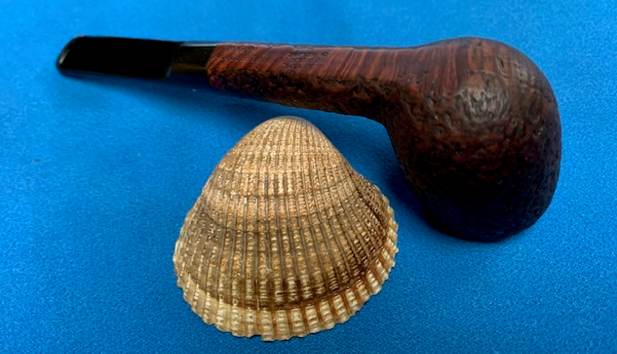
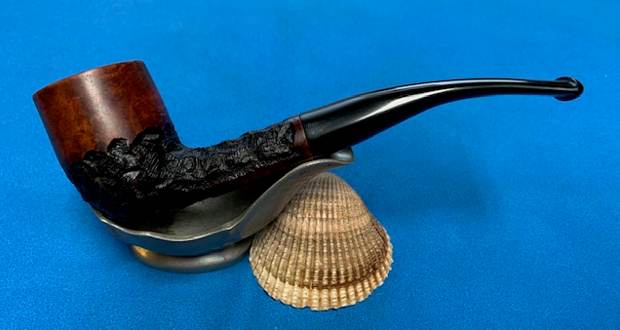
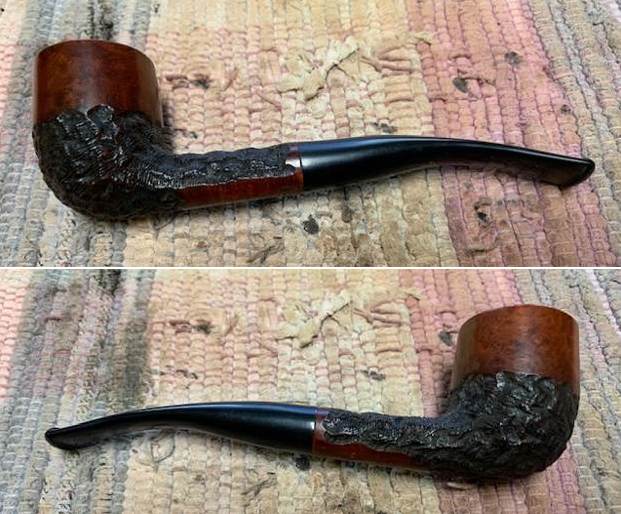
Next on the chopping block is this handsome and rugged Custom-Bilt Oom Paul. I acquired this pipe with Steve at one of those antique fairs where the term ‘antique’ is most loosely applied. Editorial comments aside, the fair was good fun and Steve and I enjoyed ourselves. This pipe piqued my interest because I know that there are many admirers (or should I say ‘fanatics’?) of Custom-Bilt pipes. Clearly, this one had had an active life and looked awfully tired now, but I felt I could bring it back to its best. As you can see, the pipe has the classic Custom-Bilt rustication on it. These marks are reminiscent of Tracy Mincer’s original work and are seen as something of a hallmark of the brand, nowadays. On the left side of the shank, the markings were as follows: Custom-Bilt [over] Imported Briar. No markings on the right side and no markings on the stem.The history of Custom-Bilt pipes is an interesting one and the most comprehensive source of information comes from The Custom-Bilt Pipe Story by Bill Unger. By all the accounts that I’ve heard, it is a very good book. I haven’t had the chance to read it myself, but it would appear to be the fount of knowledge on these pipes. If you’ve got a copy of Unger’s book that’s you’d like to get rid of, please drop me a line!Pipedia’s article on Custom-Bilt consists primarily of review’s of Unger’s book. It offers a cursory view of the markings and their approximate dating. My pipe’s markings correspond to “Stamp Number Three” as seen below, even though the markings on my pipe are not identical to that one. Thus, this pipe seems to be from the Wally Frank era.Pipephil provided a bit more information on the brand, although not strictly related to my pipe.Finally, the pipesrevival.com website has yet more information on Custom-Bilt pipes. This page seemed to confirm that my pipe is from the Wally Frank era, but my interpretation of the photos, etc. is that this is from the early part of that era – probably the early 70s. It is difficult to be sure, but that seems reasonable. In any event, if you are interested in these pipes, I recommend reading all three websites.I figure that this pipe must have been a good smoker because it had been thoroughly used and there was plenty of wear from its long life. This wasn’t a difficult restoration, but there were a lot of steps and it took longer than usual. The stem was heavily oxidized. There were a few minor scratches and a couple of notable tooth dents, and the inside was definitely dirty. However, the real issues were on the stummel. It had accumulated much dirt and debris over the years. The bowl had tons of cake inside and the rim was coated in lava (and potentially burn marks). The front edge of the rim was damaged, presumably from banging out dottle on a hard surface over the years. The grooves of the rustication were embedded with debris and there was a notable burn mark on the back-right part of the bowl, near the shank. Meanwhile, on the left of the bowl, there were a couple of fills (including a major one) that would need addressing. I haven’t even mentioned the miscellaneous scratches, dents and other marks all over the place! Let’s get restoring. The stem was first on my list. I wiped the outside with Murphy’s Oil Soap on some cotton pads. I also took a BIC lighter and ‘painted’ the stem with its flame to lift the few bite marks and dents. However, it did not do much. Then I cleaned out the inside with pipe cleaners and isopropyl alcohol. Given the amount of oxidation, this one needed the usual overnight Pipe Stem Oxidation Remover bath. The following day, I cleaned all of the de-oxidizing mess off with alcohol, pipe cleaners, et cetera. The oxidation had migrated to the surface and I scrubbed with SoftScrub on some cotton pads to remove the leftover oxidation. With that done, I built up the dents on the top and bottom of the stem with black cyanoacrylate adhesive and let them fully cure. I then sanded the adhesive down with 220-, 400-, and 600-grit sandpapers to meld seamlessly into the stem. I then used all nine Micromesh pads (1,500 through 12,000 grit) all over to bring out the lovely black lustre on the stem. I also used Obsidian Pipe Stem Oil in between each pad scrubbing.You may notice that the stem looked odd – well, you are right. Over time, it gradually straightened itself out. I wanted the end of the stem to be roughly parallel with the rim of the bowl, so I brought out my heat gun and heated the vulcanite stem to make it malleable. The heat gun is very powerful – it doesn’t take long! When soft, I gently curved the stem over a wooden dowel. The dowel provides a firm surface and a proper curve. Once I had the bend I wanted, I left the stem to cool and set itself in place.

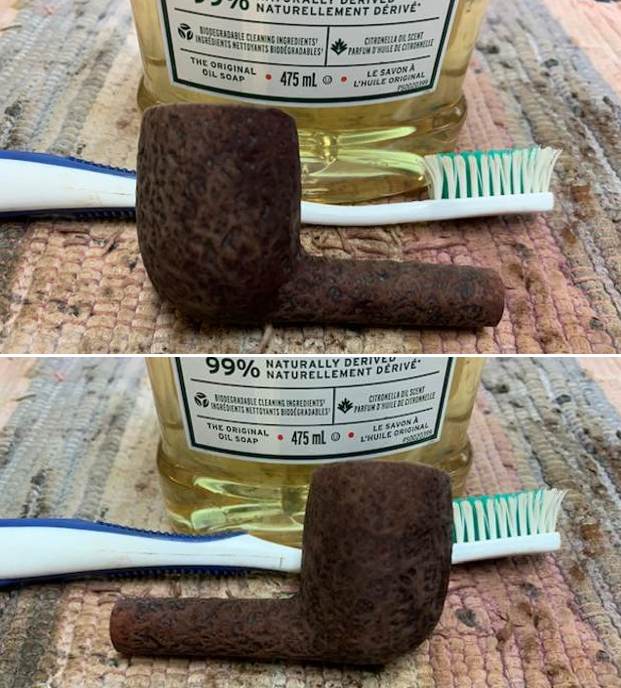
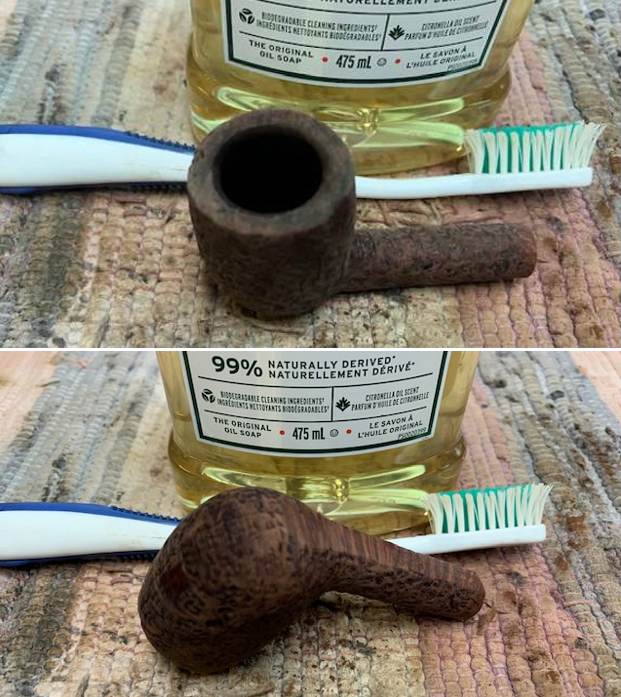
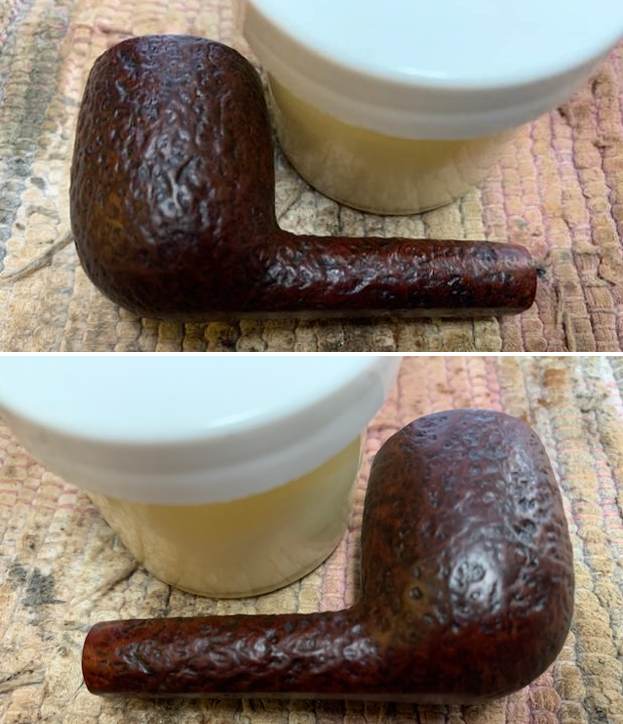
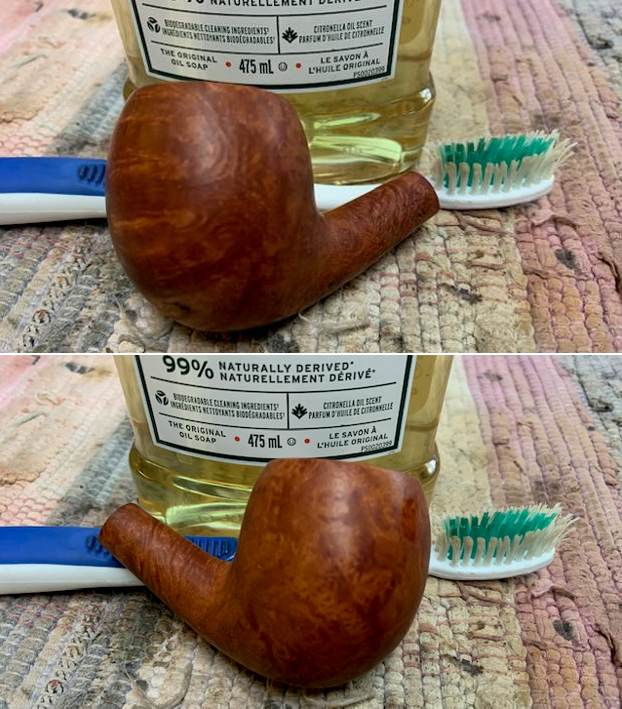
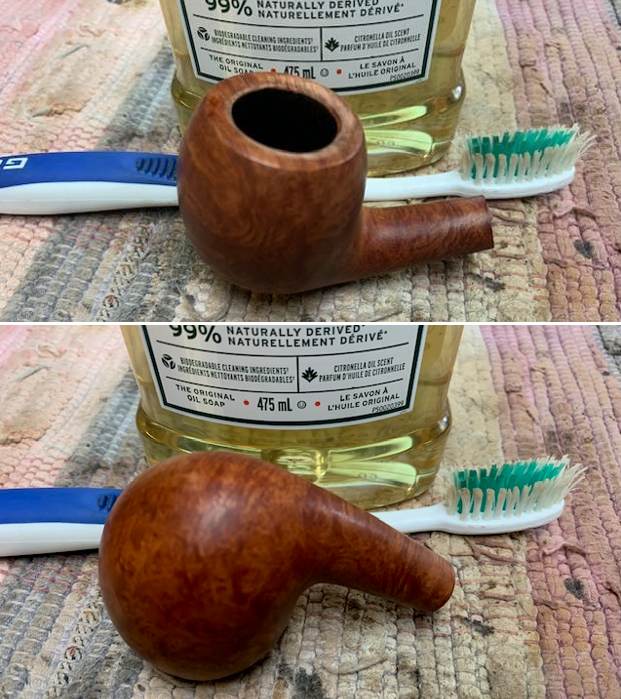
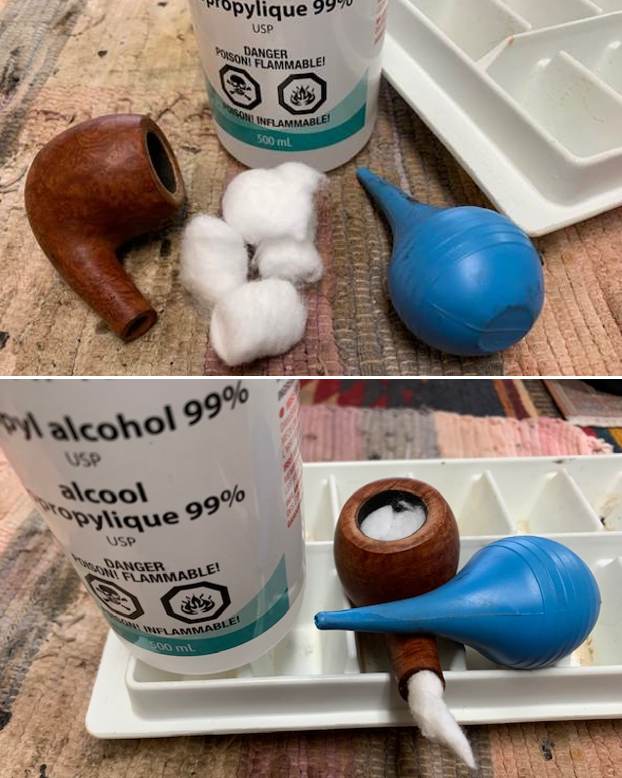
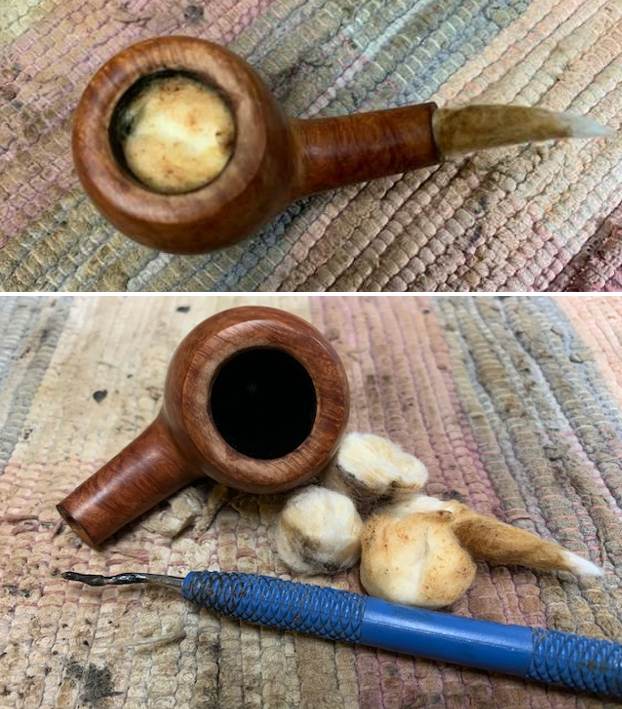
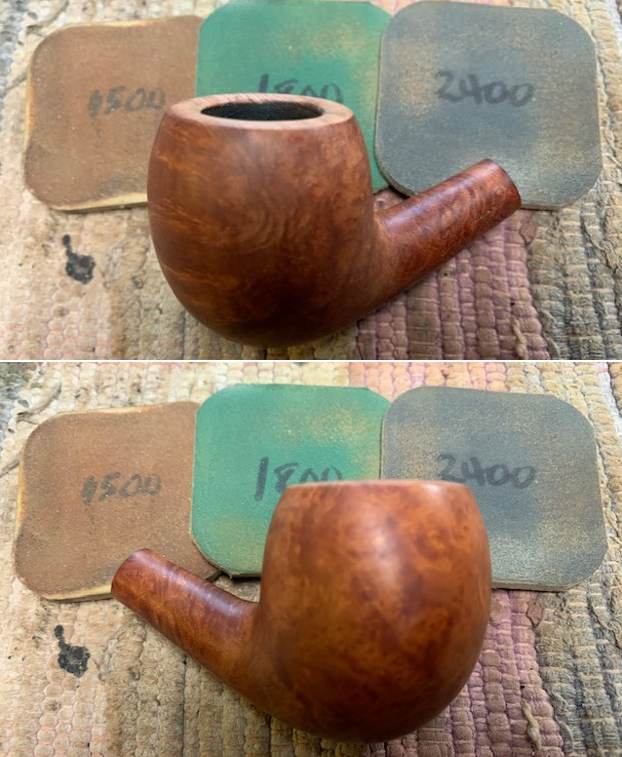
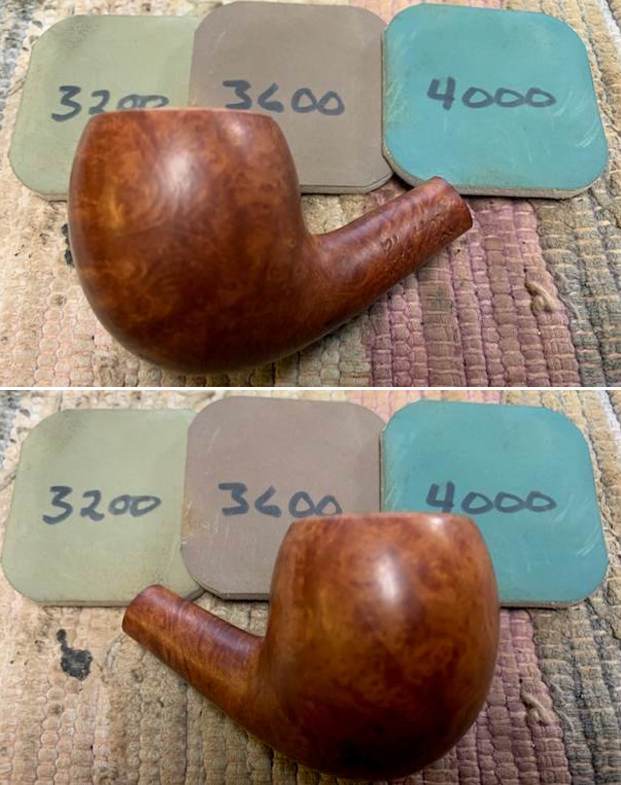
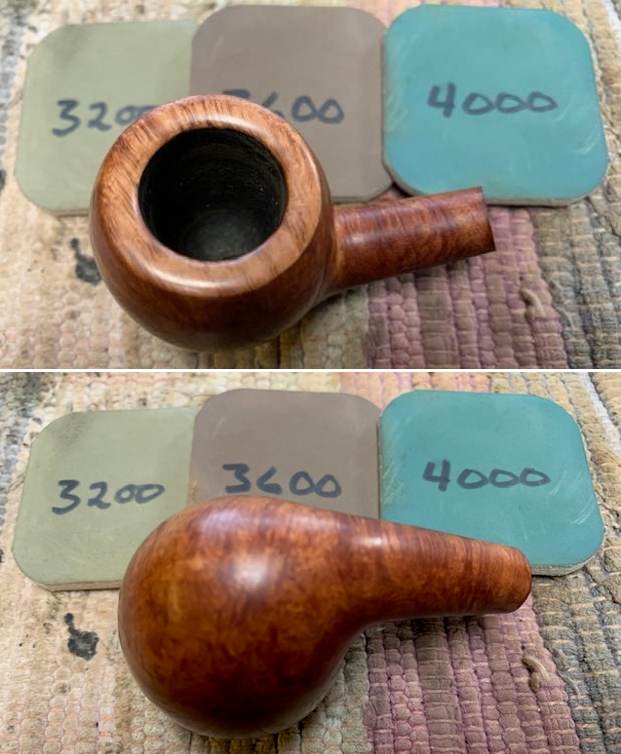
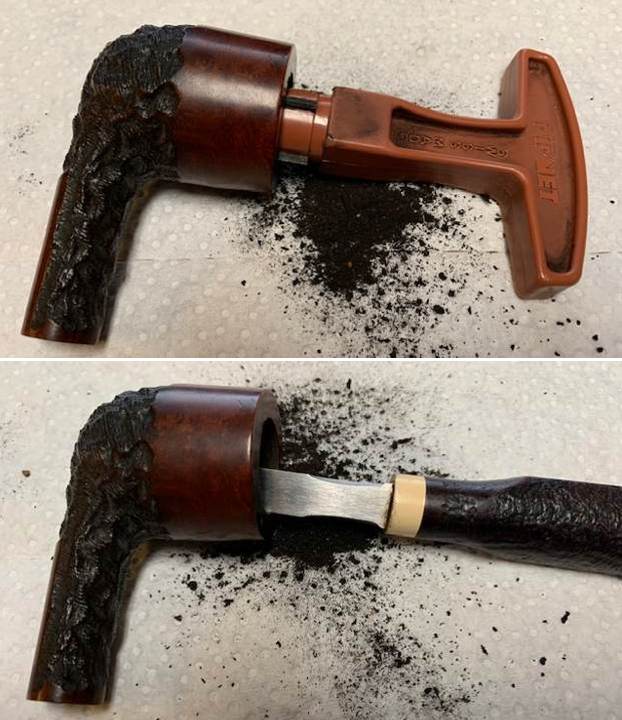
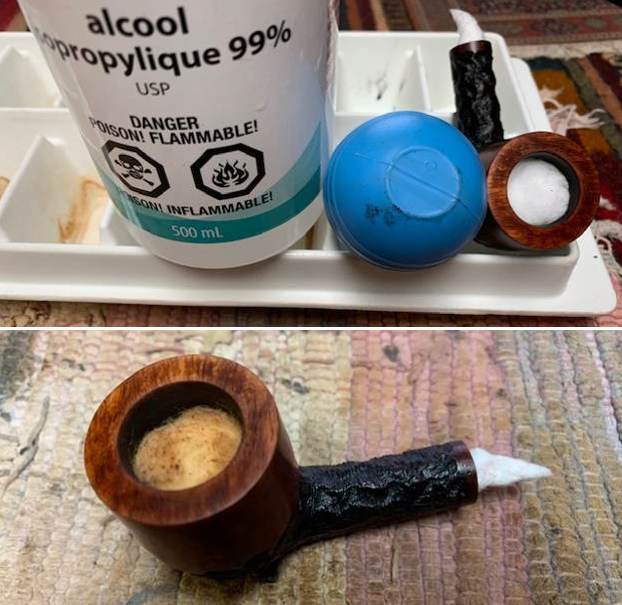
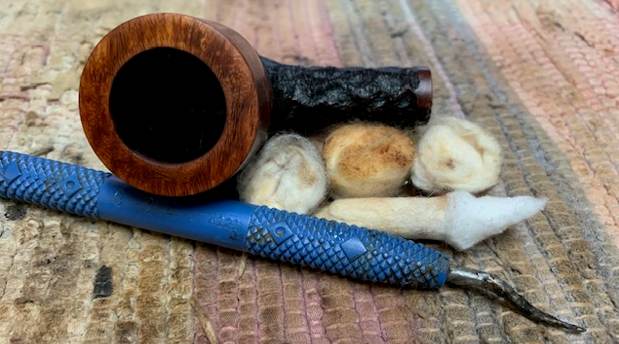
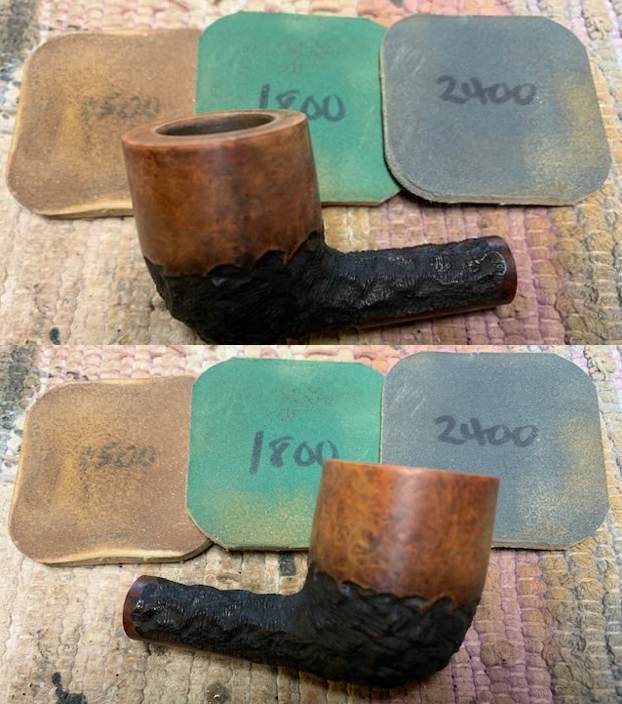
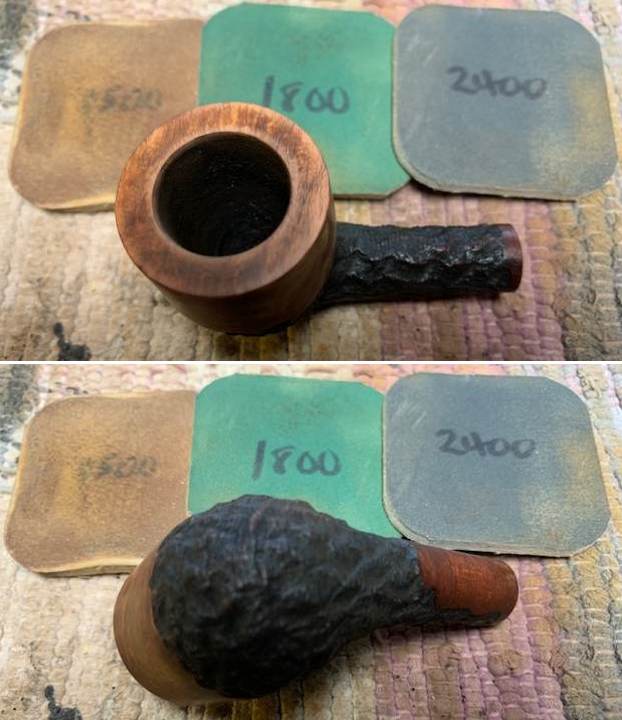
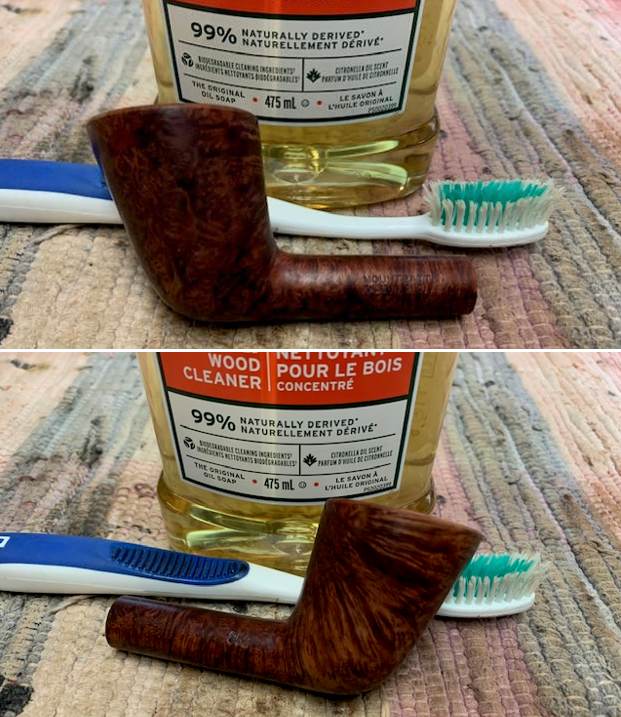
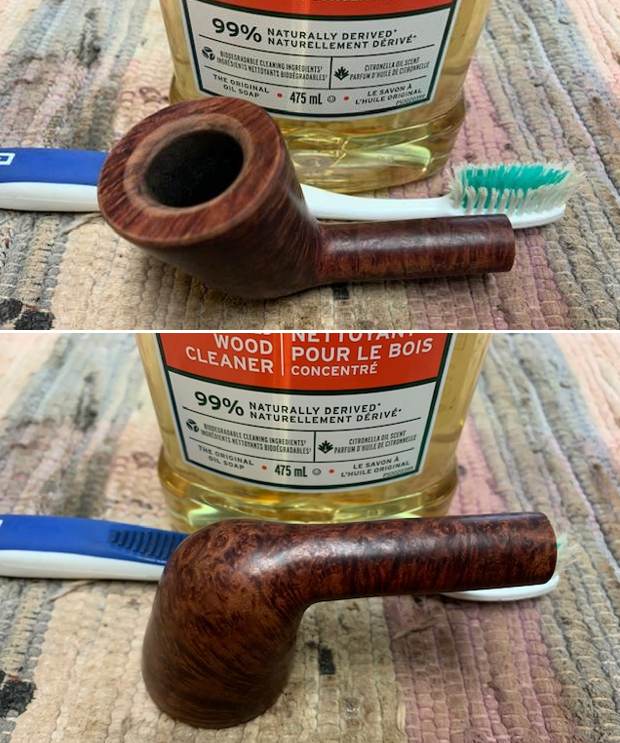
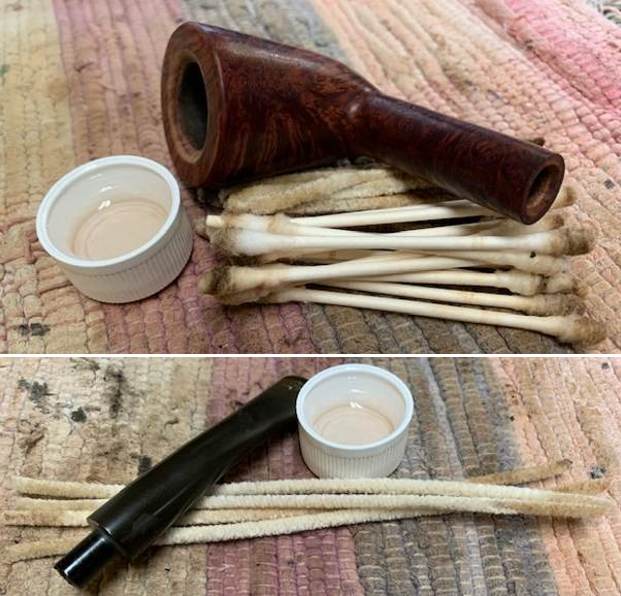
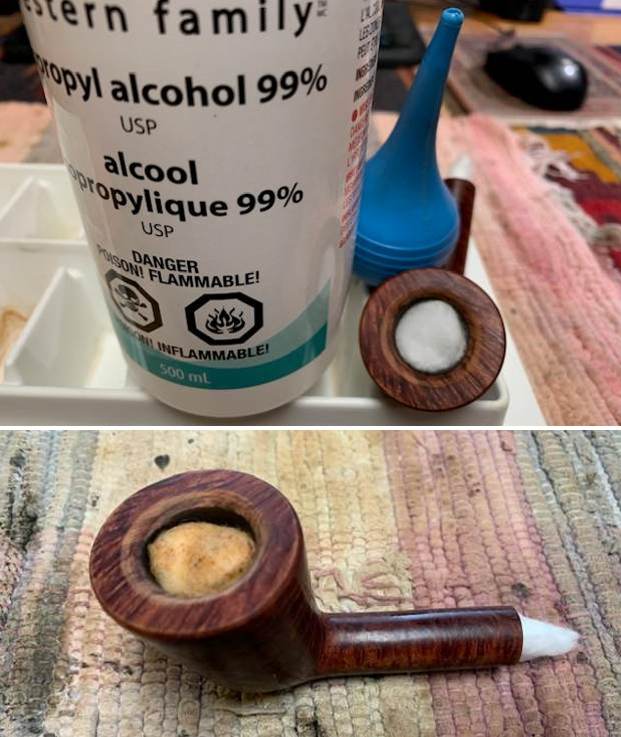
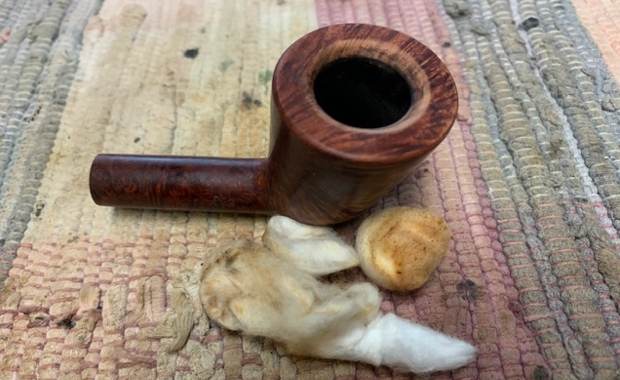
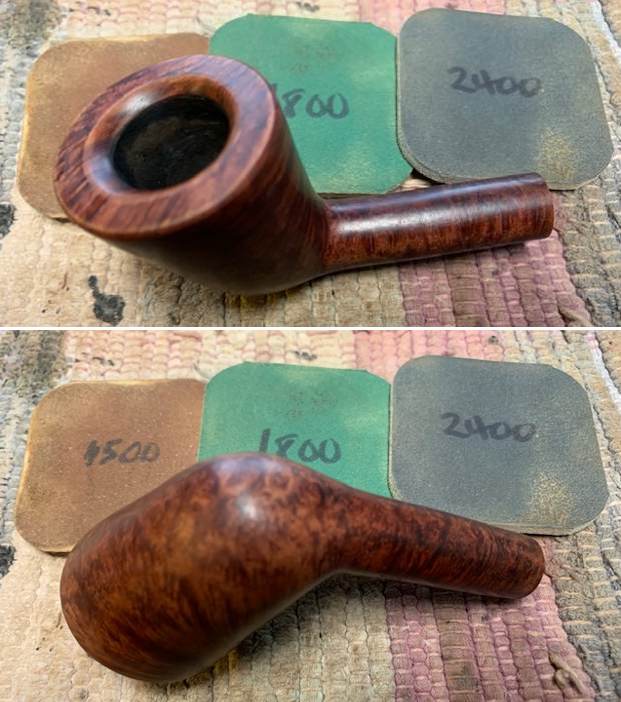
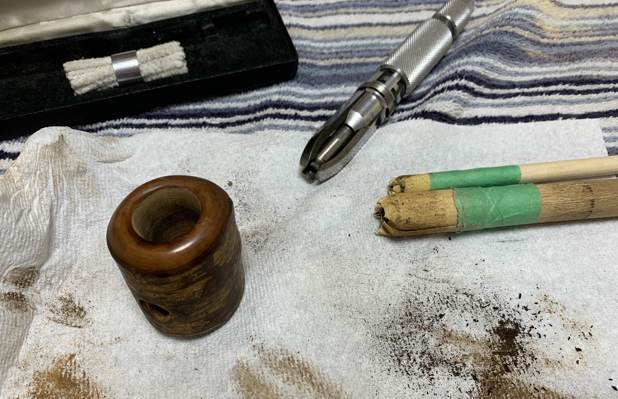
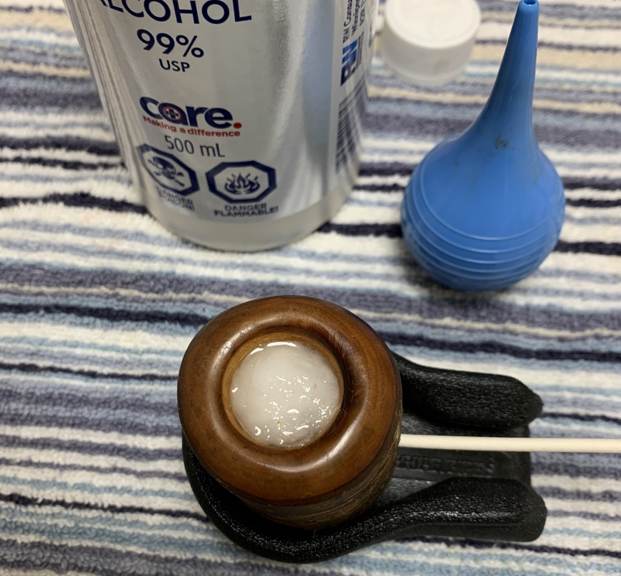
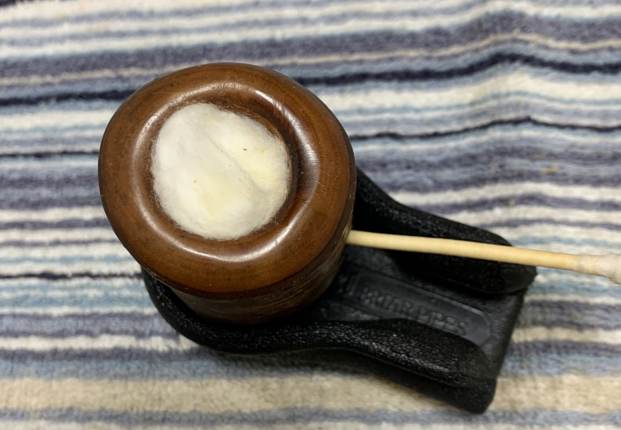
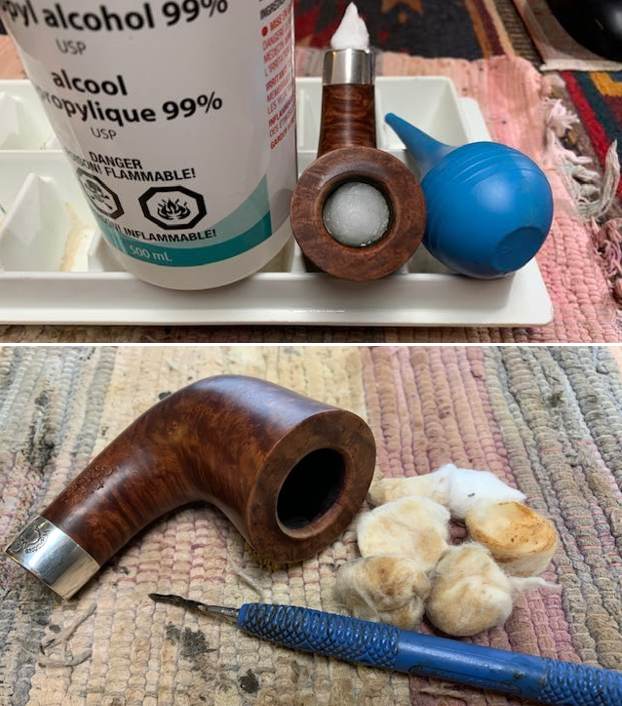
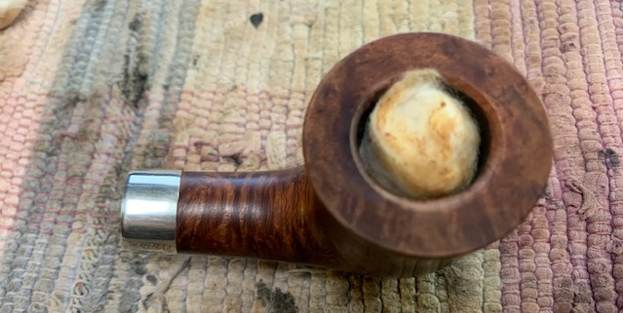
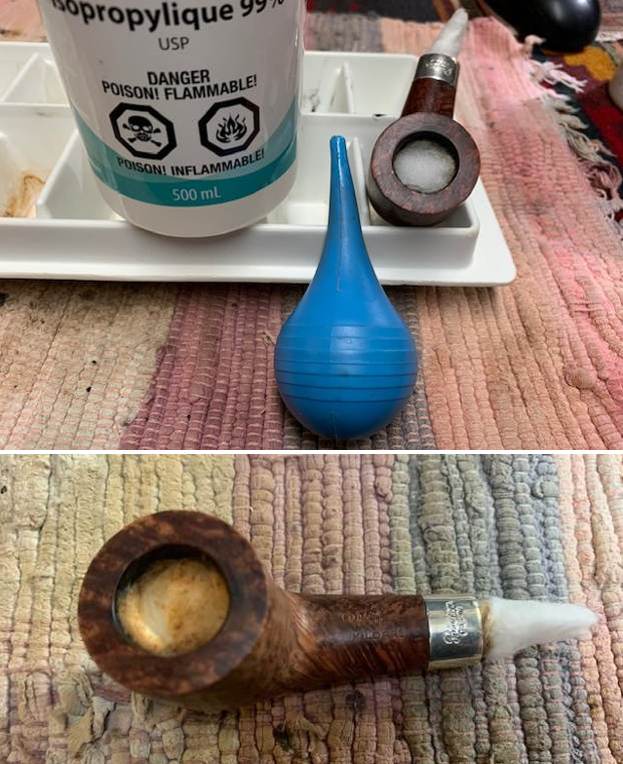
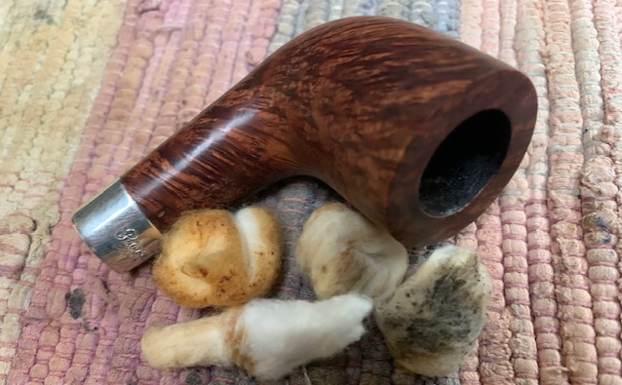
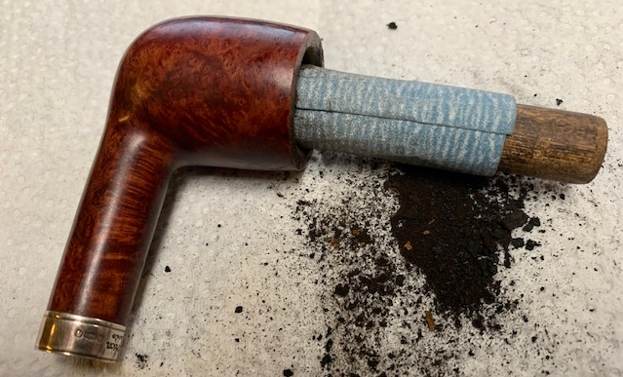
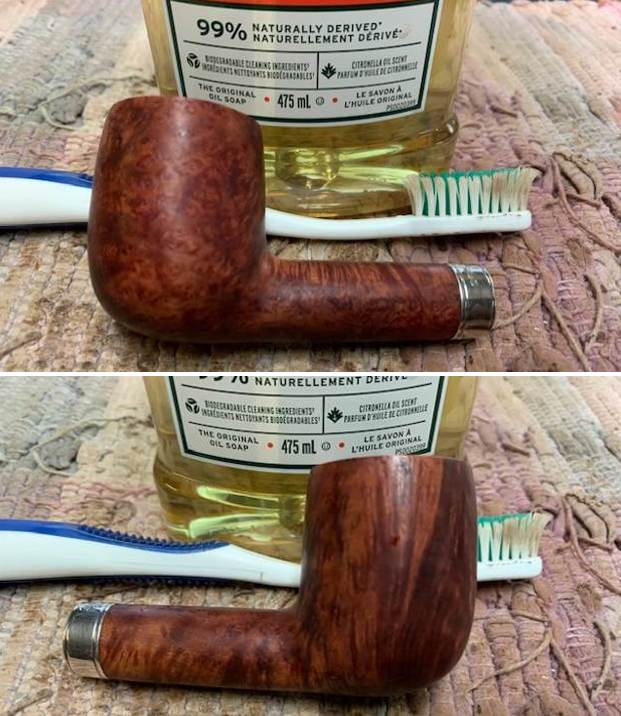
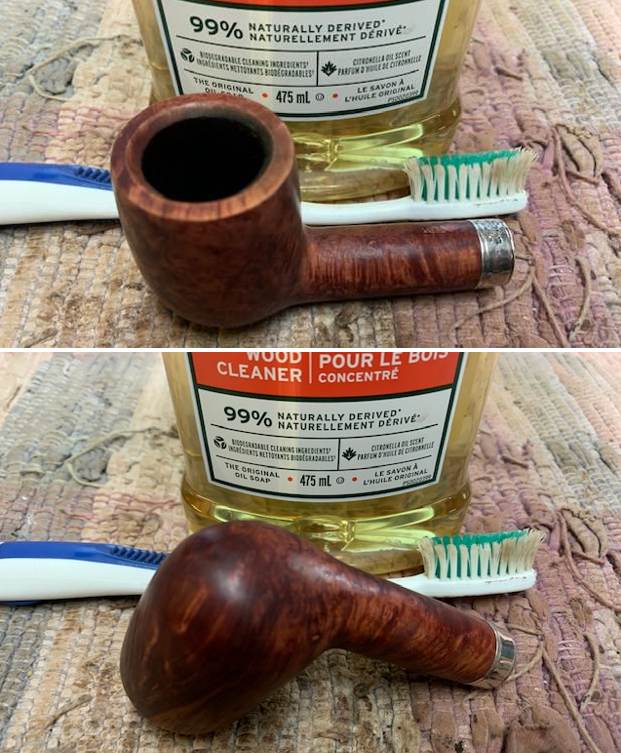
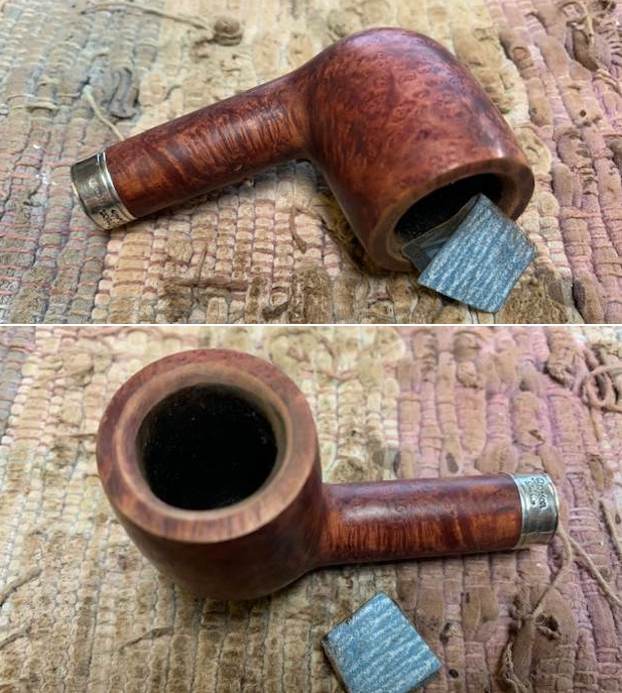
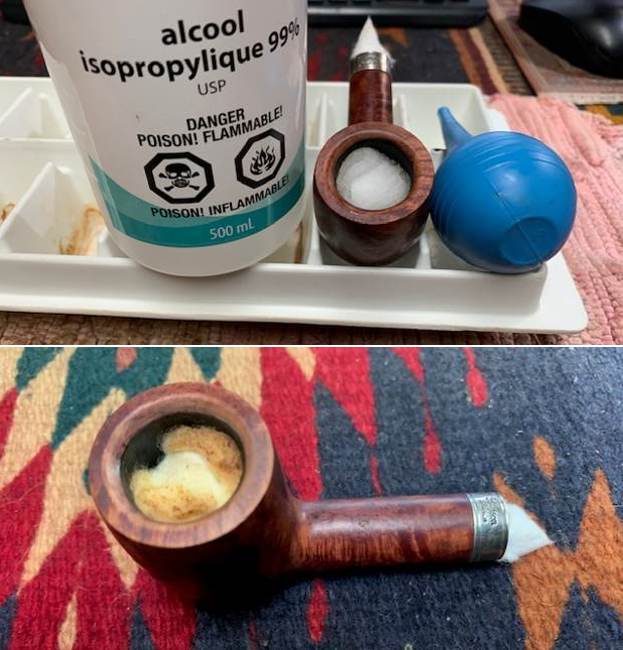
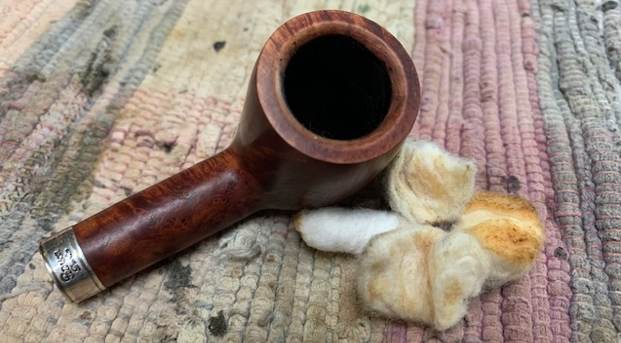
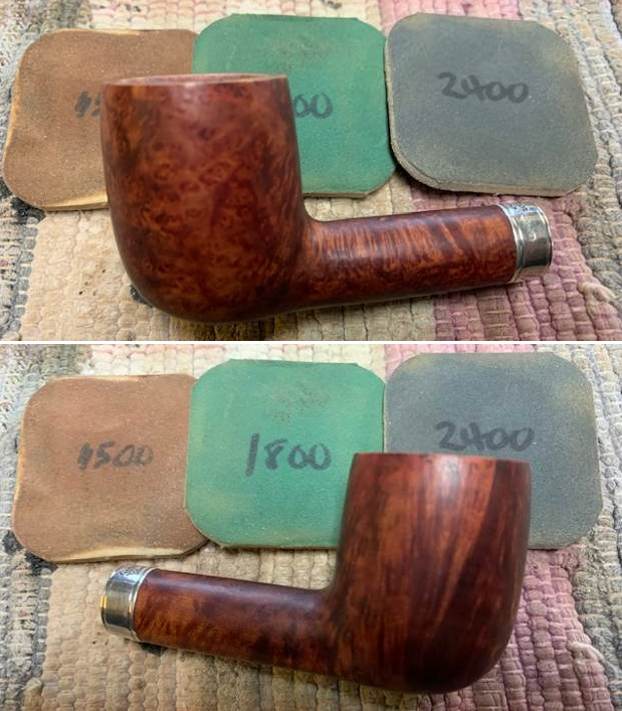
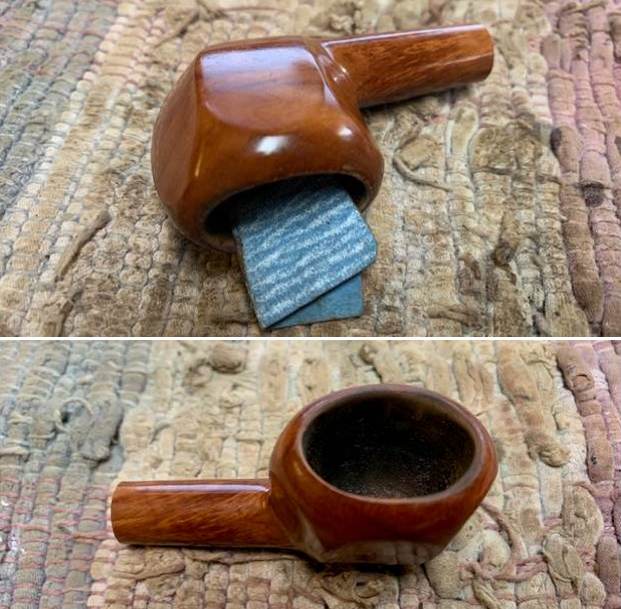
When I was done, I noticed some unusual “stretch marks” on the stem where I’d bent it. Then I asked Steve about it and learned that it does happen occasionally. Suffice it to say, it was extremely annoying as I had to go back and sand that section again. Lesson learned: bend the stem before sanding it!All that finished, I set the stem aside and I began work on the very dirty stummel. Firstly, I decided to ream out the bowl. I used both the PipNet Reamer and the KleenReem to remove the built-up cake and followed that with 220-grit sandpaper taped to a dowel to eliminate as much as I could. I took the chamber down to bare briar, as I wanted to ensure there were no hidden flaws in the wall. Fortunately, there were none. As the photos show, there was quite a mound of debris. I then proceeded to clean out the insides of the shank with Q-tips, pipe cleaners, and lemon-infused isopropyl alcohol. It was ridiculously dirty and took up the country’s supply of cotton to get it clean. I followed that up by cleaning the insides with some dish soap and tube brushes. Next, I used cotton rounds and a toothbrush to scrub the outside of the stummel. Due to the lava on the rim, I carefully used a knife to scrape away as much as I could. All that scrubbing accentuated some very ugly fills which had been repaired with typical red putty.To exorcize the ghosts of tobaccos past, I decided to de-ghost the pipe. I thrust cotton balls into the bowl and the shank and saturated them with 99% isopropyl alcohol. I let the stummel sit overnight. This caused any remaining oils, tars and smells to leach out into the cotton. Although it helped, the de-ghosting was not as successful as I hoped. As a result, I plopped the stummel in my alcohol bath overnight. This removes old stain and cleans debris, odours etc. As you can see, after the bath, the stummel looked rather naked but much cleaner. I next used a dental pick to dig out the awful putty in those fills, as I felt I could do better. I redid the fills with a mixture of cyanoacrylate adhesive and briar dust. The main fill on the back of the bowl was in an awkward position for sanding and making it consonant with the surrounding wood was tricky. In any event, I used some miniature files and various grits of sandpaper to make it look good. Next was the burn on the backside. I took some oxalic acid, used several Q-tips, and rubbed and rubbed and rubbed. The burn dramatically improved and any stain I would later apply would cover it up. Fortunately, the burn was very superficial and did not affect the integrity of the wood at all.To remove the nicks on the rim, I “topped” the pipe – that is to say, I gently and evenly sanded down the rim on a piece of 220-grit sandpaper. This effectively removed the damage, without altering the look of the pipe. However, since I did not want to top the pipe too much, the bashed-in front edge of the pipe would have to be addressed differently. I dug out my iron and a damp cloth to attempt a repair. The hot and moist steam can often cause the wood to swell slightly and return to shape. There was some movement – not a lot, but it was better than doing nothing. I opted to ever-so-slightly round the rim of the pipe in such a way that looks both natural and handsome. Then I sanded the stummel down with all nine Micromesh pads (1,500 through 12,000 grit). The smooth areas got all nine pads, whereas the rusticated areas on received only the last four. Although almost all of the nicks were removed, a hint of a couple of wounds remains. This is part of the story of this pipe – it is its history. Due to all the necessary work for this pipe, I needed to restore the colour, so I stained it with Fiebing’s Medium Brown Leather Dye. First, I brought out my heat gun and spent a couple of minutes thoroughly heating the wood, so it would be as receptive as possible to the stain. I needed the brown to penetrate well into the wood, to give the best results. I applied dye with a cotton dauber. I flamed it with my BIC lighter, let it set, then coated it again with dye, flamed it again, and let that set too. I decided to let the pipe sit overnight. This dye is alcohol-based, so I used isopropyl alcohol to wipe down the pipe and remove excess stain. My intent was not to create a new look for this pipe, but rather to restore the original colour. Finally, I took it to the buffer and used some White Diamond and a few coats of Conservator’s Wax. This pipe took a lot of work, but it was worth it. This Custom-Bilt looks fantastic again and is ready to be enjoyed again by the next owner! I am pleased to announce that this pipe is for sale! If you are interested in acquiring it for your collection, please have a look in the ‘American’ pipe section of the store here on Steve’s website. You can also email me directly at kenneth@knightsofthepipe.com. The approximate dimensions of the pipe are as follows: length 4¾ in. (120 mm); height 5⅛ in. (130 mm); bowl diameter 1½ in. (38 mm); chamber diameter ⅞ in. (22 mm). The weight of the pipe is 2⅜ oz. (69 g). I hope you enjoyed reading the story of this pipe’s restoration as much as I did restoring it. If you are interested in more of my work, please follow me here on Steve’s website or send me an email. Thank you very much for reading and, as always, I welcome and encourage your comments.

Rebirthing a Republic Era Peterson’s Kapruf 24S Saddle Stem Billiard


Blog by Steve Laug

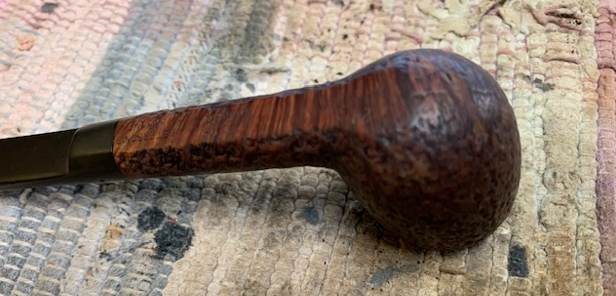
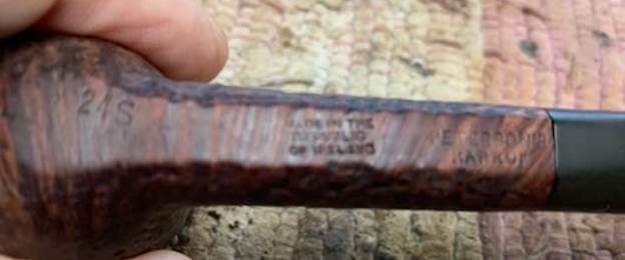
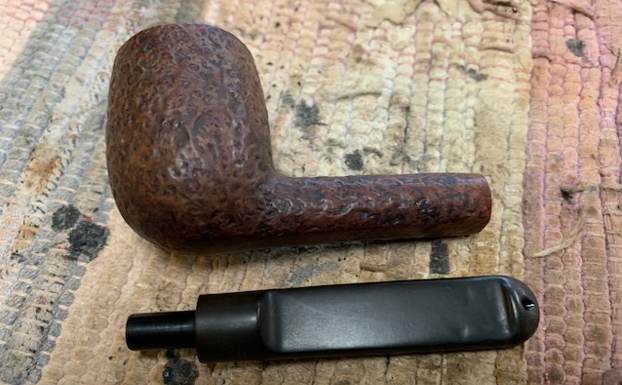
Today is New Year Day 2023 and it is a rainy, chilly day in Vancouver. I know in comparison to where many of you live it is not cold but to us it is. The next pipe I have chosen to work on is another Peterson’s Billiard. It is a sandblast pipe that is a bit of a mystery to Jeff and me as to its provenance. There was grime ground into the sandblast finish on the bowl sides. I love the way the contrast of the brown and black stains still manage to give the blast a sense of depth. The stain is almost tiger striped. It was stamped on the flat underside in the center of the shank and read Made in the Republic of Ireland (three lines). To the right of that it is stamped Peterson’s [over] Kapruf. To the left of the Republic stamp, on the heel was the shape number 24S. This pipe must have been someone’s favourite as it had been well smoked. Somewhere on its journey the bowl had been reamed and the pipe cleaned. The inner edge of the bowl had some nicks and marks that made the bowl slightly out of round. The stem was lightly oxidized from sitting around here for a long time. It had tooth marks and chatter on the top and underside on and near the button. I took photos of the pipe before my cleanup work. I took photos of the rim top and stem to show the general condition of the pipe. The bowl is clean and has been recently reamed. The rim top and edges had some darkening and there was some lava in the sandblast of the finish on the back side. The photos of the stem show that it was lightly oxidized and has tooth marks on the top and underside near the button.I took photos of the bowl sides and heel to show the blast that was around this bowl. It is a great sandblast and the choice of stain adds depth to the appearance of the bowl. I took a photo of the stamping on the underside of the shank. It is clear and readable and reads as noted above. I took the pipe apart and took a photo of the pipe. It is a good looking pipe and has an interesting shallow sandblast on the bowl.I turned to “The Peterson Pipe” by Mark Irwin and Gary Malmberg to get some background on the Kapruf line. On page 306 it had the following information.

Kapruf and “Kapruf” (c.1922-87) Sandblast (hence the name, Kapp-rough) P-lip or fishtail mouthpiece, in catalogs from 1940-87. Early documented specimens stamped IRISH over FREE STATE, no Eire specimens documented. Mid-century specimens may be stamped LONDON MADE [over] ENGLAND or MADE IN ENGLAND forming a circle or MADE IN [over] IRELAND, all dating no later than 1970. Those of recent vintage stamped MADE IN THE[over] REPUBLIC [over]OF IRELAND.

I knew that I was working on a KAPRUF that was made between 1970-1987 as it is stamped MADE IN THE REPUBLIC OF IRELAND as noted above. Now it was time to work on the pipe.

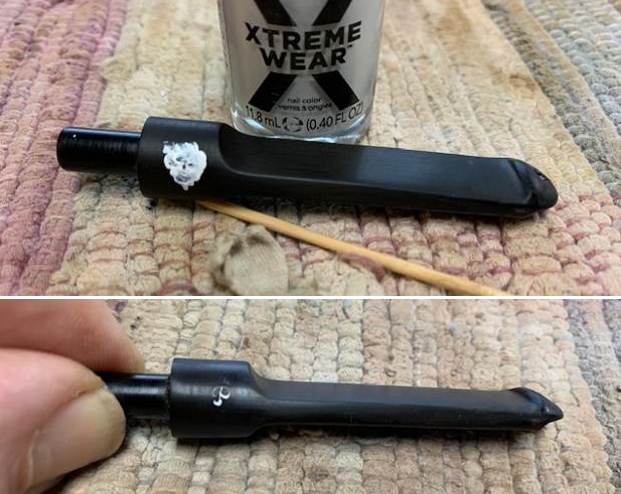
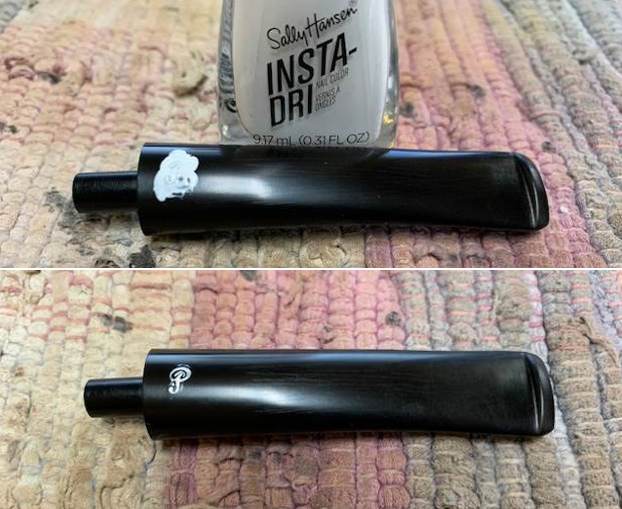
I started my work on the pipe by working over the buildup that remained on the rim top with a brass bristle wire brush. It looked better once I was finished.I cleaned up the inner edge of the rim with a folded piece of 220 grit sandpaper. I was able to remove almost all of the darkening with the sandpaper. I scrubbed the externals of the pipe with undiluted Murphy’s Oil Soap with a tooth brush. I rinsed it under running warm water to remove the soap and grime. The bowl and rim top cleaned up really well with the lava coat removed. The inner edge of the rim was in good condition.  I worked some Before & After Restoration Balm into the surface of the briar with my fingertips and a horsehair shoe brush to clean, enliven and protect the briar. I let the balm sit for 15 minutes and then buffed with a cotton cloth to raise the shine. The photos show the bowl at this point in the restoration process. I scraped out some thick tar on the mortise walls with a pen knife. Afterwards, I cleaned out the inside of the mortise, shank and airway in the stem with alcohol, cotton swabs and pipe cleaners.I set the bowl aside and turned my attention to the stem. I “painted” the stem surface on both sides with the flame of the lighter to try and lift the deep tooth marks. I was able to lift them significantly but some deep spots remained. I filled those in with black CA glue and set the stem aside to let the repairs harden. I flattened the cured repairs with a small file and then sanded them with 220 grit sandpaper to blend them into the stem surface. I started polishing the stem with 400 grit wet dry sandpaper. I touched up the P stamp on the left side of the saddle stem with some acrylic fingernail polish. I worked it into the stamp with a toothpick and then scraped off the excess once it had dried.    I polished the stem with micromesh sanding pads – wet sanding with 1500-12000 grit sanding pads. I wiped it down after each sanding pad with Obsidian Oil. I polished it with Before & After Pipe Stem Polish – both Fine and Extra Fine.    I always am excited to finish working on a pipe. This Made in the Republic of Ireland Peterson’s Kapruf 24S Billiard is no exception. I put the pipe back together and buffed it with Blue Diamond on the buffing wheel. I gave the bowl multiple coats of Conservator’s Wax and the stem multiple coats of carnauba wax. I buffed the pipe with a clean buffing pad to raise the shine and hand buffed it with a microfibre cloth to deepen the shine. It is fun to see what the polished smooth rim top and the sandblast bowl looks like with the black vulcanite taper stem. This Classic looking Peterson’s Kapruf Sandblast Billiard feels great in my hand. It is light and well balanced. Have a look at it with the photos below. The dimensions are Length: 5 ½ inches, Height: 1 ½ inches, Outside diameter of the bowl: 1 inches, Chamber diameter: ¾ of an inch. The weight of the pipe is 29 grams/.99 of an ounce. I will be putting it on the rebornpipes store shortly in the Irish Pipe Makers section if you are interested in it. Thanks for walking through the restoration with me as I worked over this pipe. Thanks to each of you who are reading this blog.

New Life for a Blatter of Montreal Bent Apple


Blog by Steve Laug

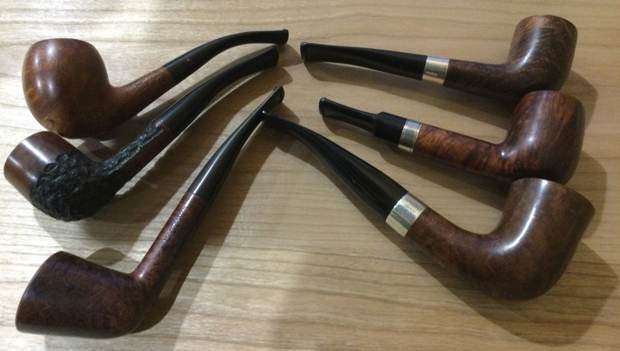
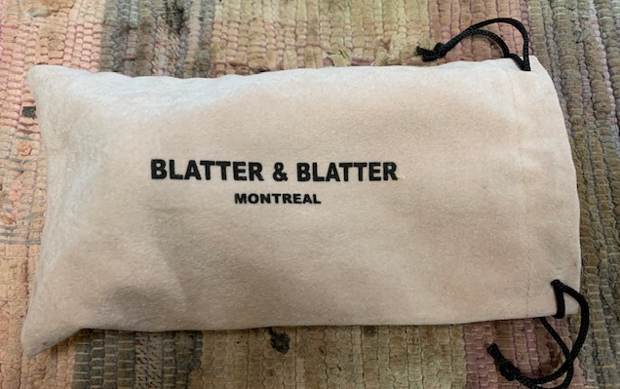
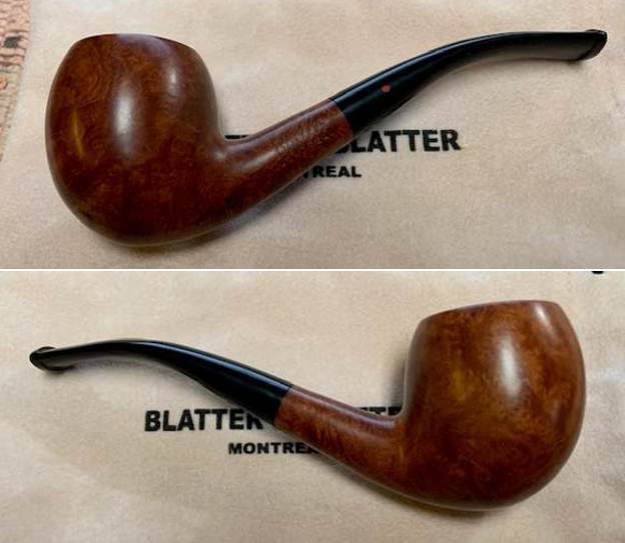
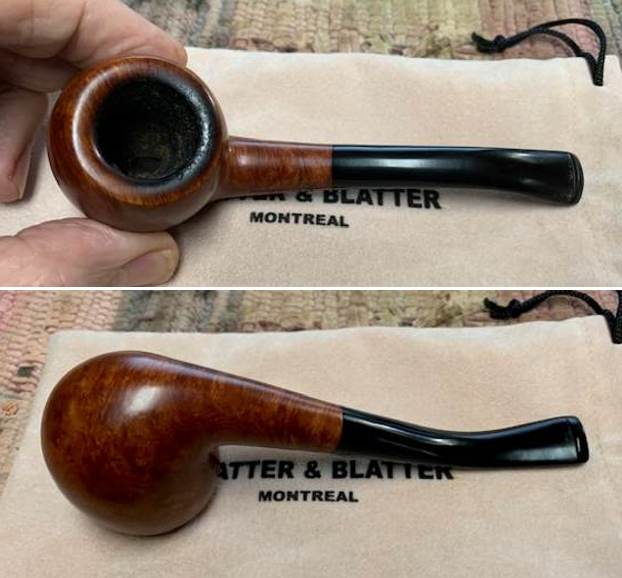
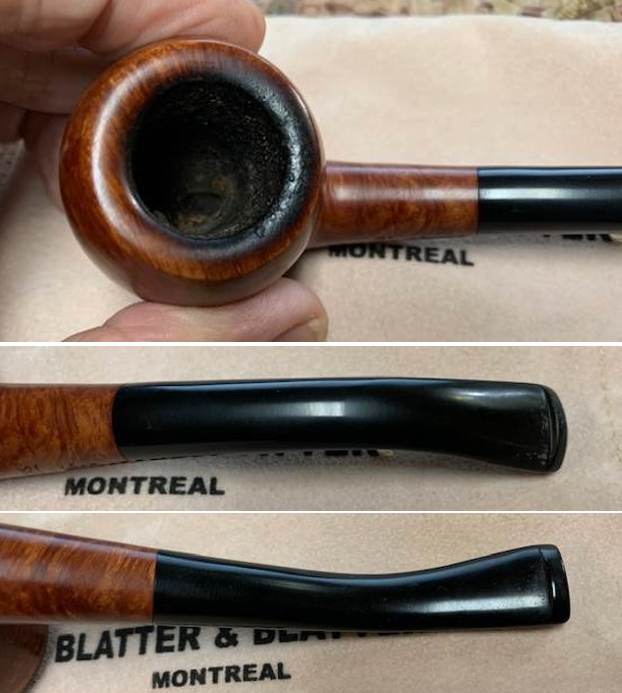
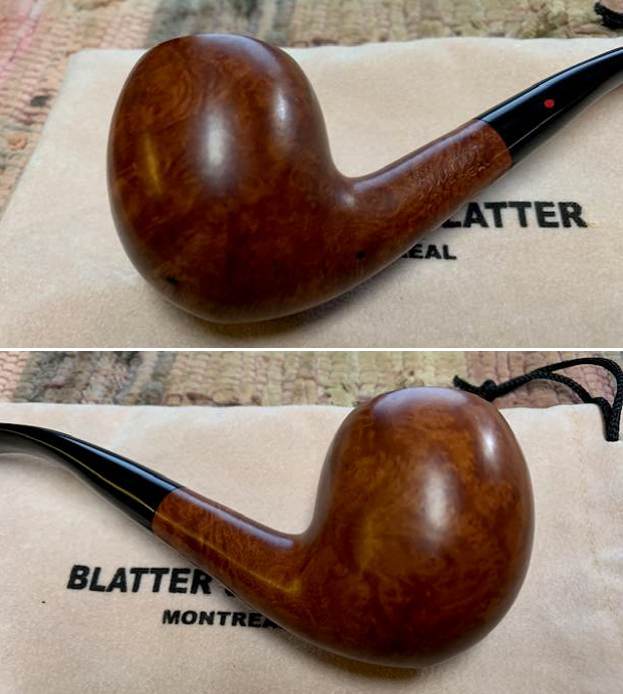
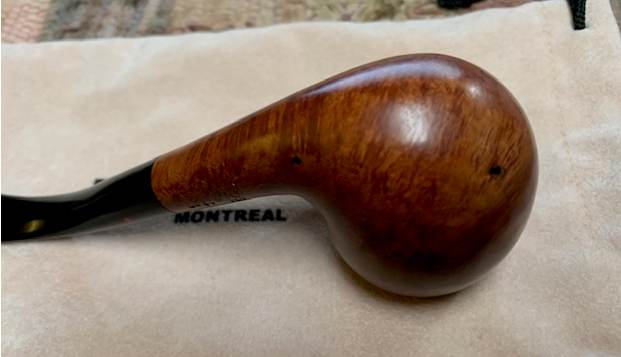
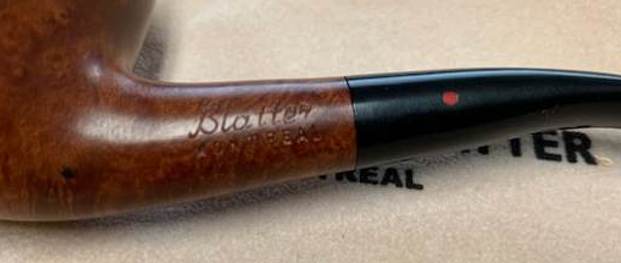
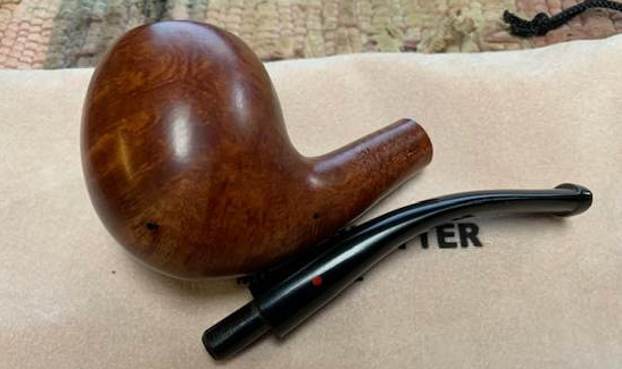
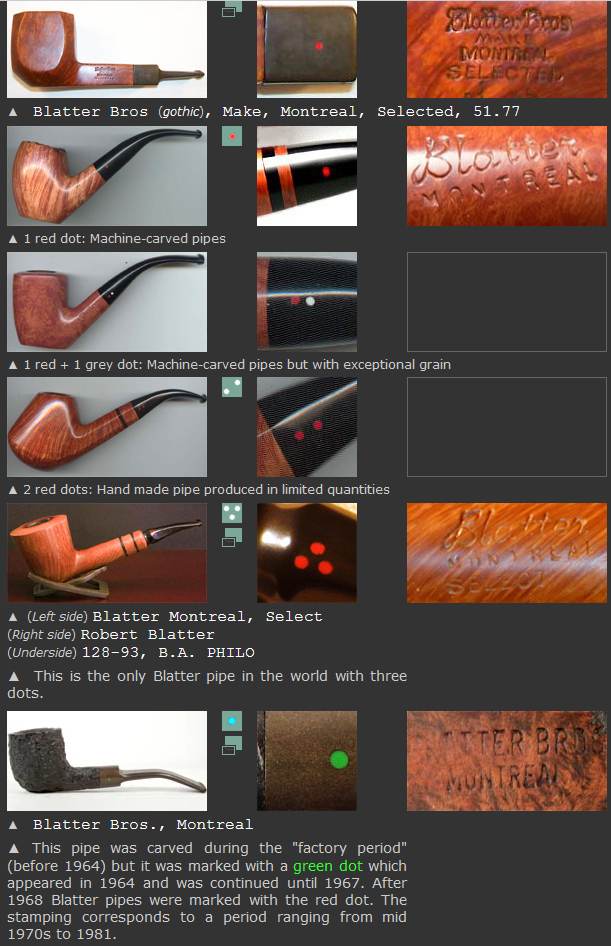
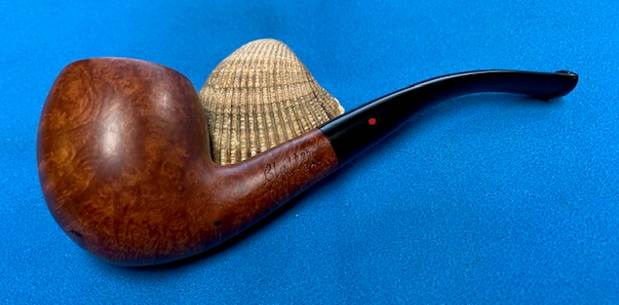
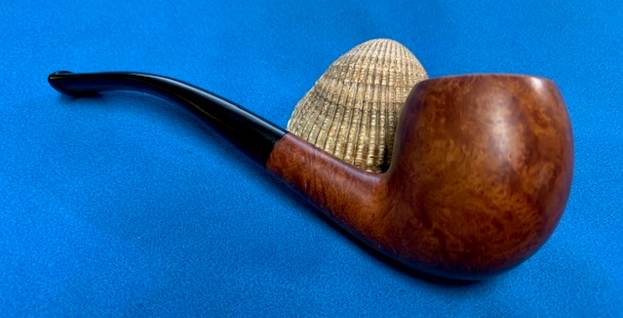
The next pipe on the work table is the last of the group of six pipes I bought from a fellow in Eastern Canada. It included two Canadian made pipes – a Blatter of Montreal and a Trypis. In the mix was an English made Charatan second stamped Mountbatten and two Peterson’s and an Irish Second. The pipes were well used and all had been smoked. The seller sent me a photo of the pipes so that I could see what he was selling. We discussed some options together and arrived at an agreement and the pipes were on their way to me in Vancouver.The last pipe was a smooth Blatter Montreal Bent Apple with a vulcanite stem that came with brushed tan fabric pipe sock.This is what I saw when I took the pipe out of the sock. The bowl and the rim top are smooth with a two black spots on the lower left side of the heel and shank. The pipe is stamped on the left side of the shank and reads Blatter in script [over] MONTREAL. The finish had some grime ground into the smooth finish of the bowl but still looked to be in good condition. The bowl was thickly caked with some light lava on the top at the back and some darkening on the top and the inner edge of the rim. The taper stem had some light tooth chatter on the top and underside near the button. It had promise but it was dirty. I took some photos of the pipe before I started my cleanup work. I took photos of the rim top and bowl to give a clear picture of the thickness of the cake and the overflow of lava on the back rim top and inner edge. I also took photos of the top and underside of the stem to show the chatter and tooth marks. I took photos of the sides and heel of the bowl to give a picture of what the nice looking grain around the pipe looked like. There is some stunning grain under the grime.  I took a photo of the stamping on the left side of the shank. It read as noted above and is clear and readable. It also shows the classic Blatter stem logo “dot” – in this case a red dot.I removed the stem from the shank and took a photo of the pipe to give a sense of the proportion of this Billiard and the slightly bent stem.I turned to Pipephil to confirm what I remembered about Blatter of Montreal. I wanted to read a bit of the history (http://pipephil.eu/logos/en/logo-b5.html). I have included a screen capture of information on the site below. I have also included information from the sidebar below the screen capture.Blatter & Blatter Inc. Pipemakers since 1907. Artisan: Robert Blatter  See also: Rettalb

I learned from the above information on the screen capture that the pipe was a 1 red dot: Machine carved pipe. The second photo from the top of the picture is stamped like the one that I am working on today.

I turned to the section on Pipedia about Blatter (https://pipedia.org/wiki/Blatter_%26_Blatter).   I quote from the site below with the aid of Google Translate:

The Blatter house (first known as “Blatter bros.”) was founded in 1907 in Montreal. Handmade Blatter pipes (“Select”) have been signed by Robert Blatter since 1968 and, more recently, also by Patrick Blatter. A Blatter is characterized by a classic, polished design: little extravagance or sculptural prowess. Pipes first thought for the use that will be made of them: smoking! They are sometimes even more beautiful.

History of the House:

Blatter was founded in Montreal in 1907 by Frédéric-Georges Blatter. Originally from France, Mr. Blatter had learned his craft as a pipe-maker in his country of origin. He had subsequently practiced his art in England, then in South Africa where the excellence of his work had also been highlighted. In 1907, the company had a factory and a store.

Frédéric-Georges is supported by his son, Ernest Blatter, and his half-brother, Henri Blatter. In the years that followed, the company grew rapidly. Soon, the factory employs fifty employees who supply pipes to five stores. But the years of the Great Depression and those of the Second World War were not kind to the company, which had to reduce its activities. At the turn of the 1950s, production and sales activities were brought together in a single establishment.

In the meantime (in the 1930s) Ernest Blatter’s son, Henri-Georges, joined the team and led its destiny until his death in 1967. One of his sons , Pierre, who had been there for a few years, then took up the torch, soon (1968) supported by his brother, Robert, who had since been making Blatter pipes.

In 1997, Patrick, one of Pierre’s sons, joined the duo and learned the rules of the trade from his uncle.

Thus, for 100 years now, five generations of Blatters have succeeded in managing this company, recognized since then by pipe smokers for the excellence of its achievements and the quality of the various services (choice of tobacco, repairs and maintenance, advice) that it offers to its customers.

In 1993, the firm (which clients simply call “the Blatter Brothers”) deserved to be among a select group of a few companies recognized in Quebec for the excellence of their commercial services.

The current production of Blatter pipes is some 300 pieces per year, entirely handmade by Robert Blatter who has acquired, over the years, an excellent reputation among smokers who own one or more of the remarkable objects he makes. For a few years, Patrick has also been making them, under the supervision of Robert.

The firm sources its raw materials from major manufacturers in Saint-Claude (France), with whose managers the Blatter brothers have established, over the years, cordial relations that substantially go beyond the status of simple business relations. Blatter pipes are, to a large extent, sold in the Montreal market (although the firm has a few customers in the United States and Europe), and house regulars often fight over the new pieces.

The demand for these pipes far exceeds the production capacity of the company and on a few occasions in recent years opportunities to relaunch the business on a larger scale have presented themselves. But the Blatter brothers (in good pipe smokers that they are first and foremost!) preferred to give up their big dreams of glory in order to keep intact the quality control they can exert on a small production of pieces. unique.

Pierre and Robert Blatter were inducted into the Confrérie des maîtres-pipiers de Saint-Claude in 1982. (yc)

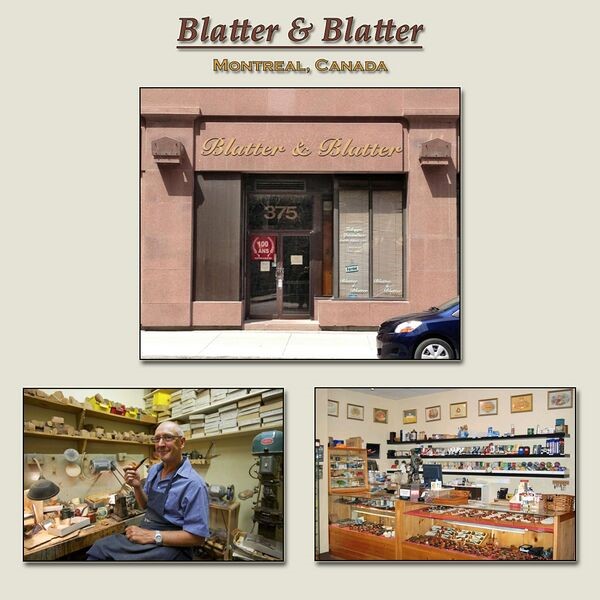
Here is the information to enable you to connect with the shop.

Blatter & Blatter Inc. Fabricants de pipes depuis

375 President Kennedy

Montreal, Quebec, CANADA

Tel / Fax: 514-845-8028

Website: Blatter & Blatter Inc.

E-mail: mailto:info@blatterpipes.com

I have worked on quite a few Blatter pipes (and enjoyed a fair number in my own collection) through the years and it is always a pleasure as they are well engineered and made.

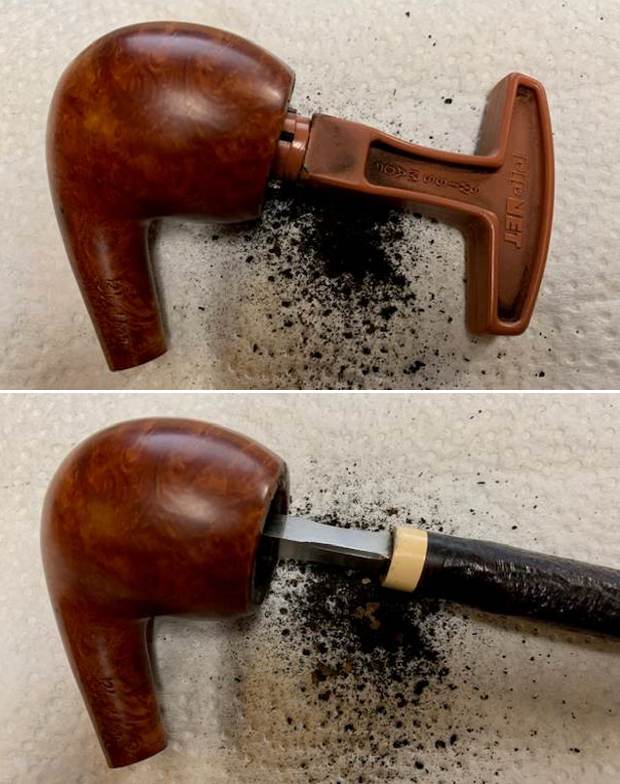
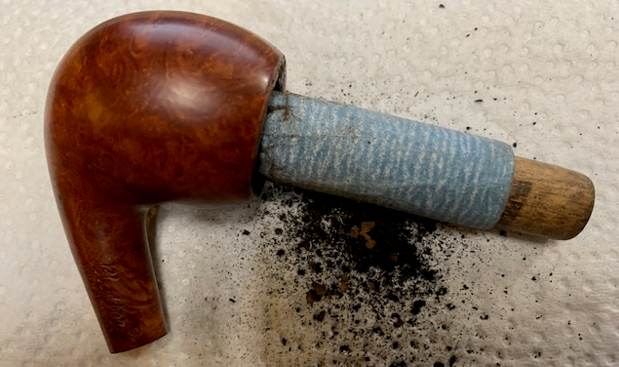
I started my work on the pipe by reaming the bowl of the pipe with a PipNet Pipe Reamer using the first and second cutting heads to remove all of the cake. I cleaned up the remnants of the cake on the walls with a Savinelli Fitsall Pipe Knife. I finished by sanding the bowl walls smooth with 220 grit sandpaper wrapped around a piece of dowel. I cleaned up the inner edge of the rim with a folded piece of 220 grit sandpaper. I was able to remove almost all of the darkening with the sandpaper. I scrubbed the externals of the pipe with undiluted Murphy’s Oil Soap with a tooth brush. I rinsed it under running warm water to remove the soap and grime. The bowl and rim top cleaned up really well with the lava coat removed. The inner edge of the rim was in good condition.  I cleaned out the inside of the mortise, shank and the airway in the stem with isopropyl alcohol, cotton swabs and pipe cleaners. The pipe had a strong aromatic smell just like the other two Petersons I just completed. It smelled like a mix of fruit and vanilla so it needed to be deghosted. I filled the bowl with cotton boles and twisted a plug into the shank end. I used and ear syringe to fill the bowl with alcohol. The alcohol will eventually evaporate from the bowl wicking out the oils and tars in the briar into the cotton. I let it sit over night and in the morning pulled it out and took photos of the cotton at that point.     I polished the smooth briar with micromesh sanding pads – dry sanding with 1500-12000 grit pads and wiped it down with a damp cloth after each sanding pad. By the end of the last set of three the bowl took on a rich shine. I worked some Before & After Restoration Balm into the surface of the briar with my fingertips to clean, enliven and protect the briar. I let the balm sit for 15 minutes and then buffed with a cotton cloth to raise the shine. The photos show the bowl at this point in the restoration process. I set the bowl aside and turned my attention to the stem. I sanded out the tooth marks and chatter with a folded piece of 220 grit sandpaper. The quality of the vulcanite was very high and did not show oxidation. I started the polishing of the stem with 400 grit wet dry sandpaper. I polished the vulcanite stem with micromesh sanding pads – 1500-12000 grit pads. I wiped the stem down with Obsidian Oil after each sanding pad. I polished the stem with Before and After Stem Polish – both Fine and Extra Fine. I rubbed it down with some more Obsidian Oil. It was great to finish this Blatter of Montreal Bent Apple. I put the pipe back together and buffed it with Blue Diamond on the buffing wheel. I gave the rusticated portion of the bowl multiple coats of Conservator’s Wax and the smooth portions and the stem multiple coats of carnauba wax. I buffed the pipe with a clean buffing pad to raise the shine. I hand buffed the pipe with a microfiber cloth to deepen the shine. It is fun to see what the polished bowl looks like with deep sandblast all around it. Added to that the polished black, vulcanite, fishtail stem was beautiful. This Blatter Bent Apple is great looking and the pipe feels great in my hand. It is light and well balanced. Have a look at it with the photos below. The dimensions are Length: 5 ½ inches, Height: 1 ¾ inches, Outside diameter of the bowl: 1 ¼ inches, Chamber diameter: ¾ of an inch. The weight of the pipe is 45 grams/ 1.59 ounces. It is a beautiful pipe and one that will soon be on the rebornpipes store in the Canadian Pipe Makers Section of the store. If you want to add it to your collection let me know. Thanks for walking through the restoration with me as I worked over this pipe. Thanks to each of you who are reading this blog.

New Life for a Made in Canada Trypis 3 Billiard with a slight bend in the stem


Blog by Steve Laug

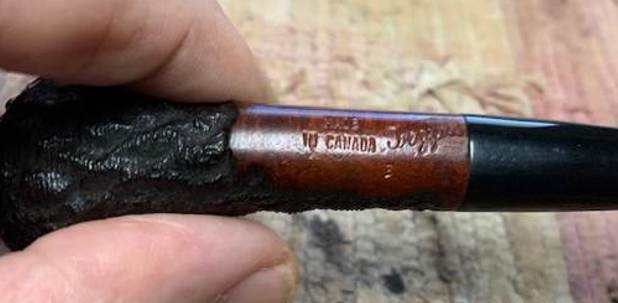
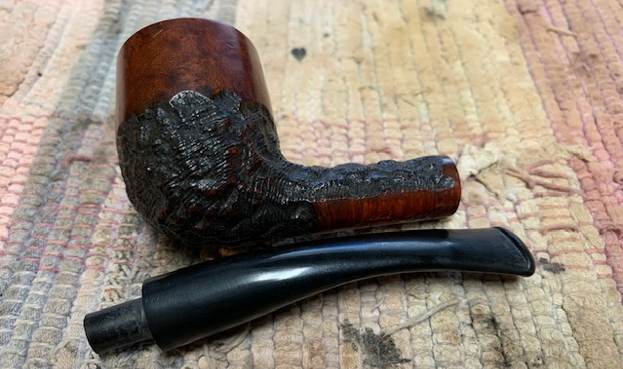
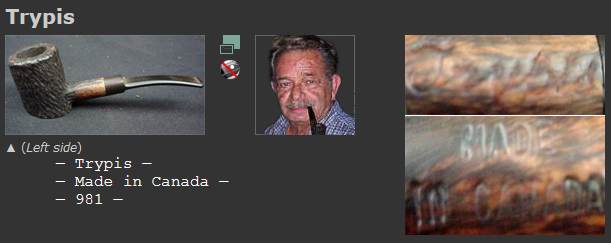
The next pipe on the work table came to me in a group of six pipes I bought from a fellow in Eastern Canada. It included two Canadian made pipes – a Blatter of Montreal and a Trypis. In the mix was an English made Charatan second stamped Mountbatten and two Peterson’s and an Irish Second. The pipes were well used and all had been smoked. The seller sent me a photo of the pipes so that I could see what he was selling. We discussed some options together and arrived at an agreement and the pipes were on their way to me in Vancouver.The next pipe that grabbed my attention was a semi-rusticated billiard with a slightly bent stem. This is what I saw. The bottom half of the bowl and the shank are rusticated with a heavy rustication. The top half of the bowl and the rim top are smooth. The rustication is very reminiscent of the rustication on Brigham. The pipe is stamped on the underside of the shank and reads Made [over] in Canada. That is followed by Trypis in script [over] 3. The finish had some grime ground into the valleys of the rustication and on the smooth part of the bowl but still looked to be in good condition. The bowl was thickly caked with some light lava on the top at the back and some darkening on the top and the inner edge of the rim. The taper stem had some light tooth chatter on the top and underside near the button. It had promise but it was dirty. I took some photos of the pipe before I started my cleanup work. I took photos of the rim top and bowl to give a clear picture of the thickness of the cake and the overflow of lava on the back rim top and inner edge. I also took photos of the top and underside of the stem to show the chatter and tooth marks. I took photos of the sides and heel of the bowl to give a picture of what the smooth and rusticated briar around the pipe looked like. There is some stunning grain under the grime.  I took photos of the stamping on the underside of the shank. It reads as noted above and is clear and readable. I removed the stem from the shank and took a photo of the pipe to give a sense of the proportion of this Billiard and the slightly bent stem.I turned to Pipephil to confirm what I remembered about Trypis. I wanted to read a bit of the history (http://pipephil.eu/logos/en/logo-t8.html). I have included a screen capture of information on the site below. I have also included information from the sidebar below the screen capture.Artisan: Phillip Trypis first worked for Brigham as production manager. He continued to supply the Canadian brand when he was established on his own with his own Trypis label. Phillip Trypis had a pipe shop in Toronto.

I turned to the section on Pipedia about Trypis Pipes (https://pipedia.org/wiki/Trypis_Pipes). I quote below.

Quoting Stefan Seles: “Phillip Trypis has been a pipe maker in Canada for well over 40 years. Originally from Greece, his experience ranges from cutting burls in a briar mill to making literally thousands of pipes out of his home in the hamlet of Oakwood, Ontario. Brigham pipes benefited from Phillip’s skills where he worked for a number of years. There he directed the pipe production of the company when it was producing over 50,000 a year. Even though he left to start his own pipe shop, he still imported briar and turned tens of thousands of bowls for Brigham not to mention produce a large number of his own branded pipes.

Just over a year ago, Phillip had a serious fall and although he is back making pipes, he is unable to travel around to sell them as he once did. He has asked me to help him in that effort.

The pipes listed below are some of his best work made from decades old MF and R ebuchauns as well as some recently purchased Italian plateau. The prices are excellent, especially given the age and quality of the briar used. In fact, I would venture to say that these pipes have no peers, especially below the $100.00 price. You must be the judge.

Many of the styles are traditional in form although Phillip has a number of freehand styles that are both familiar and off the beaten path. The vast majority of the higher priced pipes are very large pieces to be sure.”

I have worked on quite a few of Phillip’s pipes through the years and it is always a pleasure as they are well engineered and made.

I started my work on the pipe by reaming the bowl of the pipe with a PipNet Pipe Reamer using the first and second cutting heads to remove all of the cake. I cleaned up the remnants of the cake on the walls with a Savinelli Fitsall Pipe Knife. I finished by sanding the bowl walls smooth with 220 grit sandpaper wrapped around a piece of dowel. I cleaned up the inner edge of the rim with a folded piece of 220 grit sandpaper. I was able to remove almost all of the darkening with the sandpaper. I scrubbed the externals of the pipe with undiluted Murphy’s Oil Soap with a tooth brush. I rinsed it under running warm water to remove the soap and grime. The bowl and rim top cleaned up really well with the lava coat removed. The inner edge of the rim was in good condition.  I cleaned out the inside of the mortise, shank and the airway in the stem with isopropyl alcohol, cotton swabs and pipe cleaners. The pipe had a strong latakia smell very different from the three Petersons and the Mountbatten I completed. It had a heavy smoky smell that needed to be deghosted. I filled the bowl with cotton boles and twisted a plug into the shank end. I used and ear syringe to fill the bowl with alcohol. The alcohol will eventually evaporate from the bowl wicking out the oils and tars in the briar into the cotton. I let it sit over night and in the morning pulled it out and took photos of the cotton at that point. I polished the smooth briar with micromesh sanding pads – dry sanding with 1500-12000 grit pads and wiped it down with a damp cloth after each sanding pad. By the end of the last set of three the bowl took on a rich shine. I worked some Before & After Restoration Balm into the surface of the briar with my fingertips to clean, enliven and protect the briar. I let the balm sit for 15 minutes and then buffed with a cotton cloth to raise the shine. The photos show the bowl at this point in the restoration process. I set the bowl aside and turned my attention to the stem. I sanded out the tooth marks and chatter with a folded piece of 220 grit sandpaper. The quality of the vulcanite was very high and did not show oxidation. I started the polishing of the stem with 400 grit wet dry sandpaper. I polished the vulcanite stem with micromesh sanding pads – 1500-12000 grit pads. I wiped the stem down with Obsidian Oil after each sanding pad. I polished the stem with Before and After Stem Polish – both Fine and Extra Fine. I rubbed it down with some more Obsidian Oil. It was great to finish this Semi Rusticated Trypis Billiard 3. I put the pipe back together and buffed it with Blue Diamond on the buffing wheel. I gave the rusticated portion of the bowl multiple coats of Conservator’s Wax and the smooth portions and the stem multiple coats of carnauba wax. I buffed the pipe with a clean buffing pad to raise the shine. I hand buffed the pipe with a microfiber cloth to deepen the shine. It is fun to see what the polished bowl looks like with deep sandblast all around it. Added to that the polished black, vulcanite, fishtail stem was beautiful. This Trypis Billiard is great looking and the pipe feels great in my hand. It is light and well balanced. Have a look at it with the photos below. The dimensions are Length: 5 ½ inches, Height: 1 ½ inches, Outside diameter of the bowl: 1 ¼ inches, Chamber diameter: ¾ of an inch. The weight of the pipe is 31 grams/ 1.06 ounces. It is a beautiful pipe and one that will soon be on the rebornpipes store in the Canadian Pipe Makers Section of the store. If you want to add it to your collection let me know. Thanks for walking through the restoration with me as I worked over this pipe. Thanks to each of you who are reading this blog.

New Life for a Charatan Made Mountbatten 852 Dublin Made in England


Blog by Steve Laug

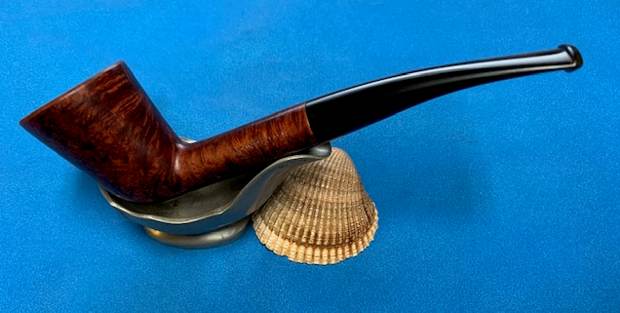
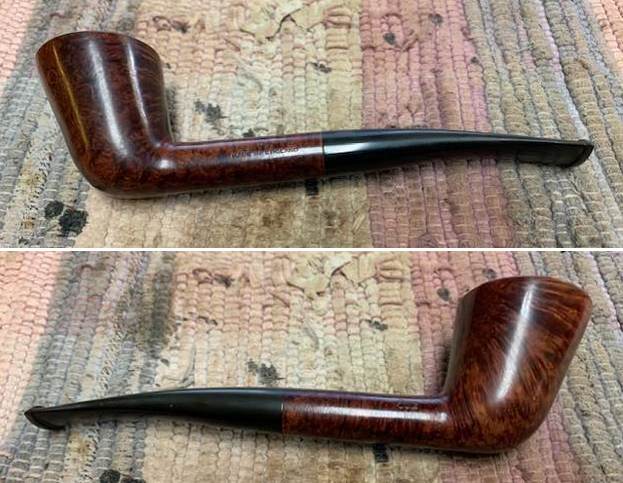
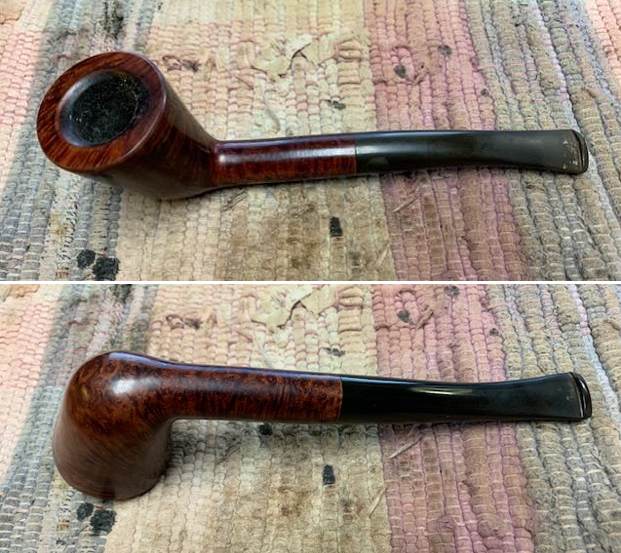
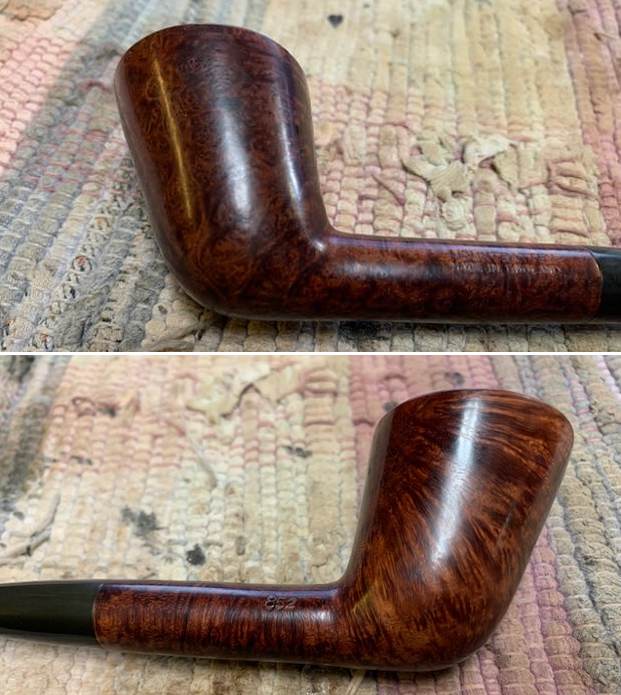
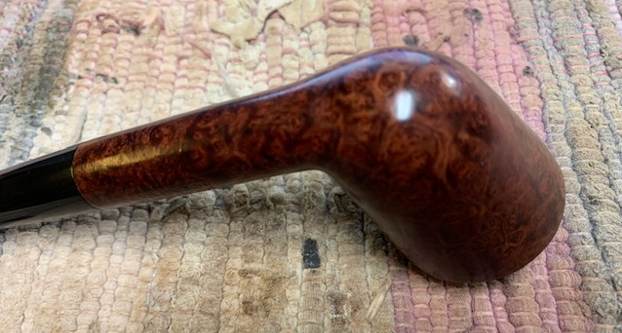
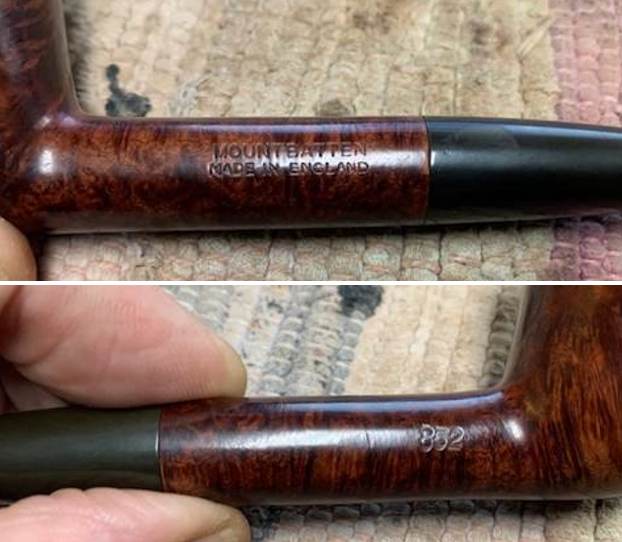
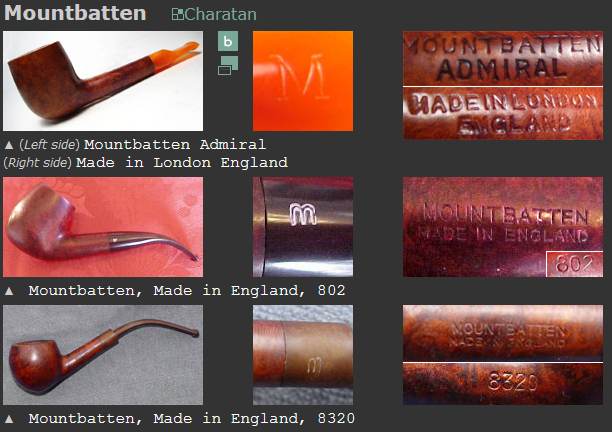
The next pipe on the work table came to me in a group of six pipes I bought from a fellow in Eastern Canada. It included two Canadian made pipes – a Blatter of Montreal and a Trypis. In the mix was an English made Charatan second stamped Mountbatten and two Peterson’s and an Irish Second. The pipes were well used and all had been smoked. The seller sent me a photo of the pipes so that I could see what he was selling. We discussed some options together and arrived at an agreement and the pipes were on their way to me in Vancouver.There was something about the forward canted bowl on this slightly-bent-Dublin, the bottom pipe in the left column that grabbed my attention and made me want to work on it next. This is what I saw. The pipe is stamped on the left side of the shank and reads Mountbatten [over] of Made In England. On the right side of the shank is the shape number 852. The finish had some grime ground into the finish on the bowl but still looked to be in good condition. The bowl was thickly caked with some light lava on the top at the back and some darkening on the top and the beveled inner edge of the rim. The taper stem had some light tooth chatter on the top and underside near the button. It had promise but it was dirty. I took some photos of the pipe before I started my cleanup work. I took photos of the rim top and bowl to give a clear picture of the thickness of the cake and the overflow of lava on the back rim top and beveled inner edge. I also took photos of the top and underside of the stem to show the oxidation and the chatter and tooth marks. I took photos of the sides and heel of the bowl to give a picture of what the briar around the pipe looked like. There is some stunning grain under the grime.  I took photos of the stamping on the sides of the shank and on the band. It reads as noted above and is clear and readable. I removed the stem from the shank and took a photo of the pipe to give a sense of the proportion of this Canted Dublin 852.I turned to Pipephil to confirm the connection I remembered to Charatan. I wanted to read a bit of the history (http://pipephil.eu/logos/en/logo-m7.html#mountbatten). Sure enough the connection is there. Pipephil said that Mountbatten was a Charatan second. I have included a screen capture of information on the site below.I did some further digging and found a link on Pipes Magazine’s forum where the brand was discussed: http://pipesmagazine.com/forums/topic/mountbatten-pipe. There was a discussion on that thread regarding the brand. Quite a few of the respondents originally said that the brand was a Charatan second. There was one dissenting voice that led to more responses similar in tone. The fellow said that the pipe was not a second. There was a quote from another site.

I googled the information and found that the quote came from a thread on pipes.org. Here is the link: http://pipes.org/forums/messages/23/45025.html?1169997817 I quote the original dissenter on the Pipes Magazine site in full because of the information that it gives. The original poster was Bill Ramsey. Here is Bill’s reply:

“Friends, after 40 years of nosing around pipes, what I have gleaned is this: Charatan sold its seconds under private labels and later acquired the English rights for Ben Wade for just this purpose. Mountbatten, on the other hand was not a “second”(in that there was some physical deformity in the pipe) but rather a first line production from Charatan’s apprentice program. Each Charatan carver might have four or six apprentices at any one time of various skill levels. As they improved and started cutting pipes themselves, these pipes had to move… thus the Mountbatten. These were made on Charatan tooling with Charatan materials and teaching. Bear in mind that there was a high attrition rate and , perhaps, one apprentice in nine or ten made it to cutting their own bowls much less a Charatan carver. This is why you see more Charatans than Mountbattens on the market. You’re never going to put your kid through college by selling one but you’ve got a day to day workhorse of the first order. Good luck and happy puffing.”

That was just the kind of information I had been looking for. I close this section on the history of the brand with a quote that pretty well sums up the details that I had learned. It is taken from the same conversation that is traced in the last link above. “Yup now I know Mountbatten pipes were the fruit of an apprentice’s labor made under the supervision of a Master Pipe Maker at Charatan, most likely in the pre-Lane era; not a second, but a “sub-brand” (even though many experts still classify them as seconds anyway).”

Now I knew I was dealing with a pipe made by an apprentice pipe carver at Charatan. It really is a beautiful pipe. Now it was time to work on the pipe itself.

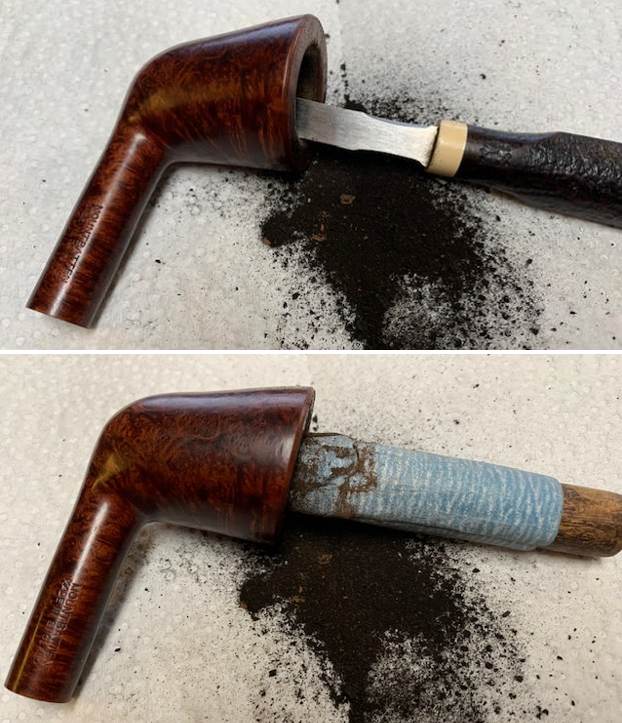
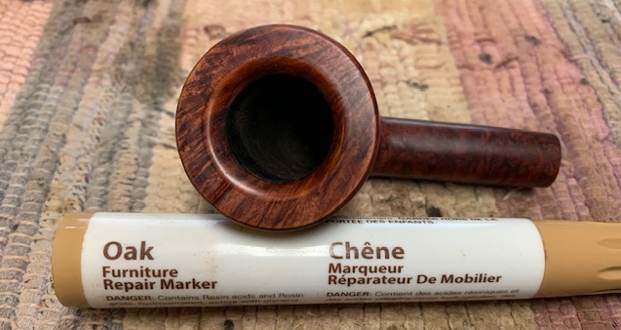
I started my work on the pipe by reaming the bowl the pipe with a PipNet Pipe Reamer using the first and second cutting heads to remove the cake. I cleaned up the remnants of the cake on the walls with a Savinelli Fitsall Pipe Knife. I finished by sanding the bowl smooth with 220 grit sandpaper wrapped around a piece of dowel. I cleaned up the inner edge of the rim with a folded piece of 220 grit sandpaper. I was able to remove almost all of the darkening with the sandpaper. I scrubbed the externals of the pipe with undiluted Murphy’s Oil Soap with a tooth brush. I rinsed it under running warm water to remove the soap and grime. The bowl and rim top cleaned up really well with the lava coat removed. The inner edge of the rim was in good condition.  I cleaned out the inside of the mortise, shank and the airway in the stem with isopropyl alcohol, cotton swabs and pipe cleaners. The pipe had a strong aromatic smell just like the three Petersons I just completed. It smelled like a mix of fruit and vanilla so it needed to be deghosted. I filled the bowl with cotton boles and twisted a plug into the shank end. I used and ear syringe to fill the bowl with alcohol. The alcohol will eventually evaporate from the bowl wicking out the oils and tars in the briar into the cotton. I let it sit over night and in the morning pulled it out and took photos of the cotton at that point. I ran some pipe cleaners through the shank and dried out the bowl edges. I stained the bevel with and oak stain pen to match the rest of the bowl and shank. It looked very good at this point in the process.I polished the smooth briar with micromesh sanding pads – dry sanding with 1500-12000 grit pads and wiped it down with a damp cloth after each sanding pad. By the end of the last set of three the bowl took on a rich shine. I worked some Before & After Restoration Balm into the surface of the briar with my fingertips to clean, enliven and protect the briar. I let the balm sit for 15 minutes and then buffed with a cotton cloth to raise the shine. The photos show the bowl at this point in the restoration process. I set the bowl aside and turned my attention to the stem. I sanded out the tooth marks and chatter with a folded piece of 220 grit sandpaper. I started the polishing of the stem with 400 grit wet dry sandpaper. I scrubbed down the surface of the stem with Soft Scrub and cotton pads to remove the oxidation on the top side of the stem. Once finished it looked much better.I polished the vulcanite stem with micromesh sanding pads – 1500-12000 grit pads. I wiped the stem down with Obsidian Oil after each sanding pad. I polished the stem with Before and After Stem Polish – both Fine and Extra Fine. I rubbed it down with some more Obsidian Oil. It was great to finish this Charatan Made Mountbatten 852 Canted Dublin. I put the pipe back together and buffed it with Blue Diamond on the buffing wheel. I gave the bowl and the stem multiple coats of carnauba wax. I buffed the pipe with a clean buffing pad to raise the shine. I hand buffed the pipe with a microfiber cloth to deepen the shine. It is fun to see what the polished bowl looks like with deep sandblast all around it. Added to that the polished black, vulcanite, fishtail stem was beautiful. This Mountbatten Made in England 852 is great looking and the pipe feels great in my hand. It is light and well balanced. Have a look at it with the photos below. The dimensions are Length: 6 ½ inches, Height: 1 ¾ inches, Outside diameter of the bowl: 1 ½ inches, Chamber diameter: ¾ of an inch. The weight of the pipe is 36 grams/ 1.27 ounces. It is a beautiful pipe and one that will soon be on the rebornpipes store in the British Pipe Makers Section of the store. If you want to add it to your collection let me know. Thanks for walking through the restoration with me as I worked over this pipe. Thanks to each of you who are reading this blog.

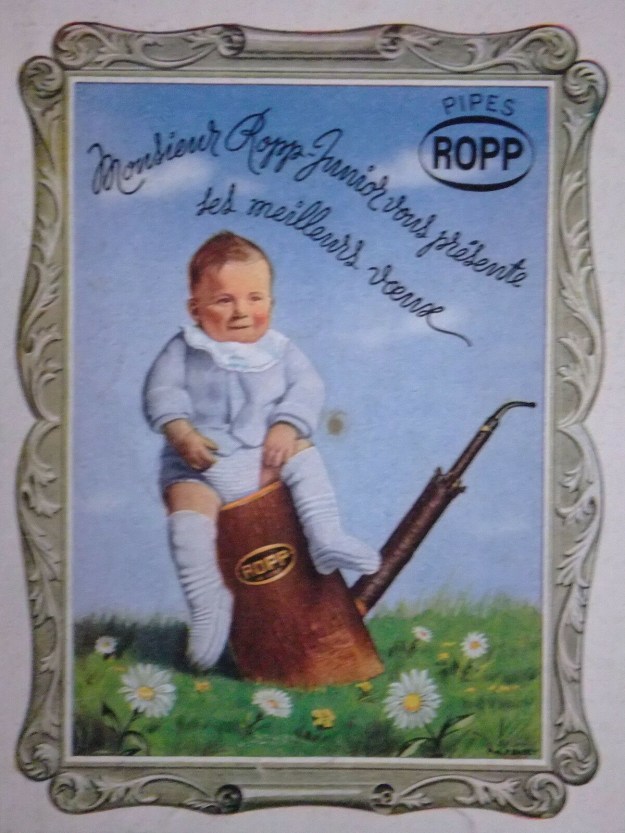
Bringing Back a Ropp Cherrywood


Bog by Kenneth Lieblich

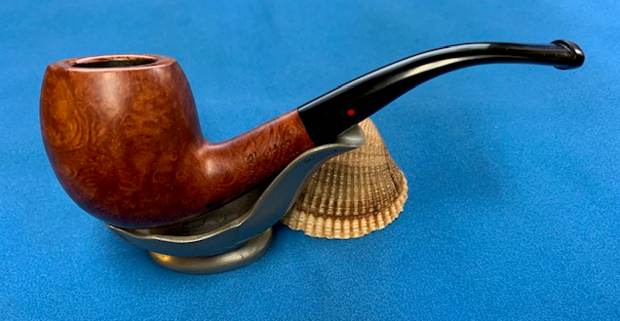
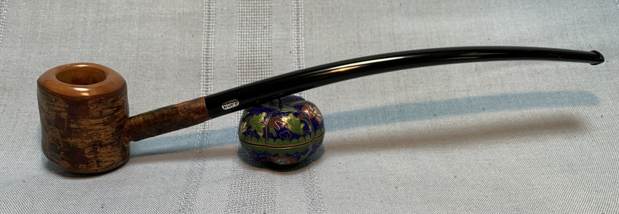
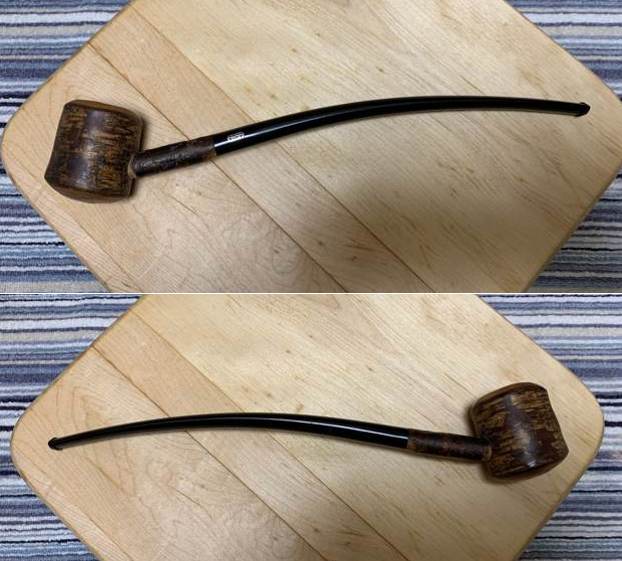
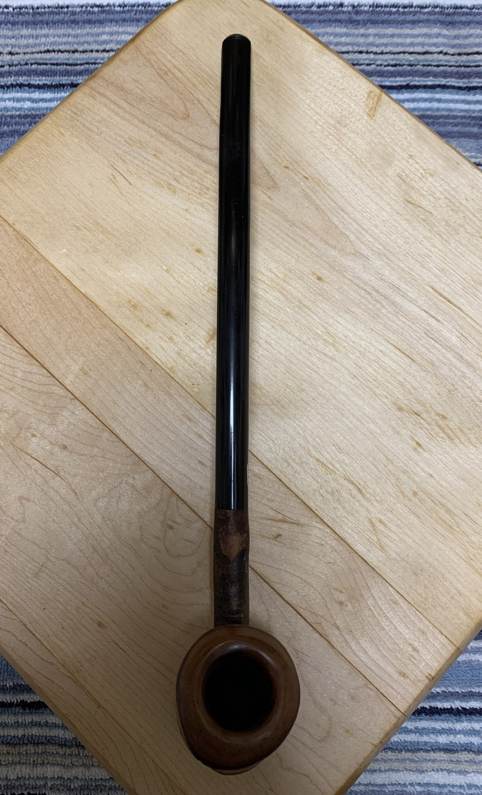
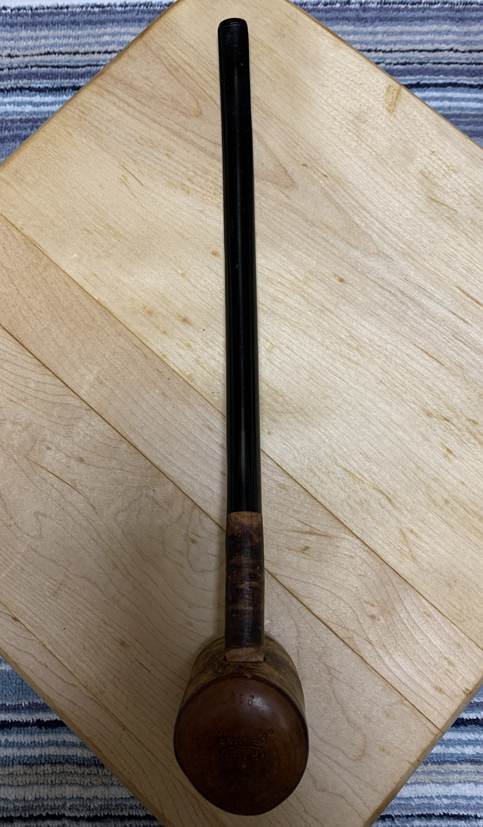
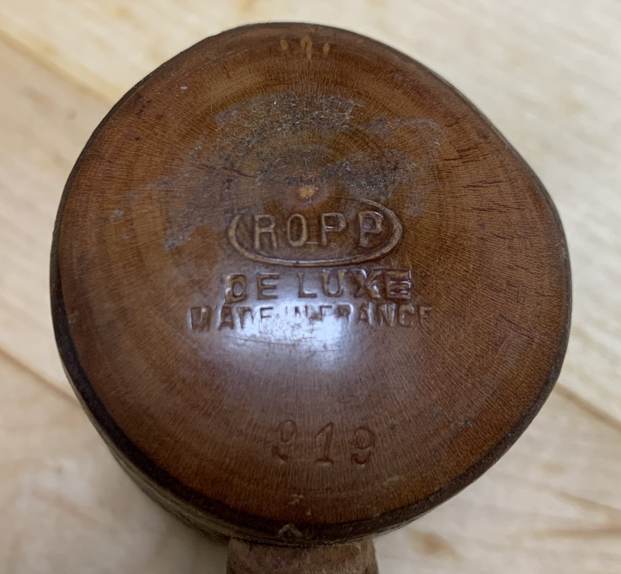
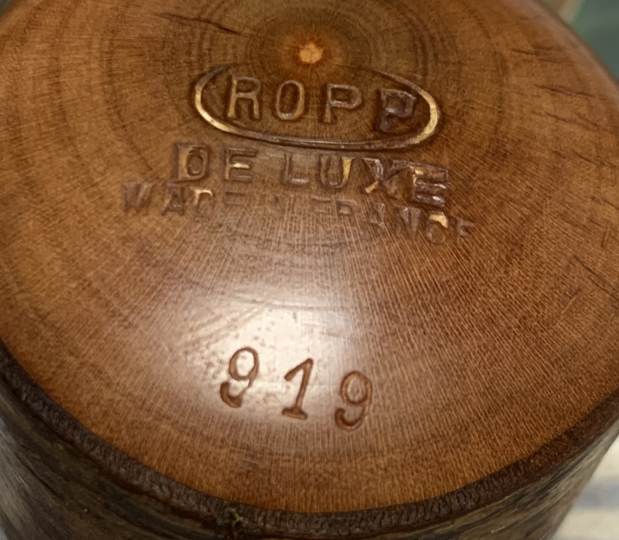
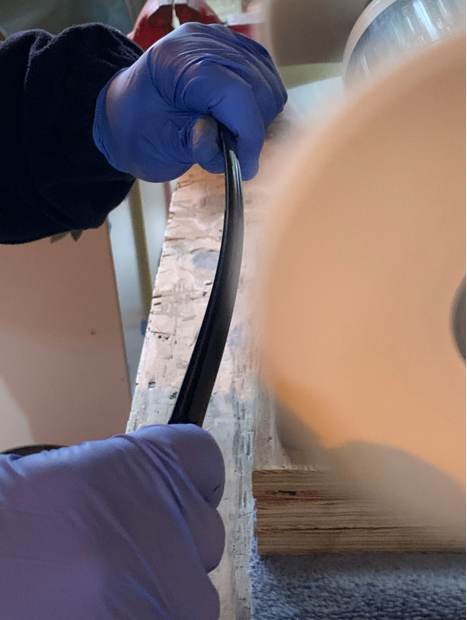
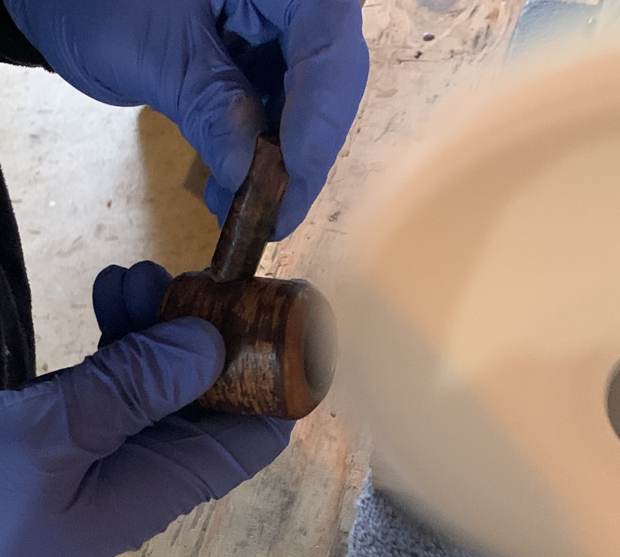
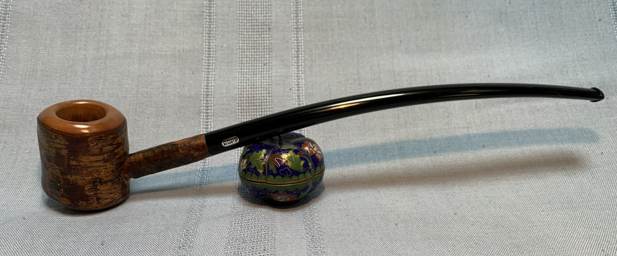
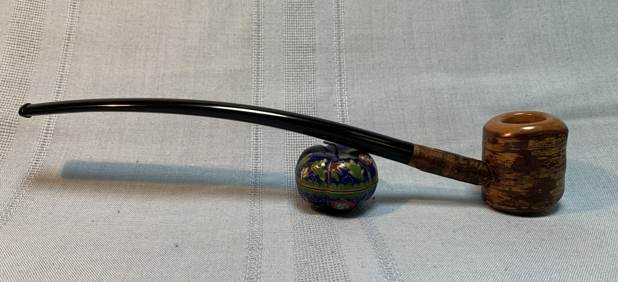
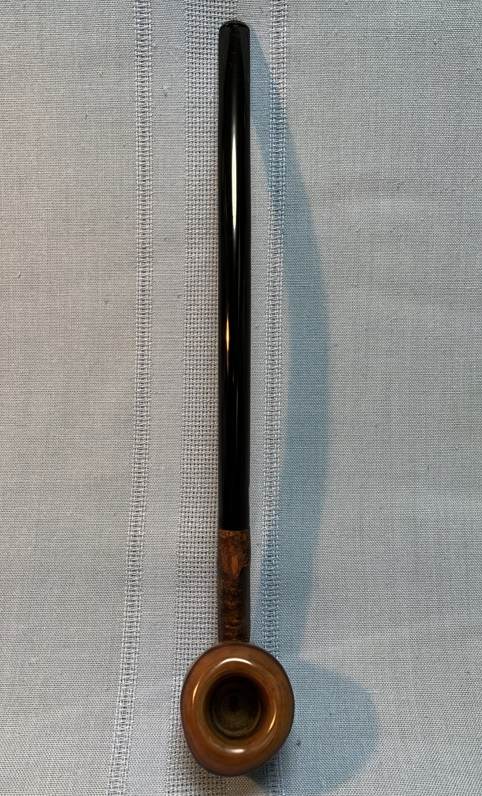
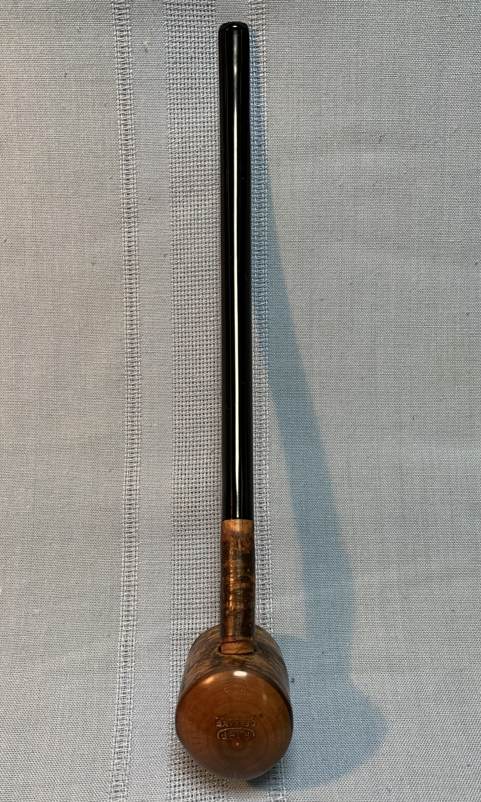
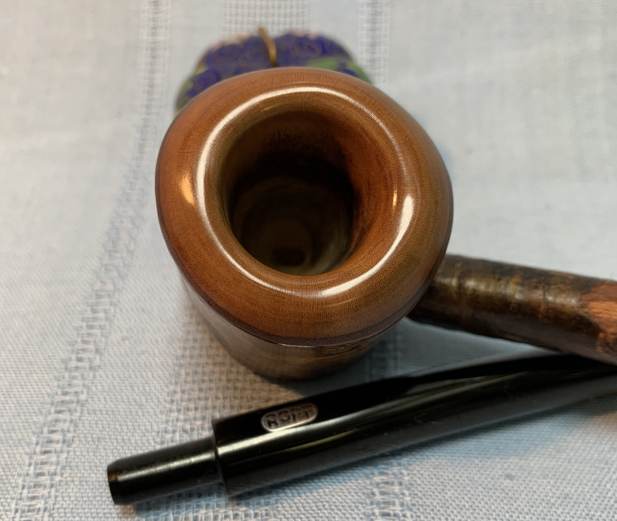
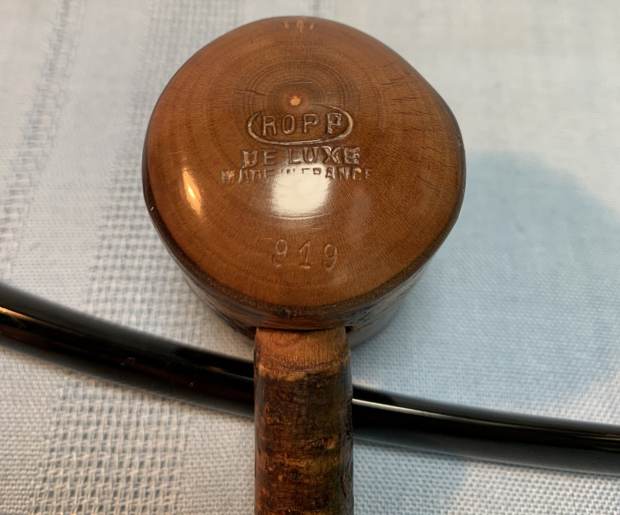
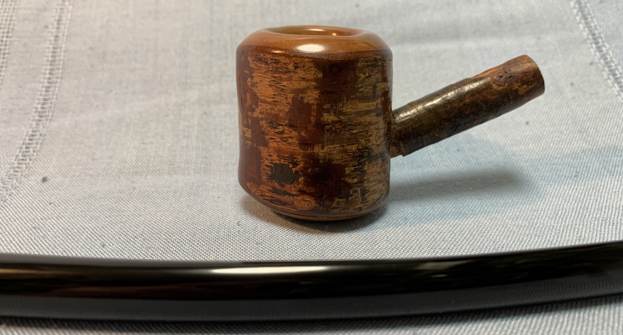
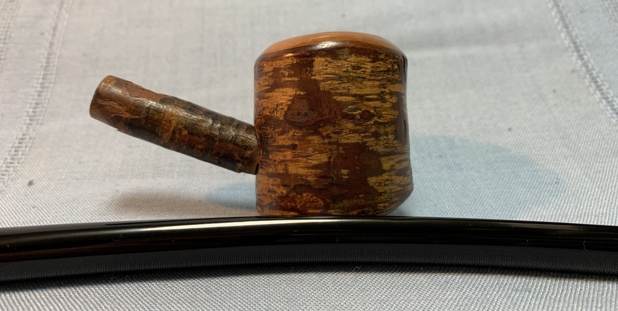
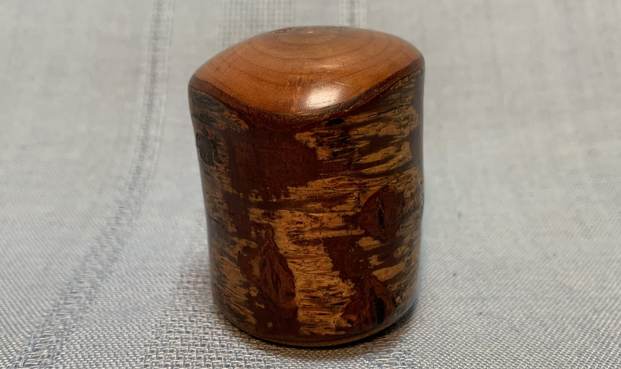
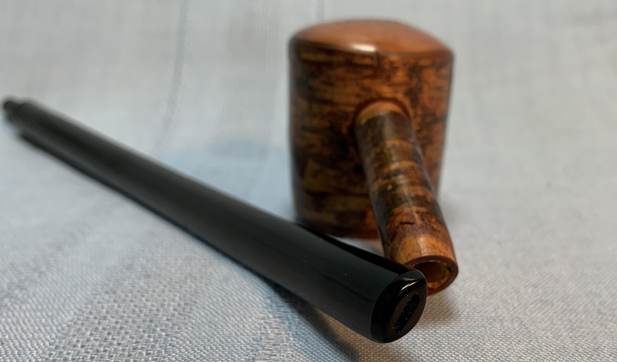
Next on the chopping block is a Ropp Cherrywood Churchwarden, commissioned by a friend. As you may know, Ropp is possibly best known for their cherrywood pipes, this is one of the more attractive cherrywoods I’ve seen in a while. The key here is that they’ve kept the design simple: a solid, handsome stummel and an elegant, lithe stem. They nailed this one. I’m glad that my friend picked this one out; he made a good choice! Of course, this pipe was made by the venerable French pipe company, Ropp. The markings on this pipe were on the underside of the bowl and read Ropp (encircled in an oval) [over] De Luxe [over] Made in France [over] 919. This number is the shape number, and it was somewhat. From Pipedia, here is a very brief history of the Ropp company:

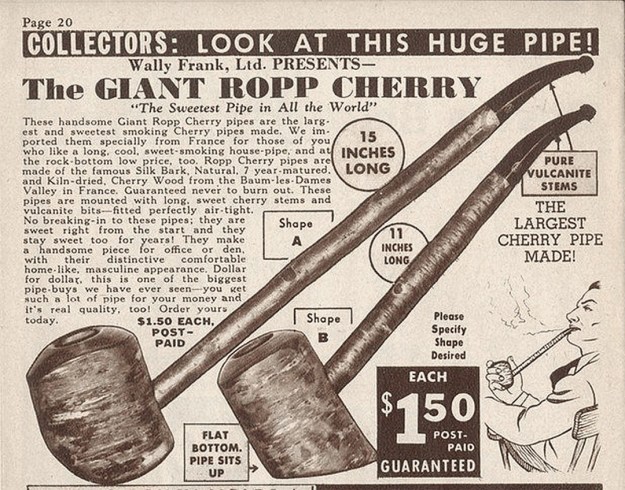
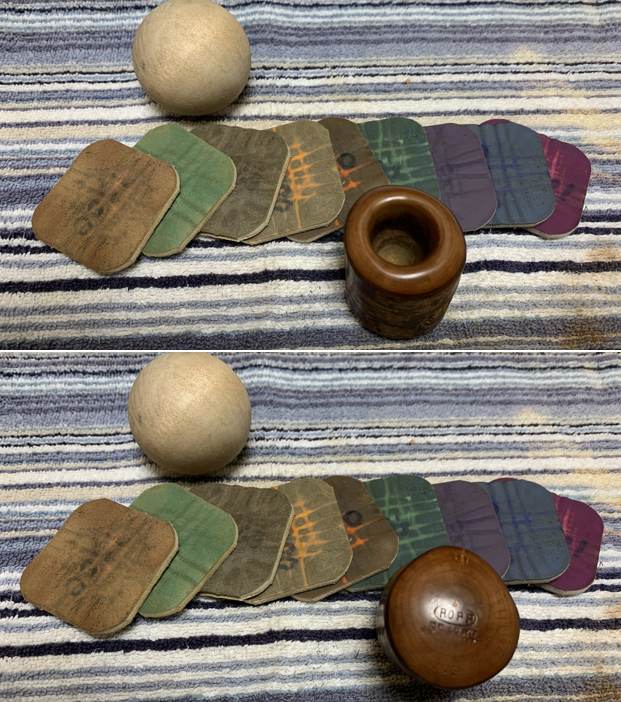
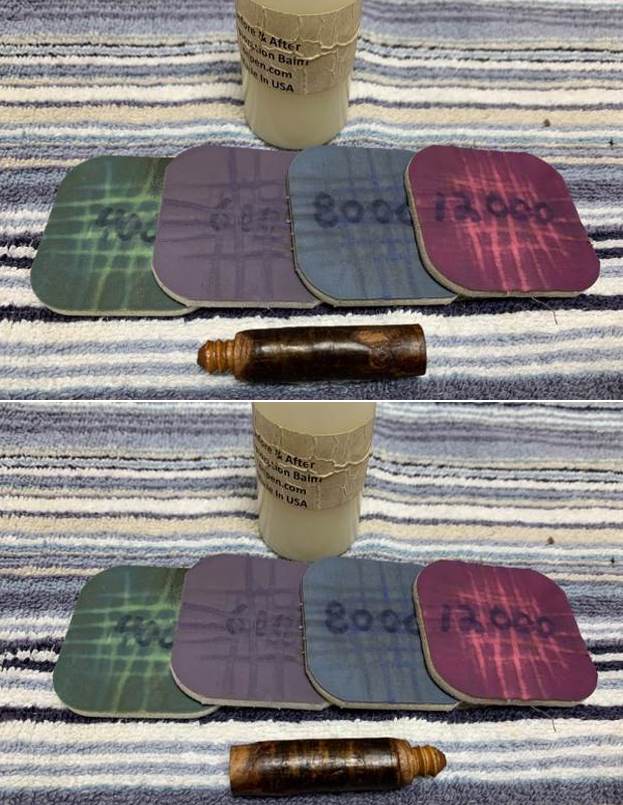
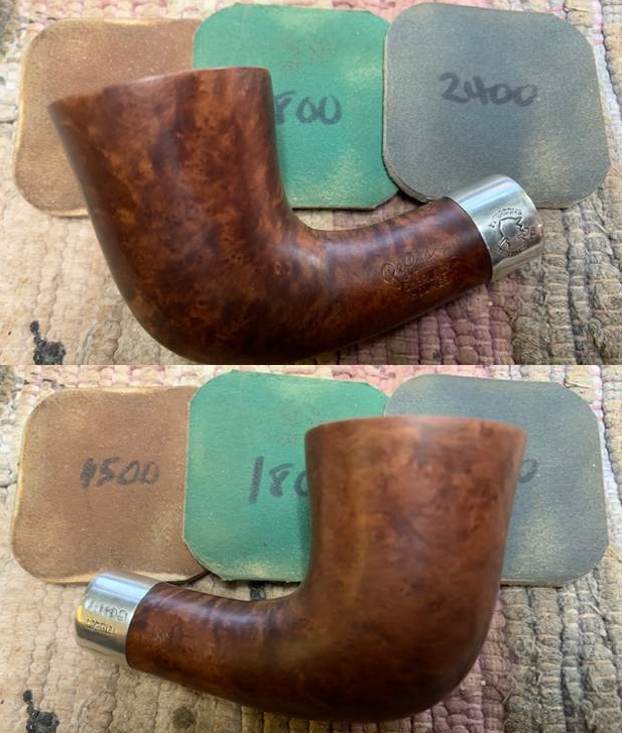
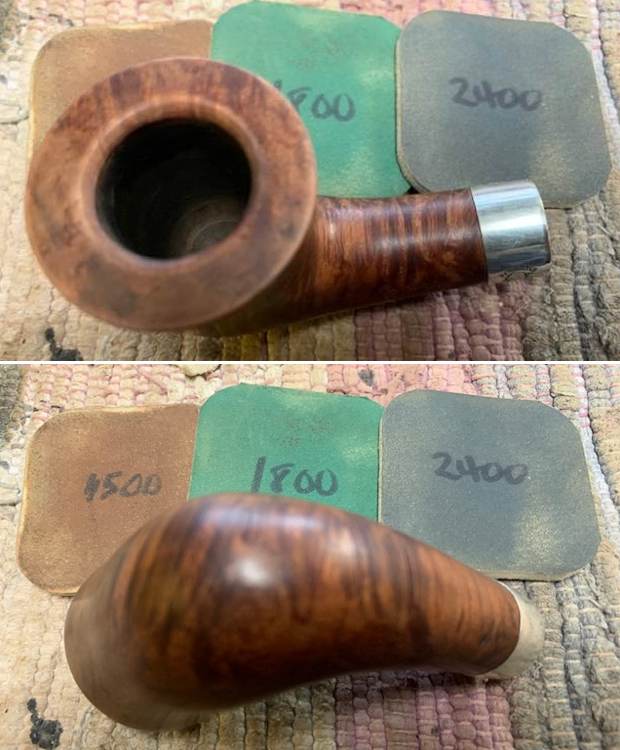
Eugène-Léon Ropp (1830–1907) acquired a patent for the cherrywood pipe in 1869. In 1870, he established a workshop to manufacture such pipes in Bussang, in the Vosges mountains. Around 1893, his business moved into the former mill of Sicard (part of the community of Baume-les-Dames in Upper Burgundy. The pipes were a big success in export as well. Shortly before 1914, Ropp designated A. Frankau & Co. (BBB) to be the exclusive distributor in the UK and its colonies. Probably in 1917, a workshop in Saint-Claude in the rue du Plan du Moulin was acquired to start the fabrication of briar pipes. In 1923, another small building in Saint-Claude, serving as a workshop for polishing, was added. Cherrywood pipes were the mainstay of Ropp until the company finally closed down in September 1991. The company was taken over by Cuty-Fort Entreprises in 1994. The pipe was in very nice condition. The stummel had been lightly smoked add the bowl and shank were a bit dirty, but nothing extraordinary. There was a sticky substance on the underside, possibly the remnants of a price sticker. Similarly, the stem was relatively clean – not much oxidation to speak of, and only a few tooth marks on the bit. Time to get cracking. The stem was first on my list. I wiped the outside down with Murphy’s Oil Soap on some cotton pads. I cleaned out the insides with lemon-infused isopropyl alcohol and some long pipe cleaners.I also took a BIC lighter and ‘painted’ the stem with its flame to lift the few bite marks and dents. This was quite successful in raising the damage. This technique doesn’t always work, but it did here.Fortunately, the stem was in good enough shape that it didn’t need a soak in the Pipe Stem Oxidation Remover. I simply scrubbed and scrubbed with SoftScrub on some cotton pads.  I built up the remaining marks on the stem with black cyanoacrylate adhesive and then cured it with the aid of some CA glue accelerator. I then carefully sanded the adhesive down with 220-, 400-, and 600-grit sandpapers to meld seamlessly into the stem. I then used all nine Micromesh pads (1,500 through 12,000 grit) to bring out the lovely black lustre on the stem. I also used Obsidian Pipe Stem Oil in between each pad scrubbing (from 3,600 onward).Now for the stummel. It was in nice condition, with very few nicks or scratches, which was a relief!  However, I decided to ream out the bowl. I used the KleenReem to remove the built-up cake and followed that with 220-grit sandpaper taped to a dowel to eliminate as much as I could. I took the chamber down to bare briar, as I wanted to ensure there were no hidden flaws in the wall. Fortunately, there were none. I then proceeded to clean out the insides of the shank with Q-tips, pipe cleaners, and lemon-infused isopropyl alcohol. There was a bit of filth inside this stummel and it took a fair amount of cotton to get it clean. I followed that up by cleaning the insides with some dish soap and tube brushes. I used cotton rounds and some Murphy’s Oil Soap to scrub the outside of the stummel. Next, I decided to de-ghost the pipe in order to remove any lingering smells of the past. I thrust cotton balls into the bowl and the shank and saturated them with 99% isopropyl alcohol. I let the stummel sit overnight. This caused any remaining oils, tars and smells to leach out into the cotton. The bowl was nice and clean after this. Following that, I took a solid wooden sphere, wrapped a piece of 220-grit sandpaper around it, and sanded the inner side of the chamber. The circular shape and motion of the sphere gradually returned the edge to a perfect circle. This takes time and patience, but it is quite effective. As you can see, the outside of the bowl still has the original cherrywood bark and I definitely didn’t want to risk damaging it. Although I used all nine Micromesh pads (1,500 through 12,000 grit) on the top and bottom, I used only 4,000 through 12,000 on the sides. I performed a similar operation on the shank. Finally, I applied some Before & After Restoration Balm and buffed it with a microfiber cloth. Again, to preserve the bark, I didn’t use the bench buffer on the sides of the bowl and shank, though I did apply Clapham’s Beeswax Salad Bowl Finish. However, I did buff the top and bottom with White Diamond and carnauba wax on the bench buffer. All shiny and lovely, I know that the new owner will enjoy smoking it for many years to come. I hope you enjoyed reading the story of this pipe as much I as I did restoring it. The approximate dimensions of the pipe are as follows: length 11 in. (280 mm); height 1⅞ in. (48 mm); bowl diameter 1½ in. (38 mm); chamber diameter ¾ in. (19 mm). The weight of the pipe is 2 oz. (58 g). If you are interested in more of my work, please follow me here on Steve’s website or email me directly at kenneth@knightsofthepipe.com. Thank you very much for reading and, as always, I welcome and encourage your comments.

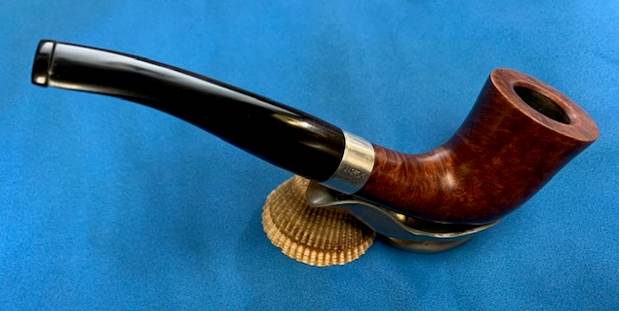
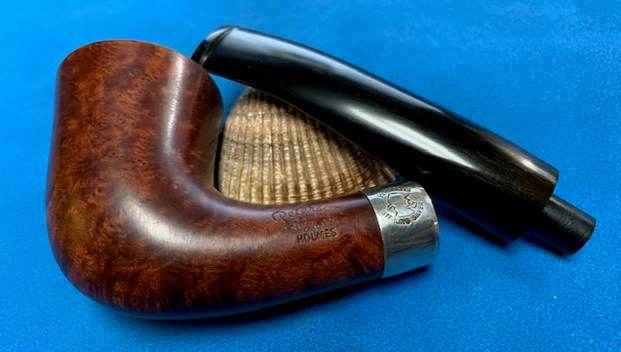
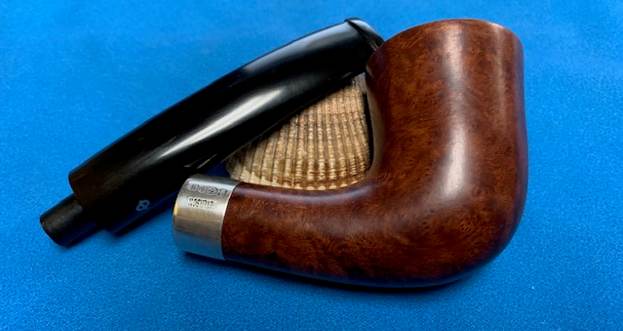
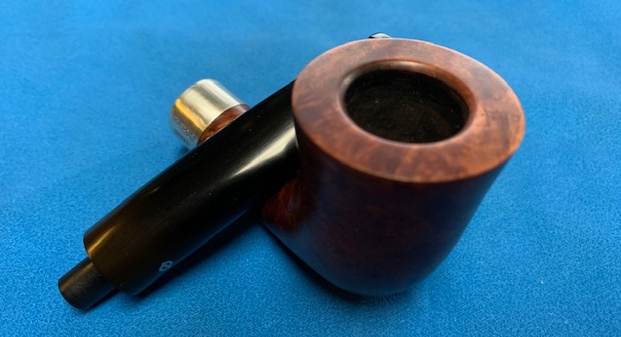
New Life for a Peterson’s of Dublin Silver Mounted 1994 Sherlock Holmes Mycroft


Blog by Steve Laug

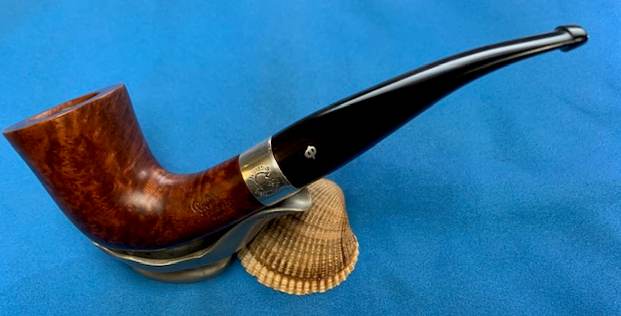
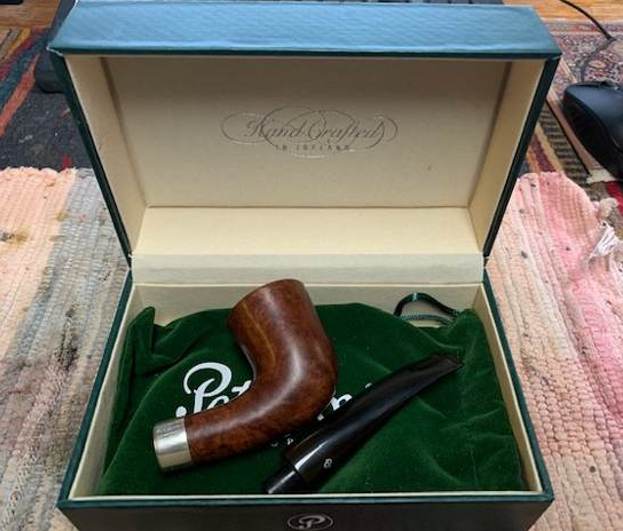
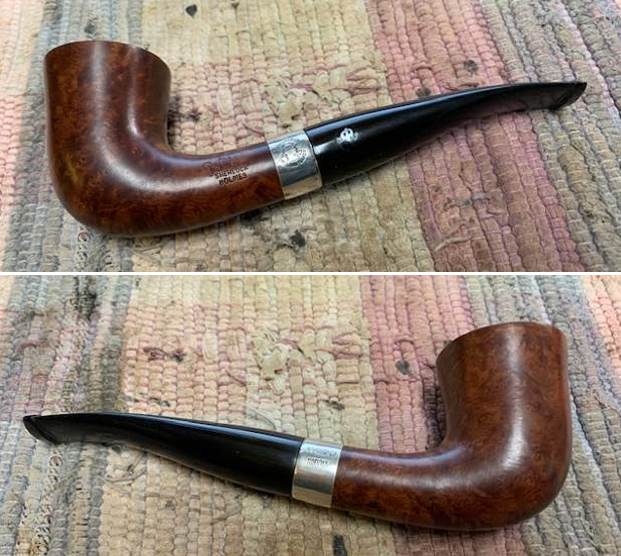
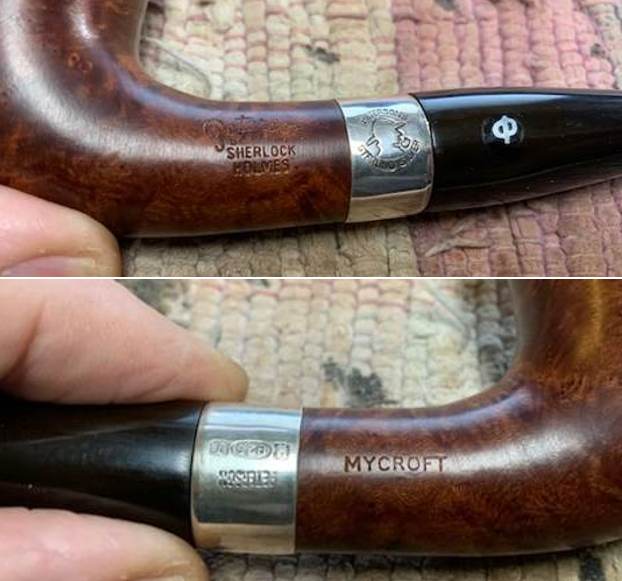
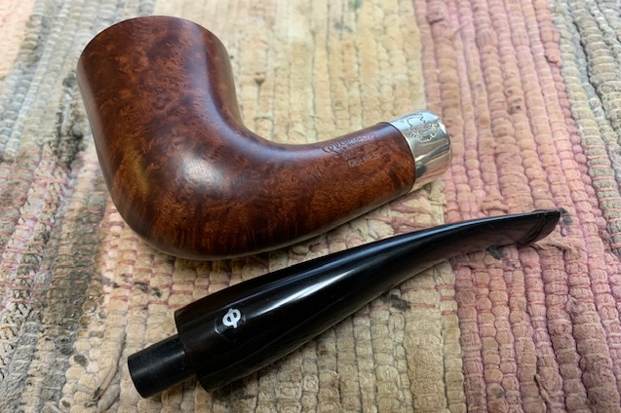
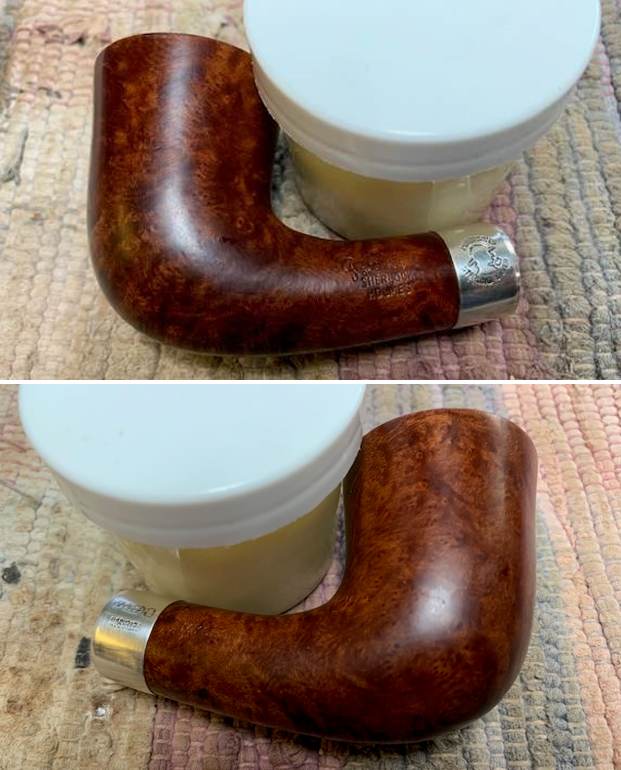
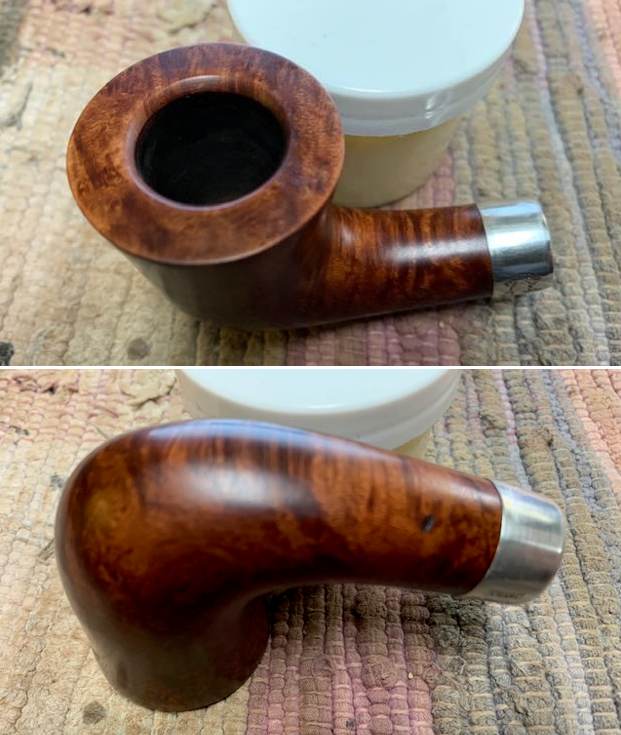
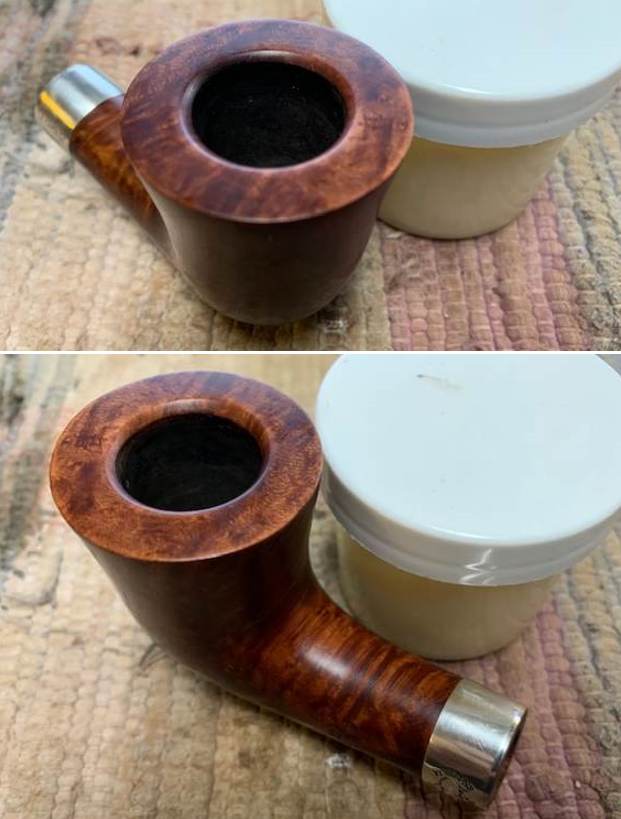
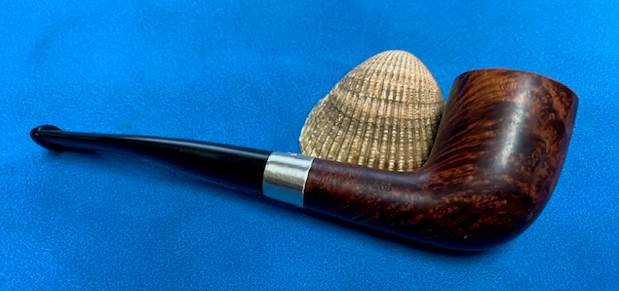
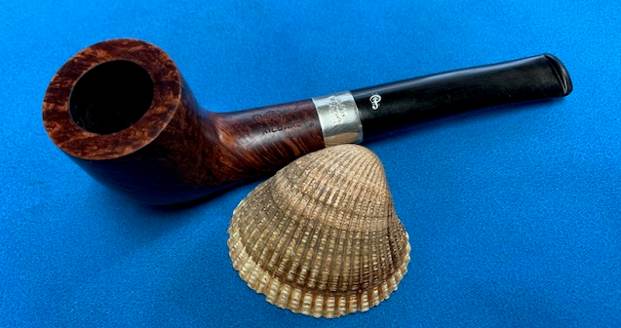
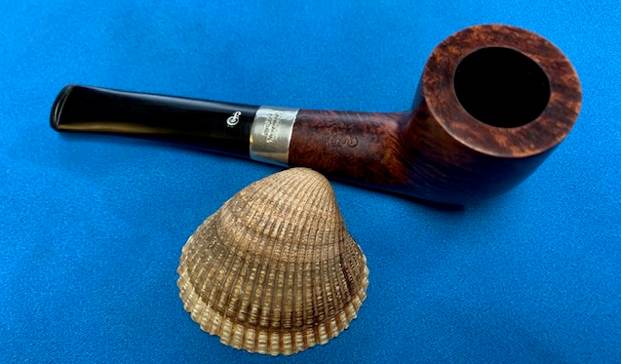
The next pipe on the work table came to me in a group of six pipes I bought from a fellow in Eastern Canada. It included two Canadian made pipes – a Blatter of Montreal and a Trypis. In the mix was an English made Charatan second stamped Mountbatten and two Peterson’s and an Irish Second. The pipes were well used and all had been smoked. The seller sent me a photo of the pipes so that I could see what he was selling. We discussed some options together and arrived at an agreement and the pipes were on their way to me in Vancouver.There was something about the circular shanked, slightly-bent-Dublin, the bottom pipe in the right column that grabbed my attention and made me want to work on it next. It arrived in its original box and sock. I knew that the pipe had been restemmed by Charles Lemon with fishtail stem rather than the original p-lip stem it had come with when new. I brought it to the worktable and examined it before starting my work. I took photos of the original box that the pipe arrived in and what I saw when I opened the box. This is what I saw. It had a round shank, a stamped silver band and a vulcanite taper fishtail stem. The pipe is stamped on the right side of the shank and reads Peterson’s [arched over] of Dublin [arched over] SHERLOCK HOLMES in two lines. On the right side of the shank is stamped MYCROFT. On the fancy silver band on the shank end it is stamped on the left and has a profile of Sherlock Holmes with a pipe in his mouth and his deerstalker hat on his head. Arched over it is stamped PETERSON’S and under it is stamped STERLING SILVER. On the left side it is stamped Peterson over three hallmarks – a seated woman (Hibernia), an oval with 925 centered in it (quality of the silver used) and the italic letter I (the date letter). The finish had some grime ground into the finish on the bowl but still looked to be in good condition. The bowl was moderately caked with some light lava on the top at the back and some darkening on the top and the inner edge of the rim. The taper stem hand made by Charles Lemon had some light tooth chatter on the top and underside near the button. There was a silver “P” logo on the left side of the taper stem. It had promise but it was dirty. I took some photos of the pipe before I started my cleanup work. I took photos of the rim top and bowl to give a clear picture of the thickness of the cake and the overflow of lava on the rim top. I also took photos of the top and underside of the stem to show the oxidation and the chatter and tooth marks. I took photos of the sides and heel of the bowl to give a picture of what the briar around the pipe looked like. There is some stunning grain under the grime. I took photos of the stamping on the sides of the shank and on the band. It reads as noted above and is clear and readable.   I removed the stem from the shank and took a photo of the pipe to give a sense of the proportion of this round shank Dublin.I am including the information from Pipedia’s article on Peterson pipes. It is a great read in terms of the history of the brand (https://pipedia.org/wiki/Peterson).
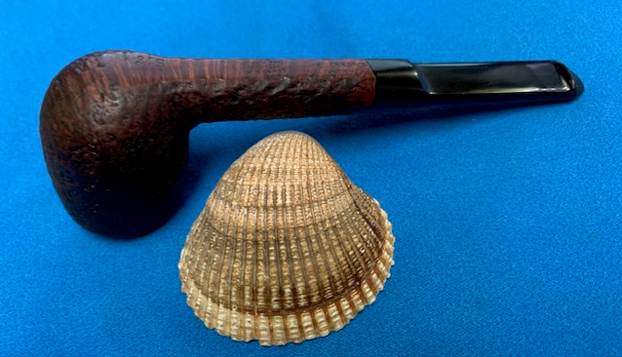
I turned to “The Peterson Pipe” by Mark Irwin and Gary Malmberg to get some background on the Peterson’s The Return of Sherlock Holmes Line. On page 184 it had the following information.

Even before O’Neill had settled in Peterson launched The Return of Sherlock Holmes, the second set of seven original shapes. These include the Rathbone…Hudson… Mycroft… Lestrade… Milverton…Strand…Hansom.

The chapter goes on to describe the Mycroft smooth as follows:

A circular shanked, slightly-bent-Dublin and the second design by Ian Harry Seiffert, the Mycroft (XL22) is named after Holmes’s brother, who appears in four stories, “The Greek Interpreter,” “The Final Problem,” “The Empty House” and “The Bruce-Partington Plans.”

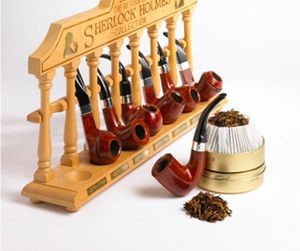
I then turned to Pipedia and found a link to the Peterson’s Sherlock Holmes series of pipes (https://pipedia.org/wiki/A_closer_look_at_the_Peterson_Sherlock_Holmes_series_of_pipes). I quote the following information on the series as a whole then the section on the Return of Sherlock Holmes series

The subject for this pipe focus is the Sherlock Holmes issue of briar pipes, let us look more closely at the individual pipes in more detail.

Probably the most successful series of pipes ever introduced by Peterson in terms of numbers. They were first issued in 1987 to honour Sir Arthur Conan Doyle’s famous fictitious detective character, Sherlock Holmes.

Holmes is perhaps the most famous pipe smoking character in fiction. He is reputed to have kept a selection of favourite pipes – from plain black clay pipes to richly grained briar pipes – to which he frequently resorted to for inspiration, while unravelling a mystery, or solving a knotty problem. For solace, after bringing a difficult case to successful conclusion, and always for pleasure. A man who kept his tobacco in a Persian slipper has to be something of a character, and a colourful one to boot, as indeed was Mr. Holmes of 221B Baker Street, London.

The pipes, crafted in Ireland from selected Mediterranean sourced briar, are made to honour the novels original characters, places and items encountered by Sherlock Holmes in his various adventures.

I quote that portion of the article below. I have highlighted the portion on the Mycroft in red.

The Return of Sherlock Holmes Series

The second issue was called “The Return of” – and was based on the success of “the Original”, with seven additional new shapes and dedicated wooden rack being created. All similar to the first issue, with XL bowl sizes and similar sterling silver bands with the SH stamp.

  1. The first pipe in the “Return” series was “The Rathbone”‘ – a large elegant bent, with a large stack bowl. In honour of the actor who played Holmes in the old black and white pictures of the nineteen thirties and forties. This is shape XL20. A great comfortable bent shape with a good draw. Scoring a solid 8.
  2. Next pipe is “The Hudson” – a large quarter bent bulldog. A great classic bulldog shape that smokes as well as it looks. This is shape XL21. I would score this one 7.5.
  3. Third is “The Mycroft” – named after Holmes’s brother. A classy elegant horn shape that is an excellent smoker. This is Peterson shape XL22. Scoring a good 8 on the scale.
  4. The fourth pipe in the series “The Lestrade” – is my personal favourite of all of the Sherlock Holmes series. This is the instantly recognisable, full-bent apple shape XL23. It is the quintessential dangler/clench-er pipe. It is equally tactile in the hand when not dangling, in this form I prefer it with a tapered fishtail stem to maximise the draw and smoking pleasure. Being a wee bit biased in regard to this one, I have to give it a very worthy 9 score.
  5. Next is “The Milverton” – a large full bent with an angular stem. Peterson shape XL24. I have to admit, it is not one of my favourites. I just do not like the angular stem. In terms of smoking it is average by me. I would rate it a 7 on the scale.
  6. Number six is “The Strand” – a quarter bent apple, it is Peterson shape XL25. To my mind a very pleasing elegant flowing shape. Very tactile for a straighter stemmed pipe and an excellent smoker. I would score this one a credible 8.5 on the scale.
  7. Finally, the last of the seven is “The Hansom” – a shape I just cannot warm to. I find it seriously wanting in regard to it’s aesthetic appeal. A bent Rhodesian, Peterson shape XL26. I only have one to complete the collection. I find it neither pleasing to hold, or to look at. Others may feel differently, I can only award it a 7.

The information given I knew I was dealing with a pipe from the Return of Sherlock Holmes Line. The Mycroft smooth was one named after Sherlock’s brother. It also has a silver band on the shank that is stamped on the left side of the band with a profile of Sherlock Holmes with the words Peterson’s [arched over the profile] and Sterling Silver [arched under the profile]. On the right side of the band it is stamped Peterson [over] the three hallmarks as noted above.

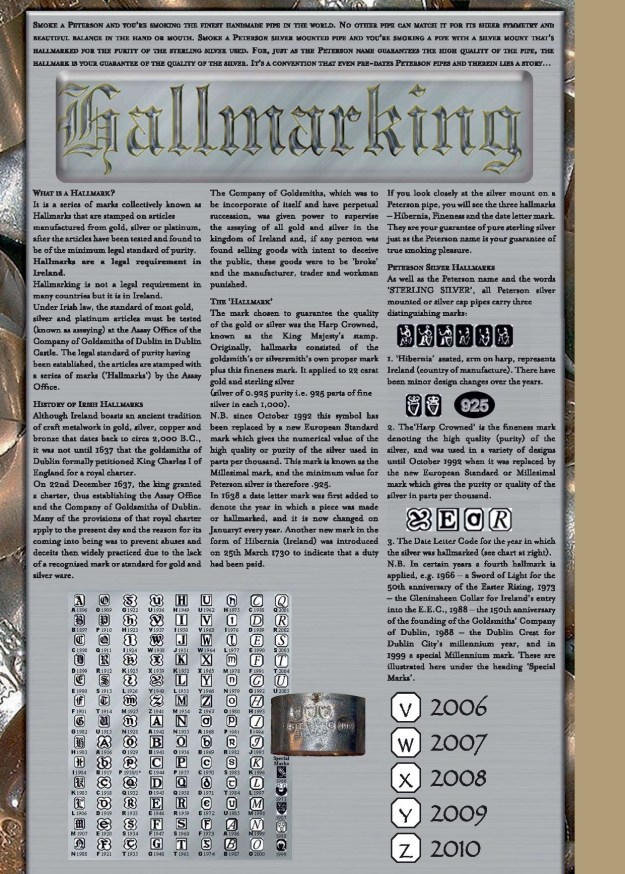
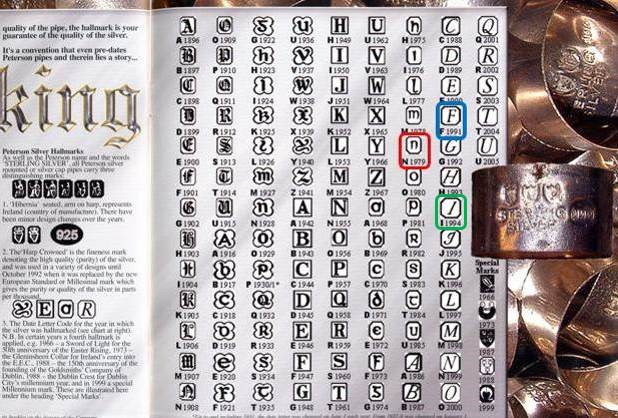
I wanted to be able to interpret the hallmarks on the silver band. I have captured a portion of the chart that include below that helps to clarify the meaning of each of the three hallmarks. I like the Hallmark feature on the higher end Peterson pipes with Sterling silver bands. It helps to pin down the date even further.

“Hibernia” seated, arm on harp represents Ireland (country of manufacture). There have been minor design changes over the years.

The “Harp Crowned” is the fineness mark denoting the high quality (purity) of the silver, and was used in a variety of designs until October 1992 when it was replaced by the new European Standard or Millesimal mark which gives the purity or quality of the silver in parts per thousand.

The Date Letter Code for the year in which the silver was hallmarked (see the chart below). In certain years a fourth hallmark is applied – for example 1966 – a Sword of Light for the 50th anniversary of the Easter Rising 1973. There were also other marks used for the fourth hallmark.

I turned to a blog I wrote on rebornpipes that had a Peterson’s catalogue and a hallmarking chart (https://rebornpipes.com/tag/peterson-hallmark-chart/). I have included it below. On the chart I looked for an upper case italic F in a hexagonal cartouche. I also included a enlargement of the chart and drawn a box around the “I” in green in the second photo below showing a close up of the dates. From that I am able to date the  pipe to 1994. Now I knew I was dealing with a pipe made in 1994. It really is a beautiful pipe. Now it was time to work on the pipe itself.

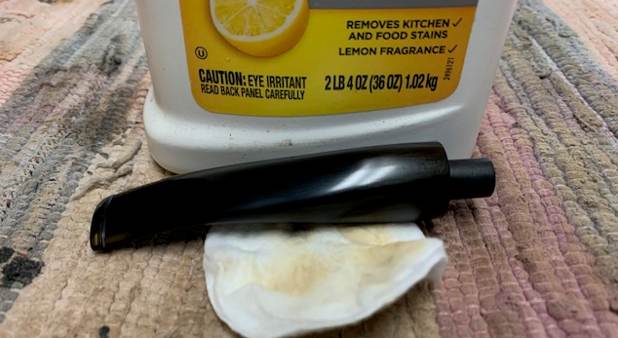
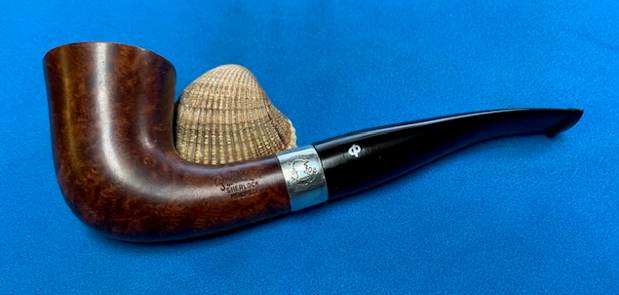
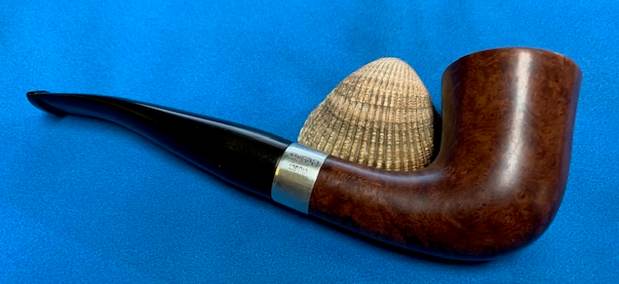
I started my work on the pipe by reaming the bowl the pipe with a PipNet Pipe Reamer using the first and second and third cutting heads to remove the cake. I cleaned up the remnants of the cake on the walls with a Savinelli Fitsall Pipe Knife. I finished by sanding the bowl smooth with 220 grit sandpaper wrapped around a piece of dowel. I cleaned up the inner edge of the rim with a folded piece of 220 grit sandpaper. I was able to remove almost all of the darkening with the sandpaper. I scrubbed the externals of the pipe with undiluted Murphy’s Oil Soap with a tooth brush. I rinsed it under running warm water to remove the soap and grime. The bowl and rim top cleaned up really well with the lava coat removed. The inner edge of the rim was in good condition.  I cleaned out the inside of the mortise, shank and the airway in the stem with isopropyl alcohol, cotton swabs and pipe cleaners. The pipe had a strong aromatic smell just like the other two Petersons I just completed. It smelled like a mix of fruit and vanilla so it needed to be deghosted. I filled the bowl with cotton boles and twisted a plug into the shank end. I used and ear syringe to fill the bowl with alcohol. The alcohol will eventually evaporate from the bowl wicking out the oils and tars in the briar into the cotton. I let it sit over night and in the morning pulled it out and took photos of the cotton at that point. I polished the smooth briar with micromesh sanding pads – dry sanding with 1500-12000 grit pads and wiped it down with a damp cloth after each sanding pad. By the end of the last set of three the bowl took on a rich shine. I worked some Before & After Restoration Balm into the surface of the briar with my fingertips to clean, enliven and protect the briar. I let the balm sit for 15 minutes and then buffed with a cotton cloth to raise the shine. The photos show the bowl at this point in the restoration process. I set the bowl aside and turned my attention to the stem. I wiped down the surface of the stem near the shank with Soft Scrub to remove the light oxidation that was present for the first inch up the stem from the shank end.I polished the vulcanite stem with micromesh sanding pads – 1500-12000 grit pads. I wiped the stem down with Obsidian Oil after each sanding pad. I polished the stem with Before and After Stem Polish – both Fine and Extra Fine. I rubbed it down with some more Obsidian Oil. It was great to finish this 1994 Peterson’s of Dublin Sherlock Holmes Mycroft. I put the pipe back together and buffed it with Blue Diamond on the buffing wheel. I gave the bowl and the stem multiple coats of carnauba wax. I buffed the pipe with a clean buffing pad to raise the shine. I hand buffed the pipe with a microfiber cloth to deepen the shine. It is fun to see what the polished bowl looks like with deep sandblast all around it. Added to that the polished black, vulcanite, fishtail stem was beautiful. This Silver Banded Return of Sherlock Holmes Series Mycroft is great looking and the pipe feels great in my hand. It is light and well balanced. Have a look at it with the photos below. The dimensions are Length: 6 ½ inches, Height: 2 ¼ inches, Outside diameter of the bowl: 1 ½ inches, Chamber diameter: 7/8 of an inch. The weight of the pipe is 61 grams/2.15 ounces. It is a beautiful pipe and one that will soon be on the rebornpipes store in the Irish Pipe Makers Section of the store. If you want to add it to your collection let me know. Thanks for walking through the restoration with me as I worked over this pipe. Thanks to each of you who are reading this blog.

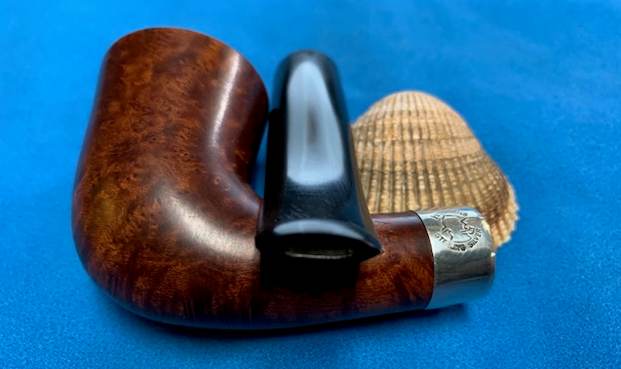
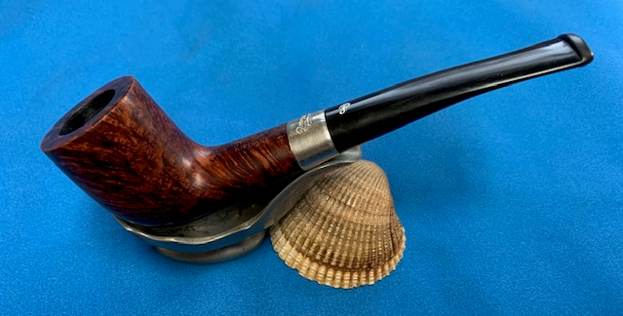
New Life for a Petersons of Dublin Silver Mounted Kildare 268 Zulu with a Fishtail Stem


Blog by Steve Laug

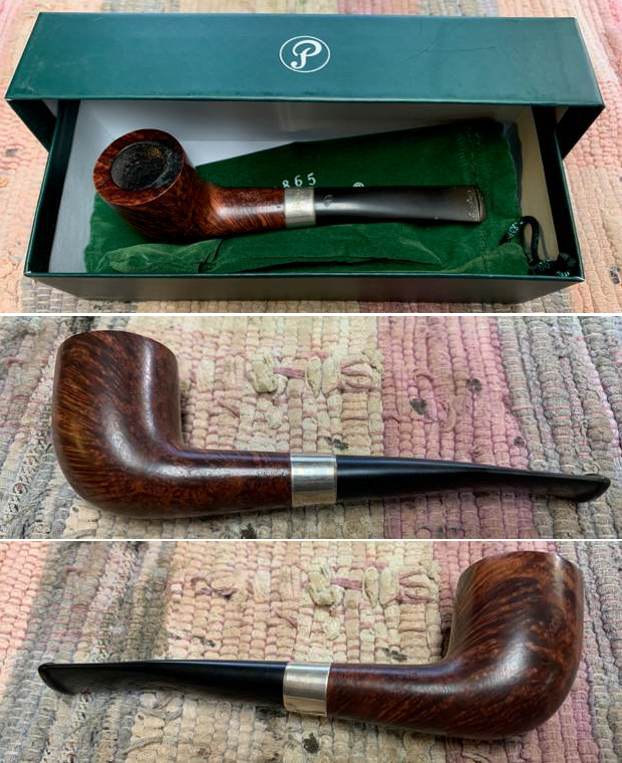
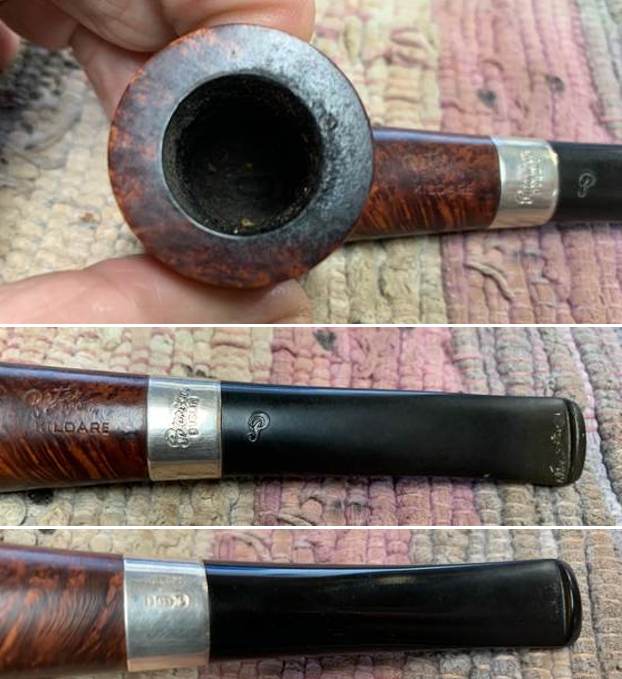
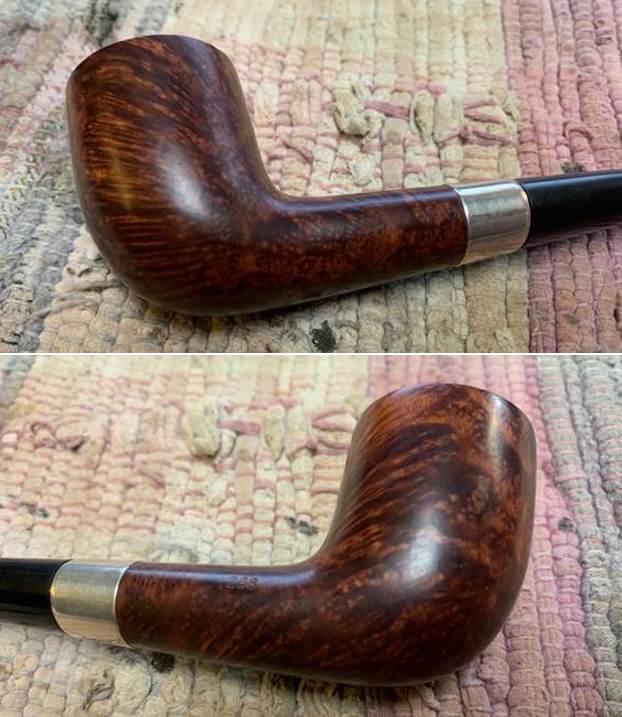
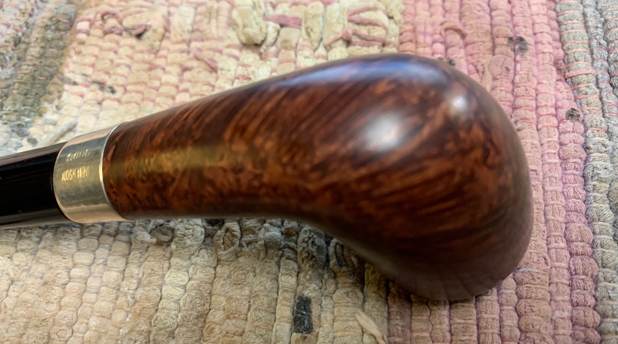
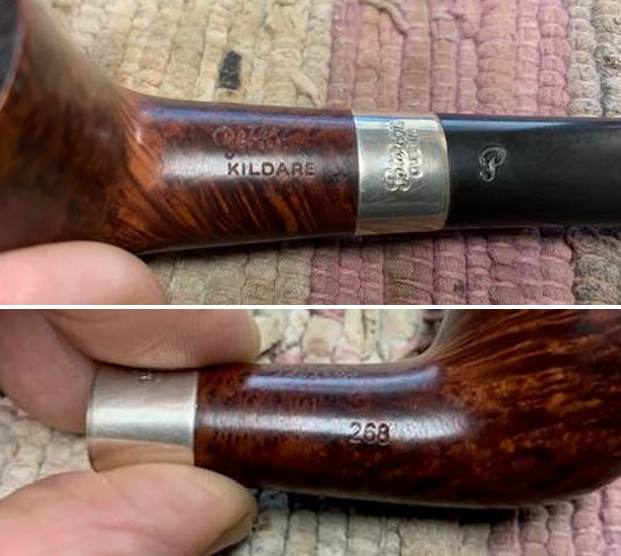
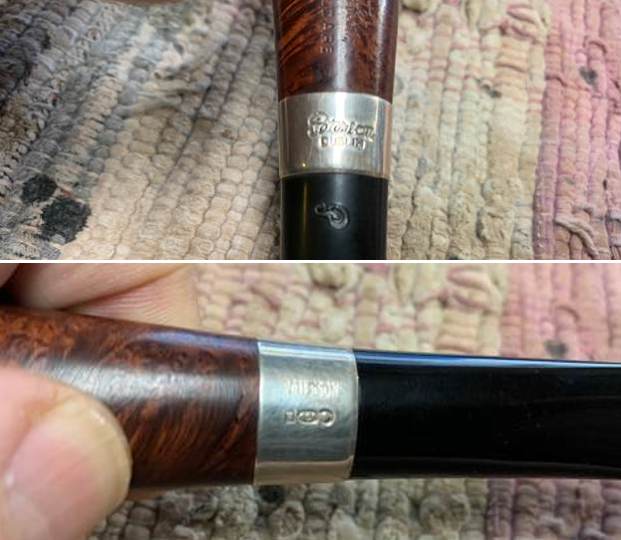
The next pipe on the work table came to me in a group of six pipes I bought from a fellow in Eastern Canada. It included two Canadian made pipes – a Blatter of Montreal and a Trypis. In the mix was an English made Charatan second stamped Mountbatten and two Peterson’s and an Irish Second. The pipes were well used and all had been smoked. The seller sent me a photo of the pipes so that I could see what he was selling. We discussed some options together and arrived at an agreement and the pipes were on their way to me in Vancouver.There was something about the classic Zulu, the top pipe in the right column that grabbed my attention and made me want to work on it next. It arrived in its original box and sock. I brought it to the worktable and examined it before starting my work. It had an oval shank, a stamped silver band and a vulcanite taper fishtail stem. The pipe is stamped on the top side of the shank and reads Peterson’s [arched over] of Dublin [over] Kildare. On the right side of the shank is stamped the shape number 268. On the fancy silver band on the shank end it is stamped on the top and reads Peterson [over] Dublin. On the underside it is stamped Peterson over three hallmarks – a seated woman (Hibernia), an oval with 925 centered in it (quality of the silver used) and the letter D (the date letter). The finish had some grime ground into the finish on the bowl but still looked to be in good condition. The bowl was thickly caked with some light lava on the top at the back and some darkening on the top and the inner edge of the rim. The stem had some calcification and tooth chatter on the top and underside near the button. There was a “P” logo on the top of the stem. It had promise but it was dirty. I took some photos of the pipe before I started my cleanup work. I took photos of the rim top and bowl to give a clear picture of the thickness of the cake and the overflow of lava on the rim top. I also took photos of the top and underside of the stem to show the oxidation and the chatter and tooth marks.    I took photos of the sides and heel of the bowl to give a picture of what the briar around the pipe looked like. There is some stunning grain under the grime.  I took photos of the stamping on the sides of the shank and on the band. It reads as noted above and is clear and readable.   I removed the stem from the shank and took a photo of the pipe to give a sense of the proportion of this oval shank Zulu.I am including the information from Pipedia’s article on Peterson pipes. It is a great read in terms of the history of the brand (https://pipedia.org/wiki/Peterson).

I turned to “The Peterson Pipe” by Mark Irwin and Gary Malmberg to get some background on the Peterson’s Kildare Line. On page 314 it had the following information.

Kildare (1965-) First issue of line with matte-finish in Classic Range shapes, P-Lip and fishtail mouthpiece. Second issue C.1979 as Kildare Patch, with rusticated patches on pipe surface. Third issue 2010, matte-brown, P-Lip or fishtail mouthpiece, no band. Fourth issue 2011-, burgundy sandblast finish, nickel army mount, fishtail mouthpiece, exclusive to smokingpipes.com.

The information given above has an element of confusion for me. It seems that the pipe in question is from the second issue C.1979 as this one is probably made after than date. It says that the pipes were issued as Kildare Patch with rusticated patches. However this one does not have the patches it is smooth around the bowl sides. It also has a silver band on the shank rather than a nickel one.

I wanted to be able to interpret the hallmarks on the silver band. I have captured a portion of the chart that include below that helps to clarify the meaning of each of the three hallmarks. I like the Hallmark feature on the higher end Peterson pipes with Sterling silver bands. It helps to pin down the date even further.

“Hibernia” seated, arm on harp represents Ireland (country of manufacture). There have been minor design changes over the years.

The “Harp Crowned” is the fineness mark denoting the high quality (purity) of the silver, and was used in a variety of designs until October 1992 when it was replaced by the new European Standard or Millesimal mark which gives the purity or quality of the silver in parts per thousand.

The Date Letter Code for the year in which the silver was hallmarked (see the chart below). In certain years a fourth hallmark is applied – for example 1966 – a Sword of Light for the 50th anniversary of the Easter Rising 1973. There were also other marks used for the fourth hallmark.

I turned to a blog I wrote on rebornpipes that had a Peterson’s catalogue and a hallmarking chart (https://rebornpipes.com/tag/peterson-hallmark-chart/). I have included it below. On the chart I looked for an upper case italic F in a hexagonal cartouche. I also included a enlargement of the chart and drawn a box around the “F” in blue in the second photo below showing a close up of the dates. From that I am able to date the  pipe to 1991. Now I knew I was dealing with a pipe made in 1991. It really is a beautiful pipe. Now it was time to work on the pipe itself.

I started my work on the pipe by reaming the bowl the pipe with a PipNet Pipe Reamer using the first and second and third cutting heads to remove the cake. I cleaned up the remnants of the cake on the walls with a Savinelli Fitsall Pipe Knife. I finished by sanding the bowl smooth with 220 grit sandpaper wrapped around a piece of dowel. I scrubbed the externals of the pipe with undiluted Murphy’s Oil Soap with a tooth brush. I rinsed it under running warm water to remove the soap and grime. The bowl and rim top cleaned up really well with the lava coat removed. The inner edge of the rim was in good condition. I cleaned up the inner edge of the rim with a folded piece of 220 grit sandpaper. I was able to remove almost all of the darkening with the sandpaper. I cleaned out the inside of the mortise, shank and the airway in the stem with isopropyl alcohol, cotton swabs and pipe cleaners. The pipe had a strong aromatic smell just like the Peterson’s Lovat I just did. It smelled like a mix of fruit and vanilla so it needed to be deghosted. I filled the bowl with cotton boles and twisted a plug into the shank end. I used and ear syringe to fill the bowl with alcohol. The alcohol will eventually evaporate from the bowl wicking out the oils and tars in the briar into the cotton. I let it sit over night and in the morning pulled it out and took photos of the cotton at that point. I polished the smooth briar with micromesh sanding pads – dry sanding with 1500-12000 grit pads and wiped it down with a damp cloth after each sanding pad. I worked some Before & After Restoration Balm into the surface of the briar with my fingertips to clean, enliven and protect the briar. I let the balm sit for 15 minutes and then buffed with a cotton cloth to raise the shine. The photos show the bowl at this point in the restoration process. I sanded out the tooth marks on the stem with 220 grit sand paper and started the polishing with 400 grit wet dry sandpaper. I polished the vulcanite stem with micromesh sanding pads – 1500-12000 grit pads. I wiped the stem down with Obsidian Oil after each sanding pad. I polished the stem with Before and After Stem Polish – both Fine and Extra Fine. I rubbed it down with some more Obsidian Oil. I touched up the P stamp on the stem with White Acrylic Fingernail polish. I worked it into the stamp with a tooth pick. Once the acrylic hardened I scraped off the excess and buffed the stem with  3000-6000 grit micromesh pads. I wiped the stem down with some Obsidian Oil.It was great to finish this 1991 Peterson’s of Dublin Kildare 268 Zulu. I put the pipe back together and buffed it with Blue Diamond on the buffing wheel. I gave the bowl multiple coats of Conservator’s Wax and the stem multiple coats of carnauba wax. I buffed the pipe with a clean buffing pad to raise the shine. I hand buffed the pipe with a microfiber cloth to deepen the shine. It is fun to see what the polished bowl looks like with deep sandblast all around it. Added to that the polished black vulcanite stem was beautiful. This Silver Banded Petersons of Dublin Kildare 268 Zulu is great looking and the pipe feels great in my hand. It is light and well balanced. Have a look at it with the photos below. The dimensions are Length: 5 ½ inches, Height: 1 ¾ inches, Outside diameter of the bowl: 1 ¼ inches, Chamber diameter: ¾ of an inch. The weight of the pipe is 40 grams/1.41 ounces. It is a beautiful pipe and one that will soon be on the rebornpipes store in the Irish Pipe Makers Section of the store. If you want to add it to your collection let me know. Thanks for walking through the restoration with me as I worked over this pipe. Thanks to each of you who are reading this blog.

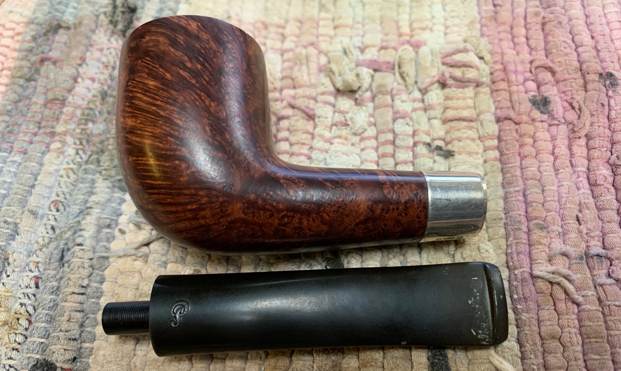
New Life for a Republic Era Irish Second, Silver Banded Lovat


Blog by Steve Laug

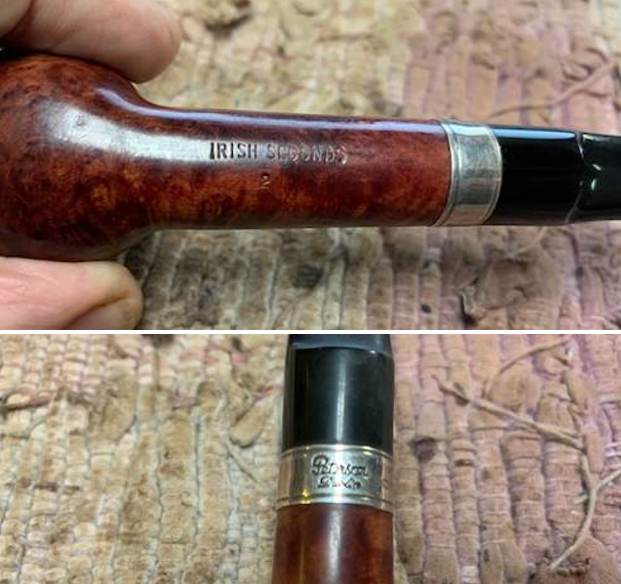
The next pipe on the work table came to me in a group of six pipes I bought from a fellow in Eastern Canada. It included two Canadian made pipes – a Blatter of Montreal and a Trypis. In the mix was an English made Charatan second stamped Mountbatten and two Peterson’s and an Irish Second. The pipes were well used and all had been smoked. The seller sent me a photo of the pipes so that I could see what he was selling. We discussed some options together and arrived at an agreement and the pipes were on their way to me in Vancouver.There was something about the chunky Lovat, the second one down in the right column that grabbed my attention and made me want to start with it. I brought it to the worktable and examined it before starting my work. It had a thick shank, a stamped silver band and a vulcanite saddle, fishtail stem. The pipe is stamped on the underside of the shank and reads IRISH SECONDS [over] 2. On the fancy silver band on the shank end it is stamped Peterson [over] Dublin. To the right of that there are three hallmarks – a seated woman (Hibernia), an oval with 925 centered in it (quality of the silver used) and the letter F (the date letter). There are a few fills in the bowl so it is clearly a Peterson’s second, but it is odd that the band is Sterling Silver. The finish had some grime ground into the finish on the bowl but still looked to be in good condition. The bowl was thickly caked with some light lava on the top at the back and some darkening on the top and the beveled inner edge of the rim. The stem had some calcification and tooth chatter on the top and underside near the button. There were not markings or a logo on the stem. It had promise but it was dirty. I took some photos of the pipe before I started my cleanup work. I took photos of the rim top and bowl to give a clear picture of the thickness of the cake and the overflow of lava on the rim top. I also took photos of the top and underside of the stem to show the oxidation and the chatter and tooth marks.    I took photos of the sides and heel of the bowl to give a picture of what the briar around the pipe looked like. There is some stunning grain under the grime.  I took photos of the stamping on the underside of the shank and on the band. It reads as noted above and is clear and readable. I removed the stem from the shank and took a photo of the pipe to give a sense of the proportion of this thick shank Lovat.I turned to Pipedia to read the article on Irish Seconds (https://pipedia.org/wiki/Irish_Seconds). I quote it below in full.

Irish Second pipes begin life alongside Peterson pipes in Dublin, but at some point a flaw appears making future life as one of those celebrated pipes impossible. At this point the pipes were roughly finished, given a standard vulcanite stem instead of a P-Lip, and stamped only with “Irish Second” and “Made in the Republic of Ireland”. These pipes were sold at a far more affordable rate than Peterson pipes, but are believed to no longer be sold new.

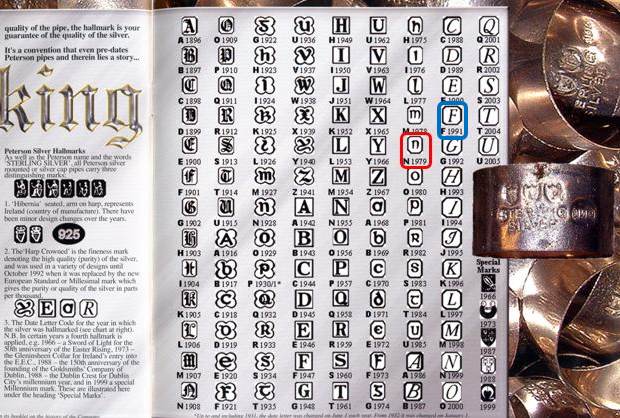
I also wanted to be able to interpret the hallmarks on the silver band. I have captured a portion of the chart that include below that helps to clarify the meaning of each of the three hallmarks. I like the Hallmark feature on the higher end Peterson pipes with Sterling silver bands. It helps to pin down the date even further.

“Hibernia” seated, arm on harp represents Ireland (country of manufacture). There have been minor design changes over the years.

The “Harp Crowned” is the fineness mark denoting the high quality (purity) of the silver, and was used in a variety of designs until October 1992 when it was replaced by the new European Standard or Millesimal mark which gives the purity or quality of the silver in parts per thousand.

The Date Letter Code for the year in which the silver was hallmarked (see the chart below). In certain years a fourth hallmark is applied – for example 1966 – a Sword of Light for the 50th anniversary of the Easter Rising 1973. There were also other marks used for the fourth hallmark.

I turned to a blog I wrote on rebornpipes that had a Peterson’s catalogue and a hallmarking chart (https://rebornpipes.com/tag/peterson-hallmark-chart/). I have included it below. On the chart I looked for an upper case italic F in a hexagonal cartouche. I also included a enlargement of the chart and drawn a box around the “F” in blue in the second photo below showing a close up of the dates. From that I am able to date the  pipe to 1991.Now I knew I was dealing with a pipe made in 1991. I am not sure how it became an Irish Second rather than one of the first grade lines. Perhaps it is the small fills in the bowl and shank but I have seen others that are full grade that have more fills than this one. It really is a beautiful pipe. Now it was time to work on the pipe itself.

I started my work on the pipe by reaming the bowl the pipe with a PipNet Pipe Reamer using the first and second and third cutting heads to remove the cake. I cleaned up the remnants of the cake on the walls with a Savinelli Fitsall Pipe Knife. I finished by sanding the bowl smooth with 220 grit sandpaper wrapped around a piece of dowel. I scrubbed the externals of the pipe with undiluted Murphy’s Oil Soap with a tooth brush. I rinsed it under running warm water to remove the soap and grime. The bowl and rim top cleaned up really well with the lava coat removed. The inner edge of the rim was in good condition. I cleaned up the inner edge of the rim with a folded piece of 220 grit sandpaper. I was able to remove almost all of the darkening with the sandpaper. I cleaned out the inside of the mortise, shank and the airway in the stem with isopropyl alcohol, cotton swabs and pipe cleaners. The pipe had a strong aromatic smell like a mix of fruit and vanilla so it needed to be deghosted. I filled the bowl with cotton boles and twisted a plug into the shank end. I used and ear syringe to fill the bowl with alcohol. The alcohol will eventually evaporate from the bowl wicking out the oils and tars in the briar into the cotton. I let it sit over night and in the morning pulled it out and took photos of the cotton at that point. I polished the smooth briar with micromesh sanding pads – dry sanding with 1500-12000 grit pads and wiped it down with a damp cloth after each sanding pad. I worked some Before & After Restoration Balm into the surface of the briar with my fingertips to clean, enliven and protect the briar. I let the balm sit for 15 minutes and then buffed with a cotton cloth to raise the shine. The photos show the bowl at this point in the restoration process. I used a folded piece of  220 grit sandpaper to smooth out the repair and then started polishing it with 400 grit wet dry sandpaper.I polished the stem with micromesh sanding pads – wet sanding with 1500-12000 grit sanding pads. I wiped it down after each sanding pad with Obsidian Oil. I polished it with Before & After Pipe Stem Polish – both Fine and Extra Fine. It was great to finish this Peterson’s Made Irish Seconds 1991 Lovat. I put the pipe back together and buffed it with Blue Diamond on the buffing wheel. I gave the bowl multiple coats of Conservator’s Wax and the stem multiple coats of carnauba wax. I buffed the pipe with a clean buffing pad to raise the shine. I hand buffed the pipe with a microfiber cloth to deepen the shine. It is fun to see what the polished bowl looks like with deep sandblast all around it. Added to that the polished black vulcanite stem was beautiful. This Silver Banded Irish Seconds Lovat is great looking and the pipe feels great in my hand. It is light and well balanced. Have a look at it with the photos below. The dimensions are Length: 5 inches, Height: 1 ¾ inches, Outside diameter of the bowl: 1 ¼ inches, Chamber diameter: 7/8 of an inch. The weight of the pipe is 39 grams/1.41 ounces. It is a beautiful pipe and one that will soon be on the rebornpipes store in the Irish Pipe Makers Section of the store. If you want to add it to your collection let me know. Thanks for walking through the restoration with me as I worked over this pipe. Thanks to each of you who are reading this blog.

Yet another one of my own – an Ehrlich Hexagonal Opera Pipe


Blog by Steve Laug

This is another pipe that I have taken out of my personal collection as I do not use enough to warrant keeping it. This pipe was one that I kept from a group of pipes Jeff and I purchased a few years ago. It was not used very often and I believe it is one that I actually found in a lightly smoked condition when I picked it up. I cleaned the pipe but never smoked it after the clean up work. The airway in the shank and the mortise were quite clean. The smooth finish and rim top were in good condition. There was some darkening on the inner edge of the bowl around the bowl. The stamping on the pipe is very simple and on the left side of the shank it is stamped EHRLICH. On the underside of the stem it is stamped FRANCE. The finish is a natural brown with a shiny coat of varnish that gave it a rich look. The rich brown finish goes well with the black, taper vulcanite stem which is in excellent condition with no tooth marks or chatter on either side. I took photos of the pipe before I did my clean up work on it. I took a photo of the bowl and rim top to verify the description above. I also took photos of the stem surface showing the light chatter and tooth marks on both side. I took a photo of the stamping on the left side of the shank and the underside of the stem. It is clear and readable as noted above. I took the stem off the bowl and took a photo of the pipe to give a sense of proportion of the pipe. You can also see the grain around the side of bowl and the shank and it is a beauty. Now it was time to work on the pipe. I worked on the inner edge of the bowl 220 grit sandpaper to give the inner edge a slight bevel and clean up the damage that was present there. I used a ball and a piece of 220 grit sandpaper to smooth it out. The rim came out looking quite good.I wiped the bowl down with a cotton pad and acetone to remove the varnish coat on the briar. I find that once the varnish is removed the grain really stands out and can be appreciated. That was certainly true with this one. I polished the rim top and the briar with micromesh sanding pads – dry sanding with 1500-12000 grit pads. I wiped the bowl down with a damp cloth after each sanding pad to remove the dust and debris. The rim top polished out and matched the oil cured look of the bowl and shank. I cleaned the mortise and airways in the shank and stem with cotton swabs, pipe cleaners and isopropyl alcohol to remove the debris and tars from my smoking. You can see that it was not too bad as I tend to keep my pipes clean. The bowl was in such good condition that decided to give the bowl and shank a coating of Before & After Restoration Balm. I worked it into the surface of the briar with my fingertips and a horsehair shoe brush to clean, enliven and protect the briar. I let the balm sit for 15 minutes and then buffed with a cotton cloth to raise the shine. The photos show the bowl at this point in the restoration process. I set the bowl aside and turned my attention to the stem. I polished it with micromesh sanding pads – dry sanding with 1500-12000 grit pads. I rubbed it down between pads with Obsidian Oil. I polished it with Before & After Fine and Extra Fine Pipe Stem Polish. I wiped it down with some Obsidian Oil and buffed it off. It is a beautiful stem. It is good to put the final touches on another of my own pipes that I am selling – Ehrlich Hexagonal Bowl Straight Opera Pipe. I put the pipe back together and buffed the stem with Blue Diamond on the buffing wheel. I gave the bowl and the stem multiple coats of carnauba wax. I hand buffed the pipe with a clean buffing pad to raise the shine. It is fun to see what the polished bowl looks like with the beautiful grain and the polished vulcanite saddle stem. This smooth Ehrlich Opera Pipe is great looking and the pipe feels great in my hand. It is light and well balanced. Have a look at it with the photos below. The dimensions are Length: 5 inches, Height: 1 ¼ inches, Outside diameter of the bowl: 1 inch x 1 ½ inches, Chamber diameter: ¾ of an inch x 1 inch. The weight of the pipe is 22 grams/.78 ounces. It is a beautiful pipe that I will soon be putting on the rebornpipes store in the American Pipe Makers Section. If you are interested in adding it to your collection send me an email or a message. Thanks for walking through the restoration with me as I worked over this pipe. Thanks to each of you who are reading this blog.