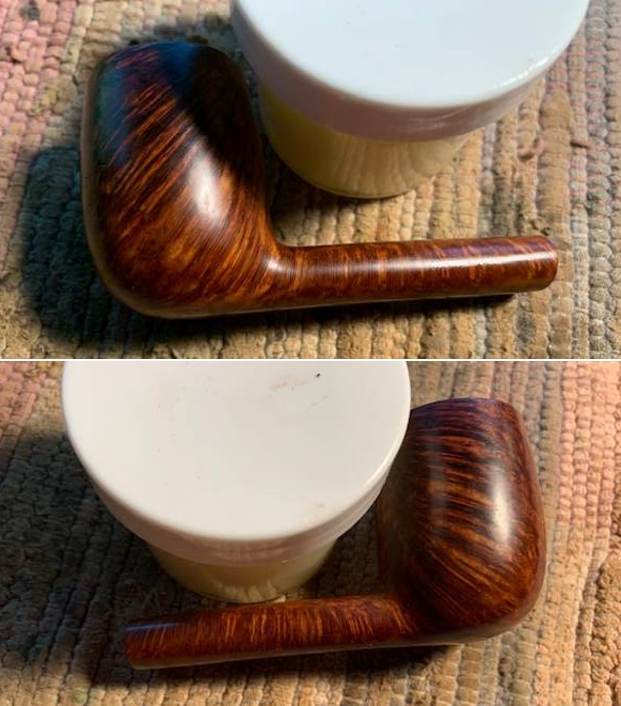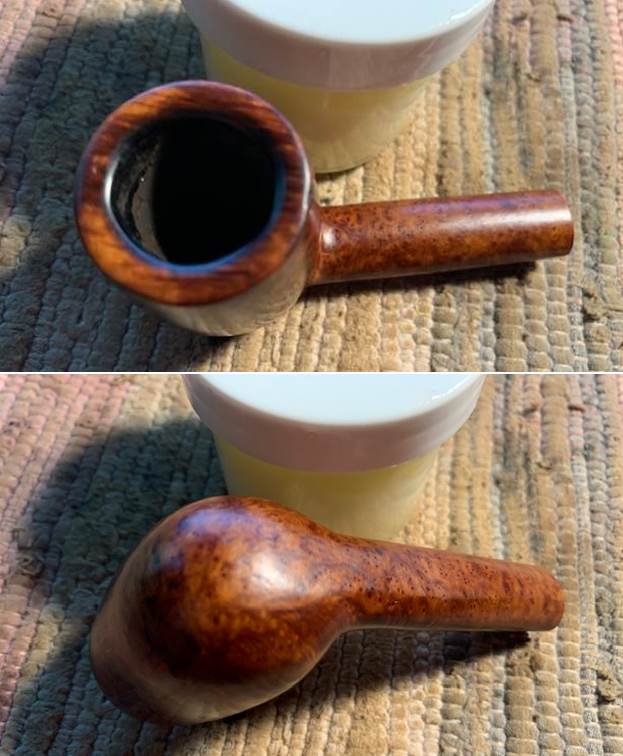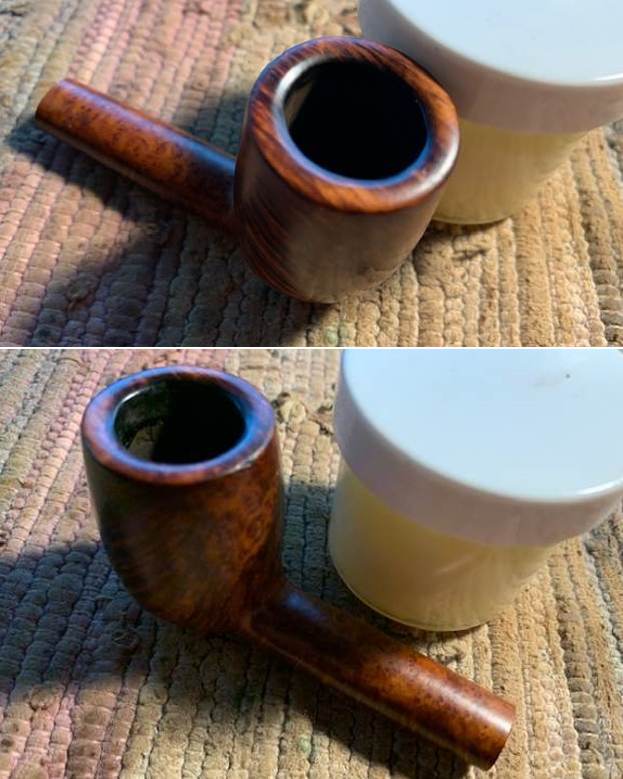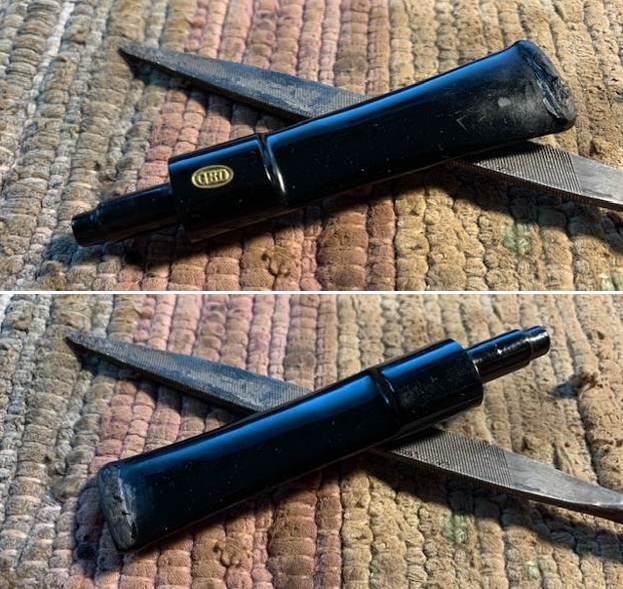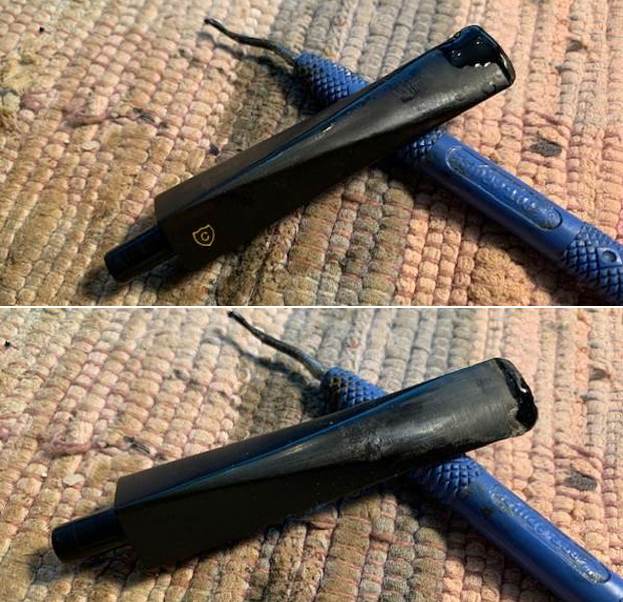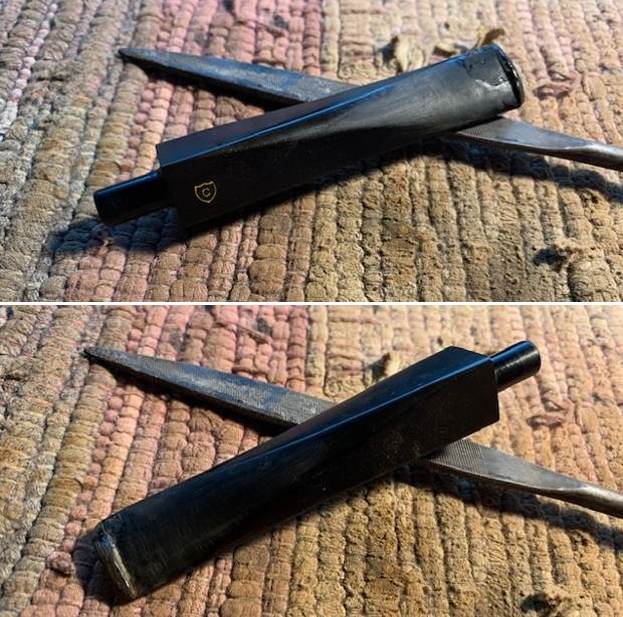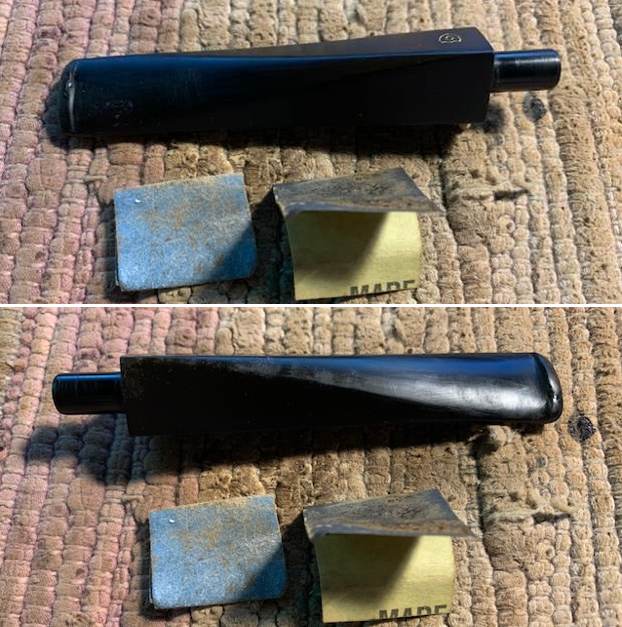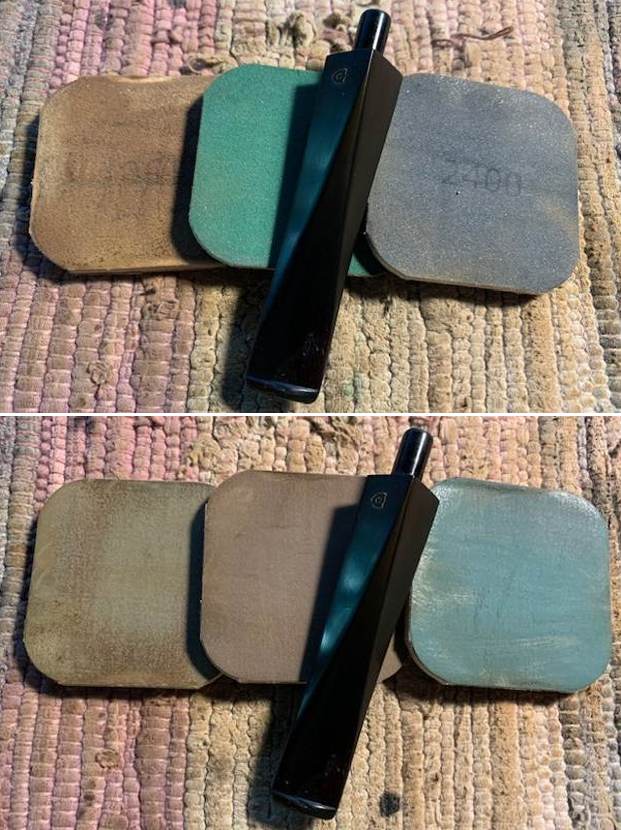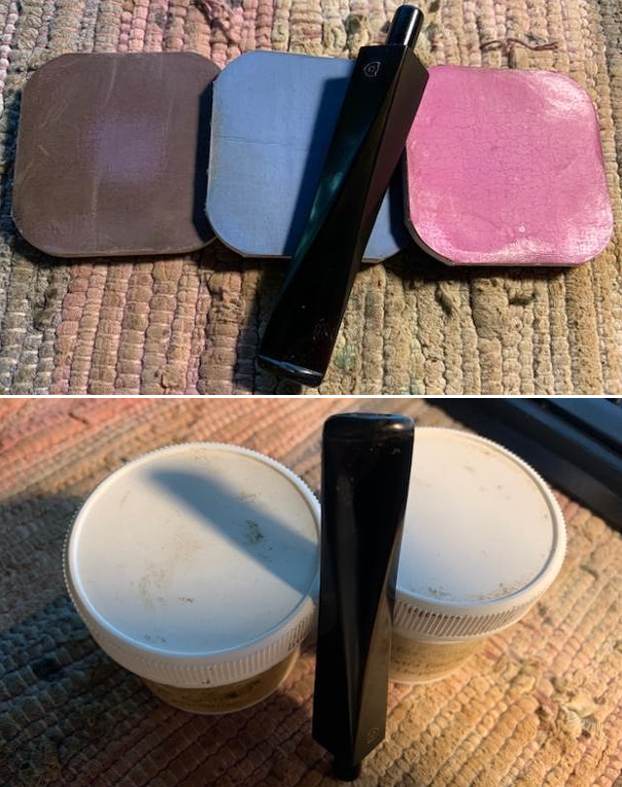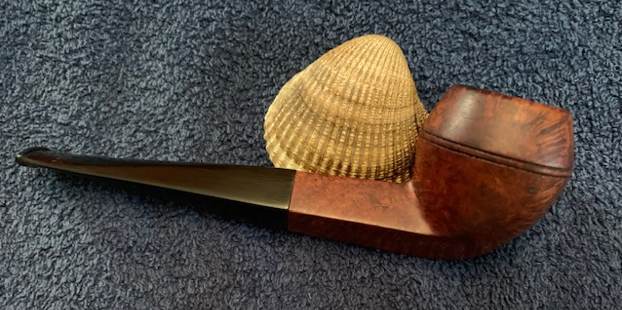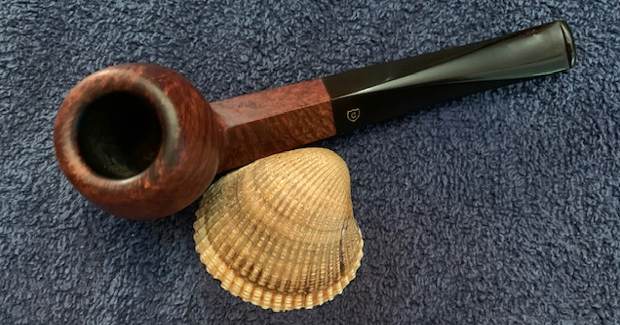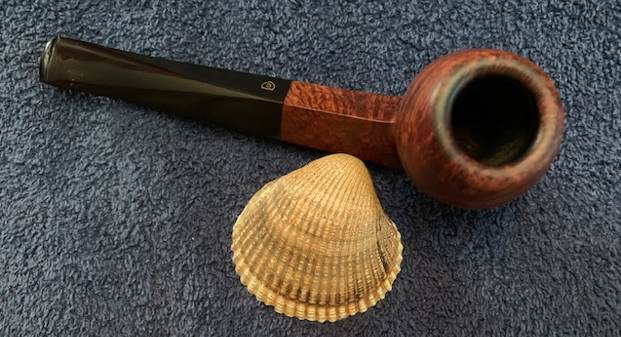
Tag Archives: shaping a stem

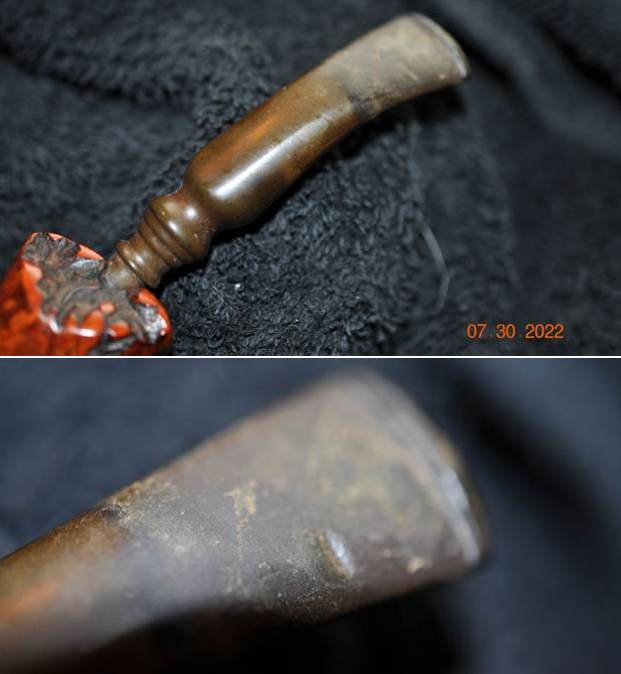
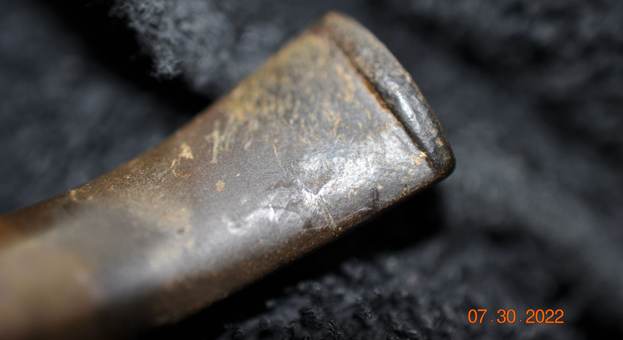
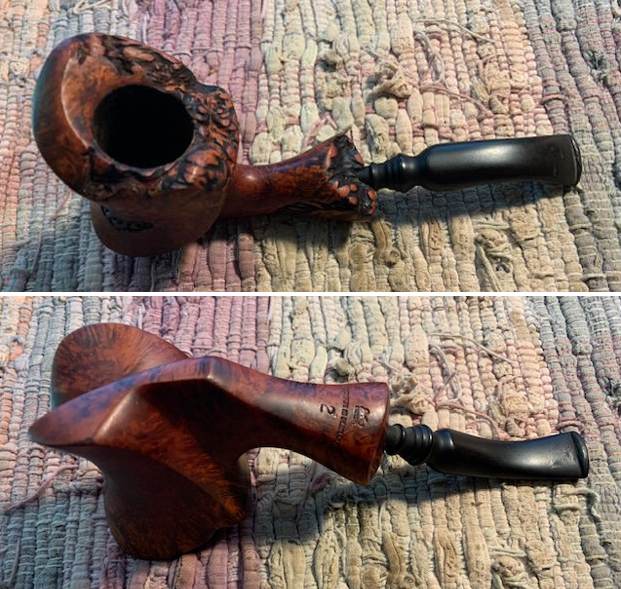
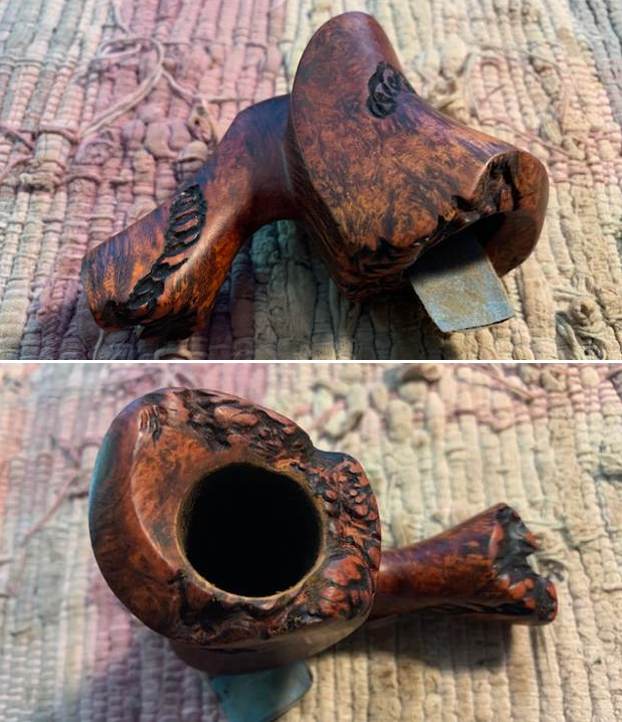
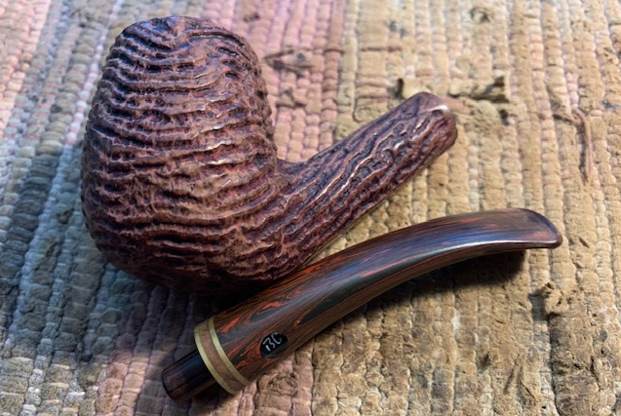
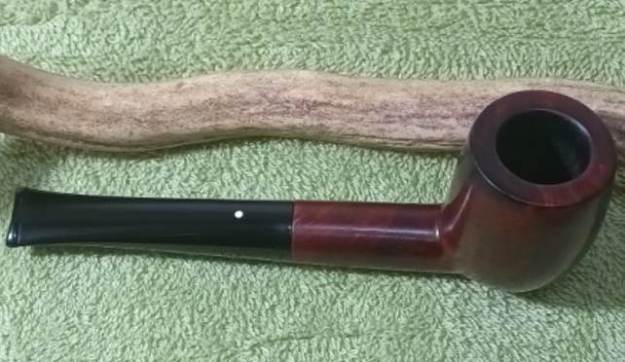
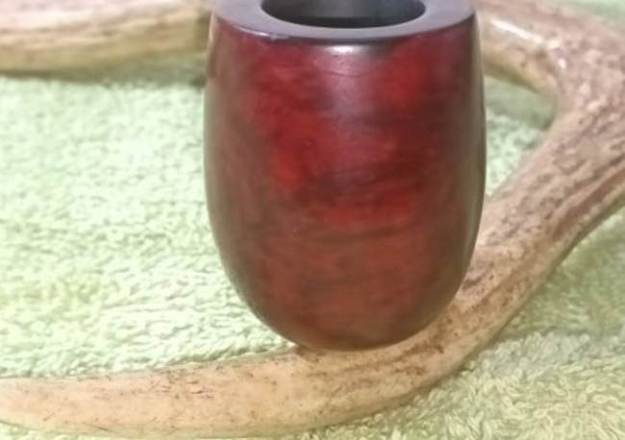
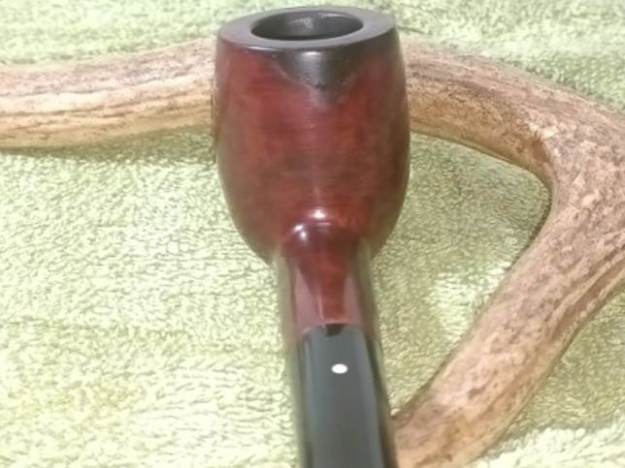
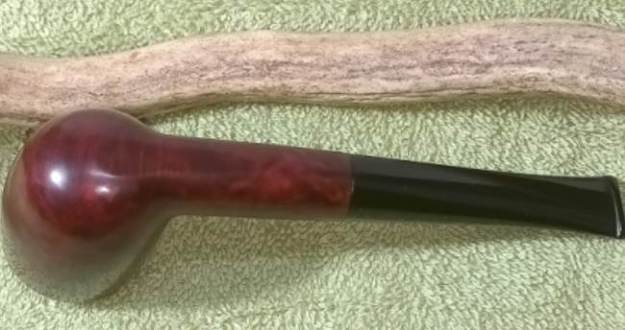
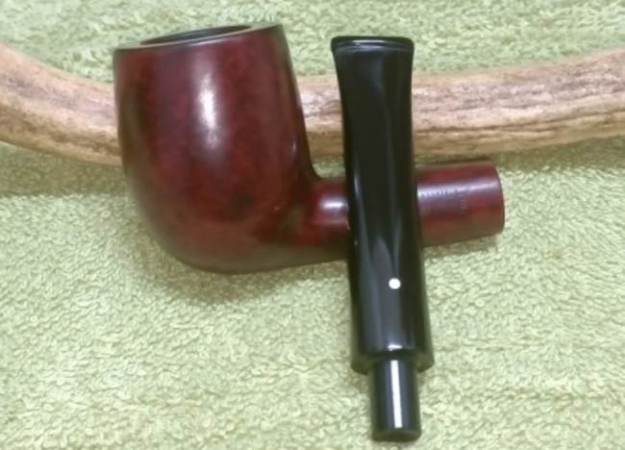
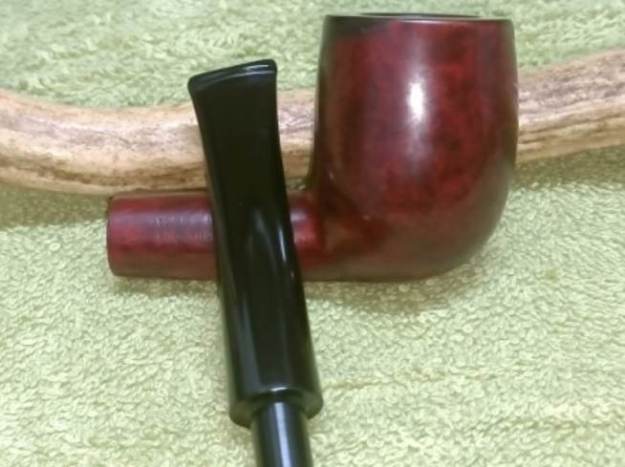
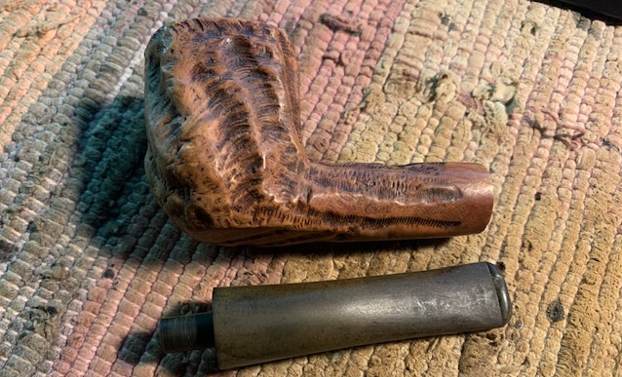
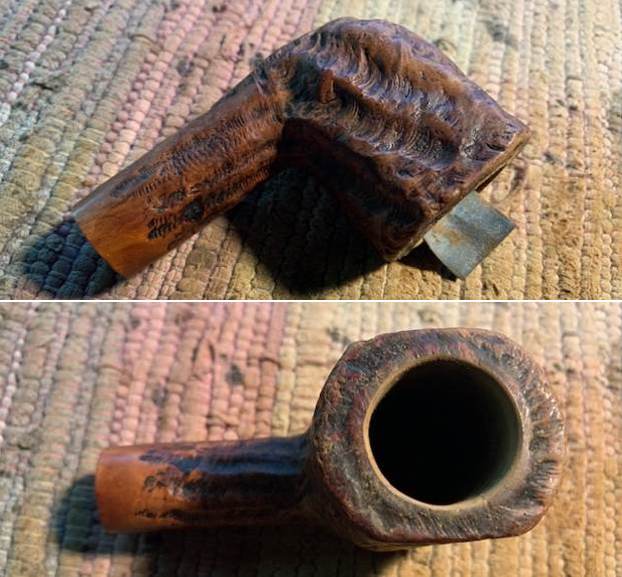
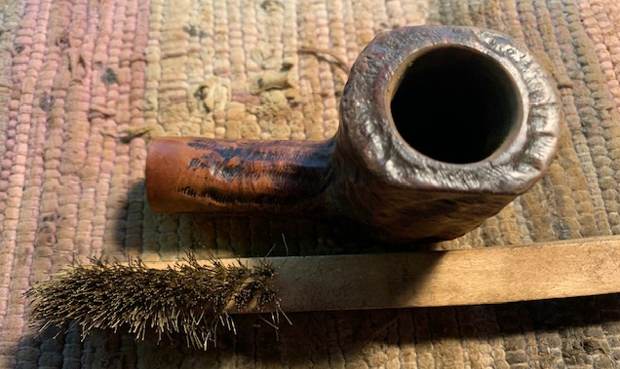
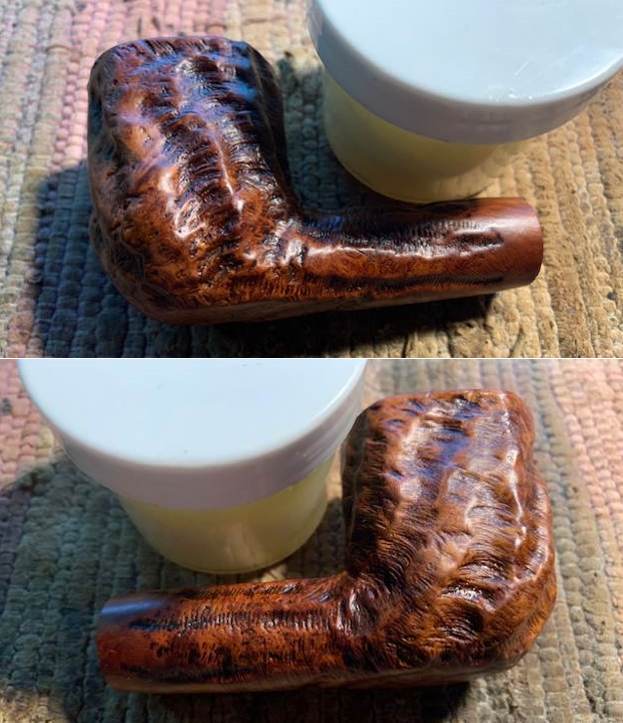
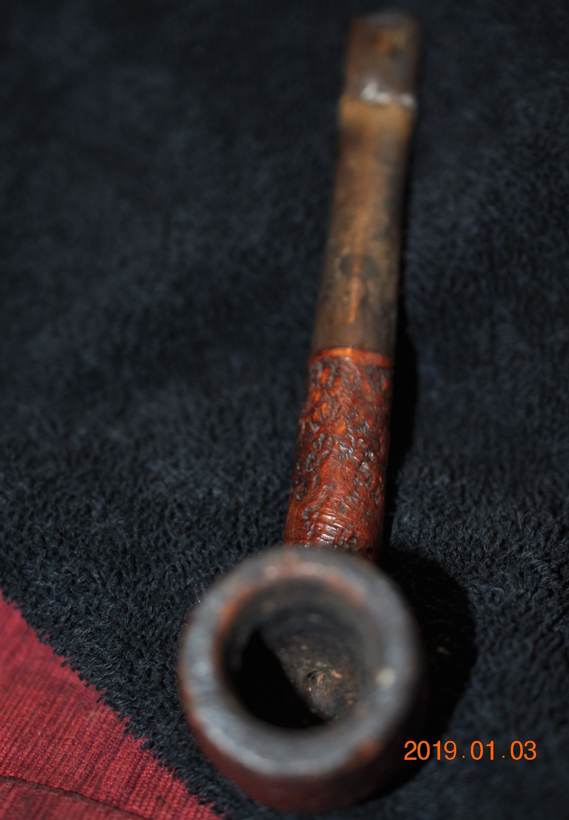
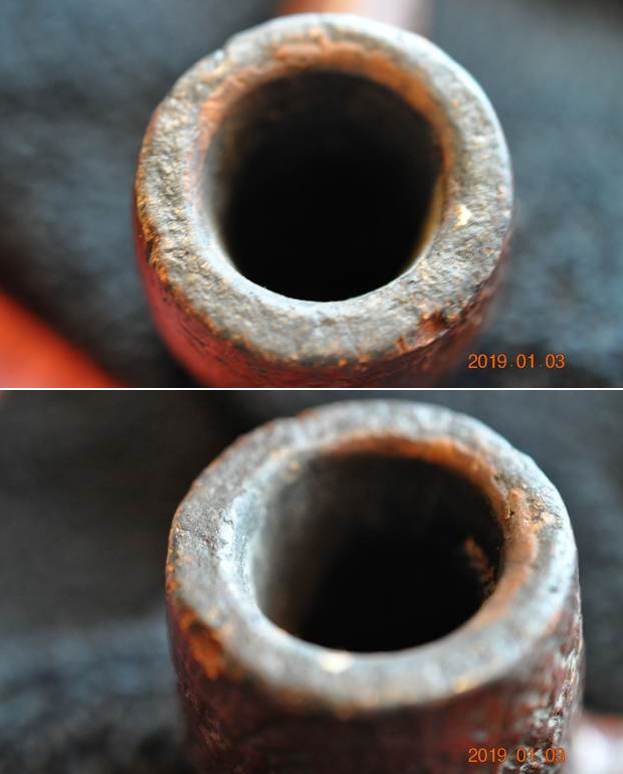
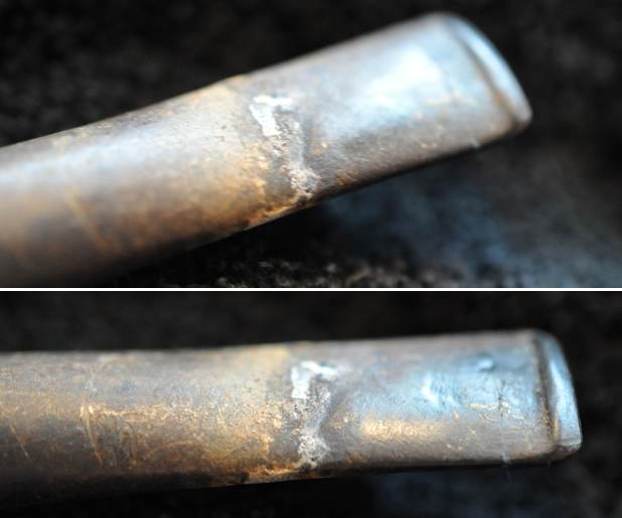
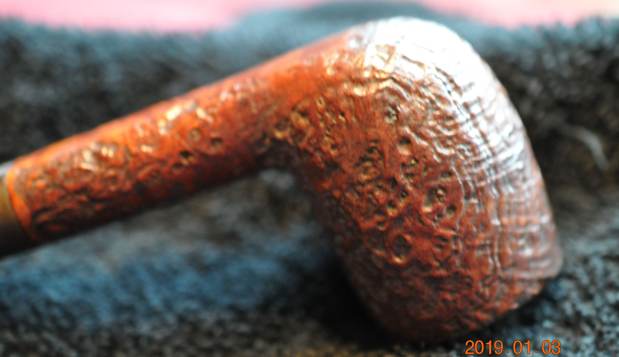
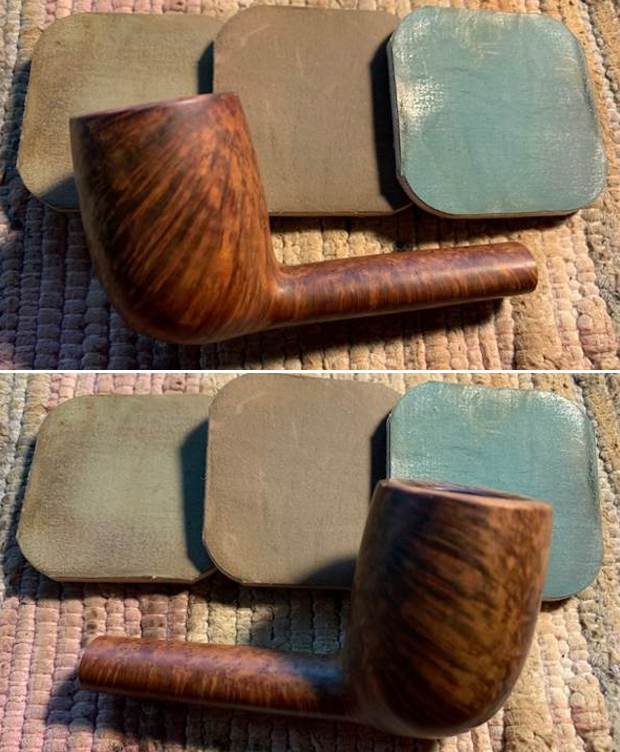
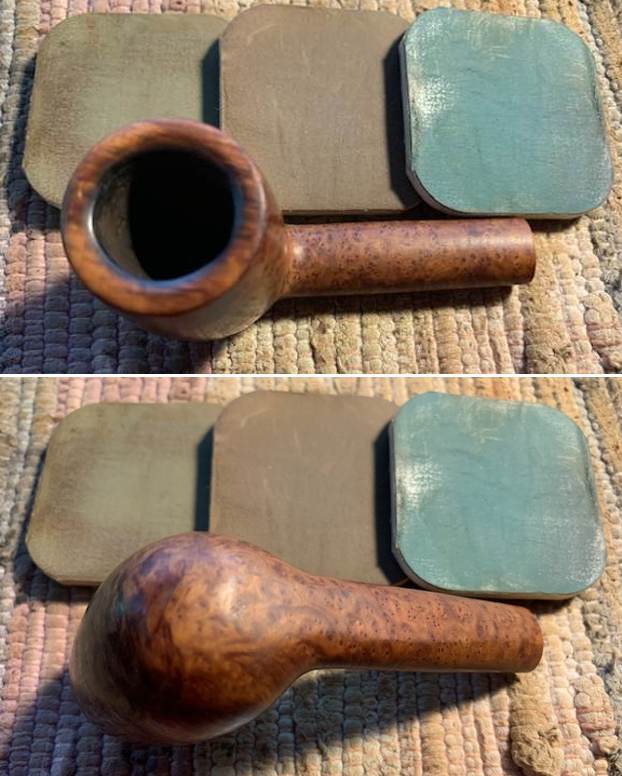
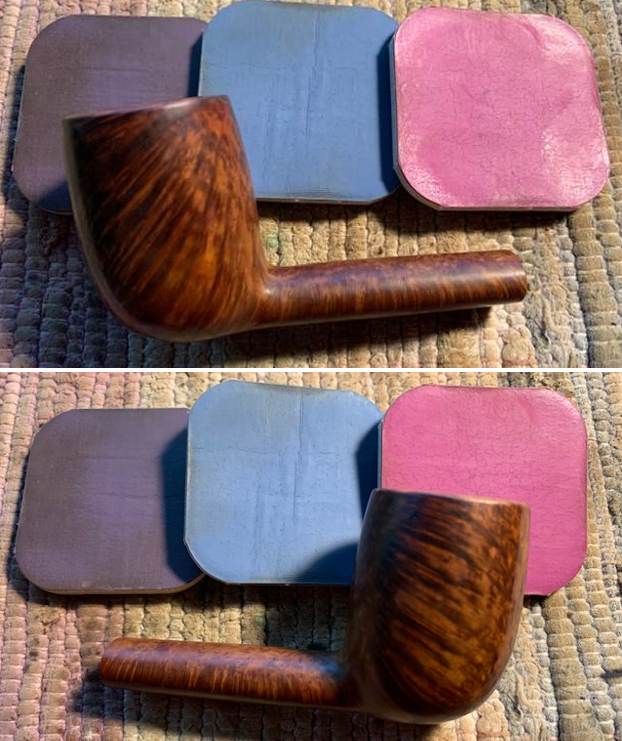
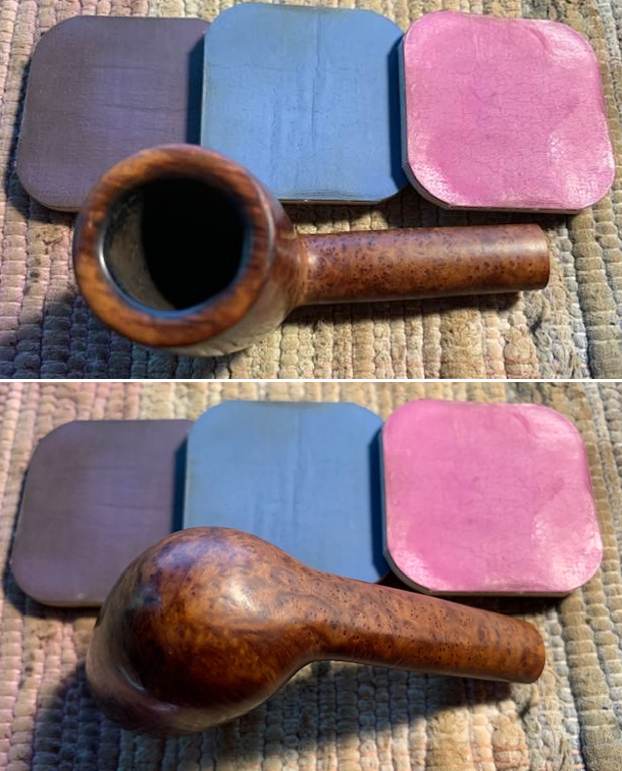
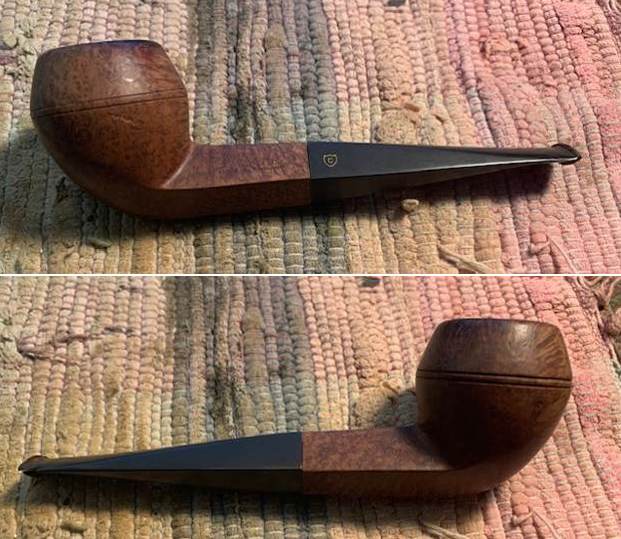
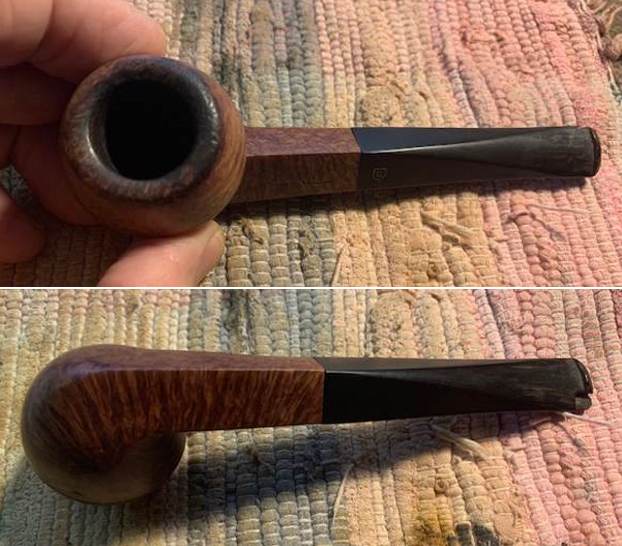
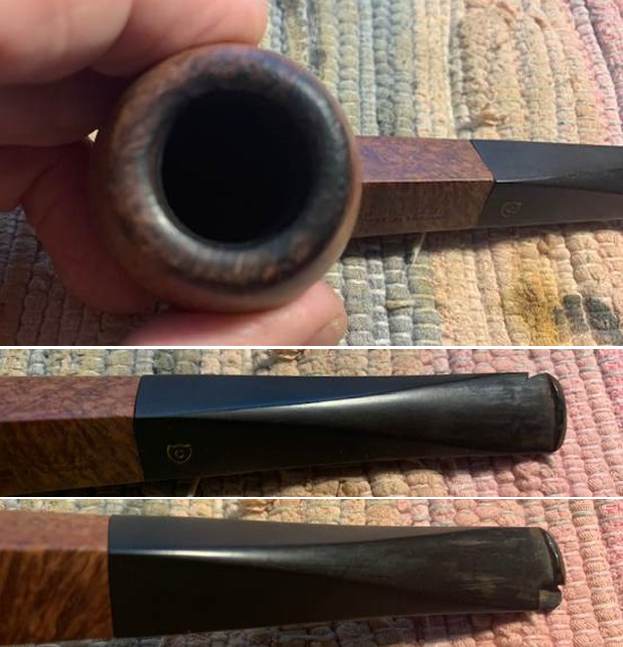
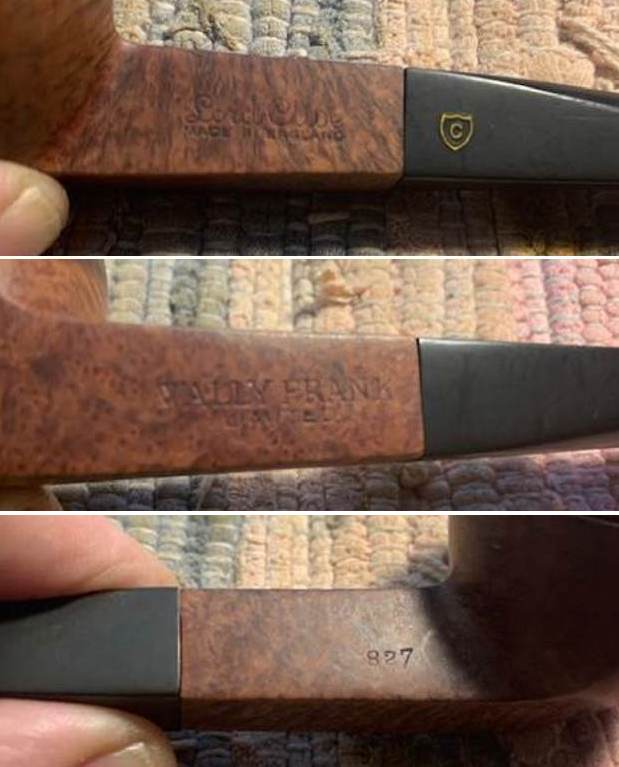
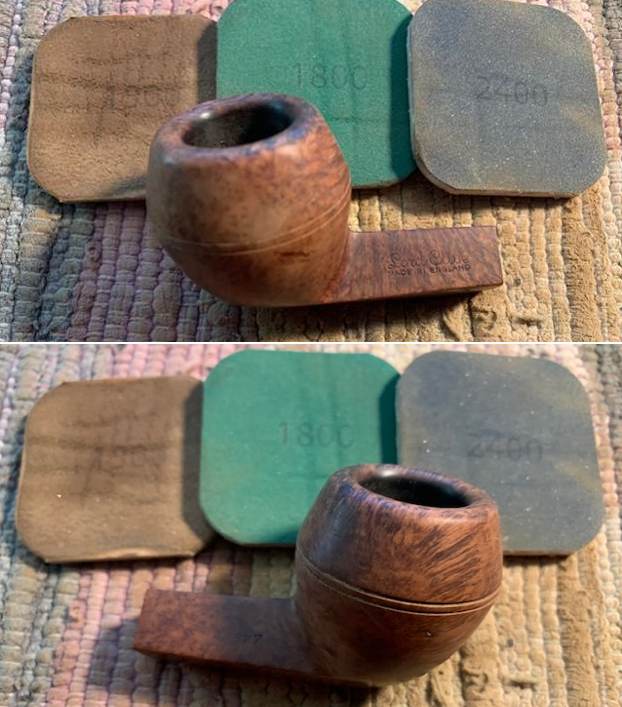
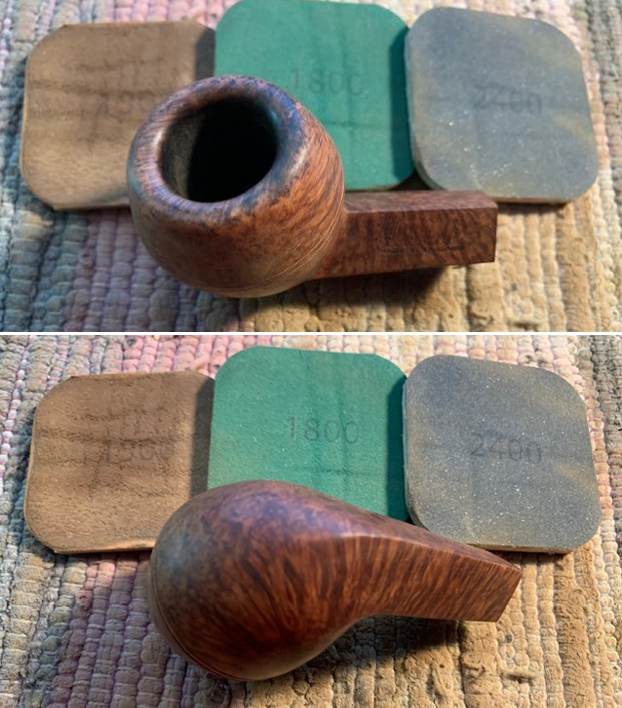
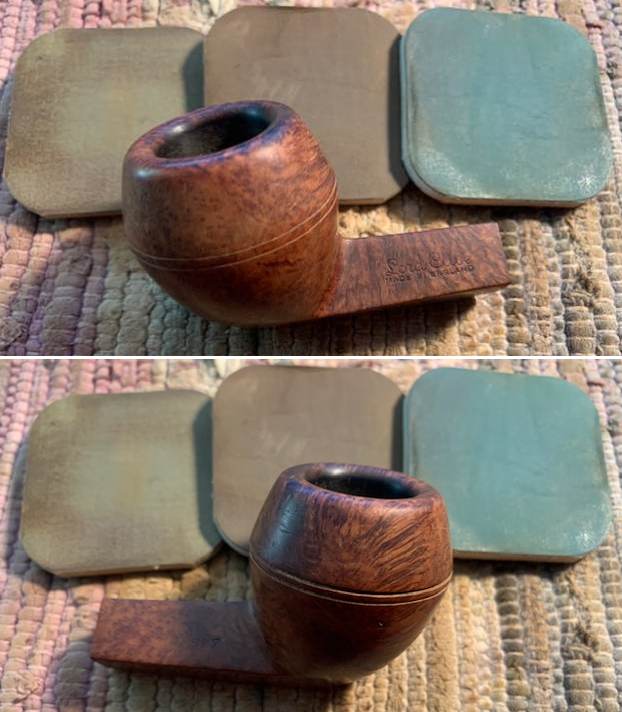
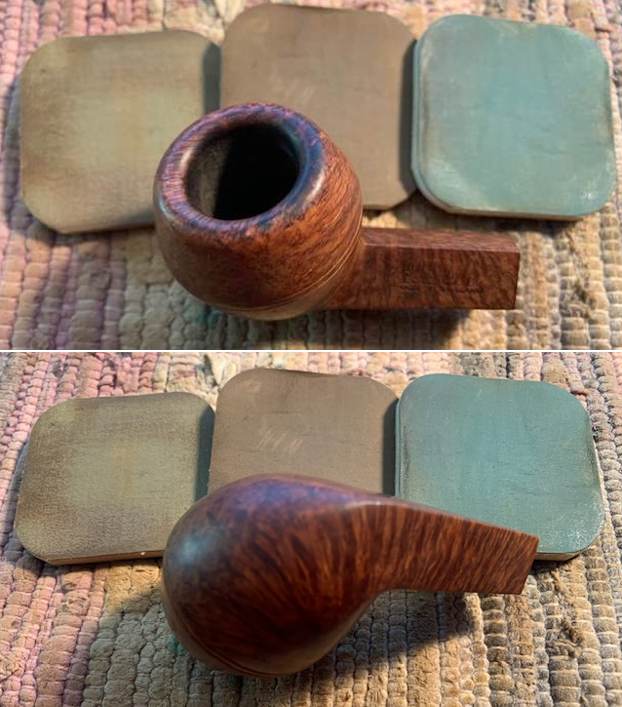
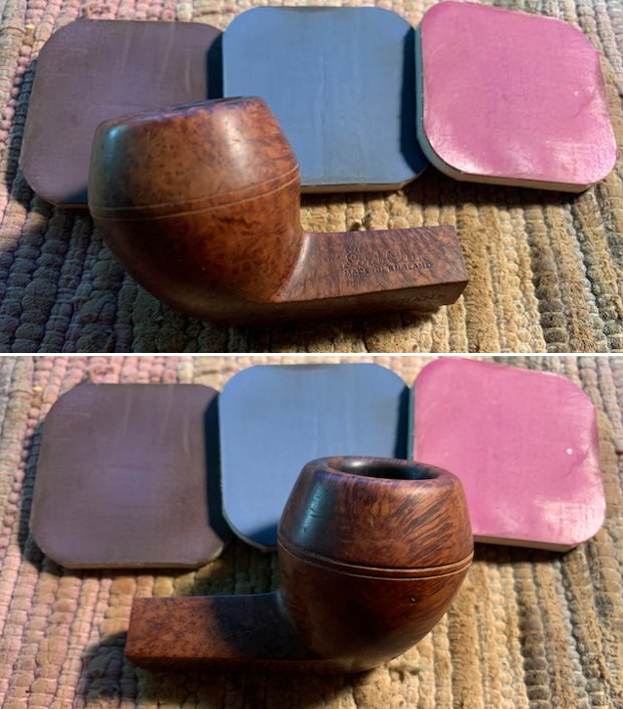
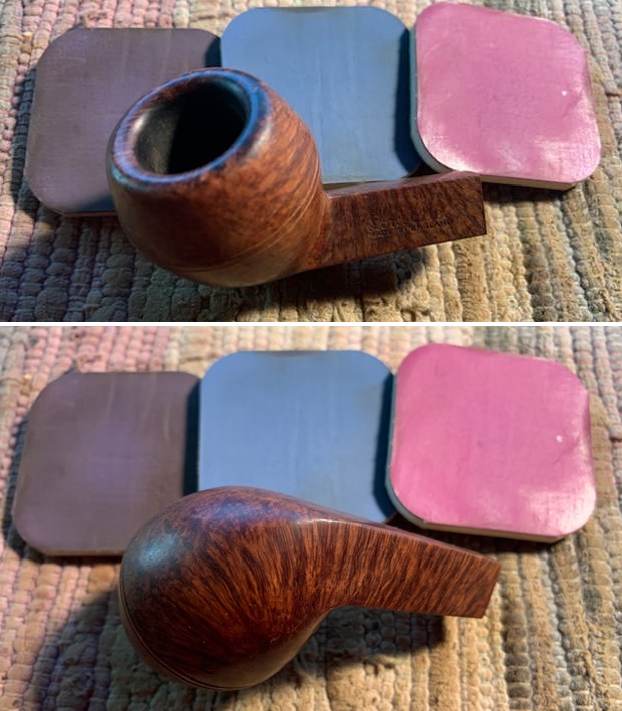
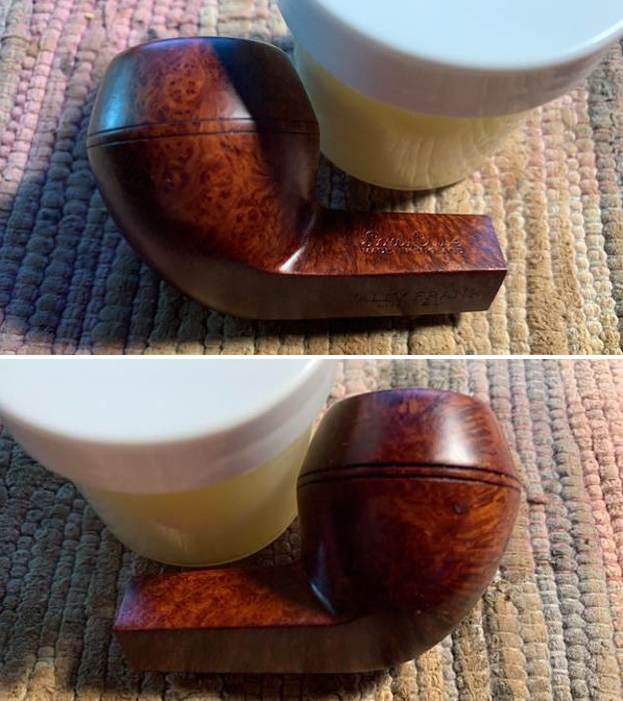
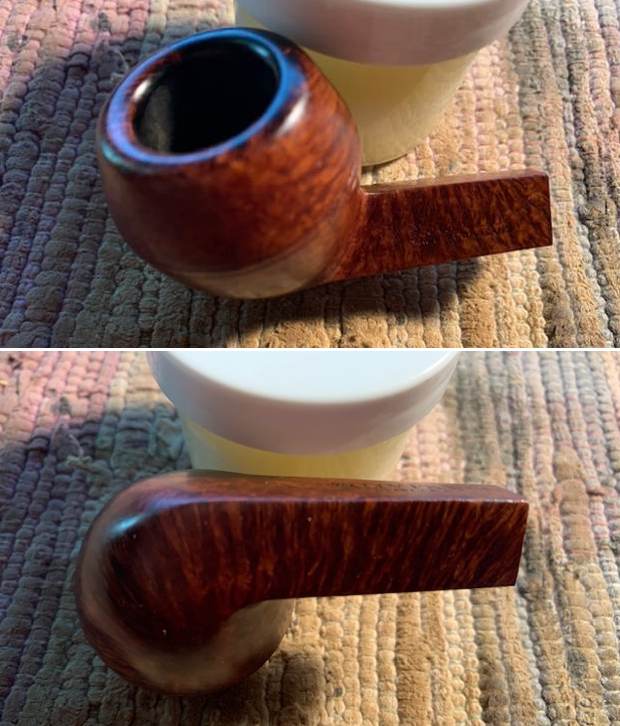
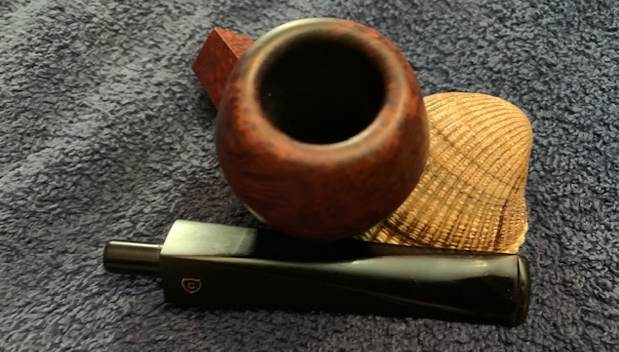
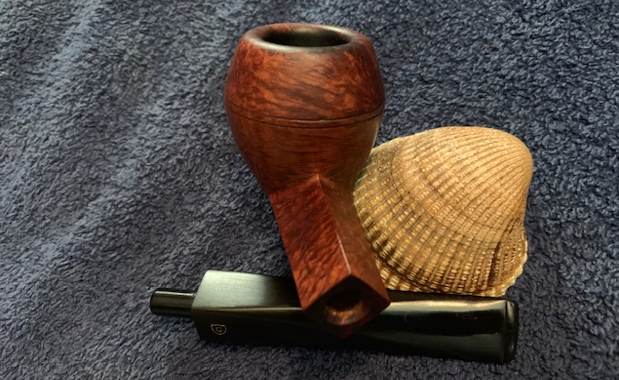
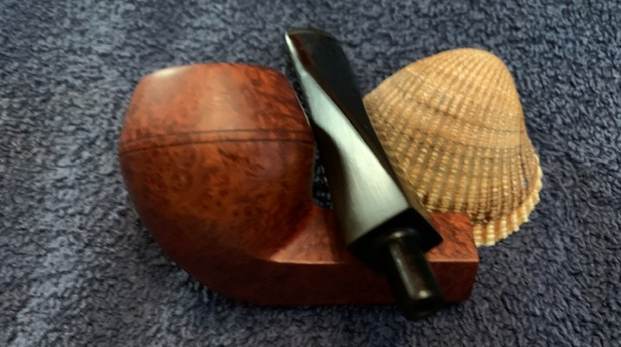
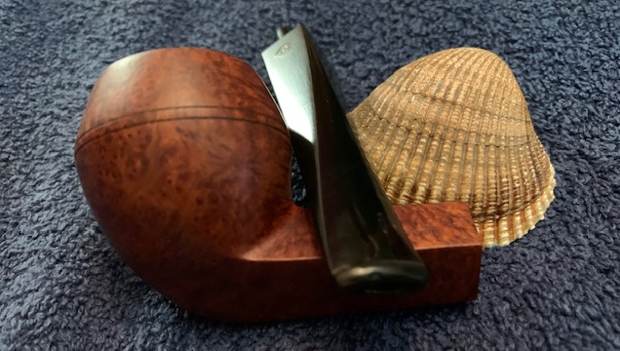
Restoring and Restemming a Made in Ireland Peterson’s Premier Selection 493 Bulldog


Blog by Steve Laug

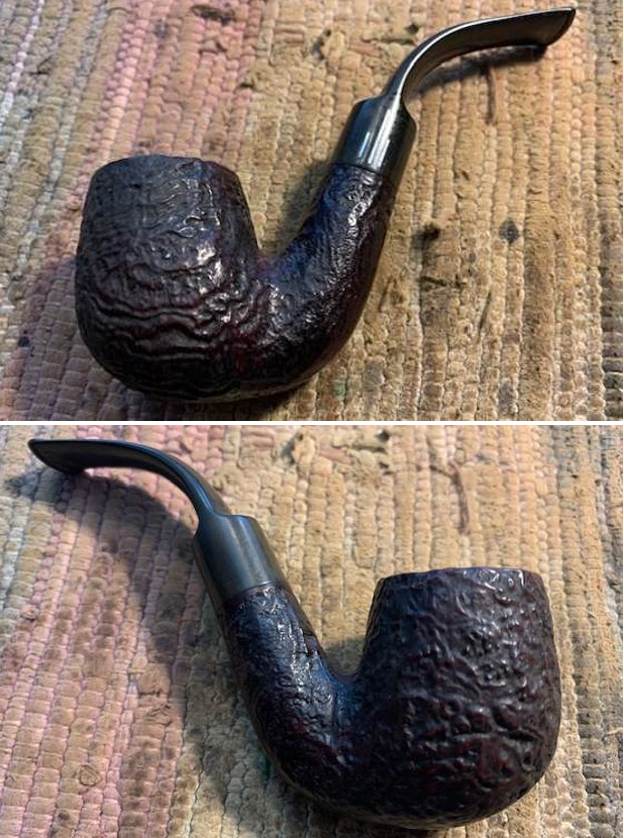
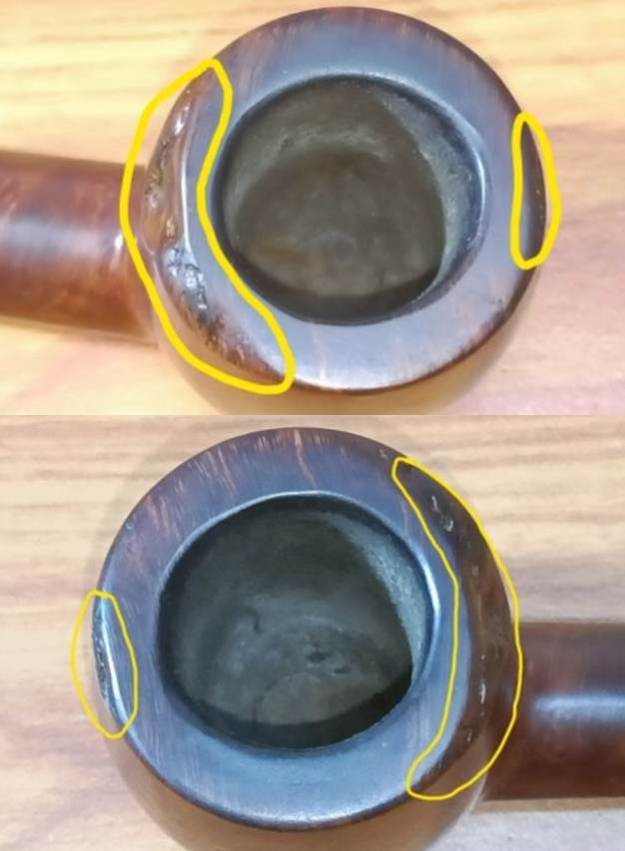
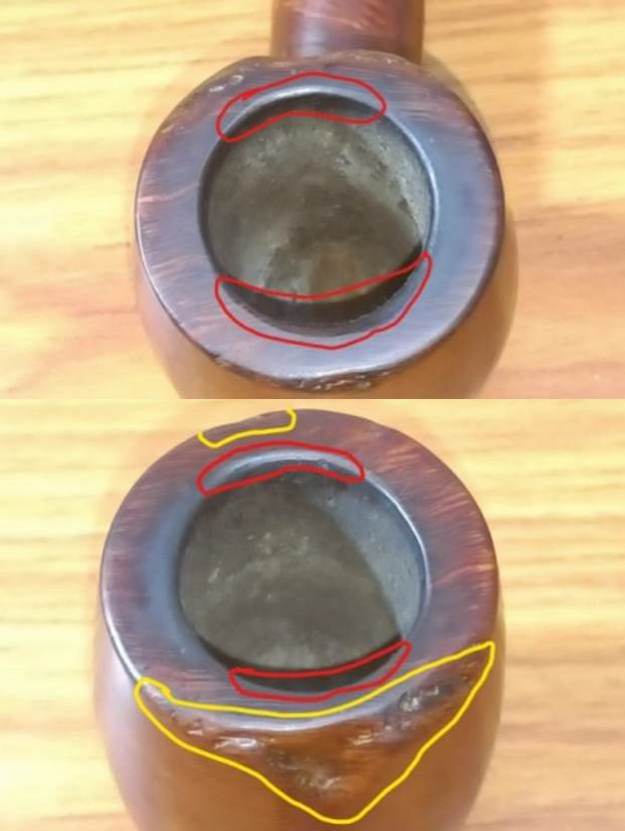
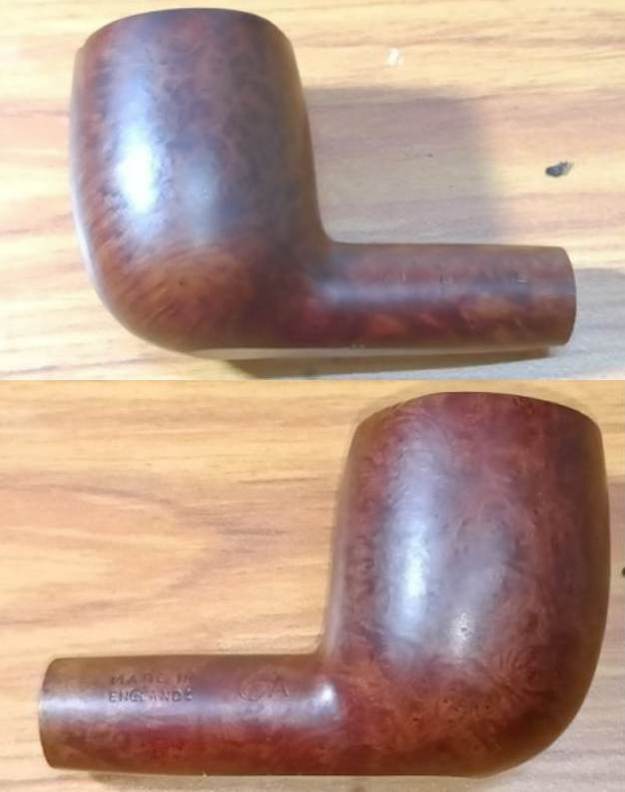
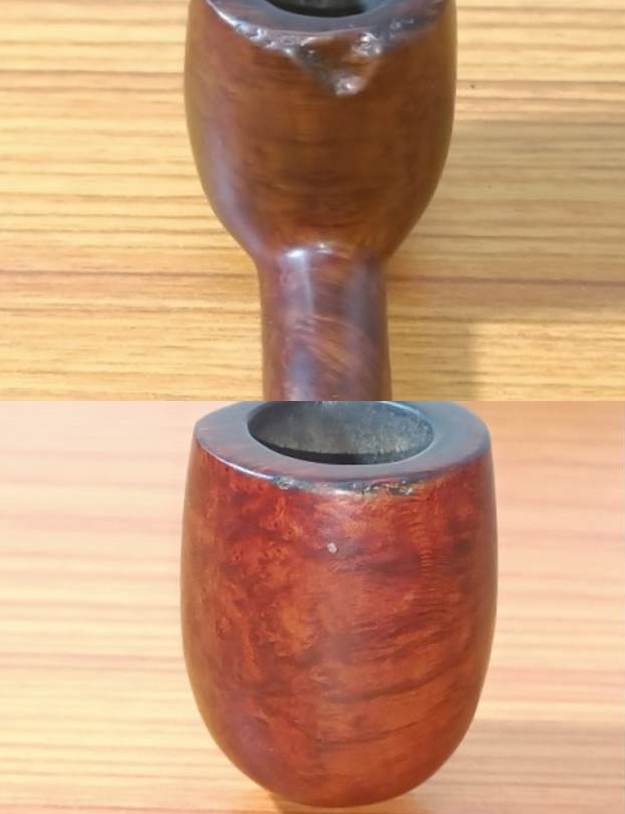
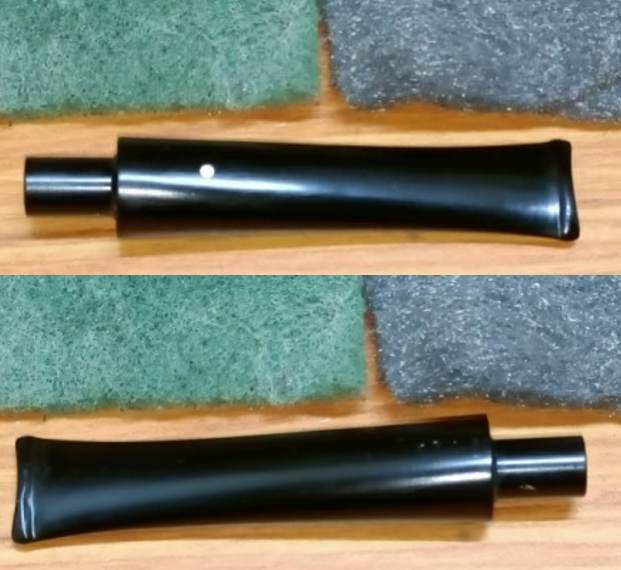
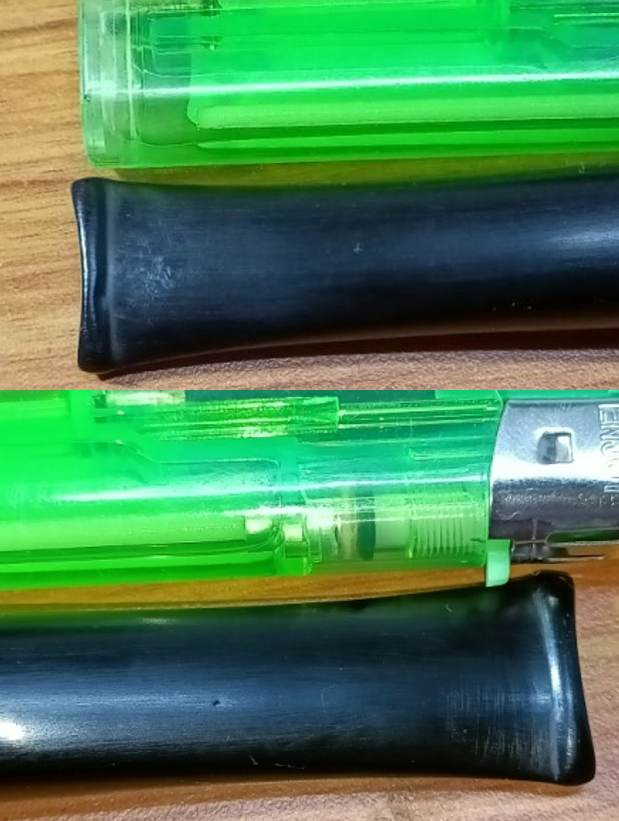
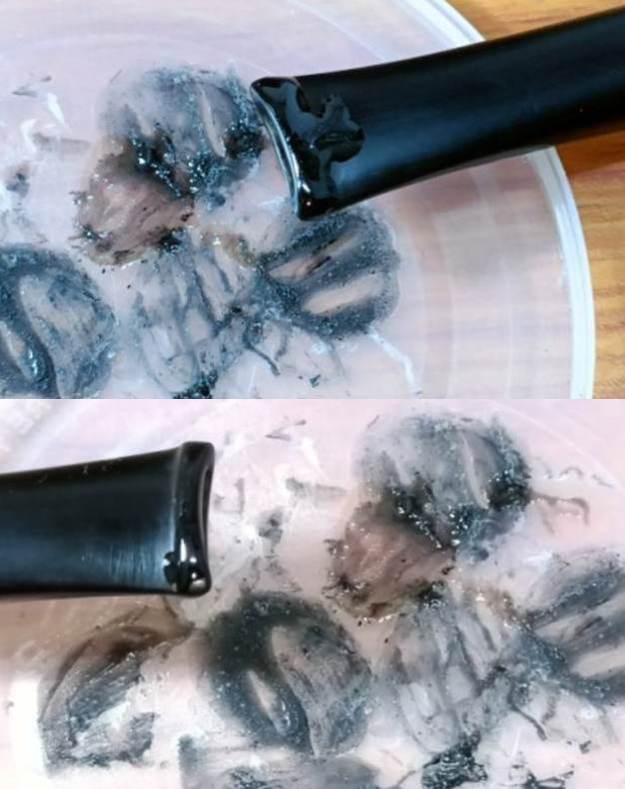
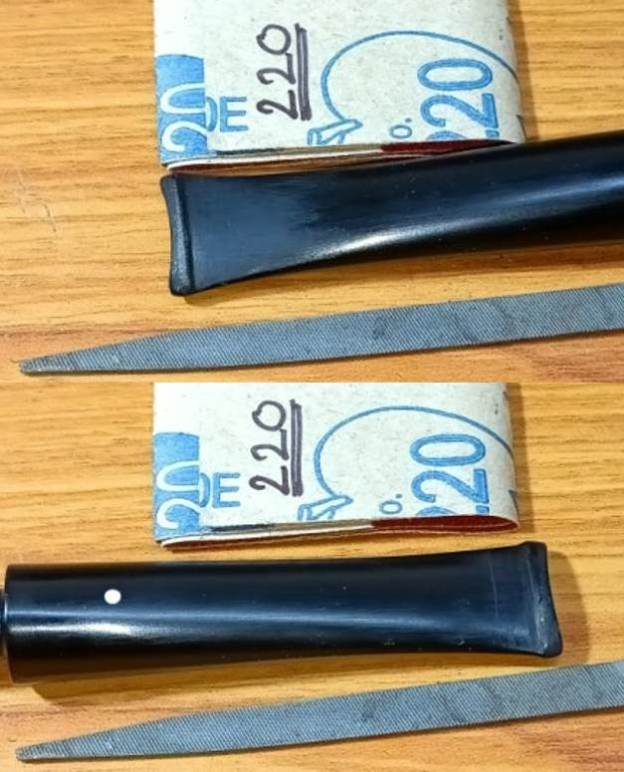
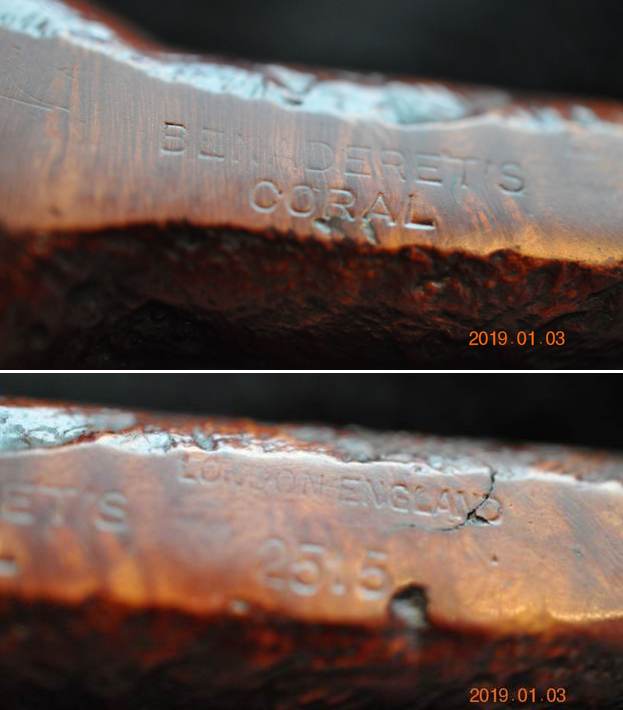
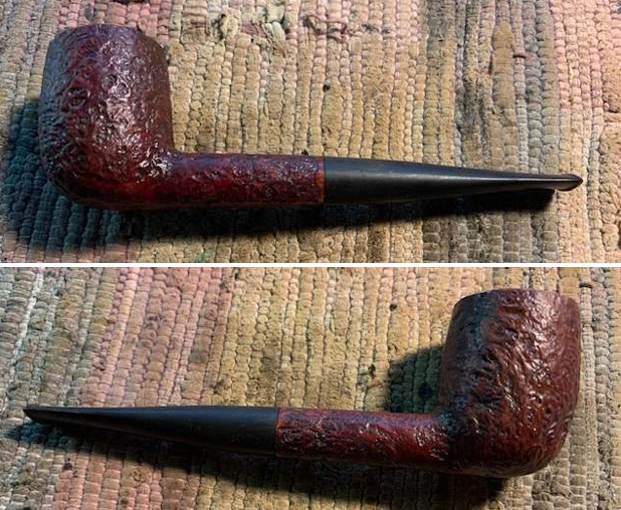
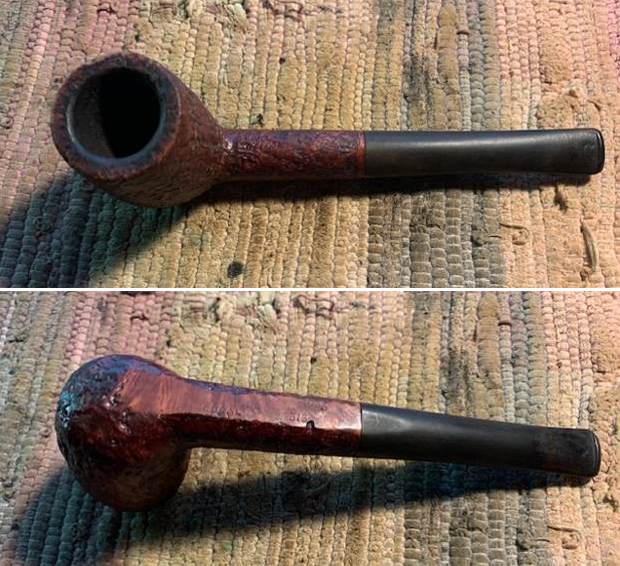
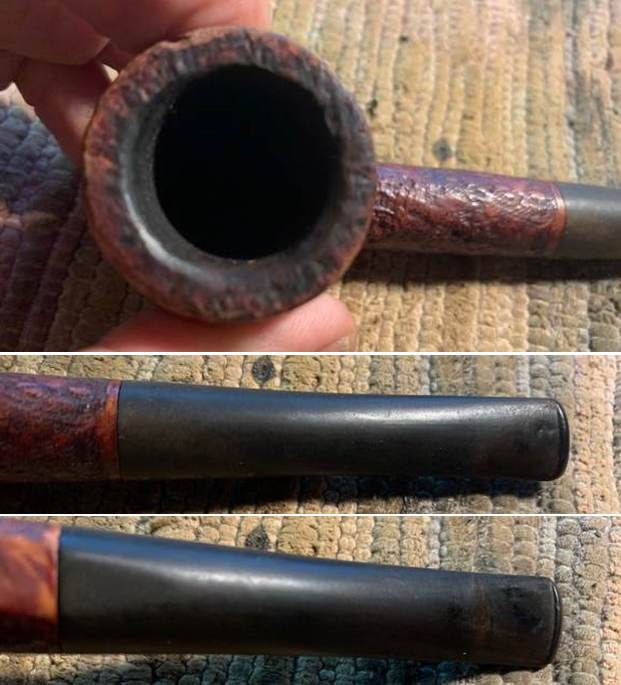
The next pipe was a mess and one that obviously had been “ridden hard and put away wet”. The finish and condition was abysmal. It was definitely a stranger to any cleaning! This one is a smooth Bent Billiard that has a rich coloured finish around the bowl sides and shank under the grit and grime of years. This pipe was purchased from an antique mall on 08/27/21 in Bozeman, Montana, USA. The finish is almost bland looking it is so dirty it was hard to know what to expect once it was cleaned. It was stamped on the  left side of the shank and read Peterson’s [over] Premier Selection. It was stamped to the right of the shank and reads MADE IN IRELAND with the shape number 493 next to the bowl. It was filthy when Jeff brought it to the table. There was a thick cake in the bowl and lava on the back of the rim top and the inner edge of the bowl. The outer edge looked good. The replacement Biteproof stem was oxidized and had a chunk missing from the left side of the stem at the button. There was also tooth marks and chatter on the top and underside on the rest of the stem. Jeff took photos of the pipe before his cleanup work. Jeff took photos of the rim top and stem to show the general condition of the pipe. The bowl is heavily caked and there was a heavy lava overflow on the rim top and the inner edge. The stem is broken, oxidized, calcified and grimy. It was a mess. Jeff took photos of the bowl sides and heel to show the grain that was around this bowl. The grain is quite beautiful around the sides of the bowl and shank. It is a nice looking pipe. He took photos of the sides of the shank to show the stamping. The stamping is readable in the photos below and is as noted above.    I am including the link to the Pipedia’s article on Peterson pipes. It is a great read in terms of the history of the brand (https://pipedia.org/wiki/Peterson). There was a short note toward the bottom of the page about the series. It is definitely referring to the newer line that came out later. I quote:

I turned to Pipedia (https://pipedia.org/wiki/Peterson) to first pin down a date that the pipe was made. I knew that the Made in Ireland stamp would give me that. I quote:

As usual when trying to get accurate facts in regard to Peterson history, something will jump up and get in the way. They are missing many of their records. The following is the best that we can do for a guide to the myriad markings during the period 1922 – 1949. Prior to 1920 it was rare for a country of origin to be stamped on the pipe, just Peterson’s Dublin on the band. After 1921/22, if it is stamped “MADE IN IRELAND” and the “Made in” is stacked over “Ireland” or “MADE IN EIRE” or several other forms, it was made between 1922 and 1938. A considerable number of Peterson pipes were stamped “Irish Free State”. From about 1930 to 1949, most of the pipes (those which were stamped) were stamped “Made in Ireland”.” If the stamp reads “MADE IN IRELAND” in a circle, the pipe was made between 1939 and 1948. These are all “pre-Republic” pipes. I can tell you that the mark “Irish Free State” was adopted in 1922;and replaced by “Eire” in 1937 and then by “Republic of Ireland” in 1949.

That gave me a date for the pipe – it was made between 1922 and 1938 as can be proved by the Made in Ireland stamp on the right side of the shank.

I turned to “The Peterson Pipe” by Mark Irwin and Gary Malmberg to get some background on the Peterson’s Kapp-Royal Pipe. On page 310 it had the following information.

Premier on the shank (c. 1953- c. 1981) A high grade line of Classic Range shapes for the US market introduced by Rogers Imports in their 1953 catalog. Offered in smooth or sandblast finish, a P-lip mouthpiece with an aluminum P. The first occurrence of this logo in the ephemera. The Tan Bark Premier appeared in the ’69 Iwan Ries catalog. COM of Made in over Ireland, a PREMIER stamp also appears over SELECTION and will be distinguished by an inset brass P on the mouthpiece. See system for SYSTEM over PREMIER stamp.

Judging from the Made in Ireland stamp, the pipe I am working on is probably made between 1922-38. The contrary piece of the puzzle is that the second red highlight above dates it to between 1953 and 1981. It is missing the original P-lip stem and the P emblem on the stem side. So once more we enter the realm of Peterson’s mysteries. Anyone have any ideas on this one.

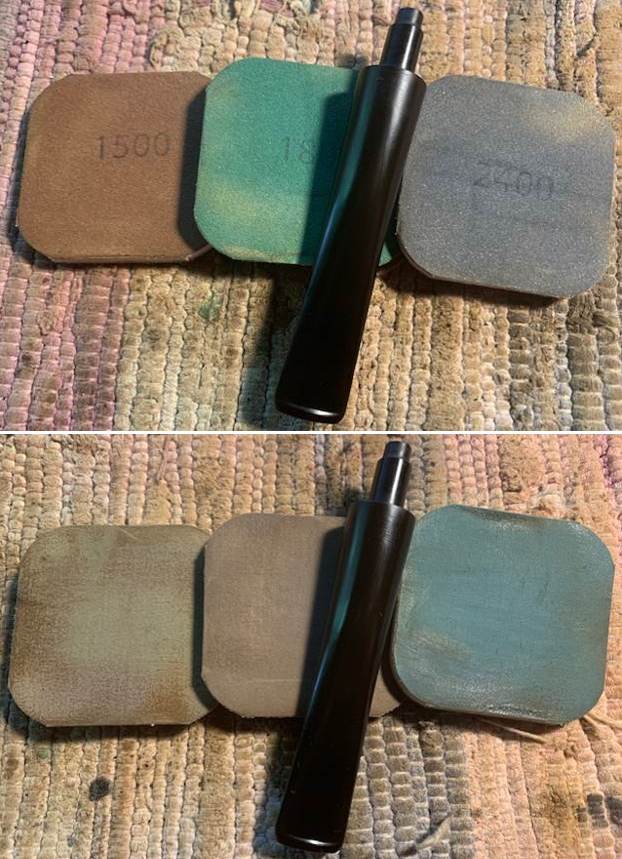
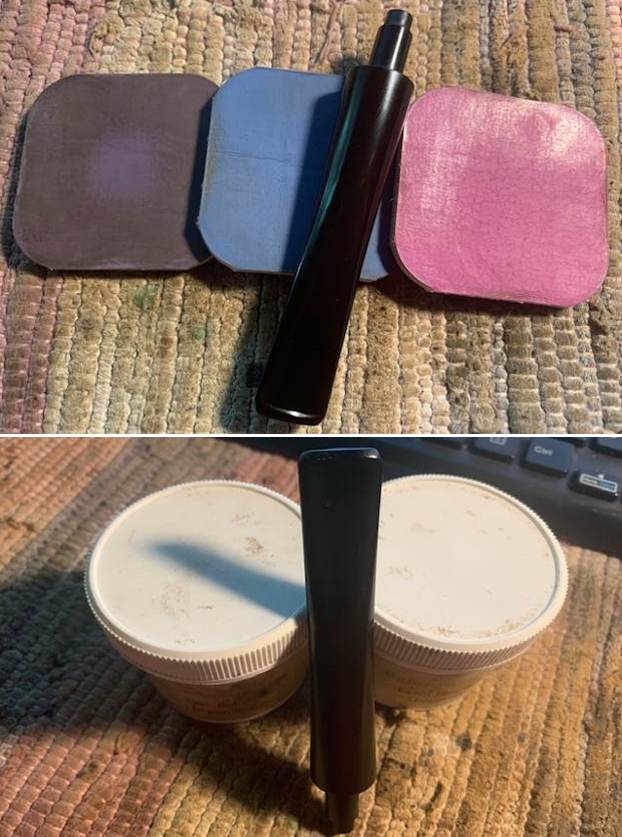
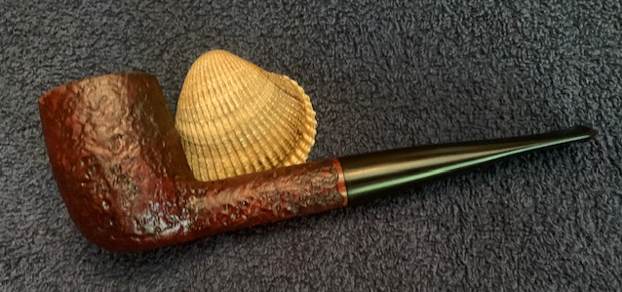
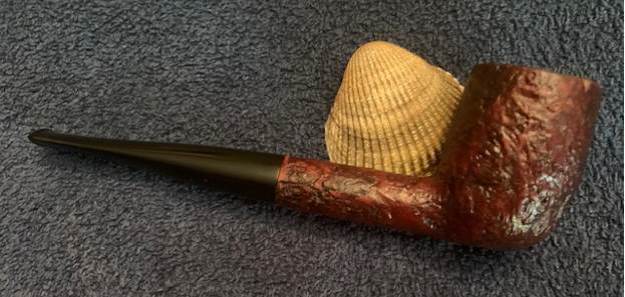
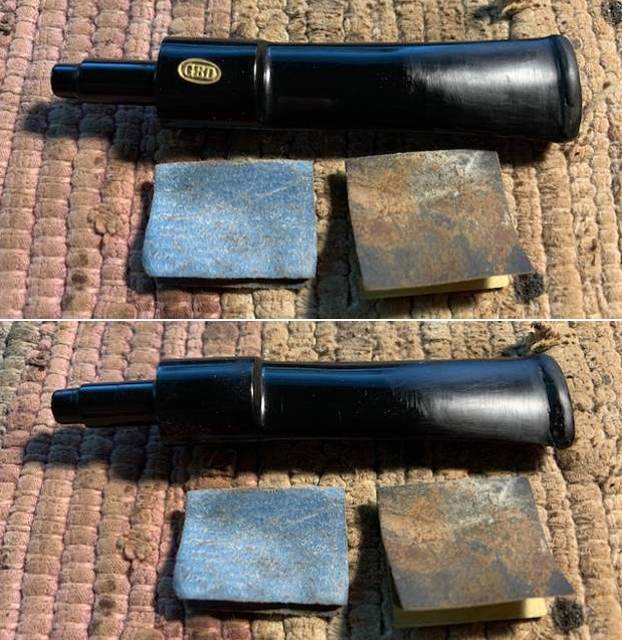
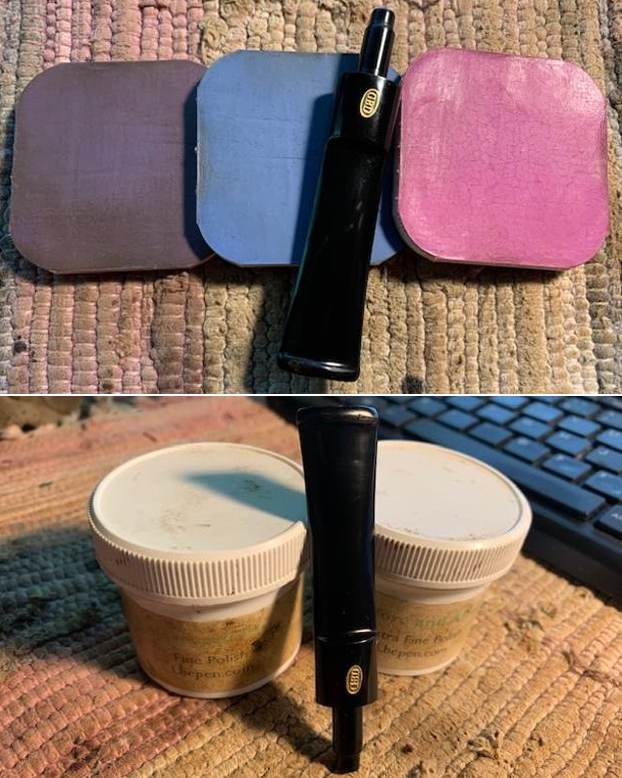
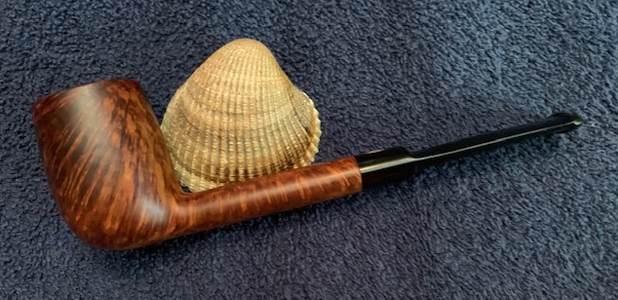
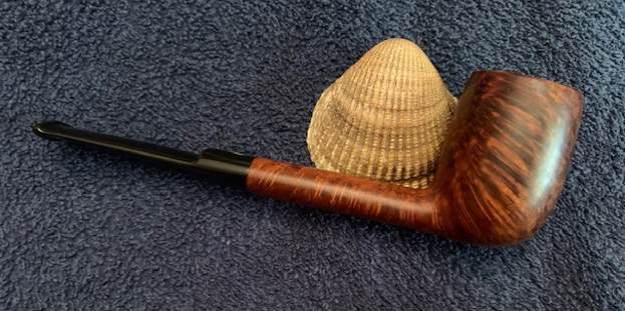
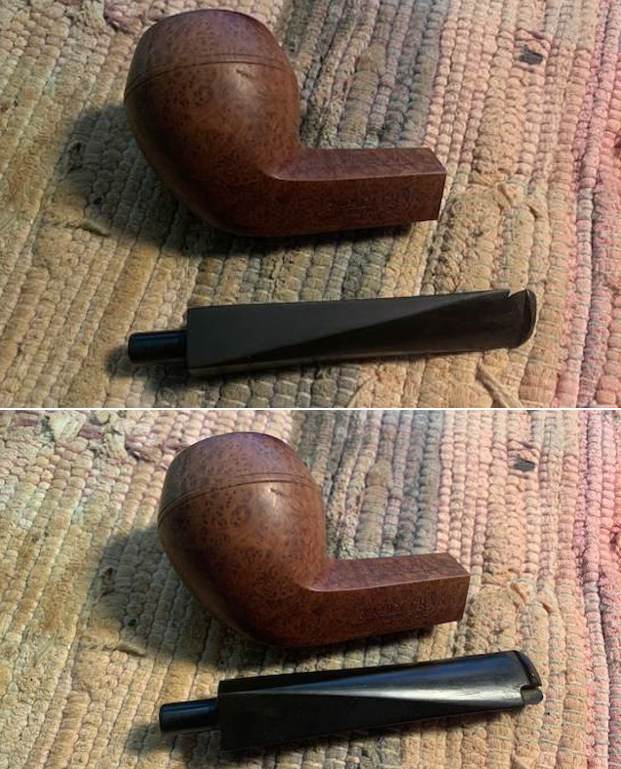
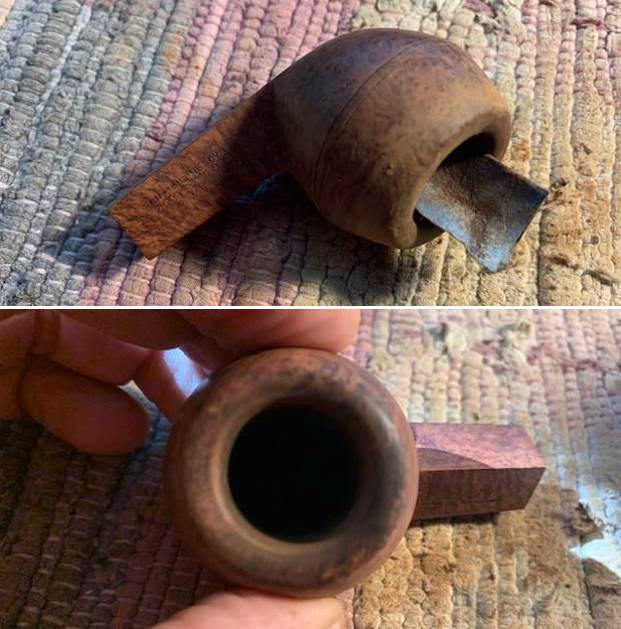
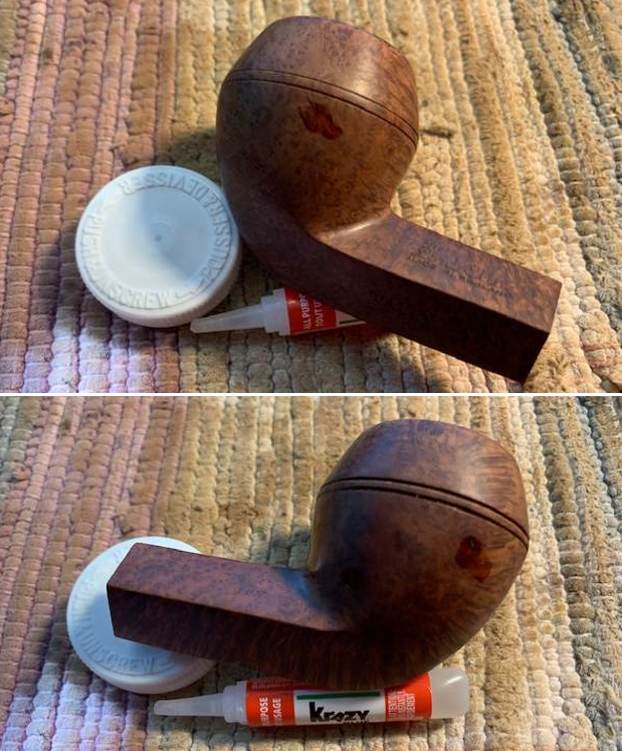
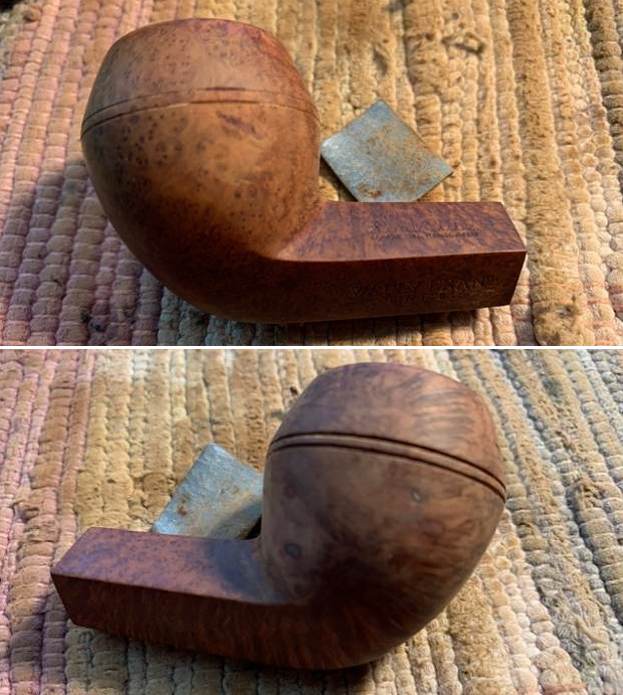
I was utterly surprised when I took this pipe out of the box and compared it to the before photos. Jeff had done a great job cleaning up the pipe as usual. He reamed the pipe with a PipNet reamer and cut back the cake back to the bare briar. He cleaned up the walls with a Savinelli Fitsall Pipe Knife. Surprisingly the walls looked unscathed from the heavy cake. He scrubbed the interior of the bowl and shank with pipe cleaners, cotton swabs and alcohol to remove the tars and oils. He scrubbed the exterior of the pipe with Murphy’s Oil Soap and a tooth brush to remove the grime from the finish. He worked on the rim top lava and darkening with the soap and tooth brush. Since the stem was ruined he did not clean it. He sent the ruined stem along so that I could use it to fit another stem. I took photos of the pipe when it arrived. The cleaned up rim top looked very good around the edges and the top. I took some close up photos of the rim top and edges to show how well it had cleaned up. I also took close up photos of the stem to show the damage on the left side of the stem near the button.I took photos of the stamping on the sides of the shank. It reads as noted above. I removed the stem and went through my stems and found one that matched the broken one very well. I would need to reduce the diameter of the tenon and then I would work the stem to fit correctly.I started my work on this pipe by fitting the new stem to the shank. I had to reduce the tenon with 220 grit sandpaper to fit the shank. As with all diamond shank pipes, the sides were not equal in measurement so I had to shave off some of the vulcanite or some of the briar to get a proper fit to the shank. I did the work with some 220 grit sandpaper until the transition was smooth all the way around the shank and stem. There is more work to do but it is getting there. With the stem fit I removed it and turned my attention to the bowl. I know some of you would have kept working on the stem but I needed a change of pace so I went to the bowl for awhile to address this darkening on the rim top and edges. I used a folded piece of 220 grit sandpaper to smooth out the inner edge and work on the darkening on the top.I polished the briar and worked to blend in the sanded areas on the rim top and shank end with the surrounding briar with micromesh sanding pads. I dry sanded with 1500-12000 grit pads. I wiped the briar down after each pad with a damp cloth to remove the dust and assess progress. I worked some Before & After Restoration Balm into the surface of the briar with my fingertips to clean, enliven and protect the briar. I worked it into the twin rings around the cap with a shoe brush. I let the balm sit for 15 minutes and then buffed with a cotton cloth to raise the shine. The photos show the bowl at this point in the restoration process. I set the bowl aside and turned my attention back to the stem. Started by opening up the slot in the button with a small saw. Once I had it the way I wanted I turned to the rest of the stem. I worked on the shaping and smoothing out the sanding marks with 220 grit sandpaper and starting polishing it with 400 grit wet dry sandpaper. I cleaned the inside of the stem with alcohol and pipe cleaners. The stem was very dirty so it took a bit of work to get the oils and tars out of it. Once it was cleaned it smelled very good. I polished the stem with micromesh sanding pads – wet sanding with 1500-12000 grit sanding pads. I wiped it down after each sanding pad with Obsidian Oil. I polished it with Before & After Pipe Stem Polish – both Fine and Extra Fine. I am excited to finish this beautifully grained, restemmed Peterson’s Premier Selection 493 Straight Bulldog. I put the pipe back together and buffed it with Blue Diamond on the buffing wheel. I gave the bowl and the stem multiple coats of carnauba wax. I hand buffed the pipe with a clean buffing pad to raise the shine. It is fun to see what the polished bowl looks like with beautiful mixed grain all around it. The Bulldog looks great with the new replacement black vulcanite stem. This smooth Classic Peterson’s Premier Selection Bulldog is great looking and the pipe feels great in my hand. It is light and well balanced. Have a look at it with the photos below. The dimensions are Length: 5 ¾ inches, Height: 1 ½ inches, Outside diameter of the bowl: 1 ¾ inches, Chamber diameter: ¾ of an inch. The weight of the pipe is 38 grams/1.34 ounces. It turned out to be a beautiful pipe. I will be putting on the rebornpipes store in the Irish Pipe Makers Section. Thanks for your time and as Paresh says each time – Stay Safe.
Restoring a Republic Era Peterson’s “Kapp-Royal” 69 Bent Billiard


Blog by Steve Laug

The next pipe was a mess and one that obviously had been “ridden hard and put away wet”. The finish and condition was abysmal. It was definitely a stranger to any cleaning! This one is a smooth Bent Billiard that has a rich coloured finish around the bowl sides and shank under the grit and grime of years. The shank end did not have a ferrule but had a carved finish on the end. This pipe was purchased on 06/17/21 from a fellow in Brazil, Indiana, USA. The finish is almost bland looking it is so dirty it was hard to know what to expect once it was cleaned. It was stamped on the  left side of the shank and read Peterson’s [over] “Kapp-Royal”. It was stamped to the right of the shank and reads MADE IN THE REPUBLIC OF IRELAND (three lines) with the shape number 69 next to the bowl. The underside of the shank was flattened like it is in a Dunmore pipe. It enables the pipe to be a sitter. It was filthy when Jeff brought it to the table. There was a thick cake in the bowl and lava on the back of the rim top and the inner edge of the bowl. The outer edge looked good. The stem was oxidized and had light tooth marks and chatter on the top and underside on and near the button. Jeff took photos of the pipe before his cleanup work. Jeff took photos of the rim top and stem to show the general condition of the pipe. The bowl is heavily caked and there was lava overflow on the back of the rim top and the inner edge. The stem is oxidized, calcified and grimy. It has some tooth marks on the top and underside near and on the surface of the button itself. Jeff took photos of the bowl sides and heel to show the grain that was around this bowl. The grain is quite beautiful around the sides of the bowl and shank. It is a nice looking pipe. He took photos of the sides of the shank to show the stamping. The stamping is readable in the photos below and is as noted above. I am including the link to the Pipedia’s article on Peterson pipes. It is a great read in terms of the history of the brand (https://pipedia.org/wiki/Peterson). There was a short note toward the bottom of the page about the series. It is definitely referring to the newer line that came out later. I quote:

Kapp Royal Series: The Kapp Royal series is a relatively new one, but has a well establish history in Europe. They are a handsome colourful series with a good quality natural stain briar and bright orange Lucite stems and occasionally Cumberland.

I turned to “The Peterson Pipe” by Mark Irwin and Gary Malmberg to get some background on the Peterson’s Kapp-Royal Pipe. On page 306 it had the following information.

Kapp-Royal (1969, 1976-79, c1988, 2004) First appearance  as a line introduced 1969. In 1976-79 Iwan Ries catalog offering identical with non-System Dunmore line. Second appearance in the late eighties as a high-grade Italian market line with briar band inset into the mouthpiece. From c.2004, Italian line available in US as high grade, orange finish, sterling band, amber-colored acrylic fishtail stem or sometimes vulcanite, embedded aluminum P.

Judging from the description above, the pipe I am working on is probably made between 1976-79. It fits the description above in red that says it is “identical with non-System Dunmore line”. The Made in the Republic of Ireland stamp on the right side of the stamp puts it in the Republic Era 1950-1989.

I was utterly surprised when I took this pipe out of the box and compared it to the before photos. Jeff had done a great job cleaning up the pipe as usual. He reamed the pipe with a PipNet reamer and cut back the cake back to the bare briar. He cleaned up the walls with a Savinelli Fitsall Pipe Knife. Surprisingly the walls looked unscathed from the heavy cake. He scrubbed the interior of the bowl and shank with pipe cleaners, cotton swabs and alcohol to remove the tars and oils. He scrubbed the exterior of the pipe with Murphy’s Oil Soap and a tooth brush to remove the grime from the finish. He worked on the rim top lava and darkening with the soap and tooth brush. He scrubbed the inside of the stem with alcohol and pipe cleaners. He scrubbed the exterior of the stem with Soft Scrub and then soaked it in Briarville’s Deoxidizer. He washed it off with warm water to remove the Deoxidizer. The pipe looked far better when it arrived. The cleaned up rim top looked very good around the edges and the top. I took some close up photos of the rim top and edges to show how well it had cleaned up. I also took close up photos of the stem to show the light tooth marks on the surface near and on the button itself.I took photos of the stamping on the sides of the shank. It reads as noted above.I removed the stem and took a photo of the pipe to have a look at the parts and overall look.I started my work on this pipe polishing the briar with micromesh sanding pads – dry sanding with 1500-12000 grit sanding pads. I wiped the bowl down with a damp cloth after each sanding pad. I worked some Before & After Restoration Balm into the surface of the briar with my fingertips to clean, enliven and protect the briar. I let the balm sit for 15 minutes and then buffed with a cotton cloth to raise the shine. The photos show the bowl at this point in the restoration process. I set the bowl aside and worked on the stem. I scrubbed it down with Soft Scrub to deal with the remaining oxidation on the vulcanite. It took a bit of scrubbing but I was able to remove it.I polished the stem with micromesh sanding pads – wet sanding with 1500-12000 grit sanding pads. I wiped it down after each sanding pad with Obsidian Oil. I polished it with Before & After Pipe Stem Polish – both Fine and Extra Fine. I am excited to finish this beautifully grained Peterson’s Kapp-Royal 69 Bent Billiard. I put the pipe back together and buffed it with Blue Diamond on the buffing wheel. I gave the bowl and the stem multiple coats of carnauba wax. I hand buffed the pipe with a clean buffing pad to raise the shine. It is fun to see what the polished bowl looks like with beautiful mixed grain all around it. The polished nickel band is losing some of the plating but it still looks great with the black vulcanite stem. This smooth Classic Peterson’s Kapp-Royal Bent Billiard is great looking and the pipe feels great in my hand. It is light and well balanced. Have a look at it with the photos below. The dimensions are Length: 5 ½ inches, Height: 1 ¾ inches, Outside diameter of the bowl: 1 ¼ inches, Chamber diameter: ¾ of an inch. The weight of the pipe is 43 grams/1.52 ounces. It turned out to be a beautiful pipe. I will be putting on the rebornpipes store in the Irish Pipe Makers Section. Thanks for your time and as Paresh says each time – Stay Safe.

Restoring a Made in Ireland Shamrock +69 Bent Billiard


Blog by Steve Laug

The next pipe was a mess and one that obviously had been “ridden hard and put away wet”. The finish and condition was abysmal. It was definitely a stranger to any cleaning! This one is a smooth Bent Billiard that has a rich coloured finish and great grain around the bowl sides and shank under the grit and grime of years. This pipe was purchased on 06/05/21 from a fellow in Brazil, Indiana, USA. The finish is almost bland looking it is so dirty it was hard to know what to expect once it was cleaned. It was stamped on the  left side of the shank and read SHAMROCK. It was stamped to the right of the shank and reads MADE IN IRELAND (in a circle) with the shape number +69 next to the bowl. It was filthy when Jeff brought it to the table. There was a thick cake in the bowl and lava on the rim top and the inner edge of the bowl. There were nicks in the outer edge all the way around. There were burn marks on the outer edge on the right and left front of the bowl. The stem was oxidized and had light tooth marks and chatter on the top and underside on and near the button. Jeff took photos of the pipe before his cleanup work. Jeff took photos of the rim top and stem to show the general condition of the pipe. The bowl is heavily caked so it is hard to know the condition of the edges under the lava overflow. The burn marks are also visible on the outer edge of the bowl. The stem is oxidized, calcified and grimy. It has some tooth marks on the top and underside near and on the surface of the button itself. Jeff took photos of the bowl sides and heel to show the grain that was around this bowl. You can see the sandpits and nicks in the briar in the photos below. Even so, it is a nice looking pipe. He took photos of the sides of the shank to show the stamping. The stamping is readable in the photos below and is as noted above. I am including the link to the Pipedia’s article on Peterson pipes. It is a great read in terms of the history of the brand (https://pipedia.org/wiki/Peterson).

I turned to “The Peterson Pipe” by Mark Irwin and Gary Malmberg to get some background on the Peterson’s Shamrock Pipe. On page 312 it had the following information.

Shamrock (c1941-2009) Originally stamped SHAMROCK with no brand name, an inexpensive line first described in George Yale (New York) mail order booklet in 1941, imported by Rogers Import. The line was actively promoted beginning in ’45, aggressively promoted in US by Rogers from early ‘50s when they registered the Shamrock logo with US Patent Office, claiming propriety since ’38. Over the years offered with P-lip or fishtail mouthpiece, with or without nickel band, with or without shamrock logo on the band, with or without S stamped in white or later in gold on mouthpiece. Appearing in 2008 as unstained smooth and rustic, fishtail mouthpiece with gold impressed P on the stem. COMS of MADE IN over IRELAND (C1945-1965), MADE IN IRELAND forming a circle (c1945-1965), “A PETERSON’S PRODUCT” over MADE IN IRELAND (c1945-1965), MADE IN THE over REPUBLIC over OF IRELAND9c1948-1998). Model is always difficult or impossible to date.

Judging from the description above, the pipe I am working on is stamped with the stamp noted in red above. Made in Ireland in a circle which narrows the date to between approximately 1945-1965. It is just stamped SHAMROCK with no brand name and no stamping on the stem.

On page 302 there was a listing on the nickel mounted markings such as those used on the band on the shank of this pipe. I quote:

Nickel-Mount Markings. Often called faux hallmarks or faux marks by Peterson collectors, this set of three little images of a shamrock, an Irish wolfhound and a round tower appear within rectangular shapes as decorations on nickel mountings. Very early nickel mounts (1891-c. 1920) had no such decorations, only the same stamps used on sterling but without the hallmarks. As a stamp, the set of decorations began to appear at the beginning of the Irish Free State era, sometimes alone but often under K&P and over block lettered PETERSON over DUBLIN, although the  three emblems appeared on K&P’s Irish Carving Shamrocks pipes since 1896. The stamp was used until about 1963, when hand soldered nickel bands and ferrules were replaced by pressed ferrules and premade bands…The shamrock is the emblem of Ireland; the Irish wolfhound has long been used for both hunting and protection, and is an emblem of strength; the round tower a symbol of Ireland’s early religious power. These decorations were stamped at the factory on non-sterling mounts only, and the assay office has nothing to do with them…

I was utterly surprised when I took this pipe out of the box and compared it to the before photos. Jeff had done a great job cleaning up the pipe as usual. He reamed the pipe with a PipNet reamer and cut back the cake back to the bare briar. He cleaned up the walls with a Savinelli Fitsall Pipe Knife. Surprisingly the walls looked unscathed from the heavy cake. He scrubbed the interior of the bowl and shank with pipe cleaners, cotton swabs and alcohol to remove the tars and oils. He scrubbed the exterior of the pipe with Murphy’s Oil Soap and a tooth brush to remove the grime from the finish. He worked on the rim top lava and darkening with the soap and tooth brush. He scrubbed the inside of the stem with alcohol and pipe cleaners. He scrubbed the exterior of the stem with Soft Scrub and then soaked it in Briarville’s Deoxidizer. He washed it off with warm water to remove the Deoxidizer. The pipe looked far better when it arrived. The cleaned up rim top revealed very damaged inner and outer edges and the top. It was both burned and nicked from being knocked out on a hard surface. I took some close up photos of the rim top and edges to show how well it had cleaned up and the damage to the edges around the bowl. I also took close up photos of the stem to show the tooth marks on the surface near and on the button itself.I took photos of the stamping on the sides of the shank. It reads as noted above.I removed the stem and took a photo of the pipe to have a look at the parts and overall look. I started my work on this pipe by topping the bowl and reworking the damage to the inner edge. I topped the bowl on a piece of 220 grit sandpaper on a topping board. Once I had it smooth I used a folded piece of 220 grit sandpaper to give the inner edge of the bowl a slight bevel to accommodate the burned areas and blend them into the surrounding briar. There was a large flaw in the briar near the rim top on the right side of the bowl. I filled it in with clear super glue and briar dust. Once the repair cured I sanded it smooth with 220 grit sandpaper to blend it into the surrounding briar.I polished the briar with micromesh sanding pads – dry sanding with 1500-12000 grit sanding pads. I wiped the bowl down with a damp cloth after each sanding pad. I restained the rim top with a Walnut stain pen to match it to the surrounding bowl colour. It looked pretty good. I also touched up the repaired flaw on the right side of the bowl toward the top. They will both blend well once the pipe is polished and buffed.I worked some Before & After Restoration Balm into the surface of the briar with my fingertips to clean, enliven and protect the briar. I let the balm sit for 15 minutes and then buffed with a cotton cloth to raise the shine. The photos show the bowl at this point in the restoration process. I set the bowl aside and polished the stem with micromesh sanding pads – wet sanding with 1500-12000 grit sanding pads. I wiped it down after each sanding pad with Obsidian Oil. I polished it with Before & After Pipe Stem Polish – both Fine and Extra Fine. I am excited to finish this Nickel Banded Older Made in Ireland Shamrock 69+ Bent Billiard. I put the pipe back together and buffed it with Blue Diamond on the buffing wheel. I gave the bowl and the stem multiple coats of carnauba wax. I hand buffed the pipe with a clean buffing pad to raise the shine. It is fun to see what the polished bowl looks like with beautiful mixed grain all around it. The polished nickel band is losing some of the plating but it still looks great with the black vulcanite stem. This smooth Classic Shamrock 69+ Bent Billiard is great looking and the pipe feels great in my hand. It is light and well balanced. Have a look at it with the photos below. The dimensions are Length: 5 ¾ inches, Height: 2 inches, Outside diameter of the bowl: 1 ¼ inches, Chamber diameter: ¾ of an inch. The weight of the pipe is 59 grams/2.08  oz. It turned out to be a beautiful pipe. I will be putting on the rebornpipes store in the Irish Pipe Makers Section. Thanks for your time and as Paresh says each time – Stay Safe.

Restoring a Beautiful Heritage Antique 33 Apple


Blog by Steve Laug

I have always had an interest in the Kaywoodie Made Heritage Pipe line. I really like the way they are made – both in terms of workmanship and style. They really made some amazing looking pipes and I always try to pick them up when I can. Jeff has also found this to be true so he is on the lookout for this brand in all of his pipe hunts and auction haunts. We purchase this pipe in October 2021from a fellow in Redmond, Oregon, USA. It is stamped 33 on the heel of the bowl and Heritage [over] Antique on a smooth panel on the underside of the shank. The pictures of the sandblast showed it was well done. The finish was dirty and there was a thick cake in the bowl. It appeared that the bowl had been lightly reamed before it came to us. There was a light lava overflow in the sandblast finish on the rim top that would need to go. There was the Heritage double diamond logo on the left side of the stem. The stem was oxidized and had light tooth marks on both sides ahead of the button. All totaled it was still a beautiful pipe. We were hooked. Jeff took these photos before he started his clean up work. Jeff took photos of the bowl and rim top to show the condition that I noted in the description above. Even though it is very dirty you can see that the rim top and edges all look very good. The stem photos clearly show the oxidation and light tooth marks on both sides. It would need some work. Jeff took photos of the sides of the bowl and heel to show the sandblast finish on the bowl. This blast is rugged and deep. I have worked on quite a few Heritage pipes and have never seen this before. The next photos show the stamping that I described in the opening paragraph. It is clear and readable. He also included a photo of the double diamond logo on the left side of the taper stem. In other blogs on the brand I have given a bit of history on the Heritage Brand. I have included that here as well for ease of reference. Andrew Selkirk did a great job in researching and I am including a link to his work on the blog (https://rebornpipes.com/2014/12/23/refurbishing-a-heritage-heirloom/). I am including a brief summary of what he found in the next two short paragraphs to set the stage for the pipe on my work table.

Heritage pipes were Kaywoodie’s answer to Dunhill. According to one of their brochures, Heritage pipes were made from “briar burls seasoned and cured for up to 8 months,” with only “one briar bowl in over 300 selected to bear the Heritage name.” “Heritage stems are custom fitted with the finest hand finished Para Rubber stems. Mouthpieces are wafer thin and concave.”

The Heritage line began in the early 1960’s, with the trademark issued in 1964. The line was started at the request of Stephen Ogden, (who worked for Kaywoodie in 1962). Mr. Ogdon had previous experience working for Dunhill, either running the New York store or working for Dunhill North America. Mr. Ogden was made President of Heritage Pipes, Inc., Kaywoodie Tobacco Co.,Inc. and Kaywoodie Products Inc. as well as a Vice President of S.M. Frank & Co. Heritage Pipes were produced from 1964 until 1970 (Source kaywoodie.myfreeforum.org).

Andrew also included a copy of the Heritage brochure that I am also including below (Courtesy kaywoodiemyfreeforum). In going through the models displayed on the page there is not one for the 33. The brochure has a great write up on the Heritage Antique Line. It reads Rustic Grain Stands out in Rugged Relief. It describes the line as follows:

This pipe is so bold looking, yet so light and smooth smoking. A special sandblasting process exposes a greater surface area on the bowl, giving a cooler, more satisfying smoke. Centuries-old Heritage Antique is strikingly masculine in appearance.

Jeff had cleaned up the pipe with his usual precise work. He reamed the pipe with a PipNet Pipe Reamer and cleaned up the remnants with a Savinelli Fitsall Pipe Knife.  He scrubbed the bowl with undiluted Murphy’s Oil Soap with a tooth brush. He rinsed it under running warm water to remove the soap and grime. The rim top cleaned up very well. He cleaned out the inside of the shank and the airway in the stem with alcohol, cotton swabs and pipe cleaners. He soaked the stem in Briarville Stem Deoxidizer and rinsed it off with warm water. I took photos of the pipe once I received it. Now it was time to work on the pipe itself. The bowl and the rim top looked very good. The inner and outer edges of the rim also looked very good. There was no damage to the edges. The stem surface had light tooth marks and chatter on both sides near the button.I took photos of the stamping on the underside shank. The stamping was clear and readable as noted above.I took the stem off the shank and took a photo of the parts of the pipe to show the overall look of the pipe.I worked some Before & After Restoration Balm into the surface of the briar with my fingertips and a horsehair shoe brush to clean, enliven and protect it. I let the balm sit for a little while and then buffed with a cotton cloth to raise the shine. The following photos show the bowl at this point in the restoration process. I am very happy with the results. I set the bowl aside and turned my attention to the stem. I sanded the light tooth marks and chatter smooth with 220 grit sandpaper to blend them in and started polishing the stem with 400 grit wet dry sandpaper.I polished the vulcanite stem with micromesh sanding pads – 1500-12000 grit pads. I wiped it down with a damp cloth after each sanding pad. I used Before & After Pipe Polish – both Fine and Extra Fine to further polish the stem. I wiped it down with a final coat of Obsidian Oil and set it aside.    The sandblast Heritage Antique 33 Apple is a real beauty and the finish and shape are well done and have a classic English look even though this is an American Made pipe. The thin taper vulcanite stem polished up on the buffing wheel with Blue Diamond and had a rich glue. I gave the bowl multiple coats of Conservator’s Wax and the stem multiple coats of carnauba wax on the buffing wheel and followed that by buffing the entire pipe with a clean buffing pad. I hand buffed the pipe with a microfiber cloth to deepen the shine. The finished Heritage Antique Apple fits nicely in the hand and feels great. Give the finished pipe a look in the photos below. The dimensions of the pipe are Length: 5 inches, Height: 1 ½ inches, Outside diameter of the bowl: 1 inch, Chamber diameter: ¾ of an inch. The weight of the pipe is 1.02 ounces/29 grams. I will soon be adding it to the rebornpipes store in the American Pipe Maker section. If you are interested in adding this pipe to your collection send me a message or an email. Thanks for reading this blog and my reflections on the pipe while I worked on it. There are many more to come!

Restoring and Reworking a Stem on a Ser Jacopo Maxima R2 Canadian


Blog by Steve Laug

The next pipe on the table is a Rusticated Ser Jacopo Canadian that is proportionally well done. Jeff and I purchased a group of pipes on 04/26/2022 from a woman who contacted us from Cleveland, Ohio, USA. They had belonged to her husband’s father. We spent time chatting with her and arrived at a price and she sent the pipes to Jeff. It included 28+ pipes including this one.

This Ser Jacopo Canadian is stamped on the underside and Maxima followed by Per Aspera [over] Ad Astra. That is followed by Ser Jacopo [over] Fatta A Mano [over] Italia. A circle R2 follows that next to the bowl/shank junction. On the top of the stem is a single coral dot. The finish was very dirty with spots of grime and debris ground into the rustication. The bowl had a thick cake in the bowl and heavy lava overflowing onto the rim top. The rim top appeared to have some burn damage on the inner edge of the bowl. The outer edges looked good. The acrylic stem was a disaster. It was gnawed off with only two points remaining on either side. The externals were filthy with calcification, oxidation and tooth marks and chatter on both sides ahead of what remained of the ruined button. Jeff took photos of the pipe before he started his clean up work on it. He took photos of the bowl and rim top to show the condition. You can see the thick cake in the bowl and rim top and edges. The lava is so thick that is hard to know what the edges and top look like underneath. The stem was heavily oxidized, calcified and the end of the stem and most of the button had been gnawed off. Overall the pipe is a real mess. Jeff took photos of the rusticated finish around the bowl sides and heel. It was nice looking if you can see through the grime ground into the surface. He took photos of the stamping on the underside of the shank. The stamping is clear and readable. It reads as noted above. I turned to Pipephil (http://pipephil.eu/logos/en/logo-s5.html) to remind myself of the background of the brand. I also wanted to see what the single Coral dot meant on the stem. I knew that the Coral dot was on the older pipes but that was all I knew. I include a screen capture of the section on the brand below. The third photo below shows a similar Coral dot on the stem.I am also including the information that I found there in the sidebar on PipePhil. I quote that below. I have highlighted the R2 designation below in red.

Founder of the brand in 1982: Giancarlo Guidi (1943 – †2012). Production (2006): ~ 6000 pipes/year. Ser Jacopo seconds: Gepetto.

Finish mark: Rusticated pipes: R1 (dark brown) R2 (light brown); Sandblasted pipes: S (black), S1 (dark brown), S2 (light brown), S3 (tanshell); Smooth pipes: L (red), L1 (acceptable grain), L2 (nice grain), L3 (exceptional grain).

I then turned to Pipedia (https://pipedia.org/wiki/Ser_Jacopo) to read some more about the brand and see if there were more details regarding the single Coral dot. I quote below.

Ser Jacopo (provided by Marble Arch Ltd., US importer and distributor of Ser Jacopo)

Smokingpipes.com has an excellent concise history available on their website Ser Jacopo History at Smoking Pipes.com

Ser Jacopo, better to say Ser Jacopo dalla Gemma, was started by Giancarlo Guidi in 1982 upon leaving Mastro de Paja.

Giancarlo Guidi and Bruto Sordini broke away from Mastro de Paja in 1981 in pursuit of their own company. Ser Jacopo was named after an Italian nobleman. Guidi and Sordini, having taken part in creating the now infamous Pesaro “school” of pipe making, wanted to expand further. To accomplish this, Ser Jacopo focused their efforts on the pairing of the briar with a seemingly endless variety of mounts. Through the use of precious metals and stones, horn, and exotic woods Ser Jacopo pipes are given unique characters that many collectors find quite aesthetically pleasing. Although Ser Jacopo pipes borrow heavily from classical shapes, they are indeed quite unique in style.

In addition to creative mountings, Ser Jacopo is also well known for making themed pipes, and the most famous of these themes is perhaps the Picta Series, where pipes are modeled after pipes seen in pictures by and of famous artists, such as Vincent Van Gough.

Ser Jacopo makes multiple grades of pipes, with the “entry” level being the Geppetto brand, and the highest grade being the “Gem” series.

The small Ser Jacopo shop produces approximately 6000 pipes per year. The pipes are known for using outstanding Italian briar, which is well seasoned. The pipes have earned a well-deserved reputation for having excellent smoking qualities, equal or better than any other fine Italian pipe maker (or, for that matter, any other pipe maker in the world).

Giancarlo Guidi passed away on August 6, 2012, leaving behind a great legacy. He was 64 years old.

Nomenclature – the section on the nomenclature helps understand the stamping on the underside of the shank. It is helpful and really quite interesting.

The standard nomenclature found on Ser Jacopo pipes is as follows:

Ser Jacopo Fatta A Mano In Italia Per Aspera Ad Astra  – Fatta A Mano translates to “Made By Hand”. Per Aspera Ad Astra is a Latin phrase found on Ser Jacopo pipes and is the Ser Jacopo motto. It translates to “To the Stars Through Travails”, meaning that success comes through hard work. In the Summer 1997 Pipes and Tobaccos article Giancarlo Guidi translated this as “through a difficult way until the stars are reached”.

Ser Jacopo Pipes are generally found in one of three finishes (rusticated, sandblast, smooth) designated by a letter and number code:

R1: Rusticated, dark brown or plum finish.

R2: Rusticated, light brown finish.

S:  Sandblast, black

S1: Sandblast, dark brown

S2: Sandblast, light brown

S3: Sandblast, tanshell

L:  Smooth, red, usually with silver trim

L1: Smooth, flame grain, various finishes

L2: Smooth, straight grain, various finishes

L3: Smooth, straight grain extra, discontinued

Dating Pipes

In the photo to the left you can see the development of the stem inserts on the pipes.

Top: Early Red Coral Logo Middle: Coral Logo with Silver Ring Bottom: Modern Day Silver J Logo – Courtesy of Mike Ahmadi

Ser Jacopo pipes is somewhat difficult, because Ser Jacopo does not generally use date codes (the exception being the Diamond Gemma series pipes, which are dated coded). Early pipes (from 1983 to 1997) featured a red coral dot on the mouthpiece, sometimes found encircled in a silver ring. This was discontinued and changed to a sterling silver letter “J”. On the Gemma series of pipes, the mouthpiece logo is a precious stone surrounded by an 18k gold ring.

The pipe I am working on is one of the early pipes (1983-1997). It is a lovely pipe with a deep and unique rustication. Now it is time to work on the pipe and bring it back to life.

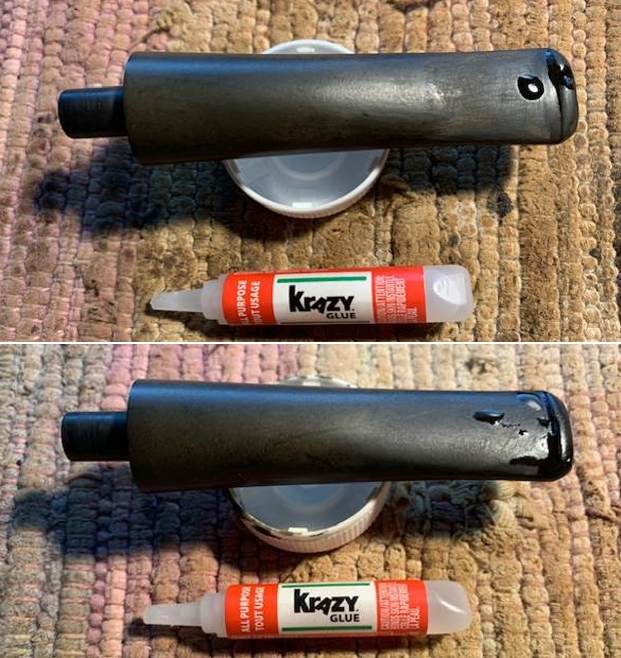
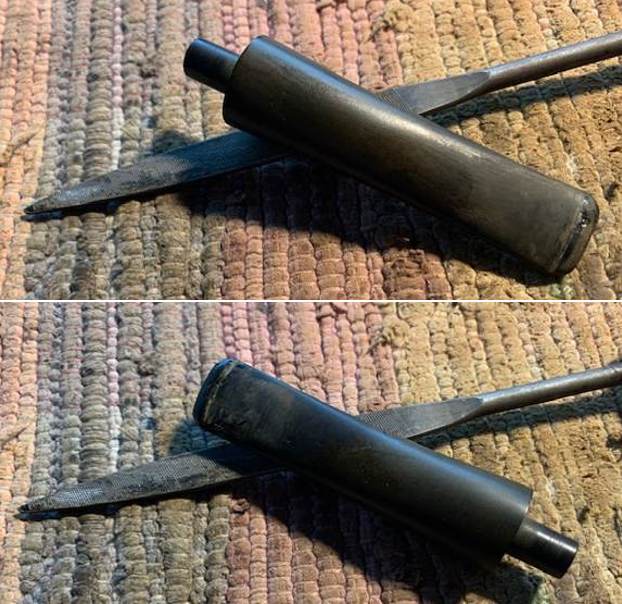
Armed with that information I turned to work on the pipe itself. Before he sent it to me, Jeff had done an amazing job cleaning the pipe. It almost looked like a different pipe after his work. He reamed the pipe with a PipNet pipe reamer and removed the rest of the cake with a Savinelli Fitsall Pipe Knife.  He scrubbed the bowl with undiluted Murphy’s Oil Soap and a tooth brush. He rinsed it under running warm water to remove the soap and grime. The finish looked very good and the rugged finish felt good in the hand. He cleaned out the inside of the shank and the airway in the stem with isopropyl alcohol, cotton swabs and pipe cleaners. He soaked the stem in Briarville’s Pipe Stem Deoxidizer and then rinsed it off with warm water. He scrubbed the stem with Soft Scrub and a tooth brush and rinsed it off with warm water. It looked amazing when I took it out of the package of pipes he shipped me. I took photos of the pipe before I started my part of the restoration work.   The rim top was cleaner and the inner edge of the bowl showed burn damage on the front right and back left. There was some chipping and damage around entire edge. The rim top and outer edge actually looked to be in good condition. The bowl was slightly out of round. The stem surface looked good with the oxidation gone and large chunk of the button missing. It was odd in that it was an even break on both sides and almost like a slot had been cut leaving behind two small thin posts on each side.I took a photo of the stamping on the underside of the shank. It is faint but is still readable as noted above.I took the stem off the shank and took a photo of the parts of the pipe. The overall look of the pipe is quite nice. The stem is quite stubby and short so that gave me an idea that I would explore later in the restoration.I started my portion of the work on this pipe by addressing the damage to the rim top and the inner edge of the bowl. I worked over the rim top with 220 grit sandpaper to remove the damage and the darkening. I used a folded piece of 220 grit sandpaper to smooth out the inner edge and give it a slight bevel to deal with the chipping and cutting that was present. It cleaned up remarkably well. With polishing and buffing it would look even better.I polished the smooth rim top with micromesh sanding pads – dry sanding with 1500-12000 grit sanding pads. I wiped the briar down with a damp cloth after each pad to remove the debris and sanding dust.The bowl looked very good at this point so I rubbed it down with Before & After Restoration Balm. I worked it into the surface of the bowl and shank with my fingertips and a horse hair shoe brush to clean, enliven and protect the briar. I let the balm sit for about 10-15 minutes and buffed with a cotton cloth to raise the shine. I buffed the bowl with a shoe brush to raise the shine on the bowl. It is a really nice looking pipe with a finish that has a look like cut glass to me. The rich brown of the stain vary through the layers of the rustication. It is very nicely done. I set the bowl aside and turned my attention to the stem. I cut of the two pegs that remained of the button and flattened the end of the stem against a topping board and 220 grit sandpaper. Surprisingly, it did not shorten the stem significantly. I did not feel that the pegs provided enough body to support a repair so I opted on shortening the stem and rebuilding the button with rubberized black super glue. I layered the repair on slowly, letting each layer cure before adding the next one. Once the repair cured I would need to reshape the button with files. I reshaped the button and the edge with a small file. The repaired button was beginning to look good at this point. I touched up the edge surface with CA glue to smooth and fill it in. Once the glue cured I sanded it with 220 grit sandpaper to continue the shaping. I repaired and resanded until I was happy with it. I started the polishing process with 400 grit wet dry sandpaper. I used a small pottery shaping saw to cut the slot in the end of the stem and shape it. It is getting closer and closer to being finished.I sanded the button surface some more with 220 grit sandpaper to further shape it. I filled in the air-pockets with superglue and let it cure until dry. Once it cured I started the polishing with micromesh sanding pads – dry sanding with 1500-12000 grit pads. I wiped the stem down after each pad with some Obsidian Oil. I polished it further with Before & After Stem Polish – both Fine and Extra Fine. I wiped it down a further time with Obsidian Oil and let it cure. This Beautiful Rusticated Ser Jacopo Maxima R2 Canadian with a Coral Dot is a great looking pipe now that it has been restored. The rich and unique rusticated works well with the polished, repaired and rebuilt vulcanite stem. I put the stem back on the bowl and carefully buffed the pipe with Blue Diamond on the buffing wheel using a light touch on the briar. I gave the bowl multiple coats of Conservator’s Wax and the stem multiple coats of carnauba wax on the buffing wheel and followed that by buffing the entire pipe with a clean buffing pad. I hand buffed the pipe with a microfiber cloth to deepen the shine. The finished Ser Jacopo Maxima Canadian is a large pipe that I am sure will be a great smoker. Give the finished pipe a look in the photos below. The dimensions of the pipe are Length: 6 ¼ inches, Height: 1 ¾ inches, Outside diameter of the bowl: 1 ¼ inches, Chamber diameter: ¾ of an inch. The weight of the pipe is 43 grams/1.52 ounces. I will be holding on to this one for awhile to test out the durability of the button rebuild. I take a moment to remind myself and each of us that we are trustees of pipes that will outlive us and the lives of many other pipe men and women who carry on the trust of their care and use. Thanks for reading this blog and my reflections on the pipe while I worked on it.

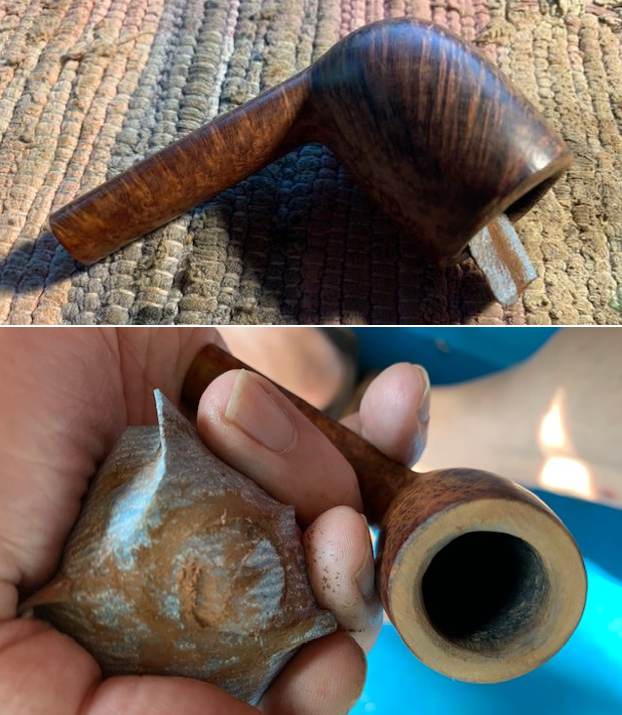
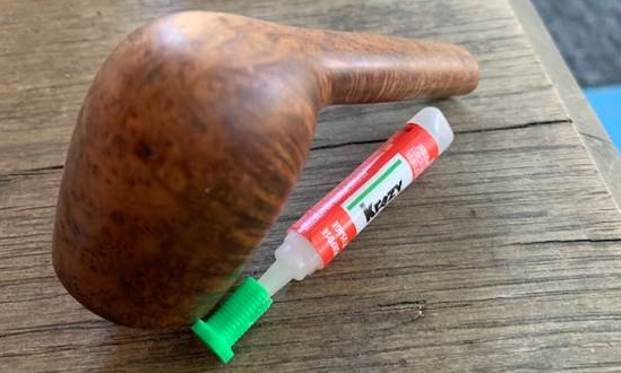
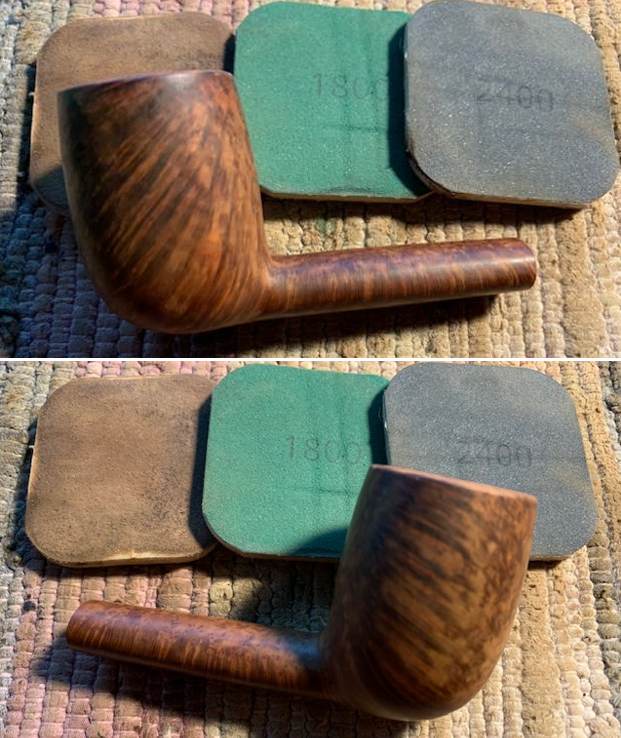
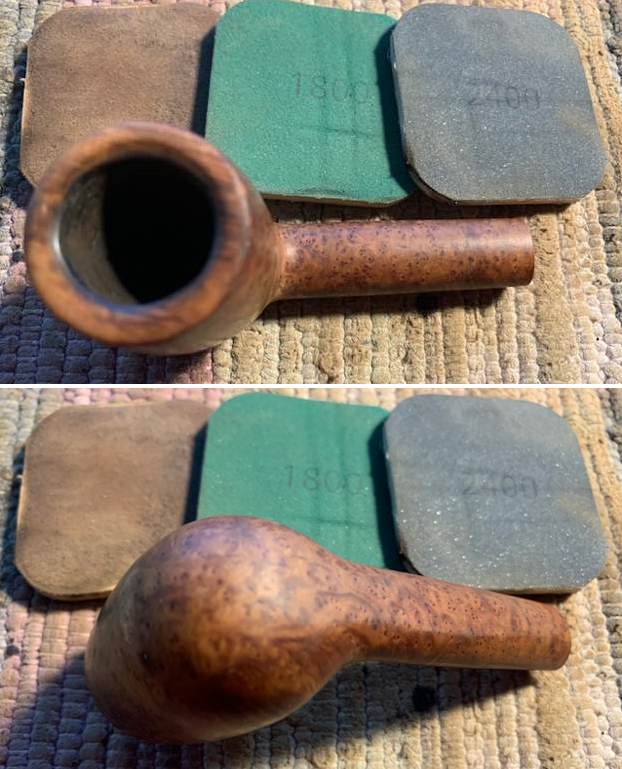
Restoring and Restemming a Burl King Freehand Bowl


Blog by Steve Laug

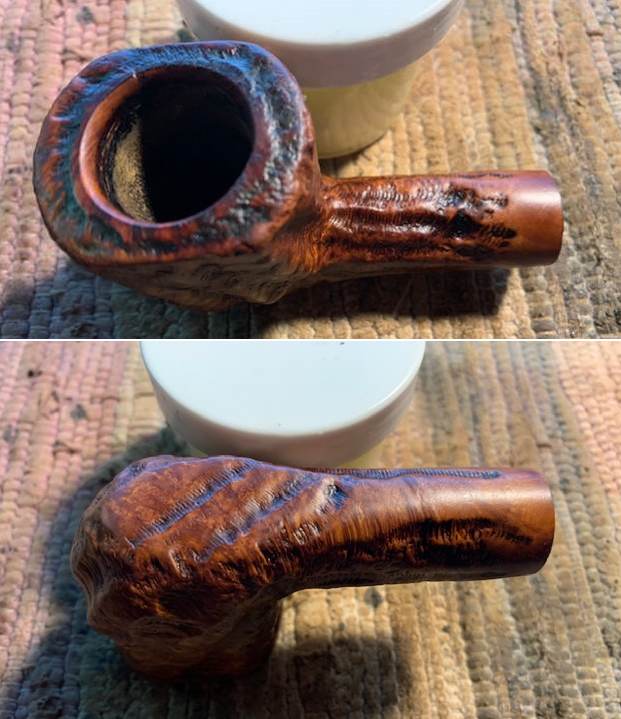
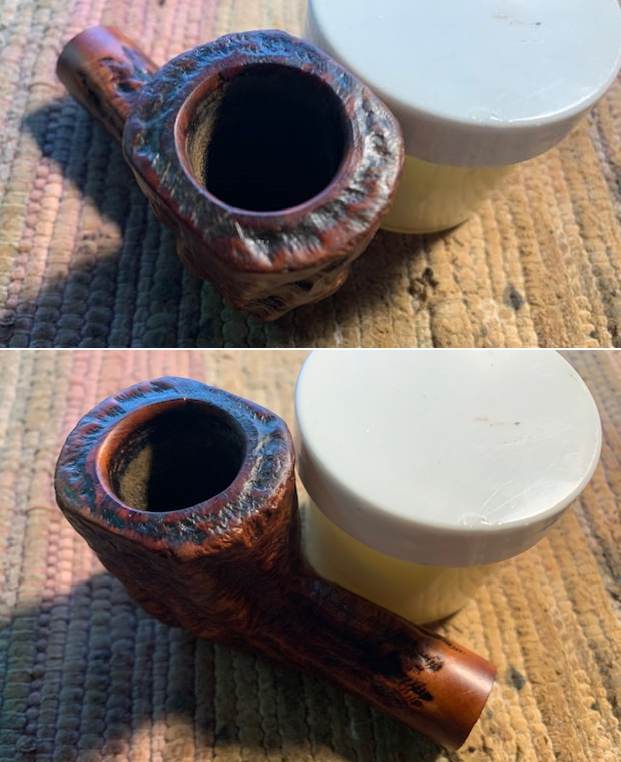
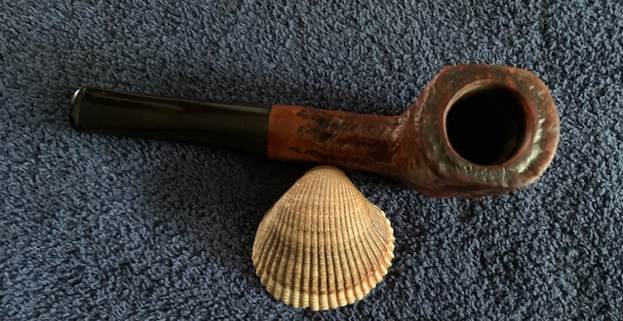
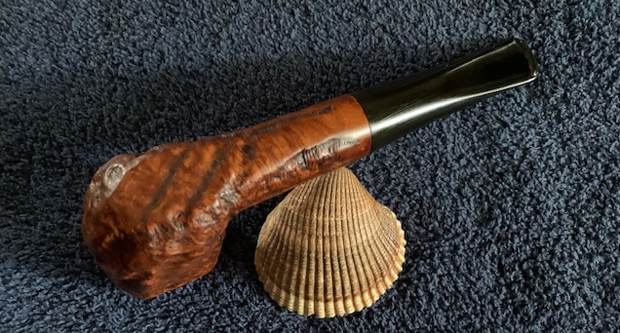
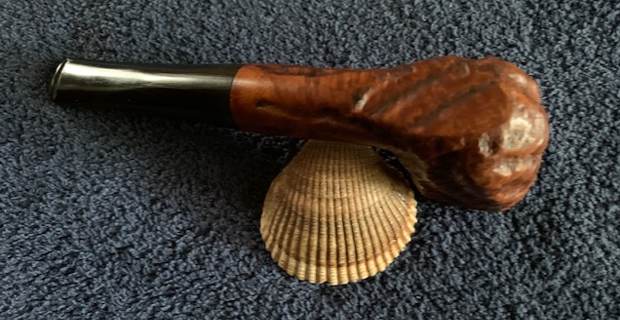
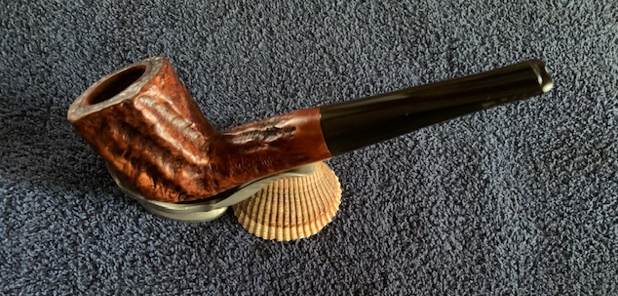
The next pipe in the queue came to us in August, 2020 from an Antique Mall in Logan, Utah, USA.  It is an interesting Freehand bowl that has a bridge over the top of the shank that forms a hole for the thumb when smoking. It has a smooth finish with a plateau on the top of the shank and bowl. I would need to find a fancy turned stem that would work with the bowl. The pipe is stamped on the left corner of the shank and clearly reads Burl King. On the underside of the shank it is stamped Israel. I think that this will be another nice looking piece once it is cleaned up and restemmed. The bowl is thickly caked with an overflow of lava on the rim top. The right side of the bowl toward the front and the heel were sandblasted. The top and edges of the bowl look good but I would be more certain once I reamed and cleaned it. The exterior of the briar was dirty with grime and dust. Jeff took photos of the pipe before my cleanup work. They tell the story and give a glimpse of the promise that we see in this pipe. He took photos of the plateau rim top to show the cake in the bowl, the lava on the rim top and the inner edge. He took photos of the stamping on the left corner of the shank and the underside. It is faint in spots but readable as noted above.Before working on the pipe I wanted to remind myself of the history and background of the brand. I remembered that I had restemmed and restored a Burl King stummel previously so I turned to the blog I had written. Here is the link to the previous blog and the pipe I had restored and restemmed (https://rebornpipes.com/2020/09/20/restemming-and-rebirthing-a-burl-king-freehand-bowl/).

From the blog I quote the following information on the brand and who made it. I find it interesting to note the various companies included in the manufacture and distribution of the pipe.

I turned to Pipedia to read about Burl King pipes (https://pipedia.org/wiki/Burl_King). I quote the entirety of the article and have included the advertisement that connects the pipe to Borkum Riff tobacco.

We need more information about Burl King. We can confirm that it was at one time a pipe used for promotion of Borkum Riff tobacco, as reported by Bob Taylor of the Seattle Pipe Club, who mailed in a coupon and received the pipe with a Postmark of Jan. 11, ’78, and a return address of Sparta, N. C., which indicates it may have come from the Dr. Grabow/Sparta Industries plant.

Bob recently noticed his “Burl King” was also marked, made in Israel, so it was likely made by the Shalom Pipe Factory, though apparently distributed through Sparta Industries. The box shipped for 50 cents and the return address said “After 5 days return to P. O. Box 21882 Greensboro, N. CC. 27240.” So apparently these pipes were made by Shalom, but distributed for Borkum Riff by Sparta Industries.

Others have indicated Burl King pipes were also made by Wally Frank.

I love the description as it truly captures the shape and beauty of this freehand pipe. The article above stated that the pipe is handcrafted by artists so that each one is a unique piece. It is cut from the plateau to leave that exposed on the top of the rim and down the shank to the end. It has a thumb hole cut for comfort in holding it while smoking. It is suggested that pipe sold for $60. Now to work on the pipe.

Jeff had cleaned up the pipe with his normal methods. He reamed the pipe with a PipNet pipe reamer and removed the rest of cake with a Savinelli Fitsall Pipe Knife.  He scrubbed the bowl with undiluted Murphy’s Oil Soap with a tooth brush. He rinsed it under running warm water to remove the soap and grime. He cleaned out the inside of the shank and the airway into the bowl with alcohol, cotton swabs and pipe cleaners. I took photos of the pipe once I received it. I took a close up photo of the rim top to show the general condition. You can see the darkening around the inner edge and some remaining lava in the crevices of the plateau but otherwise it looks good. The plateau extends all the way down the shank bridge and ends at the mortise end.I took photos of the stamping and though they are faint in spots in the pictures they are readable as noted above.I found a turned stem in my stem can that was a potential candidate for the pipe. The tenon on it was just a little bit to big in diameter and would need to be shaped to sit in the mortise properly. I used my Dremel and sanding drum to take off a little bit of the diameter until the fit was snug in the shank. Once I had the tenon adjusted I inserted it in the mortise and took photos of the pipe at this point. I set the stem aside and turned my attention to the bowl.I cleaned up the residual lava on the rim top with a brass bristle wire brush. I worked over the crevices in the plateau carefully to remove the debris. I used a folded piece of 220 grit sandpaper to sand the inner edge of the bowl and smooth it out. I polished the briar with micromesh sanding pads to clean up the finish and give it a shine. I wet sanded with 1500-12000 grit pads and wiped the bowl down after each pad with a damp cotton cloth. The photos tell the story. I worked some Before & After Restoration Balm into the surface of the briar with my fingertips and a horse hair shoe brush to clean, enliven and protect it. I let the balm sit for a little while and then buffed with a cotton cloth to raise the shine. I shaped the tenon end with 220 grit sandpaper to fine tune the fit in the shank. I still needed to polish it with 400 grit wet dry sandpaper to smooth out the marks left behind by the Dremel but it was getting there. I polished the vulcanite with micromesh sanding pads – 1500-12000 grit pads. I wiped it down with Obsidian Oil after each sanding pad. I used Before & After Pipe Polish – both Fine and Extra Fine to further polish the stem. With both parts of this unique Burl King Freehand finished, I polished the bowl and the stem with Blue Diamond polish on the buffing wheel. I gave the bowl and the stem multiple coats of carnauba wax. I buffed the pipe with a clean buffing pad to raise the shine. I hand buffed it with a microfiber cloth to deepen the shine. The pipe polished up pretty nicely. The mix of grain on the bowl came alive with the buffing. The finish on the briar works well with the polished black vulcanite stem. The finished pipe is a well-proportioned, nicely grained Burl King Freehand. Have a look at it with the photos below. The dimensions are Length: 7 ½ inches, Height: 3 inches, Outside diameter of the bowl: 1 ¾ inches, Chamber diameter: ¾ of an inch. This is a large pipe and weighs 102 grams/3.60 ounces. I will be putting this interestingly made Freehand in the American Pipe Maker Section of the rebornpipes store very soon. If you would like to purchase it and carry on the legacy of the previous pipe smoke send a message or an email to me. Thanks for walking through the restoration with me on this older Freehand collaboration between Shalom Pipe Factory, Israel, Borkum Riff Tobacco and Dr. Grabow.

Restoring a  Patent Era Dunhill Bruyere 40 Lovat


Blog by Steve Laug

The next pipe on the table is a Dunhill Group 4 Bruyere Lovat that is proportionally well done. It has a two digit the shape number that I will define below. Jeff and I purchased a group of pipes on 04/26/2022 from a woman who contacted us from Cleveland, Ohio, USA. They had belonged to her husband’s father. We spent time chatting with her and arrived at a price and she sent the pipes to Jeff. It included 28+ pipes including this one.

This Dunhill Lovat is stamped on the left side and reads 40 followed by Dunhill over Bruyere. On the right side it is stamped Made in England2 3 (double date stamp) [over] Pat. No. 417574/34. A circle 4 followed by A is stamped on the right side next to the bowl/shank junction. The numbers and stamping tell me that the pipe is a Bruyere and the size is a Group 4. The 2 digit shape number makes it an older pipe as does the Patent No. stamp under Made in England. The double date stamp says the pipe was made one year and sold the next. The finish was very dirty with spots of grime and debris stuck on it. The bowl had a thick cake in the bowl and heavy lava overflowing onto the rim top. The rim top had burned area on the left front top and inner and outer edges. There was darkening and burn damage on the inner edge all the way around. There were burn marks toward the back of the rim top. The stem had calcification, oxidation and tooth marks and chatter on both sides ahead of the button. The button itself appeared to be in good condition. Jeff took photos of the pipe before he started his clean up work on it. He took photos of the bowl and rim top to show the condition. You can see the thick cake in the bowl and rim top and edges. The lava is so thick that is hard to know what the edges and top look like underneath. The stem was heavily oxidized, calcified and has tooth marks and chatter on both sides ahead of the button. Overall the pipe is a real mess.Jeff took photos of the grain and the finish around the bowl sides and heel. It was nice looking if you can see through the grime ground into the surface.He took photos of the stamping on the sides of the shank. The stamping is faint but readable. It reads as noted above. Now it was time to begin to work on the stamping on the pipe. I turned first to Pipedia as I remembered they had some great information on the Bruyere finish and dates and how the finish was made (https://pipedia.org/wiki/Dunhill#Bruyere). The first quote below give the short version of the finish. The second link goes into more detail. I quote from both below.

Bruyere – The original finish produced (usually made using Calabrian briar), and a big part of developing and marketing the brand. It was the only finish from 1910 until 1917. A dark reddish-brown stain. Before the 1950s, there were three possible finishes for Dunhill pipes. The Bruyere was a smooth finish with a deep red stain, obtained through two coats, a brown understain followed by a deep red.

https://pipedia.org/wiki/Dunhill_Bruyere

Initially, made from over century-old briar burls, classified by a “B” (denoted highest quality pipe); “DR” (denoted straight-grained) and an “A” (denoted first quality), until early 1915. After that, they became a high-end subset to the Dunhill ‘Bruyere’. The DR and B pipes, a limited production, they should be distinguished as hand-cut in London from burls as opposed to the Bruyere line which was generally finished from French turned bowls until 1917, when the Calabrian briar started to be used, but not completely. Only in 1920 Dunhill took the final step in its pipe making operation and began sourcing and cutting all of its own bowls, proudly announcing thereafter that “no French briar was employed”.

Bruyere pipes were usually made using Calabrian briar, a very dense and hardy briar that has a modest grain but does very well with the deep red stain.

“Before the 1950s, there were three possible finishes for Dunhill pipes. The Bruyere was a smooth finish with a deep red stain, obtained through two coats, a brown understain followed by a deep red. The Shell finish was the original sandblast with a near-black stain (though the degree to which it is truly black has varied over the years). Lastly, the Root finish was smooth also but with a light brown finish. Early Dunhill used different briars with different stains, resulting in more distinct and identifiable creations… Over the years, to these traditional styles were added four new finishes: Cumberland, Dress, Chestnut and Amber Root, plus some now-defunct finishes, such as County, Russet and Red Bark.”

With that information clear for me I wanted to identify the shape number and try to pin that down (https://pipedia.org/wiki/Dunhill_Shape_Chart). I turned to the section on the older 3 digit Shape Numbers and read it. I quote it below.

Early Days – 2 digits/letters – The original skus/model numbers from the 1920’s until the early 1970’s stood for very specific shapes and bowls. For example, the codes 31, 34, 59, 111, 113, 117, 196, LB, LBS… were all different types of Billiard shaped pipes and there were about 50(!), such codes for the Billiard shape alone. On top of those are a large variety of other shapes.

I knew that the pipe shape number locked in a time period between 1920-1970 – a large time span that I needed to narrow down more clearly. I turned to another link on Pipedia (https://pipedia.org/wiki/Dunhill_Shapes_List) to a shape list that Eric Boehm put together for Dunhills. I copied the four 2 digit numbers on Lovats from the list. The shape 40 was in the list.

Lovats:

37 Lovat, short, thick, saddle 1928 11

38 Lovat, long shank, saddle bit 3 4¾” 1928, 50, 60, 69 11

40 Lovat, long shank, saddle bit 4 5″ 1928, 1950, 1969 11

481 Lovat, long shank, saddle bit 1 5″ 1950, 1969 11

I turned next to dating the pipe. There is a superscript underlined 2 followed by superscript underlined 3 a little higher and to the right of the first superscript. The numbers follow the D in ENGLAND on the right side of the shank. I turned to the dating chart on Pipephil to pin down the date on this twin (http://pipephil.eu/logos/en/dunhill/cledat-en1a.html). I did a screen capture of Part 1 of the Dunhill Dating Key and included it below. I drew a red box around the section dating this pipe. It is clear that the pipe was made prior to 1954 as it includes a Patent Number. I drew a red box around the pertinent section that narrows the date down to between 1921 and 1954. It also had a link to further narrow down the dating.I followed the link to narrow it down and it took me to Page 2. The pipe has the patent number listed at the top of the chart – 417574/34. I followed the tree down the yes path to the part where it reads DUNHILL stamping aligned with SHELL. My pipe has BRUYERE aligned with DUNHILL. Again I followed the yes path to two options 1950 or 1940 + suffix (2-9). Since the pipe has a superscript 2 followed by a slightly higher superscript 3 told me that the pipe was made in 1942 and later sold in 1943. It was an old timer.Armed with that information I turned to work on the pipe itself. Before he sent it to me, Jeff had done an amazing job cleaning the pipe. It almost looked like a different pipe after his work. He reamed the pipe with a PipNet pipe reamer and removed the rest of it with a Savinelli Fitsall Pipe Knife. He scrubbed the bowl with undiluted Murphy’s Oil Soap with a tooth brush. He rinsed it under running warm water to remove the soap and grime. He cleaned out the inside of the shank and the airway in the stem with isopropyl alcohol, cotton swabs and pipe cleaners. He soaked the stem in Briarville’s Pipe Stem Deoxidizer and then rinsed it off with warm water. He scrubbed the stem with Soft Scrub and a tooth brush and rinsed it off with warm water. It looked amazing when I took it out of the package of pipes he shipped me. I took photos of the pipe before I started my part of the restoration work. The rim top was cleaner and the inner edge of the bowl looked rough. The rim top was chipped and damaged with the edges carved. There was burn damage all the way around but heavier on the front and the back of the bowl on the top and inner edge. The bowl was slightly out of round. The stem surface looked good with the oxidation gone and light but visible tooth chatter on either side of the stem.  I took a photo of the stamping on the sides of the shank. It is faint but is still readable as noted above.I took the stem off the shank and took a photo of the parts of the pipe. The overall look of the pipe is quite nice.I started my portion of the work on this pipe by addressing the damage to the rim top and the inner edge of the bowl. I topped the bowl on a topping board with 220 grit sandpaper to remove the damage to the rim top and minimize it on the edges. I used a folded piece of 220 grit sandpaper to smooth out the edge and give it a slight bevel to deal with the chipping and cutting on the inner edge. It cleaned up remarkably well. With polishing and buffing it would look even better. I polished the bowl and rim top with micromesh sanding pads – dry sanding with 1500-12000 grit sanding pads. I wiped the briar down with a damp cloth after each pad to remove the debris and sanding dust. I used an Maple Stain Pen to restain the rim top and the inner bevel of the rim edge. With the darkening on the edges and the top still present the Maple stain worked well to mimic the stain on the rest of the bowl and shank. Once it dried I buffed it with a cotton cloth and the match was very good. It looked much better with the work on the rim edge. The bowl looked very good at this point so I rubbed it down with Before & After Restoration Balm. I worked it into the surface of the bowl and shank with my fingertips and a horse hair shoe brush to clean, enliven and protect the briar. I let the balm sit for about 10-15 minutes and buffed with a cotton cloth to raise the shine. I set the bowl aside and turned my attention to the stem. I “painted” the surface of the vulcanite stem with the flame of the lighter. I was able to lift almost all of the tooth marks and chatter except one on the top side that I needed to fill in with drop of black CA glue. I sanded the repair and the remaining tooth chatter with 220 grit sandpaper. I started polishing the stem with 400 grit wet dry sandpaper to start the polishing. I polished the vulcanite stem with micromesh sanding pads – dry sanding with 1500-12000 grit pads. I wiped it down with Obsidian Oil after each sanding pad. I used Before & After Pipe Polish – both Fine and Extra Fine to further polish the stem and gave it a final coat of Obsidian Oil to finish it. This Beautiful Patented 1942/43 Dunhill Bruyere 40 Lovat is a great looking pipe now that it has been restored. The rich Bruyere finish that highlights the grain and works well with the polished vulcanite stem. I put the stem back on the bowl and carefully buffed the pipe with Blue Diamond on the buffing wheel using a light touch on the briar. I gave the bowl and the stem multiple coats of carnauba wax on the buffing wheel and followed that by buffing the entire pipe with a clean buffing pad. I hand buffed the pipe with a microfiber cloth to deepen the shine. The finished Dunhill Bruyere 40 Lovat is a Group 4 size pipe that will be a great smoker. Give the finished pipe a look in the photos below. The dimensions of the pipe are Length: 5 inches, Height: 1 ¾ inches, Outside diameter of the bowl: 1 ¼ inches, Chamber diameter: ¾ of an inch. The weight of the pipe is 35 grams/1.23 ounces. I will be adding the pipe to the British Pipemakers Section of the rebornpipes store shortly. If you are interested in adding it to your collection be sure to let me know. I take a moment to remind myself and each of us that we are trustees of pipes that will outlive us and the lives of many other pipe men and women who carry on the trust of their care and use. Thanks for reading this blog and my reflections on the pipe while I worked on it.

Restoring a 1967 Dunhill Shell Briar 659F/T 4S Saddle Stem Billiard


Blog by Steve Laug

The next pipe on the table is a Dunhill Group 4 Shell Briar Saddle Stem Billiard that is proportionally well done. It has a three digit the shape number that I will define below. Jeff and I purchased a group of pipes on 04/26/2022 from a woman who contacted us from Cleveland, Ohio, USA. They had belonged to her husband’s father. We spent time chatting with her and arrived at a price and she sent the pipes to Jeff. It included 28+ pipes including this one.

This Dunhill Billiard is stamped on the underside and reads 659F/T followed by Dunhill over Shell Briar followed by Made in England7 (two lines). A circle 4 followed by S is stamped on the flat underside of the saddle stem. The numbers and stamping tell me that the pipe is a Shell Briar and the size is a Group 4. The F/T refers to the Fish Tail style stem. The finish was very dirty with spots of grime and debris stuck on it. The bowl had a thick cake in the bowl and heavy lava overflowing onto the rim top. The rim top and inner edge appeared to have some damage. The stem had calcification, oxidation and tooth marks and chatter on both sides ahead of the button. The button itself appeared to be in good condition. Jeff took photos of the pipe before he started his clean up work on it.He took photos of the bowl and rim top to show the condition. You can see the thick cake in the bowl and rim top and edges. The lava is so thick that is hard to know what the edges and top look like underneath. The sandblast on the rim top is also completely filled in with tar and lava. The stem was heavily oxidized, calcified and has tooth marks and chatter on both sides ahead of the button. Overall the pipe is a real mess. Jeff took photos of the sandblast finish around the bowl sides and heel. It was nice looking if you can see through the grime ground into the rugged, deep blast. He took photos of the stamping on the underside of the bowl, shank and stem. The stamping is readable but filthy. It reads as noted above.Now it was time to begin to work on the stamping on the pipe. Pipedia had some great information on the Shell Briar finish and dates and how the finish was made (https://pipedia.org/wiki/Dunhill#Bruyere). The first quote below give the short version of the finish. I quote from both below.

Shell – A deep craggy sandblast with a black stain finish (usually made using Algerian briar) – the color of the stain used has varied over the years. Although there is some doubt as to them being the first to sandblast pipes, Dunhill’s Shell pipes, and the sandblasting techniques developed to create them are considered one of Dunhill’s greatest and most lasting contributions to the art of pipe making.

The documented history of Dunhill’s inception of the Shell is largely limited to patent applications — there are no catalog pages or advertisements promoting blasted pipes at the time. The preliminary work on the English patent (No. 1484/17) was submitted on October 13, 1917. The patent submission was completed half a year later, on April 12, 1918, followed by the granting of the English patent on October 14, 1918. This was less than a month before the end of The Great War on November 11th.
In 1986 Dunhill released a line of premium Shell finish pipes – “RING GRAIN”. These are high-quality straight grain pipes which are sandblasted. Initially only Ring Grain, but now in two different finishes. In 1995 the “Shilling” was introduced with Cumberland finish – it is an extremely rare series. These pipes exhibit a deeper blast characteristic of that of the 1930’s – mid-1960’s (and the limited ‘deep blast’ pipes of the early 1980s) and show a fine graining pattern. These are considered the best new Dunhills by many enthusiasts today and are very rare. The finish is sometimes described as tasting like vanilla at first, with the taste becoming more normal or good as the pipe breaks in.

With that information clear for me I wanted to identify the shape number and try to pin that down (https://pipedia.org/wiki/Dunhill_Shape_Chart). I turned to the section on the older 3 digit Shape Numbers and read it. I quote it below.

3-digit system – A 3-digit system (“Interim”) was developed that showed a logical approach to identify pipes in terms of size, mouthpiece, and shape, with the 1st digit being the size, the 2nd digit the mouthpiece, and the 3rd digit the shape, i.e. the old “85” became a “321” which was a group 3 Apple with taper mouthpiece. This was soon to be replaced by a more detailed, formal 4- and 5-digit system around 1978.

This interim numbering system is a bit confusing as the next paragraph and picture will illustrate. It says that the first digit is the size which in this case should have been a 6 but the pipe is stamped with a size 4 number. The second digit is supposed to point to the mouthpiece which is not clear to me. The third digit refers to the shape but again that is not clear. The paragraph below states that the shape number 577 has no special meaning accept for it being the model for that particular pipe.

The first image on the right, (with the shape number 577)  falls into this system, so 577 has no special meaning apart from describing/ being the model for that particular pipe shape (in this case a specific group 2 Billiard with saddle mouthpiece). Around 1973, with the introduction of computers, new categories were introduced that indicated size, mouthpiece, and shape. As for the “T”, in 1952 a full-size “T” was added after the circled group size stamp to further describe the Tanshell finish (in 1953 the “T” was reduced to about half the size). So this pipe dates from 1952.

With the information on the 3 digit stamp not making clear enough the meaning of the number I turned to another link on Pipedia (https://pipedia.org/wiki/Dunhill_Shapes_List) to a shape list that Eric Boehm put together for Dunhills. It is amazing to see the sheer number of variations on the Billiard shape. I copied the three of the three digit numbers in the list as it includes the shape 659 Billiard.

Billiards:

659 Billiard, saddle bit 4 5½” 1950, 1969 3

660 Billiard, saddle bit 4 5½” 1950, 1969 3

710 Billiard, tapered bit 4 5½” 1950, 1969 3

659F/T Billiard with a saddle bit. (This is the pipe I am working on. It is a tapered bit Billiard with an F/T or Fish Tail bit.)

I turned next to dating the pipe. There is a 7 following the D in ENGLAND on the right side of the shank. I turned to the dating chart on Pipephil to pin down the date on this twin (http://pipephil.eu/logos/en/dunhill/cledat-en1a.html). I did a screen capture of Part 2 of the Dunhill Dating Key and included it below. I drew a red box around the section dating this pipe. It is clear that the pipe was made after 1954 so that is why I went to Part 2. Once again, because the year suffix is a 7 that is the same size and on line with D in England that tells me that the pipe was made in 1960+7 for a date of 1967.Armed with that information I turned to work on the pipe itself. Before he sent it to me, Jeff had done an amazing job cleaning the pipe. It almost looked like a different pipe after his work. He reamed the pipe with a PipNet pipe reamer and removed the rest of it with a Savinelli Fitsall Pipe Knife. He scrubbed the bowl with undiluted Murphy’s Oil Soap with a tooth brush. He rinsed it under running warm water to remove the soap and grime. He cleaned out the inside of the shank and the airway in the stem with isopropyl alcohol, cotton swabs and pipe cleaners. He soaked the stem in Briarville’s Pipe Stem Deoxidizer and then rinsed it off with warm water. He scrubbed the stem with Soft Scrub and a tooth brush and rinsed it off with warm water. It looked amazing when I took it out of the package of pipes he shipped me. I took photos of the pipe before I started my part of the restoration work. The rim top was cleaner and the inner edge of the bowl looked rough. There was burn damage all the way around but heavier on the front and the back of the bowl on the top and inner edge. The bowl was slightly out of round. The stem surface looked good with the oxidation gone and light but visible tooth chatter on either side of the stem.  I took a photo of the stamping on the underside of the shank and the saddle portion of the stem. It is clear and readable as noted above.I took the stem off the shank and took a photo of the parts of the pipe. The overall look of the pipe is quite nice.I started my portion of the work on this pipe by addressing the damage to the inner edge of the bowl. I used a folded piece of 220 grit sandpaper to smooth out the edge and give it a slight bevel to deal with the chipping and cutting on the inner edge. It cleaned up remarkably well. With polishing and buffing it would look even better.I used an Walnut Stain Pen to restain the rim top and the inner bevel of the rim edge. Once it dried I buffed it with a cotton cloth and the match was very good. It looked much better with the work on the rim edge.The bowl looked very good at this point so I rubbed it down with Before & After Restoration Balm. I worked it into the surface of the bowl and shank with my fingertips and a horse hair shoe brush to clean, enliven and protect the briar. I let the balm sit for about 10-15 minutes and buffed with a cotton cloth to raise the shine. I set the bowl aside and turned my attention to the stem. I “painted” the surface of the vulcanite stem with the flame of the lighter. I was able to lift almost all of the tooth marks and chatter except one on the top side that I needed to fill in with drop of clear CA glue. I sanded the repair and the remaining tooth chatter with 220 grit sandpaper. I started polishing the stem with 400 grit wet dry sandpaper to start the polishing.I polished the vulcanite stem with micromesh sanding pads – dry sanding with 1500-12000 grit pads. I wiped it down with Obsidian Oil after each sanding pad. I used Before & After Pipe Polish – both Fine and Extra Fine to further polish the stem and gave it a final coat of Obsidian Oil to finish it. This Deeply Sandblasted Dunhill Shell Briar 659F/T Saddle Stem 4S is a great looking pipe now that it has been restored. The rich Shell Briar sandblast finish that highlights the grain and works well with the polished vulcanite stem. I put the stem back on the bowl and carefully buffed the pipe with Blue Diamond on the buffing wheel using a light touch on the briar. I gave the bowl and the stem multiple coats of carnauba wax on the buffing wheel and followed that by buffing the entire pipe with a clean buffing pad. I hand buffed the pipe with a microfiber cloth to deepen the shine. The finished Dunhill Shell Briar Saddle Stem Billiard is a Group 4 size pipe that will be a great smoker. Give the finished pipe a look in the photos below. The dimensions of the pipe are Length: 5 ½ inches, Height: 1 ¾ inches, Outside diameter of the bowl: 1 ¼ inches, Chamber diameter: ¾ of an inch. The weight of the pipe is 34 grams/1.20 ounces. I will be adding the pipe to the British Pipemakers Section of the rebornpipes store shortly. If you are interested in adding it to your collection be sure to let me know. I take a moment to remind myself and each of us that we are trustees of pipes that will outlive us and the lives of many other pipe men and women who carry on the trust of their care and use. Thanks for reading this blog and my reflections on the pipe while I worked on it.
Repairing a Chipped stem on a Savinelli Trevi 311KS Poker


Blog by Steve Laug

I still receive referrals for repairs from a local pipe and cigar shop and this week I received and email from a fellow about his new pipe. The story is one of those that make you cringe and grimace for if it has not happened to you sometime in your “pipehood” it very well may happen. This is the email I received:

Hi. I just picked up a new Sav 311KS and promptly proceeded to drop it and chip the stem before even getting a chance to smoke it…. Sad day. Could you give me a quote on what a repair/ replacement would set me back? — Josh

I wrote him back and asked for photos of the pipe so I could see what he was referring to. He wrote again and sent the following note and the photos.

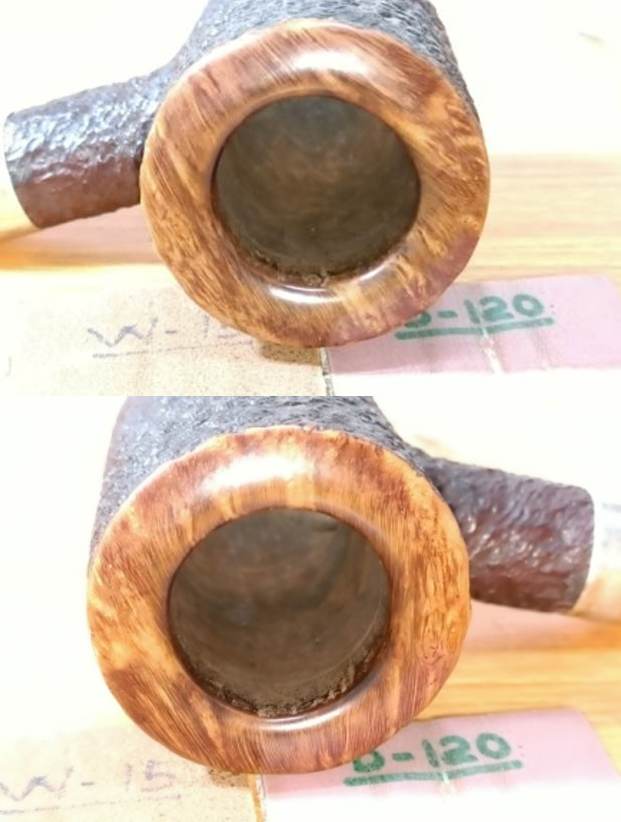
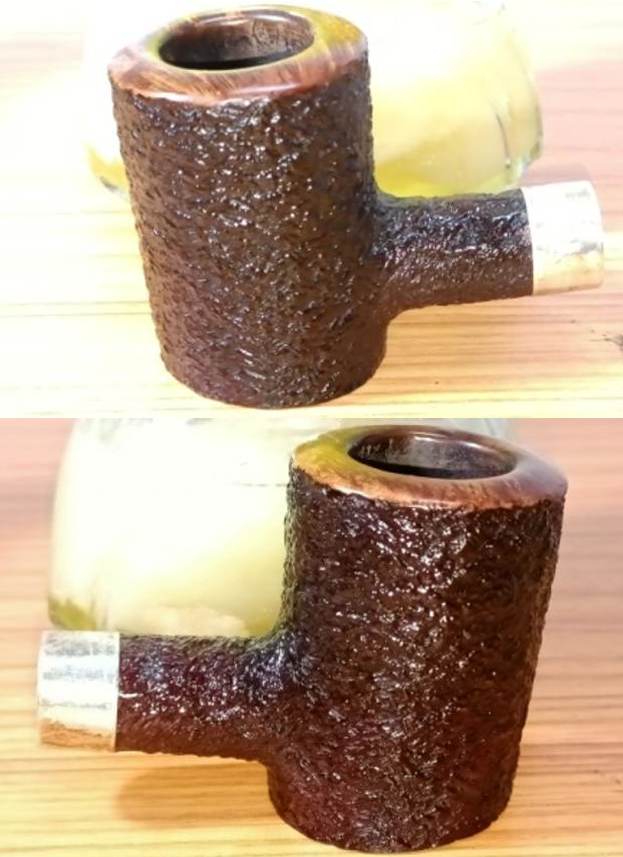
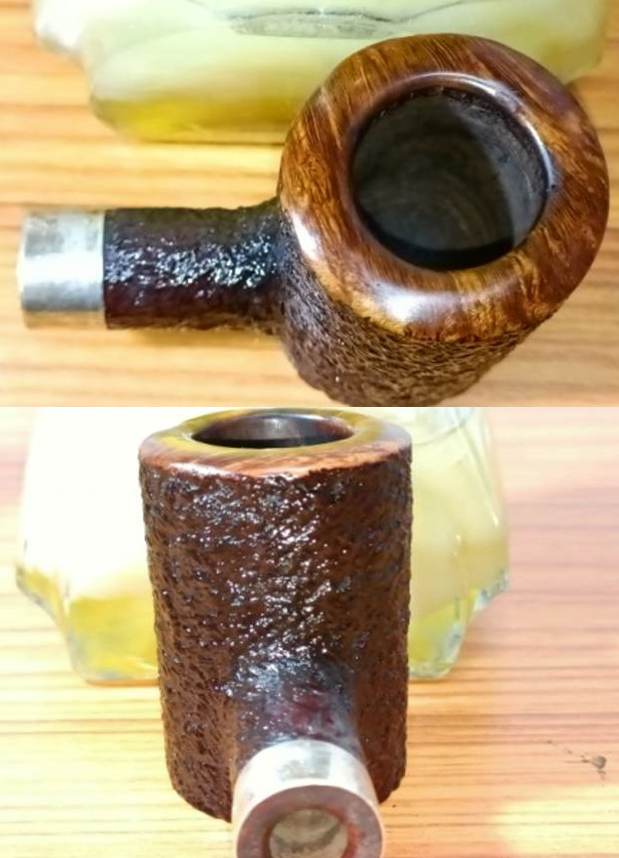
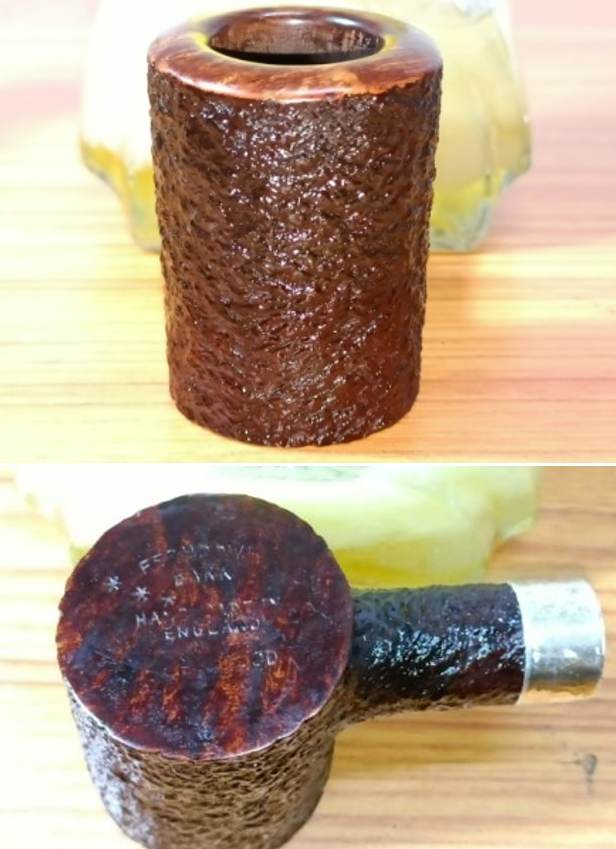
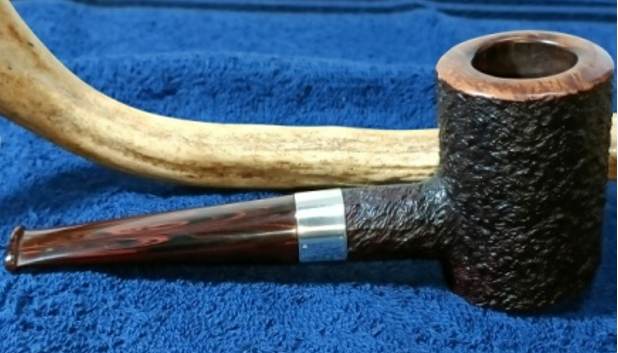
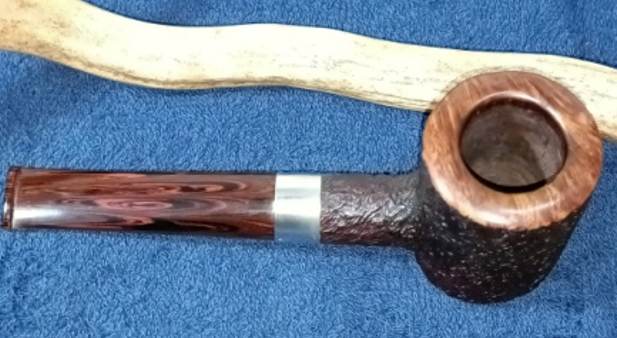
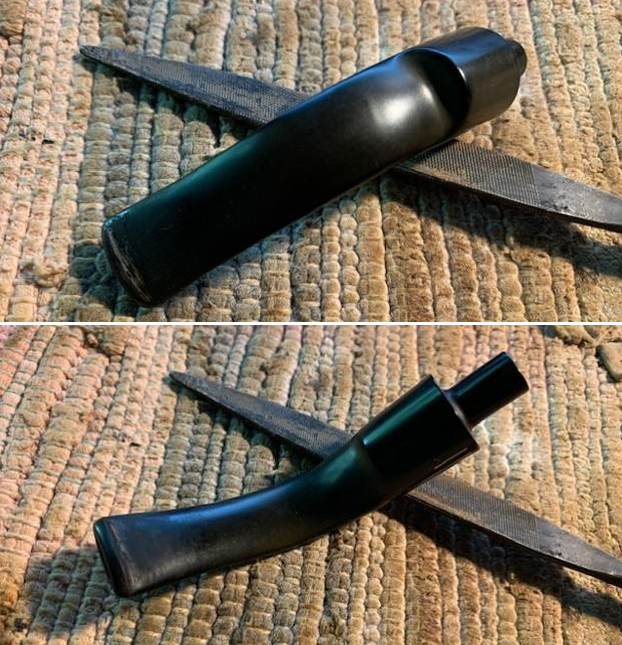
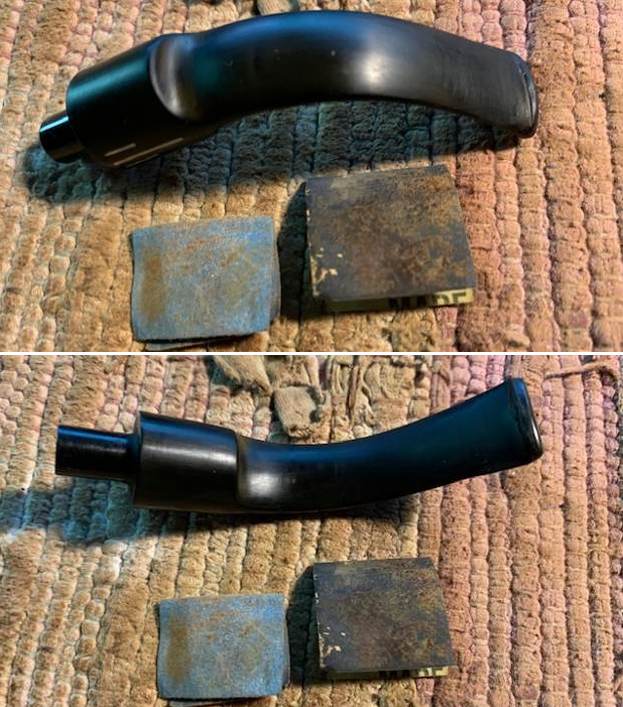
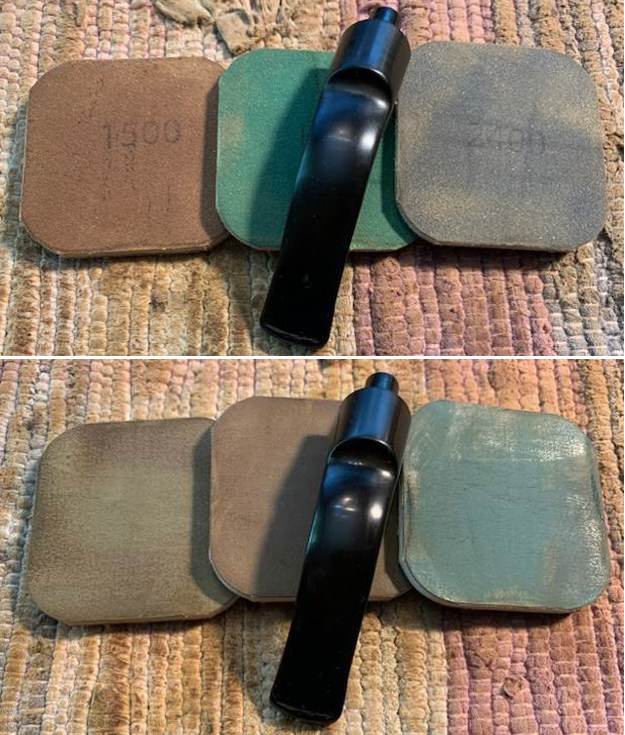
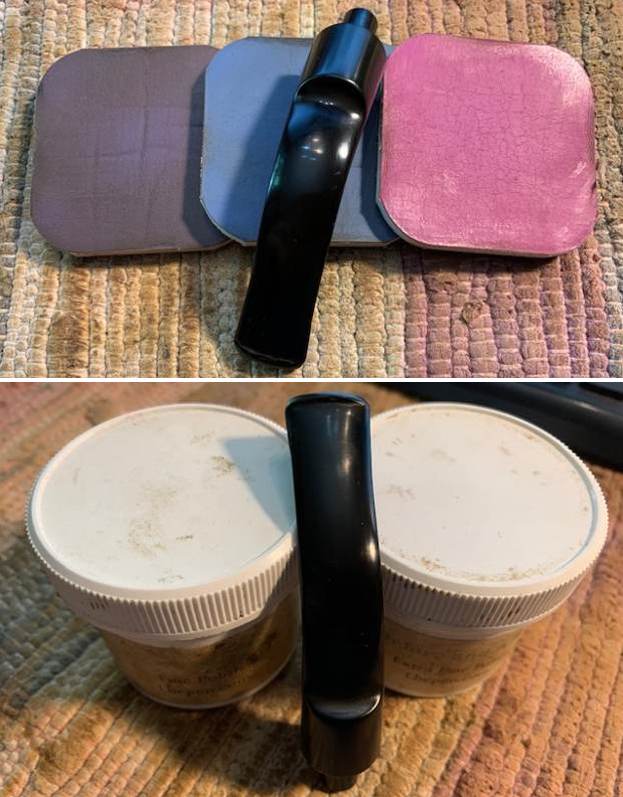
It’s just a little chip but annoying.We wrote back and forth and I let him know I could fix it. Yesterday Josh dropped off the pipe at my house for repair. This morning I decided to tackle the repair on this pipe. The fact that he had never smoked it and that it was new really touched me and decided it would be the next pipe on the worktable. I took photos of the pipe to give a sense of the beauty of the piece. It is a smooth finished Poker with what looks like a Walnut finish. The band on the shank is silver. The stem is acrylic with a silver Savinelli logo on the top of the saddle. The shank is stamped on the left side and read Savinelli [over] Trevi. On the right side it had the Savinelli Shield S followed by 311KS [over] Italy. The pipe had an inwardly beveled rim top and the bowl was smooth, unsmoked briar. The pipe had a Savinelli Balsa Filter in the tenon. I took a photo of the rim top and bowl to give a sense of the shape and finish of the bowl. It is a pretty pipe. I also took photos of the acrylic stem to show the general condition apart from the chipped right underside of the button and the stem (encircled in red in the photo below).I took photos of the stamping to try and capture it. The shiny varnish finish reflects light so much that the stamping is not clear in the photos. It reads as noted above.I removed the stem and took a photo of the pipe. It is a proportionally nice looking pipe.Now it was time to work on the stem. I cleaned off the chipped area with alcohol and a cotton swab to remove any debris. I took photos of the chipped area before I started working on it. You can see the damage. Though it is small it is rough to the touch and would certainly be rough to the mouth. I have drawn a red box around the damage in the photos below.I carefully filled in the chipped area with black CA glue and pressed it into the chipped spots with a tooth pick. I laid the stem aside to let the repair cure. Once the repair cured I reshaped the button with a piece of 220 grit sandpaper. I worked over the right edge and the button to match what was on the other side of the stem. Once finished it looked better. I started polishing the acrylic with 400 grit wet dry sandpaper. I set the bowl aside and turned to work on the stem. I polished the acrylic stem with micromesh sanding pads – 1500-12000 grit pads. I wiped it down with Obsidian Oil after each sanding pad. I used Before & After Pipe Polish – both Fine and Extra Fine to further polish the stem and gave it a final coat of Obsidian Oil to finish it. With the stem repaired on this Savinelli Trevi 311KS Poker it is ready to go back to Josh so he can enjoy his first bowl in his new pipe. It is a great looking pipe with a rich walnut finish that highlights the grain and works well with the silver band and the polished acrylic stem. I put the stem back on the bowl and carefully buffed the pipe with Blue Diamond on the buffing wheel using a light touch on the briar. I gave the bowl and the stem multiple coats of carnauba wax on the buffing wheel and followed that by buffing the entire pipe with a clean buffing pad. I hand buffed the pipe with a microfiber cloth to deepen the shine. I have email Josh and let him know it is ready to pick up. I take a moment to remind myself and each of us that we are trustees of pipes that will outlive us and the lives of many other pipe men and women who carry on the trust of their care and use. Thanks for reading this blog and my reflections on the pipe while I worked on it.

A Dunhill Shell Liverpool with a scratched in story on underside of the shank


Blog by Steve Laug

Sometimes when you see a pipe you just need to pull the trigger and buy it. We put in a bid and picked up the pipe from an online auction on 02/02/22 in Cottage Grove, Minnesota, USA. It is a petite Dunhill Shell Liverpool. It is stamped on the heal of the bowl and reads 33/4 which is the shape number. Following that Trinidad 1942 scratched in. That is followed by Dunhill Shell Made in England over Pat. No.1341418/20. It is going to be fun figuring out the dating on the pipe as there is no date stamp on the pipe. The Patent No. should help but we shall see. To me what is interesting is the information scratched into the shank – Trinidad 1942. I will need to have a look at what happened there in 1942. Obviously the previous owner was there at that time and either purchased the pipe there or brought it with him to that moment.

Now for the condition of the pipe itself. It is a small pipe with a rugged blast. The finish was very dirty but no damage showed on the sides or shank. The rim top was lightly covered with lava but it did not show damage to the surface of the rim or the outer and inner edges. There was a moderate cake in the bowl with some tobacco debris in the cake. The stem was oxidized, calcified and had tooth marks on both the top and underside near the button. There was an aluminum inner tube in the shank that extended from the tenon to the entry of the airway at the bottom of the bowl. It was dirty and tarry looking. There was an aluminum washer on the tube that sat at the point it entered the tenon. It was a great looking pipe and once it was cleaned and restored it would be quite stunning. Jeff took photos of the pipe when it arrived in Idaho and before he started his clean up work. He took close up photos of the rim top and stem to give a clear idea of the condition of the pipe. You can see the items I pointed out regarding both in the above paragraphs. He took photos of the bowl from various angles to show the condition of the briar and the beautiful sandblast finish on the pipe. It is a beautiful old pipe under the grime and grit of the years.   Jeff captured the stamping on the heel of the bowl and the underside of the shank. It is clear and readable as noted above. You can also see the Trinidad 1942 stamping between the two.He removed the inner tube from the shank and stem and took photos of it. It extends the length of the shank with the angled end extending into the bottom of the bowl. Before I started my work on the pipe I wanted to try and establish the date it was made. I turned to John Loring’s, The Dunhill Briar Pipe – the Patent Years and After to see what I could learn from John’s work. Since there was no date stamp the Patent No. would help me at least give a time frame. I am thinking the Trinidad 1942 mark might also help with that.

On the Back cover there is a summary of the stamping on the shank. The one that applied is shown below 1935-1951 DUNHILL SHELL MADE IN ENGLAND. I have included that in a screen capture below. I drew a red box around the pertinent section below.I turned to Page 59 to follow up on the Patent No. 1341418/20. That points to a time period between 1941-?1943. I have drawn a red box around the section that matches the stamping on this pipe in the screen capture below.That 1941-43 time period fits the scratched Trinidad 1942 date as well. I did some reading on what happened in 1942 in Trinidad. I turned to Google and found several links to what was happening in Trinidad in 1942. The first of these gives an overview of what was happening there (https://ww2db.com/country/trinidad). I quote:

Trinidad, located just off South America, was a British Crown Colony since 1802 through the Treaty of Amiens. It was originally an agricultural colony (sugar cane, cocoa, among other products). In 1889, the nearby island of Tobago was placed within Trinidad’s borders. In 1857, oil was discovered in Trinidad, and major oil drilling operation began in 1907. In 1925, Trinidad held its first elections for the local Legislative Council. In 1941, during WW2, German submarines were detected in waters surrounding Trinidad, which intended on attacking Allied shipping. US Army personnel arrived on the island in Apr 1941 through the US-UK Destroyers for Bases Agreement. In early 1942, plans for establishing major air presence on Trinidad began to take shape, and before long, units on Trinidad and elsewhere in the Caribbean Sea and Gulf of Mexico regions could effectively stave off most German efforts at disruptions. After WW2, bases on Trinidad were disbanded by 1950. Trinidad and Tobago obtained self-governance in 1958 and independence in 1962.

The second link referred to an article by Annette Palmer entitled “Black American Soldiers in Trinidad, 1942-44: Wartime Politics in a Colonial Society”. The article give a focus on the need of Trinidad in 1942 (https://www.tandfonline.com/doi/abs/10.1080/03086538608582720?journalCode=fich20). I quote from that article below.All of that information made me wonder if the pipe had traveled to or been purchased in Trinidad. Could it have traveled there with the Black American 99th Coastal Artillery Regiment who came there in May of 1942? Or perhaps the pipe came with other American soldiers white or black in 1942. We will probably never know for sure but it is an interesting piece of history.

Armed with that information I turned to work on the pipe itself. Before he sent it to me, Jeff had cleaned up the pipe with his usual procedure. He reamed the pipe with a PipNet pipe reamer and removed the rest of it with a Savinelli Fitsall Pipe Knife.  He scrubbed the bowl with undiluted Murphy’s Oil Soap with a tooth brush. He rinsed it under running warm water to remove the soap and grime. He cleaned out the inside of the shank and the airway in the stem with isopropyl alcohol, cotton swabs and pipe cleaners. He soaked the stem in Briarville’s Pipe Stem Deoxidizer and then rinsed it off with warm water. He scrubbed the stem with Soft Scrub and a tooth brush and rinsed it off with warm water. It looked amazing when I took it out of the package of pipes he shipped me. So much so that it is the first of those pipes that I chose to work on. I took photos of the pipe before I started my part of the restoration work.  The rim top and the inner and outer edges of the bowl all look very good. The stem surface looked good with the oxidation gone and light tooth marks and chatter on either side of the stem. The stamping on the heel and underside of the shank is clear and readable as noted above.I removed the stem and took a photo of the pipe to give a sense of the whole. It is a proportionally pleasing pipe. The bowl looked very good after Jeff’s cleanup work so I rubbed it down with Before & After Restoration Balm. I worked it into the surface of the bowl and shank with my fingertips and a horsehair shoe brush to clean, enliven and protect the briar. I let the balm sit for about 10-15 minutes and buffed with a cotton cloth to raise the shine. I set the bowl aside and turned to work on the stem. I “painted” the stem surface to try and raise the tooth marks on both sides. I was able to raise them a little but the deeper ones remained. I filled them in with Black Super Glue and set them aside to cure. Once the glue cured I used a small file to flatten the repairs and reshape the button edge. I sanded the stem surface with 220 grit sandpaper and started the polishing it with 400 grit wet dry sandpaper.I polished the vulcanite stem with micromesh sanding pads – 1500-12000 grit pads. I wiped it down with Obsidian Oil after each sanding pad. I used Before & After Pipe Polish – both Fine and Extra Fine to further polish the stem. This Beautiful, petite Dunhill Shell 33/4 Pat. No.1341418/20 Liverpool is a great looking pipe now that it has been restored. The deep sandblast that is used around the bowl is highlighted by the dark, rich stains and works well with both the polished vulcanite stem. I put the stem back on the bowl and carefully buffed the pipe with Blue Diamond on the buffing wheel using a light touch on the briar. I gave the bowl multiple coats of Conservator’s Wax and the stem multiple coats of carnauba wax on the buffing wheel and followed that by buffing the entire pipe with a clean buffing pad. I hand buffed the pipe with a microfiber cloth to deepen the shine. The finished Dunhill Shell 33/4 Liverpool is petite pipe that will be great for enjoying a nice Virginia or Virginia/Perique blend. Give the finished pipe a look in the photos below. The dimensions of the pipe are Length: 5 ¼ inches, Height: 1 ½ inches, Outside diameter of the bowl: 1 inch, Chamber diameter: ¾ of an inch. The weight of the pipe is 20 grams/.71 ounces. This pipe will stay with me for now as the history of it intrigues me. I hope to enjoy it many times on the front porch over the summer ahead. I take a moment to remind myself and each of us that we are trustees of pipes that will outlive us and the lives of many other pipe men and women who carry on the trust of their care and use. Thanks for reading this blog and my reflections on the pipe while I worked on it.