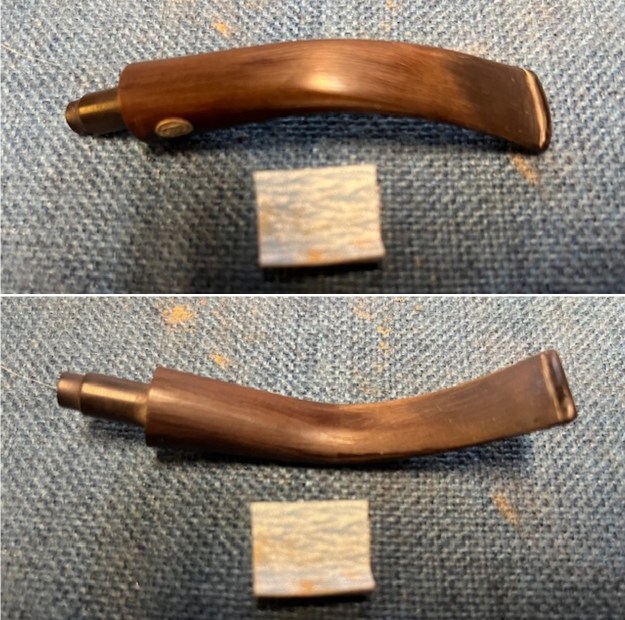
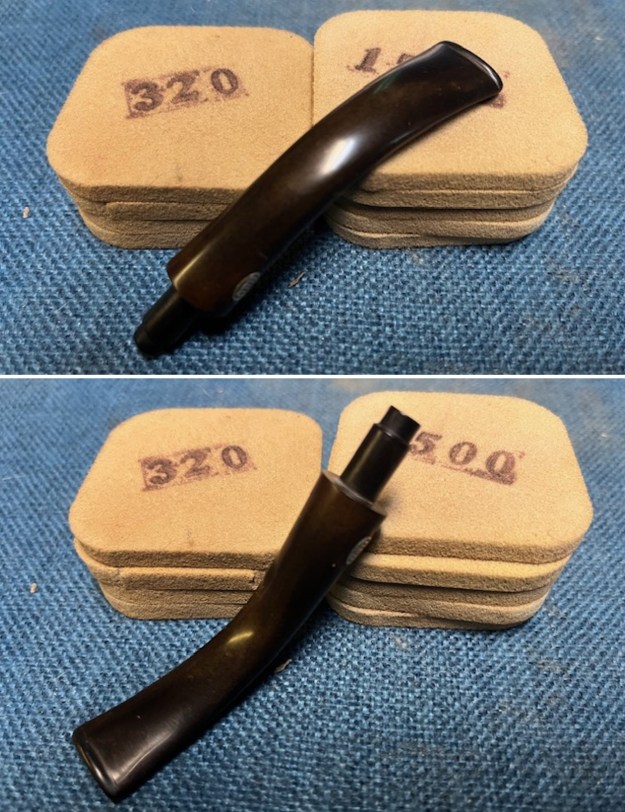
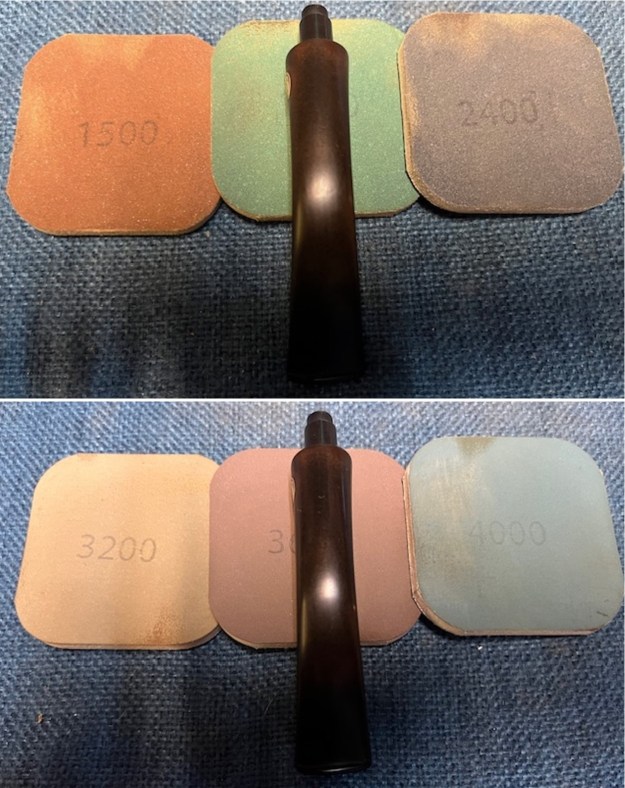
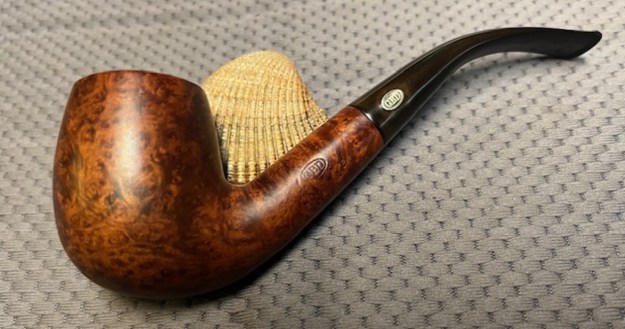
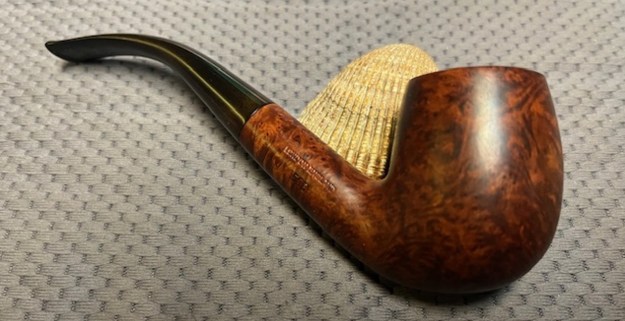
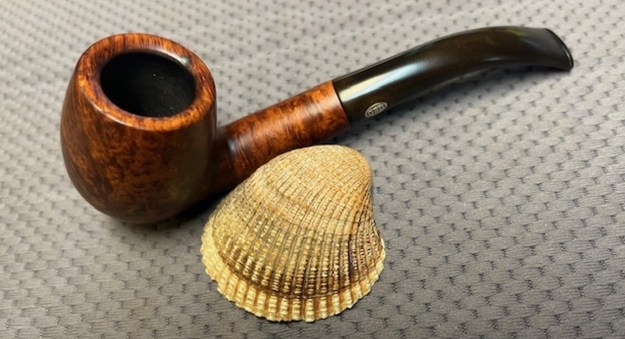
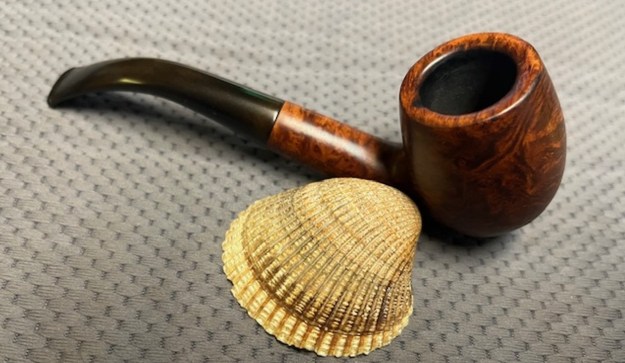
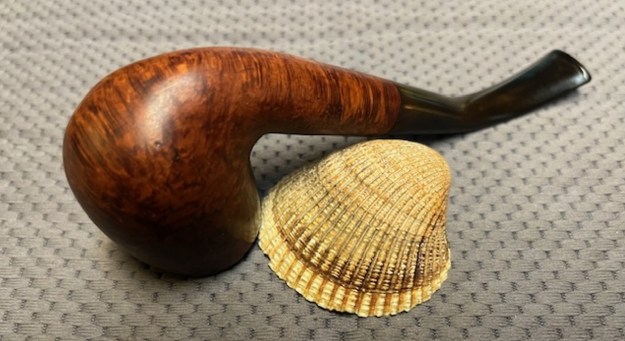
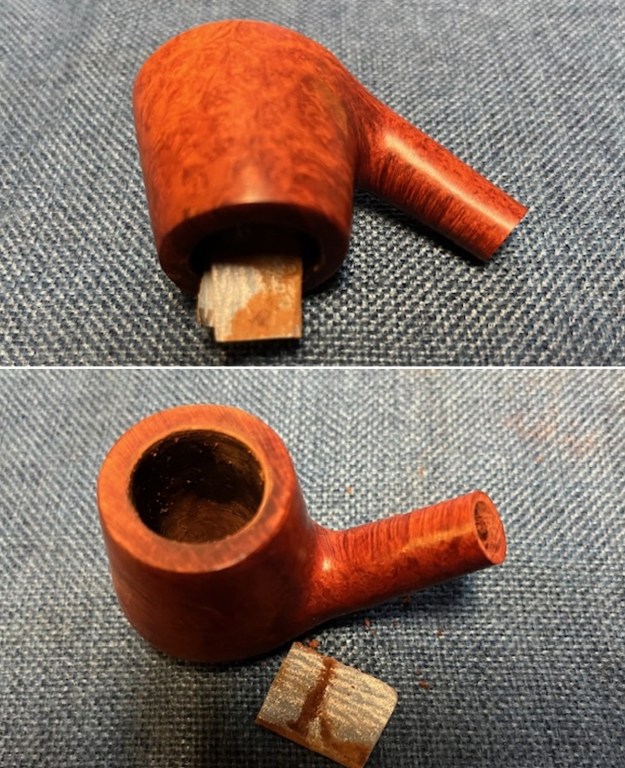
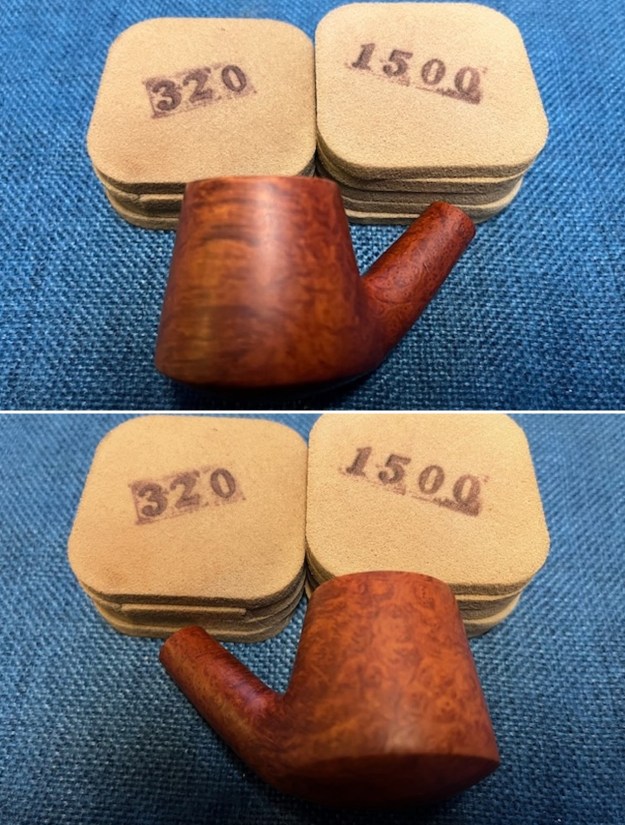
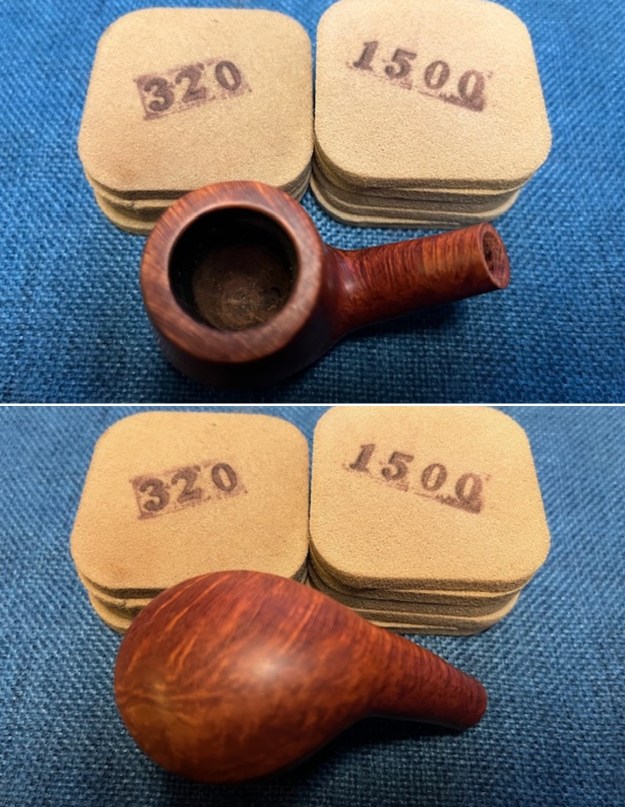
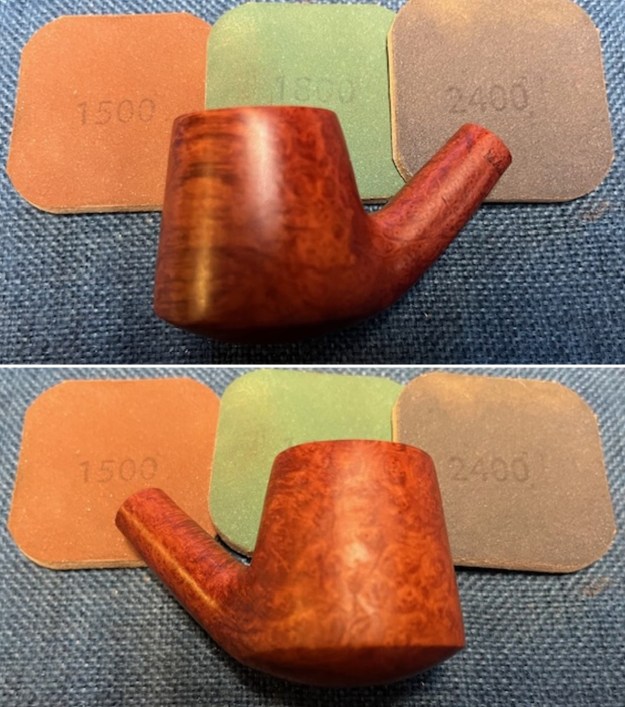
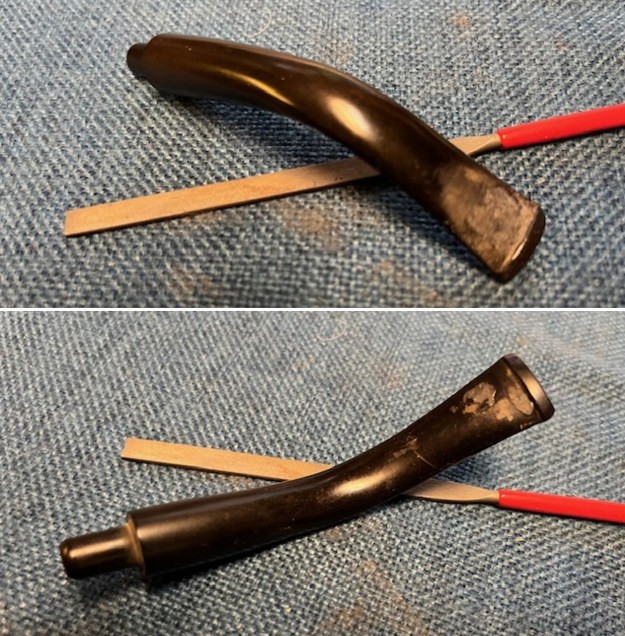
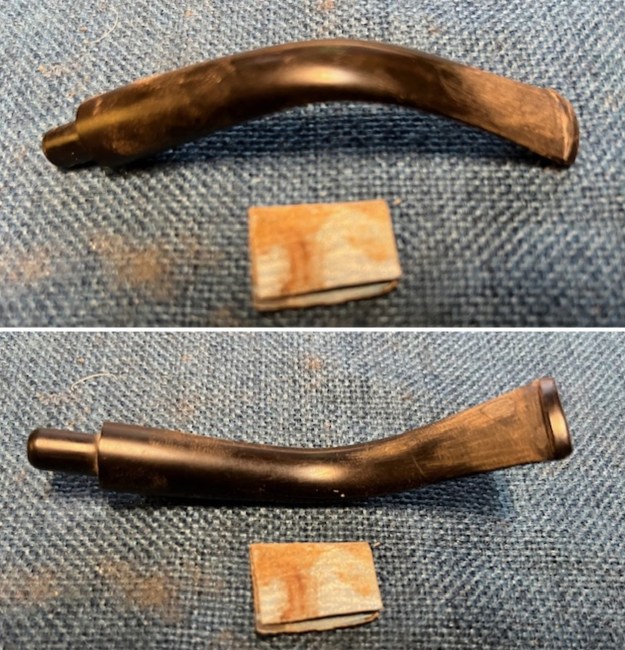
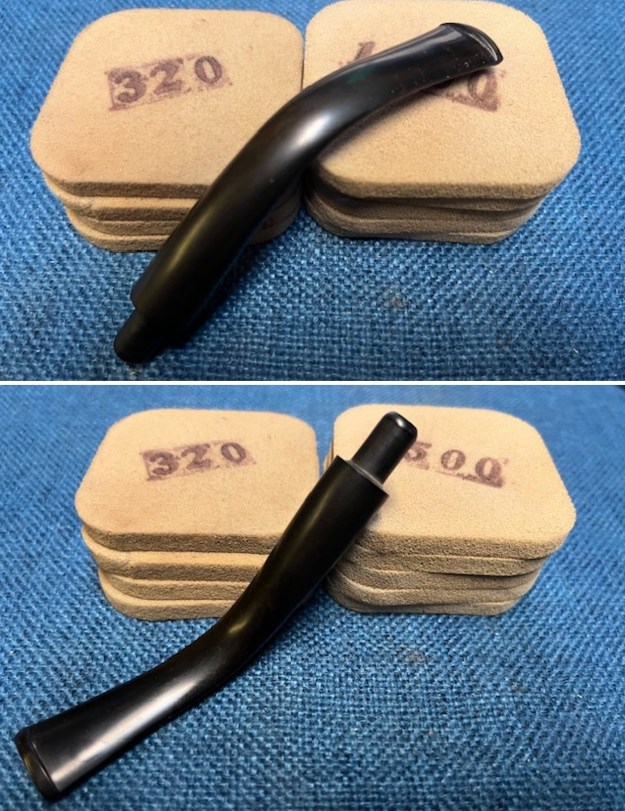
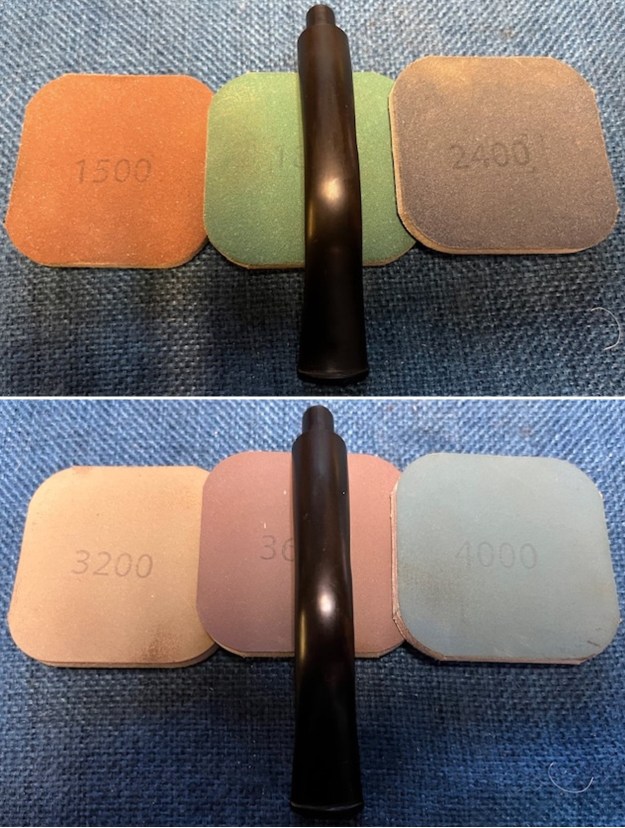
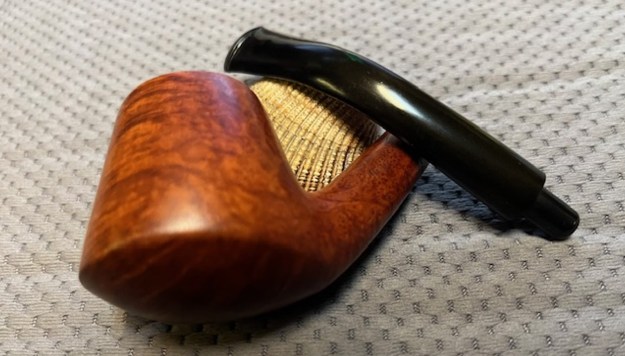
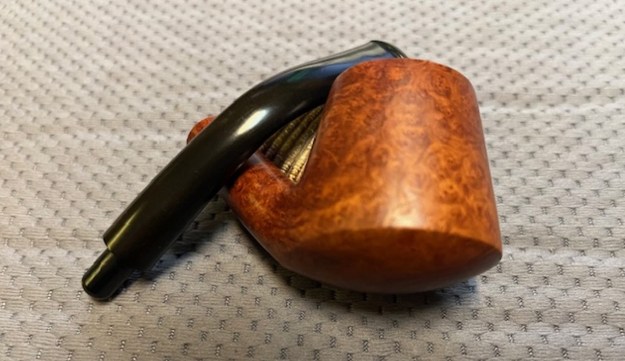
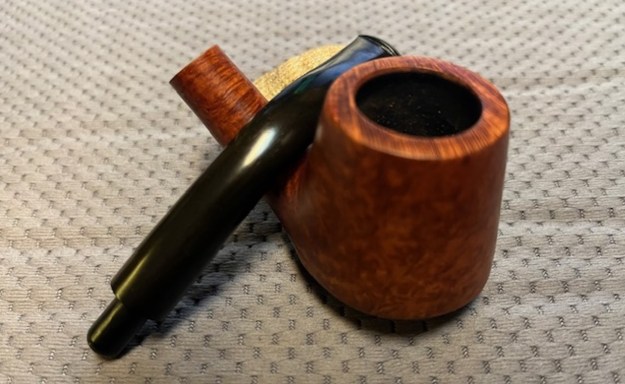
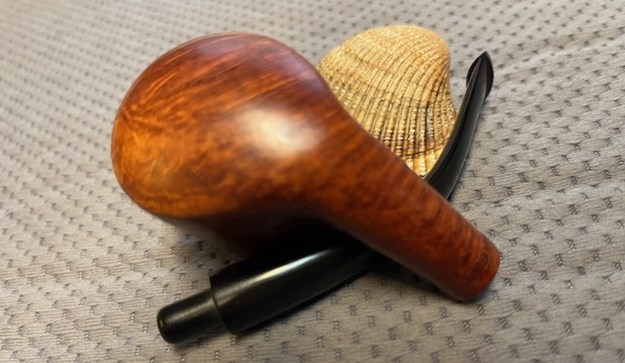
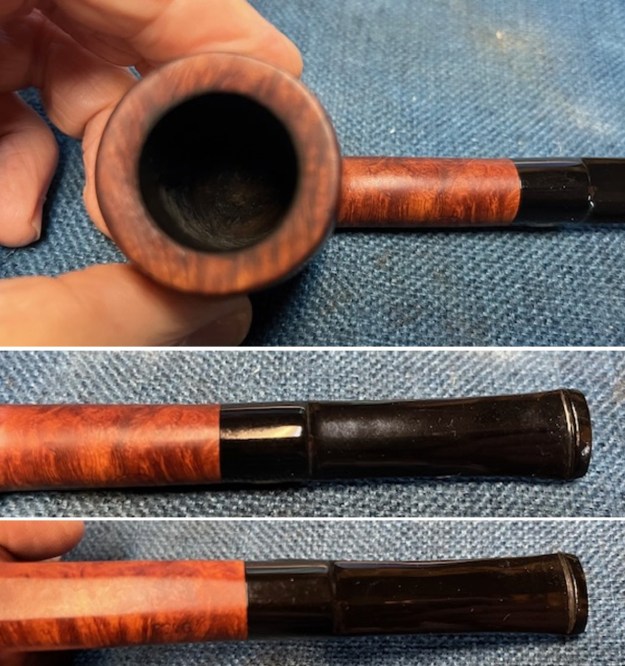
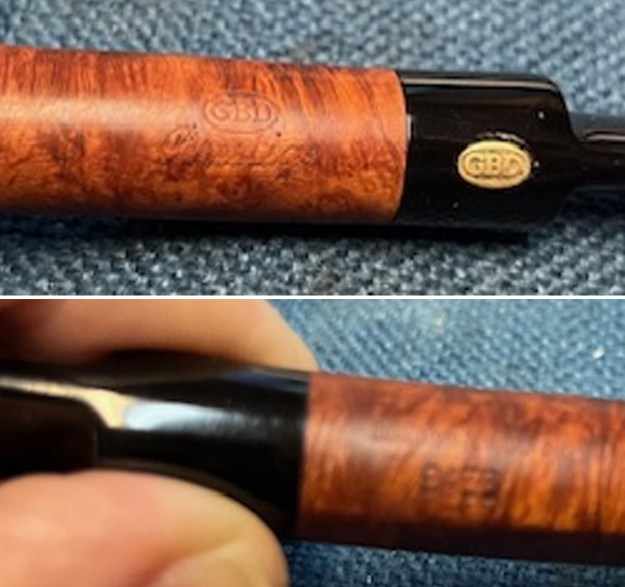
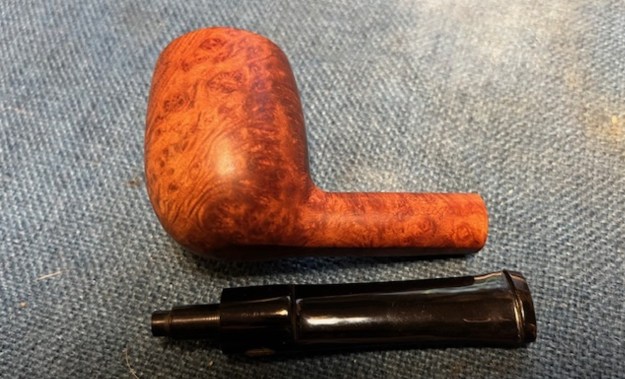
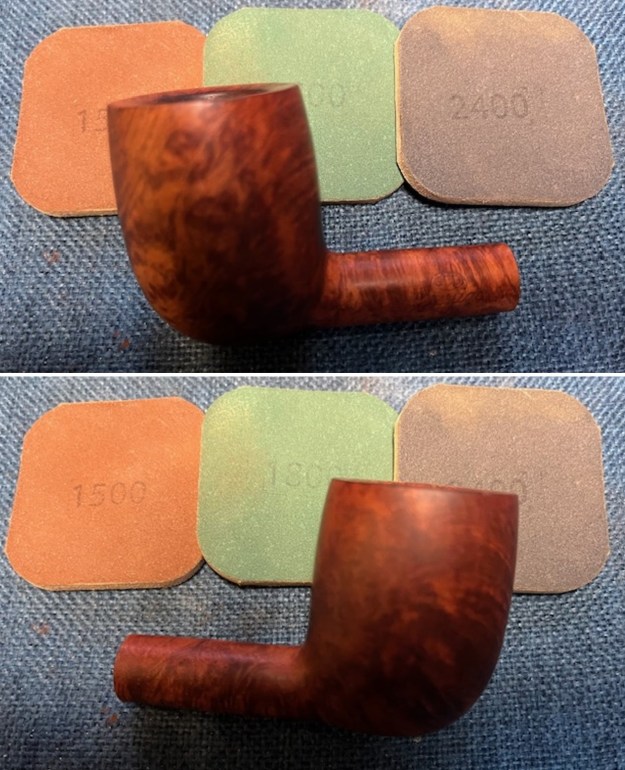
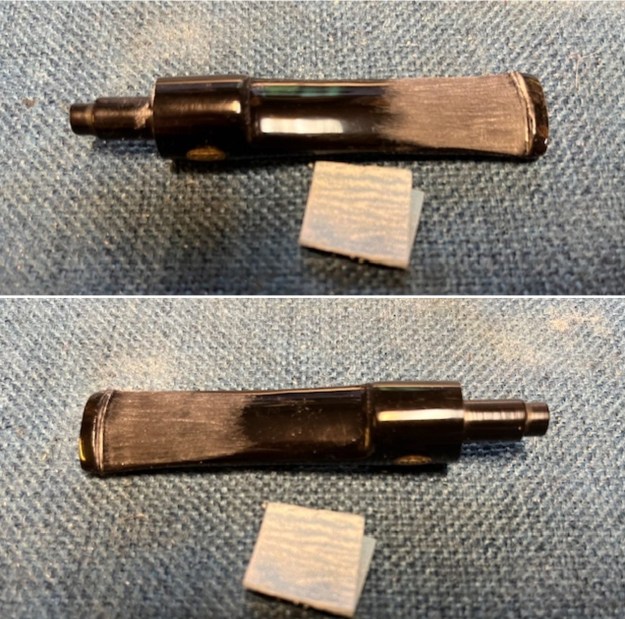
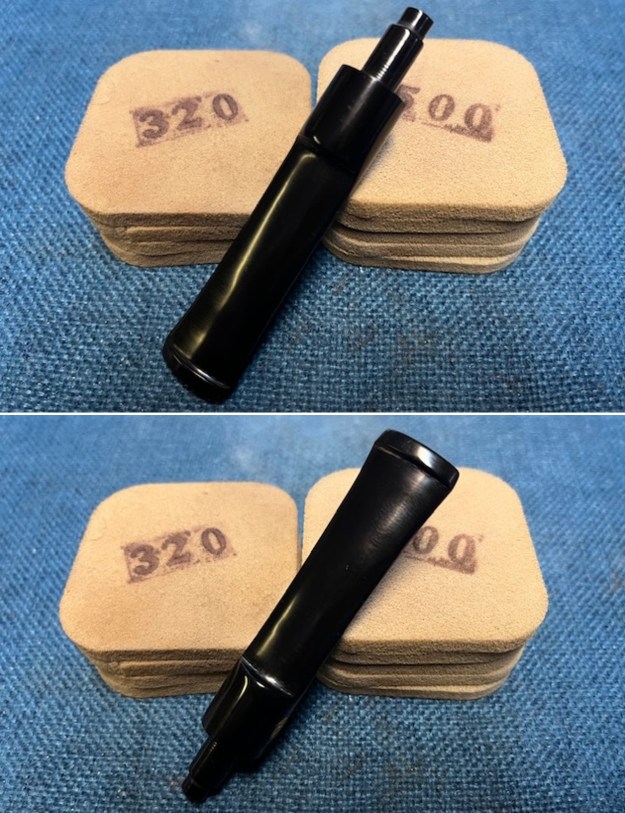
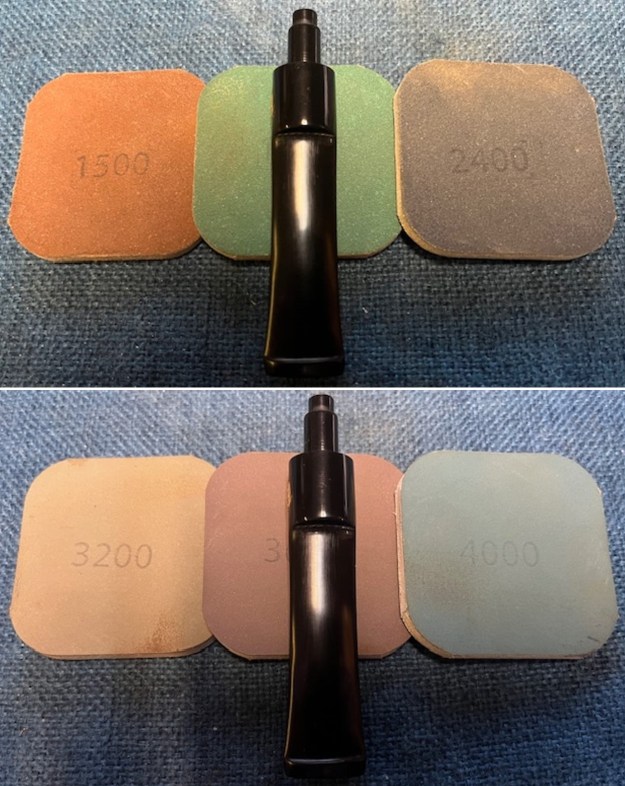
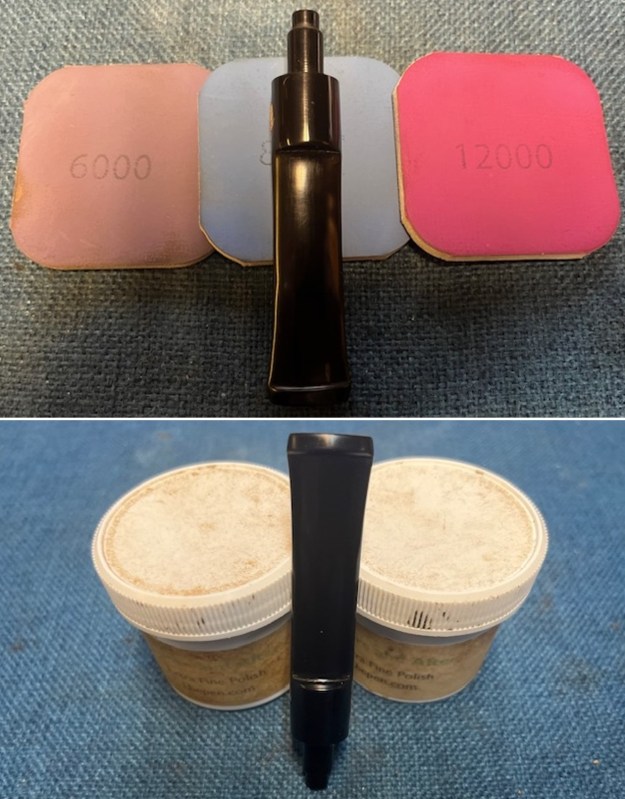
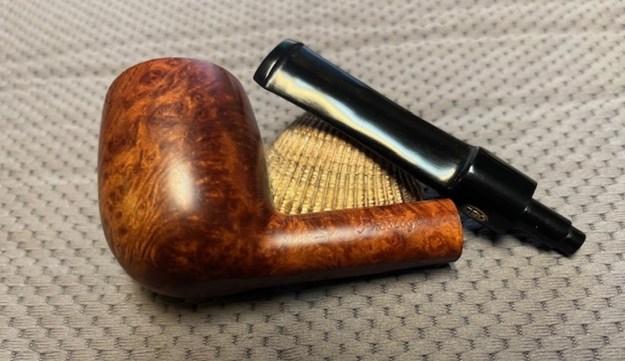
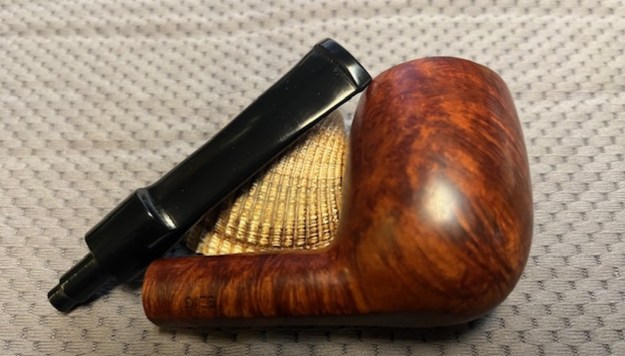
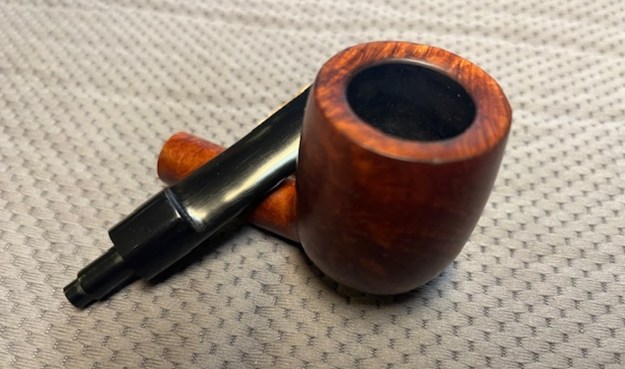
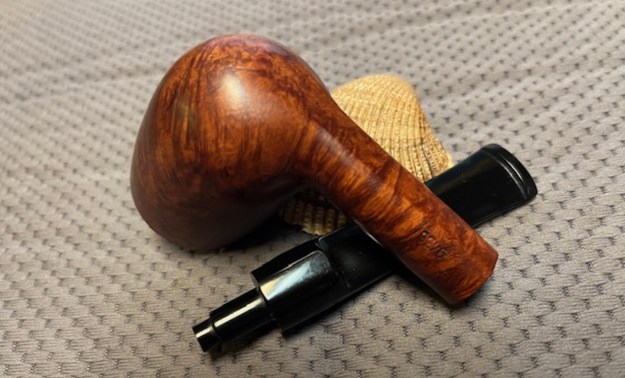
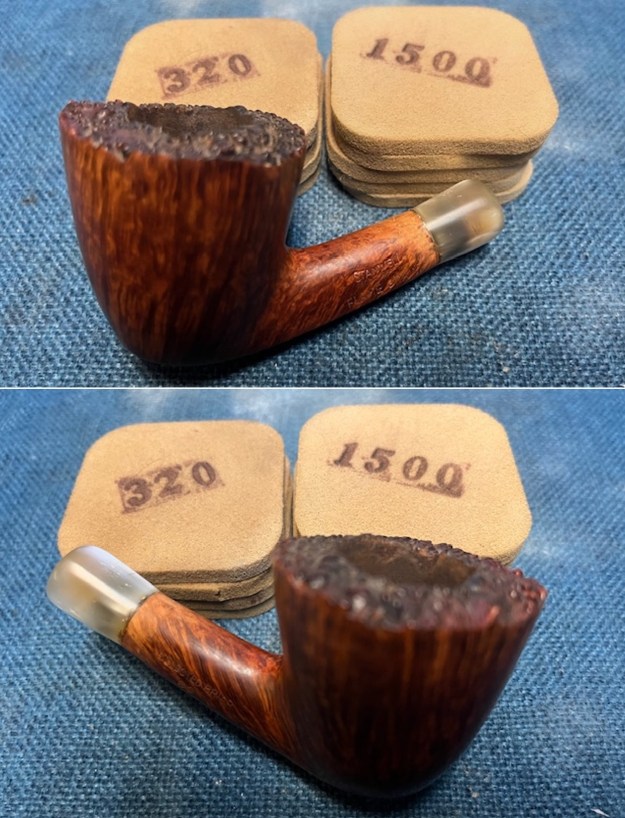
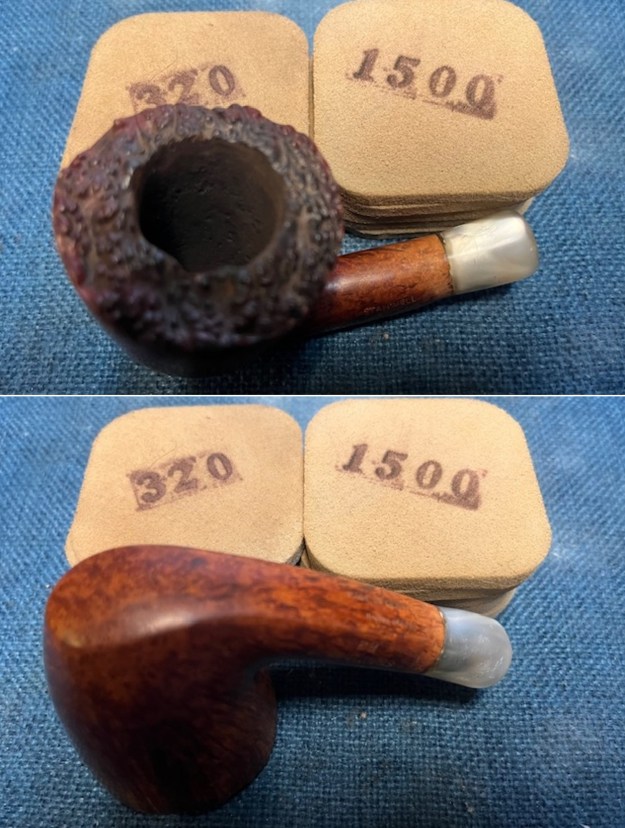
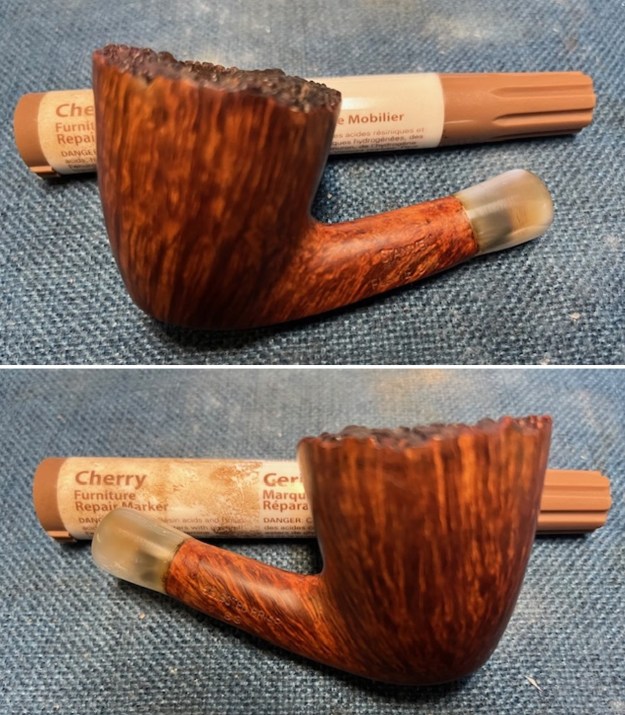
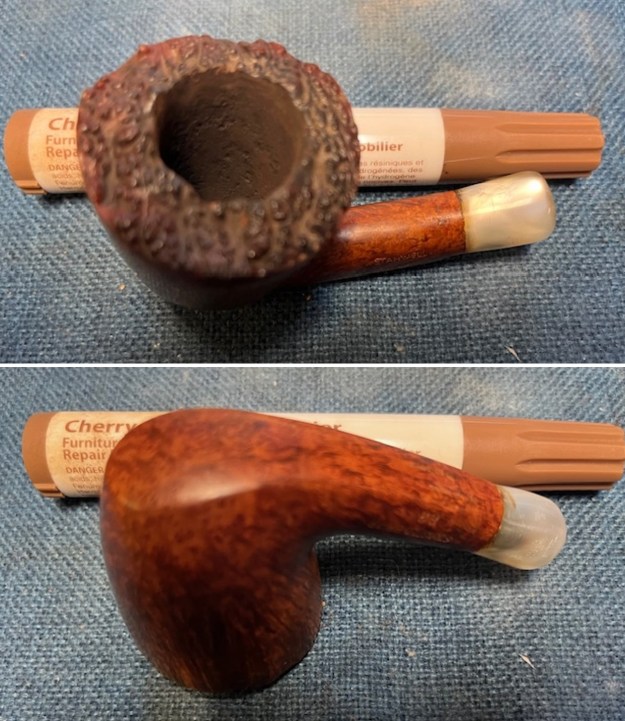
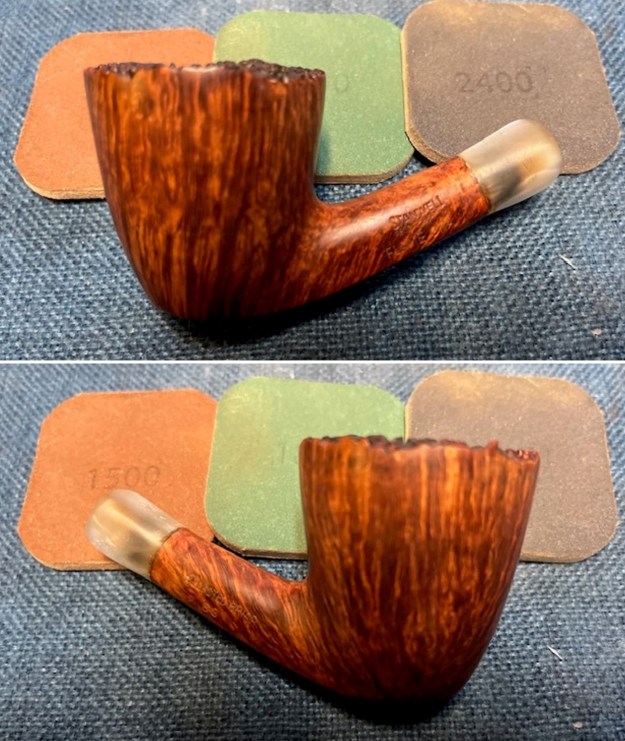
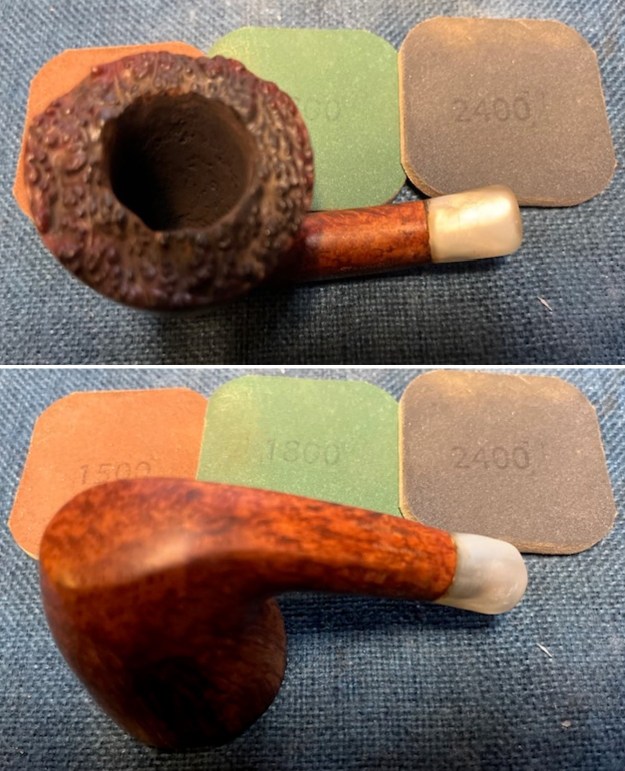
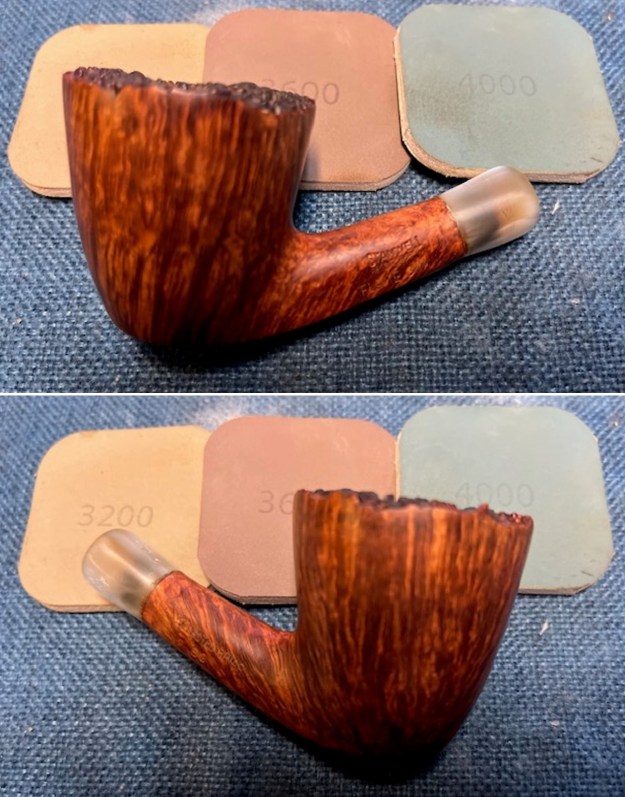
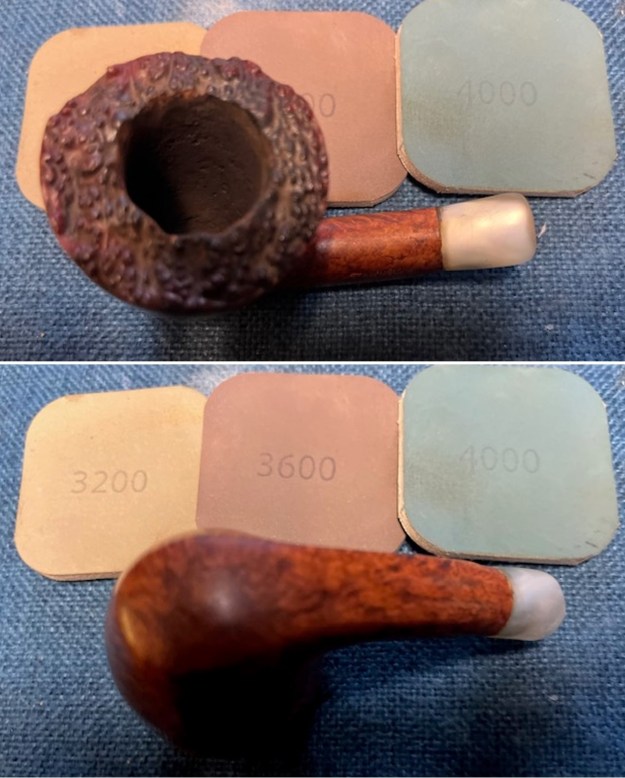
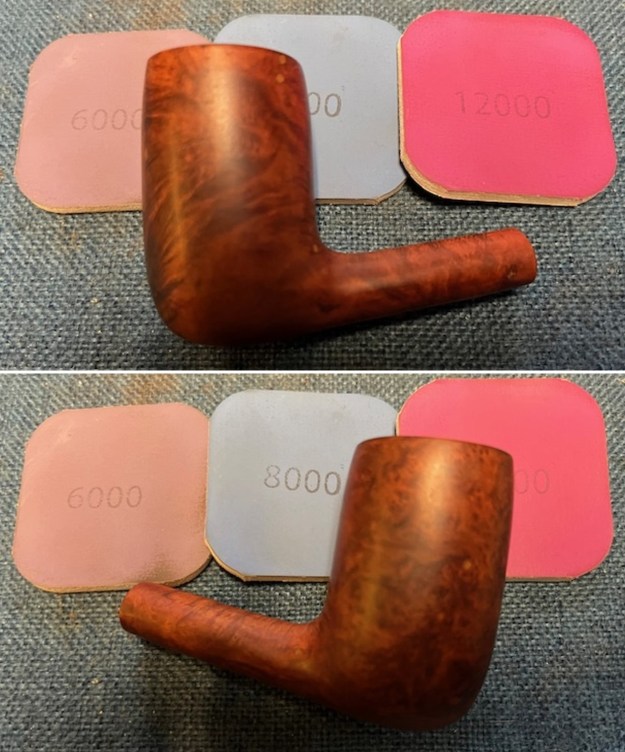
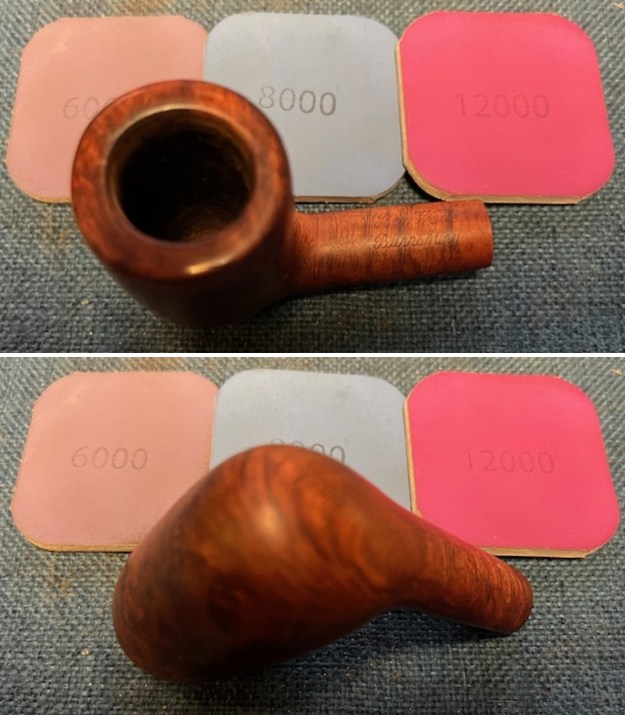
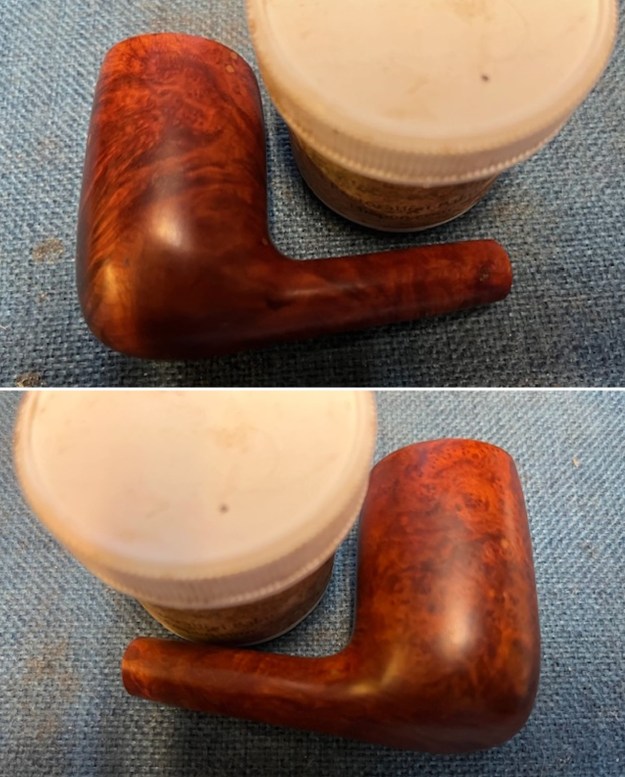
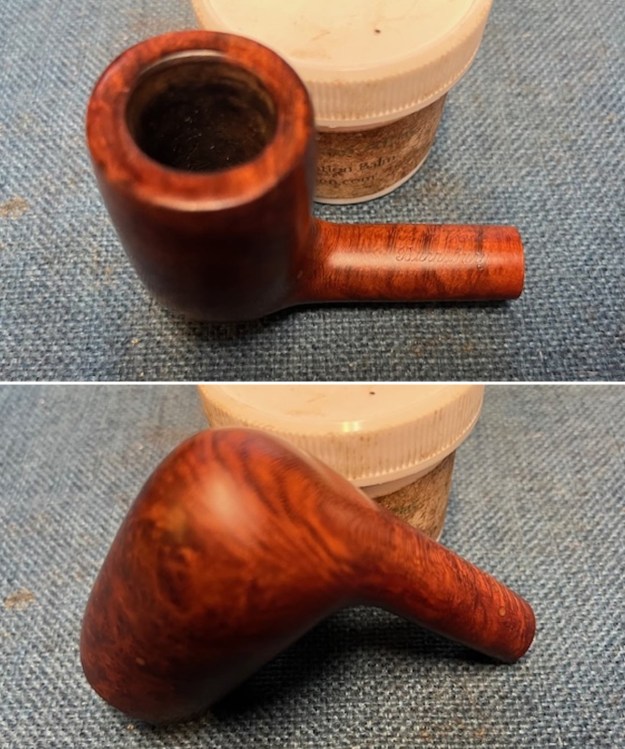
Tag Archives: shaping a stem

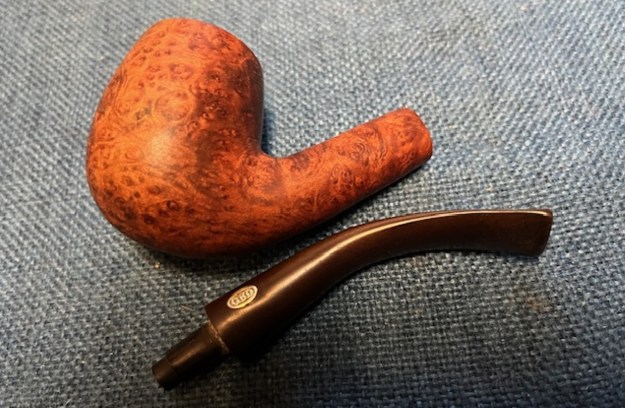
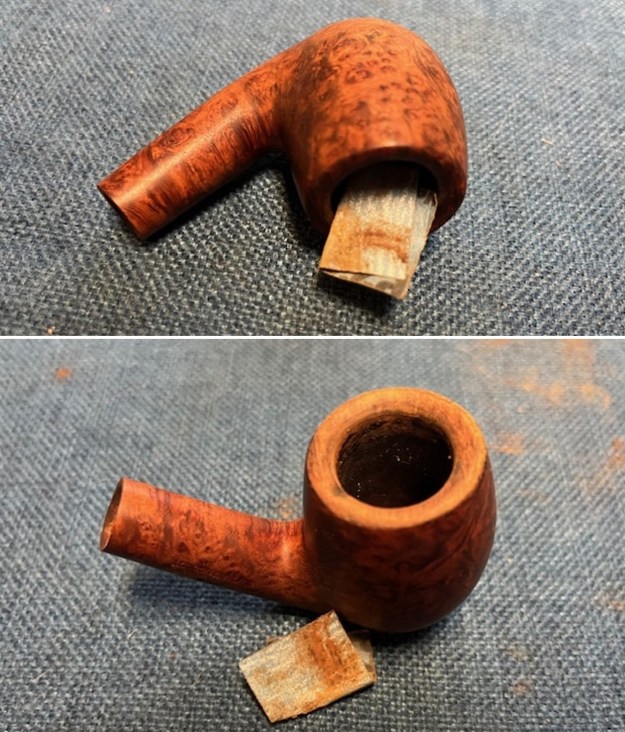
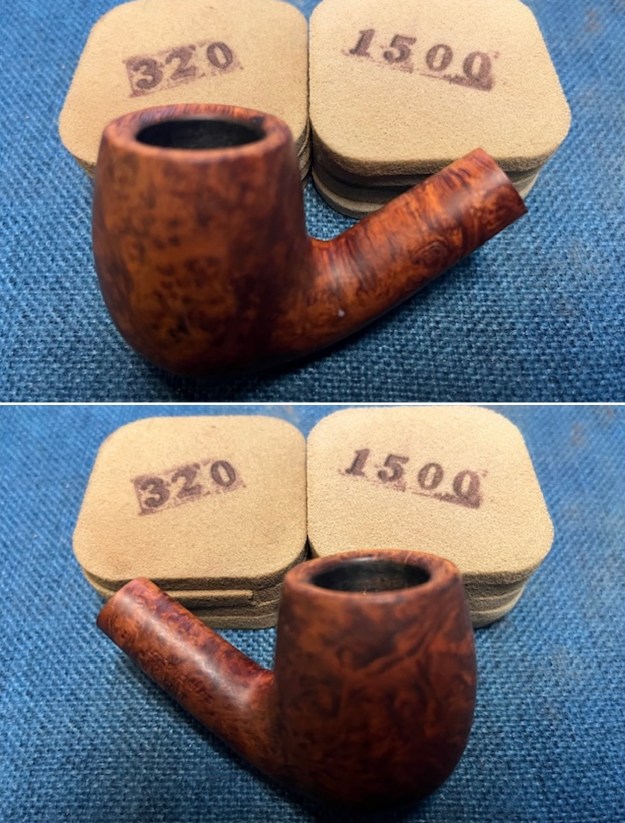
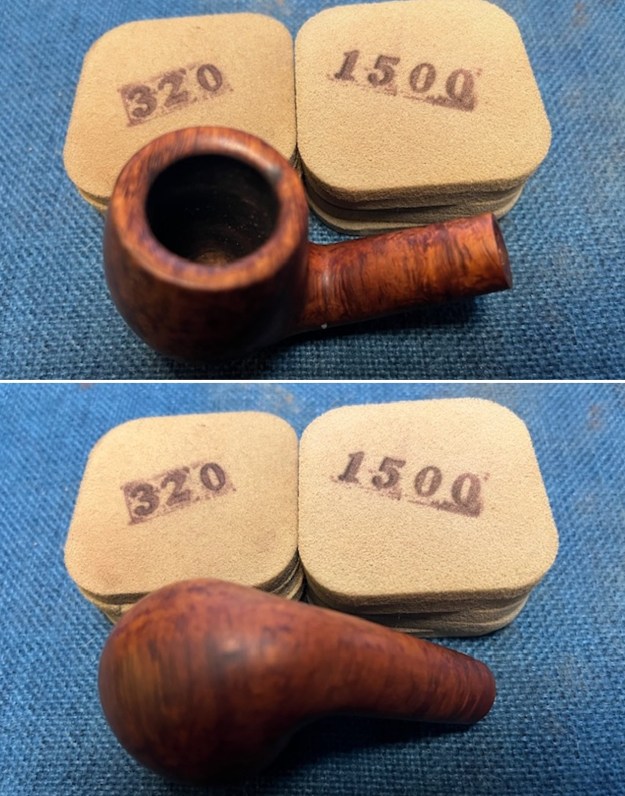
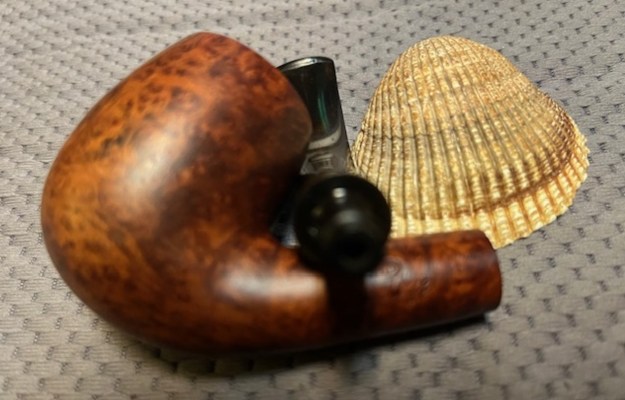
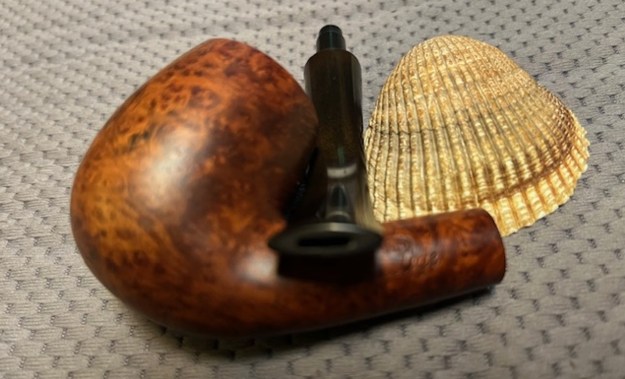
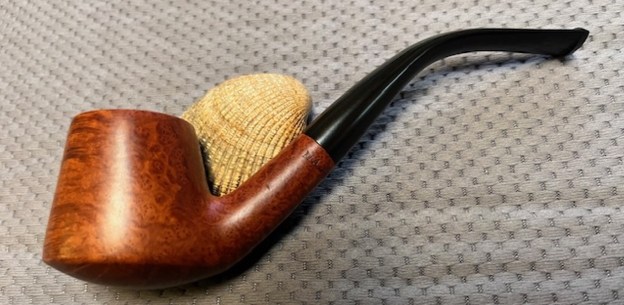
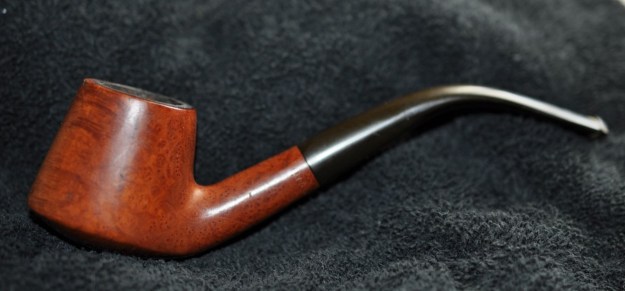
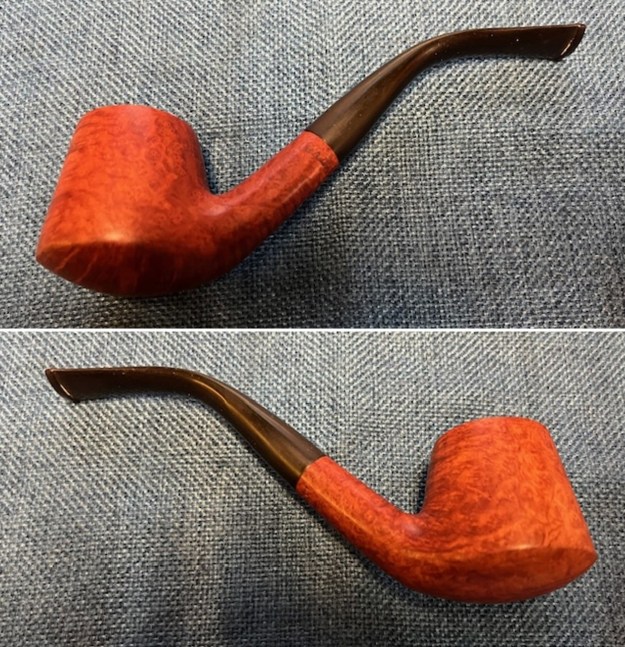
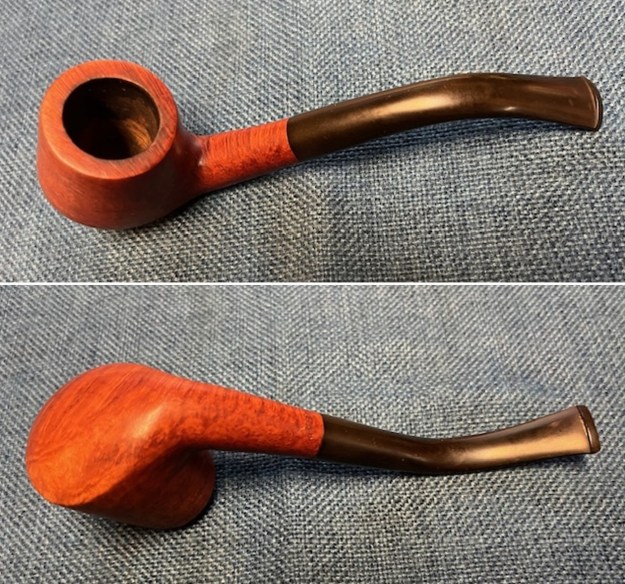
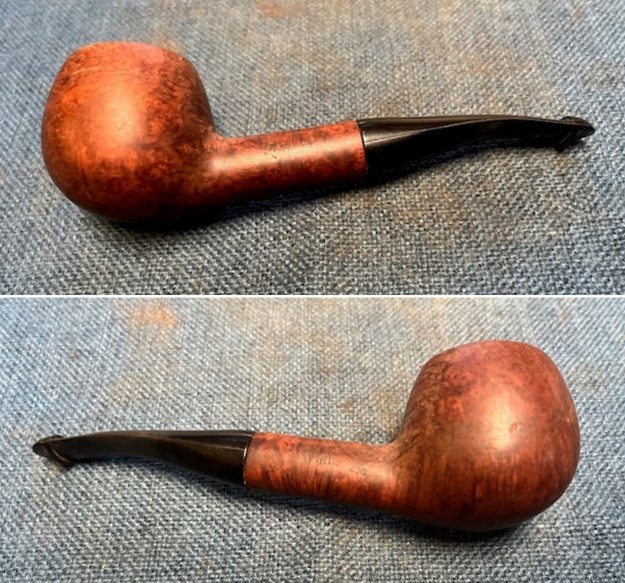
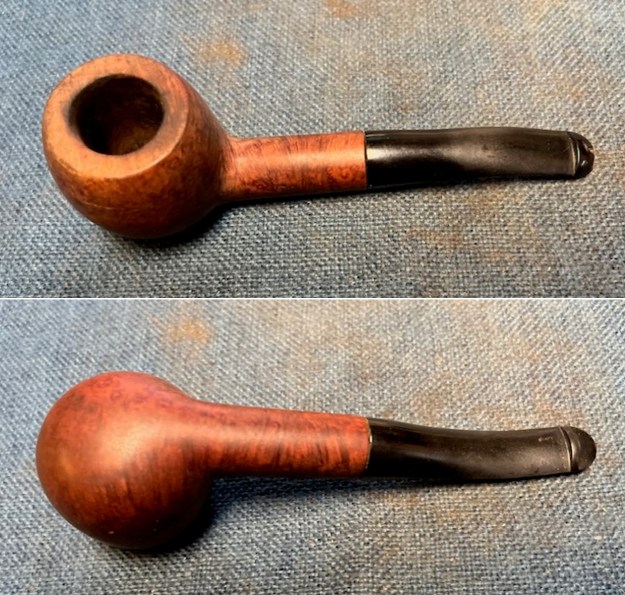
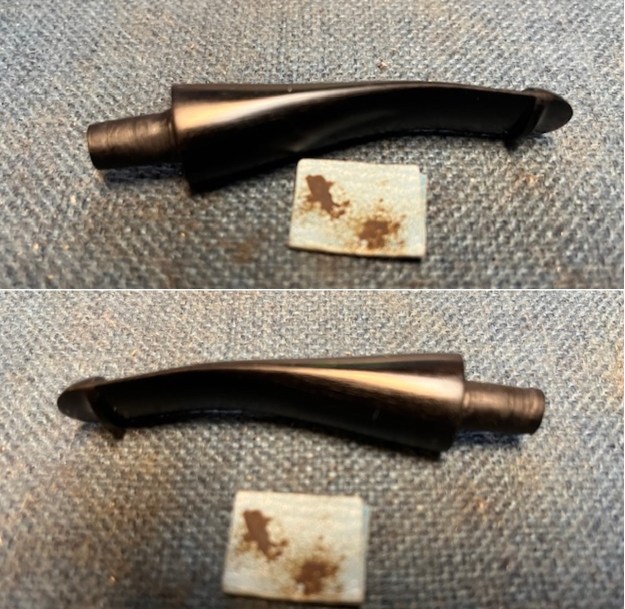
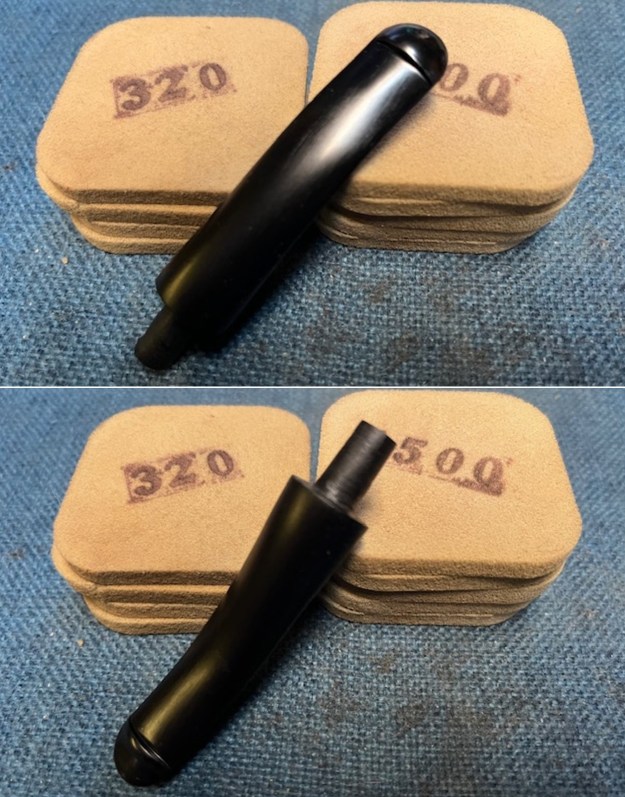
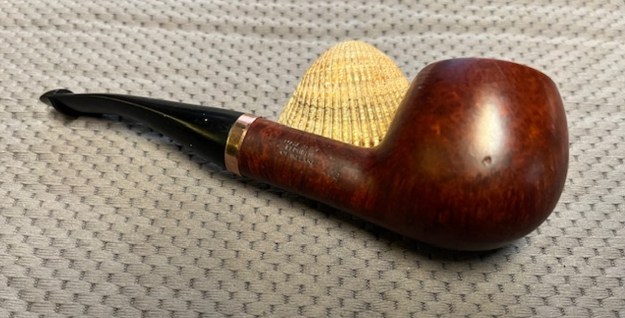
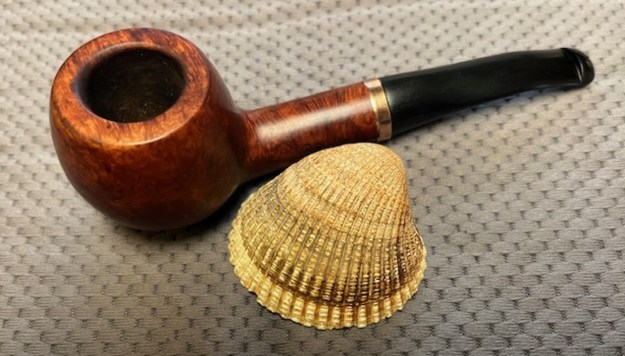
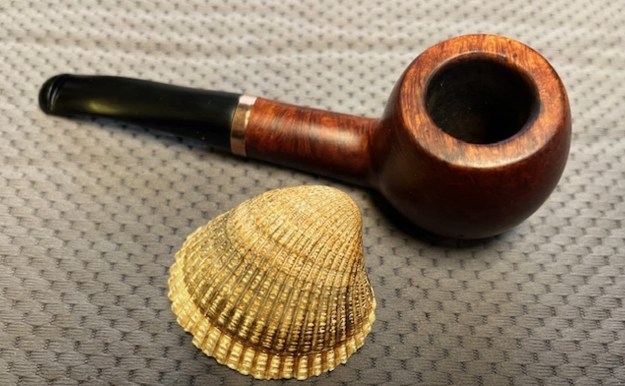
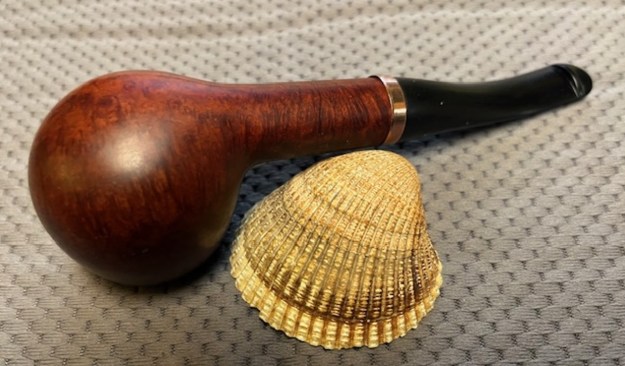
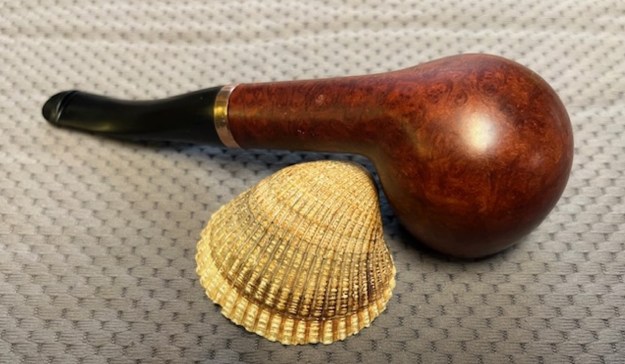
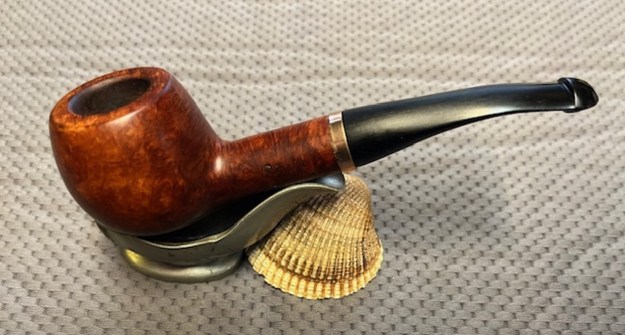
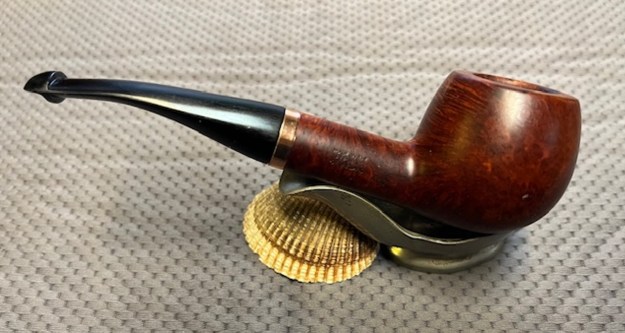
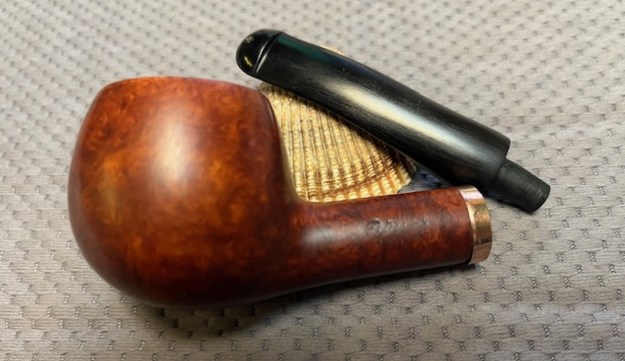
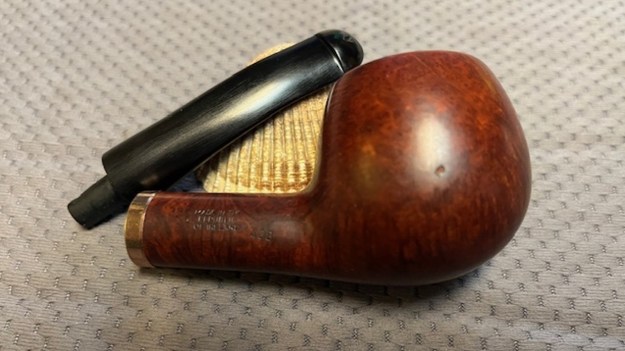
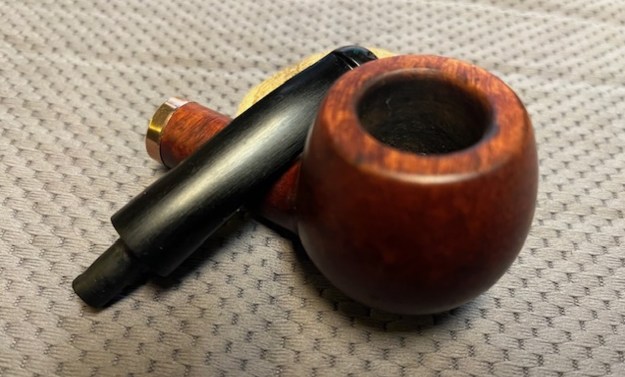
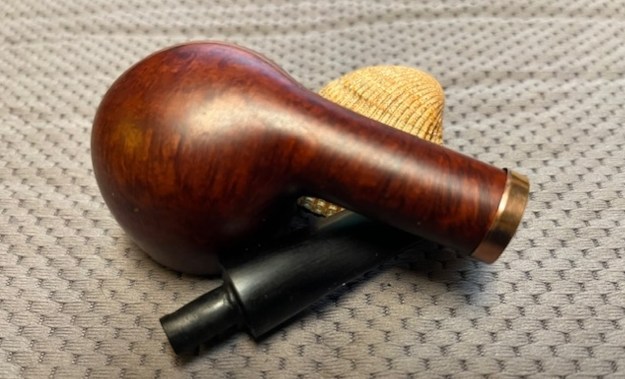
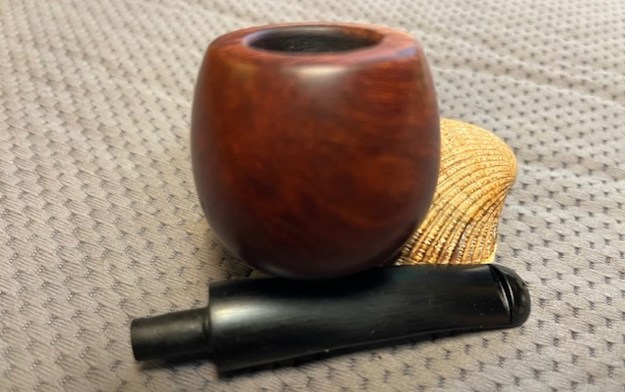
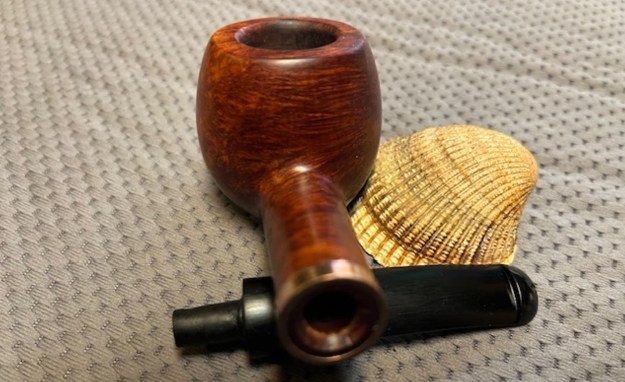
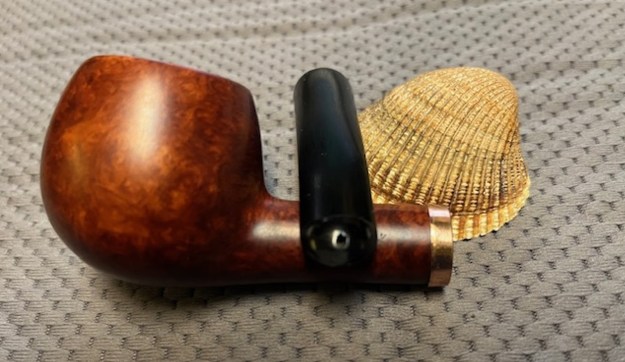
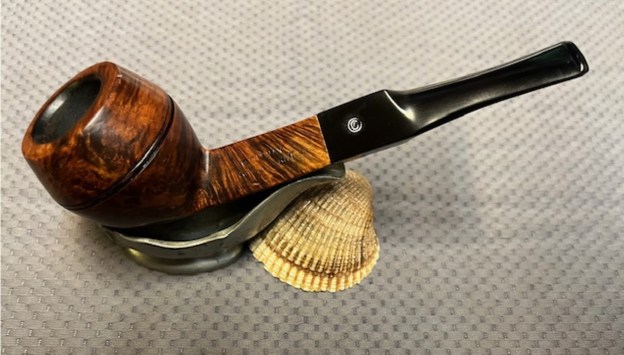
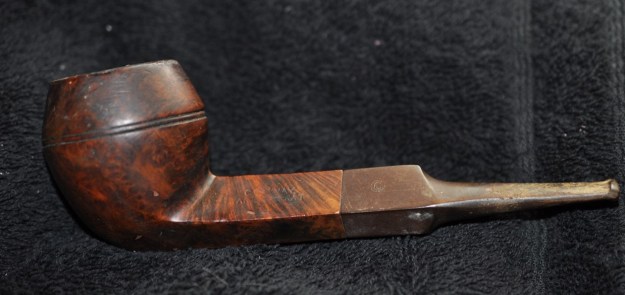
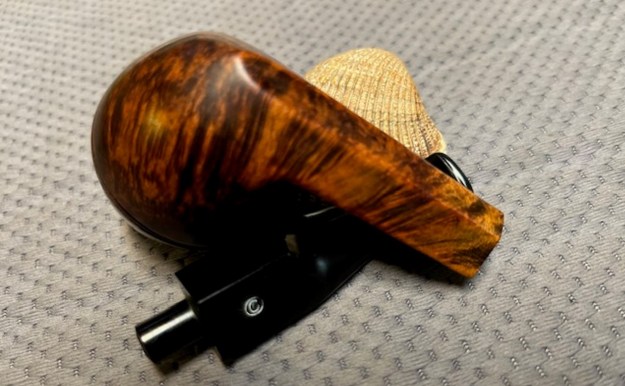
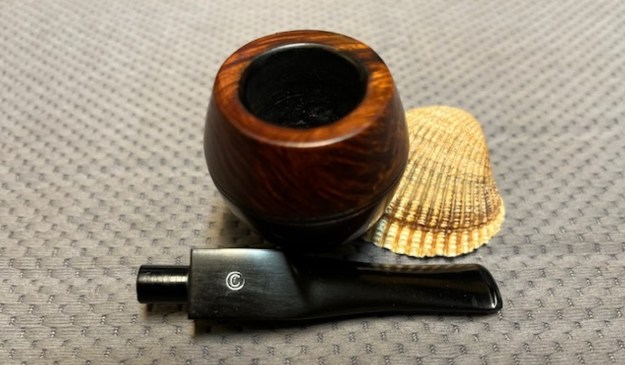
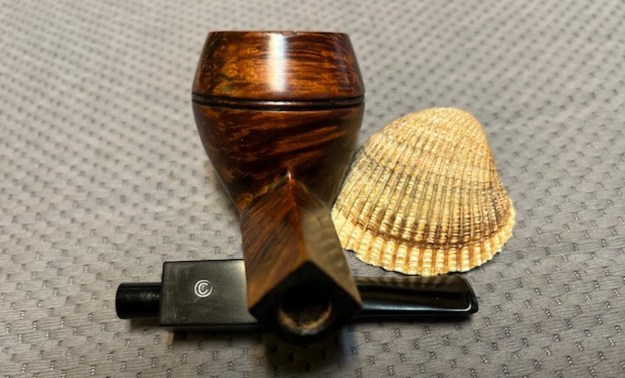
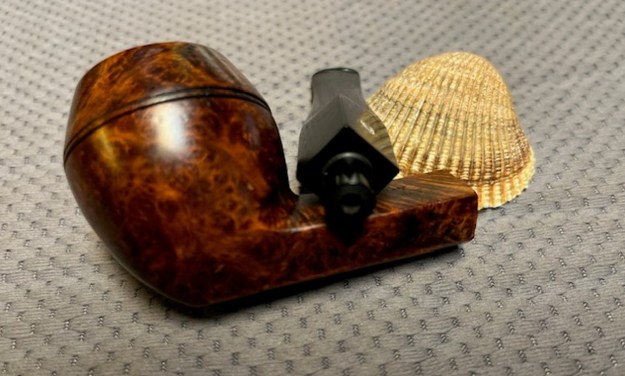
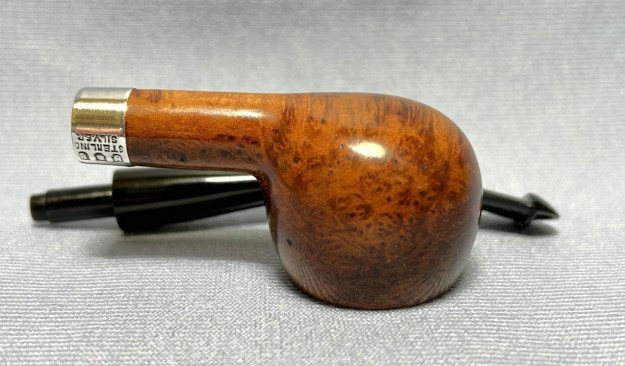
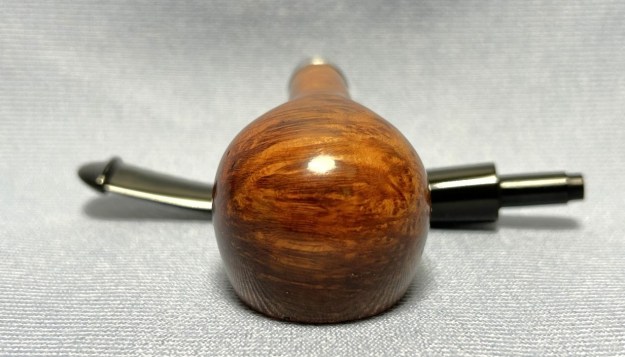
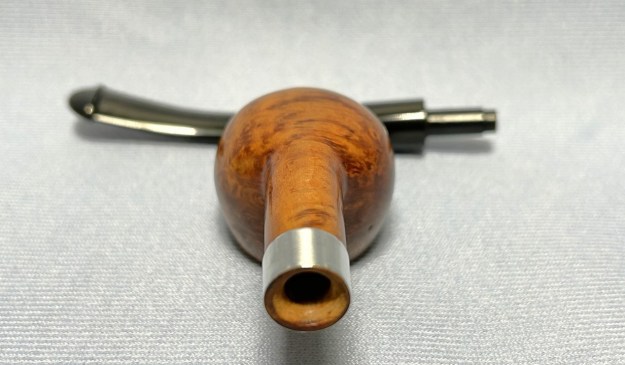
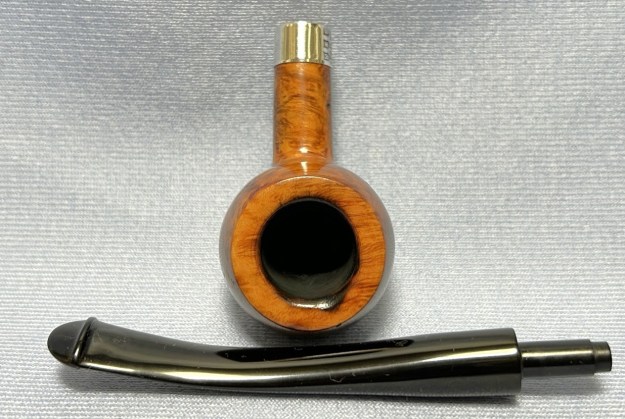
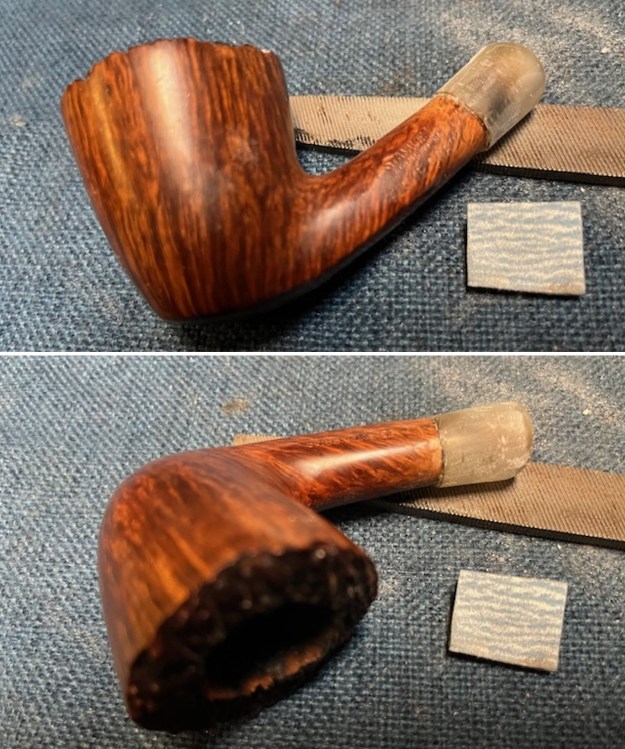
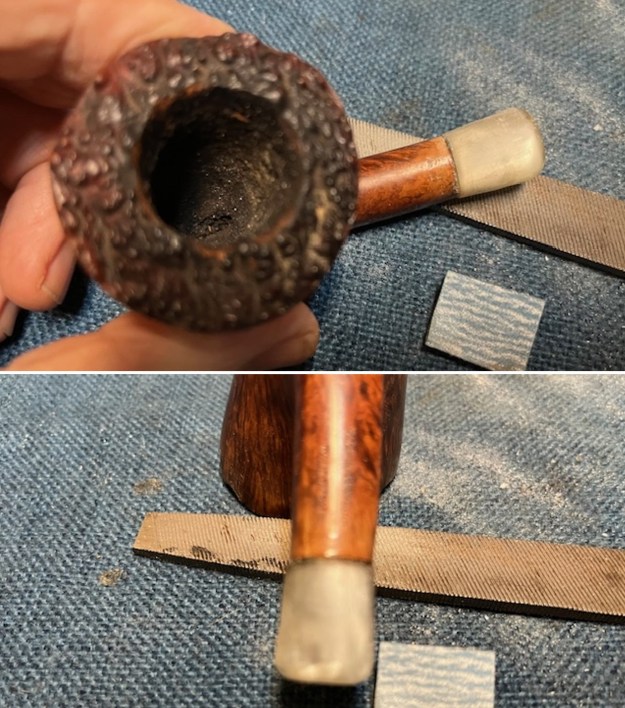
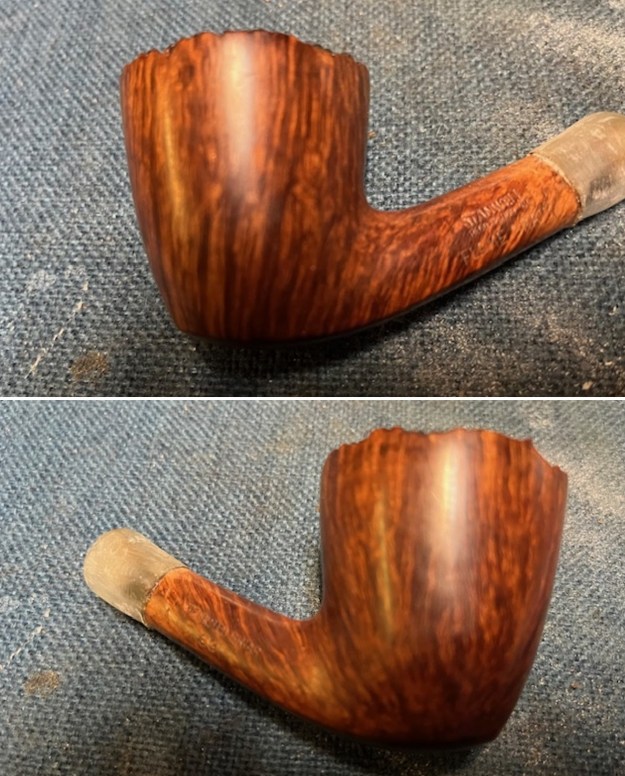
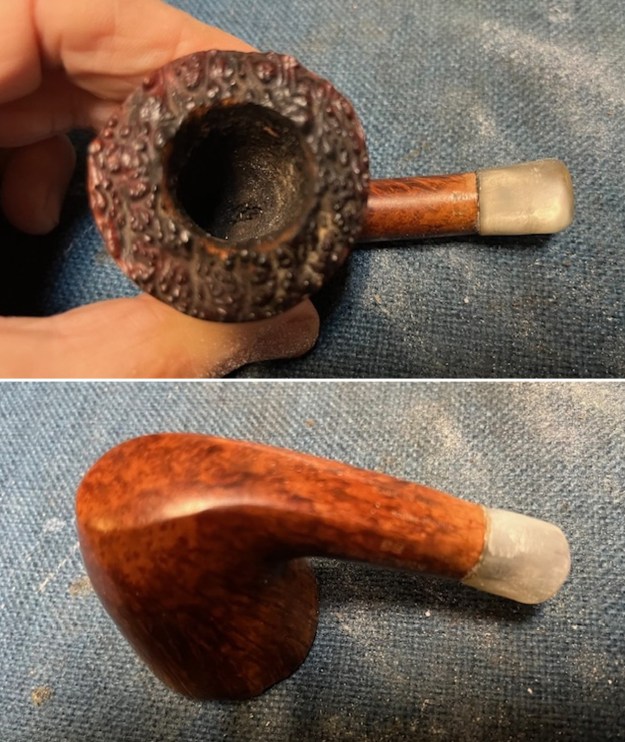
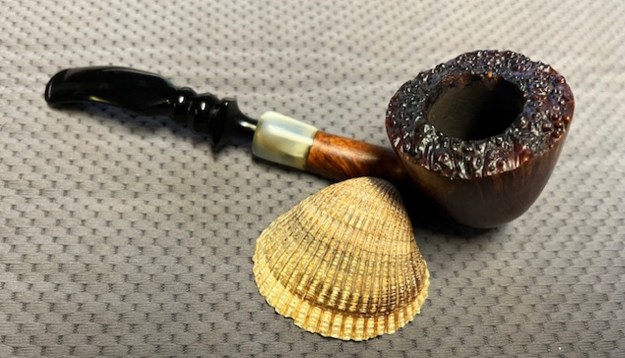
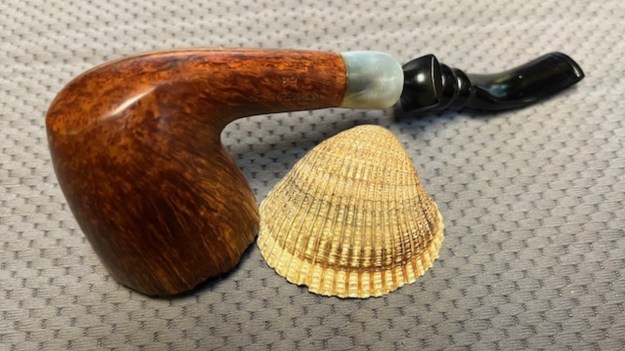
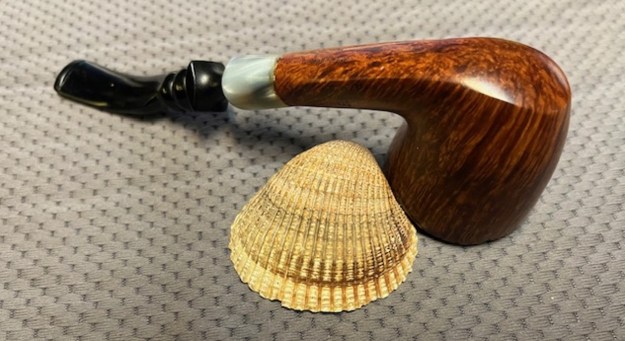
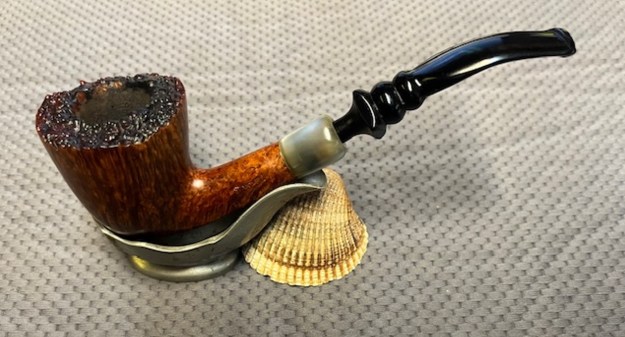
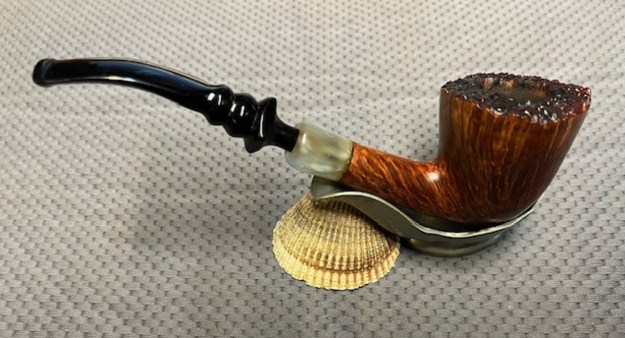
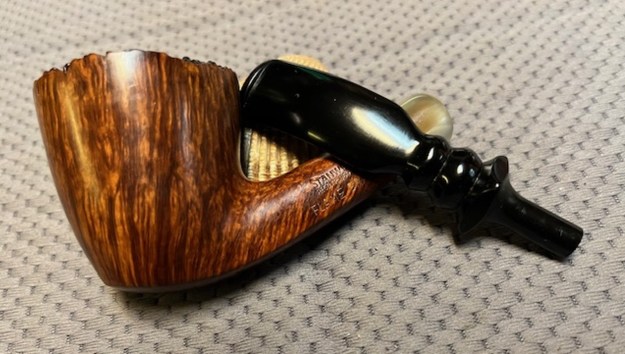
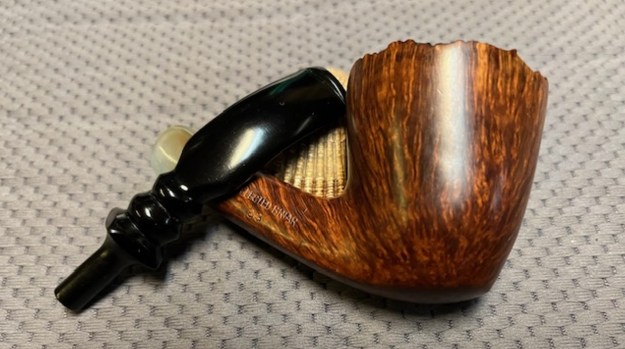
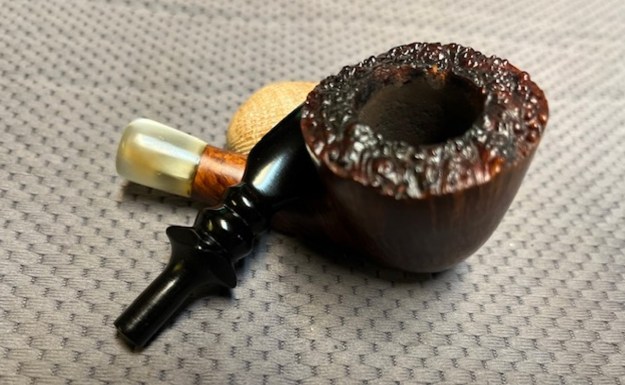
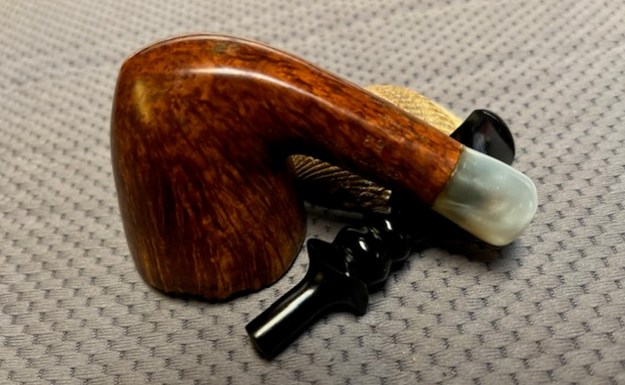
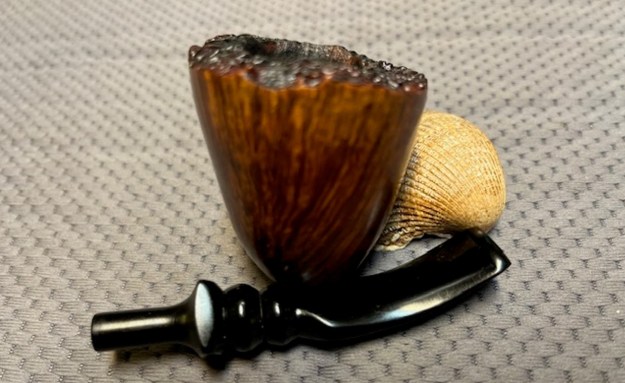
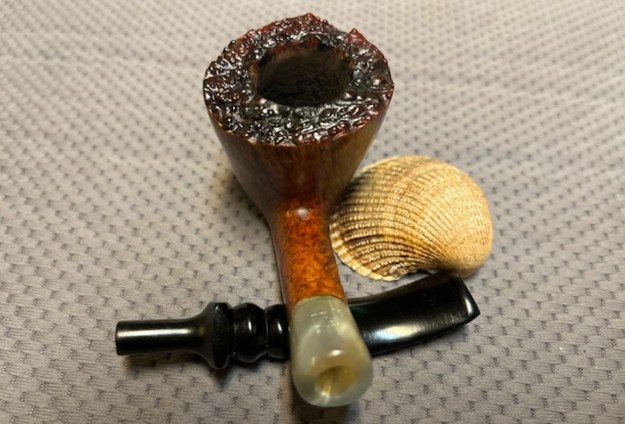
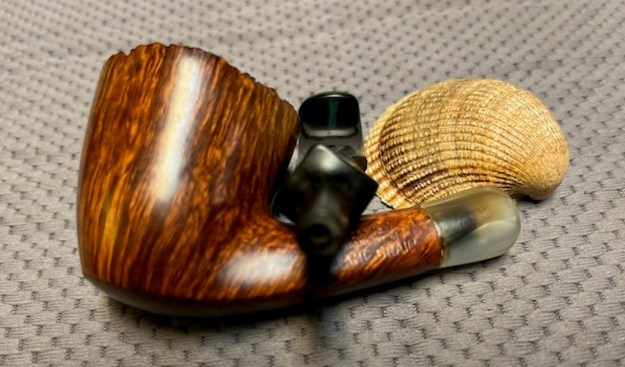
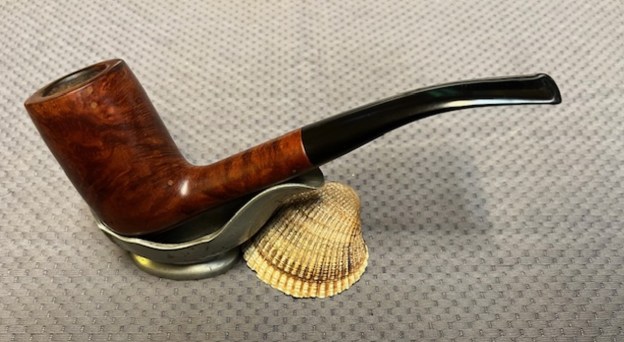
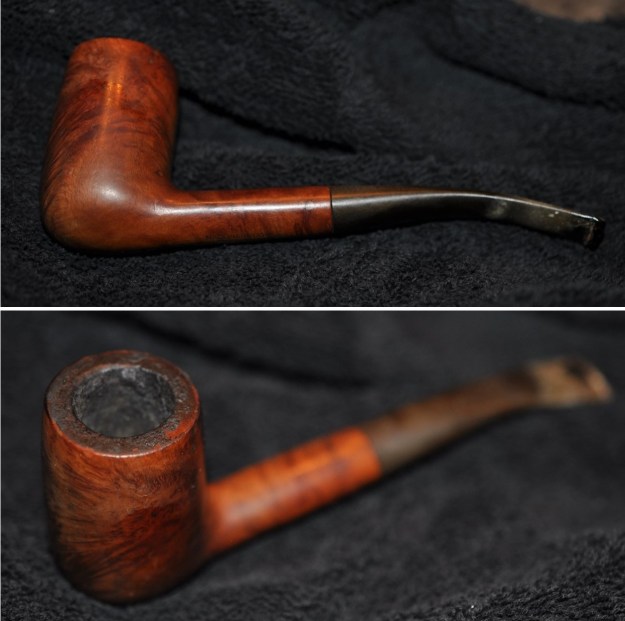
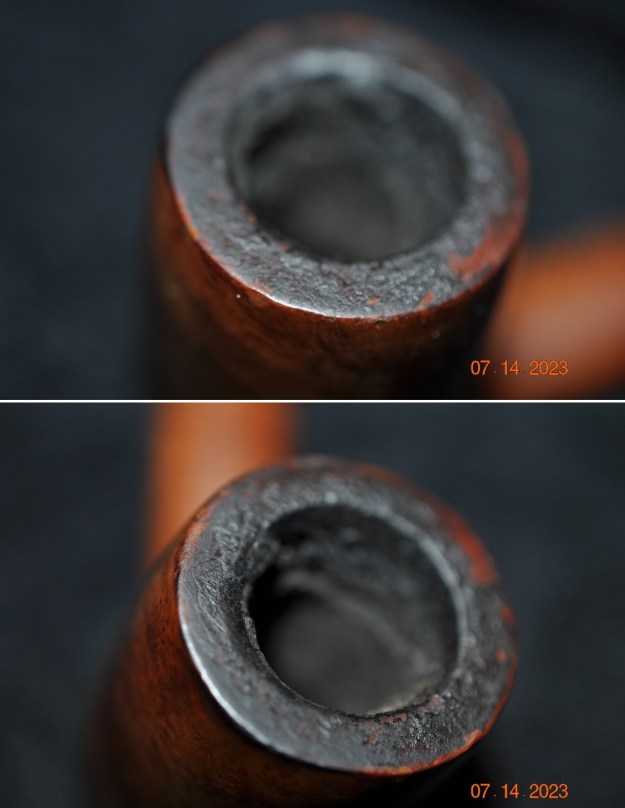
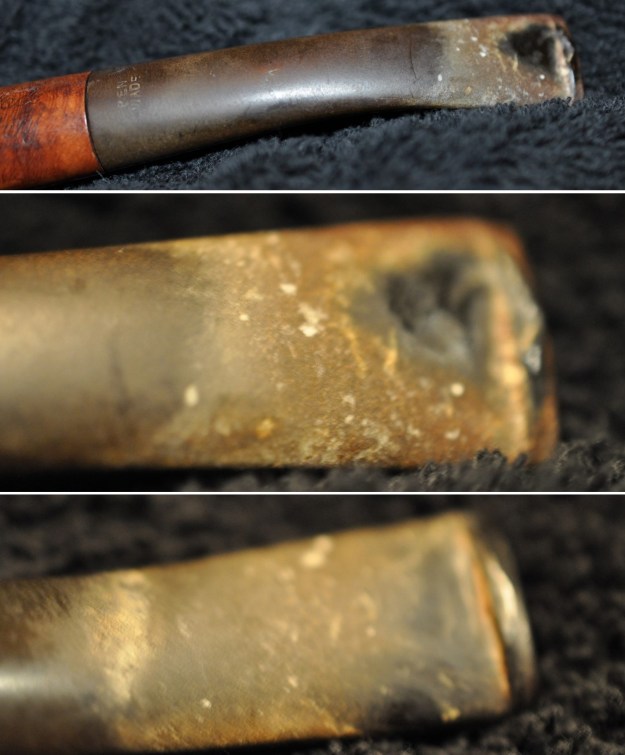
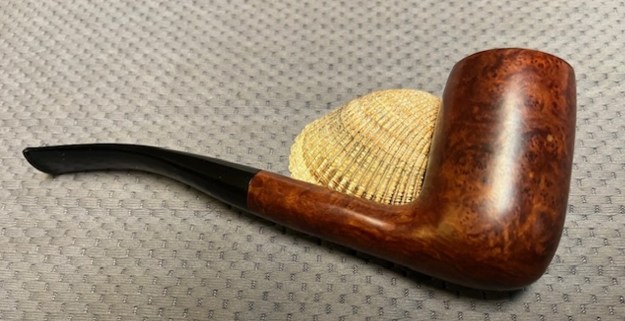
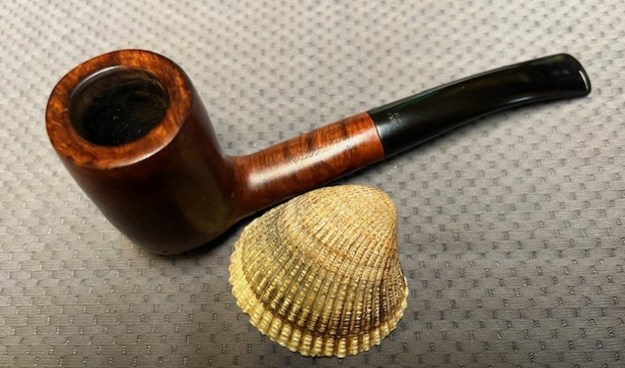
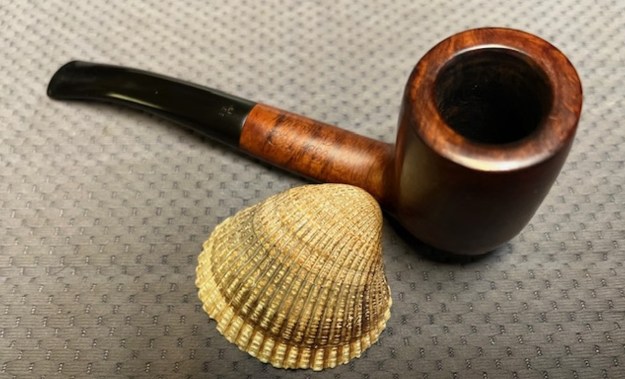
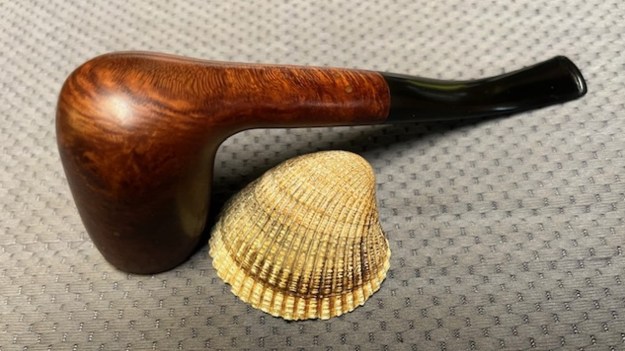
What an Interesting Malaga Hand Made Egg to convert to an Apple


by Steve Laug

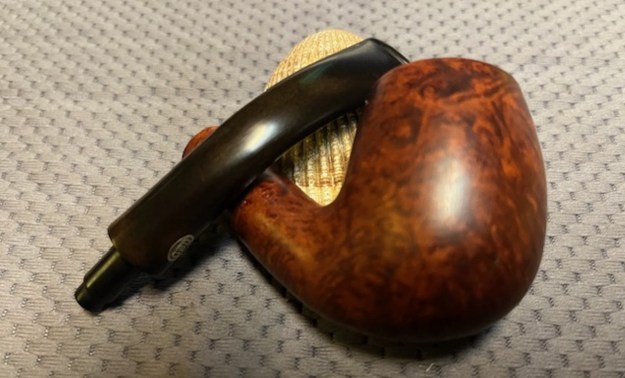
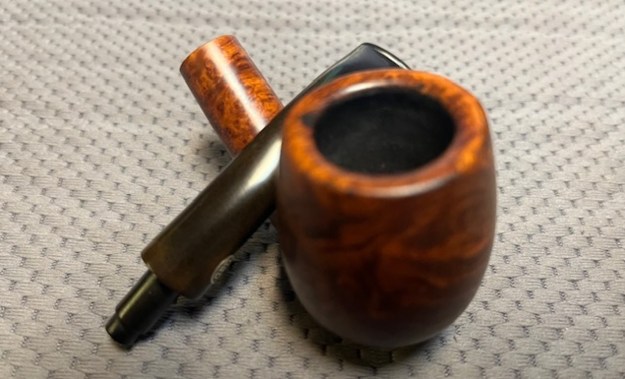
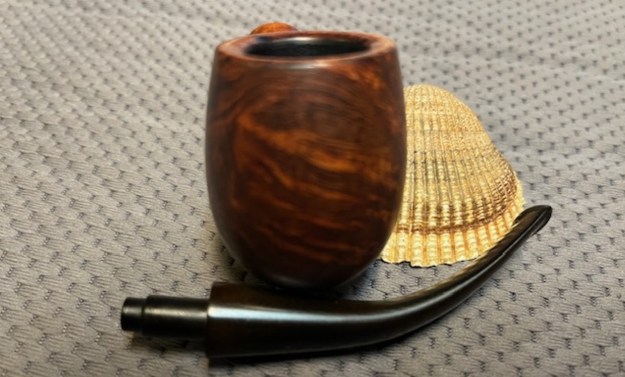
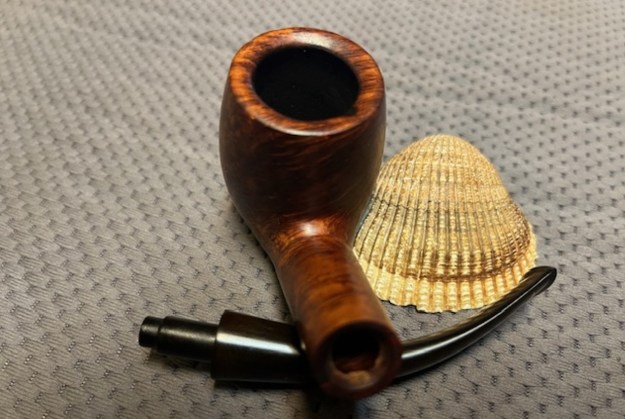
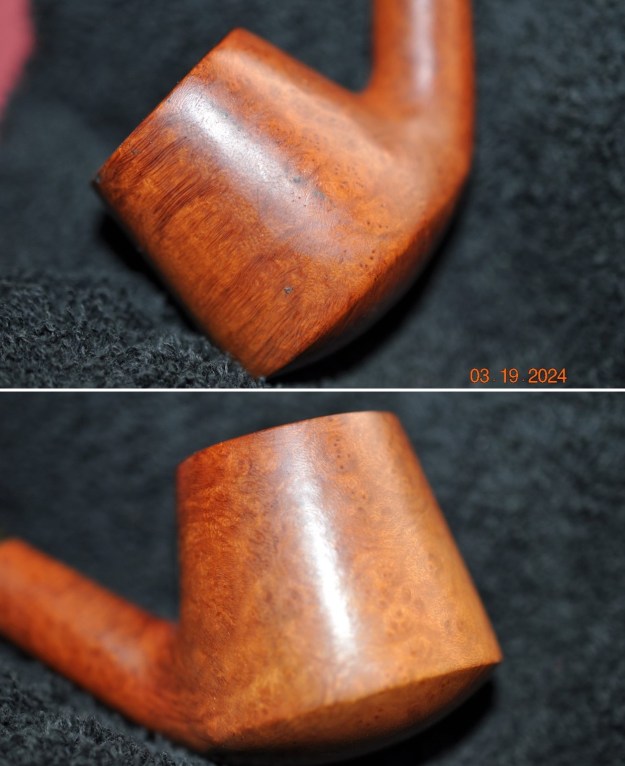
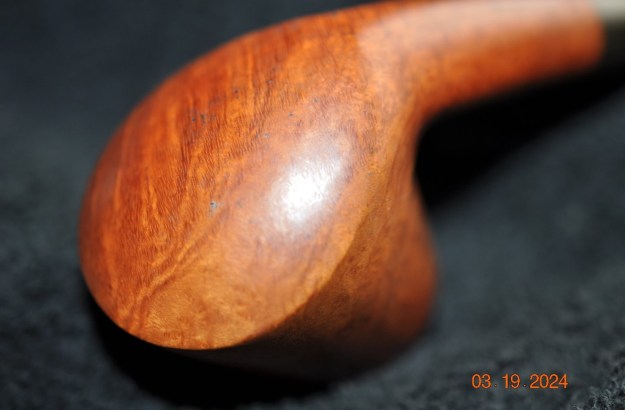
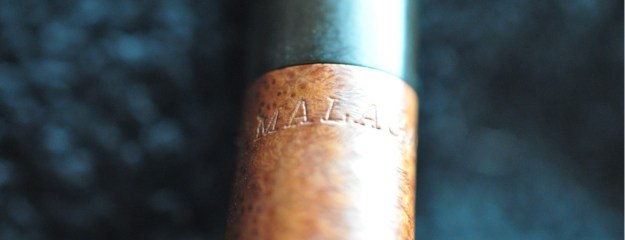
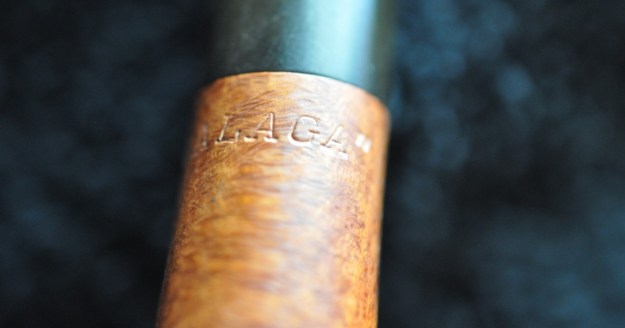
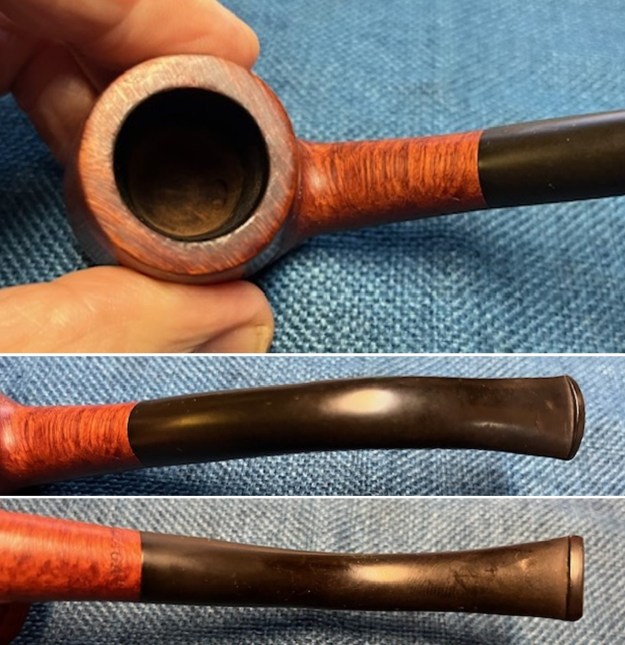
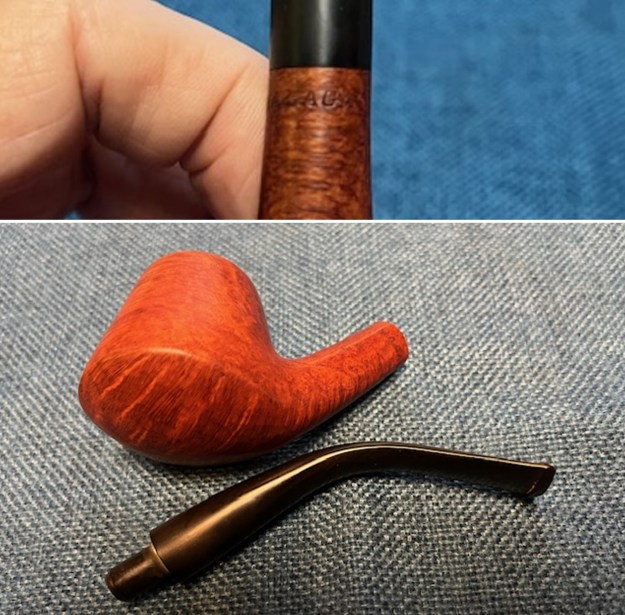
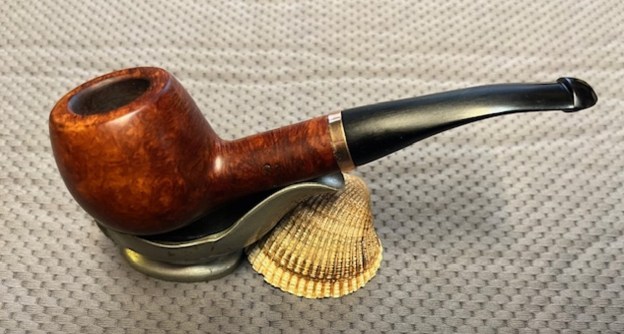
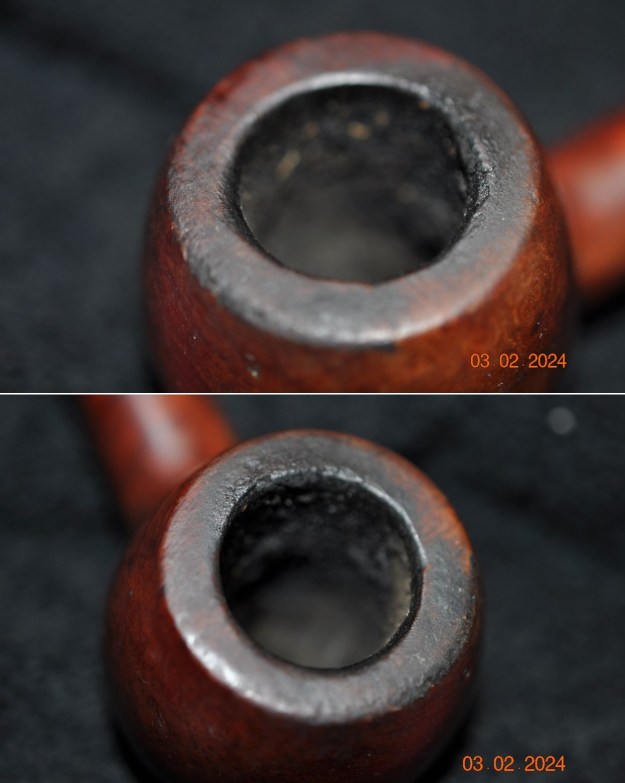
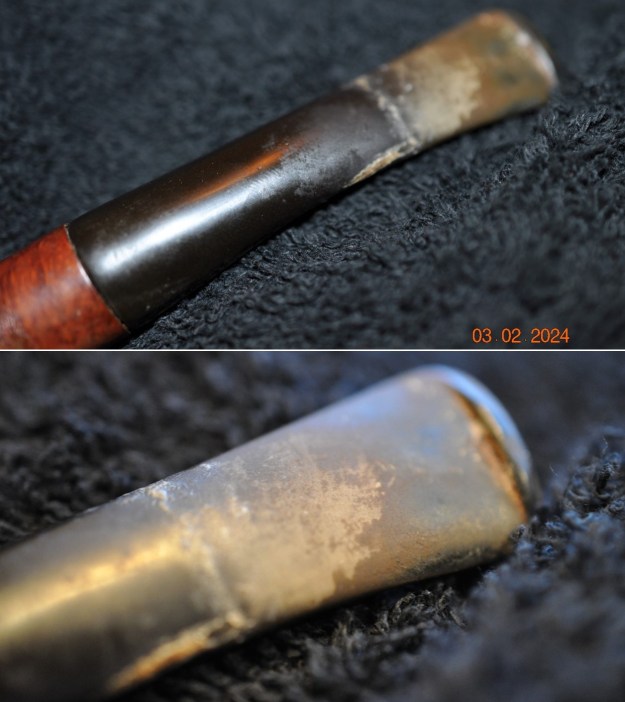
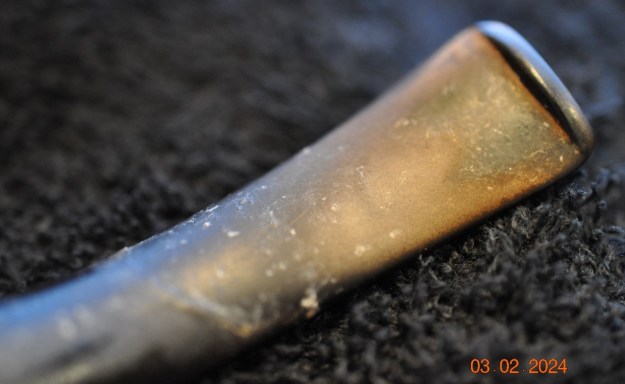
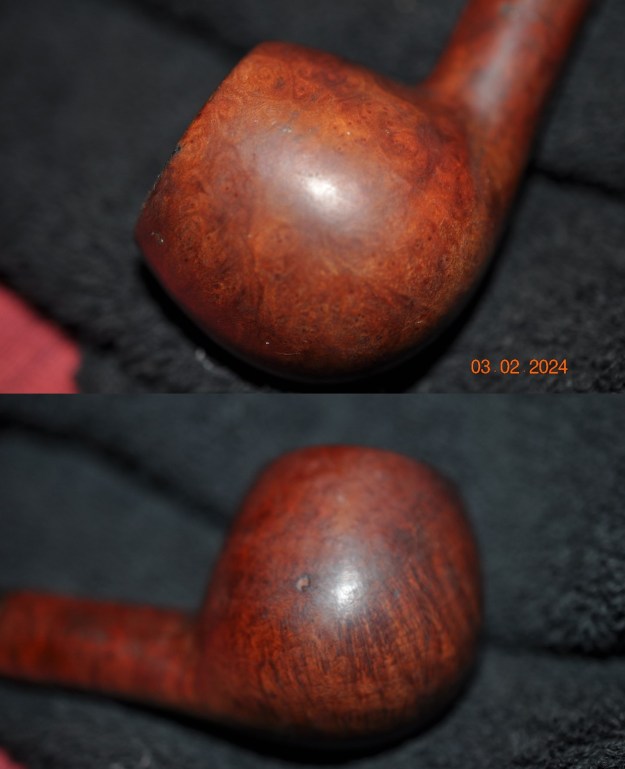
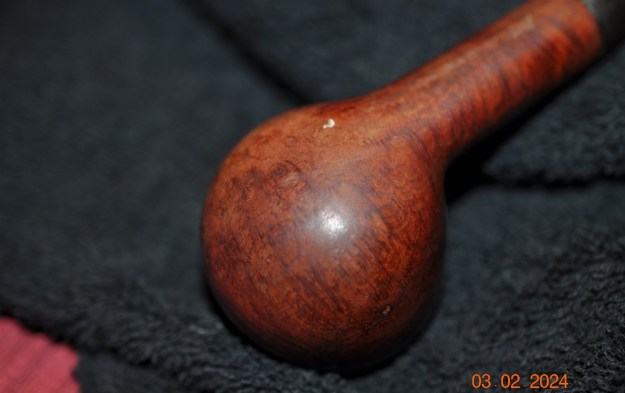
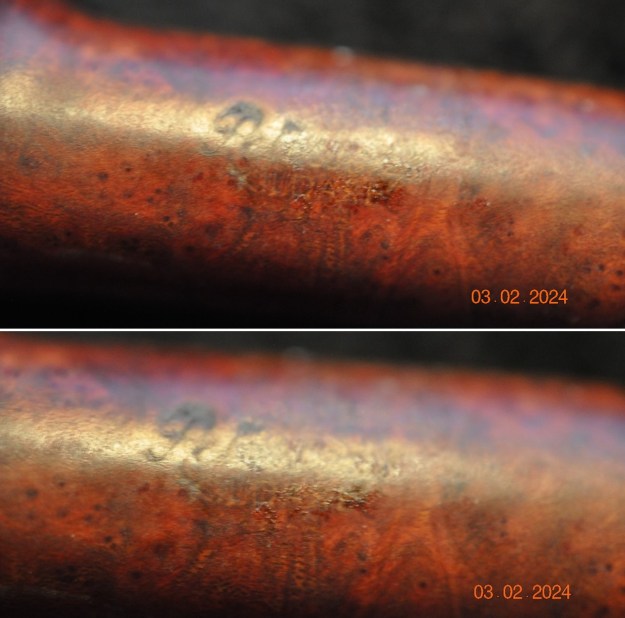
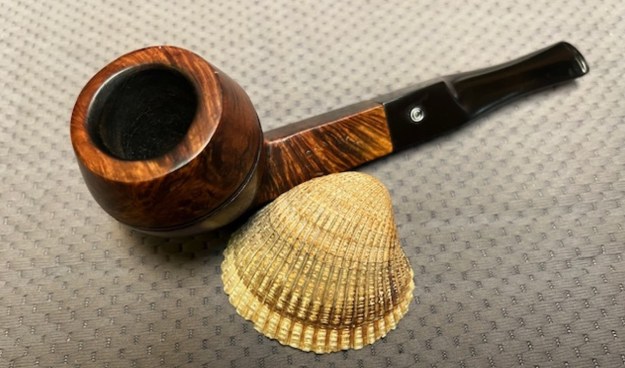
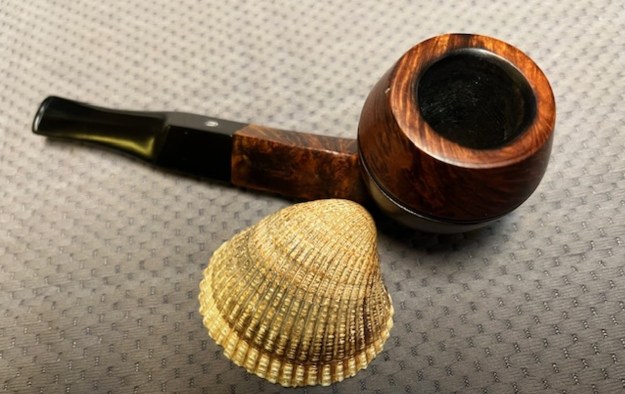
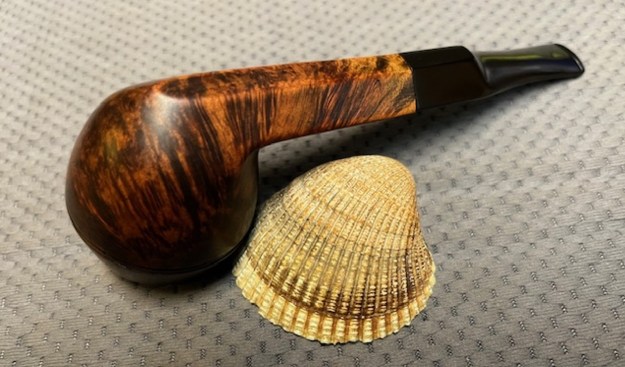
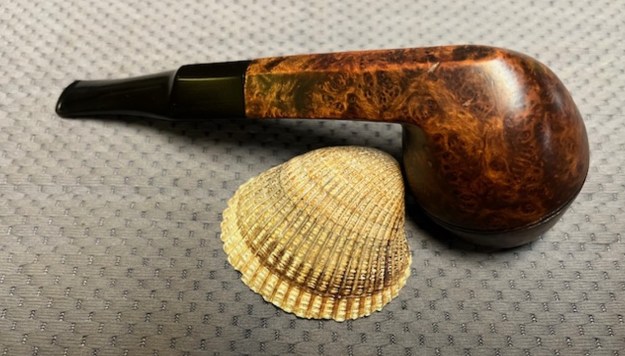
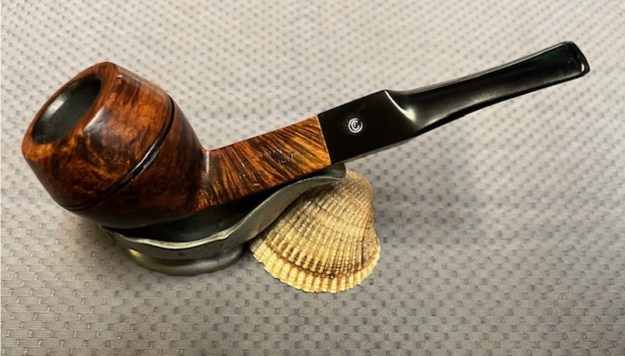
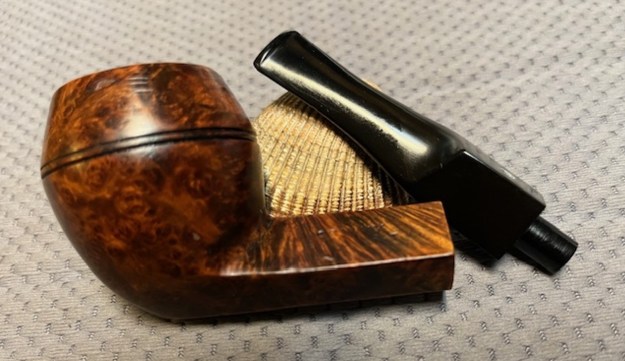
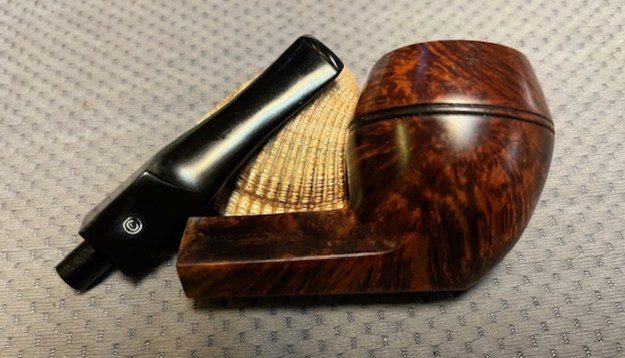
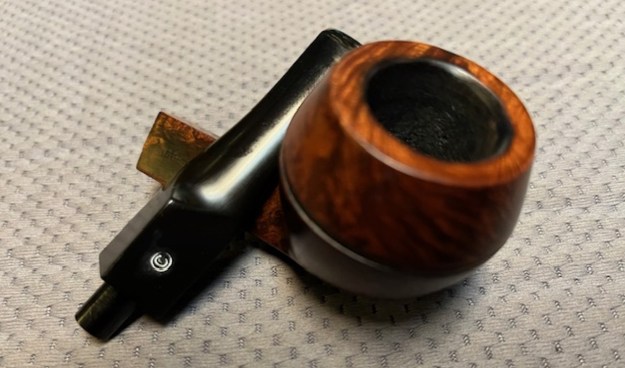
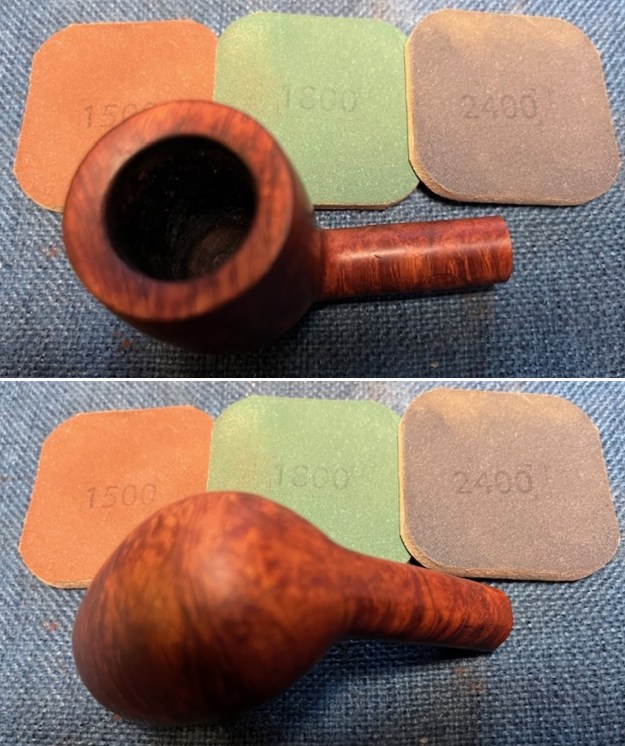
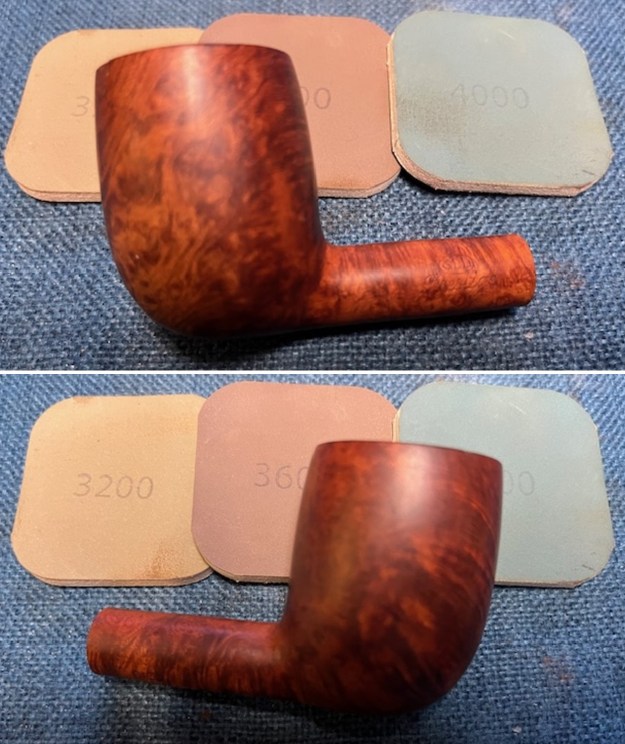
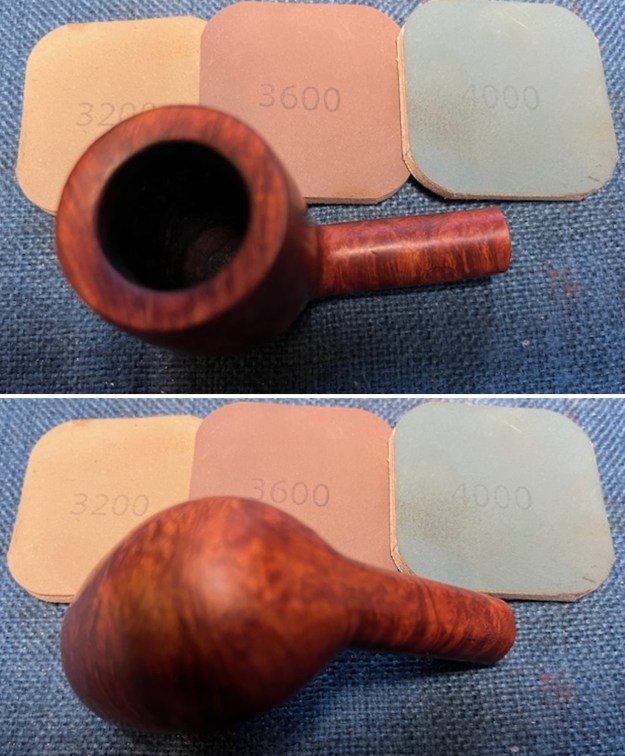
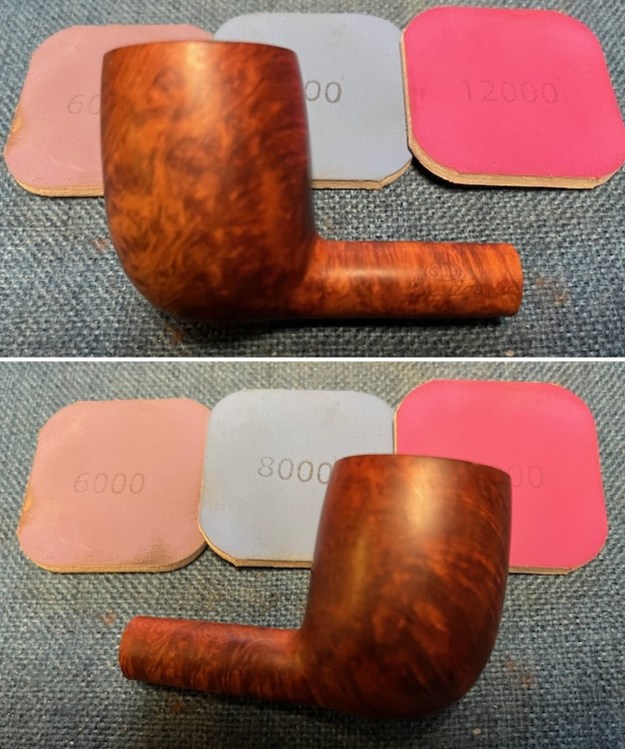
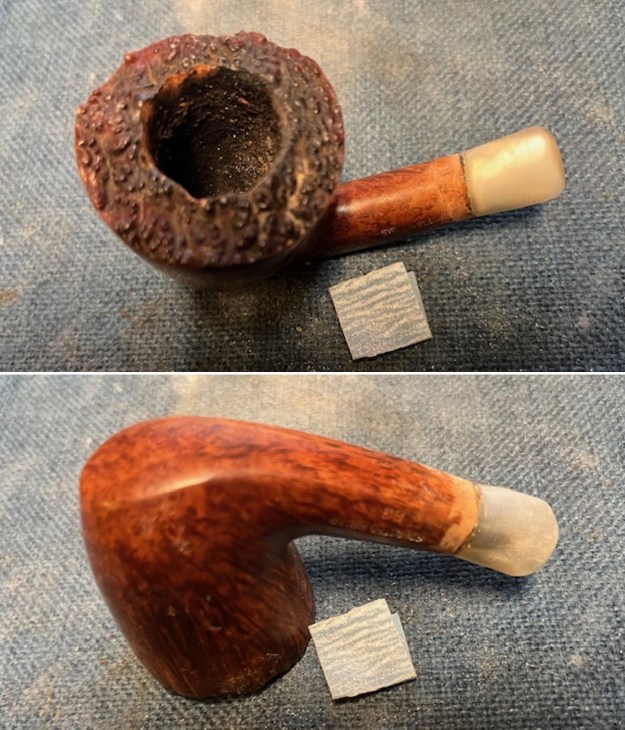
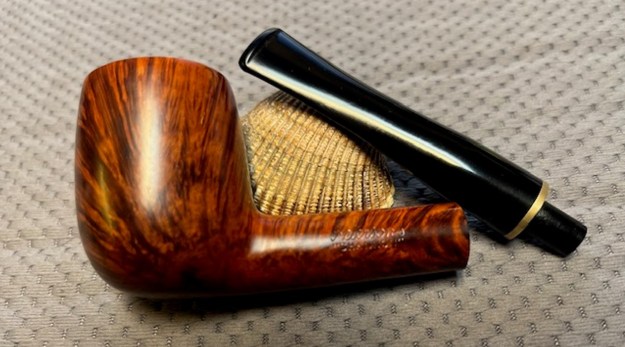
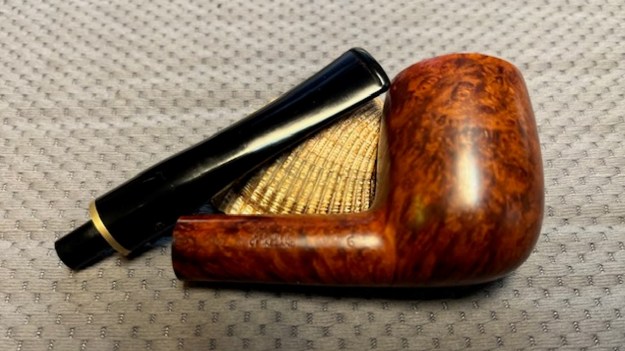
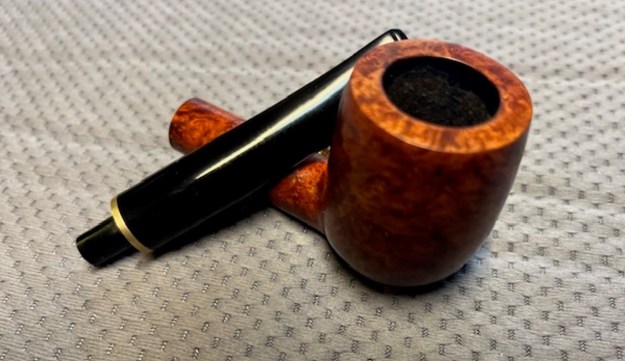
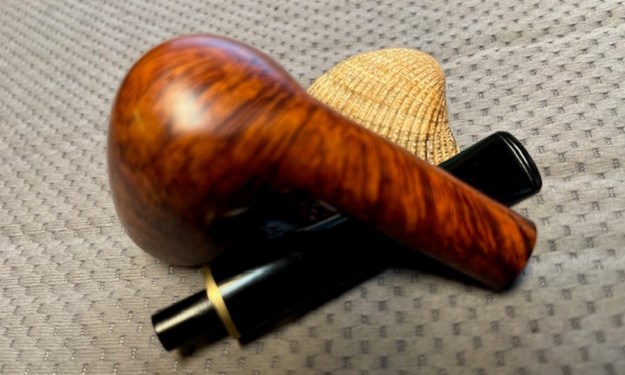
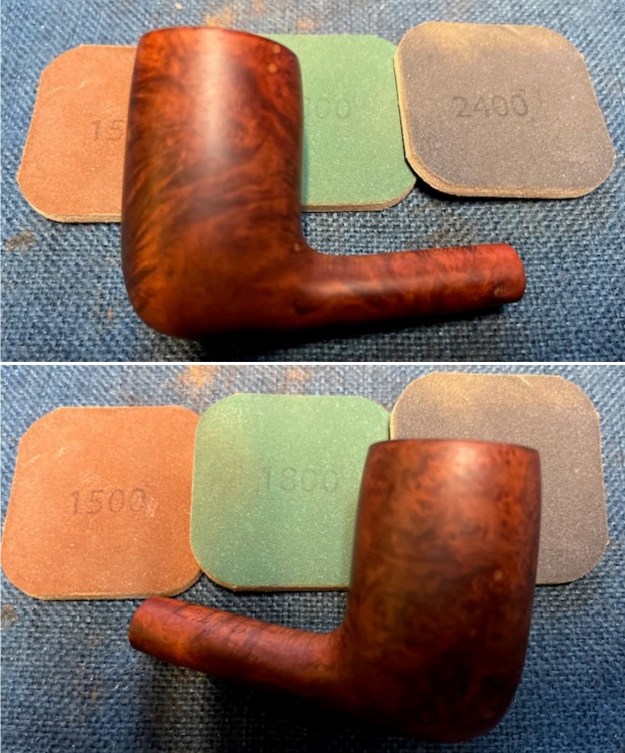
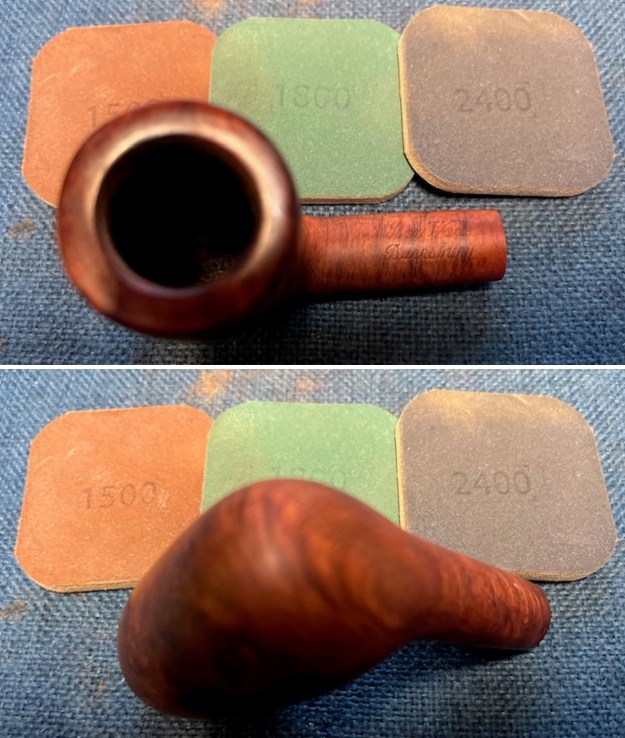
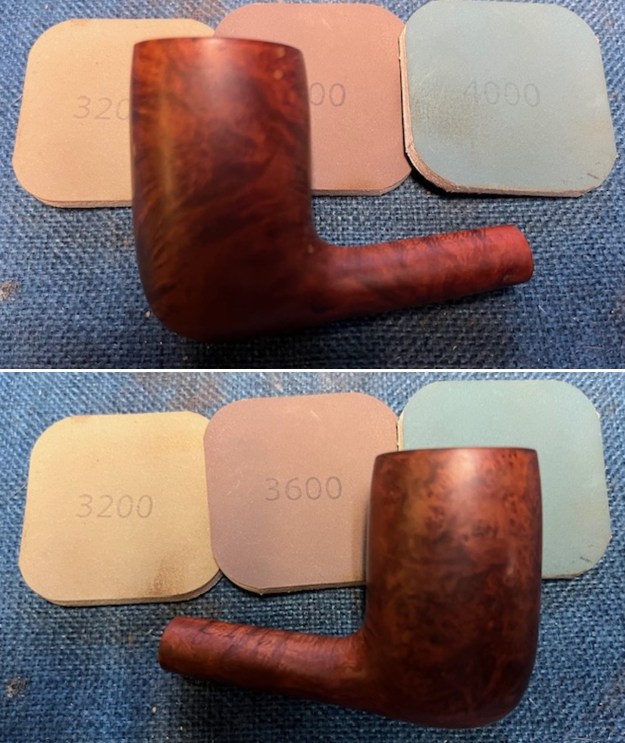
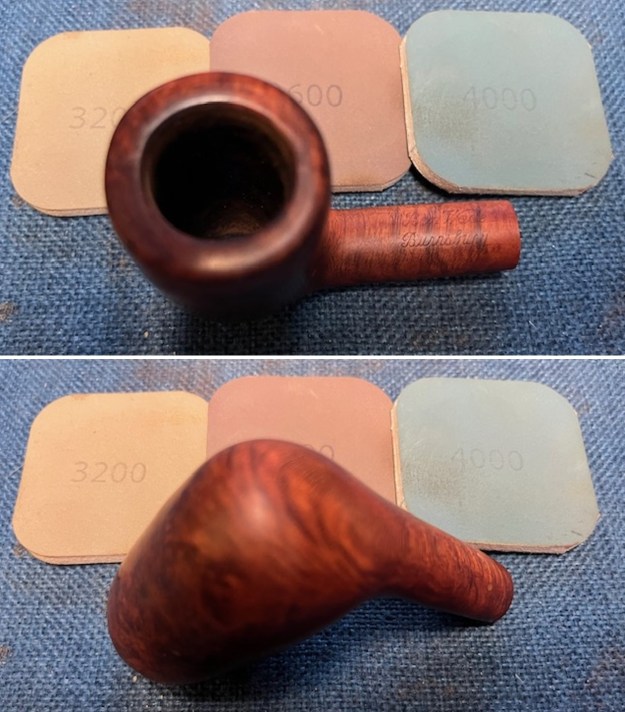
In the latest box of pipes I received from Jeff were two Malaga Pipes to work on. The first of those on the table this afternoon is an interesting Malaga I would call a large decorative Egg. We purchased it on 06/23/24 off eBay from a seller in Farmington Hills, Michigan, USA. The grain on the smooth portions of this pipe is quite nice. There are also some rusticated bands around the bowl and shank end that are quite unique. It is something that I have never seen before on the Malaga pipes that I have worked on. It was obviously someone’s favourite smoker. It is stamped on the underside of the shank and read “MALAGA” [over] Hand Made [over] an upper case “H”. The finish was dirty and worn. There were tars and oils ground into the surface of the briar. The bowl had a thick cake that flowed over the top of the rim top. The top, inner and outer edge has heavy damage on the back side of the bowl. There was lava flowing over the edges down the first 1/4 inch of the bowl. It was hard to clearly assess the damage to the inner edge. The condition of the rim edge and top would become clear in the cleaning process. The fancy turned saddle stem was vulcanite. It was oxidized, calcified and there was chatter and deep tooth marks on the top and the underside of the stem ahead of the button. Jeff took photos of the pipes before he started his clean up work. Jeff took photos of the rim and bowl to show the cake and lava on the rim top and edges. The inner edge of the rim showed thick cake coming up to the top and flowing over the edge. The damage to the rim top is also very visible in the photo. The pipe was a dirty one but still a beauty. The fancy vulcanite saddle stem had deep tooth marks and chatter on the top and underside of the stem ahead of the button. The photos of the sides and heel of the bowl hint at the damage around the bowl sides from teh rim top downward. The briar is quite nice all around the pipe. The oil curing/finish makes the grain really stand out on the bowl and shank. Jeff took photos of the stamping on the sides of the shank. On the left it read MALAGA as noted above. On the right it read Imported Briar. The stamping was clear and readable. For those of you who are unfamiliar with the brand, I am also including the link to a blog that I wrote that gives some of the history of the Malaga brand and the Malaga Pipe Shop in Royal Oak, Michigan in the USA. Here is the link – https://rebornpipes.com/2013/02/09/george-khoubesser-and-malaga-pipes/. That blog also includes links to a catalogue and the history of the pipemaker George Khoubesser. If you are interested to learn more then I invite you to follow the link to get a feel for the brand and the pipemaker.

I am also am including a link to some printed material on the Malaga brand that came to me from the daughter of George Koch (we purchased George’s pipes from his daughter) to help identify the particular stamping on the pipe. The link takes you to the entire collection of materials that were sent to me (https://rebornpipes.com/2019/02/27/malaga-pipes-catalogue-of-pipes-and-tobaccos/).

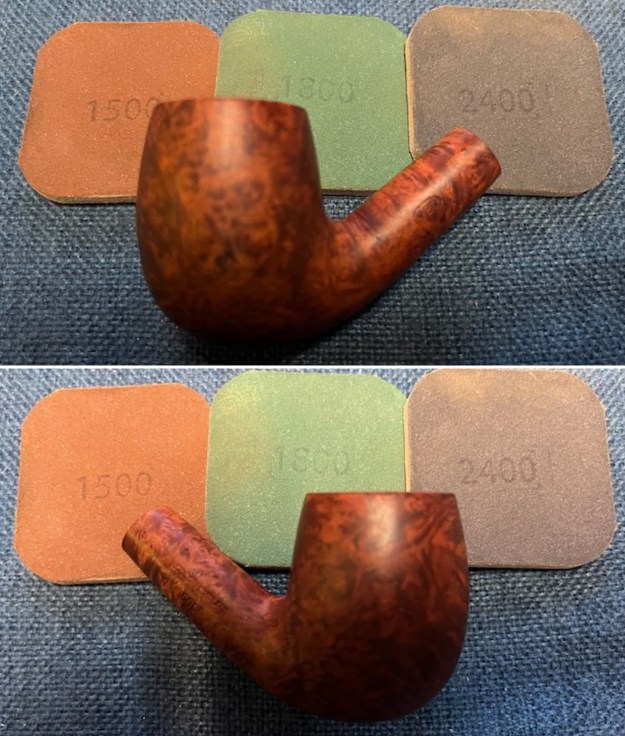
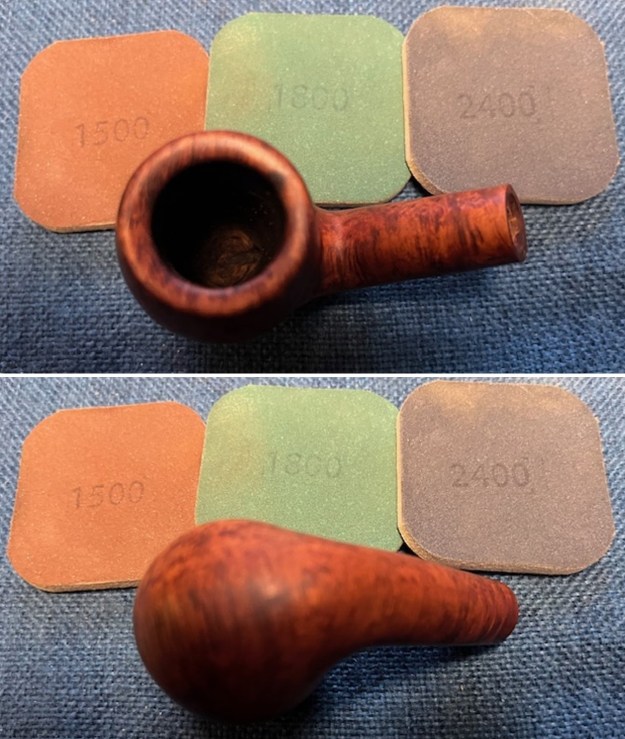
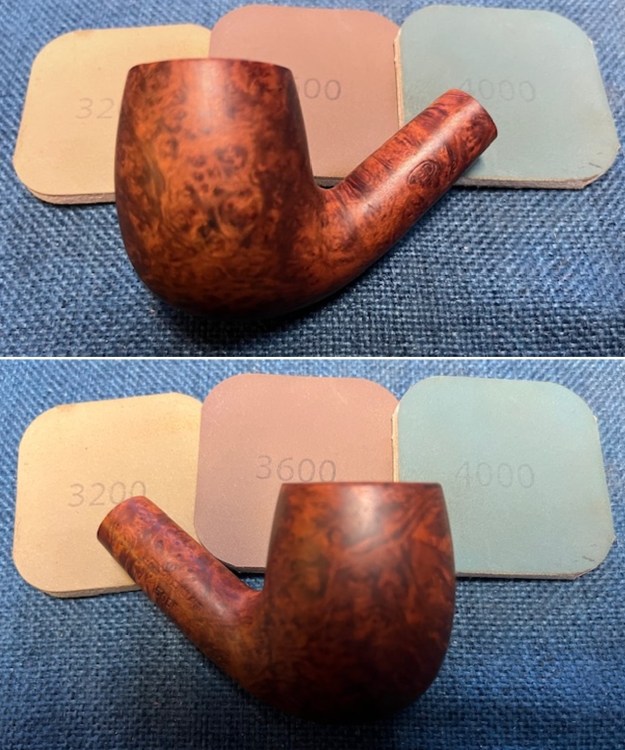
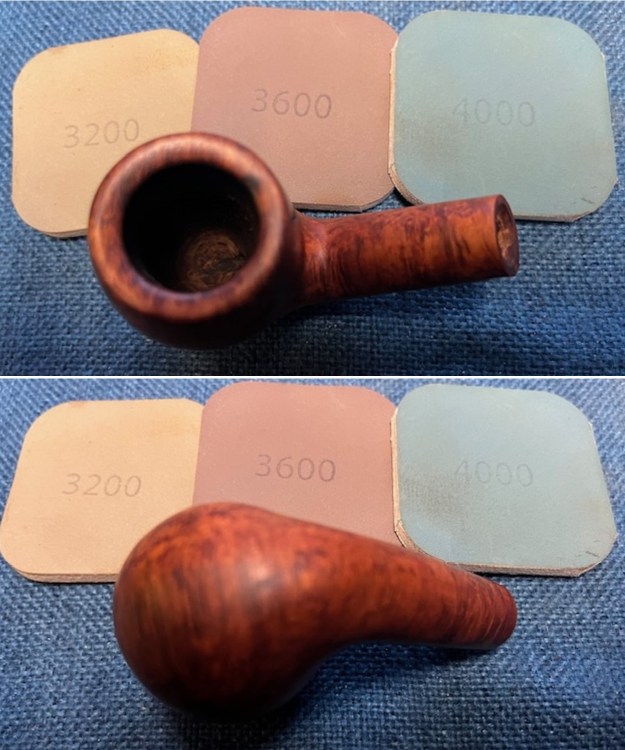
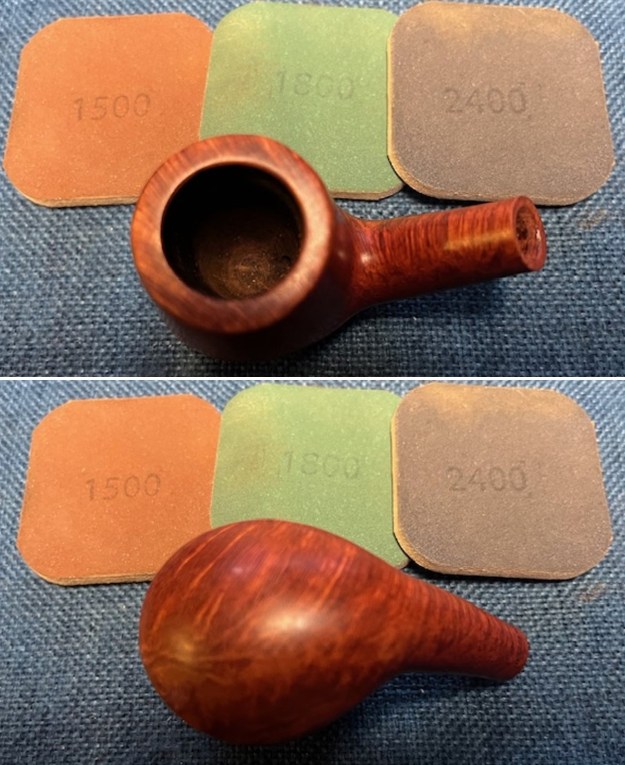
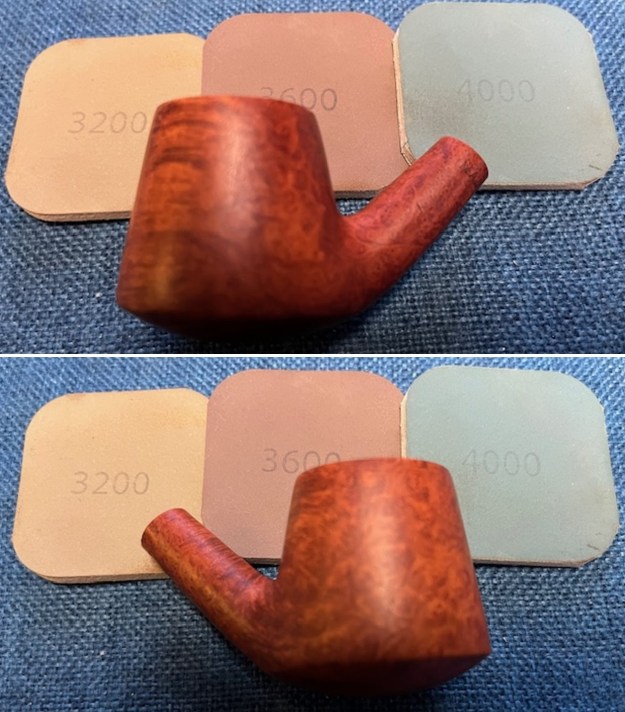
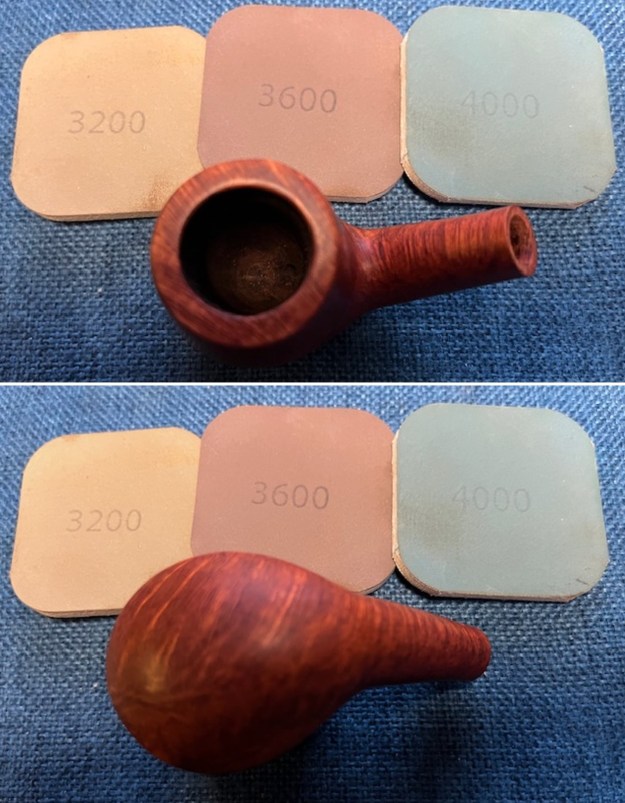
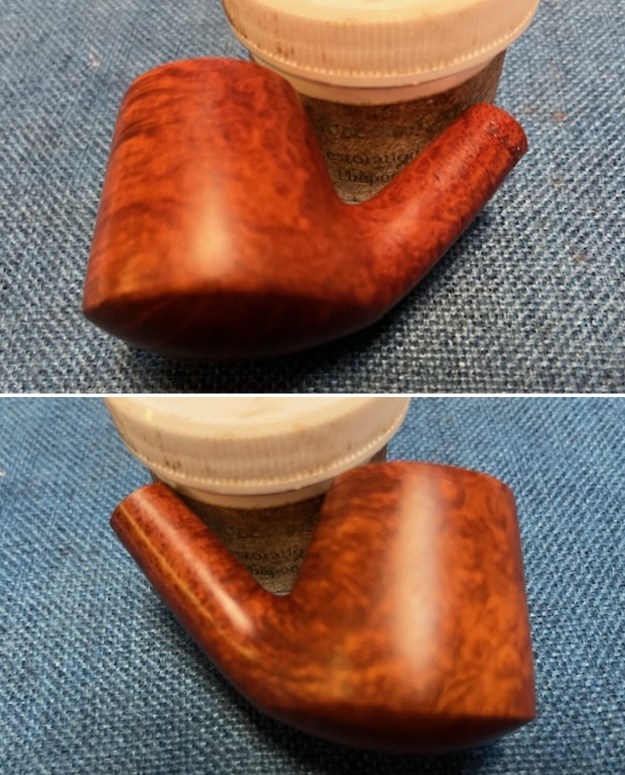
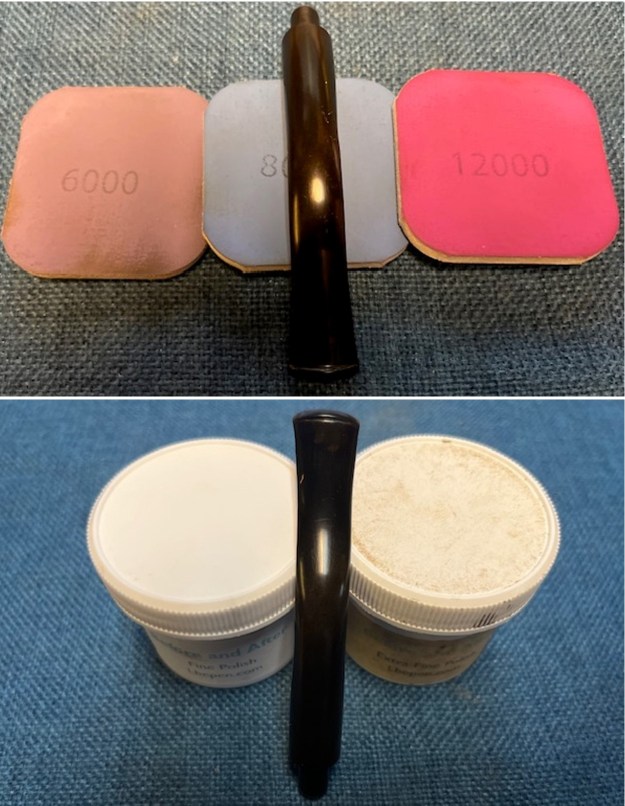
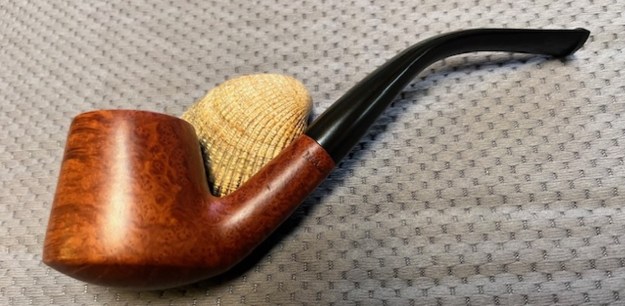
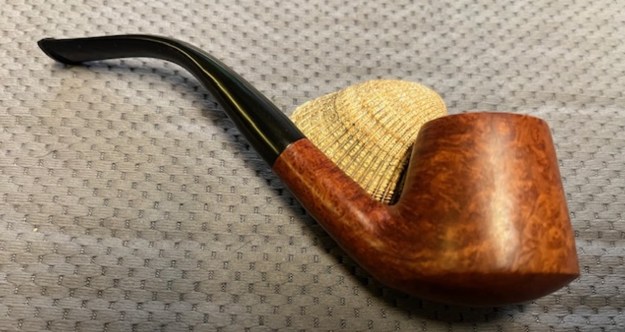
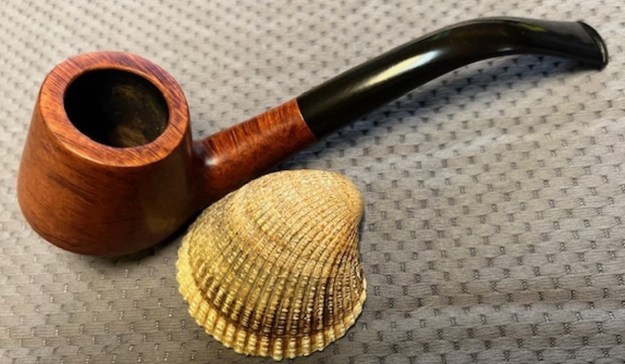
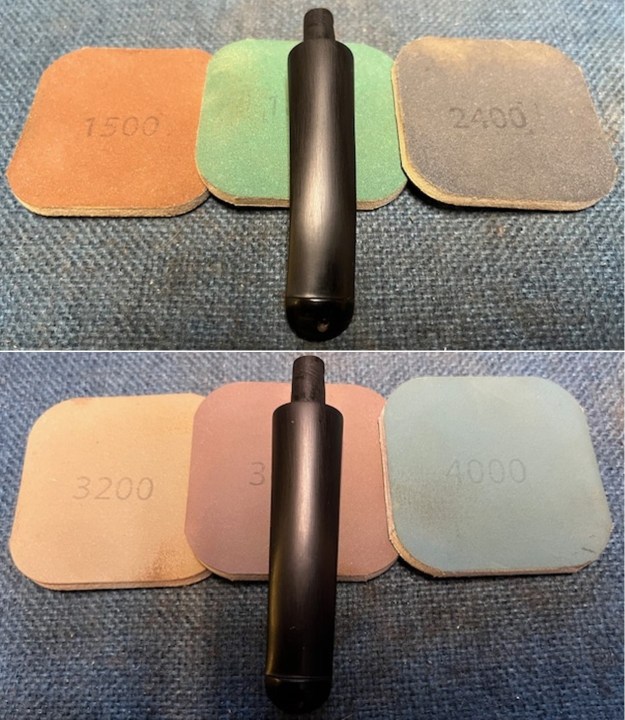
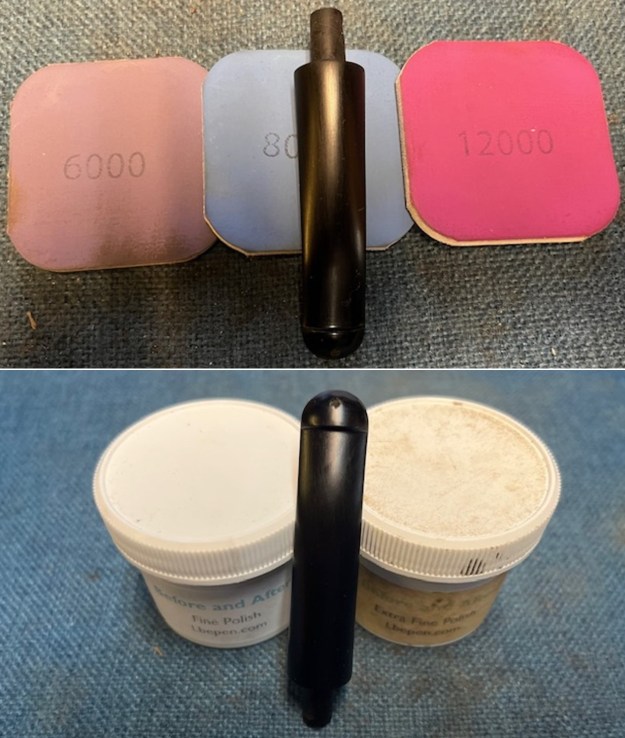
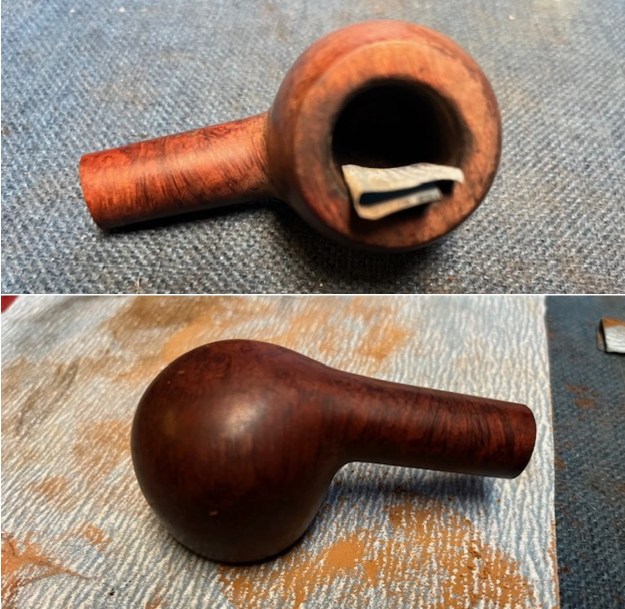
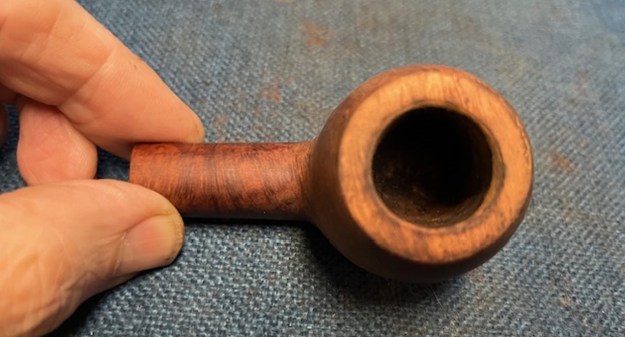
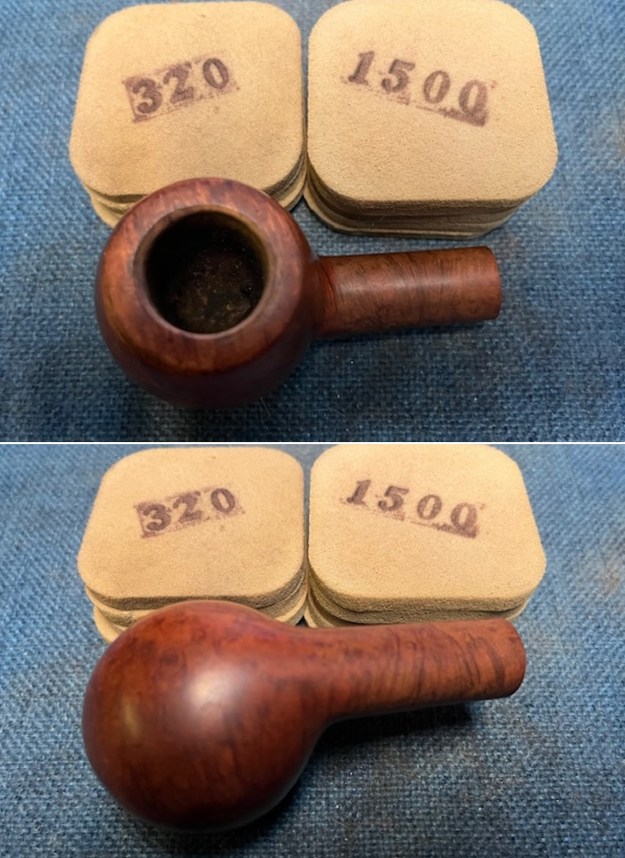
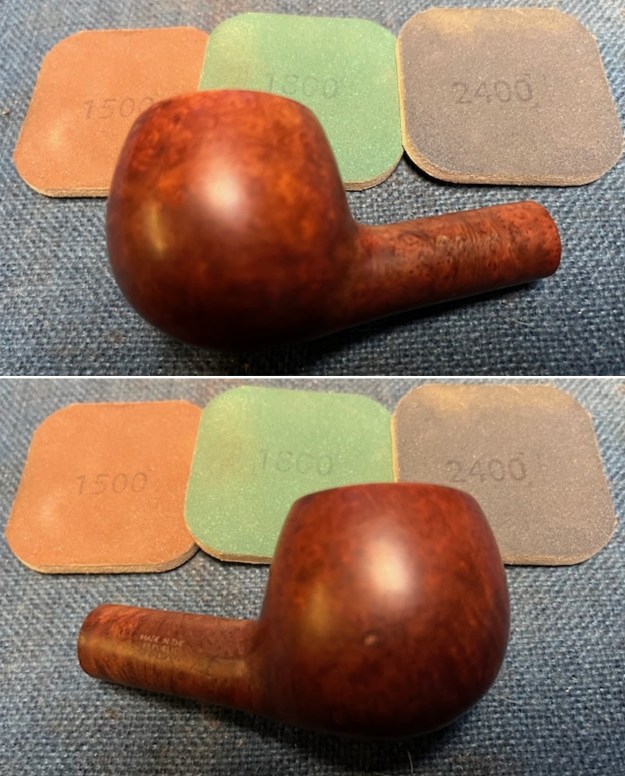
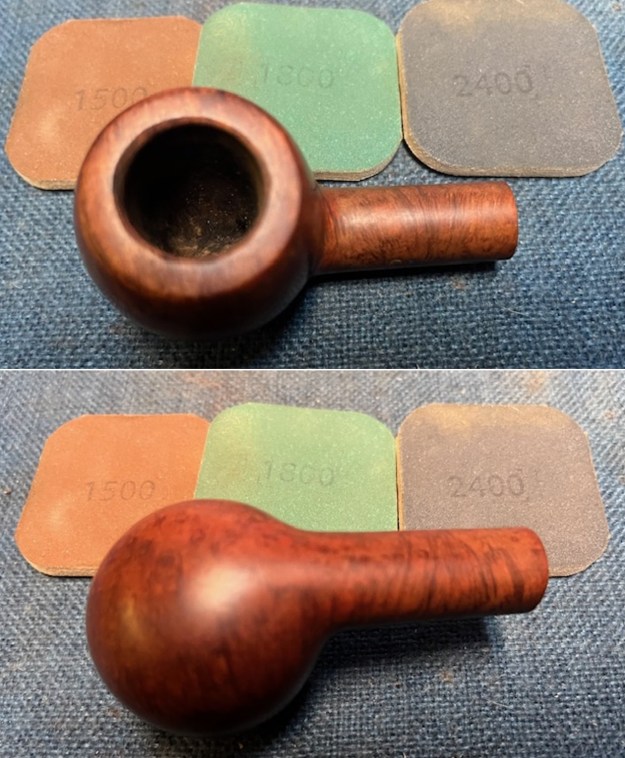
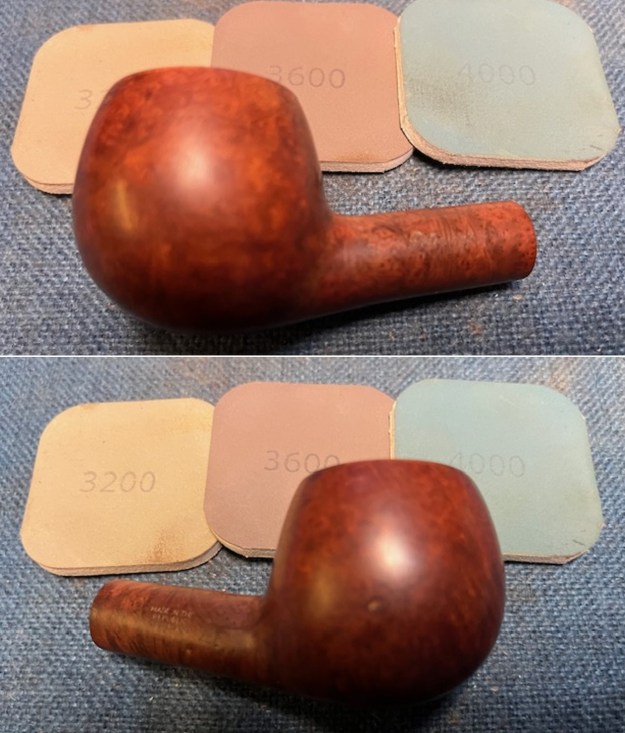
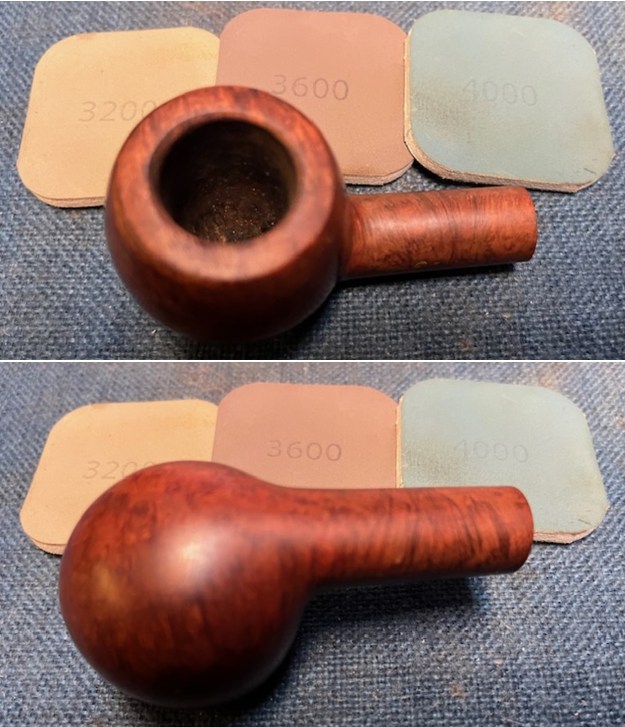
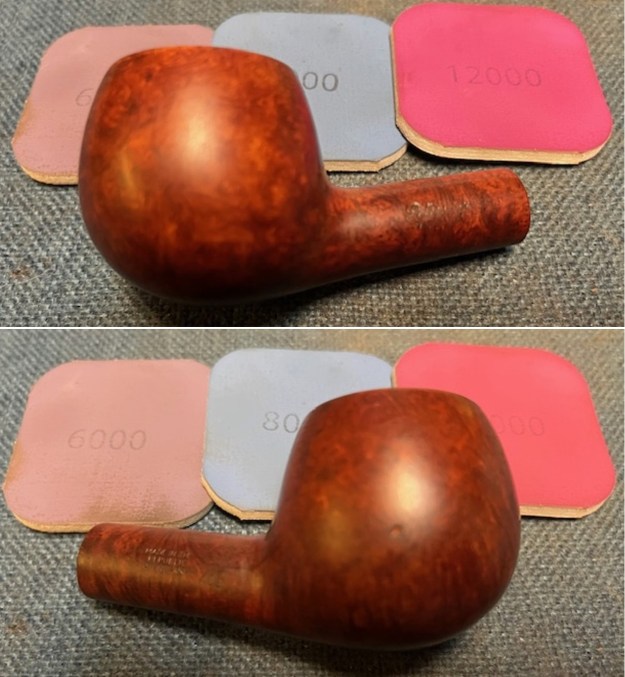
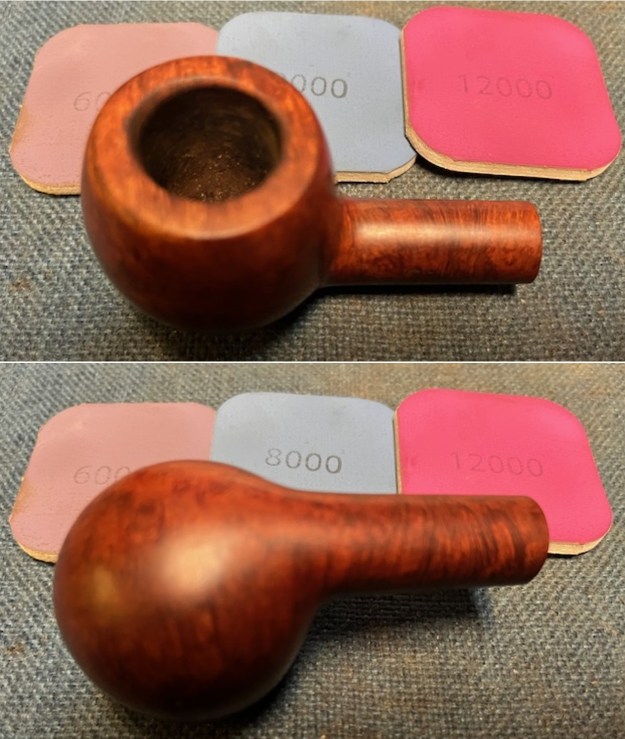
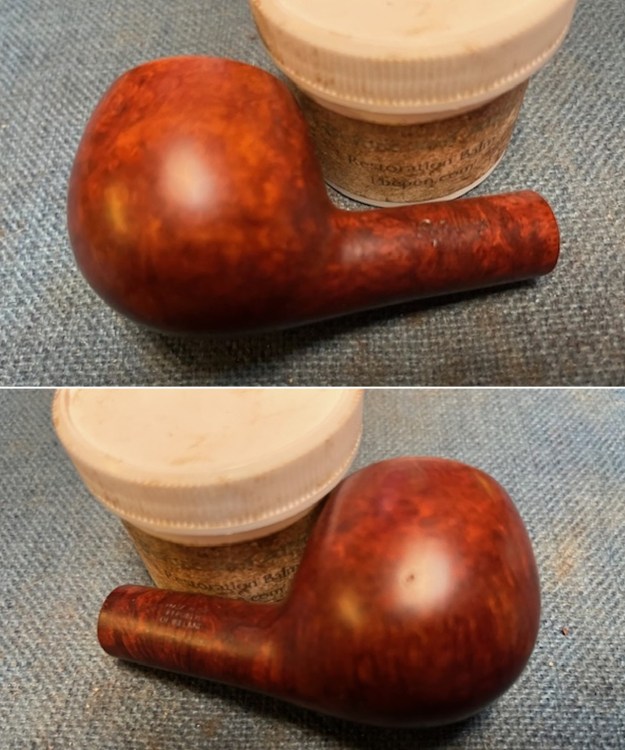
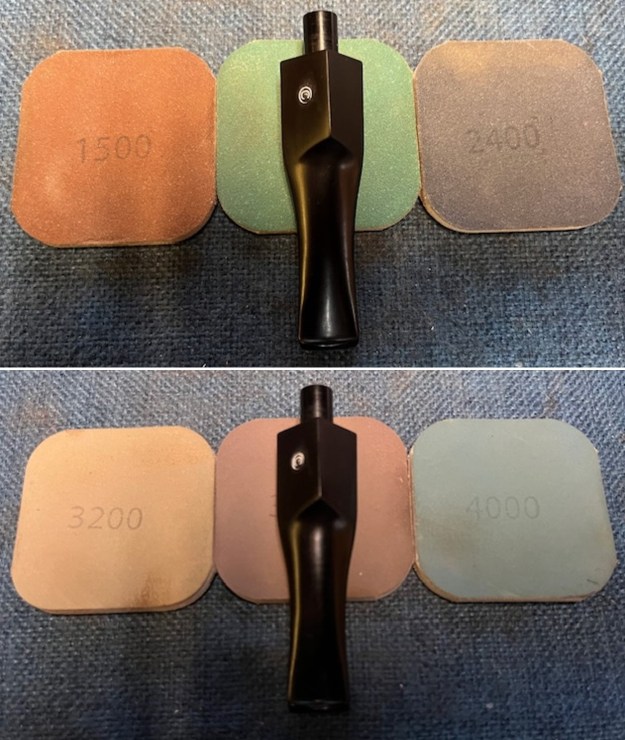
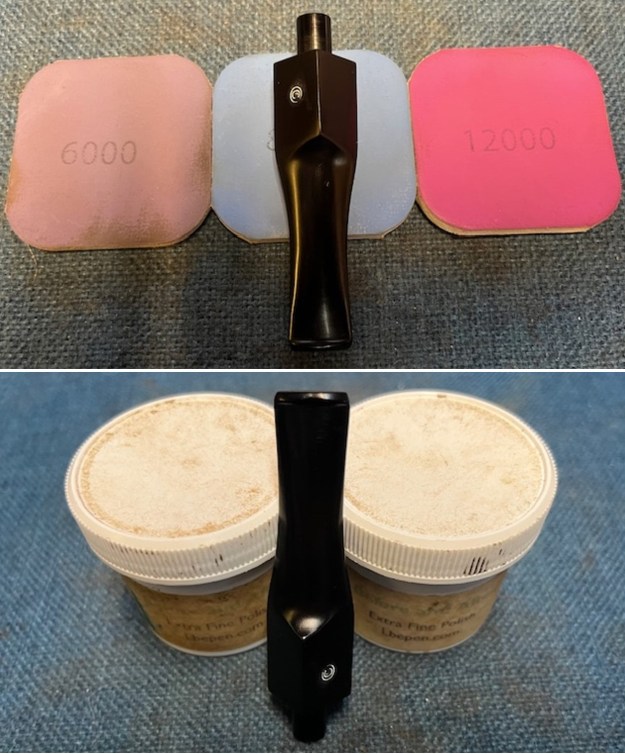
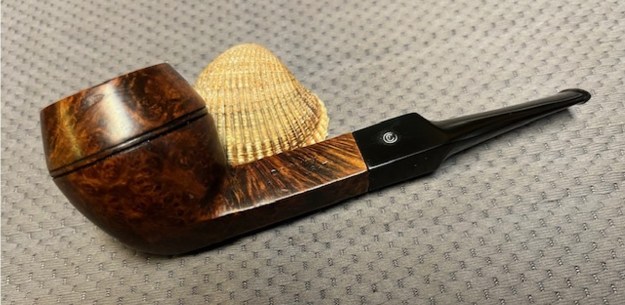
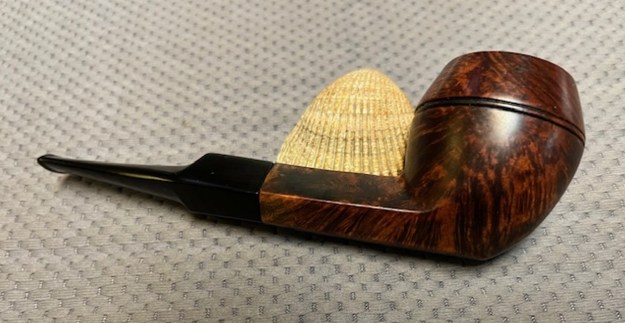
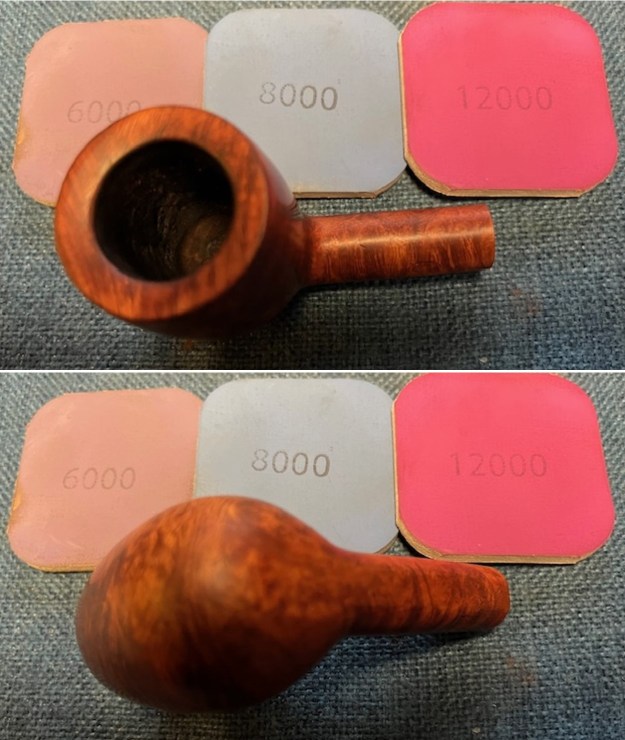
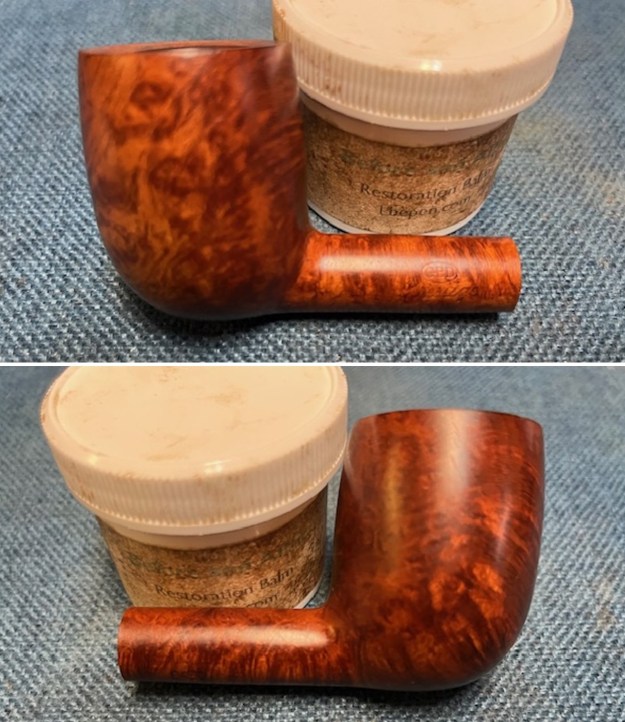
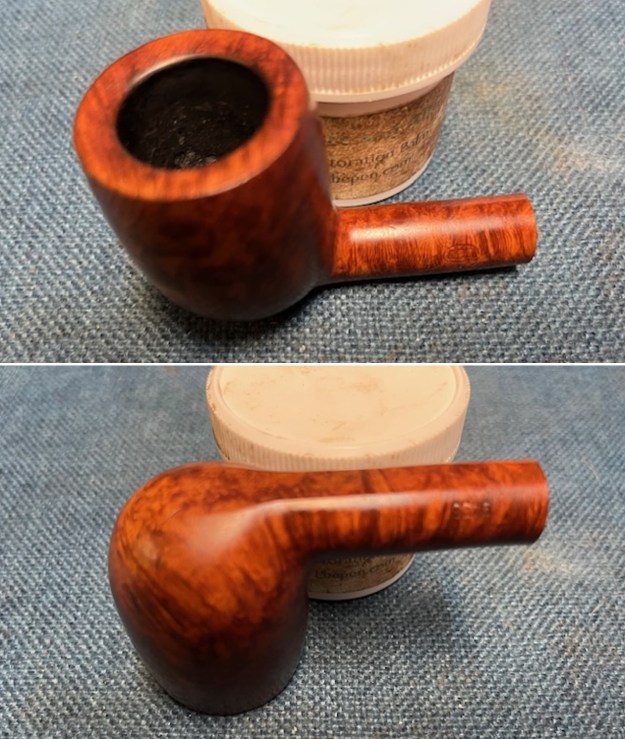
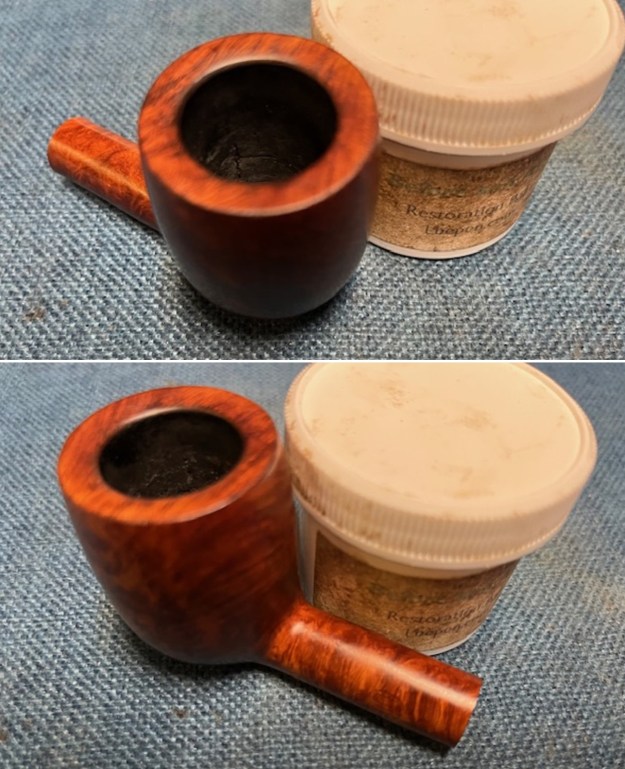
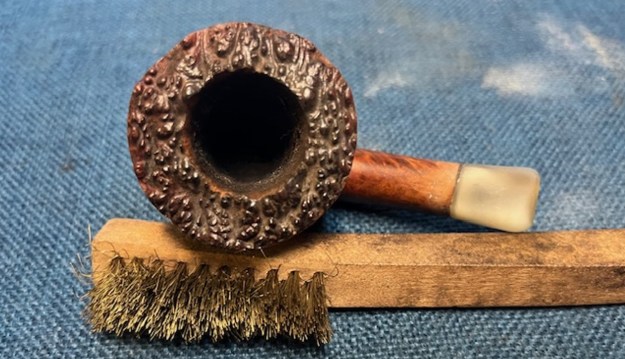
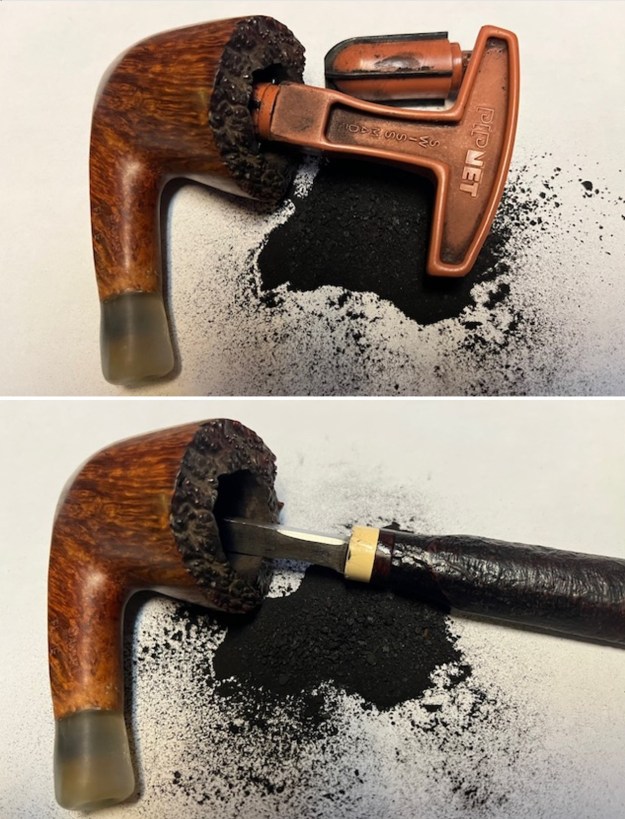
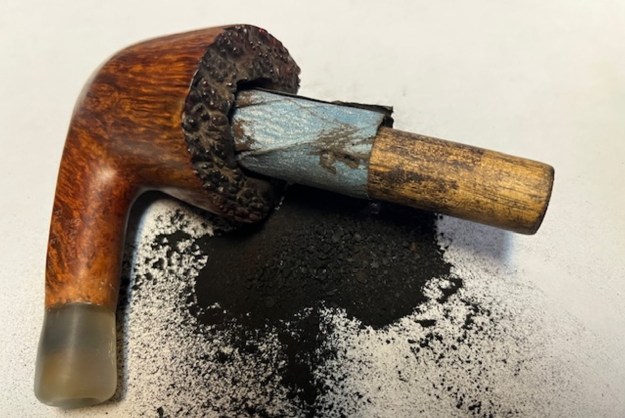
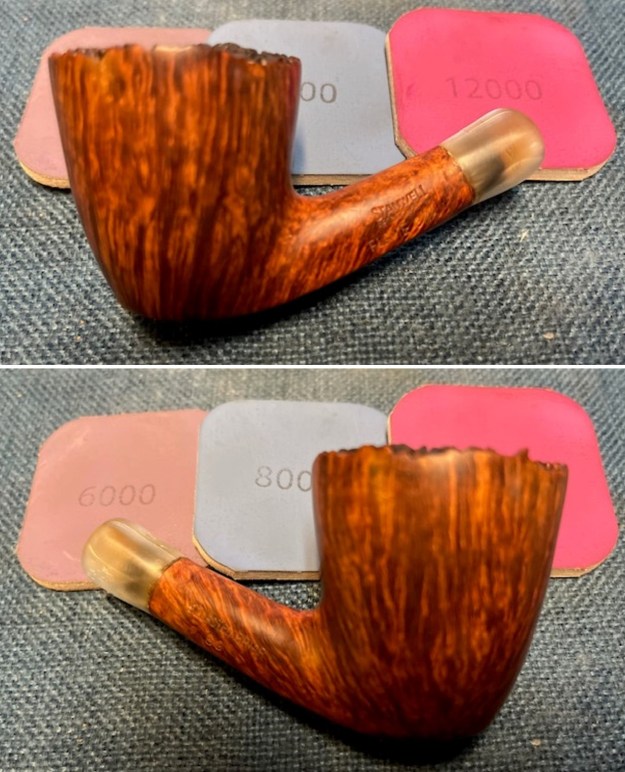
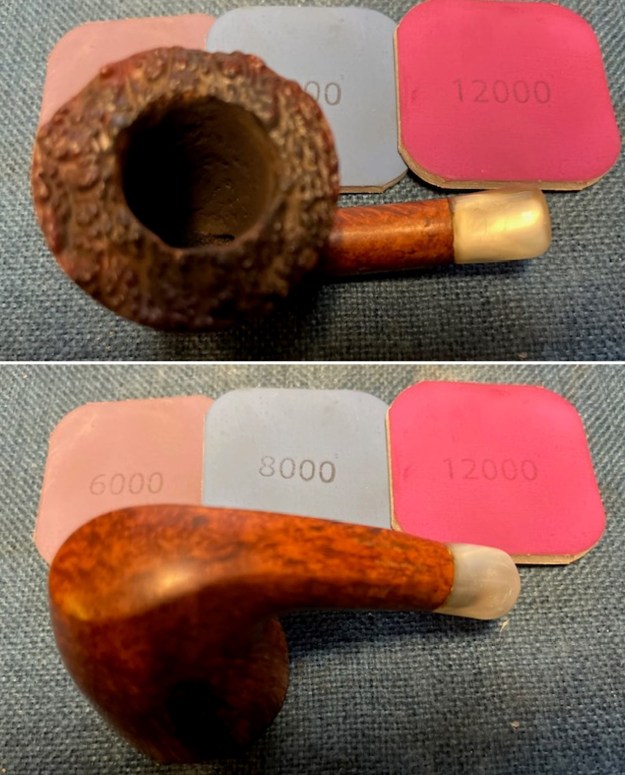
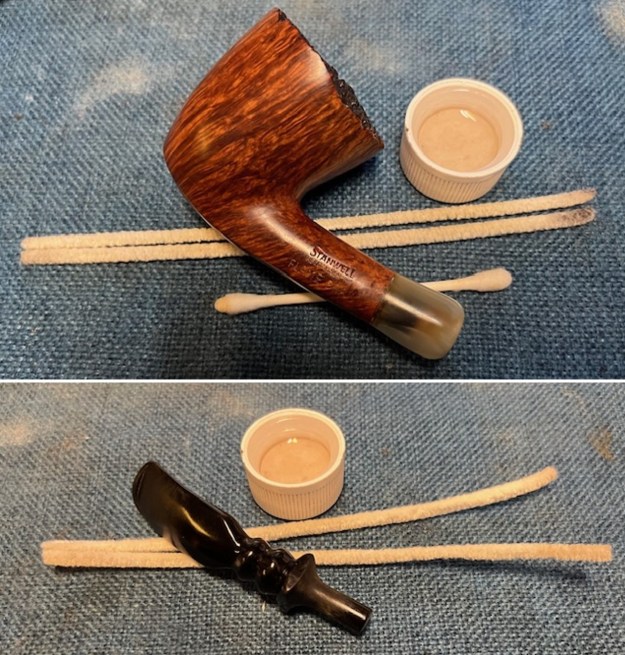
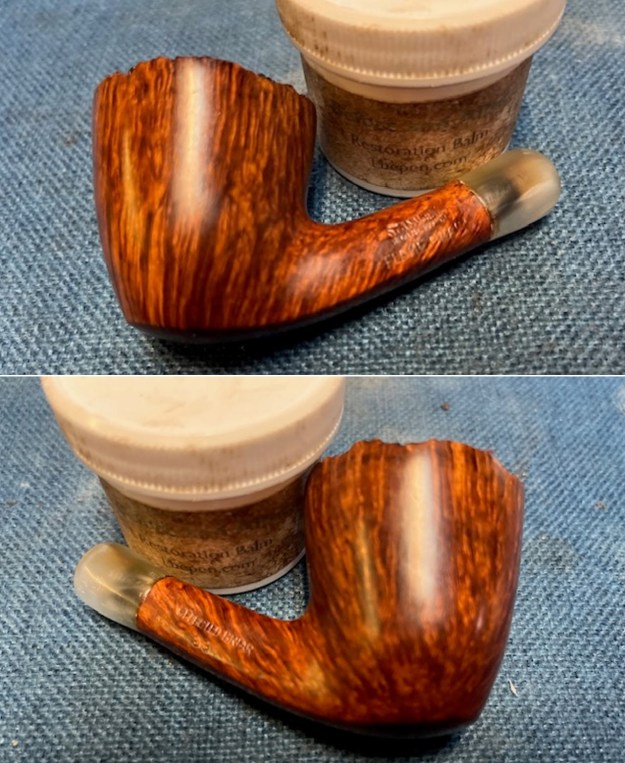
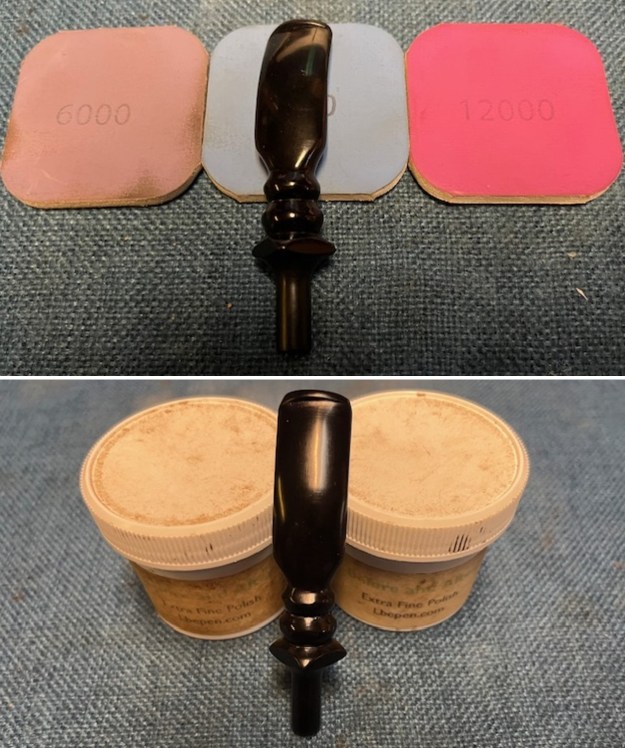
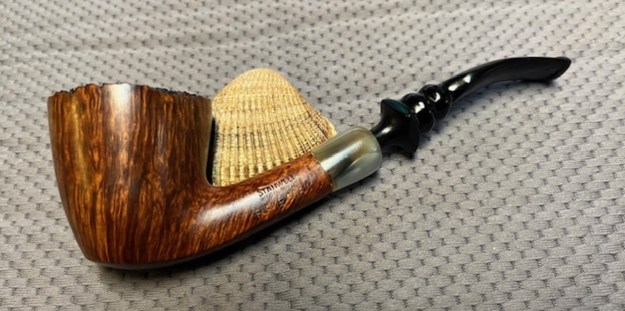
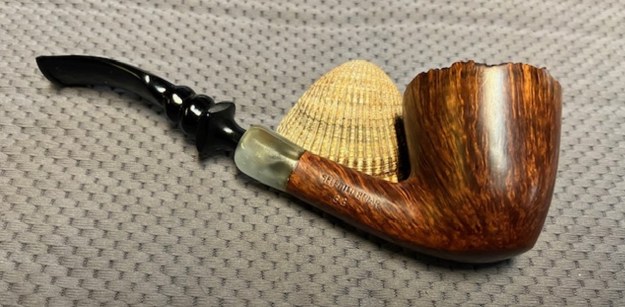
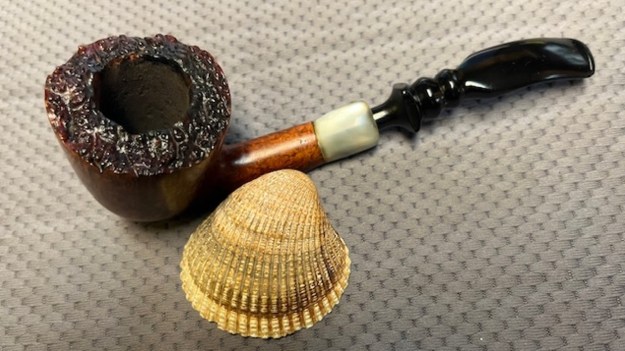
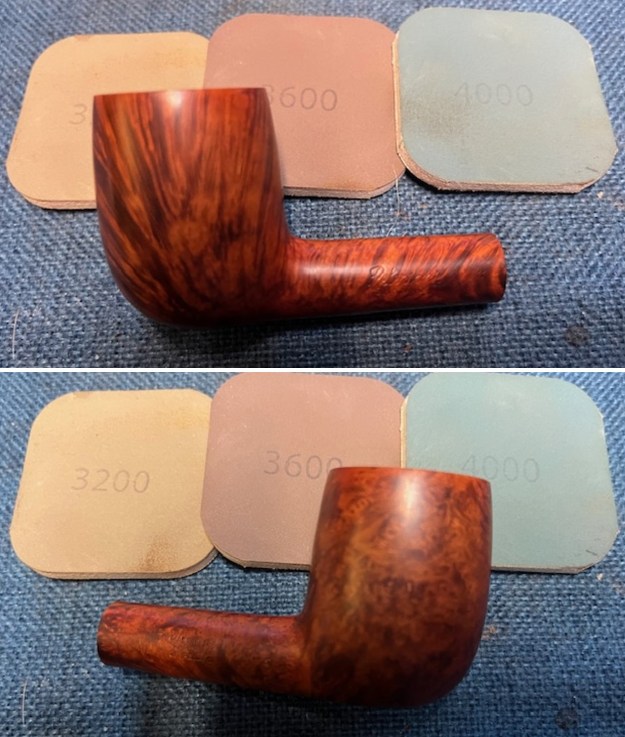
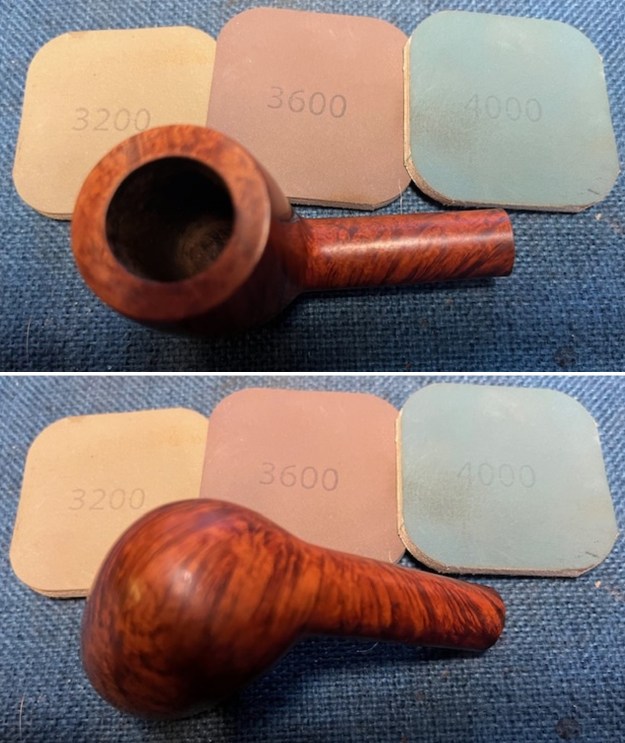
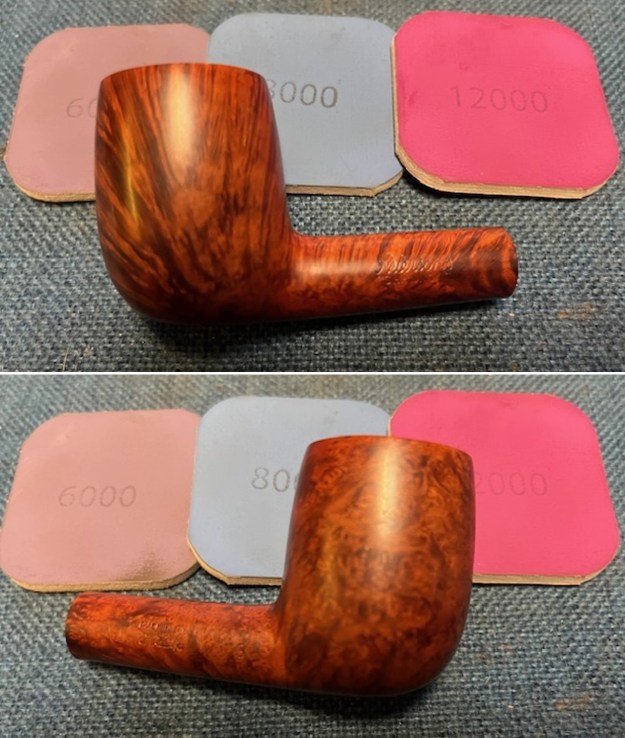
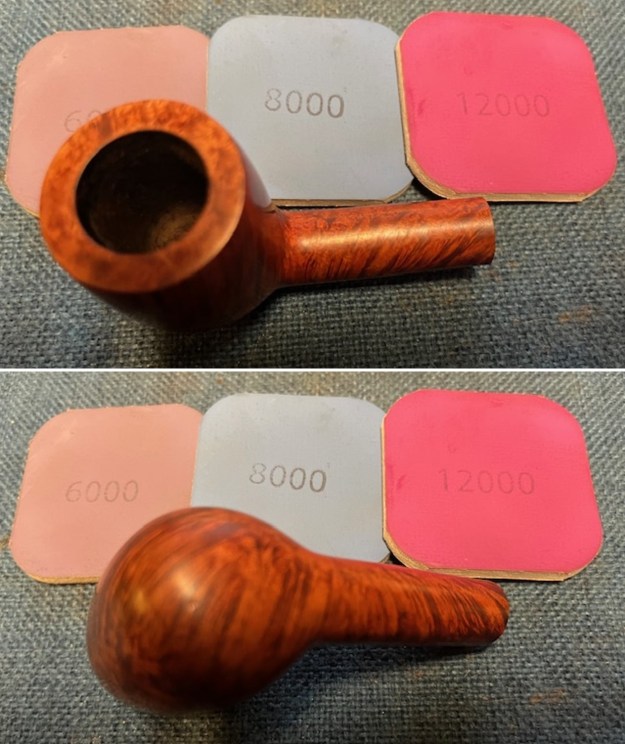
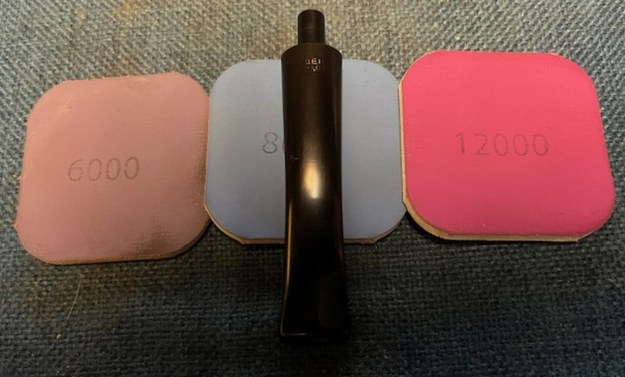
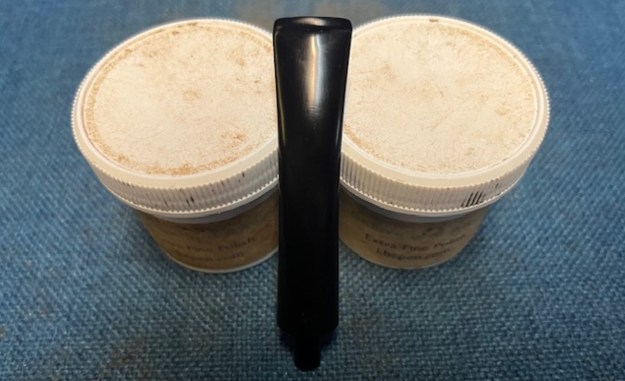
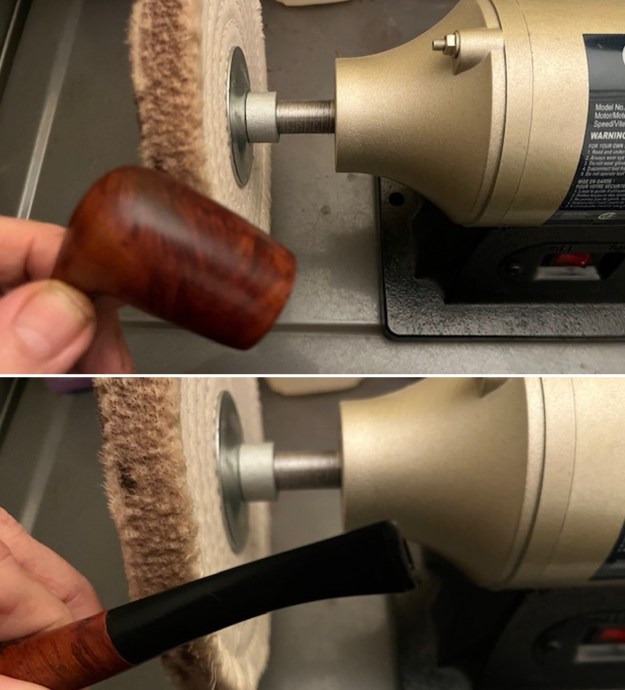
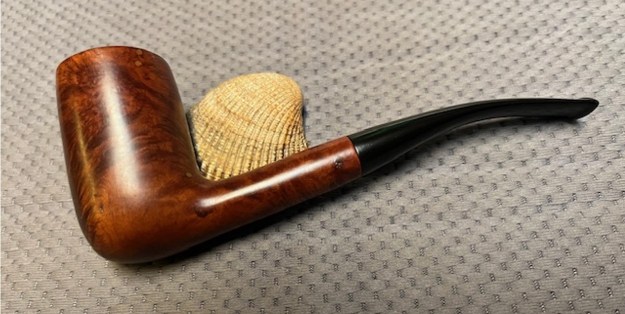
Jeff had cleaned up the pipe using his usual procedure. He reamed the pipe with a PipNet pipe reamer and removed the rest of it with a Savinelli Fitsall Pipe Knife. He scrubbed the bowl with undiluted Murphy’s Oil Soap with a tooth brush. He rinsed it under running warm water to remove the soap and grime from around the bowl sides. It looked much better. He cleaned out the inside of the shank and the airway with alcohol, cotton swabs and pipe cleaners. The stem looked much better and the light tooth marks on both sides were still visible and would need a little work. I took photos of the pipe once I received it.  I took a photo of the rim top and the stem to show their condition. Jeff was able to clean up the cake and the lava overflow that was shown in the rim and bowl photos above. The rim top was a major mess. It was chipped and burned and was quite charred and soft. It was going to take some work and some topping to remove the damaged portion of the rim top. There was some darkening around the bowl edges and top. The grain on it was quite nice. The stem looked better, though there were tooth marks and chatter on both sides ahead of the button.I took a photo of the stamping on the shank to show that the clean up had not damaged it at all. It looked good. I removed the stem from the shank and took a photo of the parts to give a sense of what the pipe looks like.I started my work on the pipe by addressing the mess of the burned/charred rim top and edges. The briar was actually almost charcoal like and soft. The softness went quite deep. I topped it significantly with a Dremel and sanding drum and then cleaned it up on a topping board with 220 grit sandpaper. The rim top was finally solid at this point as was the inner edge of the bowl.I worked on the inner edge of the rim with a wooden sphere and a piece of 220 grit sandpaper. It took some work to smooth out the edge and bring it back to round. It is significantly shorter in height but the soft wood is gone and the rim top is solid. There were two small hairline cracks on the rim top that would need to be repaired but it was looking better. I worked over the rim edge and top with a 320 grit sanding pad to smooth out the bevel. I was liking the way it turned out. I used some clear CA glue to fill in the small hairline cracks on the rim top.I wiped the bowl down with a light coat of olive oil and sanded the smooth portions of the bowl with 320-3500 grit sanding pads. The finish began to have a rich shine. I was able to blend the repairs on the rim top into the surrounding briar and the bowl looked very good. I polished the bowl sides and the smooth rim top with micromesh sanding pads. I dry sanded it with 1500-12000 grit micromesh pads (I forgot to take photos of the sanding with the micromesh pads). I wiped it down after each pad. It really began to be beautiful. I rubbed the bowl and shank down with Before & After Restoration Balm to deep clean the finish on the bowl and shank. The product works to clean, enliven and protect the briar. I worked it in with my fingers to get it into the briar. I worked it into the twin rings in the bowl cap with a shoe brush to get deep in the grooves. I let it sit for 10 minutes then I wiped it off and buffed it with a soft cloth. The briar really began to have a rich shine. I took some photos of the bowl at this point to mark the progress in the restoration. It is a beautiful bowl. I set the bowl aside and turned my attention to the stem. I “painted” the tooth marks with the flame of a lighter to lift them. I was able to lift them significantly. There were several deeper ones that I filled with clear CA glue. Once the glue hardened I flattened them with a small file. I sanded them with 220 grit sandpaper to blend them further into the surface of the stem. I scrubbed the remaining oxidation on the stem surface with Soft Scrub cleanser on a cotton pad and was able to remove what remained in the curves of the saddle portion of the stem. It looked better.I sanded the stem with the 2 inch square 320-3500 grit sanding pads. I wiped down the stem after each sanding pad. I was able to remove the tooth marks and chatter on both sides with the pads. The stem looked very good.I polished the stem with micromesh sanding pads – dry sanding with 1500-12000 grit pads. I wiped the stem down after each sanding pad with Obsidian Oil. I did a final hand polish of the stem with Before & After Pipe Stem Polish – both Fine and Extra Fine. I gave it a coat of Obsidian Pipe Stem Oil. It works to protect the stem from oxidizing. I set it aside to dry. I put the stem back on the reshaped bowl of this “MALAGA” Hand Made H Apple and took it to the buffer. I buffed the bowl and stem with Blue Diamond to polish the briar and the vulcanite. Blue Diamond does a great job on the smaller scratches that remain in both. I gave the bowl and the stem several coats of carnauba wax and buffed the pipe with a clean buffing pad to raise the shine. I hand buffed it with a microfiber cloth to deepen the shine. I am amazed at how well it turned out. The finished pipe is shown in the photos below. This is beautiful smooth finished “MALAGA” Hand Made H Apple and the vulcanite, fancy saddle stem combine to give the pipe a great look. The dimensions of the pipe are Length: 6 ½ inches, Height: 2 inches, Outside diameter of the bowl: 1 ¾ inches, Chamber diameter: 1 inch. The weight of the pipe is 2.29 ounces/66 grams. This is another pipe that I will be putting on the rebornpipes online store in the American Pipe Makers and Pipemaking Companies Section shortly, if you are interested in adding it to your collection. Thanks for walking through the restoration with me on this beauty!

As always, I encourage your questions and comments as you read the blog. Thanks to each of you who are reading this blog. Remember we are not pipe owners; we are pipe men and women who hold our pipes in trust until they pass on into the trust of those who follow us.

Bringing New Life to an Older BBB Gourd Calabash


by Steve Laug

I regularly am in correspondence with quite a few people through the reach of rebornpipes. This week alone I have received emails from Hungary, Slovakia, England, Australia to name a few. On top of those are the emails from the US and Canada. I received one from a Paul in Halifax, Nova Scotia, Canada about a pipe he recently picked up and he wrote to me after finding a similar one on rebornpipes. Here is his initial email:

I have purchased an old pipe. The case said BBB in it so I googled it. It is a Calabash like on your website, but the steel rim has an actual flap over the bowl that you can open or close with vent holes in it. It has three markings stamped on it, anchor-lion-n (not the “f”like yours). Can I send you a picture? – Paul

I wrote him back and asked him to send me the pictures. I was very curious to see the age of the pipe and perhaps help him that way. He sent me the following photos. The first two show the bowl as a whole. It was an interesting looking pipe. Paul also sent me photos of the rim cap and bowl cap so I could see how they function and could read the stamping on the silver of both. The stamping was as he noted in his first email.He also included photos of the case exterior and the inside. The inside of the case is stamped with a BBB Diamond logo in the lid of the case. I wrote Paul back about the pipe to help unpack the stamping on the top of the rim and cover. The stamps can be interpreted as follows:

The LB on the cover of the rim/windcap is for Louis Blumfield.

The other stamps are as follows:

Anchor is for Birmingham the city where the silver was made and fitted to the bowl.

Rampant lion is for the quality of the silver used in the rim cap and cover. It means that it is .925 sterling silver

The letter n is the date stamp. I included a copy of the Hallmark chart for British hallmarks. I can match your pipe’s stamp to 1912. I have marked it on the chart below in red.Paul responded with his thanks and a further email:

Hi Steve is it possible to give it a tune-up? professionally? And also, do you think I should just display it? Or is it ok to use? What would you do? – Paul

I wrote back and sent him my address and he mailed the pipe to me to work on. When I got it I opened the box and took some photos of the case and the pipe. The case is worn black leather with nicks and scuffs on it. The case is obviously hand fitted to the pipe. I took the pipe out of the case and took a look at what I had to work with. The gourd was dirty and had a burn mark on the underside at the bend. The shank end is Maple I believe and has some glue dried on from a silver shank band that was missing. The rim top had a silver rim cap and wind cap. It was loose on the top of the gourd. I removed it underneath the bowl lining appeared to be clay. It had some repaired cracks. It was sitting in a wood base that was inserted in the gourd. The base has pins snapped off in it that originally held the rim cap in place. The bowl itself had a large opening in the bottom but there was a lot of debris and clogging in the bowl. There was a rattle in the gourd itself. The stem was amber and was in very good condition. There were light tooth marks and chatter on the top and underside ahead of the button. The airway in the stem was very dirty and the shank was also very dirty. I took photos of the wind cap and rim cap to show the scratching and wear on the silver. It was worn and tired with a little bit of tarnish as well. I will need to polish both with some silver polish to remove the tarnish and the scratching. The amber stem looks good with some light chatter on the top and the underside ahead of the button.I removed the silver rim cap and windcap. I took a photo of the clay bowl insert. It is pitted and dirty but you can see what I have to work with. It is hard to see but the original pins that held the cap in place are all snapped off in the clay. I took a photo of the bowl with the cap and stem off. I carefully scraped out the clay bowl with a Savinelli Fitsall Pipe Knife to remove the cake build up in the bowl and also tobacco debris on the walls of the bowl. I sanded the walls smooth with a folded piece of 220 grit sandpaper.I cleaned the internals of the gourd shank and below the clay bowl with pipe cleaners and alcohol. I cleaned the amber stem at the same time with pipe cleaners and alcohol. Once it was clean the pipe smelled significantly better.The burn on the underside of the gourd had a burn mark and a gouge. I filled it in with clear CA glue. One it dried I sanded it smooth and polished it with 320-3500 grit sanding pads. Once finished it looked much better.I used four spots of all-purpose white glue on the inside of the silver rim cap. I pressed in place and set it upside to dry. I polished the scratches in the silver with micromesh sanding pads. I worked over the wind cap and all of the edges on the rim cap. I lightly polished them with the pads and wiped them down after each pad with a jeweller’s cloth. The cap and rim began to take on a very rich shine. The scratches were not all removed but they definitely looked much better when I finished with the last of the sanding pads. I rubbed the gourd and the maple shank extension down with Before & After Restoration Balm. I worked it into the surface with my finger tips. The product works to clean, enliven and preserve the wood and gourd surfaces. It gives a rich a glow. I let it sit on the surface for 10 minutes and then buffed it off with a soft cloth. The gourd began to take on a rich shine. Since I did not have a silver band that would fit the shank extension I decided to stain it. I gave it a coat of Maple stain and Cherry stain using stain pens. It brought out some nice grain patterns in the wood. I gave it another coat of Before & After Restoration Balm and buffed it off with a cloth. It really was looking great in contrast to the colour of the gourd.I set the bowl aside and turned my attention to the amber stem. I used 320-3500 grit sanding pads to dry sand the tooth chatter on both sides near the button. It took a bit of sanding but I was able to remove them all and start the polishing with the pads. I wiped the stem down after each sanding pad with an Obsidian Oil impregnated cloth. It really looked very good.I polished the stem with micromesh sanding pads – dry sanding with 1500-12000 grit pads. I wiped the stem down after each sanding pad with Obsidian Oil. I did a final hand polish of the stem with Before & After Pipe Stem Polish – both Fine and Extra Fine. I gave it a coat of Obsidian Pipe Stem Oil. It works to protect the stem from oxidizing. I set it aside to dry. The amber took on a rich glow by the end of the polishing. I put the stem back on the BBB Clay Gourd Calabash and took it to the buffer. I carefully buffed the gourd, the extension and the amber stem with Blue Diamond to polish the gourd and the amber. Blue Diamond does a great job raising more of the shine and smoothing out imperfections. I gave the bowl and the stem several coats of carnauba wax and buffed the pipe with a clean buffing pad to raise the shine. I hand buffed it with a microfiber cloth to deepen the shine. I am amazed at how well it turned out. The finished pipe is shown in the photos below. This is beautiful smooth finished 1912 BBB Gourd Calabash and the amber taper stem combine to give the pipe a great look. The finished pipe is shown in the photos below. The approximate dimensions of the pipe are Length: 7 inches, Height: 4 inches, Outside diameter of the bowl: 2 ¼ inches, Chamber diameter: ¾ of an inch. This beauty will be heading back to Paul in Halifax, Nova Scotia soon. I hope he will enjoy the pipe and enjoy smoking it. Thanks for walking through the restoration with me on this beauty!

As always, I encourage your questions and comments as you read the blog. Thanks to each of you who are reading this blog. Remember we are not pipe owners; we are pipe men and women who hold our pipes in trust until they pass on into the trust of those who follow us.

Restoring and Restemming a BBB Own Make Thorneycroft Sand blast Canadian 506


by Steve Laug

The next pipe I decided to work on is one from a Dan in South Carolina. He contacted me several weeks ago now about a pipe that he had come across in his things that was on that his mom had picked up for him. Now 16 or 17 years later he decided it is time to work on it. He wrote me the email below regarding this pipe and how he came upon. It piqued my interest because to be honest with you I love all things BBB.

Hello,
I recently stumbled on an old billiard pipe that my mom had bought me at an antique store while I packing up for a move. I was 16 or 17 at the time so I couldn’t use it and basically forgot about it until now, at 33, I’m starting to get into pipe tobacco more and more. The pipe has the “BBB” inside a diamond with “OWN MAKE” underneath that on the top of the shank, and “THORNEYCROFT Made In ENGLAND” with “506” just below it on the underside of the shank.

The problem is it has no stem, and the end of the shank where the stem would fit into, has many marks that I can’t tell whether they are chew marks or if they are just a part of the grain etc. To my very untrained eye the pipe seems to be in OK condition otherwise.

Being very new to this hobby and not knowing many resources yet or really what to do, and seeing your restorative work, I’d like to ask if you restore pipes for people or if you might be able to point me in the right direction on how I should go about making this pipe smokeable once again, or if it might not be worth it except for sentimentality sake. I’m able to provide pictures of the pipe if needed as well.

Thank you,
Dan

I wrote Dan back and asked him to send me some photos of the pipe so that I could see what I was dealing with in this pipe. He sent some amazing photos of various angles of the pipe and I was hooked. I asked him to send it up and I would restore and restem it for him. Here are the photos that he included for me. The first four photos are overall views of the pipe as a whole. The craggy sandblast, the typical rustication on the shank end that I have seen on most of these Thorneycroft pipes, and the delicate but classic look of a Canadian are all well captured. Dan sent photos of the bowl and rim top as well as photos of the sides of the bowl. I appreciate the detail in these photos. The bowl shot shows the tar and cake on the sides and heel of the bowl and the lava build up in the sandblast of the rim top. It should clean up fairly easy. He also notes with a red circle what appears to be a chip on the left side of the bowl on the outer edge of the rim. The more I examine it the more I think it is probably a part of the blast. But I will know more once I have it in hand. His close up photos of the shank show the rustication and the washed out stain on the shank end. I think it is the typical BBB rustication that I have seen on the shank end of the Canadians and long shank pipes in the Thorneycroft line. Dan did a great job capturing the stamping on the shank top and underside. It reads as he noted in his opening email.He took close up photos of the rustication as well. It is rugged and I have to say that I like it. Once it is restained it will look quite nice. The photo of the shank end shows that there are no crack in the shank. There is a nick on the lower right side that is probably a flaw in the briar.I did a search on Pipephil’s site (http://www.pipephil.eu/logos/en/logo-bbb.html) and looked for the specific Thorneycroft line. The second pipe in the list is stamped the same way as the one that I am working on and the stamping on the stem is the same. The Made in England stamp is identical to the second one. I looked on Pipedia and found several references to the BBB Own Make Thorneycroft pipe but nothing specific (https://pipedia.org/wiki/BBB). I also found an advertisement courtesy of Doug Valitchka from 1957 that had a great description of the Thorneycroft that I include below. It reads as follows:

Beautifully balanced, superbly lightweight and mellow smoking… these qualities have made the BBB Own Make Thorneycroft famous. First tough, age-old Algerian briar is carefully selected and cured then the bowls are carefully hand-turned. Now comes the special process of sand- erosion. The soft parts of the briar are literally blasted away leaving a hard bowl of unusual beauty, durability and sweetness. A mouthpiece of finest English Ebionite, inlaid with the famed metal emblem, and a specia dry smoking condenser tube complete the picture. Available in all 24 BBB shapes…I took some photos of the bowl as it was when I unpacked it. It was stamped as Dan noted above and was clear and readable. The rough shank end of the pipe was not damaged but had lost the stain that had originally coloured it. The little nick in the shank end does not damage the airway in the shank. The nicks that were noted on the edge of left side of the bowl appeared to me to be part of the blast and should be left as is. The bowl had a light cake on the walls and there was a light lava coat on the rim top where it had filled in some of the blast. The inner edge of the rim was in excellent condition with no damage. The outer edge had no damage either but there was some roughness to it due to the sand blast finish on the edge. It looked very good however. I took photos of the bowl to show the condition when I received it from Dan. I have included them below. I was hoping I had a BBB stem for the Canadian but I did not have one with the brass insert. I did have one that was a pretty decent fit. It would need to be adjusted in terms of the top, bottom and sides of the stem to fit the shank dimensions but it was the right length and shape for the pipe. It had a great shape on the slot that would give a good spread to the smoke.Now it was time to clean up the bowl. Since the cake was thin I used a Savinelli Fitsall Pipe Knife to scrape out the cake that was in the bowl. I took it back to bare briar and then sanded the walls with a piece of dowel wrapped with 220 grit sandpaper. The bowl walls were in very good condition with no checking or burn damage.I wiped off the bowl with a damp cloth and was amazed at how little dust came off the finish. Dan had obviously wiped it down before he sent it. I also wiped down the rim top and it was quite clean as well. I used a black and a walnut stain pen to stain the shank end rustication to match the rest of the briar. It looked very good. Once it was buffed and polished it would be a perfect match. I used a brass bristle wire brush to knock off the remaining debris in the sandblast on the rim top. It looks very good with some deep blast sections on the top right and left. Beautiful blast in all ways.I cleaned out the internals of the shank, mortise and the airway in both the shank and the new stem with alcohol, cotton swabs and pipe cleaners. The pipe smells fresh and ready to smoke again.Now that it was clean it was time to do a few minor surface repairs. The first of these was a small repair to a flaw on the shank end on the inner edge of the mortise on the lower left side. I used a tooth pick to put a drop of CA glue in the flaw and smooth it out on the surface. I did the same to the pit on the outer edge of the rim on the right side toward the back. Both were cosmetic rather than structural but it improved the look of the bowl in those spots. I smoothed out the repair on the shank end with a folded piece of sandpaper and touched the paper to the repair on the rim edge as well. I stained both with a Walnut stain pen and blended them into the surface. I rubbed the briar down with Before & After Restoration Balm. I worked it into the briar with my fingertips and a shoe brush to work it into the finish. The product works to clean, enliven and preserve the briar. I let it sit for 10 minutes then I buffed it with a cotton cloth to deepen the shine. The depths of the blast in the briar really comes alive with the balm. I worked on the fit of the stem to the shank with a folded piece of 220 grit sandpaper. I needed to reduce the diameter of the stem from top to bottom and from right to left. I worked on it for quite a bit of time sanding, sanding and more sanding until the fit to the shank was good and the transition between the shank and stem was smooth.I polished the stem once it fit with 320-3500 grit sanding pads. I wiped it down after each pad with a cloth impregnated with Obsidian Oil. By the end the stem took on a good shine and the fit was very good.I polished the vulcanite stem with micromesh sanding pads – 1500-12000 grit pads. I wiped it down with Obsidian Oil after each sanding pad. I used Before & After Pipe Polish – both Fine and Extra Fine to further the stem. The photos below show the polished stem. I am pretty happy with the restoration and restemming of this BBB Own Make Thorneycroft Sandblast Canadian. There is a sandblast finish to the bowl that is rugged and rich looking. The newly fit stem is clean and smooth and looks good on the shank. I put the stem back on the bowl and carefully buffed the pipe with Blue Diamond on the buffing wheel using a light touch on the briar. I gave the bowl multiple coats of Conservator’s Wax and the stem multiple coats of carnauba wax on the buffing wheel and followed that by buffing the entire pipe with a clean buffing pad. I hand buffed the pipe with a microfiber cloth to deepen the shine. The finished BBB Own Make Thorneycroft Canadian fits nicely in the hand and feels great. Give the finished pipe a look in the photos below. The dimensions of the pipe are Length: 5 ¾ inches, Height: 1 ¾ inches, Outside diameter of the bowl: 1 1/8 inches, Chamber diameter: ¾ of an inch. The weight of the pipe was 30grams/1.02ounces. I will be sending it back to Dan shortly. I look forward to hearing what he thinks of it. Thanks for reading this blog and my reflections on the pipe while I worked on it. It is a privilege to be a part of the restoration and preservation of these old timers with a back story!

The worst of Five Peterson’s in for restoration that are in rough condition – a burned out bowl and damaged stem


by Steve Laug

Yesterday afternoon I was visited by a pipe man here in Vancouver named Sergey who had five Peterson’s pipes that he wanted me to work on. They are shown in the photo below. In the left column from top to bottom: Peterson’s of Dublin Kinsale XL17, Peterson’s of Dublin Filter 68, Peterson’s of Dublin Kinsale XL16 Rusticated Pipe. In the right column from top to bottom Peterson’s of Dublin Kinsale XL16 and the bottom pipe is a Peterson’s of Dublin Kinsale XL14. All five pipes were all thickly caked and had thick lava on the rim top. The cake is so thick that I could not put my little finger in the bowl it was so heavily caked. My guess was that the bottom of the bowl was lower than the entrance of the airway into the bowl. The Rusticated Kinsale XL17 also had a burn out in the front bottom of the bowl that would take a lot more time than just a simple clean up. I would know more about the condition of each of the bowls once I had reamed and cleaned them. Sergey was travelling soon and he chose at least two of them that he wanted to take with him on his trip so those would be first. I have finished four of the five pipes and he picked them up and was pleased with them. The fifth of these was in the worst condition. I left it until last and now it was time to work on it – a Peterson’s of Dublin Kinsale XL16. I was not sure I would finish but he would love to take it on his travels.
I took photos of the Peterson’s of Dublin XL16 before I started working on it. This was Sergey’s favourite pipe and his concern was that it had a hole in the bottom toward the front. The finish is very dirty with oils and dirt ground into the briar. The rim top is thickly covered with tarry lava overflowing from the heavy cake in the bowl. The cake was thick and heavy all the way to the bottom of the bowl. In the heal of the bowl there was a hole about the size of pencil lead and the bowl was quite a bit deeper than the entrance of the airway from the shank. The vulcanite stem is also very dirty. There was oxidation, calcification and the P-lip had been cut off on the end. There was no button edge and he would like to have that added on the bottom of the stem surface. There oxidation, calcification and also some light tooth damage on both sides ahead of the remaining button. The P stamp on the left side of the stem is a gold P that is damaged. I took closeup photos of the rim top and bowl to give a sense of the dirty condition of the pipe and the thickness of the cake and lava on the bowl top. The rim top and edges look to be damaged under the lava coat but the cleanup will reveal the facts. I also took photos of the stem to show the top and underside ahead of the button.I took photos of the stamping on the shank sides. It was faint but readable through the grime and debris. It read as noted in the above paragraphs. I also took the stem off the shank and took a photo of the look and proportion of the pipe. I took a photo of the burnout in the heel of the bowl. It was about the size of pencil lead on the outside but the inside of the bowl was more extensively damaged. This one would take some extra work to bring it back to life.I started my work on the pipe by reaming the thick cake in the bowl. I could not even assess fully the burnout damage until it was reamed and cleaned. I used a PipNet pipe reamer with the first cutting head to take back the cake. I followed that with the second and the third cutting head. I was able to remove all of the cake. The cake in the bottom third of the bowl was incredibly hard and took a repeated reaming of that portion. I used a Savinelli Fitsall Pipe Knife to scrape the remainder of the cake out of the bowl and clean up the bottom of the bowl. I sanded the bowl walls with 220 grit sandpaper wrapped around a piece of dowel. With the bowl cleaned out I was able to determine that the bowl bottom was significantly below the entrance of the airway. It was quite thin and the hole on outside was only the beginning of the issues. I would need to repair the burn through and then build up the bottom of the bowl to the entrance of the airway. It would be further protection for the repaired bottom of the bowl and help it from further burning out. The issues with the rim top and inner edge would also need to be addressed. I decided to open up the burned-out area and see how extensive it was and how deep it was into the briar surrounding pin hole. I started with a sharp blade and cleaned up the opening and took out the brittle pieces of briar around the hole. I opened the hole further with a large drill bit and smoothed out the edges of the hole to the point it was solid briar.I scrubbed the externals of the bowl and shank with undiluted Murphy’s Oil Soap and a tooth brush. I rinsed it with warm running water and repeated the scrubbing and rinsing process until the pipe was clean and looked better. I cut a piece of briar and shaped it with my Dremel and sanding drum to fit the hole. I gave the inner edge a bevel to fit the edges of the hole. I rounded the inside of the plug with the Dremel to follow the flow of the bowl bottom. It would help build up the bottom significantly. I fit the plug in place on the bowl bottom and took some photos to give a sense of the look. Once it is glued in place and cured I will rusticate the patch to match the rest of the bowl.I mixed up a batch of two part JB Weld and coated the inner edge of the drilled out hole in the bowl bottom. I inserted the plug in the hole and used a tooth pick to fill in the gaps around the plug on the exterior of the bowl. I used a dental spatula to fill in the edges around the inside of the bowl and pressed it in place with a folded pipe cleaner. I built up the bowl bottom to the bottom of the airway entrance. I set it aside for the night to harden and cure. In the morning when I got up I shaped the plug with my Dremel and sanding drum to follow the flow of the bowl bottom. I clean up the edges of the  plug and the surrounding briar with a folded piece of 220 grit sandpaper. It was looking pretty good at this point. I used a piece of dowel with 220 grit sandpaper wrapped around it to smooth out the bowl walls. I used some clear CA glue and some briar dust to fill in low spots around the front of the plug. I cleaned it up once it dried with a brass bristle wire brush to clean up the repair area. I sanded the edges of area with a folded piece of 220 grit sandpaper. It was a solid, smooth finish. All that remained was for me to rusticated it to match the surrounding briar.

I rusticated the repaired area with a Dremel and a series of burrs to match the rustication to the surrounding briar. I failed to take a photo of the bowl before I stained it. However, I used an Oak and a Mahogany stain pen to approximate the colour of the briar surrounding the repair. I took a photo of the various burrs I used with the Dremel to achieve the rustication patter that matches the rest of the bowl. I used a 3500 grit sanding pad to knock off the colour on the high points and give it a sense of depth. I rubbed the briar down with Before & After Restoration Balm. I worked it into the briar with my fingertips to work it into the finish. The product works to clean, enliven and preserve the briar. I let it sit for 10 minutes then I buffed it with a cotton cloth to deepen the shine. The briar really comes alive with the balm. I mixed a bowl coating of sour cream and charcoal powder and painted the walls and bottom of the bowl to protect it during the break in period. I applied it to the walls and heel of the bowl with a folded pipe cleaner. I set it aside to let it cure. It would take about 24 hours for it to cure. I set the bowl aside and turned my attention to the stem. The stem was in as much of a mess as the bowl. The P-lip had been cut off and the underside of the stem was flat at an angle toward the opening of the airway in the end. The top of the P was missing other a thin ridge to approximate a button. It was roughly done and did not leave much to work with. I looked through my Peterson stems for a replacement but the tenon was odd sized and it was made for a 5MM filter so I had nothing. That left me with a decision. I decided to shape the stem end and build a fishtail button on the end. I would have to build up the button edges on both sides and I would need to try to cut a slot instead of just an odd shaped hole. With that in mind I had my hands full on this stem.

I rebuilt the button end on the top and bottom with rubberized black CA glue. I layered it in place after each layer cured. It took time to build up the layers and reshape it with files and sandpaper, but I like the new look much better. Once the button was solidly in place and the shaping was finished on it I still needed to clean up the shape and smooth it out and give it more of a sense of flow. I sharpened the edge on the top and underside of the button. I used several needle files to smooth out the edge and top. I smoothed out the top surface of the button on each side and on the end with a piece of 220 grit sandpaper. I used a series of round and oval needle files to shape the slot in the stem end. I took it for an out of round airway exit to an oval. I also used a slot cutting tool to continue to reshape the slot. I used a folded piece of 220 grit sandpaper to smooth out the inside of the slot. Once finished the slot looked much better. I polished the stem and the button with 320-3500 grit sanding pads. I wiped it down with a cloth impregnated with Obsidian Oil after each sanding pad to protect and polish the stem surface.I polished the stem with micromesh sanding pads – dry sanding with 1500-12000 grit pads. Once again I wiped it down between each pad with Obsidian Oil. I further polished it with Before and After Stem Polish – both Fine and Extra Fine. It looked very good. This Rusticated Peterson’s of Dublin Kinsale XL16 Bent Billiard with a Taper Stem has a beautiful rusticated finish that has a new lease on life. I repaired the burnout in the heel of the bowl by fitting it with a briar plug and then rusticating it to match the rest of the bowl. The medium brown/black/mahogany finish gives depth to the rustication around the bowl and shank. It has a classic look of a Peterson’s pipe. The rebuilt and polished black vulcanite taper stem adds to the mix. I put the stem back on the bowl and buffed the pipe with Blue Diamond on the buffing wheel being careful to not buff the stamping. I gave the bowl multiple coats of Conservator’s Wax and the stem multiple coats of carnauba wax on the buffing wheel and followed that by buffing it with a clean buffing pad. I hand buffed the pipe with a microfiber cloth to deepen the shine. The finished Peterson’s of Dublin Kinsale XL16 Rusticated Bent Billiard is quite nice and feels great in the hand. Give the finished pipe a look in the photos below. The dimensions of the pipe are Length: 6 inches, Height: 2 inches, Outside diameter of the bowl: 1 ½ inch, Chamber diameter: 7/8 of an inch. The weight of the pipe is 2.68 ounces/78 grams. Thanks for walking through the restoration with me as I worked over another beautiful pipe. Sergey picked up the other four pipes on Monday. He pressed to pick this one up on Friday evening. I did not promise but I know it is his favourite pipe so it is ready for him.

Restemming an UNSMOKED NOS WDC Military Bit Billiard


by Steve Laug

About a year ago I visited an older pipe repair man (when I say older I mean older than me). He gave me a lot of pipe parts – stems, bases, bowl, tenons and bands On Monday, August 25 after a visit with my brother Kenneth and I went to visit my contact again. This time he had more stuff that he wanted to get rid of from his parts. Once again, we received more stems and tenons. But he also put in a box of pipes that were in various states of repair or disrepair. There were quite a few that needed to be restemmed. One of those pipes was an interesting Billiard with a nickel ferrule stamped WDC in the triangle on the left side of the shank and the same on the left side of the nickel ferrule. It was in great shape for having been knocked around for a long time in a box of bowls and pipes. The finish was dirty but the bowl was unsmoked and very clean. There was a very shiny coat of varnish on the outside of the bowl and at least one fill on the back side of the bowl. The nickel was also clean and unoxidized. I would need to come up with a stem for it. I took a photo of the stamping on the left side of the shank. It is clear and reads as noted above. The stamp is also gold and very readable. I also tried to capture the stamping on the nickel ferrule. The shine tends to blur that stamp.I started my work on the pipe by wiping it down with acetone to remove the shiny varnish coat. It worked very well. The acetone loosened the glue on the ferrule and it came off when I was wiping it down. I cleaned up the glue on the shank end with the acetone cloth so that the briar was free of it. I used a dental spatula to spread some all purpose glue on the shank end. I pressed the nickel ferrule in place on the shank end and wiped off the excess glue with a damp cloth. I set it aside to allow the glue to cure. I sanded the briar with 320-3500 grit sanding pads. I dry sanded it and then wiped it down with a damp cloth after each sanding pad. The varnish finish was gone and the fills in the bowl sides were very visible. I polished the bowl with micromesh sanding pads – dry sanding with 1500-12000 grit pads and wiping down the bowl after each pad with a damp cloth. The briar took on a more natural shine than what was present when the bowl was varnished. I worked some Before & After Restoration Balm into the surface of the briar with my fingertips to clean, enliven and protect it. I let the balm sit for a little while and then buffed with a cotton cloth to raise the shine. The following photos show the bowl at this point in the restoration process. I am very happy with the results. I set the bowl aside and went through my stems. I found an unused vulcanite stem that had an orific button and a gentle that fits the style of the age of the pipe. It is also unsmoked and still bears a price tag on the underside. There is some oxidation around the tag and on both sides. I removed the sticky label with acetone on a cotton pad. I sanded the stem surface with 220 grit sandpaper to remove the nicks in the surface and the oxidation. It began to look much better as the work went on.I sanded the stem with 320-3500 grit sanding pads and wiped the stem down after each pad to remove the sanding debris. It began to take on a deep shine.I polished the vulcanite stem with micromesh sanding pads – 1500-12000 grit pads. I wiped it down with a damp cloth after each sanding pad. I used Before & After Pipe Polish – both Fine and Extra Fine to further polish the stem. I wiped it down with a final coat of Obsidian Oil and set it aside. The smooth WDC Billiard with a nickel ferrule and military vulcanite bit is a real beauty and the finish and shape are well done and have a classic English Billiard look even though this is an American Made pipe. The vulcanite military bit polished up on the buffing wheel with Blue Diamond and had a rich glue. I polished the nickel ferrule with a jeweller’s cloth. I gave the bowl and the stem multiple coats of carnauba wax on the buffing wheel and followed that by buffing the entire pipe with a clean buffing pad. I hand buffed the pipe with a microfiber cloth to deepen the shine. The finished WDC Billiard fits nicely in the hand and feels great. Give the finished pipe a look in the photos below. The dimensions of the pipe are Length: 5 ½ inches, Height: 1 ½ inches, Outside diameter of the bowl: 1 ¼ inches, Chamber diameter: ¾ of an inch. The weight of the pipe is 1.20 ounces/33 grams. I will soon be adding it to the rebornpipes store in the American Pipe Maker section. If you are interested in adding this pipe to your collection send me a message or an email. Thanks for reading this blog and my reflections on the pipe while I worked on it. There are many more to come!
Restoring A Beautiful Heritage Embassy 44 Octagonal Pot


By Steve Laug

About a year ago I visited an older pipe repair man (when I say older I mean older than me). He gave me a lot of pipe parts – stems, bases, bowl, tenons and bands On Monday, August 25 after a visit with my brother Kenneth and I went to visit my contact again. This time he had more stuff that he wanted to get rid of from his parts. Once again, we received more stems and tenons. But he also put in a box of pipes that were in various states of repair or disrepair. One of those pipes was an interesting Octagonal Pot, a Kaywoodie Heritage Pipe. I have always had an interest in the Kaywoodie Made Heritage Pipe line. I really like the way they are made – both in terms of workmanship and style. They really made some amazing looking pipes and I always try to pick them up when I can. The pipe had been reamed and cleaned and was in good condition. The finish was also quite clean. The bowl was a sandblast Pot with twin bands of smooth briar around the sides of the bowl. The stamping on the underside of the shank is clear and has the shape number 44 on the heal of the bowl. That is followed by Heritage [over] Embassy. The stem was lightly oxidized and scratched from sitting in storage. It was also stuck solidly in the shank and would not turn no matter how hard I tried to turn it. I think that once I cleaned and polished the parts and put it back together it would be a great looking pipe. I took photos of the bowl and rim top to show the condition that I noted in the description above. It is quite clean and you can see that the rim top and edges all look very good. The stem photos clearly show the oxidation and light tooth marks on both sides. It will need some work.The next photos show the stamping that I described in the opening paragraph. It is clear and readable. I also included a photo of the double diamond logo on the left side of the taper stem. I took a photo of the pipe with stem removed to give a sense of the proportions of the pipe. In other blogs on the brand I have given a bit of history on the Heritage Brand. I have included that here as well for ease of reference. Andrew Selkirk did a great job in researching and I am including a link to his work on the blog (https://rebornpipes.com/2014/12/23/refurbishing-a-heritage-heirloom/). I am including a brief summary of what he found in the next two short paragraphs to set the stage for the pipe on my work table.

Heritage pipes were Kaywoodie’s answer to Dunhill. According to one of their brochures, Heritage pipes were made from “briar burls seasoned and cured for up to 8 months,” with only “one briar bowl in over 300 selected to bear the Heritage name.” “Heritage stems are custom fitted with the finest hand finished Para Rubber stems. Mouthpieces are wafer thin and concave.”

The Heritage line began in the early 1960’s, with the trademark issued in 1964. The line was started at the request of Stephen Ogden, (who worked for Kaywoodie in 1962). Mr. Ogdon had previous experience working for Dunhill, either running the New York store or working for Dunhill North America. Mr. Ogden was made President of Heritage Pipes, Inc., Kaywoodie Tobacco Co.,Inc. and Kaywoodie Products Inc. as well as a Vice President of S.M. Frank & Co. Heritage Pipes were produced from 1964 until 1970 (Source kaywoodie.myfreeforum.org).

Andrew also included a copy of the Heritage brochure that I am also including below (Courtesy kaywoodiemyfreeforum). In going through the models displayed on the page there is not one for the 44.

As I read through the brochure I found a copy of the Embassy line on the third page. I drew a red box around it to easily identify it below. It reads:

Heritage… a name to remember in the world of smoking… made by the world’s largest manufacturer of fine pipes. Here are pipes, perfect in beauty and balance and so cool and mellow to smoke. Available in smooth Diplomat finish or rough, rugged Antique or Embassy finishes…

The box also encloses a photo of an Embassy finished Bulldog. It has the sandblast finish with twin smooth bands around the bowl and a smooth band around the end of the shank. The overall finish is the same as the one I am working on.The brochure has a great write up on the Heritage Antique Line. It reads Rustic Grain Stands out in Rugged Relief. It describes the line as follows:

This pipe is so bold looking, yet so light and smooth smoking. A special sandblasting process exposes a greater surface area on the bowl, giving a cooler, more satisfying smoke. Centuries-old Heritage Antique is strikingly masculine in appearance.

Added to this description is the specific finish that characterizes an Embassy line pipe as described above. Now it was time to restore the pipe itself.

The pipe seemed to be covered with a thick coat of varnish that filled in the sandblast portion and was peeling slightly on the smooth bands and smooth shank end. I wiped it down with a cotton pad soaked with acetone. I was able to remove the shiny coat in full. It looked much better now that the finish was flat. I worked some Before & After Restoration Balm into the surface of the briar with my fingertips and a horsehair shoe brush to clean, enliven and protect it. I worked it into the four lines on either side of the two smooth bands the line around the shank end ahead of the smooth band. I let the balm sit for a little while and then buffed with a cotton cloth to raise the shine. The following photos show the bowl at this point in the restoration process. I am very happy with the results. I set the bowl aside and turned my attention to the stem. I sanded the light tooth marks, chatter and oxidation on the stem with 220 grit sandpaper to blend them in. I followed that up with Soft Scrub worked into the stem surface with cotton pads and removed a lot of oxidation. The stem looked much better after this process. I sanded the stem with 320-3500 grit sanding pads and wiped the stem down after each pad to remove the sanding debris. It began to take on a deep shine.I polished the vulcanite stem with micromesh sanding pads – 1500-12000 grit pads. I wiped it down with a damp cloth after each sanding pad. I used Before & After Pipe Polish – both Fine and Extra Fine to further polish the stem. I wiped it down with a final coat of Obsidian Oil and set it aside. The sandblast Heritage Embassy 44 Octagonal Pot is a real beauty and the finish and shape are well done and have a classic English look even though this is an American Made pipe. The thin taper vulcanite stem polished up on the buffing wheel with Blue Diamond and had a rich glow. I gave the bowl multiple coats of Conservator’s Wax and the stem multiple coats of carnauba wax on the buffing wheel and followed that by buffing the entire pipe with a clean buffing pad. I hand buffed the pipe with a microfiber cloth to deepen the shine. The finished Heritage Embassy 44 Octagonal Pot fits nicely in the hand and feels great. Give the finished pipe a look in the photos below. The dimensions of the pipe are Length: 5 ¾ inches, Height: 1 ½ inches, Outside diameter of the bowl: 1 ¼ inches, Chamber diameter: ¾ of an inch. The weight of the pipe is 1.16 ounces/33 grams. I will soon be adding it to the rebornpipes store in the American Pipe Maker Section. If you are interested in adding this pipe to your collection send me a message or an email. Thanks for reading this blog and my reflections on the pipe while I worked on it. There are many more to come!
Fourth of Five Peterson’s in for restoration that are in rough condition


by Steve Laug

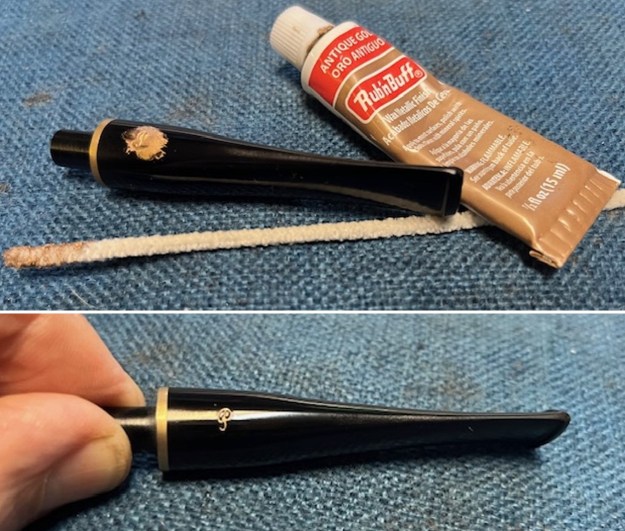
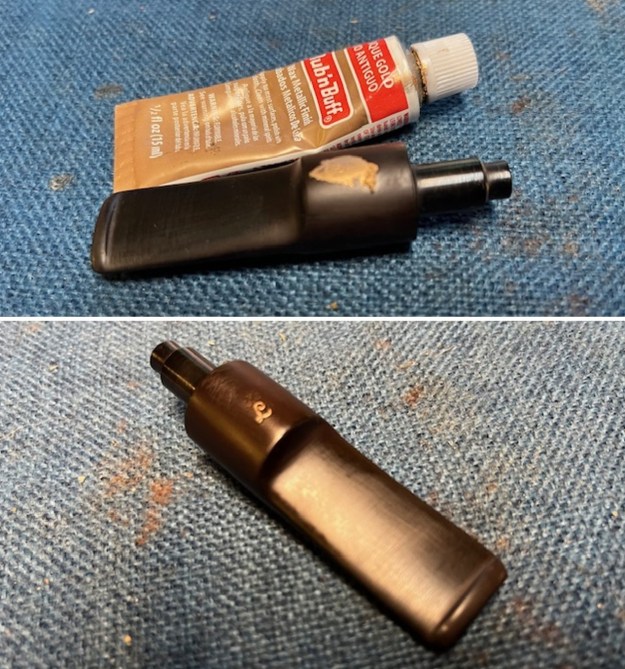
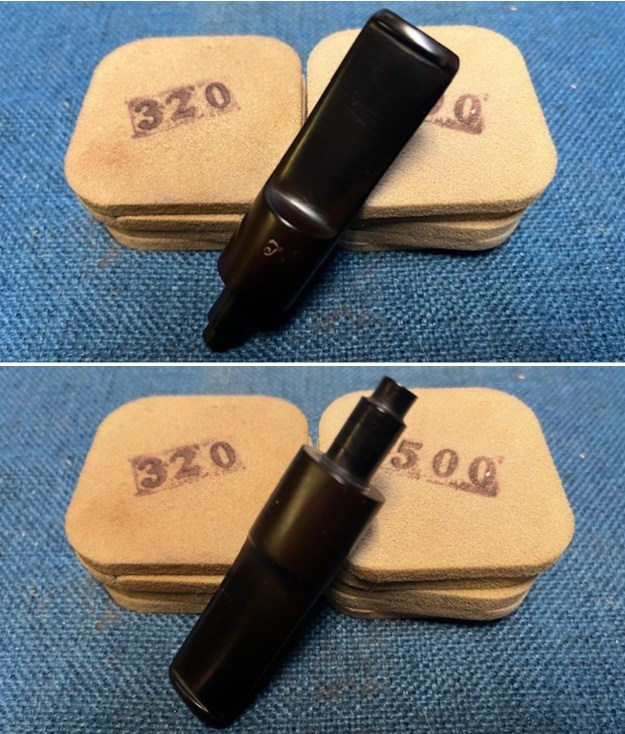
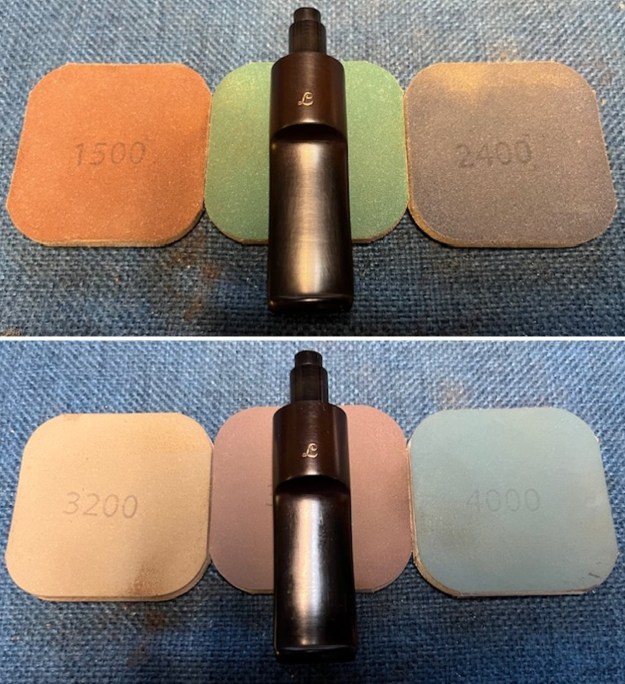
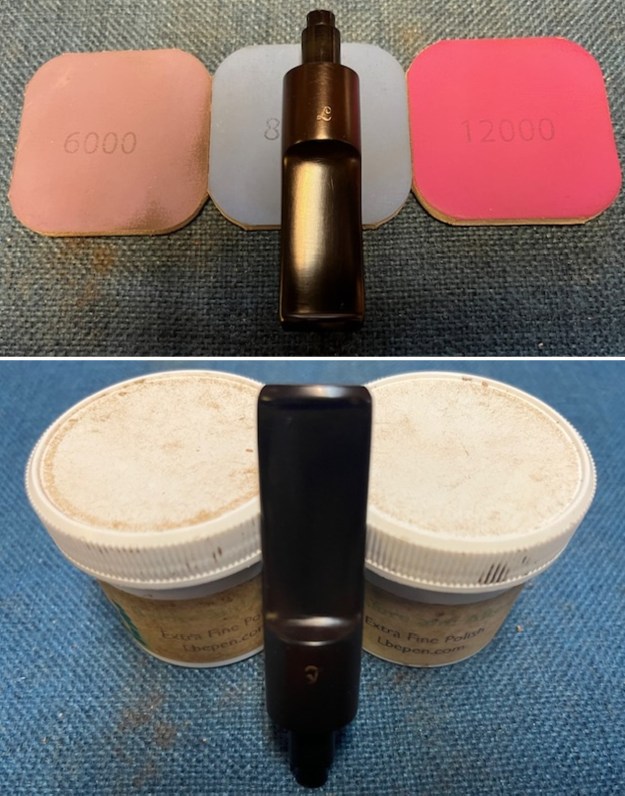
Yesterday afternoon I was visited by a pipe man here in Vancouver named Sergey who had five Peterson’s pipes that he wanted me to work on. They are shown in the photo below. In the left column from top to bottom: Peterson’s of Dublin Kinsale XL17, Peterson’s of Dublin Filter 68, Peterson’s of Dublin Kinsale XL16 Rusticated Pipe. In the right column from top to bottom Peterson’s of Dublin Kinsale XL16 and the bottom pipe is a Peterson’s of Dublin Kinsale XL14. All five pipes were all thickly caked and had thick lava on the rim top. The cake is so thick that I could not put my little finger in the bowl it was so heavily caked. My guess was that the bottom of the bowl was lower than the entrance of the airway into the bowl. The Rusticated Kinsale XL17 also had a burn out in the front bottom of the bowl that would take a lot more time than just a simple clean up. I would know more about the condition of each of the bowls once I had reamed and cleaned them. Sergey was travelling in two weeks and he chose at least two of them that he wanted to take with him on his trip so those would be first. My hope is to try to finish four of the five. The fourth of these that he wanted is the next one I chose to work on. It was the Peterson’s of Dublin Filter 68. I took photos of the Peterson’s of Dublin Filter 68 before I started working on it. This was Sergey’s first pipe and his concern was that it smoked hot. The finish is very dirty with oils and dirt ground into the briar. There is some spotty varnish on the finish that may well have contributed to the pipe smoking hot to the touch. The briar actually looks very good with great grain. The rim top is thickly covered with tarry lava overflowing from the heavy cake in the bowl. The cake was thick and heavy all the way to the bottom of the bowl. The vulcanite stem is also very dirty. There was oxidation, calcification and tooth marks and chatter on both sides of the stem ahead of the button and lip edge. The P stamp on the left side of the stem is a gold P that is faint and faded. I took closeup photos of the rim top and bowl to give a sense of the dirty condition of the pipe and the thickness of the cake and lava on the bowl top. The rim top and edges look to be ok under the lava coat as seen in the photos as well. I also took photos of the stem to show the top and underside ahead of the button.I took photos of the stamping on the shank sides. It was faint but readable through the grime and debris. It read as noted in the above paragraphs. I also took the stem off the shank and took a photo of the look and proportion of the pipe. I started my work on the pipe by reaming the thick cake in the bowl. I used a PipNet pipe reamer with the first cutting head to take back the cake. I followed that with the second and the third cutting head. I was able to remove all of the cake. The cake in the bottom third of the bowl was incredibly hard and took a repeated reaming of that portion. I used a Savinelli Fitsall Pipe Knife to scrape the remainder of the cake out of the bowl and clean up the bottom of the bowl. I sanded the bowl walls with 220 grit sandpaper wrapped around a piece of dowel. With the bowl cleaned out I was able to determine that the bowl bottom was in better condition than the first or second pipe. I would need to build up the bottom of the bowl slightly to the entrance of the airway. It would be further protection for the bottom of the bowl and help it from burning out. The issues with the rim top and inner edge would also need to be addressed. I scrubbed out the internals with 99% isopropyl alcohol, cotton swabs and pipe cleaners. I worked them through the airway in the shank and stem, the mortise. It took a few cleaners and swabs to really clean it but it is looking and smelling much better.I scrubbed the externals of the bowl and shank with undiluted Murphy’s Oil Soap and a tooth brush. I rinsed it with warm running water and repeated the scrubbing and rinsing process until the pipe was clean and looked better. I wiped down the bowl with acetone (fingernail polish remover) to remove the spotty varnish coat on the briar. The varnish may be contributing to the pipe smoking hot. At this point the briar began to look good. At this point I decided to address the rim top and edge damage. There burn damage to the inner edge and onto the rim top. I wanted the top to be smooth once again and also wanted to bring the bowl back to round. I started by topping the bowl with 220 grit sandpaper on a topping board to smooth out the damage on the rim surface and clean up the outer edge damage. I was able to significantly clean up the damage. The other pipes I have worked on for Sergey have all had a slightly bevelled inner edge so I would need to do that with this pipe as well. I used 220 grit sandpaper and a wooden sphere to give the inner edge a bevel. I used a wooden sphere and a piece of 220 grit sandpaper to work on the edge and give it a slight bevel. Once finished it looked much better. I used a Cherry stain pen to touch up the rim top to match the rest of the bowl. I did this before sanding the bowl as I would also sand the top at the same time. I think the match was going to be perfect. We would see.I sanded the bowl with 320-3500 grit sanding pads to remove some of the darkening around the bowl. I wiped it down after each sanding pad with a damp cloth to remove the sanding debris. It really began to look very good. I touched up the rim top once more with a Walnut Stain Pen. The colour matched surrounding stain on the briar. Polishing it would blend it very well.I polished the bowl with micromesh sanding pads – dry sanding with 1500-12000 grit pads. Each pad gave it more of a shine. I wiped the bowl down after each pad with a damp cloth. By the end the bowl looked very good. I rubbed the briar down with Before & After Restoration Balm. I worked it into the briar with my fingertips to work it into the finish. The product works to clean, enliven and preserve the briar. I let it sit for 10 minutes then I buffed it with a cotton cloth to deepen the shine. The briar really comes alive with the balm. I polished the stem with micromesh sanding pads – dry sanding with 1500-12000 grit pads. Once again I wiped it down between each pad with Obsidian Oil. I further polished it with Before and After Stem Polish – both Fine and Extra Fine. It looked very good. The P logo on the left side of the stem was so faint and damaged but I tried to touch it up with some Rub’n Buff Antique Gold. I worked it into the remaining stamp with a tooth pick. It worked better than I expected but it was not flawless. This Peterson’s of Dublin Filter 68 Bent Billiard with a Taper Stem has a beautiful smooth finish that was slightly worn. The medium brown finish highlights some great grain around the bowl and shank. It has a classic look of a Peterson’s pipe. The polished black vulcanite taper stem adds to the mix. I put the stem back on the bowl and buffed the pipe with Blue Diamond on the buffing wheel being careful to not buff the stamping. I gave the bowl and the stem multiple coats of carnauba wax on the buffing wheel and followed that by buffing it with a clean buffing pad. I hand buffed the pipe with a microfiber cloth to deepen the shine. The finished Peterson’s of Dublin Filter 68 is quite nice and feels great in the hand. Give the finished pipe a look in the photos below. The dimensions of the pipe are Length: 6 inches, Height: 1 ¾ inches, Outside diameter of the bowl: 1 ¼ inch, Chamber diameter: ¾ of an inch. The weight of the pipe is 2.08 ounces/59 grams. Thanks for walking through the restoration with me as I worked over another beautiful pipe. I have one more pipe to finish but these four are ready to pick up and Sergey can take them on his travels. The last one I will give back when he returns. Thanks for your time.

Third of Five Peterson’s in for restoration that are in rough condition


by Steve Laug

Yesterday afternoon I was visited by a pipe man here in Vancouver named Sergey who had five Peterson’s pipes that he wanted me to work on. They are shown in the photo below. In the left column from top to bottom: Peterson’s of Dublin Kinsale XL17, Peterson’s of Dublin Filter 68, Peterson’s of Dublin Kinsale XL16 Rusticated Pipe. In the right column from top to bottom Peterson’s of Dublin Kinsale XL16 and the bottom pipe is a Peterson’s of Dublin Kinsale XL14. All five pipes were all thickly caked and had thick lava on the rim top. The cake is so thick that I could not put my little finger in the bowl it was so heavily caked. My guess was that the bottom of the bowl was lower than the entrance of the airway into the bowl. The Rusticated Kinsale XL17 also had a burn out in the front bottom of the bowl that would take a lot more time than just a simple clean up. I would know more about the condition of each of the bowls once I had reamed and cleaned them. Sergey was travelling in two weeks and he chose at least two of them that he wanted to take with him on his trip so those would be first. My hope is to try to finish four of the five. The third of these that he wanted is the next one I chose to work on. It was the Peterson’s of Dublin Kinsale XL14.I took photos of the Peterson’s of Dublin Kinsale XL14 before I started working on it. The finish is very dirty with oils and dirt ground into the briar. There are some nicks and flaws around the bowl sides and at least one fill. The rim top is thickly covered with tarry lava overflowing from the heavy cake in the bowl. It had some burn damage on the front outer edge of the bowl and the bowl was very out of round on the inner edge. The cake was thick and heavy all the way to the bottom of the bowl. The vulcanite stem is also very dirty. There was oxidation, calcification and tooth marks and chatter on both sides of the stem ahead of the button and lip edge. The P stamp on the left side of the stem is a gold P that is faint and faded. It also has some damage on the surface around the P. I took closeup photos of the rim top and bowl to give a sense of the dirty condition of the pipe and the thickness of the cake and lava on the bowl top. The damage to the rim top and edges is very clear in the photos as well. I also took photos of the stem to show the top and underside ahead of the button.I took photos of the stamping on the shank sides. It was faint but readable through the grime and debris. It read as noted in the above paragraphs. I also took the stem off the shank and took a photo of the look and proportion of the pipe. I started my work on the pipe by reaming the thick cake in the bowl. I used a PipNet pipe reamer with the first cutting head to take back the cake. I followed that with the second and the third cutting head. I was able to remove all of the cake. The cake in the bottom third of the bowl was incredibly hard and took a repeated reaming of that portion. I used a Savinelli Fitsall Pipe Knife to scrape the remainder of the cake out of the bowl and clean up the bottom of the bowl. I sanded the bowl walls with 220 grit sandpaper wrapped around a piece of dowel. With the bowl cleaned out I was able to determine that the bowl bottom was in better condition than the first or second pipe. I would need to build up the bottom of the bowl slightly to the entrance of the airway. It would be further protection for the bottom of the bowl and help it from burning out. The issues with the rim top and inner edge would also need to be addressed. At this point I decided to address the rim top and edge damage. There was serious damage to the inner edge. The front of the rim top had been burned and had a slight dip in it. The outer edge in front of the burned rim top was also damaged. I wanted the top to be smooth once again and also wanted to bring the bowl back to round. I started by topping the bowl with 220 grit sandpaper on a topping board to smooth out the damage on the rim surface and clean up the outer edge damage. I was able to significantly clean up the damage. The Kinsales that I have worked on for Sergey have all had a slightly bevelled inner edge so I would need to do that with this pipe as well. It would also clean up the out of round bowl a bit more.I used a wooden sphere and a piece of 220 grit sandpaper to work on the edge and give it a slight bevel. Once finished it looked much better.I scrubbed out the internals with 99% isopropyl alcohol, cotton swabs and pipe cleaners. I worked them through the airway in the shank and stem, the mortise. It took a few cleaners and swabs to really clean it but it is looking and smelling much better.I scrubbed the externals of the bowl and shank with undiluted Murphy’s Oil Soap and a tooth brush. I rinsed it with warm running water and repeated the scrubbing and rinsing process until the pipe was clean and looked better. I used a Cherry stain pen to touch up the rim top to match the rest of the bowl. I did this before sanding the bowl as I would also sand the top at the same time. I think the match was going to be perfect. We would see.I sanded the bowl with 320-3500 grit sanding pads to remove some of the darkening around the bowl. I wiped it down after each sanding pad with a damp cloth to remove the sanding debris. It really began to look very good. I polished the bowl with micromesh sanding pads – dry sanding with 1500-12000 grit pads. Each pad gave it more of a shine. I wiped the bowl down after each pad with a damp cloth. By the end the bowl looked very good. Once I had I polished the bowl I addressed overly deep bowl bottom. I filled in the bottom with a mix of cigar ash and water to make a pipe mud. I pressed it into place with a tamper to flatten it. I put a pipe cleaner in the airway so that I would only fill it to the bottom of the pipe cleaner. I set it aside to dry and harden. It looks much better. It will take awhile to harden but it should deal with the damage. If it shrinks when it cures I will need to fill it in a bit more. At this point I rubbed the briar down with Before & After Restoration Balm. I worked it into the briar with my fingertips to work it into the finish. The product works to clean, enliven and preserve the briar. I let it sit for 10 minutes then I buffed it with a cotton cloth to deepen the shine. The briar really comes alive with the balm. I set the bowl aside and turned my attention to the stem. I “painted” the tooth marks on both sides with the flame of a Bic lighter. I filled in the two deeper marks on the underside of the stem that remained with black rubberized CA glue and set it aside to cure. Once it had hardened I sanded the with 220 grit sandpaper and smoothed them out. The P logo on the left side of the stem was so faint and damaged but I tried to touch it up with some Rub’n Buff Antique Gold. I worked it into the remaining stamp with a tooth pick. It worked better than I expected but it was not flawless. I sanded the stem with 320-3500 grit sanding pads to take out the scratching and remaining oxidation. I wiped it down after each pad with some Obsidian Oil. It is looking much better now.I polished the stem with micromesh sanding pads – dry sanding with 1500-12000 grit pads. Once again I wiped it down between each pad with Obsidian Oil. I further polished it with Before and After Stem Polish – both Fine and Extra Fine. It looked very good. This Peterson’s of Dublin Kinsale X14 Rhodesian with a Taper Stem has a beautiful smooth finish that was slightly worn. The reddish brown finish highlights some great grain around the bowl and shank. It has a classic look of a Peterson’s pipe. The polished black vulcanite taper stem adds to the mix. I put the stem back on the bowl and buffed the pipe with Blue Diamond on the buffing wheel being careful to not buff the stamping. I gave the bowl and the stem multiple coats of carnauba wax on the buffing wheel and followed that by buffing it with a clean buffing pad. I hand buffed the pipe with a microfiber cloth to deepen the shine. The finished Peterson’s of Dublin Kinsale XL14 is quite nice and feels great in the hand. Give the finished pipe a look in the photos below. The dimensions of the pipe are Length: 6 inches, Height: 2 inches, Outside diameter of the bowl: 1 ¼ inch, Chamber diameter: 7/8 of an inch. The weight of the pipe is 2.36 ounces/67 grams. Thanks for walking through the restoration with me as I worked over another beautiful pipe. I have two more pipes to finish but these three are ready to pick up and Sergey can take them on his travels. The last two I will give back when he returns. Thanks for your time.

Second of Five Peterson’s in for restoration that are in rough condition


By Steve Laug

Yesterday afternoon I was visited by a pipe man here in Vancouver named Sergey who had five Peterson’s pipes that he wanted me to work on. They are shown in the photo below. In the left column from top to bottom: Peterson’s of Dublin Kinsale XL17, Peterson’s of Dublin Filter 68, Peterson’s of Dublin Kinsale XL16 Rusticated Pipe. In the right column from top to bottom Peterson’s of Dublin Kinsale XL16 and the bottom pipe is a Peterson’s of Dublin Kinsale XL14. All five pipes were all thickly caked and had thick lava on the rim top. The cake is so thick that I could not put my little finger in the bowl it was so heavily caked. My guess was that the bottom of the bowl was lower than the entrance of the airway into the bowl. The Rusticated Kinsale XL17 also had a burn out in the front bottom of the bowl that would take a lot more time than just a simple clean up. I would know more about the condition of each of the bowls once I had reamed and cleaned them. Sergey was traveling in two weeks and he chose at least two of them that he wanted to take with him on his trip so those would be first. My hope is to try to finish four of the five. The second of these that he wanted is the next one I chose to work on. It was the Peterson’s of Dublin Kinsale XL17.I took photos of the Peterson’s of Dublin Kinsale XL17 before I started working on it. The finish is very dirty with oils and dirt ground into the briar. The rim top is thickly covered with tarry lava overflowing from the heavy cake in the bowl. The cake was thick and heavy all the way to the bottom of the bowl. The vulcanite stem is also very dirty. There was oxidation, calcification and tooth marks and chatter on both sides of the stem ahead of the button and lip edge. The P stamp on the left side of the stem is a gold P that is faint and faded. I took closeup photos of the rim top and bowl to give a sense of the dirty condition of the pipe and the thickness of the cake and lava on the bowl top. I also took photos of the stem to show the top and underside ahead of the button.I took photos of the stamping on the shank sides. It was faint but readable through the grime and debris. It read as noted in the above paragraphs. I also took the stem off the shank and took a photo of the look and proportion of the pipe. There is also some glue around the band that makes me think it has been reglued. I started my work on the pipe by reaming the thick cake in the bowl. I used a PipNet pipe reamer with the first cutting head to take back the cake. I followed that with the second and the third cutting head. I was able to remove all of the cake. The cake in the bottom third of the bowl was hard. I used a Savinelli Fitsall Pipe Knife to scrape the remainder of the cake out of the bowl and clean up the bottom of the bowl. I sanded the bowl walls with 220 grit sandpaper wrapped around a piece of dowel. With the bowl cleaned out I was able to determine that the bowl bottom was in better condition than the first pipe. I would build up the bottom of the bowl slightly to the entrance of the airway. It would protect the bottom from burning out. I scrubbed out the internals with 99% isopropyl alcohol, cotton swabs and pipe cleaners. I worked them through the airway in the shank and stem, the mortise. It took a few cleaners and swabs to really clean it but it is looking and smelling much better.I scrubbed the externals of the bowl and shank with undiluted Murphy’s Oil Soap and a tooth brush. I rinsed it with warm running water and repeated the scrubbing and rinsing process until the pipe was clean and looked better. I sanded the bowl with 320-3500 grit sanding pads to remove some of the darkening around the bowl. I wiped it down after each sanding pad with a damp cloth to remove the sanding debris. It really began to look very good. I polished the bowl with micromesh sanding pads – dry sanding with 1500-12000 grit pads. Each pad gave it more of a shine. I wiped the bowl down after each pad with a damp cloth. By the end the bowl looked very good. Once I had I polished the bowl I addressed overly deep bowl bottom. I filled in the bottom with a mix of cigar ash and water to make a pipe mud. I pressed it into place with a tamper to flatten it. I put a pipe cleaner in the airway so that I would only fill it to the bottom of the pipe cleaner. I set it aside to dry and harden. It looks much better. It will take awhile to harden but it should deal with the damage. If it shrinks when it cures I will need to fill it in a bit more.At this point I rubbed the briar down with Before & After Restoration Balm. I worked it into the briar with my fingertips to work it into the finish. The product works to clean, enliven and preserve the briar. I let it sit for 10 minutes then I buffed it with a cotton cloth to deepen the shine. The briar really comes alive with the balm. I set the bowl aside and turned my attention to the stem. I “painted” the tooth marks on both sides with the flame of a Bic lighter. I filled in the two deeper marks with black rubberized CA glue and set it aside to cure. One it had hardened I sanded the with 220 grit sandpaper and smoothed them out. I touched up the P logo on the left side of the stem with Rub’n Buff Antique Gold. I worked it into the stamp on the stem with a tooth pick and worked it in. Once it had been sitting I rubbed it off with a cloth and polished the area with a 1500 grit micromesh sanding pad.I polished the stem with micromesh sanding pads – dry sanding with 1500-12000 grit pads. Once again I wiped it down between each pad with Obsidian Oil. I further polished it with Before and After Stem Polish – both Fine and Extra Fine. It looked very good. This Peterson’s of Dublin Kinsale X17 Bent Rhodesian with a Taper Stem has a beautiful smooth finish that was slightly worn. The reddish brown finish highlights some great grain around the bowl and shank. It has a classic look of a Peterson’s pipe. The polished black vulcanite taper stem adds to the mix. I put the stem back on the bowl and buffed the pipe with Blue Diamond on the buffing wheel being careful to not buff the stamping. I gave the bowl and the stem multiple coats of carnauba wax on the buffing wheel and followed that by buffing it with a clean buffing pad. I hand buffed the pipe with a microfiber cloth to deepen the shine. The finished Peterson’s of Dublin Kinsale XL17 is quite nice and feels great in the hand. Give the finished pipe a look in the photos below. The dimensions of the pipe are Length: 6 inches, Height: 2 inches, Outside diameter of the bowl: 1 ½ inch, Chamber diameter: 7/8 of an inch. The weight of the pipe is 2.75 ounces/78 grams. Thanks for walking through the restoration with me as I worked over another beautiful pipe. I have three more pipes to finish before I give them back to Sergey. Thanks for your time.

First of Five Peterson’s in for restoration that are in rough condition


by Steve Laug

Yesterday afternoon I was visited by a pipe man here in Vancouver named Sergey who had five Peterson’s pipes that he wanted me to work on. They are shown in the photo below. In the left column from top to bottom: Peterson’s of Dublin Kinsale XL17, Peterson’s of Dublin Filter 68, Peterson’s of Dublin Kinsale XL16 Rusticated Pipe. In the right column from top to bottom Peterson’s of Dublin Kinsale XL16 and the bottom pipe is a Peterson’s of Dublin Kinsale XL14. All five pipes were all thickly caked and had thick lava on the rim top. The cake is so thick that I could not put my little finger in the bowl it was so heavily caked. My guess was that the bottom of the bowl was lower than the entrance of the airway into the bowl. The Rusticated Kinsale XL17 also had a burn out in the front bottom of the bowl that would take a lot more time than just a simple clean up. I would know more about the condition of each of the bowls once I had reamed and cleaned them. Sergey was travelling in two weeks and he chose at least two of them that he wanted to take with him on his trip so those would be first. My hope is to try to finish four of the five. The first of these that he wanted is the one I chose to work first. It was the Peterson’s of Dublin Kinsale XL15.I took photos of the Peterson’s of Dublin Kinsale XL15 before I started working on it. The finish is very dirty with oils and dirt ground into the briar. The rim top is thickly covered with tarry lava overflowing from the heavy cake in the bowl. The cake was thick and heavy all the way to the bottom of the bowl. The vulcanite stem is also very dirty. There was oxidation, calcification and tooth marks and chatter on both sides of the stem ahead of the button and lip edge. The P stamp on the left side of the stem is a gold P that is faint and faded. I took closeup photos of the rim top and bowl to give a sense of the dirty condition of the pipe and the thickness of the cake and lava on the bowl top. I also took photos of the stem to show the top and underside ahead of the button. I took photos of the stamping on the shank sides. It was faint but readable through the grime and debris. It read as noted in the above paragraphs. I also took the stem off the shank and took a photo of the look and proportion of the pipe. I started my work on the pipe by reaming the thick cake in the bowl. I used a PipNet pipe reamer with the first cutting head to take back the cake. I followed that with the second and the third cutting head. I was able to remove all of the cake. The cake in the bottom third of the bowl was hard. I used a Savinelli Fitsall Pipe Knife to scrape the remainder of the cake out of the bowl and clean up the bottom of the bowl. I sanded the bowl walls with 220 grit sandpaper wrapped around a piece of dowel. With the bowl cleaned out I was able to determine that the bowl bottom was almost a full ¼ inch below the airway entrance to the bowl. I would need to build up the bottom of the bowl to the entrance of the airway. It would also protect the bottom from burning out. I scrubbed the externals of the bowl and shank with undiluted Murphy’s Oil Soap and a tooth brush. I rinsed it with warm running water and repeated the scrubbing and rinsing process until the pipe was clean and looked better. I scrubbed out the internals with 99% isopropyl alcohol, cotton swabs and pipe cleaners. I worked them through the airway in the shank and stem, the mortise. It took a few cleaners and swabs to really clean it but it is looking and smelling much better. I sanded the bowl with 320-3500 grit sanding pads to remove some of the darkening around the bowl. I wiped it down after each sanding pad with a damp cloth to remove the sanding debris. It really began to look very good. I polished the bowl with micromesh sanding pads – dry sanding with 1500-12000 grit pads. Each pad gave it more of a shine. I wiped the bowl down after each pad with a damp cloth. By the end the bowl looked very good. Once I had I polished the bowl I addressed overly deep bowl bottom. I filled in the bottom with a mix of cigar ash and water to make a pipe mud. I pressed it into place with a tamper to flatten it. I put a pipe cleaner in the airway so that I would only fill it to the bottom of the pipe cleaner. I set it aside to dry and harden. It looks much better. It will take awhile to harden but it should deal with the damage. If it shrinks when it cures I will need to fill it in a bit more.At this point I rubbed the briar down with Before & After Restoration Balm. I worked it into the briar with my fingertips to work it into the finish. The product works to clean, enliven and preserve the briar. I let it sit for 10 minutes then I buffed it with a cotton cloth to deepen the shine. The briar really comes alive with the balm. I set the bowl aside and turned my attention to the stem. I “painted” the tooth marks on both sides with the flame of a Bic lighter. I was able to lift them enough that a quick sanding with 220 grit sandpaper smoothed them out.I polished the stem with micromesh sanding pads – dry sanding with 1500-12000 grit pads. Once again I wiped it down between each pad with Obsidian Oil. I further polished it with Before and After Stem Polish – both Fine and Extra Fine. It looked very good. This Peterson’s of Dublin Kinsale X15 Bent with a Taper Stem has a beautiful smooth finish that was slightly worn. The reddish brown finish highlights some great grain around the bowl and shank. It has a classic look of a Peterson’s pipe. The polished black vulcanite taper stem adds to the mix. I put the stem back on the bowl and buffed the pipe with Blue Diamond on the buffing wheel being careful to not buff the stamping. I gave the bowl and the stem multiple coats of carnauba wax on the buffing wheel and followed that by buffing it with a clean buffing pad. I hand buffed the pipe with a microfiber cloth to deepen the shine. The finished Peterson’s of Dublin Kinsale xL15 is quite nice and feels great in the hand. Give the finished pipe a look in the photos below. The dimensions of the pipe are Length: 6 inches, Height: 2 inches, Outside diameter of the bowl: 1 ¼ inch, Chamber diameter: 7/8 of an inch. The weight of the pipe is 2.89 ounces/81 grams. Thanks for walking through the restoration with me as I worked over another beautiful pipe. I have four more pipes to finish before I give them back to Sergey. Thanks for your time.