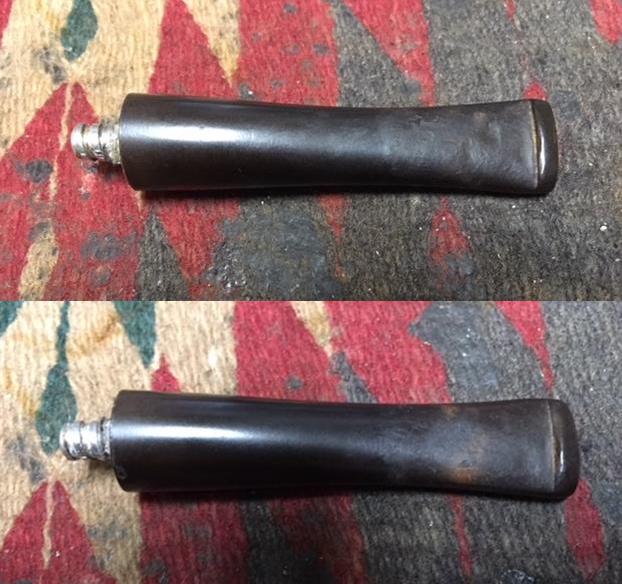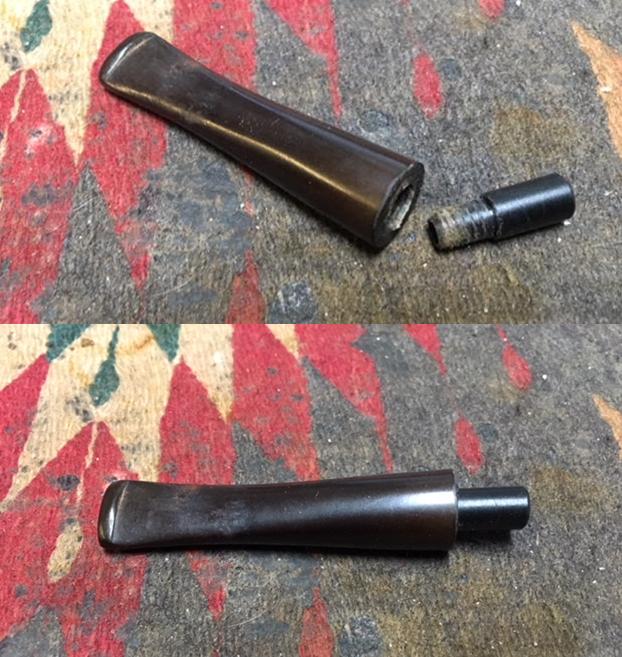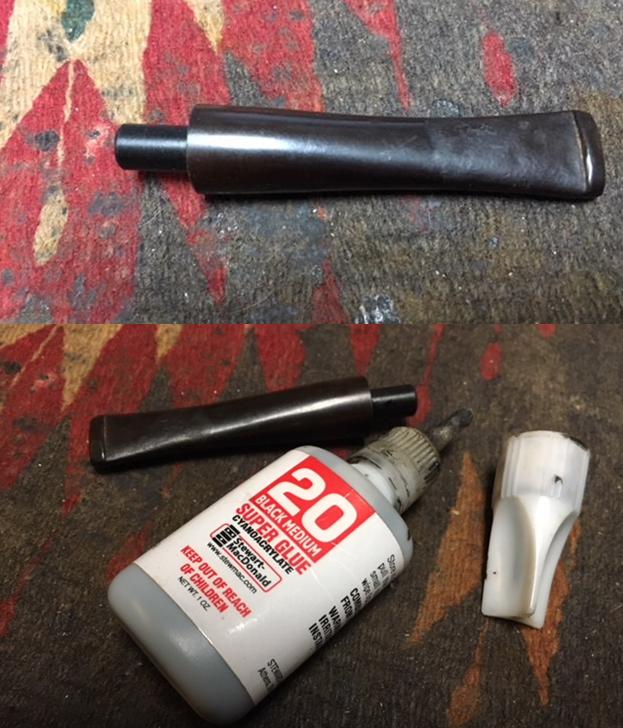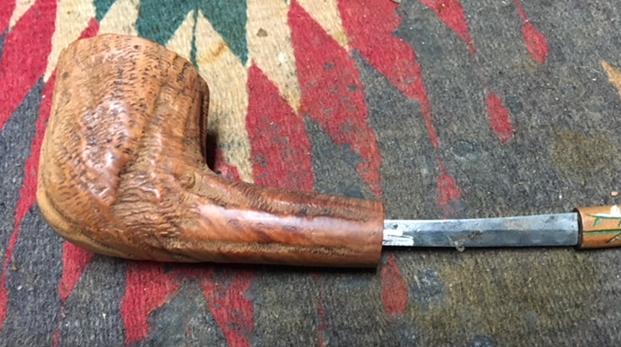
Tag Archives: restemming

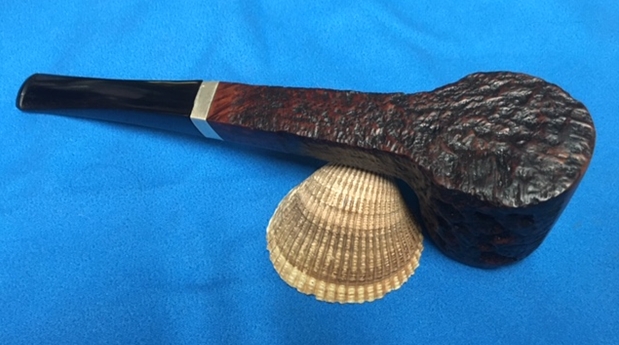
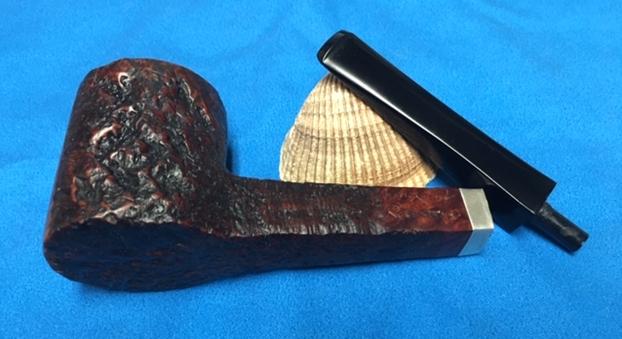
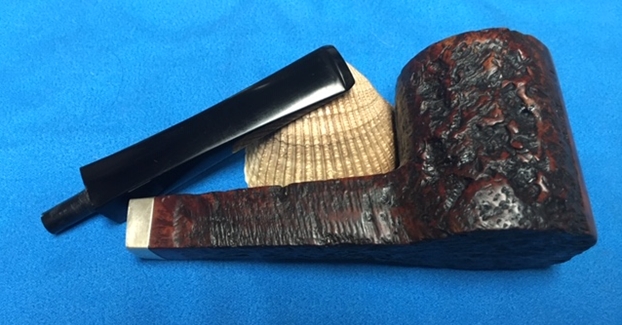
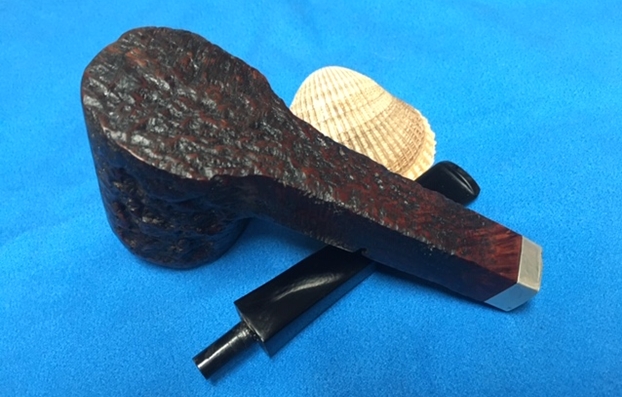
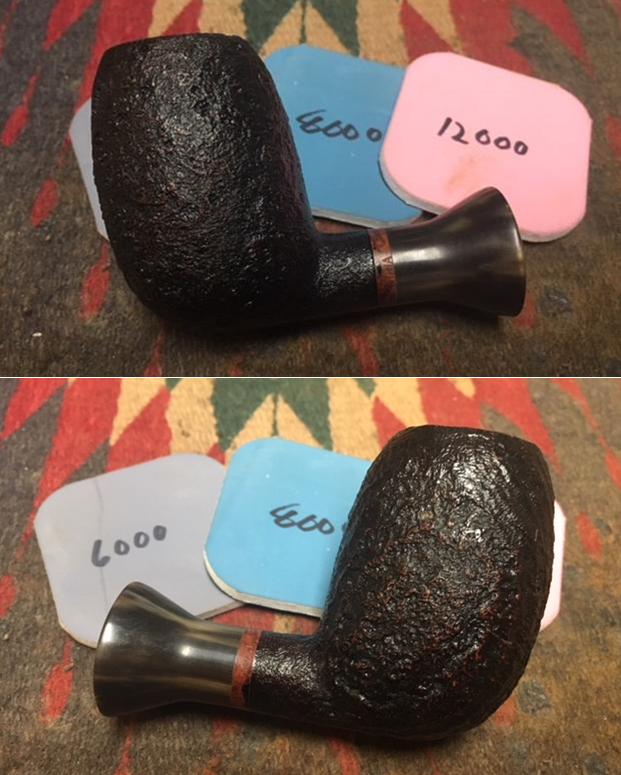
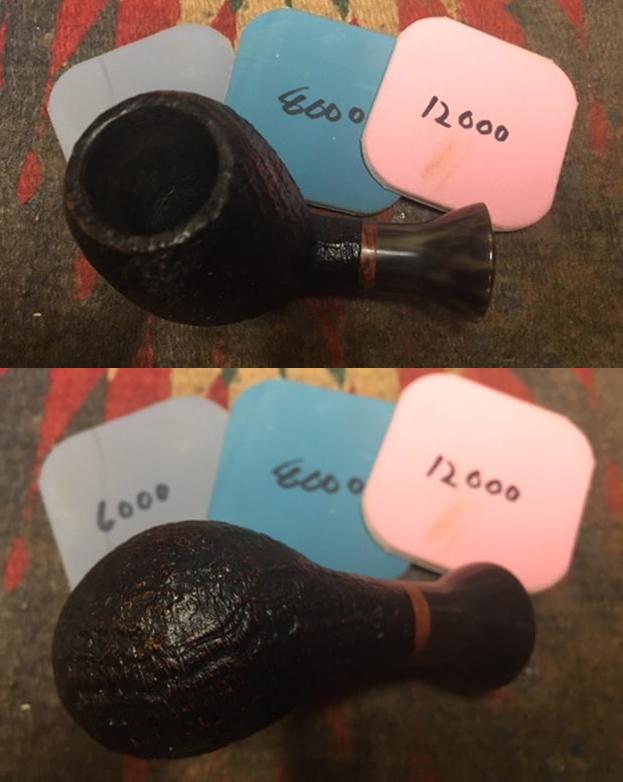
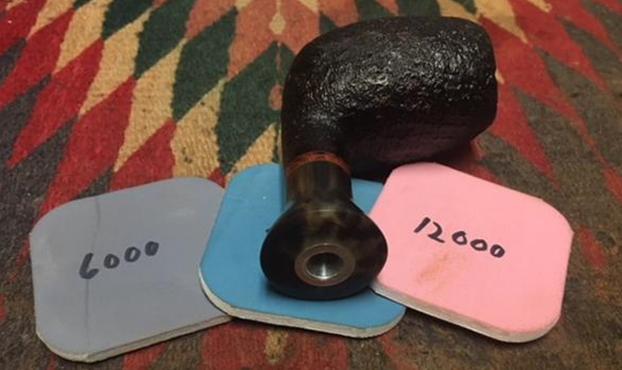
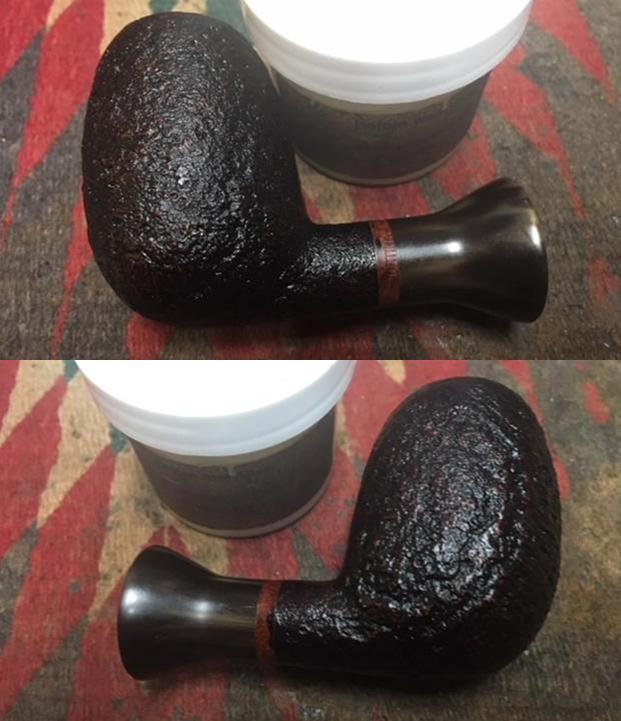
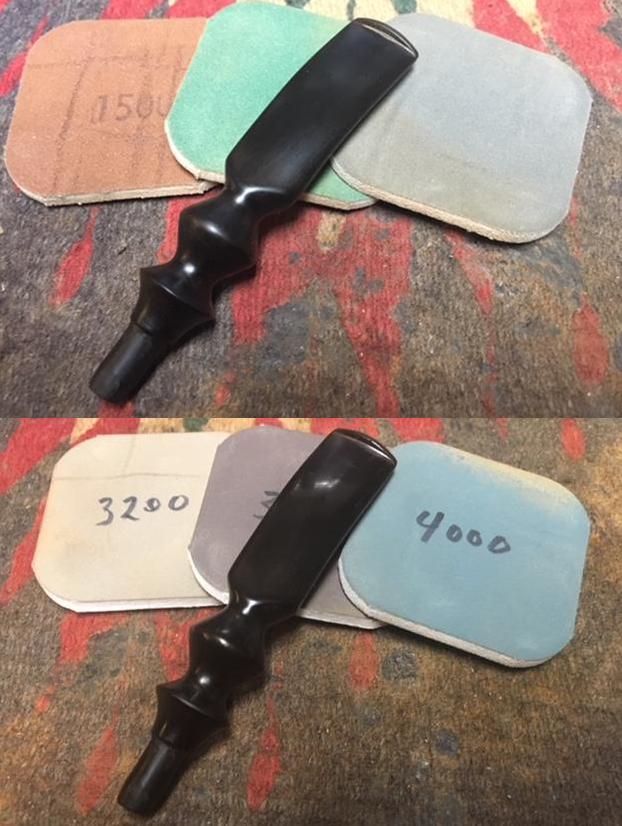
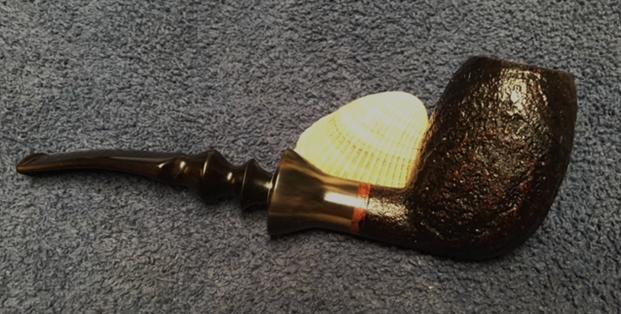
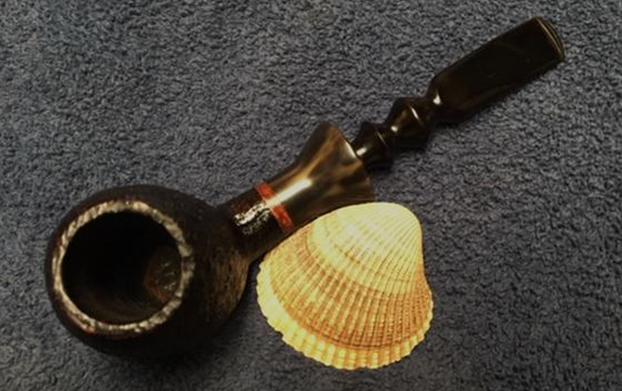
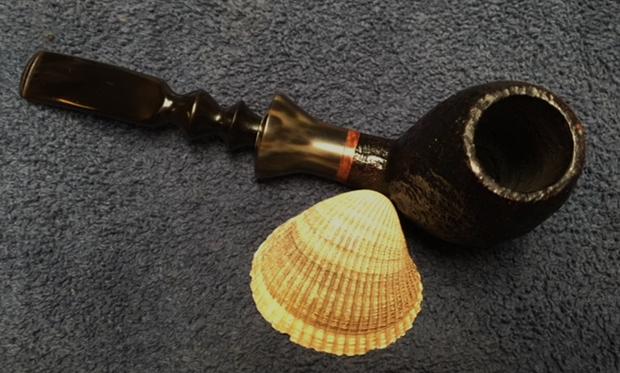
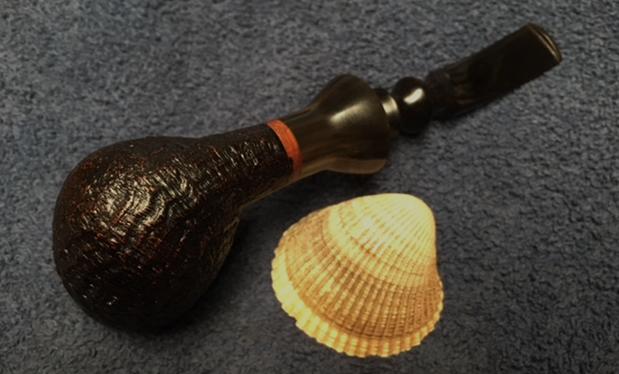
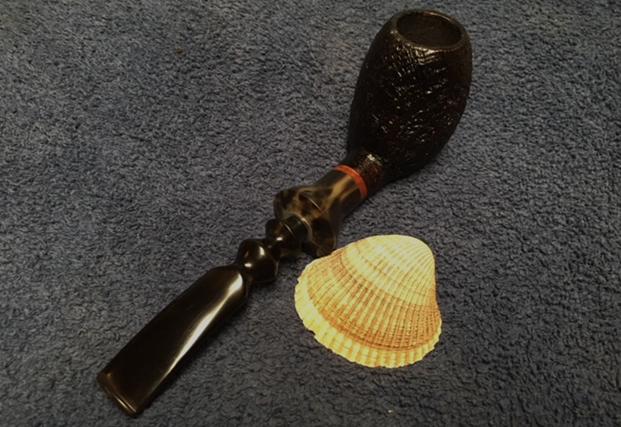
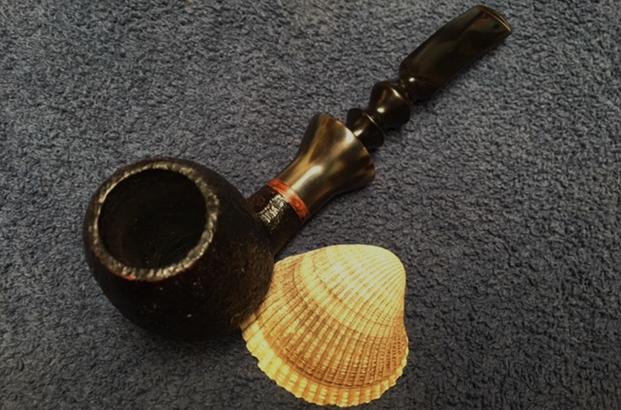
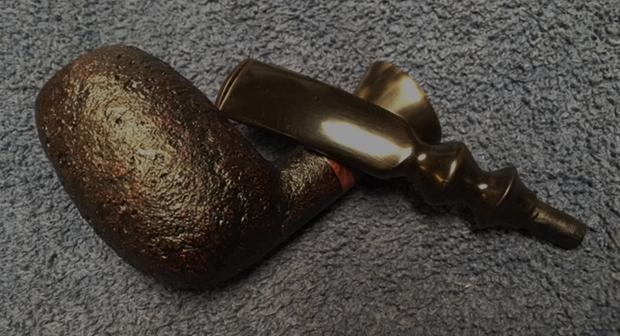
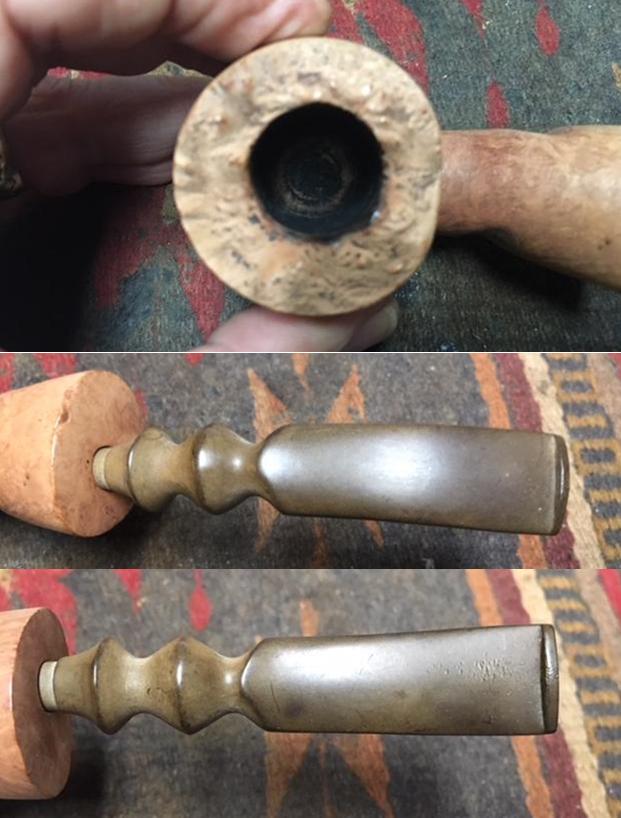
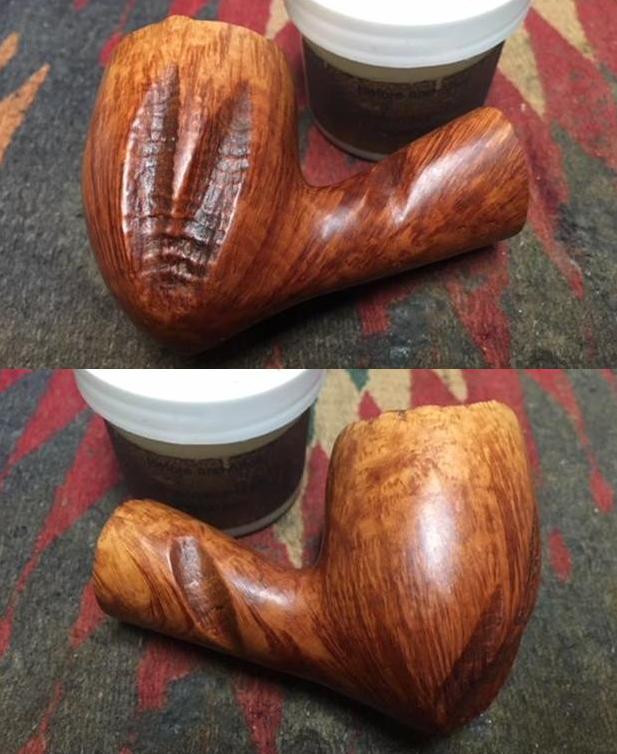
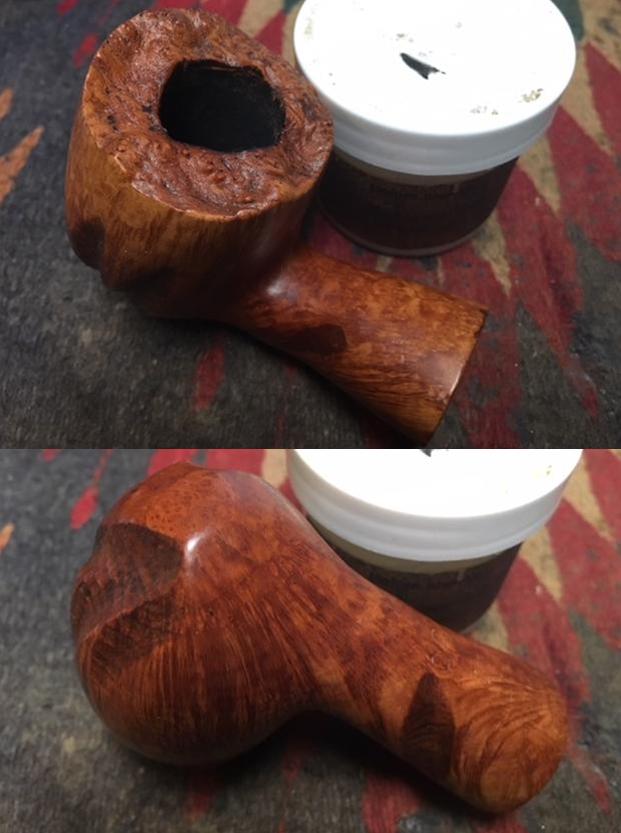
Restemming and Restoring a Malaga Scoop


Blog by Steve Laug

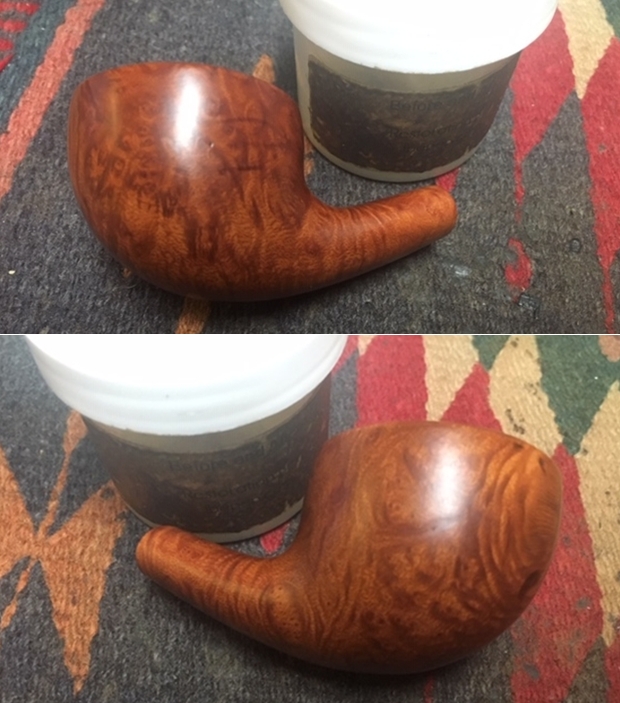
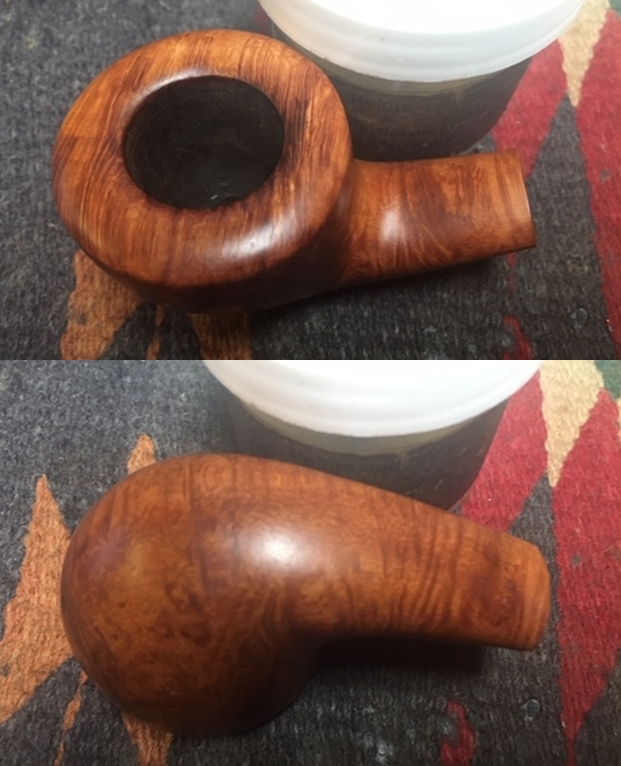
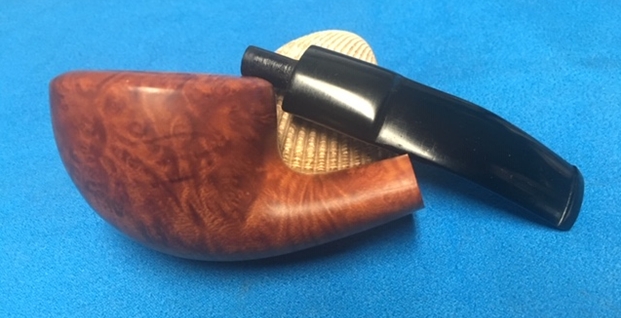
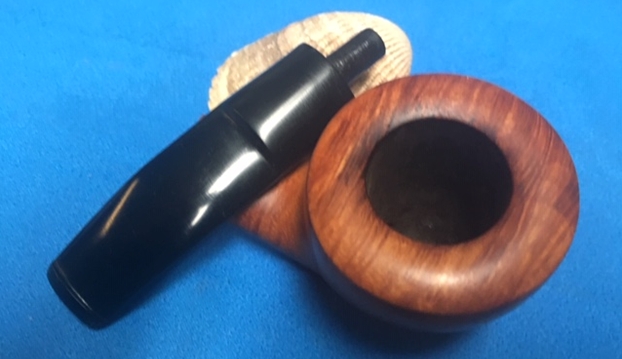
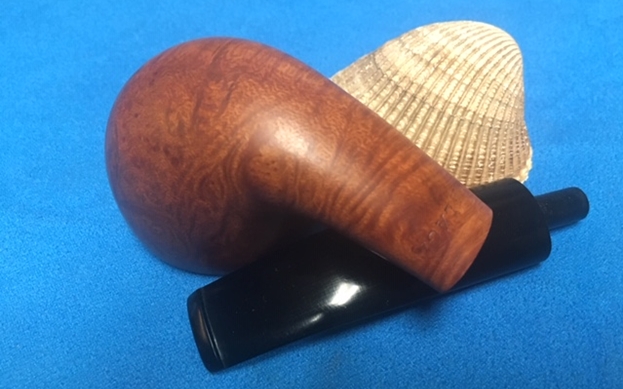
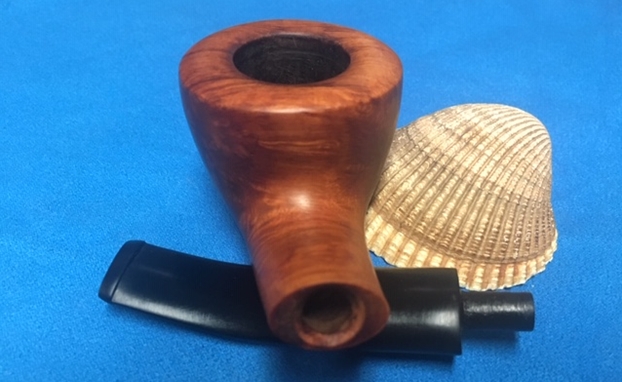
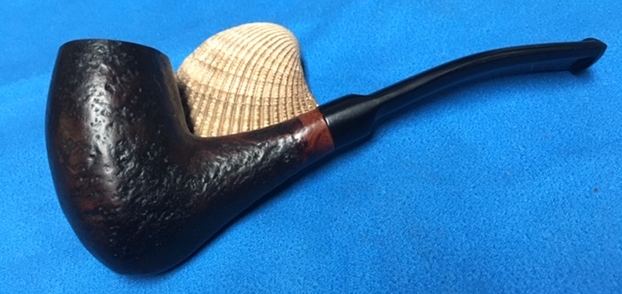
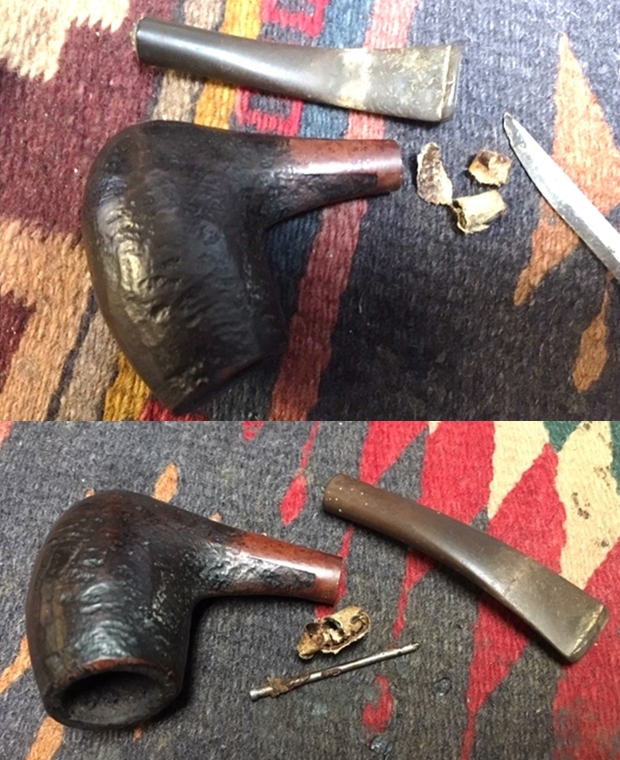
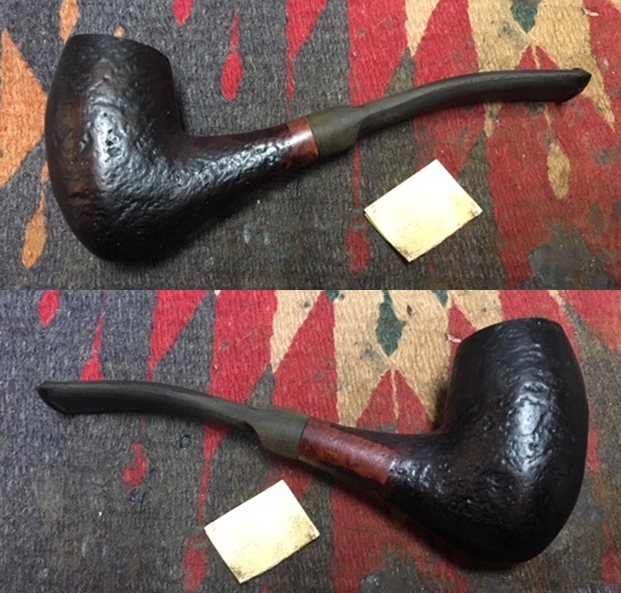
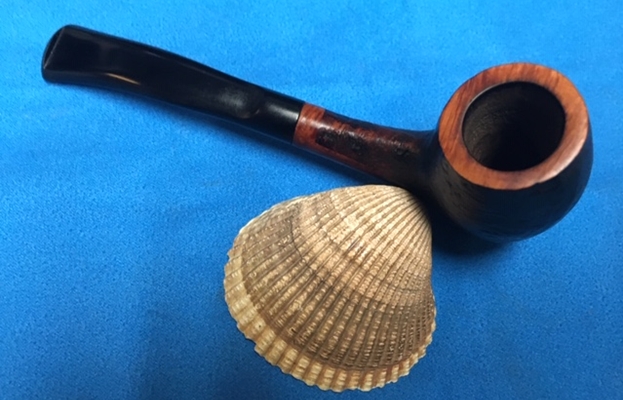
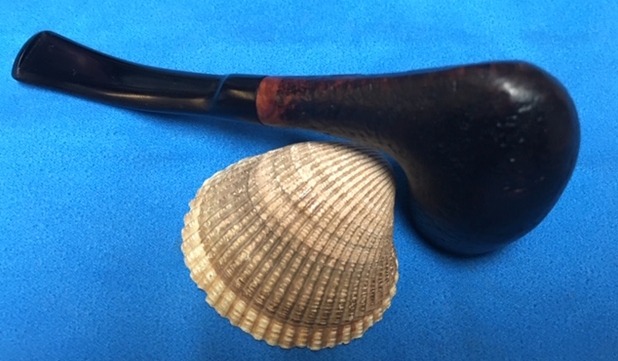
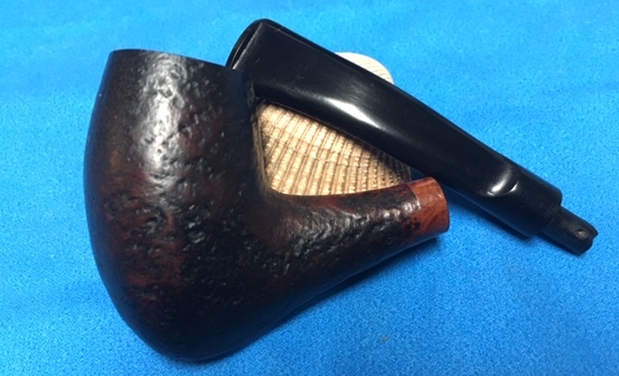
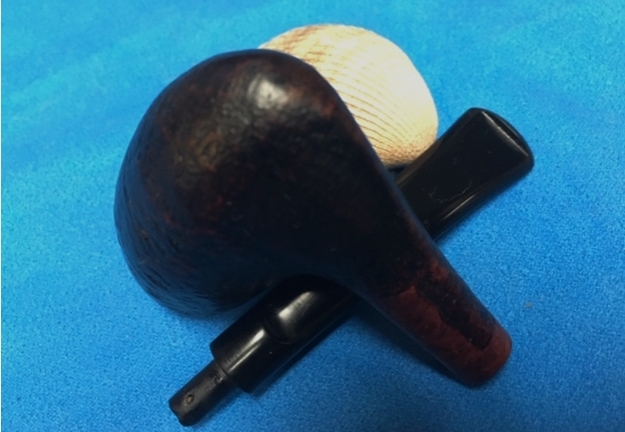
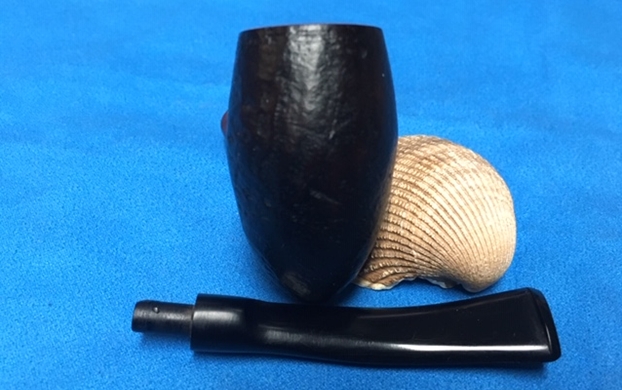
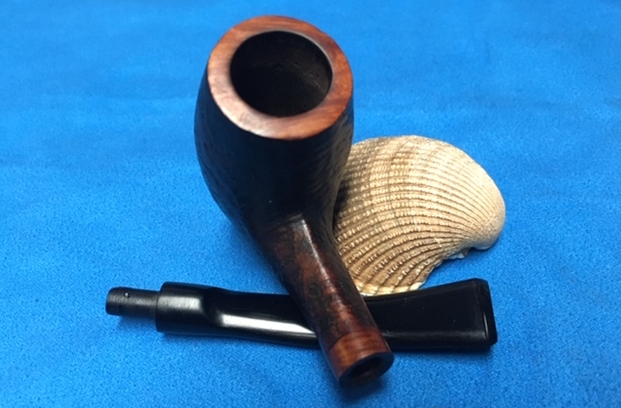
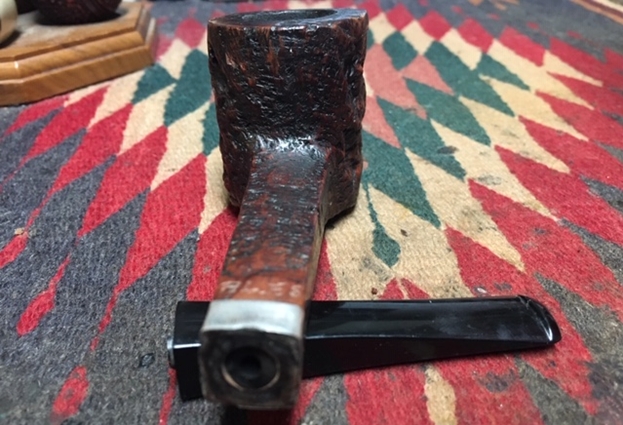
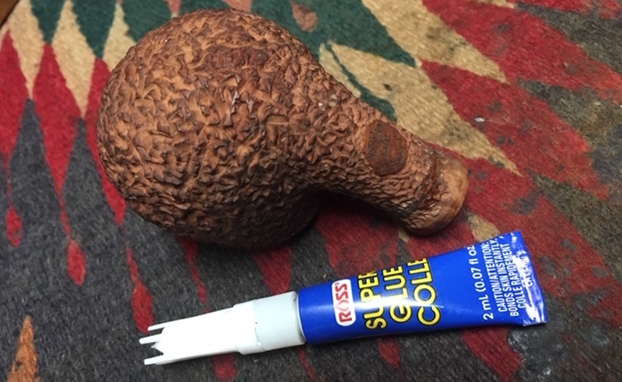
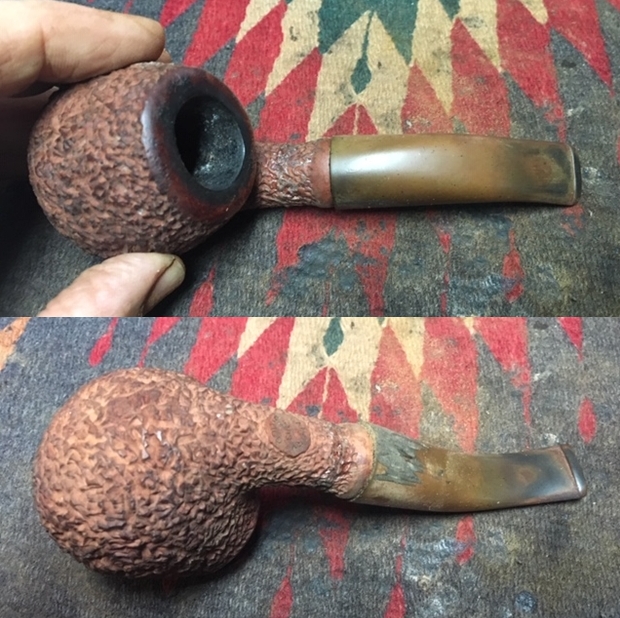
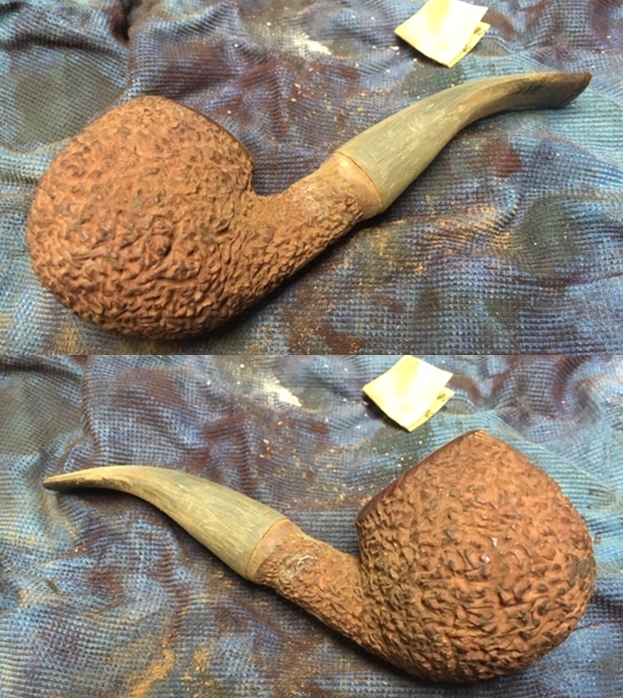
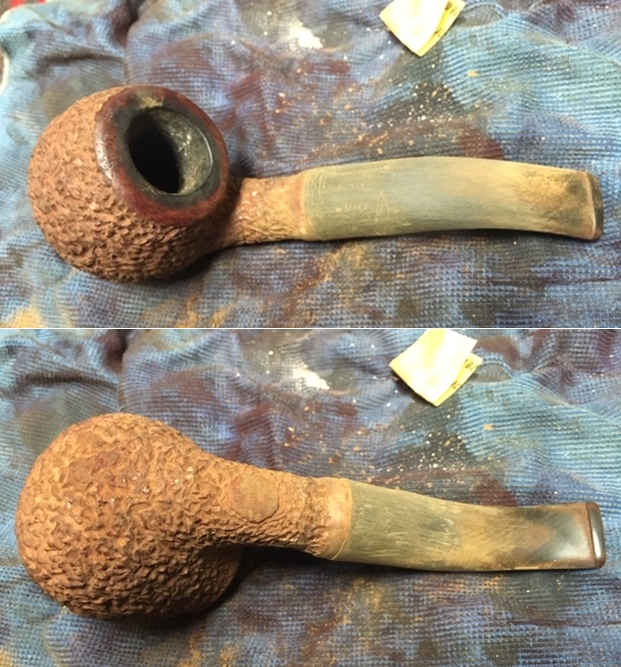
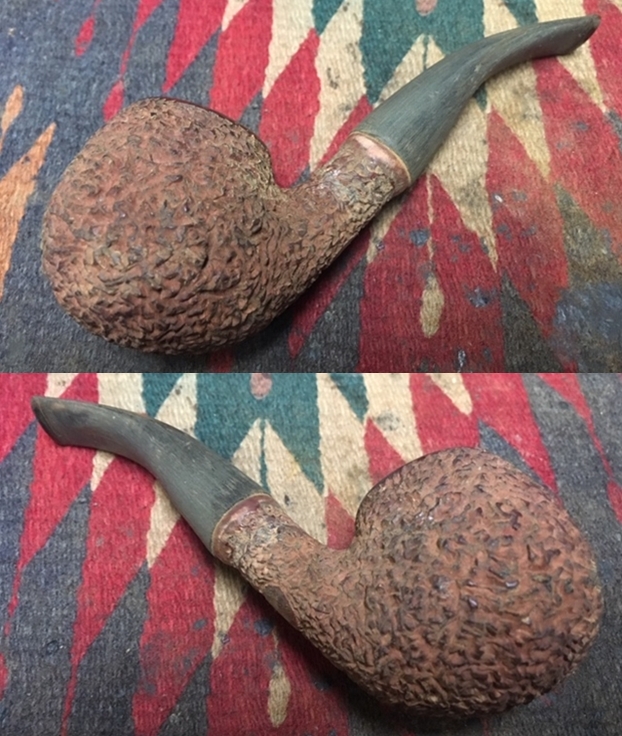
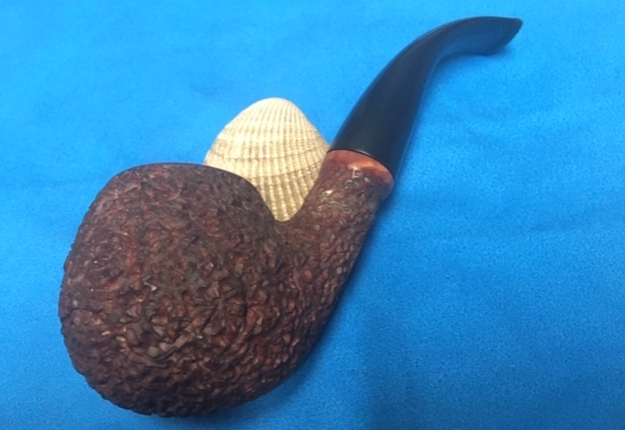
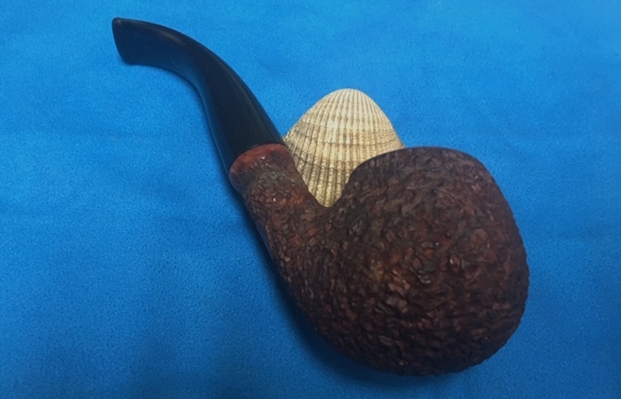
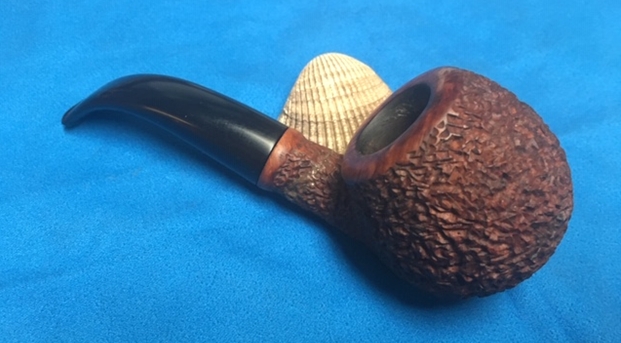
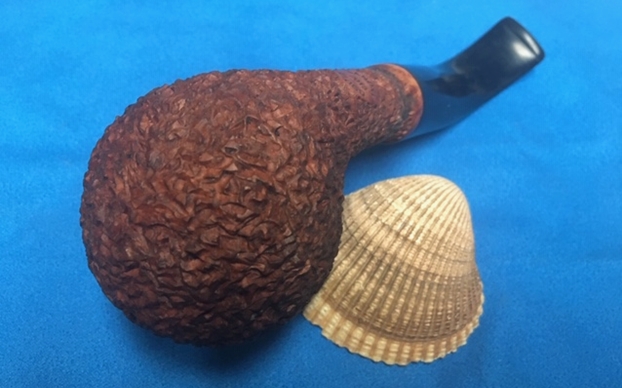
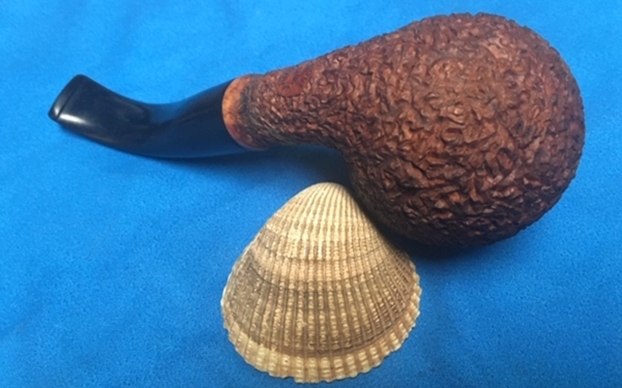
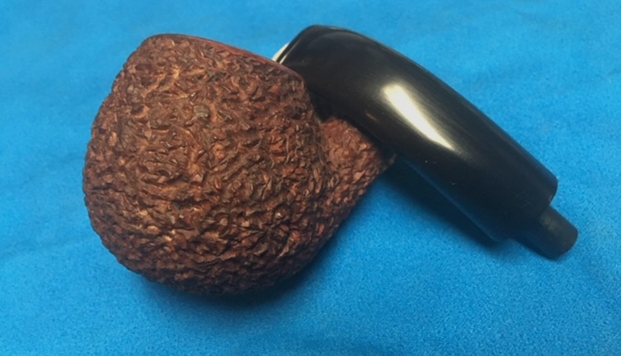
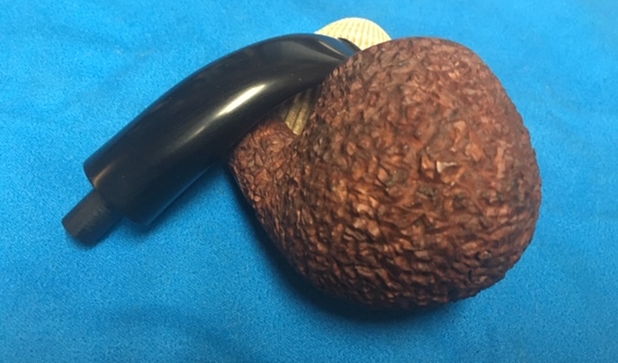
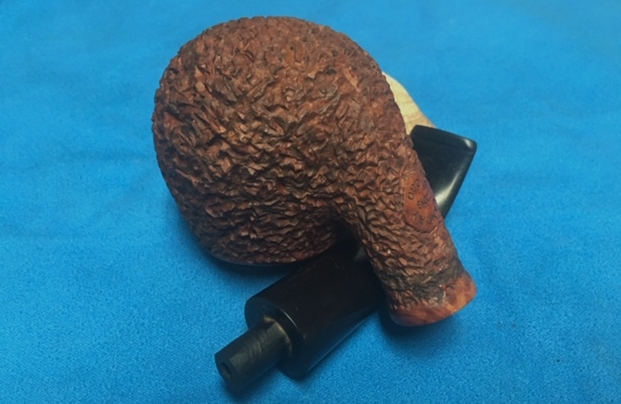
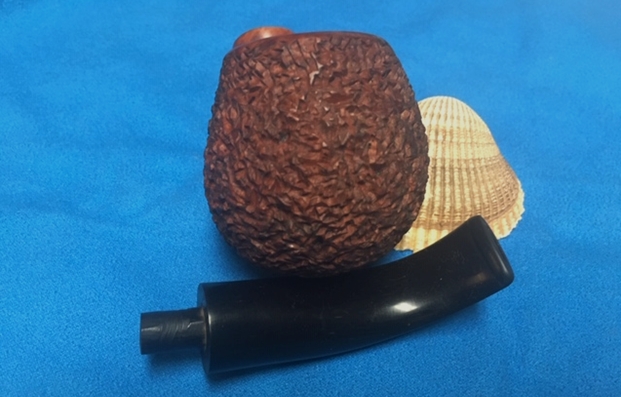
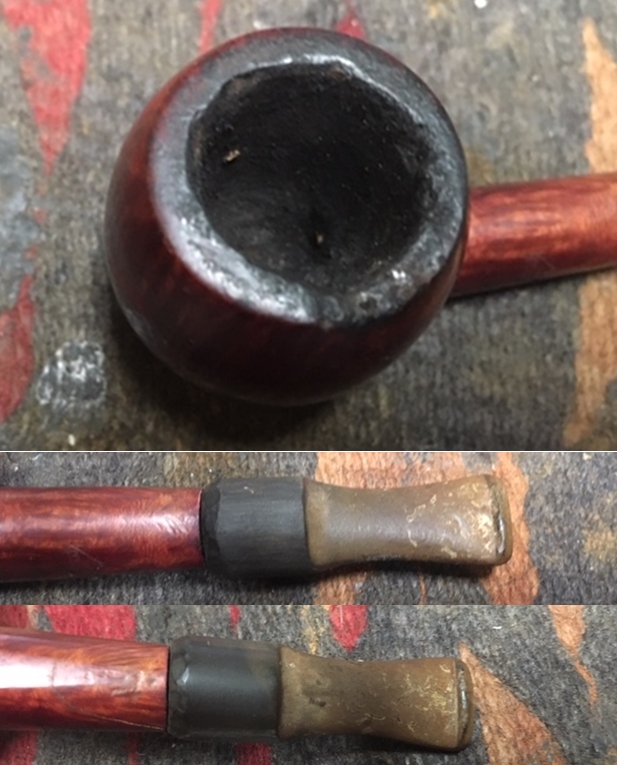
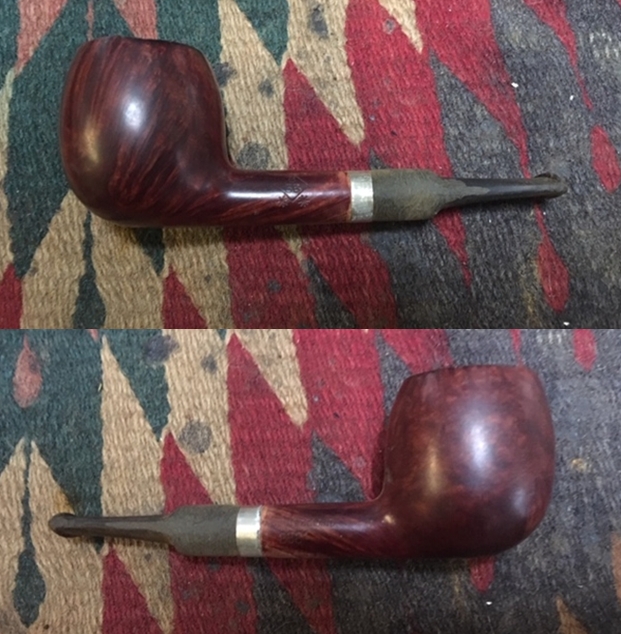
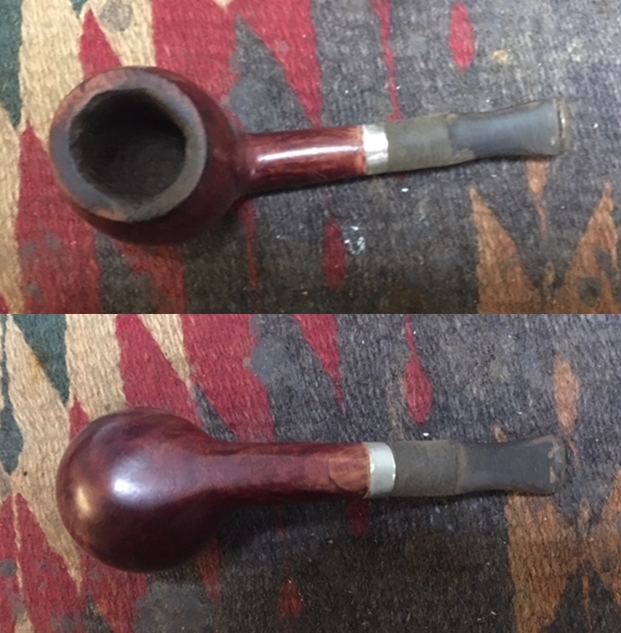
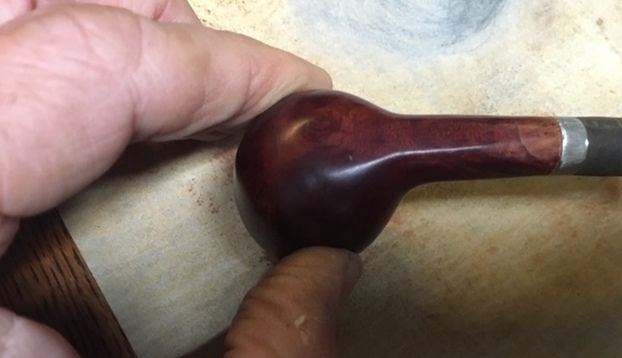
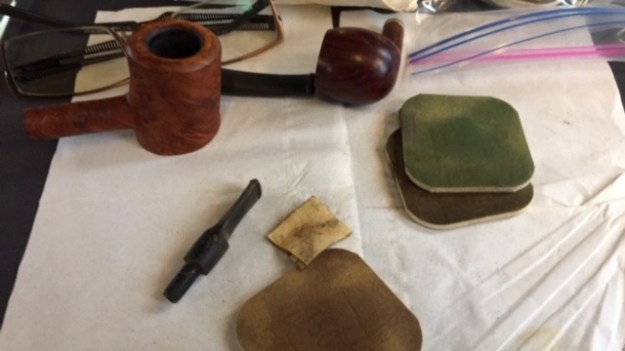
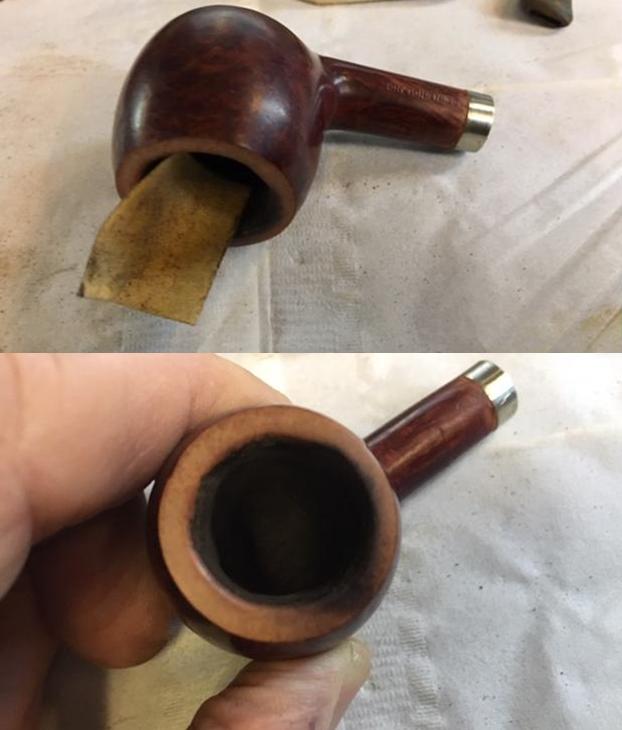
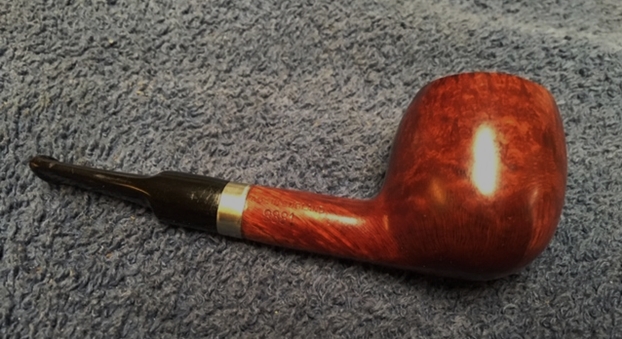
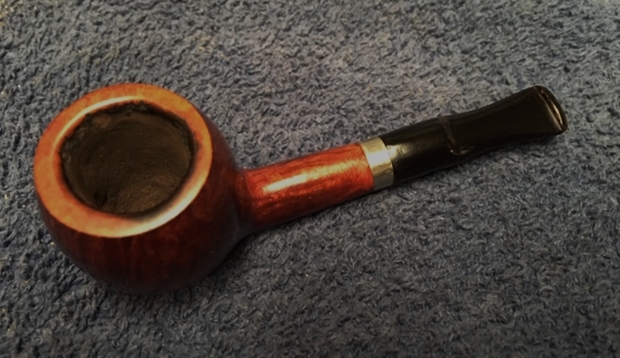
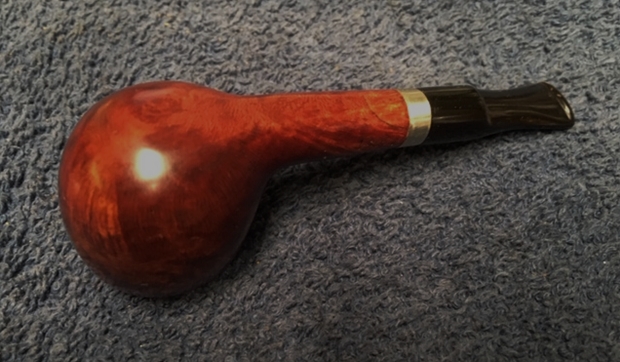
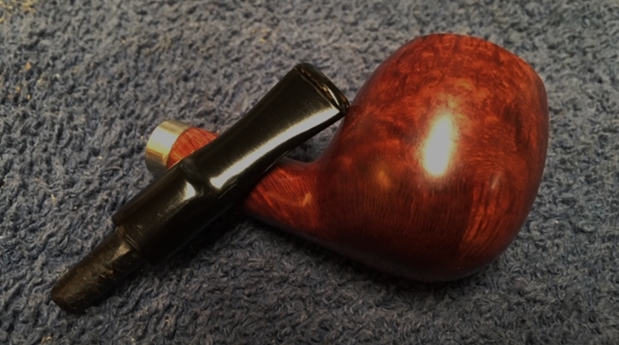
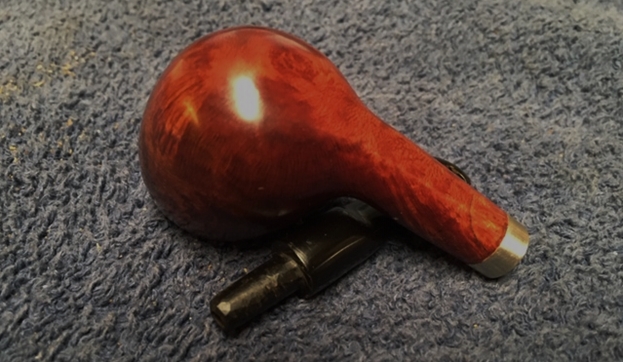
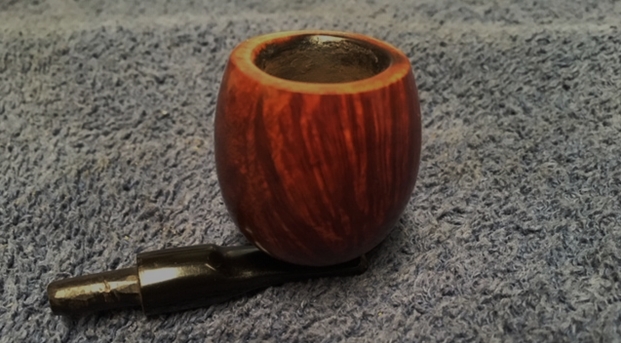
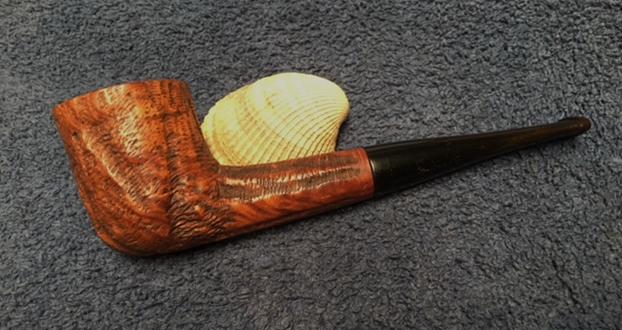
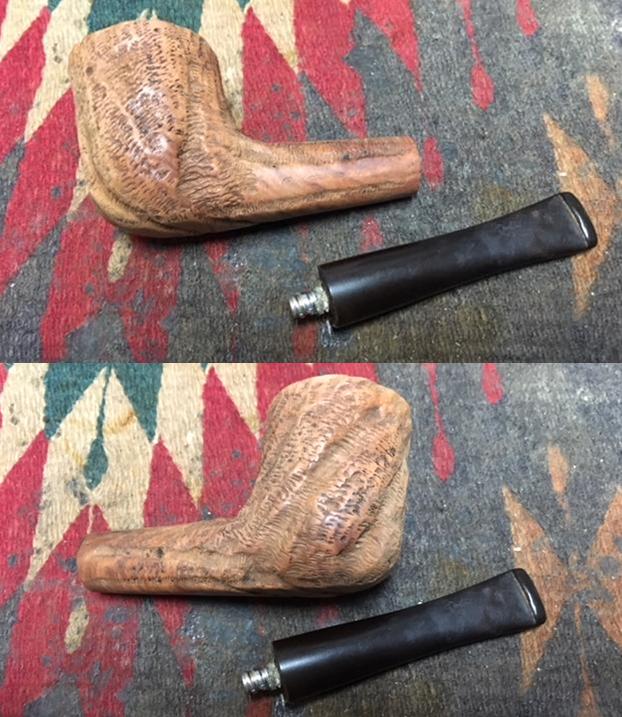
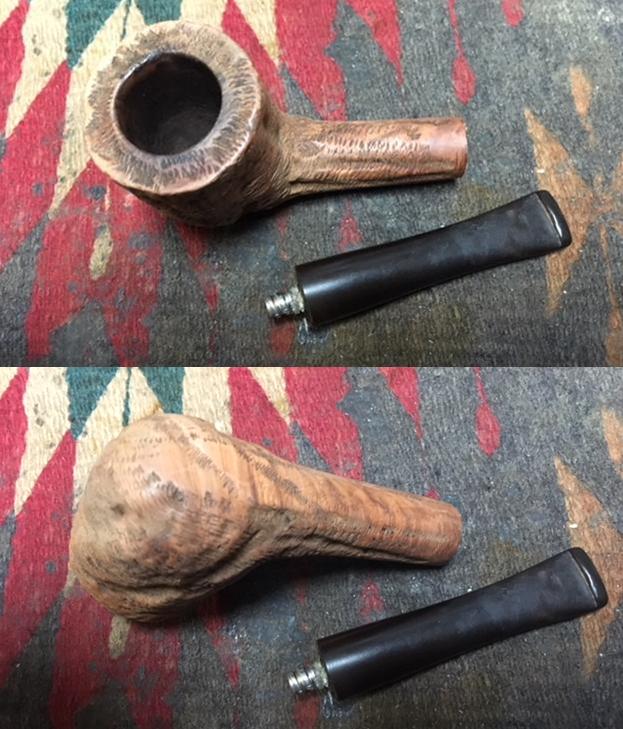
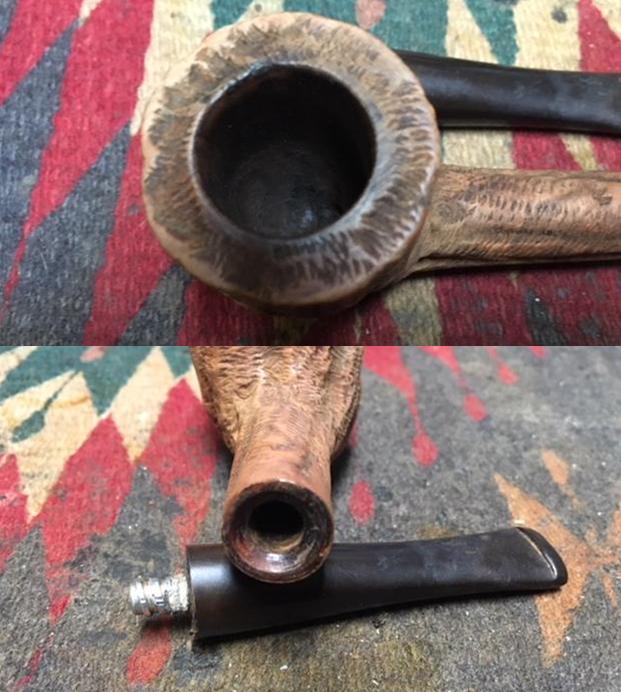
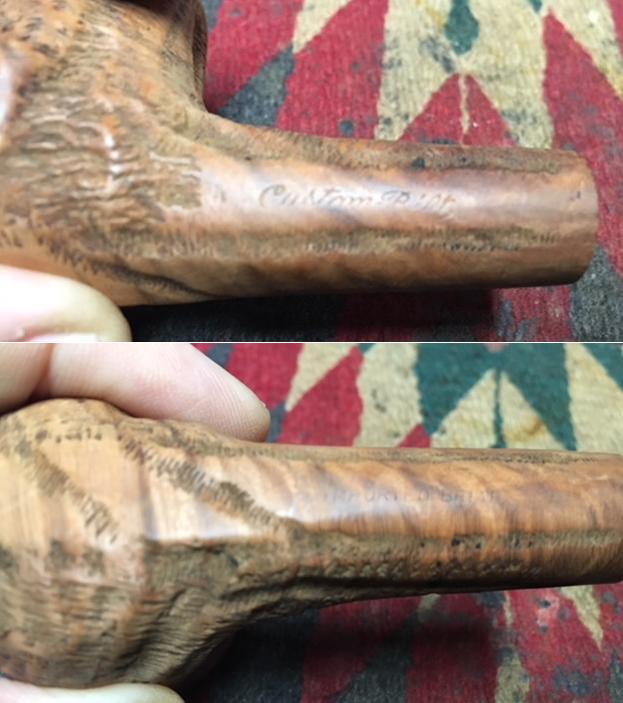
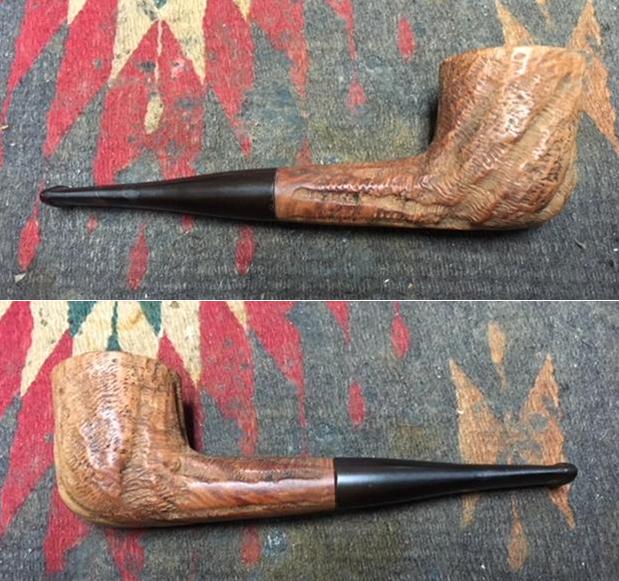
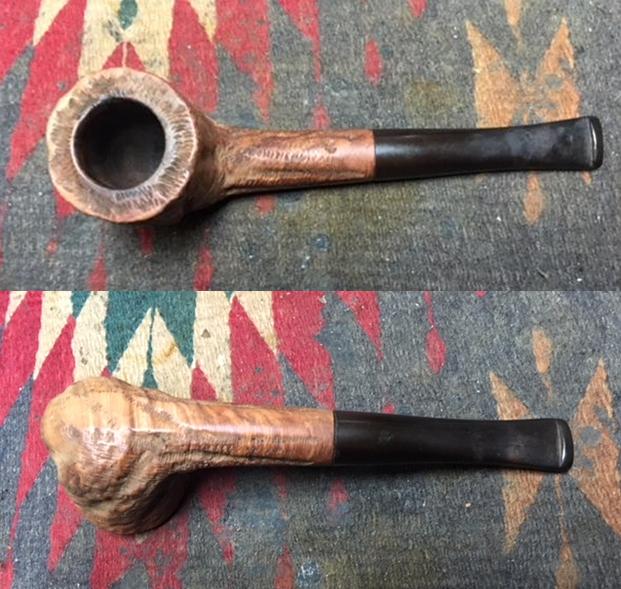
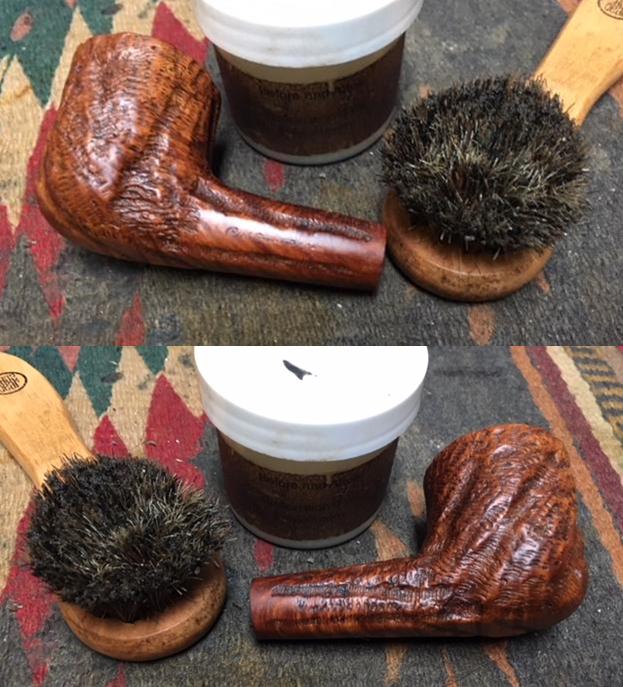
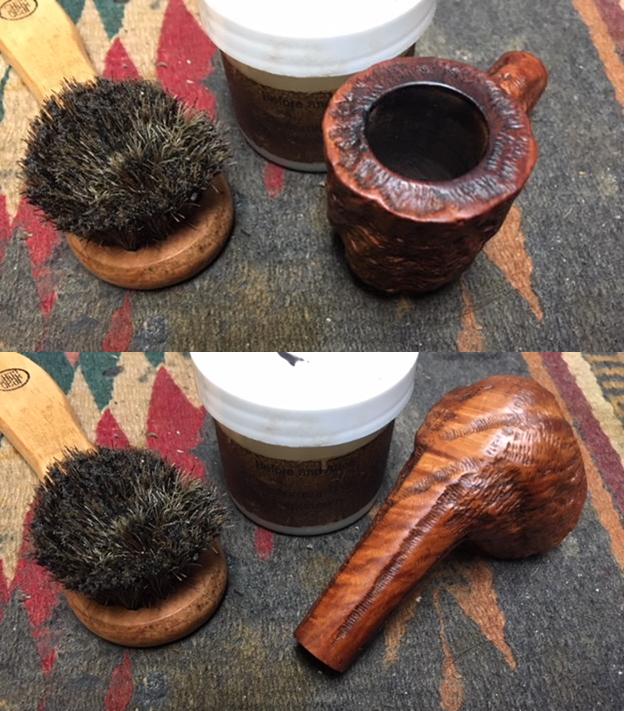
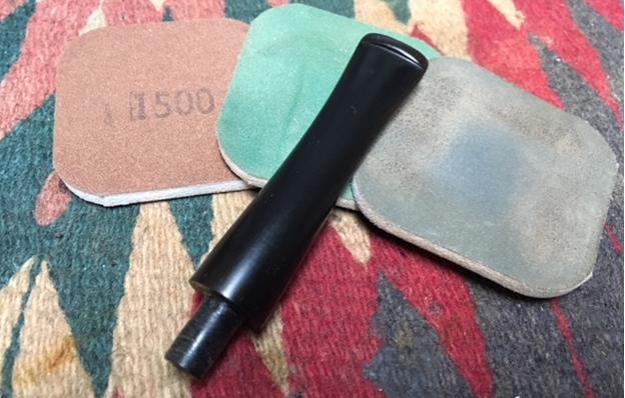
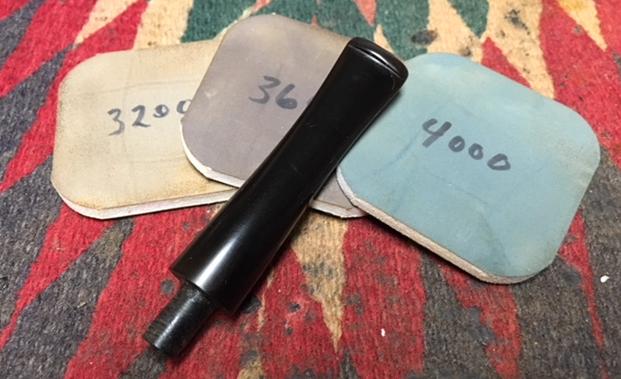
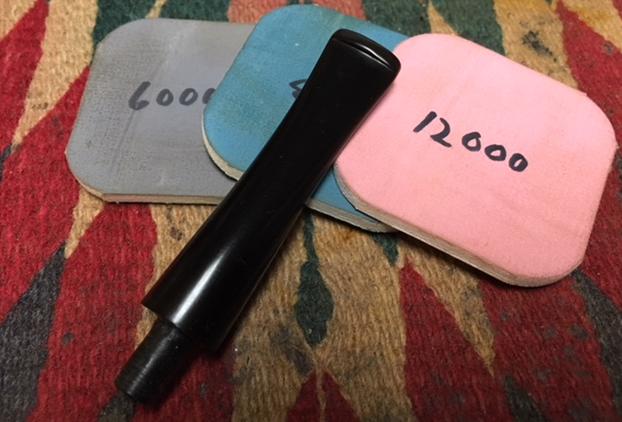
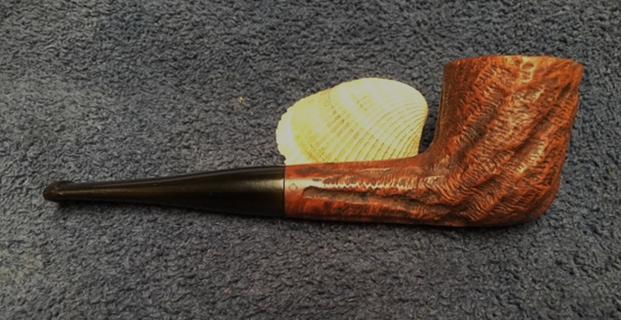
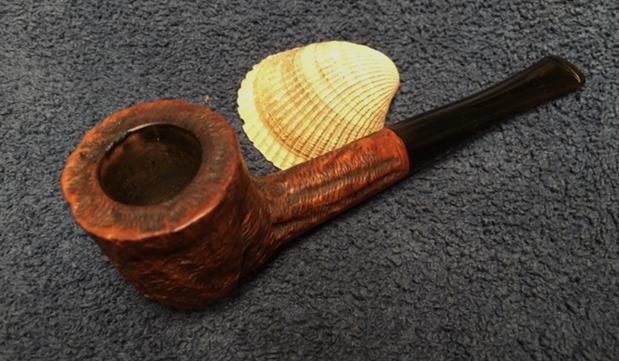
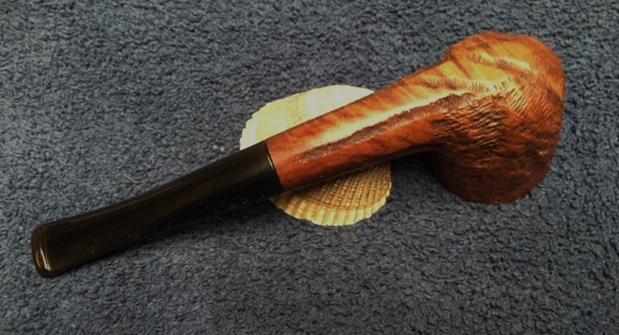
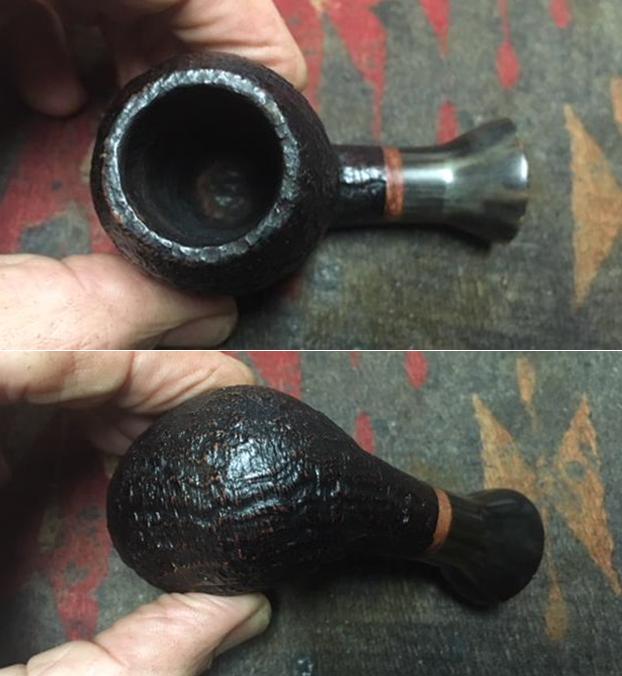
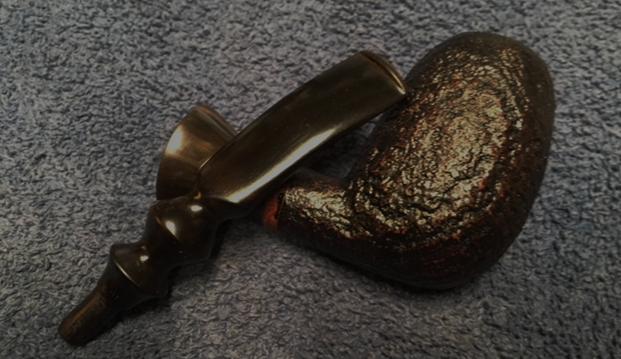
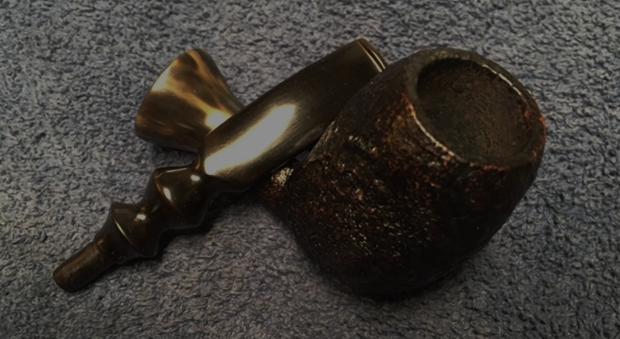
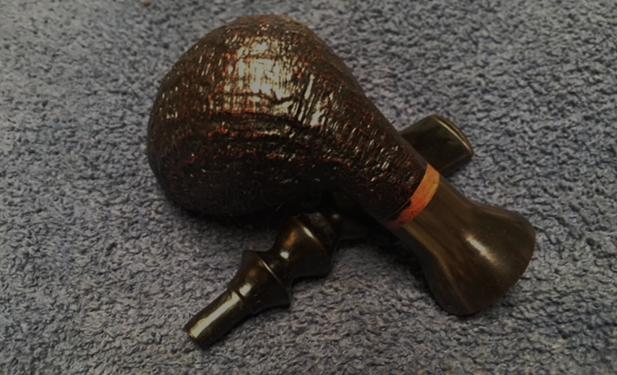
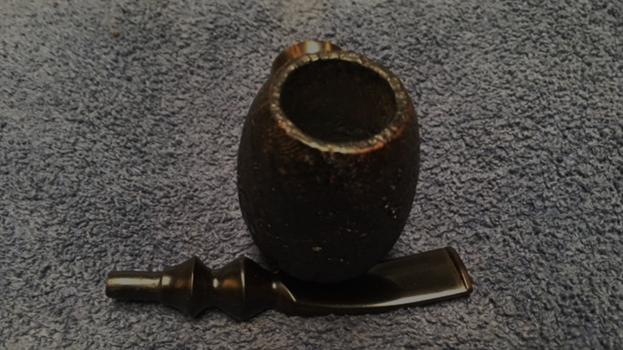
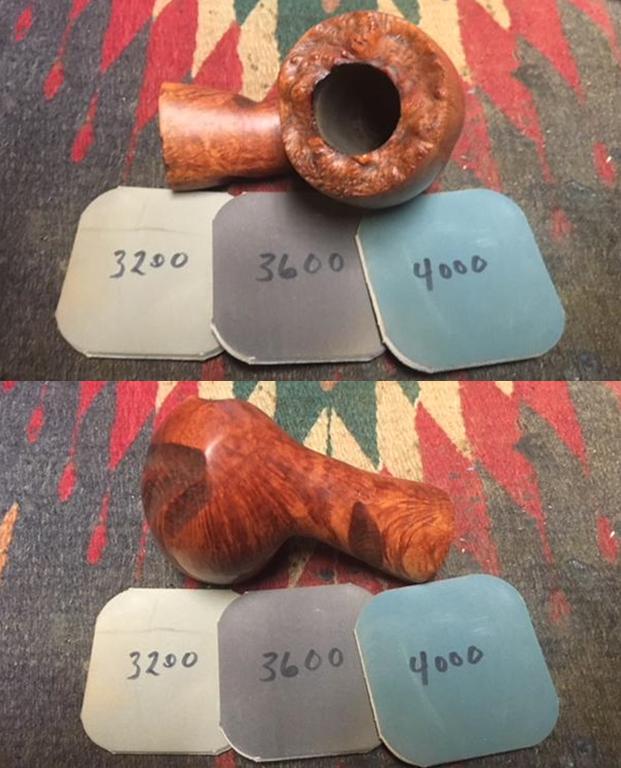
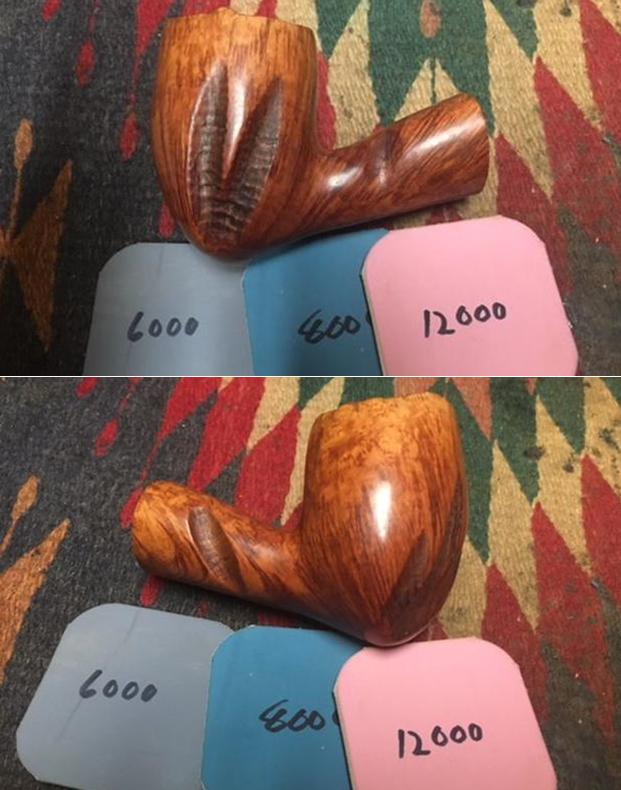
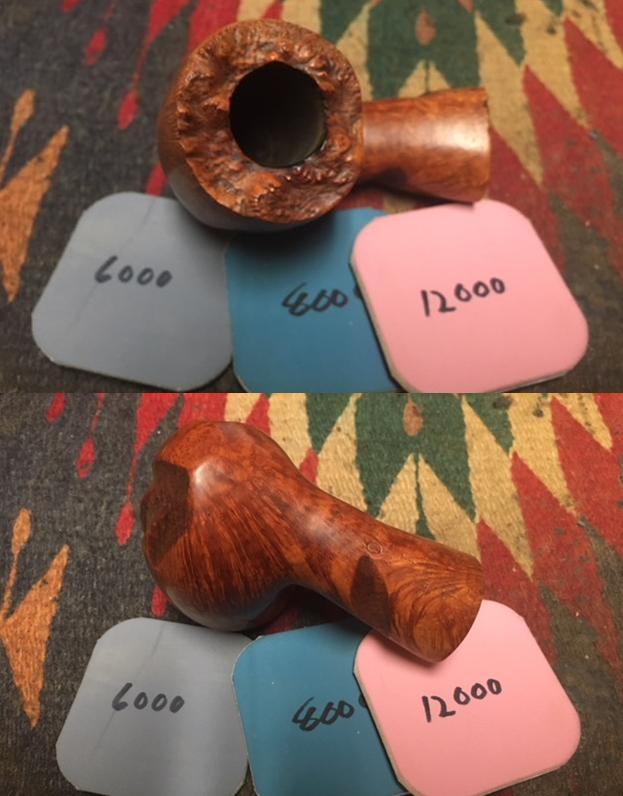
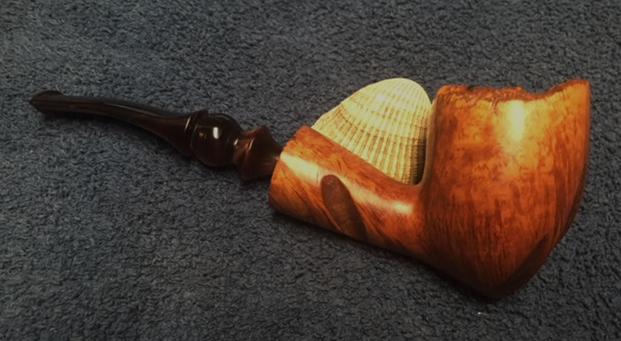
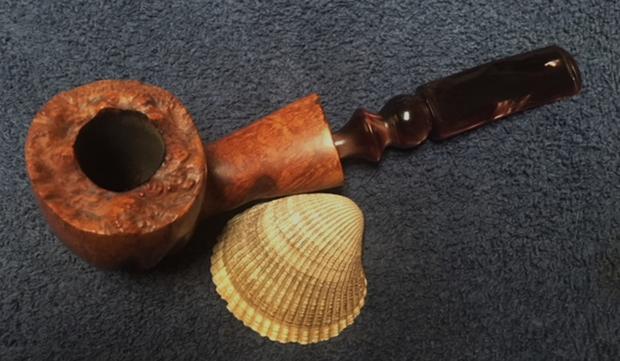
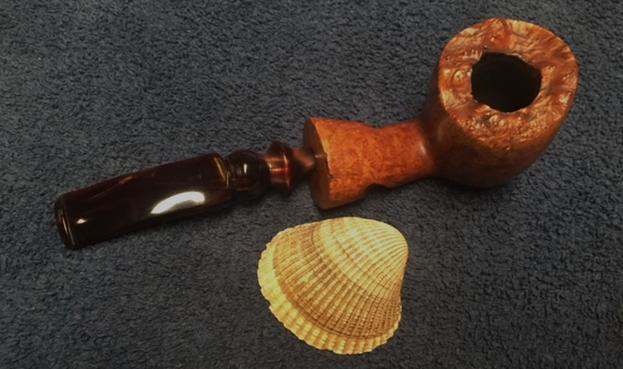
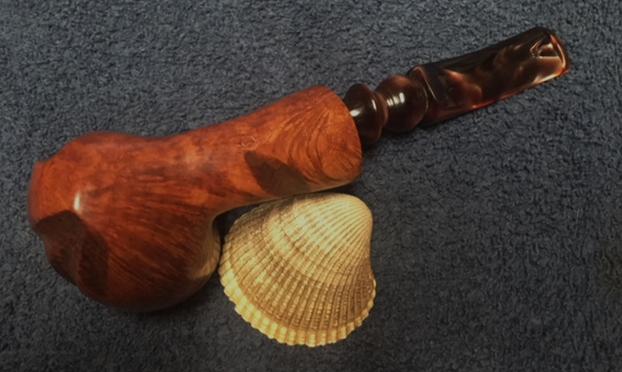
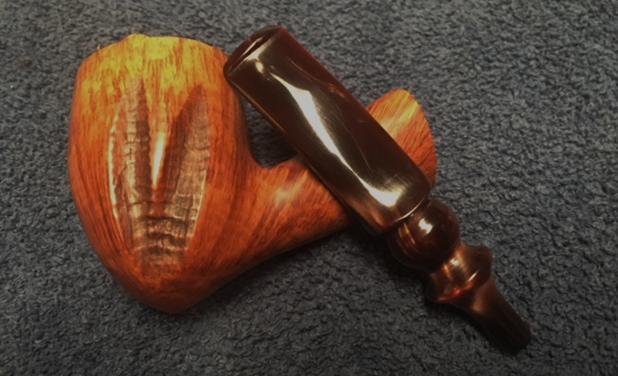
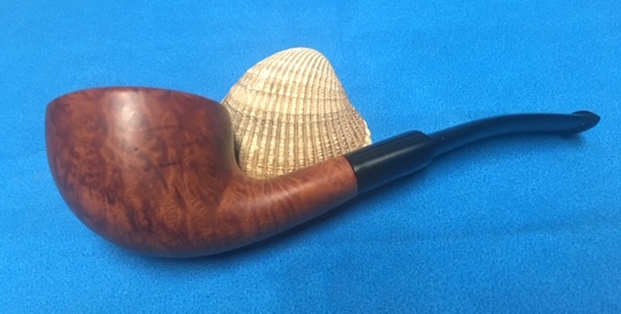
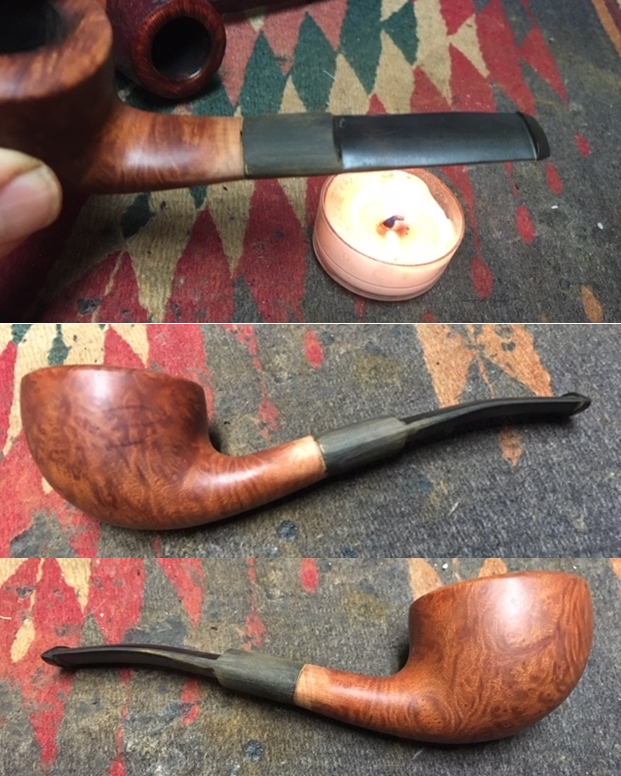
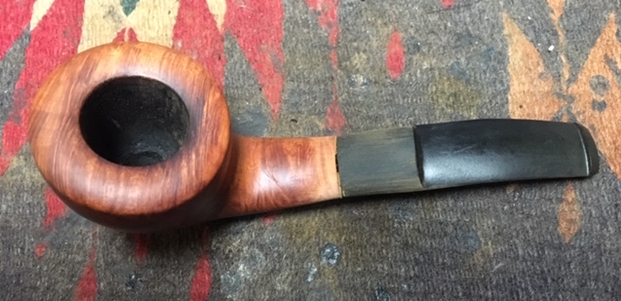
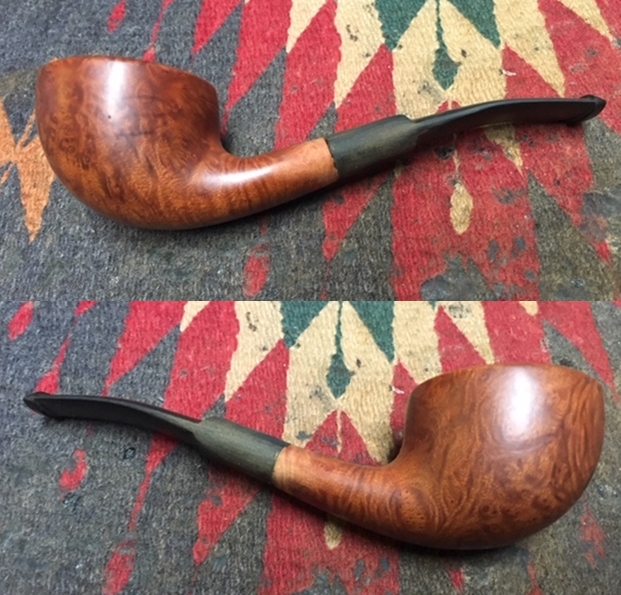
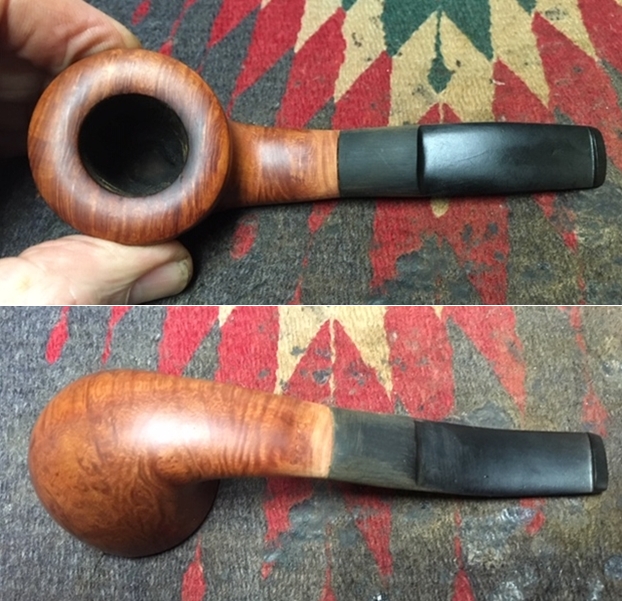
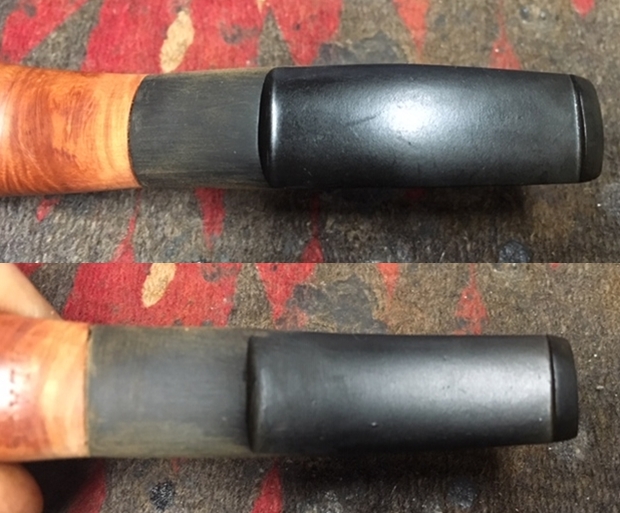
Since I am already working on restemming pipes I figure I might as well fit a stem to a MALAGA bowl that Alex dropped by a while ago. It is an interestingly shaped piece and I really like the looks of it. MALAGA called this shape a scoop. The grain swirls around the bowl sides and shows some great cross grain on the rim top. It is a pretty clean bowl with a bit of darkening on the rim top and cake build up at the bottom of the bowl. The pipe is stamped on the underside of the shank horizontally with the stem shank junction and reads MALAGA. The finish on the pipe is very in great condition with a few dings and pits in the briar on the right front near the rim. It has the classic Malaga oil cured look and is a rich, natural brown colour. The stem was missing so I would need to fit and shape a new one for it. I went through my can of stems to find an oval stem that would work with this shape pipe. I picked a new stem blank that I thought showed some promise. I took photos of the pipe and the potential stem before working on it. The photos give a pretty clear picture of the shape of the pipe and its general condition when I received it.

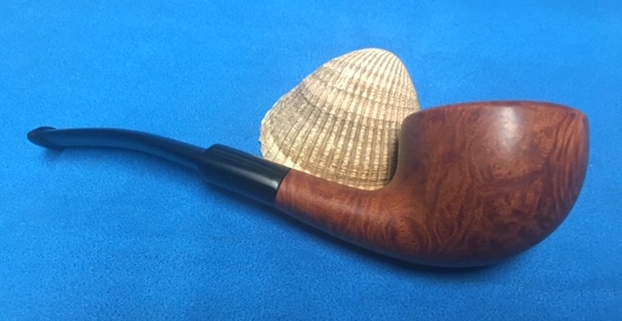
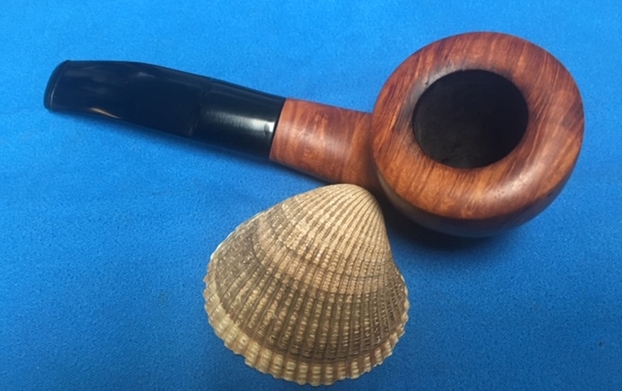
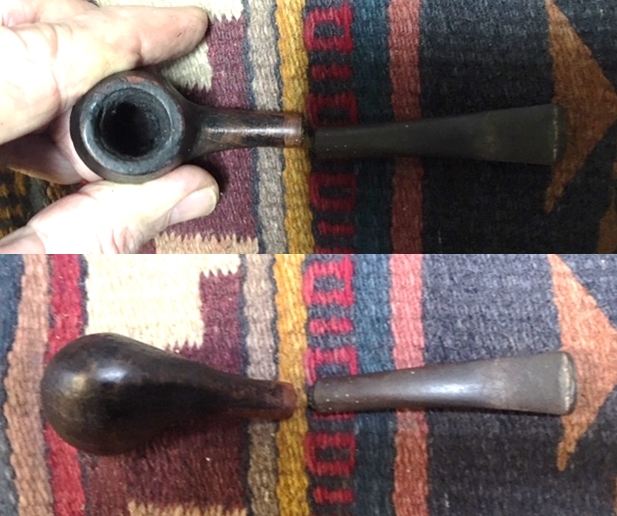
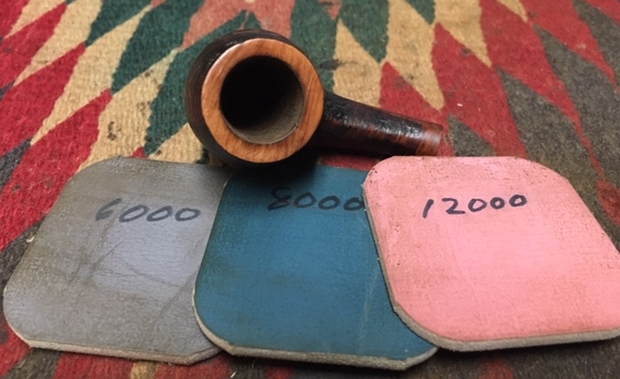
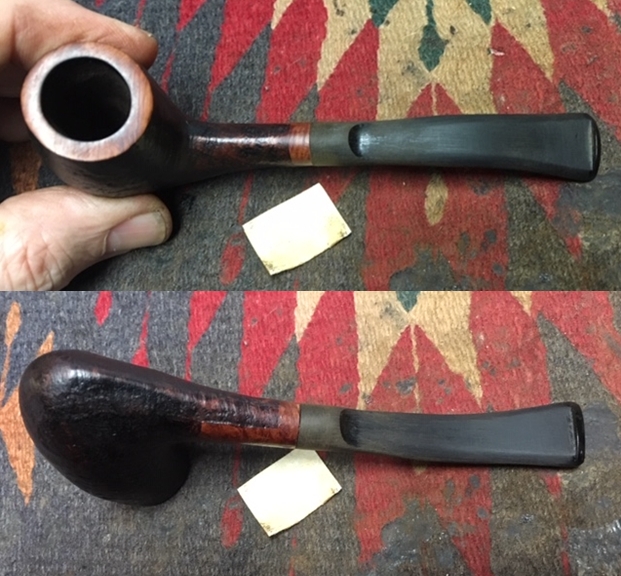
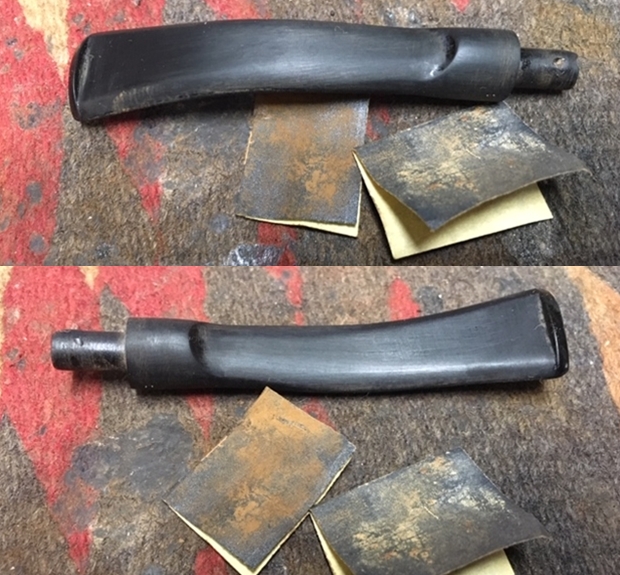
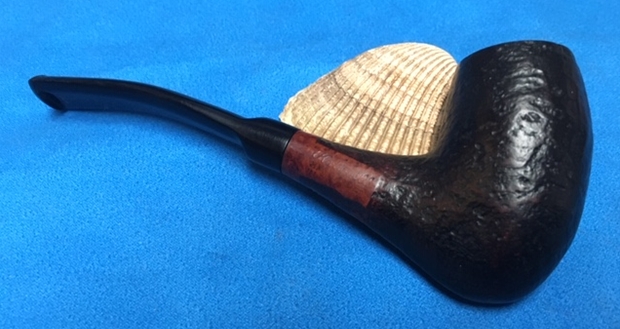
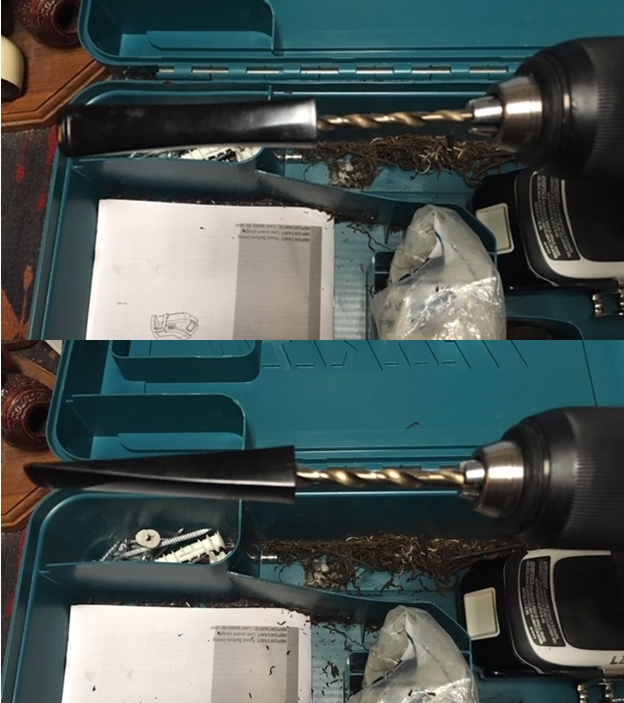
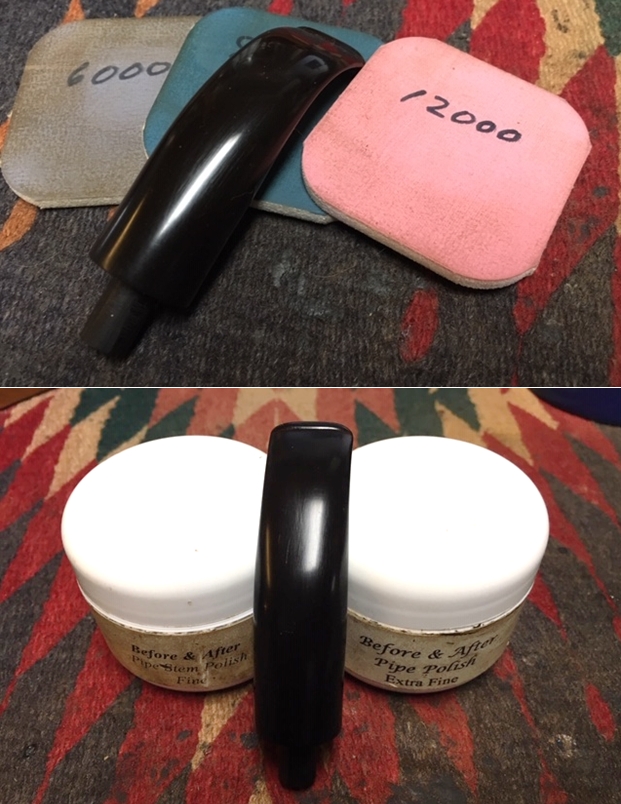
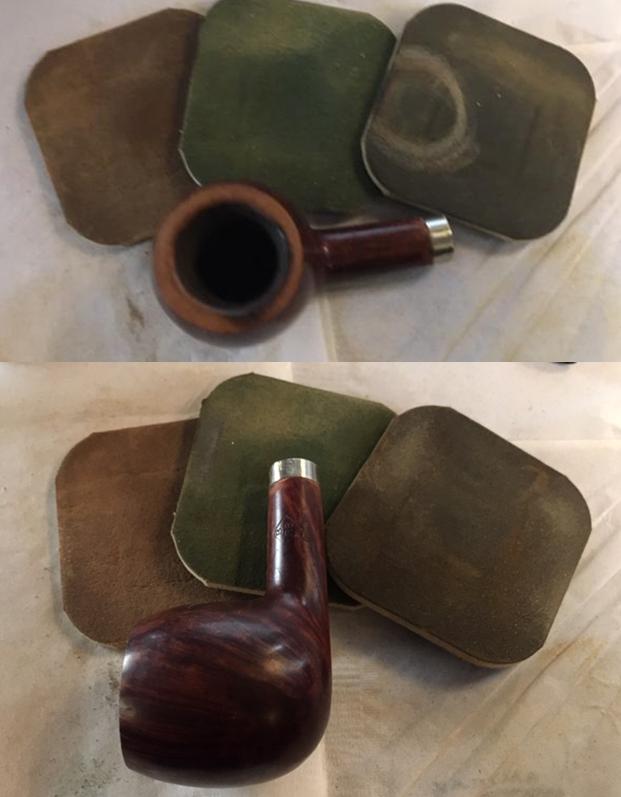
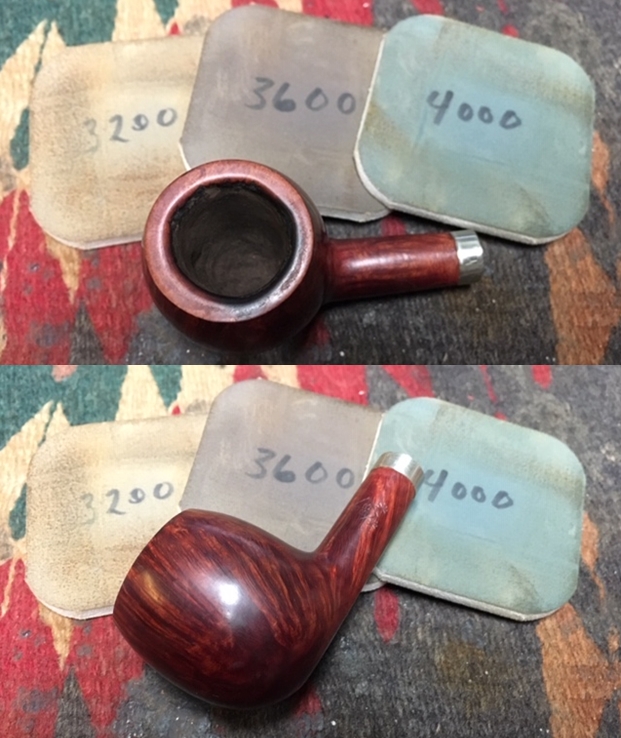
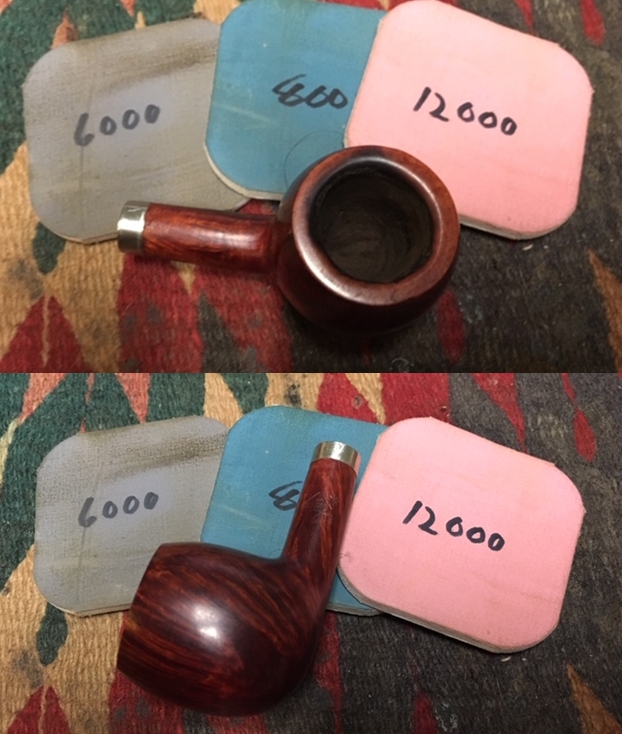
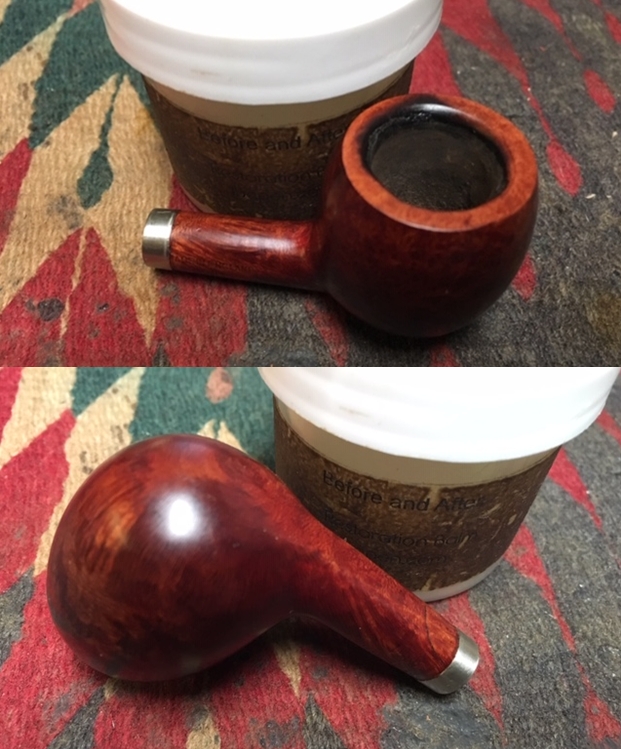
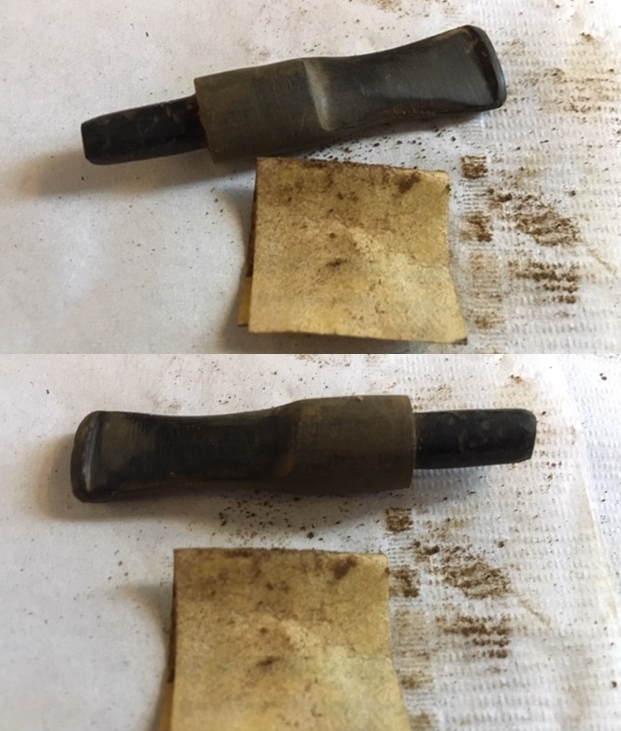
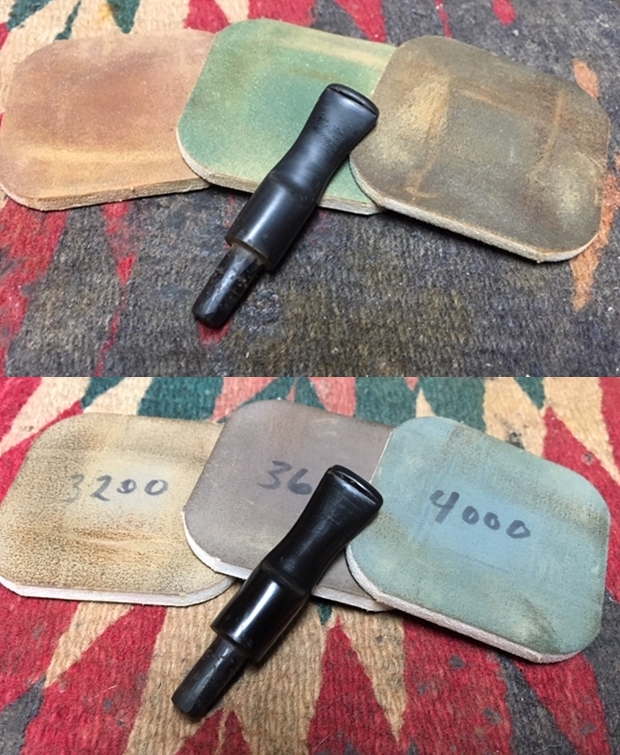
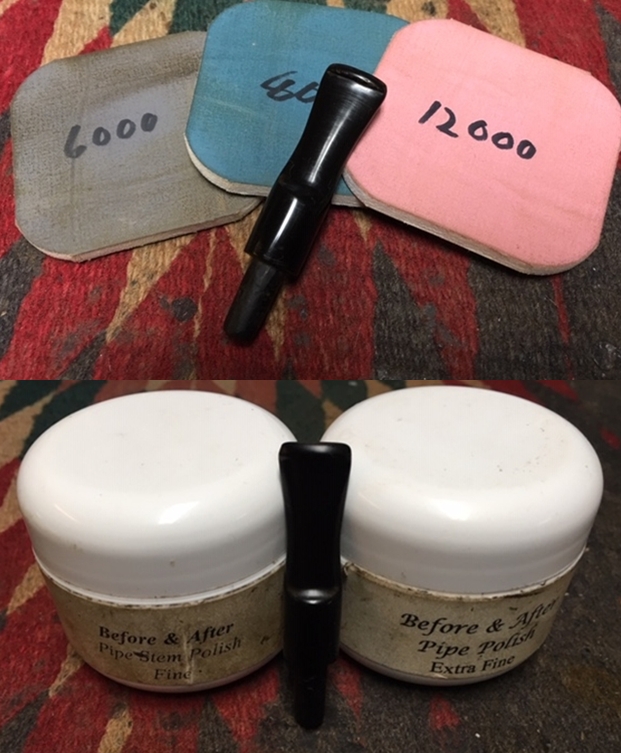
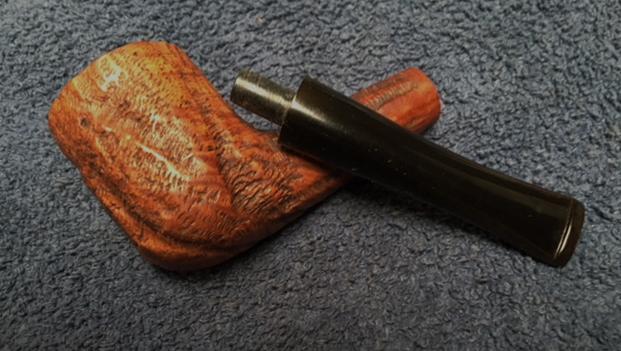
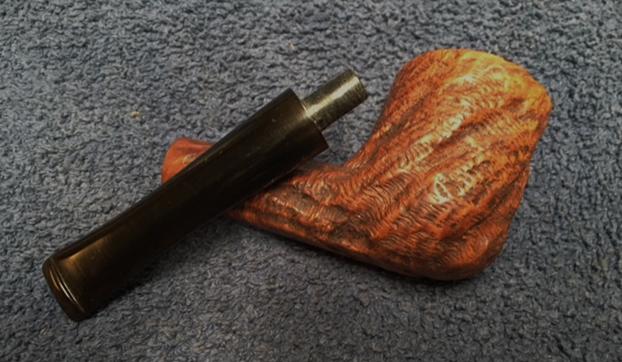
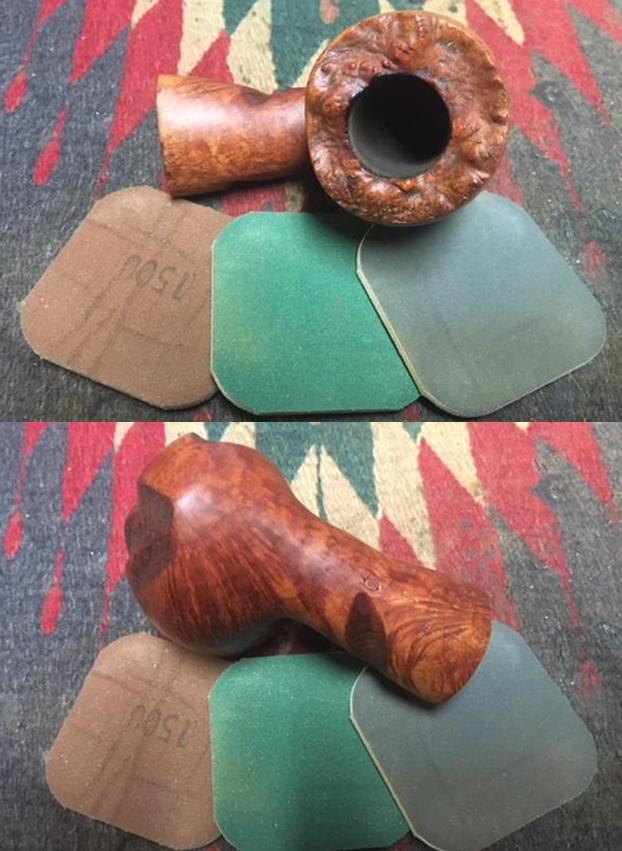
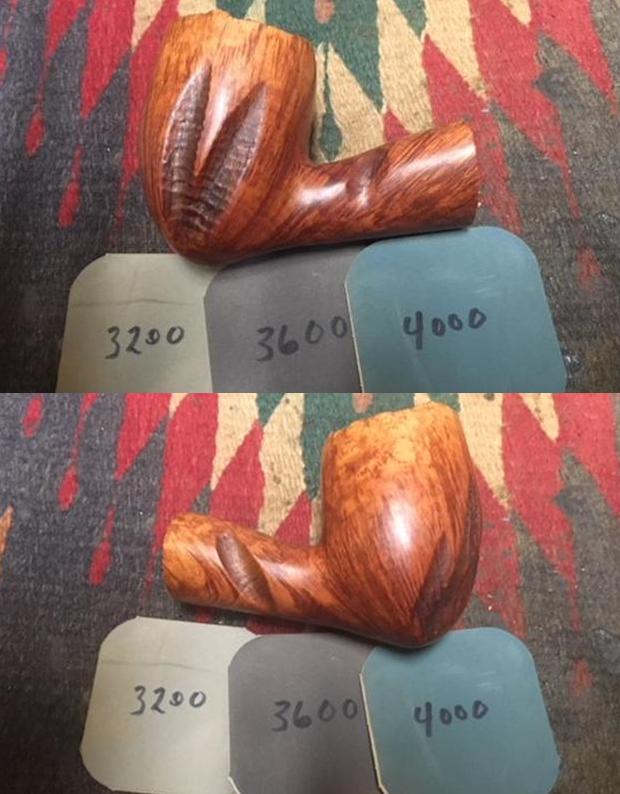
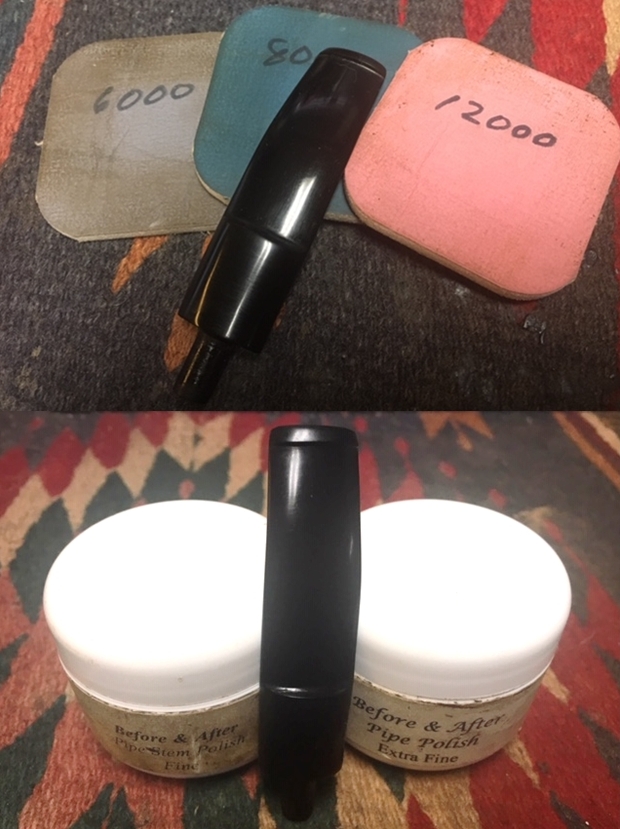
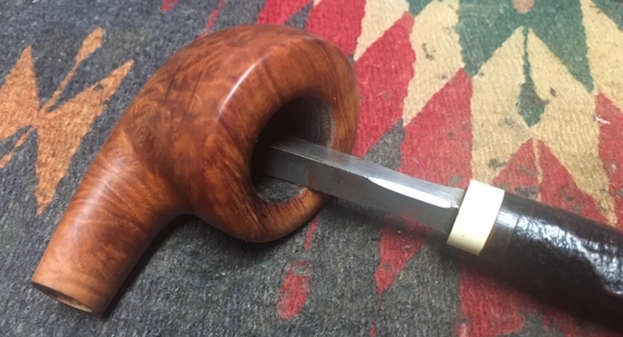
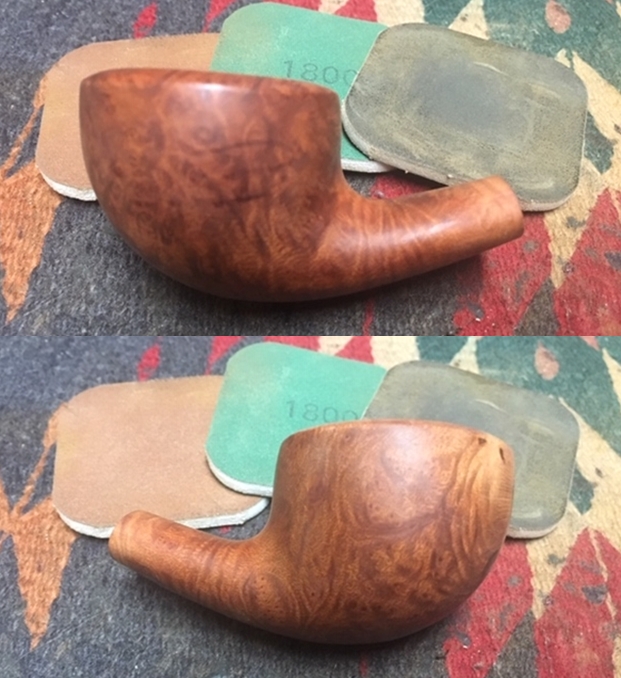
For those of you who are unfamiliar with the brand, I am also including the link to a blog that I wrote that gives some of the history of the Malaga brand and the Malaga Pipe Shop in Royal Oak, Michigan in the USA. Here is the link – https://rebornpipes.com/tag/malaga-pipes/. That blog also includes links to a catalogue and the history of the pipemaker George Khoubesser. If you are interested to learn more, then I invite you to follow the link to get a feel for the brand and the pipemaker. I changed my habitual pattern of working on pipes with this one as the bowl was pretty clean. I would do the reaming later. I set up my cordless drill and drilled the airway in the tenon so that the guide on the tenon turner would fit. I put the PIMO tenon turner in the chuck and turned the tenon until it was the right diameter for the shank. I know many use a micrometer to set the tenon turner correctly but the way the tool is configured that has never worked for me. I always eyeball it and turn it in degrees. After each turning I check it in the shank. When I get close I stop and finish with sandpaper and files. Probably a bit of a troglodyte but hey, it works for me.Once I had the diameter so that the tenon was snug I put the stem in the shank and took photos of the pipe at this point. It is way for me to see if I like the proportion of the length of the shank and bowl with the length of the stem. I have gotten to this point on other pipes and pitched the stem in the can and turned a different stem. In this case I thought it would work very well. I would need to reduce the diameter of the saddle, remove the casting marks on the stem and give it a slight bend when I was finished. What do you think? I took some close up photos of the rim top and the fit of the stem to the shank to give you a clearer picture of where things stood at this point in the process. Incidentally, in the last photo below you can see the MALAGA stamping on the underside of the shank.I used the Dremel and sanding drum to take off the casting marks on the sides and button end of the stem. I also used the sanding drum to remove the majority of the excess stem material on the saddle. I hand sanded it with a file and 220 grit sandpaper to get the fit close to a smooth transition. I little a tea light candle and heated the stem to bend it to the angle I wanted to work with the bowl. I took photos of the stem after the bending to show what the pipe looked like at this point in the process. There was still a lot of fine tuning and shaping to do but the pipe was beginning to look complete. I liked the look of the new stem. Some of you may wonder why I sand the shank the bit that I do. My experience is that I can smooth out the transition this way. I know that others do it differently but this is my process. I continued to sand and shape the stem and fit it to the shank end. I beveled the mortise end a bit more than it was originally using a small half circle needle file. Once that was done I sanded the stem to smooth out the transition with the shank. The photos below show that it is getting closer to a fit. I took some close up photos of the fit of the stem to the shank at this point. It is getting better and better. I still need to do a few adjustments to the tenon to get a snug fit to the shank.I sanded the stem with 400 grit wet dry sand paper to polish out the scratches left behind by the files and 220 grit sandpaper.I polished the stem with micromesh sanding pads – wet sanding it with 1500-2400 grit pads and dry sanding with 3200-12000 grit pads. I wiped the stem down after each of the pads using Obsidian Oil. I polished it further with Before & After Pipe Stem Polish – both Fine and Extra Fine grits. I gave it another coat of Obsidian Oil and set it aside. With the stem fit and finished I set it aside to work on the bowl. The bowl was in decent condition other than some darkening on the top and two small pits on the right front of the bowl. There was also a little bit of cake in the bottom one third of the bowl. Whoever had reamed it did not take the conical bowl into their thoughts. The rest of the bowl was well reamed but the bottom portion was not. I reamed the bowl with a Savinelli Fitsall pipe knife to clean up the bottom part of the bowl. I filled in the two small pits with clear super glue and when the patches cured sanded them smooth with 400 grit sandpaper. Unfortunately I did not take a photo of that part. Ah well. It is easy to get caught up in the process and forget the photos… I apologize for that.I polished the briar with 2400-12000 grit micromesh sanding pads – wet sanding with 1500-2400 grit pads and dry sanding with 3200-12000 grit pads. I wiped the bowl down with a damp cloth after each pad. I found that with each successive grit of micromesh the grain stood out more and gave a shine to the pipe. I liked what I saw when I looked at it. I worked some Before & After Restoration Balm into the surface of the briar with my fingertips to clean, enliven and protect it. I let the balm sit for a little while and then buffed with a cotton cloth to raise the shine. The following photos show the bowl at this point in the restoration process. The bowl and the rim top look really good and the darkening is gone. The finish looks very good with the rich oil finish on the bowl and rim. I am very happy with the results. Now with both parts of the pipe finished, I polished stem with Blue Diamond polish on the buffing wheel. I gave the bowl and stem multiple coats of carnauba wax. I buffed the pipe with a clean buffing pad to raise the shine. I hand buffed it with a microfiber cloth to deepen the shine. The pipe polished up pretty nicely. The contrasting grain came alive with the buffing. The rich oil finish on the briar works well with the new, polished black vulcanite stem. The finished pipe is a beauty and feels great in the hand. Have a look at it with the photos below. The dimensions are Length: 5 ½ inches, Height: 1 1/2 inches, Outside diameter of the bowl: 1 ¾ inches, Chamber diameter: 9/16 of an inch. This one will be going back to Alex with the rest of his pipes that I am working on. Thanks for walking through the restoration and restemming with me on this nicely shaped MALAGA Scoop.
New Life for a Sad, Old Kriswill Bent Egg


Blog by Steve Laug

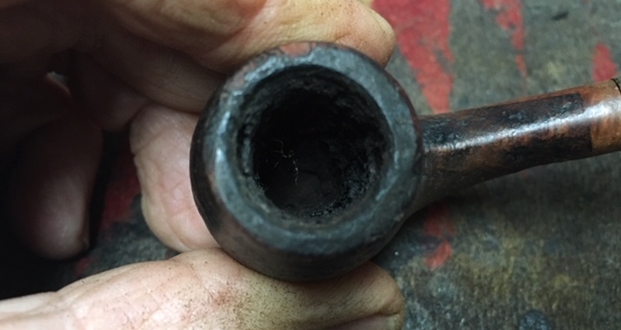
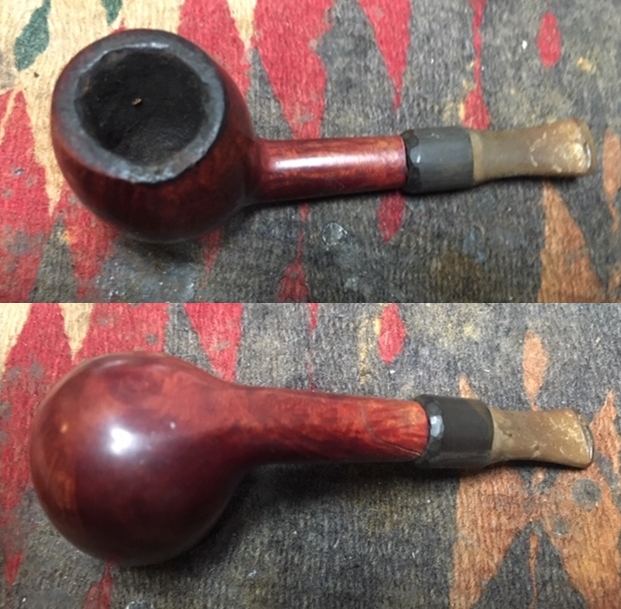
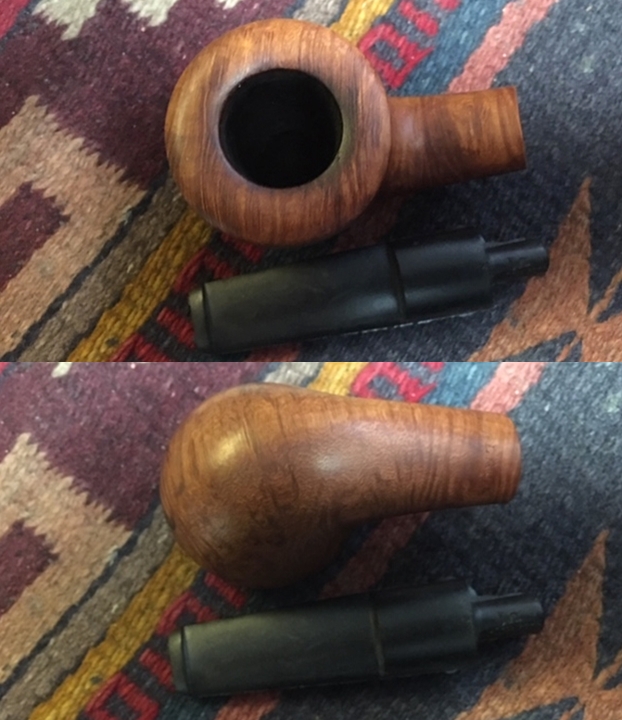
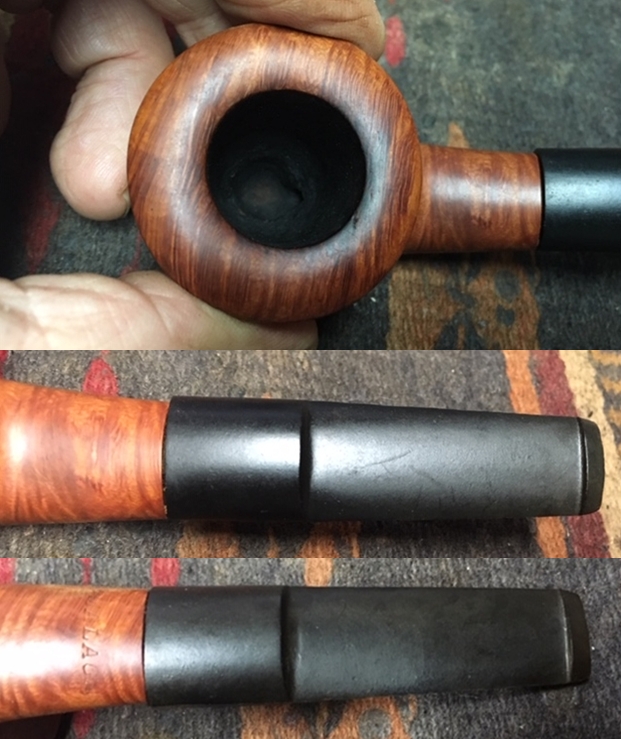
The next pipe in the queue is from a group of pipes that Paresh purchased from a rag picker in Mumbai, India. The fellow had found a large number of pipes as he was going through rubbish bins and contacted Paresh. This is a tired and worn looking Kriswill. I knew looking at it even before the stamping was checked that this was a Kriswill because there is something distinctive about the shapes. The pipe is stamped (though it is faint now from wear) Kriswill Hand Made in Denmark. The pipe was filthy and unusable. I think it was from the generation who smoked a pipe to death and then pitched it. The finish on the pipe is very dirty and the sandblast is almost worn smooth. There is a thick cake in the bowl and a lava overflow on the rim top. I can see some damage to the inner edge of the rim but because of the cake and tars it is hard to know what the inner edge looks like. The stem was broken at the tenon and there was a very strange set up keeping the pieces together. I took photos of the pipe before cleaning it. The photos give a pretty clear picture of the shape of the pipe and its general condition when I received it. At first glance I thought that the tenon was broken off in the shank but as I examined it I came to believe it was even worse. It looked like someone had glued something in the shank and Gerry-rigged a connection to the stem. The photo below shows what I saw. What is not clear in the photo was a piece of metal in the centre of the mortise area. It looked like a tube but when I tried to push air through the shank it was absolutely plugged.I was going to have to try to drill out the shank but before I did that I examined the shank and stem more closely. The stem had been hacked pretty seriously so that the diameter was not even close to the diameter of the shank. In the centre of the mortise the metal tube turned out to be a 2 inch long finishing nail. It appears that the nail was used to keep the stem in place in the shank. For what? I don’t have an answer for that as it was utterly unsmokable. Once I removed the nail with a pair of needle nose pliers I was able to blow air through the shank. It was at least clear. I used a drill bit slightly larger than the mess in the shank and carefully drilled the shank. It did not work to clear out the shank! However, it was clear what was there – it was a tube made of masking or painters tape! I took a pen knife and twisted it into the mortise and was able to pull the tube free of the shank. The last photo shows everything that had been in the shank to hold the stem in place on the shank. I could surmise from the length of the stem what I would need for a replacement stem. I went through my can of stems and found one that had the right sized tenon and was the same length and width as the broken stem. It was a saddle stem instead of a taper but I liked the look of it on the pipe. I pushed it in place and took the following photos. I would need to reduce the diameter of the saddle, bend the stem and do a general cleanup, but it was a keeper. I took a photo of the stamping on the shank to show that it reads Kriswill. Underneath it says Hand Made in Denmark but that stamping is faint and only readable in a bright light or with a lens.With the stem chosen I set it aside to work on the bowl. I really hate working on dirty pipes! I can’t say enough how much I appreciate my brother Jeff doing the lion’s share of the reaming and cleaning before I even work on pipes… It is these few that I have to clean up that make me thankful and realize how much work he does before I get them here to restore. Thanks Jeff. The bowl had a thick cake and a heavy overflow of lava. It was obviously someone’s favourite pipe.I reamed the bowl with a PipNet pipe reamer using the smallest cutting head. The bowl on these old Kriswill pipes is conical so the PipNet only goes so far down the inside. I reamed out the bowl as far as the reamer would reach and then used Savinelli Fitsall pipe knife to finish the project. I scraped the rim top with the pipe knife to remove the majority of the lava and could see that the rim edges and top were damaged with burn marks.To remove the damage to the top of the rim I topped it on a topping board with 220 grit sandpaper. I worked on it to remove the burned areas and the damage to the inner edge of the rim as much as possible. I am happy with how it turned out.I lightly beveled the inner edge of the rim with a folded piece of 220 grit sandpaper to give it a cleaner look. The look of the bowl at this point is far better than when I started the rim clean up. I will still need to polish the rim and match the stain to the shank end smooth portion. Fortunately for me this old Kriswill originally had a smooth rim top so it will look like new.I polished the topped bowl rim with 3200-12000 grit micromesh sanding pads. With each successive grit of micromesh the grain stood out more and gave a good finished look to the pipe. I liked what I saw when I looked at it. There was a little variation in stain colour between the rim top and the shank end so I decided to stain both to get a good blend. I used an Oak stain pen to match the colour of the shank and smooth spot where the stamping was. Once the stain had cured for that time I moved on to the next step in the process.It dawned on me at this point that I had been so intent on getting the plug out of the shank and topping the bowl that I forgot to clean out the shank! I normally do that right after reaming the bowl but forgot. It goes to show you that if you vary an habitual pattern even a bit you will leave steps out. I stopped the process and went back and cleaned out the shank and airway to the bowl with pipe cleaners, cotton swabs and isopropyl alcohol until the pipe was clean and smelled fresh.With the rim top and bowl polished and the shank and airway CLEAN, I worked some Before & After Restoration Balm into the surface of the briar with my fingertips to clean, enliven and protect it. I let the balm sit for a little while and then buffed with a cotton cloth to raise the shine. The following photos show the bowl at this point in the restoration process. The bowl and the rim top look really good and the darkening and lava are gone. The finish looks very good with the contrast between the rich, dark brown and the Oak stain on the rim and shank end. I am very happy with the results. With the bowl finished I set it aside and turned my attention to the stem. I used a file and a folded piece of 220 grit sandpaper to shape the diameter of the saddle portion of the stem to fit the diameter of the shank. It took a lot of filing and sanding to get it to this point but there is a lot of fine tuning work to do. The shank is not round but it is more of a vertical oval in shape so the stem will need to match it to have a seamless fit. It is a lot of hand shaping work to get the two to match. I sanded the scratches and the tooth marks on the stem with 220 grit sandpaper to bring the shank and saddle portion into line. I further sanded and shape it with 400 grit sandpaper to remove the scratches. This is the beginning of the polishing process on the stem. I wiped the stem down with Obsidian Oil and put it back in the shank to take progress photos. I polished the stem with micromesh sanding pads – wet sanding it with 1500-2400 grit pads and dry sanding it with 3200-12000 grit pads. I wiped the stem down with Obsidian Oil after each pad. I further polished it with Before & After Pipe Polish – both Fine and Extra Fine. I gave it a final coat of Obsidian Oil and set it aside to dry. This pipe has had quite a journey to this point in time and space. It somehow traveled from Denmark where it was made to Mumbai, India. There is was found abandoned, binned and found by a rag picker who then sold it to Paresh in another region of India. From Paresh it traveled to me in Vancouver, Canada. In April it will travel to Nepal with me and back Paresh in India. I only wish that it could tell its story. All I know is that I have extended its life of usefulness and given its purpose back as it was intended.

I polished stem with Blue Diamond polish on the buffing wheel. I gave the bowl multiple coats of Conservator’s Wax and the stem multiple coats of carnauba wax. I buffed the pipe with a clean buffing pad to raise the shine. I hand buffed it with a microfiber cloth to deepen the shine. The pipe polished up pretty nicely. The contrasting grain came alive with the buffing. The rich contrasting browns and black colouring works well with the new, polished black vulcanite stem. The finished pipe is a beauty and feels great in the hand. Have a look at it with the photos below. The dimensions are Length: 5 ½ inches, Height: 2 inches, Outside diameter of the bowl: 1 inches, Chamber diameter: 5/8 of an inch. I will be taking this pipe with me to India soon and giving it back to Paresh. Thanks for walking through the restoration with me on this battered and weary Kriswill.

Repairing a Broken Tenon on a House of Robertson War Club


Blog by Steve Laug

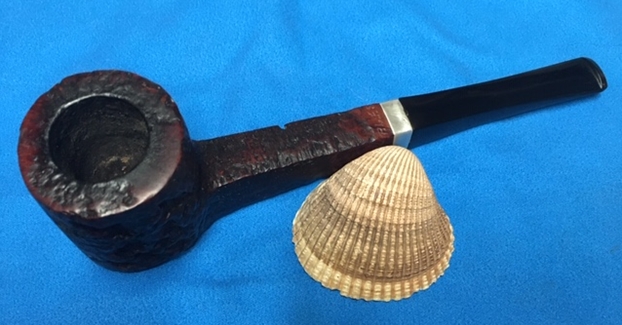
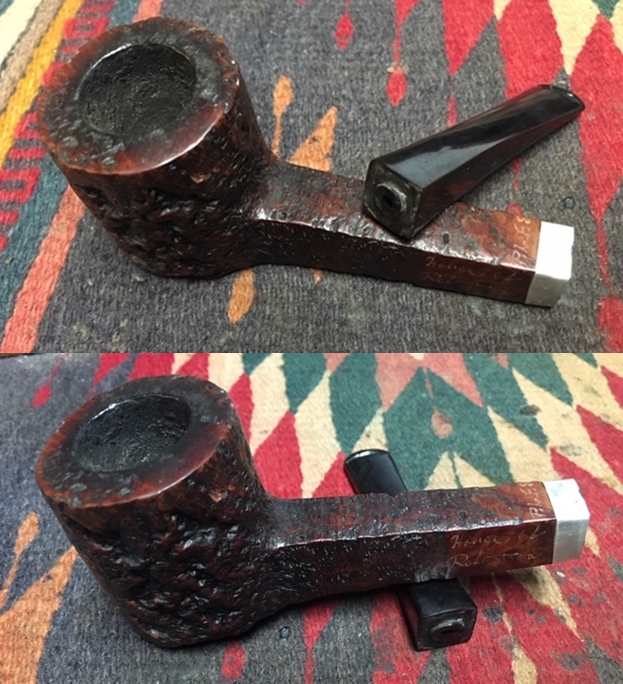
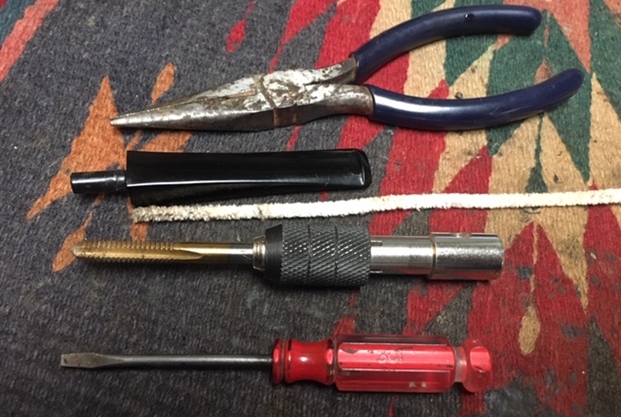
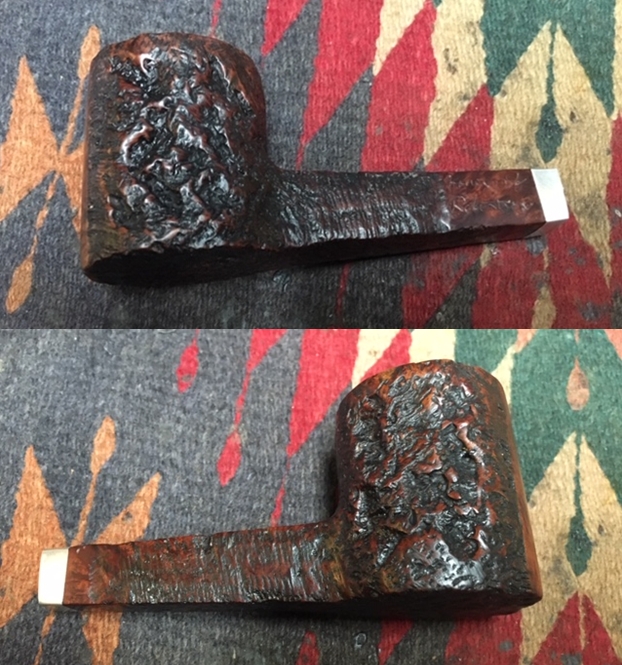
Back in February of 2018 (almost a year ago now) I posted my restoration of an interesting House of Robertson Pipe that was made by a carver in a pipe shop in Boise, Idaho. It was not only an interesting pipe but also one that had some history that was interesting to me as I was raised in Idaho for the better part of my childhood and adolescence. It was a huge piece of wood and had both smooth and rusticated portions on the shank and bowl. It was a flat bottom sitter with a square shank. The dimensions of the pipe are: Length: 7 3/8 inches, Height: 2 inches, Outside Diameter: 1 5/8 inches, Diameter of the chamber: 7/8 inches. I sent it back to a fellow in Idaho who collected House of Robertson pipes and who used to frequent the Boise shop. He was excited to add it to his collection. (https://rebornpipes.com/2018/02/28/restoring-a-rusticated-house-of-robertson-war-club/). Here is what it looked like when I sent it to him. About the same time I picked up the Calich, I received an email from the collector in Idaho asking for help. This is what he wrote to me:
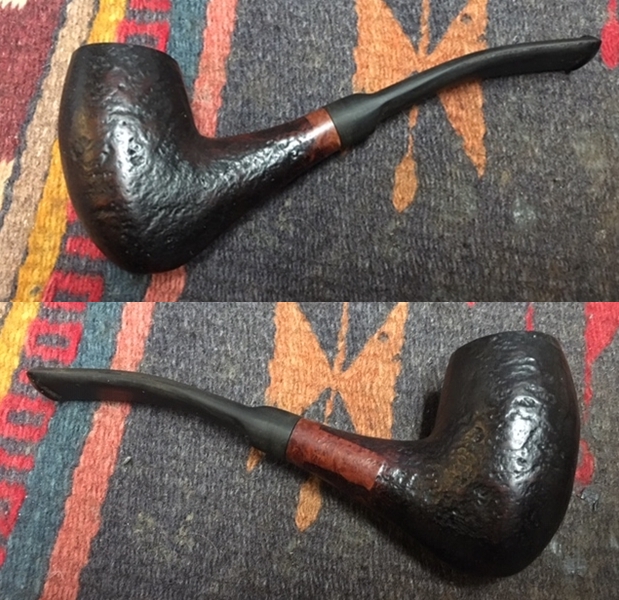
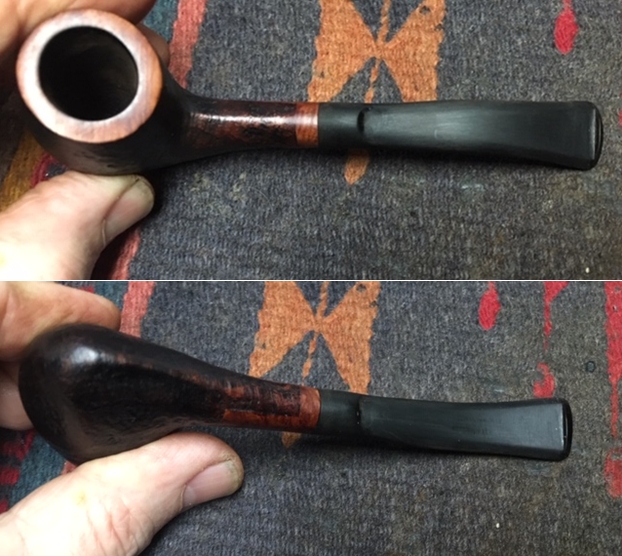
Steve, I purchased the rusticated House of Robertson War Club pipe earlier this year. I have thoroughly enjoyed it. The bad news is i was polishing it and dropped it. The stem broke at the tenon and is still lodged in the briar. Hopefully you can repair or replace it. If so, please let me know and then how to proceed with mailing and payment. Thanks…

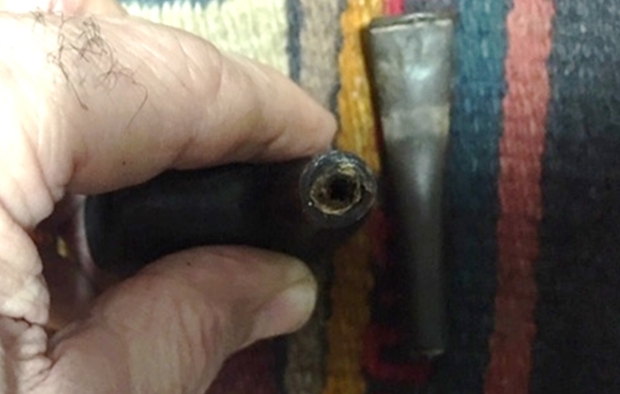
I wrote him back pretty quickly and he put it in the mail. It arrived here yesterday and was waiting for me when I got home from work. I opened the envelope that it had been mailed in and took out the two plastic Ziploc bags and the bubble wrap that was around the bowl and stem. I took them out of the mailer and unwrapped the protective layers and took them out of the Ziploc bag. This is what I saw. The stem had snapped off almost perfectly against the stem end. There was a small ledge but really nothing stuck out from the original tenon.I took an end view photo to show the snapped off tenon in the shank of the pipe. You can see in that photo that it is also a clean break.This morning I was “chatting” with Charles Lemon on the Tobacco Pipe Restorers Group on Facebook about Jobey Links and how easy they were to work with when replacing a tenon. I went through my container of tenons and I did not have one that would work in this shank without a lot of work. I took out my box of Jobey Link replacement tenons and one of them was absolutely the perfect size for this shank. I would need to use it backwards and do some modifications but it was exactly what I wanted for this repair. I used a topping board to flatten out the remnants of the broken tenon on the stem. I used a knife to bevel the airway to make drilling it easier. I took the following photo to show the parts of the repair.I tried my usual method for removing a broken tenon from the shank – a drywall screw turned into the airway in the shank until it was tight and then wiggling the broken tenon out of the shank. It failed to produce any results. It was almost like the tenon was glued/bonded to the walls of the shank. I used a cotton swab to dribble alcohol down the shank around the broken tenon. I left the shank and tenon sitting while I went to work for the day. When I came home I tried the screw again and still absolutely no movement on the tenon… it was stuck.

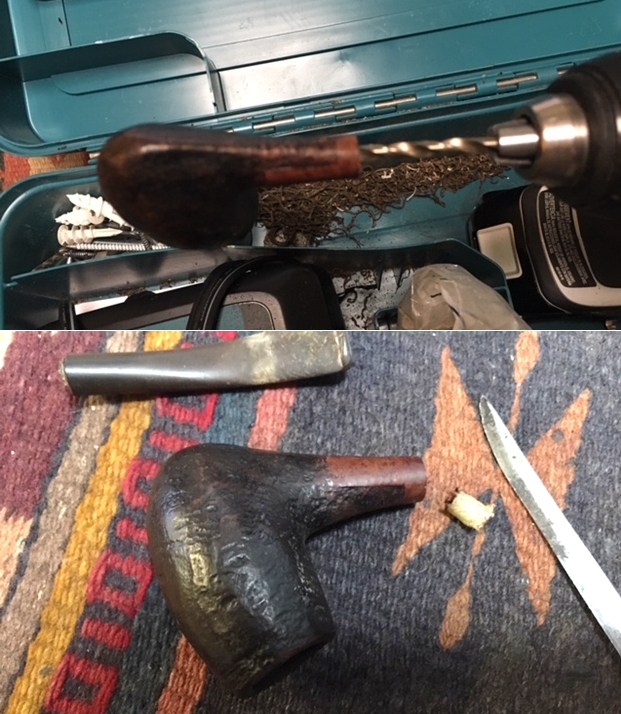
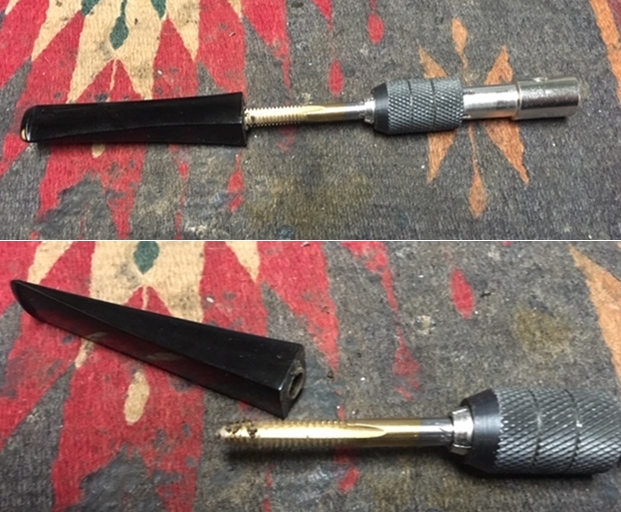
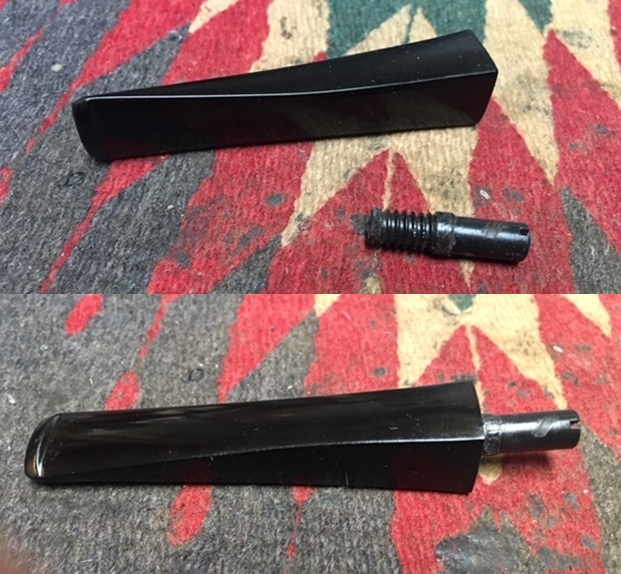
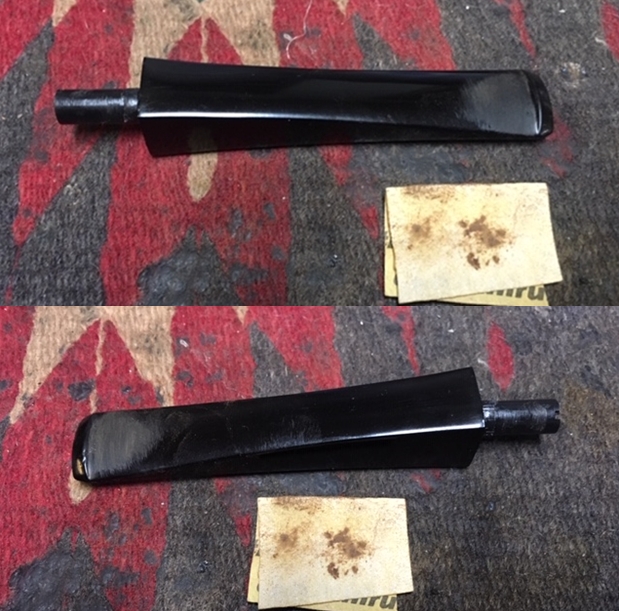
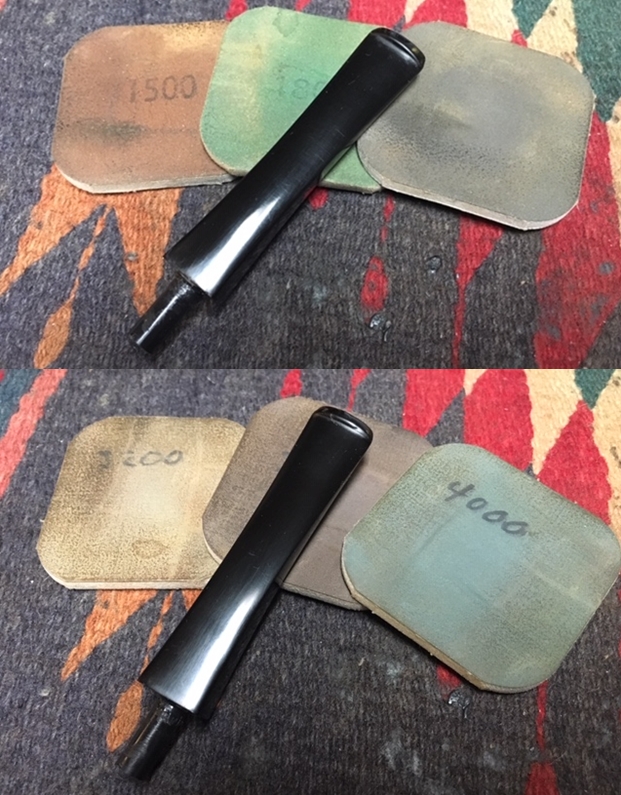
I resorted to the next best method – drilling the tenon out of the shank with my cordless drill. I started with a bit a little larger than the airway and turned it into the airway with the drill and then reversed the drill to see if I could pull it out. Nope. It still did not move. I tried a larger drill bit and repeated the process still no movement at all. I tried a third bit – a little bit smaller than the diameter of the original tenon. I drilled it in and backed it out – no luck. I then decided to just drill out the tenon all together. It did not take too much to drill it with the ¼ inch drill bit and then take out the pieces of the old tenon. The fourth photo below shows the clean airway in the shank. The tenon is gone. Now with that half of the job done I set the bowl aside and picked up the stem. I used a drill bit slightly smaller than the threaded portion of the Jobey Link. I drilled out the airway in the stem with increasingly larger drill bit until it was the perfect size for the Link. I still needed to tap the newly drilled airway so that I could turn the tenon into the stem. I used a tap set that I have and tapped threads into the newly drilled airway in the stem. It did not take long to tap thread into the vulcanite. I tapped the airway until it was deep enough for to take the threaded tenon. I shortened the threaded end of the tenon to deal with the taper of the stem. I used a Dremel and sanding drum and then smoothed it out on the 220 grit sandpaper topping board. I used the Dremel and sanding drum to remove the hip on the Jobey Link. I flattened it out to match the smooth part of the tenon that would go into the shank. The added length of the tenon fit perfect in the depth of the mortise on the pipe. I turned the tenon into the airway with a pair of pliers.I sanded out the scratch marks from the Dremel removal of the hip on the tenon with 220 grit sandpaper and polished it with 1500-2400 grit micromesh and took a photo of the stem with the new tenon and the tools I used to work on it.When I looked over the stem I could see a few tooth marks on the surface on both the top and underside near the button. I figured that since I was working on it anyway I would remove those areas. I sanded the stem with 220 grit sandpaper to remove the damage and polished the sanding marks with 400 grit wet dry sandpaper. I polished the vulcanite stem with micromesh sanding pads – wet sanding with 1500-2400 grit pads and dry sanding with 3200-12000 grit pads. I wiped the stem down after each pad with Obsidian Oil. When I finished the last pad I gave it a final coat of Obsidian Oil and set it aside to dry. I set the stem aside and turned my attention to the bowl. I examined it and found that there were a few small nicks and chips around the rim top and outer edge of the bowl. I touched these up with a walnut stain pen to blend them into the rest of the finish on the bowl. I rubbed the bowl down with Before & After Restoration Balm to enliven the wood and protect the newly finished portions of the briar. I took these photos after to show the bowl and the repairs are unnoticeable. I put the stem back on the shank and buffed the pipe with a clean buffing pad to bring a shine back to the bowl and stem. I gave it several coats of Conservator’s Wax and continue the buff. I hand buffed it with a microfibre cloth to deepen the shine. The finished pipe is shown in the photos below. Tomorrow I will box it up and send it back to Idaho. Can’t wait to see what he thinks when he has it in his hands. Thanks for reading this. Cheers.

Restemming and Rebirthing a Landry 2013 Bent Ball


Blog by Steve Laug

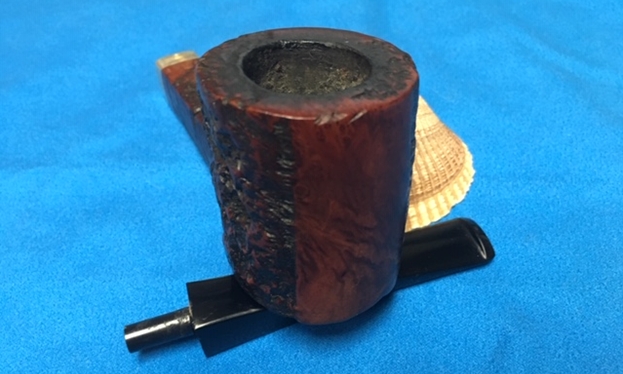
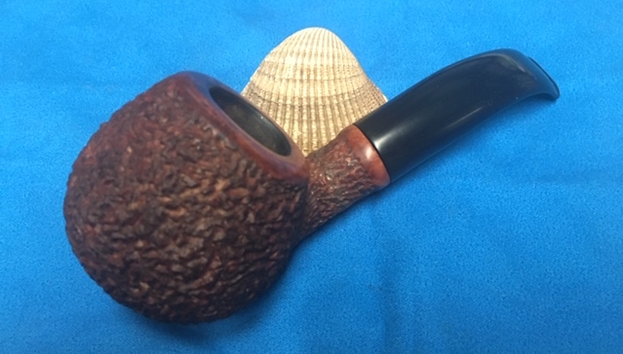
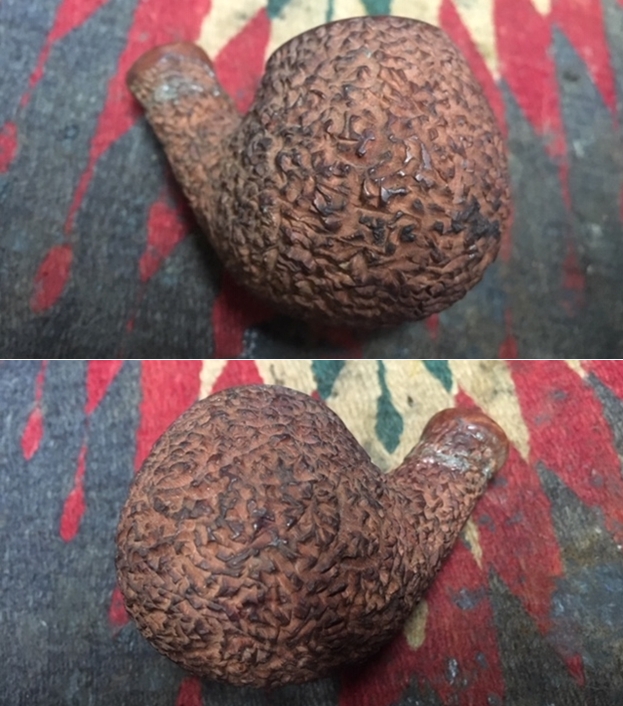
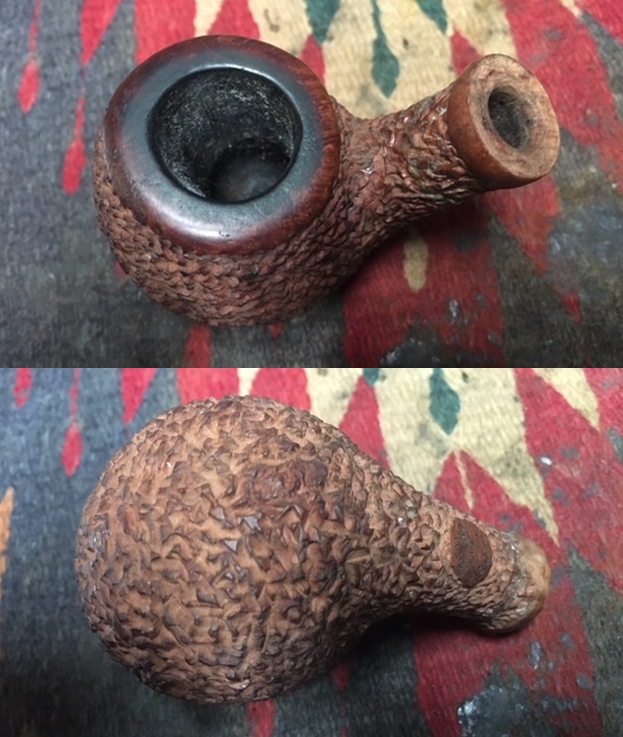
Last evening I had a fellow drop by the house with three pipes for repair. Two of them were not worth repairing – broken shanks and Chinese knockoff pipes. Neither was made of briar and one had the beginning of a large burn out on the back of the bowl. I discouraged the fellow from fixing either of those two as the cost of repair would be more than he paid when he purchased them. However the third one was interesting to me. It was a bent ball bowl without a stem. It was a real mess. He had broken the stem in half and lost it. The shank had also been broken but he was a bit of a wood worker and had clamped and glued it. He had done a decent job and the repair was solid. The bowl had a cake that was thick and soft – made from the heavily case aromatic that he smoked. The airway in the shank was clogged with tars and oils and I could not even blow through it. The rusticated finish was rugged and sharp with a smooth rim and shank band. The bowl and rim were very dirty and the briar looked lifeless. The shank flared at the stem/shank junction.

When I examined the pipe while he was there I found that it had a makers stamp on an oval smooth patch on the underside of the shank. It was clearly stamped LANDRY arched at the top of the oval. The year it was made, 2013 was in the middle of the oval and the letters U.I.O.G.D were arched at the bottom of the oval. When I asked the owner of the pipe what those letters were he said that I was some Latin phrase. When I examined it with a loupe I found that there were periods between the letters and that probably I was dealing with an acronym of some kind. I went with his notion of it being Latin, Googled the acronym and found that it stood for the five words making up the Benedictine motto: Ut In Omnibus Glorificetur Dei (translated from Latin it means: So that in all things God may be glorified). That made sense as he had been given the pipe by a Benedictine Priest a while ago when he had first started smoking a pipe and he had broken it after smoking it quite heavily.

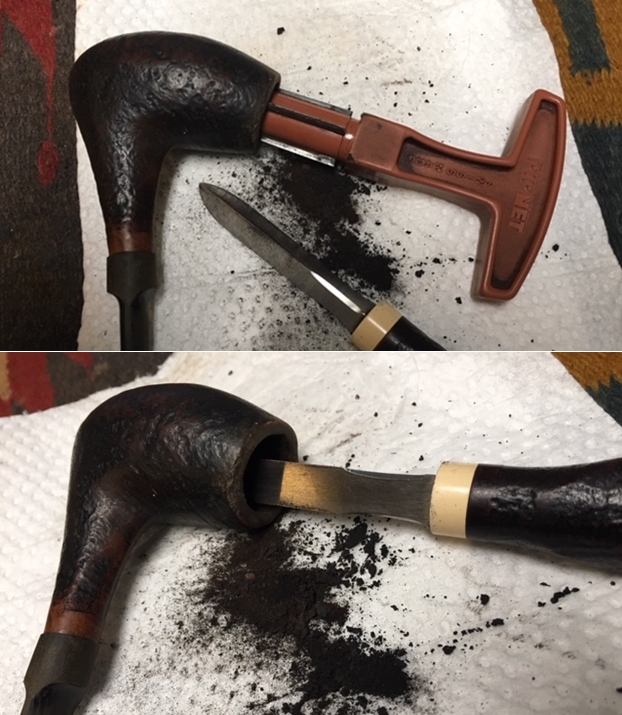
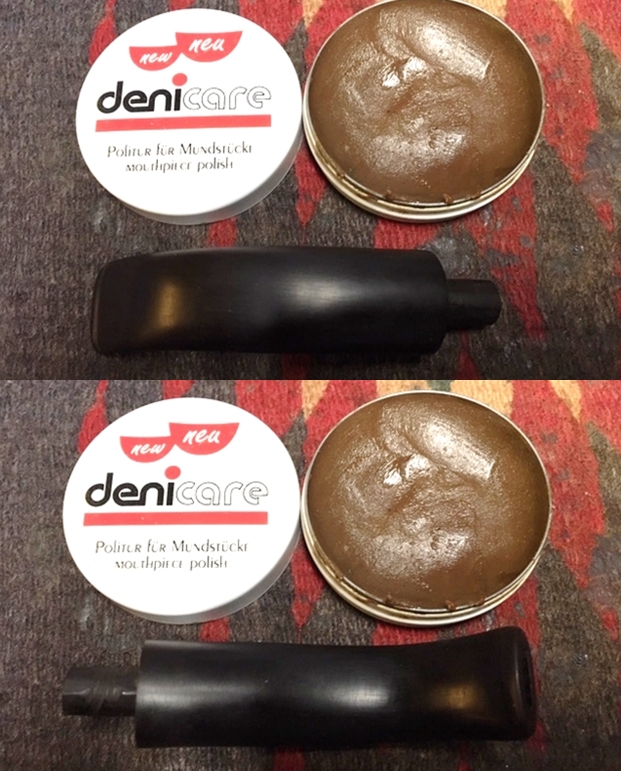
I took photos of the bowl before I started to work on it. You can see the repair on the shank. The rustication is very dirty and the rim top is coated with an overflow of lava from the bowl. The entire pipe reeked of a sweet cherry aromatic. The shank was heavily gummed up and I could not blow air through the shank into the bowl. It was clogged. The bowl also appeared to be drilled at an angle and from a quick glance seemed to be drilled crooked. The pipe was a mess! I took a photo of the oval and the stamping on the shank. You can also see the glue repair on the shank. It was a solid repair but a bit sloppy.There were some gaps in the glue around the circumference of the shank so I used a wire brush to clean up excess glue from the repair. I wanted to remove all of the excess glue so that it would look cleaner once I finished. I then filled in the gaps in the repair with clear super glue and filled in those areas with briar dust to build up the area ahead of the smooth band at the shank end.Restemming this old bowl would be a bit tricky. The shank actually flared to a smooth hip at the end where the stem sat. It was wider in diameter than the rusticated shank just below it. It was obvious from the way the shank end and mortise were made that it required a flush fit stem and not a freehand style stem. I would need to find a stem that had a wide enough diameter for me to work with and give the pipe the kind of look that it must have had originally. I went through my can of old stems and found one that was going to work. The tenon was almost perfect. I sanded it lightly with the sanding drum on the Dremel and cleaned it up with a file and the fit was just right. I would need to reduce the diameter of the stem slightly to match the shank but I think it was going to work for me. I took photos of the fit of the “new” stem to show you what I saw. Bear with me for the moment. It was quite ugly and my brother said it looked like a muffin top of a tight belt (or something like that). But I thought it had potential… time will tell. I trimmed the excess diameter of the stem with a sanding drum on my Dremel. I worked on it until the diameter was very close to the right size. I brought it back to the work table and sanded it smooth with a folded piece of 220 grit sandpaper to remove the scratches from the Dremel. I took photos of the stem and shank at this point. I wiped down the stem with Obsidian Oil to clean off the dust and get a sense of how it was looking. I sanded the band around the shank a bit too as it had some glue on it from the repair that had been done. I took photos of the pipe at this point in the process. I decided it was time to set the stem aside for a bit and work on the bowl. I took a photo of the bowl and rim to show what it looked like when I started. The bowl is thickly caked and there was damage to the inner edge of the rim. The lava overflow was quite thick on the rim top as well. I reamed the bowl with a PipNet pipe reamer. You can see the angle of the bowl from the way that the reamer is sitting in the second photo below. I cleaned up the reaming with a Savinelli Fitsall pipe knife and then sanded the walls of the bowl with sandpaper wrapped around a piece of dowel. With the bowl reamed I turned my attention to the dirty exterior of the bowl. I scrubbed it with a tooth brush and undiluted Murphy’s Oil Soap. I worked over the rim top with the tooth brush and a piece of sandpaper to remove the tars and lava there. I rinsed it off with running water to remove the soap and debris in the finish. Now it was time to address the thick tars and oils in the shank and open the airway into the bowl. I worked on the mortise and the airway in the shank with a paper clip, pipe cleaners, cotton swabs and alcohol. Once I had opened the airway I scrubbed it until it was clean. I also cleaned out the airway in the new stem with alcohol and pipe cleaners. It was not nearly as dirty as the shank.I polished the rim top and the smooth shank end with micromesh sanding pads – wet sanding with 1500-2400 grit pads and dry sanding with 3200-12000 grit pads. I wiped the polished areas with a damp cloth after each sanding pad. The rim and shank end began to really look good. I decided to stain the bowl and shank with some Medium Walnut Danish Oil. It has the translucence I wanted to let the natural colour of the briar shine through while allowing me to hide the repairs to the shank. I applied the stain with a cotton pad and daubed it deep into the grooves of the rustication. I kept applying it until the coverage was good. I waxed the bowl with several coats of  Conservator’s Wax and buffed it out with a horsehair shoe brush. The bowl and rim looked really good. I really liked the look of the bowl at this point in the process. The shine and the finish looked very good. I set the bowl aside and turned my attention to the new stem. I sanded it with 220 grit sandpaper to remove the oxidation and the scratch marks from fitting the stem. I wiped the stem down with Obsidian Oil to remove the sanding dust and get a feel for the scratching. I polished the stem with Denicare Mouthpiece Polish. I applied it with my finger and rubbed it in and then off with a cotton pad. I find that it is gritty enough to remove the residual oxidation after sanding (besides I have about three tins of the stuff to get through so I use it on each pipe).I polished the stem with micromesh sanding pads – wet sanding with 1500-2400 grit pads and dry sanding with 3200-12000 grit pads. I wiped the stem down with Obsidian Oil after each sanding pad. I finished polishing the stem with Before & After Pipe Polish – Fine and Extra Fine. I gave it a final coat of Obsidian Oil and set it aside to dry. I bent the stem with a heat gun to get it to follow the lines of the top of the bowl so that it can hang in the mouth with the bowl top straight. I polished the stem with Blue Diamond on the buffing wheel and gave it multiple coats of carnauba wax. I put it back on the shank and buffed the entire pipe with a clean buffing pad to raise the shine on the bowl. The heavy rustication works well with the stain I chose to use on it and the combination looks really good with the polished vulcanite stem. The flared shank end and the thick stem work well together to my mind to create an interesting pipe. The finished pipe is shown in the photos below. Its dimensions are – Length: 6 inches, Height: 2 inches, Outer diameter of the bowl: 1 ½ inches, Chamber diameter: 7/8 of an inch. I will give it another coat of Conservator’s Wax and then call the fellow who dropped it off for repair. I am hoping he likes the look of his pipe. Thanks for reading this blog.

A Tiny 2 Star BBB 8881 Apple/Globe Provided An Interesting Challenge


Blog by Steve Laug

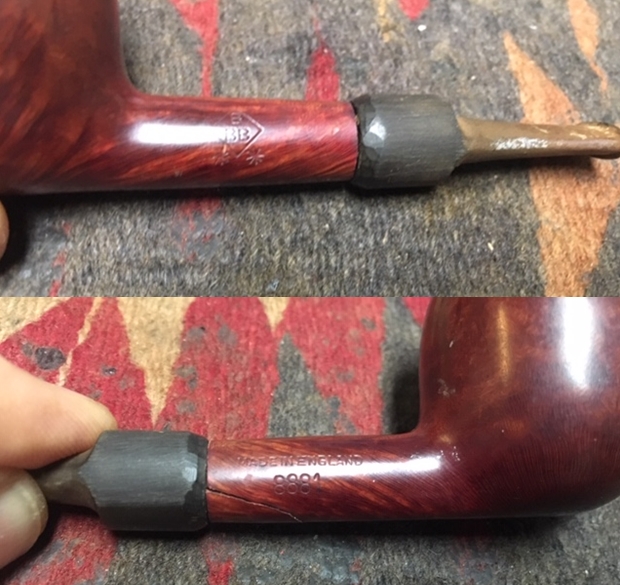
When I spoke with a fellow here in Vancouver who had a pipe that he wanted me to fix it sounded like a simple repair. He said that it had a very loosely fitting stem. He asked if he could drop by to show it to me and see if I could fix it. From past experience I have learned to never jump to conclusions about what sounded like an easy repair. When he arrived he showed me his GBD Faux Spigot. It turned out to need far more work than just tightening a loose stem. I wrote about that restoration in a previous blog (https://rebornpipes.com/2018/11/03/redoing-a-poorly-restored-ebay-gbd-super-q-9436/). We talked about his GBD for a bit and he made the decision to have me do a restoration on it. Then he reached into his pocket and pulled out a small plastic bag with a little BBB 2 Star apple of globe shaped pipe. It was stamped BBB in a diamond on the left side of the shank with two ** – one on either side of the diamond. ON the right side it was stamped Made in England over the shape number 8881. He said that he had found it at his parents’ house and really no one there knew where it came from.

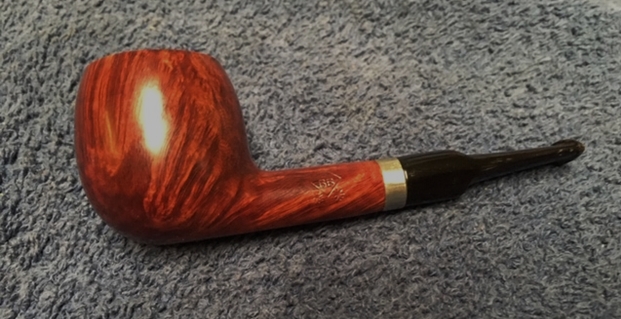
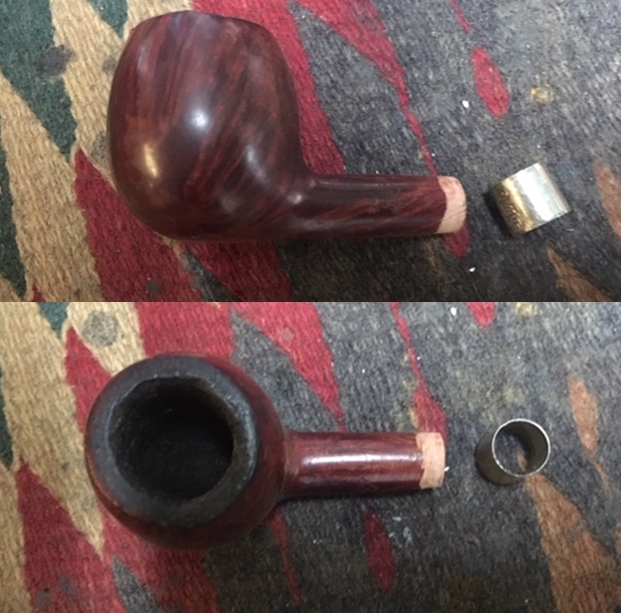
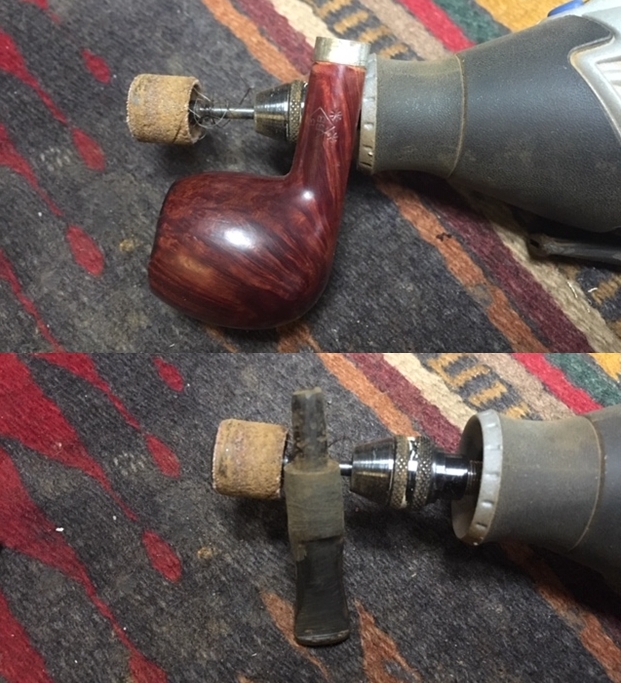
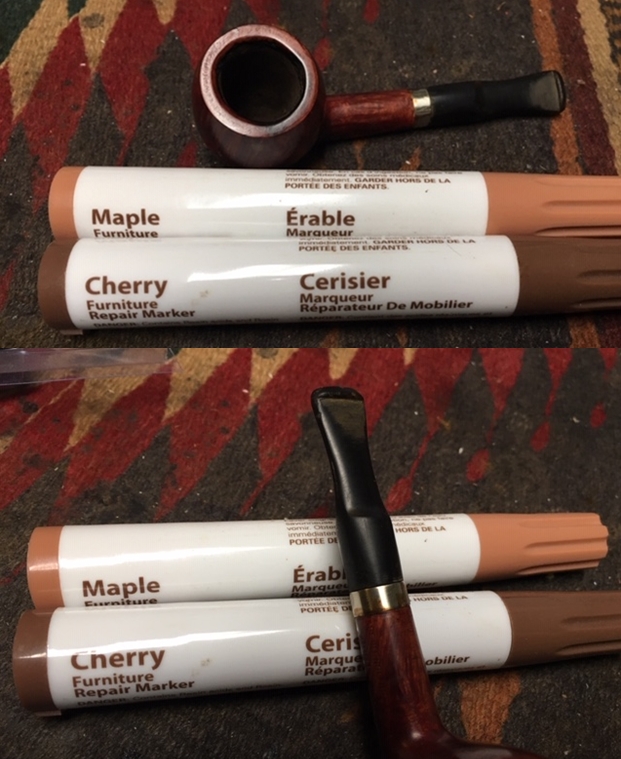
Here is what I saw. Starting with externals. The pipe was small – kind of a pocket pipe. The grain on the bowl was quite stunning – a mix of flame and birdseye all around the bowl and shank. The rim top was coated with a thick lava coat and it went into the bowl. The inner edge of the bowl was in rough shape having been hacked clean with a knife. There was a crack on the right side of the shank curving to the underside. It looked to me it was made by the poorly made stem being shoved into the shank. The stem was larger in diameter than the shank and had been rounded over with a file. There were deep bite marks on the surface ahead of the button on both sides. Moving to the internals. The end of the tenon was carved with a knife to make it fit the mortise in the small shank. The inside of the shank was dirty but less so than I expected. The inside of the bowl had a light cake but most of that was gone from the knife job that had left a wounded inner edge on the rim. Looking at the pipe I explained what I would have to do to bring it back to life and restore it to use. It would need, cleaning, reshaping on the rim, a band on the cracked shank that would leave the stamping readable, and a reworking of the stem to make it a fitting addition to the lovely briar of the bowl. The pipe was going to be a fun challenge. I took these photos to give you an idea of what I saw. The previous pipeman who had fit a new stem to an old favourite pipe had done a functional job but it looked rough. It was pretty clean on the inside so it was cared for. It must have been a great smoking pipe for him to fit a new stem and not give up on it when the previous one broke or was lost. It was smokable. I took a close up photo of the rim top to show the condition. It is hard to see but the rim top was not smooth. The lava build up was pretty thick and there were some deep nicks and chips in the flat top. The close up photos of the stem reveal the scratches in the vulcanite, the tooth marks and the worn and ill-defined button.  The oversized diameter – prettified to look nice is clear in the photos. I took photos from the side of the pipe to show the stamping on the shank and the prettified stem. In the second photo you can see the crack in the shank curving downward to the underside.I decided to address the cracked shank first. With the crack as large as it was and movable I did not want to further damage it when I worked on the stem and fit of the tenon. I knew that it needed to be banded but that would cover the stamping on the shank so adjustments would have to be made. I used a Dremel and sanding drum to reduce the size of the shank to fit the band I had chosen. I did not take of too much briar and I only damaged the M in Made In England as part of it would end up being covered by the band.I repaired the crack in the shank with super glue and pressure fit the band onto the shank to the point of the end of the sanded portion. I used a Dremel and sanding drum to cut back the band to the width that I wanted. Compare the photos above with the one below to see how much I took off of the band. I topped the band on a topping board with 220 grit sandpaper and smooth out the sharp edge with 1500 grit micromesh. I decided that since I was already working with the Dremel and sanding drum that I would take down the excess diameter on the stem as well. I reduced it to sit snugly against the band giving the pipe a classy look.I cleaned up around the inside edge of the band and edge on the shank with a folded piece of 2220 grit sandpaper to smooth things out and make the fit and transition smooth. I lightly sanded the blade portion of the stem and the area of the tooth marks next to the button with 220 grit sandpaper to remove the oxidation and clean it up. I fit the stem in the shank and took a photo of the pipe at this point in the process. It was beginning to look like a classic BBB to my eye. With the stem roughly fit to the shank it was time to address the bowl top. I topped it on a topping board with 220 grit sandpaper. At that point I called it a night. I had to catch a train down to the southern part of Washington from Vancouver in the morning so I thought I would bag up a couple of pipes I was working on and take them with me.I caught the train south from Vancouver, BC at 6:30am. Once we had our seats we were in for an 8 hour train ride. I figure it would be a good opportunity to work on these two pipes. You can see my work table in the photo below. I used the fold down table. It had a lip around it so I spread out a couple of napkins for the dust and went to work on the pipes.I started working on the BBB by addressing the damage to the inner edge of the rim. It was significant with cuts and burns. My topping worked had helped with the top damage and smoothed that out but I need to work on the rim edge. I used a folded piece of 220 grit sandpaper to smooth out the sharp edges and bring the bowl back to round. Once I had the rim as round as I could get it and smoothed out the damaged edge I polished it with micromesh sanding pads. I polished the bowl and the rim at the same time. I wet sanded with 1500-2400 grit micromesh sanding pads and dry sanded with 3200-12000 grit pads. I wiped the bowl down with a damp napkin after each pad. I touched up the stain around the front of the band and stained the rim top and inner edge with Maple and Cherry stain pens. Together the two stains matched the rest of the bowl.I rubbed down the briar with Before & After Restoration Balm. I worked it into the smooth surface of the briar with my fingertips to clean, enliven and protect it. I let the balm sit for a little wall and then buffed with a cotton cloth to raise the shine. The following photos show the bowl at this point in the restoration process. The rim matches well but still needs to be polished and buffed to raise a shine on it. I used a folded piece of 220 grit sandpaper to reshape the button and also to smooth out the marks left by the Dremel when reducing the diameter of the stem. I sanded the tooth marks near the button on each side of the stem to smooth them out.I polished the stem, tenon and metal work with micromesh sanding pads – wet sanding with 1500-2400 and dry sanding with 3200-12000 grit pads. I wiped the stem down with Obsidian Oil after each sanding pad. I was able to remove the damage on the tenon and polish out the dripping varnish on the metal adornment. The stem looked much better at this point in the process. I the polished stem and bowl with Blue Diamond to polish out the remaining small scratches and raise the shine. I gave the bowl and the stem several coats of carnauba wax and buffed the pipe with a clean buffing pad to raise the shine. I hand buffed it with a microfiber cloth to deepen the shine. The pipe polished up pretty nicely. This turned out to be a beautiful little pocket pipe in terms of shape and finish. The new nickel band adds a touch of class in my opinion and gives the pipe a new elegance. I look forward to hearing what the fellow who dropped it off for repair thinks of it once he has it in hand and is smoking it. The finished pipe is shown in the photos below. The dimensions are Length: 4 inches, Height: 1 3/8 inches, Outside diameter of the bowl: 1 inch, Chamber diameter: 3/4 of an inch. Thanks for walking through the restoration with me.

Finishing the Restoration and Restemming a Custom-Bilt Billiard


Blog by Steve Laug

Not long ago I was speaking with Paresh and Abha on Facetime and they showed me a second pipe that they wanted me to finish for them. This one was a Custom-Bilt billiard that had come to him from the estate of his Grandfather. It had a threaded tenon stem and a shank that had no threads. I have never seen a Custom-Bilt with a threaded mortise and tenon so it was a fair assumption that the stem was not original. It had been wrapped with glue and tape to make it fit in the shank and the fit was awful. Paresh wanted me to fit a new stem on the pipe for him. Abha had done a magnificent job cleaning the pipe so it was really a simple restoration for me – just fit a stem and finish the bowl. The briar was clean and lifeless so it would need some attention to breathe life into it again. He wanted me to pick up where he had left off and finish the pipe for him. The pipe was stamped on the left side of the shank Custom-Bilt and on the underside it was stamped Imported Briar. It would be interesting to see what I could do with it. When the pipe arrived this is what it looked like. You can see the remnants of wrapping and glue on the metal threaded tenon. There were tooth marks in the surface of the vulcanite stem on both the top and underside near the button. The first photo below shows the rim top and the inside of the bowl. Both were very clean and the rustication was in great condition as were the inner and outer edges of the bowl. The second photo shows the end of the shank with the glue on the inside of the mortise and the lack of threads that would be present if the tenon that was on the stem would work with this pipe.I took some photos of the stamping on the left and underside of the shank. The left side reads Custom-Bilt and the underside reads Imported Briar.I took close up photos of the stem. You can see the metal tenon on the end of the stem. There is some oxidation and there are the tooth marks on the stem top and underside.I wanted to refresh my memory on the history of the brand. I knew that his one was one of Tracy Mincer’s pipes because of the hyphenated name stamp. I looked on Pipedia and read Richard Esserman’s write up on Bill Unger’s Book. He gives a great summary of the history there. I quote a section of it below. (https://pipedia.org/wiki/Custom-Bilt(Rich Esserman))Tracy Mincer started the original Custom-Bilt pipes it appears in 1934. Bill meticulously details the start of the Company, how it was financed, the changes in the original ownership, how the company distributed its product, the manufacturing process, certain patented items, and other interesting stuff.

Mentioned briefly in this chapter was the fact that Custom-Bilt was producing big, carved pipes using Algerian briar for production up to WW II. One important employee, Hetzer Hartsock, stated: I can tell you something about that rough texture that Custom-Bilt had. One reason rough textured was used was not only for looks but it could hide flaws in the briar. [The process gave] A very uncontrolled cut. Then he [Tracy] would buff it out. [page 25]

Custom-Bilt pipes retailed between $5.00 and $15.00 in the 1940s. According to an ad, standard Dunhill pipes were selling for $12.00 and $13.50, Parker pipes $7.50, GBD for $6.00 and Comoy’s $7.50. Not mentioned was that special Dunhills could retail up to $100 and certain Comoy’s up to $25.

In 1946, the name was changed to Custombilt after Mincer began an association with Eugene J. Rich, Inc. There were some big changes in advertising and distribution. The slogan “AS INDIVIDUAL AS A THUMBPRINT” began at this time as well.

In the early 1950’s, Tracy Mincer developed severe financial problems that caused him to stop making the Custombilt, and he lost the name. In 1953, Leonard Rodgers bought the company and emphasized tobacco pouches and butane lighters. (However, it appears Mincer was working on his new pipe, the Doodler.) In 1968, Rodgers sold the Company to Consolidated Cigars. In the early 1970s, Wally Frank Co. bought the Custombilt trademark and began to produce their version of the pipe in 1974 or 1975. Hollco Rohr owned the Weber pipe factory, located in New Jersey, and produced the Custombilt pipes there. In 1987, the pipes were made out of the Butz-Choquin factory (France) and then Mexico until the late 1990s. Currently, the Custombilt name is owned by Tobacalera of Spain.

I set the bowl aside and decided to work on the stem. The diameter of the stem was perfect for the pipe so I needed to remove the metal threaded tenon and replace it with a Delrin tenon. I heated and scraped away all of the glue and tape on the threads of the tenon and those that bound it to the stem. I held it tight with vise grip pliers and turned the stem. It would not come out no matter how I turned or pulled on it. I decided I would have to use more drastic measures. Using the vise grip pliers as a vise I set up my cordless drill to drill out the tenon. I started with a bit slightly larger than the airway in the tenon and drilled it. I was hoping it would catch and pull the tenon out. First bit was a failure. I worked my way up to a bit slightly smaller than the diameter of the tenon and worked on it. The extended portion of the tenon broke off and I was left with the piece in the stem. I drilled it out with a bit and the bit grabbed the piece and it all came out.Once the metal was removed from the stem I cleaned out the hole in the stem with alcohol, cotton swabs and pipe cleaners to remove the debris. I smoothed out the threads to leave grooves in the tenon insert. Once I had it smoothed out enough I tried it in the stem. The fit was perfect. I cut deeper grooves in the tenon with a file and coated it with black super glue. I pressed it into the stem and lined it up so the fit was straight.  I set it aside to let the glue cure. While the glue cured I worked on the bowl. I scraped the glue out of the inside of the mortise using a pen knife. The glue had hardened so it took repeated scraping to get rid of it and bring the mortise back to bare wood.When the glue cured I tried the fit of the stem in the mortise. The stem fit well on the shank. I put it in place on the shank and took photos of the pipe at this point in the process. I rubbed down the briar with Before & After Restoration Balm. I worked it into the smooth surface of the briar with my fingertips and into the rustication patterns with a horsehair shoe brush to clean, enliven and protect it. I let the balm sit for a little while and then buffed the bowl with a cotton cloth to raise the shine. The following photos show the bowl at this point in the restoration process. The grain is really starting to stand out. I polished the stem with micromesh sanding pads – wet sanding with 1500-2400 grit pads and dry sanding with 3200-12000 grit pads. I wiped the stem down after each pad with Obsidian Oil to remove the sanding dust on the vulcanite. I wiped it down with a final coat of Obsidian Oil and set it aside to dry. I polished stem and bowl with Blue Diamond to polish out the remaining small scratches. I gave the bowl and the stem multiple coats of carnauba wax. I buffed the pipe with a clean buffing pad to raise the shine. I hand buffed it with a microfiber cloth to deepen the shine. The pipe polished up pretty nicely. The natural oil finish works well when polished to really highlight the variety of grains around the bowl and shank. The polished black vulcanite stem works together with the beautiful grain and worm trail rustication in the briar to give the pipe a rich look. The finished pipe is shown in the photos below. The shape, finish and flow of the pipe and stem are very well done. The dimensions are Length: 5 3/4 inches, Height: 1 3/4 inches, Outside diameter of the bowl: 1 1/2 inches, Chamber diameter: 3/4 inches. I will be sending the pipe back with the others that belong to Paresh. I have one pipe left to finish for him. Thanks for walking through the restoration with me as I worked over this well-made Tracy Mincer Custom-Bilt. 

Ben Wade’s in the House, Part 2


Blog by Joe Gibson

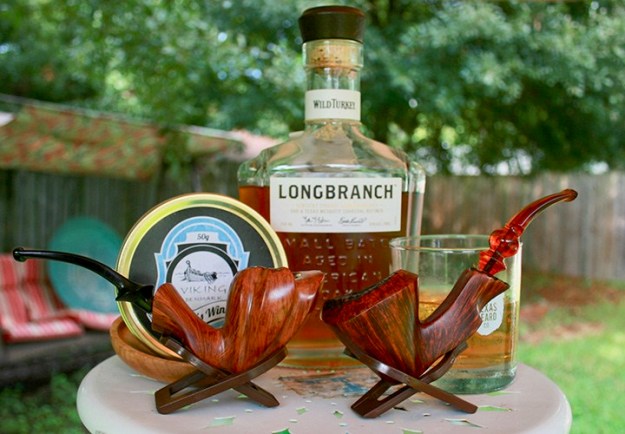
Finished Pipes, ready for an afternoon smoke. The tobacco is last tin of out of production Viking Odin’s Wind.

Which Stem for Which Pipe?

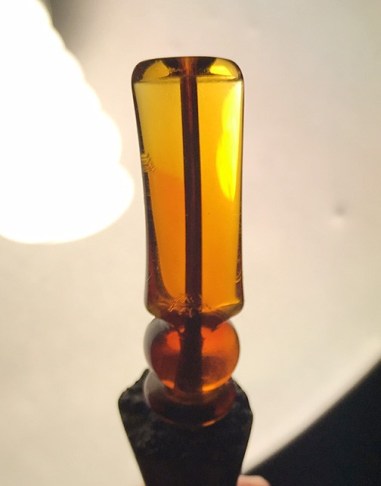
When the Ben Wades arrived, the Martinique came with a beautiful, amber colored but transparent acrylic stem. There was a minor amount of tooth chatter near the bit, but nothing I felt the need to repair. The airway, on the other hand, was black from being smoked. The stem was tight in the mortise and didn’t readily pull out.

The Royal Grain, as I mentioned in the previous post, still had a vulcanite tenon stuck in the mortise. I decided to work on the Martinique stem first and deal with finding a stem for the Royal Grain later.

Cleaning the Perspex Stem

The Perspex stem before cleaning.

The first problem was separating the stem from bowl without breaking anything. Since I planned on soaking the bowl in alcohol, I dipped the pipe and stem in the jar and let it set for a minute or two. The stem then came off the pipe easily and I rinsed it off in clean water.

With oxidized vulcanite stems, I do an Oxyclean soak to bring the oxidation to the surface. I’ve never tried an Oxyclean bath on acrylic or Perspex stems. With those, I usually just wipe the outside down with alcohol and do the inside with pipe cleaners dipped in alcohol. The one thing you never want to do is soak the stems in alcohol. It could possibly cause “crazing” or cracks in the airway. Some

people even report stems breaking after soaking in alcohol.

Tip #1: The shank brush tool is great for cleaning tobacco residue from the bit. I find it does the job faster than just pipe cleaners.

I was hoping dipping regular, tapered pipe cleaners in alcohol would remove the discoloration from the airway and sterilize it. And it did, to an extent. After 10 pipe cleaners the airway was a little cleaner, but I could still see the old tobacco stain. I probably would have gone to my bristle pipe cleaners, but I didn’t The solution for this situation? I switched to a shank brush pipe tool. It’s ideal for cleaning the shank and  the tenon and airway of a pipe stem. I dip it in alcohol and run it through the stem until it comes out fairly clean. I follow that with pipe cleaners dipped in water.

The Royal Grain Stem Replacement. Maybe?

Initially I planned to have a stem made for the Royal Grain. Then I remembered the Preben Holm stem I had sitting in my desk. It’s a mismatched stem from a Søren freehand I bought in early August. I easily removed the broken tenon by inserted a drill bit into the airway by hand and twisting and pulling it out.

Tip #2: When buying pipes in “junktique” shops and malls, check the stems for stamps or logos. It will help you identify the pipes and may also tell you if the stem is the correct one for the pipe. I use mismatch stems as a point in talking the seller into lowering the price.

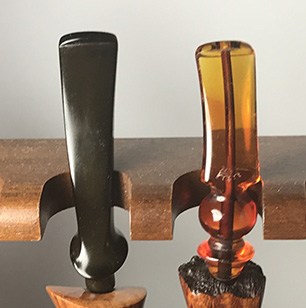
Black Vulcanite Preben Holm stem and a Perspex Ben Wade

Stems are usually made to fit the pipe it’s going with and I have never found one stem to perfectly fit a pipe other than the one it’s made for.

The Preben Holm stem fitted the Royal Grain. Maybe a tighter fit than I like, but it a fit and I can always work on the mortise or tenon to make it better. On top of that, a friend from one of the pipe forums, had a Ben Wade stem he is sending me. One way or the other I have a stem for the Royal Grain. Or, did I?


But Which Stem for Which Pipe?

So, there I was. Sitting with two clean and polished pipe bowls and two stems. I picked up the Perspex stem and inserted it back into the Martinique. And, the bowl almost slipped off the stem. The logo on the Perspex is the Ben Wade logo. This should fit.

I’m guessing that the fit was so tight at the start because both the mortise and the tenon was so dirty. Once the cleaning removed the residue, it became loose.

Just on a lark, I decided to try the Perspex stem on the Royal Grain and it slid into place easily and looked like it was made for it. I also liked the way the amber color matches to the darker finish of the Royal Grain.

I then inserted the vulcanite Preben Holm stem into the Martinique. It is a snug fit but not a tight fit. May not be the original stem, but it is close enough.

Part 1: Ben Wades in the House

© J. Gibson Creative Services. September 5, 2018

Ben Wade’s in the House, Part 1


Blog by Joe Gibson

Not Ben Wade the U.S. politician or Ben Wade the baseball player and scout, but Ben Wade pipes. Specifically, a Ben Wade Martinique and a Ben Wade Royal Grain produced by Preben Holm in Denmark.

I first saw the Martinique and the bowl for the Royal Grain at Penny’s Little Flea Market just outside of Marion, MS two weeks ago. They were tempting targets, but I passed on them for a Preben Holm Delight. I kept thinking about the Ben Wades. Finally, the wife told me to call and see if I could buy them. They arrived two days later.

Pre-cleaning Preparation

Honestly, my first thought was, “What did I get into here?” The bowls were covered in dirt and grime.

Before Cleaning. (left) Royal Grain, (right) Martinique

The bowls had scratches and I couldn’t tell how deep they were. The good news? No heavy cake and funky, sour smells. Still, I decided that best course was a 24-hour soak in isopropyl alcohol.

The Perspex stem on the Martinique had very minor tooth chatter near the bit and was dirty. It was also stuck and took a few minutes to loosen enough to pull out. Since I planned on doing an alcohol bath, I dipped the pipe and stem in the alcohol for a few minutes and allowed me to separate the two.

The Royal Grain had its own issue which I didn’t remember seeing. The mortise still had the broken tenon of a vulcanite stem still stuck in it. I resolved this issue by twisting a drill bit into the airway BY HAND. The bit dug just enough into the vulcanite that I was able to pull the tenon out. My guess is the pipe was dropped and the stem broke off because the tenon really came out easy. Finding a new stem would be a later problem.

Both pipes have some of the plateau around the rim. The Royal Grain looked like more worn down of the two, almost like the previous owner hammered the rim on his ashtray.

As I decided earlier, I dropped both pipes into containers of isopropyl alcohol and left them alone for 24 hours.

Bowl and Airway Cleaning

After the soak, I cleaned the airway and draught hole first.  My reasoning behind working on the airway, draught hole and bowl first is simple. The cake and any residue is still saturated and soft. I think this makes any reaming I have to do easier.

Using bristle pipe cleaner dipped in the same alcohol, made relatively quick work of removing cake and residue from the airway. It also opened up the draught hole. Ten pipe cleaners later and I was satisfied with the cleanliness of the airway.

Tip #1:  I use bristle pipe cleaners for deep cleaning. Be careful on Perspex or acrylic stems as the bristles can cause some scratching in the stem airway.

After sanding with 300 and 600 Grit SandpaperFor the bowl I started with my homemade pipe knife. The biggest mistake some beginning home restorers/pipe smokers make is using a pocket knife to ream the bowl. You risk damaging the briar by using a sharp knife.  In my case, I made a pipe knife from a small folding pocket knife with about a 2-inch blade. Using my bench grinder, I rounded off the point and ground down the edge until it was almost as flat as the spine. It won’t cut paper or butter.

I should point out that I don’t ream down to bare wood but ream until the cake is thin and even all the way around. I generally finish the bowl work with 320 grit sandpaper wrapped around my index finger. This smooths out the cake even more and removes even more of the cake without damage to the briar.

Pipe Surface and Finish

One of the reasons I decided on the alcohol bath was what looked like white paint specks on the Martinique. I was hoping the alcohol would dissolve the white specks. It didn’t.  After the pipes had air dried for a couple of hours, I started working over them with 320-grit dry sandpaper.

Tip #2: Protect the stamping on the briar with painter’s masking tape before starting the sanding process.

The Martinique (top) and the Royal Grain (bottom). The Royal Grain is coated with Butcher Block Conditioner

It took a little longer on the Martinique because of the white specks and the curved areas. After wiping off the sanding residue with an alcohol wipe, a second sanding of the Martinique removed all the specks and the surface scratches.  The Royal Grain, being a more smooth, flatter surface was easier to sand.

After the initial dry sanding, I started wet sanding with 600-grit sandpaper. Let me point out something here. I make the decision to wet or dry sand a pipe based on how I see the pipe at the time. Sometimes my first step is wet sanding, sometimes I don’t wet sand until I get into the finer grits of finishing sandpaper or micro-mesh pad. The theory behind the wet sanding is that it provides a smoother, glossier finish to the wood. Whether others will agree with me or not, it works for me.

By the time I worked my way up to the 12,000 grit micro-mesh pad, I had a semi-glossy appearance and both pipes felt as smooth as glass. Normally, this is where I apply caranuba wax and buff. I went one step further and applied Howard Butcher Block Conditioner to the Royal Grain. The condition contains a food grade mineral oil, beeswax and caranuba wax. Instructions were to apply with a soft cloth and let dry for 15 minutes before wiping off the excess. I used a cotton ball for the application and let it set for probably 20 minutes. I really like the color and the way the grain popped out. I resisted the temptation to do the same to the Martinique.

Next: Which Stem for Which Pipe?

© J. Gibson Creative Services. September 5, 2018


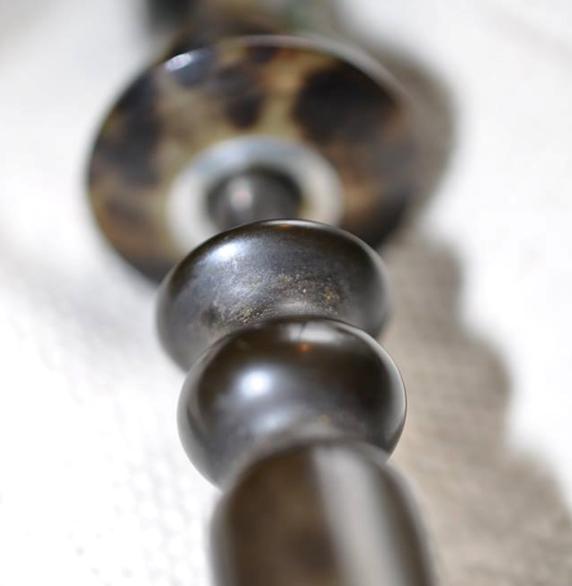
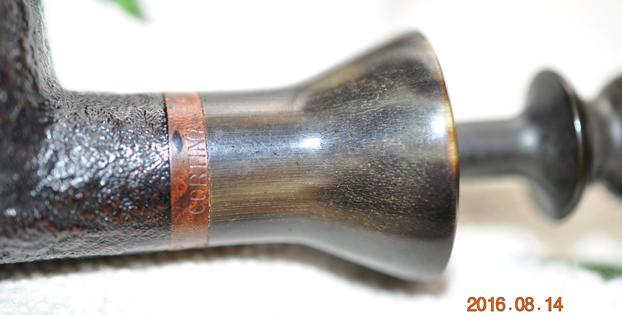
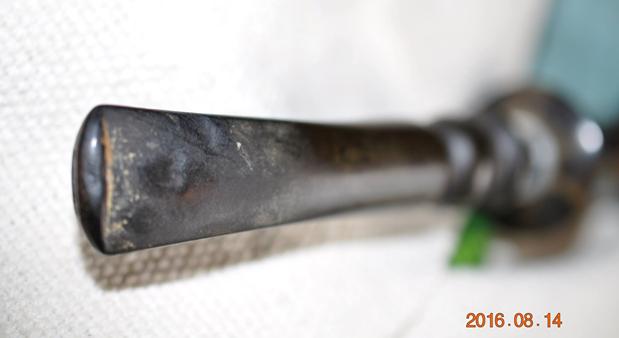
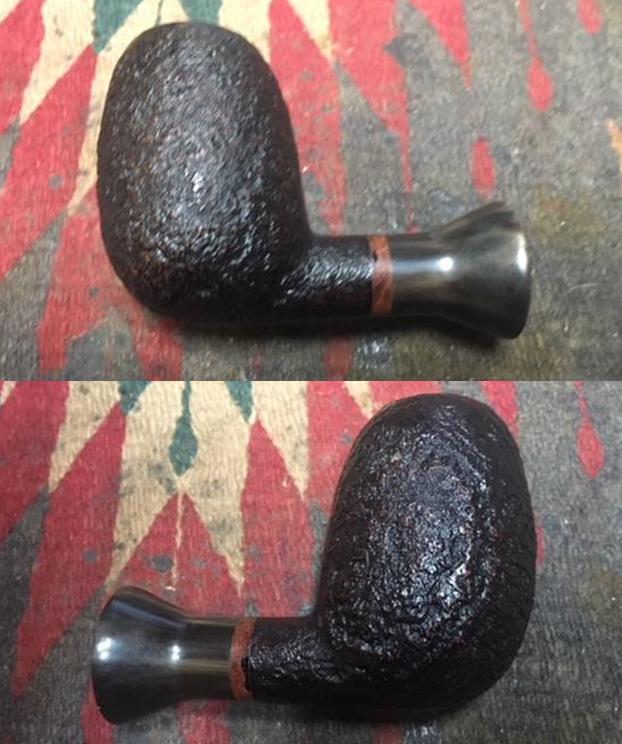
Crafting a New Stem for a Cortina Factory Denmark 22 Freehand Stack


Blog by Steve Laug

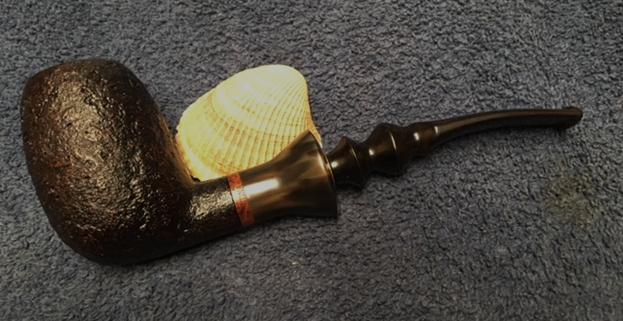
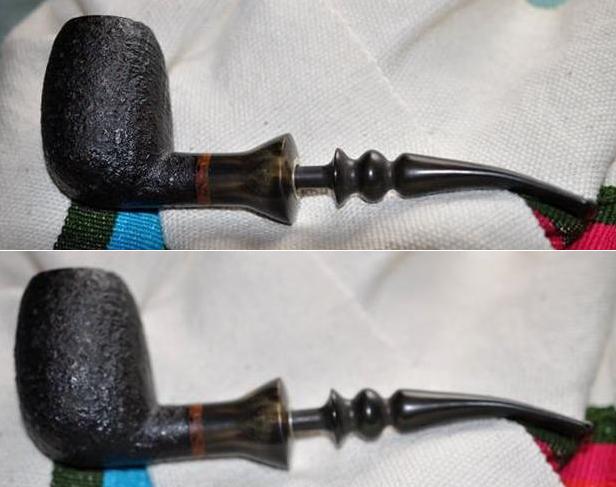
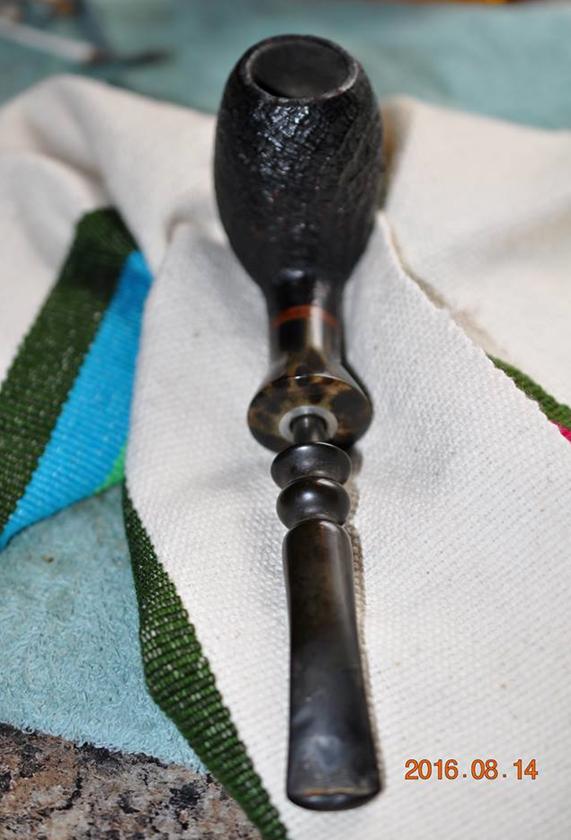
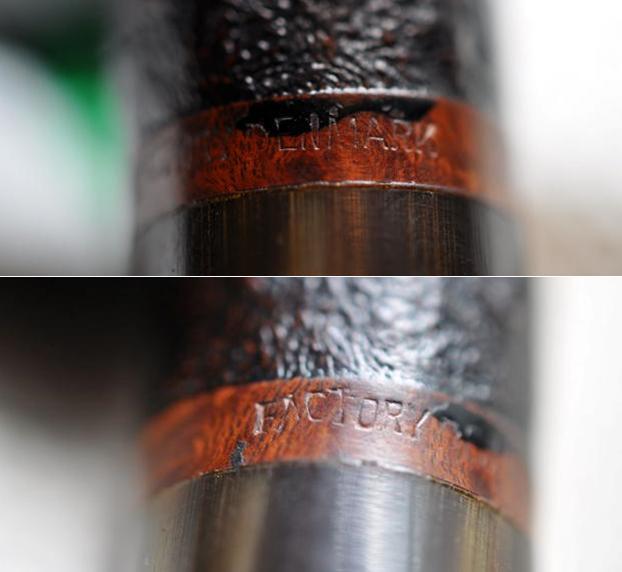
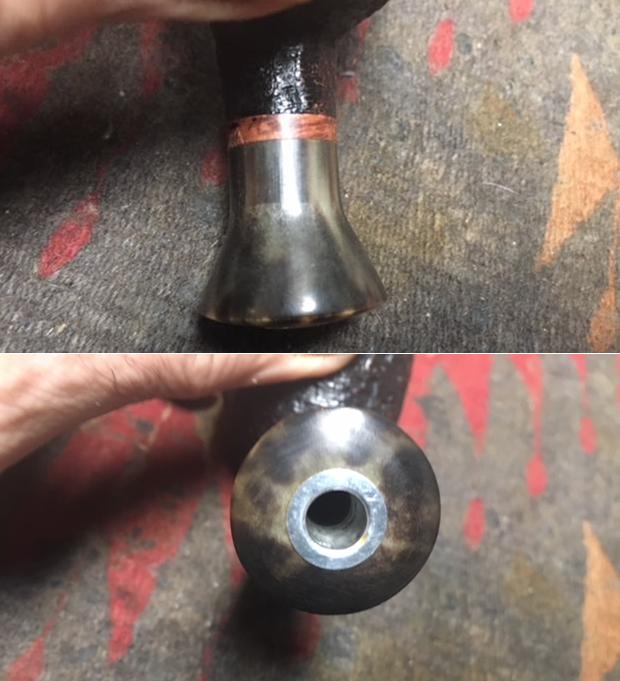
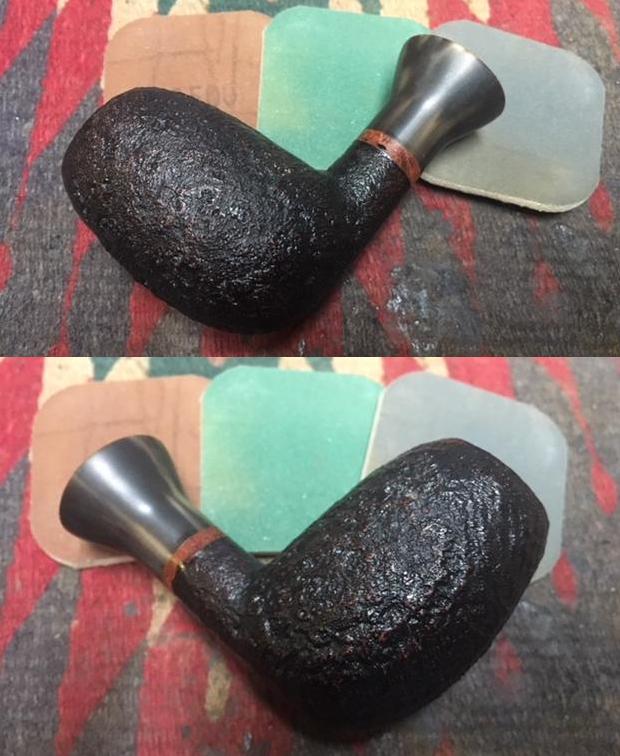
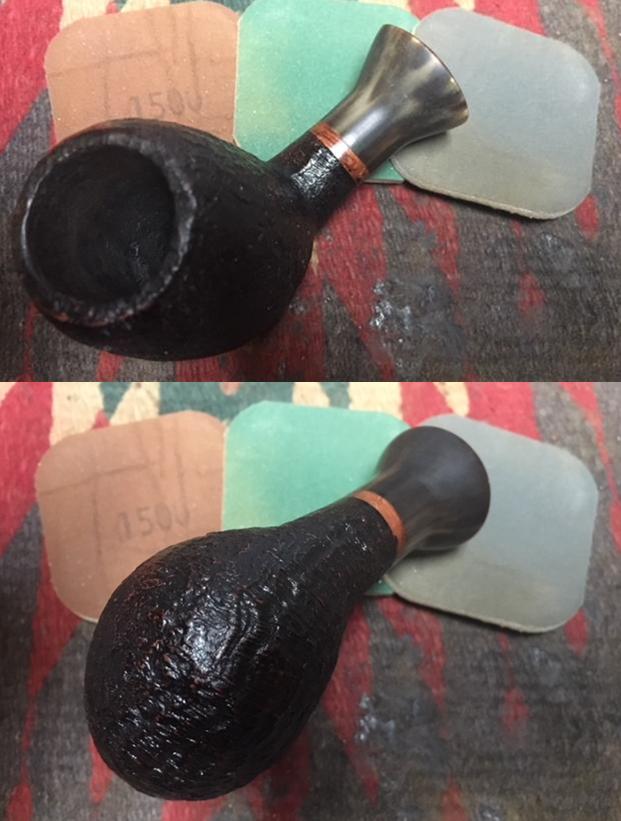
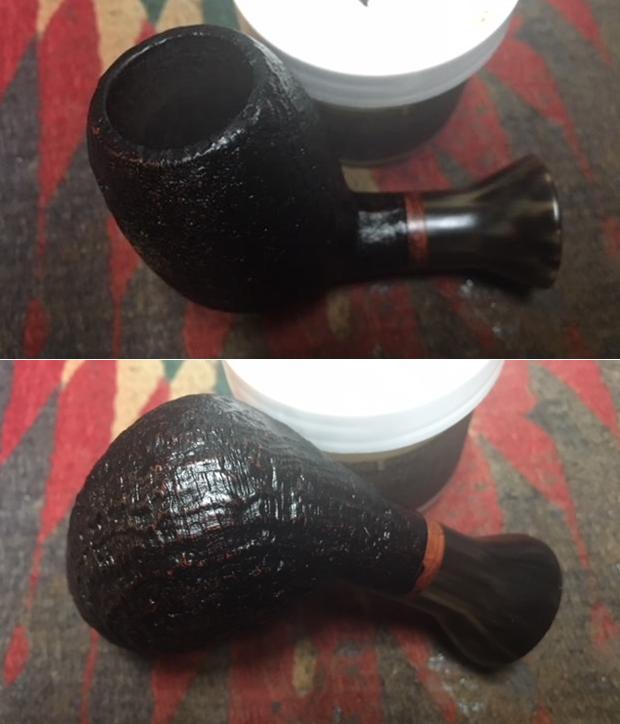
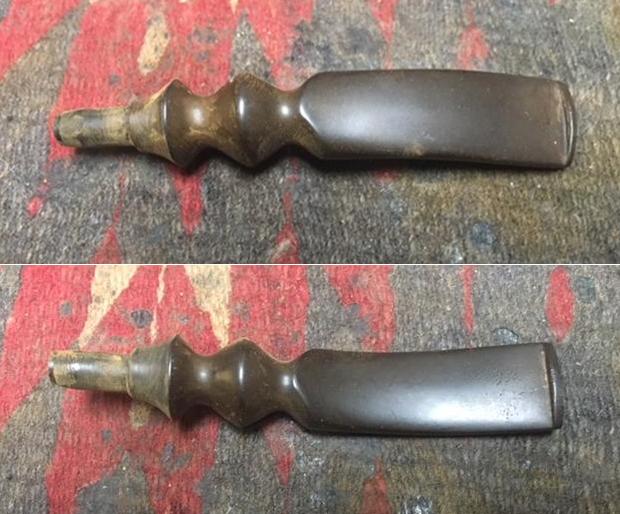
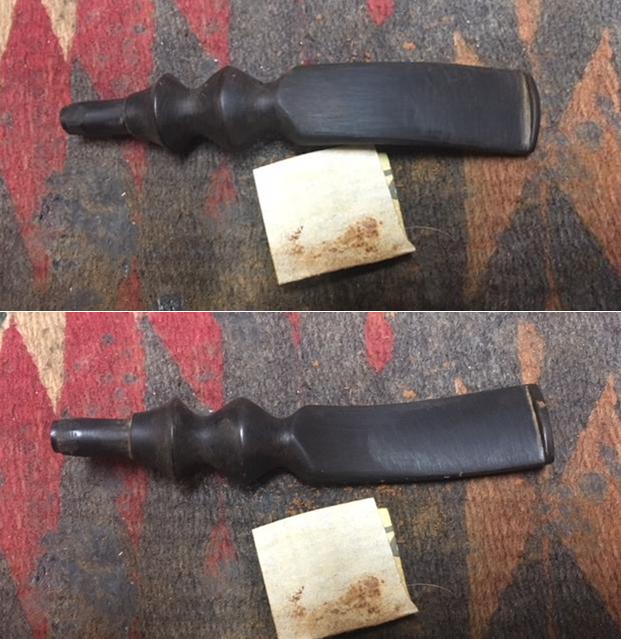
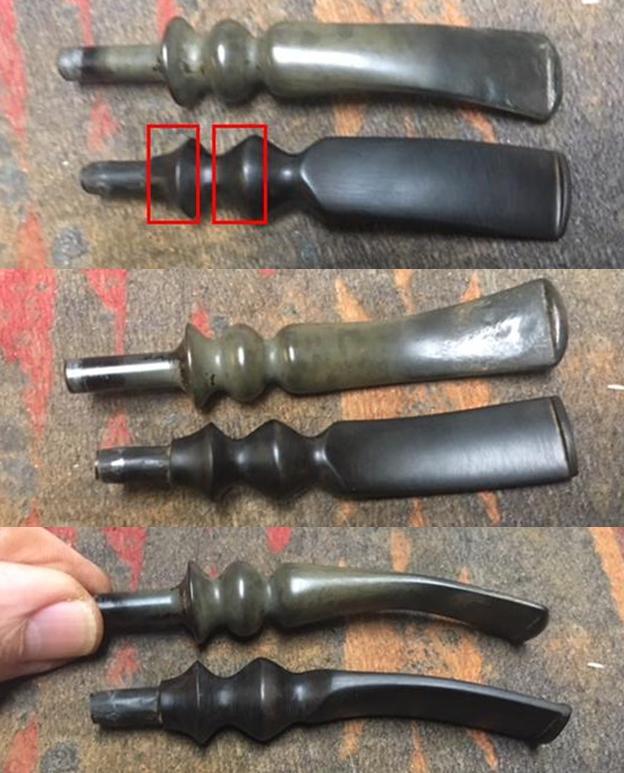
The next pipe on the table was one that my brother Jeff picked up on an eBay auction from a seller in Franklin Tennessee almost two years ago. I know it seems like a long time ago and I suppose it is but I have boxes of pipes to refurbish here and this one came up today! It was in a box with the freehand pipes that I have been working my way through. It is an interestingly shaped sandblast pipe that is a stack. When I first looked at it I did not see any stamping on the shank. As I examined it today I found stamping on the thin band of smooth briar between the horn shank extension and the bowl. It stamped around the band and reads CORTINA FACTORY DENMARK with the shape number 22. The pipe looked pretty good when he got it from the seller. There was dirt and grime in sandblast finish on the bowl. The horn shank extension was oxidized and tired looking. There was a metal mortise inset in the horn to protect it from splitting. There was a light cake in the bowl and the inner and out edges of the bowl were in good shape. The contrast brown finish on the pipe was in excellent condition. I am not sure if the stem on the pipe was the original as the tenon was very long and the fit in the shank was snug but not deep. It was lightly oxidized but in decent condition. I think a stem with a shorter tenon and snug fit to the shank would work well. I would also see if I could shape one to follow the shape of the horn extension. I would have to see what I could find in the can of stems. Jeff took photos of the pipe before he started his cleanup up work. Jeff took photos of the stamping on the pipe. The first photo shows the shape number 22 on the smooth band. The second shows the CORTINA stamp on the smooth band. The third and fourth photos show the stamping Denmark Factory. The next photo shows the shank end – a mottled horn with the metal mortise insert. The stem is in place but you can see that the diameter of the tenon is smaller in diameter than the insert. The second photo below shows the striations in the horn shank extension. The stem was dented and worn. I wanted to replace it with a different stem than the replacement that came in it so I was not too concerned with the stem condition.Jeff had scrubbed the exterior of the bowl with Murphy’s Oil soap and removed the dust and grime that had accumulated there. The finish looked very good once it had been scrubbed. He lightly reamed the bowl with a PipNet reamer and cleaned it up with a Savinelli Fitsall Pipe Knife. He cleaned the interior of the mortise and the airway in the shank and the stem with alcohol, cotton swabs and pipe cleaners. The pipe came to me clean and ready to do the restoration and restemming. I took some photos of the bowl to show the condition at this point in the process. I took some photos of the horn shank extension. At first I thought it was acrylic but as I worked on it I was sure that it was real horn. It was a unique and pretty piece of polished horn. It need to be polished but it was unsplit and in good condition.As has become my practice when working on restoring pipes I did some research on the Cortina Factory Denmark brand name. Pipedia noted the brand but had no information to give in terms of the company or a time frame. I also looked on Pipephil’s site and found a listing for the brand. I have included a screen capture from that site (http://www.pipephil.eu/logos/en/logo-c7.html). The first pipe in the photo shows the Cortina brand and stamp that is the same as on the pipe I am working on. The second one is attached to the Georg Jensen brand and the stamping is actually very similar. It makes me wonder if the Cortina was not a line of pipes made by Georg Jensen. I have no proof of that other than the connection shown in the screen capture below.I started my restoration of the pipe armed with the little bit of information that I could find on the brand. I polished the horn shank extension with micromesh sanding pads – wet sanding with 1500-2400 grit pads and dry sanding with 3200-12000 grit pads. I wiped the bowl down with a damp cloth after each sanding pad to remove the sanding dust. Once I had finished with the last pad I wiped it down with Obsidian Oil to enliven the horn and preserve it. I turned from the horn shank extension to work on the sandblast briar of the bowl. I rubbed the bowl down with Before & After Restoration Balm to deep clean the briar bowl and the rim top as well as the briar shank. The product works to clean, enliven and protect the briar. I hand rubbed it with my fingers, working it into the exterior of the pipe. I worked it into the blast with a horsehair shoe brush. After it had been sitting for a little while I buffed it with a soft cloth to polish it. The pipe really began to have a rich shine. I took some photos of the bowl at this point to mark the progress in the restoration. I had a stem in my can of stems that had turned portions that as the shape of the shank extension on the pipe. Once the stem is cleaned up I will point out the shapes more clearly. I sanded the stem with 220 grit sandpaper to shape the tenon to fit in the mortise. I sanded the oxidation to remove it from the rest of the stem. I took a photo of the new stem next to the one that had come with the bowl. You can see the variation in the shape of the stem. The top one has a very long tenon that fit into the shank up to the spot where the oxidation begins. It is longer than the new stem and the shape is not quite right. On the new stem I have boxed in the shapes in red that parallel the shape of the shank extension.I polished the stem with micromesh sanding pads – wet sanding with 1500-2400 grit pads and dry sanding with 3200-12000 grit pads. I wiped the stem down after each pad with a damp cloth to remove the sanding dust on the acrylic. I polished the stem with Before & After Pipe Stem Polish – both Fine and Extra Fine and I set it aside to dry. I polished stem and bowl with Blue Diamond to polish out the remaining small scratches. I gave the bowl multiple coats of Conservator’s Wax and the stem multiple coats of carnauba wax and buffed the pipe with a clean buffing pad to raise the shine. I hand buffed it with a microfiber cloth to deepen the shine. The pipe polished up pretty nicely. The contrasting brown stain on the sandblast, the variegated swirls in the horn shank extension and the polished vulcanite stem worked together to give the pipe a unique look. The finished pipe is shown in the photos below. This is one of those interesting unknown Danish Pipes that I think could possibly lead back to Georg Jensen but we will probably never know for sure. The shape, finish and flow of the pipe and stem are very well done. The dimensions are Length: 6 1/2 inches, Height: 2 1/4 inches, Outside diameter of the bowl: 1 1/4 inches, Chamber diameter: 3/4 inches. This one will be added to the rebornpipes store soon. If you are interested in adding it to your collection send me an email to slaug@uniserve.com or send me a message on Facebook. Thanks for walking through the restoration with me as I worked over this piece of Danish pipe making history.

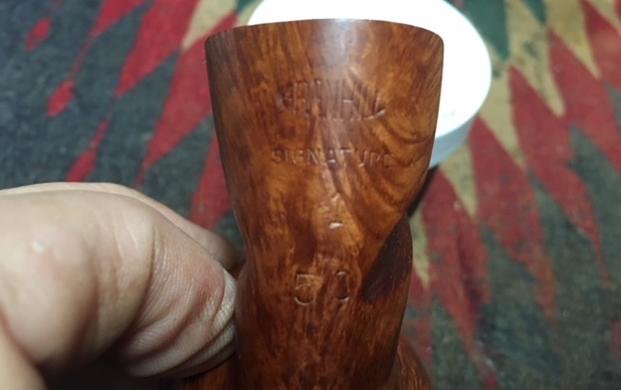
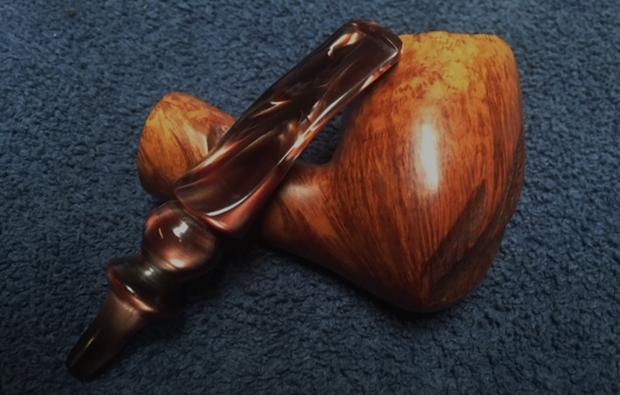
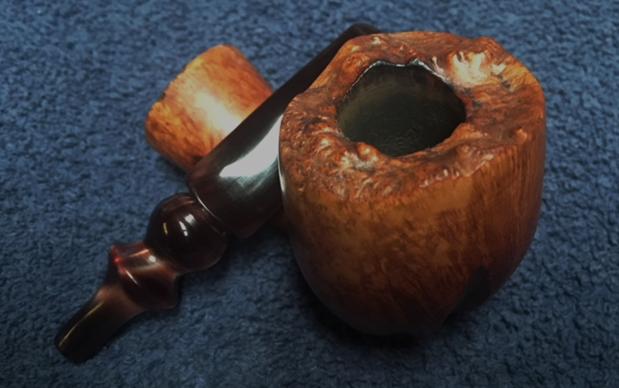
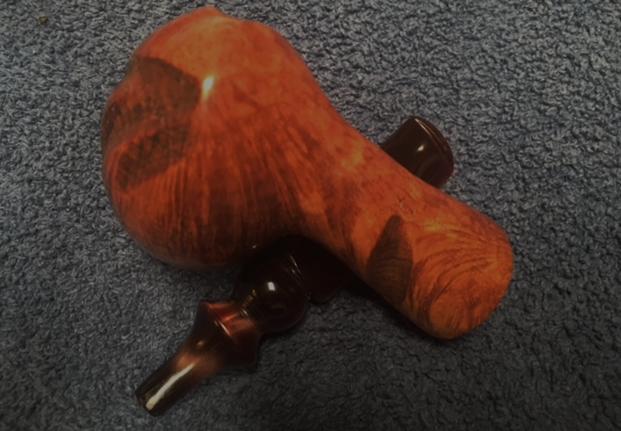
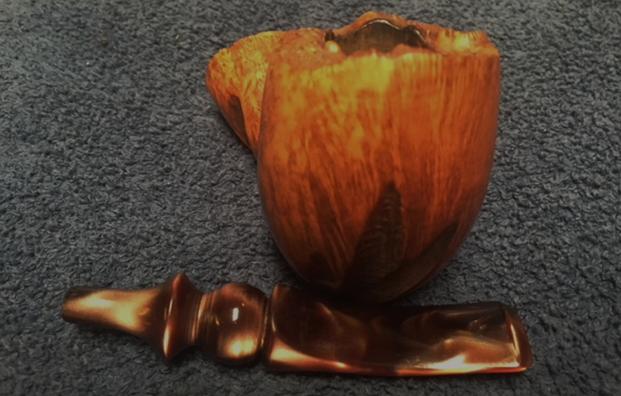
New Life for an Unusual Freehand pipe – a Granhill Signature 1 50


Blog by Steve Laug

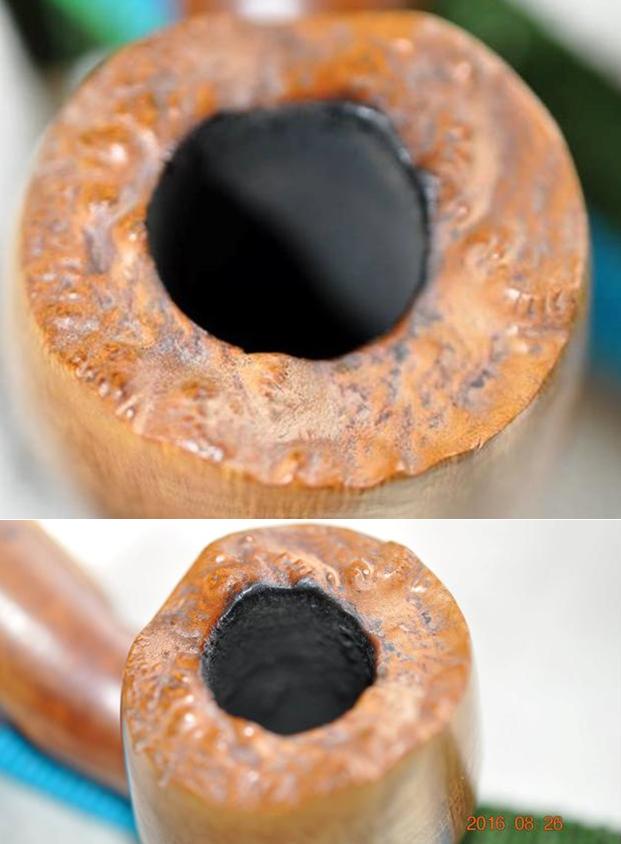
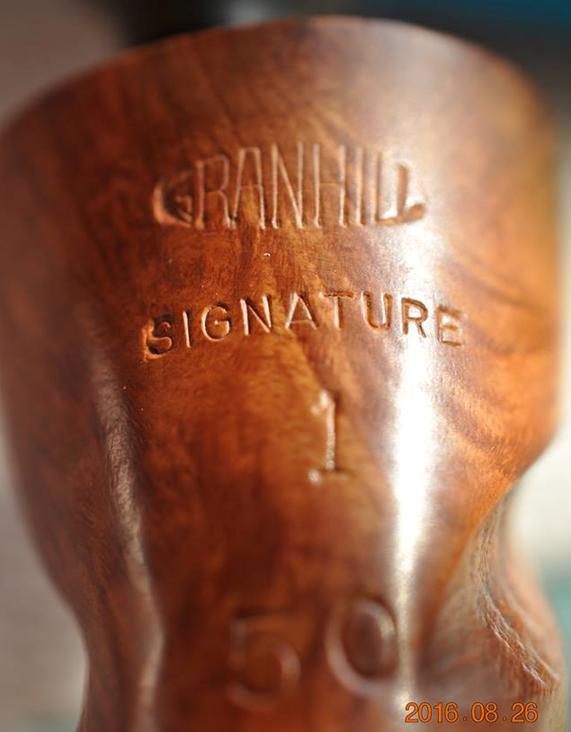
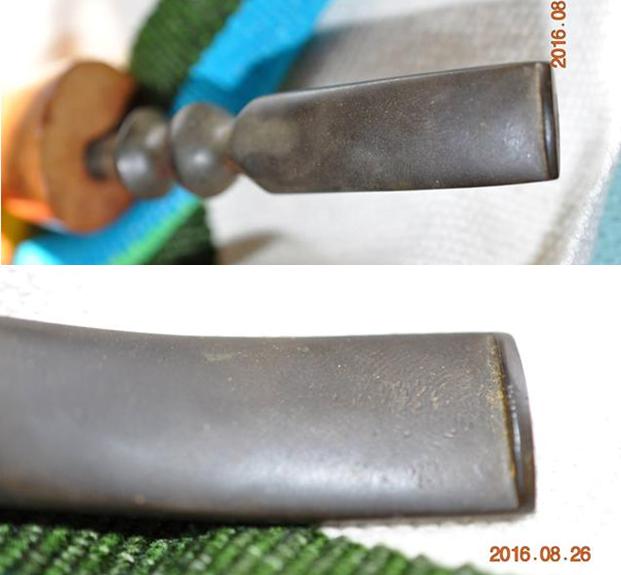
I have been working my way through some freehand pipes that my brother Jeff picked up recently. There are some amazing freehand pipes among them. The one on the work table now is another Granhill Freehand. I have already restored a beautiful large freehand Granhill earlier this summer (https://rebornpipes.com/2018/06/09/another-large-and-unique-freehand-pipe-a-granhill-signature-1-100/). It was a Granhill Signature 1 100 where this new one is a Granhill Signature 1 50. The pipe looked pretty good when he got it. There was dirt and grime in the plateau on the rim top. The edges were clean and undamaged. The bowl had a pretty thick cake inside. The finish on the pipe was an oil finish on natural briar. There were some carved trails up the sides of the bowl and the shank that had been lightly sandblasted and had an interesting texture. The stem was a replacement stem of cast vulcanite. It was oxidized but in decent condition. The acrylic stem on the other Granhill made me want to put the same kind of stem on this one as well. We would have to see. Jeff took photos of the pipe before he started his cleanup up work. Jeff took photos of the rim top to show the grime and dirt in the crevices of the rim top. There was also some darkening around the inner edge of the rim top and some lava build up that was overflowing onto the inner edge.He also took a photo of the stamping on the shank. The stamping is very clear and readable.The stem was in decent condition. The surface of the vulcanite was pitted and oxidized. There was some light tooth chatter on both sides of the stem near the thin button.Jeff had cleaned the rim top and removed the debris in the plateau. He had scrubbed the exterior with Murphy’s Oil soap and removed the dust and grime that had accumulated there. The oil finish disappeared and there was natural unfinished briar and once it was scrubbed it was clean and unstained briar. He lightly reamed the bowl with a PipNet reamer and cleaned it up with a Savinelli Fitsall Pipe Knife. He cleaned the interior of the mortise and the airway in the shank and the stem with alcohol, cotton swabs and pipe cleaners. The pipe came to me clean and ready to do some light touch ups and polishing. The stem was cleaned but had tooth chatter on the top and underside near the button and on the surface of the button itself. I took close up photos of the rim top to show the condition of the plateau. It was very clean and there was no damage to the inner or outer edge of the rim. Jeff had been able to remove all of the tars and oils and lava coat on the edge of the bowl. The photos of the stem to give a clear picture of what it looked like before I cleaned it up. They also show the smooth shank end on this particular pipe. There was a slight bit of plateau on the top of the shank end in the second photo.In my earlier blog on the other Granhill I had done research on Pipedia to find information. I found two potential makers of the brand though they separated the name into two parts Gran Hill. The first possible maker was Michael V. Kabik with some of them stamped Made in Denmark. The spelling of the name was noted to come in other versions: Granhill, Gran-Hill. The second possibility comes from Lopes book where he states that the brand also was used by a Fargo Tobacconist, Lonnie Fay, who made freehands bearing this stamp in the 1970s. To me the similarity of the pipe to other Kabik pipes that I have worked on made me go with him as the maker of this pipe as well.

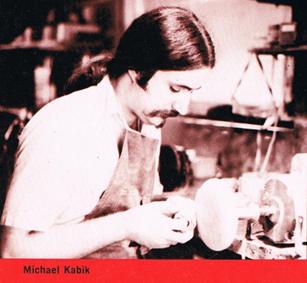
I went back to Pipedia and spent time reading about Michael Kabik (https://pipedia.org/wiki/Kabik). Here is a summary of what I found.

Michael Victor Kabik or Michael J. Kabik, now retired artisan and pipe repairman, was born in Annapolis, Maryland in 1950. As a student he was fascinated by science, but finally turned to the arts. In the early 1970s he started working as an artisan and designer for Hollyday Pipes Ltd., and when the company closed he set up in his own right.

Kabik writes as follows:

…In the 1960s, I had helped Jay build Jay’s Smoke Shop and was his first employee. Since that time, he had set up one of the very first freehand pipe-making operations in the U.S. along with his partner, Chuck Holiday, called CHP-X Pipes. The staff consisted of four full-timers actually making the pipes and perhaps another four in sales and office work. Chuck, who did the actual design and carving, had long since had serious disagreements with Jay and split. Chuck’s replacement from the staff was quitting, and Jay was in a bind. Jay offered me the job, and I gladly accepted. The fellow quitting was supposed to train me for two months but left after two weeks, leaving me with an awesome responsibility. I felt as though the future employment of all these people depended on me as the designer and cutter…and it did.

…Sadly, CHP-X closed its doors two years after my arrival, due primarily to distribution, sales force problems, and other issues to which I was not privy…In love with a medium that satisfied my creative impulses while, pretty much, paying the bills, I bought up the essential equipment and produced pipes on my own. I did this from a farm house my wife and I rented in Phoenix, Maryland. I produced pipes under the name KANE, Gran Hill and others I can’t remember as well as a private label line for a store in, I believe, South Dakota.

…In 1973, I was approached by Mel Baker, the owner of a chain in Virginia Beach called Tobak Ltd. Mel was interested in producing a freehand pipe line and was alerted to my product by Al Saxon, one of his managers and a former CHP-X employee. Mel wanted to relocate me to Virginia Beach, give me carte blanche, and recreate the CHP-X studio with, of course, a new name for the product. I’m sure my answer came very quickly.

…We decided on the name Sven-Lar. Why? Well, when I bought out CHP-X, I also got a small drawer full of metal stamps that were created for private-label work. The Sven-Lar name was conceived but never realized. Aside from having the stamp already made, there were other reasons we chose Sven-Lar. First, we were making a line of pipes in the Danish freehand tradition and also, sadly, we knew the difficulty American pipe makers had breaking the foreign market mystique barrier. The latter certainly played a big part in the demise of CHP-X.

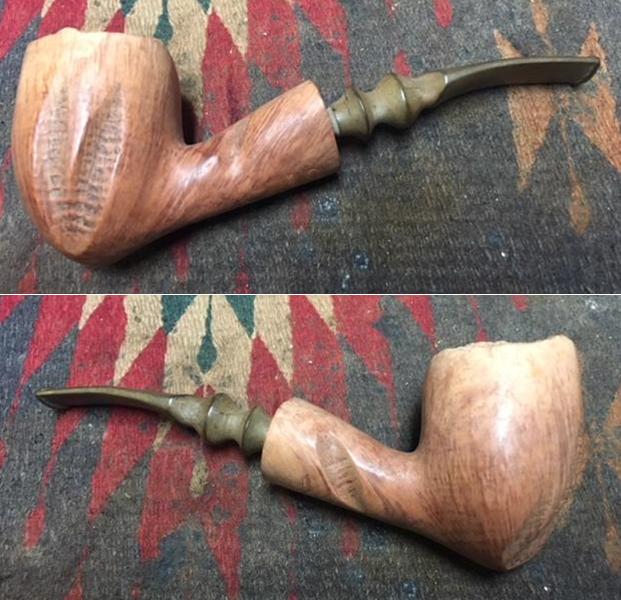
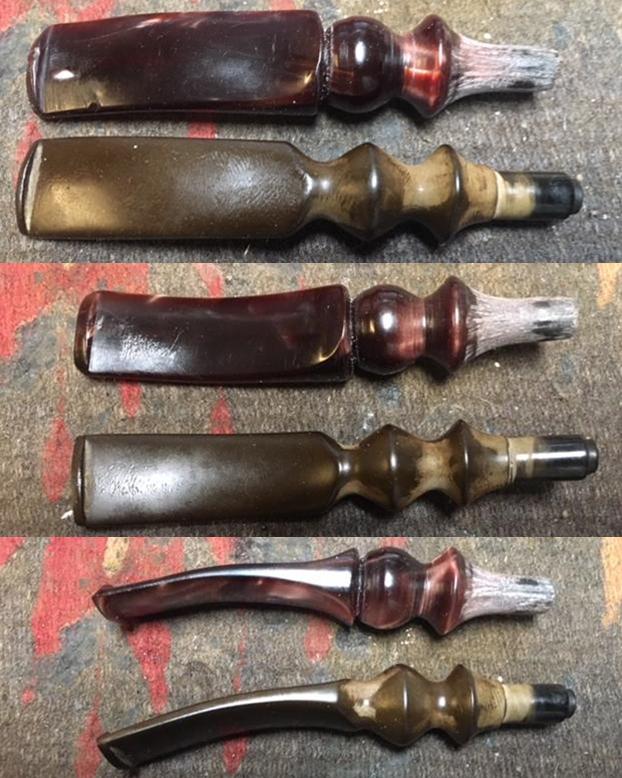
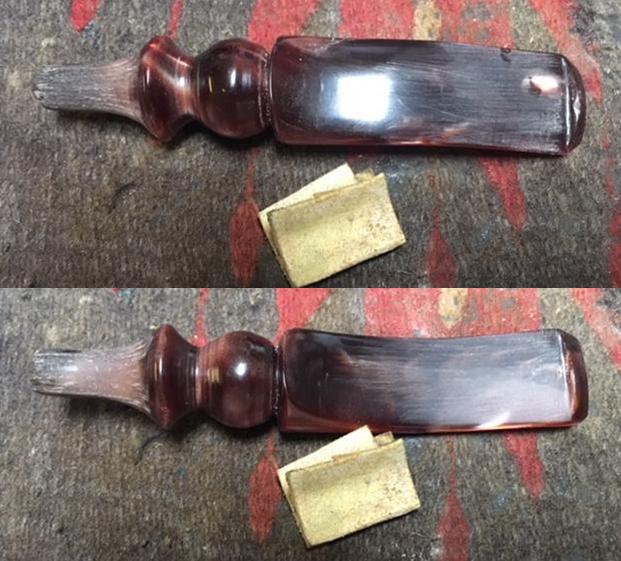
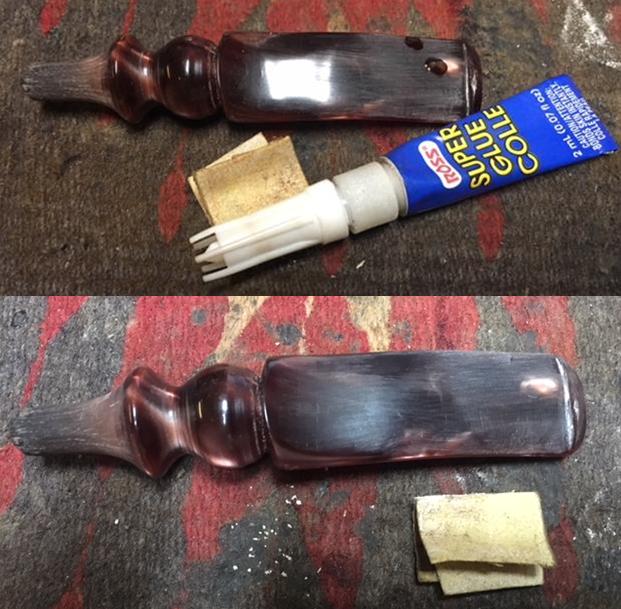
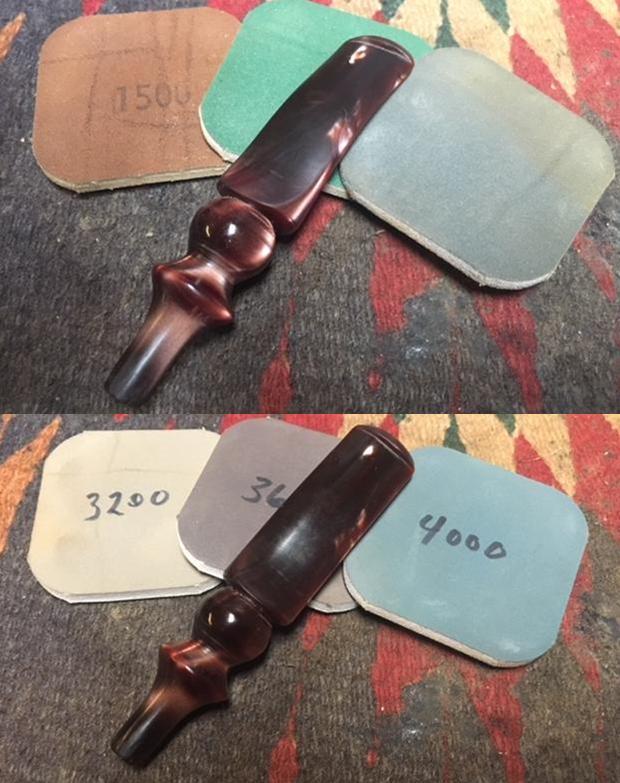
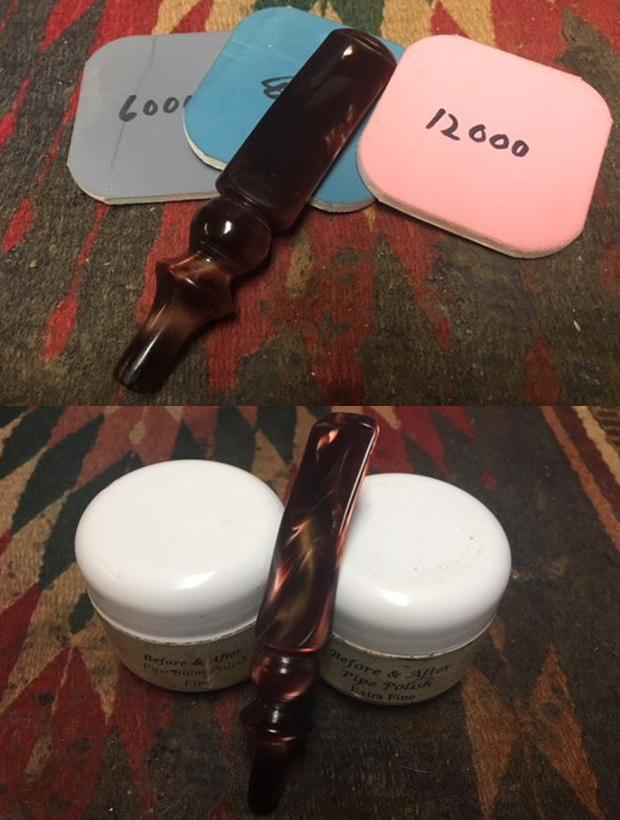
After rereading the previous blog I was pretty certain that the pipe I was working on was another one made by Kabik. I turned my attention to restoring the pipe. I started with the clean bowl, I rubbed the bowl down with Before & After Restoration Balm to deep clean the briar bowl and the rim top as well as the briar shank. The product works to clean, enliven and protect the briar. I hand rubbed it with my fingers, working it into the exterior of the pipe. I worked it into the plateau top with a horsehair shoe brush. I wiped it off and buffed it with a soft cloth to polish it. The pipe really began to have a rich shine. I took some photos of the bowl at this point to mark the progress in the restoration. I wrapped a piece of dowel with 220 grit sandpaper and sanded out the inside of the bowl to smooth the walls. I removed all of the remaining cake on the walls of the bowl.I set the bowl aside and turned my attention to the stem. I looked over the replacement stem and decided to not use it. I went through my stem collection and found a nice brown swirled acrylic stem that I thought would look good with the pipe bowl.  It was very similar to the stem on the other Granhill I worked on so I decided to use it instead. I took photos of the two stems side by side for comparison.I sanded the tenon end with a Dremel and sanding drum and smoothed it out with 220 grit sandpaper to adjust the tenon to the same diameter as the tenon on the replacement stem. It did not take too much work to adjust the fit to the shank.I sanded out the tooth marks out of both sides of the stem with 220 grit sandpaper. I worked over the surface with sandpaper to remove the tooth chatter, marks and to smooth out the surface. There were tooth deeper tooth marks on the top side of the stem that I would need to fill in and work on. I filled in the dents with clear super glue. Once the glue cured I sanded them smooth with 220 grit sandpaper to blend them into the surface of the acrylic. I polished the stem with micromesh sanding pads – wet sanding with 1500-2400 grit pads and dry sanding with 3200-12000 grit pads. I wiped the stem down after each pad with a damp cloth to remove the sanding dust on the acrylic. I polished the stem with Before & After Pipe Stem Polish – both Fine and Extra Fine and I set it aside to dry. I polished the briar with micromesh sanding pads – wet sanding with 1500-2400 grit pads and dry sanding with 3200-12000 grit pads. I wiped the bowl down with a damp cloth after each sanding pad to remove the sanding dust. Once I had finished with the last pad I wiped it down with a light coat of olive oil to collect the dust and to give some depth to the finish. I polished stem and bowl with Blue Diamond to polish out the remaining small scratches. I gave the bowl and the stem multiple coats of carnauba wax and buffed the pipe with a clean buffing pad to raise the shine. I hand buffed it with a microfiber cloth to deepen the shine. The pipe polished up pretty nicely. The plateau on the rim top and the smooth natural oiled finish work very well with the swirled brown acrylic stem. The finished pipe is shown in the photos below. While I have worked on other Michael Kabik pipes (a CHIP-X) this is the second Granhill pipe of his that I have restored. It is well crafted and is very similar to the CHIP-X that I worked on in the past. The shape, finish and flow of the pipe and stem are very well done. The dimensions are Length: 6 1/2 inches, Height: 2 1/4 inches, Outside diameter of the bowl: 1 3/4 inches, Chamber diameter: 3/4 inches. This one will be added to the rebornpipes store soon. If you are interested in adding it to your collection send me an email to slaug@uniserve.com or send me a message on Facebook. Thanks for walking through the restoration with me as I worked over this Granhill freehand.