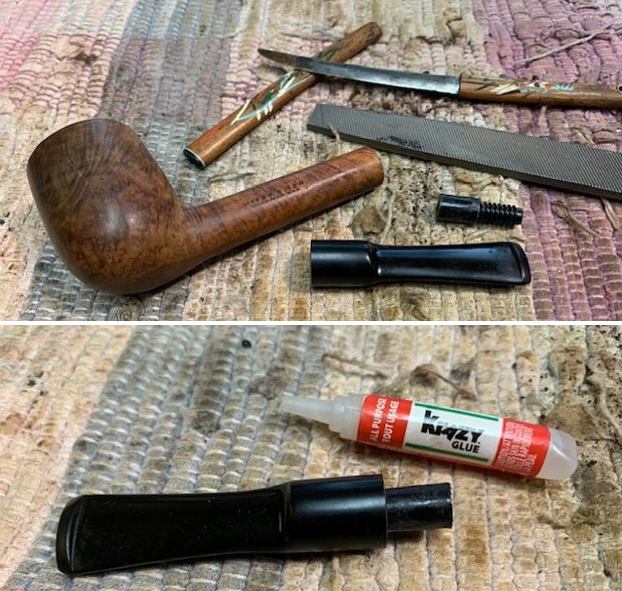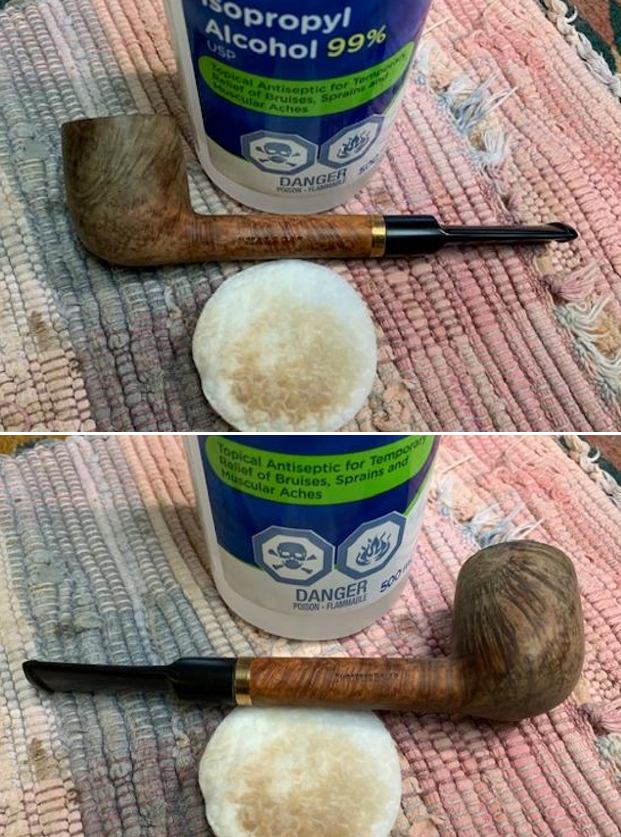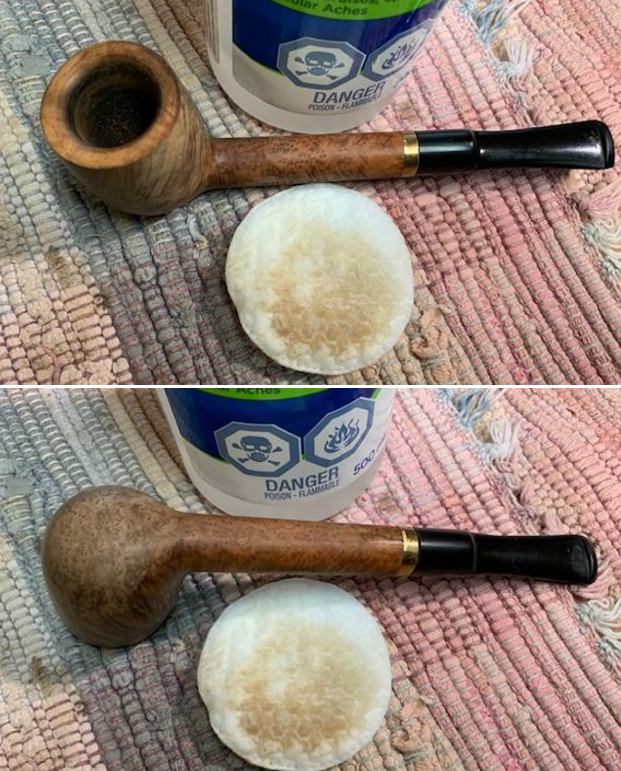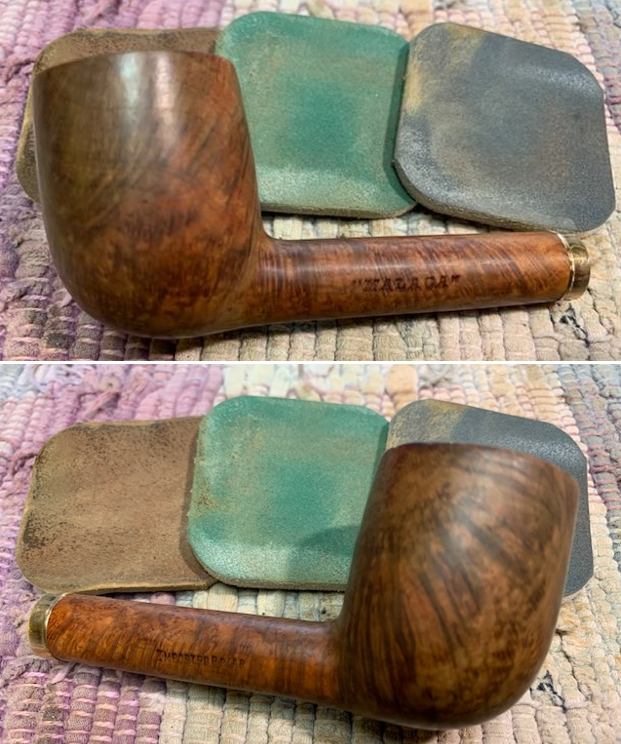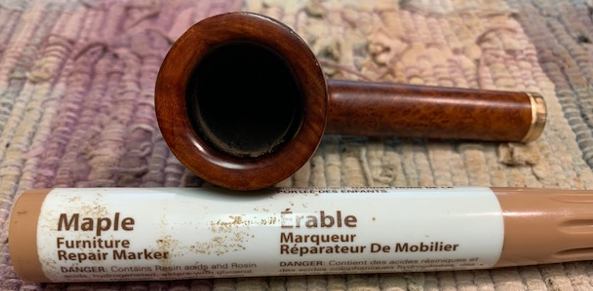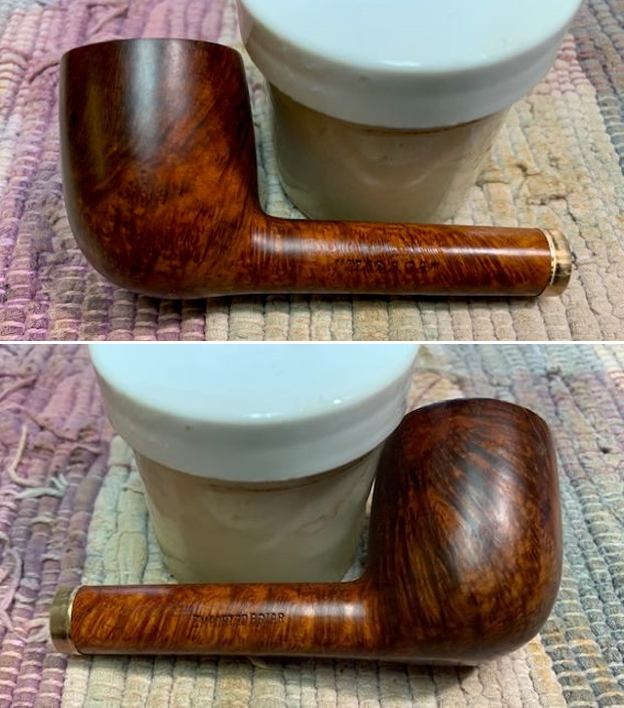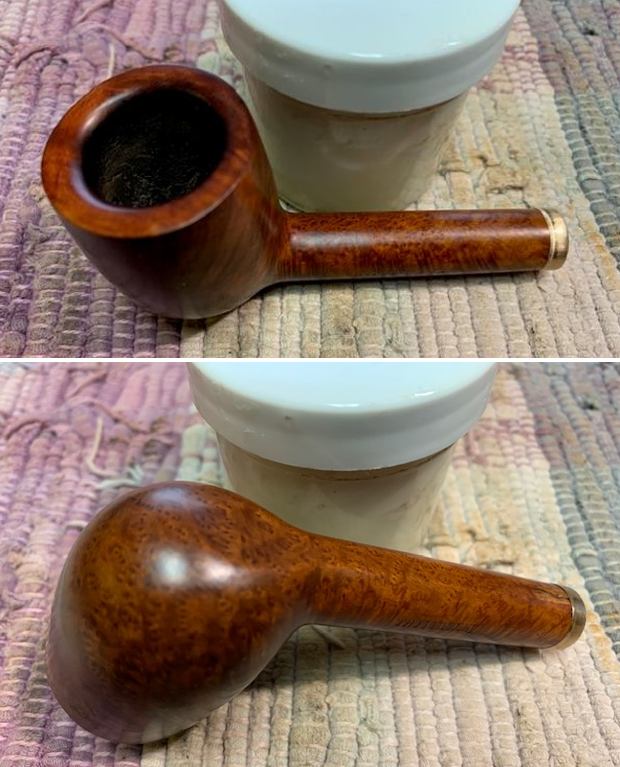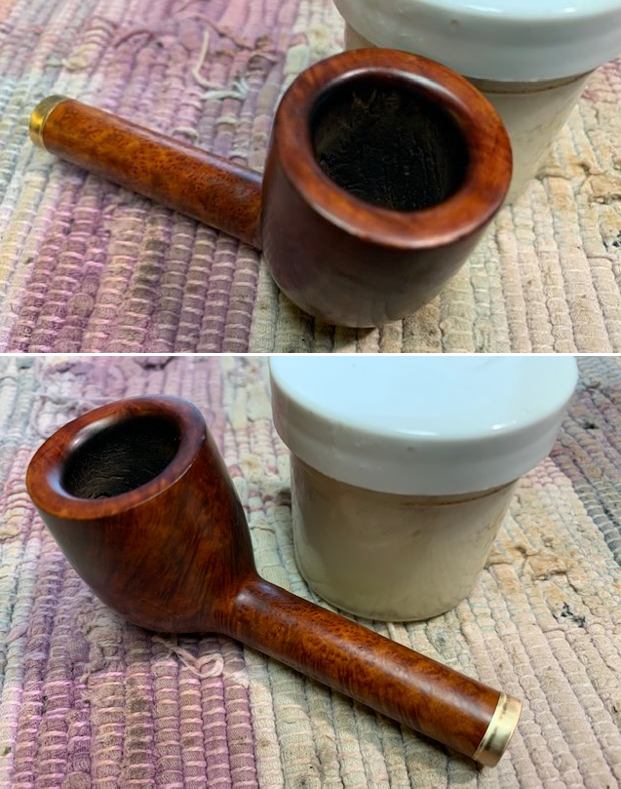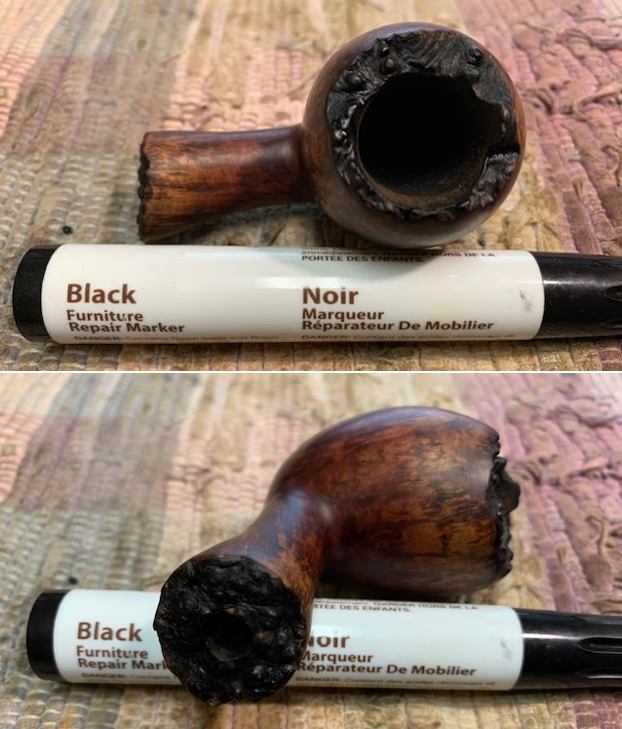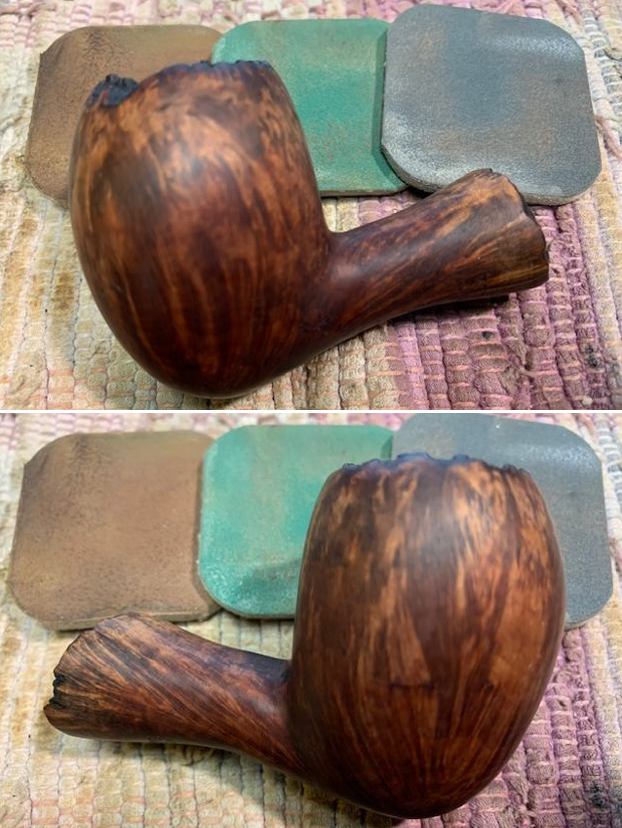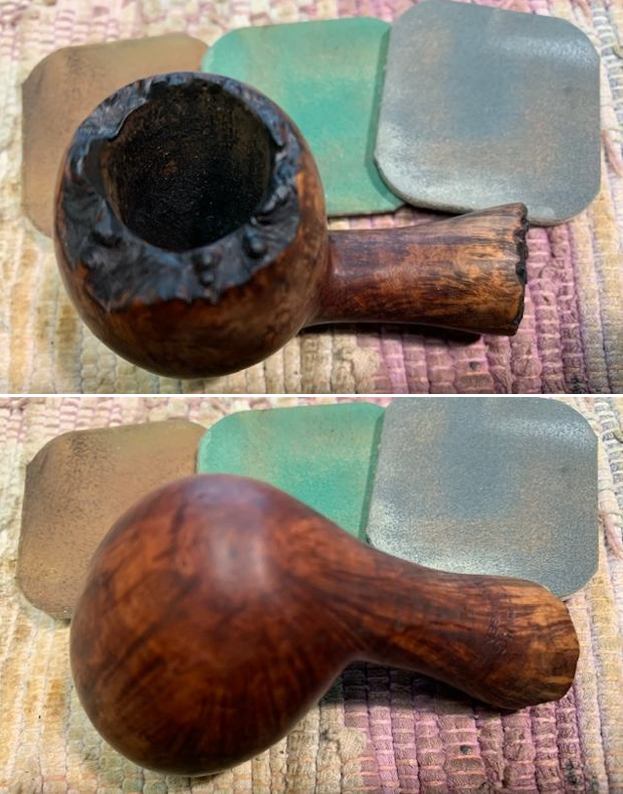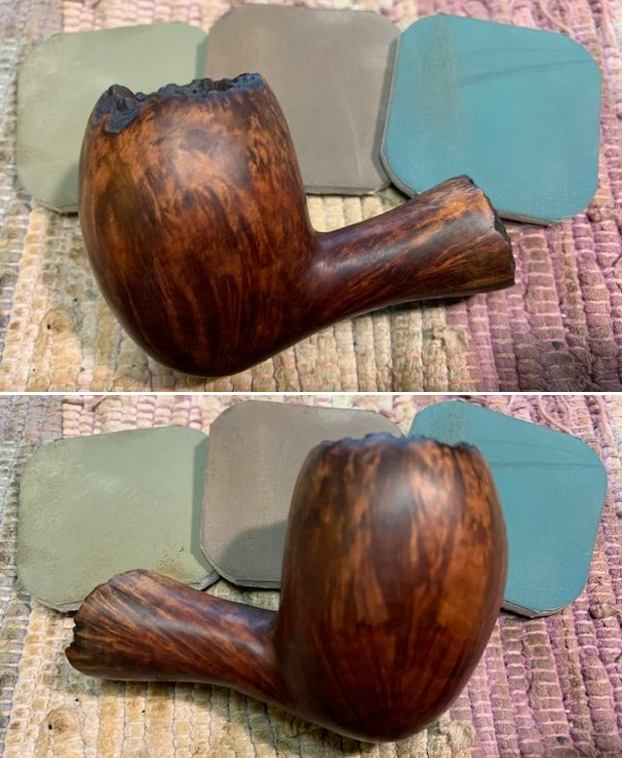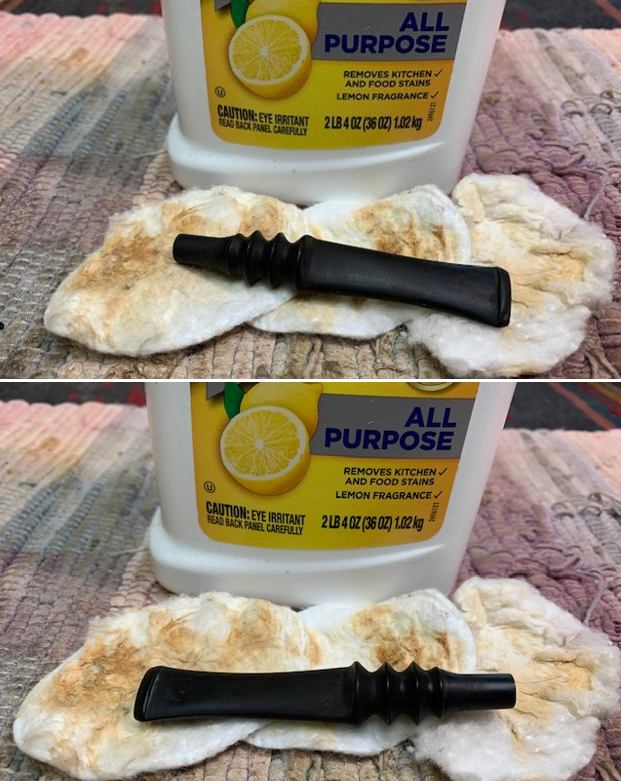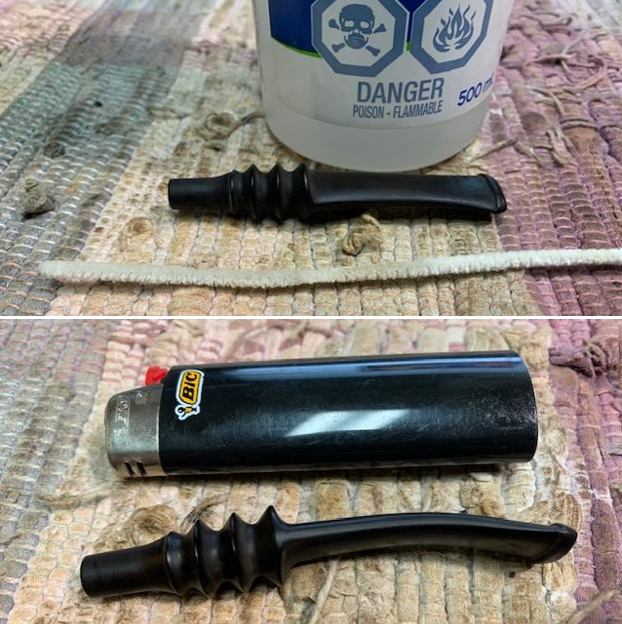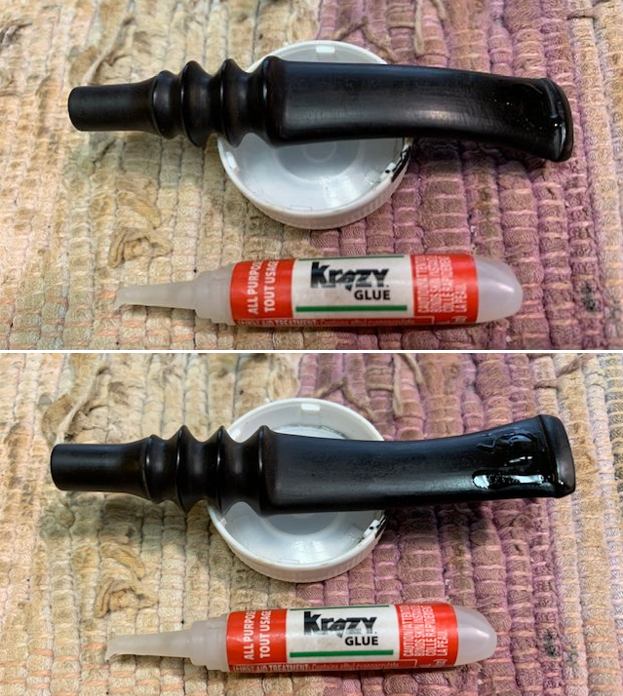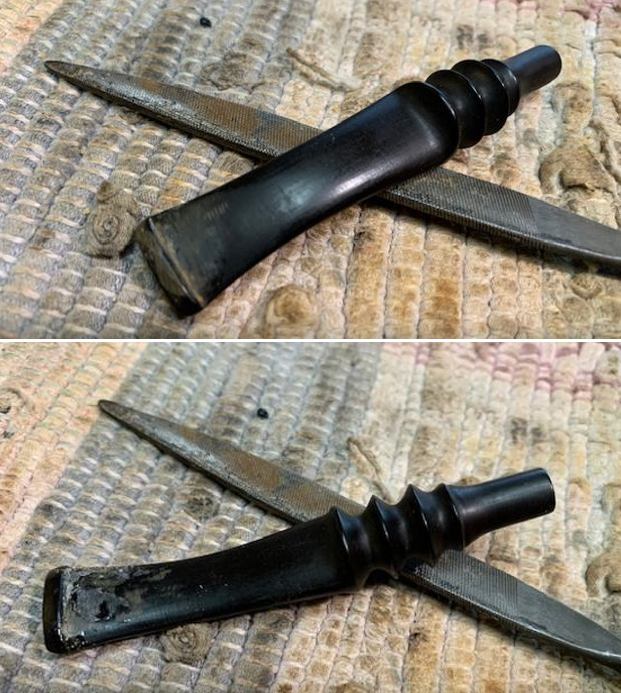
Tag Archives: restaining a bowl and rim

New Life for a Butz-Choquin Regate 1282 Zulu


Blog by Steve Laug

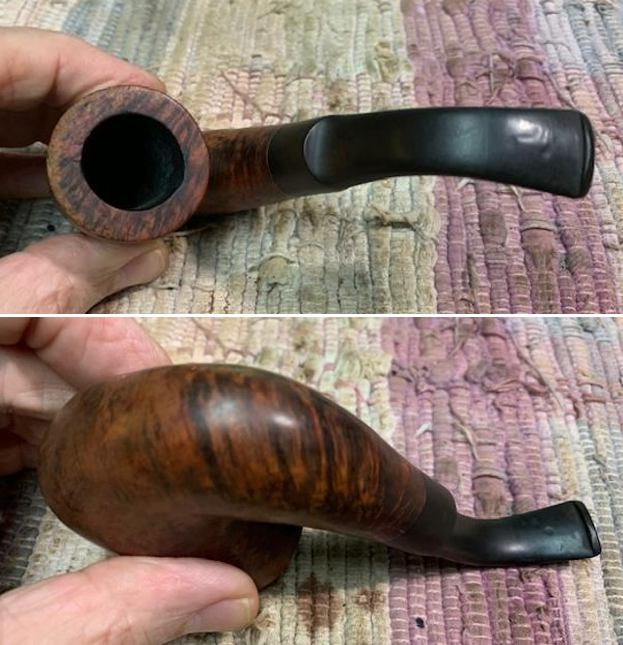
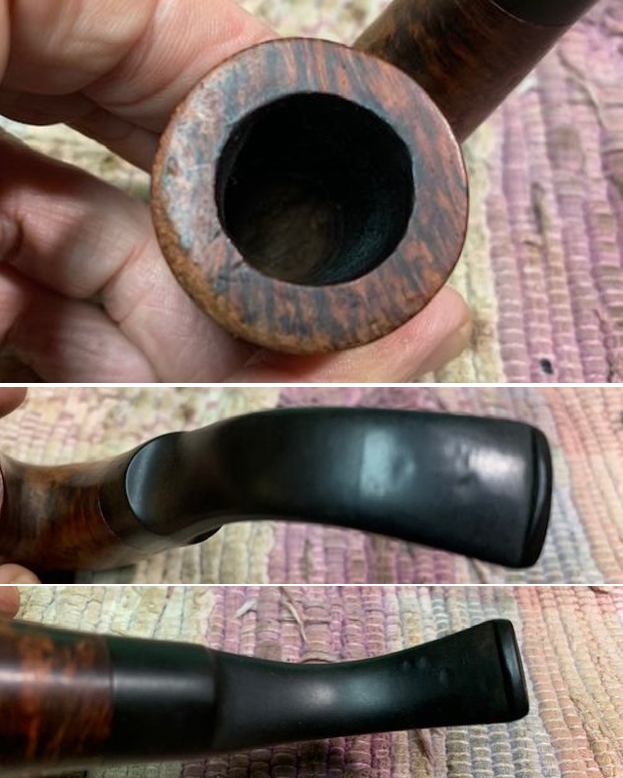
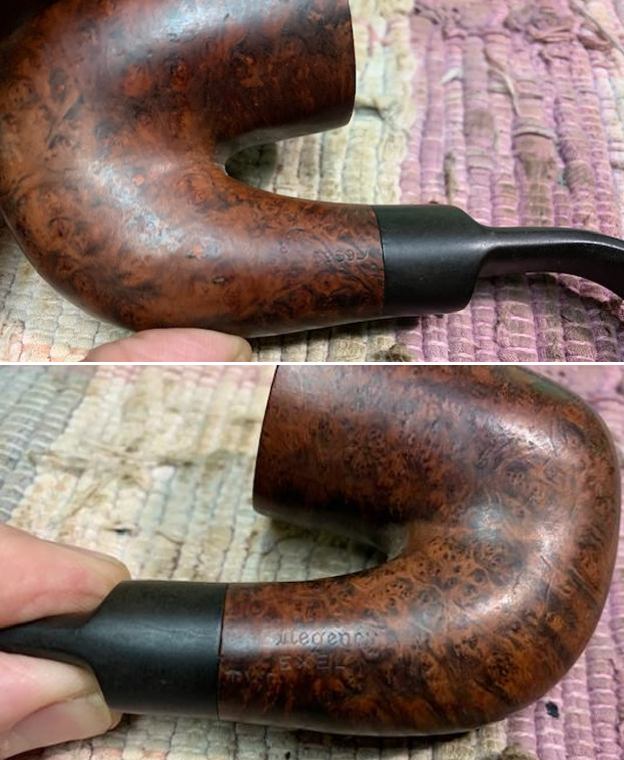
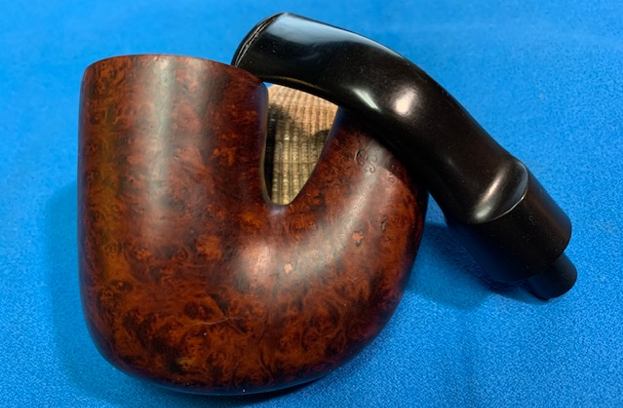
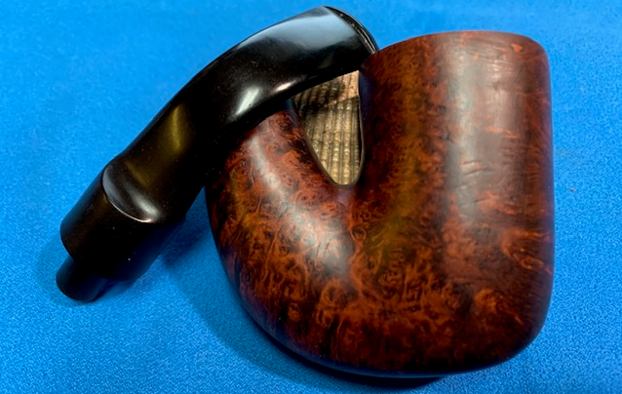
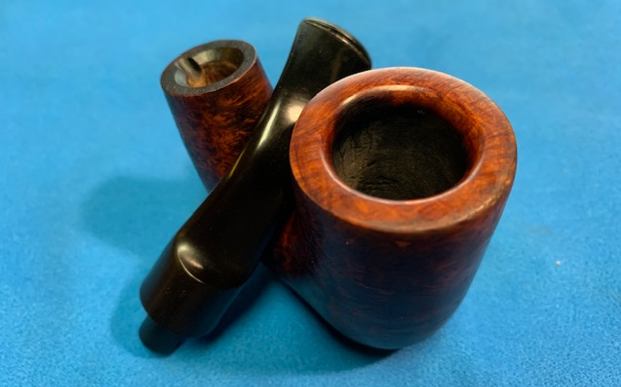
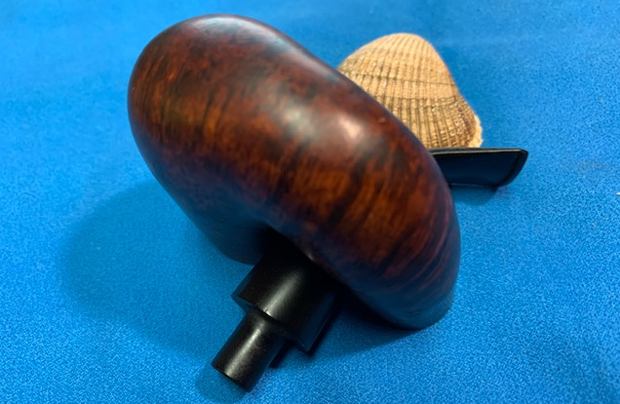
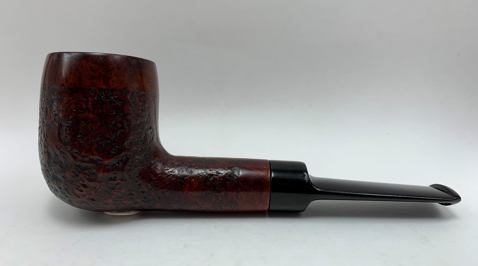
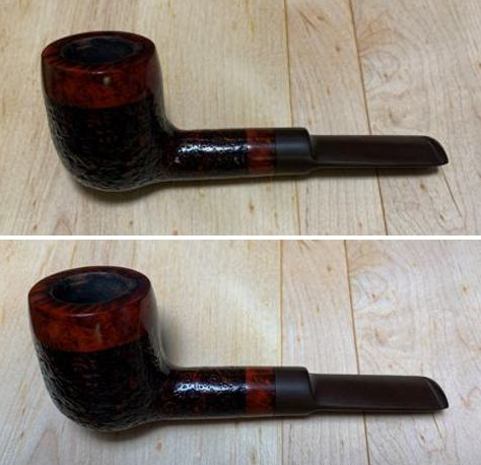
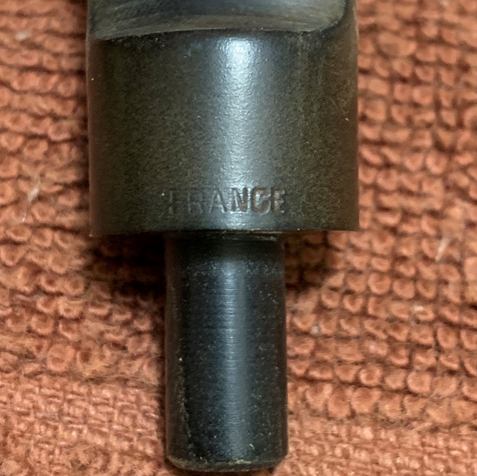
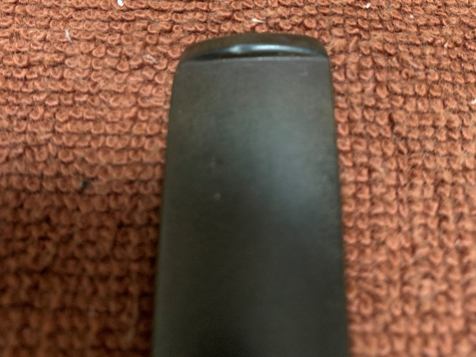
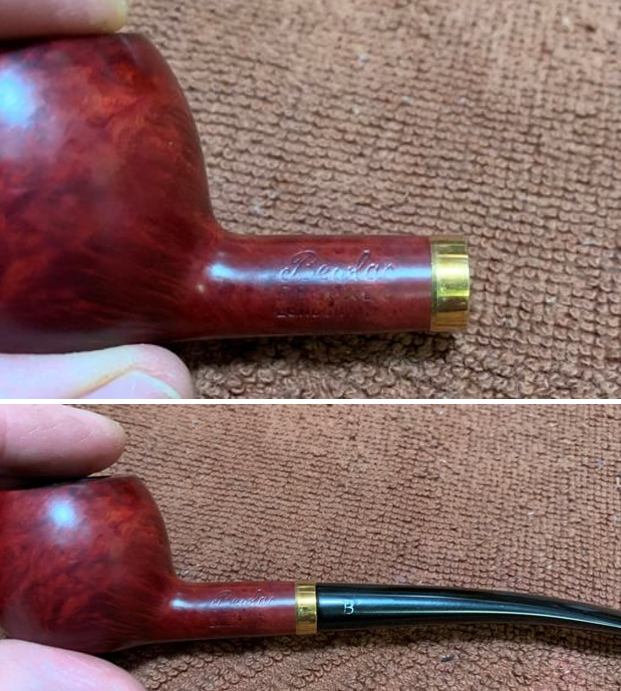
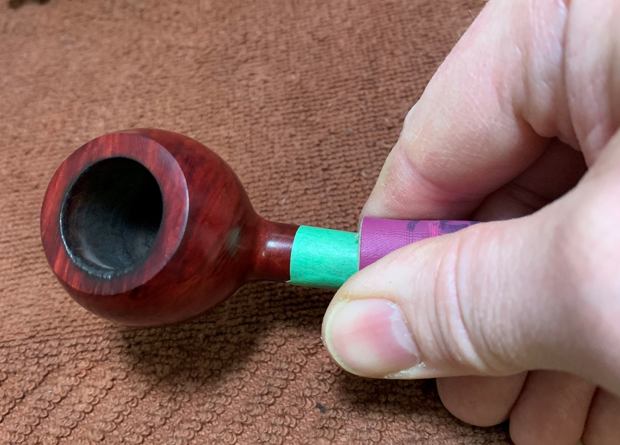
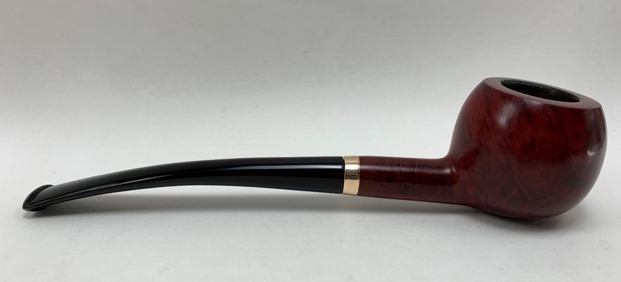
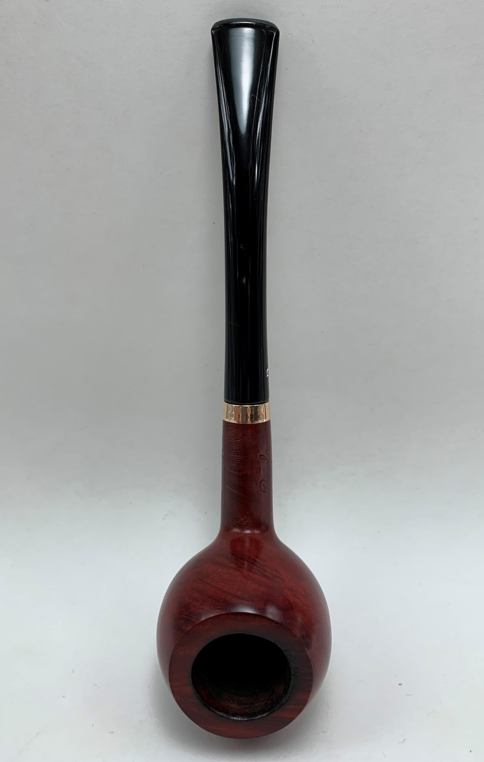
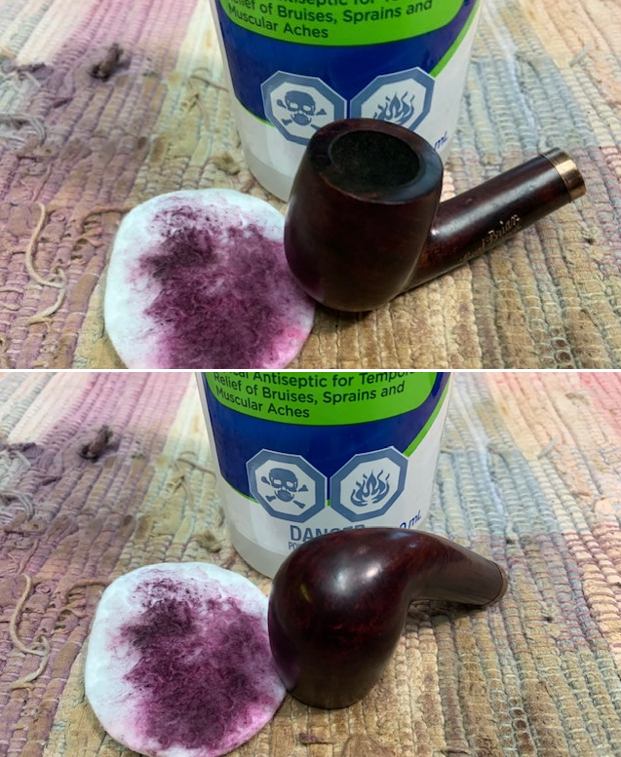
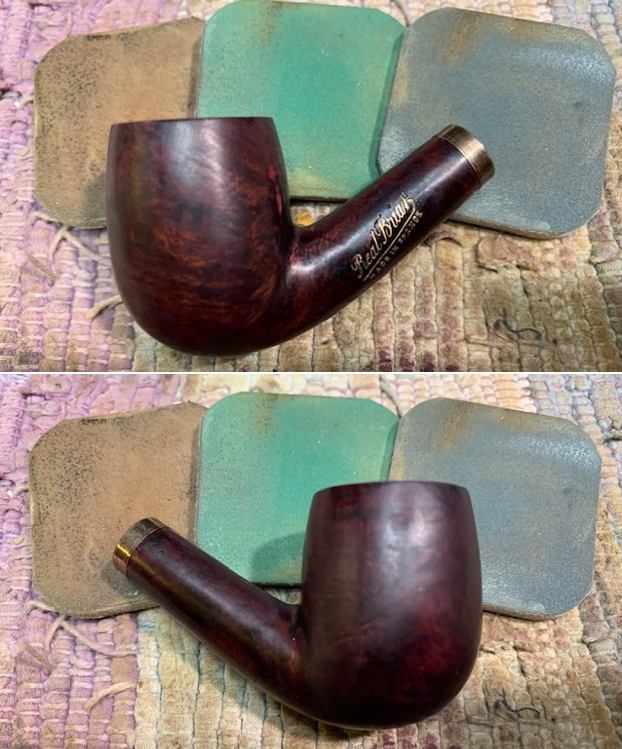
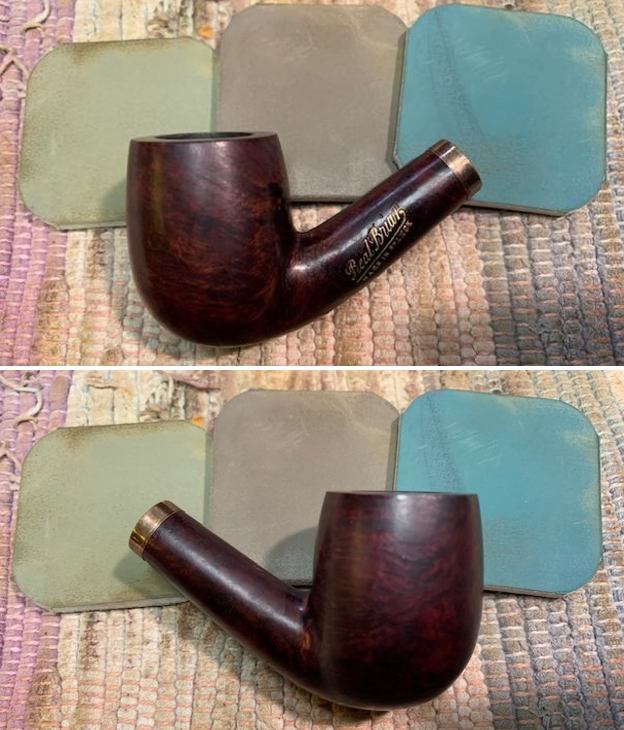
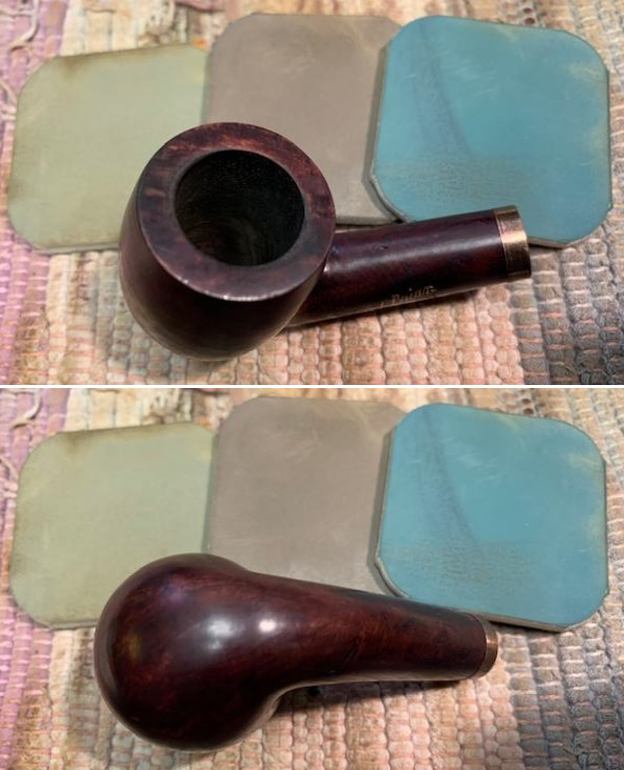
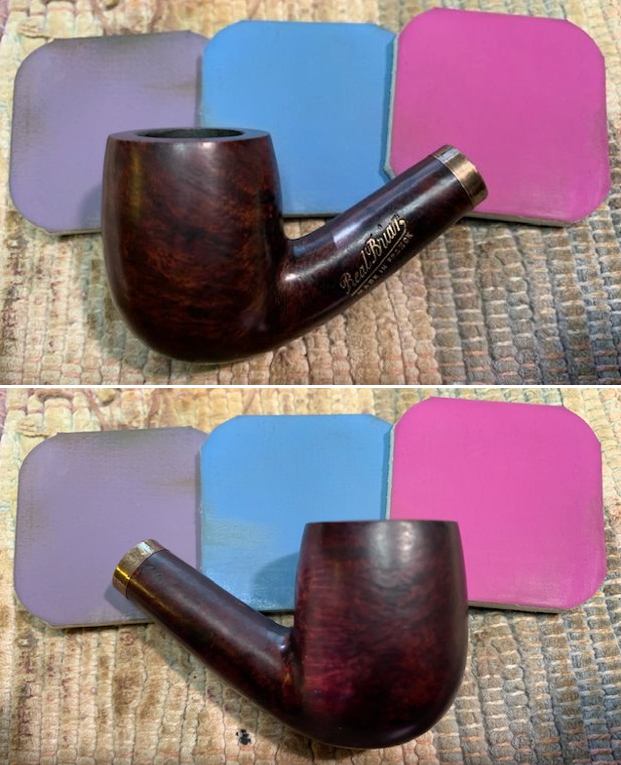
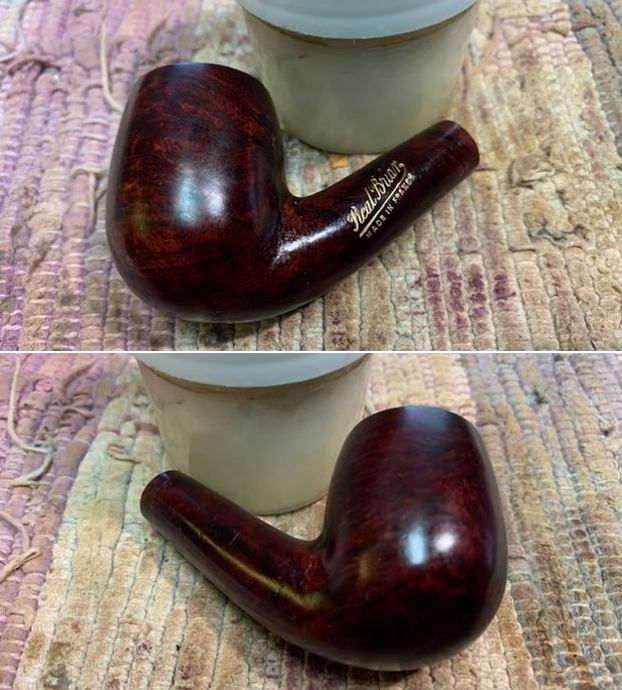
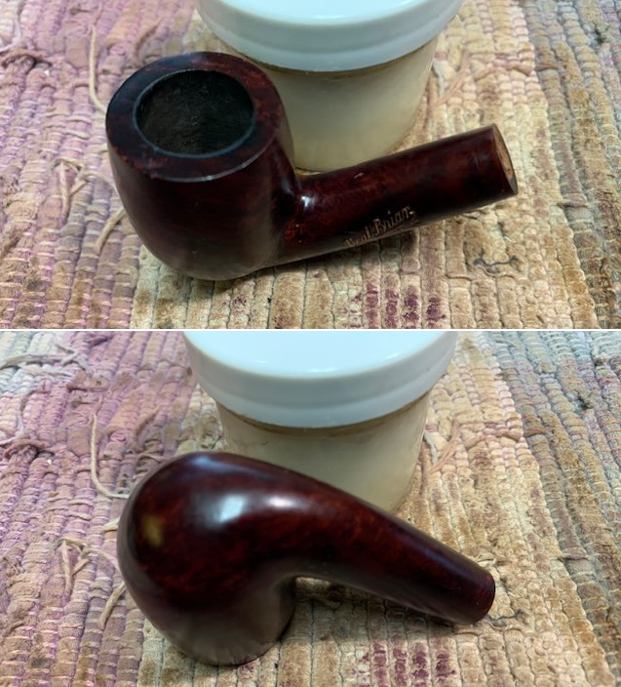
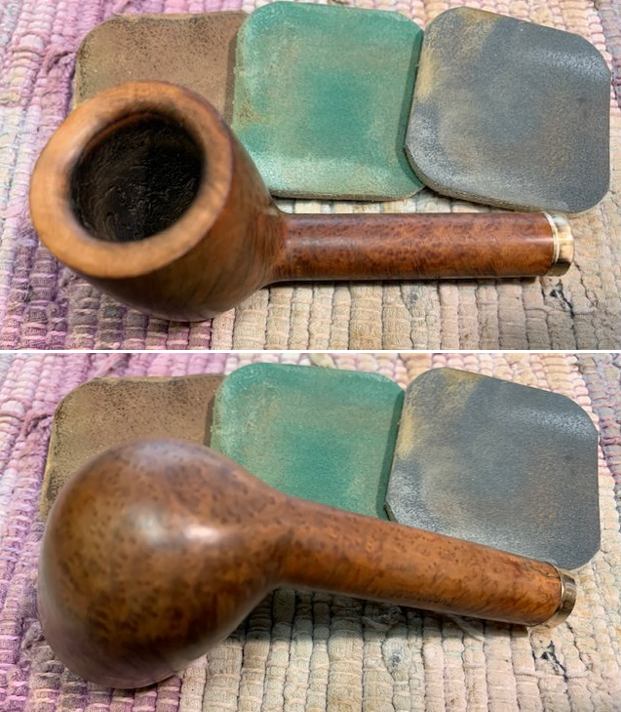
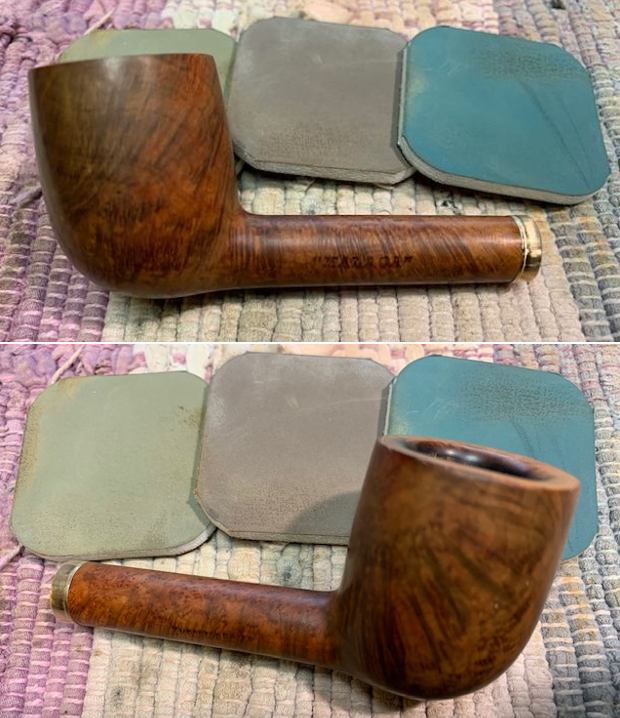
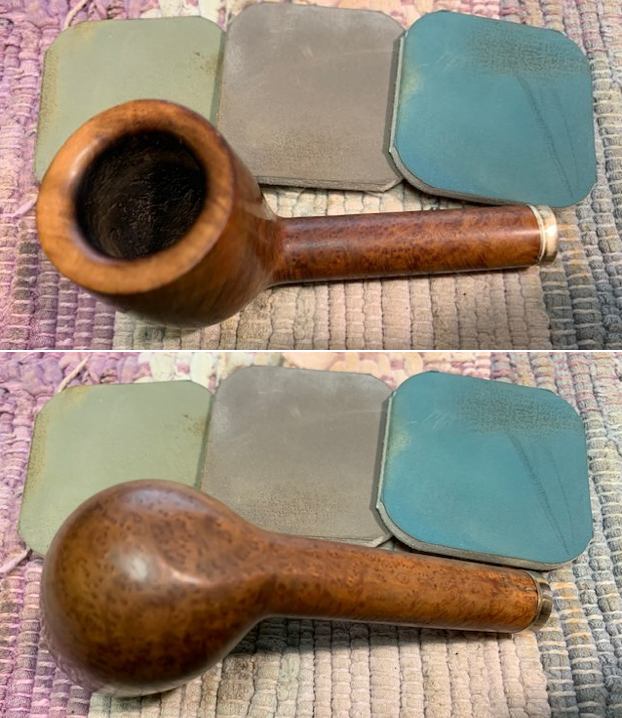
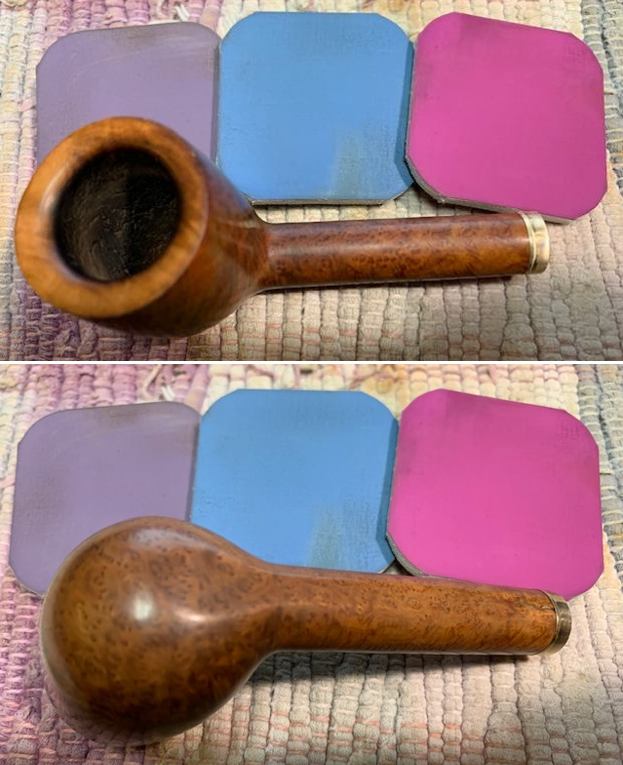
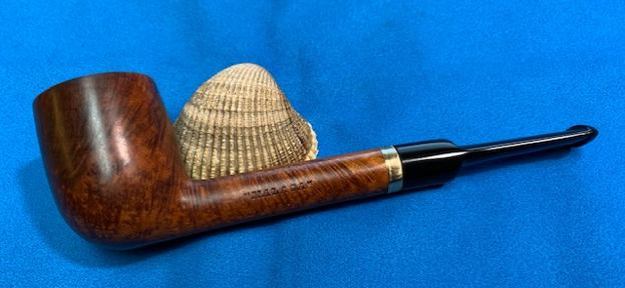
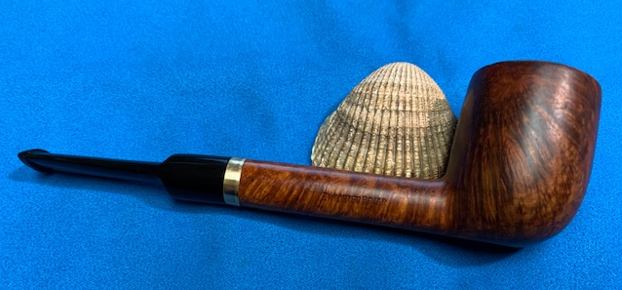
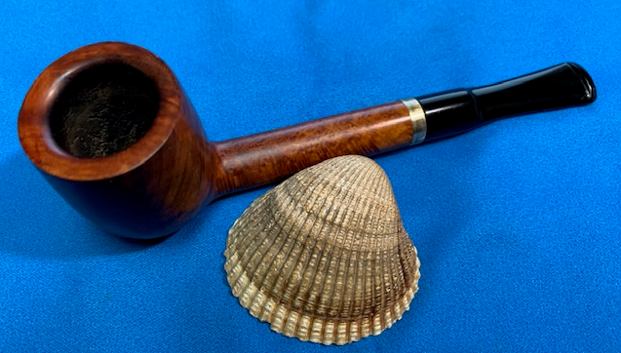
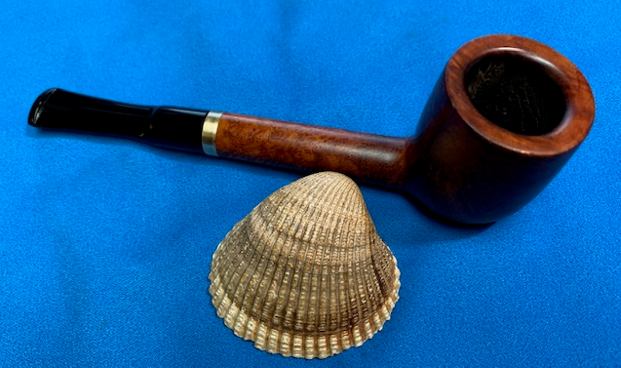
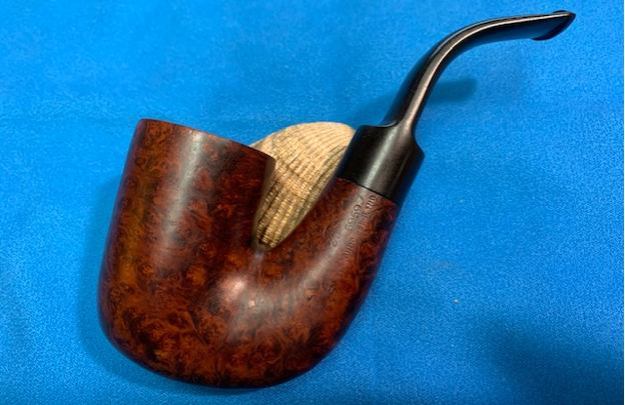
The next pipe on the table is one that came to us from Australia. It went to Jeff first then was shipped to me. It is a well traveled pipe that was purchased in 2020 from the estate of a fellow pipeman in Australia, shipped to the US and then to Canada. The shape is very nice, with the forward canted bowl and the quarter bent stem. It is a great shape with a taper vulcanite stem. The finish was dirty with grime ground into the finish around the bowl sides. There was a thick cake in the bowl and lava overflow on the top of the rim – heavier on the backside of the rim top but nonetheless on the entire rim top. There was some burn damage on the right front inner beveled edge of the bowl. The pipe is stamped on the left side of the shank and reads Butz-Choquin at an angle [over] Regate. On the right side it reads St. Claude – France [over] the shape number 1282. The stem was lightly oxidized and there were tooth marks and chatter on both sides near the button. The taper stem also has a BC stamped on the left side. Jeff took some photos of the pipe before he started the clean up work. He took photos of the rim top and bowl to give a clear picture of the thickness of the cake and well as the nicks, lava and darkening on the rim top. The inner edges showed some burn damage on the inner bevel of the bowl. The outer edges of the bowl appeared to be in great condition. He also took photos of the top and underside of the stem to show the light oxidation and the chatter and tooth marks. Jeff took a photo the sides and heel of the bowl to give a picture of the beautiful grain around the bowl and shank. There were also shiny spots of varnish around the bowl and shank sides. The stamping on the sides of the shank is clear and readable and read as noted above. There is also BC stamp on the left side of the stem. I turned to Pipephil’s site and looked for information on the Butz – Choquin Regate I was working on (http://pipephil.eu/logos/en/logo-butzchoquin.html). As always there was a good, brief description of the history of the brand.

I turned to Pipedia (https://pipedia.org/wiki/Butz-Choquin) to see what I could find on the brand that the Regate line there. I found a catalogue page from Doug Valitchka on the Regate that listed the pipe line and a description (https://pipedia.org/wiki/File:BC10.jpg). I have captured that image below. The description under the Regate heading reads –

Regate (and the description below is in both French and English)

Les veines classique qui rallie les suffrages de la plupart des fumeurs

A great classic which meets with the approval of the majority of smokers.

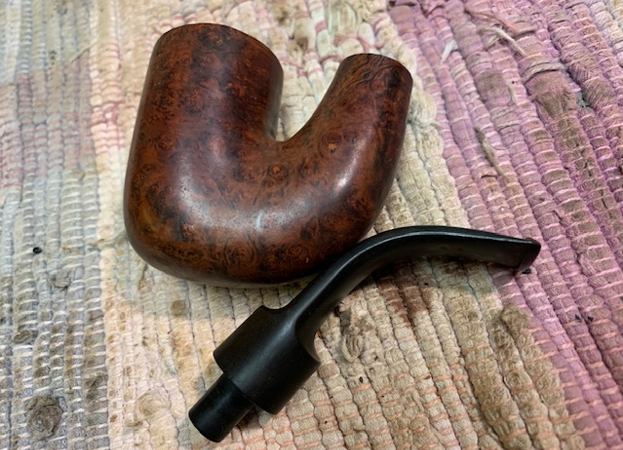
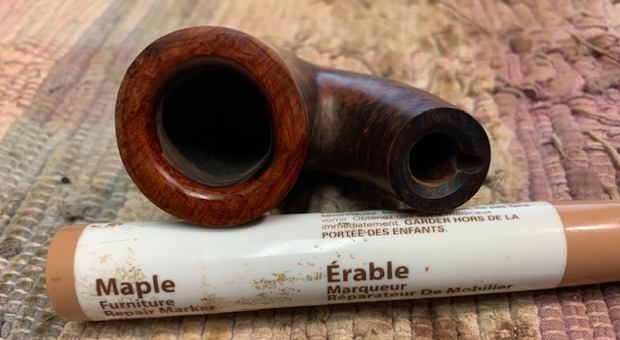
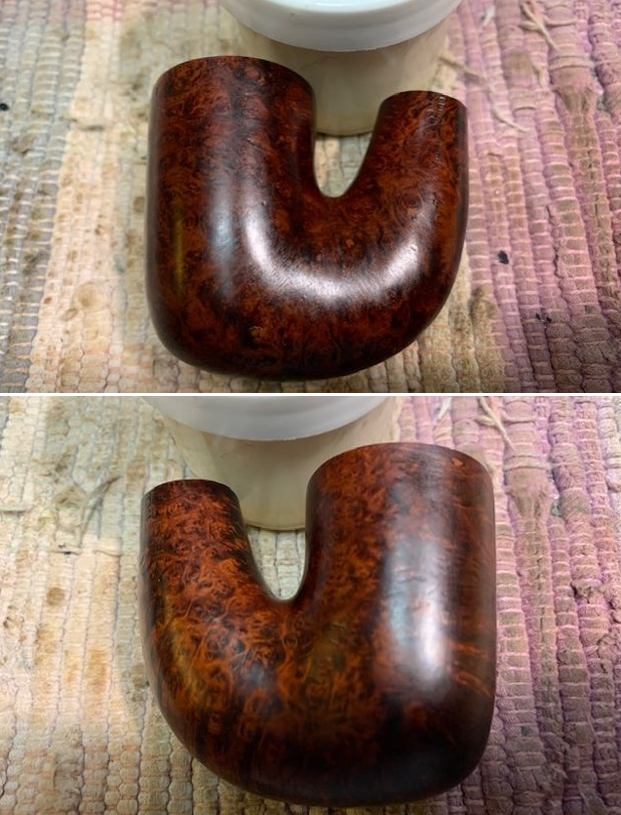
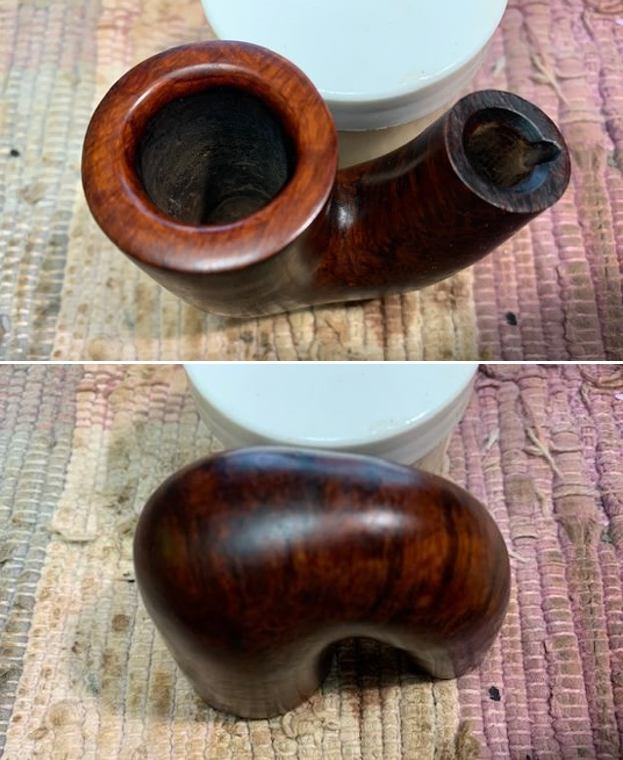
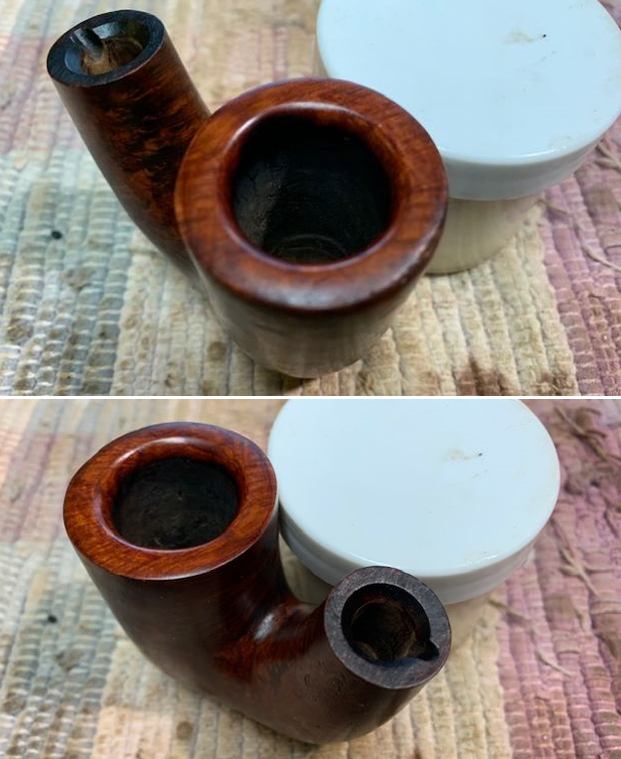
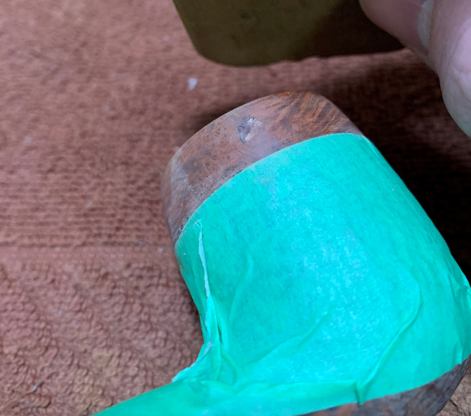
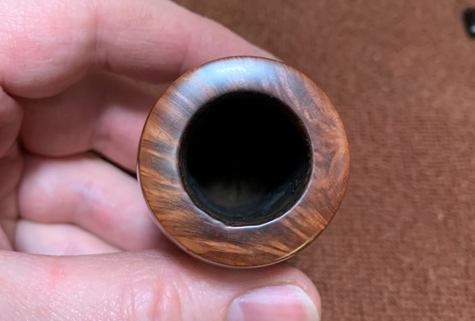
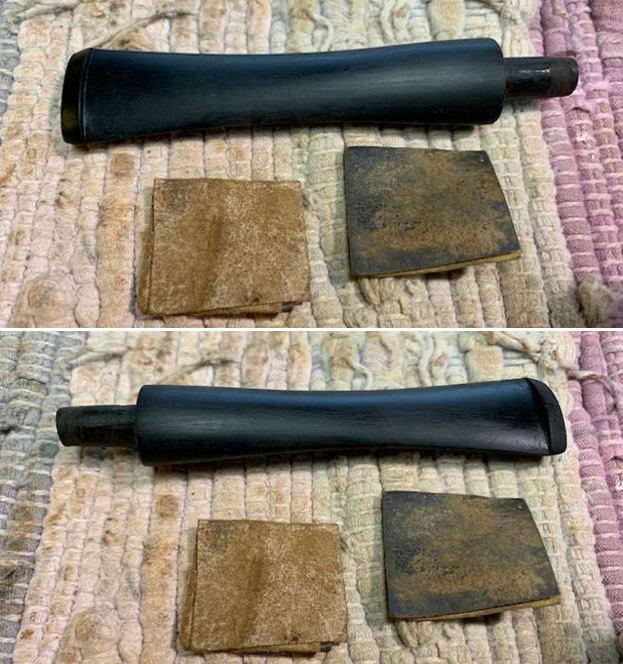
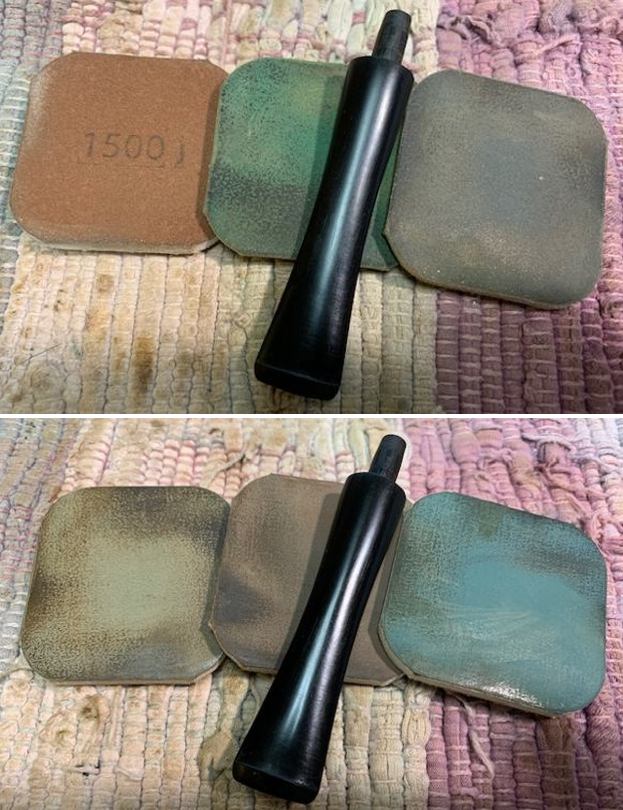
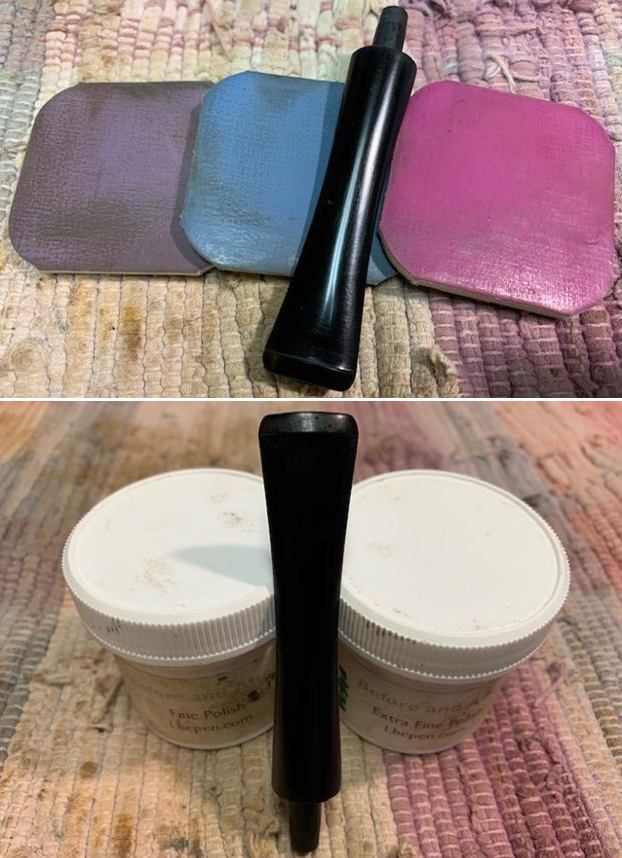
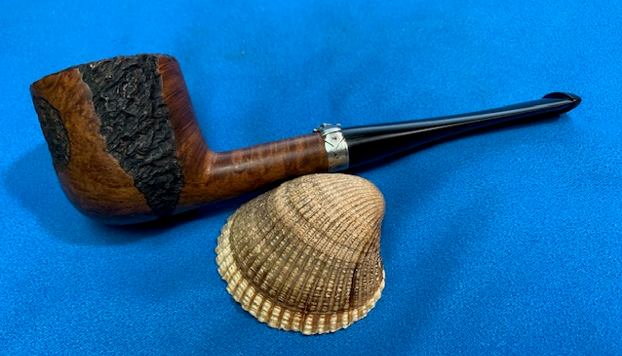
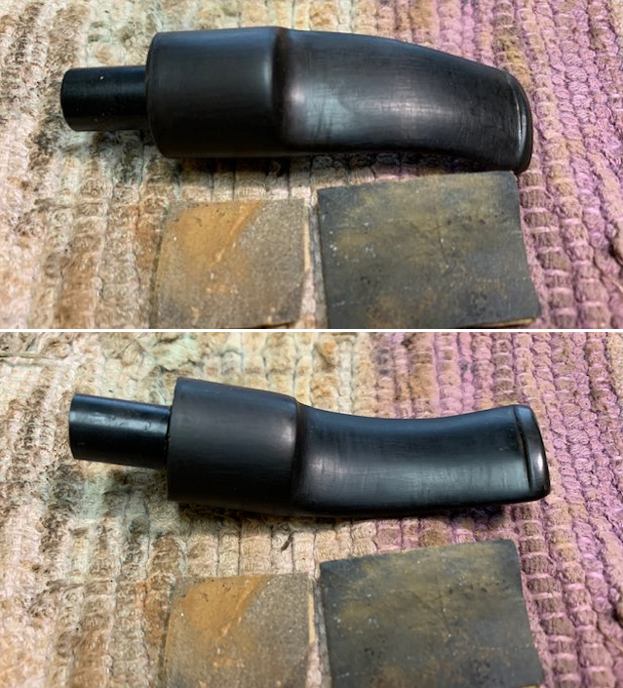
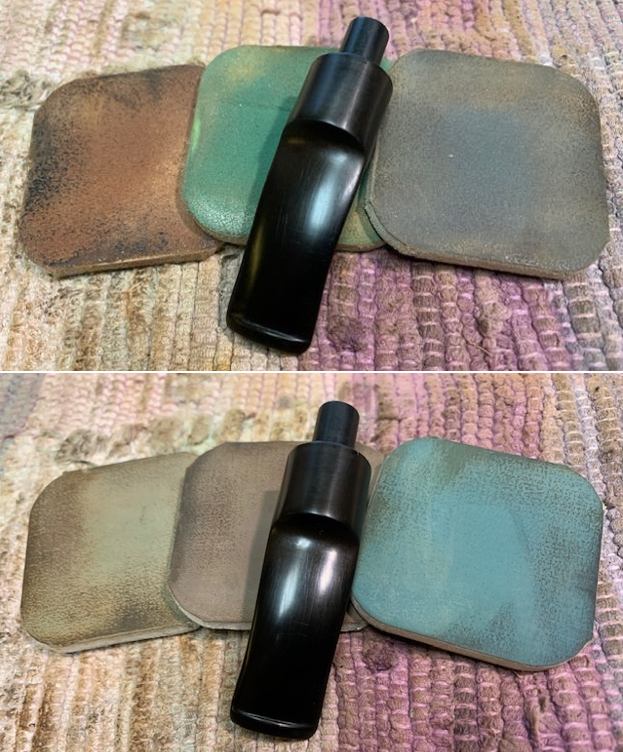
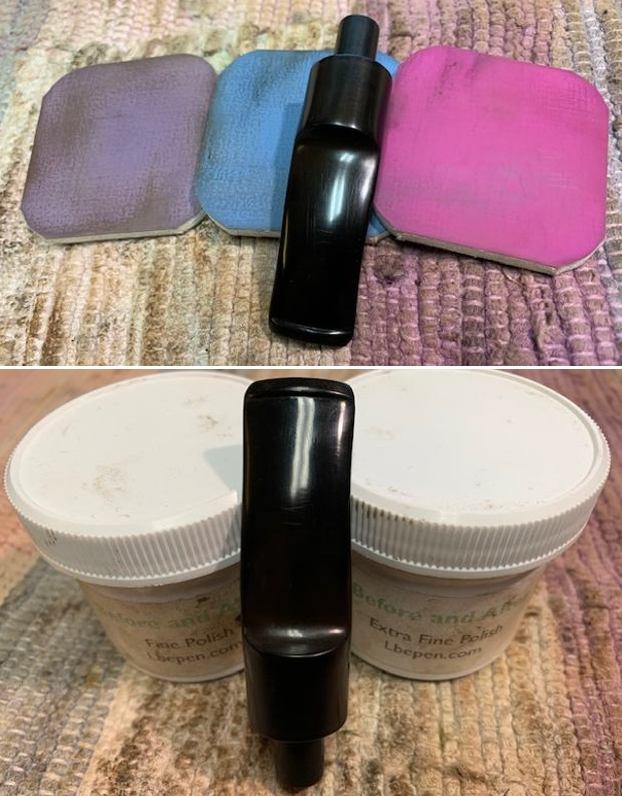
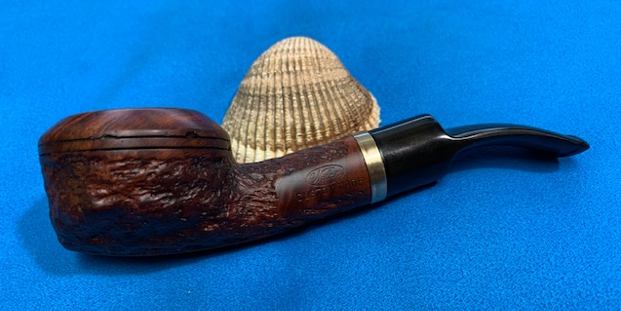
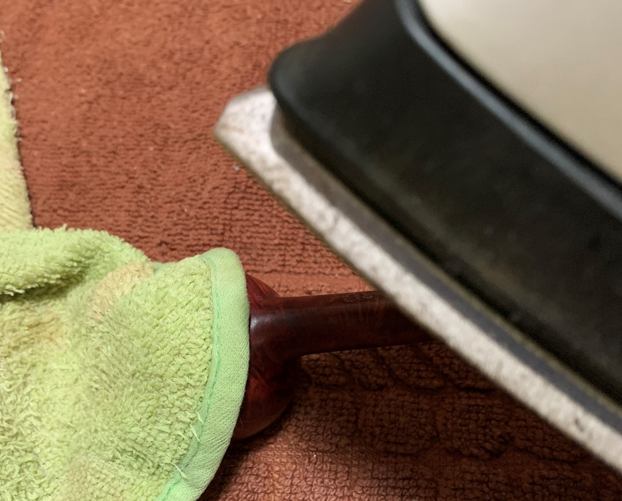
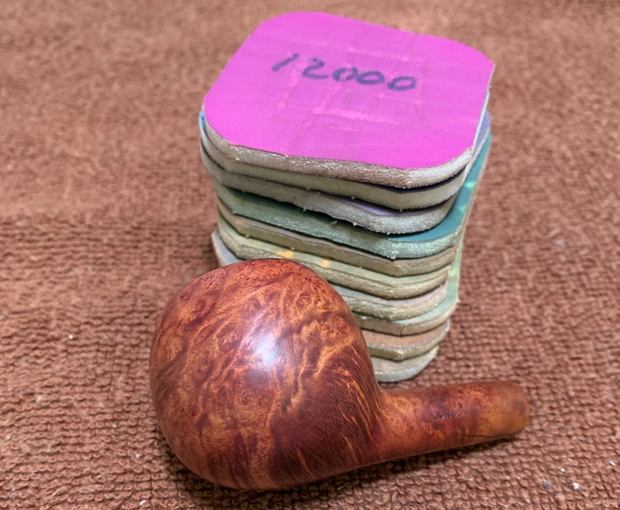
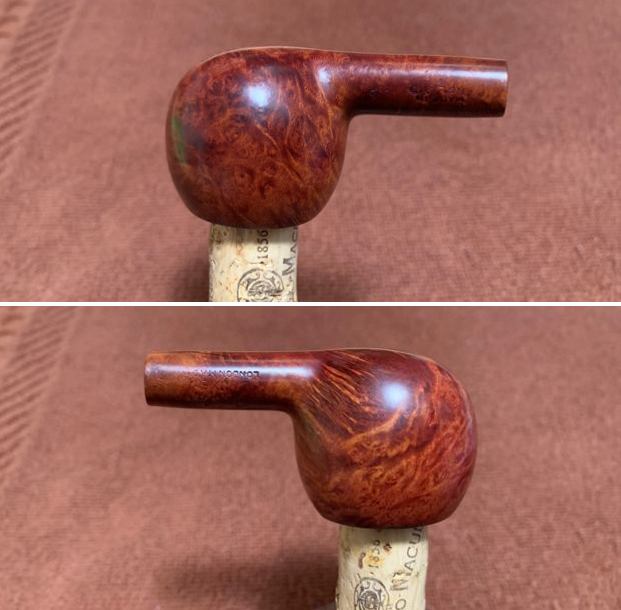
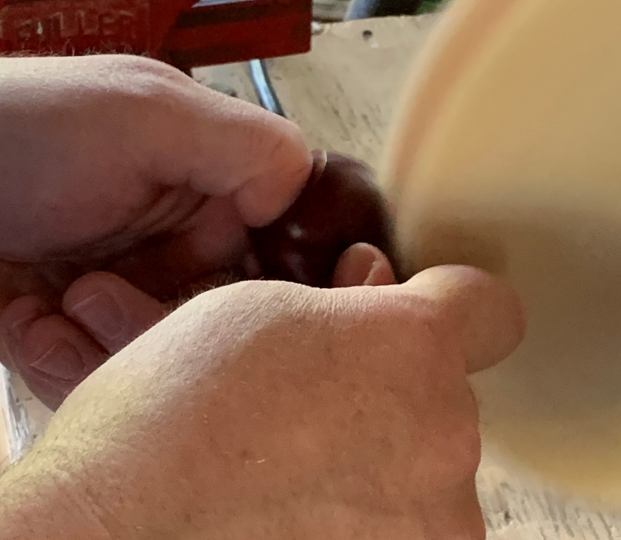
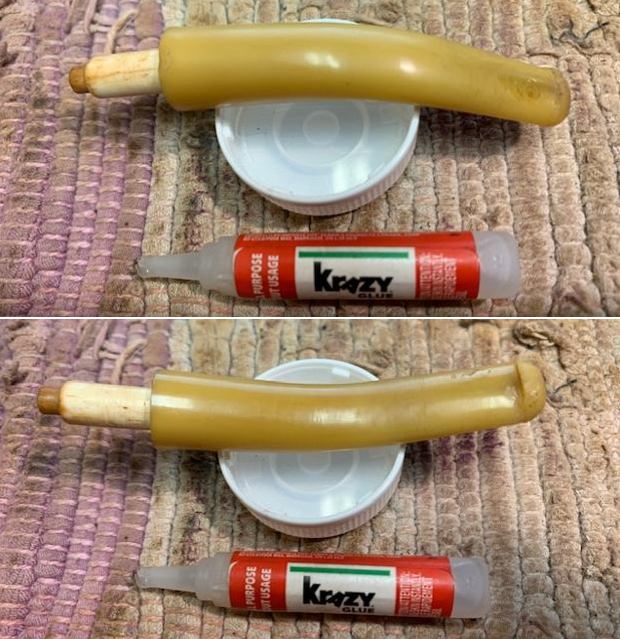
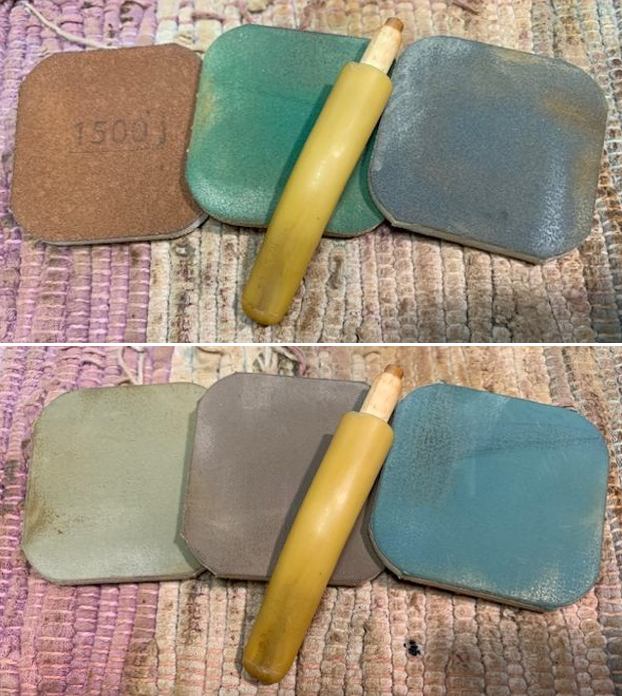
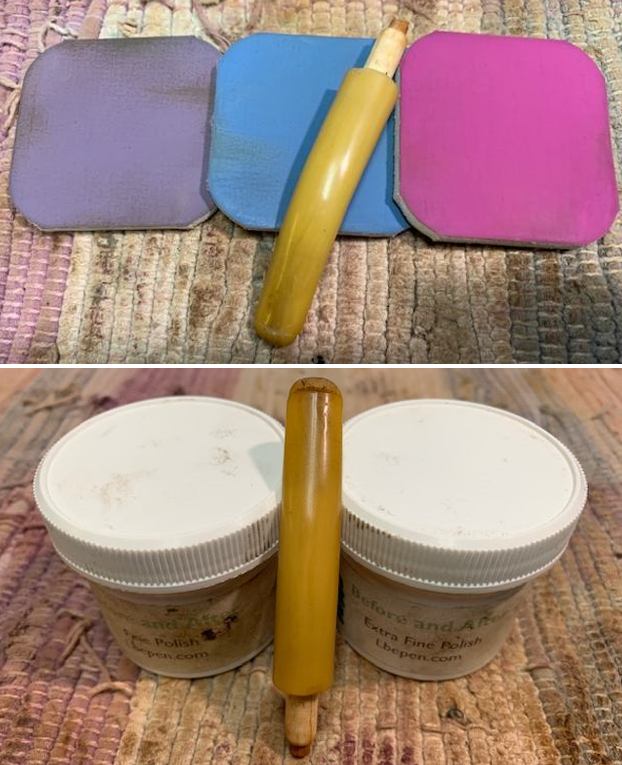
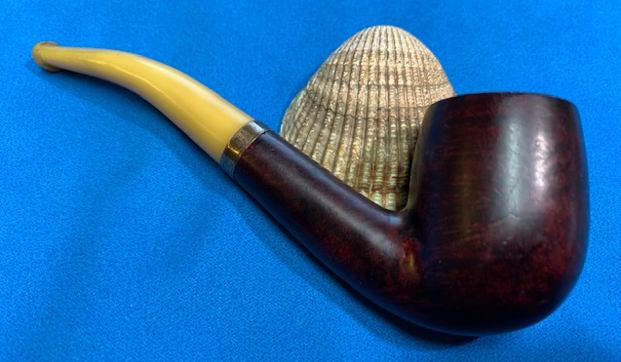
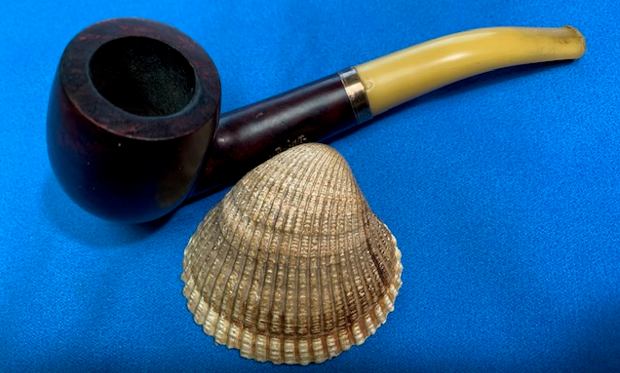
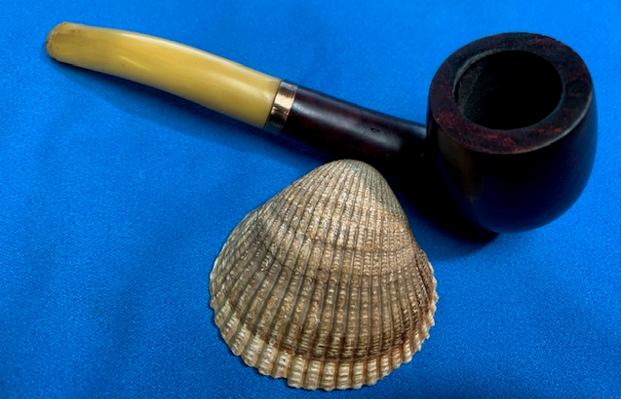
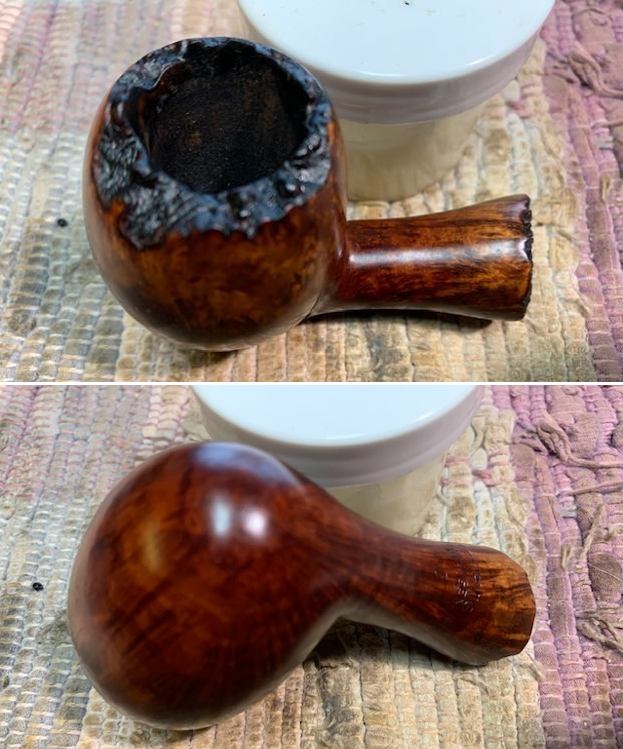
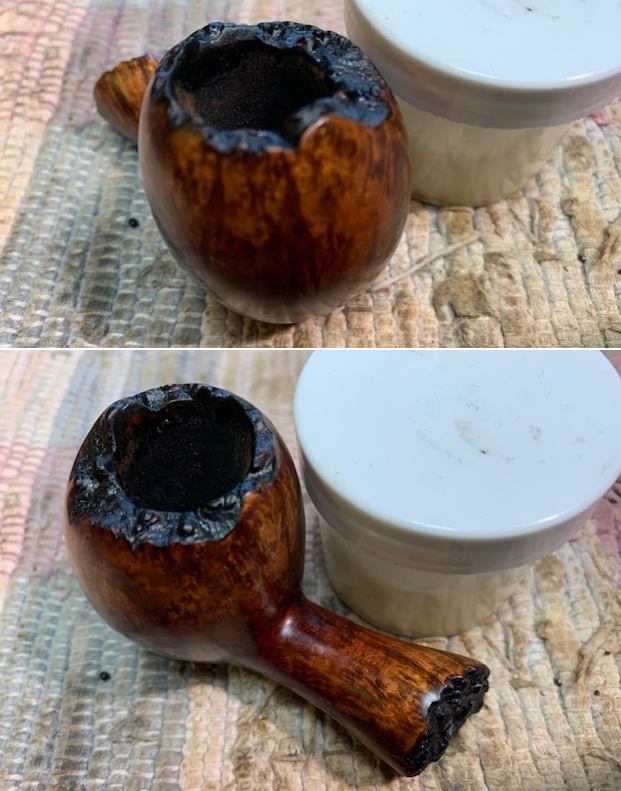
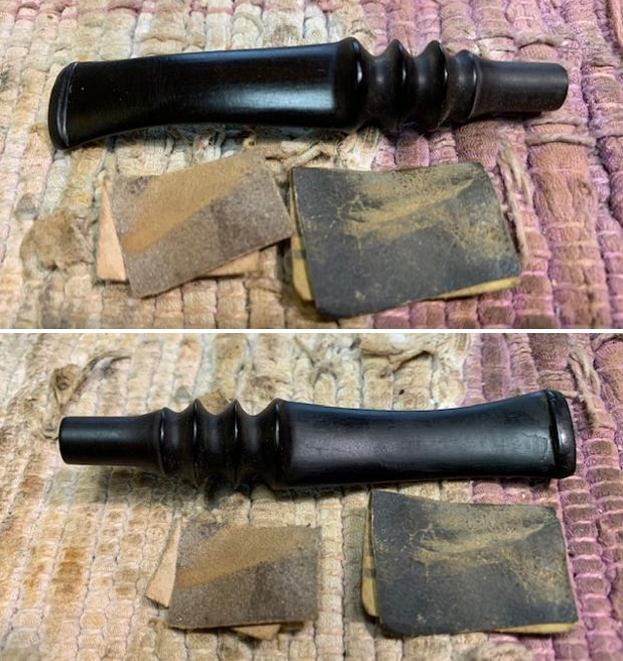
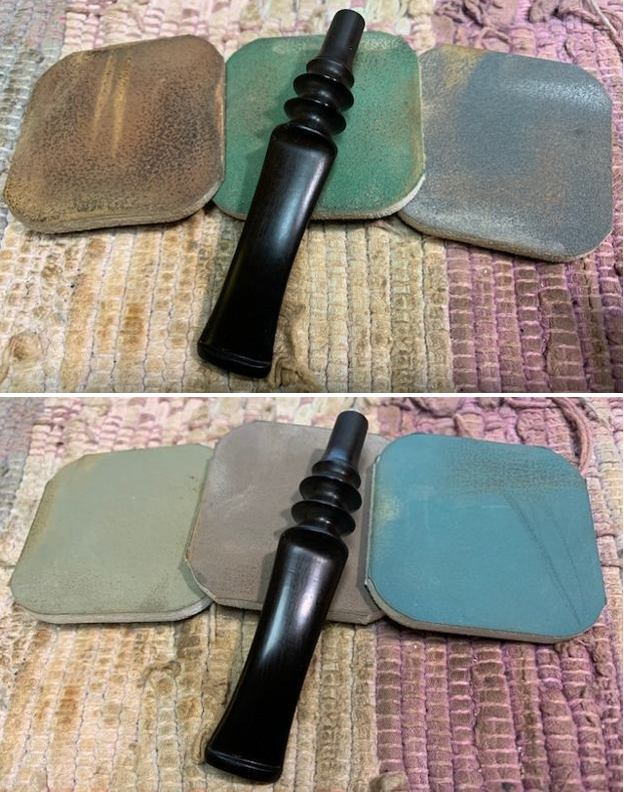
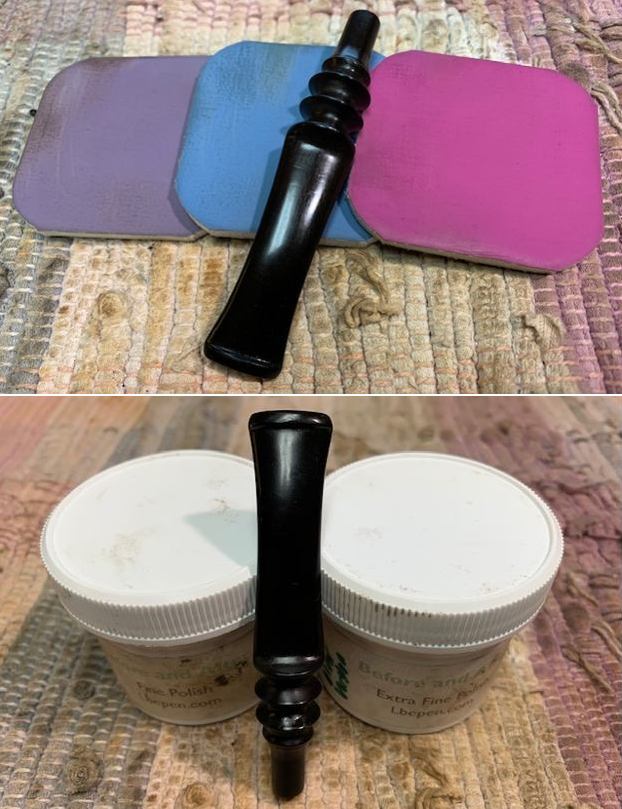
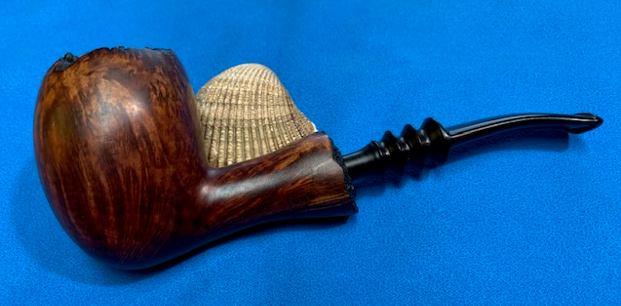
I have also included another picture from Doug Valitchka that shows the shape of the pipe that I am working on (https://pipedia.org/wiki/File:BC06.jpg). It is the second shape that is shown on the page – Shape 1282. The shape is called a Genoises. Now it was time to work on the pipe. Jeff had cleaned up the pipe following his usual procedures. He reamed the pipe with a PipNet pipe reamer and cleaned up the remnants with a Savinelli Fitsall Pipe Knife. He cleaned out the inside of the shank and the airway in the stem with 99% isopropyl alcohol, cotton swabs and pipe cleaners. He scrubbed the exterior of the bowl with undiluted Murphy’s Oil Soap and a tooth brush. He rinsed it under running warm water to remove the soap and grime. He soaked the stem in Before & After Deoxidizer and rinsed it off with warm water. I took photos of the pipe once I received it.  The rim top cleaned up really well. But the cleaning revealed some serious burn damage on the rim top and front inner edge toward the right side. The stem surface looked good and the light tooth marks and chatter would be easy to address. The stamping on the sides of the shank is readable and reads as noted above.I removed the stem and took a photo of the pipe to give a sense of the shape and the grain on the bowl and shank. It was a great looking shape and would be a beautiful pipe when I was finished. I decided to start my work on the pipe by wiping the bowl down with acetone on a cotton pad to remove the heavy stain around parts of the bowl sides. I wanted really be able to see the grain on the bowl. I dealt with the damage to the rim top by topping it on a topping board with 220 grit sandpaper. I cleaned up the beveled inner edge of the rim with 220 grit sandpaper to remove as much of the burn damage as possible. I polished the bowl with micromesh sanding pads – 1500-12000 grit pads. I wiped it down with a damp cloth after each sanding pad.  It was beginning to look good to my eyes. I stained the inner edge and rim top with an Oak Stain Pen to match the rest of the surrounding bowl. It helps to blend in the burned area some more. The rim top and edges definitely look better than when I started.I rubbed the bowl and shank down with Before & After Restoration Balm. I worked it into the surface of the bowl sides and shank with my fingertips to clean, enliven and protect the briar. I let the balm sit for ten minutes then buffed the bowl with a cotton cloth to raise the shine. I set the bowl aside and turned my attention to the stem. I “painted” both sides of the stem with the flame of a lighter to lift the tooth marks. It did a great job and left only one deep mark on the underside and some lighter tooth marks on the topside along the button. I filled them in with clear CA glue and once it cured I used a small file to sharpen the edge of the button and smooth out the repair. I sanded the stem with 220 grit sandpaper to smooth out the repairs. I started polishing it with 400 grit sandpaper.  I used some white acrylic fingernail polish to touch up the BC stamp on the left side of the stem. I painted it on with the brush and once it dried scraped it off and sanded it with a 1500 grit micromesh sanding pad.I polished the stem with micromesh sanding pads – 1500-12000 grit pads. I wiped it down with Obsidian Oil after each sanding pad. I used Before & After Pipe Polish – both Fine and Extra Fine to further polish the stem. This Butz-Choquin Regate 1282 Zulu is a great looking pipe now that it has been restored. The combination of various brown stains around the bowl is quite beautiful and highlights grain very well. The finish works well with the polished curved vulcanite taper stem. I put the stem back on the bowl and carefully buffed the pipe with Blue Diamond on the buffing wheel using a light touch on the briar. I gave the bowl and the stem multiple coats of carnauba wax on the buffing wheel and followed that by buffing the entire pipe with a clean buffing pad. I hand buffed the pipe with a microfiber cloth to deepen the shine. The finished Butz-Choquin Regate Zulu sits nicely in the hand and feels great. Give the finished pipe a look in the photos below. The dimensions of the pipe are Length: 6 inches, Height: 1 ¾ inches, Outside diameter of the bowl: 1 ¼ inches, Chamber diameter: ¾ inch. The weight of the pipe is 35 grams/1.23 ounces. I will be putting it on the French Pipemakers section of the rebornpipes store shortly. If you are interested in adding this pipe to your collection send me a message or an email. Thanks for reading this blog and my reflections on the pipe while I worked on it. There are many more to come! 
Restoring and Repairing a Cracked Shank on a John Surrey Ltd Super Panel Lovat


Blog by Steve Laug

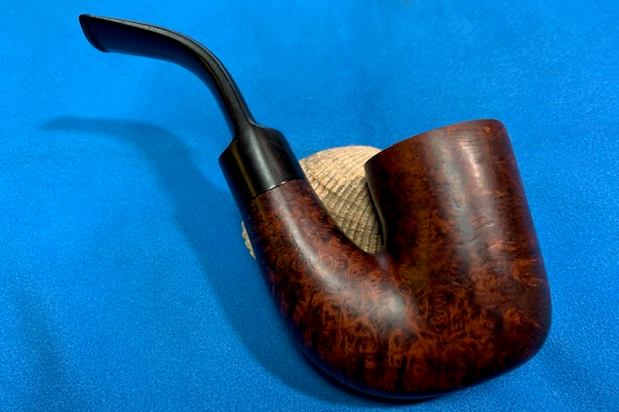
The next pipe on the table is one that we picked up back in 2018 and have no clear record of where and when we picked it up. The shape is what attracted us to the pipe. It is a unique shape with the panels on the bowl and the short Lovat style shank with a saddle stem. The finish was dirty with grime ground into the finish around the bowl sides. There were also some cracks in right side mid shank and on the lower part as well. The cracks were in the middle of some fills on that side of the bowl. There was a thick cake in the bowl and lava overflow on the top of the rim. There was also tobacco debris in the bowl. The stem was lightly oxidized and there were tooth marks and chatter on both sides near the button. The pipe is stamped on the left side of the shank and reads SUPER. On the right side it reads IMPORTED BRIAR. On the underside it is stamped John Surrey Ltd. The stamping is all clear and readable. He took photos of the rim top and bowl to give a clear picture of the thickness of the cake and well as the nicks, lava and darkening on the rim top. The inner and outer edges of the bowl were in great condition. He also took photos of the top and underside of the stem to show the light oxidation and the chatter and tooth marks.  Jeff took a photo the sides and heel of the bowl to give a picture of the beautiful grain around the bowl and shank. He also took a photo of the fills and damage to the right and underside of the shank – there were fills that had fallen out and there was a crack that needed attention.The stamping on the sides of the shank is clear and readable and read as noted above. Jeff did not take a photo of the John Surrey Ltd. stamp on the underside of the shank. I turned to Pipephil’s site and looked for information on the John Surrey Ltd pipe company (http://pipephil.eu/logos/en/logo-j3.html). I found that the company, John Surrey, Ltd. was originally located at 509 Fifth Avenue New York City, New York in the USA. I also did a screen capture of the section on the brand. Interestingly the Super line is not included in the list but all of the other pipes in the section are stamped with the same style stamping as the one I am working on. The closest one is the John Surrey Ltd. Imported Briar Super Deluxe. It is possible that the Deluxe stamp is worn off on this one but it is not clear.I turned to Pipedia in the US pipe makers section to see if I could find some more information on the brand (https://pipedia.org/wiki/John_Surrey_Ltd.). I found a short summary which I include below regarding the brand.

John Surrey Ltd. made John Surrey pipes. They were based at 509 Fifth Ave, New York. And in 1948 the company put a pipe on the market which sold very successfully: the Slugger Baseball Pipe (shank and stem like a baseball bat, and bowl similar to a baseball).

That was the extent of the information so it was not time to work on the pipe. Jeff had cleaned up the pipe following his usual procedures. He reamed the pipe with a PipNet pipe reamer and cleaned up the remnants with a Savinelli Fitsall Pipe Knife. He cleaned out the inside of the shank and the airway in the stem with 99% isopropyl alcohol, cotton swabs and pipe cleaners. He scrubbed the exterior of the bowl with undiluted Murphy’s Oil Soap and a tooth brush. He rinsed it under running warm water to remove the soap and grime. He soaked the stem in Before & After Deoxidizer and rinsed it off with warm water. I took photos of the pipe once I received it. The crowned rim top cleaned up really well. The rim top had a lot of nicks and deep gouges in it but the inner and outer edge of the bowl appeared to be in good condition. The stem surface looked very good and the tooth marks chatter on the stem on both sides near the button could probably be sanded out. The stamping on the sides of the shank is readable and reads as noted above.  I removed the stem and took two photos of the pipe to give a sense of the shape and the grain on the bowl and shank. It was a unique shape and would be a beautiful pipe when I was finished. I took a series of photos of the cracks on the shank and flaws where the putty fills had fallen out.I decided to start my work on the pipe by dealing with the damage on the shank end. I filled in the crack and the damaged fills with briar dust and clear CA glue. I found a thin brass band in my band collection that was a perfect fit on the shank so once the repair had cured and I sanded it down I fitted a band. I put a thin bead of glue around the shank end and pressed the band in place. It bound the repaired areas together and it gave the shank a touch of bling. I took some photos of the banded shank to give a picture of what I was seeing! I dealt with the damage to the rim top by topping it on a topping board with 220 grit sandpaper. Like so many other things in this process I also would need to redo the crowned rim top once I was finished.I wiped the bowl down with acetone on a cotton pad to remove the heavy stain around parts of the bowl sides. I wanted really be able to see the grain on the bowl. I also used this in preparation for reworking the bowl crown.I used a flat file to take down the outer edge and bevel it to bring the crowned rim back to the top of the bowl. I sanded the outer filed edge and the inner edge to give a slight inward bevel with 220 grit sandpaper to smooth out the file marks and fine tune the shape of the rim.I polished the newly shaped rim top and edges along with the rest of the bowl with micromesh sanding pads – 1500-12000 grit pads. I wiped it down with a damp cloth after each sanding pad. It was beginning to look good to my eyes. I forgot to take a photo of the underside at this point. I paused the polishing to stain the rim top and edges of the bowl with an Oak Stain Pen. I wanted to see if I could blend it into the bowl sides. I also touched up the light spots on the bowl sides at the same time. Once I finished that I buffed the bowl with Blue Diamond on the buffing wheel and returned to finish the polishing with 6000-12000 grit micromesh pads. I rubbed the bowl and shank down with Before & After Restoration Balm. I worked it into the surface of the bowl sides and shank with my fingertips to clean, enliven and protect the briar. I let the balm sit for ten minutes then buffed the bowl with a cotton cloth to raise the shine. I set the bowl aside and turned my attention to the stem. I “painted” both sides of the stem with the flame of a lighter to lift the tooth marks. It did a great job and left only one deep mark on the underside and some lighter tooth marks on the topside along the button. I filled them in with clear CA glue and once it cured I sanded the stem with 220 grit sandpaper to smooth out the repairs. I started polishing it with 400 grit sandpaper. I polished the stem with micromesh sanding pads – 1500-12000 grit pads. I wiped it down with Obsidian Oil after each sanding pad. I used Before & After Pipe Polish – both Fine and Extra Fine to further polish the stem.This John Surrey Ltd. Super Imported Briar Panel Lovat is a great looking pipe now that it has been restored. The combination of various brown stains around the bowl is quite beautiful and highlights grain very well. The finish works well with the thin brass band on the shank end and the polished vulcanite saddle stem. I put the stem back on the bowl and carefully buffed the pipe with Blue Diamond on the buffing wheel using a light touch on the briar. I gave the bowl and the stem multiple coats of carnauba wax on the buffing wheel and followed that by buffing the entire pipe with a clean buffing pad. I hand buffed the pipe with a microfiber cloth to deepen the shine. The finished John Surrey Ltd. Super Panel Lovat sits nicely in the hand and feels great. Give the finished pipe a look in the photos below. The dimensions of the pipe are Length: 4 ¾ inches, Height: 1 ½ inches, Outside diameter of the bowl: 1 ¼ inches, Chamber diameter: ¾ inch. The weight of the pipe is 38 grams/1.34 ounces. I will be putting it on the American (US) Pipemakers section of the rebornpipes store shortly. If you are interested in adding this pipe to your collection send me a message or an email. Thanks for reading this blog and my reflections on the pipe while I worked on it. There are many more to come!
Restoring a Sandblast Medico Ventilator Bent Billiard


Blog by Steve Laug

A while back I received a small box of pipes from a fellow pipeman who wanted to donate them to support  the non-profit organization I work for – the SA Foundation (www.safoundation.com). The organization has been providing long term recovery, housing and job training for women who have escaped sexual exploitation and trafficking. For over thirty years the work has gone on and thousands of young women and their children have been empowered to start over with skills and options. The work is currently in 7 countries and 12 cities around the world. If you are interested give the website a look.

Now back to the pipes. There were eight total pipes in the lot that he sent me. The first one I restored was a large Irish Second 05 Calabash that is heading off to Michigan. The second pipe was a Peterson’s Kapet pipe in a shape 124 (https://rebornpipes.com/2021/08/16/restoring-a-republic-era-petersons-kapet-124/). The third pipe was a very Danish looking Made in London, England Sandblast Acorn. (https://rebornpipes.com/2021/08/17/restoring-a-very-danish-looking-made-in-london-england-acorn/). The fourth pipe was a Bromma Bent Billiard with a screw on bowl (https://rebornpipes.com/2021/08/18/restoring-what-looks-like-a-swedish-bromma-pipe/). The fifth pipe is a Canadian Made Paradis Pipe (https://rebornpipes.com/2021/08/19/restoring-canadian-made-paradis-rustic-246-bent-dublin/). The sixth pipe was an unsmoked small carved figural meerschaum that is for sale on the rebornpipes store (https://rebornpipes.com/rebornpipes-store/meerschaum-pipes-smooth-figurals/).  All of the pipes were in clean condition and had been lightly reamed.

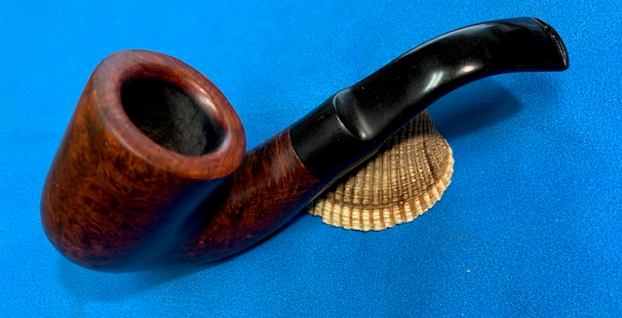
The next pipe, the seventh one is a bent Medico Ventilator with an aluminum slotted, ventilated shank. The pipe was clean on the inside but dusty on the sandblast finish. The sandblast was very well done and quite rugged. The rim top and edges looked very good. I think that this pipe was not smoked very much. The pipe was stamped on the flat heel of the bowl and read Medico [over] Ventilator [over] Imported Briar. The aluminum shank was dull looking but otherwise in great condition. The short bent saddle stem had a lot of tooth chatter and marks on both sides ahead of the button. There was a V logo stamped on the left side of the stem. The aluminum tenon was made to hold the classic Medico paper filter. I took some photos of the pipe before I started my clean up work on it. I took photos of the bowl and rim top as well as the stem to show the condition of the pipe. The rim top was dusty and worn looking but it was otherwise clean. The bowl was slightly misshapen like I have seen before on these Ventilator pipe. It is not quite round with the thicker edges on the front of the bowl and narrower on the sides and rear of the bowl. The stem had a lot of tooth chatter and some deep tooth marks on both the top and bottom. I took a photo of the stamping on the underside of the heel of the bowl. It was clear and readable as noted above. I removed the stem from the shank and took a photo of the pipe. The great sandblast and the unique design of the Ventilator is visible in the photo. I turned to Pipephil’s site for a quick summary (http://pipephil.eu/logos/en/logo-medico.html). I have included a screen capture of the information on the site.I also quote the information from the side bar of the entry on pipephil:

This model cannot be smoked without the use of the rolled paper filters.Others metal pipes logos & markings in these pages: Alco, Bryson, Duncan, Falcon, Kaywoodie (Filter Pipe , Filter plus, Filtronic), Ornsby

I turned to Pipedia for more info (https://pipedia.org/wiki/Medico). There was a brief writeup on the history of the brand and the paper filtration system but nothing specific on the Ventilator pipes.

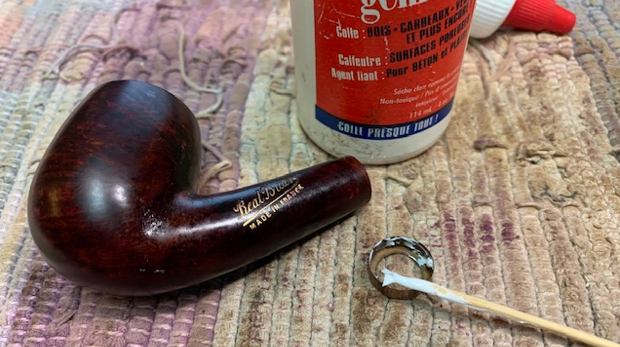
Now it was time to work on the pipe. I started my work on the pipe by scrubbing the bowl and shank exterior with undiluted Murphy’s Oil Soap. I scrubbed the sandblast and the aluminum with a tooth brush and the soap and rinsed it off with running water. I dried it off with a cotton towel. I touched up the stain on the rim top with a Walnut Stain Pen. It matched the rest of the bowl colour perfectly.I cleaned the mortise/and aluminum shank along with the airway in both the shank and the stem with 99% isopropyl alcohol, pipe cleaners and cotton swabs until the interior of the pipe was very clean.I rubbed the bowl and the briar portion of shank down with Before & After Restoration Balm. I worked it into the surface of the bowl sides and shank with my fingertips to clean, enliven and protect the briar. I let the balm sit for ten minutes then buffed the bowl with a cotton cloth to raise the shine. I polished the aluminum ventilated shank with micromesh sanding pads – dry sanding it with 1500-12000 grit pads. I wiped it down with a clean paper towel after each sanding pad. The aluminum took on a rich shine with the polishing.I set the bowl aside and turned my attention to the stem. There was a plastic/hard clear rubber insert that fit in the aluminum ventilated shank to hold the stem tightly in place. When I removed the stem the insert came out as well and was stuck on the aluminum tenon of the stem. I carefully used a pair of vise grips to hold the rubber insert and slowly turned the stem until I was able to remove it. Once the aluminum shank was cleaned I would glue it in place in the shank so that it would stay in place there. I coated the outside of the hard rubber/acrylic ring with white all-purpose glue and pushed it into place in the aluminum ventilator shank. I removed the stem and set the bowl and shank aside for the glue to cure.I “painted” the tooth marks and chatter on the stem surface with the flame of a lighter to try and raise the dents. The stem is a typical Medico stem which seems to be a mix of vulcanite and plastic or nylon so the flame did very little. I filled the tooth chatter and marks in with clear CA glue and set it aside to cure. Once it cured I used a small file to flatten out the repairs and reshape the button edge. I used 220 grit sandpaper to smooth out the repairs on both sides of the stem. I started to polish it with 400 grit wet dry sandpaper. The stem is looking much better. I polished the stem with micromesh sanding pads – 1500-12000 grit pads. I wiped it down with Obsidian Oil after each sanding pad. I used Before & After Pipe Polish – both Fine and Extra Fine to further polish the stem. I gave it a final rubdown with Obsidian Oil and set it aside to cure. I fitted the stem and shank with a Medico paper filter. It fit in the tenon and in the aluminum shank. All air flow from the bowl came through the filter and the cool air came in through the aluminum ventilator shank. The theory is it provided a cool smoke – mind you soggy but cool!I put the parts back together. This Medico Ventilator Imported Briar Bent Billiard is a great looking pipe with a great sandblast on the bowl. The rich, dark brown stained  sandblast bowl and the ventilated polished aluminum shank look surprisingly nice. The combination works well with the polished saddle stem. I carefully buffed the pipe with Blue Diamond on the buffing wheel using a light touch on the briar. I gave the bowl and the stem multiple coats of carnauba wax on the buffing wheel and followed that by buffing the entire pipe with a clean buffing pad. I hand buffed the pipe with a microfiber cloth to deepen the shine. The finished Medico Ventilator Bent Billiard is light and sits nicely in the hand and feels great. Give the finished pipe a look in the photos below. The dimensions of the pipe are Length: 5 ½ inches, Height: 1 ¾ inches, Outside diameter of the bowl: 1 ¼ inches, Chamber diameter: ¾ of an inch. The weight of the pipe is 44 grams/1.52 ounces. I will be putting it on the rebornpipes store shortly in the American (US) Pipemakers Section. If you are interested in adding this pipe to your collection send me a message or an email. Thanks for reading this blog and my reflections on the pipe while I worked on it. There are many more to come!
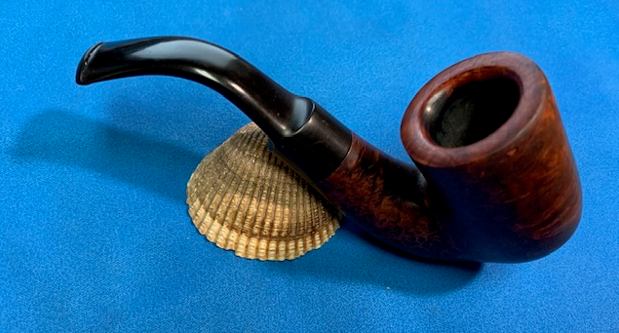
Restaining and Restoring a Green 2015 St. Patrick’s Day 05 Calabash


Blog by Steve Laug

The next pipe has been sitting here for almost three years. I have picked it up and looked at quite a few times and always set it back down for another day. Today is finally the day. It is a nice 05 Calabash from Peterson of Dublin. It is a Limited Edition 2015 St. Patrick’s Day Pipe. It came with the box, slip cover and green pipe bag. We bought it in 2018 knowing that it had some issues. The biggest was that the right side of the bowl and shank had faded to almost a green wash while the rest of the pipe was fully green. A second issue always stopped me was that the pipe had been dipped in a thick coat of urethane or at least varnish. I would have to remove it if I was to restain the pipe. The stem had a decaying rubber softee bit on it and we all know those can hide anything from tooth marks to bite-throughs and we would not be sure until it was in our hands and we removed it. Jeff took photos of the pipe before he cleaned it up. Jeff took a photo of the rim top and bowl to show its condition. It is faded and washed out looking as much as the rest of the pipe. However it is also well smoked. The previous owner had smoked it but was careful with the rim edges and top – no burn damage or poor reaming. Those are redeeming features. He also took photos of the stem with the Softee bit in place and removed. Another redeeming feature was that underneath it was quite clean and undamaged. I let out a big WHEW once I saw that as it is a major amount of work avoided in stem repair.  He took photos of the sides and heel of the bowl to show the condition of the stain and the briar underneath. It is an interesting looking pipe. He took a photo of the stamping on the left side of the shank and you can see the thick urethane coat almost filling in the stamping. It is readable but it is also awful with the plastic coating on it.To be honest with all of you I am not a big fan of coloured pipes to begin with so this really is a hard one for me. I also really have no idea what the pipe must have looked like before the sun fading and thick urethane coat. Maybe it would be better? I was not sure so I decided to pause my work for a little longer and see what I could find out about the original 2015 St. Patrick’s Day pipe.

I Googled and found a site that had a decent description of the pipe. I could almost picture it from the words. It was a shop called Mission Pipe. You have to answer the age questions to get in but here is the link (https://www.missionpipe.com/peterson-2015-st-patrick-s-day-pipe). They had a photo but it was not that clear. I quote their description below.

Peterson 2015 St. Patrick’s Day Pipe – Peterson of Dublin just released their annual St. Patrick’s Day Pipe, and being their 150th Anniversary year, they went all out. The Peterson’s 2015 St. Patrick’s Day Pipe features an amazing emerald stain, carving reminiscent of Celtic knots on the bowl and rings of silver-colors that match the emerald perfectly…

Google next took me to Mark Irwin’s Peterson Pipe Notes site. His description was spot on and the photos showed me what I needed to know (https://petersonpipenotes.wordpress.com/tag/dr-jekyll-and-mr-hyde/). I quote below. I have also included a photo of the shape 05 that I have.

St. Patricks Day Pipe 2015 – A combination of smooth (green) and rustic (black) finishes with a smooth flat top at the top of the bow. The rustication is a Celtic knot. Twelve shapes (as shown): 01, 05, 68, 69, XL90. X220, 408, 338, 306, 304, 105, 106.I now knew what I was aiming for with the pipe in question. First the removal of the urethane then a restain with this objective in front of me. A carved Celtic Knot black band around the top edge of the bowl and then a very green stain that matched the green between the polished silver in the band on the shank end.

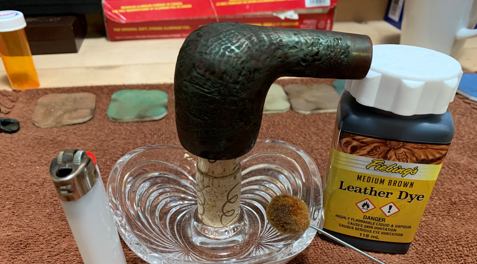
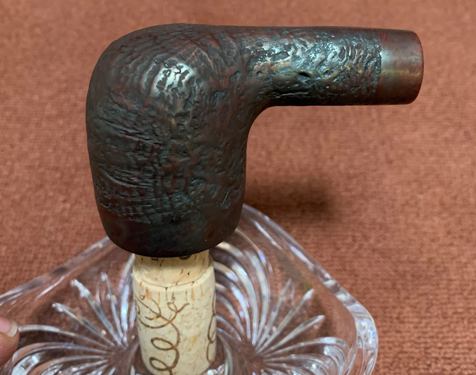
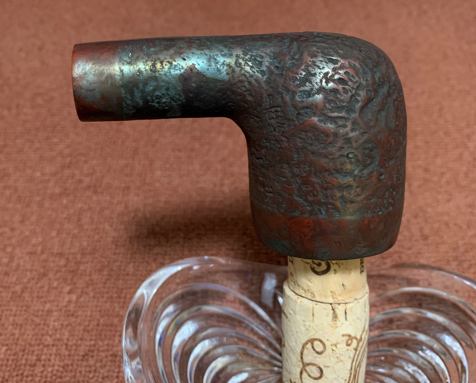
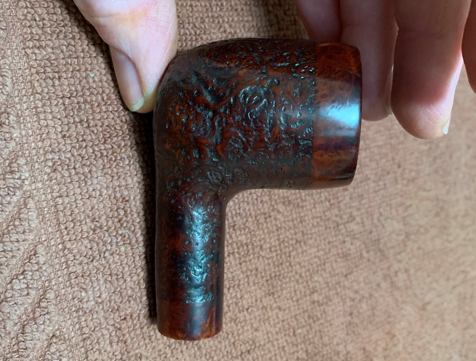
Jeff had cleaned up the pipe as he normally does. He reamed it with a Pipnet Reamer and cleaned up the reaming with a Savinelli Fitsall Pipeknife. He scrubbed out the inside of the airway in the shank and stem with alcohol, pipe cleaners and cotton swabs. He scrubbed the exterior of the bowl with undiluted Murphy’s Oil Soap to see if he could break down the plastic coat. Unfortunately it did absolutely nothing to that finish. He removed the Softee Bit and scrubbed the stem with Soft Scrubb. He soaked it in Before & After Deoxidizer. He rinsed it off and recleaned it. I took the following pictures when it arrived. That shiny coat kills me! I took photos of the rim top and the stem to show the condition of them both. The rim top is blotchy green in colour and the finish is not smooth. The heavy urethane coat is not smooth on the top. The stem looks very good and other than very light chatter it is in excellent condition. I took photos of the stamping on the shank sides. It is clear and readable but you can also see the high gloss shine of the urethane on the bowl in these photos. It is really quite thick.I took a photo of the bowl and stem separated to give a sense of the pipe but also to highlight the urethane coat the predominates the finish on this once beautiful pipe.Now it was time to try and strip the urethane coat off the bowl so I could restain it. It was going to be a lot of work. I sanded the bowl with 1500 grit micromesh sanding pads and also a medium and a fine sanding block to try and break up the urethane seal. I sanded for a while then wiped the bowl down with acetone. Eventually I was able to break through the urethane coat on the bowl sides and rim top. It sounds simple but I spent probably 3-4 hours sanding and wiping the bowl down with acetone to finally break through the plastic… a foul and loathsome thing!! With the finish finally removed I stained the Celtic Knot carving around the top of the bowl with a Black stain pen as it was in the original. The black looks very good at this point in the process.With that finished it was time to stain the bowl with the green stain. I chose a green stain that matched the green ring in the shank band. It is a Fiebing’s Kelly Green. I applied it with the wool dauber that came with the stain and flamed it to set it in the briar. The flame burns off the excess alcohol and opens the pores in the briar to let the colour into the grain. I repeated the process until I was happy with the coverage around the bowl. I set the bowl aside to cure and took a break on the front porch for a couple of hours. Before I called it a night I took the cork from the bowl and took photos of the newly stained bowl. I set aside the bowl to let the stain cure before going further with it. I turned my attention to the stem. I repainted the P stamp on the left side with some white acrylic nail polish. I brush it on and scrape of the excess with a fingernail. I lightly sanded it with a 1500 micromesh sanding pad and wiped it down with Obsidian Oil.I polished the stem with micromesh sanding pads – dry sanding with 1500-12000 grit pads and wiping it down after each pad with Obsidian Oil. I finished polishing it with Before & After Fine and Extra Fine polish. I gave it a final coat of Obsidian Oil and set it aside to dry.This Peterson of Dublin St. Patrick’s Day 2015 shape 05 Calabash is a great looking pipe now that it has been restored. The Kelly Green stained finish around the bowl is quite beautiful and highlights grain very well. It also matches the green in the shank band. The finish works well with the polished vulcanite taper stem. I put the stem back on the bowl and carefully buffed the pipe with Blue Diamond on the buffing wheel using a light touch on the briar. I gave the bowl and the stem multiple coats of carnauba wax on the buffing wheel and followed that by buffing the entire pipe with a clean buffing pad. I hand buffed the pipe with a microfiber cloth to deepen the shine. (In taking the photos I can see that I need to do a heavier buff on the bowl and will do so after the finish cures a day or two.) The finished St. Patrick’s Day 2015 Bent Calabash sits nicely in the hand and feels great. Give the finished pipe a look in the photos below. The dimensions of the pipe are Length: 5 ¼ inches, Height: 1 ¾ inches, Outside diameter of the bowl: 1 ½ inches, Chamber diameter: ¾ inch. The weight of the pipe is 48 grams/1.69 ounces. I will be putting it on the rebornpipes store shortly. If you are interested in adding this pipe to your collection send me a message or an email. Thanks for reading this blog and my reflections on the pipe while I worked on it. There are many more to come!
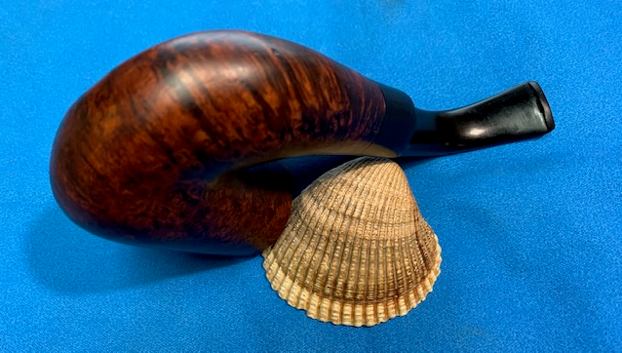
This Gorgeous Sunrise Amber Grain 299 Vintage Briar Canadian Came Alive


Blog by Steve Laug

The next pipe on the work table came to us from a group of pipes that Jeff and I picked up from an auction from Wilkes Barre, Pennsylvania, USA. The pipe is beautifully grained Canadian shaped pipe with a mix of medium brown stains back in 2019. Jeff cleaned it up in 2020 and now I am finally getting to it is 2021. The pipe is stamped on the topside of the shank and reads Sunrise [over] Amber Grain. On the underside of the shank it reads Vintage Briar [over] the shape number 299 near the bowl end. The pipe was dirty with a lot of grime ground into the bowl but the grain was still visible. The bowl was moderately caked with a light lava coat flowing onto the rim top and beveled inner edge toward the left front of the bowl. The stem was lightly oxidized and dirty with light tooth chatter and marks on the top and underside near and on the button. It had promise but it was very dirty. Jeff took some photos of the pipe before he started his cleanup work. He took photos of the rim top and bowl to give a clear picture of the thickness of the cake and well as the lava and darkening on the front side of the rim top and inner edge. He also took photos of the top and underside of the stem to show the light oxidation and the chatter and tooth marks. Jeff took a photo the sides and heel of the bowl to give a picture of the beautiful grain around the bowl and shank. The stamping on the sides of the shank are clear and readable and read as noted above. The Sunrise pipe was a Comoy’s made pipe and the France stamp on the shank pointed me to the connection between London and St. Claude (England/France). I turned to Pipephil’s site (http://www.pipephil.eu/logos/en/logo-s13.html) to get some background information on this beauty. I have included a screen capture of the pertinent section. The first pipe listed bears the same stamping as the one I am working on.The side bar includes this interesting piece of information. I quote:

The Sunrise brand perfectly illustrates the split pipe production of a same label between Saint Claude (FR) and London (GB) during the period Chapuis Comoy and Comoy closely collaborated (prior to early 1970s).

I turned to Pipedia and looked under the French makers and the brand was not listed. Under the English makers it was listed as a Comoy’s Sub-brand or second. I turned to the Comoy’s listing and at the bottom of the article was a list of these pipes (https://pipedia.org/wiki/Comoy%27s). I have included the list in its entirety and highlighted the Sunrise in red.

Seconds made by Comoy’s

Ace of spades, Ancestor, Astor, Ayres, Britannia, Carlyle, Charles Cross, Claridge, Coronet?, Cromwell, Dorchester, Dunbar, Drury Lane, Emerson, Everyman, Festival of Britain, Golden Arrow, Grand Master, Gresham, Guildhall, Hamilton (according to Who Made That Pipe), Kingsway, Lion’s Head, Lord Clive, Lumberman, Hyde Park, Lloyds, Mc Gahey, Moorgate, Newcastle, Oxford, O’Gorman, Rosebery Extra, Royal Falcon, Royal Guard, Royal Lane, Scotland Yard, St James, Sunrise, Super Sports, Sussex, The Academy Award, The Golden Arrow, The Mansion House, The Exmoor Pipe, Throgmorton, Tinder Box Royal Coachman, Townhall, Trident, Trocadero, Westminster, Wilshire

Now it was time to turn my attentions to the pipe itself. Jeff had cleaned up the pipe with his usual penchant for thoroughness. He reamed the pipe with a PipNet pipe reamer and removed the rest of it with a Savinelli Fitsall Pipe Knife.  He scrubbed the bowl with undiluted Murphy’s Oil Soap with a tooth brush. He rinsed it under running warm water to remove the soap and grime. He cleaned out the inside of the shank and the airway in the stem with alcohol, cotton swabs and pipe cleaners. He soaked the stem in Before & After Deoxidizer and rinsed it off with warm water. I took photos of the pipe once I received it.  The rim top cleaned up really well. The rim top and outer edge of the bowl appear to be in good condition other than some slight darkening on the front. The stem surface looked very good and the chatter on the stem on both sides near the button could easily be sanded out. The tooth marks on the button surface would need to be addressed. The stamping on the top and underside of the shank is readable and reads as noted above.      I removed the stem and took a photo of the pipe to give a sense of the whole. The bowl looked very good and once I cleaned up the stem the pipe would look very good.Now it was time to do my work on the pipe. I topped the bowl lightly and sanded the beveled inner edge and top of the rim with 200 grit sandpaper to lighten the darkening that was there. There was also a spot on the front outer edge of the bowl that I needed to sand. I stained it with a Maple stain pen to match the colour of the bowl. The finished product looked better. I polished the briar with micromesh sanding pads – 1500-12000 grit pads. I wiped it down with a damp cloth after each sanding pad.   The bowl was in such good condition that I rubbed the bowl and shank down with Before & After Restoration Balm. I worked it into the surface of the bowl sides and shank with my fingertips to clean, enliven and protect the briar. I let the balm sit for ten minutes then buffed the bowl with a cotton cloth to raise the shine.      I filled in the deep tooth marks on the button surface and the deeper ones on the stem itself with clear super glue. I let it cure and once it had hardened I reshaped the button and sanded the repairs smooth with 220 grit sandpaper. I started polishing the stem with 400 grit wet dry sandpaper. I polished the stem with micromesh sanding pads – 1500-12000 grit pads. I wiped it down with Obsidian Oil after each sanding pad. I used Before & After Pipe Polish – both Fine and Extra Fine to further polish the stem. This Comoy’s Made Sunrise Amber Grain Vintage Briar 299 Canadian is a great looking pipe now that it has been restored. The brown stained finish around the bowl is quite beautiful and highlights grain very well. The finish works well with the polished vulcanite oval taper stem. I put the stem back on the bowl and carefully buffed the pipe with Blue Diamond on the buffing wheel using a light touch on the briar. I gave the bowl and the stem multiple coats of carnauba wax on the buffing wheel and followed that by buffing the entire pipe with a clean buffing pad. I hand buffed the pipe with a microfiber cloth to deepen the shine. The finished Sunrise Amber Grain Vintage Briar Canadian sits nicely in the hand and feels great. Give the finished pipe a look in the photos below. The dimensions of the pipe are Length: 5 ¾ inches, Height: 1 ¾ inches, Outside diameter of the bowl: 1 1/8 inches, Chamber diameter: ¾ inch. The weight of the pipe is 31 grams/1.09 ounces. I will be putting it on the rebornpipes store shortly. If you are interested in adding this pipe to your collection send me a message or an email. Thanks for reading this blog and my reflections on the pipe while I worked on it. There are many more to come!
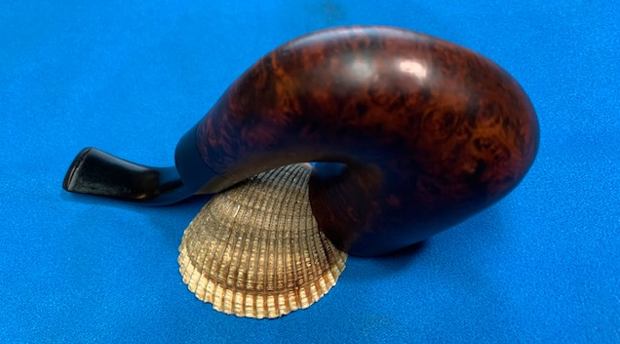
Breathing Life into a French Made Royal Ascot Deluxe Oom Paul


Blog by Steve Laug

The next pipe on the work table was purchased form an online auction in Columbia, Missouri, USA. It is an Oom Paul shape that is stamped Royal Ascot [over] Deluxe on the left side of the shank and Algerian Briar [over] France on the right side. The shape is well done but I was not familiar with the brand. Jeff and I took a risk in purchasing it based on the shape alone but it looked to be worth it. The briar was mixed grain with birdseye on the sides and cross grain on the front and back of the bowl and shank. The finish was quite dirty with grime ground into the bowl sides and bottom. There was a thick cake in the bowl and an overflow of lava on the rim top and inner edges. There appeared to be some burn damage on the top and inner edge toward the rear of the bowl but only clean up would determine that with certainty. The stem seemed to be older hard rubber and had some mild oxidation and tooth chatter and marks on both sides at the button. There was a faint Crown logo stamped on the left side of the taper. Jeff took photos of the pipe before his clean up work started. He took photos of the rim top and bowl to give a clear picture of the cake and the condition of the rim top and bowl. He included photos of the stem as well to capture what it looked like pre-cleanup. It is a very graceful looking piece. Jeff took photos of the sides of the bowl to capture some of the grain that is visible through the grime coat and what also looks like a varnish coat on the briar. The stamping on the sides of the shank was readable and read as noted above. You can also see what appears to be some varnish on the shank sides – kind of a crackly shine coat over the letters.To find out more about a brand which I was ignorant of I turned to Pipephil’s site for a quick overview (http://pipephil.eu/logos/en/logo-r6.html). The Algerian Briar stamp on the shank led me to believe I was dealing with a pipe made for the American Market. The France stamp seemed odd to me with the very British sounding brand name “Royal Ascot” so I was intrigued to find out what I could learn about it. I have included a screen capture of the section on the site on the brand. There seems to have been a link to Duncan pipes.The side bar on the site included some interesting information. I quote

Pipes with this brand were manufactured in France for Duncan (according to J.M. Lopes, op. cit. and Wilczak & Colwell, op. cit.). They were destined to US market and sold by Mastercraft.

So there was the French/British connection and the connection to the US market and Mastercraft. There seems to always be a tie to the British or French houses with these odd brands and often a link to Mastercraft!

I turned then to Pipedia to see if there was further information as there often is when I use the two sources (https://pipedia.org/wiki/Royal_Ascot). Interestingly Pipedia quotes Pipephil’s site. There is a bit of additional information and some photos on the article as well.

According to PipePhil pipes with this brand were manufactured in France for Duncan (according to J.M. Lopes, op. cit. and Wilczak & Colwell, op. cit.). They were destined to US market and sold by Mastercraft. They are made in France and many are marked Algerian Briar. The logo is a crown on the stem. Some pipes of the same name with a horseshoe logo also exist that were made in England, but may not be the same company.

Jeff had done his usual clean up on the pipe – reaming it with a PipNet reamer and cleaning up the reaming with a Savinelli Fitsall Pipe Knife. He cleaned out the shank and the airway in the mortise and stem with isopropyl alcohol, cotton swabs and pipe cleaners. He scrubbed the exterior of the bowl with undiluted Murphy’s Oil Soap and a tooth brush to break through the grime. He was able to remove most of the varnish coat at the same time. He scrubbed the stem with Soft Scrub cleanser and cotton pads to remove the grime and light oxidation. He soaked it in Briarville’s Pipe Stem Deoxidizer. He rinsed it off and wiped the entire pipe down with a light rub of EVO to enliven both. When I received it I put it away for awhile. I am just getting to work on it now in the summer of 2021 almost a year later. Here is what I saw when I took it out of the box of pipes to work on. I took photos of the damage to the rim top and inner edges of the bowl. Fortunately it appeared to be on the surface and not to deep on the rim top. The inner edge showed more damage to the front of the bowl. The stem was clean but was pitted and had tooth marks on both sides ahead of and on the surface of the button.The stamping looked very good. It was clean and readable. The faint logo on the stem is visible with a lens but otherwise it is gone. It is a crown like the one shown in the photos from PipePhil.I removed the stem from the shank and took a photo of the parts to give a sense of the proportion of this Royal Ascot Oom Paul.I decided to start my work on the pipe by scrubbing it down with acetone on cotton pads to remove the remnants of the varnish coat. It was surprising how much came off and how much better the bowl looked once it was finished. I decided to deal with the inner edge of the rim and the rim top damage next. I used a folded piece of 220 grit sandpaper to clean up the slight bevel on the inner edge and remove the burn damage. I sanded the top as well and was able to make it look much better.There were a couple of rough spots – one on the right side at the shank/bowl junction and one on the heel – where the fills had shrunk. I filled them both in with clear super glue. When the repairs cured I sanded the smooth with 220 grit sandpaper to blend them into the surrounding briar. I polished the briar with micromesh sanding pads to further blend in the repairs and the sanded rim top. I dry sanded with 1500-12000 grit pads and wiped the briar down after each pad with a damp cloth to remove the debris. I paused the polishing to touch up the repaired areas and rim top with an Oak Stain Pen. The colour was the closest match to the rest of the bowl so once it was polished and buffed it would blend in well.I resumed the polishing with 6000-12000 grit micromesh and found that the areas on the bowl that I had stained blended in very well.I rubbed the bowl down with Before & After Restoration Balm and worked it into the briar. The product cleans, enlivens and protects the briar. I let it sit for 10 minutes to do its work then buffed it off with a soft cloth. The pipe is shown below as it looks at this point in the process. I set the bowl aside and turned my attention to the stem. I “painted” the surface of the hard rubber stem with the flame of a lighter to lift the tooth marks as much as possible. I was able to lift them significantly. I filled in the remaining one on the top side next to the button and on the underside in the same place with clear super glue. Once it cured I sanded it smooth with 220 grit sandpaper. I polished the stem with micromesh sanding pads – dry sanding with 1500-12000 grit pads and wiping the stem down after each pad with Obsidian Oil to help protect and preserve the rubber. I polished with Before & After Pipe Polish – both Fine and Extra Fine and gave it a final coat of Obsidian Oil to finish. I finished the stem and put the pipe back together again. I buffed the Royal Ascot Deluxe French Made Algerian Briar Oom Paul with Blue Diamond on the buffing wheel. I gave the bowl and stem multiple coats of carnauba wax and buffed the pipe with a clean buffing wheel. I hand buffed it with a microfiber cloth to deepen the shine. The pipe is a real beauty. The dimension of the pipe are  – Length: 5 ½ inches, Height: 2 inches, Outside diameter of the bowl: 1 ¼ inches, Chamber diameter: ¾ of an inch. The weight of the pipe is 60 grams/2.12 ounces. The pipe will be added to the rebornpipes store in the French Pipe Makers section soon. If you are interested in adding it to your collection let me know. Thanks for walking through the restoration with me. Cheers.

Cleaning up a GBD Speciale 9438 Rhodesian


Blog by Mike Belarde

Hello. Thank you for taking the time to read this post, and walk through a fun clean up job on a GBD 9438.

I’m pretty excited about this pipe.  Like many readers of this site, the GBD 9438 Rhodesian is one of my favorite shapes. There is just something endearing about this rendition of the bent Rhodesian. The thick walls of these pipes also seem well suited for many of the flake tobaccos that I enjoy.  I was really thrilled when I won this pipe in an online auction out of New York.  The pipe looked to be in good condition in the pictures provided for the online listing. The stummel looked to have a nice smattering of bird’s eyes and some cross grain on the right side.

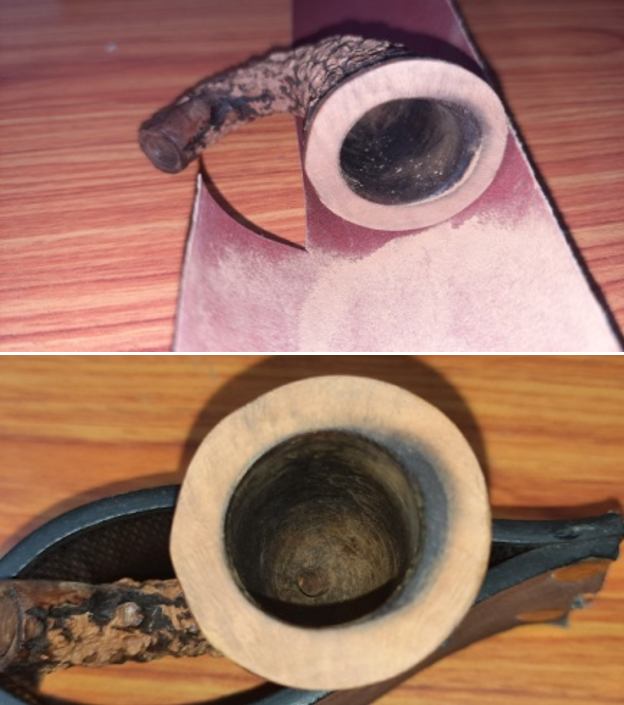
When I received the pipe, I found it to be in great condition. The stain looked a little faded, but the pipe had a nice orange-ish brown or reddish-brown tint to it. The stamping was legible and crisp. The rim was grungy and blackened. The chamber had only a trace of cake. The stem looked great. It was free of tooth marks and heavy oxidation, but looked to have some sanding marks, or scratches from being over buffed. All in all, I felt very pleased with the condition of the pipe.  Here are some pictures of the pipe, prior to cleaning process. As you can see from the photos, this pipe is in great shape for its age. Now let’s proceed to the cleaning process.

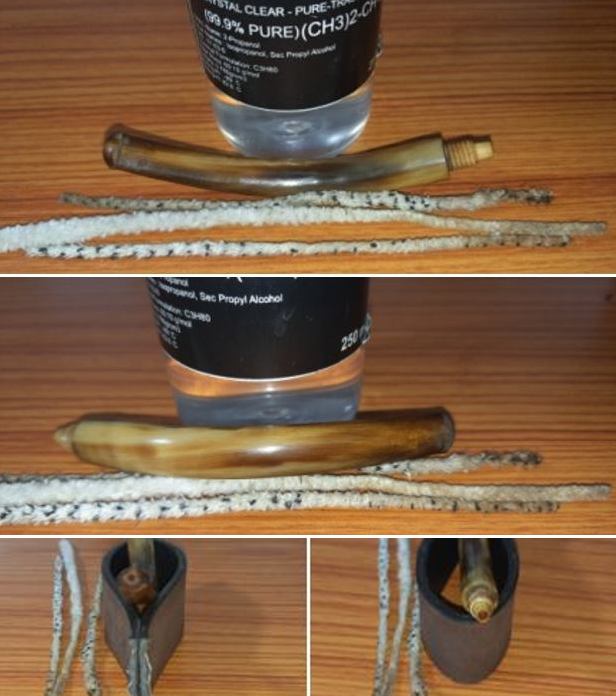
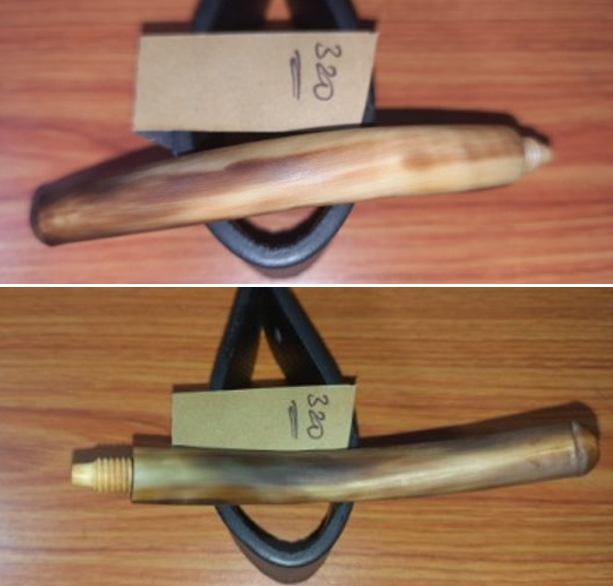
The first step in the process is to address the internals of both the briar and stem, and then clean up the grime on the stummel, and the carbon build up on the rim.  For this job I only grabbed a nylon bristled shank brush, some bristled and regular pipe cleaners, 99.9% isopropyl alcohol, and a bit of folded 320 grit sandpaper.I cleaned the shank over the sink with the shank brush dipped in alcohol. After each pass through the shank, I rinsed the shank brush under running water and re- dip it in the alcohol. I repeated this process until the soiling coming out on the shank brush began to lighten.   Once this happened, I transition to bristled pipe cleaner dipped in alcohol, and then lastly, regular pipe cleaners.

I also ran both alcohol dipped bristled and regular pipes cleans through the stem.  I was happy that the pipe was fairly clean and I only ran through a small hand full of pipe cleaners.

There wasn’t enough cake in the chamber to warrant the use of the reamer, so I opted to just sand out the chamber lightly with a folded piece of sandpaper.  Once that was completed, I scrubbed out the chamber and the shank with alcohol dipped cotton swabs. With the internals cleaned, I scrubbed the stummel with Murphy’s Oil Soap and an old toothbrush. I then scrubbed the rim with an old green scouring pad. The rim and the chamber cleaned up well and appeared to be in good condition. I took the rest of the charring or darkening on the rim and inner rim with a folded piece of 320 grit sandpaper. I light sanded out the darkening on the rim and reestablished the slight bevel in the inner rim with the sandpaper. The stummel seemed to be fairly clean but I decided to de-ghost the piped further.  I inserted two folded tapered fluffy pipe cleaners through the shank and down into the chamber to act as a wick. To ensure that there was contact on all the surface of the internal walls of the shank, I add two more folded pipe cleaners into the large shank of the Rhodesian.   I have found using the fluffy pipe cleaners is easier for me than trying to fish an elongated cotton ball down the shank.  I then placed a cotton ball in the chamber and saturated it with isopropyl alcohol.

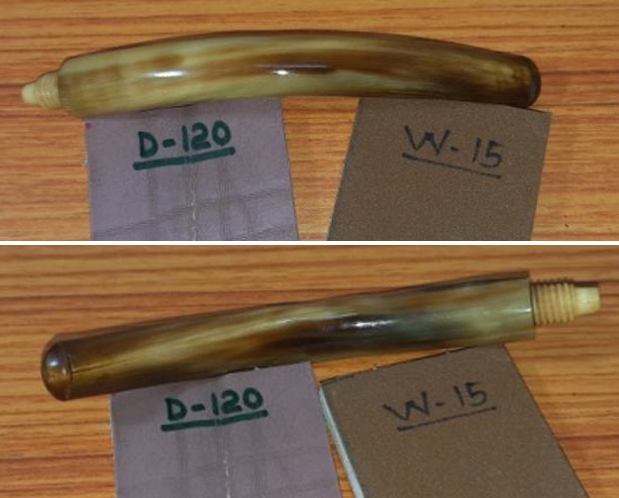
While the stummel was de-ghosting. I placed the stem in a small Tupperware container to soak in Briarville’s Oxidation Remover solution.  This pipe was very clean and I only let both the stummel and stem to soak for about eight hours.Both the alcohol and the Briarville solution further cleaned the pipe. I took the stem out of the solution and rinsed it and then ran some alcohol dipped pipe cleaners through it. I then scrubbed the stem with Soft Scrub and the scouring pad to clean it up further. I then worked on the stem. There appeared to be light scratches and a bit of pitting near the button. I took a folded piece of 400 grit sandpaper and sanded out the damage the best I could. The sanding seemed to have taken care of most of the flaws in the stem.In the next step I took the stem through the progression of micromesh pads (1500-12000). I polished the stem with each pad and wiped the stem down with a cotton pad soaked in Obsidian Oil in between each pad. In the last step, I polished the stem with Before and After’s Extra Fine Polish. Satisfied with the progress on the stem, I turned my attention to the stummel. I polished the briar with the progression of micromesh pads (1500-12000) wiping it down with a damp paper towel. Once this step was done, I mixed some dye up to touch up the stain.I really liked the light orange or red tint that this pipe had, so I decided to try and re-stain it with British Tan. I mixed a one-to-one ratio of British Tan with alcohol to thin the leather dye down a bit. I like to apply the stain with a small hobby brush. I find that the brush helps me to coat the stummel evenly. Once the stain was applied, I used a small tea candle to fire the briar and set the dye. I let the stummel sit for a couple of hours and then removed some of the excess stain with a cotton pad soaked in acetone. After removing some of the excess stain with acetone I began to polish the stummel with the micromesh pad series (1500-12000). I wiped the briar down with a damp paper towel between each pad.

Once I was finished with the micro pads, I worked some Before and After Restoration Balm into the stummel. The pipe was really looking nice at this point! I let the balm sit for about 10 minutes and then buffed the stummel with a cotton cloth. In the last step of the process, I buffed both the stummel and stem with Red Tripoli and Blue Diamond.  I then gave both several coats of Carnauba wax and buffed them with a cotton cloth.

I’m really happy how this pipe turned out, and am looking forward to loading it up and relaxing with it in the backyard. Thanks for taking the time to read this post!

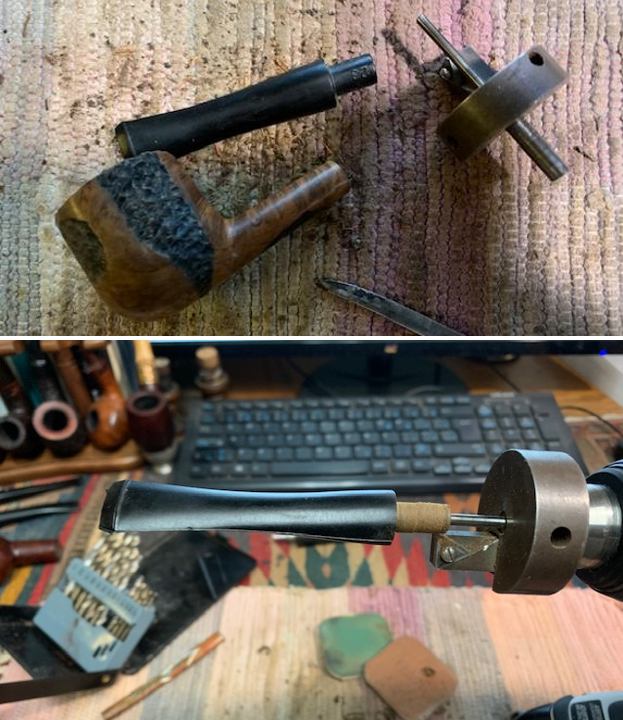
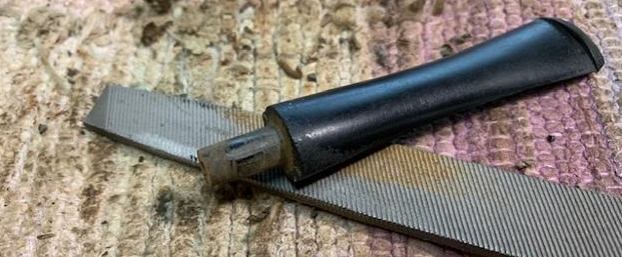
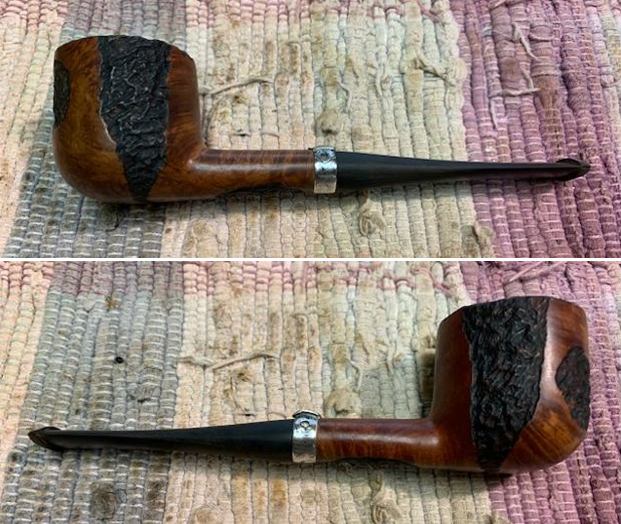
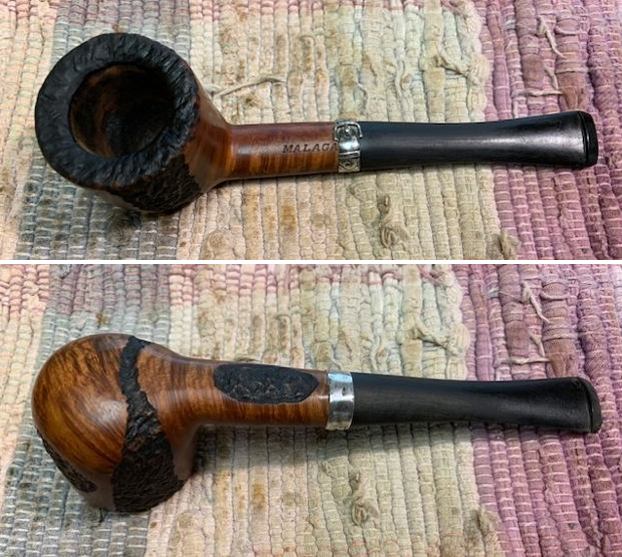
A Labour of Love – Repairing a Badly Damaged, Cracked Karl Erik Grade A Hand Made


Blog by Steve Laug

I am pretty sure that I am a sucker for both a good story and a badly damaged pipe. The next pipe on the table came with both. I received an email from Dewey in Iowa about a pipe he bought over 20 years ago. It was one of his favourite pipes and it had a serious crack in the exterior of the bowl. He wrote asking what he could do about it. Here is what he wrote:

Dear Steve,

I have owned a Karl Erik pipe for over 20 years. Bought it from the National Cigar Store in Waterloo, Iowa…..it is my favorite pipe…

just yesterday I found a large crack has appeared on the bottom of the pipe. It still smokes fine but is there anything that can be done to stop it from cracking further and can the crack be filled?The crack does extend up the front of the pipe into a small design where a short second crack is present…wow…

I was going to send pics but don’t know how to add them here

Thank you so much for your time and consideration.

I wrote him back and asked him to send the photos to my email account. He sent three photos of the pipe. I think that the first two are teasers to get my interest before he hits me with the photo of the damage to the bowl. He obviously took photos mid smoke. It is a uniquely shaped pipe and one that he really loves to smoke. You can see from the photos above what I saw. The pipe was obviously heavily caked and the plateau on the rim top was filled in with lava overflow. The stem was chomped and had deep tooth marks visible on the topside. But so far it looked no different than any other pipes that I have worked on. It was a nice looking Karl Erik pipe that had been thoroughly enjoyed for over 20 years. Then came the next picture of the damage in question. Wow!He also added that there was more damage. I have included our further email conversation below.

Steve, the crack does extend up the front of the pipe into a small design where a short second crack is present…wow…

…there is also a very small crack extending below the stem hole…but it has been there for quite a while now and doesn’t seem to be growing larger.

Thanx, Dewey

So now I knew what we were talking about. A crack in the heel of the bowl and up the front into the carved design with a second smaller crack in the design itself. There was also a small crack on the shank end extending downward from the mortise. I wrote Dewey back about what he could do with the crack in terms of self repair. His response was to ask if I would do the repair. We wrote back and forth for a while and finally I agreed to take on the project. I wanted to make sure that he understood that the repair would be solid but that it could possibly crack again. He was fine with that and reiterated that he was in no hurry with the pipe. Several weeks went by and the pipe arrived in Vancouver. Here is what I saw. The pipe was far dirtier than I could see from the photos. When the package arrived and my wife brought it in I could smell the sweet, smoky aroma of the pipe through the padded envelope. My wife handed it to me we the short declaration “IT STINKS”. I had to admit that it did. The bowl had a lot of oils and grime ground into the surface of the briar that all but hid the grain on the bowl. The plateau rim top was almost smooth with the filled in lava overflow and there was a thick cake in the bowl. The stem was oxidized, calcified and chomped with heavy tooth marks on both sides ahead of the button. When I removed the stem the mortise and airway were reduced from the tars and the airflow through the shank and stem were restricted. The pipe would need a serious ream and clean before I could assess the damage from the crack. I would need to ream it back to bare briar to see if the cracks went into the chamber. It was impossible to see the condition of the chamber.

I took close up photos of the rim top and bowl and the stem before I started my clean up work so that I could document the condition of the pipe when I started my work on it.The stamping on the underside of the shank is quite filled in with the grime but reads Karl Erik [over] Hand Made in Denmark [over] A which is the grade stamp.I took photos of the crack in the heel of the bowl and up the front side into the carving. It is quite long and large and the crack is singular. It has not taken off in other directions. That is the good news with this damaged bowl.I removed the stem from the shank and took a photo of the look of the pipe. It is an interesting shaped pipe with a jutting chin on the front.In order to move forward with the examination of the bowl I needed to clean it up. To inspect the inside walls of the chamber and the base of the chamber to see if the crack goes into the chamber I needed to remove all of the cake. It needed to be smooth if I was going to be able to examine it properly. I reamed the bowl with a PipNet pipe reamer and cleaned up the remnants in the chamber with a Savinelli Fitsall Pipe Knife. I wrapped a dowel with 220 grit sandpaper and sanded the walls and bottom of the bowl to further clean it up.At this point I examined the bowl with a flashlight and a dental probe and I could not see any cracking on the bottom of the bowl or the sides parallel to the crack on the heel and the front of the bowl in the carving. That was a wonderful discovery! I knew now that I was dealing with a crack on the exterior of the bowl that had not proceeded inside. I am wondering at this point if Dewey had dropped the pipe on a hard surface as that would explain what we were dealing with.

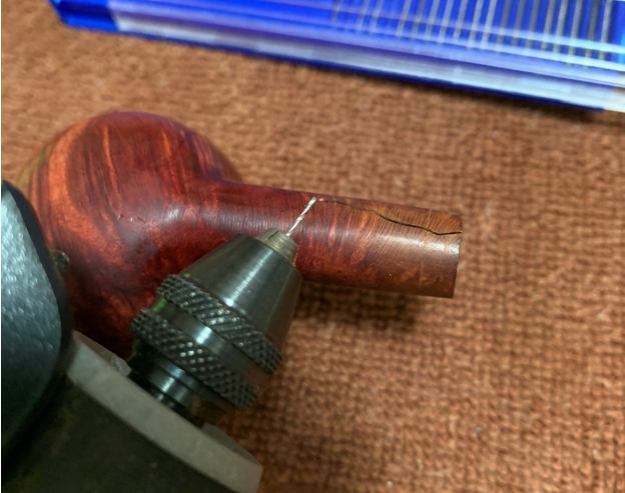
I decided to clean up the exterior of the bowl next. I scrubbed it with undiluted Murphy’s Oil Soap, a tooth brush and a brass bristle brush for the plateau. I scrubbed it with the soap and the brushes until it was a mess and rinsed it off with warm running water. I repeated the process until I was convinced I had removed the thick grime coat and lava on the rim top. I took photos of the cleaned bowl at this point. It is nice to see the grain poking through. It is a really nicely grained pipe. I am thinking that the characteristic carved patterns around the bowl and shank were done to deal with flaws in the briar. I wonder if the crack started in the carved area and proceeded downward? I focused some of the cleaning on the crack on the front carving where it appeared that there were two cracks. I have circled the crack in the second photo and have red arrows pointing to the damaged spots. I also cleaned the crack down into the heel of the bowl. I wanted it to be free of grime and oils so that the repair would be solid.With the externals clean and the bowl reamed it was time to clean out the mortise and the airway in the shank and the stem. I scrubbed them with 99% isopropyl alcohol, cotton swabs and pipe cleaners until they came out clean. The pipe was finally beginning to smell less sour.With the pipe clean it was now time to work on the cracks. I drilled a small micro pin hole at each end of the crack to stop it from spreading further. I filled in the pin holes and the crack with briar dust and clear super glue. I layered the repair using a dental spatula to pressed the dust deep in the cracked area. I did the same thing with the small hairline crack on the shank end.Once the repair had cured I sanded the heel of the bowl, the front of the repair and the chin edge with 220 grit sandpaper to smooth out the repaired area and blend it into the surrounding briar.I used a black stain pen to fill in the crevices of each of the carved areas around the bowl and shank sides as well as those in the plateau areas on the rim top and shank end. It appeared that this is what it looked like originally and I like the sense of contrast and depth that it gives those areas once the bowl is polished.I stained the repaired areas with a Maple stain pen to match the surrounding briar. It involved staining the heel of the bowl, the nose and carved area on the front of the bowl, the rim top high points on the plateau and the high points on the plateau on the shank end. The pipe is beginning to take shape and look better.With the staining finished I polished the briar with micromesh sanding pads – dry sanding with 1500-12000 grit pads. I wiped the bowl down between the pads with a damp cloth to remove the debris. By the end o f the process the bowl began to take on a rich shine. The repairs, while still visible were less so than when I started the polishing. I rubbed the bowl down with some Before & After Restoration Balm. I worked it into the briar with my finger tips to clean, preserve and protect the briar. I let it sit for 10-15 minutes then buffed it off with a cotton cloth. I set the bowl aside and turned my attention to the stem. I scrubbed the stem with Soft Scrub and cotton pads to remove the oxidation and calcification which seemed to reside on the surface of the vulcanite. I scrubbed out the tooth marks at the same time working the scrub deep into them. I was amazed at how clean it was when I had finished. I “painted” the tooth marks with the flame of a lighter to lift them to the surface. The heat raised them significantly but not completely. I filled in the remaining marks with clear super glue and once it had cured flattened the repairs with a file and also recut the button edges. I sanded the stem with 220 grit sandpaper to blend the repairs into the surface and started polishing the stem with 400 grit wet dry sandpaper. I polished the stem with micromesh sanding pads – wet sanding with 1500-2400 grit pads and dry sanding with 3200-12000 grit pads. I wiped the stem down after each pad with Obsidian Oil which cleans and protects the vulcanite. I polished it further with Before & After Pipe Stem Polish – both Fine and Extra Fine. I gave it a final wipe of Obsidian Oil and set it aside to dry. It was good to be finished with this labour of love. I would be glad to pack it up and send it back to Dewey. It looks amazingly good considering where it was when I started. Some may not agree with my method of repair but it has worked for me for many years. The cracks in the exterior of the briar were repaired and filled in. The bowl been restained and polished. I buffed the bowl and stem with Blue Diamond on the buffing wheel and the bowl began to shine. The Karl Erik A Hand Made Freehand looked almost like new (minus the dark line of the crack repair). The dimensions of the pipe are Length: 7 inches, Height: 2 ½ inches, Outer diameter of the bowl:1 ¾ inches, Chamber diameter: 7/8 of an inch. I know Dewey will be excited to get this back when I send it out next week. It is a beautiful pipe and with the repair and restoration it should continue to serve Dewey for a long time to come. Thanks for walking through this repair with me.

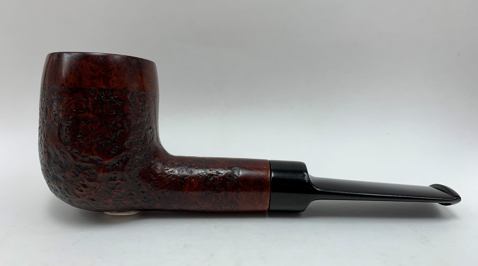
Refreshing A Guildhall 250 Straight Stemmed Dublin by Comoy’s


Post by Mike Belarde

Hello. Thank you for taking the time to read this post, and walk with me through a fun and enjoyable restoration project.

Pipe restoration has become a recent hobby for me, and I’ve been restoring estate pipes for my personal collection over the last year and a half.  Most of the techniques I use, I have gleaned from the Reborn Pipes and The Pipe Steward websites.  Both Steve and Dal have been a great source of info. Steve has also been very gracious, and has let me share a post on the site.

I have had this nice Dublin for several months now, and am finally getting a weekend to work on it and clean it up.  I purchased it through an online auction from a seller out of Minnesota. What caught my eye with this pipe was the interesting looking grain, and the shape.  I have several bent Dublins, but did not own a straight stemmed version.  The fact that the pipe was a Guildhall also caught my attention.  I own several Everyman Pipes, which are also Comoy’s seconds, and seem to be of good quality.

This pipe is marked with the Guildhall, and made in England stamps, and a shape number of 250.

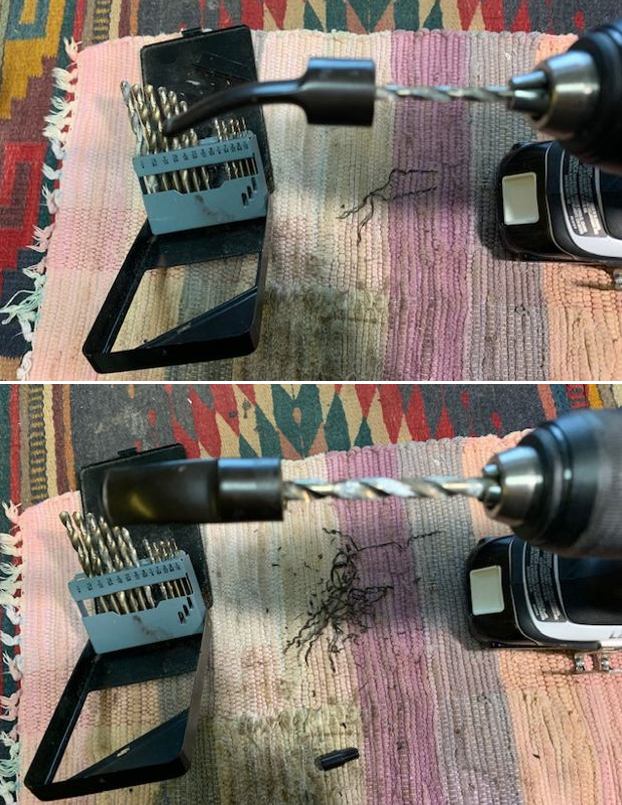
I have provided a link to the Comoy’s article from Pipedia here, which lists Guildhall as a Comoy’s second.  https://pipedia.org/wiki/Comoy%27s.  Also, on the Pipedia site there is an interesting example of a Comoy’s advertisement briefly describing the Guildhall line, and I have included it below.According the Pipedia site’s shape chart reference, the shape number 250 corresponds to a straight stemmed, oval shanked, Dublin. This matches the pipe that I’m working on. When I received the pipe, it was in fairly good condition. The stummel had a light shine, but still looked slightly grimy. The rim had a light coating of carbon/lava overflow, and the chamber was lightly caked. From what I could see, the shank and draft seemed to be in good condition without a lot of tar and carbon build up. As you can see from the pictures, the pipe has some interesting cross grain and perhaps small birds’ eyes. Once the cleanup process is complete, I’m expecting that this will be a very attractive pipe, and a nice addition to my collection. The stamping on the pipe was in good condition and easily legible. The stem looked to also be in great condition. The stem was only lightly oxidized. There didn’t seem to be any tooth marks or chatter, but there was a small area of calcification around the button portion of the stem. Perhaps the prior owner had utilized softy bits? All in all, the pipe looked to be in great shape! The first step in the process is to address the internals of both the briar and stem, and then clean up the grime on the stummel, and the carbon build up on the rim.   Recently, I’ve been trying to clean the shank with a shank reamer and nylon shank brush dipped in alcohol first in order to save on the amount of pipe cleaners that I have been going through. My first step is to ream the bowl and clear as much of the cake that I can. I used two head sizes on the reamer, and gently cleared out the majority of the carbon. I transitioned next to a piece of 220 grit sandpaper wrapped around a small dowel to further sand out the chamber.I then turned my attention to the shank. I first run the shank reamer through the shank and gently turn it in a clockwise motion to remove any of the buildup in the airway.  This particular reamer is 3.5mm in diameter. I only want to remove the build up without removing any of the actual briar. I don’t want to alter and widen the draft on this pipe. On Steve’s advice, I have also attached a similar sized drill bit to a cordless drill and have gently turned other stummels by hand to clear the airways.I run a shank brush several times through the shank and rinse it under running water, then dip the bristles about half way up the brush. I found out the hard way that if you dip the entire brush in alcohol, you can inadvertently sprits the stummel with alcohol on the backstock, potentially damaging a good stain and finish.
Once that shank brush starts to come out only lightly soiled, I move on to cleaning the shank with bristled pipe cleaners, and then soft pipe cleaners. Thankfully this pipe was fairly clean, and I only ran through a handful of cleaners on the stummel and stem.Once that step is completed, I moved on to cleaning the shank and the chamber with cotton swabs dipped in alcohol. As you can see by the swabs, the pipe cleaners still left some tar in the shank. With the internals cleaned, I scrubbed the stummel with Oil Soap and an old toothbrush. I gently sanded some of the lava build up on the rim with a piece of 220 grit sandpaper, and removed the rest of the build up with a green scouring pad. Now that everything is clean, it looks like the rim and chamber are in great shape! I decided to de-ghost and clean the stummel further.  I inserted two tapered fluffy pipe cleaners through the shank and down into the chamber to act as a wick.  I have found using the fluffy pipe cleaners is easier for me than trying to fish an elongated cotton ball down the shank.  I then placed a cotton ball in the chamber and saturated it with isopropyl alcohol.   I resaturated the cotton ball every couple of hours and then left the stummel to sit overnight.
While the stummel was de-ghosting. I placed the stem in a small Tupperware container to soak overnight in Briarville’s Oxidation Remover solution.  After soaking overnight more of the tar build up was removed from the stummel. The stem also looked good. The light oxidation and calcium build up was removed, and this revealed a few light toothmarks on the underside of the stem. I decided to work on the stem first. I tried lifting some of the toothmarks with a Bic lighter. It raised the indentations some. I sanded the rest of the marks out with a small piece of 320 grit sandpaper.  After the toothmarks were dealt with I began to polish the stem. I took the stem through the progression of micromesh pads. After each pad I wiped down the stem with a cotton pad soaked in Obsidian Oil.  In the last step I polished the stem with Before and After’s Extra Fine Polish. The stem seemed to have come out pretty well. I moved on to the stummel. I started to polish the stummel with the micromesh pads and about halfway through the process decided that the stain looked a little worn and washed out. So, I decided to touch up the stain.

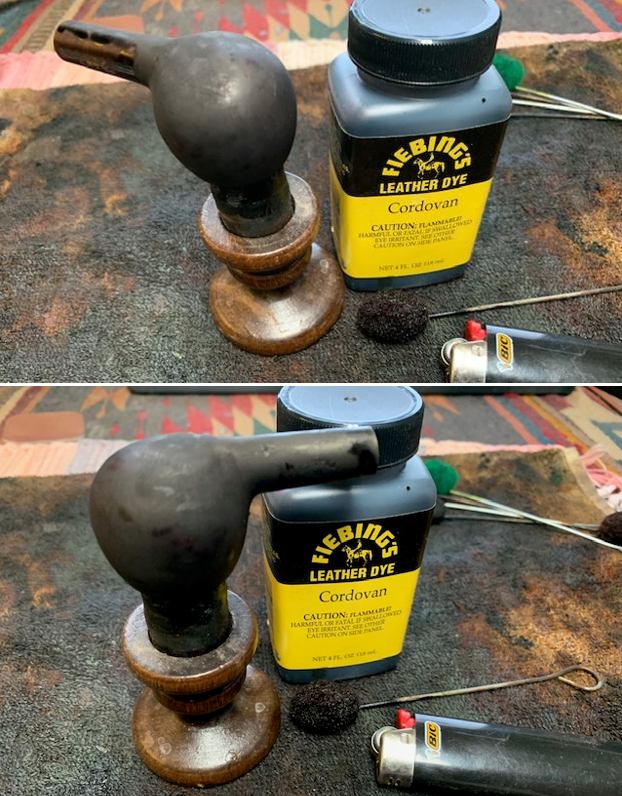
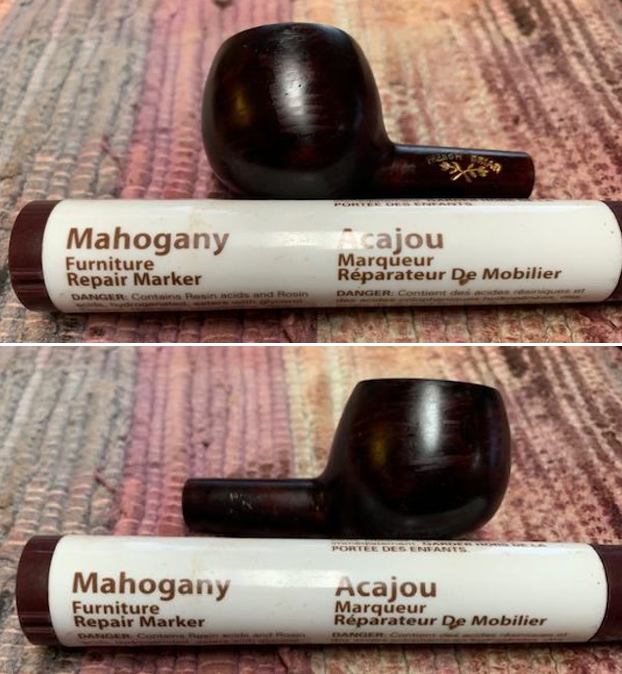
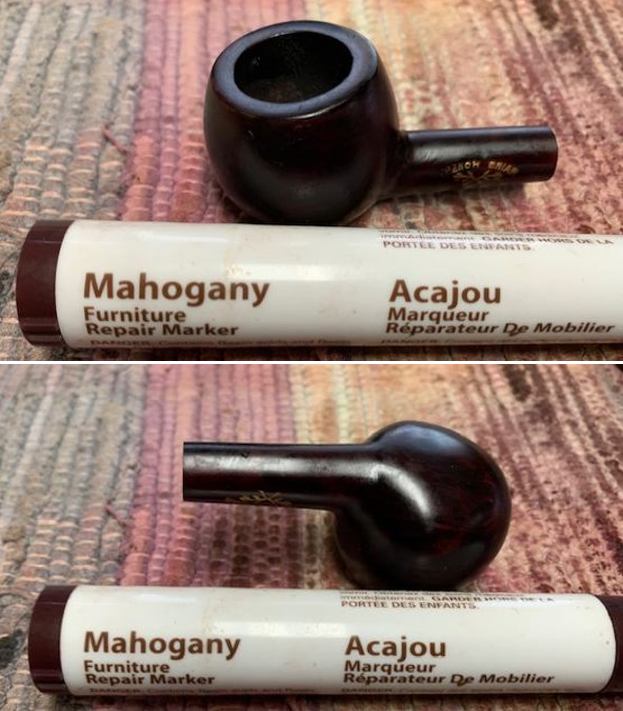
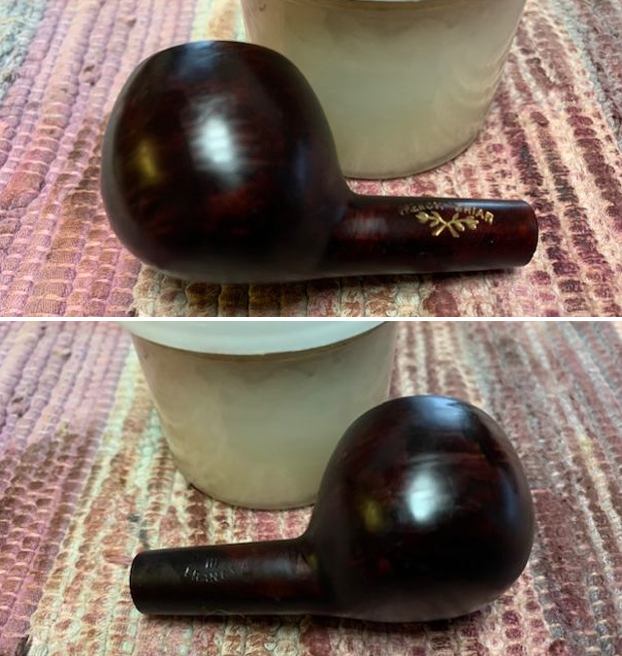
I mixed a one-to-one ratio of Cordovan Leather with alcohol to thin the leather dye down a bit.  Recently I have been finding that my dye jobs have been darkening the briar too much, and hiding a lot of grain. I wanted to see how this would turnout.  I like to apply the stain with a small hobby brush. I find it helps me to coat the stummel evenly. Once the stain was applied, I used a small tea candle to fire the briar and set the dye.  I let the stummel sit for a couple of hours and then removed some of the excess stain with a cotton pad soaked in acetone. After removing some of the excess stain with acetone I began to polish the stummel with the micromesh pad series. I wiped the briar down with a damp paper towel between each pad.Once I was finished with the micro pads, I worked some Before and After Restoration Balm into the stummel. It is always encouraging to see the grain come to life after applying the balm! I let the balm sit for about 10 minutes and then buffed the stummel with a cotton cloth. The last step in the process, I buffed both the stummel and stem with Red Tripoli and Blue Diamond.  I then gave both several coats of Carnauba wax and buffed them with a cotton cloth.
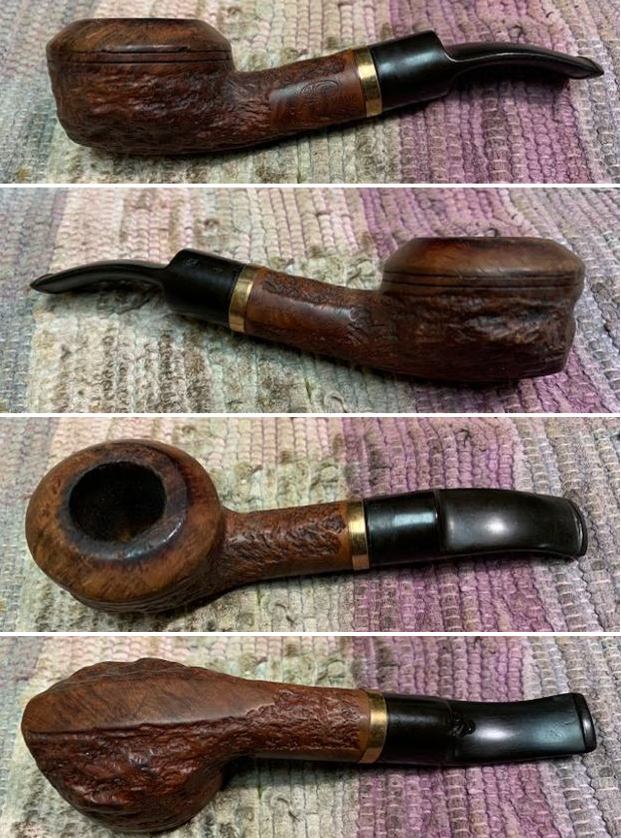
I am pretty please with how the pipe turned out.  Thanks for taking the time to read this post!

Resurrecting a Tired Warrior – a Butz-Choquin Casino 1575 Spigot Billiard


Blog by Steve Laug

The next pipe on the table is a Butz-Choquin Spigot style pipe with a polished nickel ferrule and a polished nickel stem end. The pipe had classic shape and at first glance looked very good. We purchased this from an online auction late in 2020 in Elgin, South Carolina, USA. It had a rich finish somewhere underneath all of the debris, grime and damage to rim edges and sides. There was a thick cake in bowl and lava on the rim top. The rim top was uneven with dips and burns on the top. The front of the bowl had significant burn damage from the rim top down into the surface of the briar on the front. The left side had the same issue and had been worn away over time so that it was canted inward making that part of the bowl thinner on the side. The pipe is stamped on the left side of the shank Butz-Choquin at an angle [over] Casino and on the right side it was stamped St Claude in an arch over France [over] the shape number 1575. The nickel ferrule and stem end were oxidized and scratched. The stem was oxidized but had deep tooth marks on the top and underside near the button. The deepest marks were on the underside with one that was almost a bite through. The BC logo on the topside was faded and needed to be touched up. Jeff took photos of the pipe before he started his clean up work. I like to have an idea of how the pipe was smoked before we got it and what the bowl and rim top looked like. Jeff always takes some photos of the bowl and rim from various angles to show what it looked like. This bowl and rim top were in rough condition. The stem was a real mess with deep tooth marks and damage on both sides. He took a photo of the nickel ferrule and stem end to give a picture of their condition when we received the pipe. It definitely needs work. He took photos of the sides and heel of the bowl to give a sense of the grain on the pipe. You can also see the damage around the top front and sides in the photos. Jeff captured the burn damage on the front of the bowl in the next photo and some of the nicks and gouges in the sides of the bowl in the second photo. There is work to do on this one!The next photos show the stamping on the left and right side of the shank. It is clear and readable as noted above. Jeff also captured the BC stamp on the topside of the stem. I turned to Pipephil.eu and read through the listing on the brand. It is always a quick reminder to me of the basics of a brand. The Casino line was not listed there. I include the short summary of the history below.

The origin of the brand reaches back to 1858 when Jean-Baptiste Choquin in collaboration with his son-in-law Gustave Butz created their first pipe in Metz (France). Since 1951 Butz-Choquin  is a brand of the Berrod-Regad group (Saint-Claude, France).

Jean Paul Berrod managed the company from 1969 to 2002 when he retired and sold the corporate to Mr Fabien Gichon. Denis Blanc, already owner of EWA, took over the S.A. Berrod-Regad in 2006.

I could not find anything specific in Pipedia about the Casino line, but a simple search on the internet will show many different shapes available in the Casino line from Butz-Choquin.   Now it was time to work on the pipe.

Jeff had done a great cleanup on the pipe. He reamed the bowl with a PipNet pipe reamer and followed up with a Savinelli Fitsall pipe knife to remove the cake. He scrubbed out the mortise and the airway in the shank and the stem with alcohol, cotton swabs and pipe cleaners. He scrubbed the bowl exterior with a tooth brush and Murphy’s Oil Soap to remove the grime on the finish of the bowl and the lava from the rim top. He rinsed it under running water. One of the benefits of this scrub is that it also tends to lift some of the scratches and nicks in the surface of the briar. He dried it off with a soft cloth. He cleaned the internals and externals of the stem with alcohol, pipe cleaners and cotton swabs. He soaked the stem in Briarville’s Pipe Stem Deoxidizer and rinsed it off with warm water and cleaned out the airway in the stem with alcohol. When I received it the pipe looked very good.  I took a photo of the rim top and stem to show the condition. The rim top and the inner edge of the bowl were in rough shape. The outer edge had a lot of burn damage on the front and the left side. The rim top and inner edge also has significant burn damage and was not flat. The stem was vulcanite and there were some deep tooth marks and chatter on both sides ahead of the button. The stamping on the pipe is clear and readable as noted above. The BC logo on the stem is deep and needs to be repainted with white (as seen in the photo of the top of the stem above).I started my work on this pipe by dealing with the damage to the outer edge of the bowl and rim top. I topped the bowl first on a topping board with 220 grit sandpaper. I flattened out the rim top and made the top of the rim consistently flat. I removed much of the burn damage to the bowl top. I worked on the damaged areas on the left side and front of the bowl by building them up with briar dust and clear super glue. I built up the left side of the inner edge with super glue and briar dust as well. There the burn damage was shallow but it made the bowl out of round. I topped it once again to smooth out the repair on the rim top. I used a piece of dowel wrapped in sandpaper to sand the inner edge of the rim and smooth out the repair in that area. It worked well.I smoothed out the repairs on the left and front of the bowl with 220 grit sandpaper and blended them into the surrounding briar.I gave the inner edge of the bowl a slight bevel with 220 grit sandpaper to help reshape it and bring it back to round. The rim top and edges looked good at this point in the process.I restained the pipe with a light brown aniline stain. I applied it with a dauber and flamed it with a Bic lighter to set it in the grain. I repeated the process until I was happy with the coverage.Once the stain had dried I wiped the bowl down with 99% isopropyl alcohol to make it a bit more transparent. I find that doing a wipe down at this point evens the finish before I start polishing it with micromesh.I polished the briar with 1200-1500 micromesh sanding pads and wiping it down with damp cloth after each sanding pad. As I worked through the cycle of pads the shine developed with each change of pad. The damage on the rim sides looks better. I left some of the nicks and sandpits as they really are a part of the pipe’s story. I rubbed the bowl and shank down with Before & After Restoration Balm. I worked it into the surface of the bowl sides and shank with my fingertips to clean, enliven and protect the briar. I let the balm sit for 10 minutes, then buffed with a cotton cloth to raise the shine. The Balm did its magic and the grain stood out on the briar. I set the bowl aside and turned my attention to the stem. I decided to address the tooth marks on the stem. They were ragged, with sharp edges and heat did not lift them at all. I filled them in with clear super glue. I let the repairs cure and once they hardened I flattened and shaped them with a small file. I sanded them with 220 grit sandpaper to blend them into the surface of the stem. I started the polishing of the stem with 400 grit wet dry sandpaper. I touched up the BC stamp on the left side of the stem with white acrylic nail polish. I worked it into the stamp with a tooth pick and then sanded off the excess once it had dried with a 1500 micromesh sanding pad.I polished it with micromesh sanding pads – 1500-12000 grit pads. I wiped it down with Obsidian Oil after each sanding pad. I used Before & After Pipe Polish – both Fine and Extra Fine to further polish the stem. The photos below show the polished stem. This Butz-Choquin Casino 1575 Spigot Billiard with a polished nickel ferrule and stem cap on a vulcanite stem is a great looking pipe now that it has been restored. It was a lot of work and I took a decision to leave some of the journey of the pipe in the finish so it is far from flawless but it is a beauty. The rich browns of the stain made the grain come alive with the polishing and waxing. I put the stem back on the bowl and carefully buffed the pipe with Blue Diamond on the buffing wheel using a light touch on the briar. I gave the bowl and the stem multiple coats of carnauba wax on the buffing wheel and followed that by buffing the entire pipe with a clean buffing pad. I hand buffed the pipe with a microfiber cloth to deepen the shine. The finished BC Casino 1575 Spigot really is a beauty and fits nicely in the hand and looks very good. Give the finished pipe a look in the photos below. The dimensions of the pipe are Length: 6 ¼ inches, Height: 1 ¾ inches, Outside diameter of the bowl: 1 ¼ inches, Chamber diameter: ¾ of an inch. The weight of the pipe is 1.87oz./53grams. This beauty will be going off to its new trustee in Michigan along with several other nice pipes. Thanks for reading this blog and my reflections on the pipe while I worked on it. There are many more to come!