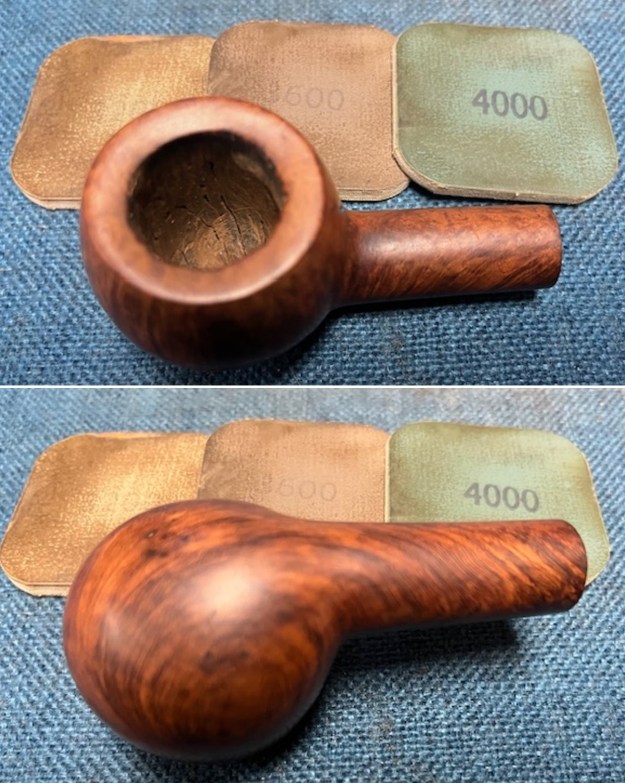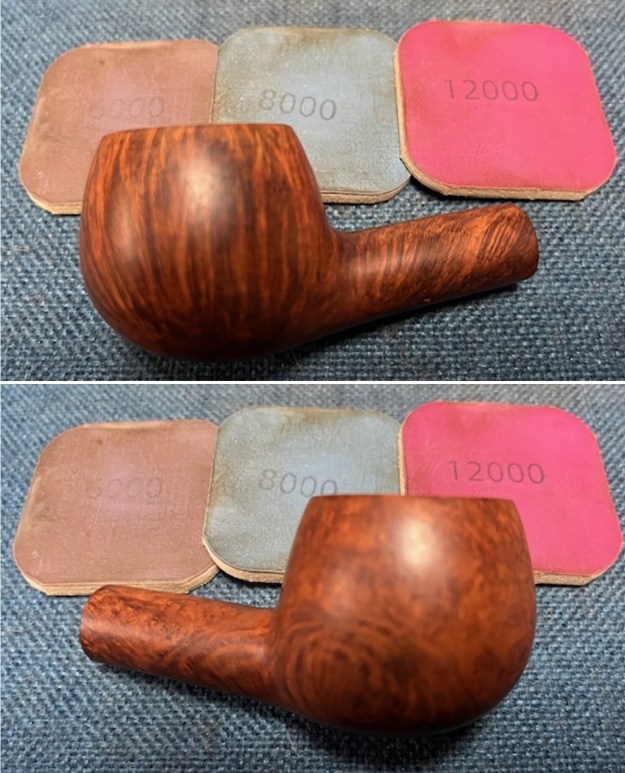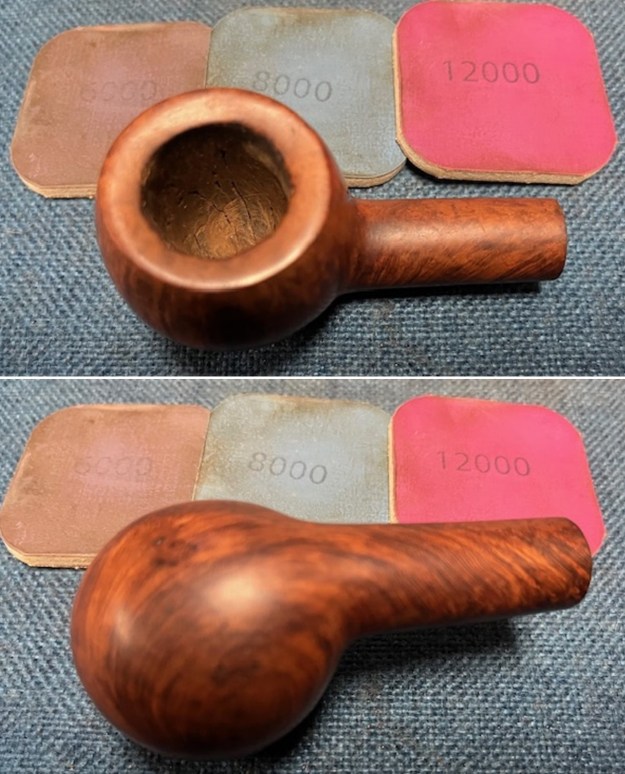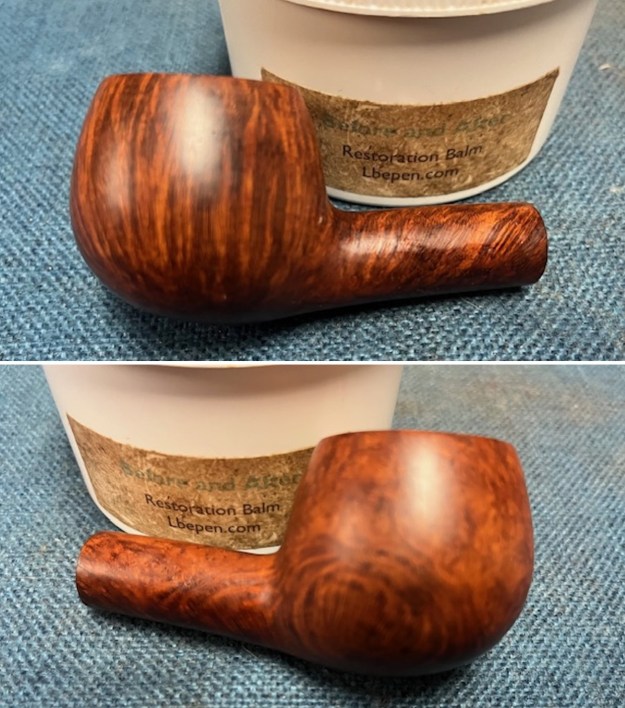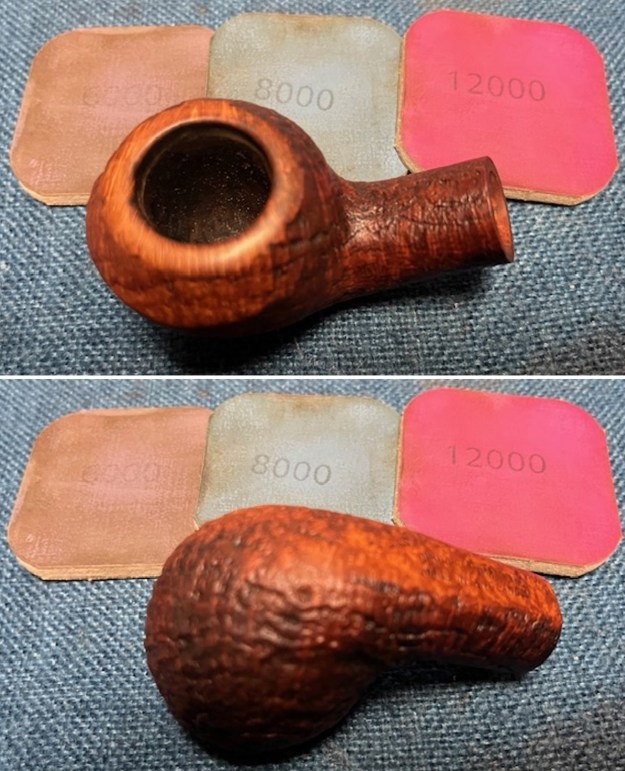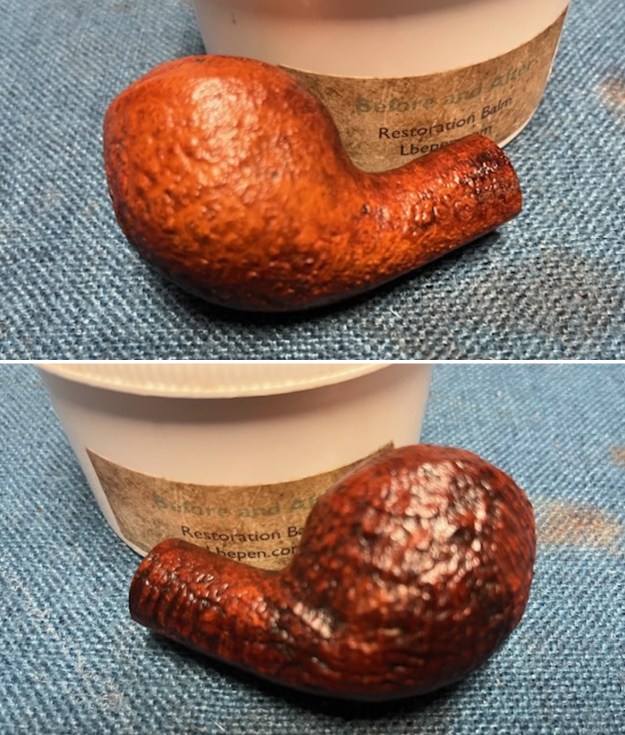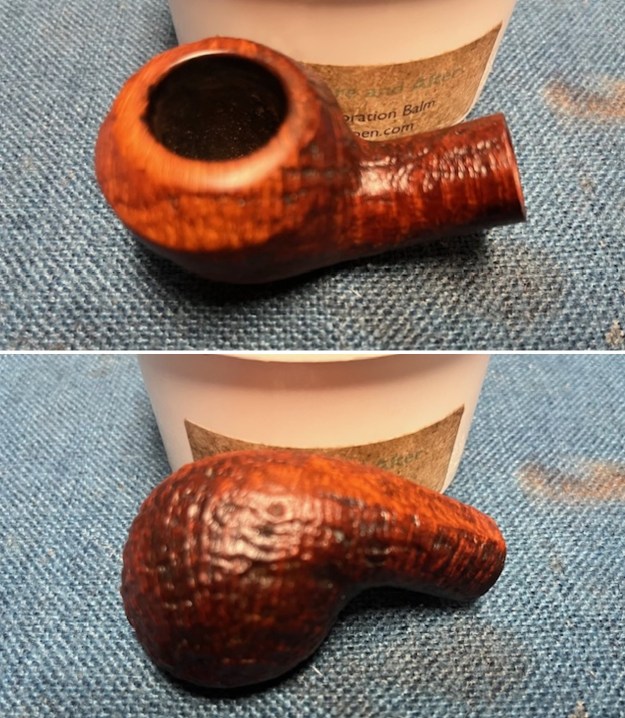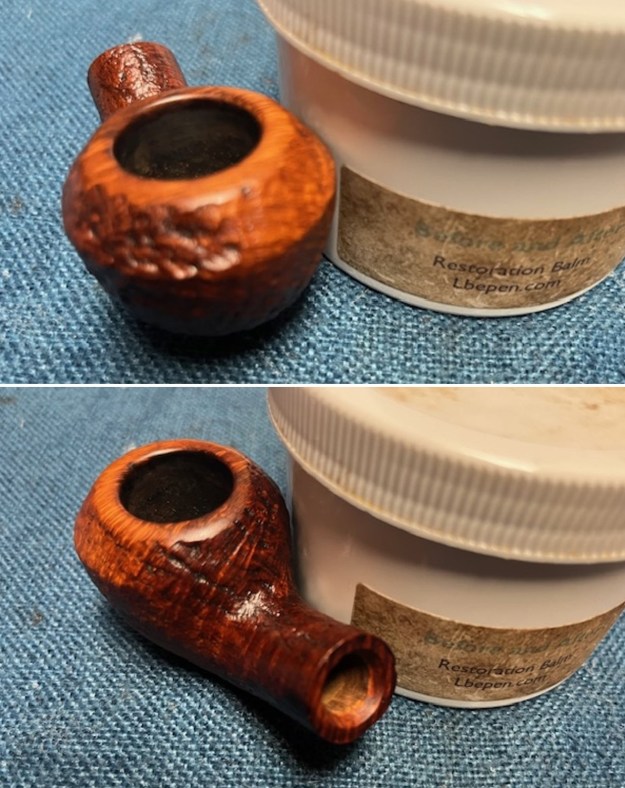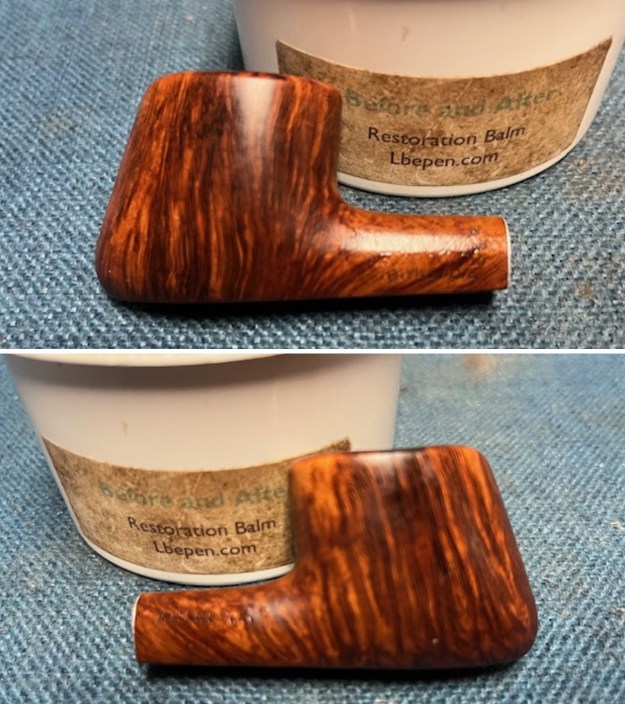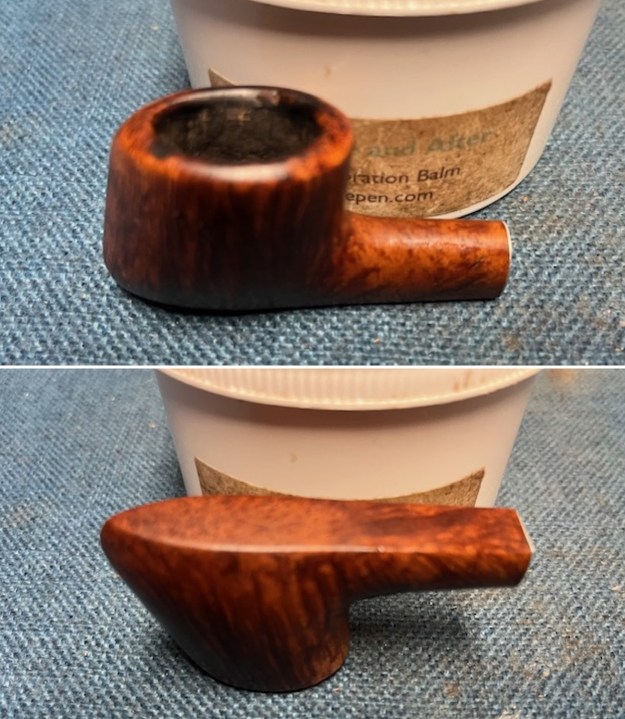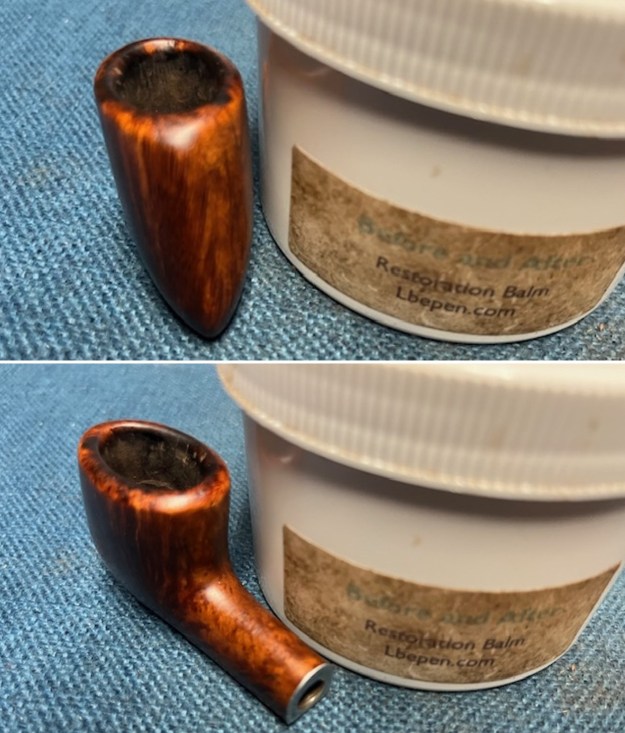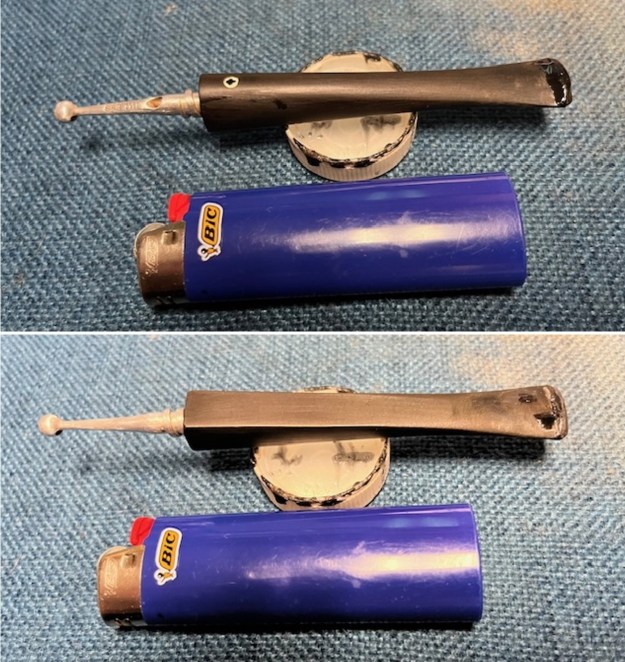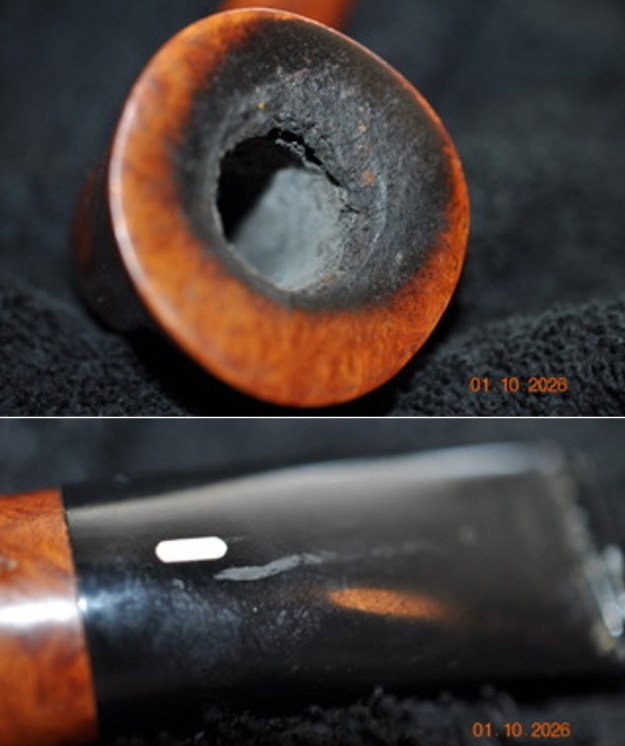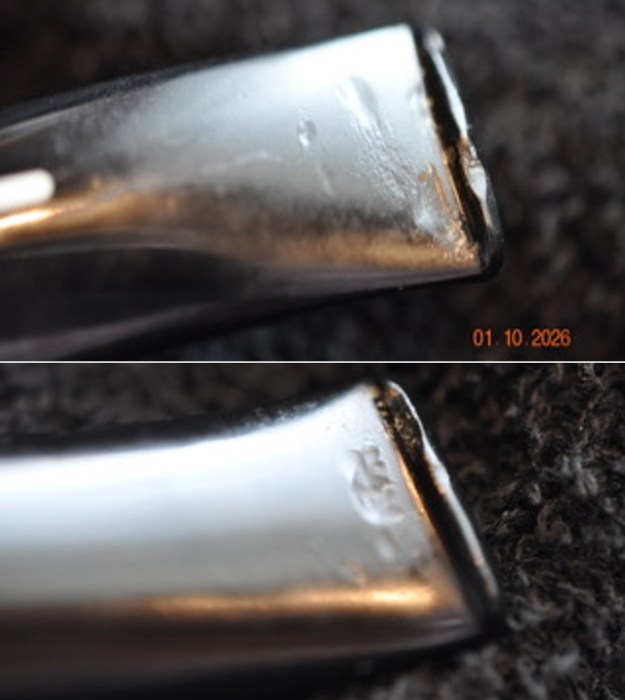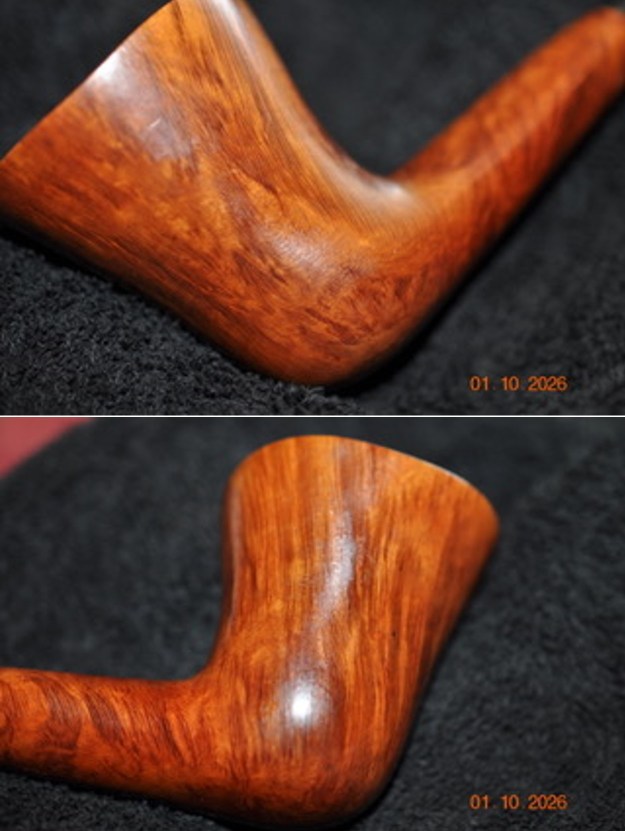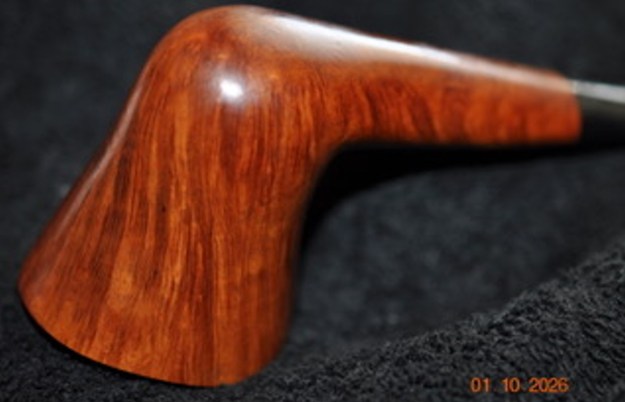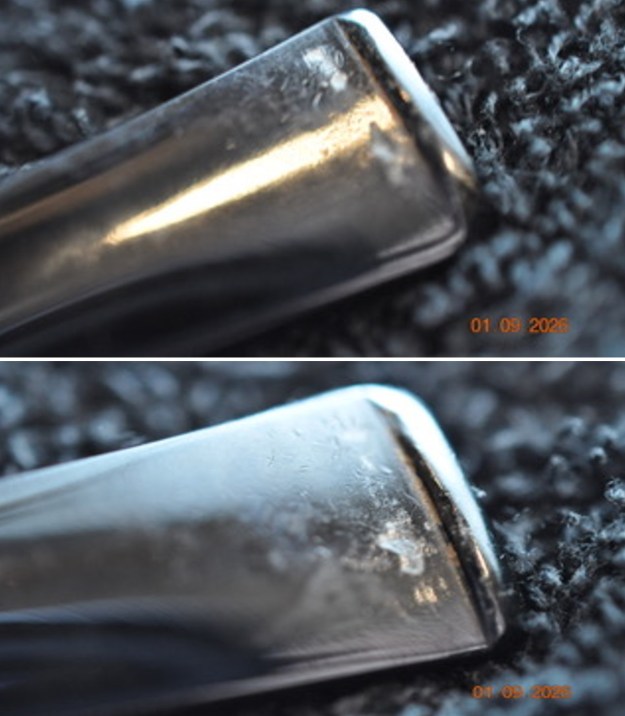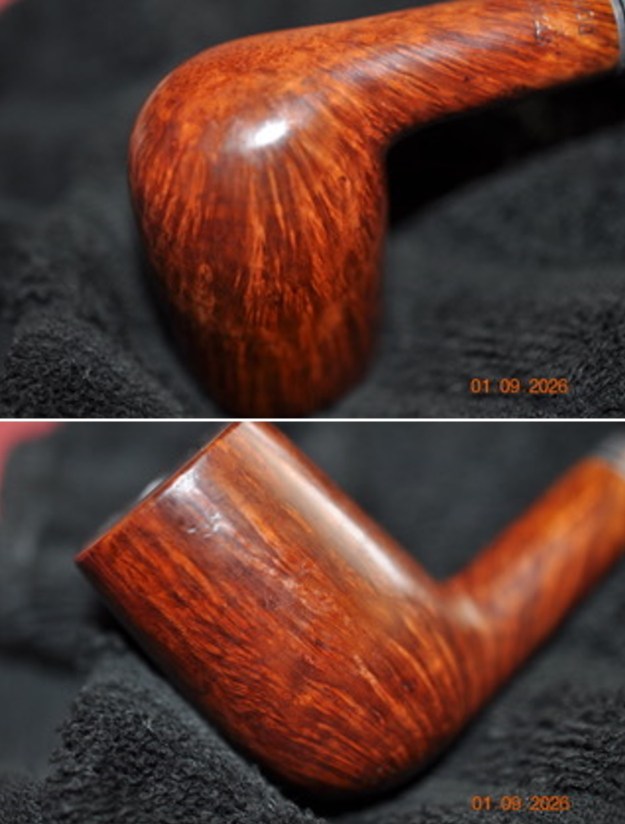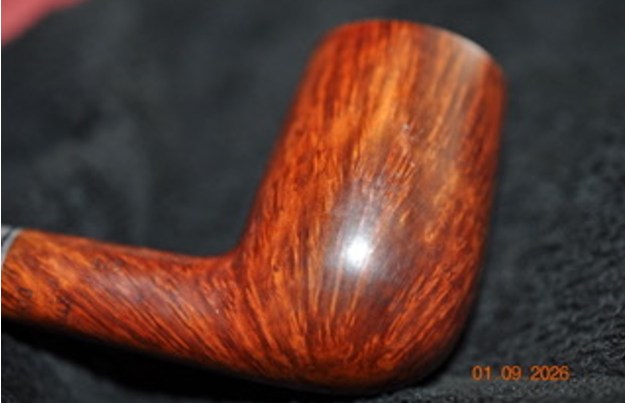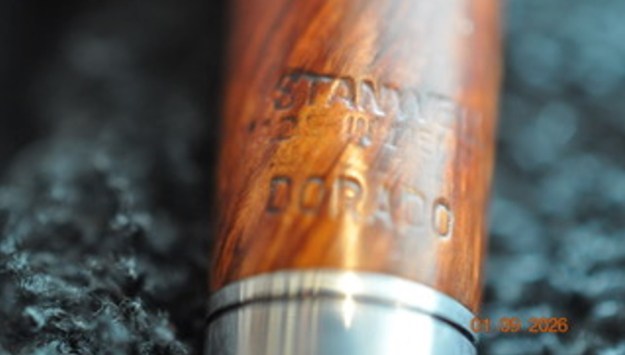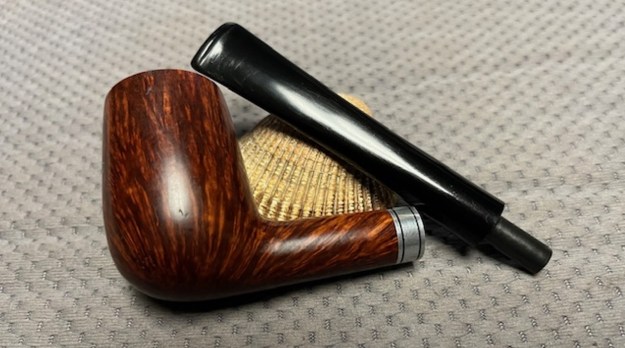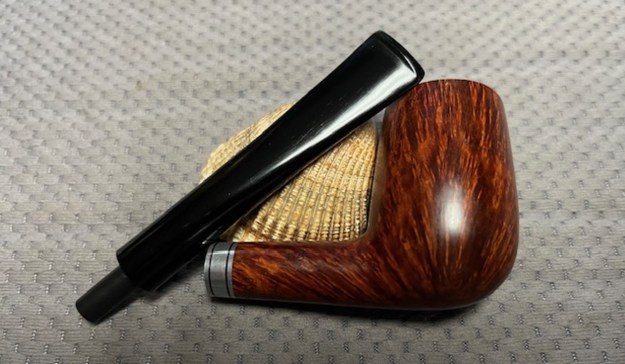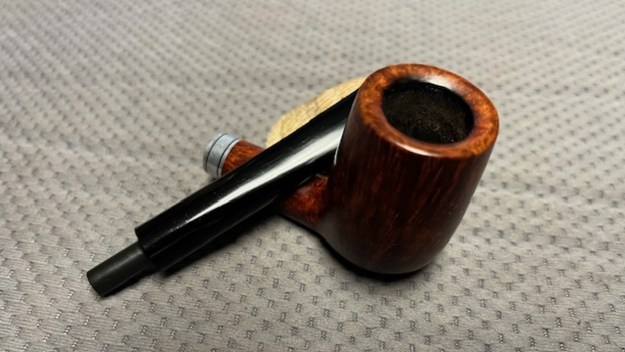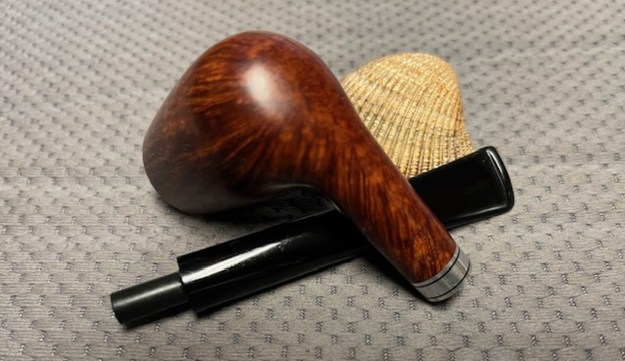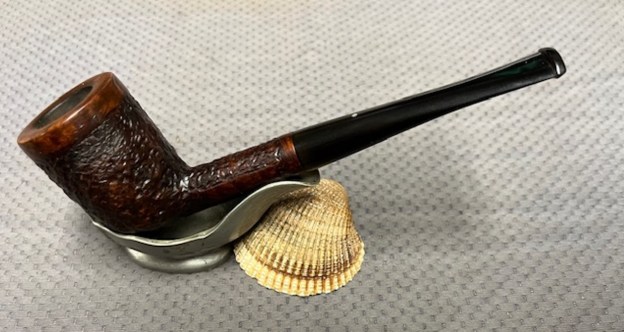

Tag Archives: repairing tooth marks

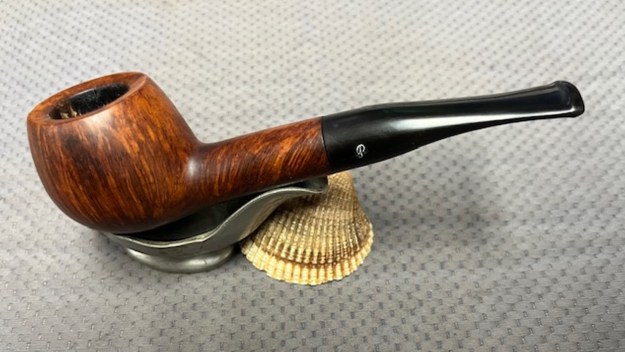
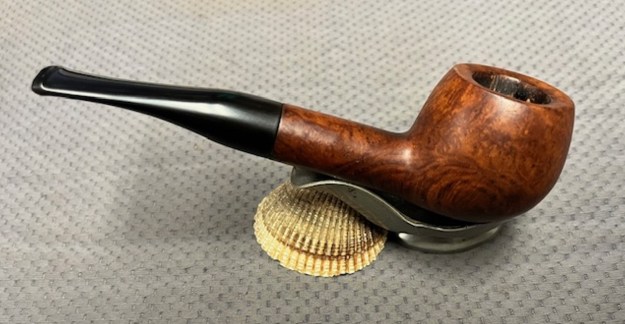
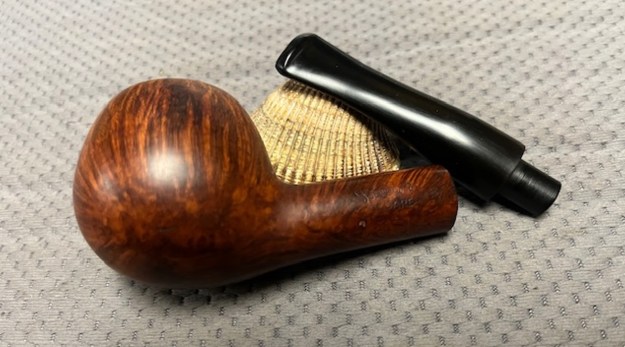
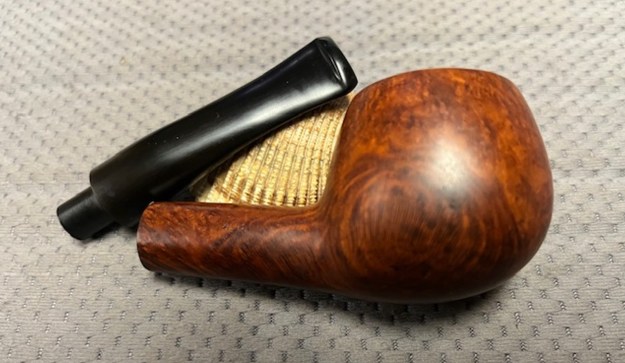
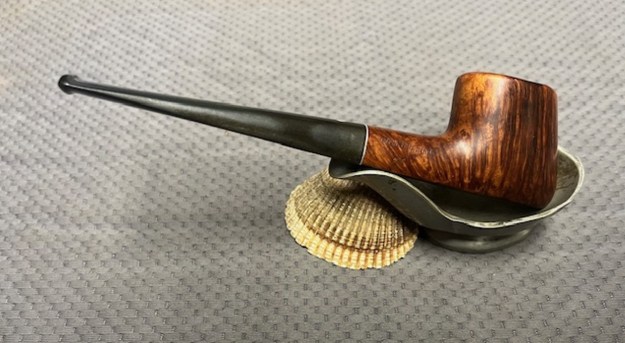
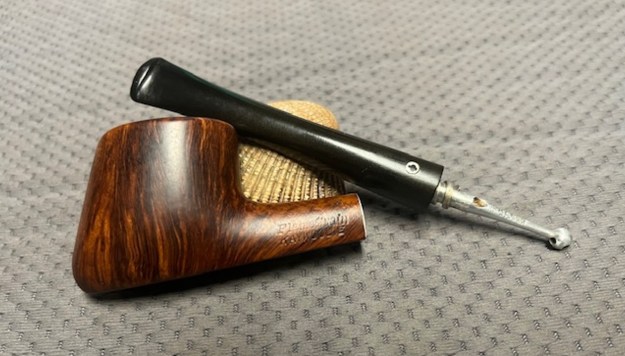
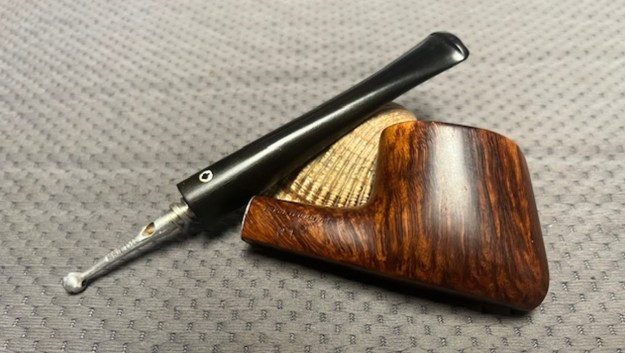
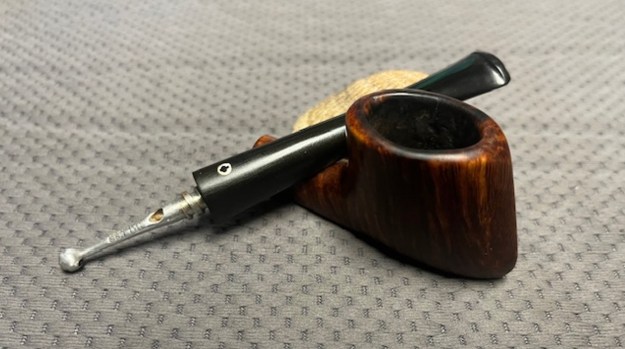
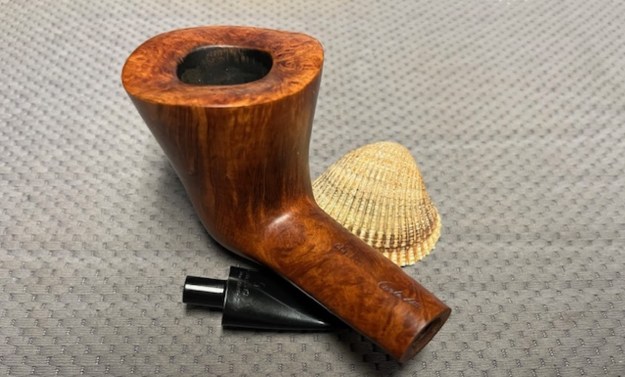
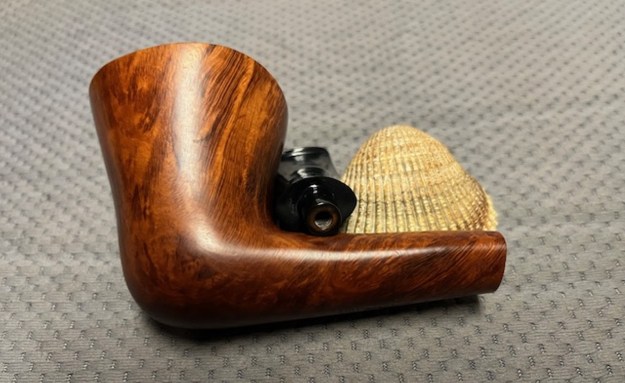
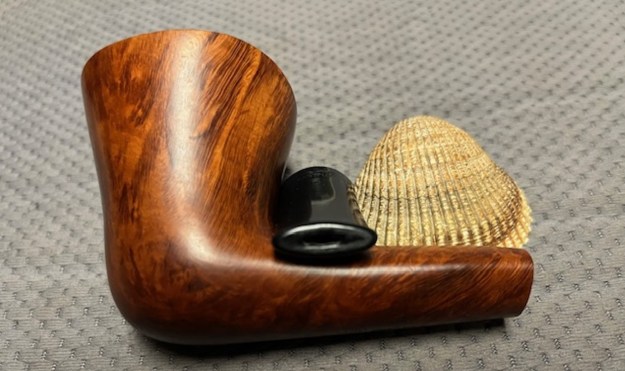
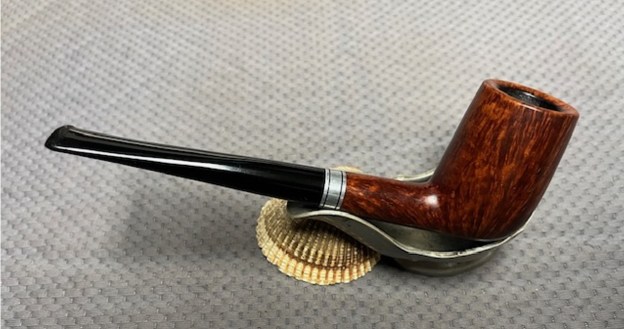
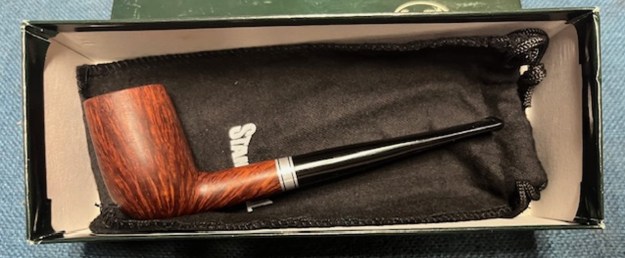
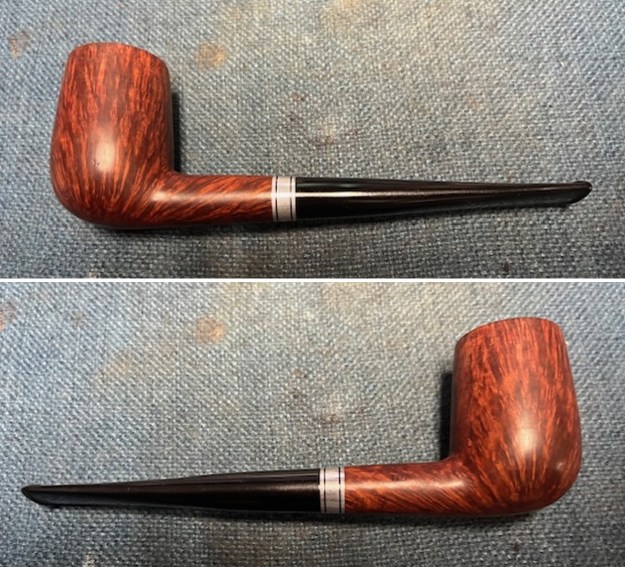
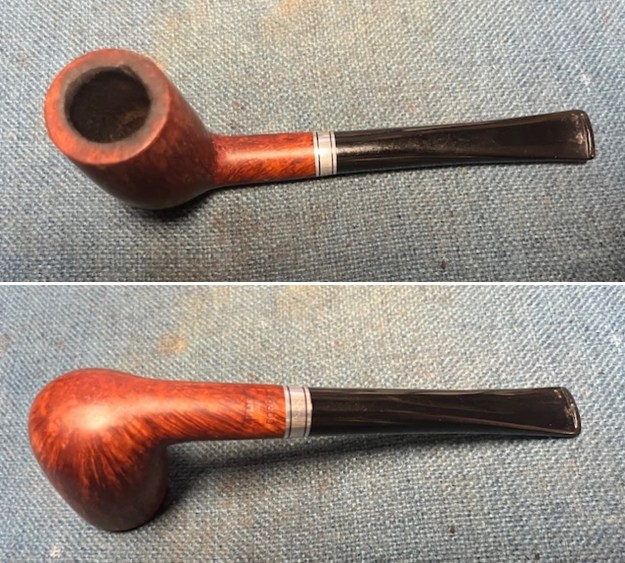
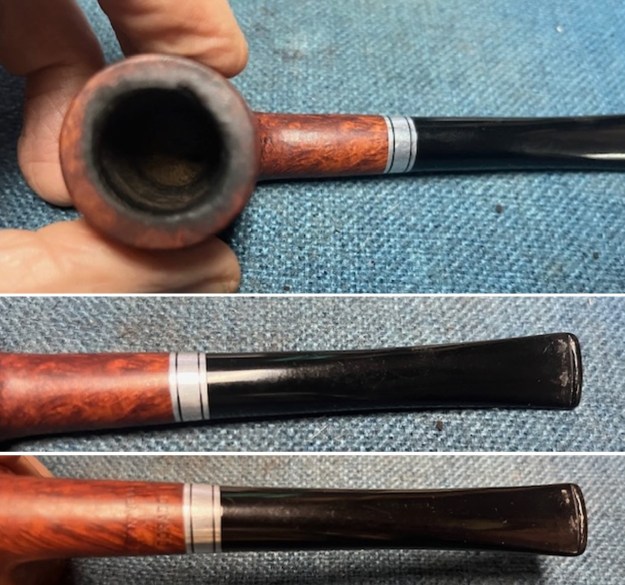
A Lovely Republic Era Peterson’s Sterling Filter 69 Stirling Bent Billiard


by Steve Laug

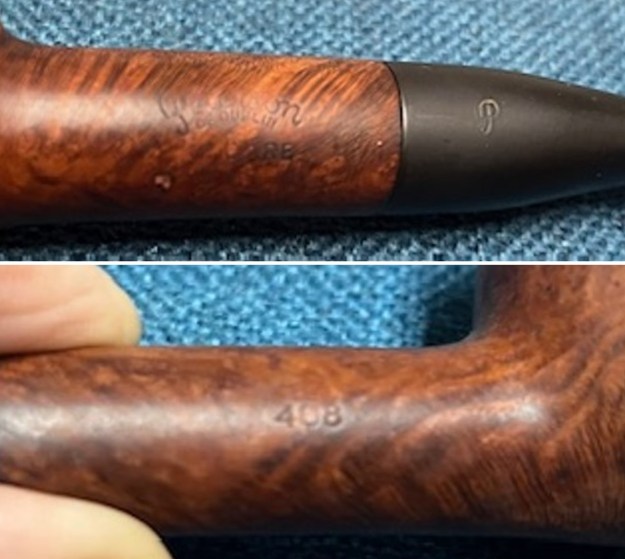
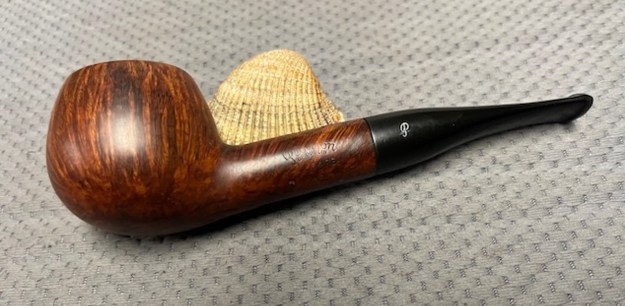
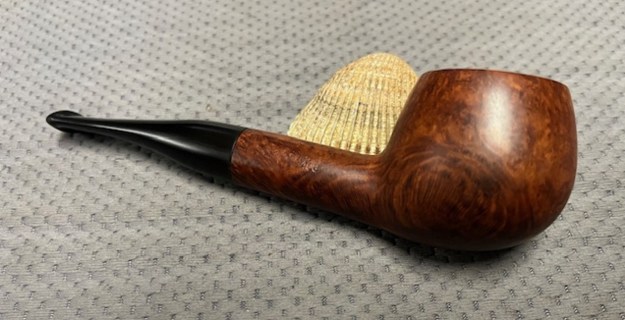
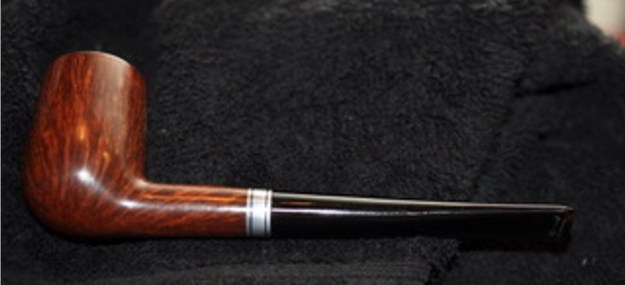
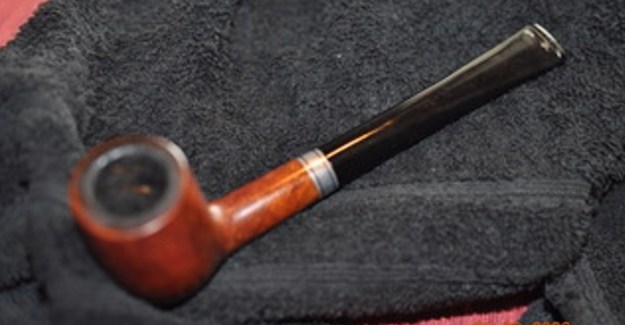
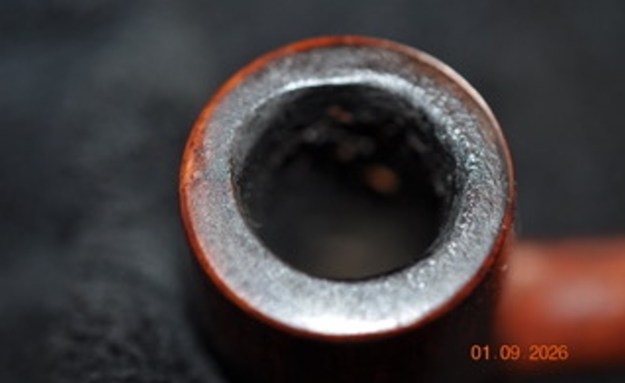
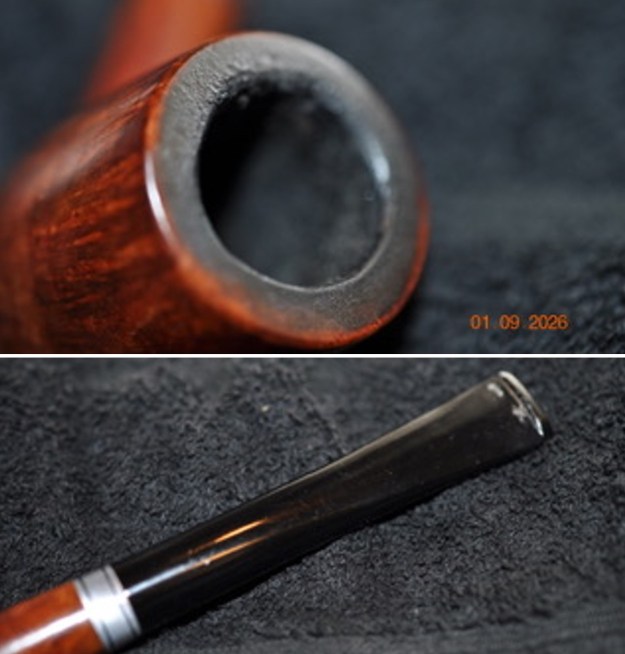
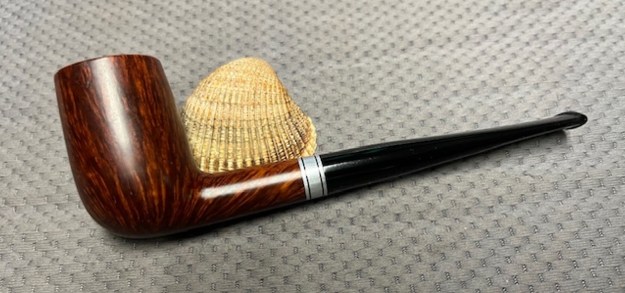
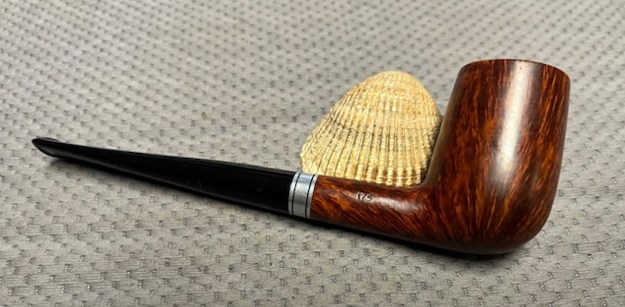
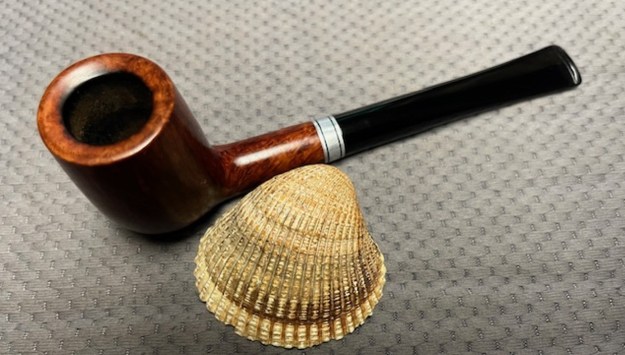
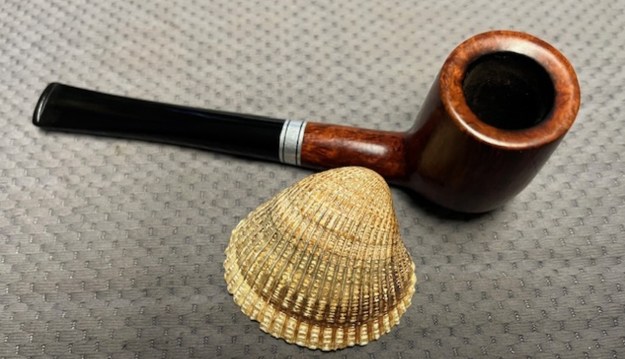
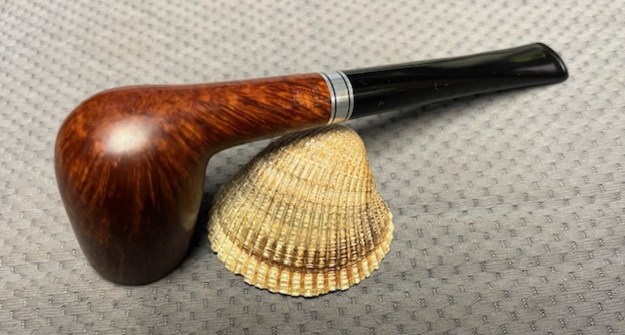
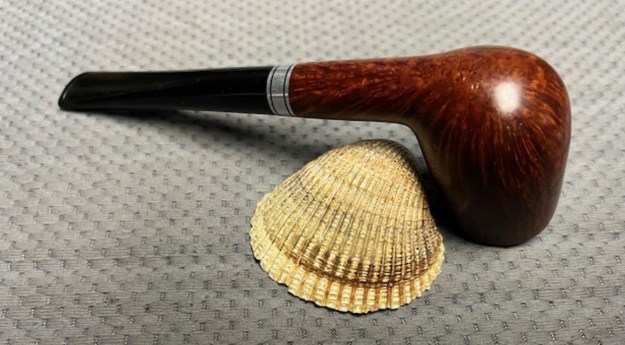
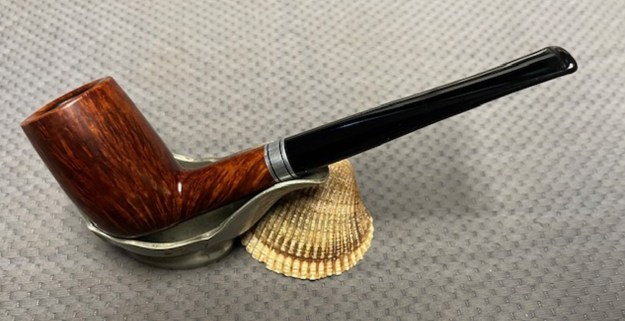
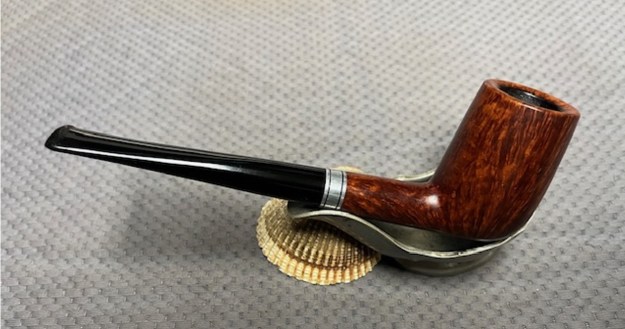
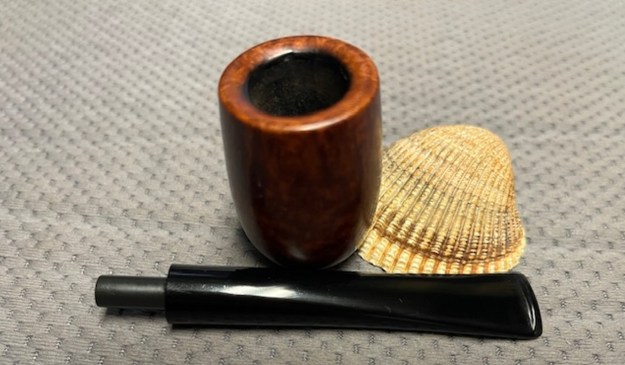
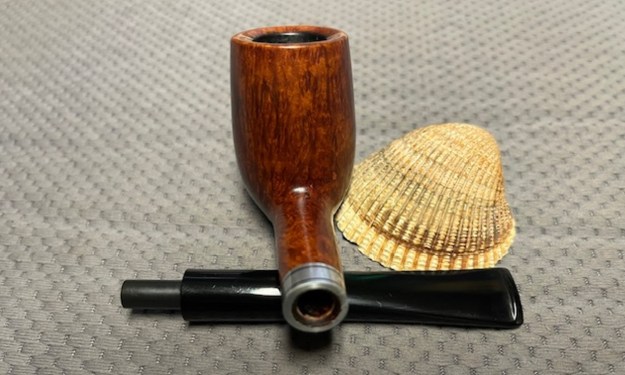
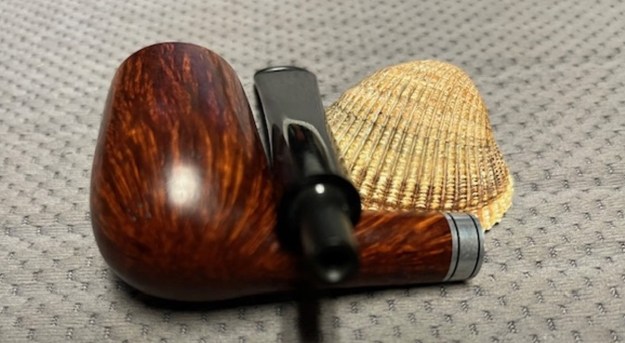
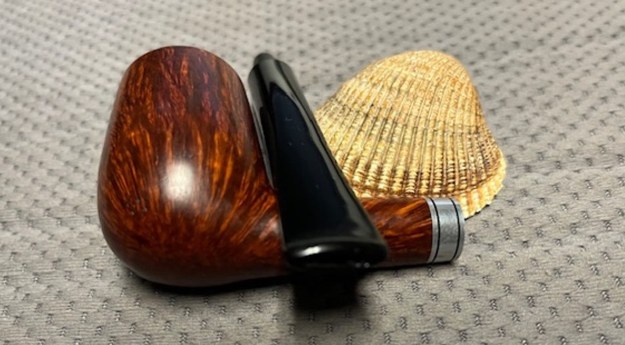
The next pipe I have chosen is smooth finished Peterson’s “Sterling Silver” pipe. The pipe came to us from our contact in Copenhagen, Denmark. This one is a Peterson’s Bent Billiard pipe with a taper fishtail stem. It has a rich brown coloured finish with interesting grain around the bowl sides and shank. It is very dirty. This Bent Billiard has a silver band on the shank that was oxidized. The grime on the finish was ground into the briar. The brown stains make the grain really pop. It was stamped on the left side of the shank and reads Peterson’s [over] “Sterling Filter”. On the right side it is stamped with the three line Made in the Republic of Ireland stamp followed by the shape number 69. The tarnished band is stamped with Peterson’s [over] Dublin followed by Sterling [over] Silver. To the right that it has three hallmarks – Hibernia seated arm on a harp (signifies country of manufacture), a crowned harp designating Sterling quality and finally a Date Letter mark – in this case an italic “I” (1976). It was in filthy condition when Jeff brought it to the table. There was a thick cake in the bowl and spots of lava on the rim top and inner edge of the bowl. The stem was oxidized, calcified and had light tooth marks and chatter on the top and underside near the button. Jeff took photos of the pipe before his cleanup work before he started on the pipe. Jeff took photos of the rim top and stem to show the general condition of the pipe. The bowl is lightly caked and the rim top and edges look very good. The stem is oxidized and has light tooth marks on the top and underside near the button. Jeff took some photos of the bowl sides and heel to show the grain that was around this bowl. It is a nice looking pipe. He took photos of the sides of the shank to show the stamping. The stamping is readable in the photos below and is as noted above. The stamping on the Sterling Silver band is also readable through the oxidation. I am including the information from Pipedia’s article on Peterson pipes. It is a great read in terms of the history of the brand (https://pipedia.org/wiki/Peterson).

I turned to “The Peterson Pipe” by Mark Irwin and Gary Malmberg to get some background on the Sterling Pipe. On page 314 it had the following information on the line.

Sterling (1949-c1957; 1978-) – Higher grade line with sterling band. Early example, 1949-57, with COM of Made in Ireland forming a circle, were offered to the US market through Rogers Imports and have no hallmark, although until recent years the line carried Peterson’s maker’s mark, the K&P is in separate shields. Models beginning in ’78 with hallmarked dates and a COM stamp of Made in [over] the Republic [over] of Ireland.

I knew that I was dealing with a pipe made between 1949-1957 as shown by the Made in the Republic of Ireland three-line format stamp. Now it was time to work on the pipe.

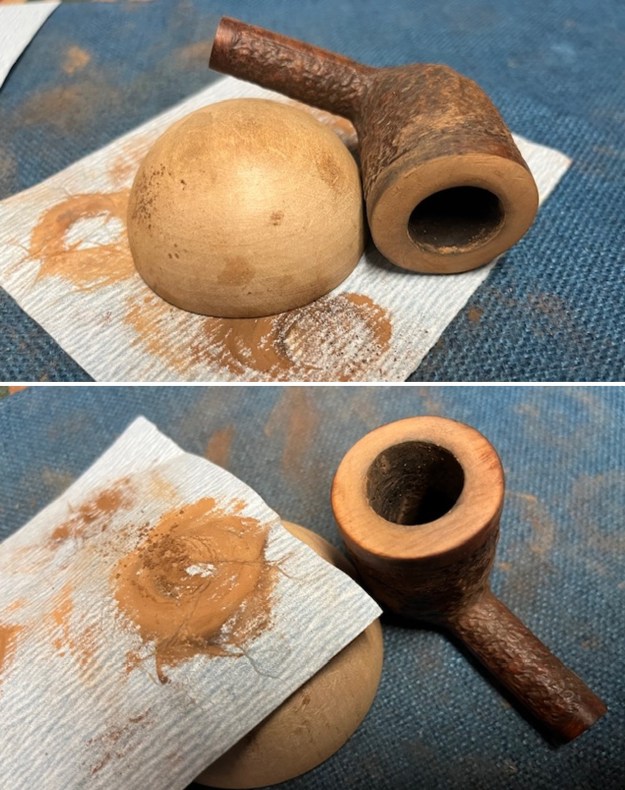
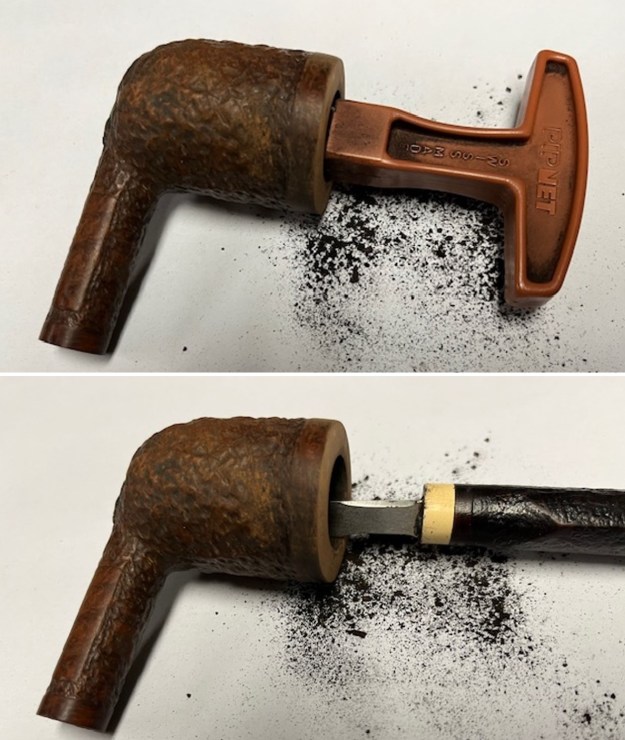
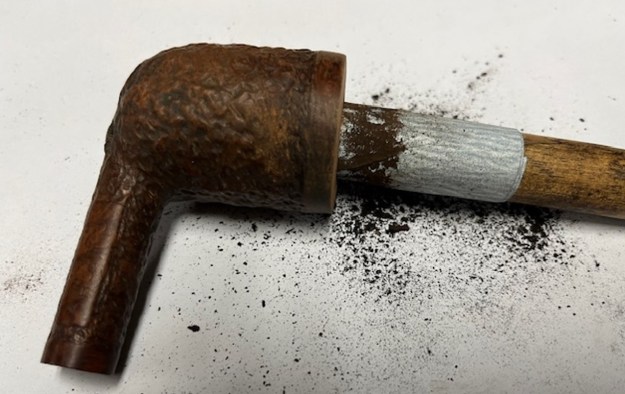
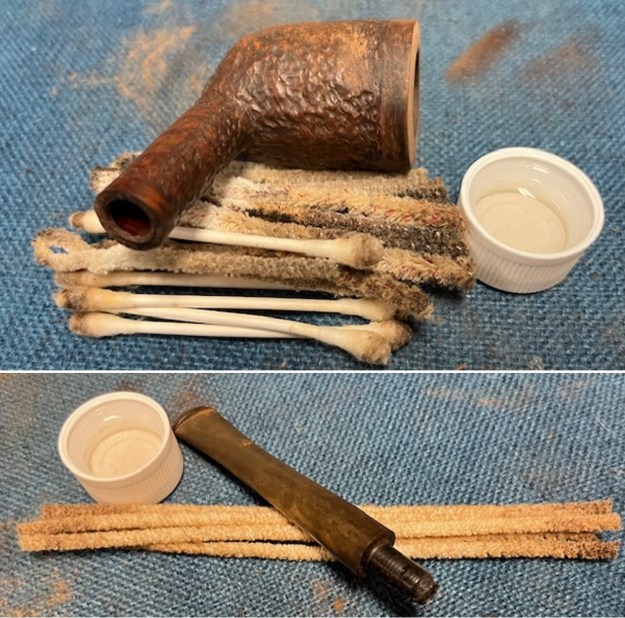
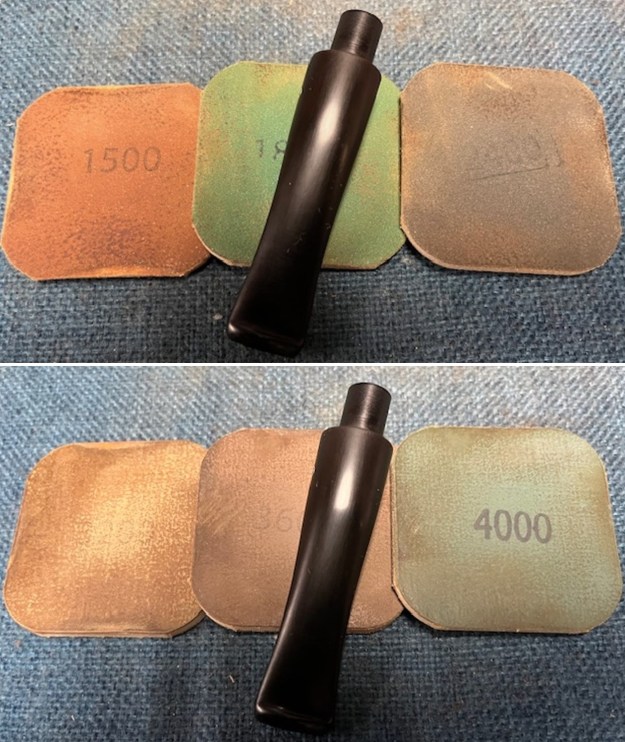
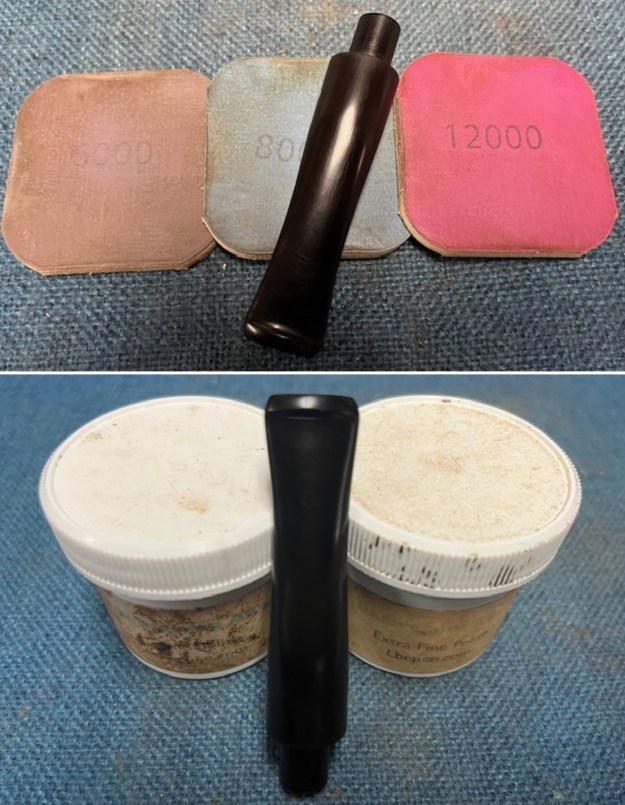
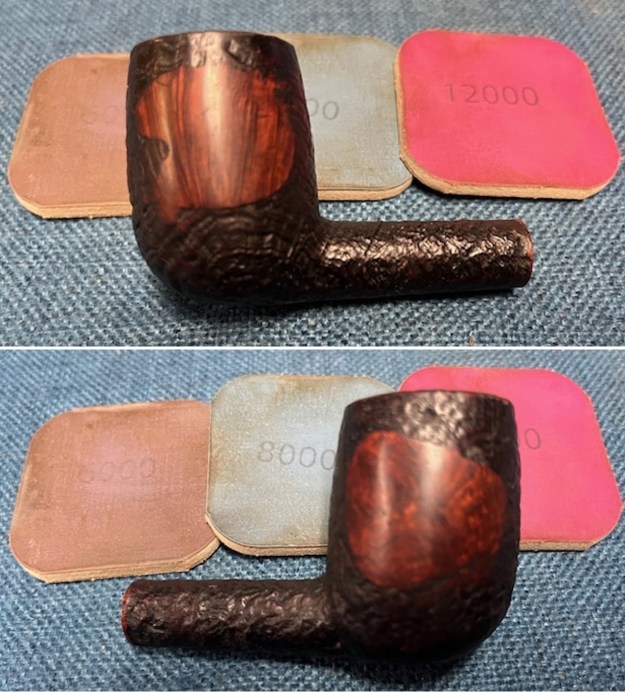
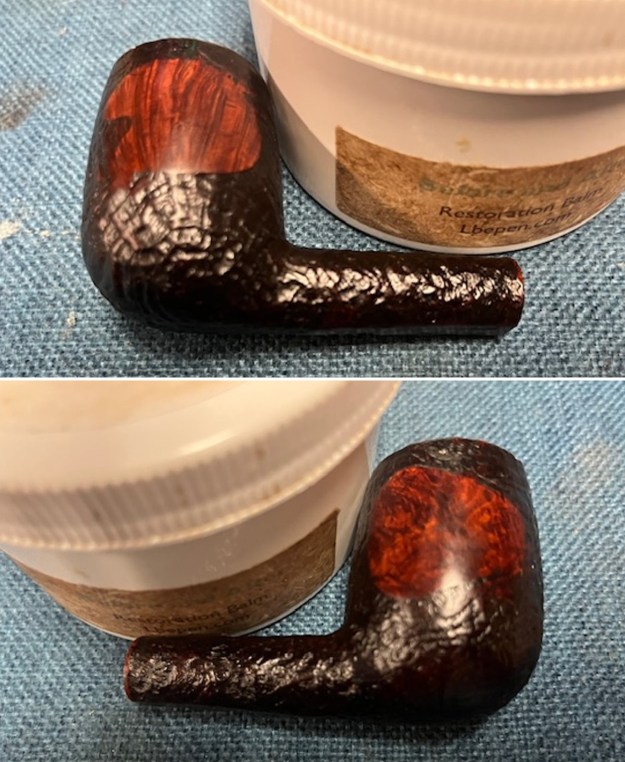
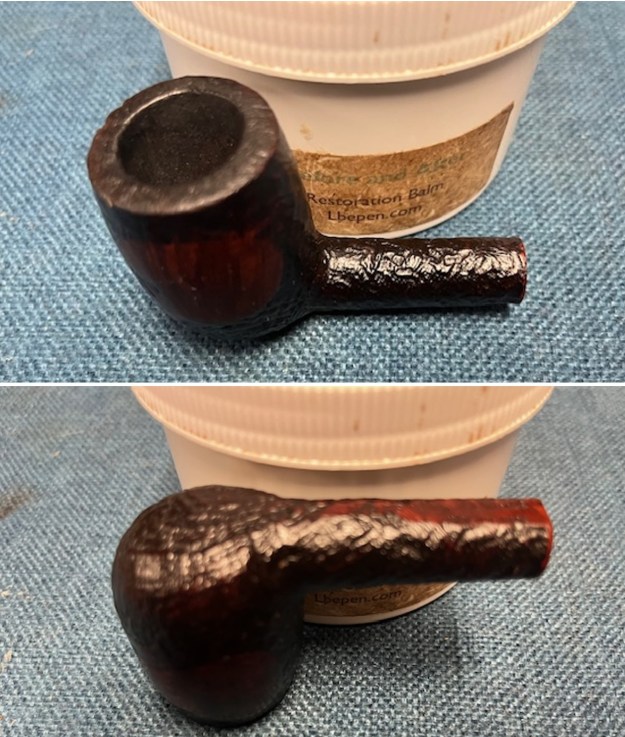
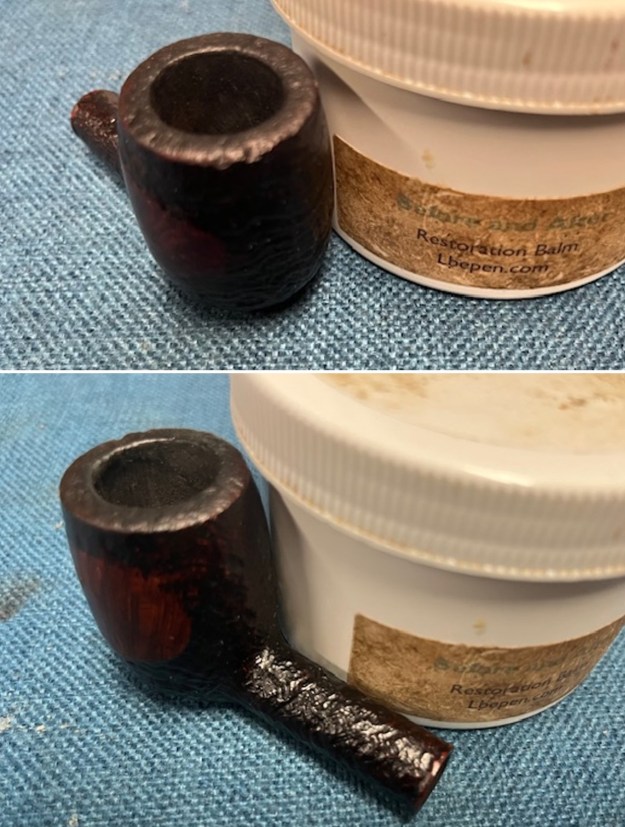
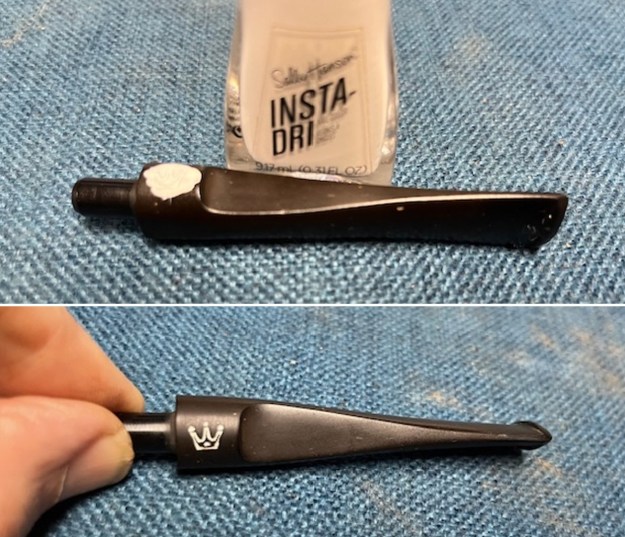
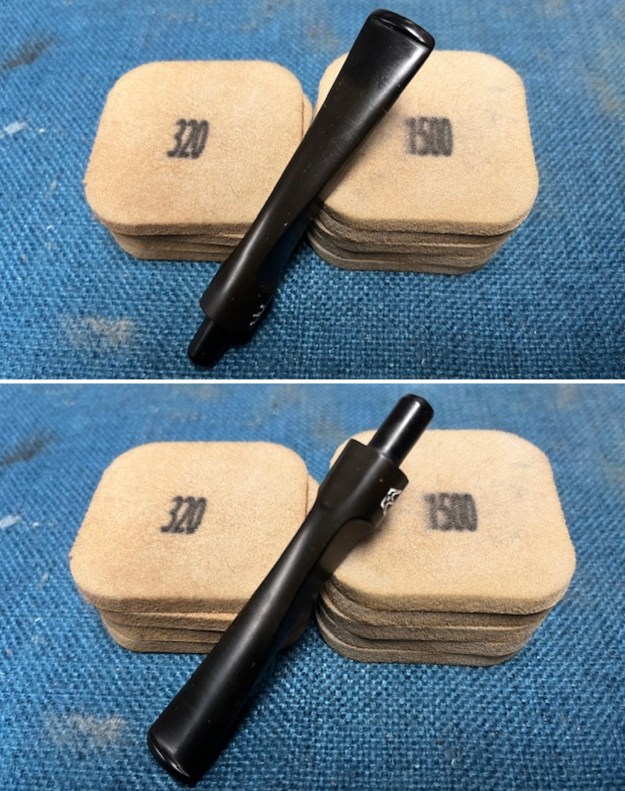
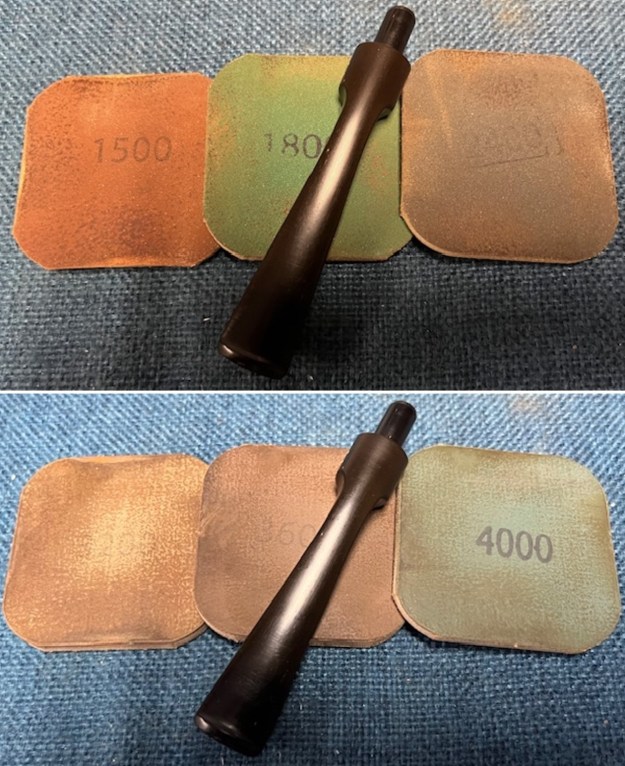
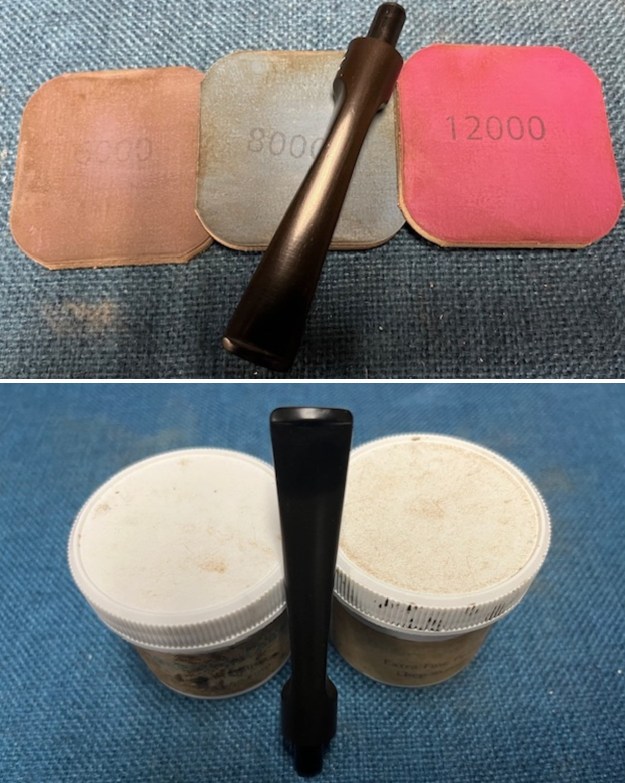
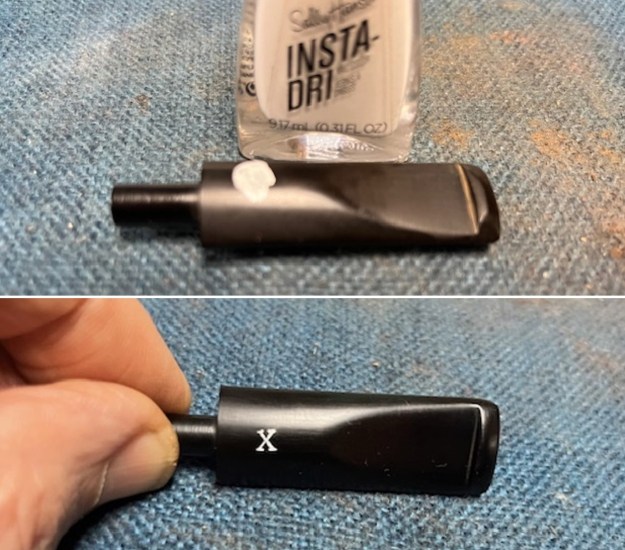
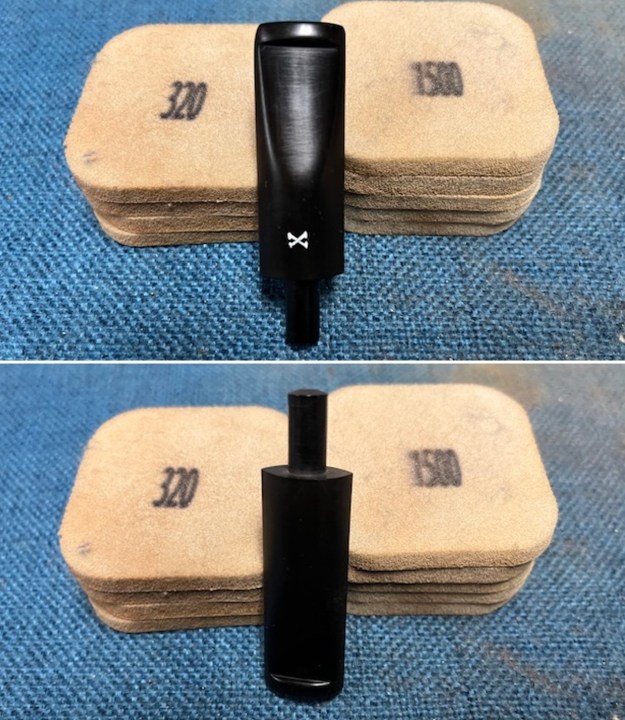
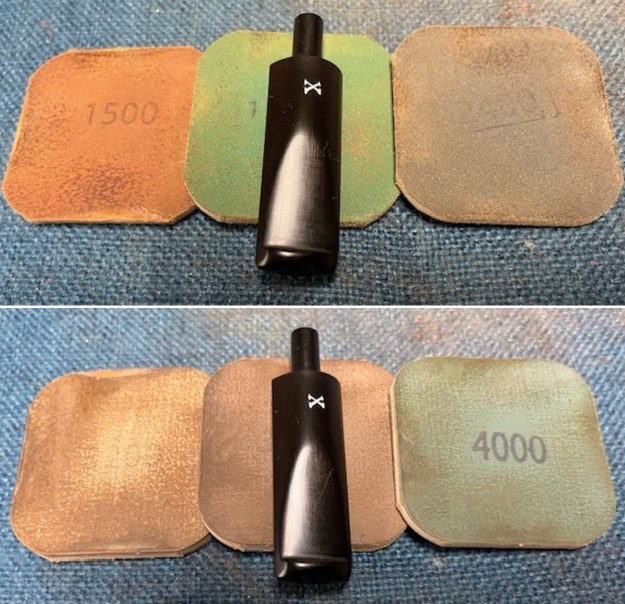
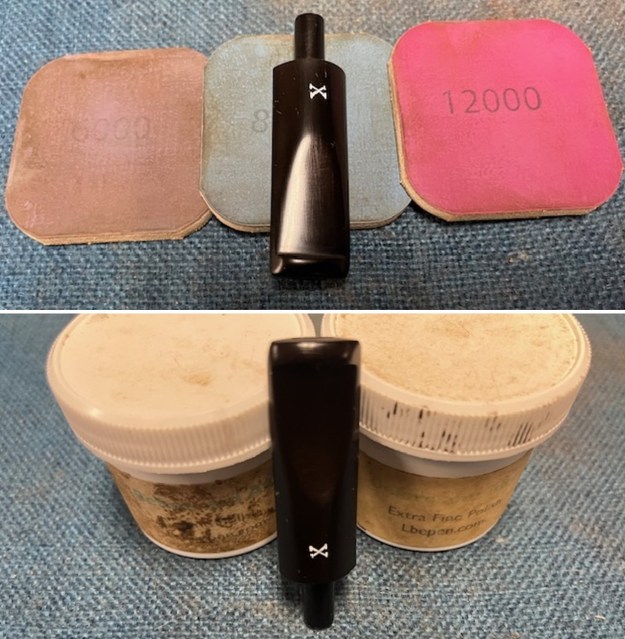
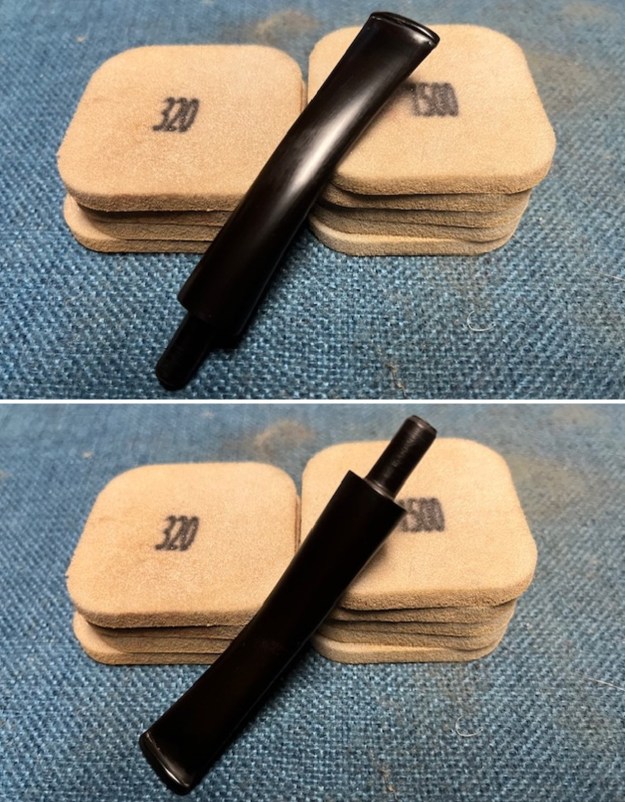
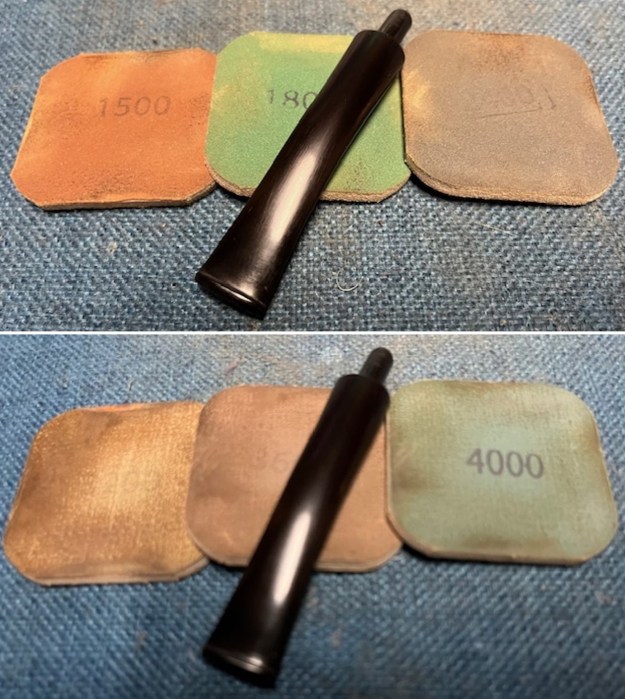
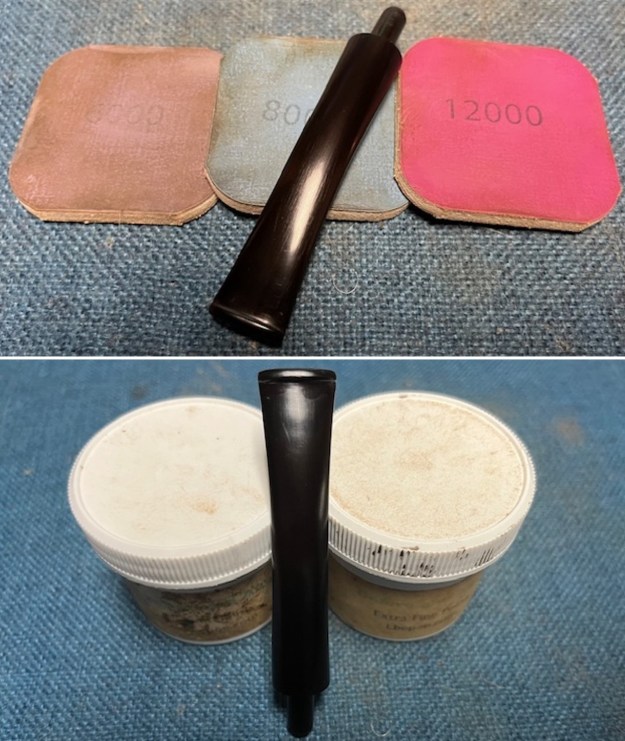
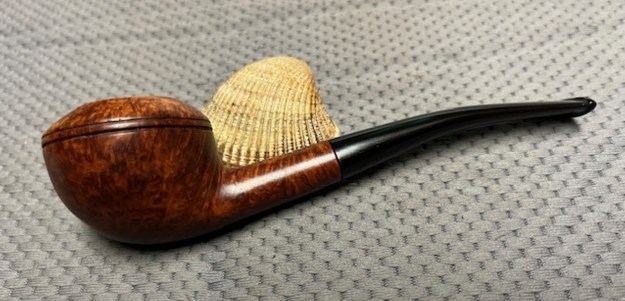
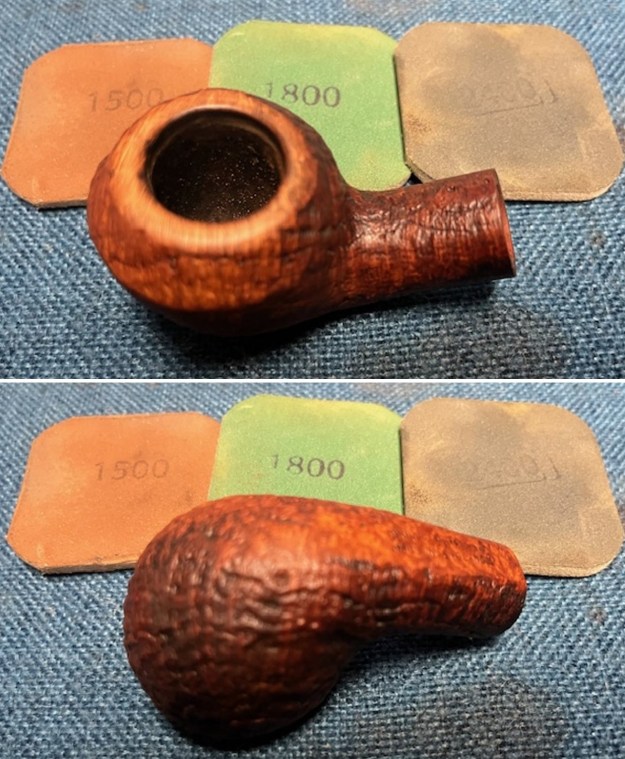
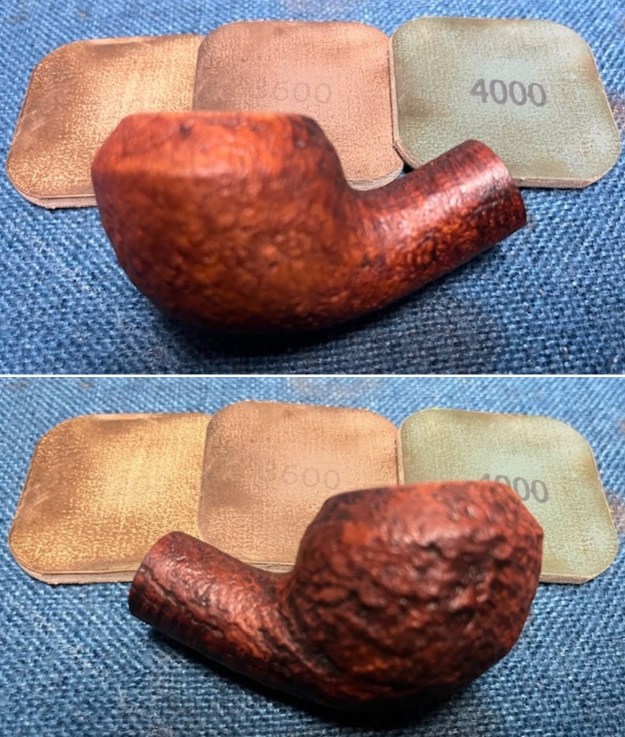
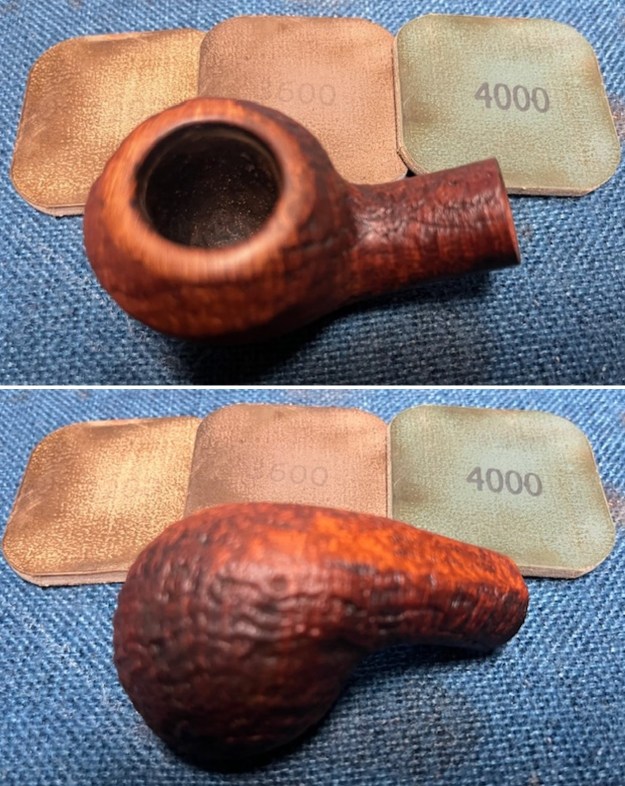
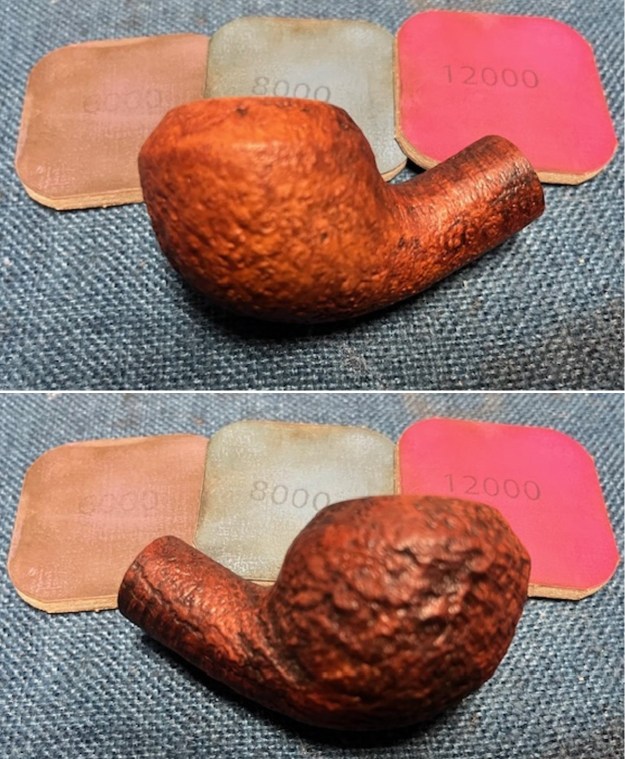
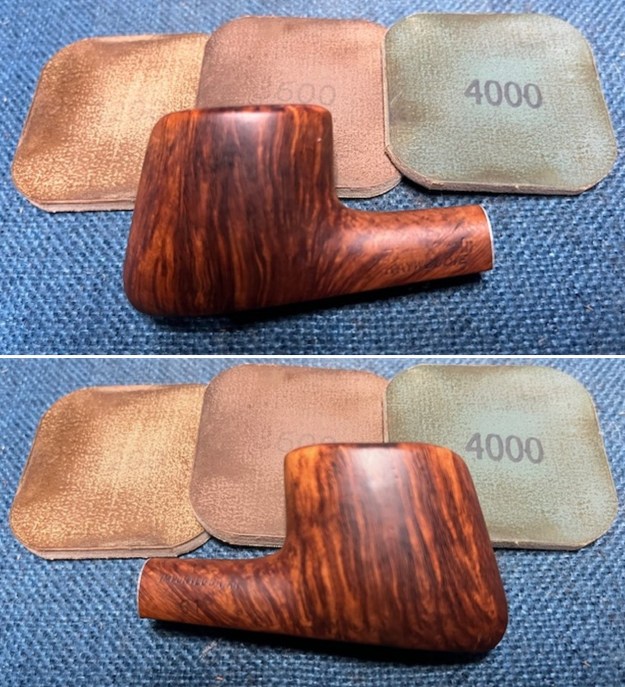
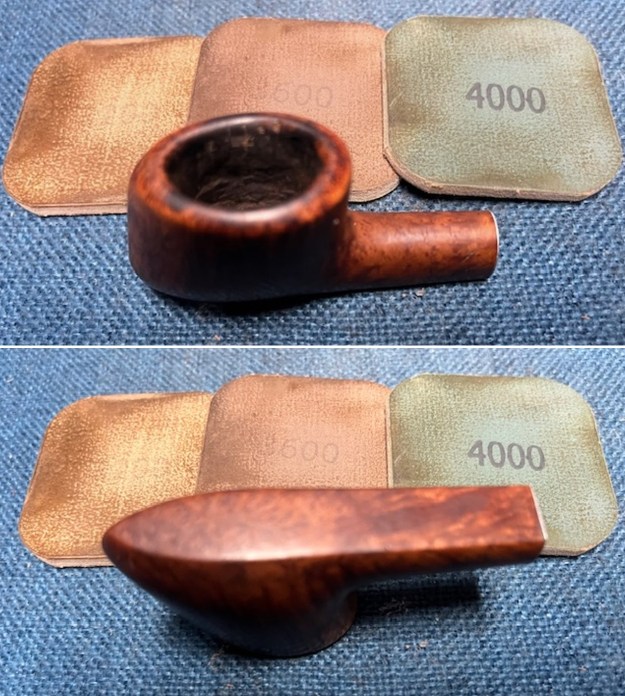
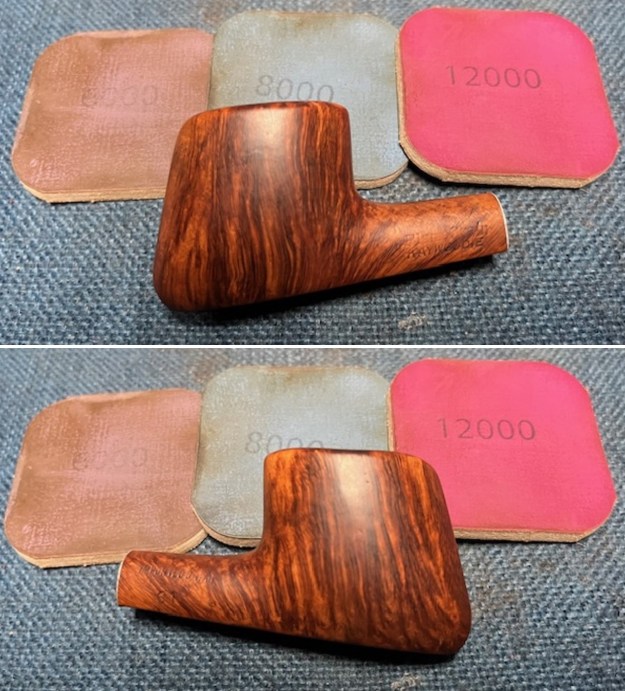
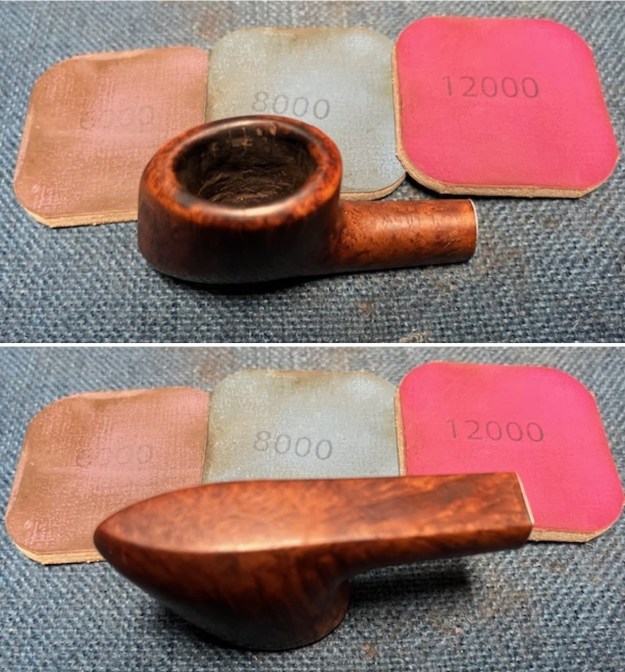
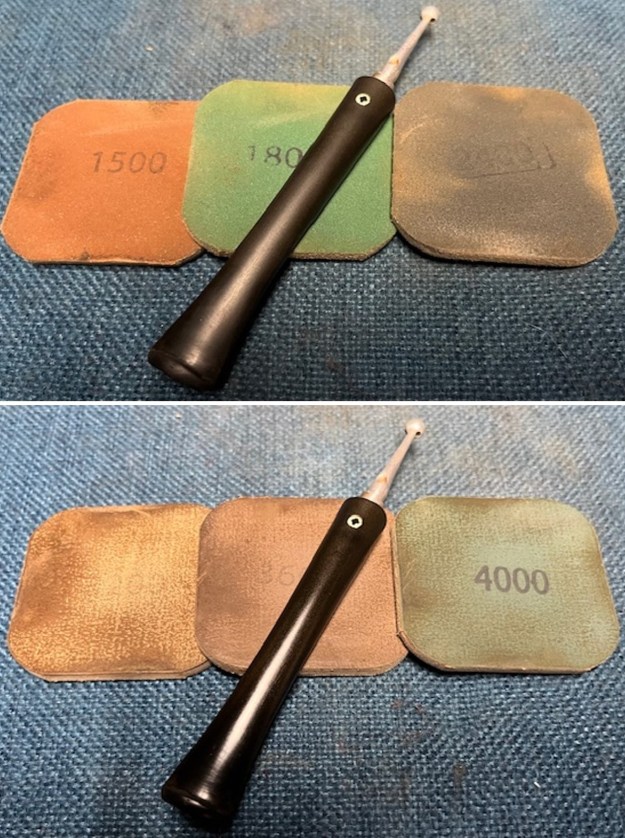
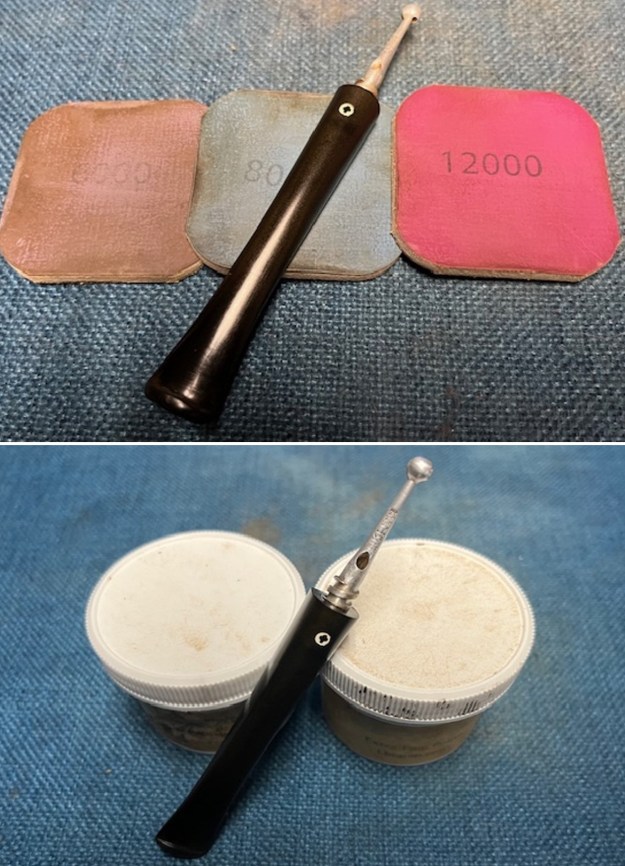
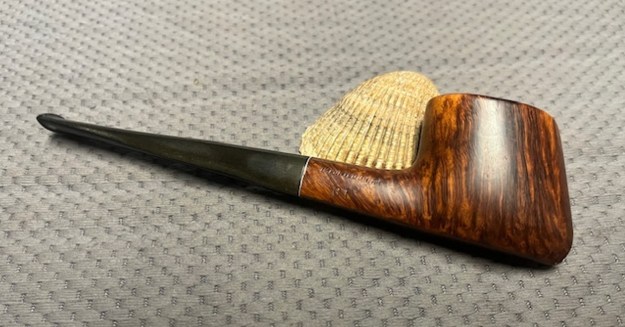
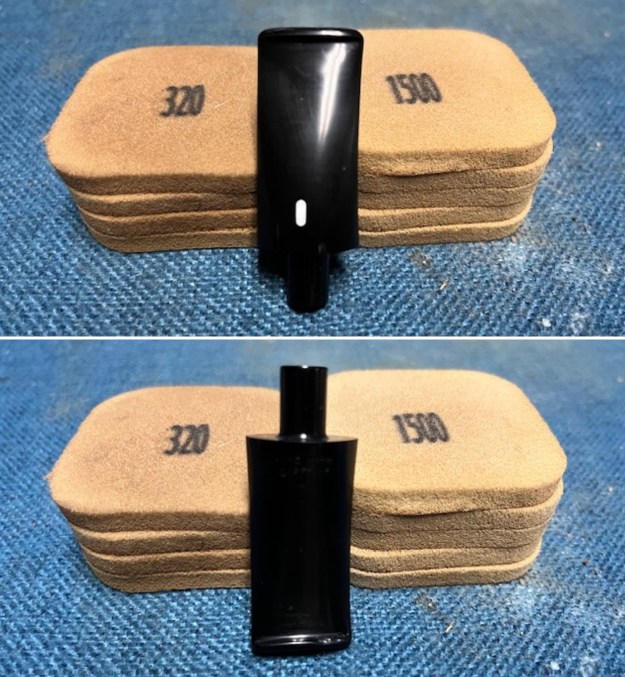
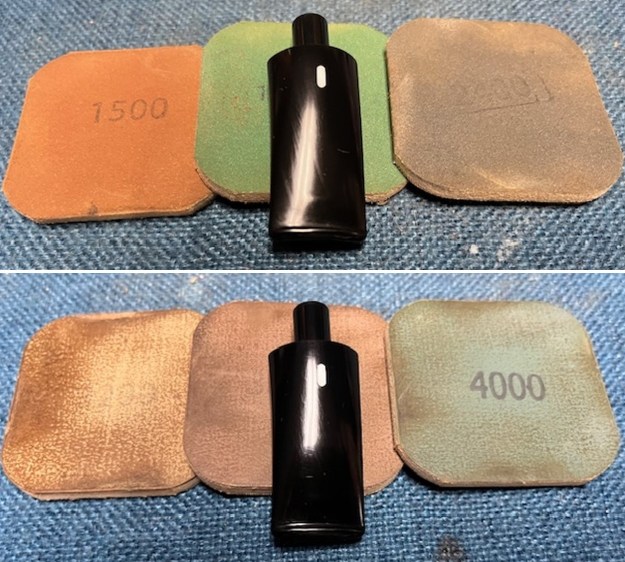
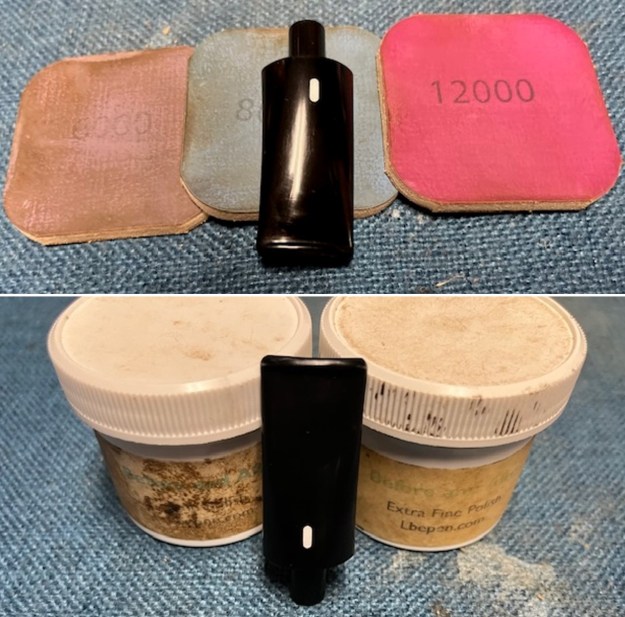
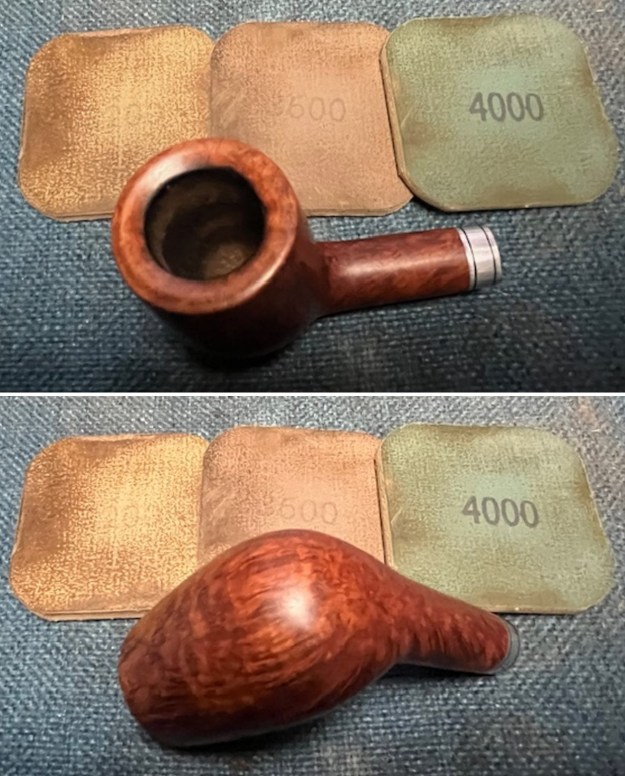
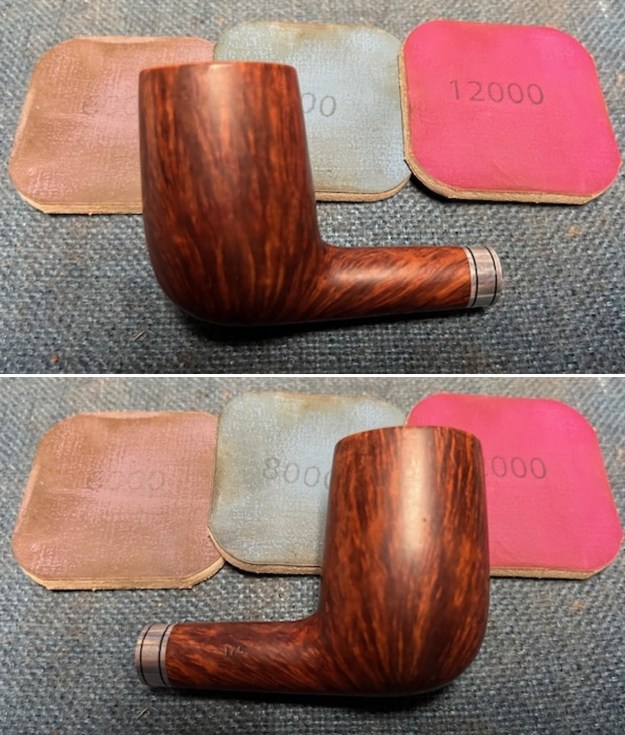
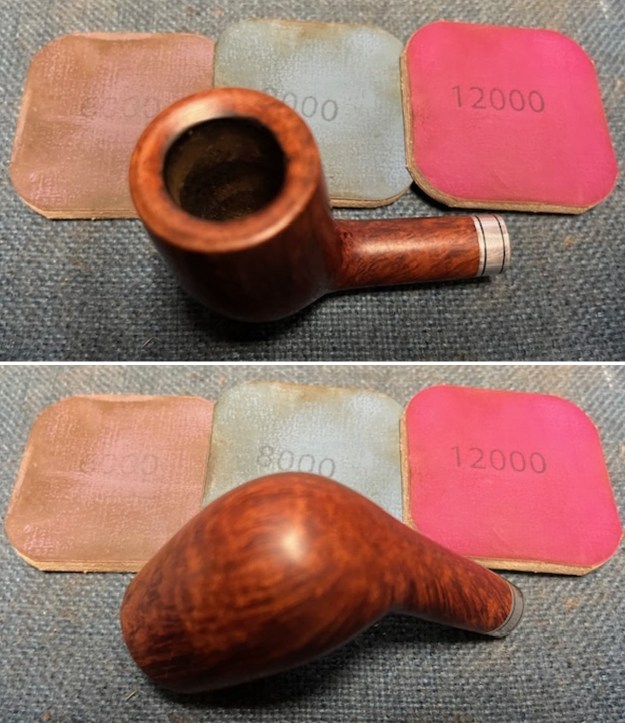
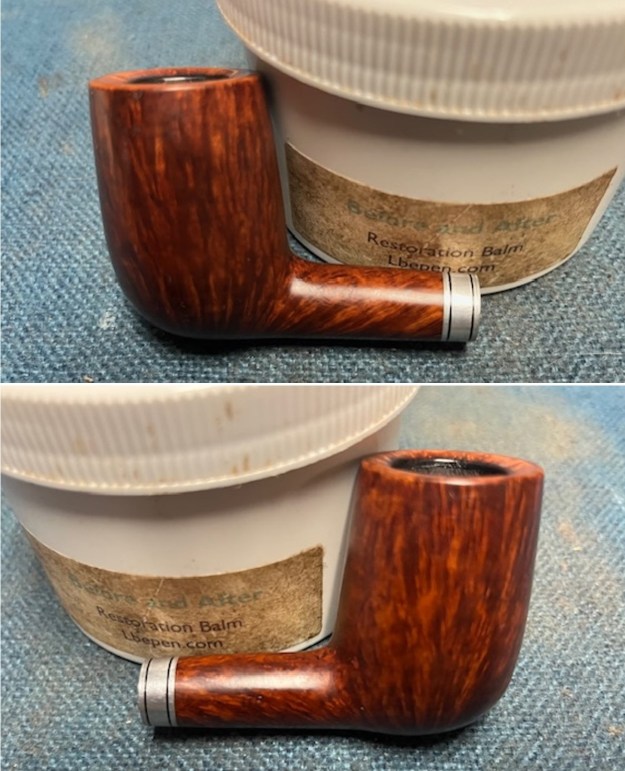
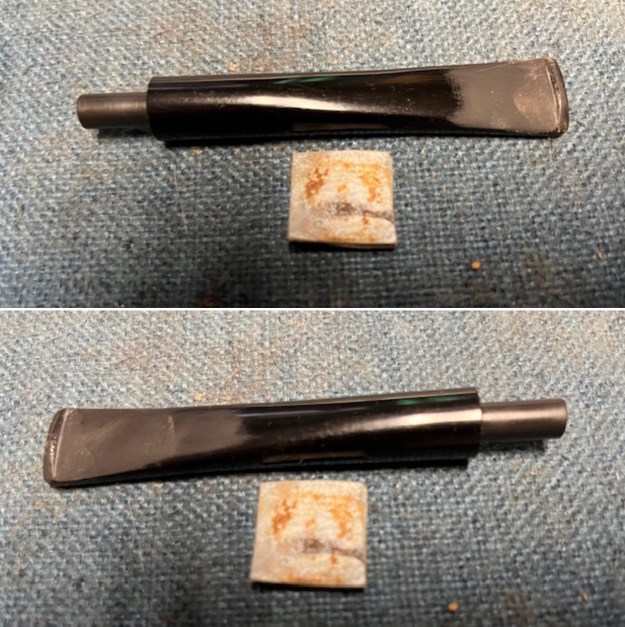
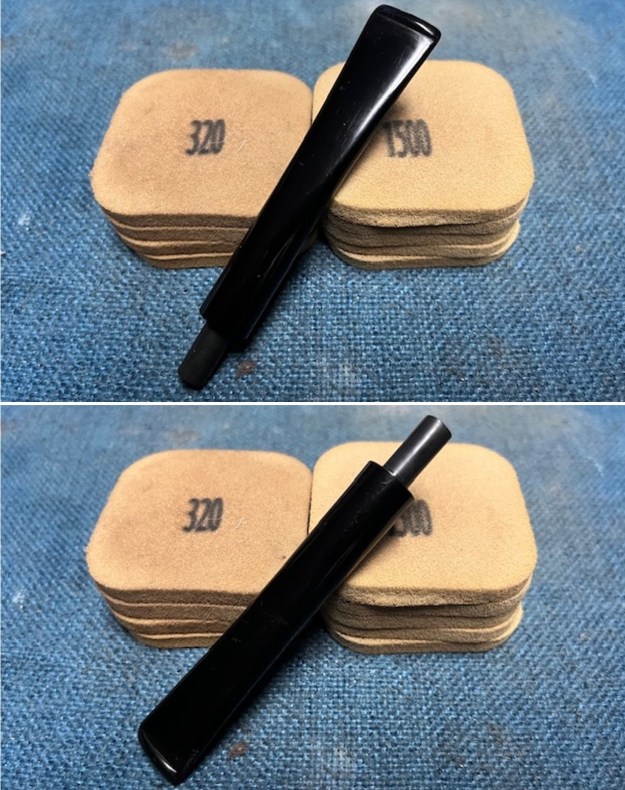
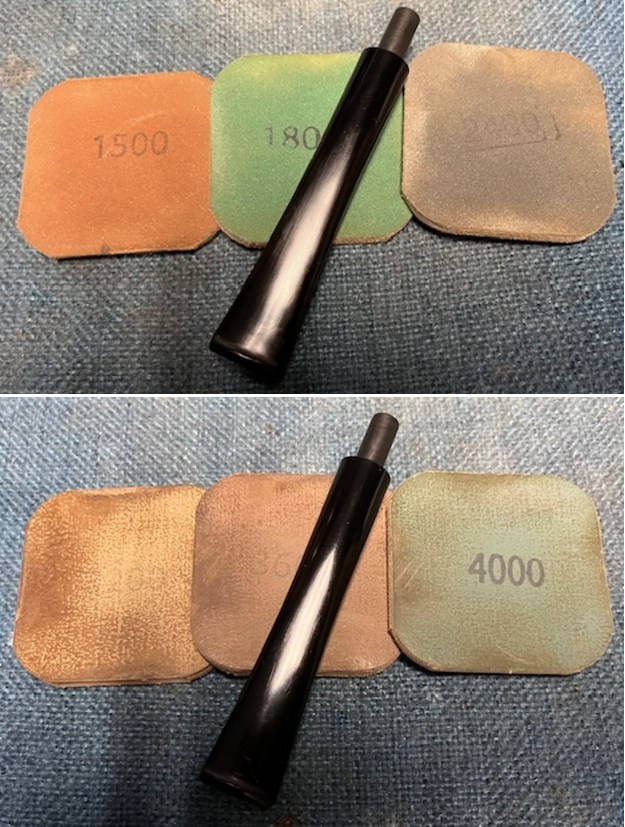
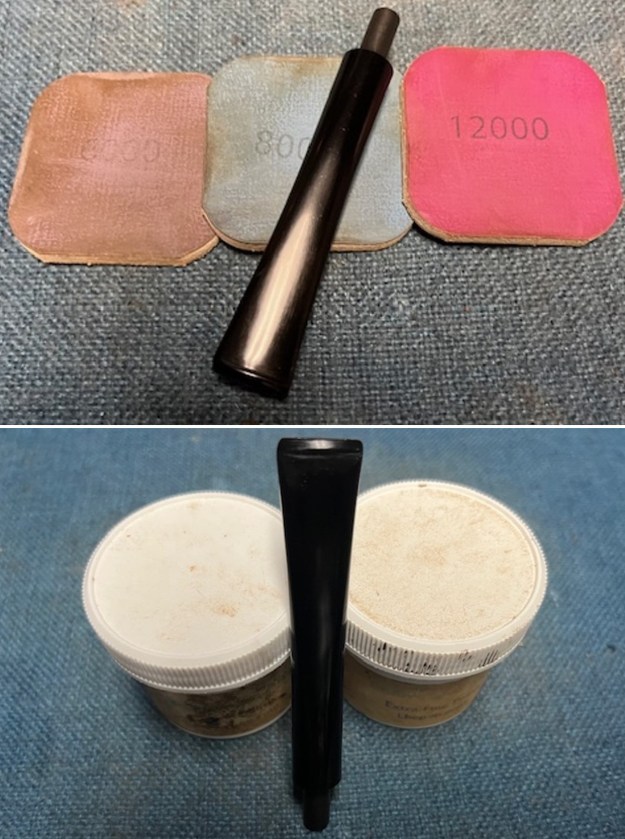
Jeff had done a great job cleaning up the pipe as usual. He reamed the pipe with a PipNet reamer and cut back the cake back to the bare briar. He cleaned up the walls with a Savinelli Fitsall Pipe Knife. He scrubbed the interior of the bowl and shank with pipe cleaners, shank brushes, cotton swabs and alcohol to remove the tars and oils. He scrubbed the exterior of the pipe with undiluted Murphy’s Oil Soap and a tooth brush to remove the grime from the finish. He worked on the rim top lava with the soap and tooth brush. He scrubbed the inside of the stem with alcohol, shank brushes and pipe cleaners. He scrubbed the exterior with Soft Scrub and then soaked it in Briarville’s Pipe Stem Deoxidizer. He washed it off with warm water to remove the deoxidizer. The pipe looked very good when it arrived here. I took some close-up photos of the rim top and also of the stem surface. The rim top and the inner edge looked very good. The silver cleaned up well on the band, though it needed more work. The stem was clean and the tooth marks and chatter were minimal.I took photos of the stamping on the top and underside of the shank. You can see that it is stamped as noted above. It is faint and readable. I took the pipe apart and took a photo of the pipe. It is a good looking pipe and has some nice looking grain around the bowl. I sanded the briar with 320-3500 grit 2×2 inch sanding pads to remove the scratches and marks in the finish. I wiped the bowl down with a damp cloth after each sanding pad to remove the sanding debris. It really looks much better. I polished the briar with 1500-12000 grit micromesh pads – dry sanding it with each pad and wiped down the bowl after each pad. I gave it a final wiped with a Briar Wipe cloth to polish the finish. The briar looked very good at this point. I began my work on it by working some Before & After Restoration Balm into the surface of the briar with my fingertips to clean, enliven and protect the briar. I let the balm sit for 15 minutes and then buffed with a cotton cloth to raise the shine. The photos show the bowl at this point in the restoration process. I polished the Sterling Silver band on the shank with a jeweller’s cloth to remove the tarnish and polish it. I set the bowl aside and turned my attention to the stem. I sanded the stem with 320-3500 grit 2×2 inch sanding pads and wiped it down with an Obsidian Oil cloth after each sanding pad. The stem began to take on a shine.I touched up the P stamp on the left side of the stem with white acrylic fingernail polish. I worked it into the P stamp with a tooth pick. Once it dried I scraped off the excess of the acrylic with my fingernail. I sanded the stem area with a worn 1500 grit micromesh sanding pad. It looked very good. I fit the stem with a Vauen Dr. Perl Junior 9mm filter in the filter tenon of the pipe. It is a great fit and that it fit very well.I polished the stem with micromesh sanding pads – wet sanding with 1500-12000 grit sanding pads. I wiped it down after each sanding pad with Obsidian Oil. I polished it with Before & After Pipe Stem Polish – both Fine and Extra Fine. I am excited to finish this smooth Peterson’s “Sterling Filter” 69 Bent Billiard. I put the pipe back together and lightly buffed it with Blue Diamond on the buffing wheel. I gave the bowl and the stem multiple coats of carnauba wax. I hand buffed the pipe with a clean buffing pad to raise the shine. It is fun to see what the polished bowl looks like with the depths of the sandblast taking on a rich glow. Added to that the polished Sterling Silver band and the black vulcanite taper P-lip stem was beautiful. This smooth Classic Peterson’s “Sterling Filter” 69 Bent Billiard is nice looking and the pipe feels great in my hand. It is light and well balanced. Have a look at it with the photos below. The dimensions are Length: 5 ½ inches, Height: 2 inches, Outside diameter of the bowl: 1 ¼ inches, Chamber diameter: ¾ of an inch. The weight of the pipe is 59 grams/2.08 ounces. It is a beautiful pipe and one that will be on the Irish Pipe Makers Section of the rebornpipes store soon. If you are interested in adding it to your collection let me know. Thanks for walking through the restoration with me as I worked over this pipe. Thanks to each of you who are reading this blog.

What a Lovely Republic Era Peterson’s “Sterling Silver” 68 Brandy


by Steve Laug

The next pipe I have chosen is smooth finished Peterson’s “Sterling Silver” pipe. The pipe came to us from a Facebook seller in Oregon City, Oregon, USA. This one is a Peterson’s Brandy shaped pipe with a taper P-lip stem. It has a rich brown coloured finish with interesting grain around the bowl sides and shank. It is very dirty. This Brandy has a silver band on the shank that was badly oxidized. The grime on the finish was ground into the finish on the bowl sides. The brown stains make the grain really pop. It was stamped on the left side of the shank and reads K&P in shields [over] “Sterling [over] Silver”. To the right of that it is stamped with the three line Made in the Republic of Ireland stamp followed by the shape number 68. The heavily tarnished band is stamped with K&P in shields [over] Sterling [over] Silver. To the right that it has three hallmarks – Hibernia seated arm on a harp (signifies country of manufacture), a crowned harp designating Sterling quality and finally a Date Letter mark – in this case an italic upper-case italic “I” (1994). It was in filthy condition when Jeff brought it to the table. There was a thick cake in the bowl and spots of lava on the rim top and inner edge of the bowl. The stem was oxidized, calcified and had light tooth marks and chatter on the top and underside near the button. Jeff took photos of the pipe before his cleanup work before he started on the pipe. Jeff took photos of the rim top and stem to show the general condition of the pipe. The bowl is lightly caked and the rim top and edges look very good. The stem is oxidized and has light tooth marks on the top and underside near the button. Jeff took some photos of the bowl sides and heel to show the grain that was around this bowl. It is a nice looking pipe. He took photos of the sides of the shank to show the stamping. The stamping is readable in the photos below and is as noted above. The stamping on the Sterling Silver band is also readable through the oxidation. I am including the information from Pipedia’s article on Peterson pipes. It is a great read in terms of the history of the brand (https://pipedia.org/wiki/Peterson).

I turned to “The Peterson Pipe” by Mark Irwin and Gary Malmberg to get some background on the Sterling Pipe. On page 314 it had the following information on the line.

Sterling (1949-c1957; 1978-) – Higher grade line with sterling band. Early example, 1949-57, with COM of Made in Ireland forming a circle, were offered to the US market through Rogers Imports and have no hallmark, although until recent years the line carried Peterson’s maker’s mark, the K&P is in separate shields. Models beginning in ’78 with hallmarked dates and a COM stamp of Made in [over] the Republic [over] of Ireland.

I knew that I was dealing with a pipe made between 1949-1957 as shown by the Made in the Republic of Ireland three-line format stamp. Now it was time to work on the pipe.

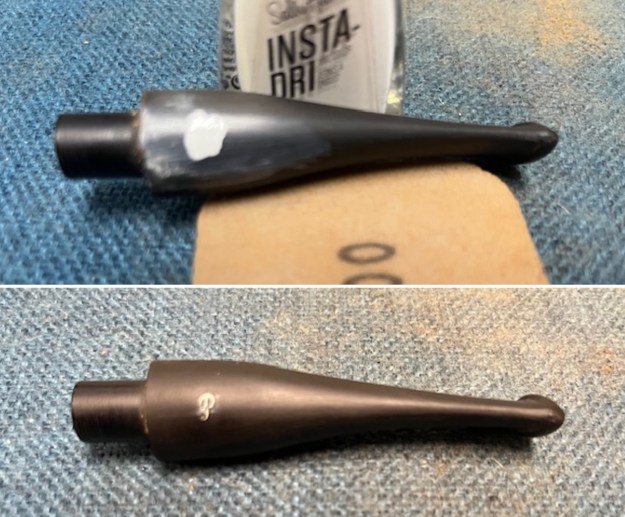
Jeff had done a great job cleaning up the pipe as usual. He reamed the pipe with a PipNet reamer and cut back the cake back to the bare briar. He cleaned up the walls with a Savinelli Fitsall Pipe Knife. He scrubbed the interior of the bowl and shank with pipe cleaners, shank brushes, cotton swabs and alcohol to remove the tars and oils. He scrubbed the exterior of the pipe with undiluted Murphy’s Oil Soap and a tooth brush to remove the grime from the finish. He worked on the rim top lava with the soap and tooth brush. He scrubbed the inside of the stem with alcohol, shank brushes and pipe cleaners. He scrubbed the exterior with Soft Scrub and then soaked it in Briarville’s Pipe Stem Deoxidizer. He washed it off with warm water to remove the deoxidizer. The pipe looked very good when it arrived here. I took some close-up photos of the rim top and also of the stem surface. The rim top and the inner edge looked very good. The silver cleaned up well on the band. The stem was clean and the tooth marks and chatter were minimal.I took photos of the stamping on the top and underside of the shank. You can see that it is stamped as noted above. It is faint and readable. I took the pipe apart and took a photo of the pipe. It is a good looking pipe and has some nice looking grain around the bowl. I sanded the briar with 320-3500 grit 2×2 inch sanding pads to remove the remainder of the varnish coat that the acetone did not remove. I wiped the bowl down with a damp cloth after each sanding pad to remove the sanding debris. It really looks much better. I polished the briar with 1500-12000 grit micromesh pads – dry sanding it with each pad and wiped down the bowl after each pad. I gave it a final wiped with a Briar Wipe cloth to polish the finish. The briar looked very good at this point. I began my work on it by working some Before & After Restoration Balm into the surface of the briar with my fingertips to clean, enliven and protect the briar. I let the balm sit for 15 minutes and then buffed with a cotton cloth to raise the shine. The photos show the bowl at this point in the restoration process. I polished the Sterling Silver band on the shank with a jeweller’s cloth to remove the tarnish and polish it. I scrubbed the oxidized stem surface with Soft Scrub cleanser on cotton pads. I was able to remove a major portion of the oxidation. It began to look much better.I set the bowl aside and turned my attention to the stem. I sanded the stem with 320-3500 grit 2×2 inch sanding pads and wiped it down with an Obsidian Oil cloth after each sanding pad. The stem began to take on a shine.I touched up the P stamp on the left side of the stem with white acrylic fingernail polish. I worked it into the P stamp with a tooth pick. Once it dried I scraped off the excess of the acrylic with my fingernail. I sanded the stem area with a worn 1500 grit micromesh sanding pad. It looked very good.I polished the stem with micromesh sanding pads – wet sanding with 1500-12000 grit sanding pads. I wiped it down after each sanding pad with Obsidian Oil. I polished it with Before & After Pipe Stem Polish – both Fine and Extra Fine. I am excited to finish this smooth Peterson’s “Sterling Silver” 68 Brandy. I put the pipe back together and lightly buffed it with Blue Diamond on the buffing wheel. I gave the bowl and the stem multiple coats of carnauba wax. I hand buffed the pipe with a clean buffing pad to raise the shine. It is fun to see what the polished bowl looks like with the depths of the sandblast taking on a rich glow. Added to that the polished Sterling Silver band and the black vulcanite taper P-lip stem was beautiful. This smooth Classic Peterson’s “Sterling Silver” 68 Brandy is nice looking and the pipe feels great in my hand. It is light and well balanced. Have a look at it with the photos below. The dimensions are Length: 5 ½ inches, Height: 2 inches, Outside diameter of the bowl: 1 ¼ inches, Chamber diameter: ¾ of an inch. The weight of the pipe is 59 grams/2.08 ounces. It is a beautiful pipe and one that will be on the Irish Pipe Makers Section of the rebornpipes store soon. If you are interested in adding it to your collection let me know. Thanks for walking through the restoration with me as I worked over this pipe. Thanks to each of you who are reading this blog.

Restoring and Irish Made Peterson’s Killarney Natural 381 Billiard


by Steve Laug

The next pipe on the work table is natural finished Peterson’s Straight Billiard that we purchased from and our connection in Copenhagen, Denmark on 12/09/2023. It was stamped Killarney in script on the left side of the shank. On the right it is stamped “A Peterson’s [over] Product” [over] Made in Ireland (in two lines). The shape number 381 is near the bowl/shank junction. It has a smooth, natural finish with great grain around the bowl and shank. There is some patchy varnish on the surface that is dirty with a lot of oils, debris and grime. The bowl had been recently reamed and there was a light cake. There light spots of lava on the rim top and edges. The top and edges of the rim looked very good. It appeared that there was a beautiful pipe underneath all of the buildup of years of use. The stem was a Peterson’s P-lip taper stem with a Peterson’s P logo on the left side. It was quite clean and did not seem to have a lot of oxidation or calcification. There was some light chatter on the stem and the button edges were quite clean. Jeff took photos of the pipe before he started his cleanup work on it. Jeff took photos of the bowl and rim top to show the look of the bowl and the rim top. There were small spots of lava on the top of the rim and the edges of the bowl. Jeff took photos of the top and underside of the stem showing the light tooth chatter and overall good condition of the stem surface. Jeff took photos of the sides and heel of the bowl to show the condition of the finish. You can see the grime around the sides of the bowl and shank. Even under the dirt and debris of the years it looked very good. Jeff took photos of the stamping on the sides of the shank. The stamping was readable as you can see from the photos. It read as noted above.I am including the information from Pipedia’s article on Peterson pipes. It is a great read in terms of the history of the brand (https://pipedia.org/wiki/Peterson).

I turned to “The Peterson Pipe” by Mark Irwin and Gary Malmberg to get some background on the Kilarney Pipe. On page 306 it had the following information on the pipe.

Kilarney (1949-) Entry line with smooth finish and P-Lip mouthpiece. May have either a K or P stamped on the mouthpiece; may have an aluminum stinger (not to be confused with the tenon extension tube found on straight System pipes). 1949-c.1957 examples made for the US market may have any of the following COM stamps: MADE IN IRELAND (forming a circle), “A PETERSON’S PRODUCT” over MADE IN IRELAND or LONDON MADE over ENGLAND. Some early specimens stamped KILLARNEY over NATURAL (a higher grade) have MADE IN IRELAND (forming a circle). Examples c. 1986-90 feature a nickel band, which was replaced in ’91 with a shank extension of nickel band with black acrylic inlay. Fishtail mouthpiece from ’86 although P-Lip is sometimes seen. For the current German market, the Killarney is stamped CONNEMARA

I knew that I was dealing with a pipe made 1949-c1957 due to the stamping on the shank and a natural finish. It has the “P” stamp on the stem side and a P-lip mouthpiece. Now it was time to work on the pipe.

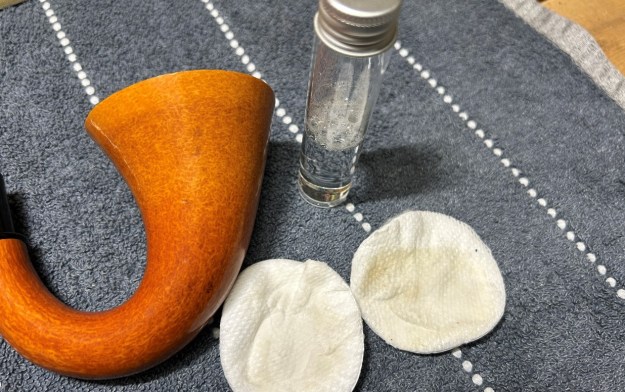
Jeff had done a great job cleaning up the pipe as usual. He reamed the light cake in the bowl with a PipNet reamer and cut back the cake back to the bare briar. He cleaned up the walls with a Savinelli Fitsall Pipe Knife. He scrubbed the interior of the bowl and shank with pipe cleaners, cotton swabs, shank brushes and alcohol to remove the tars and oils. He scrubbed the exterior of the pipe with undiluted Murphy’s Oil Soap and a tooth brush to remove the grime from the finish. He worked on the rim top lava spots with the soap and tooth brush. He scrubbed the inside of the stem with alcohol and pipe cleaners. He scrubbed the exterior with Soft Scrub and then soaked it in Briarville’s Pipe Stem Deoxidizer. He washed it off with warm water to remove the Deoxidizer. The pipe looked far better when it arrived. I took some close up photos of the rim top and also of the stem surface. I wanted to show what an amazing job Jeff did in the cleanup of the rim top. The rim top and inner edge of the bowl looked very good. I also took close up photos of the stem to show the condition of the vulcanite. It was quite clean and there were light tooth marks ahead of the button.One of the things I appreciate about Jeff’s cleanup is that he works to protect and preserve the nomenclature on the shank of the pipes that he works on. He was able to preserve and maintain its condition in the process. I took some photos to show the clarity of the stamping. I have noticed that many restorers are not careful to protect the stamping in their cleaning process and often by the end of the restoration the nomenclature is almost destroyed. I would like to encourage all of us to be careful in our work to preserve this as it is a critical piece of pipe restoration! I took the stem off the shank and took a photo of the pipe. I wiped the bowl down with acetone and cotton pads to remove the remnants of the varnish coat on the bowl sides and shank. I sanded the briar with 320-3500 grit 2×2 inch sanding pads to remove the remainder of the varnish coat that the acetone did not remove. I wiped the bowl down with a damp cloth after each sanding pad to remove the sanding debris. It really looks much better. I polished the bowl with micromesh sanding pads – dry sanding it with 1500-12000 grit sanding pads. I wiped it down with a damp cloth after each sanding pad to remove the dust. The briar was really shining by the final pad. I rubbed the bowl and rim down with Before & After Restoration Balm. I worked it into the surface of the briar with my fingertips to clean, enliven and protect it. I let the balm sit for 10 minutes and then buffed with a cotton cloth to raise the shine. I really like watching the Balm do its magic and bring the briar alive. I touched up the “P” logo on the left side of the saddle stem with white acrylic fingernail polish. I let it dry then I polished off the excess with a worn 1500 grit micromesh sanding pad. Once the excess was removed the stamp looked much better. There were some weak spots on the leg and tail of the “P” stamp.I polished the stem with micromesh sanding pads – wet sanding with 1500-12000 grit pads. I wiped the stem down after each sanding pad with Obsidian Oil. I polished it with Before & After Pipe Stem Polish – both Fine and Extra Fine. I gave it a coat of Obsidian Pipe Stem Oil. It works to protect the stem from oxidizing. I set it aside to dry. Once again at this point in the restoration process I am excited to be on the homestretch. I look forward to the final look when the Made in Ireland “A Peterson’s Product” Killarney 381 Billiard with a taper stem is put back together, polished and waxed. I put the bowl and stem back together. I polished the bowl and stem with Blue Diamond to polish out the scratches in the briar and the vulcanite. I gave the bowl and the stem multiple coats of carnauba wax. I buffed the pipe with a clean buffing pad to raise the shine. I hand buffed it with a microfiber cloth to deepen the shine. The pipe polished up pretty nicely. The shiny black vulcanite stem is a beautiful contrast to the natural browns of the bowl and thick shank. This Irish Made Peterson’s Killarney 381 Billiard was another fun pipe to work on. It really is a quite stunning piece of briar whose shape follows the flow of the briar. The pipe feels great in the hand will be better when warmed up while smoking. The finished pipe is shown in the photos below. The dimensions of the pipe are Length:6 ½ inches, Height: 1 ¾ inches, Outside diameter of the bowl: 1 ¼ inches, Chamber diameter: ¾ of an inch. The weight of the pipe is 1.38 ounces/39 grams. I will be putting it on the rebornpipes store in the Irish Pipemakers Section if you would like to add it to your rack and carry on the previous pipeman’s legacy.

As always, I encourage your questions and comments as you read the blog. Thanks to each of you who are reading this blog. Remember we are not pipe owners; we are pipe men and women who hold our pipes in trust until they pass on into the trust of those who follow us.

Restoring a Republic Era Peterson’s “Sterling Silver” 606S Sandblast Pot


by Steve Laug

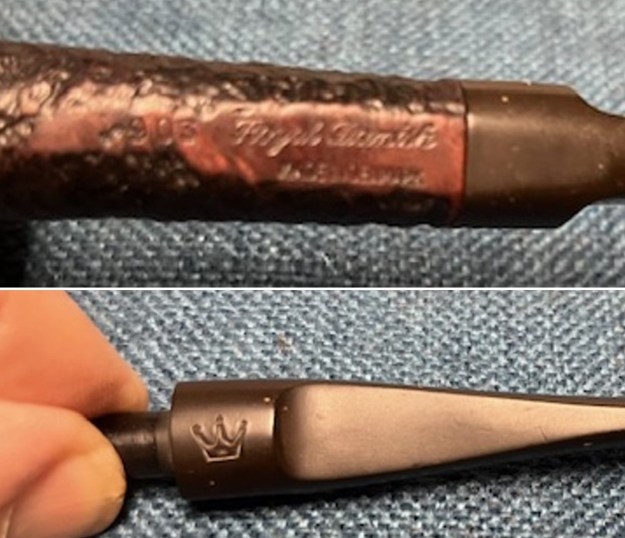
The next pipe I have chosen is smooth finished Peterson’s “Sterling Silver” pipe. The pipe came to us from our contact in Copenhagen, Denmark. This one is a classic Peterson’s Pot shaped pipe with a saddle P-lip stem. It has a dark brown coloured finish with amazing sandblast grain around the bowl sides and shank. It is very dirty. This Pot has a silver band on the shank that was badly oxidized. The grime on the finish was ground into the finish on the bowl sides. The contrast of the brown stains make the sandblast really pop. It was stamped on the underside of the shank and reads 606S the shape number on the heel of the bowl followed by the three line Made in the Republic of Ireland followed by Peterson’s [over] “Sterling Silver”. The heavily tarnished band is stamped with K&P in shields [over] Sterling [over] Silver. To the right that it has three hallmarks – Hibernia seated arm on a harp (signifies country of manufacture), a crowned harp designating Sterling quality and finally a Date Letter mark – in this case it is a lower case “s” (1983). It was in filthy condition when Jeff brought it to the table. There was a thin cake in the bowl and a spattering of lava in the sandblast of the rim top but a clean inner edge of the bowl. The stem was oxidized and had light tooth marks and chatter on the top and a deeper on on the underside near the button. Jeff took photos of the pipe before his cleanup work before he started on the pipe.  Jeff took photos of the rim top and stem to show the general condition of the pipe. The bowl is lightly caked and the rim top and edges look very good. The stem is oxidized and has light tooth marks on the top and underside near the button. Jeff took some photos of the bowl sides and heel to show the grain that was around this bowl. It is a nice looking pipe. He took photos of the sides of the shank to show the stamping. The stamping is readable in the photos below and is as noted above. The stamping on the Sterling Silver band is also readable through the oxidation. I am including the information from Pipedia’s article on Peterson pipes. It is a great read in terms of the history of the brand (https://pipedia.org/wiki/Peterson).

I turned to “The Peterson Pipe” by Mark Irwin and Gary Malmberg to get some background on the Sterling Pipe. On page 314 it had the following information on the line.

Sterling (1949-c1957; 1978-) – Higher grade line with sterling band. Early example, 1949-57, with COM of Made in Ireland forming a circle, were offered to the US market through Rogers Imports and have no hallmark, although until recent years the line carried Peterson’s maker’s mark, the K&P is in separate shields. Models beginning in ’78 with hallmarked dates and a COM stamp of Made in [over] the Republic [over] of Ireland.

I knew that I was dealing with a pipe made between 1949-1957 as shown by the Made in the Republic of Ireland three line format stamp. Now it was time to work on the pipe.

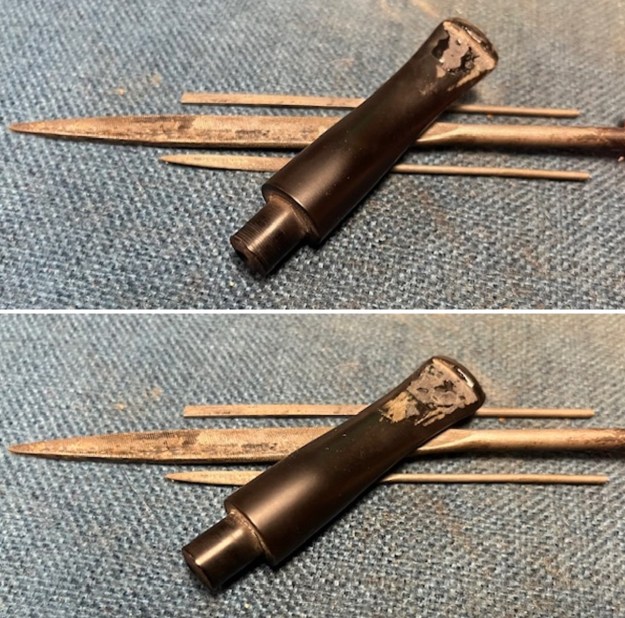
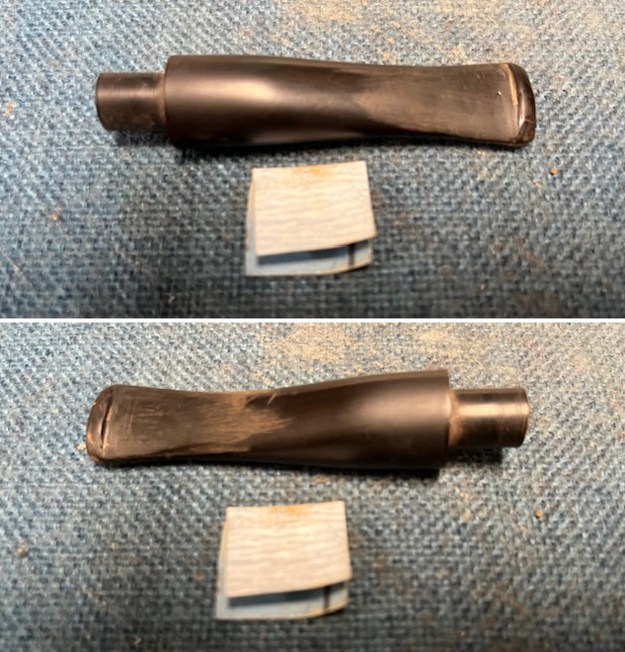
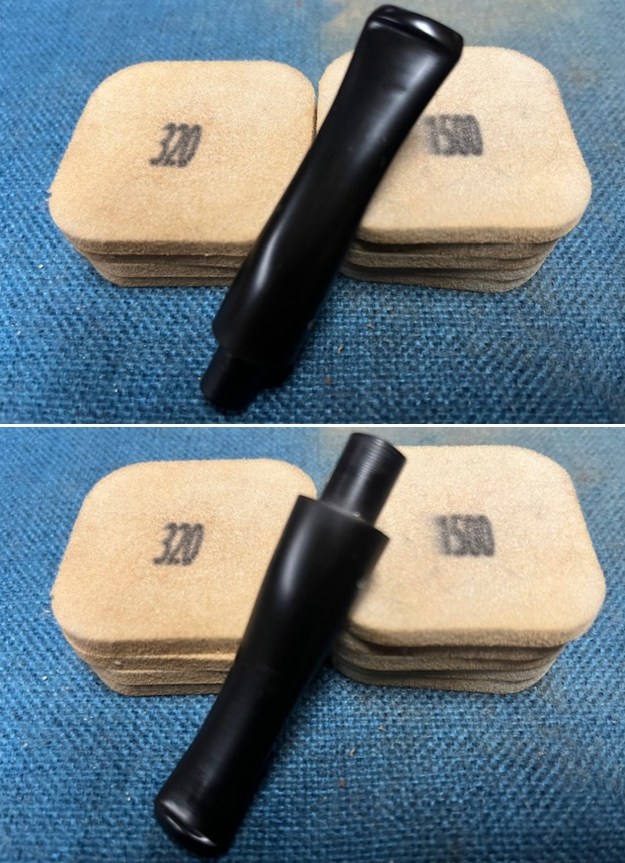
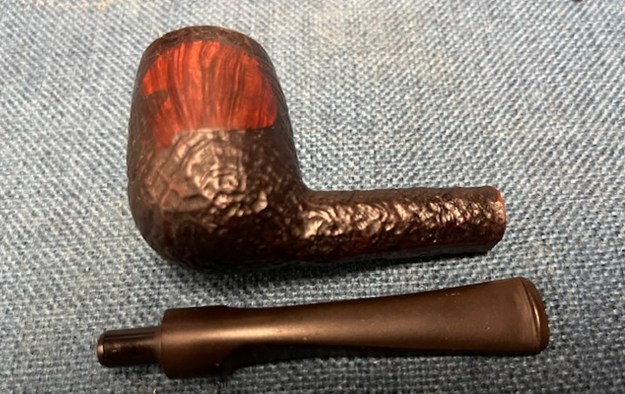
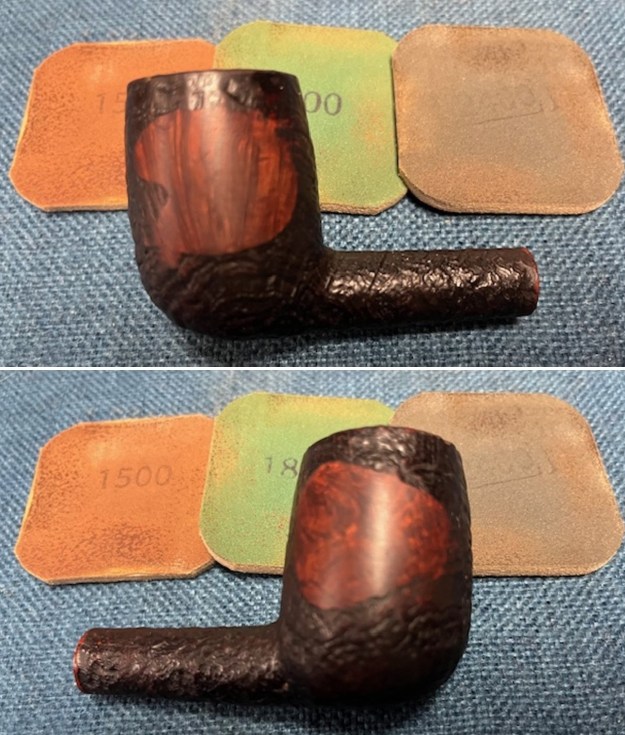
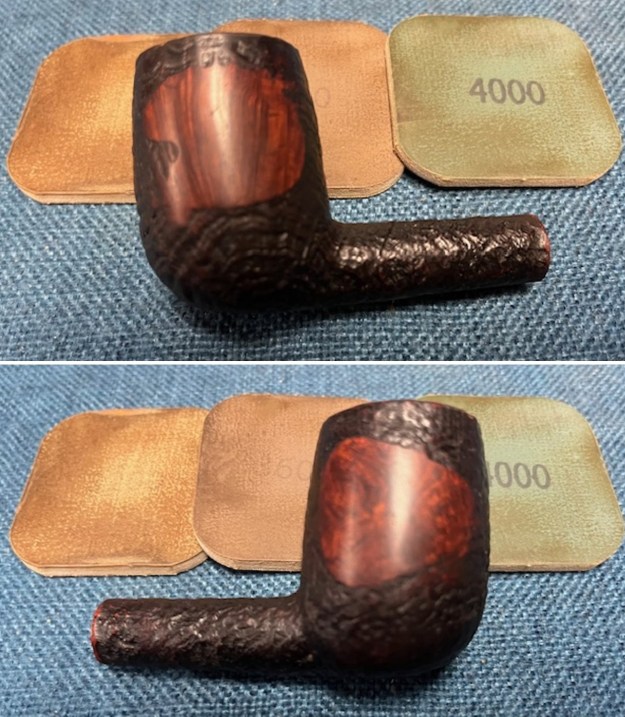
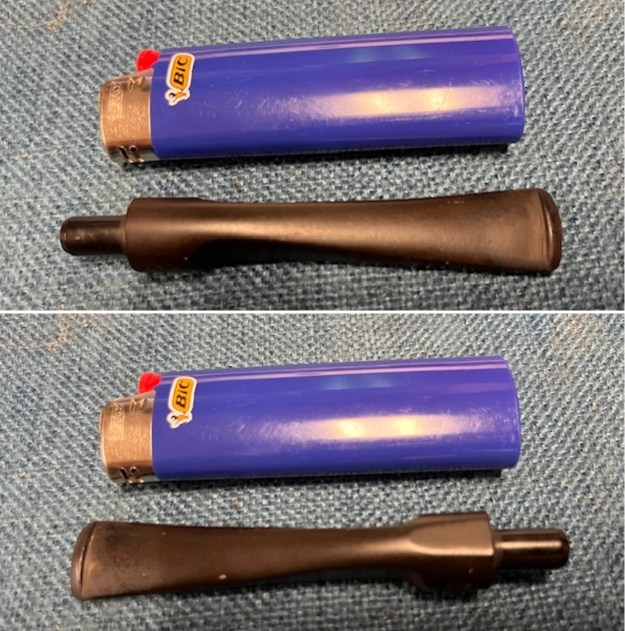
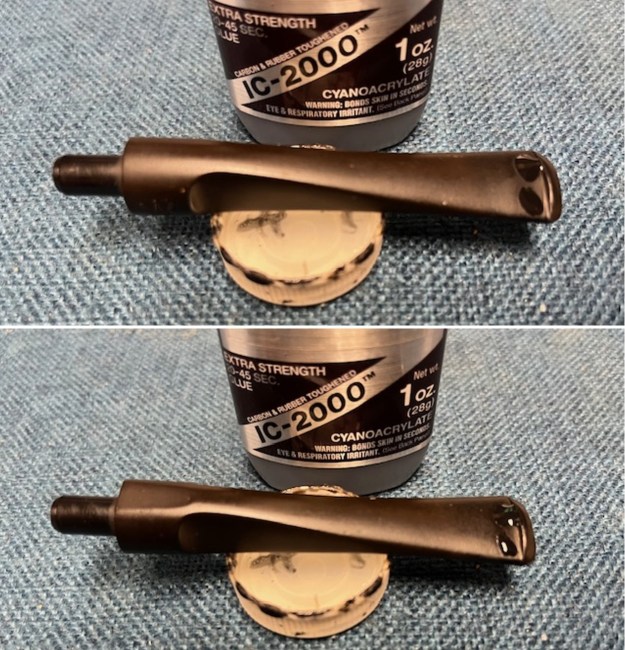
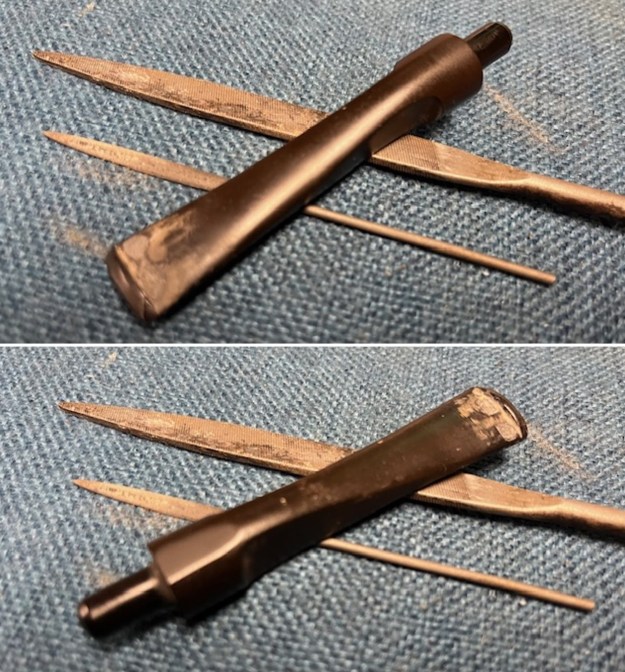
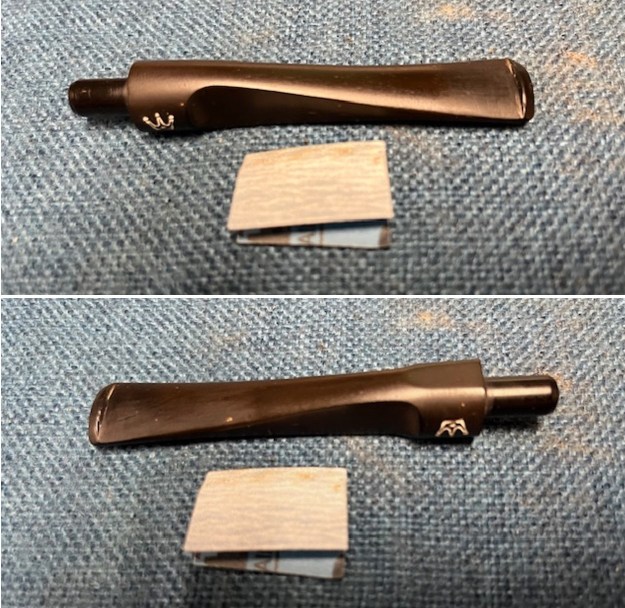
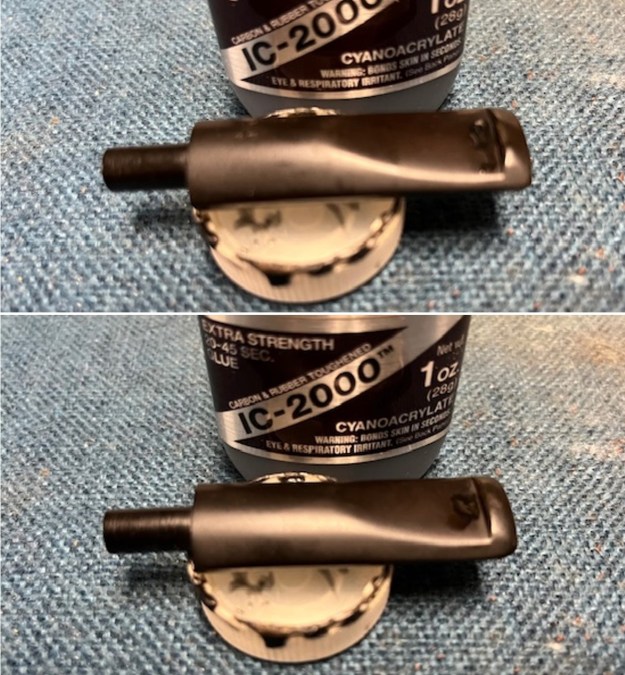
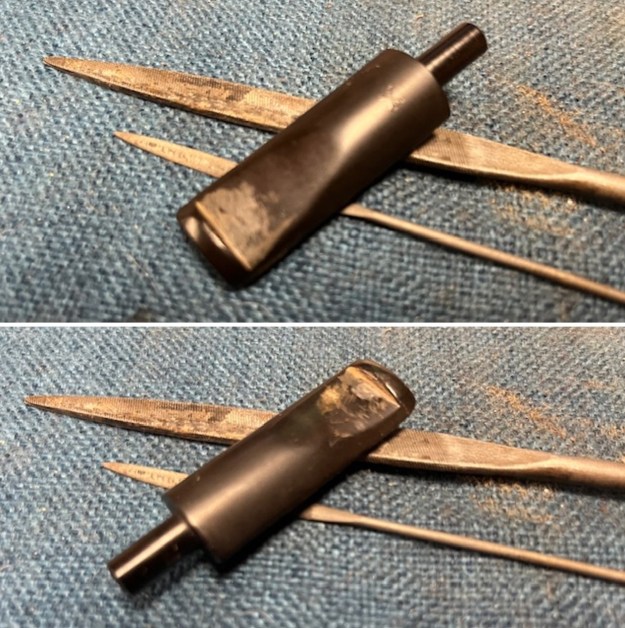
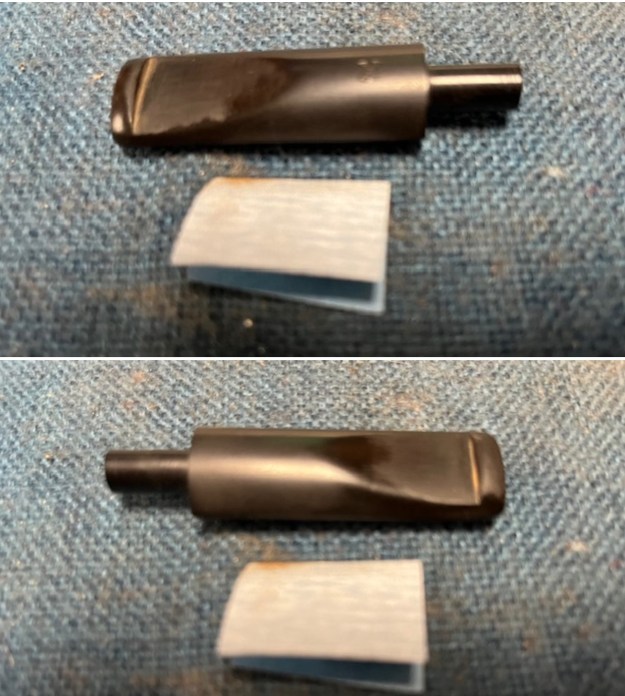
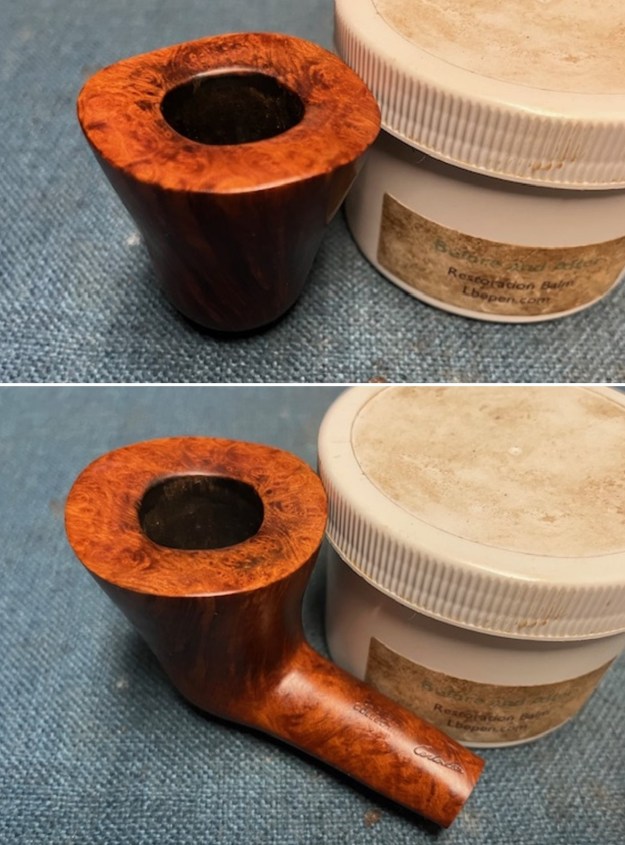
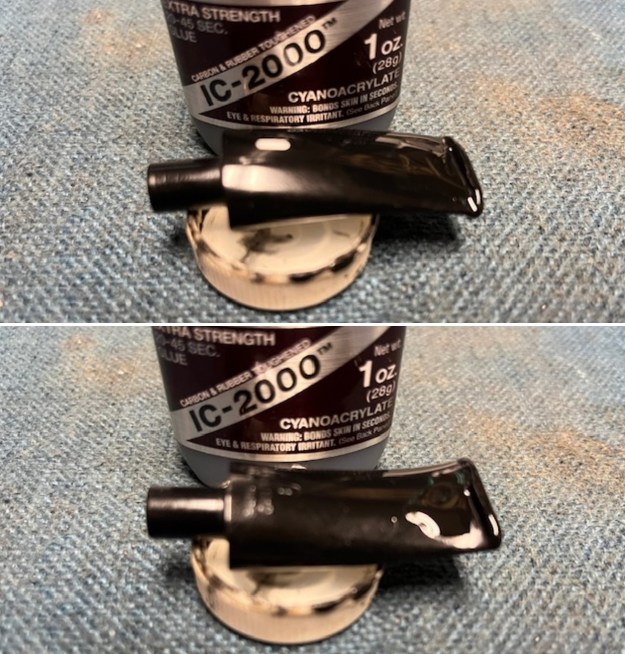
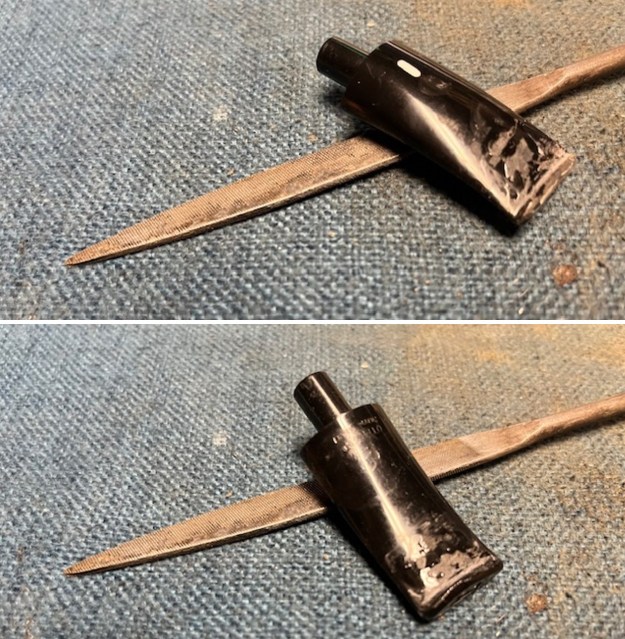
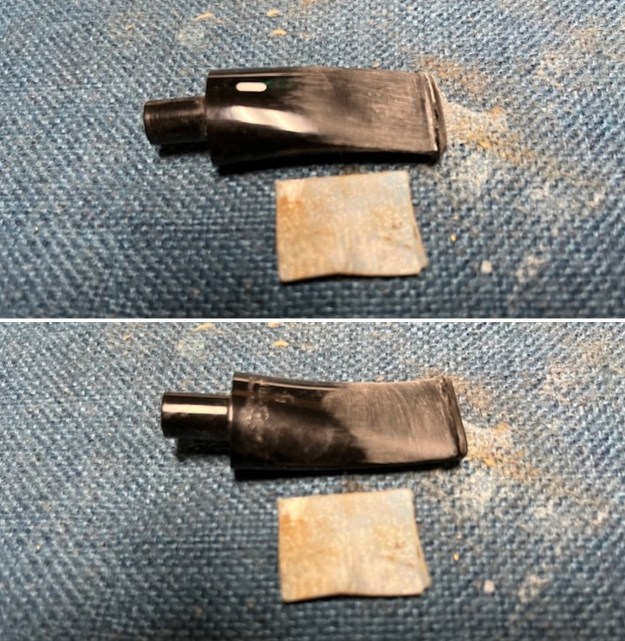
Jeff had done a great job cleaning up the pipe as usual. He reamed the pipe with a PipNet reamer and cut back the cake back to the bare briar. He cleaned up the walls with a Savinelli Fitsall Pipe Knife. He scrubbed the interior of the bowl and shank with pipe cleaners, shank brushes, cotton swabs and alcohol to remove the tars and oils. He scrubbed the exterior of the pipe with undiluted Murphy’s Oil Soap and a tooth brush to remove the grime from the finish. He worked on the rim top lava with the soap and tooth brush. He scrubbed the inside of the stem with alcohol, shank brushes and pipe cleaners. He scrubbed the exterior with Soft Scrub and then soaked it in Briarville’s Pipe Stem Deoxidizer. He washed it off with warm water to remove the deoxidizer. The pipe looked very good when it arrived here. I took some close up photos of the rim top and also of the stem surface. The rim top had some darkening on the back top and the inner edge. It also had some nicks and scratch on the rim top at the back and on the right. The silver cleaned up well on the band. The stem was clean and the tooth marks and chatter were minimal.I took photos of the stamping on the top and underside of the shank. You can see that it is stamped as noted above. It is faint and readable. I took the pipe apart and took a photo of the pipe. It is a good looking pipe and has some nice looking grain around the bowl. The briar looked very good at this point. I began my work on it by working some Before & After Restoration Balm into the surface of the briar with my fingertips to clean, enliven and protect the briar. I let the balm sit for 15 minutes and then buffed with a cotton cloth to raise the shine. The photos show the bowl at this point in the restoration process. I polished the Sterling Silver band on the shank with a jeweller’s cloth to remove the tarnish and polish it. I set the bowl aside and turned my attention to the stem. I filled in the deep tooth mark on the underside of the stem with black rubberized CA glue. Once the repair cured, I sanded the stem with a folded piece of 220 grit sandpaper to remove the remnants of oxidation and the repair on underside of the stem ahead of the button.I sanded the stem with 320-3500 grit 2×2 inch sanding pads and wiped it down with an Obsidian Oil cloth after each sanding pad. The stem began to take on a shine.I touch up the P stamp on the left side of the saddle stem with some white acrylic fingernail polish. I pressed it into the stamp with a toothpick and scraped off the excess with the pick and then lightly sanded it with a worn 1200 grit sanding pad. I polished the stem with micromesh sanding pads – wet sanding with 1500-12000 grit sanding pads. I wiped it down after each sanding pad with Obsidian Oil. I polished it with Before & After Pipe Stem Polish – both Fine and Extra Fine. I am excited to finish this Sandblast Peterson’s “Sterling Silver” 606S Pot. I put the pipe back together and lightly buffed it with Blue Diamond on the buffing wheel. I gave the bowl and the stem multiple coats of carnauba wax. I hand buffed the pipe with a clean buffing pad to raise the shine. It is fun to see what the polished bowl looks like with the depths of the sandblast taking on a rich glow. Added to that the polished Sterling Silver band and the black vulcanite saddle stem was beautiful. This smooth Classic Peterson’s “Sterling Silver” 606S Pot is nice looking and the pipe feels great in my hand. It is light and well balanced. Have a look at it with the photos below. The dimensions are Length: 5 ½ inches, Height: 1 ½ inches, Outside diameter of the bowl: 1 ½ inches, Chamber diameter: ¾ of an inch. The weight of the pipe is 40grams/1.41 ounces. It is a beautiful pipe and one that will be on the Irish Pipe Makers Section of the rebornpipes store soon. If you are interested in adding it to your collection let me know. Thanks for walking through the restoration with me as I worked over this pipe. Thanks to each of you who are reading this blog.

Restoring a Osman Tall Meerschaum Billiard with a Bakelite Stem


by Steve Laug

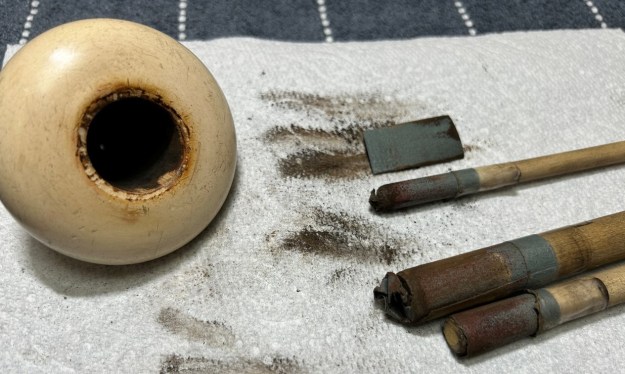
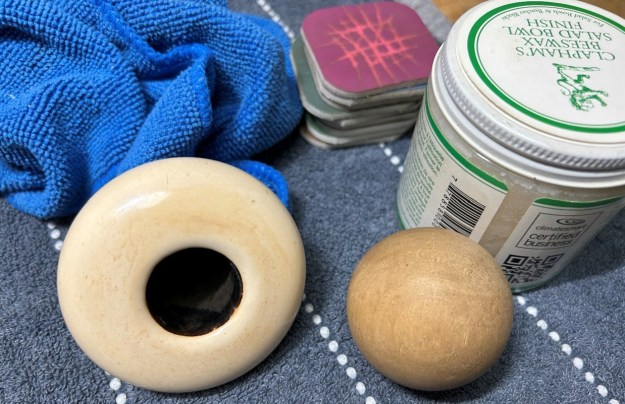
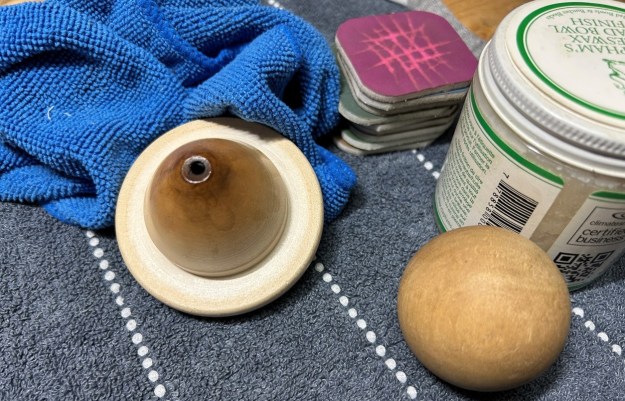
Last evening but for quitting for the night I decided to work on another pipe that I no longer know where or when we purchased it. It is another pipe from a large box of Meerschaum pipes that is sitting in my storage that I need to clean up and restore. I have honestly avoided them for years but now was the time to start my work on some of them. The one I chose was a Tall Billiard or almost a stack. It is a smooth meerschaum with what appears to be a Bakelite stem. It is a beautifully shaped meer with nicks and scratches from its journey and some nice patina developing around the shank and sides. The meer is very dirty from use with a thick cake in the bowl and an overflow of lava on the inner edge and rim top. The stem fit well against the shank end and had a threaded tenon in the shank that aligned with properly with the stem in place. The tenon was a Kaywoodie type threaded one that had been clipped. The stem was stamped OSMOND on the left side and the shank band has the marks of a repair band. On the underside of the name F. Wright was scratched into the surface but it was almost worn away. I took photos of the pipe before I started my clean up work on it. I took photos of the rim top and the stem to show the condition of the pipe when I brought it to the worktable. You can see the cake in the bowl and the build up of lava and debris on the edge and top of the rim top. It is another dirty pipe but still a charmer. The orifice button Bakelite taper stem has light chatter and deep tooth marks on both sides near the button. I took a photo of the stamping on the left side of the taper stem. It is clear and readable as noted above. I removed the stem from the shank and took a photo of the parts.I started my work on the bowl by reaming the thick cake out of the bowl. I started with a PipNet reamer and the 2nd and 3rd cutting heads to take back the cake to the walls of the bowl. I cleaned up the reaming with a Savinelli Fitsall Pipe Knife and scraped the rim top at the same time. I sanded the bowl walls with a piece of dowel wrapped with 220 grit sandpaper. Once finished it looked much better. I scrubbed the bowl and shank with undiluted Murphy’s Oil Soap and a tooth brush. I rinsed off the soap and debris with warm water and repeated the process until the pipe was clean. I dried it off with a soft towel. It really began to look better. I cleaned out the airway in the shank and mortise as well as in the stem with pipe cleaners (both bristle and regular). I used a brass bristle wire brush to further clean up the metal tenon. It was much better.I polished the meerschaum with micromesh sanding pads – dry sanding with 1500-12000 grit pads. I wiped the bowl down after each pad with a damp cotton cloth. The bowl took on a shine by the last pads. I gave the bowl multiple coats of Clapham’s Wax that blends both carnauba and beeswax in a soft wax. I rubbed the wax on the bowl sides and the shank end with my fingers and set it aside to dry. Once the wax cured I buffed the bowl with a clean buffing pad and then with a soft microfibre cloth. The bowl has a rich glow. I polished the polished nickel band with a jeweller’s cloth to clean and protect the finish and to remove the remaining oxidation and dullness. I set the bowl aside and turned my attention to the stem. I filled in the tooth marks with some clear CA glue. When it cured I flattened the repairs with a small flat file to blend them into the surface of the stem. I then sanded it with 220 grit sandpaper to smooth it out. I continued sanding the stem surface with 320-3500 grit 2×2 inch sanding pads. I wiped the stem down after each pad with a damp pad to remove the debris. By the end it was quite shiny and ready for polishing.I polished the stem with micromesh sanding pads – wet sanding it 1500-12000 pads. I wiped it down with a damp cloth after each pad to protect it and preserve it. I polished it with Before After Pipe Polish – both Fine and Extra Fine. I am really happy with the way that this Osman Meerschaum Tall Billiard with a Bakelite Stem turned out. It really is a beautiful looking pipe with a unique shape and smooth meerschaum bowl. The taper stem is really nice. The rich patina on the meerschaum came alive with waxing and buffing. I put the stem back on the bowl and carefully buffed the pipe with Blue Diamond on the buffing wheel. I gave the bowl and the stem multiple coats of beeswax/carnauba wax and buffed the pipe with a clean buffing pad to raise the shine. I hand buffed the pipe with a microfiber cloth to deepen the shine. The finished Osman Meerschaum Tall Billiard really is a beauty and feels great in the hand and looks very good. Give the finished pipe a look in the photos below. The dimensions of the pipe are Length: 6 ¼ inches, Height: 2 ¼ inches, Outside diameter of the bowl: 1 ½ inches, Chamber diameter: 1 inch. The weight of the pipe is 51 grams/1.80 ounces. The pipe will be going on the rebornpipes store soon. It will be in the Ceramic and Meerschaum Pipes Section if you would like to add it to your collection. Thanks for reading this blog and my reflections on the pipe while I worked on it. It was a fun one to work on!
New Life for a Malaga Second Diamond Shank bent billiard with a saddle stem


by Steve Laug

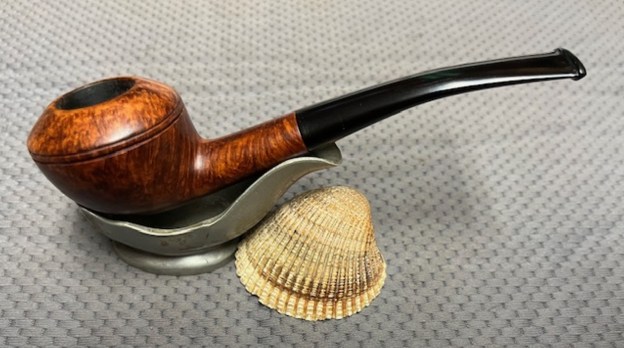
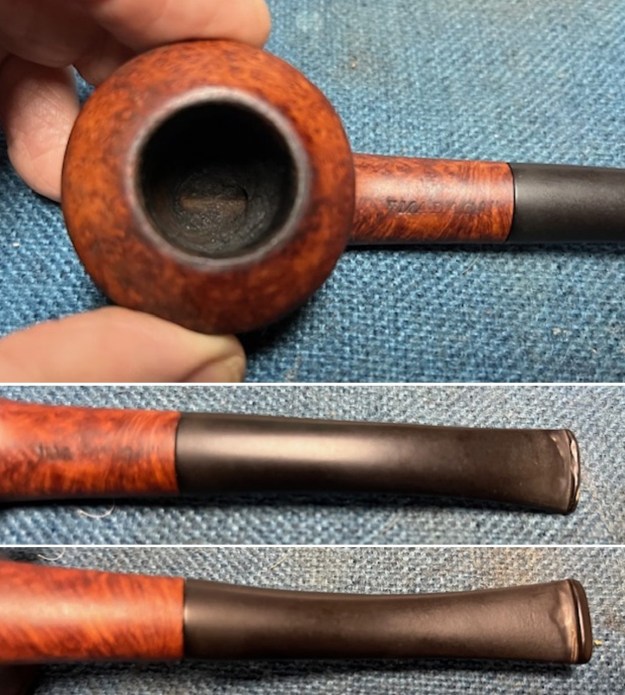
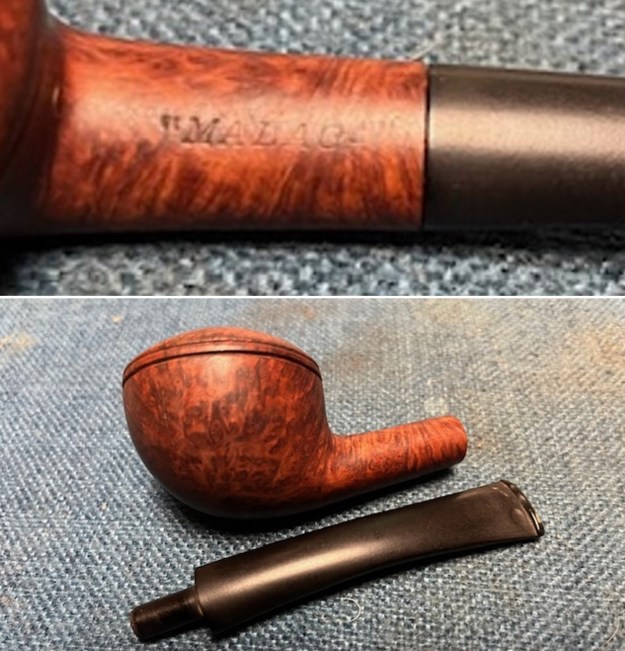
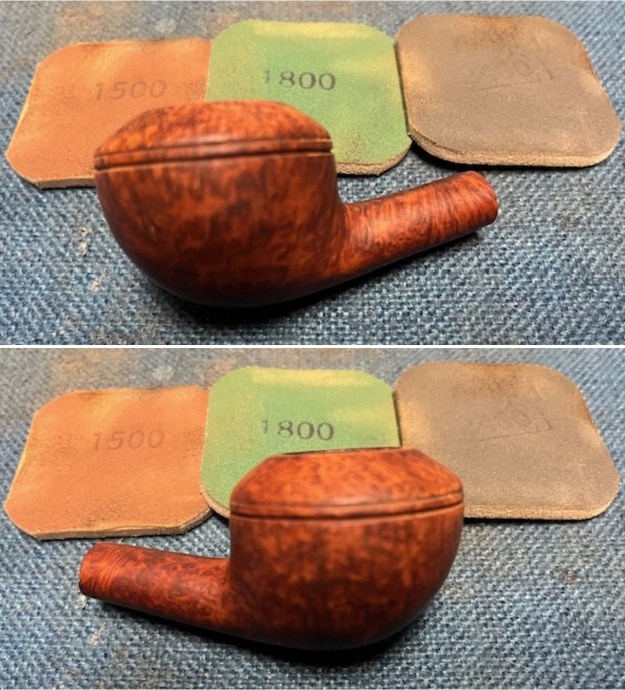
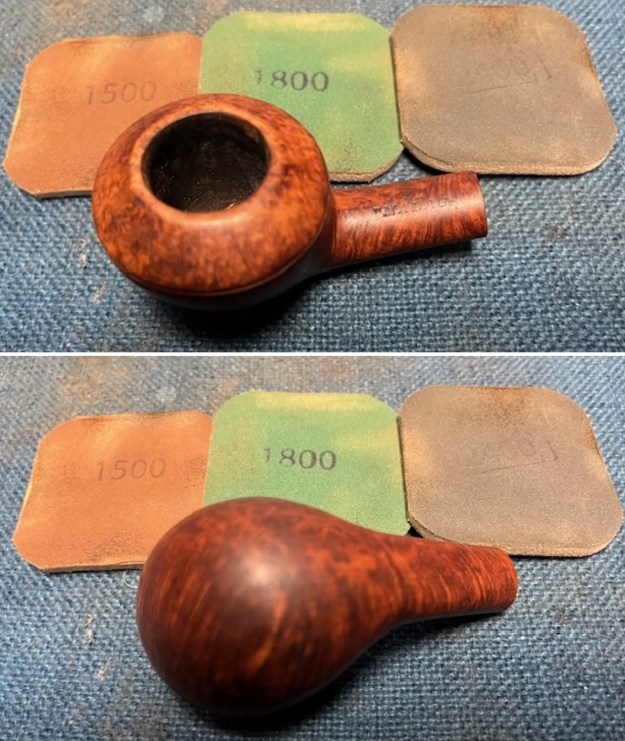
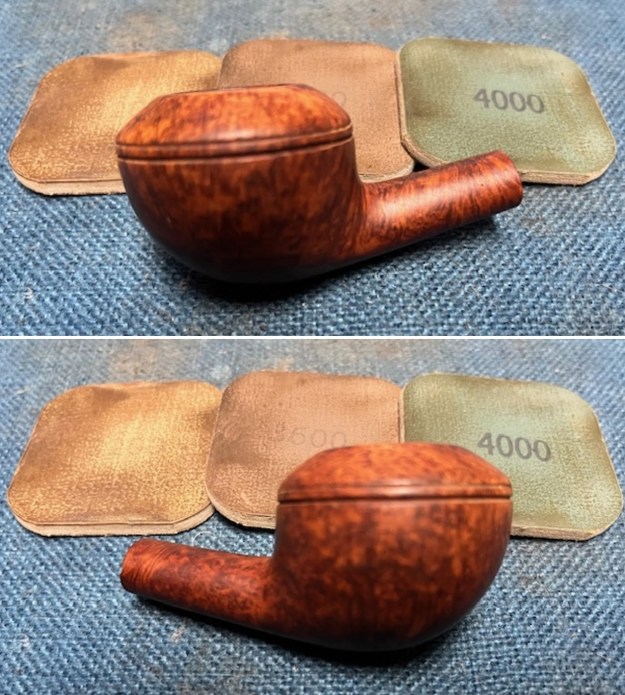
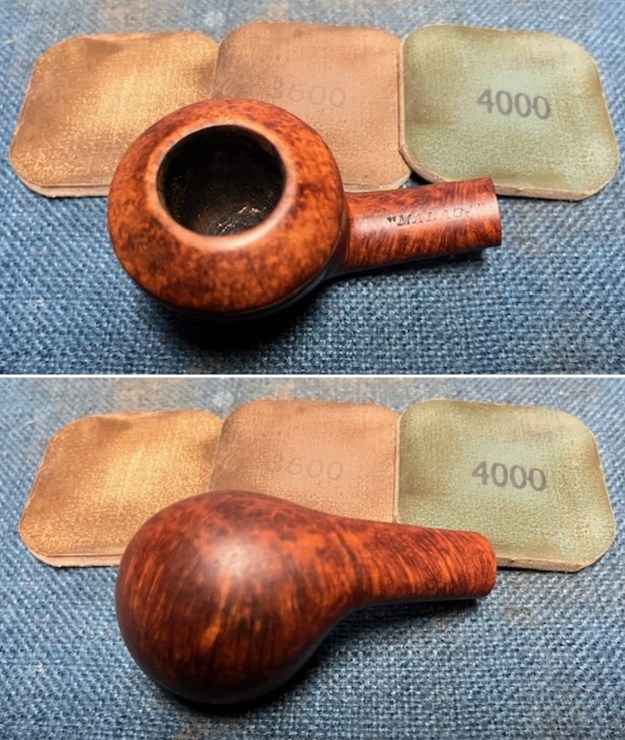
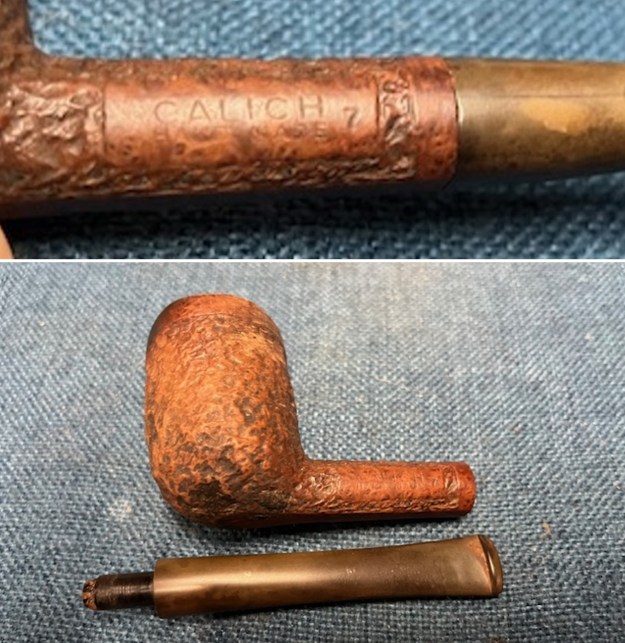
The next pipe on the table is a “Malaga” Second pipe that Jeff picked up from eBay early on 08/22/2024 from a seller in Harrison Township, Michigan, USA. It is an interesting looking octagonal Panel Billiard with a square shank.  It has the classic Malaga oil cured finish and some great looking grain around the bowl and shank. There are some sand pits on the sides of the bowl which are the only flaws I can see. The pipe is stamped on left side of the shank and reads MALAGA [over] Second. The carver did a great job of carving the pipe to capture the grain around the bowl and the diamond shank. The bowl had a heavy cake with an overflow of lava on the crowned rim top. The sides of the bowl and shank are very dirty with grime and oils ground into the finish from prolonged use. The vulcanite saddle stem was heavily oxidized and calcified. It had tooth dents and chatter on the top and the underside of the stem. Jeff took photos of the pipe before he started the cleanup work. With some work it will be a real beauty. I looked forward to seeing it in person.   Jeff took a close up photo of the bowl and rim to capture the condition of the pipe before he started the cleanup work. The bowl has a thick cake and the uneven overflow of lava on the rim top is quite thick all the way around. The inside edge of the rim could be damaged but it quite hidden under the lava coat. The stem is deeply oxidized, calcified and dirty and there is tooth chatter and marks on both sides of the stem ahead of the button. Jeff took photos of the sides and heel of the bowl to give a picture of what the briar looked like. There is some nice grain around the sides. You can also see the damage to the rim edges and the heel of the bowl in the photos below. He took a photo of the stamping on the left side of the diamond shank. It read as noted above. It is clear and readable.I am including the link to a blog that I wrote that gives some of the history of the Malaga brand and the Malaga Pipe Shop in Royal Oak, Michigan in the USA. I have written an earlier blog to give a little history of the Malaga Brand and the pipemaker, George Khoubesser. Here is the link – https://rebornpipes.com/tag/malaga-pipes/.That blog also includes links to a catalogue and the history of the pipemaker George Khoubesser. Follow the link to get a feel for the brand and the pipemaker.

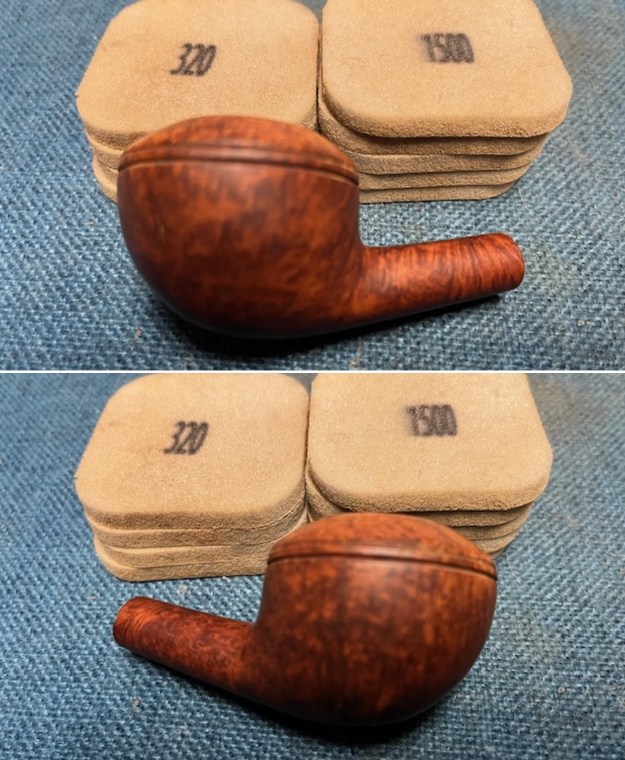
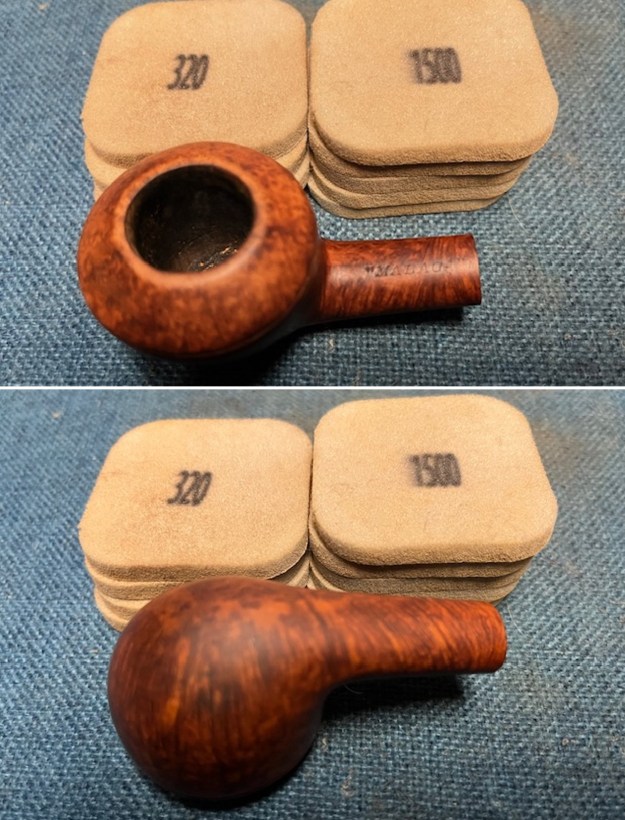
Jeff had cleaned up the pipe with his usual penchant for thoroughness. He reamed the pipe with a PipNet pipe reamer and removed the rest of it with a Savinelli Fitsall Pipe Knife.  He scrubbed the bowl with undiluted Murphy’s Oil Soap with a tooth brush. He rinsed it under running warm water to remove the soap and grime. He cleaned out the inside of the shank and the airway in the stem with alcohol, cotton swabs, shank brushes and pipe cleaners. He soaked the stem in Briarvilles Pipe Stem Deoxidizer and rinsed it off with warm water. I took photos of the pipe once I received it.  The rim top cleaned up really well. The rim top and outer edge of the bowl show some darkening over most of the surface. There is damage to the inner edge of the bowl and bowl is out of round. The stem surface looked very good with tooth marks and chatter on the top side and the underside near the button.The stamping on the top left side of the diamond shank is clear and readable. It reads as noted above. I removed the saddle stem and took a photo of the pipe to give a sense of the whole. I heated the stem with the flame of a lighter and gave a more dramatic bend to follow the flow of the curves of the briar.I sanded the bowl sides and rim top with 320-3500 grit 2×2 inch sanding pads. I wiped the bowl down with a damp cloth after each sanding pad. It began to look very good. I polished the briar with micromesh sanding pads – wet sanding with 1500-12000 grit pads and wiping it down after each pad with a damp cloth. I rubbed the bowl and shank down with Before & After Restoration Balm. I worked it into the surface of the bowl sides and shank with my fingertips to clean, enliven and protect the briar. I let the balm sit for 10-15 minutes and then buffed with a cotton cloth to raise the shine. The grain came alive and the finish looked rich. I set aside the bowl and turned my attention to the stem. I “painted” the surface of the stem with the flame of a Bic lighter to lift them as much as possible. I did the lifting of the marks at the same time I heated the stem to bend it. I filled in the remaining tooth dents and marks with rubberized Black CA Glue and set it aside for the repairs to cure. Once they cured I flattened them with small files. I cleaned up the repaired areas with 220 sandpaper to blend the repairs into the surface of the stem. I sanded the stem with 320-3500 grit 2 x 2 inch sanding pads and wiped it down with a damp cloth after each pad to remove the sanding debris. The stem began to take on a rich shine.I polished the vulcanite stem with micromesh sanding pads – 1500-12000 grit pads. I wiped it down with Obsidian Oil after each sanding pad. I used Before & After Pipe Polish – both Fine and Extra Fine to further polish the stem. This Malaga Second Diamond Shank Bent Billiard with a vulcanite saddle stem turned out to be a real beauty. The carver really maximized the grain with the shape of the pipe. I polished stem and the bowl with Blue Diamond polish on the buffing wheel and the finish just popped and came alive. I gave the bowl and the stem multiple coats of carnauba wax. I buffed the pipe with a clean buffing pad to raise the shine. I hand buffed it with a microfiber cloth to deepen the shine. The pipe polished up pretty nicely. The pipe took on life with the buffing. The rich oil cured colour works well with the polished black vulcanite stem. The finished Malaga Second Bent Billiard has a rich look that is quite catching. Have a look at it with the photos below. The shape, finish and flow of the pipe and stem are very well done. The dimensions are Length: 5 inches, Height: 1 ¾ inches, Outside diameter of the bowl: 1 ¼ inches, Chamber diameter: ¾ of an inch. The weight of the pipe was 44 grams/1.48 ounces. I will be putting it on the rebornpipes store shortly. Thanks for reading this blog and my reflections on the pipe while I worked on it. There are many more to come!

New Life for a Beautiful Ben Wade Royal Grain Freehand Hand Made in Denmark


by Steve Laug

The next pipe on the table is another pipe that was a beautiful freehand briar pipe. It came to us on 05/08/2024 from a seller in Santa Cruz, California, USA. The briar is a piece of smooth briar with a spot of plateau on the shank end. The rim top is smooth and the shank end included both smooth and plateau on the end of the shank. The pipe was stamped on the underside of the shank and read Ben Wade in script [over] Royal Grain [over] Hand Made [over] in [over] Denmark. The smooth finish was very dirty and had oils and grime ground into the briar. There was a thick cake in the bowl and lava on the rim top and inner edge of the bowl. The stem was oxidized and had deep teeth marks on the top and the bottom of the stem near the button edge. Jeff took photos to below show what the pipe looked like when he received it. Jeff took photos of the bowl, rim top and the stem to show the condition of the pipe when we received it. You can see the cake in the bowl and the lava on the rim top and inner edge of the bowl. The stem was dirty and had chatter and tooth marks on both sides near the button. He took photos of the sides of the bowl and the heel to give an idea of the shape and the condition of the briar around the bowl. It really is a nicely shaped pipe that has the classic look of a Freehand carved by Preben Holm. The next photo Jeff took shows the stamping on the underside of the shank. The stamping is clear and readable as noted above.I turned to PipePhil’s site and went through the listings under Preben Holm and Ben Wade. There was nothing in either section that had information on the Royal Grain stamping. So the mystery remained. I turned to Pipedia to see if there was anything listed with the Royal Grain stamp (https://pipedia.org/wiki/Ben_Wade#Ben_Wade_turns_Danish). There was nothing listed on the stamping in the text of the article. However, I did find a photo of the shank stamp and one of a freehand pipe with that stamping. It is a beautiful smooth freehand and like the one I am working on. Now it was time to work on the pipe. Jeff had cleaned up the pipe following his normal cleaning process. In short, he reamed the bowl with a PipNet pipe reamer and then cleaned up the reaming with a Savinelli Fitsall Pipe Knife. He scrubbed the exterior of the bowl with undiluted Murphy’s Oil Soap with a tooth brush. He worked over the lava and debris on the plateau rim top and shank end and was able to remove it. He rinsed it under running warm water to remove the soap and grime. He cleaned out the inside of the shank and the airway in the stem with alcohol, cotton swabs, shank brushes and pipe cleaners. He scrubbed the stem with Soft Scrub and cotton pads to remove the debris and oils on the stem. He soaked it in Briarville’s Pipe Stem Deoxidizer to remove the remaining oxidation. He rinsed it with warm water and dried it off. I took photos of the pipe once I received it. It looked much better at this point. I took close up photos of the stem and the rim top to show both how clean they were and what needed to be addressed with both. The rim top and bowl look good. The stem looked better and the tooth marks and chatter were still present. I would need to remove those to bring the stem back.I took a photo of the stamping on the underside of the shank. It is clear and readable as noted above. I removed the stem from the bowl and took a photo of the parts to give a sense of the beauty of the pipe. I started my work on the pipe by sanding the bowl and shank with 320-3500 grit 2 x2 inch sanding pad. I wiped the bowl down after each sanding pad with a damp cloth. The grain began to show through the finish. I polished the bowl and shank with 1500-12000 grit micromesh sanding pads. I wiped the bowl down after each sanding pad with a damp cloth. The pipe is beginning to look very good. I worked some Before & After Restoration Balm into the surface of the briar with my finger tips and a horse hair shoe brush to get into the crevices of the plateau portions. The product is incredible and the way it brings the grain to the fore is unique. It works to clean, protect and invigorate the wood. I worked some Before & After Restoration Balm into the surface of the briar with my finger tips and a horse hair shoe brush to get into the crevices of the plateau portions. The product is incredible and the way it brings the grain to the fore is unique. It works to clean, protect and invigorate the wood. I set the bowl aside and started working on the stem. I “painted” the tooth marks with the flame of a lighter to lift them. It worked well and what was left I filled in with black, rubberized CA glue. Once it cured, I used some small flat files to flatten out the repairs. I cleaned up the flattened spots with a folded piece of 220 grit sandpaper to finish blending it into the surface of the stem. I sanded the stem with 320-3500 grit 2×2-inch sanding pads. I wiped the stem down after each sanding pad with an Obsidian Oil cloth. I polished the stem with micromesh sanding pads – dry sanding it 1500-12000 pads. I wiped it down with Obsidian after each pad to remove the dust and polishing debris. I polished it with Before After Pipe Polish – both Fine and Extra Fine. I gave it another coat of Obsidian Oil. I am happy with the way that this Preben Holm made Ben Wade Royal Grain Hand Made Freehand turned out. It really is a beautiful looking pipe with a great shape and mix of smooth and plateau on the rim top and shank end. The rugged plateau on the rim top and shank end are beautiful. The fancy original vulcanite saddle stem works well with the black and brown of the stained mystery wood. The pipe really came alive with the buffing. The rich stains of the finish gave the pipe a sense of depth with the polishing and waxing. I put the stem back on the bowl and carefully buffed the pipe with Blue Diamond on the buffing wheel using a light touch on the briar. I gave the bowl and the stem multiple coats of carnauba wax on the buffing wheel. I buffed the pipe with a clean buffing pad to raise the shine. I hand buffed the pipe with a microfiber cloth to deepen the shine. The finished Ben Wade Royal Grain Hand Made in Denmark Freehand really is a beauty and feels great in the hand and looks very good. Give the finished pipe a look in the photos below. The dimensions of the pipe are Length: 7 ½ inches, Height: 2 inches, Outside diameter of the bowl: 2 inches wide x 2 ½ inches long, Chamber diameter: 1 inch. The weight of the pipe is 67 grams/2.33 ounces. The pipe will be going on the rebornpipes store in the Danish Pipe Makers Section if you would like to add it to your collection. Thanks for reading this blog and my reflections on the pipe while I worked on it. It was a fun one to work on!
Restoring a Mystery Made in Denmark Freehand


by Steve Laug

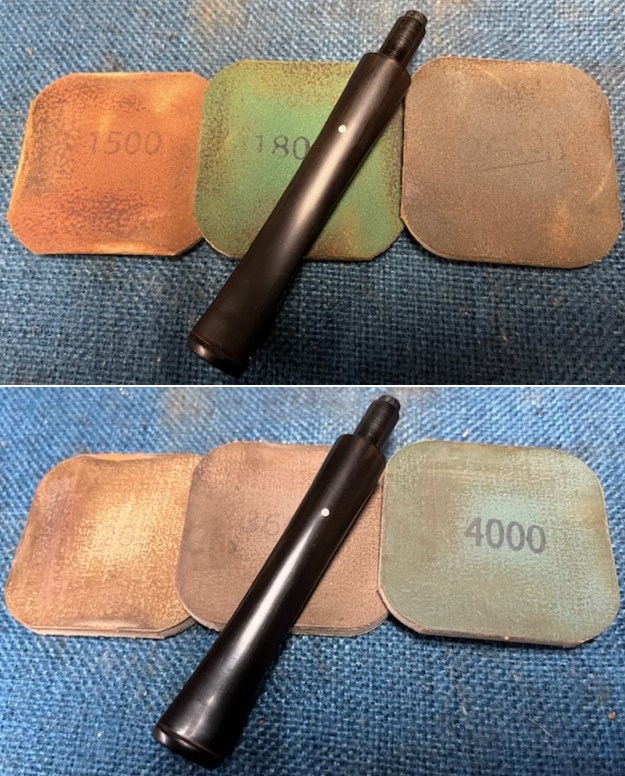
This particular smooth Freehand pipe was purchased on 05/01/2022 from an antique store in Bozeman, Montana, USA. It is a bit of a mystery Freehand that combines a plateau rim top and shank end with a smooth bowl and shank. It is stamped on the left side of the shank and reads Made in Denmark. That is the first part of the mystery – Made in Denmark by who? The second part is the wood of the pipe. It does not feel like briar and is very light and oddly grained. I am truly unclear as to the wood. The dark finish is dirty and spotty with shiny varnish on the plateau on the shank end and rim top. The pipe had a thick cake in the bowl and a lava overflow in the plateau rim top and inner edge of the bowl. There was grime ground into the smooth finish and dust and debris in the plateau valleys on the top and the shank end. The fancy vulcanite saddle stem was heavily oxidized, calcified and had some deep tooth marks and chatter on both sides ahead of the button. The pipe must have been a great smoker judging from the condition it came it. Jeff took photos of the pipe before he started his work on it. Jeff took photos of the bowl, rim top and the stem to show the condition of the pipe when we received it. You can see the cake in the bowl and the lava on the plateau rim top and inner edge of the bowl. The stem was dirty and had chatter and tooth marks on both sides near the button. He took photos of the sides of the bowl and the heel to give an idea of the shape and condition of the wood around the bowl. As you look at it do you have any ideas on what the wood is? Please let me know. It really is a nicely shaped pipe that has the classic look of a Danish Freehand. The next photo Jeff took shows the stamping on the left side of the shank. The stamping is faint in places but still readable as noted above. Jeff had cleaned up the pipe following his normal cleaning process. In short, he reamed the bowl with a PipNet pipe reamer and then cleaned up the reaming with a Savinelli Fitsall Pipe Knife. He scrubbed the exterior of the bowl with undiluted Murphy’s Oil Soap with a tooth brush. He worked over the lava and debris on the plateau rim top and shank end and was able to remove it. He rinsed it under running warm water to remove the soap and grime. He cleaned out the inside of the shank and the airway in the stem with alcohol, cotton swabs, shank brushes and pipe cleaners. He scrubbed the stem with Soft Scrub and cotton pads to remove the debris and oils on the stem. He soaked it in Briarville’s Pipe Stem Deoxidizer to remove the remaining oxidation. He rinsed it with warm water and dried it off. I took photos of the pipe once I received it. It looked much better at this point. I took close up photos of the stem and the rim top to show both how clean they were and what needed to be addressed with both. The rim top and bowl look good. The stem looked better and the tooth marks and chatter were still present. I would need to remove those to bring the stem back.I took a photo of the stamping on the left side of the shank. You can see from the photo that it is faint but readable. It is clearer on the top half of the stamp than the lower but it is still readable. I removed the stem from the bowl and took a photo of the parts to give a sense of the beauty of the pipe. I also took a photo of the plateau on the rim top and shank end. I started my work on the pipe by wiping down the bowl and shank with acetone on a cotton pad to remove the heavy dark stain and release the grain through the more transparent stain on the finish. I sanded the bowl and shank with 320-3500 grit 2 x2 inch sanding pad. I wiped the bowl down after each sanding pad with a damp cloth. The grain began to show through the finish. I polished the bowl and shank with 1500-12000 grit micromesh sanding pads. I wiped the bowl down after each sanding pad with a damp cloth. The pipe is beginning to look very good. I worked some Before & After Restoration Balm into the surface of the briar with my finger tips and a horse hair shoe brush to get into the crevices of the plateau portions. The product is incredible and the way it brings the grain to the fore is unique. It works to clean, protect and invigorate the wood. I set the bowl aside and started working on the stem. I filled in the tooth and chatter marks with black, rubberized CA glue. Once it cured, I used some small flat files to flatten out the repairs. I cleaned up the flattened spots with a folded piece of 220 grit sandpaper to finish blending it into the surface of the stem. I sanded the stem with 320-3500 grit 2×2-inch sanding pads. I wiped the stem down after each sanding pad with an Obsidian Oil cloth. I polished the stem with micromesh sanding pads – dry sanding it 1500-12000 pads. I wiped it down with Obsidian after each pad to remove the dust and polishing debris. I polished it with Before After Pipe Polish – both Fine and Extra Fine. I gave it another coat of Obsidian Oil. I am happy with the way that this unique wood Made in Denmark Freehand turned out. It really is a beautiful looking pipe with a great shape and mix of smooth and plateau on the rim top and shank end. The rugged plateau on the rim top and shank end are beautiful. The fancy original vulcanite saddle stem works well with the black and brown of the stained mystery wood. The pipe really came alive with the buffing. The rich stains of the finish gave the pipe a sense of depth with the polishing and waxing. I put the stem back on the bowl and carefully buffed the pipe with Blue Diamond on the buffing wheel using a light touch on the briar. I gave the bowl and the stem multiple coats of carnauba wax on the buffing wheel. I buffed the pipe with a clean buffing pad to raise the shine. I hand buffed the pipe with a microfiber cloth to deepen the shine. The finished Made in Denmark Freehand really is a beauty and feels great in the hand and looks very good. Give the finished pipe a look in the photos below. The dimensions of the pipe are Length: 7 ¾ inches, Height: 2 ½ inches, Outside diameter of the bowl: 1 ½ inches wide x 2 ¼ inches long, Chamber diameter: 7/8 of an inch. The weight of the pipe is 65 grams/2.26 ounces. The pipe will be going on the rebornpipes store in the Danish Pipe Makers Section if you would like to add it to your collection. Thanks for reading this blog and my reflections on the pipe while I worked on it. It was a fun one to work on!
Restoring and Cleaning a Clogged Savinelli Tortuga 128 Billiard yet again


by Steve Laug

Last week I received a phone call from Brian in Victoria about a few more clogged pipes. He sent them by courier and I received them on Wednesday this week. The first pipe I worked on was a Lorenzo that I restemmed and blogged on (https://rebornpipes.com/2025/10/24/restoring-and-restemming-a-clogged-and-filthy-italian-lorenzetti-billiard/). The second one was a Savinelli Tundra 802 Canadian that was clogged and had no airflow once again. I had restored and cleaned it for him and written a blog on July 29, 2025 (https://rebornpipes.com/2025/07/29/restoring-and-cleaning-a-clogged-savinelli-tundra-802-canadian/). It is finished and has been blogged.The third one is a Savinelli Tortuga that I had also restored at the same time and written a blog on (https://rebornpipes.com/2025/07/30/restoring-and-cleaning-a-clogged-savinelli-tortuga-128-billiard/). He asked if I would clean and open them up for him once again.

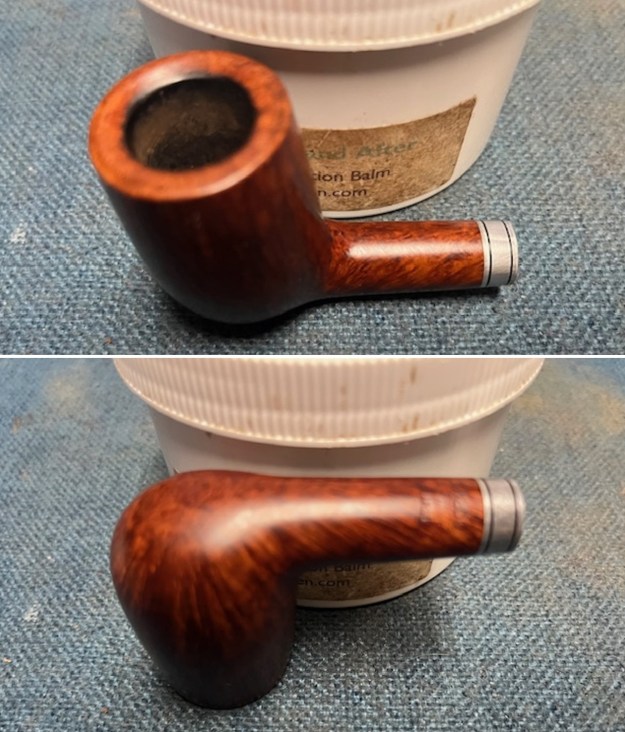
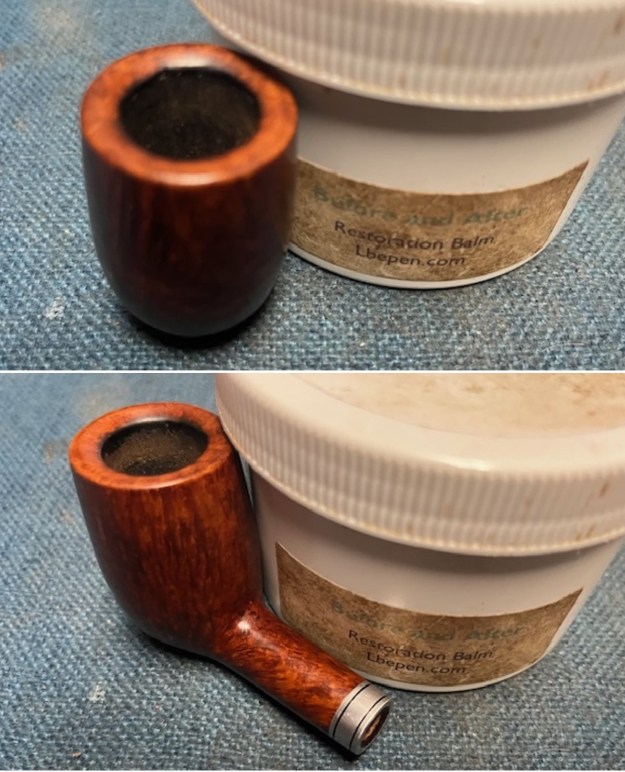
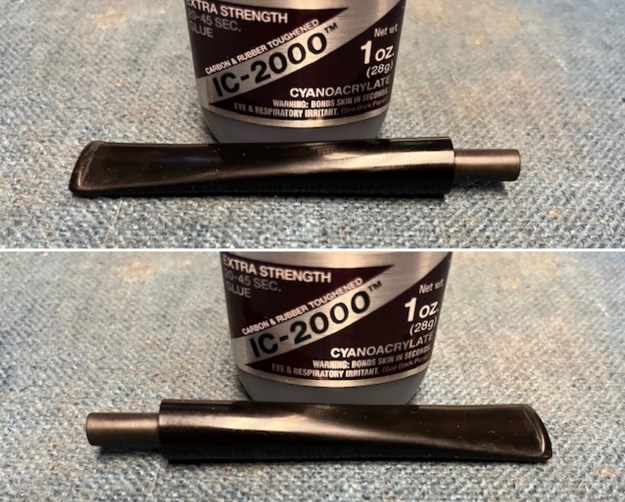
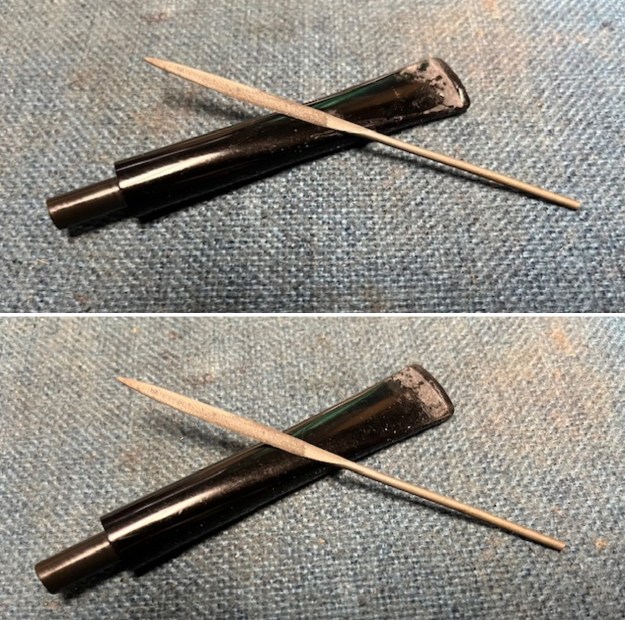
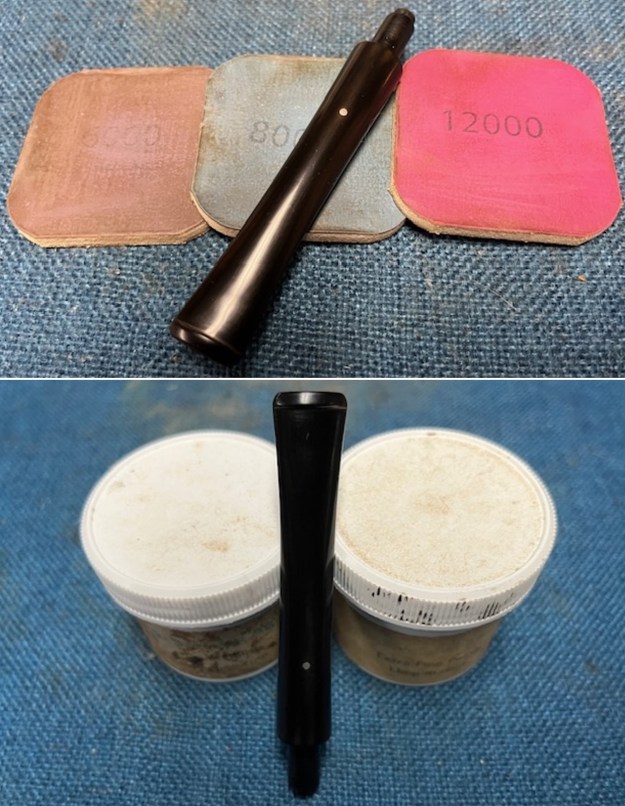
I chose to work on the last of the three, a Savinelli Tortuga Billiard. I had restored it late in July and it had been a wreck. Other than being clogged it was better. It was stamped on the left side of the shank and read Savinelli [arched over] Tortuga. On the right side it has a Savinelli S shield followed by Italy [over] the shape number 128. The finish was still pretty clean. The bowl already had a thick cake and some wet sticky dottle that completely covered the airway at the bottom of the bowl as it had before. The rim top had was covered by light coat of lava that was sticky. The taper stem was amber coloured acrylic. There were deep tooth marks that were once again on the top and underside ahead of the button. The shank and airways in both the mortise and stem were very dirty. I blew through the stem and it was clear and unclogged. I tried to blow through the shank and it was constricted with tars. I took photos of the pipe before I started my work. It amazed me how quickly the pipe had clogged again. I took photos of the rim top and the stem to show the condition. You can see the cake and dottle in the bowl and the clean rim top. The photos of the stem show that the repairs on the tooth marks and chatter on the top looks to be in great condition.I took photos of the stamping on the sides of the shank to capture it. The was faint in spots but readable as noted above. I removed the stem and took a photo of the parts to give a sense of the look of the pipe. I started my work on the pipe by cleaning out the dottle in the bottom of the bowl. It was thick and wet. I reamed the bowl with a PipNet reamer. I used the first cutting head and took the cake back to bare briar. I cleaned up the reaming with a Savinelli Fitsall Pipe Knife and removed all the remnants of the cake. I sanded the walls of the bowl with a piece of dowel wrapped in 220 grit sandpaper. The walls look very good at his point in the process. I used the drill bit in a Kleen Reem pipe reamer and twisted it into the shank in the shank until it went to the bowl. It cleaned out more of the debris and opened the airway. I cleaned out the shank, the airway and the mortise as well as the airway in the stem with alcohol, cotton swabs, hard bristle and soft bristle pipe cleaners. It was a very dirty pipe which just meant that Brian really enjoyed it. I rubbed the bowl and shank down with Before & After Restoration Balm to deep clean the finish on the bowl and shank. The product works to clean, enliven and protect the briar. I worked it in with my fingers to get it into the briar. I let it sit for 10 minutes then I wiped it off and buffed it with a soft cloth. The briar really began to have a rich shine. I took some photos of the bowl at this point to mark the progress in the restoration. It is a beautiful bowl. With the shank clear and the airway open it was time to work on the stem. It was clear once again just dirty and I needed to clean up my repairs on the stem. Once the repair cured I used some small files to recut the button edge, reshape the surface and flatten the repair on the stem surface on both sides. I sanded it with 220 grit sandpaper to minimize the visibility of the solid repair. I sanded the surface of the acrylic taper stem with the 2 x 2-inch sanding pads – 320-3500 grit pads to clean up the sanding marks on the stem surface. By the final 3500 grit pad the stem started to really shine. The repairs are visible but they are smooth. It is hard to patch Cumberland style stems.I polished the stem with micromesh sanding pads – dry sanding with 1500-12000 grit pads. I wiped the stem down after each sanding pad with Obsidian Oil. I gave the stem a final polish with Before & After Pipe Stem Polish both Fine and Extra Fine. I rubbed the stem with them and then gave them a final coat of Obsidian Oil. I set it aside to dry. I finished reworking Brian’s Savinelli Tortuga 128 Billiard with an acrylic taper tortoise shell stem. I put the pipe back together and buffed it with Blue Diamond on the buffing wheel. I gave the bowl multiple coats of carnauba wax. I buffed the pipe with a clean buffing pad to raise the shine and then by hand with a microfibre cloth to deepen it. It is fun to see what the polished bowl looks like with beautiful grain on the smooth bowl and shank. The polished grain on the pipe looks great with the repaired acrylic stem. This reworked Savinelli Tortuga 128 Billiard is has a wide open airway now and feels great in the hand. It is light and well balanced. Have a look at it with the photos below. The dimensions are Length: 6 inches, Height: 1 ¾ inches, Outside diameter of the bowl: 1 ¼ inches, Chamber diameter: ¾ of an inch. The weight of the pipe is 42 grams/1.45 ounces. This third pipe that Brian sent is another beautiful pipe. I will soon be sending all three pipes back to him. I look forward to hearing what he thinks of hese resurrected beauties. Both should be great smoking pipes.
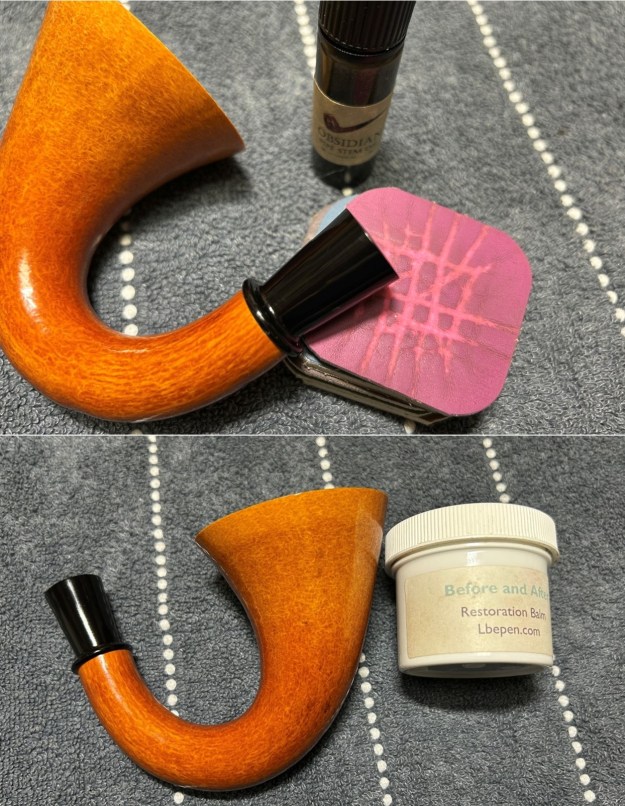
As always, I encourage your questions and comments as you read the blog. Thanks to each of you who are reading this blog. Remember we are not pipe owners; we are pipe men and women who hold our pipes in trust until they pass on into the trust of those who follow us.

Restoring a Kaywoodie Mandarin with Bamboo shank and loose stem


by Steve Laug

The next pipe is on the table is a great looking Pot shaped pipe with a Bamboo\d shank and a vulcanite taper stem. Jeff and I purchased it from an auction in Atlanta, Georgia, USA. The pipe is well shaped and has nice grain around the bowl. It has a flat thin rim top and a rounded heel on the bowl. The pipe is stamped on the underside of the shank and reads Kaywoodie [over] Mandarin. There was grime and dust ground into the smooth finish of the bowl and shank. The bowl was heavily caked with thick lava on the rim top and edges. The inside edge looks like it may actually be undamaged under the lava coat. The outer edge looks very good. The vulcanite taper stem was oxidized, calcified and had tooth chatter and marks on the top and underside near the button and on the button edge. The tenon was a Kaywoodie style metal screw tenon, without a stinger apparatus. It was loose in the stem and stuck in the shank. There was no logo or stamping on the stem at all. The pipe showed a lot of promise but it was very dirty. Jeff took some photos of the pipe before he started his cleanup work. He took photos of the rim top and bowl to give a clear picture of the thickness of the cake and tobacco debris as well as the inner edge of the rim. You can see the thick lava coat on the rim top and inner edge. It is obviously a well loved and heavily smoked pipe. He also took photos of the top and underside of the stem. The photos show the overall condition of the stem. Jeff took photos of the sides and heel of the bowl to give a picture of what the briar looked like under the grime on the surface. It truly has some nice grain around the bowl and shank. The stamping on the underside of the shank is clear, though faint in spots. It is still readable and read as noted above. Jeff took a photo to capture the stamping on the underside of the shank.I wanted to confirm a possible date for both of these pipes. I turned to Pipephil to see what he had to say about the brand (http://www.pipephil.eu/logos/en/logo-kaywoodie-2.html). I have included a screen capture of the listing on the site as well as the sidebar notes. The Mandarin line was produced from 1958 to 1967.

I turned next to Pipedia to check out the Kaywoodie Collector’s Guide to see if I could get some more information on the Mandarin line. I found an interest monograph there called Notes on Kaywoodies Introduced between 1955 and 1968. It included reference to the Mandarin line. I include that in part below (https://pipedia.org/wiki/Collector%27s_Guide_to_Kaywoodie_Pipes). I have highlighted and underlined the Mandarin in the list below. Both of the pipes I am working on are the smooth versions.

NOTES ON KAYWOODIES INTRODUCED BETWEEN 1955 AND 1968

The material presented in this monograph is extracted from 1936, 1947, 1955, 1968-69, and four undated Kaywoodie catalogs. Based on a comparison of prices in the 1955 and 1968-69 catalogs, the four undated catalogs appear to span the period from the late 1950’s to the late 1960’s (i.e., after 1955 but before 1968). This section presents a brief summary of the Kaywoodie Pipes that appeared in these undated catalogs, but did not appear in either the 1955 or 1968-69 catalogs…

Here is a list of pipes from this time period.

…Hi-Bowl. Tall, tapered bowl in six shapes (see Table 5). Available in smooth or “rough” finish ($10).

Mandarin. Smooth or relief grain finish with burnished-bamboo shank ($10).

Setter. No shank, just a ridged hole for a slender, filter-free, push-bit. Available in “flat bottom” (hence, “Setter”) panel, billiard, and poker shapes. Smooth or textured finish ($10).

Tuckaway. The 1955 catalog shows a Drinkless Tuckaway that was simply a smaller version of other Kaywoodie styles. The Tuckaways of the 1955-1968 period had military mountings, filter-free see-thru bits, and were packaged in a leatherette case. Available in Standard, Relief Grain, and Super Grain grades ($6-$8, depending on grade). Miniatures. Two-inch miniature replicas of “their big brother”, complete with the Drinkless fitment and Synchro Stem. The catalogs show these as individually-cased pipes but multiple pipe sets were apparently available. Price: $5.

Miniatures. Two-inch miniature replicas of “their big brother”, complete with the Drinkless fitment and Synchro Stem. The catalogs show these as individually-cased pipes but multiple pipe sets were apparently available. Price: $5.

Colossal Super Grains. Available in three “oversize” shapes (see Section 3.2) in hand-carved or smooth finishes ($5).

Now I knew that the pipe came from this time period. It was made between 1955-1968. Somewhere along the way I assumed the stinger disappeared and only the threaded portion was present. There was also no logo on the side of the stem though it appears to be original.

Jeff reamed the bowl with a PipNet pipe reamer and followed up with a Savinelli Fitsall pipe knife to remove the cake. He scrubbed out each mortise and the airway in the shanks and the stems with alcohol, cotton swabs, shank brushes and pipe cleaners. He scrubbed the exteriors of the bowl, rim, shank and stem with a tooth brush and Murphy’s Oil Soap to remove the oils and tars on the rim and the grime on the finish of the bowl of each pipe and bamboo shank. He rinsed them under running water. He dried them off with a soft cloth. He was able to remove the lava build up on the rim top. He scrubbed the stem with Soft Scrub and soaked it in Briarville’s Pipe Stem Deoxidizer. He rinsed it off with warm water and ran pipe cleaners through it once again. It looked much better.  I took photos of the pipe to show its condition before I started my work on it. It really has a great look and the patina on the bamboo shank crackles and looked aged. It is a pretty pipe. I took close up photos of the bowl and rim top as well as the stem on the pipe. You can see the condition of the rim top and bowl in the first photo of each pipe. Jeff was able to remove all of the lava but there was darkening on the rim top. The vulcanite stem had some chatter and several deep tooth marks on the top and underside ahead of the button.The stamping on the underside of the shank is faint in spots but is nonetheless readable. It is stamped as noted above. I removed the stem and took a photo of the pipe to give a sense of the whole. The taper stem is nice and the photo gives a sense of what the pipe looks like.I needed to free the threaded tenon from the bamboo shank so I could glue it in place in the stem. It had long ago come free of the stem and it would no longer hold the stem in place. I heated the tenon with a lighter flame until the goop in the shank loosened and then unscrewed it with needle nose pliers. It came out quite easily and the threads from the bamboo were covered with debris. All looked good in the shank and the tenon.I cleaned up the thread on the tenon with a brass bristle wire brush and greased it with some Vaseline to make the threads turn more easily into the shank. I screwed it in place. Once it was snug I painted the stem end with black, rubberized CA glue and push the stem in place and aligned it on the shank. I set it aside to allow the glue to cure before unscrewing the stem. Last evening after the glue had cured holding the tenon in the shank I unscrewed the stem from the shank. The bond was very well done and well cured. It was solid and the stem lined up well when it was screwed onto the shank.I filled in the deep tooth marks on both sides of the stem ahead of the button with black rubberized CA glue. I set it aside to cure. Once cured I used a file to recut the button edge and flatten out the repairs in the surface. I sanded them smooth with a folded piece of 220 grit sandpaper. They blended into the stem surface very well. I sanded the stem with 320-3500 grit sanding pads to further blend the repairs into the surface. I wiped the stem down between pads with an Obsidian Oil cloth to remove the sanding debris from the stem.I polished the stem with micromesh sanding pads – dry sanding with 1500-12000 grit sanding pads. I wiped it down after each sanding pad with Obsidian Oil. I polished it with Before & After Pipe Stem Polish – both Fine and Extra Fine. I set the stem aside and turned my attention to the bowl. I used a folded piece of 220 grit sandpaper to smooth out the damage to the rim top and the inner edge and to remove the darkening. It started to look very good at this point.I sanded the briar with 320-3500 grit 2×2 inch sanding pads to smooth out the scratching in the surface. I wiped the briar down after each pad with a damp cloth to remove the dust and debris. I polished the briar with micromesh sanding pads – dry sanding with 1500-12000 grit pads. I worked over the inner and outer edge of the rim as well. After each pad I wiped the bowl down with a damp cloth to remove the sanding debris. It really took on a shine by the last three sanding pads. I rubbed the bowl down with Before & After Restoration Balm. I worked it into the surface of the briar with my fingertips where it works to clean, restore and preserve the briar. I let it do its magic for 15 minutes then buffed it off with a cotton cloth. The pipe looks incredibly good at this point in the process. I am excited to finish this Kaywoodie Mandarin Pot with a Bamboo shank. I put the pipe back together and buffed it with Blue Diamond on the buffing wheel. I gave the bowl and the stem multiple coats of carnauba wax. I hand buffed the pipe with a clean buffing pad to raise the shine. It is fun to see what the polished bowl looks like with beautiful mixed grain all around it with just a few small flaws in the briar. The polished grain on the pipe looks great with the black vulcanite stem. This smooth Kaywoodie Mandarin Pot is great looking and the pipe feels great in my hand. It is light and well balanced. Have a look at it with the photos below. The dimensions are Length: 6 inches, Height: 1 ½ inches, Outside diameter of the bowl: 1 ½ inches, Chamber diameter: 7/8 of an inch. The weight of the pipe is 39 grams/1.38 ounces. It turned out to be a beautiful pipe. I will soon be putting it on the rebornpipes store in the US/American Pipe Makers Section. If you are interested in adding it to your collection let me know. Remember we are the next in a long line of pipe men and women who will carry on the trust of our pipes until we pass them on to the next trustee. Thanks for your time reading this blog.