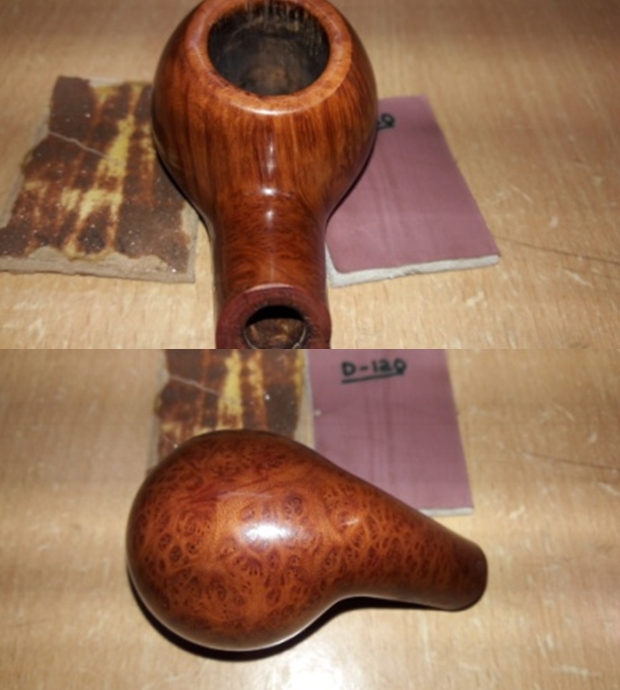
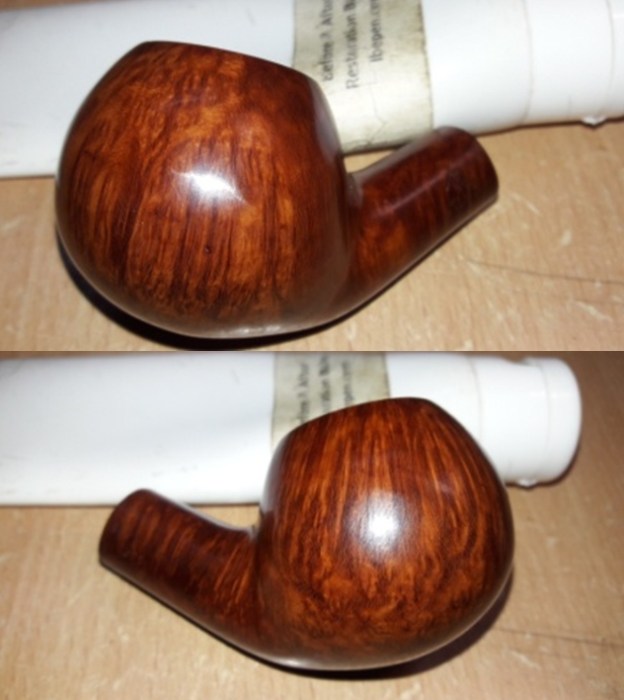
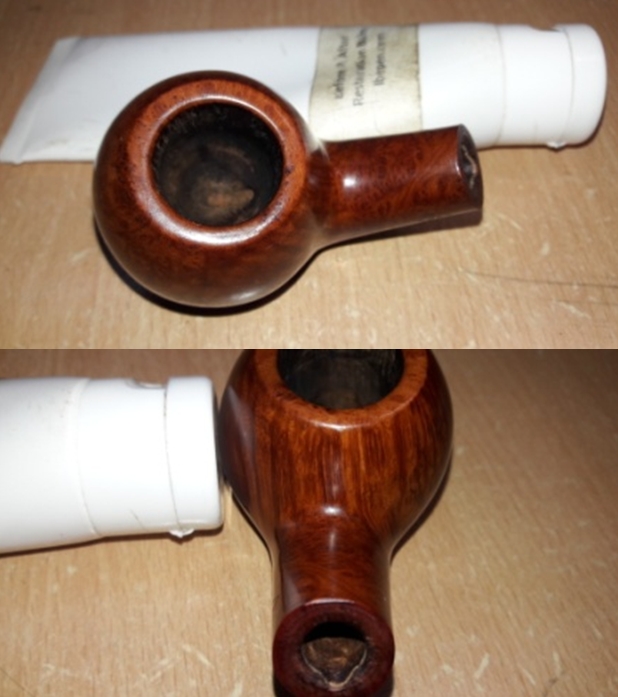
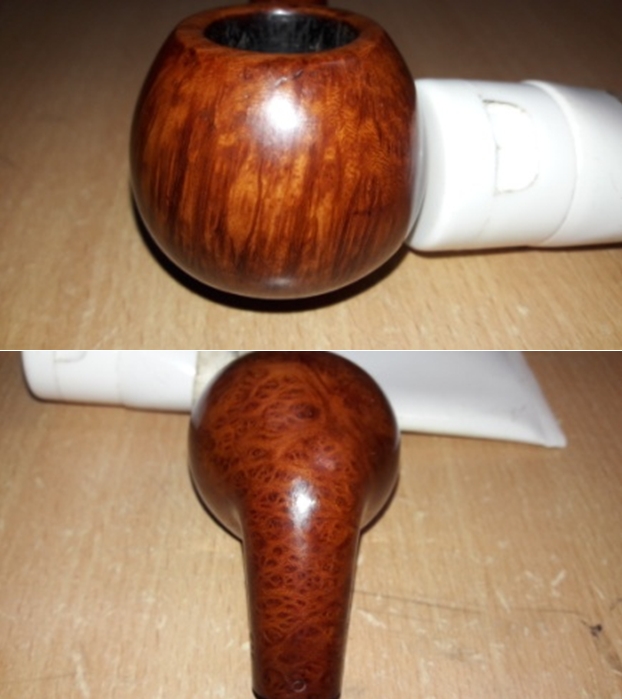
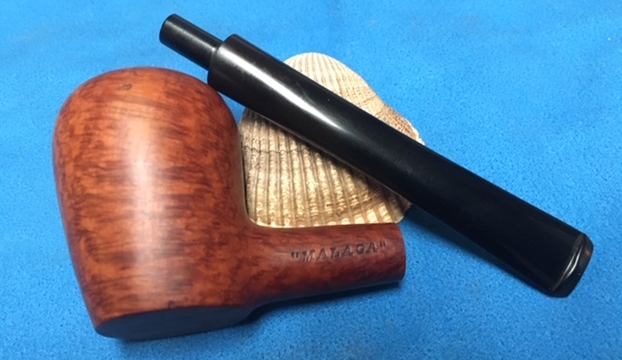
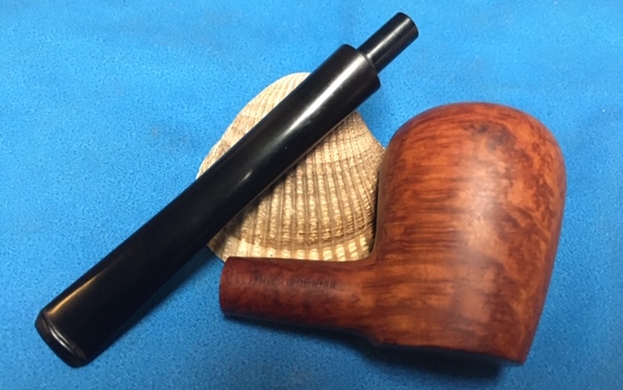
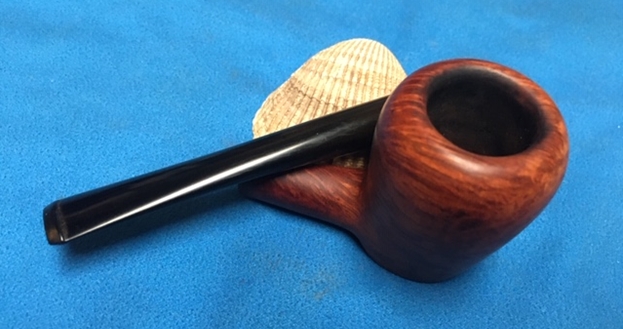
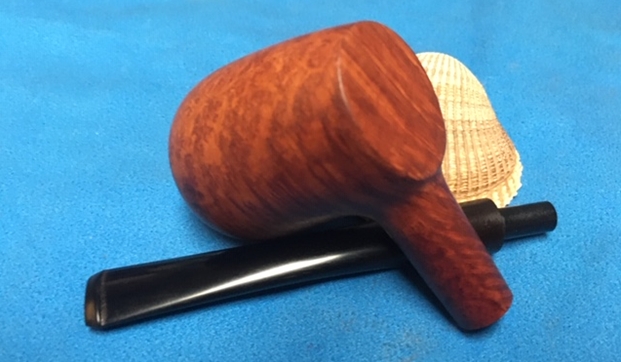
Tag Archives: removing oxidation

New Life for a Stunning Malaga Bent Billiard from Kathy’s Dad’s Pipes


Blog by Steve Laug

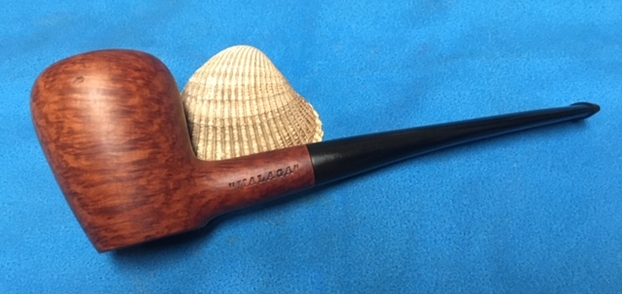
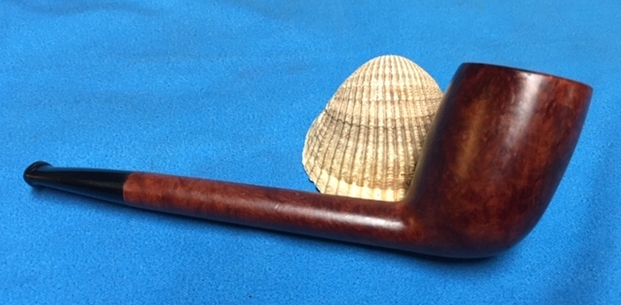
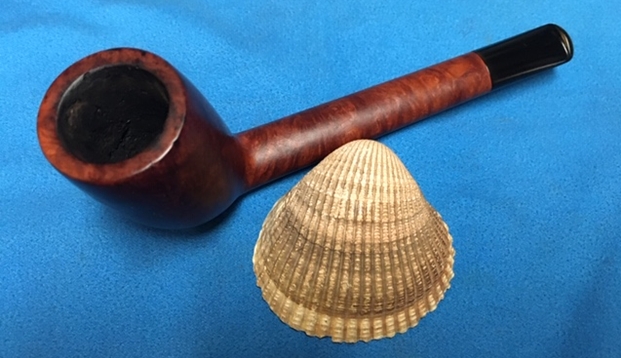
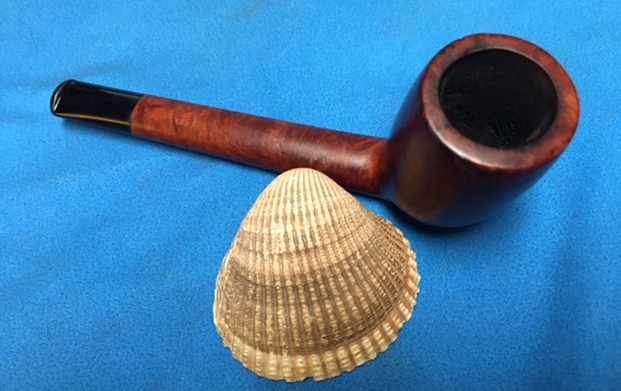
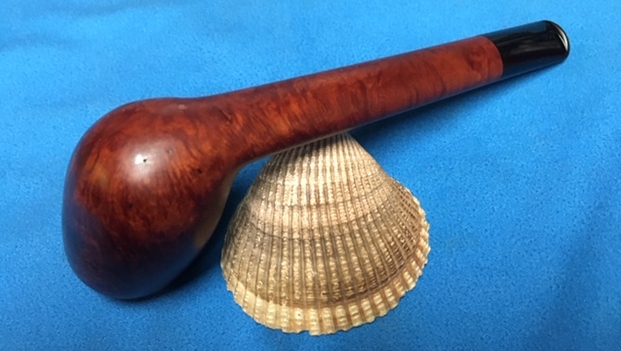
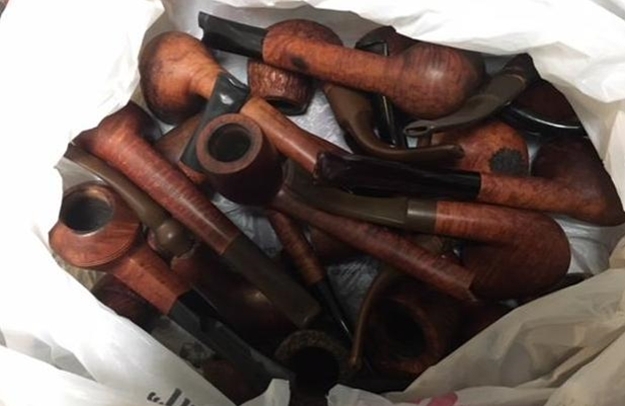
This is another of the Malaga pipes from George Koch’s estate that Alex added to the box of pipes I had set aside for him. There are quite a few of them to work on so I go back to them quite regularly to work on one of them. The next Malaga is a shape I would define as a bent billiard. It has some great cross and birdseye grain and a tapered vulcanite stem. The grain around the bowl and shank combined with the stem make it a stunning pipe. It is one of the many Malaga pipes that came to my brother and me in several shipments of pipes from George’s daughter Kathy. When Jeff got each box the pipes were well wrapped and packed. Jeff unwrapped them and took the following photo to give an idea of the volume of the pipes that we purchased. This Malaga came in mixed in a box of pipes much like the one below.In each of the previous blogs that I have written on the restoration of George’s pipes I have told his story. If you have followed the restorations you will have read the information and the background piece that Kathy did on her father. Here is a link to one of the previous blogs on his Malaga pipes where I included her tribute in full (https://rebornpipes.com/2019/01/26/back-to-kathys-dads-pipes-restoring-a-%c2%bc-bent-malaga-author/). You can also read the bio on her Dad, George Koch. It is an interesting read and one that shows just how far our pipe collecting passion can go when we find a brand of pipes that we enjoy. I am going to only include the portion on the Malagas at this point. If you wish to read the rest follow the link above.
Kathy writes…We lived in Livonia, and that’s where his love for Malaga pipes began. After a few years he returned to Allis Chalmers and we moved back to Springfield. I remember that when we went back to Michigan to visit friends, Dad had to go to the Malaga store and acquire a few new pipes. Many a year I wrote to Malaga and they picked out a pipe for me to purchase that I could give Dad for a Christmas or birthday present. He was always pleased. His favorites were the straight stemmed medium sized bowl pipes, but he liked them all. 

He had some other pipes, but the Malagas were his favorites. I remember him smoking them sitting in his easy chair after work, with feet up on the ledge by the fire burning in the fireplace.  Growing up it was my job to clean them and he liked the inner bowl and stem coated with Watkins vanilla, leaving a little of that liquid in the bowl to soak in when I put them back on the rack…I’m very happy they are being restored by you and your brother and hope they find homes who enjoy them as much as Dad did. Thank-you for your care and interest. — Kathy, the oldest daughter

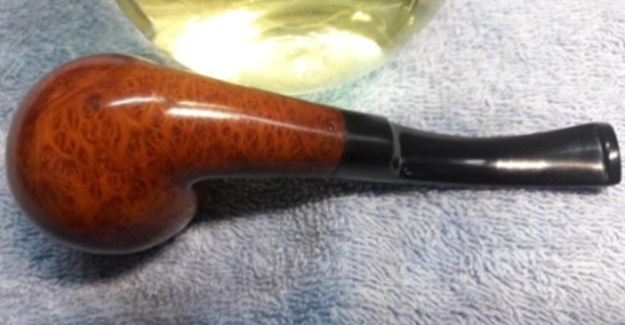
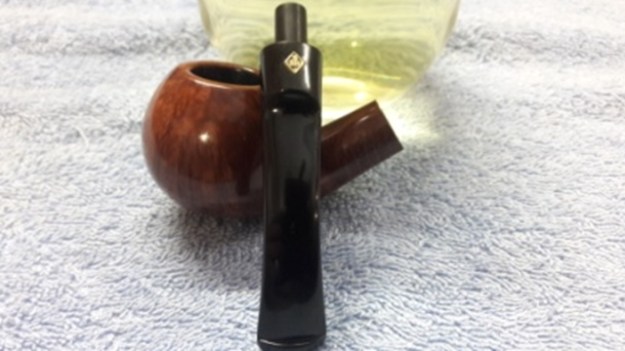
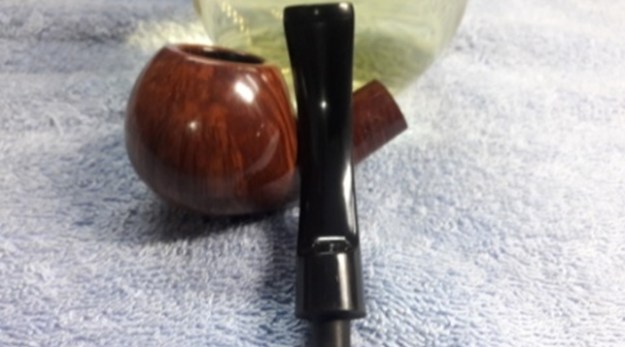
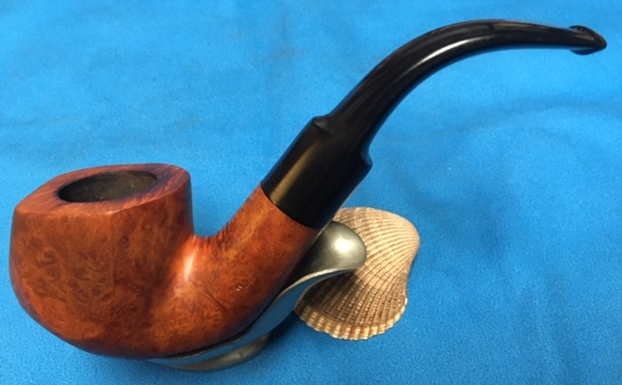
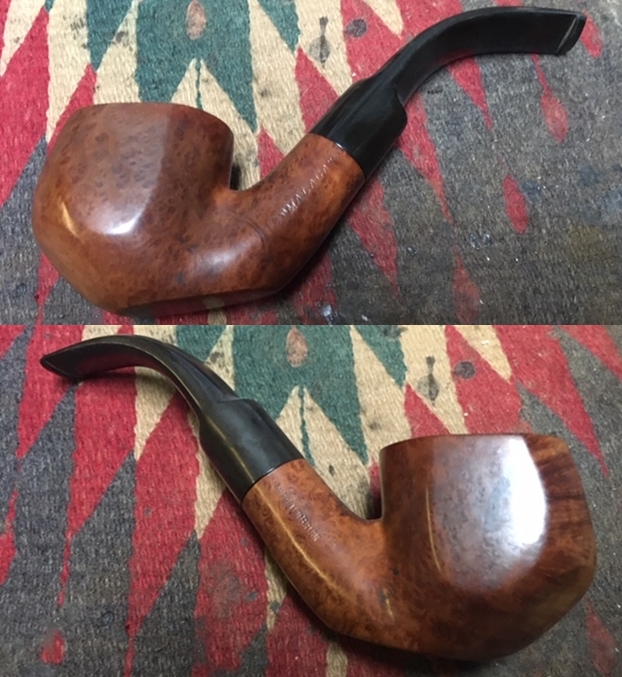
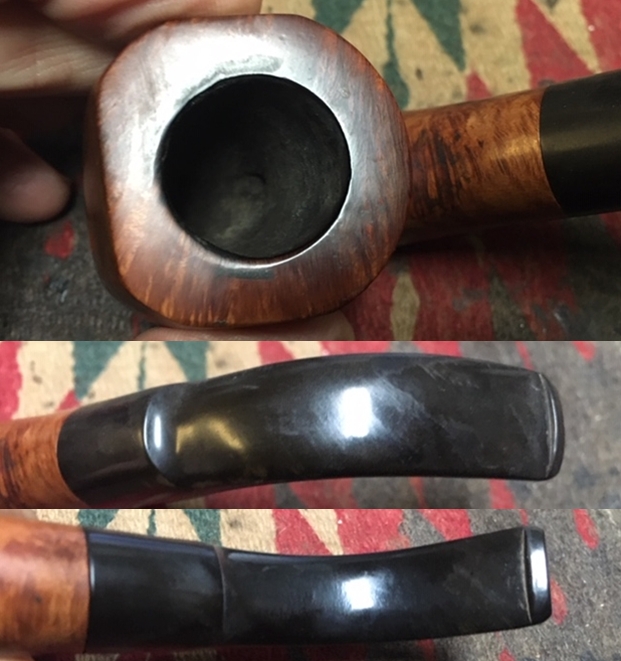
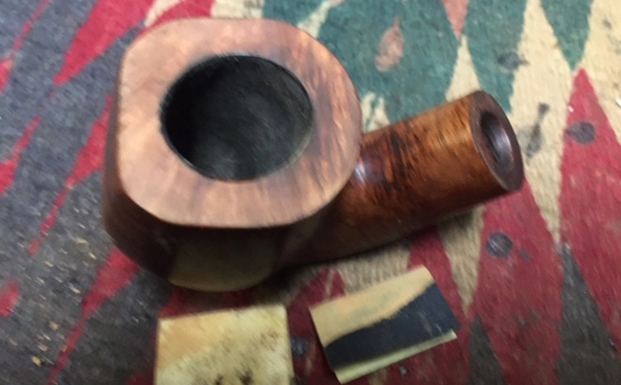
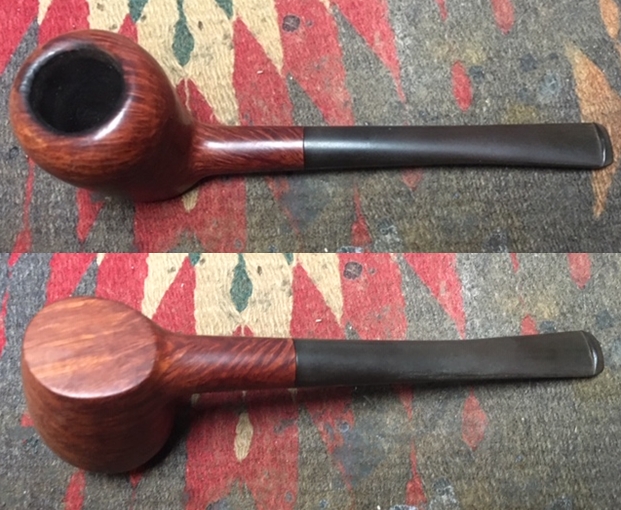
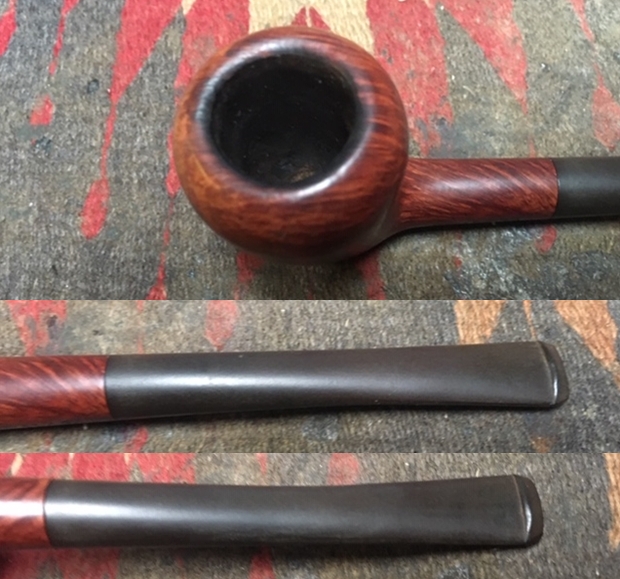
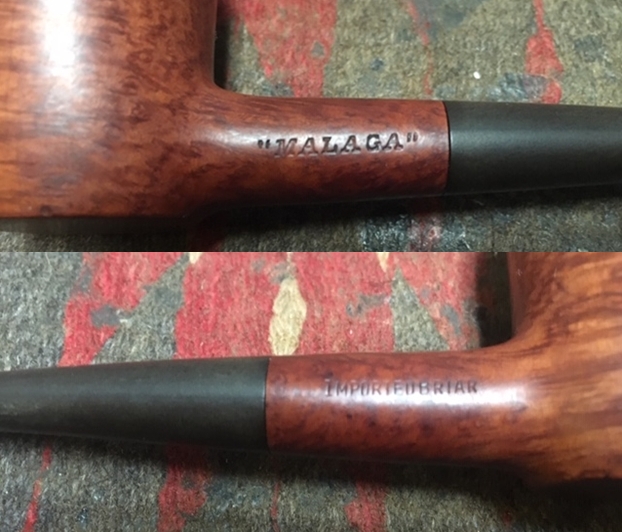
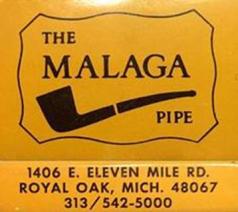
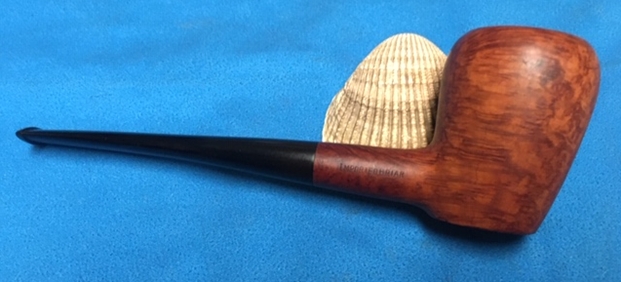
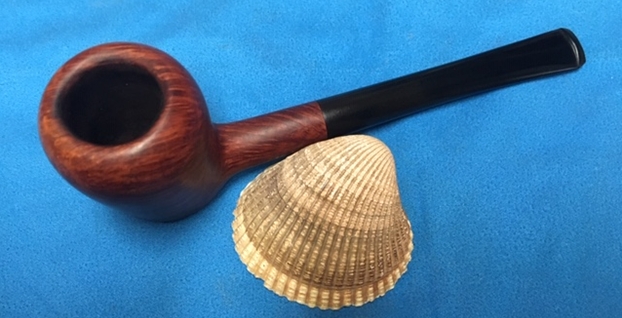
The next “Malaga” Bent Billiard on the table is another classic bent shape. The carver did a great job of shaping the pipe to follow the grain on the briar. The bowl, round shank and bent tapered vulcanite stem look very good. The bowl had a thick cake that overflowed with lava onto the rim and there was significant burn damage on the top front inner of the bowl. The sides of the bowl and shank are very dirty with grime and oils from prolonged use. The stamping on the left side of the shank read “MALAGA” and on the right side it read Imported Briar. The vulcanite stem had tooth dents and chatter on the top and the underside of the stem. The button was worn almost smooth Jeff took these photos before he started the cleanup work on the pipe. Jeff took a close up photo of the bowl and rim to capture the condition of the pipe before he started his cleanup work. The rim top had some lava overflow and darkening on the back of the bowl and some serious burn damage to the inner edge on the bowl front. The burn marks appeared to be quite deep on the inner edge on the right front side of the grimy pipe.He also took photos of the sides and bottom of the bowl and shank to show the beautiful grain around the bowl. The photos show the general condition of the bowl and wear on the finish. It is very dirty but this is another beautiful pipe.Jeff took a photo to capture the stamping on the shank. The photos show the stamping “MALAGA” on the left side of the shank and Imported Briar on the right side. The stamping is very readable.The next photos show the stem surface. There is oxidation and calcification on the stem. There are tooth marks and chatter on both sides near the button and wear on the button surface and edges. The button surfaces and edges are worn and almost smooth.I am also including the link to a blog that I wrote that gives some of the history of the Malaga brand and the Malaga Pipe Shop in Royal Oak, Michigan in the USA. I have written an earlier blog to give a little history of the Malaga Brand and the pipemaker, George Khoubesser. Here is the link – https://rebornpipes.com/tag/malaga-pipes/.That blog also includes links to a catalogue and the history of the pipemaker George Khoubesser. Follow the link to get a feel for the brand and the pipemaker.

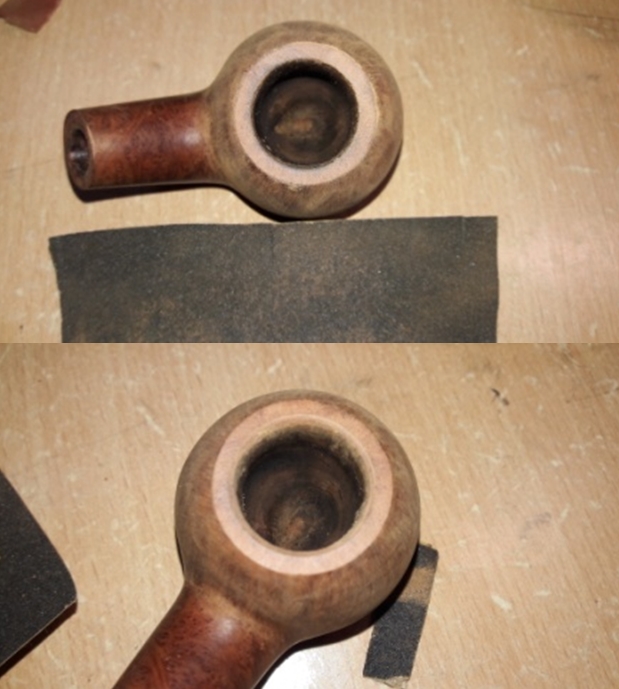
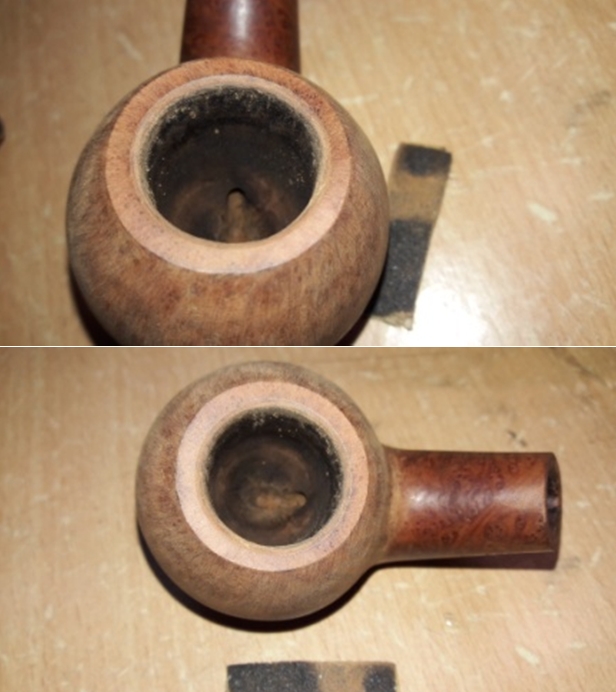
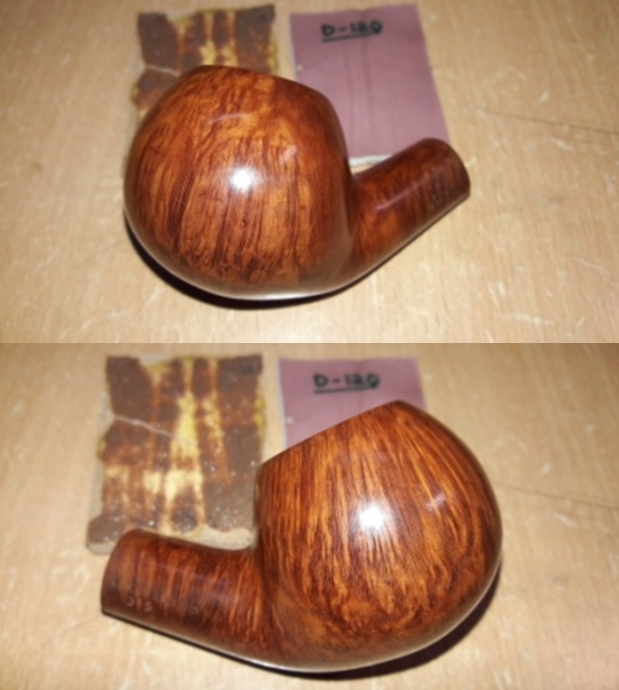
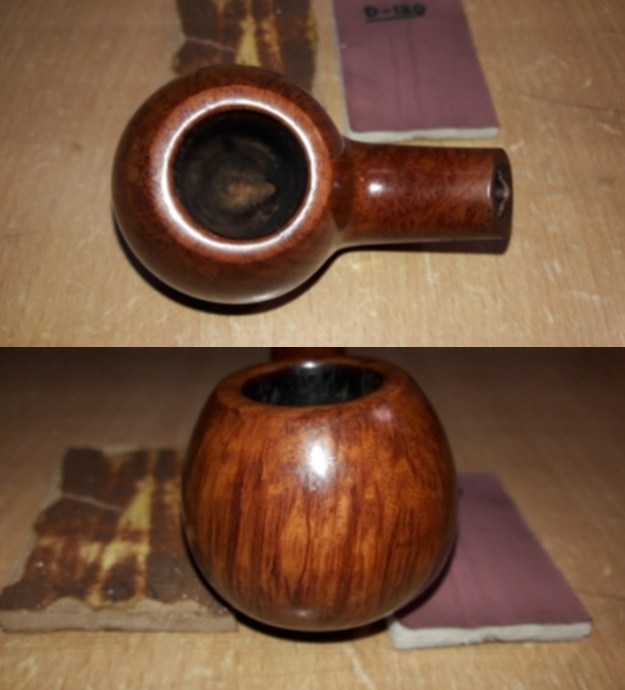
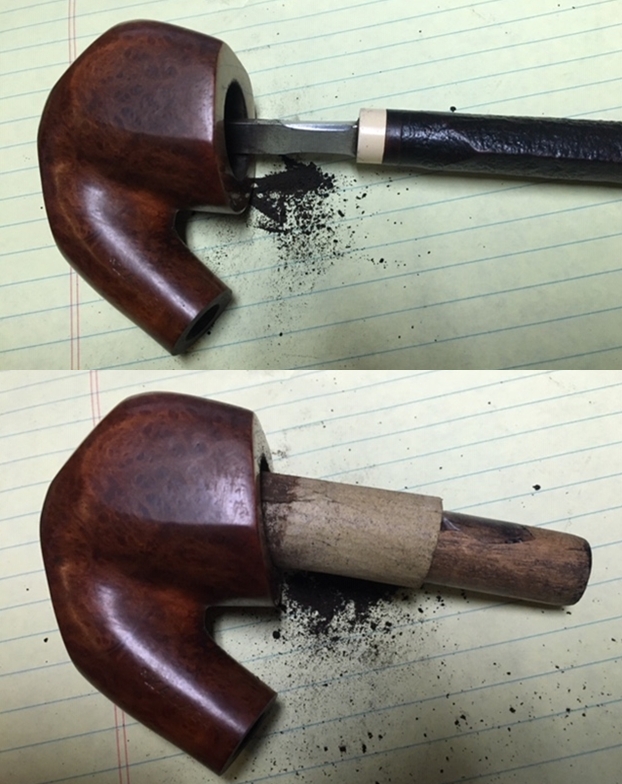
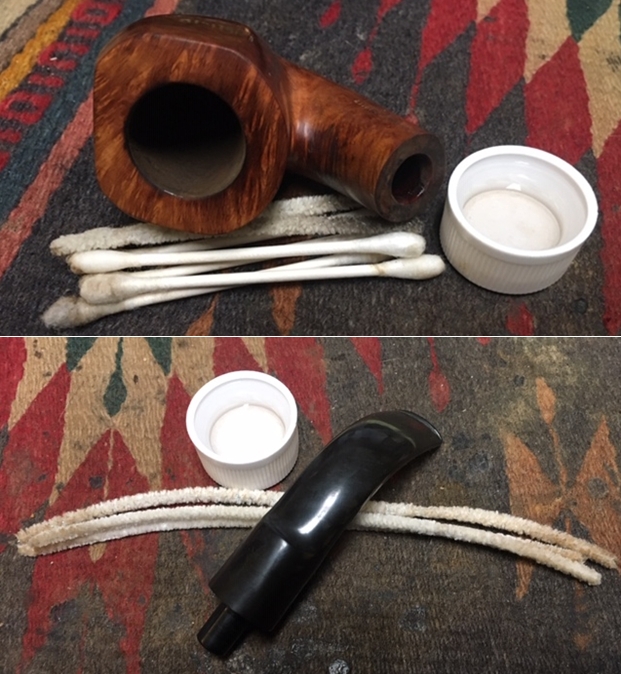
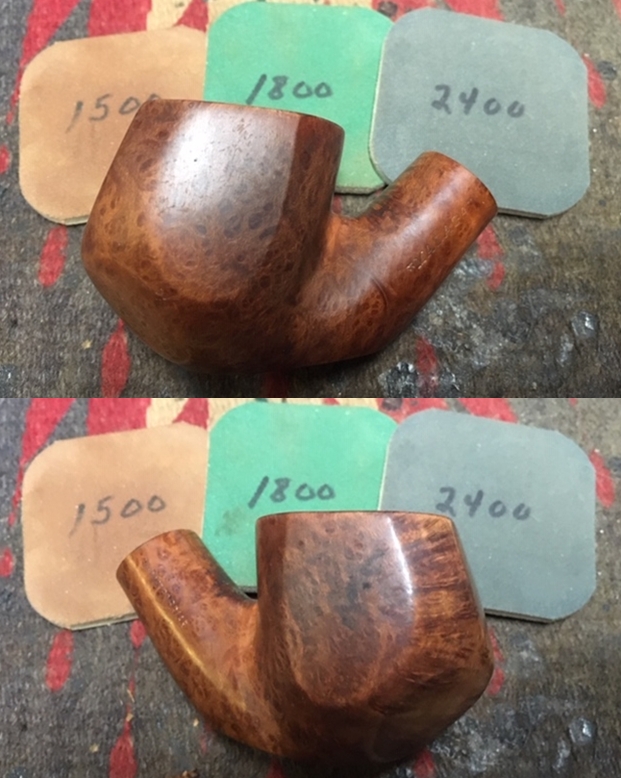
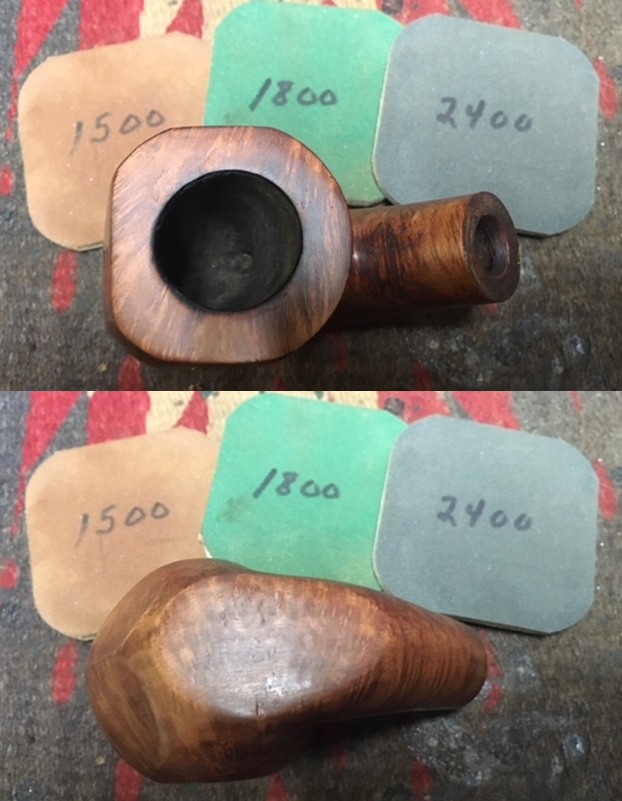
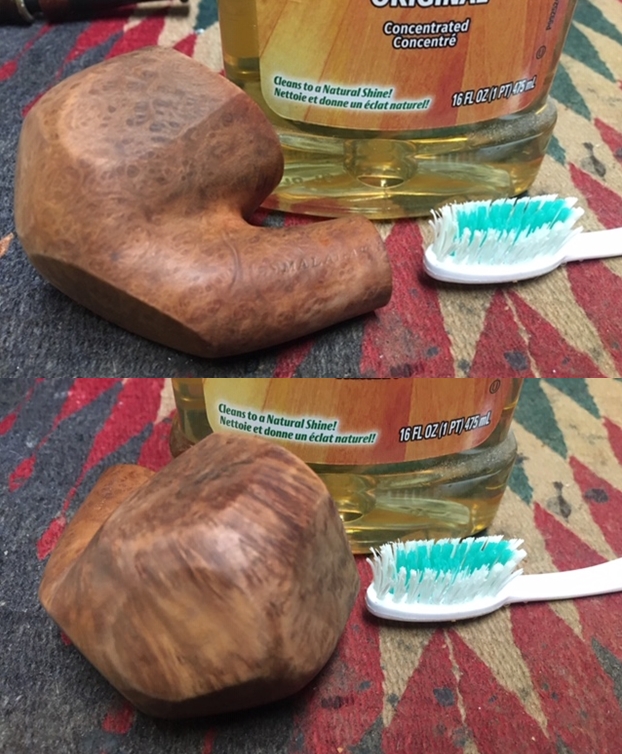
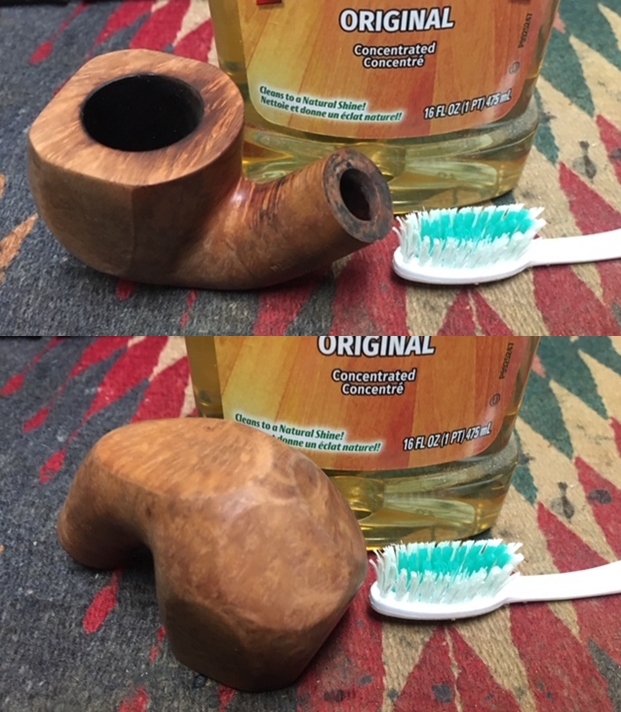
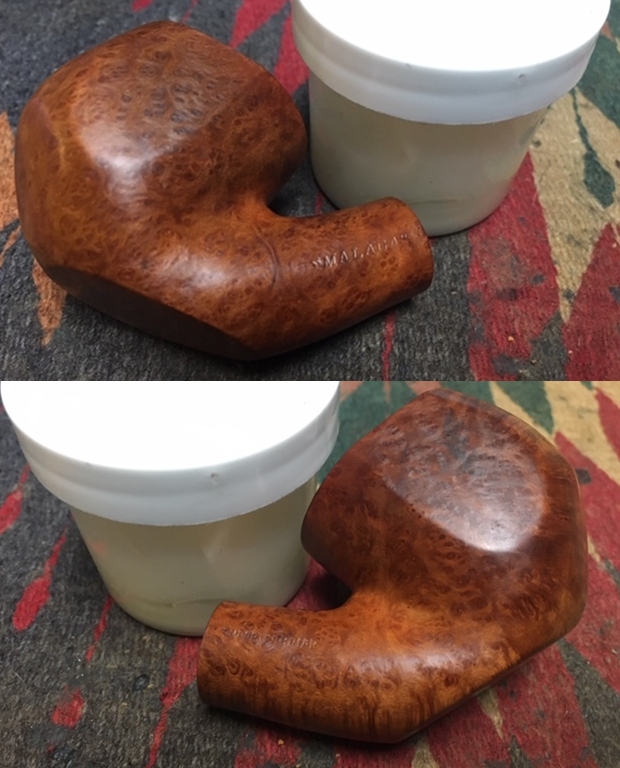
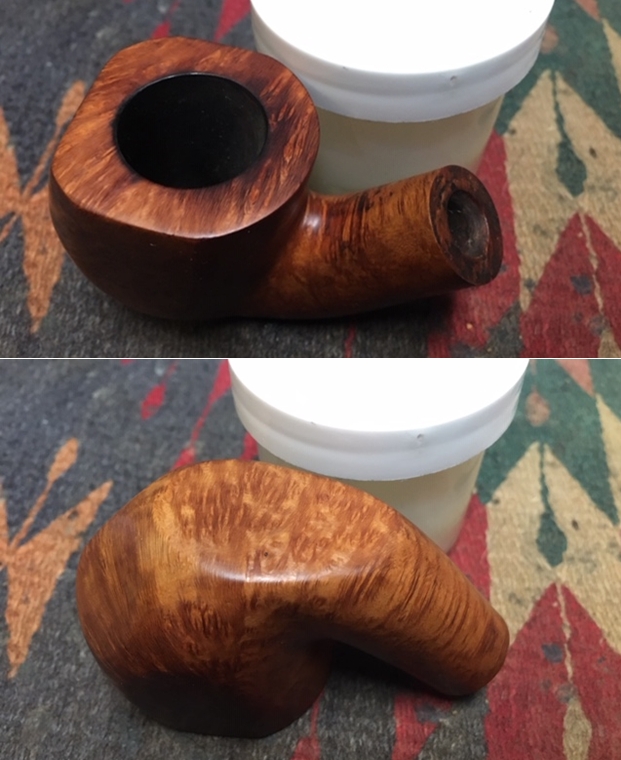
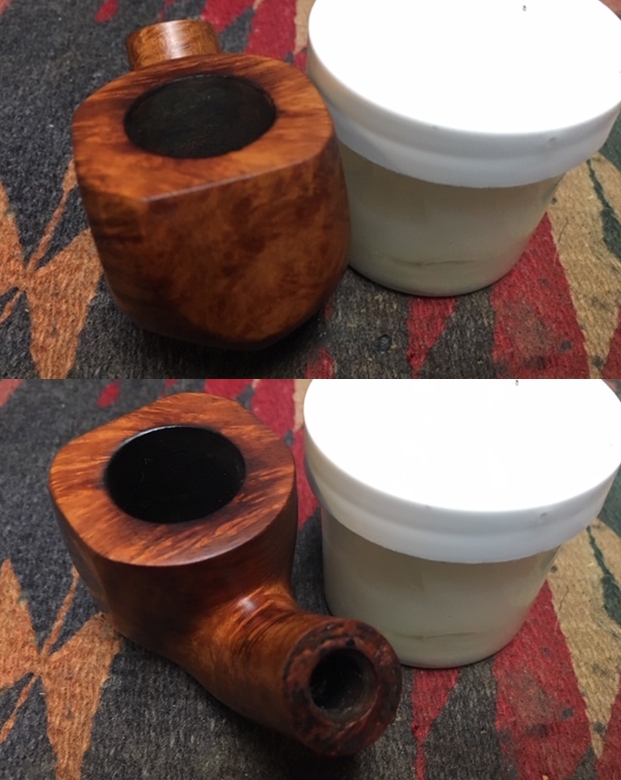
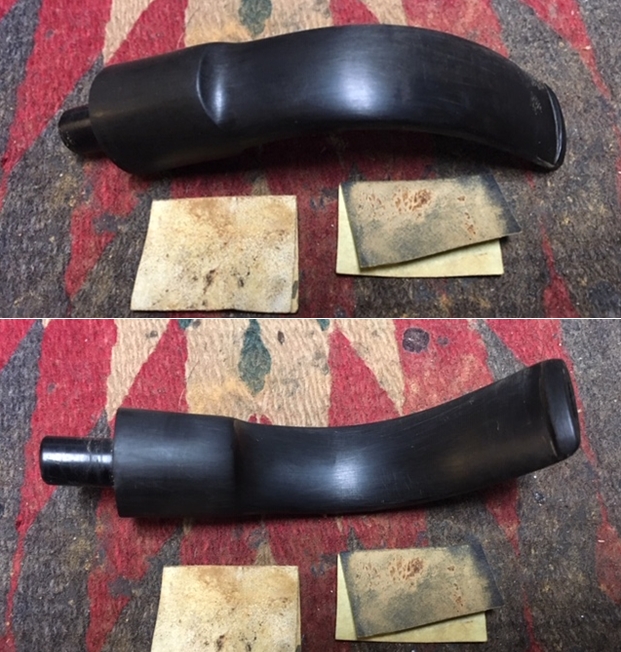
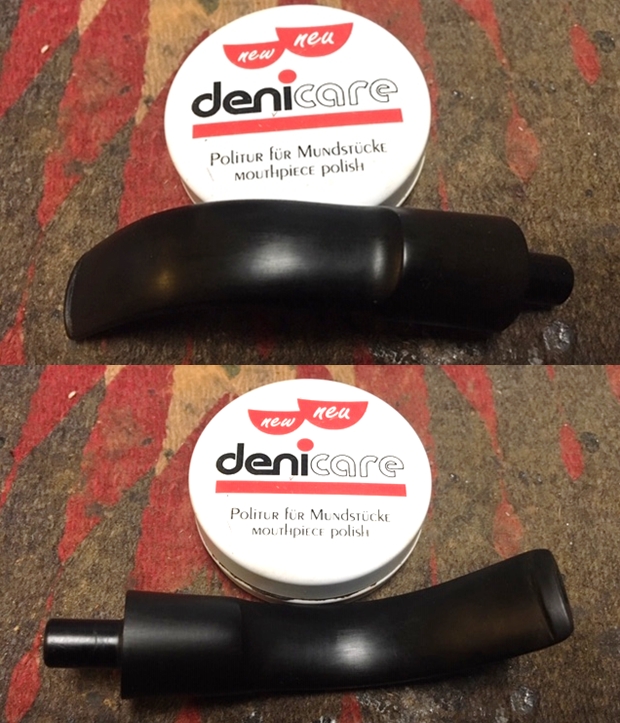
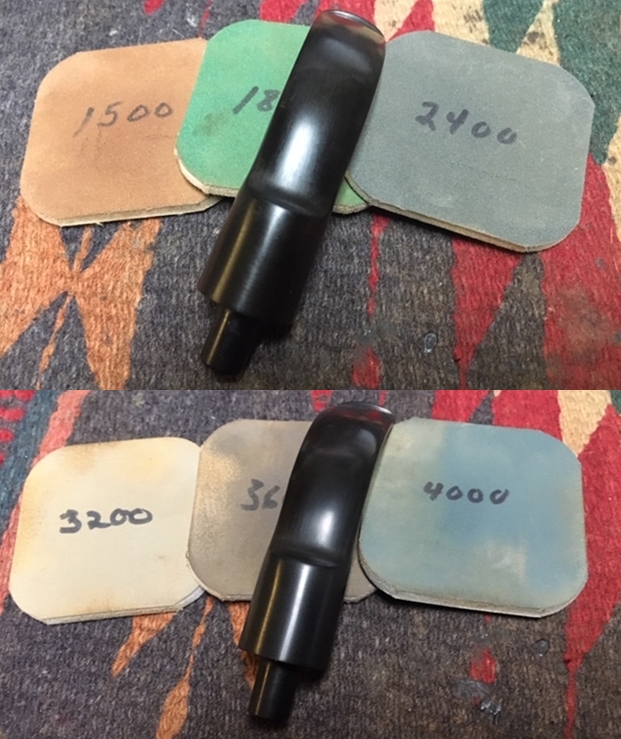
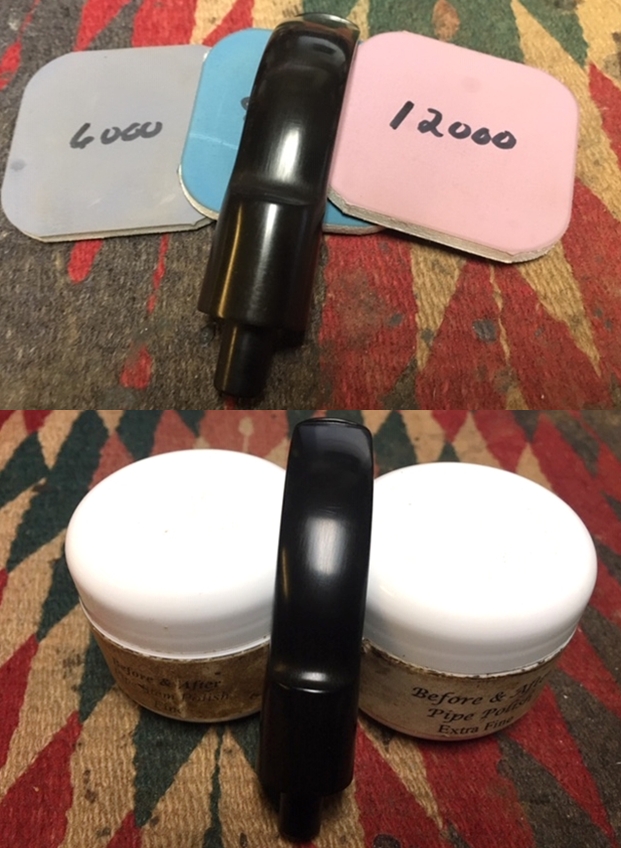
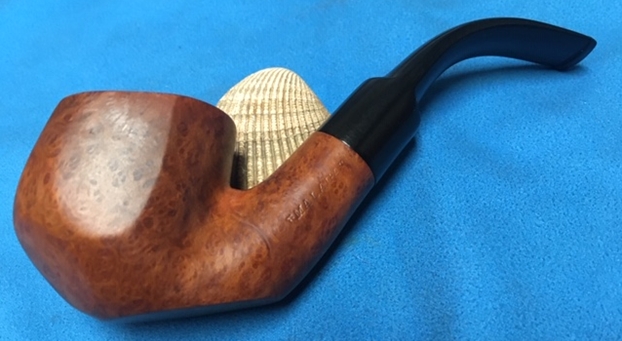
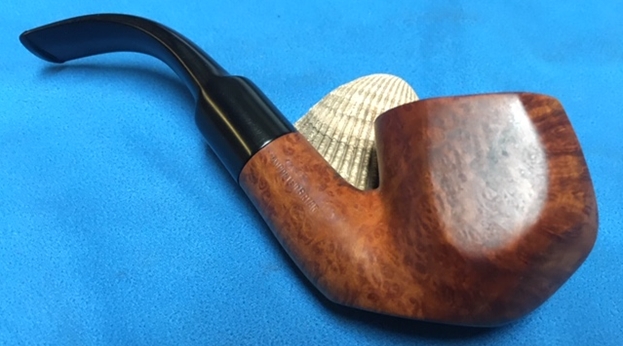
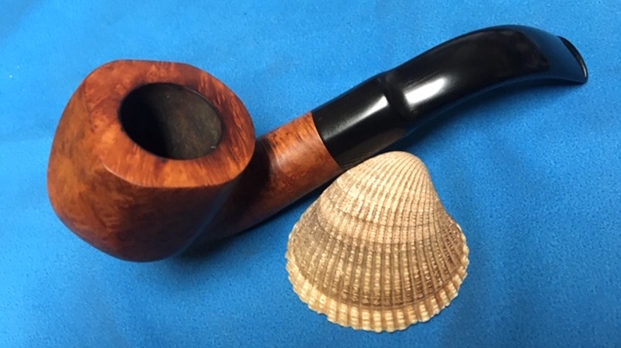
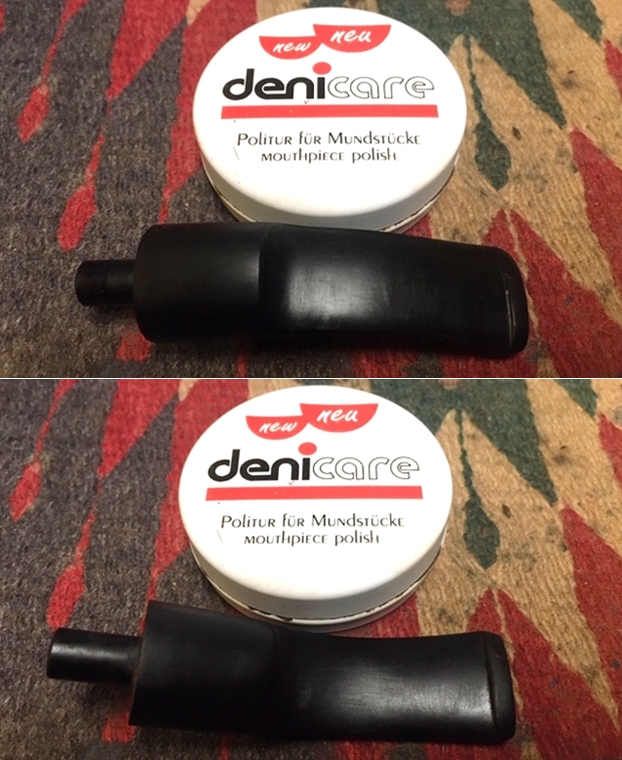
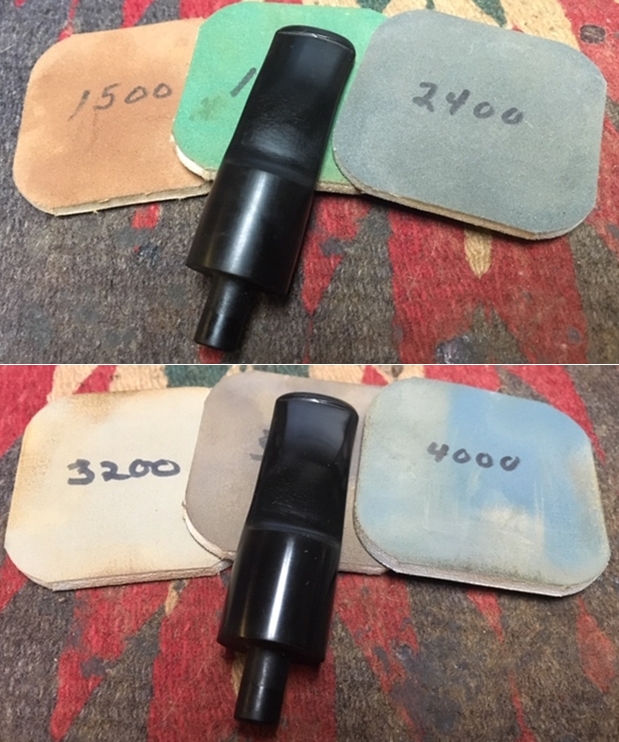
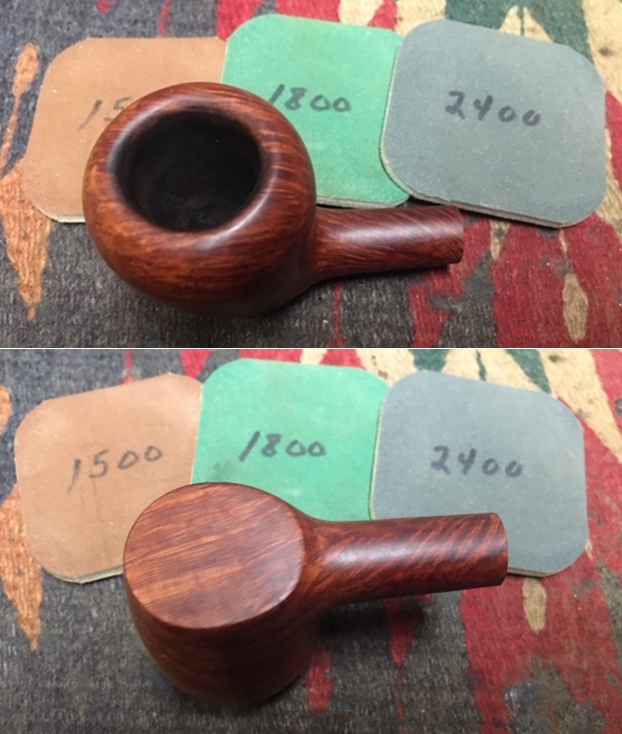
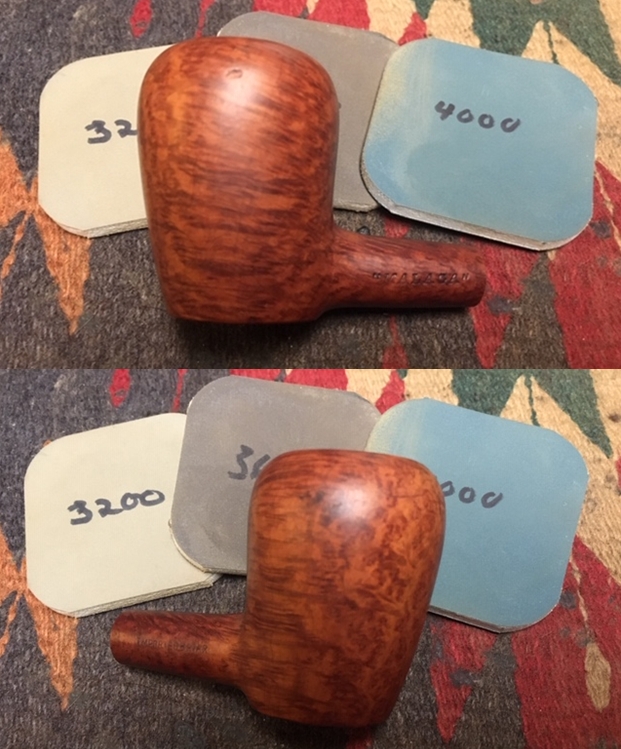
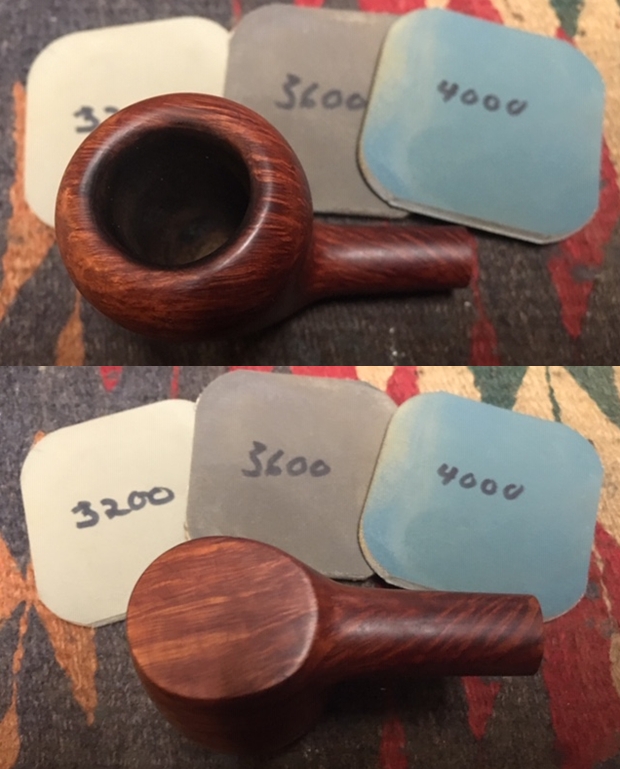
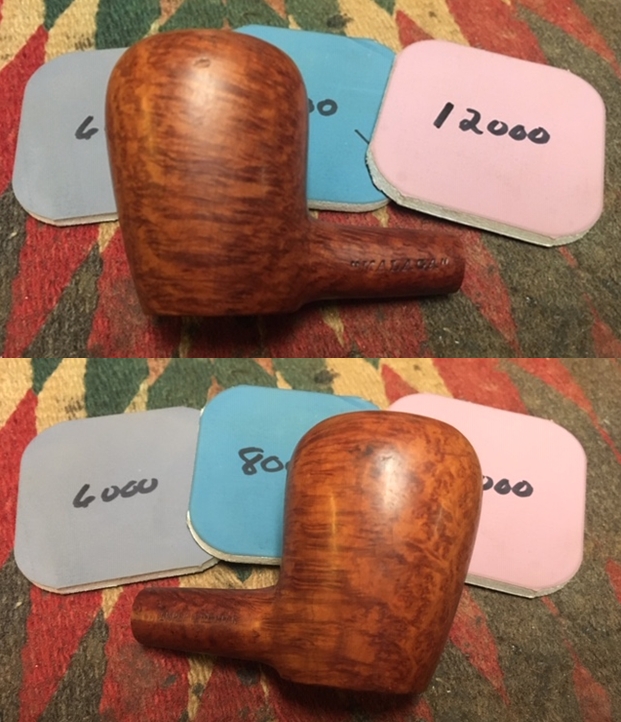
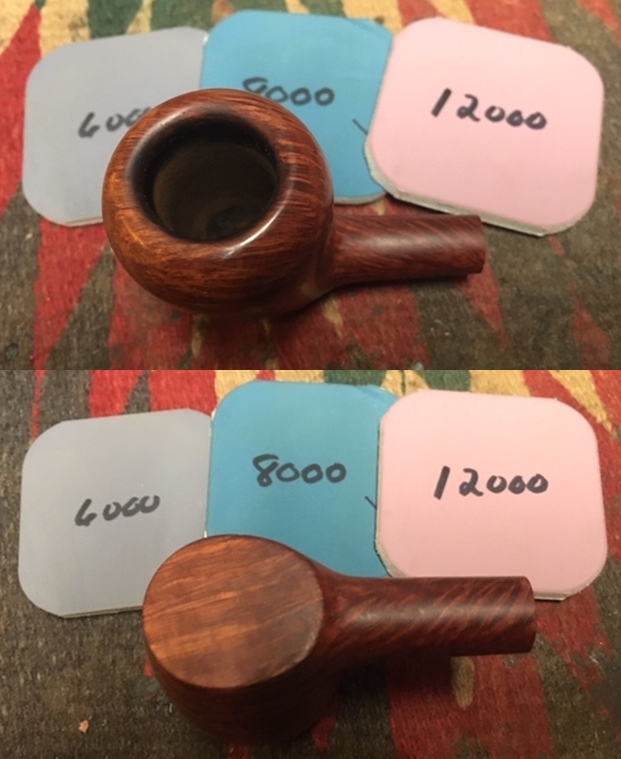
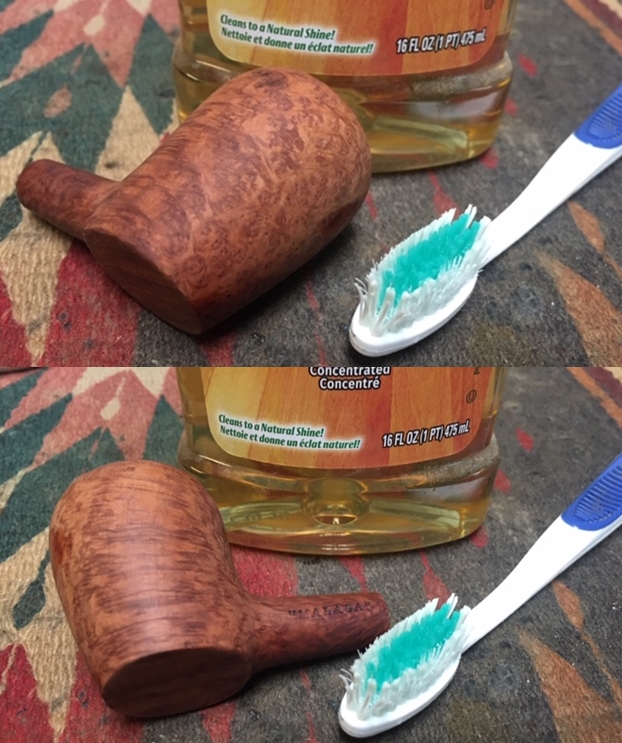
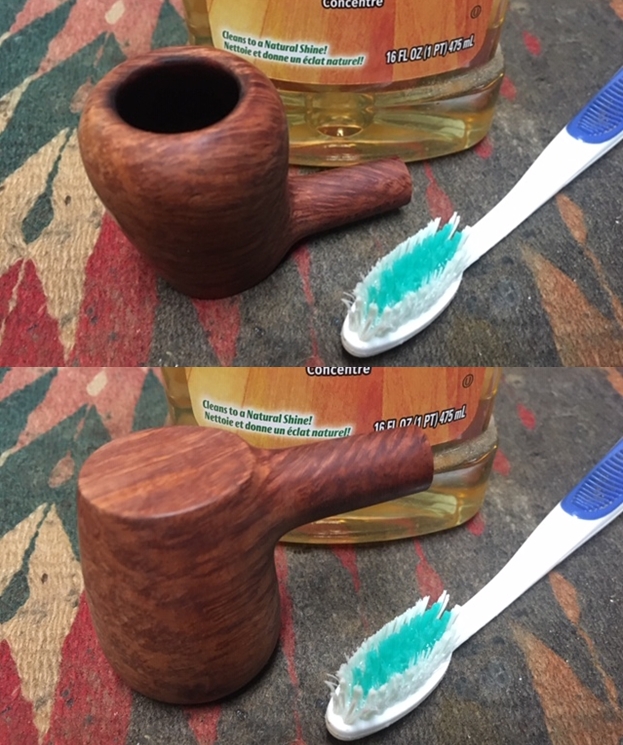
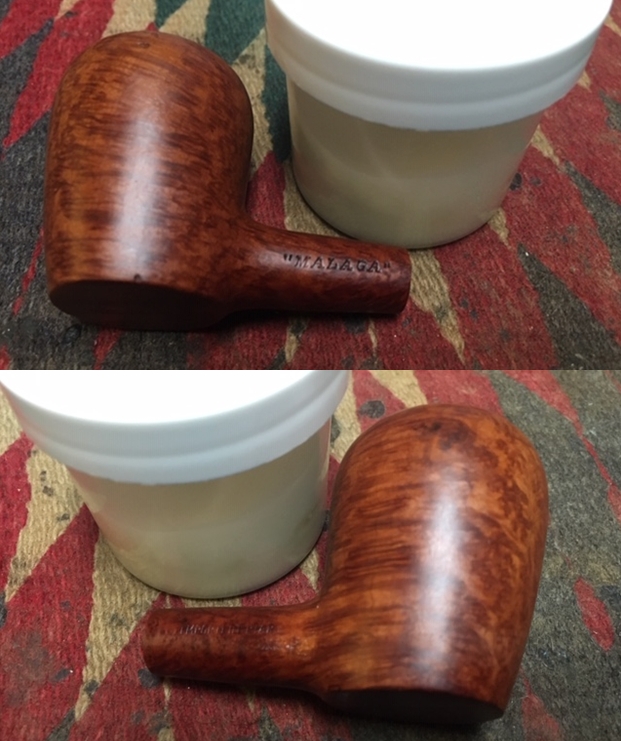
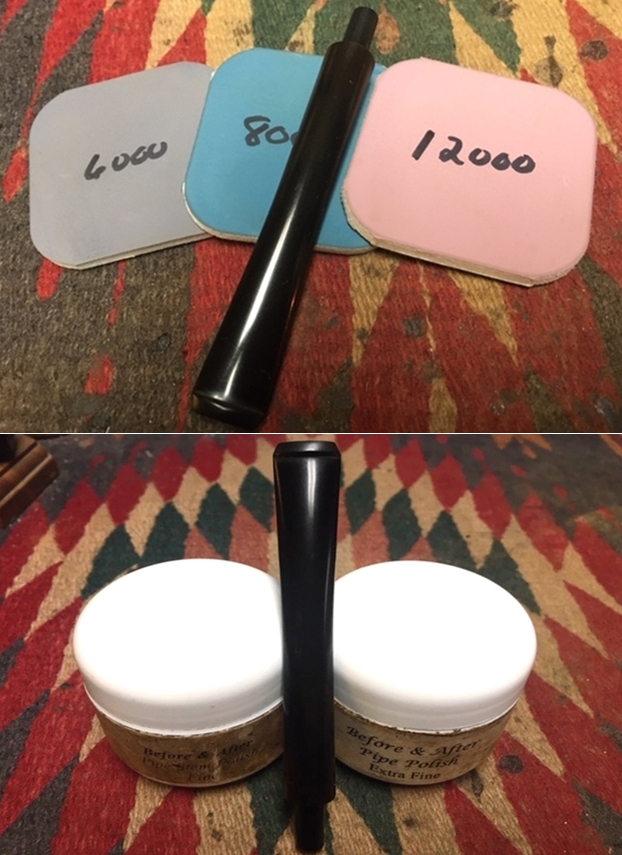
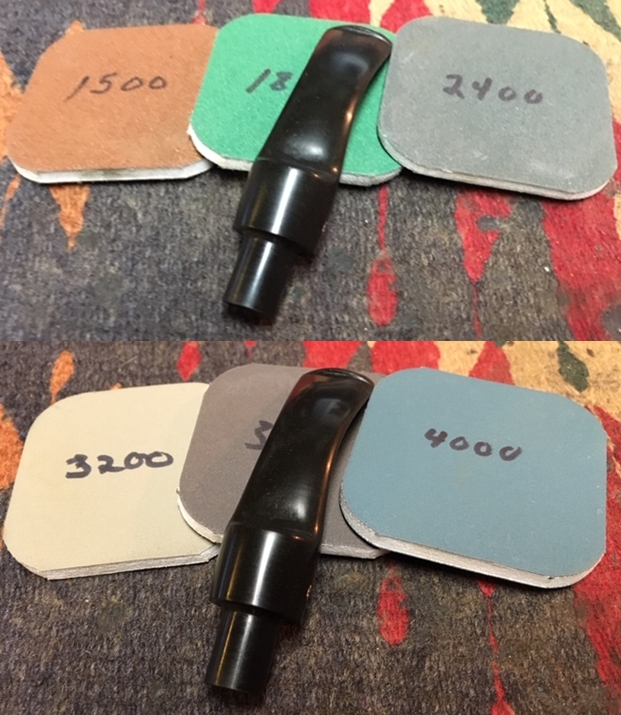
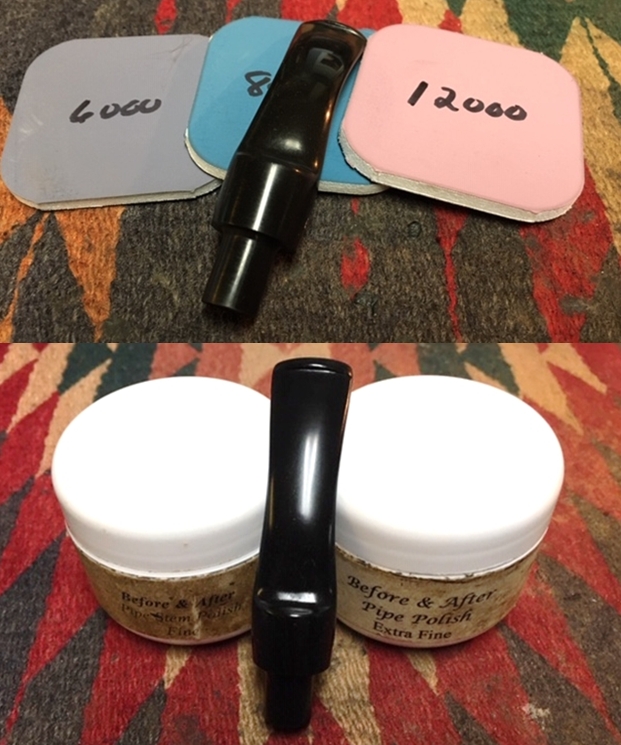
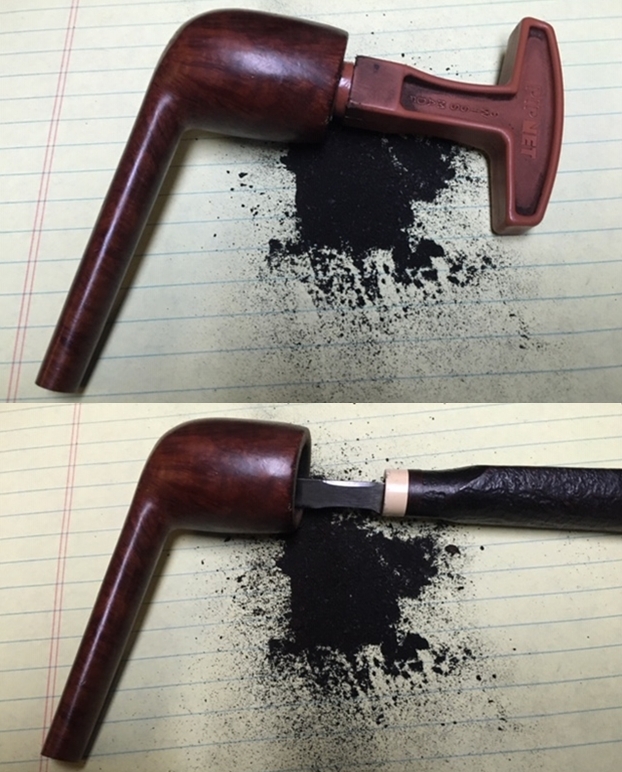
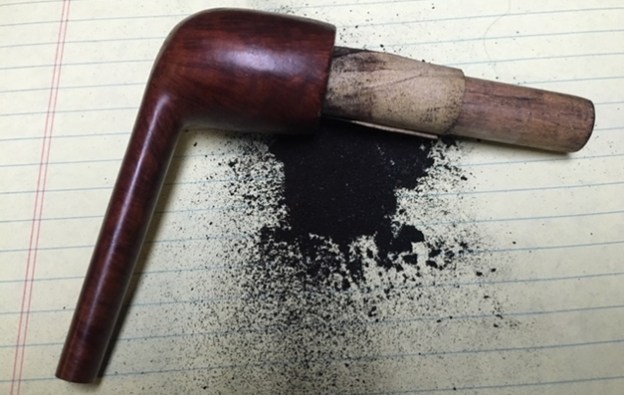
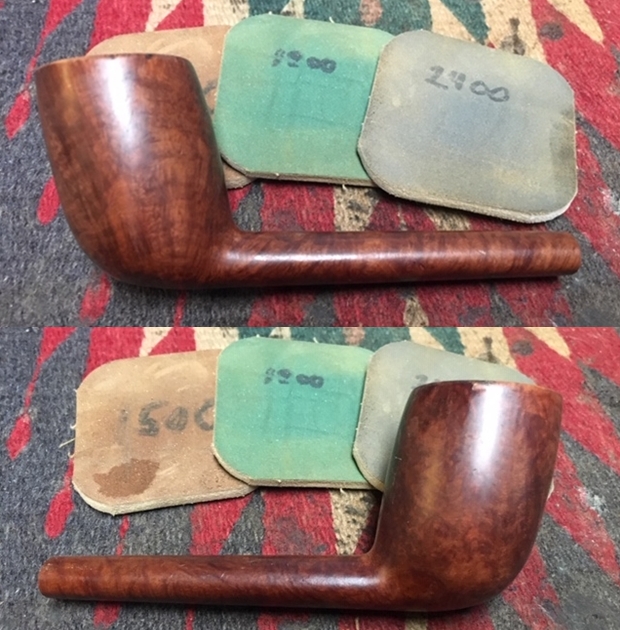
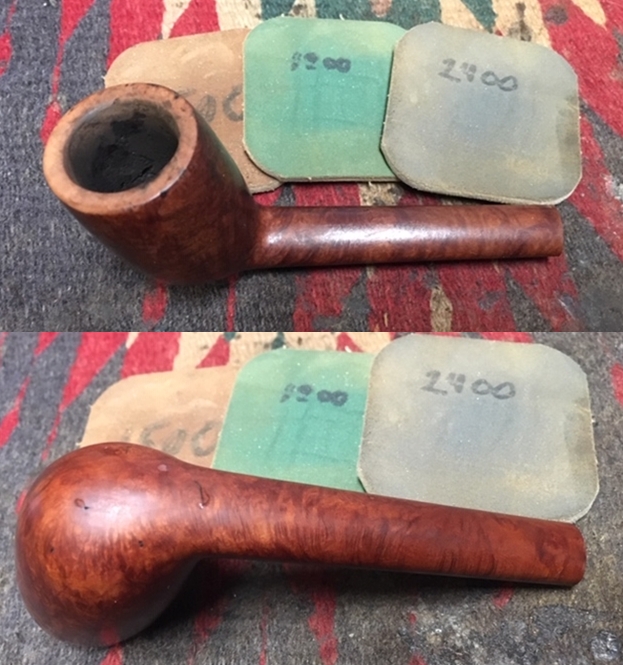
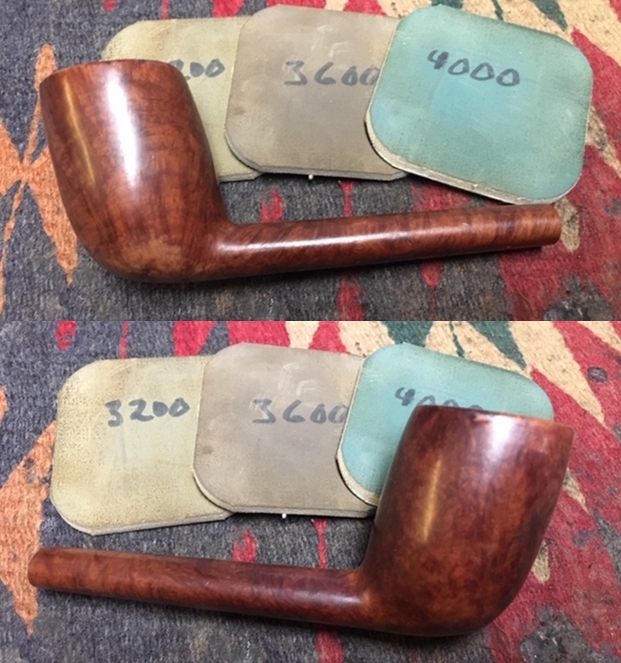
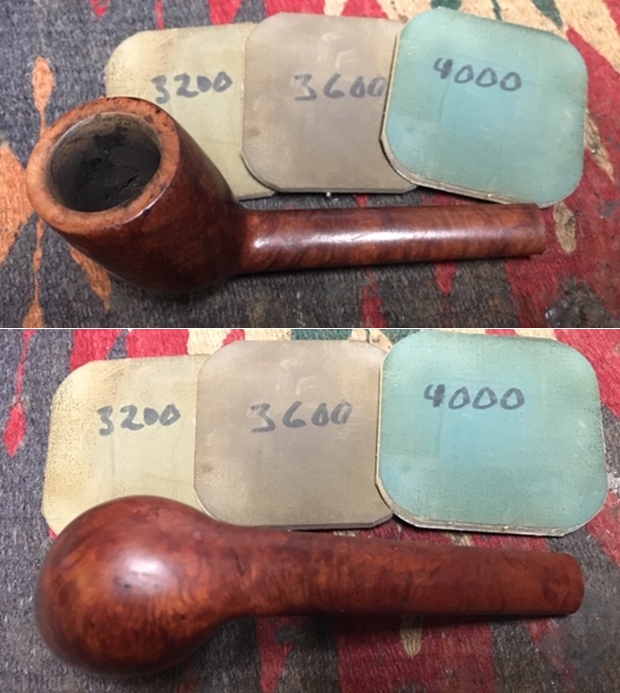
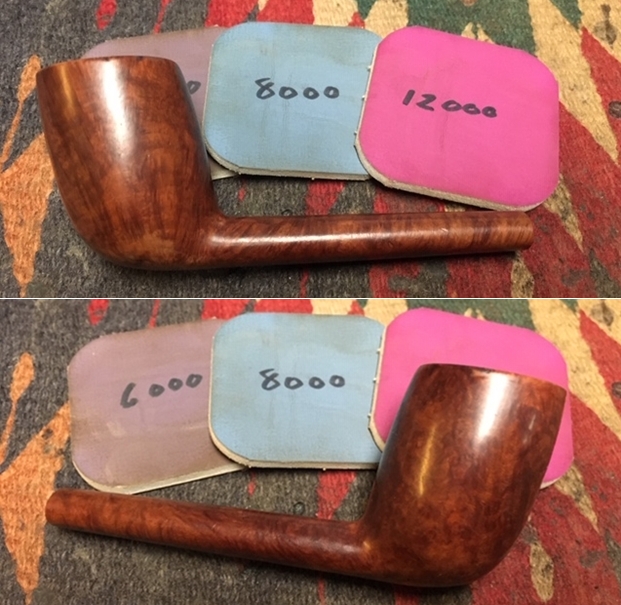
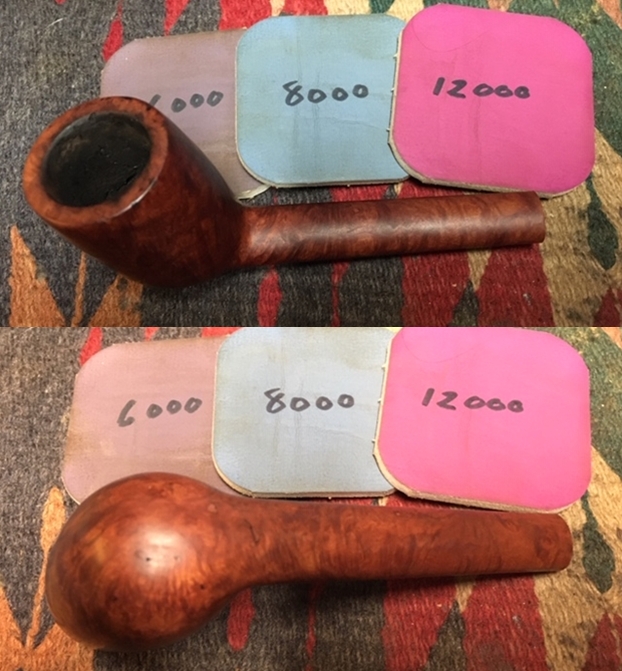
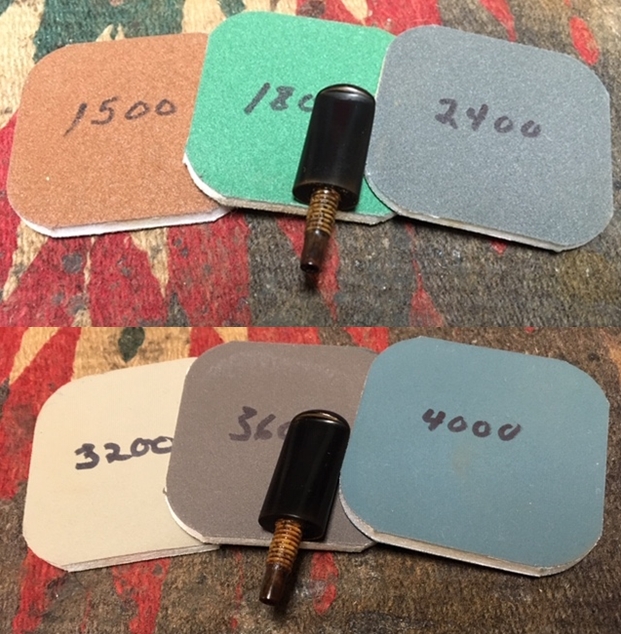
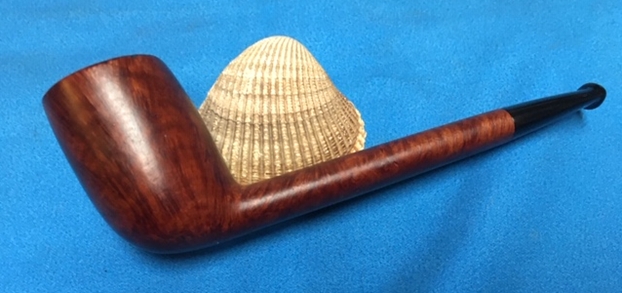
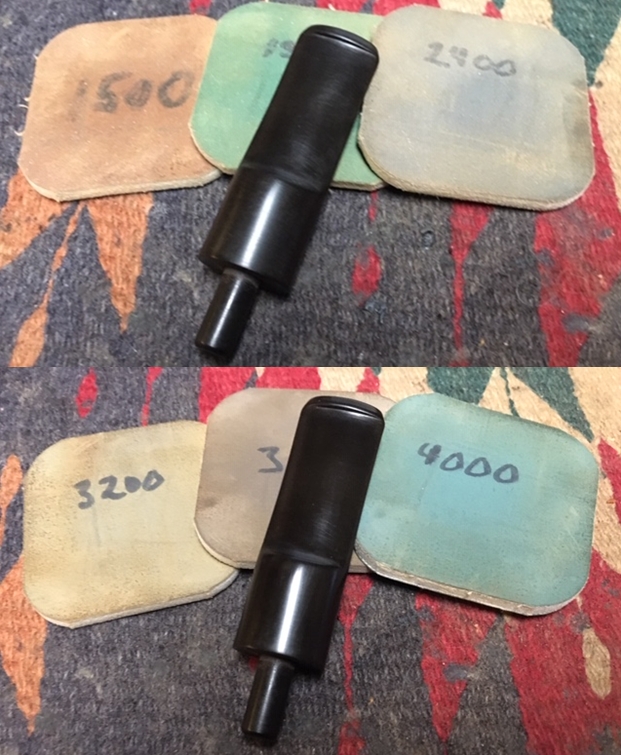
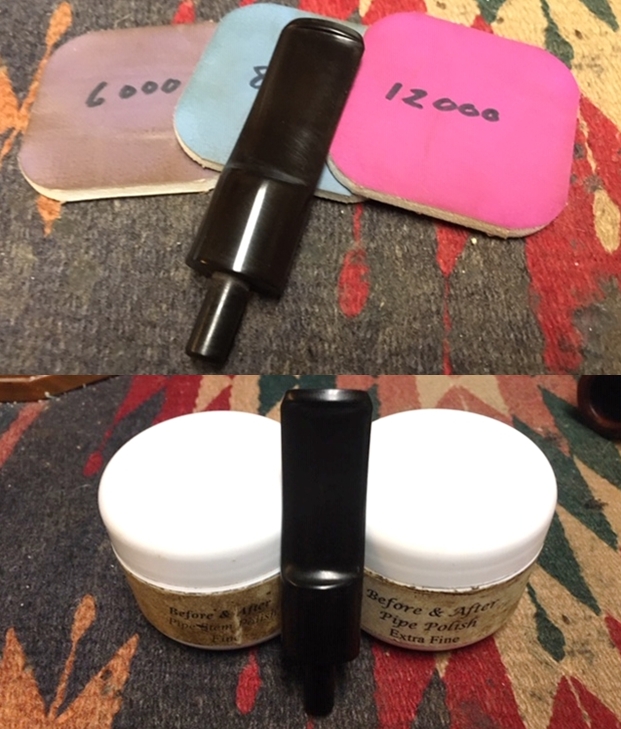
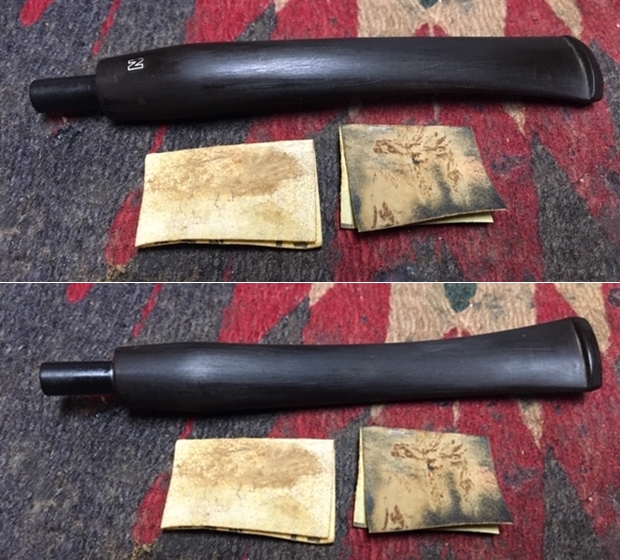
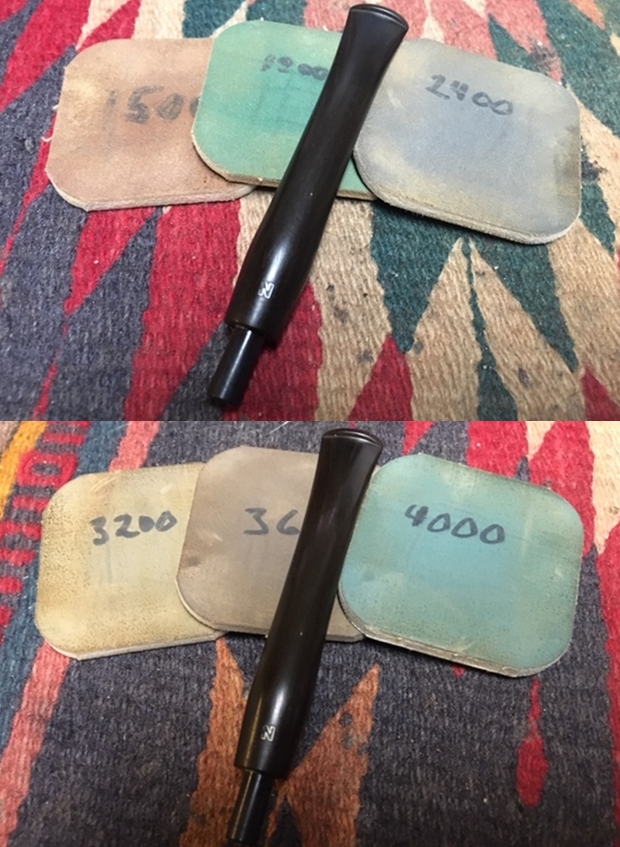
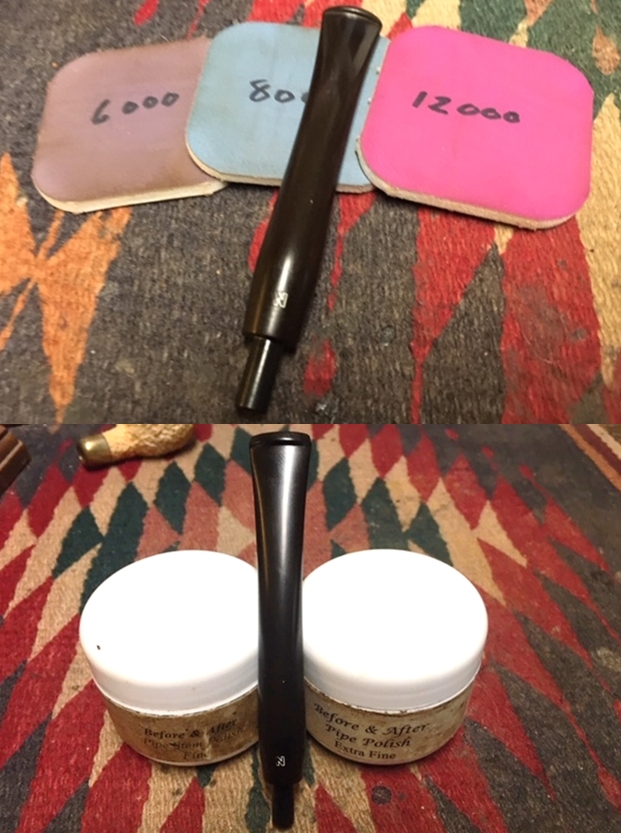
Jeff reamed the bowl with a PipNet pipe reamer and followed up with a Savinelli Fitsall pipe knife to remove the cake. He scrubbed out the mortise and the airway in the shank and the stem with alcohol, cotton swabs and pipe cleaners. He scrubbed the exterior of the bowl, rim, shank and stem with a tooth brush and Murphy’s Oil Soap to remove the oils and tars on the rim and the grime on the finish of the bowl. He rinsed it under running water. He dried it off with a soft cloth. He was able to remove the lava build up on the rim top and the flat surface of the rim looked very good. The inner edge of the rim has some serious burn damage on the front right side. The outer edge looked very good. He soaked the stem in Before & After Deoxidizer and rinsed it with hot water. I took photos of the pipe to show its condition before I started my work on it. I took close up photos of the bowl and rim top as well as the stem. You can see the condition of the rim top and bowl in the first photo. Jeff was able to remove all of the tar and oils but you can now see the damage on the inside rim edge. The edge is out of round. There is a burn mark that extends across the front and the back edge of the rim top at that point. The vulcanite stem had tooth chatter on both sides near and on the button surface there was also a large deep bite mark on the underside of the stem.I took a photo of the stamping on the shank to show how good the condition is. It shows the “MALAGA” stamp on the left side and Imported Briar on the right side. The stamping is very legible.I decided to address the rim top first. I topped the bowl on a topping board with 220 grit sandpaper. I wanted to remove the damage on the top front edge and remove the darkening all the way around the inner edge of the bowl. I took a close up photo the rim top before I started to give a clear picture of the condition of the pipe. I used a folded piece of 220 grit sandpaper to clean up the damage on the right rear inner edge of the bowl. I gave the inner edge a slight bevel to repair the damage. I polished the edge with 400 grit wet dry sandpaper. The rim top and edges really looked better.I polished the rim top and the briar with micromesh sanding pads. I wet sanded the bowl with 1500-12000 grit sanding pads. I wiped the bowl down after each pad with a damp cloth to remove the sanding dust. I restained the rim top and edges with an Oak Stain Pen. I was able to blend it into the rest of the bowl. I scrubbed the briar with Murphy’s Oil Soap and a tooth brush. I rubbed it into the surface of the briar with my finger tips and let it sit for a few minutes then scrubbed it off with a tooth brush and running water. I dried it off with a soft cloth. I worked some Before & After Restoration Balm into the surface of the briar with my fingertips to clean, enliven and protect it. I let the balm sit for a little while and then buffed with a cotton cloth to raise the shine. The following photos show the bowl at this point in the restoration process. I am very happy with the results. I turned to the stem to address the issues on the surface of both sides at the button. I used a needle file to recut the edges of the button. They had been chewed to the point of no edge remaining so I used the file to cut it and sharpen the edges. I smoothed out the top and bottom surfaces of the button on both sides.Once I had the button edge reshaped I decided to address the tooth marks and dents in the button and just ahead of the button. I “painted” the surface of the stem with the flame of a lighter to lift the tooth chatter and marks. The light marks on the top side disappeared quickly and the larger indentation on the underside lifted until the remaining small marks could be dealt with by sanding the stem.I sanded both sides smooth with 220 grit sandpaper to remove the deep oxidation on the surfaces. I finished this initial polishing with 400 grit sandpaper to smooth out the scratches in the stem surface. As I sanded and reshaped the button and stem surface the stem began to look very good. I polished the stem with Denicare Mouthpiece Polish from a tin of it I have in the drawer here. It is a gritty red paste that I rub on with my finger tips and work into the surface of the stem and button and buff off with a cotton pad. It gives me a bit of a head start on the polishing work plus I have a tin to use up!I polished the stem with micromesh sanding pads – wet sanding with 1500-12000 grit sanding pads. I wiped it down after each sanding pad Obsidian Oil. I finished by polishing it with Before & After Pipe Stem Polish both fine and extra Fine and then wiped it down with a final coat of Obsidian Oil. This is another, slightly larger Malaga Bent Billiard with a vulcanite tapered stem. It has a great grain around the bowl and the carver really maximized that with the shape of the pipe. Everything about the pipe – the shape of the bowl, the beveled rim top and the cut of the briar work well to highlight the grain around the bowl sides. I polished stem and the bowl with Blue Diamond polish on the buffing wheel and the grain just popped and came alive. I gave the bowl and the stem multiple coats of carnauba wax. I buffed the pipe with a clean buffing pad to raise the shine. I hand buffed it with a microfiber cloth to deepen the shine. The pipe polished up pretty nicely. The grain took on life with the buffing. The rich oil cured colour works well with the polished vulcanite stem. The finished pipe has a rich look that is quite catching. Have a look at it with the photos below. The shape, finish and flow of the pipe and stem are very well done. The dimensions are Length: 6 inches, Height: 2 inches, Outside diameter of the bowl: 1 ¼ inches, Chamber diameter: ¾ of an inch. I will be adding the pipe to the finished Malaga pipes that I have set aside for Alex. I am glad that he is carrying on the trust for George Koch. Thanks for walking through the restoration with me as I worked over another one of Kathy’s Dad’s Pipes.

Restoring a 2 Star BBB “Special” # 395


Blog by Paresh Deshpande

A few weeks ago, Steve had worked on a BBB Own Make 693 Canadian with some really gorgeous grains to boast about. As I was reading the blog, I remembered the BBBs that Abha had cleaned and sent across for further restoration along with 40 other pipes. However, since I was working on a Thorburn Clark pipe from my inheritance, I had postponed work on this BBB. With the Thorburn Clark completed, I rummaged through the pile and separated all the BBBs that she had sent. This is the one that caught my attention. The note in the package, along with the issues observed by Abha while cleaning the pipe, said that it was from my grandfather’s collection!! I had to work on this BBB.

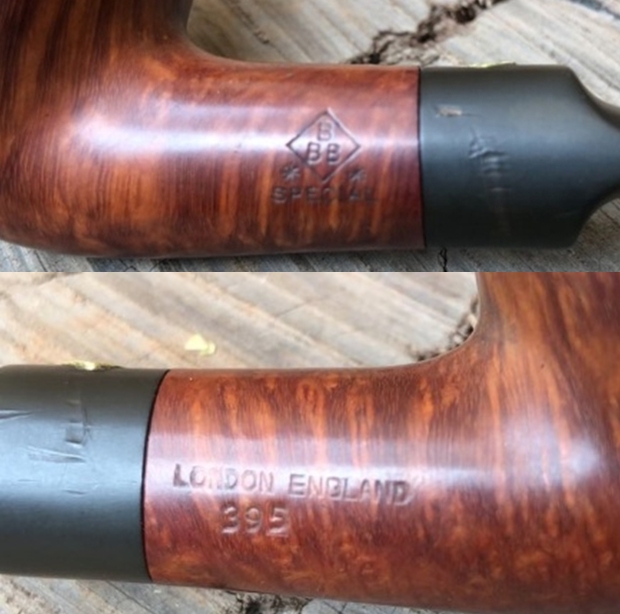
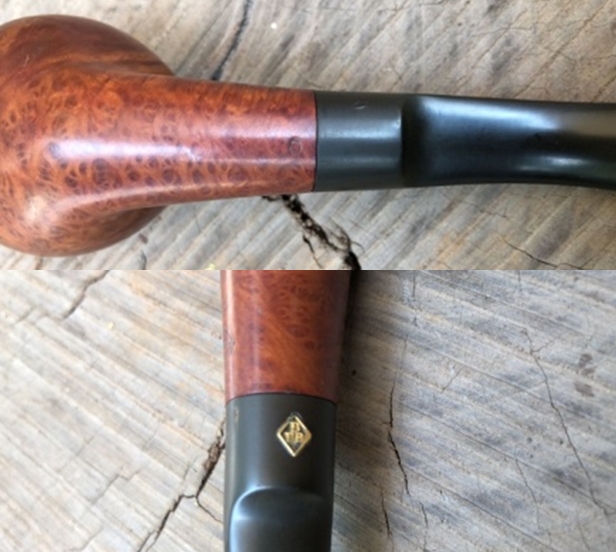
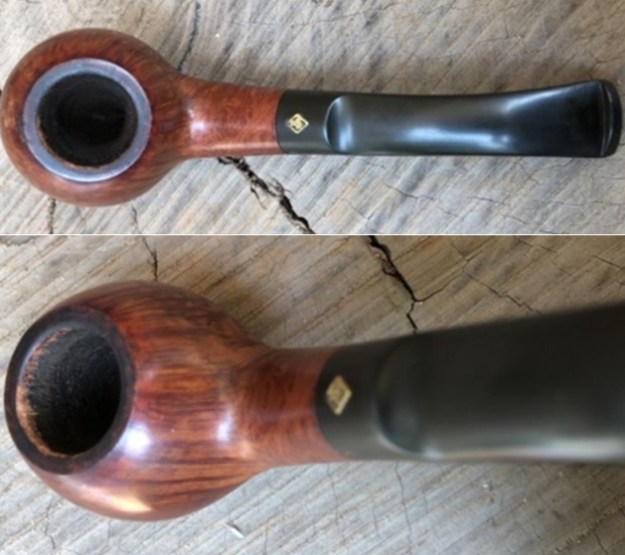
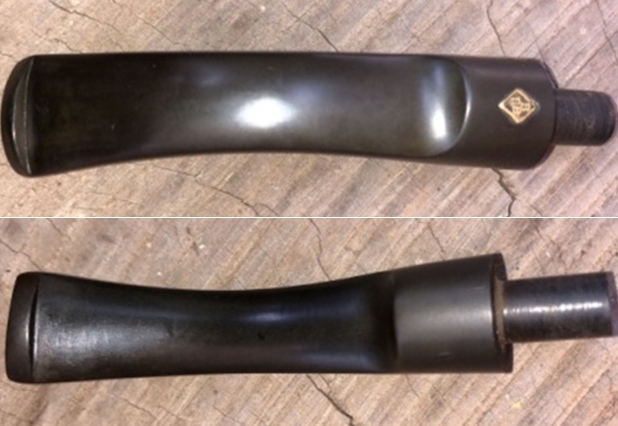
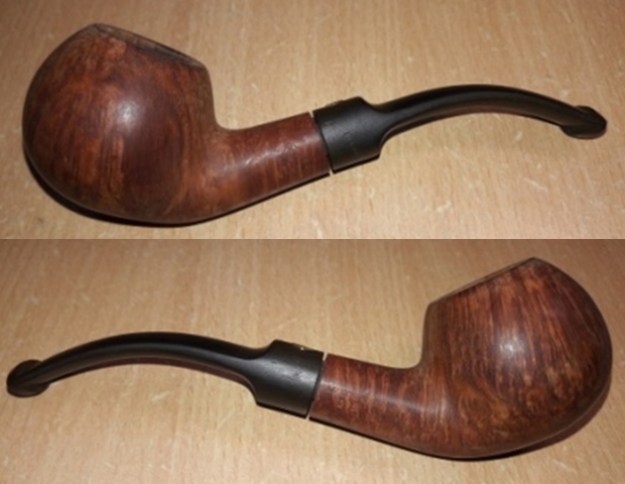
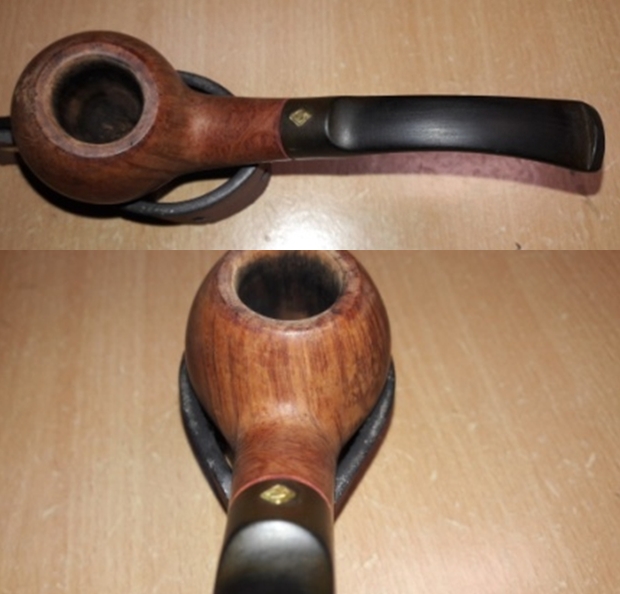
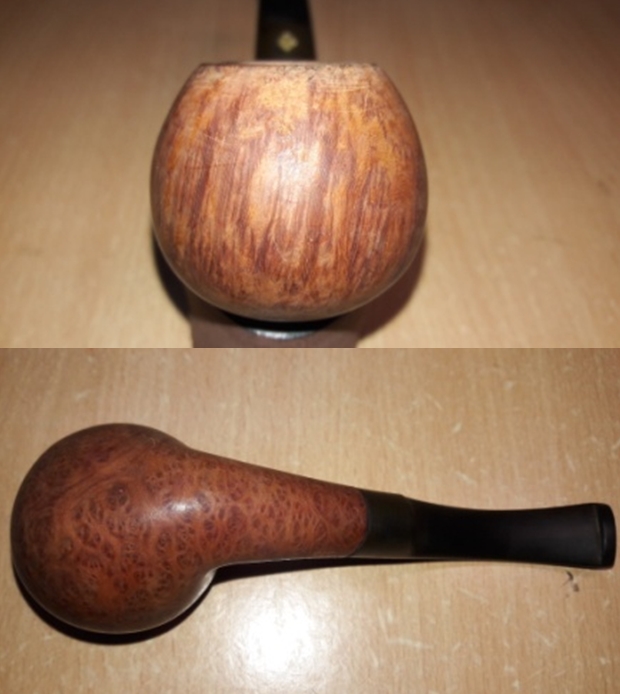
This BBB in bent Apple shape with a saddle stem has stunning grains and it appears that the grain on the block of briar dictated the shape to the carver. The stummel boasts of beautiful tightly packed straight grains to the front, sides, back and along the sides of the shank. The foot of the stummel, bottom and top of the shank has the most beautiful and distinct bird’s eye that you would ever see. The transition from bird’s eye at the foot of the stummel to the straight grain all around is very well defined and seamless. The stummel is stamped on the left shank surface, close to the shank end, in trademark rhombus as “BBB” over two Stars (**) on either side of the lower part of the rhombus over “SPECIAL”. On the left shank surface, it is stamped as “LONDON ENGLAND” over the shape code “395”. The bottom of the shank bears the numeral “0” very close to the shank end. Inlaid BBB brass diamond logo on the saddle adorns the vulcanite stem. If you are interested to know anything about BBB pipes, look no further than rebornpipes.com!! This is Steve’s favorite brand and he has been researching and collecting BBB pipes for decades. I visited rebornpipes and sure enough there was a write up on “History of BBB Pipes”! Here is the link to the blog: https://rebornpipes.com/2012/08/05/history-of-bbb-pipes/

I was more interested in background information of the brand and later in the dating of this pipe. Here is what I found interesting;

Adolph Frankau arrived in London in 1847 and quickly grasped the opportunities which the enlarging tobacco market introduced. He started “Adolph Frankau and Co.” and began importing meerschaum pipes and tobacco supplies. The Company took a young 14 year-old boy, Louis Blumfeld under its wing. The Company quickly thrived and did so until the untimely death of Adolph Frankau in 1856. His widow decided to sell the company.

Thomas Carlyle (1795-1881), author of “Hero and worship of the heroes” came on the scene at this point. He recommended that the widow Frankau not sell, but rather that she should entrust the future of the company into the hands of young Louis Blumfeld, then 18 years old. Carlyle had to have had a very high opinion of the young Louis to make this recommendation, and his trust proved to be justified as Blumfield took care of the company with enthusiasm and bottomless energy. Louis quickly realized, as others had before him, the potential of the newly acknowledged pipes made of briar.

Louis Blumfeld developed important international trade relations from the beginning, and had particular success in Canada, Australia, New Zealand, India, Europe, as well as Switzerland and Denmark. The USA had never been an extraordinary market for the company, but nonetheless a subsidiary was opened in New York. His commercial strategy focused on the countries of British Empire.        

In the 1930s, the top pipe of the line was “BBB Best Make” with variants such as “Great Dam” and “Ultonia Thule”. The BBB Carlton, sold retail in 1938, was endowed with a complicated stinger system; the same system was also used on the BBB London Dry. The Blue Peter was not stamped BBB but BBB Ultonia, and BBB Two Star (**) was the stamping on lesser quality pipes.

Shapes of BBB pipe were typical of other companies pipes made in this era: half were billiards, some princes and bullcaps, bulldogs and some bents. It is also in this period that the inlaid metal BBB was put on more upscale pipes, while series of lesser quality had only the stamped BBB on the stem.

During the middle of 1950s and 1960s, BBB lines were comparatively stable. The top pipes of the line were stamped Own Make “Rare Grain”, followed by Own Make “Virgin”, Own Make “Walnut” and finally Own Make “Thorneycroft”.

From the above, it is evident that the BBB on my work table is from the period 1930 to 1950.

INITIAL VISUAL INSPECTION
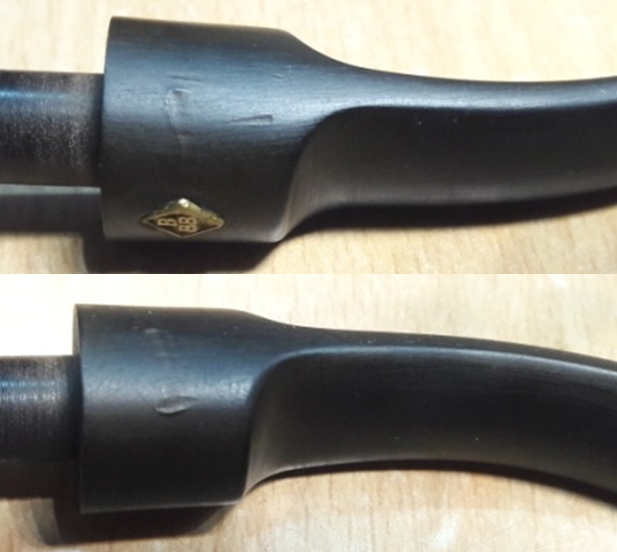
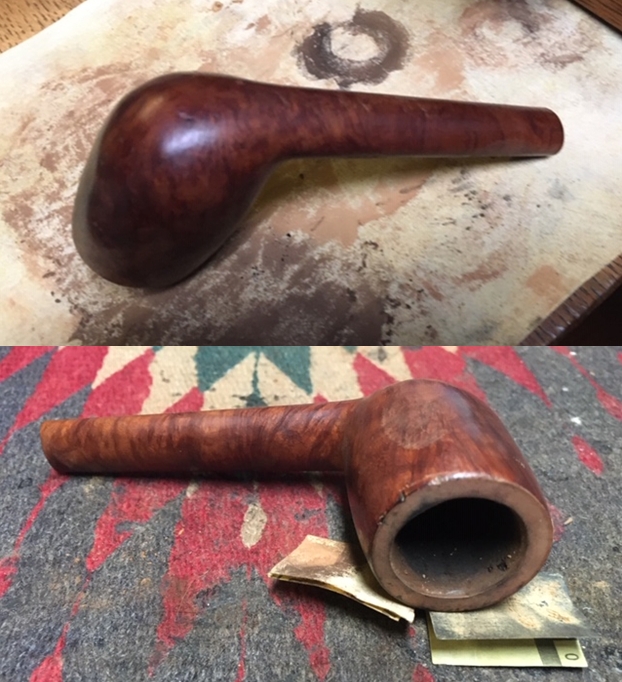
The chamber had a thick layer of cake, but not as thick as seen in some of his pipes. As expected, the rim top surface is covered with overflow of lava. The beveled inner edge of the rim in 11 ‘O’ clock direction is badly damaged which could probably be caused as a result of hitting against a hard surface to remove the dottle. The outer rim edge too has dents and dings around. The condition of the walls can be commented upon only once the cake has been taken down to the bare briar. This chamber has some pretty strong ghost smells.   The stummel surface is pebbled with numerous dents, dings and scratches. However, there is not a single fill in the stummel surface!! Significant damage was seen to the front of the stummel and around the rim. This damage, in all probability, has been caused due to uncared for storage and it having rubbed against some hard object. The briar had taken on a nice aged patina and I shall try to preserve it. However, the kind of damage to the stummel would necessitate a few invasive methods to address these issues which are detrimental to preservation of aged patina. Let’s see how the restoration pans out!! The mortise showed dried accumulated gunk with a blocked draught hole. Air flow was very laborious to say the least.The stem is heavily oxidized with a deep gouge on either side of the saddle of the stem. This and other stummel damage could have been due to uncared for storage for the last 40 odd years. There is no significant damage to the button or in the bite zone, save for a few very minor tooth marks to button edges and tooth chatter in the bite zone. This was surprising as I have observed that the stem was the most damaged part in most of my inherited collection. Maybe my grandfather did not like the smoking character of this pipe or the shape or the hand feel or the clench or could be that he did not like the size of this pipe (most probable cause since he preferred large sized ones!!) The tenon is covered in dried gunk. INITIAL CLEANING BY ABHA…
The initial cleaning on this pipe was done by Abha, my wife (she has cleaned up around 40-50 pipes and these have now reached me for further restoration). She reamed out the complete cake and further smoothed out the chamber walls with a folded piece of 220 grit sand paper. She further cleaned out the internals of the shank with pipe cleaners and alcohol and cotton buds. In the note that she had packed with pipe, she mentioned that getting a pipe cleaner out through the draught hole was not easy. She followed the internal cleaning of the shank with external cleaning of the stummel using Murphy’s Oil soap and hard bristled tooth brush and dried it with paper napkins and cotton cloth.

Next she cleaned out the internals of the stem air way. She covered the inlaid brass stem logo with petroleum jelly (helps protect the metal from corrosion due the solution) and immersed it in “Before and After Deoxidizer” solution along with the stem of other pipes in line for restoration. Once the stem had soaked overnight, she cleaned the stem under running warm water and scrubbed the raised oxidation from the stem surface using Scotch Brite pad. She further removed the oxidation by scrubbing the stem with 0000 grade steel wool and applied a little olive oil to rehydrate the stem.

ONCE THE PIPE IS ON MY WORK TABLE…
The initial cleaning by Abha, my wife, is thorough and while saving me time, it also provides a clear picture of all the issues that needs to be addressed during the restoration process. She also makes a note of all the issues that she observed during initial cleaning for me to address and includes this note with each pipe that she packs. It’s a big saving on the time factor and I am really thankful to her for indulging me.

This is how the pipe came to me after Abha had worked her magic. This is definitely a beautiful pipe and would be a challenge for me to do justice and bring the beauty of this pipe to the fore!!

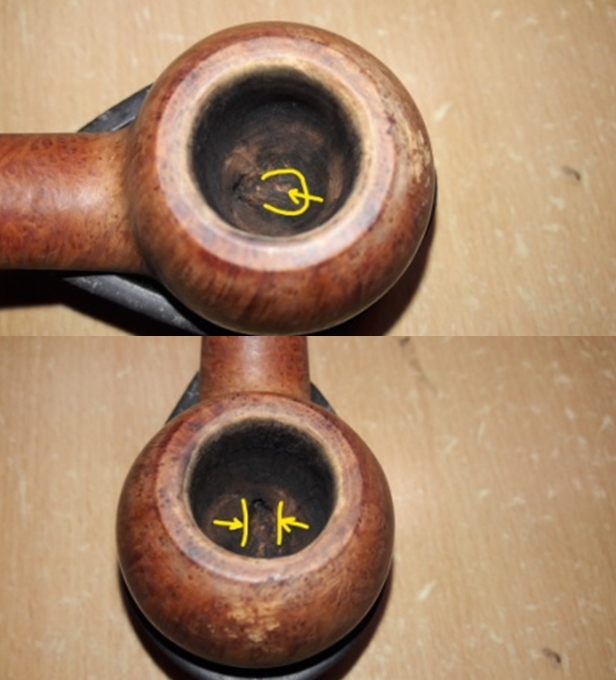
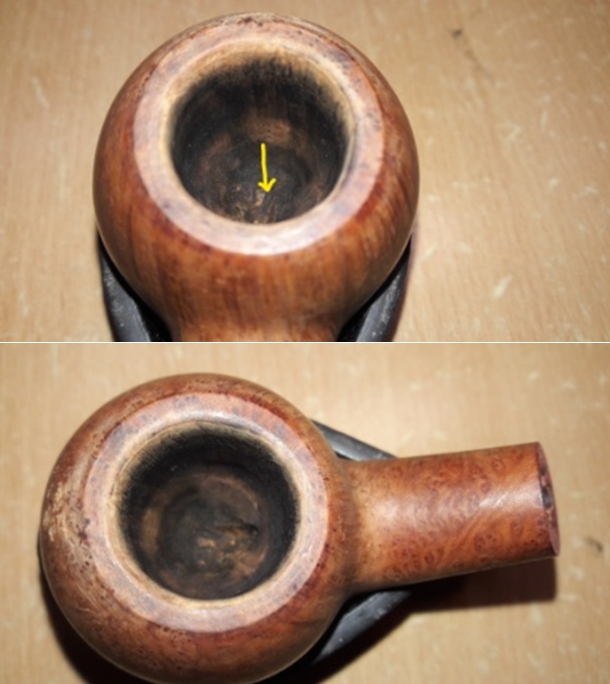
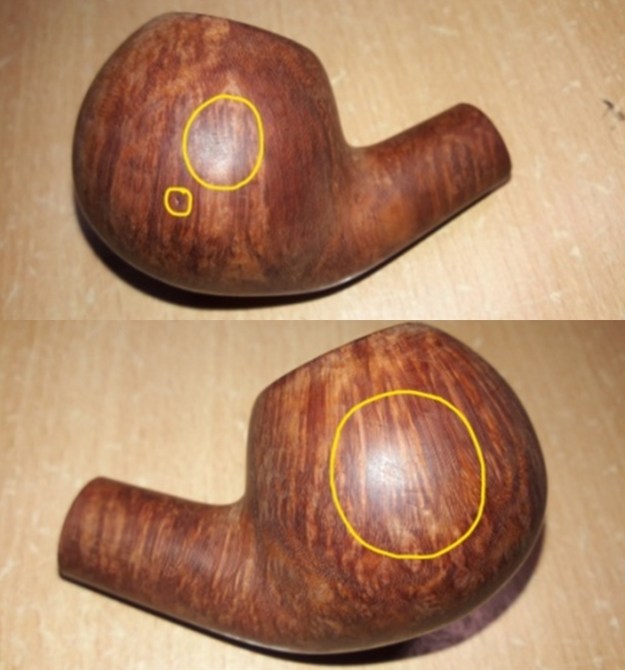
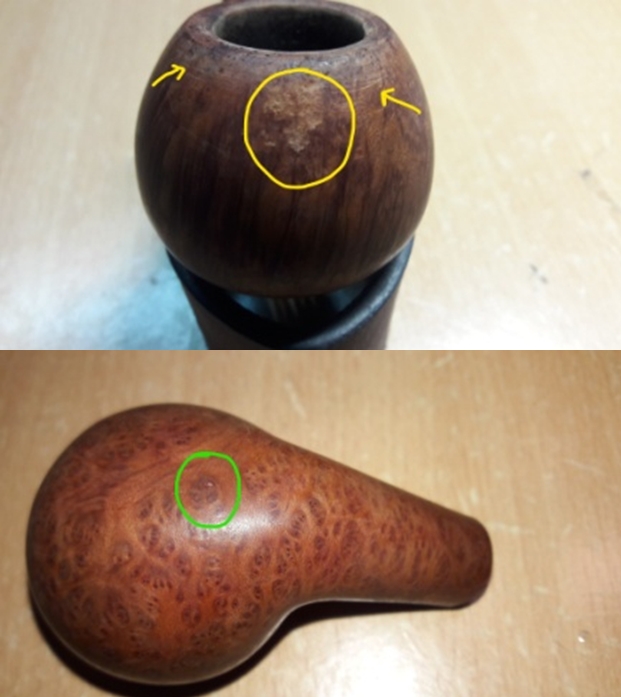
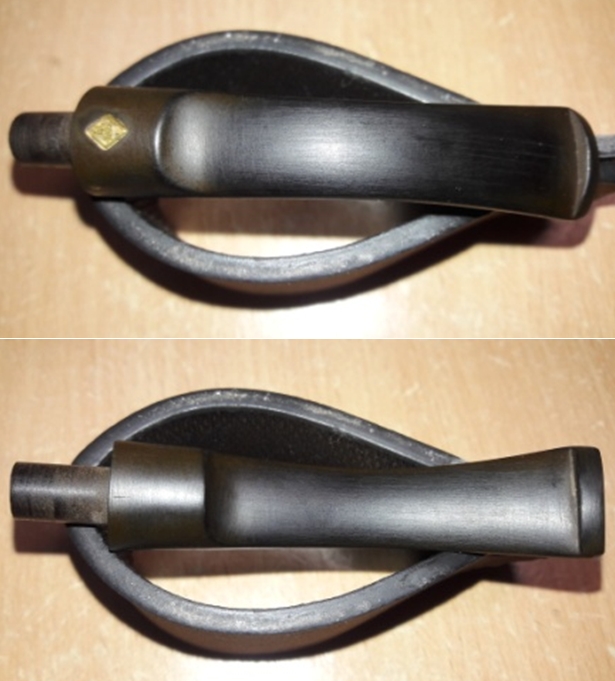
The chamber walls are solid without any signs of damage. The smooth and thin rim top surface is where all the action is on this pipe with an added bonus of an equally damaged beveled inner rim edge. At this point, the damage to the outer rim edge does not appear to be a major issue and should be easy to address. The ghost smells are greatly reduced, but still offending to the olfactory nerves. One major cause of concern is in the heel of the stummel. There is a dip at the bottom that forms a channel from the draught hole to the heel with raised shoulders along the sides (marked in yellow arrows). If this issue is not addressed now, prolonged further use may subsequently lead to a burnout at the foot of the stummel. However, as things stand now, the external surface at the foot appears solid. As observed earlier, there is not a single fill in the entire stummel. The reasoning for giving it a 2 Star, denoting lesser grade, fails me completely!! Abha had nicely cleaned the stummel surface. The surface is solid to the touch but has a number of dents and dings over the stummel, notably to the front, sides and a couple at the foot of the stummel (marked in yellow circles and arrows). Is it a figment of my imagination or a reality, I am not sure, but I think I saw a very slightly darkened spot at the bottom of the foot (circled in green), which was strongly refuted by anyone and everyone I happened to show it to. Just to be sure, I gently tapped it with the back of a screw driver for a shallow sound, but nothing!! I checked the entire stummel for sound and it all sounded the same. The stummel is solid throughout. In the note that Abha had enclosed in the packet containing this pipe, she had mentioned that she could not get a pipe cleaner through the mortise and the draught hole and as such she had left it alone. I would need to check it and further clean the mortise. The stem is free of any major tooth indentations/ bite marks. Minor light tooth chatter, however, is seen on both the stem surfaces in the bite zone. The lip edges needs to be sharpened and evened out. The stem still has signs of deep oxidation. The otherwise good condition of the stem is marred by deep gouges on either sides of the saddle of the stem. THE PROCESS
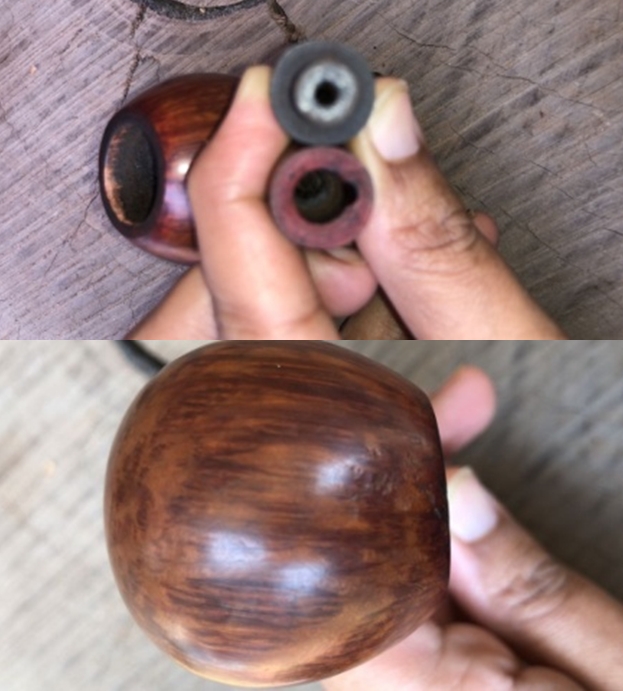
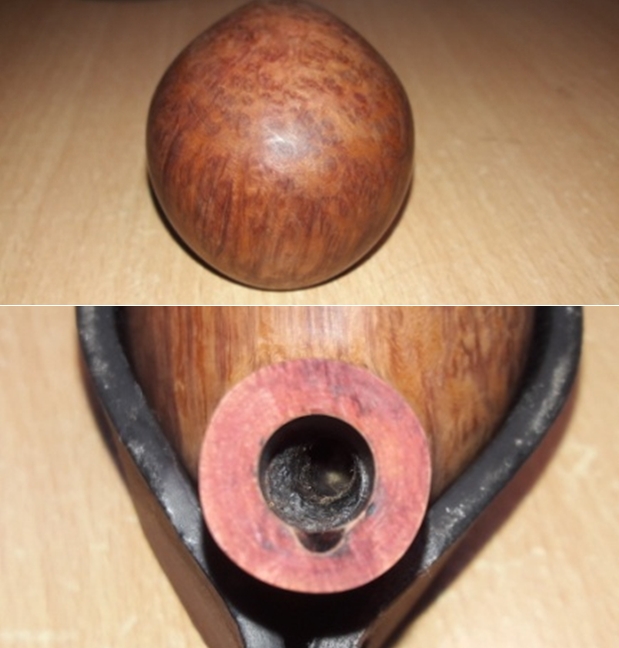
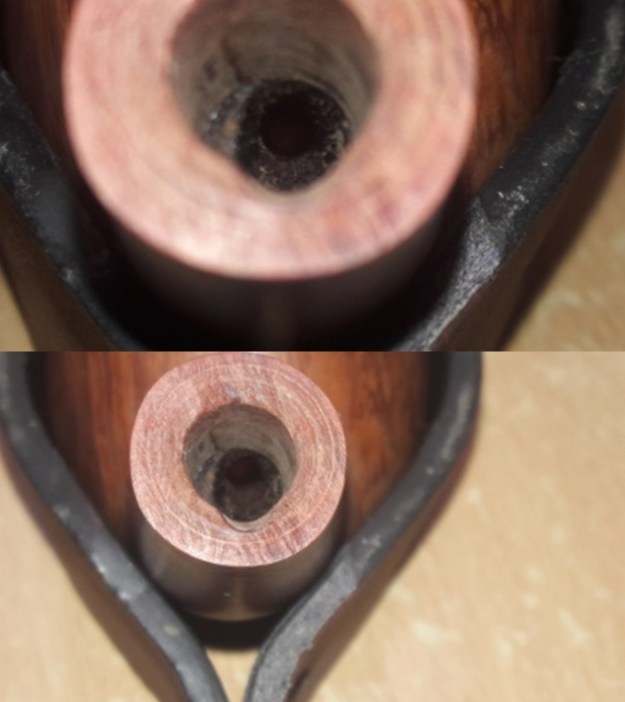
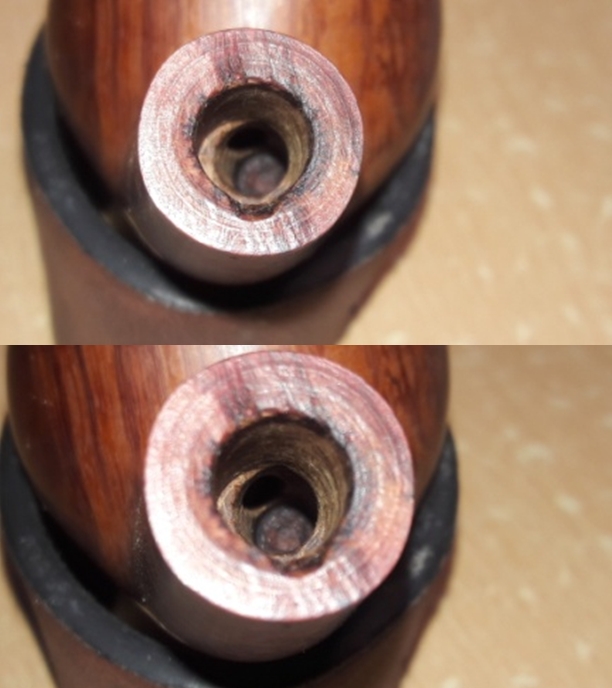
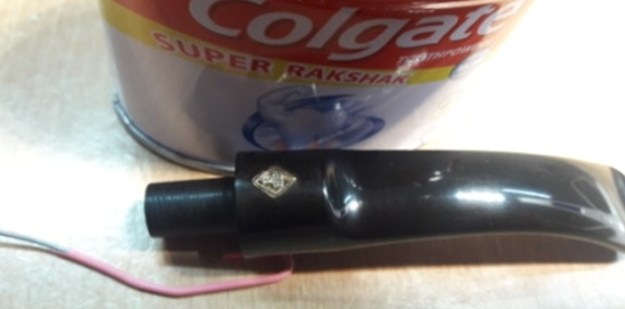
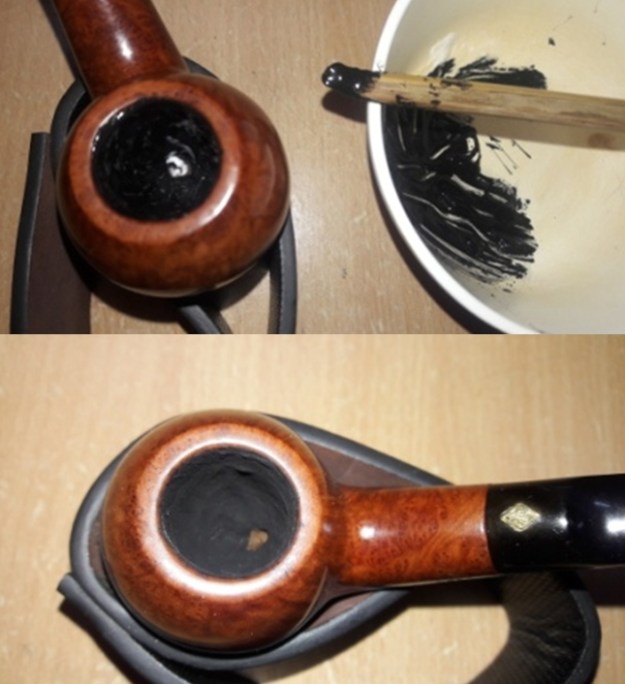
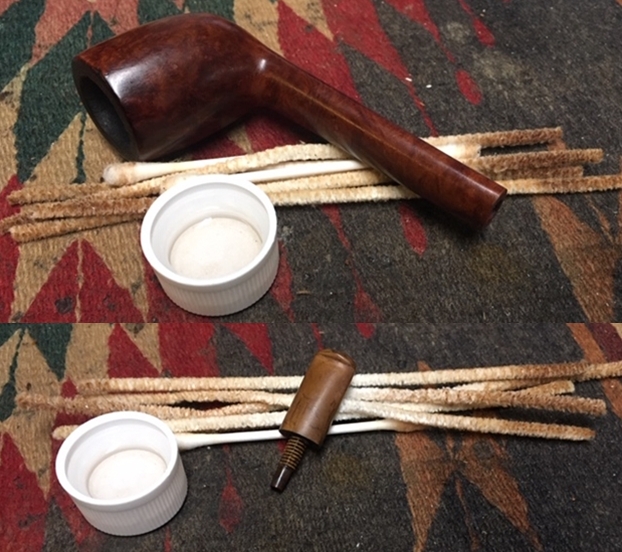
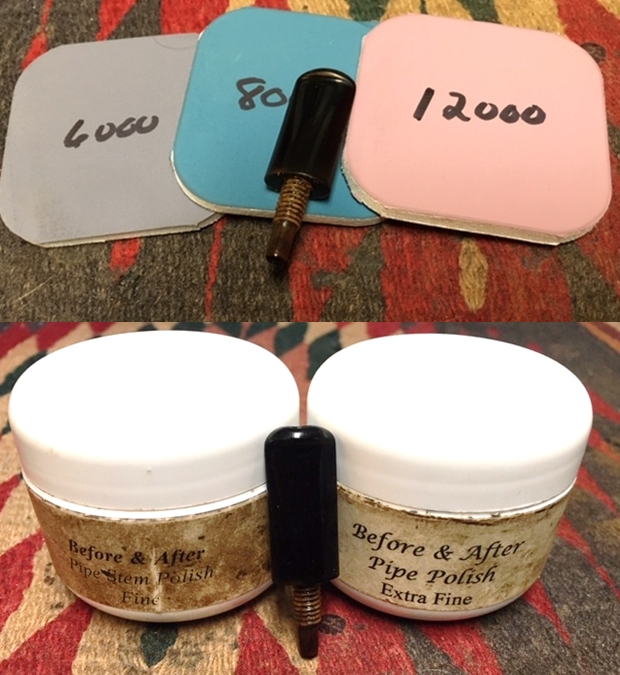
The first issue that I decided to address was that of the blocked air way in the mortise. With the bent flat dental tool, I scraped the walls of the mortise and removed as much of the dried gunk as I could. Using a round needle file, I tried to pry at the blockage, but to no avail. What I found unusual was that an upward movement of the needle file had a little give, however, when I tried to push it in straight, I hit a hard and solid block. Using shank brush and dish washing soap, I scrubbed the shank internals clean. This helped in getting a better idea of what lurked within the mortise that was preventing the pipe cleaner from coming out of the draught hole.I checked the mortise internals under a torch light and what I saw surprised me no end!! Straight away, I could not see the draught hole straight ahead and all that I saw was a reservoir like the one seen on a Pete System pipe. Closer observation around the mortise revealed the opening for the draught hole that was aligned towards the top side and that too was at a weird angle to the rest of the mortise. Here is how the internal of the mortise looked and will present a clearer picture of what I have been trying to explain.Well, this could very well be a flaw in the drilling of the mortise or could be a design element for a better smoke (HIGHLY IMPROBABLE!!), I really cannot tell. Continuing with the internal cleaning of the bowl, I subject the chamber to salt and alcohol treatment to get rid of the strong ghost smells. I insert a folded pipe cleaner through the mortise and out of the draught hole in to the chamber. Thereafter, I tightly pack cotton balls in the mortise, pushing it deep with a dental tool. Next I tightly pack cotton balls in to the chamber, slightly below the rim edge. Once this set up is ready, I pour 99.9% pure isopropyl alcohol in to the chamber and mortise, using a syringe. I let the alcohol settle down and top it again after about an hour. I set the stummel aside for the night to let the alcohol loosen up the grime, draw out all the entrenched oils and be trapped in the cotton. By next afternoon, the cotton and alcohol had drawn out the old oils and tars from the chamber and mortise. I removed the cotton from the chamber and the mortise. I scraped out the loosened crud from the mortise with my dental tools and further cleaned the mortise using hard bristled and regular pipe cleaners. However, on close scrutiny of the mortise under a torch light, I realized that the mortise was still not clean. While removing the loosened cake from the chamber, I gently scraped the shoulders that had formed at the heel near the draught hole. Lucky me, the shoulder that was formed was nothing but hardened cake and was easily removed due to the softening during the salt and alcohol bath. Using my dental tools, I scraped out all the crud that I could and followed it up with a cleaning using q-tips and alcohol. Though the mortise cleaned up pretty nicely, the smells were still strong. I decided to subject the chamber and the mortise to a second salt and alcohol bath. I followed the procedure for the bath explained above and set the stummel aside for the bath to work its magic. The next day, all the remaining oils and tars were drawn out and trapped in the pipe cleaner and cotton. I cleaned the mortise again using pipe cleaners and dental tools. I am happy with the way the mortise cleaned up this time. The pipe smells clean and fresh. Next, I decided to address the dents and dings on the stummel surface and on the rim outer edge. Using a whitener pen, I marked all the major areas with dents and dings and decided to leave the minor ones as they were. I heated my fabricated knife over the flame of a candle, placed a wet Turkish hand towel over the marked areas and steamed out the dents by placing the heated knife over the towel. Though some dents were still observed, these were greatly reduced when compared to before the steaming. Steaming out the dents and dings from the stummel surface had necessitated that the surface of the stummel be evened out by sanding. Using a folded piece of 220 grit sand paper, I sand the entire stummel surface taking care to preserve the stampings on this pipe. To address the damaged inner beveled edge of the rim as well as the dents and dings and darkening of the thin rim top surface, I topped the rim top on 180 grit sand paper. I took a piece of used and worn 180 grit sand paper, folded it and pinching it between my thumb and forefinger, freshened the inner bevel on the inner edge of the rim. Both the rim top and inner edge look much better than before. Staying with the stummel restoration, I polished the stummel with micromesh pads, dry sanding with 1500 to 12000 pads. I polished the freshly topped rim surface and the newly created inner rim bevel. I wiped the surface with a soft cloth at the end of the micromesh cycle. The stummel looks amazing with a deep shine and beautiful grains popping over the stummel surface. I am surprised that the rim top surface has the same deep brown coloration as the rest of the stummel surface and use of stain pen was not required. Also the supposed dark spot at the foot of the stummel was indeed a figment of my imagination and was nothing but the eye in the bird’s eye grain, whew!! The next step is the application of the “Before and After Restoration Balm”, developed by Mark Hoover and a must have for restorations. This product not only protects and enlivens the briar but also highlights the grains on the surface. I rubbed a small quantity of the balm into the briar surface with my fingers and set it aside for about 20 minutes. The transformation is almost immediate and I polished the surface with a microfiber cloth to bring out a deep shine on the stummel. The bird’s eye and straight grains look awesome. The following pictures speak for themselves. Now with the stummel refurbished, I turned my attention to the stem. I start with addressing the issue of deep gouges to the either sides of the saddle by heating the damaged surface with the flame of a lighter. The heat from the flame expands the vulcanite and raises it to the surface. The results are pretty satisfactory.Next I sand the entire stem surface with a folded piece of worn out 180 grit sand paper followed by a 220 grit sand paper. This addresses two issues; firstly the minor tooth chatter in the bite zone and the raised gouges are evened out and secondly, the residual oxidation is sanded out. I follow it up with sharpening of the lip edges with a flat head needle file. To finish the stem repairs, I wiped out the raised oxidation and dust from the surface with Murphy’s Oil soap and cotton swab.To bring a deep shine to the vulcanite stem, I went through the complete set of micromesh pads, wet sanding with 1500 to 12000 grit pads. I wiped the stem with a moist cloth after each pad. Another Mark Hoover product which I had recently ordered is the “Before and After Extra Fine” stem polish. I applied a small quantity of this polish and rubbed it deep in to the vulcanite stem. This polish, purportedly, is supposed to remove the finer sanding marks left behind by the abrasive grit papers. The pictures of the process and final results are shown below.Only the brass BBB stem logo remains to be polished. Abha, my wife, had suggested that I should try using Colgate toothpowder to bring back the shine on the metal logo. She had tried this on her jewelry with amazing results. I rubbed the brass logo with Colgate toothpowder and the results are truly amazing.To apply the finishing touches, I mount a cotton cloth buffing wheel on to my hand held rotary tool and apply a coat of Blue Diamond to the stummel and the stem to polish out the minor scratches. With a cotton buffing wheel that I use for carnauba wax, I apply a coat of carnauba wax and continue to work on it till the complete coat of wax had been polished out. I mount a clean cotton cloth buffing wheel and give the entire pipe a once over buff. I finished the restoration by giving the entire pipe a rigorous hand buffing using a microfiber cloth to raise the shine further. This is a truly beautiful pipe with a classic bent Apple shape boasting of stunning straight grains all round the stummel and shank and bird’s eye grains at the bottom of the entire stummel. Just to be on the safe side, I decided to protect the chamber walls and the heel of the stummel by giving it a bowl coating of activated charcoal and yogurt. This not only protects the walls from direct contact with the burning tobacco but also helps in speeding up the formation of cake. Now the pipe is completed aesthetically as well as functionally.P.S. The only aspect that was bothering me with this pipe is the alignment of the opening of the draught hole in to the mortise. I shared my concerns and pictures of the skewed alignment with my Guru and mentor, Steve. He suggested that this issue, to be addressed, may necessitate funneling the tenon end. He also suggested that I should first smoke this pipe and if the draw is smooth, even and full, funneling the tenon may not be necessary.

I dry tested the draw and found it to be smooth even and full without any whistling sounds. Thus, I can safely expect that the pipe should be a good smoker. I shall eventually get around to enjoying my first smoke in this beauty, but for now, the confidence that this one will be good smoke has me satisfied.

Truth be told, this project was completed by 16 October 2019, however, thereafter I proceeded on leave for my home and got around to complete the write up only after rejoining from leave.

I earnestly thank all the readers for sparing their valuable time in following this write up and hope to learn from your comments on this post.

Restoring a Pipe for Alex with a shape I don’t know how to identify


Blog by Steve Laug

I have another of Alex’s purchases on the table this morning. It is a smooth finished pipe in a shape that really covers a gamut of shapes – a bent pot, paneled pot, sitter, canted pot sitter. It is a very unique Malaga that I am not sure what to call. When it is set as a sitter the rim top is straight with the stem. The pipe was dirty and caked with few spots of lava and some darkening on the inner edge of the bowl. The bowl had a rough surfaced cake. The exterior was dirty with grime and oils. The stamping on the left side of the shank read “MALAGA” and the right side read Imported Briar. The vulcanite saddle stem had tooth marks and chatter on both sides. I took photos of the pipe before I started the cleanup work. I took close up photos of the bowl and rim to capture the condition of the pipe before I started my cleanup work. The rim top had some lava and darkening on the top and the inner edge. There was a thin uneven cake in the bowl. Other than being very dirty the pipe was in great condition. The stem was dirty and covered with a thick scum on the surfaces. There was tooth chatter on the top and underside near the button and some tooth marks on the button surface itself.I took a photo to capture the stamping on both sides of the shank. The first photo shows the stamping “MALAGA” on the left side of the shank. The second photo shows the stamping on the right side of the shank. It reads Imported Briar. The stamping on both sides is clear and readable.If this is the first of the Malaga restorations that you have read about then you should know the backstory of the brand. I am including the link to a blog that I wrote that gives some of the history of the Malaga brand and the Malaga Pipe Shop in Royal Oak, Michigan in the USA. I have written an earlier blog to give a little history of the Malaga Brand and the pipemaker, George Khoubesser. Here is the link – https://rebornpipes.com/tag/malaga-pipes/.That blog also includes links to a catalogue and the history of the pipemaker George Khoubesser. Follow the link to get a feel for the brand and the pipemaker.

I decided to start with the bowl first. I cleaned up the rim top with a folded piece of 220 and 400 grit sandpaper to remove the lava and the damage. I followed Jeff and my regular regimen for cleaning estates. I reamed the light cake in the bowl with a Savinelli Fitsall pipe knife to remove the cake. I sanded the bowl with 220 grit sandpaper wrapped around a piece of dowel to smooth out the inside walls of the bowl. The mortise was surprisingly clean but there were some tars and oils on the walls. I scrubbed the mortise and the airway in the shank and the stem with alcohol, cotton swabs and pipe cleaners.I polished the exterior of the bowl and the rim with micromesh sanding pads – wet sanding with 1500-12000 grit sanding pads. I wiped down the bowl after each sanding pad with a damp cloth. I scrubbed the briar with Murphy’s Oil Soap with a tooth brush. I scrubbed it off with running water to remove the soap and the grime on the bowl. I dried it off with a soft cloth. I worked some Before & After Restoration Balm into the surface of the briar with my fingertips to clean, enliven and protect it. I let the balm sit for a little while and then buffed with a cotton cloth to raise the shine. The photos show the bowl at this point in the restoration process. I set the bowl aside and turned my attention to the stem. I sanded out the tooth chatter with 220 grit sand paper and started to polish it with a folded piece of 400 wet dry sandpaper. Once it was finished it the tooth chatter and oxidation was gone and it began to shine.I polished the stem with Denicare Mouthpiece Polish from a tin of it I have in the drawer here. It is a gritty red paste that I rub on with my finger tips and work into the surface of the stem and button and buff off with a cotton pad. It gives me a bit of a head start on the polishing work plus I have a tin to use up!I polished the stem with micromesh sanding pads – wet sanding with 1500-12000 grit sanding pads. I wiped it down after each sanding pad with Obsidian Oil. I polished it with Before & After Pipe Stem Polish – both Fine and Extra Fine and buffed it off with a final coat of Obsidian Oil. This is interestingly shaped smooth, bent sitter in what I would call a Bent, Paneled Pot Sitter with a black vulcanite saddle stem. It has a great look and feel. The shape is very tactile and fits well in the hand. The shape makes it a unique looking pipe. I polished stem and the bowl with Blue Diamond polish on the buffing wheel. I gave the bowl and the stem multiple coats of carnauba wax. I buffed the pipe with a clean buffing pad to raise the shine. I hand buffed it with a microfiber cloth to deepen the shine. The pipe polished up pretty nicely. The rich oil cured briar took on life with the buffing. The rich brown colour of the briar work well with the polished vulcanite stem. The finished pipe has a rich look that is quite catching. Have a look at it with the photos below. The shape, finish and flow of the pipe and stem are very well done. The dimensions are Length: 6 inches, Height: 1 ¾ inches, Outside diameter of the bowl: 1 ½ inches, Chamber diameter: 7/8 of an inch. I will be adding the pipe to the finished Malaga pipes that I have set aside for Alex. This will be a great addition to his collection of Malaga pipes. Thanks for walking through the restoration with me as I worked over another Malaga.

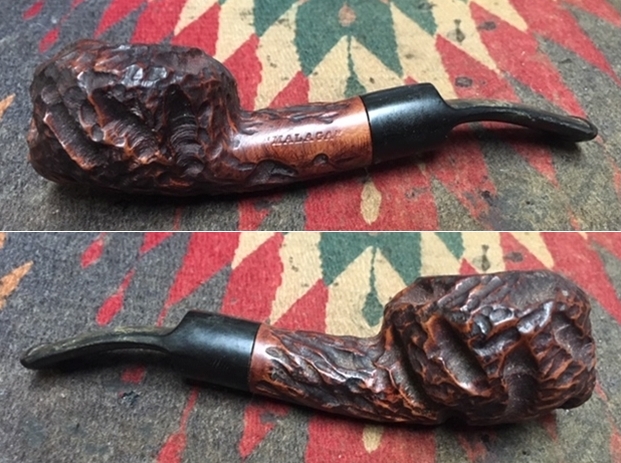
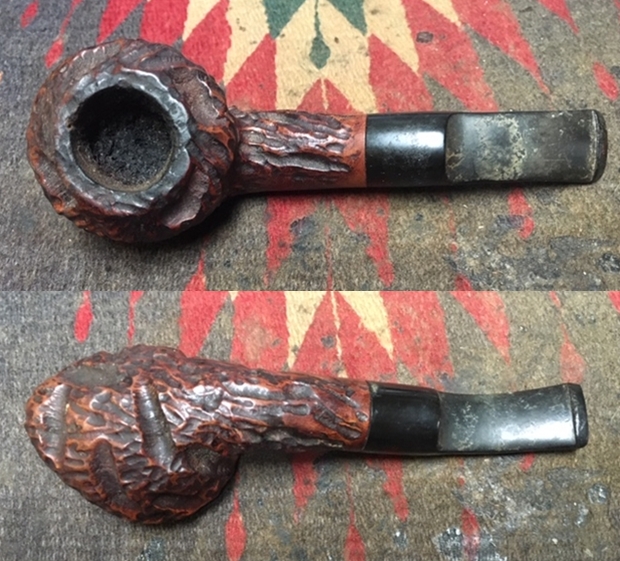
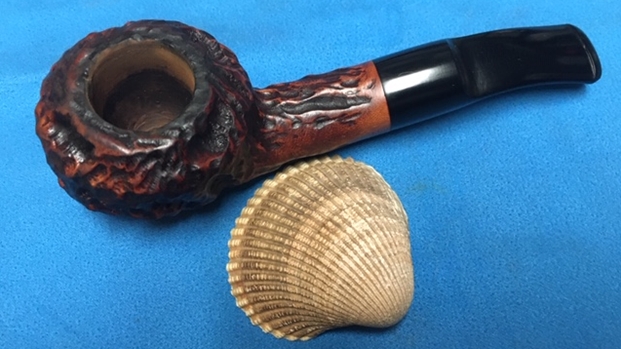
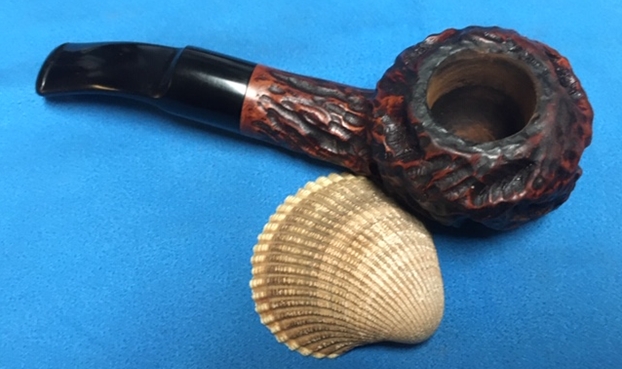
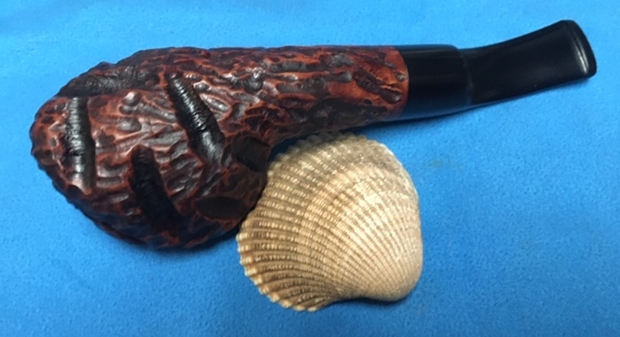
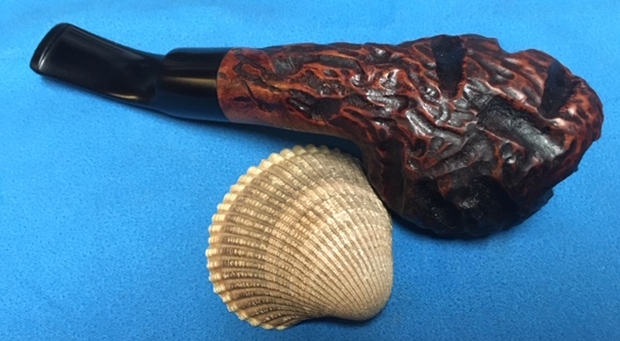
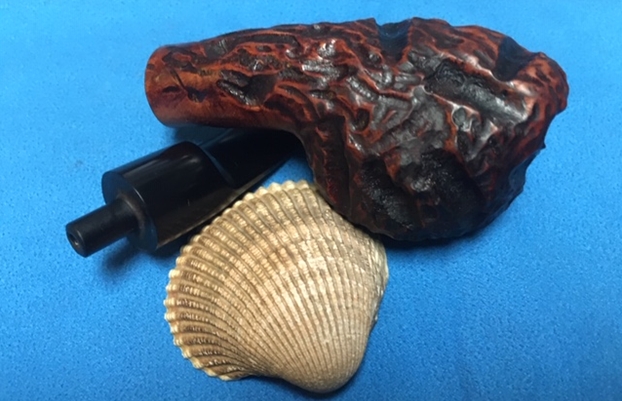
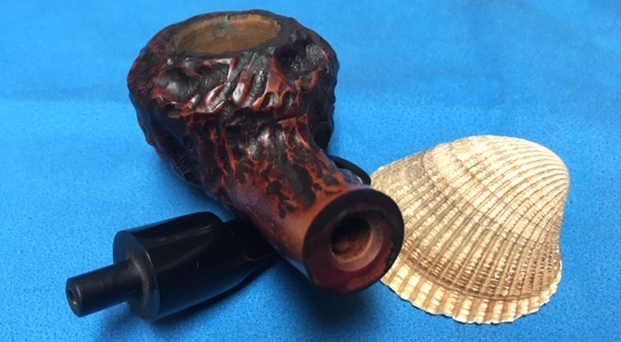
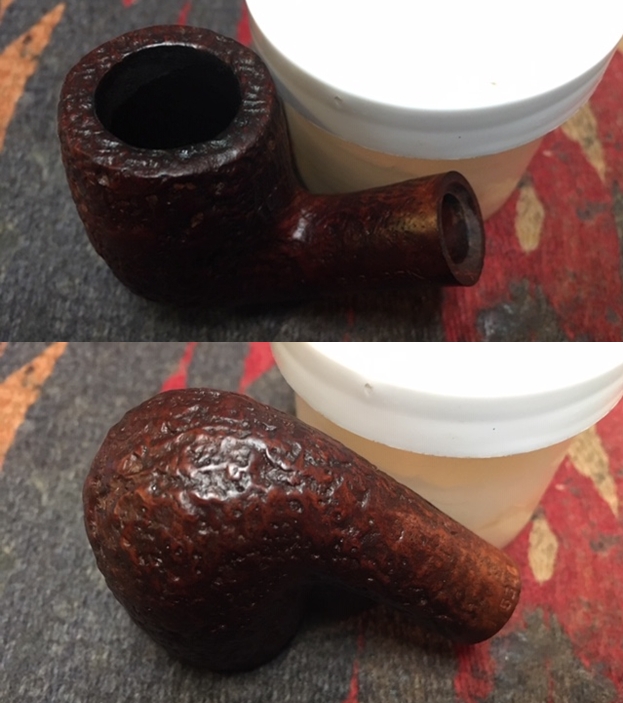
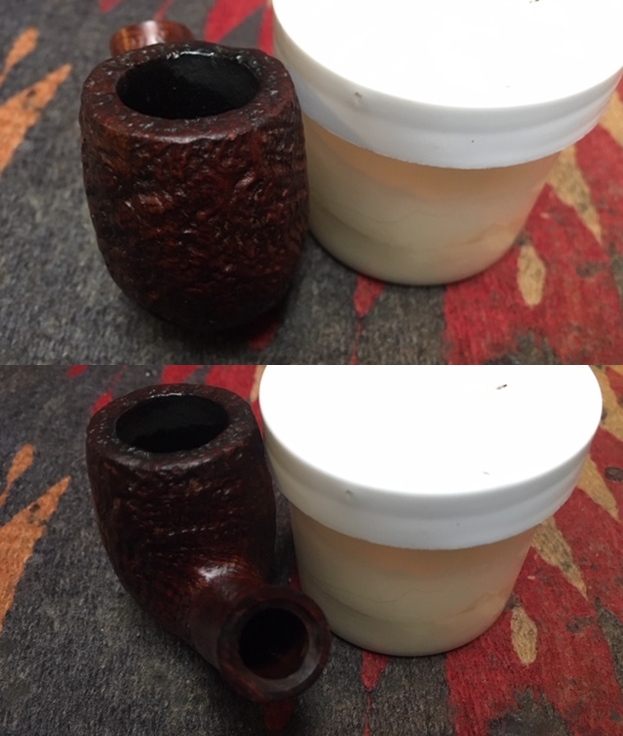
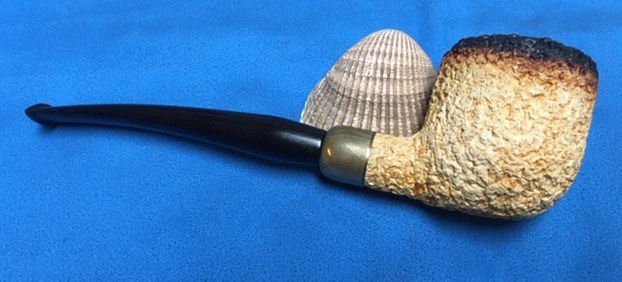
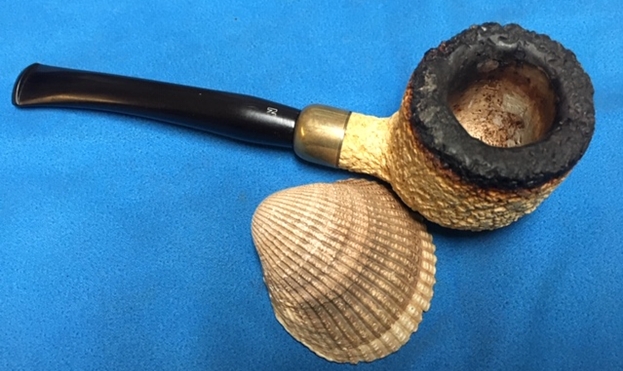
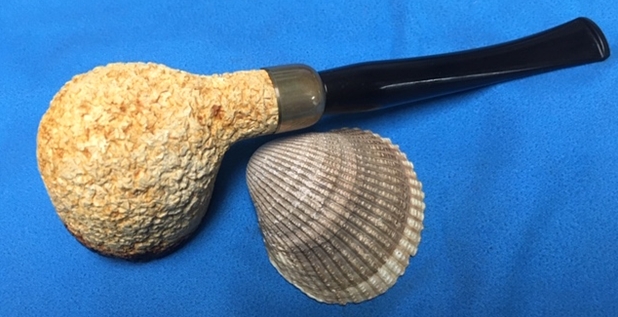
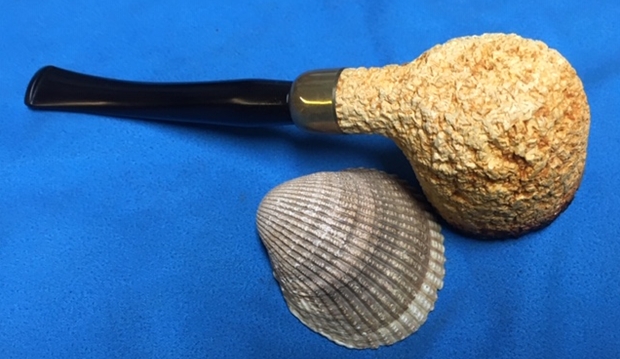
New Life for a Rusticated Malaga Bullmoose for Alex


Blog by Steve Laug

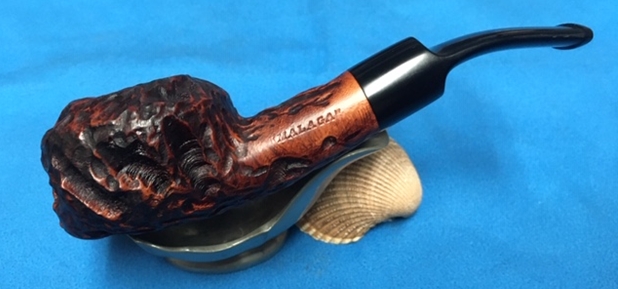
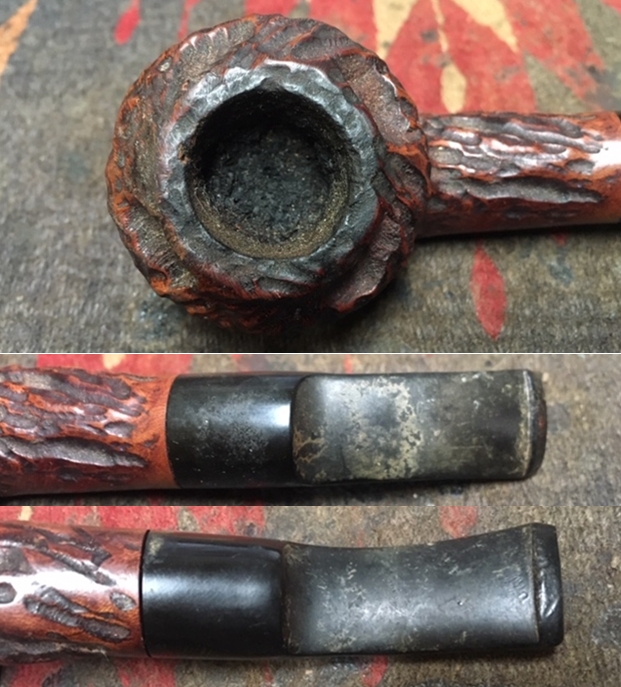
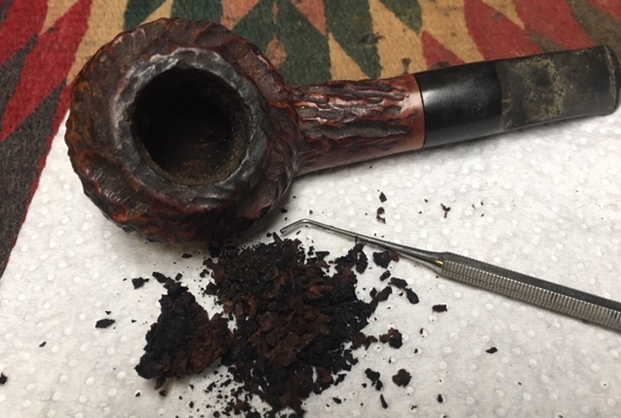
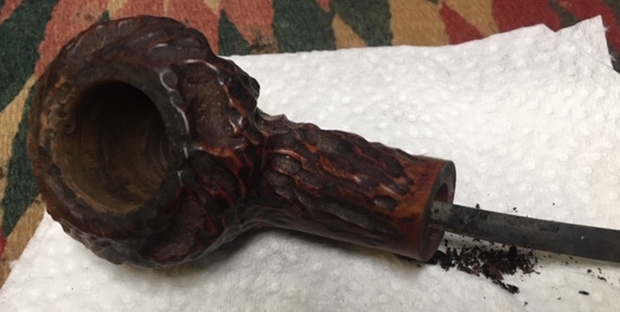
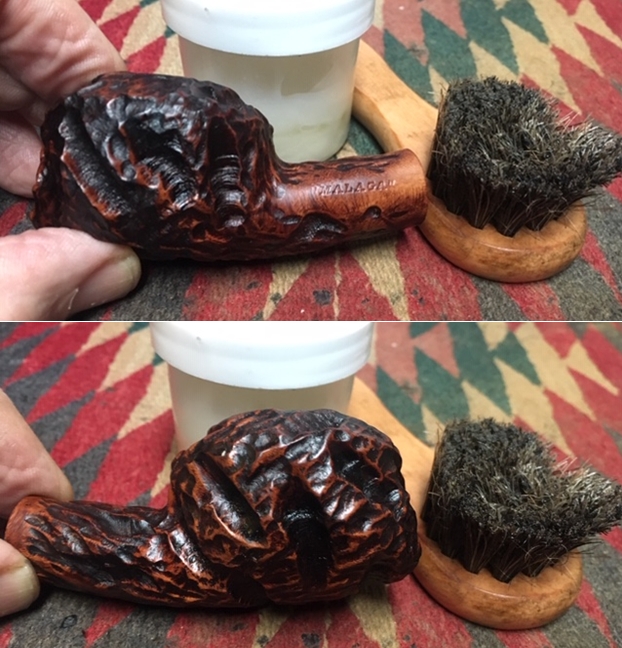
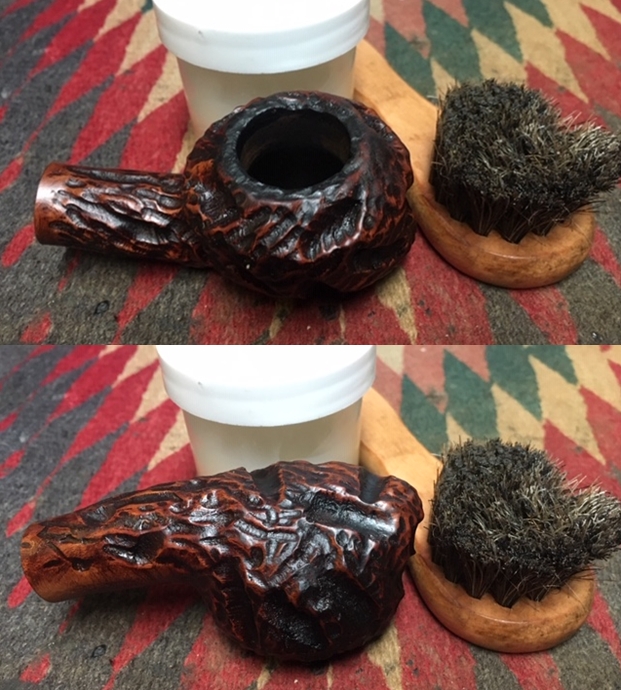
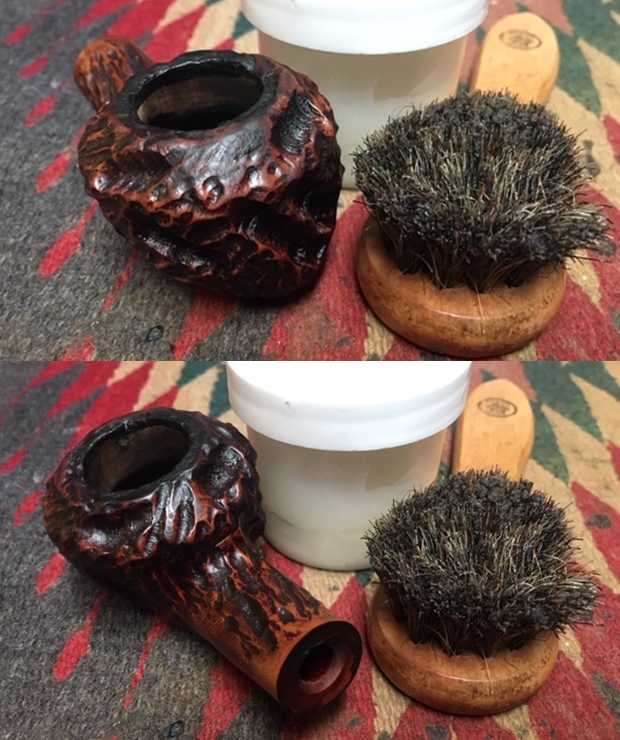
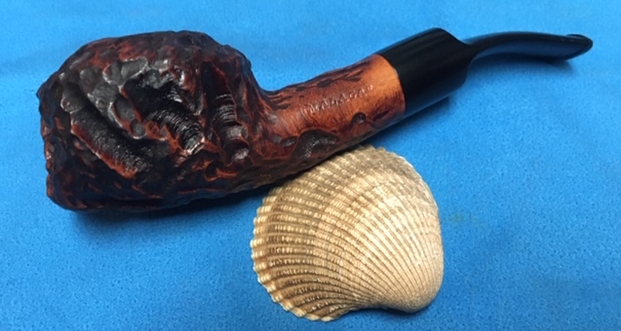
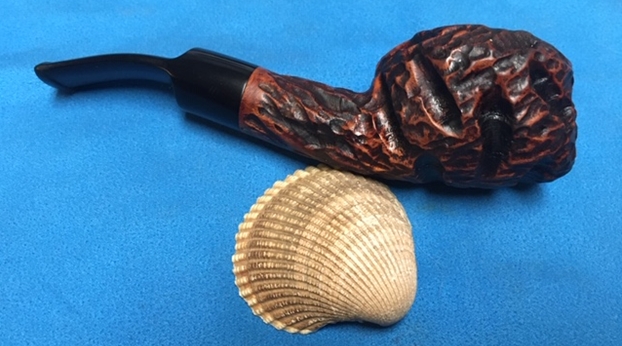
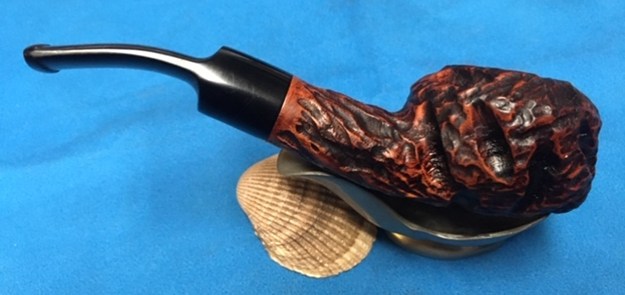
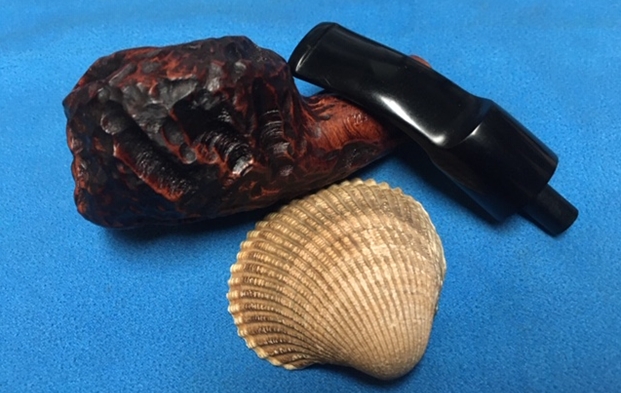
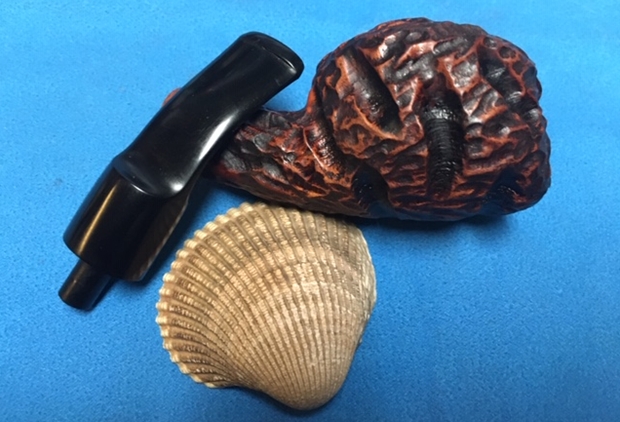
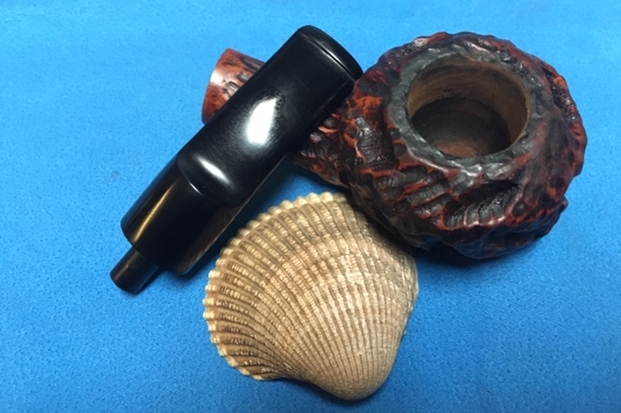
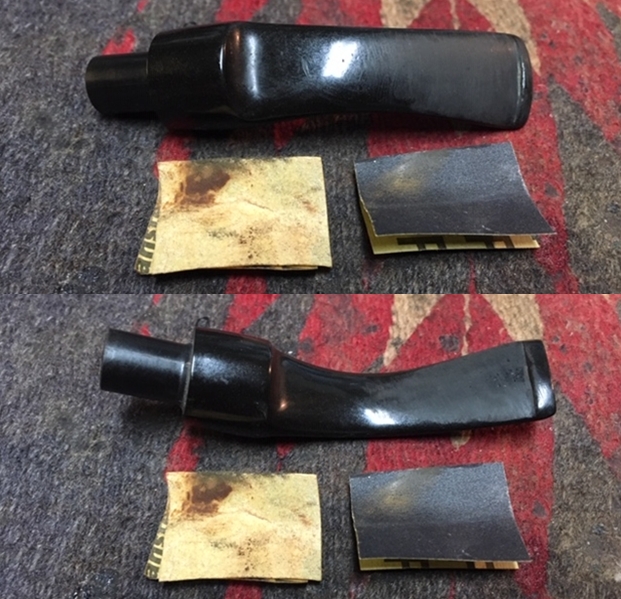
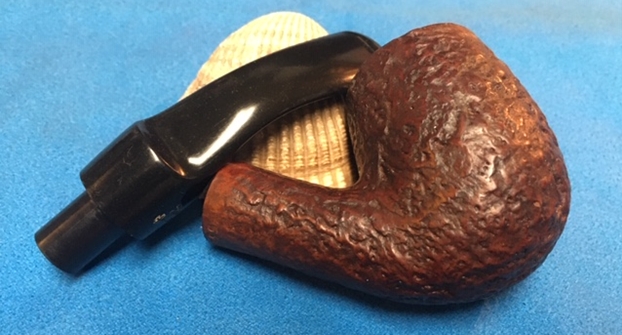
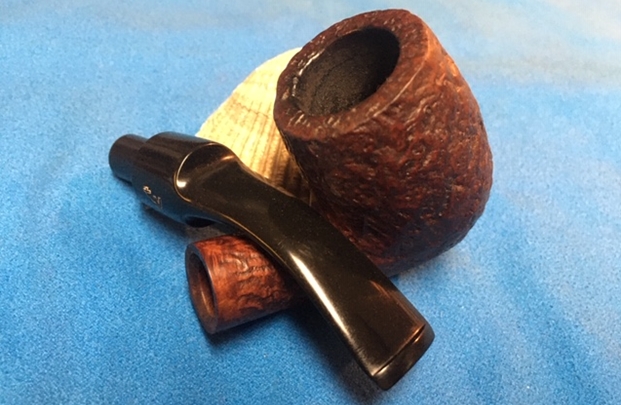
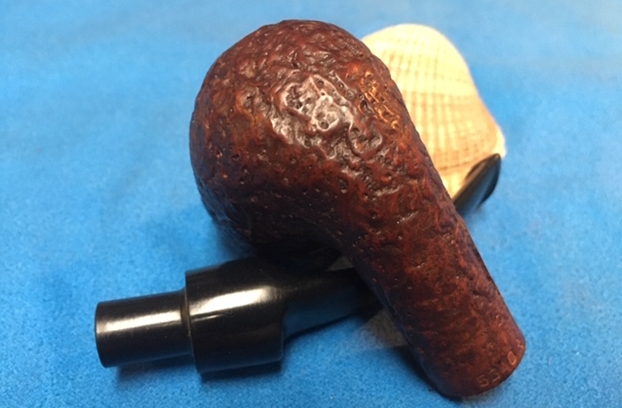
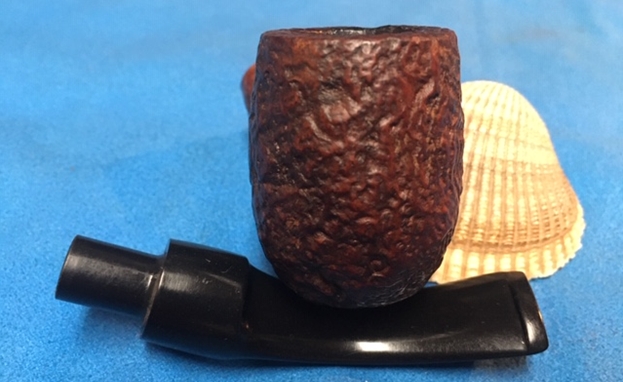
I have been working on a lot of different estate pipes and selling them for different families. I am continuing to work on the Malaga pipes that Alex put aside for restoration. He also brought other pipes to add to his box. I have a box of pipes from Alex that I am always working away at. He periodically drops more Malaga pipes into his box. There are quite a few of them to work on so I decided work on a few of them. The next one of these was another Malaga pipe. It is a rusticated Bullmoose with deeply carved grooves and rustications almost like bark on the bowl and shank of the pipe that really grabbed my attention. It has a vulcanite saddle stem. The pipe was dirty and caked when arrived. The rim top has lava and some darkening on the top edge of the bowl. The bowl had not only a thick cake in the bowl but had the remnants of the previous pipeman’s last smoke inside. The exterior of the bowl and shank are dirty with grime and oils from prolonged use. The stamping on the left side of the shank read “MALAGA” The vulcanite saddle stem was in great condition and had tooth marks and chatter on the top and the underside of the stem. I took photos of the pipe before I started the cleanup work. I took close up photos of the bowl and rim to capture the condition of the pipe before I started my cleanup work. The rim top had some lava and darkening smooth top and a slight nick on the front inner edge. The bowl was half filled with tobacco that had been sitting for a very long time in the bowl. It had hardened. Above the tobacco there was a thick cake in the bowl. Other than being very dirty the pipe was in great condition. The stem was dirty and covered with a thick scum on the surfaces. There was tooth chatter on the top and underside near the button and some tooth marks on the button surface itself.I took a photo to capture the stamping on the shank. The photo shows the stamping “MALAGA” on a smooth panel on the left side of the shank. It is clear and very readable.If this is the first of the Malaga restorations that you have read about then you should know the backstory of the brand. I am including the link to a blog that I wrote that gives some of the history of the Malaga brand and the Malaga Pipe Shop in Royal Oak, Michigan in the USA. I have written an earlier blog to give a little history of the Malaga Brand and the pipemaker, George Khoubesser. Here is the link – https://rebornpipes.com/tag/malaga-pipes/.That blog also includes links to a catalogue and the history of the pipemaker George Khoubesser. Follow the link to get a feel for the brand and the pipemaker.

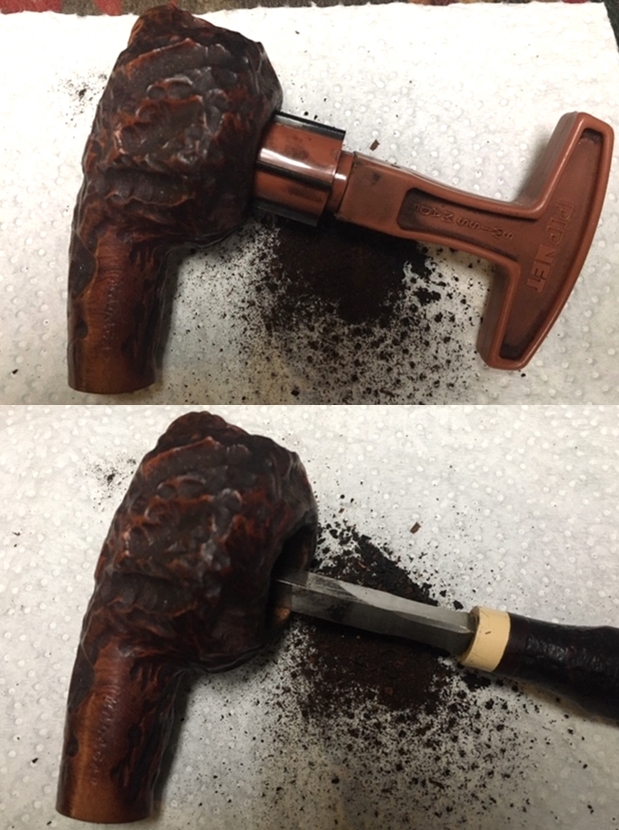
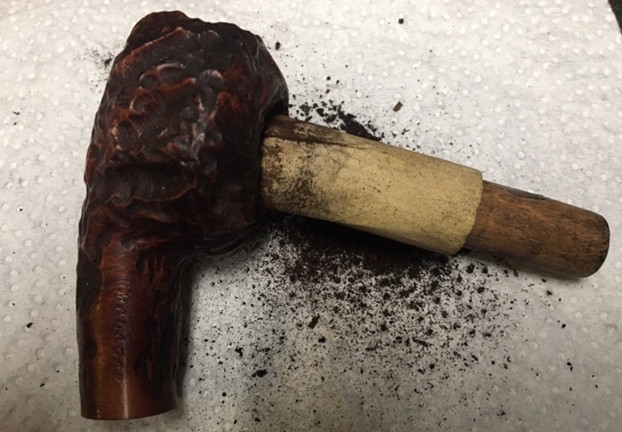
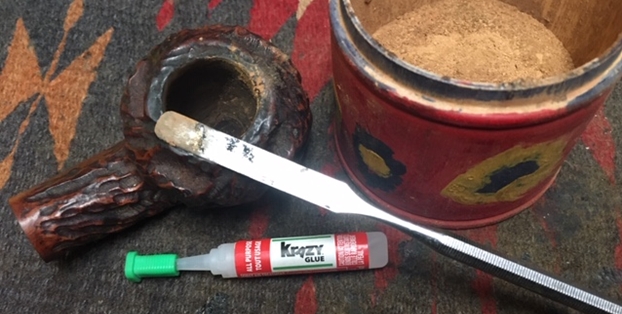
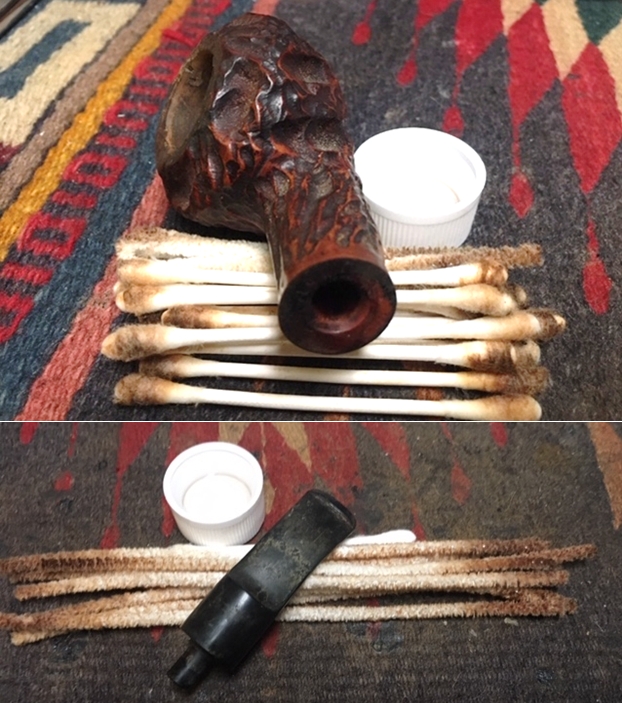
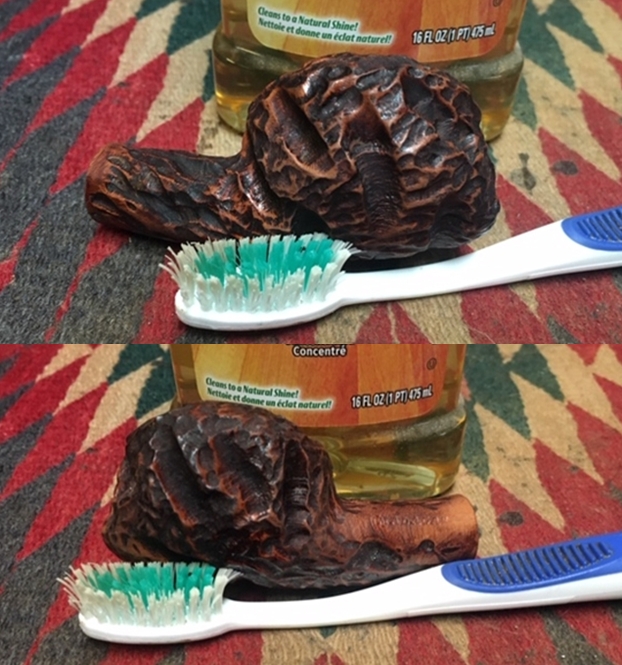
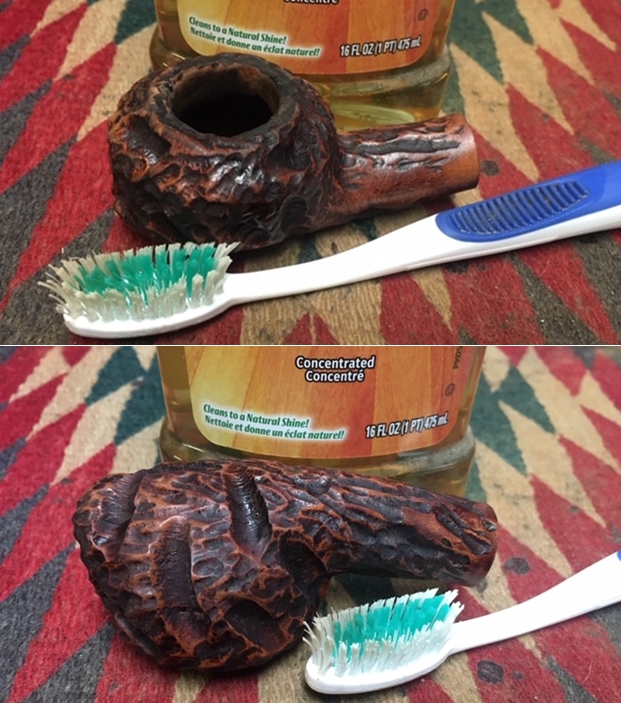
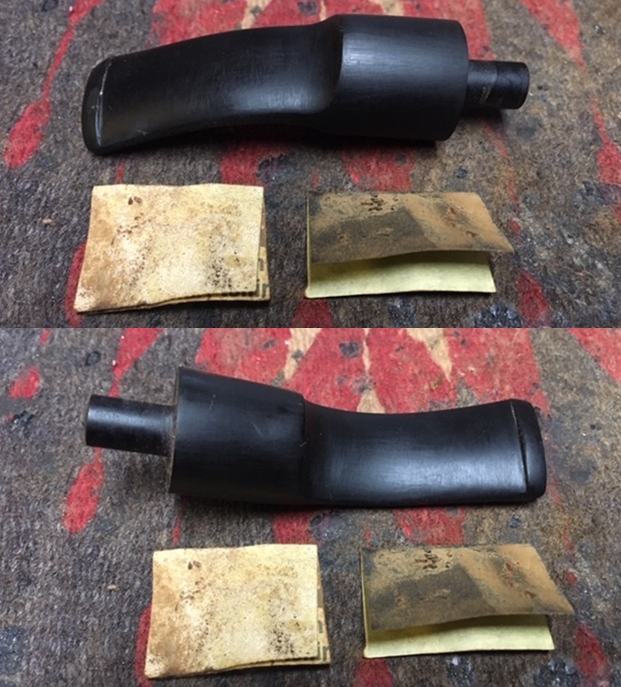
I decided to start with the bowl first. I used a dental pick to remove the remnants of the previous pipeman’s tobacco. The dottle was very hard and dry. It was almost welded to the wall of the bowl and pressed into the hardened cake. I followed Jeff and my regular regimen for cleaning estates. I reamed the light cake in the bowl with a PipNet pipe reaming set to remove the hard cake on the walls. I cleaned it up with a Savinelli Fitsall pipe knife to remove the remnants of the cake. I sanded the bowl with 220 grit sandpaper wrapped around a piece of dowel to smooth out the inside walls of the bowl. I wiped the bowl interior down with a paper towel to remove the debris. I repaired the nick on rim top at the front of the bowl. I filled it in with a drop of clear Krazy Glue and pressed some briar dust into the surface of the glue.I scraped out the mortise and the shank with a pen knife to remove the thick build of tobacco lacquer on the walls. The walls were covered with debris that was thick and hard. I scrubbed the mortise and the airway in the shank and the stem with alcohol, cotton swabs and pipe cleaners. I scrubbed the briar with Murphy’s Oil Soap with a tooth brush. I scrubbed it off with running water to remove the soap and the grime on the bowl. I dried it off with a soft cloth. I worked some Before & After Restoration Balm into the rusticated surface of the briar with my fingertips and a horsehair shoe brush to clean, enliven and protect it. I let the balm sit for a little while and then buffed with a cotton cloth to raise the shine. The photos show the bowl at this point in the restoration process. I set the bowl aside and turned my attention to the stem. I sanded out the tooth chatter with 220 grit sand paper and started to polish it with a folded piece of 400 wet dry sandpaper. Once it was finished it the tooth chatter and oxidation was gone and it began to shine.I polished the stem with Denicare Mouthpiece Polish from a tin of it I have in the drawer here. It is a gritty red paste that I rub on with my finger tips and work into the surface of the stem and button and buff off with a cotton pad. It gives me a bit of a head start on the polishing work plus I have a tin to use up!I polished the stem with micromesh sanding pads – wet sanding with 1500-12000 grit sanding pads. I wiped it down after each sanding pad with Obsidian Oil. I polished it with Before & After Pipe Stem Polish – both Fine and Extra Fine and buffed it off with a final coat of Obsidian Oil. This is an interesting Rusticated “Malaga” Bullmoose with a black vulcanite saddle stem. It has a great look and feel. The shape is very tactile and fits well in the hand. The rustication and grooves make it a unique looking pipe. I polished stem and the bowl with Blue Diamond polish on the buffing wheel. I gave the bowl multiple coats of Conservator’s Wax and the stem multiple coats of carnauba wax. I buffed the pipe with a clean buffing pad to raise the shine. I hand buffed it with a microfiber cloth to deepen the shine. The pipe polished up pretty nicely. The rich oil cured briar took on life with the buffing. The rich brown and black colours of the briar work well with the polished vulcanite stem. The finished pipe has a rich look that is quite catching. Have a look at it with the photos below. The shape, finish and flow of the pipe and stem are very well done. The dimensions are Length: 5 ¾ inches, Height: 1 ½ inches, Outside diameter of the bowl: 2 inches, Chamber diameter: ¾ of an inch. I will be adding the pipe to the finished Malaga pipes that I have set aside for Alex. This will be a great addition to his collection of Malaga pipes. Thanks for walking through the restoration with me as I worked over another Malaga.

New Life for a Malaga Poker/Sitter for Alex


Blog by Steve Laug

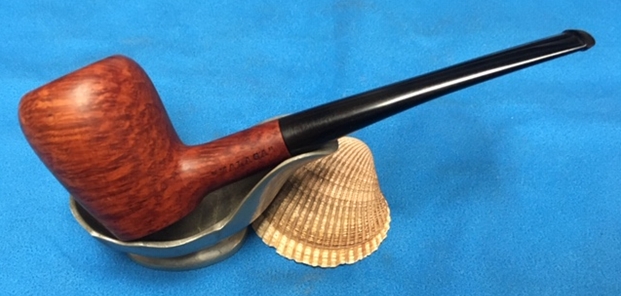
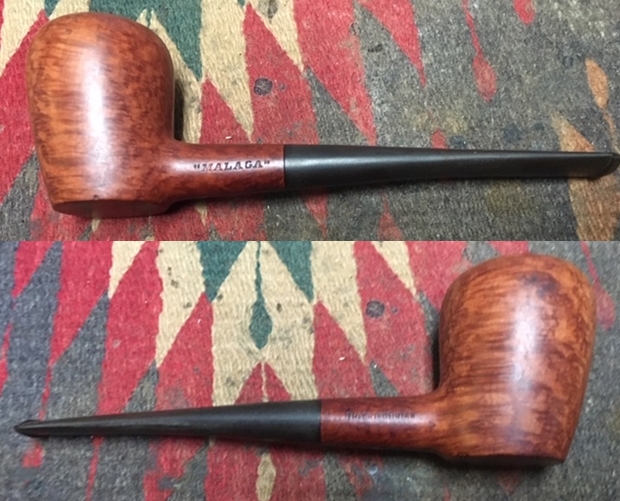
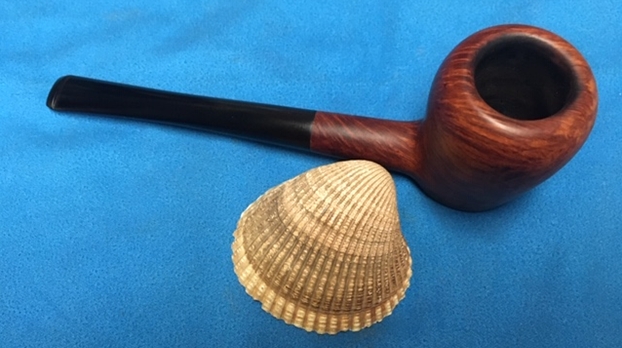
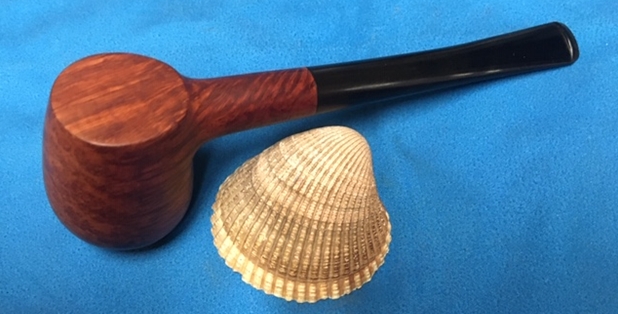
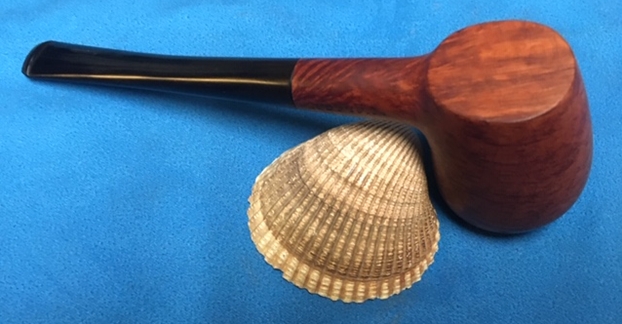
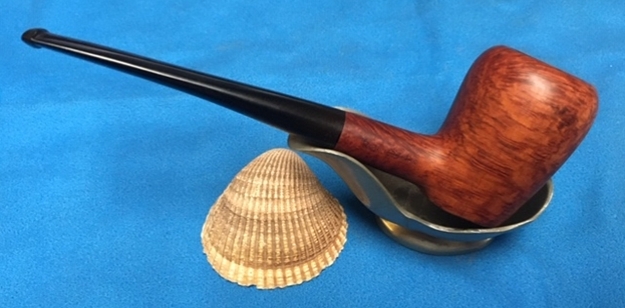
I have been working on a lot of different estate pipes and selling them for different families. I am continuing to work on the Malaga pipes that Alex put aside for restoration. He also brought other pipes to add to his box. I have a box of pipes from Alex that I am always working away at. He periodically drops more Malaga pipes into his box. There are quite a few of them to work on so I decided work on a few of them. The next one of these was another Malaga pipe. It is a beautiful Poker Sitter that is almost pear shaped. It has a very tight grain pattern around the bowl – cross grain on the sides and birdseye on the front and back of the bowl. It also has a tapered vulcanite stem. The pipe was dirty and caked when arrived. The rim top has a little lava and some darkening on the top rear edge of the bowl. The bowl had a thin cake in it that was hard and dense. The exterior of the bowl and shank are dirty with grime and oils from prolonged use. The stamping on the left side of the shank read “MALAGA” and on the right side it read Imported Briar. The vulcanite stem was in great condition and had tooth chatter on the top and the underside of the stem. I took photos of the pipe before I started the cleanup work. I took close up photos of the bowl and rim to capture the condition of the pipe before I started my cleanup work. The rim top had some light lava and darkening on the front and back edge. The inner edge was slightly bevel and was darkened. Other than being so dirty it was in great condition. There was a light hard cake in the bowl interior. The stem was dirty and there was tooth chatter on the top and underside near the button. The stem was also lightly oxidized.I took a photo to capture the stamping on the shank. The first photo shows the stamping “MALAGA” on the left side of the shank is very readable. The second photo shows the stamping Imported Briar on the right side.If this is the first of the Malaga restorations that you have read about then you should know the backstory of the brand. I am including the link to a blog that I wrote that gives some of the history of the Malaga brand and the Malaga Pipe Shop in Royal Oak, Michigan in the USA. I have written an earlier blog to give a little history of the Malaga Brand and the pipemaker, George Khoubesser. Here is the link – https://rebornpipes.com/tag/malaga-pipes/.That blog also includes links to a catalogue and the history of the pipemaker George Khoubesser. Follow the link to get a feel for the brand and the pipemaker.

I decided to start with the issues with the rim top first. I wiped down the rim top of the bowl with a damp cotton pad to remove the tars and lava. I used a folded piece of 220 grit sandpaper to smooth out the burn damage and the darkening on the bevel.I followed Jeff and my regular regimen for cleaning estates. I reamed the light cake in the bowl with a Savinelli Fitsall pipe knife to remove the cake. I sanded the bowl with 220 grit sandpaper wrapped around a piece of dowel to smooth out the inside walls of the bowl.I scrubbed out the mortise and the airway in the shank and the stem with alcohol, cotton swabs and pipe cleaners.I polished the briar with micromesh sanding pads – 1500-12000 grit pads. I wiped the bowl down after each sanding pad with a damp cloth to wipe of the dust. I scrubbed the briar with Murphy’s Oil Soap with a tooth brush. I scrubbed it off with running water to remove the soap and the grime on the bowl. I dried it off with a soft cloth. I worked some Before & After Restoration Balm into the surface of the briar with my fingertips and a horsehair shoe brush to clean, enliven and protect it. I let the balm sit for a little while and then buffed with a cotton cloth to raise the shine. The photos show the bowl at this point in the restoration process. I set the bowl aside and turned my attention to the stem. I sanded out the tooth chatter with 220 grit sand paper and started to polish it with a folded piece of 400 wet dry sandpaper. Once it was finished it the tooth chatter and oxidation was gone and it began to shine.I polished the stem with micromesh sanding pads – wet sanding with 1500-12000 grit sanding pads. I wiped it down after each sanding pad with Obsidian Oil. I polished it with Before & After Pipe Stem Polish – both Fine and Extra Fine and buffed it off with a final coat of Obsidian Oil. This is a beautiful “Malaga” Imported Briar Poker Sitter with a tapered black vulcanite stem. It has a great look and feel. The shape fits well in the hand and sits on the desk when you are resting. The grain makes it a real beauty. I polished stem and the bowl with Blue Diamond polish on the buffing wheel. I gave the bowl and the stem multiple coats of carnauba wax. I buffed the pipe with a clean buffing pad to raise the shine. I hand buffed it with a microfiber cloth to deepen the shine. The pipe polished up pretty nicely. The rich oil cured briar took on life with the buffing. The rich brown colour of the briar works well with the polished vulcanite stem. The finished pipe has a rich look that is quite catching. Have a look at it with the photos below. The shape, finish and flow of the pipe and stem are very well done. The dimensions are Length: 6 inches, Height: 2 inches, Outside diameter of the bowl: 1 ½ inches, Chamber diameter:  ¾ of an inch. I will be adding the pipe to the finished Malaga pipes that I have set aside for Alex. This will be a great addition to his collection of Malaga pipes. Thanks for walking through the restoration with me as I worked over another Malaga.

Cleaning up an English Made Kaywoodie Air-way 707 Diplomat


Blog by Steve Laug

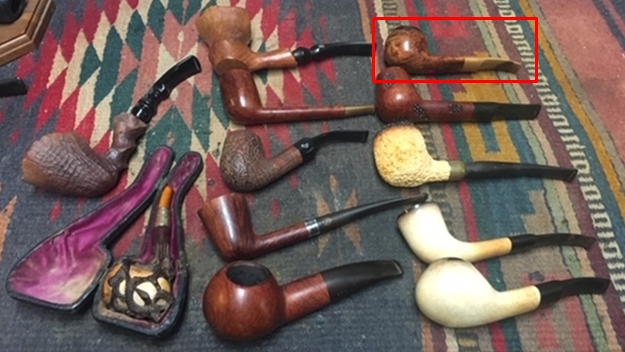
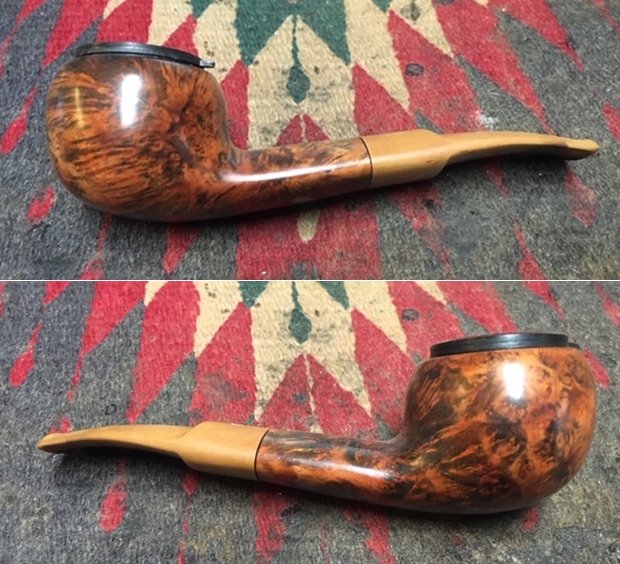
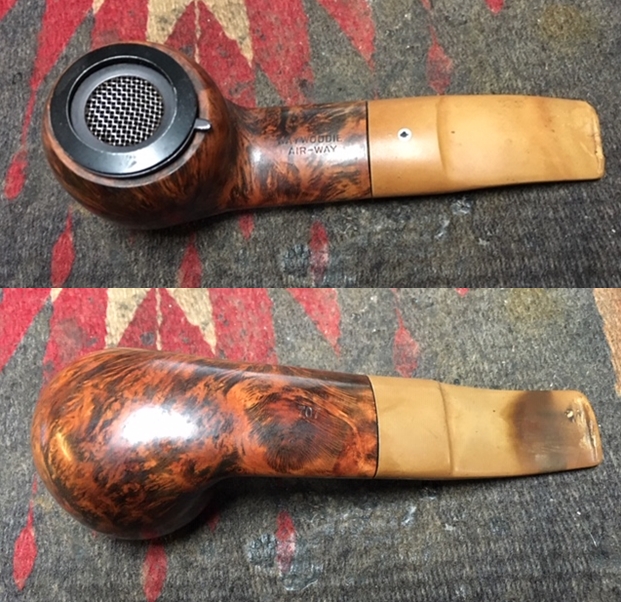
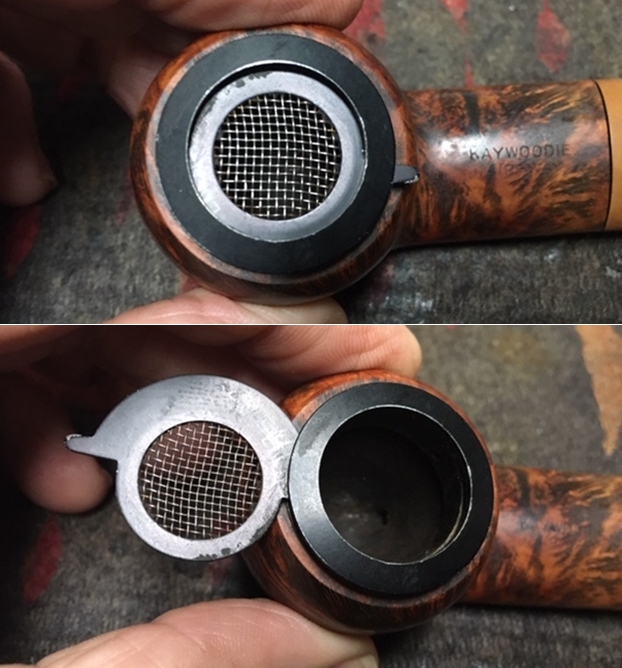
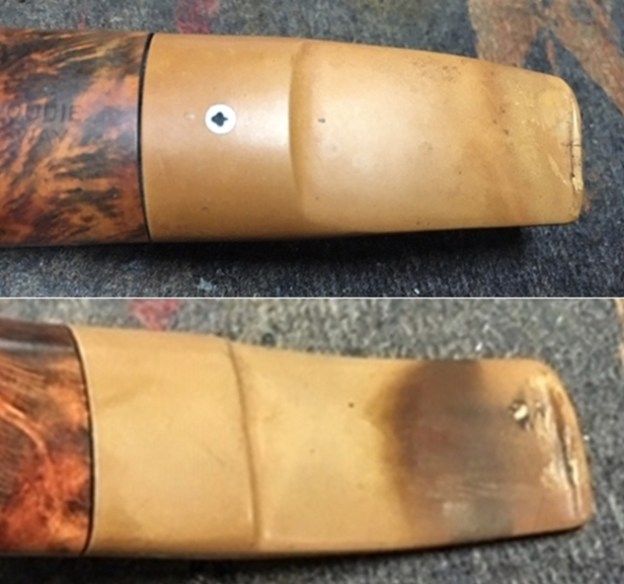
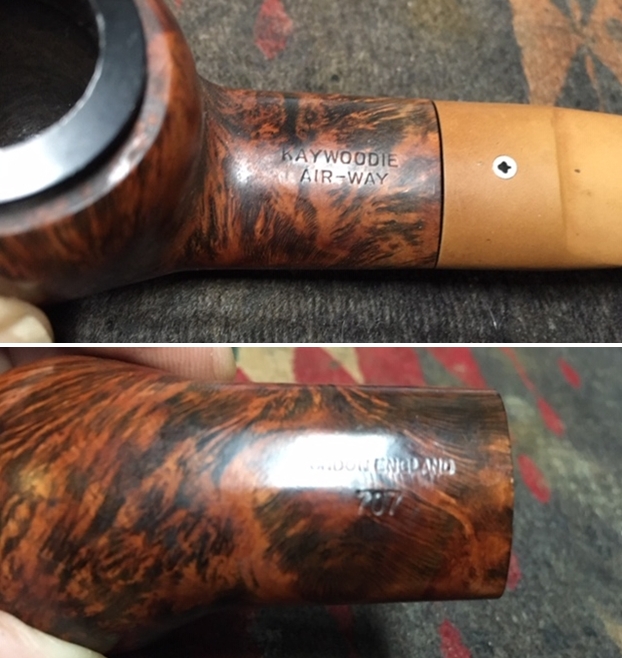
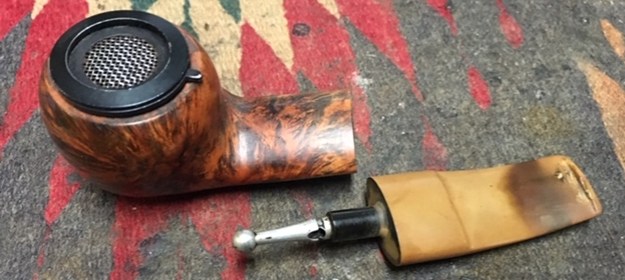
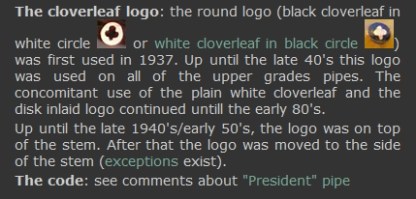
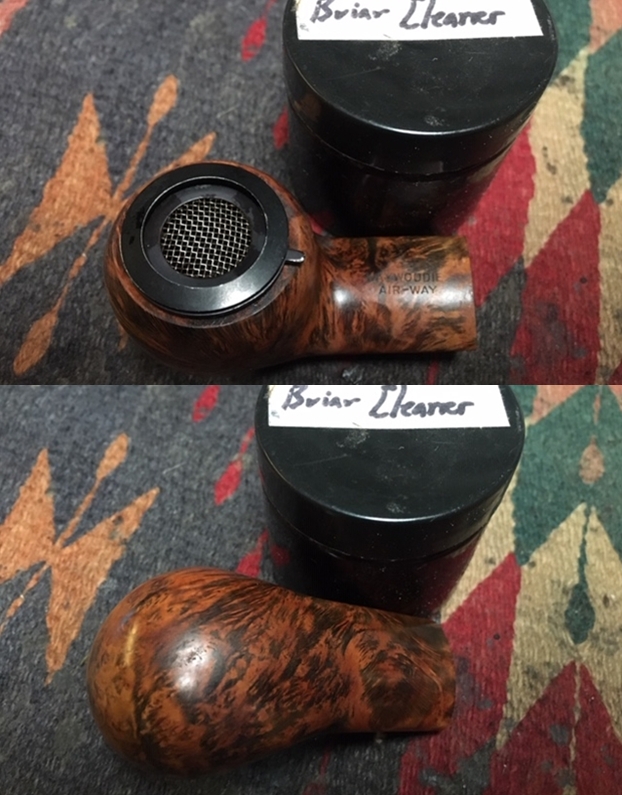
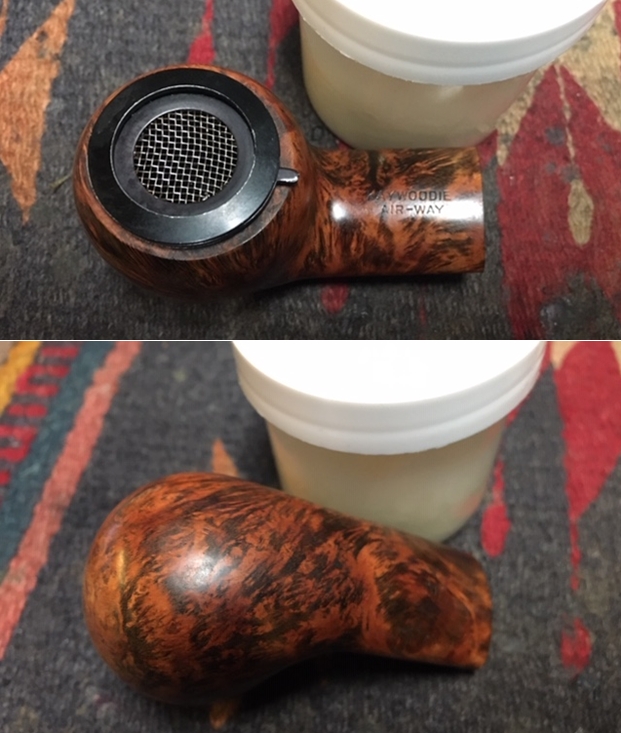
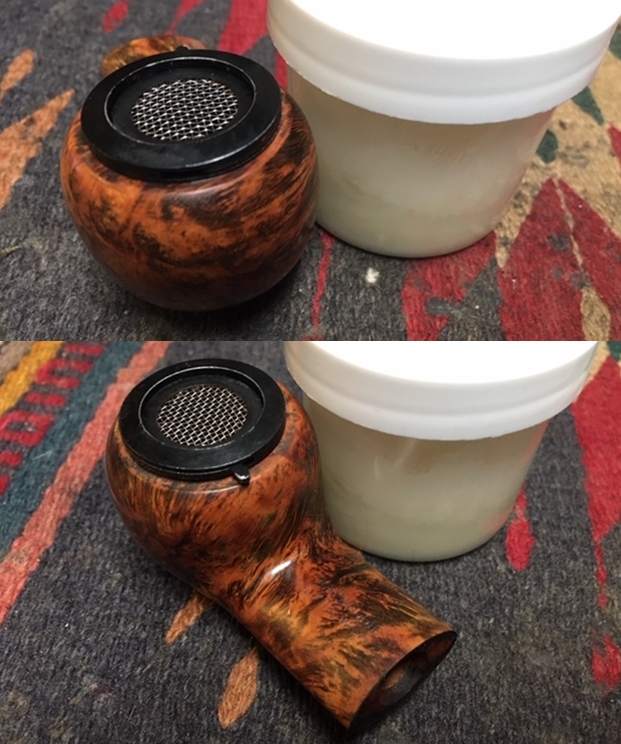
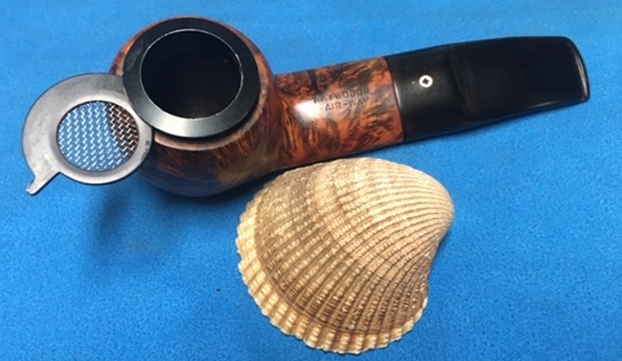
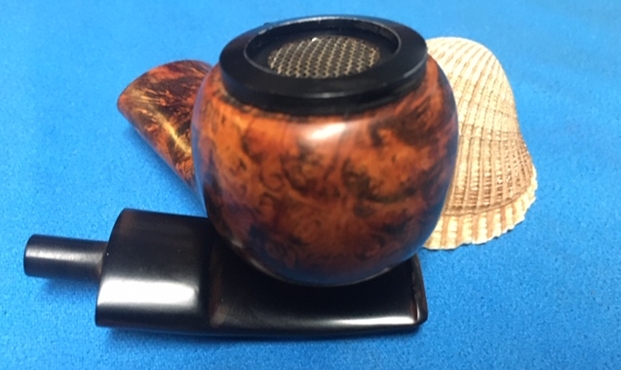
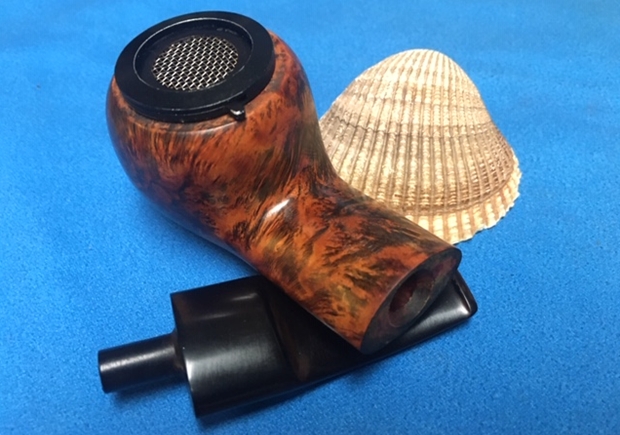
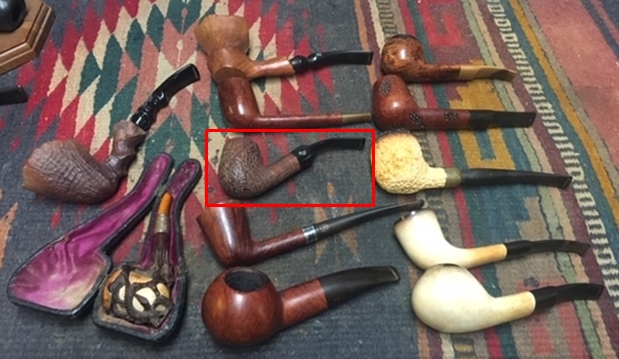
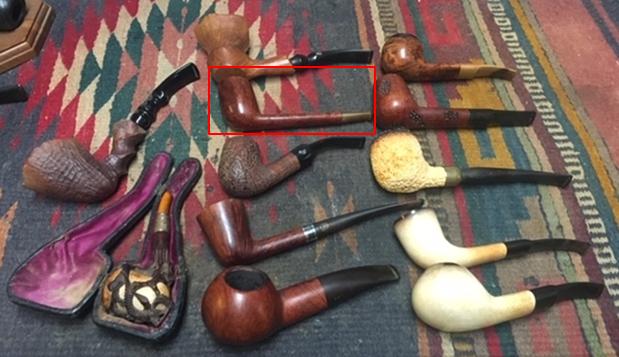
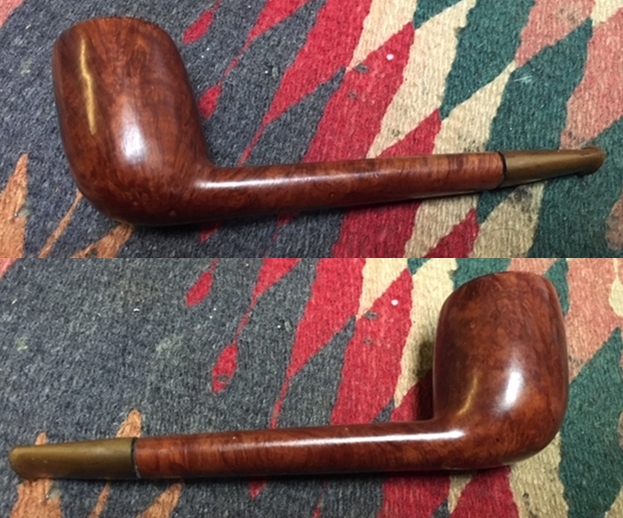
On our recent trip to Alberta we picked up quite a few pipes that were really nice. Some of them were brands we were familiar with and some were pipes that were unknown and unidentifiable. But if you are a pipe hunter you know the feeling when you are holding a particular pipe, no matter what the brand and it just speaks to you. That is what happened with this next pipe. It was in a display case at an antique mall in Edmonton. The shape of the pipe, the wind cap that was an integral part of the rim top and the interesting staining that highlighted some unique grain called my name. The stamping on the top of the shank read Kaywoodie over Air-way and on the underside it was stamped London, England and the shape number 707. It was a shape I had not seen before and the wind cap mechanism was a new one for me as well. The fact that it was an English made Kaywoodie also insure that it was going home with me. I have drawn a red box around the pipe at the top of the column on the right.The grain under the dirty finish was unique and the finish was interesting. The diplomat shape is one that I enjoy smoking and it has a good feel in the hand. The rim top was truly unique. The wind cap was fascinated on the rim top and the screen can be swiveled to the left to open the bowl. The bowl itself had a think cake in the bowl and the inside of the bowl and rim edges looked very good. The finish was dirty but still in good condition under the grime. The vulcanite stem was so heavily oxidized that it was butterscotch colour. It had some tooth marks and chatter on both sides near the button. There were some small cracks and the slot was slightly collapsed on the left side. The Kaywoodie club logo on the top of the saddle stem was a white circle with a black club inside. I took close up photos of the wind screen mechanism on the rim top with it open and closed to show how it worked. You can see the condition of the bowl in the second photo below.I took photos of the stem showing the deep oxidation and tooth chatter on both sides near the button. You can also see the small cracks on the top side of the button. It is thin so it easily was chipped and cracked when clenched.I took some photos of the stamping on the shank. The first photo shows the Kaywoodie Air-Way stamp and the white circle/black club insert on the stem top. The second photo shows the London, England and shape number 707 on the underside of the shank.I took a closer look at the inside of the bowl and took a photo. It was dirty but very lightly caked.I took a photo of the pipe with the push stem removed from the shank. The stinger was different from the usual Kaywoodie stinger. It had a ball on the end of the stinger but no holes in it. There was a ring around the stinger just above the tenon insert and a slotted hole. Before doing cleanup work on the pipe I decided to do some research on the pipe. I looked first on the Pipephil website and found some information on the white circle/black club stamp on the top of the stem. I did a screen capture of the pertinent information on the logo itself (http://www.pipephil.eu/logos/en/logo-kaywoodie.html). From there I learned that the logo was used first in 1937 and up until the late 1940s for the higher grade pipes. Also until the late 40s early 50s the logo was on top of the stem.

There was no other information on the Air-way line on the site and nothing under the section on the London/British made Kaywoodie pipes. That meant I would need to turn elsewhere to find that information. This would be an interesting hunt and restoration.

I turned to Pipedia (https://pipedia.org/wiki/Kaywoodie) and read the section on the rough outline on the history of the brand that links the brand with the English section of the company. I quote:

Again, demand for KBB pipes and especially Kaywoodie prompted another move for both the manufacturing facilities and the corporate offices. In 1930 the corporate office moved into the Empire State Building on Fifth Avenue in New York. By 1935, the manufacturing operations moved from Union City to 6400 Broadway in West New York, New Jersey which, at the time, was touted as the largest pipe making facility in the world. At the height of production, there were 500 employees producing up to 10,000 pipes per day.

The corporate offices were relocated in 1936 to the International Building, Rockefeller Center, 630 Fifth Avenue, New York. The invitation to visit the new office reads, “Kaywoodie is now on display at the world’s most famous address – Rockefeller Center. Here Kaywoodie takes its place among the leaders of industry and commerce.” The move to Rockefeller Center coincided with The Kaywoodie Company’s emergence as a subsidiary of KBB. All of the pipes manufactured by KBB including the Yello-Bole line were also on display here. By 1938 Kaywoodie had opened an office in London to meet worldwide demand. Kaywoodie of London was jointly owned with another famous pipemaker, Comoy’s of London.

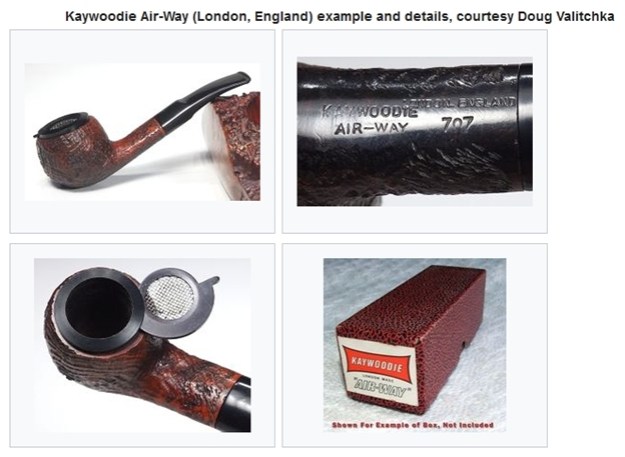
I am also including a screen capture of a picture of a pipe that is the same shape as the one that I am working on. Thanks to Doug Valitchka for the photo.From there I turned to a link on the article to a section called Guide to Kaywoodie Pipes (https://pipedia.org/wiki/Collector%27s_Guide_to_Kaywoodie_Pipes#NOTES_ON_.22OTHER.E2.80.9D_KAYWOODIE_PIPES).  It gave some pertinent information on the Air-way line. I quote two sections from that article below. I have highlighted the Air-way brand name in the second paragraph.

English Kaywoodies. All of the catalogs reviewed in this research contained the following copyright notification: Printed in U.S.A., Kaufmann Bros. and Bondy, Inc., New York and London. Kaywoodie Pipe cases and smoker’s accessories were also marked with “New York and London”. The catalogs, however, do not present any information concerning Kaywoodie’s London operations, or how the English Kaywoodies might have differed from those manufactured and marketed in the U.S. Lowndes notes that he has several English Kaywoodies acquired in

Vaduz and Zurich. English Kaywoodies are now made by Oppenheimer pipes. Lowndes notes that English Kaywoodies with the “screw-in bit” come in Ruby Grain, Custom Grain, Standard, and Relief Grain grades. The traditional push-bit models come in Continental Plain and Relief, London Made, Minaret, Air-way Polished No. 707, and Lightweight grades. Prices in 1985 ranged from 9.50 (pounds) to 26.00 (pounds). Lowndes notes that the Super Star was a special edition English Kaywoodie made of finest briar with a handmade silver band. Lowndes has two: one from Zurich with a large white-outlined logo, and beautifully cased; and one in walnut finish with the black-­in-white logo. A recent catalog shows the Super Star without a band and the ordinary small white logo. A 1985 letter from Oppenheimer states that the black-in-white logo has been discontinued and only the regular white logo is now used.

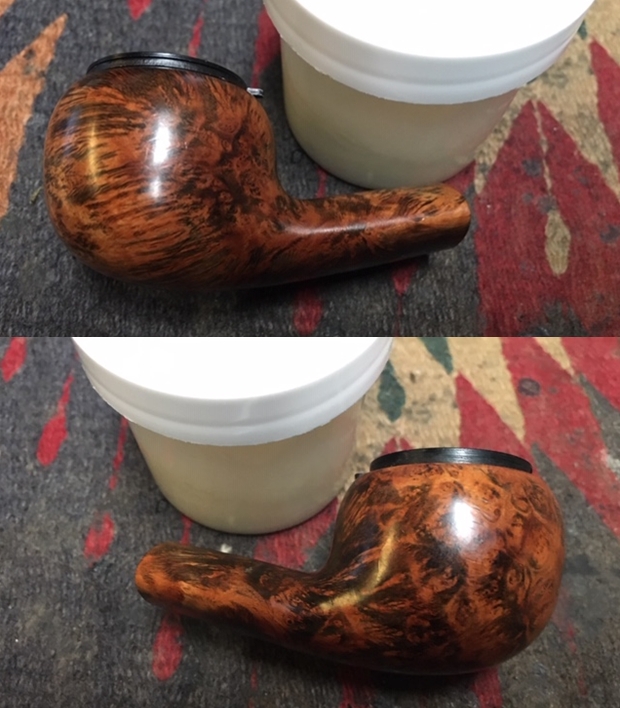
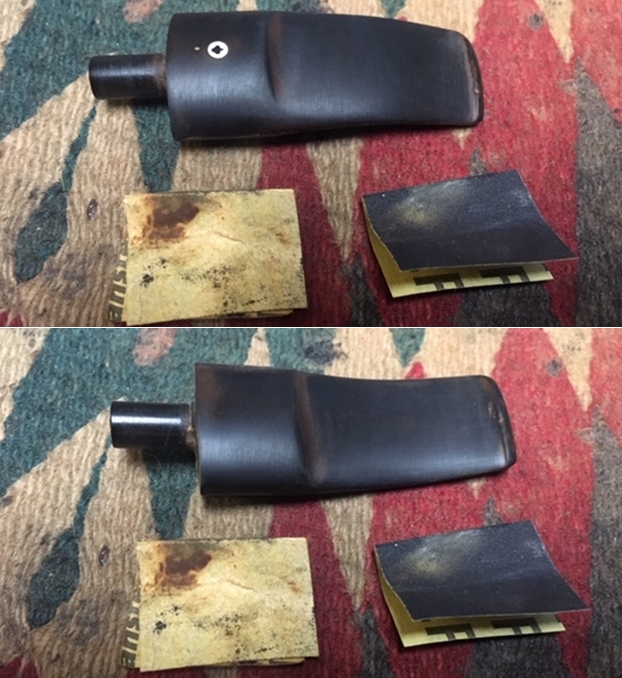
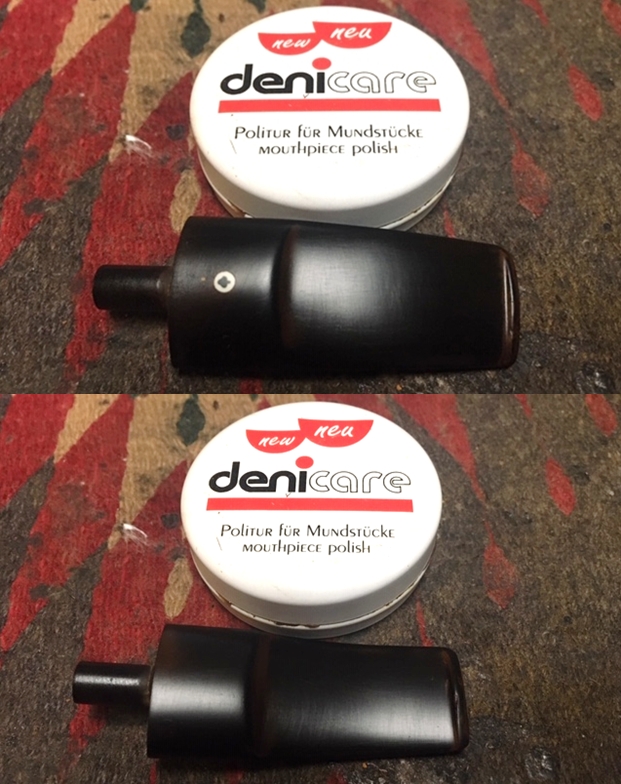
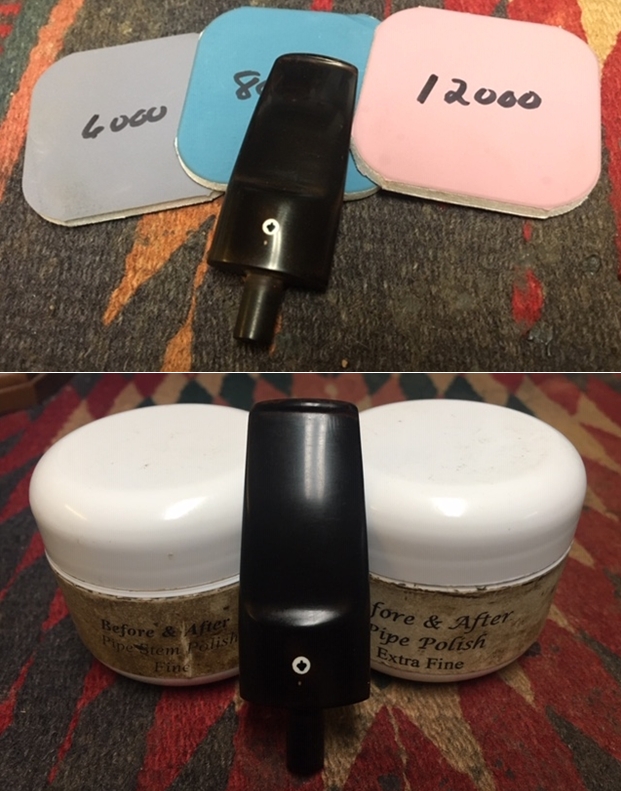
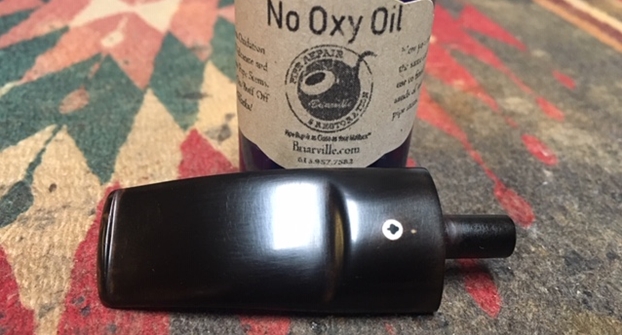
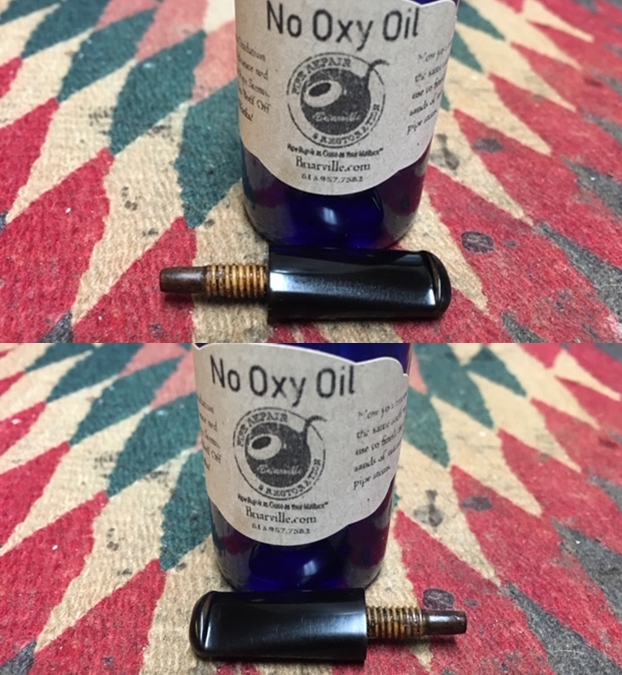
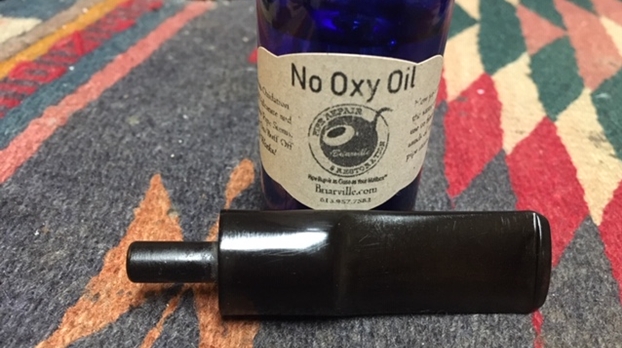
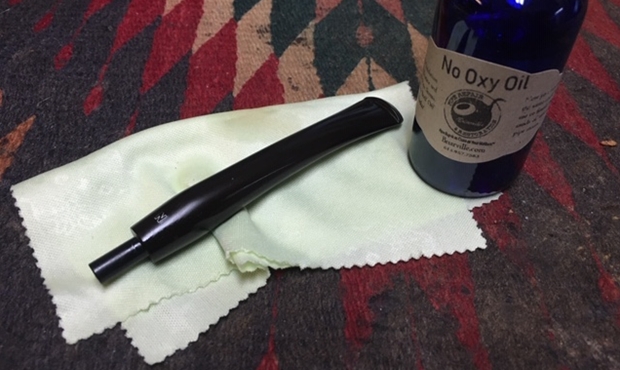
From that information I now knew that the pipe in hand was made prior to 1985 in London by Oppenheimer. It had a traditional push-bit rather than the threaded screw in bit. After 1985 Oppenheimer discontinued the black in white logo. It was time to work on the pipe now. I scraped the shank with a pen knife to remove the tarry buildup that did not allow the stem to seat properly. I cleaned out the mortise and the airway in the shank and the stem with alcohol, cotton swabs and pipe cleaners. I took some close up photos of the cleaned button and slot to show how it had a crack and had been collapsed slightly on the left side of the top.I scrubbed the exterior of the bowl with Before & After Briar Cleaner. I worked it into the surface of the briar with my finger tips and let it sit for a short time to absorb the grime. I rinsed it down under warm water to remove the grime debris that was collected in the cleaner. At the same time I used a tooth brush to scrub out the inside of the bowl and rinsed it. I dried the bowl off with a soft cotton cloth and lightly polished it. I worked some Before and After Restoration Balm into the surface of the briar. I rubbed it into the briar to restore, preserve and polish the briar. I let it sit on the bowl for about 10 minutes and buffed it off with cotton cloth. It was getting late so I set the polished bowl aside for the night and put the stem into a bath of Before & After Pipe Stem Deoxidizer to soak overnight. In the morning I would take it out and start working on the stem.I took it out of the bath in the morning and wiped it down with a microfiber cloth. Much of the oxidation on the surface came off. I used a Scotch Brite pad to scrub off the oxidation. You can see from the photos that some still remained.I put it back in the bath overnight again to see what would happen. When I took it out it looked better but there was still a lot of work to do with it.I decided to address the damaged button on the top edge. The top edge of the button had collapsed partially into the slot. There were small cracks on the surface. I have used clear super glue in the past to address this but I had an idea for an experiment. I heated the blade of a dental spatula and inserted it into the slot. I repeated the process several times until I had the slot opened and lined up. I touched the heated blade to the cracks on the top of the button and stem and to the tooth mark on the underside. The tooth marks disappeared and the cracks were sealed with the heat welding the pieces together. Whereas before the repair I could not insert a pipe cleaner, I now could slide it in and out with ease.I sanded the stem surface with 220 grit sandpaper to remove the oxidation and tooth chatter. I started polishing it with 400 grit sandpaper to remove the scratches.I polished the stem surface with Denicare Mouthpiece Polish to polish out the scratches left behind by the sandpaper. It also works well to remove stubborn oxidation in the saddle and along the edge of the button. It worked really well to remove the oxidation and leave the stem looking far better.I polished out the remaining scratches in the stem material with micromesh sanding pads. I wet sanded with 1500-12000 grit sanding pads. I wiped down the stem after each pad with some Obsidian Oil. Once I used the last pad – 12000 grit – I polished the stem with Before & After Pipe Stem Polish, both Fine and Extra Fine. I used a new product I am trying for Briarville called No Oxy Oil to give the stem a final wipe down and polish. I put the stem back on the pipe and polished both pipe and stem with Blue Diamond on the buffing wheel. I avoided the wind screen with the buffing wheel. I gave the pipe several coats of Carnauba Wax and buffed it with a clean buffing pad to raise a shine. I hand buffed it with a soft cotton cloth to deepen the shine. The finished pipe is shown in the photos below. The original stain looks really good and the polishing brought the grain back to life. The contrasting rich brown finish highlight the grain and contrasts well with the black vulcanite stem. The Air-way Diplomat is a beautiful pipe that really has the look of an English made pipe. The tie to Oppenheimer is clear in looking at the shape of the pipe and the finish. The black metal wind screen with the flip screen cover is unique and seems very functional. The dimensions of the pipe are – Length: 4 ¾ inches, Height: 1 ½ inches, Outside diameter of the bowl: 1 ½ inches, Chamber diameter: ¾ of an inch. I left the stinger out of the shank because I plan keeping this unique English made Kaywoodie for my own collection. It tics all the boxes for me – shape, finish, grain, etc.  I am looking forward to loading a bowl in it and enjoying a great smoke. I will carry on the legacy! Thanks for reading the blog.


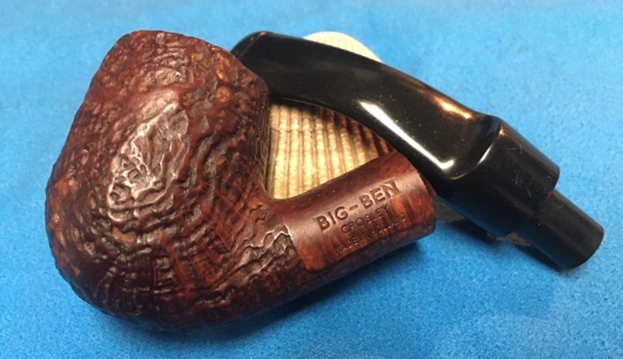
A Quick Cleanup of a Big Ben Crosley Sandblast Bent Billiard


Blog by Steve Laug

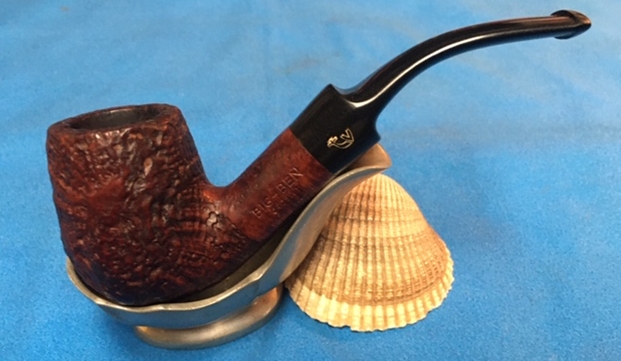
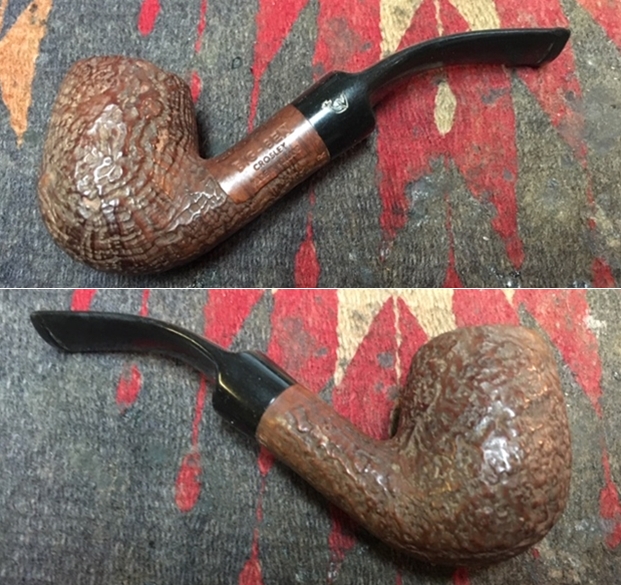
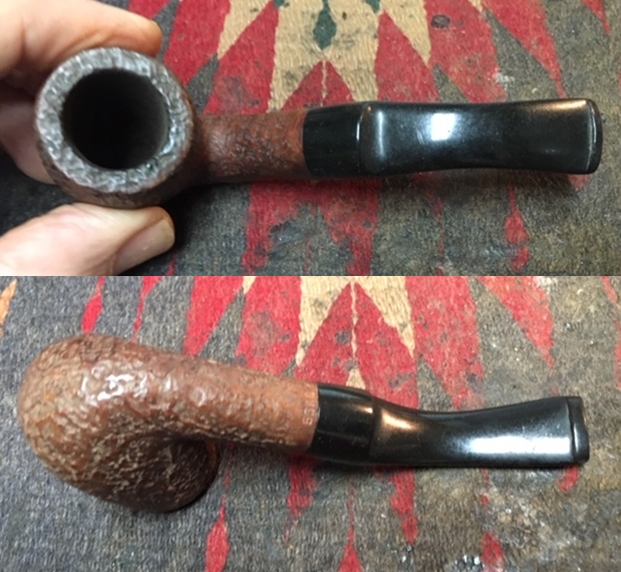
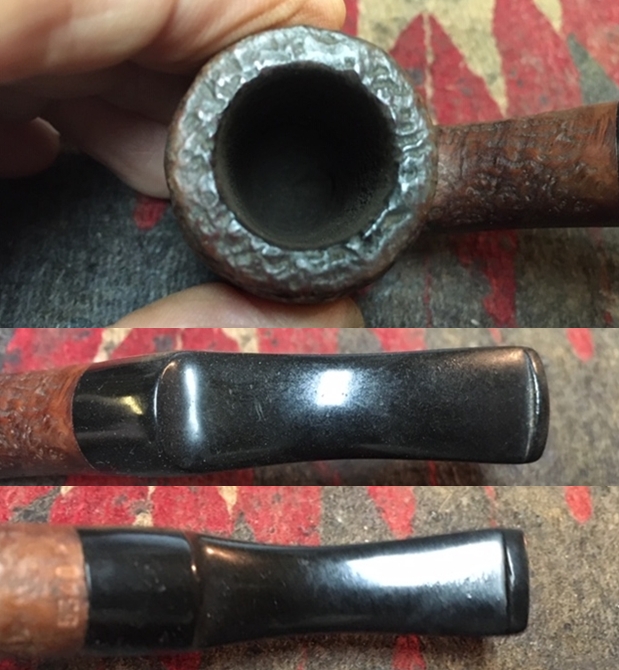
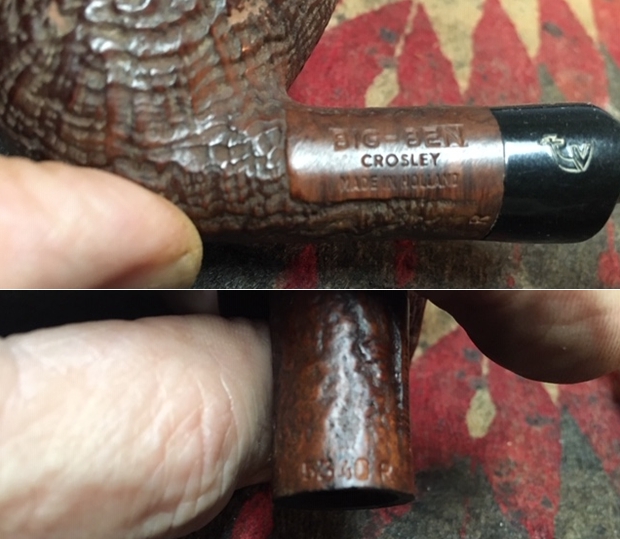
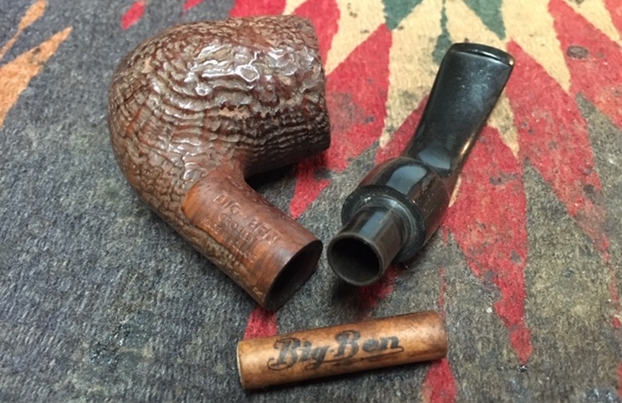
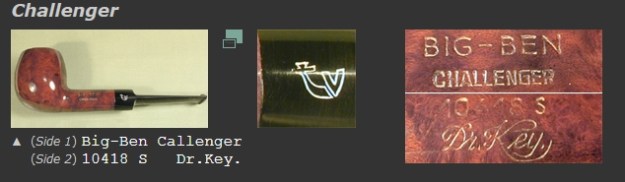
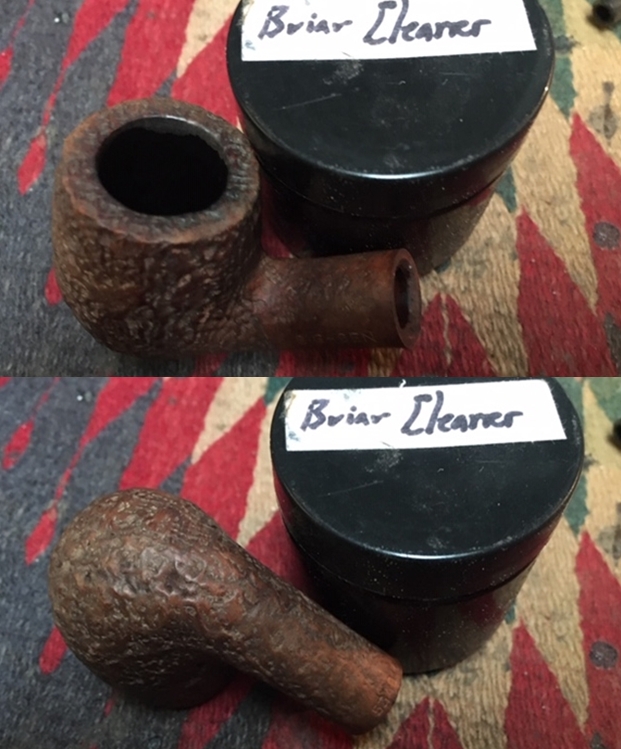
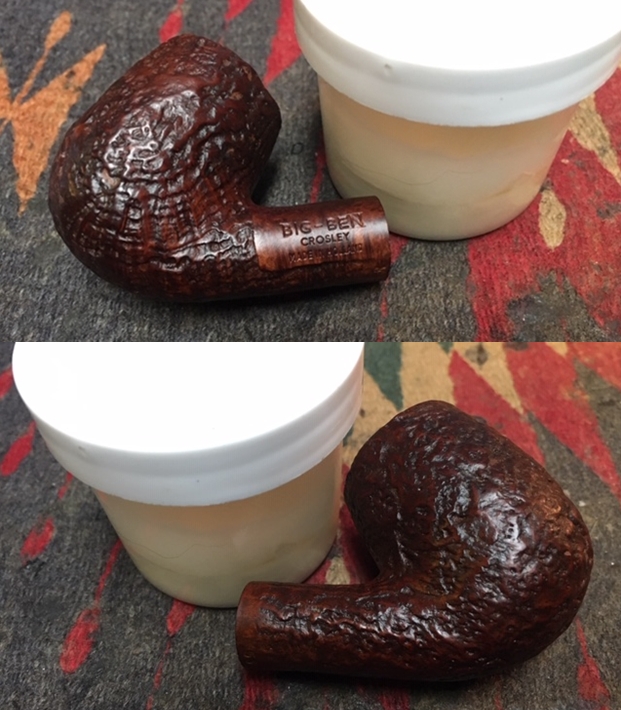
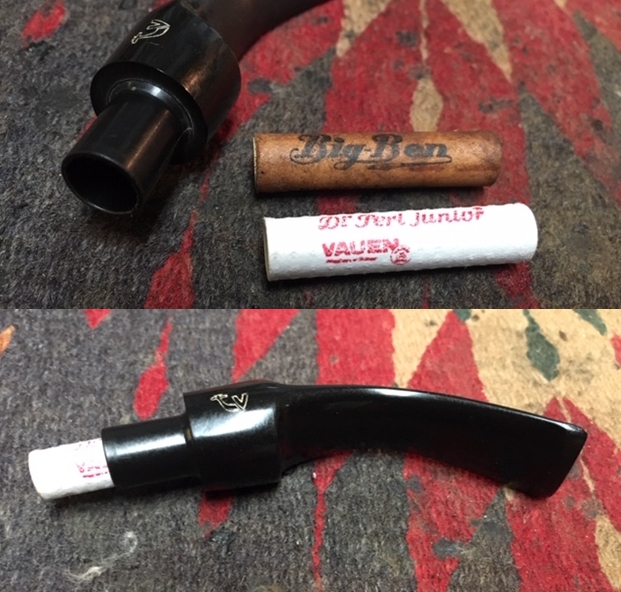
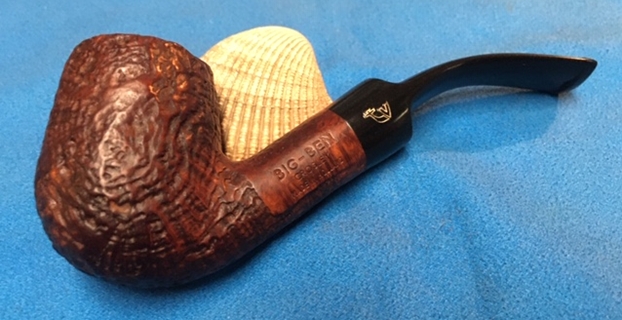
The next pipe on the table is another one from our recent trip to Alberta. In the lot of pipes that we picked up there were a lot of interesting pieces that were new to me. Some of them were brands we were familiar with and some were pipes that were unknown and unidentifiable. But if you are a pipe hunter you know the feeling when you are holding a particular pipe, no matter what the brand and it just speaks to you. That is what happened with this next pipe. It was in a display case at an antique mall in Edmonton. The shape of the pipe, the rugged sandblast and the contrasting brown stains that highlighted some unique grain called my name. The stamping on a smooth panel on the left side of the shank read Big Ben over Crosley over Made in Holland and on the underside at the stem shank union it was stamped with the shape number 534CR. It had a craggy sandblast that was quite stunning. I have drawn a red box around the pipe at the top of the column on the right.The grain under the dirty sandblast finish was a combination of swirls and birdseye. The rim top was very clean and there was no cake in the bowl. The inner and outer rim edges looked very good. The finish was dirty but still in good condition under the grime. The high grade vulcanite stem was clean and there was a TV logo in gold on the stem. It had some tooth marks and chatter on both sides near the button. I took photos of the pipe before I started my cleanup work. I took photos of the rim top and bowl to show the condition of the pipe when I started. It looked amazingly good. I also took photos of the stem showing the light oxidation and tooth chatter on both sides near the button.I took some photos of the stamping on the shank. The first photo shows the Big-Ben Crosley Made in Holland stamp and the white TV stamp on the left side of the  saddle stem. The second photo shows the shape number 534CR on the underside of the shank at the stem/shank junction.I took the stem off the shank and there was a 9mm filter in the shank. The photo shows the 9MM tenon and the dirty Big Ben Filter that was still in the pipe. You can also see the tooth chatter on the underside of the stem and the grime in the grooves of the deep sandblast on the side of the bowl. Before doing cleanup work on the pipe I decided to do some research on the pipe. I looked first on the Pipephil website and found some information on the TV stamp on the left side of the saddle stem. I did a screen capture to show the same logo on a Big Ben Challenger pipe (http://www.pipephil.eu/logos/en/logo-bigben.html#challenger). There was no listing for the Big-Ben Crosley line.I turned to Pipedia (https://pipedia.org/wiki/Big_Ben) and read the section on the brand prior to the buyout by Gubbels & Zonen B.V. I quote:

The brand name Big Ben was originally owned by a small trade company in Amsterdam which was already well established in several countries selling pipes among other goods. The firm was bought by Elbert Gubbels & Zonen B.V. – see Gubbels – who were in search for a suitable brand name to further expansion on international markets. Big Ben became Gubbels’ mainstay brand with its own website.

I turned to the section on Pipedia on Gubbels (https://pipedia.org/wiki/Gubbels) to draw some background. I quote a pertinent section of the article that describes the acquisition of the brand from Big Ben in Holland.

…The production grew steadily but it showed now that an “international” brand name was required for further expansion on international markets – obviously no one cared too much for pipes made in the Netherlands. Feeling that the time involved to get a new brand established was too lengthy, Mr. Gubbels bought a small trade company in Amsterdam which owned all the rights to the brand Big Ben and was already well established in other countries selling pipes among other goods. A real happenstance – Gubbels products could be marketed now in all European countries, the USA, Canada and many other countries, and nowadays they can be found in almost every country world-wide.

In December 1972 the company opened new and very modern factory in Roermond at Keulsebaan 505. With the official opening by the Governor of the Province of Limburg, the Gubbels company was, on behalf of Her Majesty Queen Juliana of the Netherlands, granted the title “Royal” so that the official name became: Elbert Gubbels & Zonen – Koninklijke Fabriek van Tabakspijpen (Elbert Gubbels & Sons – Royal Dutch Pipe Factory). In honour of this title, a new brand was designed and named Royal Dutch. This brand was also created, to negate the belief that Big Ben was of English origin.

At the end of the 1970’s, there were only two briar pipe factories in the Benelux countries: Gubbels in the Netherlands and Hillen in Bree, Belgium. When the latter encountered major financial difficulties in 1980, Gubbels bought the company together with its brand Hilson – a well established brand, which was selling better on the most important German market than Gubbels’ mainstay Big Ben. The factory in Bree was closed soon, so Gubbels is presently the only briar pipe producer in the Benelux countries. (Exept less than a handful of pipemakers!)

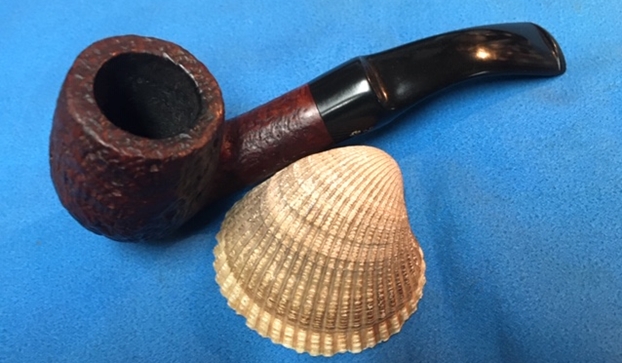
I now knew a lot about the company and what it stood for but I still did not clearly know if it was a pre-Gubbels pipe or after the purchase. Ah well, it is an interesting brand nonetheless. I turned now to work on the pipe. I scrubbed the exterior of the bowl with Before & After Briar Cleaner. I worked it into the surface of the briar with my finger tips and a tooth brush to get it into the nooks and crannies of the blast. I let it sit for a short time to absorb the grime. I rinsed it down under warm water to remove the grime debris that was collected in the cleaner. At the same time I used a tooth brush to scrub out the inside of the bowl and rinsed it. I dried the bowl off with a soft cotton cloth and lightly polished it. I worked some Before and After Restoration Balm into the surface of the briar. I rubbed it into the briar with a horse hair shoe brush to restore, preserve and polish the briar. I let it sit on the bowl for about 10 minutes and buffed it off with cotton cloth. I cleaned out the mortise and the airway in the shank and the stem with alcohol, cotton swabs and pipe cleaners. It was quite dirty in the shank with oils and also in the wide opening of the 9MM tenon. It did not take too long to clean it however.I set the bowl aside and worked on the stem. I sanded the stem surface with 220 grit sandpaper to remove the oxidation, tooth marks and tooth chatter. I started polishing it with 400 grit sandpaper to remove the scratches.I replaced the Big Ben filter with a 9MM filter from Vauen. It is the same size and is probably made by the same manufacturer.I polished out the remaining scratches in the stem with micromesh sanding pads. I wet sanded with 1500-12000 grit sanding pads. I wiped down the stem after each pad with some Obsidian Oil. Once I used the last pad – 12000 grit – I polished the stem with Before & After Pipe Stem Polish, both Fine and Extra Fine. I wiped it down with a final coat of Obsidian Oil and set it aside to dry. I put the stem back on the pipe and polished both pipe and stem with Blue Diamond on the buffing wheel. I used a light touch on the briar to avoid filling in the crevices with the polishing compound. I gave the bowl several coats of Conservator’s Wax and the stem several coats of Carnauba Wax. I buffed it with a clean buffing pad to raise a shine. I hand buffed it with a soft cotton cloth to deepen the shine. The finished pipe is shown in the photos below. The original contrasting brown stains look really good and the polishing brought the contrasts back to life. The contrasting rich brown finish highlight the grain and contrasts well with the black vulcanite stem. The Big-Ben Crosley is a beautiful pipe that really has the flaired saddle of a typical Dutch made Big-Ben pipe. The dimensions of the pipe are – Length: 5 inches, Height: 1 ¾ inches, Outside diameter of the bowl: 1 ¼ inches, Chamber diameter: ¾ of an inch. This craggy sandblasted Big-Ben Crosley is a great looking pipe and different from other Big-Ben pipes I have restored. It will be a great smoking pipe for someone to carry on the legacy of the pipeman who first purchased it and smoked it! Thanks for reading the blog.

Sometimes You Find a Pipe You Know is Old – a No Name Canadian


Blog by Steve Laug

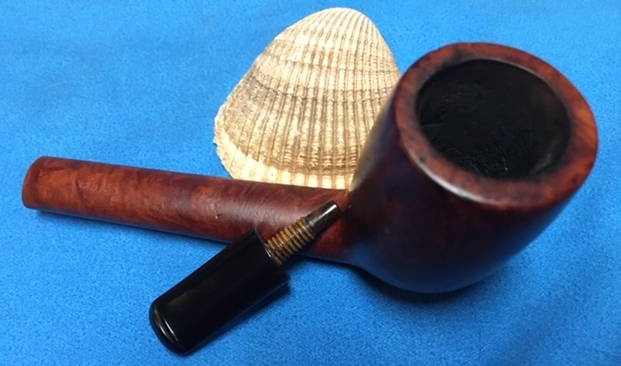
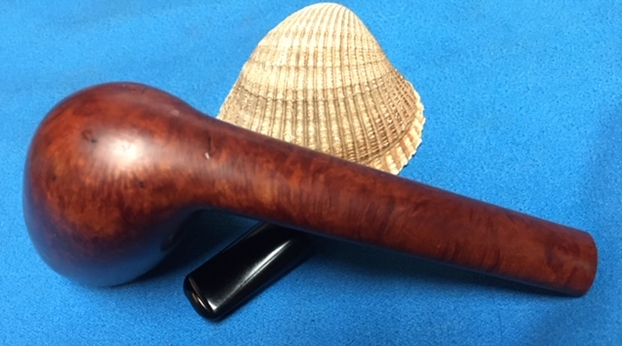
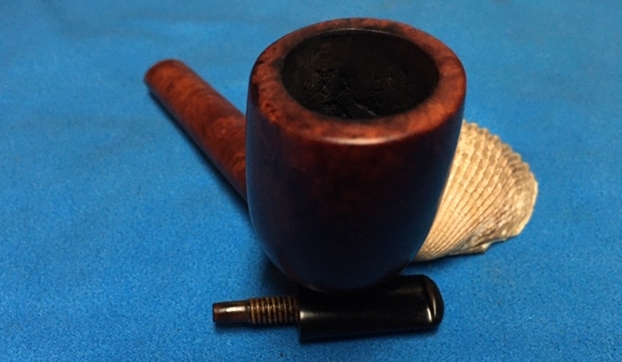
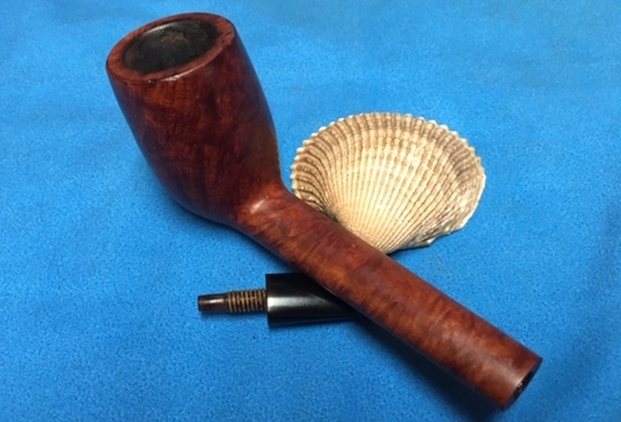
On our recent trip to Alberta we picked up quite a few pipes that were really nice. Some of them were brands we were familiar with and some were pipes that were unknown and unidentifiable. But if you are a pipe hunter you know the feeling when you are holding a particular pipe, no matter what the brand and it just speaks to you. That is what happened with this pipe. It was in a display case at an antique mall in Edmonton. The shape of the pipe, the forward canted bowl, the small short stem, the shape of the button and the single, orific opening on the end of the stem just looked old and I was going to add it to the finds.The grain under the dirty finish was quite nice with straight, flame and birdseye popping through around the bowl and shank. The bowl has a slight forward cant. The rim top had a thick layer of tars and there was sustained damage on the inner and the outer edge. There was a thick cake in the bowl that made it hard to see the extent of the damage to the inner edge. The stem was short vulcanite that had a threaded bone tenon that did not fit tightly against the shank. The stem was also heavily oxidized and had some tooth chatter on both sides near the button. The airway on the end of the stem was a round orific opening. I took a close up photo of the rim top to show the thickness of the cake in the bowl and the overflow of lava on the rim top. The damage to inner edge of the bowl and the nicks on the outer edge are evident in the photo. I took photos of the stem showing the oxidation and tooth chatter on both sides near the button. The third photo of the stem shown below gives a clear view of the orific opening in the stem end.I unscrewed the stem from the shank to show the threaded tenon on the end of the short stem. It has a bone tenon and has a long tube on the end of the threaded that works to funnel the smoke up the stem to the opening at the stem end. Since I had taken the pipe apart I decided to clean the parts. I started by reaming the bowl with a PipNet Pipe Reamer. I used the first two cutting heads to take the cake back to bare briar. I used a Savinelli Fitsall Pipe Knife to clean up the remnants of the cake on the bowl walls. I finished the bowl by sanding it with a length of dowel wrapped with a piece of 220 grit sandpaper. I scrubbed out the mortise, shank and the airway in the shank and stem with pipe cleaners, cotton swabs and alcohol. I worked them over until it was clean. I scrubbed the threads on the tenon with a brass bristle wire brush.To clean up the rim top I topped it lightly with a piece of 220 grit sandpaper on a flat board. I took off the damaged rim top to smooth out the inner and outer edge of the rim. I finished the clean up by reworking the edges of the bowl with folded 220 and 400 grit sandpaper.I used some small drops of clear super glue to fill in the deeper nicks and marks on the bottom of the bowl. I sanded them smooth and then polished the repaired areas on the bottom of the bowl, the outer edge of the bowl and the rest of the bowl and shank with micromesh sanding pads. I wet sanded with 1500-12000 grit sanding pads to smooth out the scratches and nicks in the bowl sides. I wiped the bowl down with a damp cloth to remove the sanding dust. I scrubbed the exterior of the bowl with Before & After Briar Cleaner. I worked it into the surface of the briar with my finger tips and let it sit for a short time to absorb the grime. I rinsed it down under warm water to remove the grime debris that was collected in the cleaner. I dried the bowl off with a soft cotton cloth and lightly polished it. I worked some Before and After Restoration Balm into the surface of the briar. I rubbed it into the briar to restore, preserve and polish the briar. I let it sit on the bowl for about 10 minutes and buffed it off with cotton cloth. I set the polished bowl aside to work on the stem. I sanded the stem surface with 220 grit sandpaper to remove the oxidation and tooth chatter. I started polishing it with 400 grit sandpaper to remove the scratches.I polished out the remaining scratches in the stem material with micromesh sanding pads. I wet sanded with 1500-12000 grit sanding pads. I wiped down the stem after each pad with some Obsidian Oil. Once I used the last pad – 12000 grit – I polished the stem with Before & After Pipe Stem Polish, both Fine and Extra Fine. I used a new product I am trying for Briarville called No Oxy Oil to give the stem a final wipe down and polish. I put the stem back on the pipe and polished both pipe and stem with Blue Diamond on the buffing wheel. I gave the pipe several coats of Carnauba Wax and buffed it with a clean buffing pad to raise a shine. I hand buffed it with a soft cotton cloth to deepen the shine. The finished pipe is shown in the photos below. It is a beautifully grained piece of briar with straight grain around the walls of the bowl and sides of the shank. The undersides of the bowl and shank show a mix of birdseye and swirled, mixed grain. The rich brown finish highlights the grain and contrasts well with the short black vulcanite stem. The shape and style of the button and stem point to an early date for this pipe. I only wish that it had some identifying stamping on the shank to help identify the maker. The threaded bone tenon is in excellent condition and to further protect it, I coated it with some Vaseline. The pipe is a beauty. There are some flaws in the pipe that I wish could help tell the story of this old pipe. The dimensions of the pipe are – Length: 5 ¼ inches, Height: 1 ¾ inches, Outside diameter of the bowl: 1 ¼ inches, Chamber diameter: ¾ of an inch. This is an old timer that I will add to my own collection. I am looking forward to loading a bowl in it and enjoying the taste of this old timer. I will carry on the legacy! Thanks for reading the blog.

This MOONSHINE Spain Brandy reminds of the LUNAR Spain Canadian I worked on


Blog by Steve Laug

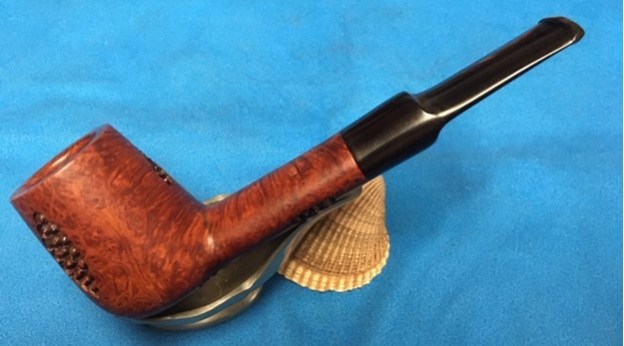
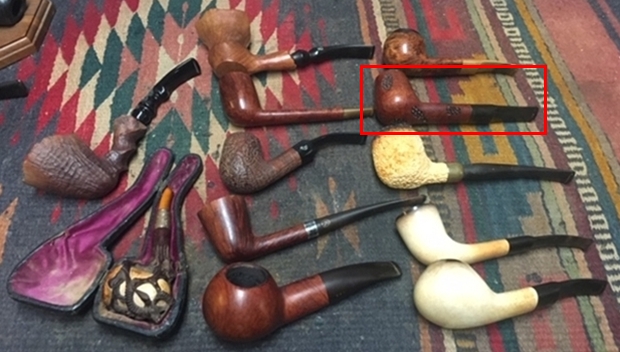
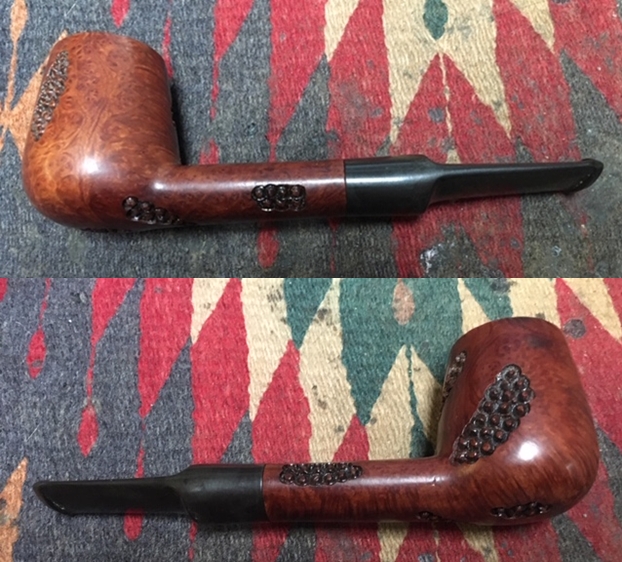
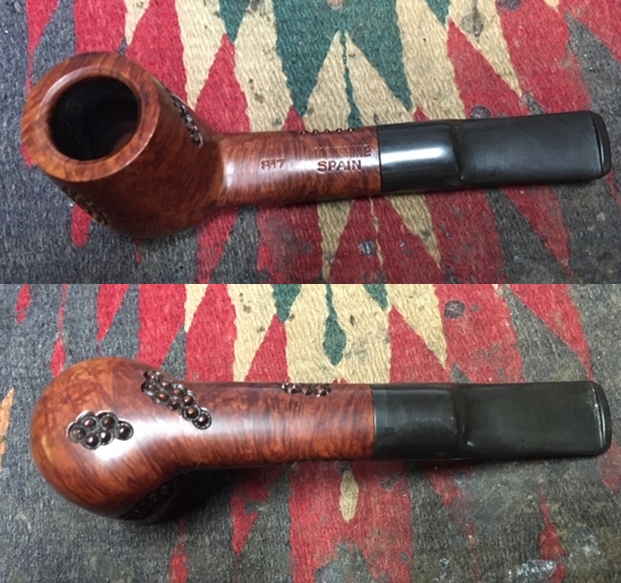
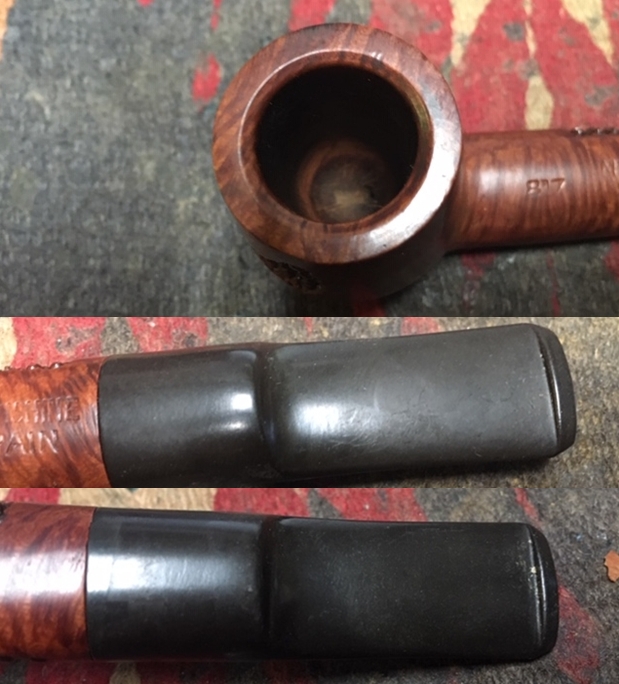
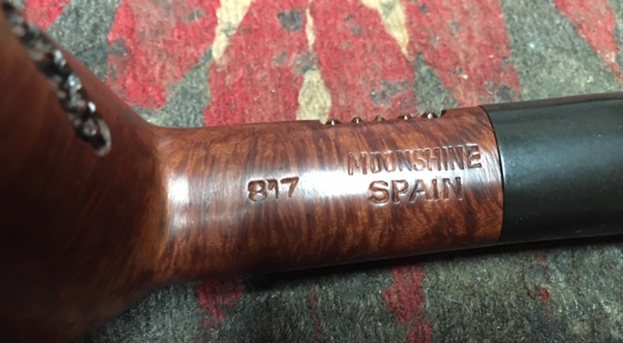
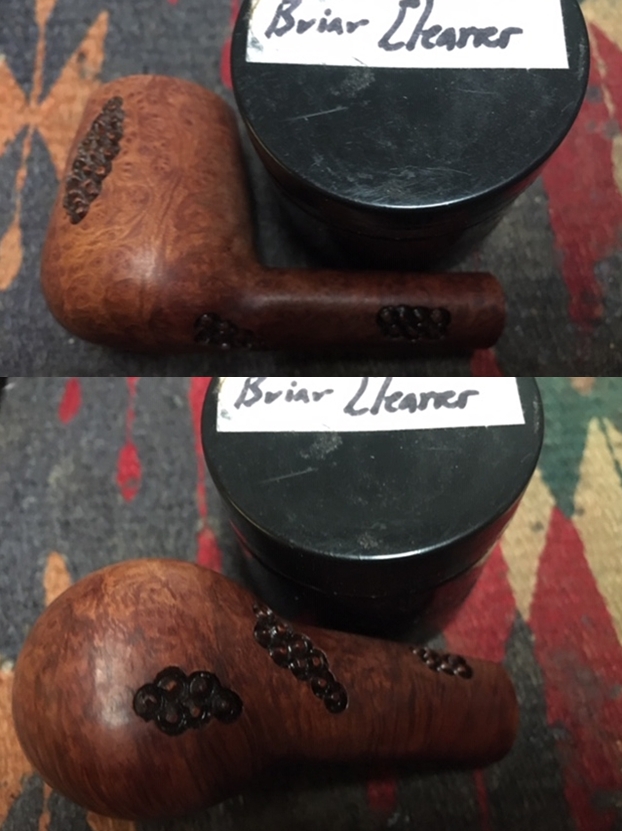
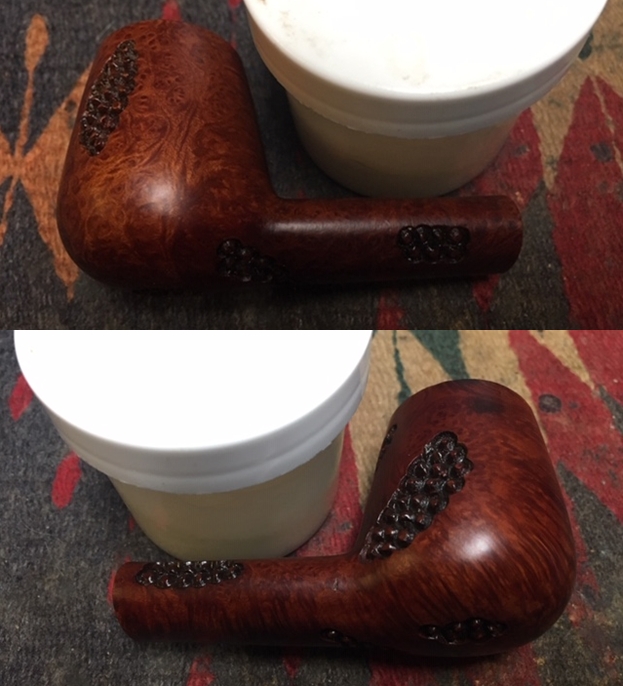
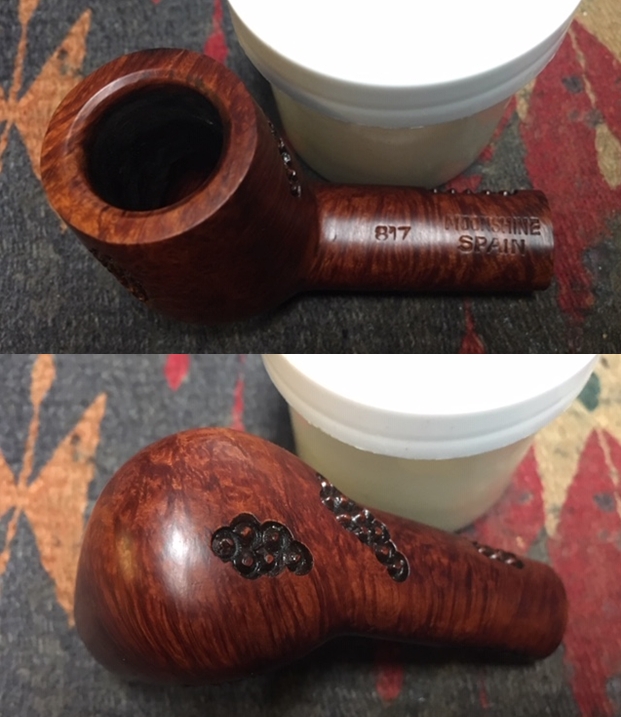
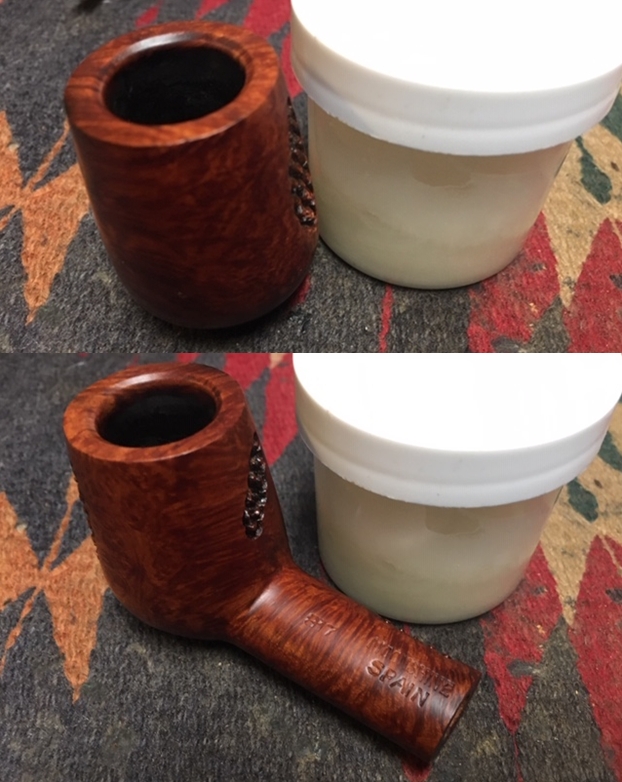
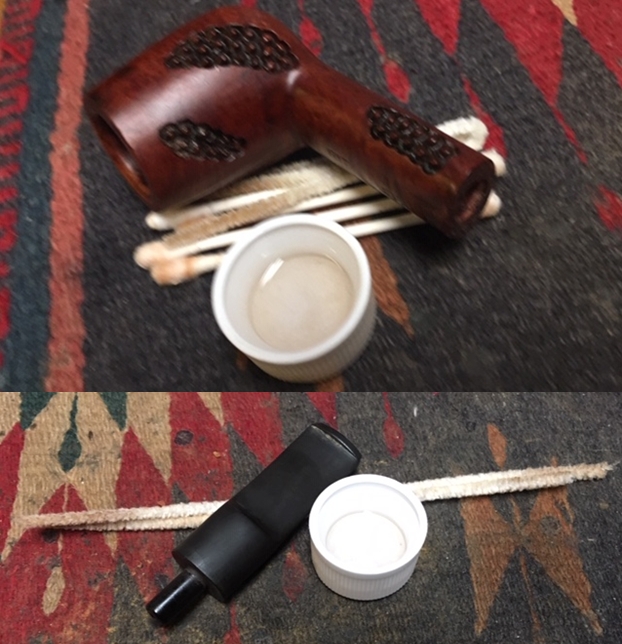
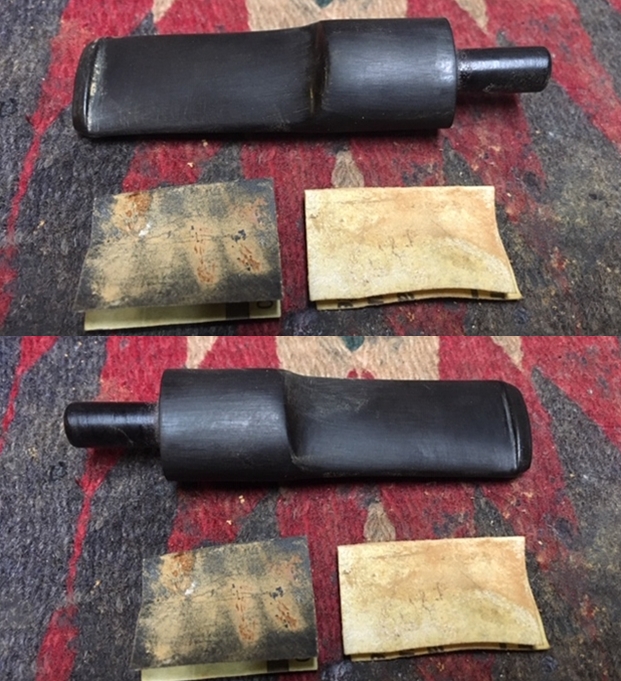
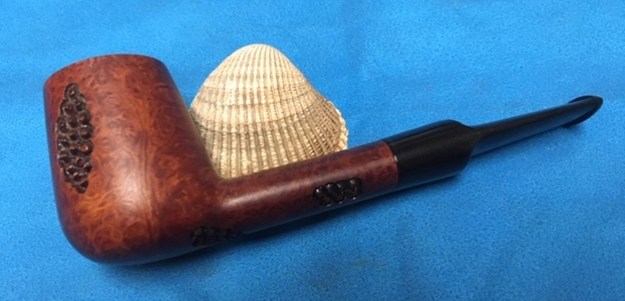
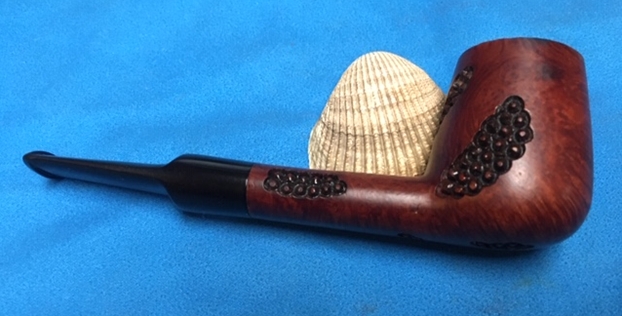
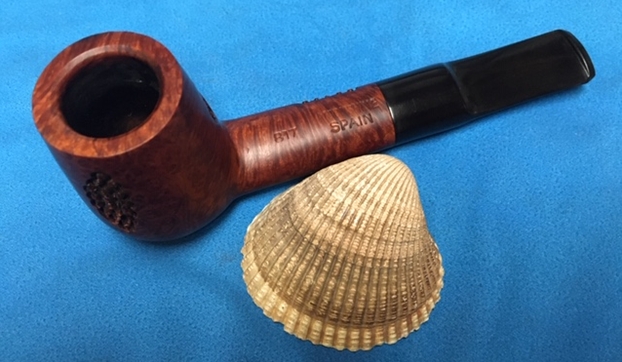
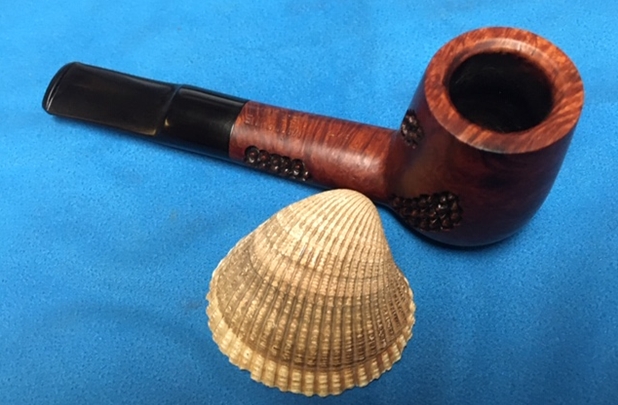
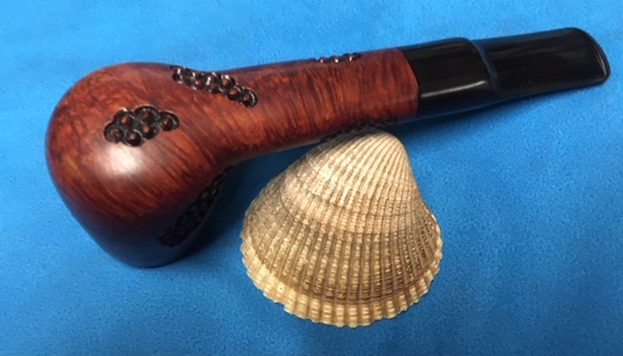
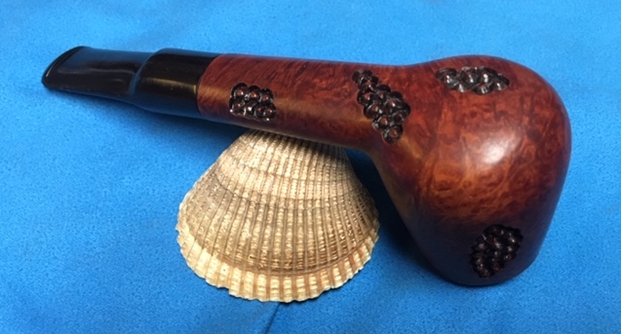
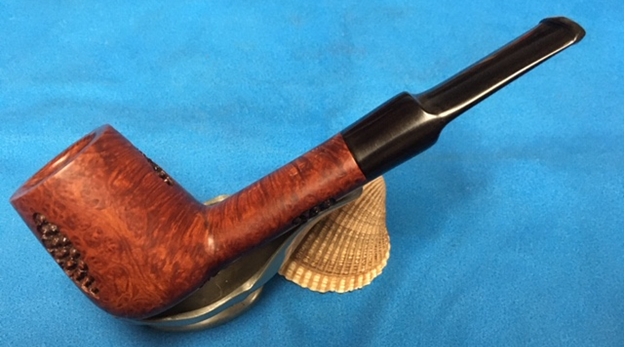
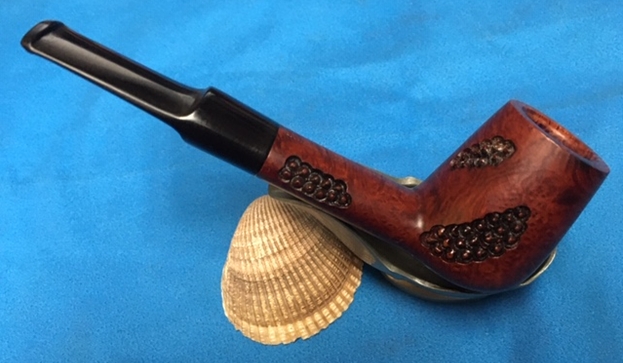
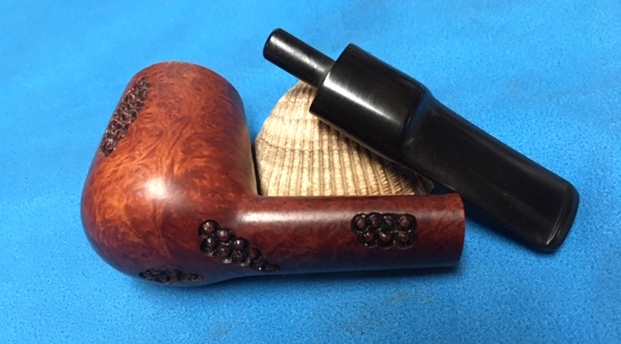
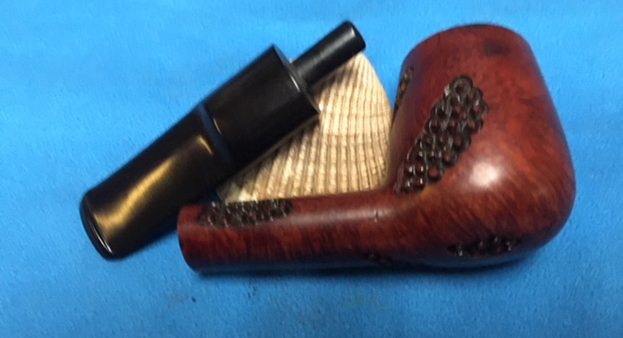
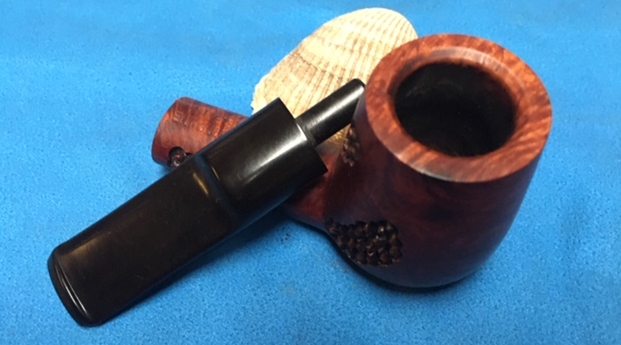
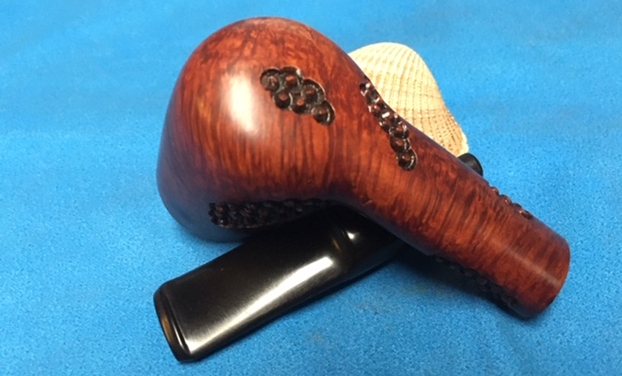
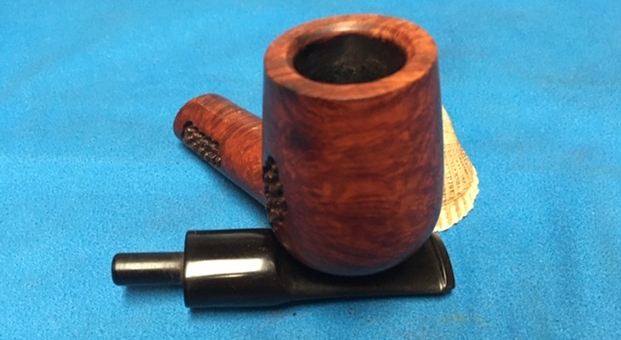
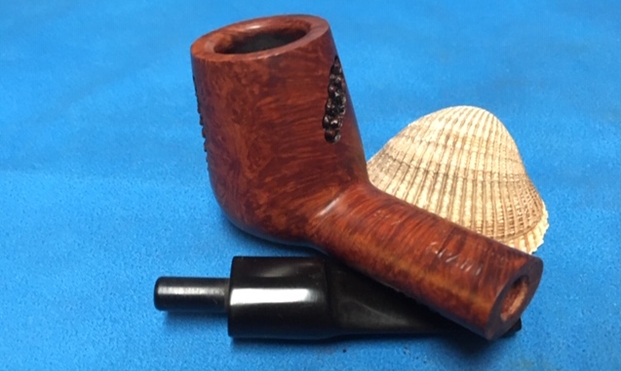
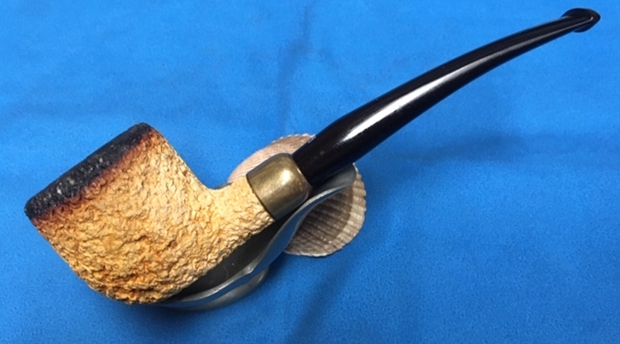
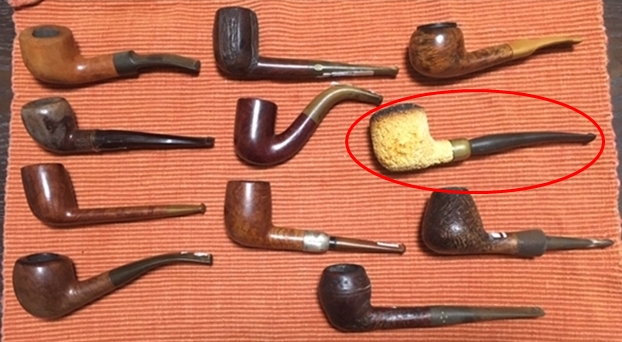
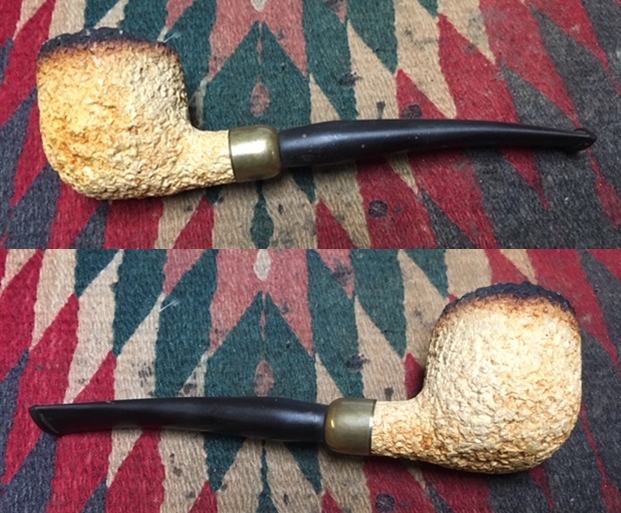
The next pipe on the table is another one of the pipes that Jeff picked up in Helena, Montana on his way to meet me for our recent Alberta trip . It is the second pipe down on the far right column in the photo below. It is a semi rusticated Spain Moonshine Brandy shaped pipe with a saddle bit. I have drawn a red rectangle around it in the photo below to make its identification easier.The Brandy shaped pipe has a smooth finish on the bowl with grape like rustication around spots on the bowl and shank sides. It reminded me of another Spanish pipe that I had worked on that was stamped LUNAR over Spain. It also had a unique rustication pattern on the bowl. The finish on both pipes was very similar as was the workmanship. Here is the link to the blog on that restoration for comparison sake (https://rebornpipes.com/2019/02/24/this-is-a-new-brand-to-me-lunar-spain-canadian/). In the blog I wrote that I could find little information on the brand that was any help and that is also the case with this one.
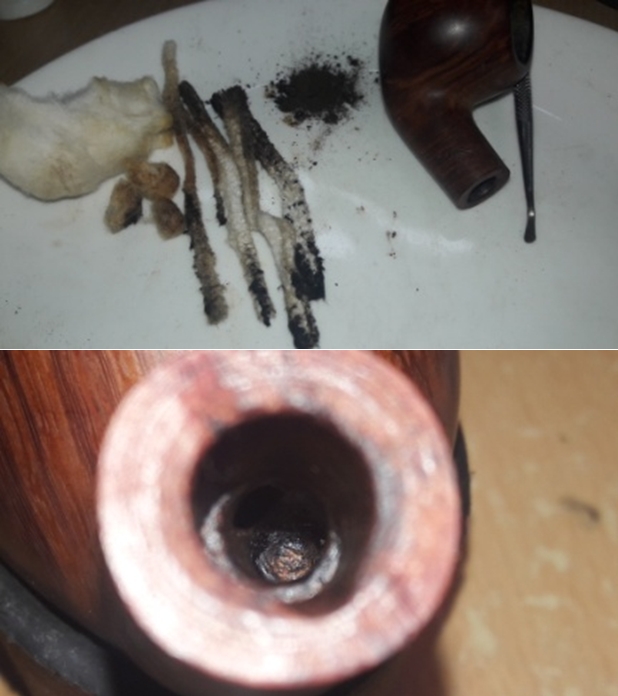
It is nicely made pipe that shall remain a bit of a mystery. The pipe was in excellent condition. The finish was clean other than a little dust in the rustication patterns. The grain was quite pretty and the pipe carver had shaped the bowl and shank accordingly. The pipe had been lightly smoked with the bottom third of the bowl raw briar. There is some darkening around the top two thirds of the bowl. The pipe smelled like tobacco but was unidentifiable as to type. The top of the oval shank was stamped with 817 which I think is the shape number followed by MOONSHINE over Spain. The stem was vulcanite and had no identifying logos on the oval stem. I took photos of the pipe before I did the cleanup. I took close up photos of the bowl and rim top as well as the stem surface. You can see the condition of the rim top and bowl in the first photo. It was in spectacular condition with no tars, lava or buildup on the top or edges. The inner edge of the rim was nicely beveled. The lightly smoked bowl did not have any cake and was smooth to touch. The stem showed some light oxidation and tooth chatter on both sides near and on the button surface.The stamping on the shank was also clear and readable. You can see the stamping reads as noted above.I rubbed the briar and rustication down with Before & After Briar Cleaner. I worked it into the rustication patterns so that it would get the dust out. I rinsed it under warm running water. The photos show the rim top after scrubbing. It looked much better at this point.I worked some Before & After Restoration Balm into finish of the briar with my fingertips and into the rustication patterns with a horsehair shoe brush to clean, enliven and protect it. I let the balm sit for a little while and then buffed with a cotton cloth to raise the shine. The Restoration Balm really makes the grain stands out beautifully. With the outside cleaned and shining I moved on to clean up the inside airways and mortise in the shank and the stem. I scrubbed out the mortise and the airway in the shank and the stem with alcohol, cotton swabs and pipe cleaners.  I set the cleaned bowl aside and turned my attention to the stem. I sanded out the tooth chatter with 220 grit sandpaper and started to polish it with a folded piece of 400 wet dry sandpaper. Once it was finished it began to shine. I polished the stem with micromesh sanding pads – wet sanding with 1500-12000 grit sanding pads. I wiped it down after each sanding pad with some Obsidian Oil. I finished polishing it with Before & After Pipe Stem Polish – both Fine and Extra Fine and buffed it off with a cotton cloth. When I finished I gave a coat of a new product that Briarville Pipe Repair released called No Oxy Oil. It is rubbed down with the oil and the soft cloth that came with it. I am going to be experimenting with it for a while now. This is a finely carved, Spanish made Brandy shaped pipe marked Moonshine over Spain with the shape number 817 next to the shank/bowl junction. It has an interesting carved finish with grape-like shapes around the shank and bowl. It has a great look and feel. The shape fits well in the hand with the rustication giving the pipe a nice tactile sense when held. I polished stem and the bowl with Blue Diamond polish on the buffing wheel. I gave the bowl and the stem multiple coats of carnauba wax. I buffed the pipe with a clean buffing pad to raise the shine. I hand buffed it with a microfiber cloth to deepen the shine. The pipe polished up pretty nicely. The rich combination of the browns on the briar along with the carvings and the polished vulcanite stem work well together. I like the finished look of this Spanish Made Brandy. Have a look at it with the photos below. The shape, finish and flow of the pipe and stem are very well done. The dimensions are Length: 5 ½ inches, Height: 1 ¾ inches, Outside diameter of the bowl: 1 ¼ inches, Chamber diameter: ¾ of an inch. This Moonshine Brandy is a unique beauty. Thanks for walking through the restoration with me as I worked over another beautiful pipe.
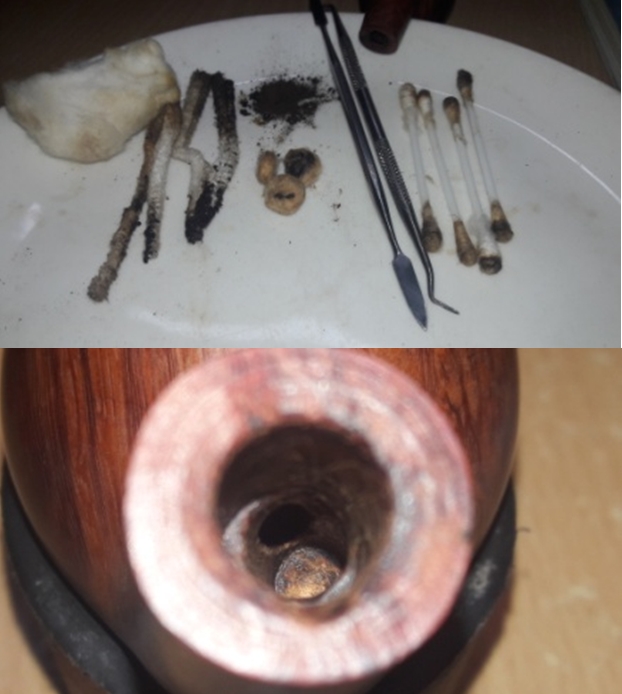
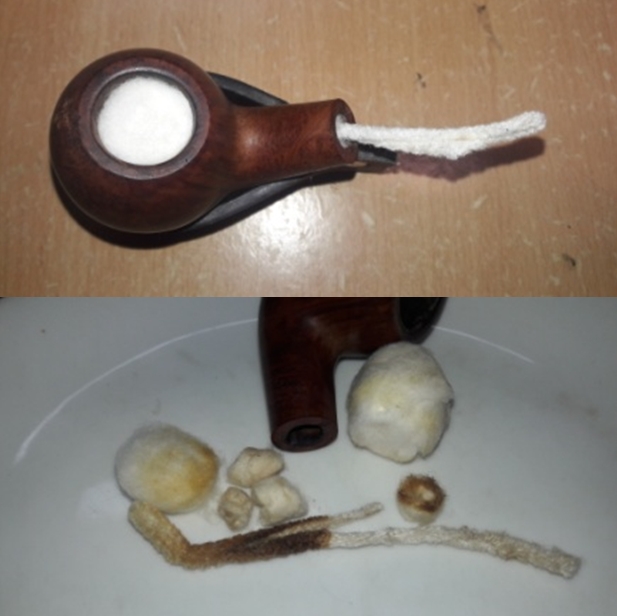
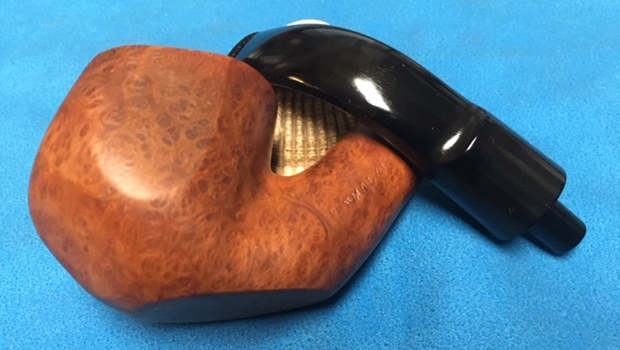
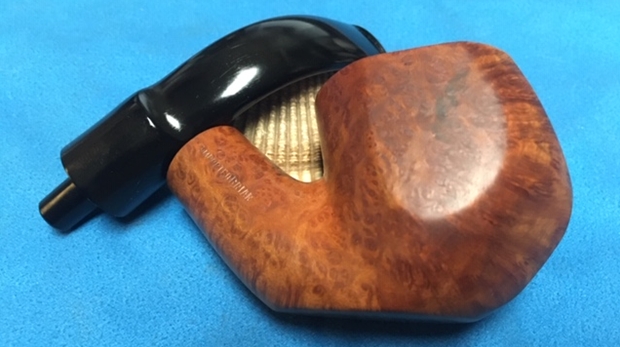
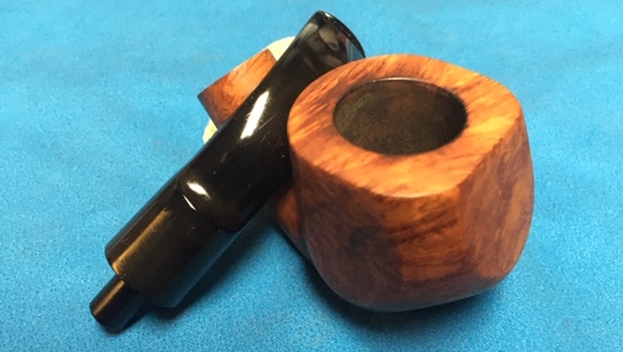
Cleaning up a Nording Rusticated Meerschaum Pot Made on the Isle of Man


Blog by Steve Laug

The next pipe on the table is another one of the pipes that Jeff and I picked up on our recent Alberta trip. It is the second pipe down on the far right column in the photo below. It is a rusticated Eric Nording Meerschaum Pot with a tapered bit. I have circled it in red in the photo below to make its identification easier.The pipe has a rustic finish on the bowl with a flumed rim top and down the top edges of the bowl. The bowl itself has already picked up some colour/patina or perhaps it came that way. There is an unmarked brass ferrule on the shank end. The shank itself is lined with a Delrin tube – this together with the ferrule add strength to the shank. The pipe had been lightly smoked with the bottom two thirds of the bowl raw meerschaum. There is some darkening around the top third of the bowl. The pipe smelled like tobacco but was unidentifiable as to type. The stem was vulcanite and had an N stamped on the top of the tapered stem. The tapered stem is shaped to give the appearance of a military bit. It has an integral tenon in the vulcanite stem. I took photos of the pipe before I did the cleanup. I took close up photos of the bowl and rim top as well as the stem surface. You can see the condition of the rim top and bowl in the first photo. There was some lava overflow on the rim top on the left and rear of the bowl. There were also some nicks around the inner edge of the bowl and some on the rim top. There was a thin cake on the top third of the bowl. The stem showed some tooth chatter on both sides near and on the button surface.I took a photo of the shank end to show the Delrin lining in the mortise.Eric Nording distributed meerschaum pipes with his logo on the stem that were made for him by Manxman Pipes Ltd on the Isle of Man. I have included a screen capture of the listing for  these meerschaums on the PipePhil site (http://www.pipephil.eu/logos/en/logo-n2.html).I also scrubbed the rim top plateau with a wire brush to knock of the lava that was built up there. It did not take too much work to clean up the rustication on the rim top.I scrubbed the meerschaum with Murphy’s Oil Soap and a tooth brush. I worked to remove the remaining lava and minimize the darkening. I rinsed it under warm running water. The photos show the rim top after scrubbing. It looked much better at this point. With the outside cleaned and shining I moved on to clean up the inside airways and mortise in the shank and the stem. I scrubbed out the mortise and the airway in the shank and the stem with alcohol, cotton swabs and pipe cleaners.    I set the cleaned bowl aside and turned my attention to the stem. I sanded out the tooth chatter with 220 grit sandpaper and started to polish it with a folded piece of 400 wet dry sandpaper. Once it was finished it began to shine.I polished the stem with micromesh sanding pads – wet sanding with 1500-12000 grit sanding pads. I wiped it down after each sanding pad with some Obsidian Oil. I finished polishing it with Before & After Pipe Stem Polish – both Fine and Extra Fine and buffed it off with a cotton cloth. When I finished I gave a coat of a new product that Briarville Pipe Repair released called No Oxy Oil. It is rubbed down with the oil and the soft cloth that came with it. I am going to be experimenting with it for a while now. This is a Nording Meerschaum rusticated pot made by Manx Meerschaum on the Isle of Man. It has an interesting tactile finish with a flumed rim top and extending down the rim sides. It has a great look and feel. The shape fits well in the hand with the rustication giving the pipe a nice tactile sense when held. I polished stem and the bowl with Blue Diamond polish on the buffing wheel. I gave the bowl and the stem multiple coats of carnauba wax. I buffed the pipe with a clean buffing pad to raise the shine. I hand buffed it with a microfiber cloth to deepen the shine. The pipe polished up pretty nicely. The rich combination of the yellowed, rusticated meerschaum  and the polished vulcanite stem work well together. I like the finished look of this Nording Meerschaum pipe. Have a look at it with the photos below. The shape, finish and flow of the pipe and stem are very well done. The dimensions are Length: 6 inches, Height: 1 7/8 inches, Outside diameter of the bowl: 1 ½ inches, Chamber diameter: 7/8 of an inch. This Isle of Man Meerschaum pot is a real beauty. Thanks for walking through the restoration with me as I worked over another beautiful pipe.