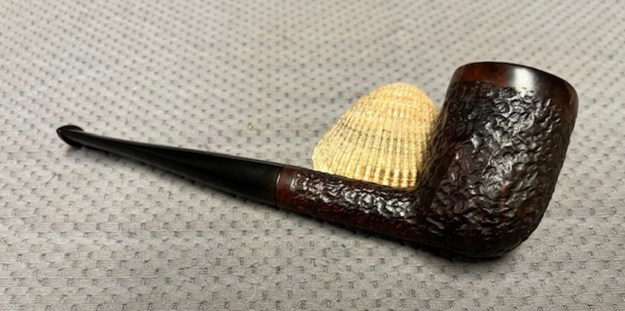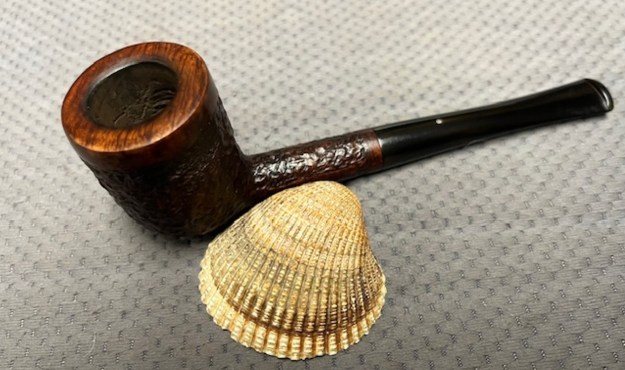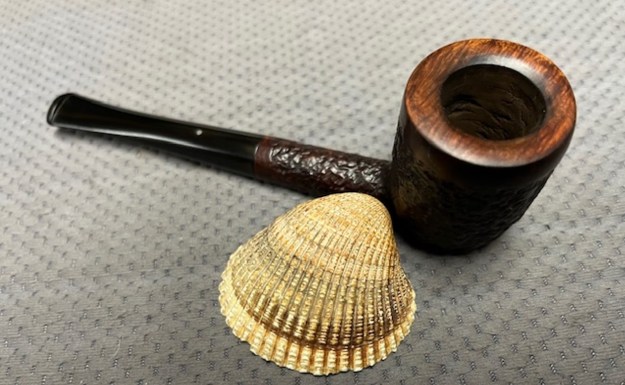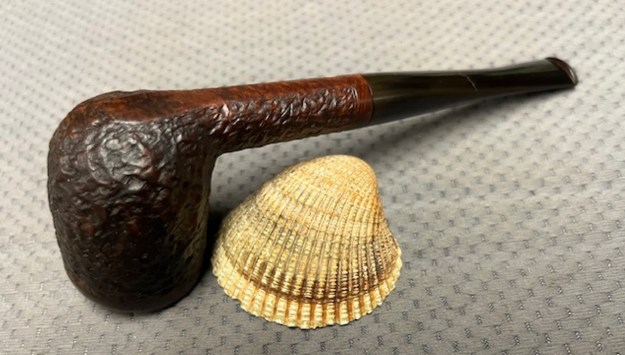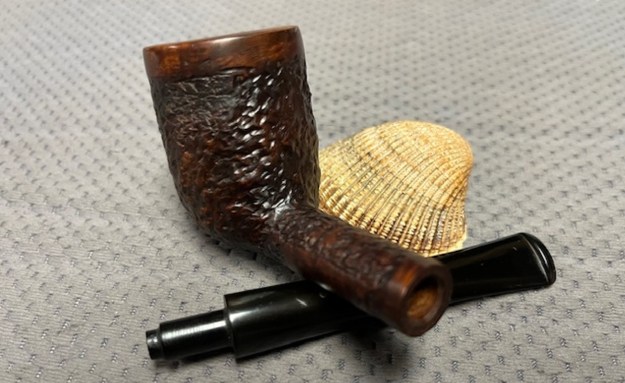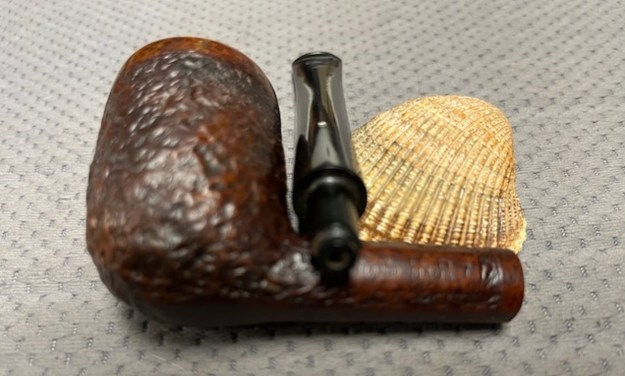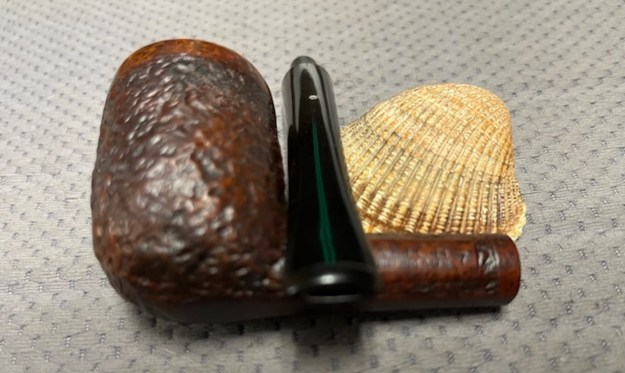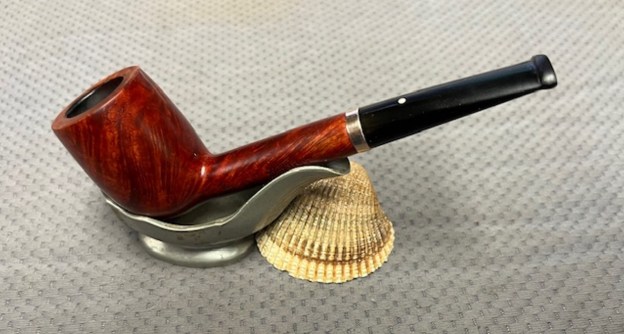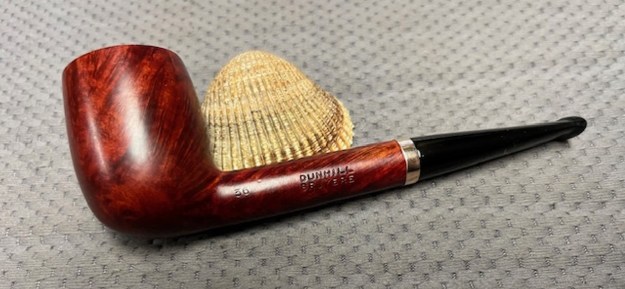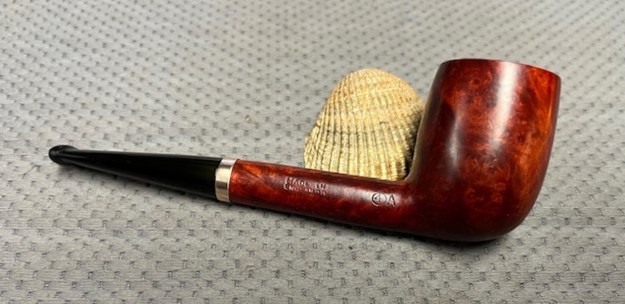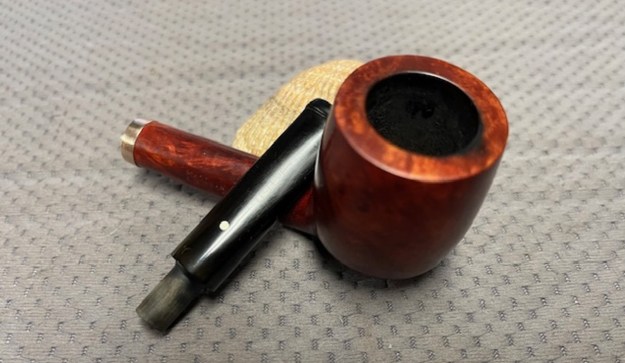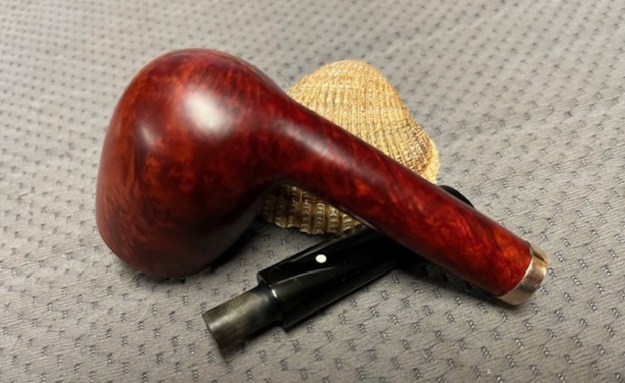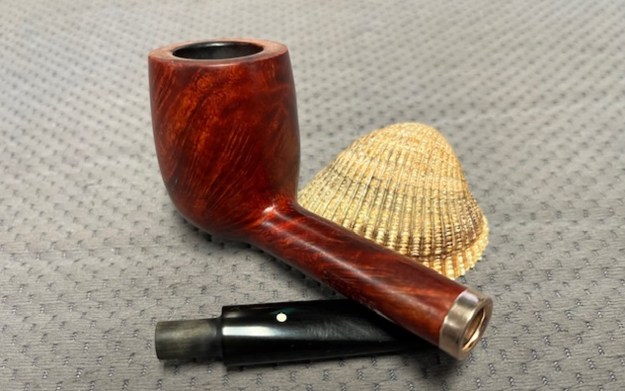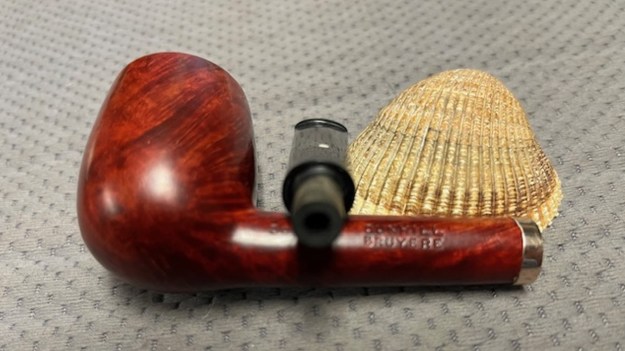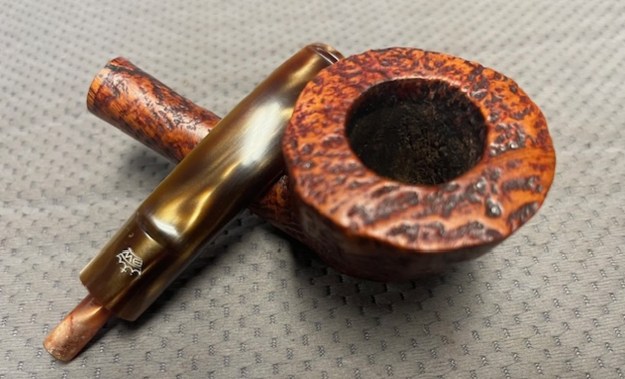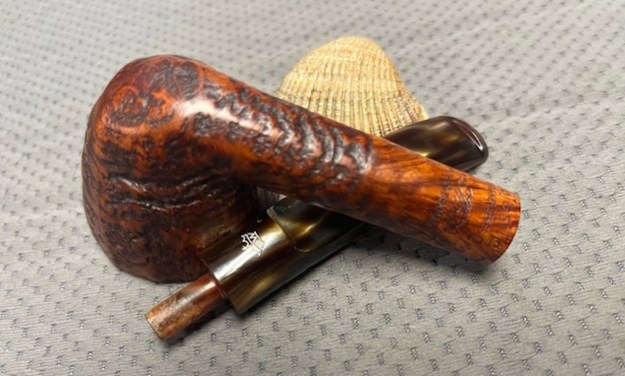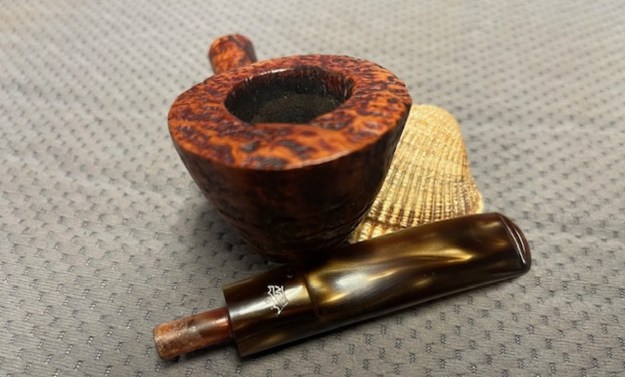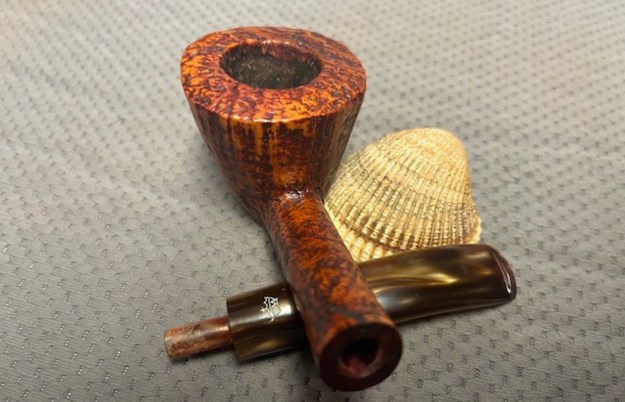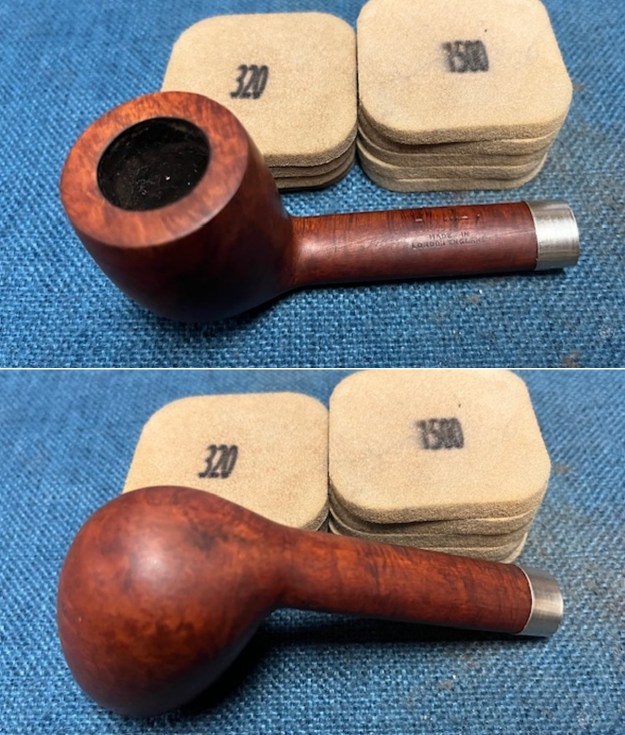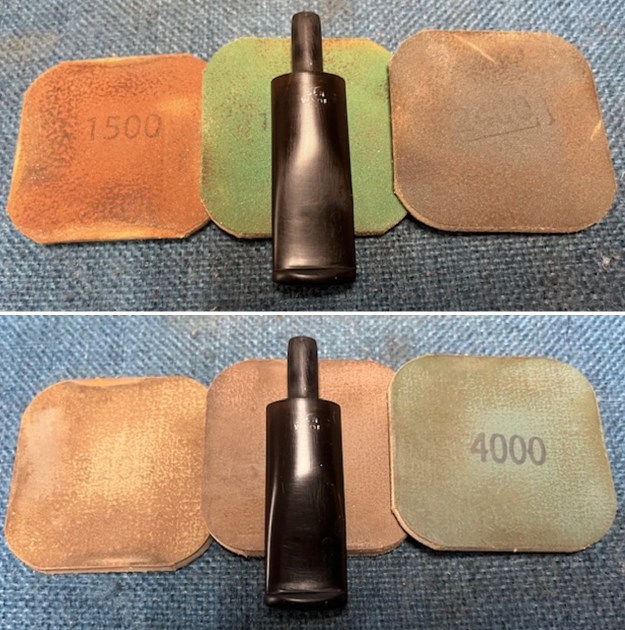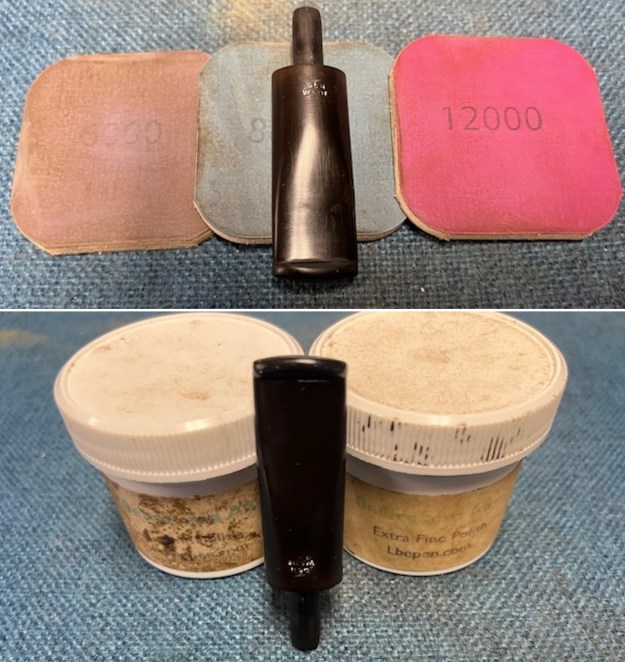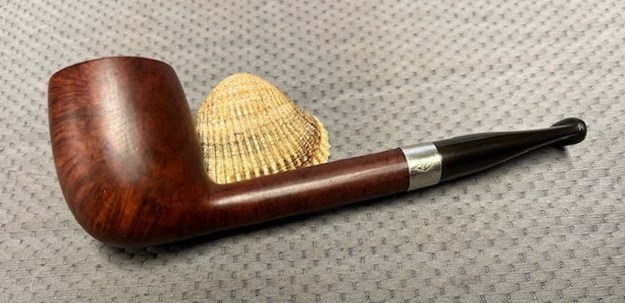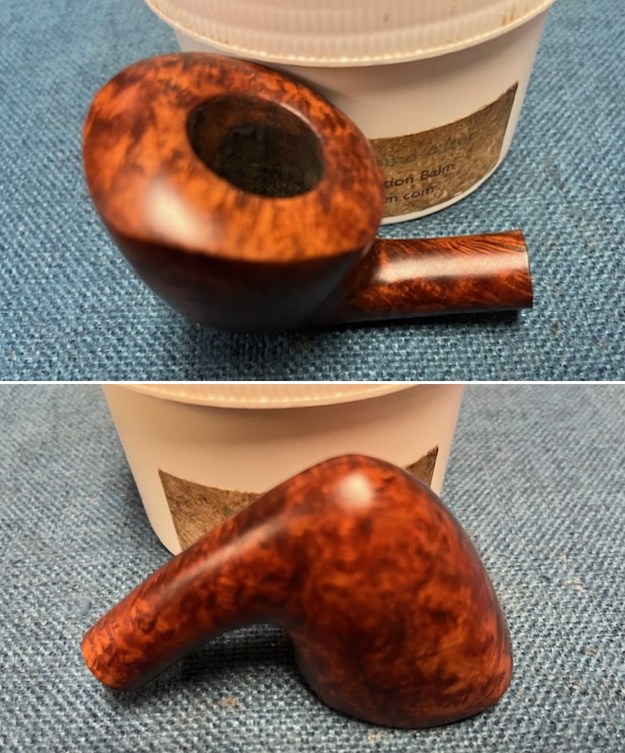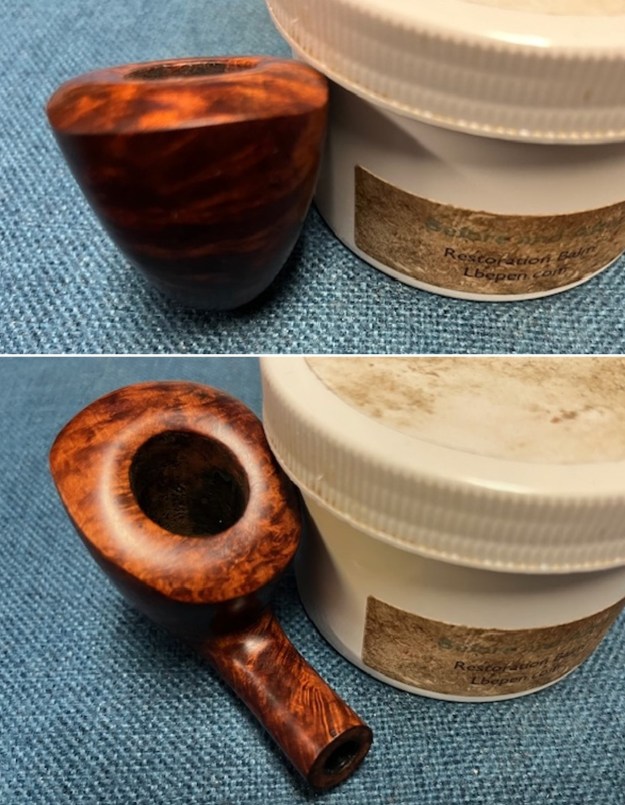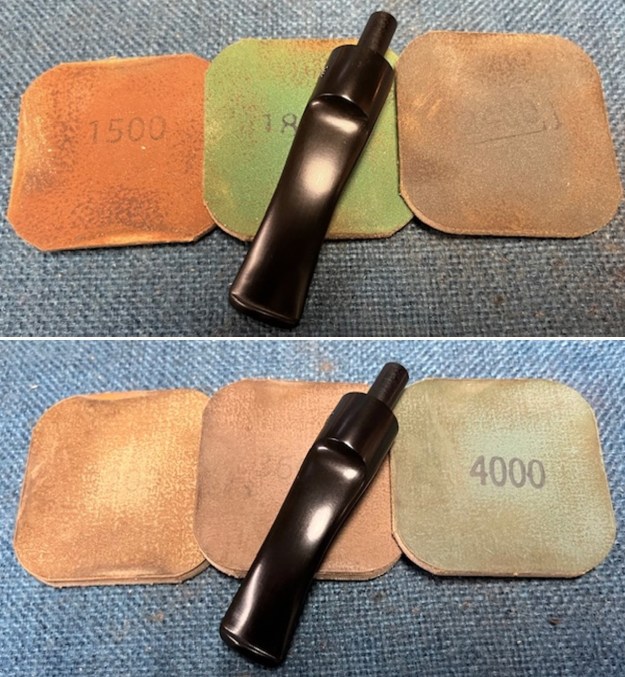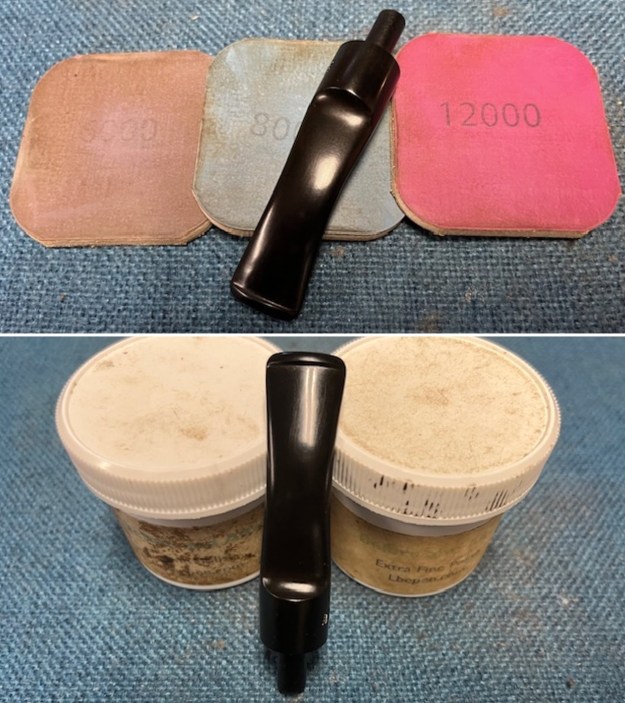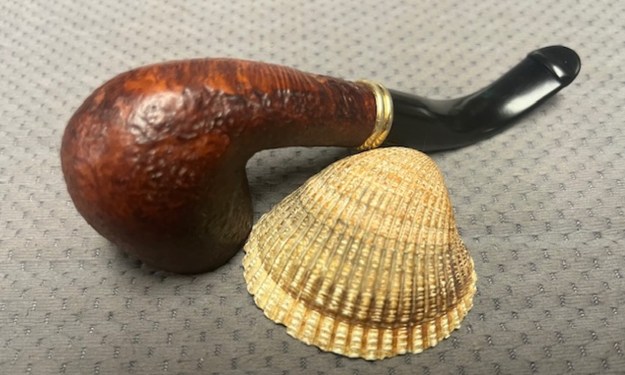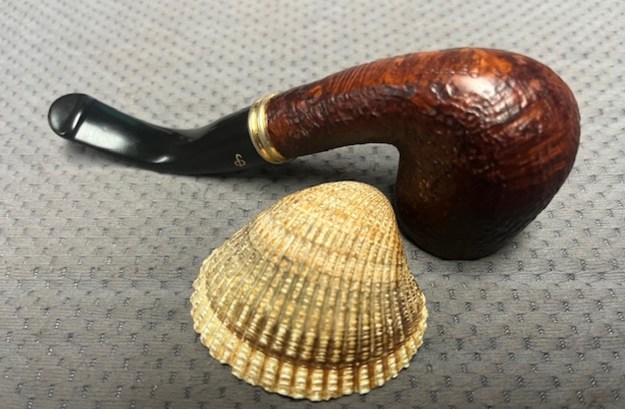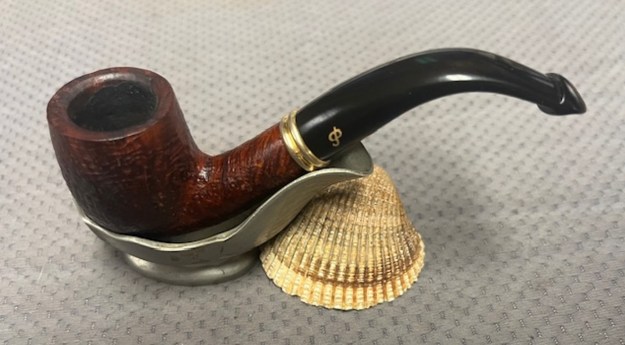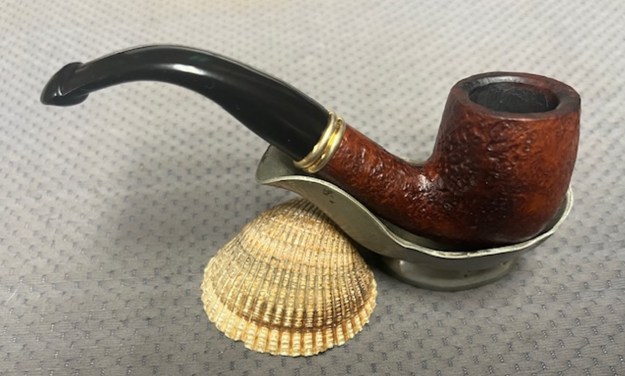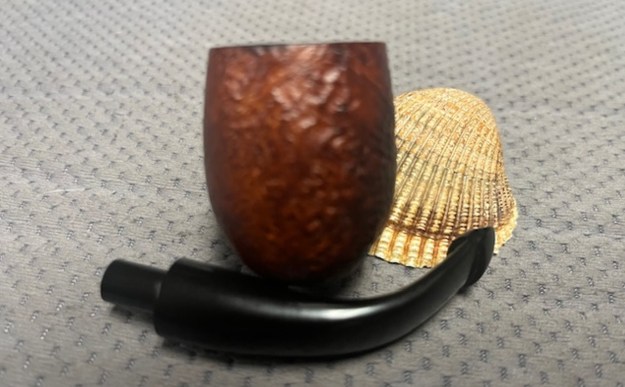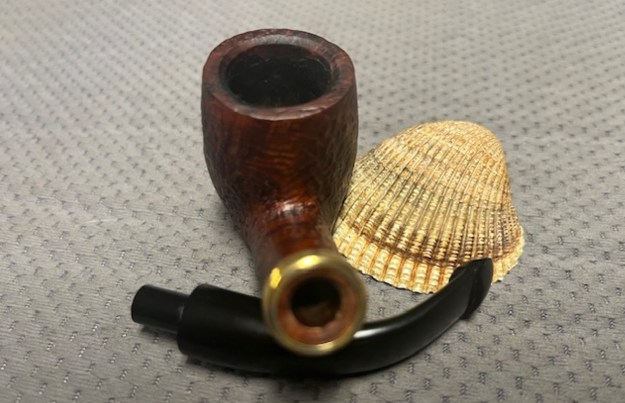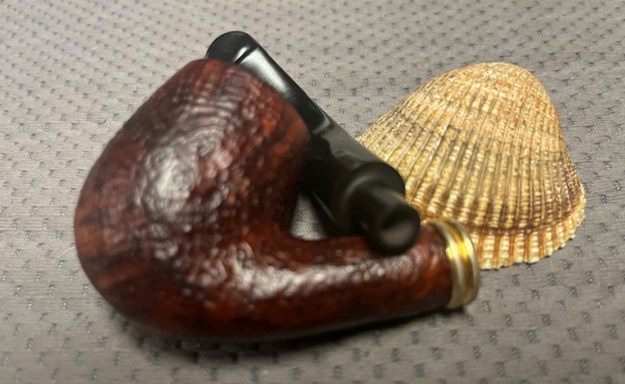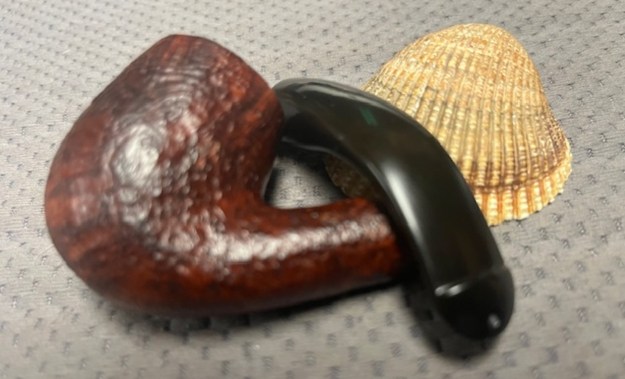
Tag Archives: removing oxidation

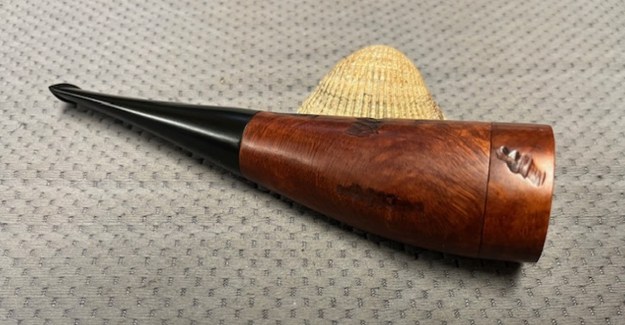
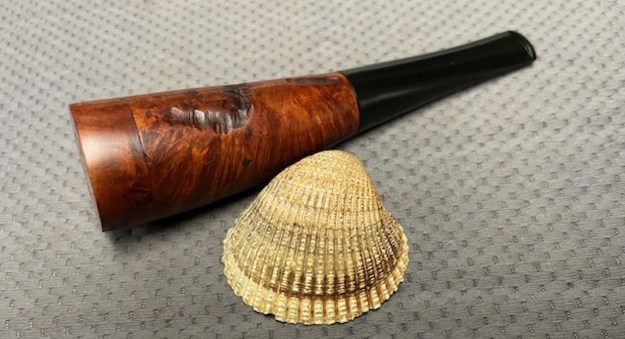
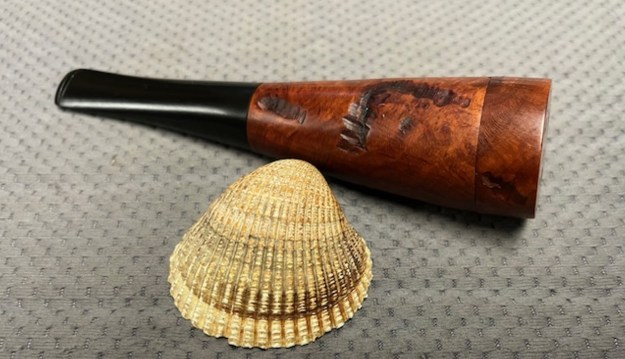
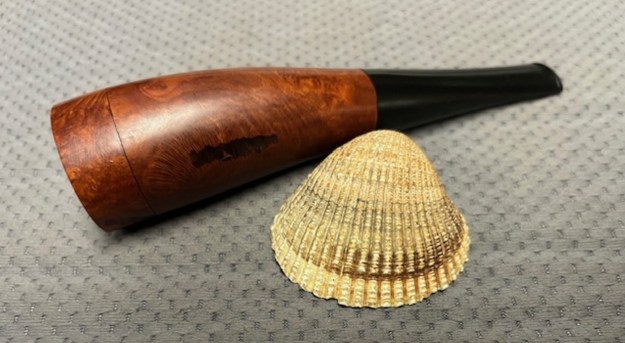
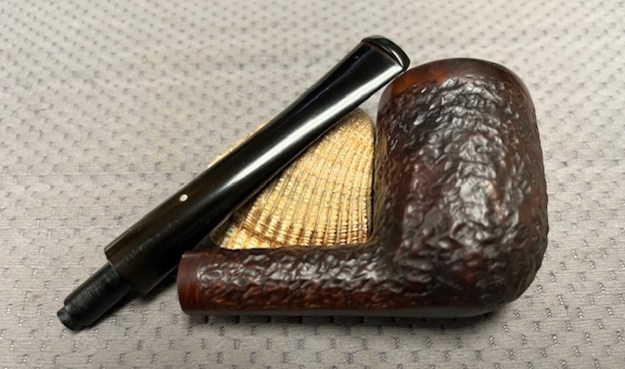
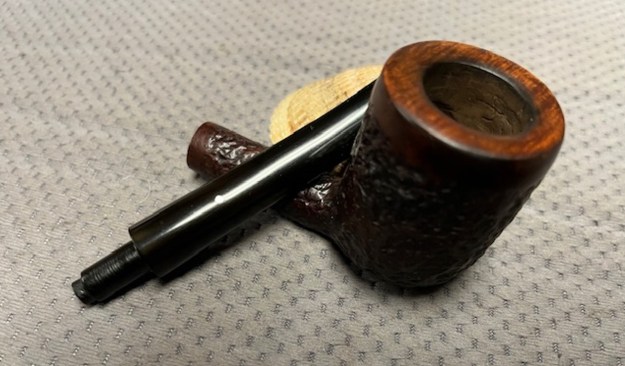
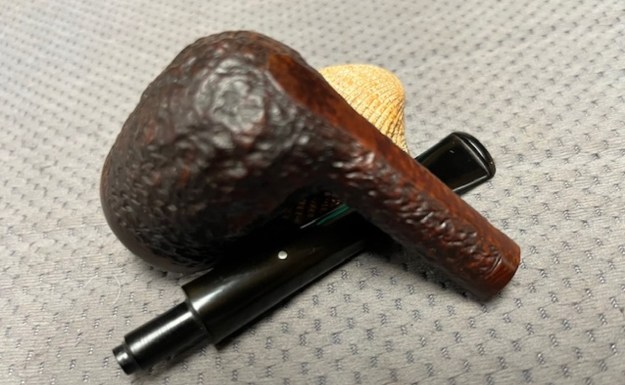
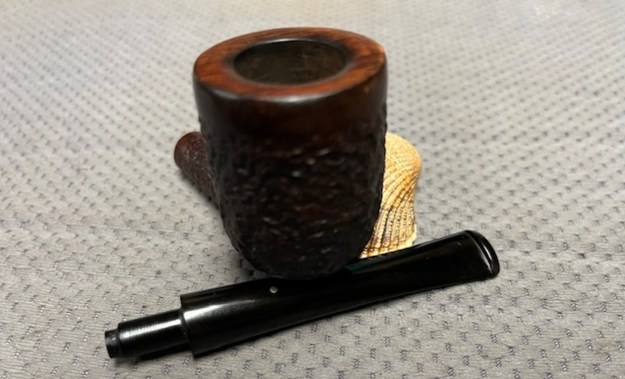
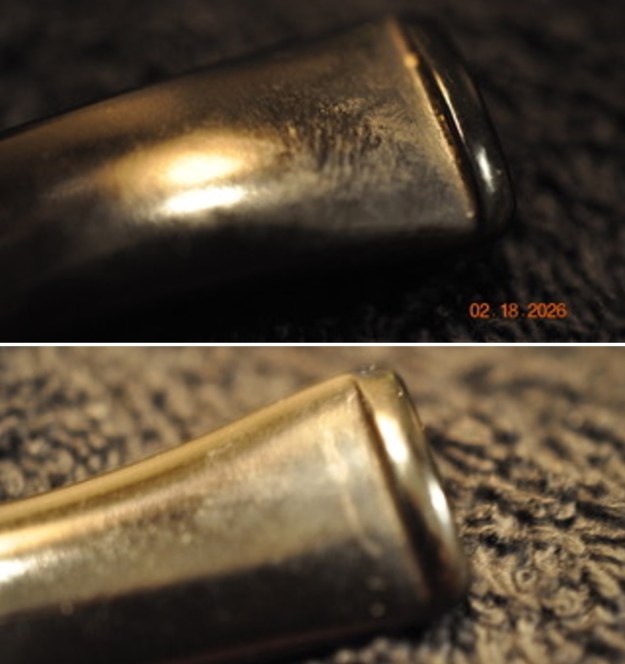
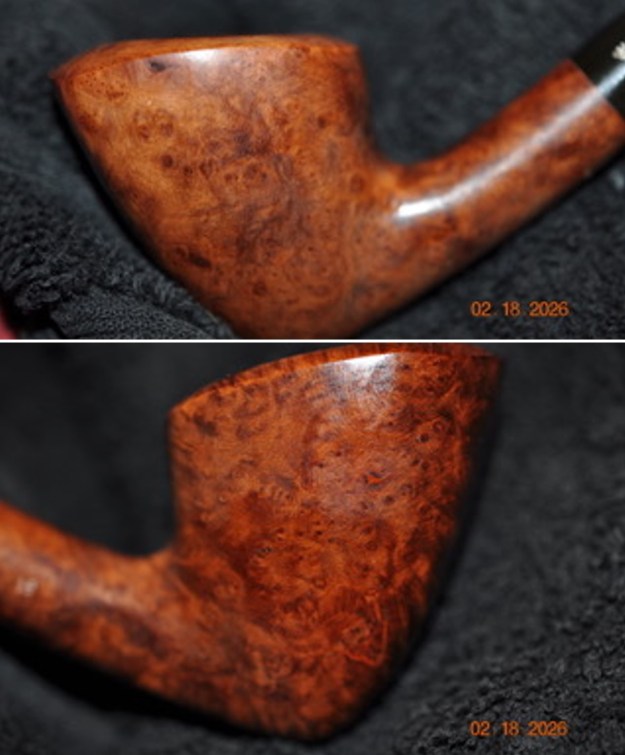
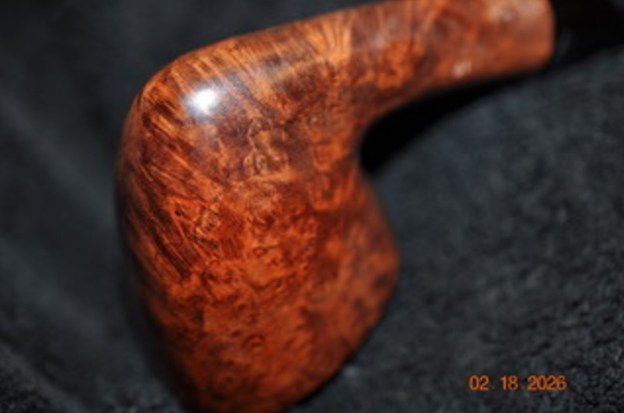
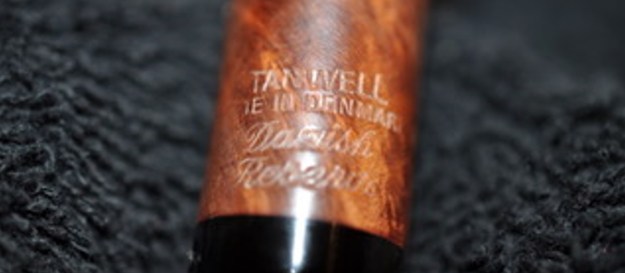
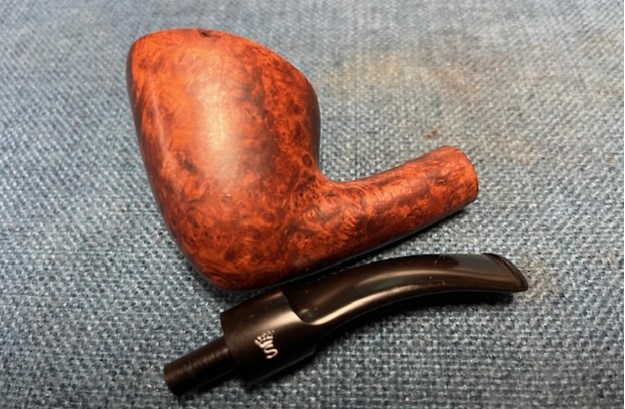
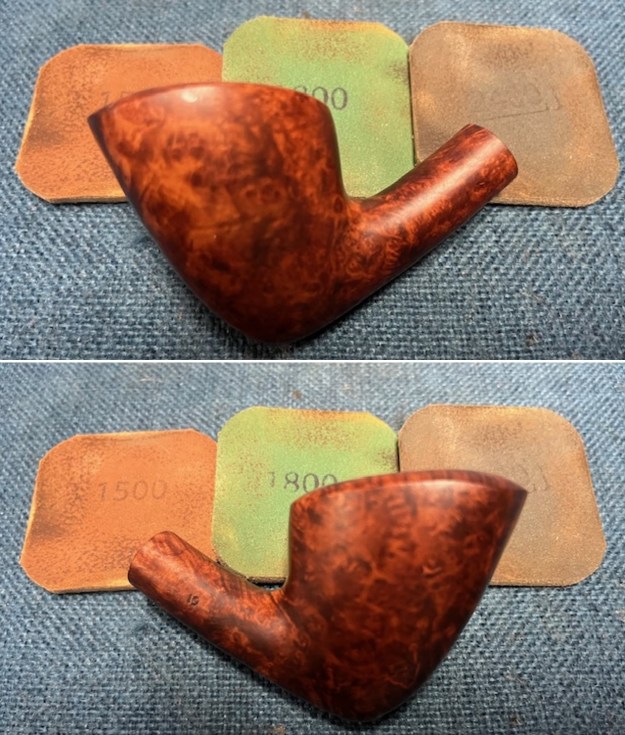
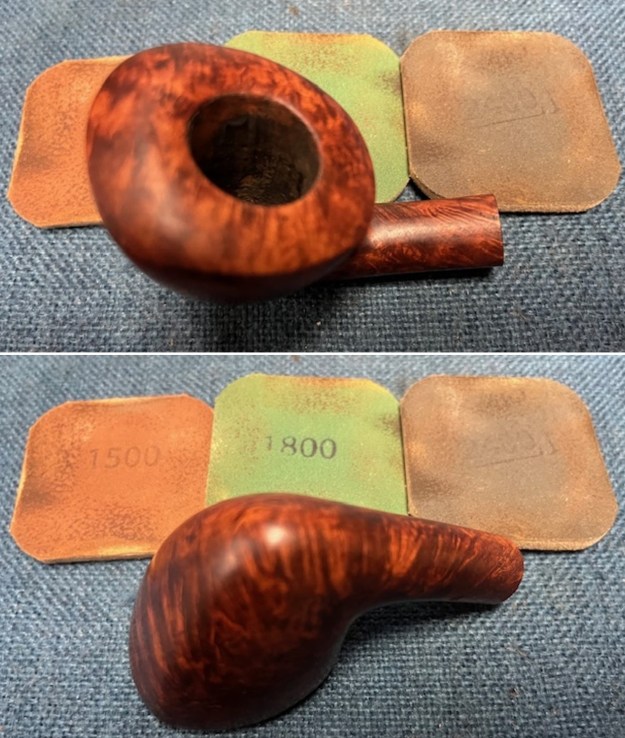
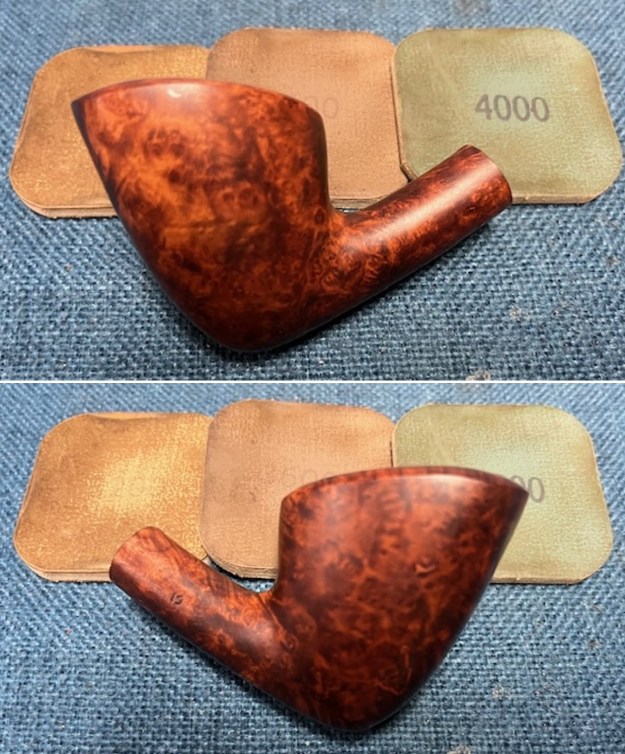
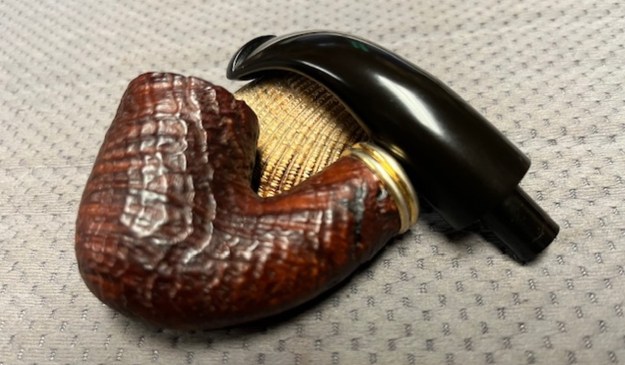
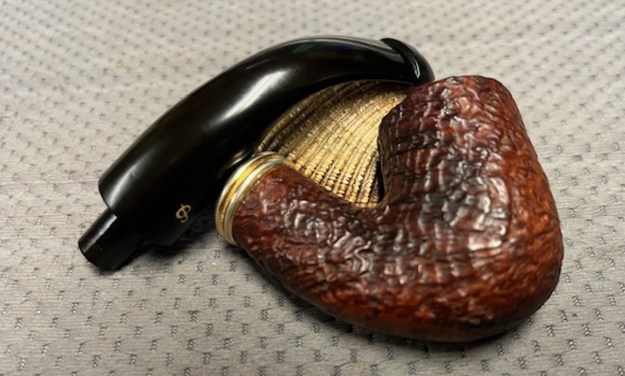
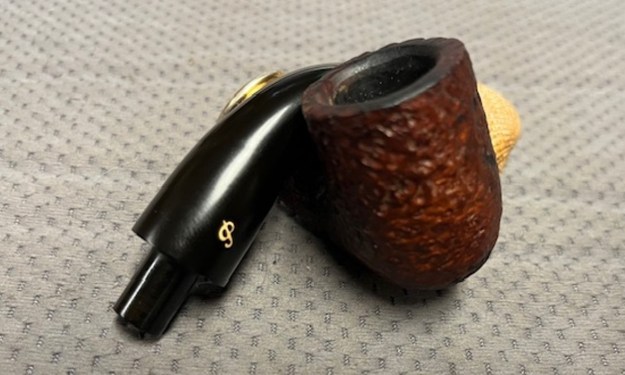
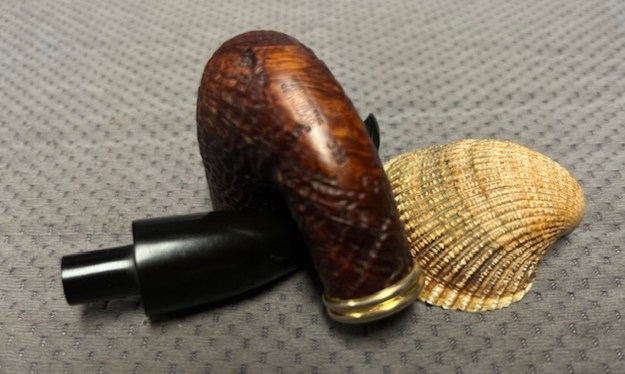
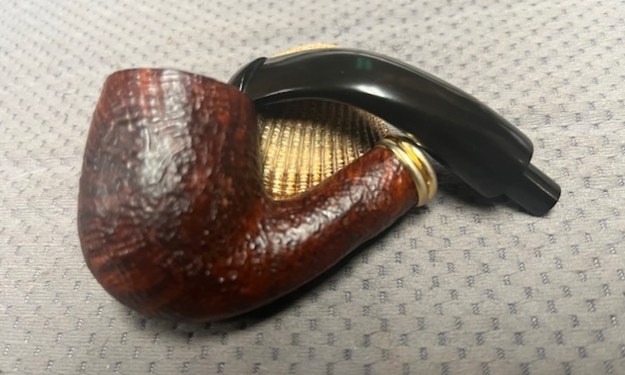
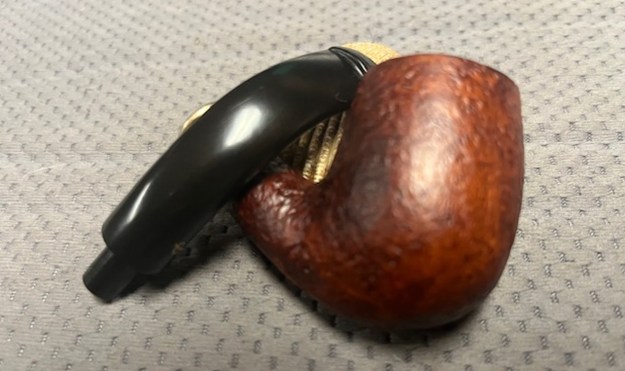
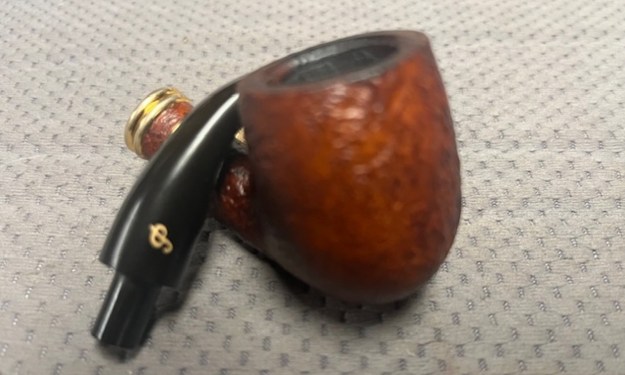
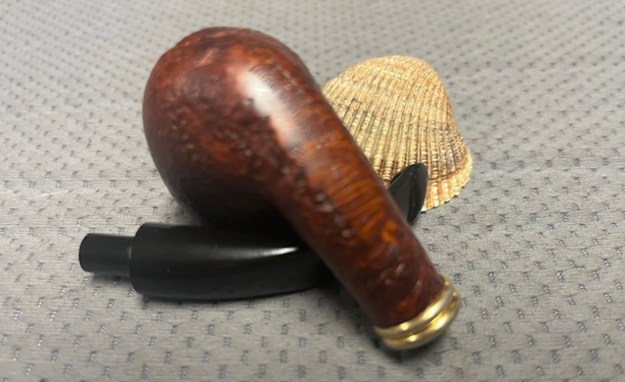
Restoring an Interesting Cigar Style Sequoia House California Horn


by Steve Laug

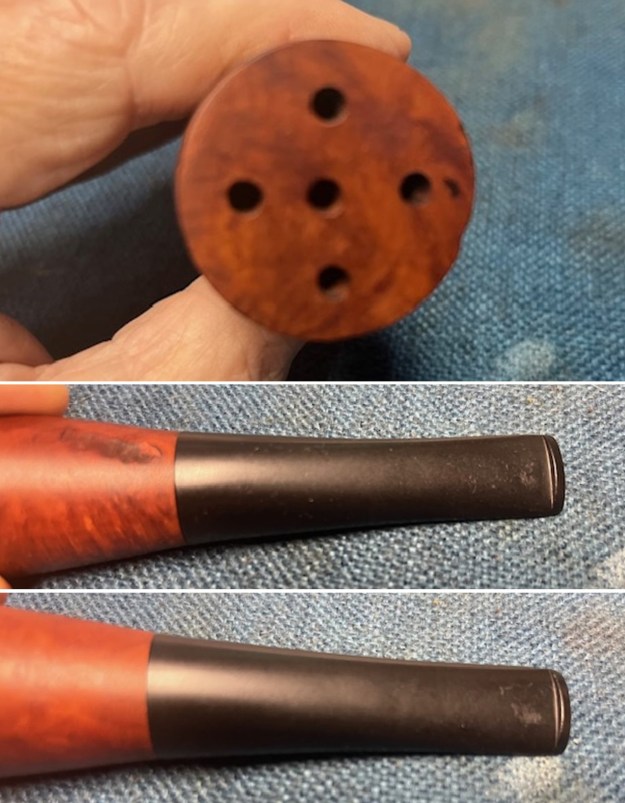
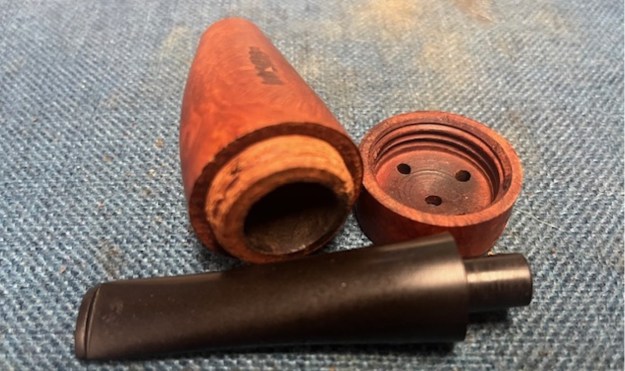
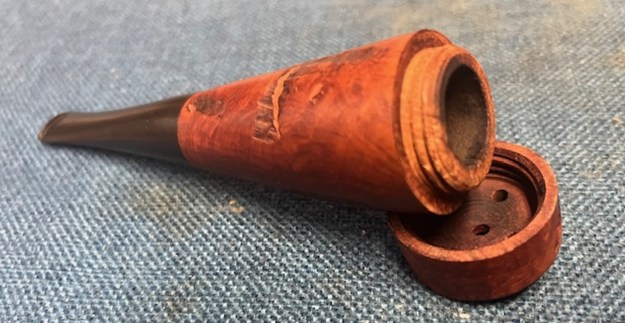
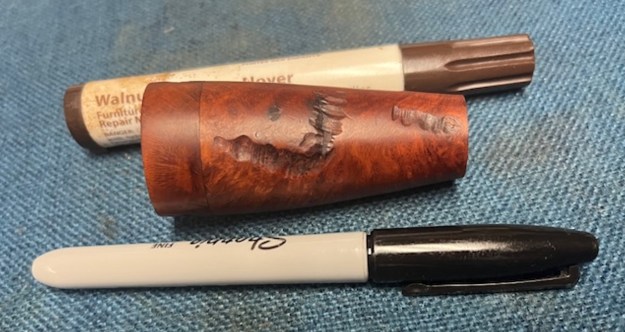
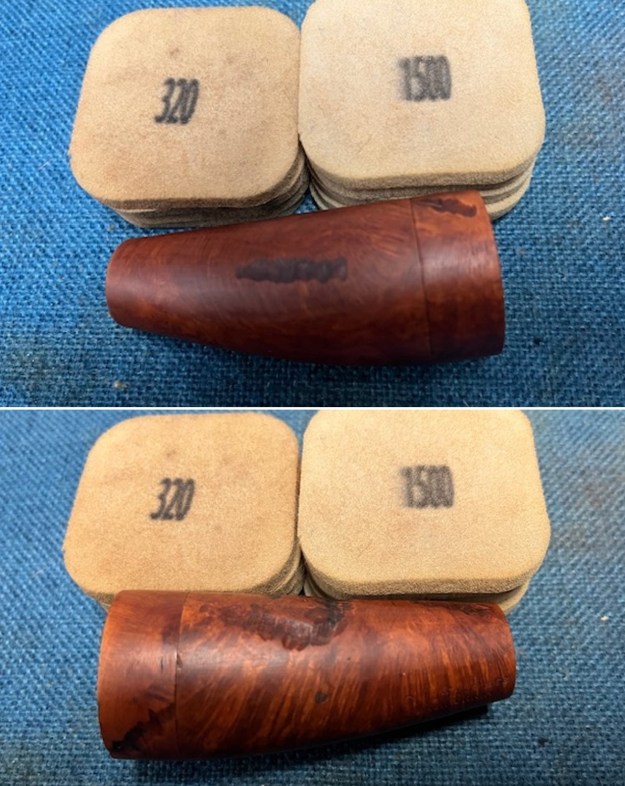
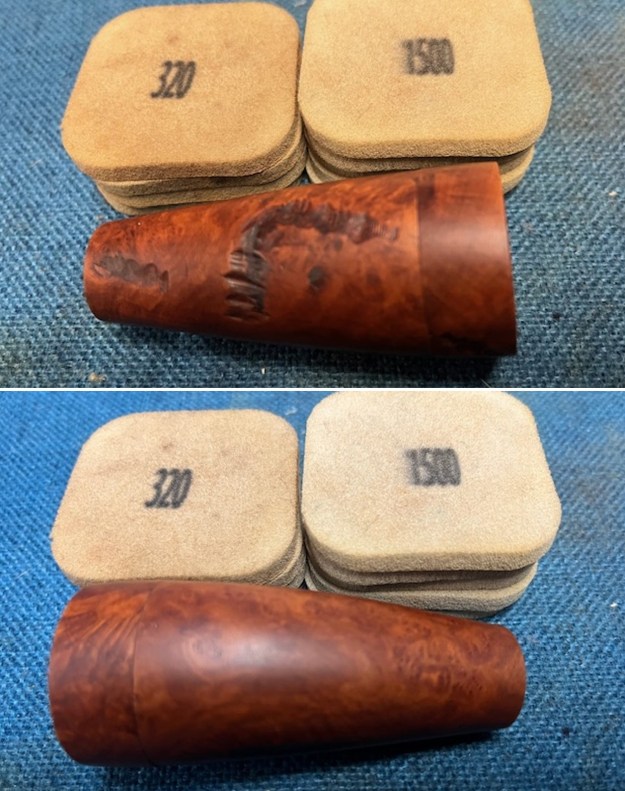
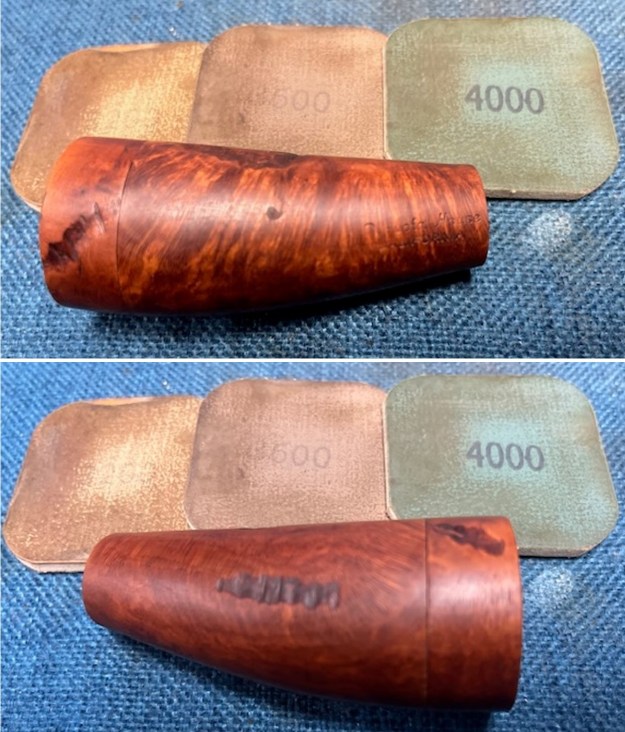
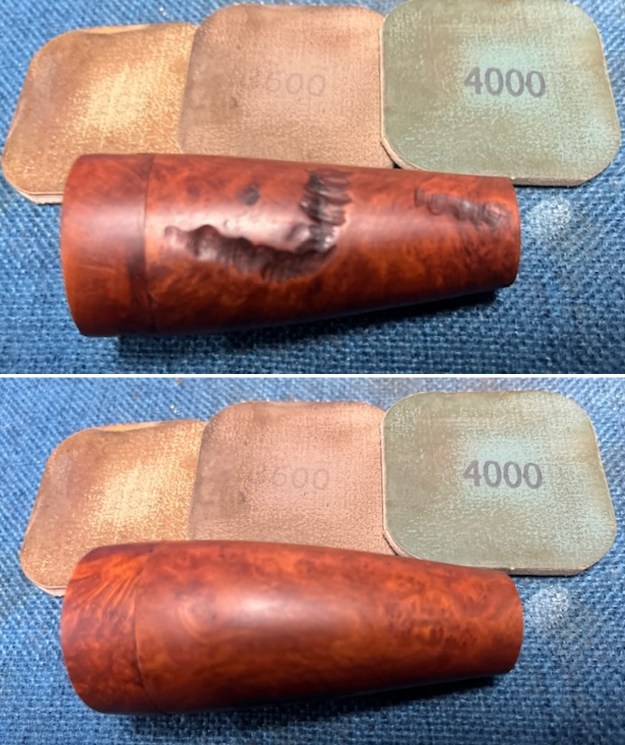
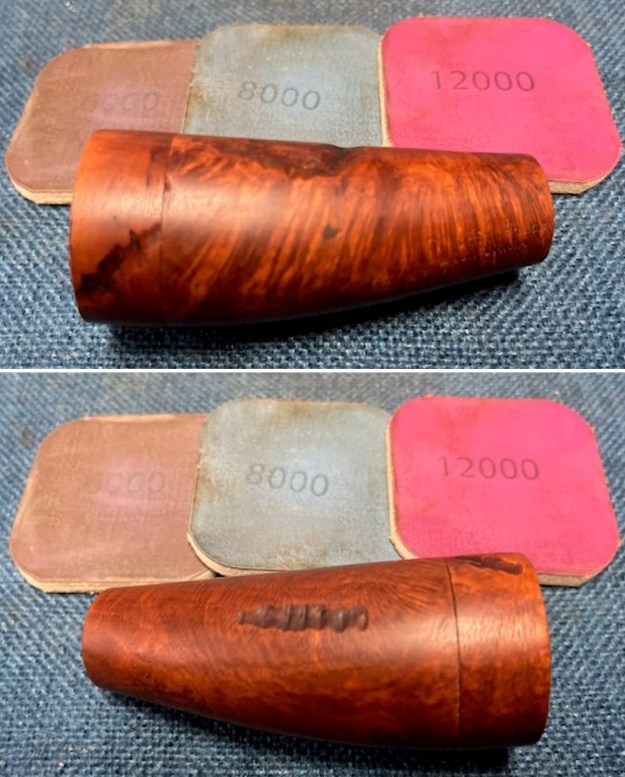
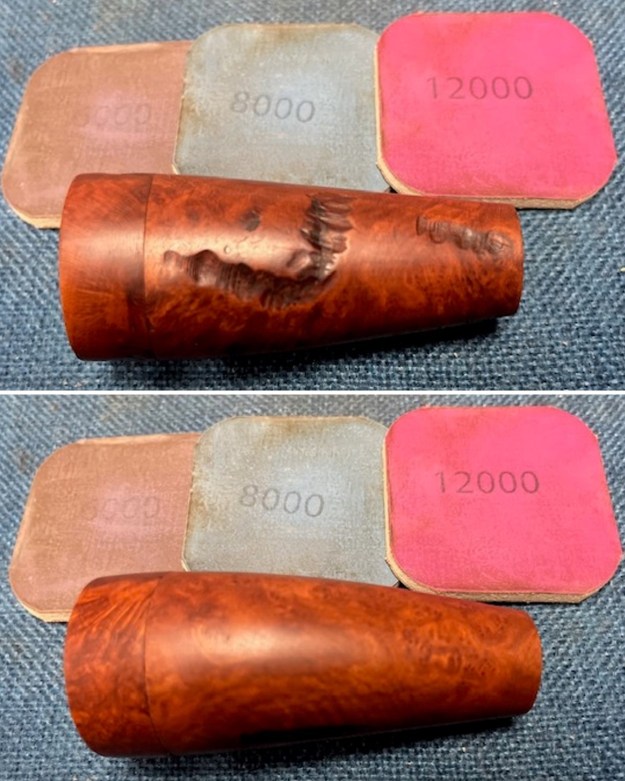
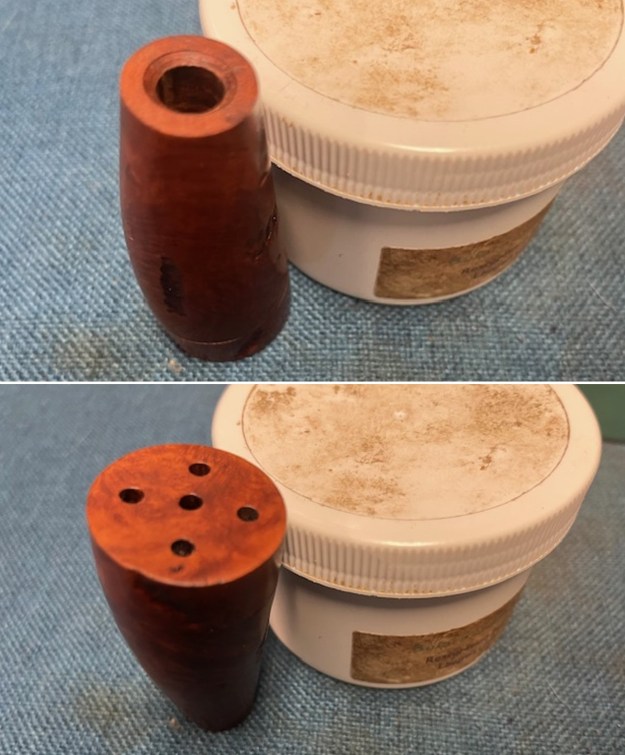
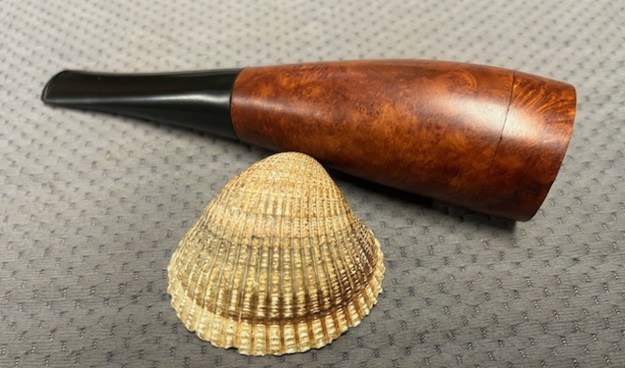
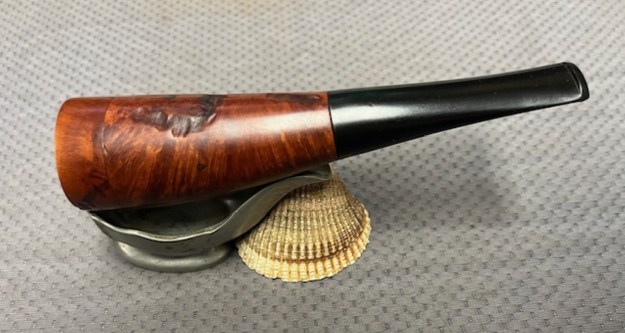
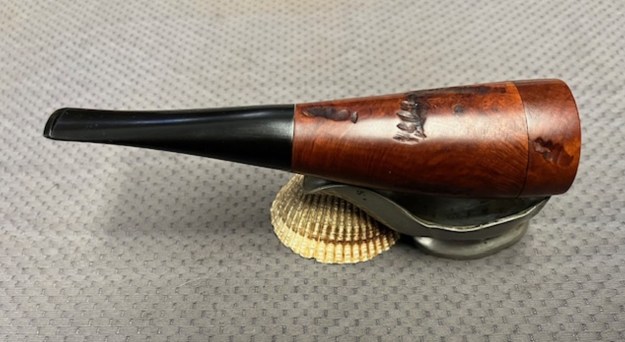
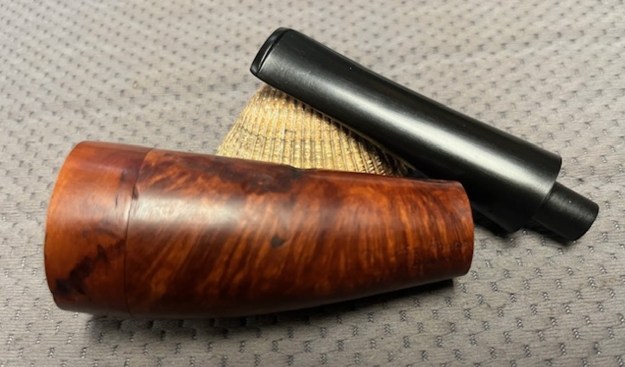
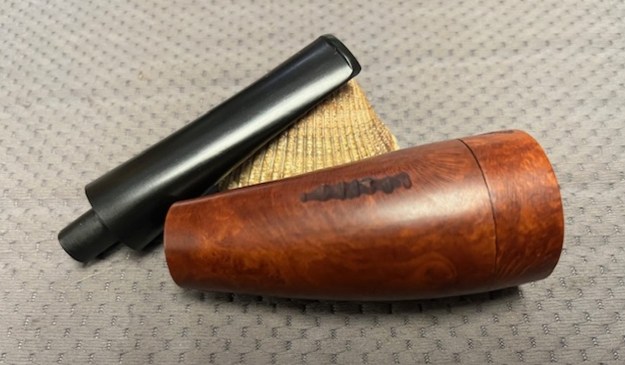
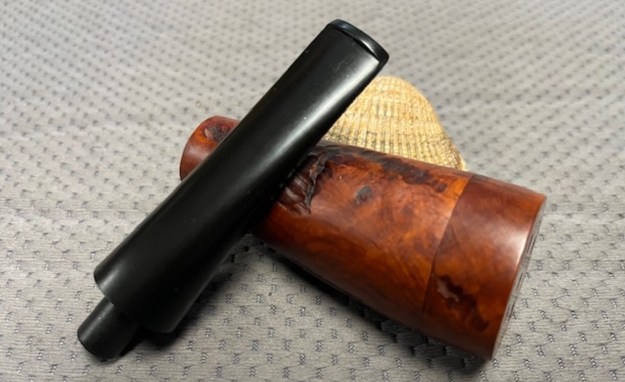
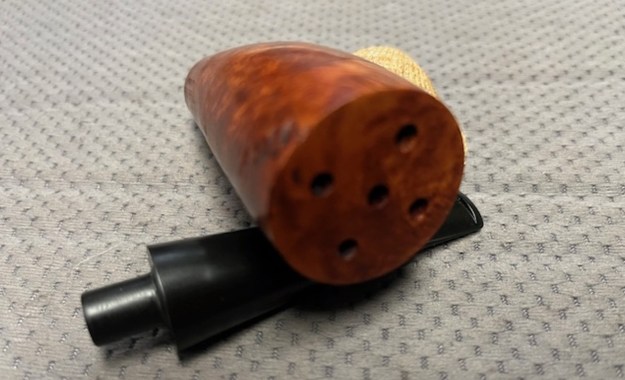
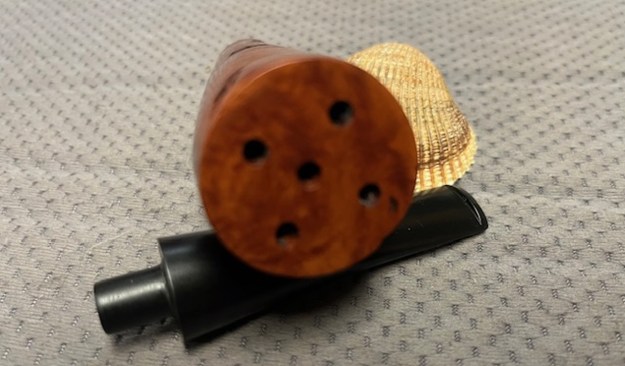
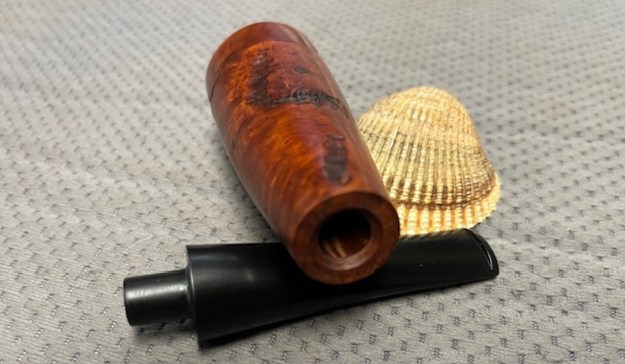
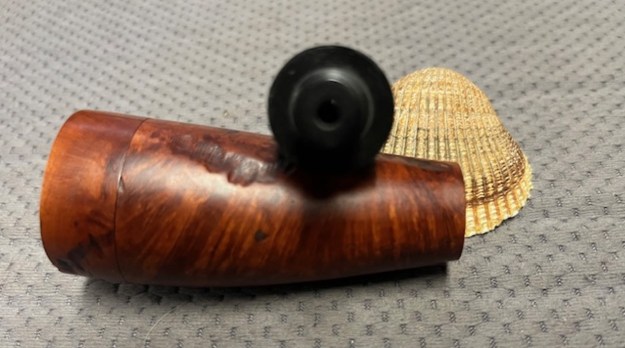
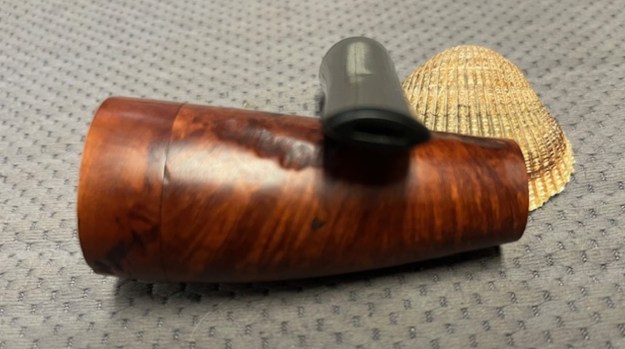
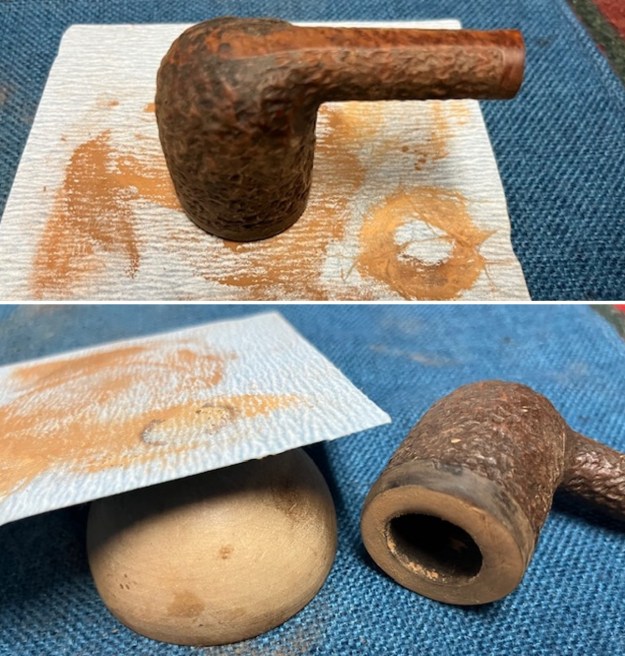
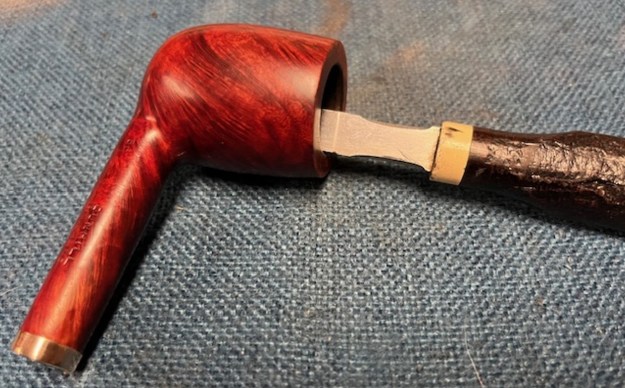
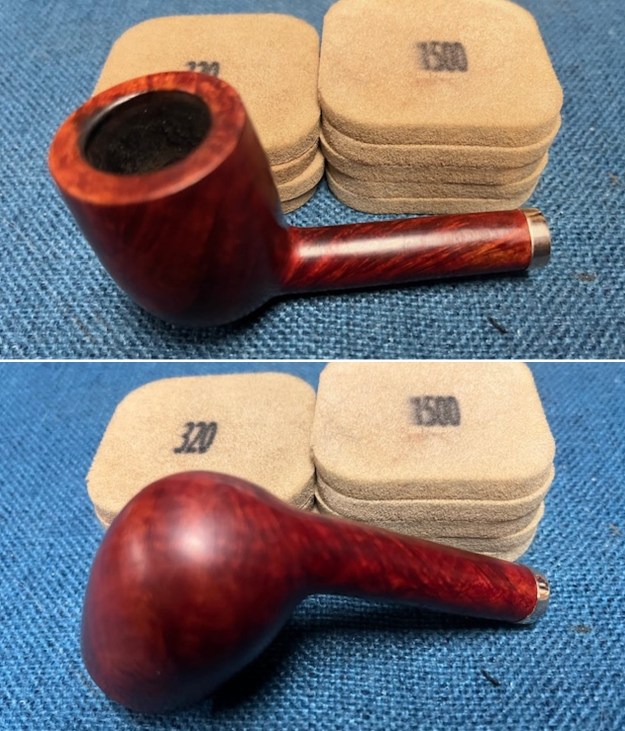
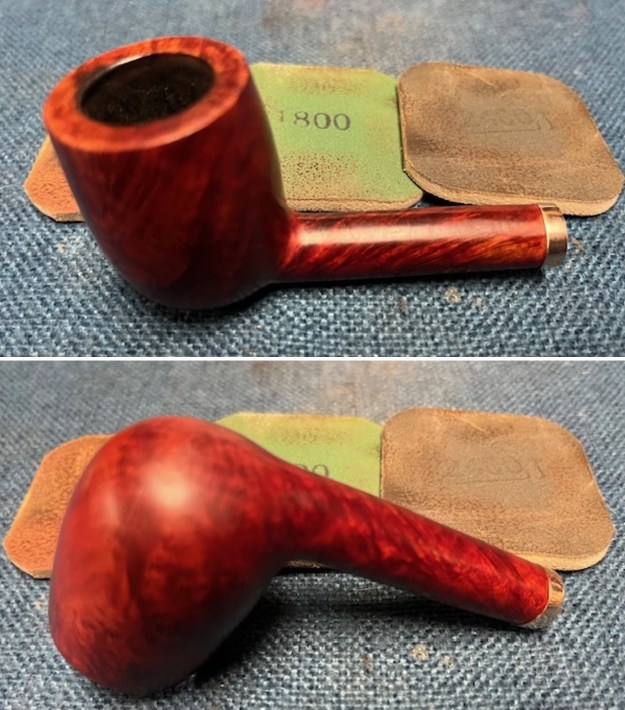
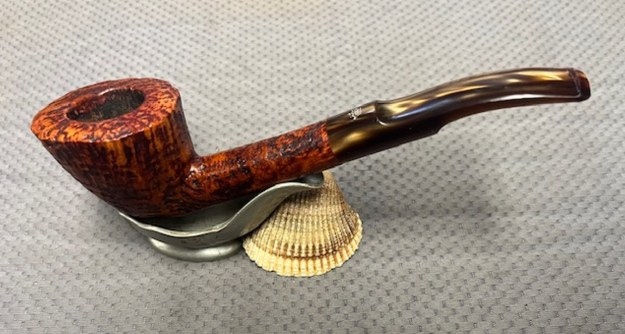
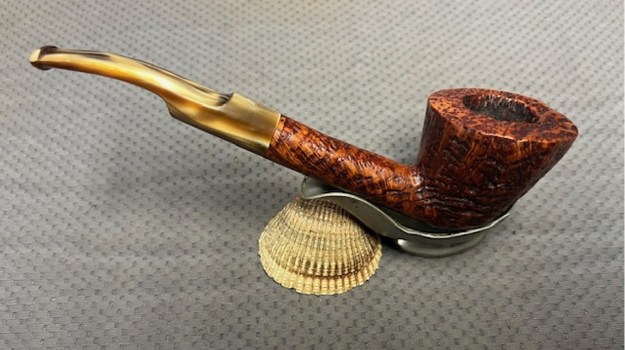
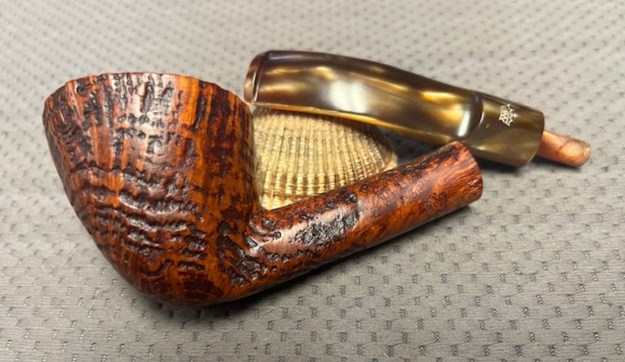
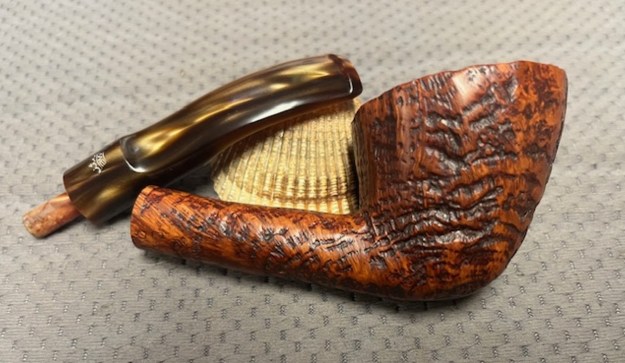
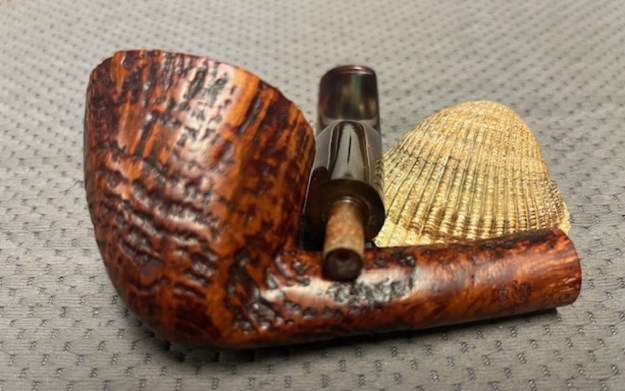
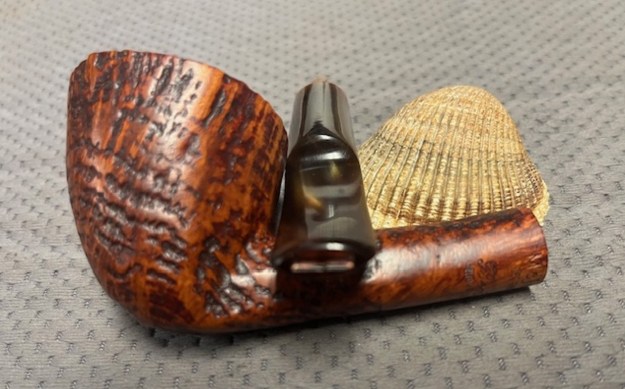
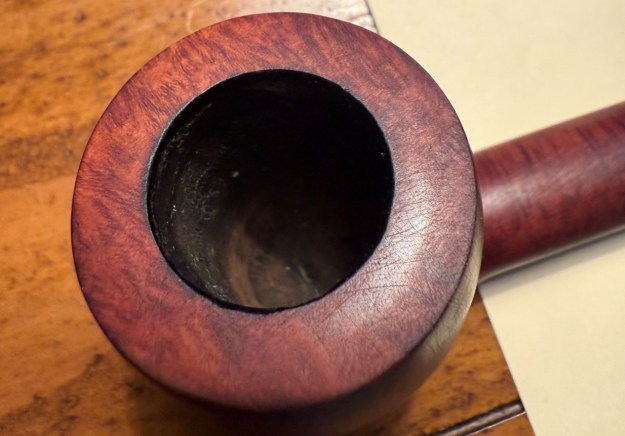
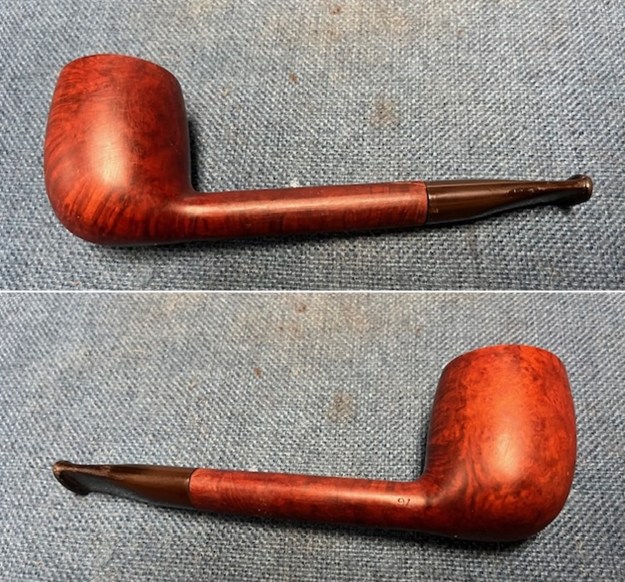
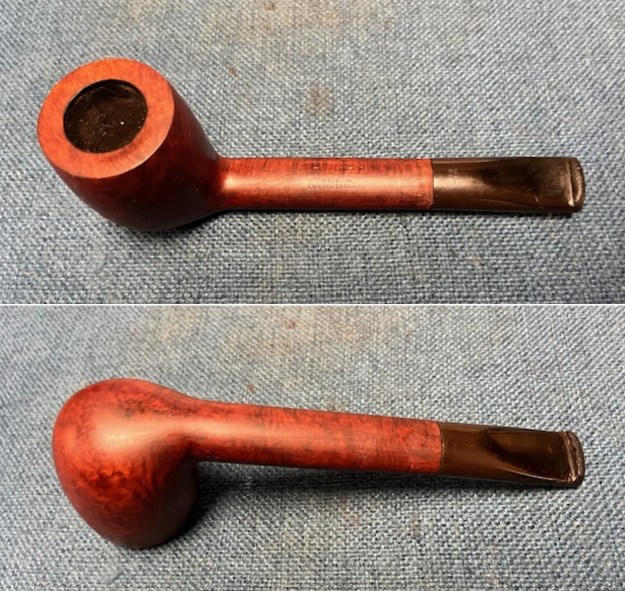
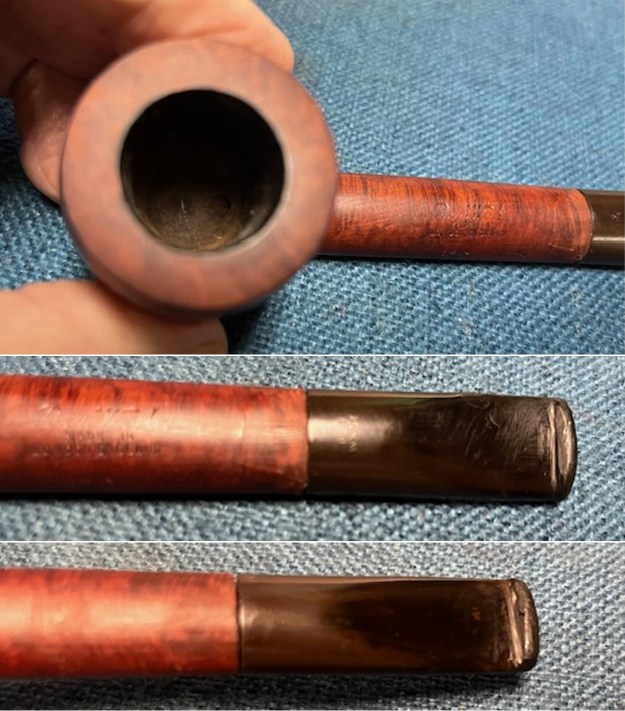
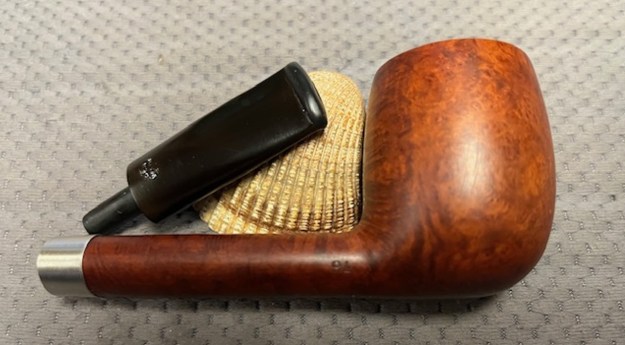
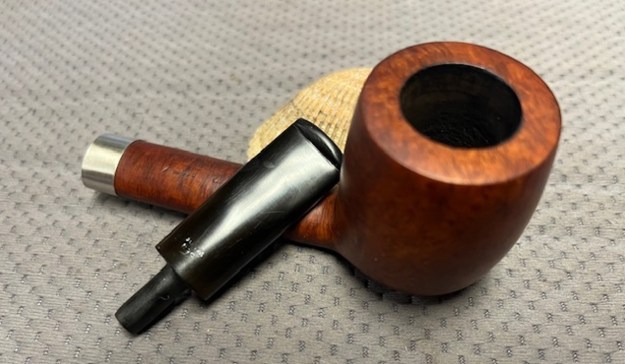
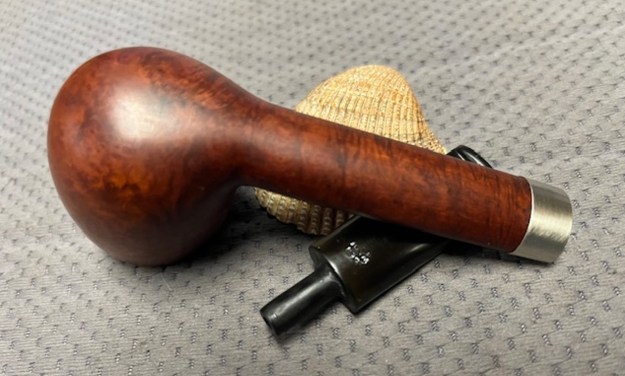
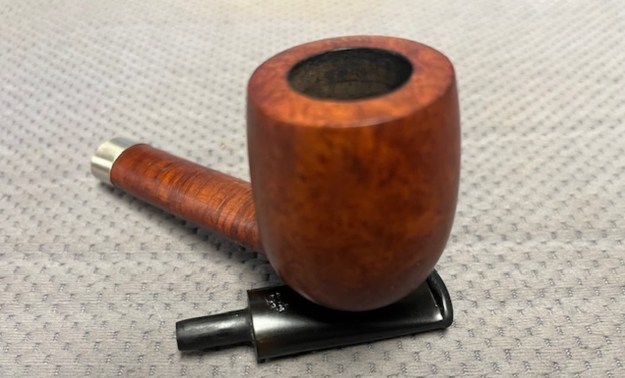
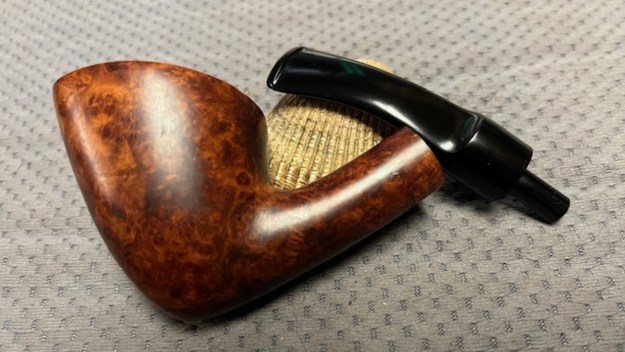
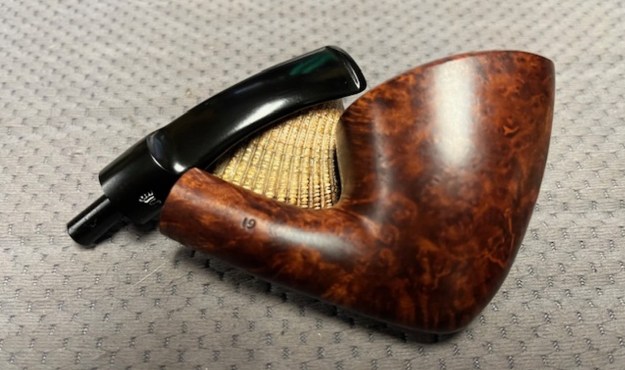
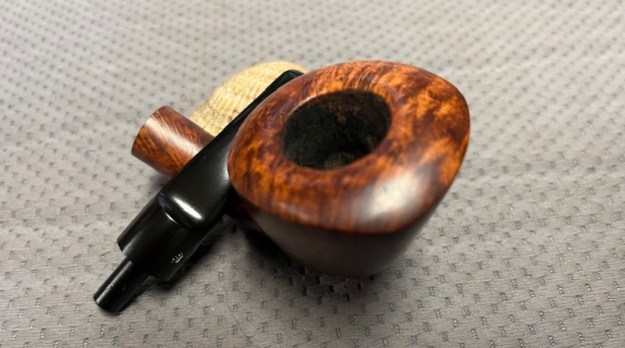
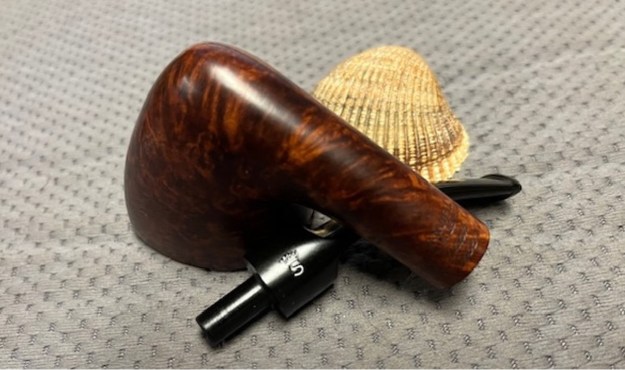
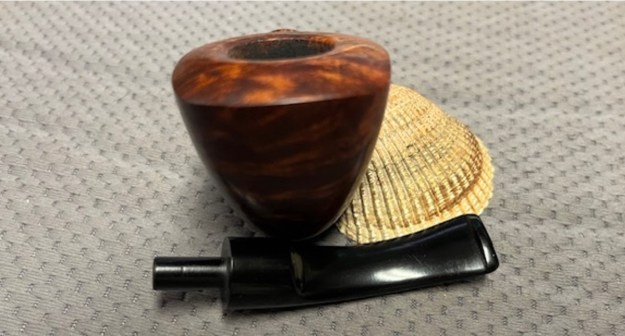
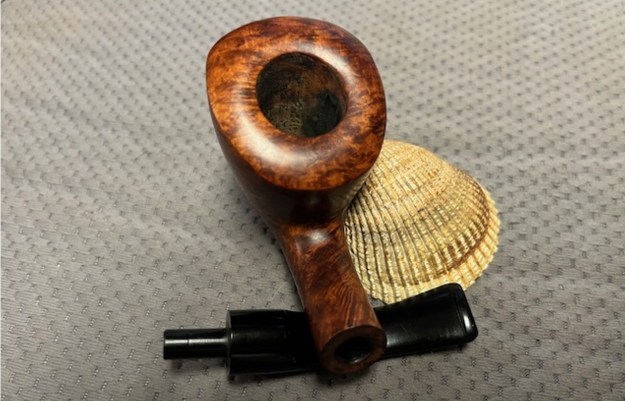
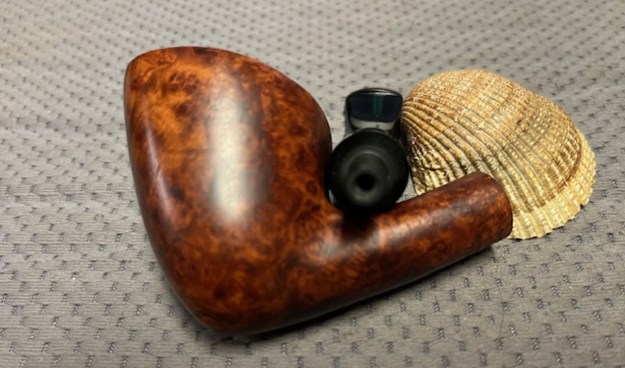
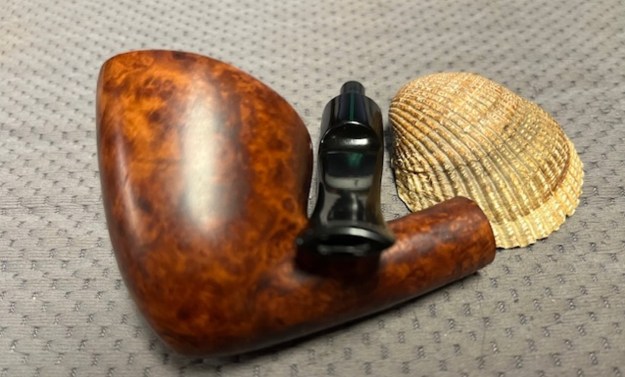
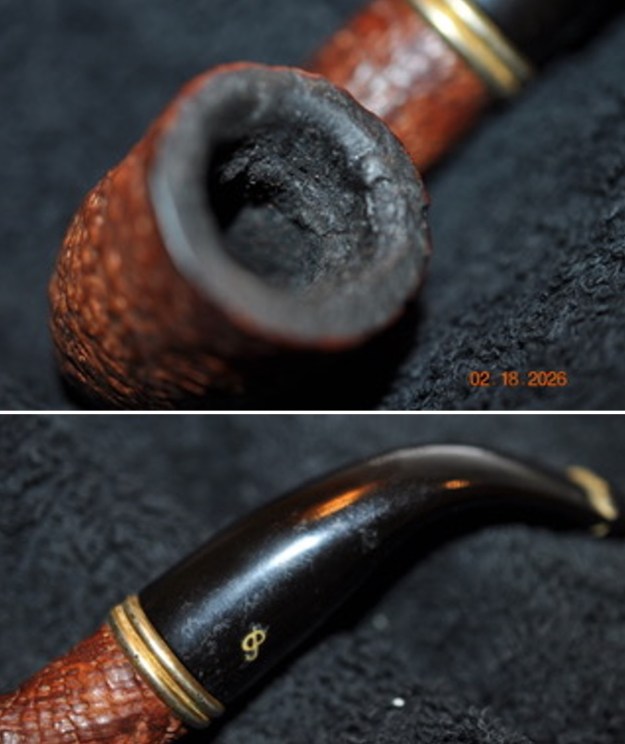
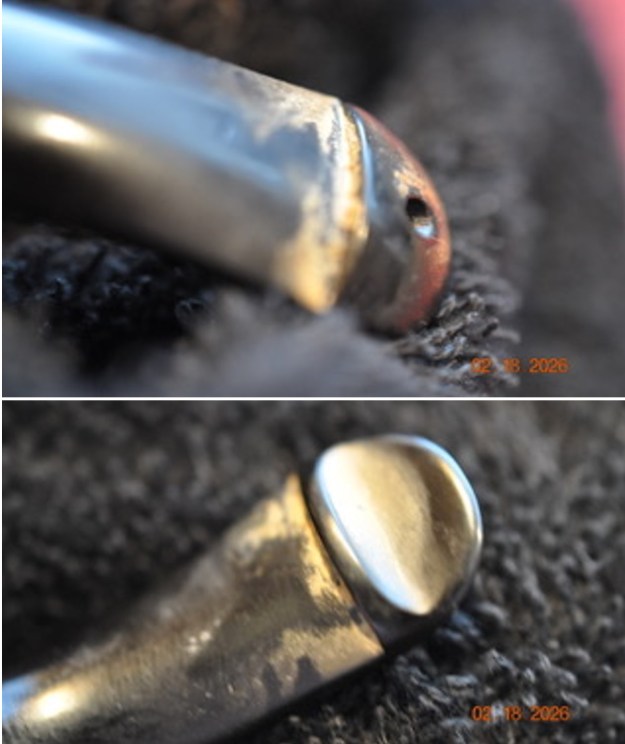
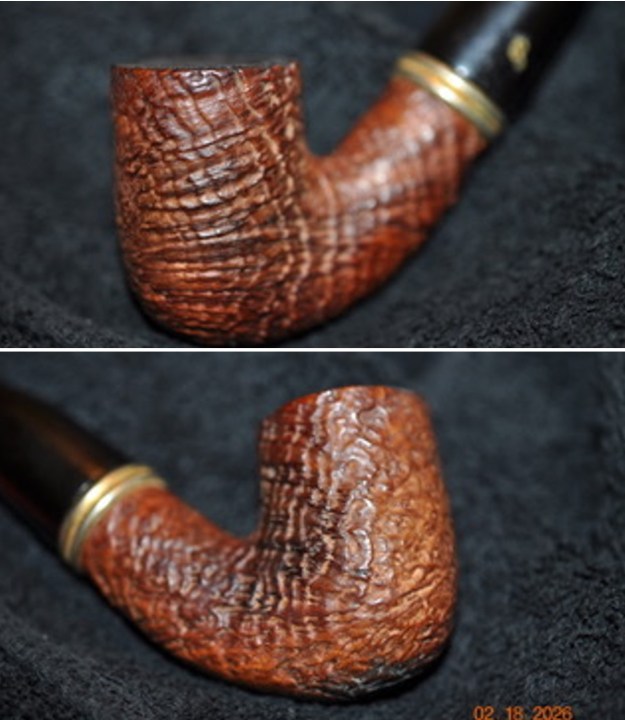
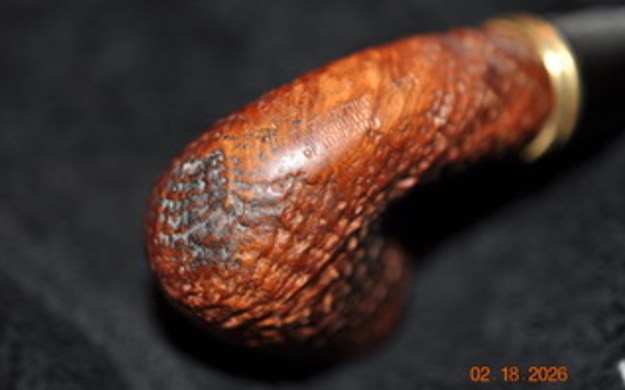
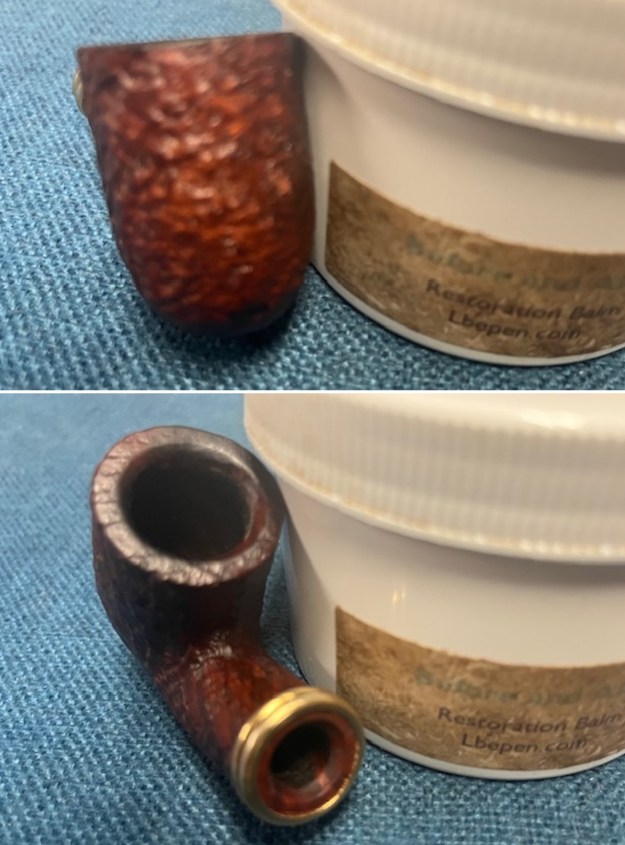
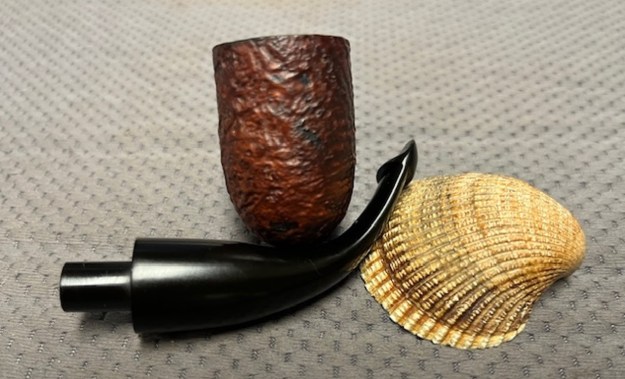
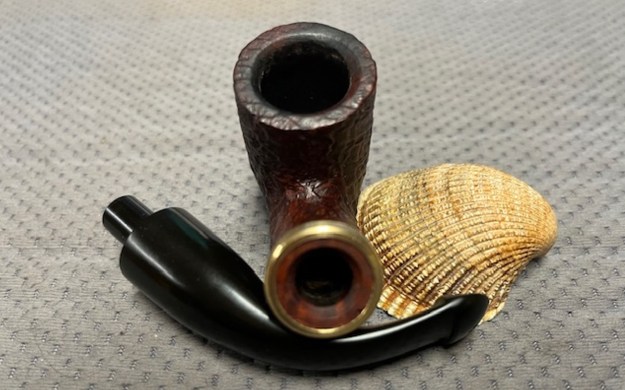
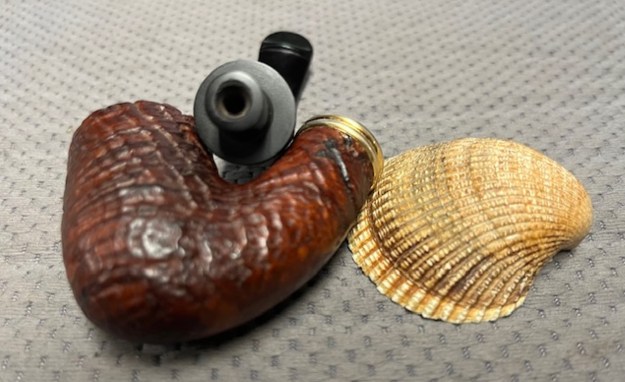
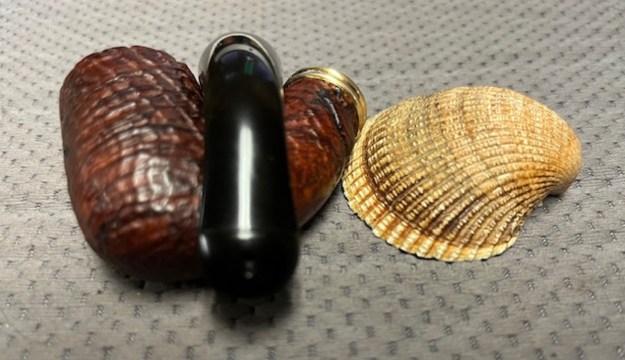
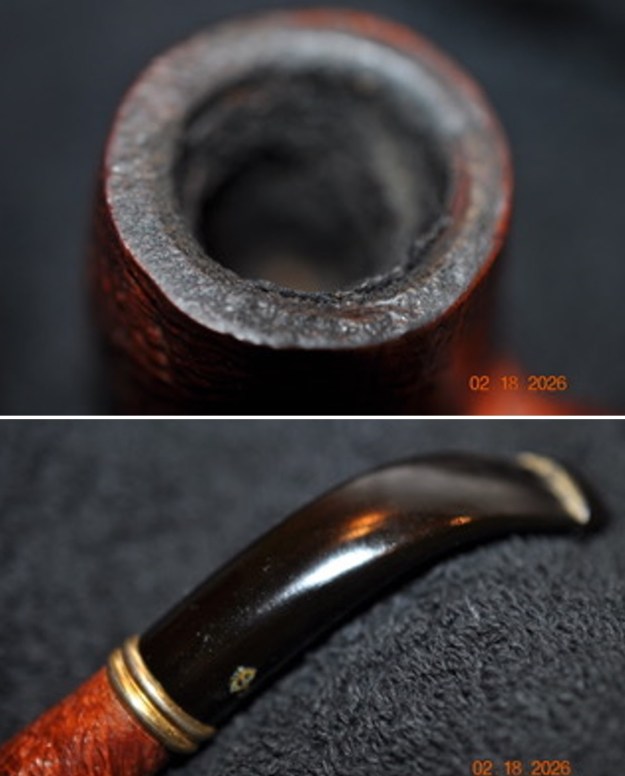
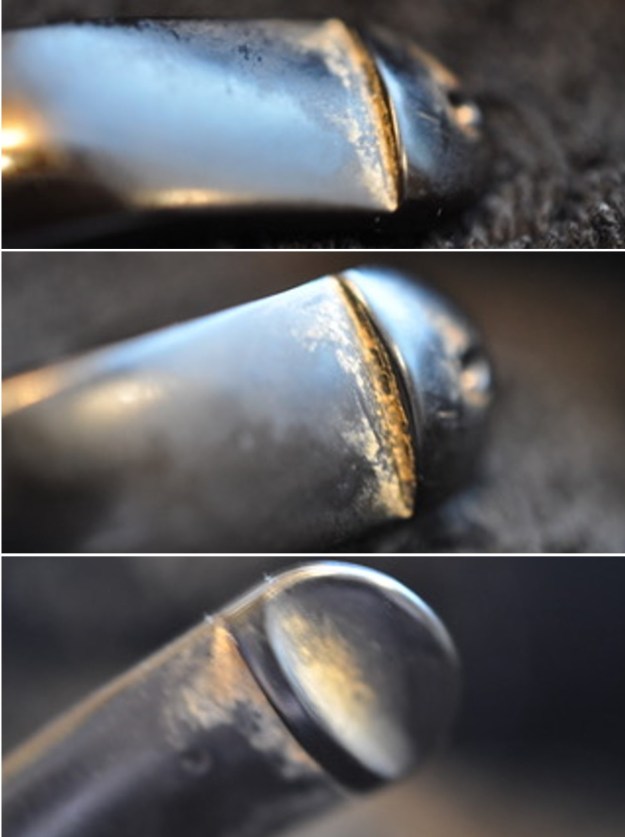
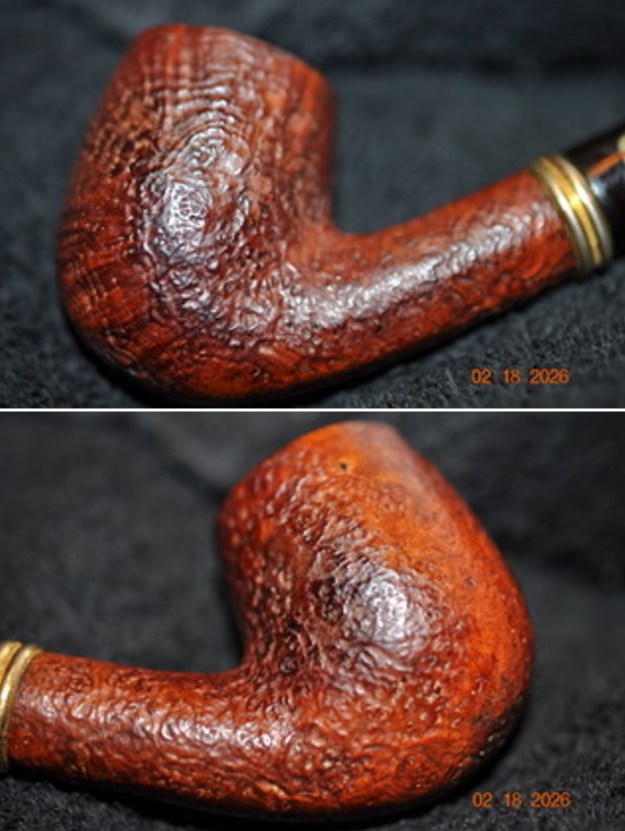
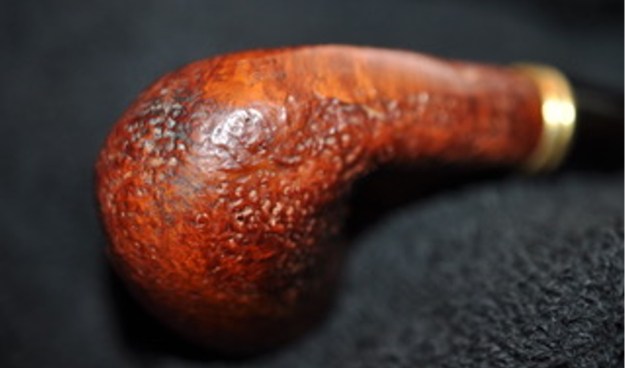
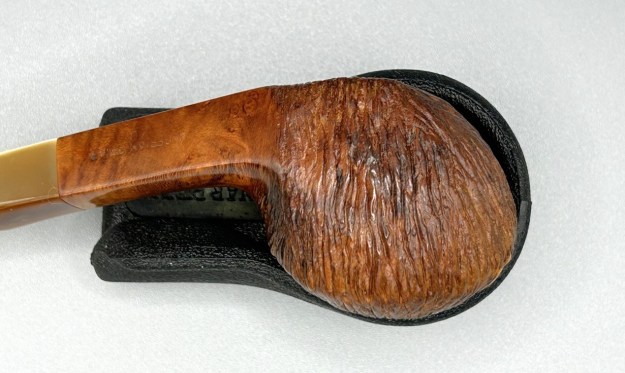
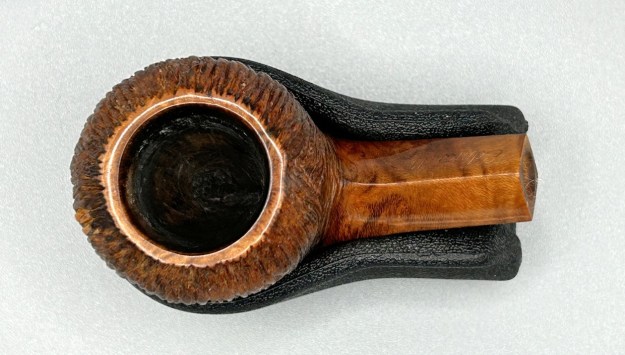
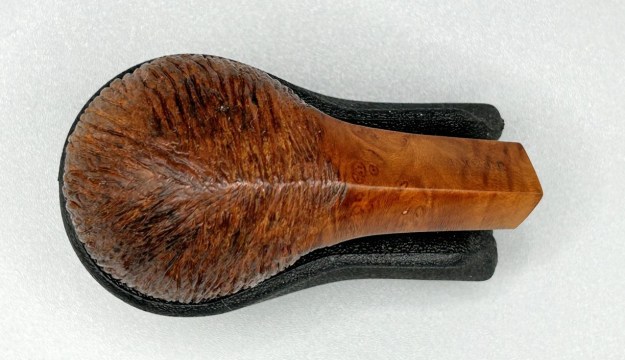
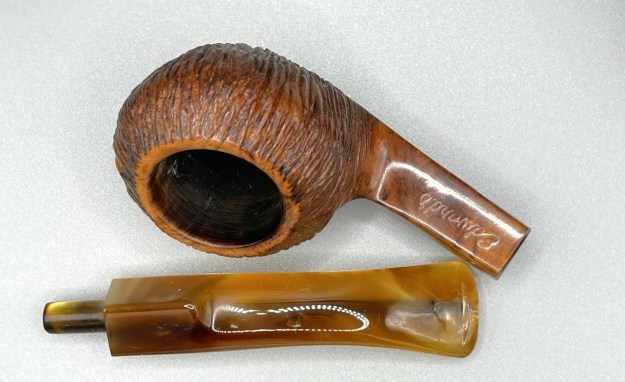
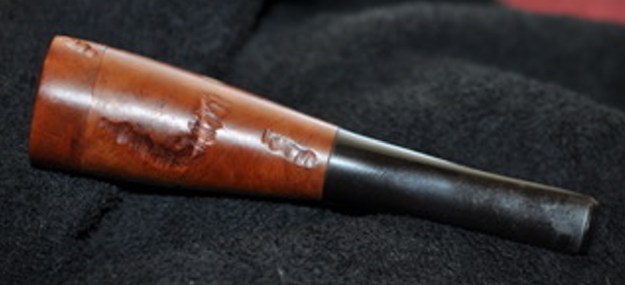
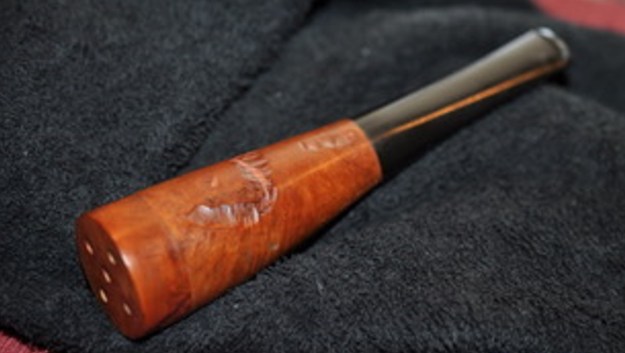
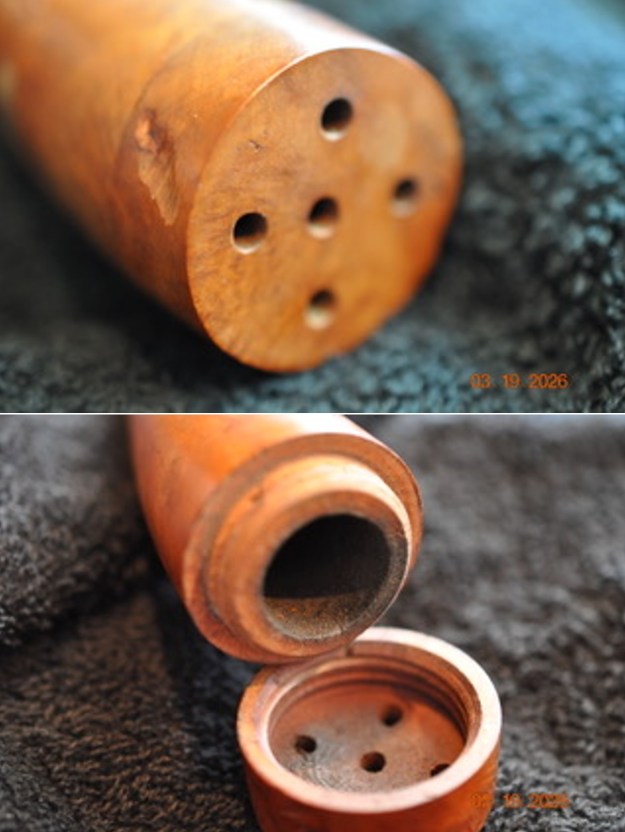
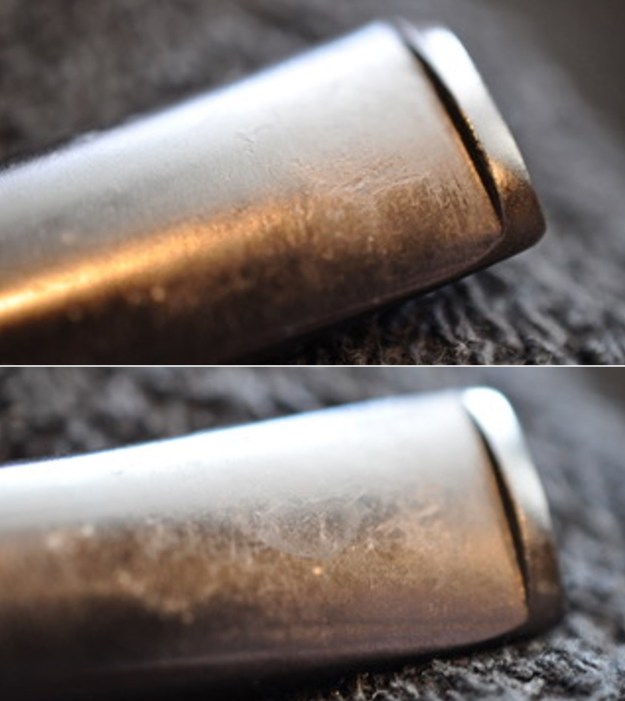
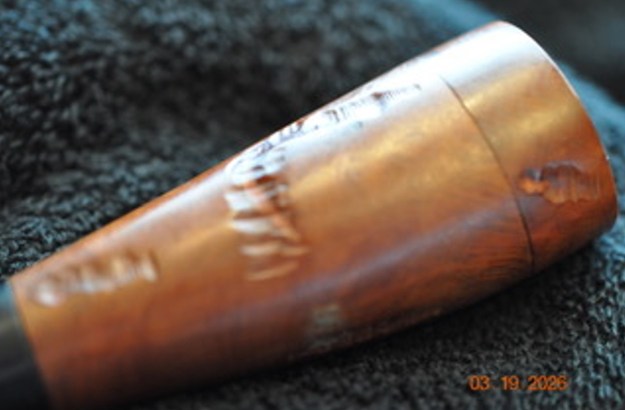
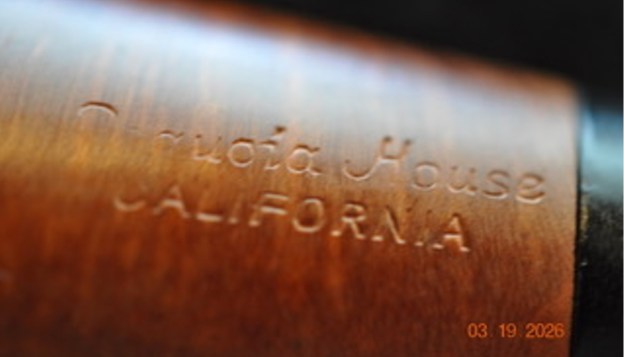
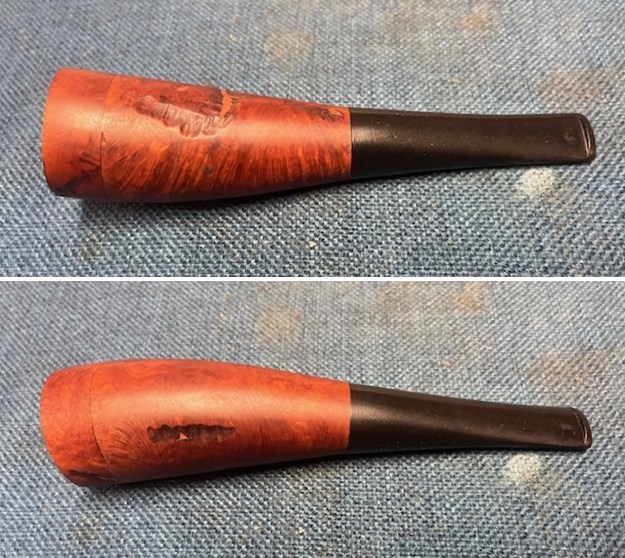
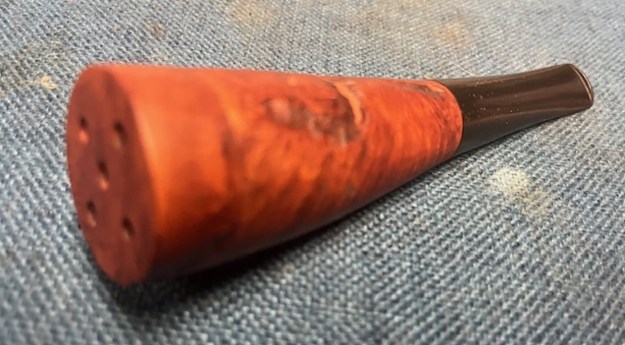
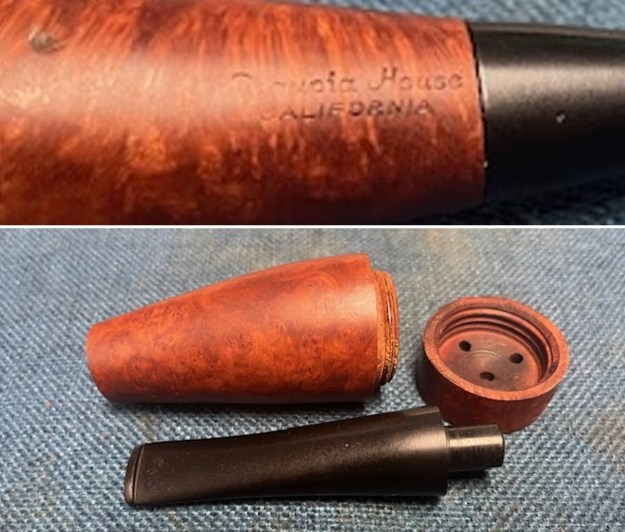
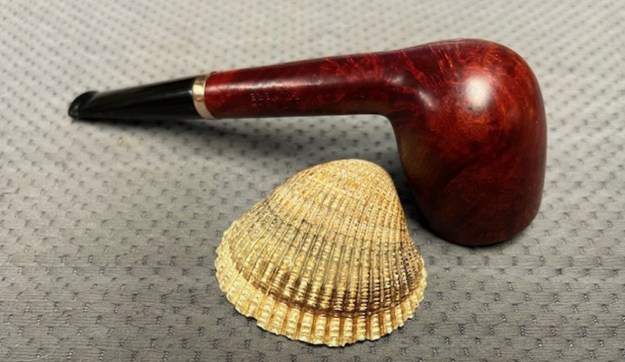
The next pipe I am working on is an interesting Cigar Style or Zeppelin style horn shaped pipe. We picked it up from a seller in Delafield, Wisconsin, USA on 01/28/2026. It has a hard rubber stem and a briar shank/bowl that holds the tobacco and a screw cap on the end with five airholes in the front of the bowl. The finish is smooth with rusticated patches around the bowl and the screw lid on the end. The rustication is similar to what I have found on Custom-bilt pipes. This one had a lot of fills in the rusticated areas. These areas were darker in colour than the smooth finish. The shank end cover unscrews from the wooden threads on the bowl. The pipe is stamped on the left side of the bowl and reads Sequoia House {over] California. The bowl had a light cake in it and some darkening on the inside of the cover and bowl internals. He took photos of the five-hole cap on the bowl cap. It is cleanly drilled and open. He removed the bow cap and took a photo of the bowl and cap separated. You can see the debris in the bowl and the darkening on the inside of the rim cap. There is a light cake in the bowl. He captured the condition of the stem. It is quite clean – light tooth chatter on both sides. He took a photo of the side of the bowl and cap to show the rustication on the surface of the briar. You can see the putty in the fills on the bowl sides. He captured the stamping on the left side of the shank. It reads as noted above. The stamping is faint in spots but is still readable as noted above.There was nothing on Pipephil’s site or on Pipedia about the brand so I did a general search on Google for the Sequoia House California brand. I was able to find a listing and map for a pipe shop in Fresno, California call Sequoia Smoke Shop on 6060 N. First St. I am including the link to the map and the information on the site (https://www.smokeguideusa.com/shop/sequoia-smoke-shop-fresno-ca).
At the top of the search AI had gather information on the brand and the shop. Click on the “information” link above. I have included the information below.

Sequoia House

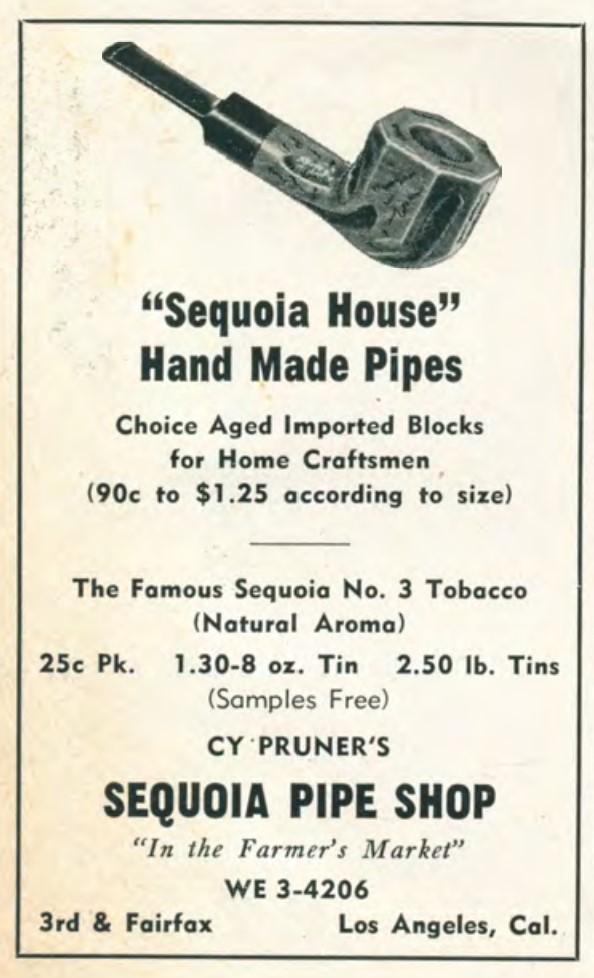
smoking pipes were made by Cy Pruner, who operated Cy Pruner’s Sequoia Pipe Shop in Los Angeles, California.

Based on historical advertisements from the late 1940s, here are the key details regarding Sequoia House pipes:

    Maker: Cy Pruner

     Location: The shop was located in the Farmer’s Market at 3rd & Fairfax in Los Angeles, California.

    Product Details:

        Handmade Pipes: Sequoia House pipes were marketed as “Hand Made Pipes”.

        Materials: They were crafted using “Choice Aged Imported Blocks”.

        DIY Options: The shop also sold these imported blocks for “Home Craftsmen” to make their own pipes.

Related Products: Cy Pruner also produced a companion tobacco line known as Sequoia No. 3 Tobacco, which was noted for its “Natural Aroma”.

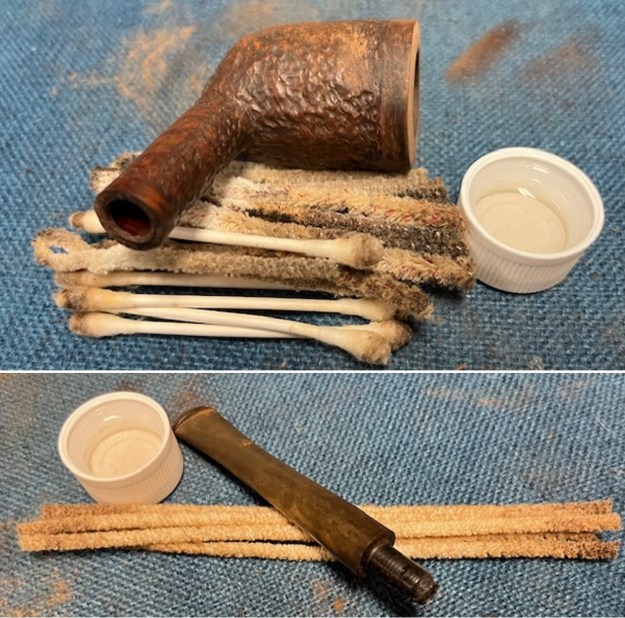
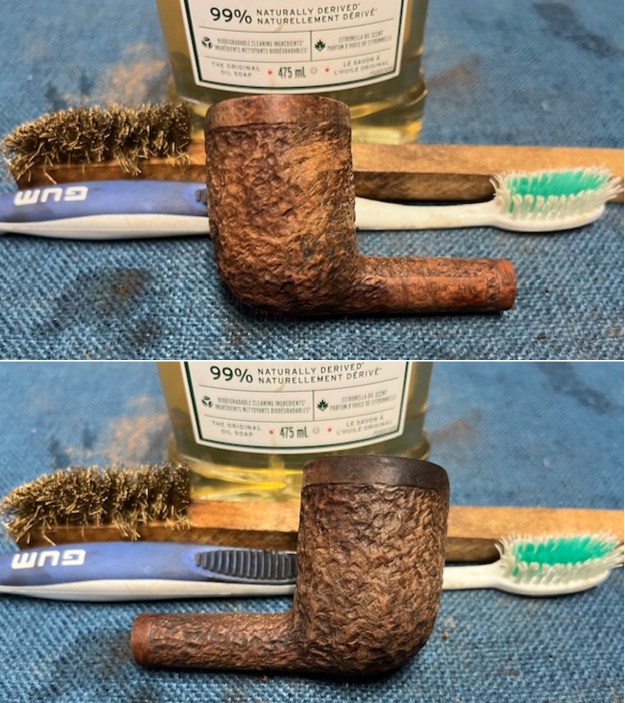
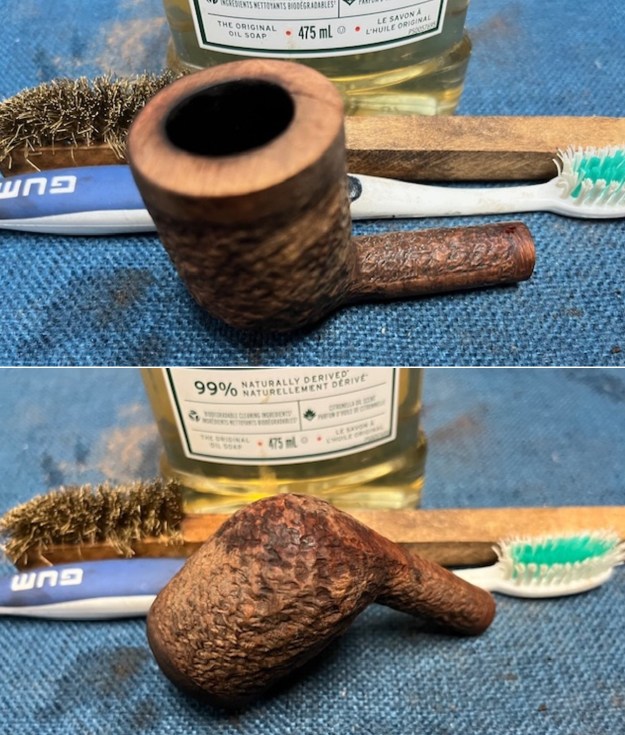
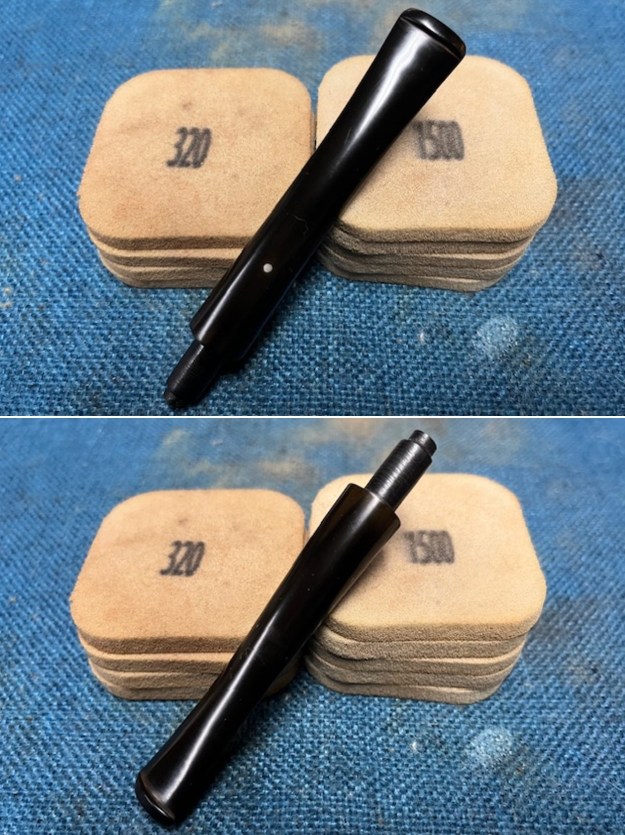
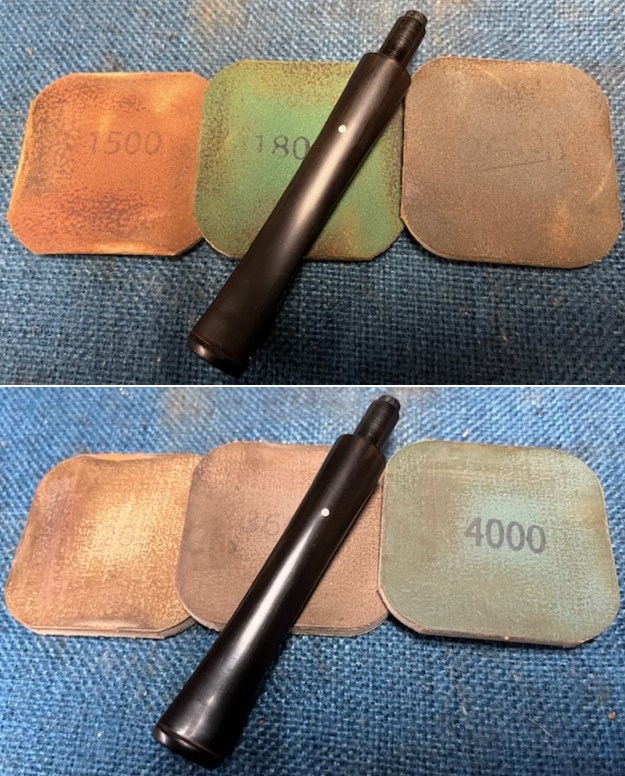
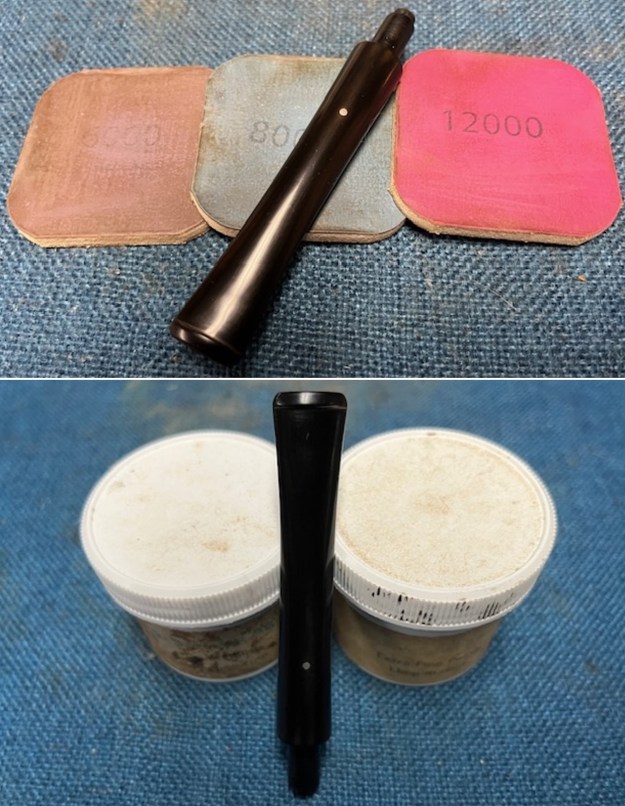
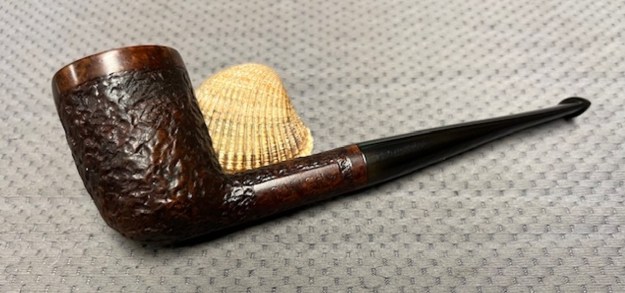
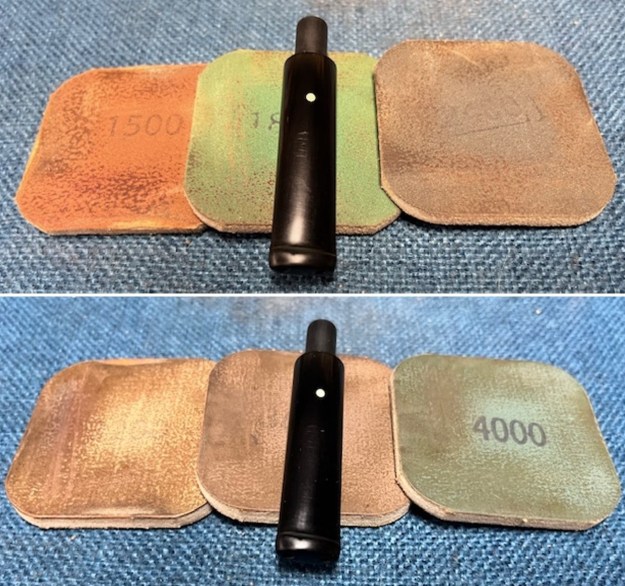
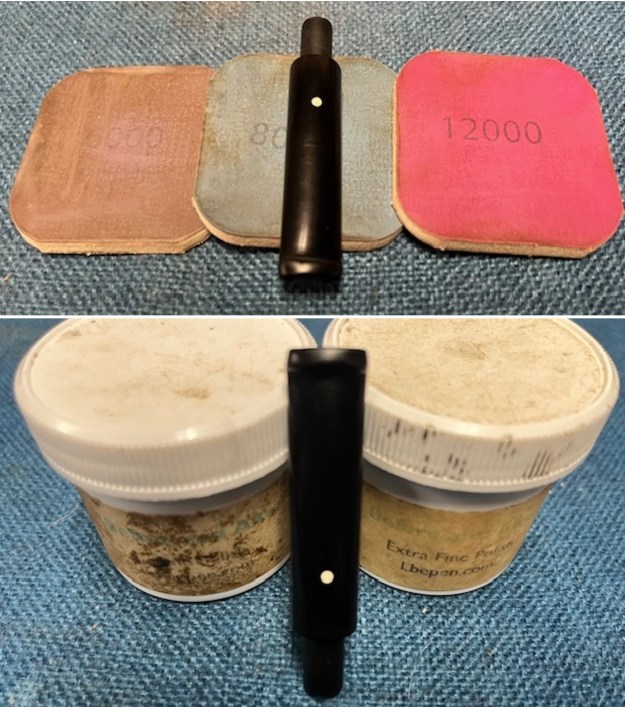
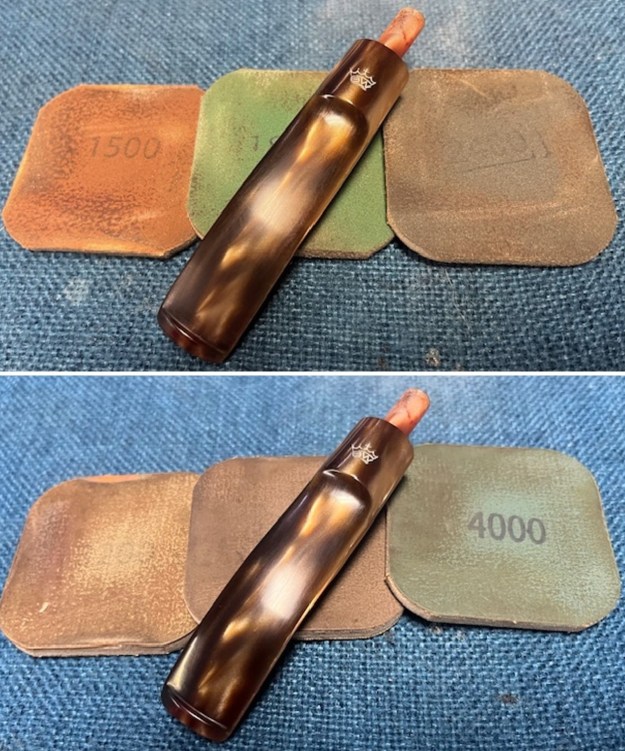
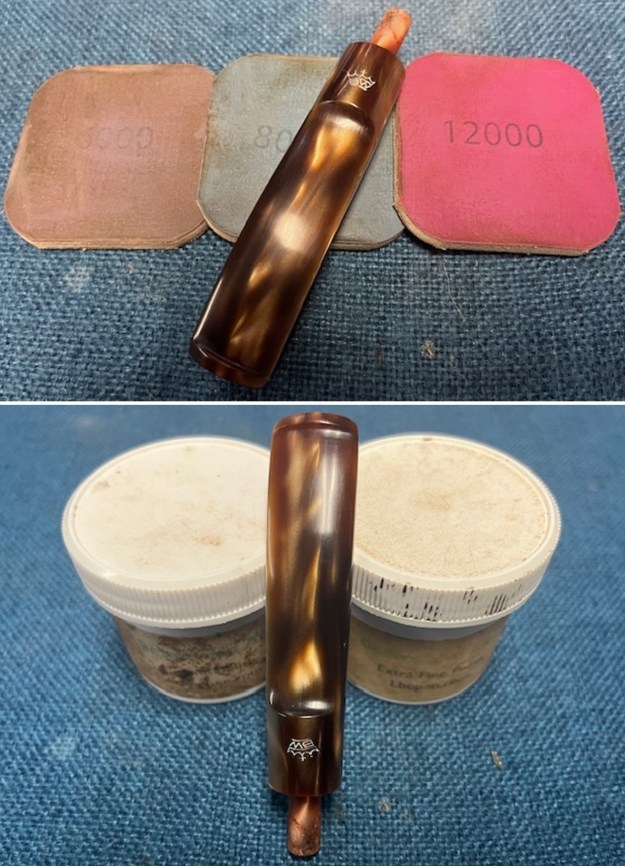
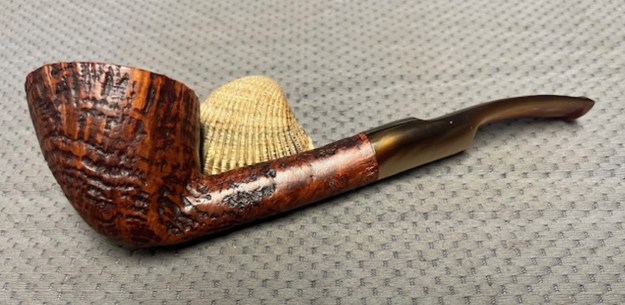
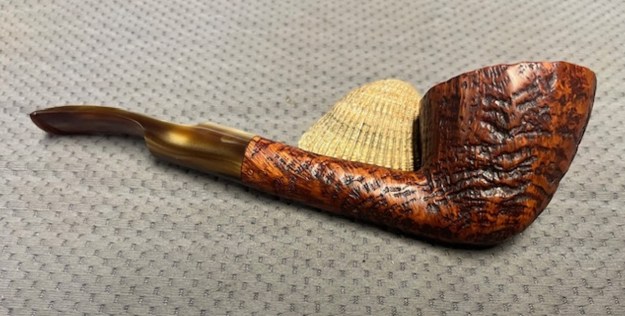
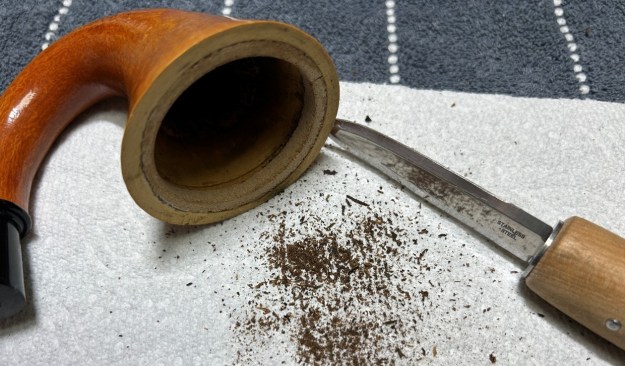
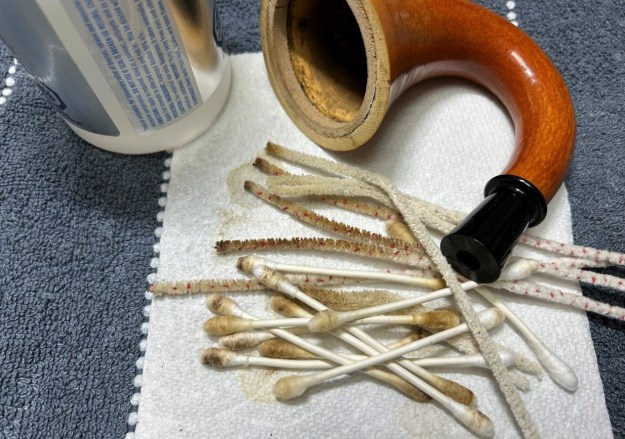
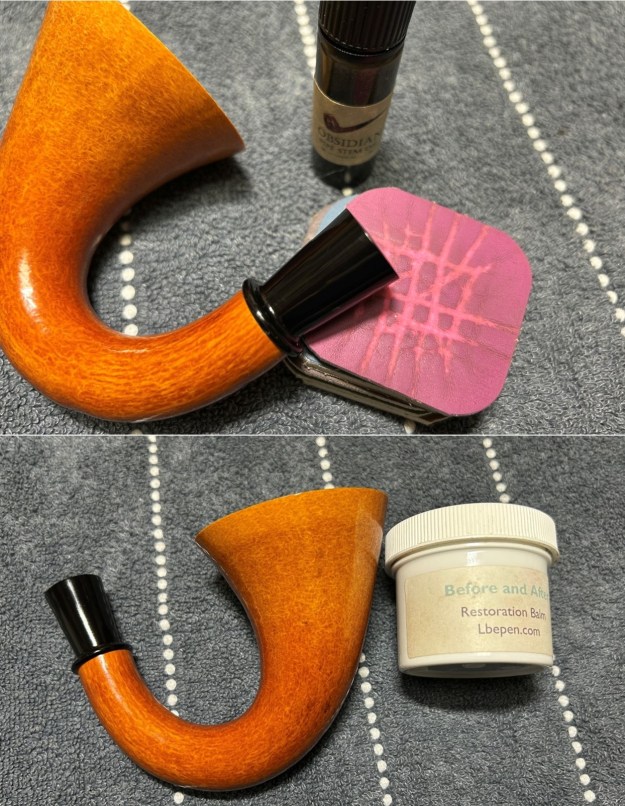
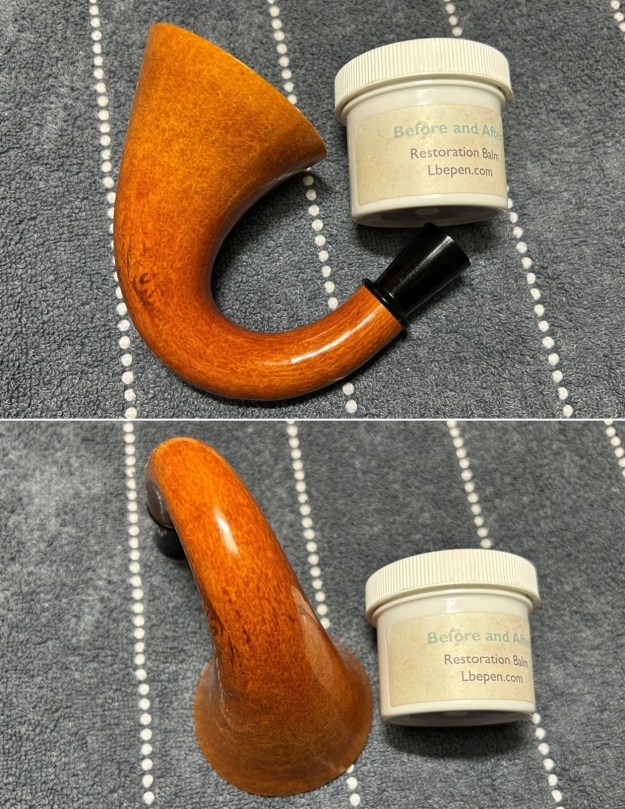
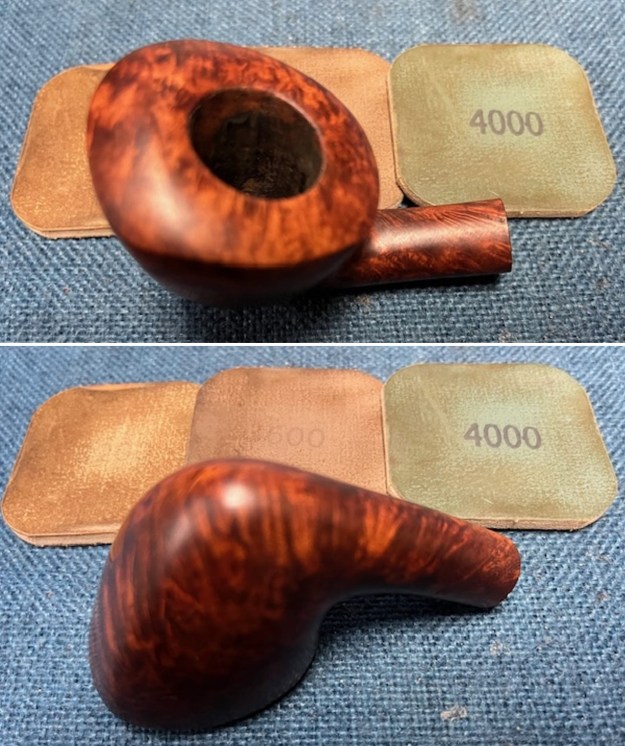
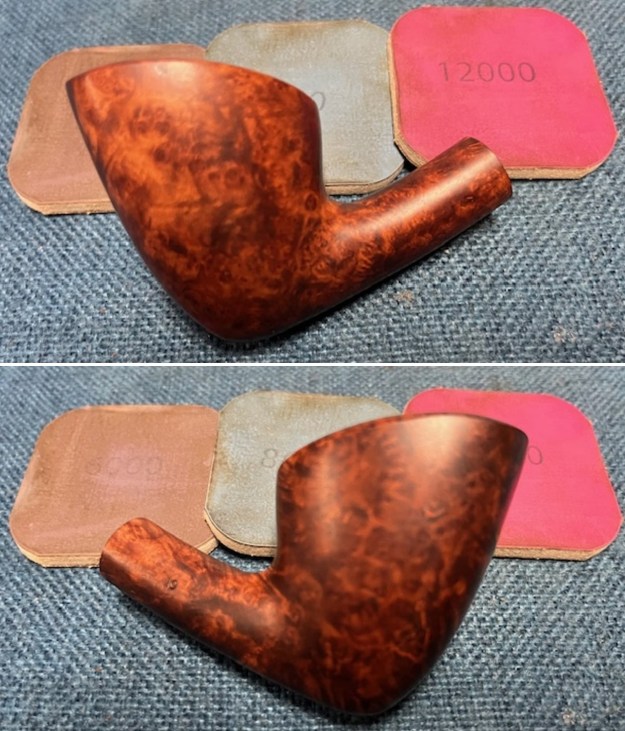
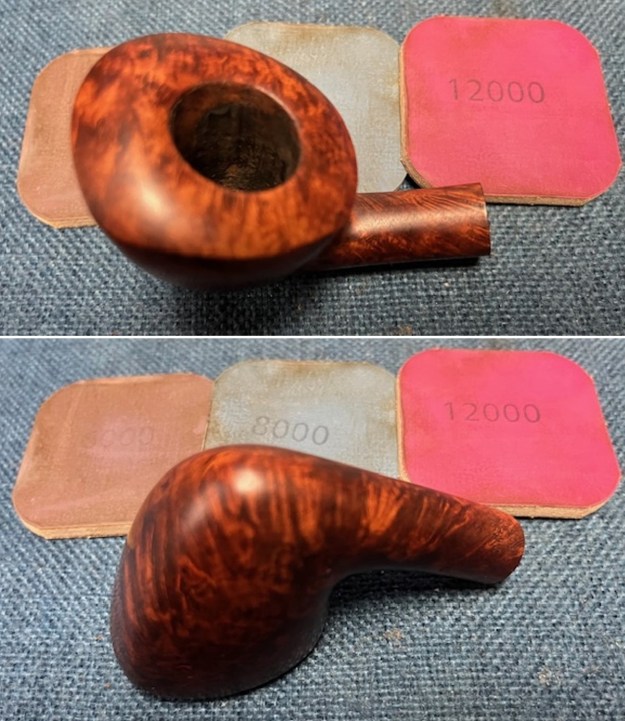
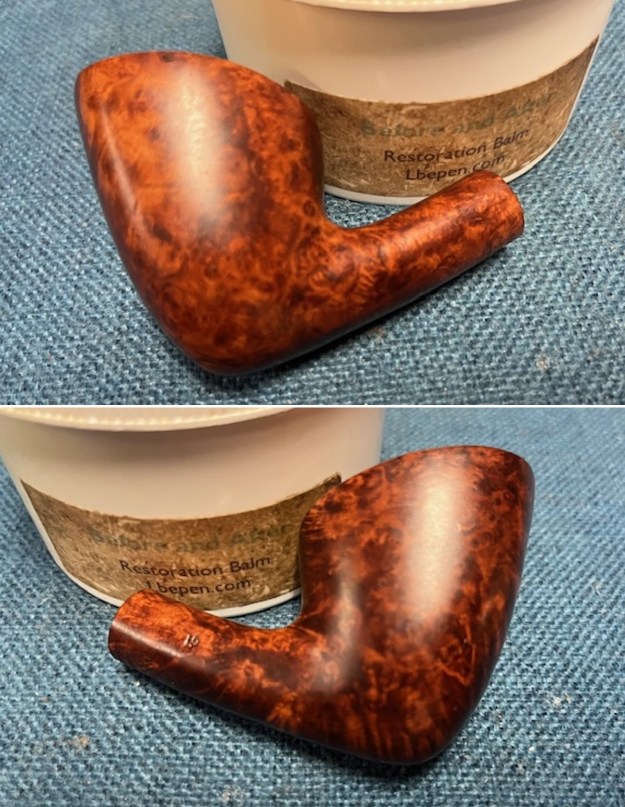
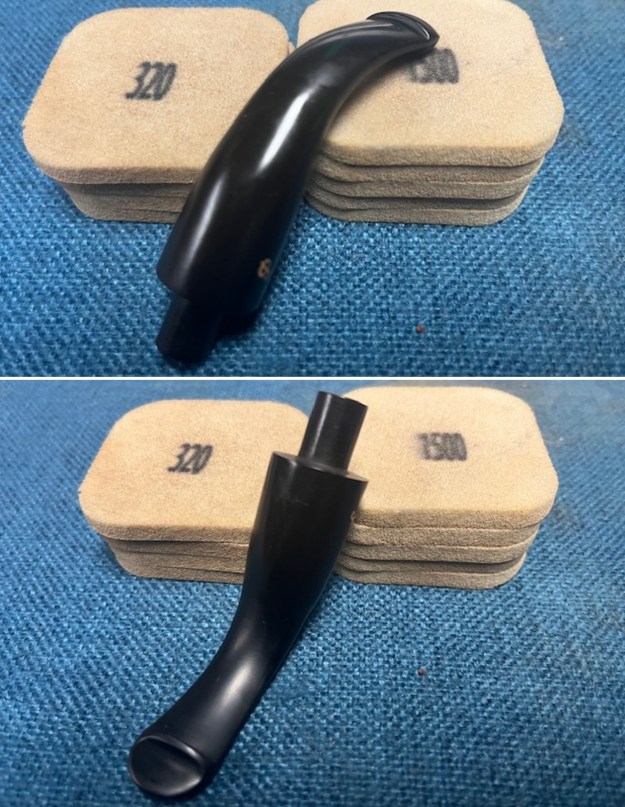
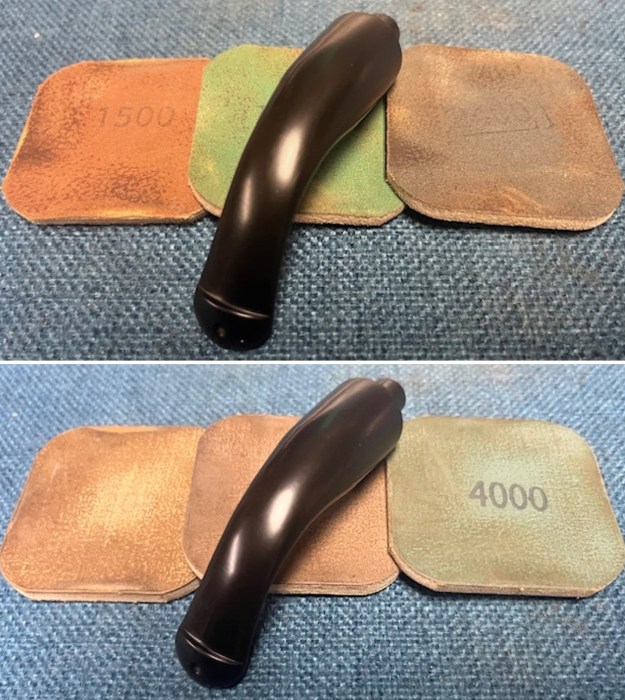
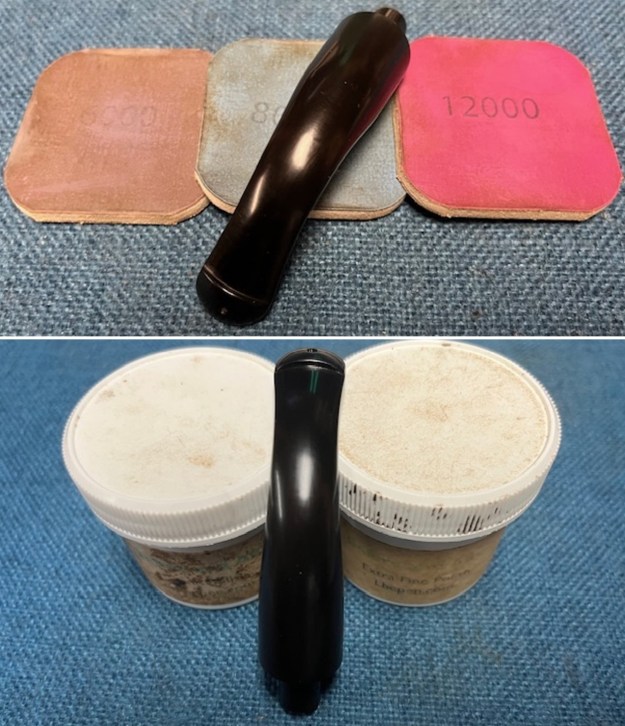
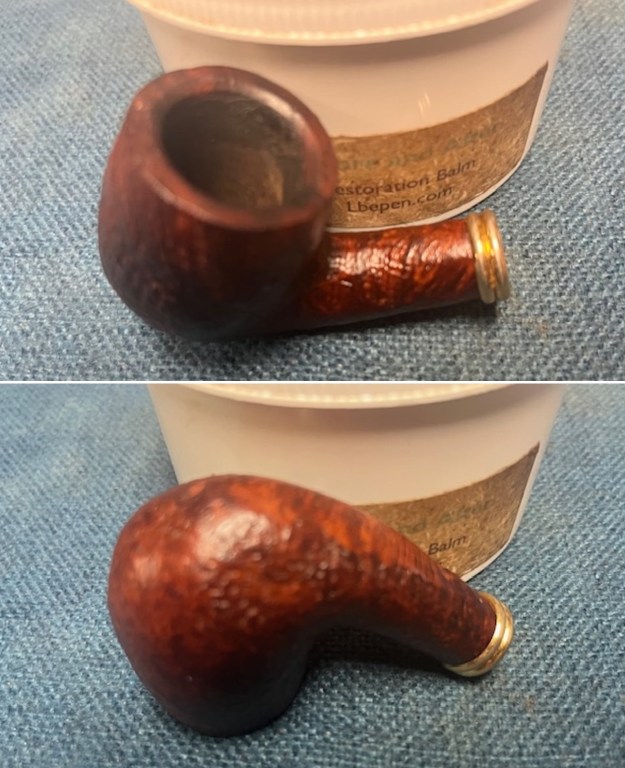
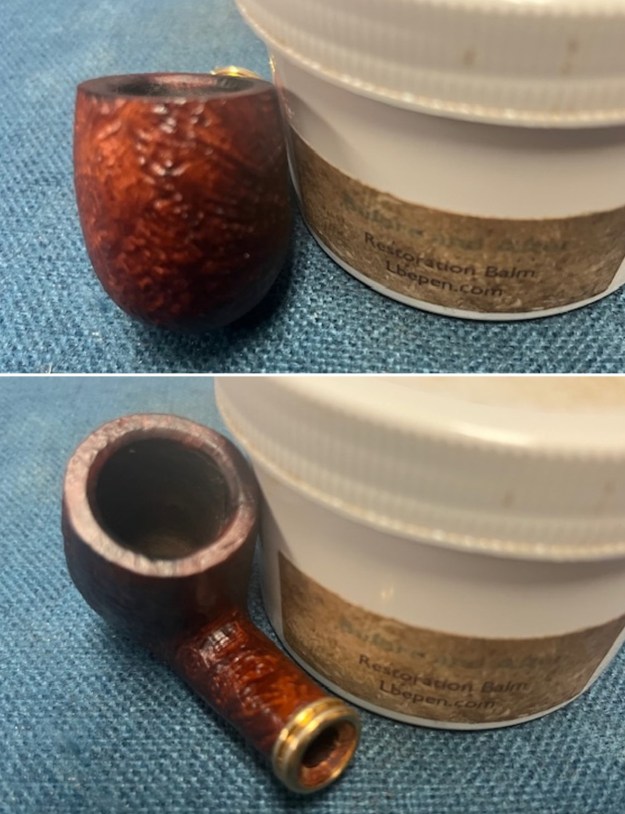
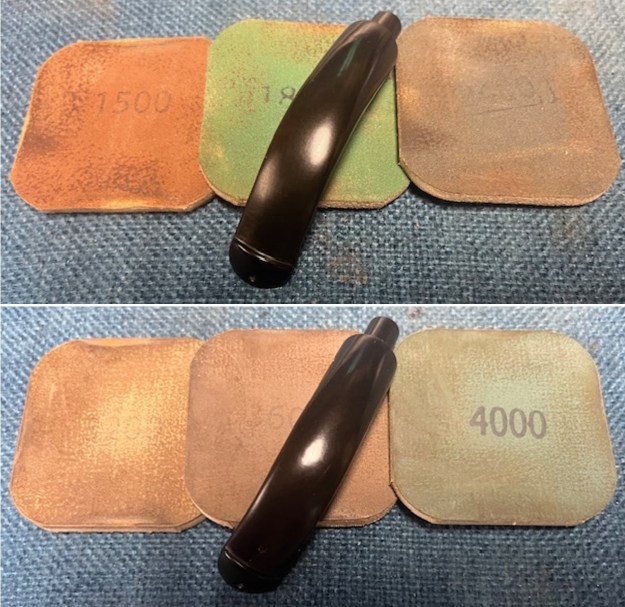
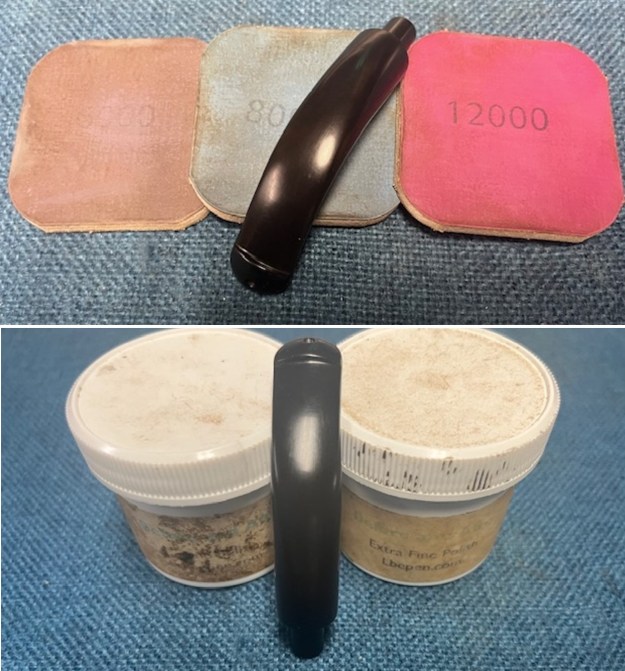
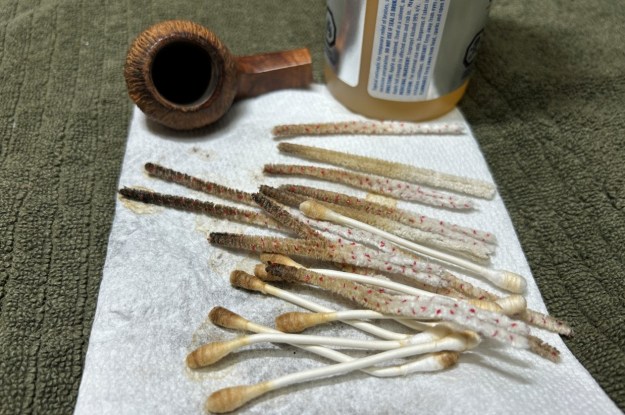
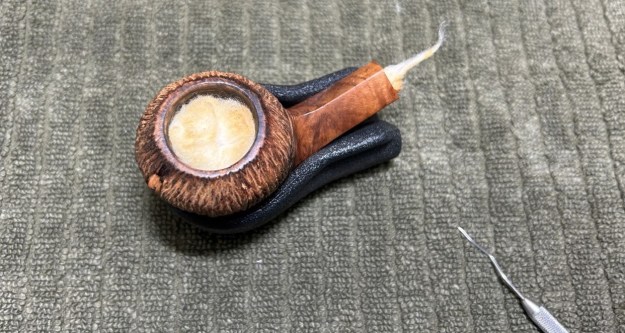
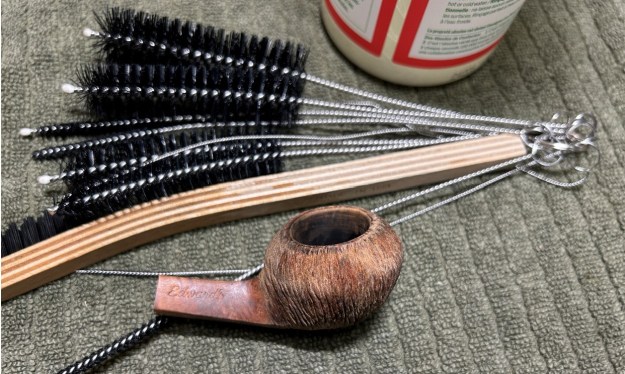
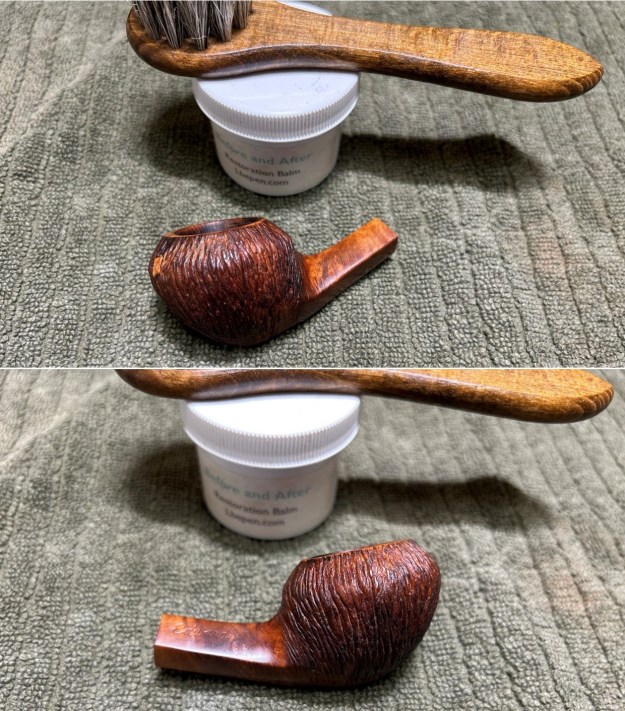
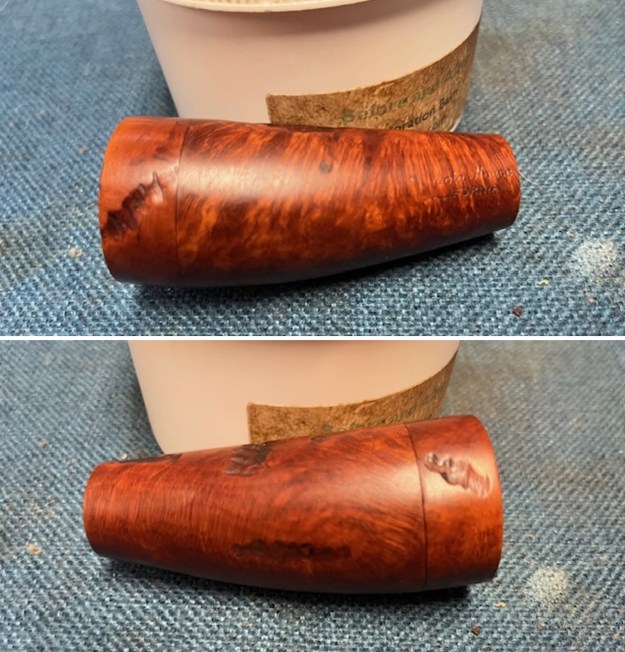
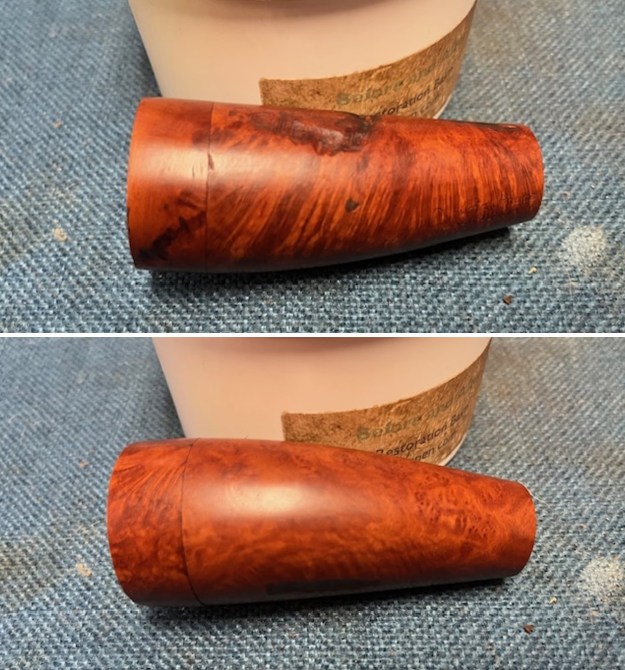
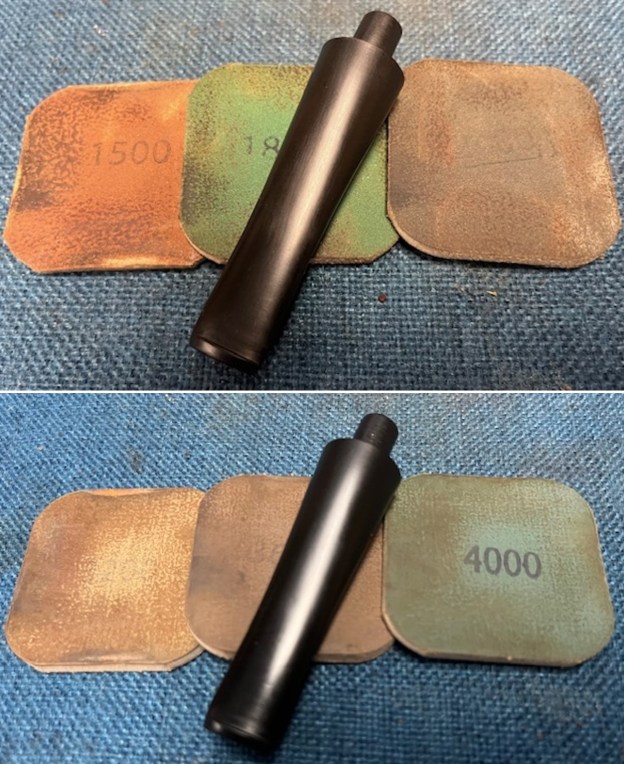
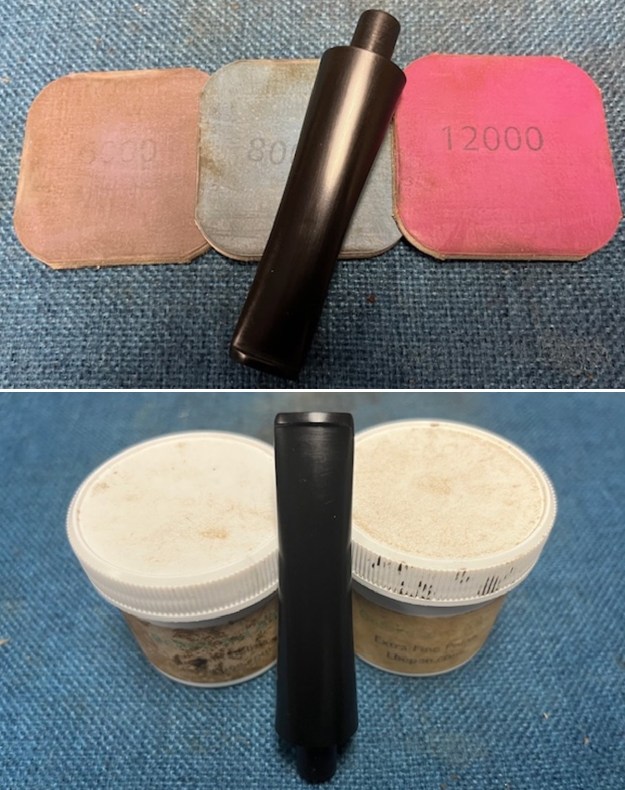
There was also a link in the summary to Pipe Lovers Magazine and I went through it and found a reference to Sequoia House – including both the pipes and tobaccos that were available on the site. The advertising is from the 1940s so that fits with what I am estimating on the age of the pipe in hand. I have included the advertisement below for your reference. Here is the link to Pipe Lovers Magazine (https://pipedia.org/images/f/f1/PipeLovers-Feb48smaller-file.pdf). Now it was time to work on the pipe. Jeff had cleaned up the pipe following his normal cleaning process. In short, he reamed the bowl and then cleaned up the reaming with a Savinelli Fitsall Pipe Knife. He scrubbed the bowl with undiluted Murphy’s Oil Soap with a tooth brush. He worked over the lava and debris on the plateau rim top and shank end and was able to remove it. He rinsed it under running warm water to remove the soap and grime. He cleaned out the inside of the shank and the airway in the stem with alcohol, cotton swabs, shank brushes and pipe cleaners. He scrubbed the stem with Soft Scrub and cotton pads to remove the debris and oils on the stem. He soaked it in Briarville’s Pipe Stem Deoxidizer to remove the remaining oxidation. He rinsed it with warm water and dried it off. I took photos of the pipe once I received it. It really looked good. I took close up photos of the stem and the rim cap to show both how clean they were. The rim cap and bowl look good. The stem was probably hard rubber and it has light chatter in the surface but it is clean.I took a photo of the stamping on the side of the shank on the left side of the briar ahead of the stem. I took the stem off the shank and took a photo of the parts to give a sense of the beauty of the pipe. I took a photo of the threads around end of the pipe with the cap removed. The threads are in great conditon. You can also see the putty in the rusticated patterns on the bowl sides. It is a unique looking pipe.I used a Black Sharpie Pen to touch up the putty fills in the rusticated portions on the pipe. It blended in quite well.I sanded the briar with 320-3500 grit 2×2 inch sanding pads. I carefully worked around the stamping on the shank side. I wiped it down after each pad with a damp cloth to remove the sanding debris. The sanding blended the black stain on the rustication into the surface and they looked very good. I polished the rim cap and bowl sides with micromesh sanding pads – I dry sanded the briar with 1500-12000 grit sanding pads. I wiped the bowl down with a damp cloth after each sanding pad to remove the debris. It really took on a rich shine. I worked some Before & After Restoration Balm into the surface of the briar with my finger tips and a horse hair shoe brush to get into the rusticated portions. The product is incredible and the way it brings the grain to the fore is unique. It works to clean, protect and invigorate the wood. I sanded the stem with 320-3500 grit sanding pads to remove the tooth chatter and the marks in the stem surface. I wiped it down after each sanding pad with an Obsidian Oil soaked cloth. It began to look very good.I polished the stem with micromesh sanding pads – dry sanding it 1500-12000 pads. I wiped it down with Obsidian after each pad to remove the dust and polishing debris. I polished it with Before After Pipe Polish – both Fine and Extra Fine. I gave it another coat of Obsidian Oil. This Sequoia House California Horn with a hard rubber taper stem turned out very nice. The mix of brown stains highlights the grain and the dark rustications around the bowl worked well with the smooth taper stem. The flat rim cap and bowl look very good. The finish on the pipe is in excellent condition. I put the stem back on the shank and carefully buffed the pipe with Blue Diamond on the buffing wheel. I gave the bowl and stem multiple coats of carnauba wax on the buffing wheel and followed that by buffing the entire pipe with a clean buffing pad. I hand buffed the pipe with a microfiber cloth to deepen the shine. The finished Sequoia House California Horn is unique and feels great in the hand. Give the finished pipe a look in the photos below. It is a nice pipe whose dimensions are Length: 6 inches, Height: 1 ¼ inches, Outside diameter of the bowl: 1 inch, Chamber diameter: ¾ of an inch. The weight of the pipe is 44 grams/1.55 ounces. Thanks for walking through the restoration with me as I worked over another beautiful pipe. This one will be going on the rebornpipes store, in the American Pipe Makers Section shortly. If you are interested in adding it to your collection let me know by message or by email to slaug@uniserve.com. Thanks for your time.
As always, I encourage your questions and comments as you read the blog. Thanks to each of you who are reading this blog. Remember we are not pipe owners; we are pipe men and women who hold our pipes in trust until they pass on into the trust of those who follow us.

Resurrection of a Calich Hand Made 7 Rusticated Billiard


by Steve Laug

JOHN CALICH

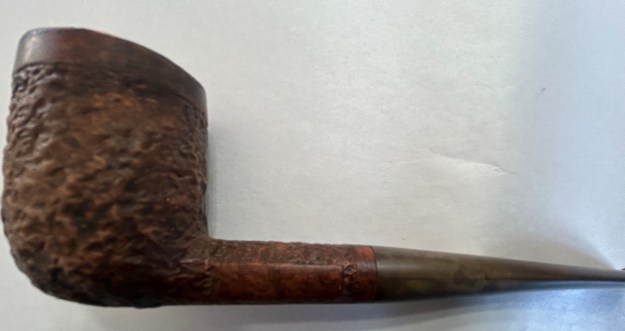
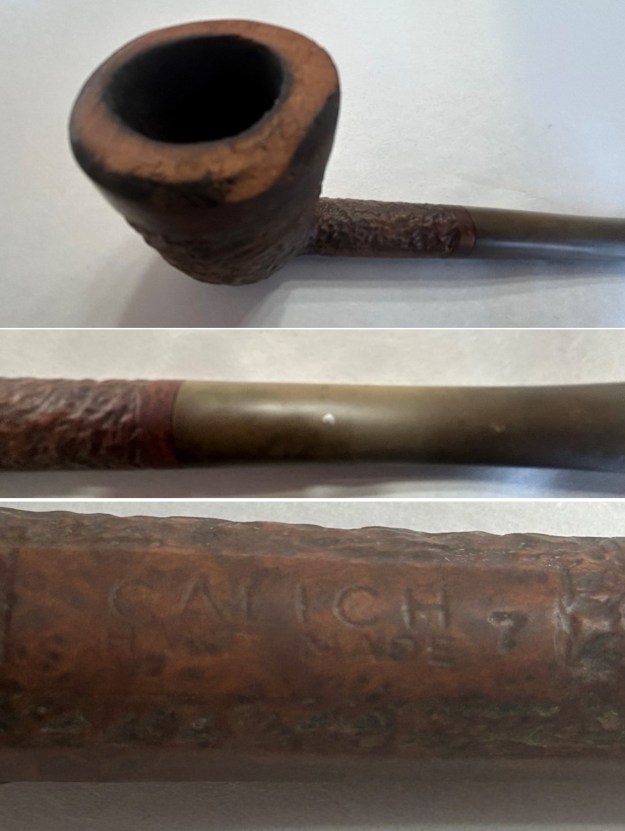
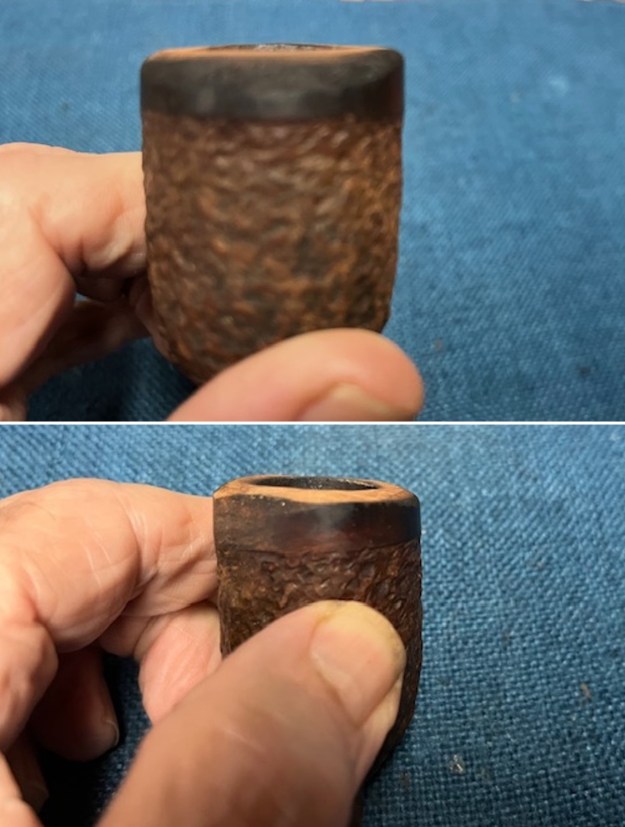
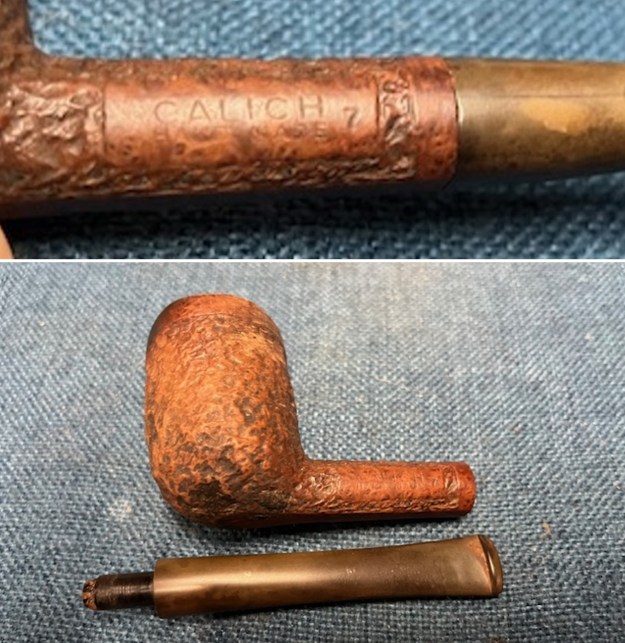
The next pipe on the work table is a pipe I purchased from a seller in Ontario, Canada. Whenever I see a pipe by John Calich I purchase it regardless of the condition. This one is a very damaged, though once beautiful rusticated Billiard. It has rustication around the bowl and shank and a smooth rim top, band around the top edge and band on the shank end. It has a taper vulcanite stem with a single silver dot on the topside. It was stamped on the left side of the shank and reads Calich [over] Hand Made followed by the number 7.

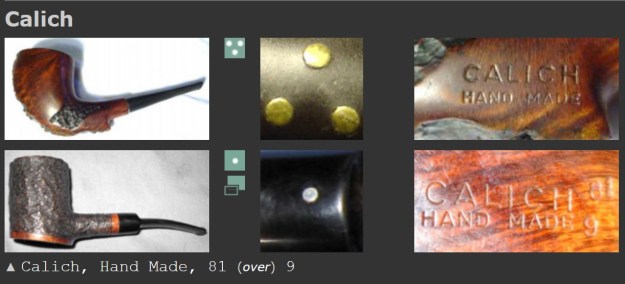
Before I give my assessment on the pipe and started working on it, I did a bit of reading about the brand to refresh what I knew of the maker. I turned to Pipephil’s site first to see his information (http://www.pipephil.eu/logos/en/logo-c1.html). I did a screen capture of the information on the site. I did a screen capture of the pertinent information and have included it below. I quote the side bar: Artisan: John Calich († 2008) Early grading: 3 – 14. By the late 1980’s Calich introduced 15,16, and even one 17. In the mid-90’s the grade system changed employing a number of E’s. Last gradings: 3E – 7E (10E was the top level but levels exceeding 7E or 8E never have been used) Production (2005): 200-500 pipes/year.

That information confirmed that the pipe I was working on was an early one as noted by its early grading – Grades 3-14. This pipe was a Grade 7. It was made prior to mid 1990s when a new grading system was introduced

I then turned to Pipedia and read the article on the Calich brand to remind myself of the maker (https://pipedia.org/wiki/Calich). I have included it in full below.

John Calich was one of Canada’s finest carvers. He died in July 2008.

John was a full time pipe maker for the last 40 years. Calich pipes were mostly traditional shapes. His signature style is rustication and smooth on the same pipe along with his unique skill to stain a pipe in contrasting colors. He used only top quality Grecian and Calabrian briar. The mouthpieces are hand finished Vulcanite “A”. Each pipe was entirely made by hand. John Calich was featured in the summer 2005 issue of Pipes & Tobacco.

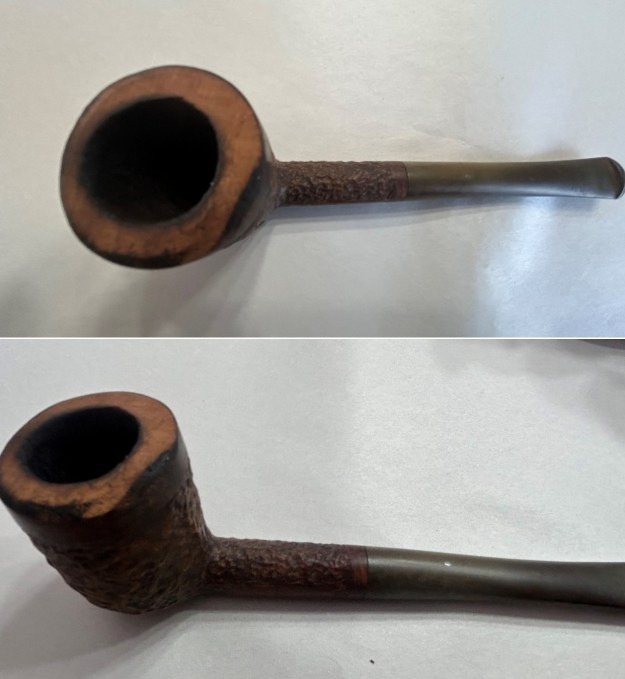
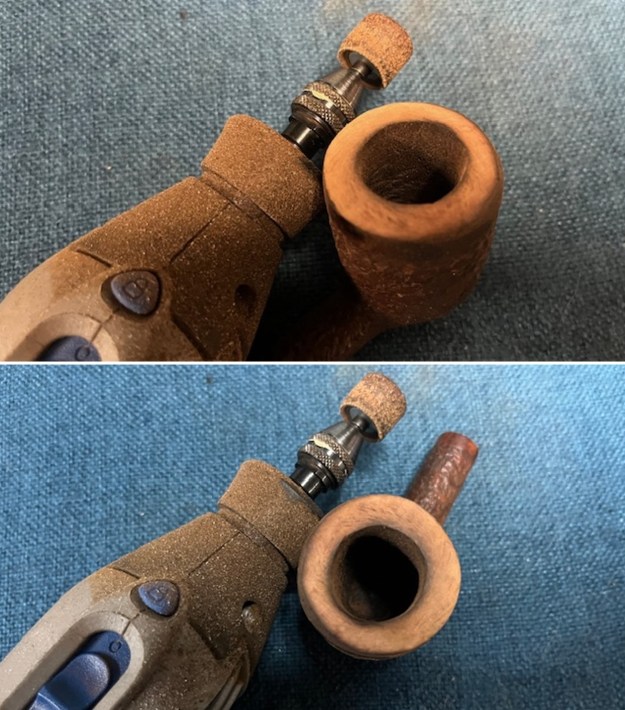
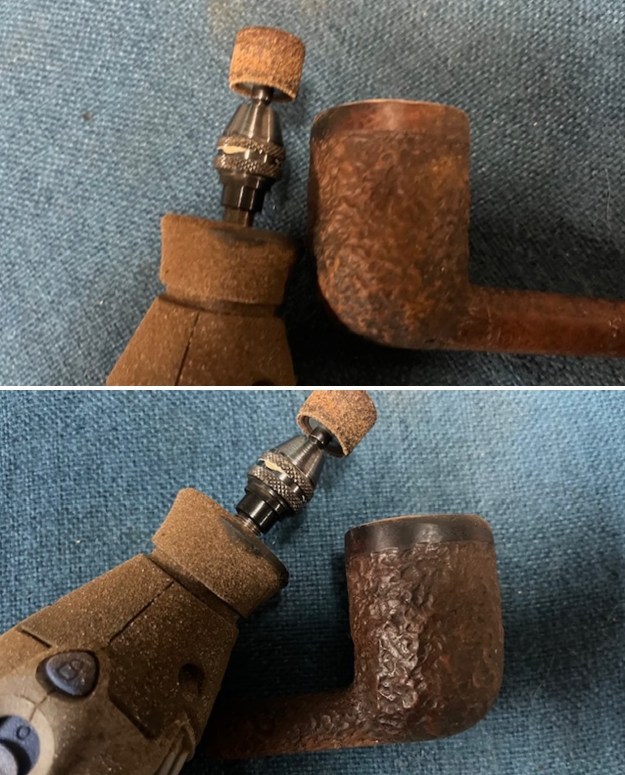
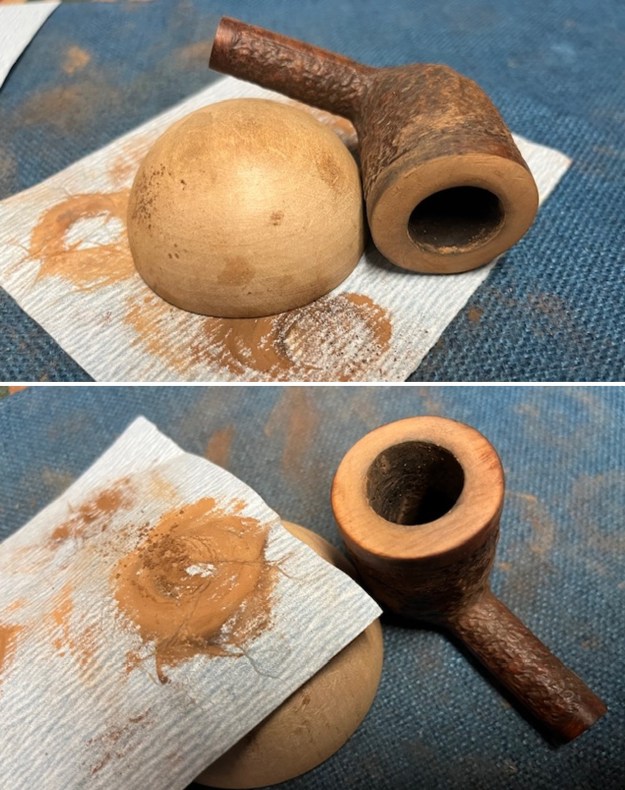
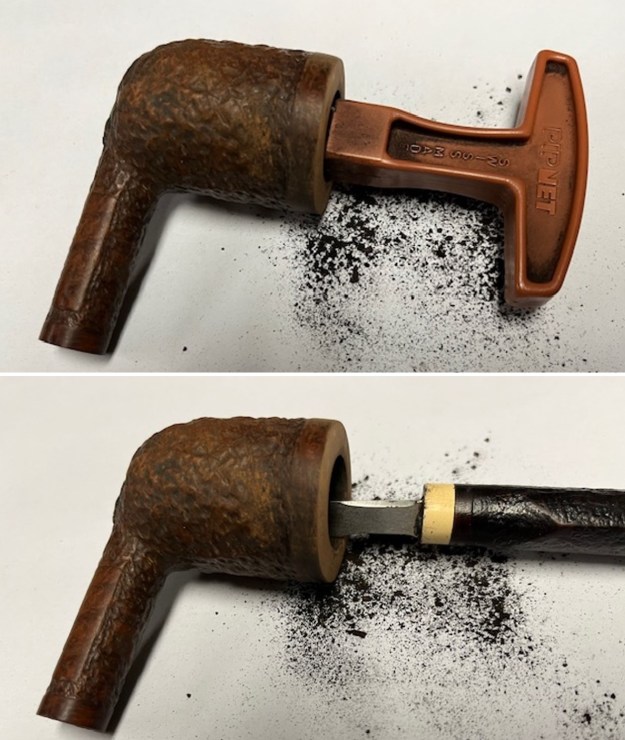
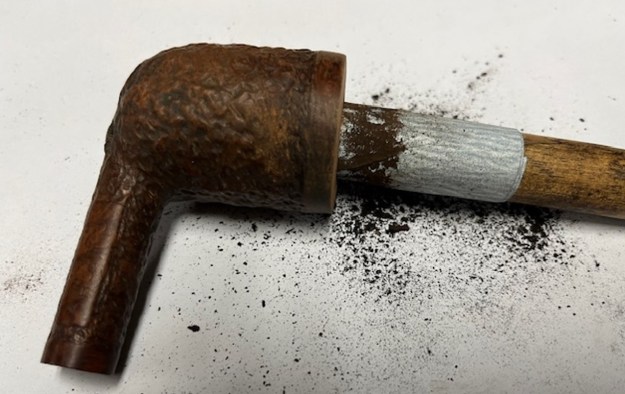
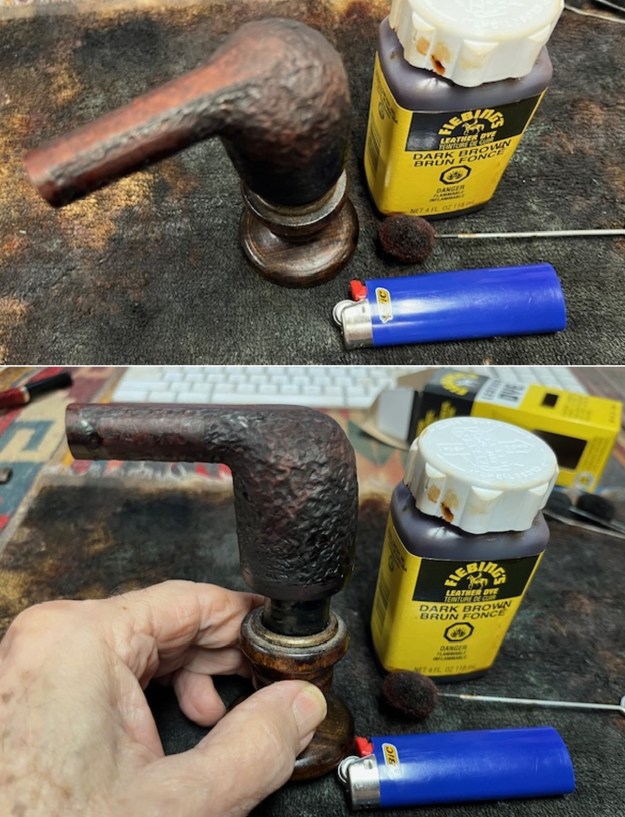
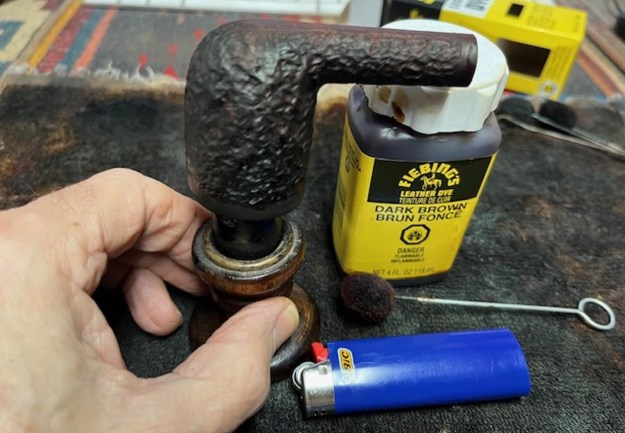
The pipe was in rough condition. I am including the photos that the seller sent to me before I purchased it. The finish was filthy with a lot of tarry debris worked into the rustication. It had hardened and it would take work to get it our of the finish. The smooth portions were darkened and the grain was not visible under the grime. The rim top was a disaster. It was no long flat and looking at it from various angles. There was a large chunk out of the left outer rim top and edge. The front outer edge was burned and the inner edge was also burned and out of round. The distance from the rim top down the smooth ring around the top of the bowl was completely uneven – tall in spots and very low in other spots. The stem was oxidized and had some light tooth marks in the surface. The silver dot on the stem top was oxidized and blackened as well. The seller included some closer photos of the rim top to show the damage I mentioned above. It was in rough shape. The bowl gives the feeling that is a Dublin however, it is not. It is a well proportioned Billiard. The damage to the rim top is clear in the photo but when it arrived it was worse in some ways and better in others. The stamping on the underside of the shank is clear and readable as noted above.When the pipe arrived I took some better photos to try and capture the damaged rim top and edges as well as the dirty rustication on the heel of the bowl. It was going to take a bunch of work but I think there is still the bones of a beautiful pipe under the dirt and damage. I took a close up photo of the rim top to show the damage. It really is a mess. You can see the burned areas aorund the front and left side outer edge. You can also see the missing chunk on the left back outer edge of the bowl. It is out of round both on the inner and outer edges. It is heavily damaged. The stem is badly oxidized but the tooth marks and chatter are minimal and surface.I took photos of the sides of the bowl to give a sense of the damage to the rim top and the varying heights of the rim top caused by some aggressive sanding. I took a photo of the stamping on the left side of shank on the smooth panel of the rusticated shank. It is clear and readable as noted above. Where to start with this mess? The rim top really bugs me so I decided to start there first. Once that was flattened and shaped then I could do other work. I used my Dremel and sanding drum to flatten out the rim top. It took some work to bring the sides and top down to match. For me the damage was such that it took a lot of sanding with the drum to get it close to flat. To smooth out sanding and flatten the rim top more I used a topping board and a piece of 220 grit sandpaper. Once I had it flattened a bit I worked on the inner edge and top with a half wooden sphere and a piece of 220 grit sandpaper. It began to look much better.I reamed the bowl and tried to smooth out the walls of the bowl. I started with a PipNet pipe reamer and used the second and third cutting head. I scraped out the remaining cake with a Savinelli Fitsall pipe knife. I sanded the bowl walls with 220 grit sandpaper wrapped around a dowel. I was able smooth out a lot of the damage on the walls. I cleaned out the inside of the pipe – the shank, airway in the mortise and the stem with pipe cleaners, cotton swabs and alcohol. It was quite dirty.I scrubbed the exterior of the bowl and shank with a tooth brush, a brass bristle wire brush and some undiluted Murphy’s Oil Soap to remove the hard tars and grime in the rusticated finish on the bowl. I scrubbed it and rinse it with warm water and repeated the process. It looked much better. I dried it off with a soft cloth and hand buffed it. The finish definitely looked better. I would need to darken the stain on the rusticated portion to match the look of the similar pipe I saw on Pipephil’s site, but it was definitely and improvement. The rim top was smooth and symmetrical and the rustication was very clean. With it clean it was ready to restain the rusticated portion of the bowl and shank. I used a dark brown stain and applied t with a dauber. I flamed it with a Bic lighter to set it in the grain. It certainly looked much better. I wiped the bowl down with alcohol on cotton pads to make the stain coat more transparent. The smooth portions revealed the grain and the rustication showed depth and colour. I set the bowl aside and turned my attention to the stem. I sanded the oxidation on the stem with 320-3500 grit 2×2 inch sanding pads. I wiped it down after each sanding pad with a cloth impregnated with Obsidian Oil. The stem began to take on a shine.I set the bowl aside and turned my attention to the stem. It was in great condition after the cleanup so I polished the stem with micromesh sanding pads – dry sanding it 1500-12000 pads. I wiped it down with Obsidian after each pad to remove the dust and polishing debris. I polished it with Before After Pipe Polish – both Fine and Extra Fine. I gave it another coat of Obsidian Oil. This restored Calich Hand Made 7 Rusticated Billiard turned out to be a nice looking pipe. The rich medium brown stain on the pipe worked really well with the polished vulcanite fancy stem. I put the stem back on the bowl and carefully buffed the pipe with Blue Diamond on the buffing wheel. I gave the bowl and stem multiple coats of carnauba wax on the buffing wheel keeping a light touch on the buffing wheel for the bowl. I followed that by buffing the entire pipe with a clean buffing pad. I hand buffed the pipe with a microfiber cloth to deepen the shine. The finished Calich Hand Made 7 Billiard is shaped to sit comfortably in the hand. Give the finished pipe a look in the photos below. The dimensions of the pipe are Length: 6 inches, Height: 2 inches, Outside diameter of the bowl: 1 ¼ inches, Chamber diameter: ¾ of an inch. The weight of the pipe is 1.38 ounces/39 grams. Now that it is cleaned up it is time to load it up and enjoy a bowl. Thanks for reading this blog and my reflections on the pipe while I worked on it.

Thanks for walking through the restoration with me as I worked over another beautiful pipe. Remember we are not pipe owners; we are pipemen and women who hold our pipes in trust until they pass on into the trust of the next generation.

Refinishing and Repairing a Cracked Shank on a Dunhill Bruyere 36 Liverpool


by Steve Laug

Back in the middle of February I received an email from a reader named David regarding a pipe of his that needed some work. I have included the email below.

Dear Steve,

I have a Dunhill Bruyere 36 with a cracked stem. I left it overnight in a cold garage, although a tight-fitting vulcanite mouthpiece may have stressed the wood stem and need slimming down. I’d like to send it to you for repair and banding. Do you have room in your schedule at the moment?

All the best, David

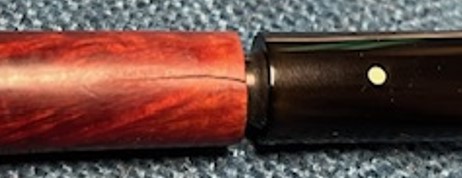
As we chatted it was clear that the shank had cracked on the top side at the end. The crack was clean and obvious. I wrote that t will need to be repair and band the crack. David and I made arrangements for him send it to me.

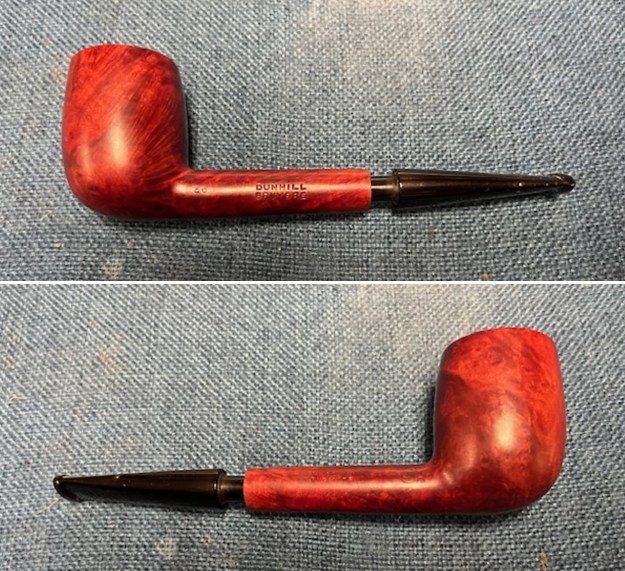
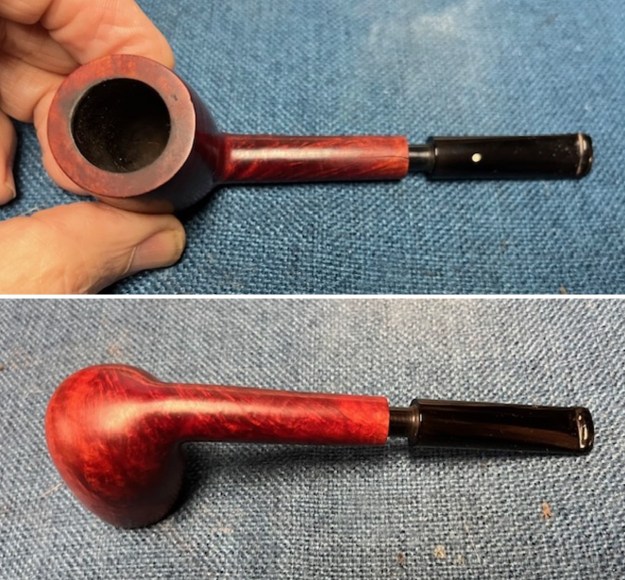
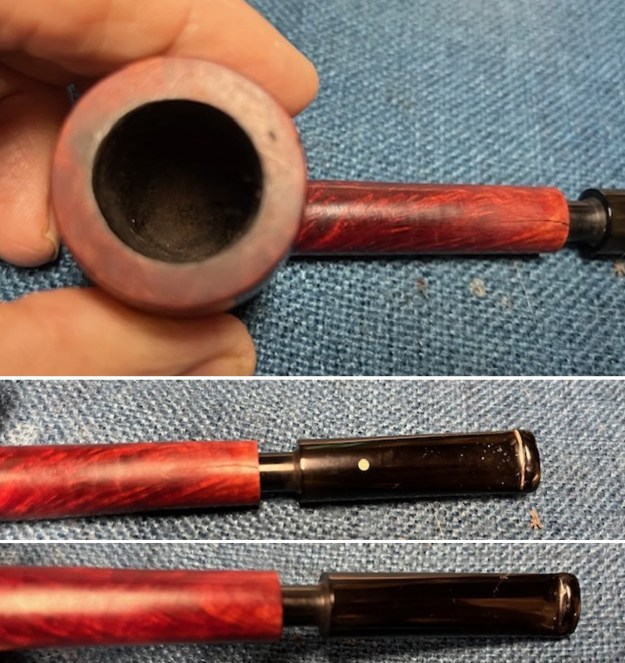
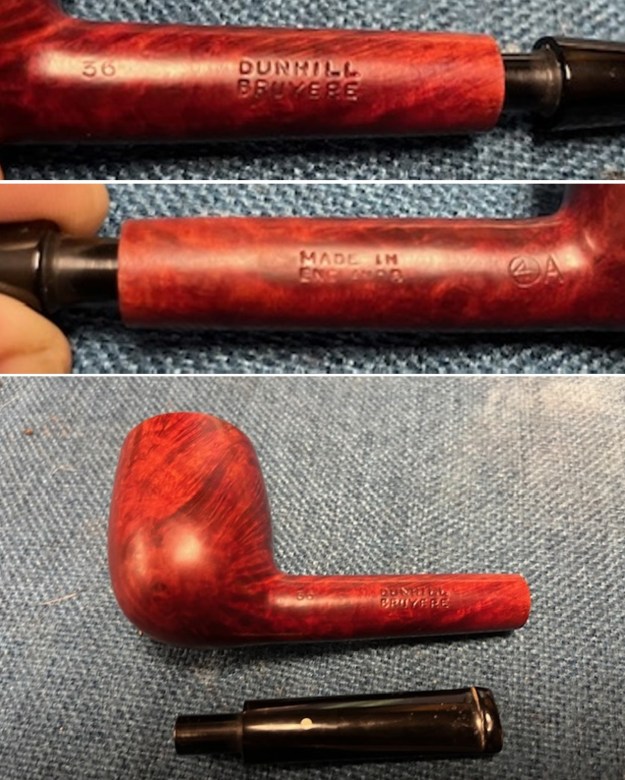
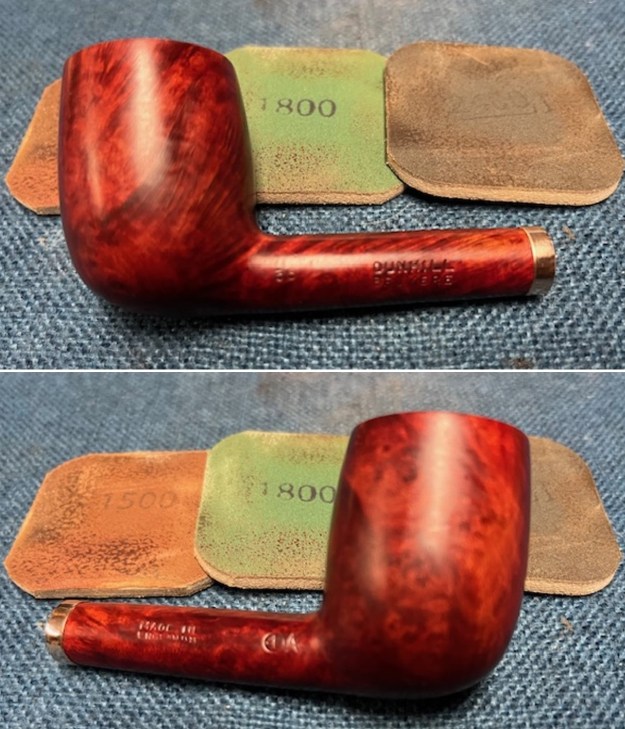
It arrived last evening. It was in great condition other than the crack and some darkening on the rim top and inner edge on the right front side of the bowl. The smooth finish around the bowl was in good condition with some slight dullness from use. The bowl had a light cake from the top to mid bowl and there was no lava on the inner edge or rim top. The unique in that it was a biteproof, or twin bore stem. It had some tooth marks and chatter on both sides ahead of the button. There was a white spot on the topside of the stem. The fit of the stem to the shank is tight as can be seen from the photos below and it was not pushed in due to the crack. The pipe is stamped on the left side of the shank and read 36 followed by Dunhill [over] Bruyere. On the right side it is stamped Made in London [over] England with the number 8 (date stamp) after the D of England. That is followed by 4 (size of pipe) in a circle followed by the letter A for Bruyere. I took some photos of the pipe before I started my work on it. I took photos of the bowl and rim top to show the bowl with the thin cake on the walls of the bowl. There was some darkening on the front right of the top of the rim and the edge of the bowl. The rim top looked pretty good, though a little dull. I took photos of the top and underside of the stem showing the tooth chatter and marks on the stem. I also took a photo of the twin bore stem.I took photos of the stamping on the sides of the shank and they were clear and readable as noted above. I removed the stem from the shank and took a photo of the proportions of the pipe. It is quite nice.One of the first things I like to do is to unpack the stamping and understand each element in it. I turned to Pipephil’s helpful site (http://pipephil.eu/logos/en/dunhill/shell-briar1.html). The stamping is interpreted as follows: The 36 is the shape of the pipe which is a classic Liverpool. The Dunhill Bruyere is the finish. Following the Made In England8 gives the year that the pipe was made. The circle 4A is the stamp for a Group 4 in a Bruyere finish. There was some great information on the Bruyere finish that I have included below.

Bruyere

The original finish produced (usually made using Calabrian briar), and a big part of developing and marketing the brand. It was the only finish from 1910 until 1917. A dark reddish-brown stain. Before the 1950s, there were three possible finishes for Dunhill pipes. The Bruyere was a smooth finish with a deep red stain, obtained through two coats, a brown understain followed by a deep red.

There was a link on the above site to a section specifically written regarding the Bruyere finish (https://pipedia.org/wiki/Dunhill_Bruyere). I turned there and have included the information from that short article below.

Initially, made from over century-old briar burls, classified by a “B” (denoted highest quality pipe); “DR” (denoted straight-grained) and an “A” (denoted first quality), until early 1915. After that, they became a high-end subset to the Dunhill ‘Bruyere’. The DR and B pipes, a limited production, they should be distinguished as hand-cut in London from burls as opposed to the Bruyere line which was generally finished from French turned bowls until 1917, when the Calabrian briar started to be used, but not completely. Only in 1920 Dunhill took the final step in its pipe making operation and began sourcing and cutting all of its own bowls, proudly announcing thereafter that “no French briar was employed”.

Bruyere pipes were usually made using Calabrian briar, a very dense and hardy briar that has a modest grain but does very well with the deep red stain.

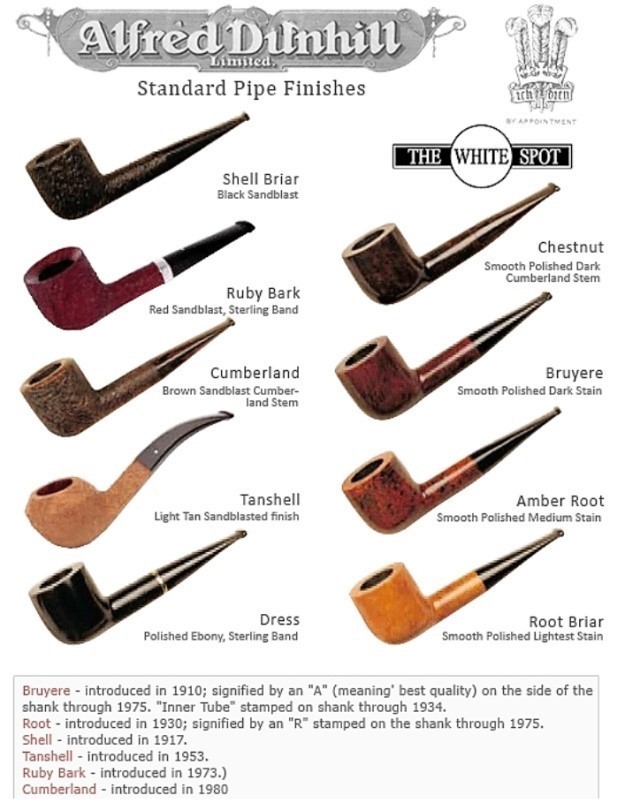
“Before the 1950s, there were three possible finishes for Dunhill pipes. The Bruyere was a smooth finish with a deep red stain, obtained through two coats, a brown understain followed by a deep red. The Shell finish was the original sandblast with a near-black stain (though the degree to which it is truly black has varied over the years). Lastly, the Root finish was smooth also but with a light brown finish. Early Dunhill used different briars with different stains, resulting in more distinct and identifiable creations… Over the years, to these traditional styles were added four new finishes: Cumberland, Dress, Chestnut and Amber Root, plus some now-defunct finishes, such as County, Russet and Red Bark.”

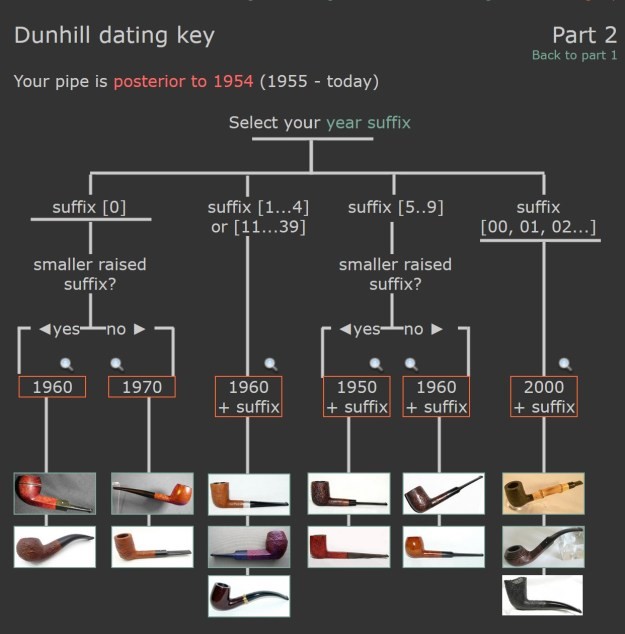
There was also a link to a catalogue page that gave examples and dates that the various finishes were introduced (https://pipedia.org/wiki/File:Dunnypipescatalog-1.png). I turned to Pipephil’s dating guide to show how I arrived at the date of manufacture for this pipe (http://www.pipephil.eu/logos/en/dunhill/cledat-en1a.html). I am including the chart that is provided there for the dating a pipe. Since the pipe I am working on has a suffix8 that is the same height as the D in England. I turned to the 1960 line on the chart below with the suffix 5-9. It also gave me the formula for dating the pipe – 1960 + 8 dating the pipe to 1968.I now knew that I was working on a Bruyere that came out in 1968. The shape of the pipe was a Liverpool shape, 36 with a twin bore stem.

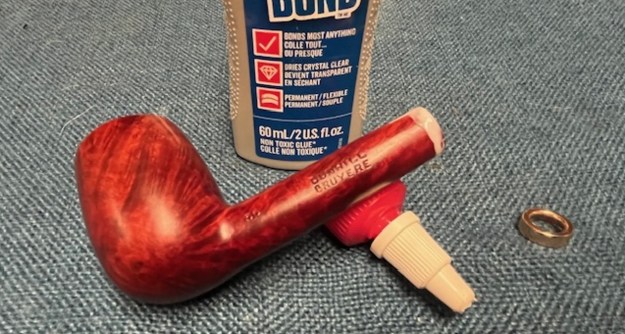
I tried to capture the crack in the shank in the photo below. The photo shows the location of the crack visible on the topside of the round shank. With the internals clean I turned to work on the cracked shank. I had polished brass/gold band that fit the shank perfectly. I used a tooth pick to paint the shank end with some all-purpose glue. I pressed the band in place on the shank. I used a tooth pick to press clear CA glue into the crack in the shank. Once it cured I sanded the repair smooth. The glued crack and the band brought the pieces back together again. It was a snug and clean repair. I touched up the stain on the repaired area on the shank and on the cleaned rim top and edge with a Cherry Stain Pen to blend them into the surrounding stain on the bowl and shank. It looked very good.I up the walls of the bowl with a Savinelli Fitsall Pipe Knife. I remove all the rest of the cake remnants on the bowl walls. I was very clean.I cleaned out the airway in the shank, mortise and the stem with a bristle pipe cleaner and regular smooth cleaners and alcohol. It removed the remaining oils and tars but it was not too dirty.I used 320-3500 grit 2×2 inch sanding pads to smooth out the sanded and restained shank repair and rim top. I wiped the briar down with a damp cloth between pads to remove the sanding debris. The bowl looked much better. I polished the briar with micromesh sanding pads – dry sanding it with 1500-12000 grit sanding pads. I wiped the briar down with a damp cloth after each sanding pad and the bowl began to take on a deep shine and the scratches were minimized. I worked some Before & After Restoration Balm into the surface of the briar with my finger tips to get into the finish of the briar. The product is incredible and the way it brings the grain to the fore is unique. It works to clean, protect and invigorate the wood. With the bowl finish I turned my attention to the stem. I sanded the tenon to reduce the diameter to adjust the fit to the shank. Once it was smooth and snug I moved on to work on the tooth marks on the stem surface and on the surface of the button. I used a folded piece of 220 grit sandpaper to smooth out the damage on the button and on the surface of the stem. It looked much better. I also worked over the Twin Bore face of the button with the sandpaper to smooth out the tooth marks and flatten the face. It looked significantly better.I set the bowl aside and turned my attention to the stem. I sanded the stem with 320-3500 grit sanding pads to smooth out the scratches and remove the light oxidation on both sides. I wiped the stem down with an Obsidian Oil cloth after each sanding pad to remove the sanding debris on the surface. I set the bowl aside and turned my attention to the stem. It was in great condition after the cleanup so I polished the stem with micromesh sanding pads – dry sanding it 1500-12000 pads. I wiped it down with Obsidian after each pad to remove the dust and polishing debris. I polished it with Before After Pipe Polish – both Fine and Extra Fine. I gave it another coat of Obsidian Oil. This Dunhill Bruyere 36 Group 4A Liverpool from 1968 is a beautiful looking piece of briar that has a shape that follows grain. It is a great looking pipe that came out looking even better after the cleanup. The Bruyere is an early finish that Dunhill specialized in making. The finish on the pipe cleaned up well. The red and brown stain on the bowl works well to highlight the grain. The polished brass band looks very good with the finish. The polished black vulcanite Twin Bore taper stem adds to the mix. I put the stem back on the bowl and buffed the pipe with Blue Diamond on the buffing wheel being careful to not buff the stamping. I gave the bowl and the stem multiple coats of carnauba wax on the buffing wheel and buffed it with a clean buffing pad. I hand buffed the pipe with a microfiber cloth to deepen the shine. The finished 1968 Dunhill Bruyere 36 Liverpool is quite nice and feels great in the hand. Give the finished pipe a look in the photos below. The dimensions of the pipe are Length: 5 ¼ inches, Height: 1 ¾ inches, Outside diameter of the bowl: 1 ¼ inches, Chamber diameter: ¾ of an inch. The weight of the pipe is 32 grams/1.13 ounces. I will soon be packing it up and send it back to David this weekend. Thanks for walking through the restoration and banding with me.

Thanks for walking through the restoration with me as I worked over another beautiful pipe. Remember we are not pipe owners; we are pipemen and women who hold our pipes in trust until they pass on into the trust of the next generation.

Working on a Majestic Designer Series D Ben Wade Made in Denmark


by Steve Laug

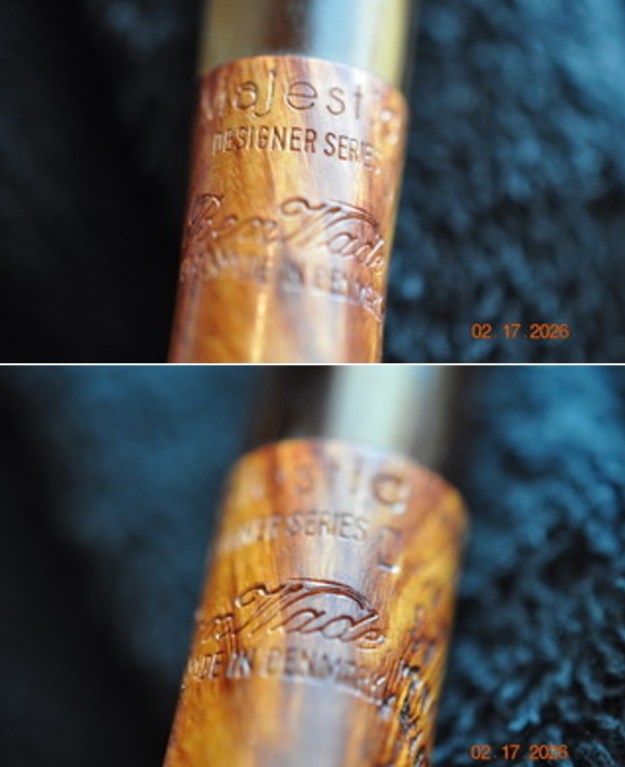
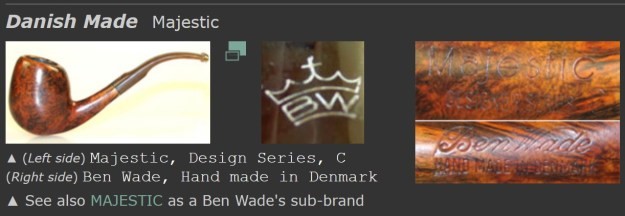
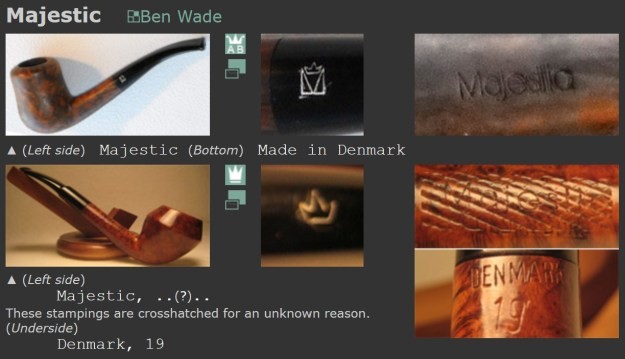
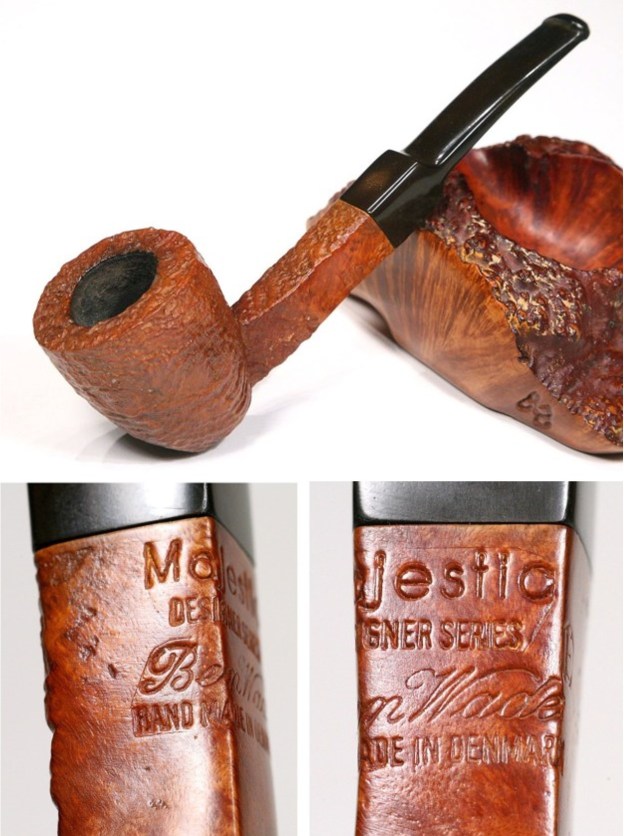
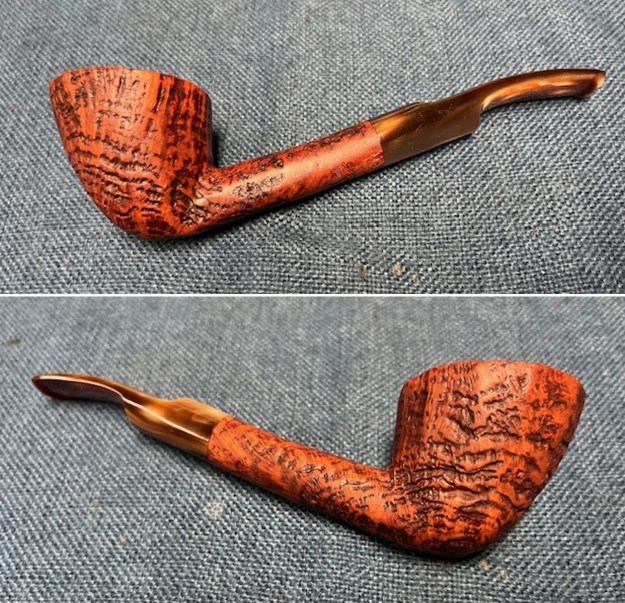
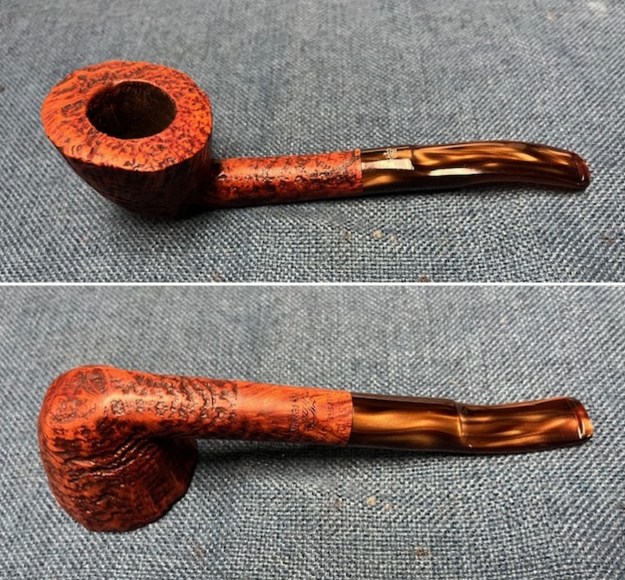
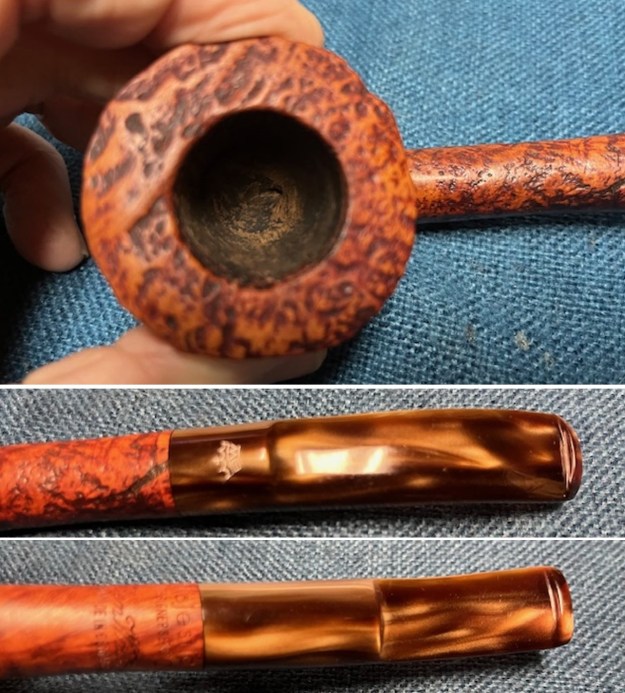
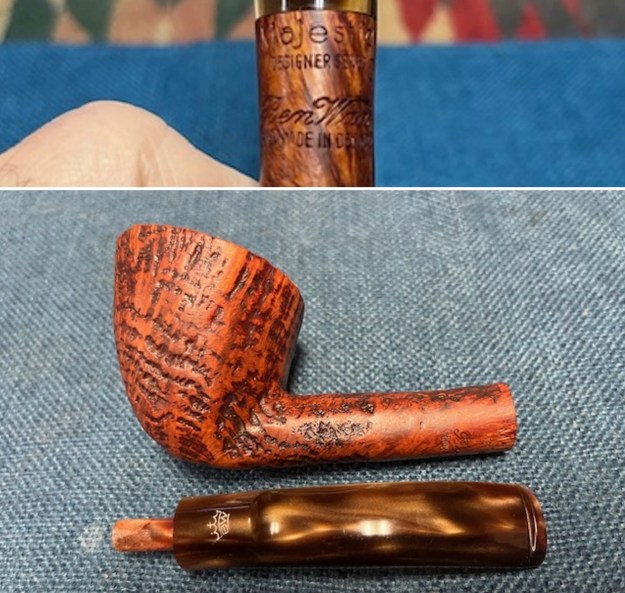
The next pipe on the work table is a pipe that came to us from a group of pipes we purchased from Facebook Instant Collections in Quaker Town, Pennsylvania, USA on 01/20/2026. It is stamped on the left side of the shank and read Majestic [over] Designer Series D [over] Ben Wade [over] Hand Made In Denmark. The finish on the pipe was a sandblast Ben Wade style finish with brown stains highlighting the grain around the sides and shank. The shank end is smooth. The rim top was sandblast and flat. It was dirty with grime and also lava overflowing from the cake in the bowl. The fancy saddle stem was brown/gold variegated acrylic and had light tooth marks and chatter on both sides ahead of the button. It has a white Ben Wade crown with a BW underneath stamped on the top of the saddle. It was a pretty stem but was dull and dirty. Jeff took some photos of the pipe to show the general condition of the pipe before he started his clean up. It should clean up very well. Jeff took some close-up photos of the rim top and bowl to show the overall condition. There is dust and lava on the crowned top. The edges have a lava overflow but underneath it appears to be in good condition. The acrylic saddle stem is dirty and has some light tooth chatter and some tooth marks. Jeff took some photos of the sides and heel of the bowl to show the condition of the sandblast finish on the pipe. The photos show the beautiful grain in the sandblast around the bowl. Under the dust and grime, it was a nice looking bowl. I think it will be a beautiful long shank Dublin once it is restored. He took a photo of the stamping on the sides of the shank. The stamping is clear and readable as noted above. There was also a Crown with a BW stamped below it on the topside of the saddle portion of the stem.I knew from the previous work that I should take time and check out my common sites for information. I turned first to Pipephil’s site in the Ben Wade Section and found an entry there on the brand (http://www.pipephil.eu/logos/en/logo-benwade.html#majestic). There was a section in the list stamped Danish Made Majestic. I did a screen capture of the section and have included it below.From there I turned to the section the reference above directed me to under the heading Majestic with a link to the Ben Wade stamp. I have also included that link and the screen captures of the site below (http://www.pipephil.eu/logos/en/logo-m1.html#majestic).From there I turned to Pipedia to see what I could find (https://pipedia.org/wiki/Ben_Wade). I found some photos of a pipe that is stamped the same as the one that I have. I have included them below showing the shape of the pipe and the stamping on the pipe.Now that I was reminded about the Ben Wade Majestic Line it was time to work on the pipe on my end. When I received it, Jeff had once again done an amazing job cleaning the pipe. He reamed it with a PipNet pipe reamer and got rid of the cake. He cleaned up the reaming with a Savinelli Fitsall Pipe Knife so that we could see the walls of the bowl and assess for damage. He cleaned the internals of the shank and stem with alcohol, pipe cleaners, cotton swabs, shank brushes and alcohol. He scrubbed the exterior with undiluted Murphy’s Oil Soap and a tooth brush. He rinsed the pipe under warm water. He dried it off with a cloth and then let it air dry. The stem was scrubbed with Soft Scrub and soaked in Before & After Deoxidizer. It came out looking very good. The finish on the bowl and the rim top cleaned up nicely. I took pictures of the pipe to show how it looked when I unpacked it. I took a close up photo of the plateau rim top to show how clean it was. The inner edge of the rim and the ridges and valleys of the sandblast looked good. The stem looked good just some light tooth chatter and tooth marks ahead of the button.One of the things I appreciate about Jeff’s cleanup is that he works to protect and preserve the nomenclature on the shank of the pipes that he works on. He was able to preserve and maintain its condition in the process. I took some photos to show the clarity of the stamping. I have noticed that many restorers are not careful to protect the stamping in their cleaning process and often by the end of the restoration the nomenclature is almost destroyed. Be careful in your work to preserve this critical part of restoration! I took the stem off and took a photo of the pipe.I worked some Before & After Restoration Balm into the smooth briar with my fingertips. It enlivens, enriches and protects the briar while giving it a deep glow. I appreciate Mark Hoover’s work in developing this product. I buffed the pipe with a micro fibre cloth to raise the shine and took photos of it at this point it the process. It is a beautiful looking pipe. I set the bowl aside and turned my attention to the stem. I sanded the stem with the 2 inch square 320-3500 grit sanding pads. I wiped down the stem after each sanding pad with Obsidian Oil. The stem looked very good.I polished the stem with micromesh sanding pads – dry sanding with 1500-12000 grit sanding pads. I wiped it down after each sanding pad with Obsidian Oil. I polished it with Before & After Pipe Stem Polish – both Fine and Extra Fine. I buffed the stem with a soft cloth to raise the shine. I wiped the stem down with Obsidian Oil to preserve and protect the stem surface. I am on the homestretch with this Ben Wade Majestic Design Series D Made in Denmark Long Shank Dublin. As always, I am excited to finish a pipe that I am working on. I put the pipe back together and buffed it with Blue Diamond on the buffing wheel. I used a gentle touch on the sandblast bowl and shank. I gave the bowl and the stem multiple coats of carnauba wax. I buffed the pipe with a clean buffing pad and hand buffed it to raise the shine. It is fun to see what the polished bowl looks like along with the polished bronze acrylic stem. This Ben Made Majestic Design Series D Ben Wade Long Shank Dublin is a nice looking pipe. It is quite comfortable in hand and should be so when smoking. It is quite light and well balanced. Have a look at it with the photos below. The dimensions are Length: 7 inches, Height: 2 inches, Outside diameter of the bowl: 2 inches, Chamber diameter: 1 inch. The weight of the pipe is 1.90 ounces/54 grams. It is another beautiful pipe and one that will be on the rebornpipes store soon. You can find it in the section of Pipes by Danish Pipe Makers. If you are interested in adding it to your collection let me know.

As always, I encourage your questions and comments as you read the blog. Thanks to each of you who are reading this blog. Remember we are not pipe owners; we are pipe men and women who hold our pipes in trust until they pass on into the trust of those who follow us.

The Aura of an Amazing Gourd Calabash


by Kenneth Lieblich

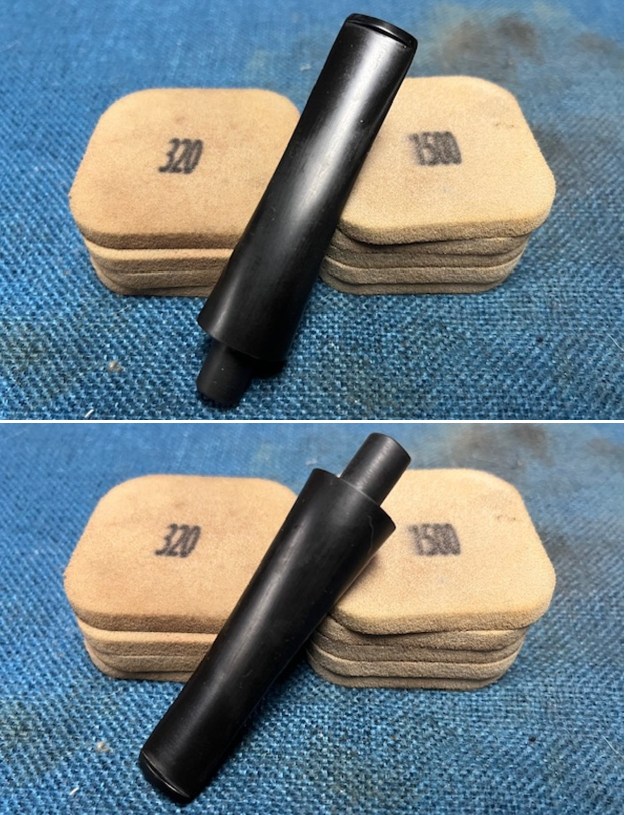
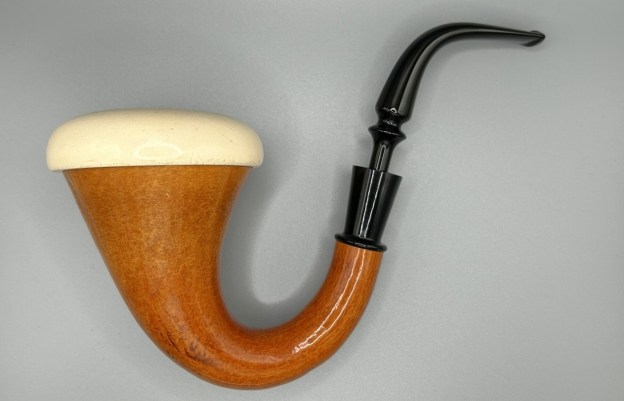
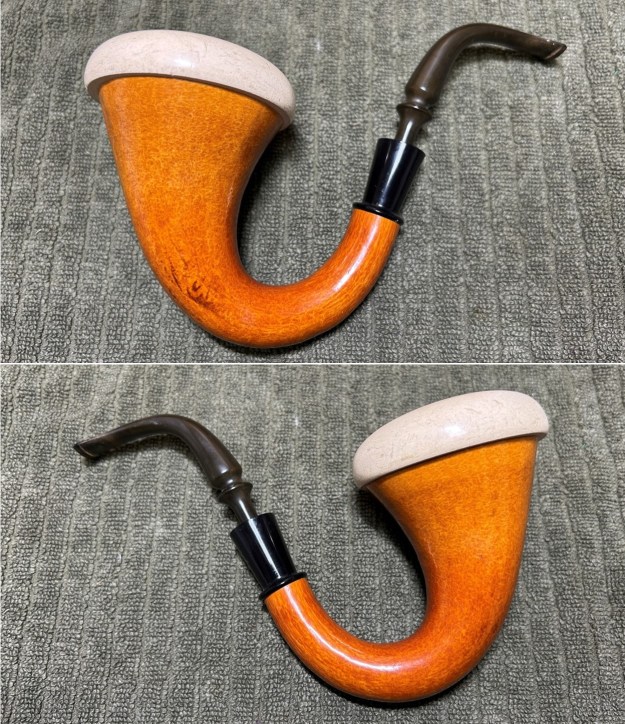
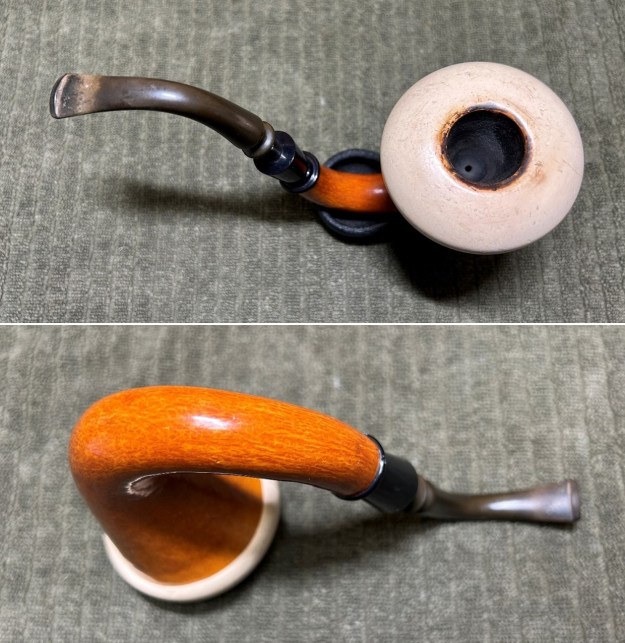
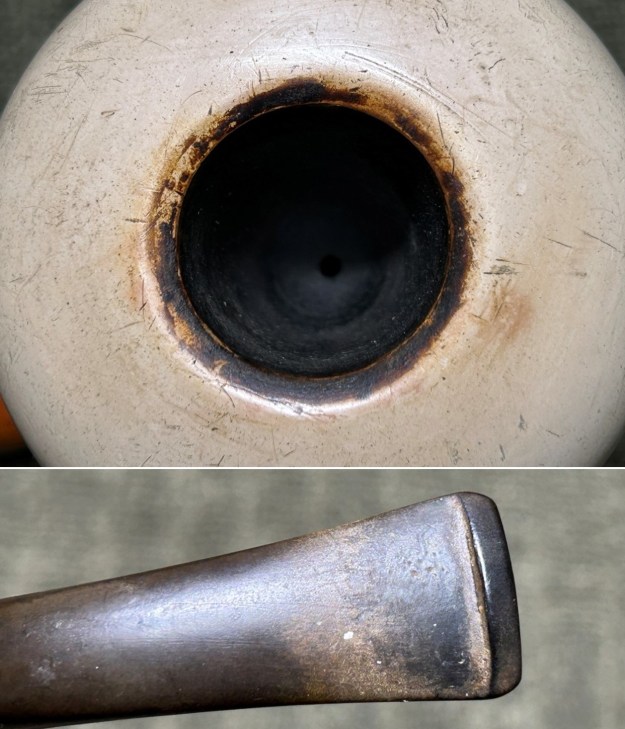
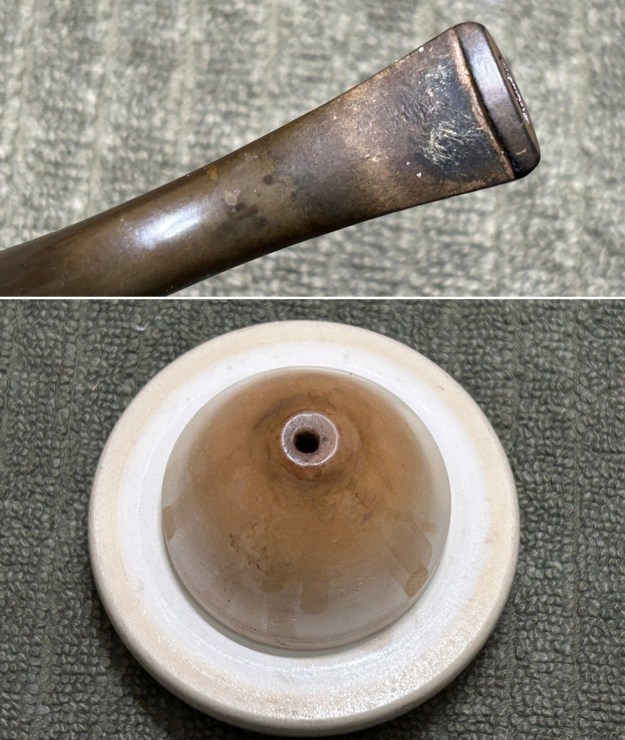
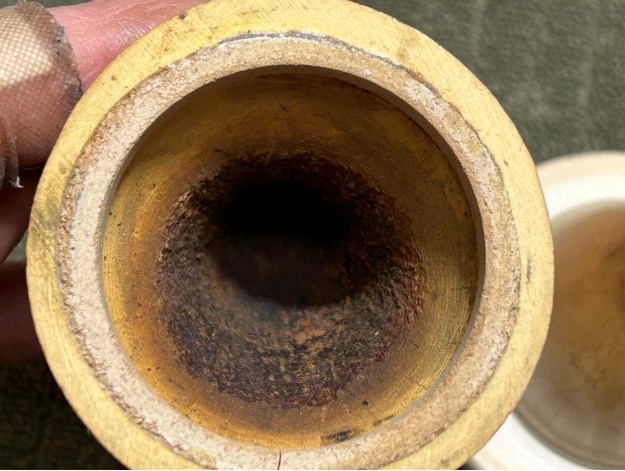
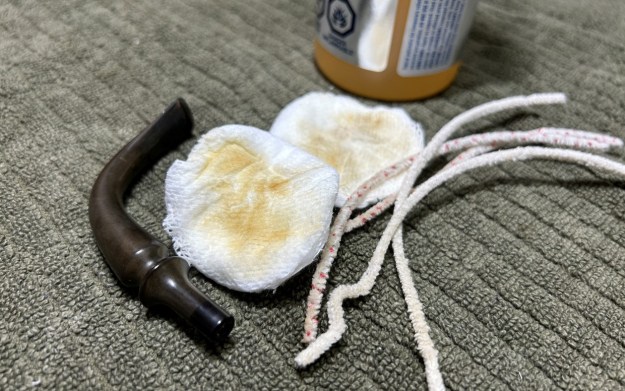
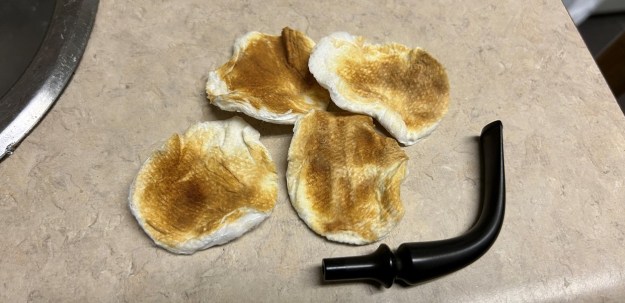
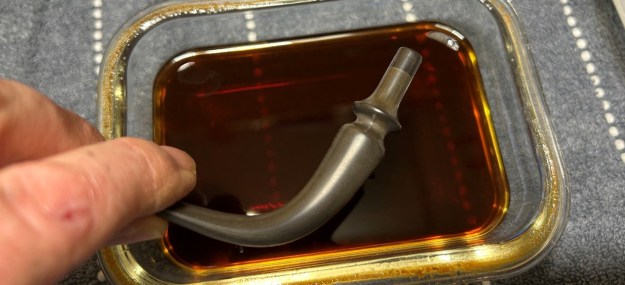
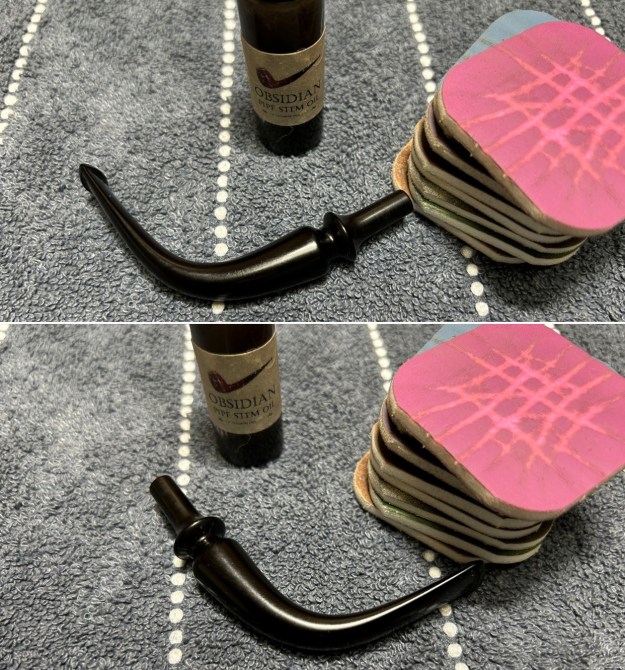
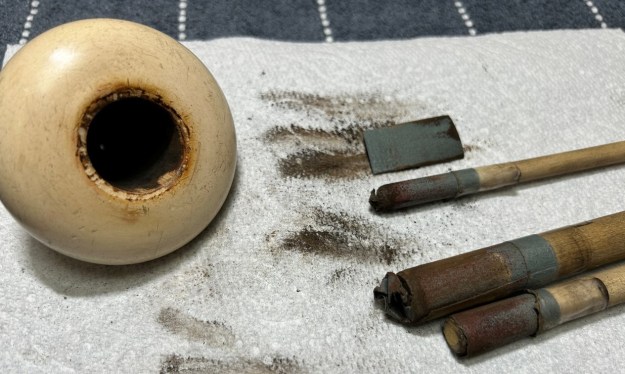
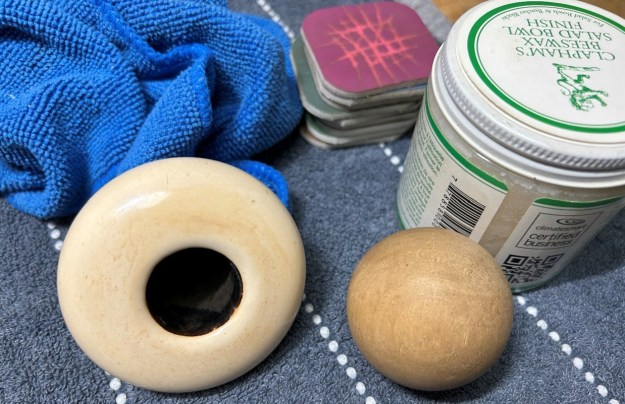
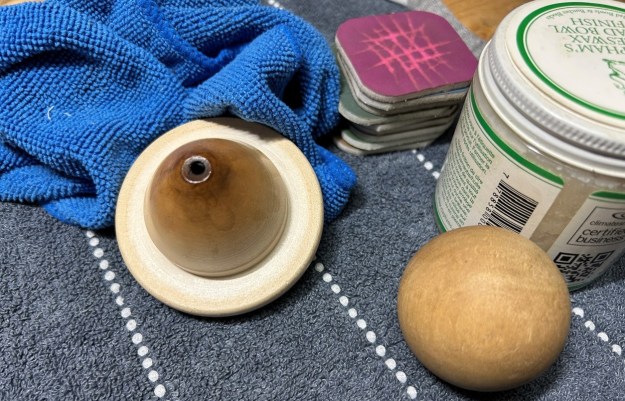
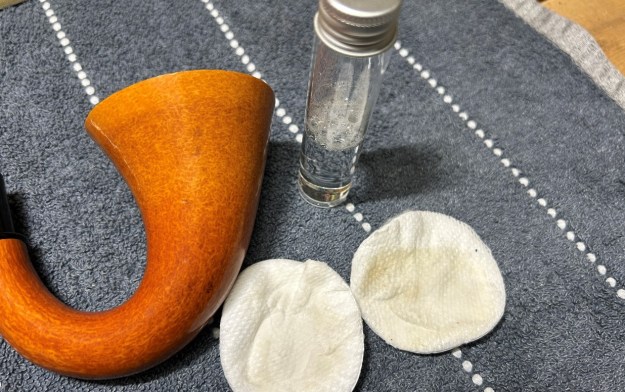
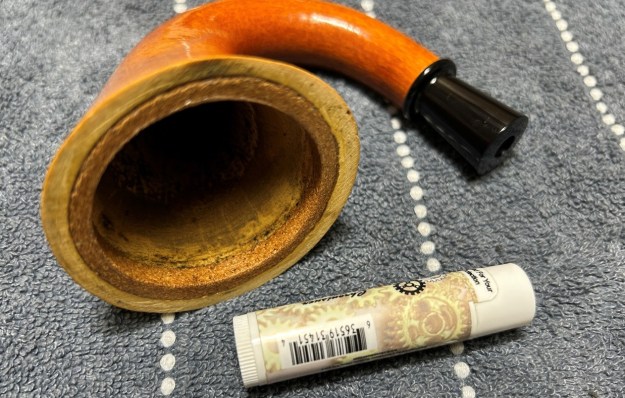
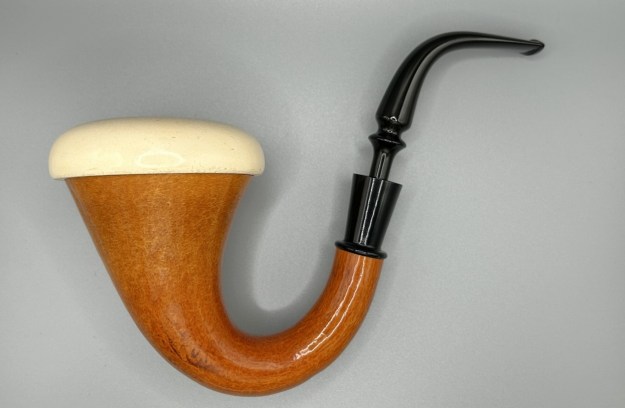
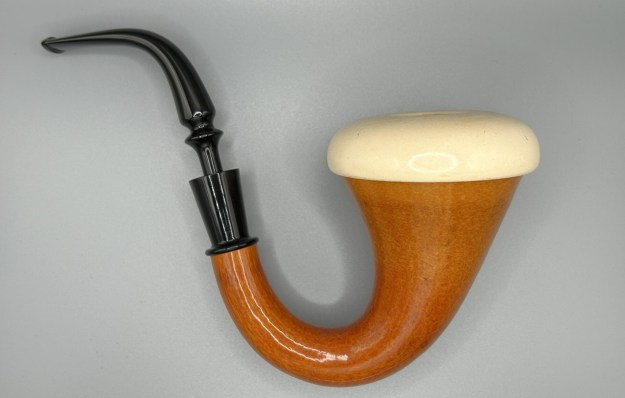
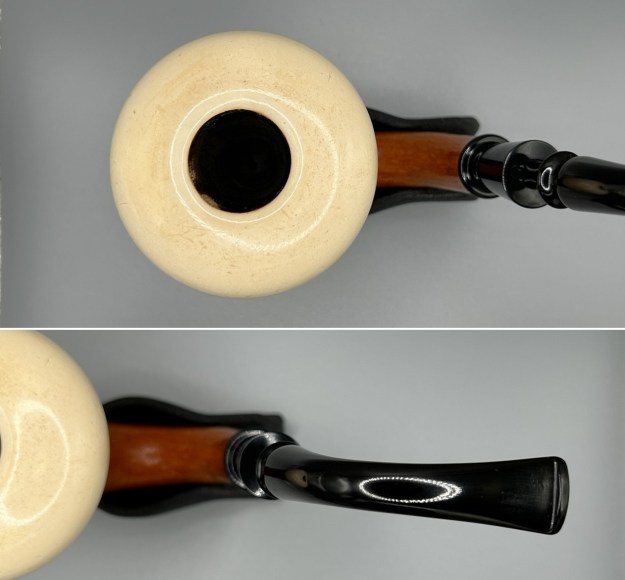
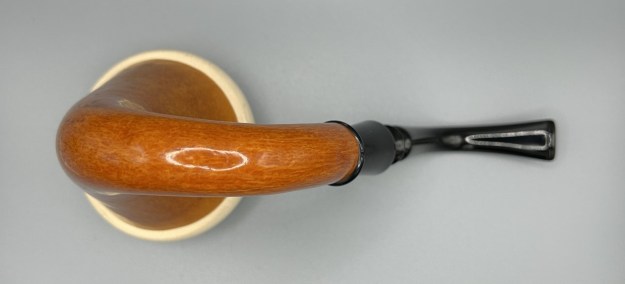
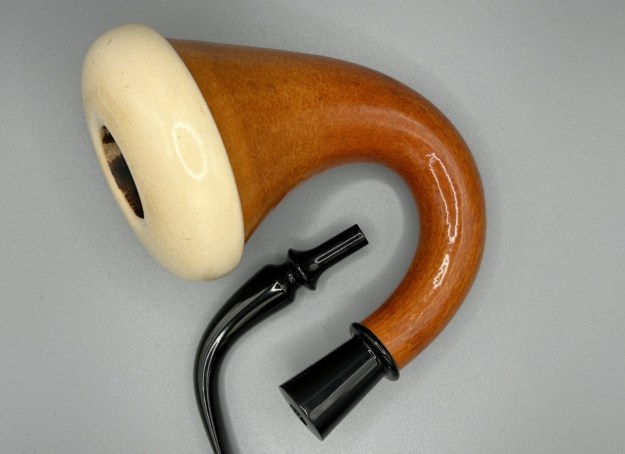
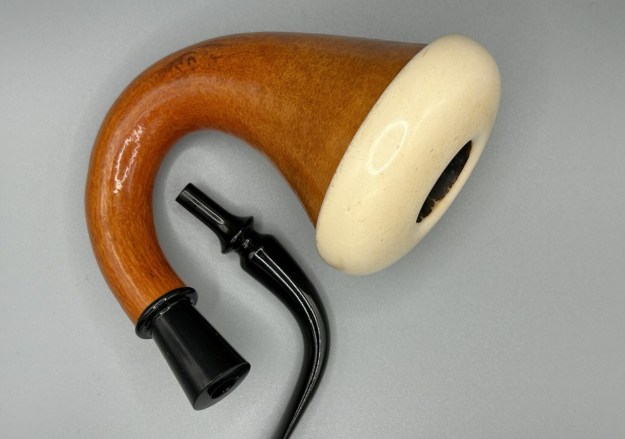
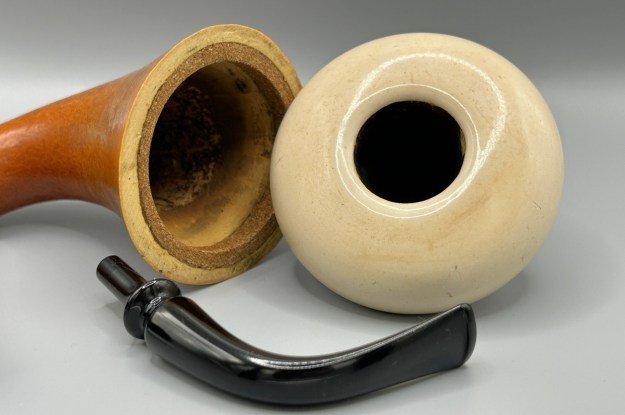
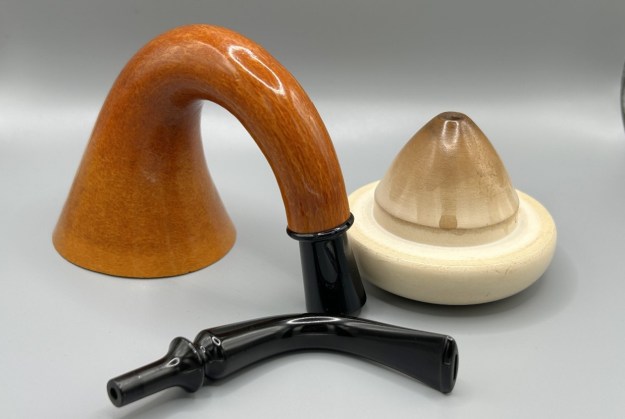
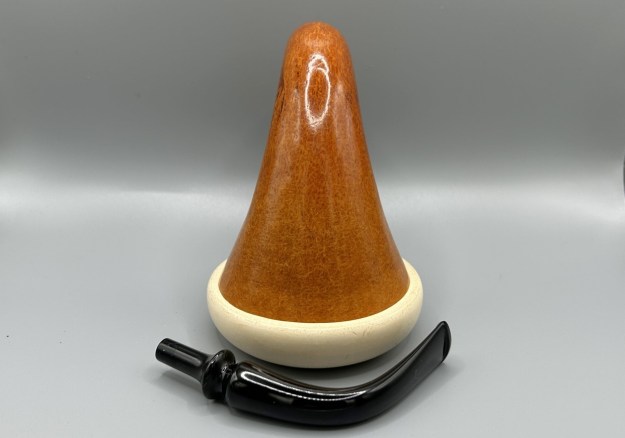
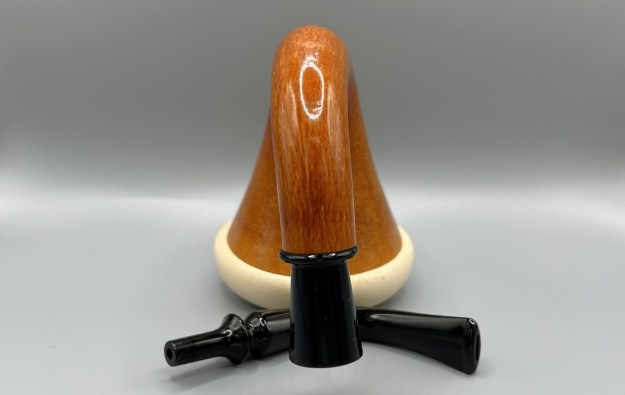
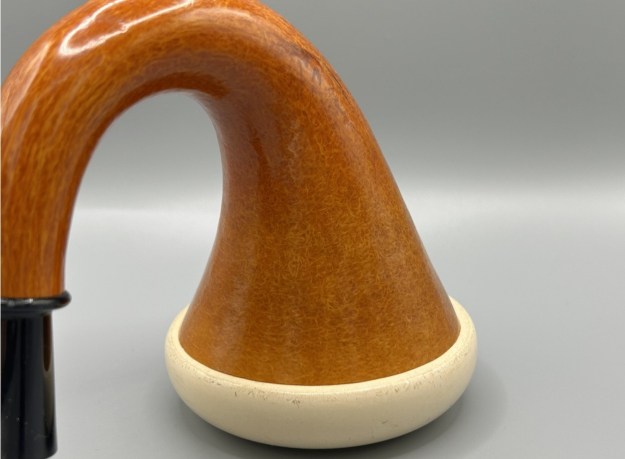
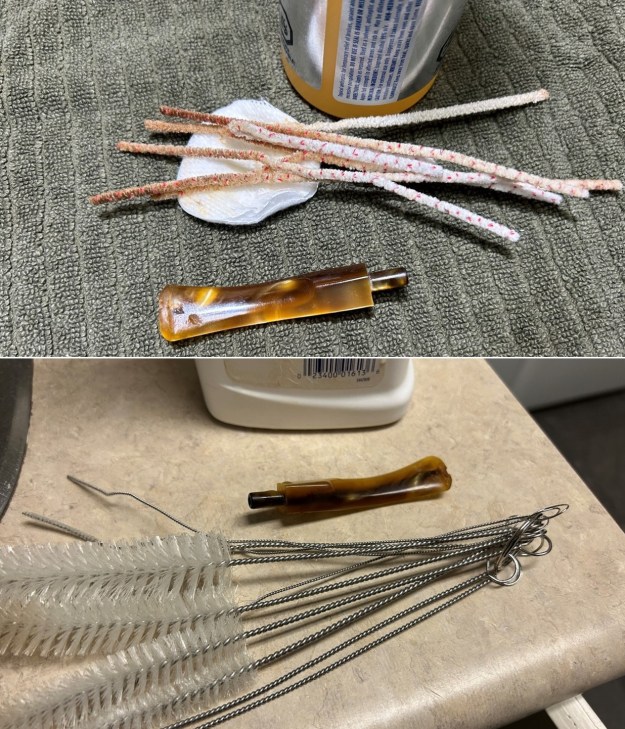
I recently came upon this calabash pipe and it’s a bit of a stunner. It is so bountiful and robust – it’s one of the most attractive calabashes I’ve ever worked on. There is an elegance to this pipe, and its curves remind me of an alpine piste de ski. Really nice looking, and in good shape. Maybe this is the pipe for you! No markings at all on this pipe, but no matter. Let’s take a closer look at it. The bowl is beautifully-shaped meerschaum. It has some minor signs of wear, but nothing serious. Similarly, the gourd is in lovely condition. No wear to speak of and the cork gasket is perfect. The gourd also has an acrylic shank extension in nice shape. Finally, the vulcanite stem is also great. It has some oxidation and some small signs of wear, but nothing to worry about. I used isopropyl alcohol on a few cotton rounds and wiped down the stem to provide an initial cleaning of filth before moving on to the next steps. The primary cleaning came next. I disinfected the inside of the stem with both pipe cleaners and cotton swabs dipped in lemon-infused 99% isopropyl alcohol. I scrubbed thoroughly to make sure the interior was very clean. The goal of the next step is the removal (or minimization) of oxidation. Going to my sink, I used cream cleanser, cotton rounds, and a toothbrush, and scoured the stem to remove as much surface oxidation as possible. As the photos show, the result was a hideous, ochre-coloured mess – but better off the stem than on it.Once the stem was reasonably clean, I soaked it overnight in some Briarville Stem Oxidation Remover. This solution works to draw oxidation in the stem to the surface of the vulcanite. This is a major aid and an important step in ensuring a clean stem. The following day, I drew out the stem from its bath and scrubbed the lingering fluid with a toothbrush.The penultimate step for the stem is sanding. I used all nine of the micromesh sanding pads (1,500 through 12,000 grit) to sand out flaws, even out the vulcanite, and provide gentle polishing of the finished surface. I also applied pipe-stem oil while using the last five micromesh pads. There was a wonderful, deep black shine to the stem when I was done.As the stem was (nearly) complete, I moved on to the bowl. The first step was to ream it out – that is to say, remove all the cake inside the bowl. This accomplished a couple of things. First (and most obviously), it cleaned the bowl and provided a refurbished chamber for future smoking. Second, when the old cake was removed, I could inspect the interior walls of the bowl and determine if there was damage or not. Meerschaum is too fragile for a proper reamer, so I used 220-grit sandpaper on the end of a wooden dowel to clean out the bowl and it turned out very well. One of the frustrations of cleaning meerschaum is that once smoked, the stains never go away. However, I did what I could and it definitely improved.I sanded down the entire piece of meerschaum with my micromesh pads. I also rubbed some Clapham’s Beeswax into the meerschaum. Then I let it sit for 20 minutes, buffed it with a microfiber cloth and then repeated the beeswax process. Worked like a charm! I wiped down the outside of the gourd, using a solution of a pH-neutral detergent and some distilled water, with cotton rounds. I cleaned inside the gourd gently by scraping with my reaming knife and some tube brushes. I was pleased with the results. I sanded down the acrylic shank extension (but not the gourd) with only the finest of the micromesh pads. I also cleaned out the inside with cotton swabs and alcohol. It wasn’t very dirty. I then coated the gourd with LBE Before & After Restoration Balm and let it sit for 30 minutes. After that, I buffed it with the microfibre cloth. Finally, I applied some light lubricant to the cork gasket. Even though the gasket was in perfect shape, it’s a good idea to lubricate it in this way in order to maintain its elasticity. I set it aside to absorb and moved on.Before I went off to the buffer, I gave the meer and the gourd another going over with Clapham’s beeswax rub. This really worked well. I only took the stem to the buffer, as meerschaum and gourds don’t tolerate those high speeds very well!

This big gourd calabash was a delight from the start and its beauty only increased through the restoration process. I am pleased to announce that this pipe is for sale! If you are interested in acquiring it for your collection, please have a look in the ‘Calabash’ section of the store here on Steve’s website. You can also email me directly at kenneth@knightsofthepipe.com. The approximate dimensions of the pipe are as follows: length 7 in. (178 mm); height 5⅞ in. (149 mm); bowl diameter 2⅞ in. (75 mm); chamber diameter 1 in. (26 mm). The weight of the pipe is 4⅝ oz. (132 g). I hope you enjoyed reading the story of this pipe’s restoration as much as I enjoyed restoring it. If you are interested in more of my work, please follow me here on Steve’s website or send me an email. Thank you very much for reading and, as always, I welcome and encourage your comments.

Refinishing and Repairing a Cracked Shank on a Ben Wade 76 Canadian


by Steve Laug

Back in the end of February I received an email from a reader name John regarding a pipe of his that needed some work. I have included the email below.

Steve, I have this Ben Wade pipe that I bought new in the late 60’s early 70’s, was wondering if there was anyway to fix the crack in the shank? I just pulled my old pipes out of a drawer where they have been stored for over 40 years. Haven’t smoked them in quite some time.

Thanks for your reply, John

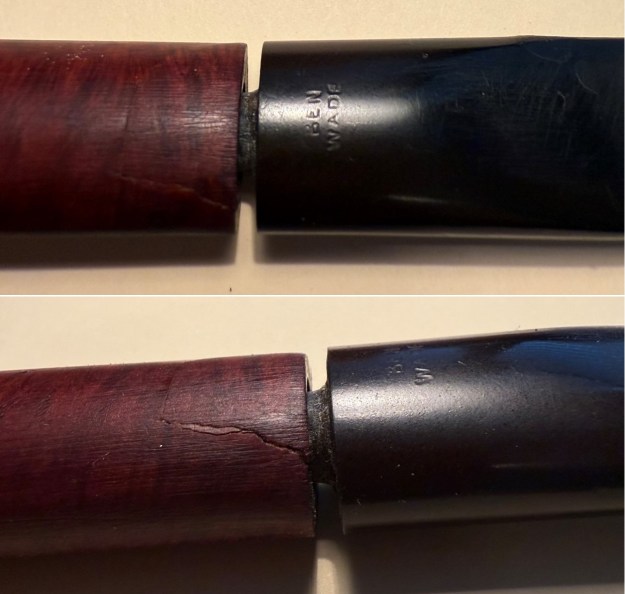
I asked for some photos of the Ben Wade and John sent photos of the rim and the shank. I have included them below. The crack in the shank is very clean and obvious on the shank as can be seen in the second one above. It will need to be repaired and banded to repair the crack. From the photos the pipe is pretty clean but the finish is very scratched. It almost looks someone cleaned it off with steel wool and the briar is scratched from rim to heel and shank to shank end. The finish really is clean but a mess. I looked over the photos and John and I made arrangements to have him send it to me.

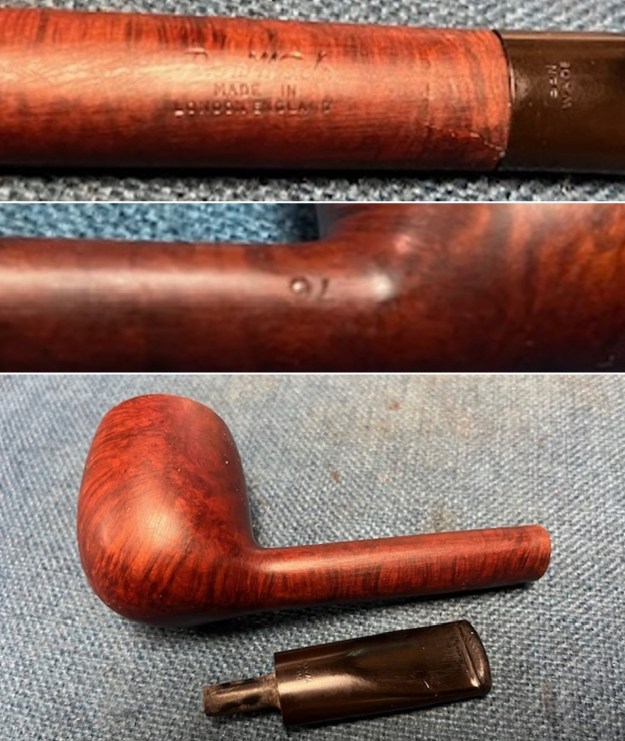
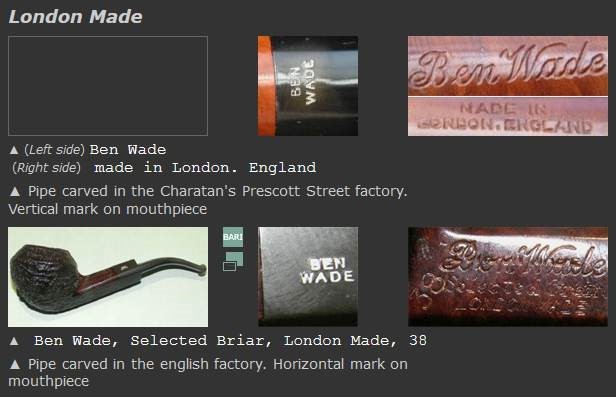
It arrived last evening. It was a well shaped Canadian with a thick shank and bowl walls. I took photos of what I saw and I turned it over in my hands. My assessment of the finish was correct, it was scratched on all of the briar surfaces. The scratches were not terribly deep but were very visible. The pipe is stamped Ben Wade [over] Made in [over] London England. On the right side of the shank it was stamped with the shape number 76. The bowl had a light cake and was dirty. The shank and airway were dirty as well. The vulcanite stem had some light stamping on the top side of the taper and it read BEN [over] WADE. It was faint but still readable. The stem was lightly oxidized and there were scratches on both sides much like those in the briar. There was some tooth wear on the button surface on both sides. I took some close-up photos of the rim top, bowl and stem surfaces. There was a light cake in the bowl and the stem surface showed scratches and wear. There was a faint stamp on the top side of the stem.I took photos of the stamping on the top of the stem and the shank as well as the upside-down stamp on the right side. They are scratched in spots but nonetheless still very readable. I removed the stem from the shank and took a photo of the proportions of the pipe. It is quite nice.An added part of pipe restoration for me is to try to gather as much background on a brand and maker as I can find. With Ben Wade it is an enjoyable web to untangle. There is a lot of information and it can lead to understanding what era a pipe was made in. To try to figure out the era of the Ben Wade pipe I was working on I turned to the Pipephil website, Logos and Stampings (http://pipephil.eu/logos/en/logo-benwade.html). There is some really helpful information on the brand. There is an alphabetical listing of the lines and the first shown in the photo below matches the stamping both on the shank top and the stem top. The site did give a short history of the brand. I quote the portion that is most pertinent. Brand founded in the 1860’s at Leeds (GB). Lane Ltd. (NYC) bought the brand in 1962 and closed the factory in Leeds in 1965. The pipes were then manufactured in London at Charatan’s. During the period 1972 (about) – 1989 Ben Wade pipes were mass produced for Lane Ltd. by Preben Holm‘s workshop in his very personal style. Peter Wilson owner of Duncan Pipes bought the rights of the brand in 1998.

Next, I turned to Pipedia to see if I could find more information on the Ben Wade brand there (https://pipedia.org/wiki/Ben_Wade). The article gives a great sense of the history of the brand from its inception until the time Preben Holm made pipes for them. I quote a few sections from the article below.

In the second World War the factory was destroyed by German air raids on Leeds. But the Ben Wade family decided to re-build it immediately after the war and pipe production was re-started soon and successfully linked to the fame from the pre-war years.

Before the second war Ben Wade clustered their offerings into three price points: “Ben Wade” included the higher end pipes (eg the Larnix, Super Grain, Selected Grain, etc), “BW” included the mid-level pipes (eg Statesman, Natural Grain, County, etc), and “BWL” were the least expensive (eg Hurlingham, Adelphi, Tense Grain). Champion was in the last group, and in the 1930s at least retailed for 2/6.

The Champion disappeared during the War when the Ben Wade line was materially slimmed down, presumably to reflect difficulties of supply. The name continued to appear in brand directories at least through the early sixties, however it’s unclear whether production was actually resumed.

Even though the owner family decided to leave pipe business and sell off the firm. The family went into negotiations with Herman G. Lane, president of Lane Ltd. in New York at about the same time as the Charatan family. Lane Ltd. bought both firms in 1962.

Herman G. Lane had been Charatan’s US sole distributor since 1955 and Charatan always remained his pet child. But Ben Wade was treated in another way by it’s new owner. The fabrication of pipes was reduced and the factory in Leeds was closed in 1965 finally.

So, this was the end of Ben Wade pipes stamped “Made in Leeds, England”.

Lane had the pipe making machines brought from Leeds to London and used the well esteemed name Ben Wade to start the fabrication of entirely machine-made pipes at Charatan’s Prescott Street factory. (Some sources say “not earlier than 1973” but proven by catalogues this isn’t true.) Alas the “new” Ben Wades were quite usual series pipes, copies of well known standard shapes. The pipes often showed hardly masqued fillings and were processed quite coarsely with hardly polished pre-moulded Ebonite stems. Therewith Ben Wade degenerated definitively to a second brand. The stamping now read “Made in London England” or just “London”. Nothing was left from the quality of the pipes once made in Leeds!

Quotation of an American pipe dabster: “It’s a shame to see how a famous old family name can be dragged into the mud by people who want to capitalize on a good reputation earned by men who are long dead. This sad little story was not one of Charatan’s or Lane’s proudest moments!”

Herman G. Lane’s heirs had no special interest in either Charatan or in Ben Wade and sold it to Dunhill Pipes Limited in 1978. Now, Dunhill had no need of machine-made series pipes like the Ben Wade as performed by Charatan / Lane since their own ParkerHardcastle factory in Walthamstow had abounding capacities to turn out secondary pipes. Thus this was Ben Wade’s second end. Charatan’s Prescott Street factory was closed by no later than March of 1982 and Charatan was allowed to languish and discontinued in 1988.

Now I had some parameters regarding the time frame of the pipe. It was made after the closing of the Leeds factory in 1965 and made in London as early as 1973. It was definitely made before Lane sold the factory to Dunhill in 1978. That is helpful to know the time frame as well as the connection to Charatan during that time period. Now it was time to work on the pipe. Now it was time to work on the pipe.

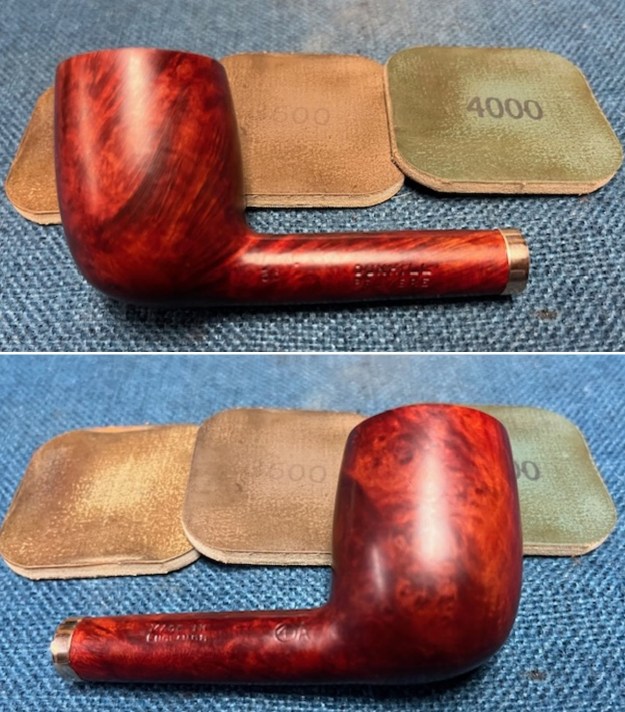
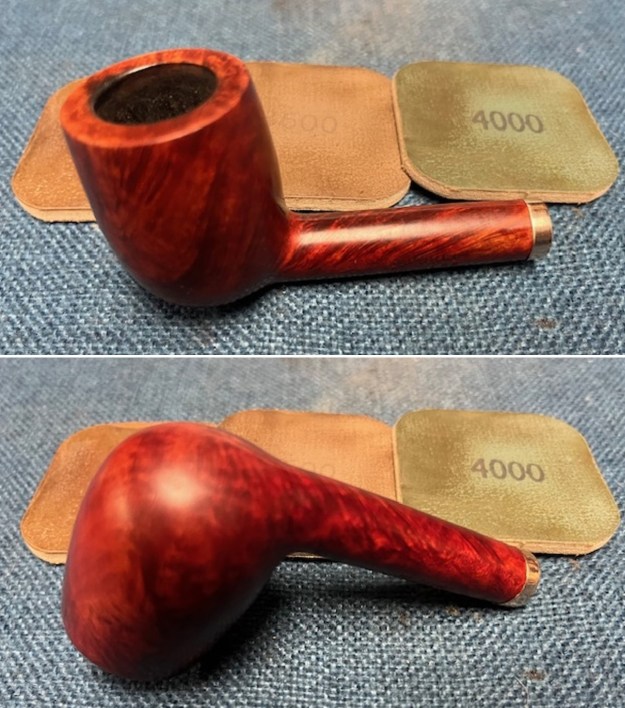
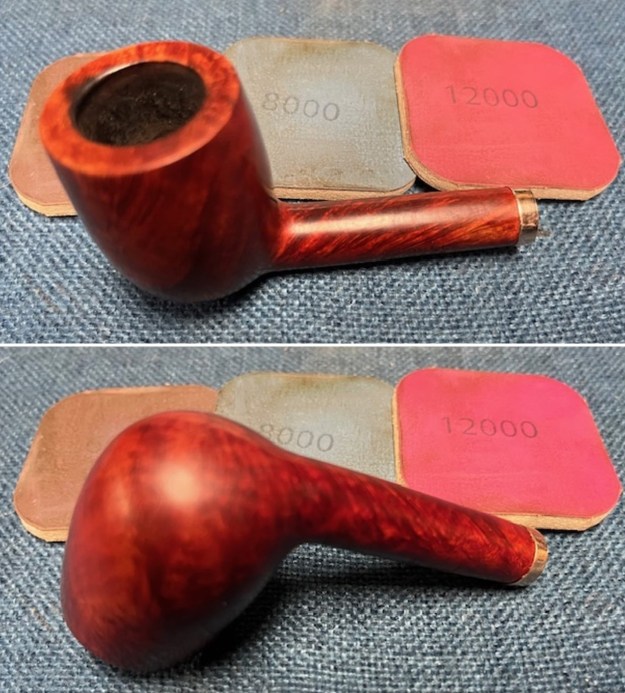
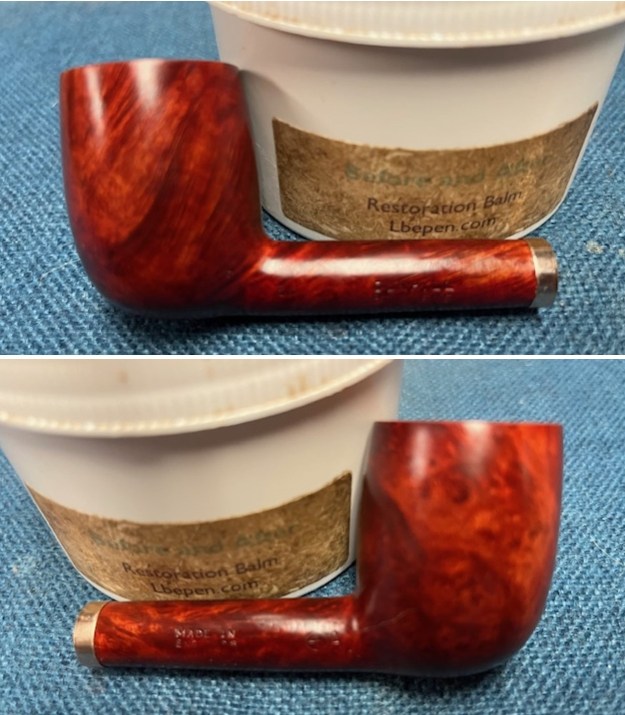
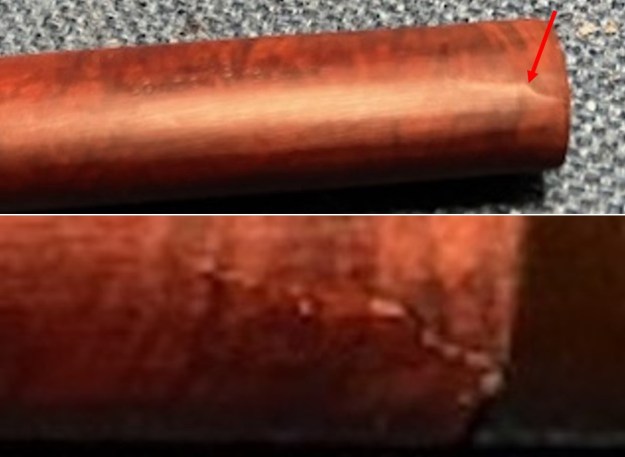
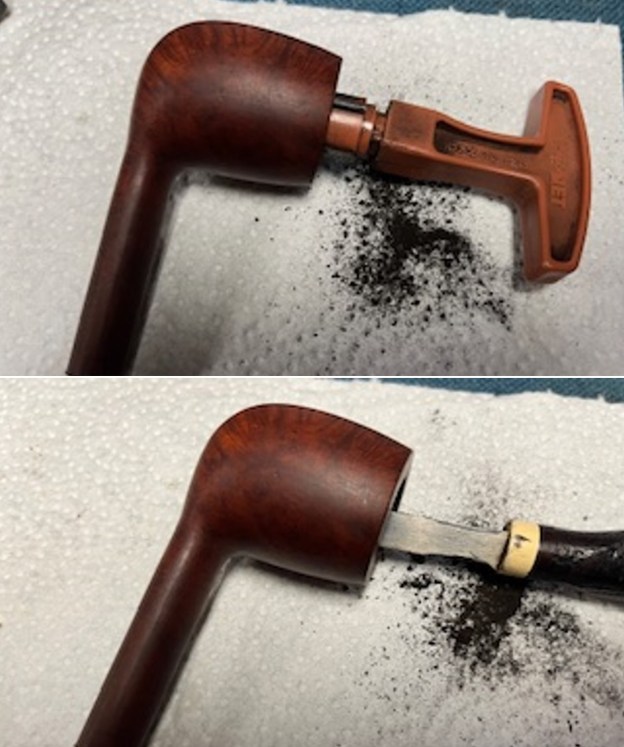
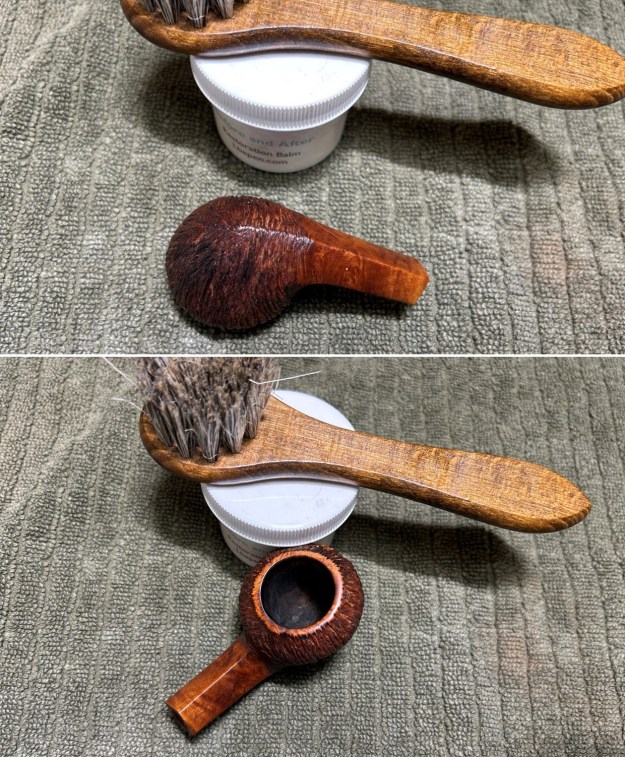
I tried to capture the crack in the shank in photos. The first photo shows the location of the crack and I have inserted a red arrow to identify it. I blew up that section of the stem in the second photo. It is pixilated but still you can see the crack clearly.I reamed out the cake in the bowl with a PipNet pipe reamed to take it back to bare walls. I followed that up with a Savinelli Fitsall Pipe Knife. I remove all the rest of the cake remnants on the bowl walls. I was very clean.I cleaned out the airway in the shank, mortise and airway in the stem with a bristle pipe cleaner and regular smooth cleaners and alcohol. It removed a lot of oils and tars but it was not too dirty.With the internals clean I turned to work on the cracked shank. I had a nice EP (Electro Plated) oval band that fit the shank perfectly. I used a tooth pick to paint the shank end with some all-purpose glue. I pressed the band in place on the shank. The glue permeated the crack in the shank and the band brought the pieces back together again. It was a snug and clean repair. Once the glue hardened and the band was solid in place on the shank I decided to work on the scratching around the bowl and shank. I would need to be careful with the stamping while still trying to minimize the damage. I used 320-3500 grit 2×2 inch sanding pads to take out the deep scratches or at least smooth them. I wiped the briar down with a damp cloth between pads to remove the sanding debris and to see if I could cause the scratches to swell and rise to the surface. One finish the bowl looked much better. I polished the briar with micromesh sanding pads – dry sanding it with 1500-12000 grit sanding pads. I wiped the briar down with a damp cloth after each sanding pad and the bowl began to take on a deep shine and the scratches were minimized. The scratching was still present but not as visible as when I started. I wanted to keep as much of the original finish as possible and the process above made that possible. I worked some Before & After Restoration Balm into the surface of the briar with my finger tips to get into the finish of the briar. The product is incredible and the way it brings the grain to the fore is unique. It works to clean, protect and invigorate the wood.

Restoring a Classic Sixten Ivarsson Designed Stanwell Danish Reserve 19 Bent Dublin


by Steve Laug

This particular Stanwell sandblast pipe was purchased on 01/20/2026 from a Facebook seller in Quaker Town, Pennsylvania, USA. It really is another beautiful Danish Bent Dublin with a gentle curve to the shank and stem. The bowl is smooth and stained with a contrast of browns. It is stamped on the underside of the shank and reads Stanwell [over] Made In Denmark [over] Danish [over] Reserve. On the right side of the shank it is stamped with the shape number 19. The bowl had a moderate cake and some spots of lava overflow in the inner edge of the rim top. There was grime ground into the finish and dust and debris the sandblast. The vulcanite saddle stem has the White Stanwell Crown S logo stamped on the left side of the saddle. It was lightly oxidized and had light tooth marks and chatter on both sides of the stem ahead of the button. Jeff took photos of the pipe before he started his work on it. Jeff took photos of the bowl, crowned rim top and the stem to show the condition of the pipe when we received it. You can see the cake and what looks like some bowl coating in the bowl and the spotty lava on the rim top and inner edge. He also captured the condition of the stem showing the light tooth chatter and oxidation. Jeff took photos of the sides and heel of the bowl to show the grain in the briar. It is a beautiful bowl. It is nice looking bent Dublin and is eye catching. Have a look. The next photo Jeff took shows the stamping on the underside of the shank. The stamping is clear and readable as noted above.I checked on my usual information sources on Pipephil and Pipedia and did not find any pertinent information on the Danish Reserve Line. They are still worth the read as they give a good sense of the history of the brand.

I then did a google search for the Stanwell Danish Reserve and the shape 19. There was not any clear information the Danish Reserve but Smokingpipes.com had some info on the shape 19. I quote (https://www.smokingpipes.com/pipes/estate/denmark/moreinfo.cfm?product_id=602630).

Stanwell’s “19” shape is a dynamic take on the bent Dublin shape, one originally designed by Sixten Ivarsson and which can take a few different forms. This particular iteration boasts a bowl punctuated by a firm panel at the fore, the panel comprising a pair of ridges that descend from the rim to the heel: lending the heel a spurred shape. The walls themselves take on an expressive flare out to a domed rim, their growth maintaining enough curvature for a comfortable feel in hand. Out back, a rather tight transition gives way to a sharply lifting shank that’s met by a curved saddle stem made from black vulcanite…

The pipe is a Bent Dublin 19 that was designed by Sixten Ivarsson. Now it was time to work on the pipe.

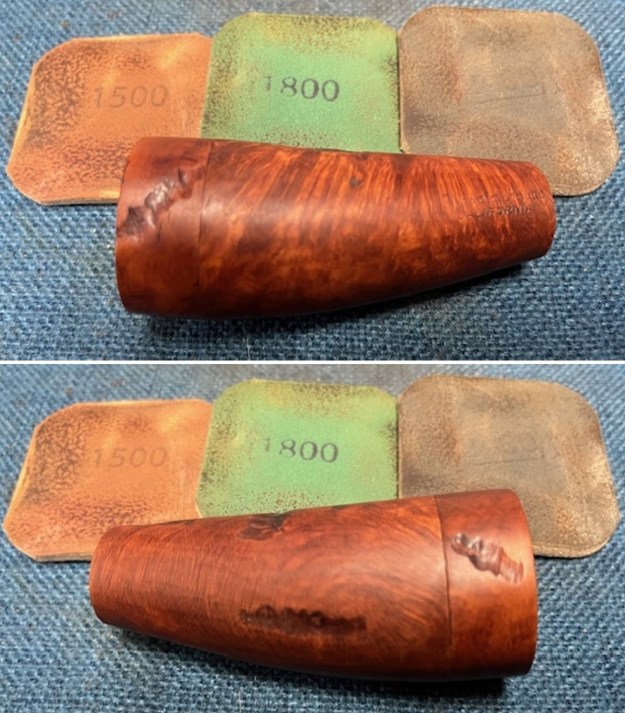
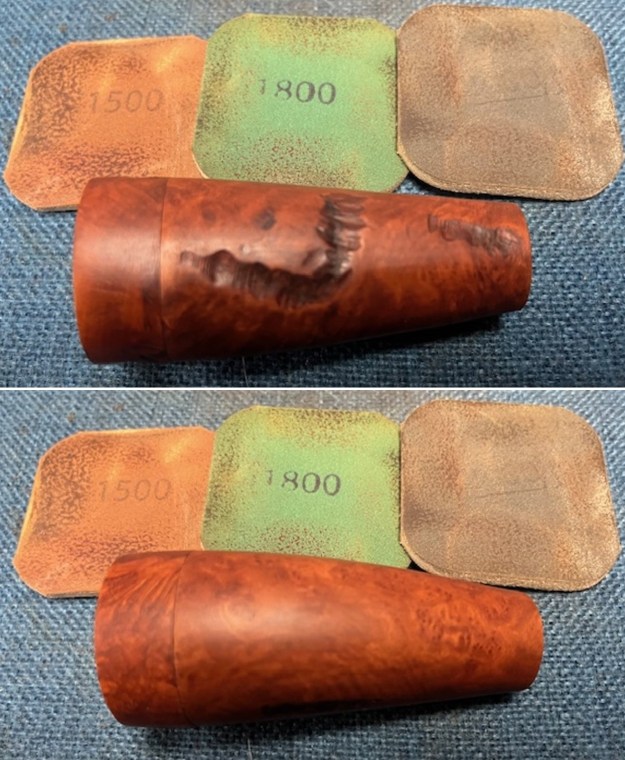
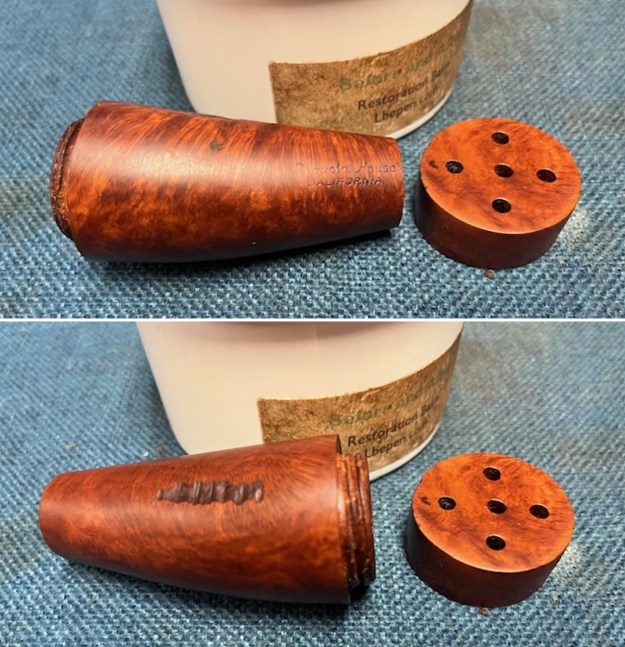
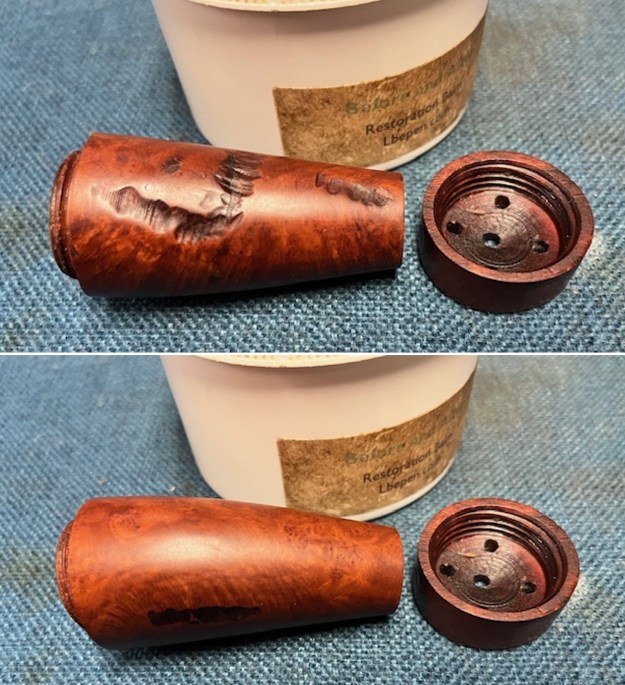
Jeff had cleaned up the pipe following his normal cleaning process. In short, he reamed the bowl and then cleaned up the reaming with a Savinelli Fitsall Pipe Knife. He scrubbed the bowl with undiluted Murphy’s Oil Soap with a tooth brush. He worked over the lava and debris on the plateau rim top and shank end and was able to remove it. He rinsed it under running warm water to remove the soap and grime. He cleaned out the inside of the shank and the airway in the stem with alcohol, cotton swabs, shank brushes and pipe cleaners. He scrubbed the stem with Soft Scrub and cotton pads to remove the debris and oils on the stem. He soaked it in Briarville’s Pipe Stem Deoxidizer to remove the remaining oxidation. He rinsed it with warm water and dried it off. I took photos of the pipe once I received it. It really looked good. I took close up photos of the stem and the rim top to show both how clean they were. The rim top and bowl look good. There is some slight damage in the blasted rim top on the back of the bowl.I took a photo of the stamping on the underside of the shank and the Crown S logo on the left side of the saddle stem. I took the stem off the shank and took a photo of the parts to give a sense of the beauty of the pipe. I turned to work on the pipe itself. I polished the briar with micromesh sanding pads – I dry sanded the briar with 1500-12000 grit sanding pads. I wiped the bowl down with a damp cloth after each sanding pad to remove the debris. It really took on a rich shine. I worked some Before & After Restoration Balm into the surface of the briar with my finger tips and a horse hair shoe brush to get into the crevices of the plateau and sandblast portions. The product is incredible and the way it brings the grain to the fore is unique. It works to clean, protect and invigorate the wood. I set the bowl aside and turned my attention to the stem. It was in great condition after the cleanup so I polished the stem with micromesh sanding pads – dry sanding it 1500-12000 pads. I wiped it down with Obsidian after each pad to remove the dust and polishing debris. I polished it with Before After Pipe Polish – both Fine and Extra Fine. I gave it another coat of Obsidian Oil. This Sixten Ivarsson designed Stanwell Danish Reserve Bent Dublin 19 with a vulcanite saddle stem turned out very nice. The mix of brown stains highlights the grain around the bowl sides and bottom. The crowned rim top and edges look very good. The finish on the pipe is in excellent condition. I put the stem back on the shank and carefully buffed the pipe with Blue Diamond on the buffing wheel. I gave the bowl and stem multiple coats of carnauba wax on the buffing wheel and followed that by buffing the entire pipe with a clean buffing pad. I hand buffed the pipe with a microfiber cloth to deepen the shine. The finished Stanwell Danish Reserve 19 is very nice and feels great in the hand. Give the finished pipe a look in the photos below. It is a nice pipe whose dimensions are Length: 5 ½ inches, Height: 2 inches, Outside diameter of the bowl: 1 ½ inches wide x 1 ¾ inches long, Chamber diameter: ¾ of an inch. The weight of the pipe is 45 grams/1.59 ounces. Thanks for walking through the restoration with me as I worked over another beautiful pipe. This one will be going on the rebornpipes store, in the Danish Pipe Makers Section shortly. If you are interested in adding it to your collection let me know by message or by email to slaug@uniserve.com. Thanks for your time.
As always, I encourage your questions and comments as you read the blog. Thanks to each of you who are reading this blog. Remember we are not pipe owners; we are pipe men and women who hold our pipes in trust until they pass on into the trust of those who follow us.

Restoring a Republic Era Peterson’s Irish Whiskey 338 Bent Billiard


by Steve Laug

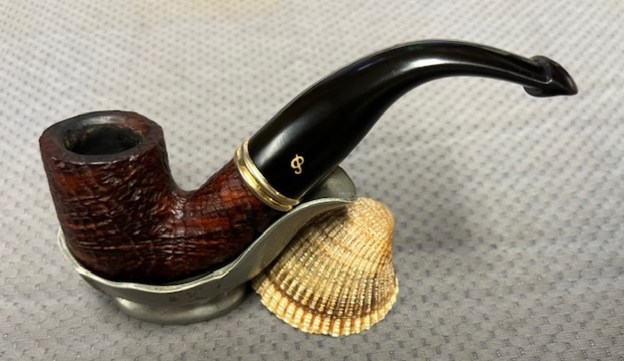
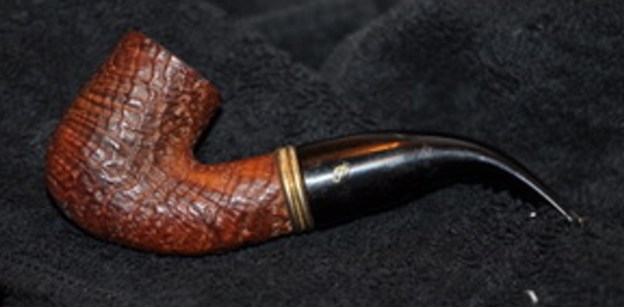
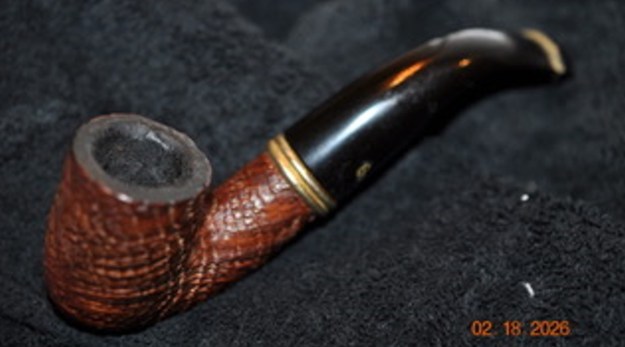
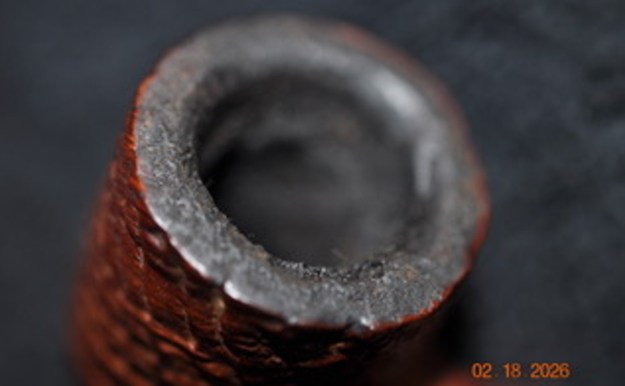
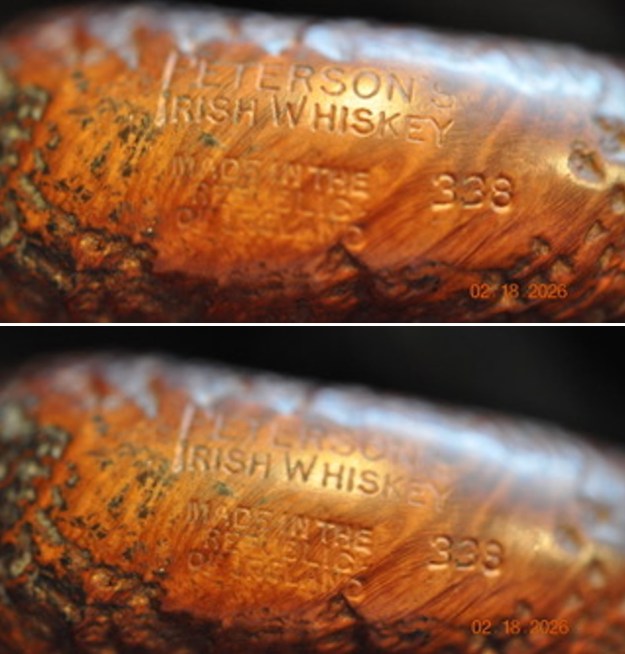
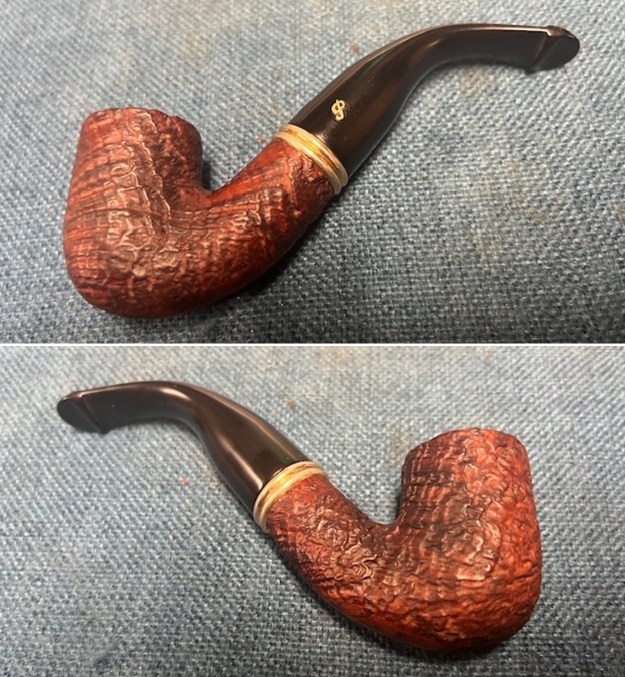
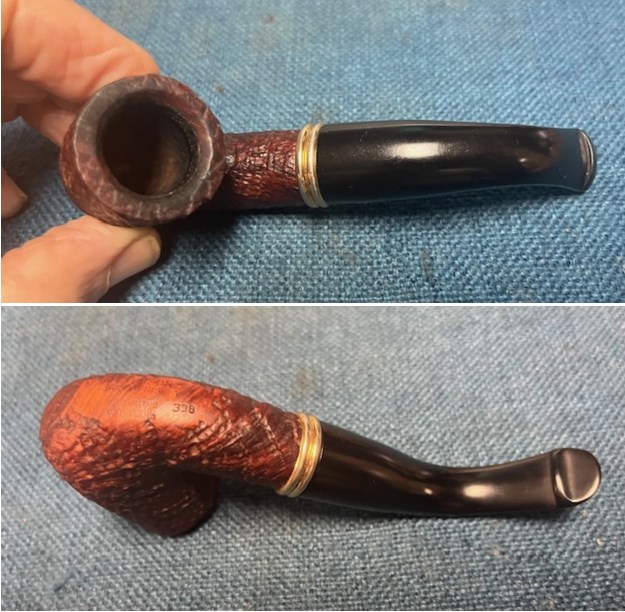
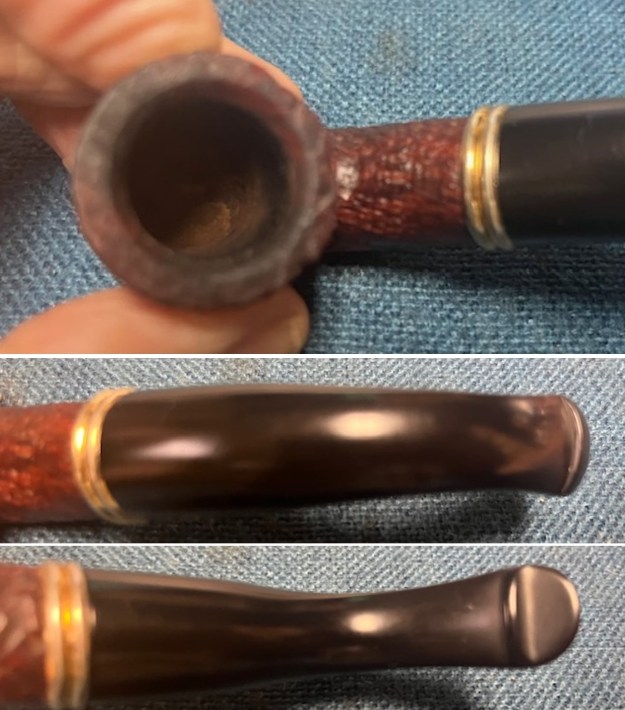
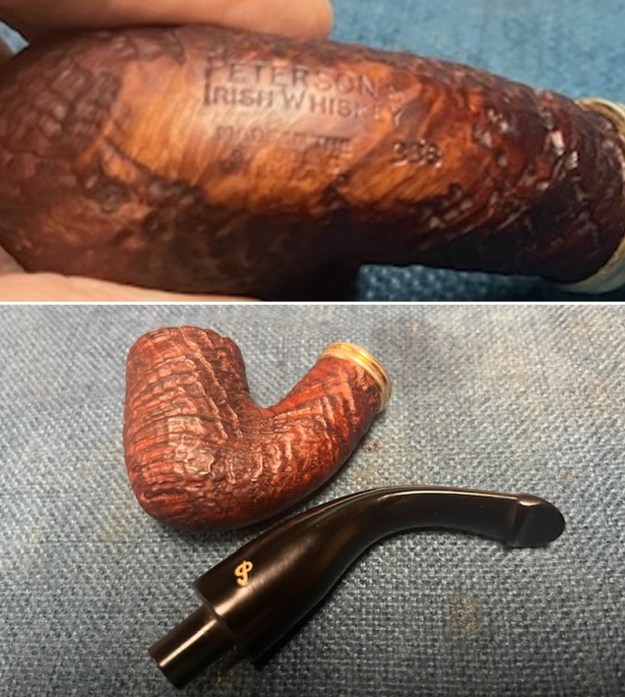
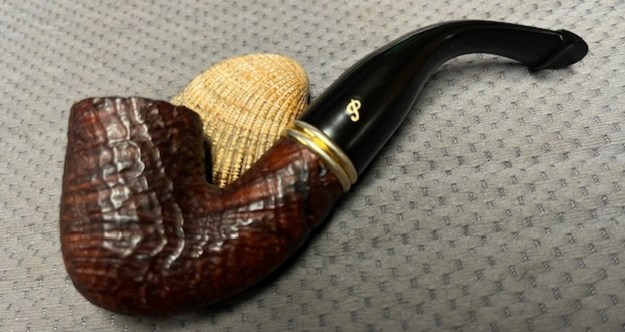
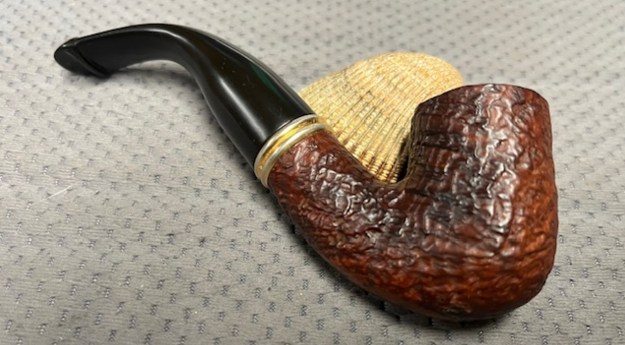
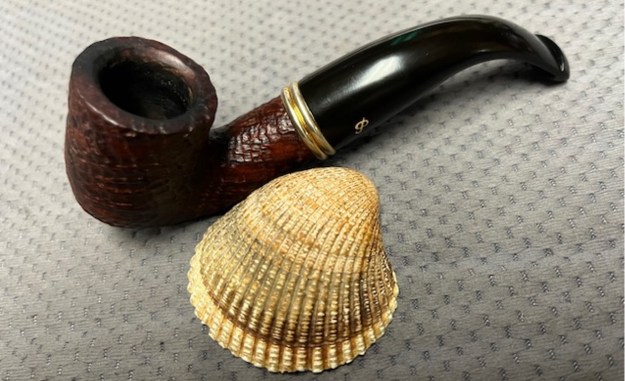
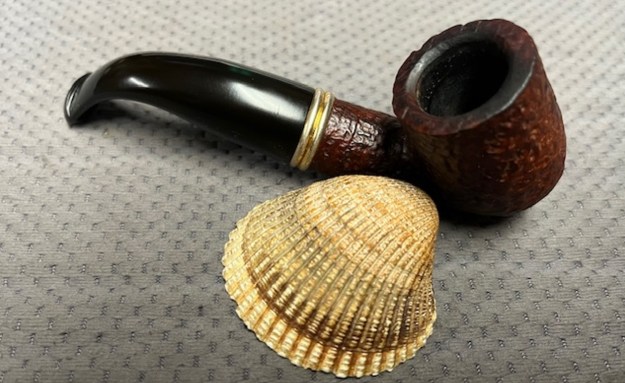
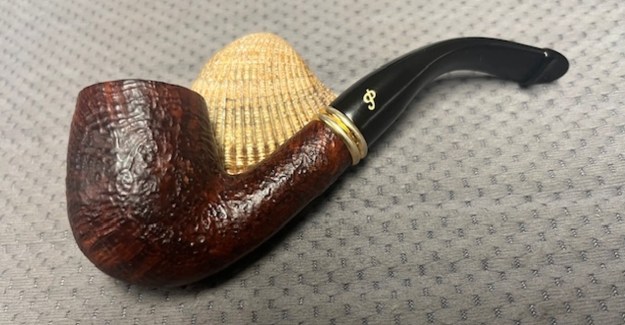
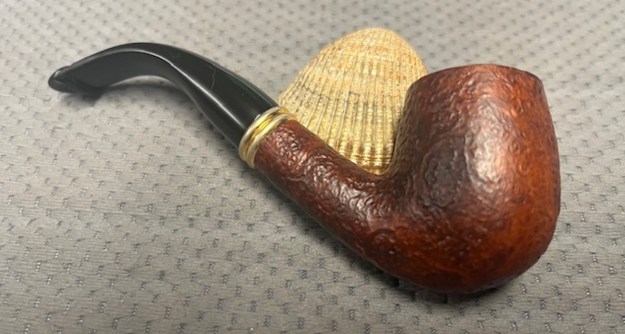
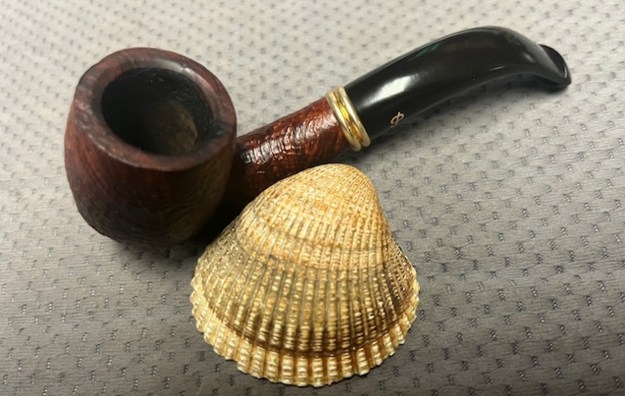
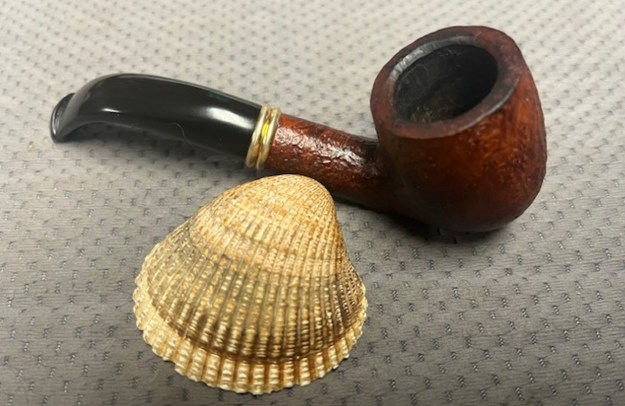
This particular Peterson’s sandblast pipe was purchased on 01/20/2026 from a Facebook seller in Quaker Town, Pennsylvania, USA. It really is another beautiful smaller Bent Billiard with a gentle curve to the shank and stem. The bowl is sandblasted and stained with a contrast of browns. It is stamped on a smooth panel on the underside of the shank and reads Peterson’s [over] Irish Whiskey [over] the shape number 338 [over] Made in the [over] Republic [over] of Ireland. The bowl had a thick cake and an overflow of thick lava in the sandblast rim top and inner edge of the bowl. There was grime ground into the finish and dust and debris the sandblast. There was a triple ring band on the shank – two brass sandwich a flat yellow band. The vulcanite bent taper stem has the gold “P” logo on the left side. It was oxidized, calcified and had light tooth marks and chatter on both sides of the stem ahead of the button. Jeff took photos of the pipe before he started his work on it. Jeff took photos of the bowl, rim top and the stem to show the condition of the pipe when we received it. You can see the thick cake in the bowl and the thick lava on the sandblast rim top and inner edge. He also captured the condition of the stem showing the oxidation, calcification and tooth chatter and oxidation on the top and underside ahead of the button. Jeff took photos of the sides and heel of the bowl to show the grain in the sandblast. It is a beautiful bowl. It is nice looking bent billiard and one is eye catching. Have a look. The next photos Jeff took show the stamping on a smooth portion on the underside of the shank. The stamping is faint in places but still readable as noted above.I looked in my usual spots on Pipephil’s Stamping and Logo site as well as Pipedia to see what I could find on the Irish Whiskey line. There was nothing on either of those sites that I could find on the line.

I googled the Peterson’s Irish Whiskey Line and found a link to the line on Mark Irwin’s Peterson’s Pipe Notes site (https://petersonpipenotes.org/sweet-petes-a-2015-gallery/). I turned to that and found the following information. I quote

The Irish Whisky line was available from 1997 to about 2005, and while the smooth finish was nice, the rustic has always popped for me and other Pete Nuts. When I saw not one but two of the rustic P-Lip Chubby 107s within a few weeks, I was amazed. Someday one will come around at the right time!

I then turned to The Peterson Pipe by Mark Irwin and Gary Malmberg. There on page 304 I found this information.

Irish Whiskey (1997-2005) Tan polished finish or sandblast line with brass domed double ring band, P-lip or fishtail mouth piece with brass P.

This gave me information regarding the date of the line. It was available between 1997-2005 and the description fit the pipe I have in hand. It is a sandblast pipe with the bands as described and a taper P-lip with a brass P logo on the left side of the stem.

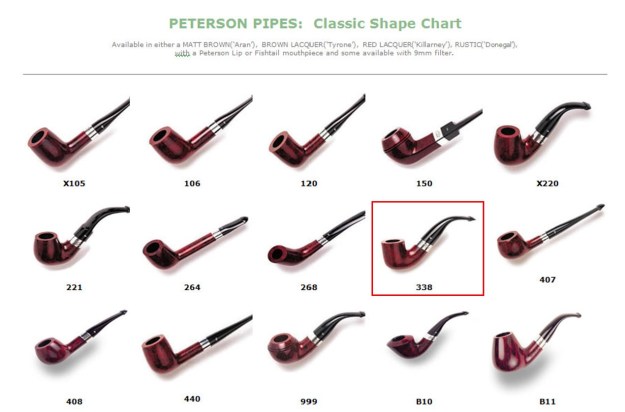
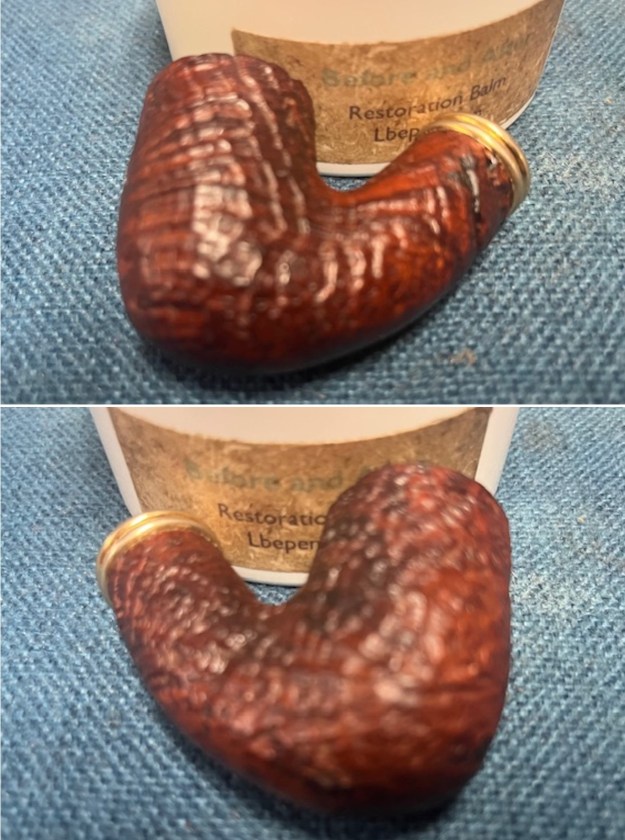
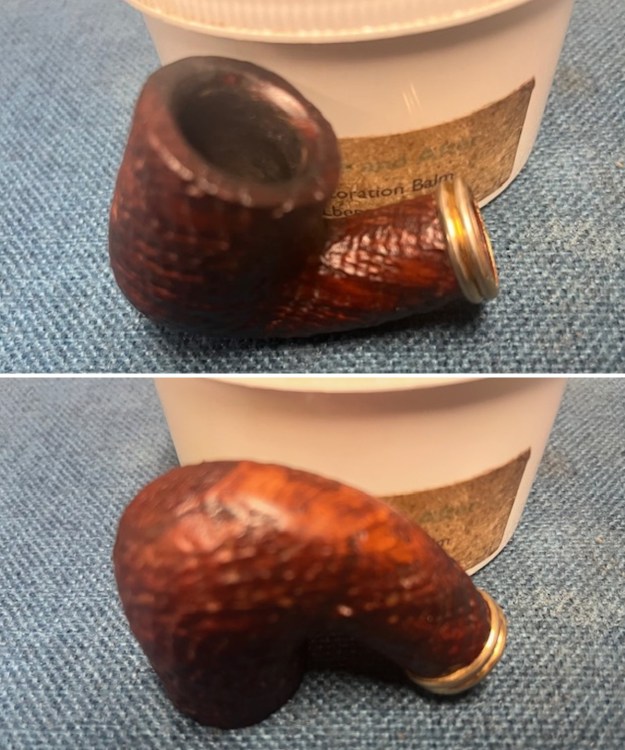
I did find a shape chart on the Pipedia site (https://pipedia.org/wiki/Peterson) that had the shape number 338 shown on it. I have drawn a red box around the shape on the second row of the chart below.Jeff had cleaned up the pipe following his normal cleaning process. In short, he reamed the bowl with a PipNet pipe reamer and took it back to briar. He then cleaned up the reaming with a Savinelli Fitsall Pipe Knife. He scrubbed the bowl with undiluted Murphy’s Oil Soap with a tooth brush. He worked over the lava and debris on the rim top and shank end and was able to remove it. He rinsed it under running warm water to remove the soap and grime. He cleaned out the inside of the shank and the airway in the stem with alcohol, cotton swabs, shank brushes and pipe cleaners. He scrubbed the stem with Soft Scrub and cotton pads to remove the debris and oils on the stem. He soaked it in Briarville’s Pipe Stem Deoxidizer to remove the remaining oxidation. He rinsed it with warm water and dried it off. I took photos of the pipe once I received it. It really looked good. I took close up photos of the stem and the rim top to show both how clean they were. The rim top and bowl look good. There is some slight damage in the blasted rim top on the back of the bowl.I took a photo of the stamping on the underside of the shank. You can see from the photo that it is faint but readable. I took a photo of the parts to give a sense of the beauty of the pipe.The bowl was in such good condition after the clean up that I worked some Before & After Restoration Balm into the surface of the briar with my finger tips and a horse hair shoe brush to get into the crevices of the plateau and sandblast portions. The product is incredible and the way it brings the grain to the fore is unique. It works to clean, protect and invigorate the wood. I set the bowl aside and turned my attention to the stem. I sanded out the tooth chatter and light marks on the underside of the stem with 320-3500 grit 2×2 inch sanding pads. I wiped the stem down with an Obsidian Oil cloth after each sanding pad. It began to look very good. I polished the stem with micromesh sanding pads – dry sanding it 1500-12000 pads. I wiped it down with Obsidian after each pad to remove the dust and polishing debris. I polished it with Before After Pipe Polish – both Fine and Extra Fine. I gave it another coat of Obsidian Oil. This Republic Era Peterson’s Irish Whiskey 65 Bent Billiard with three rings on the shank and a vulcanite taper stem with a P logo on the left side turned out very nice. The mix of brown stains highlights the grain in the sandblast around the bowl sides and bottom. The rim top and edges look very good. The finish on the pipe is in `excellent condition. I put the stem back on the bowl and carefully buffed the pipe with Blue Diamond on the buffing wheel. I gave the bowl and stem multiple coats of carnauba wax on the buffing wheel and followed that by buffing the entire pipe with a clean buffing pad. I hand buffed the pipe with a microfiber cloth to deepen the shine. The finished Peterson’s Irish Whiskey 65 Bent Billiard is very nice and feels great in the hand. Give the finished pipe a look in the photos below. It is a nice pipe whose dimensions are Length: 5 inches, Height: 1 ¾ inches, Outside diameter of the bowl: 1 1/8 inches, Chamber diameter: ¾ of an inch. The weight of the pipe is 46 grams/1.62 ounces. Thanks for walking through the restoration with me as I worked over another beautiful pipe. This one will be going on the rebornpipes store, in the Irish Pipe Makers Section shortly. If you are interested in adding it to your collection let me know by message or by email to slaug@uniserve.com. Thanks for your time.
As always, I encourage your questions and comments as you read the blog. Thanks to each of you who are reading this blog. Remember we are not pipe owners; we are pipe men and women who hold our pipes in trust until they pass on into the trust of those who follow us.

Restoring a Republic Era Peterson’s Irish Whiskey 65 Bent Billiard


by Steve Laug

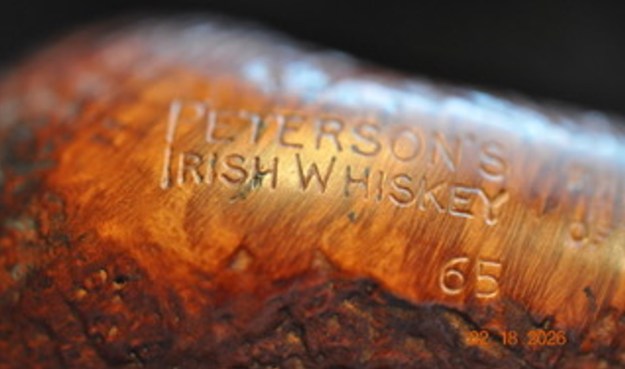
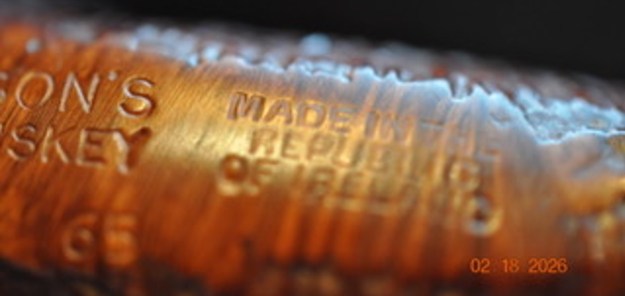
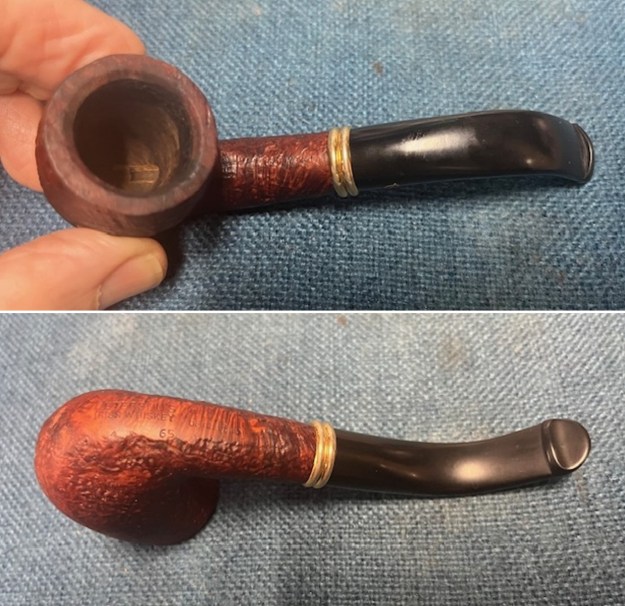
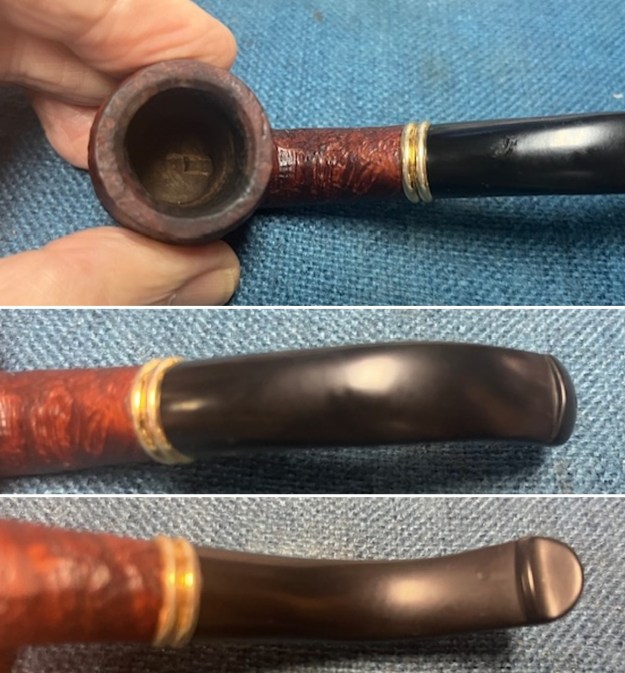
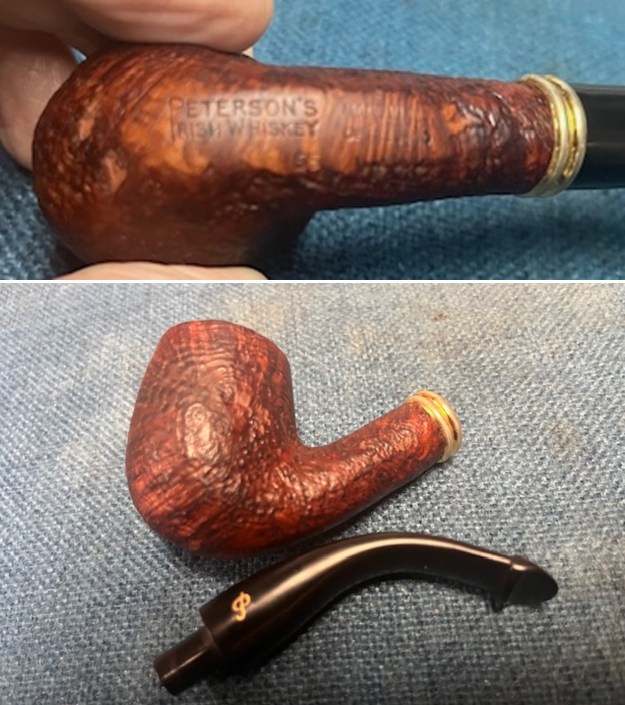
This particular Peterson’s sandblast pipe was purchased on 01/20/2026 from a Facebook seller in Quaker Town, Pennsylvania, USA. It really is another beautiful smaller Bent Billiard with a gentle curve to the shank and stem. The bowl is sandblasted and stained with a contrast of browns. It is stamped on a smooth panel on the underside of the shank and reads Peterson’s [over] Irish Whiskey [over] the shape number 65. That is followed Made in the [over] Republic [over] of Ireland. The bowl had a thick cake and an overflow of thick lava in the sandblast rim top and inner edge of the bowl. There was grime ground into the finish and dust and debris the sandblast. There was a triple ring band on the shank – two brass sandwich a flat yellow band. The vulcanite bent taper stem has the gold “P” logo on the left side. It was oxidized, calcified and had light tooth marks and chatter on both sides of the stem ahead of the button. Jeff took photos of the pipe before he started his work on it. Jeff took photos of the bowl, rim top and the stem to show the condition of the pipe when we received it. You can see the thick cake in the bowl and the thick lava on the sandblast rim top and inner edge. He also captured the condition of the stem showing the oxidation, calcification and tooth chatter and oxidation on the top and underside ahead of the button. Jeff took photos of the sides and heel of the bowl to show the grain in the sandblast. It is a beautiful bowl. It is nice looking bent billiard and one is eye catching. Have a look. The next photos Jeff took show the stamping on a smooth portion on the underside of the shank. The stamping is faint in places but still readable as noted above. I looked in my usual spots on Pipephil’s stamping and logo site as well as Pipedia to see what I could find on the Irish Whiskey line. There was nothing on either of those sites that I could find on the line.

I googled the Peterson’s Irish Whiskey Line and found a link to the line on Mark Irwin’s Peterson’s Pipe Notes site (https://petersonpipenotes.org/sweet-petes-a-2015-gallery/). I turned to that and found the following information. I quote

The Irish Whisky line was available from 1997 to about 2005, and while the smooth finish was nice, the rustic has always popped for me and other Pete Nuts. When I saw not one but two of the rustic P-Lip Chubby 107s within a few weeks, I was amazed. Someday one will come around at the right time!

I then turned to The Peterson Pipe by Mark Irwin and Gary Malmberg. There on page 304 I found this information.

Irish Whiskey (1997-2005) Tan polished finish or sandblast line with brass domed double ring band, P-lip or fishtail mouth piece with brass P.

This gave me information regarding the date of the line. It was available between 1997-2005 and the description fit the pipe I have in hand. It is a sandblast pipe with the bands as described and a taper P-lip with a brass P logo on the left side of the stem.

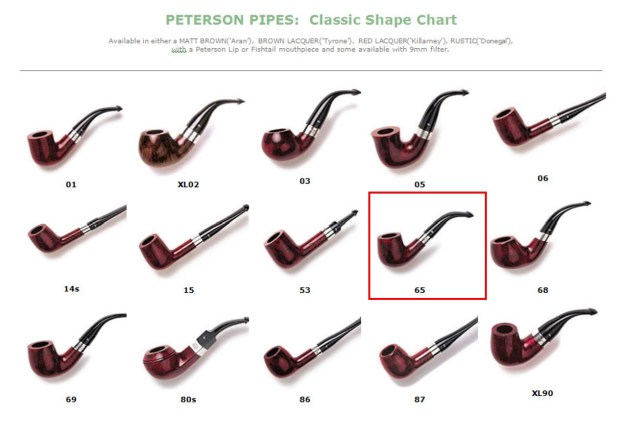
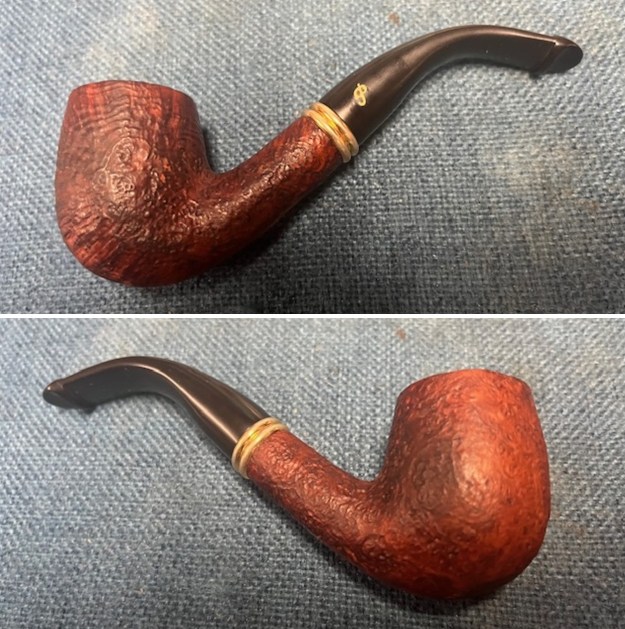
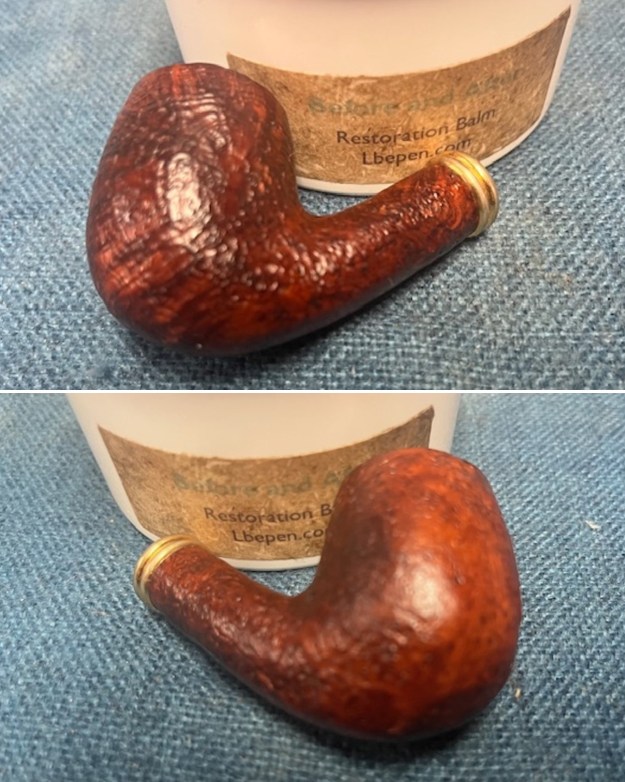
I did find a shape chart on the Pipedia site (https://pipedia.org/wiki/Peterson) that had the shape number 65 shown on it. I have drawn a red box around the shape on the second row of the chart below.Jeff had cleaned up the pipe following his normal cleaning process. In short, he reamed the bowl with a PipNet pipe reamer and took it back to briar. He then cleaned up the reaming with a Savinelli Fitsall Pipe Knife. He scrubbed the bowl with undiluted Murphy’s Oil Soap with a tooth brush. He worked over the lava and debris on the rim top and shank end and was able to remove it. He rinsed it under running warm water to remove the soap and grime. He cleaned out the inside of the shank and the airway in the stem with alcohol, cotton swabs, shank brushes and pipe cleaners. He scrubbed the stem with Soft Scrub and cotton pads to remove the debris and oils on the stem. He soaked it in Briarville’s Pipe Stem Deoxidizer to remove the remaining oxidation. He rinsed it with warm water and dried it off. I took photos of the pipe once I received it. It really looked good. I took close up photos of the stem and the rim top to show both how clean they were. The rim top and bowl look good. I took a photo of the stamping on the underside of the shank. You can see from the photo that it is faint but readable. I took a photo of the parts to give a sense of the beauty of the pipe.The bowl was in such good condition after the clean up that I worked some Before & After Restoration Balm into the surface of the briar with my finger tips and a horse hair shoe brush to get into the crevices of the sandblast. The product is incredible and the way it brings the grain to the fore is unique. It works to clean, protect and invigorate the wood. I polished the stem with micromesh sanding pads – dry sanding it 1500-12000 pads. I wiped it down with Obsidian after each pad to remove the dust and polishing debris. I polished it with Before After Pipe Polish – both Fine and Extra Fine. I gave it another coat of Obsidian Oil. This Republic Era Peterson’s Irish Whiskey 65 Bent Billiard with three rings on the shank and a vulcanite taper stem with a P logo on the left side turned out very nice. The mix of brown stains highlights the grain in the sandblast around the bowl sides and bottom. The rim top and edges look very good. The finish on the pipe is in `excellent condition. I put the stem back on the bowl and carefully buffed the pipe with Blue Diamond on the buffing wheel. I gave the bowl and stem multiple coats of carnauba wax on the buffing wheel and followed that by buffing the entire pipe with a clean buffing pad. I hand buffed the pipe with a microfiber cloth to deepen the shine. The finished Peterson’s Irish Whiskey 65 Bent Billiard is very nice and feels great in the hand. Give the finished pipe a look in the photos below. It is a nice pipe whose dimensions are Length: 5 inches, Height: 1 ½ inches, Outside diameter of the bowl: 1 1/8 inches, Chamber diameter: ¾ of an inch. The weight of the pipe is 38 grams/1.31 ounces. Thanks for walking through the restoration with me as I worked over another beautiful pipe. This one will be going on the rebornpipes store, in the Irish Pipe Makers Section shortly. If you are interested in adding it to your collection let me know by message or by email to slaug@uniserve.com. Thanks for your time.
As always, I encourage your questions and comments as you read the blog. Thanks to each of you who are reading this blog. Remember we are not pipe owners; we are pipe men and women who hold our pipes in trust until they pass on into the trust of those who follow us.
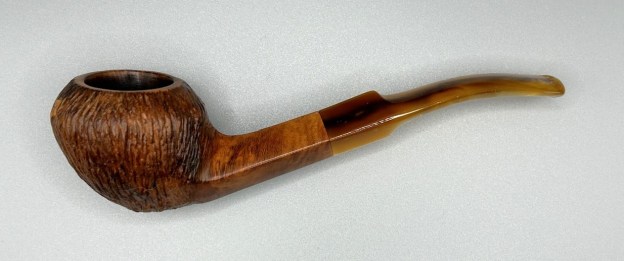
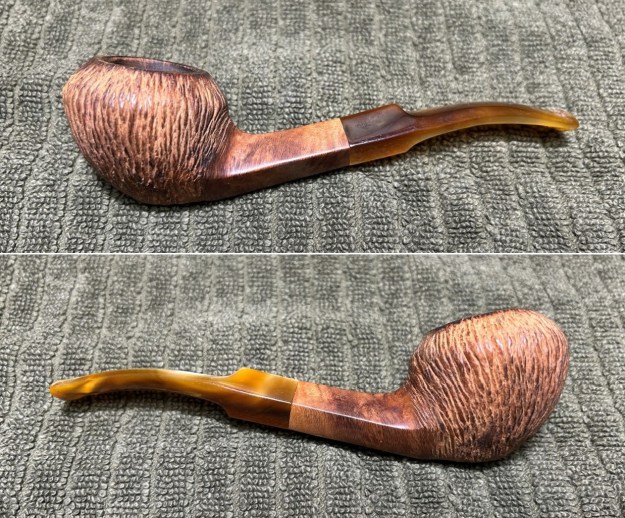
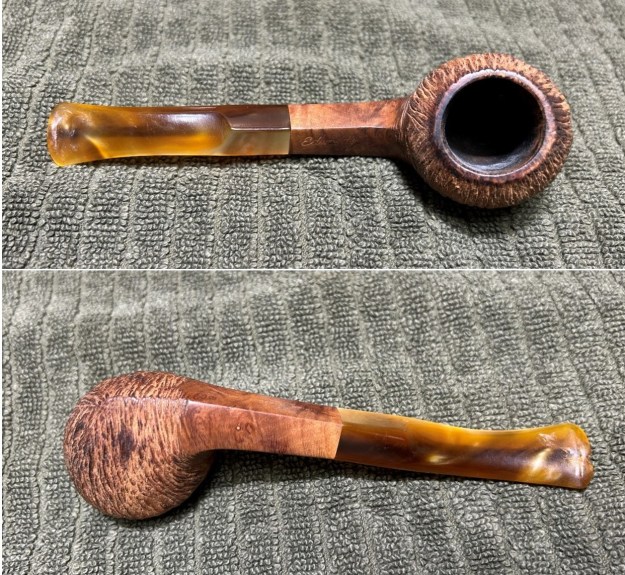
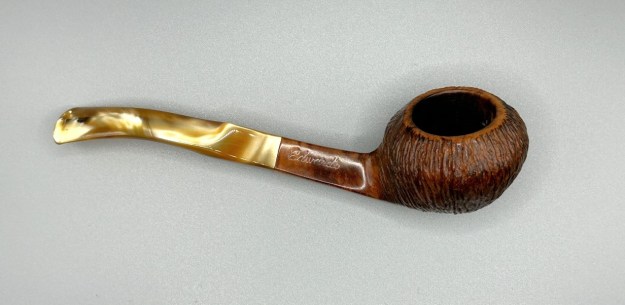
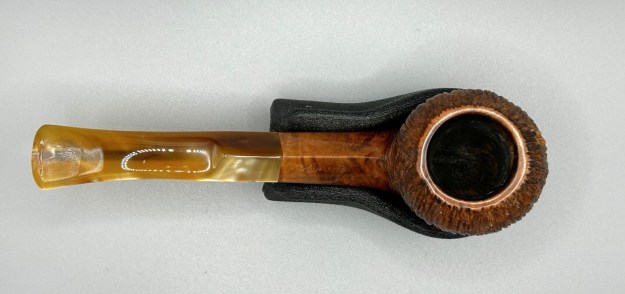
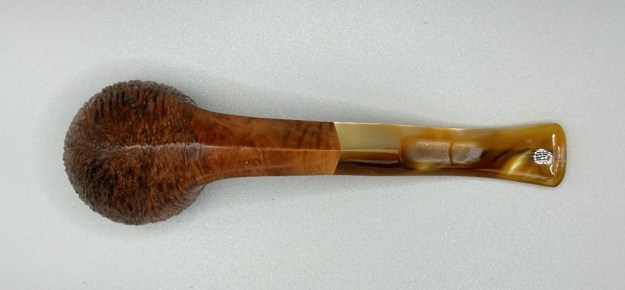
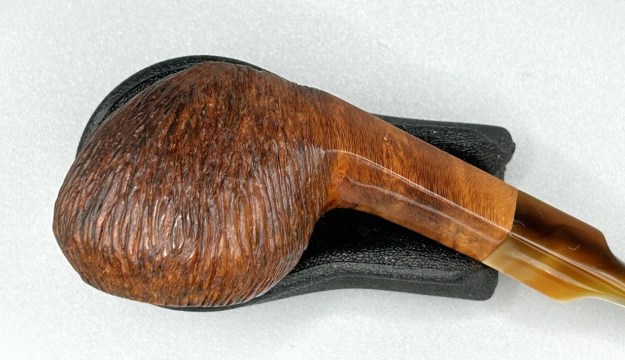
New Life for an Edward’s 20 Algerian Briar Bulldog


by Kenneth Lieblich

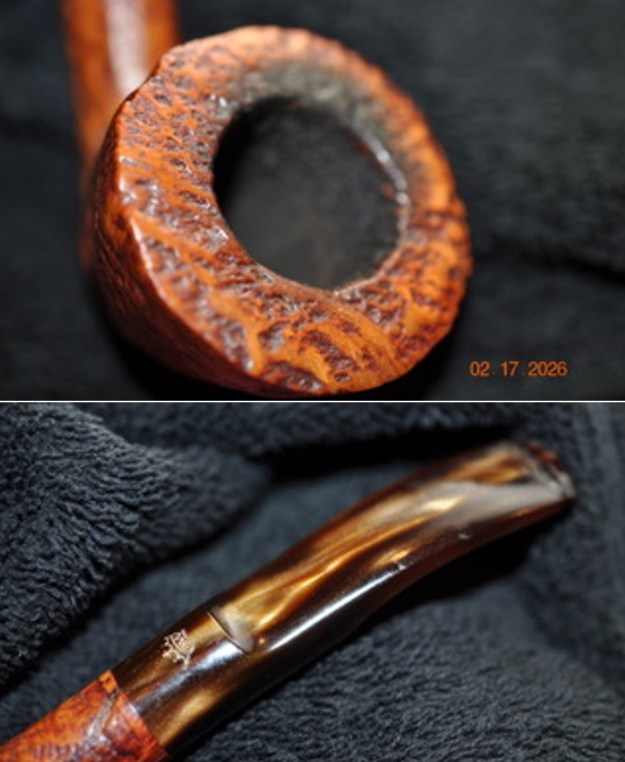
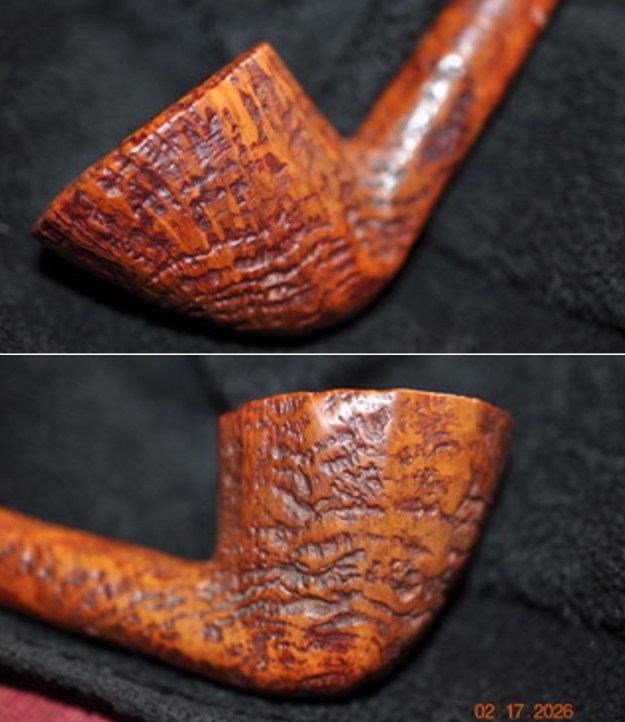
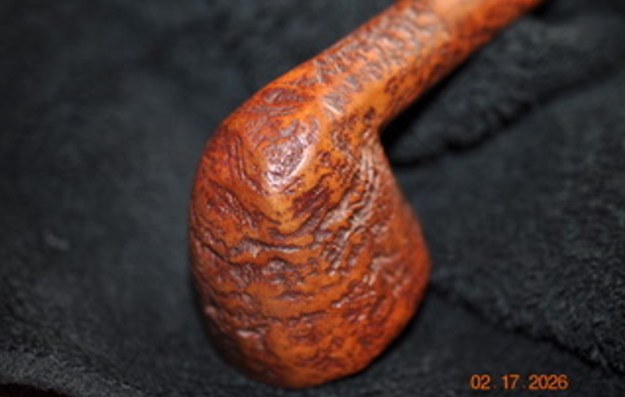
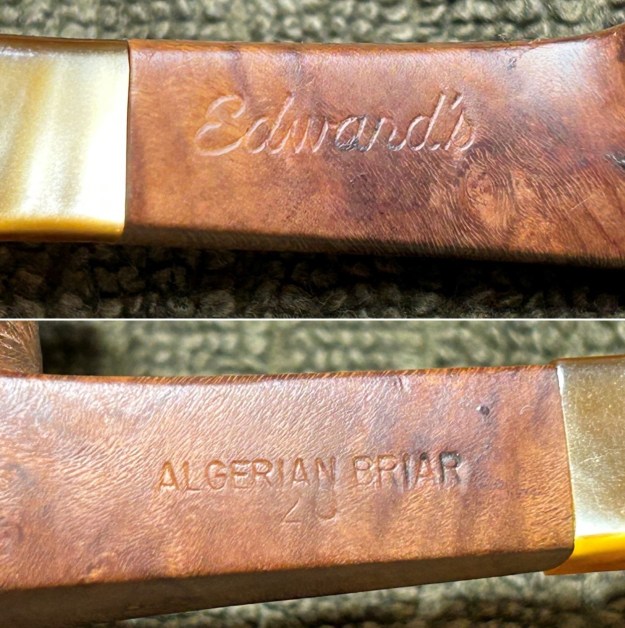
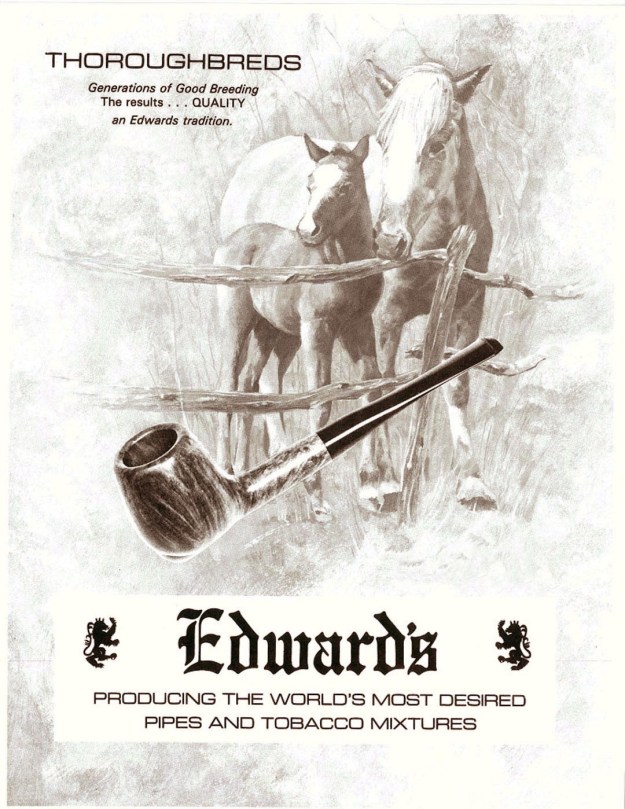
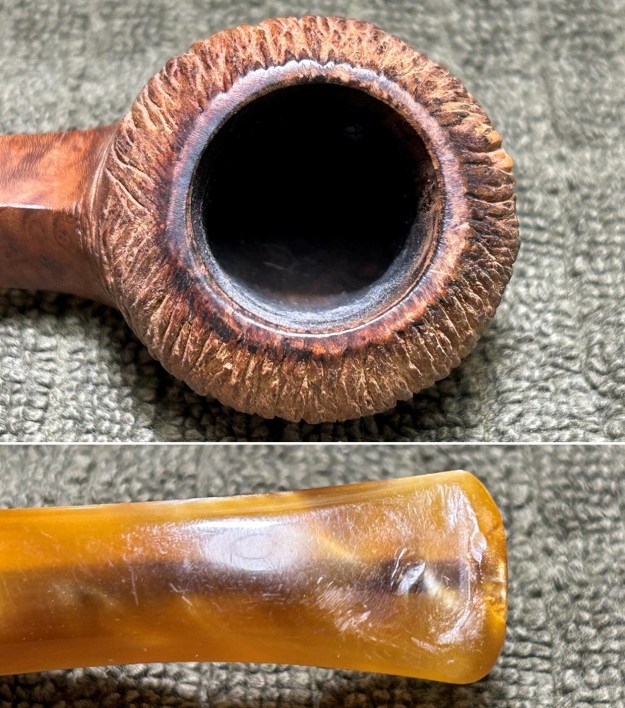
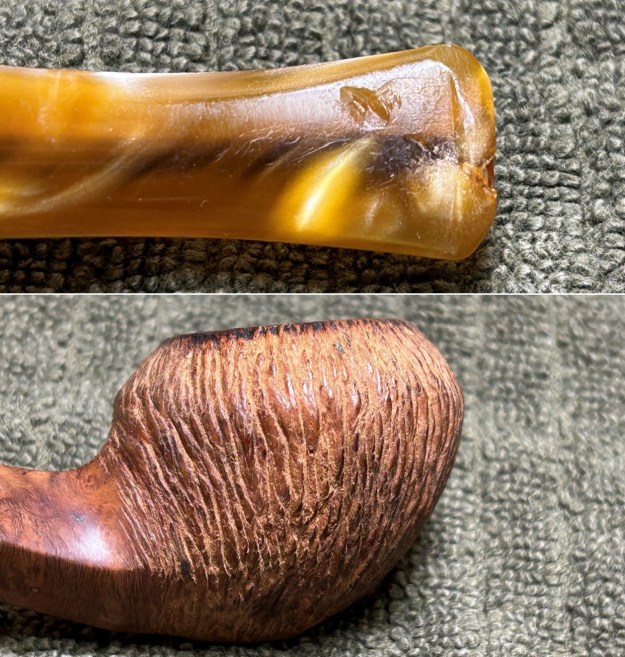
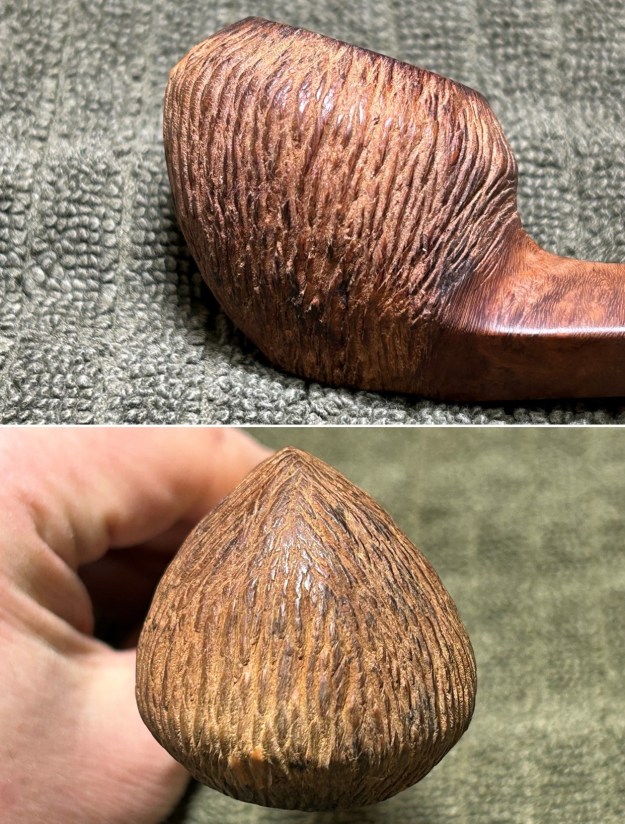
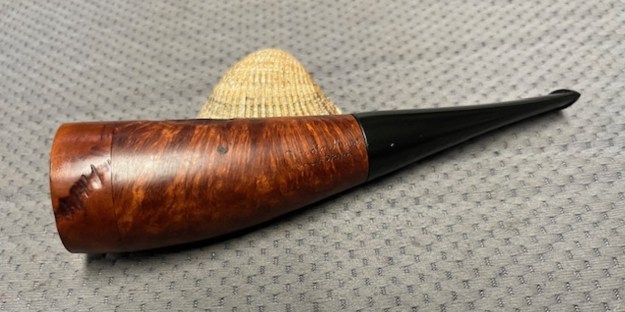
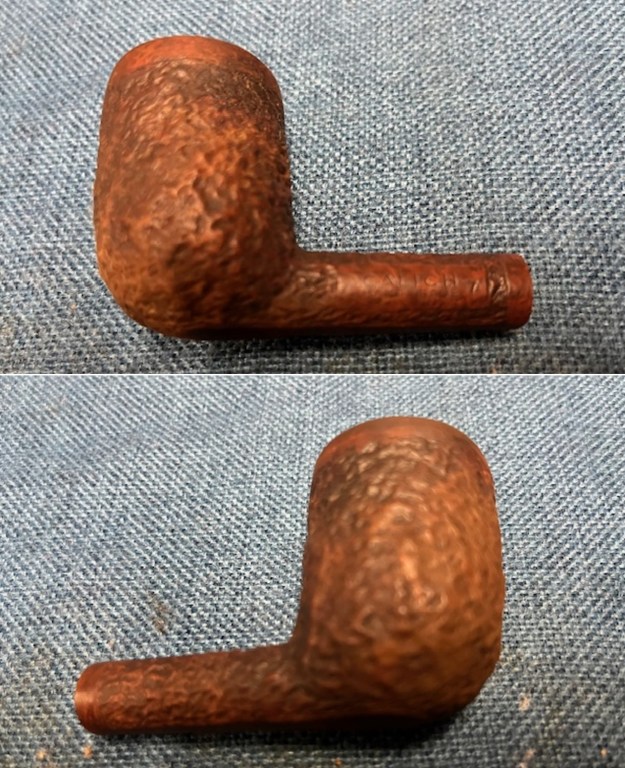
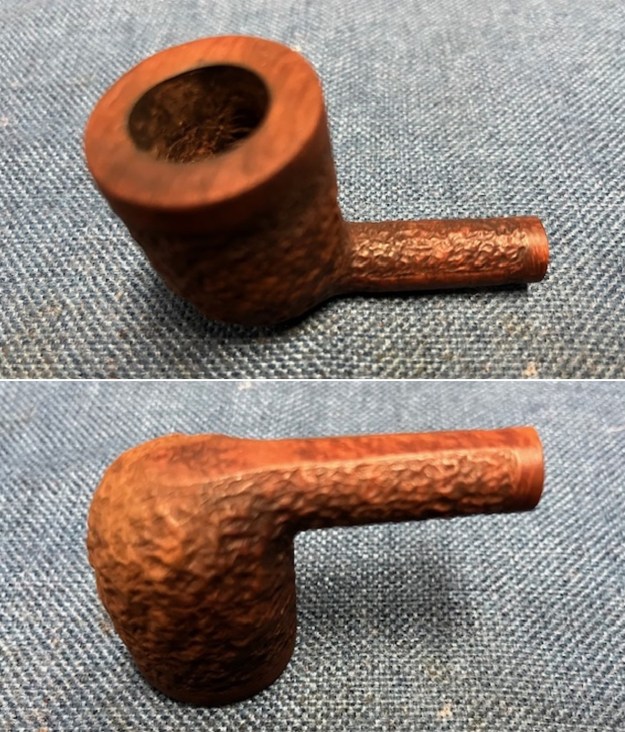
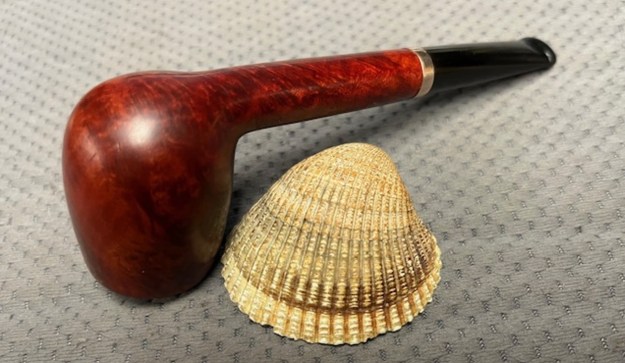
Next on my workbench is a pipe that has been in my boxes for a long, long time. But there comes a time when a pipe calls out and wants to be restored. That’s what happened for this charming bulldog, made by the American pipe house, Edward’s. It has an interesting rustication on the bowl and a variegated acrylic stem which complements the stummel well. I always thought highly of this dapper pipe and I’m sorry to see it go, but happy to give it new life in someone else’s hands. Let’s look at the markings. On the right topside of the shank, we see Edward’s. On the left underside of the shank, we see Algerian Briar [over] 20. I can only assume that the number 20 is a shape number, but wasn’t able to find any official confirmation of that. No markings on the stem.I knew about Edward’s, but thought it was a good idea to refresh my memory. At Pipephil, they provided this tidbit of information:
Edward’s Pipes, headquartered in Tampa, FL, got its start importing pipes from France and continued to do so from 1958 to 1963 when it started producing pipes in Florida from prime Algerian Briar, a practice they continue to this day (2010). Randy Wiley, pipecarver in the USA, got his start at Edward’s.

At Pipedia, they write the following:

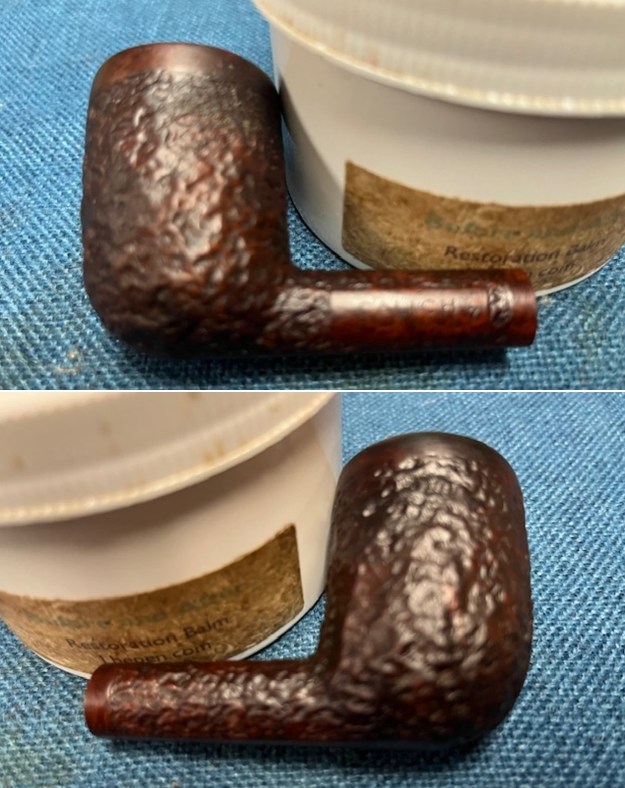
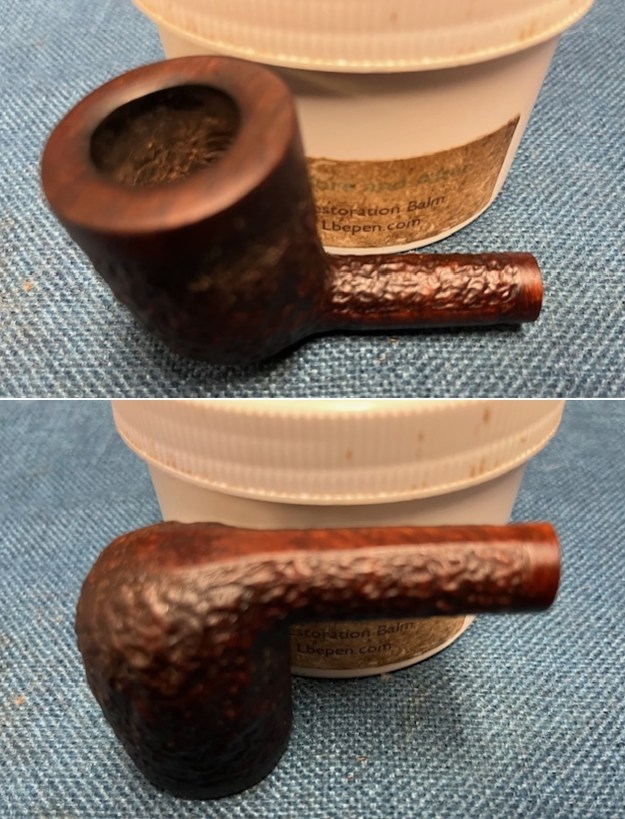
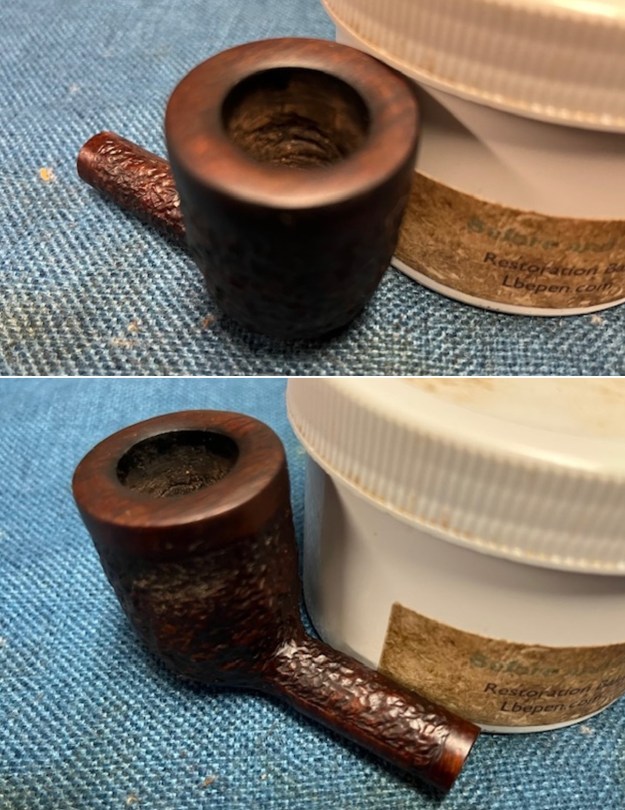
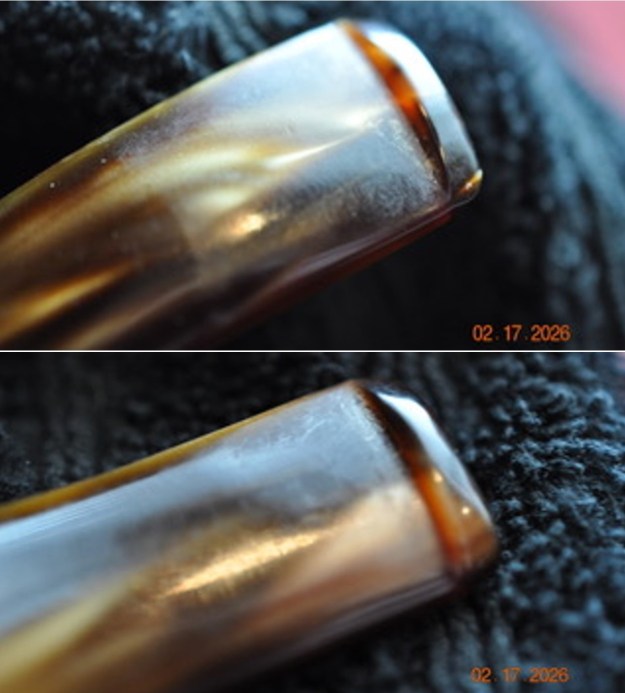
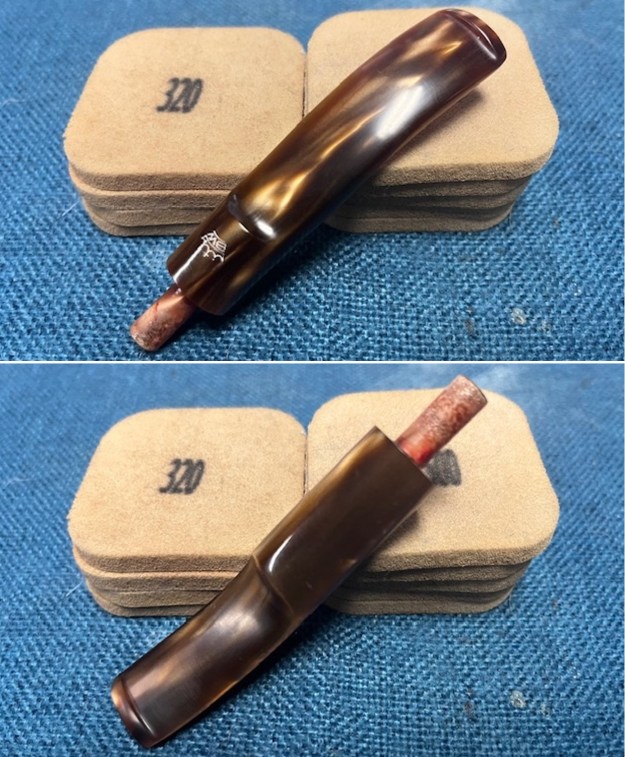
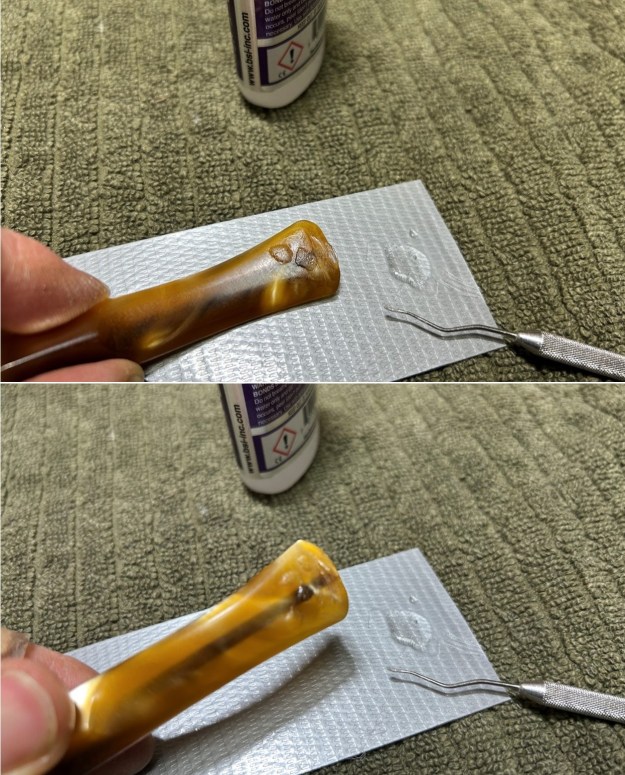
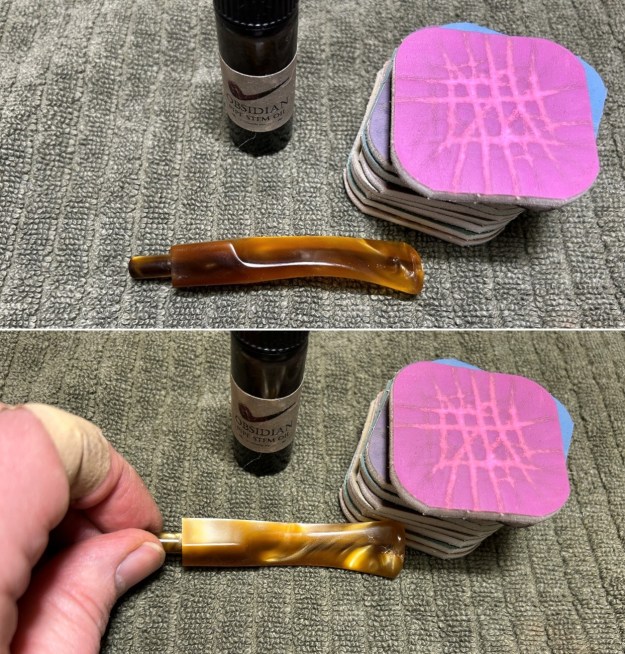
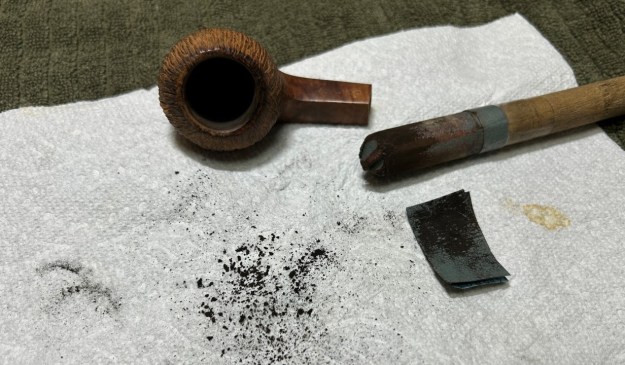
Edward’s pipes were originally produced in Saint-Claude, France when Francais [sic] actually was a world-class pipe maker with longstanding business & political connections to Colonial Algeria that allowed them to obtain the finest briar. During the tumultuous 1960’s, Edward’s created a business model to offer the finest briar available in both Classic and Freehand shapes – all at a fair price. They bought the company & equipment and cornered the market on the finest, choice Algerian Briar just before the supply vanished in political turmoil of Algeria’s independence. Edward’s packed up both machinery and briar-treasure to America, safely caching the essentials to create a new pipe-making dynasty. This was a coup, for the 70’s and 80’s were grim years for pipe smokers as quality briar all but disappeared. Edward’s Design Philosophy is hard to pin down, think of their style as the “American Charatan” with unique & clever twists all their own. Today, they fashion pipes in several locations across the USA. All of Edward’s pipes are Algerian Briar – a fact very few pipe companies can claim, and all are oil-cured utilizing natural finishes – no strange concoctions are used to interfere in your tastebud’s dance with the briar. Algerian, Calabrian, Sardinian, Corsican – take your pick, but Algerian Briar is generally considered the finest smoking briar ever used. When combined with oil-curing, Algerian takes on a magical quality that even Alfred Dunhill recognized as far back as 1918 as the choice for both his Bruyere and Shell.How about the condition? The stummel is in very good condition – the pipe was well maintained. There is a bit of cake in the bowl and lava on the rim, but truly not that much. There is a noticeable fill on the front of the bowl, but I am happy to leave that as it is. The stem is a bit trickier. It’s dirty – although no more than average. However, the previous owner must have been a clencher. There are some serious chomp marks in this stem, but I can resolve that. I used isopropyl alcohol on a few cotton rounds and wiped down the stem to provide an initial cleaning of filth before moving on to the next steps. The primary cleaning came next. I disinfected the inside of the stem with both pipe cleaners and cotton swabs dipped in lemon-infused 99% isopropyl alcohol. I scrubbed thoroughly to make sure the interior was very clean. However, I also used some tube brushes and cream cleanser to really scrub the insides. That helped! Since this stem was made of acrylic, there’s no oxidation and I can skip those steps and go right to repair. I set about fixing the marks and dents in the acrylic – of which there were quite a few. This was done by filling those divots with clear cyanoacrylate adhesive. I left this to cure and moved on.The penultimate step for the stem is sanding. First, with my set of needle files, I reduced the bulk of the cyanoacrylate repairs. I removed the excess adhesive as near to the surface as possible, without cutting into the acrylic. Following that, I used all nine of the micromesh sanding pads (1,500 through 12,000 grit) to sand out flaws, even out the acrylic, and provide gentle polishing of the finished surface. I also applied pipe-stem oil while using the last five micromesh pads. There was a wonderful shine on the stem when I was done.As the stem was (nearly) complete, I moved on to the stummel. The first step was to ream out the bowl – that is to say, remove all the cake inside the bowl. This accomplished a couple of things. First (and most obviously), it cleaned the bowl and provided a refurbished chamber for future smoking. Second, when the old cake was removed, I could inspect the interior walls of the bowl and determine if there was damage or not. This pipe was quite clean and needed very little reaming. I used a pipe knife and a piece of sandpaper taped to a wooden dowel. Collectively, these ensured that all the debris was removed.My next step was to remove the lava on the rim. For this, I took a piece of machine steel and gently scraped the lava away. The metal’s edge is sharp enough to remove what I need, but not so sharp that it damages the rim.

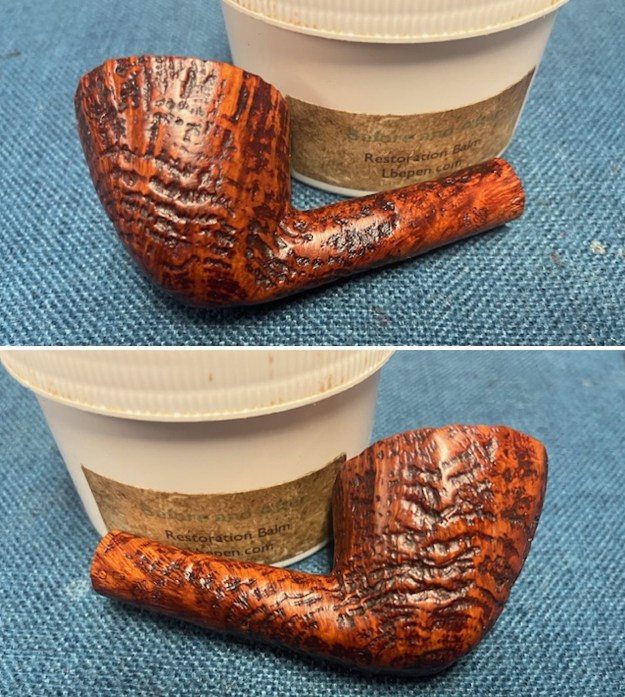
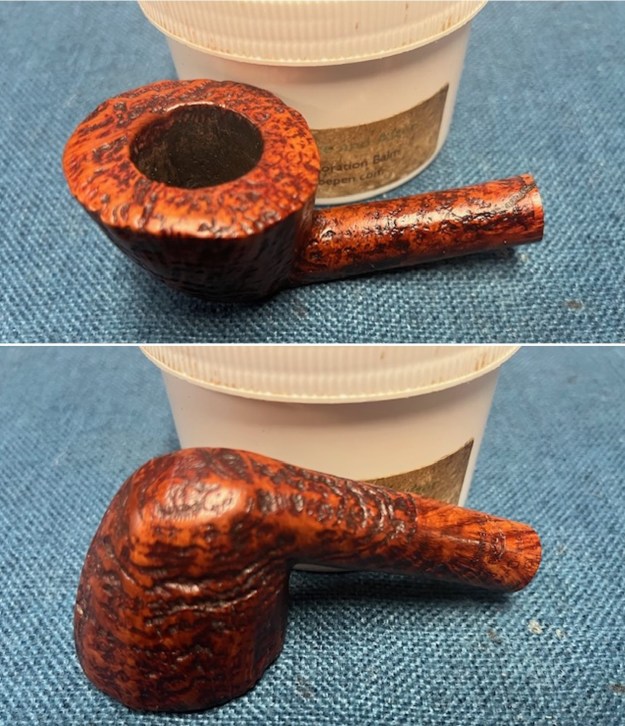
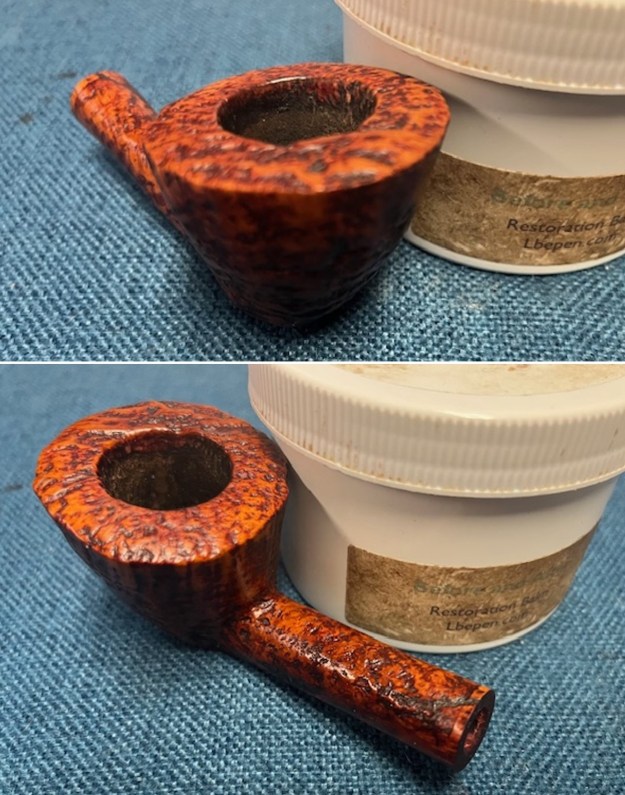
Similar to the stem, I then cleaned the stummel with both pipe cleaners and cotton swabs dipped in lemon-infused 99% isopropyl alcohol.I then decided to ‘de-ghost’ the pipe – that is to say, exorcize the remaining filth from the briar. I filled the bowl and the shank with cotton balls, then saturated them with 99% isopropyl alcohol. I let the stummel sit overnight. This caused the remaining oils, tars and smells to leach out into the cotton.To tidy up the briar, I wiped down the outside, using a solution of a pH-neutral detergent and some distilled water, with cotton rounds. I also used a toothbrush in the crevices. This did a good job of cleaning any latent dirt on the surface of the briar. The last step of the cleaning process was to scour the inside of the stummel with the same mild detergent and tube brushes. This was the culmination of a lot of hard work in getting the pipe clean.I used all nine micromesh pads (1,500 through 12,000 grit) to sand only the smooth (non-rusticated) parts of the stummel and finish it off. This sanding minimizes flaws in the briar and provides a beautiful smoothness to the wood. I rubbed some LBE Before & After Restoration Balm into the briar and let it sit for 30 minutes or so. The balm moisturizes the wood and gives a beautiful depth to the briar. I then buffed the stummel with a microfibre cloth. For the final step, I took the pipe to my bench polisher and carefully buffed it with three coats of conservator’s wax. This procedure makes the pipe look its best – the stummel sings and the stem glows.

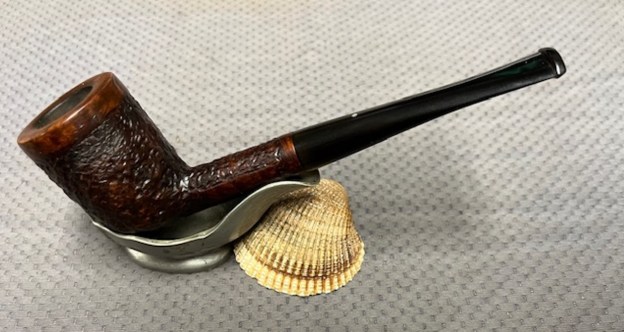
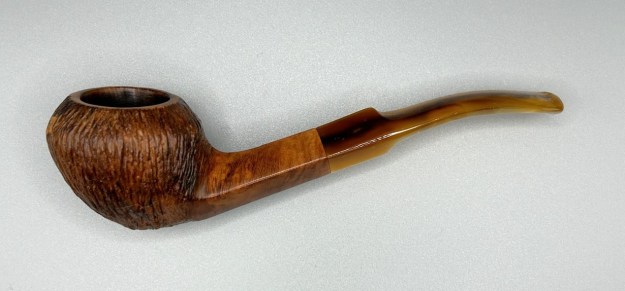
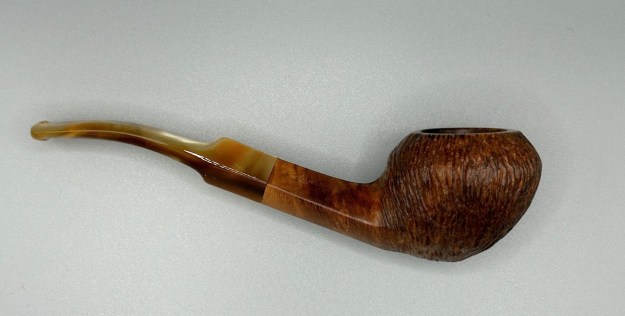
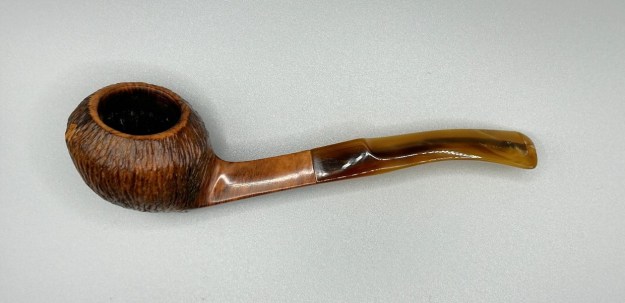
All done! This Edward’s 20 Algerian Briar Bulldog looks fantastic again and is ready to be enjoyed by its next owner. I am pleased to announce that this pipe is for sale! If you are interested in acquiring it for your collection, please have a look in the ‘American’ section of the store here on Steve’s website. You can also email me directly at kenneth@knightsofthepipe.com. The approximate dimensions of the pipe are as follows: length 5⅞ in. (148 mm); height 1½ in. (38 mm); bowl diameter 1⅔ in. (42 mm); chamber diameter ⅞ in. (23 mm). The weight of the pipe is 1⅛ oz. (34 g). I hope you enjoyed reading the story of this pipe’s restoration as much as I enjoyed restoring it. If you are interested in more of my work, please follow me here on Steve’s website or send me an email. Thank you very much for reading and, as always, I welcome and encourage your comments.