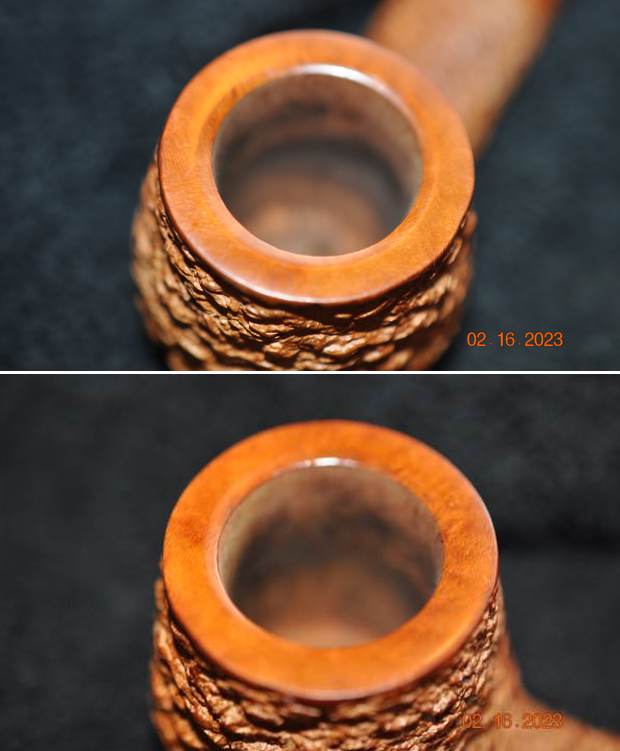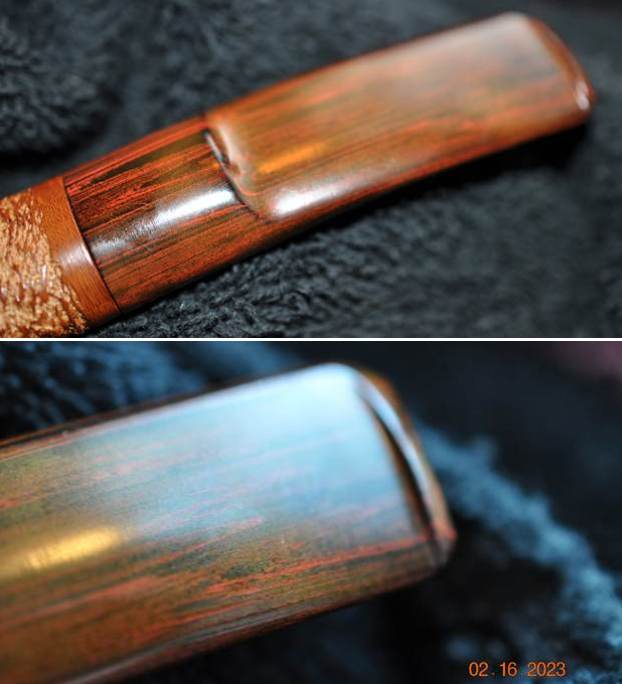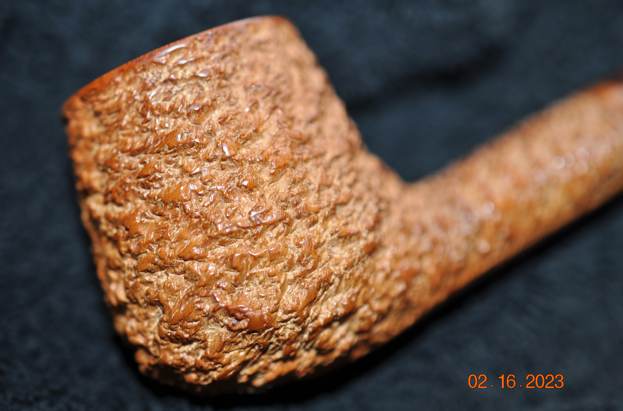
Tag Archives: polishing

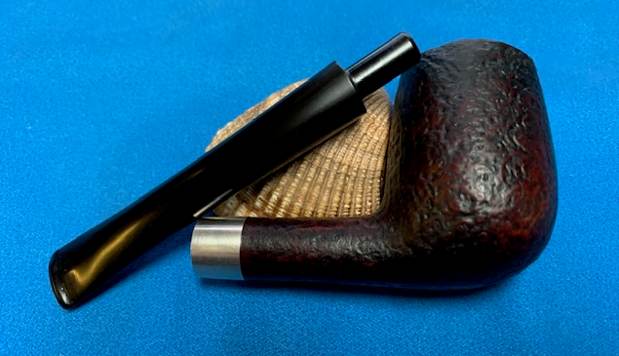
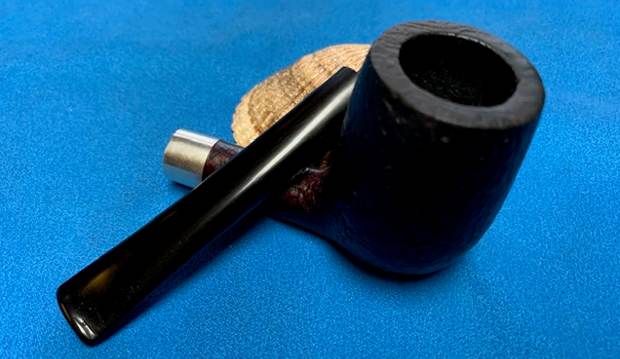
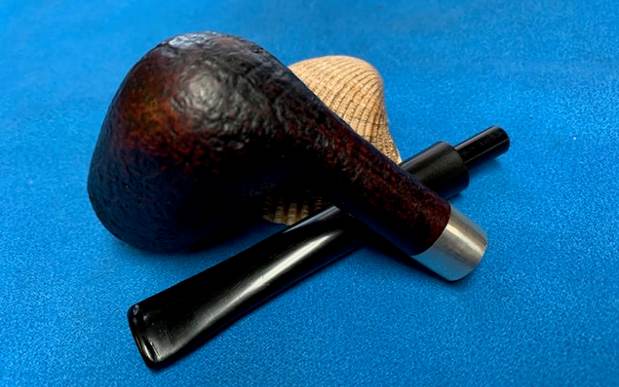
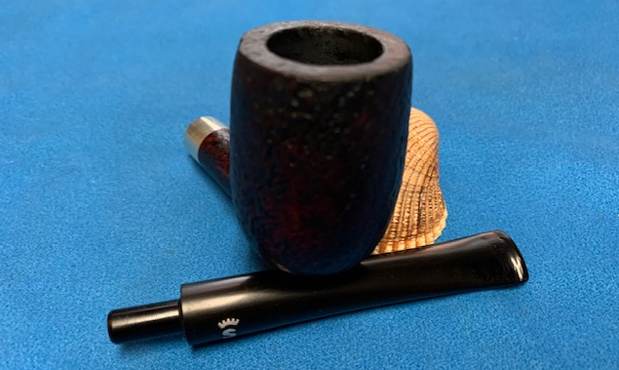
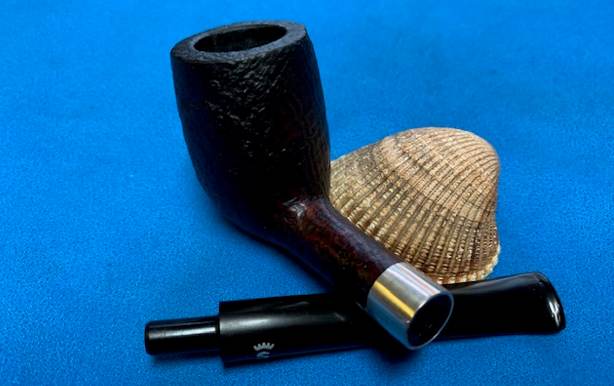
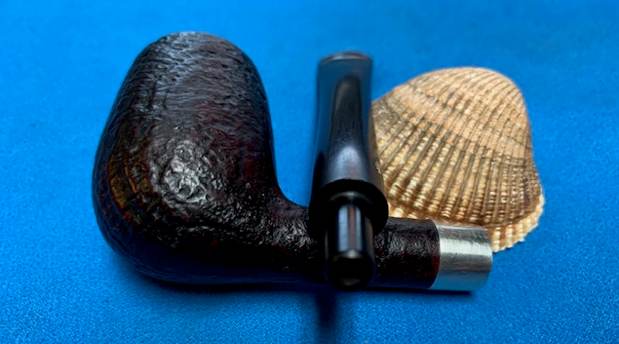
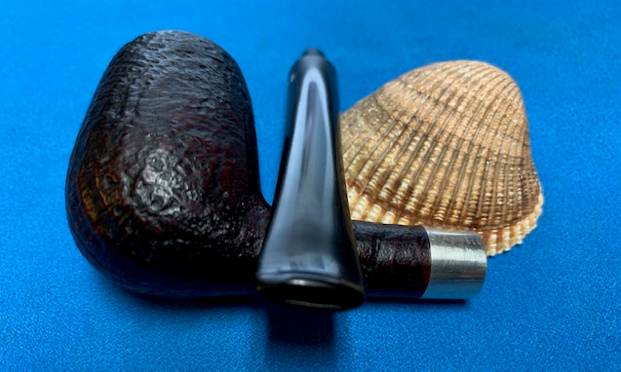
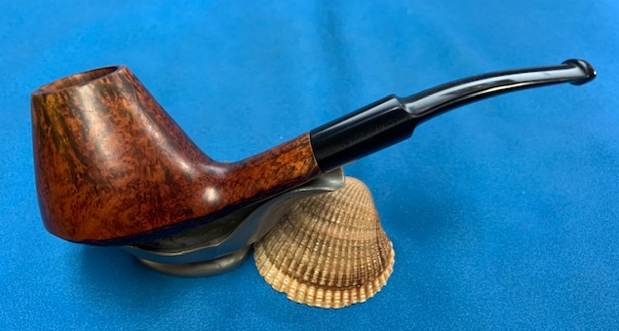
Restoring a Republic Era Peterson System Standard 317


Blog by Steve Laug

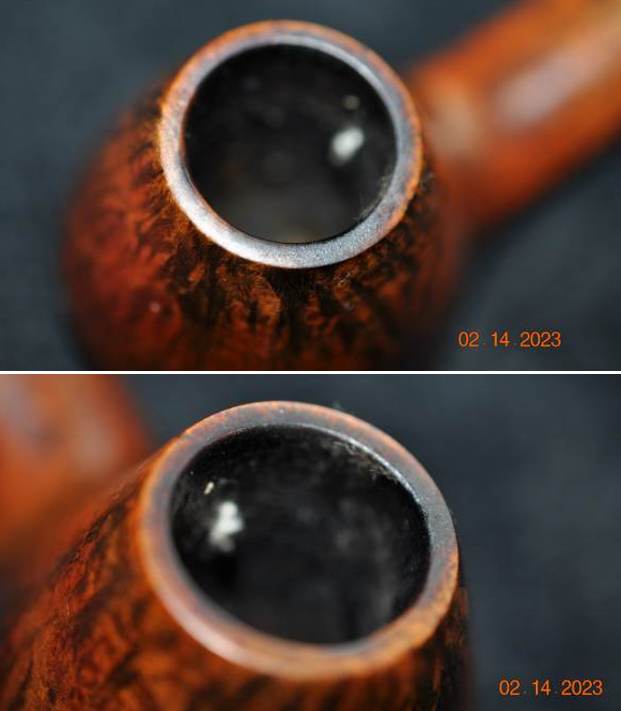
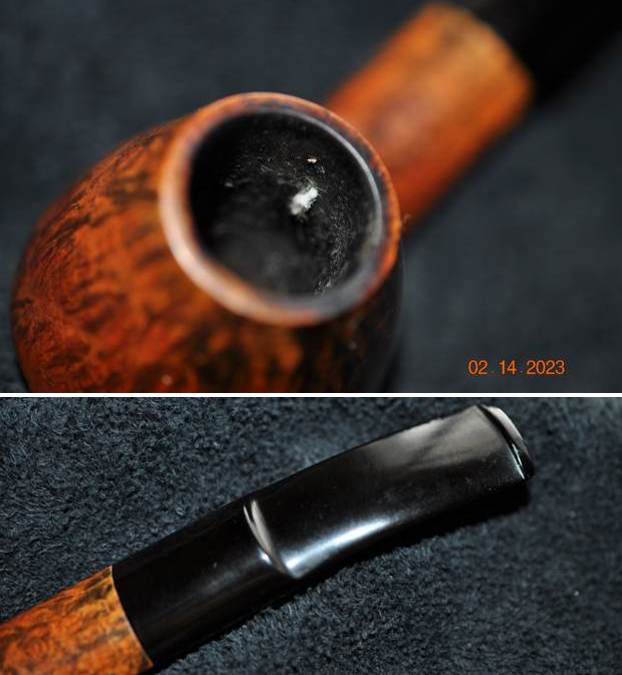
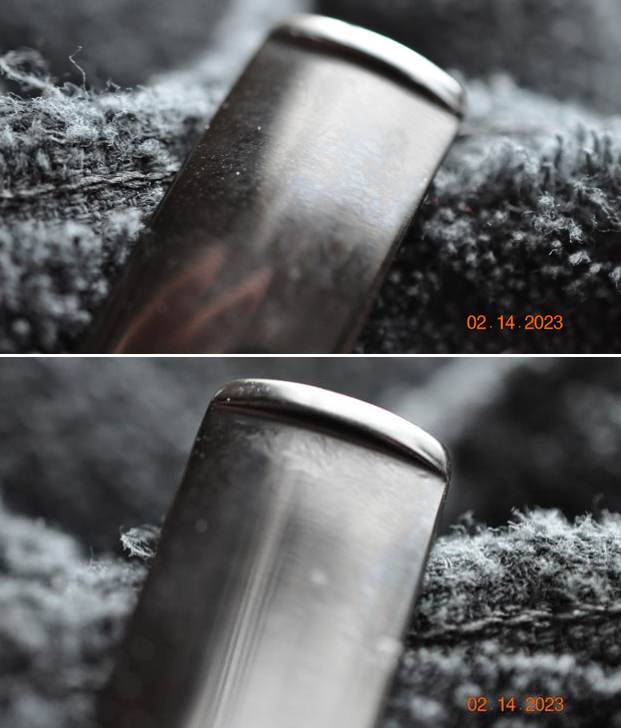
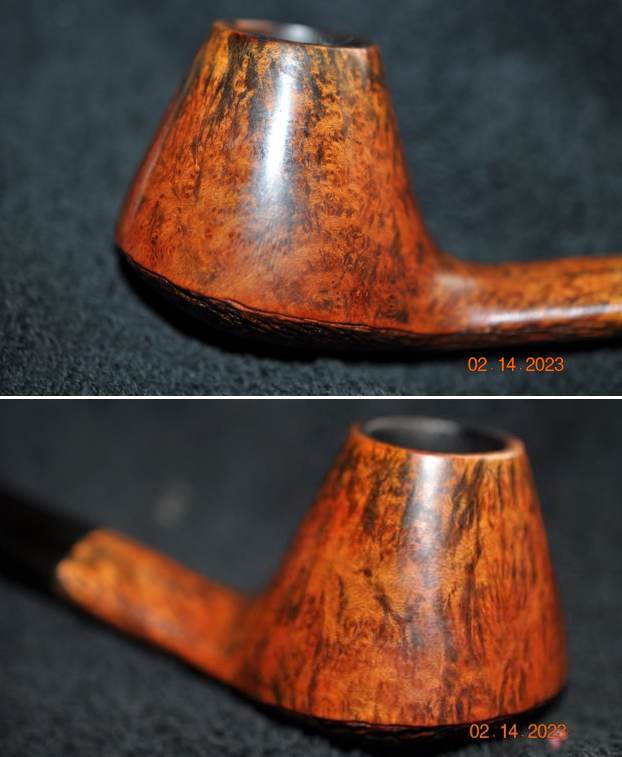
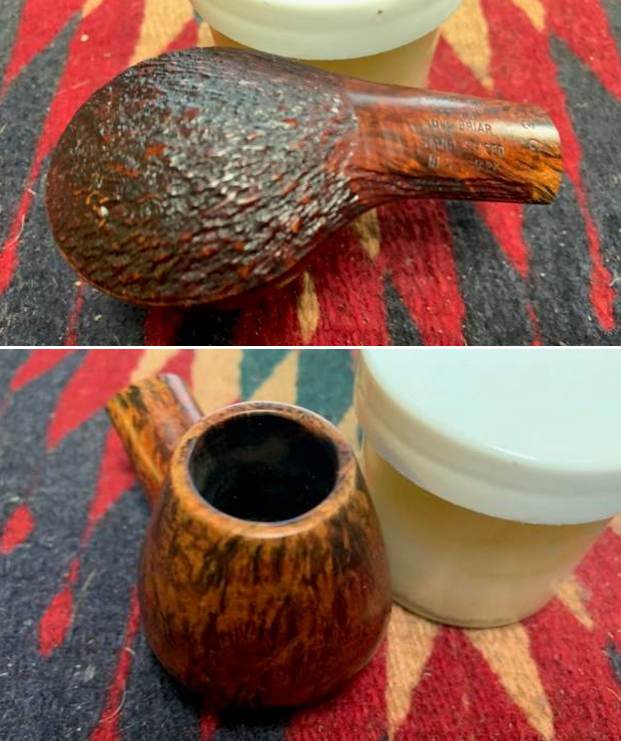
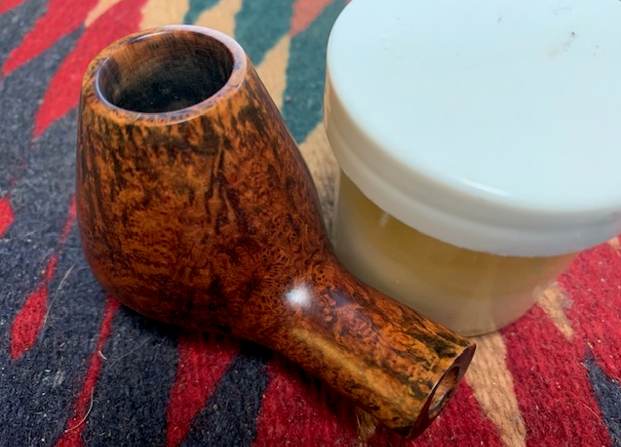
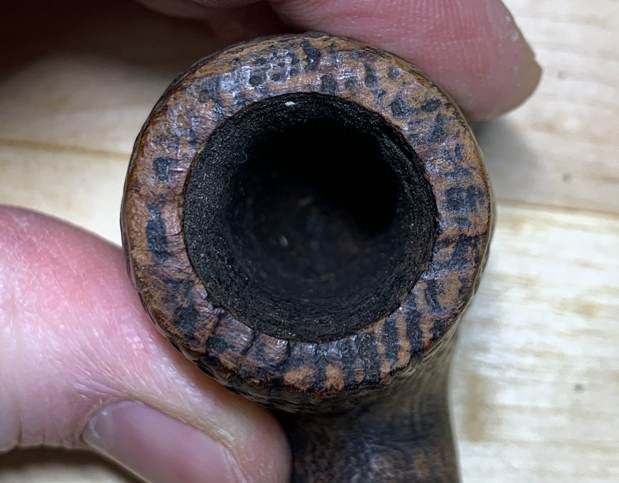
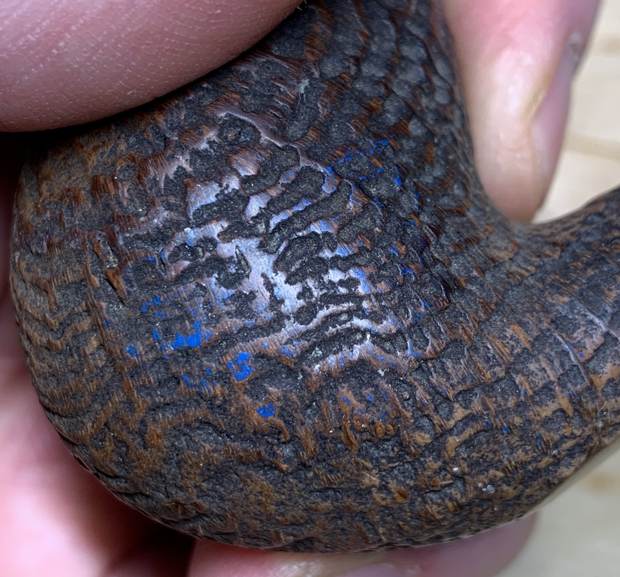
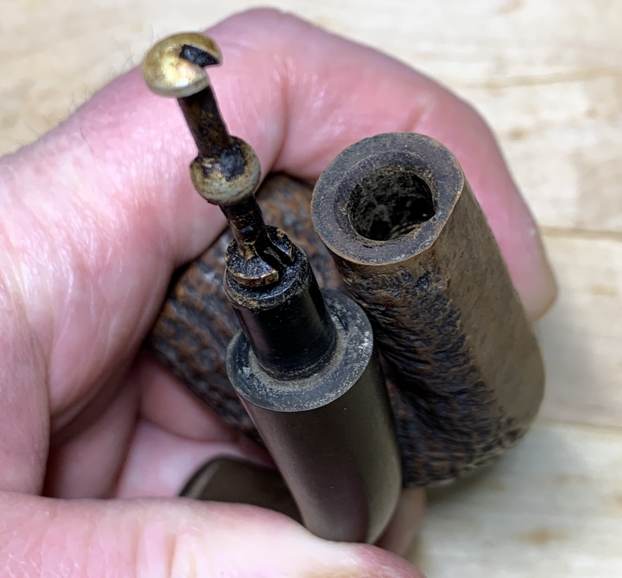
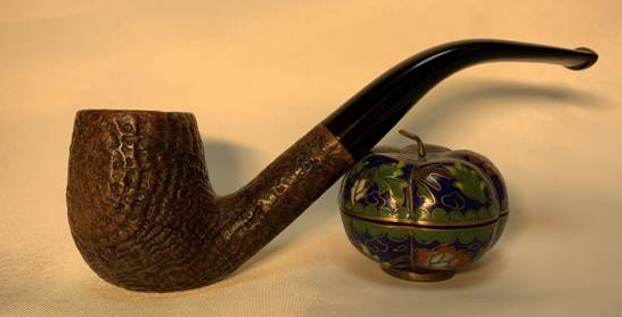
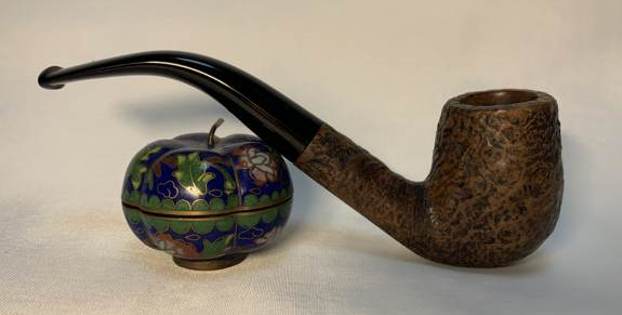
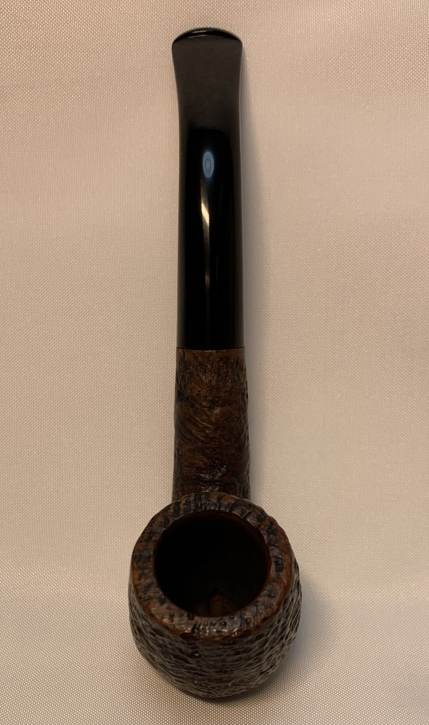
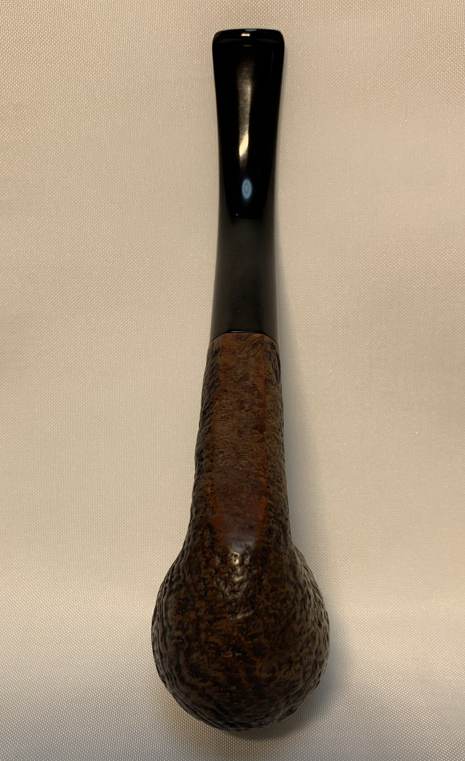
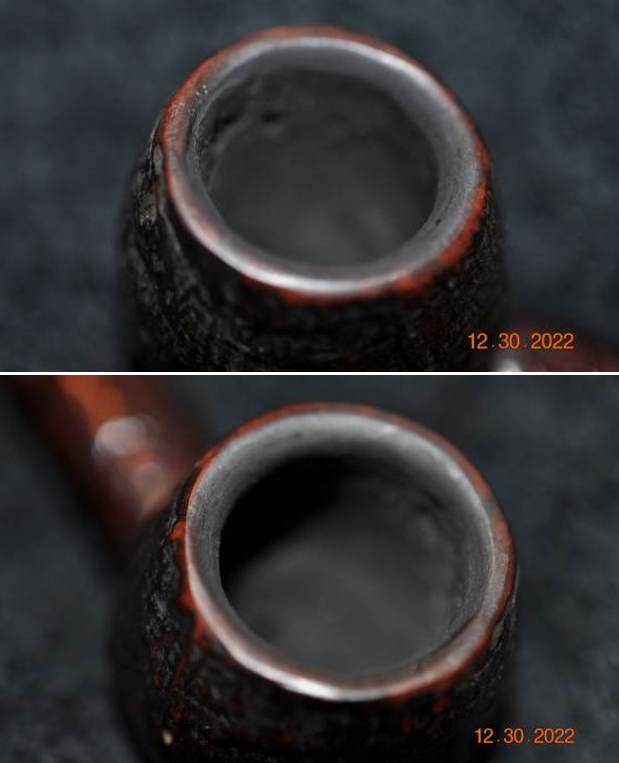
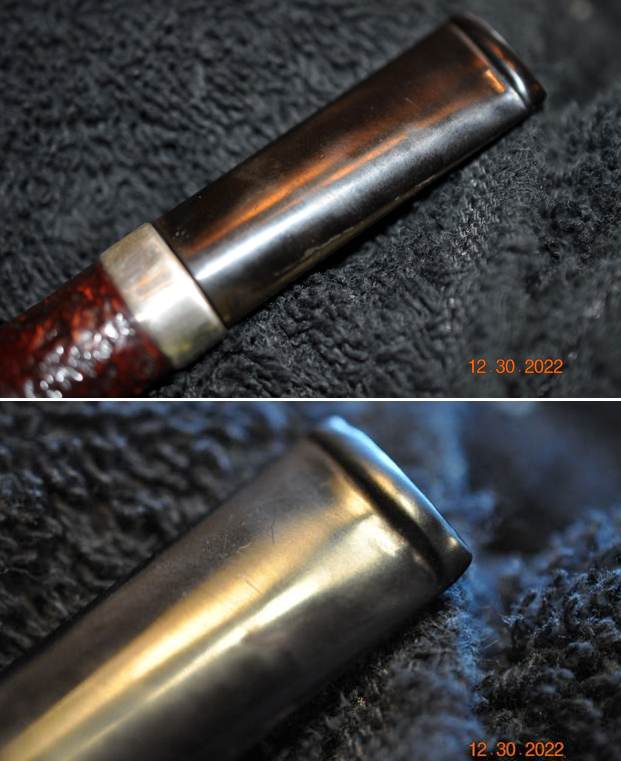
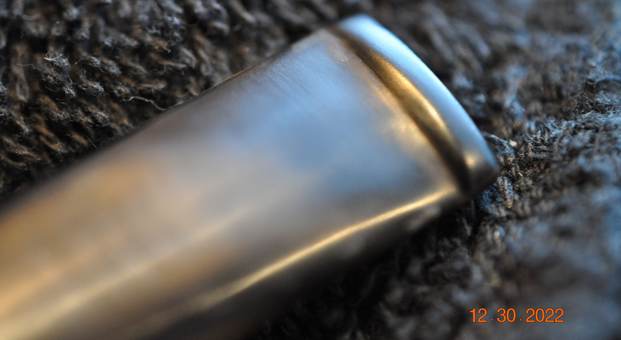
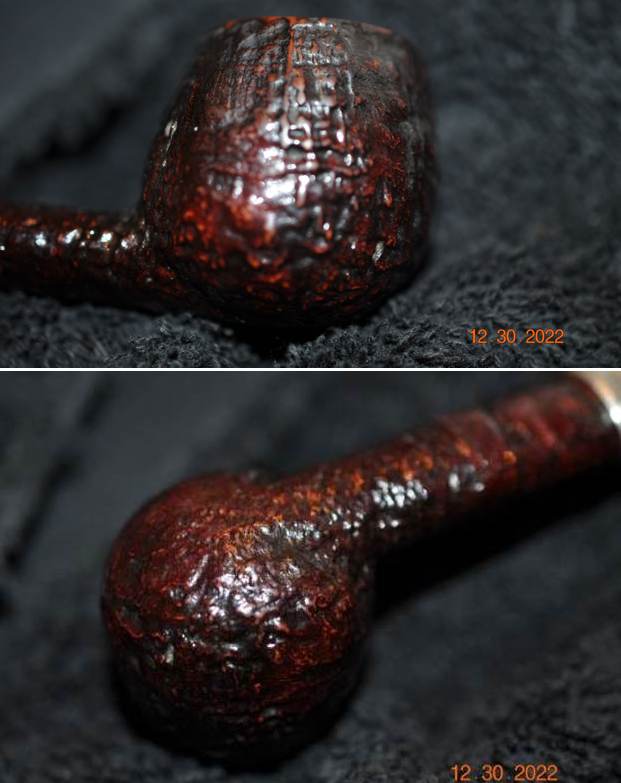
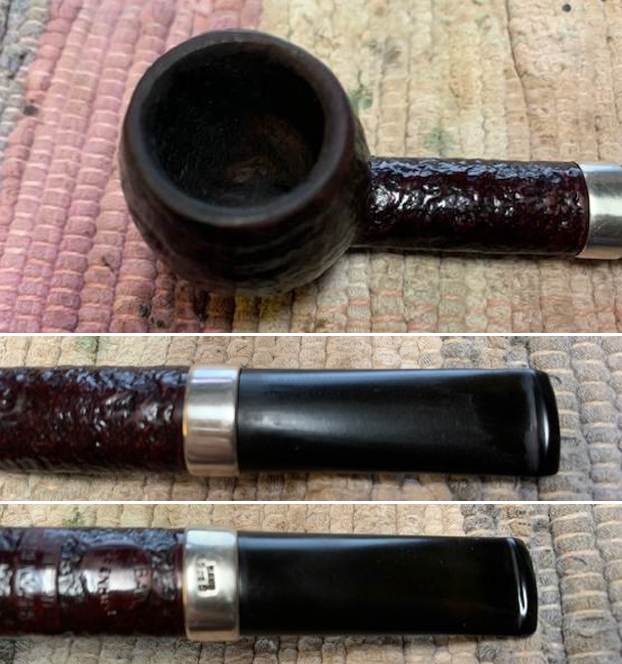
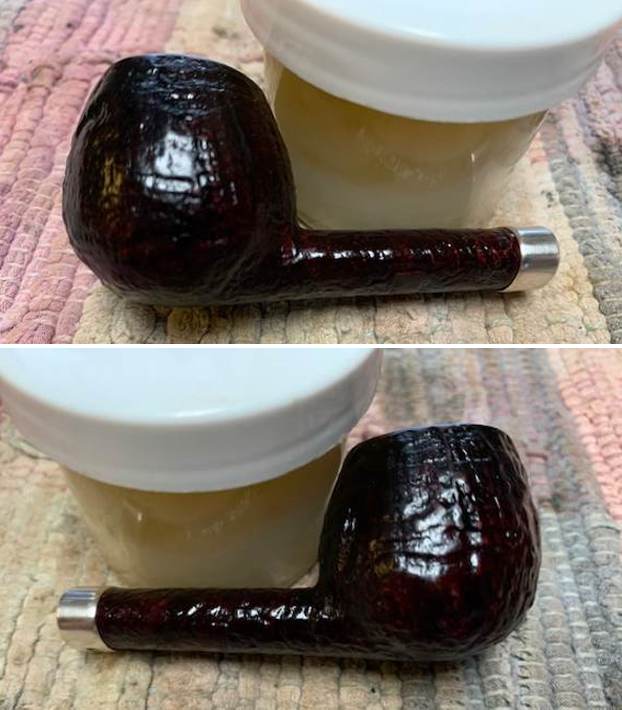
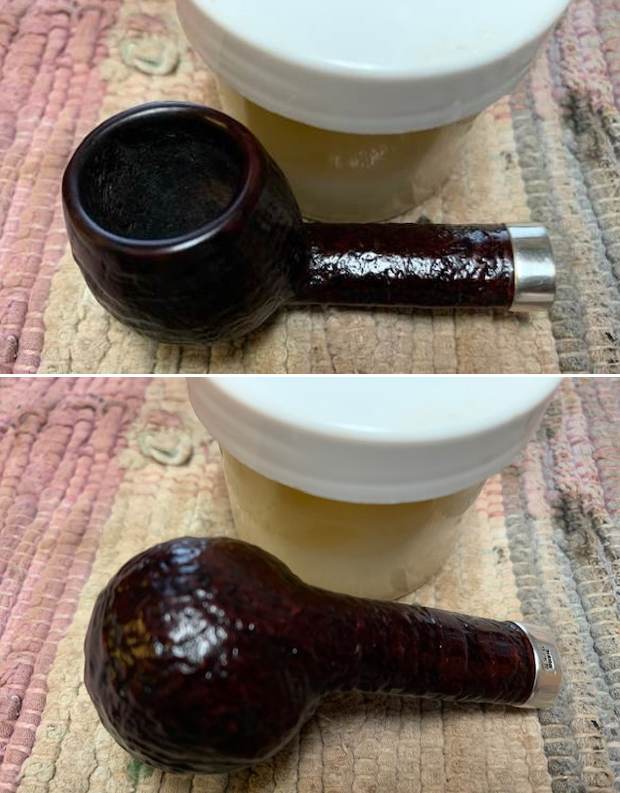
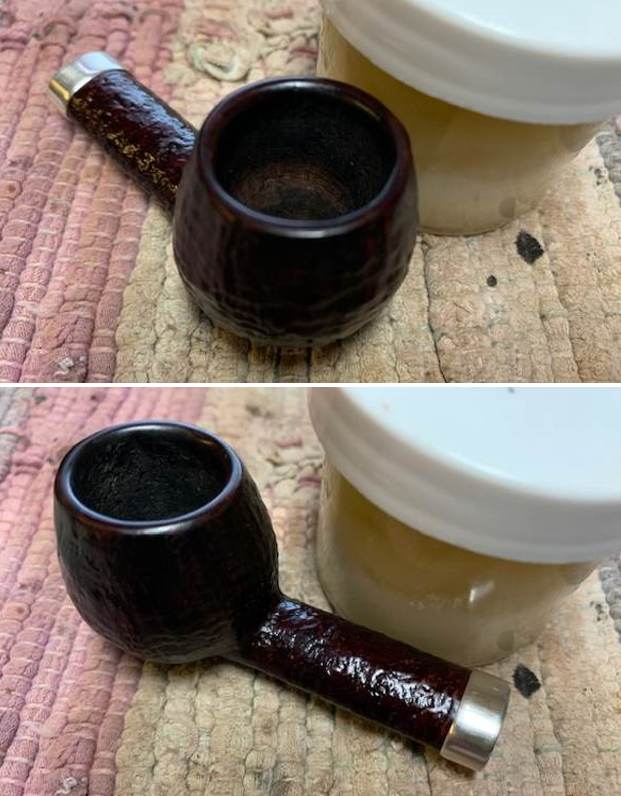
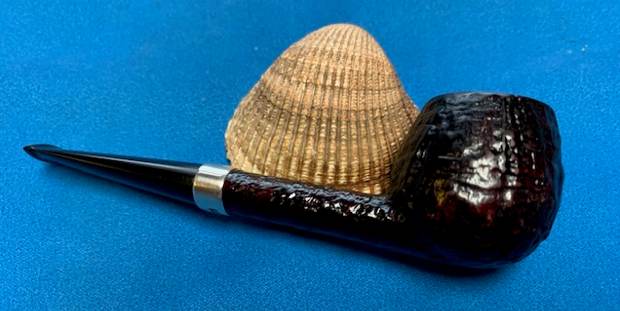
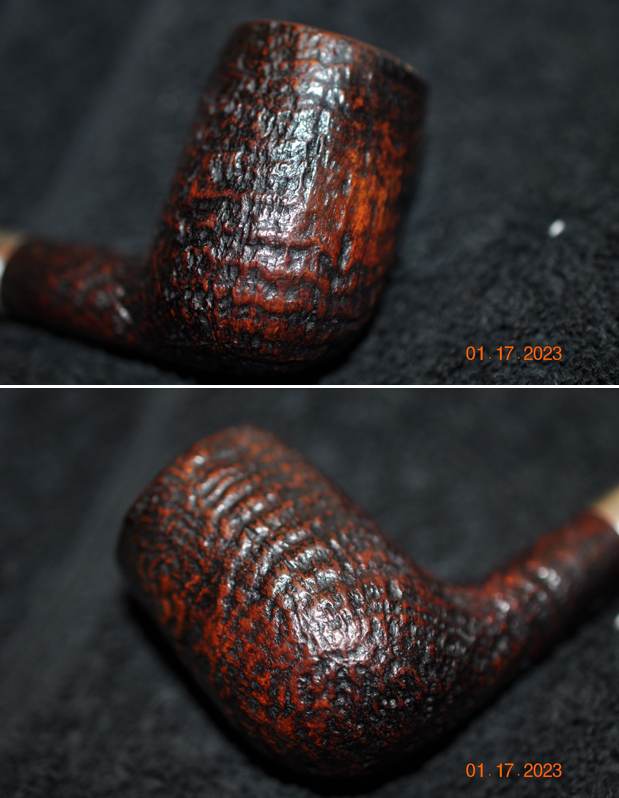
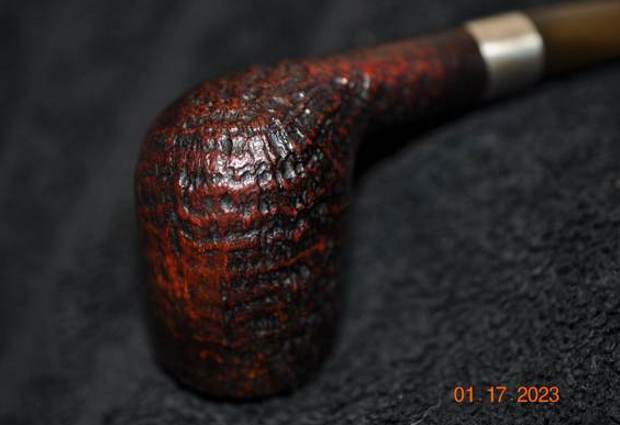
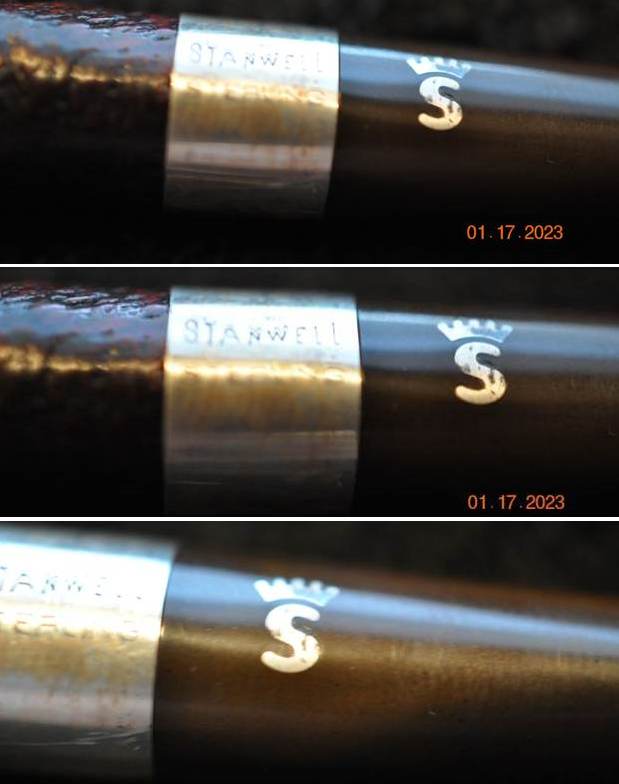
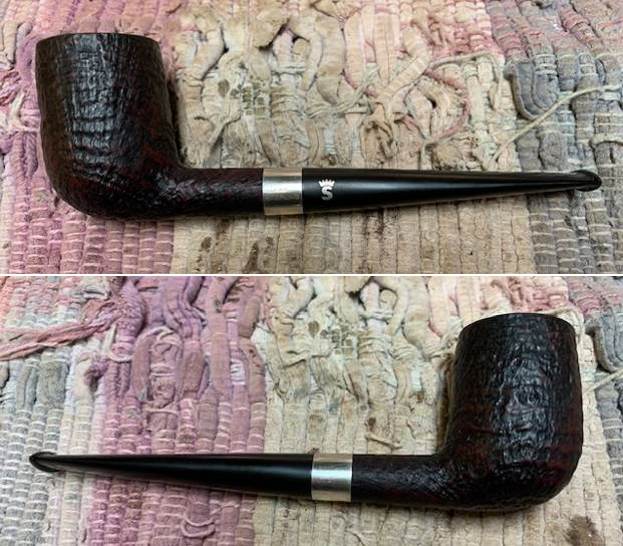
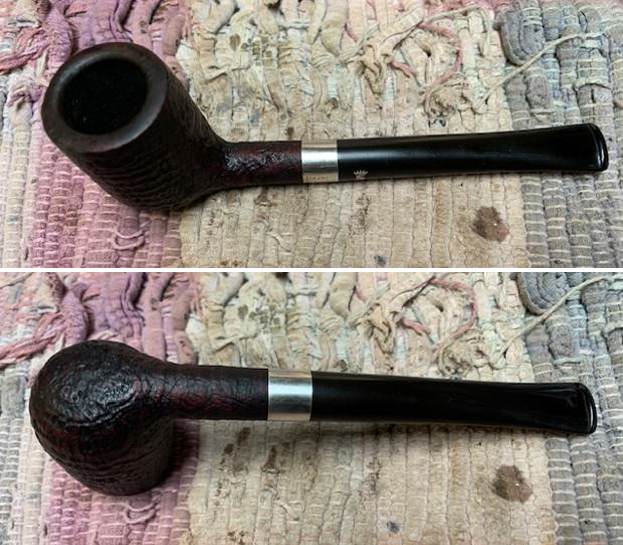
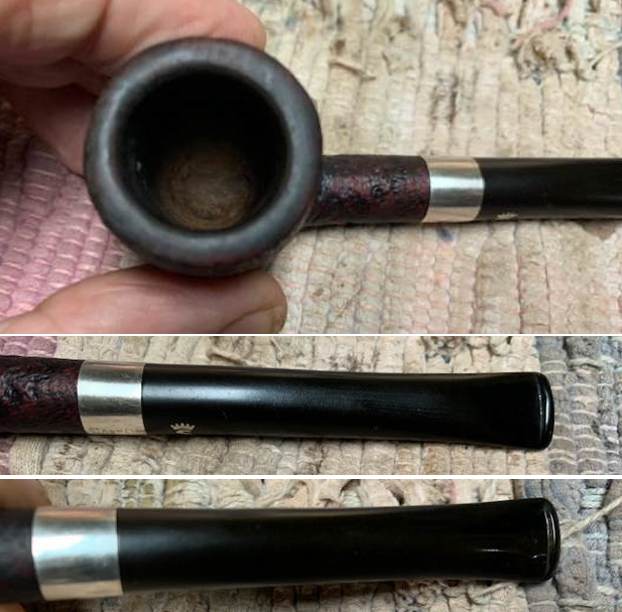
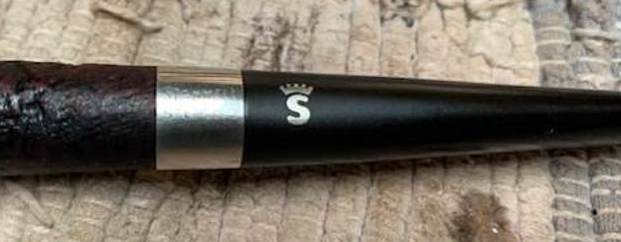
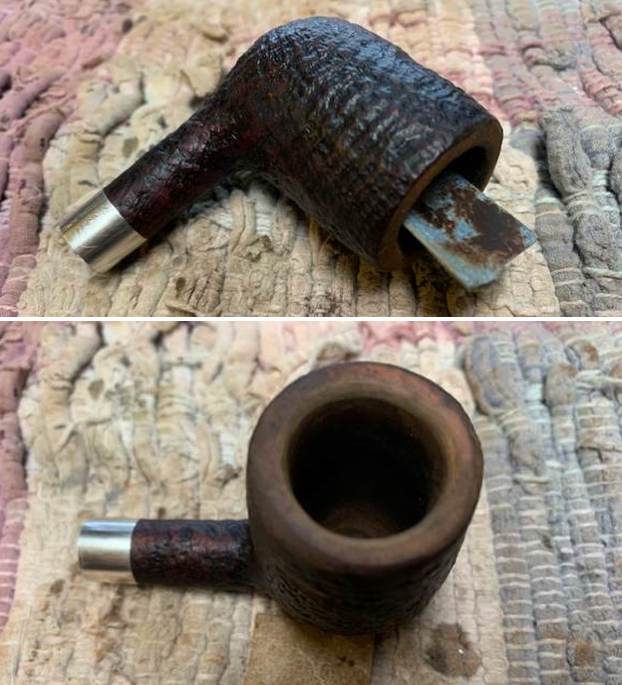
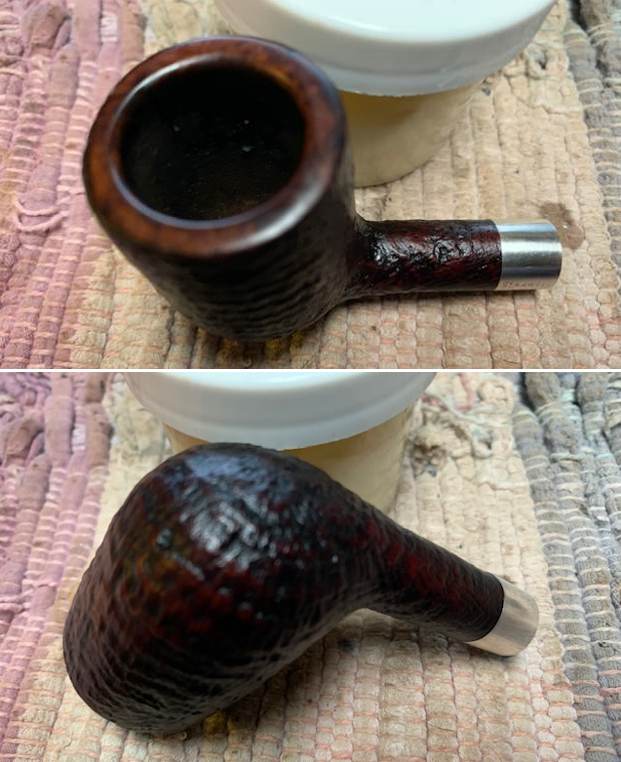
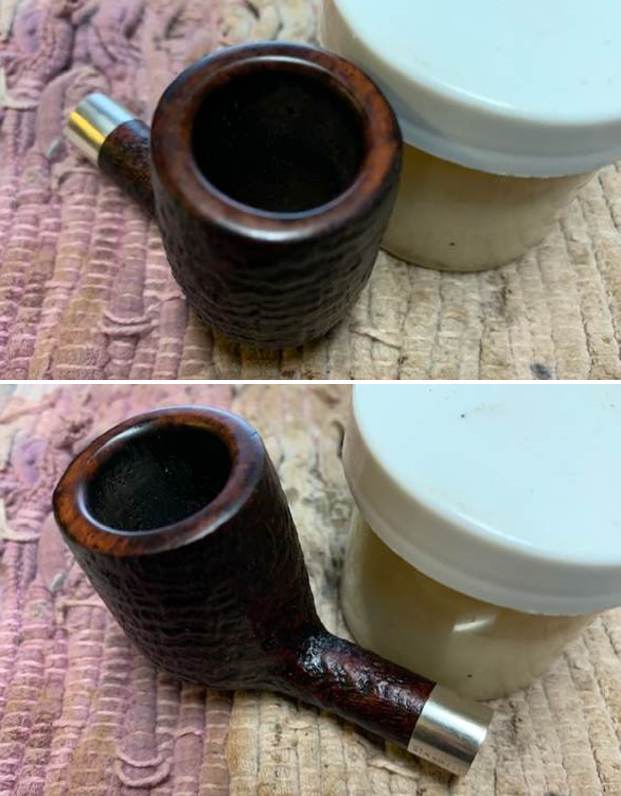
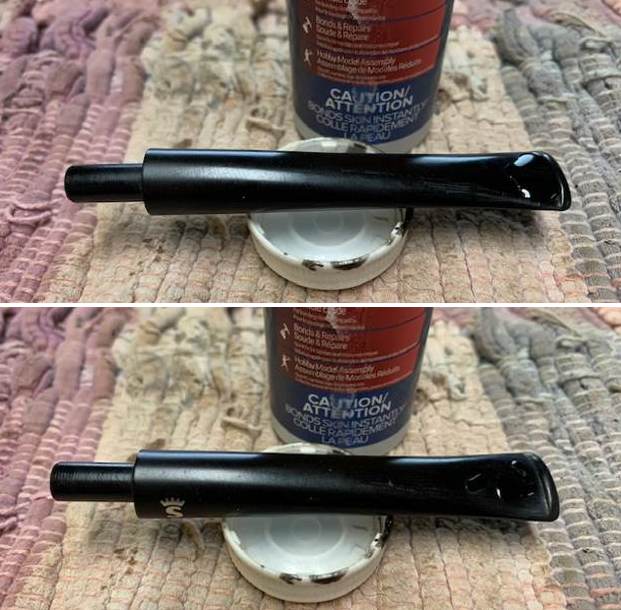
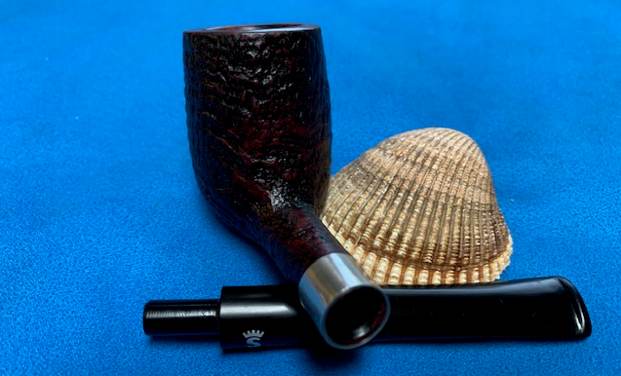
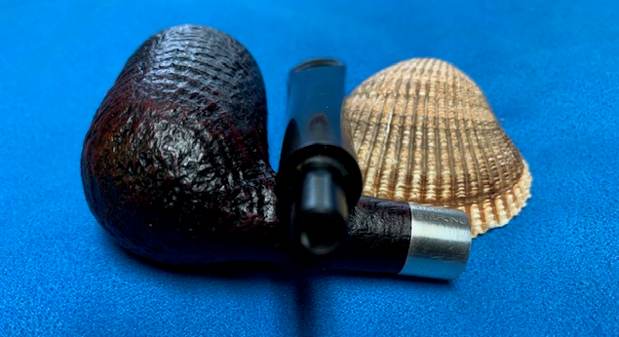
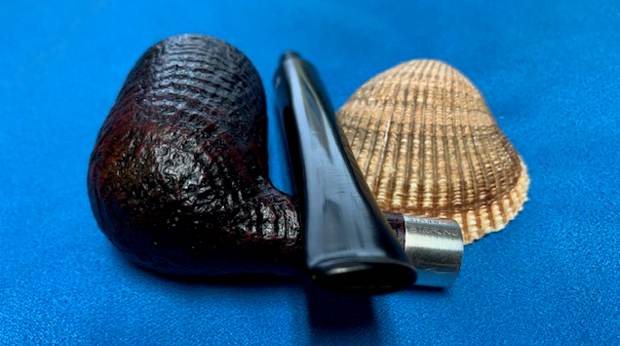
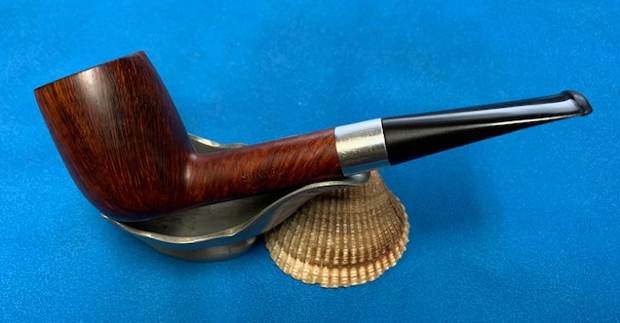
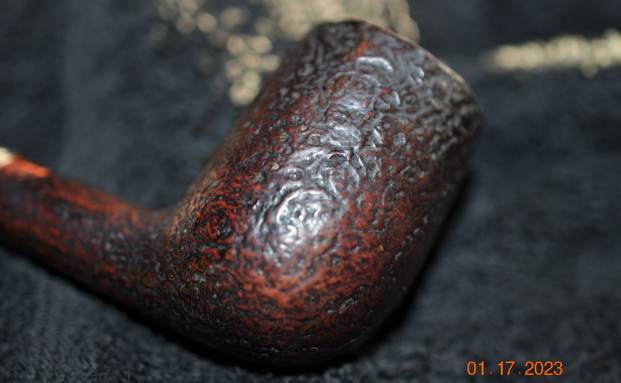
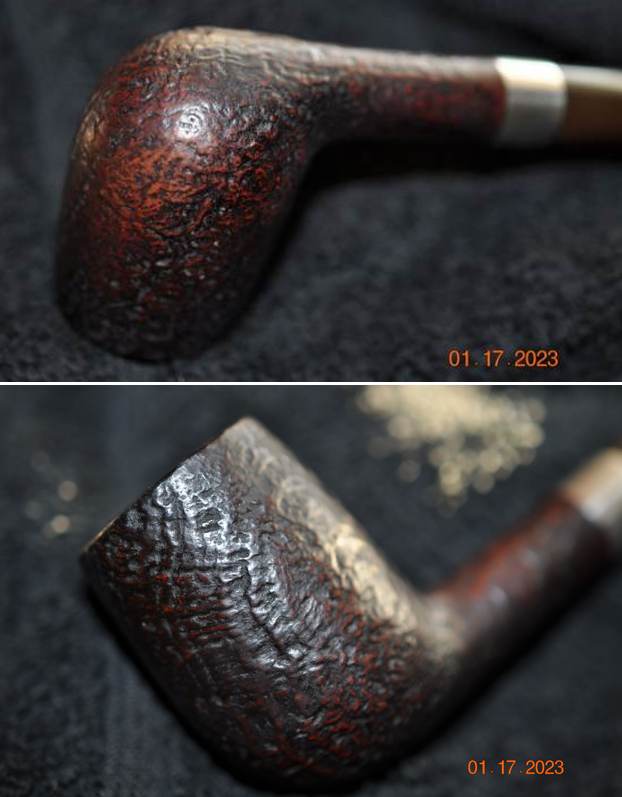
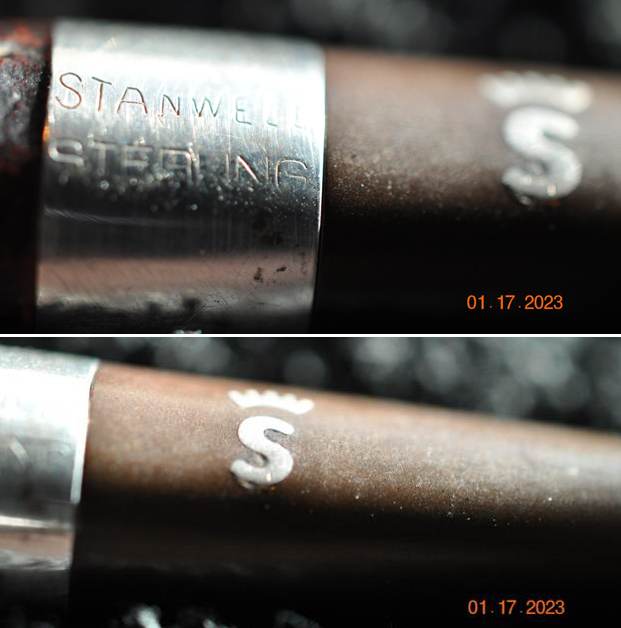
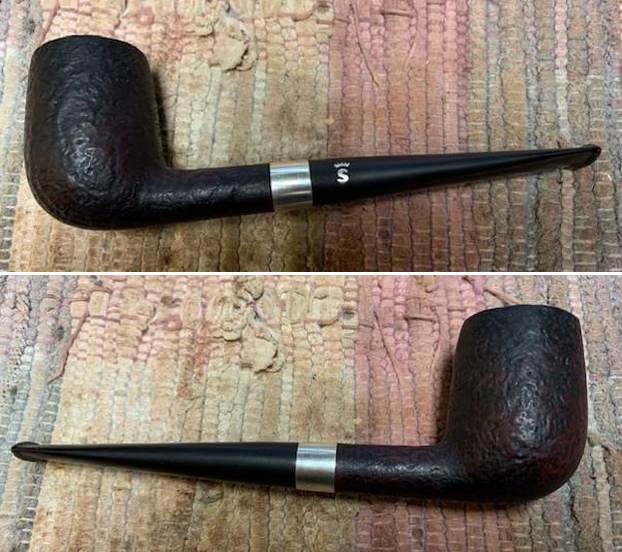
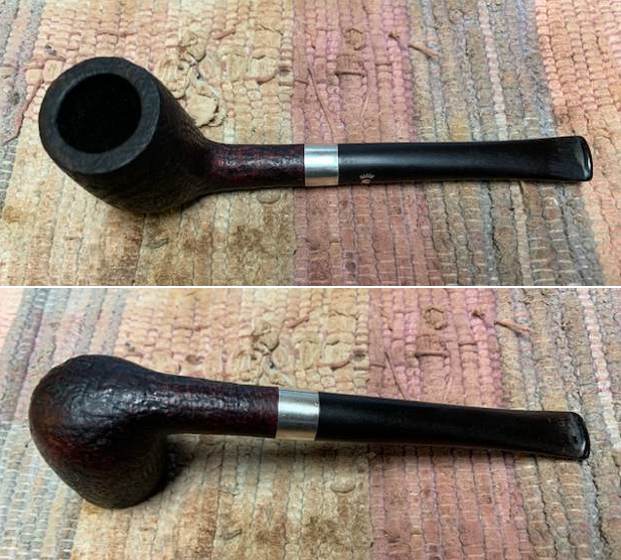
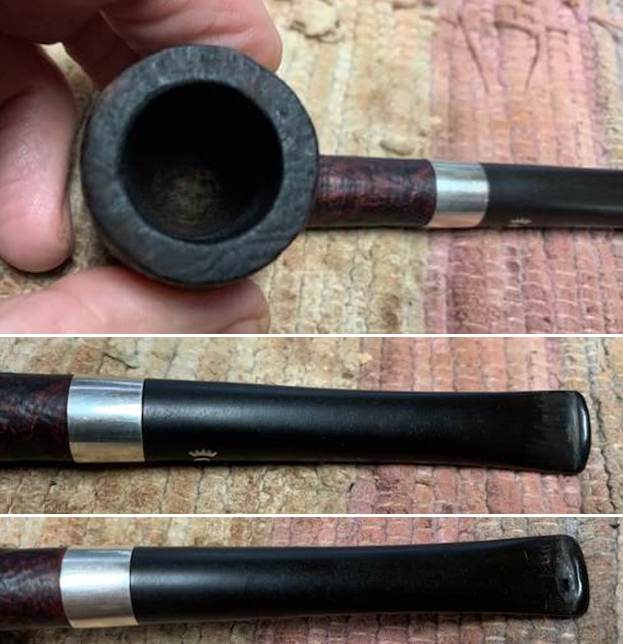
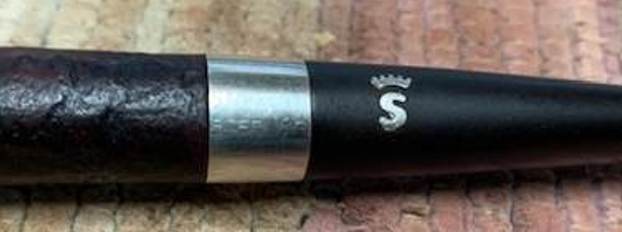
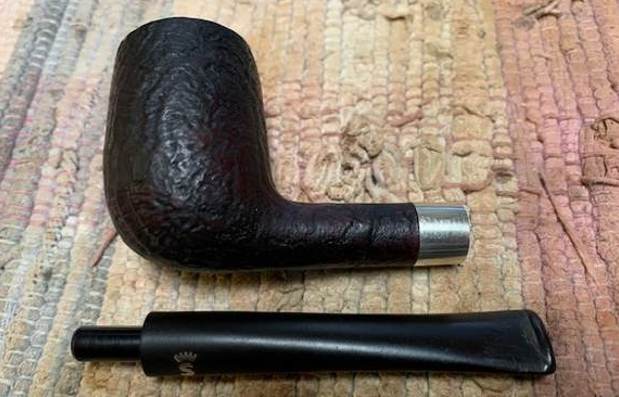
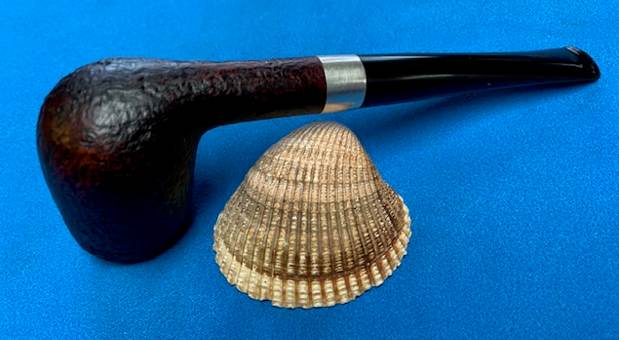
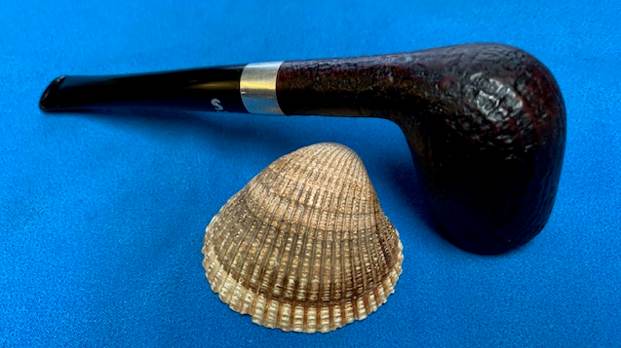
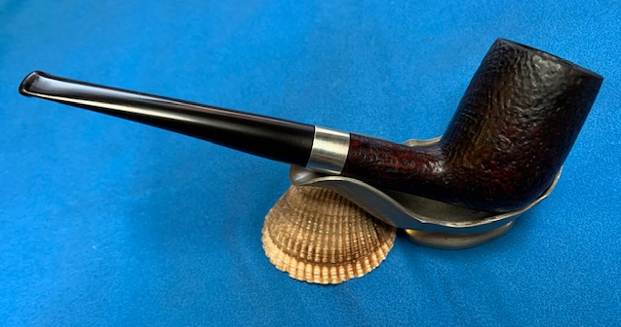
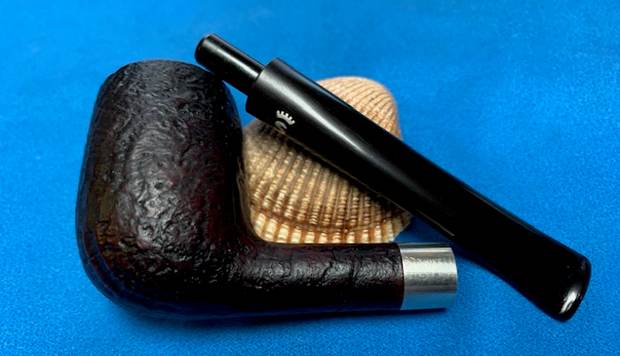
I am finally getting close to the bottom of the drawer full of Peterson’s pipes that I have had languishing here for a long time. It is seriously crazy how many pipes I have to work on and the serious lack of time I have to do so! However, I have time for another one this evening. This Peterson rusticated System pipe was purchased from an antique mall on 08/21/2019 in Ogden, Utah, USA. It is stamped on the underside of the shank and reads Made in the Republic of Ireland (3 lines) [over] the shape number 317. That is followed by Peterson [arched over] System [over] Standard. That is followed by. The Peterson System Standard 317 bent billiard pipe is a small and light weight bent billiard offered in the “300 editions” of Peterson pipes. The pipe was very dirty with dust and debris in the crevices of the rustication. The bowl had a thick cake that overflowed in thick lava, filling in the rustication of the rim top. There was some wear on the outer edge of the bowl at the front from where the pipe had been knocked out repeated. The stamping was faint but readable as noted above. The stem was badly oxidized and calcified with tooth marks on both sides and on the button. There was a short split in the underside of the stem that was a problem and would most probably require a new stem. Jeff took the following photos of the pipe before he started his clean up so you can see the difference before and after.Jeff took photos of the rim top and bowl to give a sense of the condition. You can see the cake, the lava and the outer edge damage on the front of the bowl in the rim top photos. He also captured the condition and the look of the stem. In the photo of the underside you can see the line that appears to be a short crack. He took photos of the bowl sides and heel to show the rugged rustication around the bowl and also the amount of debris that was ground into the crevices of the finish. There is something ruggedly charming about this old timer that grabbed our attention. He took photos of the stamping on the underside of the shank. It was faint but was still readable and read as noted above. He also captured the stamping on the nickel ferrule as the P logo on the damaged stem. I am including the information from Pipedia’s article on Peterson pipes. It is a great read in terms of the history of the brand (https://pipedia.org/wiki/Peterson). I have included a bit of the pertinent history here.

1950 – 1989 The Republic Era  – From 1950 to the present time, the stamp for this era is “Made in the Republic of Ireland” in a block format generally in three lines but two lines have been used with or without Republic being abbreviated.

During the 1950’s and 60’s the Kapp & Peterson company was still in the ownership of the Kapp family. However 1964 saw the retiral of the company Managing Director Frederick Henry(Harry) Kapp.

I turned to Mark Irwin’s site to an article that he wrote on the System shapes from 1896-2019 (part 1) and found the shape I am working on there. I did a screen capture of the pipe shape and the details as shown in the photo below (https://petersonpipenotes.org/2019/09/03/146-a-guide-to-system-shapes-1896-2019-part-1-the-300-shape-group/).With that information in hand I knew what I was dealing with in terms of the stamping and the age of this pipe. I knew from the information that the pipe was made during the Late Republic Era between 1950 and 1989. Pipedia qualifies the dating as follows: From 1950 to the present time, the stamp for this era is “Made in the Republic of Ireland”. Now it was time to work on the pipe.

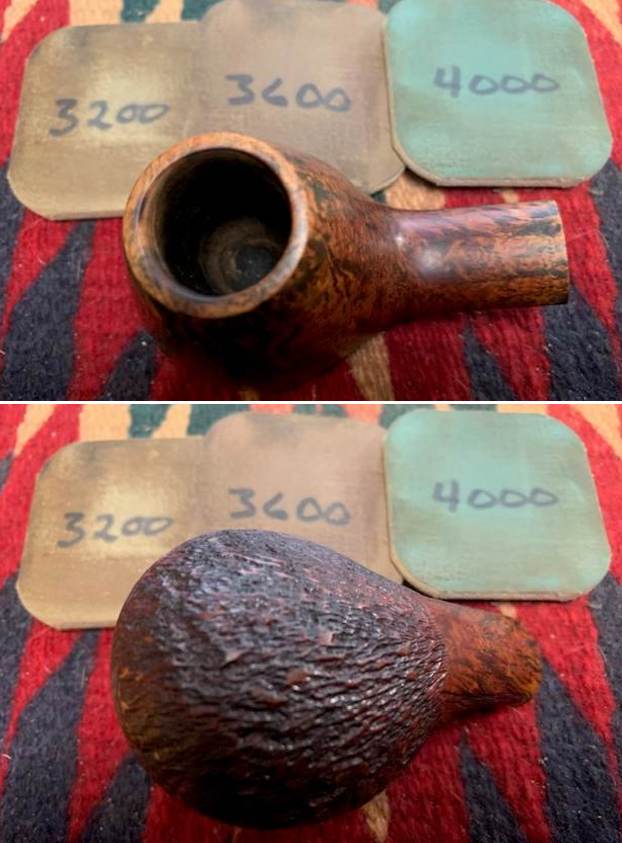
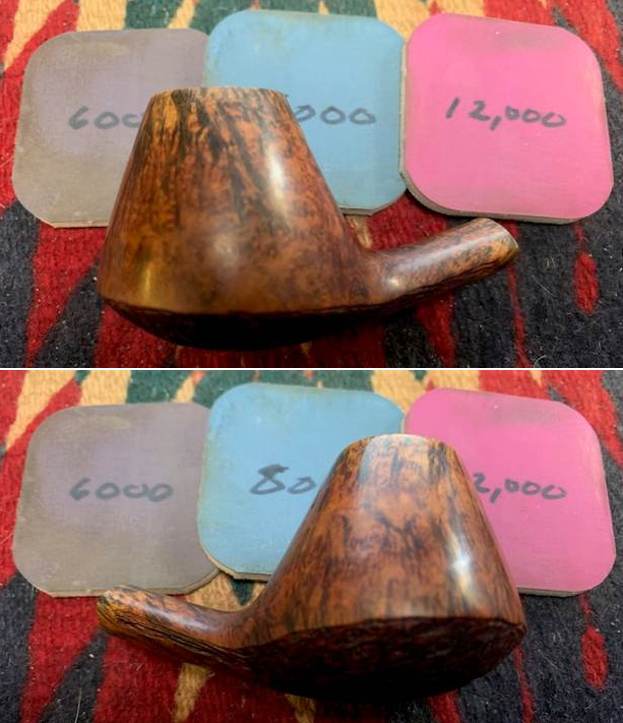
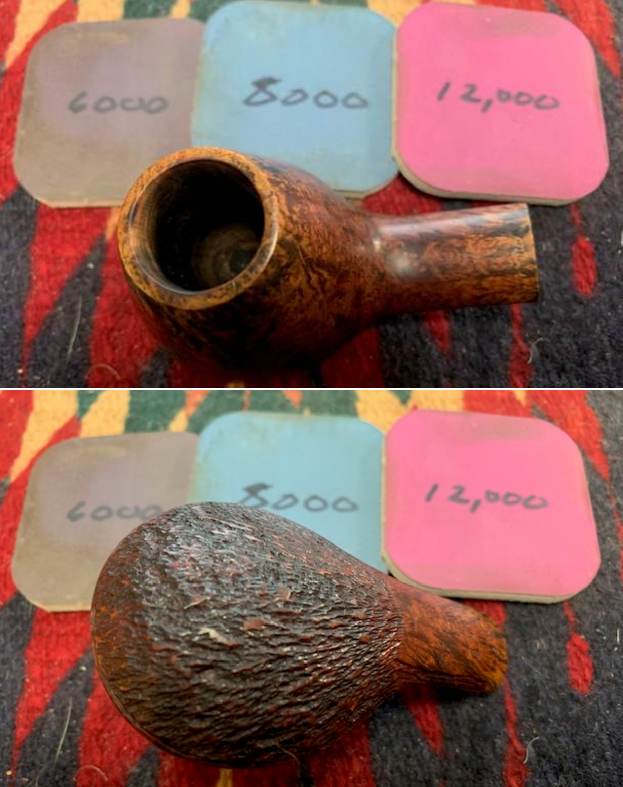
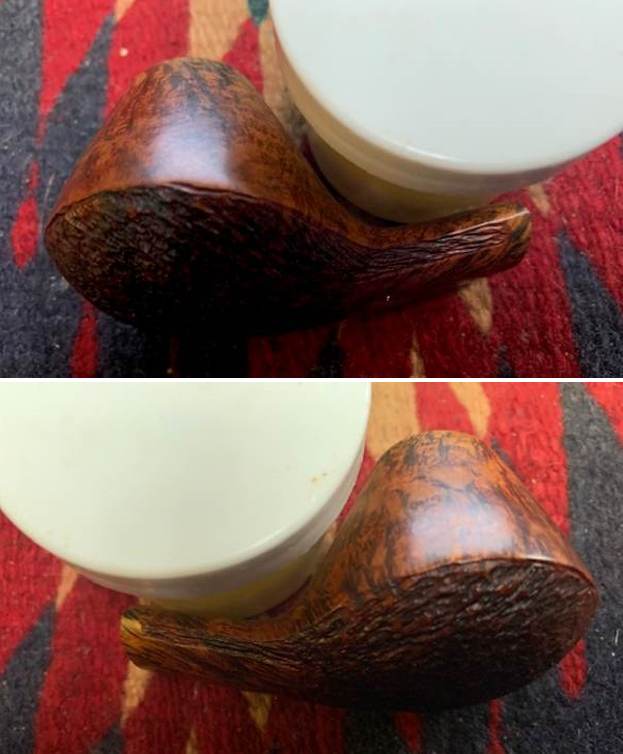
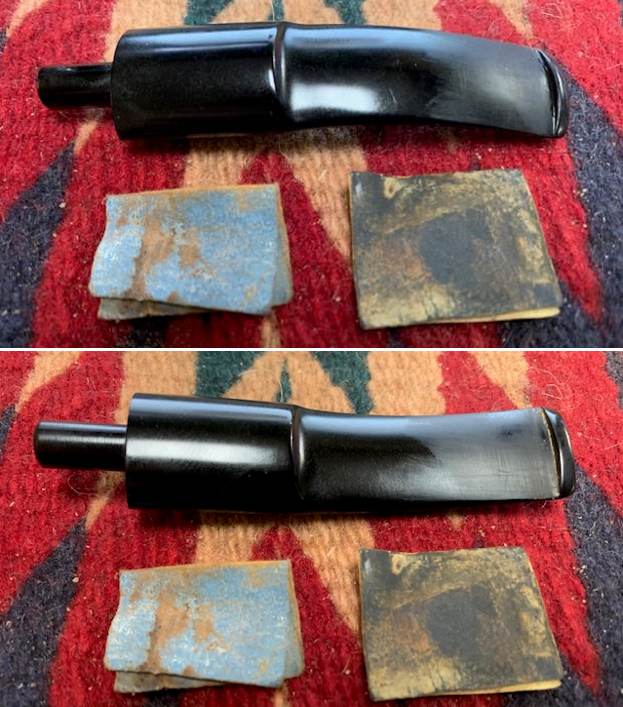
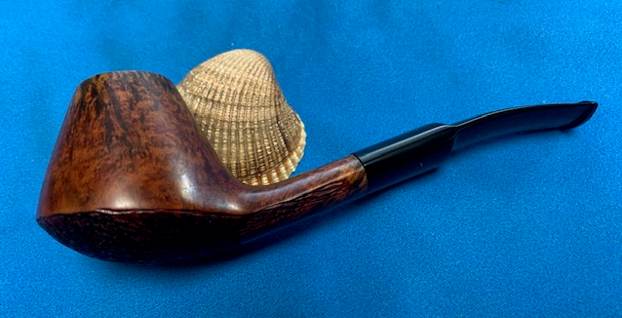
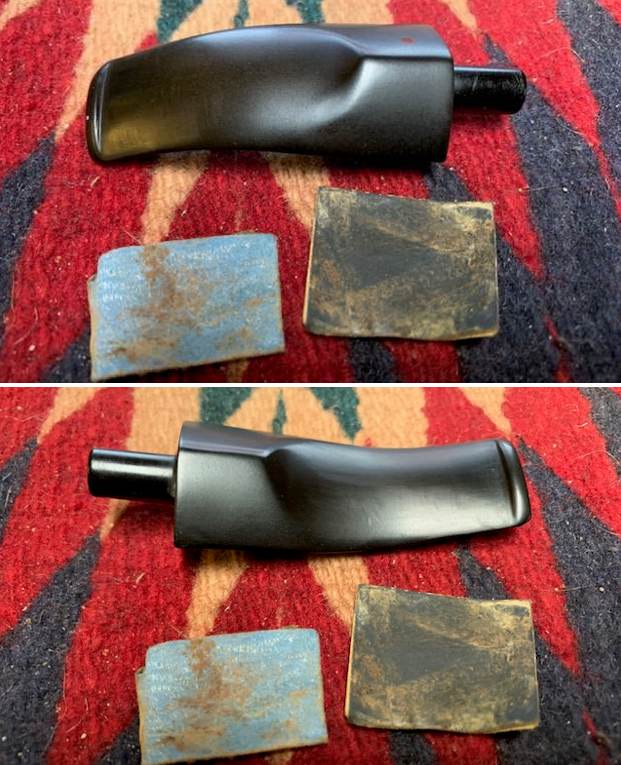
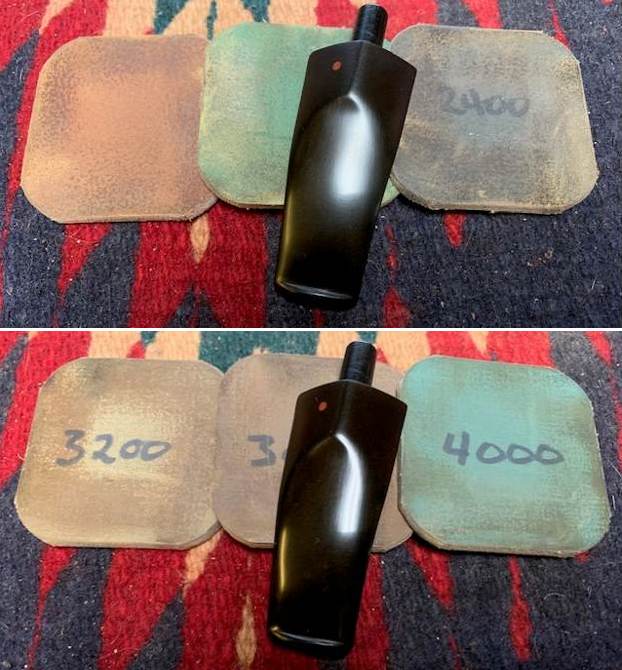
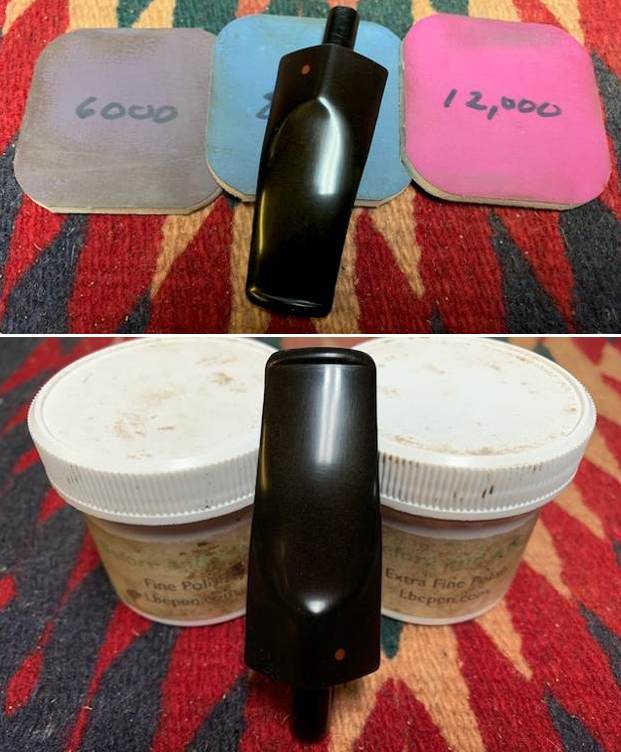
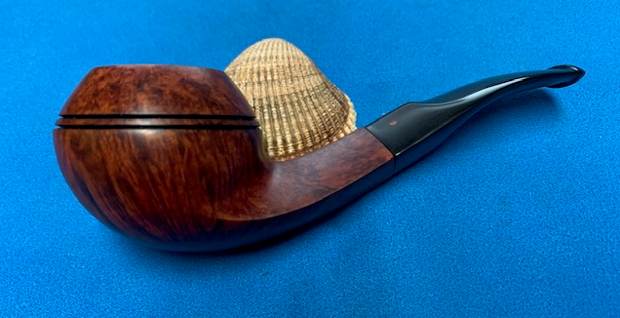
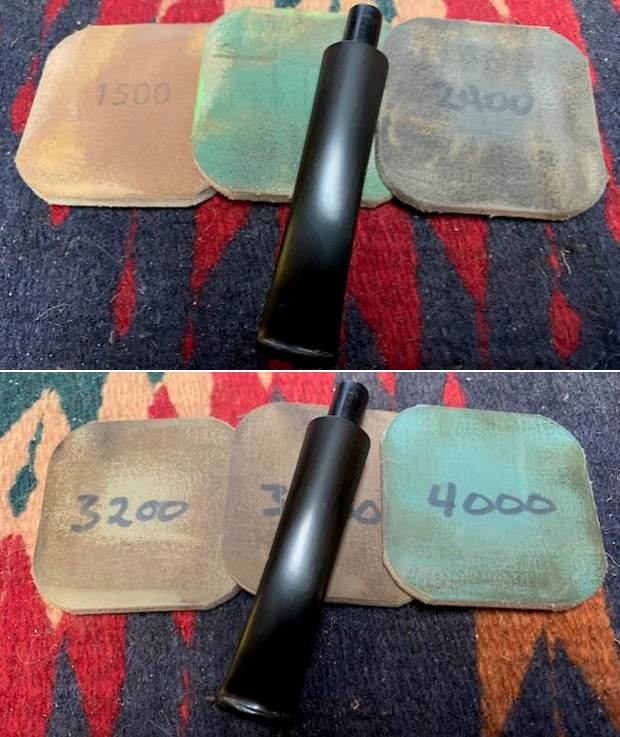
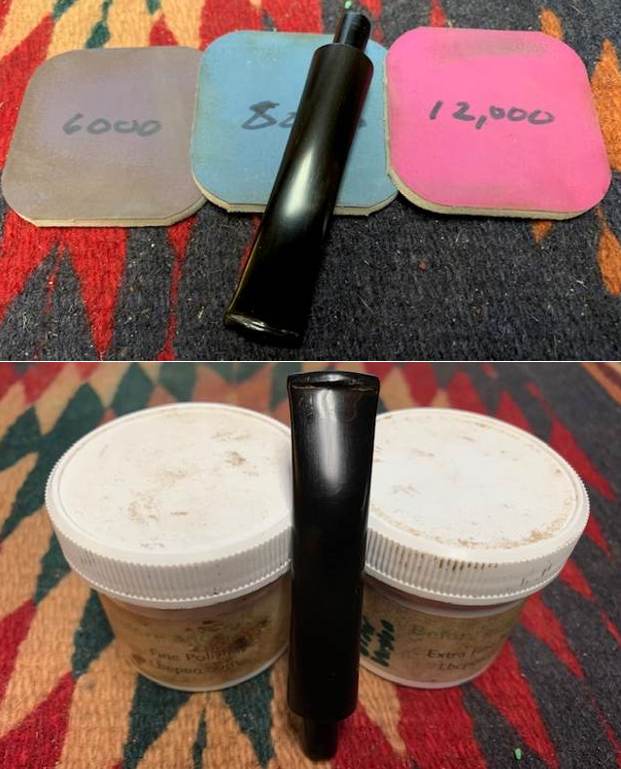
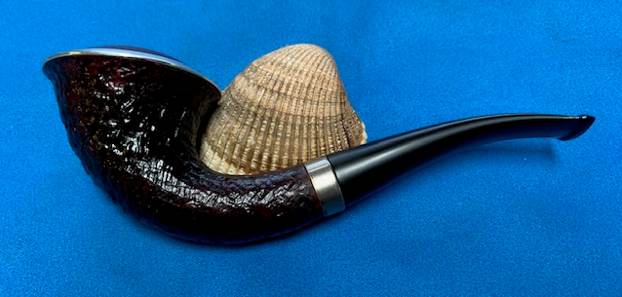
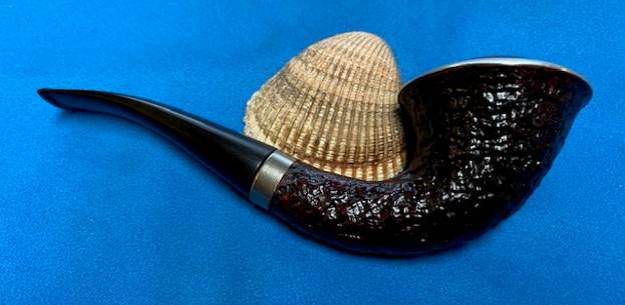
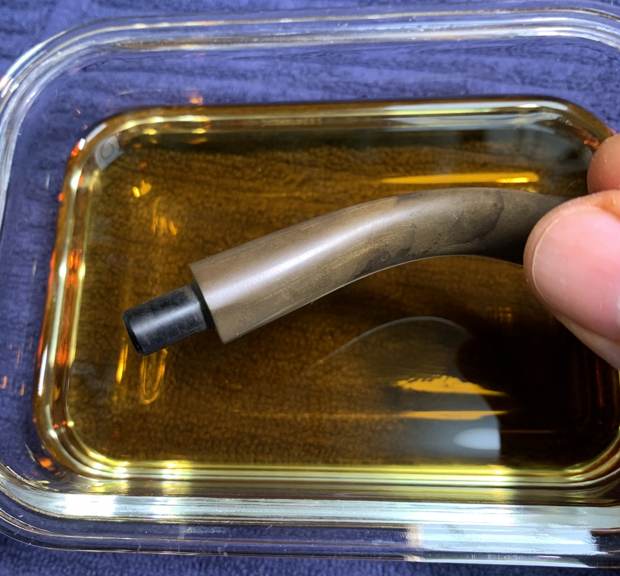
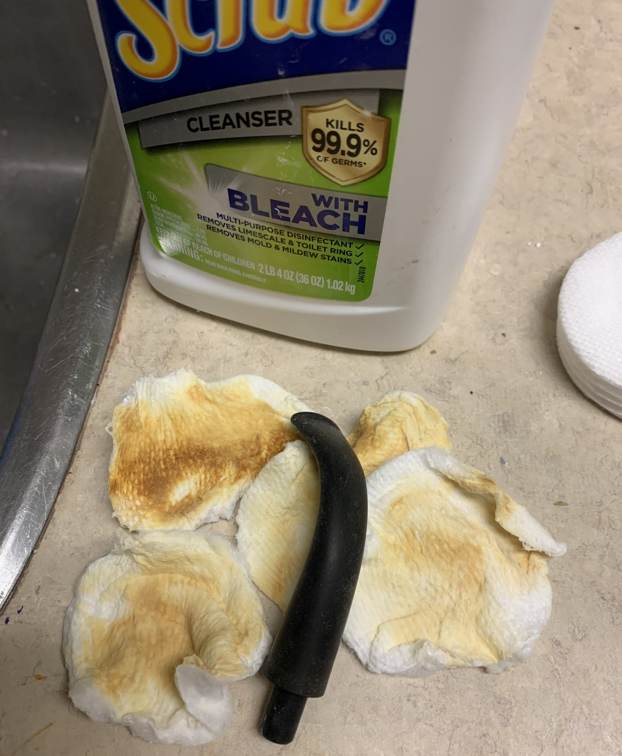
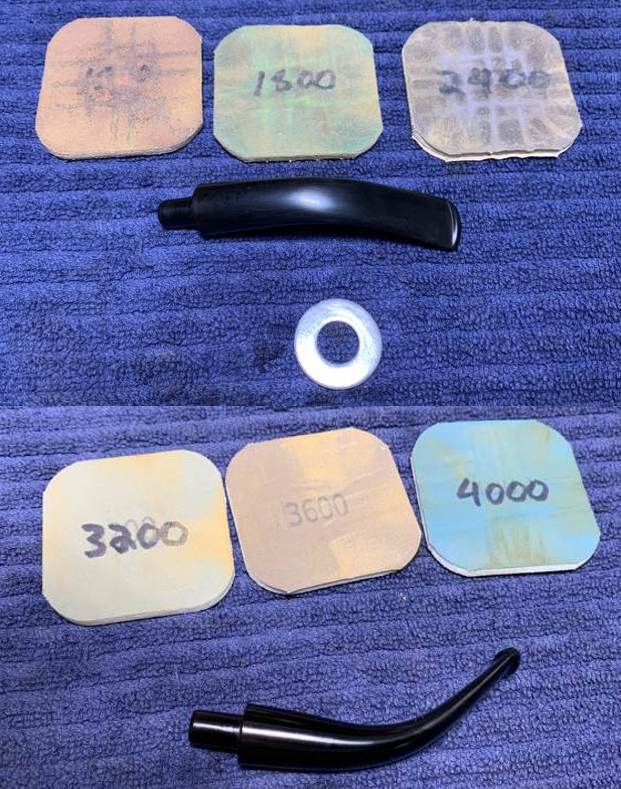
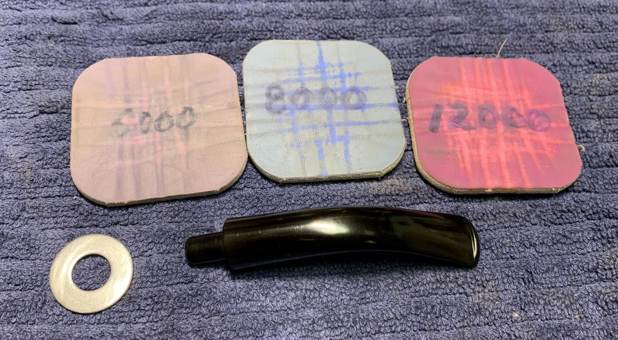
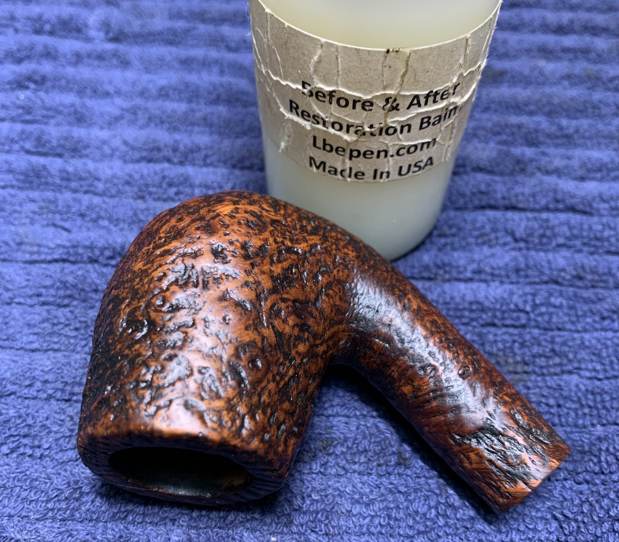
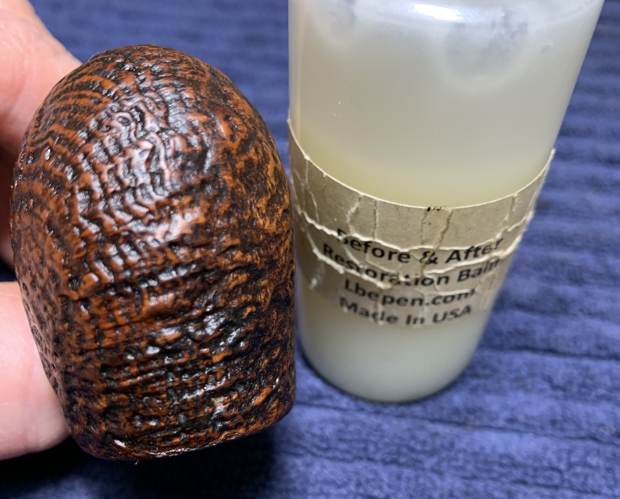
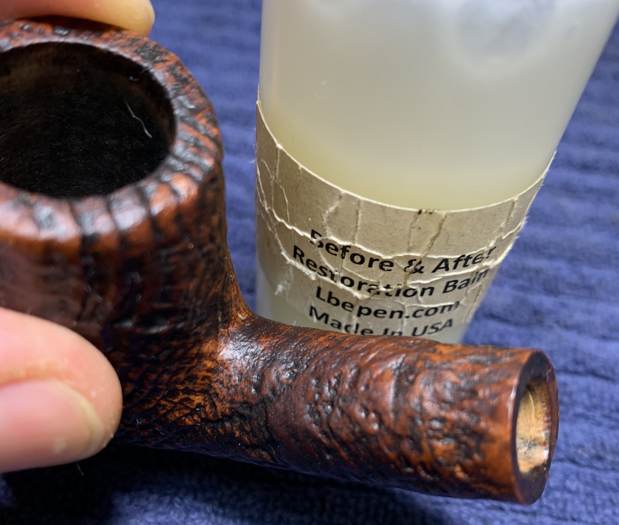
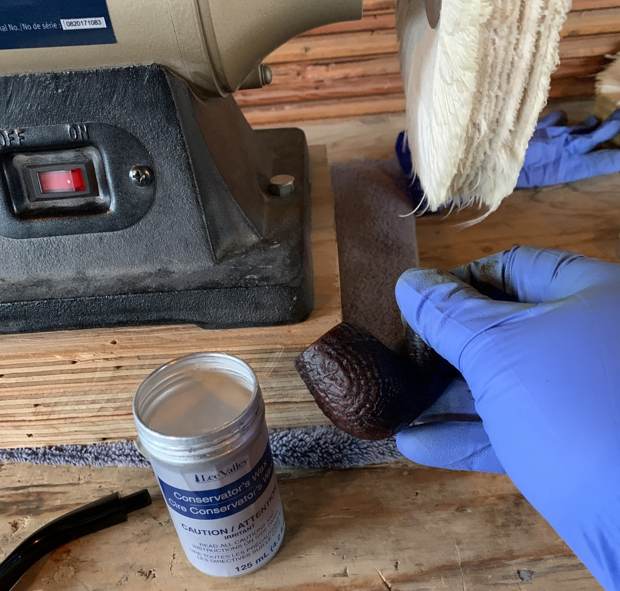
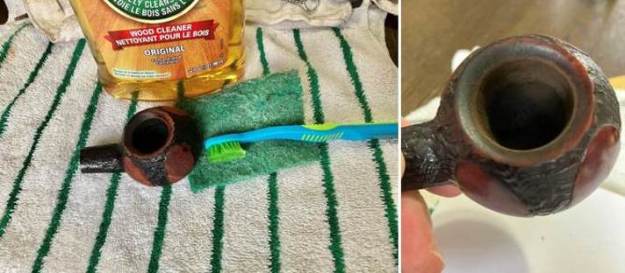
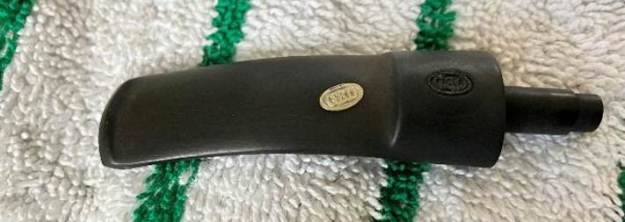
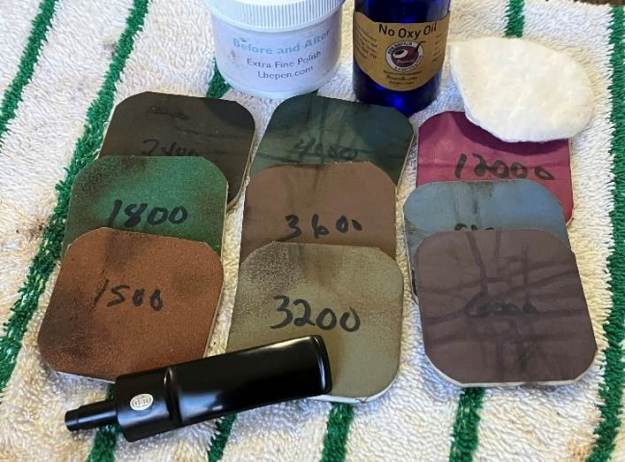
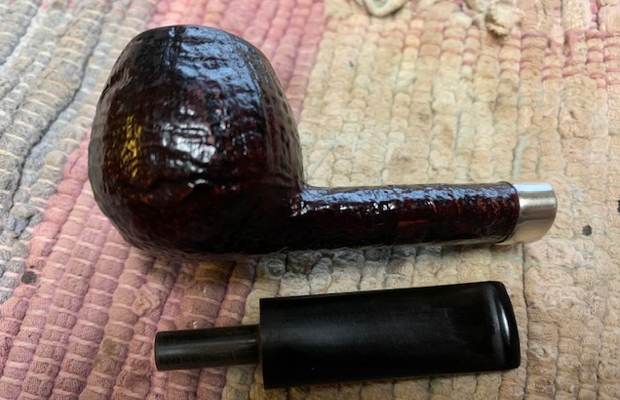
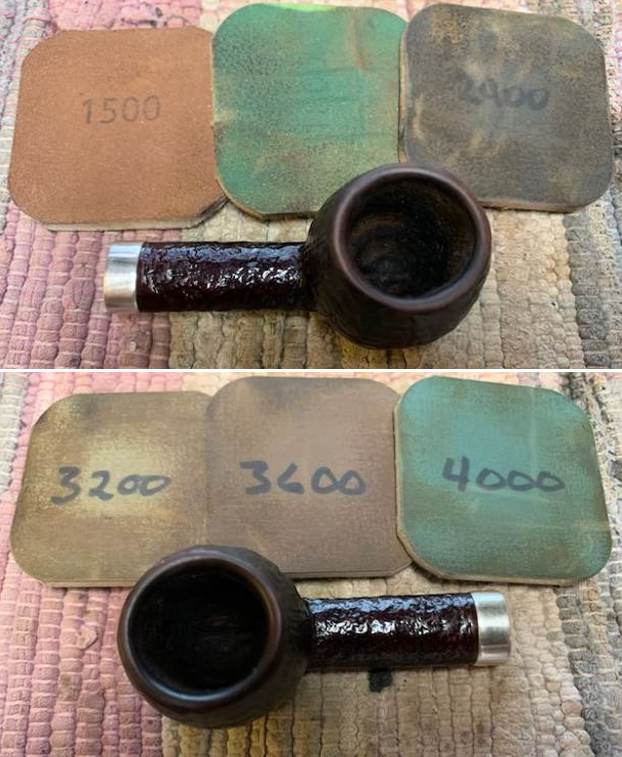
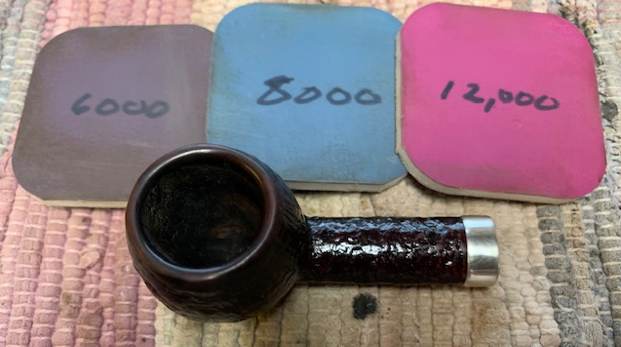
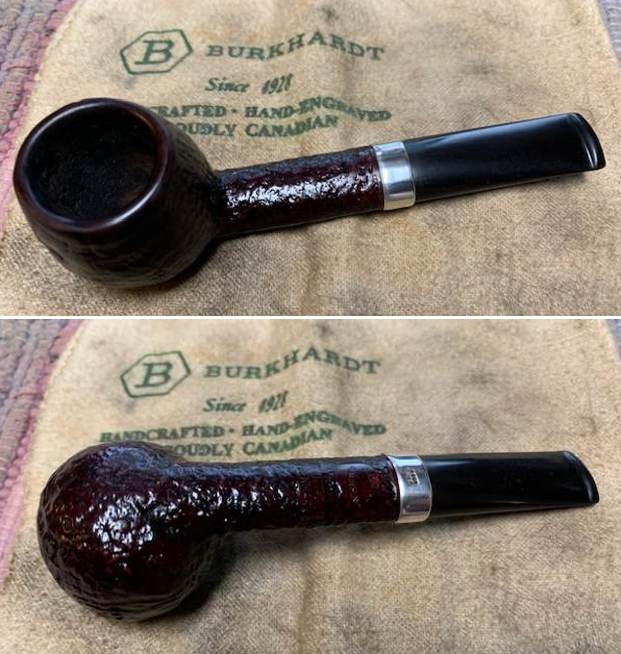
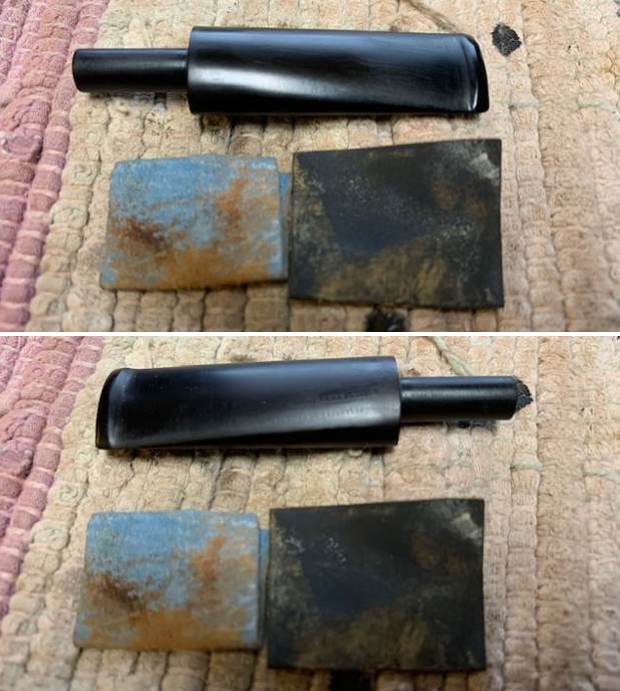
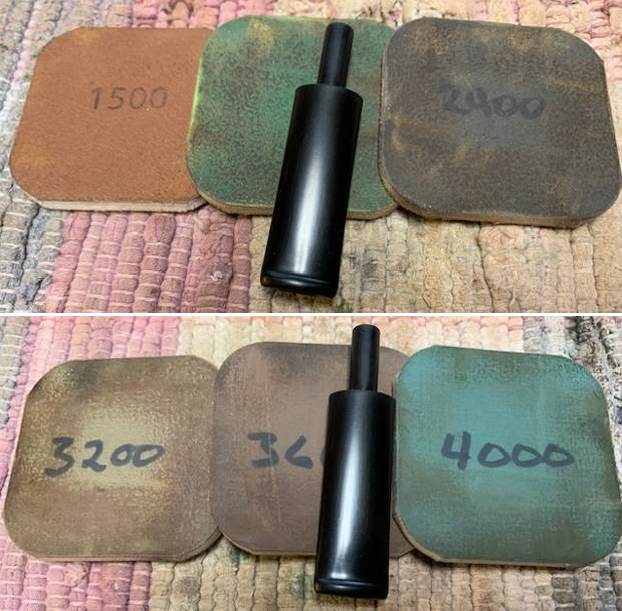
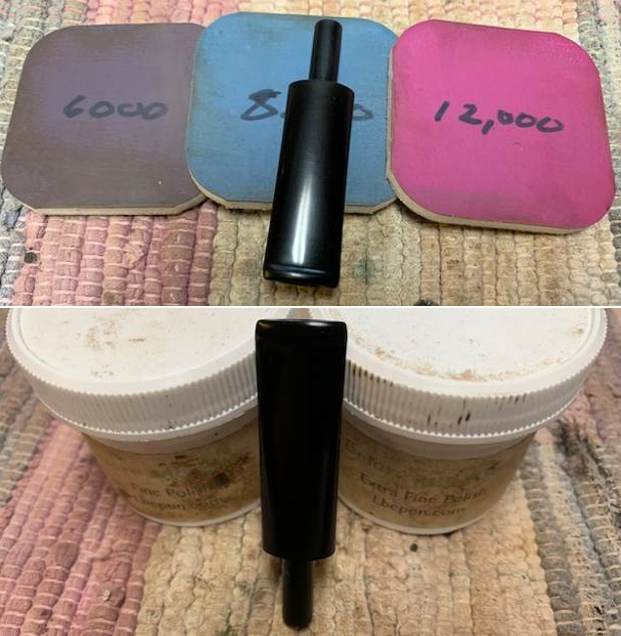
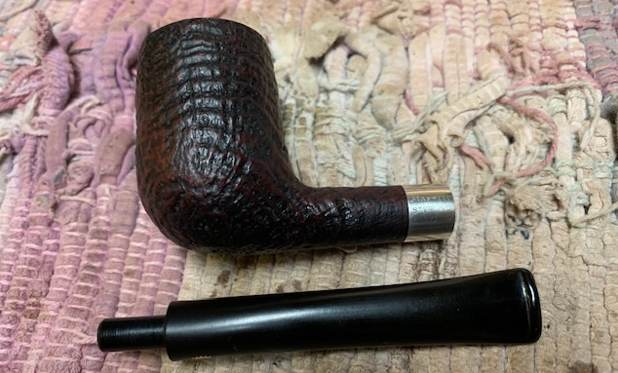
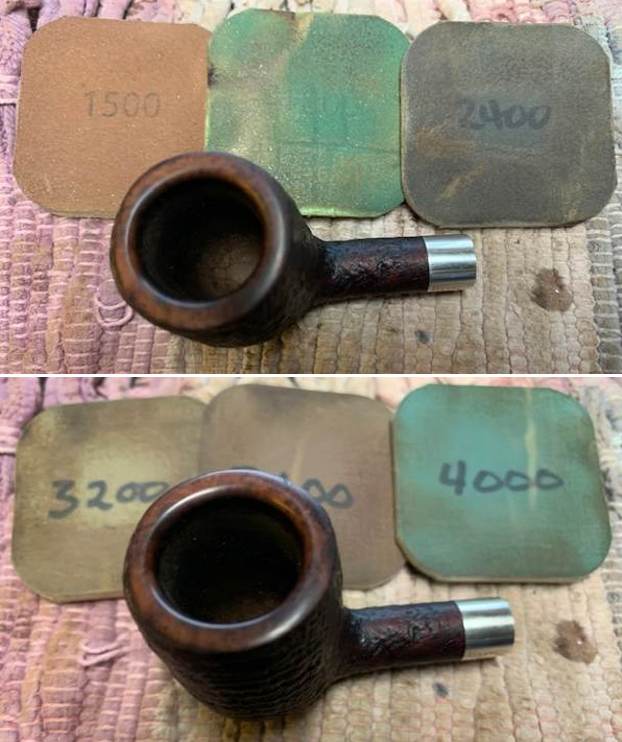
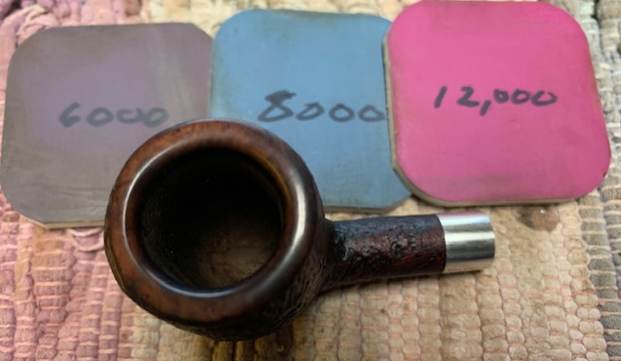
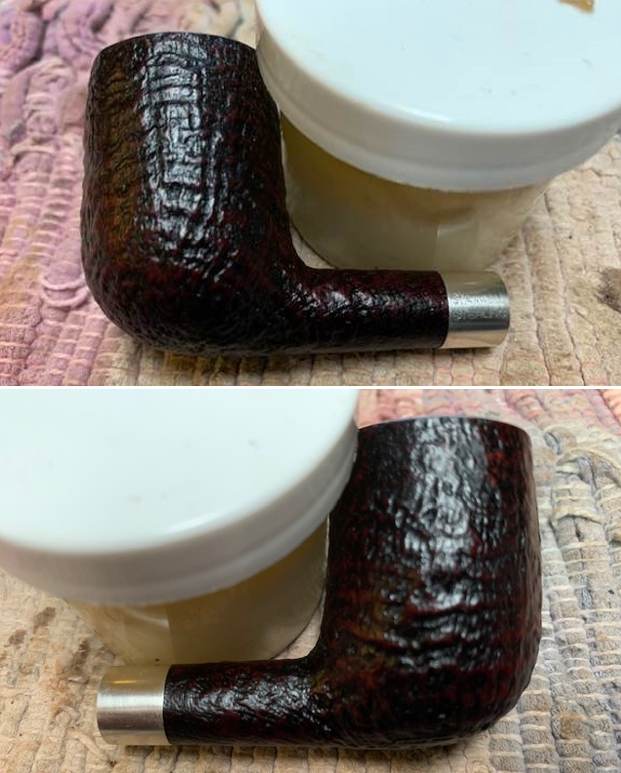
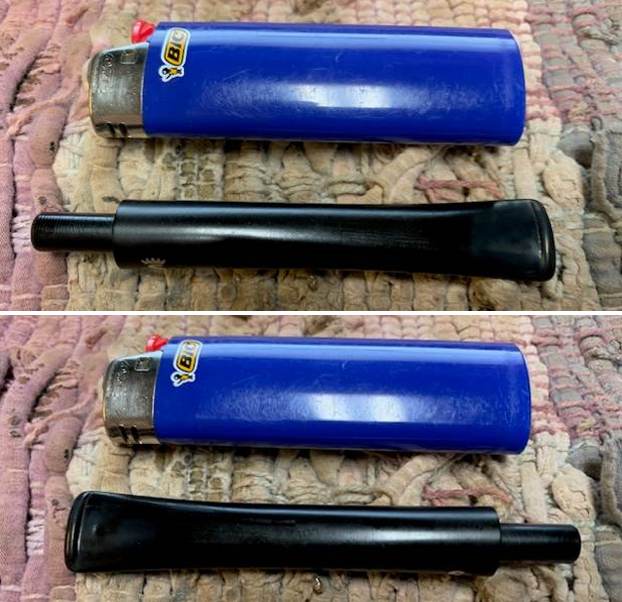
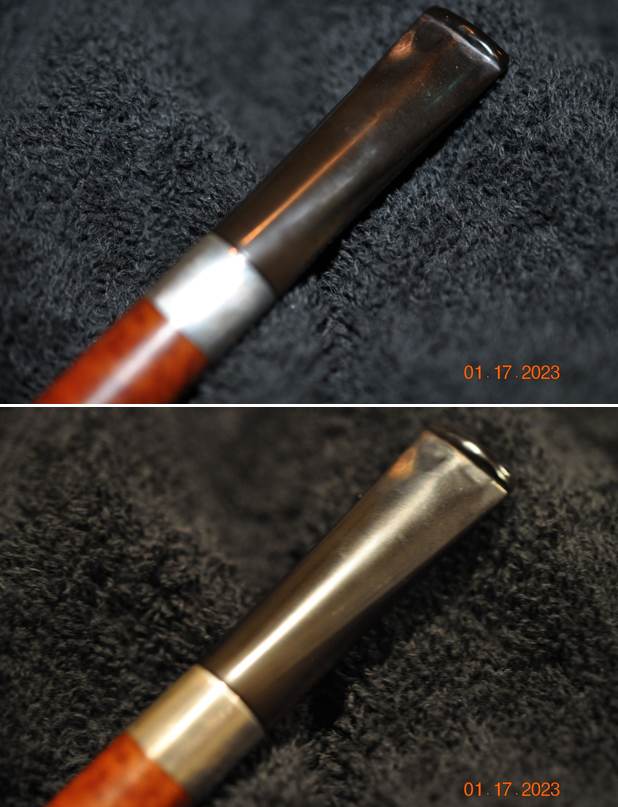
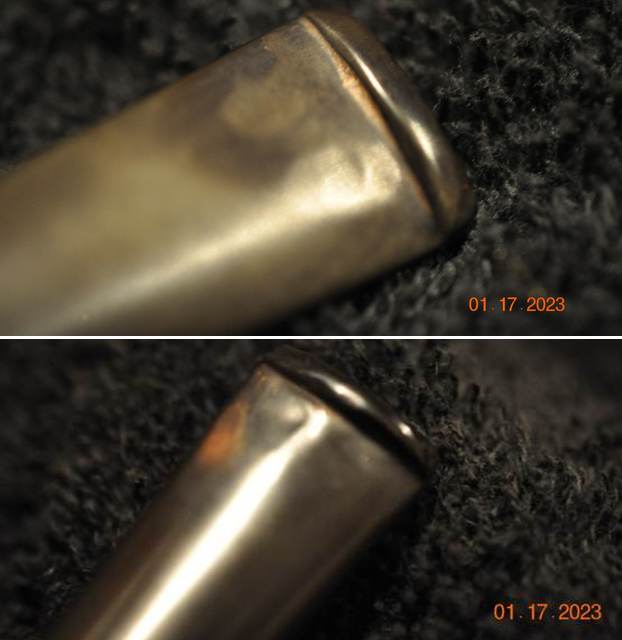
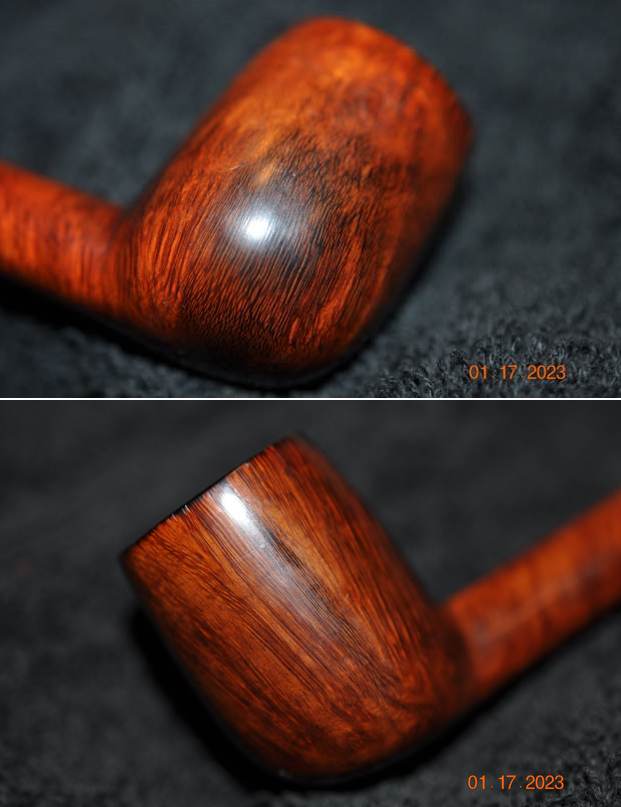
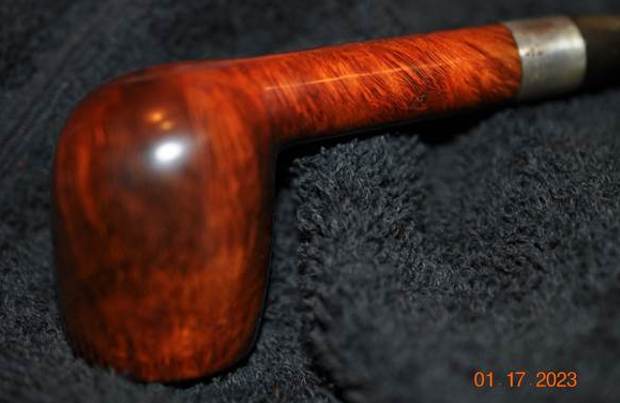
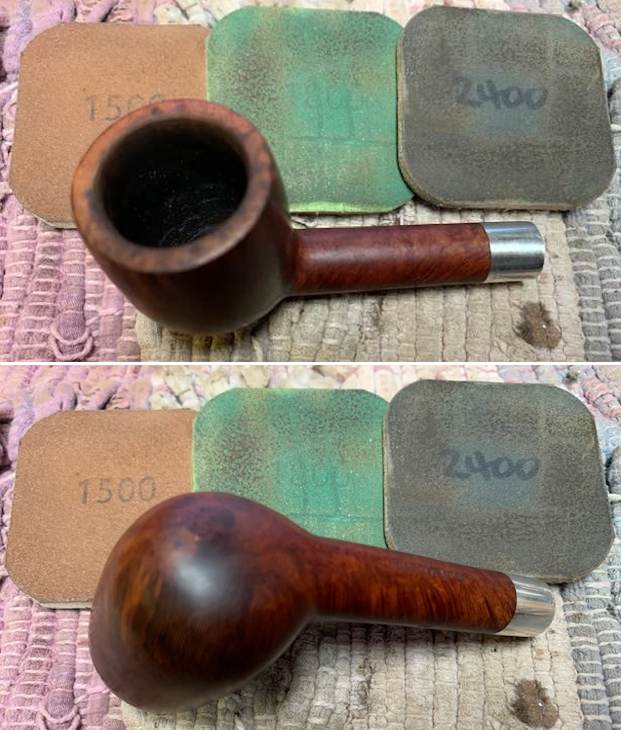
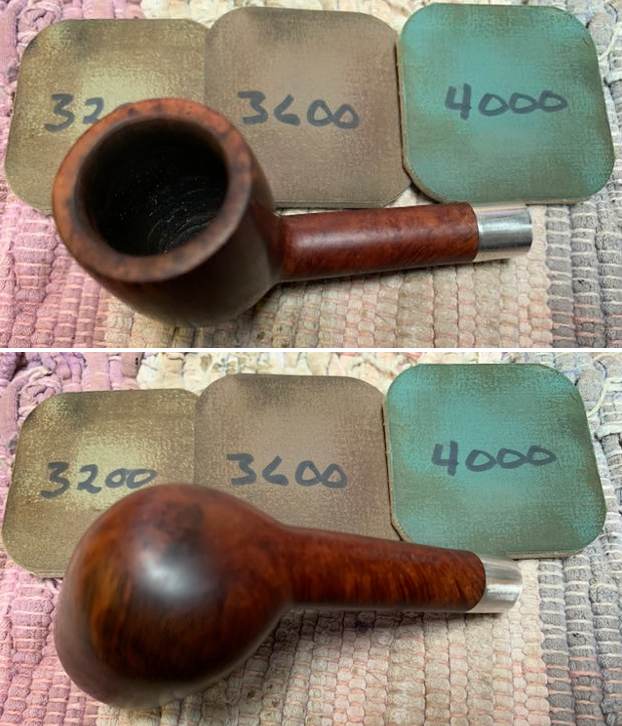
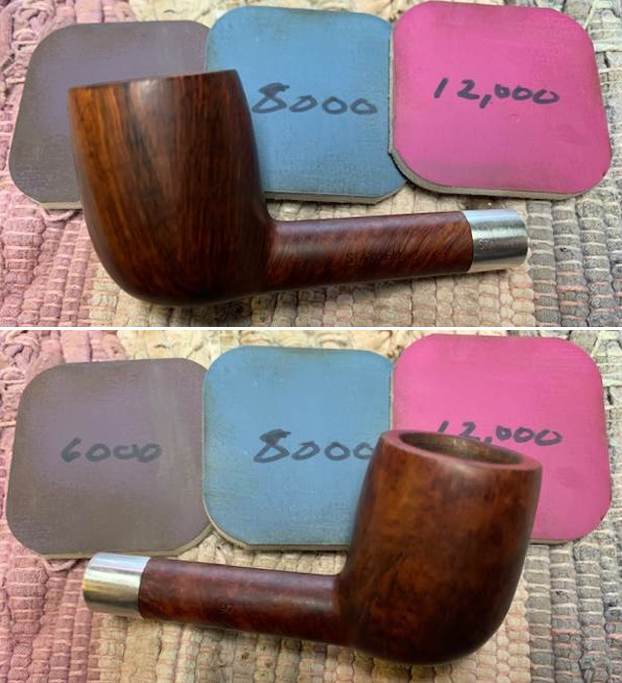
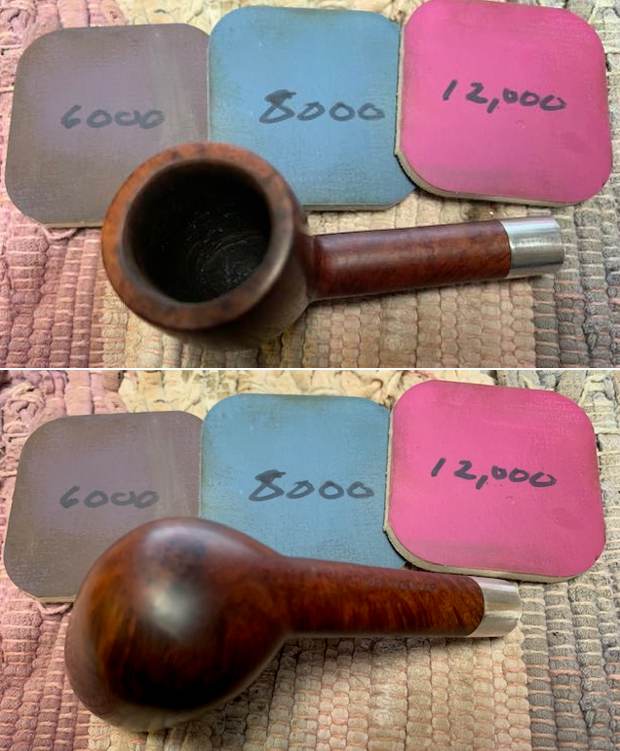
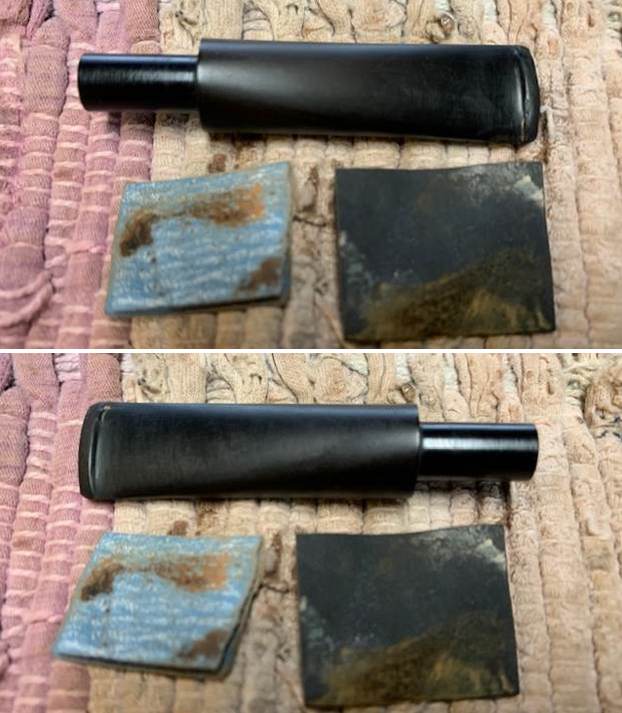
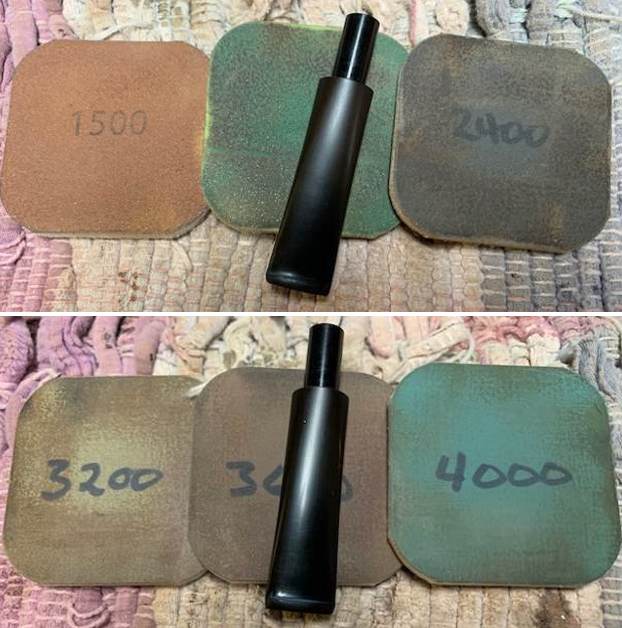
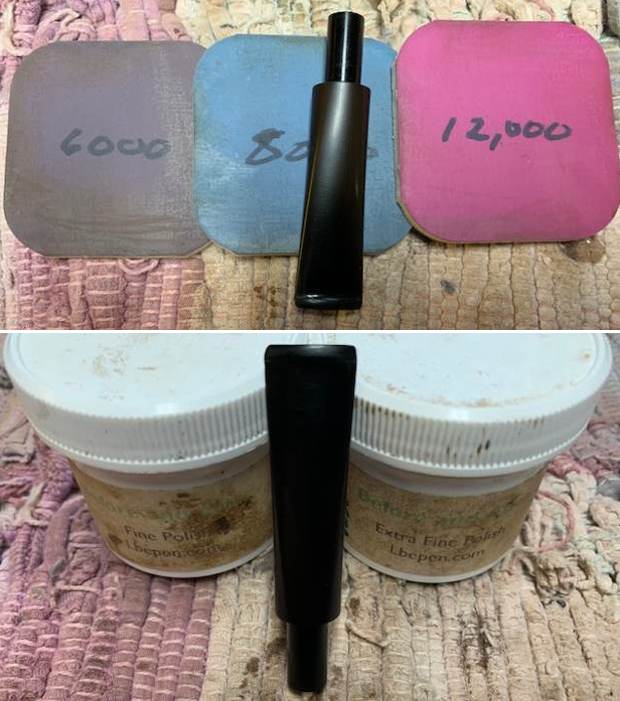
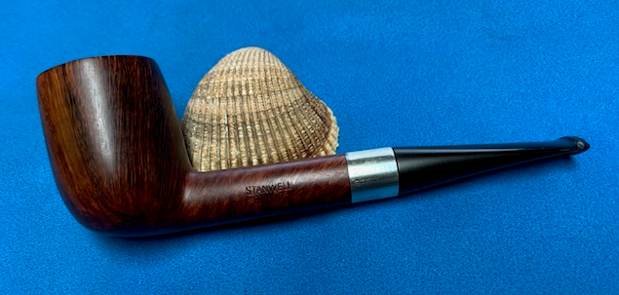
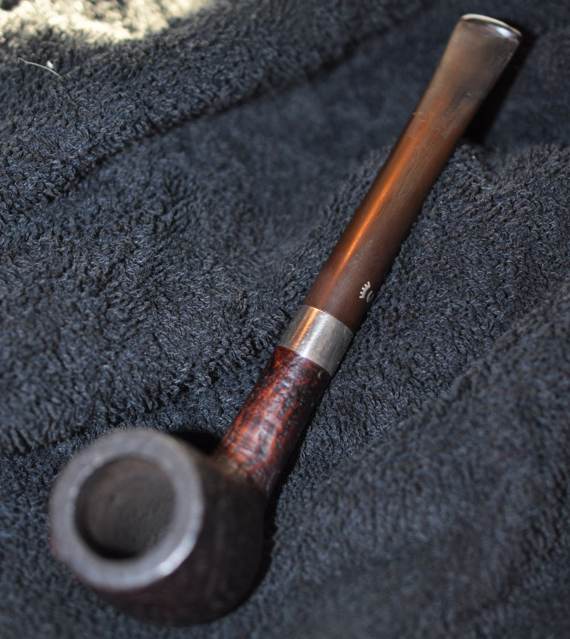
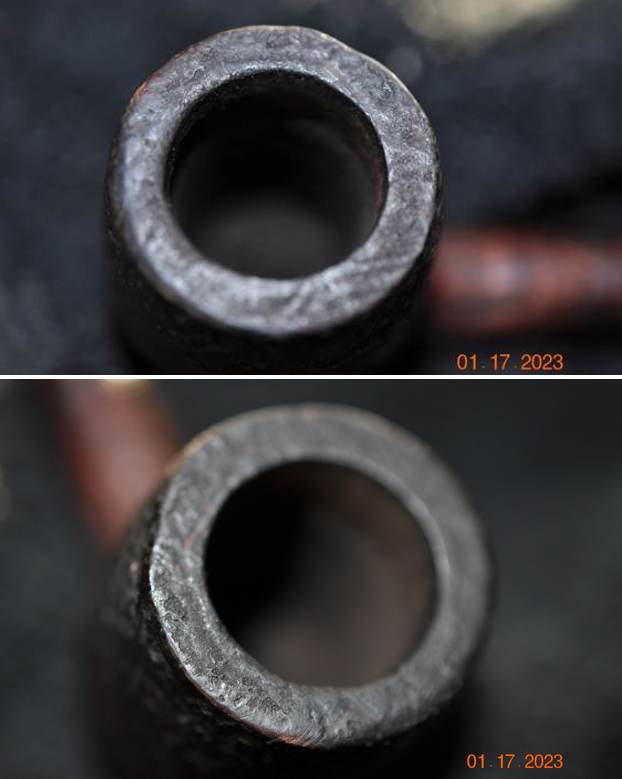
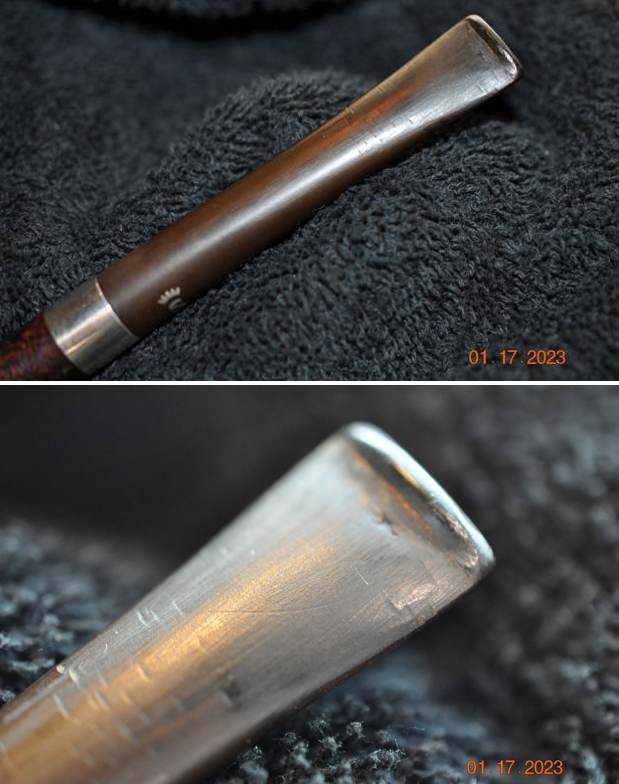
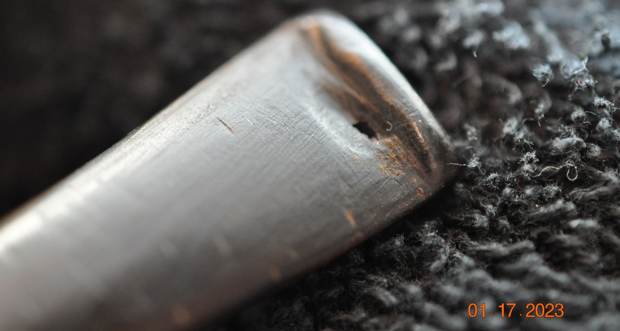
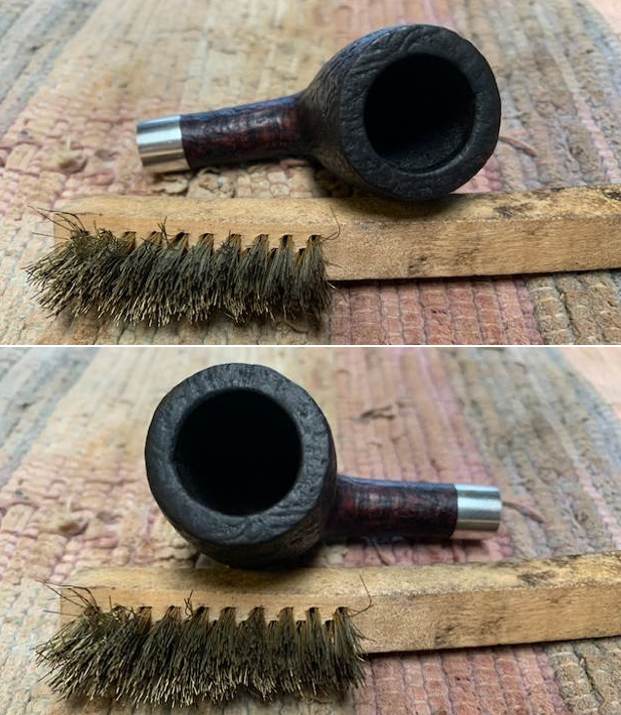
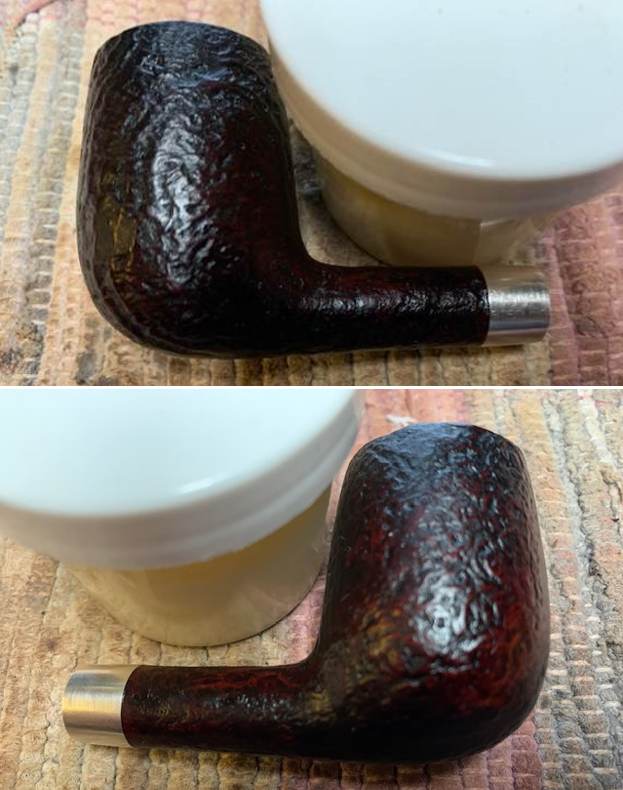
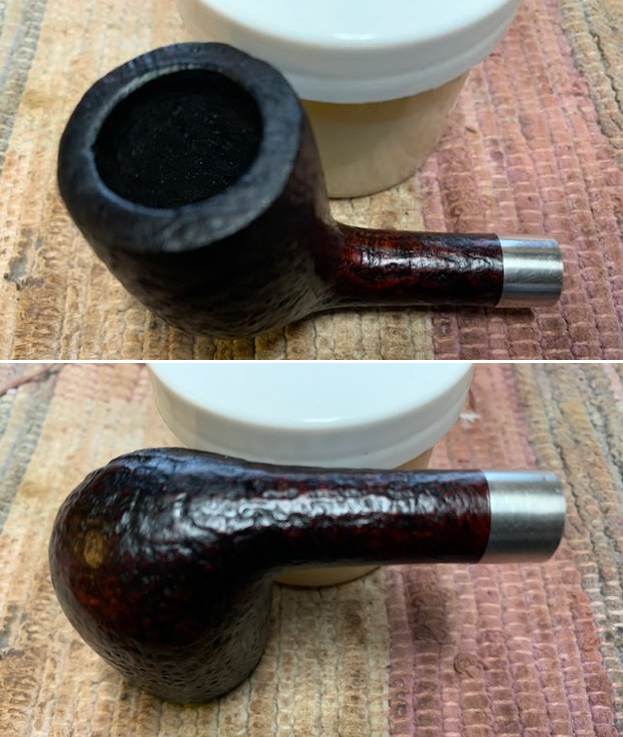
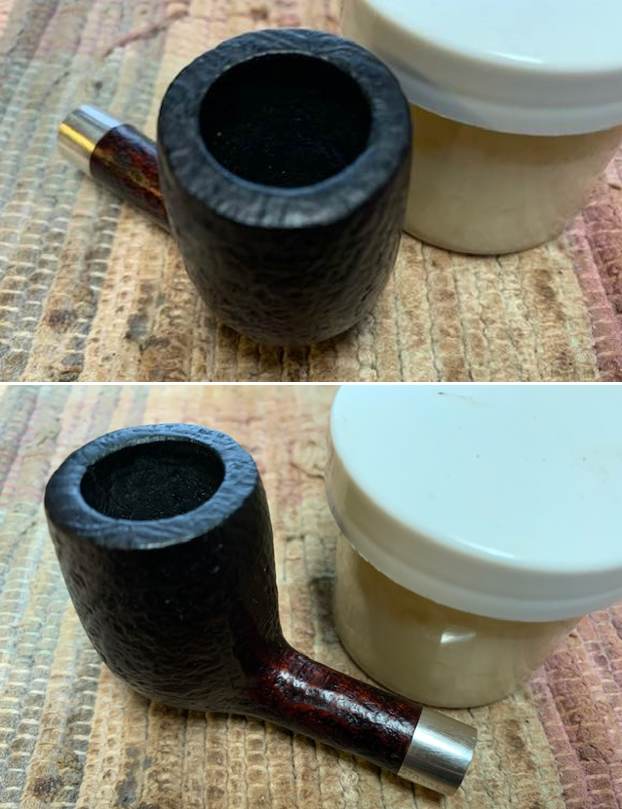
Armed with that information I turned to work on the pipe itself. Jeff had done a great job cleaning up the pipe as usual. He reamed the pipe with a PipNet reamer and cut back the cake back to the bare briar. He cleaned up the walls with a Savinelli Fitsall Pipe Knife. He scrubbed the interior of the bowl and shank with pipe cleaners, cotton swabs and alcohol to remove the tars and oils. He scrubbed the exterior of the pipe with Murphy’s Oil Soap and a tooth brush to remove the grime from the finish. He scrubbed the inside of the stem with alcohol and pipe cleaners. He cleaned the nickel ferrule with Soft Scrub and buffed it off with a soft pad. Somewhere along the journey from Idaho to Vancouver I had replaced the damaged stem with the one in the photos. It is an identically shaped and sized stem and with it in place the pipe looks good. I took photos of the pipe before I started working on it. I took photos of the bowl and rim top to show how clean it was. There is some wear on the finish around the outer edge and the rim top is roughened. The replacement stem looks clean of oxidation and there is light tooth chatter on both sides of the stem. The stamping on the underside of the shank was faint but still readable as noted above.I took a photo of the pipe with the stem removed to show the overall look of stem, tenon and profile of the pipe. It is a great looking pipe.Since the bowl looked so good I decided to rub the briar down with Before & After Restoration Balm. I worked it into the briar with my fingertips to get it into the deep briar. The product works to clean, enliven and preserve the briar. I let it sit for 10 minutes while I worked on the stem. After the time passed I buffed it with a cotton cloth to deepen the shine. The rustication came alive with the balm. Even the areas on the rim top and outer edges looked good. The new stem was in great condition so I polished it with micromesh sanding pads – 1500-12000 grit pads. I wiped it down with Obsidian Oil after each sanding pad. I used Before & After Pipe Polish – both Fine and Extra Fine to further polish the stem. This Republic Era Peterson’s System Standard 317 Rusticated Bent Billiard is a nice looking pipe. The combination of reds and brown stains really gives depth to the rustication around the bowl sides and shank. The finish on the pipe is in excellent condition and the contrasting stains work well to give some contrast to the pipe. The polished black vulcanite P-lip taper stem and polished nickel ferrule add to the mix. I put the stem back on the bowl and buffed the pipe lightly with Blue Diamond on the buffing wheel, carefully avoiding the stamping on the shank. I gave the bowl multiple coats of Conservator’s Wax and stem multiple coats of carnauba wax on the buffing wheel and followed that by buffing it with a clean buffing pad. I hand buffed the pipe with a microfiber cloth to deepen the shine. The finished Peterson’s 317 System Bent Billiard is quite nice and feels great in the hand. Give the finished pipe a look in the photos below. The dimensions of the pipe are Length: 5 inches, Height: 1 ½ inches, Outside diameter of the bowl: 1 inch, Chamber diameter: 5/8 of an inch. The weight of the pipe is 1.09 ounces/ 31 grams. Thanks for walking through the restoration with me as I worked over another interesting pipe. I will soon add the pipe to the Irish Pipe Makers Section of the rebornpipes store. If you want to add it to your collection send me an email or a message! Thanks for your time.

The French Collection


Blog by Kenneth Lieblich

No, not the French Connection – but French Collection! I have long had an interest in French pipes and pipemaking. In recent decades, French pipes have received a fair amount of derision – and deservedly so. However, early French pipes are very often beautiful, well-made, and – best of all – good smokers. In my own small way, I am aiming to resurrect the reputation of early French pipes. There are superb pipes to be had from France. This blog post is about the restoration of the first pipe that is going into my “French Collection”.

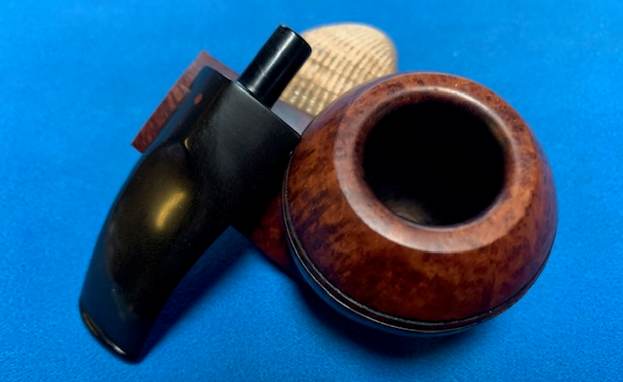
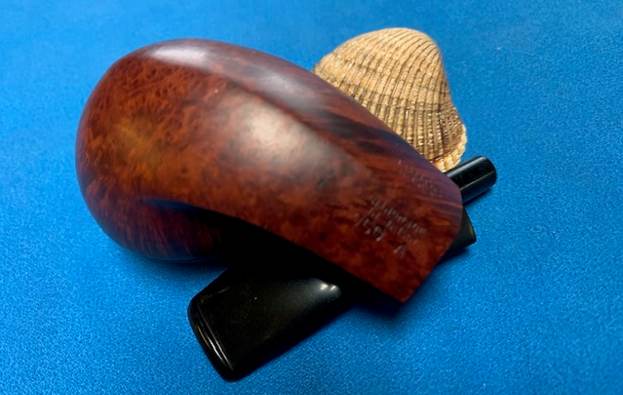
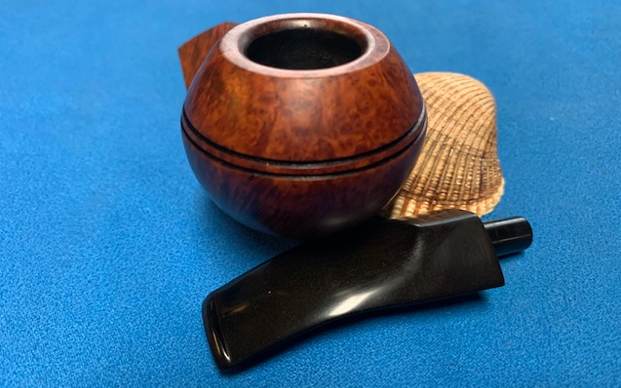
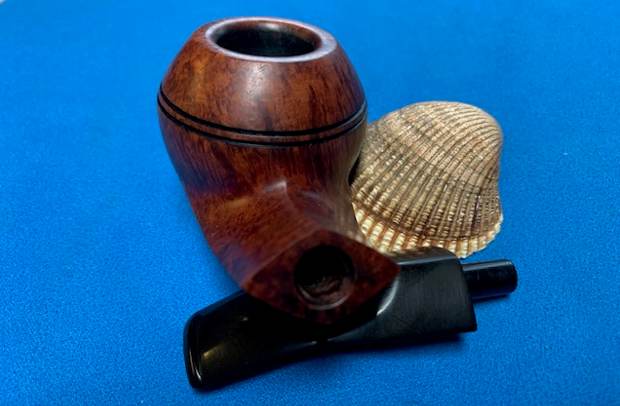
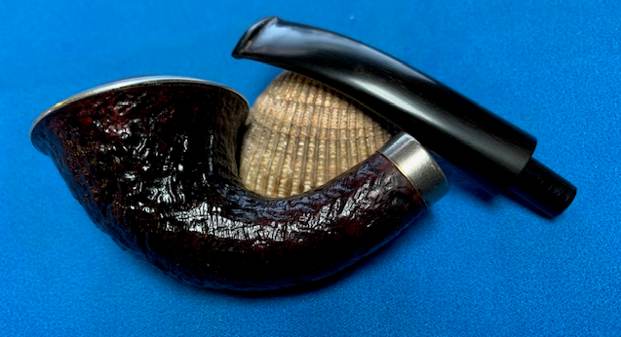
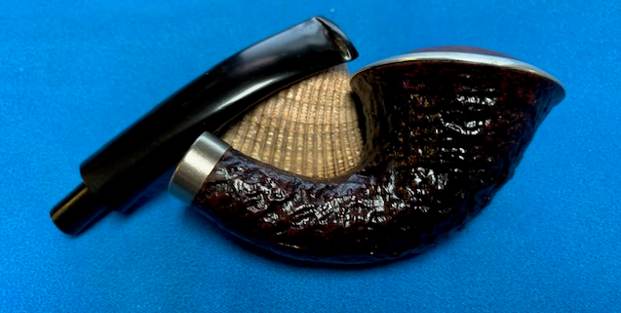
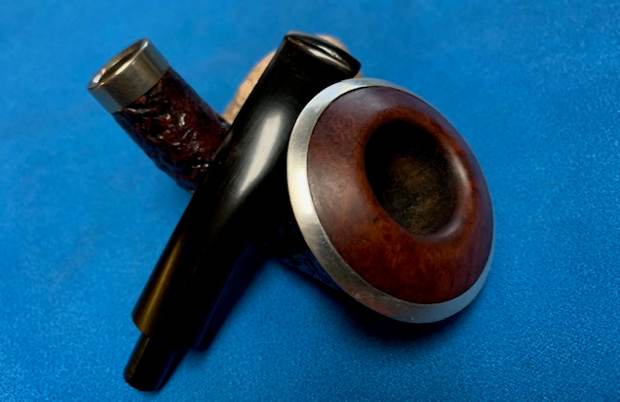
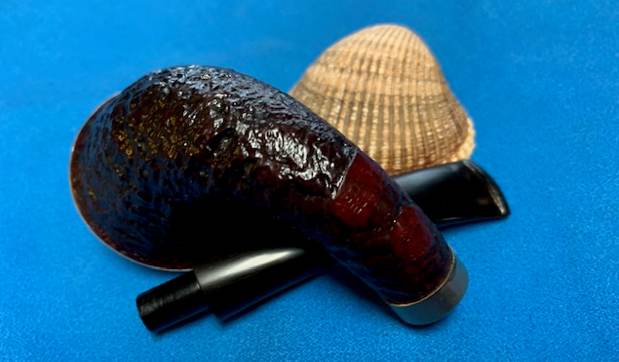
The pipe in question has no markings whatsoever. So how do I know it’s French? Well, I don’t have absolute proof, but I’ve got good circumstantial evidence: the pipe has a very French look to it, it smells like old French tobacco, it came in a lot of exclusively French pipes from France, and – most definitively – Steve thinks it’s French too.  As the photos show, this is a cutty-shaped pipe, albeit without the spur. However, it shows the distinctive, canted bowl of the cutty. It is a handsome pipe with a jaunty look to it, and I liked the pipe straight away. As I mentioned, this pipe has no marks of any kind. This obviously makes identification trickier. I know that Georges Vincent-Genod company used to make pipes similar to this once upon a time, but I cannot, in good conscience, definitely ascribe this pipe to the GVG company. Having said that, the following pipe from Genod certainly has its similarities…The age of this pipe is quite interesting. As you can see, the stem of the pipe is made of horn and has an orific button at the end. For more information on the orifice button, take the time to read Steve’s interesting article on the subject. This type of button is a feature that apparently disappeared by the 1930s, so the pipe must be around a hundred years old, right? Not so fast. The stummel has a threaded tenon made of metal – not bone (as one might expect from a century ago). Steve, my walking encyclopedia, informed me that the fact the tenon is in metal (instead of bone) suggests a date closer to World War II. He figures that the stem itself could be significantly older, but that it was left over in the factory and married to a ”newer” stummel. Therefore, we can surmise that the pipe is about 80 years old.

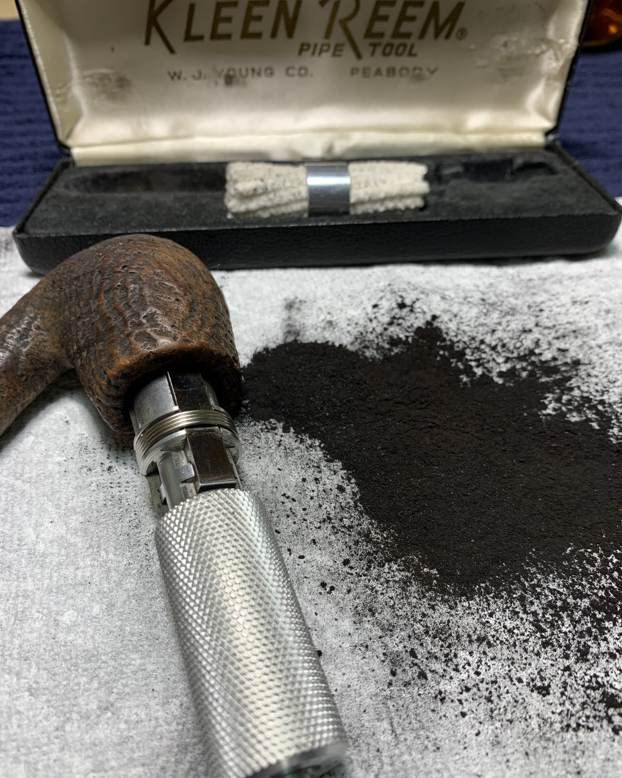
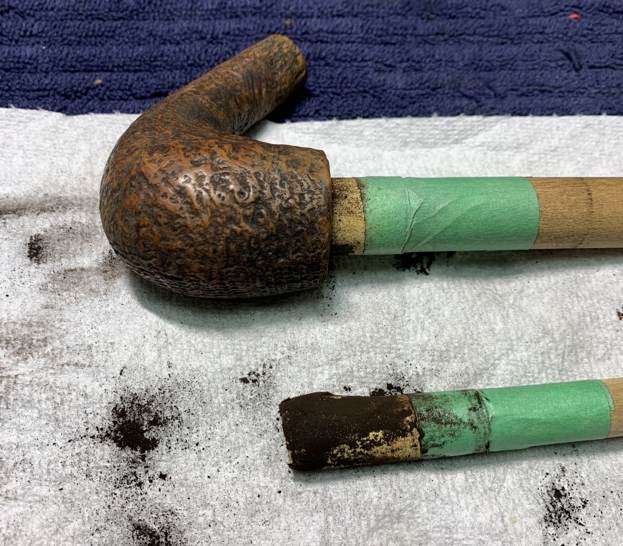
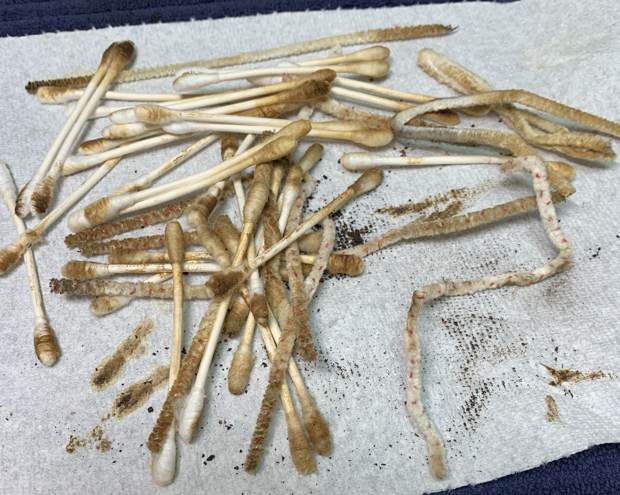
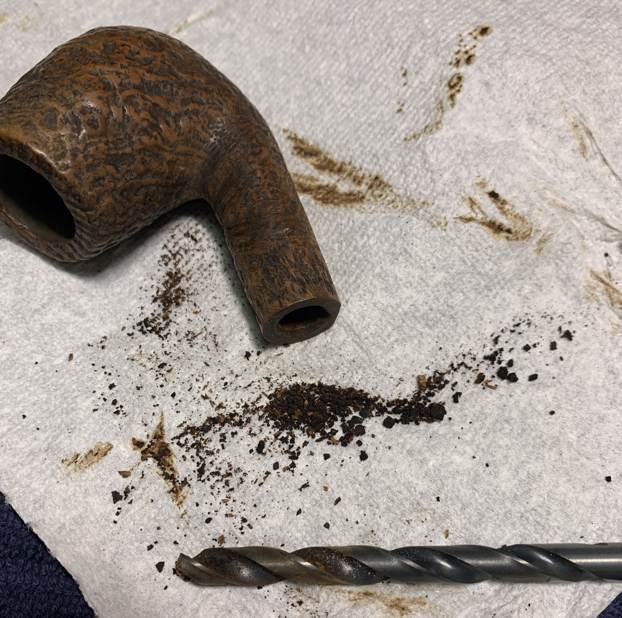
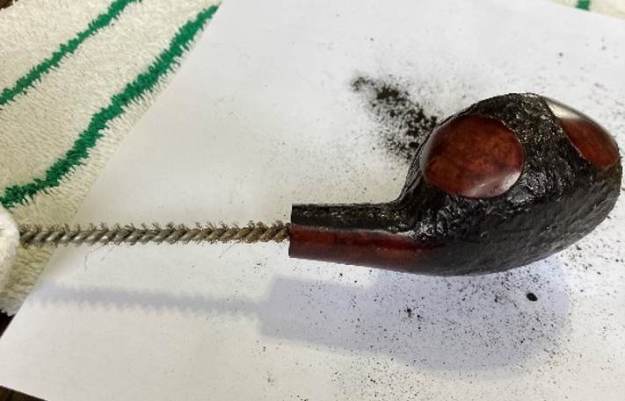
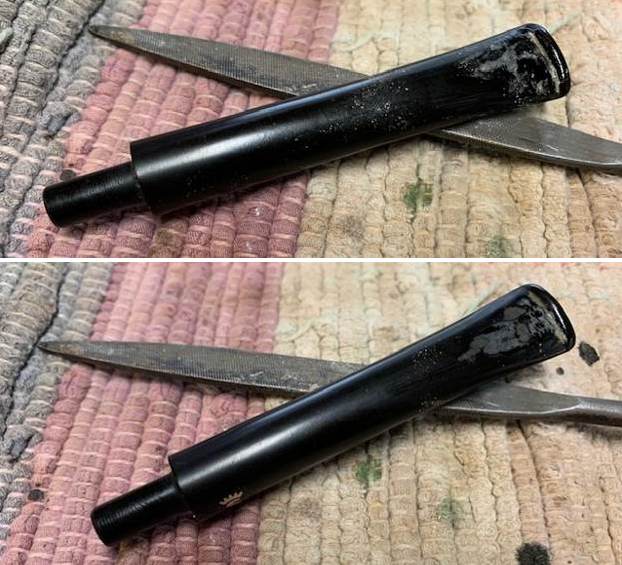
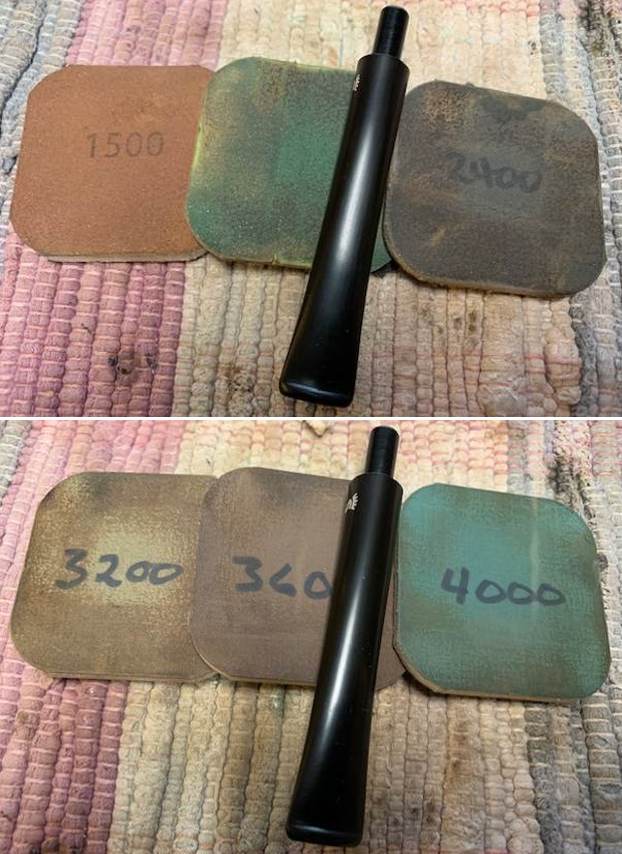
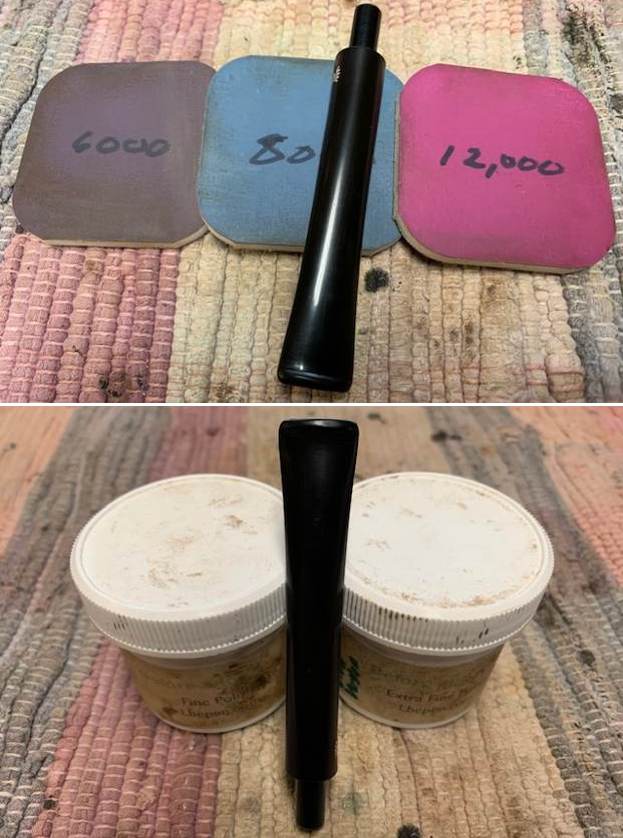
Let’s have a closer look at the condition of the pipe. The stem was dirty and worn, with plenty of evidence of tooth marks and dents. The insides were dirty too, but nothing too unusual. Meanwhile, the stummel was incredibly dirty.The bowl was so full of cake and the rim so overwhelmed with lava, that I couldn’t really tell what the condition of the wood inside was. Certainly, there was some lovely patina on the old wood on the outside of the bowl.I wanted to work on the stem first, but needed some help to unscrew it! I brought out the heat gun and gave a quick blast to loosen the goo holding the pipe together. That loosened the stem sufficiently to unscrew it. I wiped the stem with Murphy’s Oil Soap on some cotton pads. There was some filth there and I needed to remove it. I attacked the inside of the stem with pipe cleaners, cotton swabs, and isopropyl alcohol. It required a good amount of cotton to come clean. Now work on repairing the tooth marks, etc. on the outside of the stem. I built up the bite marks on the stem with cyanoacrylate adhesive and let it fully cure. There were a couple of small worm holes (or something similar) on the stem and I filled them the same way. Upon closer inspection, the button on the stem was a bit mangled. Simply doing the normal sanding wouldn’t do. I opted to use a small file and rework the horn to ensure a proper shape.Following that, I sanded the adhesive down with 220- and 400-grit sandpapers to meld seamlessly into the stem. I then used all nine Micromesh pads (1,500 through 12,000 grit) to bring out the beautiful designs in the horn, with some Obsidian Pipe Stem Oil in between each pad scrubbing. Now for the stummel. The brass ferrule came off very easily. I set it aside for now and would return to clean it later. First, I decided to ream out the bowl. I used the KleenReem and the PipNet to remove the built-up cake and followed that with 220-grit sandpaper taped to a dowel to eliminate as much as I could. Wow, there was a lot of debris! I took the chamber down to bare briar to ensure there were no hidden flaws in the wall. Fortunately (and surprisingly), there were none.Following this, I cleaned the insides with the requisite pipe cleaners, Q-tips and isopropyl alcohol. As the stack of cleaning materials show, it was a mess!I also took this opportunity to wash the stummel with Murphy’s Oil Soap and remove as much grime as I could. The pipe’s rim was so caked with filth that I opted to soak it in a jar-lid of Murphy’s to soften it. Then I used a brush to work out all the gunk on the rim. As the pictures show, the rim was badly worn. There were gouges and burn marks. Additional work would need to be done. Before that, however, I decided the pipe needed some additional TLC and I chose to de-ghost it. I thrust cotton balls in the bowl (and plugged up the shank) and saturated it with isopropyl alcohol. I left it overnight and let all the evil spirits in the pipe leech into the cotton. Once complete, the pipe looked great and smelled even better.I was, at first, very reluctant to “top” the pipe – that is to say, gently and evenly sanding down the rim on a piece of 220-grit sandpaper. I was reluctant because I loved the height of the bowl and didn’t want to change it. However, I did decide to do it – it just didn’t look right without it. I was especially careful this time, so as to remove the bare minimum from the rim.As I mentioned earlier, there were some burns on the inside of the rim that also needed to be addressed. I took some oxalic acid on a cotton swab and rubbed and rubbed. The burn improved but not sufficiently, in my opinion. So, I took a solid wooden sphere, wrapped sandpaper around it, and sanded until such time as the burns were removed. I proceeded very carefully, as I had to ensure that I was not removing too much. I think I got it just right and the rim looked much improved. After this, I used all nine Micromesh pads (1,500 through 12,000 grit) to sand the stummel smooth.I then applied some Before & After Restoration Balm which I massaged into the wood and let sit for 15-20 minutes. After that, I rubbed it with a microfiber cloth. The balm brings out the best in the beautiful wood. It makes things shine and really shows the lustre. I came back to the brass ferrule. It was pretty dirty too. I used some SoftScrub on a cotton pad and scrubbed it clean. Then I buffed it with a microfibre cloth and made it shine. I reattached it to the stummel with some glue and let it set.Finally, it was off for a trip to the buffer. The more I look at this pipe, the more I really like the elegant lines and the old-time feel of the wood. At the buffer, a dose of White Diamond and a few coats of carnauba wax were just what this pipe needed to shine properly. All finished! This is a wonderfully crafted pipe and has a very sporty feel to it. It took some work, but I am proud of it and the final product suits me to a T. It retains some wounds from battle, but, as Steve would say, they are part of this pipe’s story. This is one pipe that I am keeping for myself and adding to my newly-founded French Collection. I am sure that I will be enjoying this one for many years to come. The approximate dimensions of the pipe are as follows: length 6½ in. (165 mm); height 2 in. (51 mm); bowl diameter 1¼ in. (30 mm); chamber diameter ¾ in. (19 mm). The weight of the pipe is ⅞ oz. (25 g). I hope you enjoyed reading the story of this restoration as much as I enjoyed restoring it. If you are interested in more of my work, please follow me here on Steve’s website or send me an email. Thank you very much for reading and, as always, I welcome and encourage your comments. I hope you enjoyed reading the story of this pipe as much I as I did restoring it. If you are interested in more of my work, please follow me here on Steve’s website or email me directly at kenneth@knightsofthepipe.com. Thank you very much for reading and, as always, I welcome and encourage your comments.

Restoring a Worn and Tired Peterson’s Tyrone 606 Pot


Blog by Steve Laug

When ever either Jeff or I are pipe hunting we tend to pick up pipes that we like and want to restore. These have included a lot of different pipes of different brands. If you have followed us for long you know that some of these have included Peterson’s, Dunhill’s, and a wide range of Danish and English pipes. The next pipe I chose to work on is another Peterson’s Pipe – a nicely grained Pot shaped pipe. It is stamped on the left side of the shank and reads Peterson’s [over] Tyrone. On the right side of the shank it is a stamped with the shape number 606. There is a triple band shank extension – two brass bands separated by a black acrylic spacer. The bowl was heavily coated with varnish that was shiny under the dirt and grime. There was a heavy lava coat on the rim top and a moderate cake in the bowl. The stem was heavily oxidized and calcified with heavy tooth marks and chatter on both side of the stem and button. It was a nice looking pipe with some great grain around the bowl. I think that once it was cleaned up the grain would really stand out. I took photos of the pipe before I started my clean up work. I took some close up photos of the rim top and also of the stem surface. The rim top had a thick coat of lava protecting the rim top and the cake in the bowl covered the inner edges of the bowl. The outer edges of the bowl appear to be good condition. I would guess that there was some darkening and damage under the lava on the top. It should clean up really well. I also took close up photos of the stem to show oxidation, calcification and tooth marks and chatter on both sides of the stem and button. I took photos of the stamping on the sides of the shank and on the “P” logo on the left side of the stem. It is readable as noted above. I removed the stem and took a photo of the pipe to have a look at the parts and overall look. The tenon on the stem was made for a 9mm filter and actually looked quite good.I am including the link to the Pipedia’s article on Peterson pipes. It is a great read in terms of the history of the brand (https://pipedia.org/wiki/Peterson).

I turned to “The Peterson Pipe” by Mark Irwin and Gary Malmberg to get some background on the Peterson’s System Line. On page 315 it had the following information.

Tyrone (c.1991)- Smooth finish, walnut stain line with brass band with black acrylic inlay, gold hot-foil P stamped on P-lip or fishtail mouthpiece.

I followed some links to Mark Irwin’s Peterson Pipenotes where Mark had written something on the line (https://petersonpipenotes.org/2021/07/10/236-the-new-tyrone-line/). I quote from the article below and have included to pictures that Mark used. The first a brochure and the second a shape guide.

The original iteration of the Tyrone line debuted c. 1991 and was first seen in the early Dublin era’s1992 “Hand Made” brochure.As you can see, the walnut finish has a satin finish revealing quite a bit of grain beneath. The Black Catalog of 1997 gives a better glimpse of the stain, finish and original alternate mounting styles. The last appearance of this version of the Tyrone in the ephemera was in the 2010 Burgundy Catalog, although it was doubtless in production for a few years afterwards.For the Identification Guide:

Tyrone  (c. 1991–c. 2012; 2021–) smooth finish, walnut stain line with shank decoration of black acrylic between 2 brass rings, gold hot foil P stamped on mouthpiece, P-Lip or F/T. Relaunched July 2021 in Heritage finish (smooth dark brown) with original shank decoration and gold hot foil P on elongated F/T acrylic mouthpiece.

That information helps me date the pipe on hand as one of the original pipes from the line introduced between (c.1991-c.2012) rather than the later iteration of the line that came out in July of 2021 in the Heritage Finish. The first Tyrone came out with a smooth walnut stained finish the same as this one. It is a pretty looking pipe in a Pot shape.

Now it was time to work on the pipe. I started working on it by stripping off the thick varnish coat with acetone and a cotton pad. I reamed the pipe with a Savinelli Fitsall Pipe Knife and cut back the cake back to the bare briar. I sanded the walls of the bowl with a piece of dowel wrapped with 220 grit sandpaper to smooth them out and clean them further. The bowl walls were in excellent condition.I topped the bowl with 220 grit sandpaper on a topping board to remove the marks and damage on the rim top. I carefully cleaned up some of the darkening and burn marks on the front rim top and edges. I used a folded piece of 220 grit sandpaper to give the inner edge of the bowl a slight bevel to minimize the darkening and damage and blend it into the surrounding briar. I restained the sanded rim top with a Walnut stain pen to match the bowl sides and shank.I cleaned out the mortise and airway in the shank with cotton swabs, pipe cleaners and isopropyl alcohol until they came out clean. (I would work on the airway in the stem when I removed it from the soak.)I polished the briar with micromesh sanding pads – dry sanding with 1500-12000 grit sanding pads. I wiped the bowl down with a damp cloth after each sanding pad. The polishing of the rim top and inner edge brought the rim top colour to match the rest of the bowl. I did not need to stain the rim at all. I worked some Before & After Restoration Balm into the surface of the briar with my fingertips to clean, enliven and protect the briar. I let the balm sit for 15 minutes and then buffed with a cotton cloth to raise the shine. The photos show the bowl at this point in the restoration process. I set the bowl aside and put the stem in the Briarville Pipe Stem Deoxidizer overnight and took a break to enjoy a movie. When I took it out of the bath the next morning the dip had removed the  oxidation and calcification. I rinsed it off with warm water and dried the stem with a coarse cloth to remove the surface oxidation. It looked very good and the tooth marks were very visible.I “painted” the surface of the stem with the flame of a lighter to lift the tooth marks on both sides. It lifted them considerably. I filled in what remained with clear CA glue. Once the glue cured I used a small flat file to flatten the repairs and recut the button edges. I sanded the stem with 220 grit sandpaper to blend them into the surface. I started polishing the stem with 400 grit wet dry sandpaper. I cleaned out the filter tenon and the airway in the stem with pipe cleaners, cotton swabs and isopropyl alcohol. I touched up the P stamp on the left side of the taper stem with Antique Gold Rub’n Buff. I applied it and worked it into the stamp with a tooth pick. Once it cured I scraped off the excess. It is definitely better though the stamp is faint in some spots. Strangely the stamping has a white tinge to it.I polished the stem with micromesh sanding pads – wet sanding with 1500-12000 grit sanding pads. I wiped it down after each sanding pad with Obsidian Oil. I polished it with Before & After Pipe Stem Polish – both Fine and Extra Fine. I am excited to put the final touches on this Peterson’s Tyrone 606 Pot with a 9mm Filter stem. I put the pipe back together and buffed it with Blue Diamond on the buffing wheel. I gave the bowl and the stem multiple coats of carnauba wax. I hand buffed the pipe with a clean buffing pad to raise the shine. It is fun to see what the polished bowl looks like with beautiful mixed grain all around it. Added to that the polished black vulcanite stem combined with the bowl and made a stunning pipe. This smooth Classic Peterson’s Tyrone 606 Pot is great looking and the pipe feels great in my hand. It is light and well balanced. Have a look at it with the photos below. The dimensions are Length: 6 inches, Height: 1 ½ inches, Outside diameter of the bowl: 1 ½ inches, Chamber diameter: 7/8 of an inch. The weight of the pipe is 43 grams/1.55 ounces. It is a beautiful pipe that I will soon be putting on the rebornpipes store in the Irish Pipe Makers Section. If you are interested in adding it to your collection send me an email or a message. Thanks for walking through the restoration with me as I worked over this pipe. Thanks to each of you who are reading this blog.

Restoring an Italian Made Gulden Dansk 9200 Bent Dublin Freehand


Blog by Steve Laug

This week I received an email from the fellow I had restored the pair of Vauen pipes for. He was sending me a package with a pipe to work on that he wanted restored. It was an old Gulden Dansk pipe made by Savinelli with a vulcanite stem. He wanted me to restore it. It was a rusticated finish with a tight pattern around the bowl. The finish was dirty with dust in the grooves but it was still quite pretty. The rim top was rusticated to match the bowl finish. The rim top was dirty on the right side of the bowl and there was some dust in the finish. The pipe was stamped on the underside of the shank and read Gulden Dansk followed by the shape number 9200. It was quite lightweight and would clean up quite nicely. In chatting with him over email that he wanted the original stem cleaned up and restored. The stem was oxidized and the GD stamp was faded but the stamping looked to be deep enough for a repair. I am including the photos that the pipeman who sent it to me took of it. It is an intriguing looking pipe. When I received the pipe in the mail on Monday, I remembered that Kenneth had worked on a pair of pipes – a Gulden Dansk and a Silveren Dansk. I turned to his blog and read through what he had written about the brands there (https://rebornpipes.com/tag/savinelli-made-gulden-dansk/). I quote the research that Kenneth did on the brand before I started my clean up work. It is very helpful and tied the pipe brand to Savinelli as I assumed looking at it.
The brands Gulden Dansk and Silveren Dansk are ones about which there is very little information. I cobbled together as much information as I could, and I will do my best to record that here. Both brands are sub-brands of Savinelli, according to smokingpipes.com. You can see in the photo below that smokingpipes.com states this clearly, and they are quite knowledgeable.Pipedia had no information at all regarding these brands. Meanwhile, pipephil.eu had precious little info (see below). One small clue is their reference to Italy in the Gulden Dansk image.Comments from some old pipe forums suggest that the brand(s) might be made for the Canadian market and came to full prominence in the early 1980s. See below.The newspaper ad above (sorry for the poor quality) is taken from the Montreal Gazette, November 1st, 1980. It shows that, in addition to pipes, they also sold tobacco.Furthermore, I found Canadian trademark registrations for both brands. I have shown some of that information below. For reasons unknown, the Silveren Dansk trademark is still active, whilst the Gulden Dansk one has expired. I also found an Australian trademark registration for the same, but it was noted on the Australian site that the origin of the application was Canada.Kenneth concluded his work as follows:

In short, we can say a few things about both Gulden Dansk and Silveren Dansk. They were both made by Savinelli, probably for the Canadian market (and perhaps other markets). The Canadian connection obviously fits with the gentleman in Winnipeg. They made pipes and tobacco, and all the comments I could find on the quality of the pipes were very positive. If you have any further details on these brands, I would love to hear from you.

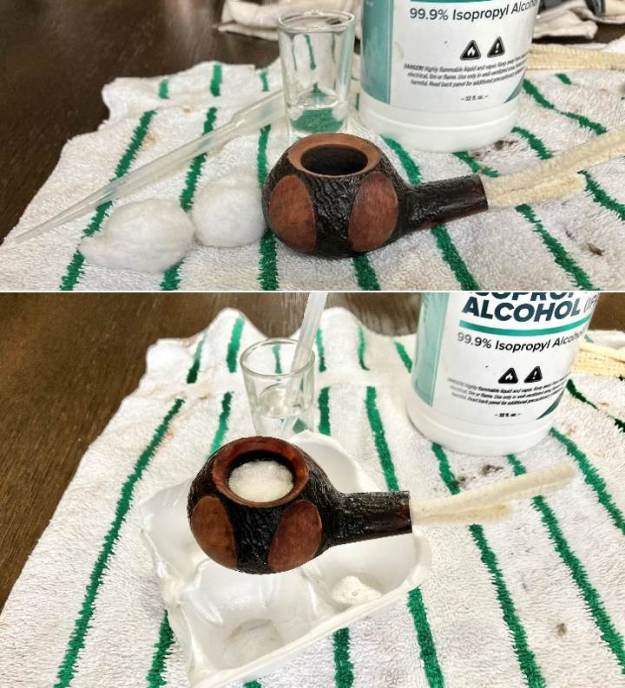
Now it was time to work on the pipe itself. I took photos of the pipe when I opened the box. It is a nice looking shape – Dublin with a saddle stem. Looking at it from the top down the shape of the top of the bowl is oval with a round bowl. You can see the finish as noted above and the oxidation on the stem as well. I took photos of the rim top and the top and underside of the stem. You can see how it fit against the shank. It is oxidized with light tooth chatter and marks on the surface on both sides. You can see the grime on the right side of the rim top and the cleanness (other than dust) of the bowl. It is a nice looking pipe.The next photo shows the stamping on the underside of the shank. It is clear and readable as noted above.I removed the stem from the shank and took a photo of the parts to give a sense of the overall look of the pipe. It is really a nicely designed looking bent Dublin that will look great once it is cleaned up.I scrubbed the exterior of the bowl with a tooth brush and undiluted Murphy’s Oil Soap. I worked over the rim top and edges and rinsed it with warm water scrubbing it while rinsing it. I dried it off and took these photos. I cleaned out the thin cake on the bowl walls with a Savinelli Fitsall Pipe Knife. I sanded the walls smooth with 220 grit sandpaper wrapped around a piece of dowel. I cleaned out the mortise and airway in the shank and the stem with cotton swabs, pipe cleaners and isopropyl alcohol until they came out clean.  With the pipe cleaned it still had a ghost of a smell to it. It was a sweet and horrible smell that was a combination of aromatic and Lakeland smells. I wonder if the previous owner had smoke Mixture 74 which leaves a horrible ghost. I stuffed the bowl with cotton bolls and twisted a plug of cotton and turned it into the shank. I used an ear syringe to fill the bowl with isopropyl alcohol and set it aside in an old ice tray to let the deghosting happen! In the morning I woke up to find the cotton bolls in the bowl to be brown around the edges and the shank cotton was also brown at the shank end. I removed it and cleaned the shank once more. The bowl smelled better and the ghost had been exorcised to a large degree. Once I removed the cotton bolls the pipe smelled much better. It was time to carry on with the external work on the pipe. I used a Walnut stain pen to touch up the area on the right side of the rim top. Once cleaned it was spotty under the damage and faded. The stain pen matched perfectly and the pipe looked better.I rubbed the bowl and shank down with Before & After Restoration Balm. I worked it into the finish with my fingers and used a shoe brush to press it deep into the crevices of the sandblast. The product works to deep clean the finish on the bowl and shank and enliven and protect the briar. After it sat for 15 minutes I wiped it off with a soft cloth. The briar really came alive with a rich shine. I took some photos of the bowl at this point to mark the progress in the restoration. It is a beautiful bowl.  I set the bowl aside and put the stem in the Briarville Pipe Stem Deoxidizer overnight and took a break to enjoy a movie. I touched up the GD stamp on the left side of the saddle stem with white acrylic fingernail polish. I applied it and worked it into the stamp with a tooth pick. Once it cured I scraped off the excess. It is definitely better though the stamp is faint in some spots.  I polished the stem with micromesh sanding pads – dry sanding with 1500-12000 grit pads. I wiped the stem down after each pad with Obsidian Oil to remove the sanding dust. I used the Before & After Pipe Polish to remove the small minute scratches left in the vulcanite. I finished by wiping the stem down with a final coat of Obsidian Oil and set it aside to dry. As usual at this point in the restoration process I am excited to be on the homestretch. I look forward to the final look when it is put back together, polished and waxed. I put the Gulden Dansk 9200 Dublin back together. I polished the bowl and stem with Blue Diamond to polish out the scratches in the briar and the vulcanite. I gave the bowl and the stem multiple coats of carnauba wax. I buffed the pipe with a clean buffing pad to raise the shine. I hand buffed it with a microfiber cloth to deepen the shine. The pipe polished up pretty nicely. The grain really pops with the wax and polish. The shiny black vulcanite stem is a beautiful contrast to the dark browns of the bowl and shank. This rusticated Gulden Dansk 9200 Bent Dublin  was another fun pipe to work on. It really is a quite stunning piece of briar whose shape follows the flow of the grain on the briar. The pipe is comfortable pipe to hold in the hand. The finished pipe is shown in the photos below. The dimensions of the pipe are Length: 5 ½ inches, Height: 2 inches, Outside diameter of the bowl: 1 ½ inches x 1 ¾ inches, Chamber diameter: 7/8 of an inch. The weight of the pipe is 1.31 ounces/ 37 grams. I will be sending this beautiful Gulden Dansk back to the pipeman who dropped it off. Thanks for reading my reflections on the pipe while I working on it.
Rebirthing a Lovely Late Republic Era Peterson’s Kapet 14S Saddle Stem Billiard


Blog by Steve Laug

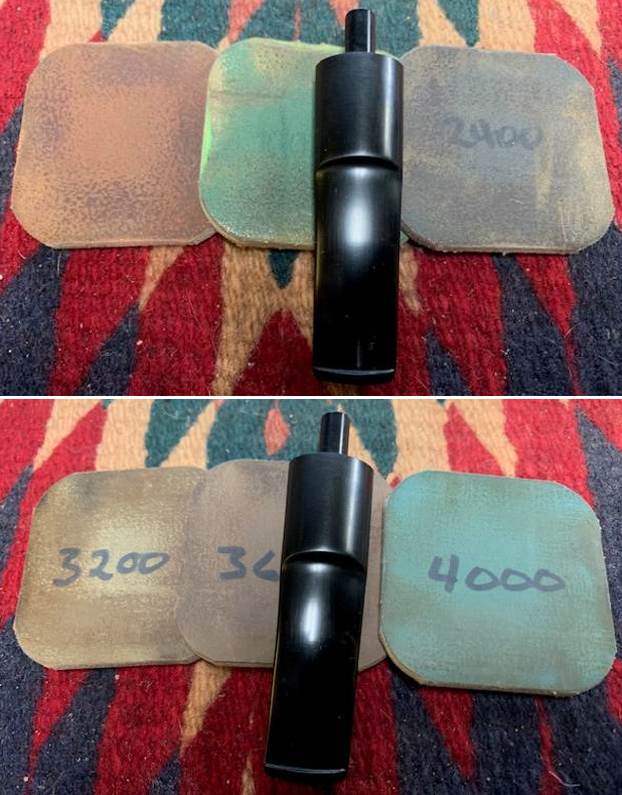
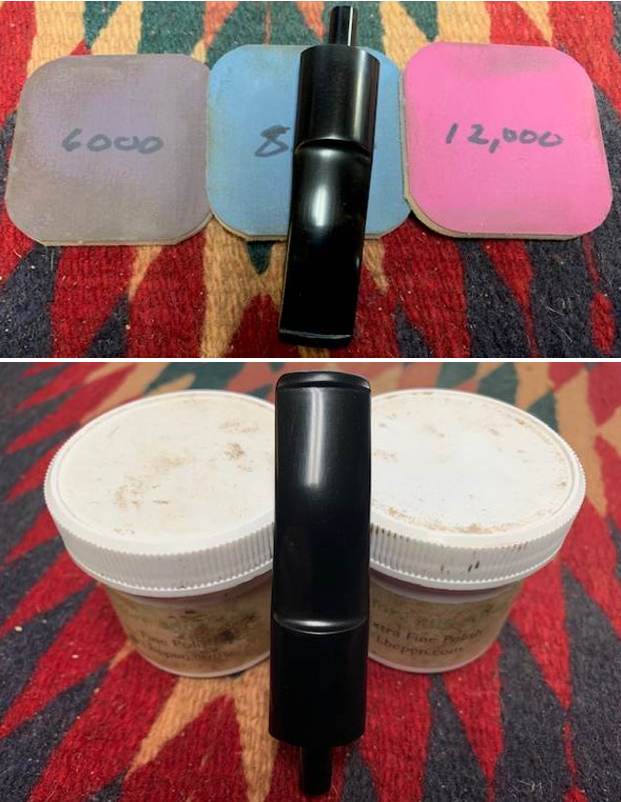
The next pipe I have chosen is a smooth Peterson’s pipe, a straight, saddle stem Billiard. It was also incredibly dirty. This Billiard is a real beauty under the grime with some great grain around the bowl. The grime was ground into the finish on the bowl sides. The contrast of the brown stains gave the grain a sense of depth. It was stamped on the left side of the shank and read Peterson’s [over] Kapet. The right side had the shape number 14S stamped near the bowl. Centered on the right side of the shank is stamped Made in the Republic of Ireland (in three lines). Neither Jeff nor I remember where we got the pipe or when. So we have no photos of the pipe before clean up. Judging from the damage on the rim top and edges I would guess it had been a mess. The stem had tooth marks and some oxidation. But Jeff had done a great job cleaning up the pipe as usual. He reamed the pipe with a PipNet reamer and cut back the cake back to the bare briar. He cleaned up the walls with a Savinelli Fitsall Pipe Knife. He scrubbed the interior of the bowl and shank with pipe cleaners, cotton swabs and alcohol to remove the tars and oils. He scrubbed the exterior of the pipe with Murphy’s Oil Soap and a tooth brush to remove the grime from the finish. He worked on the rim top lava and darkening with the soap and tooth brush. He scrubbed the inside of the stem with alcohol and pipe cleaners. He scrubbed the exterior with Soft Scrub and then soaked it in Before & After Deoxidizer. He washed it off with warm water to remove the Deoxidizer. The pipe looked far better when it arrived. I took some close up photos of the rim top and also of the stem surface. I wanted to show how well it had cleaned up. The rim top photo looks good but there is some burn damage on the inner edge at the back of the bowl and all around the inner edge there is darkening. I also took close up photos of the stem to show the light tooth marks and chatter on the surface near the button. I took photos of the stamping on the sides of the shank. You can see that it is stamped as noted above. It is clear and readable. He took photos of the stamping on the sides of the shank. It is clear and readable and reads as noted above. I took the pipe apart and took a photo of the pipe. It is a good looking pipe and has some great cross grain on the sides of the bowl. I am including the link to the Pipedia’s article on Peterson pipes. It is a great read in terms of the history of the brand (https://pipedia.org/wiki/Peterson). There was a short note toward the bottom of the page about the series. It is definitely referring to the newer line that came out later. I quote:

I turned to Pipedia (https://pipedia.org/wiki/Peterson) to first pin down a date that the pipe was made. I knew that the Made in Ireland stamp would give me that. I quote:

As usual when trying to get accurate facts in regard to Peterson history, something will jump up and get in the way. They are missing many of their records. The following is the best that we can do for a guide to the myriad markings during the period 1922 – 1949. Prior to 1920 it was rare for a country of origin to be stamped on the pipe, just Peterson’s Dublin on the band. After 1921/22, if it is stamped “MADE IN IRELAND” and the “Made in” is stacked over “Ireland” or “MADE IN EIRE” or several other forms, it was made between 1922 and 1938. A considerable number of Peterson pipes were stamped “Irish Free State”. From about 1930 to 1949, most of the pipes (those which were stamped) were stamped “Made in Ireland”.” If the stamp reads “MADE IN IRELAND” in a circle, the pipe was made between 1939 and 1948. These are all “Pre-Republic” pipes. I can tell you that the mark “Irish Free State” was adopted in 1922; and replaced by “Eire” in 1937 and then by “Republic of Ireland” in 1949.

That gave me a date for the pipe – it was made between 1922 and 1938 as can be proved by the Made in Ireland stamp on the right side of the shank.

I turned to “The Peterson Pipe” by Mark Irwin and Gary Malmberg to get some background on the Kapet line. On page 305 it had the following information.

Kapet (1925-87) Line first described in 1925 brochure and featured in occasional catalogs through ’87. Early specimens will be stamped IRISH over FREE STATE. Described in 1937 catalog as available in dark plum or natural finish. Featured an aluminum “inner tube” or stinger until ’45. Mid-century specimens may be stamped MADE IN over IRELAND. Specimens from 1970 on may have mounts with hallmarks.

I knew that I was dealing with a Late Republic Era Kapet. Now it was time to work on the pipe.

I decided to address the rim top damage first. I used a folded piece of 220 grit sandpaper to give the edge a slight bevel to further minimize the damage to the rim. I then used a piece of sandpaper and a wooden ball to even the bevel and give the rim a uniform look. I think that it is definitely better once I finished. I wiped down the bowl and rim top with acetone on a cotton pad to remove the spotty finish on the bowl and make blending in the sanded rim top simpler. I polished the briar rim top and edges along with the rest of the briar with micromesh sanding pads –dry sanding with 1500-12000 grit pads and using a damp cloth after each pad. I worked some Before & After Restoration Balm into the surface of the briar with my fingertips to clean, enliven and protect the briar. I let the balm sit for 15 minutes and then buffed with a cotton cloth to raise the shine. The photos show the bowl at this point in the restoration process. I set the bowl aside and turned my attention to the stem. I “painted” the tooth marks with the flame of a lighter to lift them. They came up significantly. I filled in the tooth marks that remained on both sides with clear super glue. I let the repairs cure. Once they had cured I recut the edge and flattened the repairs with a flat file. I sanded them with 220 grit sandpaper. I started the polishing with 400 grit wet dry sandpaper. I wiped it down with some Obsidian Oil. I touched up the “P” stamp on the stem with an acrylic white fingernail polish. I worked it into the stamp with a toothpick. I let it sit for a few minutes then scraped off the excess.I polished the stem with micromesh sanding pads – wet sanding with 1500-12000 grit sanding pads. I wiped it down after each sanding pad with Obsidian Oil. I polished it with Before & After Pipe Stem Polish – both Fine and Extra Fine. I am always excited to finish a restoration and this Peterson’s Kapet 14S Saddle Stem Billiard is no exception. I put the pipe back together and buffed it with Blue Diamond on the buffing wheel. I gave the bowl and stem multiple coats of carnauba wax. I hand buffed the pipe with a clean buffing pad to raise the shine and hand buffed it with a microfibre cloth to deepen the shine. It is fun to see what the polished bowl looks like with the polished black vulcanite stem. This Classic looking Peterson’s Kapet 14S Billiard feels great in my hand. It is light and well balanced. Have a look at it with the photos below. The dimensions are Length: 5 ½ inches, Height: 1 ½ inches, Outside diameter of the bowl: 1 ¼ inches, Chamber diameter: ¾ of an inch. The weight of the pipe is 30 grams/1.09 ounces. It is a beautiful pipe and one that will be on the Irish Pipe Makers Section of the rebornpipes store soon. If you are interested in adding it to your collection let me know. Thanks for walking through the restoration with me as I worked over this pipe. Thanks to each of you who are reading this blog.

New Life for a Republic Era Peterson’s Emerald 150 Bulldog


Blog by Steve Laug

The next pipe I have chosen is smooth finished Peterson’s Emerald pipe. This one is a smooth 150 Straight Bulldog. It has a triple band on the shank – 2 thinner brass bands separated by and emerald green acrylic band. This pipe was purchased off eBay on 03/01/17 from Rochester, New York, USA. The pipe was very dirty with grit and grime on the bowl and shank. The mix of brown stains gives depth to the grain around the bowl. It was stamped on the top left side of the shank and read Peterson’s [over] Emerald. On the right side it reads Made in the Republic of Ireland in three lines and the shape number 150. The bowl was heavily caked with a thick overflow of lava on the rim top. The edges of the bowl appeared to be in good condition under the lava. The stem was oxidized, calcified and had tooth chatter and marks on the top and underside on and near the button. Jeff took photos of the pipe before his cleanup work. They tell the story and give a glimpse of the pipe.Jeff took photos of the rim top and stem to show the general condition of the pipe. The bowl is heavily caked with a thick overflow of lava on the top and edges. The stem is calcified, oxidized and has tooth marks and chatter on the top and underside near the button. Jeff took photos of the bowl sides and heel to show the grain around this bowl and shank. Underneath all the grime it is a nice looking pipe. He took photos of the underside of the shank to show the stamping. The stamping is readable in the photos below and is as noted above. I am including the information from Pipedia’s article on Peterson pipes. It is a great read in terms of the history of the brand (https://pipedia.org/wiki/Peterson). I have included a bit of the pertinent history here.

1950 – 1989 The Republic Era – From 1950 to the present time, the stamp for this era is “Made in the Republic of Ireland” in a block format generally in three lines but two lines have been used with or without Republic being abbreviated.

During the 1950’s and 60’s the Kapp & Peterson Company was still in the ownership of the Kapp family. However 1964 saw the retiral of the company Managing Director Frederick Henry(Harry) Kapp.

I knew that I was dealing with a Republic Era pipe made between 1950 and the present. Now it was time to work on the pipe.

I turned to The Peterson Pipe book by Mark Irwin and Gary Malmberg for more information. On page 299 there was a summary of the Emerald Pipe. I quote

Emerald (1987-) Moderate-priced  line in Bordeaux and black rustic finish with a shank band of green acrylic between brass rings, P-lip mouthpiece; smooth walnut version added in ’91. Fishtail mouthpiece added in ’97. Identical line and finishes named Jade from early eighties until ’87.

This information narrowed down the date even further. The smooth walnut finish was added in 1991 so this one came out before 1991 and has a P-lip style mouth piece.

Jeff had done a great job cleaning up the pipe as usual. He reamed the pipe with a PipNet reamer and cut back the cake back to the bare briar. He cleaned up the walls with a Savinelli Fitsall Pipe Knife. He scrubbed the interior of the bowl and shank with pipe cleaners, cotton swabs and alcohol to remove the tars and oils. He scrubbed the exterior of the pipe with Murphy’s Oil Soap and a tooth brush to remove the grime from the finish. He worked on the rim top lava with the soap and tooth brush. He scrubbed the inside of the stem with alcohol and pipe cleaners. He scrubbed the exterior with Soft Scrub and then soaked it in Before & After Stem Deoxidizer. He rinsed it off with warm water to remove the Deoxidizer. It looked very good when I brought it to the worktable. The briar was very clean with some darkening on the rim top and inner edge. The stem had light oxidation and tooth marks. I took close up photos of the rim top and the stem surface. I wanted to show how well it had cleaned up. The rim top looked very good. The beveled inner edge and top had some darkening that would need to be cleaned up in the next steps of the process. I took photos of the stem to show the tooth marks on the surface ahead of the button and the light oxidation on the stem surface.I took a photos of the stamping on the sides of the shank. You can see that it is stamped as noted above. It is clear and readable.I took the pipe apart and took a photo of the pipe. It is a good looking pipe and has beautiful grain around the bowl and shank.I began my work on the pipe by dealing with the rim top and beveled inner edge of the bowl. I used a folded piece of 220 grit sandpaper to smooth it our and lessen the darkening. It cleaned up well and looked very good. I  polished the briar with micromesh sanding pads – dry sanding with 1500-12000 grit pads and wiping the bowl down after each sanding pad. The grain really began to shine through. It is a beautiful pipe. I worked some Before & After Restoration Balm into the surface of the briar with my fingertips to clean, enliven and protect the briar. I let the balm sit for 15 minutes and then buffed with a cotton cloth to raise the shine. The photos show the bowl at this point in the restoration process. I set the bowl aside and worked on the stem. I sanded out the tooth marks and chatter in the surface and the button edges with 200 grit sandpaper. I started the polishing with 400 grit wet dry sandpaper.I polished the stem with micromesh sanding pads – wet sanding with 1500-12000 grit sanding pads. I wiped it down after each sanding pad with Obsidian Oil. I polished it with Before & After Pipe Stem Polish – both Fine and Extra Fine. I am excited to finish this Republic Era Peterson’s Emerald 150 Straight Bulldog.  I put the pipe back together and buffed it with Blue Diamond on the buffing wheel. I gave the bowl and the stem multiple coats of carnauba wax. I buffed the pipe with a clean buffing pad to raise the shine and hand buffed it with a microfibre cloth to deepen the shine. It is fun to see what the polished bowl looks like with the rugged rustication all around it. Added to that the polished triple brass and emerald acrylic band and the black vulcanite stem was beautiful. This Classic Peterson’s Emerald is nice looking and the pipe feels great in my hand. It is light and well balanced. Have a look at it with the photos below. The dimensions are Length: 5 ½ inches, Height: 1 ¾ inches, Outside diameter of the bowl: 1 ¼ inches, Chamber diameter: ¾ of an inch. The weight of the pipe is 42 grams/1.48 ounces. It is a beautiful pipe and one that will be on the Irish Pipe Makers Section of the rebornpipes store soon. If you are interested in adding it to your collection let me know. Thanks for walking through the restoration with me as I worked over this pipe. Thanks to each of you who are reading this blog.

Swapping Bowls on a Peterson’s Cracked and Damaged Belgique


Blog by Steve Laug

I received an email from a fellow in England who was looking for a bowl for a Peterson’s Beligique that he had. His small Beligique was cracked and irreparable and he was looking for a new bowl. Interestingly I had a bowl without a stem in my box of Peterson’s here. I was looking for a stem for it so this was one of those interesting connections. He sent me the bowl and stem of his damaged pipe to me to see if it would work with my bowl. His damaged pipe was severely cracked and was exactly what he had said it was. It was Peterson’s of Dublin Belgique military mount with a P-lip stem. It was stamped on the left side of the shank with the words Peterson’s [arched over] Of Dublin. On the right side of the shank it is stamped London Made [over] England. It has no shape number on them and a vulcanite shank extension bearing the Peterson’s “P”. The stem was in good condition with chatter and tooth marks on both sides ahead of the button. It also has some light oxidation. I took photos of the crack around the bowl – all the way across the back of the bowl and across the left side with a branched crack going down the side of the bowl almost to the heel. It was a nasty crack. There was a thick cake in the bowl that told the story of how the crack had happened. I have a 2010 Peterson Catalogue on rebornpipes that shows the various shapes that Peterson made. There is a page there on Specialty Pipes that shows the pipes that I am working on. The pipes pictured are different from the two that I am working on in that both of these are military mount stem. It states that the Belgique and Calabash are two petite and lightweight Peterson crafted with all the care and know how of century old pipe makers, from finest quality briar in red polish and rustic finishes with Fishtail mouthpieces only. However they are described in the catalogue the two shapes that are extremely lightweight. These two are not red polish but actually a rich matte brown finish. The fishtail mouthpieces are classic military mounts that can easily be removed to fit in the pocket. They represent the best micro-pocket pipe within the Peterson portfolio. I have included the noted page below (https://rebornpipes.com/2015/05/15/).On a previous restoration I did a bit more digging on the Peterson Pipe Notes blog. There I found that Mark had included a photo of the various Specialty pipes. Peterson’s first put these four small pipes on the market in 1945 – Tankard & Barrel, Calabash & Belgique seen in the photo below.  Here is the link to Mark’s Blog (https://www.petersonpipenotes.org/tag/peterson-valentia-pipe/).I did a bit more digging and found some descriptions of the two shapes that I am working on. The various descriptions of the Belgique come from a variety of sites and the final one is quoted on the Brothers of Briar site.

…The Belgique is yet another extremely lightweight, petite pipe. It can be described as a tulip shape, and is fitted… and fishtail mouthpiece. A rich brown hue adorns the briar and makes for an attractive finish to this pocket companion.

…The Peterson Belgique Pipe is a straight cutty, which is a traditional shape derived from the old clay pipes. It is a small un-filtered pipe made from the finest Briar that Peterson have become renowned for. It has a smooth polished finish with a rich Brown stain to show of the natural grain pattern of the Briar.

…I have a pre rep Belgique love it. As you know the bowl is pretty large for the small pipe measuring 5/8″ ID and 1 1/4″ deep. My pipe is just shy of 6″ long and only weighs 11.7 grams. the bowl is not tapered which makes the capacity rather nice. Depending on what tobacco you load you will get a 30- 45 min smoke. The Belgique has thin walls so you have to sip very slowly and tamp more than usuall. The newer models have a fishtail stem which i believe makes the newer pipes not as delicate as my military p lip. If you decide to get the Belgique I am sure you will not be disappointed. (http://www.brothersofbriar.com/t16010-anybody-familiar-with-peterson-s-belgique-model).

…The Belgique is one of our favorite shapes in the Peterson line up. Interestingly, while it was a serious mainstay of the brand in decades past, it sort of faded into obscurity for a few years there, before being seriously revived in the past decade. A particularly small shape, and sort of an oddity in Peterson’s shaping lexicon (a bit like Native American loan words in English), it nonetheless fits the timeless, elegant style for which Peterson is known and loved.             

I took the bowl I had without a stem out and took photos of it. You can that is the same shape and over all size as the cracked bowl. It is stamped on the left side and reads Peterson’s [arched over] Dublin. The right side is stamped Made in the Republic of Ireland (three lines). It is all clear and readable. The bowl had been cleaned and reamed. The rim top was damaged, slightly out of round and had some darkening on the top and edges. I put the two bowls side by side and took photos of them. They are quite similar. The top one in the photo was the cracked original bowl and the bottom one is the new bowl. There is some variation but that is quite normal. The new bowl is a bit thicker and the shank is a bit shorter. But they look similar enough. I took photos of the stamping on the sides of the shank. It was clear and readable on both sides. The ”P” logo stamp was clear on the left side of the vulcanite ferrule. It will need to be touched up but it is clear. I decided to turn my attention to cleaning up the rim top and the inner edge of the bowl. I wanted to remove the burn and darkening damage from both. I used a folded piece of 220 grit sandpaper to work over the edge and the rim top. I also worked on the darkening on the outside edge of the bowl. It looked much better.I used a piece of 220 grit sandpaper to reduce the diameter of the tenon end of the stem to better fit the shank extension. I used a rolled piece of sandpaper and several round and flat files to open the diameter of the shank extension. I worked on it until it matched the diameter of the opening in the shank extension of the cracked bowl.I polished the bowl with 1500-12000 grit micromesh sanding pads to raise a shine on the briar. Each successive pad raised more of a shine on the bowl. Once finished, It looked very good. I touched up the “P” stamp on the shank extension with white acrylic fingernail polish. I filled in the stamping with the white acrylic and worked it into the stamp. Once it dried I used a worn micromesh 1500 grit pad to clean off the excess. It looked very good.I rubbed down the bowl with Before& After Restoration Balm. It works to clean, protect and preserve the briar. I worked it into the surface with my finger tips. I let it sit for 15 minutes then buffed it off with a soft cloth. The bowl looked good and the grain stood out clearly. I set the bowl aside and worked on the stem. I took photos of the stem that came with the damaged bowl. The vulcanite ferrule was the same on both pipes but the opening on the new bowl was slightly smaller than the old one. I would need to open it up for a good fit in the shank. I would also need to reshape the tenon end of the stem for a proper look. There were also tooth marks and chatter on both sides as well as some light oxidation.I “painted” the tooth marks with the flame of a lighter. I filled in the remaining tooth marks with a clear CA glue. Once it cured, sanded the repairs smooth with 220 grit sandpaper. I also worked on the diameter of the tenon end of the stem at the same time. I started to polish it with 400 grit wet dry sandpaper. I polished the stem with micromesh sanding pads – wet sanding with 1500-12000 grit sanding pads. I wiped it down after each sanding pad with Obsidian Oil. I polished it with Before & After Pipe Stem Polish – both Fine and Extra Fine and buffed it off with a final coat of Obsidian Oil. This Peterson’s Speciality Pipe is a great addition. The Belgique shape is classic in every way. It is petite, lightweight and comfortable in the hand. It will be a short smoke. The briar is beautifully grained and the black vulcanite military/stick P-lip stem go well with the briar and the vulcanite shank extension. I polished stem and the bowl with Blue Diamond polish on the buffing wheel. I gave the bowl and the stem multiple coats of carnauba wax. I buffed the pipe with a clean buffing pad to raise the shine. I hand buffed it with a microfiber cloth to deepen the shine. The pipe polished up pretty nicely. The rich stained briar on both bowls took on life with the buffing. The rich brown colour of the briar bowl works well with the polished vulcanite stem. The finished pipe has a rich look that is quite catching. Have a look at it with the photos below. The shape, finish and flow of the pipe and stem are very well done. The dimensions of the Belgique are Length: 5 inches, Height: 1 ½ inches, Outside diameter of the bowl: 7/8 of an inch, Chamber diameter: 5/8 of an inch. The weight of the pipe is .53 ounces/14 grams. I am pleased with how the pipe turned out. It looks very good and shows some signs of age. I will be sending it back to the fellow in England soon. Thanks for reading the blog.

Breathing New Life into a Late Republic Era Peterson’s System Standard 309


Blog by Steve Laug

The next pipe I removed from box of Peterson’s Pipes that I have to work on was a Peterson’s System Standard pipe. Once again we are getting into pipes that have been here for a long time and pipes that neither Jeff or I have any memory of where it came or when we found it. It was stamped on both sides of the shank. On the left side it read Peterson’s [over] System [over] Standard. On the right side it was stamped Made in the Republic of Ireland (3 lines) and under that was the shape number 309. The shape is one of the most familiar of Peterson’s shapes, taking the Irish maker’s signature shank stoutness to an extreme: the shank here is nearly as wide across as the bowl itself. The nickel ferrule was in great condition and was stamped K&P [over] Petersons. Judging from the look of the rim top and inner edge I would guess that it had a thick cake when we bought it and the top was heavily coated in lava. The rim was out of round a bit. The vulcanite stem had been oxidized and had tooth marks and chatter near the button on both sides. Obviously we did not have pictures of the pipe before Jeff’s clean up so I took these photos of the pipe when I brought it to my work table. I took close up photos of the bowl, rim and the new stem. You can see the reamed bowl and the darkening, remaining lava and damage on the rim top and the inner edge. The new stem is in perfect condition and will only need to be polished.I took photos of the stamping on the sides of the shank and the nickel ferrule. All are clear and readable as noted above. I removed the stem from the shank and took a photo to give a sense of the proportions of the pipe. It is really quite nice looking.I am including the information from Pipedia’s article on Peterson pipes. It is a great read in terms of the history of the brand (https://pipedia.org/wiki/Peterson). I have included a bit of the pertinent history here.

1950 – 1989 The Republic Era – From 1950 to the present time, the stamp for this era is “Made in the Republic of Ireland” in a block format generally in three lines but two lines have been used with or without Republic being abbreviated.

During the 1950’s and 60’s the Kapp & Peterson company was still in the ownership of the Kapp family. However 1964 saw the retiral of the company Managing Director Frederick Henry(Harry) Kapp.

Pipedia also included a section of information on the System pipes including a diagram of the sytems look (https://pipedia.org/wiki/Peterson#Republic_Era_Pipes). I quote a section of the article in part and include a link to another article on Pipedia on the System pipe.

The Peterson System pipes are the standard bearers of the Peterson pipe family, famous for the excellent smoking pleasure they provide. Often imitated but never equaled, the Peterson System smokes dry, cool and sweet, thanks to the scientific effectiveness of the original design. The heart of the System is the unique graduated bore in the mouthpiece. This makes the suction applied by the smoker 15 times weaker by the time it reaches the tobacco chamber. The result is that all the moisture flows into the reservoir and, thus cannot reach the smoker’s mouth. The Peterson Lip further enhances the effectiveness of the graduated bore by directing the flow of smoke upwards and away from the tongue. This achieves a uniquely even distribution of smoke and virtually eliminates any chance of tonguebite or bitterness. Furthermore, the shape is contoured so that the tongue rests comfortably in the depression under the opening. Each “PLip” mouthpiece is made from Vulcanite. For the Peterson System pipes to work properly, the stem/tenon has to have an extension, the tip of which will pass by the draft hole from the bowl and into the sump. Upon the smoker drawing in smoke, this extension then directs the smoke down and around the sump to dispense a lot of the moisture before the smoke enters the extension and stem. On the System Standards and other less expensive systems, this extension with be made of Vulcanite turned integrally with the stem. On the more expensive System pipes this extension will be made of metal which screws into the Vulcanite stem. This extension on the earlier pipes will be of brass and the newer pipes will be of aluminium. Most smokers not knowing this function of the metal extension, assumes that it is a condenser/stinger and will remove it as they do with the metal condensers of Kaywoodie, etc. Should you have a System pipe with this metal extension, do not remove it for it will make the System function properly and give you a dryer smoke (https://pipedia.org/wiki/A_closer_look_at_the_famous_Peterson_Standard_System_Pipe).

With that information in hand I knew what I was dealing with in terms of the stamping and the age of this pipe. I knew from the information that the pipe was made during the Late Republic Era between 1950 and the present day. Personally I think this is probably a 60s-70s pipe. Now it was time to work on the pipe.

Jeff had thoroughly cleaned up the pipe. He reamed the pipe with a PipNet Pipe Reamer and cleaned up the remnants with a Savinelli Fitsall Pipe Knife.  He scrubbed the bowl with undiluted Murphy’s Oil Soap with a tooth brush. He rinsed it under running warm water to remove the soap and grime. He cleaned out the inside of the sump in the shank and the airway in the stem with alcohol, cotton swabs and pipe cleaners. He scrubbed the exterior of the stem with Soft Scrub to remove as much of the oxidation and calcification as possible. He soaked the stem in Before & After Deoxidizer and rinsed it off with warm water.

I decided to work on the damage on the top and the inner edge of the bowl first. I started the work with a folded piece of 220 grit sandpaper to clean up the inner bevel of the rim. Then moved on to using a wooden ball and a piece of 220 grit sandpaper to give the edge a uniform bevel and smooth out the rim top. Once I had finished I think that it looked much better. I wiped off the varnish coat with acetone and a cotton pad to remove the spotty finish and to also blend in the sanded rim top. I polished the briar with micromesh sanding pads – dry sanding with 1500-12000 grit pads. I wiped the bowl down after each  pad to remove the grit. The bowl began to take on a rich shine. It is going to be a beauty. I rubbed the bowl down with Before & After Restoration Balm. I worked it into the briar with my finger tips. I let it sit for 10 minutes and the Balm did its magic. It enlivens, cleans and preserves the briar. It certainly brought this bowl back to life. I buffed it off with a clean cloth and took the following photos.  I set the bowl aside and turned to work on the stem. I “painted” the tooth marks on the stem with the flame of a Bic Lighter to lift them. I was able to lift them all to some degree. I filled in those that remained with clear CA glue. I used a small file to flatten the repairs. I sanded them smooth with 220 grit sandpaper. I started polishing the stem with 400 grit wet dry sandpaper. I polished the vulcanite stem with micromesh sanding pads – 1500-12000 grit pads. I wiped it down with a damp cloth after each sanding pad. I used Before & After Pipe Polish – both Fine and Extra Fine to further polish the stem. This Republic Era Ireland Peterson’s System Standard Bent 309 with a Nickel Ferrule and a vulcanite P-lip stem is a great looking pipe now that it has been restored. The beautiful grain that shines through the polished finish is stunning. As the pipe is smoked the patina should develop and look even better. I put the stem back on the bowl and carefully buffed the pipe with Blue Diamond on the buffing wheel. I gave the bowl and the stem multiple coats of carnauba wax on the buffing wheel and followed that by buffing the entire pipe with a clean buffing pad. I hand buffed the pipe with a microfiber cloth to deepen the shine. The finished Peterson’s System Standard 309 Bent fits nicely in the hand and feels great. Give the finished pipe a look in the photos below. The dimensions of the pipe are Length: 6 inches, Height: 2 inches, Outside diameter of the bowl: 1 ¼ inches, Chamber diameter: ¾ of an inch. The weight of the pipe is 53 grams/1.83 ounces. I will be adding the pipe to the Irish Pipe Makers Section of the rebornpipes store. If you are interested in purchasing this pipe send me a message or an email. Thanks for reading this blog and my reflections on the pipe while I worked on it.

Repairing a Damaged and Non-functional Prancing Horse Cheroot Holder


Blog by Steve Laug

I was gifted this damaged Meerschaum Cheroot holder by a fellow we have purchased a lot of pipes from. We have a good rapport with each other and have exchanged a lot of emails. He wrote that he had a small Cheroot holder he wanted to gift to me that was quite unique. It had a carved horse on the top of the shank. The horse was in great condition but the amber stem was crookedly glued to the shank and had broken in half. I gave the end of each piece of the stem a thin coat of glue to hold the pieces together. I put a greased pipe cleaner in and glued the parts and let it cure. I removed the pipe cleaner and took the following photos of the Cheroot holder. It was an interesting looking piece that had some great history if it could only speak to us. The airway in the stem was clear and but the bowl was clogged with tars and the rim top had a tar coat build up on the rim top. The airway was clogged with no draught. I took a photo of the glued stem to show the fit of the parts and also the fit of the stem to the shank. The pieces fit very well together but the fit of the stem to the shank was way off. You can see the gap at the top of the second photo below. The stem was crooked on the shank. I used a folded piece of 220 grit sandpaper to remove the tar build up on the rim top. It looked much cleaner. There was some colour to the rim top. It looked much better.I used a tooth pick and a pipe cleaner to clean out the airway in the inside of the bowl. When I removed the pipe cleaner the bowl came off without damage and I was able to further clean it on the inside of the bowl and the shank of the Cheroot holder. Whatever was clogging it was rock hard. Once cleaned the bowl fit tightly into the shank. It was now clean to the shank end from both directions.I did a quick Google search for small carved animal Cheroot holder with amber stems and possibly a case. I looked through the various carved holders and found a carved Fox with the same bowl insert as the one I was working on and the same style amber stem as the one I was working on and also was broken at the end (http://www.keilsantiques.com/antiques/objets-dart/antique-carved-meerschaum-fox-cheroot-holder). I saved photos of the pipe from the site both outside and inside the case. You can see the similarities between the two carvings.  Unfortunately there was no real information on the carver or age of the piece.While I was cleaning the stem the glue came loose at the stem/shank joint. Nothing broke in the amber which I was happy for but the glue let loose. I was actually very glad because I could adjust the fit of the stem to the shank. The problem was that the shank had been filled in with the super glue and was rock hard. The shank was so thin that I would not be able to drill it out so I was now faced with the facts that the pipe was not going to be usable. I flattened out the end of the stem and the shank with a topping board to make a clean junction. I reglued it with clear CA glue and held the surfaces flat against each other until the glue hardened. You can see the look and fit of the newly refit stem in the photos below. I took a photo of the carved prancing horse on the top of the cheroot holder. It is actually well carved and in good condition.I took photos of the bowl and rim top and stem. You can see the clean bowl and rim top. It looks very good. The fit of the stem is very good. The repair is visible but should lessen with polishing. It is an interesting piece and a shame that it is not usable or fixable.I sanded the repairs with a folded piece of 220 grit sandpaper to further smooth them out and blend them into the surrounding amber. It is looking better.I polished the bowl and stem with micromesh sanding pads – wet sanding with 1500-12000 grit pads and wiping down the stem after each pad with a cloth impregnated with Obsidian Oil. It is starting to look very good. I gave the bowl and stem a coat of Clapham’s Beeswax. I carefully put it on the bowl and the stem to protect and preserve it. I carefully polished it with a soft cloth. The last thing I wanted to do was break it again. The dimensions of the cheroot holder are Length: 3 ½ inches, Height: 1 inch,  Bowl diameter: ¾ of an inch, Chamber diameter: ½ of an inch. The weight of the piece is .49 ounces/14 grams. It is a great piece of tobacciana history and one that I will enjoy having in my collection for display. Once I have my office back in shape it will sit on top of a pipe cabinet on my desk top. Thanks for giving the blog a read. I appreciate all of you follow rebornpipes. Thank you.

New Life for a Peterson’s System Standard 312 with Great Grain


Blog by Steve Laug

The next pipe I removed from box of Peterson’s Pipes that I have to work on was a Peterson’s System Standard pipe. It was purchased from an online auction on 09/12/2019 in Front Royal, Virginia, USA. It had a smooth finish. It was stamped on both sides of the shank. On the left side it read Peterson’s [over] System [over] Standard. On the right side it was stamped Made in the Republic of Ireland (3 lines) and under that was the shape number 312. The nickel ferrule was in great condition and was stamped K&P [over] three Faux Hallmarks followed by Peterson. There was a thick coat of lava in the bowl and an overflow of lava on the rim top. The inner rim had some darkening and is damaged and slightly out of round. The vulcanite stem was lightly oxidized and had tooth marks and chatter near the button on both sides. There was also a hole in the underside of the stem so a decision would need to be made whether to replace it. Jeff took photos of the pipe before he started his clean up work on it. Jeff took close up photos of the bowl and rim top to show the condition of the bowl and the darkening and damage to the inner edge as well. You can also see the thick cake in the bowl and the light lava on the rim top. He also took close up photos of the stem to show its condition as mentioned above. He took photos of the stamping on both sides of the shank. On the left side it reads Peterson’s [over] System [over] Standard. On the right side it read Made in the Republic of Ireland (three lines) over the shape number 312.  The nickel ferrule stamping is very readable and undamaged.  He took photos of the sides and heel of the bowl to show the sensational grain on this pipe. It is a real beauty that has a shape that follows the grain. I have included the information on the shape number on this pipe that I picked up on researching the other pipes. It is a Peterson’s System Standard pipe with a 312 shape number. I started my hunt for information by turning to a Peterson Catalogue that I have on rebornpipes and looked up the System Standard pipes (https://rebornpipes.com/tag/peterson-hallmark-chart/). I have put a red box around the 312 shown in the catalogue page shown below. That should give a clear picture of the size and shape of the pipe.I am also including the information from Pipedia’s article on Peterson pipes. It is a great read in terms of the history of the brand (https://pipedia.org/wiki/Peterson). I have included a bit of the pertinent history here.

1950 – 1989 The Republic Era – From 1950 to the present time, the stamp for this era is “Made in the Republic of Ireland” in a block format generally in three lines but two lines have been used with or without Republic being abbreviated.

During the 1950’s and 60’s the Kapp & Peterson company was still in the ownership of the Kapp family. However 1964 saw the retiral of the company Managing Director Frederick Henry(Harry) Kapp.

Pipedia also included a section of information on the System pipes including a diagram of the sytems look (https://pipedia.org/wiki/Peterson#Republic_Era_Pipes). I quote a section of the article in part and include a link to another article on Pipedia on the System pipe.

The Peterson System pipes are the standard bearers of the Peterson pipe family, famous for the excellent smoking pleasure they provide. Often imitated but never equaled, the Peterson System smokes dry, cool and sweet, thanks to the scientific effectiveness of the original design. The heart of the System is the unique graduated bore in the mouthpiece. This makes the suction applied by the smoker 15 times weaker by the time it reaches the tobacco chamber. The result is that all the moisture flows into the reservoir and, thus cannot reach the smoker’s mouth. The Peterson Lip further enhances the effectiveness of the graduated bore by directing the flow of smoke upwards and away from the tongue. This achieves a uniquely even distribution of smoke and virtually eliminates any chance of tonguebite or bitterness. Furthermore, the shape is contoured so that the tongue rests comfortably in the depression under the opening. Each “PLip” mouthpiece is made from Vulcanite. For the Peterson System pipes to work properly, the stem/tenon has to have an extension, the tip of which will pass by the draft hole from the bowl and into the sump. Upon the smoker drawing in smoke, this extension then directs the smoke down and around the sump to dispense a lot of the moisture before the smoke enters the extension and stem. On the System Standards and other less expensive systems, this extension with be made of Vulcanite turned integrally with the stem. On the more expensive System pipes this extension will be made of metal which screws into the Vulcanite stem. This extension on the earlier pipes will be of brass and the newer pipes will be of aluminium. Most smokers not knowing this function of the metal extension, assumes that it is a condenser/stinger and will remove it as they do with the metal condensers of Kaywoodie, etc. Should you have a System pipe with this metal extension, do not remove it for it will make the System function properly and give you a dryer smoke (https://pipedia.org/wiki/A_closer_look_at_the_famous_Peterson_Standard_System_Pipe).

With that information in hand I knew what I was dealing with in terms of the stamping and the age of this pipe. I knew from the information that the pipe was made during the Late Republic Era between 1950 and the present day. Personally I think this is probably a 60s-70s pipe. Now it was time to work on the pipe.

With that information at hand I turned to work on the pipe itself. Jeff had thoroughly cleaned up the pipe. He reamed the pipe with a PipNet Pipe Reamer and cleaned up the remnants with a Savinelli Fitsall Pipe Knife.  He scrubbed the bowl with undiluted Murphy’s Oil Soap with a tooth brush. He rinsed it under running warm water to remove the soap and grime. He cleaned out the inside of the sump in the shank and the airway in the stem with alcohol, cotton swabs and pipe cleaners. He scrubbed the exterior of the stem with Soft Scrub to remove as much of the oxidation and calcification as possible. He soaked the stem in Before & After Deoxidizer and rinsed it off with warm water. The hole in the stem was big enough that I chose not to keep it. Fortunately last weekend I was gifted some new replacement stems for Peterson’s pipes that came from the factory. I had the perfect stem that was the same size, shape and style, a veritable twin of the damaged stem so I replaced the stem with a hole. I took photos of the pipe and the new stem before I started to work on it.  I took close up photos of the bowl, rim and the new stem. You can see the reamed bowl and the darkening, remaining lava and damage on the rim top and the inner edge. The new stem is in perfect condition and will only need to be polished. I took photos of the stamping on the sides of the shank and the nickel ferrule. All are clear and readable as noted above.I removed the stem from the shank and took a photo to give a sense of the proportions of the pipe. It is really quite nice looking. I decided to start my work on this one by reworking the inner edge of the rim with a folded piece of 220 grit sandpaper. I wanted to try and bring it back into round and smooth out the rim top and edges.I wiped off the varnish coat with acetone and a cotton pad to remove the spotty finish and to also blend in the sanded rim top. I polished the briar and the rim top with micromesh sanding pads – 1500-12000 grit pads. I wiped the bowl down after each pad with a damp cloth. You can see a few of the flaws in the sides of the bowl and shank in the photos below. The bowl looks great though. I rubbed the bowl and shank down with Before & After Restoration Balm. I worked it into the surface of the bowl sides and shank with my fingertips to clean, enliven and protect the briar. I let the balm sit for a little while and then buffed with a cotton cloth to raise the shine. I polished the vulcanite stem with micromesh sanding pads – 1500-12000 grit pads. I wiped it down with a damp cloth after each sanding pad. I used Before & After Pipe Polish – both Fine and Extra Fine to further polish the stem. This nice looking Peterson’s System Standard 312 and a classic Peterson’s P-lip vulcanite stem looks much better now that it has been restored and restemmed. The rim top and edges cleaned up very well. The rich brown stain on the bowl came alive with the polishing and waxing. I put the stem back on the bowl and carefully buffed the pipe with Blue Diamond on the buffing wheel using a light touch on the briar. I gave the bowl and the stem multiple coats of carnauba wax on the buffing wheel and followed that by buffing the entire pipe with a clean buffing pad. The polished nickel ferrule looked great. I hand buffed the pipe with a microfiber cloth to deepen the shine. The finished Peterson’s System Standard 312 is a beauty and fits nicely in the hand and looks very good. Give the finished pipe a look in the photos below. The dimensions of the pipe are Length: 6 inches, Height: 2 inches, Outside diameter of the bowl: 1 ¼ inch, Chamber diameter: ¾ of an inch. The weight of the pipe is 61grams/2.15 ounces. I will be adding it to the rebornpipes store in the Irish Pipemakers Section soon. If you are interested in adding this pipe to your collection send me a message or an email. Thanks for reading this blog and my reflections on the pipe while I worked on it.