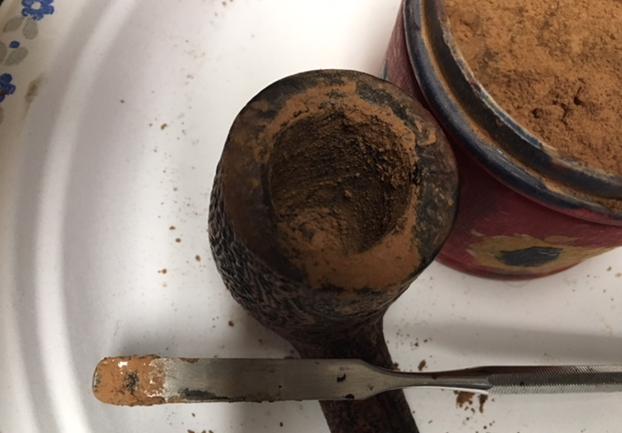
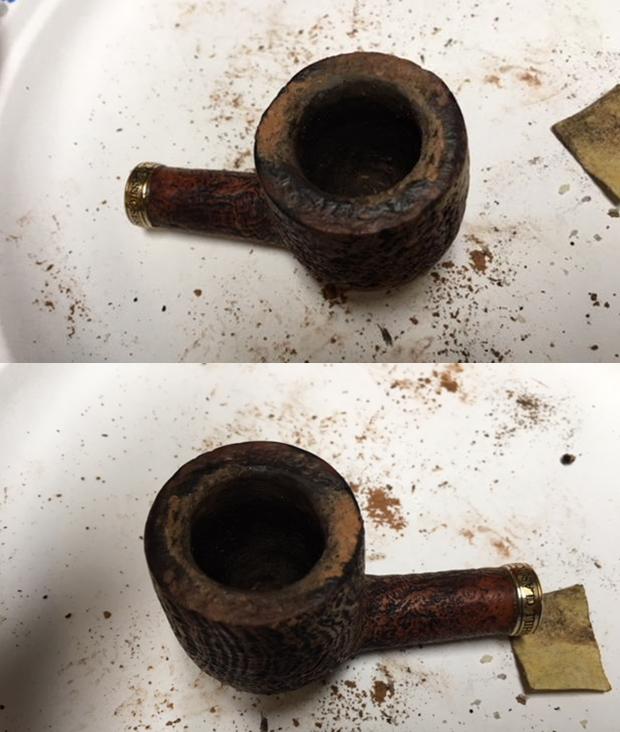
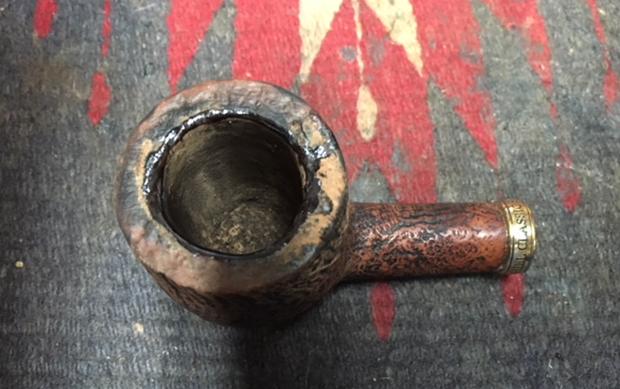
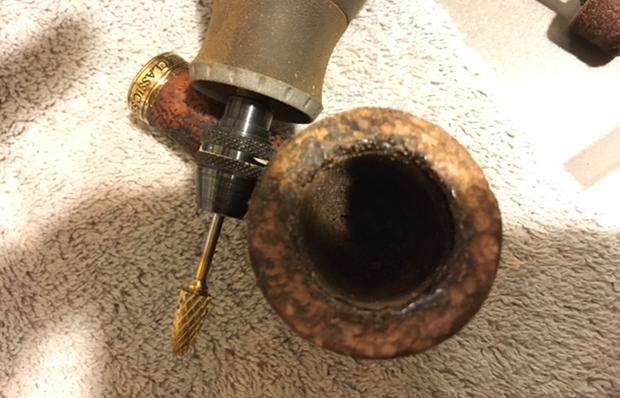
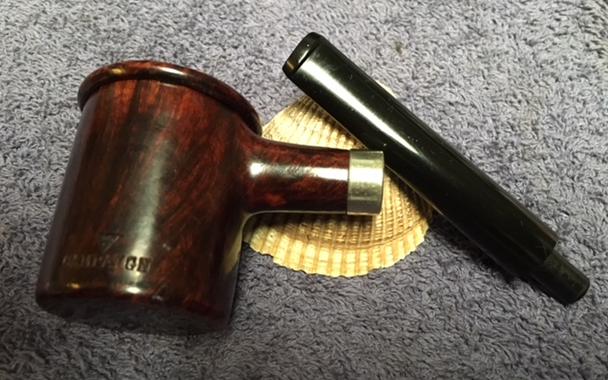
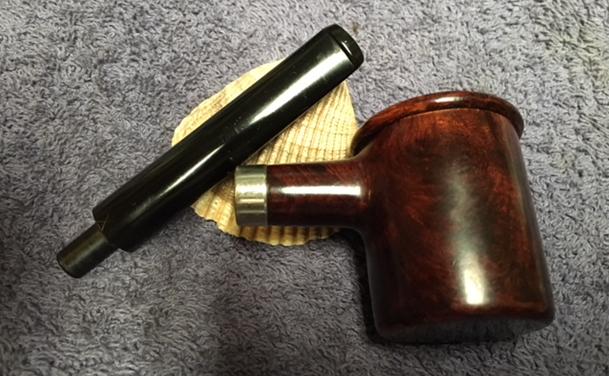
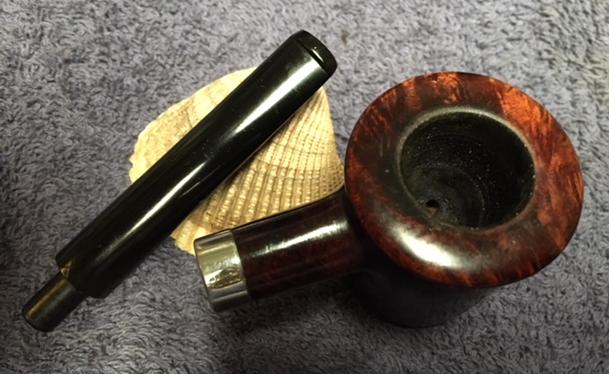
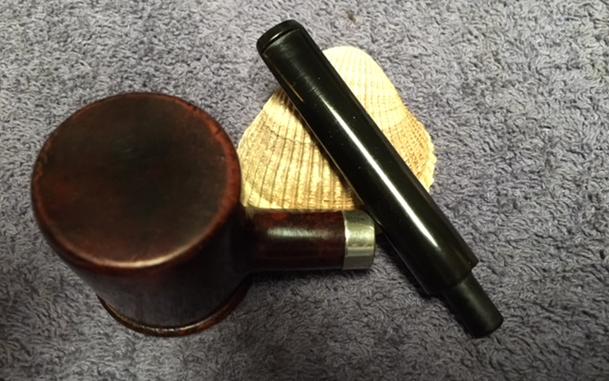
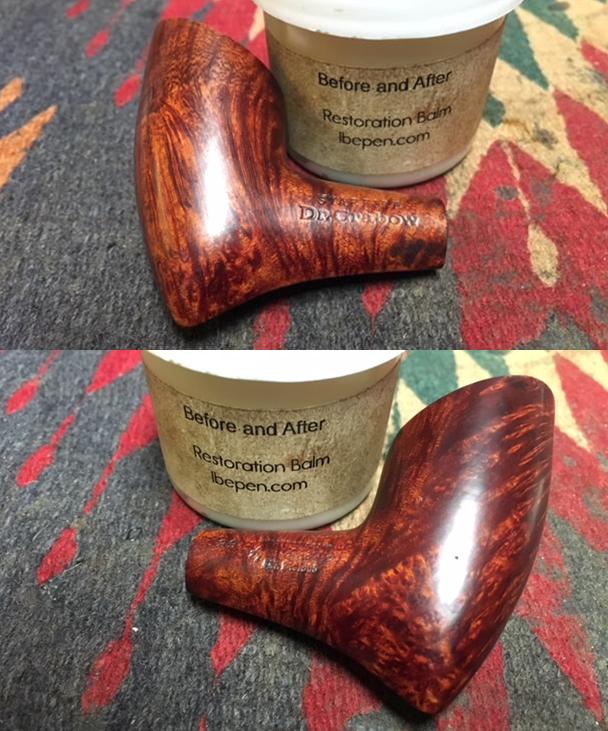
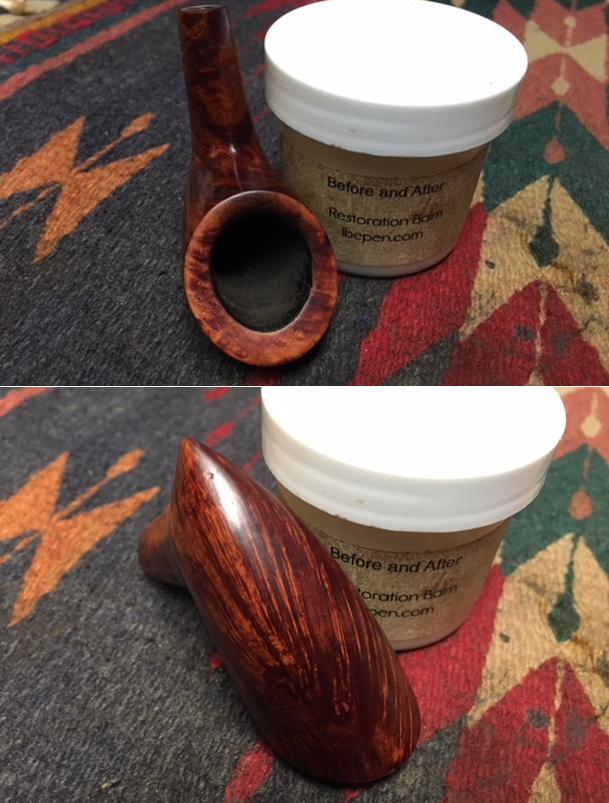
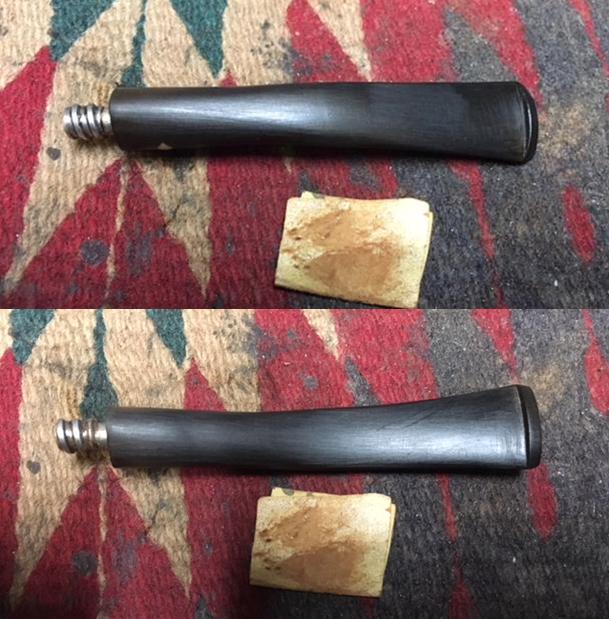
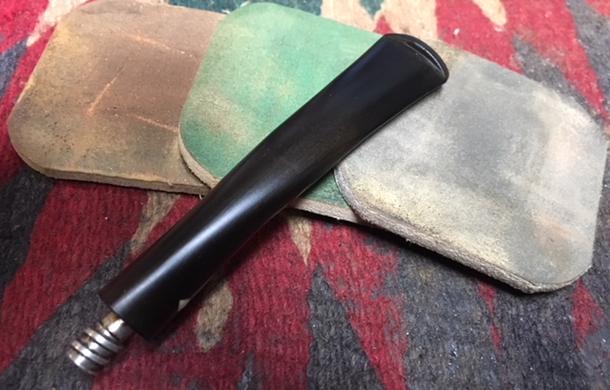
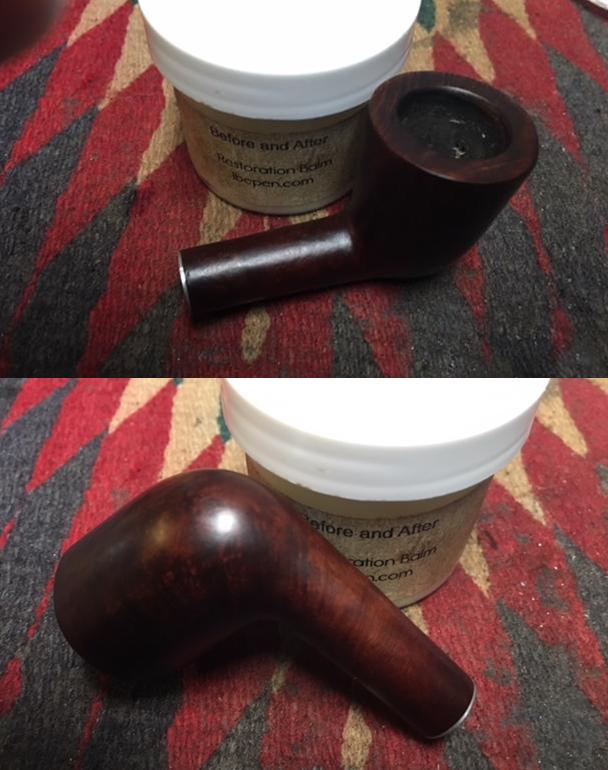
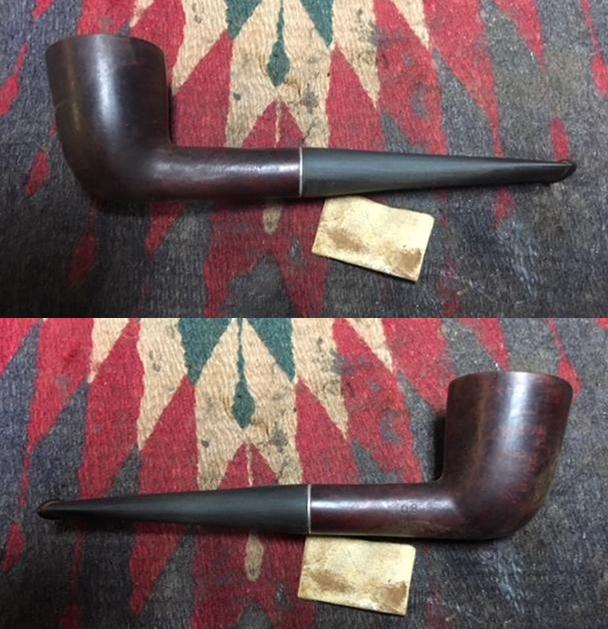
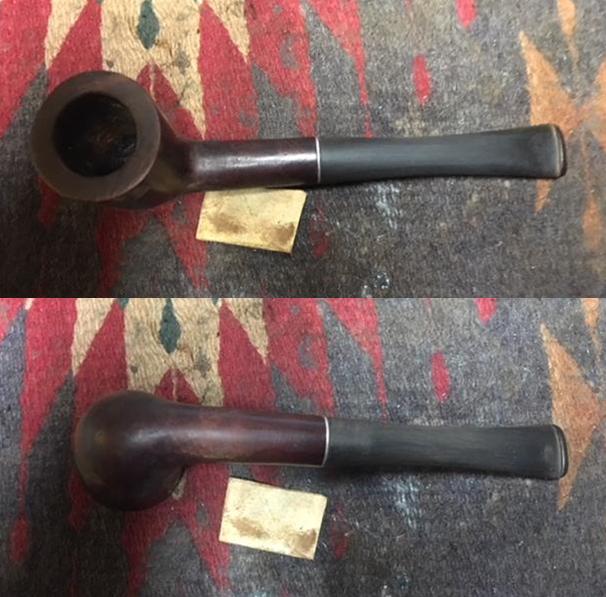
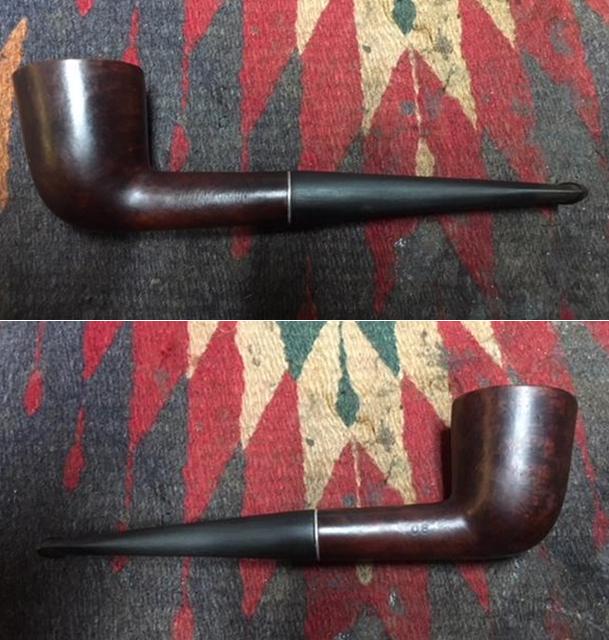
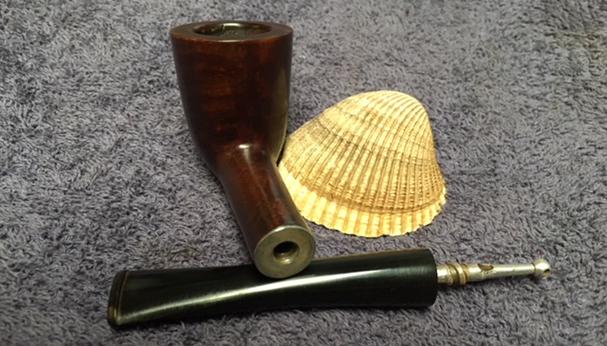
Tag Archives: polishing stems

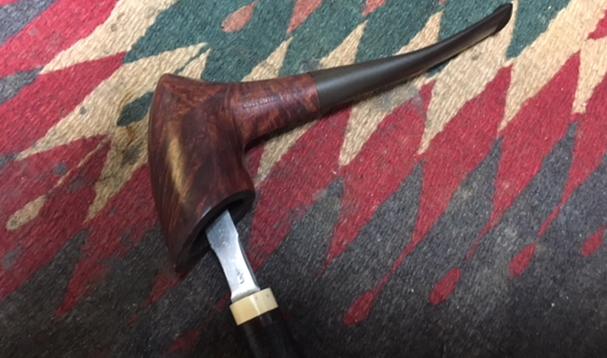
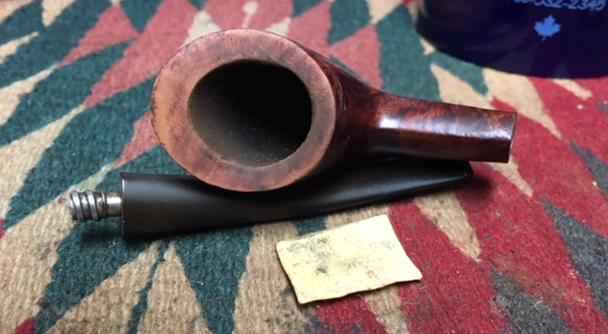
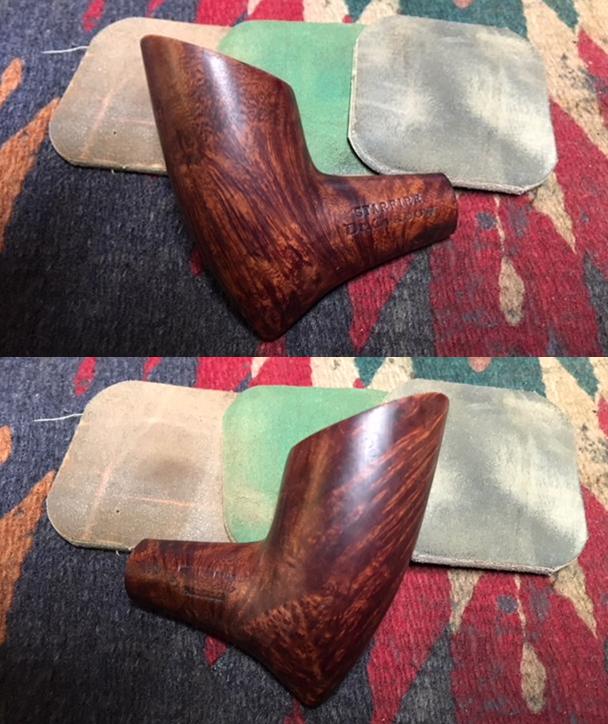
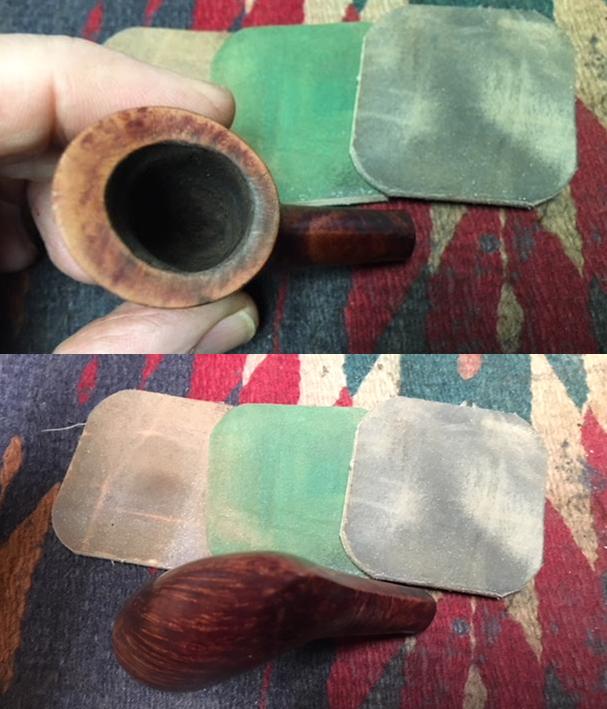
Breathing Life into a Dr. Grabow Omega Bent Billiard


Blog by Steve Laug

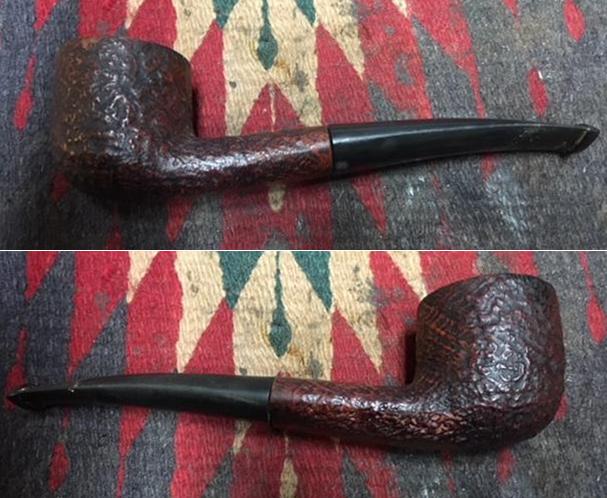
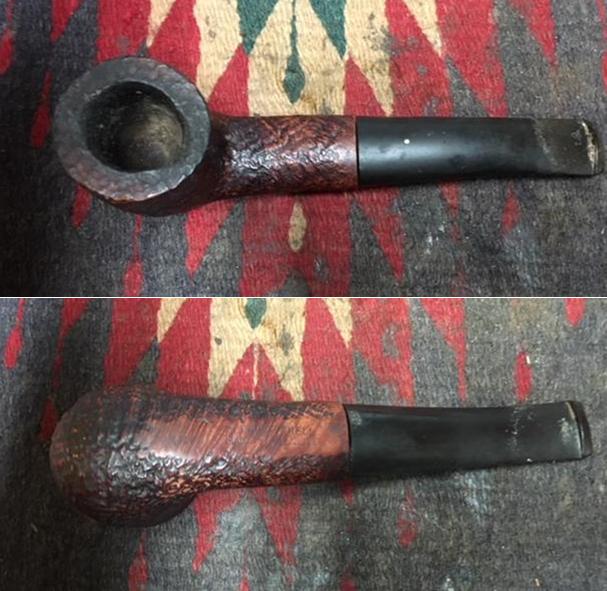
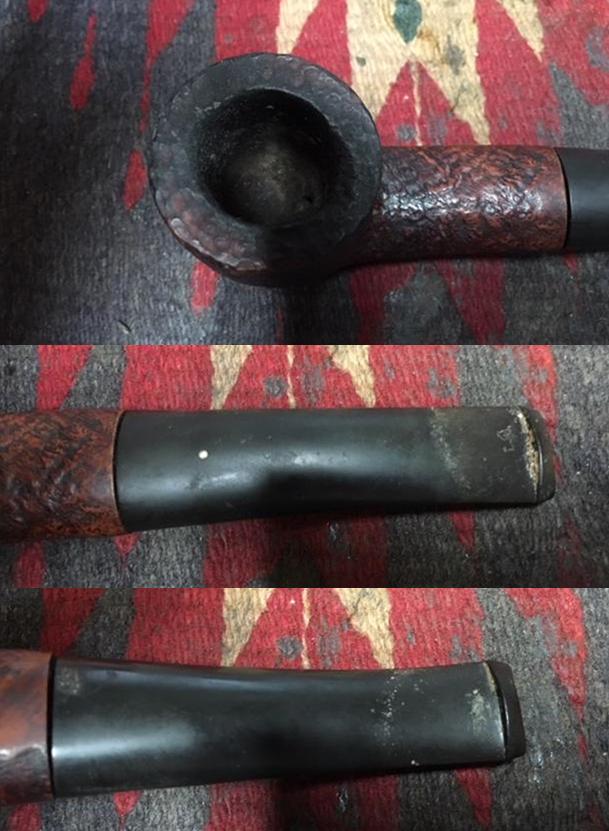
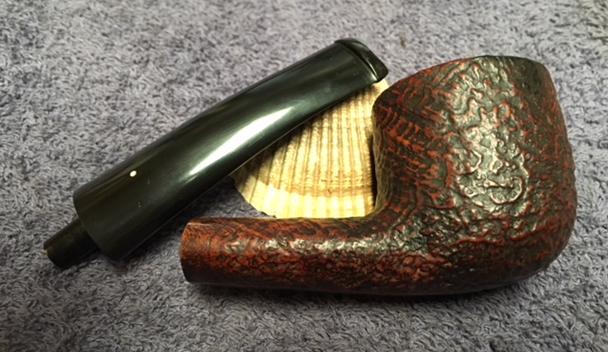
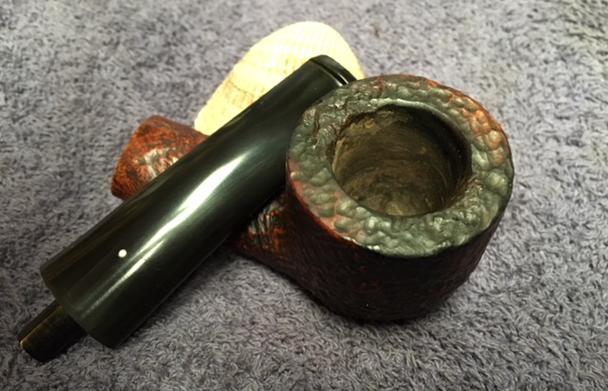
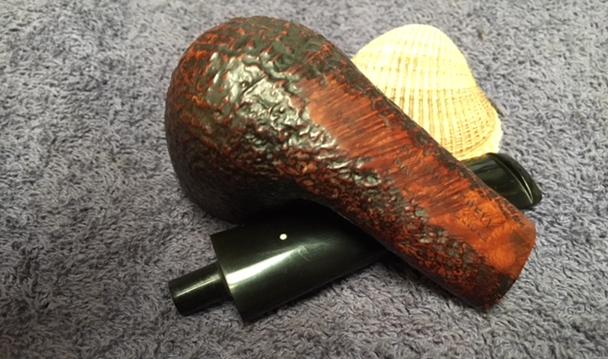
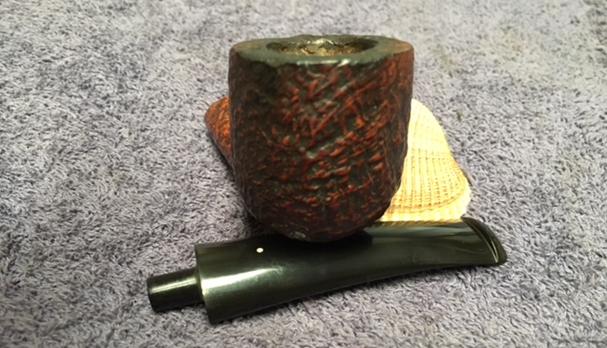
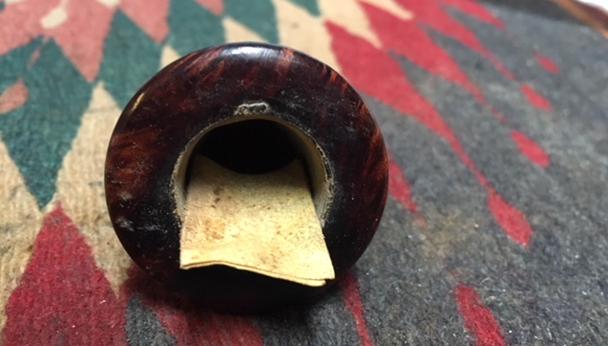
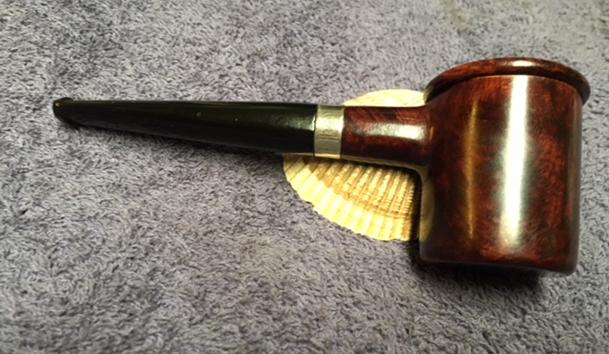
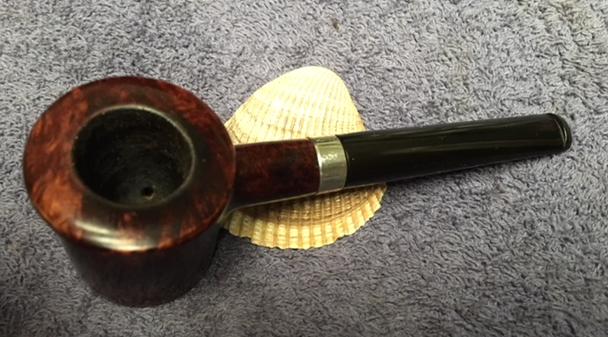
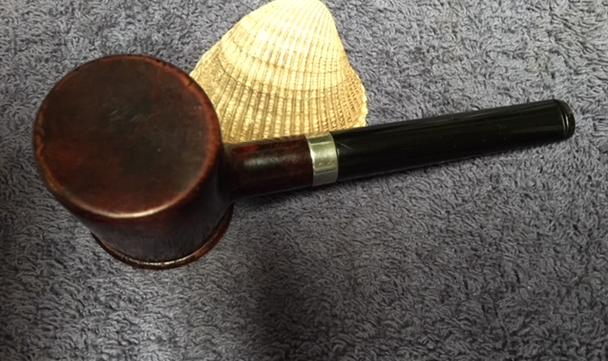
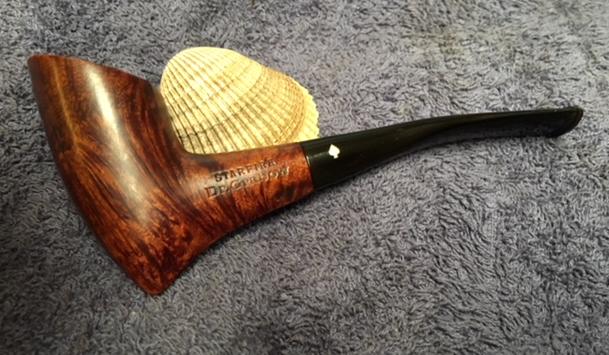
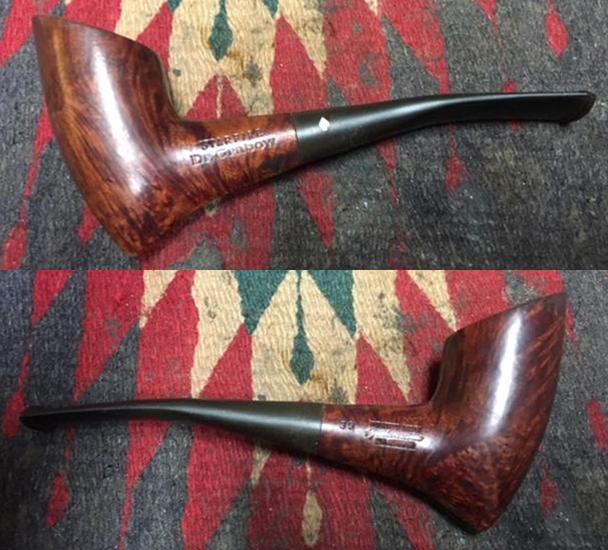
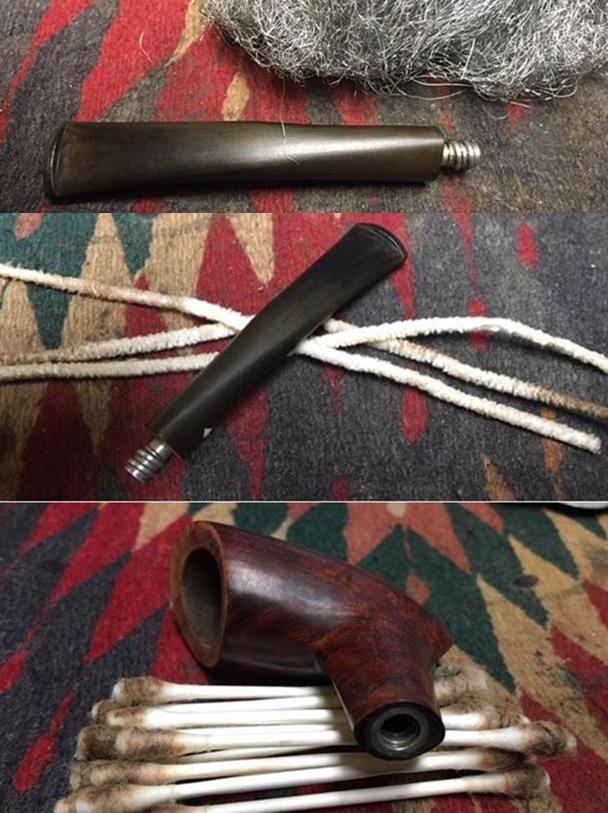
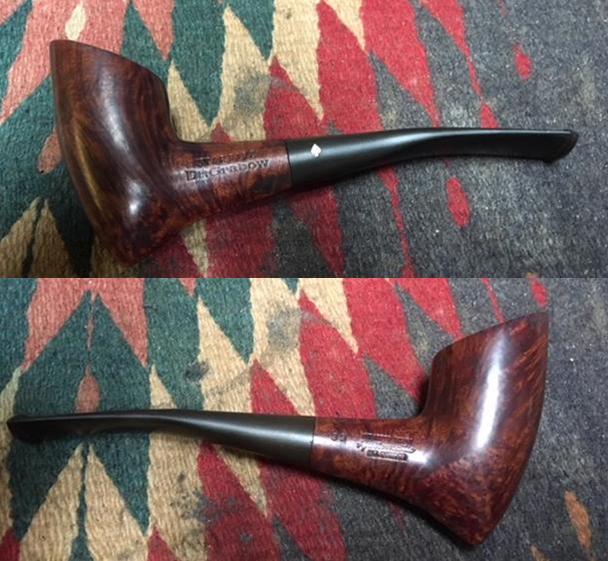
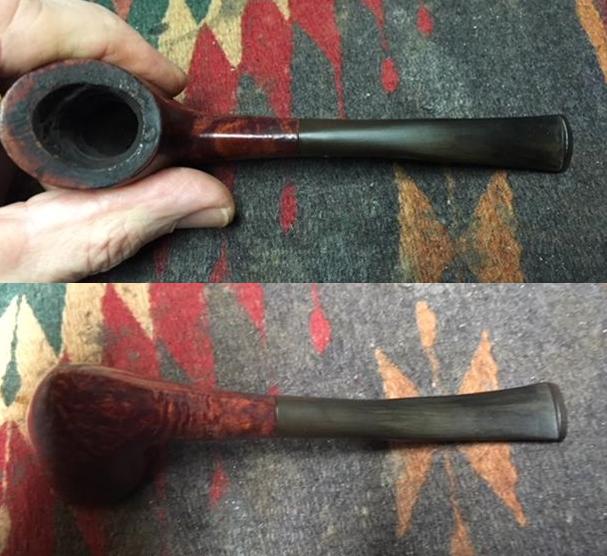
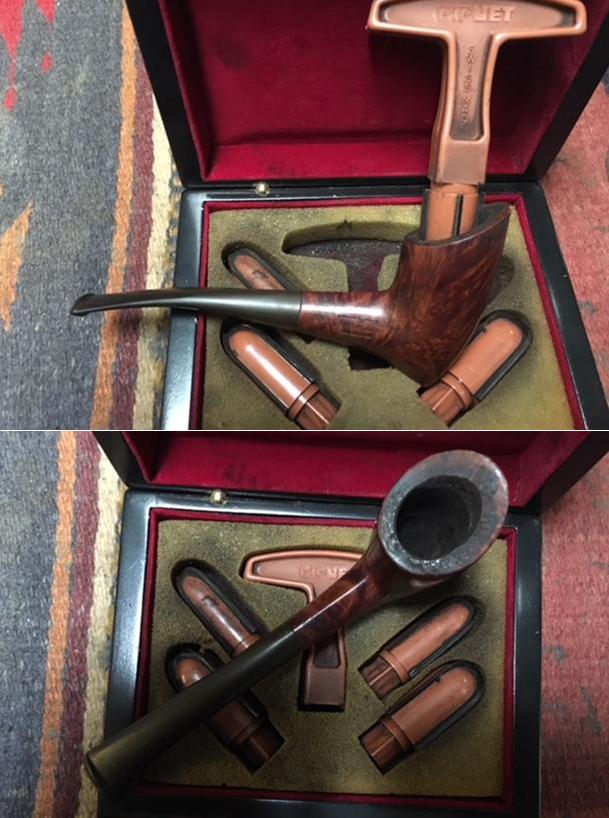
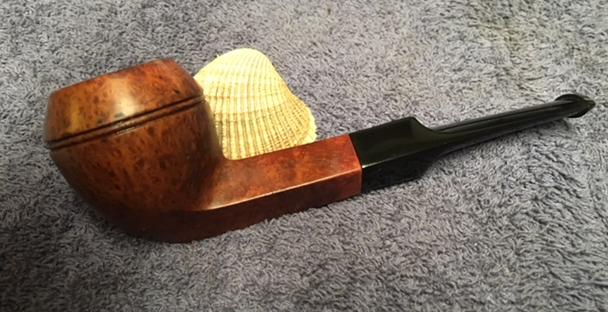
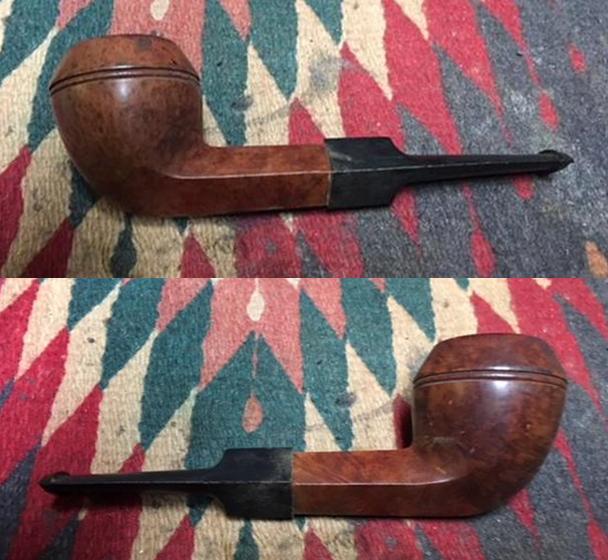
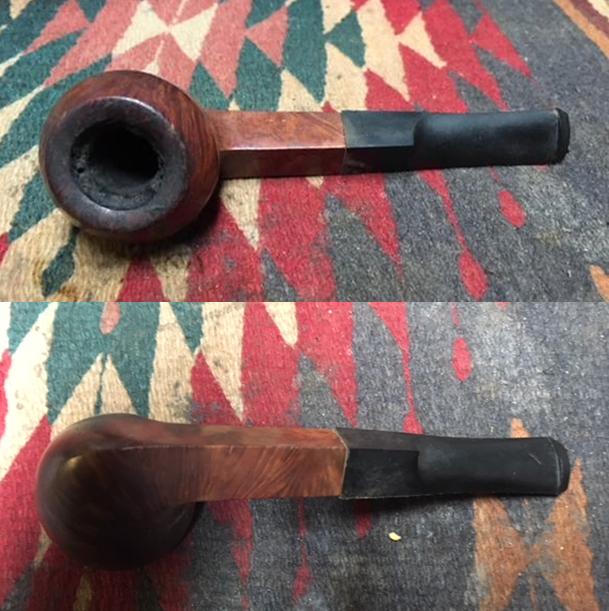
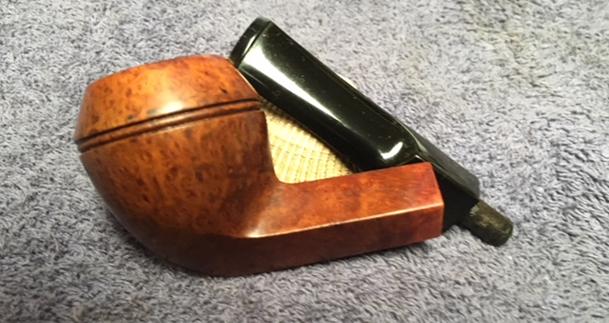
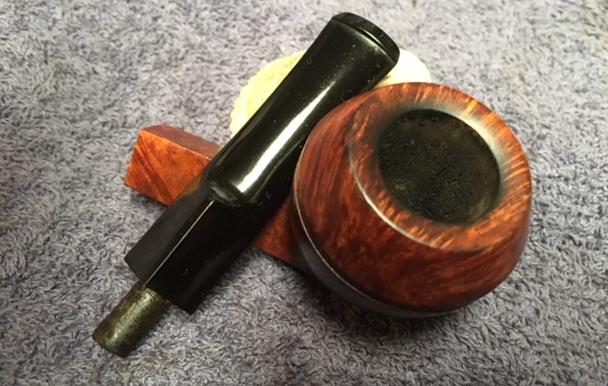
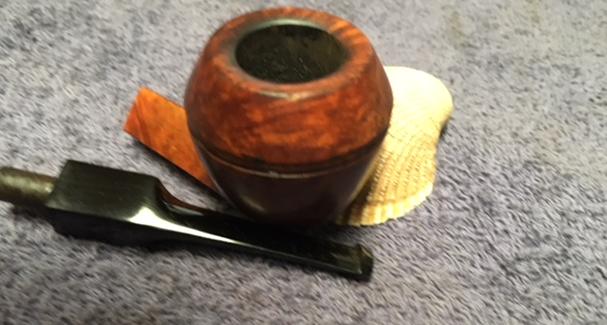
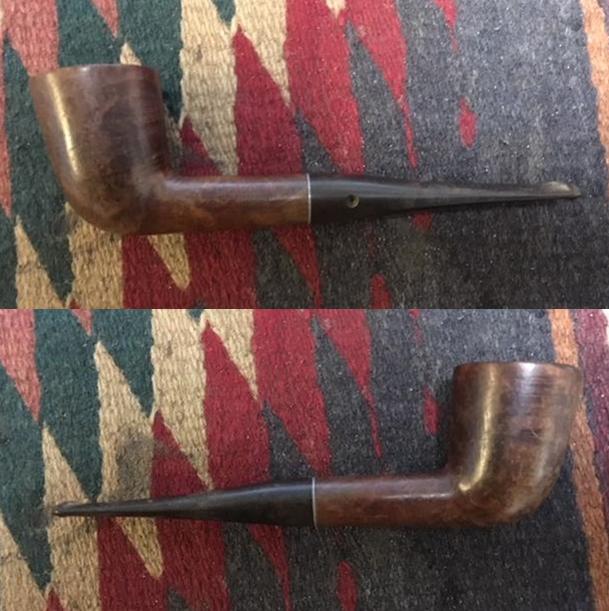
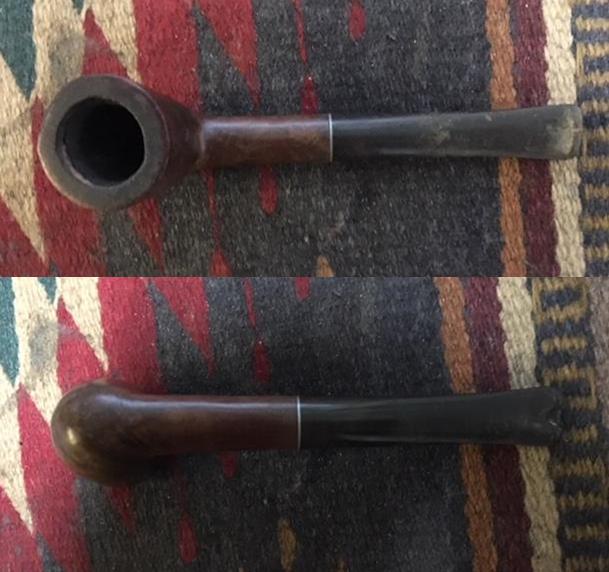
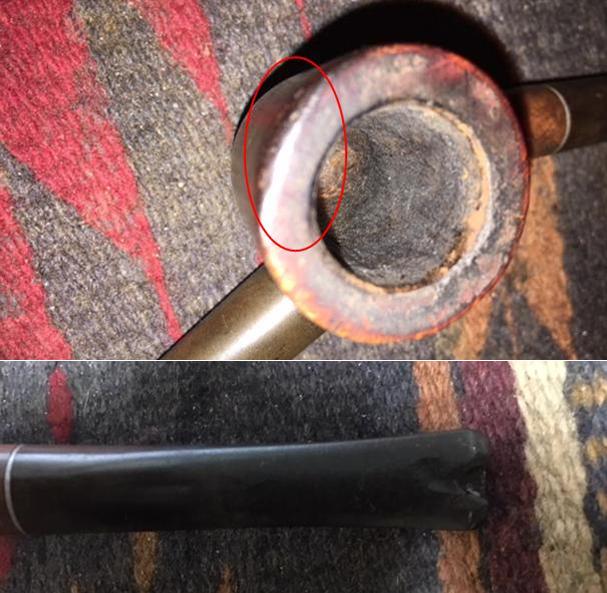
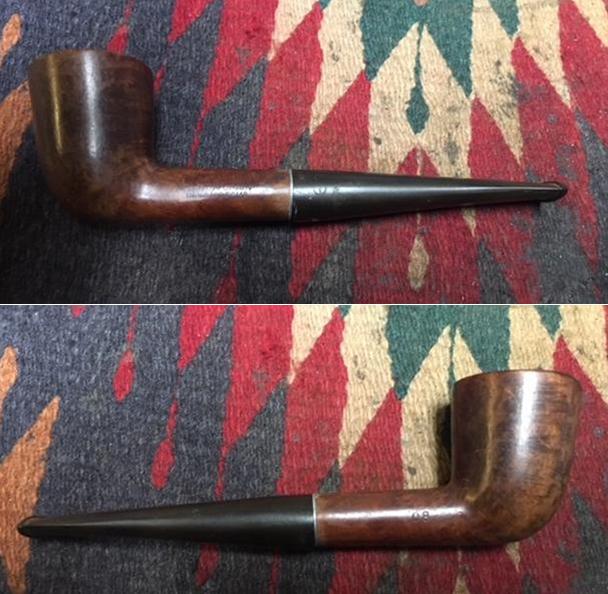
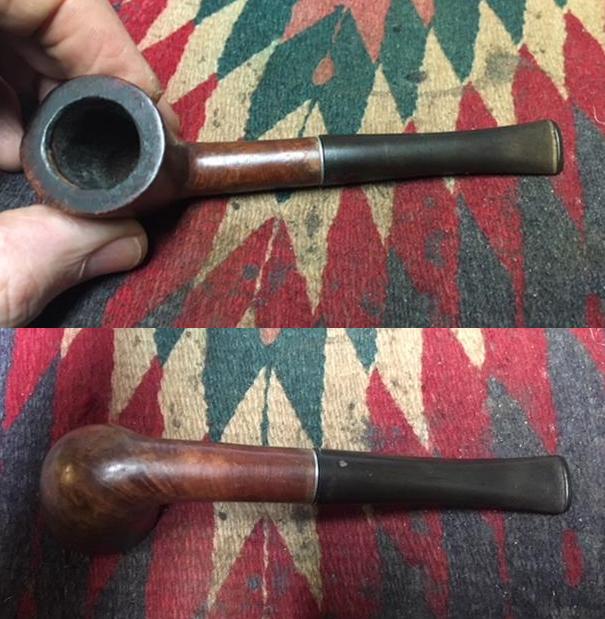
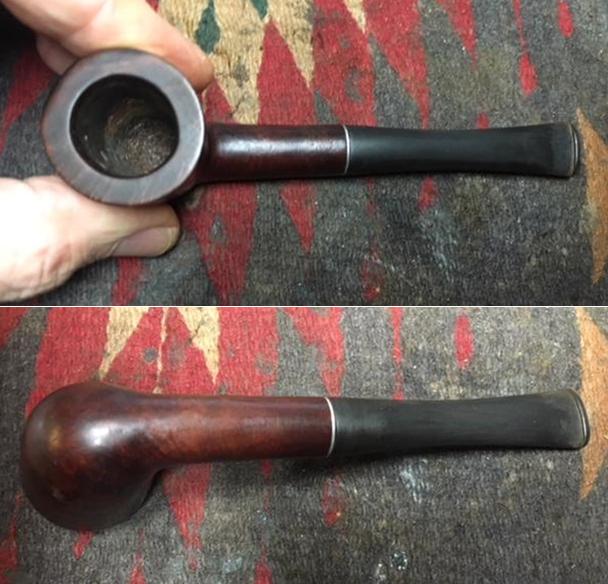
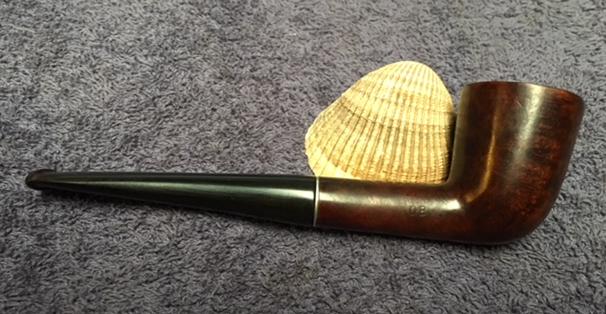
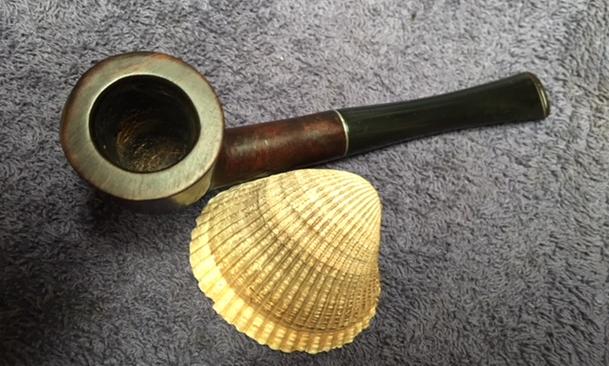
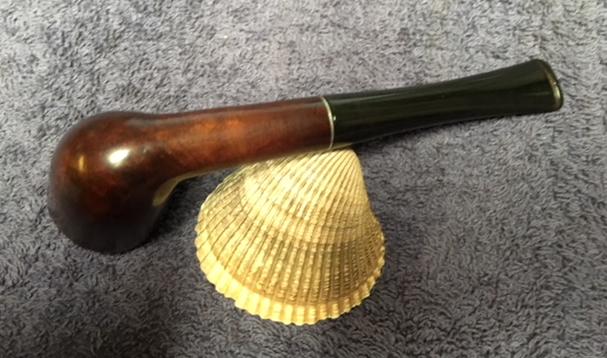
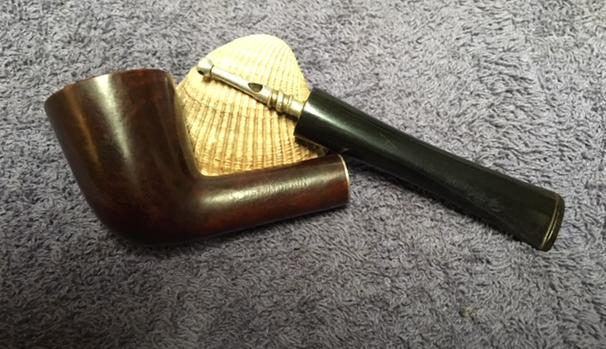
I have always liked the look of the Dr. Grabow Omega pipes. I have worked on quite a few over the years and have found them well made. The briar is a mixed grain pattern usually but the look of the classic shape and the feel in the hand is quite nice. The style of the stem mimics the Peterson P-Lip but up close it is very different. The airway exits not on the top of the button as in a P-Lip but out the end as in a standard fish tail stem. This old timer was no exception so when Jeff sent it I was interested in what it would look like after his cleanup. The bowl was structurally sound but the finish was worn and tired looking with a lot of scratches all around the sides and bottom of the bowl. The bowl had a thick cake that had flowed over the top. The rim was coated in lava and it was beat up. It had a lot of small holes in it like it had been knocked out on concrete and the outer front edge of the bowl was roughened and rounded over. The inner edge of the bowl looked like it was undamaged. The nickel ferrule was oxidized and scratched. The stem had some tooth marks on the top and underside near the button and was oxidized. Jeff took photos of the pipe to show its condition before he started his cleanup work. The next photo shows the cake in the bowl and the condition of the lava overflow on the rim top. You can see that it is quite thick. You can also see the rough condition of the outer edge of the bowl.Jeff took several photos of the bowl from various angles to show the general condition of the finish. There were scratches and nicks but none of them look too deep in the briar. The finish also appears to be very dirty and the varnish coat that is usually present seems worn and tired looking on the sides and bottom of the bowl. The next two photos not only show the stamping on the shank but also the buildup of tars and grime around the edges of the ferrule. It is almost as if the shank was weeping under the ferrule. The stamping is worn but readable. It is stamped OMEGA over Dr. Grabow on the left side of the shank and on the right Imported Briar.When Jeff took the pipe apart it appeared that the seller had put a newer Grabow Paper Filter in the shank of the pipe to make the pipe appear to have been cleaned. The next three photos show the condition of the tenon end of the stem and the filter. The oxidation on the stem is also visible in the photos below. The stem was scratched and worn but the Grabow Spade logo was in good condition on the left side of the shank. The top and underside of the stem had some deep tooth marks around the button and the sharp edge of the top of the button was quite worn and damaged.I did some searching to find out a bit of history about the Omega. I found that it was first released around 1975 and was a copy of a well pipe imported from Italy. It has continued to be offered for sale in their catalogues.

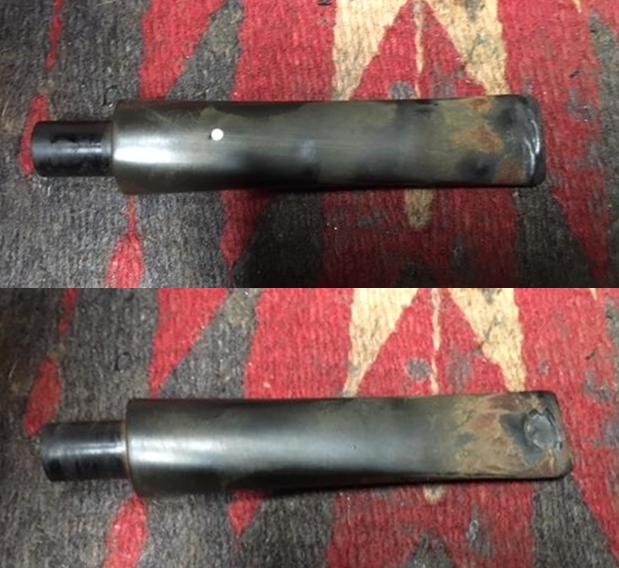
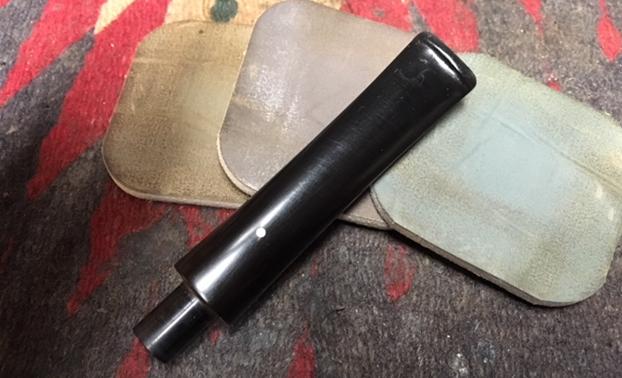
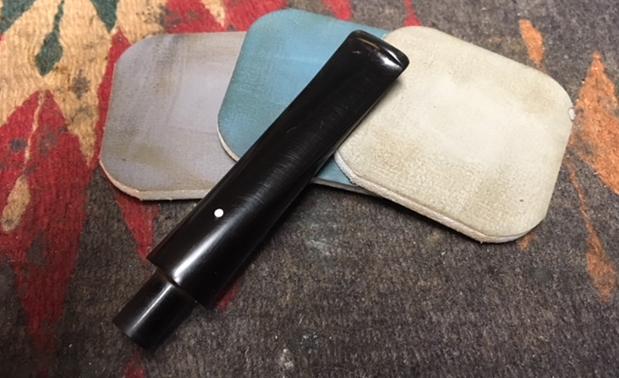
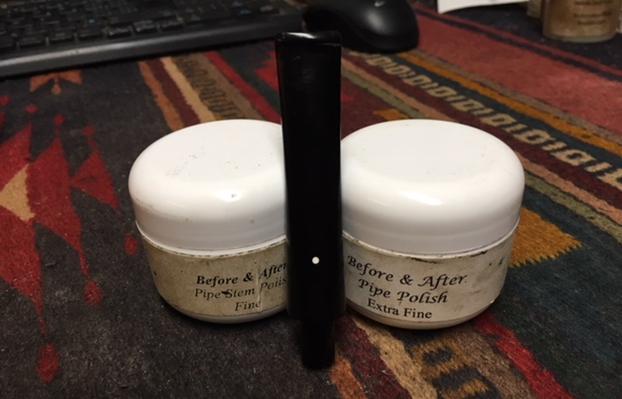
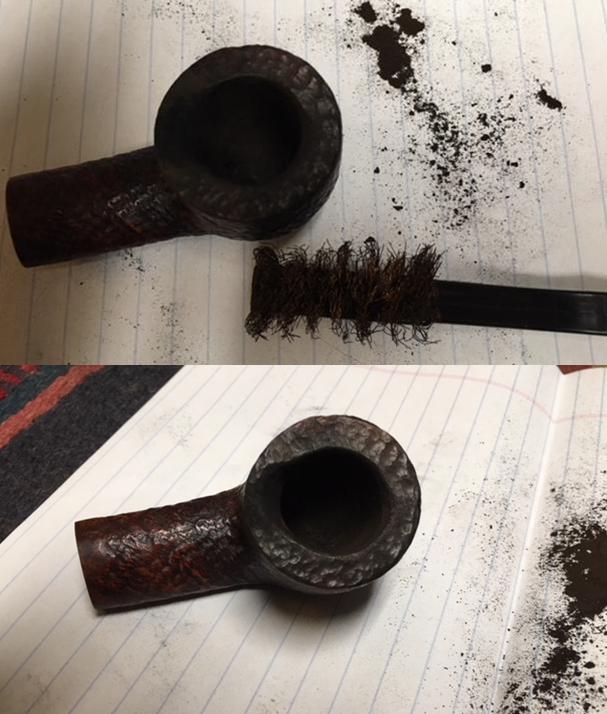
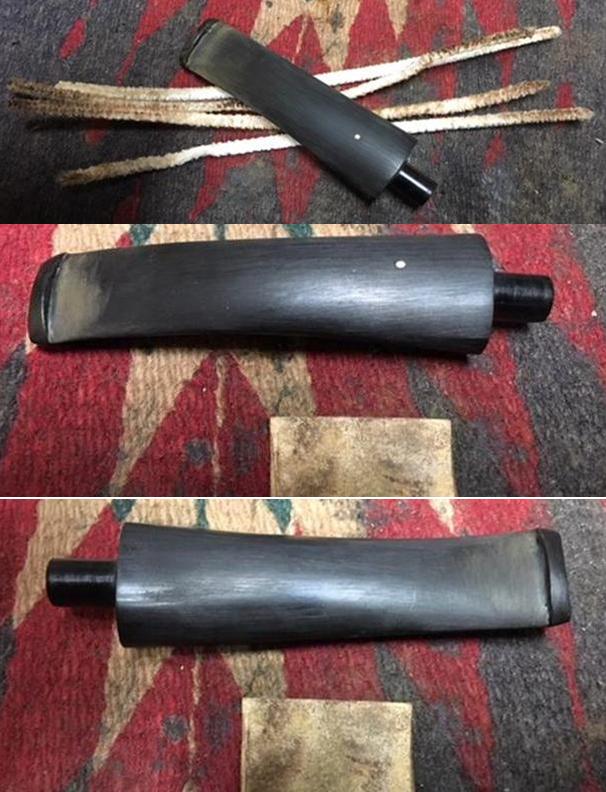
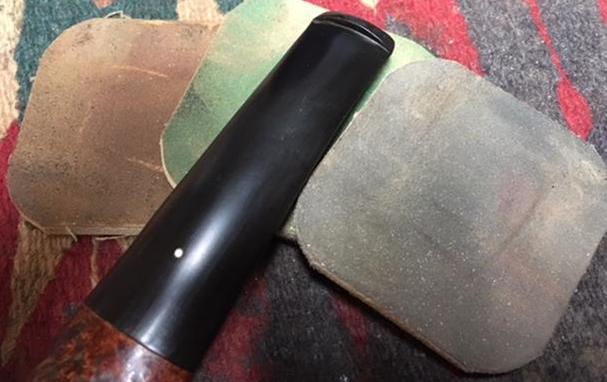
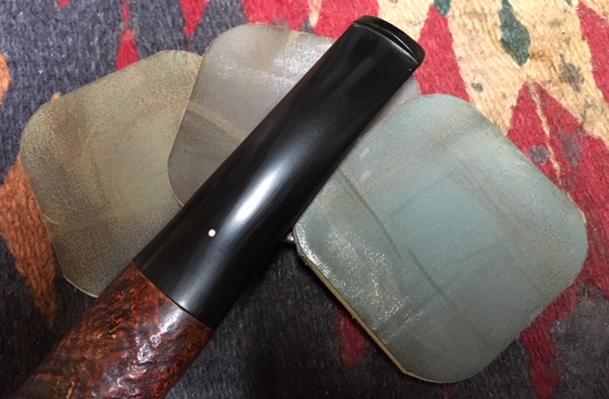
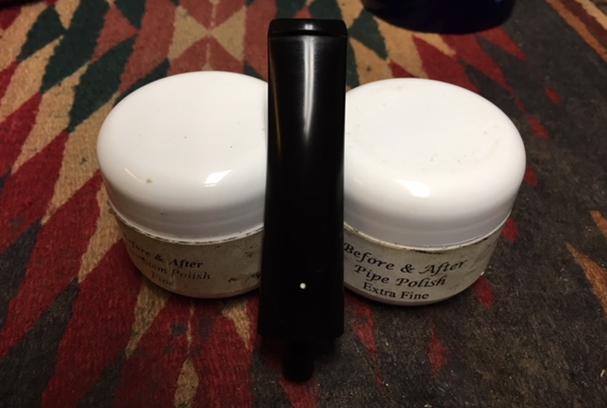
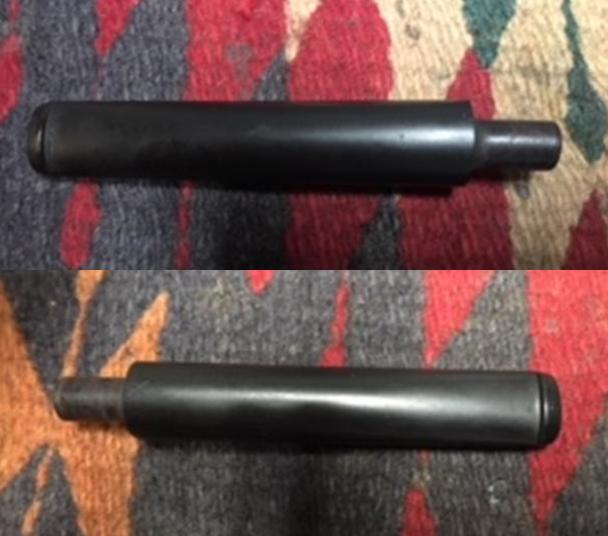
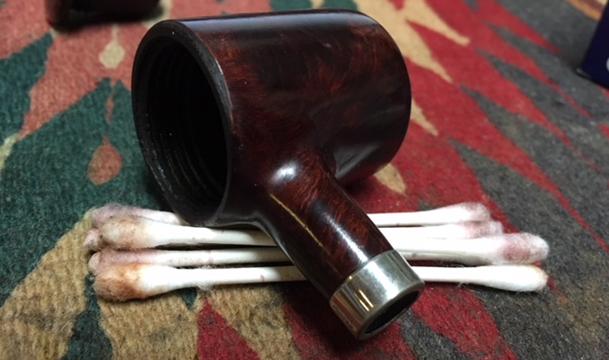
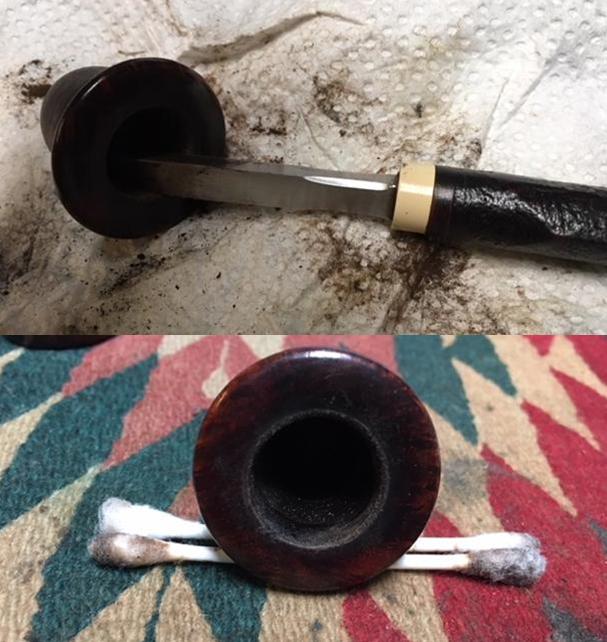
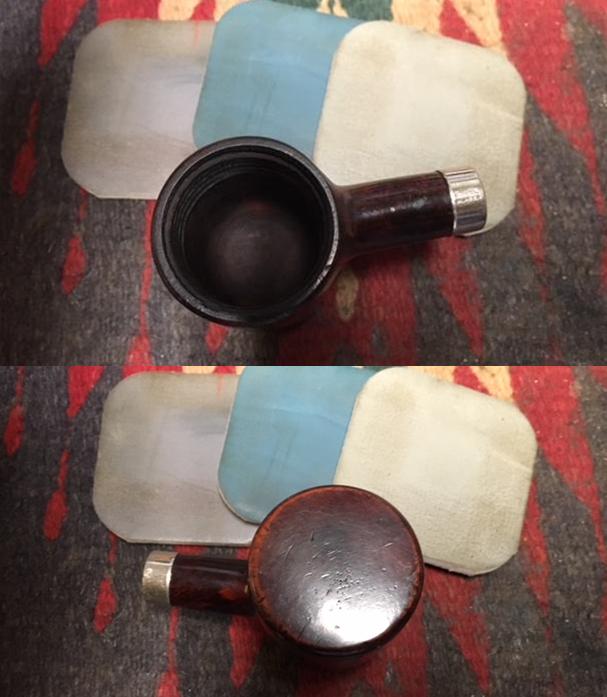
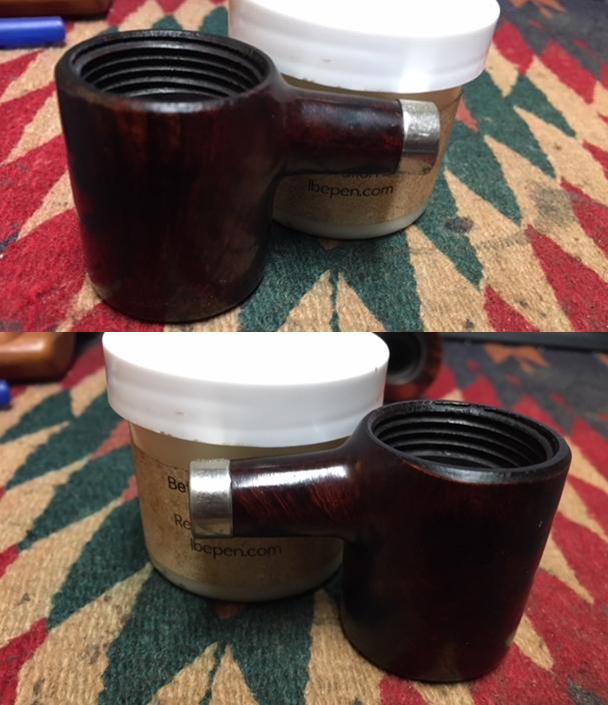
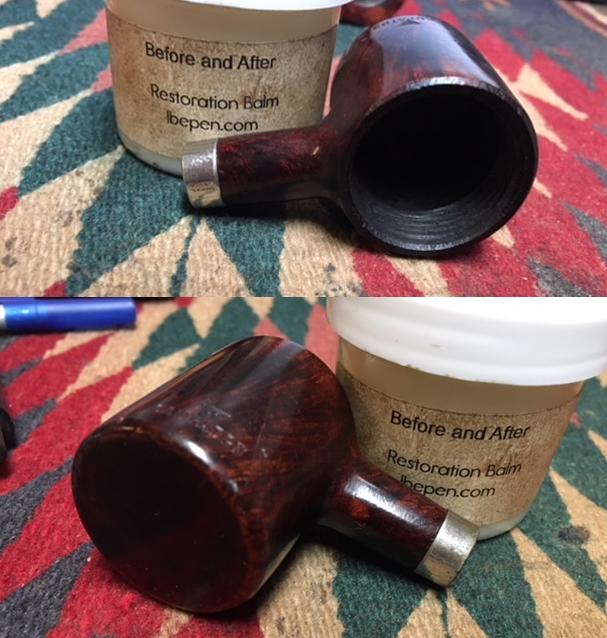
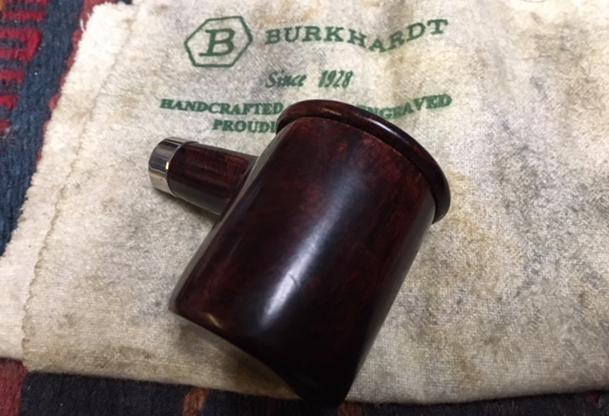
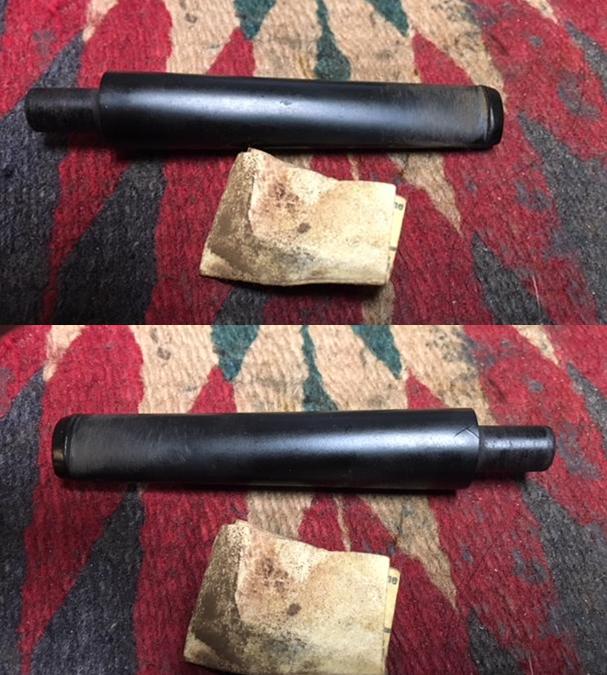
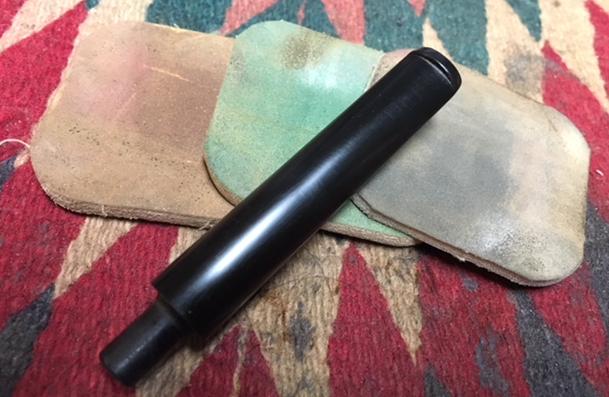
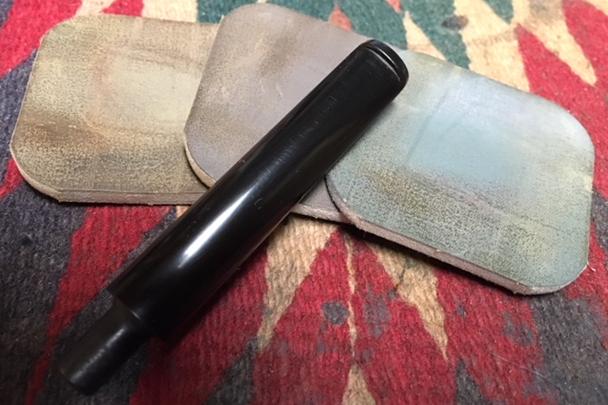
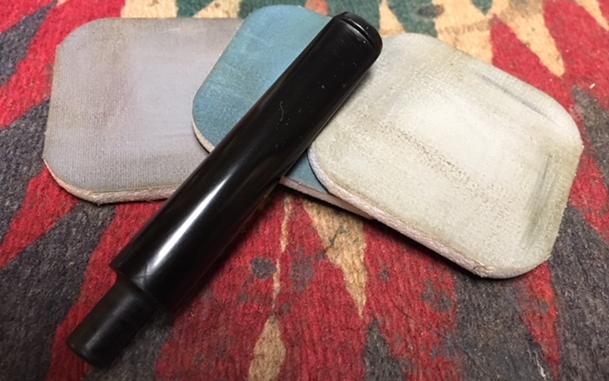
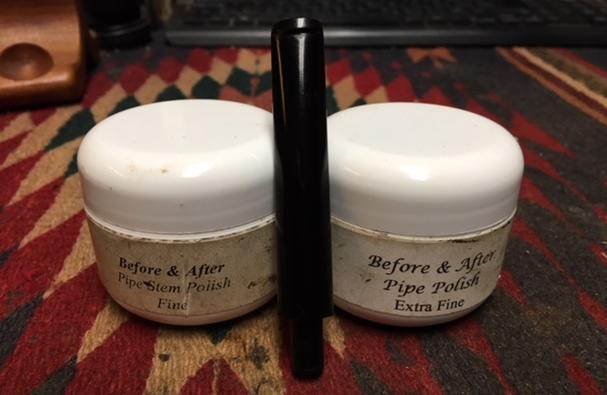
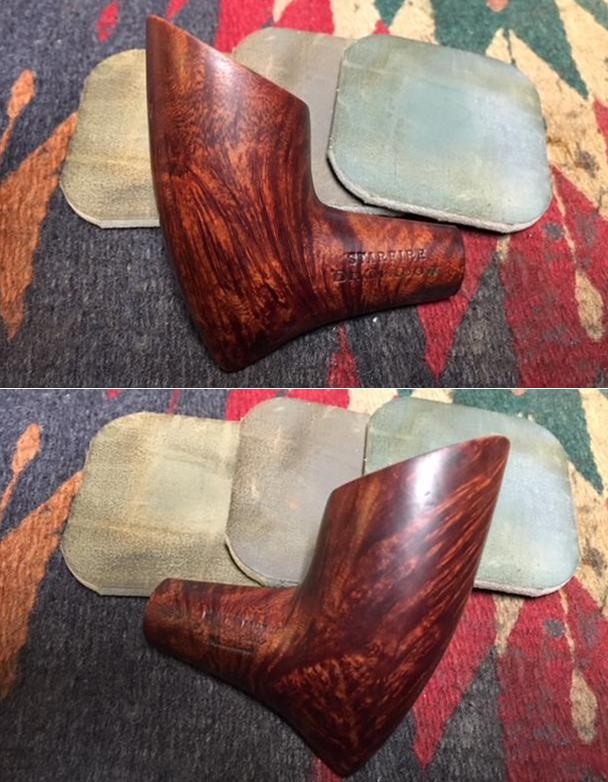
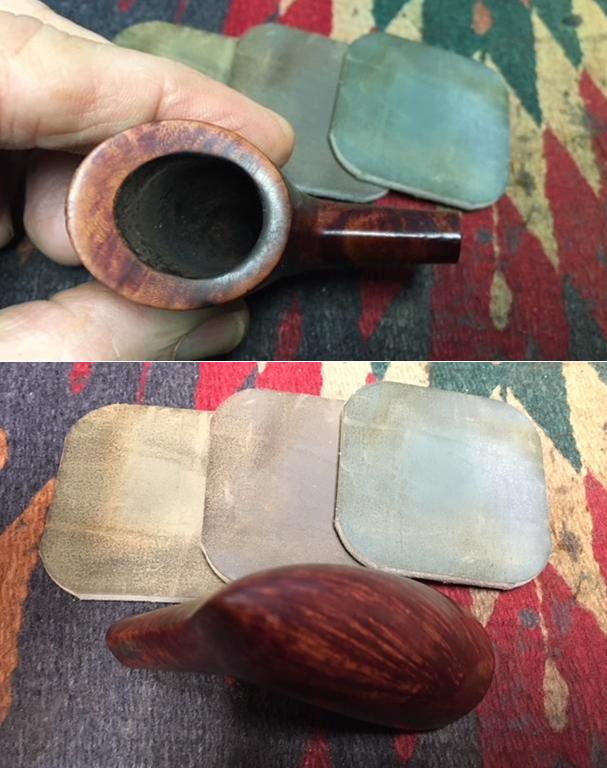
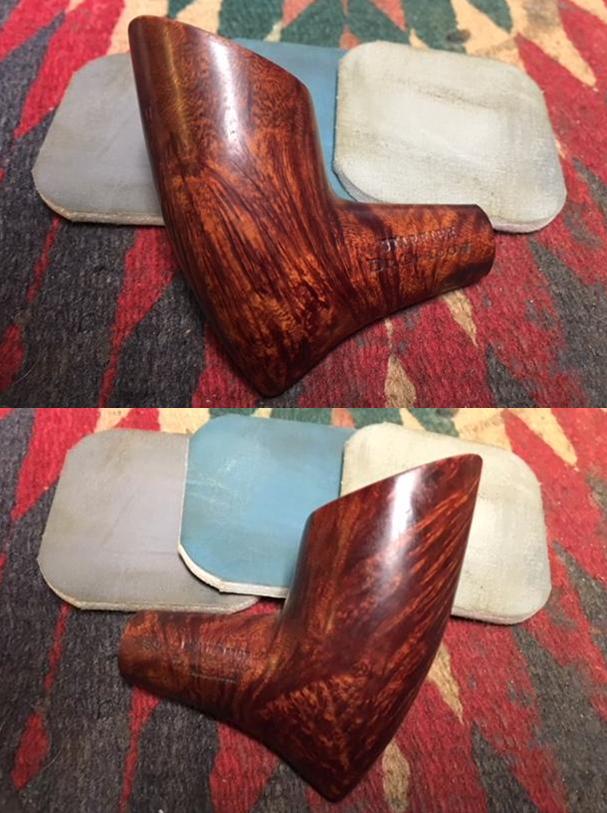
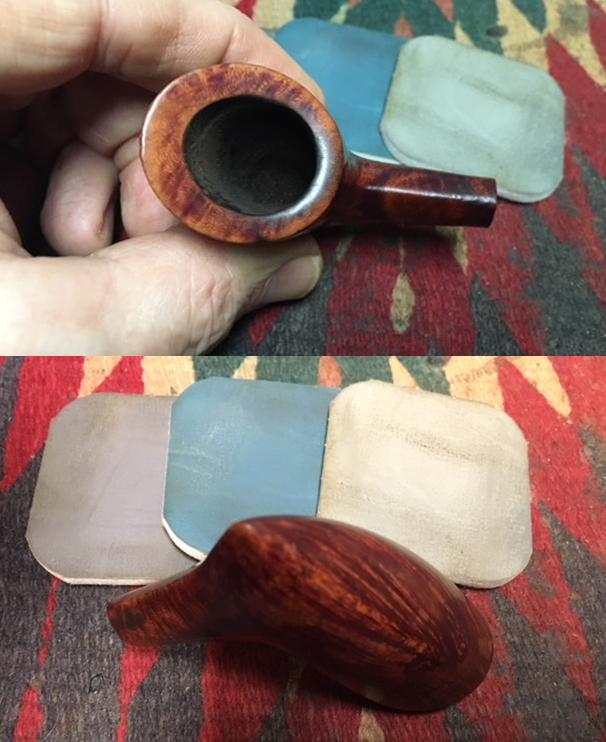
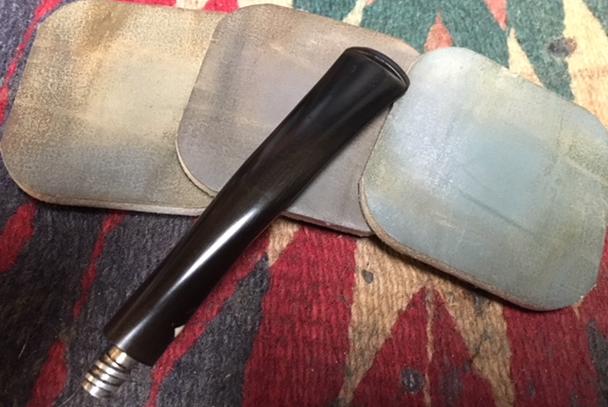
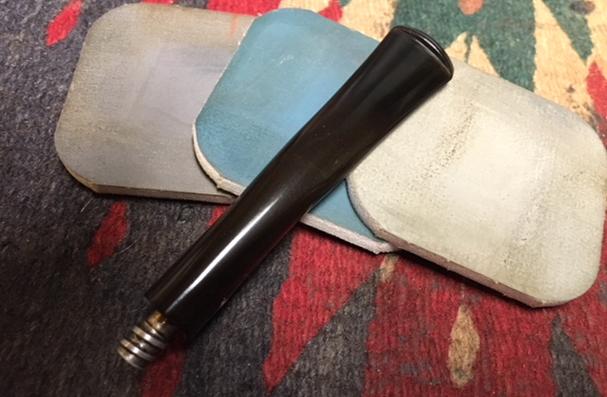
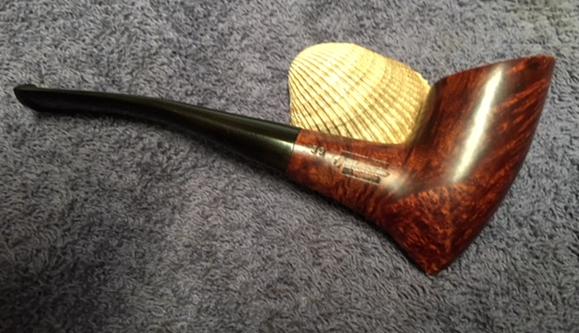
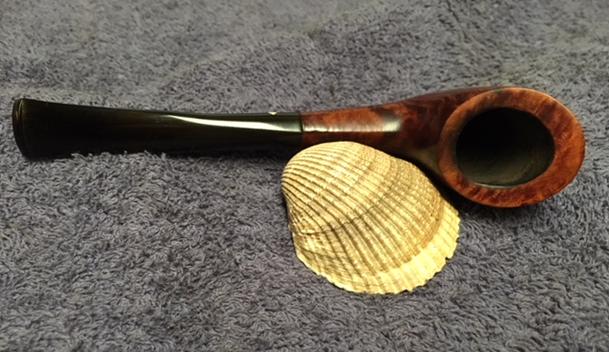
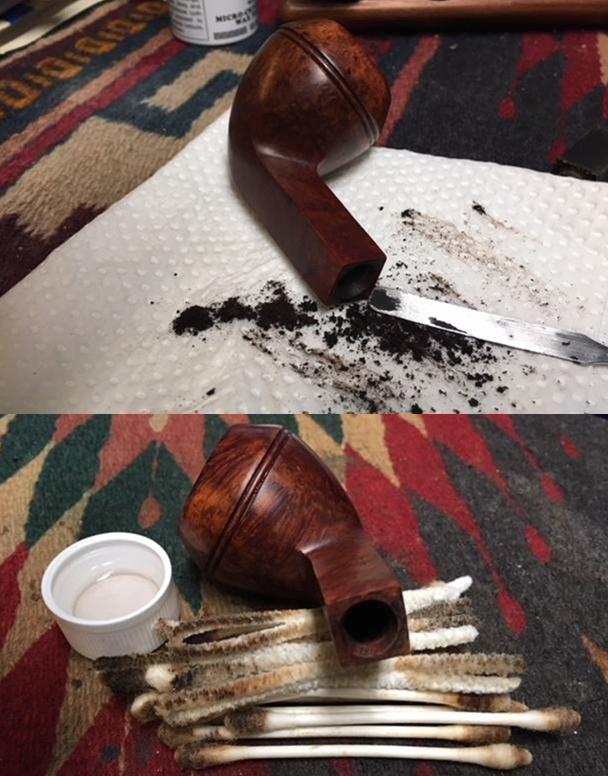
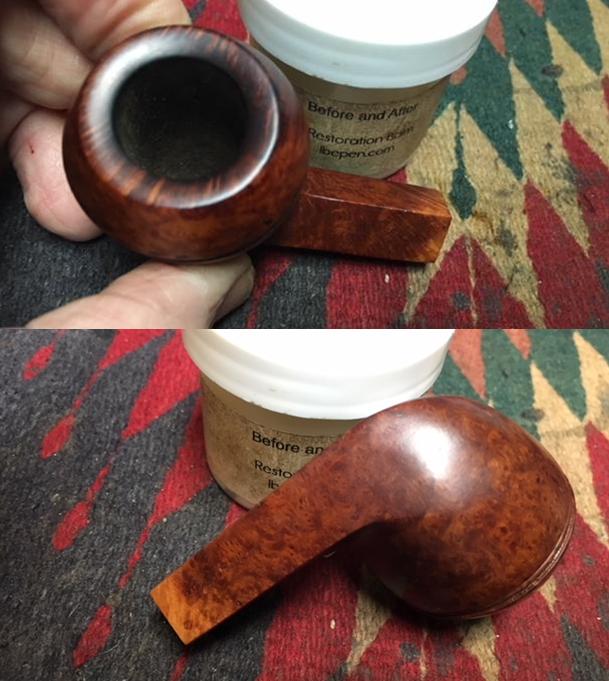
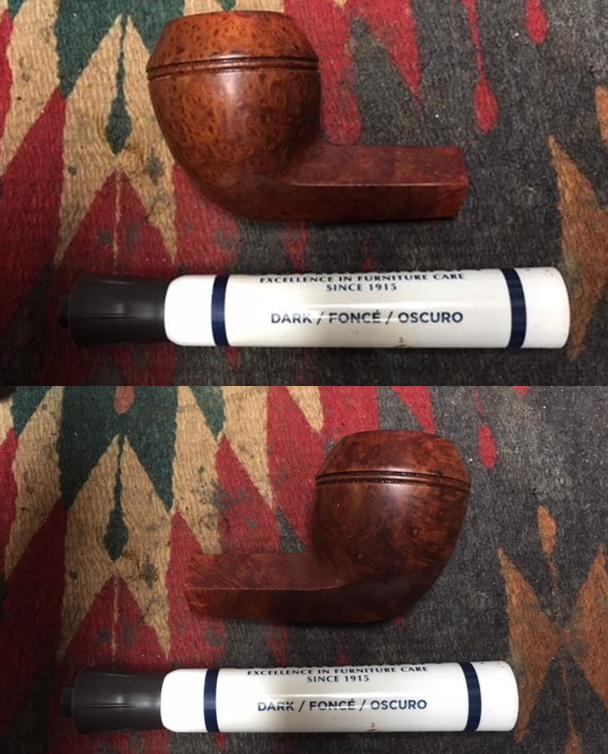
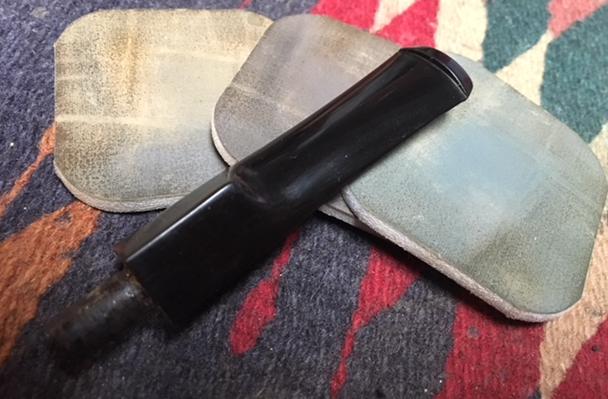
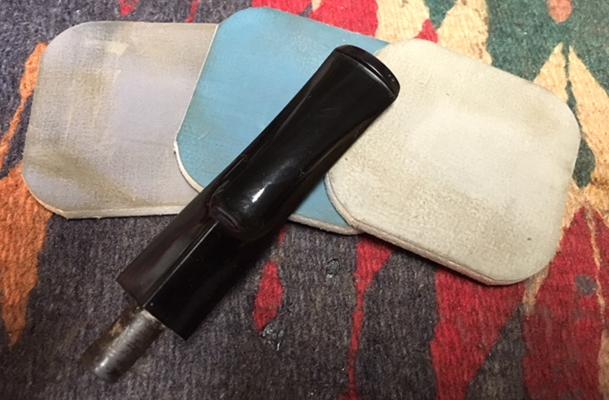
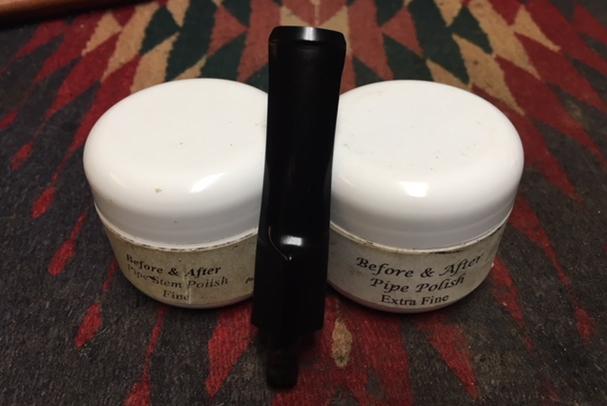
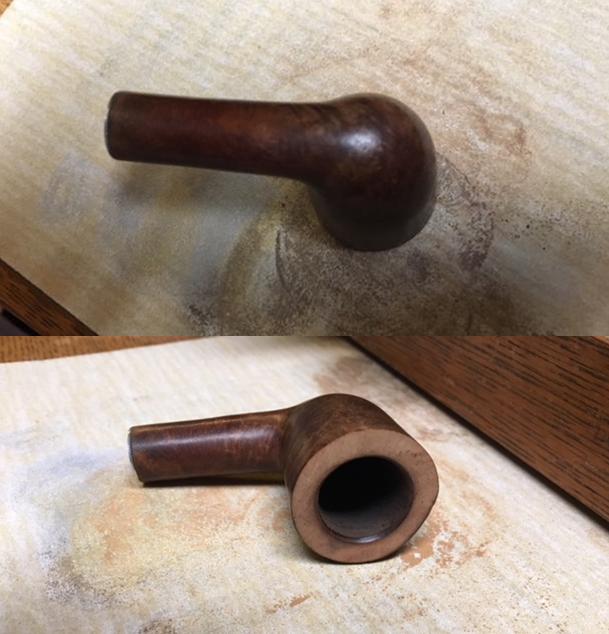
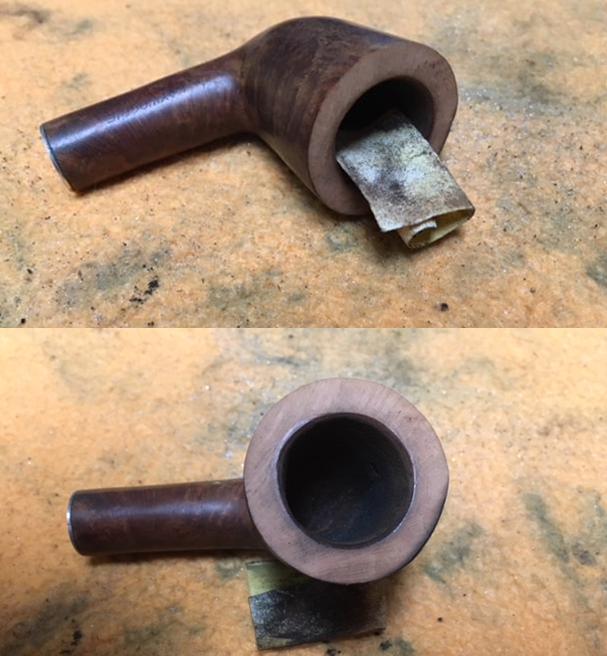
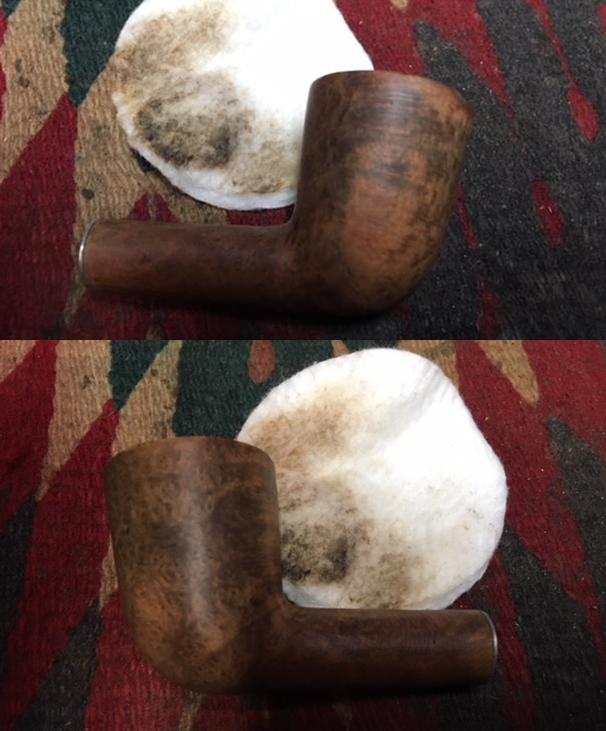
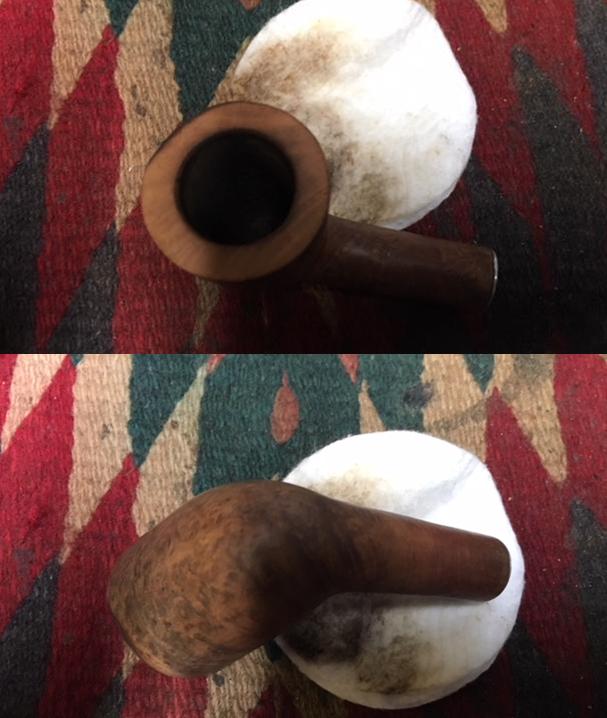
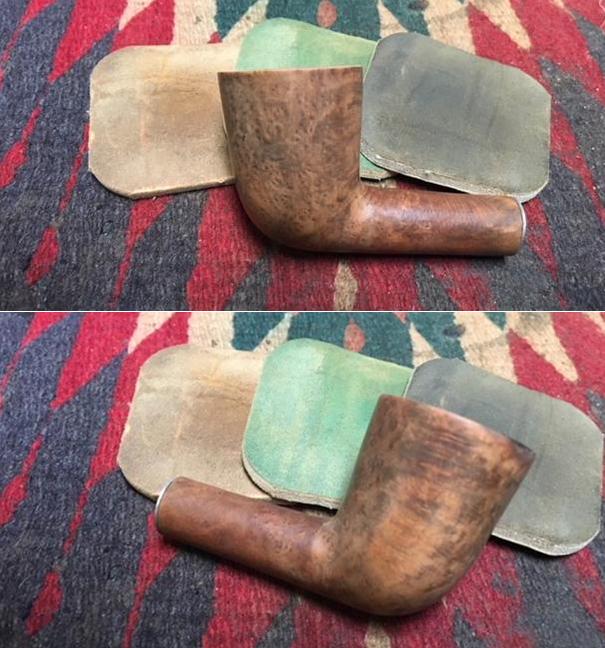
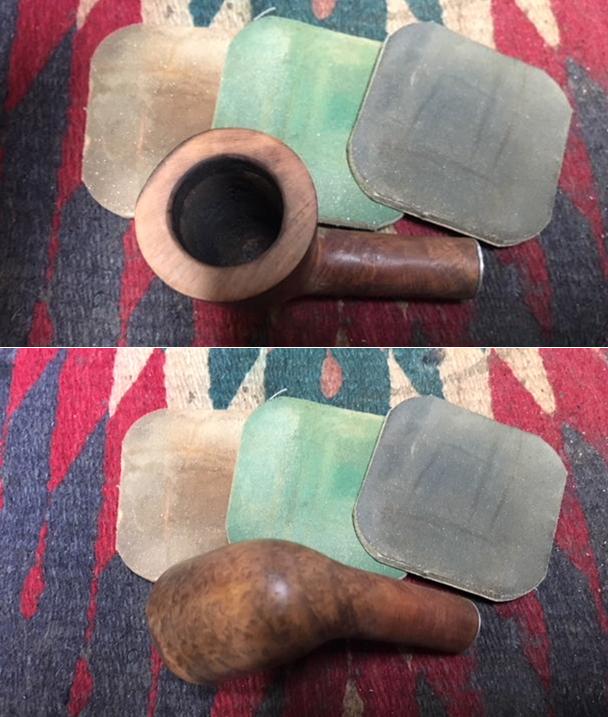
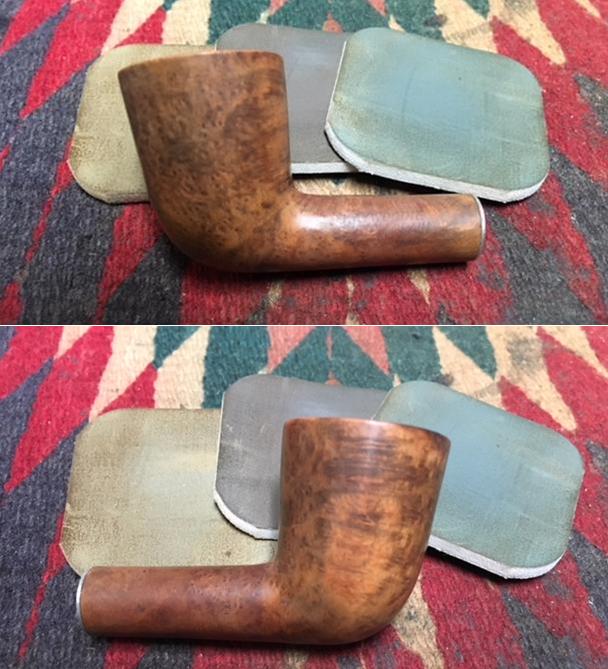
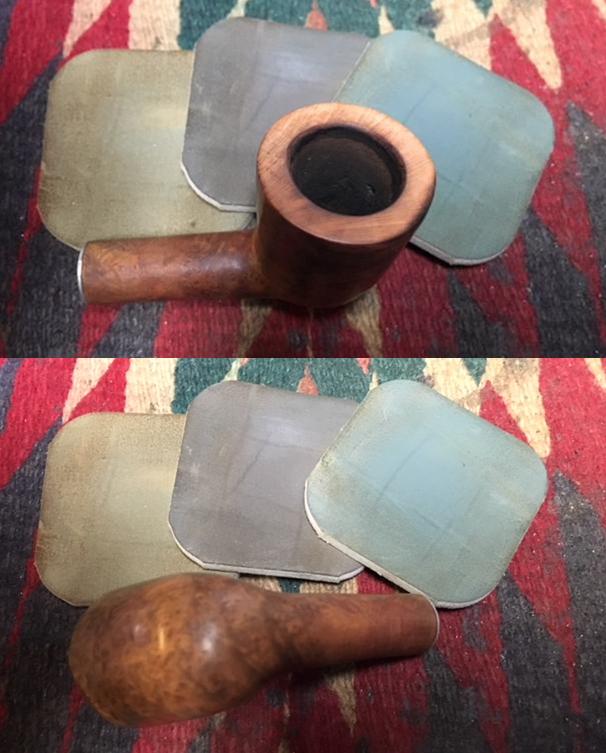
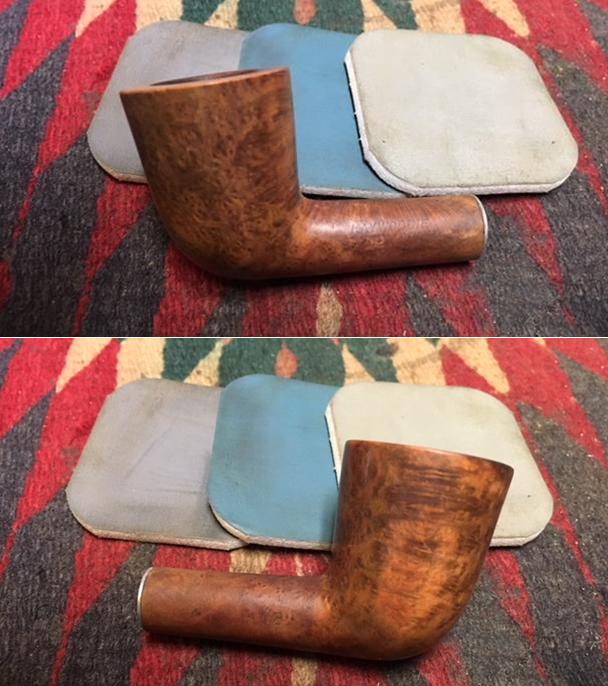
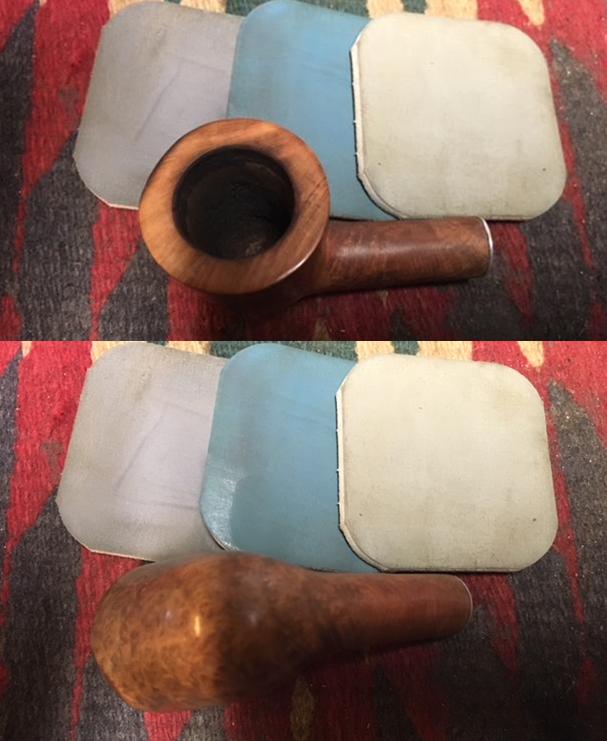
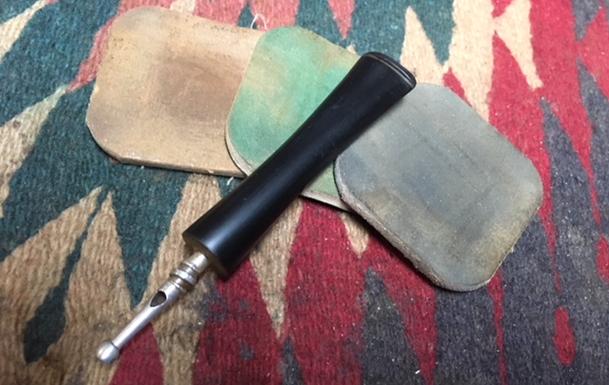
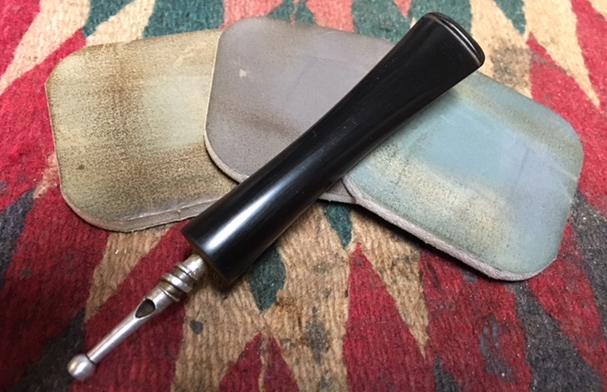
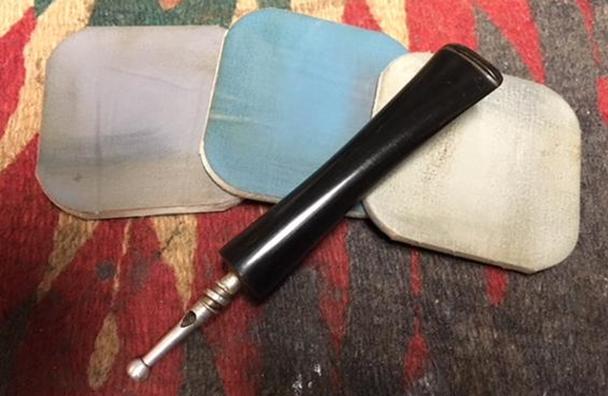
Jeff did a thorough cleanup on the bowl and stem. He reamed the bowl back to bare briar with a PipNet pipe reamer and cleaned up the remnants with a Savinelli Fitsall reamer. He cleaned the internals with alcohol, pipe cleaners and cotton swabs – scrubbing out the mortise as it was very dirty. He scrubbed the exterior of the pipe with Murphy’s Oil soap and a tooth brush and was able to remove all of the tars and oils built up on the briar. He was able to remove all of the tars and lava on the rim top and left it looking very clean. The damage on the rim top and outer edge was clean and visible. He soaked the stem in an Oxyclean bath to raise the oxidation to the surface of the vulcanite. When it arrived I took some photos of it to show how it looked before I did the restoration.  Jeff was able to remove the thick lava coat from the rim and revealed what I thought would be underneath the thick coat. The rim top was speckled with tiny dents and marks and the outer edge was damaged all the way around the bowl. There was a little damage on the inner edge on the right side of the bowl.The Oxyclean soak had really raised the oxidation to the surface. The stem was clean but heavily oxidized when it arrived.Because the was so oxidized after the soak in Oxyclean, I put it in a bath of Before & After Pipe Stem Deoxidizer to soak overnight and work on the vulcanite oxidation. In the morning I removed the stem from the deoxidizer and wiped off the excess deoxidizer from the surface of the stem with a paper towel. I cleaned out the airway in the stem with pipe cleaners and alcohol to remove any remnants of the bath from that part of the stem. The photos below show the stem after the soak and rub down. The oxidation looked much more manageable and what remained would be easily dealt with. The tooth chatter on the top and underside of the stem is hard to see in the photos, but it is present.I sanded the stem with 220 grit sandpaper to remove the tooth chatter and minimize the tooth marks on both sides of the stem. I reshaped the button with the sandpaper and a needle file. I sanded the rest of the stem to break up the remaining oxidation.I polished out the sanding scratches and marks in the vulcanite with micromesh sanding pads – wet sanding it with 1500-2400 grit pads and dry sanding it with 3200-4000 grit pads. I wiped the stem down with Obsidian Oil after each sanding pad. I buffed the stem with Blue Diamond on the buffing wheel being careful around the spade logo insert as they can easily be damaged. I brought it back to the table and sanded it with the final three 6000-12000 grit pads. After the final pad I gave it a final coat of oil and set it aside to dry. The outer edge of the rim was damaged all around the bowl but the worst damage was on the front edge. You can see the roughness of the rim edge in the next photo. With the small pin prick holes on the rim top and the damage on the inner edge of the right side of the bowl I decided to top the bowl. I top a pipe on a topping board with 220 grit sandpaper and work the bowl over the sandpaper holding the rim flat against the topping board and working the bowl to evenly sand the bowl top smooth and remove the damage. Once the rim edges were almost smooth I used a folded piece of sandpaper to smooth out the outer edge of the bowl all the way around the bowl. I polished the rim top with micromesh sanding pads – wet sanding with 1500-2400 grit pads and dry sanding with 3200-12000 grit pads. I wiped the rim down after each pad with a damp cotton pad. When I finished the polishing I wiped it down a final time. I blended some light and medium brown stain from a stain pen to restain the rim top and edges to match the colour of the rest of the bowl. The blend works well in trying to get this particular shade of brown. I hand buffed the stain to polish it and blend the colours together.I rubbed the bowl down with Before & After Restoration Balm to deep clean the smooth finish, enliven and protect the briar. I hand rubbed it with my fingers and wiped it off with a soft cloth. I buffed the bowl with Blue Diamond on the wheel to polish it. It really began to have a deep shine in the briar. I took some photos of the bowl at this point to mark the progress in the restoration. I decided to leave the small nicks in the bowl surface as marks of character rather than damage the original finish by sanding them all out. I cleaned and polished the nickel ferrule with micromesh sanding pads. I was careful in sanding the nickel in that the dust from the metal can discolour the briar and make more work. I was happy with the finished end cap. I buffed the briar on the wheel with Blue Diamond to polish it more. I was careful around the already light stamping. I hand buffed the bowl and ferrule with a microfiber cloth and took photos of the bowl at this point. I put the stem back on the bowl and worked the pipe over on the buffing wheel using Blue Diamond to polish the bowl and shank. I buffed the stem to raise the gloss on the vulcanite. I gave the bowl and stem multiple coats of carnauba wax. I buffed the entire pipe with a clean buffing pad to raise the shine. I hand buffed it with a microfiber cloth to deepen the shine. The finished pipe is shown in the photos below. The dark to medium brown stain on the billiard shaped bowl works well with the polished nickel ferrule and the rich black of the vulcanite stem. This old Omega pipe has some interesting grain and has lots of life in it to add your own story to the ongoing saga of the briar. The dimensions of the pipe are: Length: 6 inches, Height: 1 3/4 inches, Diameter of the bowl: 1 1/4 inches, Diameter of the chamber: 5/8 inches. I will be adding this one to the rebornpipes store shortly if you are interested in adding it to your collection. It will make a fine addition to the rack. If you are interested email me at slaug@uniserve.com or send me a message on Facebook. Thanks for looking.


Restoring & Repairing a Damaged Stem on a Big Ben Nautic 252


Blog by Steve Laug

Not long ago I received a phone call from an interesting woman who had been given my phone number by a local pipe and cigar shop. She had a couple of pipes that needed some stem repair. In our conversation it turned out that they belonged to her husband and he had a total of two pipes. Both of them needed work and she was determined to get them repaired for him. In our talking we spoke of the options – either repairing the stem or making a new stem. She spoke with him and they decided to repair them. A few days later her husband stopped by the house to show me the two pipes. We talked and he decided to work on one pipe at a time so that he would have one to smoke while I repaired the other one. The first of these was a Big Ben Nautic shape 252. It is a bent apple kind of quasi brandy shaped pipe with some really nice grain on the sides of the bowl. I took some photos of the pipe to show the condition it was in before I started my clean up.From the side view photos above the pipe looked pretty good. The finish was dirty but the pipe appeared to be in decent condition. The next photos show what the bowl and stem looked like from the top and underside views. The bowl had never been reamed and there was a thick cake that was composed of aromatic tobacco. It was soft and sticky. The lava overflow on the rim top was also sticky to touch. The smell of the pipe was a sickly sweet and sour smell of a pipe that had never seen a pipe cleaner and never had been cleaned. The stem had suffered gnawing that had broken the top edge and a bit of the stem in front of the button. It was a mess. The underside had deep bite marks and was also damaged. The poor pipe was a mess but it was obviously his favourite pipe to smoke.I took a close up photo of the bowl and rim to show the thickness and composition of the cake and the thick overflow of lava on the rim top. The good news was that since it had never been reamed or scraped the edges of the rim looked to be in very good condition.I also took some photos of the stem damage so that you could see what I was up against. The sad thing to me was that his second pipe had exactly the same damage to the stem and the bowl looked identical as well.When I removed the stem I was not surprised to find that the mortise and the airways in the shank and stem had also never been cleaned. But even more surprising was the fact that the stem and shank were made for a 9mm filter and the pipe had been smoked sans filter to the point that the airway in both were almost closed off with the gunk (technical term for the black, oily, tarry stuff that filled the stem and shank). The next series of three photos show the clogged condition of the airways and mortise. I am amazed that the pipe man was able to load any tobacco in the bowl and draw any smoke through the pipe. I decided to rid the pipe of the smell that permeated my work space when I had the pipe on the worktable. I used pipe cleaners, cotton swabs and alcohol to clean out the interior of both. I used a dental spatula to scrape the walls of the shank and the filter tenon. It took a lot of pipe cleaners to remove all of the buildup but once it was clean the pipe smell better and would be easier to work on. I reamed the bowl back to bare briar with a PipNet pipe reamer. I started reaming it with the smallest cutting head and worked my way up to the cutting head that fit the diameter of the bowl. I touched up the reaming with a Savinelli Fitsall Pipe knife.I scraped off the thick lava coat on the rim top using a pen knife. I was able to remove all of it. There was still some rim darkening but I figured that it would also come of the rim. I scrubbed the rim top with saliva and cotton pads.I polished the rim of the bowl with micromesh sanding pads. I started by wet sanding it with 1500-2400 grit pads until all of the darkening and remnants of lava on the rim. I dry sanded it with 3200-12000 grit pads until the rim was shining. I wiped it down with a damp cotton pad after each micromesh sanding pad to remove the grime that came free. The rim began to look almost new again. I rubbed the bowl and shank down with Before & After Restoration Balm to deep clean the smooth finish, enliven and protect the briar. I hand rubbed it with my fingers and wiped it off with a soft cloth. I buffed the bowl with a soft cotton cloth to polish it. It really began to have a deep shine in the briar. I took some photos of the bowl at this point to mark the progress in the restoration. I sanded the top and underside of the stem with 220 grit sandpaper to clean up the edges of the damaged area on the top side of the stem and button and on the underside where there was a deep tooth mark and lots of tooth damage. I roughened the surface of the stem to give the glue and charcoal powder something to bite into and hold.I filled in the deep tooth mark on the underside of the stem with black super glue. The damaged area was not too large so the black super glue alone would work on this part of the stem. Once the repair had dried I used a needle file to sharpen the edge of the button and sanded out the repair to blend it into the surface of the underside of the stem.I greased a pipe fluffy pipe cleaner with Vaseline and flattened it to insert into the slot in the stem. I wanted to keep the airway open when I applied the repair material. I mixed some activated charcoal powder with black super glue to make a thick paste and applied it to the top of the stem with a dental spatula. I flattened it with the spatula and built it up heavier on the top of the button than on the flat portion of the stem. The repair dries fairly quickly to touch but I like to let it sit and cure for several days to make sure that the very centre of the patch is hardened.After the repair had cured I used a small flat bladed needle fill to recut the button and smooth out the repaired area on the stem. Once I had flattened out the repair there were some air bubbles in the patch that needed to be touched up. I filled in the air bubbles with clear super glue.When the repair had dried I used a knife blade and a round needle file to open and reshape the slot in the button.I sanded the repaired area with 200 grit sandpaper to smooth out the repair and blend it into the rest of the stem. I reshaped the button with the sandpaper at the same time so that it was the same all the way across the stem and on the top and underside of it.I polished out the sanding scratches and marks in the repaired area in front of the button on both sides of the stem and the button surface itself with micromesh sanding pads – wet sanding it with 1500-2400 grit pads and dry sanding it with 3200-12000 grit pads. I wiped the stem down with Obsidian Oil after each sanding pad. After the final pad I gave it a final coat of oil and set it aside to dry. I buffed the bowl with a soft cloth to polish away the remaining Restoration Balm. I worked the pipe bowl over on the buffing wheel using Blue Diamond to polish the bowl and shank. I hand buffed the stem to raise the gloss on the stem and polished the metal stem adornment with a silver polishing cloth. I gave the bowl multiple coats of carnauba wax and buffed it with a clean buffing pad to raise the shine. I gave the stem multiple coats of Conservator’s Wax. I buffed the entire pipe with a clean microfiber cloth to deepen the shine. The finished pipe is shown in the photos below. The medium brown stains on the apple/brandy shaped bowl works well with the rich black of the Lucite stem. The polish and the reworking of the stem material left this a beautiful and well-made pipe. Thanks for looking. I am recommending that the pipe man smoke this pipe with a softee bit in place to protect the repair. Once he has seen the repair I will install the softee bit on the stem. It should give some protection from his incessant chomping on the stem. If not the stem will face repeated repairs.

Restoring a Savinelli Dry System 2622 Bent Pot


Blog by Steve Laug

The next pipe I chose to work on was one my brother found one of his pipe hunting trips in Southern Idaho. It is a nice sandblasted Savinelli pipe. It is stamped on the underside of the shank and reads Savinelli over Dry over System. To the right of that the shape number 2622 is stamped along with the Savinelli shield and Made in Italy. The finish was very dirty and the bowl thickly caked. There was a buildup of lava overflowing onto the top of the rim. It was hard to know if there was damage to the inner edge or the top of the rim because of the buildup. The finish was very dirty with grime and dust of the years. The nickel ferrule was in very good shape with some scratching that could easily be polished out. The stem was oxidized and there were tooth marks on both sides at the button. The airway on the top of the P-lip style button was a slot and it was damaged along the top edge. The S stamp on the top of the saddle part of the stem was faded but deep enough that it would be easy to refill. It was a nice looking pipe under the grime and wear. Jeff took photos of the pipe before he started his cleanup work. The next two photos give and idea of the thickness of the cake in the bowl and the overflow of lava on the rim from two different angles. It is quite thick in the bowl and the lava overflow is also thick.Jeff took a photo of the underside of the bowl and shank showing the stamping. It is pretty clear stamping though the photo is a little blurry.When he took the stem off the bowl there was a Savinelli balsa filter in the stem. The inside of the shank looked really clean. I am assuming the seller cleaned up the shank and put a new filter in the shank to help sell it.The nickel ferrule on the end of the shank is in good shape. It is dirty and also scratched but would polish up nicely. The S stamp on the stem top was faded but in good condition otherwise.The stem was in good condition, lightly oxidized, tooth marks on the top and underside of the shank and some minor damage to the slotted airway in the top of the P-Lip stem.I did some research on the Dry System pipe to understand how it was designed. The stem was designed to hold triangular shaped Balsa filters. They are still readily available for the pipes.I also found a cross section diagram of the pipe. I have included that below with the explanation of how the system works with all pieces in place. The photo has a key attached with defines all the parts of the system. It is almost an Italian version of the Peterson System pipe with an added Balsa filter in the stem.Jeff did a thorough cleanup on the bowl and stem. He reamed the bowl with a PipNet pipe reamer and cleaned up the last bit of cake with a Savinelli Fitsall reamer. He cleaned the internals with alcohol, pipe cleaners and cotton swabs – spending extra time scrubbing out the mortise and sump as it was very dirty. He scrubbed the exterior of the pipe with Murphy’s Oil soap and a tooth brush and was able to remove all of the tars and oils built up on the briar. He was able to remove all of the tars and lava on the rim top and left it looking very clean. He soaked the stem in an Oxyclean bath to raise the oxidation to the surface of the vulcanite. When it arrived it looked like a different pipe. I took some photos of it to show how it looked before I did the restoration. He did a great job removing the cake in the bowl and the lava on the rim top. The rim looks really good and it was in very good condition with no damage to the edges of the rim.The oxidation came to the surface of the stem after the soak in Oxyclean. The bite marks are visible on the top and underside near the button. You can also see the damage on the edge of the slot toward the front of the stem.I was excited to start working on it so I pulled the stem off and put it in a bath of Before & After Pipe Stem Deoxidizer and left it to soak overnight. In the morning I removed the stem from the deoxidizer and wiped off the excess deoxidizer from the surface of the stem with a paper towel. I cleaned out the airway in the stem with pipe cleaners and alcohol to remove any remnants of the bath from that part of the stem. The photos below show the stem after the soak and rub down. The oxidation was pretty much gone and what remained would be easily dealt with. The tooth marks are visible on the top and underside of the stem in the photos.I used a small needle file to reshape the slot in the top of the button. I was able to square it up and remove the damaged area on the front side of the slot.I sanded the stem with 220 grit sandpaper to remove the oxidation from inside the tooth marks, reshape the button on both sides and wiped down those areas with alcohol to remove the sanding dust. I painted the tooth marks with the flame of a Bic lighter to lift them and they rose to the surface and I was able to sand them smooth.I polished out the sanding scratches and marks in the vulcanite with micromesh sanding pads – wet sanding it with 1500-2400 grit pads and dry sanding it with 3200-4000 grit pads. I wiped the stem down with Obsidian Oil after each sanding pad. I buffed the stem with Blue Diamond on the buffing wheel. I brought it back to the table and sanded it with the final three 6000-12000 grit pads. After the final pad I gave it a final coat of oil and set it aside to dry. I used a cotton swab to apply some European Gold Rub’n Buff into the S stamp on the top of the stem. I wiped off the excess with a cotton pad and buffed the stem with a bit of Obsidian Oil on an old cloth.I rubbed the bowl down with Before & After Restoration Balm to deep clean the nooks and crannies of the sandblast finish, enliven and protect the briar. I hand rubbed it with my fingers and wiped it off with a soft cloth. I buffed the bowl on the wheel with a horsehair shoe brush to polish it. It really began to have a deep shine in the briar. I took some photos of the bowl at this point to mark the progress in the restoration. I polished the nickel ferrule with a jeweler’s cloth to remove the tarnish and the scratching. I put the stem back on the bowl and worked the pipe over on the buffing wheel using Blue Diamond to polish the bowl and shank. I buffed the bowl with a light touch so as not to get any of the buffing compounds in the grooves of the sand blast. I buffed the stem to raise the gloss on the vulcanite. I gave the bowl multiple coats of Conservator’s Wax and gave the stem multiple coats of carnauba wax. I buffed the entire pipe with a clean buffing pad to raise the shine. I hand buffed it with a microfiber cloth to deepen the shine. The finished pipe is shown in the photos below. The dark and medium brown stains on the sand blast pot shaped bowl works well with the rich black of the vulcanite stem. The polish and the reworking of the stem material left this a beautiful and well-made pipe. The dimensions of the pipe are: Length: 6 ½ inches, Height: 2 inches, Outside Diameter: 1 5/8 inches, Diameter of the chamber: 1 inch. I will be adding this one to the rebornpipes store shortly if you are interested in adding it to your collection. It will make a fine addition to the rack. If you are interested email me at slaug@uniserve.com or send me a message on Facebook. Thanks for looking.
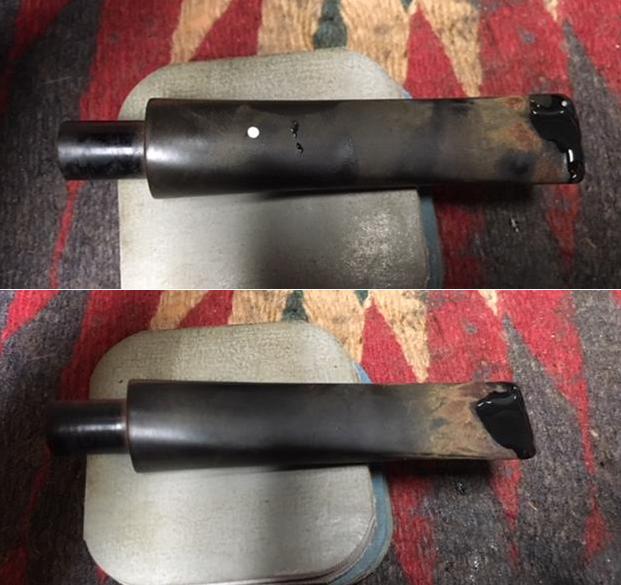
Cleaning up another new one for me – A Peterson’s Laxiom Apple


Blog by Steve Laug

The next pipe on the table is Peterson’s Laxiom Apple with a Military bit and a vulcanite shank extension. My brother, Jeff picked this one up in Montana on a trip there is October. He was drawn to it because he had never seen a Peterson pipe like it before. It has a heavily rusticated finish on the bowl and shank and is stained a dark brown colour. There is a little translucency in the stain and you can see the wood underneath. While the finish is rough it has been buffed to take off the sharp edges so it has a very tactile finish on the bowl. There is a smooth band of unrusticated wood at the shank end next to the vulcanite shank extension. The pipe is stamped on a smooth portion of the underside of the shank with the words Peterson’s over Laxiom. The bowl had a light cake build up and light lava on the thin rim edge but was in great condition overall. The extension and the military style bit were both oxidized. On the left side of the stem it is stamped with the characteristic Peterson’s P and on the underside it is stamped Great Britain. There were some tooth marks on the stem and button on both sides. Jeff took photos of the pipe before he did his cleanup work. He took this close up photo of the bowl to show its condition. I am amazed that the pipe is in excellent condition overall with little wear or tear to the bowl and rim top. He also took some photos of the bowl from various angles to show the finish on the bowl. It is a unique and pretty little pipe. The next two photos show the stamping on the underside of the shank and the underside of the stem. Both are very clear and readable.The stem and shank extension/ferrule were oxidized with a deep oxidation that would take some time to remove. The condition is very clear in the photos below. The second photo shows tooth marks on the button itself and the third photo shows tooth marks and chatter next to the button.I did some hunting on-line to see if I could find any information on the brand and found a link on the pipesmagazine.com forum (http://pipesmagazine.com/forums/topic/peterson-laxiom-pipes). I did not find it too helpful in that the pipe I had in hand was not meerschaum but definitely wood. I quote it below in full because the one thing that was a clue was the Peterson Manx link that I knew was a fact.

I just picked up a couple Peterson Laxiom pipes that are quite unusual. Both are stamped “Great Britain” on the stem. Both are black rusticated models which reminded me of a black Pioneer Block Meerschaum in my collection, in large part due to their similar stem and ferrule design. The Petes are relatively lighter in weight and are not labeled as meerschaum.

I noticed that Laxey Pipes Ltd made African meerschaum bowls for Peterson and that it was a Peterson Manx partnership with a factory on the Isle of Man, which closed in 1981 when Peterson’s meerschaum production was moved to Dublin.

Putting two and two together, I’m guessing that Peterson Laxiom pipes are East African meerschaum, but it’s gnawing at me that they might be some sort of wild composite, like Brylon. I can say with almost 100% certainty that the draft hole was drilled and not molded, as one of the two is obviously off-center.

A post from a number of years ago regarding Laxiom pipes came up empty, even after inquiring with three longtime Peterson employees.

Now I had a link to Manx but I was pretty certain the pipe was not meerschaum. It felt and looked like briar. I wrote to a good friend and go to Peterson’s aficionado, Mark Irwin to see if he could help me with information. He wrote back with his usual great information and a couple of photos from a catalogue showing the brand. I quote Mark’s answer in part.

Hi Steve,

… let’s look at the Laxiom…Thanks for these great photos, first of all. I have never seen one with the vulcanite shank extension unscrewed, and did not know it worked that way.

When you complete your restoration, if you have time, would you send me a photo for the Encyclopedia chapter with the pipe broken down this way? One picture goes a long way in understanding how something is put together, and I want readers to see how the Laxiom worked.

Laxiom: 1971-1975 A briar line produced for Iwan Ries, black rustic or walnut smooth or sculpted finish with acrylic threaded (removable) ferrule and vulcanite Laxi P-Lip or fishtail mouthpiece, made at the Peterson-Manxman factory in seven shapes. See Laxi. 

…Laxi 1971-1975 Easy-push mouthpiece for Iwan Ries, often with ferrule, P-Lip or fishtail. Military stem extended into mortise of removable (threaded) acrylic ferrule. Stem could be re-ordered if broken.

I have included 2 pages for your use in the blog from the 1971 Iwan Ries catalog. I’m beginning a series of articles on the Peterson – IRC connection, but I don’t mind a bit if you print these before I do! … Best, Mark The first page above describes the pipes and the second shows the variety of offerings. I have enclosed the description in a red box. Here is what it says:

Laxiom, a giant step ahead. Select briar, fine vulcanite stem. Another Peterson’s of Dublin, from their Manxman Division in the Isle of Man. Our exclusive mind-opening model – once again brings pipes out of exile. No longer relegated to a drab, drag world. Sensible, bigger bowl capacity disproves the old thick-bowled concept that left a thimble sized tobacco chamber! Stems aren’t shackled either by stem repair traumas. They’re delivered, at last, by the great new Laxi stem – a 71 Instant-Replace, the bit worth its weight in gold. Evidence is convincing – this IRC pipe escapes yesterday’s uniformityisms into today’s land of self-expression. Both regular and Peterson Lip are interchangeable, instantly substituted. Here’s more unconventionalism that makes it – everywhere. Yesterday’s experienced knowledge + Today’s awareness and vision = a pipe with a lot of smoking to do! Only in shapes shown – prince, apple, Dublin, billiard, pot, full bowl design carved apple.

I8J1913 Walnut $11.50

I8J1914 Black Sandblast $9.50

I8J1913s Instant-Replace Stem, reg. $2.50

I8J1913sp Instant-Replace stem, Peterson’s Lip $3.50

I am almost feel I don’t need to say this anymore as you all know by now that my brother Jeff does the cleanup on the pipes that we get. It is amazing to start with pipes that are already cleaned and reamed. In fact on the local repairs I do I have to do all the work and I really miss his work. He did the work on this one as usual. He reamed the bowl with a PipNet pipe reamer and cleaned up the last bit of cake with a Savinelli Fitsall reamer. He cleaned the internals of the shank and the stem with alcohol, pipe cleaners and cotton swabs. He scrubbed the exterior of the pipe with Murphy’s Oil soap and a tooth brush and was able to remove all of the dust, tars and oils built up on the briar. He was able to remove all of the tars and lava on the rim top and leave it looking very clean. He soaked the stem in an Oxyclean bath to raise the oxidation to the surface of the vulcanite. When it arrived it looked very clean. I took photos of the pipe before I started my restoration work. I took a photo of the bowl and rim to show its condition after his cleanup work. It looked really good.The Oyclean brought the oxidation to the surface of the stem and the tooth marks were very visible on both sides. This is when I wish I could order one of those Insta-Replace Lax stems and just put this one aside. But there are none available so it is a cleanup job.I pulled the stem off and put it in a bath of Before & After Pipe Stem Deoxidizer and left it to soak overnight. In the morning I removed the stem from the deoxidizer and wiped off the excess deoxidizer from the surface of the stem with a paper towel. I cleaned out the airway in the stem with pipe cleaners and alcohol to remove any remnants of the bath from that part of the stem. The photos below show the stem after the soak and rub down. It was still lightly oxidized but the oxidation was significantly less than when I started. I decided to work on it without further soaking. It would be a stem that I would have to hand work to get rid of all the oxidation. The tooth marks are visible on the top and underside of the stem in the photos.I noticed that while I was wiped the shank extension down with some Obsidian Oil there was a bit of give in the extension. Since I could find little information on the brand I had no idea what to expect in this case. I carefully turned the shank extension and it came unscrewed from the shank of the pipe. I was pleased in that it would be easier to work on with it separated. I took photos to show the parts of the pipe. With the shank extension removed I scrubbed out the airway with a pipe cleaner and alcohol to double check if there was debris in this section of the shank with the threaded tenon removed. It was very clean. I rubbed the bowl down with Before & After Restoration Balm to deep clean the smooth finish, enliven and protect the briar. I hand rubbed it with my fingers and wiped it off with a soft cloth. I buffed the bowl with a horsehair shoe brush to raise the shine. I took some photos of the bowl at this point to mark the progress in the restoration. I rubbed some Vaseline Petroleum Jelly on the threads of the shank extension to make it easier to turn into the shank and protect the threads in the process.I screwed the extension part way into the shank and polished it to remove the oxidation. I sanded it with 1500-4000 grit micromesh sanding pads and rubbed it down with Obsidian Oil after each pad. I buffed the shank extension with Red Tripoli and Blue Diamond on the buffing wheel to polish it further and remove the stubborn oxidation that was still present. I took it back to the work table and sanded it with 6000-12000 grit micromesh pads, once again rubbing it down with oil after each pad. After the final pad I gave it a final coat of oil and let it dry. I repaired the deep bite marks in the surface of the button and the underside of the stem near the button. I cleaned up the surrounding area and wiped it down with alcohol. I filled them in with black superglue.After the repairs had dried I sanded them to blend them into the surface of the stem. I used 220 grit sandpaper to smooth out the repaired areas and reshaped the top of the button.I polished out the sanding scratches and marks in the vulcanite with micromesh sanding pads – wet sanding it with 1500-2400 grit pads and dry sanding it with 3200-4000 grit pads. I wiped the stem down with Obsidian Oil after each sanding pad. I buffed the stem with Blue Diamond on the buffing wheel. I brought it back to the table and sanded it with the final three 6000-12000 grit pads. After the final pad I gave it a final coat of oil and set it aside to dry. I put the stem back on the bowl and worked the pipe over on the buffing wheel using Blue Diamond to polish the bowl and shank. I lightly buffed the bowl so as not to leave behind polishing compound in the rustication. I used more pressure on the stem to raise the gloss on the vulcanite. The P stamp on the side of the stem was not deep enough to hold a repaint so I left it. I gave the bowl multiple coats of Conservator’s Wax and the stem multiple coats of carnauba wax. I buffed the entire pipe with a clean buffing pad to raise the shine. I hand buffed it with a microfiber cloth to deepen the shine. The finished pipe is shown in the photos below. The dark brown stain on the rustication of the apple shaped bowl works well with the rich black of the vulcanite stem. This is a unique pipe the likes of which I have never before seen. It is a beautiful and well-made pipe. The dimensions of the pipe are: Length: 6 inches, Height: 1 3/4 inches, Diameter of the bowl: 1 inches, Diameter of the chamber: 3/4 inches. Thanks for looking.

New Life for an interesting Tinderbox Noble


Blog by Steve Laug

When this pipe arrived it had the look of an older Shalom pipe from Israel. The shape and style of the stem, the type of briar and the shape of bowl all said to me that it was pipe made by The Shalom Pipe Co. Once I looked over the pipe it was confirmed. It was stamped on the underside of the shank ISRAEL. On the side of the shank it reads The Tinderbox in an arch over Noble. So I was working on a Shalom pipe made for Tinderbox. The Shalom Pipe Factory in Israel was owned by Bernard Hochstein, former CEO of Mastercraft. The Alpha line was made exclusively for export to the United States. They were made in Israel from the 1970s into the 1980s. The Shalom Pipe Company made a lot of shop pipes for local pipe shops in the US. This is one of those pipes.

I am not sure where on his travels Jeff found this old tired pipe but it had a unique shape and look that I liked. It showed promise – the grain on the briar was a mix of cross grain, flame grain and birdseye. There was a chip out of the outer edge of the rim on the right side of the bowl and some light rash on the bowl side. The end of the shank was inset for the stem. It gave the pipe a dressy look. The bowl had a thick cake that had formed a hard lava coat on the rim top. The finish on the bowl was very dirty with a lot of oils and grime ground into the briar. The stem had deep oxidation in the vulcanite and there were very deep tooth marks on both sides near the button. Jeff took photos of the pipe before he started his clean up on it. He took a close up photo of the rim top and bowl. You can see the thickness of the cake in the bowl and the heavy lava coat on the top. The bowl exterior was also caked with tars and grime around the groove around the top of the bowl. Jeff also took photos of the sides of the bowl to show the condition of the pipe. The first four photos show the damaged area on the top edge of the right side of the bowl. I have circled the damaged areas in red on the photos to highlight the issue. The fifth photo shows the underside of the bowl. The grain is quite beautiful and shows through the grime on the finish. The stamping on the left side of the shank and the underside are very clear. The left side reads The Tinderbox in an arch over Noble as noted above. The underside is stamped Israel next to the shank end.The stem was pitted from the oxidation and it was deep in the surface of the vulcanite. There were visible tooth marks on both the top and underside of the stem as well as on the edges of the button itself.Jeff did his usual thorough clean up on the bowl and stem. He reamed the bowl with a PipNet pipe reamer and cleaned up the last bit of cake with a Savinelli Fitsall reamer. He cleaned the internals with alcohol, pipe cleaners and cotton swabs – Spending extra time scrubbing out the mortise as it was very dirty. He scrubbed the exterior of the pipe with Murphy’s Oil soap and a tooth brush and was able to remove all of the tars and oils built up on the briar. He was able to remove all of the tars and lava on the rim top and leave it looking very clean. He soaked the stem in an Oxyclean bath to raise the oxidation to the surface of the vulcanite.

When it arrived it looked like a different pipe. I was excited to start working on it so I pulled the stem off and put it in a bath of Before & After Pipe Stem Deoxidizer and left it to soak overnight. I totally forgot to take photos before doing this.I remembered in time to take photos of the bowl before I started working on it. It was very clean and would look amazing once it was finished. The shank end had been turned and was inset so that the stem could be inset into the shank giving it a unique and trim look.I filled in the chipped divot on the outer edge of the rim with clear super glue. I layered it into the divot until the edge matched the surrounding areas. I also applied it to the rim top to cover that damaged area. I used the super glue to fill in the road rash on the left side of the bowl below the chipped area.When the repair had dried I sanded the repaired areas with 220 grit sandpaper to blend them into the rest of the bowl. I was able to blend the chipped area into the surface of the bowl so that it was virtually invisible. I sanded the road rash area with 220 grit sandpaper as well and blended it into the bowl side. I sanded it with micromesh sanding pads – wet sanding it with 1500-2400 grit micromesh pads and dry sanding it with 3200-4000 grit pads. I stained the sanded areas with a dark brown stain pen to match it to the rest of the stain on the briar. I hand buffed it with a soft cloth to raise a shine.I rubbed the bowl down with Before & After Restoration Balm to deep clean the smooth finish, enliven and protect the briar. I hand rubbed it with my fingers and wiped it off with a soft cloth. I buffed the bowl on the wheel with Blue Diamond to raise the shine. I took some photos of the bowl at this point to mark the progress in the restoration. In the morning I removed the stem from the deoxidizer and wiped off the excess deoxidizer from the surface of the stem with a paper towel. I cleaned out the airway in the stem with pipe cleaners and alcohol to remove any remnants of the bath from that part of the stem. The photos below show the stem after the soak and rub down. It was still quite oxidized. The oxidation was significantly less than when I started but it was still present. I decided to work on it without further soaking. It would be a stem that I would have to hand work to get rid of all the oxidation. The tooth marks are visible on the top and underside of the stem in the photos.I sanded the stem with 220 grit sandpaper to remove the oxidation from inside the tooth marks, reshape the button on both sides and wiped down those areas with alcohol to remove the sanding dust. I painted the tooth marks with the flame of a Bic lighter to lift them as much as possible before repairing them. I filled in the tooth divots with black super glue and sprayed them with accelerator to speed the drying time. Once the repairs were dry I sanded them with 220 grit sandpaper to blend them into the surface of the stem. The first two photos below show the repairs after I first sanded them. The third and fourth photos show the stem after I had sanded the repaired areas to match the surface of the stem. I polished out the sanding scratches and marks in the vulcanite with micromesh sanding pads – wet sanding it with 1500-2400 grit pads and dry sanding it with 3200-4000 grit pads. I wiped the stem down with Obsidian Oil after each sanding pad. I buffed the stem with Blue Diamond on the buffing wheel. I brought it back to the table and sanded it with the final three 6000-12000 grit pads. After the final pad I gave it a final coat of oil and set it aside to dry. I put the stem back on the bowl and worked the pipe over on the buffing wheel using Blue Diamond to polish the bowl and shank. I buffed the stem to raise the gloss on the vulcanite. I gave the bowl and stem multiple coats of carnauba wax. I buffed the entire pipe with a clean buffing pad to raise the shine. I hand buffed it with a microfiber cloth to deepen the shine. The finished pipe is shown in the photos below. The medium brown stain on the cauldron shaped bowl works well with the rich black of the vulcanite stem. This is a unique, beautiful and well-made pipe. The dimensions of the pipe are: Length: 6 inches, Height: 2 inches, Diameter of the bowl: 1 1/2 inches, Diameter of the chamber: 7/8 inches. I will be adding this one to the rebornpipes store shortly if you are interested in adding it to your collection. It will make a fine addition to the rack. If you are interested email me at slaug@uniserve.com or send me a message on Facebook. Thanks for looking.

A Great Find – Peterson’s Mark Twain Rustic XL Boxed pipe


Blog by Steve Laug

My brother Jeff found this Peterson on one of his trips. He showed me the box and then the end of the box first. The end of the box said it was a Peterson Mark Twain XL Rustic. I could not wait to see what was inside. I am slow to get my hopes up because often what the box says and what is inside are very different. He opened the box and inside was a Peterson black satin pipe sock and the factory brochure. This was definitely looking up. He took the pipe out and it was exactly what the box said it was – a Peterson’s Mark Twain Rustic XL. Jeff took pictures of the pipe to show the overall condition of the find before he started his cleanup work on it. The pipe was dirty with a lot of dust and debris in the crevices of the rustic finish and dull looking on the high spots. The bowl had a thick, hard cake and there was a heavy lava overflow on the rim top filling in the beveled area and the crevices in the finish. The inner and outer edges of the bowl looked to be in good condition.The underside of the bowl had a smooth spot that was stamped Peterson’s over Mark Twain. Next to that it was stamped Made in the Republic of Ireland.The pipe had a silver band/ferrule on the end of the shank that bore the typical Peterson’s of Dublin stamping and was stamped Sterling Silver. On the underside it had three hallmarks. The Irish sterling silver hallmarks are first a Hibernia mark (looks like a seated woman facing left) second a fineness mark (an Irish harp) finally the date code comes after those, in the form of a letter. In this case it is the upper case italic B.The hallmarks gave a good indication of the age of the pipe. I turned to Pipedia to have a look at the article by my old friend Mike Leverette to get a feel for the dating of the Mark Twain series. I knew there were several releases of the series but could not remember the dates. Here is the link to the article: (https://pipedia.org/wiki/A_Peterson_Dating_Guide;_A_Rule_of_Thumb). I have enclosed the section of the article pertaining in a red box in the pic below.I found a Peterson Sterling Hallmark chart on the web to help pin down the date associated with the Italic uppercase B. I have circled the letter on the chart to the left with a red circle. The pipe is clearly identified as a 1987 Mark Twain. That and the fact that it did not have any number on the shank puts it squarely in the Un-numbered Edition noted above from Mike’s article. That edition of the series was made between 1983 and 1989 so this one falls squarely in the middle of the series release.

The stem was lightly oxidized but the P stamp was very clear and deeply stamped in the vulcanite material. There were light tooth marks and chatter on both sides of the stem near the button and shelf.I could not wait to see the pipe after Jeff cleaned it up. He did his usual thorough clean up on the bowl and stem. He reamed the bowl with a PipNet pipe reamer and cleaned up the last bit of cake with a Savinelli Fitsall reamer. He cleaned the internals with alcohol, pipe cleaners and cotton swabs – scrubbing out the sump area that is generally very dirty. He scrubbed the exterior of the pipe with Murphy’s Oil soap and a tooth brush and was able to remove all of the dust and debris in the nooks and crannies of the rustication. He was able to remove all of the tars and lava on the rim top and leave it looking very clean. He soaked the stem in an Oxyclean bath to raise the oxidation to the surface of the vulcanite. I took photos of the pipe when it arrived. I opened the box that the pipe came in like a kid on Christmas morning. I wanted to see what he had been able to do with this pipe.I took the pipe out of the box and took photos of it before I did my part of the restoration work on the old Peterson. Other than the oxidized stem it looked pretty good.He did an amazing job on the rim top. It had come entirely clean under his workmanship on it. The inner bevel on the rim was flawless and the lava was gone leaving a clean bowl and rim. The underside of the bowl looked good and the stamping was very clear as I had surmised in the pre-cleaning photos.I took some photos of the stem to show the oxidation and the tooth chatter and marks.I put the stem to soak in the Before & After Stem Deoxidizer and left it overnight so that it could work its magic on the oxidation. I worked on the bowl while it soaked.I rubbed the bowl down with Before & After Restoration Balm to clean out the deep pits and crevices of the finish and enliven and protect the briar. I hand rubbed it with my fingers and used a shoe brush to get deep into the grooves. I rubbed it off with a soft cloth and buffed it with a microfiber cloth to give it a bit of a shine. I took some photos of the bowl at this point to mark the progress in the restoration. In the morning I removed the stem from the deoxidizer and wiped off the excess deoxidizer from the surface of the stem with a paper towel. I cleaned out the airway in the stem with pipe cleaners and alcohol to remove any remnants of the bath from that part of the stem. The photos below show the stem after the soak and rub down.I sanded out the tooth chatter and tooth marks on both sides of the stem with 220 grit sandpaper and was able to remove all of the damaged areas.I polished out the sanding scratches and marks in the vulcanite with micromesh sanding pads – wet sanding it with 1500-2400 grit pads and dry sanding it with 3200-4000 grit pads. I wiped the stem down with Obsidian Oil after each sanding pad. I buffed the stem with Blue Diamond on the buffing wheel. I brought it back to the table and sanded it with the final three 6000-12000 grit pads. After the final pad I gave it a final coat of oil and set it aside to dry. I used some acrylic paint to touch up the stamping on the stem. I puddled the paint over the stamping with small paint brush. Once the paint dried I polished it off with a cotton pad and 6000-12000 grit micromesh sanding pads.  I polished the silver band with a jeweler’s cloth to remove any tarnish and polish the band to a rich shine. The stamping really stood out with the polishing. I put the stem back on the bowl and worked the pipe over on the buffing wheel using Blue Diamond to polish the bowl and shank. I used a gentle touch on the rusticated briar when I was buffing it so that the nooks and crannies of the rustication would not be filled in and make more work for me. I buffed the stem with a harder touch to raise the gloss on the rubber. I gave the bowl multiple coats Conservator’s Wax and buffed it with a shoe brush. I gave the stem multiple coats of carnauba wax. I buffed the entire pipe with a clean buffing pad to raise the shine. I hand buffed it with a microfiber cloth to deepen the shine. The finished pipe is shown in the photos below. The combination of brown and red stain on the rustication and smooth rim and base of the pipe along with the rich black of the vulcanite stem make this an interesting and beautiful pipe. The dimensions of the pipe are: Length: 6 1/2 inches, Height: 2 inches, Diameter of the bowl: 1 3/8 inches, Diameter of the chamber: 7/8 inches. I will be adding this one to the rebornpipes store shortly if you are interested in adding it to your collection. It will make a fine addition to the rack. If you are interested email me at slaug@uniserve.com or send me a message on Facebook. Thanks for looking.


Bringing a Drake Double Guard System Pipe Back to Life


Blog by Steve Laug

Knowing my predilection for strange and different pipes my brother keeps an eye open for that kind of thing in all of his meanderings about the Northwest and through the pages of eBay. One he came across really captured me. It was in a box that read Drake Double Guard Pipe on the lid. The box was in decent shape, dirty but unshaken. On the end of the box it read Drake Pipe Co. over Merchandise Mart over Chicago, Ill. It was a brand that I knew nothing about. I have never seen a pipe like this before or since he found this one. It has a Bakelite base and shank that has a threaded metal end cap. The cap was stuck in place. The pipe had a briar bowl with a drilled centre screw. The stem is amberlike Bakelite – harder than plastic and older. There were some tooth marks on both sides of the stem next to the button. There are some crazing marks around the sides of the stem. There is a polished silver ring on the end of the stem. Jeff took photos of the pipe before he did his initial clean up. The exterior of the pipe was very dirty. There was dirt and grime in all of the grooves in the Bakelite base. The stem was also very dirty and the inside of the airway was lined with tars and oils. The briar was very dirty and oily feeling. It was a tired old pipe.The grimy bowl can be seen in the photo below. There was a fairly thick cake in the bowl and the lava had overflowed onto the bowl top and over the sides. There were some nicks on the outer edge of the bowl while the inside edge was quite clean and undamaged.Jeff took the photo below to show the wear and tear on the pipe. It shows the end cap that is stuck in the end of the base. The bowl had a lot of junk filling in between the bowl and the base. There was a lot of stuff in the grooves of the Bakelite base.The next two photos show the stem condition. There was some crazing in the material of the stem. There were tooth marks on the top and underside of the stem surface.When Jeff removed the stem there was an interesting condenser that was an integral part of the Bakelite base. It was a metal cap and was connected to a centre post. It was thickly clogged with tars and oils and the cap was overflowing over the edges of the cap.Once Jeff sent me the pictures I was hooked. I was looking forward to getting it and working on it. While I waited I did a bit of research on the brand. The printing on the end of the box that read Drake Pipe Co. over Merchandise Mart over Chicago, Ill. may have held a clue for me. I looked on the smoking metal website which is my normal go to site for these pipes and was unable to find anything about the brand. I did a general Google search on the brand and found nothing. I then focused the search on Merchandise Mart, Chicago, Ill. and found a bit of information that gave me a little help in my quest. The first was a postcard for the Merchandise Mart, in Chicago, Ill. It was a huge building that housed many floors of merchandise. There were household products, clothing for men, women and children, restaurants and specialty shops. There was also a tobacco shop in the Mart called Bernard Tobacco Shop. I found a listing of tobacco shops in Chicago in 1959 and it included this shop. It is long gone today but at least in 1959 it was there. (https://books.google.ca/books?id=xR4EAAAAMBAJ&pg=PA42&lpg=PA42&dq=Bernard+Tobacco+Shop+Chicago&source=bl&ots=AddsXvGdl8&sig=YVdTT5dpfwtnIiene6nUXBBpgNs&hl=en&sa=X&ved=0ahUKEwj2ua7p4v_XAhVJ52MKHSHQDDIQ6AEIkQEwCQ#v=onepage&q=Bernard%20Tobacco%20Shop%20Chicago&f=false). 

There were also photos of a metal token for the shop that was good for Trade. I have included these two photos below. On the one side it reads Bernard Tobacco Shop Merchandise Mart. On the other side it reads Good for 5₵ in trade.Jeff cleaned it up as best he could. He reamed the bowl with a PipNet reamer and took it back to bare briar. The screw in the bottom of the bowl was stripped and also stuck. He was able to clean off the rim removing all of the tars and lava. He was able to remove the stem but not the end cap from the Bakelite base. Thus the internals of the pipe base were very dirty. He cleaned out the stem internals with alcohol, pipe cleaners and cotton swabs and was able to remove all of the grime there. When it arrived I opened the box and found clipped tobacco labels that the previous pipeman must have smoked in this pipe. There was Stratford Smoking Mixture, Mapleton Smoking Mixture, Shannon Irish Smoking Mixture and Blue Heaven Triple Bokay Smoking Mixture. The only blend I had heard of was the Mapleton, all the rest were new ones to me.I worked on the pipe for several months. I soaked the bowl and screw with alcohol and cleaned around the screw with cotton swabs and acetone trying to let it penetrate the threads. It did not work. I used penetrating oil to try to loosen the stem but again it did not work. The stripped slot in the screw made it impossible to simply unscrew the bowl. I finally used a bit on the drill that was for removing tripped screws and I was able to get the screw out of the bowl. It is badly damaged and will take work to make it reusable but it is free. I wrapped the jaws on a pair of pliers with tape and carefully removed the end cap from the end of the base. I took photos of the pipe after I had taken it apart. I cleaned out the threads in the end cap and the base where the bowl was held in place. I used alcohol, cotton swabs and pipe cleaners and worked on it until the interior was clean. I cleaned the condenser cap with pipe cleaners and alcohol until all of the grime was gone. I could blow air through the base with no interference. It took time to clean it all out but once it was clean it was fresh and it was ready to smoke again.I rubbed the threads on the end cap down with Vaseline and threaded it into the shank end. I polished the aluminum cap with micromesh sanding pads.I rubbed the Bakelite base down with Before & After Restoration Balm to give life back to the base. I scrubbed it down using cotton swabs and pads. I buffed it with a microfiber cloth to raise the shine. I cleaned out the airway in the stem with pipe cleaners and warm water. I sanded out the scratches and tooth marks with 220 grit sandpaper. I polished the stem material with micromesh sanding pads – wet sanding it with 1500-2400 grit pads and dry sanding it with 3200-12000 grit pads. I wiped down the stem with Obsidian Oil after each pad. I gave it a final coat of oil after the last pad. The stem material seemed to absorb the Obsidian Oil and it worked well. The polished stem looked really good. The tooth marks and chatter were gone and the amber look of the stem was really good. I rubbed the bowl down with Before & After Restoration Balm to clean and enliven the briar. The product pulls grit and grime out of the briar and brought life back to the wood. I polished it with a soft cloth to clean off the grime that the balm brought up. I buffed it with Blue Diamond on the buffing wheel to polish out the scratches. I gave the bowl multiple coats of carnauba wax and buffed the bowl with a clean buffing pad to raise the shine. I hand buffed it with a microfiber cloth to deepen the shine. I put the stem back on the base and gave it several coats of Conservator’s Wax to protect and give it a shine. I did not want to risk buffing the stem as the material appeared to be quite soft and would easily melt and damage with the heat of the buffing wheel. I hand buffed the base and stem with a shoe brush and a microfiber cloth. The finished base and stem look really good at this point in the process. It was time to put the bowl back in place on the base. I put the bowl on the base and turned the screw into it to hold it tightly in place. I gave the bowl and stem a final coat of Conservator’s Wax.  I hand buffed the entire pipe with a microfiber cloth to polish it and raise a shine. The finished pipe is shown in the photos below. It looks better than it did in the beginning. It is the first Drake Double Guard Pipe that I have ever seen and worked on. It is well made and combines a beautiful piece of briar with Bakelite and amber acrylic/Bakelite for the stem material. The finished pipe looks really good with all the parts in place and polished. The dimensions of the pipe are: Length: 5 1/2 inches, Height: 1 3/4 inches, Diameter of the bowl: 1 1/2 inches, Diameter of the chamber: 3/4 inches. Do any of you have any more background information or history on the brand or on the Merchandise Mart in Chicago, Illinois? Send me a message, email or leave a response on the blog. Thanks for looking.

Repairing a Broken Tenon on a Birks Savinelli “Lollo”


Blog by Steve Laug

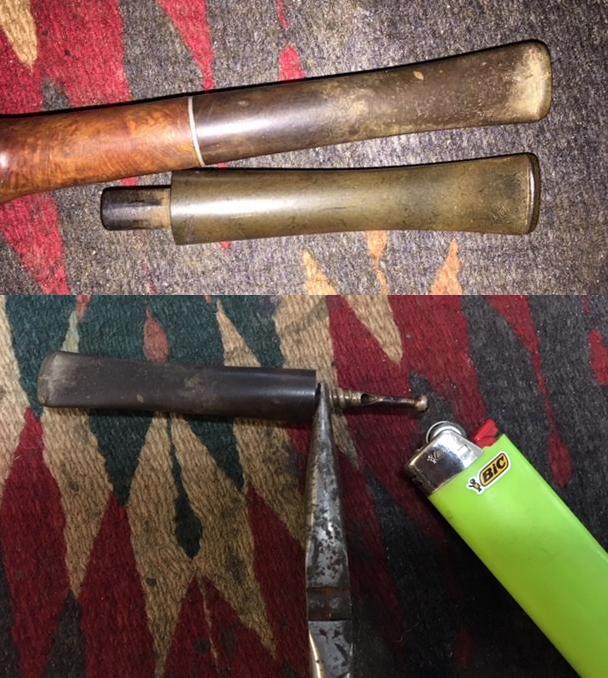
I received a call from a local pipeman who said he had broken the stem off of his favourite pocket pipe. He had been given my name by a local pipe shop. He stopped by and dropped off a small bag with the parts of his pipe in it. He had dropped the pipe down the stairs and it had bounced down to the bottom in two pieces. He was able to remove the broken tenon but the damage was done. The pipe was stamped Birks and next to that it was stamped “Lollo” over Savinelli over Italy. The pipe was actually in really good shape. The bowl was clean and the briar had some nice grain all around the sides, top and bottom. The rim was clean and there was a very light cake inside. The broken tenon had a stinger in the tenon that he wanted to preserve. The stem was oxidized and showed some tooth chatter on both sides near the button. I told him I would have a look at the pipe and decide whether to replace the tenon or the stem. He was fine either way as long as the pipe was the same when he picked it up. I put the parts of the pipe on my work table and took photos of the pipe before I started working on it. I went through my box of tenons and found one that was the proper size for the mortise. I use threaded replacement tenons on stems like this. I used a Dremel and sanding drum to smooth out the rough edges of the broken tenon left on the stem. I used a sharp knife to bevel the edge of the airway in the end of the stem. Beveling it keeps the drill bit centred when I drill out the airway for the threaded end of the tenon.I chucked a drill bit the same diameter as the threaded end of the replacement tenon.  The photo below shows the tenon on the end of the drill bit. I lined it up before drilling it so that the stem was straight and the airway would not be curved. I drilled the airway to the same depth as the threaded end of the tenon. Once the airway was straight I used tap to cut threads in the airway in the stem so that I could turn the new tenon in place. I put a drop of glue on the threads of the tenon and quickly turned it into the stem until it sat flush against the face of the stem. I pushed the stinger into the tenon end and aligned it so that the slot in it was facing the top of the stem. I checked the alignment on the new tenon and all was straight and ready.The oxidation on the stem really showed up under the bright light of the flash. I polished the vulcanite stem with micromesh sanding pads – wet sanding it with 1500-2400 grit pads and dry sanding it with 3200-4000 grit pads. I wiped the stem down with Obsidian Oil after each sanding pad. I buffed the stem with Blue Diamond on the buffing wheel. I brought it back to the table and sanded it with the final three 6000-12000 grit pads. After the final pad I gave it a final coat of oil and set it aside to dry. I put the stem back on the bowl and gently worked the pipe over on the buffing wheel using Blue Diamond to polish the bowl and shank. I used a gentle touch on the pipe when I was buffing to polish the bowl. I buffed the stem with a harder touch to raise the gloss on the rubber. I gave the bowl and stem multiple coats of carnauba wax. I buffed the pipe with a clean buffing pad to raise the shine. I hand buffed it with a microfiber cloth to deepen the shine. The finished pipe is shown in the photos below. It looks better than it did in the beginning. It is the first little Savinelli “Lollo” I have worked on. It is well made and a beautiful piece of briar. The dimensions of the pipe are: Length: 4 inches, Height: 1 1/2 inches, Diameter of the bowl: 1 1/4 inches, Diameter of the bowl: 3/4 inches. I will be calling the pipeman who dropped it off for repair. I think he will enjoy his pipe!

Refreshing a Damaged CAO Lattice Meerschaum Pipe


Blog by Steve Laug

We probably paid too much for this beautiful meerschaum pipe but the shape and the carving are so unique that we had to buy it. It is made by CAO and is a shape I would call a Grecian urn. It has lattice carving around the bowl side and the rim is smooth. The shank has a pattern that looks a lot like scales and swirls. There was some very nice colouring happening on the shank and lightly on the bowl sides and rim. There was a cake in the bowl and some lava overflow on the rim top. There were some missing separators between two of the lattice windows but otherwise the bowl was undamaged. The stem was Lucite and had a round brass CAO logo on the top left side of the saddle. The stem had metallic gold flecks mixed in with the Lucite so that it had a natural sparkle to the reddish amberlike stem. There were not any tooth marks or dents on the stem surface but there were small scratches in the Lucite. There was also some wear and tear to the sharp edge of the button that would need to be cleaned up. Jeff took some photos of the pipe before he started the cleanup. The next series of close up photos show the condition of the bowl and rim and the overall condition of the bowl sides. You can see the bowl and cake with the overflow of lava on the rim top. There is also some fuzz that has attached to the cake. It was a dirty bowl. The sides of the bowl look very good other than the damage to the separators between three of the tear drops in the lattice work on the front of the bowl. The second, third and fourth photos below show the damaged portion circled in red. Other than that damage to the front of the bowl the rest of the carving is in excellent condition. The pipe, though imperfect will nonetheless be a beautiful addition to someone’s collection. They will just have to overlook the damaged area and enjoy the pipe.The connector between the shank and stem is a push tenon. There is a Delrin insert in the shank of the pipe and a Delrin tenon threaded into the end of the stem. It is dirty and stained but is undamaged.The round brass logo is dirty but it is undamaged. It is inset into the left topside of the saddle stem. The surrounding stem is quite dirty but there is no damage.The next two photos show the condition of the top and underside of the stem. You can see the metallic sparkles in the saddle portion and the scratches in the Lucite.Jeff carefully reamed out the bowl with a Savinelli Fitsall Pipe Knife and took it back to the bare meerschaum walls. He scrubbed the rim top and scraped off the lava on the surface with a knife. He carefully cleaned the exterior of the bowl with a damp cloth to avoid further damage to the front of the bowl. He cleaned out the shank and airway in the bowl and stem with alcohol and pipe cleaners. He cleaned out the recessed area around the inset tenon in the stem with alcohol and cotton swabs. He washed the exterior of the stem with clean water. I took photos of the pipe when I brought it to my work table to show the condition of the pipe after Jeff’s work and before I polished it. I took a photo of the rim top to show how well it cleaned up. Jeff did a great job getting rid of the lava overflow. I also took a photo of the cleaned up damaged area of the bowl.The stem cleaned up really nicely. The gold flecks in the Lucite really stand out now and the gold/brass logo inset looks really good now. The stem should polish up nicely.The mortise insert in the shank had a ragged edge to it. I used a sharp knife and a pen knife to clean up the ragged end. I wanted a smooth fit in the shank. Once I had finished that part of the shank and sanded it down I worked on polishing the rim and ring on the top of the bowl. I polished it with micromesh sanding pads – wet sanding with 1500-2400 grit pads and dry sanding with 3200-12000 grit pads. I wiped the rim down after each pad with a damp cotton pad. I polished out the scratches and marks in the metallic Lucite stem with micromesh sanding pads – wet sanding it with 1500-2400 grit pads and dry sanding it with 3200-12000 grit pads. I wiped the stem down with a damp cotton pad after each sanding pad. I lightly buffed the stem with Blue Diamond on the buffing wheel. After the final pad I wiped it down with a damp pad and rubbed it down with a final coat of oil and set it aside to dry. I put the stem back on the bowl and carefully worked the pipe on the buffing wheel with a clean pad. I used a gentle touch on both the meerschaum and the Lucite stem so as not to damage either of them. I gave the meerschaum bowl multiple coats of Conservator’s Wax and hand buffed it with a shoe brush and a microfiber cloth to deepen the shine. The finished pipe is shown in the photos below. Even with the damaged area on the front of the bowl it still looks better than it did in the beginning. The unique shape and lattice work carving work together to make this a beautiful pipe. The dimensions of the pipe are: Length: 6 inches, Height: 2 ½ inches, Diameter of the bowl: 1 1/8 inch, Diameter of the chamber: 3/4 inches. I will be adding this one to the rebornpipes store shortly if you are interested in adding it to your collection. It will make a fine addition to the rack. If you are interested email me at slaug@uniserve.com or send me a message on Facebook. Thanks for looking.
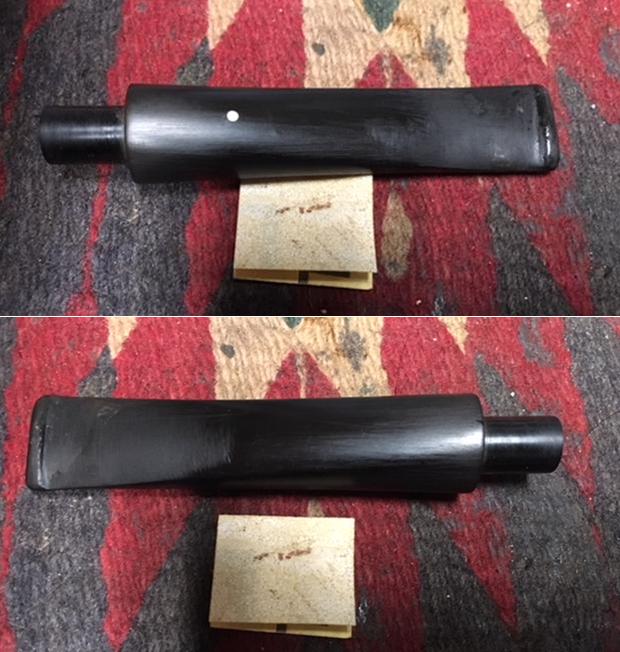
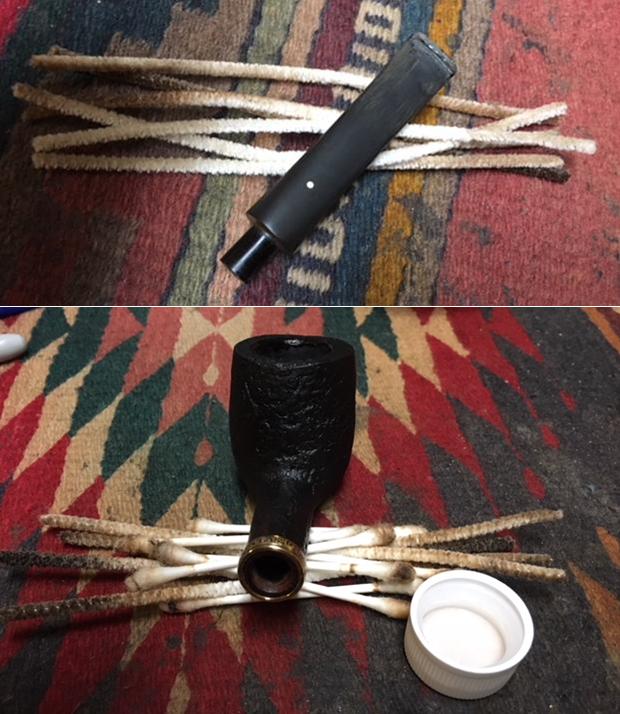
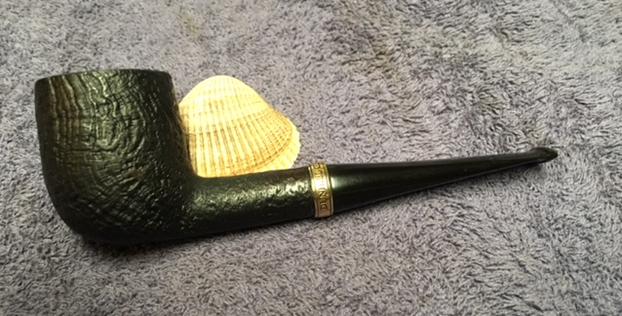
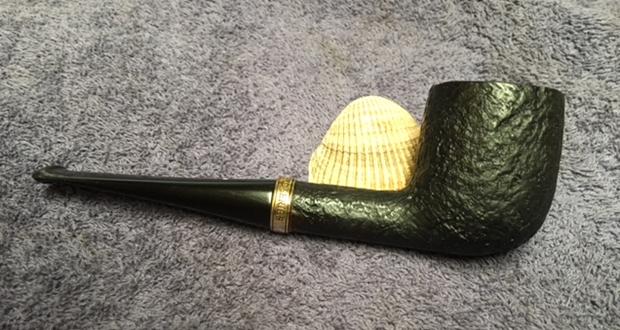
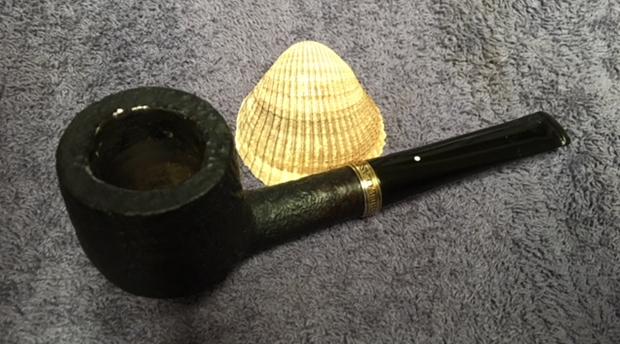
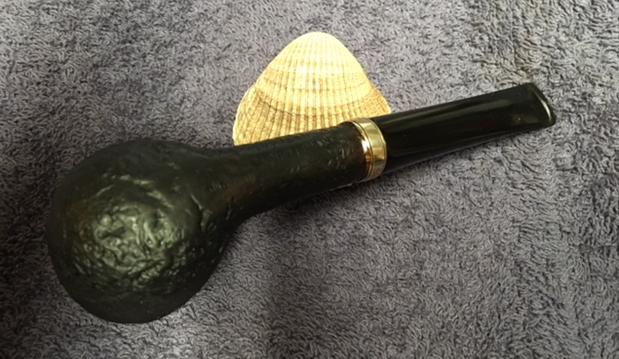
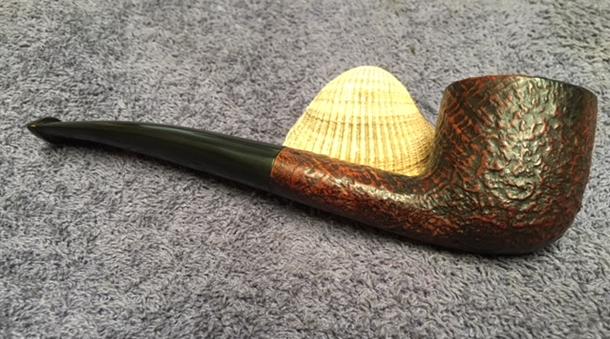
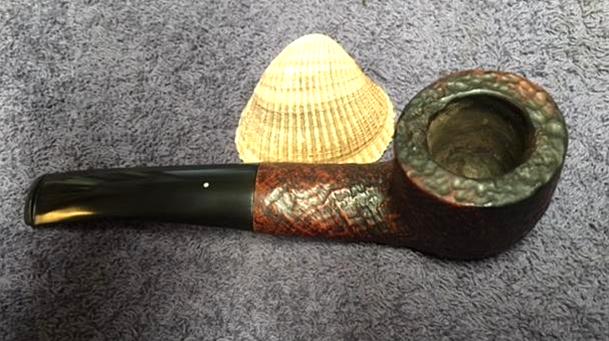
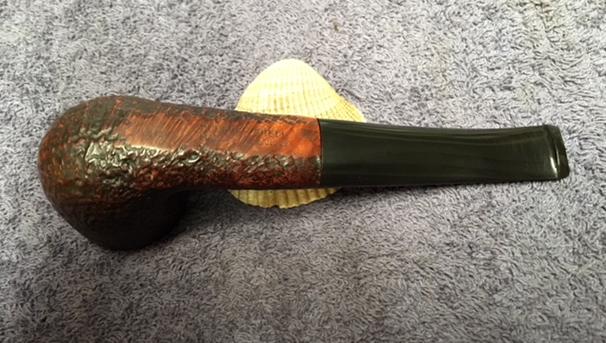
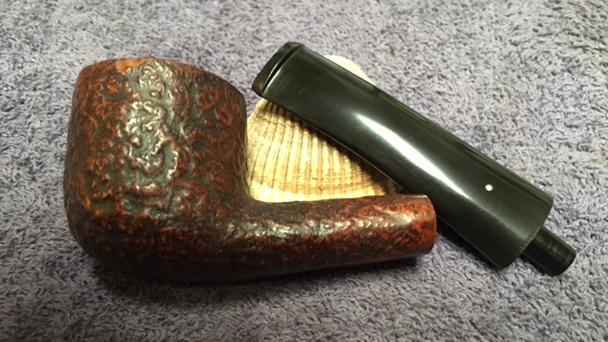
Restoring a Thorburn Clark Rusticated Bent Billiard


Blog by Steve Laug

This is another pipe from one of the eBay sellers that I follow and check out their shops regularly. Yet again this favourite seller in England put up a pipe that I really like. I don’t have any idea how many of them I have purchased from him but this one caught my eye. This one is a small rusticated bent billiard that is another featherweight. Its diminutive size and delicate shape are a lot like the Orlik Dugout I bought from him as well. The rusticated finish has a textured and almost sandblast look to it. The contrast of dark and medium brown stains really worked well with the shape of the pipe. The pipe was stamped in a smooth box on the underside of the shank and reads THORBURN CLARK over MANCHESTER with the letter R at the shank end of the smooth portion. The photos below are the seller’s photos. They show the overall condition of the pipe and what it was that caught my eye. I looked up the brand on Pipephil’s site – http://www.pipephil.eu/logos/en/logo-t5.html. I found out that the brand was carved by a tobacconist in Manchester, England. The owner of the shop used to carve his own pipes. The shop closed in the 1970s. I clipped the pertinent section from the site and included it below. The stamping on the stem of the one I have is the same as the pipe in the second photo below.I did some more digging into the brand to see what I could find out and found a link to a blog about the brand. I quote in part from the blog: https://pipesmokersjournal.wordpress.com/tag/thorburn-clark/

“This is an intriguing pipe, and a little piece of obscure British pipe making history. Thorburn Clark was, from what I can deduce, from my extensive online Sherlocking, Manchester-based tobacconists from the 1920s until the 1980s/90s. Behind their shop was a small pipe workshop, where a tiny workforce of craftsmen toiled to create a range of beautiful handmade pipes, each stamped upon the stem with their distinctive logo of an intertwining T and C.”

Another link brought a bit more information and some confirmation to the puzzle http://pipesmokerunlimited.com/archive/index.php/t-3749.html

“Thorburn Clark was a tobacconist based in Bridge Street, Manchester, a side street off Deansgate for those who know the area. Unlike most outlets of its kind, which shipped in pipes from outside makers and then branded them with the shop name, it seems that they had a small workshop attached to the premises where they crafted their own pipes.”

It was interesting to know that the pipe I had in hand was a pipe shop made pipe that came from Manchester. It was made in the small workshop in the back of the shop. I had learned that there were several carvers that worked there so I would not be able to know who made it. The pipe was obviously carved between the 1920s and the time the shop closed in the 1970s. Judging from the shape of the pipe and stem and the fact that it came with the Orlik made me put its date in the late 20s to early 30s.

I had the seller ship this pipe with the Orlik Dugout. When the pipes arrived I brought them to my worktable. I completed work on the Dugout then turned my attention to this pipe. I took photos of it to show its condition before I began to work on it. The finish looked to be in good repair under the grime and dust that was in the grooves of the rustication. The rim top was covered with lava that had overflowed from the cake in the bowl. The cake was quite thick and the bowl choked with carbon. The packing material from the shipping box was jammed into the bowl. The stem was lightly oxidized and it still bore the TC stamp on the left side. The fit of the stem to the shank was tight and it did not sit against the shank end. That told me that the interior of the shank must be quite dirty with tars and oils. I wonder if both of these pipes came from the same pipeman. I took a close up photo of the rim top to show the thickness of the cake in the bowl and overflow of lava on the rim. There were some worn spots on the rim where the finish was damaged. It looked like the inner and outer edges of the bowl were undamaged but I would know for sure once I had reamed it.While the stem was lightly oxidized the only damage to it was on the top and underside edge of the button and some light tooth chatter on both sides. The TC stamp was readable and the stamping was deep enough to be cleaned without damage.I reamed the bowl with the smallest cutting head on the PipNet pipe reamer. I took the cake slowly back to the bare briar. I wanted to see if there was cracking in the inside of the bowl. The cake was thick and hard so it took some steady and careful work to cut the cake back. I touched up the reaming of the bowl with t a Savinelli Fitsall Pipe Reaming Knife. I took what remained of the cake back to smooth, bare walls. I used a brass bristle wire brush to loosen the debris from the rim top. It was thick enough that it would take some work to get it off and clean out the grooves of the rustication.I scrubbed the briar with a tooth brush and Murphy’s Oil Soap to remove the dust and grime on the surface of the bowl and the grit that I had loosened on the rim top. I rinsed the bowl under warm water to remove the dust and scrubbed it with the brush under water. The results are shown in the photo below.I used a finer bristle brass brush to work over the grooves on the rim top. This extra step took more of the grime off the surface and left the rim top very clean.I cleaned out the inside of the shank with cotton swabs, pipe cleaners and alcohol to remove all of the tars and oils on the inside walls of the mortise. I cleaned out the airways in the shank and in the stem with pipe cleaners and alcohol.I put the stem in a soak of Before & After Pipe Stem Deoxidizer. I left it to soak for several hours while I worked on the bowl.I turned my attention back to the bowl. I rubbed the bowl down with Before & After Restoration Balm. The product worked to lift the grime and debris out of the grooves of the briar. I rubbed it down and scrubbed it deeper into the grooves of the briar with a shoe brush. I polished the briar with a soft cloth to remove the balm from the briar. I took a photo of the stamping on the shank because it was so clear and with the balm really stood out.I touched up the worn spots on the rim top and edge with a dark brown stain pen. I buffed the rim top with a soft cloth to even out the stain coverage.I rubbed the bowl down with several coats of Conservator’s Wax and buffed it with a shoe brush. The briar began to take on rich warmth. The feel of the bowl in the hand was comfortable and tactile. I think this would be a good smoking pipe. I set the bowl aside and turned back to the stem. I removed it from the soak in the Before & After Deoxidizer and wiped it down. I cleaned out the inside of the airway with alcohol to remove the product from the stem. I polished the stem with a soft cloth to remove all of the deoxidizer and give it a bit of a shine. It had removed much of the light oxidation and left the stamping intact on the stem side. There was still some spots of oxidation that needed to be addressed and the button needed to be reshaped on both sides. The photos below show what it looked like at this point.I used a folded piece of 220 grit sandpaper to work on the tooth chatter and to reshape the edge and surface of the button.  I worked over the spots of oxidation with the sandpaper at the same time to remove it from the surface of the hard rubber stem.I polished out the sanding scratches and marks in the vulcanite with micromesh sanding pads – wet sanding it with 1500-2400 grit pads and dry sanding it with 3200-4000 grit pads. I wiped the stem down with Obsidian Oil after each sanding pad. I buffed the stem with Blue Diamond on the buffing wheel. I brought it back to the table and sanded it with the final three 6000-12000 grit pads. After the final pad I gave it a final coat of oil and set it aside to dry. I put the stem back on the bowl and worked the pipe over on the buffing wheel using Blue Diamond to polish the bowl and shank. I used a gentle touch on the briar when I was buffing it so that the grooves of the rustication would not be filled in and make more work for me. I buffed the stem with a harder touch to raise the gloss on the rubber. I gave the bowl multiple coats of Conservator’s Wax and gave the stem multiple coats of carnauba wax. I buffed the pipe with a clean buffing pad to raise the shine. I hand buffed it with a microfiber cloth to deepen the shine. The finished pipe is shown in the photos below. It looks better than it did in the beginning. It is a beautiful pipe. The dimensions of the pipe are: Length: 5 ½ inches, Height: 2 inches, Diameter of the bowl: 1 inch, Diameter of the chamber: 5/8 inches. I will be adding this one to the rebornpipes store shortly if you are interested in adding it to your collection. It will make a fine addition to the rack. If you are interested email me at slaug@uniserve.com or send me a message on Facebook. Thanks for looking.