
Tag Archives: polishing stems

Banding a Dunhill CK 12 Patent Era Author


Blog by Steve Laug

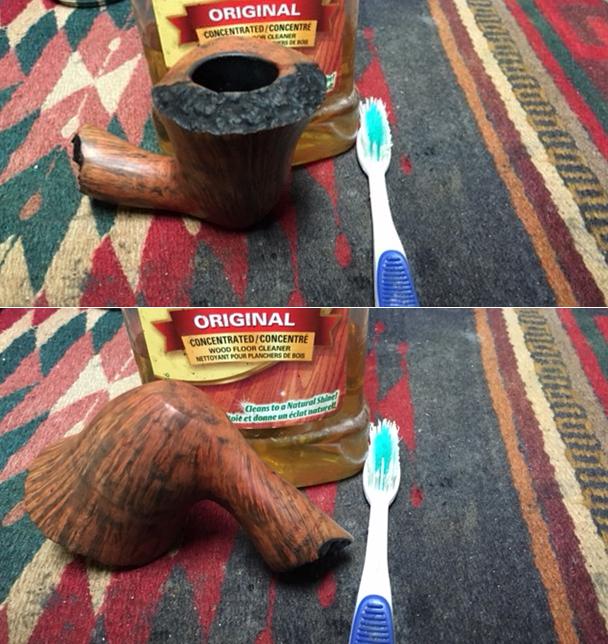
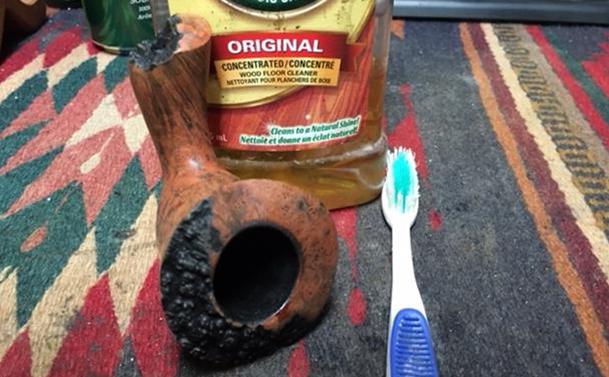
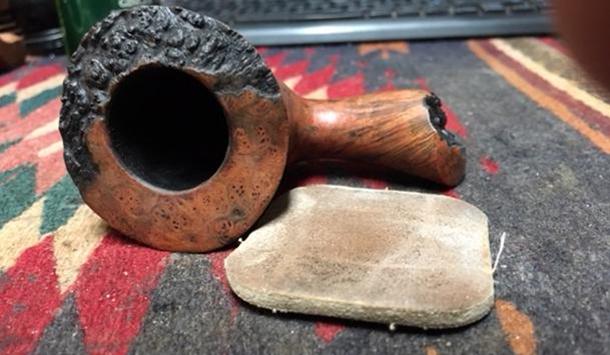
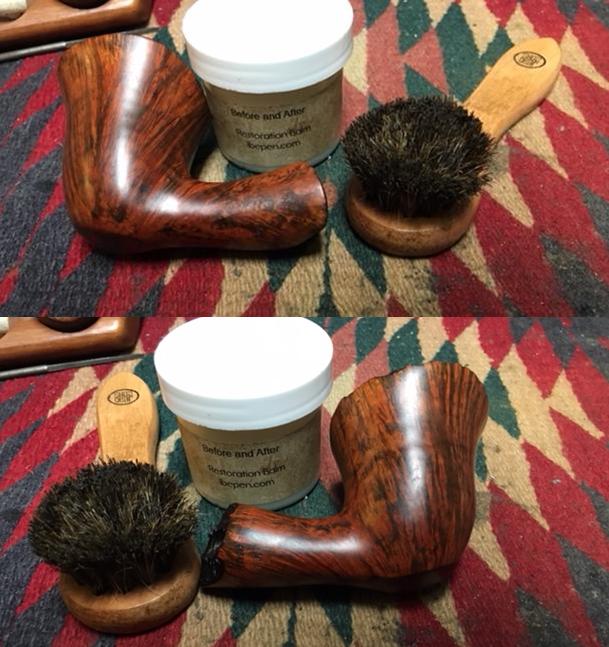
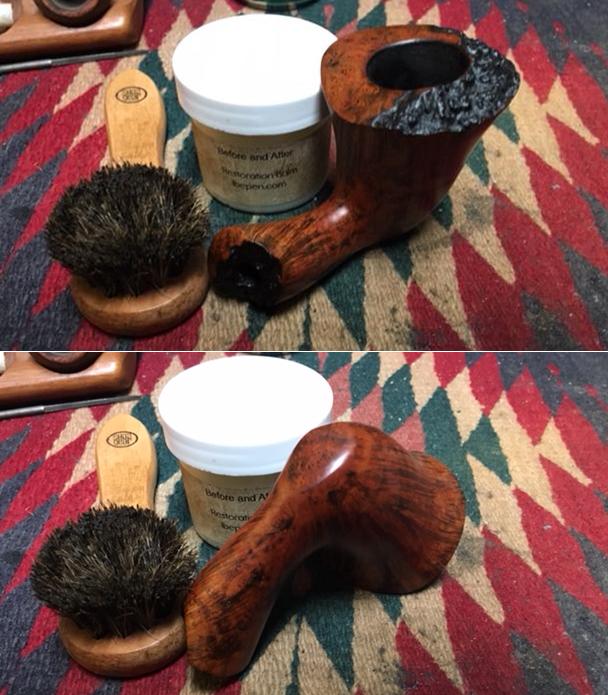
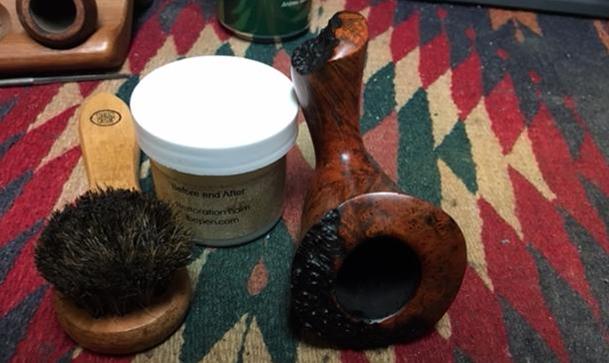
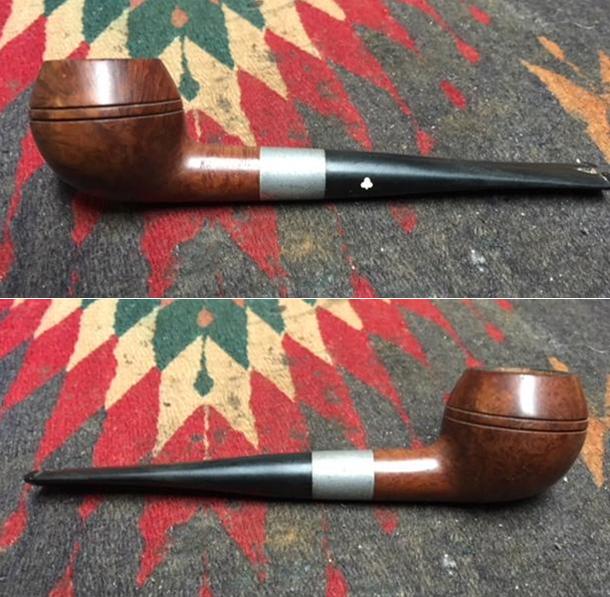
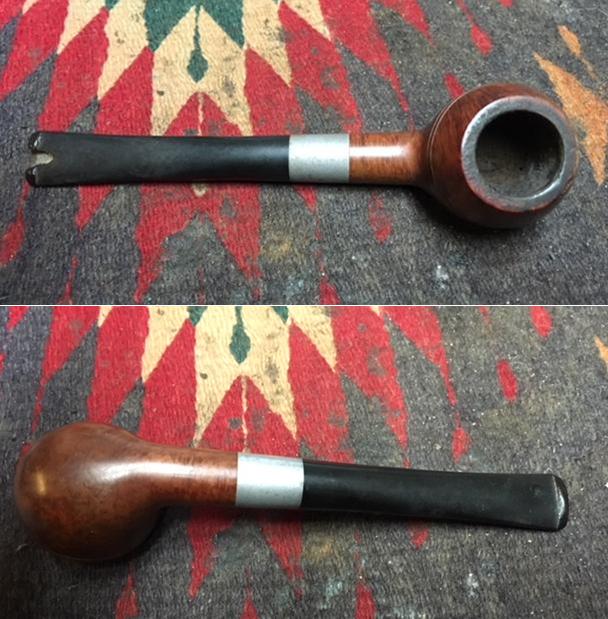
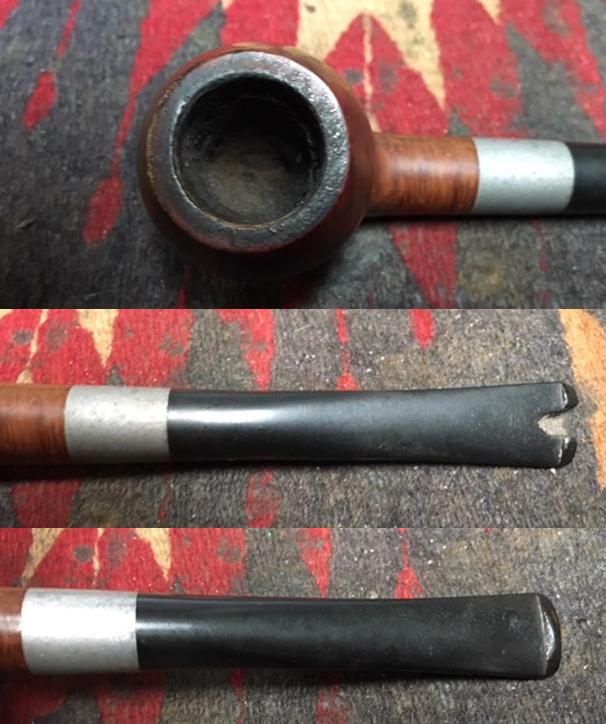
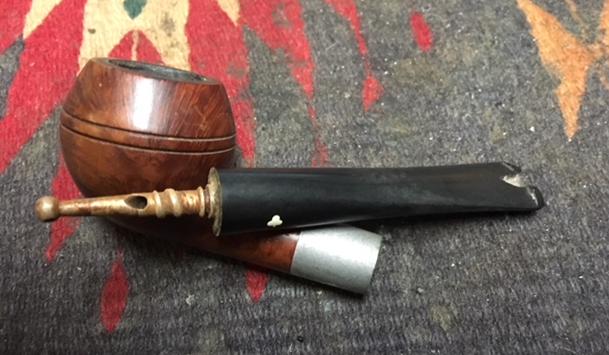
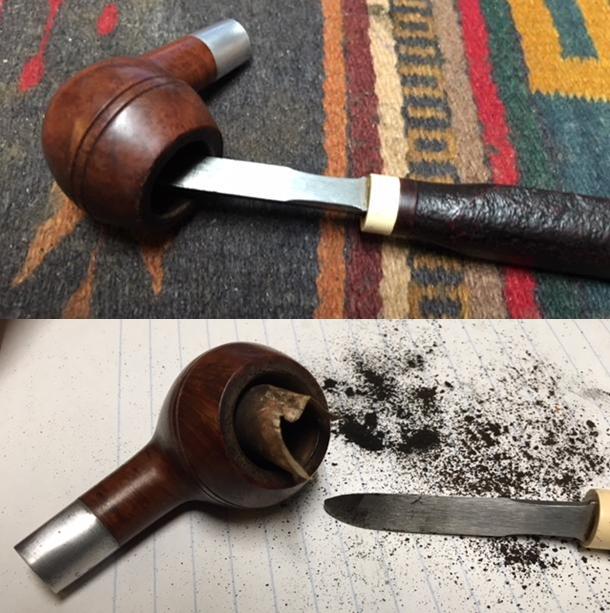
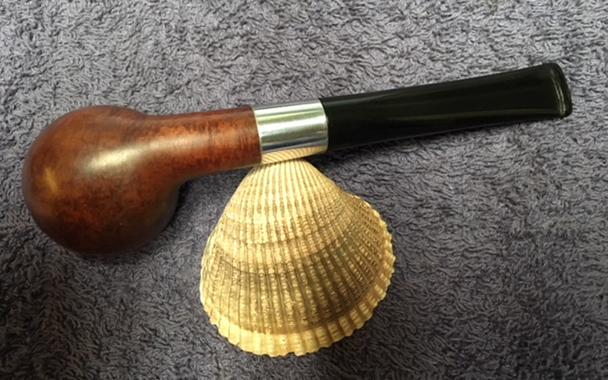
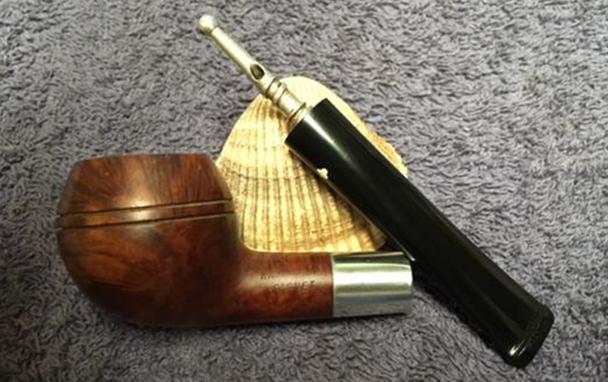
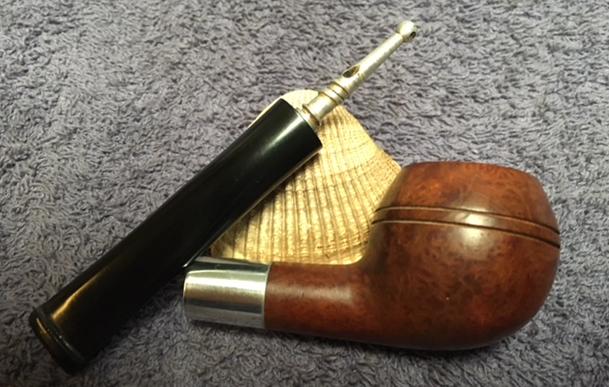
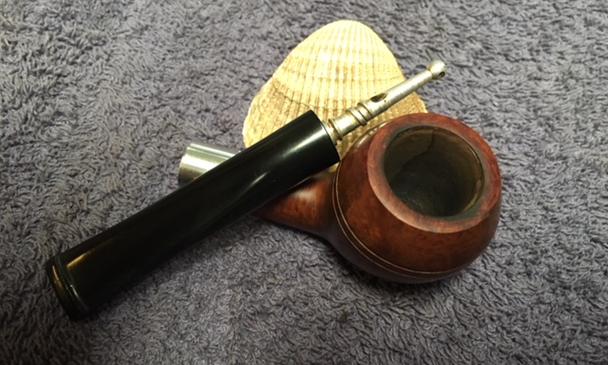
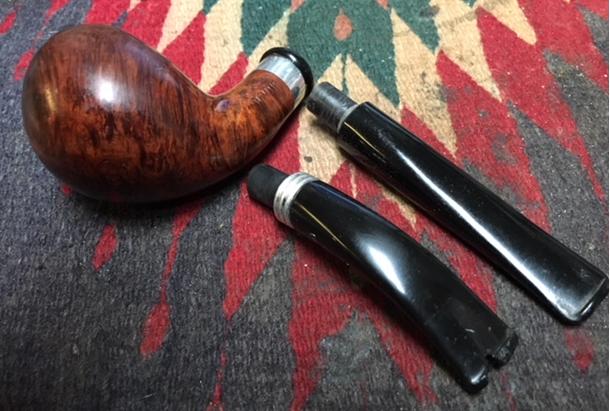
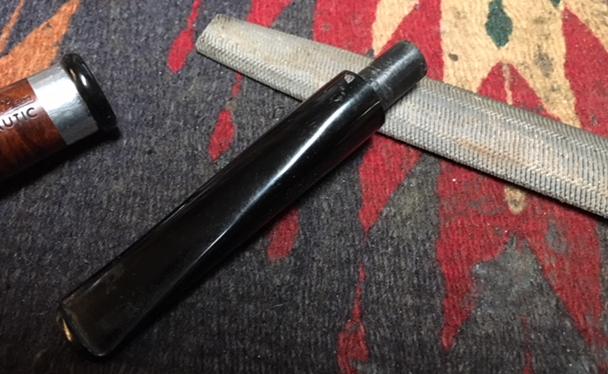
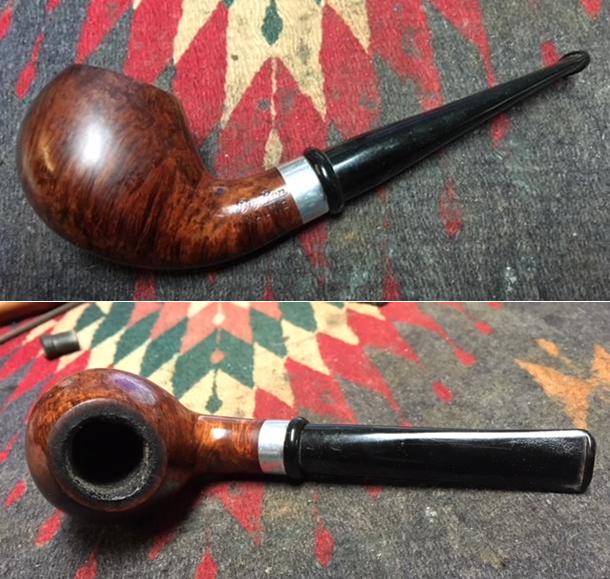
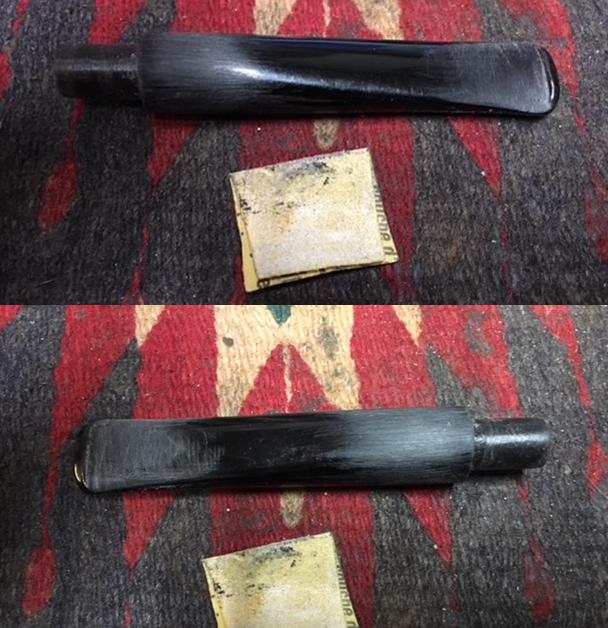
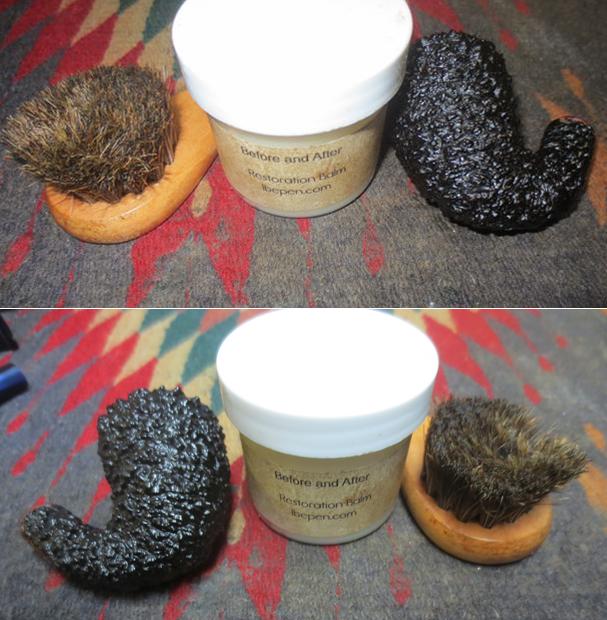
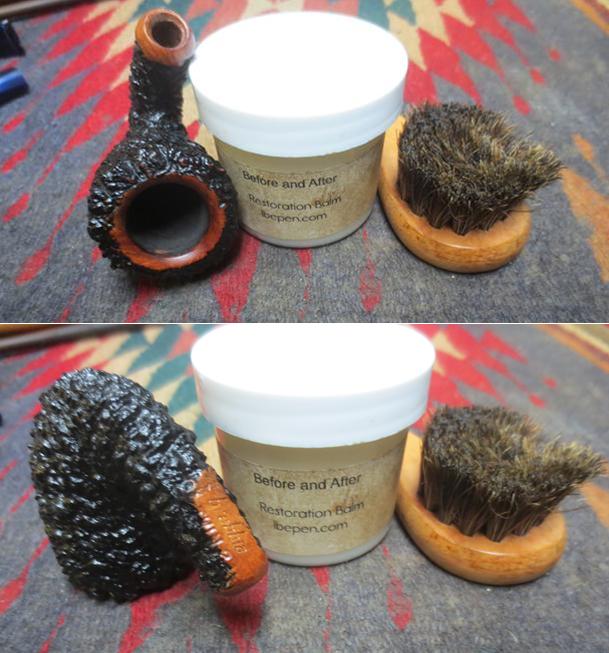
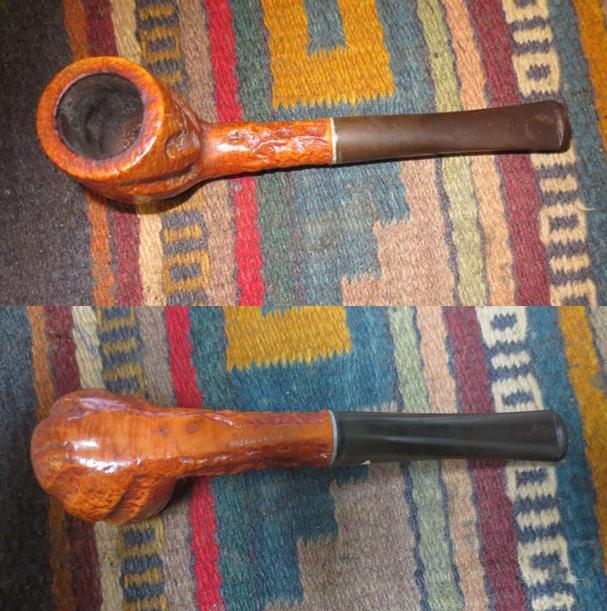
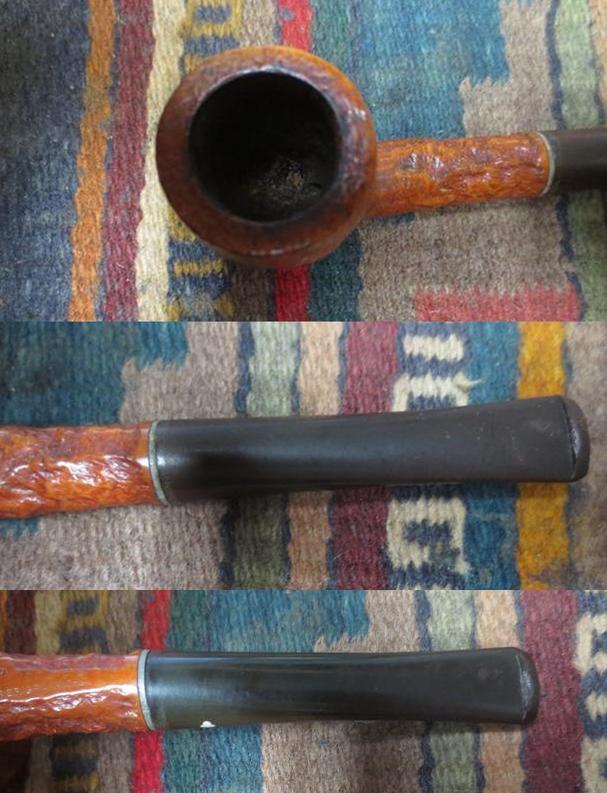
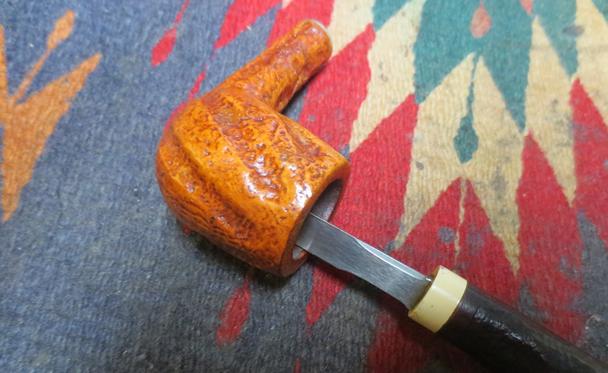
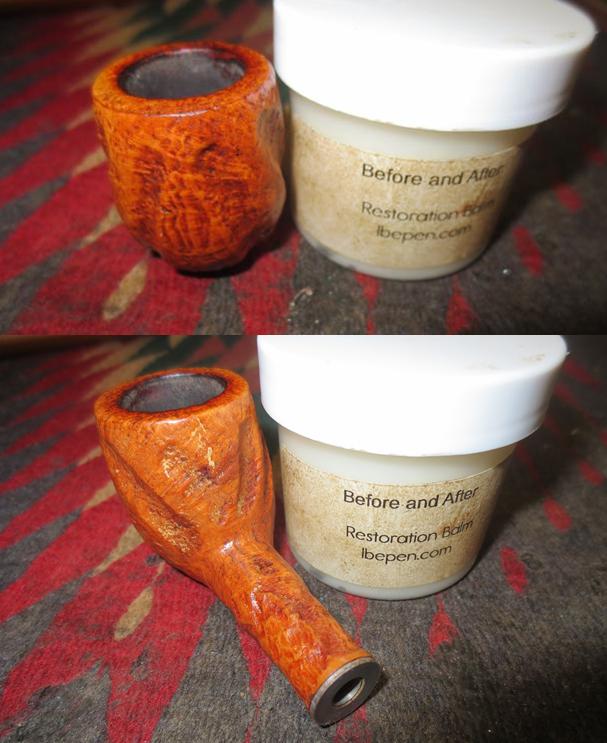
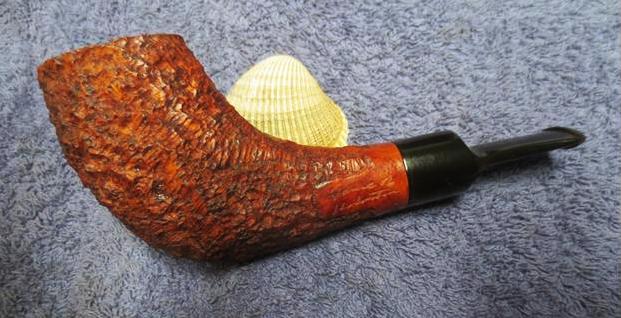
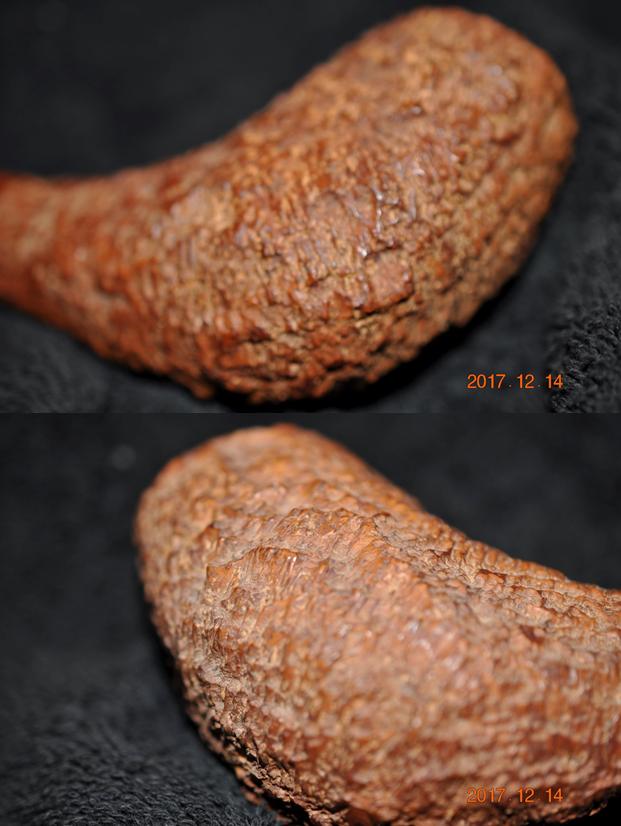
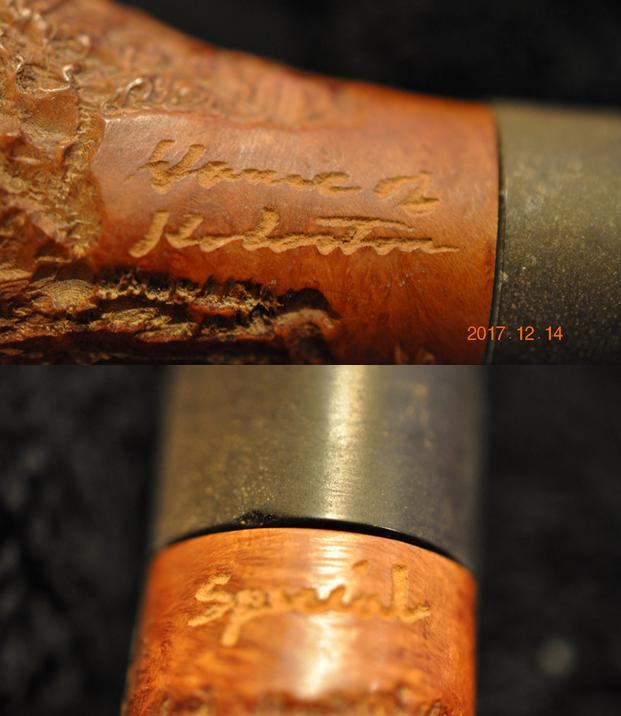
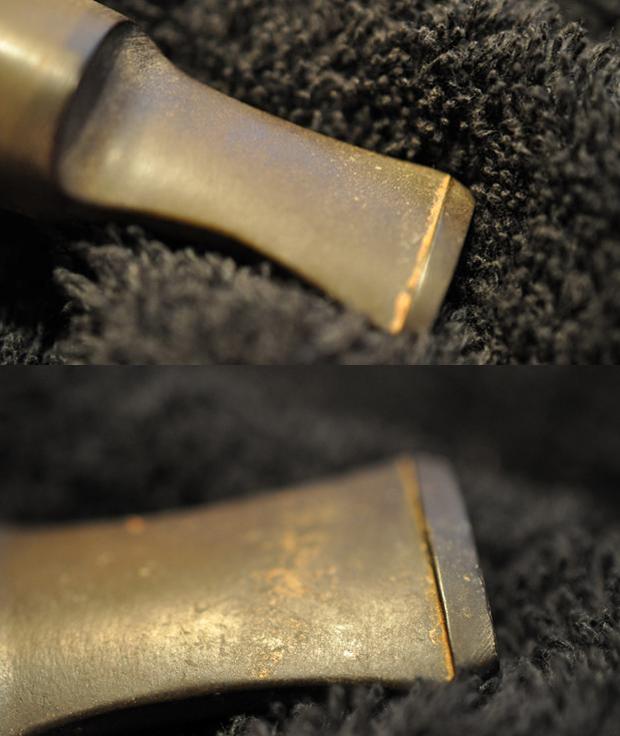
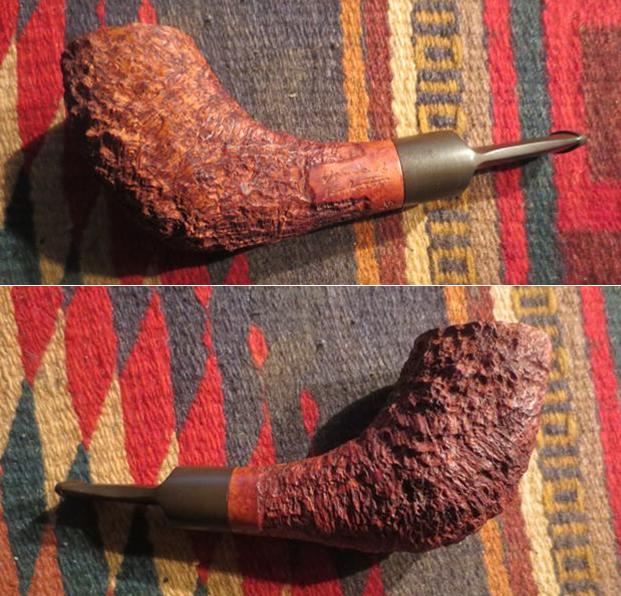
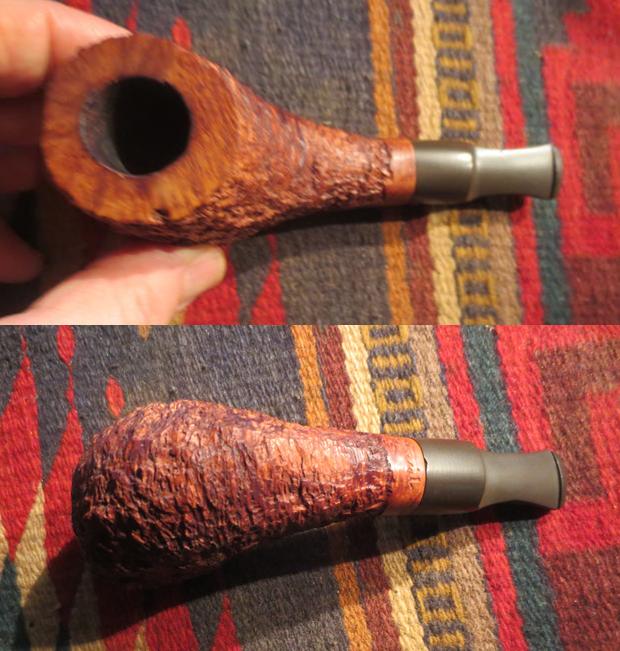
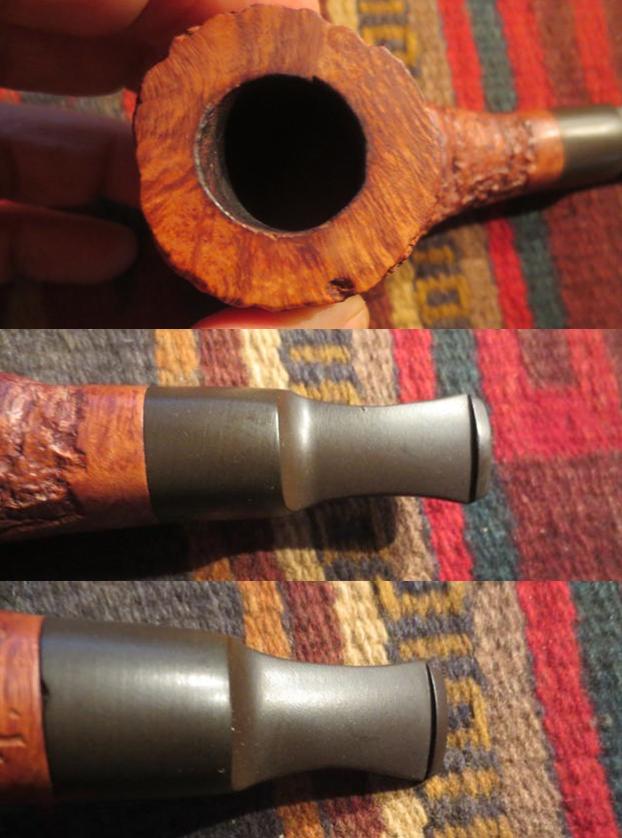
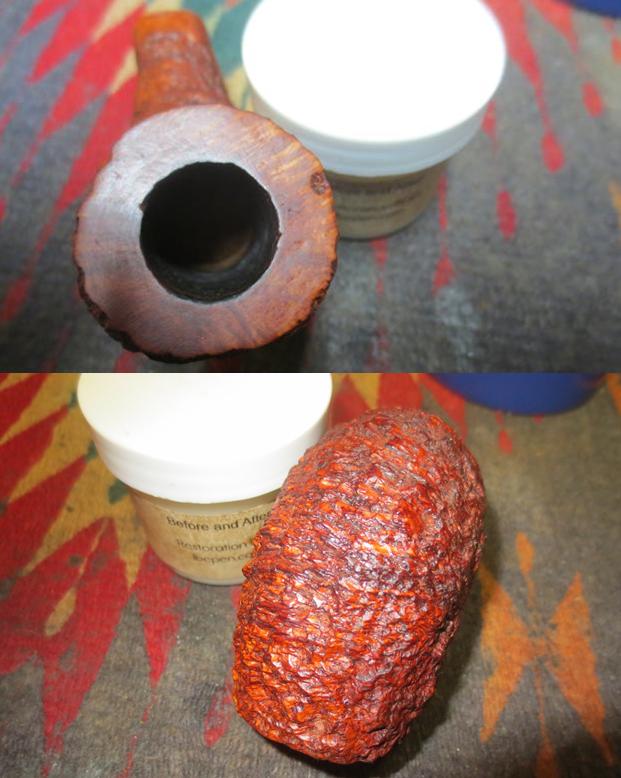
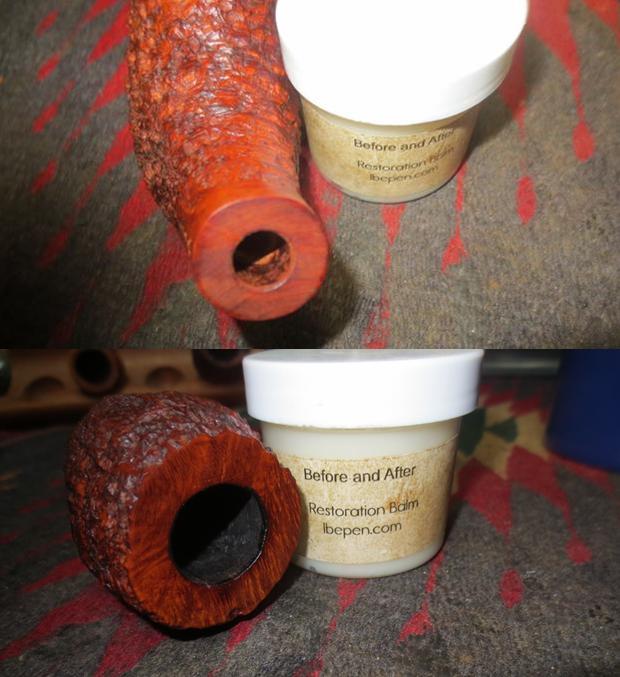
Henry Ramirez and I emailed back and forth over the past year about pipe repair. He had repaired a cracked shank on a Dunhill CK Patent Era Author that I found quite compelling. It was a pipe that I wanted to add to my collection. The deep sandblast and the unique repair that Henry had done on the shank lent something special to it. He had drilled and pinned it using some of the tricks he had used in his dental practice. He has written up the repair to the pipe on the following blog: https://rebornpipes.com/2017/06/01/cracked-shank-repair-on-a-dunhill-ck12-author/. He wrote in the blog that the underside of the shank was faintly stamped with Dunhill Shell over an incomplete patent number starting with 116(989/17) which would place this pipe from 1925-1934. The pipe had been fitted with a gold-plated or at least gold coloured band to hold the cracked shank together. Henry kept the band but decided to leave it off the pipe. Henry took the photos below to show the finished pipe. It is a beauty. Henry and I corresponded and I made him an offer for the pipe. We dickered back and forth and he surprised me recently by giving it to me. He sent it to me with the old split band included. I am pretty certain that the band was not original to the pipe and was added in an earlier repair. I spoke with several jewelers to see if I could find someone to solder the band and repair it. None of them were willing to take a risk with the thin metal. I ordered several gold bands from Vermont Freehand to see if I could find a replacement band but none of them were large enough to fit. I was looking for a thinner band to fit the shank and still leave the briar exposed as much as possible. I found a thinner band in my box of bands that looked like it might work. It was hammered silver and had a brass cross (gold coloured) on the top of the band. I slipped it on the shank to see what it would look like and took the following photo.I liked the look of the new band so I heated it and pressed it onto the end of the shank. I pressed it down on a hard board until it was even with the end of the shank. I scrubbed the surface of the briar with Before & After Restoration Balm to clean off the surface of the briar to preserve and deep cleanse the crevices and high spots of the rugged patent era sandblast. I applied it to the briar with my finger and rubbed it into the briar. I scrubbed it with a tooth brush to get it deep in the grooves. I buffed the bowl with a soft cloth and then buffed it with a shoe brush to raise a shine. The next two photos show the end of the shank with the band pressed on the shank until the edge was flat against the shank end.I put the stem back on the shank and buffed the pipe with Blue Diamond on the buffing wheel. I used a light touch on the sandblast bowl. The finish came alive with the Balm and I gave the pipe several coats of Conservator’s Wax and buffed it with the shoe brush. I gave the stem multiple coats of carnauba wax. I buffed with a clean buffing pad to raise the shine and then hand buffed it with a microfiber cloth. I buffed the band on the shank with a silver polishing cloth to raise the shine and polish it. The hammered finish on the band and the brass cross on the top of the band works really well with the old sandblast. The finished pipe is shown in the photos below. The new band looks good on the pipe and gives it a classic look with a personal touch of class. Thanks for looking.

Something is different about this Heritage Square Shank Apple


Blog by Steve Laug

As I mentioned in the first blog I did on the Heritage threesome – the 45S Antique, earlier this summer I was relaxing and surfing Ebay on my iPad and I came across three listings for Heritage Pipes. All were square shank pipes and all were in decent condition. Two of them had original stems while the third had a stem I was not sure about. Several years ago I had learned about the brand through Andrew Selking who writes for rebornpipes. Since then I have kept an eye out for them. There do not seem to be too many showing up on Ebay but every so often there is one. This time there were three. I contacted my brother with the links and he bid and won the threesome. I have finished the middle and bottom pipe and have written blogs about them (The Heritage Antique – https://rebornpipes.com/2017/10/08/cleaning-up-the-first-of-three-heritage-pipes-45s-dublin/, The Heritage Diplomat – https://rebornpipes.com/2017/10/14/new-life-for-heritage-diplomat-8-panel-billiard/). The last of the threesome is what is on the work table now. It the top pipe in the photos below. When I got to looking carefully at this pipe I immediately saw some differences from the other two Heritage pipes. Though it is stamped Heritage with a similar font on the left side of the shank, it also is stamped Made in USA under that. The stamping is more like the Kaywoodie pipes I have worked on. The right side of the shank is stamped Imported Briar. The finish on this pipe is nowhere near as nice as the other two pipes. The quality is good but not stellar like the others. The stem fit and shape is different from the other two and seems to be a stem blank rather than a custom made stem. It is not a replacement as I first thought but is the original stem. I also cannot find it on the Heritage Brochure that Andrew provided. The overall look and feel of the pipe leads me to think that this pipe was made later than the other ones and is probably a Kaywoodie of lesser quality. Even though that is true I think it has value in that it is a historical piece that may be transitional in nature. I am including the next two photos as they show the condition of the pipe when my brother received it and the stamping on the shank. For your reference if you are interested I am including a summary of the history of the brand that Andrew wrote on a previous blog on rebornpipes. I find that it is helpful and clear. There is not a lot of information on the brand available on-line so anything helps fill the gap. Here is the link: https://rebornpipes.com/2014/12/23/refurbishing-a-heritage-heirloom/.

Heritage pipes were Kaywoodie’s answer to Dunhill. According to one of their brochures, Heritage pipes were made from “briar burls seasoned and cured for up to 8 months,” with only “one briar bowl in over 300 selected to bear the Heritage name.” “Heritage stems are custom fitted with the finest hand finished Para Rubber stems. Mouthpieces are wafer thin and concave.”

The Heritage line began in the early 1960’s, with the trademark issued in 1964. The line was started at the request of Stephen Ogdon, (who worked for Kaywoodie in 1962). Mr. Ogdon had previous experience working for Dunhill, either running the New York store or working for Dunhill North America. Mr. Ogden was made President of Heritage Pipes, Inc., Kaywoodie Tobacco Co.,Inc. and Kaywoodie Products Inc. as well as a Vice President of S.M. Frank & Co. Heritage Pipes were produced from 1964 until 1970 (Source Kaywoodie.myfreeforum.org).

From Andrew’s helpful blog I would put a 1970s date on this one. It may well have been done after the closure of the line. Jeff took photos of the grain around the bowl to give an idea of the quality of the briar. While it was dirty and scratched there was some nice grain on the pipe. The photos show some slight wear on the outer edge of the rim and on the inner edge. The rim top shows some wear and some lava buildup. It is hard to know from these photos how much damage there is to the inner edge of the rim. I will know more once the grime and lava are removed. Time will tell. The next two photos show the stamping on the shank. There are some subtle differences to the Heritage font and the not so subtle differences of the Made in USA and Imported Briar stamp that were not present on the other two pipes of this threesome. The stem did not have the PARA Hard Rubber stamping of the other two and did not bear the Heritage logo on the left side of the saddle. This could either point to a replacement stem (which is possible) or to a later version of the brand that did not include those items. I am not sure which is the case. The stem was good quality rubber and did not show too much oxidation. There was tooth chatter and some tooth marks on both sides of the stem near the button. There was also some wear on the sharp edge of the button on both sides.Jeff worked his magic in cleaning up this pipe. He reamed it with a PipNet reamer and smoothed the walls of the bowl with a Savinelli Fitsall pipe knife. He scrubbed out the mortise and the airway in the shank and the stem with alcohol, cotton swabs and pipe cleaners. He scrubbed the exterior of the bowl, rim and shank with a tooth brush and Murphy’s Oil Soap to the oils and tars on the bowl, rim and shank. He rinsed it under running water. He dried it off with a soft cloth. Once the grime was removed the finish seemed to be coated with a varnish coat. It was peeling around the outer edges of the rim and also there were some damaged spots on the sides of the bowl where the finish was slightly peeling. There was some wear around the edges of the rim top and the inner edge showed some burn damage on the right side. The cleaning of the stem did not raise any oxidation in the vulcanite. The tooth marks were clean but visible. I took photos of the pipe to show its condition before I started my work on it. I took some close up photos of the rim top and the stem to show the condition of both before I worked on them. The photo of the rim top shows the damage on the inner edge of the right side of the rim and the wear on the outer edge around the bowl. Other than the tooth chatter and tooth marks the stem was in good condition with no oxidation that I would need to worry about. I decided to start on the bowl and address the rim damage. I used a folded piece of 220 grit sandpaper to slightly bevel the inner edge of the rim and blend in the damaged area with the rest of the bowl. I wanted to bring it back to round as much as possible and remove the damage. The second photo shows the reshaped rim edge. I think the process worked pretty well!I decided to use Mark Hoover’s Before & After Restoration Balm. I have written a review about the product in an earlier blog. I rubbed it into the surface of the briar and scrubbed it with a cotton pad. Mark has said that the product was designed to pull the dirt off of the briar as well as polish it. He added some anti-oxidants to keep the briar from getting damaged from both UV rays and water. It worked very well as you can see from the following photos that show the cleaned briar and the grime on the cotton pad. Remember that this pipe had already been scrubbed with oil soap and rinsed. It appeared to be clean for all intents and purposes but it still had residual grime in the pores of the briar. I blended black Sharpie Marker and a Dark Brown Stain pen to colour the inner edge of the rim and the repaired area on the rim top. The combination matched the colour of the stain on the bowl perfectly.It is at this point a couple of things caught my eye. There were what looked like water spots on the front and the left side of the bowl. I looked closely and they were very odd. Almost like some of the varnish finish had bubbled and been removed. The longer I looked at it the more ugly it looked. What had looked like an easy restore suddenly looked a lot harder. I was going to have to remove the varnish coat and restain the entire pipe. Just a little discouraging when things were moving ahead so well. But, chin up and do the job!

I wiped the bowl down with acetone to try to cut through the finish. It did not budge! Oh man, that meant I was dealing with some kind of plasticized coating and it would be a bit more difficult to remove. I sanded the bowl and shank with 220 grit sandpaper to break through the surface of the topcoat. I wiped it down repeatedly with the acetone to see if I was making progress.  It was slow going. I sanded it with a medium and a fine grit sanding sponge and was able to make more progress. I wiped it down again. The photos below show the pipe when I had removed all of the plastic coating. It was odd in that there were two large spots on the front of the bowl and around the rim edges where the finish came off as well as the plastic. The rest of the finish was deeply set in the grain. I have only seen that on pipes where there was some oil in the briar that was not properly removed before staining and finishing. I wiped the bowl down with acetone a final time scrubbing the unstained portions with extra care. I wiped it down with alcohol in those areas and heated the briar to see if I could open the pores before staining. I used a dark brown stain pen to precolour the briar before restaining the entire pipe. I wanted to get deep coverage on the briar. I warmed the briar once again by painting it with the flame of a lighter. I stained the entire bowl with dark brown aniline stain and set it in the grain with a lighter. I repeated the process particularly on the front, sides and rim top until the coverage was even all around the bowl. I set the bowl aside to cure overnight.Work and general busyness kept me from working on the pipe again for several days. When I finally got a moment I wiped the bowl down with alcohol and cotton pads to even out the finish and give it a bit more transparency. I sanded the newly stained bowl and shank with micromesh sanding pads – wet sanding with 1500-2400 grit pads and dry sanding with 3200-12000 grit pads. I wiped the bowl down after each pad with an alcohol dampened cotton pad. I buffed the pipe with Blue Diamond to further polish out the scratches and then gave it several coats of Danish Oil with a Cherry Stain to give the bowl a rich finish similar to the one on the Heritage Diplomat that I restored earlier. The pipe is beginning to look really good in my opinion and in many ways is far better than when I started. I buffed the bowl with a soft cotton cloth to polish the Danish Oil. I took the following pictures to show the bowl at this point in the process. I still need to buff it again on the wheel and give it multiple coats of carnauba wax. I set the bowl aside and turned my attention to the stem. I sanded out the tooth marks and chatter with 220 grit sandpaper. I carefully blended them into the surface of the vulcanite. I also worked over the sharp edges of the button to clean up the marks that were left behind there. The sanding dust left behind on the sandpaper was a rich, dark black which spoke well of the quality of the vulcanite that was used on this stem. To me it also was further proof of the stem being original rather than a later poor quality replacement.The one oddity to the pipe was that the shank was thinner on the right side than the left. The mortise was drilled straight but it was definitely not centered in the shank. Due to that the tenon on was slightly off to the right side of the shank to match. I polished the stem with micromesh sanding pads. I wet sanded it with 1500-2400 grit pads and wiped it down with Obsidian Oil after each pad. I dry sanded with 3200-12000 grit pads and again wiped it down with Obsidian Oil. I finished the polishing with the pads and gave it a final coat of the oil and set it aside to dry. I put the stem back on the bowl and worked the pipe over on the buffing wheel using Blue Diamond polish to further remove scratches on the bowl and shank. I gave the bowl and stem multiple coats of carnauba wax and buffed the pipe with a clean buffing pad to raise the shine. I hand buffed it with a microfiber cloth to deepen the shine. The finished pipe is shown in the photos below. It looks better than it did in the beginning. I still think it is a transitional piece between the classic higher end Heritage line and the later line that came out when the classic line ended. It is still a beautiful pipe. The finish is good but not nearly as well done as the classics. The dimensions of the pipe are: Length: 5 ½ inches, Height: 1 ¾ inches, Diameter of the bowl: 1 1/8 inches, Diameter of the chamber: ¾ inches. Thanks for looking.

This Old Italian Canadian showed Promise


Blog by Steve Laug

Jeff picked this heavily rusticated pipe up on one of his recent forays into the antique shops and malls of Montana. It is sea rock like rustication on the bowl and shank with a wire rustication on top of that. The finish was very dirty with a lot of dirt and grime in the deeper grooves of the rustication. There was a random stem stuck in the shank when he picked it up – I think it was just to make it more sellable. The stem is a round saddle stem while the shank is oval. The finish was dirty and there were some nicks in it around the shank end. The bowl had a heavy cake in it with some lava overflow filling in the rustication pattern on the rim top. There appeared to be some burn damage on the back left side of the rim top. The pipe had a smooth portion on the underside of the shank for stamping but the only stamping was at the shank/stem junction where it read ITALY. Jeff took photos of the pipe before he started his clean up. The rim top can be seen in the next photo. You can see the thick cake and the lava overflow on the top of the rim. It is hard to know if there is damage to the inner edge of the rim but the outer edge was clean and undamaged. It appeared that there was some burn damage on the back left side of the inner rim edge but we would not know until Jeff cleaned the pipe.Jeff took pictures of both sides of the bowl to show the rocky, craggy appearance of the finish on the bowl. It is unusual and interesting at the same time.The next photos show the shank and Italy stamping on the shank end. The stem is obviously the wrong one. You can see the variation of the round saddle portion of the stem and the oval shank. I am not too worried about the stem as it is going in the bin anyway as I will need to fit a new stem on the shank. Jeff worked his magic in cleaning up this pipe as it was a real mess on the rim and deep grit and grime in the grooves of the finish. He reamed it with a PipNet reamer and smoothed the walls of the bowl with a Savinelli Fitsall pipe knife. He scrubbed out the mortise and the airway in the shank and the stem with alcohol, cotton swabs and pipe cleaners. He scrubbed the exterior of the bowl, rim and shank with a tooth brush and Murphy’s Oil Soap to the oils and tars on the bowl, rim and shank. He rinsed it under running water. He dried it off with a soft cloth. Once the grime was removed the finish actually looked quite good condition. I took photos of the pipe to show its condition before I started my work on it. I did not bother with the old stem as it would be replaced. I went through my can of stems and found one that had the same diameter all the way around as the shank. The fit against the shank end was almost perfect. I would need to make the edges taper a bit more at the shank. The stem was new and still had castings on the sides and the end of the button. The tenon was a perfect fit in the mortise. I put the stem in the shank and took photos of the restemmed pipe. The pipe looks good with the new stem. There is promise in the appearance at this point. I repaired the chip on the left side of the shank end with clear super glue. I needed to rebuild that edge to remove the damaged area and allow the stem to fit snug against the shank. I used a sharp knife to bevel the edges of the mortise to accommodate the hip at the tenon/stem junction.I used a brass bristle wire brush on the rustication to clean off any remnants of the finish and then wiped the bowl down with acetone on cotton pads to remove the dust. I stained the bowl with a dark brown aniline stain and flamed it to set it in the briar. I repeated the process several times until I was happy with the coverage on the bowl. I set the bowl aside to dry overnight before proceeding with polishing the briar.In the morning I buffed the bowl with a shoe brush to raise a shine on the briar. I took the following photos to show what the pipe looked like at this point in the process. The bowl is looking good with a lot of colour variation due to the roughness of the rustication. I laid aside the finished bowl and turned my attention to the stem. I sanded out the casting marks and scratches on the stem with 220 grit sandpaper. I opened up the slot in the button with needle files to make it easier to push a pipe cleaner through. After I had removed the casting marks and the scratches on the stem surface it was time to work on it with micromesh sanding pads. I wet sanded it with 1500-2400 grit pads and wiped it down after each pad with Obsidian Oil to give the next pad more bite when I sanded. I dry sanded it with 3200-12000 grit pads and again wiped it down with the oil after each pad. After the final pad I wiped it down with a final coat of oil and set it aside to dry. Each photo shows it progressively getting a shine. I set aside the stem and picked up the bowl once again. I used the Mark Hoover’s Before & After Restoration Balm on the briar. I rubbed it into the grooves on the bowl sides with my fingers. I wanted it to go deep in the grooves to further test the effectiveness of the product. This would be a good test as it one of the roughest rustications that I have worked on with the product. As I have mentioned in previous blogs Mark had said that the product can be used on briar or stems – whether vulcanite, acrylic or horn. He said it was designed to pull the dirt off of the briar as well as polish it. I figured this deep rustication would certainly put those claims to a test. He said that he had added some anti-oxidants to keep the briar from getting damaged from both UV rays and water. Once I had all the grooves and surfaces of the bowl covered I wiped it down with a clean cotton pad and then buffed it with a shoe brush. It seemed to work very well and I took the following photos to show the results. I put the stem back on the bowl and buffed it with Blue Diamond on the buffing wheel to polish the stem and lightly polish the briar. I gave the stem multiple coats of carnauba wax buffed it with a clean buffing pad to raise a shine. I gave the bowl multiple coats of Conservator’s Wax and rubbed it into the rusticated finish. I buffed it with a shoe brush and then with a clean buffing pad to raise the shine. I hand buffed the pipe with a microfiber cloth to deepen the shine. The variegated finish on the bowl and stem combine to present a beautiful pipe. The pipe really does look good with the new stem. The dimensions of this pipe are Length: 5 1/2 inches, Height: 2 1/8 inches, Bowl diameter: 1 1/2 inches, Chamber diameter: 7/8 inches. The finished pipe is shown in the photos below. I will soon be adding it to the rebornpipes store if you are interested in adding to your collection. It is a beauty and will serve someone very well. Email me at slaug@uniserve.com or send me a message on Facebook. Thanks for looking.


A Long Awaited Addition for my rack – A Grant Batson Blowfish


Blog by Steve Laug

Every so often when I am scrolling through the Gentlemen’s Pipe Smoking Society (GPSS) group on Facebook a pipe for sale catches my attention. I have already purchased at two pipes since I joined that group. Well the count is now three pipes as it happened again. I was scrolling through the GPSS page looking at the pipes, minding my business and enjoying a quiet moment over lunch at my office. Then it happened. There was a pipe for sale that immediately got my attention. I did not even have to read it because I recognized the carver at a glance. The seller described the pipe as a Grant Batson Blowfish Nosewarmer. He said that it was a great smaller pipe with a full-sized bowl, a unique finish and amazing grain. He said that the pipe had been well taken care of. The dimensions were: Length: 4 1/4 inches, Height: 2 inches, bore: ¾ inches, depth: 1 1/2 inches, Weight: 48 grams. I have included the photos that he used on GPSS that caught my attention. The backstory on this pipe is that I have longingly scrolled through Grant Batson’s website (http://gbatsonpipes.com/) and followed his work for a long time. I have been hoping that I would be able to acquire one of his pipes. There is something distinctive about his work and I seem always know when I see one of his pipes. The shapes the finishes, the stem work and other things get my attention and all say Batson. I have watched as they have gone up in price and I had pretty well concluded that I would just enjoy his work from a far. I would probably never own one. I sent a private message to the seller, asking if it was still available. I asked about the price if it was still on sale. I fully expected him to write back and say that it already sold. That would have been par for the course. Instead he wrote back and said it was mine if I wanted it and that the price was thus and so. I swooped and said I wanted it. We talked about shipping and decided to have him ship it to my brother in the US. It would be simpler than shipping it to Canada. I asked for his Paypal information so that I could pay for it while it was still unsold. He sent the address and I paid the bill. All of this transaction took a total of less than 15 minutes. I saved the photos so that I could enjoy looking at the pipe until I actually got to have it in hand.The combination of sandblast on the sides and top of the bowl and shank and the smooth cross grain ridge running from the hand cut stem to the front edge of the bowl on the underside of the shank worked well for me. The mix of colours on the pipe was interesting and I was looking forward to seeing it in person. The rich medium brown tones and the darkening on the sides toward the top of the bowl and carrying over to the rim top worked.The flared shank and wide hand cut stem were really nice and the stem looked like it would be comfortable in the mouth. The next four photos show the ridge that flows up the pipe on the underside. It is off centre in keeping with the Blowfish shape. The grain is quite stunning and Grant did a great job shaping the pipe to maximize the grain. Though the next photo is out of focus it is readable. I asked the seller to send me a picture of the stamping on the shank. It has the Batson logo and the 2015 date over the signature.My brother and his wife were traveling in Europe when the pipe arrived in Idaho so I had to wait until they returned before I could find out if the pipe was as nice as the pictures the seller posted. When he got home, unpacked and bit rested I gave him a call and asked about the pipe. I don’t know about you but I am not a patient “waiter”. I like to open and see what I got so waiting a few days was hard to do. Jeff opened the package and took some photos of the pipe for me. It is kind of virtual excitement to be part of the process of opening a package over Facetime. He opened the package and I watched. Jeff went over it and said that it was very nice. The photos show that it was as nice as the seller said and in excellent condition. Jeff did a quick cleanup on the pipe for me so when it arrives it will be ready to fire up with a bowl of my favourite tobacco. He cleaned the inside with his usual regimen of pipe cleaners, cotton swabs and alcohol. He wiped down the outside of the bowl and shank with a cloth and some Murphy’s Oil Soap, rinsed and dried it off. I can’t wait to see the pipe when it arrives in Vancouver. It may arrive in time for an early birthday present for me! We shall see.

Addendum: I forgot to add the Leather pipe bag to the blog. It is a nicely tanned pipe bag/sock. Here is the photo.

Fashioning a Churchwarden Stem for a Mario Grande Freehand


Blog by Steve Laug

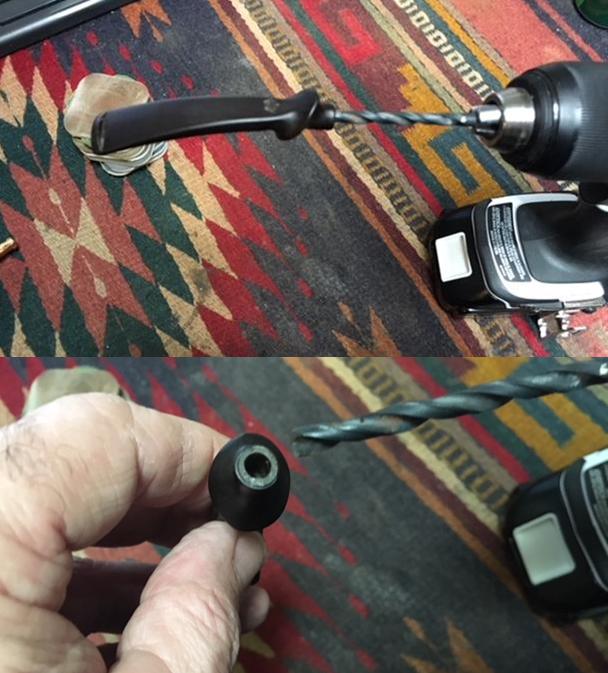
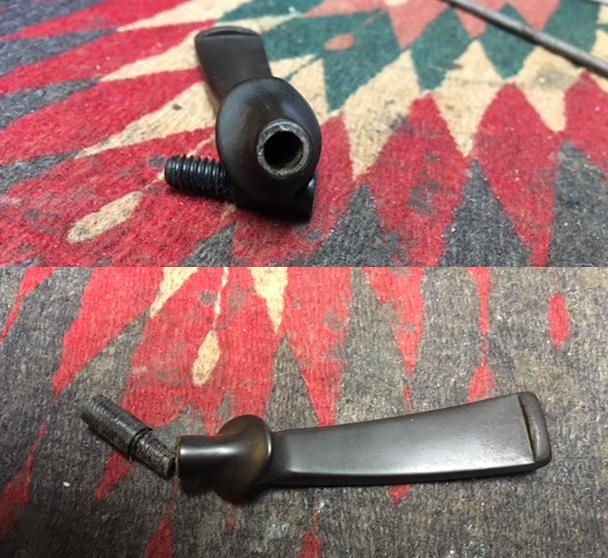
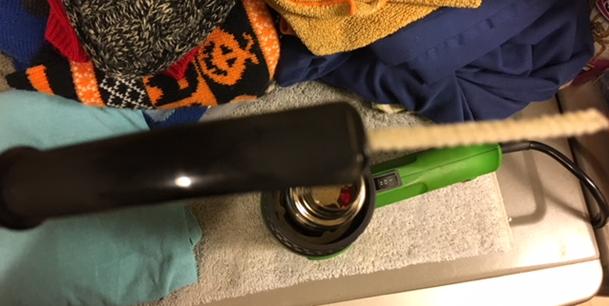
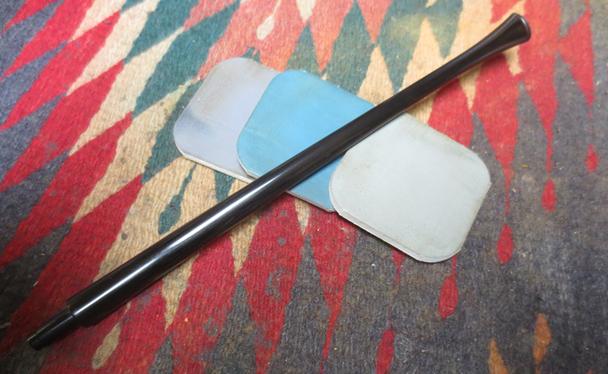
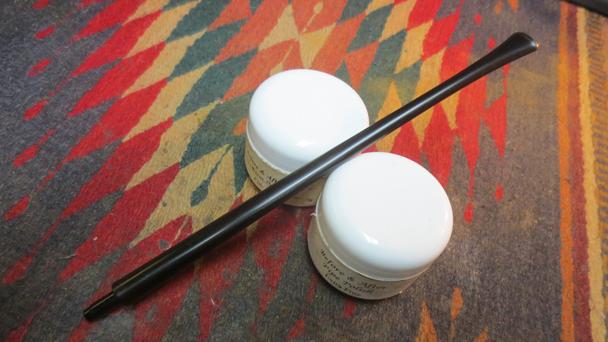
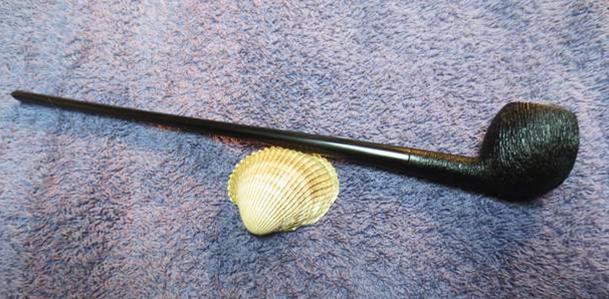
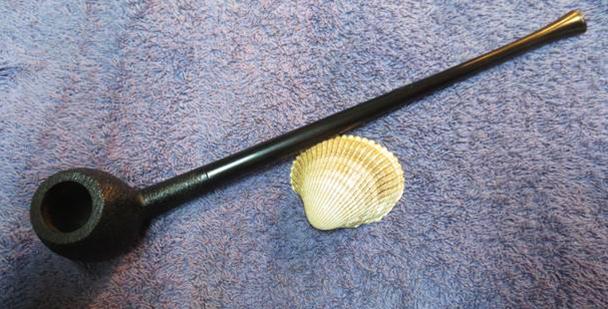
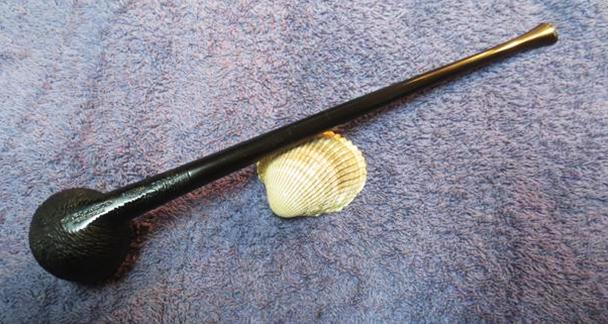
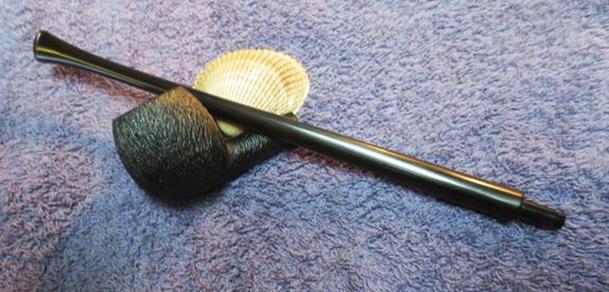
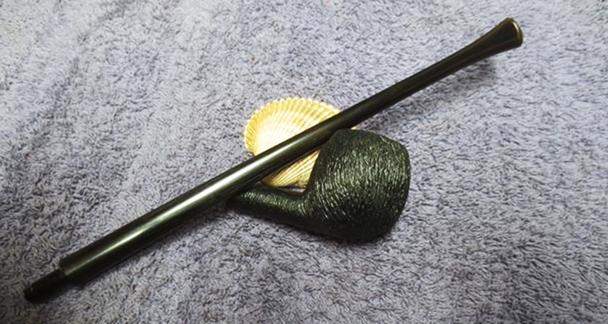
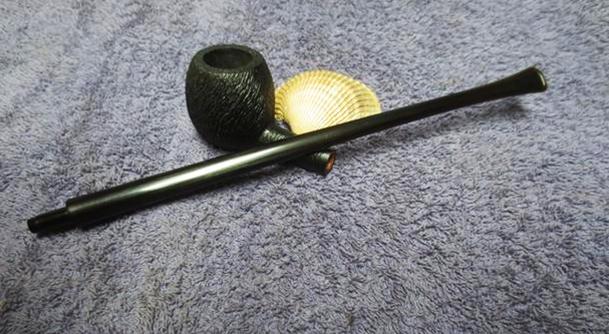
A while back I was contacted by a fellow named Chris who was referred to me by the local pipe and cigar shop. He needed a repair on a Joh’s Churchwarden with a broken shank. I repaired the shank, banded it and cleaned it up. You can read about that repair on a previous blog at this link:  (https://rebornpipes.com/2017/08/26/repairing-a-broken-shank-and-crooked-alignment-on-a-johs-churchwarden/). He also had a big Mario Grande Freehand that he wanted me to make a churchwarden stem for. He really likes the long stems and wondered if I could make him one that he could use interchangeably on his Mario Grande pipes. He wanted a really long stem but the only stems made are 8 inches long. I contacted him and he said to go ahead order one for this pipe. Several weeks went by and the stems finally arrived. I took some photos of the pipe.The pipe was a big piece of briar and it was in good shape. The existing stem was oxidized on the top side and the ball at the tenon insert. I decided that I would both clean up the existing stem and make a new stem for it.I took a photo of the top of the bowl that shows the beautiful plateau top and the size and shape of the chamber. For a block of briar this large the chamber was only 3/4 inches in diameter. It is a small chamber for a pipe this large.I took photos of the stem to show that the oxidation was heavier on the top side of the stem than the underside.I took the stem out of the mailing bag and wiped it down. It had the casting marks on both sides of the stem and on the tenon and button end. Those would need to be cleaned up. I used a Dremel and sanding drum to remove the casting marks on both sides and the button and tenon end. I drilled the airway open enough to hold the pin on the PIMO tenon turning tool. I put the tool in my cordless drill and pushed the stem onto it. I adjusted the cutting head to cut the tenon to the same diameter as the tenon on the existing stem. I held the stem and used the drill to cut away the excess material so that it would fit snugly in the mortise.I put the stem in the shank and took photos of the new look of this handmade Mario Grande. The pipe looks really good and will be a great sitting pipe. There is no way that the weight of this piece of briar will ever work as a clencher. I put a pipe cleaner in the airway in the stem and put it on a cookie tray. I turned the setting on the oven to 350 degrees F and put the cookie sheet and stem in the oven. I let it heat for 10 minutes until the stem was absolutely straight and pliable. I put the stem in the shank and bent it to an angle that matched the flow of the bowl and shank. I held it until the stem cooled and the bend was set.In my continued experiment with the new product from Mark Hoover – the creator of the Before & After Pipe Stem Deoxidizer and Polishes. He calls it Before & After Restoration Balm and it can be used on briar or stems – whether vulcanite, acrylic or horn. He said it was designed to pull the dirt off of the briar as well as polish it. He added some anti-oxidants to keep the briar from getting damaged from both UV rays and water. This is the second smooth briar pipe that I chose to use it on. I figured it would be a good test to see how it worked on a smooth briar bowl and a lightly oxidized vulcanite stem. I applied it and worked it into the crevices of the plateau on the shank and the rim top with a shoes brush. It worked well, so I took the following photos to show the results. The bowl and the stem have a rich shine. I would need to polish the stem a bit more to remove all of the oxidation but it was far better than when I started. I will continue using it and see how it works on a variety of pipes before I give a review.I buffed the stem with red Tripoli and Blue Diamond polish to remove as much of the oxidation as I could with the wheel. I polished the stem with micromesh sanding pads to remove the oxidation that remained – wet sanding it with 1500-2400 grit pads and wiping it down after each pad with Obsidian Oil. I dry sanded it with 3200-12000 grit pads and again wiped it down with the oil after each pad. After the final pad I gave it another coat of the oil and set it aside to dry. I put the stem in the shank and took photos of the new Churchwarden look of the Mario Grande. I sent the photos to Chris to see what he thought of the new stem. I turned my attention to the Churchwarden stem. I sanded away the marks from the castings and shaped the tenon end of the stem into a cone to fit into the conical drilling at the end of the shank. I buffed the stem with red Tripoli and Blue Diamond polish to remove as much of the scratching in the vulcanite as I could with the wheel. I polished the stem with micromesh sanding pads to further remove the scratches – wet sanding it with 1500-2400 grit pads and wiping it down after each pad with Obsidian Oil. I dry sanded it with 3200-12000 grit pads and again wiped it down with the oil after each pad. After the final pad I gave it another coat of the oil and set it aside to dry. I put the churchwarden stem back on the bowl and buffed the pipe and stem with Blue Diamond on the buffing wheel to polish the briar and vulcanite. I switched stems and buffed the short stem with Blue Diamond as well to polish it. I gave the bowl and both stems multiple coats of carnauba wax and I gave the plateau areas on the rim and shank end with several coats of Conservator’s Wax. I buffed it with a clean buffing pad to raise a shine. I hand buffed it with a microfiber cloth to deepen the shine. The rich medium brown stain and the rough plateau on both the rim top and shank end the polished black vulcanite of both stems worked well together to give a rich look to the pipe. The finished pipe is shown in the photos below. I took photos of it with the churchwarden stem and with the original short stem to give an idea of how it looked all polished and shining. Thanks for looking.

Another Frankenpipe – Salvaging a Lido Root Briar Dublin Bowl


Blog by Steve Laug

My brother Jeff picked up a nice looking Brebbia pipe on one of his trips to Montana. It was a Brebbia Lido Root Briar Dublin. It had an almost Castello Sea Rock finish on the bowl and shank. It was stamped on a smooth spot on the underside of the bowl and shank. It read Lido over Root Briar over 9004. Next to that it read Brebbia over Italy. Jeff showed me the pictures and it was a nice looking pipe as far as I could see. The shank looked a little short and the angle of the stem was funny but it was nice. The oval shape of the bowl was different and made the pipe interesting. When Jeff examined it at his hotel he discovered that the stem had been glued into the shank. The close he looked the more convinced he became that the shank had been broken and that this was a quick fix either to keep the pipe smokable or to make it sellable. Either way it was no longer a good find in his mind.

We talked when he was doing the cleanup and he was going to throw it away. He did not take pictures of the pipe as it was when he got it for this reason. The bowl had a thick cake and the rim had a copious overflow of lava that filled in the finish. I asked him to clean it up anyway and send it to me. He was dubious but he did it. He reamed and cleaned the bowl and shank to a point where it was spotless. He scrubbed the exterior with Murphy’s Oil Soap and a tooth brush and was able to get the rim clean of the lava. It was clean when it arrived in Vancouver. I unpacked the box and looked at it briefly and tossed it back in the box. I had no inspiration as to what to do with it at that point so I figured I would just let it sit for a while.

Yesterday I woke early to an idea for the Brebbia bowl. I don’t know if that happens to you but it does to me. Probably means I am thinking too much about pipes but it is what it is. I knew what I wanted to do with the bowl so I dug it out of the box and turned it over in my hands. I did not take photos of it at that point though I should have. I used a Dremel and sanding drum to square up the broken shank end. It was at an angle so it needed to be made flat. I sanded it on the topping board to smooth out the end of the shank and face it. I cleaned out the inside of the shank end with alcohol and cotton swabs to remove the dust and debris and ready for the next part of the process.

I went through my box of parts and found a one inch long piece of bamboo with one knuckle that I had cut off in a repair on another pipe. It was a thick hard piece of bamboo that would work well. The end with the knuckle was the same basic diameter as the shank end so that would work well. I also keep broken chunks of Delrin and vulcanite tenons to use for this kind of thing so I salvaged a one inch long piece of Delrin that was perfect. I roughed up the surface a bit and took down the outer diameter with the Dremel and sanding drum so that it would insert into the shank end. The photo below shows the accumulation of parts ready to be joined together.In the past I have used epoxy to glue the parts together. This time I chose to use clear super glue. I applied the glue to the end of the tenon that went into the shank and pressed it into place. I made sure that things lined up well and let the glue cure. It does not take long – which is why I chose to use it this time. You have to work quickly to assure all is aligned before it sets. Once it was set I painted the end of the shank and the bamboo with super glue and applied it to the tenon as well and pressed the bamboo over the extended piece of tenon. I lined everything up so the fit was correct. I wanted the groove in the bamboo on the top side of the shank so once it was done I held it until it set. The following photos show the bowl and shank repair at this point in the process. I liked the look of the pipe at this point. I cleaned up the reaming a bit as I saw some remaining cake on the back side of the bowl during the process. I used the Savinelli Fitsall pipe knife to cut it back and smooth out the surface of the bowl interior.I used a brass bristle brush to clean up the top of the rim a bit more. There still seemed to be remnants of lava in the nooks and crannies of the rustication that needed attention. Nothing does the job on this kind of surface like a brass bristle tire brush.I am continuing to experiment with a new product from Mark Hoover – the creator of the Before & After Pipe Stem Deoxidizer and Polishes. He calls it Before & After Restoration Balm and it can be used on briar or stems – whether vulcanite, acrylic or horn. He said it was designed to pull the dirt off of the briar as well as polish it. He added some anti-oxidants to keep the briar from getting damaged from both UV rays and water. I chose to use it on this third pipe – because of the roughness of the rusticated finish on this bowl. I figured it would be a good test to see if it reached deep into the rustication and pulled out the dirt. I applied it and worked it into the crevices with a shoes brush. It seemed to work very well and I took the following photos to show the results. I will continue using it for a while and see how it works in a variety of settings before I give an opinion of the product. I decided to see what stem I would use for this pipe. I needed something close to the diameter of the end of the bamboo. I went through my can of stems and found one that was perfect. It was the same diameter and would match well. It was oxidized but there were no tooth marks in the vulcanite so it would be a simple clean up. It did not have a tenon so I would need to replace the tenon in the stem. The photo below shows the parts. The thing I neglected to photograph was the end of the stem. The drilling was perfect for being able to turn the new threaded tenon in place. I coated the threads with a coat of super glue and turned the tenon in place on the stem. I quickly aligned the tenon and made sure it was straight before the glue set. You have to work quick with the super glue to achieve this before it sets. I sprayed the tenon with accelerator to harden the glue. It leaves behind a white residue that is shown in the photo. It easily comes off with a damp cloth.I set the stem aside for a while and turned back to the end of the bamboo where it would meet the stem. I used the Dremel and sanding drum to flatten it out. I pressed it against the sandpaper on the topping board to face it and make it square. Once I had that done I looked through my box of parts and found a hard rubber button that I had drilled to use as a spacer on a previous pipe. It would work perfect in this situation. I glued it in place on then end of the shank with super glue. I filled in around the joint against the bamboo with the tip of the superglue to seal it and allow no air or moisture to seep through the joint. Once the glue had hardened I would need to trim it back to the diameter of the stem. It would serve as a smooth surface for the end of the stem to sit against and make the fitting of the stem much easier. The final photo in this series shows an end view of the space on the bamboo. You can see how it looks from that perspective in the photo. I neglected to take photos of the process of trimming back the spacer. Once the glue set (several hours) I used the Dremel and sanding drum to take back the excess material of the space close to the diameter of the stem. I sanded the spacer with the stem in place using a worn piece of 180 grit sandpaper to smooth it out and also to remove the oxidation on the stem. I did take a photo of the pipe to send to my brother.There will still need to be a lot of sanding to match these two parts a bit more but you can see the general idea in the photos below. I like the way the pipe looks so far. Given the parts I had available this Frankenpipe is coming together quite well. Once everything lined up well it was time to polish the spacer and the stem. I polished the stem with micromesh sanding pads – wet sanding it with 1500-2400 grit pads and wiping it down after each pad with Obsidian Oil. I dry sanded it with 3200-12000 grit pads and again wiped it down with the oil after each pad. After the final pad I gave it another coat of the oil and set it aside to dry. I polished the spacer at the same time  using micromesh sanding pads – wet sanding it with 1500-2400 grit pads and wiping it down after each pad with Obsidian Oil. I dry sanded it with 3200-12000 grit pads and again wiped it down with the oil after each pad. After the final pad I gave it another coat of the oil and set it aside to dry. I put the stem back on the bowl and buffed the pipe with Blue Diamond on the buffing wheel to polish the briar. I used a soft touch on the sandblasted areas as I did not want to flatten them or fill in the grooves with polishing compound. I gave the stem multiple coats of carnauba wax and I gave the sandblasted bowl several coats of Conservator’s Wax. I buffed it with a clean buffing pad to raise a shine. I hand buffed it with a microfiber cloth to deepen the shine. The rough sandblast finish with its dark brown and oxblood contrast stain and the newly added bamboo shank work well with the tapered stem I fit to the shank to make a beautiful pipe. The pipe looks fresh and new. The dimensions of this pipe are Length: 6 inches, Height: 2 1/8 inches, Bowl diameter: 1 3/8 inches wide and 1 3/4 inches long, Chamber diameter: 7/8 inches. The finished pipe is shown in the photos below. I like it! It came out pretty well in my opinion – not too bad for a Frankenpipe. Thanks for looking.

I needed an easy clean up and this Savinelli Y2K Bulldog was just the ticket


Blog by Steve Laug

After finishing up the little MLC Redmanol French Briar bent billiard and dealing with many issues in the restoration I needed something different and something a bit less labour intensive. My brother had included a beautiful Savninelli straight Bulldog in the box he just sent me. It was a 6mm filter pipe made especially for the Savinelli triangular shaped balsa filter. It has a mix of finishes on the bowl and shank. It is predominantly smooth with a section that is sandblasted on the back part of the bowl wrapping part way around the right side and on the top side of the shank. The blast is nicely done and is rich looking. The grain on the rest of the bowl and shank is mixed straight, flame and birdseye. The stem has a thin band of acrylic between an insert of briar and the acrylic stem. The stem and shank are diamond shaped on the top and round on the underside. The stem provides a striking contrast with the rest of the pipe and matches the dark stain in the sandblast portion of the bowl. My brother took the following photos of the pipe before he started cleaning it.The pipe was in pretty good shape when it arrived at my brother’s place in Idaho. It had been smoked and had a thin cake in the bowl and some light lava on the inner edge of the bowl and the rim top. There were some light scratches in the briar but the finish was quite clean. The stem was in good shape though there was some light tooth chatter on both sides of the stem near the button.I wanted to know more about this particular line of Savinelli pipes so I did a quick search and found the following link that had a great deal of information on it that I found helpful. The linkis: http://www.smokeshopmag.com/0600/pipe.htm. I quote in full from the site because I could not have summarized the information any better. The pipe is one of the Y2K Limited Edition Pipes from Savinelli.

Each year, Italian pipe manufacturer Savinelli produces a limited production Collection Pipe – its so-called “pipe of the year.” Only 500 units are manufactured.

The 2000 Collection Pipe, the 16th in the series which extends back to 1985, has a flat bottom allowing the pipe to sit upright, referred to as a ‘sitter.’ Each comes with a pack of balsa inserts, an informational leaflet, and a presentation package. Suggested retail is $220.

This year, Savinelli is also offering a special limited edition Millennium Series, known as the Year 2000 Pipe. “We have developed a product possessing charismatic lines and an alluring design not previously seen in a pipe,” the company says of the unique six-sided, faceted bowl.

The pipe is available in five finishes.

All smooth, light natural finish.

All smooth, two-tone finish.

All smooth, deep walnut finish.

Part smooth, part sandblast.

All hand carved bowl and shank with a smooth top.

Like all Savinelli pipes, materials are selected from top quality plateaux briar and seasoned naturally for many years. Only ecological finishes and waxes are used, allowing the pipe surfaces to breathe.

Each of the five Year 2000 pipes is available together in the Year 2000 VIP Set, which also includes an additional Smooth Red finish R version with a Savinelli VIP Case.

They were available through Savinelli Pipes, Inc., PO Box 526, Morrisville, NC 27560, Tel.: (919) 481-05111, Fax: (919) 481-1948.

I really liked the look of the pipe. The fact that it was one of 500 pipes made that year made it interesting. It was not numbered so there was no way of knowing what number of the 500 this pipe was but that was ok. The finish on it is quite stunning and Jeff included some photos of the pipe from various angles. The last photo in the next set of four shows the stamping on the underside of the shank. It reads Savinelli in its classic banner over 2000 with Italy stamp to the right of it. The stem shows the combination of acrylic and briar that was done before the stem was cut and shaped. It is kind of an arched cut away stem – diamond shaped tapering back to the button on the top and rounded on the underside. There is some light tooth chatter as noted above on both sides of the stem at the button. The gold Savinelli crest is stamped in the top of the stem as it tapers back to the button. The crest is in excellent condition.This one was also a bit easier for Jeff in terms of the cleanup. He was no less thorough, nor did he very his process. He reamed the cake back to the walls of the bowl with a Pipnet reamer and cleaned it up with a Savinelli Fitsall pipe knife (somehow fitting on this pipe). He scrubbed the exterior carefully with Murphy’s Oil Soap and rinsed it off. He cleaned the exterior of the stem the same way and rinsed it. He cleaned out the internals with alcohol, pipe cleaners and cotton swabs until they were spotless. The pipe was really clean and would take polishing but little else to bring it back to top form. I took some photos of the pipe when I got it to record what it looked like before I did my refurbishing work. The top is very clean, though there is some darkening on the inner beveled edge of the rim that would need to be removed.The stem looked very good. He seemed to have been able to remove the tooth chatter on both sides. It would only need to be polished with micromesh and buffed to bring back the deep acrylic shine.I polished the stem with micromesh sanding pads – wet sanding it with 1500-2400 grit pads and dry sanding it with 3200-12000 grit pads. I rubbed the stem down with Obsidian Oil after each pad to give traction to the next pad and help me polish it. After the final pad I wiped it down with a damp cloth. The next series of photos show the development of the shine on the rubber stem. I lightly buffed the bowl with Blue Diamond to polish it a bit and see where I needed to do some work before the final buff. I hand polished the briar with micromesh sanding pads – wet sanding with 1500-2400 grit pads and dry sanding with 3200-12000 grit pads. I worked on the beveled inner edge of the bowl to clean it up some more. I wiped the bowl down with a damp cloth after each pad. I hand buffed it with a microfibre cloth after the 12000 grit pad. The pictures below show the progress of the polishing on the briar. I am experimenting with a new product from Mark Hoover – the creator of the Before & After Pipe Stem Deoxider and polishes. It is a Restoration Balm that can be used on briar or stems – whether vulcanite, acrylic or horn. He said it was made to pull the dirt off of the briar as well as polish it. He added some anti-oxidants to keep the briar from getting damaged from both UV rays and water. This is the first pipe I have used it on the briar. Earlier I used it on a horn stem and was really impressed by the life it gave back to the horn. I will keep using it for a while and see how it works in a variety of settings. I put the stem back on the bowl and buffed it with Blue Diamond on the buffing wheel to polish the briar. I used a soft touch on the sandblasted areas as I did not want to flatten them or fill in the grooves with polishing compound. I gave the stem and the smooth portions of the bowl multiple coats of carnauba wax and I gave the sandblasted areas several coats of Conservator’s Wax. I buffed it with a clean buffing pad to raise a shine. I hand buffed it with a microfiber cloth to deepen the shine. The handmade briar and acrylic stem and the combination of the dark stain in the sand blast and medium brown stain on the smooth portions of the bowl work well together to present a beautiful pipe. The pipe looks fresh and new. The dimensions of this pipe are Length: 6 inches, Height: 2 inches, Bowl diameter: 1 ¾ inches, Chamber diameter: ¾ inches. The finished pipe is shown in the photos below. I will soon be adding it to the rebornpipes store if you are interested in adding to your collection. It is a beauty and will serve someone very well. Email me at slaug@uniserve.com or send me a message on Facebook.Thanks for looking.

Renewing an old GBD Lattice Work Meerschaum Calabash


Blog by Steve Laug

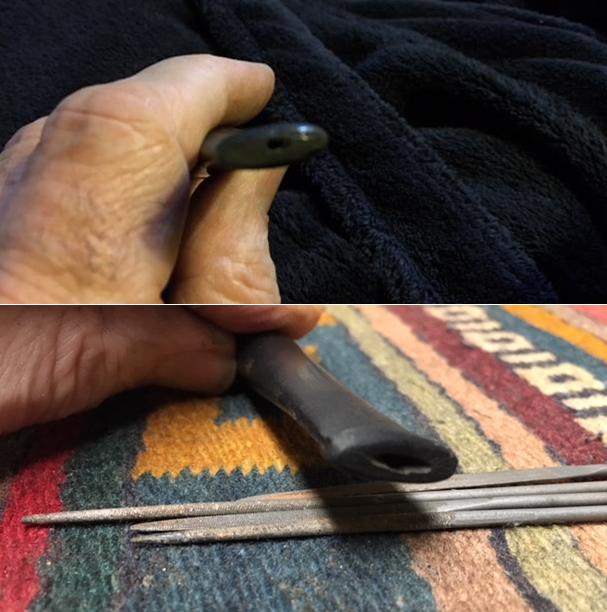
When Jeff messaged me that he had picked up a GBD lattice meerschaum pipe, I was a bit surprised. I had read the there were GBD meets out there but I had never seen one let alone worked on one. I was excited to see what he had found. He sent photos of the pipe and case before he cleaned it up. The case was covered in brown canvas that had been waterproofed. It was in excellent condition and showed little wear or tear. The brass hardware looked new.When he opened the case, it was lined with a taupe plush fabric. The GBD logo was inside the base just above the inset for the pipe. It read, “Hand carved in Turkey from Genuine Turkish Block Meerschaum” in a circle around the GBD oval logo. The inside of the case was in excellent condition. Sitting in the form fitted case was a lattice meer. It looked to be in good condition and was already picking up a patina on the shank and lower half of the bowl.  The rim top was also lattice work and it had a bit of lava in the crevices and grooves of the lattice. There was a thick cake in the bowl that overflowed on the back inner edge of the bowl. The next four photos give various views of the rim top so that you can appreciate the work that needed to be down on the rim top of the pipe. Jeff took a photo of the side of the bowl and the underside of the bowl and shank to show the colouration – the patina that was already beginning to develop on the pipe. The trick would be to clean up the dirt and grime without damaging the patina.The stem had the GBD rondel in the top of the saddle portion and it was in great condition. There were tooth marks and chatter on both the top and underside of the stem and wear on the button surface. The slot in the button was also very tight and it was almost impossible to pass a pipe clean through the airway without a lot of effort. The nylon tenon was in excellent condition and screwed directly into threads in the mortise of the meerschaum. There was no shank line or receptacle end to receive the tenon. The airway in the tenon was clogged with bits of tobacco and tars so even going through the tenon end was difficult to do with a pipe cleaner. Jeff had to use a paper clip to open the airway in the stem before he could get a cleaner through from tenon to slot.Jeff did his usual thorough clean up on this meerschaum. He carefully reamed it with a PipNet reamer and cleaned up the remnants with a Savinelli Fitsall pipe knife. He scrubbed out the airway in the shank and the stem with alcohol, cotton swabs and pipe cleaners. He had to open the airway in the stem with a paper clip before he could get pipe cleaners through. He scrubbed the rim top with a tooth brush and Murphy’s Oil Soap and carefully rinsed it under running water. He dried it off with a soft cloth. The meerschaum in this pipe was very light weight. The swirls and lattice work are quite unique. I have not seen that kind of carving in the past. There were tooth marks and tooth chatter on both sides of the stem. The threaded tenon was in great condition as were the threads in the mortise. The stem was Lucite and was a combination of swirled reds/browns and tans. Whoever carved this in Turkey for GBD did a great job in making a beautiful pipe. I took photos of the pipe when I brought it to my worktable. I like to have a record of what the pipe looked like before I started for comparison once I have finished working on it. I took a photo of the rim top to show what it looked like after Jeff had scrubbed it. The lava on the front right of the rim was gone. The back side lava was gone and what was left was some darkening along the inner bevel of the rim and in the edges of the swirls in the lattice work. He did a great job on it.The stem damage is more obvious after he had cleaned it up. None of the tooth chatter or marks were too deep so they would be fairly straightforward to sand out.To vary my work pattern I decided to start on the bowl on this pipe. I picked at the remaining debris in the swirls of the lattice with a dental pick and was able to remove more of the debris. I used a folded piece of 220 grit sandpaper to work on the darkening around the beveled inner edge of the rim. I was able to remove almost all of it without changing the shape of the bowl or rim top.I spot cleaned the rim with a damp cotton pad to remove the debris that my work had left behind. With the rim top cleaned up it was time to polish the meerschaum bowl. I started polishing with 1500-2400 grit micromesh sanding pads. After each pad I wiped the bowl down with a damp cotton pad. I continued polishing using 3200-12000 grit pads and wiping it down after each sanding pad. I took photos of the bowl after each set of three pads to show the progress of the shine. I set the bowl aside and turned my attention to the stem. I sanded the tooth chatter and marks out of the Lucite with 220 grit sandpaper. It did not take too much sanding to remove the damage to the stem surface and the surface of the button on both sides.I reworked the button and slot using needle files to open up the airway enough to be able to easily push a pipe cleaner through the airway.I polished the stem with micromesh sanding pads – wet sanding with 1500-2400 grit pads and dry sanding with 3200-12000 grit pads. I wiped the stem down with a wet cotton pad after sanding with each pad. I buffed the stem with Blue Diamond on the buffing wheel and carefully buffed the bowl at the same time. I used a light touch on the bowl and a heavier touch on the stem. I avoided the GBD rondel so as not to damage it. The pipe feels great in the hand. The carving is very well done and the pipe is exceptionally pointing to a quality block or meerschaum. The developing patina is a bonus for whoever adds this one to their collection. The dimensions are Length: 5 ½ inches, Height: 2 inches, Bowl diameter: 1 ½ inches, Chamber diameter: ¾ inches. I will be adding it to the rebornpipes store shortly. If you want to add it to your collection email me at slaug@uniserve.com or send me a message on Facebook. Thanks for looking.

New Life for a Kaywoodie Super Grain Zulu


Blog by Steve Laug

I wrote in the blog just previous to this one – the restoration of the Selected Straight Grain bent billiard – how I had been contacted by Jim in the South Eastern US regarding some pipes that he had found (https://rebornpipes.com/2017/09/22/cleaning-up-a-beautiful-comoys-made-selected-straight-grain-bent-billiard/). He called to tell me about a group of six pipes that he purchased on one of his own pipe hunts. He wanted to know if I could help him identifying what he had found. There were two older Kaywoodies (a bent meerschaum lined billiard and a Super Grain Zulu), a Selected Straight Grain bent billiard, a GBD Sauvage Bulldog, a Henley Club Apple (made by Sasieni), and the last one a Medico Crest Prince.

In our conversation he told me he was going to box up the lot and mail them to me to have a look. When they arrived he said we could talk and make an arrangement regarding the pipes that he wanted to have restored from the lot. He wanted my opinion on the others as well. The box arrived last week and I opened it to have a good look at what Jim had sent to me. As I mentioned in the previous blog, I went through them making notes on what I saw regarding the condition of each pipe. I sent Jim my notes on the pipes and he replied noting the two pipes that he wanted me to work on for him in the lot – the first one was a large Bent Selected Straight Grain Billiard and the second was the Kaywoodie Super Grain Zulu. We fired several emails back and forth talking about the pipes and the decision was made. I would restore the two pipes for him.

When I finished the Selected Straight Grain, I turned my attention to the Kaywoodie Super Grain Zulu. It is a nice piece of briar with straight grain on the front and back of the bowl and birdseye grain on the sides of each bowl. The pipe is stamped on the top of the oval shank with the brand name Kaywoodie over Super Grain over Imported Briar. On the right side of the shank the shape number 01 is stamped. The shape is Zulu with an oval shank and stem with a 1/8th bend to the stem. Like the Selected Straight Grain the Kaywoodie was a nice pipe that showed some nice grain underneath the grime.

The pipe was a typical Kaywoodie sized pipe. There was a flaw in the briar on the left back side of the bowl just above the shank/bowl junction. There was another flaw on the front right toward the bottom of the bowl. Other than these two spot on the bowl, there were no other sandpits or fills in the briar. The bowl had a thick cake in it and there was a thick overflow of lava on the top of the rim. It was not possible to know if there was damage to the inner edge and the top of the rim. The finish was worn and tired but should clean up easily. The stem was lightly oxidized and there was tooth chatter on both sides at the button, but no deep tooth marks. The stem was slightly underturned and when I removed it there was a paper gasket that was glued to the end of the stem to correct the issue. The classic Kaywoodie metal stinger apparatus had been cut off and the airway in the remaining metal tenon was damaged.

I took a series of photos of the pipe to record the condition it was in when it arrived.I took a close up photo of the bowl and rim top to show the condition of the cake in the bowl and the overflow of lava on top of the bowl. The rim and bowl were in rough condition. The photos of the stem show the condition of the vulcanite. The oxidized surface of the rubber was pitted and worn. The light tooth chatter on both sides can be seen in the photos. I unscrewed the stem from the shank and took the following photo. It shows the paper washer that had been glued to the end of the stem to help the alignment of the stem. The clipped stinger is also shown in the photo. I scraped off the glued on gasket with a sharp pen knife and cleaned off the surface with alcohol and cotton swabs. I used a needle file to open up the end of the tenon and remove the damaged edges that had been caused when the stinger was clipped off. I cleaned out the airway with pipe cleaners and alcohol. I heated the tenon with a Bic lighter to soften the glue and put the stem back on the end of the shank and turned it until the stem and the shank were aligned. The photo below shows the newly aligned stem and shank. I reamed the bowl with a PipNet pipe reamer starting with the smallest cutting head and working up to the second cutting head. I took the cake back to bare briar. I cleaned it up with a Savinelli Fitsall Pipe Knife. I scraped the top of the rim with the pen knife to take as much of the lava off as possible. I sanded it with 220 grit sandpaper and a 1500 grit micromesh sanding pad. I used clear super glue to repair the damage on the back and the front of the bowl. I filled in the areas with the glue and set the bowl aside to dry. When the repairs had cured I sanded the areas with 220 grit sandpaper to blend them into the surface of the briar. I polished the areas with micromesh sanding pads – wet sanding with 1500-2400 grit pads. I wiped the bowl down with a damp cloth to remove the sanding dust.I wiped the bowl down with alcohol on a cotton pad to remove the dust in preparation for staining the briar. I stained it with a dark brown aniline stain and flamed it with a lighter. I repeated the process until the coverage was even around the bowl.I wiped the bowl down with alcohol and cotton pads to remove the stain and make the coverage more transparent. I wanted the grain to pop so that finish stood out.The saturation of the stain was perfect for what I wanted to do with the finish next. I polished the briar with micromesh sanding pads. I wet sanded it with 1500-2400 grit pads to polish the briar and bring the grain to the surface. I dry sanded it with 3200-12000 grit pads. After polishing it with the 12000 grit pads I really liked the look of the polished briar. The grain really shows clearly.I sanded the stem with 220 grit sandpaper to remove the tooth chatter and the scratches in the vulcanite. I smoothed out the surface of the stem with the sandpaper and then polished it with micromesh sanding pads – wet sanding it with 1500-2400 grit pads and dry sanding with 3200-12000 grit pads. I wiped it down after each pad with some Obsidian Oil. After the final 12000 grit pad I gave it a final coat of Obsidian Oil and set it aside to dry.I buffed the pipe on the wheel using Blue Diamond Polish and worked over the stem and bowl to remove any remaining scratches. I was careful around the stamping so as not to buff it out and soften it. I gave the pipe multiple coats of carnauba wax and buffed it with a clean buffing pad to raise a shine. I hand buffed it with a microfiber cloth to deepen the shine. The finished pipe is shown in the photos below. It really is a beauty. The black of the polished vulcanite and the polished briar work well together to present a beautiful pipe. Now Jim’s second pipe is finished. In the week ahead the pair will go in the mail. I can’t wait to hear what he thinks of this second one when he has it in hand and fires it up for the first time. Thanks for looking.
A Sad Old Danish Sovereign 330 Bent Dublin Made New


Blog by Steve Laug

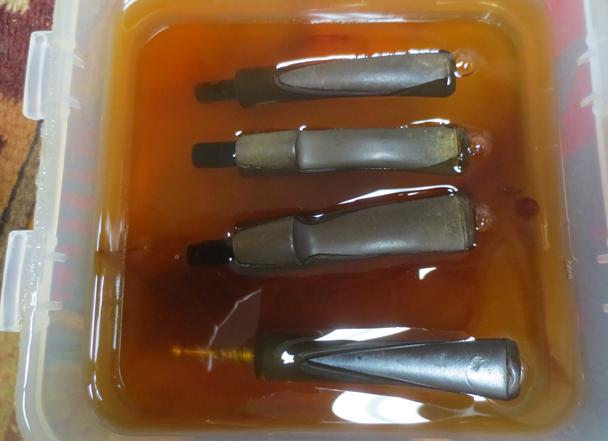
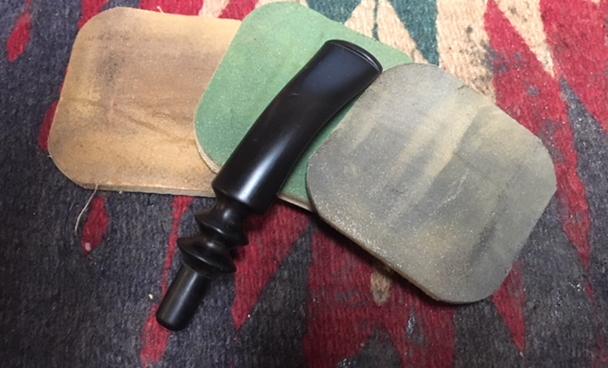
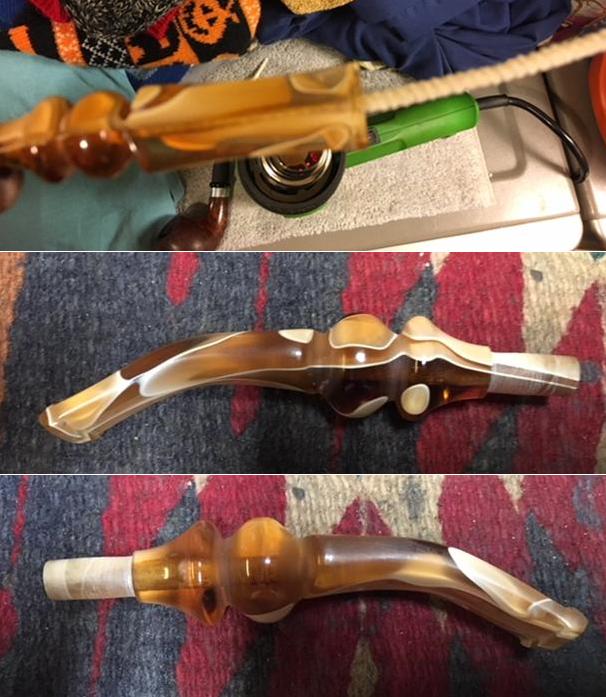
This old Stanwell looking Dublin was in the box of pipes that came from my friend Steve in Dawson Creek. It is one of the batch he sent for me to chip away at in my spare time. Today was the day for that chipping away to happen. I pulled out five of the remaining seven pipes and worked on all of them today. The pipe is stamped on the underside of the shank with the shape number 330 over Danish Sovereign over Made in Denmark. The stamping on the pipe is faint.  The bowl is heavily caked and there is a thick overflow of tars and cake onto the rim top almost obscuring the beveled inner edge of the rim. The finish on the bowl is worn and dirty. There is paint on the surface of the briar on the left side. The stem has a lot of tooth marks and chatter. There is also oxidation on the stem. I took photos of the pipe before I started the restoration. The next photo is a close up of the rim top. The cake was thick but the worst part was the heavy overflow onto the rim. It was impossible at this point to know the condition of the rim and edge of the bowl because of the mess covering it all.The stem was worn and had tooth dents and chatter on both sides near the button. The button itself was worn down and the edges almost indistinct from the rest of the stem surface.I put the stem in the Before & After Pipe Stem Deoxidizer bath to soak with the other stems from Steve’s pipes. While they soaked I worked on the five bowls that went with them.I reamed the bowl with a PipNet Reamer starting with the smallest cutting head and working my way up to the second head which was the same size as the bowl. I cleaned up the reaming with a Savinelli Fitsall Pipe Knife. I took the cake back to bare briar. I scraped the rim with a sharp pen knife to clean up the lava buildup on the rim top. I scraped it until the rim was debris free.I scrubbed the exterior of the bowl and shank with Murphy’s Oil Soap and scrubbed the rim top and the bevel with a tooth brush. I rinsed the bowl under running water and continued to scrub it until it was clean and the bevel was clearly defined. After removing all of the lava on the rim there was quite a bit of rim damage on top. To remove the damage on the outer rim edge I decided to lightly top the bowl on a topping board with 220 grit sandpaper. I took a photo of the process and of the top once I had finished it.There were three sandpits or fills in the top of the bowl. I sanded the bevel on the inner edge of the rim to remove some of the burn damage. I repaired the fills with clear super glue. When the repairs dried I sanded them smooth with 220 grit sandpaper to blend them into the surface of the rim top. I sanded the outer edge and the beveled inner edge of the bowl some more to clean them up. I wiped the bowl down with alcohol to remove remnants of the finish and the grime on the bowl. I stained the rim top and inner bevel with a light brown stain pen to blend it into the rest of the bowl. I gave the repair areas a little heavier coat of the stain to try to blend them in better.I polished the bowl with micromesh sanding pads – wet sanding with 1500-2400 grit pads and dry sanding with 3200-12000 grit pads. I wiped the bowl down with a damp cotton pad to remove the sanding grit. I scrubbed out the airway in the shank and mortise with pipe cleaners, cotton swabs and alcohol. It was pretty dirty. I probably should have cleaned it earlier but totally got caught up in working on the top of the rim.I decided to give the bowl several coats of Danish Oil with Cherry stain to give it a contrast coat. The cherry stain highlighted the grain on the bowl and gave the pipe a rich look.I buffed the bowl with a clean buffing pad to raise the shine and gave it a light coat of carnauba wax. The photos show the new look of the bowl. The grain pops and the bowl is ready once I get the stem finished. With the bowl finished I set it aside and turned my attention to the stem. I took it out of the Before & After Pipe Stem Deoxidizer bath and dry it off. I ran a pipe cleaner through the airway to remove the Deoxidizer that was on the inside of the stem. I used alcohol to clean out the airway in the stem.I wiped down the stem a cotton pad and alcohol to remove any film or debris on the surface of the stem that would get in the way of the repairs. I filled in the tooth marks and deeper dents with clear super glue. When the glue dried I sanded it with 220 grit sandpaper and used a needle file to clean up the sharp edge of the button. I cleaned up the file marks and blended the repairs into the surface of the stem with 220 grit sandpaper. I polished the stem with micromesh sanding pads – wet sanding with 1500-2400 grit pads (I opened a new package for this pipe) and dry sanding with 3200-12000 grit pads. I rubbed the stem down with Obsidian Oil after each pad. After the 12000 grit pad I gave it another coat of oil and set it aside to dry. The last photo below has a brown tint that I cannot get rid of but in natural light the stem is shiny black. I put the stem on the bowl and buffed the pipe with Blue Diamond on the buffing wheel. I gave the bowl several coats of carnauba wax and buffed the pipe with a clean buffing pad to raise the shine. I hand buffed it with a microfibre cloth to deepen the shine. The finished pipe is shown in the photos below. It is the fourth of this batch of five pipes that I have restored for Steve. It is very obviously a Stanwell made pipe – everything from the shape to the look of the stem and shank says Stanwell. I think Steve will really like this latest addition to his rack. Steve, if you are reading this I hope you enjoy this beauty. It will be on its way to you very soon. Thanks for looking.