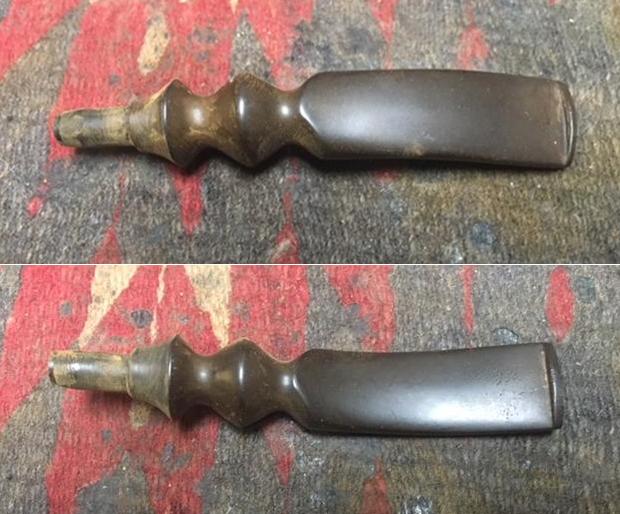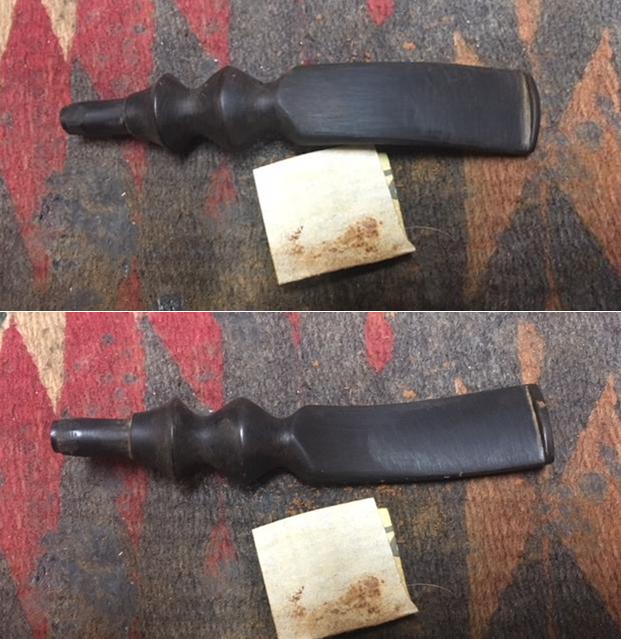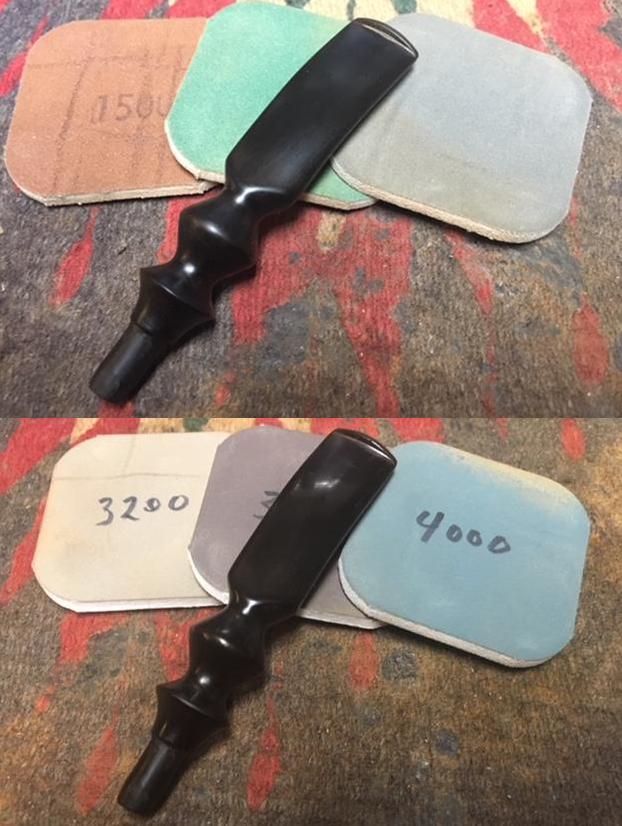
Tag Archives: fitting a stem

Tale of Two Somerset Brothers – Part 1


PANELED BILLIARD

Blog by Paresh Deshpande

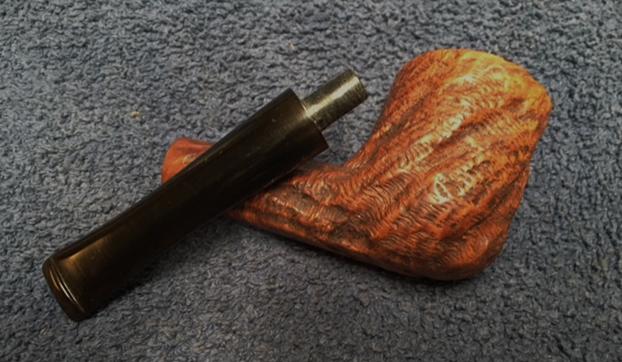
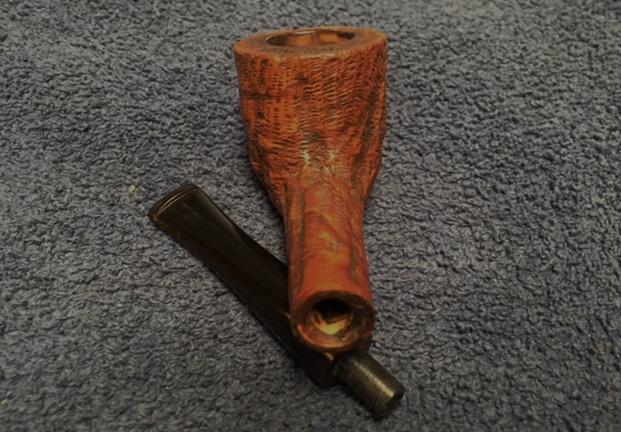
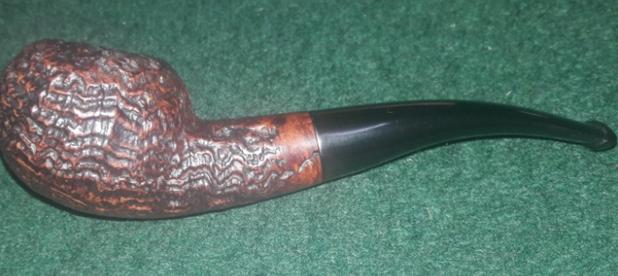
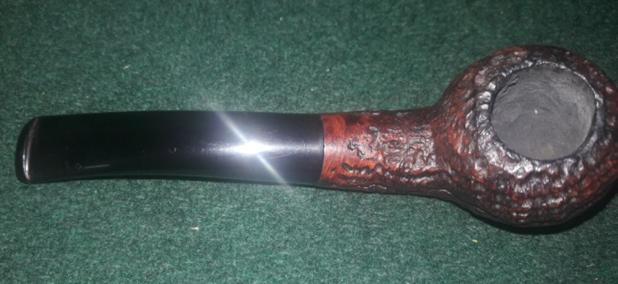
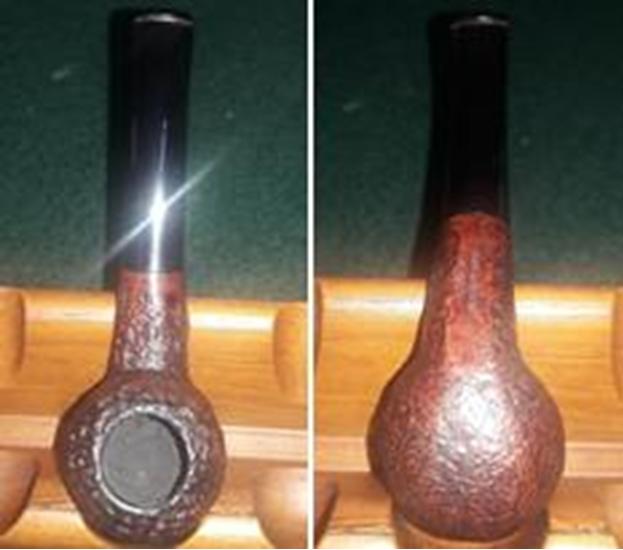
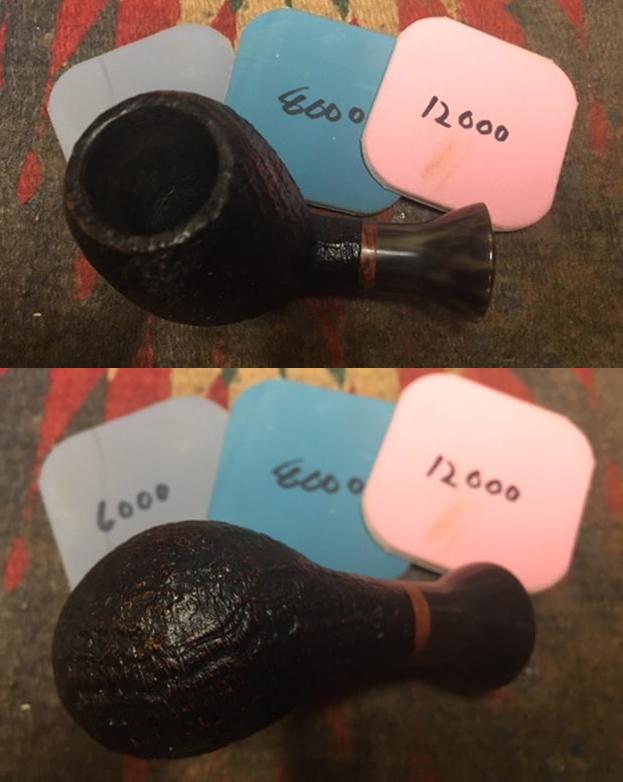
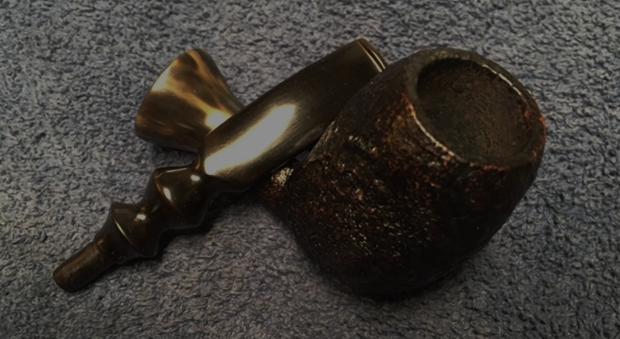
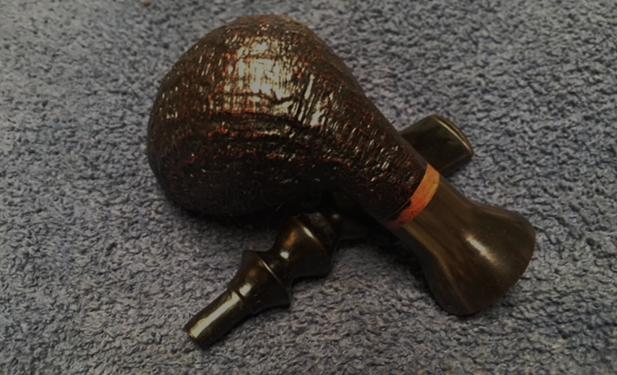
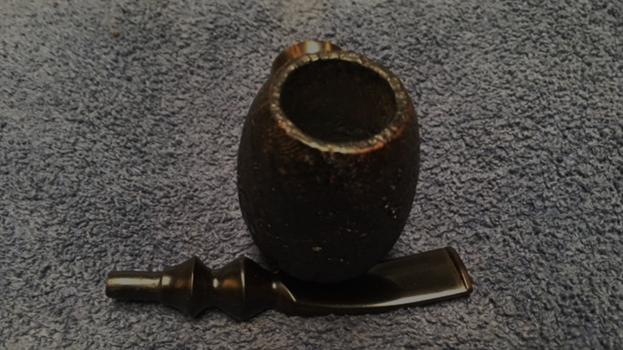
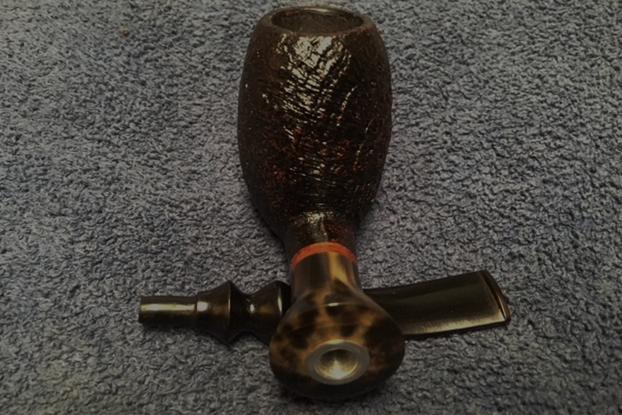
There are two SOMERSET pipes in my inherited pipe collection; one is a Paneled Billiards and other is a Rhodesian (which is my favorite shape). If there was a pipe/ pipes amongst the large number of inherited pipes that I am not attracted to, this Paneled Billiard ranks right there at the top. The reason for this lack of attraction is primarily two fold; firstly, this eight paneled billiard is a shape which I do not like. I prefer pipes with an even shape either smooth or rusticated or sandblasted, but panels, definitely not my taste. Secondly, the SOMERSET brand, which I had never heard of and neither had I bothered to know more about due to shape!!!!! However, once while discussing pipes on a video call with Mr. Steve, I showed him this pipe and suggested that I would like to discard it as I did not like the shape and also it’s an unknown brand. Mr. Steve, in his wisdom and experience suggested that I should reconsider as SOMERSET is quite possibly a brand of Comoy’s seconds!!!!!! With this suggestion, I decide to work on this pipe.

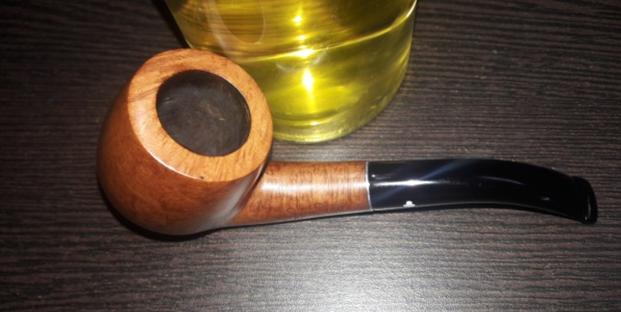
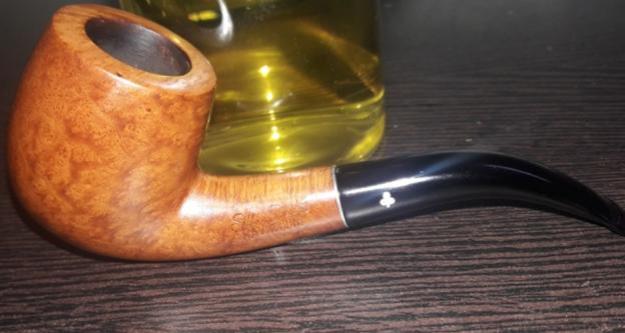
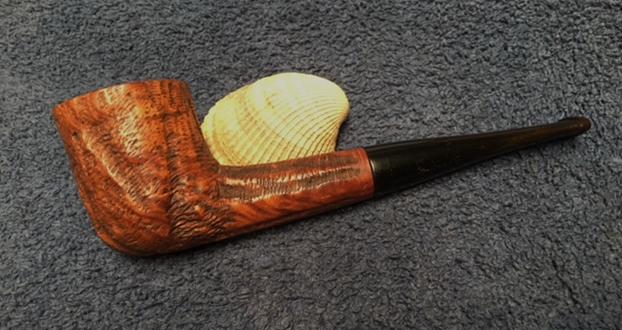
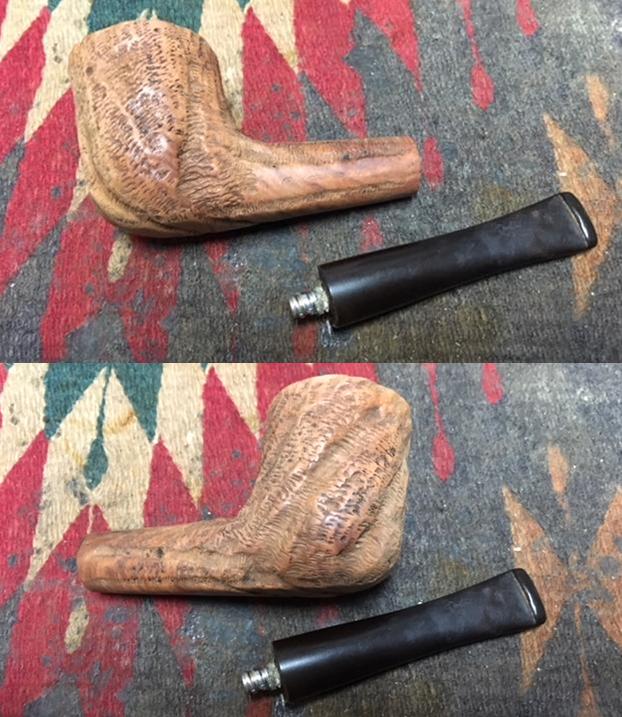
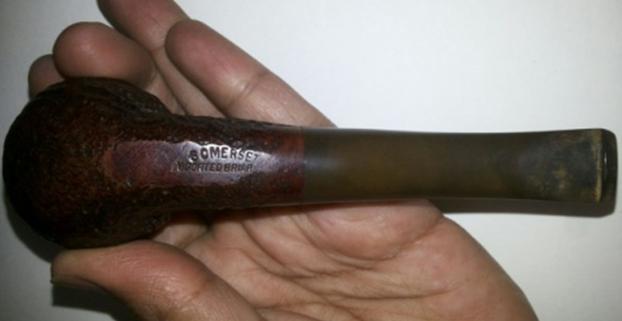
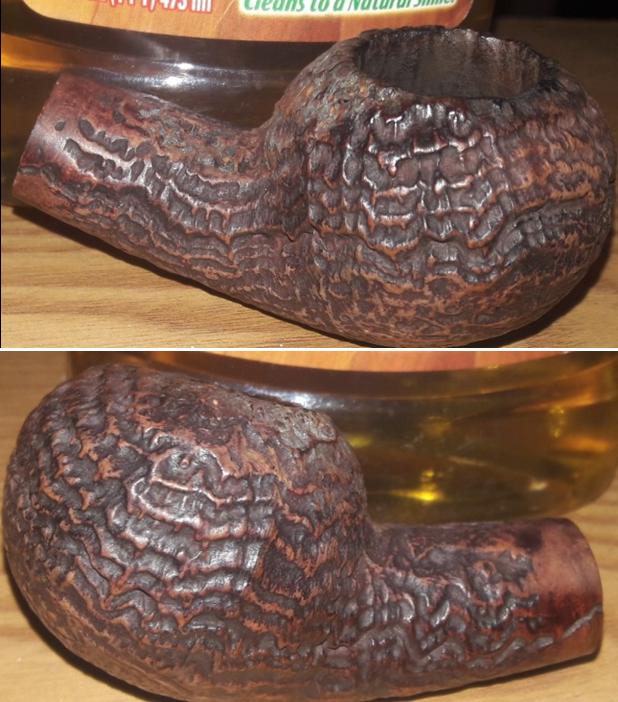
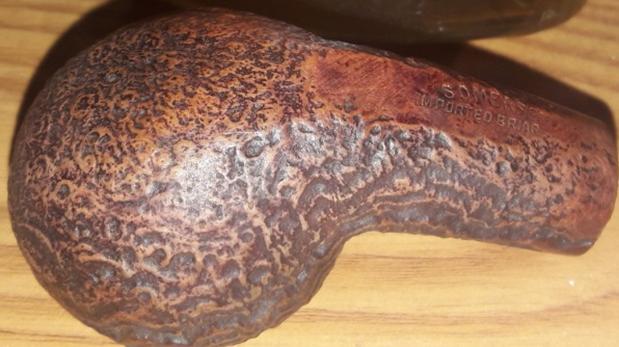
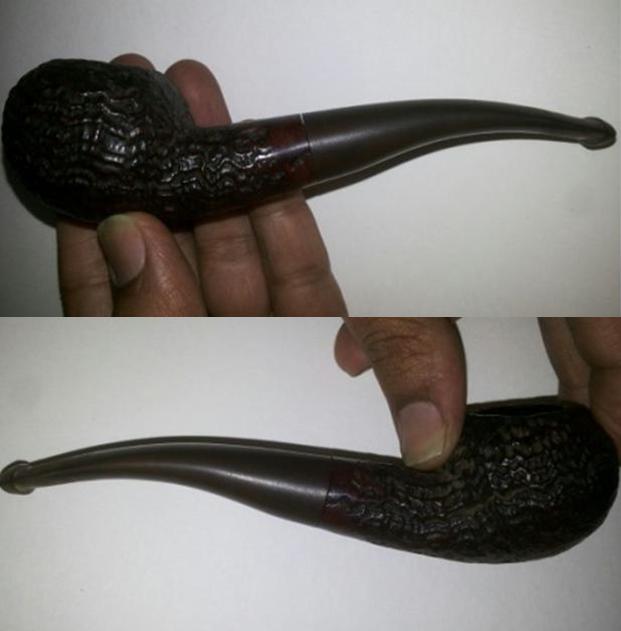
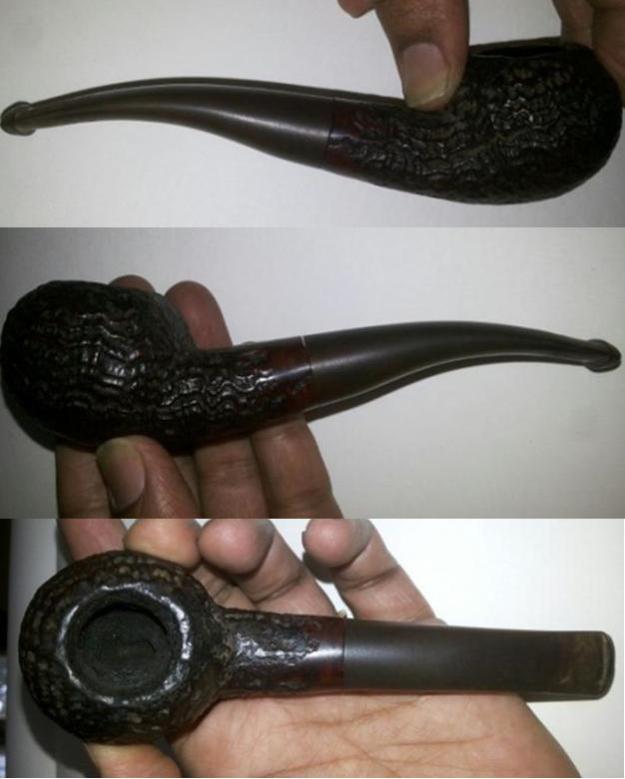
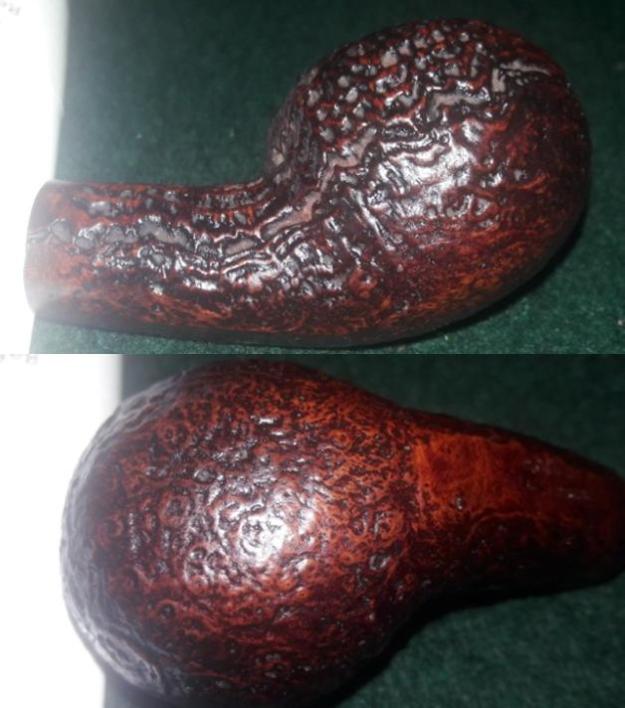
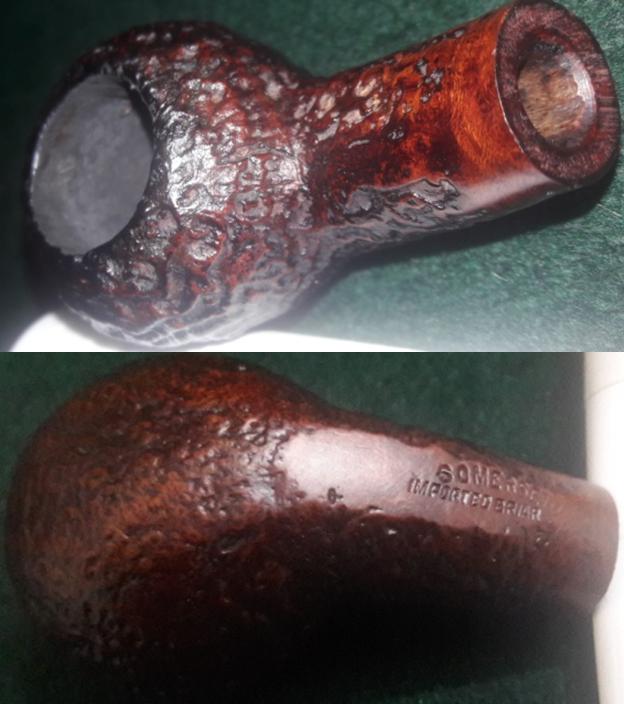
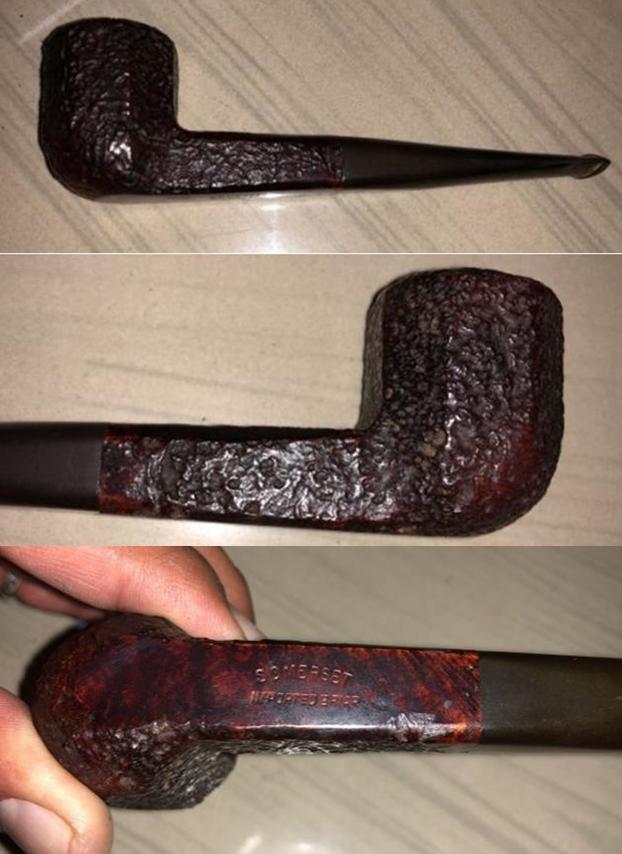
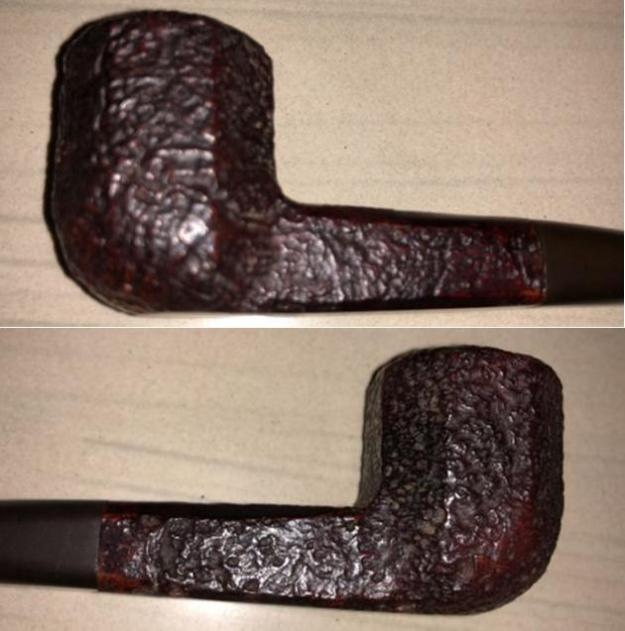
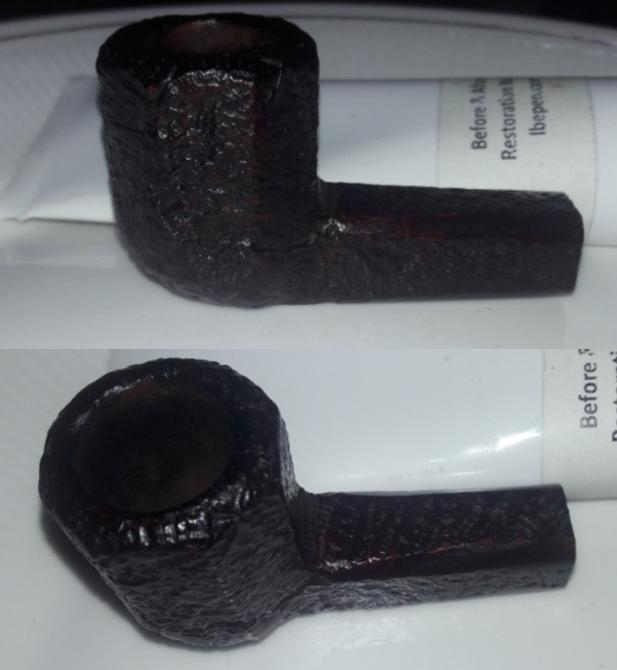
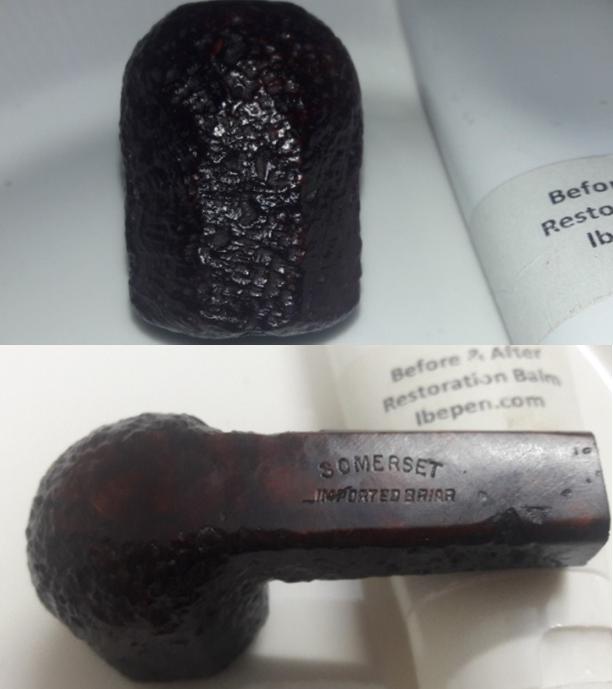
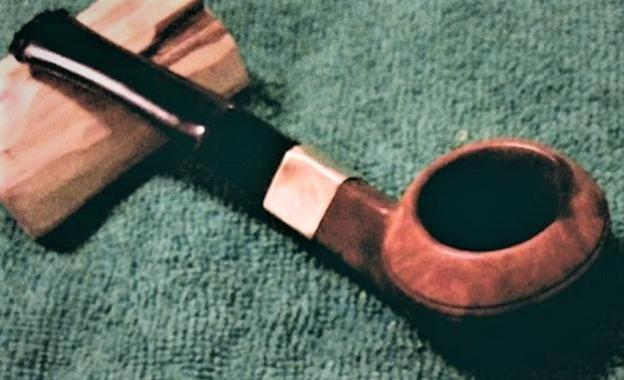
This square shank, eight paneled billiard has a smallish bowl size with a chamber depth of about 1.1 inches with somewhat thin walls. Beautiful sandblast is seen on the bowl, rim and on three sides of the shank. The bottom surface is smooth, flat without any sandblast and bears the only stampings seen on the pipe. It is stamped on the bottom as “SOMERSET” in a mild arch over “IMPORTED BRIAR” in straight line, all in capital letters. There is no other stamp on either stummel or on the stem. The stummel and shank is stained with a very dark reddish/ maroon hue. The stem is high quality vulcanite without any stampings.I have tried in vain to unearth information on this brand in general and this pipe in particular. Alas!!! I haven’t been able to garner any information from the internet, apart for the input provided by Mr. Steve!!!!! I would love to receive any information that may be available with you on this pipe.

INITIAL VISUAL INSPECTION
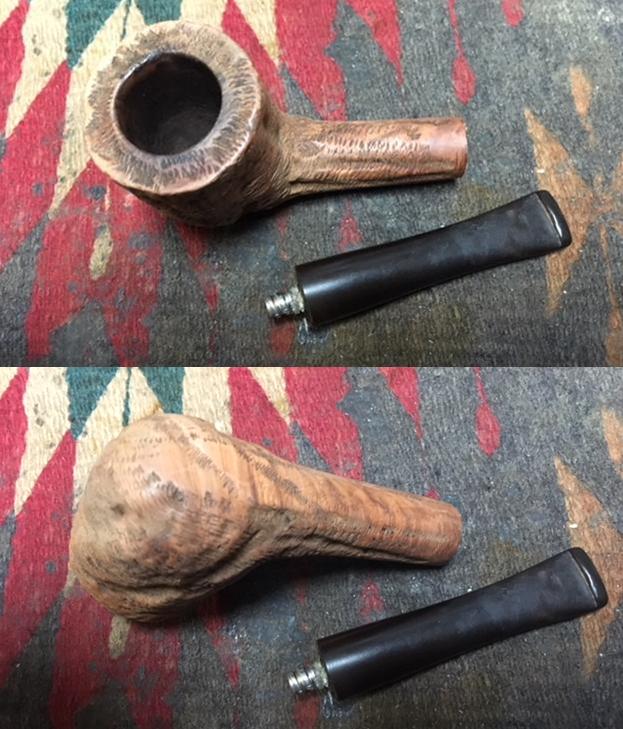
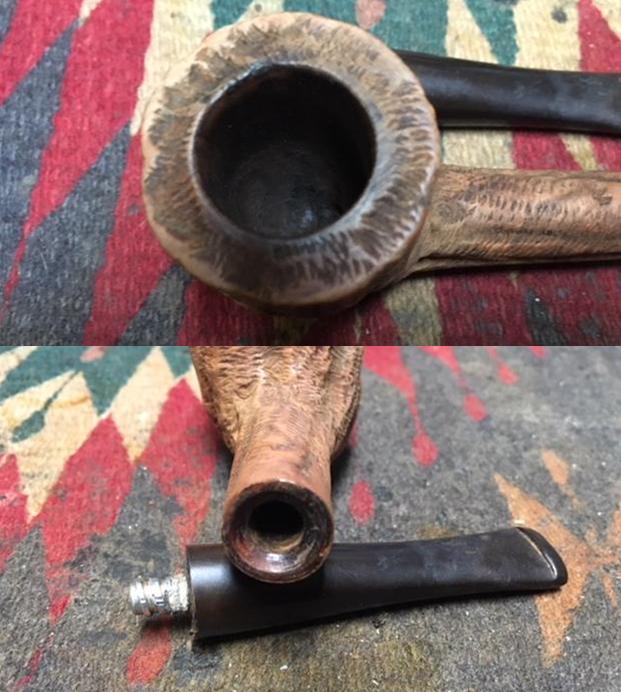
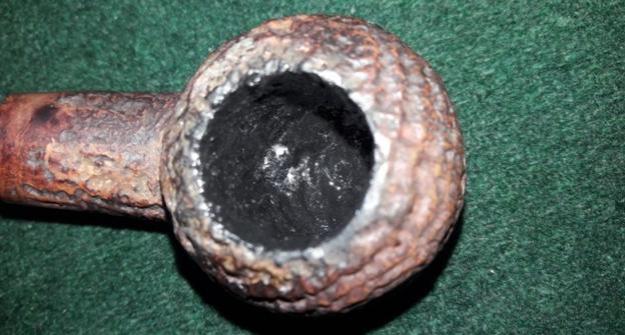
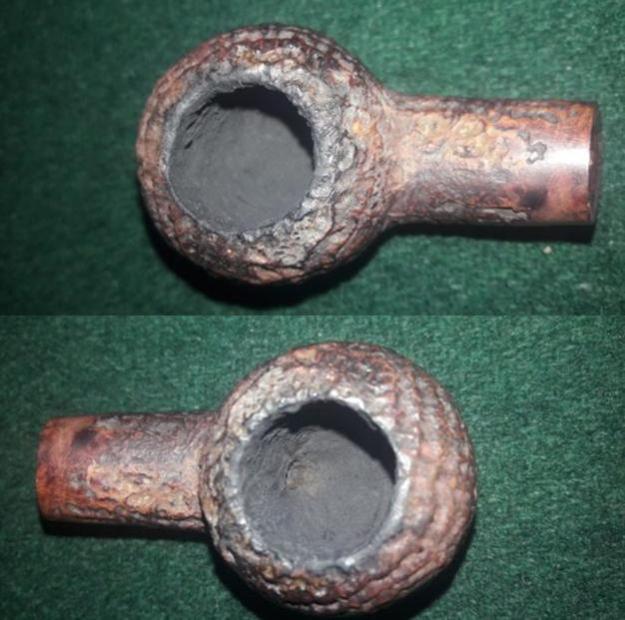
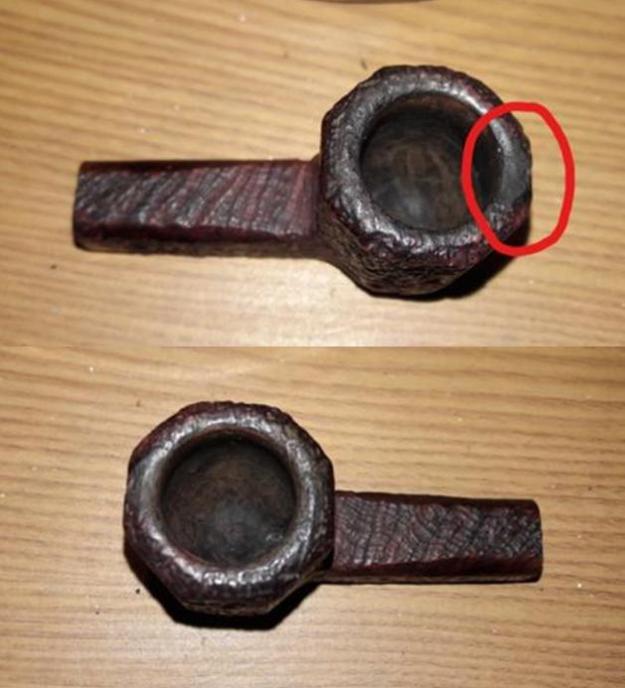
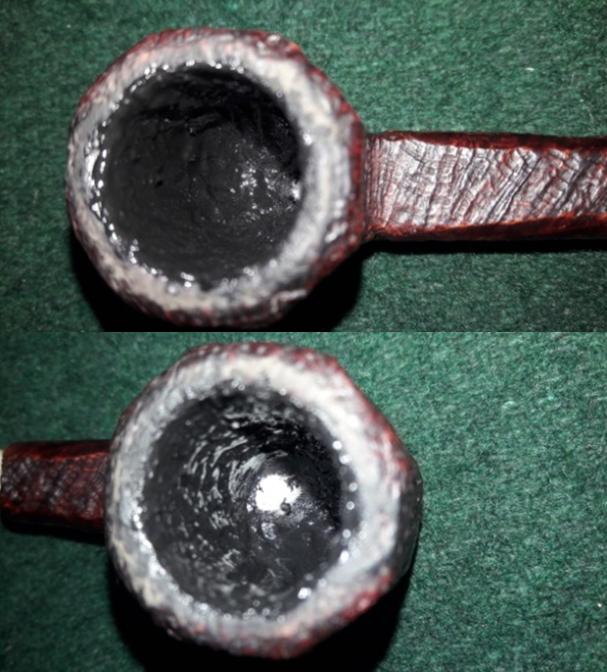
This pipe has been well used (and subsequently, I realized ABUSED!!!!!!!) as is evident from the thick cake in the chamber and damage to the inner edge of the rim in 12 ‘O’ clock direction. The sandblast is deeply filled with dust, tars and grime of all the yesteryears of smoking and subsequent disuse for last 35-40 years. The rim top is also sandblasted and there is overflow of lava on to the rim top. As mentioned above, there appears some minor charring to the inner edge of the rim. This needs to be looked into after the bowl has been reamed of all the cake.

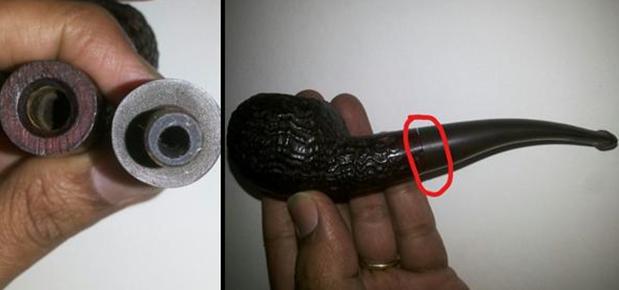
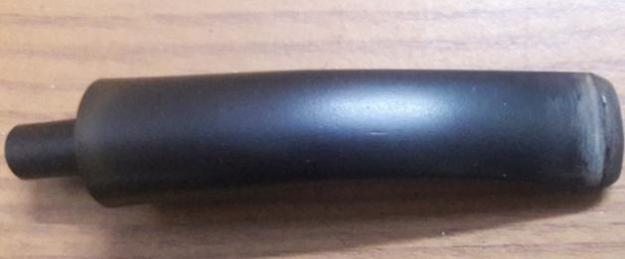
The mortise is clogged and air does not flow through it. This condition is consistent with that I have seen on my grand old man’s other pipes!!!! The mortise had clogged, adversely affecting the performance of the pipe and hence had been conveniently set aside and replaced by another one. Such was his habit, it appears.The stem is oxidized but more heavily towards the lips. There is minor tooth chatter with a couple of slightly deeper bite marks on both surfaces of the stem. The fitting of the tenon in to the mortise is very loose and will have to be addressed.THE PROCESS
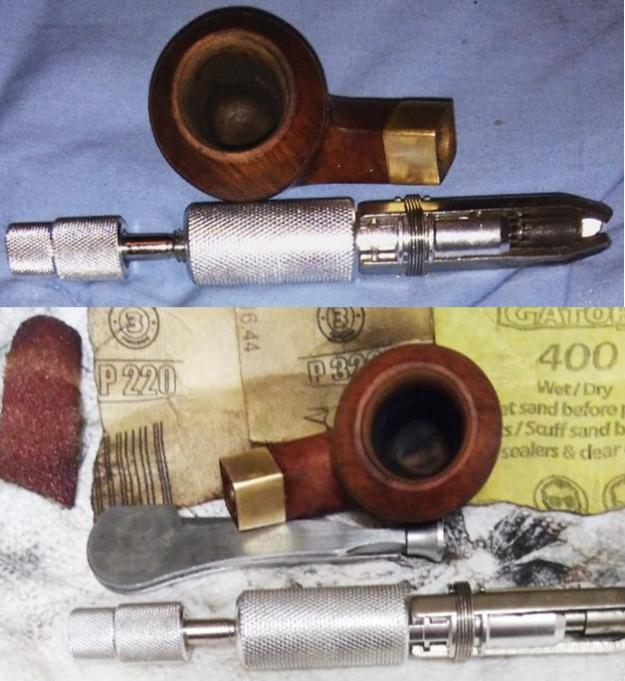
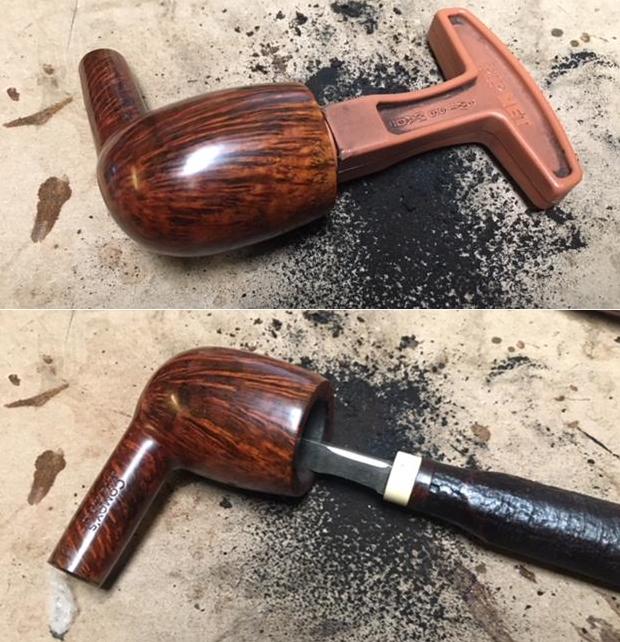
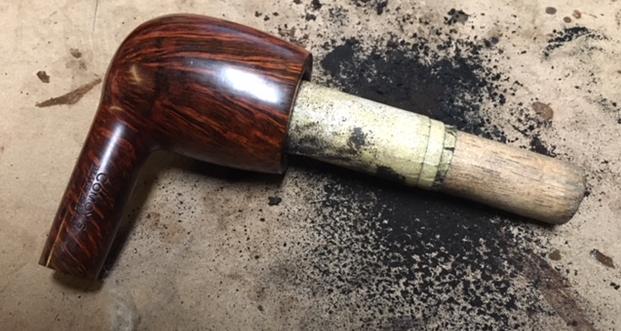
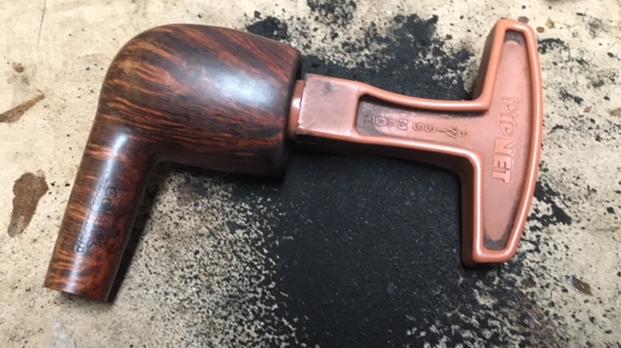
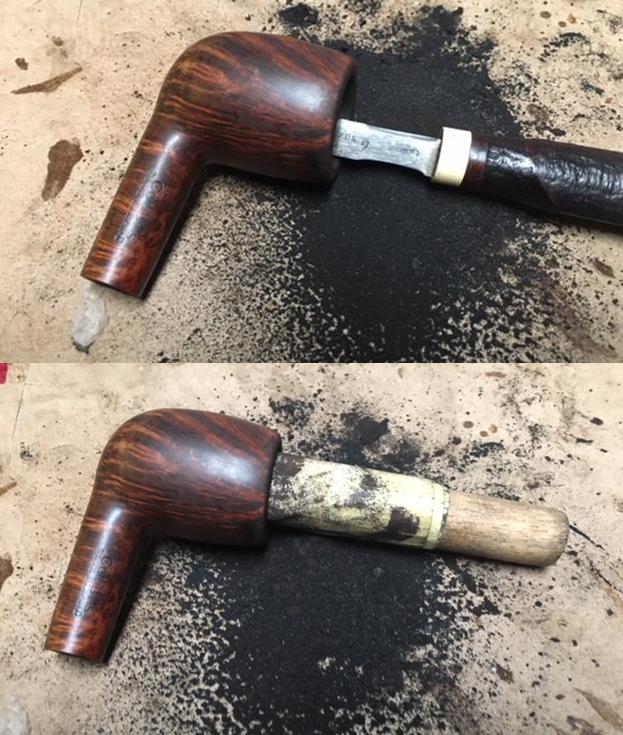
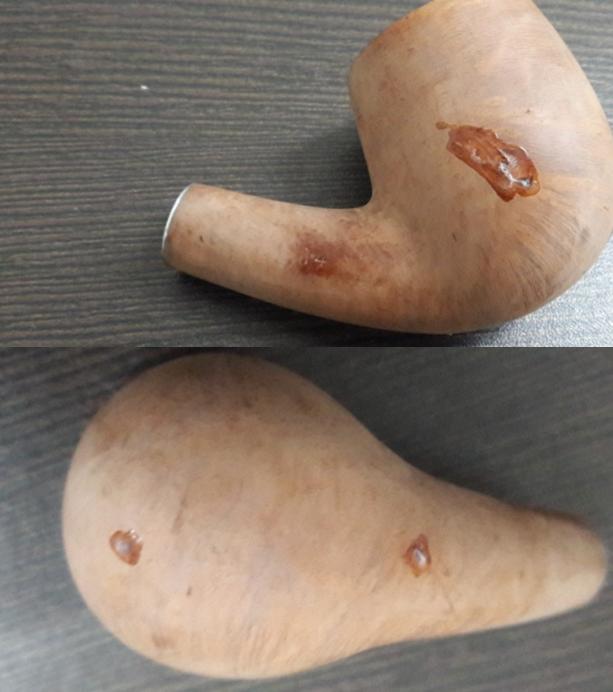
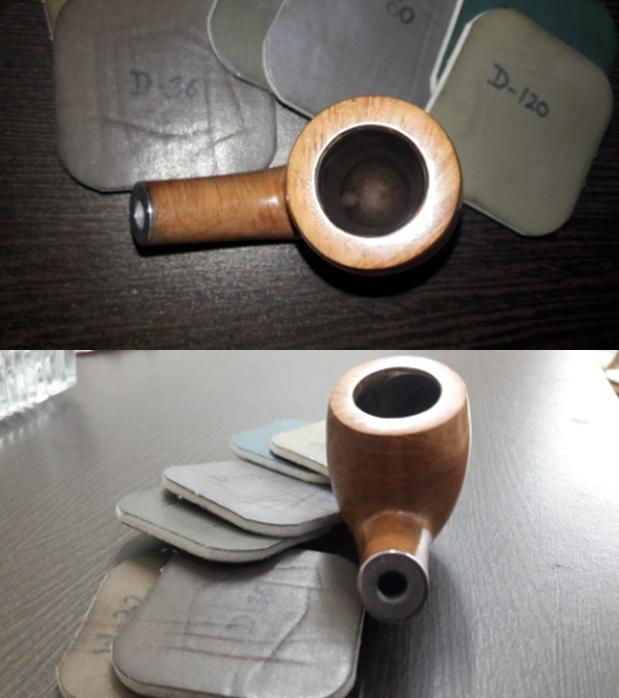
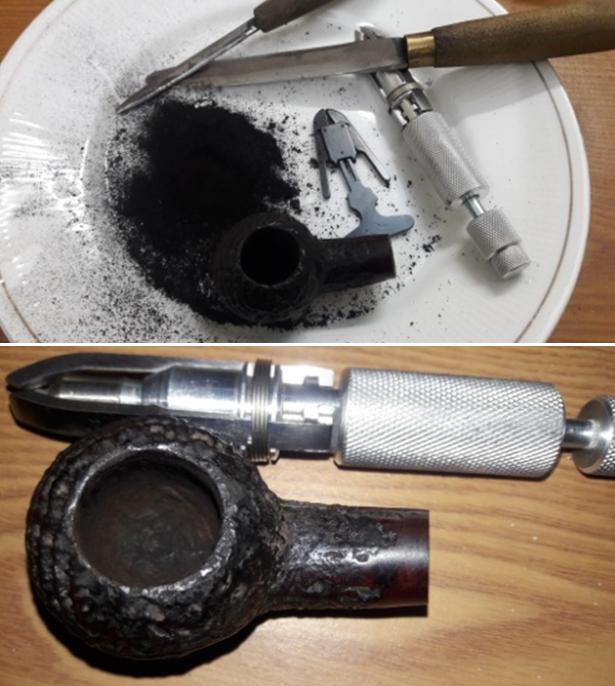
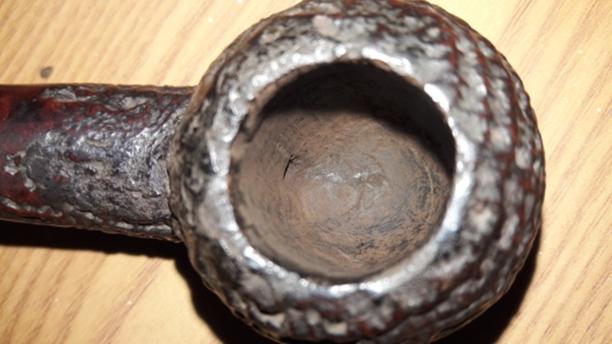
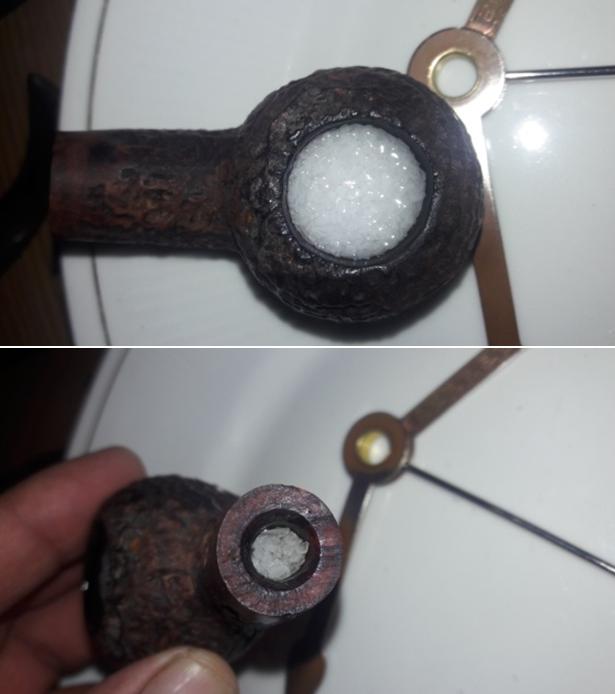
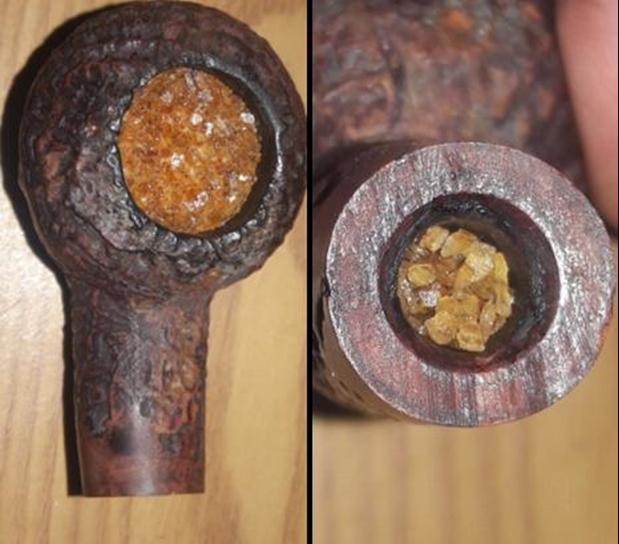
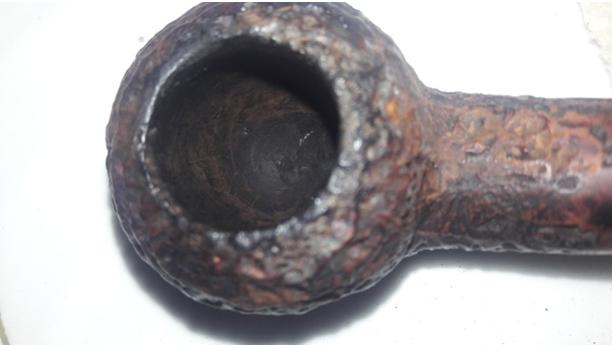
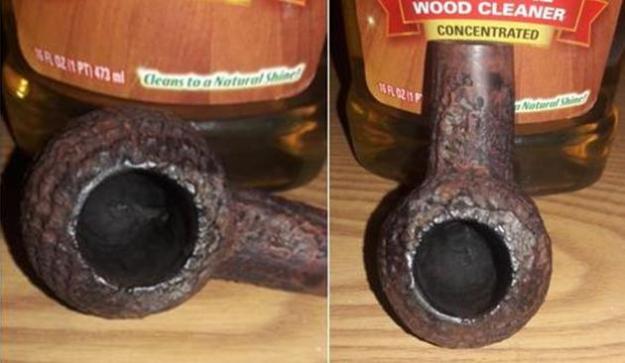
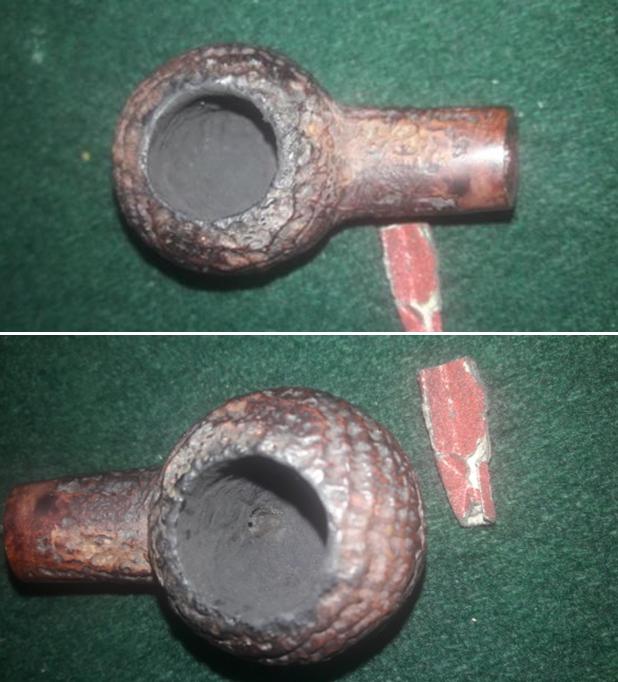
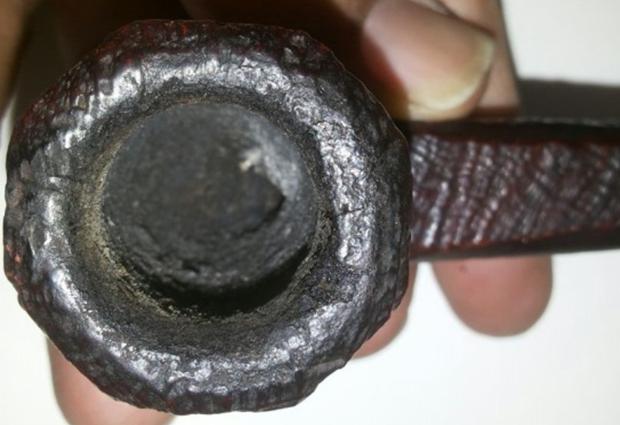
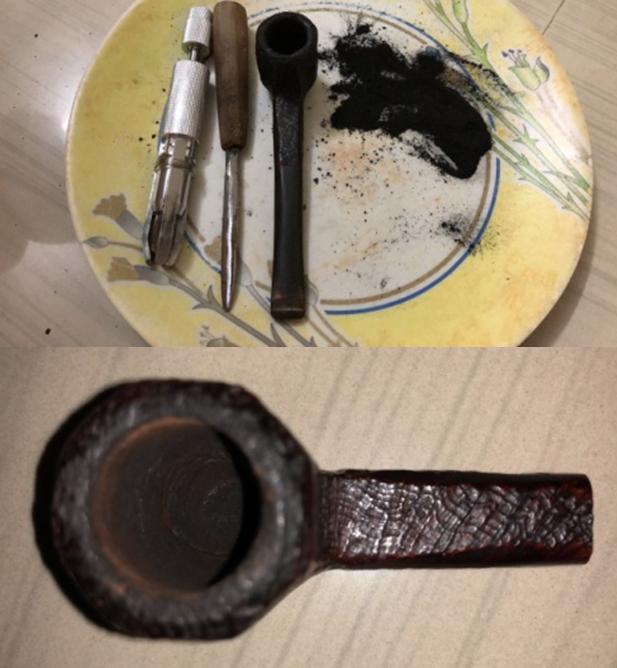
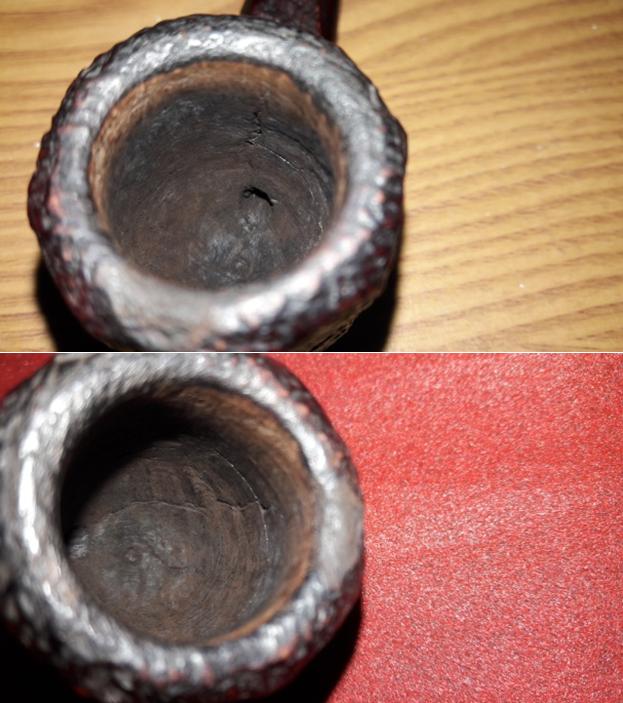
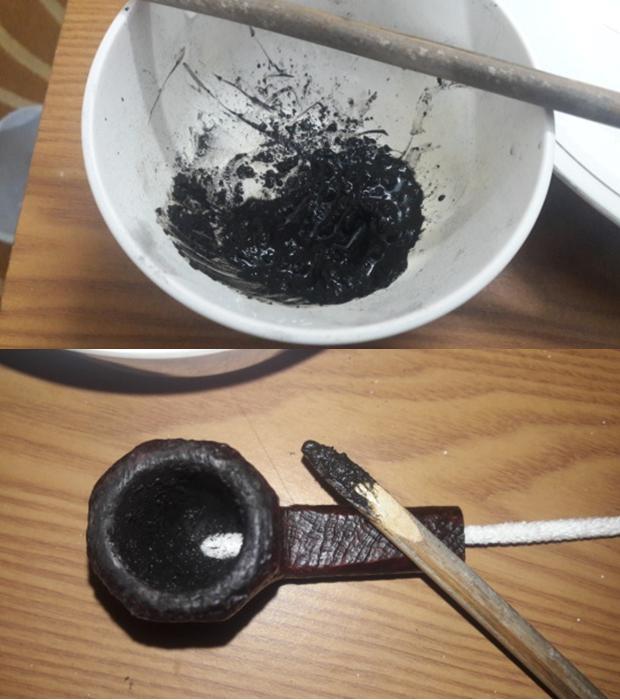
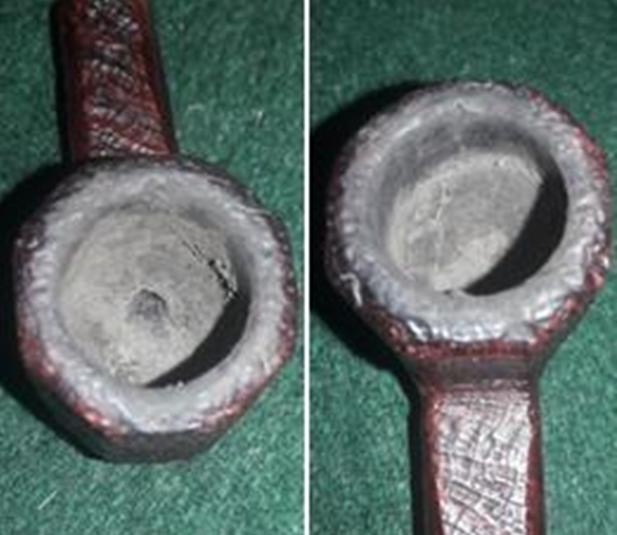
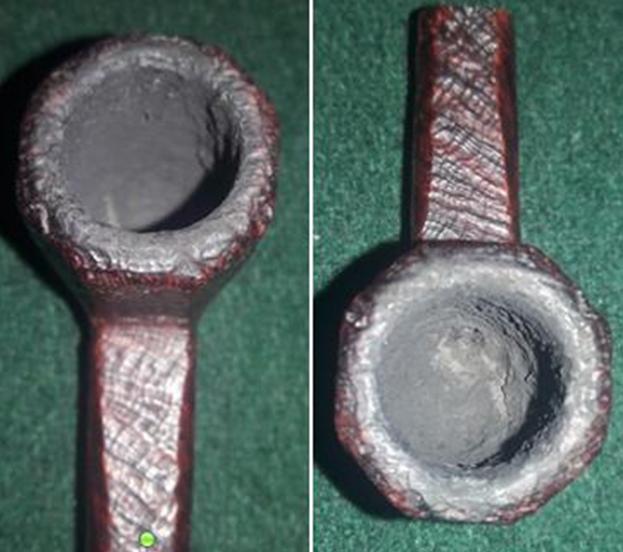
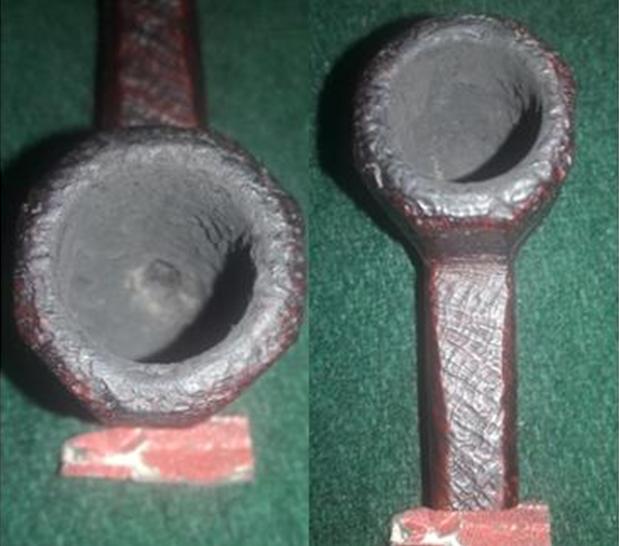
I start the restoration process by reaming the chamber to get rid of all the cake, using a Kleen Reem pipe tool. I further scrapped the walls of the chamber with a fabricated knife and took the cake down to the bare briar. This is the time when I observed a damage which every restorer of pipes fears the most. With a cringe, I observed a distinct line emanating from a point about mid way of the chamber, above the draught hole extending upwards and downwards. To explore further and also to smooth and remove the last remnants of the cake, I sand the walls of the chamber with a folded piece of 150 followed by a 220 grit sand paper. To my horror, I observed that from the point where I had first observed the crack, there were other cracks which extended around the walls in a circular pattern along the middle of the bowl. I checked the exterior of the stummel and was relieved to find it was solid and that the crack did not extend to the outer surface. Here are the pictures of the process and the damage observed. I was wondering as to how I should address this issue as I did not have J B Weld, when I remembered that Mr. Steve had repaired my inherited Barling Ye Olde Wood by coating the chamber with a mixture of sour cream and activated charcoal. I searched my tool and material box and realized that I was only carrying a few capsules of activated charcoal. The jar of activated charcoal, along with bulk of my pipes, was left behind when I moved to my place of work. I shared the pictures of the damage and predicament with Mr. Steve. He confirmed that this appeared like the beginning of a “burn through” or a “crack”. He also suggested an easier and practical solution; a coating of pipe mud made using pipe ash and water!!! Only a person of his knowledge and experience can share such simple and easy-to-do solutions to complex problems. Thanks again, Sir. The next couple of days were spent in collecting pipe ash!!! Lol…… All readers and first time restorers are advised to collect and keep a jar of pipe ash handy!!!!! Or collect Cigar ash which works just fine.

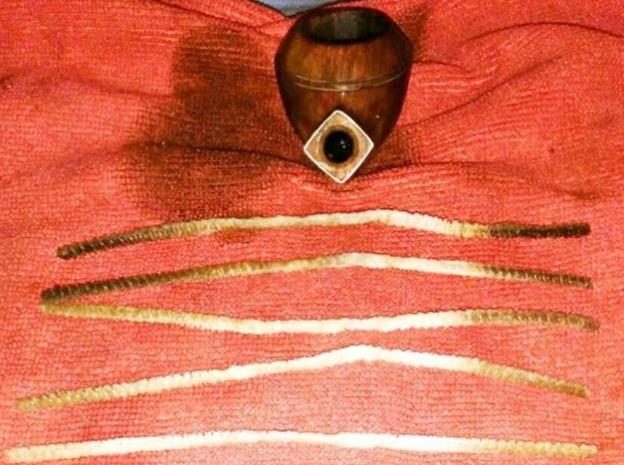
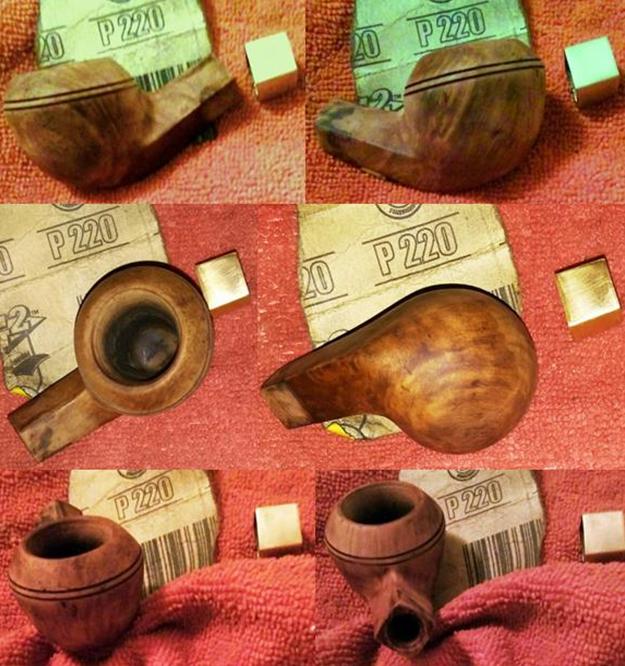
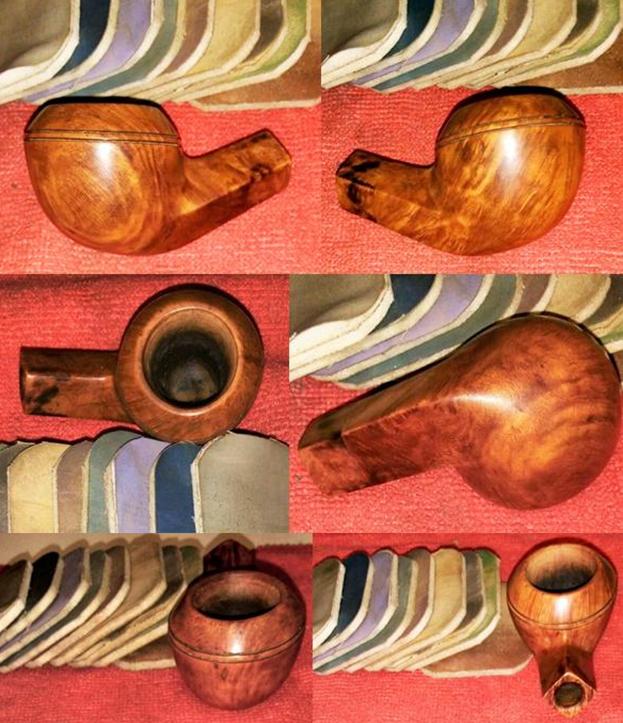
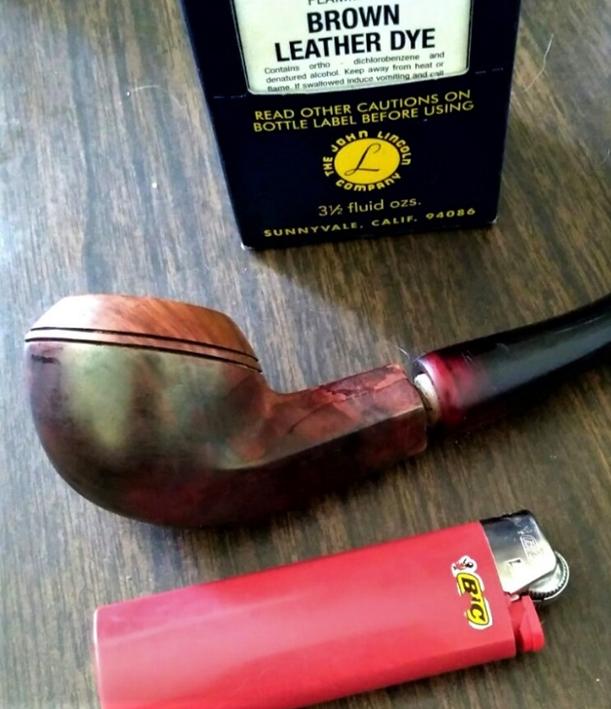
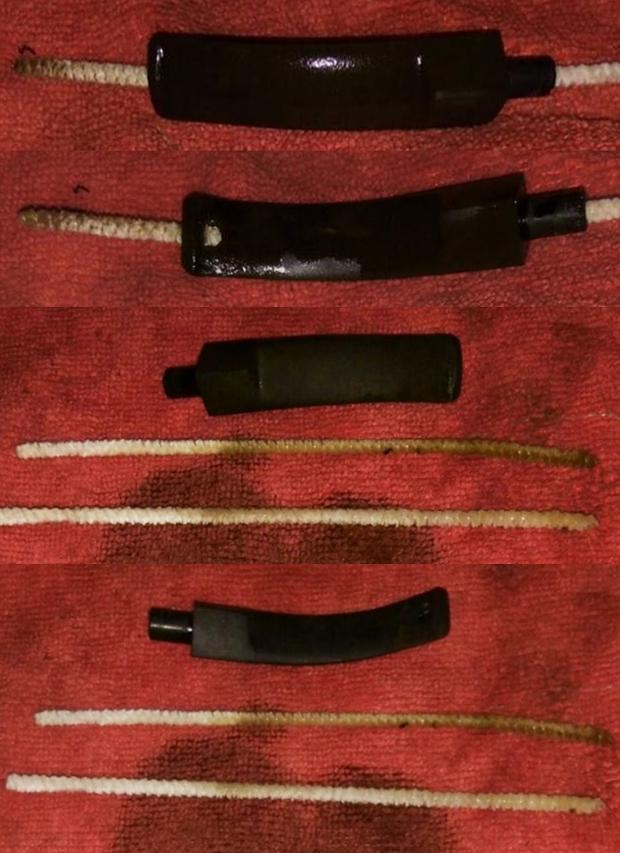
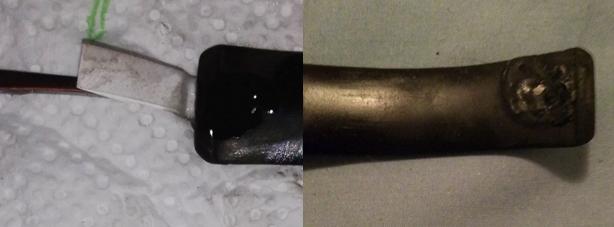
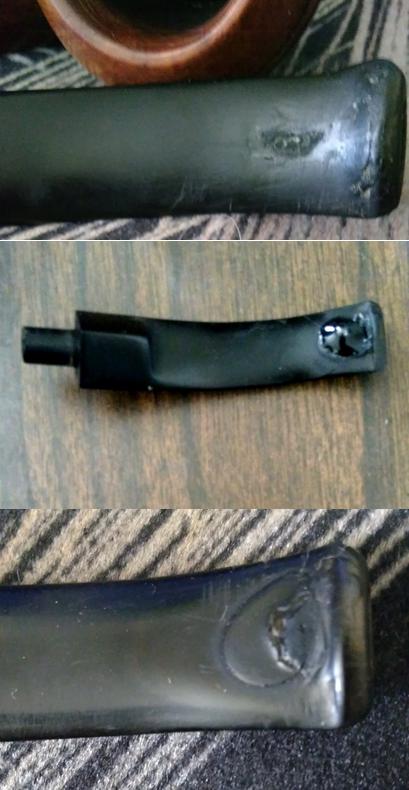
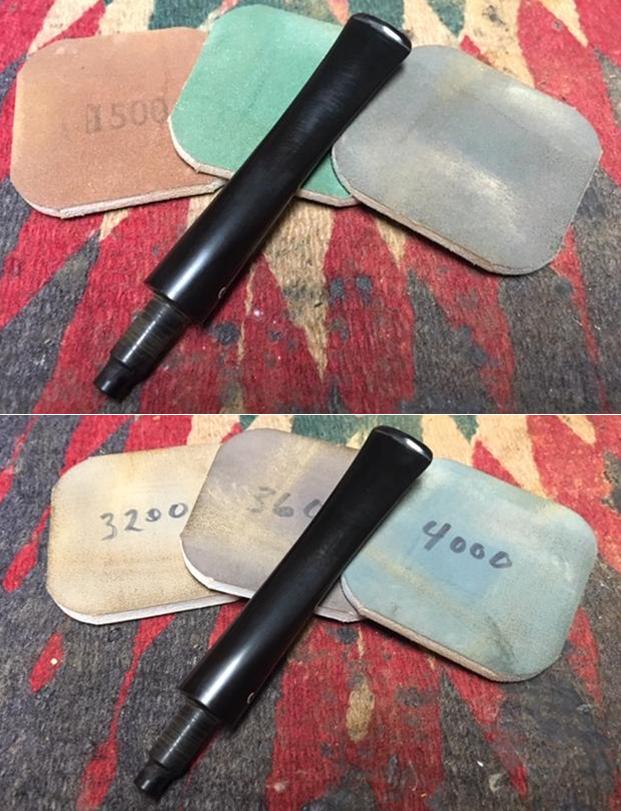
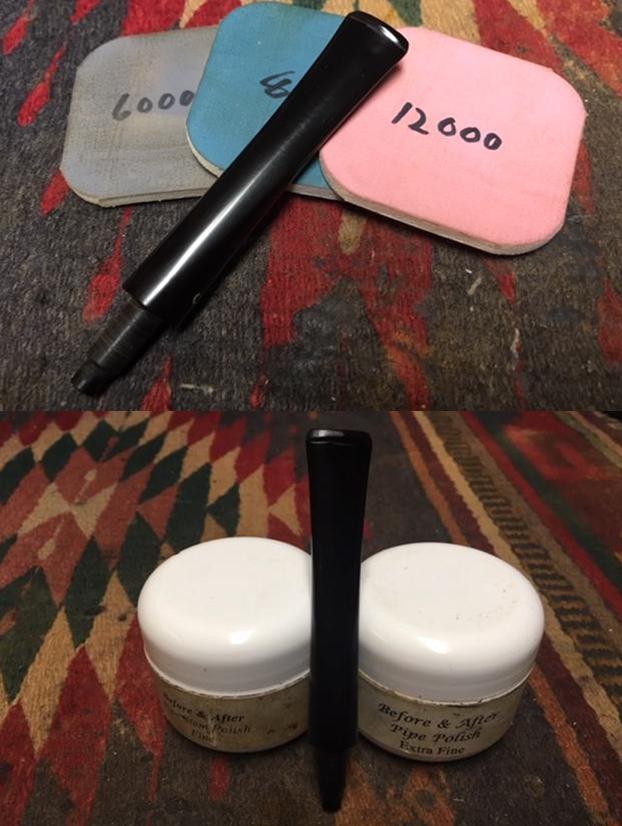
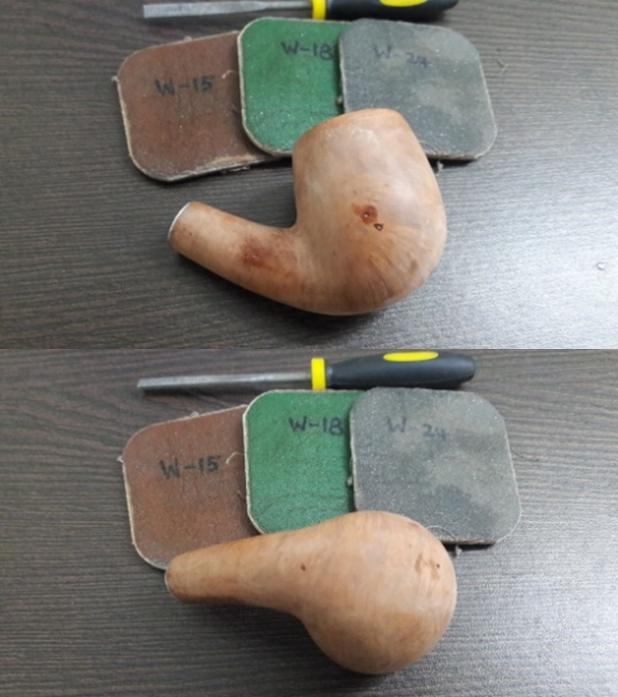
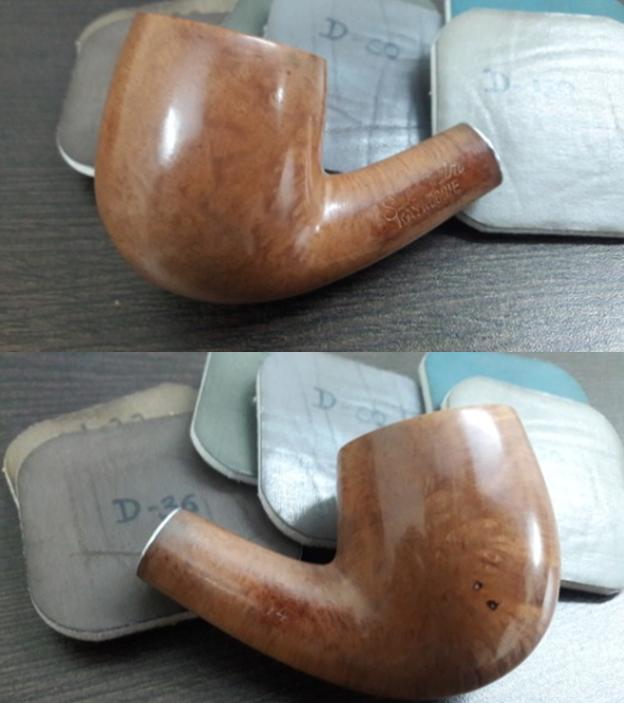
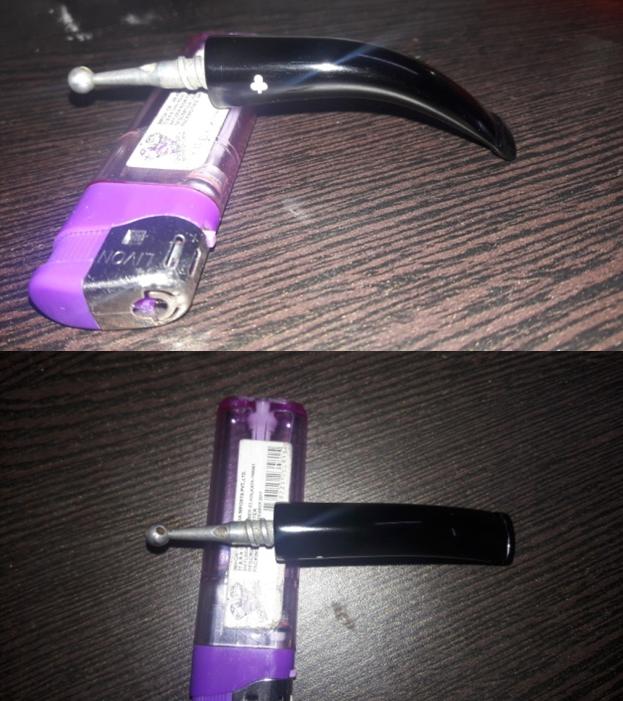
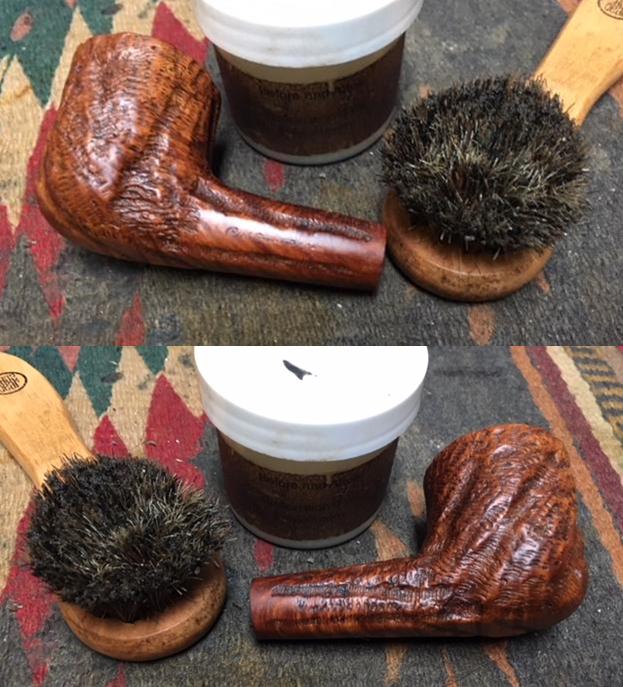
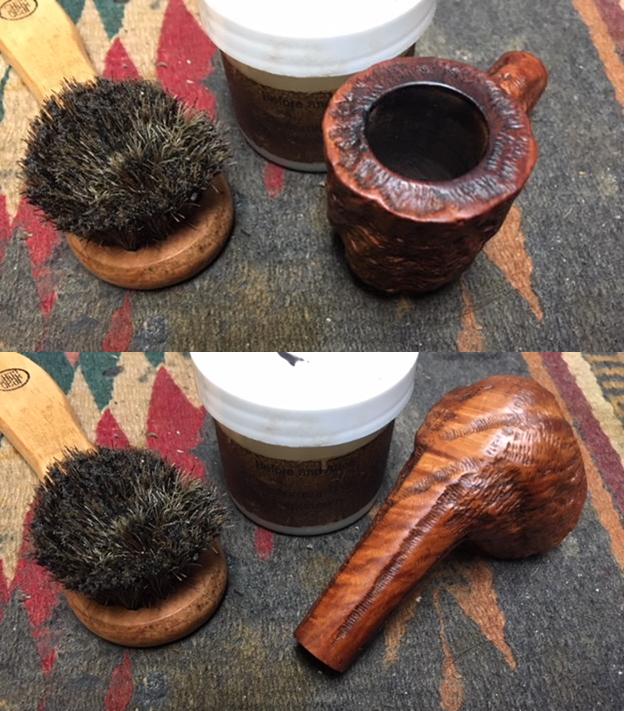
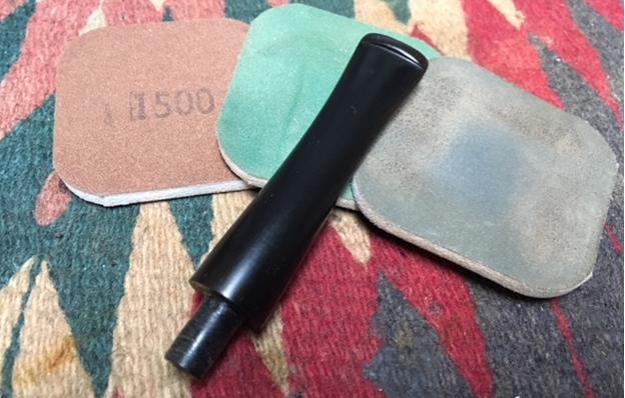
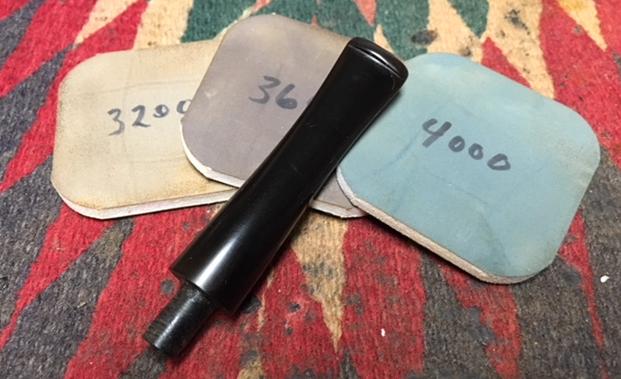
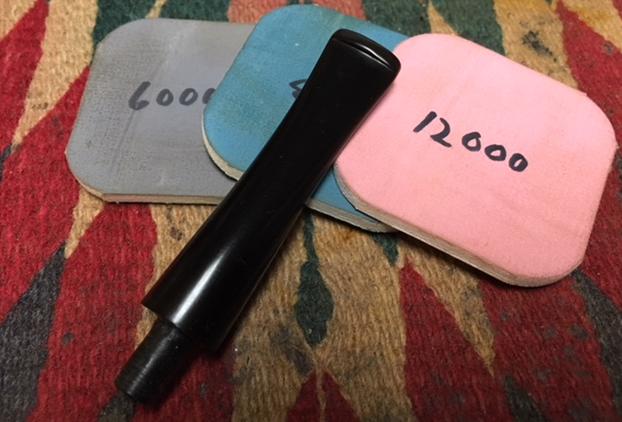
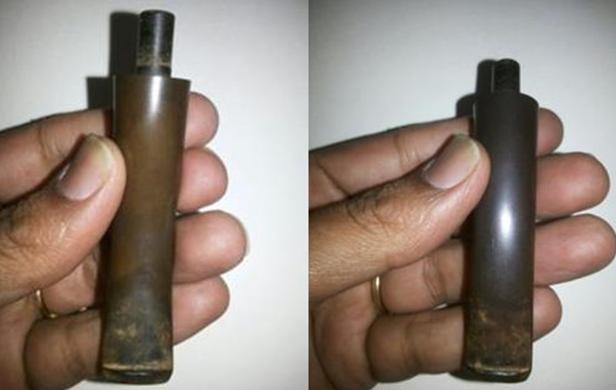
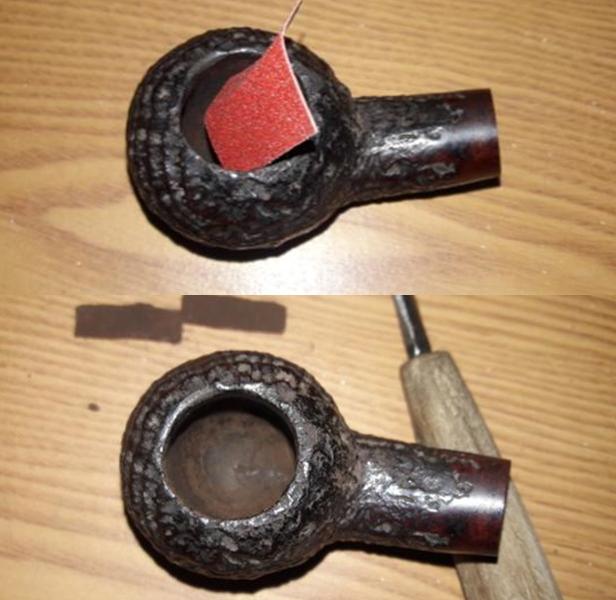
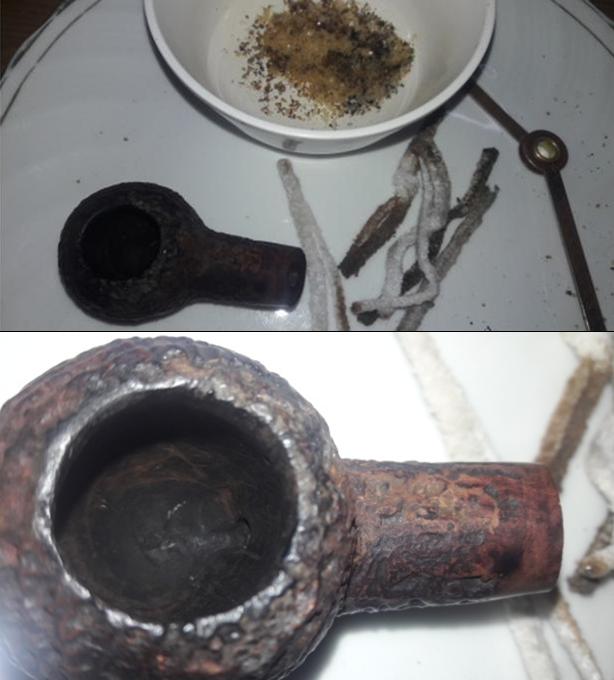
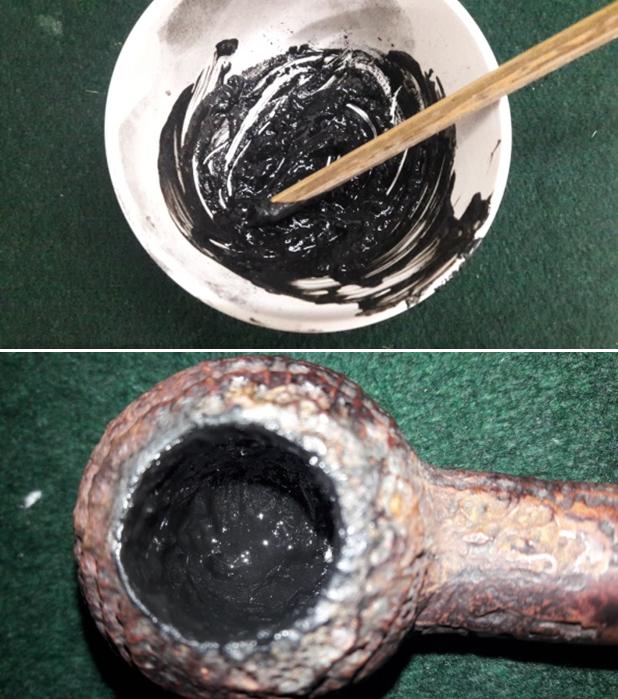
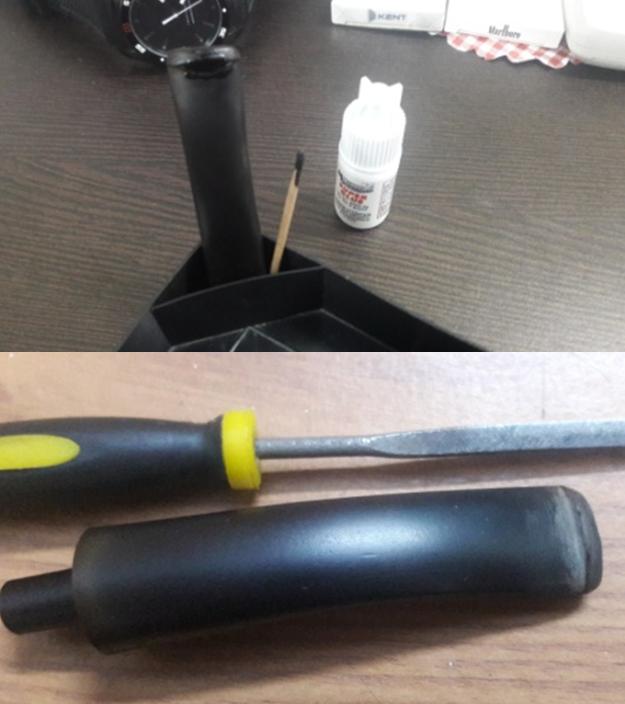
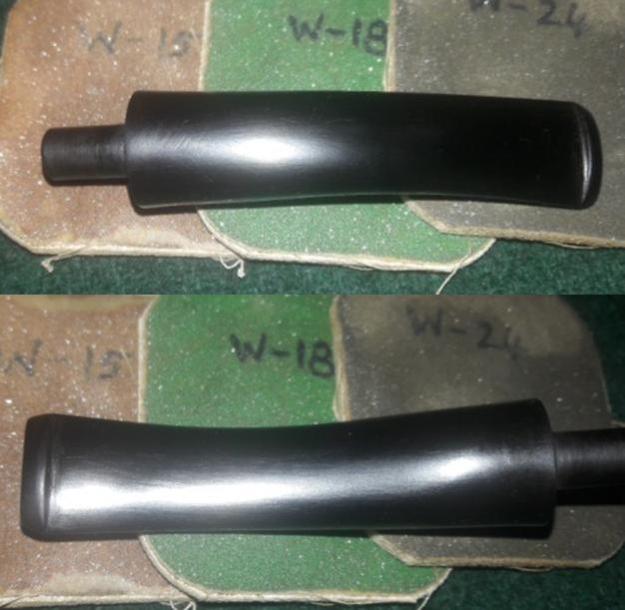
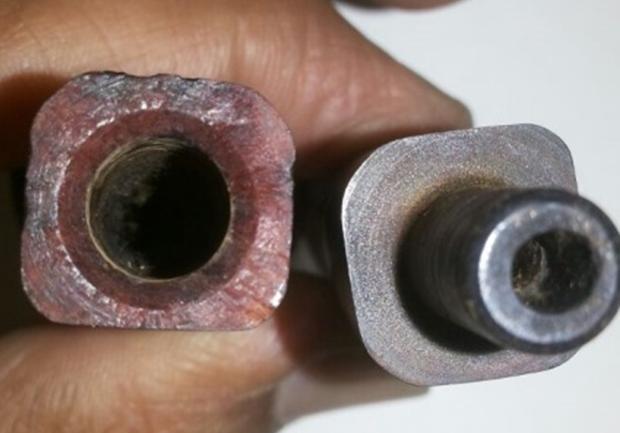
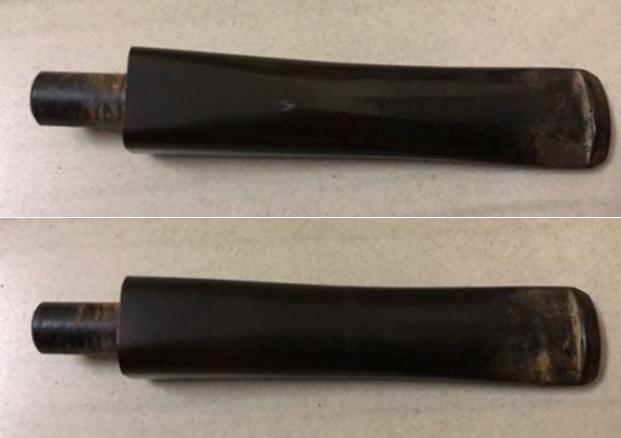
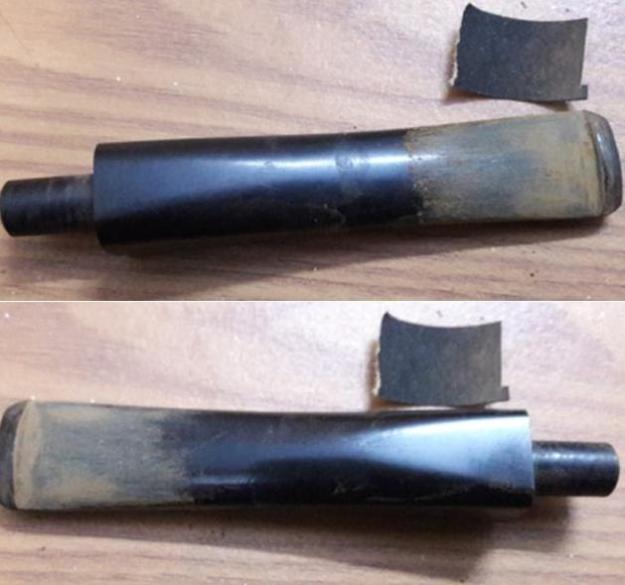
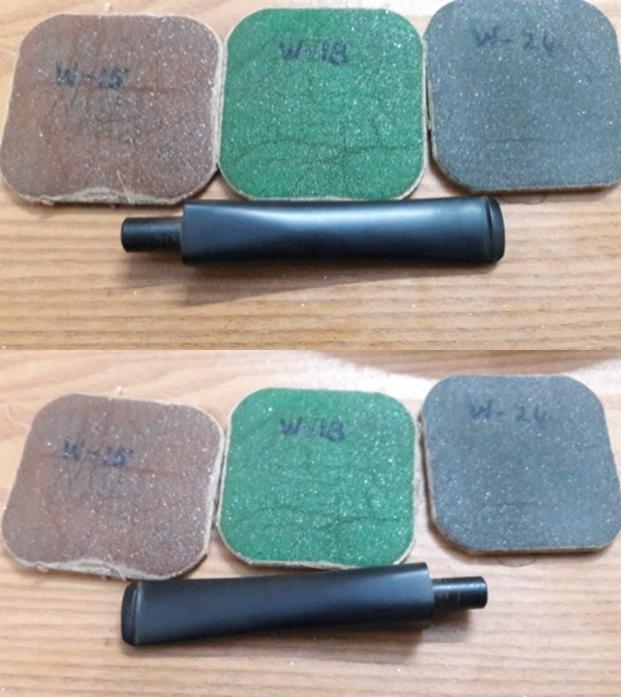
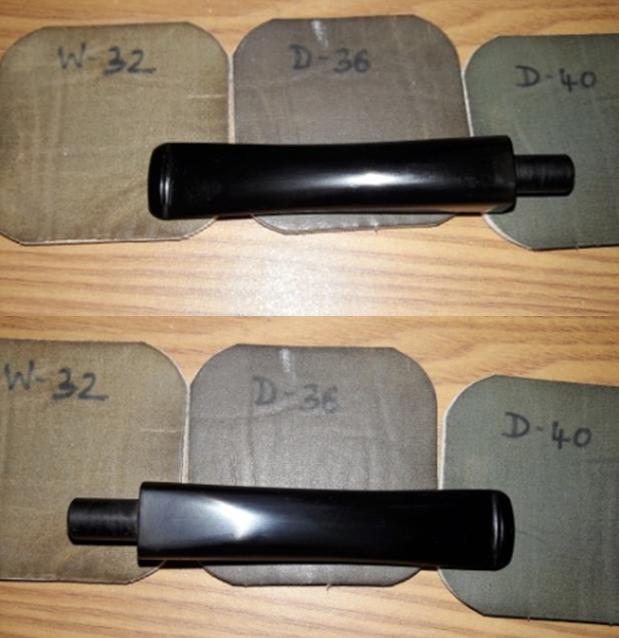
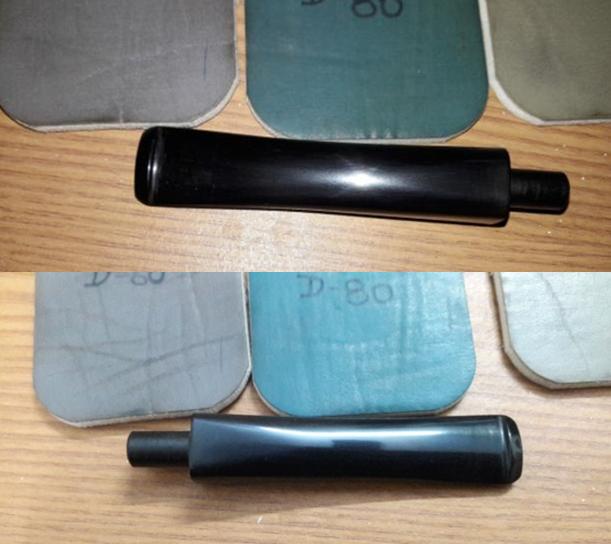
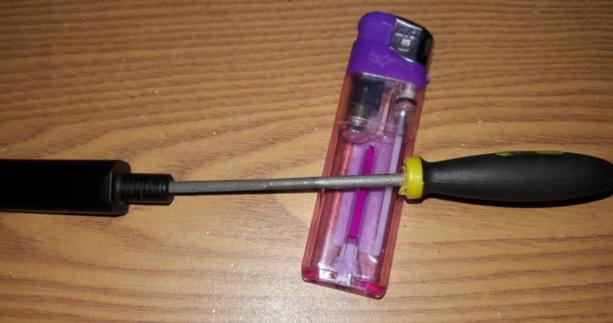
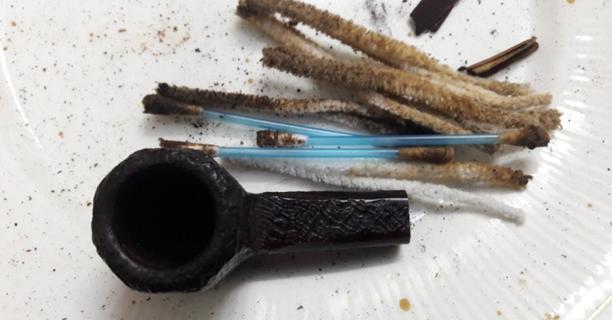
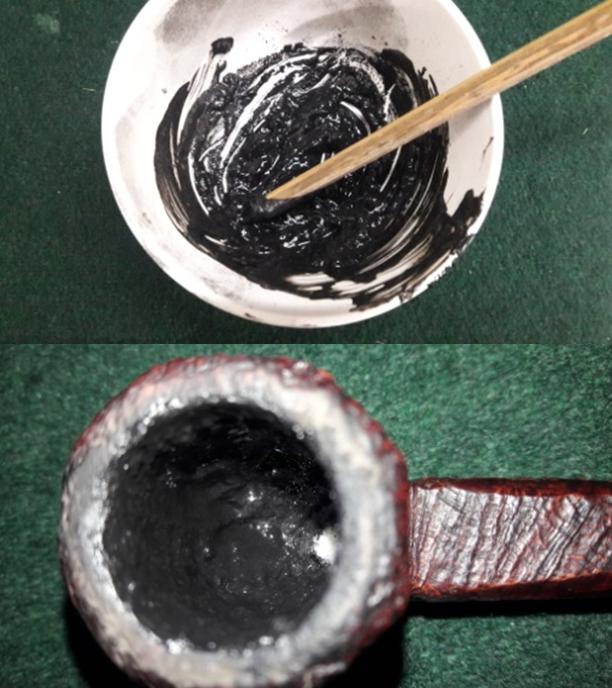
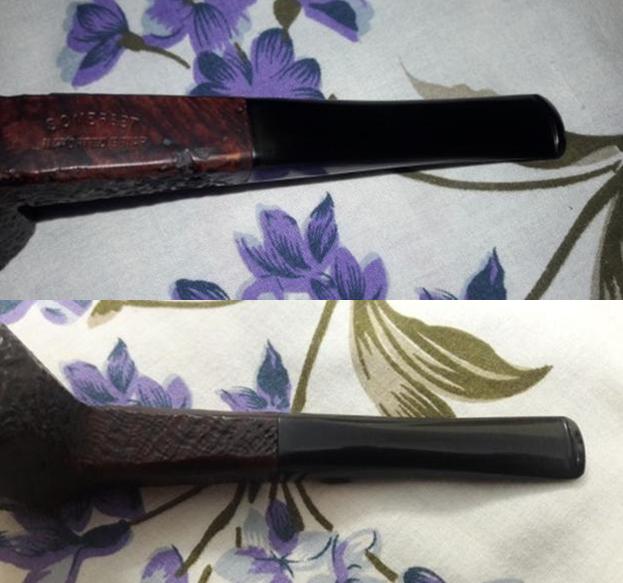
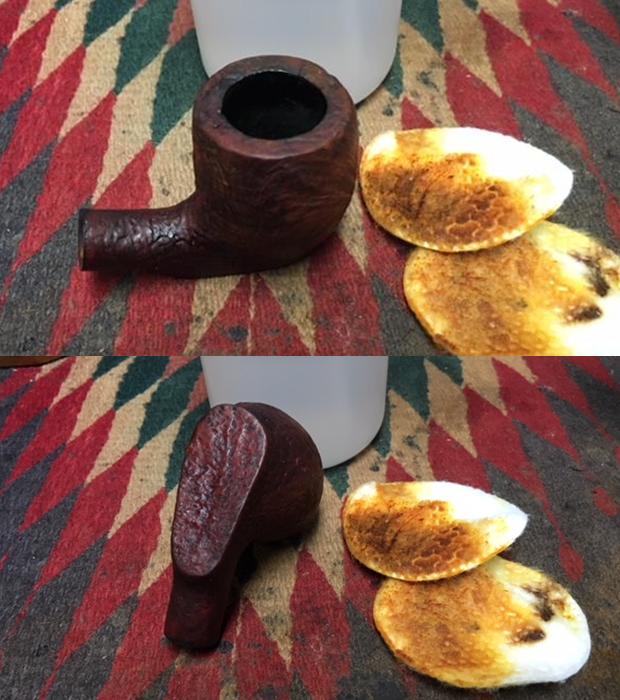
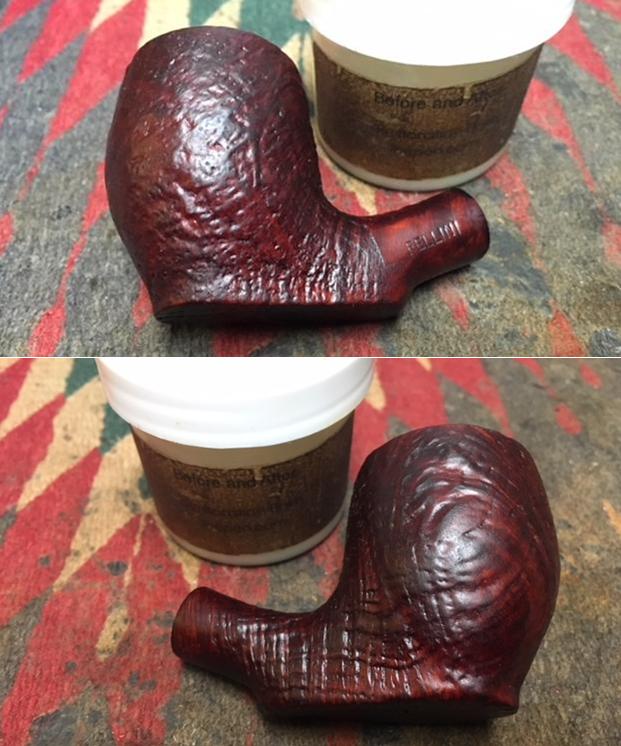
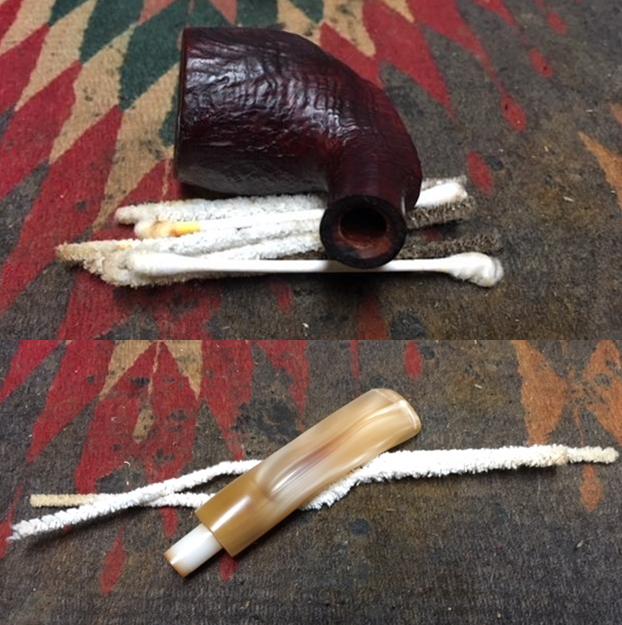
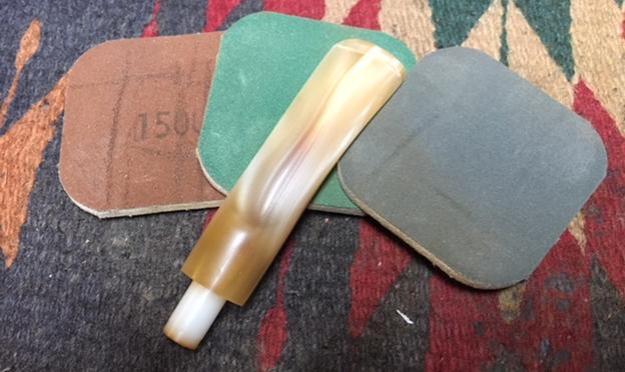
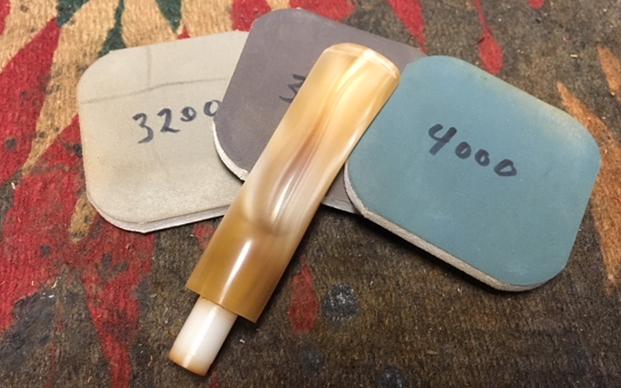
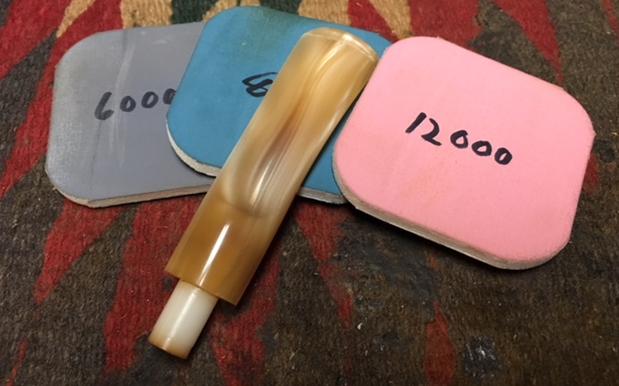
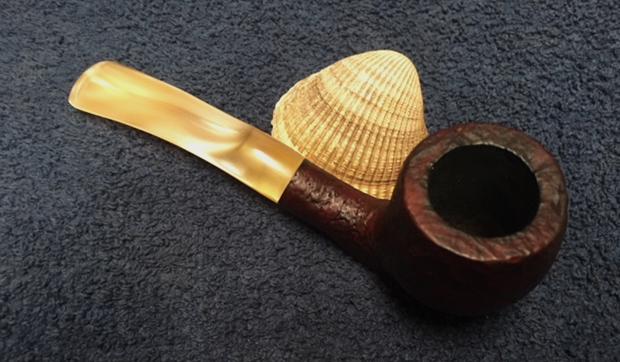
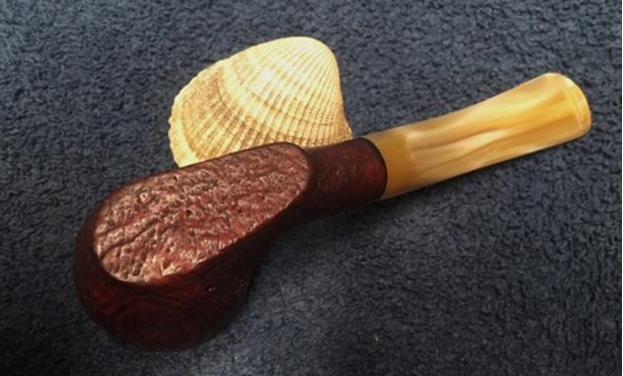
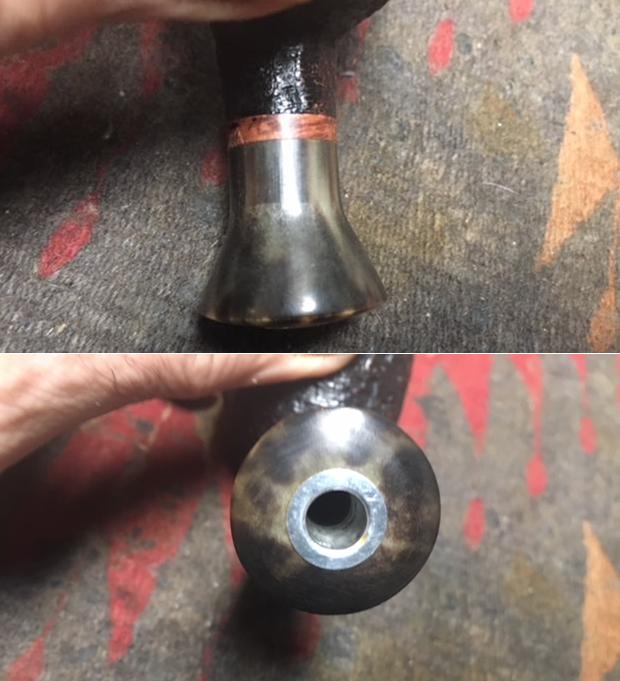
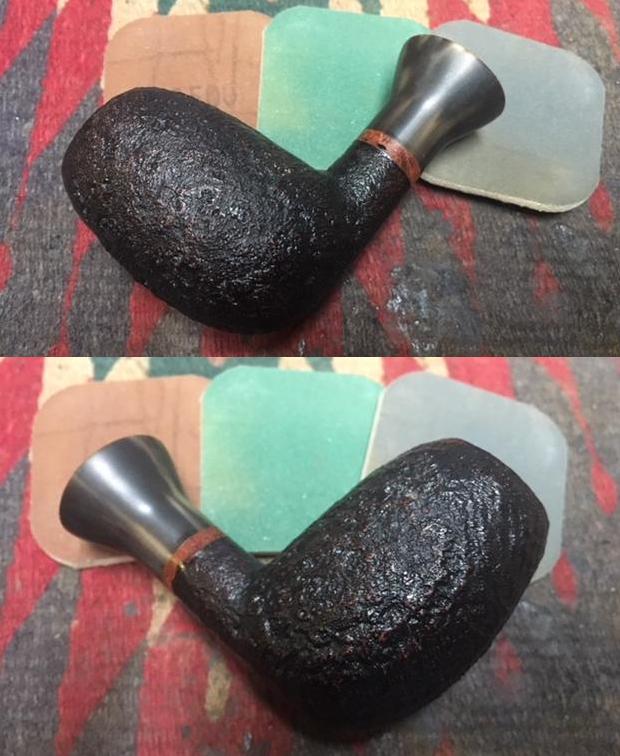
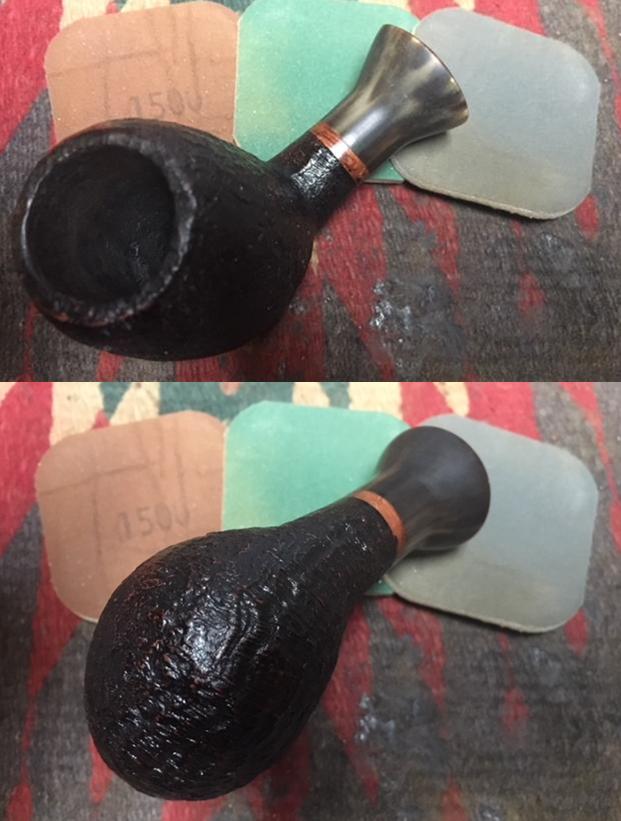
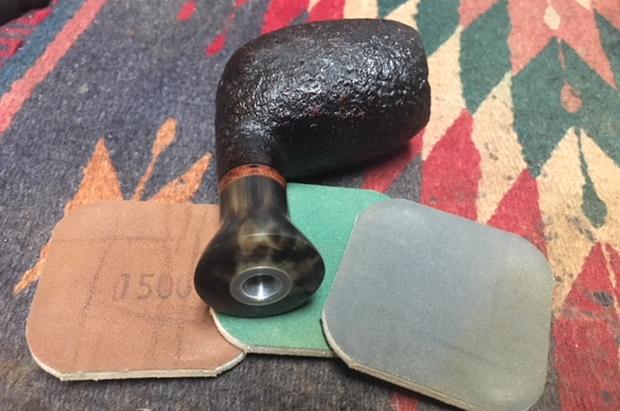
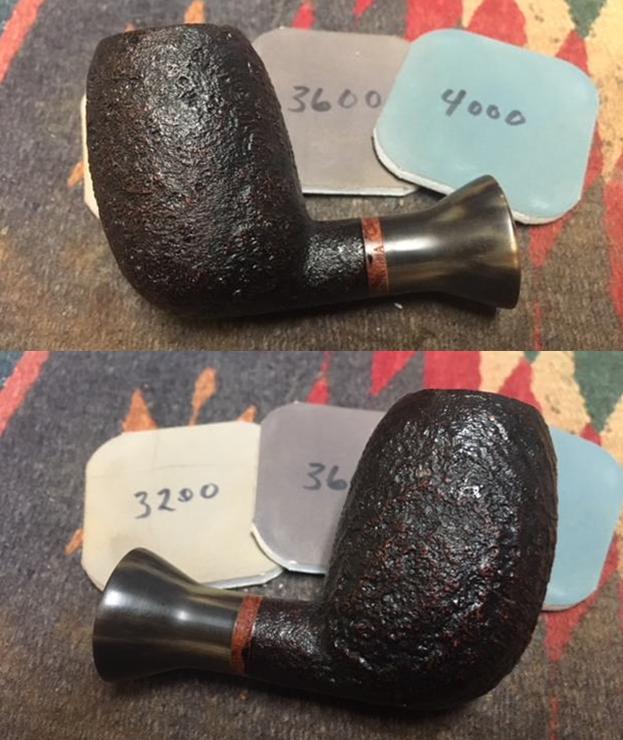
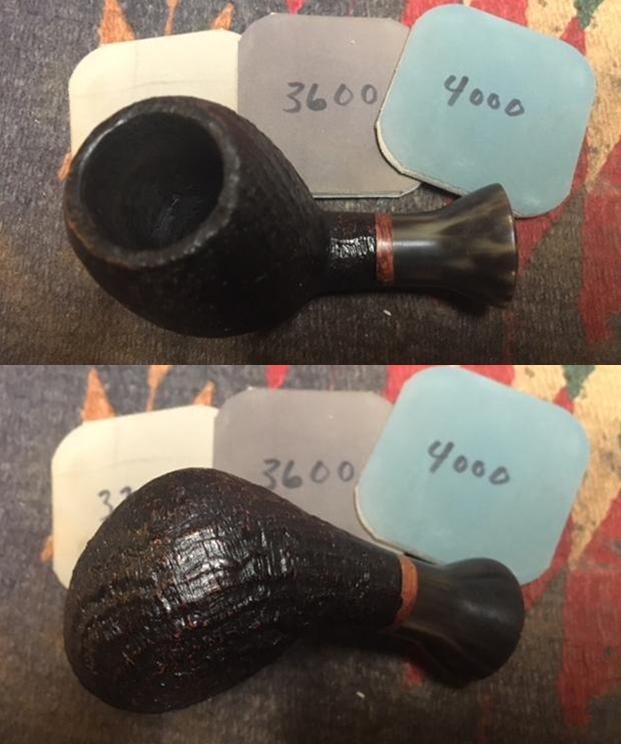
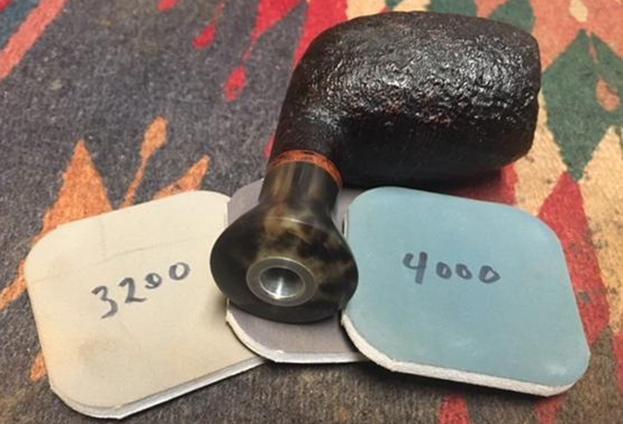
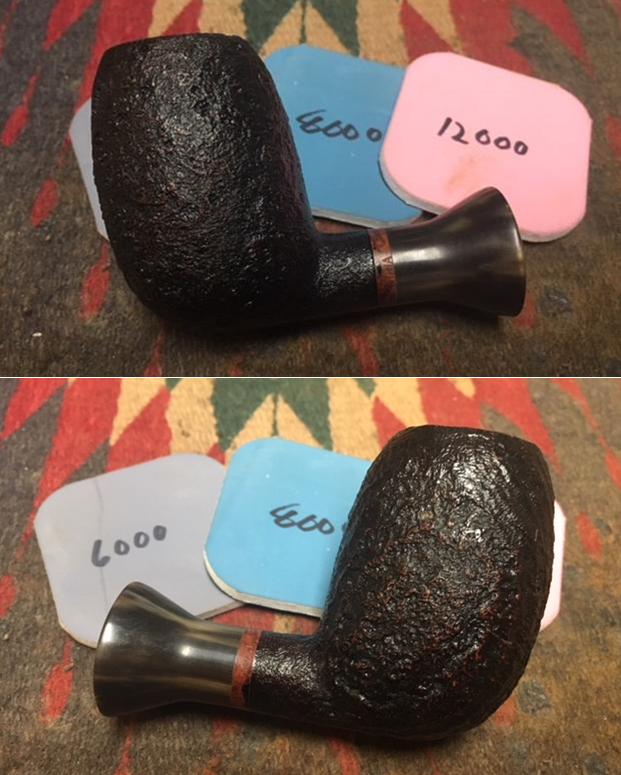
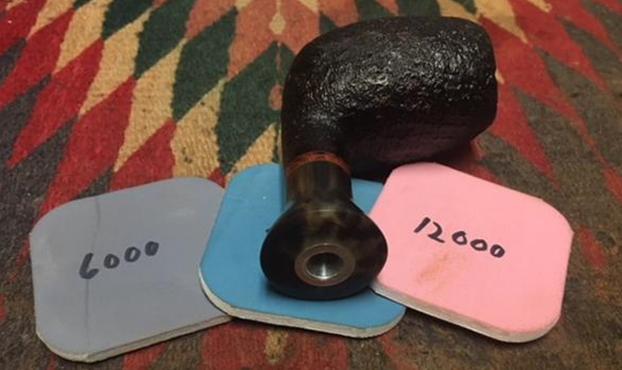
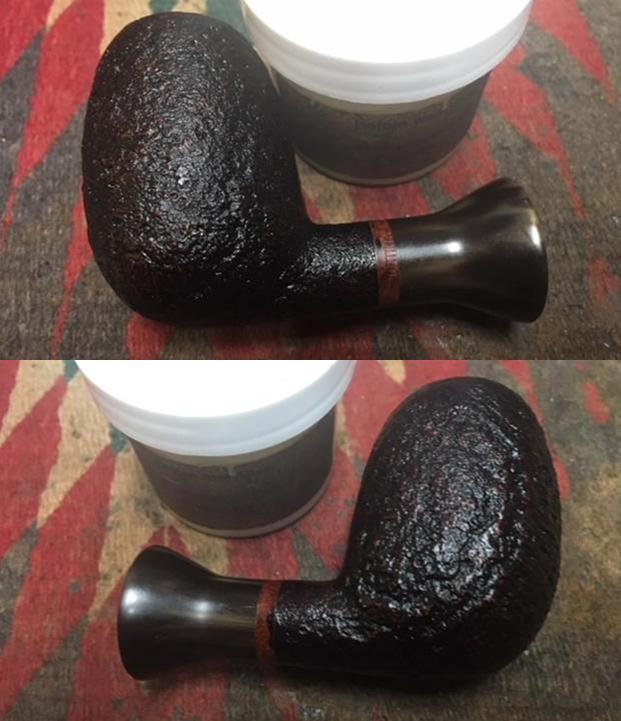
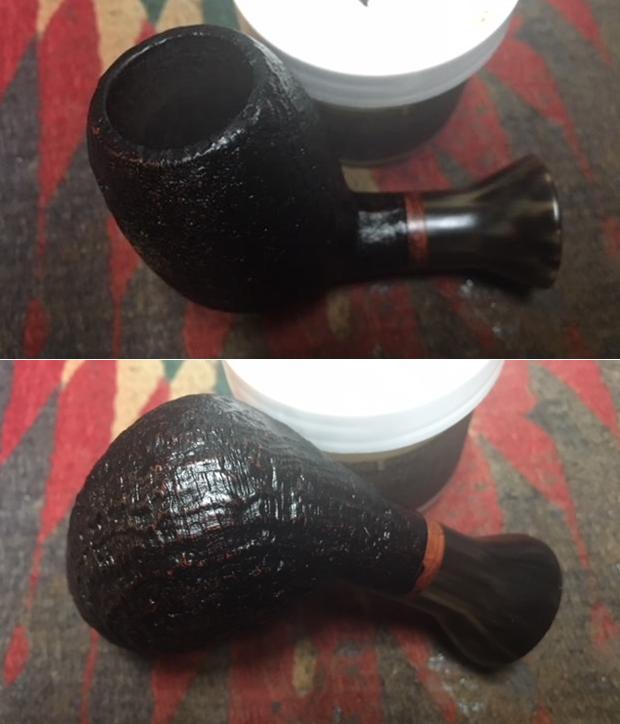
While collecting ash over the last couple of days, I undertook the restoration of the Somerset Rhodesian and soon realized that this one too had cracks in the bowl. Thus I was now tackling this issue on two pipes simultaneously!!!!! More detailed write up on the Rhodesian will be posted separately. Meanwhile I addressed the stem of the Paneled Billiard. Using a Bic lighter, I flamed the surfaces of the stem to raise the tooth chatter and minor bite marks. I was surprised to find that this process had raised all the bite marks and tooth chatter to the surface. All I was left to do was sand the surfaces with sand paper followed by the micromesh pads. I sanded it with 220, 400 and 800 grit sand paper. I wiped the stem with cotton pad dipped in alcohol to remove the resultant dust. I rubbed some extra virgin olive oil in to the stem and set it aside to be absorbed in to stem. I polished the stem with micromesh pads, wet sanding with 1500 to 2400 grit pads and dry sanding with 3200 to 12000. I rub a little extra virgin olive oil in to the stem after every three pads. I finish the polishing of the stem by rubbing a small quantity of Paragon wax and giving it a final polish with a soft cotton cloth. The stem is now nice, smooth and shiny. I cleaned the airway in the stem with pipe cleaners and alcohol. The issue of a loose-fit between tenon and mortise was addressed by heating the tenon with a Bic lighter, constantly rotating the stem, till the tenon was slightly pliable. I gently pushed a rounded needle file in to the tenon to enlarge it and set it aside to cool down. Once cooled down, I wiped it clean with a cotton cloth soaked in cold water. I tried the fit, and the stem sat in the shank snugly, making all the right kind of noises. I was very pleased with the fit.I cleaned the internals of the mortise and the airway with hard bristled and regular pipe cleaners and isopropyl alcohol. I scrubbed the mortise with shank brush dipped in alcohol. The internals of the shank are now clean and the pipe smells fresh and new. There are no traces of ghost smells from the stummel.Having addressed the internals, I turn to address the exteriors. I gently scrapped the charred rim down to the bare solid briar. Though this has resulted in a slight undulation to the rim surface, it is very minor and hence, I left it alone. Another reason to let it be was that if I had a Dremel machine, I would have topped the bowl and then carved out very small rustications to match the sandblasted stummel. But I do not have a Dremel machine!!!! That issue settled, I wash the dirty stummel with Murphy’s oil soap and a tooth brush. I thoroughly scrub the sandblast with the hard bristled toothbrush to remove the oils, tars, dirt and grime lodged in the surface. I rinse it under tap water, dried it with paper towels and set it aside to completely dry out. Having collected sufficient quantity of pipe ash, I decided to address the chamber cracks. I cleaned the interiors of the chamber with a cotton ball dipped in isopropyl alcohol. Once cleaned, I inserted a folded pipe cleaner into the shank and up to the draught hole to prevent it from clogging. I made putty like paste of pipe ash and water. This paste was evenly applied to the entire inner surface of the chamber with a thin bamboo frond with shaved end to form a spatula, a bigger one at that, as compared to a regular one. I set it aside to dry out. The climate here being very wet and humid, it will take a long time to dry out.The coating dried completely after about a week and I just gently scrapped the chamber with very light hands to check the layer. Alas, the complete coating just crumbled out leaving a very dry coat of ash through which all the cracks were easily discernible.So, it’s back to square one and all the efforts and waiting has come to a naught!!!! I shared the above pictures with Mr. Steve with a suggestion of using HONEY as a bonding agent rather than water. When he replied that he had never used honey but, uses YOGURT if water mix fails, I dropped the idea and decided to go ahead with yogurt!!!!Fortunately, I had started collecting pipe ash and mixed it with yogurt. Using the same earlier method, I applied an even coat of pipe ash, yogurt and also added two capsules of activated charcoal. I set it aside to dry out, praying that the mixture bonds well and sticks to the walls of the chamber. A few days later, the mixture had completely cured and it did not crumble. The bonding appeared to be strong and durable. With a 400 grit sand paper, I sanded the inner walls very lightly to a smooth surface. Now the internal walls are looking solid and I can’t wait to load my King of England tobacco and enjoy my fruits of labor. Once the stummel had dried out completely, I rubbed a small quantity of “Before and After Restoration Balm” in to the briar and let it rest for a few minutes. The balm almost immediately works its magic and the briar now has a nice vibrant appearance. I further buff it with a horse hair shoe brush. To finish the pipe, I rubbed a small quantity of HALCYON II wax which is used for rusticated/ sandblasted surfaces and set it aside for a few moments. Thereafter I polish it with a horse hair shoe brush and a soft cotton cloth. Though, the pipe feels small in my hands, the chamber is decent sized. Notwithstanding the size, this is a beautiful looking pipe with some great sandblast patterns. The pipe is very well made and of high quality craftsmanship as evidenced by the perfectly aligned and matching edges of the stem and shank as well as the quality of the vulcanite stem. The finished pipe is shown below.

Ben Wade’s in the House, Part 2


Blog by Joe Gibson

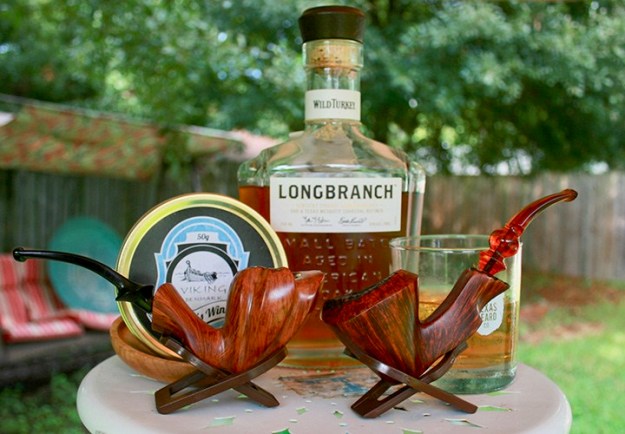
Finished Pipes, ready for an afternoon smoke. The tobacco is last tin of out of production Viking Odin’s Wind.

Which Stem for Which Pipe?

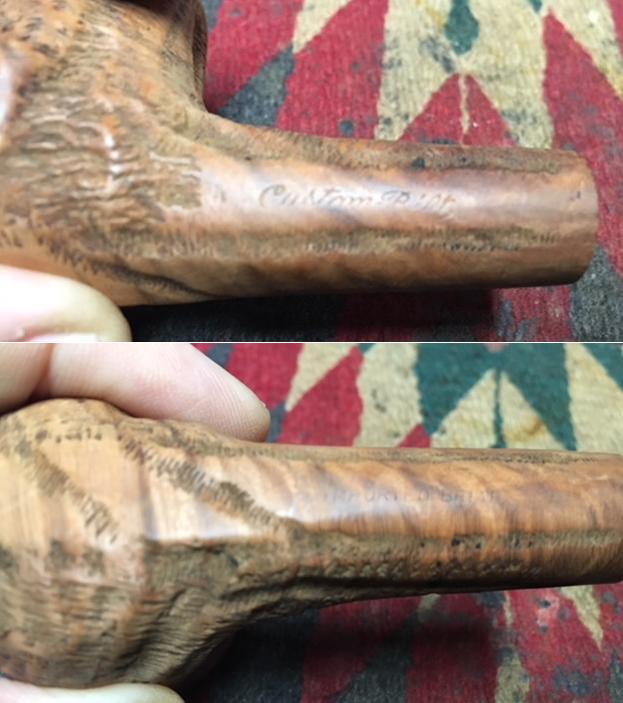
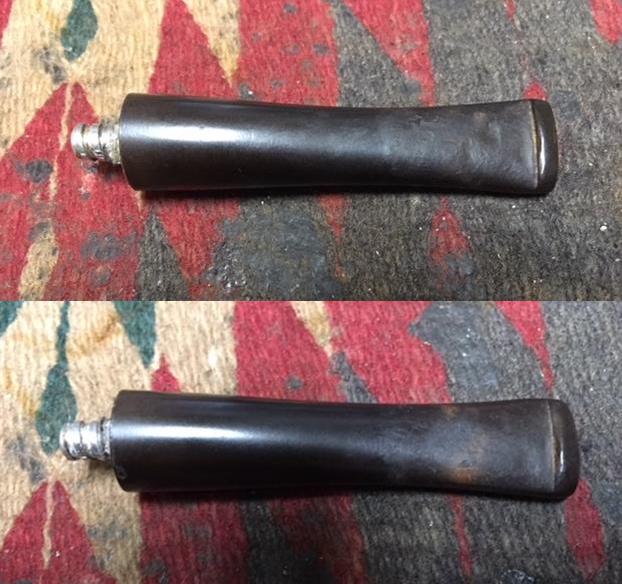
When the Ben Wades arrived, the Martinique came with a beautiful, amber colored but transparent acrylic stem. There was a minor amount of tooth chatter near the bit, but nothing I felt the need to repair. The airway, on the other hand, was black from being smoked. The stem was tight in the mortise and didn’t readily pull out.

The Royal Grain, as I mentioned in the previous post, still had a vulcanite tenon stuck in the mortise. I decided to work on the Martinique stem first and deal with finding a stem for the Royal Grain later.

Cleaning the Perspex Stem

The Perspex stem before cleaning.

The first problem was separating the stem from bowl without breaking anything. Since I planned on soaking the bowl in alcohol, I dipped the pipe and stem in the jar and let it set for a minute or two. The stem then came off the pipe easily and I rinsed it off in clean water.

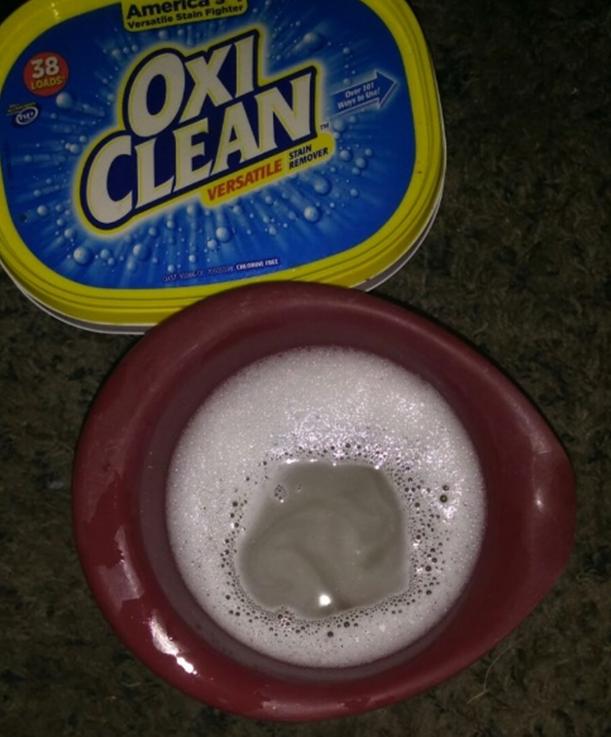
With oxidized vulcanite stems, I do an Oxyclean soak to bring the oxidation to the surface. I’ve never tried an Oxyclean bath on acrylic or Perspex stems. With those, I usually just wipe the outside down with alcohol and do the inside with pipe cleaners dipped in alcohol. The one thing you never want to do is soak the stems in alcohol. It could possibly cause “crazing” or cracks in the airway. Some

people even report stems breaking after soaking in alcohol.

Tip #1: The shank brush tool is great for cleaning tobacco residue from the bit. I find it does the job faster than just pipe cleaners.

I was hoping dipping regular, tapered pipe cleaners in alcohol would remove the discoloration from the airway and sterilize it. And it did, to an extent. After 10 pipe cleaners the airway was a little cleaner, but I could still see the old tobacco stain. I probably would have gone to my bristle pipe cleaners, but I didn’t The solution for this situation? I switched to a shank brush pipe tool. It’s ideal for cleaning the shank and  the tenon and airway of a pipe stem. I dip it in alcohol and run it through the stem until it comes out fairly clean. I follow that with pipe cleaners dipped in water.
The Royal Grain Stem Replacement. Maybe?

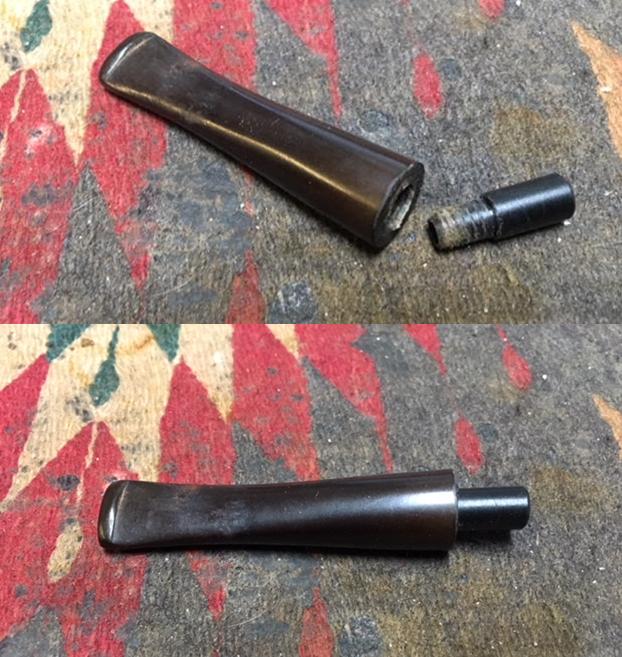
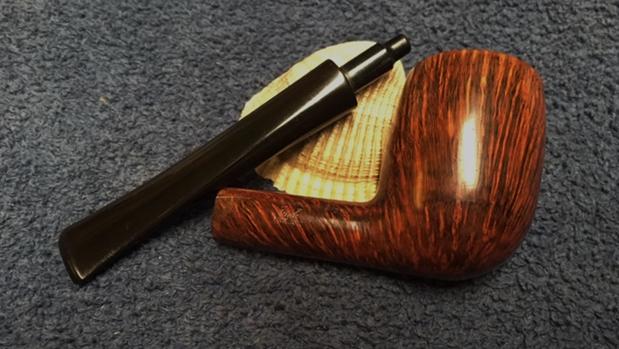
Initially I planned to have a stem made for the Royal Grain. Then I remembered the Preben Holm stem I had sitting in my desk. It’s a mismatched stem from a Søren freehand I bought in early August. I easily removed the broken tenon by inserted a drill bit into the airway by hand and twisting and pulling it out.

Tip #2: When buying pipes in “junktique” shops and malls, check the stems for stamps or logos. It will help you identify the pipes and may also tell you if the stem is the correct one for the pipe. I use mismatch stems as a point in talking the seller into lowering the price.

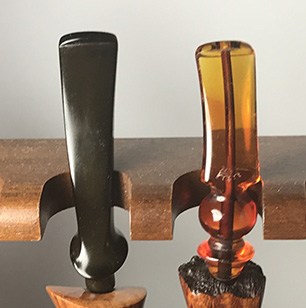
Black Vulcanite Preben Holm stem and a Perspex Ben Wade

Stems are usually made to fit the pipe it’s going with and I have never found one stem to perfectly fit a pipe other than the one it’s made for.

The Preben Holm stem fitted the Royal Grain. Maybe a tighter fit than I like, but it a fit and I can always work on the mortise or tenon to make it better. On top of that, a friend from one of the pipe forums, had a Ben Wade stem he is sending me. One way or the other I have a stem for the Royal Grain. Or, did I?


But Which Stem for Which Pipe?

So, there I was. Sitting with two clean and polished pipe bowls and two stems. I picked up the Perspex stem and inserted it back into the Martinique. And, the bowl almost slipped off the stem. The logo on the Perspex is the Ben Wade logo. This should fit.

I’m guessing that the fit was so tight at the start because both the mortise and the tenon was so dirty. Once the cleaning removed the residue, it became loose.

Just on a lark, I decided to try the Perspex stem on the Royal Grain and it slid into place easily and looked like it was made for it. I also liked the way the amber color matches to the darker finish of the Royal Grain.

I then inserted the vulcanite Preben Holm stem into the Martinique. It is a snug fit but not a tight fit. May not be the original stem, but it is close enough.

Part 1: Ben Wades in the House

© J. Gibson Creative Services. September 5, 2018

Ben Wade’s in the House, Part 1


Blog by Joe Gibson

Not Ben Wade the U.S. politician or Ben Wade the baseball player and scout, but Ben Wade pipes. Specifically, a Ben Wade Martinique and a Ben Wade Royal Grain produced by Preben Holm in Denmark.

I first saw the Martinique and the bowl for the Royal Grain at Penny’s Little Flea Market just outside of Marion, MS two weeks ago. They were tempting targets, but I passed on them for a Preben Holm Delight. I kept thinking about the Ben Wades. Finally, the wife told me to call and see if I could buy them. They arrived two days later.
Pre-cleaning Preparation

Honestly, my first thought was, “What did I get into here?” The bowls were covered in dirt and grime.

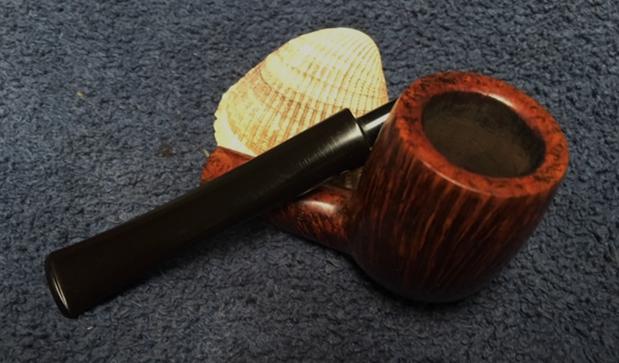
Before Cleaning. (left) Royal Grain, (right) Martinique

The bowls had scratches and I couldn’t tell how deep they were. The good news? No heavy cake and funky, sour smells. Still, I decided that best course was a 24-hour soak in isopropyl alcohol.

The Perspex stem on the Martinique had very minor tooth chatter near the bit and was dirty. It was also stuck and took a few minutes to loosen enough to pull out. Since I planned on doing an alcohol bath, I dipped the pipe and stem in the alcohol for a few minutes and allowed me to separate the two.

The Royal Grain had its own issue which I didn’t remember seeing. The mortise still had the broken tenon of a vulcanite stem still stuck in it. I resolved this issue by twisting a drill bit into the airway BY HAND. The bit dug just enough into the vulcanite that I was able to pull the tenon out. My guess is the pipe was dropped and the stem broke off because the tenon really came out easy. Finding a new stem would be a later problem.
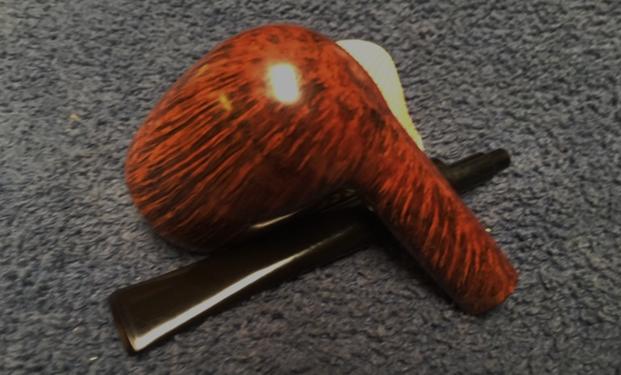
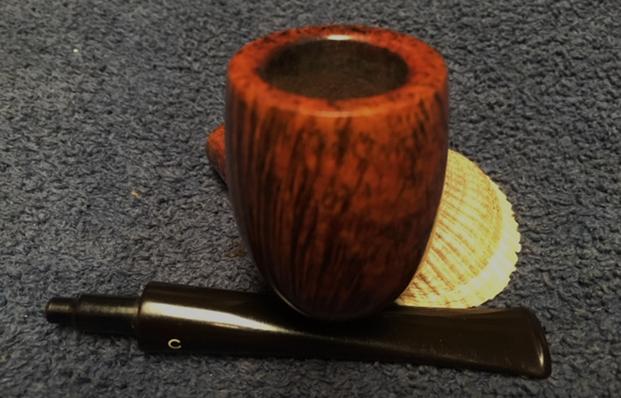
Both pipes have some of the plateau around the rim. The Royal Grain looked like more worn down of the two, almost like the previous owner hammered the rim on his ashtray.

As I decided earlier, I dropped both pipes into containers of isopropyl alcohol and left them alone for 24 hours.

Bowl and Airway Cleaning

After the soak, I cleaned the airway and draught hole first.  My reasoning behind working on the airway, draught hole and bowl first is simple. The cake and any residue is still saturated and soft. I think this makes any reaming I have to do easier.

Using bristle pipe cleaner dipped in the same alcohol, made relatively quick work of removing cake and residue from the airway. It also opened up the draught hole. Ten pipe cleaners later and I was satisfied with the cleanliness of the airway.
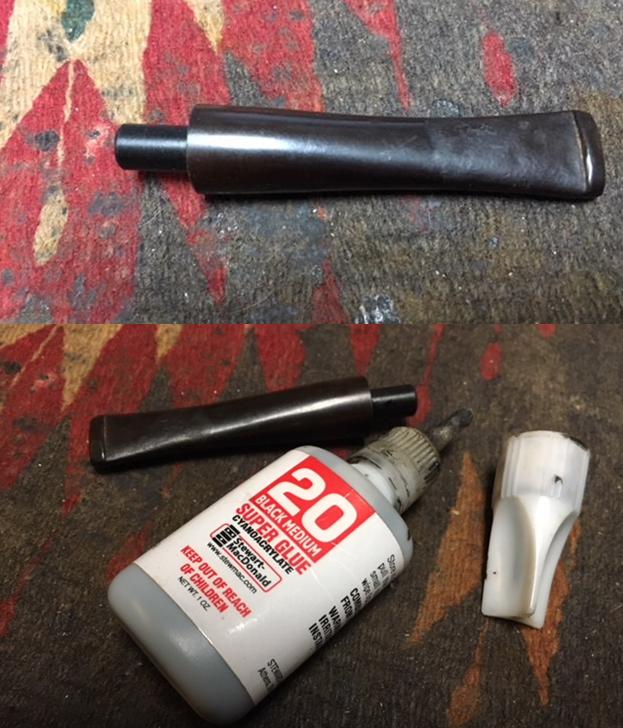
Tip #1:  I use bristle pipe cleaners for deep cleaning. Be careful on Perspex or acrylic stems as the bristles can cause some scratching in the stem airway.
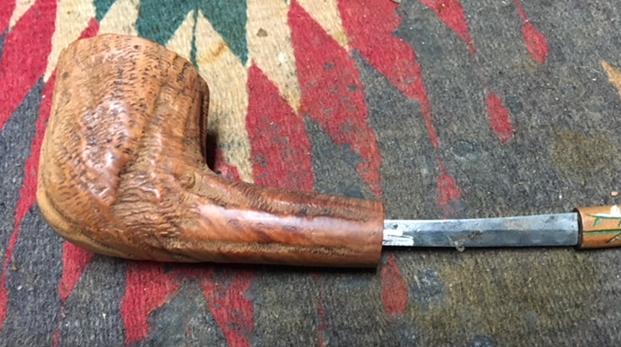
After sanding with 300 and 600 Grit SandpaperFor the bowl I started with my homemade pipe knife. The biggest mistake some beginning home restorers/pipe smokers make is using a pocket knife to ream the bowl. You risk damaging the briar by using a sharp knife.  In my case, I made a pipe knife from a small folding pocket knife with about a 2-inch blade. Using my bench grinder, I rounded off the point and ground down the edge until it was almost as flat as the spine. It won’t cut paper or butter.

I should point out that I don’t ream down to bare wood but ream until the cake is thin and even all the way around. I generally finish the bowl work with 320 grit sandpaper wrapped around my index finger. This smooths out the cake even more and removes even more of the cake without damage to the briar.

Pipe Surface and Finish

One of the reasons I decided on the alcohol bath was what looked like white paint specks on the Martinique. I was hoping the alcohol would dissolve the white specks. It didn’t.  After the pipes had air dried for a couple of hours, I started working over them with 320-grit dry sandpaper.
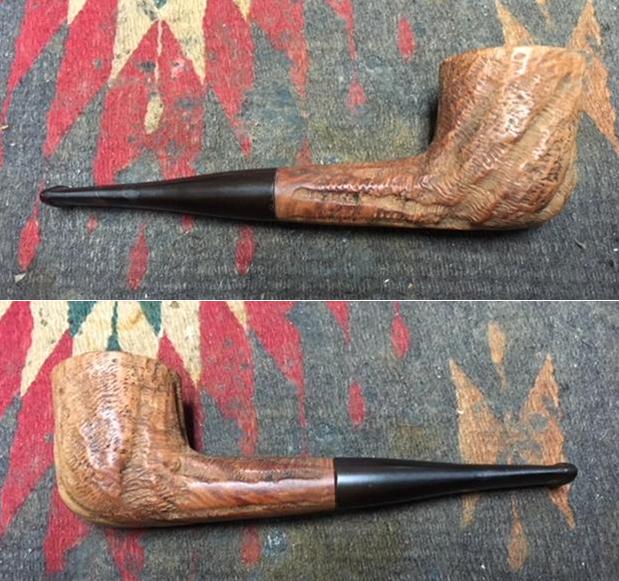
Tip #2: Protect the stamping on the briar with painter’s masking tape before starting the sanding process.
The Martinique (top) and the Royal Grain (bottom). The Royal Grain is coated with Butcher Block Conditioner

It took a little longer on the Martinique because of the white specks and the curved areas. After wiping off the sanding residue with an alcohol wipe, a second sanding of the Martinique removed all the specks and the surface scratches.  The Royal Grain, being a more smooth, flatter surface was easier to sand.

After the initial dry sanding, I started wet sanding with 600-grit sandpaper. Let me point out something here. I make the decision to wet or dry sand a pipe based on how I see the pipe at the time. Sometimes my first step is wet sanding, sometimes I don’t wet sand until I get into the finer grits of finishing sandpaper or micro-mesh pad. The theory behind the wet sanding is that it provides a smoother, glossier finish to the wood. Whether others will agree with me or not, it works for me.

By the time I worked my way up to the 12,000 grit micro-mesh pad, I had a semi-glossy appearance and both pipes felt as smooth as glass. Normally, this is where I apply caranuba wax and buff. I went one step further and applied Howard Butcher Block Conditioner to the Royal Grain. The condition contains a food grade mineral oil, beeswax and caranuba wax. Instructions were to apply with a soft cloth and let dry for 15 minutes before wiping off the excess. I used a cotton ball for the application and let it set for probably 20 minutes. I really like the color and the way the grain popped out. I resisted the temptation to do the same to the Martinique.

Next: Which Stem for Which Pipe?

© J. Gibson Creative Services. September 5, 2018


Restoring a Beautiful Sandblast Fellini of Italy Sitter


Blog by Steve Laug

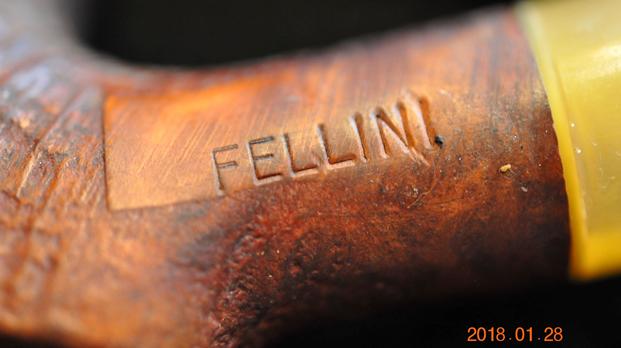
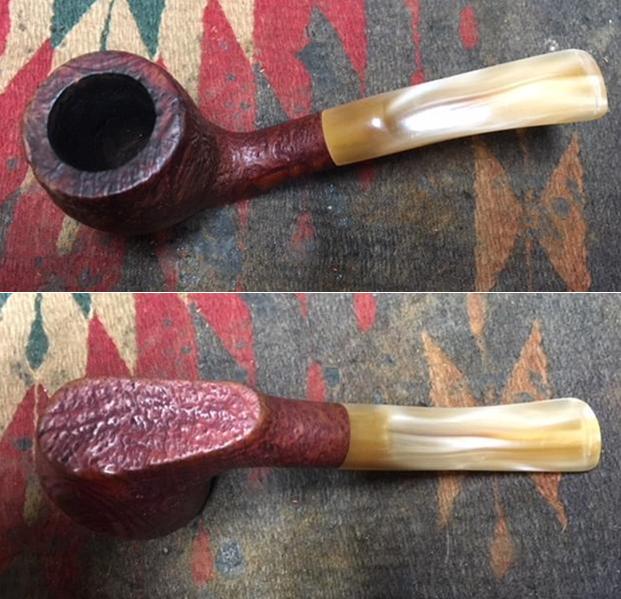
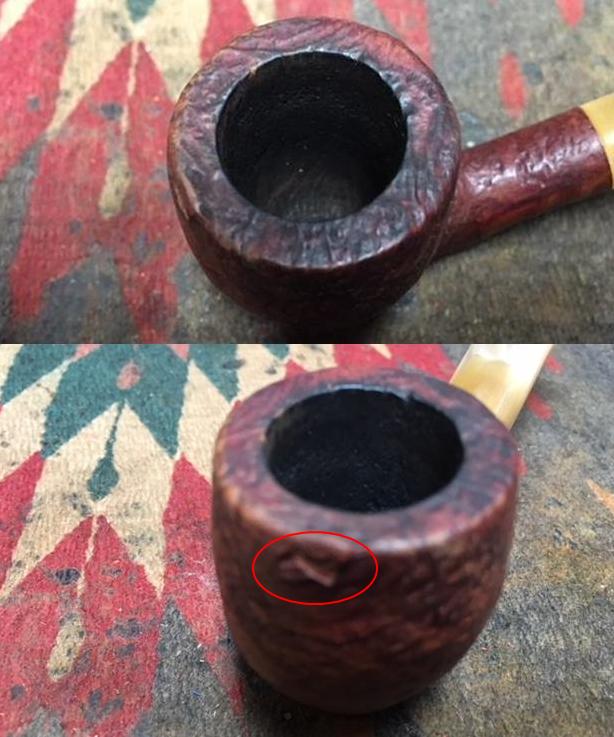
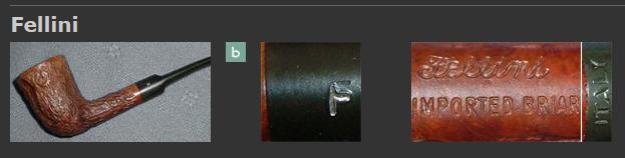
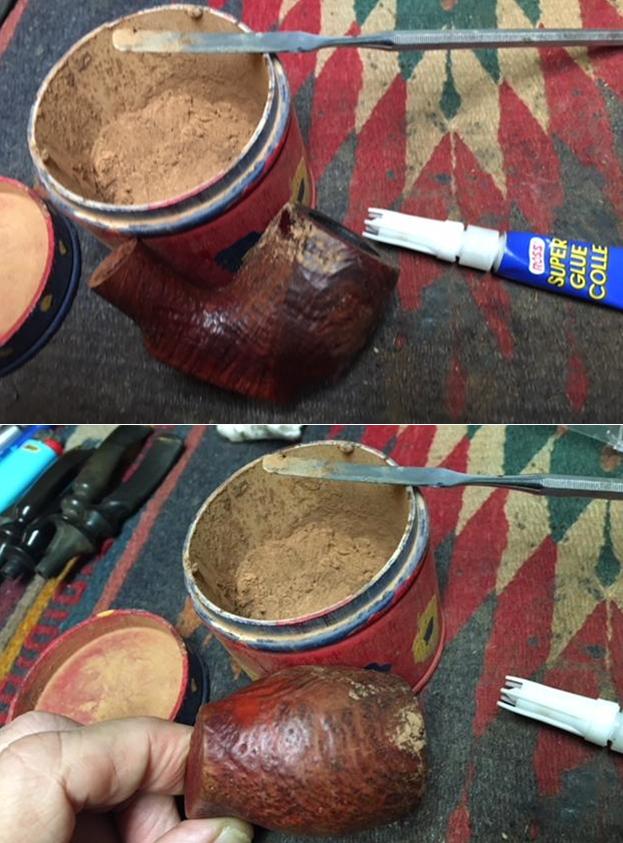
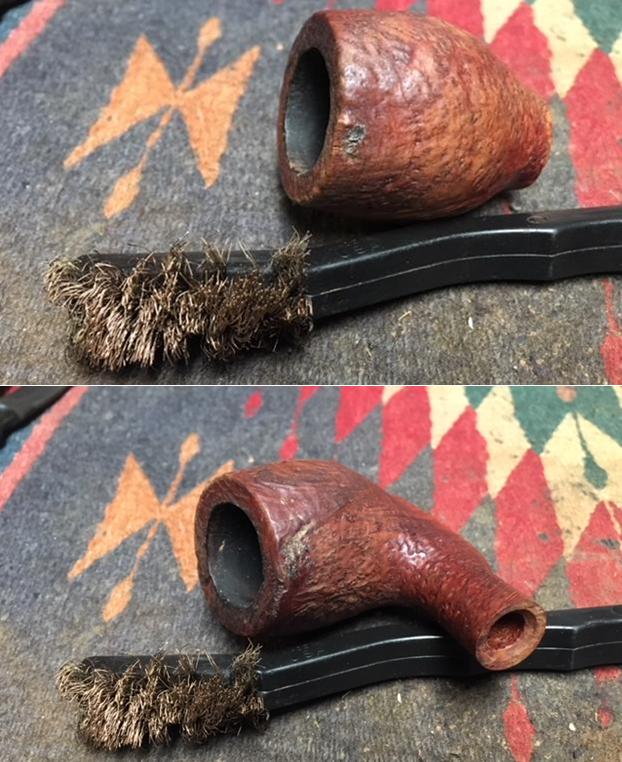
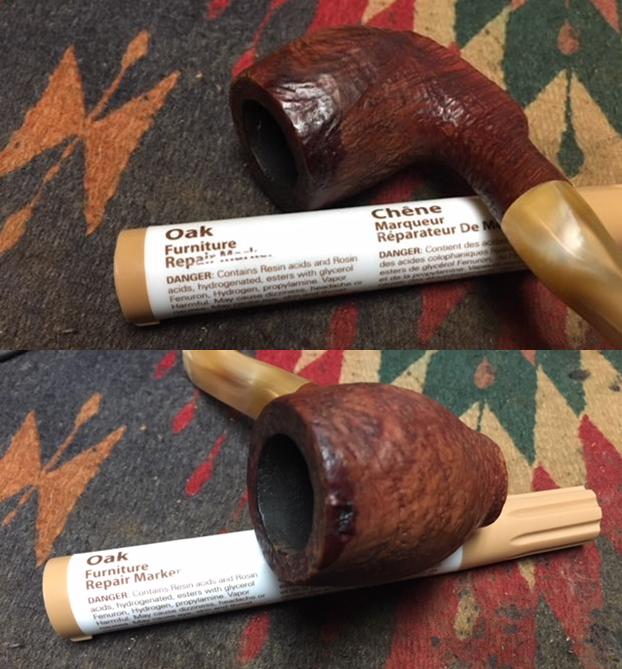
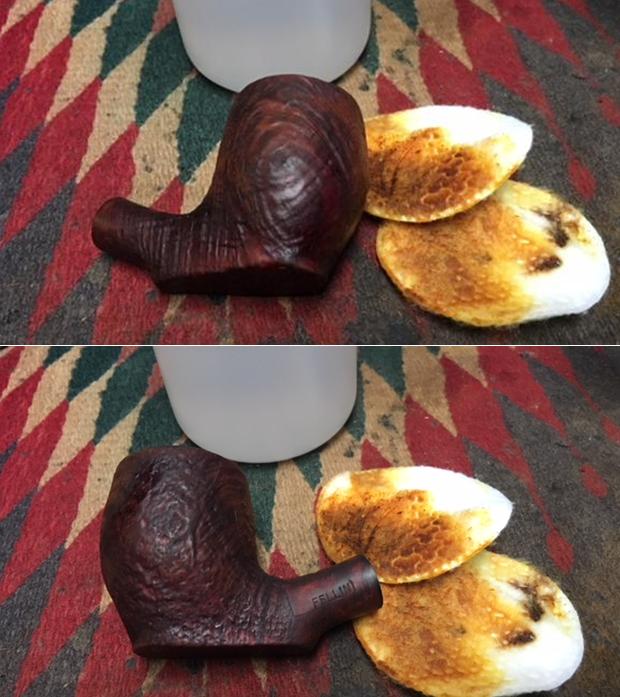
The next pipe on the table was one that my brother Jeff picked up from a seller in Texas. We have picked up quite a few pipes from him. It was in a box with the freehand pipes that I have been working my way through. Even though it is not properly a freehand I had put it in the box – go figure. It is more of a Billiard shape with a flat bottom making it a sitter. It has a slight bend in the shank and stem and the pipe is balanced to stand on its own. It has a sandblast finish to the bowl that reveals some swirling grain patterns. It is stamped on the left side of the shank in a smooth panel with the word FELLINI. It is also stamped at the stem shank junction ITALY. The pipe was very dirty when it arrived from the seller. There was dirt and grime in sandblast finish on the bowl. There was a thick cake in the bowl and an overflow of lava on the rim top. The inner and out edges of the bowl appeared to be undamaged under the grime. There were a few sand pits/fill areas that needed attention and the finish was spotty – dark and medium brown randomly around the bowl and shank. The stem was a striated tan and cream acrylic and has some tooth chatter on both sides near the button. The tenon had come loose from the stem and was stuck in the shank. Because of that the fit of the stem to the shank was off.  Jeff took photos of the pipe before he started his cleanup up work. Jeff took photos of the rim top and bowl. You can see the thick coat of lava and grime on the rim and the thick cake in the bowl. This was a dirty pipe. There is even the fuzz of dust all around the bowl from sitting unused for a long time.The next photos show the finish on the bowl from various angles. Though it is dirty it is an interesting looking sandblast. He took a close up photo of the stamping on the left side of the shank. You can see that it is sharp and readable. You can see the gap between the stem and shank end in the photo.The stem was actually in great condition. The tooth chatter was light and there were no deep tooth marks in the surface of the acrylic.Jeff had scrubbed the exterior of the bowl with Murphy’s Oil soap and removed the dust and grime that had accumulated there. The finish looked very good once it had been scrubbed. He lightly reamed the bowl with a PipNet reamer and cleaned it up with a Savinelli Fitsall Pipe Knife. He cleaned the interior of the mortise and the airway in the shank and the stem with alcohol, cotton swabs and pipe cleaners. The pipe came to me clean and ready to do the restoration. I took some photos of the pipe to show the condition at this point in the process. I took some photos of the rim top and sides of the bowl where there were sandpits or fills that needed attention. I have circled the damaged areas in red in the second and third photo below. Both of them will need to be repaired and restained. There is some darkening to the surface of the rim and some spottiness to the finish that a restain will take care of. I also took close up photos of the stem to show its condition. It was in good condition other than the loose tenon in the stem. I took the stem off the shank and you can see the tenon stuck in the shank. It has obviously been this way for a while as there is staining from tobacco on the end that sits in the stem. I used a pair of pliers to wiggle the tenon free from the shank so I could reglue it in the stem later.Once again I turned to the internet to see if I could find out any information on the brand. There was a lot of information on the Italian Film Director Frederico Fellini but very little other than pipes for sale on eBay that bore the name. Pipedia did not even mention the brand so that was unhelpful. I turned to the Pipephil site and found a listing for the brand. I have included a screen capture from that site (http://www.pipephil.eu/logos/en/logo-f1.html). You can see from the screen capture that even that information was very slim. Ah well, it will remain a mystery that hopefully one of you reading this can unravel for us.I started my restoration of the pipe armed with the little bit of information that I could find on the brand. I decided to reglue the tenon in the stem.  I used a needle file to roughen the surface of the Delrin/nylon tenon. I wanted to make it rough enough for the glue to have something to bite on when I glued. I coated the roughened end of the tenon with clear superglue gel and pressed it into the drilled hole in the stem. I wiped away the excess glue on the face of the stem. With that done I set the stem aside to let the glue cure.I turned to repairing the damaged fills or sandpits on the bowl sides (front and rear). I put a drop of clear super glue in the pit and filled it in with briar dust using a dental spatula. When the repair had dried (fairly quickly as it is warm here) I used a brass bristle wire brush to remove the excess repair. I find that the brush follows the pattern of the sandblast. I touched up the repaired fills with an Oak stain pen. I used it to stain the area around the new fill and deep in the crevices of the fill. I intended staining the pipe again in full but this would allow me to at least do a bit of the cosmetic work before the full stain. (Before I did that I put the stem on the shank to check the fit – it was flawless!)You might notice in the above photos that the briar has a definite red tint to it and the light oak stain had turned a red/brown colour. I decided to go with that and highlight the colour of the briar. I have a bottle of Fiebing’s Tan Stain that really is a light Cordovan colour so I used that to stain the briar. I heated the briar and applied the stain with a dauber. I flamed it with a lighter to set it in the wood and repeated the process.I wiped the bowl down with isopropyl alcohol on cotton pads to make the stain more transparent. I took photos of the bowl to show it. I rubbed the bowl down with Before & After Restoration Balm to deep clean the briar bowl and the rim top as well as the briar shank. The product works to clean, enliven and protect the briar. I hand rubbed it with my fingers, working it into the exterior of the pipe. I worked it into the blast with a horsehair shoe brush. After it had been sitting for a little while I buffed it with a soft cloth to polish it. The pipe really began to have a rich shine. I took some photos of the bowl at this point to mark the progress in the restoration. It dawned on me that Jeff may not have been able to get the shank cleaned with the tenon stuck in the mortise so I went back and quickly cleaned the mortise and the airway in the shank and stem with pipe cleaners, cotton swabs and alcohol. I was right he had not been able to get to the debris behind the stuck tenon.I polished the stem with micromesh sanding pads – wet sanding with 1500-2400 grit pads and dry sanding with 3200-12000 grit pads. I wiped the stem down after each pad with a damp cloth to remove the sanding dust on the acrylic. When I finished polishing and wiping it down I set it aside to dry. I polished stem and bowl with Blue Diamond to polish out the remaining small scratches. I gave the bowl multiple coats of Conservator’s Wax and the stem multiple coats of carnauba wax and buffed the pipe with a clean buffing pad to raise the shine. I hand buffed it with a microfiber cloth to deepen the shine. The pipe polished up pretty nicely. The contrasting brown stain on the sandblast and the polished, variegated swirls and striations of the acrylic stem worked together to give the pipe a unique look. The finished pipe is shown in the photos below. This is one of those interesting Italian Made pipes about which little information can be found. The shape, finish and flow of the pipe and stem are very well done. The dimensions are Length: 5 1/2 inches, Height: 2 inches, Outside diameter of the bowl: 1 3/8 inches, Chamber diameter: 3/4 inches. This one will be added to the rebornpipes store soon. If you are interested in adding it to your collection send me an email to slaug@uniserve.com or send me a message on Facebook. Thanks for walking through the restoration with me as I worked over this nice little Italian Made sitter.

Crafting a New Stem for a Cortina Factory Denmark 22 Freehand Stack


Blog by Steve Laug

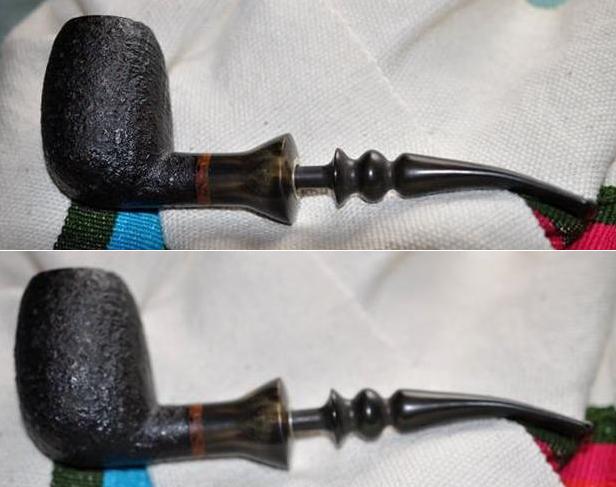
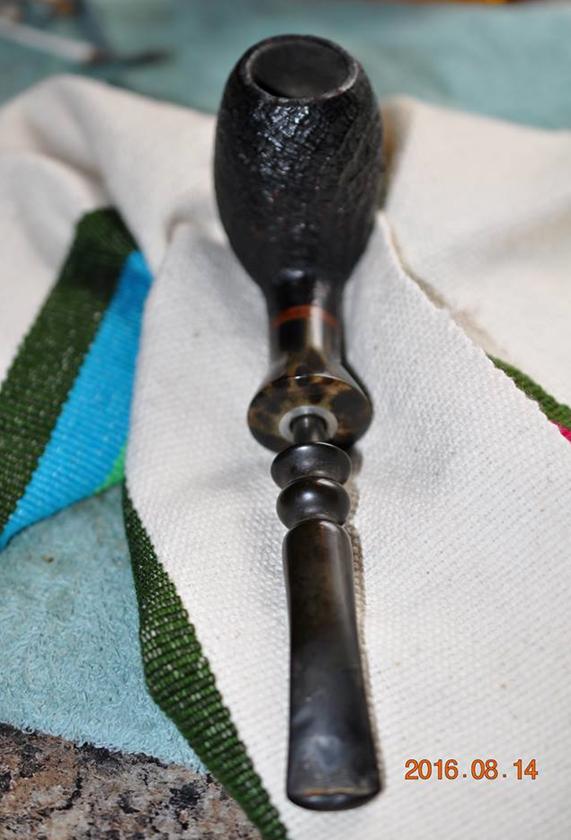
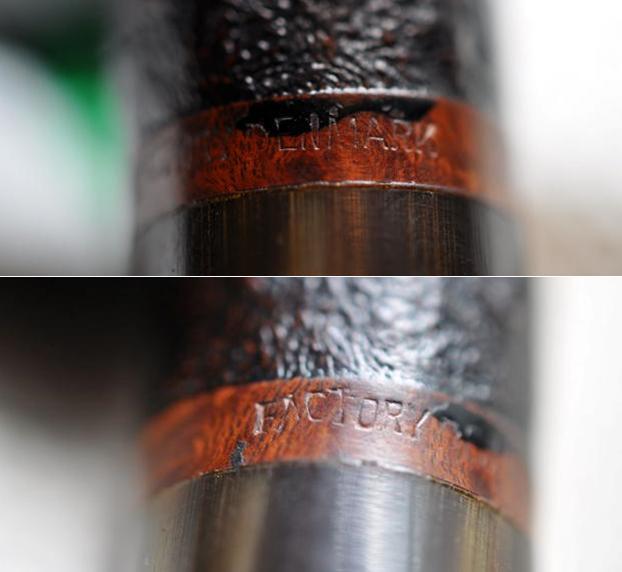
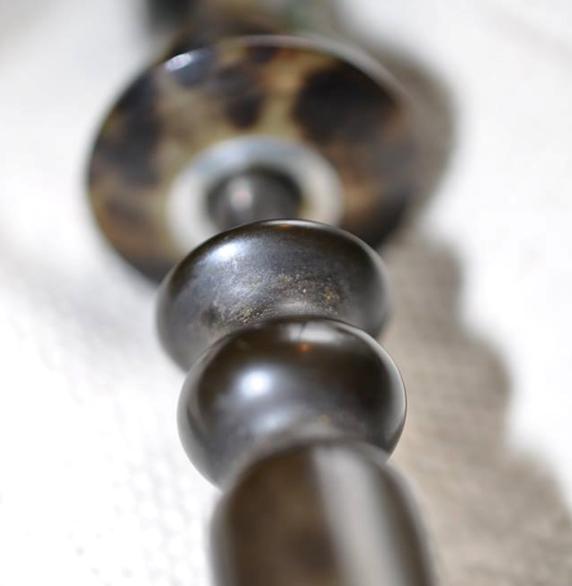
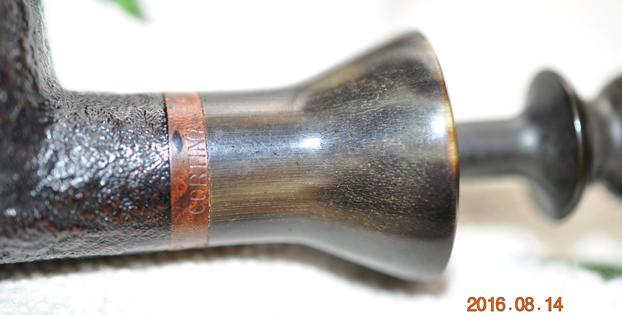
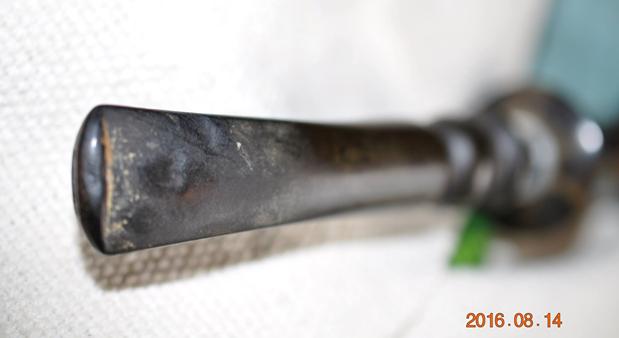
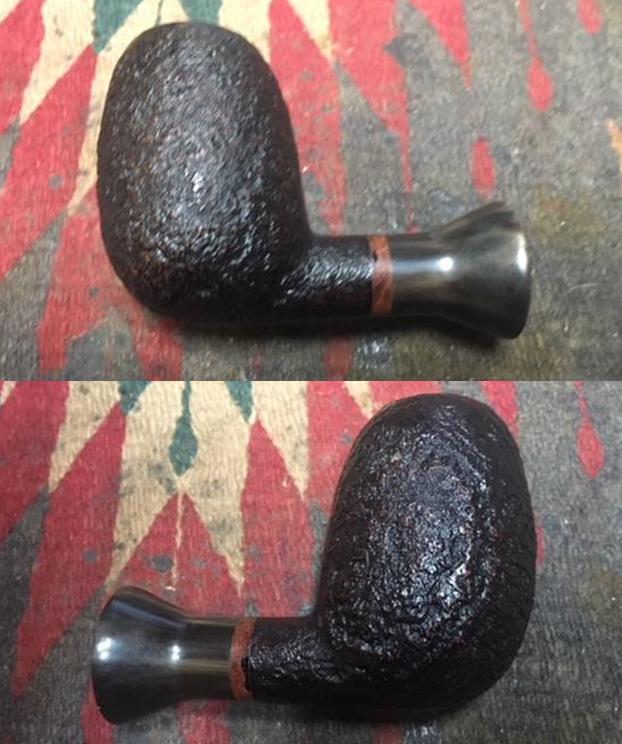
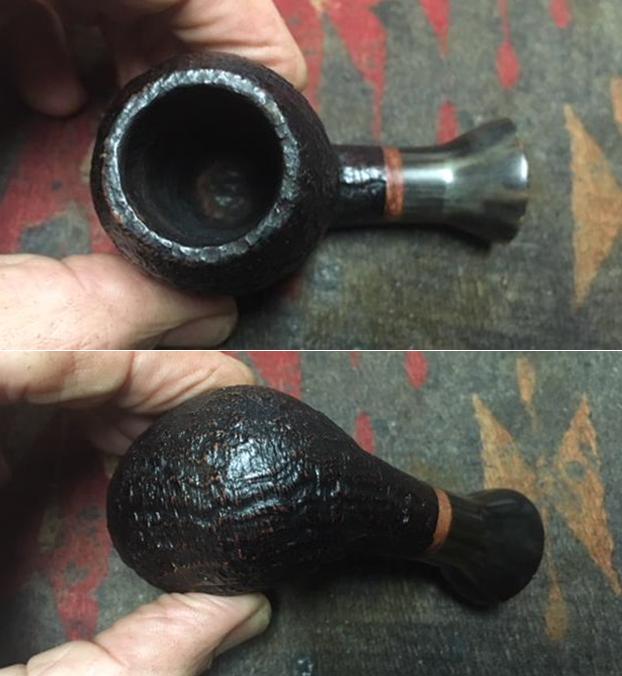
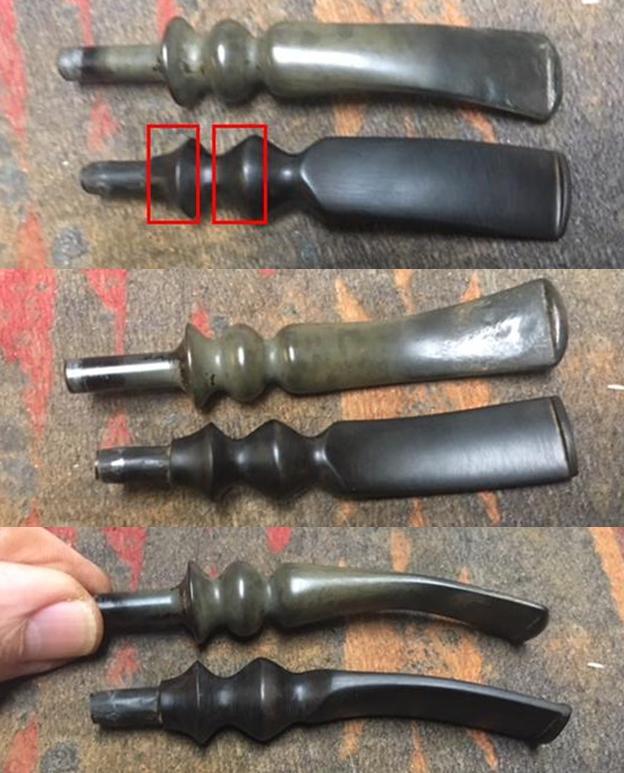
The next pipe on the table was one that my brother Jeff picked up on an eBay auction from a seller in Franklin Tennessee almost two years ago. I know it seems like a long time ago and I suppose it is but I have boxes of pipes to refurbish here and this one came up today! It was in a box with the freehand pipes that I have been working my way through. It is an interestingly shaped sandblast pipe that is a stack. When I first looked at it I did not see any stamping on the shank. As I examined it today I found stamping on the thin band of smooth briar between the horn shank extension and the bowl. It stamped around the band and reads CORTINA FACTORY DENMARK with the shape number 22. The pipe looked pretty good when he got it from the seller. There was dirt and grime in sandblast finish on the bowl. The horn shank extension was oxidized and tired looking. There was a metal mortise inset in the horn to protect it from splitting. There was a light cake in the bowl and the inner and out edges of the bowl were in good shape. The contrast brown finish on the pipe was in excellent condition. I am not sure if the stem on the pipe was the original as the tenon was very long and the fit in the shank was snug but not deep. It was lightly oxidized but in decent condition. I think a stem with a shorter tenon and snug fit to the shank would work well. I would also see if I could shape one to follow the shape of the horn extension. I would have to see what I could find in the can of stems. Jeff took photos of the pipe before he started his cleanup up work. Jeff took photos of the stamping on the pipe. The first photo shows the shape number 22 on the smooth band. The second shows the CORTINA stamp on the smooth band. The third and fourth photos show the stamping Denmark Factory. The next photo shows the shank end – a mottled horn with the metal mortise insert. The stem is in place but you can see that the diameter of the tenon is smaller in diameter than the insert. The second photo below shows the striations in the horn shank extension. The stem was dented and worn. I wanted to replace it with a different stem than the replacement that came in it so I was not too concerned with the stem condition.Jeff had scrubbed the exterior of the bowl with Murphy’s Oil soap and removed the dust and grime that had accumulated there. The finish looked very good once it had been scrubbed. He lightly reamed the bowl with a PipNet reamer and cleaned it up with a Savinelli Fitsall Pipe Knife. He cleaned the interior of the mortise and the airway in the shank and the stem with alcohol, cotton swabs and pipe cleaners. The pipe came to me clean and ready to do the restoration and restemming. I took some photos of the bowl to show the condition at this point in the process. I took some photos of the horn shank extension. At first I thought it was acrylic but as I worked on it I was sure that it was real horn. It was a unique and pretty piece of polished horn. It need to be polished but it was unsplit and in good condition.As has become my practice when working on restoring pipes I did some research on the Cortina Factory Denmark brand name. Pipedia noted the brand but had no information to give in terms of the company or a time frame. I also looked on Pipephil’s site and found a listing for the brand. I have included a screen capture from that site (http://www.pipephil.eu/logos/en/logo-c7.html). The first pipe in the photo shows the Cortina brand and stamp that is the same as on the pipe I am working on. The second one is attached to the Georg Jensen brand and the stamping is actually very similar. It makes me wonder if the Cortina was not a line of pipes made by Georg Jensen. I have no proof of that other than the connection shown in the screen capture below.I started my restoration of the pipe armed with the little bit of information that I could find on the brand. I polished the horn shank extension with micromesh sanding pads – wet sanding with 1500-2400 grit pads and dry sanding with 3200-12000 grit pads. I wiped the bowl down with a damp cloth after each sanding pad to remove the sanding dust. Once I had finished with the last pad I wiped it down with Obsidian Oil to enliven the horn and preserve it. I turned from the horn shank extension to work on the sandblast briar of the bowl. I rubbed the bowl down with Before & After Restoration Balm to deep clean the briar bowl and the rim top as well as the briar shank. The product works to clean, enliven and protect the briar. I hand rubbed it with my fingers, working it into the exterior of the pipe. I worked it into the blast with a horsehair shoe brush. After it had been sitting for a little while I buffed it with a soft cloth to polish it. The pipe really began to have a rich shine. I took some photos of the bowl at this point to mark the progress in the restoration. I had a stem in my can of stems that had turned portions that as the shape of the shank extension on the pipe. Once the stem is cleaned up I will point out the shapes more clearly. I sanded the stem with 220 grit sandpaper to shape the tenon to fit in the mortise. I sanded the oxidation to remove it from the rest of the stem. I took a photo of the new stem next to the one that had come with the bowl. You can see the variation in the shape of the stem. The top one has a very long tenon that fit into the shank up to the spot where the oxidation begins. It is longer than the new stem and the shape is not quite right. On the new stem I have boxed in the shapes in red that parallel the shape of the shank extension.I polished the stem with micromesh sanding pads – wet sanding with 1500-2400 grit pads and dry sanding with 3200-12000 grit pads. I wiped the stem down after each pad with a damp cloth to remove the sanding dust on the acrylic. I polished the stem with Before & After Pipe Stem Polish – both Fine and Extra Fine and I set it aside to dry. I polished stem and bowl with Blue Diamond to polish out the remaining small scratches. I gave the bowl multiple coats of Conservator’s Wax and the stem multiple coats of carnauba wax and buffed the pipe with a clean buffing pad to raise the shine. I hand buffed it with a microfiber cloth to deepen the shine. The pipe polished up pretty nicely. The contrasting brown stain on the sandblast, the variegated swirls in the horn shank extension and the polished vulcanite stem worked together to give the pipe a unique look. The finished pipe is shown in the photos below. This is one of those interesting unknown Danish Pipes that I think could possibly lead back to Georg Jensen but we will probably never know for sure. The shape, finish and flow of the pipe and stem are very well done. The dimensions are Length: 6 1/2 inches, Height: 2 1/4 inches, Outside diameter of the bowl: 1 1/4 inches, Chamber diameter: 3/4 inches. This one will be added to the rebornpipes store soon. If you are interested in adding it to your collection send me an email to slaug@uniserve.com or send me a message on Facebook. Thanks for walking through the restoration with me as I worked over this piece of Danish pipe making history.

New Life for an Unusual Freehand pipe – a Granhill Signature 1 50


Blog by Steve Laug

I have been working my way through some freehand pipes that my brother Jeff picked up recently. There are some amazing freehand pipes among them. The one on the work table now is another Granhill Freehand. I have already restored a beautiful large freehand Granhill earlier this summer (https://rebornpipes.com/2018/06/09/another-large-and-unique-freehand-pipe-a-granhill-signature-1-100/). It was a Granhill Signature 1 100 where this new one is a Granhill Signature 1 50. The pipe looked pretty good when he got it. There was dirt and grime in the plateau on the rim top. The edges were clean and undamaged. The bowl had a pretty thick cake inside. The finish on the pipe was an oil finish on natural briar. There were some carved trails up the sides of the bowl and the shank that had been lightly sandblasted and had an interesting texture. The stem was a replacement stem of cast vulcanite. It was oxidized but in decent condition. The acrylic stem on the other Granhill made me want to put the same kind of stem on this one as well. We would have to see. Jeff took photos of the pipe before he started his cleanup up work. Jeff took photos of the rim top to show the grime and dirt in the crevices of the rim top. There was also some darkening around the inner edge of the rim top and some lava build up that was overflowing onto the inner edge.He also took a photo of the stamping on the shank. The stamping is very clear and readable.The stem was in decent condition. The surface of the vulcanite was pitted and oxidized. There was some light tooth chatter on both sides of the stem near the thin button.Jeff had cleaned the rim top and removed the debris in the plateau. He had scrubbed the exterior with Murphy’s Oil soap and removed the dust and grime that had accumulated there. The oil finish disappeared and there was natural unfinished briar and once it was scrubbed it was clean and unstained briar. He lightly reamed the bowl with a PipNet reamer and cleaned it up with a Savinelli Fitsall Pipe Knife. He cleaned the interior of the mortise and the airway in the shank and the stem with alcohol, cotton swabs and pipe cleaners. The pipe came to me clean and ready to do some light touch ups and polishing. The stem was cleaned but had tooth chatter on the top and underside near the button and on the surface of the button itself. I took close up photos of the rim top to show the condition of the plateau. It was very clean and there was no damage to the inner or outer edge of the rim. Jeff had been able to remove all of the tars and oils and lava coat on the edge of the bowl. The photos of the stem to give a clear picture of what it looked like before I cleaned it up. They also show the smooth shank end on this particular pipe. There was a slight bit of plateau on the top of the shank end in the second photo.In my earlier blog on the other Granhill I had done research on Pipedia to find information. I found two potential makers of the brand though they separated the name into two parts Gran Hill. The first possible maker was Michael V. Kabik with some of them stamped Made in Denmark. The spelling of the name was noted to come in other versions: Granhill, Gran-Hill. The second possibility comes from Lopes book where he states that the brand also was used by a Fargo Tobacconist, Lonnie Fay, who made freehands bearing this stamp in the 1970s. To me the similarity of the pipe to other Kabik pipes that I have worked on made me go with him as the maker of this pipe as well.

I went back to Pipedia and spent time reading about Michael Kabik (https://pipedia.org/wiki/Kabik). Here is a summary of what I found.

Michael Victor Kabik or Michael J. Kabik, now retired artisan and pipe repairman, was born in Annapolis, Maryland in 1950. As a student he was fascinated by science, but finally turned to the arts. In the early 1970s he started working as an artisan and designer for Hollyday Pipes Ltd., and when the company closed he set up in his own right.

Kabik writes as follows:

…In the 1960s, I had helped Jay build Jay’s Smoke Shop and was his first employee. Since that time, he had set up one of the very first freehand pipe-making operations in the U.S. along with his partner, Chuck Holiday, called CHP-X Pipes. The staff consisted of four full-timers actually making the pipes and perhaps another four in sales and office work. Chuck, who did the actual design and carving, had long since had serious disagreements with Jay and split. Chuck’s replacement from the staff was quitting, and Jay was in a bind. Jay offered me the job, and I gladly accepted. The fellow quitting was supposed to train me for two months but left after two weeks, leaving me with an awesome responsibility. I felt as though the future employment of all these people depended on me as the designer and cutter…and it did.

…Sadly, CHP-X closed its doors two years after my arrival, due primarily to distribution, sales force problems, and other issues to which I was not privy…In love with a medium that satisfied my creative impulses while, pretty much, paying the bills, I bought up the essential equipment and produced pipes on my own. I did this from a farm house my wife and I rented in Phoenix, Maryland. I produced pipes under the name KANE, Gran Hill and others I can’t remember as well as a private label line for a store in, I believe, South Dakota.

…In 1973, I was approached by Mel Baker, the owner of a chain in Virginia Beach called Tobak Ltd. Mel was interested in producing a freehand pipe line and was alerted to my product by Al Saxon, one of his managers and a former CHP-X employee. Mel wanted to relocate me to Virginia Beach, give me carte blanche, and recreate the CHP-X studio with, of course, a new name for the product. I’m sure my answer came very quickly.

…We decided on the name Sven-Lar. Why? Well, when I bought out CHP-X, I also got a small drawer full of metal stamps that were created for private-label work. The Sven-Lar name was conceived but never realized. Aside from having the stamp already made, there were other reasons we chose Sven-Lar. First, we were making a line of pipes in the Danish freehand tradition and also, sadly, we knew the difficulty American pipe makers had breaking the foreign market mystique barrier. The latter certainly played a big part in the demise of CHP-X.

After rereading the previous blog I was pretty certain that the pipe I was working on was another one made by Kabik. I turned my attention to restoring the pipe. I started with the clean bowl, I rubbed the bowl down with Before & After Restoration Balm to deep clean the briar bowl and the rim top as well as the briar shank. The product works to clean, enliven and protect the briar. I hand rubbed it with my fingers, working it into the exterior of the pipe. I worked it into the plateau top with a horsehair shoe brush. I wiped it off and buffed it with a soft cloth to polish it. The pipe really began to have a rich shine. I took some photos of the bowl at this point to mark the progress in the restoration. I wrapped a piece of dowel with 220 grit sandpaper and sanded out the inside of the bowl to smooth the walls. I removed all of the remaining cake on the walls of the bowl.I set the bowl aside and turned my attention to the stem. I looked over the replacement stem and decided to not use it. I went through my stem collection and found a nice brown swirled acrylic stem that I thought would look good with the pipe bowl.  It was very similar to the stem on the other Granhill I worked on so I decided to use it instead. I took photos of the two stems side by side for comparison.I sanded the tenon end with a Dremel and sanding drum and smoothed it out with 220 grit sandpaper to adjust the tenon to the same diameter as the tenon on the replacement stem. It did not take too much work to adjust the fit to the shank.I sanded out the tooth marks out of both sides of the stem with 220 grit sandpaper. I worked over the surface with sandpaper to remove the tooth chatter, marks and to smooth out the surface. There were tooth deeper tooth marks on the top side of the stem that I would need to fill in and work on. I filled in the dents with clear super glue. Once the glue cured I sanded them smooth with 220 grit sandpaper to blend them into the surface of the acrylic. I polished the stem with micromesh sanding pads – wet sanding with 1500-2400 grit pads and dry sanding with 3200-12000 grit pads. I wiped the stem down after each pad with a damp cloth to remove the sanding dust on the acrylic. I polished the stem with Before & After Pipe Stem Polish – both Fine and Extra Fine and I set it aside to dry. I polished the briar with micromesh sanding pads – wet sanding with 1500-2400 grit pads and dry sanding with 3200-12000 grit pads. I wiped the bowl down with a damp cloth after each sanding pad to remove the sanding dust. Once I had finished with the last pad I wiped it down with a light coat of olive oil to collect the dust and to give some depth to the finish. I polished stem and bowl with Blue Diamond to polish out the remaining small scratches. I gave the bowl and the stem multiple coats of carnauba wax and buffed the pipe with a clean buffing pad to raise the shine. I hand buffed it with a microfiber cloth to deepen the shine. The pipe polished up pretty nicely. The plateau on the rim top and the smooth natural oiled finish work very well with the swirled brown acrylic stem. The finished pipe is shown in the photos below. While I have worked on other Michael Kabik pipes (a CHIP-X) this is the second Granhill pipe of his that I have restored. It is well crafted and is very similar to the CHIP-X that I worked on in the past. The shape, finish and flow of the pipe and stem are very well done. The dimensions are Length: 6 1/2 inches, Height: 2 1/4 inches, Outside diameter of the bowl: 1 3/4 inches, Chamber diameter: 3/4 inches. This one will be added to the rebornpipes store soon. If you are interested in adding it to your collection send me an email to slaug@uniserve.com or send me a message on Facebook. Thanks for walking through the restoration with me as I worked over this Granhill freehand.


Rejuvenating a Svendborg Danish Hand Made Dublin 06 Barkentine


Blog by Steve Laug

I was emailing back and forth with John, a pipeman in Edmonton who wanted to sell of his pipes. He was cleaning up things and thought he would see if I was interested in them. He said that he had several Baris and a couple of Svendborgs that were in the lot and he wanted to move those out. He sent me photos of the pipes he had and we soon struck a deal. Since we were both in Canada it did not take long for the package to make its way to me. I opened it and went through his pipes to see what I had to work on. There were some pipe racks and accessories in the box as well. I went through the pipes and set them aside. Today I decided it was time to do some more work on the lot. I chose to work on the second of the Svendborg Hand Made Pipes – this one a squat Dublin. I have included the photos of the pipe that he sent to me before I purchased the lot. You can see that this was also a well-loved pipe and one that he smoked often. The finish on the sides and shank was in good condition but dirty. The rim top had an over flow of lava on the top but otherwise looked undamaged on the inner and outer edge. Under the tar and lava it looked like the rim top was in good condition. The contrast stain highlighted the beautiful grain on the briar. The bowl was caked and would need to be reamed but otherwise good condition. The stem was loose in the shank and I was able to move it side to side and up and down. The diameter of the shank and the diameter of the saddle on the stem were slightly different and there is not much that can be done due to the stamping on the underside and around the edge. I will need to tighten it up as much as possible and work on the alignment. The stem was oxidized and lightly pitted from the oxidation. There was tooth chatter on the underside of the stem near the button. I took the following photos of the pipe before I began the cleanup. (The two pipes came in an original Svendborg box that is marked Svendborg Bark. I learned from my work on the first pipe that it was the correct box for the pipe.) I took some close up photos of the rim top and the stem to show the condition of the pipe when I started. The rim top shows a thick buildup of tars and oils – lava from the inner edge of the bowl outward over most of the rim top. Other than the tar around the inner edge of the bowl the rim shows some nice grain. The stem surface is in good condition other than some oxidation and pitting on the surface of the blade. There was some tooth chatter on the underside of the stem near the button.I took photos of the stamping on the underside of the shank and around the stem/shank junction. On the underside it was stamped Svendborg over Danish over Hand Made. Like the previous Svendborg this one was stamped around the shank from the left side across the top edge it reads Barkentine. (Perhaps this is what the Bark name on the box that came with the pipe refers to.) On the right side it was stamped 06. The stamping was faint on the curves of the shank but was still readable. The left side of the saddle stem has a stylized squashed S stamp. You can see the stem alignment issue I mentioned above in the photos below.I am requoting the information I found when researching the previous Svendborg pipe.

When I am working on interesting old pipes (even sometimes those not so interesting) I like to know a bit about the background of the brand. I like to “meet” the carver to get a feel for their work and style. I don’t think I have worked on Svendborg pipes before so I felt compelled to do a bit of reading before I started the cleanup of the pipe.

I looked first on the Pipephil website (http://www.pipephil.eu/logos/en/logo-s14.html) to see what I could find. I have found through the years that it gives me a good summary of the information available and some pictures of some of the pipes from the brand. I have included a screen capture of the first pipe in the listing as it shows the logo on the stem and a bit of the stamping that is on the underside of the shank. From the site I learned that the “Brand founded in 1970s by Henrik Jørgensen, Poul Ilsted and Tao Nielsen. They bought an old factory (Nordisc Pibefabriker) in Svendborg on Funen Island. Poul and Tao gradually bowed out from machine manufactured pipes (1982) and Henrik Jørgensen manages the brand until its takeover by Design Berlin (D) in the late 90ies. Kaj C. Rasmussen jointed the firm for several years. 17 employees worked for this brand under Henrik Jørgensen direction.

That link gave me a bit of information on the brand – a joint venture of Henrik Jorgensen, Poul Ilsted and Tao Nielsen. I could see from the information that usually the carvers stamped their names on the shank of the pipe. In the case of the one I have there is no name stamp. My assumption is that the pipe was made after Ilsted and Nielsen bowed out which would put the date of the carving between 1982 and the late 90’s when Design Berlin took over. The Danish Hand Made stamping also confirms that assumption.

Next I turn to Pipedia for more information and detail (https://pipedia.org/wiki/Svendborg). I find that the articles there fill in some interesting information on the relationships and history of a given brand. In this case I found that also true. I quote pertinent pieces of the article.

Jens Tao Nielsen and Poul Ilsted Bech met each other when working together for Erik Nørding and soon became close friends. Both felt a bit tired to make nothing but bizarre fancy shapes and agreed they wanted to produce pipes of more style and more classicism. They decided to establish their own brand “Tao & Ilsted” – But how to do it?

A good fortune brought them in contact with Henrik Jørgensen, a passionate pipe lover and a wealthy Copenhagen banker who was willing to retire from bank business and change his career to become a pipemaker. The trio joined in 1969 and decided to start a new pipe brand together. Nielsen and Ilsted started to search for a suitable workshop while Jørgensen took care of the finances. In early 1970 the partners found an old, closed down pipe factory in Svendborg on Funen, and bought it shortly after for a mere 16.500 Danish Kroner. It was the earlier Nordic Pipe Factory – Nordisc Pibefabriker – maybe the oldest Danish pipe factory. And now it became the home of Svendborg Piber.

The young team started with the common difficulties but success came quite rapidly after they travelled Germany in search of a distributor and met Detlef Seiffert, senior partner of Seiffert Import Co., a major German wholesaler in Kassel. Seiffert, insisting on high quality standards, started placing considerable orders with the new factory and began to market the brand very successfully in Germany. Of course Seiffert – a relative of Harry Kapp, partner of Charles Peterson of the famous Dublin pipe house – used his international contacts to promote Svendborg furthermore.

The Funen crew designed many new models for him and after a couple of month (!) they employed up to 17 people. Tao Nielsen later gratefully remembered “the big chief’s whip”: “Without him we wouldn’t have made it, he gave us decisive support. He was like an engine – something that our business lacks today.”

But in spite of it’s magnificent success the trio fell apart after less than two years, when wilful Poul Ilsted stepped out declaring he didn’t want to make serial pipes anymore, but wanted to make individual specimens… Strange enough, he approached this aim returning to Nørding!

Ilsted’s argumentation doesn’t seem to be absolutely fair: even though Svendborg turned to produce mainly serial pipes under Seiffert’s influence each of the three partners was free to work on his very own one of a kind pieces as well! Since it was Seiffert’s basic idea to profit from – especially – Tao ‘s and Ilsted’s creativity to design new shapes. There are many knowledgeable collectors who confirm that these early Svendsborg pipes class among the most individual, innovating and exiting designs Danish pipecrafters created at that time…

The firm developed well and prospered throughout the 1970’s but around 1980 dissensions between Tao and Jørgensen occured. Tao: “Most pipes were delivered to the United States and whereby the Americans tried to dictate us the conditions. It was not only so that their taste and their view on aesthetics were simply horrible – no, moreover they wanted that the pipes should be as cheap as possible. That did not suit my plans at all, for I strove for high quality and artistic freedom in the end.”

Tao and Jørgensen, who tended to accommodate the US customers’ wishes, could not find a compromise on their different opinions, and so Tao left the firm in 1981 and opened his own pipe workshop near the harbour of Svendborg.

…Henrik Jørgensen continued Svendborg Piber bravely for more than a decade on his own until he finally sold the brand to Seiffert around the midst of the 1990’s. Seiffert, focusing on their mainstay brand Sillem’s, sold Svendborg – a ghost brand now – again before 2000 and the current owner is Planta’s Design Berlin.

That gives a good picture of the history and development of the Svendborg brand and the connection to some of the great carvers of Danish pipe history. Armed with that information I turned to work on the pipe in hand.

I started my cleanup of this pipe by working on the internals. I reamed out the cake with a Savinelli Fitsall Pipe Knife and took the cake back to the bare briar. I sanded the walls in the bowl with a piece of dowel wrapped with 220 grit sandpaper to smooth the walls.I used the edge of the Savinelli Fitsall knife to scrape away the lava from the top of the rim. It was quite thick so I proceeded cautiously so as not to damage the gentle crown of the rim top. Once I had it scraped away as much as possible I wiped down the surface of the rim with alcohol on a cotton pad and then sanded the rim top with 1500 grit micromesh sanding pads to remove the last vestige of the lava coat. I polished the rim top with micromesh sanding pads – wet sanding with 1500-2400 grit pads and wiping the rim down with a damp cloth after each pad. I continued polishing with micromesh pads – dry sanding with 3200-12000 grit pads, wiping down he rim after each pad. The rim really began to shine. I rubbed some Before & After Restoration Balm into the surface of the briar to enliven, clean and preserve it. I set it aside for a little while to let the balm do its work. I buffed it off with a cotton cloth and then buffed it with a microfiber cloth. The photos below show the pipe at this point in the restoration process. I scraped the mortise walls with a sharp pen knife to remove the lacquer build up from tobacco juices and oils. It was thickly coated. Once I had that finished I cleaned out the mortise and the airway in the shank with cotton swabs, pipe cleaners and alcohol. It was dirty but I was surprised it was as clean as it was all things considered. I cleaned the airway in the stem the same way as the shank. I set the bowl aside and turned my attention to the stem. I sanded the surface of the stem with 220 grit sandpaper to remove the pitting on the top surface of the stem and the light tooth chatter on the underside stem. I wiped the stem down with Obsidian Oil to get a clear picture of how the stem looked at this point. Once again under the watchful eye of my shop supervisor, Spencer (my 14 year old Cocker Spaniel) I polished the stem using micromesh sanding pads – wet sanding with 1500-2400 grit pads dry sanding with 3200-12000 grit pads. After each pad I wiped it down with Obsidian Oil to protect and enliven the stem. Spencer sits next to my desk/work table whenever I am working on pipes. Periodically he will knock me on the leg for a treat I keep on top of the desk just for these occasions. Mostly though he just watches me work and when I get up for a break follows me like a shadow. I will miss his presence once he is gone but for now he continues to go strong. Back to the pipe, I polished it further with Before & After Pipe Polish – both Fine and Extra Fine. When I finished with the polish I gave it a final coat of oil and set it aside to dry. This second Svendborg Danish Hand Made Dublin is another beauty with swirling, straight and flame grain all around the bowl. As with the other pipe there are spots where birdseye peeks through and highlights the complexity of the grain. The smooth rim is quite nice and has some swirls of grain undulating in the briar. The contrast browns of the bowl look really good with the black of the polished square vulcanite saddle stem. I buffed the bowl and the stem with Blue Diamond polish to raise the shine on the briar and the vulcanite. I was careful to not buff the stamping and damage it. I gave the bowl and stem multiple coats of carnauba wax. I buffed the entire pipe with a clean buffing pad to raise the shine. I hand buffed it with a microfiber cloth to deepen the shine. The finished pipe is shown in the photos below. The dimensions of the pipe are: Length: 5 1/2 inches, Height: 1 1/2 inches, Outside Diameter: 1 3/4 inches, Diameter of the chamber: ¾ of an inch. This is the second of the two Svendborg pipes that I am working on. It is a well-made pipe with interesting finishing and a comfortable stem. I will be adding it to the rebornpipes store shortly if you are interested in adding it to your rack. Thanks for walking through the restoration with me.


Repairing (again!) a Son’s Gift – an L. J. Peretti Stem Splice


Blog by Dal Stanton

We all have favorite ‘friends’ in our specially chosen, first string rotation of pipes that are ready when we call upon them.  For me, each of these pipes have names and associations with my life – memories of a person or a special event or both – that is stirred to life when I grab that pipe off the rack and spend time, usually packed with my favorite blend, Lane BCA.  In several blogs I have referenced my attraction to L. J. Peretti pipes of Boston – I’ve started a collection of Perettis and I have found they are hearty pipes and good smokers.  My fascination with Perettis started with a Christmas gift from my son, Josiah, a few years back in Denver.  He found this wounded warrior in the Armadillo Antique Mall in Denver and I found it under the Christmas tree with Josiah’s confidence that I could mend his wounded pride and broken stem!This hearty L. J. Peretti Square Shank Billiard became my first experience in the art of stem splicing.  I learned a lot and was proud when I published the write up of this achievement: A Christmas Gift in need of a stem splice – L J Peretti Squared Shank Billiard.  Josiah’s gift started my appreciation for Peretti pipes in Denver.  I have enjoyed this pipe and he was joined serendipitously by another Peretti, another square shank, but a Rhodesian (See: LINK for write up).  Jon, a friend and colleague working in Ukraine, gave me my second Peretti!  These two, together, I call the Peretti brothers.As life unfolds, things happen.  I was back in Denver from Bulgaria last February for the births of two brand new beautiful granddaughters and had grabbed the Peretti Brother Billiard and was heading up the stairs to go outside to enjoy a bowl and the view of the Rocky Mountains, when I fell (going up the stairs!) and the stem splice that had served faithfully was overcome by the impact of my body coming down on it.  The stem broke at the end of the ‘shelf’ created for gluing.  You can see this on the next picture.  I lost the remainder of the stem in the flight back to Bulgaria, but it wouldn’t have mattered because there wasn’t enough left of it to repair.  The picture below shows the remainder of the original cannibalized stem’s fashioned shelf remaining on the Peretti saddle stem – the junction line shows up in the shine on the stem.  I decided to do a write up simply of this repair, but I have an alternative motivation too.  My wife and I are leaving soon for the Black Sea coast for our annual R&R and I wanted to repair the Peretti Brother to take with me to the beach!  So, I took pictures of the repair process but am now doing the write-up on the beach, looking out over the Black Sea!Starting the repair, I find an adequate donor stem to cannibalize for the replacement.  I measure it and cut it with adequate length so that the cut is at the old seam that you see in the picture above.  I make the measurement then, using a flat needle file as a saw, I make the cut after placing the stem in a vice in such a way that I can use the edge of the vice as a guide during the cut.  In this way, I hope that the cut is straight and perpendicular to the stem!There is a little vulcanite spur left that I clean off easily with the file.Lining the donor stem up with the remaining original stem looks like the right length for a balanced feel and look.Next, carefully I cut an upper groove on the original stem essentially in the same place as the first shelf was, thus removing the old donor remnants.I use the tapered pieces of a clothespin to wedge the square shank saddle in the vice safely and securely.  I want the saddle stabilized in a horizontal plane for the filing/cutting process.  I also line up the old seam with the edge of the vice so that the vice’s edge helps as a guide.  I’m aiming for a cut that is perpendicular to the stem’s length as I create a new groove using the flat needle file. Patience is my best friend in this process. The pictures show the progress. As I draw close to the airway, my goal is to stop when the airway is exposed halfway while keeping the horizontal shelf and the inside vertical edge of the shelf at right angles.Satisfied that I’ve gone far enough, I trim off the end of the lower shelf – as close to right angles as possible!  I think it’s looking good. I eyeball the progress.  The truth is that not all stems are drilled with holes in the exact middle.  To get an idea of the best alignment of the new donor stem with the original, I put a pipe cleaner through both.  I flip the donor stem eyeballing the alignment to see if one position is better than the other.  The most important alignment consideration is the airway.  The external stem can be cosmetically improved, but a blocked airway cannot be easily removed. When one doesn’t have precision tools, which for the most part I don’t, one lives with the value of improvisation.  To cut the shelf in the donor stem now, I mount the donor stem in the vice and again, using the angled pieces of a clothespin, I fashion a stable filing platform!  I file conservatively.  That is, not to go for an exact measurement but leaving some excess stem to file down gradually, working up to a good fit.  I use the width of the flat needle file as the measure for the length of the shelf which leaves me a little ‘fat’ to work with.  The challenge will be keeping the shelf that is fashioned as much of a right angle as possible or, the two, shelf butt ends to be parallel!  As before, I use the side of the vice as a guide to keep the new edge straight.  I take pictures of the filing progress. At this point, after eyeballing the progress, I realize that as I’m filing the shelf, it is not horizontal but sloping downward toward the end of the shelf.  To address this, I use the short edge of the flat needle file and saw a straight line to open the airway.  In doing this, I now I have a built-in level – the top of the airway.  I continue to file the shelf to reveal uniformly the airway and this should be close to being level – I hope!  The progress is shown. At this point, I test the alignment even though there’s a long way to go on the donor stem.  To test, I put a pipe cleaner through the airway in both pieces.  The airway must line up in the finished repair.After more filing, another test.  Closer.As I file and test, I realize that the lower shelf extension on the original Peretti stem was still a bit fat, so more vulcanite is filed off.  The challenge is not taking off too much because it can’t be replaced easily!In time, another test – getting there.  You can see the pipe cleaner creating the alignment axis through the two pieces.  The gap that is showing on the top I address by taking off more vulcanite from the donor stem (second picture), after flipping over I file the vertical edge ‘back’.  This will close the gap on the top and spare the original Peretti stem from giving up more vulcanite.I decide I’ve filed and fitted enough.  The time has come to glue the two pieces of stem. I think its possible to fiddle too much seeking ‘Fit Nirvana’! I clean the shelves with alcohol, including the airway with a pipe cleaner.  The tricky part of the gluing is to avoid CA glue getting into the airway and sealing it – not a good situation!  The way to avoid this is by inserting a pipe cleaner that has petroleum jelly on it – the CA glue will not stick to it.  The challenge doing this is that when you press petroleum jelly into a closed space it squeezes out and can contaminate the area that needs maximum CA glue effectiveness!After cleaning the area and thinking about how I might maximize the bond between the spliced stem pieces, I remembered a technique that I had previously read in either one of Steve’s Rebornpipes blogs or Charles Lemon’s, Dad’s Pipes blogs, describing how drilling holes can enhance the glue’s penetration and bonding qualities.  To do this I mount a 1mm drill bit into the Dremel.  WARNING bells are going off in my mind: Do not drill through the vulcanite!  There’s not a large margin of error.  With the bells ringing, I drill a couple of holes on each side of the airway on both stems’ shelf.  It looks good and I’m glad I remembered this technique.I repeat the cleaning of the upper and lower shelves with alcohol and insert a pipe cleaner through the pieces with a bit of petroleum jelly on it.  I then apply thick CA glue to the shelves and draw the two pieces together while keeping the pipe cleaner taught assuring a straight airway. I use a thick CA glue so that the glue remains in place and doesn’t run spread over the stem.By keeping the pipe cleaner taut and the airway straight, I maneuver the two pieces to fit as well as possible which leaves the external appearance a bit ‘Frankenstemish’ but that’s OK and expected at this point in the process.  I can address that later.  In the pictures following you can see gaps and where the stem surface is not flush as the stem transitions through the splice. The primary bonding of the splice is successful with a clear and straight airway.  To address the gaps, I mix a batch of activated charcoal powder and regular CA glue to make a putty that acts as a filler for the imperfections of the fit.  I keep the putty a bit thinner than normal when I use this mixture repairing tooth dents and damage to the bit.  Keeping the CA and activated charcoal putty thinner, or wetter, allows a better penetration into the gaps around the split.  After I mix the putty, I apply it around the spliced area with a flat dental spatula and tamp the putty down into the gaps.  The pictures show the process. The result looks truly like a ‘Frankenstem’.  A give a full 24 hours for the putty to cure well and I then begin the filing and shaping process using a flat needle file.  The pictures show the gradual process of shaping the external appearance of the stem splice. Following the filing, I use 240 grit paper to further smooth and shape.  In the next pictures you can see that I sand the entire stem.  The entire stem must be tapered and sloped so that the spliced area disappears into one unified stem presentation.  The tapering is not only on the upper and lower stem, but also on the stem’s sides where the stem bows inwardly from the saddle to the button.Following the 240 grit paper, I smooth further with 600 grit paper.As the stem splice smooths during the sanding, I detect a hole where the putty failed to fill.  I dispatch this by spot dropping black CA glue in the hole to seal it.  After it cures, I continue sanding and smoothing the area. With the splice repair essentially finished, what I don’t show in pictures following is the normal, full sanding and buffing process.  I follow the 600 grit paper by buffing the stem with 0000 grade steel wool.  I then follow with 9 micromesh pads from 1500 to 12000 with a coat of Obsidian Oil between each set of 3 pads.  I then apply Blue Diamond compound with the Dremel, followed by the application of carnauba wax to both stem and stummel.  You can still see the seams of the splice, but the entire stem looks great.  The pictures show the finished spliced stem. The Peretti Brother Billiard joined me on the Black Sea and both of us have enjoyed a great reunion!  Thanks for joining me!

Restoring a Second Bari De Luxe Mahogany Freehand…


Blog by Steve Laug

I was emailing back and forth with a pipeman in Edmonton who wanted to sell of his pipes. He was cleaning up things and thought he would see if I was interested in them. He said that he had several Bari’s that were in the lot and he wanted to move those out. He sent me photos of the pipes he had and we soon struck a deal. Since we were both in Canada it did not take long for the package to make its way to me. I opened it and went through his pipes to see what I had to work on. There were some pipe racks and accessories in the box as well. I went through the pipes and set them aside. Today I decided it was time to start working on them. I chose a second Bari De Luxe Mahogany Freehand as the second of those Bari’s that I would work on. I have included two of the photos of the pipe that he sent to me before I purchased the lot. You can see that it was a well-loved pipe and one that he smoked often. The finish on the sides and shank was in good condition but dirty. The shank end was a nice natural plateau but not as craggy as the previous one. The rim top had an over flow of lava on the top and there was a burn mark on the back inner edge of the rim. Under the tar and lava it looked like the rim top was in good condition. The stain highlighted the beautiful grain on the briar and the plateau was stained black in stark contrast to the reddish brown of the bowl. The bowl was caked and would need to be reamed but otherwise good condition. The stem was cleaner than the previous one and did not have any sticky substance on it. There was some oxidation under the oil but there were not any tooth marks or chatter on the surface. Tenon end was chipped and broken and would need to be repaired. I took the following photos of the pipe before I began the cleanup. (The pipe came in an original Bari pipe sock.) I took some close up photos of the rim top and the stem to show the condition of the pipe when I started. The rim top shows damage at the back inner edge of the bowl and on the rim top at that point as well. Other than general darkening and tar around the inner edge of the bowl the rim shows some nice grain. The plateau on the shank end is in excellent condition. The stem surface is in good condition other than some oxidation. When I took the stem out to examine the tenon and shank I found a surprise. When I spoke with John he was unaware of the issue as well and was surprised. The tenon had a large chunk out of the top side. There was almost half of the tenon missing.I took photos of the stamping on both sides of the shank. On the left it was stamped Bari over De Luxe over Mahogany and on the right side it was stamped Hand Made in Denmark. The stamping was faint toward the bowl on both sides of the shank but was still readable.In the previous blog on the Bari De Luxe Freehand I quoted a section from Pipedia on Bari pipes. Here is the link to the article on Pipedia: https://pipedia.org/wiki/Bari. I summarize the material that I found there as it gives a clear picture of the brand. I have been working on several pipes by Viggo Nielsen recently so it was a good reminder.

Pipedia states that Bari Piber was founded by Viggo Nielsen in Kolding, Denmark around the turn of 1950/51. His sons Kai and Jørgen both grew into their father’s business from a very young age and worked there till 1975. Both have become successful pipe makers.

Bari successfully adapted the new Danish design that had been started mainly by Stanwell for its own models. Bari was sold in 1978 to Van Eicken Tobaccos in Hamburg, Germany though the pipes were still made in Denmark. From 1978 to 1993 Åge Bogelund and Helmer Thomsen headed Bari’s pipe production.

Helmer Thomson bought the company in 1993 re-naming it to “Bari Piber Helmer Thomsen”. The workshop moved to more convenient buildings in Vejen. Bogelund, who created very respectable freehands of his own during the time at Bari got lost somehow after 1993. Bari’s basic conception fundamentally stayed the same for decades: series pipes pre-worked by machines and carefully finished by hand – thus no spectacular highgrades but solid, reliable every day’s companions were what they turned out. The most famous series are the smooth “Classic Diamond” and the blasted “Wiking”.

I started my cleanup of this pipe by working on the internals. I reamed out the cake with a PipNet pipe reamer and took the cake back to the bare briar. I scraped out the remnants in the bowl with a Savinelli Fitsall Pipe Knife. I sanded the walls in the bowl with a piece of dowel wrapped with 220 grit sandpaper to smooth the walls. I sanded the rim top with a folded piece of 220 grit sandpaper to remove the burn damage on the back side of the bowl. I polished the sanded area with micromesh sanding pads – wet sanding with 1500-2400 grit pads and dry sanding with 3200-12000 grit pads. I wiped the surface down with a damp cloth after each sanding pad. The first photo is a reminder of where things were at when I started the cleanup. While the burn mark was not totally removed it looked much better than when I started the cleanup. I used an Oak stain pen to restain the entire rim top. I used a Mahogany stain pen to touch up the inner edge of the bowl to try to blend in the darkening around the edges. Once the stain dried I rubbed it lightly with an alcohol dampened cotton pad to blend the colours together.I rubbed some Before & After Restoration Balm into the surface of the briar to enliven, clean and preserve it. I rubbed it in with my fingertips working it into the briar. I worked it into the nooks and crannies in the plateau on the rim and the shank end using a cotton swab. I brushed those areas with a shoe brush to work it in more deeply and spread it out. I set it aside for a little while to let the balm do its work. I buffed it off with a cotton cloth and then buffed it with a microfiber cloth. The photos below show the pipe at this point in the restoration process. I scraped the mortise walls with a sharp pen knife to remove the lacquer build up from tobacco juices and oils. It was thickly coated. Once I had that finished I cleaned out the mortise and the airway in the shank with cotton swabs, pipe cleaners and alcohol. It was dirty but I was surprised it was as clean as it was all things considered. I cleaned the airway in the stem the same way as the shank.I set the bowl aside and turned my attention to the stem. I reshaped the button with a needle file and sharpened the edge against the surface of the stem. I sanded the surface of the stem with 220 grit sandpaper to remove the light tooth chatter on the surface of the stem and to break up the oxidation that was prevalent in the grooves and spindles of the stem.  I started the process of rebuilding chipped tenon. I have done this on one other pipe and was quite happy with the results. I mixed a batch of charcoal powder and super glue to make a putty to start the rebuild. I applied it to the edge of the tenon with the sharp tip of a sanding stick. I wanted to layer the edge until the tenon was sharp and smooth. It would be a process of layering and shaping to get what was needed. The process was quite simple – set a base of the superglue and charcoal and shape the repair. Add more of the mix to the tenon and shape it again. The process would be repeated until the tenon was even all the way around. The pictures tell the story of the rebuild process. I applied another coat of the glue to fill in the airspaces left from the charcoal powder. I sanded the rebuilt tenon smooth with 220 grit sandpaper. I wiped the end down with Obsidian Oil after sanding it smooth. It is starting to look really good and once the repair cures it will be durable.I set the stem aside and let it cure overnight and worked on other pipes. When I picked it up again this morning I polished it using micromesh sanding pads – wet sanding with 1500-2400 grit pads and then buffing on the wheel with red Tripoli. I dry sanded the stem with 3200-12000 grit pads to further polish it. After each pad I wiped it down with Obsidian Oil to protect and enliven the stem. I polished it further with Before & After Pipe Polish – both Fine and Extra Fine. When I finished with the polish I gave it a final coat of oil and set it aside to dry. This second Bari De Luxe Mahogany Freehand is another beauty with swirling, straight and flame grain all around the bowl. The shank end has some interesting looking plateau that is deep and craggy. The smooth rim is quite nice and has some swirls of grain undulating in the briar. The brown of the bowl and the black of the plateau look really good with the black of the turned vulcanite stem. I buffed the bowl and the stem with Blue Diamond polish to raise the shine on the briar and the vulcanite. I lightly buffed the rim top and shank end as well. I was careful to not buff the stamping and damage it. I gave the bowl and stem multiple coats of carnauba wax. I buffed the entire pipe with a clean buffing pad to raise the shine. I hand buffed it with a microfiber cloth to deepen the shine. The finished pipe is shown in the photos below. The dimensions of the pipe are: Length: 6 inches, Height: 2 1/8 inches, Outside Diameter: 1 3/4 inches, Diameter of the chamber: ¾ of an inch. This is the second Bari De Luxe that I have worked on and it more average or medium in size. The combination of smooth and rugged looking plateau on the shank end makes it an interesting pipe. Thanks for walking through the restoration with me.

Fashioning a Churchwarden from a Forlorn, Throw away Billiard – a story of the Phoenix


Blog by Dal Stanton

The Greek mythological Phoenix is a long-lived bird that cyclically regenerates or is otherwise born again, according to Wikipedia.  It is regenerated out of its own demise, from its own ashes.  The images that come to mind are Harry Potter-esque – the Phoenix’s name is Fawkes and “as stated by Dumbledore, they are extremely loyal creatures, and are capable of arriving to the aid of beings who share a similar devotion. This was how Fawkes arrived to assist Harry in slaying the Basilisk in the Chamber of Secrets during his second year at Hogwarts” (LINK).  The tear of the Phoenix could also bring healing and recovery from near death.

What does the Phoenix have to do with pipes and Billiards?  True confession: I enjoy immensely working on vintage pipes with well-known and sought names like Dunhill, Savinelli, Comoy’s, Stanwell, GBD, Jeantet and BBB.  But truth be known, I LOVE taking the throwaways, the discarded, the ‘only good for the waste heap’ pipes – that make most people cringe and reach for latex gloves – to take these pipes and see what I can do to help.  There is a satisfaction at the end of such projects that translates into, ‘Wow! Who could have imagined…!”  The discovery of hidden beauty that was always there, but no one took the time to help it emerge.   I guess, at the core of it is the sense that sometimes people are treated in such a way or may view themselves in such a way that does not reflect the often hidden value that people intrinsically have.  Helping is seeking to bring new life out of the ashes of the past.

I want you to meet my forlorn Billiard stummel.  I’m sure that one past day he enjoyed the attention of a steward.  He proudly was settled on the rack with other proud pipes of The Rotation.  One day something happened, and he lost that favored position, and everything changed.  I found him in a bag of a second-hand/antique vendor in Sofia, Bulgaria’s ‘Antique Market’ in the city-center.  The bag was full of broken and discarded stems, stummels and other things unrecognizable.  He had no stem.  I plucked him out of the bag along with a few other pieces, paid the vendor a very small sum for what had no value to the vendor or to anyone else.  The small Billiard stummel was marked with the most generic of all markings, ‘Real Briar’.  Absolutely nothing special.  Here are pictures of the redeemed Billiard on my worktable. I just completed the restoration of a Monarch Pat. 1989069 – 1074H Bent Ball  for Andy, a pipe man living in Maryland, who attends the church where I was formerly the pastor on the Eastern Shore – the peninsula created by the Chesapeake Bay and Atlantic Ocean east of Washington DC.  Andy commissioned the Monarch from the ‘For Pipe Dreamers Only!’ section on my blog.  He told me he was also hoping to land a Peretti Oom Paul and a Churchwarden someday.  He had seen several of the Peretti Lot of Oom Pauls that I had already restored and recommissioned for new stewards and was hopeful.  I had no more Perettis to share, but I proposed that I could fashion a Churchwarden from repurposed stummels.  I also had one 8-inch Warden stem left in my stores.  Not long ago, I completed a fun restoration I called ‘A Tale of 3 Church Wardens’ – where I fashioned 3 Churchwardens that all found new stewards in Germany.  I directed Andy to check out the post to decide what he wanted to do.  It didn’t take long and he decided to add a Churchwarden to his Monarch Bent Ball – each of these pipes benefit the work we do here in Bulgaria with the Daughters of Bulgaria – helping women and girls who have been trafficked and sexually exploited to find a new life and hope.  The next question for Andy was what stummel would mast the Warden stem and rise from the ashes like the Phoenix?  Here were the options I sent to Andy with a warning not to be distracted by the color or condition – to look only at the shape.  Here’s what he saw.From the top, his choices were a Rhodesian, a Panel, a carved Apple and the forlorn Billiard.  Andy chose the classic Billiard shape, influenced mainly by the longer shank which will add a bit of flow to the Churchwarden he would become when transformed.  The interesting factoid that I reported before, in my writeup of the 3 Churchwardens, was from Bill Burney’s Pipedia Pipe Chart. It provides the framework for forlorn bowls to rise as the Phoenixes.  What brings this power?  A Churchwarden stem:As you would expect, our Billiard that Andy chose has many challenges.  The worst of his obvious problems is the rim which has been chewed and gnarled! It has a large divot on the internal lip over the shank.  Also, on the shank side, the rim slopes away having endured a ‘skinned knee’ experience.   The old finish is totally old and the stummel has some small fills that need checking.  Yet, underneath the grime and tired finish – where there is finish, is briar grain with potential.  I begin the story of this Billiard hoping to rise as a Phoenix by doing the basic cleaning of the stummel before fashioning the precast Churchwarden stem.  To mark the beginning of the restoration, I take a picture of the Billiard stummel with the Warden stem – the place where Pipe Dreamers begin!I take a picture of the chamber and see that there is very little cake build up, but I also see that it appears someone took a pocket knife to the chamber in the past – with little care.  I take the Savinelli Fitsall Tool and I ream the bowl of residue carbon.  Following this, I sand the chamber with 240 grit paper by wrapping the paper around a Sharpie Pen seeking to clean it but also to smooth the top of the chamber where knife marks were.  I then clean the chamber with a cotton pad wetted with isopropyl to rid it of carbon dust.  The chamber wall seems to be in good shape – no cracks or heat fissures are visible, but I will need to do a bit more sanding – I’ll wait to do this along with the rim repair. Now I turn to internal cleaning of the stummel.  Using cotton buds dipped in isopropyl 95%, I realize very quickly that the grunge in this mortise and airway was thick.  I put the cotton buds down for a time and start scraping the mortise walls with dental spatulas.  I also insert a drill bit the size of the airway and hand turn it to excavate the tar and oil buildup.  In time the cotton buds started coming out less soiled.  I plan to give the stummel a kosher salt and alcohol soak through the night to clean the internals further and freshen the stummel for the new steward.  The pictures show the grunge warfare!With the stummel cleaned, I now turn to the precast Churchwarden stem.  I begin by pulling out my new electronic caliper that I acquired when I fashioned the 3 Churchwarden stems before.  I take an internal measurement of the Billiard’s mortise, which is the target.  The reading is 8.13 mm.  For a conservative target in shaping the new tenon on the precast Warden stem, I add .40 mm to the 8.13 which gives me a conservative target of 8.53 mm.  I now mount the drill bit to drill the tenon’s airway enlarging it to receive the guide pin for the Pimo Tenon Turning Tool, which I also just added to my tools.  I mount the Pimp Tenon Turning Tool into the drill chuck and cut a conservative practice cut on the tenon to get an initial measurement.  The practice cut measurement is 8.96 mm which means I need to remove around .43 mm to arrive at the conservative target of 8.53 mm.  The purpose of the conservative target is to get close to the exact size of the mortise, but not quite.  This leaves room to sand the tenon to fashion the custom size because every mortise is different.  The fit between the newly fashioned tenon and the mortise must be snug but not too tight. I crank down the blade on the Tenon Turning Tool a bit and make another practice cut and remeasure.  Now, I have a perfect example of why doing practice cuts is a good idea!  The next measurement was 8.23 – only .10 mm off the actual mortise size – too close for comfort.  I don’t want to risk taking off too much.  I back the blade off a little and recut.  I come to an 8.49 mm which is good.  Using a flat needle file, 120 and 240 grit papers I gradually bring the size of the tenon down.  After MANY filings/sanding and testing the fit in the mortise, I can seat the tenon snugly into the mortise.  The shank is slightly larger than the diameter of the stem when the stem is inserted into the mortise.  The picture below shows how the briar is extending at this point, but as I look around the shank, the amount of overhand is not the same.  I use the flat needle file to start bringing the briar overhang flush with the Warden stem. The picture below shows the shank having that ‘stuff pants look’ as the taper of the shank to the stem is not gradual.  To address this, I file and sand around the shank to create a more gradual tapering from the bowl through the shank to the Warden stem.  Most of the briar bulging was on the shank sides not on the upper and lower areas which look pretty good. After a lot of sanding with a flat needle file, 120 and 240 papers, I arrive at a nicer tapering from shank to stem.  I sacrificed the ‘Real Briar’ stamping on the left side of the shank for the more balanced look on both sides of the shank.  I thought about it for a few minutes, and sanded away in favor of a reborn Phoenix!  The shank overhang has been sanded out and the shank/stem junction is flush.  I like the flow from bowl, through the shank, and into the stem.  Before bending the stem, while still in the same customized position, I also file and sand down the sides of the precast stem to remove the seams created by the casting halves.  I aim for rounding the stem. With the Billiard’s straight shank, the bend will be very small and subtle.  Last time I fashioned Churchwarden stems I found that I was consistently overbending the stem and then I would need to back off the bend for the best look.  I place pipe cleaners in the stem at both ends to maintain the integrity of the airway during the heating and bending process.  I use a hot air gun and warm the vulcanite in the area where I make the bend.  As it warms, the vulcanite, a rubber compound, becomes supple and is fashioned easily.  After making the bend, by simply eyeballing it, I take the heated stem to the sink and cool it with tap water to set the bend.  I remount the bent stem and I like it.  It has a gentle bend, not too much.  The Phoenix is coming to life!Looking now to the stummel, I use a sharp dental probe to test the very small fills on the stummel.  They seem to be solid.  I then look at the gnarly rim.  The next step is to remove the damage by utilizing the topping board.  Using a chopping block, I place a sheet of 240 grade paper on it.  After inverting the stummel on the board, I begin to rotate the stummel over the paper.  I’m thankful for the fact that Churchwardens typically have smaller bowls.  That’s good news because I’m taking a bit of briar off the top.  After a while, there is still a divot on the inside of the rim over the shank which I will address by creating a bevel.  After the 240 grade rotation, I then use 600 for a bit and finish the topping. Using 120 grit paper, I start carving a bevel on the inside lip of the rim.  I follow by moving to the outside edge of the rim.  I create the bevel by pinching the rolled piece of sanding paper under my thumb and then methodically move it around the rim putting pressure on the paper.  The continuous movement is what keeps the bevel consistent.  I then follow with 240 paper for both the inside and outside edges of the rim.  I think it looks good – what an improvement!To address the stummel surface to remove the top surface and scratches and old finish, I start by using a coarse sanding sponge on the entire stummel.  I follow the coarse sponge with medium and then light sanding sponges.I decide now to continue working on the stem.  Using a flat needle file and 240 grit sanding paper I continue smoothing and shaping the stem.  I work on the rough button with the file to shape it with the file.  I sand the entire stem with 240 grit because, even though the stem is new, the vulcanite contains ripples and ribs from the casting process.  I work the stem with sand paper so that it’s smooth and the stem is rounded.  From filing and 240 grit, I sand the entire stem with 600 grade paper.  I finish this sanding phase by sanding/buffing the stem with 0000 grade steel wool.  The pictures show the progress. My day is ending and I finish at the worktable with a kosher salt and alcohol soak to further clean and refresh the stummel.  I create a wick from a cotton ball by stretching and twisting the cotton.  I then insert/stuff the wick in the mortise and airway.  I then put the stummel in an egg crate to stabilize it and fill the bowl with kosher salt which leaves no after taste as does iodized salt.  I then use a large eye dropper to fill the bowl with alcohol until it surfaces over the salt.  After a few minutes I top off the alcohol.  I set the stummel aside and turn out the lights.The next morning the kosher salt and alcohol soak did the job – the salt and wick are soiled by drawing out more tars and oils from the mortise and airway.  After dumping the expended salt, I wipe the chamber with paper towel to remove the old salt.  I blow through the stummel as well to clear out the left overs. To make sure all is clean, I run a few more cotton buds dipped in isopropyl 95% through mortise.  Moving on.Time to micromesh the Churchwarden stem.  Using pads 1500 to 2400 I wet sand the stem.  Following this, I dry sand using pads 3200 to 4000 and then, 6000 to 12000.  After each set of 3 pads, I apply Obsidian Oil to the stem to enrich the new precast Warden stem.  I take only one picture at the end because it’s difficult enough to see the detail of black vulcanite with regular sized stems, with the Churchwarden stem, the picture is from orbit!With the stem drying, it’s time to begin the micromesh sanding of the stummel.  Using micromesh pads 1500 to 2400 I wet sand the stummel.  As has happened on previous restorations, the wetting of the stummel during the wet sanding process spelled the end of the once solid fills that I saw before.  The fill material must be made of a water-soluble material – not sure what it is, but it isn’t anymore! The fills fully disintegrated.The detour means that I need to apply patches to the pits – I mix briar dust and thick CA glue to form a putty that I apply to the holes.  I first use a sharp dental probe to make sure the pits are free of debris.  I use an index card to do the mixing by placing some dust in a pile. I then place some of the CA glue next to the briar dust.  Using a toothpick, I gradually draw a bit of the dust into the glue while mixing it with the toothpick.  I continue to do this until the putty reaches a molasses-like consistency. I then apply the putty to the places needed – there are a few. After applying the briar dust putty, I spray the patches with an accelerator to cure the patches more rapidly.  Then, using a flat needle file, I begin filing down the patches to near the briar surface.  Then I use 240 grit paper to remove the remaining excess patch material bringing the fill flush with the briar surface.  Following the 240 paper, I use 600 grit paper on each of the patch areas.  Finally, I return to the initial micromesh pads and sand the patches with 1500 to 2400 grade pads.  The detour is complete, back on track.  The pictures show the patch repairs.  These patches will blend very well. I pick up again by dry sanding using pads 3200 to 4000 and then 6000 to 12000.  The pictures show the finished result.  I enjoy so much watching the grain emerge during the micromesh process.  This lonely stummel just may be a Phoenix after all!At this point, aiming for the color preferences Andy described when he commissioned the Billiard, I will stain the stummel using the base as Fiebing’s Saddle Tan Pro Dye but add to it just a bit of Fiebing’s Dark Brown Leather Dye to darken it a bit.  I believe this will add more depth to the grain contrast – or I hope!  After mixing the dyes in a shot glass, and inserting a cork into the shank to act as a handle, I then warm the stummel using a hot air gun.  This expands the briar making the wood more receptive to the dye.  After warmed I apply the stain using a folded pipe cleaner.  After the stummel is completely covered, I flame the aniline stain using a candle.  The alcohol in the dye immediately combusts leaving the dye set in the grain.  After a few minutes, I repeat the same regimen including flaming.  I then set the stummel aside to rest and settle through the night.  The next morning, after an early 5AM trip to the Sofia Airport to drop off a summer intern who was returning to the US, I returned to the worktable ready to ‘unwrap’ the Billiard that had been dyed the night before.  I enjoy this a lot!  I mount a felt wheel on the Dremel, set to the lowest speed, and begin removing the flamed crust encasing the stummel.  I use the coarser Tripoli compound to do this.  As I work the buffing wheel methodically over the surface, I avoid applying too much downward pressure but allow the felt wheel, speed and compound to do the work. During the process, I purge the wheel often to clean it and keep it soft. After finishing with the felt wheel, I switch to a cotton cloth wheel and apply Tripoli to the crook between shank and stummel which the felt wheel is unable to reach.  After the Tripoli, I wet a cotton pad with alcohol and wipe down the stummel to blend the new stain and to lighten it a bit.In the same manner as the Tripoli compound, I apply Blue Diamond, a finer compound.  I mount another cotton cloth wheel on the Dremel, increase the speed to about 40% of full power.  I apply the compound to both stem and stummel.  After I finish, I wipe down both stem and stummel with a felt cloth to remove compound dust in preparation for applying the carnauba wax.  Before applying the wax, I want to add a special touch to this reborn Phoenix Billiard Churchwarden.  I decide to band the shank – always a nice touch.  I pull out my collection nickel bands and find one that fits over the shank but leaves about a 1/4 inch slack between the end of the shank and the end of the band.  To slide the band safely up the shank I heat the band with a hot air gun while on the shank at the tension point.  As the band heats, it will expand microscopically.  After a time of heating, I turn the shank downward and gently but firmly press down against a thick cloth on the hard wood surface.  This pressure moves the band up the shank a few millimeters and the cloth cushions the end of the band so it doesn’t bend with the pressure.  If one presses too hard and tries to expand the band too quickly, the nickel can rip – that is not good.  I got through the heating and pressing cycle a few times and the band is seated well.  I remount the stem and eyeball the band placement.  It looks good and I think the new steward will like this touch of class a lot for this Phoenix Billiard Churchwarden. Before I wax the pipe, I mount a cotton cloth buffing wheel on the Dremel that I use exclusively on nickel.  I want to shine the band up before applying wax.  I set the speed at 40% and apply White Diamond compound to the band.  I’m careful not to run the buffing wheel over the band to the briar as it can discolor the wood. I learned this the hard way in the past.  I’m not sure what the chemical process is, but when polished at high speed, a dark residue is produced.  You can see it on the White Diamond bar as well as on the wheel.  This is another reason why each compound and use have a dedicated wheel.  After finishing with the White Diamond buffing, I buff the band with a microfiber cloth and, oh my!  How it shines!Now, the home stretch.  Time to wax the pipe.  Again, I change to another cotton cloth wheel dedicated to carnauba, maintain a 40% speed on the Dremel, and apply a few applications of the wax to the stem and stummel.  I finish the polishing by hand buffing the Churchwarden with a microfiber cloth to raise the shine.

Few words describe the transformation of this lonely Billiard into a Phoenix.  Again, I’m amazed at the beauty in what God has created, even that which we often pass by with the shrug of the shoulders.  The gain revealed in the Billiard is beautiful.  The rim, gnarled as it was, looks great and is not diminished by the briar I was forced to take off.  As I look at it, the slightly squatter bowl works very well as the mast of the long, flowing Churchwarden stem.  The band mounted on the shank simply rocks, what can I say.  Andy commissioned this Billiard now Phoenix Churchwarden and he will have the first opportunity to acquire it in The Pipe Steward Store.  This pipe benefits the Daughters of Bulgaria – women and girls trafficked and sexually exploited.  Thank you for joining me in the telling of the story of the Phoenix!